San Francisco

The case for Prop F

89

By Mike Marshall

OPINION Progressives have a rare opportunity to improve San Francisco’s water and power policies by passing Proposition F, the Water Conservation and Yosemite Restoration Initiative, this November. Prop F would require the city to do something it’s been reluctant to do: develop a plan for making our outdated, wasteful water system more sustainable and environmentally friendly.

Despite San Francisco’s “green” reputation, we don’t yet recycle water, we treat rainwater as sewage, we wash our streets and flush our toilets with drinking water, and we use Yosemite National Park as a water storage tank (Hetch Hetchy Valley, where we built a dam almost 100 years ago, was one of Yosemite’s grandest valleys and contained an extraordinary ecosystem).

Meanwhile, other California cities and counties have developed much more eco-friendly water systems. Orange County, not known for progressivism, recycles 92 million gallons of water a day.

Opponents of Prop F claim that reform of our water system would be too expensive, but they cite unreliable and inflated cost estimates. One of Prop F’s purposes is to replace such speculation with realistic numbers.

Opponents say it’s “insane” to take away San Francisco’s water source, but that’s misleading; Hetch Hetchy Reservoir is a storage site (one of nine reservoirs in our water system), not a water source. The Tuolumne River is our primary water source, and will remain so regardless of whether we return Hetch Hetchy Valley to the National Park Service for restoration.

Opponents claim we’d lose the hydropower generated by the current system, but our hydropower facilities are downstream from Yosemite, and would continue to power all the same city services they currently do. It’s true that if we relinquish the Hetch Hetchy Reservoir, we’ll have less power to sell to other energy markets, but we can make up the difference by increasing our investment in renewable power such as wind and solar, which we should be doing anyway.

In fact, San Francisco owns 42 miles of above-ground right-of-way between Yosemite and the city, where we can place enough solar panels to generate at least 40 megawatts per year—an idea that the San Francisco Public Utilities Commission has never even considered. This, too, can be part of the plan that will result from passage of Prop F.

Remember, Prop F changes nothing about our current system. It simply requires the formation of a task force with a lean budget of $8 million to develop a specific plan for reform, which will be completed in 2015 and made available for public review, discussion and debate. San Francisco voters would then approve or reject the plan in 2016. Only if voters approve the plan will actual reform begin. This approach is appropriately cautious, thorough and transparent. If the costs of reform are too high, or if our commitment to a sustainable future is too low, voters will reject the plan and our current water system will continue unchanged.

Prop F opponents aren’t waiting to see what the costs of reform might be, or even whether the reform plan makes sense. They want to prevent the plan from happening. How does that serve the interests of San Francisco residents, when the plan would give them essential information about how and whether their water system can become more sustainable?

So please join me in voting for Proposition F. Let’s at least get a water reform plan on the table.

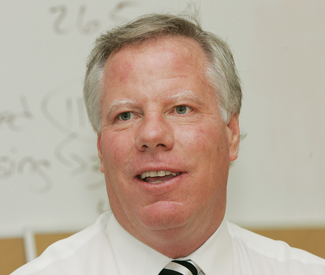
Mike Marshall lives in Hayes Valley is the Executive Director of Restore Hetch Hetchy.

Film Listings

0

Film listings are edited by Cheryl Eddy. Reviewers are Kimberly Chun, Dennis Harvey, Lynn Rapoport, and Sara Vizcarrondo. For rep house showtimes, see Rep Clock.

OPENING

Amber Alert An audition tape for The Amazing Race quickly turns into an epic chase in this low-budget "found footage" drama. Arizona BFFs Nate (Chris Hill) and Sam (Summer Bellessa, wife of director Kerry Bellessa) — and Sam’s teenage brother, shaky-cam operator Caleb (Caleb Thompson) — notice they’re driving behind the very Honda that’s being sought by an Amber Alert. "Following at a safe distance," as advised when they call the cops, leads to high-decibel arguments about how to handle the situation — and for the next hour-plus, the viewer is trapped in a car with two people communicating only in nails-on-chalkboard tones. Amber Alert‘s nonstop bickerfest is so tiresome that it’s actually a relief when the child molester character starts taking an active role in the story. Not a good sign. (1:20) Rohnert Park 16. (Eddy)

The Bay Top-quality (i.e., realistically repulsive) special effects highlight this otherwise unremarkable disaster movie that’s yet another "found footage" concoction, albeit maybe the first one from an Oscar-winning director. But it’s been a long time since 1988’s Rain Man, and the Baltimore-adjacent setting is the only Barry Levinson signature you’ll find here. Instead, parasites-gnaw-apart-a-coastal-town drama The Bay — positioned as a collection of suppressed material coming to light on "Govleaks.org" — is a relentlessly familiar affair, further hampered by a narrator (Kether Donohue) with a supremely grating voice. Rising star Christopher Denham (Argo) has a small part as an oceanographer whose warnings about the impending waterborne catastrophe are brushed aside by a mayor who is (spoiler alert!) more concerned with tourist dollars than safety. (1:25) (Eddy)

"Don’t Shoot the Player Piano: The Music of Conlon Nancarrow" The late Texarkana-born composer’s birth centenary is celebrated in this two-part (Fri/2 and Sun/4) program of films examining his unique contribution to 20th century music. Frustrated early on by the inability of standard musicians to play his incredibly complicated scores, he turned to composing for player pianos, with their greatly heightened capacity for producing density of notes and rhythms. A member of the American Communist Party, he returned from fighting fascists in the Spanish Civil War to discover the U.S. government had revoked the passports of many citizens with similar political convictions. As a result, in 1940 he moved to Mexico, where he remained until his death 57 years later — his reputation remaining an underground musicologists’ secret until the early 1980s, in large part due to his disinterest in fame and dislike of crowds (he’d always avoided any gathering of over five people). But in his last years he became much more widely known, thanks in large part to fans like fellow composer Gyorgy Ligeti, who in one documentary here calls him "the most important composer of our time," comparing him to Beethoven and saying "his work is completely, totally different from [his contemporaries]." Among the movies screening are Uli Aumuller and Hanne Kaisik’s 1993 German Music for 1,000 Fingers, in which the reclusive, elderly subject allows us into his studio to explain his (still somewhat inexplicable) methodologies. The brand-new, hour-long Conlon Nancarrow: Virtuoso of the Player Piano offers a posthumous appreciation of his life, music and influence. It’s a first film from James Greeson, a professor of music at the University of Arkansas who knew the man himself. Also featured are several international shorts that provide interpretive visual complements to Nancarrow pieces. His widow and daughter, as well as kinetic sculptor Trimpin and composer-former KPFA music director Charles Amirkhanian will appear at both PFA programs. Pacific Film Archive. (Harvey)

The Flat See "Past Lives." (1:37) Albany, Embarcadero.

Flight Robert Zemeckis directs Denzel Washington as an airline pilot whose act of heroism brings to light his secret drinking problem. (2:18) Presidio.

A Late Quartet Philip Seymour Hoffman and Christopher Walken head up a star-spangled cast in this drama about a famous string quartet. (1:45) Embarcadero.

A Liar’s Autobiography: The Untrue Story of Monty Python’s Graham Chapman Blessed with recordings made by Monty Python member Graham Chapman (King Arthur in 1975’s Monty Python and the Holy Grail; Brian in 1979’s Life of Brian) before his death in 1989 from cancer, filmmakers Bill Jones, Jeff Simpson, and Ben Timlett recruited 14 different animation studios to piece together Chapman’s darkly humorous (and often just plain dark) life story. He was gay, he was an alcoholic, he co-wrote (with John Cleese) the legendary "Dead Parrot Sketch." A Liar’s Autobiography starts slowly — even with fellow Monty Python members Cleese, Terry Jones, Terry Gilliam, and Michael Palin lending their voices, much of the bone-dry humor falls disappointingly flat. "This is not a Monty Python film," the filmmakers insist, and viewers hoping for such will be disappointed. Stick with it, though, and the film eventually finds its footing as an offbeat biopic, with the pick-a-mix animation gimmick at its most effective when illustrating Chapman’s booze-fueled hallucinations. In addition to opening theatrically, the film also debuts Fri/2 on premium cable channel Epix. (1:22) Smith Rafael, Sundance Kabuki. (Eddy)

The Loneliest Planet Travel broadens, they say — and has a way of foregrounding anxiety and desire. So the little tells take on a larger, much more loaded significance in The Loneliest Planet when contextualized by the devastatingly beautiful Caucasus Mountains in Georgia. In this film by Russian American director and video artist Julia Loktev, adventuring, engaged Westerners Nica (an ethereal Hani Furstenberg) and Alex (Gael García Bernal) hire a local guide and war veteran (Bidzina Gujabidze) to lead them on a camping trip through the wilderness. They’re globe-trotting blithe spirits, throwing themselves into new languages and new experiences, though the harsh, hazardous, and glorious Georgian peaks and crevasses have a way of making them seem even smaller while magnifying their weaknesses and naiveté. One small, critical stumble on their journey is all it takes for the pair to question their relationship, their roles, and the solid ground of their love. Working with minimal dialogue (and no handlebar subtitles) from a Tom Bissell short story, Loktev shows a deliberate hand and thoughtful eye in her use of the space, as well as her way of allowing the silences to speak louder than dialogue: she turns the outdoor expanses into a quietly awe-inspiring, albeit frightening mirror for the distances between, and emptiness within, her wanderers, uncertain about how to quite find their way home. (1:53) Clay, Shattuck. (Chun)

The Man With The Iron Fists Erstwhile Wu Tang-er RZA directs (and co-wrote, with Eli Roth) this over-the-top homage to classic martial arts films. (1:36)

Miami Connection See "Black-Belt Sabbath." (1:23) Roxie.

The Other Son The plot of ABC Family’s Switched at Birth gets a politically-minded makeover in Lorraine Lévy’s The Other Son, in which the mixed-up teens represent both sides of the Israel-Palestine conflict. When mop-topped wannabe rocker Joseph (Jules Sitruk) dutifully signs up for Israeli military duty, the required blood test reveals he’s not the biological son of his parents. Understandably freaked out, his French-Israeli mother (Emmanuelle Devos) finds out that a hospital error during a Gulf War-era evacuation meant she and husband Alon (Pascal Elbé) went home with the wrong infant — and their child, aspiring doctor Yacine (Medhi Dehbi), was raised instead by a Palestinian couple (Areen Omari, Khalifia Natour). It’s a highly-charged situation on many levels ("Am I still Jewish?", a tearful Joseph asks; "Have fun with the occupying forces?", Yacine’s bitter brother inquires after his family visits Joseph in Tel Aviv), and potential for melodrama is sky-high. Fortunately, director and co-writer Levy handles the subject with admirable sensitivity, and the film is further buoyed by strong performances. (1:53) Opera Plaza, Shattuck, Smith Rafael. (Eddy)

A Simple Life When elderly Ah Tao (Deanie Ip), the housekeeper who’s served his family for decades, has a stroke, producer Roger (Andy Lau) pays for her to enter a nursing home. No longer tasked with caring for Roger, Ah Tao faces life in the cramped, often depressing facility with resigned calm, making friends with other residents (some of whom are played by nonprofessional actors) and enjoying Roger’s frequent visits. Based on Roger Lee’s story (inspired by his own life), Ann Hui’s film is well-served by its performances; Ip picked up multiple Best Actress awards for her role, Lau is reliably solid, and Anthony Wong pops up as the nursing home’s eye patch-wearing owner. Wong’s over-the-top cameo doesn’t quite fit in with the movie’s otherwise low-key vibe, but he’s a welcome distraction in a film that can be too quiet at times — a situation not helped by its washed-out palette of gray, beige, and more gray. (1:58) Four Star. (Eddy)

Wreck-It Ralph Wreck-It Ralph cribs directly from the Toy Story series: when the lights go off in the arcade, video game characters gather to eat, drink, and endure existential crises. John C. Reilly is likable and idiosyncratic as Ralph, the hulking, ham-fisted villain of a game called Fix-It-Felix. Fed up with being the bad guy, Ralph sneaks into gritty combat sim Hero’s Duty under the nose of Sergeant Calhoun (Jane Lynch), a blond space marine who mixes Mass Effect‘s Commander Shepard with a PG-rated R. Lee Ermey. Things go quickly awry, and soon Ralph is marooned in cart-racing candyland Sugar Rush, helping Vanellope Von Schweetz (a manic Sarah Silverman), with Calhoun and opposite number Felix (Jack McBrayer) hot on his heels. Though often aggressively childish, the humor will amuse kids, parents, and occasionally gamers, and the Disney-approved message about acceptance is moving without being maudlin. The animation, limber enough to portray 30 years of changing video game graphics, deserves special praise. (1:34) Balboa, Presidio, Shattuck. (Ben Richardson)

The Zen of Bennett Landing somewhere between a glorified album making-of and a more depthed exploration, this documentary about famed crooner Tony of "I Left My Heart in San Francisco" fame shows him recording last year’s all-standards Duets II disc. His vocal collaborators are an eclectic — to say the least — mix of mostly much younger artists including Norah Jones, John Mayer, Carrie Underwood, Willie Nelson, and Andrea Bocelli. Some pairings are clearly a matter of commerce over chemistry, while others surprise — Lady Gaga is better than you might expect, while Aretha Franklin is certainly worse. Most touching as well as disturbing is his session with the late Amy Winehouse, whose nervous, possibly hopped-up appearance occasions his most gentlemanly behavior, as well as genuine admiration for her talent. (Others on the record, including Mariah Carey and k.d. lang, do not appear here.) Unjoo Moon’s rather mannered direction includes little displays of temperament from the octogenarian star, and glimpses of his family life (which extends well into his work life, since they all seem to be on the payroll), but just enough to tease — not enough to provide actual insight. Still, fans will find this less than-definitive portrait quite satisfying enough on its own limited terms. (1:24) Vogue. (Harvey)

ONGOING

Alex Cross (1:41) 1000 Van Ness, SF Center.

Argo If you didn’t know the particulars of the 1979 Iranian Revolution, you won’t be an expert after Argo, but the film does a good job of capturing America’s fearful reaction to the events that followed it — particularly the hostage crisis at the US embassy in Tehran. Argo zeroes in on the fate of six embassy staffers who managed to escape the building and flee to the home of the sympathetic Canadian ambassador (Victor Garber). Back in Washington, short-tempered CIA agents (including a top-notch Bryan Cranston) cast about for ways to rescue them. Enter Tony Mendez (Ben Affleck, who also directs), exfil specialist and father to a youngster wrapped up in the era’s sci-fi craze. While watching 1973’s Battle for the Planet of the Apes, Tony comes up with what Cranston’s character calls "the best bad idea we have:" the CIA will fund a phony Canadian movie production (corny, intergalactic, and titled Argo) and pretend the six are part of the crew, visiting Iran for a few days on a location shoot. Tony will sneak in, deliver the necessary fake-ID documents, and escort them out. Neither his superiors, nor the six in hiding, have much faith in the idea. ("Is this the part where we say, ‘It’s so crazy it just might work?’" someone asks, beating the cliché to the punch.) Argo never lets you forget that lives are at stake; every painstakingly forged form, every bluff past a checkpoint official increases the anxiety (to the point of being laid on a bit thick by the end). But though Affleck builds the needed suspense with gusto, Argo comes alive in its Hollywood scenes. As the show-biz veterans who mull over Tony’s plan with a mix of Tinseltown cynicism and patiotic duty, John Goodman and Alan Arkin practically burst with in-joke brio. I could have watched an entire movie just about those two. (2:00) Four Star, Marina, 1000 Van Ness, SF Center, Sundance Kabuki. (Eddy)

Beasts of the Southern Wild Six months after winning the Grand Jury Prize at Sundance (and a Cannes Camera d’Or), Beasts of the Southern Wild proves capable of enduring a second or third viewing with its originality and strangeness fully intact. Magical realism is a primarily literary device that isn’t attempted very often in U.S. cinema, and succeeds very rarely. But this intersection between Faulkner and fairy tale, a fable about — improbably — Hurricane Katrina, is mysterious and unruly and enchanting. Benh Zeitlin’s film is wildly cinematic from the outset, as voiceover narration from six-year-old Hushpuppy (Quvenzhané Wallis) offers simple commentary on her rather fantastical life. She abides in the Bathtub, an imaginary chunk of bayou country south of New Orleans whose residents live closer to nature, amid the detritus of civilization. Seemingly everything is some alchemical combination of scrap heap, flesh, and soil. But not all is well: when "the storm" floods the land, the holdouts are forced at federal gunpoint to evacuate. With its elements of magic, mythological exodus, and evolutionary biology, Beasts goes way out on a conceptual limb; you could argue it achieves many (if not more) of the same goals Terrence Malick’s 2011 The Tree of Life did at a fraction of that film’s cost and length. (1:31) Shattuck. (Harvey)

Chasing Mavericks Sidestepping the potential surf-porn impact of influential docs like The Endless Summer (1966) and Step Into Liquid (2003), Chasing Mavericks directors Curtis Hanson and Michael Apted instead focus on the coming-of-age back story of Santa Cruz surf legend Jay Moriarity, who landed on the cover of Surfer magazine at the very unripe age of 16 while attempting the way-challenging waves at Half Moon Bay’s Mavericks. How did the teenager manage to tackle the mythically massive, highly dangerous 25- to 80-plus-foot waves that have killed far more seasoned surfers? It all started at an early age, a starting point that’s perhaps a nod to Apted’s lifetime-spanning Up documentaries, as Moriarity (Jonny Weston) learned to gauge the size of the waves on his own and grew up idolizing neighbor and surfing kahuna Frosty Hesson (Gerard Butler). After tailing Hesson on a Mavericks surfing jaunt, Moriarity becomes enthralled with the idea of tackling those killer waves — an obsession that could kill the kid, Hesson realizes with the help of his wife Brenda (Abigail Spencer). So the elder puts him through a makeshift big-wave rider academy, developing him physically by having the teen, say, paddle from SC to Monterey and mentally by putting him through a series of discipline-building challenges. The result is a riptide of inspiration that even Moriarity’s damaged mom (Elisabeth Shue) can appreciate, that is if the directors hadn’t succumbed to an all-too-predictable story arc, complete with random bullying and an on-again-off-again love interest (Leven Rambin), plus the depthless performance of a too-cute, cherubic Weston. Too bad Butler, who tasted the ocean’s wrath when he got injured during the production, aged out of the Moriarity role: he brings the fire — and the fury that fuels a drive to do the physically unthinkable — that would have given Moriarity’s story new life. (1:45) Metreon, 1000 Van Ness. (Chun)

Cloud Atlas Cramming the six busy storylines of David Mitchell’s wildly ambitious novel into just three hours — the average reader might have thought at least 12 would be required — this impressive adaptation directed (in separate parts) by Tom Twyker (1998’s Run Lola Run) and Matrix siblings Lana and Andy Wachowski has a whole lot of narrative to get through, stretching around the globe and over centuries. In the mid 19th century, Jim Sturgess’ sickly American notory endures a long sea voyage as reluctant protector of a runaway-slave stowaway from the Chatham Islands (David Gyasi). In 1931 Belgium, a talented but criminally minded British musician (Ben Whishaw) wheedles his way into the household of a famous but long-inactive composer (Jim Broadbent). A chance encounter sets 1970s San Francisco journalist Luisa (Halle Berry) on the path of a massive cover-up conspiracy, swiftly putting her life in danger. Circa now, a reprobate London publisher’s (Broadbent) huge windfall turns into bad luck that gets even worse when he seeks help from his brother (Hugh Grant). In the not-so-distant future, a disposable "fabricant" server to the "consumer" classes (Doona Bae) finds herself plucked from her cog-like life for a rebellious higher purpose. Finally, in an indeterminately distant future after "the Fall," an island tribesman (Tom Hanks) forms a highly ambivalent relationship toward a visitor (Berry) from a more advanced but dying civilization. Mitchell’s book was divided into huge novella-sized blocks, with each thread split in two; the film wastes very little time establishing its individual stories before beginning to rapidly intercut between them. That may result in a sense of information (and eventually action) overload, particularly for non-readers, even as it clarifies the connective tissues running throughout. Compression robs some episodes of the cumulative impact they had on the page; the starry multicasting (which in addition to the above mentioned finds many uses for Hugo Weaving, Keith David, James D’Arcy, and Susan Sarandon) can be a distraction; and there’s too much uplift forced on the six tales’ summation. Simply put, not everything here works; like the very different Watchmen, this is a rather brilliant "impossible adaptation" screenplay (by the directors) than nonetheless can’t help but be a bit too much. But so much does work — in alternating currents of satire, melodrama, pulp thriller, dystopian sci-fi, adventure, and so on — that Cloud Atlas must be forgiven for being imperfect. If it were perfect, it couldn’t possibly sprawl as imaginatively and challengingly as it does, and as mainstream movies very seldom do. (2:52) Balboa, California, 1000 Van Ness, Presidio, SF Center, Sundance Kabuki. (Harvey)

The Dark Knight Rises Early reviews that called out The Dark Knight Rises‘ flaws were greeted with the kind of vicious rage that only anonymous internet commentators can dish out. And maybe this is yet another critic-proof movie, albeit not one based on a best-selling YA book series. Of course, it is based on a comic book, though Christopher Nolan’s sophisticated filmmaking and Christian Bale’s tortured lead performance tend to make that easy to forget. In this third and "final" installment in Nolan’s trilogy, Bruce Wayne has gone into seclusion, skulking around his mansion and bemoaning his broken body and shattered reputation. He’s lured back into the Batcave after a series of unfortunate events, during which The Dark Knight Rises takes some jabs at contemporary class warfare (with problematic mixed results), introduces a villain with pecs of steel and an at-times distractingly muffled voice (Tom Hardy), and unveils a potentially dangerous device that produces sustainable energy (paging Tony Stark). Make no mistake: this is an exciting, appropriately moody conclusion to a superior superhero series, with some nice turns by supporting players Gary Oldman and Joseph Gordon-Levitt. But in trying to cram in so many characters and plot threads and themes (so many prisons in this thing, literal and figural), The Dark Knight Rises is ultimately done in by its sprawl. Without a focal point — like Heath Ledger’s menacing, iconic Joker in 2008’s The Dark Knight — the stakes aren’t as high, and the end result feels more like a superior summer blockbuster than one for the ages. (2:44) Metreon. (Eddy)

Diana Vreeland: The Eye Has to Travel The life of legendary fashion editor Diana Vreeland is colorfully recounted in Diana Vreeland: The Eye Has to Travel, a doc directed by her granddaughter-in-law, Lisa Immordino Vreeland. The family connection meant seemingly unlimited access to material featuring the unconventionally glamorous (and highly quotable) Vreeland herself, plus the striking images that remain from her work at Harper’s Bazaar, Vogue, and the Costume Institute of the Metropolitan Museum of Art. "Narrated" from interview transcripts by an actor approximating the late Vreeland’s husky, posh tones, the film allows for some criticism (her employees often trembled at the sight of her; her sons felt neglected; her grasp of historical accuracy while working at the museum was sometimes lacking) among the praise, which is lavish and delivered by A-listers like Anjelica Huston, who remembers "She had a taste for the extraordinary and the extreme," and Manolo Blahnik, who squeals, "She had the vision!" (1:26) Opera Plaza. (Eddy)

Frankenweenie Tim Burton’s feature-length Frankenweenie expands his 1984 short of the same name (canned by Disney back in the day for being too scary), and is the first black and white film to receive the 3D IMAX treatment. A stop-motion homage to every monster movie Burton ever loved, Frankenweenie is also a revival of the Frankenstein story cute-ified for kids; it takes the showy elements of Mary Shelley’s novel and morphs them to fit Burton’s hyperbolic aesthetic. Elementary-school science wiz Victor takes his disinterred dog from bull terrier to gentle abomination (when the thirsty Sparky drinks, he shoots water out of the seams holding his body parts together). Victor’s competitor in the school science fair, Edgar E. Gore, finds out about Sparky and ropes in classmates to scrape up their dead pets from the town’s eerily utilized pet cemetery and harness the town’s lightning surplus. The film’s answer to Boris Karloff (lisp intact) resurrects a mummified hamster, while a surrogate for Japanese Godzilla maker Ishiro Honda, revives his pet turtle Shelley (get it?) into Gamera. As these experiments aren’t borne of love, they don’t go as well at Victor’s. If you love Burton, Frankenweenie feels like the at-last presentation of a story he’s been dying to tell for years. If you don’t love him, you might wonder why it took him so long to get it out. When Victor’s science teacher leaves the school, he tells Victor an experiment conducted without love is different from one conducted with it: love, he implies, is a variable. If that’s the variable that separates 2003’s Big Fish (heartbreaking) from 2010’s Alice In Wonderland (atrocious), it’s a large one indeed. The love was there for 29 minutes in 1984, but I can’t say it endures when stretched to 87 minutes 22 years later. (1:27) Metreon, 1000 Van Ness. (Vizcarrondo)

Fun Size (1:45) Metreon, 1000 Van Ness, Shattuck.

Here Comes the Boom The makers of September’s Won’t Back Down might quibble with this statement, but the rest of us can probably agree that nothing (with the possible exception of Trapper Keepers) says "back to school" like competitive steel-cage mixed martial arts — particularly if the proceeds from the matches go toward saving extracurriculars at a down-at-the-heels public high school. Kevin James plays Scott Voss, a 42-year-old biology teacher at the aforementioned school, whose lack of vocational enthusiasm is manifested by poor attendance and classroom observations about how none of what the students are learning matters. He’s jolted from this criminally subpar performance of his academic duties, however, when budget cuts threaten the school’s arts programs, including the job of an earnest and enthusiastic music teacher (Henry Winkler) whose dedication Scott lazily admires. It seems less than inevitable that this state of affairs would lead to Scott’s donning his college wrestling singlet and trundling into the ring to get pummeled and mauled for cash, but it seems to work better than a bake sale. Less effective and equally unconvincing are Scott’s whiplash arc from bad apple to teacher-of-the-year; a percolating romance between him and the school nurse, played by Salma Hayek; and the script’s tortuous parade of rousing statements celebrating the power of the human spirit, seemingly cribbed from a page-a-day calendar of inspirational quotes. (1:45) SF Center. (Rapoport)

Hotel Transylvania (1:32) Metreon, 1000 Van Ness, Shattuck.

The House I Live In Much like he did in 2005’s Why We Fight, filmmaker Eugene Jarecki identifies a Big Issue (in that film, the Iraq War) and strips it down, tracing all of the history leading up to the current crisis point. Here, he takes on America’s "war on drugs," which I put quotes around not just because it was a phrase spoken by Nixon and Reagan, but also because — as The House I Live In ruthlessly exposes — it’s been a failure, a sham, since its origins in the late 1960s. Framing his investigation with the personal story of his family’s housekeeper — whose dedication to the Jarecki family meant that she was absent when her own son turned to drugs — and enfolding a diverse array of interviews (a sympathetic prison guard, addicts and their families, The Wire‘s David Simon) and locations (New York City, Sioux City), Jarecki has created an eye-opening film. Particularly well-explained are segments on how drug laws correlate directly to race and class, and how the prison-industrial complex has played a part in making sure those laws remain as strict as possible. (1:48) Sundance Kabuki. (Eddy)

Looper It’s 2044 and, thanks to a lengthy bout of exposition by our protagonist, Joe (Joseph Gordon-Levitt), here’s what we know: Time travel, an invention 30 years away, will be used by criminals to transport their soon-to-be homicide victims backward, where a class of gunmen called loopers, Joe among them, are employed to "do the necessaries." More deftly revealed in Brick writer-director Rian Johnson’s new film is the joylessness of the world in which Joe amorally makes his way, where gangsters from the future control the present (under the supervision of Jeff Daniels), their hit men live large but badly (Joe is addicted to some eyeball-administered narcotic), and the remainder of the urban populace suffers below-subsistence-level poverty. The latest downside for guys like Joe is that a new crime boss has begun sending back a steady stream of aging loopers for termination, or "closing the loop"; soon enough, Joe is staring down a gun barrel at himself plus 30 years. Being played by Bruce Willis, old Joe is not one to peaceably abide by a death warrant, and young Joe must set off in search of himself so that—with the help of a woman named Sara (Emily Blunt) and her creepy-cute son Cid (Pierce Gagnon)—he can blow his own (future) head off. Having seen the evocatively horrific fate of another escaped looper, we can’t totally blame him. Parsing the daft mechanics of time travel as envisioned here is rough going, but the film’s brisk pacing and talented cast distract, and as one Joe tersely explains to another, if they start talking about it, "we’re gonna be here all day making diagrams with straws" —in other words, some loops just weren’t meant to be closed. (1:58) 1000 Van Ness, Piedmont, SF Center, Sundance Kabuki. (Rapoport)

Masquerade (2:11) Metreon.

The Master Paul Thomas Anderson’s much-hyped likely Best Picture contender lives up: it’s easily the best film of 2012 so far. Philip Seymour Hoffman stars as Lancaster Dodd, the L. Ron Hubbard-ish head of a Scientology-esque movement. "The Cause" attracts Freddie Quell (Joaquin Phoenix, in a welcome return from the faux-deep end), less for its pseudo-religious psychobabble and bizarre personal-growth exercises, and more because it supplies the aimless, alcoholic veteran — a drifter in every sense of the word — with a sense of community he yearns for, yet resists submitting to. As with There Will Be Blood (2007), Anderson focuses on the tension between the two main characters: an older, established figure and his upstart challenger. But there’s less cut-and-dried antagonism here; while their relationship is complex, and it does lead to dark, troubled places, there are also moments of levity and weird hilarity — which might have something to do with Freddie’s paint-thinner moonshine. (2:17) Albany, Sundance Kabuki. (Eddy)

Middle of Nowhere All the reasons why movie publicist turned filmmaker Ava DuVernay scored the best director award at the Sundance Film Festival are up here on the screen. Taking on the emotionally charged yet rarely attempted challenge of picturing the life of the loved one left behind by the incarcerated, DuVernay furthers the cause of telling African American stories — she founded AaFFRM (African-American Film Festival Releasing Movement) and made her directorial debut with 2008 LA hip-hop doc This Is The Life — with Middle of Nowhere. Medical student Ruby (the compelling Emayatzy Corinealdi) appears to have a bright future ahead of her, when her husband Derek (Omari Hardwick) makes some bad choices and is tossed into maximum security prison for eight long years. She swears she’ll wait for him, putting her dreams aside, making the long bus ride out to visit him regularly, and settling for any nursing shift she can. How will she scrape the money together to pay the lawyer for Derek’s parole hearing, cope with the grinding disapproval of her mother (Lorraine Toussaint), support the increasingly hardened and altered Derek, and most importantly, discover a new path for herself? All are handled with rare empathy and compassion by DuVernay, who is rewarded for her care by her cast’s powerful performances. Our reward might be found amid the everyday poetry of Ruby’s life, while she wraps her hair for bed, watches Ali: Fear Eats the Soul (1974), and fantasizes about love in a life interrupted. (1:41) Stonestown. (Chun)

Paranormal Activity 4 (1:21) Metreon, 1000 Van Ness.

The Perks of Being a Wallflower Move over, Diary of a Wimpy Kid series — there’s a new shrinking-violet social outcast in town. These days, life might not suck quite so hard for 90-pound weaklings in every age category, what with so many films and TV shows exposing, and sometimes even celebrating, the many miseries of childhood and adolescence for all to see. In this case, Perks author Stephen Chbosky takes on the directorial duties — both a good and bad thing, much like the teen years. Smart, shy Charlie is starting high school with a host of issues: he’s painfully awkward and very alone in the brutal throng, his only friend just committed suicide, and his only simpatico family member was killed in a car accident. Charlie’s English teacher Mr. Andersen (Paul Rudd) appears to be his only connection, until the freshman strikes up a conversation with feline, charismatic, shop-class jester Patrick (Ezra Miller) and his magnetic, music- and fun-loving stepsister Sam (Emma Watson). Who needs the popular kids? The witty duo head up their gang of coolly uncool outcasts their own, the Wallflowers (not to be confused with the deeply uncool Jakob Dylan combo), and with them, Charlie appears to have found his tribe. Only a few small secrets put a damper on matters: Patrick happens to be gay and involved with football player Brad (Johnny Simmons), who’s saddled with a violently conservative father, and Charlie is in love with the already-hooked-up Sam and is frightened that his fragile equilibrium will be destroyed when his new besties graduate and slip out of his life. Displaying empathy and a devotion to emotional truth, Chbosky takes good care of his characters, preserving the complexity and ungainly quirks of their not-so-cartoonish suburbia, though his limitations as a director come to the fore in the murkiness and choppily handled climax that reveals how damaged Charlie truly is. (1:43) Embarcadero, Piedmont, Presidio, Shattuck, Sundance Kabuki. (Chun)

Pitch Perfect As an all-female college a cappella group known as the Barden Bellas launches into Ace of Base’s "The Sign" during the prologue of Pitch Perfect, you can hear the Glee-meets-Bring It On elevator pitch. Which is fine, since Bring It On-meets-anything is clearly worth a shot. In this attempt, Anna Kendrick stars as withdrawn and disaffected college freshman Beca, who dreams of producing music in L.A. but is begrudgingly getting a free ride at Barden University via her comp lit professor father. Clearly his goal is not making sure she receives a liberal arts education, as Barden’s academic jungle extends to the edges of the campus’s competitive a cappella scene, and the closest thing to an intellectual challenge occurs during a "riff-off" between a cappella gangs at the bottom of a mysteriously drained swimming pool. When Beca reluctantly joins the Bellas, she finds herself caring enough about the group’s fate to push for an Ace of Base moratorium and radical steps like performing mashups. Much as 2000’s Bring It On coined terms like "cheerocracy" and "having cheer-sex," Pitch Perfect gives us the infinitely applicable prefix "a ca-" and descriptives like "getting Treble-boned," a reference to forbidden sexual relations with the Bellas’ cocky rivals, the Treblemakers. The gags get funnier, dirtier, and weirder, arguably reaching their climax in projectile-vomit snow angels, with Elizabeth Banks and John Michael Higgins as grin-panning competition commentators offering a string of loopily inappropriate observations. (1:52) Metreon, 1000 Van Ness. (Rapoport)

Samsara Samsara is the latest sumptuous, wordless offering from director Ron Fricke, who helped develop this style of dialogue- and context-free travelogue with Koyaanisqatsi (1982) and Baraka (1992). Spanning five years and shooting on 70mm film to capture glimmers of life in 25 countries on five continents, Samsara, which spins off the Sanskrit word for the "ever-turning wheel of life," is nothing if not good-looking, aspiring to be a kind of visual symphony boosted by music by the Dead Can Dance’s Lisa Gerrard and composers Michael Stearns and Marcello De Francisci. Images of natural beauty, baptisms, and an African woman and her babe give way to the madness of modern civilization — from jam-packed subways to the horrors of mechanized factory farming to a bizarre montage of go-go dancers, sex dolls, trash, toxic discarded technology, guns, and at least one gun-shaped coffin. After such dread, the opening and closing scenes of Buddhist spirituality seem almost like afterthoughts. The unmistakable overriding message is: humanity, you dazzle in all your glorious and inglorious dimensions — even at your most inhumane. Sullying this hand wringing, selective meditation is Fricke’s reliance on easy stereotypes: the predictable connections the filmmaker makes between Africa and an innocent, earthy naturalism, and Asia and a vaguely threatening, mechanistic efficiency, come off as facile and naive, while his sonic overlay of robot sounds over, for instance, an Asian woman blinking her eyes comes off as simply offensive. At such points, Fricke’s global leap-frogging begins to eclipse the beauty of his images and foregrounds his own biases. (1:39) Opera Plaza, Shattuck. (Chun)

Searching for Sugar Man The tale of the lost, and increasingly found, artist known as Rodriguez seems to have it all: the mystery and drama of myth, beginning with the singer-songwriter’s stunning 1970 debut, Cold Fact, a neglected folk rock-psychedelic masterwork. (The record never sold in the states, but somehow became a beloved, canonical LP in South Africa.) The story goes on to parse the cold, hard facts of vanished hopes and unpaid royalties, all too familiar in pop tragedies. In Searching for Sugar Man, Swedish documentarian Malik Bendjelloul lays out the ballad of Rodriguez as a rock’n’roll detective story, with two South African music lovers in hot pursuit of the elusive musician — long-rumored to have died onstage by either self-immolation or gunshot, and whose music spoke to a generation of white activists struggling to overturn apartheid. By the time Rodriguez himself enters the narrative, the film has taken on a fairy-tale trajectory; the end result speaks volumes about the power and longevity of great songwriting. (1:25) Opera Plaza, Shattuck. (Chun)

The Sessions Polio has long since paralyzed the body of Berkeley poet Mark O’Brien (John Hawkes) from the neck down. Of course his mind is free to roam — but it often roams south of the personal equator, where he hasn’t had the same opportunities as able-bodied people. Thus he enlists the services of Cheryl (Helen Hunt), a professional sex surrogate, to lose his virginity at last. Based on the real-life figures’ experiences, this drama by Australian polio survivor Ben Lewin was a big hit at Sundance this year (then titled The Surrogate), and it’s not hard to see why: this is one of those rare inspirational feel-good stories that doesn’t pander and earns its tears with honest emotional toil. Hawkes is always arresting, but Hunt hasn’t been this good in a long time, and William H. Macy is pure pleasure as a sympathetic priest put in numerous awkward positions with the Lord by Mark’s very down-to-earth questions and confessions. (1:35) California, Embarcadero, Sundance Kabuki. (Harvey)

Seven Psychopaths Those nostalgic for 1990s-style chatty assassins will find much to love in the broadly sketched Seven Psychopaths. Director-writer Martin McDonough already dipped a pen into Tarantino’s blood-splattered ink well with his 2008 debut feature, In Bruges, and Seven Psychopaths reads as larkier and more off-the-cuff, as the award-winning Irish playwright continues to try to find his own discomfiting, teasing balance between goofy Grand Guignol yuks and meta-minded storytelling. Structured, sort of, with the certified lucidity of a thrill killer, Seven Psychopaths opens on Boardwalk Empire heavies Michael Pitt and Michael Stuhlbarg bantering about the terrors of getting shot in the eyeball, while waiting to "kill a chick." The talky twosome don’t seem capable of harming a fat hen, in the face of the Jack of Spades serial killer, who happens to be Psychopath No. One and a serial destroyer of hired guns. The key to the rest of the psychopathic gang is locked in the noggin of screenwriter Marty (Colin Farrell), who’s grappling with a major block and attempting the seeming impossible task of creating a peace-loving, Buddhist killer. Looking on are his girlfriend Kaya (Abbie Cornish) and actor best friend Billy (Sam Rockwell), who has a lucrative side gig as a dog kidnapper — and reward snatcher — with the dapper Hans (Christopher Walken). A teensy bit too enthusiastic about Marty’s screenplay, Billy displays a talent for stumbling over psychos, reeling in Zachariah (Tom Waits) and, on his doggie-grabbing adventures, Shih Tzu-loving gangster Charlie (Woody Harrelson). Unrest assured, leitmotifs from McDonough plays — like a preoccupation with fiction-making (The Pillowman) and the coupling of pet-loving sentimentality and primal violence (The Lieutenant of Inishmore) — crop up in Seven Psychopaths, though in rougher, less refined form, and sprinkled with a nervous, bromantic anxiety that barely skirts homophobia. Best to bask in the cute, dumb pleasures of a saucer-eyed lap dog and the considerably more mental joys of this cast, headed up by dear dog hunter Walken, who can still stir terror with just a withering gaze and a voice that can peel the finish off a watch. (1:45) Marina, Metreon, 1000 Van Ness, Piedmont, Sundance Kabuki. (Chun)

Silent Hill: Revelation 3D The husband and adopted daughter of Rosa (Radha Mitchell, star of the 2006 first film and seen briefly here), Harry (Sean Bean) and Heather (Adelaide Clemens) have been on the run from both police and ghouls since mom vanished into the titular nether land some years ago. When dad is abducted, Heather must follow him to you-know-where, accompanied by cute-boy-with-a-secret Vincent (Kit Harington). There she runs screaming from the usual faceless knife-wielding nuns and other nightmare nemeses while attempting to rescue Pa and puzzle out her place in resolving the curse placed on the ghost town. The original 2006 film adaptation of the video game was a mixed bag but, like the game, had splendid visuals; this cut rate sequel lacks even that, despite the addition of 3D (if you’re willing to pay for a premium ticket). It’s pure cheese with no real scares, much-diminished atmosphere, and laughable stretches of mythological mumbo-jumbo recited by embarrassed good actors (Martin Donovan, Deborah Kara Unger, Carrie-Anne Moss, a punishingly hammy Malcolm McDowell). There is one cool monster — a many-faced "tarantula" assembled from mannequin parts — but its couple minutes aren’t worth ponying up for the rest of a movie that severely disappoints already low expectations. (1:34) Metreon, 1000 Van Ness. (Harvey)

Sinister True-crime author Ellison Oswalt (Ethan Hawke) hasn’t had a successful book in a decade. So he uproots wife (Juliet Rylance) and kids (Michael Hall D’Addario, Clare Foley) for yet another research project, not telling them that they’re actually moving into the recent scene of a ghastly unsolved murder in which an entire family — save one still-missing child — was hanged from a backyard tree. He finds a box in the attic that somehow escaped police attention, its contents being several reels of Super 8 home movies stretching back decades — all of families similarly wiped out in one cruel act. Smelling best-sellerdom, Ellison keeps this evidence of a serial slayer to himself. It’s disturbing when his son re-commences sleepwalking night terrors. It’s really disturbing when dad begins to spy a demonic looking figure lurking in the background of the films. It’s really, really disturbing when the projector starts turning itself on, in the middle of the night, in his locked office. A considerable bounce-back from his bloated 2008 Day the Earth Stood Still remake, Scott Derrickson’s film takes the opposite tact — it’s very small in both physical scope and narrative focus, almost never leaving the Oswalt’s modest house in fact. He takes the time to let pure creepiness build rather than feeling the need to goose our nads with a false scare or goresplat every five minutes. As a result, Sinister is definitely one of the year’s better horrors, even if (perhaps inevitably) the denouement can’t fully meet the expectations raised by that very long, unsettling buildup. (1:50) Metreon, 1000 Van Ness. (Harvey)

Tai Chi Zero A little boy dubbed "the Freak" for the curious, horn-like growth on his forehead grows up to be Lu Chan (Jaydan Yuan), who becomes a near-supernatural martial arts machine when the horn is punched, panic-button style. But activating the "Three Blossoms of the Crown," as it’s called, takes a toll on the boy’s health, so he’s sent to the isolated Chen Village to learn their signature moves, though he’s repeatedly told "Chen-style kung fu is not taught to outsiders!" Stephen Fung’s lighthearted direction (characters are introduced with bios about the actors who play them, even the split-second cameos: "Andrew Lau, director of the Infernal Affairs trilogy"), affinity for steampunk and whimsy, engagement of Sammo Hung as action director, and embracing of the absurd (the film’s most-repeated line: "What the hell?") all bring interest to this otherwise pretty predictable kung-fu tale, with its old-ways-versus-Western-ways conflict and misfit hero. Still, there’s something to be said for batshit insanity. (Be warned, though: Tai Chi Zero is the first in a series, which means one thing: it ends on a cliffhanger. Argh.) (1:34) Metreon. (Eddy)

Taken 2 Surprise hit Taken (2008) was a soap opera produced by French action master Luc Besson and designed for export. The divorced-dad-saves-daughter-from-sex-slavery plot may have nagged at some universal parenting anxieties, but it was a Movie of the Week melodrama made on a major movie budget. Taken 2 begins immediately after the last, with sweet teen Kim (Maggie Grace) talking about normalizing after she was drugged and bought for booty. Papa Neeson sees Kim’s mom (Famke Janssen) losing her grip on husband number two and invites them both to holiday in Istanbul following one of his high-stakes security gigs. When the assistant with the money slinks him a fat envelope, Neeson chuckles at his haul. This is the point when women in the audience choose which Neeson they’re watching: the understated super-provider or the warrior-dad whose sense of duty can meet no match. For family men, this is the breeziest bit of vicarious living available; Neeson’s character is a tireless daddy duelist, a man as diligent as he is organized. (This is guy who screams "Victory loves preparation!") As head-splitting, disorienting, and generally exhausting as the action direction is, Neeson saves his ex-wife and the show in a stream of unclear shootouts. Taken 2 is best suited for the small screen, but whatever the size, no one can stop an international slave trade (or wolves, or Batman) like 21st century Liam. Swoon. (1:31) Metreon, 1000 Van Ness. (Vizcarrondo)

The Waiting Room Twenty-four hours in the uneasy limbo of an ER waiting room sounds like a grueling, maddening experience, and that’s certainly a theme in this day-in-the-life film. But local documentarian Peter Nicks has crafted an absorbing portrait of emergency public health care, as experienced by patients and their families at Oakland’s Highland Hospital and as practiced by the staff there. Other themes: no insurance, no primary care physician, and an emergency room being used as a medical facility of first, last, and only resort. Nicks has found a rich array of subjects to tell this complicated story: An anxious, unemployed father sits at his little girl’s bedside. Staffers stare at a computer screen, tracking a flood of admissions and the scarce commodity of available beds. A doctor contemplates the ethics of discharging a homeless addict for the sake of freeing up one of them. And a humorous, ultra-competent triage nurse fields an endless queue of arrivals with humanity and steady nerves. (1:21) Shattuck, Sundance Kabuki. (Rapoport)


On the Cheap Listings

0

Submit items for the listings at listings@sfbg.com. For further information on how to submit items for the listings, see Picks.

WEDNESDAY 31

Hacienda Halloween Peralta House Museum of History and Community, 2465 34th Ave., Oakl. (510) 532-9142, www.peraltahacienda.org. 5:30-7:30pm, free. Halloween events can be educational too! The Peralta House Museum would like to invite you to come brush up on your California history and learn how the early settlers of the Golden State celebrated Halloween. There will be snacks (from the on-site garden, no less!)

THURSDAY 1

“When We Were Young and Dumb” Make-Out Room, 3225 22nd St., SF. (415) 863-8688, www.booksmith.com. 6-9pm, free. Watch writers from the Believer and Seattle’s alt-weekly The Stranger get embroiled in a no-holds-barred reading ranging from religion to LSD to virginity. Buy Bethany Jean Clement, Christopher Frizzelle, and Lindy West’s latest book How to be a Person, and you’ll get a free drink. 

“Conversations With Artists” Contemporary Jewish Museum, 736 Mission, SF. (415) 655-7800, www.thecjm.org. 6:30-8:30pm, free–$5. The quest for social justice via documentation of the marginalized are at the heart of artist Rachel Schreiber’s and UCSC professor Martin Berger’s work. Both will be on hand to discuss their progressive-themed photo exhibits that document the crossroads of people and place in the Bay Area.

“Fluorescent Virgins: Contemporary Alters and Offerings for the Dead” The Art Gallery at the Cesar Chavez Student Center, SFSU, 1650 Holloway, SF. (415) 338-2580, www.sfsustudentcenter.com/artgallery. Through Nov/8. Reception: 5-8pm, free. Witness the rich cultural tradition steeped in Latino folklore that is this exhibit, which shows a broad display of vibrant and artful altars associated with Dia de los Muertos.

FRIDAY 2

“Entrippy” D-Structure, 520 Haight, SF. (718) 938-0678, www.drewmorrison.com. Through Dec/5. Opening reception: 6-10pm, free. Brooklyn artist Drew Morrison wants you to come get all metaphysical with him at his first West Coast exhibit. The paintings in this new exhibit delve in the perceptions of mass and tangible matter and shifting identity of elemental beings

Hendrix on Hendrix Diesel, A Bookstore, 5433 College, Oakl. (510) 653-9965, www.dieselbookstore.com. 7pm, free. If you fancy yourself a Jimi Hendrix enthusiast, then you should cancel whatever you have going on this Friday night and rush over to Diesel, A Bookstore where local author and all-around Hendrix maven Steven Roby will be promoting his new book Hendrix on Hendrix: Interviews and Encounters with Jimi Hendrix. Falling on what would have been Hendrix’s 70th birthday, at this event Roby will playing clips from interviews with the guitar great. Some are calling his book the closest thing we’ll get to a Hendrix autobiography, come see why.

Dia de los Muertos North Berkeley procession and altars Shattuck and Rose, Berk. Community altars: 5-7:30pm; candle-lit procession 7:45-9pm, free. Bay Area Day of the Dead: not just for the Mission anymore. This year, you can play La Catrina in the burgeoning restaurant district of North Berkeley — or, if you’re not just looking for an excuse to wear facepaint, view altars and mourn those who have recently passed with a candle and your community in the somber night-time processional.

SATURDAY 3

Potrero Hill History Night International Studies Academy, 655 De Haro, SF. (415) 863-0784. 5:30pm, free. A can’t-miss for a proud Potrero Hill dweller, or anyone who enjoys a good barbecue and live music. The Potrero Hill Archives project is producing this 13th installment of its annual Potrero Hill History night. In addition to eats and beats, take in stories from readers like Chronicle columnist Carl Nolte about growing up in this neighborhood.

“Birding for Everyone” Meet at SF Botanical Garden bookstore, Golden Gate Park, SF. (415) 387-9160, www.sfnature.org. 10am-noon, free–$10. In the mood for some flights of fancy? Join naturalists Nancy DeStefanis and Bill Milestone as they take you on a hike through the SF botanical garden, while educating you on the richly-colored avian flocks present in the garden.

“Slow it! Spread it! Sink it!” SFPUC Headquarters, 525 Golden Gate, SF. (415) 554-3289, www.sfwater.org. 1-4pm, free with RSVP to jwalsh@sfwater.org. For dwellers in a city that stays dry most of the year, it might come as a shock to hear that SF’s annual rainfall equals 9.5 billion gallons. For more interesting facts about the city’s infrastructure, join the San Francisco Public Utilities Commission for a tour of the city’s latest green infrastructure installations.

SUNDAY 4

Winter Art Festival San Francisco Art Institute, 800 Chestnut, SF. (415) 749-4508, www.sfai.edu/SFAIwinterartfest. 11am-4pm, free. A month and a half before the actual start of winter, the SFAI will preview the season with an exhibit and art sale of pieces from over 200 alumni and students. Rounding out this extravagant affair will be live music, interactive installations, and the omnipresent food trucks — this time, you’ll dine on Happa Ramen and Le Truc.

Past lives

0

cheryl@sfbg.com

FILM When filmmaker Arnon Goldfinger’s grandmother, Gerda Tuchler, passed away at 98, she left behind a Tel Aviv apartment crammed with a life’s worth of objects. As The Flat begins, Goldfinger and his family — particularly his mother, Gerda’s daughter Hannah — have just started clearing out drawers and closets, sorting through the possessions of a woman who apparently never threw anything away. The discovery of several vintage fox-fur stoles, complete with faces and paws, elicits much mirth.

But it’s while flipping through Gerda’s papers that Goldfinger hits pay dirt: a copy of Der Angriff, the newspaper founded by Nazi Minister of Propaganda Joseph Goebbels. The headline: “A Nazi Travels to Palestine.” The Nazi was Leopold von Mildenstein, an SS officer with an interest in Zionism. In 1933, he made the trip with his wife and a German Jewish couple named Kurt and Gerda Tuchler — Goldfinger’s grandparents, who moved there permanently a few years later.

This shocking revelation propels Goldfinger’s fascinating documentary forward. It’s part family history, as Goldfinger learns for the first time the tragic fate of his great-grandmother, and part old-fashioned mystery, complete with digging for clues in dusty archives and basements.

“I somehow got this feeling that I needed to grab my camera and film it,” he remembers over the phone from Tel Aviv, thinking back to the family’s first day in the apartment after Gerda’s death. “When I realized there was so much stuff over there, I thought maybe I could make a short film out of it. The line was: what can you learn about people from the stuff they left behind?”

Of course, he soon realized that a short doc wasn’t going to be enough. The Flat really began to take shape after he placed a phone call to the von Mildenstein’s elderly daughter, Edda — incredibly, still living at the house outside Düsseldorf where her parents had spent most of their lives. “This call completely blew my mind,” he says. “That was the minute I knew, this is it.”

A visit to the friendly but guarded Edda came next, followed by a return trip with Goldfinger’s curious (but remarkably reserved) mother in tow. With its many twists and turns, The Flat is the rare documentary about history that’s also loaded with suspense.

“Speaking broadly, being a German Jew, we are the kind of people who like to plan ahead,” the filmmaker says. “Every time I went to shoot a scene, and I thought ‘This is what’s going to happen,’ almost every time the opposite happened. It’s like the story was showing me what to do during the journey of making it.”

Though The Flat focuses on the past, Goldfinger wanted to avoid using animation, re-enactments, or other techniques to illustrate what he couldn’t film. “One of the key things for me was to try, through the present, to tell the past. For me, the real emotions lie in the present and the perspectives of people toward the past,” he says. “We also really tried to edit it as close as possible to the way I experienced it, so the audience could view the events through my eyes.”

Letters, photos, and a necklace given to Edda as a girl indicate that — against what would seem to be all logic — the Tuchlers and the von Mildensteins renewed their friendship after World War II. Though he was baffled by this, Goldfinger was even more affected by another discovery.

“If somebody had told me before that one day I would make a film about my family and the Holocaust, I would never believe it,” he says. “For me this is the most shocking, even more than the Nazis and von Mildenstein and my grandparents. To think that I had a great-grandmother, and she was a [Holocaust] victim, and nobody talked about it. All of my family, my mother, we were under the impression that we had no connection to it.”

The Flat first screened locally at the 2012 San Francisco Jewish Film Festival, but it’s been enjoying successful runs in Israel and Germany for months. In Israel, Goldfinger says, the film has become “an event.”

“My aim was to take something that is very singular and personal and try to see the universal emotions and implications of the story — something that is deep enough that many people can share,” he says. “But I was very surprised. From the very first screenings, people said, ‘It’s exactly like in our family.’ And what they meant is that in their families, they also didn’t ask questions, or they don’t know enough about their parents’ pasts. I think it goes to show you that many people share these feelings, and that they really identified with what happened onscreen.”


THE FLAT opens Fri/2 in San Francisco.

Halloween 1951: Fast times in Rock Rapids, Iowa

1

The tale of what really happened on Halloween Eve in 1951 in Rock Rapids, Iowa.  (Reprinted by popular demand.)

As I was preparing to update my annual Halloween blog, I checked Tuesday’s San Francisco Chronicle to see what the action looked like for Halloween on Wednesday.

The Giants had just swept the World Series and Kevin Fagan’s front page story caught the spirit of  Wednesday’s parade and celebration, “We’re No. 1, let’s party, Celebration likely to bring a million to downtown SF.”  There was no mention of Halloween in his story and the only reference to mischief on Halloween was a dire warning from Police Chief Gregg Suhr.  “If you’re coming (to San Francisco) to do mischief, don’t come.”
Well, back where I come from in the Halloweens of my youth, we didn’t have parades on Halloween and the cops never issued any public warnings about mischief. But we did have some fast times and created some almost famous smalltown  legends on Halloween. This was in my hometown of Rock Rapids, a small farming community nestled along the Rock River in northwest Iowa. I can speak for a generation or two back in the early 1950s when Halloween was the one night of the year when we could raise a little hell and and hope to stay one step ahead of the cops.

Or, in the case of Rock Rapids, the one and only cop, who happened to be Elmer “Shinny” Sheneberger. Shinny had the unenviable job of trying to keep some semblance of law and order during an evening when the Hermie Casjens gang was on the loose. Somehow through the years, nobody remembered exactly when, the tradition was born that the little kids would go house to house trick and treating but the older boys could roam the town looking to make trouble and pull off some pranks.

It was all quite civilized.

The Casjens gang would gather (no girls allowed) and set out about our evening’s business, being careful to stay away from the houses of watchful parents and Shinny on patrol. Dave Dietz and I specialized in finding cars with keys in the ignition and driving them to the other end of town and just leaving them. We tipped over an outhouse or two, the small town cliche, but one time we thought there was someone inside. We never hung around to find out. There was some mischief with fences and shrubs and lawn sprinklers and potted plants on porches.

After an evening of such lusty adventures, we would go home about 11 p.m. and tell our parents what we had been up to and how we evaded Shinny the whole evening and they would (generally) be relieved. Shinny would just drive around in his patrol car and shine his lights here and there and do some honking. But somehow he never caught anybody or made any serious followup investigation. And the targets of our pranks never seemed to make police complaints. I once asked Paul Smith, the editor of the celebrated Lyon County Reporter, why he never wrote up this bit of zesty small town lore. “Bruce,” he said, “I don’t want things to get out of hand.” During my era, they never did. As a Rock Rapids reporter on special assignment, I feel an obligation to retell this story on Halloween and bring some Rock Rapids values to San Francisco.

Nonetheless, the city elders decided to keep Halloween devastation to a minimum and scheduled a dance in the Community Building, with the misbegotten idea the pranksters would give up their errant ways and come to the dance. The Casjens Gang would have none of this. In fact it was the year of the dance diversion that we made our most culturally significant contribution to Halloween lore in Rock Rapids. We happened upon a boxcar, loaded with coal, parked on a siding a block or so from Main Street, which also served as a busy main arterial highway for cars coming across northwest Iowa.

It is not clear to this day who came up with the idea of rolling the boxcar across Main Street and blocking all traffic coming from both directions. We massed behind the car and pushed and pushed but it wouldn’t budge. Then Bob Babl came up with a brilliant idea:  to use a special lever his dad used to move boxcars full of lumber for his nearby lumberyard. Bob slipped through a fence behind the yard and somehow managed to find the lever in the dark.

We massed again, now some 20 or so strong, behind the car and waited for the signal to push. Willie Ver Meer climbed to the top of the car and wrenched the wheel that loosened the brakes. We heaved in unison and the car moved slowly on the tracks until it reached the middle of Main Street. Willie gave a mighty heave and ground the car to a dead stop, bang, square in the middle of the street. Almost immediately, the cars started lining up on both sides of the car, honking away. Grace under pressure. An historic event. Man, were we proud.

We slipped away and from a safe distance watched the fruits of our labor unfold. Shinny, the ever resourceful police chief, soon came upon the scene. He strode into the dance in the nearby Community Building and commandeered enough of the dancers to come out and help him move the car back onto its siding. We bided our time and then went back and pushed the car once again into the middle of the street. Jerry Prahl added a nice touch by rolling out a batch of Firestone tires onto the street from his Dad’s nearby store. Suddenly, Main Street was a boxcar- blocked, tire-ridden mess. Again, the cars started lining up, honking away. Then we fled, figuring we were now wanted pranksters and needed to be on the lam.

The Casjens gang and groupies have retold the story through the years at our regular get togethers at the Sportsmen Club bar at Heritage Days in Rock Rapids and at our all-Rock Rapids Cocktail Party and Beer Kegger held for years in a Long Beach park and then in the back lawn of the Mary Rose Babl Hindt house in Cupertino. We would jokingly say that the statute of limitations never runs out in Rock Rapids and so we needed to be careful what we said and ought not to disclose fully the involvement of Dave Dietz, Hermie Casjens, Ted Fisch, Ken Roach, Jerry Prahl, Bob Babl, Romain Hahn, Willie Ver Meer, and lots of others, some who were there working in peril, others who declared they were there safely after the fact.

A few years ago, just before Halloween, I was invited back to Rock Rapids to speak to a fund-raising event for the local high school. It was a a crisp clear night just like the night of Halloween in l95l and a perfect setting to tell the story publicly in town for the first time. The event was at the new community building, on Main Street, just a block or so from the old Community Building, and a block or so from the siding where we found the boxcar. I told the audience that Shinny had assured me the statute of limitations had run out in Rock Rapids and that I could now,  five decades later, tell the boxcar- across -Main -Street caper with no fear of prosecution. And so I did, with relish.

Chuck Telford was in the audience and I recalled that he had driven up to us that night, as part of a civilian patrol, and inquired as to what we were doing. When he could see what we were doing, he just quietly drove off. “Very civilized behavior,” I told the audience.  Afterward, I told Chuck I would back him for mayor, on the basis of that incident alone. Craig Vinson, then the highway patrolman for the area, came up to me and said he remembered the incident vividly because he was on duty that night and came upon the boxcar blocking the highway with long lines of honking cars. “I got ahold of Shinny that night and told him it was his job to move the boxcar and get it off the highway,” he said. Others in attendance said they had gotten a whiff of the story but were never able to pin it down and were glad to get the real story.  The high school principal and superintendent didn’t say much and, I suspect, were worried my tale might lead to the Rock Rapids version of the movie “Ferris Buhler Takes A Day Off.”

For years, I said in my talk, I didn’t think that Shinny ever knew exactly what happened or who was involved in the caper or how we pulled it off, twice, almost before his very eyes. Shinny retired in Rock Rapids and I saw him twice a year when I came back to visit my parents. But I never said anything and he never said anything but I finally found the right moment and cautiously filled him in. He chuckled and said, “Let’s drink to it.”  And we did,  for years.

At the 55th reunion of the famous Dream Class of l953, I invited Shinny to sit in with us. He was still going strong at 89. He assured us once again that the statute of limitations had run out and we could speak openly about the Halloween caper in his presence and in front of witnesses. So Dave Dietz and I retold the story with expansiveness and gusto. Shinny supplied some key missing details. For example, he said that he didn’t get his troops out of the dance but out of the nearby movie theater with the threat that he would arrest them if they didn’t help him move the boxcar. However, Dave and I didn’t pin down some key details, such as how Shinny got someone nimble and brave enough to undo the work of Willie Ver Meer, climb to the top of the boxcar, twice, and wrench loose the brake. The boxcar would not budge until that brake was undone. That would have required some  expertise with boxcars, plus some physical skills, and would have been quite a feat to do at night with a gallery of a crowd and honking cars. Thus, there are some tantalizing questions that may never get answered.

So there we were, five decades later, working to make the fast times even faster on Halloween in Rock Rapids. Did Shinny  ever arrest anybody on Halloween? “No,” he said. “I would just shine my car lights and honk my horn and everybody would run.” Any hard feelings? Shinny chuckled. “Naw,” he replied. “Let’s drink to Halloween in the good old days.”

And so we did. Shinny often called me at my office in San Francisco and he always told  the receptionist, “Tell Bruce, it’s Shinny. I’m his parole officer in Rock Rapids.”  I”m glad that we were able to confess properly to the top cop of Rock Rapids in l951 and to hear Shinny’s side of the story.  We plan to go over the story again at our 60th class reunion, coming up next June at the country club in Rock Rapids. Alas, Shinny has died, but his fame as an enlightened, humane, non-arresting peace officer continues on and we will remember him and toast him properly.

Those were the days, my friends. The days of fast times and safe Halloweens in Rock Rapids, Iowa. Let’s hope they never end.  B3

P.S.: Ted Fisch, a key conspirator, and I talk regularly about Rock Rapids. He was the center and I was the left-handed quarterback on our 195l football  team. He became a colonel in the Air Force and loved to say that he was the only field grade officer he knew of who was a solid Democrat. He lives in Redondo Beach and we talk often on the phone and I visit him and and the rest of the Casjens gang now living in Southern California. We discuss Obama’s prospects and the campaign in detail and the eternal question why there are so few Democrats in Rock Rapids. In  one conversation, he said, Bruce, a friend of mine googled my name the other day and found that I was mentioned in your Halloween story. How could that be? Does that mean I am up there forever? Does that mean the boxcar story will be up there forever? Somehow, the news made me feel good.

P.S.1 I love smalltown lore and from time to time lay out the life and fast times and wild adventures of my hometown, the best little town in the territory. I invite others to do the same. B3

Birds of pray

1

arts@sfbg.com

DANCE In the continental United States, the Filipino population is mostly concentrated in California, and it’s a good bet that most are settled in the Bay Area. Still, their voices are not as present in dance — outside the San Francisco Ethnic Dance Festival — as they should be.

Perhaps that’s why Alleluia Panis, executive director of Kularts, a presenter of Filipino art and culture, and Jay Loyola, artistic director of the American Center of Philippine Arts, decided to collaborate two years ago. The new work would not include the ever-popular tinikling, the country’s national dance in which performers nimbly try to avoid clashing bamboo poles that threaten to chop off their feet.

Palau’an Bird Call – Huni Ng Tandikan does, however, include bamboo poles, fashioned into the type of blowguns that so terrified invaders of Palawan, a long, skinny island in the Western Philippines that is settled by the country’s most ancient inhabitants.

As a former member of Bayanihan National Folk Dance Company of the Philippines and creator of over 40 folkloric style choreographies, Loyola got involved in studying the Palawan through some of his students.

“The people are not a very colorful tribe, and they are not very well known, but they have a spirituality that really drew my attention. They don’t even have an exact translation for war,” he explained. Though profoundly Islamic, the Palawan also connect with Buddhism, using in their ceremonies, for instance, the sacred chakras which are supposed to open the body to positive energies.

Because of his commitment to the Palawan culture Loyola was eventually adopted into the Tagbanua tribe, whose members live on the island’s northern section. Their leader told him, “Nobody has ever been interested in us the way you have. You are like a son to me.”

So on a Monday night, when the rest of the US was glued to the tube watching the battle between two men who claimed to be able to restore the country back to health, 16 Filipino dancers, chosen by audition, were rehearsing an ancient ritual about healing the ill head of their tribe.

They were evoking a story based on Francisco Baltazar’s Ibong Adarna, a Philippine epic about the mythic adarna bird — the only creature in the universe that could return both health and peace of mind to a leader. Loyola freely adapted this tale to the Palawan, replacing, for instance, the adarna with the tandikan, a secretive and rarely seen peacock that resides in the forests. He also explored Palawan spirituality that even today is deeply grounded in nature myths. It’s the tandikan’s movements and its song that call the deities into action.

Watching these dancers embody the spirits of water, fire, wind, and the earth, it was striking to note the elegance and power that both men and women poured into their leaps, twirls, and strides. When they descended, they planted their feet as if the ground had reached up to grab them. The steps may be based on traditional patterns — especially a vertical skipping phrase for some of the village women — but these were contemporary artists with strong physical training. If some of the choreography looked influenced by martial arts, it was no accident.

“Because of an ancient land-bridge to Borneo, Palawan culture includes elements of martial arts practices as prevalent on the Indonesian archipelago,” explains Loyola. Perhaps the fiercest dancing — she ended by standing on her head — belonged to Metem Sumpa, danced by Alexandria Diaz de Fato. As a Spirit of Darkness, she almost succeeded in disrupting the healing process.

In contrast to the strong gender differentiation still prevalent in many Western practices, Palawan spirit dancers have to be gender neutral, otherwise the deities will not manifest themselves. So, Loyola says, female performers may be dressed as men.

Another notable element of Loyola’s choreography is that the blowgun, when used on the chakras, is transformed into a tool of healing. So perhaps it was not surprising to find that, after watching this work in progress, a huge storm had washed away the city’s soot — leaving Market Street’s formerly grimy sidewalks positively glistening. *

PALAU’AN BIRD CALL – HUNI NG TANDIKAN

Fri/2-Sat/3, 8pm (also Sat/3, 2pm), $21-26

Yerba Buena Center for the Arts

701 Mission, SF

www.kularts.org


Man for the moment?

25

steve@sfbg.com

This year’s supervisorial race in District 5 — representing the Haight, Panhandle, and Western Addition, some of the most reliably progressive precincts in the city — has been frustrating for local leftists. But as the long and turbulent campaign enters its final week, some are speculating that John Rizzo, whose politics are solid and campaign lackluster, could be well-positioned to capitalize on this strange political moment.

Appointed incumbent Sup. Christina Olague has been a disappointment to some of her longtime progressive allies, although she’s now enjoying a resurgence of support on the left in the wake of her vote to reinstate Sheriff Ross Mirkarimi. Now two allies of the mayor — tech titan Ron Conway and landlord Thomas Coates — are funding a $120,000 last-minute attack on Olague.

The campaign of one-time left favorite Julian Davis lost most of its progressive supporters following his recent mishandling of accusations of bad behavior toward women (see “Julian Davis should drop out,” 10/16).

The biggest fear among progressive leaders is that London Breed, a well-funded moderate candidate being strongly supported by real estate and other powerful interests, will win the race and tip the Board of Supervisors to the right. The final leg of the campaign could be nasty battle between Breed and Olague and their supporters, who tend to see it as a two-person race at this point.

But in a divisive political climate fed by the Mirkarimi and Davis scandals and the unprecedented flood of hundreds of thousands of dollars in real estate and tech money, it’s hard to say what D5 voters will do, particularly given the unpredictably of how they will use ranked-choice voting to sort through this mess.

Running just behind these three tarnished and targeted candidates in terms of money and endorsements are Rizzo and small business person Thea Selby, who described their candidacies as “the grown-ups in the room, so there’s an opportunity there and I’m hopeful.”

Selby hasn’t held elective office and doesn’t have same name-recognition and progressive history as Rizzo, although she has one of the Guardian’s endorsements. It probably didn’t help win progressive confidence when the downtown-backed Alliance for Jobs and Sustainable Growth recently did an independent expenditure on behalf of both Selby and Breed.

And then there’s Rizzo, who has been like the tortoise in this race, quietly spending his days on the streets meeting voters. Between fundraising and public financing, Rizzo collected about $65,000 as of Oct. 20 (compared to Breed’s nearly $250,000), but he’s been smart and frugal with it and has almost $20,000 in the bank for the final stretch, more than either Olague or Davis.

But perhaps more important than money or retail politics, if indeed D5 voters continue their strongly progressive voting trends, are two key facts: Rizzo is the most clear and consistent longtime progressive activist in the race — and he’s a nice, dependable guy who lacks the oversized ego of many of this city’s leaders.

“I see consistency there and a lack of drama,” Assembly member Tom Ammiano, an early Rizzo endorser, told us. “He’s looking not like a flip-flopper, not like he owes anyone, and he doesn’t have a storied past.”


PROGRESSIVE HISTORY

Rizzo, who was born in New York City 54 years ago, is downright boring by San Francisco standards, particularly given his long history in a local progressive movement known for producing fiery warriors like Chris Daly, shrewd strategists like Aaron Peskin, colorful commenters like Ammiano, bohemian thinkers like Matt Gonzalez, and flawed idealists like Ross Mirkarimi.

Rizzo is a soft-spoken family man who has lived in the same building on Waller Street in the Haight-Ashbury for the last 27 years. Originally, he and Christine, his wife of 25 years, rented their apartment in a tenancy-in-common building before they bought it in the early 1990s, although he’s quick to add, “In all the years we’ve owned it, we never applied for condoship.”

He supports the city’s limits on condo conversions as important to protecting working-class housing, although he said, “The focus should be on building new affordable housing.” That’s an issue Rizzo has worked on since joining the Sierra Club’s San Francisco Bay Chapter more than 20 years ago, an early advocate for broadening the chapter’s view of environmentalism.

He’s a Muni rider who hasn’t owned a car since 1987.

Michelle Myers, director of the Sierra Club’s San Francisco Bay Chapter, said Rizzo brings a wealth of experience, established relationships, and shrewd judgment to his role as the group’s political chair. “We really rely on John’s ability to weigh what is politically feasible, not just what’s ideal in our minds,” she told us.

Yet that political realism shouldn’t be confused for a lack of willingness to fight for big, important goals. Rizzo has been an advocate for public power in San Francisco for many years, strategizing with then-Sup. Ammiano in 2001 to implement a community choice aggregation program, efforts that led to this year’s historic passage of the CleanPowerSF program (with a key vote of support by Olague) over the objections of Mayor Lee and some business leaders.

“CleanPowerSF was carried by John Rizzo, who has been working on that issue for 10 years,” Myers said.

Rizzo is a technology writer, working for prospering computer magazines in the 1990s “until they all went away with the dot.com bubble,” as well as books (his 14th book, Mountain Lion Server for Dummies, comes out soon).

He sees the “positives and the negatives” of the last tech boom and this one, focusing on solving problems like the Google and Genetech buses blocking traffic or Muni bus stops. “On the one hand, these people aren’t driving, but on the other hand, they’re unregulated and using our bus stops,” he said. “We need to find some solution to accommodate them. Charge them for it, but accommodate them.”

That’s typical of how Rizzo approaches issues, wanting to work with people to find solutions. As president of the City College of San Francisco Board of Trustees, Rizzo suffered the bad timing of the district having its accreditation threatened just as his supervisorial race was getting underway, but he’s steadily worked through the administrative problems that predated his tenure, starting with the criminal antics of former Chancellor Phil Day and continuing with “a management structure still in place, and it had calcified.”

Despite being on the campaign trail, Rizzo called the trustees together six times in August to deal with the accreditation problems. “We now have a plan that shows all the things the district needs to do to keep it afloat. City College is back on track.”


WEAKNESS BECOMES STRENGTH

Eileen Hansen — a longtime progressive activist, former D8 supervisorial candidate, and former Ethics Commissioner — gave her early endorsement to Rizzo, who never really seemed to catch fire. “There hasn’t been a lot of flash and I would love for there to be more energy,” she admitted.

So, like many progressive leaders, she later offered her endorsement to Davis, believing he had the energy needed to win the race. But after Davis’ problems, Hansen withdrew that endorsement and sees Rizzo as the antidote to its problems.

“We are in such a mess in D5, and I’m hoping they will say, ‘enough already, let’s find someone who’s just good on the issues, and that’s John,” Hansen said. “As a progressive, if you look at his stands over many years, I’d be hard-pressed to find an issue I don’t agree with him on. He’s a consistent, strong progressive voice, someone you can count on who’s not aligned with some power base.”

Other prominent progressive leaders agree.

“What some people may have viewed as his weak point may end up being his strength,” said former Board President Aaron Peskin, who endorsed Rizzo after the problems surfaced with Davis. “A calm, steady, cool, collected, dispassionate progressive may actually be the right thing for this moment.”

Sup. Malia Cohen, a likable candidate who rose from fourth place on election night to win a heated District 10 supervisorial race two years ago, is a testament to how ranked-choice voting opens up lots of new possibilities.

“Ranked choice voting defies conventional wisdom,” Peskin said. “There may be Julian Davis supporters and Christina Olague supporters and London Breed supporters who all place John Rizzo as their second.”

In fact, during our endorsement interviews and in a number of debates and campaign events, nearly every candidate in the race mentioned Rizzo as a good second choice.

Yet Rizzo doesn’t mince words when he talks about the need for reconstitute the progressive movement after the deceptions and big-money interests that brought Mayor Lee and “his fake age of civility” to power. Lee promised not to seek a full term “and he broke the deal,” Rizzo said. “And it was a public deal he broke, not some backroom deal.” 

That betrayal and the money-driven politics that Lee ushered in, combined with the divisive political climate that Lee’s long effort to remove Mirkarimi from office created, has deeply damaged the city’s political system. “I think the climate is very bad It’s bad for progressives, and just bad for politics because it’s turning voters off,” Rizzo said.

He wants to find ways to empower average San Franciscans and get them engaged with helping shape the city’s future.

“We need a new strategy. We need to regroup and think about things long and hard. I think it’s not working here. We’re doing the same things and it’s not working out. The money is winning.” He doesn’t think the answers lie in continued conflict, or with any individual politicians “because people are flawed, everyone is,” Rizzo said.

Yet Rizzo’s main flaw in the rough-and-tumble world of political campaigns may be that he’s too nice, too reluctant to toot his horn or beat his chest. “That kind of style is not me. That aggressive person is not who I am,” Rizzo said. “But I think voters like that. Voters do want someone who is going to focus on policy and not themselves.”

Women complain about F.X. Crowley’s union

0

Four women filed National Labor Relations Board complaints and one of them filed a lawsuit alleging gender discrimination against a union run by supervisorial candidate F.X. Crowley, public records show.

Many of their charges were dismissed, but in at five instances, the complaints ended in settlements — and some involved substantial payments to the women.

The union, Local 16 of the International Alliance of Theatrical Stage Employees, Moving Picture Technicians, Artists and Allied Crafts, has never admitted to gender discrimination.

Four settlement agreements that occurred while Crowley, a candidate in District 7, was the union’s business agent contain confidentiality clauses. But details of a lawsuit settled in 2008 are public — and the records show that the plaintiff, Sandy Reed, accepted $500,000 to settle claims of gender discrimination, harassment, retaliation, and disability discrimination.

Crowley says that the accusations of discrimination are completely untrue. When we asked if gender discrimination went on at Local 16 under his leadership, he replied, “absolutely not.”

“Local 16 has never admitted that there’s been any discrimination at the union hall,” said William Sokol, an attorney for the union. “The union is steadfast that there has been absolutely no discrimination.”

SANDY REED’S CASE

Reed works in craft service, catering film shoots. Since 1989, she worked regularly on sets that were organized by the union and protected by a union contract. She even paid the union 3.5 percent of her earnings in “work fees.”

But some craft-service jobs required union membership, and when she tried to become a union member, Reed alleged in her suit, she ran into problems. She was informed that applicants needed to take a three-year apprenticeship class — and then told that the classes were full, year after year. Meanwhile, male friends and colleagues, doing what she saw as similar work, were brought in as “auxiliary members,” a process by which workers can bypass the apprenticeship program and become members, she claimed in her suit.

In 2001, she filed a complaint with the Equal Employment Opportunity Office, asking what recourse she could take for what she perceived as discrimination based on gender and disability.

The EEOC made a determination in her favor, and in 2003, Reed sued Local 16, its president Richard Putz, and Crowley. Reed settled in 2008, after the case went before labor arbitrator Gerald McKay.

In his findings, McKay wrote: “The Union’s arbitrary standards provided the opportunity for the Plaintiff to claim that the reason for her denial was based on her status as a woman. Whether it is true or not true, the Union has forfeited its defense by not having any objective or transparent criteria against which one could measure the Plaintiff to see whether she is being rejected for reasons other than her status as a woman. The Plaintiff’s evidence is sufficiently strong to conclude that it is quite possible that she was discriminated against in her request for membership because of her status as a woman. What the Union has failed to do is to rebut that assertion by objective evidence that there were other reasons for her rejection. The Arbitrator is persuaded that the Plaintiff was the victim of discrimination because of her status as a woman.”

But charges aimed specifically at Crowley and Richard Putz, the union’s president, were dismissed. The two had allegedly facilitated the discrimination.

We asked Sokol about Reed’s case. “I don’t think Sandy Reed’s case was about gender discrimination at all,” he said. “That may be her retrospective point of view on that. That sure wasn’t what the case was about at the time.”

OTHER CHARGES

Charlotte Laughon’s story, as she tells it, followed a similar path — she told us she was prevented from joining the union, and retaliated against when she took legal roads in an attempt to rectify the situation.

Laughon and two other women, Victoria Lewis and Laura Chariton, filed a joint National Labor Relations Board charge in 1998.

Chariton declined to comment for this story.

“We just wanted to be able to join the union,” Laughon told us. “I want to work in my chosen field.”

The case was settled in 2000.

In the settlement agreement, Local 16 agreed to pay the women damages. The settlement also stipulated that they be permitted to join the union.

But when they joined, Laughon and Lewis say, they didn’t get as much work as they wanted. They described it as being “blackballed.”

At Local 16, members call in when they are free to work to be added to referral lists. Producers and directors sometimes call the union for availability lists and referrals of workers, although producers and directors also use other methods to find crews.

The women say that their names weren’t being added to referral lists that the union made available to employers. Laughon says she called every week to ask to be added to the list, as well as asking for copies of the list to check if her name was on them.

Laughon said she could not recall how many EEOC and NLRB charges she filed during that time, but there were many.

Three of those charges were consolidated in July 2005, and the next year, Laughon and the union had reached another settlement agreement. It was ordered that the union furnish Laughon with back pay and send her documents detailing who was on referral lists and other information about several films that had recently been shot in San Francisco.

Crowley said that the union only settled to save money, and that he believes if the cases had gone to court, the union would have won.

Local 16 has also sued Laughon. After the 2000 settlement, the union claimed, she breached the confidentiality agreement.

“Following a resolution between the union and a member of the union, the member breached the terms of the settlement which ultimately resolved in arbitration proceeding and federal court proceeding. The union has a judgment against her in the six figure range,” said Kristina Hillman, an attorney with Weinberg, Roger, and Rosenfeld, the firm that represents Local 16.

Hillman added that “The union is hopeful that she would be gainfully employed,” because she could then pay the money she owes Local 16.

Laughon admitted that she hasn’t paid the judgment. She denies breaching the contract, and told us the case against her had been dismissed.

Crowley said that he is named on these settlements simply because of his role as business manager, and that it has no bearing on his connection to any gender discrimination that may have taken place.

“I wasn’t sued as anything else other than the head of the local. I’m responsible for taking care of those things,” Crowley told us. Dealing with complaints like these is not uncommon, Crowley said, “When you’re the head of an organization.

“I have a track record of advancing woman in my industry,” Crowley told us. “As business manager for the stagehands, I promoted and mentored several woman to our Executive Board including the four woman who currently serve. I am also proud that I identified and recommended to the SF Opera its first female property master.

“I feel that someone’s doing this to make me look bad when all I’ve done is the best I could.”

Dick Meister: A Halloween invasion from Mars!

0

By Dick Meister

Dick Meister is a longtime San Francisco-based journalist and writer. Contact him through his website,  www.dickmeister.com

“2X2L calling CQ … 2X2L calling CQ, New York…. Isn’t there anyone on the air?  Isn’t there anyone on the air?  Isn’t there anyone?

Millions of Americans – panic-stricken, many of them – waited anxiously for a response to the message, delivered over the CBS radio network in slow flat, mournful tones on a crisp Halloween eve. It was Oct. 30, 1938.

“Isn’t … there … anyone?”

There wasn’t. Listeners heard only the slapping sounds of the Hudson River.

Many of New York’s residents were dead.  The others had fled in panic from “five great machines,” as tall as the tallest of the city’s skyscrapers, that the radio announcer had described in the last words he would ever utter. The metallic monsters had crossed the Hudson “like a man wading a brook,” destroying all who stood in their way.

“Our army is wiped out, artillery, air force – everything wiped out,” gasped the announcer.

It was the War of the Worlds, Mars versus Earth, and the Martians were winning with horrifying ease. Their giant machines had landed in the New Jersey village of Grovers Mill, and soon they would be coming to your town, too – and yours … and yours.  Nothing could stop them.

The War of the Worlds had sprung with frightening clarity from the extremely fertile imagination of Orson Welles and the other young members of the Mercury Theater of the Air who adopted H.G. Wells’ novel of that name and dramatized it so brilliantly – and believably – from the CBS radio studios on that long ago Halloween eve.

Their use of realistic sounding bulletins and other tools of radio news departments made it sound as if Martian machines truly were everywhere, and everywhere invincible.

Studies done at the time show that at least one million of the program’s estimated six million listeners panicked.

“People all over the United States were praying, crying, fleeing frantically to escape death from the Martians,” noted Hadley Cantril, an actual Princeton professor who directed the most detailed study of the panic that was caused in part by the pronouncements of “Richard Pierson,” a bogus Princeton professor played by Welles.

“Some ran to rescue loved ones. Others telephoned farewells or warnings, hurried to inform neighbors … summoned ambulances and police cars…. For weeks after the broadcast, newspapers carried human interest stories relating the shock and terror of local citizens.”

“When the Martians started coming north from Trenton we really got scared,” a New Jerseyian told one of Professor Cantril’s interviewers. “They would soon be in our town. I drove right through Newberg and never even knew I went through it … I was going eighty miles an hour most of the way. I remember not giving a damn, as what difference did it make which way I’d get killed.”

Those who didn’t join the streams of cars that clogged the highways clogged the phone lines or huddled in cellars and living rooms to await the end, some with pitchfork, shotgun or Bible in hand.

“I knew it was something terrible and I was frightened,” a woman recalled. “When they told us what road to take, and to get up over the hills, and the children began to cry, the family decided to go. We took blankets and my granddaughter wanted to take the cat and the canary.”

It was an extremely rare occurrence, as Cantril noted:  “Probably never before have so many people in all walks of life and in all parts of the country become so suddenly and so intensely disturbed.”

And never since then has the country experienced such deep and widespread fear and anxiety. Not even after Japan’s surprise attack on Pearl Harbor three years later. Not even in the wake of the terrorist attacks of Sept. 11, 2001.   It was a unique display of widespread panic. Many people actually believed their very world was coming to an end and there was nothing anyone could do to stop it.

Welles had made clear at the start that the presentation was fictional. But radio listeners generally paid little attention to opening announcements, and many Sunday night listeners commonly turned first to the very popular Edgar Bergen-Charley McCarthy show that was broadcast over another network in the same 8 p.m. time slot, turning to the Mercury Theater out of curiosity only later.

What they heard that Sunday Halloween eve were primarily news reports and commentaries ingeniously patterned on the real reports and commentaries that were constantly interrupting programs to report the aggressive actions of Nazi Germany and other events that would shortly lead to the outbreak of World War II.

People expected to hear the worst. Most also expected that what they heard would be accurate, radio having supplanted newspapers as the most trusted and relied upon of the mass media.

It helped, too, that much of the information was presented by “experts” – Welles and other make-believe professors from universities around the world, supposed astronomers, army officers and Red Cross officials, even the otherwise unidentified “Secretary of the Interior.”

“I believed the broadcast as soon as I heard the professor from Princeton and the officials in Washington,” as one listener recalled.

Even relatively sophisticated and well-informed listeners were fooled by what Cantril cited as the program’s “sheer dramatic excellence.”

Events developed slowly, starting with the relatively credible – brief news bulletins calmly reporting some “atmospheric disturbances,” later some “explosions of incandescent gas,” and finally the discovery of what appeared to be a large meteorite. Only then came the incredible – the discovery that the “meteorite” was a Martian spaceship, reported in a halting, incredulous manner by the “reporter” supposedly broadcasting live from Grovers Mill.

The police, the New Jersey State Guard, the army – none could subdue the invaders. Finally, the “secretary of the interior” announced that man could do no more, that the only hope for deliverance from the Martians was to ”place our faith in God.”

Few listeners were in a position to make independent judgments about matters Martian. Few knew astronomy, and what standard does one use to judge an invasion from Mars anyway?

Listeners could easily have turned to other radio networks for the truth, of course, but many were too caught up in the masterful drama of the CBS program to think of that.

Even some people who lived near the alleged invasion site were fooled. “I looked out the window and everything was the same as usual,” said one, “so I thought it hadn’t reached our section yet.”

The second half of the hour-long broadcast, with “Professor Pierson” wandering dazedly through the deserted and ravaged streets of New York, should have made it obvious to even the most gullible that they had been listening to drama rather than news. At the program’s end, Welles, shocked and shaken by the listener response,  quickly voiced an ad-libbed assurance that it had all been make-believe.

But by then, many people had left their radios. They had other ways in which to spend their last hours on Earth.

Dick Meister is a longtime San Francisco-based journalist and writer. Contact him through his website,  www.dickmeister.com

The sleazy money typhoon

106

CORRECTION: This article has been updated to correct inaccurate information.


The flood of money into the San Francisco elections over the past month is mind-boggling. We’ve never seen this level of independent-expenditure attacks in district elections. We’ve never seen an out-of-nowhere conservative candidate with no political experience at all spend half a million of his own money to buy a San Francisco Assembly seat. It could be a very ugly Nov. 6.

The most dramatic entry in the last-minute sewer-money contest is the political action committee just formed to attack Sup. Christina Olague over her vote to retain Sheriff Ross Mirkarimi. San Francisco Women for Responsibility and Accountable Supervisor exists only to oppose Olague; Ron Conway, a close ally Mayor Ed Lee, has thrown $20,000 into the group, and his wife Gayle put up $49,000. Linda Voight, who is married to real-estate industry mogul and rent-control foe Thomas Coates, put up another $49,000. That more than $100,000 coming in during the last 10 days of a campaign and it’s an unprecedented amount of negative money for a district race.

The idea that a tech titan and a big landlord would use the Mirkarimi vote in a hit-campaign is disturbing to a lot of people, particularly Ted Gullicksen, who runs the San Francisco Tenants Union:

Conway’s committee attacks Christina Olague for supporting Ross Mirkarimi.  But really he is just using the issue of domestic violence as a tool to unseat a political opponent.  By doing so, he is cheapening the issue of domestic violence to further his crass political agenda of repealing rent control.

(Conway, in an Oct. 30 note, says he does not oppose San Francisco’s rent control laws. Coates has put significant money into anti-rent-control efforts.)

It’s also, apparently, payback from two of the mayor’s money guys — and it makes a screwy election even stranger. Particularly since none of the other prominent candidates in D5 are out there going after Olague on her vote and most of them probably would have voted the same way.

Conventional wisdom is that attacking Olague helps London Breed, who is the candidate the landlords have chosen (and spent $40,000 on). But nobody knows exactly what will happen when all the ranked-choice ballots are counted. John Rizzo has largely weathered the story of attacks from all sides and will be #2 on a lot of ballots. I think Julian Davis is finished, and more of his supporters will go to Rizzo or Olague than to Breed.

Still, it’s entirely possible that the most progressive district in the city will be represented by someone who is likely to be more aligned with the moderates and conservatives than with the left.

Then there’s Michael Breyer, who has now put more than $500,000 of his own money into the Assembly race against Assessor Phil Ting. Breyer’s never done anything in local politics; he claims to talk about old-fashioned San Francisco values and hypes his family members from past generations who have been active in the community, but he grew up on the East Coast and moved here in 2002. But with that kind of money, the more conservative candidate has been able to bring the race close to even.

And if he can use his own fortune to top Ting — who’s been a decent Assessor and has long ties to the community — it’s going to be a bad moment for San Francisco politics.


SFBG TV: Arse Elektronika brings new meaning to “grab my joystick”

0

It was Saturday before Folsom Street Fair 2012, and I found myself standing in Kink.com’s recently-opened Armory Club, sipping on a well-crafted cocktail and waiting for people to arrive in the bar’s private backroom area. 

As I gazed about the bondage scene portraits on the walls, I think of San Francisco’s history as an extremely open, sexually-progressive city. Only more recently have we seen the proliferation of a tech industry fueled by the Silicon Valley, the city’s high-functioning contado. 

Given our epic confluence of sex and tech, it’s no wonder Monochrom’s Johannes Grenzfurthner created Arse Elektronika, a conference focusing on sex and technology that’s now in its fifth year of existence. This year’s theme of “Fucking Polygons, Fucking Pixels” underlay a focus on procedural representations of sex and gaming, with various speakers, seminars and performances taking part in the event. 

“People actually do this?” asked a bar patron, who was hearing about Arse Elektronika for the first time. “You’re not from here, are you?” I said, chuckling a bit.


Paul Addis, playwright and Burning Man arsonist, dies

55

UPDATED Paul Addis – the San Francisco playwright and performer best known for igniting Burning Man’s eponymous central symbol early in the 2007 event, a crime for which he served two years in a Nevada prison – died Saturday night after jumping in front of a BART train in Embarcadero station. He was 42.

His friend Amacker Bullwinkle told us she was shocked and saddened by the news, first reported by the SF Appeal and confirmed to us by the San Francisco Medical Examiner’s Office, which contacted Addis’ mother. Bullwinkle said she wasn’t sure if there was a suicide note, but given his prolific writings, “I can’t imagine he wouldn’t want to write something.”

After Addis was released from prison in 2010, he came to the Guardian for a three-hour interview to discuss how and why he torched the Man during a Monday night lunar eclipse, another pair of bizarre arrests that followed, and the San Francisco debut of latest one-man play, Dystopian Veneer, which he wrote in prison. That interview was the basis of two Guardian articles and an extended telling of his story in my book, The Tribes of Burning Man, which also draws from an earlier interview with Addis.

“It’s a brand new life and I’ve got all this potential and I want to make the most out of it,” Addis told me in a hopeful moment. But he was also clearly a troubled soul, deeply unhappy with what Burning Man and San Francisco had become and resentful of the role that Burning Man organizers played in supporting his prosecution.

But his frustrations seemed to stem from a desire shake up the city and Burning Man, an event that was personally transformative for him, “to bring back that level of unpredictable excitement, that verve, that ‘what’s going to happen next?’ feeling, because it had gotten orchestrated and scripted.”

Services for Addis are pending.

UPDATE 11/2: Sup. John Avalos adjourned this week’s Board of Supervisors meeting in the memory of Paul Addis and made the following comments about him:

·        Addis was a San Francisco performance artist and playwright who was best known from 2007’s Burning Man when he lit the Man on fire.
·        Addis wrote and performed several one-man plays, including Dystopian Veneerand Gonzo, A Brutal Chrysalis.
·        After years of struggling with mental health issues, Addis took his own life the past weekend. He was forty-two.
·        Addis’ controversial act was viewed by some as a dangerous act of arson and by others as a subversive protest of how Burning Man had strayed from its core principles.
·        Addis served two years in a Nevada prison for burning the Man.
·        On this day when we’re commemorating Mental Health Awareness month, I think it’s appropriate to recognize the loss of Paul Addis, and recognize how our mental health and criminal justice systems failed him, and how they fail so many others who struggle with mental health issues.


Realtors and tech spending big to flip the Board of Supervisors

93

Wealthy interests aligned with Mayor Ed Lee, the real estate industry, big tech companies, and other downtown groups are spending unprecedented sums of money in this election trying to flip the balance of power on the Board of Supervisors, with most of it going to support supervisorial candidates David Lee in D1 and, to a lesser degree, London Breed in D5.

The latest campaign finance statements, which were due yesterday, show Lee benefiting from more than $250,000 in “independent expenditures” from just two groups: the Alliance for Jobs and Sustainable Growth PAC, which got its biggest support from tech titans Mark Benioff and Ron Conway; and the Coalition for Responsible Growth, funded by the San Francisco Association of Realtors.

Lee’s campaign has also directly spent another nearly $250,000 on its race to unseat incumbent Sup. Eric Mar – bringing total expenditures on his behalf to more than $500,000, an unheard-of amount for a district election. Mar has spent $136,000 and has $24,100 in the bank, and he is benefiting from another $125,000 that San Francisco Labor Council unions have raised on his behalf.

Breed has benefited from more than $40,000 in spending on her behalf by the two groups. Her campaign is also leading the fundraising field in her district, spending about $150,000 so far and sitting on more than $93,000 in the bank for a strong final push.

Incumbent D5 Sup. Christina Olague has done well in fundraising, but the reports seem to indicate that her campaign hasn’t managed its resources well and could be in trouble in the final leg. She has just $13,369 in the bank and nearly $70,000 in unpaid campaign debts, mostly to her controversial consultant Enrique Pearce’s firm.

Slow-and-steady D5 candidates John Rizzo and Thea Selby seem to have enough in the bank ($20,000 and $33,000 respectively) for a decent final push, while Selby also got a $10,000 boost from the the Alliance, which could be a mixed blessing in that progressive district. Julian Davis still has more than $18,000 in the bank, defying the progressive groups and politicians who have pulled their endorsements and pledging to finish strong.

In District 7, both FX Crowley and Michael Garcia have posted huge fundraising numbers, each spending around $22,000 this year, but Crowley has the fiscal edge going into the final stretch with $84,443 in the bank compared to Garcia’s less than $34,000. But progressive favorite Norman Yee is right in the thick of the race as well, spending $130,000 this year and having more than $63,000 in the bank.

The following is a detailed look at the numbers (we didn’t do Districts 3, 9, and 11, where the incumbents aren’t facing serious or well-funded challenges) for the biggest races:


Independent Expenditures


Alliance for Jobs and Sustainable Growth PAC

The downtown-oriented group is run by notorious campaign attorney Jim Sutton. It has raised $447,500 this year, including $225,000 in this reporting period (Oct. 1 to Oct. 20).

It has spent $107,808 this period and $342,248 this reporting period. It has $243,599 in the bank and $105,334 in outstanding debt.

Donors include: Salesforce CEO Mark Benioff ($100,000), venture capitalist Ron Conway ($35,000), San Francisco Police Officers Association ($25,000), Healthplus Share Services out of Walnut Creek ($20,000), Committee on Jobs ($47,500), and Operating Engineers Local 3 ($10,000)

The Alliance has spent $143,763 this year, including $16,921 in this reporting period, supporting D1 supervisorial candidate David Lee and attacking his opponent Eric Mar; and $10,205 each in support of D5 candidates Thea Selby and London Breed.


Coalition for Sensible Growth (with major funding by the SF Association of Realtors)

Raised nothing this reporting period but $225,000 this year.

Spent $75,636 this period and $287,569 this year. Has $170,744 in the bank and $152,000 in outstand debts.

It has spent $101,267 supporting D1 candidate David Lee, $26,405 support of David Chiu in D3, $2,739 each supporting FX Crowley and Michael Garcia in D7, $12,837 opposing Norman Yee in D7, $29,357 backing London Breed in D5, and $20,615 promoting Prop. C (the Housing Trust Fund).

The San Francisco Labor Council Labor & Neighbor PAC has raised $84,563 for its various member unions and spent $93,539 this year on general get-out-the-vote efforts.

The Labor Council also supports three Teachers, Nurses and Neighbors groups supporting Eric Mar in D1 (raising $125,000 and spending $85,437), FX Crowley in D7 (raising $50,000 and spending $40,581), and Christina Olague in D5 (raising $15,000 and spending $15,231)


Supervisorial Races:

District 1

Eric Mar

Raised $18,270 this period, $135,923 this year, and got no public finances this period.

He has spend $61,499 this period, $187,409 this year, and has $24,180 in the bank with no debt.

Donors include: Sup. David Chiu ($250), board aides Judson True ($100) and Jeremy Pollock ($100), redevelopment attorney James Morales ($200), developer Jack Hu ($500), engineer Arash Guity ($500), community organizer James Tracy ($200), Lisa Feldstein ($250), Marc Salomon ($125), Petra DeJesus ($300), and Gabriel Haaland ($200).

David Lee

Raised $4,174 this period, $140,305 this year, and no public financing matches this period.

He has spent $245,647 this year and $55,838 this period. He has $5,871 in debts and $26,892 in the bank.

Donors include the building trades union ($500), property manager Andrew Hugh Smith ($500), Wells Fargo manager Alfred Pedrozo ($200), and SPO Advisory Corp. partner William Oberndorf ($500).

District 5

John Rizzo

Raised $5,304 this period (10/1-10/20), $29,860 this year, and $14,248 in public financing

He has $19,813 in the bank

Donors are mostly progressive and environmental activists: attorney Paul Melbostad $500), Hene Kelly ($100), Bernie Choden ($100), Dennis Antenore ($500), Clean Water Action’s Jennifer Clary ($150), Matt Dorsey ($150), Arthur Feinstein ($350), Jane Morrison ($200), and Aaron Peskin ($150).


Julian Davis

Raised $8,383 this period, $38,953 YTD, and got $16,860 in public financing in this period (and $29,510 in the 7/1-9/30 period).

He has $67,530 in YTD expenses, $18,293 in the bank, and $500 in debts.

Some donors: Aaron Peskin ($500), John Dunbar ($500), Heather Box ($100), Jim Siegel ($250), Jeremy Pollock ($200), BayView publisher Willie Ratcliff ($174), and Burning Man board member Marian Goodell ($400). Peskin and Dunbar both say they made those donations early in the campaign, before Davis was accused of groping a woman and lost most of his progressive endorsements.


London Breed

Raised $15,959 this period, $128,009 YTD, got $95,664 in public financing this period.

Total YTD expenditures of $150,596 and has $93,093 in the bank

Donors include: Susie Buell ($500), CCSF Board member Natalie Berg ($250), Miguel Bustos ($500), PG&E spokesperson and DCCC Chair Mary Jung ($250), SF Chamber of Commerce Vice President Jim Lazarus ($100), Realtor Matthew Lombard ($500), real estate investor Susan Lowenberg ($500), Municipal Executives Association of SF ($500), Carmen Policy ($500), SF Apartment Association ($500), SF’s building trades PAC ($500), and Sam Singer ($500).


Christina Olague

Raised $7,339 this period, $123,474 YTD, and got $39,770 in public financing this period.

Has spent $54,558 this period, $199,419 this year, has $13,367 in the bank, and has $69,312 in outstanding debt.

Donors include: former Mayor Art Agnos ($500), California Nurses Association PAC ($500), a NUHW political committee ($500), the operating engineers ($500) and electrical workers ($500) union locals, Tenants Together attorney Dean Preston ($100), The Green Cross owner Kevin Reed ($500), SEIU-UHW PAC ($500), Alex Tourk ($500), United Educators of SF ($500), and United Taxicab Workers ($200).

Some expenses include controversial political consultant Enrique Pearce’s Left Coast Communications ($15,000), which documents show is still owed another $62,899 for literature, consulting, and postage.


Thea Selby

Raised $5,645 this period, $45,651 YTD, and got $6,540 in public financing this period.

Spent $29,402 this period, $67,300 this year, and has $33,519 in the bank.

Donors include:

David Chiu board aide Judson True ($100), One Kings Lane VP Jim Liefer ($500), SF Chamber’s Jim Lazarus ($100), Harrington’s Bar owner Michael Harrington ($200), and Arthur Swanson of Lightner Property Group ($400).


District 7


Norman Yee

Raised $8,270 this period and $85,460 this year and received $65,000 in public financing.

Spent $15,651 this period, $130,005 this year, and has $63,410 in the bank and no debt.

Donors include: Realtor John Whitehurst ($500), Bank of America manager Patti Law ($500), KJ Woods Construction VP Marie Woods ($500), and Iron Work Contractors owner Florence Kong ($500).


FX Crowley

Raised $5,350 this period, $163,108 this year, and another $25,155 through public financing.

He spent $76,528 this period, $218,441 this year, and has $84,443 in the bank and $7,291 in unpaid debt.

Donors include: Alliance for Jobs & Sustainable Growth attorney Vince Courtney ($250), Thomas Creedon ($300) and Mariann Costello ($250) of Scoma’s Restaurant, stagehands Richard Blakely ($100) and Thomas Cleary ($150), Municipal Executives Association of SF ($500), IBEW Local 1245 ($500), and SF Medical Society PAC ($350)


Michael Garcia

Raised $8,429 this period, $121,123 this year, and $18,140 through public financing.

He spent $45,484 this period, $222,580 this year, and has $33,936 in the bank.

Donors include: Coalition for Responsible Growth flak Zohreh Eftekhari ($500), contractor Brendan Fox ($500), consultant Sam Lauter of BMWL ($500), Stephanie Lauter ($500), consultant Sam Riordan ($500), and William Oberndorf ($500)


Dick Meister: Your first World Series is always the best

0

Dick Meister, former labor editor of the SF Chronicle and KQED-TV Newsroom has covered labor and politics for more than a half-century. Contact him through his website, www.dickmeister.com, which includes more than 350 of his columns.

Whoopie! Our valiant Giants are in the World Series again, for the fifth time since they moved to the city from New York in 1958. Pretty exciting, but it can’t possibly be more exciting than the first SF Giants series in 1962.
Actually, it was more than excitement that swept San Francisco during that ’62 World Series and the regular season leading up to the series. It was near-hysteria. As a young reporter for the SF Chronicle in those days, I felt it up close and very personal.

It didn’t matter what had happened anywhere in the world during that summer and early fall, the main headline in the Chronicle and the city’s other two daily newspapers, spread in screaming black type 1 1/4 inches high all across the top of page one – day after day – was almost always about them.

Merchants filled the newspapers with ads that offered goods “the Giants look up to,” promised “big league values,” and, of course, congratulated the Giants and their fans for every victory leading to the series.

The hype was too much for some of us at the Chronicle, even me, a former ballplayer. I joined ten others to sign an anti-baseball petition prompted by the airing at the paper – loudly and daily – of the radio broadcasts of Giants’ games.

 “It is not that we have any inherent objection to the Great American Pastime,” the petitioners explained. “Our protest is against the unilateral establishment of an electronic device which broadcasts to a captive city room the trivia associated with the sport. Exhortations like ‘Willie Mays,’ while they obviously provoke a pseudo-religious ecstasy among fans, leave a number of us writhing in embarrassment.”

We gained nothing by our petition. Worse, City Editor Abe Mellinkoff added insult to injury by sending us out, transistor radios in hand, to capture the mood of the “man on the street” during the World Series’ broadcasts. I was the first to get the assignment. I was supposed to rush up to people in the street after particularly exciting plays, get their excited comments and weave them into one of the fluffy page one feature stories my editors favored – “wiggly rulers,” they called them, after the wavy lines used to set them off.

But I stuffed the radio into a jacket pocket and wandered aimlessly around Chinatown, where there were few Giants fans in evidence, returning later to explain lamely that I just couldn’t find any men in the street who cared about the World Series.

The next day, the radio was turned over to another reporter, but he had no more interest in the assignment than I. City Editor Mellinkoff, hinting darkly that he might fire the lot of us for insubordination, got his story on the third try – even though the reporter he sent out that day spent the whole time in his favorite drinking establishment down the street.

The reporter returned to the office barely able to walk, much less type a story or give a coherent excuse for not doing so. We propped him up carefully behind a desk in the far reaches of the city room, safely hidden from the nearsighted city editor, then dictated a story to another reporter at the desk directly in front of his, using the names of friends for our men on the street and quotes we had turns making up to go along with the names.

As he completed a page, the reporter who was typing the story would turn and lay it on the desk of the reporter who supposedly was writing the story, one of us would shout, “Boy!” and a copy boy would grab the page and rush it to the city editor’s desk at the front of the room.

It was a very lively story, quite possibly the best wiggly ruler the Chronicle had run in several months.

Profiling those who rely on HANC, which the city is evicting (VIDEO)

6

The Haight Ashbury Neighborhood Council’s (HANC) Recycling Center has fought for the past decade to stay in its tiny corner of Golden Gate Park, behind Kezar stadium, and it may be days from closing. It’s been served with eviction notices from the city and weathered political tirades from politicians on pulpits, and most recently, saw its eviction appeal denied by California’s Supreme Court.

The recycling center, which has been in operation since 1974, wouldn’t be the only loss to the Haight either. Both a community garden and San Francisco native plant nursery are on the site, under the umbrella name of Kezar Gardens. After an eviction for the recycling center, all three would go.

So in what may be their last days, the Guardian decided to take a look at  who is a part of the recycling center’s community. What keeps them coming back – even in the face of eviction? While the final eviction date is nebulous, the reasons for it are not: as the Haight gentrified, more and more neighbors complained about the site’s surrounding homeless population, the noise the recycling center makes, and every other NIMBY complaint in the book.

Contrary to the usual complaints of the recycling center and gardens attracting numerous homeless people, the people detailed in the stories below reflect a diverse community. And there were far more stories that we didn’t include: the busy head of a nonprofit who gardens to keep his sanity, or the two brothers who bring in their recyclables every week as a way for their parents to teach them responsibility. And they’re not the only people who depend on the recycling center and gardens.

“One of the problems [with evicting HANC] is that the small businesses in the area depend on the service of the center,” Sup. Christina Olague, who representing the area, told us. “We don’t want to see it relocated out of the area.”

Olague said that although ideas for a mobile recycling center or a relocation have been batted around, nothing is concrete yet. The Mayor’s Office, the Recreations and Parks Department, and HANC were all going to have more meetings and try to come to a solution that would benefit all sides, she said.

The recycling center and gardens aren’t going down without their supporters making a clamor. They developed a feature documentary about their struggles, titled 780 Frederick. Directed by Soumyaa Kapil Behrens, the film will play at the San Francisco International Film Festivals “Doc Fest” on Nov. 11.

Until then, here’s a glimpse at some of the people who make up the community at the HANC Recycling Center and Kezar Gardens.


Greg Gaar, Native Plant Nursery Caretaker

Longtime groundskeeper and recycling guru Greg Gaar will soon be out of a job, only a year after single-handedly starting a native plant nursery in the Haight Ashbury that serves more than 100 people.

Gaar is the caretaker of the Kezar Garden nursery. He raises Dune Tansy, Beach Sagewort, Coast Buckwheat and Bush Monkey –  all plants originally born and bred from the dunes of old San Francisco.

“I do it because I worship nature, to me that’s god,” Gaar said. He spoke of the plants reverently.

The native plants aren’t as bombastically colorful as the rest of Golden Gate Park, he said, which Gaar calls “European pleasure gardens,” but they’re hearty and durable, like Gaar himself.

Gaar has a weathered face from years of working in the open air, and he grinned large as he talked about his plants. His grey beard comes down a few inches, giving him the look of a spry Santa Claus. Gaar has a history of embracing the counterculture, much like the Haight itself. In 1977, he made his first foray into activism.

At the time, wealthy developers in the city wanted to develop buildings and houses on Tank Hill, one of the few remaining lands of San Francisco with native growth. “Two percent of the city right now has native plants,” he said. It’s a travesty to him, but he did his part to prevent it.

Gaar led the charge against the redevelopers by putting up posters and flyers, and fighting them tooth and nail for the land through old fashioned San Francisco rallying.

In the end, the counterculture activists won, and the city of San Francisco bought the land back from the developers, keeping it for the public trust. The long-ago battle over Tank Hill was a victory, but the fight for the Haight Ashbury Recycling Center may already be lost.

Gaar has deep ties to the recycling center. Among his friends are two ravens, Bobbie and Regina, who recognize Gaar since the first time he fed them 16 years ago. Occasionally, he says, they’ll accompany him on his rounds around the park. The ravens aren’t the only friends he’s made through the recycling center.

They have many patrons looking to make a few bucks off of cans and bottles, many of which are poverty-struck or homeless. Gaar darkened as he spoke of them, because over the years he has lost many friends he’s made through work. The recycling center is a community, and those that are lost are often memorialized in the garden that Gaar grew with his own hands.

In the San Francisco Chronicle, columnist C. W. Nevius frequently calls out the nursery as a “last ditch effort” on the part of the recycling center to stave off closure and legitimize its own existence. In reality, the nursery was brainstormed years before the controversy through Gaar’s inspiration.

Though Nevius may not agree with the ethos Gaar has brought to the recycling center, the city of San Francisco must trust him. The Recreation and Parks Department has offered him a job planting native plants around Golden Gate Park, which is Gaar is welcome to after the recycling center closes. But taking care of native plants is more than a job to Gaar, it’s a calling.

“Isn’t it amazing that we exist on one of the sole planets we know of that supports life?” Gaar said with wide eyes. He sees his job as preserving the natural order, working to keep alive the plants that were part of the city before the first arrival of the spaniards.

Gaar, much like his plants, is part of a shrinking population of the city: the San Francisco native. When the recycling center closes, he’ll be able to spread native plants across Golden Gate Park, another rebel cause in a life of green activism.


Kristy  Zeng, loyal daughter

Kristy Zeng, 30,  talked about everything she does for her family in a matter of fact tone, as if none of it took effort, patience or loyalty.

As she talked, Zeng unloaded over six trash cans worth of recyclables into colored bins. At home, she has two young girls waiting for her, ages three and one, she said. The money she gets from the recyclables is small, but necessary – not for herself, but for her mother.

“My mom’s primary job is this one,” she said. Zeng’s mother is 62 and speaks no English. In the eight years she’s been in San Francisco since immigrating from China, she hasn’t been able to find a job.

“People look at her and say she’s too old,” Zeng said. “She’s too near retirement age.”

So Zeng’s mother hauls cans in her shopping cart every day to earn her keep. She’s one of the folks you can spot around town foraging in bins outside people’s homes, collecting recyclables from picnic-goers in parks, and asking for empties from local bars. The money she earns is just enough to pay for her food.

Even between her husband’s two jobs, Zeng said her family doesn’t have quite enough to fully support her mother. The recyclable collecting is vital income, Zeng said. She and her extended family all live in the Sunset and Outer Richmond, though she wishes they could find a place big enough to live together.

The Haight Ashbury Recycling Center is just close enough to make the chore worth the trip. Zeng was surprised to hear that the center was near closure.

“I would have to find a job,” she said. She usually watches her infant and toddler while her husband is at work. “Mom can’t babysit them, her back isn’t so good. It’s too hard.”

It’s not so bad though, she said, because at 30 years old, Zeng is still young and can handle the extra work. But if the recycling center closed, Zeng and her mom would both have to find a new way to make ends meet.


Steven and Brian Guan learn responsibility

At about five feet tall, wearing an oversized ball-cap and dwarfed by the man-sized jacket he wore, Brian Guan, 12,  definitely stood out at the Haight Ashbury Recycling Center. All around him, grisly old men hauled bins full of cans and bottles – but he didn’t pay them any mind.

Brian had his older brother Steven Guan, 14, to look out for him. Together they hauled in four bags worth of recyclables in plastic bags, walking straight to the empty bins as if it were a routine they’d done a dozen times before.

Which, of course, they had.

“I’ve been doing this for at least a year,” Steven said. Though he looks totally comfortable, the chore definitely introduced him to a different crowd than he’s used to.

The recycling center’s clientele of homeless folks, and people generally older than 14, don’t really bother him, he said. “It’s kinda weird, but it’s no big deal.” Besides, he said, he’s happy to help out his family, who spend a lot of time working.

“My mom works in a hotel, and she collects the cans and stuff there.” His dad does the same.

Their mom is a maid, and dad is a bellhop, working in separate hotels downtown. Steven didn’t know if the money they collect each week was vital for his family’s income, but he does know that the haul isn’t very much.

“It’s usually only like $10,” he said.

So was it even worth the trip? Steven said that if he wasn’t helping out his parents by bringing in recyclables, he’d probably be “at home doing nothing.” A Washington High School student, he doesn’t play on any sports teams and isn’t in any clubs. He spends the majority of his time helping out his family.

The way he figures it, he said, the chore is meant to teach him responsibility.

It looks like it worked.


Dennis Horsluy, a principled man

A lot of the patrons haul cans and bottles to the Haight Ashbury Recycling Center out of need: to feed themselves, clothe themselves, and live. Dennis Horsluy, 44, does not count himself as one of those people.

“It’s pocket change,” Horsluy said. But despite the cost, he’s going to get every red penny back from the government that he’s owed through the California Redemption Value charges on cans and bottles. “It’s just the right thing to do.”

Horsluy said that Sunset Scavenger, now known as Recology, has a stranglehold on San Francisco’s recycling and trash.

“If you leave your recyclables on the curb, it’s like taxation without representation,” he said. You pay for it whether you want to or not. In his own version of “sticking it to the man,” Horsluy makes sure his recycling dollars get back into his hands.

Horsluy is a displaced auto-worker who has only just recently found work again. “I made plenty, and now I make nothing,” he said.

A family man, he has a daughter at Lowell High School, and a son at Stuart Hall High School. He thinks San Francisco has problems much weightier than closing the recycling center, such as the school lottery system that almost had him sending his kids far across town for school.

Horsluy wasn’t surprised that some of the Haight locals had managed to finally oust the recycling center, considering they’ve been complaining for years about how it attracts many of the local homeless population to the area. “I’m sure it’s a problem for the neighbors with their million-dollar homes,” he said.

But the homeless were a problem long before the Haight Ashbury Recycling Center, Horsluy said. San Francisco has a history of generosity, and so it draws more of the needy. Horsluy will be fine without the recycling center, he said, but the more poverty stricken patrons of the center may not be.

“They’re just trying to survive.”


Chris Dye, gardening his troubles away

Some people drink to forget. Chris Dye, 44,  does something similar — he gardens to forget.

While watering the plot of greens he calls his own, Dye spun a yarn that sounded like a San Francisco version of a country song. His ex-wife bleeds his paychecks dry, and he had to leave his dream job at the National Parks Service to make ends meet in Information Technology, a job he pictures as the last place he’d like to be.

He regained a bit of peace in his ordeals through a hardcore passion for San Francisco native plants. “I found a rare kind of phacelia clinging to life in the cement at City College,” Dye said. “You know, down by the art building? When I saw it, I sketched it.”

A day later though it was gone, he said. He fell silent in what was almost a reverent moment for the rare native plant he spotted. Dye is on a personal mission to revive native San Franciscan plants.

The Kezar Gardens give Dye a chance to grow for himself all the interesting native plants he’s interested in. Inspired by the native plant nursery’s caretaker, Greg Gaar, he rattles off all the near-extinct species he’s been able to see and raise. “For me, it’s a personal experiment to figure all this out.”

It’s not all about leafy activism though. Sometimes, it’s just about a good meal. Dye snapped off a leaf and crushed it with his fingers. “This is Hummingbird Sage,” he said, holding it up to his nose for a sniff. “Mix this into a little olive oil, and rub it all over your pot roast, or whatever. It’s fucking amazing.”


Lael and Genevieve Dasgupta

Four-year-old Genevieve marched around the table by the garden, watching as a woman carves a pumpkin for Halloween.

Genevieve and her mother, Lael Dasgupta, recycle there in the Haight once a week, as part of Dasgupta’s hope to get her to learn at a young age about eco-responsibility. They don’t use one of the garden plots in the community garden, because they have a communal backyard at home. They do use some of Greg Gaar’s native plants in their garden, for decoration.

Dasgupta has mostly practical reasons for recycling. “It brings us about $40 to $50 a week… That’s a lot of money,” Dasgupta said.

But despite the location of several other recycling centers in the city, why does Dasgupta bring Genevieve here?

“Dirt, dirt dirt,” she said. “Its just good for her to play in the dirt, and build a healthy immune system. The other recycling centers aren’t as charming.”

Dasgupta said that if Kezar Gardens and the Haight Ashbury Recycling Center were to close, she wouldn’t relish taking her daughter out to the Bayview recycling center. She’s been there, and didn’t enjoy the experience. It’s easy to see that the two are comfortable at Kezar Gardens. Folks around the gardens all seem to know Genevieve, who marches around the place without fear.

The woman who was carving the pumpkins handed one to Genevieve for her to play with. The young girl promptly set to the pumpkin with a marker, making what could be either a set of incomprehensible squiggly lines, or the Milky Way galaxy, depending on your perspective.


‘Cloud Atlas’ and more new movies, plus one new-old movie (‘Wake in Fright’)

3

A couple of potential Oscar contenders open this week: The Sessions, which could earn a nomination for John Hawkes’ portrayal of a paralyzed man seeking to (finally) lose his virginity; and Cloud Atlas, an sprawling, interesting-yet-flawed epic from Tom Tykwer, Lana Wachowski, and Andy Wachowski that might win some technical notices, though probably won’t earn any acting nods (however, the Many Faces of Tom Hanks could sneak in there). Short reviews of both films below.

In this week’s Guardian, read up on unsettling 1971 Australian film Wake in Fright, finally hitting US theaters this week, and the San Francisco Film Society’s “French Cinema Now” series, including a film starring Jane Fonda as an American expat in France (speaking flawless French, and looking pretty flawless, too).

Other new movies this week: Gerard Butler battles big (Bay Area!) waves in Chasing Mavericks; a teen (Nickolodean starlet Victoria Justice) chases her rascally little brother from one end of Halloween night to the other in Fun Size; a king (Korean dreamboat Byung-hun Lee) hires a lookalike actor to body-double him in Korean hit Masquerade; and people … uh, run shrieking from spooky stuff in video-game sequel Silent Hill: Revelation 3D.

Cloud Atlas Cramming the six busy storylines of David Mitchell’s wildly ambitious novel into just three hours — the average reader might have thought at least 12 would be required — this impressive adaptation directed (in separate parts) by Tom Twyker (1998’s Run Lola Run) and Matrix siblings Lana and Andy Wachowski has a whole lot of narrative to get through, stretching around the globe and over centuries. In the mid 19th century, Jim Sturgess’ sickly American notory endures a long sea voyage as reluctant protector of a runaway-slave stowaway from the Chatham Islands (David Gyasi). In 1931 Belgium, a talented but criminally minded British musician (Ben Whishaw) wheedles his way into the household of a famous but long-inactive composer (Jim Broadbent). A chance encounter sets 1970s San Francisco journalist Luisa (Halle Berry) on the path of a massive cover-up conspiracy, swiftly putting her life in danger. Circa now, a reprobate London publisher’s (Broadbent) huge windfall turns into bad luck that gets even worse when he seeks help from his brother (Hugh Grant). In the not-so-distant future, a disposable “fabricant” server to the “consumer” classes (Doona Bae) finds herself plucked from her cog-like life for a rebellious higher purpose. Finally, in an indeterminately distant future after “the Fall,” an island tribesman (Tom Hanks) forms a highly ambivalent relationship toward a visitor (Berry) from a more advanced but dying civilization. Mitchell’s book was divided into huge novella-sized blocks, with each thread split in two; the film wastes very little time establishing its individual stories before beginning to rapidly intercut between them. That may result in a sense of information (and eventually action) overload, particularly for non-readers, even as it clarifies the connective tissues running throughout. Compression robs some episodes of the cumulative impact they had on the page; the starry multicasting (which in addition to the above mentioned finds many uses for Hugo Weaving, Keith David, James D’Arcy, and Susan Sarandon) can be a distraction; and there’s too much uplift forced on the six tales’ summation. Simply put, not everything here works; like the very different Watchmen, this is a rather brilliant “impossible adaptation” screenplay (by the directors) than nonetheless can’t help but be a bit too much. But so much does work — in alternating currents of satire, melodrama, pulp thriller, dystopian sci-fi, adventure, and so on — that Cloud Atlas must be forgiven for being imperfect. If it were perfect, it couldn’t possibly sprawl as imaginatively and challengingly as it does, and as mainstream movies very seldom do. (2:52) (Dennis Harvey)

http://www.youtube.com/watch?v=1zu8lX8BA2w

Nobody Walks In Ry Russo-Young’s LA-set film, from a screenplay co-written with Lena Dunham, an alluring young woman named Martine (Olivia Thirlby) is welcomed into the Silver Lake home of psychotherapist Julie (Rosemarie DeWitt) and sound engineer Peter (John Krasinski), who has agreed to help Martine with the soundtrack for her film, destined for a gallery installation back in New York. While Martine’s film constructs a fiction around the fevered activities of the insect world, Russo-Young’s drifts quietly through the lives of its human household, offering glimpses of the romantic preoccupations of a teenage daughter (India Ennenga) and Julie’s interactions with one of her patients (Justin Kirk), and revealing a series of relationships hovering tensely on the border of unsanctioned behavior. The uncomfortable centerpiece is the intimacy that develops between Peter and Martine; tracking their progress through the family’s sprawling home as the two collect sounds for her project, the camera zooms in toward the sources, making the spaces the pair inhabit seem ominously small. Their eventual collision is unsurprising, but Peter hardly comes across as a besieged, frustrated family man. He tells Martine that “marriage is complicated,” but against the warm, appealing backdrop of his and Julie’s home life, it sounds like a pretty flimsy excuse for kissing a pretty, proximal 23-year-old. As for Martine, she seems not to need any rationale. But even factoring out the callousness of youth (or at least the genre of youth presented here), the film offhandedly suggests that the tipping point away from domestic happiness is depressingly easy to reach. (1:22) (Lynn Rapoport)

http://www.youtube.com/watch?v=Ywxrqt7so9s

Pusher A pusher has been pushed to the limit — this time around in a charm-free, deal-driven London. This remake of the Nicolas Winding Refn’s 1996 Danish hit was given the seal of approval by the Drive (2011) auteur, who took a role here as an executive producer, with Luis Prieto in the director’s seat. Prieto does his best to keep the pressure on at all moments, as small-time heroin dealer Frank (Richard Coyle, resembling Dominic West in urban-hustler safari mode) undergoes the worst week of his life. He appears to have a tidy little existence with goofy, floppy-haired cohort Tony (Bronson Webb) by his side and delicately beautiful stripper Flo (Agyness Deyn) providing sexual healing and safe harbor for his dough. He has just hooked up drug mule Danaka (Daisy Lewis) to bring back a batch from Amsterdam when acquaintance Marlon (Neil Maskell) hits him up for a large order. Frank goes to his supplier Milo (Zlatko Buric, reprising his role in the original), an avuncular sort who pushes baklava in space sprinkled with wedding-cake-like gowns. Frank already owe him money and can’t cover the heroin’s cost, but this is a business built on trust, as fragile as it is, and Milo likes him, so he goes along, provided Frank returns the money immediately. Those tenuous ties of understanding are tested when cops bust Frank and Marlon and the former must dump the dope in a park pond. He refuses to give up his connections to the cops but finds that the loyalty of others is being tested when it comes to threats, cash, and even love. Prieto is a more self-consciously lyrical moviemaker than Refn, choosing to a vaguely Trainspotting-style cocktail of lite surrealism and slightly cheesy low-budg effects like vapor-trail headlights to replicate the highs and lows of Frank’s joyless clubland hustle. Still, he makes us feel Frank’s stress, amid the fatalistic undertow of the narrative, and his sense of betrayal when Pusher’s players turn, despite a smalltime pusher’s workman efforts to shore up against the odds. (1:29) (Kimberly Chun)

http://www.youtube.com/watch?v=0Qc2fwGNLv4

Question One Question One goes behind the scenes of the 2009 campaign concerning the referendum which reversed legislature granting same-sex couples the right to marry in Maine. The film investigates both sides of the story, including marriage dreams of queer families and confessions of regret from the appointed leader for the Yes on One Campaign, Marc Mutty. Though listening to preachers and activists devalue love between two men or two women might make you cringe, the inclusion of these moments creates an emotionally tense experience that will remind you how important it is to bounce back from defeat. It shows that the next step will have to be more than just rallying voters, it will require a change in ideology — an understanding that gays who wish to marry deserve equal rights, not religious salvation. As Darlene Huntress, the director of field operations for the No on One Campaign says, “I want to sit down and break bread with these people. I want to sit down and say get to know me — open your mind up enough to get to know me.” (1:53) (Molly Champlin)

http://www.youtube.com/watch?v=Fy2y7UIpgP4

The Sessions Polio has long since paralyzed the body of Berkeley poet Mark O’Brien (John Hawkes) from the neck down. Of course his mind is free to roam — but it often roams south of the personal equator, where he hasn’t had the same opportunities as able-bodied people. Thus he enlists the services of Cheryl (Helen Hunt), a professional sex surrogate, to lose his virginity at last. Based on the real-life figures’ experiences, this drama by Australian polio survivor Ben Lewin was a big hit at Sundance this year (then titled The Surrogate), and it’s not hard to see why: this is one of those rare inspirational feel-good stories that doesn’t pander and earns its tears with honest emotional toil. Hawkes is always arresting, but Hunt hasn’t been this good in a long time, and William H. Macy is pure pleasure as a sympathetic priest put in numerous awkward positions with the Lord by Mark’s very down-to-earth questions and confessions. (1:35) (Dennis Harvey)

This week in sex events: Free Internet anti-porn and sex nerd heaven

7

What to do when Halloween rolls around, but you’re already slutty 365 days a year? Up the ante with one of this week’s sex events, because you’re more than just an awkwardly-gender-coded bag of crap from Spirit.

Quickies Indie Erotic Short Film Festival

Once a year, locally-born sex toy behemoth Good Vibrations gives us an opportunity to don a Halloween costume, kick back in a historic theater, and watch ourselves have sex. This would be Good Vibes’ annual erotic short film competition, which welcomes sensual submissions featuring sexualities of all stripes, vanilla and kink alike, and all manner of core, rock-hard to whisper-soft. This year, sexologist-about-town Carol Queen and drag cinenova Peaches Christ host the affair, whose audience-selected winner will take home a cool $1,500.  

Pre-party 7pm, $10; screening 8pm, $10

Castro Theatre

429 Castro, SF

(415) 621-6120

www.castrotheatre.com

Australian animated genitals await you at Quickies

Good Vibrations Sex Summit

And the fun need not end in the Castro. “Sex nerd” is becoming one of those that’s-so-San-Francisco identities, right up there with “proud wearer of cock rings.” Bawdy Storytelling based an entire show ‘n’ tell session around the concept this year, and now you can spend an entire Saturday (bonus if it’s bright and sunny out) getting into the nitty-gritty of desire, lecture style! Good Vibes hosts this day of panels and keynote talks by all kinds of sexperts. Topics up for discussion include “Regulating Pleasure: Sex, Politics and Censorship,” “Outspoken/Unsaid: Sex and Media,” “Pills, Profits and Pleasures: Sexual Health and Pharmaceuticals,” and “Sexual Stargazing: Sex and Pop Culture.” Attendees get in free to Friday night’s erotic film festival at the Castro. Make a weekend of it, nerd!

Sat/27 8:30am-9pm, $69-99

Marriot Marquis Hotel

www.goodvibessexsummit.com

XXX Apocalypse Funhouse 

This Halloween season, hightail to the one haunted house where you don’t have to be embarassed about getting the pants scared off you (and yes, this is the perfect opportunity to look at those photos again.) Kinky Salon hosts a spooky, two-night edition of its vampire kink orgy (all orientations, all the time.) This weekend look for zombie strippers, Satanic rituals gone sexy, and tunes by DJ Fact 50.

Fri/26 Sat/27, 10pm, $25-35

Mission Control

2519 Mission, SF

www.missioncontrolsf.org

Poetry class for sex workers

Poet Zhayra Palma is teaching four sessions (they started Oct. 23) of writing workshops for people in the sex industry, because really who has better stories than them? (Sorry, Muni drivers.) Come if you’d like your poetry demystified, your voice unleashed, your writing workshops taking place in the most amazing library of sex lit in San Francisco. 

Tuesdays through Nov. 13, 4-6pm, free 

Center for Sex and Culture

1349 Mission, SF

www.sexandculture.org

As this trailer of Somebody’s Daughter clearly shows, when women become sex workers they become mice.

White Ribbon Against Pornography Week

Through some odd vagary in conservative PR-think, I am on the press list for Morality in Media, a batshit crazy anti-porn organization who sends me important tidings like the fact that adult filmmakers are voting for Obama. Thusly, I have been alerted to the fact that next week will be chockful of free livestreams of sure-to-be-hilarious-if-you’re-not-terrified anti-porn flicks (like this documentary of a real-life pastor’s son who “felt a call from God” to marry a sex worker. Lucky her), seminars on how to spy on your child/limit their ability to access information, and psuedo scientific talks on porn addiction. I suggest masturbating to all of it. 

Various online events, Sun/28-Nov.4, free

www.pornharms.com

Protest the Weiner bill

Though public nudity is currenty legal in our fair city, your right to strut like a peacock may be in danger — Supervisor Scott Weiner has submitted an anti-nudity piece of legislation that woud make everyone put their clothes on. Should that rub you the wrong way, join this protest in the middle of the city to show your true colors. Clothing very much optional. After the chanting, head to the Center for Sex and Culture to estatic dance the night away with Seattle DJ Jules O’Keefe. 

Protest: Tue/30, noon, free

City Hall

1 Dr. Carlton B. Goodlett 

After-party: Tue/30, 7pm, free (all-ages)

Center for Sex and Culture

1349 Mission, SF

www.mynakedtruth.tv


Trans activists honored in Clarion Alley mural

0

It was important to Tanya Wischerath that the crowds who came to last weekend’s Clarion Alley Block Party got to see the latest addition to its collection of murals. The new piece is a stirring tribute to transwomen activists, done in jewel tones on a background of night sky and stained glass. “I was told nine days before the street fair [that I got the wall], and I was adamant that I would have something finished by then,” the artist said in an email. We’re glad — it’s lovely. 

Wischerath’s deities, clad in robes and golden halos, are comprised of steller tranladies from California’s past and present. They are: 

Mia Tu Mutch: Youth activist and panelist in the Guardian’s “SF Feminism Today” discussion that took place this summer. Tu Mutch is chair of the Housing LGBTQ and TAY committee of the San Francisco Youth Commission, and is a program assistant at Lavender Youth Recreation Information Center (LYRIC).  

Alexis Rivera: Actively fought HIV/AIDS — which affects one in three transwomen in San Francisco. Was the staff community advocate for the Transgender Law Center, and helped found LA’s Female-to-Male Alliance. Rivera died this year. 

Janetta Louise-Johnson: Works on recidivism in trans communities of color through her job at the Transgender Gender Varient Intersexed Justice Project. 

Tamara Ching: Award-winning “God Mother of Polk” well-known for her consultant work on transgender and commercial sex worker concerns.

“Painting this was humbling in all respects, and the work these women are doing and have been doing for a long time is bigger than one mural,” Wischerath told the Guardian in an email interview. The mural focuses on activists who are close to the Bay Area community for a more immediate feel, and was inspired by the fierce queens in Paris is Burning, a 1990 documentary of ball culture in New York. 

Here’s the dedication that Wischerath inscribed on the wall, along with bios of each of the women portrayed: 

The Compton’s Cafeteria Riot occurred in August 1966 in the Tenderloin district of San Francisco. This incident was one of the first recorded transgender riots in United States history, preceding the more famous 1969 Stonewall Riots in New York City. Although San Francisco continues to lead in the struggle for equal rights for the LGBTQI community, trans women are often left behind and in the fight for visibility. This mural is a dedication to the work of just a few trans activists out of many who have tirelessly committed themselves to paving the way for a more just, accepting, and righteous San Francisco.

Unfortunately, the work had already been tagged by the time we headed over this morning to take photos of it — but given the nature of Clarion’s infamous taggers, perhaps the community-sourced creativity should be viewed as an initiation ritual. Let the battle for upkeep begin! 

The Milk Club’s strange endorsement vote

109

The Harvey Milk Club has decided not to rescind its endorsement of Julian Davis for supervisor in District 5 — although the vote may say more about the geopolitics of the race than the way the club members feel about Davis.

The club members had two resolutions in front of them Oct. 22, a night that also featured the third presidential debate and the do-or-die Giants game. The first resolution would have withdrawn the club’s support for Davis, who lost most of his progressive endorsements after he was accused of groping a woman at a campaign event six years ago. The second would have given an unranked three-way endorsement to Sup. Christina Olague, John Rizzo, and Thea Selby.

Of course, the second resolution wouldn’t even come up unless two-thirds of the club members voted in favor of the first.

And while a number of club members are as unhappy as the rest of the left about Davis’s behavior, the real drama involved the efforts of other candidates in the race to prevent Olague from getting the nod.

Rizzo, president of the Community College Board, told me he showed up and voted against the first resolution. “I didn’t campaign, I didn’t organize, I just showed up for 15 minutes and voted no,” he said. Rizzo’s not supporting or working with Davis — so why try to protect the guy’s Milk Club endorsement? Well, Rizzo knows that Olague is a much bigger threat to him than Davis, whose campaign is on the ropes. So he voted in his own self-interest. 

Rizzo agreed it was “very odd” for him to be in this position, but said he was campaigning to win and didn’t want to see a front-running competitor getting a major club endorsement.

Gabriel Haaland, a longtime Milk Club member who supports Olague, wasn’t happy with that. “In the end, I want a progressive supervisor,” he said. “John and Christina are my top choices, but I don’t want to see London Breed get elected.”

Ah, that’s the subtext here — and it’s a serious one. The left is worried about Breed, who’s the beneficiary of a well-funded independent expenditure campaign by the San Francisco Association of Realtors. That group, which is also pushing hard to oust Eric Mar in District 1, wants to weaken the power of tenants on the Board of Supervisors, and sees Breed as friendly to that agenda.

Breed’s a serious contender — a lot of observers think that she and Olague are in a two-way race, although with ranked-choice voting, Rizzo is also very much in the running, as, potentially, is Thea Selby.

Breed’s supporters didn’t want to see the Milk Club go with Olague, either, and some showed up to vote against rescinding the Davis endorsement. Breed told me she wasn’t actively involved: “I just wanted to stay out of it,” she said. She acknowledged, though, that some of her supporters had told her about the meeting and “there were some people that went there.”

In the end, Club President Glendon Hyde told me, the vote was 53 yes, 42 no — far short of the two-thirds needed to reverse the endorsement.

There were, by all accounts, plenty of Davis supporters in the room. But it’s likely that the combination of Breed supporters and Rizzo supporters was enough to sway the vote and ensure that the Milk Club retained Davis as its only choice.

Both Breed and Rizzo denied working together — but the result was the same: The Milk Club is now about the only significant progressive group in the city still siding with Davis.


Skipping Bridge School: a happenstance Saturday in San Francisco

0

For me, things usually go better when the unexpected happens, like this past weekend when my half-assed plans to attend Saturday’s installment of Neil Young’s Bridge School Benefit Concert fell through. Instead of seeing Axl, as he reportedly flubbed the lyrics to “Welcome to the Jungle,” I stayed local to witness part of a San Francisco tradition and later, one of the more sensory provoking and delightfully weirdo art performances I’ve seen in a while. This surprise night out-on-the town turned out to be a success.

First, I headed to the 20th Annual Clarion Alley Block Party (much later than I had intended) after taking note that both Swiftumz and Apogee Sound Club had daytime sets. By the time I got there, it was nightfall. Most of the bands had already played and I missed the only acts I was familiar with.

In a rush to catch whatever I could, I whizzed by the famously muraled alley’s perimeter so I could enter from Valencia Street. I was surprised to hear what sounded like 1990s grunge leaking from the crevices between crammed houses; I entered the free event and joined the crowd for what was apparently an unannounced performance by Two Gallants.

People perched on a rooftop, much like the audience below, were treated to songs I recognized from their first album in five years, The Bloom and the Blight. I’ve been told their live shows are really good and after listening to them deliver a heavy, yet melodic set for my first time, I too was convinced. The guy standing next to me said it was cool for the duo to come back and play Clarion for free after blowing up, considering they’re both so symbolic of San Francisco.

This, however, would be a mere snack before the main course that was to come. Sure, I stopped off at Arinell’s for a slice, but that’s not even what I’m talking about. My next stop would be The Lab on 16th  Street for night two of San Diego performance project Cathedral X’s weekend residency. My only frame of reference was that I was in for some eerie frequencies and that there was the potential for nudity.

Since I was already in the Mission, I headed to the art space at 9:30 (that unfashionable time when it’s too early for people to go to a show). Right off the bat, I heard ESG rotating from a chic Lucite turntable stand and took it as a good sign of where the night would go. Next to the DJ was a young woman in what looked like a witches hat giving tarot readings. I had time to kill and the vibe was already awkward, so I figured, why the hell not?

I sat down and trusted that the oracle would have some kind of mystical wisdom for me. I ended up paying a hefty price (I didn’t see her $20 suggested donation sign until halfway through the reading) but definitely got some good feedback on how to look into my past in order to move forward. That may sound generic, but it’s because I’m sparing you the in-depth details of what virtually ended up being a therapy session.

Oakland’s Straight Crimes opened; both the drummer and guitarist did a fine job, but I couldn’t help but notice how out of place the duo seemed in such a sterile environment. They admitted it felt like being an art installment (in a sense they were) and said just the night before they’d played a squat in the East Bay; which I assumed matched their punk aesthetic far better.  But the night’s theme was experimentation and by stepping out of those pre-conceived constructs, the event pushed boundaries – and with Cathedral X, that’s exactly what we got.

The spirit of Yoko Ono records from some 40 years ago were recalled when jarring shrieks coming from a blindfolded woman entered the room. She was joined by her fellow blindfolded performers, a man and another woman, as they stumbled around the room while the audience politely moved out of harm’s way. Meanwhile, an unassuming man dressed quite plainly in jeans played drone synthesizer and aforementioned eerie tones from the sidelines.

It took me a while to get into it and I thought I was in for a night of performance art clichés, but once I noticed there was substance to the music and that the interpreters were more than just props going through the motions and were integral to the group’s overall sound, I started to enjoy myself.

Highlights included the climactic moment when two women emerged bare-chested, faces obscured by hoods, but connected by bondage. Music every bit as moody as Tangerine Dream’s soundtrack to Firestarter played in the background while they attempted to separate from one another silently, but the chains would not relent. Ultimately they failed and collapsed out of exhaustion accepting a fate of sensory deprivation and togetherness for what could be eternity.

If it takes a visit from a San Diego group to help keep San Francisco weird, then I’m all for supporting this. The audience seemed to like it too.