protests

BART adopts policy on cutting cell phone service

1

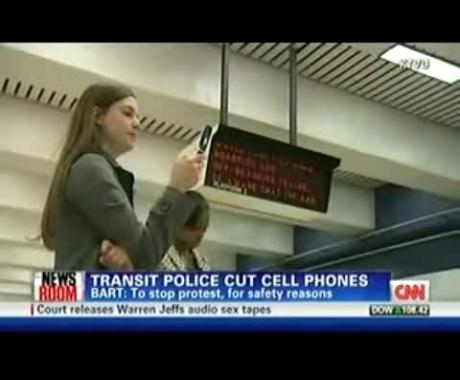
 The Bay Area Rapid Transit (BART) Board of Directors has adopted the nation’s first policy outlining the circumstances under which cell phone service can be suspended. The policy comes in the wake of BART’s disruption of cell service in a bid to preempt an August 11 anti-police brutality protest that was called to highlight the July 4 police slaying of Charles Hill by BART police at San Francisco’s Civic Center station.

That cell service cut thrust BART into the middle of a national debate over if and when it is appropriate for government agencies to cut cell service to the public. The fallout included multiple rush hour protests against BART this summer led by activists with No Justice, No BART and supporters of the hacker group Anonymous. In the wake of the controversy, BART directors set out to create a policy outlining the circumstances under which BART would cut cell service in the future.

“The intent of this cell phone interruption policy is to balance free speech rights with legitimate public safety concerns,” BART Board President Bob Franklin said. “This policy, with input from the Federal Communications Commission and the American Civil Liberties Union, will serve as a pioneering model for our nation, as a reference to other public agencies that will inevitably face similar dilemmas in the future.”

The policy was quickly adopted yesterday at the BART board’s regular meeting by a vote of 7-0, with directors Lynette Sweet and Joel Keller absent for the vote. The policy states cell service will be “interrupted only in the most extraordinary circumstances that threaten the safety of District passengers, employees and other members of public, the destruction of District property, or the substantial disruption of public transit service.”

What remains unclear is if BART’s controversial decision to cut cellphone service in order to prevent protest would have been justified under the new policy. In the lead up to the policy, BART directors said their aim was to craft a policy to be used in the most extreme emergencies, and not against the free speech rights.

“If we were faced with the exact same situation, we would not shut off cell phone service,” Franklin said, “we would arrest people.”

However, in the wake of the action, BART asserted in an official statement that, “Organizers planning to disrupt BART service on August 11, 2011 stated they would use mobile devices to coordinate their disruptive activities and communicate about the location and number of BART Police. A civil disturbance during commute times at busy downtown San Francisco stations could lead to platform overcrowding and unsafe conditions.”

BART would seemingly be justified in a disruption cell service in these circumstances under the new policy, as the planned protest represented in the eyes of BART officials both a perceived risk to safety and a potential for service disruption – the stated strategy in the announcement of the August 11 anti-police brutality protest.

The judgment call on where to draw the line in emergency circumstances will rest with predesignated top BART officials. Those officials will be obligated to immediately inform BART’s directors of any disruption of cell service.

Federal Communications Commission Chairman Julius Genachowski said BART’s policy was an important step towards responding to the incident, but he cautioned, “the legal and policy issues raised by the type of wireless service interruption at issue here are significant and complex.”

He said that the FCC will be undertaking a review of the issue and will “consider the constraints that the Communications Act, First Amendment, and other laws and policies place upon potential service interruptions.”

The FCC regulates cellphone service as part of its broader regulation of the nation’s airwaves. BART’s new policy outlining when to cut cellphone service will take effect immediately.

A link to download the new policy can be found here. http://www.bart.gov/news/articles/2011/news20111201.aspx.


UC’s pick of Bratton to investigate pepper spray incident isn’t reassuring

12

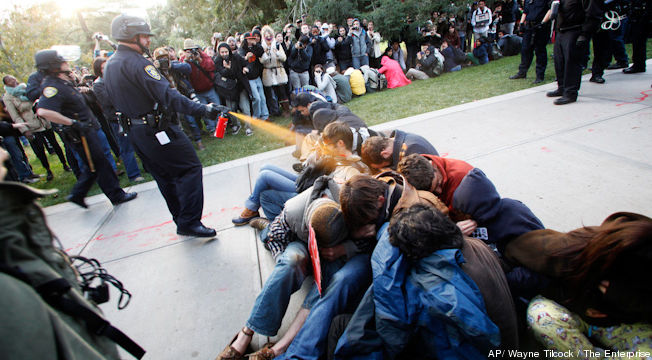
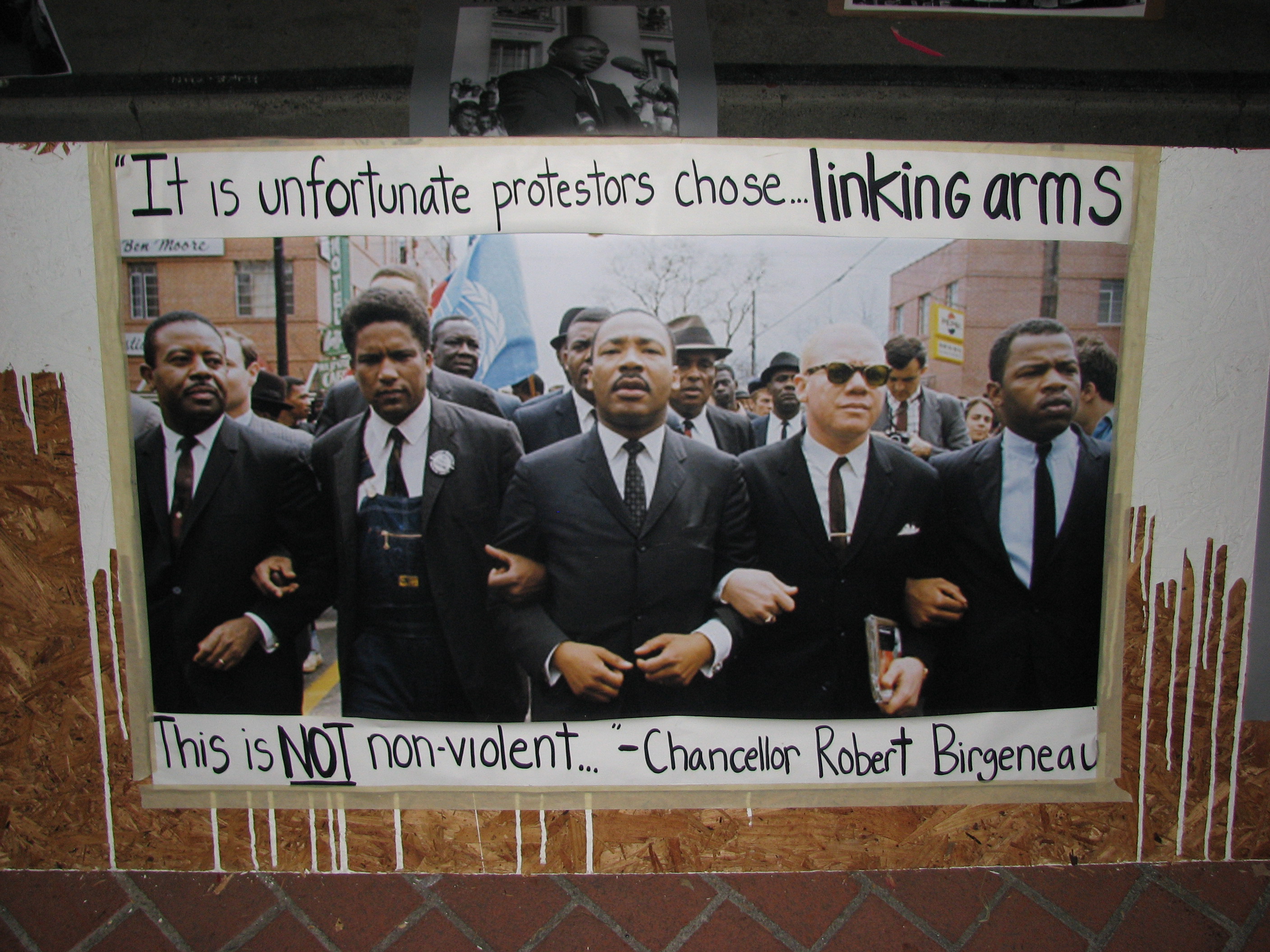
The video images are already iconic, a line of young students sit cross legged, arms linked, at the front edge of an Occupy UC Davis protest, nonviolently protesting the impacts of the economic crisis on the University of California and beyond. As police step forward students begin to chant “the whole world is watching,” and officers disperse fire extinguisher size canisters of pepper spray into the faces of the seated students.

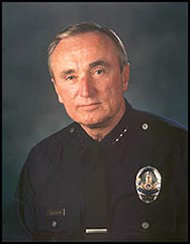
As is turns out the students were right, the whole world was watching, leaving UC Davis with a public relations nightmare that has left the campus police chief and two officers on administrative leave. In the wake of the incident, UC President Mark G. Yudof established an independent review to be conducted within the next 30 days, naming former Los Angeles Police Chief, Bill Bratton, now chairman of Kroll Security, to lead the investigation.

“My intent,” Yudof said, “is to provide the chancellor and the entire University of California community with an independent, unvarnished report about what happened at Davis.”

While UC Davis touts Bratton as “a renowned expert in progressive community policing,” deep questions surround the choice of Bratton. The Council of University of California Faculty Associations (CUCFA) was quick to question the independence of the investigation of police violence at UC Davis, pointing out that Bratton, through Kroll, already holds contracts with the UC system.

“We already know that Kroll has provided security services to at least three UC campuses for the past several years. This in itself would disqualify Mr. Bratton from participating in the investigation,”said CUCFA president Robert Meister. “You would be illustrating the kinds of connection between public higher education and Wall Street that the Occupy UC movement is protesting.”

Bratton also served as president of the Police Executive Research Forum, the police non-profit that facilitated controversial phone discussions between major metropolitan police chiefs in the lead up to the crackdown on the Occupy movement across the nation, raising questions about his ability to lead the UC Davis investigation.

Bratton’s offical bio from the LAPD shows the depth of his involvement in PERF when it states, “He is also the only chief executive to serve two terms as the elected President of the Police Executive Research Forum (PERF).” Bratton was instrumental in the creation of PERF’s hardline 2006 report Police Management of Mass Demonstrations http://www.policeforum.org/library/critical-issues-in-policing-series/MassDemonstrations.pdf for which he receives special recognition in the acknowledgments section of.

“PERF gathered more than 100 invited practitioners and stakeholders at an international forum in San Diego in December 2004 to highlight issues related to mass demonstrations and use-of-force. At this event, Los Angeles Police Chief William J. Bratton set the scene for a lively interaction as he discussed the changing nature of protests and mass demonstration events. He recalled that in the 1960s the issues leading to demonstration events tended to be more community-centered and that the police focus was largely tactical. He noted that today, demonstrations are sometimes orchestrated by far-reaching national and international organizations, coalitions and informal groups subscribing to anarchistic methods,” reads the report.

The manual pays special attention to managing media messaging, devoting a section to media in the wake of a major demonstration: “An integrated media strategy seeks to manage and harness the media attention in order to help achieve the overall policing objectives. By partnering with the media, the potential increases for all parties to win, public confidence to be maintained and the reputation of the law enforcement agencies to be enhanced.”

Though Bratton has moved on as PERF’s president, he keeps close ties with the organization. In April , Bratton was the keynote speaker at a PERF conference on technology and policing held in Washington, DC, a subject Bratton is an expert on due to his role in developing the controversial CompStat system used to “predicatively model” crime in some metropolitan areas.

Bratton is widely recognized as the leading proponent of the “broken windows theory” of policing, which advocates a zero tolerance approach to petty crime. Speaking to the Telegraph(UK) this summer about the historically large youth riots in the UK, he said youth were “emboldened” by over-cautious policing.

“To be effective, a police force should have ‘a lot of arrows in the quiver,’ said Mr Bratton, advocating a doctrine of ‘escalating force’ where weapons including rubber bullets, Tasers, pepper spray and water cannon were all available to commanders,” the paper wrote on August, 12 2011.


UC-Davis: Where real education begins (3)

0

Madeline Perez, our correspondent at UC-Davis,  this afternoon 11/30/11) reports  that the many letters published on the opinion section of the school newspaper, the California  Aggie, reflect the issue of Davis, known for its bucolic ways,  band festivals and agriculture and viticulture classes,  suddenly finding itself thrust into the international spotlight because of the pepper spraying incident.
http://www.theaggie.org/2011/11/21/letters-to-the-editor-response-to-uc-davis-protests

UC Davis: Where real education begins

0

Madeline Perez, our UC-Davis correspondent, reports this morning (11/30/11) that the tents of occupation are still standing on campus, students are sleeping in them, one professor has a sign on his tent saying “office hours,” and the campus is abuzz with organized Occupy activities put on by the students. She emailed us the following items:

Read the list of organized activities as reported in the California Aggie, the school paper, and as handed out in flyer form on campus. There’s everything from workshops on “cops off campus–the safer university” to “reflect on the now–where is occupy in the future of protests” to “budget blues–UC fiscal structure.”  http://www.theaggie.org/2011/11/28/an-abridged-schedule/

Read the Aggie’s  main webpage.http://www.theaggie.org/

Listen to the first six minutes of the  Daily Show with Jon Stewart and his excellent skit on the the pepper spraying incident (“There must be a better way of getting students to move.”) And  mimicking  in guttural tones  the words of Chancellor Linda Katehi {“The chancellor has spoken” to budget ) http://www.hulu.com/watch/305032/the-daily-show-with-jon-stewart-mon-nov-28-2011

Repeating for emphasis: As the Louis Dunn cartoon put it so eloquently in the previous Bruce blog: UC-Davis: Where real education begins.

Graphic by Louis Dunn

Guardian graphic by former Guardian art director and cartoonist Louis Dunn. For more Dunn and his unique graphics,  go to www.louisdunndrawings.com

The problem of the UC police

0

EDITORIAL Twenty years from now, when people look back on the Occupy movement, one of the indelible images will be the video of the University of California police officer casually dousing a group of peaceful, seated students in Davis with pepper spray. It’s a video that’s been seen millions of times around the world. It reflects a serious problem not just with one officer but with the way officials at all levels have responded to the protests — and with the way institutional police forces operate in this state.

In the video, a group of students involved in the OccupyUC movement are seated on the ground with arms linked. Lt. John Pike walks up and down the row, indiscriminately shooting the orange spray — which causes severe pain and breathing problems — over the students, who make no move to resist. It’s horrifying and stunning, the sort of thing that you wouldn’t believe unless you saw it yourself.

The Davis chancellor, Linda Katehi, has been reeling from the incident and is facing calls for her resignation. Pike and the chief of the U.C. Davis police have been put on administrative leave pending an investigation.

But now Assemblymember Tom Ammiano of San Francisco wants to go a step further — he wants to hold hearings in Sacramento not just on this incident but on how police agencies across the state have dealt with mostly nonviolent protesters. He’s absolutely right — and his hearings should also raise a critical question: Why does the University of California need its own armed police force?

The problems with the police at Davis mirror problems with the behavior of the UC Berkeley police — which mirror problems with the BART police. And all of them stem from a central problem: These little police fiefdoms have poor supervision, poor training and limited civilian oversight.

The chancellor of UC Davis doesn’t know anything about running a police department; she’s an electrical engineer and an academic. If she resigns, she’ll be replaced by another academician who knows nothing about law enforcement. And if the UC police misbehave, where do people go to complain? There’s no independent auditor, no office of citizen complaints.

If the Oakland police ran rampant — and they have been known to do exactly that — at least the elected mayor can be held accountable. Same for any city that has a municipal force. But when campus and transit security operations turn into armed paramilitary agencies, it’s a recipe for trouble.

At the very least, the UC police — like the BART police — need an independent oversight agency to handle complaints. But it might be time to discuss whether campuses can best be protected with unarmed security guards supported by local municipal police. The University of California will never take that step on its own, so the state Legislature needs to evaluate whether lawmakers should force the issue.

Guardian editorial: The problem of U.C. police

7

GUARDIAN EDITORIAL Twenty years from now, when people look back on the Occupy movement, one of the indelible images will be the video of the University of California police officer casually dousing a group of peaceful, seated students in Davis with pepper spray. It’s a video that’s been seen millions of times around the world. It reflects a serious problem not just with one officer but with the way officials at all levels have responded to the protests — and with the way institutional police forces operate in this state.

In the video, a group of students involved in the OccupyUC movement are seated on the ground with arms linked. Lt. John Pike walks up and down the row, indiscriminately shooting the orange spray — which causes severe pain and breathing problems — over the students, who make no move to resist. It’s horrifying and stunning, the sort of thing that you wouldn’t believe unless you saw it yourself.

The Davis chancellor, Linda Katehi, has been reeling from the incident and is facing calls for her resignation. Pike and the chief of the U.C. Davis police have been put on administrative leave pending an investigation.

But now Assemblymember Tom Ammiano of San Francisco told us he  wants to go a step further — he  he plans  to hold hearings in Sacramento not just on this incident but on how police agencies across the state have dealt with mostly nonviolent protesters. He’s absolutely right — and his hearings should also raise a critical question: Why does the University of California need its own armed police force?

The problems with the police at Davis mirror problems with the behavior of the U.C. Berkeley police — which mirror problems with the BART police. And all of them stem from a central problem: These little police fiefdoms have poor supervision, poor training,  and limited civilian oversight.

The chancellor of U.C. Davis doesn’t know anything about running a police department; she’s an electrical engineer and an academic. If she resigns, she’ll be replaced by another academician who knows nothing about law enforcement. And if the U.C. police misbehave, where do people go to complain? There’s no independent auditor, no office of citizen complaints.

If the Oakland police ran rampant — and they have been known to do exactly that — at least the elected mayor can be held accountable. Same for any city that has a municipal force. But when campus and transit security operations turn into armed paramilitary agencies, it’s a recipe for trouble.

At the very least, the U.C. police — like the BART police — need an independent oversight agency to handle complaints. But it might be time to discuss whether campuses can best be protected with unarmed security guards supported by local municipal police. The University of California will never take that step on its own, so the state Legislature needs to evaluate whether lawmakers should force the issue.

Postscript: STOP SHOOTING STUDENTS:  The real problem for U.C. Davis’s Kotehi and other U.C. chancellors was illustrated by  this classic J’Accuse open letter by Nathan Brown,  U.C/Davis.assistant professor in the Department of English.

Protesters target UC to demand openness, accountability, and the restoration of cuts

2

UPDATED BELOW — Protesters with ReFund California and other groups are gathering today (Mon/28) at UCSF-Mission Bay and three other UC campuses to protest a teleconference of the UC Board of Regents, which will discuss state funding levels and tuition increases, as well as recent incidents of police violence against nonviolent student protesters.

ReFund California, a coalition of student and labor groups, is angry with the UC’s decision to abruptly cancel the Nov. 16-17 Regents meeting at UCSF, citing public safety concerns surrounding a meeting that the group had been planning a convergence on for months – as well as a hastily called meeting on the day after Thanksgiving.

The group has created a pledge that it wants the Regents to agree to, which includes calling for higher taxes on the rich, a restoration of cuts to the public university systems, removal of commercial land from Prop. 13 property tax caps, and a fee on Wall Street financial transactions.

ReFund California is also dismissive of independent investigations the UC has initiated to look at aggressive police repression of students protests, including police at UC Berkeley using batons and mass arrests to dismantle an OccupyCal tent city and police at UC Davis dousing passive protesters with pepper spray. Video of both incidents went viral and have helped galvanize the overlapping Occupy and student movements.

“No amount of new ‘police protocols’ will prevent violence against students and workers, as long California’s corporate and financial elite along with their representatives among the Regents and administrators of the UC rely on police to address the concerns of students and workers,” the ReFund California Coalition wrote in the letter to the UC.

Today’s action at UCSF – centered around the meeting site at 1675 Owens Street, where a Guardian reporter is on the scene and will offer her report later today – joins similar protests at UC Davis, UCLA, and UC Merced, the four sites where the Regents will gather.

Meanwhile, ReFund and other groups are also angry that the CSU Board of Trustees went ahead with its Nov. 16 meeting behind closed doors, clearing out student protesters and the public before they approved a 9 percent tuition hike, an action that Lt. Gov. Gavin Newsom (a member of that body) denounced.

“While I understand the CSU leadership’s concerns regarding public safety, the spirit of open deliberations has been marred,” Newsom wrote in a Nov. 18 letter to Chancellor Charles Reed, calling for the matter to be re-voted at the Dec. 5 meeting to “allow the full board to hold an open debate, with full public comment and members of the media present.”

In related news, many students and faculty at UC Davis are on strike today to protest the pepper-spraying incident. And tomorrow (Tues/29) at noon, members of OccupyOakland say they plan to retake Frank Ogawa Plaza (which they renamed Oscar Grant Plaza) and set up another 24/7 encampment.

UPDATE NOON: Guardian reporter Christine Deakers says there is a heavy police presence at the UCSF meeting, where only 50 members of the public are allowed inside and most of those seats have been claimed by ReFund California members. When the Regents decided to limit the time for public testimony, the group held a General Assembly in the meeting, drowning out the Regents and causing the meeting to adjourn until 1:30 pm. You can follow her tweets here or here.

UPDATE 1:50 PM: The UC Board of Regents did not reconvene, instead cancelling the rest of the meeting without taking action. The San Francisco Chronicle quotes Newsom as saying he supports the demands of ReFund but that he’s not willing to sign its pledge.

The faces and voices of Occupy

33

Who are the 99 percent — and what are they saying? It’s not what you read in the daily papers

To read some of the accounts in the daily papers in San Francisco, and hear some of the national critics, you’d think the people in the local Occupy movement were mostly filthy, drunk, violent social outcasts just looking for a place to party. Or that they’re mad-eyed anarchists who can’t wait to break windows and throw bottles at the police. Or that they’re a confused and leaderless band that can’t figure out what it wants.

When you actually go and spend time at Occupy SF and Occupy Cal and Occupy Oakland, as our reporters have done, you get a very different picture.

The Occupy movement is diverse, complex and powerful. It’s full of people with different backgrounds and perspectives. And they all agree that economic injustice and inequality are at the root of the major problems facing the United States today.

Here are some of those people, the faces and the voices of Occupy — and a celebration of the lives they’re living and the work they’re doing.


The student

Jessica Martin reflects on the First Amendment

Guardian photo by Rebecca Bowe

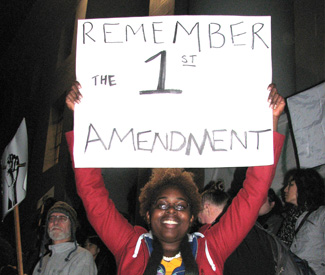
Jessica Martin stood and held her sign high on the steps of Sproul Hall, at the University of California at Berkeley, while a jubilant crowd of students jammed to classic dance party tunes and set up tents. They were invigorated by a general assembly that had attracted thousands following a Nov. 15 student strike and Day of Action called as part of the Occupy movement. (Their tents were cleared in a police raid two days later, yet students responded with flair, suspending tents high in the air with balloons.)

Martin’s sign proclaimed, “Remember the First Amendment,” and she’d written the text of the Constitutional right to free speech on the other side.

“My mother stood on the steps [of the Lincoln Memorial] in D.C. with Martin Luther King as part of the ‘I Have a Dream’ speech,” said the graduating senior, who’s majoring in Japanese and Linguistics. “And now I stand on the steps of Sproul Hall,” — the birthplace of Berkeley’s Free Speech Movement — “in front of the Martin Luther King Student Union, to defend my First Amendment rights.”

She expressed solidarity with students who were brutalized by police Nov. 9 following their first attempt to establish an occupation.

“Part of what [police] are here to serve and protect is the First Amendment,” Martin said. But on that day, “They met the First Amendment with violence.” (Rebecca Bowe)


The artist

Ernest Doty responds to police brutality

Guardian photo by Rebecca Bowe

In Oakland, a young veteran named Scott Olsen suffered a fractured skull and brain injuries after being hit with a police projectile at an Oct. 25 Occupy Oakland protest. Ernest Doty was one of several who ran to Olsen’s aid and carried him to safety.

“Immediately after I saw Scott go down … I knew I had to get him, and get him out of there,” Doty recounted. “I whistled at another guy, and we both ran in. The cops were shooting at us with rubber bullets.” As they ran up, he said, a flash grenade blew up next to Olsen’s face, just inches from his head injury.

Doty, 32, recently moved to the Bay Area from Albuquerque, New Mexico. An artist who also does spoken word performances, he’s camped overnight at Occupy Oakland and has incorporated words and images from the Occupy movement into his artwork and poetry.

He’s also been personally impacted by tragedies arising from police interactions: Both his stepbrother and his cousin — a veteran who suffered from post-traumatic stress disorder — were shot and killed by police in New Mexico.

Occupy Oakland “has managed to create a community out of chaos,” Doty said. “I think that this movement is going to continue to grow. It’s the 1960s all over again, but it’s broader. It’s going to be a long road. I think encampments, marches, and protests are going to continue into the next year.”(Bowe)

Ernest Doty’s next art show is Dec. 2 from 7 to 11 p.m. at Sticks + Stones Gallery, 815 Broadway, in Oakland.


The peacekeeper

Nate Paluga deals with camp conflict

Guardian photo by Mirissa Neff

Does this man look like he’s an occupier? Depends on your perception of the movement. He’s not homeless — he’s a bike mechanic who lives in Nob Hill and whose girlfriend only tentatively accepts that he’s camping in Justin Herman Plaza. He is young, blunt, and possesses the intense gaze of an activist, belied by a snug red-white-and-blue biker’s cap with “USA” emblazoned on the underbelly of its brim.

Paluga, a self-proclaimed philosopher, has grabbed upon the concepts of “fairness and equality” as the core values of Occupy. “This movement means something different to different people, but I haven’t found anyone that disagrees with those being some core values,” he said as he showed off the bike he uses to move as much as 100 pounds of food and equipment for the camp.

His core values are his guidelines in his other role at Occupy SF: peacekeeper. Paluga said he and others often intervene in the disagreements that can arise in a group-run housing situation populated by diverse socioeconomic and cultural backgrounds.

He said that with aggressive individuals it’s important to reinforce why they’re all there. “They’re coming from places where there wasn’t a lot of equality and justice and they’re bringing that with them. You gotta step in and tell them it’s gonna be okay.” (Caitlin Donohue)


The nester

Two Horses’ permanent protest

Guardian photo by Mirissa Neff

Two Horses might have the most welcoming tent at Occupy SF. Brightly stocked flowerboxes and a welcome mat are outside; inside, the one-time property manager and current homeless man has arranged an air mattress, carpet, and princess accommodations for his 12-year-old blind white cat Luna. There’s even a four-foot tall kitty tower.

The agile feline moves toward the sound of his hand tapping on the floor. “I like the idea of a 24-hour protest,” said Two Horses. He came to the camp a few weeks ago and was impressed by the quality and availability of food available in the encampment’s kitchen, where he said donations come from all over (“it comes from the 99 percent”) at all hours of the day and night.

“I knew I had to do something, so I started volunteering.” He now works the late shift, a core kitchen staffer.

When Michael Moore came by the plaza, Two Horses was impressed. “It wasn’t so much what he said but how he came shuffling up with no entourage, no security, no assistant with a clipboard.” He would, however, like to see more communication between Occupy camps, maybe a livestream video screen to see other cities.

He seems quite at home in his surroundings. “My goal is to look as permanent as I can,” he said, the corners of his mouth turning up crookedly, happily. (Donohue)


The healers

Med tent volunteers from the nurses’ union do it for the patients

Guardian photo by Mirissa Neff

Melissa Thompson has a kid who’s looking at college options; she hopes her family can figure out a way to afford education in a state where public university tuition continues to rise.

But that’s not the only reason she’s at Occupy SF. On a cloudy Friday morning, Thompson sat outside the encampment’s med tent, where she tended to cuts, changed the dressing on wounds, and provided socks, blankets, and tools for basic hygiene. It’s her trade — she’s a nurse, one of the many California Nurses Association members sick of cuts to the country’s public and private health options who were eager to lend their services to the movement.

She’s also one of the determined crew that enlivens Occupy Walnut Creek. What’s it like out there? “It’s been good,” she assured us, brightly. “We’re on the corner, by the Bank of America? We’ve had great reactions at Walnut Creek.”

Thompson said she got involved because “I love being a nurse, number one.” Corporate greed, she said, has led to cuts in her patients’ insurance, leaving them to make tough decisions between feeding their family and filling the prescription for their post-dialysis medications.

She said he hopes the politicians are listening to Occupy. “I don’t understand what the problem is. They need to open up their eyes and see how they’ve damaged us.” (Donohue)


The fabulous

Li Morales and Molly Goldberg talk about Queer Occupy

Queers have long been resisting the ravages of the one percent on the 99 percent. Resistance has looked like coming together on our own, on our own terms, with our own names, genders, and chosen families. Like the (decolonize) occupations in San Francisco, Oakland, around the country and world, our resistance is made out of a stubborn imagination, and can be messy. We are a menagerie of magnificent beasts, with all of our struggles and limitations firmly at the center of the fabulous and fucked-up world we make for ourselves.

In HAVOQ/ SF Pride at Work, we imagine queerness not as a What, an identity whose boundaries we seek to police, a platform from which to put forth our One Demand. Rather, we imagine it as a How: a way of being with one another. We call it Fabulosity. And Fabulosity means drawing on queer histories of re-imagining family as a way of expanding circles of care and responsibility. Fabulosity is to affirm the self-determination of every queer to do queer just exactly how they do. It affirms that under the banner of the 99 percent, we are all uniquely impacted by the ravages of the 1 percent and we come with a diversity of strategies and tactics to resist and survive.

In the gray areas lives our emerging autonomy and interdependence — an autonomy not contingent on capitalism’s insistence on utility. We are not useful. We are not legible. And in that lack of utility and that illegibility, we are not controllable. Because we do not have one demand, but rather a cornucopia of desire. We’re making our fabulous fucked-up world for ourselves, with each other. We always have. (Morales and Goldberg)

Li Morales and Molly Goldberg are members of SF Pride at Work/HAVOQ, a San Francisco-based collective of queers organizing for social and economic justice.


The mechanic

reZz keeps Occupy’s tires filled

Photo by David Martinez

On a Sunday afternoon at Occupy SF, Bike Kitchen volunteer reZz exported the education-oriented bike shop’s mission — and its tools — to Justin Herman Plaza. There he stood, fixing alignment on the wheels of passers-by and occupiers — for free. “Occupy Bike Shop,” as he and other volunteers have come to call the service, has been tinkering out in the plaza two to three times a week.

“It’s been lovely,” he said later in a phone interview with the Guardian. “I’ve purposefully been in a place where it’s open to people in the encampment and people who are passing by. People who stop want to see the occupation in it’s most positive light.” reZz wouldn’t consider camping out at Occupy, but that’s not to say that he doesn’t truck with the movement’s message that public space can — and should — be repurposed.

An avid biker himself, he thinks public bike repair is a great re-envisioning tactic. And fixing poor people’s bikes sends its own message. “This year’s junk is an invented need,” he said. “We’re falling into debt because we think we need a new car every year. Part of the idea of fixing people’s bikes and showing them how to do it brings us away from the artificial scarcity whereby the robber barons and capitalists insist we have to struggle against each other instead of working with each other.” (Donohue)


The medic

Miran Istina has cancer — and helps others

Guardian photo by Yael Chanoff

It had grown dark, and the OccupySF camp was restless as many signs pointed to a raid that night at 101 Market Street. But 18-year-old Miran Istina sat calmly on the sidewalk, medical supplies spread over her lap. “As a medic for OccupySF,” said Istina, “It’s my job to have a well-supplied, well-organized medical kit.”

The tall, wide-eyed teenager, who spends some of the time in a wheelchair, is not just a medic at camp. She has done police liaison and media work as well. And she has a remarkable story.

When she was 14, Istina was diagnosed with chronic myelogenous leukemia. Her family had purchased her health insurance only three months before, and the cancer was in stage two, indicating that she had been sick for at least one year. So the company denied her treatment, which would include a bone-marrow transplant, radiation therapy and chemotherapy, on the basis of a pre-existing condition.

Her family bought a van, left Sisters, Oregon, and started searching for somebody who would treat her. They traveled around the country three years, desperate for the life-saving treatment but unable to pay for it.

Just after her 17th birthday, Istina left her parents in New York and began hitchhiking back to Oregon. “That was my way of saying, I’m done looking for treatment. I’m going to do what makes my heart happy.”

After a little over a year of traveling and exploring her interests, Istina made her way to San Francisco. She was sleeping in Buena Vista Park when she “heard some protesters walking by, going ‘occupy San Francisco! Occupy San Francisco. I figured they were a bunch of radicals and that a street kid like me really wouldn’t be welcome.'”

A few nights later, she did go check it out, looking for a safe place to sleep. “They explained to me what it’s about, and why we’re here, and my story directly sat inside of that.”

She has been living and organizing with OccupySF ever since. She got involved with the medic team after spending a night in the hospital for kidney failure, then being treated for nine days, free, in the camp’s medical tent. “They realized I had a lot of skill as a medic, and gave me a kit.”

In the midst of recent media attacks on the OccupySF community, Istina is defensive: “Every community has its assholes. Every community has that pit that no one goes into because it’s just yucky. For some people in San Francisco it’s the Haight, for the the Haightians- you know, the Haight people- it’s the financial district. For other people it’ll be somewhere else. But I love the community here. “I’ve been hurt by a lot of people in my life,” said Istina. “But I think I can make that right by holding to this pure-hearted motto of universal and unconditional love, for everyone. No exceptions.” (Yael Chanoff)


Anonymous targets cop group that coordinated calls on Occupy

9

The hacker group Anonymous has targeted the Police Executive Research Forum (PERF), taking down the website and publicly releasing home phone numbers, addresses, emails, and other personal information of directors and staff.

PERF became an activist target after media outlets, including the Guardian, highlighted the nonprofit think tank’s role in coordinating conference calls with mayors of major metropolitan cities about how to deal with Occupy encampments. Weeks after the conference calls were convened, a series of police raids targeted encampments in major U.S. cities such as New York, Oakland, and Portland.

On Nov. 19, Anonymous Operations tweeted, “A private NGO called #PERF is helping to train & coordinate #Occupy raids nationally … PERF, Expect us!”

The attack occurred the next day, and PERF staff and directors’ personal information was posted online. A screen shot tweeted by Anonymous showed an error message which read: PoliceForum.org seems to be down. 🙁

Reddit posted a hacker conversation about the action. Apparently, not everyone was impressed.

The executive director of PERF is Sherwin B. Chuck Wexler, a member of the Advisory Council for the U.S. Department of Homeland Security. PERF board members include an assortment of police chiefs known for their track records of using heavy-handed tactics against protesters of the anti-globalization movement and mass demonstrations organized around Republican party national conventions. According to a bio for Wexler, “PERF’s research has a direct impact on policy and practice in policing around the world.”

PERF’s website is back up now. Before the attack occurred, the organization responded to the recent media attention with a public statement. “Over the last few days, the Police Executive Research Forum has been the subject of several false articles and blog postings alleging that we have been coordinating police crackdowns on Occupy protests,” the message reads. “This is not true. PERF conducted two conference calls for the sole purpose of allowing police chiefs to compare notes about their experiences with ‘Occupy’ protests.”

Anonymous is famous for releasing YouTube videos about its actions. Here’s the one C@b!nCr3w, the anonymous hackers taking credit for the attack, created about the PERF stunt. (“Don’t dox and drive” refers to “doxing,” hacker slang for releasing individuals’ personal data.)

The dramatic video: UC-Davis Chancellor Linda P. B. Katehi and her walk in shame

45


My granddaughter Madeline, a senior at the University of California-Davis, has been camping out with the Occupy movement at Davis.  And so I have been watching the demonstrations with outrage and awe.  Outrage at the pepper-spraying campus cops and the cowering Davis president Linda P.B. Katehi in her bunker. And with awe and admiration for the inspired and inspiring reaction of the Davis students. Let me summarize.

On Friday afternoon, the campus police moved to take down the tents of peaceful occupation on the campus.  Several protestors sat down on the sidewalk, linked arms, and refused to stand as the cops ordered. As bystanders chanted, “Don’t shoot the students, don’t shoot the students,”  the New York Times reported on Monday that “an officer shakes a pepper spray canister and walks before a line of seated protesters, spraying them. The protesters’ faces and clothes are quickly covered in the orange-tinted spray.

“Some protesters are heard screaming and crying as they are arrested. One bystander is heard shouting; “These are children! These are children!” The Times reported that 11 protesters were treated at the scene after being sprayed, and two of them were sent to the hospital.  Ten proresters were arrested on misdemeanor charges of unlawful assembly and failure to disperse and were later released, according to the Times.

Katehi at first came forth with the usual UC robotic response: support the cops, to hell with the students. She then scheduled a press conference without notifying the students or giving them a chance to respond. However, the word leaked out and the students began gathering outside the building where the press conference was held.

You can read the account here.

According to the person recording the video, Lee Fang, Katehi had scheduled a 4pm press conference that was set to last an hour. During the press conference, protesters gathered outside the building and demanded to be heard, at which point Katehi refused to leave for several hours. Students eventually created a large pathway through which Katehi could leave and chanted “We are peaceful” until the Chancellor agreed to walk out to her car.

As you can see, the protesters’ silence is absolutely deafening. Having been a part of a supposedly “silent” march at Occupy Wall Street earlier this year, I was amazed at how unified the Occupy Davis protesters were. Also, right before Katehi gets into her car (at about the 1:36 mark), you can hear someone ask, “Did you feel at all trapped inside, Chancellor?” which is a direct reference to the justification the UC Davis police claimed for using pepper-spray during the protests. Phenomenal job, UC Davis protesters.

Here’s the video:


I have walked around the Davis campus and found what is happening there is happening on many other UC campuses: there is a vigorous building program at odds with all the talk of limited budgets and increased fees. I can see the massive UCSF/Mission Bay program from my office window on Mississippi Street at the bottom of Potrero Hill.  The buildings keep going up, the workmen keep working, the jolly press releases keep emerging, and the funds seem to gush forth without interruption.  Yet  the students and their families are screwed with ever escalating tuition and ever escalating debt–and all with little prospect for jobs after graduation. And California’s once world famous educational system is floundering in ignominy?  Can anyone in the UC administration cite a case where a campus building program has been stopped or seriously scaled back during this student and economic crisis? Thank God for students who know how to demonstratre peaceably and creatively.  Thank God for students who know how to force their chancellor to walk in shame before the world.


Pepper spray backlash continues to burn

5

Not only has Lt. John Pike, the police officer who liberally doused nonviolent college students with pepper spray in an incendiary show of excessive police force Nov. 18, become a meme — he’s also generated a raging controversy that has top officials at the University of California Davis in the crosshairs. The incident, which has triggered widespread outrage since videos of it went viral on YouTube, occurred after police responded to student protesters attempting to create an Occupy Davis encampment.

Sen. Leland Yee issued a letter to UC president Mark Yudof Nov. 21, calling for an independent investigation into the pepper spray incident rather than a task force handpicked by UC Davis Chancellor Linda Katehi. The Davis chancellor, who has come under intense pressure since the incident as students call for her resignation, previously announced that she would create a committee to look into the matter and report back after 30 days.

“She gave 30 days to report back,” noted Adam Keigwin, Yee’s chief of staff. “It takes about 30 seconds to realize there’s been wrongdoing.”

In the letter, Yee expressed concern that “it is important that we do not leave the fox to guard the henhouse.” A press statement issued by his office was more direct, noting that Yee “called Katehi’s task force a sham.”

Yudof said Sunday that he would convene all 10 UC campus Chancellors to ensure proper law enforcement reactions in future protests.

Watch this clip to the end, and you’ll witness an incredible moment following the pepper spray incident, when UC Davis students banned together and chanted at police, “You can go!” After a few moments, the police appeared to listen to them, and retreated.

http://www.youtube.com/watch?v=WO4406KJQMc&feature=share
Video by YouTube user waxpancake

Some 5,000 students gathered at the UC Davis quad this afternoon to protest the now-infamous show of police brutality. Katehi waited in line to speak and then apologized to the students.

According to Yee’s press release, “Katehi’s salary is $400,000, reflecting a 27 percent hike from her predecessor. Her compensation package also includes a house provided by UC, $9,000 per year in automobile allowance, relocation expenses now and upon exiting the position, a promised faculty position after leaving the Chancellor’s office, a low-interest home loan after serving as Chancellor, and a generous pension and health care package, among other benefits.”

Sen. Leland Yee is urging all UC and CSU students and employees who are retaliated against or face disciplinary action as a result of their peaceful protest to contact his offices in San Francisco (415-577-7857) or San Mateo (650-340-8840).


Period Piece: A fight we won

0

As steadfast Occupiers confront growing police and official opposition comparisons to historical protest movements are cropping up. 

San Francisco, of course, has been home to more than a few spirited speeches, many of which have resulted in real protest-driven change. Local protests here have long been loci of larger nationwide movements. One cool example: the freeway revolt movement, a national pushback against the autofication of cities in the 1960s and ’70s which reached its peak in San Francisco in the fight against the Western Freeway.

Many of the 1955 organizers who battled the freeway that would have connected 101’s march up Octavia Boulevard all the way to the Golden Gate Bridge hadn’t protested anything before. They included pastors and churchgoers, housewives, concerned parents, World War II veterans, middle-class San Franciscans working and living in the path of a projected freeway.

The proposed Western Freeway would have included a major interchange around 7th and Irving Streets before heading into Golden Gate Park. Image courtesy San Francisco Public Library

The last addition to a city-wide highway plan, the double-decker Western Freeway would have snaked through West Portal, the Sunset District, and the Richmond (with, of course, a little jog through Golden Gate Park, devouring the Rose Garden and the Hall of Flowers). Three huge arteries would have tangled and clogged where Irving and Seventh Streets now intersect in a tree-lined corner. 

Obviously, the protesters who assembled to challenge the Board of Supervisors at Lincoln High School in December of 1955 weren’t just speaking out against the views and noise that were to accompany the proposed concrete ribbon. They were challenging the disruption of a settled post-war life, the bisection of their parishes by eight lanes of concrete, the impossibility of getting their kids to previously accessible neighborhood schools. Thousands of homes were to be demolished, and businesses to be relocated. 

“The turnout was enormous, and the angry crowd unanimous in opposing the freeway plan. The politicians were stunned,” writes Frank Dunnigan in a recollection of the 1955 meeting.

The struggle against the freeway lasted four years and was replicated, again and again, and with growing momentum by neighborhood groups across the entire city. Resolution 45-59, which passed in 1959, squashed plans for the Western Highway as well similar nasty proposals. It was the direct result of efforts by ordinary people with full-time jobs, families, and livelihoods that threatened by the powers that were. And they won.


The scene at Occupy Cal last night (VIDEO)

0

Students at the University of California at Berkeley voted overwhelmingly to reestablish an Occupy encampment at the university’s Sproul Plaza yesterday, Nov. 15, following a student strike and Day of Action packed with marches, rallies, and student protests called in response to a police crackdown on Occupy Cal’s first attempt to set up tents Nov. 9.

A general assembly drew thousands to Sproul Plaza, the historic site where Berkeley’s free speech movement began. The 15th annual ceremony honoring recipients of the Mario Savio Young Activist Award was held on the steps outside Sproul Hall following the general assembly, and Robert Reich, Chancellor’s Professor of Public Policy at the University of California at Berkeley and former secretary of labor under President Bill Clinton, delivered a speech on “Class Warfare in America.”

By 11:30 p.m., roughly 20 tents had been pitched, and more were cropping up. The atmosphere felt like a festival as hundreds of students assembled their mini tent city, threw a dance party on the steps, waved signs, and vowed to stay their ground. Police presence was minimal, with several officers surveying the scene from a balcony above the plaza and a handful of Alameda County Sheriff deputies in regular uniform clustered near Bancroft Street at the campus edge.

The Guardian will have a full report on the events of the day and night later on, but for now, here’s a video that captures the vote to re-occupy and the high-energy scene that followed.

Video by Shawn Gaynor and Rebecca Bowe

U.S. mayors holding regular discussions about Occupy protests

4

The U.S. Conference of Mayors, a nonpartisan organization of cities with populations of 30,000 or more, is holding regular discussions about Occupy protests nationwide. In recent days, protests that sprung up as part of the Occupy Wall Street movement in New York, Oakland, Portland, Denver, and some others were targeted with police crackdowns. In a recent interview with BBC news, Oakland Mayor Jean Quan stated that she had been in discussion with other mayors in the days before police raided Occupy Oakland.

The following is a statement issued by the U.S. Conference of Mayors.

“As with many other issue areas, The U.S. Conference of Mayors has facilitated regular conference calls with interested mayors to discuss issues of concern and exchange ideas about the Occupy Wall Street Demonstrations.

“Two of those calls have been a round robin discussion and provided a forum for mayors and police executives to discuss the impact of the demonstrations on their cities and how they are responding to it.

“Included in the discussions have been efforts cities have made to accommodate the demonstrators and maintain public health and safety. Other topics discussed include the costs cities are incurring as a result of the events and the impact on other city service and activities.”

Unclear at this point is whether federal agencies have also been involved in discussions held prior to the recent series of crackdowns. During protests held in Oakland last year decrying the fatal shooting of BART passenger Oscar Grant, there were federal agents mixed among police who were stationed in the streets.

State of the occupations

0

rebeccab@sfbg.com

The police evictions of OccupyOakland and OccupyCal over the last week, and the looming threat of another attempt to evict OccupySF, presented challenges for the Bay Area protests just as similar police crackdowns targeted Occupy encampments in Portland, Denver, New York, and other cities nationwide.

These fast-moving developments also come at a time when university students from around California will be descending on San Francisco for a Nov. 16-17 University of California Board of Regents meeting that was canceled this week because of public safety concerns. All of this adds up to a big and unpredictable moment for the widening movement (see “The growing 99 percent,” 11/9).

So we’ve decided to start a regular feature to track the latest developments in an Occupy movement that seems adamant about standing its ground even as it’s forced to deal with threats from police, organizing challenges, and the coming of winter.


#OCCUPYCAL GROWS UP FAST

Students at the University of California at Berkeley burst onto the Occupy scene Nov. 9 with the launch of OccupyCal, a student-led protest that made waves nationally after university police advanced on around 500 students in Sproul Plaza, the historic epicenter of the Free Speech Movement, and struck them with batons after they tried to set up camp.

UCB police made 39 arrests in two separate actions against protesters, fueling student protesters’ resolve at a general assembly convened afterward that drew more than 1,000 people and lasted well into the night. At around 1:30 am, students voted to hold a student strike on Nov. 15 in solidarity with others throughout the UC system.

The harsh police response prompted condemnation from the Free Speech Movement Archives (FSM-A). “It appears that the campus police are in need of remedial education concerning fundamental protections offered by the US Constitution — including First Amendment rights to Free Speech and Free Assembly that were clearly recognized and enshrined on the UCB campus 47 years ago on these very steps,” the group noted in an open letter.

UC Berkeley Chancellor Robert J. Birgeneau, who was out of the country during the violent police crackdown, issued a statement on Nov. 14 ordering a third-party investigation of the clash and granting amnesty under the Student Code of Conduct to all students who were arrested for blocking police from removing the encampment.

“It was only yesterday that I was able to look at a number of the videos that were made of the protests on November 9. These videos are very disturbing. The events of last Wednesday are unworthy of us as a university community. Sadly, they point to the dilemma that we face in trying to prevent encampments and thereby mitigate long-term risks to the health and safety of our entire community,” he wrote. “Most certainly, we cannot condone any excessive use of force against any members of our community.”


#OCCUPYSF, THE NEXT BATTLEGROUND

At press time, student and labor groups that were planning to converge on the UC Regents meeting at UCSF Mission Bay on Nov. 16 by the thousands were deciding how to respond to the meeting cancellation, but protests are still planned for that day, with support from OccupySF.

Meanwhile, Mayor Ed Lee continues to insist that OccupySF break camp, but instead it has only grown larger, with the tents spreading out from Justin Herman Plaza onto the nearby sidewalk along Market Street in front of the Federal Reserve. At press time, protesters feared what seemed an imminent police raid, particularly now that the election is over and busloads of student protesters were headed into town.


TRAGEDY STRIKES #OCCUPYOAKLAND

On Nov. 10, Kayode Ola Foster, 25, suffered a fatal gunshot wound to the head following an argument, just yards from the Occupy Oakland encampment in Frank Ogawa Plaza (Oscar Grant Plaza to the occupiers who’d camped there for a solid month).

A somber mood settled over the plaza in the hours following the shooting as the tent city dwellers absorbed the gravity of the situation, and occupy activists held a candlelight vigil. Although initial reports suggested Foster had no relationship to the camp, police later said they believed he and one of two shooting suspects had spent time there.


#OCCUPYOAKLAND GETS THE BOOT

Three days after the fatal shooting near the OccupyOakland encampment sparked a hard-line response from local government officials, the camp was dismantled in an early morning police raid Nov. 14, the second to befall the occupation since it began a month ago. That evening, thousands marched back to the plaza in response to the raid and held a general assembly.

On the night of the raid, it took several hours for police to arrive at 14th and Broadway streets, where protesters began congregating in the intersection around 2 a.m. in anticipation of the forced eviction from camp. Law enforcement came en masse, with mutual aid support from seven different regional law enforcement agencies.

While two lines of riot police formed an L-shaped formation blocking protesters’ access to the plaza and nearby streets, hundreds more poured into the plaza to dismantle tents, flatten structures, and make arrests. Police arrested 32, the majority of whom belonged to a group of clergy members from the occupation’s Interfaith Coalition tent who sat calmly together in the plaza and sang by candlelight as they waited for police. Occupiers who witnessed the dismantling of the camp from behind police barricades yelled out, “Shame! Shame! Shame!”

Steven T. Jones contributed to this report.

Fearing violence, UC cancels Regents meeting; Chancellor pardons arrested UC protesters

15

Citing public safety concerns, University of California has canceled a UC Board of Regents meeting set for Wednesday morning at UCSF Mission Bay, a meeting that has been the target of months worth of student organizing to protest tuition hikes and service cuts and which dovetailed with the roiling Occupy movements in the Bay Area.

After police crackdowns on Occupy encampments in Oakland and in UC Berkeley’s Sproul Plaza over the last week, the long-planned showdown with the UC Regents – whom protest groups such a ReFund California say are among the powerful 1 percent that Occupy has targeted and which they blame for deep cuts in California’s public university system – was highly anticipated.

OccupyCal protesters have called for a strike on that and other UC campuses tomorrow to protest the violent police expulsion of student protesters at UC Berkeley last week. At a General Assembly at 6 pm today (Mon/14) in UC Berkeley’s Sproul Plaza, attendees will decide how to respond to the cancellation of the meeting.

Other groups that include labor representatives, such as ReFund California, will also independently decide how to proceed. “We’re figuring out what to do,” said Jennifer Tucker with ReFund, noting that they will post that information on its website: www.makebankspaycalifornia.com.

A statement issued today by the UC President’s Office cited information gathered by UC Police: “From various sources they had received information indicating that rogue elements intent on violence and confrontation with UC public safety officers were planning to attach themselves to peaceful demonstrations expected to occur at the meeting.

“They believe that, as a result, there is a real danger of significant violence and vandalism. They have advised us further that this violence could place at risk members of the public, students lawfully gathered to voice concerns over tuition levels and any other issues, the UCSF community, including patients, and public safety officers, UC staff and neighbors of UCSF Mission Bay. They recommended to us, in the strongest of terms, that we cancel or postpone the meeting as scheduled.”

Tucker criticized the move: “We were floored this morning by the announcement that the Regents were canceling their meeting. There had been a statewide organizing campaign for months on this with thousands of students coming in on buses from throughout the state,” she said, adding that, “There will still be protests on Wednesday, but we’re not sure what form they will take.”

Meanwhile, UC Berkeley Chancellor Robert J. Birgeneau, who was out of the country during the violent police crackdown last week, today issued a statement ordering a third-party investigation of the clash and granting amnesty under the Student Code of Conduct to all students who were arrested for blocking police from removing the encampment.

“It was only yesterday that I was able to look at a number of the videos that were made of the protests on November 9.  These videos are very disturbing.  The events of last Wednesday are unworthy of us as a university community.  Sadly, they point to the dilemma that we face in trying to prevent encampments and thereby mitigate long-term risks to the health and safety of our entire community,” he wrote. “Most certainly, we cannot condone any excessive use of force against any members of our community.”

Dick Meister: Strange bedfellows: Labor’s Tim Paulson and the Chamber’s Steve Falk

5

By Dick Meister

Dick Meister, former labor editor of the SF Chronicle and KQED-TV Newsroom and a former city editor of the Oakland Tribune, has covered labor and politics for a half-century as a reporter, editor, author and commentator. Contact him through his website, dickmeister.com, which includes more than 300 of his columns.

It’s hard to imagine organized labor and the thoroughly anti-labor Chamber of Commerce on the same side, especially in a city like San Francisco with a major union presence.

It’s especially hard to imagine it at a time when unions everywhere are joining with Occupy Wall Streeters to demand justice from anti-labor business and corporate leaders like those who control the Chamber.

But consider what Tim Paulson, executive director of SF’s Labor Council, and President Steve Falk of the SF Chamber of Commerce had to say in a joint statement about the results of Tuesday’s election.

They were downright overjoyed about the passage of Proposition C, which will raise the amounts city employees must pay toward their less-than lucrative pensions and limit future cost-of-living raises. That’s a way to avoid raising business taxes to maintain city services in these recessionary times.

Perhaps most distressing, the passage of Prop C shifted control of the City Health Service System from the employees who are covered by the system to City Hall appointees who won’t have to demonstrate any particular experience in health care matters.

At least Paulson and Falk said they were pleased with the defeat of Public Defender Jeff Adachi’s outrageous Prop D – even though it would have changed the city pension system in almost exactly the same ways as Prop C.

In any case, the difference between C and D was not necessarily their content, but how they got on to the ballot.

Why, exclaimed Paulson in a separate, self-congratulatory statement, the results “sent new shock waves across San Francisco and America as workers demonstrated that collaborative democracy is the best way to set public policy.”

Collaborative democracy? By that I guess Tim was referring to the joining together of labor leaders and public employee unions and Chamber of Commerce members in a coalition with city officials, non-profit social agencies and community groups to put Prop C on the ballot.

The collaborators didn’t even include representatives of the retired employees whose health care would be seriously affected and who were quite active in helping elect labor-friendly candidates.

Paulson, a generally ineffective leader who always seems to be seeking approval of the City establishment, singled out billionaire Warren Hellman for being one of the principal collaborators.

Paulson boasted that every city employee union joined in what he actually described as “a real San Francisco way of doing things.” Hardly. If there really were such a thing, it would be a far cry from the “collaborative” approach that involved labor giving in to the wishes of its anti-labor corporate and business opponents.

Paulson and Falk claimed the approach will be “a model for the rest of the country.” Thankfully for the rest of the country, that seems highly unlikely given the widespread demands for actual reform triggered by the Occupy Wall Street protests.

Negotiations between labor and management eventually reach agreements that both can live with, albeit often uncomfortably. But no agreement can be reached, or should be reached, when one party – the Chamber of Commerce in this case – is not seeking real compromise with an enemy – namely unions – that it would like to put out of business, or at least seriously weaken. Unions, of course, have the same feelings about union foes like the Chamber.

Tim Paulson actually declared the election results “a great victory during difficult times.”

Dick Meister, former labor editor of the SF Chronicle and KQED-TV Newsroom and a former city editor of the Oakland Tribune, has covered labor and politics for a half-century as a reporter, editor, author and commentator. Contact him through his website, dickmeister.com, which includes more than 300 of his columns.


Dick Meister: Labor and the occupiers: a natural fit

0

LABOR & THE OCCUPIERS: A NATURAL FIT

By Dick Meister

Dick Meister, former labor editor of the SF Chronicle and KQED-TV Newsroom and a former city editor of the Oakland Tribune, has covered labor and politics for a half-century as a reporter, editor, author and commentator. Contact him through his website, dickmeister.com, which includes more than 300 of his columns.

Think of what a combined effort by unions and the Occupy Wall Street movement could do to weaken the tight grip of corporate greed on the economy. Think of how it could greatly strengthen both the labor movement and the occupiers.

OWS and labor have worked together in some locations. But many occupiers consider labor a part of the economic and political establishment that they’re protesting, and fear that union leaders might try to take control of their movement, which, unlike unions, is based on direct rather than representative democracy.

And labor is not happy that OWS has no clearly identified leaders or formal demands, which of course is how unions operate.

Unions and the occupiers, however, have the same powerful enemies. They need each other if they are to overcome them. It seems to me that unions are in the best position to bring the two much closer together.

So, how to go about it? Unions need to make clear, in words and deeds, that they are indeed facing the same problems and opponents as the occupiers and that they need to join together so as to act as forcefully as possible to overcome their mutual enemies. They must make clear as well that union leaders do not want to take over their movement, but seek to strengthen it.

There’s an old, but still highly effective tactic that labor must stress to its potential OWS friends. It’s called solidarity.

Clearly identified unionists must march and otherwise demonstrate with occupiers, join them in their rallies and in their tent cities and elsewhere. They should provide them with food, blankets, medical care and other necessities. They should organize joint actions and show that labor leaders are doing important work in the occupiers’ behalf.

At the same time, unions should make clear that they do not support the destructive vandals who’ve tried to attach themselves to the OWS movement.

If necessary, labor should also take dramatic actions such as were taken November 2nd by Occupy Oakland protestors who had been camped in front of Oakland’s City Hall for close to a month. They led a rally and then a march of some 7,000 people through downtown Oakland to the city’s port, one of the most important on the West Coast.

Occupiers and their supporters forced the port to close by blocking delivery trucks from loading or unloading cargo on the docks. At any rate, many dock workers, union members all, didn’t show up for work.

The march and port closure were planned as part of a citywide general strike that, while drawing many words of support from Oaklanders and others, was not widely supported otherwise.

Most notable among those who showed their support physically as well as verbally were more than 300 teachers who did not report to school. Some other teachers used the day to explain the nature of such protests to their students.

Unions certainly have had a long experience in doing what needs to be done to build the strength for battling powerful economic and political enemies. During the Great Depression, for instance, unions waged massive organizing drives to recruit workers and give them the strength they needed to overcome the greedy oppressors of the 1930s. That led to the laws that guarantee workers the right to unionization and regulate their hours and other working conditions.

Like the union activists of the thirties, occupiers have helped focus widespread attention on the financial interests which are responsible for battering the economy and on what the financial interests must do to make it right.

That has helped OWS gain support from the AFL-CIO, and from more than two dozen national unions and many of their local affiliates. Some of the unions have made participation in the occupy movement a major activity.

Unions already have spent lots of money and put lots of members into the occupiers battles to win much better treatment for workers from the same forces that are denying decent treatment to unionists.

A partnership of labor and the Occupy Wall Street movement could very well lead to reforms as far-reaching and vital as those won by activists eight decades ago.

Dick Meister, former labor editor of the SF Chronicle and KQED-TV Newsroom and a former city editor of the Oakland Tribune, has covered labor and politics for a half-century as a reporter, editor, author and commentator. Contact him through his website, dickmeister.com, which includes more than 300 of his columns.

The growing 99 percent

0

steve@sfbg.com

In recent weeks, the Bay Area has been roiled by anger and frustration with how the rich have grown richer while the rest of us endure underemployment, foreclosures, and deep cuts to public education and services, peaking with the Nov. 2 Oakland General Strike that drew more than 10,000 people into the streets to demand economic justice.

The Occupy Wall Street movement — and its many local manifestations, including OccupySF and Occupy Oakland — has been the main vehicle for those populist passions for the last two months, with the support of the labor movement. But now, student and faculty groups from California’s three public university systems are about to get involved in the fight in a big way.

Student and labor groups allied with the ReFund California coalition are planning a week of action for Nov. 9-16, culminating that final day in demonstrations outside the California State University Board of Trustees meeting in Fullerton and University of California Board of Trustees meeting at the UCSF campus in San Francisco’s Mission Bay.

Those protests aim to connect the problem of deep cuts and tuition hikes in the public university systems with the larger issue of wealthy individuals and corporations that haven’t been paying their fair share. The coalition wants the boards to pledge support for a five-point action plan that includes taxes on the wealthy, removing commercial property from Prop. 13 caps on property taxes, restoration of cuts to higher education, a sales tax on Wall Street financial transactions, and pressuring banks to reduce mortgage debt on underwater homes.

Charlie Eaton, a ReFund California organizer from United Auto Workers Local 2865, which represents teaching assistants at UC, notes that many UC and CSU board members also sit on the boards of major banks and corporations that have contributed to the current financial crisis and which have been in the crosshairs of the Occupy Wall Street movement.

“It’s really a club of California’s corporate elites,” Eaton said. “It’s about saying to these folks: if you aren’t willing to actively support paying your fair share, or at least get out of the way, we can’t let it be business as usual at the Wall Street institutions that you help run.”


NO BUSINESS AS USUAL

He said there’s a direct connection between the actions of these corporate boards and lack of resources in California for public education and services, so it’s only right that these powerful board members — from Regent Richard Blum, the investment banker husband of Sen. Dianne Feinstein, to Trustee Bill Hauck, former head of the California Business Roundtable — support the needs of the 99 percent.

“We’ll be there to call on them to sign the pledge,” Eaton said of the Nov. 16 meetings. “And if they aren’t prepared to make that pledge, we’re headed to the Financial District to make sure there is no business as usual for these corporations.”

That day of action will echo the last ReFund California protest in San Francisco, the Sept. 29 “Make Banks Pay” march through the Financial District that was one of the first high-profile demonstrations involving OccupySF. The march was several hundred strong, targeting major financial institutions including a Chase Bank branch on Market Street that was occupied by protesters, resulting in six arrests.

When we asked Eaton whether the Occupy movement would lend its energy and numbers to these ReFund California protests, he said, “We’re embedded in the Occupy movement, so it’s not quite right to say it’s something the Occupy movement might help with…I think the Occupy Wall Street movement shows we can make them pay.”

Meanwhile, the next day (Nov. 17), Occupy Wall Street plans to march the 11-mile length of Manhattan in a day of action that will be supported by solidarity marches by Occupy encampments across the country. That is also the day that a two-campus strike is being threatened by the California Faculty Association.

“I think that day is going to be a busy day all around the nation,” Kim Geron, a political science professor at CSU East Bay and vice president of the CFA, told us.

On Nov. 7, the CFA Board of Directors authorized one-day strikes for Nov. 17 at the CSU East Bay and CSU Dominguez Hills campuses to protest CSU Chancellor Charles B. Reed’s decision to withhold negotiated faculty pay raises. It would be the first faculty strike in the system since 1983, although a strike was authorized in 2007 but called off after a negotiated settlement.

After the vote, according to a statement put out to members, CFA President Lillian Taiz told her board, “We hope this carefully targeted strike, which symbolizes both our anger and our commitment to fairness, will lead to changes in his priorities and his positions. If it does not, the CFA leadership—and the CSU faculty we represent—are prepared to escalate the fight.”


DUCKING THE TAX ISSUE

CSU spokesperson Mike Uhlenkamp said the campuses will remain open despite the strikes. “We expect it to be business as usual,” he said. As for the pledge that ReFund California is seeking, “We don’t get into advocating between taxing and not taxing,” he said, saying that’s a state decision and “we’re not going to push them to make that determination.”

Guardian calls to the UC President’s Office were not returned by press time. A spokesperson for Gov. Jerry Brown, who is the subject of a student letter-writing campaign urging him to tax the rich and stop cutting public services, continued to blame Republicans.

“We too are deeply concerned about cuts to the state’s universities and colleges, which is why the Governor pushed for a solution to our budget deficit that included extending revenues. Unfortunately, Republicans in the Legislature refused to even allow the people of California to vote on the measure, which could have helped prevent future cuts,” Brown spokesperson Evan Westrup responded via email.

When we asked whether Brown was simply giving up, how he planned to deal with the problem, and why Brown has not followed up his campaign pledge to tax the rich with any proposals to do so, he wrote simply, “There are a number of ways to pursue additional revenue moving forward and these options are being considered.”

Geron said there is a clear connection between problems in the CSU system and the hoarding of resources by the richest one percent of Americans, the main critique of Occupy Wall Street, a movement driven largely by current and recent college students.

“We are part of it. One of our slogans is we are the 99 percent and we teach the 99 percent,” Geron told us.

While the CFU is focused on decisions by the Chancellor’s Office — indeed, the strike is legally allowed only because the chancellor broke the contract by withholding negotiated pay increases — Geron said those decisions were made in a climate of deep funding cuts prompted by the state budget crisis.

“Obviously, the economic crisis is a lot of the reason why all this happened. It’s part of a larger crisis that is going on about how to fund the public good, including higher education,” Geron said. “Students are paying a lot more and getting a lot less. That’s the heart of what’s going on.”

The UC Student Association is taking part in the ReFund California week of action, but has not yet voted to participate in direct action against corporations on Nov. 16, Executive Director Matt Haney told us. But he said that many UC students will still take part in that action, just as they’ve been taking part in the Occupy movement.

“It’s the same frustrations. We have to get out there and start pushing this ourselves,” he told us. “We need to show the state that things can’t just keep moving along as they have. We have to put a stop to business as usual. The economic collapse is what destroyed the UC system.”

Haney sees the student, labor, and Occupy movements starting to come together in a very natural way. “It has really put the wind in the sails of student activists to see the energy of the Occupy movement,” Haney said. “There is a coming together of students and labor, and it’s overlapping with the Occupy movement in a powerful way.” *

Find details about the ReFund California Week of Action at www.makebankspaycalifornia.com.