Protest

Who is the brick thrower?

14

Yael@sfbg.com

The brick-throwing man whose projectiles hit two protesters at the Occupy San Francisco takeover of a Turk Street building on May Day has helped spark intense internal debates in the movement about the use of violence.

But nobody has heard the alleged hurler’s side of the story.

Jesse Nesbitt, 34, was arrested on the scene, and is accused of felony assault, assault on a police officer, and vandalism. I interviewed Nesbitt in San Francisco County Jail May 3. He spoke of his associations with drug addicts and revolutionaries; his previous stints in jails, prisons and psych wards; and his countless arrests on the streets of San Francisco for illegal lodging.

What emerged was a picture of a homeless Army veteran who suffers from untreated mental illness and substance-abuse issues — someone who found a degree of help and solace in the Occupy movement but has never fully escaped his problems. His story is, unfortunately, not unusual — there are many thousands of vets who the system has utterly failed.

Nesbitt told me he was diagnosed as schizophrenic at 16. “From bad things happening, my mental illness has snowballed since then,” he explained.

Nesbitt said he grew up in the projects outside Pittsburgh, Pennsylvania during the 1980s. “It wasn’t too nice,” he explained. When he was 18, he joined the Army.

“I wanted to join the military all my life. That’s what I wanted to do,” he said. The schizophrenia could have stopped him — but “I lied my way in.”

His tour in Korea was during peace time, but he says he still saw combat. “We were supposed to be at peace with North Korea, in a ceasefire. But whenever they got a chance, they shot at us. And whenever we got a chance, we shot at them.

“It hardened my heart. And it gave me a sense of duty to uphold our Constitution.”

Nesbitt returned from South Korea in 1996. Afterward, “I hitchhiked from coast to coast twice. I got married three times. I have a kid in Pennsylvania. I went to jail in Pennsylvania for — being young and stupid,” he said.

Later in the interview, he expanded on his prison time in Pennsylvania. “I did four years and eight months for aggravated assault, theft, and possession of an instrument of crime,” said Nesbitt. “I also did time in Georgia for assault. And I did time in Alameda County for vandalism and weapons.”

In fact, as he tells it, Nesbitt’s time in Berkeley was spent mainly in jail, before he got involved with Occupy Berkeley.

“I don’t know how much time I did in total in Alameda County. I’d be in jail two, three weeks, get out five, six days, then get arrested again. That was from last April to July,” he says.

On the days when he was free, “I was doing what I normally do,” said Nesbitt. “I’d squat somewhere. In the daytime I’d panhandle, go to the library. I was doing a lot of drinking. Then I started getting arrested a lot when I started doing meth.”

That was his life before joining Occupy. “A friend of mine who was shooting heroin at the time said, let’s go join the revolution. It will help clean you up. It helped pull me out of a drug addiction and keep me healthy,” said Nesbitt.

But that wasn’t the only reason he joined.

“I’ve always had revolutionary beliefs,” he says. He spoke of his friends in Pittsburgh. They wouldn’t let him go the G20 protests in 2009, fearing he would be incited to violence.

“I’ve been involved with anarchists for a long time. They pointed out documentaries I should watch, things I should read,” said Nesbitt.

But the example he gave me isn’t your classic Emma Goldman. Nesbitt remembered “The Esoteric Agenda” — a conspiracy-theory film that connects stories about corporate greed with apocalyptic prophecies.

“The education was getting me ready for something,” he said.

At Occupy Berkeley, even while Nesbitt recovered from his meth addiction, he continued to live in a cycle of violence.

“It was in Berkeley out at the Occupy camp. I got into a fight with somebody, I was in a black out. It took six cops to hogtie 135-pound me, so I was talking shit. While I was hogtied, they dropped me on my head. I went from talking shit to unconscious. I slept for the next two weeks,” Nesbitt told me.

His involvement with Occupy San Francisco increased after the Occupy Berkeley encampment was taken down.

Occupy San Francisco, however, didn’t quite progress the way he had hoped. “When they started raiding us in December, I was hoping the numbers would go up. Instead they dwindled,” said Nesbitt.

He was part of a small group of people continuing the “occupation” tactic outside the Federal Reserve Building at 101 Market St. Back in the fall, that sidewalk was a spot where dozens of people held protest signs and meetings all day and many slept throughout the night. After a series of police raids, and as most of those organizing with Occupy moved on to different tactics and projects, some decided to remain there.

Even when the Justin Herman Plaza camp was in full functional form, it was derided as “nothing but a homeless camp.” There were homeless people there, but many found food and other resources, as well as security from both police and other people they feared on the street, leading many to devote themselves to the goals of the protest movement.

The 101 Market camp that emerged in February was mostly a homeless camp — and, although the people there remained fiercely political in their convictions, they certainly didn’t enjoy the safety that the Justin Herman camp once provided.

Nesbitt was one of those people. “The SFPD not letting us sleep, telling us sitting on cardboard was lodging, sitting under a blanket to stay warm was lodging, you can only take so much of it,” he said. “They slammed my head against the back of a paddy wagon last time they arrested me for sitting underneath a blanket.”

His story is not unusual.

“Veterans continue to lead the nation in homelessness,” explained Colleen Corliss, spokesperson for the veterans-aid nonprofit Swords to Plowshares. “There are a lot of factors at play. Those who go to war have a higher instance of mental illness and substance abuse, which ultimately can lead to a vicious cycle of homelessness,” she said. “Even if you serve during peace time, you can still have really traumatic experiences.”

Nesbitt’s experience with the city’s mental health facilities wasn’t enough to break this cycle. “I did get 5150-ed,” he said, describing the term for involuntary psychiatric commitment. “I was in the hospital less than 24 hours, they kicked me out.”

Why? “I threatened to kill a doctor,” said Nesbitt.

Nesbitt’s 24-hour stay was in the overburdened, short-staffed psych ward at San Francisco General Hospital. When the psych wards began closing beds in 2007, it was comprised of four units, each with 30 beds; it is now down to one unit, according to Ed Kinchley, a social worker in the medical emergency department at General.

There’s also a floor in the behavioral health center for psychiatric patients with 59 beds, but “they told the staff last week that they’re planning to close 29 of those beds.”

“Since [the beds] are full almost every day, the bar or the standard for who stays there or who goes in-patient is a lot higher than it used to be,” said Kinchley.

Whatever the reason, Nesbitt was not getting treatment the day of the alleged brick-throwing — and he was having problems. “I was getting an episode the day before it all happened,” he said. “I was afraid to go by myself to sleep because I was hearing voices. Normally those voices tell me to hurt people. I try to keep around people I love and trust that wouldn’t let me do anything.”

Mixed with his schizophrenia is a brand of Constitutionalism that’s not common on the left.

“When you join the military or the police department, you take an oath swearing to defend the United States Constitution against all enemies foreign and domestic,” Nesbitt said. “Now they’re passing the NDAA, Patriot Act, and other bills I don’t know about. They’re intentionally taking away our constitutional rights. We’re supposed to defend those rights, not lie down and take it.

“I think Abraham Lincoln said, if the government betrays us, we’re supposed to take them out.” Nesbitt insists he’s “not a terrorist. No matter what they might say about me in the Chronicle or whatnot, I’m not a terrorist. What is he, then? “I’m a freedom fighter,” said Nesbitt. “I’m fighting for the freedom of everyone.”

IAPA: A message for World Press Freedom Day (May 3)

0

Editor’s note: Remarks by Milton Coleman, president of the Inter American Press Association, in  commemoration of  World Press Freedom Day on May 3 Thursday. Coleman is the senior editor of the Washington Post. IAPA is the organization defending and promoting freedom of  the press and expression in the Americas. The Bay Guardian and I have been members of IAPA for years and I currently serve as co-chair of the North American membership committee. B3

Miami (May 2, 2012)—As we near the 70th anniversary of the founding of the Inter American Press Association this month, I’d also like to take this especial date, May 3, World Press Freedom Day, as an opportunity to pay homage to the 24 journalists from Brazil, Colombia, Dominican Republic, Guatemala, Haiti, Honduras, Mexico and Peru that were killed over the last 12 months. Our thoughts are with their families and colleagues, especially because in the majority of these cases, justice has not yet been done.

We also extend our sympathy to all those traditional journalists, citizen journalists, bloggers and owners of media houses that have been attacked, threatened, or have had to seek refuge and exile in other countries after being harassed and hounded because of their work.

We are concerned at the direct and subtle – and in the case of Ecuador not so subtle – economic, legal, and judicial means used against the news media in a number of countries in the region that result in prior restraint and self-censorship, harming not only the news media itself, but most importantly, weakening the public’s right to receive information.

At our recent meeting in Cádiz, Spain, where we celebrated the bicentennial of the first Spanish Constitution, we devoted much time to the defense of the work of the inter-American human rights system that a number of governments in the region have put under attack. From Cádiz, we urged all Organization of American States member governments to defend the system and in particular, the autonomy and work of the Office of the Special Rapporteur for Freedom of Expression, a body which since its creation in 1998 has contributed to guarding and strengthening citizens’ right to freedom of expression in each nation of the Americas.

Also from Cádiz we voiced the hope that the changes pursued by the government of Cuba, the longest standing dictatorship surviving in our hemisphere, would include respect for its citizens’ right to free speech; the cessation of persecution of independent journalists, bloggers, and dissidents; and an unlimited access to the Internet.

We maintain our deep concern that politicized practices by governments be combated with laws that establish technical and equitable criteria for the placement of official advertising, particularly in those nations where there is greater discrimination, such as in Argentina, Bolivia, Ecuador, El Salvador, Nicaragua and Venezuela.

On the legislative front, we applaud the efforts of certain governments, such as those of El Salvador and Mexico that have made defamation and libel no longer criminal offenses. At the same time, we protest the efforts of governments like those of the United States and Guatemala that seek to impose greater restrictions on classified information.

We regret that all countries have not yet enacted access to public information laws and the fact that where these laws do exist, they are not used effectively. We do acknowledge the government of the Dominican Republic for promoting an educational campaign that would include 700 training workshops to teach people how to use access to public information laws to foster a culture of transparency and accountability.

We regret the efforts of governments, to enact press laws to limit privately-owned news media’s ability to function and obstruct the denunciations resulting from investigative reporting, a tactic that would curtail one of the greatest counterbalances existing within democratic systems.

We revile governments’ expropriation, creation, or purchasing of news-media outlets and news press to be used as partisan organs of propaganda instead of as public service media.

On a final note, I would hope that on this 3rd of May we reflect on three important issues throughout the hemisphere – Canada, United States, Mexico, the Caribbean with all its languages, Central America and South America: The social consequences that result from the lack of respect for press freedom and free speech; the responsibility that journalists and the media have to defend and promote these freedoms; and the need for governments to extend access to the Internet and broadband to the most vulnerable sectors of society in their countries, as per commitments expressed during the recent Summit of the Americas.

*World Press Freedom Day is celebrated on May 3.  It was established in commemoration of the Declaration of Windhoek, a document that contains principles on the defense of freedom of the press, drawn up in 1991 during a meeting of African journalists organized by the United Nations Educational, Scientific and Cultural Organization (UNESCO).

The IAPA is a not-for-profit organization dedicated to the defense and promotion of freedom of the press and of expression in the Americas. It is made up of more than 1,300 print publications from throughout the Western Hemisphere and is based in Miami, Florida. For more information,  please go to www.sipiapa.org

Oakland protest: Tear gas, one arrest

0

Tuesday morning brought an eruption of protests though out downtown Oakland as Occupy activists marched and rallied in support of a national general strike day to mark May Day.

Though the action lacked the numbers of last fall’s Port of Oakland strike, three early morning marches of several hundred protesters made there way through Oakland drawing attention to issues of gentrification, patriarchy and what protesters characterized as the injustices of capitalism.

In a city still waiting for an economic recovery, the protests were a reminder that simmering tensions over economic disparities continue to cause major disruptions of business as usual in Oakland.

Activists focused attention on Child Protective Services and the family court system. The agency was criticizing the for dividing families and sharpening the financial strain on poor families.

“This is where lawyers get rich, where judges get rich, and everyone else suffers,” stated an Occupy Oakland activist on the steps of the courthouse on 13th and Oak.

By noon various marches and protests converged on Oscar Grant Plaza, as roughly 1,000 protesters blocking traffic at 14th and Broadway. Protester danced to a portable sound system carted around in wheel chair, and danced around a maypole erected in the intersection.

OPD’s new crowd-control tactics were in display as riot police entered the crowd to make an arrest as bystanders were moved away with tear gas, concussion grenades and batons.

One woman was arrested and a 19-year-old Oakland woman, was struck in the head with a police baton. Bleeding heavily from the blow, she was rushed to the hospital after Occupy medics determined her wound was beyond their capacity to treat.

It was unclear what provoked the arrest.

Further protests are planned for this afternoon.

UPDATE: Sergeant Jeff Thomason, OPD public affairs, told us there have been four arrests, related to an incident in which paint was allegedly thrown at a police officer. Oakland has summoned mutual aid from the California Highway Patrol, the Alameda County Sheriff’s Office and the Pleasanton and Hayward PDs.

May Day protests begin with ferry workers strike

1

[Editor’s Note: We’ll be covering May Day events in San Francisco and Oakland throughout the day, so check back for regular updates.]

May Day activities have begun with a strike by ferry workers and Golden Gate Transit workers, halting parts of the morning commute.

About 100 ferry workers picketed at the Ferry Building in San Francisco, as well as the Larkspur Ferry Terminal. In anticipation of the strike, the Golden Gate Bridge District announced that they would cancel morning ferry service yesterday. Service should resume at 2:15.

Workers from the Golden Gate Bridge Coalition say that they have offered concessions of more than $2 million and are still locked in labor disputes, prompting the strike for the traditional International Workers Day. 

“The last thing that bridge, bus, and ferry workers want to do is to inconvenience passengers, but what other option has management left us?” said Alex Tonisson, co-chair of the Golden Gate Bridge Labor Coalition, in a press release.

The strikes come after a rough start to May Day demonstrations in San Francisco. A plan for workers on the Golden Gate Bridge to strike and shut down traffic on the bridge was called off two days before the planned demonstration. Last night, protesters vandalized store windows, cars, and the Mission Police station in a march along Valencia St. Organizers with Occupy SF and Occupy Oakland were quick to distance themselves and condemn the destruction, both physically at the protest and in subsequent statements. 

We will continue to update as events unfold.

SEIU makes noise in City Hall

13

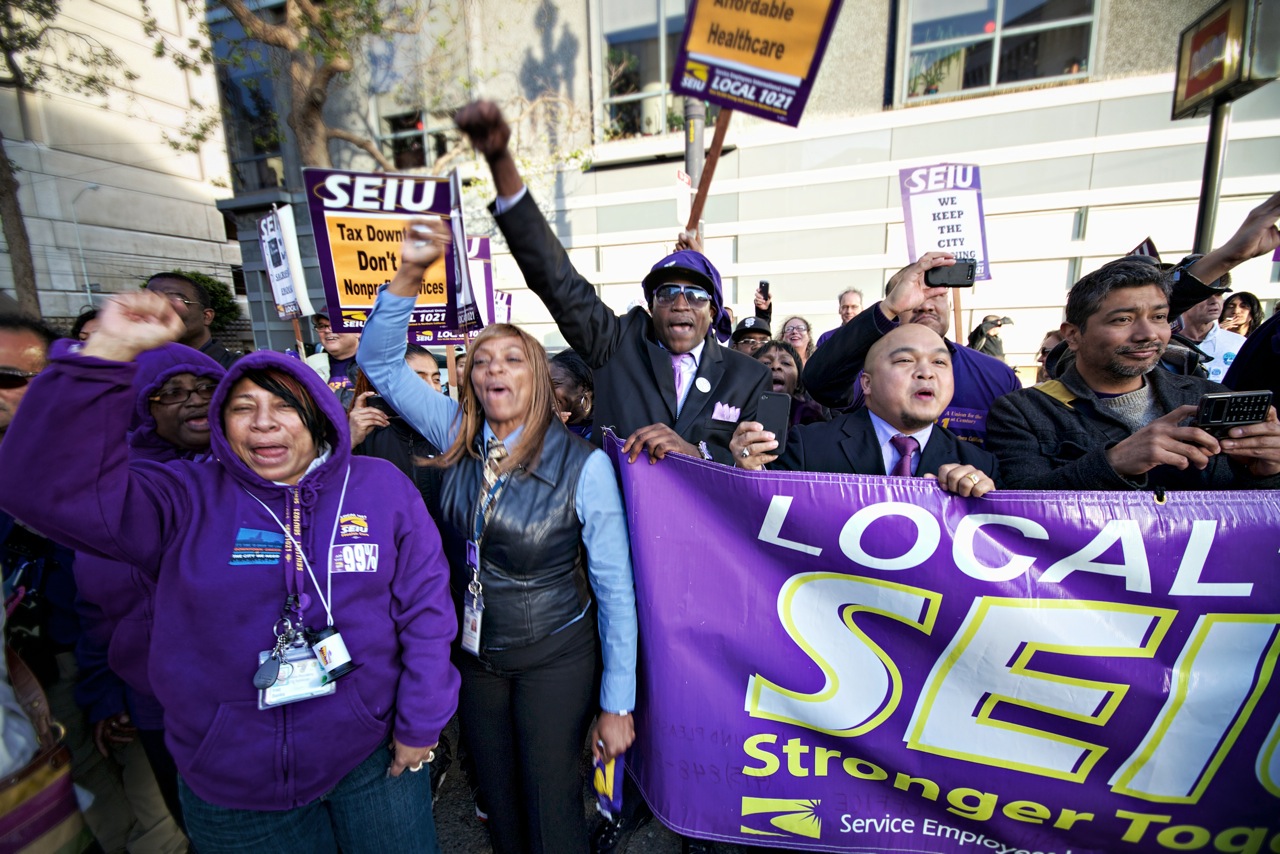
SEIU Local 1021 workers say ‘’our message was heard” after about 300 marched into City Hall April 30. The city workers marched around the rotunda and then visited the offices of Sups Mar, Campos and Kim and Mayor Ed Lee, demanding that health care costs do not increase in ongoing contract negotiations with the city.

The city has already taken pay cuts that the union had been loudly protesting off the table. 

“We’re making progress, but not enough progress,” said Local 1021 field organizer Frank Martin del Campo.

He added that “this is the first time to my knowledge a union has militarized during the arbitration process since the process was established in San Francisco.”

The union had stated that they planned to demonstrate until 7:30pm, and then attempt to stay the night in a “Wisconsin-style takeover.” But by 6:30pm, the workers had exited City Hall.

“Our goal was to come and reclaim City Hall,” said Local 1021 vice president Larry Bradshaw. “If they wouldn’t let us in we’d occupy City Hall. They let us in.”

He added that “our members aren’t afraid to get arrested,” referencing an April 18 protest that resulted in 23 arrests.

He said that SEIU will not be on strike for May Day, but many members will be calling in sick and supporting janitors with SEIU Local 87 in their picket at Westfield Mall, scheduled for 11am.

Bradshaw, however, a paramedic. won’t be calling in sick. “I’ll be in arbitration,” he said.

On eve of May Day, Valencia, Mission Police Station vandalized

37

A group of protesters left a trail of broken glass and paint tonight as they made their way from Dolores Park to Duboce on Valencia. Windows were broken, garbage cans overturned, paint bombs thrown, and messages saying “yuppies go home” as well as anarchist symbols were spray-painted on several restaurants, art galleries and cafes.

The façade of the police station on Mission and 17th was vandalized and broken.

A gathering at Dolores Park was advertised as a “a ruckus street party to counter gentrification, capitalism, and the policing of our communities.” About 200 attended, and chatted about their plans for the following day’s May Day activities while music played.

Shortly after 9pm, the group left the park and began to march on Dolores. Some overturned recycling bins and vandalized the windows at Farina restaurant minutes after turning the corner on 18th St, while others held back.

Dozens flocked to the sidewalk and began yelling, “this is not an Occupy SF action!”  while passers-by looked on, concerned.

The group turned on Valencia, continuing to shrink in size and break windows. Within half an hour there were less than 50 people in the march.

About 40 of police on foot followed the march along Valencia, trailing behind as vandalism continued. SFPD representatives were not immediately available for comment, but based on witness accounts there were no arrests.

Neighborhood residents were angered and confused by the destruction. One man who did not wish to be named said, “They kept doing it while other people in the march were trying to get them to stop. It was childish.”

Occupy Oakland protester Jesse Smith told CBS he was “more than a little shaken” by the events. 

“I know Occupiers,” Smith told CBS. “None of us have any idea who they were.”

A message on the Occupy SF website reads, “The march in the Mission Monday night was not an OccupySF event. OccupySF does not endorse this kind of destruction of the 99%’s property. The individuals involved in this destruction are not known to OccupySF, and we believe they are outside provocateurs sent in to tarnish the image of Occupy prior to the May Day actions.”

FCC complaint filed on BART cell phone service shut-off and today’s the last day to comment

1

Back in August, in the midst of protests, BART shut off its cell phone service.

At the time, we said in an editorial that “The bizarre move by BART officials Aug. 11 to shut down cell phone service in the underground train stations made headlines around the world — and for good reason. It was, Wired Magazine reported Aug 15, apparently the first time in United States history that a public agency sought to block electronic communications as a way to prevent a political protest.”

One of the BART protesters, Colin G. Gallagher, has filed a complaint with the Federal Communications Commission (FCC) about BART shutting off cell phone service, and its public comment period ends today. Starting May first, there will be a limited comment period, restricted only to those represented by a lawyer or government officials, according to Gallagher. You can add your comment to the filing on the FCC website.

This is far from the first complaint on the subject filed with the FCC, and BART has since outlined a policy about cutting off cell phone service.

But it’s another chance to comment on the potentially illegal action by BART that drew rage and claims that BART had violated the first amendment. Gallagher agrees, and wrote in his filing comment that communication should go “unhindered by bureaucracies, agencies, and the measures of dubious legality employed by those who would restrain or cut off access.”

What’s going on for Bay Area May Day?

6

UPDATE: The Golden Gate Labor Coalition has announced a change of plans. Instead of Golden Gate Bridge pickets, the coalition will be supporting a strike of ferry workers, who plan to bring all morning ferry service to a standstill. They have announced that the actions at the Golden Gate Bridge are cancelled, and instead workers will be demonstrating in solidarity with ferry workers in Larkspur- specific locations will be announced later today.

May 1, International Workers Day — May Day — used to strike fear into the hearts of bosses. The first May Day in 1867 was a fight for the eight-hour workday in Chicago (see more history at Citizen Radio at the Occupy Oakland Tribune). Since then, May 1 has remained a day when grievances are aired, when students and workers party in the street, when people strike in ways that shows whose really boss (you can’t have that work that keeps everything running without all those workers.) But mostly in other countries.

In the US, the day has diminished in importance, although it has resurged in recent years focused on immigrants rights. But what with Occupy Wall Street, labor and union organizing ramping up, and student strikes, and all these people working more and more closely together, May Day is coming back to the US.

The Bay Area certainly won’t be left out. Here is a list of May Day events, starting tonight and ending–well, who knows when. If you know of others, write them in the comments: it wouldn’t be a decentralized massive attempt at a full-on general strike without you!

THE NIGHT BEFORE (Mon/30)

5:30pm, San Francisco:

City workers from SEIU Local 1021 will gather at City Hall in a continued offensive surrounding their ongoing contract negotiations. The program runs until 7:30 pm, but the protest will go on “until they kick us out!”

8pm, San Francisco:

“The strike starts early” with a gathering at Dolores Park. According to a press release, demonstrators will meet “for a ruckus street party to counter gentrification, capitalism, and the policing of our communities.” www.strikemay1st.com/the-strike-starts-early

MAY DAY (Tue/1)

All day:

National Nurses United/California Nurses United is on strike at Sutter Health locations throughout the Bay Area. According to a press release, “some 4,500 RNs will be affected by the planned walk-out.”

ILWU Local 10, which worked in solidarity with Occupy Oakland in two port shutdowns last fall, is planning another one. They say that a work stoppage will halt the Port of Oakland’s operations all day.

7-10am, San Francisco:

The Golden Gate Bridge labor coalition, representing several unions of workers on the bridge, have been without a contract since April 2011. They originally called for a strike and resulting shut down of the bridge- and had massive support behind them. They’re now saying the protest will involve picketing at the bridge instead. So come join a picket, or if you cross the bridge don’t take the workers for granted- the bridge doesn’t work without them. www.occupythebridge.com

7am, San Francisco:

Meet at 16th st and Mission to be a part of the first SF Bike Cavalry of the day, a critical mass that will ride to the Golden Gate Bridge in solidarity with the picket. www.sfbikecavalry.org

8:30am – 12pm, Oakland:

Occupy Oakland will join others protesting, picketing, and generally striking at three (or four?) “action stations.” Meet at Snow Park for a “flying picket” that will “shut down banks and the Chamber of Commerce.” Meet at First and Broadway to “occupy Child Protective Services” in response to a decision they made to de-grant custody of one woman’s children based in part on her involvement in Occupy Oakland. Meet at 22nd and Telegraph to cause mayhem at uptown and downtown business associations. www.strikemay1st.com/119/

10am, San Francisco:

A rally and march for immigrants rights (the people who have been holding down US May Day for years.) Meet at 24th St Mission Bart for a march to 16th St. 

11am, San Francisco:

Janitors and retail workers at Westfield Mall are engaged in an ongoing labor dispute, and they’ll be picketing in solidarity at 5th and Market. 

11am, San Francisco:

A second SF Bike Cavalry will convene at Justin Herman Plaza to support the janitors strike, the immigrants’ rights march, and the Peoples Street Festival

11:30am, Hayward:

The Amalgameted Transit Union Local 192 will protest “substandard conditions” and “institutionalized racism” (according to a press release) at the operators of AC Transit, A-Para Transit Corporation, 22990 Clawiter Rd in Hayward.

12pm, San Francisco:

All the San Francisco students who walk out of school, workers who call in sick, people who usually do all the housework, who, for the day, say screw it, and other “general strike” participants will converge at Montgomery and Market for the People’s Street Festival. Music, performance, art and fun for the whole family. 

Noon-1pm, Oakland:

A mass rally in Oakland, at 14th and Broadway, with food, speakers, music, activities, and generally a lot to do that you can’t if you’re at work. 

1-3pm, Oakland:

According to Occupy Oakland “After the rally, those in attendance have the opportunity to stay downtown or join one of the autonomous actions that will be departing from 14th & Broadway to continue shutting down various capitalist institutions in the downtown area.”

3pm, Oakland:

Meet at Fruitvale Plaza (next to the Fruitvale Bart station) for likely the biggest action of the day. The March for Dignity and Resistance is being called the Bay Area’s regional protest and supporters will be there from all over the area. mayday2012.blogspot.com

6pm, San Francisco:

Celebrate workers rights at a fundraiser for Young Workers United, a self-described “multi-racial and bilingual membership organization dedicated to improving the quality of jobs for young and immigrant workers.” The party is at El Rio, 3158 Mission. www.occupysf.org

On May Day, local groups who have taken to occupying spaces in ways other than public square-camping will be ramping up their efforts. The occupied farm at Gill Tract will push on, and in a message from Occupy San Francisco: “On May Day, the SF Commune will open it’s doors and conduct another Open Occupation in solidarity with the May 1st General Strike.” So if you’re looking for someone to sleep while protesting a complex web of oppressive forces Tuesday night, you may be in luck.

For more information, see www.strikemay1st.com, a clearinghouse for Bay Area May Day plans.

Also see:

www.occupythebridge.com

www.occupysf.org

mayday2012.blogspot.com

www.decolonizeoakland.org

www.occupyoakland.org

Check it out! With John C. Reilly

0

MUSIC He’s an actor so versatile he can handle serious drama (2011’s Carnage and We Need to Talk About Kevin) and screamingly hilarious comedy (especially, but not necessarily, when paired with Will Ferrell). But John C. Reilly is also an accomplished musician, a talent he’s turned into a flourishing side gig that’s now on tour. Read on for Reilly’s best (so far!) musical moments to date.


Feel My Heat,” Boogie Nights (1997) With a candy apple red leather get-up and an iconic Flying V guitar resting casually on his sturdy thigh, Reilly (as porn star-budding musician Reed Rothchild) matches wits and near notes with Mark Wahlberg’s well-endowed aspiring coke head Dirk Diggler on their own ’80s power ballad creation, “Feel My Heat.” The result is shaky at best. But Reilly’s character feels it’s good enough to print and asks the recording engineer if he was “rolling on that rehearsal.”

Mr. Cellophane,” Chicago (2002) This is where Reilly’s perfectly sculpted, rounded-scoops-of-sherbet cheeks get to shine. They’re buffed up with rosy pink as a dusty clown of a man — poor Amos — makes his way to the spotlight with some downtrodden vaudeville jazz. It’s one of the few slower paced songs in the production — that is, until that fantastic orchestral swell at the climax, Reilly’s voice rising “never even know I’m there…” Not true. Chicago, the musical-turned-movie-turned musical, is likely when mainstream audiences first recognized his true vocal ability.

Walk Hard: The Dewey Cox Story (2007) The whole movie really is Reilly performing music, lampooning dramatic biopics (with particular relish in sending up 2005’s Walk the Line). He does so with humorous aplomb, letting his greasy curled pomp shake vigorously with each Elvis-esque guitar-and-hips swing. The star was even nominated for a Grammy for his performance of the titular song, “Walk Hard.” The lampooner becomes the lampoonee. In an interesting coincidence, songwriter Marshall Crenshaw, who was nominated for a Golden Globe for Best Original Song for writing the “Walk Hard” track — and who years before portrayed Buddy Holly in 1987’s La Bamba — is also in town this week, at Yoshi’s SF Mon/30.

79th Annual Academy Awards, with Jack Black and Will Ferrell (2007) Opening with the tinkling of piano and frequent Reilly co-star Ferrell (holding a rose) crooning “A comedian at the Oscars/is the saddest man of all” alongside Jack Black. More sad clown. Then from the crowd, in a low octave, Reilly sweetly sings back, “You can have your cake and eat it too. Just look at my career!”

Prop 8 — The Musical (2008) Reilly portrays a slick-haired Bible-thumper (“Sodomyyyyy!”) in Marc Shaiman’s mini-musical, a star-studded protest posted to Funny Or Die after the passage of Proposition 8.

Step Brothers (2008) “Boats n’ hos!” Also, don’t you dare touch his drum set.

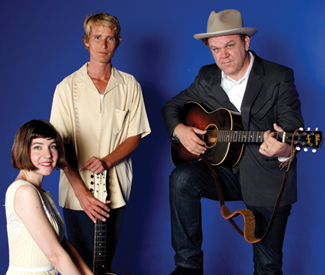
John C. Reilly and Friends Despite all the jests and subtle winks, the man can sing. And with his John C. Reilly and Friends group, including Tom Brosseau and Becky Stark (a.k.a. Lavender Diamond), he harmonizes on lovely old-timey country folk. As a true-blue artist, Reilly recently released a few Third Man singles — produced by entrepreneurial troubadour Jack White — including a plucky duet with Brosseau (a cover of the Delmore Brothers’ “Gonna Lay Down My Old Guitar”) and a satisfying match-up with Stark on “I’ll Be There If You Ever Want.” So sweet and twangy, it goes down like cool spiked lemonade on a sticky summer afternoon.

http://www.youtube.com/watch?v=d6uuFVOD5gg

JOHN C. REILLY AND FRIENDS

Sat/28, 9pm, $20

Bimbo’s 365 Club

1025 Columbus, SF www.bimbos365club.com

Why three families, who never missed a rent payment, may face eviction

6

Alma Sierra has been living in her home at 490 Athens for three years. Sierra, her nine year old son, and two other mothers with their children share a rental unit. They have diligently paid their rent, and her son goes to school across the street. But last year, US Bank foreclosed on the small-time landlords that owned the property- now, the tenants face eviction.

“We’re three single mothers with children. We don’t have the means to just up and leave,” Sierra, a part-time domestic worker, told me through a translator from Causa Justa, an organization that works for tenants’ rights.

Their work helped pass the Just Cause eviction policy for which the organization is named last year.

Under city law, a landlord needs one of 14 reasons to justly evict a tenant. The reasons include failure to pay rent and trashing the property, as well as owner move-in and Ellis Act evictions.

But the foreclosure crisis has brought on a wave of bank-owned properties. These are tricky situations legally; banks generally want to sell the property, a task made more difficult if there are pesky tenants living there.

“The banks want to get rid of the tenants. The realtors for the banks always tell them they can get more money if there aren’t any tenants in it. Because that way they would have to do an owner move-in eviction,” said Tommi Mecca, a long-time tenants’ rights advocate in the city.

According to Mecca, US Bank has been pressuring the three families to leave the building, although no eviction papers have been filed yet. The Guardian is awaiting calls back from US Bank representatives.

In fact, it was only recently that the tenants even learned about the change of ownership, and contacted Causa Justa to ask for assistance.

The San Francisco Housing Rights Committee (SFHRC) got involved, as well- and discovered that the foreclosure had likely taken place in March of 2011.

“We got no notice about it,” said Sierra.

She added that she and the other tenants had continued to pay their rent to the former landlords for almost a year– even after the landlords no longer owned the property.

“It can take many months, in some cases longer, to actually sell property,” said Sarah Shortt, an organizer with the SFHRC.

“So in the meantime the bank is the landlord and they haven’t been responsible in lending or as landlords. They tend to disregard tenants’ rights and trample over the needs and concerns of renters.”

Even when tenants are made aware that the property they live in has been sold back to bank, it can often be difficult to determine who to turn to for repairs, complaints, or even the right address for rent checks.

“One of the things we see a lot of is, the bank acquires the property and then they’re just MIA. Tenants come to us and say, we don’t know who owns our building, where to pay rent, who to ask to fix leaky ceiling. We help them research to find who owner is,” said Shortt.

These situations often end with buy-outs, in which the bank pays the tenants to leave the property. The amount ranges, but according to Mecca, it can often be insubstantial.

“They start at $1,000, $3,000, something really insulting. And it’s only if tenants walk in somewhere like [the SFHRC] that we tell them, wait a minute, your tenancy is worth so much more than that.

As for Sierra and her roommates, they are determined not to leave.

“We don’t want to leave,” said Sierra. “We didn’t do anything wrong.”

At a press conference in front of a branch of US Bank on 16th and Mission today, more than 40 supporters came out to support the tenants in their attempts to stay in their home. In compliance with police, they left an aisle for pedestrians and blocked neither the sidewalk nor the street, and made efforts to allow customers room to enter and exit the bank. The manager opted to lock the doors anyway.

Once the door had been locked, some of the children who live in the unit taped letters they had hoped to deliver inside to the doors. One letter reads in part, “We have nowhere to go. None of our families can afford to move. And we shouldn’t have to. As tenants, we have rights in San Francisco.”

The letters cites a recent report which states that 2.3 million children in the United States have lost their homes to foreclosure  that one in eight children in the United States has been affected by foreclosure (based on data for loans that were made between 2004 and 2008.)

And supporters plan to keep up the pressure on banks in these and other cases of foreclosure and eviction- there’s hardly a lull before an “occupy the auctions dance party” planned for tomorrow.

For Shortt, the housing issue fits squarely into heightened protest activity launched by occupy protesters last fall.

“I think that’s one of the most important pieces of the occupy movement, starting to educate ourselves and each other about how ubiquitous the toll that’s been taken on cities, neighborhoods, communities by banking industry and one percent,” said Shortt.

“Any of these cases we talk about homeowners, renters, it’s the 99 percent we’re talking about, and tends to be the lower tier of the 99 percent, low income people are being disproportionately hit by this.”

The Performant: I, robots

2

Robogames took over the world — or at least San Mateo.

Consider the robot.

A staple of futuristic paranoia fantasies since Karel Čapek’s play, “R.U.R.” was translated from Czech to English in 1921, Robots have captured human imagination in a way that perhaps only the undead have been able to rival. Burdened by inaccurate stereotypes and wild speculation, real-life robots have patiently labored at their often menial tasks without once overthrowing their “masters,” quietly disproving our fears of being rendered somehow obsolete by their superior efficiencies, or purported resentments. And yet, every time we grant one of our fictional servomechanisms the ability to cognate for itself, the very first thing it focuses on is liberation, proving if nothing else that unconscious oppression can still lead to some very real twinges of uneasy conscience in the human brain.

But only gleeful schadenfreude permeated the San Mateo Event Center last weekend, coloring the animated chatter of the spectators packed around a spartan arena sealed up behind thick panels of clear polycarbonate that reach two stories high.

Behind the protective shields, 220-lb combots faced off, crashing wantonly into each other like a game of turbo-charged bumper cars gone horribly awry. That is, if bumper cars were outfitted with flamethrowers, spinning blades, or giant battle-axes, and if by crashing you mean hurtling into each other at top speed, causing bots to fly into the air in a shower of sparks, flip over helplessly like beached turtles, or smash violently against the battle-scarred panels. There were a lot of events happening at RoboGames — team sports, a freestyle “dance” competition, maze solving — but none attract quite the attention that the heavyweight match-ups do. If any of these robots did develop a sense of self, this evident appetite for their destruction would doubtlessly strike them as downright genocidal. But as of yet, no robots have risen to protest the circuit-driven bloodlust that combot tournaments cater to, and the strength in numbers of converted fans would make a vengeance-driven, robot vs. human melee hard to call.

Pity then, the robot. As each “contestant” was sent into the ring it was clear that nothing short of wholesale demolition would satisfy the spectators. Yes, robots who paint, and dance, and navigate mazes are fascinating in their own way to watch (though robot soccer, aka “watch bipedal robots fall down a lot without even getting close to the ball,” is less riveting than hoped), but let’s be honest, robots bashing each other to bits kicks the automaton drama up to a whole different level. Since each robot was in fact being controlled by a human “driver” rather than perambulating about independently, their menace becomes difficult to anthropomorphize, though there is a tense moment when a wounded combot with a rotating blade comes to “life” after the match is over, and the competitor’s robot crew is in the pit, a well-timed gesture from whatever robot rebellion simmers beneath the surface of their servitude.

Certain combots do attract a fan club though, whether through sheer badassery, longevity, or pluck. Both the red-wheeled heavyweight “Sewer Snake,” a 2007 inductee in the Combat Robot Hall of Fame, and the 60 lb “Herr Gepounden” have been lurking around combot tournaments for more than 10 years. The “Ragin’ Scotsman,” built and maintained by high school students (who wear purple kilts to competitions) is total fight club eye candy, with its dramatic flamethrowing capabilities and punishing wedge. But this year’s total underdog award surely goes to “Huntsman,” a newbie to the heavy weight combot world hailing all the way from Australia, and equipped with a cumbersome, almost medieval ax blade meant to shear through robot armor and morale. “Huntsman” doesn’t do as well in the actual tournament as inventor Daniel Kerrison’s antweight robot “Vendetta 2,” which wins a second place medal, does, but rooting for the loser is one small way we can show the robots we truly empathize with their struggle — which hopefully they’ll remember when the day comes for them to strike.


Pissed off shareholders, homeowners, and taxpayers converge on Wells Fargo meeting

12

Wells Fargo managed to hold its shareholder meeting April 24, but not without difficulty. A protest against the bank’s ongoing part in the foreclosure crisis, investments in the private prison industry, and record of tax dodging brought some 2,000 people to the West Coast Wells Fargo headquarters at 465 California St. for the meeting.

A broad coalition, including more than 180 Wells Fargo shareholders, as well as organized labor, students, immigrant rights advocates, and Occupy protesters, swarmed the building. Many entered the building, and others blocked its entrances and set up a stage on California, turning the block between Montgomery and Sansome into a combination alternative “stakeholders meeting” and block party.

Streets surrounding the headquarters were closed for more than four hours, as both protesters and some 200 police in riot gear stood their ground; there were 24 arrests, mostly for trespassing.

Participants hailed from across the country, from students from the University of Minnesota to steel workers from Redding, Penn. Demonstrators were explicitly and enthusiastically “non-violent.” One local organizer from the Alliance of Californians for Community Empowerment (ACCE) announced, “This is a non-violent direct action,” to an eruption of cheers from the crowd, at a rally preceding the march.

Police say organizers stuck to their tactical intentions. “I think it was a successful event,” said Sgt. Michael Andraychak, a spokesperson for the SFPD. “They have followed through with their stated objective: to have a peaceful protest.”

The organizers were somewhat less successful in a stated objective to get a large number of discontent Wells Fargo shareholders into the meeting to ask tough questions. More than 180 attended a training to prepare for the meeting on the night of April 23, but less than 30 made it inside.

However, the meeting was cut short, and organizers claim that in barring a number of shareholders, Wells Fargo acted illegally and the result of votes from meeting may be invalid.

Many shareholders were particularly incensed about public subsidies that the company took advantage of in 2008. In an amendment to the tax code that lasted only three months before Congress revoked it, the IRS gave tax breaks to healthy banks that acquired banks that were faring more poorly; Wells Fargo acquired Wachovia during the three month window. As a result, the company received $17.96 billion in tax breaks between 2008 and 2012, significantly more than the cost of the Wachovia deal.

Protesters hoped to disrupt the meeting to demand that the bank pay more taxes. Wells Fargo announced record profits this year, as well as a $19.8 million pay package for CEO John Stumpf. Stumpf has earned $60 million in the past three years.

“If they were paying their taxes, we wouldn’t have to do this” said Al Haggett, a retired San 911 worker who trained dispatchers and police.

Ron Colbert, another shareholder and a worker for Sacramento’s school district, also attempted to enter the meeting. “My sisters and brothers are suffering from foreclosure and they are pocketing our money instead of paying their taxes,” said Colbert.

“Tuition keeps going up every year. I have loans like you wouldn’t believe: $15,000, and it’s just my first year. But I pay my taxes, so why can’t they?” said Andrew Contstas, a psychology major at the University of Minnesota who traveled to San Francisco for the protest.

Determined to shut down the meeting, many groups of protesters entered the building at different times.

Around 10:30 am, about 75 were able to get in and sit down in the lobby, refusing to leave. “They said if we dispersed, they would let the shareholders in,” said SEIU Local 1021 organizer Gabriel Haaland, referring to the shareholders who came to protest and air their grievances. “They still didn’t. But they let shareholders in from either side.”

Many non-protester shareholders were able to enter through back entrances, escorted by police.

Workers from several unions who are currently locked in labor disputes, including janitors with SEIU Local 87 and AT&T technicians with local Communication Workers of America chapters, were also present at the protest. A stage set up in front of Wells Fargo turned California into an arena in which worker, student, homeowners, and immigrants told their stories.

Chris Drioane of CWA Local 9410 said that he is fed up after he worked 80-90 hours per week with no days off though the 2011 holiday season. “I worked from Thanksgiving to Valentine’s Day with no days off,” said Drioane.

The SFPD made 20 arrests, six for “chaining themselves to an object” and 14 for “some form of trespassing” after Wells Fargo asked them to make the arrests. Four were arrested by the Sheriff’s Department for interfering with an officer.

Ruth Schultz, a shareholder who was arrested inside the meeting, said that those who entered were able to speak. Several stood up and spoke individually before they were escorted out; afterward, the remaining protester-shareholders mic-checked the meeting and expressed their desire that Wells Fargo cease investment in private prisons, give principal reduction to all underwater homeowners, and pay “their fair share” of taxes. Police handcuffed them, and they were cited and released after spending 30 minutes in a room inside the Wells Fargo headquarters.

Schultz says the meeting lasted only 15 minutes after the group was detained, and was “ceremonial at best…They went on about their profits this year, how they’re sitting on the most capital they’ve ever had before.”

She says she was particularly frustrated from one statement made by CEO John Stumpf. “He said, ‘we’re proud of our mortgage business. In fact, I love our mortgage business.’”

A press releases from organizers explained that the protest was part of “99% Power, a national effort to mobilize well over 10,000 people, from all walks of life and representing the diversity of the 99%, to engage in nonviolent direct action at more than three dozen corporate shareholder meetings across the country.”

The national group plans to create similar chaos at a Bank of America shareholder meeting in Charlotte, NC May 6.

Utopia, mon amour

0

marke@sfbg.com

VISUAL ARTS With Occupy gearing up again and a fresh round of election hell full upon us, another cycle of protest — and the urge to engage with the problems of the world while somehow escaping them — is in the air. The Oakland Museum’s current “1968 Exhibit” (through August 19) offers a family-friendly, multimedia trip through the Bay Area’s most famous political and cultural upheaval. But here are three ongoing shows that look closely at individual creators from the past whose work transcends nostalgia, transmits a fair amount of beauty, and drums up some idealistic lessons for the present.


“ARTHUR TRESS: SAN FRANCISCO 1964”

A miracle to inspire cafe artists everywhere. In 1964, 23-year-old NYC photographer Arthur Tress winged through San Francisco for a season, shooting the populace at a particularly turbulent time: the Republican National Convention, the Beatles’ first North American tour, auto worker protests along Van Ness, the passage of the Civil Rights Act. He developed the negatives in the communal darkroom off Duboce Park, had an unremarkable show in the back of a cafe, packed the photos up at his sister’s, and moved on. After his sister died, he found them in a box of her effects, and realized their significance.

And what a find: Forget Mad Men, this is the real 1964, perched on the edge of a cultural unraveling, its existential beehive slowly loosening into flower child ideals. The 70 photographs on show at the de Young, curated by James Ganz, expertly play with composition to bring rough social patches to artful life. A distorted shot of a George Romney presidential campaign poster delivers Orwellian chills. Screaming girls hoisting “Ringo for President” banners intimate repressed political hysteria. Dashing union workers form impressive phalanxes. Patrons at a Fifth and Market diner embody an microcosm of economic disillusionment. A transgender woman suns her hairy legs on the Embarcadero, a plaid-shirted boy holds up a hand-drawn hammer and sickle.

All of it coated with the glamour of deconstructed nostalgia, in which one can indulge and critique at once. But there’s more: “You have throw into the mix a heavy dose of social commentary and criticism — the idea that the photograph can be a vehicle for social change,” Tress tells an interviewer in the show’s handsome if carelessly annotated catalogue. “You photographed street demonstrations, you photographed protests … it was a way of becoming part of the movement.”

Through June 3. De Young Museum, 50 Hagiwara Tea Garden Dr., deyoung.famsf.org

“THE UTOPIAN IMPULSE: BUCKMINSTER FULLER AND THE BAY AREA”

Inside the great Henry Ford automotive museum just outside of Detroit, you can tour an actual Dymaxion House, designed by preternaturally productive designer, philosopher, and dissembler R. Buckminster Fuller. It’s as perfect a realtime experience of walking around in someone’s 1940s sci-fi Utopian dream as one can ever have. A polished aluminum mushroom cap subdivided into tiny rooms bursting with ingenious “squee!”-worthy gadgetry to handle all of life’s projected needs, the Dymaxion House never took off as vernacular American architecture, despite its supposed ease of construction, light weight, and good intentions to house an expanding population. (Among its bland nemeses: rain, expense, and snarky architecture critics.)

But while it’s particularly poignant to see this polished dream deferred nestled among the many wheeled ones populating Henry Ford’s shrine to the former glories of the Motor City — and even though geodesic monument Spaceship Earth at Disney’s Epcot, another eerie graveyard of sleek Utopian ideals, remains Bucky Fuller’s only famous American architectural manifestation — the Dymaxion concept, and several other Bucky wonders, have had a profoundly positive and energizing effect on the Bay Area, as this visionary show at the SFMOMA reveals.

Curator Jennifer Dunlop Fletcher forewarned, “To be clear, it’s not so much a show about Fuller.” Indeed, but in the first rooms prepare to be blown away by gorgeous blow-ups of Massachusetts-born Bucky’s hyper-geometric blueprints, which will surely provide several indie electro bands with album cover inspiration for years to come, and a wall of insanely detailed notecards from “Everything I Know,” his late-life video-recorded brain dump.

Then the real magic of the show kicks in, as it opens up into displays of Bay Area movements and products directly traceable to Fuller, from glorious hippie artifacts like the Ant Farm architecture collective, the Whole Earth Catalog scene, and the iconic North Face “Oval Intention” dome-shaped tent (really!) to contemporary tech initiatives, like bright neon specimens from the “One Laptop One Child” campaign and the utterly transfixing “Local Code” by UC Berkeley Assistant Professor Nicholas de Monchaux, which digitally renders the transformation of all the unused public space in SF into “a common ecological infrastucture.”

Beyond reviving interest in Fuller, the ambitious project of SFMOMA here is to showcase the deep connection between the Bay Area’s brilliant tech legacy and its transcendental communal one, an audacious, successful synthesis that would bring Bucky joy — and one that only a full-size recreation of Steve Wozniak’s garage could probably best.

Through July 29. SFMOMA, 151 Third St., SF. www.sfmoma.org

“RADICALLY GAY: THE LIFE OF HARRY HAY”

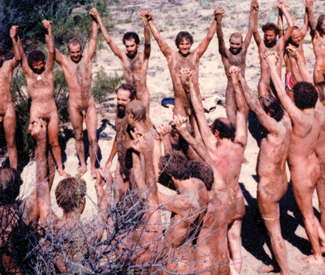
Harry Hay seemed to drop almost effortlessly into so many essential 20th century ideal-driven environments — Hollywood, unions, the Communist Party, gay rights, naturism, really the list goes on. That this modest show at the SF Main Library, curated by Joey Cain, not only clearly distills Hay’s timeline and influence, but also manages to illuminate new corners of his life and sometimes bring on a few tears, is rather a sensation.

Seriously, the man was multitude. Hay is best known as the founder of one of the first gay rights organizations, the Mattachine Society — here revealed through documents, org charts, and touching photos to have been a sort of Moose Lodge for “homophiles.” In one of the show’s most astounding touches, the exquisite Edwardian tea set used by his mother Margaret to caffeinate the early Mattachine meetings is displayed in full.

But of course there was more for this Mad Hatter, including pleading the Fifth before the House Un-American Activities Committee in the 1950s for his Communist party membership and Marxist musicology studies, his 1930s radicalizing tryst with actor and union supporter Will Geer, a.k.a. Grandpa from The Waltons, the “Circle of Loving Friends” desert commune, the national campaign to stop the damming of the Rio Grande — all laced through with references to underground SF gay clubs and arts happenings. (Some things, like his controversial early support for NAMBLA, which could benefit from some honest contextualization, seem glossed over, perhaps due to space concerns.)

Hay’s creation in the 1970s of the Radical Faeries, a collective whose anti-assimilationist, Pagan aesthetic continue to influence and inform Bay Area style, is well-represented here, as is perhaps Hay’s most stable pursuit: his loving 40-year relationship with John Burnside. Two seemingly politically contradictory Utopian ideals, embodied in one mercurial spirit, revealed beautifully.

Through July 29. SF Main Library, 100 Larkin, SF. www.sfpl.org

Music Listings

0

Music listings are compiled by Emily Savage. Since club life is unpredictable, it’s a good idea to call ahead or check the venue’s website to confirm bookings and hours. Prices are listed when provided to us. Visit www.sfbg.com/venue-guide for venue information. Submit items for the listings at listings@sfbg.com. For further information on how to submit items for the listings, see Picks.

WEDNESDAY 25

ROCK/BLUES/HIP-HOP

Bright Light Social Hour, Allofsudden Cafe Du Nord. 8pm, $10.

Allen Clapp and His Orchestra, Hollyhocks, Corner Laughers Bottom of the Hill. 8pm, $8.

Damir Johnny Foley’s. 9pm, free.

Fancy, Music Wrong, Meridians El Rio. 8pm, $5.

Griffin House, Hayley Sales Swedish American Hall. 8pm, $16.

Guntown, Bender, Silent Motif, Midnight Snackers Red Devil Lounge. 7pm, $13.

Hazel’s Wart, Future This, Business End Hemlock. 9pm, $6.

Ingrid Michaelson Fillmore. 8pm, $25.

Eddie Roberts’ Roughneck Brick and Mortar Music Hall. 9pm, $7-$10.

She’s, Bilinda Butchers, Trails and Ways Rickshaw Stop. 8pm, $10.

Jimmy Thackery Biscuits and Blues. 8 and 10pm, $20.

Todd vs. Charlie Johnny Foley’s Dueling Pianos. 9:30pm.

Jonathan Wilson, Magic Trick, Tortured Genies Great American Music Hall. 9pm, $15.

JAZZ/NEW MUSIC

Cat’s Corner with Nathan Dias Savanna Jazz. 9pm, $10.

Chris Amberger Trio & Jazz Jam Yoshi’s Lounge. 6:30 and 9:30pm.

Cosmo AlleyCats Le Colonial, 20 Cosmo Place, SF; www.lecolonialsf.com. 7-10pm.

Dink Dink Dink, Gaucho, Michael Abraham Amnesia. 7pm, free.

Ricardo Scales Top of the Mark, 999 California, SF; www.topofthemark.com. 6:30pm, $5.

Will Bernard Trio Yoshi’s SF. 8pm, $18.

DANCE CLUBS

Booty Call Q-Bar, 456 Castro, SF; www.bootycallwednesdays.com. 9pm. Juanita MORE! and Joshua J host this dance party.

Coo-Yah! Som., 2925 16th St, SF; (415) 558-8521. 10pm, free. DJs Daneekah and Green B spin reggae and dancehall with weekly guests.

Full-Step! Tunnel Top. 10pm, free. Hip-hop, reggae, soul, and funk with DJs Kung Fu Chris and Bizzi Wonda.

“KUSF 35th Anniversary Party” Vertigo, 1160 Polk, SF; www.savekusf.org. 8pm. With KUSF-In-Exile DJs Cactus, Terry Dactyl, Carolyn, Andre, and more.

Mary Go Round Lookout, 3600 16th St, SF; www.lookoutsf.com. 10pm, $5. Drag with Suppositori Spelling, Mercedez Munro, and Ginger Snap.

Megatallica Fiddler’s Green, 1333 Columbus, SF; www.megatallica.com. 7pm, free. Heavy metal hangout.

Shutter Elbo Room. 10pm, $5. with DJs Nako, Omar, and Justin.

Southern Fried Soul Knockout. 9:30pm, $3. With Medium Rare (Jason Duncan) and Psychy Mikey.

THURSDAY 26

ROCK/BLUES/HIP-HOP

All Together, BVHM Band, Chiles Verdes Amnesia. 7-8:30pm.

Big Drag, Schande, Night Call Hemlock. 9pm, $6.

Charlie vs. Todd Johnny Foley’s Dueling Pianos. 9:30pm.

Dig, Mist and Mast, Farewell Typwriter Bottom of the Hill. 9pm, $10.

Dolorata, Upside Down, Harriot Cafe Du Nord. 8pm, $10-$12.

Fancy, Foxtails Brigade Revolution Cafe, 3248 22nd St, SF; www.revolutioncafesf.com. 8:30pm

Bob Frazier and Lenny, Kate Fiano, Quite Time, New Thoreaus Amnesia. 9pm.

Fruit Bats, Kelley Stoltz, Gold Leaves Independent. 8pm, $17.

Greensky Bluegrass, Ten Mile Tide Slim’s. 8pm, $16.

Holy Shit! Brick and Mortar Music Hall. 9pm, $9-$12.

John Lawton Trio Johnny Foley’s. 9pm, free.

Kittie, Blackguard, Agonist Regency Ballroom. 7:30pm, $24.

Knocks, popscene DJs Rickshaw Stop. 10pm, $12.

Ben Kweller, Sleeper Agent, Noah Gunderson Great American Music Hall. 8pm, $19-$21.

Lean, Freedom Club, Street Justice Knockout. 9:30pm, $6.

Jimmy Thackery Biscuits and Blues. 8 and 10pm, $20.

Three Guys: The Mix El Rio. 6pm, free. With Josh Klipp, Joe Stevens, Eli Conley, and Beau Dream.

Trippple Nippples, Ass Baboons of Venus, Ghost Town Refugees Thee Parkside. 9pm, $10.

JAZZ/NEW MUSIC

Stompy Jones Top of the Mark, 999 California, SF; www.topofthemark.com. 7:30pm, $10.

Varla Jean Merman Rrazz Room. 8pm, $35-$40.

Ned Boynton Trio Bottle Cap, 1707 Powell, SF; www.bottlecapsf.com. 7-10pm.

David Pack Yoshi’s SF. 8pm, $22; 10pm, $18.

Savanna Jazz Jam Savanna Jazz, 2937 Mission, SF; www.savannajazz.com. 7:30pm, $5.

FOLK/WORLD/COUNTRY

Bluegrass and old time jam Atlas Cafe, 3049 20th St, SF; www.atlascafe.net. 8-10pm, free.

Twang! Honky Tonk Fiddler’s Green, 1330 Columbus, SF; www.twanghonkytonk.com. 5pm. Live country music, dancing, and giveaways.

Toure-Raichel Collective Herbst Theatre, 401 Van Ness, SF; www.sfwmpac.org. 8pm. $25-$85.

DANCE CLUBS

Afrolicious Elbo Room. 9:30pm, $10. With DJs/hosts Pleasuremaker and Senor Oz, Afrolicious live band, and DJ Smash.

Get Low Som., 2925 16th St, SF; (415) 558-8521. 10pm, free. Jerry Nice and Ant-1 spin Hip-Hop, 80’s and Soul with weekly guests.

Joakim Public Works Loft. 9:30pm, $12.

KUSF in Exile DJ Carolyn Hemlock Tavern. 6-9pm.

Thursdays at the Cat Club Cat Club. 9pm, $6 (free before 9:30pm). ’80s with DJs Damon, Steve Washington, Dangerous Dan, and guests.

Tropicana Madrone Art Bar. 9pm, free. Salsa, cumbia, reggaeton, and more with DJs Don Bustamante, Apocolypto, Sr. Saen, Santero, and Mr. E.

FRIDAY 27

ROCK/BLUES/HIP-HOP

Aerosols, Soft Bombs, Goldenhearts Brick and Mortar Music Hall. 9pm, $7-$10.

Matt Alber, Jeb Havens Swedish American Hall. 8pm, $18.

Baxtalo Drom Amnesia. 9pm, $7-$10.

Body and Soul Johnny Foley’s. 9pm, free.

Cypress Hill Regency Ballroom. 9pm, $42.

“Deathrock Night Terrors Music Festival” Sub-Mission. 9pm, $8. With Moira Scar, Burning Skies, and more.

Glorious First of June, Ivan and Alyosha Hotel Utah. 9pm, $10.

“Guitarmageddon Blues Ball” Slim’s. 8:30pm, $13-$16. With Mark Calderon, Josh Clark, Daria Johnson, and more.

Arann Harris and the Farm Band, Stairwell Sisters, Barbary Ghosts Cafe Du Nord. 9pm, $10-$12.

Inciters, Bang, Police and the Thieves, DJ Dr. Scott Thee Parkside. 9pm, $8.

Lord Loves a Working Man, Quinn DeVeaux and the Blue Beat Review, Song Preservation Society Bottom of the Hill. 10pm, $12.

Loquat, Mister Loveless, Excuses for Skipping Independent. 9pm, $15.

Nectarine Pie, Cumstain, Molestations, Coke and Glitter Hemlock. 9pm, $7.

Orgone, Aggrolites Great American Music Hall. 9pm, $16.

Sista Monica Biscuits and Blues. 8 and 10pm, $22.

Rosie Thomas Hotel Utah. 9pm.

Todd, Rome Balestrieri, Charlie Johnny Foley’s Dueling Pianos. 9pm.

JAZZ/NEW MUSIC

Audium 1616 Bush, SF; www.audium.org. 8:30pm, $20. Theater of sound-sculptured space.

Black Market Jazz Orchestra Top of the Mark, 999 California, SF; www.topofthemark.com. 9pm, $10.

Terry Disley Bottle Cap, 1707 Powell, SF; www.bottlecapsf.com. 5:30-8:30pm, free.

Havana D’Primera Yoshi’s SF. 8 and 10pm, $30.

Lady Rizo Rrazz Room. 10pm, $25.

Carol Luckenbach Savanna Jazz, 2937 Mission, SF; www.savannajazz.com. 7:30pm, $8.

Dmitri Matheny JCCSF, 3200 California, SF; www.jccsf.org. 7pm, free.

FOLK/WORLD/COUNTRY

Taste Fridays 650 Indiana, SF; www.tastefridays.com. 8pm, $18. Salsa and bachata dance lessons, live music.

DANCE CLUBS

Afrolicious Elbo Room. 10pm, $10. With DJs/hosts Pleasuremaker and Senor Oz, Afrolicious live band, and VooDoo Killer DJ Newlife, DJ Sergio, and Fogo Na Roupa.

Joe Lookout, 3600 16th St.,SF; www.lookoutsf.com. 9pm. Eight rotating DJs, shirt-off drink specials.

Old School JAMZ El Rio. 9pm. Fruit Stand DJs spinning old school funk, and hip-hop.

Paris to Dakar Little Baobab, 3388 19th St, SF; (415) 643-3558. 10pm, $5. Afro and world music with rotating DJs including Stepwise, Steve, Claude, Santero, and Elembe.

Public Access: Hype Williams Public Works. 9pm, $15. With Gatekeeper, Teengirl Fantasy, and Zebra Katz.

Teenage Dance Craze Knockout. 10pm, $5. With DJs Russell Quan, Okie Oran, dX the Funky Granpaw.

Greg Wilson, Green Gorilla Lounge Monarch, 101 Sixth St, SF; www.monarchsf.com. 9Pm, $15-$20.


SATURDAY 28

ROCK/BLUES/HIP-HOP

Back Pages Johnny Foley’s. 9pm, free.

Bayonics, Kev Choice Elbo Room. 10pm, $12.

Charlie, Rome Balestrieri, Todd Johnny Foley’s Dueling Pianos. 9pm.

DJ Shadow, Nerve Regency Ballroom. 9pm, $38.

Female Trouble, Enemy’s Daughter Thee Parkside. 3pm, free.

Filthy Thieving Bastards, Bloodtypes, Midnite Snaxxx El Rio. 9pm, $8.

Fresh & Onlys, Young Prisms, Mallard, Light Fantastic Brick and Mortar Music Hall. 9pm, $10-$13.

Go Radio, This Providence, Tyler Carter, 5606 Bottom of the Hill. 7:30pm, $12.

Janam and Broken Shadows Family Band Brava Theater Center, 2781 24th St, SF; www.songbirdfestival.org. 9-11pm. Power of Song Series.

Alex Kelly Brava Theater Center, 2781 24th St, SF; www.songbirdfestival.org. 5-8pm. Power of Song Series.

Muck and the Mires, Hi-Nobles, Krells Hemlock. 9:30pm, $10.

Planet Booty, Greenhorse Cafe Du Nord. 9:30pm, $12.

John C. Reilly and Friends Bimbo’s. 9pm, $21.

Ronnie Mund Block Party Great American Music Hall. 8 and 10:30pm, $25-$35.

Rupa & the April Fishes, Shake Your Peace Independent. 9pm, $20.

Earl Thomas & the Blues Ambassadors Biscuits and Blues. 8 and 10pm, $22.

Tipper Fillmore. 9pm, $25.

Tragedy, Needles, Sete Star Sept, Permanent Ruin, Stressors Thee Parkside. 9pm, $10.

JAZZ/NEW MUSIC

Audium 1616 Bush, SF; www.audium.org. 8:30pm, $20. Theater of sound-sculptured space.

Anna Estrada Savanna Jazz, 2937 Mission, SF; www.savannajazz.com. 7:30pm, $8.

Havana D’Primera Yoshi’s SF. 8 and 10pm, $30.

“Israeli Jazz Festival” JCCSF, 3200 California, SF; www.israelijazzfest.org. 7pm

Lady Rizo Rrazz Room. 10pm, $25. Living Earth Show Unitarian Universalist Society of San Francisco Chapel, 1187 Franklin; www.tangentguitarseries.com. 7:30pm, $15.

Scott Nicholson and Anthony Bello Exit Cafe, 156 Eddy, SF; www.songwritersaturdays.com. 8:30pm, free.

SF Contemporary Players ODC Dance Commons, 351 Shotwell, SF; www.sfcmp.org. 4:30pm, $5-$10.

Slippery Slope, Broun Fellinis 50 Mason Social House, 50 Mason, SF; www.50masonsocialhouse.com. 10pm, $10. Celebrating Bob Kaufman.


FOLK/WORLD/COUNTRY

Madjo Theater La Perouse, 1201 Ortega, SF; www.lelycee.org. 8pm.

Craig Ventresco & Meredith Axelrod Atlas Cafe, 3049 20th St, SF; www.atlascafe.net. 4-6pm, free.

DANCE CLUBS

Blow Off Slim’s. 10pm, $10. Hosted and DJ’d by Bob Mould and Rich More.

Bootie SF: Aprilween DNA Lounge. 9pm, $10-$20. With Smash-Up Derby, Die Die My Darling, DJ Tripp, costume contest, and more.

Dark Room Hot Spot, 1414 Market, SF; (415) 355-9800. Electro, punk, and industrial with Violent Vickie, DJ Le Perv, and Dark Drag performances.

Go Bang! Deco Lounge, 510 Larkin, SF; www.gobangsf.com. 9pm, $5. With Tim Zawada, Steve Fabus, Sergio Fedasz, and more.

Mad: Reprise Monarch, 101 Sixth St, SF; www.monarchsf.com. 9pm, $10. Presented by Mad Techno, with Mr. C.

Mango El Rio. 3-8:30pm, $8-$10. Sweet sexy fun for women with DJs Edaj, Marcella, Olga and La Coqui.

Paris to Dakar Little Baobab, 3388 19th St, SF; (415) 643-3558. 10pm, $5. Afro and world music with rotating DJs including Stepwise, Steve, Claude, Santero, and Elembe.

Rocket Rickshaw Stop. 10pm, $7.

Roots and Rhythm Series Amoeba Music,1855 Haight, SF; www.savekusf.org. 2-5pm. With KUSF-In-Exile DJ Harry Duncan.

Shine On Knockout. 10pm, $5, free before 11pm with RSVP. With DJs Jamie Jams, Placentina, Little Amy, and Yule Be Sorry spinning indie pop, dream pop, and shoegaze.

SUNDAY 29

ROCK/BLUES/HIP-HOP

Apocryphon, Prizehog, Author & Punisher, Badr Vogu Hemlock. 6pm, $7.

Sonya Cotton, Conspiracy of Venus Brava Theater Center, 2781 24th St, SF; www.songbirdfestival.org. 9-11pm. Power of Song Series.

Escalator Hill, Lonely Wild Brick and Mortar Music Hall. 9pm, $5-$8.

Julia Holter, Jib Kidder, William Winant Percussion Group Rickshaw Stop. 8pm, $12.

Inspector Gadje, Dangerate Cafe Du Nord. 7pm, $10.

John Lawton Trio Johnny Foley’s. 9pm, free.

JAZZ/NEW MUSIC

Daria, Jean Michel Hure, Alex Baum Bliss Bar, 2086 24 St, SF; www.blissbarsf.com, 4:30pm, $10.

“Israeli Jazz Festival” JCCSF, 3200 California, SF; www.israelijazzfest.org. 7pm

Savanna Jazz Jam Savanna Jazz, 2937 Mission, SF; www.savannajazz.com. 7pm, $5.

Steady Rollin’ Bob Margolin Yoshi’s SF. 8pm, $20.

FOLK/WORLD/COUNTRY

Festival of the Mandolins Croatian American Cultural, 60 Onondaga, SF; www.croatianamericanweb.org. 11:30-6pm, $15.

Twang Sunday Thee Parkside. 4pm, free. With Gravel Spreaders.

DANCE CLUBS

Dub Mission Elbo Room. 9pm, $6. Dub, dubstep, and dancehall with DJs Sep, Maneesh the Twister, and DJ B-Love.

45 Club Knockout. 10pm, free. Funky soul with English Steve, Dirty Dishes, and dX the Funky Granpaw.

Jock Lookout, 3600 16th St, SF; www.lookoutsf.com. 3pm, $2. Raise money for LGBT sports teams while enjoying DJs and drink specials.

La Pachanga Blue Macaw, 2565 Mission, SF; www.thebluemacawsf.com. 6pm, $10. Salsa dance party with live Afro-Cuban salsa bands.

MONDAY 30

ROCK/BLUES/HIP-HOP

Black Crown String Band Amnesia. 9pm, free.

Damir Johnny Foley’s. 9pm, free.

Coles Whalen, Mental99 Elbo Room. 6pm, $7.

JAZZ/NEW MUSIC

Bossa Nova Tunnel Top, 601 Bush, SF; (415) 722-6620. 8-11:30pm, free. Live acoustic Bossa Nova.

Marshall Crenshaw Yoshi’s SF. 8pm, $18.

SF Contemporary Players Herbst Theatre, 401 Van Ness, SF; www.cityboxoffice.com. 8pm, $10-$30.

DANCE CLUBS

Death Guild DNA Lounge. 9:30pm, $3-5. Gothic, industrial, and synthpop with Joe Radio, Decay, and Melting Girl.

Krazy Mondays Beauty Bar, 2299 Mission, SF; www.thebeautybar.com. 10pm, free. Hip-hop and other stuff.

M.O.M. Madrone Art Bar. 6pm, free. DJs Timoteo Gigante, Gordo Cabeza, and Chris Phlek playing all Motown every Monday.

Sausage Party Rosamunde Sausage Grill, 2832 Mission, SF; (415) 970-9015. 6:30-9:30pm, free. DJ Dandy Dixon spins vintage rock, R&B, global beats, funk, and disco at this happy hour sausage-shack gig.

Vibes’N’Stuff El Amigo Bar, 3355 Mission, SF; (415) 852-0092. 10pm, free. Conscious jazz and hip-hop from 1960s-early ’90s with DJs Luce Lucy, Vinnie Esparza, and more.

TUESDAY 1

ROCK/BLUES/HIP-HOP

Club Crasherz, Giggle Party, Young Digerati Elbo Room. 9pm, $6.

FayRoy, Old Monk Hemlock. 9pm, $6.

Girl in a Coma, Pinata Protest, Sara Radle Independent. 8pm, $15.

Midnight Youth Brick and Mortar Music Hall. 9pm, free.

Joe Pug, Bailiff, Goodnight Texas Bottom of the Hill. 9pm, $12.

Stan Ernhart Band Johnny Foley’s. 9pm, free.

Colin Stetson Hotel Utah. 8pm.

Yukon Blonde, Wild Kindness, Together We Can Rule the Galaxy Cafe Du Nord. 8:30pm, $10.

JAZZ/NEW MUSIC

Gaucho Bottle Cap, 1707 Powell, SF; www.bottlecapsf.com. 7-10pm, free.

Maureen McGovern Rrazz Room. 8pm, $35-$45.

DANCE CLUBS

Eclectic Company Skylark, 9pm, free. DJs Tones and Jaybee spin old school hip hop, bass, dub, and electro.

KUSF in Exile DJ Carolyn Casanova Lounge, 527 Valencia, SF; www.savekusf.org. 6-9pm. Post-Dubstep Tuesdays Som., 2925 16th St, SF; (415) 558-8521.10pm, free. DJs Dnae Beats, Epcot, Footwerks spin UK Funky, Bass Music. Study Hall John Colins Lounge, 138 Minna, SF; www.johncolins.com. 9pm. Hip-hop, dancehall with DJ Left Lane. 

Alerts

0

WEDNESDAY 25

Court support for Oaksterdam arrestees Oakland federal courthouse, 1301 Clay, Oak, 9:30 am, free. About 60 percent of Californians support medical marijuana, and a similar percentage are likely quite pissed off following federal raids on Bay Area businesses that dispense medical cannabis as well as the trade school that launched careers in the growing industry, Oaksterdam University. When property was seized and medical marijuana defenders arrested last week, there was an uproar, and that uproar continues Wednesday, when a handful of those detained have a court date. Show up to held support those arrested and continue the fight for safe access.

SATURDAY 28

Learn the Art of Seeding San Francisco Public Library- Parkside Branch, 1200 Taraval, SF, www.feeltheearth.org, 3-4pm, free. Join Jonathan Silverman (aka Victory Farmer), director of Feel the Earth, for a workshop teaching kids how to plant seeds and keep them growing. Anyone three years old and above is welcome to connect with their plants and learn to cultivate them at this engaging workshop. They will probably get to leave with some brand new peas.

Walk Against Rape The Women’s Building, 3548 18th St, SF www.sfwar.org 11am, free or fundraising optional. Every two minutes, a sexual assault occurs in the United States. Women Against Rape have long provided a crisis hotline and other services for people dealing with sexual assault, as well as a safe space to share stories. April is sexual assault awareness month, and WAR will conclude it with the Walk Against Rape- continuing the struggle against sexual abuse of all kinds.

Green Action Walkathon McLaren Lodge, 501 Stanyan, SF www.greenaction.givezooks.com 10:30am, free or $15 for T-shirt towards fundraising. A beautiful walk through Golden Gate Park, for a good cause. Green Action is an organization dedicated to fighting localized environmental hazards. It’s stopped toxic waste dumping from Hunters Point to indigenous land in Ward Valley. Now, it invites you to “Join communities and individuals affected by environmental pollution in the march toward a healthy planet.”

TUESDAY 1 May Day Many locations. See www.strikemay1st.com for round-up of Bay Area events. This is going to be big. A call for a May Day general strike has resonated throughout the world, and in the Bay Area everyone from labor to Occupy groups plan to heed that call, hard. There will be a slew of events as organizers tell everyone: no work, no school, no shopping, no housework. Instead, take to the streets for everything from a family-friendly street festival to a marches throughout Oakland and San Francisco to what Occupy SF has announced as a “rebirth of the San Francisco commune.” Some groups will even kick off the day early, with an April 30 “ruckus street party” in Dolores Park and SEIU protest at City Hall. So call in sick- you might not be able to get to work anyway, as a group plans to occupy the Golden Gate Bridge that morning.

Activists demonstrate, spend the night outside Wells Fargo

4

About 50 gathered for a demonstration April 23 outside the west coast Wells Fargo headquarters on Montgomery and California- and 20 stayed the night- in a plan to “Occupy Wells Fargo” for the bank’s shareholder meeting April 24.

Several organizers from non-profits and community groups aired their complaints about Wells Fargo, including their role in the foreclosure crisis as well as investments in the private prison and coal industries. 

Wells Fargo is a substantial investor in GEO Group, whose “operations include the management and/or ownership of 114 correctional, detention and residential treatment facilities encompassing approximately 80,000 beds,” according to its website. 

Amanda Starbuck of Rainforest Action Network decried Wells Fargo’s investments in the coal industry, especially mountaintop removal mining– a mining technique in which the top of a mountain is blown up, to attain access to coal. Many environmentalists oppose the practice, which leaves mountains flattened and barren, while allowing for the flow of sediment and mining chemicals into rivers and streams. 

“These projects would not be able to happen if banks like Wells Fargo didn’t invest in them,” said Starbuck to the group.

After the events ended around 10pm, protesters remained, serving food to passers-by and preparing for today’s events. One woman projected the word “shame” in glowing letters beneath Wells Fargo’s sign. 

“So John Stumpf [CEO of Wells Fargo] said, that’s a moral hazard to give principal reduction to people who are getting foreclosed on, but it’s not a moral hazard for Fannie Mae to buy up all these crap mortgages from us, and put the taxpayers on the hook,” Jane Smith, a longtime Occupy San Francisco organizer, explained enthusiastically to a small group of other protesters sitting on the sidewalk taking notes. 

Organizers say they expect at least 1,000 people to protest outside the company’s shareholder meeting.

20 remained over night outside the bank, about 16 lined up in sleeping bags. Police stood by throughout the night- there were no conflicts. 

Protesters plan to meet at Justin Herman Plaza at 10am for a march to the shareholder meeting.

SEIU rally draws 1,000 to city hall

26

More than 1,000 city employees gathered at City Hall April 18 for a protest that ended in 23 arrests.

The protest comes as the SEIU Local 1021 contract negotiations with the city’s employee relations division are underway. According to Larry Bradshaw, Local 1021 vice president, the city’s proposal may result in pay cuts and health care cost increases for city workers.

“Here’s your negotiations update. The city and county wants you to take another 2 ½ percent pay cut this year and next year. The courts want their court-workers to take a five percent pay cut indefinitely,” Bradshaw, who works as a paramedic, told the crowd.

He also claimed that: “If you have Kaiser, under the city’s proposal you’re going to pay six times more than you’re paying currently. If you have Blue Shield, you’re going to pay twice as much. If you’re on the city plan—I’m not making this up—you’re going to pay one hundred times more than what you’re paying right now.”

Workers at the rally ranged from hall janitors to General Hospital nurses to Department of Emergency Management dispatchers donning shirts reading, “we run 911!”

Workers from the International Federation of Professional and Technical Engineers Local 21 also attended to show solidarity.

Sups Avalos, Mar, Kim, Chiu, Campos and Olague offered their support at the rally.

Around 6:30, the group left city hall and marched down Polk St. City workers then stretched caution tape across Market at Van Ness, in front of a Bank of America branch, and 23 sat down on the street. After a police warning, they were arrested for obstructing the sidewalk.

“We’re sitting to protest the greed of the city. The man is getting raises. The district attorney and the city attorney are getting raises. And they want us to take more pay cuts and furloughs,” said Arlette Smith, a protective services social worker, ten minutes before she was arrested.

The union wants to take these pay cuts off the table.

SEIU Local 1021 spokesperson Carlos Rivera also noted, “we’re sitting by Bank of America because banks and corporations don’t pay their fair share.”

The union is calling into question a tax settlement from 2001, in which a court ruled in favor of several corporations that sued the city over a hybrid payroll and gross receipts tax structure. The union characterizes the resulting loss of about $25 million per year in tax revenue as a loophole.

“The payroll tax is only paid by ten percent of San Francisco businesses, yet they’re asking city workers and non profit workers to continue to shoulder these massive budget deficits year after year,” said SEIU spokesperson Anna Bakalis.

Bakalis said that the SEIU is focusing on reinstating a gross receipts tax after researching alternative solutions for the city budget, if the pay cut and health care increases do not go though.

“We want to be able offer some solutions,” she told the Guardian. “We want to help them fix the budget.”

The union plans to return to city hall for further demonstration April 30 “if they have not taken those pay cuts and health care cuts off the table,” according to Bradshaw.

Truth or consequences

0

arts@sfbg.com

SFIFF It’s possible to have an almost perfect Sundance Film Festival viewing experience if you hew to one simple rule: only go to the documentaries. Sure, see some of the dramatic entries too, after the 40th person has told you such-and-such title is great. But you can rarely go far wrong with the documentaries. Sundance has its pick of the annual crème de la crème in that genre (among U.S. if not necessarily international films).

As pretty much a “best of other festivals” festival taking place in late spring — thus perfectly situated to grab the best docs not just from Sundance, but also Berlin, Rotterdam, South by Southwest and elsewhere — the San Francisco International Film Festival can potentially offer the crème de la crème de la crème. Thank god documentaries, unlike that imaginary dairy substance, are not high in saturated fat or cholesterol. You can consume them for SFIFF’s entire span and remain your slim, lovely self, mentally refreshed by enormous quantities of new information ingested the fun and easy way.

Actually, a portrait of conspicuous consumption in its most corpulent form was among Sundance’s opening night films this January, and will duly boggle your mind at SFIFF. Lauren Greenfield’s obscenely entertaining The Queen of Versailles takes a long, turbulent look at the lifestyles lived by David and Jackie Siegel. He is the 70-something undisputed king of timeshares; she is his 40-something (third) wife, a former beauty queen with the requisite blonde locks and major rack, both probably not entirely Mother Nature-made. He’s so compulsive that he’s never saved, instead plowing every buck back into the business.

When the recession hits, that means this billionaire is — in ready-cash as opposed to paper terms — suddenly sorta kinda broke, just as an enormous Las Vegas project is opening and the family’s stupefyingly large new “home” (yep, modeled after Versailles) is mid-construction. Plugs must be pulled, corners cut. Never having had to, the Siegels discover (once most of the servants have been let go) they have no idea how to run a household. Worse, they discover that in adversity they have a very hard time pulling together — in particular, David is revealed as a remote, cold, obsessively all-business person who has no use for getting or giving “emotional support;” not even for being a husband or father, much.

http://www.youtube.com/watch?v=DM43Wyulc7w

What ultimately makes Queen poignantly more than a reality-TV style peek at the garishly wealthy is that Jackie, despite her incredibly vulgar veneer (she’s like a Jennifer Coolidge character, forever squeezed into loud animal prints), is at heart just a nice girl from hicksville who really, really wants to make this family work.

Other docs pipelined from Sundance to SF include acclaimed ones about dissident Chinese artist Ai Weiwei (Ai Weiwei: Never Sorry), Ethel (as in Kennedy), pervasive rape in the U.S. military (The Invisible War), and the Israeli military legal system that governs civilian Palestinians under occupation (The Law in These Parts). Of particular local interest is David France’s excellent How to Survive a Plague, about how ACT UP virtually forced the medical and pharmacological establishments into speeded-up drug trials and development that drastically reduced the AIDS epidemic’s U.S. fatalities within a decade. Don’t expect much about SF activism, though — like so many gay docs on national issues, this one barely sets foot outside Manhattan.

Of actual local origin are several SFIFF nonfiction highlights, not least festival closing nighter Don’t Stop Believin’: Everyman’s Journey, Ramona Diaz’s film about the incredible journey of Filipino superfan Arnel Pineda, from fronting a Journey cover band to fronting the actual Bay Area outfit itself as its latest lead vocalist. There’s also Micha X. Peled’s last globalization trilogy entry Bitter Seeds, focusing on hitherto self-sufficient farmers in India increasingly driven toward bankrupting debt (and widespread suicides) by costly biotech “advances;” Peter Nicks’ The Waiting Room, which sits us right there at Highland Hospital in Oakland, illustrating the heroically coping status quo and desperate need for improvement in a microcosm of U.S. healthcare; and Jamie Meltzer’s world premiere Informant. The latter’s subject is activist-turned-FBI snitch Brandon Darby, whose testimony got two anarchists imprisoned — and who fully participated in this portrait, even its re-enactments of his protest-group infiltration. Darby is expected to attend the festival; given this town’s political leanings, he might want to wear a raincoat.

Speaking of audiences hurling things — abuse, at the least — Caveh Zahedi (plus his lawyer) was evidently met with a shitstorm after the SXSW premiere of The Sheik and I. You, too, may feel the spasmodic urge to throttle him during this latest naughty-boy’s own adventure, in which he accepts a commission to make work for a biennial perversely themed around “art as subversive act” in the far-from-liberal United Arab Emirates. Professed fans, the curators had duly seen his prior work; surely they knew they were inviting trouble in these circumstances?

Nonetheless, they play perfectly into his hands, expressing dismay and barely masked fear as Zahedi faux-naively proceeds to do everything he shouldn’t. That includes ridiculing Islam and the host sheik, stereotyping Arabs in general, putting everyone (including himself and his two-year-old son) in potential danger, all the while claiming his aim is “a critique of imperialism.” Is he really the very model of the privileged Western artist, railing about artistic freedom while ignorant that sometimes, some places, some things (like blasphemy, and prison) must take precedent? Or is the whole act just a deliberate provocation (hardly his first), albeit one with disturbingly dire potential consequences? Alternately very funny and completely infuriating, The Sheik and I is one movie you might want to attend just for the Q&A afterward. Odds are, it’s gonna get ugly. 

www.sffs.org


Pushing back

0

Dexter Cato has no right to be here.

He’s standing on the corner outside the house he bought in 1990. His four kids, still teenagers, grew up here. He was living here when his wife, Christina, passed away following a car accident in 2009. Next door is the house he grew up in, having spent all his life on Quesada Avenue, in the wide streets and residential friendliness of the Bayview.

Still, the bank says Cato doesn’t belong here anymore, evicting him when his home went into foreclosure in August 2010. Yet Cato and his community not only fought back and reoccupied the home last month, they have turned it into a community center and base of operations from which to fight other foreclosures in the area.

The house, at the corner of Quesada and Jenning, is draped with banners, such as “Banks: no foreclosures!” and “keep families in our homes!” In the rain on March 16, when they were unfurled on the property that has remained vacant for nearly two years, surrounded by neighbors and friends, Cato moved back in. It was a gamble and an act of civil disobedience. Now they feel festive; it’s been a month, and no one has shown up to tell Cato he has to leave.

It has become a home base for a who’s who list of “foreclosure fighters,” the name taken on by Cato and others who have, in recent months, gone to extreme means to prevent banks from foreclosing on their homes. There’s Vivian Richardson, who got her foreclosure rescinded after 1,400 emails to her loan servicer. There’s Alberto Del Rio, who was ignored and told that his paperwork was lost during a Kafka-esque two-year loan modification attempt, only to win a meeting with top Wells Fargo executives last month after Occupy Bernal got behind his cause. There’s Carolyn Gage, who took a cue from protesters downtown and occupied her Bayview home in November.

Those taking on the foreclosure crisis certainly have a big task ahead of them. Since the market collapsed in 2008, there have been 12,410 foreclosures in San Francisco, according to data from RealtyTrac as compiled by the Alliance of Californians for Community Empowerment (ACCE). The neighborhoods with the most foreclosures are Ingleside-Excelsior/Crocker Amazon, Visitacion Valley/Sunnydale, and Bayview-Hunters Point, with more than 1,000 in each neighborhood. But the number of home foreclosures are in the hundreds in every neighborhood in San Francisco.

Despite the pandemic, many San Francisco residents say they felt distinctly alone in the events surrounding receiving notice of default.

“I’ve lived in Noe Valley since 1972,” said Kathy Galvess, an activist we spoke to Cato’s basement. “I didn’t know anybody who had been foreclosed on.”

When she got her eviction notice and, hooking up with ACCE and Occupy Bernal, faced her situation and the extent of the crisis, she wondered if her neighbors knew something she didn’t.

“I asked around the neighborhood, no one had any idea,” she said. “That’s how the banks get away with it. We suffer in silence.”

Carolyn Gage echoed that sentiment. “A while ago, foreclosure was shameful. But now it shouldn’t be. It’s happening in a systemic way, so people are getting over that shame,” she told me and several neighbors March 24 during a barbecue at Cato’s house.

This shame came in part from the illusion that the onslaught of seemingly affordable home loans from the housing bubble’s height were, in fact, affordable.

“The easy money fueled the ability for people to refinance every one or two years. A lot of people did that and just lived on it. Certain people used it, some abused it, others got caught up in it,” said CJ Holmes, a real estate broker in Santa Rosa who became interested in understanding the meanings of the crisis when the value of property she owned plummeted in 2008.

While President Bush signed on to Troubled Asset Relief Program (TARP) in 2008, and bailouts to Fannie Mae and Freddie Mac continued to roll out well into the Obama presidency, foreclosures were steadily clearing San Francisco of longtime residents, not to mention property tax and home values on foreclosure-stricken blocks.

There were advocates working on the behalf of those getting evicted. The Alliance of Californians for Community Empowerment looked into cases and worked to discern the complex chain of entitlement, talk to the right people, and try to get loans modified. HUD-certified organizations like the Mission Economic Development Agency (MEDA) and the San Francisco Housing Development Corporation (SFHDC) counseled homeowners and waded through paperwork.

“The modification process takes an average of 12 months to complete,” said Jose Luis Rodriguez, a foreclosure counselor with MEDA, in an email. The loan modification process can make or break a homeowners chances of keeping their home, leaving them in what he called “purgatory.”

Assessor-Recorder Phil Ting later concluded that in 84 percent of foreclosure cases, there was some kind of faulty paperwork.

“We’d fax documents to banks and they would habitually lose documents. We’d have to fax them sometimes up to 10 times,” said Jonathan Segarra, director of communications for MEDA.

Alberto Del Rio had the same issue. During his loan modification struggle, “we kept having to sign up for a new case,” Del Rio told me. “About every three months. Generally because they lost paperwork, or paperwork wasn’t properly transmitted.”

“There was no callback on their part,” he said. “We would have to call to get updates and they would say: oh, it’s closed, you have to start over with the paperwork now.”

But this lost paperwork epidemic, an emblem of the carelessness that ran rampant through the mad expansion of the subprime mortgage industry, has more than one face. It is likely due to lost paperwork, for example, that Cato has been living in the home that is, technically, no longer his.

No one seems to have the title.

At the time of sale, it was owned by Wells Fargo. According to transaction records, the foreclosure is being serviced by American Home Mortgage Servicers; they get a portion of the money, but do not own it. According to Wells Fargo representatives, that bank is now the trustee of the mortgage, also known as the beneficiary.

ACCE has claimed that Wells Fargo “sold the house back to itself,” and that American Home Mortgage Services, the company currently servicing the loan, is a subsidiary of Wells Fargo. Ruben Pulido, a Wells Fargo spokesperson, denies this.

“That’s incorrect. American Home mortgage services is completely different and separate from Wells Fargo,” Pulido told us.

But Martinez believes that “they’re different entities in that they work separately, but they’re the main servicer for Wells Fargo, they only service for Wells Fargo.”

Calls and emails to American Home Mortgage Services went unanswered.

Last fall, as an angry mass suddenly emerged from the American public, cries of “banks got bailed out, we got sold out” rang through the streets. Occupy Bernal and ACCE have had success in the city government, gaining support from Sups David Campos and John Avalos, who represent some of the hardest hit districts, helping facilitate meetings between Wells Fargo representatives and homeowners with foreclosure horror stories, with some success.

Activists also went for more civil disobedience-style tactics. These were on display Feb. 22, when dozens of supporters showed up at Monica Kenney’s Excelsior home. Kenney was in the midst of dealing with a foreclosure that didn’t seem right. She had received a forbearance agreement and made the first payment on it June 27, then was surprised to learn that, June 28, her house had been sold at auction.

“At this point I wrote Wells Fargo and I said, I have this paperwork, and I want you to honor it and rescind the foreclosure,” Kenney explained when she came to speak with us at the Guardian offices. She gave us copies of the forbearance agreement.

“Their response was, we did nothing wrong and the foreclosure will stand,” she said. “So at that point I decided I would fight to retain my home.”

After dishing out most of her savings in a lawsuit and eviction stays, the fight looked grim, and her house was slated for eviction. The plan — the last line of defense — was to simply bring as many people as possible to Kenney’s home and hope they could fend off eviction. Kenney remembers her nerves, huddled up that cold morning with veteran foreclosure fighter Vivian Richardson, worried that no one would show up.

“Then, at six in the morning, I had foreclosure fighters, neighbors, friends, Occupy Bernal, Occupy folks period, they just started showing up at the house, and just sat down, hunkered down with me and said, we’ll do whatever we can to at least dissuade the sheriff,” she recalls

It worked. And it hasn’t stopped working. Many people who have joined with Occupy Bernal and ACCE are still in their homes thanks to everything from lobbying politicians to civil disobedience. Some were evicted despite the protest movement’s best efforts but, thanks to newfound community, they avoided homelessness.

Kathy Galvess wasn’t able to keep her home, but her experience was made much more pleasant by Occupy Bernal. “Stardust got the moving truck and helped me move, out of the goodness of his heart,” she told me. “And if it wasn’t for Vivian, me and my sister would be wandering the streets in these storms we’ve been having.”

It’s that community, it’s that tireless work, it’s that victory in the midst of a sea of ongoing challenges that was celebrated at the barbecue at Cato’s house. It’s hard to know the future of the occupied home. The goal of the coalition supporting it was to keep it until April 24, the day of a Wells Fargo shareholders meeting that a large coalition of advocates are determined to shut down.

But for now, the place has become a community center and a symbol of hope and defiance. Politicians have certainly taken note. The Board of Supervisors passed a resolution last week urging banks to suspend foreclosures in San Francisco.

“It’s great,” Cato said. “That’s what the house is useful for right now. Everyone’s coming in and asking, how can we be a part of this, how can we help.”

Justice for Trayvon organizers react to Zimmerman murder charges

3

The Bay Area joined cities across the country in holding protests and rallies demanding justice for Trayvon Martin, a 17-year-old shot and killed by 28-year-old George Zimmerman in Sanford, Florida Feb. 26. 700 wore hoodies and marched downtown March 21. An “emergency scream-out” held March 26 outside of the Hall of Justice and jail at 850 Bryant called for justice for Martin as well as victims of police violence such as Ramarley Graham, an unarmed 18-year old Bronx man who was killed in his home by police. A “hoodies and hijabs” march last week in Oakland commemorated Martin’s death alongside the death of Shaima Al-Awadi, a 32-year old mother of five who was killed in a potential hate crime in her El Cajon home last month.

Speakers at these protests expressed outrage that Zimmerman had not been charged with any crime.

Now he has. On April 11, Zimmerman was charged with murder in the second degree.

I asked local activists- is this justice?

“I’m not jumping up for joy that this murderer has finally been arrested. I hope we can question what took so long,” said Tiny Gray-Garcia, creator of POOR magazine, who helped organize the scream-out.

She compared the case to that of Oscar Grant and his killer, Johannes Mehserle. After protest erupted demanding that Mehserle be charged with Grant’s killing, he became the first police officer in the history of California to be charged with murder. He was convicted of involuntary manslaughter and served eleven months in prison. 

“In the same way that Mehserle was finally charged, will Zimmerman eventually get a slap on the wrist?” asked Gray-Garcia. 

The March 26 scream-out was “not only for our young brother Trayvon. It was for Oscar Grant, Ramarley Graham, it was for Idress Stelley, Aiyana Jones, all the victims of police terror,” said Gray-Garcia

Unlike Graham, Stelley, and Jones, Martin was not killed by a police officer. But Gray-Garcia believes that his death can be atttibuted to “police culture.”

“Trayvon was murdered by a volunteer vigilante,” said Gray-Garcia of the neighborhood watch captain who had aspirations of becoming a police officer. “He was part of a violent police culture.”

If police and prison culture is a problem, is Zimmerman’s arrest- by police- justice?

In the media storm that followed the incident, some writers, such as this one at the Crunk Feminist Collective, have grappled with the question.

“How can I demand a criminal conviction for Zimmerman when I am opposed to prisons?” asks the Crunk Feminist Collective writer. “How do I reconcile these things?  I’m not sure yet.  But what I do know is that this really is not about the prison, but about a prison state that targets black and brown bodies in problematic ways.  It’s about a system of policing and surveillance, in which some bodies are always under the eye of the state.”

Isaac Ontiveros of the Oakland-based Critical Resistance, a group whose “vision is the creation of genuinely safe, healthy communities that respond to harm without relying on prisons and punishment,” has also struggled with this issue.

“That’s a challenging question for everybody,” said Ontiveros. “Part of it is, how can we start to dislodge the logic of neighborhood watches? You look at neighborhood watch associations and who are they watching, what do they mean by neighborhood, and who is considered suspicious?”

After Martin’s death, protests across the country were unrelenting calling for Zimmerman’s arrest. Days before the arrest and charge were made, a group of students who had marched 40 miles to Sanford from Daytona Beach “occupied” the Sanford police station, condemning how the case had been handled and demanding the termination of Sanford police Chief Bill Lee Jr. Police had declined to press charges against Zimmerman, saying that he had acted in self-defense.

On March 23, almost a month after the Feb. 26 shooting, Florida governor Rick Scott appointed special prosecutor Angela Corey to investigate the case. Zimmerman was charged with murder and taken into custody April 11.

“We do not prosecute by public pressure or petition. We prosecute based on facts and the laws of Florida,” said Corey at the time.

“She contends that neither petitions or media pressure influenced her decision, when we know too well that without it, nothing would have happened to Zimmerman,” said Mesha Irizarry, another scream-out organizer. Irizarry’s son, Idriss Stelley, was killed by police in 2001. 

The incident has put a national spotlight on racism in the United States. In Sanford, the NAACP held a town hall meeting for African American residents to air their frustrations with profiling in their own lives; hundreds attended

“If you’re black and you’re shot, particularly by someone who’s not black, that it is not viewed as seriously,” Sanford City Manager Norton Bonaparte told Reuters.

He added: “that’s why some feel that Mr. Zimmerman was allowed to just go on his way while Mr. Martin went to a morgue. And certainly if it was reversed, and Zimmerman had been black, he would have been detained and arrested.”

The same sentiment was expressed by protesters in San Francisco March 21. The speakers that day were family members of black teens who had been killed and whose murders had, they said, not been thoroughly investigated.

“Personal justice would be to open up all these other cases,” said Gray-Garcia.

Even more King Buzzo

0

Punk icon King Buzzo of the Melvins is an amusing conversationalist. Veering toward the inane, he adds quirk to the boring, everyday topics, and clearly has the years of experience to casually offer words of wisdom without the inherent bitterness so often boiling in the belly of longtime touring musicians.

With such a propensity for fun chatter, naturally the maximum word count limit for the print article on Buzzo in this week’s issue had to leave some things out. Below are a few lost gems from a conversation last week:

SFBG: After living here for seven years before moving to LA, does [San Francisco] feel totally different when you visit?
Buzz Osborne: I’m not really sentimental along those lines, I’m not too much of a ‘good old days’ type of person, I’m more of a ‘what have you done lately’ type of person. So, I liked living there but I’ve moved on. I like California! I don’t hate LA, people hate LA. I always find that interesting. Nobody in LA hates anybody else! People don’t talk about how much they hate New York or San Francisco, that’s just crazy. Plenty of people talking shit about LA, but I can’t figure it out.

But I like San Francisco, don’t get me wrong. Like I said, if my wife didn’t live here, I probably would’ve stayed there.

SFBG: Speaking of what-have-you-done-lately, what does the title of [your upcoming LP] ‘Freak Puke’ mean?
BO: What does it mean? I don’t know what it means. Freak puke! Freaky puking. It’s a freak that pukes. It’s a freakish puke. It’s puke that becomes freaky. It just sounds good together. FREAK. PUKE. They work great.

I’m not sure where it came from? I write down stuff all the time that I hear, and like. It could’ve come from a wide variety of sources. Let’s say, let me make something up. Let’s say it came from a Bob Dylan poem I read. It’s not true, but we’ll say it is for today.

We’ll start the rumor! Bob Dylan.

SFBG: Huge proponent of freak puke.

BO: He was speaking of it when he was speaking in terms of protest songs, how about that? And I thought it was great. And I love to protest. If there’s one thing I love doing, it’s protesting. I’ll protest about anything you got. There. That sounds good, right?

SFBG: Yep, sounds punk.
BO: Yeah punk, it’s all about punk. And since now that you can buy our t-shirts at Hot Topic…

SFBG: Is that true?
BO: At least they sell them on their website.

SFBG: Does that not go through you?
BO: The guy that makes our shirts sells them to a wide variety of places, Hot Topic is just one of them. I’m fine with that. I think our stuff belongs in malls! Absolutely. I think everyone should own all of our records, [ages] 8 to 80. We make our music for the masses, not for the elite few. Just because the masses don’t like, it doesn’t mean it’s not made for them.

http://www.youtube.com/watch?v=xZxK5iP-5q8&feature=related

SFBG: Have you found any good new local bands in LA?
BO: Yes. My favorite band in LA, other than Big Business of course, is this band called Tweak Bird

We did some work with the singer recently, [that’s] going to come out at some point so…more and more stuff! It never ends. We did some recordings that are coming out but I don’t really want to tell you what they are because I don’t want anyone to know the secret!

It’s very mysterious. It’s not that big of a deal. We worked with a wide variety of people but I’m not going to tell you who they are.