Politics

OccuPride remembers

6

yael@sfbg.com

QUEER ISSUE “First of all, the parade wouldn’t have barricades, because that immediately creates an us versus them divide, and then you see the parade as just the groups and companies that can afford the fee, which is like $450. Anyone who wanted to march could march, regardless of what the sheriff or Fire Department says. There would be tents for connections to services that people desperately need. I’m not opposed to having companies there, but they shouldn’t be the be-all, end-all of Pride. And there should be more about the history, because people don’t know it. In the Holocaust, anywhere from 10,000 to 100,000 gays were worked to death in Dachau and other work camps. That’s where the pink triangle comes from. But people think Harvey Milk pulled it out of his ass or something.”

That’s what Scott Rossi, one of the organizers of San Francisco’s OccuPride march, told me when I asked him what his ideal SF Pride Parade would look like. The protest’s rallying cry is Community Not Commodity, and the group hopes to bring some rebellious spirit to the parade, which they say has become too watered down with corporate sponsors and assimiliation-lovin’ politics.

Some of the action’s organizers are from Occupy San Francisco and Occupy Oakland, but the majority are a coalition of radical queer groups like HAVOQ, Pride at Work, Act Up, and QUIT (Queers Undermining Israeli Terrorism).

Honestly, it would be weird if there wasn’t a group with an anti-capitalist critique of the parade disrupting Pride this year. It’s been a tradition since 1992 when Act Up members joined the parade and staged intermittent Die-Ins, collapsing every seven minutes, the frequency that people were dying from AIDS that year.

Act Up and related groups staged similar demonstrations practically every year. A decade later, two Gay Shame protesters were arrested when they attempted to enter the parade. That year’s parade was sponsored by Budweiser, and Gay Shame had created a seven-foot-tall cardboard Budweiser can that read “Vomit Out Budweiser Pride and the Selling of Queer Identities,” and other props to confront “the consumerism, blind patriotism and assimilationist agenda of the Pride Parade.”

And radical queers show no sign of stopping. Veteran gay rights warrior Tommi Mecca was at basically all of these disruptions, and he won’t be missing out on this year’s events. Mecca was 21 when he helped organize the first Pride March in Philadelphia in 1972.

“Pride used to be a protest,” Mecca recalls. “It was very free. There were no barricades on the street, there were very few rules. We didn’t have contingents, people just gathered, and at some point there were speeches, usually by activists…I don’t know when it started getting corporate sponsors.”

But the glitz! The glamour! The music enhanced by electricity! Today, Pride is a giant, televised affair — this year, sponsored by Wells Fargo.

“Don’t people in Pride realize how much we’re being used by Wells Fargo?” Mecca said. “It just reeks.”

So if you go to the parade, smell the sweet smell of protesters promoting “pride not profit, a movement not a market, and community not commodity.” After all, if it wasn’t for queer radicals in the ’70s, there wouldn’t be a Pride at all.

WTF, Chuck: Those poor exploited landlords

92

In my continuing attempt to make sense of the politics of the Chron’s C.W. Nevius, I present: What The Fuck, Chuck — the saga of the poor landlord.

I’ll try to be fair: There’s nothing inherently wrong with this story. I don’t like rich people taking advantage of anything, particularly rent control. It’s true that there are a few people who are cheating, good for Chuck to expose them (tho he didn’t exactly name names). You can’t make better copy than a family that moves to Hawaii (!) and keeps a rent-controlled house in the Richmond. (Of course, maybe the parents needed to be there for a couple of years for work, and were hoping to return to their family home and the landlord wouldn’t allow sublets, but whatever. Sounds horrible.)

And I’m not excusing it for a minute.

But I’ve never seen Nevius write a story about a family that can remain in this city only because of rent control, or a longterm tenant being forced out by the Ellis Act to create “homeownership” opportunities for a wealthier person who can buy a tenance in common, or a landlord who lies, cheats and abuses tenants to get rid of them so he or she can raise the rent — and those are far, far more common occurences. Those are problems that happen every day in this city.

It’s always about the poor landlords.

Yeah, there are bad tenants. But anyone on the front lines of the renatl-housing struggles in San Francisco can tell you that the abuses by the property-owning class radically exceed the harm caused by the tenant class.

I feel about this the same way I feel about the ongoing stories on bloated city employee pay and pensions. Yes, it’s true: Some city employees game the overtime and pension systems and in effect pluck money from the pockets of the taxpayers. I see no reason why a police chief who retires at 55 should get $250,000 a year for life.

But it’s also true that a lot of city employees earn a basic middle-class salary and get a pension of maybe $30,000 a year, which is hardly excessive — and the fact that the private sector quit giving pensions decades ago doesn’t mean that the public sector is wrong to do it. But all of these stories create a powerful Big Lie mythology of bloated public payrolls, which undermines any effort to raise taxes for desperately needed public services.

You tell people enough tales about the poor landlord and the rich tenants and you start to make rent control look like a bad idea. Which is about the worst thing you can do in San Francisco today, where the existence of any middle class at all is primarily the result of rent control — and if anything, rent control ought to be stronger.

In other words: A little perspective here, please.


Too dope to be free

0

But it is! No ticket price required, but you might want to show up early for the wildly popular Queeriosity. 

It’s Youth Speaks’ annual queer poetry slam. The mostly high school age poets who will lay their stunningly well-worded wisdom upon you will be having fun tomorrow night, but they are not messing around. 

Neither is Youth Speaks. The national San Francisco-based organization works with 30,000 Bay Area youth per year, from school assembly performances to free after school poetry workshops to slams. Veteran Youth Speaks poet Milani Pelley will be co-hosting this year’s Queeriostiy show. Although a raging fire prevented me from meeting up with Pelley in Berkeley today, she told me over the phone about life, art, politics, and the aweomeness that Queeriosity attendees can expect. 

Pelley wrote her first poem at age 12.

“Actually a young lady who also was with Youth Speaks, she got me into writing,” Pelley told me. “In the 7th grade we were kind of tom boys, we were hanging out on the basketball courts and she said hey, want to hear a poem?  And she was little, like five feet,” Pelley laughed. 

“And everyone stopped what they were doing and listened. And after that, I went home and wrote a poem.  Because I said, this is how you get people to listen to you? I want to try it!”

She never stopped. Pelley went to Youth Speaks workshops at age 15, and later served on their Youth Board. She now makes it as an artist, working for Youth Speaks as a Poet Mentor and making jewelry on the side.

Pelley said that poetry sustained her through difficult times. “Once I was able to write down everything that I was going through and work out my pain and sadness I was able to see the bigger picture and really find a solution of how I was going to heal” she told me.

“It was basically me being my own therapist. Because you know how they take notes on you? I was taking notes on myself.”

I asked if Pelley sees her poetry as political.

“I talk about race, or I talk about sexuality, I talk about police brutality. These are regular things in my life,” said Pelley. “But people think it’s political or controversial. And some people think I should be considered pro-woman. People think it’s political because it’s a feminist perspective but I think Its just women being powerful as they should be.”

For one example of the personal-is-political-is-ridiculously-awesome Queeriosity experience, here’s a take on SF Pride from Yosimar Reyes at the 2010 Queeriosity slam. http://www.youtube.com/watch?v=XdZpRiOsdS8

If that doesn’t convince you, let Pelley: “I definitely think this is going to be an amazing show. It’s free, its way too dope to be free. Personally I think, they should be paying these youths because they’re very courageous, they’re very talented and what is going to be shown tomorrow shouldn’t be missed.”

15th Annual Queeriosity

Fri/15, 7pm

LGBT Center

1800 Market, SF

www.youthspeaks.org

Guardian Voices: On losing

80

I’m turning 43 today and feeling glad to be alive. I would love to be writing about the joy of raising children and the mysteries of the universe. But instead, today I’m thinking about last week’s elections, about losing and the nature of long-term struggle. I’m thinking about being born black in 1969, and how, in fact, our side has been losing my whole life. And while this sobering reality about the balance of forces in the nation could make a sane person completely despondent, today I’m considering it a challenge to radically rethink the way we progressives try to change the world. 

The truth is that despite historic victories and truly incredible grassroots organizing over the last several decades, we’ve been getting our asses kicked for a long, long time. Since the right and the state got together to crush people’s movements of the 1960s. Since the Republicans built this rightwing coalition, began pushing wedge politics, winning the hearts and minds of white working people, and winning elections all over the country. And since capitalism shifted gears in the 1970s – we call it neoliberalism now — and the war on poverty was pushed aside to make way for the war on poor people specifically and working people generally. Since then, our cities have lost good jobs, union members, safety net services, and in San Francisco, more than half of the entire black population.

Thanks to Fox News, billionaire Republicans, and fragmentation on the left, conservative ideas about government, about individual vs. institutional responsibility, and about the supposed virtues of free markets have taken a powerful hold over the thinking of most Americans. One result: Last week in Wisconsin, despite the truly historic mobilization against the right’s Scott Walker, labor and social justice forces lost a big one. And here in San Francisco, in the heart of the “left coast,” progressives lost control of the Democratic Party to that special brand of “moderate” big-business Democrats who are socially liberal but have been making me embarrassed to be a registered Democrat since – well, since Bill Clinton was in the White House.

Clinton’s “ending welfare as we know it” third-way politics made it ok to talk about ending poverty while at the same time helping people get rich at the expense of poor people all over the world. Gavin Newsom was our local version – more socially liberal, and therefore successfully confusing to a lot of people, but he was nonetheless made of the same cloth.

Are you ready for the good news? Well, not quite yet. I didn’t mention the economic crisis.

If this were a boxing match, I don’t think the referees would have trouble judging this one. The current economic crisis was indeed once a crisis for capitalists — some financial institutions were forced to close shop, other lost billions and Wall Street seemed for a while to be in complete disarray. At one point, one third of Americans supported the Occupy movement and thought socialism was something to consider.

But even taking the ongoing Eurozone crisis into account, the US corporate elites in 2012 are more like a dazed prize fighter momentarily wobbly on his feet than a boxer who’s down for the count. Now, four years after the financial crash, the crisis is primarily a crisis for the rest of us, and our suffering is real. Even the middle class has taken serious punches, and our communities are badly bruised.

Good political spin will not change these real conditions. And the problem is not that organizers and activists, here in the Bay and around the country, aren’t brave and brilliant and working just remarkably hard. And even creating new forms of activism and alliances for the 21st century. But we have to think differently about how we do politics.

Most fundamentally, after so many years of losing in one way or another, too many social justice activists have lost hope of ever winning a truly more just society. Too many of us have settled for short-term gains, defensive fights, and building organizational power.

Don’t get me wrong – I’m deeply committed to local organizing that builds leadership and political power and win’s concrete improvements in people’s lives. But we will certainly never see the society we hold in our dreams without a bold, audacious belief that we can in fact win and govern our city, our state, and the entire country. Like the right – which was, objectively speaking, once weak and playing defense — progressive forces have to share a common belief that we too can build a majority, that we can govern the entire country based on values of racial justice, equity, sustainability and the collective good.  There’s a big difference between losing and feeling, en masse, like losers.

There is so much already in motion to build upon, so much potential to seize the opportunities that this historic moment provides. Inspired by Arab Spring, we too can be bold and audacious in our visions of what’s possible. After we rally against what’s wrong, let’s make plans for how we are really going to solve the crises of the 21st century and make the world a better place. Local political battles are essential opportunities to build new leadership (especially in communities of color), to change everyday people’s consciousness, and defend the ground we’ve already won. Across the nation, more organizations should take lessons from efforts like the National Domestic Workers Alliance, San Francisco Rising, CA Calls, and the national Unity Alliance that are breaking the fragmentation of progressive forces, moving beyond organizational ego, and consolidating people power. But above all, we have to let go of the idea that it’s someone else’s role to run the world or that having power is just for self-serving politicians. Unafraid of power and determined to slug it out, let’s make my next forty years about how we turned it around, had the Right on the run, built a movement and a society that we are proud to leave our children.

We are not down for the count. We are still in the ring swinging. Our opponent is powerful, and we’re already weak from a long fight, but we have the capacity to regroup, take advantage of our opponent’s weaknesses and make the most of our strengths, plot a new offensive strategy, and win — and win decisively. Losing is part of political struggle, it’s part of history, but there are more rounds to go. And what’s even better, unlike boxing, in the real world of building a movement for social justice, we engage in the struggle together. What happens next is up for grabs, and history is ours to make.

N’Tanya Lee was formerly the director of Coleman Advocates and one of the founding members of San Francisco Rising. She’s a veteran organizer with racial justice and LGBT and youth movement struggles in New York City, Michigan and the Bay. She now works on national movement building projects, advises local social justice leaders and is raising a son with her wife in Southeastern San Francisco.

The biggest burn ever

0

steve@sfbg.com

Burning Man is more popular than ever, judging by a demand for tickets that far exceeded supply this year, after selling out last year for the first time in its 26-year history — and now this year’s event will be far bigger than ever.

The Bureau of Land Management, which manages the Nevada desert where burners build Black Rock City every August, has set a population cap for Burning Man at 60,900, an increase of more than 10,000 over previous events.

For Black Rock City LLC, the San Francisco-based company that stages Burning Man, there was mixed news in BLM’s June 12 permit decision.

BRC was denied the multi-year event permit it sought, but as it struggles to meet demand for this increasingly popular countercultural institution, BLM honored BRC’s late request for more people than the 58,000 it had sought for this year.

“After further discussions, there were requests for a bit more,” Cory Roegner, who oversees the event from BLM’s district office in Winnemucca, told us. Asked why BRC sought the population bump, he said, “The more people they can have, the better.”

BLM has been processing BRC’s lengthy environment assessment and its request for a five-year permit that would allow the event to grow steadily from 58,000 to 70,000 people in 2016. The cap for this year could have been set as low at 50,000, creating some drama around this announcement, but the agency instead issued a single-year permit with a population cap of 60,900.

BRC was placed on probation last fall after violating its 50,000-person cap by a few thousand people each on Sept. 2 and 3, and BLM rules limit groups on probation to a single-year permit. BRC has appealed the status to the Interior Board of Land Appeals, which has not yet acted on it or answered Guardian inquiries.

“Unless we do hear back from them, Black Rock City would be precluded from a multi-year permit,” Roegner told us.

He also said that if BRC violates the population cap for a second year in a row, it could be barred from holding future events, although the high population cap should mean that won’t be a big problem this year, clearing the way for Burning Man’s steady growth through at least 2016.

“Based on the evaluation [of this year’s event], we will consider a multi-year permit going to 2016,” Roegner told us.

BRC has already sold 57,000 tickets and will give away thousands more to art collectives, staff, and VIPs. But the cap is based on a daily population count and BRC board member Marian Goodell said the event never has all attendees there at once.

She said staying below the cap this year shouldn’t be difficult given that many of those who build the city and work on the major art pieces leave before the final weekend when the eponymous Man burns. “Usually at least 6,000 leave before we hit the peak. Sometimes more on dusty, wet, or cold years,” she told us.

It could have been a lot more difficult. BLM officials had told the Guardian in April that they were considering keeping last year’s population cap of 50,000, which could have presented BRC with a logistical nightmare and/or ticket-holder backlash in trying to stay under the cap.

“The issue between us and the BLM continues to be the population cap,” Burning Man founder Larry Harvey told the Guardian.

Harvey, Goodell, and others with BRC took a lobbying trip to Washington DC in late April trying to shore up political support for the event and its culture, arguing that it has become important for artistic and technical innovation and community building rather than just a big party.

Harvey told us he believes that Burning Man could grow to 100,000 participants, although he conceded that would need further study and creative solutions to key problems such as getting people to and from the isolated location accessed only by one highway lane in each direction.

“We think we could go to 100,000 if it was measured growth, carefully planned,” Harvey said.

On the transportation question, he said, “it’s a question of flow.” Right now, participants arriving or leaving on peak days often wait in lines that can take four hours or more.

“We’ve talked to engineers that have proposed solutions to that,” Harvey said of the transportation issue, although he wouldn’t discuss possible solutions except to say, “You could exit in a more phased fashion.”

Roegner said that was one of the big issues identified in the EA. “We are taking a closer look at a couple items this year, traffic being one,” he said. Another one is the use of decomposed granite, which is placed under flaming artworks to prevent burn scars on the playa, and making sure it is properly cleaned up each year.

BRC was facing a bit of a crisis in confidence after this year’s ticket debacle, when a new lottery-based ticket distribution system and higher than expected demand left up to two-thirds of burner veterans without tickets. The resulting furor caused BRC to abandon plans for a secondary sale and instead sell the final 10,000 tickets through established theme camps, art collectives, and volunteers groups.

“It’s pretty obvious that we’ll do something like that again because we don’t expect demand to go down,” Harvey said of that direct distribution of tickets, which was criticized in some burner circles as promoting favoritism and undermining the event’s stated principle of inclusivity.

Yet he also emphasized that much of Burning Man’s growth is occurring off the playa — in cities and at regional events around the world. “All of this is by way of dealing with the capacity problem. I don’t know how much we can grow in the Black Rock Desert,” he said.

Another realm full of both possibilities and perils — depending on one’s perspective — is the ongoing development of The Burning Man Project, a nonprofit that BRC created last year to gradually take on new initiatives, followed by taking over staging of the event, and eventually (probably in five years) full control of Burning Man and its brand and trademarks.

“God knows, we have a lot of opportunities before us,” Harvey said, adding that BMP is now focused on fundraising. “It is the objective before we transfer the event to start transferring the regional events, and that will take more money and staff.”

After that, he sees unlimited potential to grow the culture, not just Black Rock City. “We’ve got to focus on the people. We’re becoming less event-centric,” he said. “We think of this as a cultural movement.”

Guardian City Editor Steven T. Jones is the author of The Tribes of Burning Man: How an Experimental City in the Desert is Shaping the New American Counterculture. For reactions and details on the EA, visit the sfbg.com politics blog.


Why I hope Sup. Farrell is wrong about condos

213

So Sup. Mark Farrell thinks the Board of Supervisors is ready to turn its back on the tenants movement and vote for legislation that would increase evictions, eliminate rental housing and undermine one of the most important pieces of tenant legislation to come out of City Hall in decades?

Gawd, I hope he’s wrong.

From the Examiner:

Similar proposals have gone nowhere at City Hall. Farrell acknowledged it has been a “third rail,” but he suggested the political climate has shifted. “This is a different Board of Supervisors and this is a different time,” Farrell said.

Yeah, it’s a different Board of Supervisors. Five years ago, the 8 Washington project would never have been approved in its current form. Five years ago, Ed Lee wouldn’t have been elected mayor.

But I don’t think this board is ready to abandon the tenant vote.

Making condo conversions easier is a huge deal. When San Francisco put a limit on condo conversions more than 20 years ago, it was a landmark law that put the preservation of affordable, rent-controlled housing over the needs of speculators. Over the past decade, the single greatest threat to tenants in this city is Ellis-Act evictions done to create tenancies in common. And the only check on more of that happening is the disincentive posed by the limits on condo conversions.

If Farrell gets his way, and TIC owners can bypass the conversion lottery, tenant organizations will be furious. There are, at best, five reliable pro-landlord votes on the board, so It’s not going to happen without either David Chiu, Christina Olague or Jane Kim siding with Farrell. A lot of things suprise me in local politics, but that would be a shocker.


Meister: Walker won in Wisconsin, but so did labor

15

By Dick Meister

Dick Meister, former labor editor of the SF Chronicle and KQED-TV Newsroom, has covered labor and politics for more than a half-century. Contact him through his website, www.dickmeister.com.

Yes, labor lost its attempt to recall Wisconsin Gov. Scott Walker, one of the most virulent labor opponents anywhere.  But as AFL-CIO President Richard Trumka declared, the heated election campaign was “not the end of the story, but just the beginning.”

The campaign, triggered by Walker all but eliminating the collective bargaining rights of most of Wisconsin’s 380,000 public employees, showed that labor is quite capable of mounting major drives against anti-labor politicians, a lesson that won’t be lost on unions or their opponents.

And labor’s political enemies, while perhaps emboldened by labor’s failure in Wisconsin, undoubtedly will hesitate, lest they be confronted with similarly heavy union opposition in their attempts to restrict the bargaining rights of public employees.

Think of it: Labor was outspent hugely by outside corporate interests that funneled $50 million into Walker’s campaign, outspending labor seven-to-one. Yet labor managed to capture nationwide attention and support, and though losing the gubernatorial race, managed to wrest control of Wisconsin’s State Senate from Walker’s Republican allies.

Trumka was rightly awed by “the tremendous outpouring of solidarity and energy from Wisconsin’s working families, against overwhelming odds. Whether it was standing in the snow, sleeping in the Capitol, knocking on doors or simply casting a vote, we admire the heart and soul everyone poured into this effort” in response to “a gargantuan challenge” to labor.

The Senate victory was almost as important as recall of Walker would be. It gave Democrats a one-seat majority in the 33-seat Senate, which will make it much harder for Walker and his Republican allies to enact his anti-labor agenda.

Trumka says he believes  “the new model that Wisconsin’s working families have built won’t go away after one election – it will only grow.” The election, he adds, was “an important moment, and an important message has been sent: Politicians will be held to account by working people.”

Walker, as Trumka says, was forced “to answer for his efforts to divide the state and punish hard-working people.” Trumka optimistically believes that inspired working people elsewhere, union and non-union alike, will follow the lead of the anti-Walker forces and “forge a new path forward.”

Trumka concludes that the challenge to labor and its allies in Wisconsin and everywhere else is “to create an economy that celebrates hard work over partisan agendas.” He said the recall election moved that goal closer.

Of course Richard Trumka is highly partisan, as he should be. But that doesn’t necessarily lessen his credibility. Facts are facts. Although not victorious, labor waged an extraordinary campaign that laid the groundwork for future campaigns that could result in important labor victories.

That would at the least increase the strength of the nation’s working people and diminish the strength of those who, like Scott Walker, would weaken the vital rights of workers and their unions.

Dick Meister, former labor editor of the SF Chronicle and KQED-TV Newsroom, has covered labor and politics for more than a half-century. Contact him through his website, www.dickmeister.com.

Sutter’s CPMC deal isn’t healthy

28

At 10am on Friday, June 15, at the main chambers of the Board of Supervisors, the first of a series of public hearings will be held on specific aspects of the  development agreement governing the $1.9 billion Sutter Health/California Pacific Medical Center proposal to expand and centralize the giant health-care outfit’s health center by building a new 555 bed hospital at Geary and Van Ness. The deal involves demolishing the existing 220-bed hospital at St. Luke’s at Mission and Cesar Chavez and rebuilding a new 80-bed facility, expanding the Ralph K. Davies hospital at Duboce and Noe and closing down the old Children’s Hospital in Laurel Heights.

The hearing will be the first before the Board of Supervisors. Thus far, the project has been before only the executive branch: the Planning Commission and the mayor. After a brief introduction on the overall project the hearing will focus on the issue of jobs.

This is the largest project to be negotiated by the Lee administration — and although the mayor introduced it to the board in May, not one supervisor has yet joined him to sponsor the legislation. That’s an an odd situation given the importance of the project – and the fact that Mayor Lee can usually count on an automatic four votes from the conservative faction of the board. But not this time.

The hearing was requested by a coalition of more than 60 community, neighborhood, labor, and environmental organizations — San Franciscans for Healthcare, Housing, Jobs and Justice (SFHHJJ) — which has been closely following the project for the last two years.  Members of the coalition have already appealed the project’s environmental impact report, passed last month by the Planning Commission, and SFHHJJ has developed a series of amendments to the agreement that it has been pressing on the Board of Supervisors.  Board President David Chiu agreed to set a series of hearings on the project before it voted on, along with the determination of the appeal of the EIR, in  late July.  SGHHJJ hopes to use the hearings to get across the serious shortcoming of the agreement.  In addition, depending upon the appeal of the EIR,  a law suit may well be filed by some members of the Coalition.

In short, what starts next Friday is a big deal.

Not only is it a big deal in the development war that is at the heart of San Francisco politics, but it also is a big deal given what may well be done by the Supreme Court in deciding the constitutionality of all or part of the Affordable Health Care Act. If Obama’s health reform is struck down by the court, in all or in part, which seems almost certain, Sutter/CPMC’s plan will most definitely take on even more importance for the future of health care and its costs in San Francisco.

Sutter currently controls about a third of the market for health care in San Francisco.  With the construction of this project, it will control about 40 percent — a portion most knowledgable observers feel will give it market dominance  and an ability to actually set health care costs in San Francisco. Sutter’s business model — as shown in Berkeley when it took over Alta Bates and elsewhere in the state – demonstrates that  with a dominate market position, it jacks up prices.

As the San Francisco Chronicle noted in 2010: “…Sutter Health Co. has market power that commands prices 40 to 70 percent higher than its rivals per typical procedure — and pacts with insurers that keep those prices secret”.

A US Supreme Court that weakens or strikes down health care reform will simply re-establish the status-quo ante, a situation in which Sutter will thrive.

And that’s why the board’s conservative members are not supporting Mayor Lee’s deal: it simply does not protect the city — itself a major health care consumer for both its workforce and Healthy San Francisco — from Sutter’s history of turning market power into high health care charges.

SFHHJJ want the development agreement amended to place a cap on the costs charged to the city, allowing Sutter no more than 115 percent of the average charged  by  San Francisco’s other private, nonprofit hospitals.  It also wants Sutter/CPMC low charity care payments pegged at an average of what other nonprofit hospitals contribute, and it is calling for rebuilding St. Luke’s in San Francisco medically underserved south east to 180 beds, not the sure-to-fail size of 80 beds.

But there’s even more to deplore about the proposed deal.

In housing, although the EIR showed that a demand would be created for some 1,500 new two-bedroom homes, Sutter/CPMC agreed to only provide funds to build about 90 such homes. Such a massive shortfall will boost housing prices all other San Franciscans will pay.

The project’s impact on public transit at the Geary / Van Ness intersection will be large and ongoing. More than 20,000 new car trips will be generated at that intersection by the new hospital. Plans for a Bus Rapid Transit raised roadway for the 38 Geary — the most used bus line in the city — will have to be altered at an unknown price since the project calls for all auto traffic to enter the site on the Geary Avenue side.

Again, San Francisco taxpayers will be on the hook to pay for these new costs.

But it is the jobs aspect of the deal that is the most distressing. Sutter/CPMC has a long history of labor disputes with its workforce. Last year it replaced nurses who took a day off to protest their working conditions, and a replacement nurse hired by Sutter accidentally killed a patient. Sutter/CPMC refuses to agree to hire all of its 6,000 current employees for the new facilities. It’s requiring them all to apply as new workers, losing all of their seniority, with a real prospect that many currently employed San Francisco residents will lose their jobs once the new facility opens. All that Sutter/CPMC has agreed to do is hire 50 residents a year for four years – 200 new local jobs, total.

The  June 15 hearing will focus on the jobs issue and public comment is sure to be hot on this laughable “commitment” agreed to by the “jobs” administration.

Calvin Welch is a longtime community organizer living in San Francisco. He currently teachs a course in the development history of San Francisco at San Francisco State University and the University of San Francisco.

Occupy Caravan takes off to the National Gathering

12

This looks familiar!

Jan. 17, we proposed Occupy Nation, an idea that those energized and organized by Occupy come together on July 4, 2012 for a national gathering to get some planning done. We also proposed that the journey across the US be a part of the action, and that people get together in vans for a freedom-ride inspired experience. Well, it’s happening- although, of course, it wasn’t all our idea. But they are using our cover art!

The Occupy Caravan is an ever-expanding crew of people getting together for a two-week journey across the US. There are two starting points, Los Angeles and San Francisco- and the San Francisco caravan is taking off June 11. The caravans will stop at Occupy sites along the way for protests, education and entertainment, before arriving in Philadelphia for the June 30 Occupy National Gathering.

The poster declares, “bring tents!” But according to an Occupy Caravan organizer known as Buddy, sleeping arrangements that won’t risk police meddling are planned at every stop.

“We have a bunch of secure and fun locations- there’s a slumber party at one, a march and then staying at a church at another, a supporter’s camp ground where we can park the RVs,” said Buddy.

“We’re not risking people getting arrested,” he said. “Everything is legal and nonviolent.”

In theory, anyone who wants to can show up, on foot or with a vehicle, and join the caravan. But if you want to secure a spot, according to Buddy, it’s best to sign up online beforehand.

“We’re getting 30 to 50 calls and emails a day about rides,” Buddy told me of the last chaotic week before the trip launches.

The National Gathering isn’t the only nationwide Occupy plan for this summer. It isn’t the only one in Philadelphia either. Or for the July 4 weekend. There’s also the 99 Percent Declaration, billed as a “Continental Congress 2.0”

It looks like these big get-togethers are part of the form Occupy will take this summer. What with a big and chaotic May Day, an even more tumultuous anti-Nato convergence in Chicago, and continuing home defenses, occupations of public spaces, and innumerable local actions across the country, the Occupy movement is in a very different state than it was in the winter when the Gathering and the Caravan were in their beginning planning stages.

“The movement has grown,” Buddy told me. “It’s less than a year old. It was an infant early on, and grew very quickly, but its getting stronger. We’re going back to the simply core message of economic equality and justice.”

After the National Gathering, the caravan will join the Occupy Guitarmy for its “99 Mile March” to New York. The Guitarmy is a travelling group of musicians that bills itself as “the world’s first open source band,” best known for its march on May 1 in New York City, led by Tom Morello of Rage Against the Machine.

As we said in the Occupy America proposal: “The important thing is to let this genie out of the bottle, to move Occupy into the next level of politics, to use a convention, rally, and national event to reassert the power of the people to control our political and economic institutions — and to change or abolish them as we see fit.” One thing is clear: Occupy hasn’t given up yet.

Mecke joins crowded District 5 supervisorial race

26

Progressive activist Quintin Mecke jumped into the District 5 supervisorial race today, echoing gentrification concerns raised this week by the Guardian and The New York Times and promising to be an independent representative of one of the city’s most progressive districts, a subtle dig at Sup. Christina Olague’s appointment by Mayor Ed Lee.

“The City is at an economic crossroads. As a 15 year resident of District 5, I cannot sit idly by while our City’s policies force out our residents and small businesses, recklessly pursuing profits for big business at whatever cost,” he began a letter to supporters announcing his candidacy, going on to cite the NYT article on the new tech boom that I wrote about earlier this week.

“What we do next will define the future of San Francisco; the city is always changing but what is important is how we choose to manage the change. One path leads to exponential rent increases, national corporate chain store proliferation, and conversion of rent-controlled housing. The other path leads to controlled and equitable growth, where the fruits of economic development are shared to promote and preserve what is great about this City and our district,” Mecke wrote.

Mecke came in second to Gavin Newsom in the 2007 mayor’s race and then served as the press secretary to Assembly member Tom Ammiano before leaving that post last week to run for office. Mecke joins Julian Davis and John Rizzo in challenging Olague from her left, while London Breed and Thea Selby are the leading moderates in a race that has 10 candidates so far, the largest field in the fall races.

Although he never mentioned Olague by name, Mecke closed his message by repeatedly noting his integrity and independence, a theme that is likely to be a strong one in this race as Olague balances her progressive history and her alliance with the fiscally conservative mayor who appointed her.

“Politics is nothing without principles; and it’s time now to put my own principles into action in this race,” Mecke wrote. “District 5 needs a strong, independent Supervisor. I am entering this race to fight for the values that I believe in and to fight to preserve what is great about District 5 and the city. I have brought principled independence to every issue I’ve worked on and that’s what I’ll continue to bring to City Hall.”

In an interview with the Guardian, Mecke said he sees the campaign as a “five-month organizing project” to reach both regular voters and residents of the district who haven’t been politically engaged, including those in the tech sector. He’d like to see the perspective of workers represented in discussions about technology, not simply the narrow view of venture capitalist Ron Conway that Mayor Lee has been relying on.

“Local politics needs new blood,” Mecke said, “it needs to hear from these people.”

It’s the money, stupid

10

If you want to know what American politics looks like in a post-Citizens United world, check out the June 5 elections.

It’s not that this specific court case played a role in all of the key races — the tobacco industry could have spent $47 million to defeat a cigarette tax with or without Citizens United — but around the country, you saw the role that big money played in literally altering the political landscape.

Take Wisconsin. The national news media twist on this will call it a test of Obama’s field campaign and a referendum on labor, but it was really all about money. Walker and his big-biz allies raised $30 million, a lot of it through barely-regulated super PACs, and outspent Tom Barrett by more than 7-1.

In California, Prop. 29, which would have put a $1 tax on each pack of cigarettes to pay for cancer research, was way ahead in the polls, and I was pretty sure it was going to win handily — how can you vote against a tax on a product that kills people to fund a cure for the disease it causes? Prop. 29 had a 30-point lead a couple of months ago.

Then came the blitz — $47 million in TV ads, funded by a couple of big tobacco companies. The ads were classics of the type — misdirection and confusion aimed at getting people to vote No. And it worked: Prop. 29 is going down to a narrow defeat.

In San Francisco, Prop A, with little money and not much of a campaign, never had a serious chance. But the flood of Recology money made sure it never got even 25 percent of the vote (although if you asked people, outside of the campaign, whether the garbage contract should be put out to bid, most of them would say yes).

I think Recology money had an impact on the Democratic County Central Commitee, too; Recology paid for a lot of slate cards that promoted a lot of more moderate candidates. The company also paid for progressive slate cards (the Milk Club etc.), and I haven’t counted them all, but in the end, slate cards matter in the DCCC and they may have made the difference.

The local election was so low-turnout that it’s hard to draw any serious conclusions from it. But overall, money carried the day June 5 — and that’s a scary message.


Supervisors dominate DCCC race, but key newbies join them

5

“I just stopped by on my way to finish campaigning,” Sup. David  Campos told me at the Bike Coalition’s 20th Annual Golden Wheel Awards (more on that tomorrow), the first in more than a majority of the Board of Supervisors at the event.

Campos was campaigning for reelection to the Democratic Party County Central Committee (DCCC) and the polls were still going to be open for almost two more hours. Perhaps he could still reach the one in four registered SF voters who bothered to weigh in on this lackluster election.

“There was nothing really on the ballot that excited voters,” Campos said. “Hopefully November will be different.”

Tonight’s returns — for leadership of a local Democratic Party that hopes for more  voter engagement in the fall races — showed that Campos and fellow supervisors David Chiu, John Avalos, and Scott Wiener expectedly topped the pack, with Bevan Dufty, who moved from the board to the Mayor’s Office this year, in fifth place. And longtime former legislator Carole Migden’s sixth place fininish in the 14-seat eastside DCCC race helped show that it was mostly about name recognition.

But there were a couple of first-time candidates in the winning field: Matt Dorsey and Zoe Dunning, who finished 8th and 12th respectively. Both played key roles in recent LGBT politics: Dorsey as the City Attorney’s Office spokesperson during the same-sex marriage saga of the last eight years, Dunning as a poster lesbian in ending the US military’s “don’t ask, don’t tell” policy.

“I think Zoe and Matt are the ones to watch,” DCCC member Alix Rosenthal told me at the Buck Tavern as she celebrated her reelection, after campaigning hard for both the progressive and women’s slates.     

Unprompted, Dorsey returned the recognition when I stopped by his party down the street at Churchill. “Alix and Rafael [Mandelman, who organized the progressive slate and finished 10th, right after Sup. Malia Cohen] ran other things, so it’s apples and oranges,” Dorsey humbly said of the two former Dist. 8 supervisorial candidates he bested, when I asked about his strong finish.

Dorsey ran an aggressive campaign, targeting high-turnout precincts and working hard to get the full spectrum of political endorsements (and posting all his answers to each group online), what he called “Moneyball politics.” And it translated into an impressive finish for a freshman candidate but longtime politico.  

“Right now, I’m looking to get back to the gym after a year and a half of campaigning,” said Dorsey, the spokesperson for the mayoral campaign of City Attorney Dennis Herrera, who was at the party, along with District Attorney George Gascon. 

Dorsey and his fellow Guardian/progressive slate members did better in Eastside Dist. 17 than Westside Dist. 19, taking 10 of 14 seats compared to four of 10, leaving a near-equal balance with the moderate Democrats once the seats of elected officials are factored in.

But if the spirits count for anything, Dorsey told me he ran especially hard to earn the seat that outgoing DCCC Chair Aaron Peskin appointed him to when long progressive activist Michael Goldstein died last year.

“Knowing that it was his seat,” Dorsey said, “motivated me to work harder.”

Pinoy rising

0

arts@sfbg.com

FILM Cinema has had a long and colorful history in the Philippines, with a first “golden age” of home-grown product in the 1950s, a turn toward exportable exploitation films in the ’60s, notable new-wave directors (like Lino Brocka) emerging in the ’70s, and so forth — sustaining one of the world’s most prolific film industries despite difficulties political and otherwise. At the turn of the millennium those wheels were wobbling and slowing, however, hard-hit by a combination of too many low-grade formula films, shrinking audiences, and stiffer competition from slick imported entertainments. The commercial sector stumbled on, but as a shadow of its robust former self.

But there’s something percolating beyond hard consonants on the archipelago these days, signs of a new DIY vigor coming from independent sectors juiced by the inexpensive accessibility of digital technology, undaunted (at least so far) by problems of exhibition and income-generating at home. It’s a sprawling, unpredictable, work-in-progress scene that some figure could well become the next “it” spot for cineaste types seeking one of those spontaneous combustions of fresh talent that arise occasionally where you least expect it — like Romania, to name one recent example.

One person who definitely thinks that’s the case is Joel Shepard, Yerba Buena Center for the Arts’ longtime Film/Video Curator. He’s traveled to the Philippines several times in recent years (once serving on the jury at CineManila), and has previously programmed a few prime examples of the country’s edgy new voices — particularly Brilliante Mendoza, whose notorious 2009 police-corruption grunge horror Kinatay (a.k.a. Butchered) was one of the most hotly divisive Cannes jury-prize winners in recent history. Now YBCA is presenting “New Filipino Cinema,” Shepard’s first “big fat snapshot” — hopefully to be continued on an annual basis — of a wildly diverse current filmic landscape, assembled in collaboration with Manila critic Philbert Ortiz Dy.

Shepard’s program notes call the Philippines “an extremely fascinating country…but the more I learned about the place and its people, the less I felt like I actually understood anything. The truth felt more and more slippery.” One might get a similar sensation watching the films in this expansive (nearly 30 titles, shorts included) sampler, in that they’re all over the map stylistically and thematically — from lyrical to gritty, satirical to anarchistic — suggesting no single defining “movement” or aesthetic to New Filipino Cinema.

Nor should they, since these movies reflect very different cultures, politics, and issues in regions hitherto underrepresented onscreen. After all, Manila isn’t the only place you can get your hands on a digital camera; and Tagalog is primary language for just one-third of all Filipinos.

The series opener has significant local ties: Loy Arcenas is a lauded stage set designer who’s worked frequently with our own American Conservatory Theater. Unavailable for preview, in description his feature directorial debut Niño (2011) sounds redolent of Luchino Visconti and The Garden of the Finzi-Continis (as well as, perhaps, 1975’s Grey Gardens) as it depicts a once grand family of Spanish émigrés living in decrepit splendor, diminished over generations by political inconvenience and a proud, fatal inability to adapt.

Their aristocratic pretensions are a far cry from the rowdier real life captured or depicted in other YBCA selections. A bizarre footnote to the United States’ complicated, incriminating relationship with the Philippines is documented in Monster Jiminez’s Kano: An American and His Harem (2010). Its subject is a Yankee Vietnam vet whose military pension allowed him to construct a sort of one-man imperialist paradise centered around his penis. Whether he was a gracious benefactor, a bullying rapist, or both is a puzzle only clouded further by contradictory input from former/current wives and mistresses (even while he’s in prison), stateside relatives who recall a childhood ideal to shape a sociopath, and the authorities who’ve lately kept him in prison.

War is ongoing, marriage an impractical hope in Arnel M. Mardoquio’s impressive Crossfire (2011), whose young lovers in southern region Mindanao must dodge government-vs.-rebel-vs.-bandit guns as well as a rural poverty sufficient to make our heroine vulnerable to being offered as a lender-debt payoff. Their plight is starkly contrasted with the spectacular scenery of countryside few tourists will ever hazard.

Its atmospheric opposite is Lawrence Fajardo’s Amok (2011), whose thousand threads of seemingly free-floating narrative depict life dedicatedly melting down all race, age, class, and economic divisions during a heat wave passage through one of Manila’s busiest intersections. What birth and development keeps apart gets nail-gunned together, however, once this string of naturalistic vignettes hits a plot device that delivers deus ex machina to all with no melodramatic restraint. Fate also lays heavy hand on the junior protagonists of Mes de Guzman’s At the Corner of Heaven and Earth (2011), a crude but honest neo-realist drama about four orphaned and runaway boys trying to eke out a marginal existence in Nueva Vizcaya.

Should this all sound pretty grim, be informed there’s lots of levity — albeit much of it gallows-humored — on the YBCA slate. Jade Castro’s exuberantly silly Remington and the Curse of the Zombadings (2011) finds the funny in homophobia as its crass young hero (a farcically deft Mart Escudero) is “cursed” by an angry queen he’d insulted to become gay himself; meanwhile somebody goes around their regional burg assassinating cross-dressers via ray-gun. Plus: zombies, and the proverbial kitchen sink. Also on the frivolous side is Antoinette Jadaone’s mockumentary Six Degrees of Separation from Lilia Cuntapay (2011), in which the titular veteran screen thespian struggles for recognition after decades playing bit parts and occasional showier ones, notably as witchy folkloric “aswang” attempting to suck the lifeblood from newborn babes. (See aswang-related coverage in this week’s Trash column, too.)

Yet those are but moderately playful New Filipino Cinema exercises compared to the determined off-map outrages practiced by Mondomanila (2011). This gonzo eruption of spermazoidal huzzah! by multimedia Manila punk underground mover Khavn de la Cruz seeks to leave no societal cavity unexplored, or unoffended. Opening with an infamous quote from Brokedown Palace (1999) star Claire Danes, who characterized Manila as a “ghastly and weird city … [with] no sewage system,” it delivers both fuck-you and fuck-me to that judgment via 75 minutes of mad under caste collage. There isn’t much plot. But there’s variably judged arson, pedophilia, yo-yo trick demonstrations, poultry abuse, upscale mall shopping, voyeuristic pornographia, Tagalog rap, rooftop drum soloing, and limbless-little-person salesmanship of duck eggs.

Further complicating your comprehension of a very complex scene, the YBCA series encompasses avant-garde shorts by veteran John Torres and newer experimentalists. There’s also a free afternoon Indie-Pino Music Fest Sat/9, and on June 17 there’s a postscript: Lav Diaz’s Florentina Hubaldo, CTE, the six-hour latest epic in a career whose patience-testing wide open cinematic spaces make Béla Tarr look like Michael Bay. 

“NEW FILIPINO CINEMA”

June 7-17, $8

Yerba Buena Center for the Arts

701 Mission, SF

www.ybca.org

Mayor Lee’s priorities are wrong

0

By Margaret Brodkin

OPINION There was much back slapping at City Hall last week as officials congratulated themselves on what was described as a welcome “philosophical shift” in San Francisco politics.

The beneficiary of the acclaim and virtual political consensus was Mayor Ed Lee’s proposed budget, the largest in history — including an unexpected windfall of new revenue. The budget’s signature element, described in glowing terms by the San Francisco Chronicle’s C.W. Nevius and warranting its own special mayoral press conference, is the expansion of the police and fire budgets — an $82 million increase over two years.

Amid last week’s ovations was an unsettling silence from voices normally willing to cut through obscure numbers and rhetoric. Not one official commented that the best way to ensure public safety is to build strong children, families, and communities.

The cumulative impact of the devastating state budget and years of inadequate funding on families and children should not permit celebration. In light of millions in unanticipated revenue, politicians should not be satisfied with addressing urgent needs simply by sparing a few city departments from cuts, as appeared to be the case. Here’s what they should be thinking about:

• Our schools face the worst budget cuts ever, with SFUSD preparing to lay off 400 employees, reduce the already-too-short school year, increase class size, eliminate most school bus lines and all high school after-school programs, and under-fund everything from food to special education.

• Our childcare system is being gutted by the state, with $20 million in losses this year on top of $9 million from last year. This will impact thousands of families and result in the closure of centers and family childcare homes. Many fewer parents will be eligible for childcare subsidies (no one with two kids earning more than $37,500 a year will qualify) — pushing parents out of work and onto “welfare,” and children out of quality care and into unsafe settings.

• Support systems for children with disabilities are being eliminated and reduced through simultaneous cuts in multiple agencies.

• Young people entering community colleges or state universities face years of uncertainty — including whether their campuses will even exist. Already, the majority of SF students who enter City College are unable to graduate — stymied by costs, lack of educational support, or the inability to get classes they need.

It appears that little of the new millions will address these problems. The mayor’s budget does not even fully fund the voter-approved Public Education Enrichment Fund, passed in 2004 to provide essential services to public schools and preschools. Funding falls short by more than $10 million. Providing schools the funds to which they are legally entitled is the least we can do when the city lands millions in new resources.

Let’s be clear: crime is at historic lows — and has gotten that way with 200 fewer officers than the mayor is now advancing. There is little rationale to suddenly swell the ranks, at a cost of $140,000 per officer. The Fire Department’s inefficiencies have been well documented by city budget experts, and many cost-saving recommendations have yet to be implemented.

Before signing off on a budget they have not yet discussed in public (as it appeared to last week), the Board of Supervisors must evaluate fiscal options in full view. Private meetings with the mayor are no substitute for a robust debate now that the revenue facts are known. This is the city’s first two-year budget, and its policy direction will impact us all for years to come.

What looks to Nevius like a positive “drama-free, signature moment” for San Francisco, looks to many advocates for children and families like an abdication of responsibility.

Margaret Brodkin is a former executive director of Coleman Advocates for Children, director of the Department of Children, Youth and their Families and New Day for Learning, and a veteran of numerous budget processes

The funny money against Prop. B

19

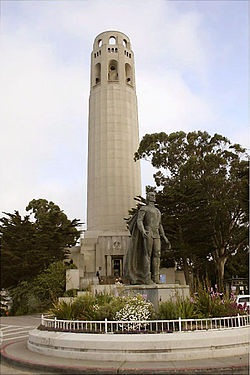
Credit where it’s due: My competitor and sometimes journalistic adversary Joe Eskenazi has a nice little piece on the weird money behind the campaign against Prop. B, a policy statement about the privatization of Coit Tower. He points out that such varied groups as the California Dental Association and the San Manuel Band of Mission Indians have coughed up money to protect the right of San Francisco officials to close Coit Tower to the public and rent it out for fancy corporate parties.

And how exactly did that happen?

Well, Eskenazi manages to tie Willie Brown into it. (He also calls this “Nimby against the Swells,” which isn’t quite fair — I don’t think the supporters of Prop. B are trying to keep anything out of their back yards. If anything, they want more noisy tourists and fewer quiet, subdued rich-people events. And I don’t think the “swells” are against it as much as the mayor, his Rec-Park director and big businesses that generally back the privatization of public resources.)

But there’s another interesting twist: I’m not sure the folks who gave to the Golden State Leadership Fund Political Action Committee, which is running a No on B independent expenditure, had any clue where their money was going.

Sure, the Chamber of Commerce and BOMA know what’s up, and it’s pretty clear why they like the idea of raising money for the parks by holding exclusive private events instead of by raising taxes. But the Indians? And the dentists? By what possible stretch do they care about a San Francisco ballot measure that has nothing to do with Native American rights or oral health?

Eskenazi may be right — maybe Brown called the Indians and asked, and they threw the money his way to help his buddy the mayor (while keeping the mayor’s fingers out of this particular political pie). But the Golden State Leadership PAC, through which all this money flowed, has been around for years and gives money to candidates all over the state. (It’s definately something of a slush fund for local races — files in the Secretary of State’s office show that in 2008, money from Pacific Gas and Electric Co. flowed in and out of the PAC as it ran a campaign against the San Francisco public-power measure, Prop. H. PAC money went to David Chiu, Phil Ting and Ed Lee for mayor.) It’s based in West Hollywood and the treasurer is a guy named William Molina.

I called the San Manuel Band of Mission Indians and the California Dental Association and asked them why there were helping fund a campaign against Prop. B in San Francisco. The press person at the dental group apparently had no idea what I was talking about and asked for more details about the contribution. I gave her the date and the PAC and I haven’t heard back.

The Indians didn’t seem to clear on Prop. B, either. Kenneth Shoji, a spokesperson for the group, told me by email:

The San Manuel Band of Mission Indians made a contribution of $25,000 to the Golden State Leadership Fund PAC with the expectation of helping to support candidate(s) for public office in the 2012 elections.  We do not control where or how the PAC might extend its support beyond that.

In other words: This Coit tower thing is news to us.

UPDATE: I got essentially the same message from the dentists. Alicia Malaby at the CDA writes:

 When an organization such as CalDPAC contributes to an independent expenditure committee, that committee may spend money on races and issues that CalDPAC supports, but may also spend money on other campaigns. CalDPAC does not control how those committees spend money, and in this case, CalDPAC has no interest in and no position on Proposition B.

UPDATE TWO: Ron Cottingham at PORAC just called me and said his group has no position on or interest in Prop. B. The money that went to the PAC was earmarked to support Rob Bonta for Assembly in the East Bay. Presumably the PAC folks keep track of such things.

Maybe not. Maybe Willie or someone else made a call. It happens all the time.  I mean, somebody clearly was raising money for this PAC, which right now isn’t doing a hell of a lot besides No on B in San Francisco. (Oh, I called Brown, too. He hasn’t called back. He never does. I still always try.)

Either way, it’s a classic San Francisco political story — and it reflects how muddy and corrupt local politics can still be, even in an era of electronic disclosure and ethics laws. Why, if the dentists and Indians don’t like Prop. B, didn’t they (or any of the others in the PAC) create a No on B committee, disclose who was behind it and let the voters know a little more about the real money trail? Why funnel all this cash through a little-known Southern California PAC?

And for that matter, why is there a sudden influx of late money in this race? Has the mayor and the Chamber types suddenly discovered that Prop. B might pass — and might set a precedent against future privatization efforts?

June 5 is Election Day. Vote early and often.


Dick Meister: Two big tests for labor

1

By Dick Meister

 Dick Meister, former labor editor of the SF Chronicle and KQED-TV Newsroom, has covered labor and politics for more than a half-century. Contact him through his website, www.dickmeister.com, which includes more than 350 of his columns.

Helping get President Obama re-elected tops organized labor’s political agenda. But for now, unions are rightly focusing on special elections this month in Wisconsin and Arizona, where other labor-friendly Democrats are being challenged by labor foes.

Coming up first, on June 5, is the Wisconsin election to recall Republican Gov. Scott Walker, who’s been labor’s public enemy No. 1 for his blatant anti-union policies. He’s been acclaimed by anti-labor forces nationwide and as widely attacked by labor.

Both sides see the election as highly symbolic, a possible guide for those seeking to limit the union rights of public employees and other workers or, conversely, for those attempting to halt the spread of Walker-like attacks on collective bargaining in private and public employment alike.

There are many reasons for replacing Walker with his recall election opponent, Democratic Mayor Thomas Barrett of Milwaukee. The AFL-CIO has come up with about a dozen reasons, headed by Walker’s severe limiting of the bargaining  rights of Wisconsin’s 380,000 public employees – a key action that helped trigger what Obama has described as a national “assault on unions.”

The AFL-CIO also complains that Walker has:

*”Led Wisconsin to last place in the nation in job creation.”

*”Disenfranchised tens of thousands of young voters, senior citizens and minority voters with voter suppression and voter ID laws.”

*”Put the health care coverage of 17,000 people at risk with unfair budget cuts.”

*”Allowed the extremist, corporate-backed American Legislative Council to exercise extraordinary influence.”

*”Made wage discrimination easier by repealing Wisconsin’s Equal Pay enforcement law.”

*”Attacked public workers’ retirement security.”

*”Blocked the path of young workers to middle class jobs by repealing rules on state apprenticeship programs.”

*”Killed the creation of more than 15,000 jobs when he rejected $810 million in federal  funds to construct a passenger rail system between Milwaukee and Madison.”

*”Sponsored new tax breaks for the wealthy and corporations that will cost the state $2.4 billion over the next 10 years.”

*”Proposed cuts to the state’s earned income tax credit that will raise taxes on 145,000 low-income families with children.”

Despite all that – and more – polls show the recall vote could go either way, with lots of campaign funding for Walker flooding in from  corporations and other union opponents across the country.

Unions have lots of tough campaigning ahead, as they do in Arizona. There, on June 12, a special election will determine who will serve in the Congressional seat held for three terms by Democrat Gabrielle Giffords. She resigned in mid-term this year while still recovering from the serious wounds she suffered during a 2011 shooting in Tucson in which six people were killed.

Ron Barber, a Giffords’ staffer who was wounded in the Tucson attack, will challenge Republican Jesse Kelly in the race to elect a representative to serve the rest of Giffords’ term. Kelly, who ran a close losing race against Giffords in 2010 , opposes  much of what the AFL-CIO supports.

The labor federation is especially unhappy with Kelly’s support for GOP proposals in Congress “which would turn Medicare into a voucher system,” and for getting $68 million in federal stimulus funds for his family’s construction firm while at the same time attacking Obama for creating the stimulus program.

Apparently, says the AFL-CIO, “Kelly lining his own pockets with stimulus dollars is proper. Everything else is socialism.” The AFL-CIO is likewise unhappy with Kelly’s endorsement by organizations considered “extremist and racist” by civil rights groups.

Like labor, Barber is a strong supporter of Social Security and Medicare. But Kelly says that Social Security is a “giant Ponzi scheme” and that Medicare recipients are “on the public dole.”

He’s said health care is a “privilege” and so presumably should not be a government-guaranteed right, and claimed that “the highest quality and lowest cost can only be delivered without the government.”

Kelly wants to reduce the Federal Drug Administration “as much as humanly possible.” He’s also advocated an end to government food safety inspections, leaving individuals to do their own inspections rather than rely on “the nanny state” to do it for them.

No wonder labor is mounting major campaigns against Kelly in Arizona and Walker in Wisconsin. Labor victories are needed there to help protect unions, their members and many others from attempts to weaken the rights, protections and other essential aid provided through government.

Dick Meister, former labor editor of the SF Chronicle and KQED-TV Newsroom, has covered labor and politics for more than a half-century. Contact him through his website, www.dickmeister.com, which includes more than 350 of his columns.

Dick Meister: Make it a truly happy graduation day

0

By Dick Meister


Dick Meister, former labor editor of the SF Chronicle and KQED-TV Newsroom, has covered labor and politics for more than a half-century. Contact him through his website, www.dickmeister.com, which includes more than 350 of his columns.

It’s that grand time of the year for high school and college seniors. Time for graduation. Time for them to enter the world of full-time work.  Conventional wisdom insists their education will enable them to find good job opportunities and financial rewards.

 A new report by the Economic Policy Institute (EPI) shows, however, that recent graduates are generally having far more problems with the job market than conventional wisdom would  suggest.

 The basic economic facts make that all too clear. Consider these EPI findings :

*About one-third of high school graduates aged 17 to 20 are unemployed and more than half are underemployed – involuntarily working only part time or holding jobs that don’t require skills they’ve learned in school. The rates for African-American and Latino graduates are particularly high.

*As for college graduates, about 10 percent of them are jobless, about one-fifth of them underemployed.

College and high school graduates alike may find that their lack of on-the-job experience will cause employers to bypass them, regardless of their academic background.

Even if they do manage to find full-time jobs, graduates’ lack of seniority, as the EPI studies note, “makes them likely candidates for being laid off when the firm falls on hard times.”

Graduates aren’t the only young workers unable to find secure jobs. The unemployment rate for workers under 25, whether graduates or not, has remained at about 16 percent, or twice the rate for workers generally. That’s higher than it has been in nearly 30 years.

Unemployment is but one of the serious economic problems facing graduates. Wages for the jobs that are available to them have been steadily declining to barely adequate levels. For instance: In 2011 wages paid college graduates aged 21 to 24 averaged only about $17 an hour or roughly $35,000 for the year.

Between 2000 and 2011, college graduates’ pay dropped an average of more than 5 percent, less than 2 percent for men, 8.5 percent for women. High school graduates’ pay overall dropped by about 11 percent.

There are state and federal assistance programs that could help poorly paid graduates. But the programs often don’t cover young workers because the workers do not meet such eligibility requirements as having previously had significant work experience.

Many of the college graduates have the added burden of trying to pay back college loans. As the EPI report notes, “The cost of higher education has grown far more than median family income, leaving students with little choice but to take out loans” which they may spend years trying to repay.

What’s needed above all – and needed quickly – are government policies that, as EPI economist Heidi Shierholz says, are new policies “that will generate strong job growth overall, such as fiscal relief to states, substantial additional investment in infrastructure, expanded safety net measures, and direct job creation programs in communities particularly affected by unemployment.”

She’s right. Such government action will be essential if the promise of their education is to be fully realized by the young people who are about to graduate from America’s high schools and colleges, if all young Americans are to reach their full potential, and if the nation is to reach true prosperity.

Dick Meister, former labor editor of the SF Chronicle and KQED-TV Newsroom, has covered labor and politics for more than a half-century. Contact him through his website, www.dickmeister.com, which includes more than 350 of his columns.

SEIU deal could undermine progressive coalition

1

I stumbled on the oddest deal on a union-gossip website, but I’ve checked it out and it’s really happening — and it could be a total trainwreck for progressive politics in San Francisco.

The deal, still in draft form, is an “agreement on political unity” between SEIU Local 1021, one of the most progressive unions in the state and part of the voice of the left in San Francisco, and SEIU-UHW, a much more moderate union that has been taken over by the international. (One example of the tension between the two: Local 1021 has been and remains a strong supporter of Sup. John Avalos, and UHW leader Leon Chow is challenging him in District 11, something that even Randy Shaw, who increasingly disagrees with my politics, finds distasteful.) UHW has attacked the hotel workers union and split with most of the rest of labor around CPMC.

The way the deal would work is this: Both unions would choose a candidate. If they disagreed, the head of the international, Mary Kay Henry, would appoint a mediator to essentially break the tie. That person could unilaterally “direct the joint endorsment of one candidate.”

It would be a radical change — for the first time, the members of Local 1021 would cede final control of their endorsements to the international.

Ed Kinchley, a co-chair of Local 1021’s political action commitee, told me he finds the proposal troubling. “I’m not at all interested in having the international have a say in who we endorse,” he said. “Decisions about endorsements should be in the hands of our members.”

He said he’s all in favor of trying to find areas of agreement between the two SEIU locals — “but do I want to have something enforced on us if we can’t agree? No.”

The agreement specificially exempts the Avalos-Chow race and it calls for UHW to endorse Eric Mar and David Campos. Campos is basically unbeatable, so that doesn’t matter. The nod from UHW to Mar will be helpful to him.

But overall, this could dilute the progressive force of one of the most important voices in local politics. Local 1021 is more than just a city employee union; it’s a part of the progressive coalition, part of the left in this town. Forcing a joint endorsement with a union that is distinctly not part of the progressive coalition can only undermine Local 1021’s historical role.

And it’s odd; as the Stern Burger with Fries blog puts it:

If you’re Local 1021, why would you sign this deal? Local 1021 is a big political player in San Francisco with lots of members, money and foot soldiers. [UHW leader Dave] Regan has shown again and again that he’s hostile to the priorities of Local 1021’s members. Basically, he’s bedded down with the business community. So, if you’re [Local 1021’s Roxanne] Sanchez, why would you agree to this so-called “unity” deal? It hands over control of Local 1021’s political destiny to Regan and some SEIU bureaucrat in DC. Plus, when push comes to shove, everyone knows that [International head] Mary Kay Henry is going to back Regan over Sanchez. If Local 1021 accepts this deal, they’re basically declaring unilateral disarmament as far as their political future.

I couldn’t reach Sanchez and her phone isn’t taking messages. But I spoke with Chris Daly, the former supervisor and now Local 1021 political director, who told me he wasn’t there when the deal was negotiated. But he said “we’ve had many internal discussions on this” and that “the policy of speaking with one voice makes sense.”

When I told him I thought this was a progressive fumble, he said: “I disagree with your analysis.”

The proposal is scheduled to come before the SEIU 1021 COPE June 7.

Bikes and business, a new and evolving union in SF

3

Building Owners and Managers Association of San Francisco (BOMA) is being honored by the San Francisco Bicycle Coalition at next week’s annual Golden Wheel Awards, recognizing BOMA’s help earlier this year in passing a city law requiring commercial landlords to let workers bring their bikes indoors or another secure bike parking area.

It is a strange and noteworthy honor for BOMA, a downtown force that is usually at odds with SFBC and progressive political entities, including opposing an effort to pass similar bikes-in-buildings legislation a decade ago. But this time, BOMA was an early partner on legislation sponsored by progressive Sup. John Avalos, an indicator of just how much the politics surrounding urban cycling have changed in recent years, particularly in San Francisco.

In the city where Critical Mass was born 20 years ago this fall – since then exported to dozens of cities around the world, globalizing urban cyclists’ demand for the equal right to use roadways often built mainly for automobiles – the bicycle has moved from the preferred mode of rebels, children, and the poor into a mainstream transportation option recognized even by the suits in the corner offices.

“They’re responding to a market demand. They see lots of employees looking for bike access in their buildings,” San Francisco Bicycle Coalition Executive Director Lean Shahum said BOMA.

It was a point echoed by John Bozeman, BOMA’s government and public affairs manager and a regular cyclist. “Ten years ago, our members didn’t see it as something their tenants were asking of them,” Bozeman told us. “With the rise of young workers coming into our buildings, there was a greater demand for better bike access.”

But there are different ways of looking at this switch, which could undermine the progressive movement in San Francisco as SFBC increasingly adopts a more neoliberal approach of reliance on corporate support, rather than relying primarily on the political strength of their 12,000-plus members. For example, the Sunday Streets road closures that SFBC helped initiate are sponsored by a long list of corporations looking to improve their public image, including Bank of America (whose representative recently joined SFBC and city officials at a press conference announcing an expansion of the program), California Pacific Media Center, and Clear Channel, and in the past PG&E and Lennar.

“It reflects that bicycling sells real estate, and that’s a recent trend in hip, tech-focused cities,” says Jason Henderson, a San Francisco State University geography professor now finishing up a book on the politics of transportation, which explores these shifting dynamics.

The relationship with and dependence upon the business community could diminish SFBC’s willingness to champion bold reforms to our transportation system, such as congestion pricing charges for cars entering the city core during peak hours or demanding public transit mitigation fees of downtown corporations.

“On the other hand, it’s helping legitimize the bike as a legitimate form of transportation when the power elite accept it,” Henderson said.

Whatever the case, SFBC decision to honor BOMA with an award – which will be presented on the evening of June 5 during an event at the swank War Memorial Building – represents a new and evolving political dynamic for San Francisco.

“San Francisco has become a very different place in terms of embracing bicycling,” Shahum said. “There is a strong understanding that biking is good for the economy.”

Film Listings May 23-29, 2012

0

Film listings are edited by Cheryl Eddy. Reviewers are Kimberly Chun, Max Goldberg, Dennis Harvey, and Lynn Rapoport. For rep house showtimes, see Rep Clock at www.sfbg.com. Complete film listings also posted at www.sfbg.com.

OPENING

Chernobyl Diaries A group of young tourists visit the nuked-out husk of Chernobyl in this spook flick written and produced by Paranormal Activity series creator Oren Peli. (1:26)

Hysteria Tanya Wexler’s period romantic comedy gleefully depicts the genesis of the world’s most popular sex toy out of the inchoate murk of Victorian quackishness. In this dulcet version of events, real-life vibrator inventor Mortimer Granville (Hugh Dancy) is a handsome young London doctor with such progressive convictions as a belief in the existence of germs. He is, however, a man of his times and thus swallows unblinking the umbrella diagnosis of women with symptoms like anxiety, frustration, and restlessness as victims of a plague-like uterine disorder known as hysteria. Landing a job in the high-end practice of Dr. Robert Dalrymple (Jonathan Pryce), whose clientele consists entirely of dissatisfied housewives seeking treatments of “medicinal massage” and subsequent “parosysm,” Granville becomes acquainted with Dalrymple’s two daughters, the decorous Emily (Felicity Jones) and the first-wave feminist Charlotte (Maggie Gyllenhaal). A subsequent bout of RSI offers empirical evidence for the adage about necessity being the mother of invention, with the ever-underused Rupert Everett playing Edmund St. John-Smythe, Granville’s aristocratic friend and partner in electrical engineering. (1:35) Embarcadero, Shattuck, Sundance Kabuki. (Rapoport)

Keyhole Guy Maddin’s latest is a loose — very loose — take on Homer’s Odyssey, among other elements tossed into a fragmentary whole. Loose enough to keep 30s gangster Ulysses Pick (Jason Patric) traveling no further than between rooms in his decrepit former home. He arrives there with an inept gang, a “drowned” girl (Brooke Palsson) who sure doesn’t act like she’s already dead, a gagged kidnapping victim (David Wontner) who turns out to be his own son — our protagonist is slipshod in the realm of family responsibilities, to say the least — and a powerful desire to see his estranged wife (Isabella Rosellini), who is less than enthused. Already on the premises is the latter’s elderly father, kept naked and chained to her bed for reasons unknown. Impulsive random screwings, killings that immediately give rise to ghosts, an electric chair powered by exercycles, Udo Kier, and other miscellaneous weirdness dots the progress of this phantasmagorical, free associative work — though it’s a lot less fun than that may sound. Maddin is in an experimental mood here (working for the first time in digital, for one thing), and it’s difficult to say just what he’s aiming for, or whether he succeeds. The handsome, cluttered, black-and-white results do ultimately cast a certain spell, but this may be a reliably idiosyncratic director’s least fully realized stab at dream logic and semi-new personal terrain since Twilight of the Ice Nymphs 15 years ago. (1:34) Roxie. (Harvey)

Men in Black 3 Usually movies screw up when casting the younger version of a character, but Josh Brolin as a young Tommy Lee Jones does kinda make sense. (1:42) Four Star, Presidio, Shattuck.

Polisse Comparisons to The Wire are not to be tossed around lightly, but when the Hollywood Reporter likened Polisse to an entire season of the masterpiece cop show packed into a single film, it was onto something. Director, co-writer, and star Maïwenn (the object of desire in 2003’s High Tension) hung out with real officers serving in Paris’ Child Protection Unit, drawing inspiration from their dealings with pedophiles, young rape victims, negligent mothers, pint-sized pickpockets, and the like (another TV show worth mentioning in comparison: Law & Order: SVU). But Polisse (the title is deliberately misspelled, as if by a child) is no simple procedural; it plunges the viewer directly into the day-to-day lives of its boisterous characters, who are juggling not just stressful careers but also plenty of after-hours troubles, particularly relationship issues. Between heart wrenching moments on the job (and off), the unit indulges in massive cut-loose episodes of what amounts to group therapy: charades, dance parties, and room-clearing arguments, most of which involve huge quantities of booze. Watching Polisse is a messy, emotional, rewarding experience; no wonder it picked up the Jury Prize at the 2011 Cannes Film Festival. (2:07) Embarcadero, Shattuck. (Eddy)

Whores’ Glory See “Far From Heaven.” (1:59) Lumiere, Shattuck.

ONGOING

Battleship During idle moments before the action revs up, the aliens start menacing, and the deadly razor balls-cum-air mines start rampaging, wrap your noggin around these random brainwaves: can Taylor Kitsch be any better named? Is it possible for Alexander Skarsgård’s glassy eyes to get any deader? Where are all the Hawaiians, Asians, and people of color in this white-bread vision of Hawaii? All matters to puzzle over in this toy franchise hopeful directed by ex-Chicago Hope regular Peter Berg. The 2007 Transformers is the best this gung-ho hybrid of up-with-the-military “Army of One” commercial and alien invasion flick — with plenty of blow-’em-up-real-good explosions and a dab of J-monster movies, but the writing never quite rises to the occasion. Here, an international group of navy folk and their ships are convening in Hawaii for playful war games, though the exercises turn somewhat more serious when alien vessels splash down in the middle of the fun —and some mild, no-investment family drama: Alex (Kitsch) is the screw-up younger brother of stony-faced naval man Stone (Skarsgård) and courting the daughter (Brooklyn Decker) of the fleet commander (Liam Neesom), who seems to hate his guts. The ultimate battle with space invaders, however, promises to turn that all around, as Alex is forced to sailor up and lead crew mates like Rihanna and work with former opponents like Captain Nagata (Tadanobu Asano). Here, at least, in the shadow of Pearl Harbor, U.S. and Japanese naval dudes can heal the wounds of World War II and bond in battle against the last unimpeachable interstellar villains who couldn’t give a rat’s ass if you say “I sunk your battleship.” But Berg’s muddled direction doesn’t help when it comes to piecing out the chronology and balancing assorted perspectives in this latest effort to equate militarism with the games big and little kids play. (2:11) 1000 Van Ness, SF Center. (Chun)

Bernie Jack Black plays the titular new assistant funeral director liked by everybody in small-town Carthage, Tex. He works especially hard to ingratiate himself with shrewish local widow Marjorie (Shirley MacLaine), but there are benefits — estranged from her own family, she not only accepts him as a friend (then companion, then servant, then as virtual “property”), but makes him her sole heir. Richard Linklater’s latest is based on a true-crime story, although in execution it’s as much a cheerful social satire as I Love You Philip Morris and The Informant! (both 2009), two other recent fact-based movies about likable felons. Black gets to sing (his character being a musical theater queen, among other things), while Linklater gets to affectionately mock a very different stratum of Lone Star State culture from the one he started out with in 1991’s Slacker. There’s a rich gallery of supporting characters, most played by little-known local actors or actual townspeople, with Matthew McConaughey’s vainglorious county prosecutor one delectable exception. Bernie is its director’s best in some time, not to mention a whole lot of fun. (1:39) Embarcadero, Piedmont, Shattuck, Smith Rafael. (Harvey)

The Best Exotic Marigold Hotel (1:42) Albany, Marina, Piedmont, SF Center, Sundance Kabuki.

Bully Anyone who’s ever been a kid on the wrong side of a bully — or was sensitive and observant enough not to avert his or her eyes — will be puzzling over the MPAA’s R rating of this doc, for profanity. It’s absurd when the gory violence on network and basic cable TV stops just short of cutting characters’ faces off, as one blurred-out bus bully threatens to do to the sweet, hapless Alex, dubbed “Fish Face” by the kids who ostracize him and make his life hell on the bus. It’s a jungle out there, as we all know — but it’s that real, visceral footage of the verbal (and physical) abuse bullied children deal with daily that brings it all home. Filmmaker Lee Hirsch goes above and beyond in trying to capture all dimensions of his subject: the terrorized bullied, the ineffectual school administrators, the desperate parents. There’s Kelby, the gay girl who was forced off her beloved basketball team after she came out, and Ja’Maya, who took drastic measures to fend off her tormenters — as well as the specters of those who turned to suicide as a way out. Hirsch is clearly more of an activist than a fly on the wall: he steps in at one point to help and obviously makes an uplifting effort to focus on what we can do to battle bullying. Nevertheless, at the risk of coming off like the Iowa assistant principal who’s catching criticism for telling one victim that he was just as bad as the bully that he refused to shake hands with, one feels compelled to note one prominent component that’s missing here: the bullies themselves, their stories, and the reasons why they’re so cruel — admittedly a daunting, possibly libelous task. (1:35) Smith Rafael. (Chun)

The Cabin in the Woods If the name “Joss Whedon” doesn’t provide all the reason you need to bum-rush The Cabin in the Woods (Whedon produced and co-wrote, with director and frequent collaborator Drew Goddard), well, there’s not much more that can be revealed without ruining the entire movie. In a very, very small nutshell, it’s about a group of college kids (including Chris “Thor” Hemsworth) whose weekend jaunt to a rural cabin goes horribly awry, as such weekend jaunts tend to do in horror movies (the Texas Chainsaw and Evil Dead movies are heavily referenced). But this is no ordinary nightmare — its peculiarities are cleverly, carefully revealed, and the movie’s inside-out takedown of scary movies produces some very unexpected (and delightfully blood-gushing) twists and turns. Plus: the always-awesome Richard Jenkins, and in-jokes galore for genre fans. (1:35) Metreon, Shattuck. (Eddy)

Dark Shadows Conceptually, there’s nothing wrong with attempting to turn a now semi-obscure supernaturally themed soap opera with a five-year run in the late 1960s and early ’70s into a feature film. Particularly if the film brings together the sweetly creepy triumvirate of Tim Burton, Johnny Depp, and Helena Bonham Carter and emerges during an ongoing moment for vampires, werewolves, and other things that go hump in the night. Depp plays long-enduring vampire Barnabas Collins, the undead scion of a once-powerful 18th-century New England family that by the 1970s — the groovy decade in which the bulk of the story is set — has suffered a shabby deterioration. Barnabas forms a pact with present-day Collins matriarch Elizabeth (Michelle Pfeiffer) to raise the household — currently comprising her disaffected daughter, Carolyn (Chloë Grace Moretz), her derelict brother, Roger (Jonny Lee Miller), his mournful young son, David (Gulliver McGrath), David’s live-in lush of a psychiatrist, Dr. Hoffman (Carter), and the family’s overtaxed manservant, Willie (Jackie Earle Haley) — to its former stature, while taking down a lunatic, love-struck, and rather vindictive witch named Angelique (Eva Green). The latter, a victim of unrequited love, is the cause of all Barnabas’s woes and, by extension, the entire clan’s, but Angelique can only be blamed for so much. Beyond her hocus-pocus jurisdiction is the film’s manic pileup of plot twists, tonal shifts, and campy scenery-chewing by Depp, a startling onslaught that no lava lamp joke, no pallid reaction shot, no room-demolishing act of paranormal carnality set to Barry White, and no cameo by Alice Cooper can temper. (2:00) California, Metreon, 1000 Van Ness, Sundance Kabuki. (Rapoport)

The Dictator As expected, The Dictator is, yet again, Sacha Baron Cohen doing his bumbling-foreigner shtick. Said character (here, a ruthless, spoiled North African dictator) travels to America and learns a heaping teaspoon of valuable lessons, which are then flung upon the audience — an audience which, by film’s end, has spent 80 minutes squealing at a no-holds-barred mix of disgusting gags, tasteless jokes, and schadenfreude. If you can’t forgive Cohen for carbon-copying his Borat (2006) formula, at least you can muster admiration for his ability to be an equal-opportunity offender (dinged: Arabs, Jews, African Americans, white Americans, women of all ethnicities, and green activists) — and for that last-act zinger of a speech. If The Dictator doesn’t quite reach Borat‘s hilarious heights, it’s still proudly repulsive, smart in spite of itself, and guaranteed to get a rise out of anyone who watches it. (1:23) California, 1000 Van Ness, Presidio, SF Center, Sundance Kabuki. (Eddy)

Elles Graphic sex scenes distinguish this otherwise fairly unremarkable tale of Anne (Juliette Binoche), a magazine writer whose blah life (sure, she has a luxurious apartment, but it’s populated by a distant husband, a sullen teenager, and a younger son who’d rather interface with technology than humans) becomes even more unbearable when she begins a new assignment: an article on college students who moonlight as call girls. The always-reliable Binoche brings depth to her role as a bored woman who finds herself unexpectedly titillated by her close brush with dirty thrills, but her eventual rebellion is anti-climactic after all that naughty build-up. Elles does plenty to earn its NC-17 rating, but filmmaker Malgoska Szumowska could’ve titled it Ennui instead. (1:36) Lumiere, Shattuck. (Eddy)

First Position Bess Kargman’s documentary follows a handful of exceptional young ballet dancers, ranging in age from 10 to 17, over the course of a year as they prepare for the Youth America Grand Prix, the world’s largest ballet scholarship competition. Those who make it from the semifinals (in which some 5,000 dancers aged 9 to 19 perform in 15 cities around the world) to the finals (which bring some 300 contestants to New York City) compete for scholarships to prestigious ballet schools, dance-company contracts, and general notice by both the judges and the company directors in the audience. The film’s subjects come from varied backgrounds — 16-year-old Joan Sebastian lives and studies in NYC, far from his family in Colombia; 14-year-old Michaela was born in civil war-torn Sierra Leone and adopted from an orphanage by an American couple in Philadelphia; 11-year-old Aran, an American, lives in Italy with his mother while his father serves in Kuwait. The common threads in their stories are the daily sacrifices made by them as well as their families, whose energies and other resources are largely poured into these children’s single-minded pursuit. We get a vague sense of the difficult world they are driving themselves, in nearly every waking hour, to enter. But the film largely keeps its focus on the challenges of preparing for the competition, offering us many magnificent shots of the dancers pushing their bodies to mesmerizing physical extremes both on- and offstage. (1:34) Embarcadero, Shattuck, Smith Rafael. (Rapoport)

The Five-Year Engagement In 2008’s Forgetting Sarah Marshall, viewers were treated to the startling, tragicomic sight of Jason Segel’s naked front side as his character got brutally dumped by the titular perky, put-together heartbreaker. In The Five-Year Engagement, which he reunited with director Nicholas Stoller to co-write, Segel once again sacrifices dignity and the right to privacy, this time in exchange for fake orgasms (his own), ghastly hand-knit sweaters, egregious facial-hair arrangements, and various other exhaustively humiliating psychological lows — all part of an earnest, undying quest to make people giggle uncomfortably. Segel plays Tom, a talented chef with a promising career ahead of him in San Francisco’s culinary scene (naturally, food carts get a cameo in the film). On the one-year anniversary of meeting his girlfriend, Violet (Emily Blunt), a psychology postgrad, he asks her to marry him in a meticulously planned, gloriously botched proposal scene coengineered by Tom’s oafish friend Alex (Chris Pratt), little realizing that this romantic gesture will soon lead to successive frozen winters in the Midwest (Violet gets offered a job at the University of Michigan), loss of professional stature, cabin fever, mead making, bow-hunting accidents, the titular nuptial postponement, and other, more gruesome events. The humor at times descends to some banally low depths as Segel and Stoller explore the terrain of the awkward, the poorly socialized, and the playfully grotesque. But Segel and Blunt present a believable, likable relationship between two warm, funny, flawed people, and, however disgusted, no one should walk out before a scene in which Violet and her sister (Alison Brie) channel Elmo and Cookie Monster to elaborate on the themes of romantic idealism and marital discontent. (2:04) 1000 Van Ness, SF Center. (Rapoport)

Footnote (1:45) Opera Plaza.

Girl in Progress (1:30) SF Center.

God Bless America Middle-aged office drone Frank (Joel Murray) is not having a good day-week-month-year-life. His ex-wife is about to happily remarry; his only child is a world-class brat who finds father-daughter time “boring;” his neighbors are a young couple who only get more loudly obnoxious when politely asked to keep the noise down. When that and insistent migraines keep Frank awake night after night, the parade of pundit and reality stupidities on TV only turn his insomnia into wide awake fury. Then he’s fired from his job for unjust reasons — on the same day he gets a diagnosis of brain cancer. Mad as hell, not-gonna-take-it-anymore, he impulsively decides to make a “statement” by assassinating a viral-video poster child for “entitlement.” This attracts admiring attention from extremely pushy, snarky teen Roxy (Tara Lynne Barr), who appoints herself Bonnie to his reluctant Clyde. They drive around the country bestowing “big dirt naps” on other exemplars of what’s wrong with America today, including religious hate mongers, rude moviegoers, and the purveyors of American Idol-type idiotainment. Comedian Bobcat Goldthwait’s latest feature as writer-director has its head in the right place, and so many good ideas, that it’s a pity this gonzo satire-rant runs out of steam so quickly. Aiming splattering paintball gun at the broadest possible targets, it covers them with disdainful goo but not as much wit as one would like. Plus, Barr’s hyper precocious smart mouth is yet another annoying Juno (2007) knockoff — never mind that she counts Diablo Cody among her (many) pet peeves. If God Bless winds up closer to Uwe Boll’s Postal (2007) than, say, Network (1976) in scattershot impact, it nonetheless almost makes it on sheer outré audacity and will alone. A movie that hates everything you hate should not be sneezed at; if only it hated them with more parodic snap, thematic depth and narrative structure. (1:44) Lumiere. (Harvey)

Headhunters Despite being the most sought-after corporate headhunter in Oslo, Roger (Aksel Hennie) still doesn’t make enough money to placate his gorgeous wife; his raging Napoleon complex certainly doesn’t help matters. Crime is, as always, the only solution, so Roger’s been supplementing his income by stealthily relieving his rich, status-conscious clients of their most expensive artworks (with help from his slightly unhinged partner, who works for a home-security company). When Roger meets the dashing Clas Greve (Nikolaj Coster-Waldau of Game of Thrones) — a Danish exec with a sinister, mysterious military past, now looking to take over a top job in Norway — he’s more interested in a near-priceless painting rumored to be stashed in Greve’s apartment. The heist is on, but faster than you can say “MacGuffin,” all hell breaks loose (in startlingly gory fashion), and the very charming Roger is using his considerable wits to stay alive. Based on a best-selling “Scandi-noir” novel, Headhunters is just as clever as it is suspenseful. See this version before Hollywood swoops in for the inevitable (rumored) remake. (1:40) California, Clay. (Eddy)

The Hunger Games Katniss Everdeen (Jennifer Lawrence) is a teenager living in a totalitarian state whose 12 impoverished districts, as retribution for an earlier uprising, must pay tribute to the so-called Capitol every year, sacrificing one boy and one girl each to the Hunger Games. A battle royal set in a perilous arena and broadcast live to the Capitol as gripping diversion and to the districts as sadistic propaganda, the Hunger Games are, depending on your viewpoint, a “pageant of honor, courage, and sacrifice” or a brutal, pointless bloodbath involving children as young as 12. When her little sister’s name comes up in the annual lottery, Katniss volunteers to take her place and is joined by a boy named Peeta Mellark (Josh Hutcherson), with whom she shares an old, unspoken bond. Tasked with translating to the screen the first installment of Suzanne Collins’s rabidly admired trilogy, writer-director Gary Ross (2003’s Seabiscuit, 1998’s Pleasantville) telescopes the book’s drawn-out, dread-filled tale into a manageable two-plus-hour entertainment, making great (and horrifying) use of the original work’s action, but losing a good deal of the narrative detail and emotional force. Elizabeth Banks is comic and unrecognizable as Effie Trinket, the two tributes’ chaperone; Lenny Kravitz gives a blank, flattened reading as their stylist, Cinna; and Donald Sutherland is sufficiently creepy and bloodless as the country’s leader, President Snow. More exceptionally cast are Woody Harrelson as Katniss and Peeta’s surly, alcoholic mentor, Haymitch Abernathy, and Stanley Tucci as games emcee Caesar Flickerman, flashing a bank of gleaming teeth at each contestant as he probes their dire circumstances with the oily superficiality of a talk show host. (2:22) 1000 Van Ness, SF Center. (Rapoport)

Indie Game: The Movie Much like the film business, the video-game biz is mostly controlled by a few huge companies with thousands of employees, hell-bent on ensnaring as many of the billions of dollars spent on games annually as possible. And then, as James Swirsky and Lisanne Pajot’s documentary explores, there are the little guys, who are “not trying to be professional” or produce glossy content for the masses. Instead, these individuals (or pairs) take advantage of the miracle of digital distribution to follow their own visions and create their own games. The best-case scenarios — illustrated by San Francisco indie developer Jonathan Blow and his hugely successful Braid — can reap enormous creative and financial rewards, but getting there — as the struggles facing the creators of Super Meat Boy and Fez plainly attest can be a mentally and physically draining process, filled with frustration and self-doubt, exacerbated by the taunts of haters online. A thoughtful, artfully-shot peek at one tiny corner of a behemoth industry, Indie Game also offers a surprisingly tense, raw look at some very bright minds struggling to triumph on their own terms. (1:36) Roxie. (Eddy)

Jiro Dreams of Sushi Celebrity-chef culture has surely reached some kind of zeitgeist, what with the omnipresence of Top Chef and other cooking-themed shows, and the headlines-making power of people like Paula Deen (diabetes) and Mario Batali (sued for ripping off his wait staff). Unconcerned with the trappings of fame — you’ll never see him driving a Guy Fieri-style garish sports car — is Jiro Ono, 85-year-old proprietor of Sukiyabashi Jiro, a tiny, world-renowned sushi restaurant tucked into Tokyo’s Ginza station. Jiro, a highly-disciplined perfectionist who believes in simple, yet flavorful food, has devoted his entire life to the pursuit of “deliciousness” — to the point of sushi invading his dreams, as the title of David Gelb’s reverential documentary suggests. But Jiro Dreams of Sushi goes deeper than food-prep porn (though, indeed, there’s plenty of that); it also examines the existential conflicts faced by Jiro’s two middle-aged sons. Both were strongly encouraged to enter the family business — and in the intervening years, have had to accept the soul-crushing fact that no matter how good their sushi is, it’ll never be seen as exceeding the creations of their legendary father. (1:21) Bridge, Shattuck. (Eddy)

Marley Oscar-winning documentarian Kevin Macdonald (1999’s One Day in September; he also directed Best Actor Forest Whitaker in 2006’s The Last King of Scotland) takes on the iconic Bob Marley, using extensive interviews — both contemporary (with Marley friends and family) and archival (with the musician himself) — and performance and off-the-cuff footage. The end result is a compelling (even if you’re not a fan) portrait of a man who became a global sensation despite being born into extreme poverty, and making music in a style that most people had never heard outside of Jamaica. The film dips into Marley’s Rastafari beliefs (no shocker this movie is being released on 4/20), his personal life (11 children from seven different mothers), his impact on Jamaica’s volatile politics, his struggles with racism, and, most importantly, his remarkable career — achieved via a combination of talent and boldness, and cut short by his untimely death at age 36. (2:25) Opera Plaza, Smith Rafael. (Eddy)

Marvel’s The Avengers The conflict — a mystical blue cube containing earth-shattering (literally) powers is stolen, with evil intent — isn’t the reason to see this long-hyped culmination of numerous prequels spotlighting its heroic characters. Nay, the joy here is the whole “getting’ the band back together!” vibe; director and co-writer Joss Whedon knows you’re just dying to see Captain America (Chris Evans) bicker with Iron Man (a scene-stealing Robert Downey Jr.); Thor (Chris Hemsworth) clash with bad-boy brother Loki (Tom Hiddleston); and the Hulk (Mark Ruffalo) get angry as often as possible. (Also part of the crew, but kinda mostly just there to look good in their tight outfits: Jeremy Renner’s Hawkeye and Scarlett Johansson’s Black Widow.) Then, of course, there’s Nick Fury (Samuel L. Jackson) running the whole Marvel-ous show, with one good eye and almost as many wry quips as Downey’s Tony Stark. Basically, The Avengers gives you everything you want (characters delivering trademark lines and traits), everything you expect (shit blowing up, humanity being saved, etc.), and even makes room for a few surprises. It doesn’t transcend the comic-book genre (like 2008’s The Dark Knight did), but honestly, it ain’t trying to. The Avengers wants only to entertain, and entertain it does. (2:23) Marina, Metreon, 1000 Van Ness, Presidio, Sundance Kabuki. (Eddy)

Monsieur Lazhar When their beloved but troubled teacher hangs herself in the classroom — not a thoughtful choice of location, but then we never really discover her motives — traumatized Montreal sixth-graders get Bachir Lazhar (Fellag), a middle-aged Algerian émigré whose contrastingly rather strict, old-fashioned methods prove surprisingly useful at helping them past their trauma. He quickly becomes the crush object of studious Alice (Sophie Nelisse), whose single mother is a pilot too often away, while troublemaker Simon (Emilien Neron) acts out his own domestic and other issues at school. Lazhar has his own secrets as well — for one thing, we see that he’s still petitioning for permanent asylum in Canada, contradicting what he told the principal upon being hired — and while his emotions are more tightly wrapped, circumstances will eventually force all truths out. This very likable drama about adults and children from Quebec writer-director Philippe Falardeau doesn’t quite have the heft and resonance to rate among the truly great narrative films about education (like Laurent Cantet’s recent French The Class). But it comes close enough, gracefully touching on numerous other issues while effectively keeping focus on how a good teacher can shape young lives in ways as incalculable as they are important. (1:34) Opera Plaza, Smith Rafael. (Harvey)

The Pirates! Band of Misfits Aardman Animations, home studio of the Wallace and Gromit series as well as 2000’s Chicken Run, are masters of tiny details and background jokes. In nearly every scene of this swashbuckling comedy, there’s a sight gag, double entendre, or tossed-off reference (the Elephant Man!?) that suggests The Pirates! creators are far more clever than the movie as a whole would suggest. Oh, it’s a cute, enjoyable story about a kind-hearted Pirate Captain (Hugh Grant) who dreams of winning the coveted Pirate of the Year award (despite the fact that he gets more excited about ham than gold) — and the misadventures he gets into with his amiable crew, a young Charles Darwin, and a comically evil Queen Victoria. But despite its toy-like, 3D-and-CG-enhanced claymation, The Pirates! never matches the depth (or laugh-out-loud hilarity) of other Aardman productions. Yo ho-hum. (1:27) Metreon, 1000 Van Ness. (Eddy)

Safe The poster would be slightly more on-point if its suave thug of a star, Jason Statham, were hiding behind the scrunched-faced Catherine Chan rather than the other way around — because at times it’s tough to see this alternately enjoyable and credibility-taxing action flick as more than some kind of naked play for the Chinese filmgoer. Jamming the screen with a frantic kineticism, director-writer Boaz Yakin seems to be smoothing over the problems in his vaguely stereotype-flaunting, patchy puzzle of a narrative with a high body count: the cadavers pile like those in an old martial arts flick — made in Asia, it’s implied, where life is cheap and spectacle is paramount. Picking up in the middle, with flashbacks stacked like firewood, Safe opens on young math prodigy Mei (Chan) on the run from the Russian mafia. A pawn and virtual slave of the Chinese mob, she holds a number in her head that all sorts of ruthless crime factions want. To her rescue is mystery man Luke Wright (Statham), who has had his own deadly tussle with the same Russian baddies and is now on the street and on the verge of suicide, believe it or not. It’s tough to wrap your head around the fact that any of Statham’s rock-hard tough guys could possibly crumble — or even have a sense of humor. You’ll need one to accept the ludicrous storyline as well as the notion that a jillion bullets could be fired and never hit his superhuman street-fighting man. (1:35) Metreon. (Chun)

Think Like a Man (2:02) Metreon.

Titanic 3D (3:14) Metreon.

21 Jump Street One of the more pleasant surprises on the mainstream comedy landscape has to be this, ugh, “reboot” of the late-’80s TV franchise. I wasn’t a fan of the show — or its dark-eyed, bad-boy star, Johnny Depp — back in the day, but I am of this unexpectedly funny rework overseen by apparent enthusiast, star, co-writer, and co-executive producer Jonah Hill, with a screenplay by Scott Pilgrim vs. the World (2010) co-writer Michael Bacall. There’s more than a smidge of Bacall’s other high school fantasy, Project X, in the buddy comedy premise of nerd (Hill’s Schmidt) meets blowhard (Channing Tatum’s Jenko), but 21 Jump Street thankfully leapfrogs the former with its meta-savvy, irreverent script and har-dee-har cameo turns by actors like Ice Cube as Captain Dickson (as well as a few key uncredited players who shall remain under deep cover). High school continues to haunt former classmates Schmidt and Jenko, who have just graduated from the lowly police bike corps to a high school undercover operation — don’t get it twisted, though, Dickson hollers at them; they got this gig solely because they look young. Still, the whole drug-bust enchilada is put in jeopardy when the once-socially toxic Schmidt finds his brand of geekiness in favor with the cool kids and so-called dumb-jock Jenko discovers the pleasures of the mind with the chem lab set. Fortunately for everyone, this crew doesn’t take themselves, or the source material, too seriously. (1:49) Metreon. (Chun)

What to Expect When You’re Expecting You needn’t direct what you know, but the first major misstep in this ensemble comedy was tapping a man, Kirk Jones (2005’s Nanny McPhee), to helm. Apparently Nicole Holofcener, Nancy Meyers, and Nora Ephron were too busy — busy making films not based on self-help bestsellers. Instead, What to Expect shows how marginal women can be to certain Hollywood blockbuster decision makers. On the surface, it’s all about the gals and their experiences, as an array of women from somewhat different, if pretty uniformly bourgie, walks of life — fitness star Cameron Diaz, baby store owner Elizabeth Banks, food truck chef Anna Kendrick, and trophy wife Brooklyn Decker — all find themselves knocked up. The odd woman out, surprisingly, is the boho photog played by Jennifer Lopez, who aspires to nest with a baby adopted from Ethiopia. But despite the frantic efforts of Banks, who shoulders the comedy burden here with hormones gone wild and gassy, and the climax, which should choke up all present and wannabe moms, the women are consistently upstaged by the bros, primarily the “Dudes Group” of dads headed up by Chris Rock and Thomas Lennon. Unlike the far-too-prominent, shruggable storyline involving an expectant father and son (Dennis Quaid and Ben Falcone), that crew gets the funniest, and perhaps most perceptive lines, in a baldly patriarchal play to the fellows forced into the cineplexes. Can’t the ladies catch a break, even as their waters are breaking? (1:50) Metreon, 1000 Van Ness, Presidio, Shattuck, Sundance Kabuki. (Chun)

Where Do We Go Now? With very real, deadly sectarian conflict on their doorstep, a group of Lebanese village women are making it up as they go along in this absurdist, ultimately inspiring dramedy with a dash of musical. Once sheltered by its isolation and the cheek-to-jowl intimacy of its denizens, the uneasy peace between Muslims and Christians in this small town threatens to shatter when the outside world begins to filter in, first through town-square TV broadcasts then tit-for-tat jabs that appear ready to escalate into violence. So the village’s women conspire to preserve harmony any way they can, even if that means importing a motley cadre of Ukrainian “exotic” dancers. What results is a post debauchery climax that almost one-ups 2009’s The Hangover — and a film that injects ground-level merriment and humanity into the headlines, thanks to director, co-writer, and star Nadine Labaki (2007’s Caramel), who has a gimlet eye and a generous spirit. (1:40) Opera Plaza. (Chun) *


Meister: Another presidential step against anti-gay bias

1

By Dick Meister

Dick Meister, former labor editor of the SF Chronicle and KQED-TV Newsroom, has covered labor and politics for more than a half-century. Contact him through his website, www.dickmeister.com, which includes more than 350 of his columns.

President Obama’s bold endorsement of same-sex marriage should be only the first of his key acts in behalf of gay Americans. It’s now past time for him to redeem a 2008 campaign promise to issue an executive order barring federal contractors from discriminating against gay workers.

Such discrimination is already banned in Washington, D.C., and 21 states, including California. A presidential order would cover the millions of federal contractor employees in the other states. Building roads, bridges and dams are among the many essential tasks they perform throughout the country.

Previous executive orders, first issued seven decades ago, have made it illegal for contractors to discriminate on the basis of race or religion. Recent investigations by the San Francisco Chronicle and the gay publication Metro Weekly noted that Obama made his promise to add a ban on anti-gay discrimination during a meeting with a gay rights group in Houston four years ago.

The Chronicle quoted Heather Cronk, director of the gay rights group Get Equal, as noting that a non-discrimination order “would give concrete, real-life workplace protections to people who work for federal contractors like ExxonMobil that refuse, year after year, to add those protections on their own.”

Cronk recalled that former Bay Area activist Cleve Jones recently presented Obama with a binder containing more than 40 accounts of workplace discrimination in hopes of making a decisive case for a presidential order. The president accepted the binder, Cronk said, without saying a word. But later, Obama adviser Valerie Jarrett said the president had no immediate plans to ban contractor discrimination on his own.

That was confirmed a day later by Jay Carney, Obama’s press secretary. Carney claimed the president nevertheless “is committed to securing equal rights” for lesbian, gay, bisexual and transgender Americans. He cited Obama’s long-time support for the proposed Employment Non-Discrimination Act that would give federal protection to LGBT workers in government as well as private employment.

Instead of issuing an executive order, Carney added, the president’s plans are to take “a comprehensive approach” by pushing for passage of the non-discrimination act.

But, as the Chronicle noted, “the legislation has no chance of passing in the current Congress,” whereas congressional approval is not needed for an executive order to go into effect. In any case, there seems to be only a slight chance that Obama would suffer serious political harm for issuing an order, since polls show strong public support for him doing so.

The president has in fact been losing support because of his refusal to act. The Chronicle, for instance, noted the anger of Log Cabin Republicans, the gay rights group that led the legal fight against the “don’t ask, don’t tell” policy that had excluded gays and lesbians from military service. The GOP group complained that Obama has “turned his back on 1.8 million LGBT workers” and failed to deliver on a policy that has broad, bipartisan support among the American peopl

Harsh criticism came, too, from a former congressional staffer, Tico Almeida, who helped draft the Employment Non-Discrimination Act and now heads a group called Freedom to Work. He called Obama’s refusal to act “a political calculation that cannot stand” as he announced that his organization was launching a campaign to increase pressure on Obama to issue an order.

One prominent – and wealthy – activist who’s pledged to contribute $100,000 to the drive to get Obama to change his mind called his refusal to sign an order “craven election-year politics.”

Pretty strong language, but Obama’s inaction on such a vital issue rightly opens him to such harsh judgment. His endorsement of same-sex marriage took genuine political courage. It proved he has the strength, the will and the ability to take the country another step closer to granting true equality to all Americans. Now the president needs to take that next essential step.

Dick Meister, former labor editor of the SF Chronicle and KQED-TV Newsroom, has covered labor and politics for more than a half-century. Contact him through his website, www.dickmeister.com, which includes more than 350 of his columns.

Recology’s slate cards

8

Wow. Every single slate card I’ve seen so far for this election has been paid for at least in part by Recology, which is fighting a measure that would require competitive bidding on its garbage contract.

The Richmond Democratic Club. The Teacher’s Union. The SF Women’s Political Committee. The SF Democratic Party. The Milk Club. The Alice B. Toklas Club. I’m sure there are a few more out there. And every one has a big “No on A” ad on the back.

The good news is that a lot of these mailers list good candidates for the County Central Commitee, and getting their message out to more people helps. And this is nothing new — everyone looks to the people with money to fund slate cards, and Recology’s spending a lot of money this spring. And I’m confident that every one of these groups took a No on A position before they asked for slate-card money.

Still: You look at the pile and it looks like Recology owns San Francisco politics.