Politics

On the Cheap Listings

0

Submit items for the listings at listings@sfbg.com. For further information on how to submit items for the listings, see Picks.

WEDNESDAY 25

Grey Panther picnic Live Oak Park, 1301 Walnut, Berk. (510) 548-9696. 1:30-3pm, free. Come hang with the older radical set at this summer fun time – music, poetry, politics welcome.

Bollywood Nights after-hours at the Conservatory of Flowers Golden Gate Park, 100 JFK Drive, SF. www.conservatoryofflowers.org. 6-10pm, $5. Non Stop Bhangra fills the humid air with Punjabi folk notes at this gorgeous greenhouse – learn how to dance bhangra with the group and grab a free cup from the Chai Cart afterwards, with a snack from the Curry Up Now food cart to boot. 

KQED free film screening Roxie Theater, 3117 16th St., SF. www.kqed.org. 8pm, free. Two stories of San Francisco take the stage in this free double feature: A Brush With the Tenderloin, the story of muralist Mona Caron’s ode to the neighborhood, and Stage Left, which looks at the San Francisco Actor’s Workshop and its effect on the city’s theater community, starting in 1952. 

THURSDAY 26

SF International Poetry Festival Various SF locations and times. www.sfipf.org. Through Sun/29. Readings with bards from around the world take place across SF this weekend – from North Beach to Civic Center Plaza, Amiri Baraka to poets from Sweden and the Phillipines. Check out a stanza or stay for a neighborhood-wide poetry crawl.

“The Berkeley You Didn’t Know” Berkeley Fellowship of Unitarian Universalists, 1924 Cedar, Berk. www.bfuu.org. 7pm, donations suggested. Three Berkeley historians – including the first black woman to serve on the town’s city council – talk about radical traditions in their city. The event is part of this year’s LaborFest (www.laborfest.net), and was organized to provide food for thought for this era’s activists. 

FRIDAY 27

Gilroy Garlic Festival Christmas Hill Park, Gilroy. www.gilroygarlicfestival.com. Also Sat/28 and Sun/29. 10am-7pm, $17 one-day admission. Whoever the genius was that snagged the breath mint sponsor of this year’s garlic cook-off: clap, clap. Come for the entertainment (rockabilly to mandolin), stay for the pageant (Miss Gilroy Garlic!), eat garlic-graced snacks from icecream to salmon throughout the day. 

“The Culture of Beer” San Francisco Art Institute, 800 Chestnut, SF. (415) 437-1357, www.sfai.edu. 3-9pm, free with pre-registration. Hans Winkler turns the SFAI campus into a beer garden, complete with suds-themed readings, hard-to-find German pints, and originally-designed coasters.

SATURDAY 28

Ohlone basket ceremony Oakland Museum of California, 1000 Oak, SF. www.museumca.org. 1-3pm, free museum admission. Myriad are the issues involved in exhibiting Native Peoples’ crafts, which oftentimes were never meant to live in a sterile museum environment. That’s what makes this ceremony welcoming Ohlone scholar Linda Yamane’s specially-commissioned basket to the museum – it was made to be here. In honor of the 20,000-stitch, 1,200-bead work, the whole family’s invited for storytelling circles, and performances.  

Graffiti panel discussion and BBQ 941 Geary, SF. www.941geary.com 2-5pm, free. Local graf artist Apex and the president of aerosol spray can company Montana Colors are among those on this panel looking at graffiti and the environment. Before the chat, get loose with BBQ and beer sponsor Trumer Pils. 

Beer Olympics Impala, 501 Broadway, SF. Celebrate the opening of the London 2012 Olympics at Impala’s Beer Olympics. Come wearing a unitard of your choosing – triple “country shots” will be available for the flag of your elected homeland, a perfect warmup for the beer pong, flip cup, and relays that will take place throughout the evening. 

“Hotter Than July” bellydance extravaganza La Peña Cultural Center, 3105 Shattuck, Berk. www.lapena.org. 1pm, $10-$25 suggested donation. Undulate your way through Saturday at this showcase of Bay belly beauties. The cost of your admission goes to supporting Girls Raks Bellydance, a program that improves young girls’ body image through lessons in a judgement-free dance form.

World Naked Bike Ride Justin Herman Plaza, SF. www.worldnakedbikeride.org. 11am, free. Protest global oil dependency by cycling in the buff through town – you’ll be joined by eco-nudes all over the world at the concurrent events in other cities. 

Berkeley Kite Festival Cesar E. Chavez Park, 11 Spinnaker Way, Berk. (510) 235-5483, www.berkeleykitefestival.com. Also Sun/29. 10am-6pm, free. A Japanese kite team, ginormous animal flyers, and ample opportunities to make your own creation take center stage at the 27th year of this festival. Soar in for kites, snacks, and a bouncy house for the kiddos. 

“No Straight Lines: Four Decades of Queer Comics” Pegasus Book, 2349 Shattuck, Berk. (510) 649-1320, www.pegasusbookstore.com. 7:30pm, free. Justin Hall visually presents the new compilation he edited of LGBT cartoons going back four decades. The book includes Dan Savage’s early work, not to mention Alison Bechdel, Howard Cruse, and Ralf Konig. 

SUNDAY 29

Up Your Alley Dore Alley between Howard and Folsom, SF. www.folsomstreetfair.com/alley. 11am-6pm, $7 suggested donation. Each year before the world descends on San Francisco for the leather mania of Folsom Street Fair, Up Your Alley takes place for a slightly more local, intimate, kink street fair. The Folsom-Dore production company donates thousands of dollars each year to small nonprofits, so feel real good about being real bad here. 

MONDAY 30

A Million Heavens McSweeney’s book launch party Amnesia, 853 Valencia, SF. www.amnesiathebar.net. 6:30-8:30pm, free. A piano savant in a coma, a wolf on the porowl, a motley vigil in the New Mexico winter. Learn more about the plot of – and raise a glass in this tiny, soju cocktail-endowed Mission venue — John Brandon’s latest novel at this release party. 

TUESDAY 31

Stories in the Sand: Sunset District 1847-1964 reading St. Philip’s Catholic Church, 725 Diamond, SF. 7pm, $5. Author Lorri Ungaretti reads from her new book on the early to mid-20th century pioneers who settled the sand dunes of the Sunset. The event is free for members of the SF History Association, which is hosting the event. 

Trash Lit.: Endless summer reading edition

0

So much summer trash lit. So little of note.

I’ve been reading as fast as I can, catching up on all of the beach books I can find, looking for the Great Work of Summer, 2012. I still haven’t found it. There’s plenty worth reading, some decent drivel and distractions. But overall, I can’t say anything had my head spinning.

So here’s the first installment of my rundown, the good, the fair and the total waste cases.

Against All Enemies, Tom Clancy, Berkeley Books, 799 (gasp) pages, paperback $9.99.
Tom Clancy doesn’t need to write anymore. He’s 65, firmly ensconsed in the top slice of the 1 Percent, owns part of the Baltimore Orioles, makes a killing off franchising his name for cheap and worthless spin-off books … he can chill. And maybe he should.

Against All Enemies has his name on the top, although there’s a tiny “with Peter Telep” down below. That should have been a warning. The first 100 pages should have been another one. But I soldiered on to the very end, and trust me: It was a struggle.

Say what you want about Clancy’s politics; the guy can tell a story. His characters are interesting, the action crisp, the plots intricate and engrossing … and this one’s a piece of shit. It’s actually boring, deadly dull. And that’s a thriller no-no.

Nice idea: The Taliban and the Mexican drug gangs have formed an alliance and are using tunnels to sneak terrorists into the US. Could be full of fascinating people. But it’s not. The hero is a loser, the drug lords and terrorists are weak parodies of themselves — and it goes on and on and nothing happens. Don’t bother.

Robert Ludlum’s The Borune Imperative by Eric Van Lustbader, Hatchette, 435 pages, $27.99.

Another cheap attempt to profit off a talented (in this case, dead) author, but Van Lustbader’s no slouch himself, and some of his earlier efforts at this have been at least entertaining, so I thought I’d see what he could do with his laterst effort at reviving one of the great thriller characters in history. Shouldn’t have bothered.

There’s an assassin with amnesia (sound familiar?), a Russian spy gone rogue, a terrorist mastermind, a global conspiracy and … what? People going in and out of freezing water while they get shot. This series is getting seriously slow.

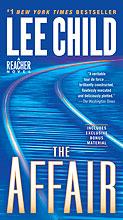
The Affair, Lee Child, 405 pages, Delacourte Press $28.

This one’s just coming out in paper, and it’s worth the wait. It’s a bargain at $9.99, a bit of a stretch at full price.

Jack Reacher is one of the best action characters of our time, up there with Spenser and Travis McGee, (and that’s serious). Child came up with a spectacular mix, a former military cop who wanders the world like Kwai Chang Caine, doing good work, sometimes relucatantly, with superior fighting skills that make him a true badass.

The Affair is sort of a prequel, and takes us back to Reacher’s army days. It’s absolutely formulaic, completely predictable, just like all the other Reacher books. There’s a murder that puts Reacher in danger, a gang of thugs who get their butts kicked, a beautiful woman in law enforcement with whom Reacher has what we all know will be a short-lived affair … and plenty of sharp dialogue the keeps the pages turning.

With all the pablum out there, it was a pleasure to sit down and read the work of a master who is still in his prime. At a certain point, like Ian Fleming in the glory days of Bond, Reacher can get away with formula — because it’s such a good formula. It still works, still delivers. He’s just a great writer, and if we sort of know what’s going to happen when half a dozen of the local losers try to attack Reacher in the streets, it’s still fun to see it unfolding.

Don’t expect anything new or dramatic here (except what Reacher fans will realize is the absolutely critical tale of where he got his portable toothbrush), but The Affair won’t let you down.

Stolen Prey, John Sandford, G.P. Putnam’s Sons, 402 pages, $27.95.

Put this one up there with The Affair. If you love Lucas Davenport and his world of twisted murder shit in and around the Twin Cities, then Stolen Prey works fine. Again, Mexican drug gangs, which seem to be the Most Evil Fuckers In The World this summer, and in Stolen Prey, they’re particularly horrible, doing a stomach-turning murder that takes place in a nice upper-middle class town. The dead family appears to have no ties to any type of criminal activity — but ah, there is much more here. Again, nothing radically new (except a suprising ending involving Davenport’s adopted daughter, Letty, who apparently has some of the step-old-man in her). But Sandford, like Child, is a master, and you can enjoy this with the guilt of a lazy afternoon of Bud Light and bourbon. Nothing wrong with that.  

Medical marijuana patients demand an end to federal raids as President Obama arrives in Oakland

17

As President Obama arrives in Oakland for a fundraiser today, medical marijuana activists have already made a point with a rally on the steps of Oakland City Hall this morning. Protesters demanded that the President halt raids of dispensaries and other operations legally allowed by California law.

Present at the rally were representatives from Oaksterdam University and Harborside Health Center, two Oakland medical marijuana businesses that have been the target of federal attacks in recent months.

Speakers argued that Obama should use his power to stop threats to these institutions. Oaksterdam, the school that teaches the politics and history of cannabis along with practical knowledge for working in the industry, was raided April 2. Harborside, a dispensary that also offers free health services such as acupuncture and yoga, received a letter from US Attorney General Melinda Haag filing federal forfeiture action July 9.

“This is the time to show them what we’re made of,” said Harborside co-founder Steve DeAngelo at the rally.

DeAngelo emphasized that Harborside complies with state regulations and that the city of Oakland benefits from its success, not least with tax revenue.

Marijuana is illegal under federal law and is classified as a Schedule 1 controlled substance. Schedule 1 drugs “have a high potential for abuse” and “no currently accepted medical use in treatment in the United States,” according to the DEA.

But a procession of medical marijuana patients and caregivers at today’s rallies said that their experiences conflict with the DEA’s claims. Patients recovering from surgeries and suffering from cancer and HIV/AIDS said that medical marijuana provided pain relief and lessened their symptoms without the detrimental side effects of other medication.

“If the federal government takes away my medical cannabis, I could go blind,” said David Goldman, 61, a retired teacher who uses cannabis to treat his glaucoma.

The Compassionate Use Act, which passed in California in 1996 when voters approved Proposition 215, allows both patients and designated primary caregivers to legally purchase marijuana at licensed dispensaries.

One such caregiver, Evelyn Hoch, said that she has been caring for her best friend, a survivor of stomach cancer, for more than 20 years. “She had 90 percent of her stomach removed,” said Hoch. “They gave her six months to live.”

Hoch’s friend survived, but had to choose between constant pain and medication that left her “like a zombie,” according to Hoch. She was prescribed barbituates that, as a side effect, suppressed her breathing. Hoch said her friend was resistant to cannabis recommendations that her doctors gave her unofficially, even before medical marijuana was legal, because she “just didn’t like pot. It wasn’t her thing.” But after she began using medical marijuana two years ago, she has improved significantly.

“She can’t believe the difference,” said Hoch. “She can read again. She’s got a little bit of life. She’s not in bed 24/7, compromised from the side effects of other medication.”

Hoch is a Harborside customer, and says that if medical marijuana dispensaries close, “the only choice patients are going to have is buying it illegally.”

A march was leaving Oakland City Hall at 3pm to bring the message as close as possible to the president.

Dick Meister: A sure path to economic health

0

By Dick Meister 

Guardian columnist Dick Meister is former labor editor of the SF Chronicle and KQED-TV Newsroom. He has covered labor and politics for more than a half-century. Contact him through his website, www.dickmeister.com, which includes more than 350 of his columns.

It’s way past time to raise the pitifully low federal minimum wage. That would provide badly needed help to the millions who are living in poverty or near-poverty at the current rate of $7.25 an hour, and would help all Americans by stimulating the sagging economy.

Democratic Sen. Tom Harkin of Iowa and Democratic Rep. Jesse Jackson Jr. of Illinois are carrying bills that would set a new minimum of $10 an hour. They’re pressing hard – as they very well should – to get the general public and their allies in Congress to fully appreciate the widespread good that would come from helping some of the country’s neediest workers.

“We’ve bailed out banks, we’ve bailed out corporations, we’ve bailed out Wall Street, we’ve tried to create sound fundamentals in the economy,” Jackson noted. “Now it’s time to bail out working people who work hard every day and still make only $7.25. The only way to do that is to raise the minimum wage.”

It’s been five years since the minimum was last raised, from $5.15 an hour to the current level. States, cities and counties are allowed to set their own minimums, as long as they at least equal the federal rate, and 18 states and several cities and counties have enacted minimums greater than the federal rate. But even their rates are below what’s needed for a decent living.

About four million workers are now paid at or below the federal minimum and obviously need help if they are to escape poverty. Even those paid at the full minimum earn a mere $15,000 a year before taxes and other deductions.  They are among some 28 million workers whose earnings – and spending  – would immediately increase under the proposed bills.

Legislation to raise the minimum has been called for repeatedly in the years since the last raise in 2007, but has gained only relatively minimal support in Congress and the White House. President Obama pledged during his election campaign to get the rate increased to $9.50 an hour by 2011, but has taken no public action. Mitt Romney, Obama’s Republican opponent in his re-election campaign this year, has wavered. He once voiced support for a raise, but later said he opposed an increase.

Polls have clearly shown strong public support for a raise. That support is likely to grow significantly if the economic benefits that a raise would undoubtedly bring to all Americans can be clearly shown – and it can.

It’s simple: Raise the pay of working people, and as the workers buy more goods and services with their new earnings, the businesses that sell them will hire more people to provide what they want to buy with the extra money they’ve earned at a higher minimum wage.

The National Employment Law Project estimates that the increased consumer spending generated by the proposed raise would create the equivalent of more than 100,000 full-time jobs. Other estimates indicate that every dollar increase in wages for workers at the minimum creates more than $3,000 in new spending after a year.

And so the cycle goes, round and round:  More pay, more spending on goods and services, more hiring of people to provide them, more important government services and the taxes to support them, a healthier and wealthier economy.

Guardian columnist Dick Meister is former labor editor of the SF Chronicle and KQED-TV Newsroom. He has covered labor and politics for more than a half-century. Contact him through his website, www.dickmeister.com, which includes more than 350 of his columns.


Guardian Voices: There’s something happening here

25

There are distinct signs of the rebirth of a grassroots  balanced-growth  movement in San Francisco, and some small indication that it’s even beginning to shift, ever so slightly,  the politics of the Board of Supervisors.  This is very good news for the vast majority of San Franciscans.

First, a little history.

Land use and the approval of major development projects lie at the very heart of San Francisco politics. Developers and their allies (the building trades, contractors, bankers, architects, land-use lawyers, consultants, and  permit expeditors) are the primary source of political money for candidates for local office. Since the freeway and urban renewal fights of the 1960s, the very definition of  progressive  politics in San Francisco has been the attempt to build a political base of  residents to resist that money.  So-called moderates are simply the political extension of the pro-development lobby using its money to consolidate developer control of the public approval process.

In most cities, land-use issues — zoning, permits, urban design — is left to elites. Not so in San Francisco. Here, land use is talked about at neighborhood meetings and on street corners. The heart the reason is our compact size: 46.7 square miles, and the prohibition of filling in any more of the Bay to create new land. There is no vacant land in San Francisco. Any new major development almost always displaces something already there.  Development is a zero sum game, with winner and losers.  And the losers  leave town.

Land-use politics is about staying here — and that creates real interest among San Francisco residents.

The funding for major development in San Francisco has dramatically changed in the 45 years since the freeway and anti-urban-renewal fights of the mid-1960s. Back then, it was public sector money that fueled development. Yet, with that money, due to the actions of  progressive politicians like Phil and John Burton and George Moscone, came its own remedy: votes to not accept the public money for freeways (Moscone) and votes creating either laws that either prohibited displacement or funded legal assistance to the poor, empowering  them to stop government agencies through litigation (the Burtons at both the state and federal level).

Since the money for freeways and urban renewal was from the government, the focus of the early balanced growth  forces was on government itself, through massive lobbying campaigns to affect officials’ votes (the freeway fight), or the use of government-funded lawyers  to protect poor people’s  interests ( the WACO and TOOR lawsuits against redevelopment).

All of that changed starting in the 1970s, when Richard Nixon and later Ronald Reagan deregulated oversight of urban development by creating a system of  block grants and ended funding for legal assistance for the poor.  Large-scale development was effectively privatized, moving it from being designed, funded, and approved at public meetings by government officials following regulations to being designed and funded in private — and having a Kabuki-play-like public approval process with little real oversight. With the passage of Prop 13 in 1978, which limited the main source of local government revenue — property taxes — local governments became even more reliant on private developer money to create new revenue.

The popular response to this change in the development process in San Francisco was the emergence of a politics that relied on the old progressive-era reforms of the initiative, referendum, and recall. Through a series of initiatives, the community sought to impose regulations on the development process, culminating in the 1986 Proposition M, which actually limited the amount of high-rise office space developers could build, completely imposing the popular will over a supine set of local officials and politicians. Indeed, ten years earlier, again through the initiative processes, the very nature of the Board of Supervisors was changed from a developer-friendly at-large system to a district-election system. Hotly opposed by real estate and development interests, district elections in its brief three years of existence (repealed in the wake of the Moscone-Milk assassinations, even though they were both strong supporters of the system and their assassin opposed it…ironies abound in San Francisco politics) saw limits placed on condo conversions and the passage of rent control.

In each of these multi-year efforts, a citywide coalition was formed, including an ever-expanding set of communities and neighborhoods.  Common interests were defined that cut across race, class, and geography and issues of community (neighborhood) control and funding for essential services like Muni, affordable housing, childcare, and employment training were placed on the table – and developers had to address them if they wanted projects approved.

The point is that balanced growth came from community-based political forces, not elected officials.  Broad movements were built — in the end, encompassing elements of labor. These were victories won not by elected officials but by a popular movement.

In 2000, in the wake of  the dot-com bust, another balanced-growth measure, Prop. L, aimed at cutting then-Mayor Willie Brown’s power over development, was paired with the new district election system — and a broad coalition of forces including labor, community and neighborhood organizations won a major progressive victory.

Every candidate for supervisor who supported the balanced-growth measure won. Every candidate who opposed it and supported Brown lost. While Prop L narrowly lost, its policies and objectives were passed as ordinances by the new Board of Supervisors (banning live-work lofts, closing loopholes in the planning code, requiring neighborhood-based plans for the Mission, SOMA, and Potrero Hill).

But as is so often the case, the victory of 2000 led to the slow dissolution of the coalition that created it. Folks had won. Our supervisors could handle all these issues; we no longer had to. By the end of the term of the supervisors elected as the class of 2000, very little of that citywide coalition existed any more.

With the Great Recession of 2008, advances were rolled back.  Fees on local developers for affordable housing, childcare and transit were deferred in order to stimulate development.  A new era of “moderation” was announced by elected officials, led by Mayor Gavin Newsom. Desires to “attract and retain”  business saw new tax concessions in the name of “jobs” and a new willingness to use open space and public facilities for “private/public partnerships” was announced.

By 2012 any concept of balanced growth had been replaced with a new era of “cooperation” between city officials and developers.

Until recently, that is.

It should be clear to all that for the last four years, City Hall has been eager to approve any scheme presented by private developers — from the America’s Cup nonsense to highrise luxury condos on the waterfront. The siren song of the developers — more revenue if you approve our project — has been proven false again and again, as the revenue never really matches the real costs of these projects. The city’s essential services continue to shrink. Transit fees are too low to pay for the actual new costs of Muni. The affordable housing  fees are too little to actually meet the affordable housing needs of the new, poorly-paid workers employed in the retail and service industry that is always a part of these projects.

More and more of our parks and public open spaces are made available to private users, while few if any new public parks or open spaces are being created.  Indeed, the Department of Parks and Recreation often opposes new public parks — because it can’t maintain what it has.

So it is with fondness that these old eyes see the stirring of what appears to be the awakening political  giant of a new controlled-growth movement.

Here’s how it’s happening: The formation of a multi-neighborhood coalition to oppose fee increases at the Arboretum leads to a bigger coalition to oppose artificial turf  fields in western Golden Gate Park, which leads to an even-bigger coalition placing a policy statement against the privatization of Coit Tower on the ballot and winning.

These are important indications of a broad dissatisfaction with the endless private-public-partnership ( in which all the costs are public and all the profits are private) babble from Rec and Park.

The submission by a broad based coalition of more than 30,000 signatures to place the 8 Washington on the ballot — the first land-use referendum in decades — is an incredibly important achievement, and shows the popular sentiment against much of the City Hall happy talk about development on the waterfront.

But it was the unanimous ( yes, unanimous) vote by the Board of Supervisors last Tuesday to hold California Pacific Medical Center accountable for its constant shape shifting  on its massive project at Geary and Van Ness that shows, perhaps, the outline of the potential future of the balanced-growth movement in San Francisco.

Six supervisors stated their willingness to turn down the environmental impact report on the project unless Sutter/CPMC committed to a project that addressed not only the promise to keep St. Luke’s open for at least 20 years but also hired more San Franciscans, corrected the traffic nightmare predicted for Geary and Van Ness, provided more affordable housing for its own low-income new workforce, and committed  to cap the city’s health care costs as a result of CPMC’s market control the new project would create.

There is always the possibility that the two-week delay will go nowhere, but this kind of talk from this Board of Supervisors to a huge private developer simply has not occurred in the recent past.  No one from Room 200 showed up to twist supervisors’ arms in favor of Sutter.  Sutter was on its own and got rolled.

The coalition that fought Sutter to a standstill at the board, that defined the inadequacies of  the project listed by the supervisors, was a multi-neighborhood, multi-issues organization composed of community, neighborhoods, and labor. Middle class “Baja” Pacific Heights residents and low income seniors from Bernal Heights, non-profit affordable housing advocates and trade unionists, tenant organizers from the Tenderloin and Sierra Club members from the Haight-Ashbury; single moms from the Bayview and Filipino youth from the South of Market.

It was a San Francisco coalition, one that has been working together for nearly three years, blending issues, making concessions to one another and staying together.  A group like this with a set of demands such as these has not prevailed at City Hall for nearly a decade.  It still may not, indeed the chances are slim that its full demands will be achieved.

But this group moved the Board of Supervisors in a way not seen in years.  If the folks mobilized about our parks and the folks mobilized about our waterfront and the folks mobilized about CPMC get together, we have something very big happening. And it might be just in time to make a real difference.
It reminds me of an old saying: “ The people alone are the makers of world history.”

Stage Listings

0

Stage listings are compiled by Guardian staff. Performance times may change; call venues to confirm. Reviewers are Robert Avila, Rita Felciano, and Nicole Gluckstern. Submit items for the listings at listings@sfbg.com. For further information on how to submit items for the listings, see Picks.

THEATER

OPENING

“Bay Area Playwrights Festival” Thick House, 1695 18th St, SF; www.playwrightsfoundation.org. $15. Opens Fri/20, 8pm. Various showtimes and dates. Through July 29. The 35th annual festival presents six new plays: Grounded by George Brant; Ideation by Aaron Loeb; Brahmani by Aditi Brennan Kapli; Samsara by Lauren Yee; The Hundred Flowers Project by Christopher Chen; and Tea Party by Gordon Dahlquist.

BAY AREA

A Midsummer Night’s Dream Forest Meadows Amphitheater, 890 Belle, Dominican University of California, San Rafael; www.marinshakespeare.org. $20-35. Previews Fri/20 and Sun/22, 8pm. Opens July 28, 8pm. Runs July 29, Aug 12, Sept 2, 16, 23, and 30, 4pm; Aug 3, 5, 12, 18, 24, 26, Sept 7, 9, 15, 28-29, 8pm. Through Sept 30. Marin Shakespeare Company performs the Bard’s classic, transported to the shores of Hawaii.

Noises Off Live Oak Theatre, 1301 Shattuck, Berk; www.aeofberkeley.org. $15. Opens Fri/20, 8pm. Runs Fri- Sat, 8pm; Aug 12, 2pm. Through Aug 18. Actors Ensemble of Berkeley performs Michael Frayn’s backstage comedy.

ONGOING

Absolutely San Francisco Alcove Theater, 414 Mason, Ste 502, SF; www.thealcovetheater.com. $32-50. Thu-Sat, 8pm. Through Aug 18. A multi-character solo show about the characters of San Francisco.

Duck Lake The Jewish Theater, 470 Florida, SF; www.duck-lake.com. $17-35. Fri-Sat, 8pm. Through July 28. By terns gross and engrossing, PianoFight’s Duck Lake — written and produced by associated sketch comedy locals Mission Control — proves a gangling but irresistible flight, a ballet-horror-comedy-musical with fair helpings of each. By the shore of the eponymous watery resort with a mysterious past as an animal testing site, a perennially “up-and-coming” theater director named Barry Canteloupe (poised and sassy Raymond Hobbs) marshals a pair of prosthetic teats and other trust-building paraphernalia in a cultish effort to bring off yet another reimagining of Swan Lake. His cast and crew include a rebounding TV starlet (a sure and winsome Leah Shesky), a lazy leading man (delightfully dude-ish Duncan Wold), a supremely confident and just god-awful tragedian (a duly expansive Alex Boyd), and a gleeful misfit of a tech guy (an innocently inappropriate, very funny Joseph Scheppers). When the thespians come beak-to-beak with a handsome local gang leader (a nicely multifaceted Sean Conroy) and his rowdy band of sun-addled jet-skiers (the awesome posse of Daniel Burke, David Burke, and Meredith Terry), a star-crossed college reunion ensues between the tattooed tough and the hapless production’s white swan. Meanwhile, “scary fucked-up super ducks” go on a killing rampage under tutelage of some cave-bound weirdo (an imposing, web-footed Rob Ready), leading to love, mayhem, and shameless appropriation of timeless musical numbers. It’s all supported by four tutu’d mallards (the po-faced, limber ensemble of Christy Crowley, Caitlin Hafer, Anne Jones, and Emma Rose Shelton) and flocks of murderous fellow fowl (courtesy of Crowley’s fine puppet design). And don’t worry about the convoluted plot, all will be niftily explained by an old codger of a groundskeeper (a hilariously persuasive Evan Winchester). If the action gets attenuated at times across two-plus hours, a beguilingly agile cast and robust concept more than compensate for the loosey-goosey. (Avila)

5 Lesbians Eating a Quiche Phoenix Theatre, 414 Mason, SF; www.tidestheatre.org. $20-38. Thu/19-Sat/21, 8pm (also Sat/21, 10pm). Tides Theatre performs Evan Linder and Andrew Hobgood’s comedy about five women forced into a bomb shelter during a mid-breakfast nuke attack.

Fwd: Life Gone Viral Marsh San Francisco, 1062 Valencia, SF; (415) 282-3055, www.themarsh.org. $20-50. Sat/21, 8:30pm; Sun/22, 7pm. The internet becomes comic fodder for creator-performers Charlie Varon and Jeri Lynn Cohen, and creator-director David Ford.

Marat/Sade Brava Theatre, 2781 24th St, SF; (415) 863-0611, www.ticketfly.com. $20-38. Wed-Sat, 8pm; Sun, 7pm (also Sun/22, 1:30pm). Through July 29. Marc Huestis and Thrillpeddlers present Peter Weiss’ macabre Tony-winner.

The Scottsboro Boys American Conservatory Theater, 415 Geary, SF; www.act-sf.org. $20-95. Wed/18-Sat/21, 8pm (also Wed/18 and Sat/21, 2pm); Sun/22, 2pm. American Conservatory Theater presents the Kander and Ebb musical about nine African American men falsely accused of a crime they didn’t commit in the pre-civil rights movement South.

Sweeney Todd: The Demon Barber of Fleet Street Eureka Theatre, 215 Jackson, SF; www.rayoflighttheatre.com. $25-36. Thu-Sat, 8pm (also Sat, 2pm); Sun, 2pm. Through Aug 11. Halloween comes early this year thanks to Ray of Light Theatre’s production of Sweeney Todd and all its attendant horrors. Set in bleakest, Industrial Revolution-era London, this Sondheim musical pushes the titular Todd to enact a brutal vengeance on a world he perceives as having stolen the best of life from him, namely his family and his freedom. No fey, gothic vampire, ROLT’s Sweeney Todd (played by Adam Scott Campbell) is both physically and psychically imposing, built like a blacksmith and twice as dark. Pushed over the line between misanthropic and murderous, Sweeney Todd methodically plots his revenge on the hated Judge Turpin (portrayed with surprising sympathy by Ken Brill) while the comfortably comical purveyor of pies, Mrs. Lovett (Miss Sheldra), dreams of a sunnier future. Mrs. Lovett’s no-nonsense, wisecracking ways aside, there are few laughs to be had in this slow-burning dirge to the worst in mankind, and as the body count rises, it is made abundantly clear that all hope of redemption is also but a fantasy. Contributing to the dark mood are Maya Linke’s imposing, industrial set, Cathie Anderson’s ghostly green and hellfire amber lighting, and a spare chamber ensemble of six able musicians conducted by Sean Forte. (Gluckstern)

Vital Signs Marsh San Francisco, 1062 Valencia, SF; (415) 282-3055, www.themarsh.org. $15-50. Sat, 8:30pm. Extended through Aug 25. The Marsh San Francisco presents Alison Whittaker’s behind-the-scenes look at nursing in America.

Waiting… Larkspur Hotel Union Square, 525 Sutter, SF; www.brownpapertickets.com. $49-75. Thu-Sat, 8pm; Sun, 2pm. Through Aug 5. Comedy set behind the scenes at a San Francisco restaurant.

The Waiting Period MainStage, Marsh San Francisco, 1062 Valencia, SF; (415) 282-3055, www.themarsh.org. $15-50. Fri, 8pm; Sat, 5pm. Extended through August 4. Brian Copeland (comedian, TV and radio personality, and creator-performer of the long-running solo play Not a Genuine Black Man) returns to the Marsh with a new solo, this one based on more recent and messier events in Copeland’s life. The play concerns an episode of severe depression in which he considered suicide, going so far as to purchase a handgun — the title coming from the legally mandatory 10-day period between purchasing and picking up the weapon, which leaves time for reflections and circumstances that ultimately prevent Copeland from pulling the trigger. A grim subject, but Copeland (with co-developer and director David Ford) ensures there’s plenty of humor as well as frank sentiment along the way. The actor peoples the opening scene in the gun store with a comically if somewhat stereotypically rugged representative of the Second Amendment, for instance, as well as an equally familiar “doood” dude at the service counter. Afterward, we follow Copeland, a just barely coping dad, home to the house recently abandoned by his wife, and through the ordinary routines that become unbearable to the clinically depressed. Copeland also recreates interviews he’s made with other survivors of suicidal depression. Telling someone about such things is vital to preventing their worst outcomes, says Copeland, and telling his own story is meant to encourage others. It’s a worthy aim but only a fitfully engaging piece, since as drama it remains thin, standing at perhaps too respectful a distance from the convoluted torment and alienation at its center. (Avila)

BAY AREA

Bloody Bloody Andrew Jackson The Stage, 490 S. First St, San Jose; www.thestage.org. $25-$50. Wed-Thu, 7:30pm; Fri-Sat, 8pm; Sun, 2pm. Through July 29. An overrated president and rock musical at once, the 2010 Broadway hit by Alex Timbers (book) and Michael Friedman (music, lyrics) takes its first Bay Area bow in San Jose Stage’s ho-hum production, directed by Rick Singleton. In this proudly irreverent but rarely very witty take on mob-democracy and the pack of jackals that are our illustrious political forefathers, a vicious and ambitious cornpone Jackson (David Colston Corris, subbing for Jonathan Rhys Williams) takes his Indian-hating ways to the top of the political establishment on a wave of backwoods resentments and Tea Party-style populism. Present-day parallels should run deep here, but the play is so shallow in its humor that it feels one-note for the most part, while its South Park-like insouciance has an unintentional way of making jokes about the Trail of Tears feel “too soon.” This American Idiocy and the 13 accompanying musical numbers are gamely if not always smoothly essayed by cast and band alike (under musical direction by Allison F. Rich), but dumb satire lines up with a generally unappealing score, straining after saucy eloquence while sounding derivative of the emo fare served up by the likes of Spring Awakening and that lot. A tack away from sheer vulgarity and buffoonery toward moralizing history lesson comes late in the hour and its guilty pretention — along with earlier gratuitous, vaguely uncomprehending references to Susan Sontag and Michel Foucault — only makes matters worse. (Avila)

For the Greater Good, Or The Last Election This week: Mosswood Park, MacArthur between Webster and Broadway, Oakl; www.sfmt.org. Free (donations accepted). Sat/21, 2pm. Various venues through Sept. 8. “Don’t they understand that without us they don’t have anything?” asks Gideon Bloodgood (Ed Holmes), investment banker at the top of the San Francisco Mime Troupe’s vivisection of the “real” American Dream, For the Greater Good, Or the Last Election. But surely the hero of a Mime Troupe show cannot possibly be a billionaire? Well, sort of. Though Bloodgood enriches himself dishonestly with precarious investments and outright theft in this Occupy-era melodrama, he actually does occasionally spare a sentiment for Mom and apple pie, or anyway his daughter Alida (Lisa Hori-Garcia) and cookies baked by the unsuspecting victim of his ill-gotten gains, the Widow Fairweather (Keiko Shimosato Carreiro) — now living at the last Occupy encampment standing in the city. Alida, however, displays no compunction in throwing aside his affection and her prospective seat in Congress, running off to join the occupiers for reasons that truthfully appear about as politically motivated as her father’s parasitic avarice, leaving him to join forces instead with the most unlikely of allies — the impeccable, ingenuous Lucy Fairweather (Velina Brown), heiress to a stolen legacy, and staunch patriot. Based loosely on 19th century play The Poor of New York, The Last Election attempts to turn a presumptive ode to the free market into its swan song with good-humored, if predictable, results. (Gluckstern)

King John Forest Meadows Amphitheater, 890 Belle, Dominican University of California, San Rafael; www.marinshakespeare.org. $20-35. Opens Fri/13, 8pm. Runs Sat/21, July 27, 29, Aug 4, 10-12, 8pm; Sun/22 and Aug 5, 4pm. Marin Shakespeare Company kicks off its 2012 outdoor summer festival season with this history play.

The Kipling Hotel: True Misadventures of the Electric Pink ’80s Marsh Berkeley, 2120 Allston, Berk; (415) 282-3055, www.themarsh.org. $20-50. Sat, 8:30pm; Sun, 7pm. Extended through Aug 26. This new autobiographical solo show by Don Reed, writer-performer of the fine and long-running East 14th, is another slice of the artist’s journey from 1970s Oakland ghetto to comedy-circuit respectability — here via a partial debate-scholarship to UCLA. The titular Los Angeles residency hotel was where Reed lived and worked for a time in the 1980s while attending university. It’s also a rich mine of memory and material for this physically protean and charismatic comic actor, who sails through two acts of often hilarious, sometimes touching vignettes loosely structured around his time on the hotel’s young wait staff, which catered to the needs of elderly patrons who might need conversation as much as breakfast. On opening night, the episodic narrative seemed to pass through several endings before settling on one whose tidy moral was delivered with too heavy a hand, but if the piece runs a little long, it’s only the last 20 minutes that noticeably meanders. And even with some awkward bumps along the way, it’s never a dull thing watching Reed work. (Avila)

Ma Rainey’s Black Bottom Sister Thea Bowman Memorial Theater, 920 Peralta, Oakl; www.lowerbottomplayaz.com. $10-25. Fri/20-Sat/21, 7pm; Sun/22, 2pm. Lower Bottom Playaz perform August Wilson’s music-industry expose.

The Marvelous Wonderettes Fox Theatre, 2215 Broadway, Redwood City; www.broadwaybythebay.org. $20-48. Thu-Sat, 8pm (also Sat, 2pm); Sun, 2pm. Through July 29. Broadway By the Bay performs Roger Bean’s retro musical, featuring classic tunes of the 1950s and ’60s.

Roald Dahl’s Willy Wonka and the Chocolate Factory Julia Morgan Theatre, 2640 College, Berk; www.berkeleyplayhouse.org. $17-35. Thu, Sat, and July 25, 7pm (also Sat, 2pm); Sun, noon and 5pm. Through Aug 19. Berkeley Playhouse performs a musical based on the candy-filled book, with songs from the 1971 movie adaptation.

Salomania Aurora Theatre, 2081 Addison, Berk; www.auroratheatre.org. $30-55. Wed/18-Sat/21, 8pm; Sun/22, 2 and 7pm. The libel trial of a politically opportunistic newspaper publisher (Mark Andrew Phillips) and the private life of a famous dancer of the London stage — San Franciscan Maud Allan (a striking Madeline H.D. Brown) — become the scandalous headline-grabber of the day, as World War I rages on in some forgotten external world. In Aurora’s impressive world premiere by playwright-director Mark Jackson, the real-life story of Allan, celebrated for her risqué interpretation of Oscar Wilde’s Salomé, soon gets conflated with the infamous trial (20 years earlier) of Wilde himself (a shrewdly understated Kevin Clarke). But is this case just a media-stoked distraction, or is there a deeper connection between the disciplining of “sexual deviance” and the ordered disorder of the nation state? Jackson’s sharp if sprawling ensemble-driven exploration brings up plenty of tantalizing suggestions, while reveling in the complexly intermingling themes of sex, nationalism, militarism, women’s rights, and the webs spun by media and politics. A group of trench-bound soldiers (the admirable ensemble of Clarke, Alex Moggridge, Anthony Nemirovsky, Phillips, Marilee Talkington, and Liam Vincent) provide one comedy-lined avenue into a system whose own excesses are manifest in the insane carnage of war — yet an insanity only possible in a world policed by illusions, distractions and the fear of unsettled and unsettling “deviants” of all kinds. In its cracked-mirror portraiture of an era, the play echoes a social and political turmoil that has never really subsided. (Avila)

Truffaldino Says No Ashby Stage, 1901 Ashby, Berk; www.shotgunplayers.org. $18-25. Wed/18-Thu/19, 7pm; Fri/20-Sat/21, 8pm; Sun/22, 5pm. For centuries, stock characters have insidiously demonstrated to the working classes the futility of striving against type or station with broadly comedic pratfalls, doomed to play out their already-written destinies with no hope for a change in script. Truffaldino (William Thomas Hodges) is one such pitiable character. Longing for his airheaded mistress, Isabella (Ally Johnson), playing second fiddle to his father, the iconic Commedia dell’Arte fool Arlecchino (Stephen Buescher), Truffaldino becomes increasingly dissatisfied with the monotony of the “old world” and strikes out for the new one — eventually washing up in Venice Beach. Despite their dayglo California veneer and sitcom-appropriate shenanigans, the new world characters he meets quickly come to resemble the stock commedia characters Truffaldino has left behind, and he finds himself similarly trapped in their incessantly recurring cycle — pining predictably for valley girl waitress, Debbie (Johnson again). What thankfully cannot be predicted is how Truffaldino manages to rewrite his destiny after all while reconciling his two worlds in a raucous comedy of errors anchored by the solid physical comedy of its stellar cast, particularly that of Stephen Buescher as both Arlecchino and Hal, who bounces, prances, tumbles, and falls down the stairs with the kind of rubber-jointed dexterity that should come with a “kids, don’t try this at home” warning label. (Gluckstern)

Upright Grand TheatreWorks at Lucie Stern Theatre, 1305 Middlefield, Palo Alto; www.theatreworks.org. $24-73. Tue-Wed, 7:30pm; Thu-Sat, 8pm (also Sat, 2pm); Sun, 7pm. Through Aug 10. TheatreWorks launches its 43rd season with the world premiere of Laura Schellhardt’s play about a musical father and daughter.

PERFORMANCE/DANCE

“Ballroom With a Twist” Marines’ Memorial Theatre, 609 Sutter, Second Flr, SF; www.marinesmemorialtheatre.com. $49-79. Thu-Sat, 8pm (also Sat, 2pm); Sun, 2 and 6pm. Through July 29. Dancing With the Stars pros and contestants from American Idol and So You Think You Can Dance perform pumped-up ballroom dance and music.

BATS Improv Bayfront Theater, B350 Fort Mason Center, SF; www.improv.org. Fri, 8pm, through July 27: “Naked” Theatresports, $17. Sat, 8pm, through July 28: “Spontaneous Broadway,” $20.

“Elect to Laugh” Studio Theater, Marsh San Francisco, 1062 Valencia, SF; (415) 282-3055, www.themarsh.org. Tue, 8pm. Through Nov 6. $15-50. Veteran political comedian Will Durst emphasizes he’s watching the news and keeping track of the presidential race “so you don’t have to.” No kidding, it sounds like brutal work for anyone other than a professional comedian — for whom alone it must be Willy Wonka’s edible Eden of delicious material. Durst deserves thanks for ingesting this material and converting it into funny, but between the ingesting and out-jesting there’s the risk of turning too palatable what amounts to a deeply offensive excuse for a democratic process, as we once again hurtle and are herded toward another election-year November, with its attendant massive anticlimax and hangover already so close you can touch them. Durst knows his politics and comedy backwards and forwards, and the evolving show, which pops up at the Marsh every Tuesday in the run-up to election night, offers consistent laughs born on his breezy, infectious delivery. One just wishes there were some alternative political universe that also made itself known alongside the deft two-party sportscasting. (Avila)

“Expiration Date: Still Good” Jewish Theater, 470 Florida, SF; www.pianofight.com. Thu/19, 8pm. $20. PianoFight’s female-driven comedy group ForePlays performs fan-fave sketches.

“Fauxgirls! San Francisco’s Favorite Drag Revue” Infusion Lounge, 124 Ellis, SF; www.fauxgirls.com. Thu/19, 7pm. Free. With Victoria Secret, Alexandria, Chanel, Maria Garzi, and more.

“Fishnet Follies” Rrazz Room, Hotel Nikko, 222 Mason, SF; www.fishnetfollies.com. Fri/20, 10:30pm. $20-45. Classic burlesque revue with Vienna La Rouge, Jessabelle Thunder, Cici Stiletto, and more.

“Folded Into a Tempest” Noh Space, 2840 Mariposa, SF; www.shashahigby.com. Fri-Sat, 8pm. Through July 28. $18-25. Sha Sha Higby performs an exploration of life, death, and rebirth using her unique sculptural costumes and puppetry.

Keith Lowell Jensen San Francisco Punch Line, 444 Battery, SF; www.punchlinecomedyclub.com. Wed/18, 8pm. $15. The comedian performs and tapes a new CD for Stand Up! Records.

“The Jersey Devil” SF Mime Troupe, 855 Treat, SF; www.acmfund.org. Thu/19-Fri/20, 8pm. Free (donations accepted). Berserker Residents present a sideshow-inspired performance exploring the myth of the Jersey Devil.

“Jillarious Tuesdays” Tommy T’s Showroom, 1000 Van Ness, SF; www.jillarious.com. Tue, 7:30. Ongoing. $20. Weekly comedy show with Jill Bourque, Kevin Camia, Justin Lucas, and special guests.

“Majestic Musical Review Featuring Her Rebel Highness” Harlot, 46 Minna, SF; www.herrebelhighness.com. Sun, 5pm. Through Aug 12. $25-65. Cocktails and hors d’oeuvres, performers in Baroque-chic gowns, music, and more.

“Mixed Relief” Lorraine Hansberry Theatre, 450 Post, SF; www.actorsequity.org. Mon/23, 7:30pm. $5-10. Part of LaborFest 2012, this staged reading of a play about women writers of the WPA is promoted by the Actors’ Equity Association and benefits the Actors Fund.

“Postcard from Morocco” Cowell Theatre, Fort Mason Center, Marina at Laguna, SF; www.sfopera.com. Thu/19, 8pm; Sun/21, 2pm. $40-60. Young-artist training group Merola Opera Program presents Dominick Argento’s dreamy masterpiece.

“Soundwave ((5)) Humanities: The Future Bionic” Lab, 2948 16th St, SF; www.projectsoundwave.com. Sat/21, 8pm. $12-25. Multimedia and interactive performances by Jay Kreimer, Diana Burgoyne, and the Cellar Ensemble. 


Guest opinion: RCV is good for progressives

52

Since San Francisco began using ranked choice voting in 2004 and public financing of campaigns in 2002, the city has been a leader in the types of political reform badly needed at state and national levels. People of color today have an unprecedented degree of representation and progressives are a dominant presence in city government. Elections are being decided in November, when turnout usually is highest, and the combination of public financing and deciding races in one election minimizes the impact of independent expenditures and Super PACs .

Yet progressive stalwart Calvin Welch, whose work we have long admired, recently authored a Bay Guardian oped against RCV. His charges against RCV are as wrong today as they were when he first made them 10 years ago when he opposed RCV on the ballot. And given the horrible Supreme Court ruling known as Citizens United, which has opened the floodgates on corporate campaign spending and did not exist when San Francisco last used separate runoff elections, returning to two elections is a direct threat to the future of San Francisco progressivism. 

The most serious of his claims is that RCV favors “moderate to conservative candidates” because “left-liberals do very well in run-off elections” since “in low-turnout elections, left-liberals vote more heavily than do conservatives.” He cites the 2000 supervisorial races and 2001 city attorney race, in which “the more liberal candidate for City Attorney, Dennis Herrera” bested “Chamber of Commerce functionary Jim Lazarus.” He asserts “that’s a verifiable San Francisco political fact.”

But San Francisco State University professor Richard DeLeon, author of the acclaimed book of Left Coast City about San Francisco politics, debunked that claim with real election data in his 2002 paper, “Do December runoffs help or hurt progressives?”

He found that in the November 2001 city attorney election, for every 100 voters who turned out in progressive precincts, 107 turned out in conservative precincts. But in the December 2001 runoff, for every 100 voters who turned out in the progressive precincts, 126 turned out in the conservative precincts, an 18 percent increase. Wrote DeLeon, “This dramatic increase in the ratio of conservative to progressive voters occurred despite (or perhaps because of) the 44 percent drop in voter turnout citywide between November and December.”

He continued: “If San Francisco had used [ranked choice voting] in November, Herrera most likely would have won by an even greater margin. In November, the liberal/progressive candidates for city attorney won a combined 60 percent of the vote…In the December runoff, however, Herrera won with only 52 percent of the vote. Thus, due to the proportionally greater decline in progressive voter turnout, Herrera probably lost approximately 8 percent of his potential vote, making the election close.”

DeLeon also rebutted Welch’s citation of the supervisorial races in 2000 as ones that demonstrated a progressive advantage in low-turnout runoffs, writing:

 “Progressive success that year was NOT due solely to a one-time surge in turnout among progressive voters…Many powerful forces converged in that election, not least the anti-Willie Brown backlash, the cresting of the dot-com invasion, and the return to district elections, which forced despised incumbents to stand trial before angry neighborhood electorates.”

DeLeon concluded:  “Based on the evidence presented, I conclude that December runoffs have hurt progressive voters, candidates and causes in the past and (absent same-day runoffs) will continue to do so in the future, even under district elections.”The Bay Guardian cited Professor DeLeon’s study in March 2002 (see  and scroll down to “A is OK”), and Mr. Welch is ignoring these results today just as he did then.

Certainly progressives haven’t won 100% of RCV elections — should any political perspective? — but they have done well nonetheless, electing  Bay Guardian-endorsed candidates like John Avalos, David Campos, Eric Mar, David Chiu and Ross Mirkarimi, despite those candidates not being incumbents. Other progressive incumbents first elected before RCV elections, like Aaron Peskin, Chris Daly, and others, were re-elected under RCV. And Mirkarimi was elected citywide in the sheriff’s race. On  the flip side, progressive Eileen Hansen most certainly would have beaten moderate Bevan Dufty in a November RCV contest for D8 supervisor; instead she lost in December after finishing first in November.

What’s actually at stake here is how we define progressivism. Since we began using RCV in 2004, 8 of the eleven members of the Board of Supervisors come from communities of color, a DOUBLING from pre-RCV days. At the citywide level, all seven officials elected by RCV come from communities of color. So out of the 18 elected officials in San Francisco, a whopping 15 out of 18 come from communities of color, the highest percentage for a major city in the United States.

The proposed repeal amendment would launch low-turnout September elections in San Francisco. In fact, the December 2001 city attorney race in which Welch cites as exemplary had a turnout of 15 percent of registered voters, the lowest in San Francisco’s history. New York City’s last September mayoral primary had a turnout of 11.4 percent. In Charlotte NC (population 750,000, similar to San Francisco) its last mayoral primary had a turnout of only 4.3 percent. Cincinnati had a September turnout of 15 percent, and Boston and Baltimore had September mayoral primaries with turnout in the low 20s. Many cities in Minnesota have September primaries with extremely low turnout; the two largest cities, Minneapolis and St. Paul, have switched to RCV largely to eliminate September primaries.

Research has demonstrated that voters in low turnout elections are disproportionately more conservative, whiter, older, and more affluent; those who don’t participate are people of color, young people, poor people — and progressives. So having a mayoral race in a low turnout September election has real consequences not only on voter turnout but on the demographics of the electorate.

While we share the priorities of Welch’s progressive economics, we believe progressivism must be more inclusive, especially if it wants to enjoy the support of these burgeoning demographics. While disappointed by the lack of progressive achievements of President Barack Obama, we still view the election of the first African American as president as a major progressive achievement.

Finally, we would assert that the ranked ballots used in RCV have been important for San Francisco democracy. Just look at the recent “top two” primary on June 5, and you can see the defects of the methods proposed to replace RCV. In many races across the state – including in the Marin County congressional race where progressive Democrat Norman Solomon lost by 0.2 percent — too many spoiler candidates split the field and candidates got into the top two with extremely low vote percentages, some as low as 15 percent of the vote. In one race where there was a Latino majority and a solid Democratic district, the Democrats ran so many candidates that the Democratic vote split and two white Republicans made the runoff with low vote percentages.

San Francisco risks such elections if we get rid of RCV. Think of the last mayoral election, and the choice for Asian voters if we used single-shot plurality voting instead of RCV. Which Asian candidate would they vote for with their single-shot vote — Lee, Chiu, Yee, Ting, Adachi? What kind of vote split might have occurred? And to avoid that, what kind of backroom dealing would have occurred BEFORE the election to keep that many candidates out of the race to prevent that vote-splitting?  We saw such vote splitting in the 2003 mayoral election as well, with various progressive candidates running and splitting the progressive vote. Going back to plurality elections would be damaging for constituencies that often run multiple candidates, such as the Asian and progressive communities.

RCV has been good for San Francisco, and we should keep it. For those who would like to see a runoff in mayoral races, Board president David Chiu has proposed a compromise that, while increasing the costs of running for mayor, is far better than the repeal measure for September elections. Chiu’s proposal would keep RCV to elect the mayor, but with a December runoff if no mayoral candidate won a majority of first rankings in November. The 2011 mayoral election would have gone to a runoff, with John Avalos as Ed Lee’s opponent.

San Francisco progressives should embrace a view of progressivism that is inclusive, promotes higher turnout and is based on a politics that is looking forward instead of backward to some golden age that never existed. Ranked choice voting and public financing are two parts of the puzzle for ensuring a vibrant progressivism.

Steven Hill led the campaign for ranked choice voting in San Francisco, and Matt Gonzalez was President of the Board of Supervisors and legislative author of the RCV charter amendment. See www.SFBetterElections.org for more information


Dick Meister: Labor and the media

1

By Dick Meister

Dick Meister, former labor editor of the SF Chronicle and KQED-TV Newsroom, has covered labor and politics for more than a half-century. Contact him through his website, www,dickmeister,com, which includes more than 350 of his columns.

The coming of the Internet has had a profound impact on media coverage of working people and their unions. No, the mainstream media have not expanded their generally limited and shallow labor reporting or their generally anti-labor editorial positions. But there now are dozens of non-mainstream websites and blogs, such as the Bay Guardian’s, that provide in-depth labor coverage. The print versions of union newspapers and newsletters could never reach the very much larger audience that’s now available via the Internet.

There are even pro-labor broadcast outlets, such as Pacifica Radio’s KPFT in Houston, that cover labor issues in depth. The broadcasts and labor websites and blogs expose many people to labor activities and issues they may not otherwise have heard of, or understand – including pro-labor views,

Use of the Internet also has made it easier for unions to communicate with their own members.

But there’s still a major problem. Those pro-labor online outlets don’t necessarily reach the general audience that labor needs to reach. They primarily or solely reach only labor supporters and union members who often are in effect talking only to each other.

That may be good for the morale of unions and union supporters and provide them ammunition to use in their struggles. But unions need to reach a broader audience if they are to effectively combat the anti-unionism that’s so commonly voiced in the mainstream media.

How would they do that? That’s not for me to say, but I am confident that it can be done. After all, unions got their message out in the pre-Internet years when the media were at least as ant-labor as they are today, probably even more so.

The pre-Internet newspapers that unions had to rely on to spread their message were at best indifferent to working people and their unions. That basic situation hasn’t much changed. As in those days, it isn’t so much that the mainstream media are anti-union – though they are that – but that their labor coverage is generally limited. In-depth reporting of labor issues is as rare as pro-labor editorials.

As in the pre-Internet days, many of today’s media outlets are not much interested in covering labor except in a clearly anti-labor manner. They devote their closest attention to critics of union actions and especially the attacks on the public employees who have become the vanguard of the labor movement and thus the main target of anti-union forces.

But at least the Internet gives unionized workers and their supporters an option,  and their militant actions, such as those opposing Wisconsin Gov. Scott Walker,  have forced many in the previously labor-indifferent media to pay close attention to their activities, however much they may disparage them.

But it remains that despite the complexity of labor issues and the importance of labor to many of their readers, very few of today’s newspapers have reporters who are assigned to cover labor exclusively.  mainstream radio and TV stations have never had such reporters.

Some media outlets assign labor coverage to business reporters, who typically cover labor from the generally adversarial approach of their business sources. They’re concerned with the effect of labor on business, and, of course, labor’s role in politics, which is also usually covered from a non-union, if not anti-union point of view.

Internal union matters such as the election of officers are generally ignored unless there’s a scandal involved. Strikes that draw lots of public attention are heavily covered, but with the stress on the strikes’ affect on the general public rather than on the issues involved. Only very rarely does a mainstream media outlet side with a striking union or even explain the union’s position thoroughly.

Part of the reason for this is simply that newspapers and other mainstream outlets generally are themselves in adversarial relationships with unions – those that represent their employees.

During the formative years of American unions long before the Internet, when unions engaged in highly visible and often exciting organizing attempts, newspapers had little choice but to cover their activities in some detail.  Union activity was news, big news, as it has again become just recently with massive pro-worker demonstrations nationwide.

But there is a major difference between then and now. In those pre-Internet years labor was covered extensively and usually by reporters assigned to that specific task. Virtually every newspaper had a labor reporter or two.

But the number of labor reporters has declined steadily ever since organized labor established itself and became merged into the middle class, ever since its activities lost their novelty, and were expanded to encompass complex matters far beyond the easily covered issue of simply seeking union recognition.

The major turning point came just after World War II. At first there was a great deal of newsworthy labor activity, including many strikes and other highly visible actions as union members sought to make up for the compensation they lost under the tight wage and price controls that prevailed during the war years.

But after that surge of postwar strikes, labor turned to less exciting, less visible activities that are not as easily covered  as are strikes and related matters. That takes expert labor reporters and few have been available. That basic situation has not changed over the past half-century.

There have been some important exceptions to the dismal mainstream media coverage of labor in recent years, notably including the country’s major newspaper of record. The New York Times still covers labor fairly and in some detail, and its labor reporter, Steven Greenhouse, is among the best U.S. reporters of any kind.

Most media outlets, however, are still concerned primarily with labor’s militant actions and cover even those superficially. Most see no need for coverage that goes beyond the surface excitement, no need for expert reportage, although some recent labor actions, such as those of the Occupy Wall Street movement, have forced the media to look closer at some issues that previously have been only superficially examined – if examined at all.

There are, in any case, too few mainstream reporters who are adequately versed in labor matters. There are too few who have the trust of workers and their unions, which naturally hesitate to provide them much of the information that’s needed to adequately and fairly explain labor’s positions. The result has been labor coverage that’s generally shallow, often uninformed and frequently biased.

Unfortunately, that is unlikely to change any time soon.

Dick Meister, former labor editor of the SF Chronicle and KQED-TV Newsroom, has covered labor and politics for more than a half-century. Contact him through his website, www,dickmeister,com, which includes more than 350 of his columns.

Churches wants you to sing on its LGBT anthem

0

Caleb Nichols is impatient. Long part of the Bay Area music scene in bands such as Port O’Brien and his own Grand Lake, he’s perhaps forgotten that his new project with Rogue Wave drummer Pat Spurgeon and bassist Dominic East, Churches, is still in its infancy.

That restless feeling might come from the initial burst of interest in the act when its first song, chilling power-pop anthem “Save Me,” went up on Bandcamp. Recorded with close Nichols pal Van Pierszalowski of Port O’Brien and Waters at Tiny Telephone, the song was just the seedling of a new project Nichols came up with while on tour with Waters.

Nichols long knew he wanted to work with East Bay-based Spurgeon, but the drummer was often too busy with Rogue Wave. With that band on hiatus (though now, excitingly, back in the studio), Churches formed at the beginning of 2012. It was the positive response to “Save Me” that spurred Nichols and Spurgeon to put together a live show, hooking in East on bass and cementing the trio by February of this year.

“I’ll be like ‘why aren’t we doing this and this already?’ and then be like, ‘oh, because we’ve only been playing shows since February,” Nichols laughs over the phone from his apartment in Santa Cruz. “We’ve played like 10 shows, chill out.” The trio adds another show to that list next week opening for Waters at Brick and Mortar Music Hall.

Nichols adds, “We’ve all been in bands for so long, it’s hard to remember that this particular band is brand new.”

Despite its newness, the act already put up a free six-song EP on Bandcamp in April (which includes “Save Me”), and entered the 48-hour music video race in May. It also is about to get working on yet another EP, this time at the Hangar in Sacramento with Bryce Gonzalez. This next one will be “a little darker., more cynical…a little more aggressive” Nichols says, a bit more raw.

http://www.youtube.com/watch?v=Dztzf2Z8Nw8

But before that, and currently at the forefront of their collective mind, is the Kickstarter project with a goal of $3,000 that ends July 19. If the goal is met, the project will fund the vinyl recording of a song called “LOVELIFE” that the band hopes will become something of an anthem for the LGBT community.

I’ll let the Kickstarter description do the explaining here: “It’s a song about the important issue of marriage equality. We believe in this song and its message so strongly that we’ve decided to launch this Kickstarter campaign to help the song get properly recorded and pressed on 7″ vinyl…As a gay Californian, and American, I find it increasingly disturbing that so many people in my home-state and country have gone to their polling places and voted against my right to marry whomever I choose – voted against my right to fully participate and engage in a meaningful relationship – voted against my right to have the same rights as everybody else.”

The kicker: at the $100 level, donors will be able to come to the studio and contribute their voice to the chorus of the song. Said chorus goes, “Some folks think it’s not right / That I should have the right / To love my man and marry him / And live out in the light / Well I think that it’s a sin / To hate your kith and kin / I was born this way, now hear me say / I am just what I am.”

The chorus was written during a long drive back to Santa Cruz after an awkward dinner in Oakland.

Nichols says they added that bonus of bringing in funders to sing as a way to get the community involved – and as a way for him to personally connect more with the gay community. “I’m not a famous person, so it probably doesn’t carry as much weight as like, Anderson Cooper or Frank Ocean. I respect those people for coming out…just from where I’m at, in my career, I feel like it’s good to be very loud about these kinds of things. I’m tired of our personal lives being subject to political whims.”

He adds, “I don’t write a lot of political music…but this song has a purpose, it has a point for me.”

Nichols may not often write expressly about politics, but he is often writing from a highly personal place. Churches channels reflections of the past, those rough, alienating, fresh hell years of high school in the loud grunge angst of the ’90s. Growing up in tiny Los Osos, Nichols struggled with isolation, and “general outcastishness” – and he says these feelings have persisted into adulthood, though far less intensely. Still, thankfully, he can tap into those dark emotions to write the passionately distorted music of Churches.

Musically, he first picked up bass in early high school – he says another testament to his impatience as he thought it’d be easier than guitar – and played in Nirvana-esque bands in a local San Luis Obispo County music scene that included Van Pierszalowski and Myles Cooper, who were both in other nearby bands back then and have of course gone on to form SF projects.

When Nichols eventually moved to the Bay Area, he joined Port O’Brien, later forming Grand Lake in Oakland with his soon-to-be boyfriend, John Pomeroy. They just celebrated their three-year anniversary in Santa Cruz, where Pomeroy is going back to school and Nicholas occasionally works at the local record store. Pomeroy has slowly and steadily been making his new own music while Nicholas works on Churches, yet to show any to the public. “He’s the opposite of me, I do things really quickly but he takes his time,” Nichols laughs, forever a teenager at heart.

Churches
With Waters, Tijuana Panthers, Chasms

Wed/18, 9pm, $10-$12
Brick and Mortar Music Hall
1710 Mission, SF
(415) 800-8782
www.brickandmortarmusic.com

Guardian Voices: My San Francisco

29

I’ve spent the last 12 years learning to love and sometimes hate San Francisco, and I’ve made it my home. A few months after my 31st birthday, I drove out here from the midwest to contribute to social change in a place where I could be Black, LGBT, and a community organizer – and not be forced to have my dyke identity matter quite so much. (More on that history somewhere else…) While doing grassroots community work in this city, I found love, made life-long friends, started a family and developed an incredible multi-ethnic community that has deeply enriched my life. Over the years, we’ve shared moments of tragedy and the sweetness of victory, and all of it together has defined a “San Francisco experience” quite different from what I expected. And quite different from what the tour guides sell.

Over these years, I developed an analysis of the political, economic and cultural life of this incredibly contradictory city. I’ve come to understand the structural roots of gentrification, the nature of corporate elite rule in a supposedly progressive town, and the challenges white activists face dealing with the complexities of politics in a “majority minority” city. But most of all, it’s the people in my particular San Francisco who I’ve come to love, and I’m now carrying all of their stories with me as I move in new directions. 

My San Francisco is the people rarely quoted in the local media and most often mentioned only in the context of one social problem or another. They are the mostly poor and working-class families of color I’ve been learning from all these years, people whose daily suffering goes mostly unnoticed, whose political leadership is rarely respected, and whose view of San Francisco is rarely taken into account. This is the San Francisco largely off the political and geographic map, where neither tour buses nor politicians tend to go.

My San Francisco has been in the southeast quarter, the Frisco where people work hard and do whatever is necessary to feed their families, have loud family BBQs in the park, and rock their Giants gear as much and as often as possible. The folks getting evicted, foreclosed on, and displaced by being priced out. They are Black and Latino folks who’ve joined grassroots organizations — mostly women — who make incredible daily sacrifices to change the world. They are volunteer community organizers, who might go to school or take care of other people’s children during the day, and organize for change one meeting at a time, at night. They face the threat of deportations, police harassment, and stressful low-wage work. When they join a membership-based organization, they get a community with shared values and support, but they don’t get money, status or personal power. The Frisco families I know and love don’t identify as “moderate” or “progressive,” but they know that rich people don’t have the right to rule the world, that public education and decent housing should be basic human rights, and that it makes no sense, in the middle of such deep unemployment, to raise bus fares and make it more expensive to take the bus to work. They have compassion, common-sense, critical thinking, and courage. They should be running the city.

The grassroots leaders, activists and organizers who’ve become such an intimate part of my life and whose stories now make up “my San Francisco” don’t align nicely with most dominant ideas about this place. They are not cool, cosmopolitan and carefree. But neither are they simply victims of downtown’s political power. Their leadership is the only hope for this city that I have.

It’s the young Black women with heartbreaking stories of brothers and cousins lost through gun violence, and with less public but equally horrifying private horrors of sexual violence and abuse that have traumatized them to their core.  But they are proud to be born and raised in this city and are leading community meetings, developing campaign strategies, educating their peers about Prop. 13 and their right to quality education. I have their tears, their youthful giggles, and their dreams for the future, all here in my head. 

I have the stories of undocumented Latina immigrant women, who too suffered sexual abuse when crossing the border, but now here in the US take incredible risks and do practically everything in their power to ensure their children have a better life than their own. I have the sound of their laughter together, often in Spanish —  of  these mamas, as they make plans to call 100 people for the next meeting, and the shaking in their voice when they rise to speak out in public against the racism they witness in our public schools. These women in my San Francisco have knocked on thousands of doors, talked to tens of thousands of people about the pressing issues of our times. But they are ignored on the streets of our city and in the halls of power, invisible to so many middle class, often white, professionals and activists who just don’t know, understand, or appreciate this ‘other’ San Francisco.

I love this San Francisco, and my hope is that this column can lift up these stories in coming weeks and months. San Francisco will never, ever, become the city of our dreams until the people doing the hard, often invisible work of grassroots organizing in the communities most impacted by city’s contradictions, play a more central role in defining the city’s politics. There is new leadership emerging in communities of color, and the future of San Francisco lies in their power.

A Republican feminist

13

caitlin@sfbg.com

LIT “Do you consider yourself sex-positive?”

If you have a chance to interview John McCain’s daughter, and she identifies as a feminist, and is demonstrably more comfortable in strip clubs than the “liberal comedian” with whom she has embarked on a tour with in promotion of their book America, You Sexy Bitch! (Da Capo Press, $26, 352pp), you have to seize your moment to ask the big questions.

The pause from the other end of the telephone line tells me Meghan McCain, however, does not know what this term refers to. “Do I consider myself sex-positive? I’m not sure what you mean.” See?

She and Michael Ian Black will be in conversation at the Castro Theatre on Tue/17 at an event sponsored by the Commonwealth Club, by the way.

“It’s a term that we use — keep in mind I’m calling from San Francisco,” I say. “To mean not ashamed of sex. Of the opinion that having sex with people is OK. Different kinds of sexualities?” Apparently I don’t know what sex-positive means either, or else I am awkward in explaining the term to Republicans.

McCain, having been raised in the belly of a well-oiled political machine, is wary of potentially loaded questions from reporters. But she has also built her adult career on being a fiscally conservative woman who delights in bucking the social mores of the Republican Party. As such, she is able to compose a categorical response that is still pretty charming to her commieweirdo interviewer.

“I’m a big supporter of the gay community, if that’s what you’re asking me. And when it comes to my personal life, I am not abstinent, if that’s what you’re asking me as well. I am straight, if that’s what you’re asking me. I only date men. But sex and sexuality, I’m not terribly prudish. I think it’s private in nature but as far as I’m concerned, everybody can do whatever they want as long as it’s legal. In the privacy of their own homes, that’s their business, literally. As long as they’re not hurting anybody, I don’t care. Do your thing.”

Despite the many pages McCain and Black spend casting themselves as a “real” conservative and liberal — McCain as a gun-loving war eagle, Black as a snarky priss — the secret-not-secret point made by America, You Sexy Bitch is: politics don’t make the person. To that end, readers are taken on a RV tour of the country with McCain and Black, a trip that threatens to reveal the real America. We learn that McCain is far more comfortable in strip clubs than Black and is happily single at 27, while the Ed veteran has been married since his early 20s, rarely gets drunk, and lives in the suburbs with the wife and kids.

One of my favorite aspects of McCain (and I have many), is the way she speaks out against the treatment of women in the media. Her fervor should come as no surprise: last year, she wrote a scathing open letter to Glenn Beck when he called her fat on his radio show. (“As a person known for his hot body, you must find it easy to judge the weight fluctuations of others, especially young women.”)

“I would have an entirely different career, an entirely different life if I were a man, which I think is just ridiculous,” she tells me. She laments the fact that women politicians have to deal with the “complete BS” that is appearance-driven mainstream media reportage.

She’s great! We’re best friends! Hang out with me, Meghan! But then, this, meant to be completely free of irony: “I hate this idea that the feminist movement has been caught up in the pro-choice movement and somehow the denial of femininity, which is something I don’t understand. For me being a feminist means giving women the choice to do whatever they want.”

Wa-wahhh. Still, I’ll take her over Beck any day.

MEGHAN MCCAIN AND MICHAEL IAN BLACK

Tue/17, 7pm, $15–$45

Castro Theatre

429 Castro, SF

www.commonwealthclub.org


Stage Listings

0

Performance times may change; call venues to confirm. Reviewers are Robert Avila, Rita Felciano, and Nicole Gluckstern. Submit items for the listings at listings@sfbg.com. For further information on how to submit items for the listings, see Picks.

THEATER

OPENING

Marat/Sade Brava Theatre, 2781 24th St, SF; (415) 863-0611, www.ticketfly.com. $20-38. Previews Wed/11-Thu/12, 8pm. Opens Fri/13, 8pm. Runs Wed-Sat, 8pm; Sun, 7pm (also July 22, 1:30pm). Through July 29. Marc Huestis and Thrillpeddlers present Peter Weiss’ macabre Tony-winner.

Sweeney Todd: The Demon Barber of Fleet Street Eureka Theatre, 215 Jackson, SF; www.rayoflighttheatre.com. $25-36. Opens Thu/12, 8pm. Runs Thu-Sat, 8pm (also Sat, 2pm); Sun, 2pm. Through Aug 11. Ray of Light Theatre performs Stephen Sondheim’s sexy, sinister musical.

BAY AREA

Ma Rainey’s Black Bottom Sister Thea Bowman Memorial Theater, 920 Peralta, Oakl; www.lowerbottomplayaz.com. $10-25. Opens Fri/13, 7pm. Runs Fri-Sat, 7pm; Sun, 2pm. Through July 22. Lower Bottom Playaz perform August Wilson’s music-industry expose.

The Marvelous Wonderettes Fox Theatre, 2215 Broadway, Redwood City; www.broadwaybythebay.org. $20-48. Opens Thu/12, 8pm. Runs Thu-Sat, 8pm (also July 21 and 28, 2pm); Sun, 2pm. Through July 29. Broadway By the Bay performs Roger Bean’s retro musical, featuring classic tunes of the 1950s and ’60s.

Roald Dahl’s Willy Wonka and the Chocolate Factory Julia Morgan Theatre, 2640 College, Berk; www.berkeleyplayhouse.org. $17-35. Previews Sat/14, 2pm. Opens Sat/14, 7pm. Runs Thu, Sat, and July 25, 7pm (also Sat, 2pm); Sun, noon and 5pm. Through Aug 19. Berkeley Playhouse performs a musical based on the candy-filled book, with songs from the 1971 movie adaptation.

Upright Grand TheatreWorks at Lucie Stern Theatre, 1305 Middlefield, Palo Alto; www.theatreworks.org. $24-73. Previews Wed/11-Fri/13, 8pm. Opens Sat/14, 8pm. Runs Tue-Wed, 7:30pm; Thu-Sat, 8pm (also Sat, 2pm); Sun, 7pm. Through Aug 10. TheatreWorks launches its 43rd season with the world premiere of Laura Schellhardt’s play about a musical father and daughter.

ONGOING

Absolutely San Francisco Alcove Theater, 414 Mason, Ste 502, SF; www.thealcovetheater.com. $32-50. Thu-Sat, 8pm. Through Aug 18. A multi-character solo show about the characters of San Francisco.

Duck Lake The Jewish Theater, 470 Florida, SF; www.duck-lake.com. $17-35. Fri-Sat, 8pm. Through July 28. By terns gross and engrossing, PianoFight’s Duck Lake — written and produced by associated sketch comedy locals Mission Control — proves a gangling but irresistible flight, a ballet-horror-comedy-musical with fair helpings of each. By the shore of the eponymous watery resort with a mysterious past as an animal testing site, a perennially “up-and-coming” theater director named Barry Canteloupe (poised and sassy Raymond Hobbs) marshals a pair of prosthetic teats and other trust-building paraphernalia in a cultish effort to bring off yet another reimagining of Swan Lake. His cast and crew include a rebounding TV starlet (a sure and winsome Leah Shesky), a lazy leading man (delightfully dude-ish Duncan Wold), a supremely confident and just god-awful tragedian (a duly expansive Alex Boyd), and a gleeful misfit of a tech guy (an innocently inappropriate, very funny Joseph Scheppers). When the thespians come beak-to-beak with a handsome local gang leader (a nicely multifaceted Sean Conroy) and his rowdy band of sun-addled jet-skiers (the awesome posse of Daniel Burke, David Burke, and Meredith Terry), a star-crossed college reunion ensues between the tattooed tough and the hapless production’s white swan. Meanwhile, “scary fucked-up super ducks” go on a killing rampage under tutelage of some cave-bound weirdo (an imposing, web-footed Rob Ready), leading to love, mayhem, and shameless appropriation of timeless musical numbers. It’s all supported by four tutu’d mallards (the po-faced, limber ensemble of Christy Crowley, Caitlin Hafer, Anne Jones, and Emma Rose Shelton) and flocks of murderous fellow fowl (courtesy of Crowley’s fine puppet design). And don’t worry about the convoluted plot, all will be niftily explained by an old codger of a groundskeeper (a hilariously persuasive Evan Winchester). If the action gets attenuated at times across two-plus hours, a beguilingly agile cast and robust concept more than compensate for the loosey-goosey. (Avila)

5 Lesbians Eating a Quiche Phoenix Theatre, 414 Mason, SF; www.tidestheatre.org. $20-38. Thu-Sat, 8pm (also Sat, 10pm). Through July 21. Tides Theatre performs Evan Linder and Andrew Hobgood’s comedy about five women forced into a bomb shelter during a mid-breakfast nuke attack.

Fwd: Life Gone Viral Marsh San Francisco, 1062 Valencia, SF; (415) 282-3055, www.themarsh.org. $20-50. Sat, 8:30pm; Sun, 7pm (Sun/15, show at 7:30pm). Extended through July 22. The internet becomes comic fodder for creator-performers Charlie Varon and Jeri Lynn Cohen, and creator-director David Ford.

Jip: His Story Marsh San Francisco, MainStage, 1062 Valencia, SF; www.themarsh.org. $8-50. Thu/12-Fri/13, 7:30pm; Sat/14, 2pm; Sun/15, 3pm. Marsh Youth Theater remounts its 2005 musical production of Katherine Paterson’s historical novel.

Proof NOHspace, 2840 Mariposa, SF; www.proofsf.com. Wed/11-Sat/14, 8pm. $28. Expression Productions performs David Auburn’s Pulitzer-winning play about a mathematician and his daughter.

“Risk Is This…The Cutting Ball New Experimental Plays Festival” Exit on Taylor, 277 Taylor, SF; (415) 525-1205, www.cuttingball.com. Free ($20 donation for reserved seating; $50 donation for five-play reserved seating pass). Fri/13-Sat/14, 8pm. Cutting Ball’s annual fest of experimental plays features two new works and five new translations in staged readings.

The Scottsboro Boys American Conservatory Theater, 415 Geary, SF; www.act-sf.org. $20-95. Tue-Sat, 8pm (also Wed and Sat, 2pm). Extended through July 22. American Conservatory Theater presents the Kander and Ebb musical about nine African American men falsely accused of a crime they didn’t commit in the pre-civil rights movement South.

Vital Signs Marsh San Francisco, 1062 Valencia, SF; (415) 282-3055, www.themarsh.org. $15-50. Sat, 8:30pm. Through July 21. The Marsh San Francisco presents Alison Whittaker’s behind-the-scenes look at nursing in America.

Waiting… Larkspur Hotel Union Square, 525 Sutter, SF; www.brownpapertickets.com. $49-75. Thu-Sat, 8pm; Sun, 2pm. Through Aug 5. Comedy set behind the scenes at a San Francisco restaurant.

The Waiting Period MainStage, Marsh San Francisco, 1062 Valencia, SF; (415) 282-3055, www.themarsh.org. $15-50. Fri, 8pm; Sat, 5pm. Extended through August 4. Brian Copeland (comedian, TV and radio personality, and creator-performer of the long-running solo play Not a Genuine Black Man) returns to the Marsh with a new solo, this one based on more recent and messier events in Copeland’s life. The play concerns an episode of severe depression in which he considered suicide, going so far as to purchase a handgun — the title coming from the legally mandatory 10-day period between purchasing and picking up the weapon, which leaves time for reflections and circumstances that ultimately prevent Copeland from pulling the trigger. A grim subject, but Copeland (with co-developer and director David Ford) ensures there’s plenty of humor as well as frank sentiment along the way. The actor peoples the opening scene in the gun store with a comically if somewhat stereotypically rugged representative of the Second Amendment, for instance, as well as an equally familiar “doood” dude at the service counter. Afterward, we follow Copeland, a just barely coping dad, home to the house recently abandoned by his wife, and through the ordinary routines that become unbearable to the clinically depressed. Copeland also recreates interviews he’s made with other survivors of suicidal depression. Telling someone about such things is vital to preventing their worst outcomes, says Copeland, and telling his own story is meant to encourage others. It’s a worthy aim but only a fitfully engaging piece, since as drama it remains thin, standing at perhaps too respectful a distance from the convoluted torment and alienation at its center. (Avila)

BAY AREA

Bloody Bloody Andrew Jackson The Stage, 490 S. First St, San Jose; www.thestage.org. $25-$50. Wed-Thu, 7:30pm; Fri-Sat, 8pm; Sun, 2pm. Through July 29. An overrated president and rock musical at once, the 2010 Broadway hit by Alex Timbers (book) and Michael Friedman (music, lyrics) takes its first Bay Area bow in San Jose Stage’s ho-hum production, directed by Rick Singleton. In this proudly irreverent but rarely very witty take on mob-democracy and the pack of jackals that are our illustrious political forefathers, a vicious and ambitious cornpone Jackson (David Colston Corris, subbing for Jonathan Rhys Williams) takes his Indian-hating ways to the top of the political establishment on a wave of backwoods resentments and Tea Party-style populism. Present-day parallels should run deep here, but the play is so shallow in its humor that it feels one-note for the most part, while its South Park-like insouciance has an unintentional way of making jokes about the Trail of Tears feel “too soon.” This American Idiocy and the 13 accompanying musical numbers are gamely if not always smoothly essayed by cast and band alike (under musical direction by Allison F. Rich), but dumb satire lines up with a generally unappealing score, straining after saucy eloquence while sounding derivative of the emo fare served up by the likes of Spring Awakening and that lot. A tack away from sheer vulgarity and buffoonery toward moralizing history lesson comes late in the hour and its guilty pretention — along with earlier gratuitous, vaguely uncomprehending references to Susan Sontag and Michel Foucault — only makes matters worse. (Avila)

Emotional Creature Berkeley Repertory Theatre, Roda Theatre, 2025 Addison, Berk; www.berkeleyrep.org. $14.50-73. Wed/11 and Sun/15, 7pm (also Sun/15, 2pm); Thu/12 and Sat/14, 8pm (also Sat/14, 2pm). It’s not easy being a girl, and Eve Ensler’s newest play Emotional Creature leaves no scenario unexplored: from high school shaming rituals to ritual clitorectomies. If that sounds like a jarring juxtaposition, you’d be right. It’s difficult theatrically to transition seamlessly from a deeply affecting monologue about being a teenage sex slave in the Democratic Republic of Congo to a cute song about wearing miniskirts, and it’s equally difficult for the audience to change emotional gears rapidly enough to be able to adequately absorb the impact of each individual segment. Instead, the play comes off as an earnest but awkward Girl Scout Jamboree variety show — attempting to address as wide a variety of social ills as possible (from teen suicide to industrial pollution) — despite the strong and savvy acting chops of the six performers. In contrast to Ensler’s most popular work, The Vagina Monologues, which effectively “humanized” a part of the body by giving it something highly personal to say, Emotional Creature weirdly depersonalizes its girls by putting lines in their mouths (“I’m not the life you never lived”) that clearly come from an adult perspective. And as for those girls who don’t particularly identify as “emotional creatures” at all? For them, there are no words. (Gluckstern)

For the Greater Good, Or The Last Election This week: Cedar Rose Park, 1300 Rose, Berk; www.sfmt.org. Free (donations accepted). Sat/14-Sun/15, 2pm. Various venues through Sept. 8. SF Mime Troupe launches its annual political musical (this year’s theme: one percenters behaving badly); the show travels around NorCal parks and other venues throughout the summer.

King John Forest Meadows Amphitheater, 890 Belle, Dominican University of California, San Rafael; www.marinshakespeare.org. $20-35. Opens Fri/13, 8pm. Runs Sun/15, July 21, 27, 29, Aug 4, 10-12, 8pm; July 22 and Aug 5, 4pm. Marin Shakespeare Company kicks off its 2012 outdoor summer festival season with this history play.

The Kipling Hotel: True Misadventures of the Electric Pink ’80s New venue: Marsh Berkeley, 2120 Allston, Berk; (415) 282-3055, www.themarsh.org. $20-50. Sat/14, 8:30pm; Sun/15, 7pm. This new autobiographical solo show by Don Reed, writer-performer of the fine and long-running East 14th, is another slice of the artist’s journey from 1970s Oakland ghetto to comedy-circuit respectability — here via a partial debate-scholarship to UCLA. The titular Los Angeles residency hotel was where Reed lived and worked for a time in the 1980s while attending university. It’s also a rich mine of memory and material for this physically protean and charismatic comic actor, who sails through two acts of often hilarious, sometimes touching vignettes loosely structured around his time on the hotel’s young wait staff, which catered to the needs of elderly patrons who might need conversation as much as breakfast. On opening night, the episodic narrative seemed to pass through several endings before settling on one whose tidy moral was delivered with too heavy a hand, but if the piece runs a little long, it’s only the last 20 minutes that noticeably meanders. And even with some awkward bumps along the way, it’s never a dull thing watching Reed work. (Avila)

Salomania Aurora Theatre, 2081 Addison, Berk; www.auroratheatre.org. $30-55. Tue, 7pm; Wed-Sat, 8pm; Sun, 2 and 7pm. Through July 22. The libel trial of a politically opportunistic newspaper publisher (Mark Andrew Phillips) and the private life of a famous dancer of the London stage — San Franciscan Maud Allan (a striking Madeline H.D. Brown) — become the scandalous headline-grabber of the day, as World War I rages on in some forgotten external world. In Aurora’s impressive world premiere by playwright-director Mark Jackson, the real-life story of Allan, celebrated for her risqué interpretation of Oscar Wilde’s Salomé, soon gets conflated with the infamous trial (20 years earlier) of Wilde himself (a shrewdly understated Kevin Clarke). But is this case just a media-stoked distraction, or is there a deeper connection between the disciplining of “sexual deviance” and the ordered disorder of the nation state? Jackson’s sharp if sprawling ensemble-driven exploration brings up plenty of tantalizing suggestions, while reveling in the complexly intermingling themes of sex, nationalism, militarism, women’s rights, and the webs spun by media and politics. A group of trench-bound soldiers (the admirable ensemble of Clarke, Alex Moggridge, Anthony Nemirovsky, Phillips, Marilee Talkington, and Liam Vincent) provide one comedy-lined avenue into a system whose own excesses are manifest in the insane carnage of war — yet an insanity only possible in a world policed by illusions, distractions and the fear of unsettled and unsettling “deviants” of all kinds. In its cracked-mirror portraiture of an era, the play echoes a social and political turmoil that has never really subsided. (Avila)

Truffaldino Says No Ashby Stage, 1901 Ashby, Berk; www.shotgunplayers.org. $18-25. Wed-Thu, 7pm; Fri-Sat, 8pm; Sun, 5pm. Through July 22. For centuries, stock characters have insidiously demonstrated to the working classes the futility of striving against type or station with broadly comedic pratfalls, doomed to play out their already-written destinies with no hope for a change in script. Truffaldino (William Thomas Hodges) is one such pitiable character. Longing for his airheaded mistress, Isabella (Ally Johnson), playing second fiddle to his father, the iconic Commedia dell’Arte fool Arlecchino (Stephen Buescher), Truffaldino becomes increasingly dissatisfied with the monotony of the “old world” and strikes out for the new one — eventually washing up in Venice Beach. Despite their dayglo California veneer and sitcom-appropriate shenanigans, the new world characters he meets quickly come to resemble the stock commedia characters Truffaldino has left behind, and he finds himself similarly trapped in their incessantly recurring cycle — pining predictably for valley girl waitress, Debbie (Johnson again). What thankfully cannot be predicted is how Truffaldino manages to rewrite his destiny after all while reconciling his two worlds in a raucous comedy of errors anchored by the solid physical comedy of its stellar cast, particularly that of Stephen Buescher as both Arlecchino and Hal, who bounces, prances, tumbles, and falls down the stairs with the kind of rubber-jointed dexterity that should come with a “kids, don’t try this at home” warning label. (Gluckstern)

PERFORMANCE/DANCE

“Ballroom With a Twist” Marines’ Memorial Theatre, 609 Sutter, Second Flr, SF; www.marinesmemorialtheatre.com. $49-79. Thu-Sat, 8pm (also Sat, 2pm); Sun, 2 and 6pm. Through July 29. Dancing With the Stars pros and contestants from American Idol and So You Think You Can Dance perform pumped-up ballroom dance and music.

BATS Improv Bayfront Theater, B350 Fort Mason Center, SF; www.improv.org. Fri, 8pm, through July 27: “Naked” Theatresports, $17. Sat, 8pm, through July 28: “Spontaneous Broadway,” $20.

“Elect to Laugh” Studio Theater, Marsh San Francisco, 1062 Valencia, SF; (415) 282-3055, www.themarsh.org. Tue, 8pm. Through Nov 6. $15-50. Veteran political comedian Will Durst emphasizes he’s watching the news and keeping track of the presidential race “so you don’t have to.” No kidding, it sounds like brutal work for anyone other than a professional comedian — for whom alone it must be Willy Wonka’s edible Eden of delicious material. Durst deserves thanks for ingesting this material and converting it into funny, but between the ingesting and out-jesting there’s the risk of turning too palatable what amounts to a deeply offensive excuse for a democratic process, as we once again hurtle and are herded toward another election-year November, with its attendant massive anticlimax and hangover already so close you can touch them. Durst knows his politics and comedy backwards and forwards, and the evolving show, which pops up at the Marsh every Tuesday in the run-up to election night, offers consistent laughs born on his breezy, infectious delivery. One just wishes there were some alternative political universe that also made itself known alongside the deft two-party sportscasting. (Avila)

“Expiration Date: Still Good” Jewish Theater, 470 Florida, SF; www.pianofight.com. Thu, 8pm. Through July 19. $20. PianoFight’s female-driven comedy group ForePlays performs fan-fave sketches.

“The Front Row: Live at the Dark Room!” Dark Room, 2263 Mission, SF; www.thefrontrow4.com. Sat/14, 8:30pm. $8. The all-girl sketch comedy troupe performs.

Keith Lowell Jensen San Francisco Punch Line, 444 Battery, SF; www.punchlinecomedyclub.com. July 17-18, 8pm. $15. The comedian performs and tapes a new CD for Stand Up! Records.

“Jillarious Tuesdays” Tommy T’s Showroom, 1000 Van Ness, SF; www.jillarious.com. Tue, 7:30. Ongoing. $20. Weekly comedy show with Jill Bourque, Kevin Camia, Justin Lucas, and special guests.

“Majestic Musical Review Featuring Her Rebel Highness” Harlot, 46 Minna, SF; www.herrebelhighness.com. Sun, 5pm. Through Aug 12. $25-65. Cocktails and hors d’oeuvres, performers in Baroque-chic gowns, music, and more.

“Mediate presents Soundwave ((5)) Humanities: Human Bionic” Lab, 2948 16th St, SF; www.projectsoundwave.com. Sat/14, 8pm. $12-25. Multimedia and interactive performances by Joe Cantrell, Kadet Kuhne, and Les Struck + Sonsherée Giles.

“Mediate presents Soundwave ((5)) Humanities: Sonicplace Exhibition” Intersection for the Arts, SF Chronicle Building, 925 Mission, SF; www.projectsoundwave.com. Opening night event Fri/16, 6-10pm, free. Exhibit runs Tue-Sat, noon-6pm. Through Sept 28. Innovative sound installations and exhibits presented by UC Santa Cruz’s OpenLab/Mechatronics Group.

“Stripping Down to Story” Garage, 715 Bryant, SF; www.brownpapertickets.com. Fri/13-Sat/14, 8pm. $10-20. Comedian and performance artist Jovelyn Richards performs her solo show.


Dick Meister: “We want bread and roses, too”

0

By Dick Meister

Dick Meister, former labor editor of the SF Chronicle and KQED-TV Newsroom, has covered labor and politics for more than a half-century. Contact him through his website, www.dickmeister.com, which includes more than 350 of his columns.

 “Our lives shall not be sweated from birth until life closes;

Hearts starve as well as bodies, give us bread, but give us roses!”

–From a poem by James Oppenheim

Bread and roses. It was the battle cry of the thousands of striking women and their supporters who marched through the streets of Lawrence, Massachusetts, in 1912, in the heart of the textile industry. Although it’s been 100 years since they marched, their militancy and bravery remain among the brightest highlights in the long history of the American labor movement.

The three-months long strike in Lawrence, led by the Industrial Workers of the World (IWW) pitted the 25,000 workers – half of them women under 20, many as young as 14 – against the violently anti-labor textile mill owners, who were strongly backed by the press, politicians , school officials, and clergy.

Striking was difficult for the workers, who had only their poverty-level wages to live on. They had barely enough to pay the rent for the run-down, disease-ridden shacks and tenement flats where most of them lived. Many were constantly in debt, having to borrow money to meet their bare necessities. Health care and other fringe benefits were virtually unheard of, and more than one-third of the workers died in their mid-twenties.

Working conditions were brutal. They commonly worked 12 hours a day in the hot, dusty and dangerous textile mills for but $6 to $8 a week. The workers had neither the leisure time nor the means to improve the quality of their lives, no time or money to enjoy the good things of life – the roses.

They desperately needed the help that unionization could provide them, but that could come only through a strike that would impose even more hardships on the already extremely hard-hit workers.  They hesitated about actually walking off the job, but finally were convinced that striking would bring long-term benefits to them, their families and their communities.

The mill workers moved into action after employers unilaterally cut their already rock-bottom pay even more.  They marched to the mills and throughout Lawrence to the tune of militant labor songs by IWW bard Joe Hill and others, holding high  placards that declared ,”We Want Bread and Roses too,” a demand that soon would be taken up by labor and feminist groups nationwide.

It wasn’t easy, bringing the workers together. They belonged to two-dozen different national groups, speaking 72 languages. They had been purposely kept apart by employers, who kept them in ghettoes by setting up separate housing areas for different nationalities, lest they forget their ethnic differences and join together to challenge their miserable pay and unhealthy conditions.

Employers got their friends in City Hall to enact an ordinance preventing strikers from picketing individual mills, but strikers responded by the extraordinary act of forming a picket line around the perimeters of the entire textile mill district. Thousands of pickets were on the line 24 hours a day throughout the 10-week-long strike.

Some spent part of their evenings hoping to disturb the sleep of strikebreakers who employers had hired to replace them, loudly serenading them with IWW songs.

Thousands paraded through the streets of Lawrence regularly, until the city enacted an ordinance forbidding parades and mass meetings. They switched to sidewalk parades of up to four-dozen strikers and supporters, who locked arms, blocking shoppers and others from entering downtown businesses.

Eventually, martial law was declared, enforced by violent police and militiamen, who charged in to try to break up the marches and other demonstrations. They even tried to block strikers from putting their children on trains that would take them to safety with sympathizers in other cities.  The city called in the Army to block the trains from moving, which led to the killing of a woman striker and the beating of many others, including several children and two pregnant women who had miscarriages.

Then the authorities arrested two of the IWW’s principal leaders for murder, on grounds that their illegal acts had provoked police into the action that led them to kill a striker.

The widespread publicity about the strike finally helped pressure employers to settle. The terms were modest, primarily granting the workers union recognition, a 15 percent pay increase and a 54-hour workweek with overtime pay at double the regular rate.  But the mere recognition of the workers’ right to make and be granted any demands was crucial.  It inspired many other workers, especially women, to also assert their basic rights and brought strong support nationally for many workers who sought decent treatment.

What’s more, many textile mill owners, fearing they also might be struck, granted pay raises totaling almost $15 million to an estimated 438,000 workers throughout New England and elsewhere.

A much longer and lasting result was that the strike put the needs of working women on labor’s agenda for the first time and showed that women could very well provide decisive leadership and indeed win bread – and roses.

Dick Meister, former labor editor of the SF Chronicle and KQED-TV Newsroom, has covered labor and politics for more than a half-century. Contact him through his website, www.dickmeister.com, which includes more than 350 of his columns.


Stage Listings

0

Stage listings are compiled by Guardian staff. Performance times may change; call venues to confirm. Reviewers are Robert Avila, Rita Felciano, and Nicole Gluckstern. Submit items for the listings at listings@sfbg.com. For further information on how to submit items for the listings, see Picks.

THEATER

OPENING

Duck Lake The Jewish Theater, 470 Florida, SF; www.duck-lake.com. $17-35. Opens Fri/6, 8pm. Runs Fri-Sat, 8pm. Through July 28. PianoFight’s resident sketch comedy group, Mission CTRL, performs its new "ballet-horror-comedy."

For the Greater Good, Or The Last Election This week: Dolores Park, 18th St at Dolores, SF; www.sfmt.org. Free (donations accepted). Opens Wed/4, 2pm. Runs Sat/7-Sun/8, 2pm. Various venues through Sept. 8. SF Mime Troupe launches its annual political musical (this year’s theme: one percenters behaving badly); the show travels around NorCal parks and other venues throughout the summer.

BAY AREA

King John Forest Meadows Amphitheater, 890 Belle, Dominican University of California, San Rafael; www.marinshakespeare.org. $20-35. Previews Fri/6-Sun/8, 8pm. Opens July 13, 8pm. Runs July 15, 21, 27, 29, Aug 4, 10-12, 8pm; July 22 and Aug 5, 4pm. Marin Shakespeare Company kicks off its 2012 outdoor summer festival season with this history play.

ONGOING

Absolutely San Francisco Alcove Theater, 414 Mason, Ste 502, SF; www.thealcovetheater.com. $32-50. Thu-Sat, 8pm (no show Fri/6). Through Aug 18. A multi-character solo show about the characters of San Francisco.

5 Lesbians Eating a Quiche Phoenix Theatre, 414 Mason, SF; www.tidestheatre.org. $20-38. Thu-Sat, 8pm (also Sat, 10pm). Through July 21. Tides Theatre performs Evan Linder and Andrew Hobgood’s comedy about five women forced into a bomb shelter during a mid-breakfast nuke attack.

Fwd: Life Gone Viral Marsh San Francisco, 1062 Valencia, SF; (415) 282-3055, www.themarsh.org. $20-50. Sat, 8:30pm; Sun, 7pm (July 15, show at 7:30pm). Extended through July 22. The internet becomes comic fodder for creator-performers Charlie Varon and Jeri Lynn Cohen, and creator-director David Ford.

Hedwig and the Angry Inch Boxcar Playhouse, 505 Natoma, SF; www.boxcartheatre.org. $25. Wed/4-Thu/5, 8pm; Fri/6-Sat/7, 7 and 9:30pm; Sun/8, 5pm. Boxcar Theatre performs John Cameron Mitchell’s musical about a transgendered glam rocker.

Jip: His Story Marsh San Francisco, MainStage, 1062 Valencia, SF; www.themarsh.org. $8-50. Thu-Fri, 7:30pm; Sat, 2pm; Sun, 3pm. Through July 15. Marsh Youth Theater remounts its 2005 musical production of Katherine Paterson’s historical novel.

The Magic Flute War Memorial Opera House, 301 Van Ness, SF; www.sfopera.com. $31-340. Fri/6, 8pm; Sun/8, 2pm. San Francisco Opera adds some unexpected vitality to its new star-studded production of one of the world’s most popular operas, Mozart’s whimsical but philosophical tale of a romance and (Mason-inspired) spiritual evolution. Prince Tamino (poised tenor Alek Shrader) and sidekick Papageno (fine baritone Nathan Gunn in a blithe comedic performance) are on a quest to rescue from sorcerer Sarastro (imposing bass Kristinn Sigmundsson) the lovely Pamina (appealing soprano Heidi Stober), daughter of the Queen of the Night (the rousingly virtuosic Russian soprano Albina Shagimuratova). The battle royal between the Queen and Sarastro is one between darkness and light, but the emphasis of this joyful production is rightly on the latter, even as Tamino and Papageno’s journey takes them through the ritual rite of passage in Sarastro’s order, the Temple of Light. Visual artist Jun Kaneko (responsible for the giant ceramic heads on view outside the War Memorial Opera House until November) marshals a brightly extensive color palette and some state-of-the-art 3D software to create a mise-en-scène out of parallel planes of patterned line and color. These enveloping and fascinating geometric flights of fancy — animated by a drawn, human touch and organic trickles and blushes of color throughout — come complimented by wildly playful costumes, including a host of wonderfully oddball brightly painted birds, that make for some pleasantly cackling entrances. David Gockley’s English-language translation of the libretto, meanwhile, adds a zesty colloquial freshness whose tinge of irony contributes to an intellectual roominess that matches the aesthetic one, both together offering some necessary reflective space to the contemporary audience vis-à-vis the certainties of this Enlightenment fairytale. (Avila)

Proof NOHspace, 2840 Mariposa, SF; www.proofsf.com. Wed-Sat, 8pm. Through July 14. $28. Expression Productions performs David Auburn’s Pulitzer-winning play about a mathematician and his daughter.

"Risk Is This…The Cutting Ball New Experimental Plays Festival" Exit on Taylor, 277 Taylor, SF; (415) 525-1205, www.cuttingball.com. Free ($20 donation for reserved seating; $50 donation for five-play reserved seating pass). Fri-Sat, 8pm. Through July 14. Cutting Ball’s annual fest of experimental plays features two new works and five new translations in staged readings.

The Scottsboro Boys American Conservatory Theater, 415 Geary, SF; www.act-sf.org. $20-95. Tue-Sat, 8pm (also Wed and Sat, 2pm; no matinee Wed/4); Sun/8, 7pm. Extended through July 22. American Conservatory Theater presents the Kander and Ebb musical about nine African American men falsely accused of a crime they didn’t commit in the pre-civil rights movement South.

Vital Signs Marsh San Francisco, 1062 Valencia, SF; (415) 282-3055, www.themarsh.org. $15-50. Sat, 8:30pm. Through July 21. The Marsh San Francisco presents Alison Whittaker’s behind-the-scenes look at nursing in America.

Waiting… Larkspur Hotel Union Square, 525 Sutter, SF; www.brownpapertickets.com. $69-75. Thu-Sat, 8pm; Sun, 2pm. Through Aug 5. Comedy set behind the scenes at a San Francisco restaurant.

The Waiting Period MainStage, Marsh San Francisco, 1062 Valencia, SF; (415) 282-3055, www.themarsh.org. $15-50. Fri, 8pm; Sat, 5pm. Extended through August 4. Brian Copeland (comedian, TV and radio personality, and creator-performer of the long-running solo play Not a Genuine Black Man) returns to the Marsh with a new solo, this one based on more recent and messier events in Copeland’s life. The play concerns an episode of severe depression in which he considered suicide, going so far as to purchase a handgun — the title coming from the legally mandatory 10-day period between purchasing and picking up the weapon, which leaves time for reflections and circumstances that ultimately prevent Copeland from pulling the trigger. A grim subject, but Copeland (with co-developer and director David Ford) ensures there’s plenty of humor as well as frank sentiment along the way. The actor peoples the opening scene in the gun store with a comically if somewhat stereotypically rugged representative of the Second Amendment, for instance, as well as an equally familiar "doood" dude at the service counter. Afterward, we follow Copeland, a just barely coping dad, home to the house recently abandoned by his wife, and through the ordinary routines that become unbearable to the clinically depressed. Copeland also recreates interviews he’s made with other survivors of suicidal depression. Telling someone about such things is vital to preventing their worst outcomes, says Copeland, and telling his own story is meant to encourage others. It’s a worthy aim but only a fitfully engaging piece, since as drama it remains thin, standing at perhaps too respectful a distance from the convoluted torment and alienation at its center. (Avila)

BAY AREA

Emotional Creature Berkeley Repertory Theatre, Roda Theatre, 2025 Addison, Berk; www.berkeleyrep.org. $14.50-73. Tue and Thu-Sat, 8pm (also Sat, 2pm; no show July 13); Wed, 7pm (no show Wed/4); Sun, 2 and 7pm. Through July 15. It’s not easy being a girl, and Eve Ensler’s newest play Emotional Creature leaves no scenario unexplored: from high school shaming rituals to ritual clitorectomies. If that sounds like a jarring juxtaposition, you’d be right. It’s difficult theatrically to transition seamlessly from a deeply affecting monologue about being a teenage sex slave in the Democratic Republic of Congo to a cute song about wearing miniskirts, and it’s equally difficult for the audience to change emotional gears rapidly enough to be able to adequately absorb the impact of each individual segment. Instead, the play comes off as an earnest but awkward Girl Scout Jamboree variety show — attempting to address as wide a variety of social ills as possible (from teen suicide to industrial pollution) — despite the strong and savvy acting chops of the six performers. In contrast to Ensler’s most popular work, The Vagina Monologues, which effectively "humanized" a part of the body by giving it something highly personal to say, Emotional Creature weirdly depersonalizes its girls by putting lines in their mouths ("I’m not the life you never lived") that clearly come from an adult perspective. And as for those girls who don’t particularly identify as "emotional creatures" at all? For them, there are no words. (Gluckstern)

The Kipling Hotel: True Misadventures of the Electric Pink ’80s New venue: Marsh Berkeley, 2120 Allston, Berk; (415) 282-3055, www.themarsh.org. $20-50. Sat, 8:30pm; Sun, 7pm. Extended through July 15. This new autobiographical solo show by Don Reed, writer-performer of the fine and long-running East 14th, is another slice of the artist’s journey from 1970s Oakland ghetto to comedy-circuit respectability — here via a partial debate-scholarship to UCLA. The titular Los Angeles residency hotel was where Reed lived and worked for a time in the 1980s while attending university. It’s also a rich mine of memory and material for this physically protean and charismatic comic actor, who sails through two acts of often hilarious, sometimes touching vignettes loosely structured around his time on the hotel’s young wait staff, which catered to the needs of elderly patrons who might need conversation as much as breakfast. On opening night, the episodic narrative seemed to pass through several endings before settling on one whose tidy moral was delivered with too heavy a hand, but if the piece runs a little long, it’s only the last 20 minutes that noticeably meanders. And even with some awkward bumps along the way, it’s never a dull thing watching Reed work. (Avila)

Salomania Aurora Theatre, 2081 Addison, Berk; www.auroratheatre.org. $30-55. Tue, 7pm; Wed-Sat, 8pm; Sun, 2 and 7pm. Through July 22. The libel trial of a politically opportunistic newspaper publisher (Mark Andrew Phillips) and the private life of a famous dancer of the London stage — San Franciscan Maud Allan (a striking Madeline H.D. Brown) — become the scandalous headline-grabber of the day, as World War I rages on in some forgotten external world. In Aurora’s impressive world premiere by playwright-director Mark Jackson, the real-life story of Allan, celebrated for her risqué interpretation of Oscar Wilde’s Salomé, soon gets conflated with the infamous trial (20 years earlier) of Wilde himself (a shrewdly understated Kevin Clarke). But is this case just a media-stoked distraction, or is there a deeper connection between the disciplining of "sexual deviance" and the ordered disorder of the nation state? Jackson’s sharp if sprawling ensemble-driven exploration brings up plenty of tantalizing suggestions, while reveling in the complexly intermingling themes of sex, nationalism, militarism, women’s rights, and the webs spun by media and politics. A group of trench-bound soldiers (the admirable ensemble of Clarke, Alex Moggridge, Anthony Nemirovsky, Phillips, Marilee Talkington, and Liam Vincent) provide one comedy-lined avenue into a system whose own excesses are manifest in the insane carnage of war — yet an insanity only possible in a world policed by illusions, distractions and the fear of unsettled and unsettling "deviants" of all kinds. In its cracked-mirror portraiture of an era, the play echoes a social and political turmoil that has never really subsided. (Avila)

PERFORMANCE/DANCE

"Channels: An Evening of Cross-Disciplinary Performance" Shotwell Studios, 3252-A 19th St, SF; www.ftloose.org. Fri/6-Sun/7, 8pm. $10-20. Dancers Daria Kaufman, Bianca Brzezinski, and musician-composer Richard Warp perform Arti Ulate, a dance-theater piece; Brzezinski also performs a solo, Non-self.

"Comedy Bodega" Esta Noche Nightclub, 3079 16th St, SF; www.comedybodega.com. Thu/5, 8pm. Free (one drink minimum). Weekly free stand-up show. This week: Yayne Abeba, David Hawkins, Anna Seregina, Veronica Porras, Baruch P. Hernandez, and George Chen.

"Comedy Returns to El Rio" El Rio, 3158 Mission, SF; www.brownpapertickets.com. Mon/9, 8pm. $7-20. With Joe Klocek, Josh Healey, Regina Stoops, Johan Miranda, Shanti Charan, and Lisa Geduldig.

"Elect to Laugh" Studio Theater, Marsh San Francisco, 1062 Valencia, SF; (415) 282-3055, www.themarsh.org. Tue, 8pm. Through Nov 6. $15-50. Will Durst and friends perform in this weekly political humor show that focuses on the upcoming presidential election.

"The Eric Andre Show" Rickshaw Stop, 155 Fell, SF; www.rickshawstop.com. Mon/9, 8pm. $10. Adult Swim-spawned, SF Sketchfest-presented faux-cable access variety show with musical guests and "real and fake celebrity appearances," hosted by actor Eric André.

"The Fag Hag Comedy Show" Deco Lounge, 510 Larkin, SF; www.brownpapertickets.com. Sun/8, 8pm. $10. Charlie Ballard hosts this stand-up comedy extravaganza, with headliner Glamis Rory and more.

"A Funny Night for Comedy" Actors Theatre of San Francisco, 855 Bush, SF; www.natashamuse.com. Sun/8, 7pm. $10. Natasha Muse and Ryan Cronin host stand-up comedians, including headliner Jason Wheeler, at their monthly talk show.

"Jillarious Tuesdays" Tommy T’s Showroom, 1000 Van Ness, SF; www.jillarious.com. Tue, 7:30. Ongoing. $20. Weekly comedy show with Jill Bourque, Kevin Camia, Justin Lucas, and special guests.

Carolina Lugo and Carolé Acuña’s Café Flamenco Peña Pachamama, 1630 Powell, SF; www.carolinalugo.com. Sun/8, 6:15pm. $15-19. Mother-daughter flamenco dance and music company.

"Majestic Musical Review Featuring Her Rebel Highness" Harlot, 46 Minna, SF; www.herrebelhighness.com. Sun, 5pm. Through Aug 12. $25-65. Cocktails and hors d’oeuvres, performers in Baroque-chic gowns, music, and more.

"Schwabacher Summer Concert" Herbst Theatre, 401 Van Ness, SF; www.sfopera.com. Thu/5, 7:30pm. $25-40. The young talent of the Merola Opera Program performs scenes from works by Bizet, Stravinsky, and more.

Under oath

19

steve@sfbg.com

Mayor Ed Lee and suspended Sheriff Ross Mirkarimi each took some lumps on June 29 as they were cross-examined by opposing attorneys in front the Ethics Commission, which is conducting the official misconduct case that Lee brought against Mirkarimi over a Dec. 31 domestic violence incident. But the hearings proved unexpectedly dramatic when the room was suddenly cleared for an undisclosed security threat — following testimony by Lee that a city commissioner alleges included perjury.

The incident raises a number of issues that officials hadn’t yet answered by Guardian press time. Was the security threat real? If so, why wasn’t the room or the rest of City Hall properly secured after the mayor was whisked away? If not, who ordered the room cleared and why?

Undersheriff Paul Miyamoto, who ran against Mirkarimi last year, told the Guardian that the San Francisco Police Department notified his office that a caller claimed to have planted bombs outside of City Hall and on the Golden Gate Bridge. Deputies conducted a search and found nothing, and his office didn’t order the recess of the hearing. “We did not evacuate anyone,” he told us.

Speculation about the incident was heightened during the break when Debra Walker, a Mirkarimi supporter and longtime member of the city’s Building Inspection Commission, told the Guardian that Lee committed perjury when he denied speaking with any members of the Board of Supervisors before filing official misconduct charges. Lee was responding to a direct and pointed question from Mirkarimi attorney Shepherd Kopp — one that that Lee’s attorneys had unsuccessfully objected to.

Specifically, Walker said that her longtime friend and political ally Sup. Christina Olague — who Lee appointed to serve the last year of Mirkarimi’s term for the District 5 seat — had told her repeatedly that Lee had asked her advice before filing the charges against Mirkarimi, and that Olague’s advice was that Lee should ask for Mirkarimi’s resignation but drop the matter if he refused.

That allegation, which was first reported on the Guardian’s Politics blog shortly after the commission went into recess (Olague had not yet returned a call from the Guardian asking whether she had spoken to Lee about Mirkarimi), prompted reporters to confront Olague in the hallway outside her supervisorial office, where she tersely denied the allegation and then took refuge behind closed doors.

When the reporters lingered and persisted, waiting for a more complete answer, Olague finally emerged, reiterated her denial, refused to speculate about why her friend Walker would make that claim, and said, “We’re not allowed to discuss this matter with anyone before it comes to the board…I may have to recuse myself from voting on this.”

It was unclear why she thought recusal might be necessary, but if she does disqualify herself from voting on Mirkarimi’s removal later this summer after Ethics completes its investigation and makes its recommendations to the board, that would hurt Lee’s effort to get the nine votes needed to remove Mirkarimi.

When the Ethics Commission hearing resumed after a couple hours, Lee was again placed in a position of denying specific factual allegations that others have made, again raising the possibility that he committed perjury in his sworn testimony, which could expose him to felony criminal charges while undercutting his moral authority to remove Mirkarimi over the single misdemeanor count of false imprisonment that he pleaded guilty to in March.

The second instance was when Kopp asked Lee, “Did you ever extend any offer through third parties that you would find him another job if he resigned?”

“I don’t recall offering Sheriff Mirkarimi any job,” Lee replied.

Kopp specifically asked whether that job offer had been extended on Lee’s behalf by permit expediter Walter Wong or by San Francisco Democratic Party Chair Aaron Peskin, to which Lee replied, “Absolutely not.”

Mirkarimi supporters have told the Guardian that Peskin had made that offer, which Mirkarimi refused, shortly before the party chair publicly called for Mirkarimi’s resignation. The outgoing message on Peskin’s cell phone said he was unavailable and wouldn’t be checking his messages until July 5. Mirkarimi’s attorneys said they’re still figuring out how to respond to the developments and had no comment, but Walker said she’s willing to testify under oath.

But the dramas underscore the treacherous grounds opened up by these unprecedented proceedings, the first involving the Ethics Commission and the broadened definition of official misconduct placed into the City Charter in 1996. As baseball great Barry Bonds and former President Bill Clinton learned, being forced to testify under oath about sensitive topics can be a tough trap to negotiate.


MIRKARIMI TESTIMONY

Deputy City Attorney Peter Keith also seemed to be trying to spring that perjury trap on Mirkarimi as he took the stand on the morning of June 29 following an hour on the stand at the previous night’s hearing. Keith reminded Mirkarimi that he was advised not to discuss his testimony with anyone and asked, “Who have you spoken to since last night?”

“My attorneys,” Mirkarimi answered.

“What did you say to them?” Keith asked, drawing objections about attorney-client privilege that Commission Chair Benedict Hur sustained.

“Did you stop for coffee?” Keith then asked, seemingly concerned that Mirkarimi may have discussed his testimony with someone at the coffee shop that morning, which Mirkarimi denied. Keith let the allegation go but maintained an accusatory, hectoring tone throughout the next three hours that he had Mirkarimi on the stand, two more hours than he had told the commission he would need.

Much of the time was spent trying to establish support for the allegation that Mirkarimi had dissuaded witnesses and sought to thwart the police investigation, which was triggered by a call from Ivory Madison, a neighbor to whom Mirkarimi’s wife, Eliana Lopez, had confided. But the testimony yielded little more than the city’s unsupported inference that Mirkarimi must have directed Lopez and his campaign manager, Linnette Peralta Haynes, to contact Madison after she had called the police and urged her to stop cooperating with them.

Mirkarimi has maintained that he did nothing to dissuade Madison or anyone from talking to police, and that he wasn’t aware of the investigation or that Madison had made a videotape of Lopez showing a bruise on her arm until hours after the police were involved. He even sent a text to Lopez saying there was nothing he could do, as he noted.

“It was after 4pm on January 4 when I first learned of any of this,” Mirkarimi testified, later adding, “I was very clear to her in saying you can’t unring the bell, we have to follow through with this.”

Yet Lee and the deputy city attorneys who are representing him also maintain that they needn’t prove witness dissuasion or other allegations they have made, and that the Dec. 31 incident and Mirkarimi’s guilty plea to a single misdemeanor count of false imprisonment are enough to constitute official misconduct and warrant his removal, an interpretation that Mirkarimi’s attorneys dispute.

Keith sought to hammer home how Mirkarimi should have admitted to and publicly atoned for his crime right away rather than telling reporters it was a “private family matters” (which Mirkarimi admitted was a mistake) or fighting the charges by trying to discredit Madison publicly, an allegation he denies.

After unsuccessfully trying to get Mirkarimi to admit to directing efforts to question Madison’s credibility in local media accounts, Keith asked, “Did you ever direct anyone not to attack Ivory Madison?”

“I never directed anyone to attack or not attack,” Mirkarimi replied.

Keith also clarified that Mirkarimi denies the allegation Madison made that the physical abuse on Dec. 31 went beyond grabbing Lopez’s arm once in the car, as the couple has maintained. “It’s your testimony there was no punching, pulling, or grabbing in the house?” Keith asked, which Mirkarimi confirmed.

Yet Keith said that given the totality of what happened, Mirkarimi should have known he couldn’t continue on as sheriff. “Under those circumstances, wouldn’t resigning be the honorable thing to do?” Keith said, to which Mirkarimi replied that it’s a hard question and that he’s doing what he thinks is right.

Faced with friendlier questions from his own attorney, David Waggoner, Mirkarimi apologized for his actions, saying “I feel horrible and ashamed,” but that he was “sad and scared” to have his family torn apart against their will. He also said that he believes he can still be effective as sheriff because “what makes San Francisco special is our forward-thinking approach to criminal justice.”

Longtime Sheriff Michael Hennessey — who endorsed Mirkarimi and continues to support him — established a variety of programs emphasizing redemption and rehabilitation, hiring former convicts into top jobs in the department to emphasize a belief in restorative justice that Mirkarimi ran a campaign promising to continue.

“Never in my wildest dreams did I think I would be an example of what this redemption process looks like,” Mirkarimi said, choking back tears.

But Keith had the last word before Mirkarimi left the stand, belittling the idea that Mirkarimi offers an example to follow by noting how much probation time and court-ordered counseling he still has to undergo and asking, “The process of redemption doesn’t happen overnight, right?”


LEE ON THE STAND

Under questioning by Kopp, Mayor Lee admitted that he doesn’t have a written policy on what constitutes official misconduct, that his decisions are made on “a case by case basis,” and that he’s not sure whether conviction of a crime would always constitute official misconduct “because I’ve never confronted this before.”

“Were you aware that many members of the Sheriff Department have criminal convictions?” Kopp asked. Lee said he was not aware. Asked whether he was aware that Sheriff Hennessey had hired a convicted murderer into a top command staff position (see “The unlikely sheriff,” 12/21/11), Lee said he wasn’t.

Lee’s insistence that Mirkarimi’s crime makes him unable to deal effectively with other officials was also attacked by Kopp, who asked, “Isn’t it true that people get elected who have disagreements with other city officials?” He pointed out that City Attorney Dennis Herrera had nasty conflicts with Lee when they ran against each other for mayor last year, but that they’re working well together now.

Kopp also drilled into Lee about his decision to bring official misconduct charges before conducting an investigation or speaking with any witnesses besides Madison — an answer Lee blurted out just as city attorneys objected to the question. Much of Madison’s written testimony has been rejected by the commission as prejudicial hearsay evidence (see “Mayor vs. Mirkarimi,” July 27).

But the public’s perception of this case, if not it’s outcome, could turn on whether Lee is holding Mirkarimi to standards that he himself — as someone appointed mayor on a later-broken promise not to run for a full term — couldn’t meet. It was what Kopp seemed to be driving at before the bomb scare.

“You have asserted in your written charges that Sheriff Mirkarimi’s conduct fell below the standard of decency, good faith, and right action that is impliedly required of all public officials, correct?” Kopp asked.

“Yes,” Lee replied.

“We expect certain things of our elected officials, right?” Kopp asked.

After a long pause, in which Lee appeared to be thinking through his answer, he replied, “That’s generally true, yes.”

“And when the charter speaks of official misconduct, it doesn’t say we expect a certain standard for the sheriff, a different standard for the mayor, a different standard for the DA, a separate standard for the assessor, it just speaks in general terms about official misconduct for public officials, right?” Kopp asked.

Kaiser objected to the question on three counts, sustained on the grounds that it calls for a legal conclusion.

“Do you yourself believe there’s a separate standard for sheriff than for other elected officials?” Kopp asked, and this time the city’s objection was overruled and Lee replied, “It should be the same standard.”

“And would you agree with me that one of the things that is expected of elected officials is for them to be honest and forthright when dealing not only with their constituents, but with other elected officials?” Kopp asked, his final question before Chair Benedict Hur announced that the hearing would be suspended and the room would need to be cleared.

After the hearing reconvened, Kopp drew parallels to other city officials who remained on job after scandals, including former Mayor Gavin Newsom (who had an affair with a subordinate who was married to his campaign manager), former Sheriff Dick Hongisto (who was jailed for refusing to carry out a court’s eviction order), and current Fire Chief Joanne Hayes White (whose husband reported that she hit him in the head with a pint glass).

Asked about the latter case, Lee responded, “I don’t know all the circumstances around that and I don’t believe I was mayor at the time.”


The economies of desire

0

THEATER Since 2010, This Is What I Want has hitched its program to the National Queer Arts Festival to explore the artistic and social ground between intimacy and performance. Privileging the immediate, even confused elaborations of desire over the canny or slickly theorized, TIWIW (produced by THEOFFCENTER in association with SOMArts, the Center for Sex and Culture, and the Queer Cultural Center) challenges adept, professional performance makers to risk forgoing the usual control or cohesion in the hope of finding new avenues for creation and participation.

TIWIW’s free-ranging curatorial approach, which includes artists operating outside queer or identity-based practices, gets a further boost this year with the inclusion of several Los Angeles–based artists and a symposium at the Center for Sex and Culture moderated by Carol Queen.

San Francisco–based performance artist and choreographer Tessa Wills took over as artistic director this year at the invitation of TIWIW’s founder, choreographer Jesse Hewit. Wills’s own piece caps the five-day program with a “participatory experience” at the Center for Sex and Culture, and in general she brings a particular stamp to this year’s festival, even as TIWIW stretches out within and beyond the Bay Area via a curatorial team that includes Hewit, Rachael Dichter, and Los Angeles–based artists Anna Martine Whitehead and Doran George.

Wills, a thirtysomething whose relaxed mien belies a probing stare, is an internationally produced performance maker who grew up studying music, ballet, and contemporary dance in England before relocating to the Bay Area. She’s one of those artists always worth going out of your way for. In fact, she was behind one of the more memorable contributions to last year’s TIWIW program (more on that below). Wearing a sleeveless T-shirt that nonchalantly compliments the shorn sides of her sandy brown bob, Wills sat down at a Mission café last week to discuss her directorial vision for TIWIW and the economies of desire.

San Francisco Bay Guardian Can you describe briefly the curatorial process this year?

Tessa Wills We asked people to apply, either people whose work we like or with a specific piece in mind, like Sara Kraft’s — Rachael [Dichter] knew exactly what the piece was. [Multimedia artist Sara Kraft’s The Truth employs a pair of dueling narratives in what the artist describes as a desperate search for objectivity, “fueled by the deeply subjective madness of desire, loss and the chaos of experience.” It premiered at Yerba Buena Center for the Arts in 2007.]

I had the curatorial statement underway, and the other curators added to it, enriched it or changed parts, and we invited people from there. About half of them are new commissions from people we are just excited by, like Dia [Dear] and Mica [Sigourney], and half of them are pieces that already exist. There are loads of people coming up from LA this time because two of the curators are down there.

SFBG One of those is British artist Doran George. How did he become involved?

TW I followed his work in England but never met him. Then he came to San Francisco, and we made very fast, intense connections around work and politics, and also a friendship. So we were looking for a way to work with each other.

When Jesse asked me to direct TIWIW and invite in curators, it seemed like that was really where Doran was at. A lot of his work is about somatics as it relates to gender. Because he was [in Los Angeles], it seemed sensible to think about other people that could support him and his choices down there. Anna Martine [Whitehead] is also down there working, and obviously she has this strong history with the festival, and her voice is clear, rich and powerful.

SFBG Can you explain the emphasis on desire and economy in your work and in your directorial approach overall?

TW Broadly, people in this festival [in the last two years] have looked at desire through the lens of sexuality — but they also have not. My artistic direction has put it very specifically; I really wanted to bring in that question of how money and desire weave together, and where the places of empowerment and disempowerment are around that. I’ve brought sex work to the fore in that. Doran also is interested in that. But we were very careful in the curating to broaden that out a lot. The pieces are not all about sex; but the pieces are all about desire. So there is breadth, but also that very specific thing that I’ve brought in.

In my piece, at Center for Sex and Culture on Saturday, there are nine people who are “charging,” they’re doing one-on-one performances with audiences. Basically, they’re facilitating you talking about your desire. But it’s not like straight sex work. It’s not like they’re going to meet your desire. They’re going to interrogate it with you and charge it up.

SFBG So “charge up” has a double entendre.

TW It’s got a double entendre, exactly. All of the chargers are sex workers. I identify as a sex-worker ally, and I identify in the space between performance and sex work. Those are my two communities. So this theme, the value of desire, somehow has those two together.

SFBG Where do you see subversive or radical points of departure in the intersections of desire and economy? 

TW People will take money and then use it for their subversive practices. So there’s that. Then there’s the fact that everybody is working for free to put this festival on. I think that adds a really interesting perspective to the conversation about how desire and money relate. Because the thing that’s really driven this festival is this passionate desire to put it on for its own sake. It defies any economic logic that any of us are working this hard. I mean, it’s ridiculous. I feel stupid how hard I’m working on this.

SFBG That’s the position of a lot of art-making in this society. But then, ridiculousness is a tried-and-true strategy of subversion too. I’m reminded of the argument in Judith Halberstam’s book, The Queer Art of Failure, where a willingness to “fail” — in the terms set by the dominant social and economic order — may offer a way out from under that order, and suggest alternatives beyond its reach or ken.

TW There are all these other economies that come to light when you look at that disconnect or failure [vis-à-vis the dominant economic model]—then it’s like, ok, that’s obviously not working, so what else can be motivating? There are just so many diverse economies at work. Like DavEnds piece, for example. She was really motivated by wanting to have close, intimate exchanges and make more friends. The people she’s brought into her piece, she’s very clear about it, are people that she wants to be friends with.

SFBG There’s a social impulse mixed in there. I also like the idea that desire could be tied to giving away or losing, as opposed to taking, receiving, gaining or possessing. Does that resonate with some of the pieces this year? 

TW Yes, I think that’s right. Mica Sigourney’s piece is one that I was very keen to curate. He’s the only one who’s been in all the iterations of the festival, and I think each time he’s done [TIWIW], it’s gotten a little closer to actually managing to stage desire, in motion, on the stage. His piece is kind of a secret, but there’s a way in which he is working directly with money. He’s trying to figure out his erotic value in the moment, with the audience. There’s a way in which his work always gets right to the heart of the theme for me.

SFBG Back to your piece: Does it build on previous work?

TW Yes. Last year, when I was at the festival, I did this piece with electric butt plugs. [Note: In this piece, Wills and co-performer Harold Burns were naked inside (what looked like) giant pink bath scrunchies (designed by Honey McMoney), wearing electric butt-plugs attached to a microphone set low before a pillow at the front of the stage. Individual audience members could come kneel and whisper their fantasies, their words registering solely in the physical responses and expressions of the performers.]

When they asked me to be in the festival, I identified that what I’m really excited about is the process of saying what you want, the somatic experience of saying what you want — especially if it feels transgressive inside of you. I don’t really care what the content of the thing is. And I don’t care whether society thinks it’s ok or not. I’m not really interested in any of that. I’m just interested in the physical, somatic experience of saying what you want. That seems like the most valuable thing for me.

So what I did in the butt-plug piece was to get the audience to come up and say things, to say what they wanted, and they couldn’t really be heard, and then we would just get the sensation — we would get the quality of how they were talking but we wouldn’t get the content. And we’d experience that in a very intimate, deep way. That’s what I wanted to try and develop a bit further this year. So after this week of people watching other people struggle and interrogate and stage their desire, [in this piece] they get to have all of that research land in their own body. They have their own process of saying what they desire, and they have their own somatic experience.

SFBG So it’s very individual and private, there’s no larger audience, there’s no documentation of the whole thing.

TW Exactly. It’s kind of rough for me as an artist, because I’ve put so much work into it, and it’s a very generous piece in terms of the amount — like we talked about the economic worth and the amount of one-on-one time with the audience. So it’s very sad for me to never get an audience response, actually.

SFBG No payoff?

TW Yeah, I’ll never get that.


THIS IS WHAT I WANT

Performances Wed/27-Fri/29, 8pm, $20

SOMArts Cultural Center

934 Brannan, SF

“Slow Sex Symposium” Sat/30, noon-4pm, free

“This Is What You Want — Experiential” Sat/30, 5-11pm, $15-$25

Center for Sex and Culture

1349 Mission, SF

thisiswhatiwant.eventbrite.com

Stage Listings

0

Stage listings are compiled by Guardian staff. Performance times may change; call venues to confirm. Reviewers are Robert Avila, Rita Felciano, and Nicole Gluckstern. Submit items for the listings at listings@sfbg.com. For further information on how to submit items for the listings, see Picks.

THEATER

OPENING

Absolutely San Francisco Alcove Theater, 414 Mason, Ste 502, SF; www.thealcovetheater.com. $32-50. Opens Thu/28, 8pm. Runs Thu-Sat, 8pm (no show Fri/29 or July 6). Through Aug 18. A multi-character solo show about the characters of San Francisco.

Hedwig and the Angry Inch Boxcar Playhouse, 505 Natoma, SF; www.boxcartheatre.org. $25. Opens Wed/27, 8pm. Runs Wed-Thu, 8pm; Fri-Sat, 7 and 9:30pm; July 8, 5pm. Through July 8. Boxcar Theatre performs John Cameron Mitchell’s musical about a transgendered glam rocker.

Jip: His Story Marsh San Francisco, MainStage, 1062 Valencia, SF; www.themarsh.org. $8-50. Previews Fri/29, 7:30pm. Opens Sat/30, 5pm. Runs Sun/1, 4:30; Thu-Fri, 7:30pm; Sat, 2pm; Sun, 3pm. Through July 15. Marsh Youth Theater remounts its 2005 musical production of Katherine Paterson’s historical novel.

Waiting… Larkspur Hotel Union Square, 525 Sutter, SF; www.brownpapertickets.com. $69-75. Opens Fri/29, 8pm. Runs Thu-Sat, 8pm; Sun, 2pm. Through Aug 5. Comedy set behind the scenes at a San Francisco restaurant.

ONGOING

Aftermath Stagewerx, 446 Valencia, SF; www.brownpapertickets.com. $25. Thu/28-Sat/30, 8pm. Theatre, Period presents Jessica Blank and Erik Jenson’s docu-drama, based on interviews with Iraqi civilians forced to flee after the US military’s arrival in 2003.

A Behanding in Spokane SF Playhouse, 533 Sutter, SF; www.sfplayhouse.org. $20-70. Wed/27-Thu/28, 7pm; Fri/29-Sat/30, 8pm (also Sat/30, 3pm). If Garth Ennis had been asked to write a comic book about a one-handed sociopath with a dark obsession, he might well have written something similar to Martin McDonagh’s A Behanding in Spokane. And admittedly, approached from that angle, a lot of the script’s dramatic flaws are more easily forgiven. There’s not a whole lot of subtle context or languid metaphor to be found in McDonagh’s criminal caper about the little-known “hand-dealing” trade, but as in Ennis’ best known work, Preacher, the pretty girl (Melissa Quine) is the smartest one in the room; the sociopath (Rod Gnapp) is interested in enacting as vicious a revenge on all humanity while spewing as many blatantly offensive invectives as possible; the boyfriend (Daveed Diggs) has some arrested development issues to work out; and the receptionist (Alex Hurt) takes the caricature of man-child to a whole new level. In fact, while all four actors deliver rock-solid performances of their mostly unsympathetic characters, it’s Hurt’s that impresses most. His spooky intensity and goofily tone-deaf determination plays like a combination of Adam Sandler and Arno Frisch, and if there’s a real sociopath in the room, the evidence suggests it’s probably him. Ultimately though the piece relies too heavily on hollow one-liners to remain interesting — a 20-minute farce stretched to 90 minutes — and quite unlike an Ennis comic, it does not leave one wanting more. (Gluckstern)

Bruja Magic Theatre, Fort Mason Center, Marina at Laguna, SF; www.magictheatre.org. $20-60. Extended run: Wed/27-Fri/29, 8pm; Sun/1, 2:30pm and 7pm. Although San Francisco’s Mission District is inexorably morphing into an empire of twee boutiques and haute cuisine, it’s still the first port of call for many Latin American migrants, and there are plenty of panaderias and botanicas tucked in between the sushi joints. In the Magic Theatre’s production of Bruja, playwright Luis Alfaro transplants the story of Medea to 24th Street by way of Michoacán, exploring the tension between retaining old-country values and staking out a future in a new world. Directed by artistic director Loretta Greco, the title role played by a stunning Sabina Zuniga Varela, this chamber version of the Greek tragedy hits hard, exposing each character’s darkest secrets to an unforgiving light. And every character, save the doomed brothers Acan and Acat (played the night I saw it by Daniel Castaneda and Gavilan Gordon-Chavez), has a secret to hide, even Medea, a curandera or healer by trade, whose powers run deeper and darker than her new world acquaintances, or even her old servant (Wilma Bonet) suspect. And when Jason (Sean San José) and his callous boss Creon (Carlos Aguirre), ruthlessly push Medea to her breaking point, her bloody vengeance proves, if little else, that she can play at ruthlessness better than anyone, whatever the consequences. (Gluckstern)

5 Lesbians Eating a Quiche Phoenix Theatre, 414 Mason, SF; www.tidestheatre.org. $20-38. Thu-Sat, 8pm (also Sat, 10pm). Through July 21. Tides Theatre performs Evan Linder and Andrew Hobgood’s comedy about five women forced into a bomb shelter during a mid-breakfast nuke attack.

The Full Monty Eureka Theatre, 215 Jackson, SF; www.roltheatre.com. $25-36. Thu/28-Sat/30, 8pm (also Sat/30, 2pm). In desperate times, how far would you go to turn a buck? The central premise of the 1997 movie and its namesake musical comedy The Full Monty, the answer to this question is right in the title, which limits the suspense, but amps up the expectations. Set not in Sheffield, England as in the movie, but the similarly economically challenged climate of Buffalo, New York circa the late nineties, the comical romp follows a group of unemployed steel workers who decide, rather optimistically, that spending one night as exotic dancers will solve their immediate financial woes. Banish all notions of a Hot Chocolate sing-along; the soundtrack of the stage musical has little in common with its cinematic predecessor, but there are a couple of toe-tappers, particularly the songs writ for the ladies: a belter’s anthem for their spry but elderly accompanist Jeanette (Cami Thompson), a snarky commentary on male beauty, “The Goods,” for the ensemble. On opening night, Ray of Light’s production ran about 15 minutes long after a late start, and the tempo seemed sluggish in parts, but once it hits its stride, The Full Monty should provide a welcome antidote to the ongoing, we’re-still-in-a-recession blues, red leather g-strings and all. (Gluckstern) Fwd: Life Gone Viral Marsh San Francisco, 1062 Valencia, SF; (415) 282-3055, www.themarsh.org. $20-50. Sat, 8:30pm; Sun, 7pm (July 15, show at 7:30pm). Extended through July 22. The internet becomes comic fodder for creator-performers Charlie Varon and Jeri Lynn Cohen, and creator-director David Ford.

Lips Together, Teeth Apart New Conservatory Theatre Center, 25 Van Ness, SF; www.nctcsf.org. $25-45. Wed/27-Sat/30, 8pm; Sun/1, 2pm. New Conservatory Theatre Center performs Terrence McNally’s play about two straight couples spending July 4 amid Fire Island’s gay community.

100 Saints You Should Know Thick House, 1695 18th St, SF; www.therhino.org. $10-30. Fri/29-Sat/30, 8pm; Sun/1, 3pm. Homespun scenic design notwithstanding, Theatre Rhinoceros and artistic director John Fisher offer a fine, engrossing production of this 2007 play by Kate Fodor (Hannah and Martin, RX), a sturdy comedy-drama about two fractured families colliding awkwardly in a sort of spiritual vacuum. Matthew (an intriguingly restrained Wiley Herman) is a desolate but forbearing Catholic priest sent on a leave of absence after a venial transgression involving some artful nude male photographs. Returning home, he endures a pained relationship with his devout, passively domineering Irish mother (Tamar Cohn, channeling a nicely measured mixture of stony discipline and childlike vulnerability). Soon Matthew gets an unexpected visit from single mom Theresa (a bright but shrewdly self-possessed Ann Lawler), a former Deadhead who now cleans the rectory and finds herself overcome with an urge to ask the gentle priest about prayer — just at the moment his faith seems to have left him. Meanwhile, Theresa’s too-cool-for-school teenager, Abby (a deft and hilarious Kim Stephenson), waits outside and does some preying of her own on a slower-witted but game young man from the neighborhood (a charmingly quirky Michael Rosen), both of them roiling with confused yearnings. The appealing characters and unexpected storyline come supported by some excellent dialogue, developing a searching theme that ultimately has less to do with formal religion than the ordinary but ineffable need it promises (problematically) to meet. “I think I could be religious or whatever if it made any sense,” notes Abby, “but it doesn’t make any sense.” It’s easy to agree with the teenager on this one. 100 Saints is a genuinely funny and compassionate play discerning enough to avoid naming the depths it sounds. (Avila)

Proof NOHspace, 2840 Mariposa, SF; www.proofsf.com. Wed-Sat, 8pm. Through July 14. $28. Expression Productions performs David Auburn’s Pulitzer-winning play about a mathematician and his daughter.

Reunion SF Playhouse, Stage Two, 533 Sutter, SF; (415) 677-9596, www.sfplayhouse.org. $20. Wed/27-Thu/28, 7pm; Fri/29-Sat/30, 8pm. SF Playhouse presents a world premiere drama by local playwright Kenn Rabin.

“Risk Is This…The Cutting Ball New Experimental Plays Festival” Exit on Taylor, 277 Taylor, SF; (415) 525-1205, www.cuttingball.com. Free ($20 donation for reserved seating; $50 donation for five-play reserved seating pass). Fri-Sat, 8pm. Through July 14. Cutting Ball’s annual fest of experimental plays features two new works and five new translations in staged readings.

The Scottsboro Boys American Conservatory Theater, 415 Geary, SF; www.act-sf.org. $20-95. Opens Wed/27, 8pm. Runs Tue-Sat, 8pm (Tue/3 performance at 7pm; also Wed and Sat, 2pm; no matinee July 4); Sun/1 and July 8, 7pm. Through July 15. American Conservatory Theater presents the Kander and Ebb musical about nine African American men falsely accused of a crime they didn’t commit in the pre-civil rights movement South.

Slipping New Conservatory Theatre Center, 25 Van Ness, SF; www.nctcsf.org. $25-45. Wed/27-Sat/30, 8pm; Sun/1, 2pm. Midwestern high-school senior Eli (Evan Johnson), a recent transfer from San Francisco, is a rebellious gay teen with issues — what American teen doesn’t have issues? But then Eli’s, which include the loss of a beloved father and a Hamlet-like resentment for his recently widowed, sexually liberated academic of a mom (a subtle Stacy Thunes), have already driven him over the ledge. Eli’s “slip” into a state of deep grief is further accelerated by the complicated, violently closeted love he left back in San Francisco. In flashbacks, Eli relives this punishing, irresistible relationship with Chris (a coiled, forceful Fernando Navales) as meanwhile new best friend Jake (Benjamin T. Ismail) gradually expresses more than platonic interest and life with mother builds toward a showdown, in New Conservatory’s Bay Area premiere of Bay Area–born playwright Daniel Talbott’s thoughtfully drawn if dramatically underdeveloped play. In contrast to Ron Gasparinetti’s purposefully vague “anywhere” of a monochrome set (consisting of several low or sloped stone slabs), director Andrew Nance’s cast are engagingly precise in their clear-eyed take on adolescent anguish. Johnson proves gracefully multifaceted as Eli, at turns unbearable in his loose, simmering rage and disarming in his helplessness and heartbreak. And a charmingly awkward and earnest Ismail makes wholly convincing Jake’s innocent moth-to-flame attraction. Indeed, the play’s weaknesses — including a dizzying amount of hopping around the time-space continuum and, more critically, a dramatic arc that’s too neat and shallow to be really satisfying — do not completely detract from a worthwhile subject that often feels drawn from life. (Avila)

Vital Signs Marsh San Francisco, 1062 Valencia, SF; (415) 282-3055, www.themarsh.org. $15-50. Sat, 8:30pm. Through July 21. The Marsh San Francisco presents Alison Whittaker’s behind-the-scenes look at nursing in America.

The Waiting Period MainStage, Marsh San Francisco, 1062 Valencia, SF; (415) 282-3055, www.themarsh.org. $15-50. Fri, 8pm; Sat, 5pm. Extended through July 7. Brian Copeland (comedian, TV and radio personality, and creator-performer of the long-running solo play Not a Genuine Black Man) returns to the Marsh with a new solo, this one based on more recent and messier events in Copeland’s life. The play concerns an episode of severe depression in which he considered suicide, going so far as to purchase a handgun — the title coming from the legally mandatory 10-day period between purchasing and picking up the weapon, which leaves time for reflections and circumstances that ultimately prevent Copeland from pulling the trigger. A grim subject, but Copeland (with co-developer and director David Ford) ensures there’s plenty of humor as well as frank sentiment along the way. The actor peoples the opening scene in the gun store with a comically if somewhat stereotypically rugged representative of the Second Amendment, for instance, as well as an equally familiar “doood” dude at the service counter. Afterward, we follow Copeland, a just barely coping dad, home to the house recently abandoned by his wife, and through the ordinary routines that become unbearable to the clinically depressed. Copeland also recreates interviews he’s made with other survivors of suicidal depression. Telling someone about such things is vital to preventing their worst outcomes, says Copeland, and telling his own story is meant to encourage others. It’s a worthy aim but only a fitfully engaging piece, since as drama it remains thin, standing at perhaps too respectful a distance from the convoluted torment and alienation at its center. (Avila)

BAY AREA

Emilie: La Marquise Du Chatelet Defends Her Life Tonight Berkeley City Club, 2315 Durant, Berk; www.brownpapertickets.com. $18-25. Thu/28-Sat/30, 8pm; Sun/1, 2pm. Symmetry Theatre Company presents Bay Area playwright Lauren Gunderson’s romantic drama centering on the life of 18th-century French physicist and mathematician, Émilie du Châtelet (Danielle Levin) and her (here tempestuous) long-term romance with Voltaire (Robert Parsons). In a familiar conceit left accordingly vague, fate rematerializes Emilie from some hazy afterlife so that she may relive key moments in her life and account for herself. A Cartesian mind/body split rules the replay, with Emilie finding herself painfully attenuated from the world of the senses — her flashback self (played by an impressive Blythe Foster) alone able to enjoy sensual contact with her surroundings. Meanwhile, love and loyalty face the test as Emilie goes head-to-head with a male-dominated scientific establishment over a certain theorem she calls “force vivre” — a formula into which Gunderson cleverly folds theoretical physics and the irrational heart. There’s even a visual aid: a running tally is kept throughout on a screen at the back of the stage, where hash marks appear and disappear under the headings “philosophy” and “love” as the scenes wind their desultory way back toward the moment of her demise. Chloe Bronzan directs a cast of strong actors but their work is uneven. Foster alone is consistently commanding in a part that, while minor, suggests what a more muscular approach overall might have accomplished. The normally formidable Parsons seems uncommitted in the part of Voltaire, admittedly a character too simpering and watery as written to merit much credence. Instead of palpable relationships — whether with lovers or ideas — Emilie deploys self-conscious verbiage, strained repartee and heavy thematic underscoring to churn what amounts to thin drama. (Avila)

Emotional Creature Berkeley Repertory Theatre, Roda Theatre, 2025 Addison, Berk; www.berkeleyrep.org. $14.50-73. Tue and Thu-Sat, 8pm (also Sat, 2pm; no show July 13); Wed, 7pm (no show July 4); Sun, 2 and 7pm. Through July 15. Berkeley Rep presents Eve Ensler’s world premiere, based on her best-seller I Am an Emotional Creature: The Secret Life of Girls Around the World.

The Kipling Hotel: True Misadventures of the Electric Pink ’80s New venue: Marsh Berkeley, 2120 Allston, Berk; (415) 282-3055, www.themarsh.org. $20-50. Sat, 8:30pm; Sun, 7pm. Extended through July 15. This new autobiographical solo show by Don Reed, writer-performer of the fine and long-running East 14th, is another slice of the artist’s journey from 1970s Oakland ghetto to comedy-circuit respectability — here via a partial debate-scholarship to UCLA. The titular Los Angeles residency hotel was where Reed lived and worked for a time in the 1980s while attending university. It’s also a rich mine of memory and material for this physically protean and charismatic comic actor, who sails through two acts of often hilarious, sometimes touching vignettes loosely structured around his time on the hotel’s young wait staff, which catered to the needs of elderly patrons who might need conversation as much as breakfast. On opening night, the episodic narrative seemed to pass through several endings before settling on one whose tidy moral was delivered with too heavy a hand, but if the piece runs a little long, it’s only the last 20 minutes that noticeably meanders. And even with some awkward bumps along the way, it’s never a dull thing watching Reed work. (Avila)

Not Getting Any Younger Marsh Berkeley, 2120 Allston, Berk; (415) 282-3055, www.themarsh.org. $15-50. Fri/29, 8pm; Sat/30, 5pm. Marga Gomez is back at the Marsh, a couple of too-brief decades after inaugurating the theater’s new stage with her first solo show — an apt setting, in other words, for the writer-performer’s latest monologue, a reflection on the inevitable process of aging for a Latina lesbian comedian and artist who still hangs at Starbucks and can’t be trusted with the details of her own Wikipedia entry. If the thought of someone as perennially irreverent, insouciant, and appealingly immature as Gomez makes you depressed, the show is, strangely enough, the best antidote. Note: review from the show’s 2011 run at the Marsh San Francisco. (Avila)

The Odyssey Angel Island; (415) 547-0189, www.weplayers.org. $40-76 (some tickets include ferry passage). Sat/30-Sun/1, 10:30am-4pm (does not include travel time to island). We Players present Ava Roy’s adaptation of Homer’s epic poem: an all-day adventure set throughout the nature and buildings of Angel Island State Park.

Salomania Aurora Theatre, 2081 Addison, Berk; www.auroratheatre.org. $30-55. Previews Wed/20, 8pm. Tue, 7pm; Wed-Sat, 8pm; Sun, 2 and 7pm. Throgh July 22. The libel trial of a politically opportunistic newspaper publisher (Mark Andrew Phillips) and the private life of a famous dancer of the London stage — San Franciscan Maud Allan (a striking Madeline H.D. Brown) — become the scandalous headline-grabber of the day, as World War I rages on in some forgotten external world. In Aurora’s impressive world premiere by playwright-director Mark Jackson, the real-life story of Allan, celebrated for her risqué interpretation of Oscar Wilde’s Salomé, soon gets conflated with the infamous trial (20 years earlier) of Wilde himself (a shrewdly understated Kevin Clarke). But is this case just a media-stoked distraction, or is there a deeper connection between the disciplining of “sexual deviance” and the ordered disorder of the nation state? Jackson’s sharp if sprawling ensemble-driven exploration brings up plenty of tantalizing suggestions, while reveling in the complexly intermingling themes of sex, nationalism, militarism, women’s rights, and the webs spun by media and politics. A group of trench-bound soldiers (the admirable ensemble of Clarke, Alex Moggridge, Anthony Nemirovsky, Phillips, Marilee Talkington, and Liam Vincent) provide one comedy-lined avenue into a system whose own excesses are manifest in the insane carnage of war — yet an insanity only possible in a world policed by illusions, distractions and the fear of unsettled and unsettling “deviants” of all kinds. In its cracked-mirror portraiture of an era, the play echoes a social and political turmoil that has never really subsided. (Avila)

Wheelhouse TheatreWorks at the Mountain View Center for the Performing Arts, 500 Castro, Mtn View; (650) 463-1960, www.theatreworks.org. $19-69. Wed/27, 7:30pm; Thu/28-Sat/30, 8pm (also Sat/30, 2); Sun/1, 2 and 7pm. TheatreWorks’ 60th world premiere is a musical created by and starring pop-rock trio GrooveLily.

The World’s Funniest Bubble Show Marsh Berkeley, TheaterStage, 2120 Allston, Berk; (415) 826-5750, www.themarsh.org. $8-50. Fri/29, 6pm; Sat/30, 11am. Louis “The Amazing Bubble Man” Pearl returns with this kid-friendly, bubble-tastic comedy.

PERFORMANCE/DANCE

Alicia Dattner Exit Theatre, 156 Eddy, SF; www.theexit.org. Thu/28-Sat/30, 8pm. $26. The comedian performs.

“DEEPER, Architectural Meditations at CounterPULSE” CounterPULSE, 1310 Mission, SF; www.counterpulse.org. Fri/29-Sun/1, 8pm. $25. Lizz Roman and Dancers perform a site-specific work.

“Elect to Laugh” Studio Theater, Marsh San Francisco, 1062 Valencia, SF; (415) 282-3055, www.themarsh.org. Tue, 8pm. Through Nov 6. $15-50. Will Durst and friends perform in this weekly political humor show that focuses on the upcoming presidential election.

“I Heart Hamas: And Other Things I’m Afraid to Tell You” Exit Theatre, 156 Eddy, SF; www.brownpapertickets.com. Fri/29-Sat/30, 8pm. $20. Jennifer Jajeh performs her solo show, soon to be presented at the Edinburgh Festival Fringe.

“Jillarious Tuesdays” Tommy T’s Showroom, 1000 Van Ness, SF; www.jillarious.com. Tue, 7:30. Ongoing. $20. Weekly comedy show with Jill Bourque, Kevin Camia, Justin Lucas, and special guests.

“Majestic Musical Review Featuring Her Rebel Highness” Harlot, 46 Minna, SF; www.herrebelhighness.com. Sun, 5pm. Through Aug 12. $25-65. Cocktails and hors d’oeuvres, performers in Baroque-chic gowns, music, and more.

“Mission in the Mix” Dance Mission Theatre, 3316 24th St, SF; www.brownpapertickets.com. Fri/29-Sat/30, 8pm; Sun/1, 7pm. $17. SF Hip-Hop DanceFest producer Micaya presents new work by her SoulForce Dance Company, plus guest performances.

“Nerdgasm” Garage, 715 Bryant, SF; wonderdave.wordpress.com. Thu/28, 8pm. $12. Poetry, storytelling, and more, for nerds and by nerds. Part of the National Queer Arts Festival.

“One Night Only Benefit Cabaret” Marines Memorial Theater, 609 Sutter, SF; www.richmondermet.org. Mon/2, 7:30pm. $25-65. Cast members from the American Idiot tour perform original music and comedy to raise money for the Richmond/Ermet AIDS Foundation and Broadway Cares/Equity Fights AIDS.

“Picklewater Clown Cabaret: Robot’s Revenge!” Stage Werx Theatre, 446 Valencia, SF; www.brownpapertickets.com. Mon/2, 8pm. $15. Picklewater and guests perform physical comedy and other circus acts.

“Same Amor” Shotwell Studios, 3252-A 19th St, SF; www.ftloose.org. Fri/29-Sat/30, 8pm; Sun/1, 3pm. $10-20. Flamenco and contemporary dance, comedy, and live music, featuring Acuña Danza Teatro.

San Francisco Ethnic Dance Festival Novellus Theater, Yerba Buena Center for the Arts, 700 Howard, SF; www.worldartswest.org. Sat/30-Sun/1, 3pm (also Sat/30, 8pm). $18-58. This final weekend of programming includes dance from Hawaii, India, Indonesia, Japan, Liberia, Mexico, the Philippines, Spain, Tajikistan, and Uzbekistan.

Sex and the City: Live!” Rebel, 1760 Market, SF; www.brownpapertickets.com. Tue, 7 and 9pm. Through June 26. $25. Heklina, D’Arcy Drollinger, Lady Bear, Trixxie Carr play the fab four in this drag-tastic homage to the HBO series.

“This Is What I Want Performance Festival” SOMArts Cultural Center, 934 Brannan, SF; thisiswhatiwant.eventbrite.com. Wed/27-Fri/29, 8pm. $20. Part of the National Queer Arts Festival, this event features different bills each night of new, multidisciplinary performances from San Francisco and Los Angeles-based artists.

“Walking Distance Dance Festival” ODC Theater, 3153 17th St, SF; www.odctheater.org. Fri/29-Sat/30, 6:30pm; Sun/1, 2pm. $20-75. LEVYdance, inkBoat, Kunst-Stoff, and more participate in this new festival, featuring dance artists performing throughout ODC’s two-building campus.

“When We Fall Apart” Z Space, 450 Florida, SF; www.zspace.org. Wed/27-Sat/30, 7pm (also Fri/29-Sat/30, 9pm). $25-35. Joe Goode Performance Group presents a world premiere, an exploration of “home” with a set designed by architect Cass Calder Smith.


Mayor vs. Mirkarimi

58

steve@sfbg.com

For all the lawyers, investigators, witnesses, politicians, and political appointees involved in Mayor Ed Lee’s official misconduct case against suspended Sheriff Ross Mirkarimi, this case is ultimately a battle between these two politicians, who come from rival ideological camps — and have a lot riding on the outcome of their clash.

And this week, both Mirkarimi and Lee are expected to take the witness stand and face tough questioning from each other’s attorneys.

These first two rounds of live testimony before the Ethics Commission — which has been painstakingly setting up procedures for its inquiry, defining its scope, and making myriad rulings on what evidence and witnesses to allow — could be the emotional high point of hearings likely to drag on throughout the summer.

On June 28, after the commission finishes ruling on the admissibility of evidence — dealing mostly with the controversial testimony of Lee’s star witness, Ivory Madison, the neighbor who triggered the police investigation that found Mirkarimi had grabbed his wife’s arm during a Dec. 31 argument — Mirkarimi is expected to take the stand.

Given the tacks taken by each side so far, the deputy city attorneys representing Lee will likely try to ask Mirkarimi a broad array of questions about his actions and their wider implications, while his attorneys will seek to limit the line of inquiry to what they see as the narrow question of whether he committed specific acts of official misconduct.

“They’re going to want to blast him with every single issue they can conjure up,” said Mirkarimi attorney Shepherd Kopp. But he thinks the Ethics Commission “will limit it consistent with how they’ve been ruling on our objections,” which has already greatly limited the case that Lee sought to present.

The next day, Lee is scheduled to take the stand, with Mirkarimi’s attorneys planning to question the mayor about why he didn’t conduct an investigation or seek more input from witnesses or former mayors before demanding Mirkarimi’s resignation and suspending him without pay in March.

“The suspension was not done carefully with the best interests of the city at heart. It was a rash political decision that had little to do with the facts,” Mirkarimi’s other attorney, David Waggoner, told us.

Indeed, the city didn’t begin gathering evidence until after the charges had been filed, and since then Lee and his team haven’t been able to unearth much evidence in support of his most damning allegations that Mirkarimi tried to dissuade witnesses and thwart the police investigation, something that Mirkarimi and his attorneys have adamantly denied. In the absence of that evidence, Waggoner said Lee has stepped up his efforts to defame Mirkarimi publicly.

Lee told reporters on June 19 that he suspended Mirkarimi because he was “beating his wife,” seeming to escalate the characterization of a single arm-grabbing incident. The city has also released the video that Madison made of Mirkarimi’s wife tearfully recounting the incident and the couple’s text messages, which made Mirkarimi look bad but don’t offer much new information or evidence.

“He’s panicking. The ship is going down and he’s beginning to flail,” Waggoner said of Lee’s recent statements and actions. “The more the mayor uses that kind of rhetoric, the less credibility he has.”

We sought responses and comments from the press secretaries for Lee and the City Attorney’s Office, but both refused to comment for the record.

Ethics Commission Chair Benedict Hur has taken an increasingly strong role in running the hearings and limiting the ability of either side’s attorney to control them. At the June 19 hearing, he cut off Deputy City Attorney Sherri Kaiser at least twice when she tried to offer unsolicited comments, at one point causing her to get visibly agitated and declare, “I’m objecting to the procedures for objecting to evidence.”

But Hur didn’t relent or modify his approach, telling her, “We are trying to conduct these proceedings in a fair and expeditious way.” Waggoner praised the way Hur has run the hearings so far: “I think he’s been fair in his rulings and how he’s conducted the process.”

After this week’s pair of hearings, the Ethics Commission is scheduled to reconvene its inquiry on July 18 and 19, when it will likely hear from Madison, whose testimony could make or break the case. But first, attorneys for each side are meeting this week to decide where they can agree to limit Madison’s testimony, with the commission making rulings on realms where the two sides differ. Deputy City Attorney Peter Keith has previously said he expects Madison to face tough questioning in which her credibility will be attacked, but the commission itself has already criticized her written declaration and greatly limited her hearsay accounts of life in the Mirkarimi household (see “Ethics Commission undercuts the main witness against Mirkarimi,” June 20, SFBG.com Politics blog). And Kopp told us, “If I get most of my objections sustained, I may not need to cross examine her, as fun as that might be.”

Eat your veggies and join a union

0

Mom and the AFL-CIO have an intriguing new message for America’s working people: “Eat Your Veggies  – and Join a Union.”

Many moms know, of course, that unionized workers are paid better than their non-union counterparts, have better benefits, better working conditions and stronger voices in what goes on at their workplaces, as well as in off-the-job political activities.

And now comes a Duke University study  –  “Unions – They Do a Body Good ” – which suggests, as the AFL-CIO notes, “that labor unions also are good for your health.” It would indeed be difficult to effectively argue with that conclusion, whether you are pro or anti-union.

 The Duke study was based on a sampling of more than 11,000 full-time union and non-union workers who answered questions about their general health. It showed that , whatever the reason, there are many more unionized workers who consider themselves healthy than there are non-union workers who say they’re healthy.

On the surface, the numbers might not seem significant – 85 percent of unionized workers said they were in good health compared with 82 percent of non-union workers. But that 3 percent gap between 82 and 85 percent represents 3.7 million workers – 3.7 million more healthy union members than healthy non-members.

But why so many more healthy union members? The study’s lead author, doctoral student Megan Reynolds, speculates – correctly I think – that the generally higher pay and benefits earned by union members “help hold off the anxiety that comes with trying to pay rent and feed a family on basement-level wages.”

She notes that  “decent employer-paid health insurance means you’re seeing the doctor when needed. Paid vacation means your body and soul are getting a rest now and then. Grievance procedures and increased job security help you breathe a bit easier.”

Reynolds and co-author David Brady, a Duke sociology professor, believe their study  clearly illustrates “that union membership is another factor – like age, education level and marital status – that affects a person’s health.”

The AFL-CIO, and hopefully your mom, agree. Veggies are indeed good for you, and so are unions. The likelihood of better health for union members should give union organizers a compelling new pitch to make in their attempts to sign up new members.

Better pay, better benefits, a stronger voice on the job and elsewhere – and better health. What more could a worker or a mother ask?

Dick Meister, former labor editor of the SF Chronicle and KQED-TV Newsroom, has covered labor and politics for more than a half-century. Contact him through his website, www.dickmeister.com, which includes

Never underestimate the importance of lube: Fetish fashionista Seven Mitchell on life in latex

0

Modeling by Karma Zabetch

“I have to tell my grandma I make clothes for rock stars.”

The Tenderloin neighborhood’s vivid street culture and its residents’ bold use of alternative sexuality makes it a perfect home for fetish designer and performer Seven Mitchell. Mitchell, a six-foot tall beauty, is a latex designer at Mr. S Leather, not to mention the host of Ice Queen Sundays, a weekly drag and performance night at Truck.

Mitchell greets me at the door and quickly goes into the infamous and gruesome story of a murder that took place at his TL apartment. He describes how the victim was kidnapped and goes into further details I’ll spare you from. “And it happened right behind this wall!” he exclaims as I follow him through the front door. 

Mitchell’s dark tale is juxtaposed by his warm demeanor and kind hospitality. He performs double duty as stylist and makeup artist for the photoshoot we’ve arranged to take place during our interview — a queer renaissance man. We talk about his performance persona Aurora Switchblade, the utility of lube for lovers of latex, and the casual fibs we tell our family about our profession. 

San Francisco Bay Guardian: Where are you originally from?

Seven Mitchell: I was born in Twentynine Palms, California, and I moved and lived in Ohio till I was 10. My family moved to Tampa, Florida next. I went to graduate school at the University of South Florida where I studied anthropology. 

SFBG: How did you go from anthropologist to latex designer?

SM: I had just separated from my long-term partner and wanted to follow my dreams of being a performer and artist. Needless to say, there wasn’t very much in the way of an artistic life in Tampa. So I left graduate school and moved to San Francisco. 

I had tried to make latex apparel on my own prior and wasn’t very successful. When I got to SF my curiosity led me to Mr. S Leather. It had a well-known reputation in the fetish community. I started volunteering for Mr. S during Folsom Street Fair in 2010. They really liked me and took me under their wing. 

I’ve worked for Mr. S Leather for two years now and love it. It fits my personality very well. My boss Skeeter is really amazing — the power dynamics feel quite balanced. She makes really great suggestions as opposed to telling us what to do. I also love working with latex. The longer you work with it the easier it is to design and manipulate.

SFBG: Does latex play a big role in your sex and sexuality?

SM: I have used latex as an element in my sex, but I don’t use it on the regular. It’s not a requirement for me. I am not a hardcore fetish person who has to have it, and I like it when it’s there.

SFBG: What type of fetish person are you?

SM: Well I used to run the Rubber Men of San Francisco. So, I guess I’m into rubber and latex, but after Aurora and Ice Queen Sundays started taking off, I gave it over to this guy Rick Holt, and he’s doing a fantastic job.

I participate now in leather and fetish events like Dore Alley and Folsom [Street Fair] as a participant. I’m looking forward to attending the rubber party this year at the Powerhouse.

SFBG: Where does latex and sexuality meet?

SM: Well for some they don’t meet at all. I think it can meet in that place where your sex becomes your entire body.


SFBG: Can you describe Aurora Switchblade?

SM: She’s a cunt. I mean drag is a hyperbole, and I like to exaggerate all aspects of my drag. Aurora does lots of reading. It’s important for people to know that I’m always kidding. Aurora is a punk, goth, activist. I feel like drag should have a message. So there is a lot of politics in my numbers.

SFBG: Tell us something people should know about latex.

SM: There is a lot of information a person should know about navigating latex. It’s actually like vampire skin. It can’t be exposed to light and it can’t touch metal. When you buy a piece you need to know that it isn’t going to last forever. It will last a long time, but it’s not like textiles.

Oh and you need lube for latex apparel! Latex is under the umbrella of rubber. So you need to use silicone-based lube to get it own. And you do sweat in latex. Your body reaches an equilibrium eventually. Most people who wear latex for the sake of wearing it let’s say at an event like Folsom usually get dehydrated from sweating, drinking alcohol, and partying in latex. 

And if you like your latex to shine use a polish like Black Beauty.

SFBG: Have you gotten any negative feedback for being a latex designer. Do people equate what you do to being a sex worker?

SM: I mean, not in San Francisco. I have to tell my grandma I make clothes for rock stars, but I’m sure she has gone to the Mr. S Leather’s website and knows all about what I actually do. It does change conversation in an instant. A lot of people in SF know about fetish and latex apparel. I find it harder to date in this city. I think people find it intimidating to be with someone who is super knowledgeable about fetish apparel.

Ice Queen Sundays

Every Sunday, 8pm, $5 includes icecream

Truck

1900 Folsom, SF

www.trucksf.com

Guardian voices: Outside the Bay Area Bubble

7

This week I’m back in the midwest, where my roots are strong and my mother is approaching her retirement years. I’m thinking about the vast geographic and cultural distance –both real and imagined — between the San Francisco, California where I now live, and the great state of Iowa, which made me so much of who I am.

Here I am, sweating through a ridiculously muggy midwest summer heatwave, thinking about how it is that I am black, a lifelong social justice activist and organizer, and a married, dyke mama who hails from a small, working-class Iowa town where sweet corn and tomatoes once grew in my own backyard.

When I tell people that I’m from Cedar Rapids, Iowa, there is a kind of shocked silence I’ve become accustomed to. I’m used to people’s confusion about how I – given my politics and identities — could possibly be from such a place. And, while I find it extremely problematic, I’ve also gotten used to a dismissive arrogance about Iowa, a comfortable ignorance about the heartland, and a total failure to comprehend why I long for my Nana’s lilac-lined house at 1339 10th Street and why I have so much hope for middle America.

I work, organize and am raising a family in the “Bay Area bubble” but being from Iowa has developed in me core values that are decidedly anti-bubble, and deeply pro-working America. My ancestors built the wealth of this nation, and I consider the whole place mine – to love and rage over, to listen to and understand, to organize and to challenge. I have not committed my life to social change just for a privileged few on the East and West Coasts. This is, fundamentally about all of us, the 99 percent in San Francisco, through the heartland, down South and all the way to upper tip of Maine.

My four-year-old son was born in San Francisco, and he is a proud Frisco kid through and through. We have a multi-racial community that dances and organizes for justice together, he considers Salvadoran pupusas a special treat, and he loves remembering the day the Giants won the World Series and it seemed like everyone in the city was a member of the same big family.

But today, I’m writing from a cramped apartment in a seven-story public housing building in Michigan where my mother now lives with her scores of books, photography equipment and cute dresses from QVC. She and I are from a clan of Gibsons, black folks from working-class Iowa where my great grandparents worked on the railroads, and where my grandfather slaughtered pigs and went on strike with his white coworkers to defend the gains of their union.

We’re from the Iowa, where my mother attended black churches as a child and found Islam as an adult, and where she, as a struggling single mother, read black feminist poetry and first fought battles with Ronald Reagan’s backwards welfare policies.

We’re from the Iowa that is a center of agribusiness and everything that’s bad about corporate food production in this country. We’re from the Iowa that rallied for Jesse Jackson’s run for president, voted for same-sex marriage, and where Obama won the caucuses back in 2008.

But Iowa has also gone from unionized, inter-racial meatpacking plants to non-union poultry factories that exploit undocumented Latino workers from as far away as El Salvador and Guatemela. We’re from the Iowa that is indeed mostly white, where my first best friend grew up – a sweet white working class red head – and our mothers shared survival stories of single, working-poor motherhood. And I’m from the Cedar Rapids, Iowa that, unlike San Francisco, is actually growing its black population and is home to a thriving center of African American community history.

For most of my adult life, as I’ve been marching against war and racism, I’ve also been defending this Iowa, fighting against the tendency toward self-righteous superiority I’ve found among too many activists in the Bay and on the East Coast. It’s the same arrogance that the Right exploits in its scandalous but effective pseudo-populist campaigns against so-called liberal elitism.

It’s my experience that people on the left think they know what it means to be Iowan. Iowans are used as stand-in for a stereotypical idea of backwards, irrationally racist white America that ‘doesn’t vote its class interests’; Iowa is a convenient marker for everything less cool, hip, cosmopolitan and liberal than, well, San Francisco.

This kind of dismissive arrogance leads to a refusal to develop, in any meaningful, long-term way, an organizing agenda for the majority of the country, and has been one of the errors of progressive politics for a long time.

We can change this. When we are thinking about the politics of immigration policy, Occupy Wall Street, gay marriage, the movement against corporate food policy, or the politics of race, poverty and labor unions, we have to think about Iowa. Think about the white working class Republicans. Think about my mom’s friend in Iowa, raised on an old fashioned farm and now leading an organic farming collective there. Think about the proud struggle for small farms, union work, and participatory democracy there.

And think about what it will really take to make the Bay, Iowa and the whole nation a place where we can all develop our full human potential, have true mutual respect for one another, and are able to struggle through our deep divisions without exclusionary moral superiority, top-down “we know what’s best for you” politics and where all of us who want to live out our old age on a quiet lilac-lined porch in Iowa, can do so in peace and dignity.
As we make our plan to build a new progressive majority, let’s stay open-minded and take our organizing to a whole new level.

Chuckle connection: The Bay’s most diverse comedic line-up goes on tour

0

There’s no question that a childhood spent growing up Ethiopian in Haight-Ashbury made fertile ground in which to grow a stand-up career. That’s where Yanye Abeba is coming from. Abeba is performing in Kung Pao Kosher Comedy‘s second Color of Funny comedy tour on Thu/21 and Fri/22. Her schtick will be part of a unique line-up — and afterall, how many other people can pull on the interactions between their first generation African father and the homeless kids on Haight Street for their funny?

The divergent Color of Funny’s line-up can perhaps best be described as a comedic gumbo. Other performers include one of India’s few professional female stand-ups, venture capitalist turned storyteller Dhaya Lakshminarayanan. Joining her, award-winning broadcast journalist Maureen Langan (at the Thu/21 Berkeley show only) will bring tales of being the daughter of an Irish immigrant mother and garbage man father. Recent college graduate Nathan Habib (at the Fri/22 Santa Cruz) grew up in a Jewish-Israeli household with a Latvian mother and an Italian-raised dad. [Editor’s note: we interviewed Habib about pushy moms and Chinese restaurants back when he was a fresh-faced 21 years old.]


“There are so many points of view in this world,” Abeba says of this group of funny people in an interview with the Guardian. “Talking about our experiences in a comedic way gets people interested. They realize that even though their parents are from the ‘burbs and mine are from Africa, we have common experiences.”

Abeba’s acts recurrently discuss the clash between her Ethiopian and American backgrounds. “Ethiopian culture is so different from American culture and it makes for great comedy,” she says, adding that she is still shocked by how many people can’t find Ethiopia on a map but know the region was starving. “Inspired by Whoopie Goldberg,” Abeba employs comedy to combat cultural ignorance. Lately, she says her stand-up is focused increasingly on politics because she is concerned about this country. 

“I worry that people have become apathetic and aren’t really paying attention as their lives slip deeper into poverty,” says the comedian. 

So when the Occupy movement arrived in SF, Abeba was excited and began attending events. But she quickly became disenfranchised when she encountered people whose focus was on personal issues with parents and cops, not capitalism or the banking system. 

That disconnect became punchline fodder. “I just looked at it as another source for material,” she says. “Don’t get me wrong, I believe in the original message of the Occupy movement and I think that it is time things changed so that more people have opportunity. I think this country is for everyone, not just the Koch brothers.”

So she’s not diminished the Occupy ethos – but she is looping its reality in with her own activism of simply being a woman in stand-up. Because there are not many female comedians, and even less female comedians of color, Abeba has had to roll over several gender stereotypes. 

“I have a had a lot of men in this industry tell me that women have no place doing comedy, and that women aren’t funny,” she says. “They think all we do is talk about our periods and dating.”

She adds that if she had a nickel for every time she heard a man talk about anal sex and some hot chick, she would own a Range Rover. 

“Some of my favorite local comedians are different from the mold,” she says. “They are transgender, disabled, Indian, gay, and their point of view matters. As you get to know them through their comedy, you become more accepting of some one who is different because they touched you with their truth.”

“Kung Pao Kosher Comedy Presents the Second (Sorta-Annual) Color of Funny”

Thu/21 8pm, $20

Julia Morgan Theatre

 2640 College, Berk.

www.berkeleyplayhouse.org


Fri/22 8pm, $20

Kuumbwa Jazz Center

320 Cedar, Santa Cruz

www.kuumbwajazz.org