Performance

Revealing the future

0

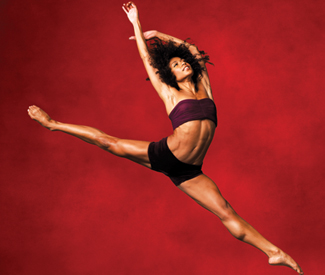
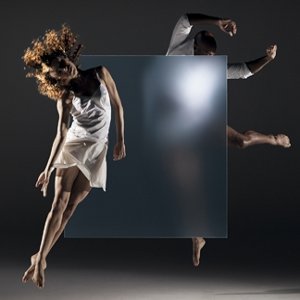
DANCE A stiff breeze is blowing through the venerable Alvin Ailey American Dance Theater, though not enough to ruffle feathers among Ailey aficionados (of which there are millions). The troupe is not dancing better, just differently. For that, they and the audiences have to thank new artistic director Robert Battle, who has been watching and choreographing for Ailey for years, though he was never a company member. Coming to the job as both an insider and an outsider, he knew exactly what to do.

Ailey has two major assets: one of the great pieces of 20th century dance, Revelations, and an ensemble that invests whatever you give them with extraordinary skill, fervent commitment, and a deep sense of humanity. What they lacked, for the most part, was a repertoire that honored those gifts.

So Battle switched gears. He opened the door to choreography unlike what we are used to seeing from Ailey. Yet did it gently. None of the works, whose local company premieres were offered during performances at UC Berkeley’s Zellerbach Hall March 13-18, are intellectually complex. Battle kept the entertainment values strong; nothing wrong with that.

The commission to Rennie Harris, the hip-hop artist who opened doors of his own by bringing street and club dancing inside the theater, resulted in the affective Home, a tribute to Ailey, who died of AIDS in 1989. Here Matthew Rushing left a tightly bunched-up group of dancers — somewhat similar to the opening of Revelations — and found an abode in a place where “the DJ turns down the light.”

Conceptually and structurally (and particularly in its circularity), it was a very simple tribute to the outsider who has to find a place for himself. Perhaps it was also the choreographer commenting on the Ailey company.

Harris created a dense, appealing fabric from duets and trios of club and hip-hop moves that vibrated with scintillating energy. The pleasure came from watching these dancers dive into material that encouraged so much individualized interpretation.

Choreographer Ohad Naharin called his line-up of excerpts from works created between 1992 and 2005 Minus 16. The Ailey dancers performed it superbly. The first section had the ensemble, clad in Hasidic outfits, sitting in a half -circle and engaging in a series of “waves” which made the last man fall off his chair. Gradually the performers threw their clothes into the center. Whether this signified a comment on Israeli values or, as some have suggested, a tribute to the Holocaust, I have no idea.

After a diorama-like passing of “souls” and a stunning duet in which dancers Ghrai DeVore and Kirven James Boyd seemed about to devour each other, Naharin pulled a masterstroke. He sent his black-suited dancers scouting for “victims” in the audience to join them on stage. It’s a cheap trick I know, and I have great difficulties with Naharin’s oppressive unisons, but I laughed to the point of tears. Bravo for Berkeley audiences.

The second program offered Battle’s previously-seen, all-male Hunt; it subtly explored pain, mourning, and vulnerability hidden by super-macho manhood. Paul Taylor’s Arden Court, one of the choreographer’s perennial audience favorites, received an honorable performance. The Ailey dancers have yet to absorb Taylor’s joyful ease and weighty elegance into their own bodies. Of the three couples, Alicia Graf Mack and Antonio Douthit came the closest.

Gratefully, this is a differently-dancing Ailey company; one of the changes also being brought about by nine new dancers who altered the company’s look in terms of physical size and skin color. No doubt the changes will continue, all the while preserving the best of Ailey’s own heritage.

What has not changed is Revelations. The mastery and presence that these dancers bring to a work that they perform year after year remains a wonder. Rushing in “I Wanna Be Ready” and Linda Celeste Sims and Glenn Allen Sims in “Fix me, Jesus” — the work’s most movingly intimate choreography — were stunning to behold. The audience started clapping at the sound of the first note and wouldn’t stop until they got their encore of “Rocka My Soul.” That was Ailey, as ever, at Zellerbach.

You have the right to remain weird

0

arts@sfbg.com

FILM It’s not easy being a repertory cinema these days, even when you’re the coolest (or only, or both) one in town. Hoping that this town is big enough for more than just one, at least for a few days, the Roxie this weekend is hosting a kind of cult cinema smackdown between itself and two more of the nation’s finest such emporiums. Under the blanket title “Cinemadness!,” the three-day marathon of rarities, oddities, and unbilled surprises challenges you to look away, or stay away — either way, your sanity will surely be shakier come Monday.

Cinefamily kicks things off, road-tripping up from L.A.’s Silent Movie House. More than just film programmers, the collective also contrives relevant ring tones (intrigue your fellow Muni riders with the “Death Wish II-O-Rama”!), multimedia shows, curated archival wonders online, and live events like the “Jean Harlow Pajama Party.”

The party may be in your pants as well as onscreen Friday, March 23, as Cinefamily brings “100 Most Outrageous Fucks,” a clip compilation of the most tasteless, ridiculous, over-acted, and anatomically unlikely sex scenes yet found by people with an inordinate interest in such things. Expect mainstream Hollywood, exploitation cinema, and le porn to be fully representing.

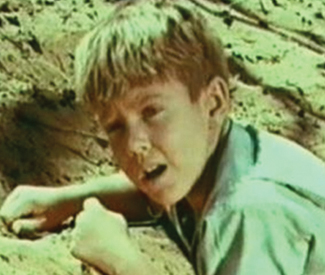
This will be followed by a real obscurity. Dirkie a.k.a. Lost in the Desert was a 1970 endeavor by the late South African writer-director-producer-actor Jamie Uys, who would later have a fluke international smash with 1980’s The Gods Must Be Crazy. (And end his career 16 years later with barely-noticed The Gods Must Be Crazy V.) The Apartheid-era racial attitudes that drew criticism to some of his other works are absent from Dirkie, a film nonetheless distinguished as one of the most traumatizing and sadistic “family movies” ever made.

The titular eight-year-old (Uys’ own offspring Wynand) is sent for his “weak chest” to the country. Unfortunately a plane crash strands Dirkie and terrier Lolly (played by “Lady Frolic of Belvedale,” whose performance is indeed splendid) alone in the Kalahari Desert. As Dad (Uys) frantically oversees search efforts from Johannesburg, our wee asthmatic hero is attacked by a viciously persistent hyena; scorpion-stung; blinded by snake venom; fed Lolly’s cooked remains (or so he thinks); etc. Preceding by one year Nicolas Roeg’s better-known Walkabout, Dirkie is an equally spectacular survival adventure saga that’s less arty but even less suitable for young viewers.

http://www.youtube.com/watch?v=QTCJWVLfAYo

The Alamo Drafthouse — jewel of Austin, that oasis of civilization in Texas — takes up Roxie residence Saturday, March 24, with two of 1987’s finest sci-fi-horror-action black comedies. A sleeper hit then that’s underappreciated now, The Hidden has pre-Twin Peaks Kyle MacLachlan as a mysterious “FBI agent” (OK, he’s from outer space) tracking an interplanetary homicidal maniac who quite enjoys Earth — especially its loud crap pop music, Ferraris, and automatic weapons. This mayhem-spreading tourist fears no physical peril because it can always abandon one human (or canine) host body for another. Typical of the script’s over-the-top glee is a stretch when said thingie “possesses” a stripper, taking rather more pleasure in her bodacious form than any slimy, tentacled whatsit ought to.

It’s followed by Street Trash, to date the only feature film directed by J. Michael Munro (still a busy cameraman), who incredibly was just 20 when he made it. This last word in low-budget Escape From New York-Road Warrior knockoffs finds a depressed city’s ginormous Skid Row population winnowed by (among other things) cheap Mad Dog-type wine with a flesh-melting-acid bouquet. Incredibly crass (typical banter: “You fuckworm!”), gross (see: severed-penis-as-Frisbee set piece) and energetic, it’s the guiltiest, most pleasurable of guilty pleasures.

The Roxie wrestles its own back Sunday, March 25 with three big attractions. First up is George Kuchar: Comedy of the Underground, an ultra-rare 1982 documentary about San Francisco’s beloved, recently deceased DIY auteur that was unavailable for preview. Then there’s Robert Altman’s 1984 Secret Honor, with Philip Baker Hall as the craziest faux Richard Nixon on record.

That is nothing, however, compared to the brain-warping experience that is Elvis Found Alive. An alleged two-hour-plus interview with the King himself (shot in silhouette), whom filmmaker Joel Gilbert located with stunning ease thanks to poorly-redacted paperwork obtained via Freedom of Information Act, this … documentary? re-enactment? mock-doc fantasia? … bares many a shocking revelation.

To wit: secret FBI agent Presley faked his own death because the Weathermen, Black Panthers, and Mafia had joined forces to assassinate him. Believe me, that is just the tip of the ice cube in this video cocktail. It all makes more sense if you know Gilbert is himself a professional impersonator of Bob Dylan (whom Elvis confides “dumped that awful Joan Baez when she tried to push him into leftist politics”) and has also made such direct-to-your fallout-shelter opuses as Paul Is Really Dead and Atomic Jihad. Does “Elvis” have an opinion about President Obama? Ohhh yeah, and that “socialist thug” best not mess with Memphis. America forever! *

“CINEMADNESS!”

Fri/23-Sun/25, $6.50-$10

Roxie Theater

3117 16th St., SF

www.roxie.com

Our Weekly Picks: March 21-27

0

WEDNESDAY 21

Al Pacino

Iconic actor Al Pacino brings his new experimental documentary Wilde Salome to the city tonight for its U.S. debut screening, with a red carpet celebration and a variety of special guests including Jean-Paul Gaultier, Dita Von Teese, and more. Pacino has described the film, a look into legendary writer Oscar Wilde’s works and influence, as his most personal project ever, and he will also be on hand tonight for the gala screening that benefits the GLBT Historical Society, and commemorates the 130th anniversary of the legendary writer’s visit to San Francisco. (Sean McCourt)

6 p.m., $25

Castro Theatre

429 Castro, SF

(415) 777-5455

Glbthistory.org/WildeSalome


of Montreal

A part conspiratorial, part confessional Kevin Barnes lies at the heart of Paralytic Stalks, the latest release from the of Montreal mastermind and his rotating ensemble of collaborators. Paralytic is complex and genre-bending like most of the of Montreal repertoire. In Paralytic‘s first half, Barnes croons moody lyrics transposed on psychedelic pop melodies not unlike 2007’s Hissing Fauna, Are You The Destroyer? Paralytic‘s second half challenges listeners with Barnes’ violent tones jumbled with harrowing electronic-classical interludes. (Kevin Lee)

With Deerhoof, Kishi Bashi

8 p.m., $21

Slim’s

333 11th St., SF

(415) 255-0333

www.slimspresents.com

Also Thurs/22, 8 p.m., $22

Fillmore

1805 Geary, SF

(415) 346-6000

www.thefillmore.com


Bonaparte

An electro rock’n’roll circus led by an inspired madman, Berlin’s Bonaparte has campaigned through Europe, Russia, and Australian, but is just now taking aim at the U.S. via SXSW. A rotating collective of musicians, designers, dancers, and freaks (performing in wildly excessive costumes), Bonaparte combines a trash punk energy with a theatricality that borders on the surreal. The ringleader, Tobias Jundt, is a sharp lyricist hiding behind dada non sequiturs and unbridled hedonism. (Witness the apt “gloryhole to the universe” line on “Computer in Love.”) Remember: when they ask “Are you ready to party with the Bonaparte?” — it’s a rhetorical question. (Ryan Prendiville)

With 2 Men Will Move You, Stay Gold DJs Rapid Fire and Pink Lightning

9 p.m., $10

Public Works

161 Erie, SF

(415) 932-0955

www.publicsf.com


THURSDAY 22

indifference and MASTERWORK

Outsiders and insiders at once, Lisa Townsend and Mica Sigourney culminate their CounterPULSE winter residencies with indifference and MASTERWORK. Experimental choreographer Townsend leaps off from Camus and the idea of free will in a dance-theater piece investigating the conflict between society and the solitary action, or not, of the stranger. Sigourney offers MASTERWORK, a concept demanding the all-caps title, an experiment in hubris promising “the most important performance of our generation and time.” Maybe. But if you’ve seen any of Sigourney’s work (recently in Laura Arrington’s “Wag,” or more recently with a bottle of bourbon, two glasses, and some sheets of paper at a crowded reading in the SomARTS men’s room) —or drag persona VivvyAnne ForeverMORE! and the envelope-pushing drag queen confab-cabaret “Work MORE!” — you’ll be there just to make sure. (Robert Avila)

Thurs/22-Sun/25, 8 p.m., $20

CounterPULSE

1310 Mission, SF

(415) 626-2060 www.counterpulse.org


“Hope Mohr Dance: Fifth Annual Home Season”

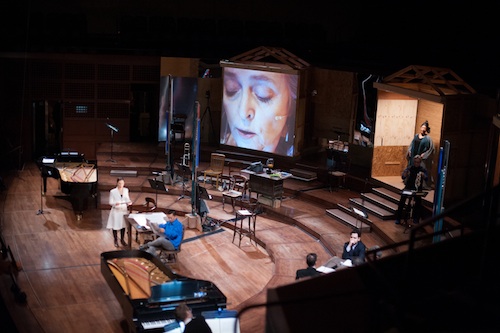
Christy Funsch recently choreographed an intriguing evening of solos for Bay Area dancers. One of its delights was watching Hope Mohr — exquisite, focused and powerful — take to the stage. In the last few years Mohr has focused her energy on creating work for her own company, but she clearly is still a mesmerizing performer. During her Fifth Annual Home Season, she is premiering “Reluctant Light” for her troupe, but she will also dance her 2011 solo “Plainsong”, inspired by the myth of Penelope and first seen at last year’s San Francisco International Dance Festival. As is her want, Mohr has invited an out of town company whose work she feels complements her own to share this evening. They are the Dušan Týnek Dance Theatre from New York. (Rita Felciano)

Thurs/22-Sat/24, 8 p.m., $20–$25

Z Space

450 Florida, SF

(800) 838-3006

www.zspace.org


FRIDAY 23

The Brightness of the Day . . .

Peter Whitehead makes instruments out of the things you’ve got in your kitchen, toolbox, and garbage bin — and makes them sound fucking rad. Brightness of the Day . . . will feature his experimental instruments, including his spoon harp, ektar, and buzzing bass lyre, alongside his textile paintings and collages. Whitehead’s visual art and musical endeavors parallel each other: his art illustrates music’s patterns and variation, and he conceptualizes music visually. Whitehead has exhibited his instruments in various museums and galleries in the past, but this is the first time he’ll be bringing together the various aspects of his visual art, music, and instrument building for an exhibit. (Mia Sullivan)

6 p.m., free

60Six

66 Elgin Park, SF

(415) 621-8377

www.gallery60six.com


Saviours

When Saviours first broke into the Bay Area metal and punk scenes, their unrepentant Thin Lizzy worship, filtered through a nasty hardcore sensibility, was as refreshing as a cold Hamm’s on a hot Tuesday afternoon. Like their recently-disbanded peers, Annihilation Time, Saviours dig deep into the record vault of the great hoary cannon of metal’s early days, reemerging with forgotten treasures like the weedeley-weedeley twin-guitar lead, and lyrics about getting epically baked. The band plans to get loud at a familiar San Francisco haunt, the Elbo Room, this Friday. (Tony Papanikolas)

With Holy Grail, Hazard’s Cure

9:30 p.m., $10–$13

Elbo Room

647 Valencia, SF

(415) 552-7788

www.elbo.com


Yuksek

Someone repeatedly tapping a note on a natural sounding piano. A bunch of finger snaps. An additional R&B riff on the keys. A man singing…Fitz and the Tantrums?…with an accent. Who is this? Metronomy? French accent. Phoenix? An electro snare/kick. MGMT? Background children’s vocals. Justice? Errrrr. Times up. We could play another song, or the full album, but it probably wouldn’t help. With Living on the Edge of Time, an album inspired by life as a lonely electronic musician on the road, French producer Yuksek expanded his sound — heading into a lighter, melodic though dance-oriented pop territory — as well as his band, which kicks off its US tour here. (Prendiville)

With Tenderlions, Realboy, DJ Aaron Axelsen

9 p.m., $15

Mezzanine

444 Jessie, SF

(415) 625-8880

www.mezzaninesf.com


SATURDAY 24

Napoleon

Fans of silent film and early cinema are in for an incredibly special treat this week and next when the San Francisco Silent Film Festival presents a series of screenings featuring Abel Gance’s legendary 1927 masterpiece Napoleon. Lauded for its use of then-groundbreaking and innovative techniques, the epic five-and-a-half hour biography of the French ruler has been painstakingly restored over the past several years, and will be shown accompanied by a live musical score performed by the Oakland East Bay Symphony. Don’t miss the opportunity to see this amazing event in the Bay Area’s own movie palace, the Paramount Theatre — these performances will not be staged anywhere else in the world. (McCourt)

Sat/24-Sun/25, March 31, April 1

1:30 p.m., $40–$120

Paramount Theatre

2025 Broadway, Oakl.

www.silentfilm.org


Thee Oh Sees

As prolific as they are prodigiously loud, San Francisco favorites Thee Oh Sees have cultivated over the course of ten albums (and a shitload of EPs, singles, etc.) a familiar wilderness, equal parts Black Flag and Their Satanic Majesties Request. This shouldn’t mask how unpredictable the band can sound — like the vaguely grotesque, multicolored nightmare aesthetic of the band’s instantly recognizable fliers and album covers, Thee Oh Sees couldn’t be any less concerned with weirding out our delicate sensibilities. (Papanikolas)

With White Mystery, Coathangers, Guantanamo Baywatch, Cyclops

9 p.m., $10

Thee Parkside

1600 17th St., SF

(415) 252-1330

www.theeparkside.com


The Magnetic Fields

The Magnetic Fields are known for their sardonic, poetic, and, at times, absolutely hilarious songs that tend to focus on loneliness, sexual identity, unrequited love, and other love-related mishaps. Lead singer-songwriter Stephin Merritt has been releasing albums with the Magnetic Fields for more than two decades. Their new album, Love at the Bottom of the Sea, marks the indie pop group’s return to a synthy sound, which they were all about in the ’90s, but veered from in their past three albums (Realism, Distortion, and I). Love at the Bottom of the Sea delves into sexual taboos with catchy tracks like “God Wants Us to Wait” and “Andrew in Drag.” (Sullivan)

8 p.m., $35

Fox Theater

1807 Telegraph, Oakl.

(510) 548-3010

www.thefoxoakland.com


TUESDAY 27

Kendrick Lamar

Best of lists, while good for selling issues or getting views, are guaranteed to start arguments. So it’s no surprise that when XXL released its 2012 Freshmen Issue, crowning emerging hip-hop artists, there was fallout: A$AP Rocky opted out, readers cried foul over selections, and firebrand Azaelia Banks put Iggy Azalea on blast (starting a beef which, given their names, was inevitable.) Time will sort it out, though, as it has with 2011 inductee Kendrick Lamar, who a year later has made the grade, and is now teasing a follow-up to his stellar Section.80. (Although I’m still trying to understand his “I climax where you begin” line on “Rigamortis.”) (Ryan Prendiville) With Hopsin 8 p.m., $30-$50 Regency Ballroom 1300 Van Ness, SF (800) 745-3000 www.theregencyballroom.com


Mr. Gnome

Fuzzy Cleveland drums-and-guitar duo Mr. Gnome has been named some variant on the “band to watch” so many times now, it’s best you lift your chin and pay attention. Maybe, you’ll also be scratching that chin, because the band — sugary singer-guitarist Nicole Barille and thwacking drummer-pianist Sam Meister — doesn’t quite sound like anything else. It’s an eye-popping hybrid. And its aesthetic of natural psychedelia in hazy orange and yellow hues with Donny Darko-esque imaginary belies the dark, hard rocking core. Not that they don’t have fun with their music, there are spacey shots of wailing guitars and the occasional high vocal peeps (“Bit of Tongue”), it’s just far more realized a sound than one might expect based on the superficial. Listening yet? (Emily Savage)

With Electric Shepherd & Outlaw, Plastic Villians

8 p.m., $8

Thee Parkside

1600 17th St., SF

(415) 252-1330

www.theeparkside.com


The Guardian listings deadline is two weeks prior to our Wednesday publication date. To submit an item for consideration, please include the title of the event, a brief description of the event, date and time, venue name, street address (listing cross streets only isn’t sufficient), city, telephone number readers can call for more information, telephone number for media, and admission costs. Send information to Listings, the Guardian Building, 135 Mississippi St., SF, CA 94107; fax to (415) 487-2506; or e-mail (paste press release into e-mail body — no text attachments, please) to listings@sfbg.com. Digital photos may be submitted in jpeg format; the image must be at least 240 dpi and four inches by six inches in size. We regret we cannot accept listings over the phone.

Stage Listings

0

Stage listings are compiled by Guardian staff. Performance times may change; call venues to confirm. Reviewers are Robert Avila, Rita Felciano, and Nicole Gluckstern. Submit items for the listings at listings@sfbg.com. For further information on how to submit items for the listings, see Picks.

THEATER

OPENING

Hot Greeks Hypnodrome Theatre, 575 10th St, SF; www.brownpapertickets.com. $30-69. Previews Thurs/22-Sat/24, 8pm. Opens March 29, 8pm. Runs Thurs-Sat, 8pm. Through May 5. Thrillpeddlers launch a new version (new cast, songs, costumes, etc.) of the Cockettes classic by Scrumbly Koldewyn and Martin Worman.

The Rita Hayworth of this Generation Shotwell Studios, 3252-A 19th St, SF; www.brownpapertickets.com. $10-15. Opens Fri/23, 8pm. Runs Fri-Sat, 8pm. Through April 7. Writer and performer Tina D’Elia performs her solo, multi-character play about a queer Latina performer inspired by the legendary Hollywood goddess.

ONGOING

A Bright Room Called Day Gough Street Playhouse, 1620 Gough, SF; www.custommade.org. $25-32. Thurs-Sat, 8pm; Sun, 7pm. Through April 8. Custom Made Theatre performs Tony Kushner’s drama set in Berlin just before the Nazi takeover.

"Celebration of Women’s History Month:" The Right Thing Thick House, 1695 18th St, SF; www.3girlstheatre.org. $30. Dates and showtimes vary. Through April 1. Over one long day of legal mediation, aggrieved former CEO Zell Gardner (a brash but vulnerable Catherine Castellanos) and attorney Manny Diamond (a sharp, loquacious Louis Parnell) square off against Zell’s former Big Pharma pals headed up by vindictive interim CEO David Heller (a coolly cutting Lol Levy) flanked by Zell’s longtime colleague Chris McKnight (a nicely down-to-earth John Flanagan). Zell’s lawyer becomes increasingly ambivalent, however, as Manny discovers his tough, brassy mess of a pill-popping client has been less than forthcoming about the charge of sexual harassment the other side is using to justify her dismissal and the company’s pocketing of the three million Zell expected as compensation — a charge involving Zell’s 19-year-old goddaughter, Sam (Karina Wolfe). Attempting to reconcile the parties and broker a deal is retired judge Leigh Mansfield (Helen Shumaker), but she has her work cut out for her with this crowd. AJ Baker’s new drama — the inaugural production of newcomers 3Girls Theatre — take issues of sexual politics and power in its high-powered setting and cracks them against the everyday familial and social dynamics that are perhaps a casualty of the corporate ethos, but without opening them up to a satisfactory degree. Director Suze M. Allen assembles a generally strong cast (Castellanos is riveting throughout), and some scenes smolder with just the right teeth-baring tension, but pacing is inconsistent and the script’s own wayward drift — together with an odd, unnecessary video backdrop—distract from the concentrated treatment the story demands. (Avila)

*Fool For Love Boxcar Studios, 125A Hyde, SF; www.boxcartheatre.org. $25. Showtimes vary. Through April 14. Another installment of Boxcar Theatre’s epic Sam Shepard repertory project, Fool for Love inaugurates their newest performance space within their Hyde Street Studios location. A depressingly realistic reproduction of a claustrophobic motel room, the tiny jewel-box theatre provides no refuge for the actors, and certainly not for the audience, each trapped beneath the pitiless gaze of the other. And if that too-close-for-comfort intimacy doesn’t get to you, the intentionally difficult subject matter — a "typical" Shepardian foray into alcohol-fueled ranting, violence, incest, and casual cruelty — probably will. Shepard’s strength in monologue shows itself off to meaty effect from May’s (Lauren Doucette) melancholy description of her mother’s love affair with the Old Man (Jeff Garrett) to Eddie’s (Brian Trybom) candid admittance to May’s timid suitor Martin (Geoffrey Nolan) that he and May are not cousins at all but half-siblings who have "fooled around" with each other. In addition to the reliably strong performances from each of the actors, Fool features a notably clever bit of staging involving the Old Man who appears not as a specter wandering the periphery of the stage, but as a recurring figure on the black-and-white television, interrupting the flow of cheesy Westerns with his garrulous trailer park wisdom and an omnipresent Styrofoam cup filled, one suspects, with something stronger than just coffee. (Gluckstern)

Glengarry Glen Ross Actors Theatre of San Francisco, 855 Bush, SF; (415) 345-1287, www.brownpapertickets.com. $26-40. Fri/23-Sat/24, 8pm. David Mamet’s cutthroat comedy, courtesy of the Actors Theatre of San Francisco.

It’s All the Rage Studio Theater, Marsh San Francisco, 1062 Valencia, SF; (415) 282-3055, www.themarsh.org. $15-50. Thurs, 8pm; Sat, 8:30pm, Sun, 7pm. Through April 15. Longtime comedian and radio host Marilyn Pittman’s solo play wrestles with the legacy of her parents’ violent deaths in a 1997 murder-suicide initiated by her father. It’s disturbing material that Pittman, a stout middle-aged woman with a gregarious and bounding personality, approaches indirectly via a good deal of humor — including recounting the first time she did her growing-up-lesbian bit before her mother in a DC comedy club. But the pain and confusion trailing her for 13 years is never far behind, whether in accounts of her own battle with anger (and the broken relationships it has left in its wake) or in ominous memories of her too complacent mother or her charming but domineering father, whose controlling behavior extended to casually announcing murderous dreams while policing the boundaries of his marriage against family interference. A fine mimic, Pittman deploys a Southern lilt in playing each parent, on a stage decorated with a hint of their Southwestern furnishings and a framed set of parental photographs. In not exactly knowing where to lay blame for, or find meaning in, such a horrifying act, the play itself mimics in subtler form the emotional tumult left behind. There’s a too brief but eerie scene in which her veteran father makes reference to a murder among fellow soldiers en route to war, but while PTSD is mentioned (including as an unwanted patrimony), the 60-minute narrative crafted by Pittman and director David Ford wisely eschews any pat explanation. If transitions are occasionally awkward and the pace a bit loose, the play leaves one with an uncomfortable sense of the darker aspects of love, mingled with vague concentric histories of trauma and dislocation in a weird, sad tale of destruction and staying power. Note: review from the show’s 2009 run at the Marsh. (Avila)

Julius Caesar Buriel Clay Theater, African American Art and Culture Complex, 762 Fulton, SF; 1-800-838-3006, www.african-americanshakes.org. $10-30. Sat, 8pm; Sun, 4pm. Through April 1. African-American Shakespeare Company performs a version of the Bard’s classic set during the ongoing civil wars of West Africa.

*Maurice New Conservatory Theatre Center, 25 Van Ness, SF; (415) 861-8972, www.nctcsf.org. $25-45. Wed/21-Sat/24, 8pm; Sun/25, 2pm. The eponymous hero of E.M. Forster’s late novel (written early but published only posthumously) wrestles with his love for another man in Edwardian England — oscillating between defiant assertion of feeling and an anguished recoil into desperate treatments like hypnotism — but manages to find happiness as a homosexual by the end of the story. No doubt that would have most appalled the guardians of those extremely homophobic, repressive times. Today there’s still much to recognize in the confused feelings and social censure faced by such a figure, though what helps make the 1998 stage adaptation (by Brits Andy Graham and Roger Parsley) so compelling a story is the not always flattering complexity and honesty with which Forster portrays the (at least partly autobiographical) Maurice Hall — played winningly by an intelligent, agile Soren Santos in New Conservatory Theatre Center’s persuasive U.S. premiere. Maurice’s outré sexuality is one thing; his class position and status as a man are another, affording him certain limited protection and also contributing to certain weaknesses of character, which become most apparent vis-à-vis his mother (a quietly potent Lindsey Murray) and sister (an effervescent Hilary Hyatt) as well as his second love, ambitious young laborer Alec Scudder (a nicely restrained Andrew Nolan). Director George Maguire rightly concentrates on the reciprocal influences between these vital characters and gets fine performances from his entire cast in an uncluttered, sure and measured production, with capable John Hurst in several supporting roles and Alex Kirschner doing excellent work as Clive Durham, Maurice’s Cambridge classmate and mercurial first love. (Avila)

Merchants Exit Stage Left, 156 Eddy, SF; www.brownpapertickets.com. $10-25. Thurs/22-Sat/24, 8pm. According to playwright Susan Sobeloff, the vision for Merchants, premiering this month at the EXIT Theatre, came to her after watching Shakespeare’s The Merchant of Venice, a play at least partially responsible for cementing the caricature of the money-hungry Jew in Western literary tradition for centuries to come. Her intention to write a play featuring a family of more "rounded" Jews doesn’t entirely coalesce once it becomes clear that the bulk of the dramatic tension actually revolves very closely around monetary concerns. As one family business folds, and other members get squeezed out of their jobs by the new economy, a new family business of sorts begins to grow around the quirky, confessional performance art of youngest daughter, Mercedes (Maura Halloran). Emotional blackmail and sheer desperation kickstart their efforts to turn Mercedes into a financially-sustainable "brand," while the all too human costs of burnout, fatigue, and simmering resentments are roundly disregarded, until a crisis point is reached. It’s difficult to connect with this particular set of almost comically self-absorbed characters, despite the desire to root for the underdog, and the play would have benefited from a staging that allowed either more humor or more humanity to creep into the relentless tirades that characterize much of the dialogue. (Gluckstern)

The Real Americans Marsh Studio Theater, 1062 Valencia, SF; (415) 282-3055, www.themarsh.org. $25-50. Fri, 8pm; Sat, 5pm. Extended through April 14. Dan Hoyle revives his hit solo show about small-town America.

Sam Marlowe and the Mean Streets of San Francisco Stage Werx, 446 Valencia, SF; (415) 412-3989, www.catchynametheatre.org. $20. Thurs-Sat, 8pm. Through April 7. Catchy Name Theatre presents a world premiere noir play by Jim Strope.

*True West Boxcar Studios, 125A Hyde, SF; (415) 967-2227, www.boxcartheatre.org. $25. Thurs-Sat, 8pm. Through April 7. The first installment of Boxcar Theatre’s four-play Sam Shepard repertory project, True West ushers in the ambitious run with a bang. This tale of two brothers who gradually assume the role of the other is one of Shepard’s most enduring plays, rich with humorous interludes, veering sharply into dangerous terrain at the drop of a toaster. In time-honored, True West tradition, the lead roles of Austin, the unassuming younger brother, and Lee, his violent older sibling, are being alternated between Nick A. Olivero and Brian Trybom, and in a new twist, the role of the mother is being played by two different actresses as well (Adrienne Krug and Katya Rivera). The evening I saw it, Olivero was playing Austin, a writer banging away at his first screenplay, and Trybom was Lee, a troubled, alcoholic drifter who usurps his brother’s Hollywood shot, and trashes their mother’s home while trying to honor his as yet unwritten "contract". The chemistry between the two actors was a perfect blend of menace and fraternity, and the extreme wreckage they make of both the set (designed by both actors), and their ever-tenuous relationship, was truly inspired. (Gluckstern)

Waiting for Godot New venue: SF Playhouse Stage Two, 533 Sutter, SF; (415) 336-3522, www.tidestheatre.org. $20-32. Thurs, 7pm; Fri-Sat, 8pm. Extended through April 14. The fuchsia papier-mâché tree and swirling grey-on-white floor pattern (courtesy of scenic designer Richard Colman) lend a psychedelic accent to the famously barren landscape inhabited by Vladimir (Keith Burkland) and Estragon (Jack Halton) in this production of the Samuel Beckett play by newcomers Tides Theatre. The best moments here broadcast the brooding beauty of the avant-garde classic, with its purposely vague but readily familiar world of viciousness, servility, trauma, want, fear, grudging compassion, and the daring, fragile humor that can look it all squarely in the eye. (Avila)

The Waiting Period MainStage, Marsh San Francisco, 1062 Valencia, SF; (415) 282-3055, www.themarsh.org. $15-50. Fri, 8pm; Sat, 5pm. Extended through April 27. Brian Copeland (comedian, TV and radio personality, and creator-performer of the long-running solo play Not a Genuine Black Man) returns to the Marsh with a new solo, this one based on more recent and messier events in Copeland’s life. The play concerns an episode of severe depression in which he considered suicide, going so far as to purchase a handgun — the title coming from the legally mandatory 10-day period between purchasing and picking up the weapon, which leaves time for reflections and circumstances that ultimately prevent Copeland from pulling the trigger. A grim subject, but Copeland (with co-developer and director David Ford) ensures there’s plenty of humor as well as frank sentiment along the way. The actor peoples the opening scene in the gun store with a comically if somewhat stereotypically rugged representative of the Second Amendment, for instance, as well as an equally familiar "doood" dude at the service counter. Afterward, we follow Copeland, a just barely coping dad, home to the house recently abandoned by his wife, and through the ordinary routines that become unbearable to the clinically depressed. Copeland also recreates interviews he’s made with other survivors of suicidal depression. Telling someone about such things is vital to preventing their worst outcomes, says Copeland, and telling his own story is meant to encourage others. It’s a worthy aim but only a fitfully engaging piece, since as drama it remains thin, standing at perhaps too respectful a distance from the convoluted torment and alienation at its center. (Avila)

BAY AREA

Cabaret Larkspur Café Theater (American Legion Hall Post 313), 500 Magnolia, Larkspur; www.brownpapertickets.com. $25-45. Fri-Sat, 8pm; Sun, 7pm (no show April 8). Through April 15. Independent Cabaret Productions and Shakespeare at Stinson move their production of the Kander and Ebb classic from Fort Mason to the North Bay.

The Coast of Utopia: Voyage Ashby Stage, 1901 Ashby, Berk; www.shotgunplayers.org. $20-30. Opens Fri/23, 8pm. Runs Wed-Thurs, 7pm; Fri-Sat, 8pm; Sun, 5pm. Through April 29. Shotgun Players present Tom Stoppard’s riff on pre-revolutionary Russia.

A Doctor in Spite of Himself Berkeley Repertory Theatre, Roda Theatre, 2015 Addison, Berk; (510) 647-2949, www.berkeleyrep.org. $14.50-73. Thurs/22 and Sat/24, 8pm; Wed/21 and Sun/25, 7pm (also Sun/25, 2pm). Berkeley Rep performs a contemporary update of the Molière comedy.

*The Kipling Hotel: True Misadventures of the Electric Pink ’80s New venue: Marsh Berkeley, 2120 Allston, Berk; (415) 282-3055, www.themarsh.org. $20-50. Sat, 8:30pm; Sun, 7pm. Extended through May 6. This new autobiographical solo show by Don Reed, writer-performer of the fine and long-running East 14th, is another slice of the artist’s journey from 1970s Oakland ghetto to comedy-circuit respectability — here via a partial debate-scholarship to UCLA. The titular Los Angeles residency hotel was where Reed lived and worked for a time in the 1980s while attending university. It’s also a rich mine of memory and material for this physically protean and charismatic comic actor, who sails through two acts of often hilarious, sometimes touching vignettes loosely structured around his time on the hotel’s young wait staff, which catered to the needs of elderly patrons who might need conversation as much as breakfast. On opening night, the episodic narrative seemed to pass through several endings before settling on one whose tidy moral was delivered with too heavy a hand, but if the piece runs a little long, it’s only the last 20 minutes that noticeably meanders. And even with some awkward bumps along the way, it’s never a dull thing watching Reed work. (Avila)

Now Circa Then Lucie Stern Theatre, 1305 Middlefield, Palo Alto; (650) 463-1960, www.theatreworks.org. $19-69. Tues-Wed, 7:30pm; Thurs-Sat, 8pm (also Sat, 2pm); Sun, 2 and 7pm. Through April 1. TheatreWorks performs Carly Mensch’s comedy about a romance that blooms between two historical re-enactors.

The Pirates of Penzance Julia Morgan Center for the Arts, 2640 College, Berk; (510) 845-8542, www.juliamorgan.org. $17-35. Fri-Sat, 7pm (also Sat, 2pm); Sun, noon and 5pm. Through April 1. Berkeley Playhouse performs the Gilbert and Sullivan classic, with the setting shifted to a futuristic city.

Red Berkeley Repertory Theatre, Thrust Stage, 2025 Addison, Berk; (510) 647-2949, www.berkeleyrep.org. $14.50-83. Opens Thurs/22, 8pm. Runs Tues and Thurs-Fri, 8pm (also March 29 and April 26, 2pm; no show April 27); Wed, 7pm; Sat-Sun, 2pm (also Sat, 8pm; Sun, 7pm; no matinee March 31). Through April 29. Berkeley Rep performs John Logan’s Tony Award-winning play about artist Mark Rothko.

Titus Andronicus La Val’s Subterranean, 1834 Euclid, Berk; www.impacttheatre.com. $10-20. Thurs-Sat, 8pm. Through March 31. Impact Theatre takes on the Bard’s bloodiest tragedy.

The World’s Funniest Bubble Show Marsh Berkeley, TheaterStage, 2120 Allston, Berk; (415) 826-5750, www.themarsh.org. $8-50. Extended run: Sun/25 and April 1, 11am. Also May 5-27 (Sat-Sun, 11am); June 3-July 15 (Sun, 11am). Louis "The Amazing Bubble Man" Pearl returns with this kid-friendly, bubble-tastic comedy.

PERFORMANCE/DANCE

"Arthur in Underland" CounterPULSE, 1310 Mission, SF; www.counterpulse.org. Fri/23-Sat/24, 8pm. $15-24. Dandelion Dancetheater performs a new work about a young man whose life is changed when he becomes part of a rock group’s entourage.

"Elect to Laugh" Studio Theater, Marsh San Francisco, 1062 Valencia, SF; (415) 282-3055, www.themarsh.org. Tues, 8pm. Ongoing through Nov 6. $15-50. Will Durst and friends perform in this weekly political humor show that focuses on the upcoming presidential election.

"Enchantingly Wicked" Davies Symphony Hall, 201 Van Ness, SF; www.sfgmc.org. Wed/21, 8pm. $15-75. San Francisco Gay Men’s Chorus and Stephen Schwartz perform musical theater hits.

Hope Mohr Dance Z Space, 450 Florida, SF; www.zspace.org. Thurs/22-Sat/24, 8pm. $20-25. The company presents its fifth San Francisco home season, with a rare solo by Hope Mohr and the Bay Area debut of New York-based choreographer-performer Dusan Tynek’s company.

"Improvised Shakespeare" Bayfront Theater, Fort Mason Center, Marina at Laguna, SF; www.improv.org. Sat/24, 8pm. $20. Bay Area Theatre Sports (BATS) presents Improvised Shakespeare, a fine troupe (and a slightly different lineup each night, but on March 10 including Kasey Klemm, Rebecca Stockley, Tim Orr, William Hall, Zoe Galvez, and Regina Saisi) with no idea what full length Shakespeare-ish play they will lay on their eager audience until the latter gift them with a title and a key word or two. The rest is remarkably well-tethered mayhem, as cast spontaneously riffs on the audience cue, the conventions of Elizabethan drama, and its own inventions —including the unintentional slip of the tongue, which in this context can prove as productive as anything. March 10 saw the premiere — and simultaneous closing — of an ephemeral little comedy called Two Crows. The players strutted and fretted (or frolicked, really) an hour or so upon the stage.’Twas an idiotic tale, told by some of the sharpest improvisers around, and signifying nothing, save good times. (Avila)

"indifference and MASTERWORK" CounterPULSE, 1310 Mission, SF; www.eventbrite.com. Thurs/22-Sun/25, 8pm, $17-30. New works by artists-in-residence Lisa Townsend and Mica Sigourney.

"ODC Dance/Downtown" Yerba Buena Center for the Arts, Novellus Theater, 700 Howard, SF; www.odcdance.org. Through Sun/25, programs and showtimes vary. $15-750. ODC/Dance kicks off its 41st annual home season with two programs of new works, plus an opening-night gala.

"Octopus’s Garden" Alcove Theater, 414 Mason, Fifth Flr, SF; www.thealcovetheater.com. Sat, 8pm. Through April 7. $25-35. PianoFight performs Scott Herman’s modern-family drama.

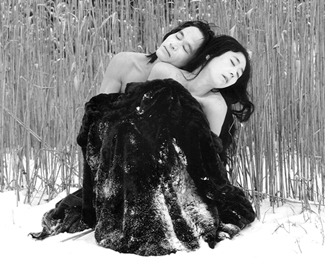
"Regeneration" Yerba Buena Center for the Arts, 701 Mission, SF; www.ybca.org. Thurs/22-Sat/24, 8pm, $25. Performance duo Eiko and Koma highlight new and old works from their four-decade oeuvre.

"2012 Rhino Benefit Extravaganza" Eureka Theatre, 215 Jackson, SF; www.therhino.org. Mon/26, 8pm. $25. Queer talent performances (plus free food and drinks!) to benefit Theatre Rhinoceros.

Spring fairs and festivals

1

culture@sfbg.com

MARCH

SF Flower and Garden Show, San Mateo Event Center, 495 S. Delaware, San Mateo. (415) 684-7278, www.sfgardenshow.com. March 21-25, 10am-6pm, $15–$65, free for 16 and under. This year’s theme is “Gardens for a Green Earth,” and features a display garden demonstrating conservation practices and green design. Plant yourself here for thriving leafy greens, food, and fun in the sun.

The Art of Aging Gracefully Resource Fair, Jewish Community Center of San Francisco, 3200 California, SF. (415) 292-1200, www.jccsf.org. March 22, 9:30am-2:45pm, free. Treat yourself kindly with presentations by UCSF Medical Center professionals on healthy living, sample classes, health screenings, massages, giveaways and raffles.

California’s Artisan Cheese Festival, Sheraton Sonoma County, 745 Sherwood, Petaluma. (707) 283-2888, www.artisancheesefestival.com. March 23-25, $20–$135. Finally, a weekend given over to the celebration of cultures: semi-soft, blue, goat, and cave-aged. More than a dozen award-winning cheesemakers will provide hors d’oeuvres and educational seminars.

15th Annual Rhone Rangers Grand Tasting, Fort Mason Festival Pavilion, Buchanan and Marina, SF. (800) 467-0163, www.rhonerangers.org. March 24-25, $45–$185. The largest American Rhone wine event in the country, with over 2,000 attendees tasting 500 of the best Rhones from its 100 US member wineries.

Whiskies of the World Expo, Hornblower Yacht, Pier 3, SF. (408) 225-0446, www.whiskiesoftheworld.com. March 31, 6pm-9pm, $120–$150. The expo attracts over 1400 guests intent on sampling spirits on a yacht and meeting important personages from this fine whiskey world of ours.

Bay Area Anarchist Book Fair, SF County Fair Building’s Hall of Flowers, Golden Gate Park, SF. (415) 431-8355, bayareaanarchistbookfair.wordpress.com. March 31-April 1, free. This political book fair brings together radical booksellers, distributors, independent presses, and political groups from around the world.

Monterey Jazz Festival’s Next Generation Festival Monterey Conference Center, One Portola Plaza, Monterey. (831) 373-3366, www.montereyjazzfestival.org. March 30-April 1, free. 1200 student-musicians from schools located everywhere from California to Japan compete for the chance to perform at the big-daddy Monterey Jazz Festival. Free to the public, come to cheer on the 47 California ensembles who will be playing, or pick an away team favorite.

APRIL

Argentine Tango Festival, San Francisco Airport Marriot Hotel, 1800 Old Bayshore Highway, Burlingame. www.argentinetangousa.com. April 5-8, $157–$357. Grip that rose tightly with your molars — it’s time to take the chance to dance in one of 28 workshops, with a live tango orchestra, and tango DJs. The USA Tango championship is also taking place here.

Salsa Festival, The Westin Market Street, 50 Third St., SF. (415) 974-6400. www.sfsalsafestival.com. April 5-7, $75–$125. Three nights of world-class performances, dancing, competition and workshops with top salsa instructors.

Union Street Spring Celebration and Easter Parade, Union between Gough and Fillmore, SF. (800) 310-6563, April 8, 10am-5pm, parade at 2pm, free. www.sresproductions.com/union_street_easter. A family festival with kids rides and games, a petting zoo, and music.

45th Annual Northern California Cherry Blossom Festival, Japan Center, Post and Buchanan, SF. (415) 567-4573, www.sfjapantown.org. April 14-15 and 21-22, parade April 22, free. Spotlighting the rich heritage and traditional customs of California’s Japanese-Americans. Costumed performers, taiko drums, martial arts, and koto music bring the East out West.

Bay One Acts Festival, Boxcar Theatre, 505 Natoma, SF. www.bayoneacts.org. April 22 — May 12, 2012, $25–$45 at the door or online. Showcasing the best of SF indie theater, with new works by Bay Area playwrights.

Earth Day, Civic Center Plaza, SF. (415) 571-9895, www.earthdaysf.org. April 22, free. A landmark day for the “Greenest City in North America,” featuring an eco-village, organic chef demos, a holistic health zone, and live music.

Wedding and Celebration Show, Parc 55 Wyndham, 55 Cyril Magnin, SF. (925) 594-2969, www.bayareaweddingfairs.com. April 28, 10:00am-5:00pm. Exhibitors in a “Boutique Mall” display every style of product and service a bride may need to help plan his or her wedding.

San Francisco International Beer Festival, Fort Mason Center, Festival Pavilion, SF. www.sfbeerfest.com. April 28, 7pm-10pm, $65. The price of admission gets you a bottomless taster mug for hundreds of craft beers, which you can pair with a side of food from local restaurants.

Pacific Coast Dream Machines Show, Half Moon Bay Airport, 9850 Cabrillo Highway North, Half Moon Bay. www.miramarevents.com/dreammachines. April 28-29, 9am-4pm, $20 for adults, kids under 10 free. The annual celebration of mechanical ingenuity, an outdoor museum featuring 2,000 driving, flying and working machines from the past 200 years.

May:

San Francisco International Arts Festival Various venues. (415) 399-9554, www.sfiaf.org. May 2-20, prices vary. Celebrate the arts, both local and international, at this multimedia extravaganza.

Cinco de Mayo Festival, Dolores Park, Dolores and 19th St, SF. www.sfcincodemayo.com. May 5, 10am-6pm, free. Enjoy live performances by San Francisco Bay Area artists, including mariachis, dancers, salsa ensembles, food and crafts booths. Big party.

A La Carte and Art, Castro St. between Church and Evelyn, Mountain View. May 5-6, 10am-6pm, free. With vendors selling handmade crafts, micro-brewed beers, fresh foods, a farmers market, and even a fun zone for kids, there’s little you won’t find at this all-in-one fun fair.

Young at Art Festival, De Young Museum, 50 Hagiwara Tea Garden Drive, SF. (415) 695-2441. www.youngatartsf.com. May 12-20, regular museum hours, $11. An eight-day celebration of student creativity in visual, literary, media, and performing arts.

Asian Heritage Street Celebration Larkin and McAllister, SF. www.asianfairsf.com. May 19, 11am-6pm, free. Featuring a Muay Thai kickboxing ring, DJs, and the latest in Asian pop culture, as well as great festival food.

Uncorked! San Francisco Wine Festival, Ghirardelli Square, 900 North Point, SF. (415) 775-5500, www.ghirardellisq.com. May 19, 1pm-6pm, $50 for tastings; proceeds benefit Save the Bay. A bit of Napa in the city, with tastings, cooking demonstrations, and a wine 101 class for the philistines among us.

Maker Fair, San Mateo Event Center, San Mateo. www.makerfaire.com. May 19-20, $8–$40. Make Magazine’s annual showcase of all things DIY is a tribute to human craftiness. This is where the making minds meet.

Castroville Artichoke Festival, Castroville. (831) 633-2465 www.artichoke-festival.com. May 19-20, 10am-5pm, $10. Pay homage to the only vegetable with a heart. This fest does just that, with music, parades, and camping.

Bay to Breakers, Begins at the Embarcadero, ends at Ocean Beach, SF. www.zazzlebaytobreakers.com. May 20, 7am-noon, free to watch, $57 to participate. This wacky San Francisco tradition is officially the largest footrace in the world, with a costume contest that awards $1,000 for first place. Just remember, Port-A-Potties are your friends.

Freestone Fermentation Festival Salmon Creek School, 1935 Bohemian Hwy, Sonoma. (707) 479-3557, www.freestonefermentationfestival.com. May 21, Noon-5pm, $12. Answer all the questions you were afraid to ask about kombucha, kefir, sauerkraut, yogurt, and beer. This funky fest is awash in hands-on demonstrations, tastings, and exhibits.

San Francisco Carnaval Harrison and 23rd St., SF. www.sfcarnaval.org. May 26-27, 10am-6pm, free. Parade on May 27, 9:30pm, starting from 24th St. and Bryant. The theme of this year’s showcase of Latin and Caribbean culture is “Spanning Borders: Bridging Cultures”. Fans of sequins, rejoice.

June:

Union Street Eco-Urban Festival Union Street between Gough and Steiner, SF. (800) 310-6563, www.unionstreetfestival.com. June 2-3, 10am-6pm, free. See arts and crafts created with recycled and sustainable materials and eco-friendly exhibits, along with two stages of live entertainment and bistro-style cafes.

Haight Ashbury Street Fair, Haight between Stanyan and Ashbury, SF. www.haightashburystreetfair.org. June Date TBD, 11am-5:30pm, free. Celebrating the cultural history and diversity of one of San Francisco’s most internationally celebrated neighborhoods, the annual street fair features arts and crafts, food booths, three musical stages, and a children’s zone.

San Mateo County Fair, San Mateo County Fairgrounds, 2495 S. Delaware, San Mateo. www.sanmateocountyfair.com. June 9-17, 11am-10pm, $6–$30. Competitive exhibits from farmers, foodies, and even technological developers, deep-fried snacks, games — but most importantly, there will be pig races.

Queer Women of Color Film Festival Yerba Buena Center for the Arts, 701 Mission, SF. (415) 752-0868, www.qwocmap.org. June 8-10 times vary, free. Three days of screenings from up-and-coming filmmakers with unique stories to tell.

Harmony Festival, Sonoma County Fairgrounds, 1350 Bennett Valley, Santa Rosa. www.harmonyfestival.com. Date TBA. One of the Bay Area’s best camping music festivals and a celebration of progressive lifestyle, with its usual strong and eclectic lineup of talent.

North Beach Festival, Washington Square Park, SF. (415) 989-2220, www.northbeachchamber.com. June 16-17, free. This year will feature over 150 art, crafts, and gourmet food booths, three stages, Italian street painting, beverage gardens and the blessing of the animals.

Marin Art Festival, Marin Civic Center, 3501 Civic Center Drive, San Rafael. (415) 388-0151, www.marinartfestival.com. June 16-17, 10am-6pm, $10, kids under 14 free. Over 250 fine artists in the spectacular Marin Civic Center, designed by Frank Lloyd Wright. Enjoy the Great Marin Oyster Feast while you’re there.

Sierra Nevada World Music Festival, Mendocino County Fairgrounds Booneville. (916) 777-5550, www.snwmf.com. June 22-24, $160. A reggae music Mecca, with Jimmy Cliff, Luciano, and Israel Vibration (among others) spreading a message of peace, love, and understanding.

Gay Pride Weekend Civic Center Plaza, SF; Parade starts at Market and Beale. (415) 864-FREE, www.sfpride.org. June 23-24, Parade starts at 10:30am, free. Everyone in San Francisco waits all year for this fierce celebration of diversity, love, and being fabulous.

Summer SAILstice, Encinal Yacht Club, 1251 Pacific Marina, Alameda. 415-412-6961, www.summersailstice.com. June 23-24, 8am-8pm, free. A global holiday celebrating sailing on the weekend closest to the summer solstice, these are the longest sailing days of the year. Celebrate it in the Bay Area with boat building, sailboat rides, sailing seminars and music.

Stern Grove Festival, Stern Grove, 19th Ave. and Sloat, SF. (415) 252-6252, www.sterngrove.org. June 24-August 26, free. This will be the 75th season of this admission-free music, dance, and theater performance series.

July:

4th of July on the Waterfront, Pier 39, Beach and Embarcadero, SF. www.pier39.com 12pm-9pm, free. Fireworks and festivities, live music — in other words fun for the whole, red-white-and-blue family.

High Sierra Music Festival, Plumas-Sierra Fairgrounds, Lee and Mill Creek, Quincy. www.highsierramusic.com. July 5-8, gates open 8am on the 5th, $185 for a four-day pass. Set in the pristine mountain town of Quincy, this year’s fest features Ben Harper, Built To Spill, Papodosio, and more.

Oakland A’s Beer Festival and BBQ Championship, (510) 563-2336, www.oakland.athletics.mlb.com. July 7, 7pm, game tickets $12–$200. A baseball-themed celebration of all that makes a good tailgate party: grilled meat and fermented hops.

Fillmore Street Jazz Festival, Fillmore between Jackson and Eddy, SF. (800) 310-6563, www.fillmorejazzfestival.com. July 7-8, 10am-6pm, free. The largest free jazz festival on the Left Coast, this celebration tends to draw enormous crowds to listen to innovative Latin and fusion performers on multiple stages.

Midsummer Mozart Festival, Herbst Theater, 401 Van Ness, SF (also other venues in the Bay Area). (415) 627-9141, www.midsummermozart.org. July 19-29, $50. A Bay Area institution since 1974, this remains the only music festival in North America dedicated exclusively to Mozart.

Renegade Craft Fair, Fort Mason Center, Buchanan and Marina, SF. (415) 561-4323, www.renegadecraft.com. July 21-22, free. Twee handmade dandies of all kinds will be for sale at this DIY and indie-crafting Mecca. Like Etsy in the flesh!

Connoisseur’s Marketplace, Santa Cruz and El Camino Real, Menlo Park. July 21-22, free. This huge outdoor event expects to see 65,000 people, who will come for the art, live food demos, an antique car show, and booths of every kind.

The San Francisco Shakespeare Festival, locations TBA, SF. (415) 558-0888, www.sfshakes.org. July 23-August 28, free. Shakespeare takes over San Francisco’s public parks in this annual highbrow event. Grab your gang and pack a picnic for fine, cultured fun.

Gilroy Garlic Festival, Christmas Hill Park, Miller and Uvas, Gilroy. (408) 842-1625, www.gilroygarlicfestival.com. July 27-29, $17 per day, children under six free. Known as the “Ultimate Summer Food Fair,” this tasty celebration of the potent bulb lasts all weekend.

27th Annual Berkeley Kite Festival & West Coast Kite Championship, Cesar E. Chavez Park at the Berkeley Marina, Berk. (510) 235-5483, www.highlinekites.com July 28-29, 10am-5pm, free. Fancy, elaborate kite-flying for grown-ups takes center stage at this celebration of aerial grace. Free kite-making and a candy drop for the kiddies, too.

Up Your Alley Fair, Dore between Howard and Folsom, SF. (415) 777-3247, www.folsomstreetfair.org. July 29, 11am-6pm, free with suggested donation of $7. A leather and fetish fair with vendors, dancing, and thousands of people decked out in their kinkiest regalia, this is the local’s version of the fall’s Folsom Street Fair mega-event.

Film Listings

0

Film listings are edited by Cheryl Eddy. Reviewers are Kimberly Chun, Max Goldberg, Dennis Harvey, Lynn Rapoport, and Matt Sussman. For rep house showtimes, see Rep Clock. For complete

OPENING

*Centaur Is our scarily intense, morally slippery narrator a man or a beast? J.P. Allen not only wrote and directed Centaur, but also stars in the claustrophobic, beautifully lensed SF-based noir with a contemporary update: Allen’s unnamed, driven protagonist lets you into his mind with a video journal, a document of his revenge on the drunk driver (Chris Pflueger) who caused the death of his true love, Jennifer (Amy Mordecai). Repeated images of the Golden Gate Bridge, and of Jennifer reading love poetry and caressing herself, parallel the obsession of the narrator, who methodically lays out his love, loss, and murderous plan, while the refined look and sensual feel of the images — and the soundtrack by Bad Seeds-like, cacophonous Michael Slattery and Shoulders — make this independent rise above the ordinary. Allen wisely pares his character’s struggle and story down to the bare essentials, in the process crafting a film that draws you in and continues to haunt you after the credits roll. (1:27) Lumiere. (Chun)

Footnote Oscar-nominated Israeli film about the fierce academic competition between a father and son at Hebrew University of Jerusalem. (1:45) Clay.

The Hunger Games Katniss Everdeen (Jennifer Lawrence) is a teenager living in a totalitarian state whose 12 impoverished districts, as retribution for an earlier uprising, must pay tribute to the so-called Capitol every year, sacrificing one boy and one girl each to the Hunger Games. A battle royal set in a perilous arena and broadcast live to the Capitol as gripping diversion and to the districts as sadistic propaganda, the Hunger Games are, depending on your viewpoint, a “pageant of honor, courage, and sacrifice” or a brutal, pointless bloodbath involving children as young as 12. When her little sister’s name comes up in the annual lottery, Katniss volunteers to take her place and is joined by a boy named Peeta Mellark (Josh Hutcherson), with whom she shares an old, unspoken bond. Tasked with translating to the screen the first installment of Suzanne Collins’s rabidly admired trilogy, writer-director Gary Ross (2003’s Seabiscuit, 1998’s Pleasantville) telescopes the book’s drawn-out, dread-filled tale into a manageable two-plus-hour entertainment, making great (and horrifying) use of the original work’s action, but losing a good deal of the narrative detail and emotional force. Elizabeth Banks is comic and unrecognizable as Effie Trinket, the two tributes’ chaperone; Lenny Kravitz gives a blank, flattened reading as their stylist, Cinna; and Donald Sutherland is sufficiently creepy and bloodless as the country’s leader, President Snow. More exceptionally cast are Woody Harrelson as Katniss and Peeta’s surly, alcoholic mentor, Haymitch Abernathy, and Stanley Tucci as games emcee Caesar Flickerman, flashing a bank of gleaming teeth at each contestant as he probes their dire circumstances with the oily superficiality of a talk show host. (2:22) Marina, Presidio. (Rapoport)

Jiro Dreams of Sushi Celebrity-chef culture has surely reached some kind of zeitgeist, what with the omnipresence of Top Chef and other cooking-themed shows, and the headlines-making power of people like Paula Deen (diabetes) and Mario Batali (sued for ripping off his wait staff). Unconcerned with the trappings of fame — you’ll never see him driving a Guy Fieri-style garish sports car — is Jiro Ono, 85-year-old proprietor of Sukiyabashi Jiro, a tiny, world-renowned sushi restaurant tucked into Tokyo’s Ginza station. Jiro, a highly-disciplined perfectionist who believes in simple, yet flavorful food, has devoted his entire life to the pursuit of “deliciousness” — to the point of sushi invading his dreams, as the title of David Gelb’s reverential documentary suggests. But Jiro Dreams of Sushi goes deeper than food-prep porn (though, indeed, there’s plenty of that); it also examines the existential conflicts faced by Jiro’s two middle-aged sons. Both were strongly encouraged to enter the family business — and in the intervening years, have had to accept the soul-crushing fact that no matter how good their sushi is, it’ll never be seen as exceeding the creations of their legendary father. (1:21) Embarcadero, Shattuck, Smith Rafael. (Eddy)

*The Kid with a Bike Slippery as an eel, Cyril (Thomas Doret) is the bane of authorities as he tries to run away at any opportunity from school and a youth home — being convinced that the whole adult world is conspiring to keep his father away from him. During one such chase he literally runs into hair-salon proprietor Samantha (Cécile De France), who proves willing to host him on weekends away from his public facility, and is a patient, steadying influence despite his still somewhat exasperating behavior. It’s she who orchestrates a meeting with his dad (Jerémié Renier, who played the child in the Dardennes’ 1996 breakthrough La Promesse), so Cyril can confront the hard fact that his pa not only can’t take care of him, he doesn’t much want to. Still looking for some kind of older male approval, Cyril falls too easily under the sway of Wes (Egon Di Mateo), a teenage thug whom everyone in Samantha’s neighborhood knows is bad news. This latest neorealist-style drama from Belgium’s Dardenne Brothers treads on very familiar ground for them, both in themes and terse execution. It’s well-acted, potent stuff, if less resonant in sum impact than their best work. (1:27) Embarcadero, Shattuck. (Harvey)

*The Raid: Redemption As rip-roaring as they come, Indonesian import The Raid: Redemption (from, oddly, a Welsh writer-director, Gareth Huw Evans) arrives to reassure genre fans that action films are still being made without CG-embellished stunts, choppy editing, and gratuitous 3D. Fists, feet, and gnarly weapons do the heavy lifting in this otherwise simple tale of a taciturn special-forces cop (Iko Uwais) who’s part of a raid on a run-down, high-rise apartment building where all the tenants are crooks and the landlord is a penthouse-dwelling crime boss (Ray Sahetapy). Naturally, things go awry almost immediately, and floor-to-floor brawls (choreographed by Uwais and co-star Yayan Ruhian, whose character is aptly named “Mad Dog”) comprise nearly the entirety of the film; of particular interest is The Raid‘s focus on pencak silat, an indigenous Indonesian fighting style — though there are also plenty of thrilling gun battles, machete-thwackings, and other dangerous delights. Even better: Redemption is the first in a planned trilogy of films starring Uwais’ badass (yet morally rock-solid) character. Bring it! (1:40) Sundance Kabuki. (Eddy)

*Sound of Noise The ingenious 2001 short Music for One Apartment and Six Drummers expands to feature length — and blankets an entire (unnamed) Scandinavian city in anarchic soundscapes — in Ola Simonsson and Johannes Stjärne Nilsson’s eccentric, engaging comedy. A cop (Bengt Nilsson) on the anti-terrorism squad also happens to be the only tone-deaf member of his musical-genius family; the fact that his name is Amadeus only makes his hatred of music all the more potent. When a mysterious band of percussionists begin holding disruptive performance-art “concerts” in odd places (a hospital, a bank), Amadeus becomes obsessed with the case — though, in a nifty bit of fantasy, once an object has been played on by the group, he can no longer hear the sound it makes. Sound of Noise is worth seeing just for the toe-tapping musical interludes, played on objects both commonplace and ridiculous, but Nilsson and the musicians (especially ringleader and lone female Sanna Persson Halapi) are also deadpan delights. (1:38) SF Film Society Cinema. (Eddy)

ONGOING

Act of Valor (1:45) 1000 Van Ness.

*The Artist With the charisma-oozing agility of Douglas Fairbanks swashbuckling his way past opponents and the supreme confidence of Rudolph Valentino leaning, mid-swoon, into a maiden, French director-writer Michel Hazanavicius hits a sweet spot, or beauty mark of sorts, with his radiant new film The Artist. In a feat worthy of Fairbanks or Errol Flynn, Hazanavicius juggles a marvelously layered love story between a man and a woman, tensions between the silents and the talkies, and a movie buff’s appreciation of the power of film — embodied in particular by early Hollywood’s union of European artistry and American commerce. Dashing silent film star George Valentin (Jean Dujardin, who channels Fairbanks, Flynn, and William Powell — and won this year’s Cannes best actor prize) is at the height of his career, adorable Jack Russell by his side, until the talkies threaten to relegate him to yesterday’s news. The talent nurtured in the thick of the studio system yearns for real power, telling the newspapers, “I’m not a puppet anymore — I’m an artist,” and finances and directs his own melodrama, while his youthful protégé Peppy Miller (Bérénice Béjo) becomes a yakky flapper age’s new It Girl. Both a crowd-pleasing entertainment and a loving précis on early film history, The Artist never checks its brains at the door, remaining self-aware of its own conceit and its forebears, yet unashamed to touch the audience, without an ounce of cynicism. (1:40) California, Four Star, Lumiere, 1000 Van Ness, Piedmont, Sundance Kabuki. (Chun)

*Boy Apparent in his 2007 film Eagle vs. Shark and his brief turns writing and directing The Flight of the Conchords, filmmaker Taika Waititi seems to embody a uniquely Polynesian sensibility, positioned at a crossroads that’s informed by his Te-Whanau-a-Apanui heritage and his background in the Raukokore area of New Zealand, as well as an affection of global pop culture and a kind of keeping-it-real, keeping-it-local, down-home indie sensibility. All of which has fed into Boy, which became the highest-grossing New Zealand film of all time when it was released in its homeland in 2010. Its popularity is completely understandable. From the lush green inlands and stunning beaches of Waihau Bay to its intimate, gritty and humorous sketch of its natives, this affectionate, big-hearted bildungsroman is a lot like its 11-year-old eponymous hero — eminently lovable and completely one of a kind. Despite the tragedies and confines of his small-town rural life, Boy has a handle on his world: it’s 1984, and his pals spend their time hanging out at the snack shop and harvesting weed for one deadbeat biker parent. Boy’s brother Rocky (Te Aho Aho Eketone-Whitu) believes he has superpowers and is scarred by the fact that his birth was responsible for their mother’s death, and Michael Jackson has just been crowned the king of pop. Then, while his grandma’s away, Boy’s own deadbeat dad, Alamein (Waititi) appears on the scene, turning an extended family of small children on its head — and inspiring many a Thriller dance-slash-dream sequence. Waititi finds his way inside Boy’s head with Crayola-colorful animated children’s drawings, flashbacks, and the kind of dreamy fluidity that comes so naturally during long, hot Polynesian days, all while wonderfully depicting a world that far too few people have glimpsed on screen. (1:30) Bridge, Shattuck, Smith Rafael. (Chun)

*Casa de mi Padre Will Ferrell’s latest challenge in a long line of actorly exercises and comic gestures — from his long list of comedies probing the last gasps of American masculinity to serious forays like Stranger Than Fiction (2006) and Everything Must Go (2010) — is almost entirely Spanish-language telenovela-burrito Western spoof Casa de mi Padre. Here Ferrell tackles an almost entirely Spanish script (with only meager, long-ago high school and college language courses under his belt) alongside Mexican natives Gael García Bernal and Diego Luna and telenovela veteran Genesis Rodriguez. This clever, intriguing, occasionally very funny, yet not altogether successful endeavor, directed by Matt Piedmont and written by Andrew Steele, sprang from Ferrell’s noggin. Ferrell is nice guy Armando, content to stay at home at the ranch, hang with his buddies, and be dismissed by his father (Pedro Armendáriz Jr.) as a dolt. The arrival of his sleazy bro Raul (Luna) and Raul’s fiancée Sonia (Rodriguez) change everything, bringing killer narco Onza (Bernal) into the family’s life and sparking some hilariously klutzy entanglements between Armando and Sonia. All of this leads to almost zero improvisation on Ferrell’s part and plenty of meta, Machete-like spoofs on low-budget fare, from Sergio Leone to Alejandro Jodorowsky. Casa punctures padre-informed transmissions of Latin machismo, but it equally ridicules the idea of a gringo actor riding in and superimposing himself, badly or otherwise, over another country’s culture. (1:25) Shattuck. (Chun)

*Coriolanus For his film directing debut, Ralph Fiennes has chosen some pretty strong material: a military drama that is among Shakespeare’s least popular works, not that adapting the Bard to the screen has ever been easy. (Look how many times Kenneth Branagh, an even more fabled Shakespearean Brit on stage than Ralph, has managed to fumble that task.) The titular war hero, raised to glory in battle and little else, is undone by political backstabbers and his own contempt for the “common people” when appointed to a governmental role requiring some diplomatic finesse. This turn of events puts him right back in the role he was born for: that of ruthless, furious avenger, no matter that now he aims to conquer the Rome he’d hitherto pledged to defend. The setting of a modern city in crisis (threadbare protesting masses vs. oppressive police state) works just fine, Elizabethan language and all, as does Fiennes’ choice of a gritty contemporary action feel (using cinematographer Barry Ackroyd of 2006’s United 93 and 2008’s The Hurt Locker). He’s got a strong supporting cast — particularly Vanessa Redgrave as Coriolanus’ hawkish mother Volumnia — and an excellent lead in one Ralph Fiennes, who here becomes so warped by bloodthirst he seems to mutate into Lord Voldemort before our eyes, without need of any prosthetics. His crazy eyes under a razored bald pate are a special effect quite alarmingly inhuman enough. (2:03) Opera Plaza. (Harvey)

*Crazy Horse Does the documentary genre need an injection of sex appeal? Leave it to ground-breaking documentarian Frederick Wiseman to do just that, with this hilarious, keenly-observed look into Paris’s rightfully legendary Crazy Horse Paris cabaret. For 10 weeks, the filmmaker immersed himself in all aspects of preparation going into a new show, Désirs, by choreographer Philippe Decouflé, and uncovers the guts, discipline, organizational entanglements, and genuine artistry that ensues backstage to produce the at-times laugh-out-loud OTT (e.g., the many routines in which the perky, planet-like posterior is highlighted), at-times truly remarkable numbers (the girl-on-girl spaceship fantasia; the subtle, surreal number that bounces peek-a-boo body parts off a mirrored surface) onstage — moments that should inspire burlesque performers and dance aficionados alike with the sheer imaginative possibilities of dancing in the buff, with a side of brain-teasing titillation, of course. Always silently commenting on the action, Wiseman pokes quiet fun (at the dancer vigorously brushing the horse-hair tail attached to her rear, the obsessed art director, and the sound guy who’s a ringer for Philip Seymour Hoffman’s Boogie Nights nebbish) while patiently paying respect to the mechanics behind the magic (Decouflé, among others, arguing with management for more time to improve the show, despite the beyond-rigorous seven-days-a-week, twice- to thrice-daily schedule). Crazy Horse provides marvelous proof that the battle of seduction begins with the brain. (2:08) Roxie. (Chun)

Delicacy Without visible effort, Nathalie (Audrey Tautou) charms the hearts of the susceptible males in her vicinity, including François (Pio Marmaï), a young man in a café who is soon proposing marriage, and Charles (Bruno Todeschini), a company director who hires her on the spot, transfixed by her very photograph on a résumé. When François, now her husband, is killed in a car accident, grief overwhelms her and she pours her energies into her professional life — until the day she finds herself unexpectedly making advances toward a frumpy, socially awkward colleague, a Swedish expat named Markus (Belgian comedian François Damiens). Her choice confounds the expectations of coworkers (Charles calls him an “ugly, insignificant guy”) and friends (one tells Nathalie, upon meeting Markus, that she could do better), but while the pairing is rather precipitous, it’s no more difficult to swallow than anything else in a film that feels like a pencil sketch on tracing paper. Events in Delicacy are lightly threaded together, so that a relationship turns into marriage and a three-year emotional tailspin goes by without our sensing the passage of time. We hear Nathalie described as “one of those women who cancels out all others,” but — while Tautou is as lovely as ever — we don’t see this in her. We hear people tell Markus how funny he is, but — though comedy is Damiens’s stock-in-trade — he doesn’t make us laugh. The problem lies largely in the script, even clumsier than Markus; it tells us we’re watching two unlikely people fall in love but doesn’t give us much reason to care. (1:48) Embarcadero, Shattuck. (Rapoport)

*The Descendants Like all of Alexander Payne’s films save 1996 debut Citizen Ruth, The Descendants is an adaptation, this time from Kaui Hart Hemmings’ excellent 2007 novel. Matt King (George Clooney) is a Honolulu lawyer burdened by various things, mostly a) being a haole (i.e. white) person nonetheless descended from Hawaiian royalty, rich in real estate most natives figure his kind stole from them; and b) being father to two children by a wife who’s been in a coma since a boating accident three weeks ago. Already having a hard time transitioning from workaholic to hands-on dad, Matt soon finds out this new role is permanent, like it or not — spouse Elizabeth (Patricia Hastie, just briefly seen animate) will not wake up. The Descendants covers the few days in which Matt has to share this news with Elizabeth’s loved ones, mostly notably Shailene Woodley and Amara Miller as disparately rebellious teen and 10-year-old daughters. Plus there’s the unpleasant discovery that the glam, sporty, demanding wife he’d increasingly seemed “not enough” for had indeed been looking elsewhere. When has George Clooney suggested insecurity enough to play a man afraid he’s too small in character for a larger-than-life spouse? But dressed here in oversized shorts and Hawaiian shirts, the usually suave performer looks shrunken and paunchy; his hooded eyes convey the stung joke’s-on-me viewpoint of someone who figures acknowledging depression would be an undeserved indulgence. Payne’s film can’t translate all the book’s rueful hilarity, fit in much marital backstory, or quite get across the evolving weirdness of Miller’s Scottie — though the young actors are all fine — but the film’s reined-in observations of odd yet relatable adult and family lives are all the more satisfying for lack of grandiose ambition. (1:55) Sundance Kabuki. (Harvey)

Dr. Seuss’ The Lorax (1:26) 1000 Van Ness, Presidio, Shattuck.

*Fake It So Real It would have been very easy for someone to make a film about an uber-low-budget posse of indie wrestlers and make fun of the entire enterprise. Robert Greene, whose cousin is among Fake It So Real‘s subjects, chooses a different path: his film is almost earnest in its appraisal of these Lincolnton, North Carolina good ol’ boys, who live for their Saturday-night matches under the fluorescent lights of the local Vietnam Veteran’s Center. For these men, wrestling offers an escape from otherwise glamourless lives (filled with boring jobs, heartbreak, health problems, and the like), and they take it very seriously, plotting out character arcs and sweating through training sessions. Comparisons to Mickey Rourke’s turn in The Wrestler (2008) are inevitable, but remember, Rourke’s character had once been famous. These guys’ definition of success is being approached by a group of kids in Wal-Mart for an autograph. Note for the easily offended: Fake It So Real‘s fly-on-the-wall filming style doesn’t filter out its subjects’ affection for gay jokes, clearly a deeply-enmeshed part of the small-town culture depicted here. (1:31) Roxie. (Eddy)

*The FP The town is real: east-of-Santa-Barbara, south-of-Bakersfield mountain burg Frazier Park, Calif. But this is no bucolic village; nay, the world portrayed in The FP is a dark one, a place without jobs or fashion sense that evolved beyond the 1980s. It’s a world where disputes between warring gangs are settled via Beat Beat Revelation, a video game that bears absolute resemblance to Dance Dance Revolution. A family affair (brothers Jason and Brandon Trost co-directed; Jason wrote and stars; Brandon was the cinematographer; sister Sarah — from Project Runway, season eight! — designed the costumes; and dad Ron did the special effects) and an obvious labor of love, The FP pays adoring homage to John Carpenter and Walter Hill’s classics of the dystopian-future B-movie genre. Angry loner Jtro (Jason Trost), rocking a Snake Plissken-esque eye patch, leaves the FP after the Beat Beat-related death of his older brother; with the help of friend KC/DC (Art Hsu) and mystical guru BLT (Nick Principe), he trains (via ’80s-style montages, natch) for a match with town bully L Dubba E (Lee Valmassy), all the while wooing troubled girl next door Stacey (Caitlyn Folley). Of particular note is The FP‘s riotous dialogue; this is maybe the first (and let’s hope last) film to be written entirely in what sounds like the language of the juggalos. (1:23) Roxie. (Eddy)

*Friends With Kids Jennifer Westfeldt scans Hollywood’s romantic comedy landscape for signs of intelligent life and, finding it to be a barren place possibly recovering from a nuclear holocaust, writes, directs, and stars in this follow-up to 2001’s Kissing Jessica Stein, which she co-wrote and starred in. Julie (Westfeldt) and Jason (Adam Scott) are upper-thirtysomething New Yorkers with two decades of friendship behind them. He calls her “doll.” They have whispered phone conversations at four in the morning while their insignificant others lie slumbering beside them on the verge of getting dumped. And after a night spent witnessing the tragic toll that procreation has taken on the marriages of their four closest friends — Bridesmaids (2011) reunion party Leslie (Maya Rudolph), Alex (Chris O’Dowd), Missy (Kristen Wiig), and Ben (Jon Hamm), the latter two, surprisingly and less surprisingly, providing some of the film’s darkest moments — Jason proposes that they raise a child together platonically, thereby giving any external romantic relationships a fighting chance of survival. In no time, they’ve worked out the kinks to their satisfaction, insulted and horrified their friends, and awkwardly made a bouncing baby boy. The arrival of significant others (Edward Burns and Megan Fox) signals the second phase of the experiment. Some viewers will be invested in latent sparks of romance between the central pair, others in the success of an alternative family arrangement; one of these demographics is destined for disappointment. Until then, however, both groups and any viewers unwilling to submit to this reductive binary will be treated to a funny, witty, well crafted depiction of two people’s attempts to preserve life as they know it while redrawing the parameters of parenthood. (1:40) California, 1000 Van Ness, Piedmont, Presidio, SF Center, Sundance Kabuki. (Rapoport)

Ghost Rider: Spirit of Vengeance (1:36) SF Center.

Hugo Hugo turns on an obviously genius conceit: Martin Scorsese, working with 3D, CGI, and a host of other gimmicky effects, creates a children’s fable that ultimately concerns one of early film’s pioneering special-effects fantasists. That enthusiasm for moviemaking magic, transferred across more than a century of film history, was catching, judging from Scorsese’s fizzy, exhilarating, almost-nauseating vault through an oh-so-faux Parisian train station and his carefully layered vortex of picture planes as Hugo Cabret (Asa Butterfield), an intrepid engineering genius of an urchin, scrambles across catwalk above a buzzing station and a hotheaded station inspector (Sacha Baron Cohen). Despite the special effects fireworks going off all around him, Hugo has it rough: after the passing of his beloved father (Jude Law), he has been stuck with an nasty drunk of a caretaker uncle (Ray Winstone), who leaves his duties of clock upkeep at a Paris train station to his charge. Hugo must steal croissants to survive and mechanical toy parts to work on the elaborate, enigmatic automaton he was repairing with his father, until he’s caught by the fierce toy seller (Ben Kingsley) with a mysterious lousy mood and a cute, bright ward, Isabelle (Chloe Grace Moretz). Although the surprisingly dark-ish Hugo gives Scorsese a chance to dabble a new technological toolbox — and the chance to wax pedantically, if passionately, about the importance of film archival studies — the effort never quite despite transcends its self-conscious dazzle, lagging pacing, diffuse narrative, and simplistic screenplay by John Logan, based on Brian Selznick’s book. Even the actorly heavy lifting provided by assets like Kingsley and Moretz and the backloaded love for the fantastic proponents at the dawn of filmmaking fail to help matters. Scorsese attempts to steal a little of the latters’ zeal, but one can only imagine what those wizards would do with motion-capture animation or a blockbuster-sized server farm. (2:07) Sundance Kabuki. (Chun)

*In Darkness Agnieszka Holland is that kind of filmmaker who can become a well known, respectable veteran without anyone being quite sure what those decades have added up to. Her mentor was Andrzej Wadja, the last half-century’s leading Polish director (among those who never left). He helped shape a penchant for heavy historical drama and a sometimes clunky style not far from his own. She commenced her international career with 1985’s Angry Harvest, about the amorous relationship between a Polish man and the Austrian, a Jewish woman, he hides during Nazi occupation. Her one indispensable feature is 1990’s Europa, Europa, an ideal vehicle for her favored mix of the grotesque, sober, and factual — following a Jewish boy who passed as Aryan German. The new In Darkness is her best since then, and it can’t be chance that this too dramatizes a notably bizarre case of real-life peril and survival under the Nazis. Its protagonist is Leopold Socha (Robert Wieckiewicz), an ordinary family man in Lvov (Poland then, Ukraine now) who’s not above exploiting the disarray of occupation and war to make ends meet. A sewer inspector, he uses his knowledge of underground tunnels to hide Jews who can pay enough when even the fenced-off ghetto is no longer safe. For such a long, oppressive, and literally dark film, this one passes quickly, maintaining tension as well as a palpable physical discomfort that doubtlessly suggests just a fraction what the refugees actually suffered. In Darkness isn’t quite a great movie, but it’s a powerful experience. At the end it’s impossible to be unmoved, not least because the director’s resistance toward Spielbergian exaltation insists on the banal and everyday, even in human triumph. (2:25) Opera Plaza. (Harvey)

The Iron Lady Curiously like Clint Eastwood’s 2011 J. Edgar, this biopic from director Phyllida Lloyd and scenarist Abi Morgan takes on a political life of length, breadth and controversy — yet it mostly skims over the politics in favor of a generally admiring take on a famous narrow-minded megalomaniac’s “gumption” as an underdog who drove herself to the top. Looking back on her career from a senile old age spent in the illusory company of dead spouse Denis (Jim Broadbent), Meryl Streep’s ex-British Prime Minister Margaret Thatcher steamrolls past hurdles of class and gender while ironically re-enforcing the fustiest Tory values. She’s essentially a spluttering Lord in skirts, absolutist in her belief that money and power rule because they ought to, and any protesting rabble don’t represent the “real England.” That’s a mindset that might well have been explored more fruitfully via less flatly literal-minded portraiture, though Lloyd does make a few late, lame efforts at sub-Ken Russell hallucinatory style. Likely to satisfy no one — anywhere on the ideological scale — seriously interested in the motivations and consequences of a major political life, this skin-deep Lady will mostly appeal to those who just want to see another bravura impersonation added to La Streep’s gallery. Yes, it’s a technically impressive performance, but unlikely to be remembered as one of her more depthed ones, let alone among her better vehicles. (1:45) Four Star, Opera Plaza, Shattuck. (Harvey)

*Jeff, Who Lives at Home The failure-to-launch concept will always thrive whenever and wherever economies flail, kids crumble beneath family trauma, and the seduction of moving back home to live for free with the parental units overcomes the draw of adulthood and individuation. Nevertheless brotherly writing and directing team Jay and Mark Duplass infuse a fresh, generous-minded sweetness in this familiar narrative arc, mainly by empathetically following those surrounding, and maybe enabling, the stay-at-home. Spurred by a deep appreciation of Signs (2002) and plentiful bong hits, Jeff (Jason Segel) decides to go with the signals that the universe throws at him: a mysterious phone call for a Kevin leads him to stalk a kid wearing a jersey with that name and jump a candy delivery truck. This despite the frantic urging of his mother (Susan Sarandon), who has set the bar low and simply wants Jeff to repair a shutter for her birthday, and the bad influence of brother Pat (Ed Helms), a striving jerk who compensates for his insecurities by buying a Porsche and taking business meetings at Hooters. We never quite find out what triggered Jeff’s dormancy and Pat’s prickishness — two opposing responses to some unspecified psychic wound — yet by Jeff, Who Lives at Home‘s close, it doesn’t really matter. The Duplass brothers convince you to go along for the ride, much like Jeff’s blessed fool, and accept the ultimately feel-good, humanist message of this kind-hearted take on human failings. (1:22) California, SF Center, Sundance Kabuki. (Chun)

John Carter More or less an adaptation of Tarzan author Edgar Rice Burroughs’ 1917 sci-fi classic A Princess of Mars, John Carter is yet another film that lavishes special effects (festooned with CG and 3D) on a rote story filled with characters the viewer couldn’t give two craps about. Angry Civil War veteran John Carter (Taylor Kitsch, more muscleman than thespian) mysteriously zips to Mars, a planet not only populated by multiple members of the cast of HBO’s Rome (Ciarán Hinds, James Purefoy, and the voice of Polly Walker), but also quite a bit of Red Planet unrest. Against his better judgment, and with the encouragement of a comely princess (tragic spray-tan victim Lynn Collins), Carter joins the fight, as red people battle blue people, green four-armed creatures pitch in when needed, and sinister silver people (led by Mark Strong) use zap-tastic powers to manipulate the action for their amusement. If you’re expecting John Carter to be a step up from Conan the Barbarian (2011), Prince of Persia (2010), etc., because it’s directed by Andrew Stanton (the Pixar superstar who helmed 2008’s Finding Nemo and 2010’s WALL*E), eh, think again. There’s nothing memorable or fun about this would-be adventure; despite its extravagant 3D, it’s flatter than a pancake. (2:17) 1000 Van Ness. (Eddy)

*Kill List “Oh jeebus,” you say. “Another movie about a hit man lured out of retirement for one last score?” Well, yes — and no. British director and co-writer Ben Wheatley (2009’s Down Terrace) manages to reinvent one of cinema’s most tired clichés by injecting a healthy amount of what-the-fuck-just-happened?-ness, as well as a palpable sense of absolute dread. Without spoiling anything, here’s how the story begins: married with a young son, surly Jay (Neil Maskell) and shrill Shel (MyAnna Buring) are struggling to maintain their wine-drinking, middle-class, Jacuzzi-in-the-backyard lifestyle. Their financial troubles are due to the fact that Jay hasn’t worked in eight months, which is to say he hasn’t offed anyone since his last job, a mysterious assignment in Kiev, went awry. When best friend and partner Gal (Michael Smiley) hears about a new, well-paying gig that involves a “kill list” of U.K.-based victims, Jay figures he might as well sign on, if only to get Shel off his back. But as the pill-popping Jay soon learns, his sinister new employer is no ordinary client, and the murders have a special significance — revealed in a twist I guarantee even seen-it-all horror buffs will neither anticipate nor fully comprehend on first viewing. Ergo: what the fuck just happened? (1:36) SF Film Society Cinema. (Eddy)

My Week With Marilyn Statuette-clutching odds are high for Michelle Williams, as her impersonation of a famous dead celebrity is “well-rounded” in the sense that we get to see her drunk, disorderly, depressed, and so forth. Her Marilyn Monroe is a conscientious performance. But when the movie isn’t rolling in the expected pathos, it’s having other characters point out how instinctive and “magical” Monroe is onscreen — and Williams doesn’t have that in her. Who could? Williams is remarkable playing figures so ordinary you might look right through them on the street, in Wendy and Lucy (2008), Blue Valentine (2010), etc. But as Monroe, all she can do is play the little-lost girl behind the sizzle. Without the sizzle. Which is, admittedly, exactly what My Week — based on a dubious true story — asks of her. It is true that in 1956 the Hollywood icon traveled to England to co-star with director Sir Laurence Olivier (Kenneth Branagh) in a fluff romance, The Prince and the Showgirl; and that she drove him crazy with her tardiness, mood swings, and crises. It’s debatable whether she really got so chummy with young production gofer Colin Clark, our wistful guide down memory lane. He’s played with simpering wide-eyed adoration by Eddie Redmayne, and his suitably same-aged secondary romantic interest (Emma Watson) is even duller. This conceit could have made for a sly semi-factual comedy of egos, neurosis, and miscommunication. But in a rare big-screen foray, U.K. TV staples director Simon Curtis and scenarist Adrian Hodges play it all with formulaic earnestness — Marilyn is the wounded angel who turns a starstruck boy into a brokenhearted but wiser man as the inevitable atrocious score orders our eyes to mist over. (1:36) Lumiere. (Harvey)

*Pina Watching Pina Bausch’s choreography on film should not have been as absorbing and deeply affecting of an experience as it was. Dance on film tends to disappoint — the camera flattens the body and distorts perspective, and you either see too many or not enough details. However, improved 3D technology gave Wim Wenders (1999’s Buena Vista Social Club; 1987’s Wings of Desire) the additional tools he needed to accomplish what he and fellow German Bausch had talked about for 20 years: collaborating on a documentary about her work. Instead of making a film about the rebel dance maker, Wenders made it for Bausch, who died in June 2009, two days before the start of filming. Pina is an eloquent tribute to a tiny, soft-spoken, mousy-looking artist who turned the conventions of theatrical dance upside down. She was a great artist and true innovator. Wenders’ biggest accomplishment in this beautifully paced and edited document is its ability to elucidate Bausch’s work in a way that words probably cannot. While it’s good to see dance’s physicality and its multi dimensionality on screen, it’s even better that the camera goes inside the dances to touch tiny details and essential qualities in the performers’ every gesture. No proscenium theater can offer that kind of intimacy. Appropriately, intimacy (the eternal desire for it) and loneliness (an existential state of being) were the two contradictory forces that Bausch kept exploring over and over. And by taking fragments of the dances into the environment — both natural and artificial — of Wuppertal, Germany, Wenders places them inside the emotional lives of ordinary people, subjects of all of Bausch’s work. (1:43) Shattuck, Sundance Kabuki. (Rita Felciano)

Project X Frat boys nostalgic for Girls Gone Wild — and those who continue to have the sneaking suspicion that much better parties are going on wherever they’re not —appear to be the target audiences for Project X (not be confused with the 1987 film starring Matthew Broderick, star of this movie’s tamer ’80s variant, Ferris Bueller’s Day Off). It’s tough to figure out who else would enjoy this otherwise-standard teen party-movie exercise, given a small shot of energy from its handheld/DIY video conceit. Here, mild-mannered teen Thomas (Thomas Mann) is celebrating his 17th birthday: his parents have left town, and his obnoxious pal Costa (Oliver Cooper) is itching to throw a memorable rager for him and even-geekier chum J.B. (Jonathan Daniel Brown). Multiple text and email blasts, a Craigslist ad, and one viral gossip scene reminiscent of Easy A (2010) later, several thousand party animals are at Thomas’s Pasadena house going nuts, getting nekkid in the pool, gobbling E, doing ollies off the roof, swinging from chandeliers, ad nauseam. The problem is — who cares? The lack of smart writing or even the marginal efforts toward character development makes Ferris Bueller look like outright genius — and this movie about as compelling as your standard-issue party jam clip. Unfortunately it also goes on about 85 minutes longer than the average music video. The blowback the kids experience when they go too far almost inspires you to root for the cops — not the effect first-time feature filmmaker Nima Nourizadeh was going for, I suspect. (1:28) 1000 Van Ness, Shattuck. (Chun)

Rampart Fans of Dexter and a certain dark knight will empathize with this final holdout for rogue law enforcement, LAPD-style, in the waning days of the last century. And Woody Harrelson makes it easy for everyone else to summon a little sympathy for this devil in a blue uniform: he slips so completely behind the sun- and booze-burnt face of David “Date Rape” Brown, an LAPD cop who ridicules young female cops with the same scary, bullying certainty that he applies to interrogations with bad guys. The picture is complicated, however, by the constellation of women that Date Rape has sheltered himself with. Always cruising for other lonely hearts like lawyer Linda (Robin Wright), he still lives with the two sisters he once married (Cynthia Nixon, Anne Heche) and their daughters, including the rebellious Helen (Brie Larson), who seems to see her father for who he is — a flawed, flailing anti-hero suffering from severe testosterone poisoning and given to acting out. Harrelson does an Oscar-worthy job of humanizing that everyday monster, as director Oren Moverman (2009’s The Messenger), who cowrote the screenplay with James Ellroy, takes his time to blur out any residual judgement with bokeh-ish points of light while Brown — a flip, legit side of Travis Bickle — just keeps driving, unable to see his way out of the darkness. (1:48) Lumiere. (Chun)

Safe House Frankly, Denzel Washington watchers are starved for another movie in which he’s playing the smartest guy in the room. Despite being hampered by a determinedly murky opening, Safe House should mostly satisfy. Washington’s Tobin Frost is well-used to dwelling into a grayed-out borderland of black ops and flipped alliances — a onetime CIA star, he now trades secrets while perpetually on the run. Fleeing from killers of indeterminate origin, Tobin collides headlong with eager young agent Matt (Ryan Reynolds), who’s stuck maintaining a safe house in Cape Town, South Africa. Tasked with holding onto Tobin’s high-level player by his boss (Brendan Gleeson) and his boss’s boss (Sam Shepard), Matt is determined to prove himself, retain and by extension protect Tobin (even when the ex-superspy is throttling him from behind amid a full-speed car chase), and resist the magnetic pull of those many hazardous gray zones. Surrounded by an array of actorly heavies, including Vera Farmiga, who collectively ratchet up and invest this possibly not-very-interesting narrative — “Bourne” there; done that — with heart-pumping intensity, Washington is magnetic and utterly convincing as the jaded mouse-then-cat-then-mouse toying with and playing off Reynolds go-getter innocent. Safe House‘s narrative doesn’t quite fill in the gaps in Tobin Frost’s whys and wherefores, and the occasional ludicrous breakthroughs aren’t always convincing, but the film’s overall, familiar effect should fly, even when it’s playing it safe (or overly upstanding, especially when it comes to one crucial, climactic scrap of dialogue from “bad guy” Washington, which rings extremely politically incorrect and tone-deaf). (2:00) 1000 Van Ness, SF Center. (Chun)

*Salmon Fishing in the Yemen In Lasse Hallström’s latest film, a sheikh named Muhammed (Amr Waked) with a large castle in Scotland, an ardent love of fly-fishing, and unlimited funds envisions turning a dry riverbed in the Yemeni desert into an aquifer-fed salmon-run site and the surrounding lands into an agricultural cornucopia. Tasked with realizing this dream are London marketing consultant Harriet Chetwode-Talbot (Emily Blunt) and government fisheries scientist Alfred Jones (Ewan McGregor), a reluctant participant who refers to the project as “doolally” and signs on under professional duress. Despite numerous feasibility issues (habitat discrepancies, the necessity for a mass exodus of British salmon, two million irate British anglers), Muhammed’s vision is borne forward on a rising swell of cynicism generated within the office of the British prime minister’s press secretary (Kristin Scott Thomas), whose lackeys have been scouring the wires for a shred of U.K.-related good news out of the Middle East. Ecology-minded killjoys may question whether this qualifies. But putting aside, if one can, the possible inadvisability of relocating 10,000 nonnative salmon to a wadi in Yemen — which is to say, putting aside the basic premise — it’s easy and pleasant enough to go with the flow of the film, infected by Jones’s growing enthusiasm for both the project and Ms. Chetwode-Talbot. Adapted from Paul Torday’s novel by Simon Beaufoy (2009’s Slumdog Millionaire), Salmon Fishing is a sweet and funny movie, and while it suffers from the familiar flurried third-act knotting together of loose ends, its storytelling stratagems are entertaining and its characters compellingly textured, and the cast makes the most of the well-polished material. (1:52) Albany, Embarcadero, Piedmont, Sundance Kabuki. (Rapoport)

*A Separation Iran’s first movie to win Berlin’s Golden Bear (as well as all its acting awards), this domestic drama reflecting a larger socio-political backdrop is subtly well-crafted on all levels, but most of all demonstrates the unbeatable virtue of having an intricately balanced, reality-grounded screenplay — director Asghar Farhadi’s own — as bedrock. A sort of confrontational impartiality is introduced immediately, as our protagonists Nader (Peyman Moadi) and Simin (Leila Hatami) face the camera — or rather the court magistrate — to plead their separate cases in her filing for divorce, which he opposes. We gradually learn that their 14-year wedlock isn’t really irreparable, the feelings between them not entirely hostile. The roadblock is that Simin has finally gotten permission to move abroad, a chance she thinks she must seize for the sake of their daughter, Termeh (Sarina Farhadi). But Nader doesn’t want to leave the country, and is not about to let his only child go without him. Farhadi worked in theater before moving into films a decade ago. His close attention to character and performance (developed over several weeks’ pre-production rehearsal) has the acuity sported by contemporary playwrights like Kenneth Lonergan and Theresa Rebeck, fitted to a distinctly cinematic urgency of pace and image. There are moments that risk pushing plot mechanizations too far, by A Separation pulls off something very intricate with deceptive simplicity, offering a sort of integrated Rashomon (1950) in which every participant’s viewpoint as the wronged party is right — yet in conflict with every other. (2:03) Albany, Embarcadero. (Harvey)

*The Secret World of Arrietty It’s been far too long between 2008’s Ponyo, the last offering from Studio Ghibli, and this feature-length adaptation of Mary Norton’s children’s classic, The Borrowers, but the sheer beauty of the studio’s hand-drawn animation and the effortless wonder of its tale more than make up for the wait. This U.S. release, under the very apropos auspices of Walt Disney Pictures, comes with an American voice cast (in contrast with the U.K. version), and the transition appears to be seamless — though, of course, the background is subtly emblazoned with kanji, there are details like the dinnertime chopsticks, and the characters’ speech rhythms, down to the “sou ka” affirmative that peppers all Japanese dialogue. Here in this down-low, hybridized realm, the fearless, four-inches-tall Arrietty (voiced by Bridgit Mendler) has grown up imaginative yet lonely, believing her petite family is the last of their kind: they’re Borrowers, a race of tiny people who live beneath the floorboards of full-sized human’s dwellings and take what they need to survive. Despite the worries of her mother Homily (Amy Poehler), Arrietty begins to embark on borrowing expeditions with her father Pod (Will Arnett) — there are crimps in her plans, however: their house’s new resident, a sickly boy named Shawn (David Henrie), catches a glimpse of Arrietty in the garden, and caretaker Hara (Carol Burnett) has a bit of an ulterior motive when it comes to rooting out the wee folk. Arrietty might not be for everyone — some kids might churn in their seats with ADD-style impatience at this graceful, gentle throwback to a pre-digital animation age — but in the care of first-time director Hiromasa Yonebayashi and Ghibli mastermind Hayao Miyazaki, who wrote co-wrote the screenplay, Arrietty will transfix other youngsters (and animation fans of all ages) with the glorious detail of its natural world, all beautifully amplified and suffused with everyday magic when viewed through the eyes of a pocket-sized adventurer. (1:35) Shattuck. (Chun)

*Shame It’s been a big 2011 for Michael Fassbender, with Jane Eyre, X-Men: First Class, Shame, and A Dangerous Method raising his profile from art-house standout to legit movie star (of the “movie stars who can also act” variety). Shame may only reach one-zillionth of X-Men‘s audience due to its NC-17 rating, but this re-teaming with Hunger (2008) director Steve McQueen is Fassbender’s highest achievement to date. He plays Brandon, a New Yorker whose life is tightly calibrated to enable a raging sex addiction within an otherwise sterile existence, including an undefined corporate job and a spartan (yet expensive-looking) apartment. When brash, needy, messy younger sister Cissy (Carey Mulligan, speaking of actors having banner years) shows up, yakking her life all over his, chaos results. Shame is a movie that unfolds in subtle details and oversized actions, with artful direction despite its oft-salacious content. If scattered moments seem forced (loopy Cissy’s sudden transformation, for one scene, into a classy jazz singer), the emotions — particularly the titular one — never feel less than real and raw. (1:39) Opera Plaza. (Eddy)

*Silent House Yep, it’s another remake of a foreign horror movie — but Uruguay’s La casa muda is obscure enough that Silent House, which recycles its plot and filming style, feels like a brand-new experience. Co-directors Chris Kentis and Laura Lau, last seen bobbing in shark-infested waves for 2003’s similarly bare-bones Open Water, apply another technical gimmick here: Silent House appears to be shot in one continuous take. Though it’s not actually made this way, each shot is extraordinarily long — way longer than you’d expect in a horror film, since the genre often relies on quick edits to build tension. Instead, the film’s aim is “real fear captured in real time” (per its tag line), and there’s no denying this is one shriek-filled experience. The dwelling in question is an isolated, rambling lake house being fixed up to sell by Sarah (Elizabeth Olsen), her father (Adam Trese), and uncle (Eric Sheffer Stevens). The lights don’t work, the windows are boarded up, most doors are padlocked shut, and there are strange noises coming from rooms that should be empty. Much of the film follows Sarah as she descends into deeper and deeper terror, scrabbling from floor to floor trying to hide from whoever (or whatever) is lurking, while at the same time trying to bust her way out. Though the last-act exposition explosion is a little hard to take, the film’s slow-burn beginning and frantic middle section offer bona fide chills. For an interview with Silent House co-director and writer Lau, visit www.sfbg.com/pixel_vision. (1:28) 1000 Van Ness. (Eddy)

A Thousand Words (1:31) 1000 Van Ness.

*Tinker Tailor Soldier Spy Tomas Alfredson (2008’s Let the Right One In) directs from Bridget O’Connor and Peter Straughan’s sterling adaptation of John le Carré’s classic spy vs. spy tale, with Gary Oldman making the role of George Smiley (famously embodied by Alec Guinness in the 1979 miniseries) completely his own. Your complete attention is demanded, and deserved, by this tale of a Cold War-era, recently retired MI6 agent (Oldman) pressed back into service at “the Circus” to ferret out a Soviet mole. Building off Oldman’s masterful, understated performance, Alfredson layers intrigue and an attention to weird details (a fly buzzing around a car, the sound of toast being scraped with butter) that heighten the film’s deceptively beige 1970s palette. With espionage-movie trappings galore (safe houses, code machines), a returned-to flashback to a surreal office Christmas party, and bang-on supporting performances by John Hurt, Mark Strong, Colin Firth, Toby Jones, and the suddenly ubiquitous Benedict Cumberbatch, Tinker Tailor epitomizes rule one of filmmaking: show me, don’t tell me. A movie that assumes its audience isn’t completely brain-dead is cause for celebration and multiple viewings — not to mention a place among the year’s best. (2:07) Presidio, Sundance Kabuki. (Eddy)

*21 Jump Street One of the more pleasant surprises on the mainstream comedy landscape has to be this, ugh, “reboot” of the late-’80s TV franchise. I wasn’t a fan of the show — or its dark-eyed, bad-boy star, Johnny Depp — back in the day, but I am of this unexpectedly funny rework overseen by apparent enthusiast, star, co-writer, and co-executive producer Jonah Hill, with a screenplay by Scott Pilgrim vs. the World (2010) co-writer Michael Bacall. There’s more than a smidge of Bacall’s other high school fantasy, Project X, in the buddy comedy premise of nerd (Hill’s Schmidt) meets blowhard (Channing Tatum’s Jenko), but 21 Jump Street thankfully leapfrogs the former with its meta-savvy, irreverent script and har-dee-har cameo turns by actors like Ice Cube as Captain Dickson (as well as a few key uncredited players who shall remain under deep cover). High school continues to haunt former classmates Schmidt and Jenko, who have just graduated from the lowly police bike corps to a high school undercover operation — don’t get it twisted, though, Dickson hollers at them; they got this gig solely because they look young. Still, the whole drug-bust enchilada is put in jeopardy when the once-socially toxic Schmidt finds his brand of geekiness in favor with the cool kids and so-called dumb-jock Jenko discovers the pleasures of the mind with the chem lab set. Fortunately for everyone, this crew doesn’t take themselves, or the source material, too seriously. (1:49) Marina, 1000 Van Ness, Shattuck, Sundance Kabuki. (Chun)

Undefeated Daniel Lindsay and T.J. Martin, who previously teamed up on a 2008 doc about beer pong, have a more serious subject for their latest tale: the unlikely heroics of an inner-city Memphis, Tenn. high school football team. The title refers more to the collective spirit rather than the (still pretty damn good) record of the Manassas Tigers, a team comprised of youths challenged by less-than-ideal home lives and anti-authority attitude problems that stem from troubles running deeper than typical teenage rebellion. Into an environment seemingly tailored to assure the kids’ failure steps coach Bill Courtney. He’s white, they’re all African American; he’s fairly well-off, while most of them live below the poverty line. Still, he’s able to instill confidence in them, both on and off the field, with focus on three players in particular: the athletically-gifted, academically-challenged O.C., who gets a Blind Side-style boost from one of Courtney’s assistant coaches; sensitive brain Money, sidelined by a devastating injury; and hot-tempered wild card Chavis, who eventually learns the importance of teamwork. With the heavy-hitting endorsement of celebrity exec producer Sean Combs, Undefeated is a high-quality entry into the “inspiring sports doc” genre: it offers an undeniably uplifting story and sleek production values. But it’s a little too familiar to be called the best documentary of the year, despite its recent anointing at the Oscars. If it was gonna be a sports flick, why not the superior, far more complex (yet not even nominated) Senna? (1:53) SF Center. (Eddy)

The Vow A rear-ender on a snowy Chicago night tests the nuptial declarations of a recently and blissfully married couple, recording studio owner Leo (Channing Tatum) and accomplished sculptor Paige (Rachel McAdams). When the latter wakes up from a medically induced coma, she has no memory of her husband, their friends, their life together, or anything else from the important developmental stage in which she dropped out of law school, became estranged from her regressively WASP-y family, stopped frosting her hair and wearing sweater sets, and broke off her engagement to preppy power-douchebag Jeremy (Scott Speedman). Watching Paige malign her own wardrobe and “weird” hair and rediscover the healing powers of a high-end shopping spree is disturbing; she reenters her old life nearly seamlessly, and the warm spark of her attraction to Leo, which we witness in a series of gooey flashbacks, feels utterly extinguished. And, despite the slurry monotone of Tatum’s line delivery, one can empathize with a sense of loss that’s not mortal but feels like a kind of death — as when Paige gazes at Leo with an expression blending perplexity, anxiety, irritation, and noninvestment. But The Vow wants to pluck on our heartstrings and inspire a glowing, love-story-for-the-ages sort of mood, and the film struggles to make good on the latter promise. Its vague evocations of romantic destiny mostly spark a sense of inevitability, and Leo’s endeavors to walk his wife through retakes of scenes from their courtship are a little more creepy and a little less Notebook-y than you might imagine. (1:44) SF Center. (Rapoport)

*Wanderlust When committed Manhattanites George (Paul Rudd) and Linda (Jennifer Aniston) find themselves in over their heads after George loses his job, the two set off to regroup in Atlanta, with the reluctantly accepted help of George’s repellent brother Rick (Ken Marino). Along the way, they stumble upon Elysium, a patchouli-clouded commune out in the Georgia backcountry whose members include original communard Carvin (Alan Alda), a nudist novelist-winemaker named Wayne (Joe Lo Truglio), a glowingly pregnant hippie chick named Almond (Lauren Ambrose), and smarmy, sanctimonious, charismatic leader Seth (Justin Theroux). After a short, violent struggle to adapt to life under Rick’s roof, the couple find themselves returning to Elysium to give life in an intentional community a shot, a decision that George starts rethinking when Seth makes a play for his wife. Blissed-out alfresco yoga practice, revelatory ayahuasca tea-induced hallucinations, and lectures about the liberating effects of polyamory notwithstanding, the road to enlightenment proves to be paved with sexual jealousy, alienation, placenta-soup-eating rituals, and group bowel movements. Writer-director David Wain (2001’s Wet Hot American Summer, 2008’s Role Models) — who shares writing credits with Marino — embraces the hybrid genre of horror comedy in which audience laughter is laced with agonized embarrassment, and his cast gamely partake in the group hug, particularly Theroux and Rudd, who tackles a terrifyingly lengthy scene of personal debasement with admirable gusto. (1:38) 1000 Van Ness, Presidio, SF Center. (Rapoport)

*We Need to Talk About Kevin It’s inevitable — whenever a seemingly preventable tragedy occurs, there’s public outcry to the tune of “How could this happen?” But after the school shooting in We Need to Talk About Kevin, the more apt question is “How could this not happen?” Lynne Ramsay (2002’s Morvern Callar) — directing from the script she co-adapted from Lionel Shriver’s novel — uses near-subliminal techniques to stir up atmospheric unease from the very start, with layered sound design and a significant, symbolic use of the color red. While other Columbine-inspired films, including Elephant and Zero Day (both 2003), have focused on their adolescent characters, Kevin revolves almost entirely around Eva Khatchadourian (a potent Tilda Swinton) — grief-stricken, guilt-riddled mother of a very bad seed. The film slides back and forth in time, allowing the tension to build even though we know how the story will end, since it’s where the movie starts: with Eva, alone in a crappy little house, working a crappy little job, moving through life with the knowledge that just about everyone in the world hates her guts. Kevin is very nearly a full-blown horror movie, and the demon-seed stuff does get a bit excessive. But it’s hard to determine if those scenes are “real life” or simply the way Eva remembers them, since Kevin is so tightly aligned with Eva’s point of view. Though she’s miserable in the flashbacks, the post-tragedy scenes are even thicker with terror; the film’s most unsettling sequence unfolds on Halloween, horror’s favorite holiday; Eva drives past a mob of costumed trick-or-treaters as Buddy Holly’s “Everyday” (one of several inspired music choices) chimes on the soundtrack. Masked faces are turn to stare — accusingly? Coincidentally? Do they even know she’s Kevin’s mother? — with nightmarish intensity heightened by slow motion. And indeed, “Everyday” Eva deals with accepting her fate; the film is sympathetic to her even while suggesting that she may actually be responsible. For a longer review of this film, and an interview with director Ramsay, visit www.sfbg.com/pixel_vision. (1:52) SF Center. (Eddy)

On the Cheap Listings

0

Submit items for the listings at listings@sfbg.com. For further information on how to submit items for the listings, see Picks.

WEDNESDAY 21

“An Ancient Path in a Modern World” Dr. Paul R. Fleischman talks about Vipassana meditation Golden Gate Room, Fort Mason Center, SF. (415) 345-7500, www.mahavana.dhamma.org. 7 p.m., free. When spastically squeezing that stress ball isn’t cutting it for you anymore, it might be time to look for alternative forms of meditation. Join Dr. Paul R. Fleischman, psychiatrist and teacher of Vipassana, in his discussion of channeling an ancient approach to cope with 21st century issues. Breathe in, breathe out.

“Experience Your America” San Francisco Maritime National Historical Park open house General’s Residence, Fort Mason Center, Marina at Buchanan, SF. (415) 561-7049, www.nps.gov/safr. 4:30 p.m.-6:30 p.m., free. We are extremely lucky to live in a city full of parks, lagoons, beaches, and gardens. Meet the folks who work to keep our parks beautiful, and for a chance to ask how we can help too.

THURSDAY 22

The 16th Tournee of Animation series of original animated shorts McBean Theatre, Exploratorium, 3601 Lyon, SF. (415) 561-0360, www.exploratorium.edu. 7:30 p.m., free. This annual touring program went around the world from the 1970s to the late 1980s. The 16th Tournee returns (again) to the local animation community in San Francisco. The night promises 16 animated films from the 1980s, shown in pristine 16mm print.

FRIDAY 23

Wild Ride poetry readings and dancing San Francisco Motorcycle Club, 2194 Folsom, SF. (415) 863-1930, www.sf-mc.org. 7:30 p.m., free. Wild Ride pairs the intense velocity of motorcycles with the serenity of poetry. Writers from San Francisco State and San Bernardino State Universities come together to share their work at the second oldest motorcycle club in the country.

SATURDAY 24

SoMa flea market Tanil Artist Studio, 1108 Howard, SF. (415) 722-7847. 10 a.m.-7 p.m., free. Pop in to this monthly indoor market and get ready to reach your swapmeet nirvana. Local bands and DJs will be whistling some tunes, as backdrop to your life foretold by a psychic. Hopefully the clairvoyant advises to immediately head to the food stand.

Two Cats comic bookstore grand opening Two Cats Comic Book Store, 320 West Portal, SF. (415) 566-8190, www.twocatscomicbookstore.com. 1 p.m.-9 p.m., free. Comic lovers, pick up your weeklies and check out neat collectibles at San Francisco’s newest comic store. The grand opening boast an impressive lineup of creators and artists who will sign new issues and conduct drop-in art classes. The new shop has a knowledgeable staff and additional room reserved for events and yes, gaming.

Retirement Boot Camp Presidio Golf Club, Eight Presidio Terrace, SF. (415) 221-8833, www.presidiogolfclub.com. 8:30 a.m.-2 p.m., free. Whether you like it or not, everyone gets old. Be smart and take some to think about retirement plans so that you can live later with peace of mind. Experts will speak on income planning, how to best protect your assets, and long-term health and wellness issues.

Bonsai repotting party Bonsai Garden at Lake Merritt, 666 Bellevue, Oakl. (510) 763-8409, www.gsbf-bonsai.org. 10 a.m. for bonsai seminar; noon-4 p.m. for repotting, free. For the past two years, professional bonsai artist Ryan Neil has been styling a Rocky Mountain juniper tree, defoliating and pruning the miniature plant with utmost care. This little tree will have its grand debut this weekend with a repotting party, docent tours, and morning seminars on the traditional Japanese art form.

“Devil’s Tango: How I Learned the Fukushima Step by Step” author reading Downstairs Forum, 2550 Dana, Berk. (510) 981-1858, www.cecilepineda.com. 3 p.m., free. Published on the one-year anniversary of the nuclear disaster at Japan’s Fukushima Daiichi, Cecile Pineda’s memoir blends a mix of personal reflection with investigative journalism. The author not only exposes the nuclear catastrophe through daily reportage, but also communicates the utter terror of local inhabitants through deep song (canto hondo) and meditations.

SUNDAY 25

“Death Valley Photographer’s Guide” wildlife photography exhibition Sarber’s Cameras, 1958 Mountain, Oakl. (510) 339-8545, www.dansuzio.com. 1 p.m.-2 p.m., free. The endlessly beautiful geographic terrain of Death Valley makes it difficult when choosing which angle or light to capture the salt-coated valley floor with your camera. Wildlife photographer Dan Suzio will share his photos and talk about his new book, which lays down where and how to catch the valley’s best side.

“War, Sanctions, and Regime Change in the Middle East” teach-in featuring Ramsey Clark Unitarian Universalist Society, 1187 Franklin, SF. (415) 821-6545, www.answercoalition.com. 1 p.m., $5–$20 donation. It’s not much for a celebration, but March 2012 marks the ninth anniversary of the U.S. invasion of Iraq. The panel of activists, such as Ramsey Clark, former U.S. Attorney General, and Dr. Jess Ghannam of Al-Awda Palestine Right of Return Coalition, will share their first-hand knowledge of the conflict in the Middle East during this afternoon teach-in.

MONDAY 26

Conversation with Glee executive producer Dante Di Loreto and performance Jewish Community Center of San Francisco, 3200 California, SF. (415) 292-1200, www.jccsf.com. 7 p.m., $10 for students; $20 general admission. Gleeks, all your fervent questions will now be answered. After enjoying a mash up number from “Cabaret” performed by the Young People’s Teen Musical Theatre Company, flock to the stage to pick at the brain of the guy responsible for bringing musical theater to prime time television.

TUESDAY 27

EcoTuesday sustainable business networking event CompoClay Showroom, 60 Post, SF. (415) 877-4228, www.compoclay.com. 6:30 p.m.-9 p.m., $10 with online registration; $15 at door. EcoTuesday is a networking event that happens on the fourth Tuesday of every month. Mingle with sustainable business leaders and bounce that innovative green ball around.

“Mission Theatres and the Trolleys That Took Us There” historical presentation St. Philip’s Catholic Church, 725 Diamond, (415) 750-9986, www.sanfranciscohistory.org. 7:30 p.m., $5 general admission. It’s hard to believe that at one time, trolleys were not just a tourist-ridden fiasco but a popular means of transportation for locals. Jack Tillmany, S.F. transit and movie theatre historian, will take you down streetcar lines and to the surviving theatres of San Francisco.

SXSW Music Day 4: Nneka, Balkan Beat Box, Jimmy Cliff

0

During my last day in Austin SXSW reached critical mass. This year St. Patrick’s Day happened to coincide with the big Saturday blowout, and as I made my way downtown the revelry was in full effect. Partiers who looked to be in high school swirled about dressed in t-shirts with slogans like “Hello, My Name is Beer” and “Let’s Get Wasted!!!” In the midst of this I came across a couple contentedly sitting in the middle of the street in complete stillness while staring into one another’s eyes.


I had to forgo a set by British soul singer Michael Kiwanuka in order to catch CHLLNGR at Karma Lounge. CHLLNGR is the moniker of electronic musician Steven Borth, a native-Californian who lives in Denmark full-time and is one of Spoek Mathambo‘s main collaborators. Backed by drummer Gunnar Olsen, Borth is a talented multi-instrumentalist who liberally played his saxophone throughout a set that was deeply steeped in sexy R&B.


After that it was off to the Nat Geo showcase at Stage on Sixth. British singer Alice Russell and Quantic were in full swing. Russell’s larger-than-life voice and the band’s rolling soul had everyone putting their hands together. “Pushin’ on” was a crowd favorite. 


I stopped by the Montreal musician showcase and caught a few songs by Haligonian garage band Each Other. From there it was a several block climb to Empire Auto Garage where I thought I was going to catch some French bands. But I must have read the schedule wrong because MC Kosha Dillz was holding court on the small patio. After he finished his last song he mentioned that his performance was part of the Oy Vey showcase, “The coolest Jewish rap party without many Jewish rappers.”


As I crossed the threshold into the venue’s main warehouse space I was enveloped by a complete sensory overload. The room was bathed in light that was directed in such a way that it felt like the crowd was hanging in suspension, and Philadelphia-based dubstep producer Starkey had the crowd feeling his beats. Literally. The bass was so pounding that it rattled my organs. As I approached the stage the speakers’ vibrations became too intense so I hung in the back of the room to survey the scene. A few minutes later the bass cut out completely, leaving the crowd adrift as Starkey protested over the PA “Yo, I wasn’t even in the red! Is anyone out there even working?” 


I asked the production manager what had happened. He said that the bass was so heavy that it knocked the Starkey’s laptop off the table, and that they were trying to get him to take it down a notch. Yet the thing he was even more worried about was that Daedelus was returning to the venue later that eve. Apparently two nights ago his bass was so relentless that it had blown two woofers, cracked two windows, and fried the hard drive of the computer delivering the club’s visuals. Hopefully the night didn’t go out with too much of a bang. Meanwhile the woofers came back online and the crowd commenced thrashing to Starkey’s beats.


Back at Stage on Sixth Israeli culture-clashers Balkan Beat Box were setting up after having spent 24 hours en route from California to Austin. While playing though complete exhaustion they rocked several songs from their newly released album Give. One track that had particular traction was “Enemy in Economy,” which details frontman Tomer Yosef’s experience being mistaken for a terrorist on an Alaska Airlines flight. The crowd couldn’t get enough of the song’s hook “Welcome to the USA, we hope you have a wonderful day.”

http://www.youtube.com/watch?v=xPDxJIW0Xzo


Nigerian-German singer Nneka was inside playing her beautiful blend of politically conscious music. Her set took place under the watchful eyes of Willie Nelson, Janis Joplin, and Johnny Cash… all featured on the venue’s huge wall mural.


My SXSW experience closed out with Jimmy Cliff‘s set on the patio stage. By kicking things off with “You Can Get It If You Really Want” he wasted no time in giving the capacity crowd what they really wanted. As the patio tent got progressively hazy it seemed the perfect moment to bid adieu to the festival and make my way home. 


Nite Trax: American Mavericks fest brings big organ, Bach phantasm, fruit smoothie

0

“The best form of government … is no government at all!” announced singer Meredith Monk in the second program of the SF Symphony’s rollicking American Mavericks festival at Davies Hall on Sat., March 10, her trademark braided pigtails and Shuffling Elf gait in full effect. And while I could hear the pleated pants of several libertarians around me surely being wetted (and a few liberal feathers ruffling in the back), this was no mere Ron Paul back-pat, though it was delivered with all the empty bluster we’ve come to expect from the current campaign season. 

We were in the midst of an astonishing presentation of John Cage’s epic, random Song Books from 1970, after all — revered experimental vocalist Joan La Barbara had delivered a beribboned gift of apples or cranberries to an arbitrary audience member, magnificent diva Jessye Norman (in a stunning Issey Miyake gown) had joined in a boisterous card game and typed a letter on a mic’d typewriter, and conductor Michael Tilson Thomas had chopped up various fruits and veggies and Cuisinarted them into an orange-y beverage for the pianist. Cage, our 20th Century channeler of chance, would never allow such an inflexible utterance to stand unchallenged.

Meredith Monk, Jessye Norman, and MTT with Symphony members performing John Cage.

Sure enough, the phrase began to dissolve in Monk’s mouth as she repeated it, leaning from the stage like a satiric demagogue: “The b-best f-f-f-form of-f-f-f g-g-g …. ,” and adding “And we shall have it, when we are ready for it!” All the while, three large black flags were being hoisted on neon polls, unfurling into the wind from three fans, ghastly pennants at a flourescent funeral. No, we were not just in the land (our land) of anti-government sloganeering, mouthed by Tea Partiers, Occupiers, and hedge fund profiteers alike. With Monk as our guide, we were slipping through the black flags of anarchy into a gaudier lawlessness, that of death. And like pure music death, of course, shall have no dominion

Jessye Norman and MTT

We’ll probably not see such a lavish, loving tribute to Cage’s aleatory masterwork for a long time. The randomness-conjuring Song Books are governed, in a somewhat oxymoronic twist, by a large set of instructions — “Leave the stage by going up (flying) or by going down through a trap door. Return in the same way wearing an animal’s head,” for example — and forego traditional musical notation and expression for doodlings, drawings, charts, projections, lighting effects, electronic improvisation, bird calls, horn squonks, chess games, and a plethora of intersecting stage actions. (That’s not to say there weren’t gorgeous passages of melody — one especially near the end, a meandering duet with electronics in which Norman sang in a wistful voice about, I think, purple finches.)

That all this potential chaos not only didn’t come off as pretentious avant-gardism but actually formed something deeply touching, hilarious, human, and even quaint was a triumph for director Yuval Sharon and his cast and crew. Only one dude stormed out — perhaps to towel his pleats.  

Joan La Barbara, Meredith Monk, Jessye Norman, and MTT 

Bracingly, the American Mavericks festival — MTT’s tribute to the barbaric yawp of the American musical spirit — has retained most of the wonder, if not all of the risk, of its first installment a dozen years ago. 

Things had kicked off in splendid form on Thu., March 8, with program one — I saw the repeat performance that Friday — including an exciting and lush presentation of quintessential American composer Aaron Copland’s “Orchestral Variations” from 1967, which delivered both ethereal, avant-garde jaggedness (the piece is composed of 20 variations on a four-note “cell,” in an atonal manner) and occasional glimpses of Copland’s generous, down-home spirit (this was the composer of “Appalachian Spring” and “Rodeo,” after all).

It also gave us a bit of dish. 

In researching “Orchestral Variations,” I’d run into some trouble — I kept finding more evidence of Copland’s “Piano Variations” from 1930, a work deemed so stark and forbidding that no professional pianist would debut it. (So Copland, in a nifty show of self-confidence, played the premiere himself, to many critics’ disdain.) Here’s a version by pianist Marc-Andre Hamelin:

But what of the piano work’s expansive, full-bodied and spirited transcription for orchestra? It turns out that MTT himself had, in a visit to Copland’s home decades ago, suggested the piece be transformed from a single piano piece to an orchestral work, in order to reach more people on a different scale. “He turned to me, raised an eyebrow, and said, ‘Yes, yes, that all sounds nice — but who’s going to do all that work?'” MTT told the audience during the introduction. Then the big reveal: “And I said, ‘Well, with your permission …’ So — here’s a little thing that we do.”

Insider-y! It was a rare treat of a rare performance of a rare masterwork, from one of the major players involved.

It was also the perfect lead-in to the next piece on the program, Lou Harrison’s “Concerto for Organ with Percussion Orchestra” from 1972, in an absolutely transcendent rendition from Paul Jacobs on the enormous Davies Hall organ, with an ensemble of super-agile Symphony percussionists playing everything from Chinese crash cymbals and huge muted prayer gongs to celesta, rasp, and glockenspiel. 

Organist Paul Jacobs and the SF Symphony’s percussion orchestra performing Lou Harrison.

Previously I had a slight aversion to Harrison — while I appreciate him as an out-and-proud gay man in the 1960s (he has a kind of Burl Ives meets Harry Hay aura in queer iconography), I sometimes felt his musical project suffered from the same knee-jerk Orientalism that turns me off of a lot of famous Bay Area poets, mystics, artists, and composers who attempt “East meets West.” Hairy legs jutting from a silk kimono, shudder.   

My prejudices were quickly dispatched when the sprightly Jacobs immediately began coaxing the most amazingly powerful sounds from the organ, using a block-muffle tool to play whole ranges of keys at once in various rapid-fire combinations and agglomerations, accompanied by the percussionists’ clanging, hypnotically abstract tattoos. Movements ranged from crepuscular tootling to sci-fi bombast as Harrison ushered us into a kind of hallucinatory meditation full of bright oranges and shooting blues, neither East nor West but a cosmic recombinant being of both. I want to rediscover this formidable magician. Here’s a taste from another recording, although I found Jacobs’ playing to be even more spirited:

Harrisons counterpart on program two was Henry Cowell, the great popularizer of tone clusters (think of playing a whole bunch of clashing yet somehow wondrous-sounding notes at once) — Cowell’s “Piano Concerto of 1928, performed by Jeremy Denk with the orchestra, was a sensation to almost equal the Cage before it. You would never have thought odd cacophany could achieve such nuance. It sounded like a foray into negative beauty. Denk was using his entire forearms on the piano most of the time, with the symphony meeting him at a level of intense energy and empathy, and yet there were moments of quiet, complex reflection and runs of exhilirating virtuosity that matched the height of the redwoods in Henry Cowell state park (no relation, except metaphorically). Am I gushing? I am gushing. More Cowell everywhere, please. And as for the multi-talented Denk, check out his recent, revealing, and witty essay and podcast from the New Yorker.

Jeremy Denk performing Henry Cowell. 

Preceding Cowell on program two was Lukas Foss’ fantastic 1967 Phorion, given a perfectly out-there rendition by the Symphony, which feeds ragtag bits of the famed solo violin prelude to Bach’s “Partita in E” (phorion is Greek for borrow or steal) through a phtasmagorical wood-chipper of various twists and inversions that spews forth everything from droopy jazz-surrealism to hard-driving, proto-techno minimalism. It’s a monument of sampling avant la lettre, sure to prick up any iPod-shufflers ears. 

There were two slight fizzles on both nights, to my ear. Program one concluded with Charles Ives’ “A Conchord Symphony reconfigured, perhaps more accurately “massaged,” from other Ives works, (including his brilliant “Concord Sonata,” from around 1916) by comtemporary Canadian composer Henry Brandt. The piece — craggy, magniloquent, full of profound philosophical and unfettered musical ideas — is partly meant to invoke New England and its literary heroes, and in recordings is an excellent rush of jigging melody lines and bracing moods. Goatish, devoted, unabashedly intellectual, Ives is the spiritual godfather of American musical mavericks (and Mavericks), and MTT is one of his great champions. So I expected much. Here’s the Symphony’s recorded version:

But after the first two luminous movements the orchestra sounded a bit ragged (understandable in the face of the huge Mavericks project), the work lost some shape, and we ended up getting more a series of declarative statements than a metaphysical journey through the East Coast of the mind. (The great game of “Concord” is to see how many times Ives references those famous mortal knocks that open Beethoven’s Fifth Symphony, which is kinda fun.) At the end we’re supposed to be soul-hiking under the wheeling stars with Thoreau, but it felt more like soaking in a hot tub with the Sidewalk Guru from “Doonesbury” and a glass of good champagne.             

Carl Ruggles’ “Sun-treader of 1926-31 concluded program two, and tapped into a strident strain of deliberative machismo and sci-fi nerdiness that brought to mind none other than Newt Gingrich, of all people. Cosmic bombast is the aim of this 13-minute brass-churning blast, a fanfare to Big Idea perserverance. It came off as dude music in the extreme, which may have perked up some of the unwilling husbands in the house, but after all that came before seemed a wee bit threadbare in its unrelenting bravado. Still, it cut a bold, bronze shape in the quivering air. 


The Performant: The mourning after

0

Explorations in the language of the living at SFAI and NOHspace

Long before I moved to San Francisco, there were already certain things I’d learned to associate as being quintessentially San Franciscan via some kind of cross-cultural osmosis: the Castro, the cable-cars, Critical Mass, and George Kuchar.

True, the prolific filmmaker was himself a transplant, but his influence was indelibly stamped on San Francisco’s filmic underground. And unlike some heroes, who live impossibly removed from their admirers, George was accessible to his as a teacher, a neighbor, a legend, and a friend. Six months after his passing, a thoughtfully-curated tribute to his legacy opened at the San Francisco Art Institute — where he  taught absurdly-monikered classes in filmmaking such as “Electro-graphic Sinema” for 40 years. 

Since the hallmark of a successful memorial is to celebrate in the company of the living, a string of heartfelt eulogies and screenings of clips took place in the SFAI lecture hall, presented by friends and family, elders and youth. United thusly in our pleasant memories of the man, we entered the Walter and McBean Galleries, which had been transformed into a monument to the myth — a gleeful hodgepodge of photographs, set dressing, racks of cheap costume pieces, sketchbooks, choose-your-own screenings of the over 200 films in George’s oeuvre, and playful, personal ephemera.

Down the hall, an interactive studio installation encouraged visitors to get dressed up in a costume and “star” in their own straight-to-video blockbuster. A veritable Rosetta Stone on the language and legacy of Kuchar’s no-budget filmmaking, the exhibit runs through April 21, and is free to the public: adoring fans and the unconverted alike.

Part memorial for the dead, and part fundraiser for the living, the nationwide, one-night only performance series Shinsai found San Francisco stage time at both NOHspace and ACT. Directed by Theatre of Yugen apprentice Nick Ishimaru, the NOHspace edition opened with a trilogy of monologues penned by Suzan-Lori Parks that begged the question “where were you on 3/11”? Similarly themed play-lettes followed, including an introspective monologue on grieving by Phillip Kan Gotanda. Mixing dance, classic noh, and a quixotic bit of performance art (Jose Navarrete’s “Found and Lost”) into the evening put a distinctive stamp on the event. 

What most tied the disparate disciplines together were the expressive nuances of the hands, mimicking in certain ways the purported intricacies of the language of fans, secretive yet overt. In the dances of Las Japonesas Flamencas, each finger held its own position, extending the arch of an elbow or the turn of a wrist, a gestural eloquence. In contrast, the extremities of Nick Ishimaru and Meg Theil in a comical excerpt from kabuki drama Vengeful Sword, remained actively poised yet perfectly still as they each portrayed Manno, a wily Madame. The event ended with Heather Law’s graceful Hula ’Auana, hands fluttering like startled birds and 1960’s Go-Go girls, hearkening to an era of popular dance “moves” like the hand jive with the subtle grace of her more refined art: an expressive, whole-body sign language which spoke of life. 

SXSW Music Day 1: Mirel Wagner, Lila Downs, ZZ Ward

0


I’m in Austin to blog the SXSW Music festival for the second year. With evening slates that usually have around 50 official showcases happening at any given moment (and many more unofficial shows), one person’s perspective can feel dreadfully unrepresentative.


To be at SXSW is to know you’re missing out on a lot of good music. Fortunately the music you do see makes up for the difference, and very often it’s the unexpected showcases, the things that weren’t on your radar until that very moment, that end up being the highlights of your experience.  That said here are some of my impressions from Wednesday’s evening slate:

Ethiopian/Finnish singer Mirel Wagner played the first set of the night at Red 7. I spoke with her earlier in the day about her haunting songs that tend toward the darker side of existence. While in person Wagner doesn’t come across as terribly morbid, she does have a healthy dose of scandinavian deadpan. When introducing her third song she said “This is a song called Joe… and it’s about a guy named Joe.”


After that it was off to the Mohawk Patio for an outdoor show with French band Anoraak. They delighted the crowd with their gleeful, synth-pop. 


On the way to the ZZ Ward show I stumbled across Grupo Canalon playing on a street corner. A friend from SF who’s not  here had earlier recommended them as an act that couldn’t be missed at the festival. They hail from the town of Timbiqui in Cauca and play traditional Afro-Colombian roots music, with lots of percussion, a marimba, and acapella vocals. Even the hipsters on 6th Street couldn’t resist dancing. 


Amidst an extended sound check plagued with feedback and technical issues, a frustrated ZZ Ward assured the Parish audience that her performance would be worth the wait. The words seemed cocky in the moment but she and her band delivered. Based in LA, the chanteuse’s “dirty blues with beats” sound has gathered its fair share of buzz and she seems to have the poise and the chops to become a star.


As I walked through the heart of 6th Street not only was every venue overflowing with showcases but it was hard to walk 10 feet without stumbling across an impromptu “unofficial” street showcase. I snapped photos of two guys furiously strumming acoustic guitars in front of the Ritz Theater. When asked what their band’s name was the taller one replied “Well I’m Mike and he’s Gabe… that’s as far as we’ve gotten.”


Continuing down 6th Street I ran into a pedicab driver who had rigged a big, boxy speaker to his ride. As I ambled past he was dancing to his latest selection while waiting for a fare. I asked him what he usually likes to blast from his system and he replied “Most of the time I play dubstep, but just now I needed to hear some Jay Z.”


After that it was on to Andres Levin and Cucu Diamantes’ showcase at Speakeasy. As I walked in Mexican singer Lila Downs was just setting foot on stage… resplendent in a flower-covered dress. The word on the street is that she’s working on the score for a Broadway adaptation of Like Water for Chocolate. After breaking out a bottle of mezcal (making sure to point out the worm) and making an offering to “the spirits that have come before us,” Downs broke into a rendition of the ballad Maldito Cariño that brought down the house.


Last stop of the night was the Casa do Brasil showcase at Maggie Mae’s where carioca Tita Lima’s band was playing forro. A lone couple on the dance floor tried to adjust their ingrained salsa moves to forro’s more folky steps, with middling success. As Tita began her last song of the night she told the audience to check out the music of fellow brasileiro Junio Barreto, saying that “his music is comparable to Chico Buarque’s.” Buarque’s music is so revered that it would be hard to give higher praise, so I’ll take Tita’s advice and see what Barreto is up to.


Moment of Zen

0

arts@sfbg.com

MUSIC When I spoke with art legend-cult hero Laurie Anderson — known for her experimental music involving invented instruments and poetry — her soothing manner caught me off guard. She’s critical, yet positive; accomplished, yet humble. She’s also somewhat of a Zen goddess (although she’d probably dislike that tag).

The lasting impression of her visit to Hope Cottage, a retreat tucked into the pastoral hills of the Green Gulch Farm Zen Center in Marin County, will bring Anderson to the 142 Throckmorton Theater this week for a conversation with San Francisco Zen Center’s senior dharma teacher, Tenshin Reb Anderson. The event directly benefits the restoration of Hope Cottage — a Bay Area refuge that has recently fallen into fiscally prohibitive disrepair.

San Francisco Bay Guardian: What drew you to the Hope Cottage restoration project?

Laurie Anderson: Hope Cottage itself. It’s such a beautiful place. I went there with my dog, and it was sort of an experiment to see if I could learn to communicate with her better. I heard dogs could understand 500 words, and I thought, ‘I wonder if I go to an isolated place and spend a lot of time with her, we can learn to talk?” It was a lot of fun.

SFBG: How did Buddhism become an important part of your life?

LA: I first started doing meditation in the ’70s, and it was just a way to train my mind to not be so crazy. I realized a lot of painful experiences are stored in the body in a coded and interesting way and that when you meditate, you can find those places. I found that really fascinating and helpful.

SFBG: Do you have any advice for people interested in getting into Buddhism? I’ve tried to meditate, but I can’t sit still for long enough.

LA: It’s very difficult to do. Then you realize if you try and break it down into smaller pieces, it becomes a little bit more possible. We live in a culture that’s so obsessively dedicated to getting stuff done. The last time I was out at dinner, I realized, we were all reading our emails! I said, ‘Read [your] last two emails. Let’s see what we’re spending this time doing.’ We did, and they were idiotic. I thought, ‘Whoa, this is what I’m giving up human contact for?’ You have to be really careful about that stuff. It can eat you alive.

SFBG: What have you been up to artistically?

LA: Right now, I’m interested in painting — something I hadn’t done in a very long time. I started just making a lot of music and films. One of the reasons I came back to [painting] is because of scale. It’s really fun to work with physical things that don’t necessarily fit on your computer screen because we pretty much live in a world of screens, and you think, ‘If I’ve seen it there, I really understand it.’ And that’s not true in the world of painting.

SFBG: What made you transition from fine art to performance art in the first place?

LA: I like stories, so I was trying to record things and put them into talking sculpture boxes or something, and I thought, ‘Wait a second. Why don’t I just say them?’ One of the great things about the so-called multimedia artist is that you can do a lot of different kinds of things and no one can say, ‘You’re a painter, you shouldn’t be writing a novel!’ So, it gives you a little more freedom to stay out of your box because, you know, artists just get put into boxes and are supposed to stay in them.

SFBG: It seems like you’ve completely transcended that.

LA: Well, I don’t know that I have because it’s difficult to move from one thing to another. You can try, but here come the art police saying, ‘Stop doing that! Why are you painting? You’re a filmmaker! Where’s your sense of propriety?’ You’d think when you live the life of an artist, you live the life of freedom, but it’s not quite like that.

SFBG: So, what projects do you have in the works?

LA: I’m working on a book of stories, an exhibition of paintings, a new show — a bunch of different things. It’s fun to work on them all at once.

SFBG: And you recently performed a show in Taiwan? How was that?

LA: I can’t say I speak Mandarin at all, but I found it really exciting to work with a translator. You know, English is such a complicated language that you can write one thing and it means five things, so when it’s translated into another language, particularly Mandarin, you have to choose which one of those things you really want to have emphasized.

Spending this last week in Taiwan, I realized how completely different their culture is from ours. But, if you can make a joke in Mandarin and people laugh, then it is sort of one world, you know?<0x00A0><cs:5>2<cs:>

AN EVENING WITH LAURIE ANDERSON AND TENSHIN REB ANDERSON

Benefiting Green Gulch Farm’s Hope Cottage

Thurs/15, 7 p.m., $50

142 Throckmorton Theater, Mill Valley

50years.sfzc.org


Film Listings

0

Film listings are edited by Cheryl Eddy. Reviewers are Kimberly Chun, Max Goldberg, Dennis Harvey, Lynn Rapoport, and Matt Sussman. For rep house showtimes, see Rep Clock. For complete

SAN FRANCISCO INTERNATIONAL ASIAN AMERICAN FILM FESTIVAL

The 30th San Francisco International Asian American Film Festival runs through Sun/18 at the Castro, 429 Castro, SF; Sundance Kabuki, 1881 Post, SF; SF Film Society Cinema, 1746 Post, SF; Pacific Film Archive, 2575 Bancroft, Berk; and Camera 3 Cinemas, 288 S. Second St, San Jose. For tickets (most shows $12) and complete schedule, visit www.caamedia.org.

OPENING

Apart You’re almost waiting for the chorus to kick in: “With a taste of your lips, I’m on a ride/You’re toxic, I’m slipping under&ldots;” In another world, that might be the theme song for this somber and straight-laced indie horror fantasy-slash-romance by first-time director and writer Aaron Rottinghaus. Josh (Josh Danziger) is trying to piece together a shattered memory — he knows he has a rare form of schizophrenia and must get in touch with Emily (Olesya Rulin), a girl he once shared a scary intense intimacy with. The two are of one delusional, or perhaps oracular, mind: what they picture somehow comes to pass — a state of folie à deux triggered by a childhood school-bus accident. While evoking ’70s psychological horror flicks such as 1978’s The Fury, Apart, said to be based on real case history, takes a much more delicate tact, casting its lot with the fatalistic young romantics who must be together, come what may, and the power of youth scorned and outcast. Frustrating as unconsummated, all-consuming true love: the murkiness at the denouement of this star-crossed romance. (1:25) Opera Plaza. (Chun)

*Boy Apparent in his 2007 film Eagle vs. Shark and his brief turns writing and directing The Flight of the Conchords, filmmaker Taika Waititi seems to embody a uniquely Polynesian sensibility, positioned at a crossroads that’s informed by his Te-Whanau-a-Apanui heritage and his background in the Raukokore area of New Zealand, as well as an affection of global pop culture and a kind of keeping-it-real, keeping-it-local, down-home indie sensibility. All of which has fed into Boy, which became the highest-grossing New Zealand film of all time when it was released in its homeland in 2010. Its popularity is completely understandable. From the lush green inlands and stunning beaches of Waihau Bay to its intimate, gritty and humorous sketch of its natives, this affectionate, big-hearted bildungsroman is a lot like its 11-year-old eponymous hero — eminently lovable and completely one of a kind. Despite the tragedies and confines of his small-town rural life, Boy has a handle on his world: it’s 1984, and his pals spend their time hanging out at the snack shop and harvesting weed for one deadbeat biker parent. Boy’s brother Rocky (Te Aho Aho Eketone-Whitu) believes he has superpowers and is scarred by the fact that his birth was responsible for their mother’s death, and Michael Jackson has just been crowned the king of pop. Then, while his grandma’s away, Boy’s own deadbeat dad, Alamein (Waititi) appears on the scene, turning an extended family of small children on its head — and inspiring many a Thriller dance-slash-dream sequence. Waititi finds his way inside Boy’s head with Crayola-colorful animated children’s drawings, flashbacks, and the kind of dreamy fluidity that comes so naturally during long, hot Polynesian days, all while wonderfully depicting a world that far too few people have glimpsed on screen. (1:30) Bridge, Shattuck, Smith Rafael. (Chun)

Casa de mi Padre See “Where There’s a Will.” (1:25) Shattuck.

Delicacy Without visible effort, Nathalie (Audrey Tautou) charms the hearts of the susceptible males in her vicinity, including François (Pio Marmaï), a young man in a café who is soon proposing marriage, and Charles (Bruno Todeschini), a company director who hires her on the spot, transfixed by her very photograph on a résumé. When François, now her husband, is killed in a car accident, grief overwhelms her and she pours her energies into her professional life — until the day she finds herself unexpectedly making advances toward a frumpy, socially awkward colleague, a Swedish expat named Markus (Belgian comedian François Damiens). Her choice confounds the expectations of coworkers (Charles calls him an “ugly, insignificant guy”) and friends (one tells Nathalie, upon meeting Markus, that she could do better), but while the pairing is rather precipitous, it’s no more difficult to swallow than anything else in a film that feels like a pencil sketch on tracing paper. Events in Delicacy are lightly threaded together, so that a relationship turns into marriage and a three-year emotional tailspin goes by without our sensing the passage of time. We hear Nathalie described as “one of those women who cancels out all others,” but — while Tautou is as lovely as ever — we don’t see this in her. We hear people tell Markus how funny he is, but — though comedy is Damiens’s stock-in-trade — he doesn’t make us laugh. The problem lies largely in the script, even clumsier than Markus; it tells us we’re watching two unlikely people fall in love but doesn’t give us much reason to care. (1:48) Embarcadero, Shattuck. (Rapoport)

*Fake It So Real It would have been very easy for someone to make a film about an uber-low-budget posse of indie wrestlers and make fun of the entire enterprise. Robert Greene, whose cousin is among Fake It So Real‘s subjects, chooses a different path: his film is almost earnest in its appraisal of these Lincolnton, North Carolina good ol’ boys, who live for their Saturday-night matches under the fluorescent lights of the local Vietnam Veteran’s Center. For these men, wrestling offers an escape from otherwise glamourless lives (filled with boring jobs, heartbreak, health problems, and the like), and they take it very seriously, plotting out character arcs and sweating through training sessions. Comparisons to Mickey Rourke’s turn in The Wrestler (2008) are inevitable, but remember, Rourke’s character had once been famous. These guys’ definition of success is being approached by a group of kids in Wal-Mart for an autograph. Note for the easily offended: Fake It So Real‘s fly-on-the-wall filming style doesn’t filter out its subjects’ affection for gay jokes, clearly a deeply-enmeshed part of the small-town culture depicted here. (1:31) Roxie. (Eddy)

*The FP The town is real: east-of-Santa-Barbara, south-of-Bakersfield mountain burg Frazier Park, Calif. But this is no bucolic village; nay, the world portrayed in The FP is a dark one, a place without jobs or fashion sense that evolved beyond the 1980s. It’s a world where disputes between warring gangs are settled via Beat Beat Revelation, a video game that bears absolute resemblance to Dance Dance Revolution. A family affair (brothers Jason and Brandon Trost co-directed; Jason wrote and stars; Brandon was the cinematographer; sister Sarah — from Project Runway, season eight! — designed the costumes; and dad Ron did the special effects) and an obvious labor of love, The FP pays adoring homage to John Carpenter and Walter Hill’s classics of the dystopian-future B-movie genre. Angry loner Jtro (Jason Trost), rocking a Snake Plissken-esque eye patch, leaves the FP after the Beat Beat-related death of his older brother; with the help of friend KC/DC (Art Hsu) and mystical guru BLT (Nick Principe), he trains (via ’80s-style montages, natch) for a match with town bully L Dubba E (Lee Valmassy), all the while wooing troubled girl next door Stacey (Caitlyn Folley). Of particular note is The FP‘s riotous dialogue; this is maybe the first (and let’s hope last) film to be written entirely in what sounds like the language of the juggalos. (1:23) Roxie. (Eddy)

Jeff, Who Lives at Home The latest comedy from mumblecore man-child champions Jay and Mark Duplass stars Jason Segal as a 30-year-old still living in his parents’ basement. (1:22) California.

*Kill List “Oh jeebus,” you say. “Another movie about a hit man lured out of retirement for one last score?” Well, yes — and no. British director and co-writer Ben Wheatley (2009’s Down Terrace) manages to reinvent one of cinema’s most tired clichés by injecting a healthy amount of what-the-fuck-just-happened?-ness, as well as a palpable sense of absolute dread. Without spoiling anything, here’s how the story begins: married with a young son, surly Jay (Neil Maskell) and shrill Shel (MyAnna Buring) are struggling to maintain their wine-drinking, middle-class, Jacuzzi-in-the-backyard lifestyle. Their financial troubles are due to the fact that Jay hasn’t worked in eight months, which is to say he hasn’t offed anyone since his last job, a mysterious assignment in Kiev, went awry. When best friend and partner Gal (Michael Smiley) hears about a new, well-paying gig that involves a “kill list” of U.K.-based victims, Jay figures he might as well sign on, if only to get Shel off his back. But as the pill-popping Jay soon learns, his sinister new employer is no ordinary client, and the murders have a special significance — revealed in a twist I guarantee even seen-it-all horror buffs will neither anticipate nor fully comprehend on first viewing. Ergo: what the fuck just happened? (1:36) SF Film Society Cinema. (Eddy)

*21 Jump Street One of the more pleasant surprises on the mainstream comedy landscape has to be this, ugh, “reboot” of the late-’80s TV franchise. I wasn’t a fan of the show — or its dark-eyed, bad-boy star, Johnny Depp — back in the day, but I am of this unexpectedly funny rework overseen by apparent enthusiast, star, co-writer, and co-executive producer Jonah Hill, with a screenplay by Scott Pilgrim vs. the World (2010) co-writer Michael Bacall. There’s more than a smidge of Bacall’s other high school fantasy, Project X, in the buddy comedy premise of nerd (Hill’s Schmidt) meets blowhard (Channing Tatum’s Jenko), but 21 Jump Street thankfully leapfrogs the former with its meta-savvy, irreverent script and har-dee-har cameo turns by actors like Ice Cube as Captain Dickson (as well as a few key uncredited players who shall remain under deep cover). High school continues to haunt former classmates Schmidt and Jenko, who have just graduated from the lowly police bike corps to a high school undercover operation — don’t get it twisted, though, Dickson hollers at them; they got this gig solely because they look young. Still, the whole drug-bust enchilada is put in jeopardy when the once-socially toxic Schmidt finds his brand of geekiness in favor with the cool kids and so-called dumb-jock Jenko discovers the pleasures of the mind with the chem lab set. Fortunately for everyone, this crew doesn’t take themselves, or the source material, too seriously. (1:49) Marina, Shattuck. (Chun)

ONGOING

Act of Valor (1:45) 1000 Van Ness.

*The Artist With the charisma-oozing agility of Douglas Fairbanks swashbuckling his way past opponents and the supreme confidence of Rudolph Valentino leaning, mid-swoon, into a maiden, French director-writer Michel Hazanavicius hits a sweet spot, or beauty mark of sorts, with his radiant new film The Artist. In a feat worthy of Fairbanks or Errol Flynn, Hazanavicius juggles a marvelously layered love story between a man and a woman, tensions between the silents and the talkies, and a movie buff’s appreciation of the power of film — embodied in particular by early Hollywood’s union of European artistry and American commerce. Dashing silent film star George Valentin (Jean Dujardin, who channels Fairbanks, Flynn, and William Powell — and won this year’s Cannes best actor prize) is at the height of his career, adorable Jack Russell by his side, until the talkies threaten to relegate him to yesterday’s news. The talent nurtured in the thick of the studio system yearns for real power, telling the newspapers, “I’m not a puppet anymore — I’m an artist,” and finances and directs his own melodrama, while his youthful protégé Peppy Miller (Bérénice Béjo) becomes a yakky flapper age’s new It Girl. Both a crowd-pleasing entertainment and a loving précis on early film history, The Artist never checks its brains at the door, remaining self-aware of its own conceit and its forebears, yet unashamed to touch the audience, without an ounce of cynicism. (1:40) California, Embarcadero, 1000 Van Ness, Piedmont, Presidio, Sundance Kabuki. (Chun)

*The Ballad of Genesis and Lady Jaye Once dubbed “the wickedest man in the world”, shock artist and cofounder of seminal industrial music pioneers Throbbing Gristle Genesis Breyer P-Orridge has softened somewhat with time. Her plunge into pandrogyny, an ongoing artistic and personal process embarked upon with the late Jacqueline “Lady Jaye” Breyer P-Orridge, is an attempt to create a perfectly balanced body, incorporating the characteristics of both. As artists, the two were committed to documenting their process, but as marriage partners, much of their footage is sweetly innocuous home video footage: Genesis cooking in the kitchen decked out in a little black dress, Lady Jaye setting out napkins at a backyard bar-b-que or helping to dig through Genesis’ archives of COUM Transmissions and Throbbing Gristle “ephemera,” the two wrapped in bandages after getting matching nose jobs. “I just want to be remembered as one of the great love affairs of all time,” Jaye tells Genesis. This whimsical documentary by Marie Losier will go a long way toward making that wish a reality. (1:12) Embarcadero. (Nicole Gluckstern)

Being Flynn There’s an undeniable frisson in seeing Robert De Niro acting paranoid and abusive behind the wheel of an NYC cab again, but Paul Weitz’s drama isn’t exactly Taxi Driver 2. The actor plays Jonathan Flynn, a bellicose loner who abandoned his wife (Julianne Moore in flashbacks) and son to pursue his destiny as a great writer. Years later, the wife is deceased, the son estranged, but Jonathan remains secure in his delusions of genius — despite the publishing industry’s failure to agree. When an assault on noisy neighbors gets him thrown out of his apartment, his gradual descent into homelessness forces a paths-crossing with now-grown only child Nick (Paul Dano), who has taken a job at a shelter in an attempt to do something useful with his own unsettled life. Adapting the real Nick Flynn’s memoir, Weitz resists the temptation to make Pops a lovable old coot — he’s racist, homophobic, ill-tempered and pathetically arrogant — or to overly sentimentalize a father-son relationship that’s never going to have a happy ending. Nonetheless, this competent exercise too often feels like formulaic fiction, the material perhaps demanding a less slick, starry treatment to ring as true as it ought; the fuzzy warm blanket of a song score by Badly Drawn Boy doesn’t help. Still, intentions are good and the performances strong enough, including those by support players Lili Taylor, Wes Studi, and Olivia Thirlby. (1:42) Lumiere, Shattuck. (Harvey)

*Chico and Rita This Spain-U.K. production is at heart a very old-fashioned musical romance lent novelty by its packaging as a feature cartoon. Chico (voiced by Eman Xor Oña) is a struggling pianist-composer in pre-Castro Havana who’s instantly smitten by the sight and sound of Rita (Limara Meneses, with Idania Valdés providing vocals), a chanteuse similarly ripe for a big break. Their stormy relationship eventually sprawls, along with their careers, to Manhattan, Hollywood, Paris, Las Vegas, and Havana again, spanning decades as well as a few large bodies of water. This perpetually hot, cold, hot, cold love story isn’t very complicated or interesting — it’s pretty much “Boy meets girl, generic complications ensue” — nor is the film’s simple graphics style (reminiscent of 1970s Ralph Bakshi, minus the sleaze) all that arresting, despite the established visual expertise of Fernando Trueba’s two co directors Javier Mariscal and Tono Errando. When a dream sequence briefly pays specific homage to the modernist animation of the ’50s-early ’60s, Chico and Rita delights the eye as it should throughout. Still, it’s pleasant enough to the eye, and considerably more than that to the ear — there’s new music in a retro mode from Bebo Valdes, and plenty of the genuine period article from Monk, Mingus, Dizzy Gillespie, Chano Pozo and more. If you’ve ever jones’d for a jazzbo’s adult Hanna Barbera feature (complete with full-frontal cartoon nudity — female only, of course), your dream has come true. (1:34) Smith Rafael. (Harvey)

*Chronicle A misfit (Dane DeHaan) with an abusive father and an ever-present video camera, his affable cousin (Matt Garretty), and a popular jock (Michael B. Jordan) discover a strange, glowing object in the woods; before long, the boys realize they are newly telekinetic. At first, it’s all a lark, pulling pranks and — in the movie’s most exhilarating scene — learning to fly, but the fun ends when the one with the anger problem (guess which) starts abusing the ol’ with-great-power-comes-great-responsibilities creed. Chronicle is a pleasant surprise in a time when it’s better not to expect much from films aimed at teens; it grounds the superhero story in a (mostly) believable high-school setting, gently intellectualizes the boys’ dilemma (“hubris” is discussed), and also understands how satisfying it is to see superpowers used in the service of pure silliness — like, say, pretending you just happen to be really, really, really, good at magic tricks. First-time feature director Josh Trank and screenwriter Max “son of John” Landis also find creative ways, some more successful than others, to work with the film’s “self-shot” structure. The technique (curse you, Blair Witch) is long past feeling innovative, but Chronicle amply justifies its use in telling its story. (1:23) 1000 Van Ness. (Eddy)

*Coriolanus For his film directing debut, Ralph Fiennes has chosen some pretty strong material: a military drama that is among Shakespeare’s least popular works, not that adapting the Bard to the screen has ever been easy. (Look how many times Kenneth Branagh, an even more fabled Shakespearean Brit on stage than Ralph, has managed to fumble that task.) The titular war hero, raised to glory in battle and little else, is undone by political backstabbers and his own contempt for the “common people” when appointed to a governmental role requiring some diplomatic finesse. This turn of events puts him right back in the role he was born for: that of ruthless, furious avenger, no matter that now he aims to conquer the Rome he’d hitherto pledged to defend. The setting of a modern city in crisis (threadbare protesting masses vs. oppressive police state) works just fine, Elizabethan language and all, as does Fiennes’ choice of a gritty contemporary action feel (using cinematographer Barry Ackroyd of 2006’s United 93 and 2008’s The Hurt Locker). He’s got a strong supporting cast — particularly Vanessa Redgrave as Coriolanus’ hawkish mother Volumnia — and an excellent lead in one Ralph Fiennes, who here becomes so warped by bloodthirst he seems to mutate into Lord Voldemort before our eyes, without need of any prosthetics. His crazy eyes under a razored bald pate are a special effect quite alarmingly inhuman enough. (2:03) Opera Plaza. (Harvey)

*Crazy Horse Does the documentary genre need an injection of sex appeal? Leave it to ground-breaking documentarian Frederick Wiseman to do just that, with this hilarious, keenly-observed look into Paris’s rightfully legendary Crazy Horse Paris cabaret. For 10 weeks, the filmmaker immersed himself in all aspects of preparation going into a new show, Désirs, by choreographer Philippe Decouflé, and uncovers the guts, discipline, organizational entanglements, and genuine artistry that ensues backstage to produce the at-times laugh-out-loud OTT (e.g., the many routines in which the perky, planet-like posterior is highlighted), at-times truly remarkable numbers (the girl-on-girl spaceship fantasia; the subtle, surreal number that bounces peek-a-boo body parts off a mirrored surface) onstage — moments that should inspire burlesque performers and dance aficionados alike with the sheer imaginative possibilities of dancing in the buff, with a side of brain-teasing titillation, of course. Always silently commenting on the action, Wiseman pokes quiet fun (at the dancer vigorously brushing the horse-hair tail attached to her rear, the obsessed art director, and the sound guy who’s a ringer for Philip Seymour Hoffman’s Boogie Nights nebbish) while patiently paying respect to the mechanics behind the magic (Decouflé, among others, arguing with management for more time to improve the show, despite the beyond-rigorous seven-days-a-week, twice- to thrice-daily schedule). Crazy Horse provides marvelous proof that the battle of seduction begins with the brain. (2:08) Smith Rafael. (Chun)

*The Descendants Like all of Alexander Payne’s films save 1996 debut Citizen Ruth, The Descendants is an adaptation, this time from Kaui Hart Hemmings’ excellent 2007 novel. Matt King (George Clooney) is a Honolulu lawyer burdened by various things, mostly a) being a haole (i.e. white) person nonetheless descended from Hawaiian royalty, rich in real estate most natives figure his kind stole from them; and b) being father to two children by a wife who’s been in a coma since a boating accident three weeks ago. Already having a hard time transitioning from workaholic to hands-on dad, Matt soon finds out this new role is permanent, like it or not — spouse Elizabeth (Patricia Hastie, just briefly seen animate) will not wake up. The Descendants covers the few days in which Matt has to share this news with Elizabeth’s loved ones, mostly notably Shailene Woodley and Amara Miller as disparately rebellious teen and 10-year-old daughters. Plus there’s the unpleasant discovery that the glam, sporty, demanding wife he’d increasingly seemed “not enough” for had indeed been looking elsewhere. When has George Clooney suggested insecurity enough to play a man afraid he’s too small in character for a larger-than-life spouse? But dressed here in oversized shorts and Hawaiian shirts, the usually suave performer looks shrunken and paunchy; his hooded eyes convey the stung joke’s-on-me viewpoint of someone who figures acknowledging depression would be an undeserved indulgence. Payne’s film can’t translate all the book’s rueful hilarity, fit in much marital backstory, or quite get across the evolving weirdness of Miller’s Scottie — though the young actors are all fine — but the film’s reined-in observations of odd yet relatable adult and family lives are all the more satisfying for lack of grandiose ambition. (1:55) Castro, SF Center, Sundance Kabuki. (Harvey)

Dr. Seuss’ The Lorax (1:26) 1000 Van Ness, Presidio, Shattuck.

*Friends With Kids Jennifer Westfeldt scans Hollywood’s romantic comedy landscape for signs of intelligent life and, finding it to be a barren place possibly recovering from a nuclear holocaust, writes, directs, and stars in this follow-up to 2001’s Kissing Jessica Stein, which she co-wrote and starred in. Julie (Westfeldt) and Jason (Adam Scott) are upper-thirtysomething New Yorkers with two decades of friendship behind them. He calls her “doll.” They have whispered phone conversations at four in the morning while their insignificant others lie slumbering beside them on the verge of getting dumped. And after a night spent witnessing the tragic toll that procreation has taken on the marriages of their four closest friends — Bridesmaids (2011) reunion party Leslie (Maya Rudolph), Alex (Chris O’Dowd), Missy (Kristen Wiig), and Ben (Jon Hamm), the latter two, surprisingly and less surprisingly, providing some of the film’s darkest moments — Jason proposes that they raise a child together platonically, thereby giving any external romantic relationships a fighting chance of survival. In no time, they’ve worked out the kinks to their satisfaction, insulted and horrified their friends, and awkwardly made a bouncing baby boy. The arrival of significant others (Edward Burns and Megan Fox) signals the second phase of the experiment. Some viewers will be invested in latent sparks of romance between the central pair, others in the success of an alternative family arrangement; one of these demographics is destined for disappointment. Until then, however, both groups and any viewers unwilling to submit to this reductive binary will be treated to a funny, witty, well crafted depiction of two people’s attempts to preserve life as they know it while redrawing the parameters of parenthood. (1:40) California, Piedmont, SF Center, Sundance Kabuki. (Rapoport)

Ghost Rider: Spirit of Vengeance (1:36) SF Center.

Hugo Hugo turns on an obviously genius conceit: Martin Scorsese, working with 3D, CGI, and a host of other gimmicky effects, creates a children’s fable that ultimately concerns one of early film’s pioneering special-effects fantasists. That enthusiasm for moviemaking magic, transferred across more than a century of film history, was catching, judging from Scorsese’s fizzy, exhilarating, almost-nauseating vault through an oh-so-faux Parisian train station and his carefully layered vortex of picture planes as Hugo Cabret (Asa Butterfield), an intrepid engineering genius of an urchin, scrambles across catwalk above a buzzing station and a hotheaded station inspector (Sacha Baron Cohen). Despite the special effects fireworks going off all around him, Hugo has it rough: after the passing of his beloved father (Jude Law), he has been stuck with an nasty drunk of a caretaker uncle (Ray Winstone), who leaves his duties of clock upkeep at a Paris train station to his charge. Hugo must steal croissants to survive and mechanical toy parts to work on the elaborate, enigmatic automaton he was repairing with his father, until he’s caught by the fierce toy seller (Ben Kingsley) with a mysterious lousy mood and a cute, bright ward, Isabelle (Chloe Grace Moretz). Although the surprisingly dark-ish Hugo gives Scorsese a chance to dabble a new technological toolbox — and the chance to wax pedantically, if passionately, about the importance of film archival studies — the effort never quite despite transcends its self-conscious dazzle, lagging pacing, diffuse narrative, and simplistic screenplay by John Logan, based on Brian Selznick’s book. Even the actorly heavy lifting provided by assets like Kingsley and Moretz and the backloaded love for the fantastic proponents at the dawn of filmmaking fail to help matters. Scorsese attempts to steal a little of the latters’ zeal, but one can only imagine what those wizards would do with motion-capture animation or a blockbuster-sized server farm. (2:07) Sundance Kabuki. (Chun)

*In Darkness Agnieszka Holland is that kind of filmmaker who can become a well known, respectable veteran without anyone being quite sure what those decades have added up to. Her mentor was Andrzej Wadja, the last half-century’s leading Polish director (among those who never left). He helped shape a penchant for heavy historical drama and a sometimes clunky style not far from his own. She commenced her international career with 1985’s Angry Harvest, about the amorous relationship between a Polish man and the Austrian, a Jewish woman, he hides during Nazi occupation. Her one indispensable feature is 1990’s Europa, Europa, an ideal vehicle for her favored mix of the grotesque, sober, and factual — following a Jewish boy who passed as Aryan German. The new In Darkness is her best since then, and it can’t be chance that this too dramatizes a notably bizarre case of real-life peril and survival under the Nazis. Its protagonist is Leopold Socha (Robert Wieckiewicz), an ordinary family man in Lvov (Poland then, Ukraine now) who’s not above exploiting the disarray of occupation and war to make ends meet. A sewer inspector, he uses his knowledge of underground tunnels to hide Jews who can pay enough when even the fenced-off ghetto is no longer safe. For such a long, oppressive, and literally dark film, this one passes quickly, maintaining tension as well as a palpable physical discomfort that doubtlessly suggests just a fraction what the refugees actually suffered. In Darkness isn’t quite a great movie, but it’s a powerful experience. At the end it’s impossible to be unmoved, not least because the director’s resistance toward Spielbergian exaltation insists on the banal and everyday, even in human triumph. (2:25) Clay. (Harvey)

The Iron Lady Curiously like Clint Eastwood’s 2011 J. Edgar, this biopic from director Phyllida Lloyd and scenarist Abi Morgan takes on a political life of length, breadth and controversy — yet it mostly skims over the politics in favor of a generally admiring take on a famous narrow-minded megalomaniac’s “gumption” as an underdog who drove herself to the top. Looking back on her career from a senile old age spent in the illusory company of dead spouse Denis (Jim Broadbent), Meryl Streep’s ex-British Prime Minister Margaret Thatcher steamrolls past hurdles of class and gender while ironically re-enforcing the fustiest Tory values. She’s essentially a spluttering Lord in skirts, absolutist in her belief that money and power rule because they ought to, and any protesting rabble don’t represent the “real England.” That’s a mindset that might well have been explored more fruitfully via less flatly literal-minded portraiture, though Lloyd does make a few late, lame efforts at sub-Ken Russell hallucinatory style. Likely to satisfy no one — anywhere on the ideological scale — seriously interested in the motivations and consequences of a major political life, this skin-deep Lady will mostly appeal to those who just want to see another bravura impersonation added to La Streep’s gallery. Yes, it’s a technically impressive performance, but unlikely to be remembered as one of her more depthed ones, let alone among her better vehicles. (1:45) Opera Plaza, Shattuck. (Harvey)

John Carter More or less an adaptation of Tarzan author Edgar Rice Burroughs’ 1917 sci-fi classic A Princess of Mars, John Carter is yet another film that lavishes special effects (festooned with CG and 3D) on a rote story filled with characters the viewer couldn’t give two craps about. Angry Civil War veteran John Carter (Taylor Kitsch, more muscleman than thespian) mysteriously zips to Mars, a planet not only populated by multiple members of the cast of HBO’s Rome (Ciarán Hinds, James Purefoy, and the voice of Polly Walker), but also quite a bit of Red Planet unrest. Against his better judgment, and with the encouragement of a comely princess (tragic spray-tan victim Lynn Collins), Carter joins the fight, as red people battle blue people, green four-armed creatures pitch in when needed, and sinister silver people (led by Mark Strong) use zap-tastic powers to manipulate the action for their amusement. If you’re expecting John Carter to be a step up from Conan the Barbarian (2011), Prince of Persia (2010), etc., because it’s directed by Andrew Stanton (the Pixar superstar who helmed 2008’s Finding Nemo and 2010’s WALL*E), eh, think again. There’s nothing memorable or fun about this would-be adventure; despite its extravagant 3D, it’s flatter than a pancake. (2:17) Four Star, Marina, 1000 Van Ness. (Eddy)

Let the Bullets Fly A huge blockbuster in China, the latest from director Jiang Wan (1998’s Devils on the Doorstep) has received high praise for the zippy wordplay in its script — not such great news for us non-Mandarin speakers stuck reading the not-especially-zippy English subtitles. What’s left is an overlong tale of a notorious bandit (Jiang) who stumbles upon an opportunity to fake his way into a governorship after a train robbery goes awry. He and his henchmen (who wear masks styled after mahjong tiles) have no sooner arrived in town when it’s made clear that wealth and power will not come easy, since the entire burg is controlled by a gold-toothed gangster (a braying, over-the-top Chow Yun-Fat) who doesn’t like to share. Let the bullets fly, indeed, and let the games begin, with occasionally thrilling but often cartoonish results. Tip: if it’s a red-hot, nerve-jangling, balls-to-the-wall Asian action import you seek, wait a few weeks for Indonesia’s The Raid: Redemption. Yowza. (2:12) Four Star. (Eddy)

*Lou Harrison: A World of Music Doing the late Aptos, Calif. composer justice with its depth and breadth, Lou Harrison: A World of Music is the fortunate product of filmmaker Eva Soltes’s relationship with the underappreciated musical genius. Over the course of two decades, she gathered footage of the visionary experimentalist who freely roved the realms of contemporary music and dance, Asian musical traditions, and instrument-making. Her work has borne fruit — here, you get the full, rich scope of Harrison’s achievements — from his time in the woods with partner and instrument-making cohort William Colvig to his toils alongside choreographer Mark Morris to his struggles to stage Young Caesar, his opera on a Roman ruler’s same-sex revels. What Soltes doesn’t get on camera, she manages to trace through still images and interviews with contemporaries and cohorts such as Merce Cunningham, Judith Malina, and Michael Tilson Thomas, filling out Harrison’s beginnings at Mills College, mentored by Henry Cowell and collaborating with John Cage; encapsulating his success as a composer, critic, and arranger in NYC; and touching on his breakdown and retreat to his mountain cabin where he sought to write music in peace, yet nevertheless continued to lend his teeming creativity to points close to home, à la the Cabrillo Music Festival, and abroad. (1:30) Roxie. (Chun)

My Week With Marilyn Statuette-clutching odds are high for Michelle Williams, as her impersonation of a famous dead celebrity is “well-rounded” in the sense that we get to see her drunk, disorderly, depressed, and so forth. Her Marilyn Monroe is a conscientious performance. But when the movie isn’t rolling in the expected pathos, it’s having other characters point out how instinctive and “magical” Monroe is onscreen — and Williams doesn’t have that in her. Who could? Williams is remarkable playing figures so ordinary you might look right through them on the street, in Wendy and Lucy (2008), Blue Valentine (2010), etc. But as Monroe, all she can do is play the little-lost girl behind the sizzle. Without the sizzle. Which is, admittedly, exactly what My Week — based on a dubious true story — asks of her. It is true that in 1956 the Hollywood icon traveled to England to co-star with director Sir Laurence Olivier (Kenneth Branagh) in a fluff romance, The Prince and the Showgirl; and that she drove him crazy with her tardiness, mood swings, and crises. It’s debatable whether she really got so chummy with young production gofer Colin Clark, our wistful guide down memory lane. He’s played with simpering wide-eyed adoration by Eddie Redmayne, and his suitably same-aged secondary romantic interest (Emma Watson) is even duller. This conceit could have made for a sly semi-factual comedy of egos, neurosis, and miscommunication. But in a rare big-screen foray, U.K. TV staples director Simon Curtis and scenarist Adrian Hodges play it all with formulaic earnestness — Marilyn is the wounded angel who turns a starstruck boy into a brokenhearted but wiser man as the inevitable atrocious score orders our eyes to mist over. (1:36) Lumiere. (Harvey)

*Pina Watching Pina Bausch’s choreography on film should not have been as absorbing and deeply affecting of an experience as it was. Dance on film tends to disappoint — the camera flattens the body and distorts perspective, and you either see too many or not enough details. However, improved 3D technology gave Wim Wenders (1999’s Buena Vista Social Club; 1987’s Wings of Desire) the additional tools he needed to accomplish what he and fellow German Bausch had talked about for 20 years: collaborating on a documentary about her work. Instead of making a film about the rebel dance maker, Wenders made it for Bausch, who died in June 2009, two days before the start of filming. Pina is an eloquent tribute to a tiny, soft-spoken, mousy-looking artist who turned the conventions of theatrical dance upside down. She was a great artist and true innovator. Wenders’ biggest accomplishment in this beautifully paced and edited document is its ability to elucidate Bausch’s work in a way that words probably cannot. While it’s good to see dance’s physicality and its multi dimensionality on screen, it’s even better that the camera goes inside the dances to touch tiny details and essential qualities in the performers’ every gesture. No proscenium theater can offer that kind of intimacy. Appropriately, intimacy (the eternal desire for it) and loneliness (an existential state of being) were the two contradictory forces that Bausch kept exploring over and over. And by taking fragments of the dances into the environment — both natural and artificial — of Wuppertal, Germany, Wenders places them inside the emotional lives of ordinary people, subjects of all of Bausch’s work. (1:43) Shattuck, Sundance Kabuki. (Rita Felciano)

Project X Frat boys nostalgic for Girls Gone Wild — and those who continue to have the sneaking suspicion that much better parties are going on wherever they’re not —appear to be the target audiences for Project X (not be confused with the 1987 film starring Matthew Broderick, star of this movie’s tamer ’80s variant, Ferris Bueller’s Day Off). It’s tough to figure out who else would enjoy this otherwise-standard teen party-movie exercise, given a small shot of energy from its handheld/DIY video conceit. Here, mild-mannered teen Thomas (Thomas Mann) is celebrating his 17th birthday: his parents have left town, and his obnoxious pal Costa (Oliver Cooper) is itching to throw a memorable rager for him and even-geekier chum J.B. (Jonathan Daniel Brown). Multiple text and email blasts, a Craigslist ad, and one viral gossip scene reminiscent of Easy A (2010) later, several thousand party animals are at Thomas’s Pasadena house going nuts, getting nekkid in the pool, gobbling E, doing ollies off the roof, swinging from chandeliers, ad nauseam. The problem is — who cares? The lack of smart writing or even the marginal efforts toward character development makes Ferris Bueller look like outright genius — and this movie about as compelling as your standard-issue party jam clip. Unfortunately it also goes on about 85 minutes longer than the average music video. The blowback the kids experience when they go too far almost inspires you to root for the cops — not the effect first-time feature filmmaker Nima Nourizadeh was going for, I suspect. (1:28) 1000 Van Ness, Shattuck. (Chun)

Rampart Fans of Dexter and a certain dark knight will empathize with this final holdout for rogue law enforcement, LAPD-style, in the waning days of the last century. And Woody Harrelson makes it easy for everyone else to summon a little sympathy for this devil in a blue uniform: he slips so completely behind the sun- and booze-burnt face of David “Date Rape” Brown, an LAPD cop who ridicules young female cops with the same scary, bullying certainty that he applies to interrogations with bad guys. The picture is complicated, however, by the constellation of women that Date Rape has sheltered himself with. Always cruising for other lonely hearts like lawyer Linda (Robin Wright), he still lives with the two sisters he once married (Cynthia Nixon, Anne Heche) and their daughters, including the rebellious Helen (Brie Larson), who seems to see her father for who he is — a flawed, flailing anti-hero suffering from severe testosterone poisoning and given to acting out. Harrelson does an Oscar-worthy job of humanizing that everyday monster, as director Oren Moverman (2009’s The Messenger), who cowrote the screenplay with James Ellroy, takes his time to blur out any residual judgement with bokeh-ish points of light while Brown — a flip, legit side of Travis Bickle — just keeps driving, unable to see his way out of the darkness. (1:48) Lumiere. (Chun)

Safe House Frankly, Denzel Washington watchers are starved for another movie in which he’s playing the smartest guy in the room. Despite being hampered by a determinedly murky opening, Safe House should mostly satisfy. Washington’s Tobin Frost is well-used to dwelling into a grayed-out borderland of black ops and flipped alliances — a onetime CIA star, he now trades secrets while perpetually on the run. Fleeing from killers of indeterminate origin, Tobin collides headlong with eager young agent Matt (Ryan Reynolds), who’s stuck maintaining a safe house in Cape Town, South Africa. Tasked with holding onto Tobin’s high-level player by his boss (Brendan Gleeson) and his boss’s boss (Sam Shepard), Matt is determined to prove himself, retain and by extension protect Tobin (even when the ex-superspy is throttling him from behind amid a full-speed car chase), and resist the magnetic pull of those many hazardous gray zones. Surrounded by an array of actorly heavies, including Vera Farmiga, who collectively ratchet up and invest this possibly not-very-interesting narrative — “Bourne” there; done that — with heart-pumping intensity, Washington is magnetic and utterly convincing as the jaded mouse-then-cat-then-mouse toying with and playing off Reynolds go-getter innocent. Safe House‘s narrative doesn’t quite fill in the gaps in Tobin Frost’s whys and wherefores, and the occasional ludicrous breakthroughs aren’t always convincing, but the film’s overall, familiar effect should fly, even when it’s playing it safe (or overly upstanding, especially when it comes to one crucial, climactic scrap of dialogue from “bad guy” Washington, which rings extremely politically incorrect and tone-deaf). (2:00) 1000 Van Ness, SF Center. (Chun)

*Salmon Fishing in the Yemen In Lasse Hallström’s latest film, a sheikh named Muhammed (Amr Waked) with a large castle in Scotland, an ardent love of fly-fishing, and unlimited funds envisions turning a dry riverbed in the Yemeni desert into an aquifer-fed salmon-run site and the surrounding lands into an agricultural cornucopia. Tasked with realizing this dream are London marketing consultant Harriet Chetwode-Talbot (Emily Blunt) and government fisheries scientist Alfred Jones (Ewan McGregor), a reluctant participant who refers to the project as “doolally” and signs on under professional duress. Despite numerous feasibility issues (habitat discrepancies, the necessity for a mass exodus of British salmon, two million irate British anglers), Muhammed’s vision is borne forward on a rising swell of cynicism generated within the office of the British prime minister’s press secretary (Kristin Scott Thomas), whose lackeys have been scouring the wires for a shred of U.K.-related good news out of the Middle East. Ecology-minded killjoys may question whether this qualifies. But putting aside, if one can, the possible inadvisability of relocating 10,000 nonnative salmon to a wadi in Yemen — which is to say, putting aside the basic premise — it’s easy and pleasant enough to go with the flow of the film, infected by Jones’s growing enthusiasm for both the project and Ms. Chetwode-Talbot. Adapted from Paul Torday’s novel by Simon Beaufoy (2009’s Slumdog Millionaire), Salmon Fishing is a sweet and funny movie, and while it suffers from the familiar flurried third-act knotting together of loose ends, its storytelling stratagems are entertaining and its characters compellingly textured, and the cast makes the most of the well-polished material. (1:52) Albany, Embarcadero, Piedmont, Sundance Kabuki. (Rapoport)

*A Separation Iran’s first movie to win Berlin’s Golden Bear (as well as all its acting awards), this domestic drama reflecting a larger socio-political backdrop is subtly well-crafted on all levels, but most of all demonstrates the unbeatable virtue of having an intricately balanced, reality-grounded screenplay — director Asghar Farhadi’s own — as bedrock. A sort of confrontational impartiality is introduced immediately, as our protagonists Nader (Peyman Moadi) and Simin (Leila Hatami) face the camera — or rather the court magistrate — to plead their separate cases in her filing for divorce, which he opposes. We gradually learn that their 14-year wedlock isn’t really irreparable, the feelings between them not entirely hostile. The roadblock is that Simin has finally gotten permission to move abroad, a chance she thinks she must seize for the sake of their daughter, Termeh (Sarina Farhadi). But Nader doesn’t want to leave the country, and is not about to let his only child go without him. Farhadi worked in theater before moving into films a decade ago. His close attention to character and performance (developed over several weeks’ pre-production rehearsal) has the acuity sported by contemporary playwrights like Kenneth Lonergan and Theresa Rebeck, fitted to a distinctly cinematic urgency of pace and image. There are moments that risk pushing plot mechanizations too far, by A Separation pulls off something very intricate with deceptive simplicity, offering a sort of integrated Rashomon (1950) in which every participant’s viewpoint as the wronged party is right — yet in conflict with every other. (2:03) Albany, Embarcadero. (Harvey)

*The Secret World of Arrietty It’s been far too long between 2008’s Ponyo, the last offering from Studio Ghibli, and this feature-length adaptation of Mary Norton’s children’s classic, The Borrowers, but the sheer beauty of the studio’s hand-drawn animation and the effortless wonder of its tale more than make up for the wait. This U.S. release, under the very apropos auspices of Walt Disney Pictures, comes with an American voice cast (in contrast with the U.K. version), and the transition appears to be seamless — though, of course, the background is subtly emblazoned with kanji, there are details like the dinnertime chopsticks, and the characters’ speech rhythms, down to the “sou ka” affirmative that peppers all Japanese dialogue. Here in this down-low, hybridized realm, the fearless, four-inches-tall Arrietty (voiced by Bridgit Mendler) has grown up imaginative yet lonely, believing her petite family is the last of their kind: they’re Borrowers, a race of tiny people who live beneath the floorboards of full-sized human’s dwellings and take what they need to survive. Despite the worries of her mother Homily (Amy Poehler), Arrietty begins to embark on borrowing expeditions with her father Pod (Will Arnett) — there are crimps in her plans, however: their house’s new resident, a sickly boy named Shawn (David Henrie), catches a glimpse of Arrietty in the garden, and caretaker Hara (Carol Burnett) has a bit of an ulterior motive when it comes to rooting out the wee folk. Arrietty might not be for everyone — some kids might churn in their seats with ADD-style impatience at this graceful, gentle throwback to a pre-digital animation age — but in the care of first-time director Hiromasa Yonebayashi and Ghibli mastermind Hayao Miyazaki, who wrote co-wrote the screenplay, Arrietty will transfix other youngsters (and animation fans of all ages) with the glorious detail of its natural world, all beautifully amplified and suffused with everyday magic when viewed through the eyes of a pocket-sized adventurer. (1:35) Shattuck. (Chun)

*Shame It’s been a big 2011 for Michael Fassbender, with Jane Eyre, X-Men: First Class, Shame, and A Dangerous Method raising his profile from art-house standout to legit movie star (of the “movie stars who can also act” variety). Shame may only reach one-zillionth of X-Men‘s audience due to its NC-17 rating, but this re-teaming with Hunger (2008) director Steve McQueen is Fassbender’s highest achievement to date. He plays Brandon, a New Yorker whose life is tightly calibrated to enable a raging sex addiction within an otherwise sterile existence, including an undefined corporate job and a spartan (yet expensive-looking) apartment. When brash, needy, messy younger sister Cissy (Carey Mulligan, speaking of actors having banner years) shows up, yakking her life all over his, chaos results. Shame is a movie that unfolds in subtle details and oversized actions, with artful direction despite its oft-salacious content. If scattered moments seem forced (loopy Cissy’s sudden transformation, for one scene, into a classy jazz singer), the emotions — particularly the titular one — never feel less than real and raw. (1:39) Opera Plaza. (Eddy)

*Silent House Yep, it’s another remake of a foreign horror movie — but Uruguay’s La casa muda is obscure enough that Silent House, which recycles its plot and filming style, feels like a brand-new experience. Co-directors Chris Kentis and Laura Lau, last seen bobbing in shark-infested waves for 2003’s similarly bare-bones Open Water, apply another technical gimmick here: Silent House appears to be shot in one continuous take. Though it’s not actually made this way, each shot is extraordinarily long — way longer than you’d expect in a horror film, since the genre often relies on quick edits to build tension. Instead, the film’s aim is “real fear captured in real time” (per its tag line), and there’s no denying this is one shriek-filled experience. The dwelling in question is an isolated, rambling lake house being fixed up to sell by Sarah (Elizabeth Olsen), her father (Adam Trese), and uncle (Eric Sheffer Stevens). The lights don’t work, the windows are boarded up, most doors are padlocked shut, and there are strange noises coming from rooms that should be empty. Much of the film follows Sarah as she descends into deeper and deeper terror, scrabbling from floor to floor trying to hide from whoever (or whatever) is lurking, while at the same time trying to bust her way out. Though the last-act exposition explosion is a little hard to take, the film’s slow-burn beginning and frantic middle section offer bona fide chills. For an interview with Silent House co-director and writer Lau, visit www.sfbg.com/pixel_vision. (1:28) 1000 Van Ness. (Eddy)

*Straight Outta Hunters Point 2 In 2001, filmmaker Kevin Epps turned a camera on his own neighborhood: Bayview-Hunters Point, the southeastern San Francisco community best-known by outsiders for Candlestick Park, toxic pollution, and gang violence. Straight Outta Hunters Point was an eye-opener not just locally but internationally, as its runaway success opened doors for Epps to travel with the film and establish his career. These days, Epps is no longer an emerging talent — he’s a full-time independent filmmaker with multiple credits (including The Black Rock, a documentary about Alcatraz’s African American inmates, and hip-hop film Rap Dreams), collaborations (with Current TV and others), and an artist fellowship at the de Young Museum under his belt. For his newest project, he returns to the scene of his first work. He no longer resides in Bayview-Hunters Point, but he still lives close by, and he’s never lost touch with the community that inspired the first film and encouraged him to make its follow-up. Described by Epps as a “continuation of the conversation” launched by the first film, SOHP 2 investigates the community as it stands today, with both external (redevelopment) and internal (violence) pressures shaping the lives of those who live there. It’s a raw, real story that unspools with urgency and the unvarnished perspective of an embedded eyewitness. (1:20) Roxie. (Eddy)

This Means War McG (both Charlie’s Angels movies, 2009’s Terminator Salvation) stretches our understanding of the term “romantic comedy” in this tale of two grounded CIA agents (Chris Pine and Tom Hardy) who use their downtime to compete for the love of a perky, workaholic consumer-products tester (Reese Witherspoon). Broadening the usage of “comedy” are scenes in which best bros and partners FDR (Pine) and Tuck (Hardy) spend large portions of their agency’s budget on covert surveillance ops targeting the joint object of their affection, Lauren (Witherspoon). Expanding our notions of the romantic impulse, This Means War jettisons chocolate, roses, final-act sprints through airports, and other such trite gestures in favor of B&E, micro-camera installations, and wiretapping — the PATRIOT Act–style violation of privacy as feverish expression of amour. Without letting slip any spoilers about the eventual lucky winner of the competition, let it simply be said that at no point is the prize afforded the opportunity to comment on the two men’s überstalkery style of courtship, though the movie has to end rather abruptly to accomplish that feat. But hey, in the afterglow of Valentine’s Day, who’s feeling nitpicky? And besides, the real relationship at stake in this unabashedly bromantic film is the love that dare not speak its name, existing as it does between two secret agents. Chelsea Handler supplies the raunch and, as Lauren’s closest (only?) friend, manages to drag her through the dirt a few times. Being played by Witherspoon, however, she climbs out looking like she’s been sprayed down and scrubbed with one of her focus-grouped all-purpose cleansers. (2:00) 1000 Van Ness. (Rapoport)

A Thousand Words (1:31) 1000 Van Ness, Shattuck.

*Tinker Tailor Soldier Spy Tomas Alfredson (2008’s Let the Right One In) directs from Bridget O’Connor and Peter Straughan’s sterling adaptation of John le Carré’s classic spy vs. spy tale, with Gary Oldman making the role of George Smiley (famously embodied by Alec Guinness in the 1979 miniseries) completely his own. Your complete attention is demanded, and deserved, by this tale of a Cold War-era, recently retired MI6 agent (Oldman) pressed back into service at “the Circus” to ferret out a Soviet mole. Building off Oldman’s masterful, understated performance, Alfredson layers intrigue and an attention to weird details (a fly buzzing around a car, the sound of toast being scraped with butter) that heighten the film’s deceptively beige 1970s palette. With espionage-movie trappings galore (safe houses, code machines), a returned-to flashback to a surreal office Christmas party, and bang-on supporting performances by John Hurt, Mark Strong, Colin Firth, Toby Jones, and the suddenly ubiquitous Benedict Cumberbatch, Tinker Tailor epitomizes rule one of filmmaking: show me, don’t tell me. A movie that assumes its audience isn’t completely brain-dead is cause for celebration and multiple viewings — not to mention a place among the year’s best. (2:07) Castro, Sundance Kabuki. (Eddy)

“2011 Oscar-Nominated Short Films, Live Action and Animated” Smith Rafael.

Undefeated Daniel Lindsay and T.J. Martin, who previously teamed up on a 2008 doc about beer pong, have a more serious subject for their latest tale: the unlikely heroics of an inner-city Memphis, Tenn. high school football team. The title refers more to the collective spirit rather than the (still pretty damn good) record of the Manassas Tigers, a team comprised of youths challenged by less-than-ideal home lives and anti-authority attitude problems that stem from troubles running deeper than typical teenage rebellion. Into an environment seemingly tailored to assure the kids’ failure steps coach Bill Courtney. He’s white, they’re all African American; he’s fairly well-off, while most of them live below the poverty line. Still, he’s able to instill confidence in them, both on and off the field, with focus on three players in particular: the athletically-gifted, academically-challenged O.C., who gets a Blind Side-style boost from one of Courtney’s assistant coaches; sensitive brain Money, sidelined by a devastating injury; and hot-tempered wild card Chavis, who eventually learns the importance of teamwork. With the heavy-hitting endorsement of celebrity exec producer Sean Combs, Undefeated is a high-quality entry into the “inspiring sports doc” genre: it offers an undeniably uplifting story and sleek production values. But it’s a little too familiar to be called the best documentary of the year, despite its recent anointing at the Oscars. If it was gonna be a sports flick, why not the superior, far more complex (yet not even nominated) Senna? (1:53) SF Center. (Eddy)

The Vow A rear-ender on a snowy Chicago night tests the nuptial declarations of a recently and blissfully married couple, recording studio owner Leo (Channing Tatum) and accomplished sculptor Paige (Rachel McAdams). When the latter wakes up from a medically induced coma, she has no memory of her husband, their friends, their life together, or anything else from the important developmental stage in which she dropped out of law school, became estranged from her regressively WASP-y family, stopped frosting her hair and wearing sweater sets, and broke off her engagement to preppy power-douchebag Jeremy (Scott Speedman). Watching Paige malign her own wardrobe and “weird” hair and rediscover the healing powers of a high-end shopping spree is disturbing; she reenters her old life nearly seamlessly, and the warm spark of her attraction to Leo, which we witness in a series of gooey flashbacks, feels utterly extinguished. And, despite the slurry monotone of Tatum’s line delivery, one can empathize with a sense of loss that’s not mortal but feels like a kind of death — as when Paige gazes at Leo with an expression blending perplexity, anxiety, irritation, and noninvestment. But The Vow wants to pluck on our heartstrings and inspire a glowing, love-story-for-the-ages sort of mood, and the film struggles to make good on the latter promise. Its vague evocations of romantic destiny mostly spark a sense of inevitability, and Leo’s endeavors to walk his wife through retakes of scenes from their courtship are a little more creepy and a little less Notebook-y than you might imagine. (1:44) SF Center. (Rapoport)

*Wanderlust When committed Manhattanites George (Paul Rudd) and Linda (Jennifer Aniston) find themselves in over their heads after George loses his job, the two set off to regroup in Atlanta, with the reluctantly accepted help of George’s repellent brother Rick (Ken Marino). Along the way, they stumble upon Elysium, a patchouli-clouded commune out in the Georgia backcountry whose members include original communard Carvin (Alan Alda), a nudist novelist-winemaker named Wayne (Joe Lo Truglio), a glowingly pregnant hippie chick named Almond (Lauren Ambrose), and smarmy, sanctimonious, charismatic leader Seth (Justin Theroux). After a short, violent struggle to adapt to life under Rick’s roof, the couple find themselves returning to Elysium to give life in an intentional community a shot, a decision that George starts rethinking when Seth makes a play for his wife. Blissed-out alfresco yoga practice, revelatory ayahuasca tea-induced hallucinations, and lectures about the liberating effects of polyamory notwithstanding, the road to enlightenment proves to be paved with sexual jealousy, alienation, placenta-soup-eating rituals, and group bowel movements. Writer-director David Wain (2001’s Wet Hot American Summer, 2008’s Role Models) — who shares writing credits with Marino — embraces the hybrid genre of horror comedy in which audience laughter is laced with agonized embarrassment, and his cast gamely partake in the group hug, particularly Theroux and Rudd, who tackles a terrifyingly lengthy scene of personal debasement with admirable gusto. (1:38) 1000 Van Ness, Presidio, SF Center. (Rapoport)

*We Need to Talk About Kevin It’s inevitable — whenever a seemingly preventable tragedy occurs, there’s public outcry to the tune of “How could this happen?” But after the school shooting in We Need to Talk About Kevin, the more apt question is “How could this not happen?” Lynne Ramsay (2002’s Morvern Callar) — directing from the script she co-adapted from Lionel Shriver’s novel — uses near-subliminal techniques to stir up atmospheric unease from the very start, with layered sound design and a significant, symbolic use of the color red. While other Columbine-inspired films, including Elephant and Zero Day (both 2003), have focused on their adolescent characters, Kevin revolves almost entirely around Eva Khatchadourian (a potent Tilda Swinton) — grief-stricken, guilt-riddled mother of a very bad seed. The film slides back and forth in time, allowing the tension to build even though we know how the story will end, since it’s where the movie starts: with Eva, alone in a crappy little house, working a crappy little job, moving through life with the knowledge that just about everyone in the world hates her guts. Kevin is very nearly a full-blown horror movie, and the demon-seed stuff does get a bit excessive. But it’s hard to determine if those scenes are “real life” or simply the way Eva remembers them, since Kevin is so tightly aligned with Eva’s point of view. Though she’s miserable in the flashbacks, the post-tragedy scenes are even thicker with terror; the film’s most unsettling sequence unfolds on Halloween, horror’s favorite holiday; Eva drives past a mob of costumed trick-or-treaters as Buddy Holly’s “Everyday” (one of several inspired music choices) chimes on the soundtrack. Masked faces are turn to stare — accusingly? Coincidentally? Do they even know she’s Kevin’s mother? — with nightmarish intensity heightened by slow motion. And indeed, “Everyday” Eva deals with accepting her fate; the film is sympathetic to her even while suggesting that she may actually be responsible. For a longer review of this film, and an interview with director Ramsay, visit www.sfbg.com/pixel_vision. (1:52) SF Center, Sundance Kabuki. (Eddy)


Rep Clock

0

Schedules are for Wed/14-Tues/20 except where noted. Director and year are given when available. Double features are marked with a •. All times p.m. unless otherwise specified.

ARTISTS’ TELEVISION ACCESS 992 Valencia, SF; www.atasite.org. $6-10. SF Cinematheque presents: When It Was Blue (Reeves, 2012), Fri, 7:30. “Other Cinema:” Rick Prelinger’s Learning With the Lights Off: Educational Film in the United States book release, Sat, 8:30. “Small Press Traffic: Myles, Contrad, and Buuck,” Sun, 5. Colectivo Cinema Errante presents: “Brazilian Voices of Cinema:” Madame Satã (Aïnouz, 2002), Sun, 8.

BALBOA 3630 Balboa, SF; (415) 221-8184; www.cinemasf.com/balboa. $7.50-10. “Indian Cinema Beyond Bollywood: A Festival of Bengali Movies from Tollywood,” Fri-Sun and Tues. Joffrey: Mavericks of American Dance (Hercules, 2012), Mon, 7. With filmmaker Bob Hercules and Joffrey alumni in person.

BERKELEY FELLOWSHIP OF UNITARIAN UNIVERSALISTS 1924 Cedar, Berk; www.bfuu.org. $5-10. Will the Real Terrorist Please Stand Up? (Landau, 2010), Thurs, 7. A Darker Shade of Green, Fri, 7.

CASTRO 429 Castro, SF; (415) 621-6120, www.castrotheatre.com. $7.50-10. San Francisco International Asian American Film Festival, Wed. For tickets and program info, visit www.caamedia.org. •A Dangerous Method (Cronenberg, 2011), Thurs, 3:15, 7, and Carnage (Polanski, 2011), Thurs, 5:10, 8:55. •Possession (Zulawski, 1981), Fri, 7, and The Tenant (Polanski, 1976), Fri, 9:20. Peaches Christ presents: “Pam Grier Is Live and In-Person!”: Jackie Brown (Tarantino, 1997), Sat, 3:20; Coffy (Hill, 1973) Sat, 8. Gala show with Grier in person before Coffy screening; for tickets ($10-55) and more info, visit www.peacheschrist.com. The Descendants (Payne, 2011), 2:30, 5:15, 8. Tinker, Tailor, Soldier, Spy (Alfredson, 2011), Tues, 2:30, 5:15, 8.

CHRISTOPHER B. SMITH RAFAEL FILM CENTER 1118 Fourth St, San Rafael; (415) 454-1222, www.cafilm.org. $6.75-10.25. Chico and Rita (Trueba, 2010), call for dates and times. Crazy Horse (Wiseman, 2011), call for dates and times. “2012 Oscar Nominated Short Films,” narrative and documentary (separate admission), call for dates and times. Boy (Waititi, 2010), March 16-22, call for times. “Science On Screen:” “Our Robots Ourselves:” I’m Here (Jonze, 2010), Sun, 7. With a presentation by Ken Goldberg, UC Berkeley Professor of Robotics.

PACIFIC FILM ARCHIVE 2575 Bancroft, Berk; (510) 642-5249, bampfa.berkeley.edu. $5.50-9.50. “Film 50: History of Cinema, Film, and the Other Arts:” Vertigo (Hitchcock, 1958), Wed, 3:10. With lecture by Marilyn Fabe. San Francisco International Asian American Film Festival, Wed-Sat. For tickets and program info, visit www.caamedia.org. “The Library Lover: The Films of Raúl Ruiz:” Time Regained (1999), Sun, 6. “Howard Hawks: The Measure of Man:” Red River (1948), Tues, 7.

ROXIE 3117 and 3125 16th St, SF; (415) 863-1087, www.roxie.com. $6.50-10. Lou Harrison: A World of Music (Sotes, 2012), Wed-Thurs, 7, 8:50. Pariah (Rees, 2011), Wed-Thurs, 8:45. Straight Outta Hunters Point 2 (Epps, 2012), Wed-Thurs, 7. “Washed to Sea,” short film and dance performance, Thurs, 10. This event, $1-3. Fake It So Real (Greene, 2012), March 16-22, 6:15, 8 (also Sat-Sun, 2:45, 4:30). The FP (Trost and Trost, 2012), March 16-23, 10.

“SAN FRANCISCO DANCE FILM FESTIVAL” Various venues, SF; www.sfdancefilmfest.org. $10-100. Feature-length documentaries and shor dance films from around the globe, Thurs-Sun.

SF FILM SOCIETY CINEMA 1746 Post, SF. $10-11. Kill List (Wheatley, 211), March 16-22, 2:30, 5, 7, 9 (Sun/18 and Tues/20, shows at 2:30 only). The Island President (Shenk, 2011), Tues, 7.

SF PUBLIC LIBRARY Koret Auditorium, 100 Larkin, SF; www.sfpl.org. Free. “Bay Area Community Cinema Series:” Revenge of the Electric Car (Paine, 2011), Tues, 5:45.

YERBA BUENA CENTER FOR THE ARTS 701 Mission, SF; (415) 978-2787, www.ybca.org. $6-8. “Human Rights Watch Film Festival:” Impunity (Lozano and Morris, 2010), Thurs, 7:30.

Our Weekly Picks: March 14-20

0

WEDNESDAY 14

“History of the Irish Coffee at the Buena Vista Cafe”

Those hurting from lurid leprechaun depictions could do worse than attend San Francisco’s Crossroads Irish American Festival (going on now through April 7) for legitimate, culturally relevant Éire-inspired happenings. Lectures, live music, dance — and don’t worry, this is no stodgy teetotaler lineup, either. Visitors to the California Historical Society today can check out the group’s collection of artifacts of (and a presentation regarding) that very San Francisco of beverages, the Irish coffee. Ephemera from the drink’s progenitors at Buena Vista Cafe in Fisherman’s Wharf, correspondence with the Irish Consul, drink propaganda going back decades. A trip to your favorite cozy bar to sample a cup is required post-exhibit. (Caitlin Donohue)

5:30-7:30 p.m., free with RSVP (rsvp@calhist.org or 415-357-1848, ext. 229)

California Historical Society

678 Mission, SF

www.irishamericancrossroads.org


The Knux

Hailing from “the real New Orleans” where “every day was hell,” the Knux isn’t fucking around. Brothers Kentrell “Krispy” Lindsey and Alvin “Joey” Lindsey wear skinny jeans and Converse, but if you call them hipster rappers, they will crush you. The Knux released its second full-length album, Eraser, last September and seem to play shows as frequently as humanly possible. Their heady brand of hip hop integrates elements of punk and garage rock, and most of their songs are at least a little bit (if not entirely) about sex; drugs figure in prominently, too. Joey has called their performances “a musical orgasm on stage.” Tempting. (Mia Sullivan)

With Vibrant Sound, the Cuss

9:30 p.m., $12

Café Du Nord

2170 Market, SF

(415) 861-5016

www.cafedunord.com


THURSDAY 15

Willie Nelson

“Outlaw” is a term that tends to be thrown around a little bit too liberally these days, particularly when it comes to discussing musicians — but one man that undoubtedly deserves that title is Willie Nelson, whose five-decade and counting career as a singer, songwriter, poet, author, and social activist has been forged entirely on his own terms. Known for his own recording hits, his partnerships with people such as Johnny Cash, his slew of songwriting successes (notably the classic tune “Crazy,” as made famous by Patsy Cline), the 78-year-old icon continues to prove that he is a musical and social force to be reckoned with. (Sean McCourt)

With Pegi Young and the Survivors

8 p.m., $55

Fox Theater

1807 Telegraph, Oakl.

www.thefoxoakland.com


San Francisco Dance Film Festival

Now San Francisco really has reason to brag about its Dance Film Festival. The first two editions of the fest packed ’em in, not because of big names but because the selections, mostly shorts, were so varied and, for the most part, mesmerizing. This year the festival boasts three different programs in three different locations, with 23 films (including four feature-length documentaries) from ten countries. A particularly fine doc is Joffrey: Mavericks on American Dance, which has an additional post-fest screening at the Balboa Theater on Mon/19 (www.balboamovies.com). As the film demonstrates, Robert Joffrey was one of America’s most adventurous artistic directors, both in terms of commissioning new work and restaging historical ones. (Rita Felciano)

Through Sun/18, $10–$100

Various locations, SF

www.sfdancefilmfest.org


“Life and Death in Black and White: AIDS Direct Action in San Francisco, 1985-1990”

Last month’s splendid display of well-selected AIDS quilt panels in the Castro (which commemorated dozens of passed community members), excellent local HIV oral history doc We Were Here (which should have won the Oscar), and recent fetishization of early 1990s gay party music in the clubs (which … don’t ask) have opened a fascinating wormhole into the recent — and recently unspeakable — past. The invaluable unearthing of contemporary gay history continues: we’ve moved from the Milkeolithic into the HIVoscene. The GLBT History Museum’s new exhibition “Life and Death in Black and White” will help dig even deeper, bringing important and inspiring ACT-UP and other protest photographs by Jane Philomen Cleland, Patrick Clifton, Marc Geller, Rick Gerharter, and Daniel Nicoletta to light. (Marke B.)

Through July 1

Reception tonight, 7-9 p.m., $3-5

GLBT History Museum

4127 18th St., SF

(415) 621-1107

www.glbthistory.org


FRIDAY 16

Lindstrøm (cancelled)

We should all hold off final judgment at least until Mungolian Jet Set makes its way over here, but otherwise, Hans-Peter Lindstrøm is currently Norway’s funkiest export — if for no other reason than that the electronic musician has been anointed by having prog-rock legend Todd Rundgren remix his latest single, “Quiet Place to Live.” It’s an inspired move, particularly since the album it comes from — Six Cups of Rebel — has the same anything-goes eclecticism that marked Rundgren’s work. The result, which feature Lindstrøm’s vocals for the first time, plays like a post-disco version of cuts from Rundgren’s 1973 prog classic A Wizard, a True Star. (Ryan Prendiville)

With Magic Touch, Conar, Solar, and more

9 p.m., $18

Mezzanine

444 Jessie, SF

(415) 625-8880

www.mezzaninesf.com


Hot Buttered Rum

This friendly San Francisco-based quintet delivers twangy bluegrass bliss with its signature woodwind accents. Heavily influenced by jam giants like the Grateful Dead, Phish, and Béla Fleck, Hot Buttered Rum’s music is light, fun, and compositionally lush. Although HBR has developed a jammy, improvisational style and reputation over the years, the group focused more on songwriting while making its latest album, Limbs Akimbo. Band member Erik Yates (banjos, guitars, woodwinds, and vocals) has described the album as “deeper” and more reflective of struggle than its previous work, which explored utopian themes like backpacking, first love, and materialism. Did I mention most of these men were reared in Northern California? (Sullivan)

With Cornmeal

9 p.m., $21

Great American Music Hall

859 O’Farrell, SF

(415) 885-0750

www.gamh.com


Layo & Bushwacka

Matthew Benjamin and Layo Puskin first joined forces in the 1990s during the hustle and bustle of London’s acid house scene. Since then, the affectionately dubbed DJ-producer duo Layo & Bushwacka continue to pump out tracks that straddle the fence between pounding techno and groovy house music on their own Olmeto Records. “Love Story,” from their 2002 release Night Works, remains the seminal example of their classic, no-frills tech house, with vintage-sounding vocals and catchy melodies layered over driving beats. (Kevin Lee)

With !K7, Ripperton, Eduardo Castillo, VOODOO, and Brandt Brauer Frick

9:30 p.m., $20

Public Works

161 Erie, SF

(415) 932-0955

www.publicsf.com


SATURDAY 17

Sonoma Marin Cheese Trail

Wine country tours are all well and good — until it’s your turn to be the designated driver. Enter the cheesemaker tour, brought to you courtesy of the California Artisan Cheese Guild. The association’s nifty new map has directions to 27 producers of blue, washed rind, semi-soft, and surface-ripened wonders in Sonoma and Marin Counties, from Tomales’ Ramini mozzarella (made from the milk of water buffalos) to the Italian-style snacks of Sebastopol’s Bohemian Creamery. Samples and tours are available at many of the cheeseries, consult your handy (available online) map for which ones are which. Two different 50-mile driving routes await you, as does — perhaps less explicitly — a picnic in the high grasses, or perhaps sunny sand dunes with a wheel or three. (Donohue)

Ongoing

Various cheesemakers, Sonoma and Marin Counties

www.cheesetrail.org


Robert Glasper Experiment

Following his singular and hilarious performance with Reggie Watts at Yoshi’s last month, pianist Robert Glasper returns, this time with his full band. The Robert Glasper Experiment has just released Black Radio, in which Glasper seems to be taking a shot at infusing some life back into jazz as well as raising the bar back up on popular music. Prominently blending jazz, R&B, and hip-hop, the album feature collaborations with Erykah Badu, Lupe Fiasco, Mos Def (a.k.a. Yasiin Bey), and many others, as well as an unexpected cover of Nirvana’s “Smells Like Teen Spirit.” The assuredly tight band will features guest vocalist Bilal at these dates. (Prendiville)

Tonight, 8 p.m., $20–$25

New Parish

579 18th St., Oakl.

www.thenewparish.com

Also Sun/18, 9 p.m., $20-25

Brick and Mortar Music Hall

1710 Mission, SF

(415) 800-8782

www.brickandmortarmusic.com


Kafana Balkan

A few short years ago, it seemed like wild Balkan dance parties were everywhere. Not so left-field a concept! (And not just because we have a sizeable population of hard-partying Eastern European immigrants.) The whirling Romany, a.k.a. gypsy, tunes and wanderlust ethos served as perfect redux for post-playa burners, California dreamers, nomadic spirits, and techno-fatigued clubgoers. The music’s woozy brass oompahs, astonishing accordion flights, and multiple time-signatures tapped into familiar, ecstatic Norteño, Irish jig, and polka veins while appealing to musicological intellects and enthusiastic dancers. Some great gypsy parties remain, especially at Amnesia Bar in the Mission. But hoist your glass of rakija for the return of one of the largest and best: Kafana Balkan swings back into action with fantastic DJ Zeljko and a live blast from the Brass Menazeri ensemble. It’ll be rather good-insane. (Marke B.)

9 p.m., $10

Rickshaw Stop

155 Fell, SF

www.rickshawstop.com


SUNDAY 18

Barbary Coast Burlesque

Consider the bunny. Scotty the Blue Bunny that is, a azure spandex-clad gent whose providence could only be, and sure enough is, San Francisco. Scotty stalks the stage in transparent plastic stripper heels and towering blue wabbit ears, a walking, talking, anthropomorphic vaudeville game. Would you believe he’s not the main attraction in his own troupe? No, no, that honor must be bestowed upon the betasseled lovelies of the Barbary Coast Burlesque, formed in 2006 by the elegantly-monikered Bunny Pistol. This, friends, is retro-sex — sleek and classy Burly Q in a city that does it very well. Check out this month’s Barbary Coast showcase at the equally impressive Yoshi’s, and resist the urge to hop-hop-hop onstage to join in the fun. (Donohue)

8 p.m., $20

Yoshi’s San Francisco

1330 Fillmore, SF

(415) 655-5600

www.yoshis.com


TUESDAY 20

Deicide

Led by singer-bassist Glen Benton, Deicide has been storming stages and terrorizing the music world for nearly 25 years with their Florida-bred brand of death metal, stirring up controversy with their anti-religion lyrics, offstage antics, and (of course) their extreme sound. Returning to San Francisco on the “March of Death 2012” tour in support of their latest album, last year’s To Hell With God, fans can expect nothing less than a night of brutal blast beats, demonic vocals, and thrashing guitars. (McCourt)

With Jungle Rot, Abigail Williams, and Lecherous Nocturne

8 p.m., $25–$28

Regency Ballroom

1290 Sutter, SF

www.theregencyballroom.com 


The Guardian listings deadline is two weeks prior to our Wednesday publication date. To submit an item for consideration, please include the title of the event, a brief description of the event, date and time, venue name, street address (listing cross streets only isn’t sufficient), city, telephone number readers can call for more information, telephone number for media, and admission costs. Send information to Listings, the Guardian Building, 135 Mississippi St., SF, CA 94107; or e-mail (paste press release into e-mail body — no text attachments, please) to listings@sfbg.com. Digital photos may be submitted in jpeg format; the image must be at least 240 dpi and four inches by six inches in size. We regret we cannot accept listings over the phone.

Stage Listings

0

Stage listings are compiled by Guardian staff. Performance times may change; call venues to confirm. Reviewers are Robert Avila, Rita Felciano, and Nicole Gluckstern. Submit items for the listings at listings@sfbg.com. For further information on how to submit items for the listings, see Picks.

THEATER

OPENING

Sam Marlowe and the Mean Streets of San Francisco Stage Werx, 446 Valencia, SF; (415) 412-3989, www.catchynametheatre.org. $20. Opens Thurs/15, 8pm. Runs Thurs-Sat, 8pm. Through April 7. Catchy Name Theatre presents a world premiere noir play by Jim Strope.

BAY AREA

The Coast of Utopia: Voyage Ashby Stage, 1901 Ashby, Berk; www.shotgunplayers.org. $20-30. Previews Wed/14-Thurs/15, 7pm; Fri/16-Sat/17, 8pm; Sun/18, 5pm. Opens March 23, 8pm. Runs Wed-Thurs, 7pm; Fri-Sat, 8pm; Sun, 5pm. Through April 29. Shotgun Players present Tom Stoppard’s riff on pre-revolutionary Russia.

Red Berkeley Repertory Theatre, Thrust Stage, 2025 Addison, Berk; (510) 647-2949, www.berkeleyrep.org. $14.50-83. Previews Fri/16-Sat/17 and Tues/20, 8pm; Sun/18, 7pm. Opens March 22, 8pm. Runs Tues and Thurs-Fri, 8pm (also March 29 and April 26, 2pm; no show April 27); Wed, 7pm; Sat-Sun, 2pm (also Sat, 8pm; Sun, 7pm; no matinees Sat/17-Sun/18 or March 31). Through April 29. Berkeley Rep performs John Logan’s Tony Award-winning play about artist Mark Rothko.

ONGOING

*Blue/Orange Lorraine Hansberry Theatre, 450 Post, SF; (415) 474-8800, www.lhtsf.org. $43-53. Wed/14-Sat/17, 8pm (also Sat/17, 2pm); Sun/18, 2pm. Lorraine Hansberry Theater offers an uneven but worthwhile production of British playwright Joe Penhall’s sardonic comedy of ideas and institutional racism, an intriguingly frustrating three-hander about a young doctor (a bright Dan Clegg) at a psychiatric teaching hospital who begins a battle royal with his suave and pompous supervising physician (a comically nimble Julian Lopez-Morillas) over the release of a questionably-sane black patient. Originally brought in by police for creating a disturbance, Christopher (the excellent Carl Lumbly) still exhibits signs of psychosis and his ability to care for himself seems doubtful to the young doctor treating him. The older physician appeals to the patient’s general competence, hospital procedures, the shortage of beds, and the exigencies of career advancement in countering the younger doctor’s insistence on keeping the patient beyond the mandatory 28-day period required by law. For his part, Christopher, nervous and rather manic, is at first desperately eager to be released back to his poor London neighborhood. Competing interviews with the two doctors complicate his perspective and ours repeatedly, however, as a heated debate about medicine, institutionalization, cultural antecedents to mental "illness," career arcs, and a "cure for black psychosis," leave everyone’s sanity in doubt. Although our attention can be distracted by a too-pervading sound design and less than perfect British accents, Edris Cooper-Anifowoshe directs a strong and engaging cast in a politically resonant not to say increasingly maddening play. (Avila)

"Celebration of Women’s History Month:" The Right Thing Thick House, 1695 18th St, SF; www.3girlstheatre.org. $30. Dates and showtimes vary. Through April 1. Over one long day of legal mediation, aggrieved former CEO Zell Gardner (a brash but vulnerable Catherine Castellanos) and attorney Manny Diamond (a sharp, loquacious Louis Parnell) square off against Zell’s former Big Pharma pals headed up by vindictive interim CEO David Heller (a coolly cutting Lol Levy) flanked by Zell’s longtime colleague Chris McKnight (a nicely down-to-earth John Flanagan). Zell’s lawyer becomes increasingly ambivalent, however, as Manny discovers his tough, brassy mess of a pill-popping client has been less than forthcoming about the charge of sexual harassment the other side is using to justify her dismissal and the company’s pocketing of the three million Zell expected as compensation — a charge involving Zell’s 19-year-old goddaughter, Sam (Karina Wolfe). Attempting to reconcile the parties and broker a deal is retired judge Leigh Mansfield (Helen Shumaker), but she has her work cut out for her with this crowd. AJ Baker’s new drama — the inaugural production of newcomers 3Girls Theatre — take issues of sexual politics and power in its high-powered setting and cracks them against the everyday familial and social dynamics that are perhaps a casualty of the corporate ethos, but without opening them up to a satisfactory degree. Director Suze M. Allen assembles a generally strong cast (Castellanos is riveting throughout), and some scenes smolder with just the right teeth-baring tension, but pacing is inconsistent and the script’s own wayward drift — together with an odd, unnecessary video backdrop—distract from the concentrated treatment the story demands. (Avila)

*Fool For Love Boxcar Studios, 125A Hyde, SF; www.boxcartheatre.org. $25. Showtimes vary. Through April 14. Another installment of Boxcar Theatre’s epic Sam Shepard repertory project, Fool for Love inaugurates their newest performance space within their Hyde Street Studios location. A depressingly realistic reproduction of a claustrophobic motel room, the tiny jewel-box theatre provides no refuge for the actors, and certainly not for the audience, each trapped beneath the pitiless gaze of the other. And if that too-close-for-comfort intimacy doesn’t get to you, the intentionally difficult subject matter — a "typical" Shepardian foray into alcohol-fueled ranting, violence, incest, and casual cruelty — probably will. Shepard’s strength in monologue shows itself off to meaty effect from May’s (Lauren Doucette) melancholy description of her mother’s love affair with the Old Man (Jeff Garrett) to Eddie’s (Brian Trybom) candid admittance to May’s timid suitor Martin (Geoffrey Nolan) that he and May are not cousins at all but half-siblings who have "fooled around" with each other. In addition to the reliably strong performances from each of the actors, Fool features a notably clever bit of staging involving the Old Man who appears not as a specter wandering the periphery of the stage, but as a recurring figure on the black-and-white television, interrupting the flow of cheesy Westerns with his garrulous trailer park wisdom and an omnipresent Styrofoam cup filled, one suspects, with something stronger than just coffee. (Gluckstern)

Geezer Marsh San Francisco, MainStage, 1062 Valencia, SF; (415) 282-3055, www.themarsh.org. $25-100. Thurs/15 and Sat/17, 8pm; Sun/18, 5pm. Geoff Hoyle’s hit solo show returns.

Glengarry Glen Ross Actors Theatre of San Francisco, 855 Bush, SF; (415) 345-1287, www.brownpapertickets.com. $26-40. Fri-Sat, 8pm. Through March 24. David Mamet’s cutthroat comedy, courtesy of the Actors Theatre of San Francisco.

It’s All the Rage Studio Theater, Marsh San Francisco, 1062 Valencia, SF; (415) 282-3055, www.themarsh.org. $15-50. Thurs, 8pm; Sat, 8:30pm, Sun, 7pm. Through April 15. Longtime comedian and radio host Marilyn Pittman’s solo play wrestles with the legacy of her parents’ violent deaths in a 1997 murder-suicide initiated by her father. It’s disturbing material that Pittman, a stout middle-aged woman with a gregarious and bounding personality, approaches indirectly via a good deal of humor — including recounting the first time she did her growing-up-lesbian bit before her mother in a DC comedy club. But the pain and confusion trailing her for 13 years is never far behind, whether in accounts of her own battle with anger (and the broken relationships it has left in its wake) or in ominous memories of her too complacent mother or her charming but domineering father, whose controlling behavior extended to casually announcing murderous dreams while policing the boundaries of his marriage against family interference. A fine mimic, Pittman deploys a Southern lilt in playing each parent, on a stage decorated with a hint of their Southwestern furnishings and a framed set of parental photographs. In not exactly knowing where to lay blame for, or find meaning in, such a horrifying act, the play itself mimics in subtler form the emotional tumult left behind. There’s a too brief but eerie scene in which her veteran father makes reference to a murder among fellow soldiers en route to war, but while PTSD is mentioned (including as an unwanted patrimony), the 60-minute narrative crafted by Pittman and director David Ford wisely eschews any pat explanation. If transitions are occasionally awkward and the pace a bit loose, the play leaves one with an uncomfortable sense of the darker aspects of love, mingled with vague concentric histories of trauma and dislocation in a weird, sad tale of destruction and staying power. Note: review from the show’s 2009 run at the Marsh. (Avila)

Julius Caesar Buriel Clay Theater, African American Art and Culture Complex, 762 Fulton, SF; 1-800-838-3006, www.african-americanshakes.org. $10-30. Sat, 8pm; Sun, 4pm. Through April 1. African-American Shakespeare Company performs a version of the Bard’s classic set during the ongoing civil wars of West Africa.

*Maurice New Conservatory Theatre Center, 25 Van Ness, SF; (415) 861-8972, www.nctcsf.org. $25-45. Wed-Sat, 8pm; Sun, 2pm. Through March 25. The eponymous hero of E.M. Forster’s late novel (written early but published only posthumously) wrestles with his love for another man in Edwardian England — oscillating between defiant assertion of feeling and an anguished recoil into desperate treatments like hypnotism — but manages to find happiness as a homosexual by the end of the story. No doubt that would have most appalled the guardians of those extremely homophobic, repressive times. Today there’s still much to recognize in the confused feelings and social censure faced by such a figure, though what helps make the 1998 stage adaptation (by Brits Andy Graham and Roger Parsley) so compelling a story is the not always flattering complexity and honesty with which Forster portrays the (at least partly autobiographical) Maurice Hall — played winningly by an intelligent, agile Soren Santos in New Conservatory Theatre Center’s persuasive U.S. premiere. Maurice’s outré sexuality is one thing; his class position and status as a man are another, affording him certain limited protection and also contributing to certain weaknesses of character, which become most apparent vis-à-vis his mother (a quietly potent Lindsey Murray) and sister (an effervescent Hilary Hyatt) as well as his second love, ambitious young laborer Alec Scudder (a nicely restrained Andrew Nolan). Director George Maguire rightly concentrates on the reciprocal influences between these vital characters and gets fine performances from his entire cast in an uncluttered, sure and measured production, with capable John Hurst in several supporting roles and Alex Kirschner doing excellent work as Clive Durham, Maurice’s Cambridge classmate and mercurial first love. (Avila)

Merchants Exit Stage Left, 156 Eddy, SF; www.brownpapertickets.com. $10-25. Thurs-Sat, 8pm. Through March 24. According to playwright Susan Sobeloff, the vision for Merchants, premiering this month at the EXIT Theatre, came to her after watching Shakespeare’s The Merchant of Venice, a play at least partially responsible for cementing the caricature of the money-hungry Jew in Western literary tradition for centuries to come. Her intention to write a play featuring a family of more "rounded" Jews doesn’t entirely coalesce once it becomes clear that the bulk of the dramatic tension actually revolves very closely around monetary concerns. As one family business folds, and other members get squeezed out of their jobs by the new economy, a new family business of sorts begins to grow around the quirky, confessional performance art of youngest daughter, Mercedes (Maura Halloran). Emotional blackmail and sheer desperation kickstart their efforts to turn Mercedes into a financially-sustainable "brand," while the all too human costs of burnout, fatigue, and simmering resentments are roundly disregarded, until a crisis point is reached. It’s difficult to connect with this particular set of almost comically self-absorbed characters, despite the desire to root for the underdog, and the play would have benefited from a staging that allowed either more humor or more humanity to creep into the relentless tirades that characterize much of the dialogue. (Gluckstern)

The Real Americans Marsh Studio Theater, 1062 Valencia, SF; (415) 282-3055, www.themarsh.org. $25-50. Fri, 8pm; Sat, 5pm; Sun/18, 2pm. Extended through April 14. Dan Hoyle revives his hit solo show about small-town America.

*True West Boxcar Studios, 125A Hyde, SF; (415) 967-2227, www.boxcartheatre.org. $25. Thurs-Sat, 8pm. Through April 7. The first installment of Boxcar Theatre’s four-play Sam Shepard repertory project, True West ushers in the ambitious run with a bang. This tale of two brothers who gradually assume the role of the other is one of Shepard’s most enduring plays, rich with humorous interludes, veering sharply into dangerous terrain at the drop of a toaster. In time-honored, True West tradition, the lead roles of Austin, the unassuming younger brother, and Lee, his violent older sibling, are being alternated between Nick A. Olivero and Brian Trybom, and in a new twist, the role of the mother is being played by two different actresses as well (Adrienne Krug and Katya Rivera). The evening I saw it, Olivero was playing Austin, a writer banging away at his first screenplay, and Trybom was Lee, a troubled, alcoholic drifter who usurps his brother’s Hollywood shot, and trashes their mother’s home while trying to honor his as yet unwritten "contract". The chemistry between the two actors was a perfect blend of menace and fraternity, and the extreme wreckage they make of both the set (designed by both actors), and their ever-tenuous relationship, was truly inspired. (Gluckstern)

Waiting for Godot New venue: SF Playhouse Stage Two, 533 Sutter, SF; (415) 336-3522, www.tidestheatre.org. $20-32. Thurs, 7pm; Fri-Sat, 8pm. Extended through April 14. The fuchsia papier-mâché tree and swirling grey-on-white floor pattern (courtesy of scenic designer Richard Colman) lend a psychedelic accent to the famously barren landscape inhabited by Vladimir (Keith Burkland) and Estragon (Jack Halton) in this production of the Samuel Beckett play by newcomers Tides Theatre. The best moments here broadcast the brooding beauty of the avant-garde classic, with its purposely vague but readily familiar world of viciousness, servility, trauma, want, fear, grudging compassion, and the daring, fragile humor that can look it all squarely in the eye. (Avila)

The Waiting Period MainStage, Marsh San Francisco, 1062 Valencia, SF; (415) 282-3055, www.themarsh.org. $15-50. Fri, 8pm; Sat, 5pm. Extended through April 27. Brian Copeland (comedian, TV and radio personality, and creator-performer of the long-running solo play Not a Genuine Black Man) returns to the Marsh with a new solo, this one based on more recent and messier events in Copeland’s life. The play concerns an episode of severe depression in which he considered suicide, going so far as to purchase a handgun — the title coming from the legally mandatory 10-day period between purchasing and picking up the weapon, which leaves time for reflections and circumstances that ultimately prevent Copeland from pulling the trigger. A grim subject, but Copeland (with co-developer and director David Ford) ensures there’s plenty of humor as well as frank sentiment along the way. The actor peoples the opening scene in the gun store with a comically if somewhat stereotypically rugged representative of the Second Amendment, for instance, as well as an equally familiar "doood" dude at the service counter. Afterward, we follow Copeland, a just barely coping dad, home to the house recently abandoned by his wife, and through the ordinary routines that become unbearable to the clinically depressed. Copeland also recreates interviews he’s made with other survivors of suicidal depression. Telling someone about such things is vital to preventing their worst outcomes, says Copeland, and telling his own story is meant to encourage others. It’s a worthy aim but only a fitfully engaging piece, since as drama it remains thin, standing at perhaps too respectful a distance from the convoluted torment and alienation at its center. (Avila)

BAY AREA

Cabaret Larkspur Café Theater (American Legion Hall Post 313), 500 Magnolia, Larkspur; www.brownpapertickets.com. $25-45. Fri-Sat, 8pm; Sun, 7pm (no show April 8). Through April 15. Independent Cabaret Productions and Shakespeare at Stinson move their production of the Kander and Ebb classic from Fort Mason to the North Bay.

A Doctor in Spite of Himself Berkeley Repertory Theatre, Roda Theatre, 2015 Addison, Berk; (510) 647-2949, www.berkeleyrep.org. $14.50-73. Tues and Thurs-Sat, 8pm (no show March 23); Wed and Sun, 7pm (also Sun, 2pm). Through March 25. Berkeley Rep performs a contemporary update of the Molière comedy.

*The Kipling Hotel: True Misadventures of the Electric Pink ’80s New venue: Marsh Berkeley, 2120 Allston, Berk; (415) 282-3055, www.themarsh.org. $20-50. Sat, 8:30pm; Sun, 7pm. Extended through May 6. This new autobiographical solo show by Don Reed, writer-performer of the fine and long-running East 14th, is another slice of the artist’s journey from 1970s Oakland ghetto to comedy-circuit respectability — here via a partial debate-scholarship to UCLA. The titular Los Angeles residency hotel was where Reed lived and worked for a time in the 1980s while attending university. It’s also a rich mine of memory and material for this physically protean and charismatic comic actor, who sails through two acts of often hilarious, sometimes touching vignettes loosely structured around his time on the hotel’s young wait staff, which catered to the needs of elderly patrons who might need conversation as much as breakfast. On opening night, the episodic narrative seemed to pass through several endings before settling on one whose tidy moral was delivered with too heavy a hand, but if the piece runs a little long, it’s only the last 20 minutes that noticeably meanders. And even with some awkward bumps along the way, it’s never a dull thing watching Reed work. (Avila)

Mesmeric Revelation Berkeley City Club, 2315 Durant, Berk; (510) 558-1381, www.centralworks.org. Thurs/15-Sat/17, 8pm; Sun/18, 5pm. Central Works opens its season of world premieres with Aaron Henne’s Edgar Allen Poe-inspired drama.

Now Circa Then Lucie Stern Theatre, 1305 Middlefield, Palo Alto; (650) 463-1960, www.theatreworks.org. $19-69. Tues-Wed, 7:30pm; Thurs-Sat, 8pm (also Sat, 2pm); Sun, 2 and 7pm. Through April 1. TheatreWorks performs Carly Mensch’s comedy about a romance that blooms between two historical re-enactors.

The Pirates of Penzance Julia Morgan Center for the Arts, 2640 College, Berk; (510) 845-8542, www.juliamorgan.org. $17-35. Fri-Sat, 7pm (also Sat, 2pm); Sun, noon and 5pm. Through April 1. Berkeley Playhouse performs the Gilbert and Sullivan classic, with the setting shifted to a futuristic city.

Titus Andronicus La Val’s Subterranean, 1834 Euclid, Berk; www.impacttheatre.com. $10-20. Thurs-Sat, 8pm. Through March 31. Impact Theatre takes on the Bard’s bloodiest tragedy.

The World’s Funniest Bubble Show Marsh Berkeley, TheaterStage, 2120 Allston, Berk; (415) 826-5750, www.themarsh.org. $8-50. Extended run: Sun/18, March 25, and April 1, 11am. Also May 5-27 (Sat-Sun, 11am); June 3-July 15 (Sun, 11am). Louis "The Amazing Bubble Man" Pearl returns with this kid-friendly, bubble-tastic comedy.

PERFORMANCE/DANCE

"Arthur in Underland" CounterPULSE, 1310 Mission, SF; www.counterpulse.org. Fri-Sun, 8pm. Through March 24. $15-24. Dandelion Dancetheater performs a new work about a young man whose life is changed when he becomes part of a rock group’s entourage.

"The Big Blow" Ebenezer/Herchurch Lutheran, 678 Portola, SF; www.sflgfb.org. Fri/16, 8pm. Free. In honor of the blustery month of March, the San Francisco Lesbian/Gay Freedom Band performs powerful songs arranged for wind ensembles.

Chitresh Das Dance Company Samsun Hall, Asian Art Museum, 200 Larkin, SF; www.kathak.org. Thurs/15-Fri/16, 7pm; Sun/18, 2pm. $35-55. Chitresh Das Dance Company and the Asian Art Museum present Darbar, a new work in conjunction with the exhibition "Maharaja: The Splendor of India’s Royal Courts."

Dance Repertory Fort Mason Center, Cowell Theater, Marina at Buchanan, SF; (415) 225-0934. "Dance Repertory Review," Fri/16, 8pm; "Vision Series Dance Festival," Sat/17, 4pm and Sun/18, 6pm; "Dance Repertory Extravaganza," Sat/17, 8pm. $15-20. A series of showcases highlights emerging artists and college ensembles.

"Elect to Laugh" Studio Theater, Marsh San Francisco, 1062 Valencia, SF; (415) 282-3055, www.themarsh.org. Tues, 8pm. Ongoing through Nov 6. $15-50. Will Durst and friends perform in this weekly political humor show that focuses on the upcoming presidential election.

"Enchantingly Wicked" Davies Symphony Hall, 201 Van Ness, SF; www.sfgmc.org. March 20-21, 8pm. $15-75. San Francisco Gay Men’s Chorus and Stephen Schwartz perform musical theater hits.

"Exit Cuckoo" Women’s Building, 3543 18th St, SF; www.exitcuckoo.com. Sat/17, 8pm. $15. Lisa Ramirez performs her play about working as a nanny in New York City.

"Improvised Shakespeare" Bayfront Theater, Fort Mason Center, Marina at Laguna, SF; www.improv.org. Sat/17 and March 24, 8pm. $20. Bay Area Theatre Sports (BATS) presents Improvised Shakespeare, a fine troupe (and a slightly different lineup each night, but on March 10 including Kasey Klemm, Rebecca Stockley, Tim Orr, William Hall, Zoe Galvez, and Regina Saisi) with no idea what full length Shakespeare-ish play they will lay on their eager audience until the latter gift them with a title and a key word or two. The rest is remarkably well-tethered mayhem, as cast spontaneously riffs on the audience cue, the conventions of Elizabethan drama, and its own inventions —including the unintentional slip of the tongue, which in this context can prove as productive as anything. March 10 saw the premiere — and simultaneous closing — of an ephemeral little comedy called Two Crows. The players strutted and fretted (or frolicked, really) an hour or so upon the stage.’Twas an idiotic tale, told by some of the sharpest improvisers around, and signifying nothing, save good times. (Avila)

"ODC Dance/Downtown" Yerba Buena Center for the Arts, Novellus Theater, 700 Howard, SF; www.odcdance.org. March 15-25, programs and showtimes vary. $15-750. ODC/Dance kicks off its 41st annual home season with two programs of new works, plus an opening-night gala.

"Rhythm and Roots" Dance Mission Theater, 3316 24th St, SF; www.brownpapertickets.com. Fri/16-Sat/17, 8pm; Sun/18, 6pm. $25-35. San Francisco World Percussion Arts Festival presents this performance of taiko drumming, tabla, dulcimer, Shakuhachi, and dance traditions from Japan, West Africa, and India.

The great unknown

0

arts@sfbg.com

DANCE The United States Bicentennial, 1976, was also the middle of what some have called the Golden Age of American dance. Balanchine premiered Union Jack; Twyla Tharp turned ballet inside out with Baryshnikov in Push Comes to Shove; the Philip Glass-Robert Wilson-Lucinda Childs team had a monster hit with Einstein at the Beach (side note: Berkeley’s Cal Performances presents it in October); and the Merce Cunningham Dance Company was invited to the prestigious Avignon Festival for the first time.

At the Performing Garage, Manhattan’s dumpiest theater in not-yet-chic SoHo, two small, skinny, New York-based Japanese dancers — just back from Europe where they had soaked up what had remained of German Expressionism — premiered White Dance. They were Eiko and Koma. An excerpt from that early work will close their two-week residency at Yerba Buena Center for the Arts.

Eiko and Koma have changed dance the way few others have. They have redefined theatrical time and space, the body as an instrument, and concepts surrounding expressivity. With but a few exceptions, they have always created on themselves. One man, one woman — and the universe. Most remarkably, to this day they have no imitators. They are truly unique.

While they sometimes paint their bodies white and have learned from Butoh’s glacial sense of time — they were early, though for a short time only, students of Butoh founder Tatsumi Hijikata — their works have none of that art’s existential emptiness; neither its twist of anarchy and despair, nor its dark sense of humor. Eiko and Koma see themselves connected to something larger than ourselves. They call their pieces Tree, Breath, River, Echo, Land, Wind. Their latest work is Naked.

David Harrington, founder and first violinist of the Kronos Quartet, has known the duo for close to 20 years. Speaking from Toronto, where the musicians are on tour, he describes what these dancers do as “traveling through time, memory, and experience to find something that, perhaps, we didn’t know existed.”

Watching Naked, he says, “I totally understood nakedness and the reason for it. There was something so honest and revealing and personal, and it was dangerous as well. They are about my age, and there they were offering themselves to the universe in such an incredible way. My feeling at the moment was that all of us, no matter how old we get, were very, very young. The flesh takes on different forms of age, but still we almost become like babies. Age no long had any meaning because I thought they were communicating with the universe in this incredible way.”

Drawing on this experience encouraged Harrington to commit to the four-hour Fragile, a collaborative installation between Kronos and Eiko and Koma this coming weekend. Harrington remembers that the duo had told him of three events that had formed their creativity and outlook: the dropping of the atomic bomb that happened before their birth; the 1967-68 student riots in Tokyo in which they participated, and the recent tsunami. So he composed Fragile‘s score from documentary material and music from Kronos’ repertoire plus — a first for Kronos — by Richard Wagner.

The following weekend’s Regeneration will offer Raven, Night Tide, and an excerpt from White Dance. At pre-performance event March 24, kindred spirit Shinichi Iova-Koga of inkBoat will interview the two artists about their working method and other topics.

“What I remember about their work is the images,” Iova-Koga explains. (He has seen their three local performances.) “Besides any particular beauty, these images were long enough to burn themselves into my memory. Years and years later I can still recall them. Part of Eiko and Koma’s power comes from all of this time of making pieces on a one-on-one relationship: two bodies relating to each other.” *

EIKO AND KOMA

Fragile with Kronos Quartet

Thurs/15-Fri/16, 5-9 p.m.; Sat/17, 3-7 p.m., $10

Regeneration: Raven (2010), Night Tide (1984), and White Dance (1976)

March 22-24, 8 p.m., $25

Yerba Buena Center for the Arts

701 Mission, SF

www.ybca.org

St. Patrick’s Day events

0

culture@sfbg.com

WEDNESDAY 14

“THE HISTORY OF THE IRISH COFFEE” PRESENTATION

If you’re already weary of the beer-overkill this weekend entails, celebrate St. Patrick’s with a different type of festive drink — the Irish coffee. The Buena Vista Cafe holds a collection of clippings and photographs that track the beginnings of Irish coffee in San Francisco from as far back as the 1960s. Luckily, the drink is still around to salvage everyone’s hangover this weekend. Presented as part of the Crossroads Irish American Festival.

5:30 p.m.-7:30 p.m., free. California Historical Society, 678 Mission, SF. (415) 357-1848, www.irishamericancrossroads.org


“AMID A SPACE BETWEEN: IRISH ARTISTS IN AMERICA” ART EXHIBIT

This exhibit features six Irish artists living in America who fuse their multifaceted Irish identities and cross-cultural exchanges in to their creative work.

Through April 19. Gallery hours Tues.-Sat. 11:30 a.m.-5:30 p.m., free to members; $18 regular museum admission; $11 for students; half-price admission Thursday evenings. SFMOMA Artist Gallery at Fort Mason, Buchanan at Marina, SF. (415) 441-4777, www.sfmoma.org


IRISH WHISKEY COMPETITION

Bartenders from Txoko, 15 Romolo, Campanula, and Bottle Cap (all fine North Beach establishments) will be whipping up their most innovative cocktail made with Michael Collins Irish whiskey. Celebrate Ireland’s fine contribution to the mixology scene, and sample all four concoctions.

6 p.m., $5–$10. Bottle Cap, 1707 Powell, SF. www.bottlecapsf.com


THE HOOKS

Club Six’s new indie rock room gets a rowdy opening concert with this punk group, originally from County Sligo. The Hooks weave traditional Irish rawkus with good old agit-punk — just the way to kick off your week of celebrations.

With The California Celts. 9 p.m.-2 a.m., $5. RKRL, 52 Sixth St., SF. www.clubsix1.com


THURSDAY 15

ST. PATRICK’S NIGHTLIFE

Cal Academy’s yearly tribute to the Irish gets grounded by the presence of SF’s Érie arbiters, the United Irish Cultural Center (it’ll have a booth), and maintains its scientifical presence with step dancing in the Africa room, planetarium shows, and a lecture on the biological significance of the four-leaf clover.

6 p.m.-10 p.m., $12. California Academy of Sciences, 55 Music Concourse, SF. 1-888-670-4433, www.calacademy.org


CROSSROADS FESTIVAL IRISH AMERICAN WRITING AWARD CEREMONY AND OPEN MIC

Brooklyn writer Kathleen Donohoe already won this year’s top honors for her short story, “You Were Forever.” But anyone from the Irish diaspora is encouraged to have his or her five minutes of fame during the open mic. RSVP to secure a time slot.

7 p.m.-9p.m., free. University of San Francisco, Fromm Hall, 2130 Fulton, SF. (415) 810-3774, www.irishamericancrossroads.org


FRIDAY 16

PRE-ST. PATRICK’S DAY ALLEYS AND BLOCK PARTY

With thousands predicted to show up at FiDi’s annual block party, every nook and cranny will be shamrock-filled at this tavern’s fourth annual shindig. Arrive hungry as there will be food trucks, and thirsty as your first beer is free before 6:30 p.m.

5 p.m.-10 p.m., free with RSVP. Taverna Aventine, 582 Washington, SF. (415) 981-1500, www.aventinesf.com


SHAMROCK BALL

For a staid, grown-people St. Patrick’s Day, cruise over to this casino event, sponsored by the California Irish-American Alliance. Why would a group committed to preserving Irish heritage in the Golden State produce a casino night with a partially hosted bar, gambling, and dancing for St. Patty’s Day? Because the Californian Irish have a history of having a real good time, that’s why.

7 p.m.-midnight, $85. Marines’ Memorial Club and Hotel, 609 Sutter, SF. (415) 713-6341, www.shamrockball.com


SATURDAY 17

FARLEY’S COFFEE BIRTHDAY BAGPIPES

The Guardian’s staff respirates to the beat of our cups of joe from our neighbor up Potrero Hill, so we are pleased as punch to announce that our fave cafe is turning 23 — and as always, it’s having a green-themed birthday party. To whit, live bagpipers will accompany your morning scone and paper. The pipers will play in the morning, other Irish tunes in the afternoon.

7:30 a.m.-9:30 p.m., free. Farley’s, 1315 18th St., SF. (415) 648-1545, www.farleyscoffee.com


ST. PATRICK’S DAY PARADE AND FESTIVAL

Watch our city turn a shade greener as Irish dance troupes, marching bands, and hundred of floats make their way around West Coast’s largest Patty’s Day event. Celebrate Irish culture and history in an alcohol-free, yet still fun way — we’re talking ponies, mechanical rides, and finger-lickin’ Irish food.

Parade: 11:30 a.m., free. Starts at Market and Second Street; Festival: 11 a.m.-5 p.m., free.

Civic Center Plaza, SF. (415) 203-1027, www.sresproductions.com


FINANCIAL DISTRICT’S BLOCK PARTY AND LIVE MUSIC

Between this and yesterday’s street party, the Financial District has two chances to take off its usual gray suit for a “Kiss Me I’m Irish” tee and a pair of shamrock glasses.

9 a.m.- midnight, free. Irish Bank, 10 Mark, SF. (415) 788-7152, www.theirishbank.com


HABITOT MUSEUM’S SHAMROCK DAY

Getting drunk seems to be the St. Patrick’s Day highlight for many in San Francisco, but for kids the high point is usually pinching buddies for not wearing green and finding little emerald men in the clover field. At least at this event. Embrace your inner leprechaun and find gold at the end of the rainbow.

9:30 a.m.-12:30 p.m., $9 museum admission. Habitot Children’s Museum, 2065 Kittredge, Berk. (510) 647-1111, www.habitot.org


IRISH BRUNCH, BLOCK PARTY, AND LIVE MUSIC

Bands like Blue on Green and the Whelan Academy of Irish Dance will accompany your boxty pancakes and Irish car bombs. Fifth round’s the charm, right?

Brunch 8 a.m.-12:30 p.m.; block party 1 p.m.-11 p.m., $10 for block party. O’Riley’s, 622 Green, SF. (415) 989-6222, www.sforileys.com


UNITED IRISH CULTURAL CENTER CORNED BEEF AND CABBAGE DINNER

For perhaps the most traditional celebration in San Francisco, head to this Outer Sunset hub of Irish culture. Load up on calories in the dining room with the center’s ladies auxiliary-sponsored traditional Irish eats, then work them off to the live Irish bands that’ll be keeping it lively.

Dinner seating starts at 3:30 p.m., no reservations necessary. United Irish Cultural Center, 2700 45th Ave., SF. (415) 661-2700, www.irishcentersf.org


CULANN’S HOUNDS

In Irish folklore, a great hero was named Cuchulainn — a moniker which translates to “hound of Culann” — after defeating a savage beast in self-defense. This SF-based Irish folk band channels the authentic, legendary spirit in a high-energy, 21st century kind of way.

9 p.m., $20. Slim’s, 333 11th St., SF. (415) 255-0333, www.slims-sf.com


QUIN AND THE PAT O’DONNELL BAND LIVE PERFORMANCE

Catch SF-based Celtic folk-indie band (sham)rocking out in this laidback bar of great Guinness and Kilkenny — the Richmond’s got most of SF’s best Irish bars, so a cruise in this direction is a great bet this weekend.

9 p.m., $6. The Plough and Stars, 116 Clement, SF. (415) 751-1122, www.theploughandstars.com


ST. PATRICK’S DAY CELEBRATION WITH LUCIA COMNES

Comnes takes traditional Irish folk music and layers it with Indian tabla, Turkish rhythms, and Motown grooves. Pair this melodic stew with a $4 pint of Murphy’s Irish stout, and get ready for a night of banjos, jigs, and polkas.

9 p.m., $20. Cafe Du Nord, 2170 Market, SF. (415) 861-5016, www.cafedunord.com


BOOTIE ST. PATRICK’S DAY

With emcee O’Kingfish setting the mood and wacky blenderized beats served by DJ Tripp and DJ Ajazx, don’t think that this is just another regular party looking to cash in on St. Patty’s blarney with a few shamrocks stuck on the walls. Burly Q’s of Hubba Hubba Revue will be performing a very special Irish-themed burlesque program.

9 p.m.-late night, $10-$20. DNA Lounge, 375 11th St., SF. www.dnalounge.com


PADDY’S DAY WITH THE DOCSTEADY SOUNDSYSTEM

Enjoy $4 Jameson shots and Guinness pints with SF’s favorite half Irish-half Filipino sound guy, DJ Doc Fu. He’ll be spinning rebel music, fight songs, and hip-hop for your sláinte, along with PK and Cutz on Demand.

10 p.m., free. Showdown, 10 Sixth St., SF. (415) 503-0684, www.showdownsf.com


SUNDAY 18

GREEN FEST BLOCK PARTY

Java Beach’s zoo-side location hosts this family-friendly outdoor event, just outside the United Irish Cultural Center. Irish music and dancing is promised, as is face painting for the wee ones, and that most Irish of all traditions: the bouncy castle.

11 a.m.-4 p.m., free. 45th Ave. and Sloat, SF. www.javabeachsf.com

St. Patrick’s Day events

0

culture@sfbg.com

“THE HISTORY OF THE IRISH COFFEE” PRESENTATION

If you’re already weary of the beer-overkill this weekend entails, celebrate St. Patrick’s with a different type of festive drink — the Irish coffee. The Buena Vista Cafe holds a collection of clippings and photographs that track the beginnings of Irish coffee in San Francisco from as far back as the 1960s. Luckily, the drink is still around to salvage everyone’s hangover this weekend. Presented as part of the Crossroads Irish American Festival.

Wed/14, 5:30 p.m.-7:30 p.m., free. California Historical Society, 678 Mission, SF. (415) 357-1848, www.irishamericancrossroads.org


IRISH WHISKEY COMPETITION

Bartenders from Txoko, 15 Romolo, Campanula, and Bottle Cap (all fine North Beach establishments) will be whipping up their most innovative cocktail made with Michael Collins Irish whiskey. Celebrate Ireland’s fine contribution to the mixology scene, and sample all four concoctions.

Wed/14 6 p.m., $5–$10. Bottle Cap, 1707 Powell, SF. www.bottlecapsf.com


THE HOOKS

Club Six’s new indie rock room gets a rowdy opening concert with this punk group, originally from County Sligo. The Hooks weave traditional Irish rawkus with good old agit-punk — just the way to kick off your week of celebrations.

With The California Celts. Wed/14, 9 p.m.-2 a.m., $5. RKRL, 52 Sixth St., SF. www.clubsix1.com


ST. PATRICK’S NIGHTLIFE

Cal Academy’s yearly tribute to the Irish gets grounded by the presence of SF’s Érie arbiters, the United Irish Cultural Center (it’ll have a booth), and maintains its scientifical presence with step dancing in the Africa room, planetarium shows, and a lecture on the biological significance of the four-leaf clover.

Thu/15, 6 p.m.-10 p.m., $12. California Academy of Sciences, 55 Music Concourse, SF. 1-888-670-4433, www.calacademy.org


“AMID A SPACE BETWEEN: IRISH ARTISTS IN AMERICA” ART EXHIBIT

This exhibit features six Irish artists living in America who fuse their multifaceted Irish identities and cross-cultural exchanges in to their creative work.

Through April 19. Gallery hours Tues.-Sat. 11:30 a.m.-5:30 p.m., free to members; $18 regular museum admission; $11 for students; half-price admission Thursday evenings. SFMOMA Artist Gallery at Fort Mason, Buchanan at Marina, SF. (415) 441-4777, www.sfmoma.org


CROSSROADS FESTIVAL IRISH AMERICAN WRITING AWARD CEREMONY AND OPEN MIC

Brooklyn writer Kathleen Donohoe already won this year’s top honors for her short story, “You Were Forever.” But anyone from the Irish diaspora is encouraged to have his or her five minutes of fame during the open mic. RSVP to secure a time slot.

Thu/15, 7 p.m.-9p.m., free. University of San Francisco, Fromm Hall, 2130 Fulton, SF. (415) 810-3774, www.irishamericancrossroads.org


PRE-ST. PATRICK’S DAY ALLEYS AND BLOCK PARTY

With thousands predicted to show up at FiDi’s annual block party, every nook and cranny will be shamrock-filled at this tavern’s fourth annual shindig. Arrive hungry as there will be food trucks, and thirsty as your first beer is free before 6:30 p.m.

Fri/16, 5 p.m.-10 p.m., free with RSVP. Taverna Aventine, 582 Washington, SF. (415) 981-1500, www.aventinesf.com


SHAMROCK BALL

For a staid, grown-people St. Patrick’s Day, cruise over to this casino event, sponsored by the California Irish-American Alliance. Why would a group committed to preserving Irish heritage in the Golden State produce a casino night with a partially hosted bar, gambling, and dancing for St. Patty’s Day? Because the Californian Irish have a history of having a real good time, that’s why.

Fri/16 7 p.m.-midnight, $85. Marines’ Memorial Club and Hotel, 609 Sutter, SF. (415) 713-6341, www.shamrockball.com


FARLEY’S COFFEE BIRTHDAY BAGPIPES

The Guardian’s staff respirates to the beat of our cups of joe from our neighbor up Potrero Hill, so we are pleased as punch to announce that our fave cafe is turning 23 — and as always, it’s having a green-themed birthday party. To whit, live bagpipers will accompany your morning scone and paper. The pipers will play in the morning, other Irish tunes in the afternoon.

Sat/17 7:30 a.m.-9:30 p.m., free. Farley’s, 1315 18th St., SF. (415) 648-1545, www.farleyscoffee.com


ST. PATRICK’S DAY PARADE AND FESTIVAL

Watch our city turn a shade greener as Irish dance troupes, marching bands, and hundred of floats make their way around West Coast’s largest Patty’s Day event. Celebrate Irish culture and history in an alcohol-free, yet still fun way — we’re talking ponies, mechanical rides, and finger-lickin’ Irish food.

Sat/ 17 Parade: 11:30 a.m., free. Starts at Market and Second Street; Festival: 11 a.m.-5 p.m., free.

Civic Center Plaza, SF. (415) 203-1027, www.sresproductions.com


FINANCIAL DISTRICT’S BLOCK PARTY AND LIVE MUSIC

Between this and yesterday’s street party, the Financial District has two chances to take off its usual gray suit for a “Kiss Me I’m Irish” tee and a pair of shamrock glasses.

Sat/17 9 a.m.- midnight, free. Irish Bank, 10 Mark, SF. (415) 788-7152, www.theirishbank.com


HABITOT MUSEUM’S SHAMROCK DAY

Getting drunk seems to be the St. Patrick’s Day highlight for many in San Francisco, but for kids the high point is usually pinching buddies for not wearing green and finding little emerald men in the clover field. At least at this event. Embrace your inner leprechaun and find gold at the end of the rainbow.

Sat/17 9:30 a.m.-12:30 p.m., $9 museum admission. Habitot Children’s Museum, 2065 Kittredge, Berk. (510) 647-1111, www.habitot.org


IRISH BRUNCH, BLOCK PARTY, AND LIVE MUSIC

Bands like Blue on Green and the Whelan Academy of Irish Dance will accompany your boxty pancakes and Irish car bombs. Fifth round’s the charm, right?

Sat/ 17, Brunch 8 a.m.-12:30 p.m.; block party 1 p.m.-11 p.m., $10 for block party. O’Riley’s, 622 Green, SF. (415) 989-6222, www.sforileys.com


UNITED IRISH CULTURAL CENTER CORNED BEEF AND CABBAGE DINNER

For perhaps the most traditional celebration in San Francisco, head to this Outer Sunset hub of Irish culture. Load up on calories in the dining room with the center’s ladies auxiliary-sponsored traditional Irish eats, then work them off to the live Irish bands that’ll be keeping it lively.

Sat/17, dinner seating starts at 3:30 p.m., no reservations necessary. United Irish Cultural Center, 2700 45th Ave., SF. (415) 661-2700, www.irishcentersf.org


CULANN’S HOUNDS

In Irish folklore, a great hero was named Cuchulainn — a moniker which translates to “hound of Culann” — after defeating a savage beast in self-defense. This SF-based Irish folk band channels the authentic, legendary spirit in a high-energy, 21st century kind of way.

Sat/17 9 p.m., $20. Slim’s, 333 11th St., SF. (415) 255-0333, www.slims-sf.com


QUIN AND THE PAT O’DONNELL BAND LIVE PERFORMANCE

Catch SF-based Celtic folk-indie band (sham)rocking out in this laidback bar of great Guinness and Kilkenny — the Richmond’s got most of SF’s best Irish bars, so a cruise in this direction is a great bet this weekend.

Sat/17, 9 p.m., $6. The Plough and Stars, 116 Clement, SF. (415) 751-1122, www.theploughandstars.com


ST. PATRICK’S DAY CELEBRATION WITH LUCIA COMNES

Comnes takes traditional Irish folk music and layers it with Indian tabla, Turkish rhythms, and Motown grooves. Pair this melodic stew with a $4 pint of Murphy’s Irish stout, and get ready for a night of banjos, jigs, and polkas.

Sat/ 17, 9 p.m., $20. Cafe Du Nord, 2170 Market, SF. (415) 861-5016, www.cafedunord.com


BOOTIE ST. PATRICK’S DAY

With emcee O’Kingfish setting the mood and wacky blenderized beats served by DJ Tripp and DJ Ajazx, don’t think that this is just another regular party looking to cash in on St. Patty’s blarney with a few shamrocks stuck on the walls. Burly Q’s of Hubba Hubba Revue will be performing a very special Irish-themed burlesque program.

Sat/17 9 p.m.-late night, $10-$20. DNA Lounge, 375 11th St., SF. www.dnalounge.com


PADDY’S DAY WITH THE DOCSTEADY SOUNDSYSTEM

Enjoy $4 Jameson shots and Guinness pints with SF’s favorite half Irish-half Filipino sound guy, DJ Doc Fu. He’ll be spinning rebel music, fight songs, and hip-hop for your sláinte, along with PK and Cutz on Demand.

Sat/17 10 p.m., free. Showdown, 10 Sixth St., SF. (415) 503-0684, www.showdownsf.com


GREEN FEST BLOCK PARTY

Java Beach’s zoo-side location hosts this family-friendly outdoor event, just outside the United Irish Cultural Center. Irish music and dancing is promised, as is face painting for the wee ones, and that most Irish of all traditions: the bouncy castle.

Sun/18 11 a.m.-4 p.m., free. 45th Ave. and Sloat, SF. www.javabeachsf.com

ODC/Dance Opening Night and Gala After-party

0

The company of ten terrifically trained dancers described as “a lightning force of energy … with smashing technique and a ton of fun” will open their season with two world premieres: Transit and Breathing Underwater, the return of repertory favorite Raking Light, and a special gala performance by Zoe Keating. At the after party, celebrate with the choreographers, dancers, and collaborators at the St. Regis with drinks, dancing, and dessert. To sweeten the night even more, every ticket holder is entered to win a PUBLIC bike, supplied by SFBG and PUBLIC bikes.

For more information, call (415) 9782787 or click here.

Thursday, March 15 at 7:30pm @ Yerba Buena Center for the Arts, Novellus Theater, 701 Howard, SF | $20-$150


Cruising for a bruising

0

MUSIC On my first foray to Florida, I’d be checking into a hotel in Miami’s South Beach for a night then immediately embarking on the Carnival Imagination for the second annual Bruise Cruise to Nassau, Bahamas.

Over the next three days I’d witness a pole-dancing waiter, seasick garage rockers, and a bachelorette party that could easily be recognized by excitable shouts of “woooo!” Indeed, some of this was expected as part of the cruise culture that had mockingly seeped its way into both my reality and that of about 500 others. Together we’d bear witness to what at heart was a music festival where bands, usually in the cruise-ship lounges, gave their all. Apprehensive at first, I was ready to submit to a bizarre and unlikely voyage.

“I’d hug you, but I just barfed all over myself,” was the first thing Shannon Shaw said to me from the point of take off. Slightly worse for wear from a late night and pre-party performance where she joined Ty Segall in a cover band called the Togas, she and Segall’s drummer Emily Rose Epstein rolled in with instruments and prepared to check in. Later I’d join them for a cafeteria-style lunch and listen rapt during their stories of touring Europe: apparently German prostitutes have turf wars and badass outfits.

The Bay Area presence on the Bruise Cruise was heavy and I was genuinely thrilled to take it all in. Before I could see Thee Oh Sees, but not before a double rainbow mystically appeared during our safety briefing out on deck, the Dirtbombs had the first crack on the Xanadu Lounge’s stage. That’s when it hit me.

The first rough waves became apparent. I joined seemingly unlimited punk-rock paparazzi near the front. The entire audience was swaying, but not necessarily to the music. It was every bit as disorienting as a drug experience. The band ripped through its recognizable hybrid of Detroit rock and soul while a pina colada quelled my nerves.

Thee Oh Sees charged through a 45-minute set in typical electrifying fashion and I caught up with band member Brigid Dawson afterward. She said the camaraderie amongst our local music scene was one of her favorite things about it. “We’re just lucky. We have a lot of great bands right now. There are a lot of us here,” she said.

After confiding to her that I nearly had a panic attack from the vertigo, she recommended fresh ginger or Dramamine. Nonetheless, I was feeling better and it was time to experience what Carnival calls “fine dining.”

This was a more overt example of the Bruisers — if not easily identifiable by their tattoos, then by the fluorescent green wrist bands — co-existing with the normals, aka common cruise ship goers, for a unique mealtime experience. Once you managed to get the meal down (I didn’t hear too much praise for the fare and my fish was rubbery) before you knew it, T-Pain’s “Apple Bottom Jeans” was blaring while the mostly male waitstaff danced suggestively. Right before this, a call and response announcement was made that, “Whatever happens on the ship, stays on the ship!”

Other highlights included the Bruise Cruise Dating Game, followed by Vockah Redu’s request not to label him “sissy bounce” as he got a blow-up doll in a memorable display of athleticism before snagging one of his hair extensions on a stage fixture in a whirlwind of choreography.

Day two left Bruisers to their own vices for relaxation and an opportunity to explore Nassau. Strange Boys’ Philip Sambol, who wears a toga well, and Reigning Sounds’ Lance Wille rounded out the aforementioned cover band performing searing renditions of ’60s psych nuggets. Fanaticism trumps criticism as I thought their set blew Soft Pack’s and Fucked Up’s away. I thoroughly enjoyed listening to the Toga’s versions of “Helter Skelter,” “Teenage Kicks,” “96 Tears, and even a Pleasure Seekers cover, of course sung by Shaw.

By Sunday morning we were back on international waters and the waves were noticeable. Quintron hand delivered non-drowsy anti-nausea medication to a fellow rocker. Meanwhile, Miss Pussycat’s “Puppets and Pancakes Breakfast” was a hit.

I somehow missed Kyp Malone from TV On the Radio’s performance in which he announced Whitney Houston’s death. Shortly after, San Francisco’s Mikal Cronin took the stage and delivered a solid performance with Segall doing double duty on guitar.

Things reached a fever pitch when an open bar was called during Quintron and Miss Pussycat’s energetic set. Then a feather-adorned King Khan & the Shrines followed as the final live act.

In one of the last dance opportunities aboard the ship, Quintron DJ’d a Swamp Stack Dance Party mixing Archie Bell and the Drells’ “Tighten Up” with the infectious Bohannon beat.

Three days on a cruise ship is ridiculous enough, but adding the Bruise Cruise to the mix is insane. You meet people, you make friends, but you’ll be happy to see your next show back on land.

The Performant: In the Flash

0

Bodies and words collide in ‘this.placed’

It’s easy to overlook them, two dancers, still as mannequins, positioned near the entrance to the performance space, a silent video of a wet fleshy mouth, open wide as if ready for a filling, projected onto their motionless bodies. Just before the lights go down, they disappear, as does the fleshy mouth. Onstage a much larger projection of mouth, nose, cheek, fills the back wall, as the sounds of kissing, mumbling, chewing, and lip popping create a fanfare for the two dancers (Jill Randall and Amanda Whitehead), who enter while stretching their own faces into humorously exaggerated positions. Finally, Whitehead opens her mouth normally, to recite the jumbled text of Britta Austin’s Flash Fiction “Bite Marks,” which substitutes for music in their energetic duet.

“Her mouth was broken, there was a broken insistence to it….the insistence in her broken mouth was in her tongue, constantly poking out… to taste: citric acid honey pencil shavings the pages of her books the undersides of her fingernails…”

Choreographed by Nina Haft, five Flash Fiction-driven dances premiered last weekend at ODC in a collaborative venture with Sue Li Jue, who directed four additional pieces. (Read Guardian dance critic Rita Felciano’s take on the performances here.) Haft has choreographed work from Austin’s quirkily unsettling short-shorts before. In 2008, Austin’s publisher Watchword with Intersection for the Arts presented a radical interpretation of her works, in a multi-faceted showcase which included visual, theatre, and dance artists entitled “Notecards, a Living Museum”. In this.placed simultaneously earthy and beguiling lines such as “what can be written that doesn’t carry the stench of concepts digested before?” and “in a world where we are trained to be embarrassed by other peoples’ sex lives…I am faulty,” propel each action on a stage almost too wide to closely embrace the painful intimacy of the language.

Like dance, the art of Flash Fiction can be described as a series of fleeting yet powerful moments, caught as if in a headlight or camera-shutter, a brief transcendence. In “Flesh, Taste, Friction,” a mesmerizing Frances Sedayao stands in the foreground in a shaft of light with the appearance of a half-open window blind, while fellow dancers Rebecca Johnson and Edmer Lazaro, each in their own shaft of light, imitate the postures of her unsuspecting neighbors. “What She Asked,” an intense duet between Lisa Bush and Carol Kueffer veers into territories of suffocation and uncontrolled rage as Kueffer, breaking free from Bush’s persistent, over-bearing embrace, angrily demands that her body be “inside the room, my head outside the room, and the door shut…” before shuddering in a fit of whole-body emotion.

Sue Li Ju’s four pieces, each based on a particular degree of body awareness or circumstance, provide a balanced counterpoint to Haft’s snapshots of the vagaries of the human mind. “Half the Sky,” focuses on identity from the pov of adopted Chinese children while “Not What She Seams,” explores the conditions of textile factory workers, and includes some particularly colorful sequences involving billowing waves of fabric mirroring the movements of the dancers, adding startled beauty to the grimness of their toil. A flash of bright fiction requiring no words.