Performance

Occupying the Capitol

5

It’s an unseasonably hot day at UC Davis, and student activists are milling around a tent city, set up especially for 100 people arriving from a four-day March on Education. The school, one of the hubs of the Occupy movement, gained notoriety when public safety Officer John Pike casually pepper sprayed a line students during a sit-in back in November. Now, officers bike through the idyllic scene, smiling and chatting up occupiers.

Everyone is preparing for the next day, March 5, the statewide day to defend education that will bring thousands of students and teachers to Sacramento to demand an end to budget cuts and fee hikes at California’s schools, community colleges, and universities.

Those on the march hope to highlight the importance of this issue, marching 79 miles from the Bay Area. The first night, the march stayed in Richmond, and the next day Richmond’s Mayor Gayle McLaughlin came out to welcome them.

Students march annually on Sacramento, and say they won’t stop until education is affordable (or, as some would demand, free). A climate of worldwide protest over disparities in wealth and opportunity, including Occupy protests in the United States, helped fuel a larger than usual turnout this year.

More than 5,000 people converged in Sacramento March 5 and marched to the Capitol building, occupying the Rotunda all day. Many chanted “no cuts, no fees, education must be free.”

Community college student throughout the state are reeling from the cuts, and resulting fee hikes—course units, once free, were raised from $26 to $36 per unit last year, and will be increased another $10 this summer. These costs go towards closing the state budget deficit, and not toward a bigger course catalogue; classes continue to be slashed.

Frances Gotoh of San Bernardino Valley College is back at school after being laid off from her longtime job at Bank of America. She said she desperately needs the retraining; without it her job prospects look dim. She needs to support her family—her 20-year-old son is also a college student—but says she can’t afford the increasing fees. “Why is education being taken away?” asked Gotoh. “It belongs to the people.”

Josselyn Torres, a psychology major at Sonoma State University, felt similarly. “Every year, the fees are getting higher but the class size is getting bigger,” said Torres, who noted that many of her friends won’t be graduating with her because so many of the classes they needed were cut. “The politicians have all gone to college. If they keep cutting our education, how can we make it as far as them?”

When the march reached the Capitol, student and state government leaders spoke on the importance of education. Students demanded an end to fee hikes and budget cuts. Assembly Speaker John Perez (D-Los Angeles) and Senate President Pro Tem Darrell Steinberg (D-Sacramento) praised student activists and expounded on the necessity of accessibility to education. Almost all speakers decried the two-thirds majority needed to raise taxes, allowing just a few Republicans to block them.

Lt. Gov. Gavin Newsom also spoke, describing the need to support education in staunchly free-market terms: “You can’t have an economic development strategy without a workforce development strategy.”

Periodically, the crowd interrupted Newsom and other politicians in the midst of making promises with chants of “show us.” They also chanted this election year threat: “You’ll hear us out or we’ll vote you out!”

Around 12:30 p.m., the permitted rally ended and thousands dispersed. About 400 stayed to “Occupy the Capitol.” The group streamed into the building and into the rotunda. California Highway Patrol officers, responsible for policing the Capitol, blocked more than 150 from entering the central area. So, communicating via the Peoples Mic with several rounds of crowd repetition for every sentence spoken, the group participated in a statewide general assembly.

Some building employees showed support, but the only politician to sit down with the protesters was Newsom, who sits on the UC Board of Regents and CSU Board of Trustees. He chatted with students, some of whom requested that he ask police to stop blocking students from meeting in the same area; he didn’t do so, but was able to convince them to give protesters in the rotunda access to bathrooms.

The group managed to collectively decide on demands of the state: support the Millionaire’s Tax ballot initiative, repeal Prop. 13, cancel all student debt, fund all education through college, and democratize the Board of Regents. When building closed at 6 p.m., officers declared the assembly unlawful and arrested 70 who refused to disperse.

Meanwhile, another 400 or so attended a permitted rally on the Capitol lawn called by several Sacramento labor unions to support Occupy the Capitol.

Over the past five years, education funding in California has been cut drastically. Spending per K-12 student per year has gone down by almost $2,000 and higher education has seen program cuts and tuition hikes. Gov. Jerry Brown’s latest budget proposal includes still more cuts to California colleges and universities.

Several proposed ballot initiatives are designed to address this. An initiative sponsored by Brown would bring spending per student per year up by $1,000, stabilizing at $7,658 (it was $7,096 in 2011-12) and reversing a five-year slide. But it would still be less than 2007-08, according to a report from the California Budget Project (CBP).

That report shows K-12 education spending is the biggest piece of the state budget, although California ranks dismally low compared to other states for spending on K-12 education: 47th in the country.

The governor’s proposal would raise funds with a combination of a tax increase for those earning $250,000 and over per year and a sales tax increase. But critics say the increase in the sales tax, which is notoriously regressive, would hurt lower and middle income families.

The measure is up against other potential ballot initiatives that would raise revenue strictly from the wealthiest Californians. The so-called Millionaire’s Tax, for example, would raise funds for education by increasing taxes on those making $1 million or more per year. The Millionaire’s Tax also has the advantage of resulting in a permanent change in the law, while Brown’s measure would apply only for the next five years.

“California’s problems have also been exacerbated by tax cuts, one-time ‘solutions,’ overly optimistic assumptions, and the fact that the two-thirds vote requirement for the legislature to approve any tax measure has blocked adoption of a balanced approach towards bridging the budget gap,” according to the CBP report.

Teachers’ unions are divided over the best ballot measure. The California Teachers’ Association has endorsed Brown’s measure, emphasizing that it includes a plan to close the budget deficit.

“The governor’s initiative is the only initiative that provides additional revenues for our classrooms and closes the state budget deficit, and guarantees local communities will receive funds to pay for the realignment of local health and public safety services that the Legislature approved last year,” said Dean Vogel, CTA president, in a press release.

But the Millionaire’s Tax was sponsored by the California Federation of Teachers, and it has now been endorsed by this student general assembly. John Rizzo, president of the City College of San Francisco Board of Trustees, also endorsed the measure.

“We’ve got to tell the state of California that we cannot continue this. We cannot continue the cuts to our community colleges, to UCs, to the California State Universities,” said Rizzo, speaking at a March 1 rally in San Francisco.

According to a recent report, of five polls conducted throughout California, each initiative has majority support, but voter prefer the Millionaire’s Tax, with a recent Field Poll showing 63 percent support.

Legislators are also at work trying to increase education funding. Assembly Speaker Perez has introduced a bill that would slash tuition fees by two-thirds at CSU and UC schools for students of families making less than $150,000 per year. The bill would also allocate funding to city colleges throughout the state, for them to determine how to best use the money.

The cost of the plan, about $1 billion, would be paid by eliminating a corporate tax loophole that the Legislature approved in 2009, which would allow companies to choose the cheaper of two formulas for calculating their taxes. Critics have called the legislation bad for business, saying that removing tax incentives would hurt California companies.

“The California Middle Class Scholarship Act is very simple,” Perez told students at UC Davis when he unveiled the bill on Feb. 3. “Too many families are getting squeezed out of higher education. For students whose families make $150,000 a year or less, too much to qualify for our current financial aid system, but not enough to be able to write a check for the cost of education, without feeling that pinch, the Middle Class Scholarship Act reduces fees at the UC system and at the CSU system by two-thirds, giving tremendous assistance to those families to make college affordable again.”

Education advocates say California needs to do something to reverse the spiraling cost of higher education in California, which could do long-term damage to the state, affecting young people and businesses that need skilled workers and spiraling out from there. And these advocates say this short-sighted strategy is easily preventable if there is the political will to address it.

“There are a lot of sources of revenue that are not being taken advantage of,” Lisa Schiff, a member of Parents for Public Schools of San Francisco, told us.

Even if tuitions were lowered or—as the most ambitious of protesters demand—higher education was made free, most former students would still be saddled with massive debt. As costs have risen, debts of hundreds of thousands of dollars are commonplace. With the job market recovery slow and painful, graduates often feel helpless to pay back their debt.

Robert Meister, a professor of Political and Social Thought at UC Santa Cruz and president of the Council of UC Faculty Associations, has long argued that the state’s higher education systems ought to focus on keeping tuitions low and student debt in check (see “In the red,” 1/11/11).

Yet he told us that growing income inequality makes people even more desperate for a college education and willing to accept levels of student debt that limit their ability to become anything more than corporate cogs after graduation. “Their ability to raise tuition is a function of the growth of income inequality,” he told us.

In his speech at UC Davis, Perez cast the issue as one of a disinvestment in the state’s future: “California’s public colleges and universities has been one of our most prestigious institutions, and, unfortunately, because of the collapse of the economy, we’ve moved away from fully investing in those universities and colleges.”

A month later, the school again served as a backdrop for illustrating the problem and calling for reform. Dani Galietti, a MFA student at UC Davis who was setting up a performance art piece when I arrived, greets everyone cheerfully and is thrilled about the Occupy movement.

“I wanted to share myself and my work with the movement,” Galietti tells me while taping a “paper trail” to the sidewalk; she plans to walk on it with home-made stamps attached to the bottoms of her shoes.

But her mood darkens when I ask about her student debt. “I came out of five years of education $100,000 in debt,” says Galietti, “and I’m not the only one.”

She is a first generation college student, she explains, who helped pay for school with McNair scholarships.

“I grew up one of five, with a single mother,” Galietti explains. “We struggled my whole life, as a lot of people have, financially.”

“So many people are graduating with so much debt. There’s this looming fear, fear and hopelessness. The economy’s bad, the job market sucks. I’m so thankful that they’re out here. People are active, they’re making a difference.”

“We need education,” Galietti says. “I mean, knowledge is power.”


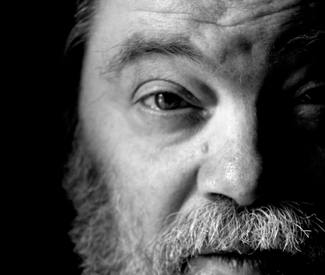
Genesis Breyer P-Orridge on “The Ballad of Genesis and Lady Jaye”

0

Read Nicole Gluckstern’s interview with documentary filmmaker Marie Losier about her new film, The Ballad of Genesis and Lady Jaye, here. Below, extended thoughts from Losier and film subject and musician-performance artist Genesis Breyer P-Orridge.

On serendipity:
Genesis Breyer P-Orridge:
It was Lady Jaye, when we started to take the whole idea of pandrogeny more seriously and dedicate our lives to it, she immediately said, “We really need to find somebody to just follow us around and film us.” And within a week we’d met Marie. We call it the “of course” factor. “Of course” we met Marie, because we were supposed to meet Marie, and it’s amazing how often that comes up, the “of course” thing. So from then on it wasn’t conscious anymore, it was just that Marie was around whenever she felt there was something to film, or she would say “I have this idea that I would like you to dress as a mermaid and pretend to swim with a house on your back….”

On influence:
Marie Losier:
Mike [Kuchar] is the person who taught me how to make films, just to make them. He’s actually the first person I made a film with, ever … the person who taught me how to load a roll of film in my camera. And he’s so clumsy, and everything always falls apart … so I didn’t think twice, like “Oh, ok, if I can make a film that way I don’t have to think too much [about the process], no worry.” And it works. It’s also a joy. Mike and George [Kuchar] were always like, “filmmaking is a hobby, just enjoy it.”


On DIY filmmaking:
ML: It took a long time, [seven years]. I had no budget and I did everything on my own time and budget. No crew, no producer. [I had] this tiny 16mm Bolex with no sound or anything, so it was a pretty archaic way of entering that world, but for me, it became very very beautiful because I was there and I was a part of it, but also, like a ghost who would just record beautiful moments…but was not intruding.

On pandrogeny:
GPO: In the beginning, as you know, it was basically just driven by [my and Lady Jaye’s] insane love for each other, the sense of wanting to literally consume each other and just find away we could somehow blend our bodies together as well as our minds and become a new-formed being whether it was in this dimension or another. But during that we had a lot of dialogues … about the implications and possibilities, and at some point it came back into my mind [something that William S.] Burroughs said to me in 1971: “How do we short-circuit control, and where is control located?”

It came to us that control is a recording, and DNA is a recording, and it terms of the human body and its potential and its ability to mutate and evolve, then where you have to look is DNA. And if you want to change the recording, you cut it up, you deny it its natural flow. And that’s what we realized we were doing, that we were quietly saying we will not let our bodies grow and look the way that DNA expects us to. We will say “we refuse,” and that became a really powerful thought for us … it loosened up our way of seeing things. We both thought, if we can break the pattern of DNA, even in simple ways, perhaps that will give people the breathing space to think about the future. If you can imagine that the body can become basically anything once you remove DNA as a monopoly … or suppressive doctrine … once you take away this idea that the body is sacred and a finished item, which it’s not, in our opinion, far from it, then everything becomes possible.

On the sweet hereafter:
GPO: Myself and [the late] Lady Jaye [are still] involved in pandrogeny, [just] she is now working in the immaterial dimension. The ultimate point for us personally was that when my body is dropped for her to maintain a sense of individual spirit through it so that when it’s my turn to leave this body we can literally find each other and literally become one. There’s lots of things that she noted that are still being manifested. She’s absolutely always around.

On love:
SFBG:
One thing I really like about the film are all the domestic scenes, people running around the kitchen and throwing barbecues. Do you have a sense of relief that that side of you is now in the public view, that people can associate you with domestic tranquility?

GPO: Definitely, thank goodness. The only thing that Jaye wanted to achieve was to be remembered as a great love affair, so for all of us involved, the band, our friends, are really thrilled that that’s what happened.

The Ballad of Genesis and Lady Jaye opens Fri/9 in Bay Area theaters.

Together forever

1

arts@sfbg.com

FILM It’s hard to imagine taking on the controversial subject of genre-defying performance artist and musician Genesis Breyer P-Orridge and finding a hitherto-unexploited angle of approach — but Marie Losier’s delicate filmic collage of an artist as an elder pandrogene is full of whimsy and surprise. Losier’s portraits in film of other counter-culture figures, most notably both Mike and George Kuchar, helped shape her into the ideal candidate to tackle filming P-Orridge and her late, great life partner, Lady Jaye Breyer P-Orridge, over the course of several years, documenting their partnership and their pandrogeny project for posterity.

SFBG There’s a whole backstory about how you two met, that you stepped on Gen’s foot at a party, but how did the relationship develop from there?

Marie Losier It was immediate in the sense that I had seen Genesis reading poetry and songs with Thee Majesty [the night before]. I was kind of shy, and I said, “I really loved what you did,” and she looked at me with her big smile and her gold teeth appeared — and I was like, “Wow, that’s beautiful!” And we just spoke shortly but it was very tender and I felt it was very unusual because of the coincidence of timing, and she said, “You can write to me,” and gave me her card, and I emailed her. That was the beginning, for me, of a great adventure. I had no idea about the pandrogeny project except that I was discovering [Genesis and Jaye’s] resemblance and their love, and that’s when I started filming, without knowing that this would become the main subject.

SFBG How much of the film is your footage?

Losier The only archival footage was this tiny minute of William Burroughs, one minute of Gen in Throbbing Gristle, and this really great footage of Coum Transmission where Gen is really young. Then, the archive of [P- Orridge’s children] Genesse and Caresse singing “Are You Experienced?”, and a little tiny image of Jaye performing when she was much younger in New York City.

SFBG That moment when they are in the alley, dressed up in leather, and Gen has the little Hitler mustache?

Losier Sorry, yes, this is footage that Bruce LaBruce gave me. That was interesting because I would not have staged that, but it showed Jaye in a way that I didn’t have.

SFBG One thing that strikes me is that there’s quite a large chunk in the middle in which Jaye does not appear. I wonder if you had originally intended to interview her more about her past and her art? Losier Yes, but Jaye was a lot more shy, or a lot more fleeting in front of the camera, so I spent more time, in a way with Gen. But even if you don’t see her as much in the film, she’s very present. S/he never dies because even to the end she’s still there, and also you feel her in the atmosphere all the time through the film. But it’s true I had less footage of Jaye, and it was only when s/he passed away that I realized I didn’t have enough to make her own full story, but in a way that also made sense. She was very kind but also kind of wild, more secretive than Gen, so it also corresponded to her personality.

SFBG Were you ever intentionally trying to go for a cut-up feeling or technique while you were filming the film, or trying to shape it?

Losier To be totally honest, it’s really the way I edit. If you see my short films, they are all made this way because they are all shot with non-sync sound, 16mm, three-minute rolls of film … so it’s already a collage. I also always mix between the surreal aspect of tableau vivant, and the construction of daily life. I think with Gen and Jaye I found the symbiosis of the perfect cut-up couple to match how I work, and how I build a story.

Check out Pixel Vision for an extended version of Nicole Gluckstern’s interview with Marie Losier and film subject Genesis Breyer P-Orridge.

THE BALLAD OF GENESIS AND LADY JAYE opens Fri/9 in Bay Area theaters.

Stage Listings

0

Performance times may change; call venues to confirm. Reviewers are Robert Avila, Rita Felciano, and Nicole Gluckstern. Submit items for the listings at listings@sfbg.com. For further information on how to submit items for the listings, see Picks.

THEATER

OPENING

“Celebration of Women’s History Month” Thick House, 1695 18th St, SF; www.3girlstheatre.org. $30. Opens Thurs/8, 7:30pm. Dates and showtimes vary. Through April 1. 3Girls Theatre Company launches its inaugural season with a celebration of new works (in both full-production and staged-reading form) by female Bay Area playwrights.

It’s All the Rage Studio Theater, Marsh San Francisco, 1062 Valencia, SF; (415) 282-3055, www.themarsh.org. $15-50. Opens Thurs/8, 8pm. Runs Thurs, 8pm; Sat, 8:30pm, Sun, 7pm. Through April 15. Longtime comedian and radio host Marilyn Pittman’s solo play wrestles with the legacy of her parents’ violent deaths in a 1997 murder-suicide initiated by her father. It’s disturbing material that Pittman, a stout middle-aged woman with a gregarious and bounding personality, approaches indirectly via a good deal of humor — including recounting the first time she did her growing-up-lesbian bit before her mother in a DC comedy club. But the pain and confusion trailing her for 13 years is never far behind, whether in accounts of her own battle with anger (and the broken relationships it has left in its wake) or in ominous memories of her too complaisant mother or her charming but domineering father, whose controlling behavior extended to casually announcing murderous dreams while policing the boundaries of his marriage against family interference. A fine mimic, Pittman deploys a Southern lilt in playing each parent, on a stage decorated with a hint of their Southwestern furnishings and a framed set of parental photographs. In not exactly knowing where to lay blame for, or find meaning in, such a horrifying act, the play itself mimics in subtler form the emotional tumult left behind. There’s a too brief but eerie scene in which her veteran father makes reference to a murder among fellow soldiers en route to war, but while PTSD is mentioned (including as an unwanted patrimony), the 60-minute narrative crafted by Pittman and director David Ford wisely eschews any pat explanation. If transitions are occasionally awkward and the pace a bit loose, the play leaves one with an uncomfortable sense of the darker aspects of love, mingled with vague concentric histories of trauma and dislocation in a weird, sad tale of destruction and staying power. Note: review from the show’s 2009 run at the Marsh. (Avila)

Julius Caesar Buriel Clay Theater, African American Art and Culture Complex, 762 Fulton, SF; 1-800-838-3006, www.african-americanshakes.org. $10-30. Opens Sat/10, 8pm. Runs Sat, 8pm; Sun, 4pm. Through April 1. African-American Shakespeare Company performs a version of the Bard’s classic set during the ongoing civil wars of West Africa.

BAY AREA

Now Circa Then Lucie Stern Theatre, 1305 Middlefield, Palo Alto; (650) 463-1960, www.theatreworks.org. $19-69. Previews Wed/7-Fri/9, 8pm. Opens Sat/10, 8pm. Runs Tues-Wed, 7:30pm; Thurs-Sat, 8pm (also Sat, 2pm); Sun, 2 and 7pm. Through April 1. TheatreWorks performs Carly Mensch’s comedy about a romance that blooms between two historical re-enactors.

ONGOING

*Blue/Orange Lorraine Hansberry Theatre, 450 Post, SF; (415) 474-8800, www.lhtsf.org. $43-53. Thurs-Sat, 8pm (also Sat, 2pm). Through March 18. Lorraine Hansberry Theater offers an uneven but worthwhile production of British playwright Joe Penhall’s sardonic comedy of ideas and institutional racism, an intriguingly frustrating three-hander about a young doctor (a bright Dan Clegg) at a psychiatric teaching hospital who begins a battle royal with his suave and pompous supervising physician (a comically nimble Julian Lopez-Morillas) over the release of a questionably-sane black patient. Originally brought in by police for creating a disturbance, Christopher (the excellent Carl Lumbly) still exhibits signs of psychosis and his ability to care for himself seems doubtful to the young doctor treating him. The older physician appeals to the patient’s general competence, hospital procedures, the shortage of beds, and the exigencies of career advancement in countering the younger doctor’s insistence on keeping the patient beyond the mandatory 28-day period required by law. For his part, Christopher, nervous and rather manic, is at first desperately eager to be released back to his poor London neighborhood. Competing interviews with the two doctors complicate his perspective and ours repeatedly, however, as a heated debate about medicine, institutionalization, cultural antecedents to mental “illness,” career arcs, and a “cure for black psychosis,” leave everyone’s sanity in doubt. Although our attention can be distracted by a too-pervading sound design and less than perfect British accents, Edris Cooper-Anifowoshe directs a strong and engaging cast in a politically resonant not to say increasingly maddening play. (Avila)

*Fool For Love Boxcar Studios, 125A Hyde, SF; www.boxcartheatre.org. $25. Showtimes vary. Through April 14. Another installment of Boxcar Theatre’s epic Sam Shepard repertory project, Fool for Love inaugurates their newest performance space within their Hyde Street Studios location. A depressingly realistic reproduction of a claustrophobic motel room, the tiny jewel-box theatre provides no refuge for the actors, and certainly not for the audience, each trapped beneath the pitiless gaze of the other. And if that too-close-for-comfort intimacy doesn’t get to you, the intentionally difficult subject matter — a “typical” Shepardian foray into alcohol-fueled ranting, violence, incest, and casual cruelty — probably will. Shepard’s strength in monologue shows itself off to meaty effect from May’s (Lauren Doucette) melancholy description of her mother’s love affair with the Old Man (Jeff Garrett) to Eddie’s (Brian Trybom) candid admittance to May’s timid suitor Martin (Geoffrey Nolan) that he and May are not cousins at all but half-siblings who have “fooled around” with each other. In addition to the reliably strong performances from each of the actors, Fool features a notably clever bit of staging involving the Old Man who appears not as a specter wandering the periphery of the stage, but as a recurring figure on the black-and-white television, interrupting the flow of cheesy Westerns with his garrulous trailer park wisdom and an omnipresent Styrofoam cup filled, one suspects, with something stronger than just coffee. (Gluckstern)

Geezer Marsh San Francisco, MainStage, 1062 Valencia, SF; (415) 282-3055, www.themarsh.org. $25-100. Thurs and Sat, 8pm; Sun, 5pm. Through March 18. Geoff Hoyle’s hit solo show returns.

Glengarry Glen Ross Actors Theatre of San Francisco, 855 Bush, SF; (415) 345-1287, www.brownpapertickets.com. $26-40. Fri-Sat, 8pm. Through March 24. David Mamet’s cutthroat comedy, courtesy of the Actors Theatre of San Francisco.

Maurice New Conservatory Theatre Center, 25 Van Ness, SF; (415) 861-8972, www.nctcsf.org. $25-45. Wed-Sat, 8pm; Sun, 2pm. Through March 25. New Conservatory Theatre Center presents a play about two young men who fall in love in pre-World War I England, adapted from E.M. Forster’s novel.

Merchants Exit Stage Left, 156 Eddy, SF; www.brownpapertickets.com. $10-25. Thurs-Sat, 8pm. Through March 24. No Nude Men Productions performs Susan Sobeloff’s tale of two sisters trying to balance financial stability and career satisfaction.

The Real Americans Marsh Studio Theater, 1062 Valencia, SF; (415) 282-3055, www.themarsh.org. $25-50. Fri, 8pm; Sat, 5pm; Sun, 2pm. Through March 18. Dan Hoyle revives his hit solo show about small-town America.

Scorched American Conservatory Theater, 415 Geary, SF; (415) 749-2228, www.act-sf.org. $10-85. Wed/7-Sat/10, 8pm; Wed/7, Sat/10-Sun/11, 2pm. Lebanese-Canadian playwright Wajdi Mouawad bites off a little more than he can chew, and ACT thus offers a less than satisfying three-hour feast with its stilted production of Mouawad’s 2008 epic about a brother and sister (Babak Tafti and Annie Purcell) sent by their estranged, recently deceased mother’s executor (David Strathairn) on a hunt for her past in her unnamed civil war-torn Middle Eastern homeland. At that point, the story of their mother, Nawal (Marjan Neshat), comes center stage — or rather crisscrosses it with that of her children in a mash-up that only undercuts the potential tension or interest in either plot strand. Director Carey Perloff’s cast also proves unevenly compelling. Strathairn’s Alphonse is a compassionate, slyly wise man who nervously rambles to make up for the extremely laconic and resentful mood of Nawal’s children. But he is of peripheral importance, and his malapropisms are laid on a little thicker than his endearing Quebecois accent, as if betraying the limits of his function onstage. The other characters meanwhile feel too thinly sketched to occupy the middle. As the sad and horrifying details of this Sophocles-inspired tale unfold, there is surprisingly little sense of authentic experience, and much more the feeling of over-indulgence it certain dramatic devices. Between the sententious and ponderous dialogue, strained characterization, and unwieldy storyline is a play flailing away at something beyond its ken or capacity. (Avila)

*Three’s Company Finn’s Funhouse, 814 Grove, SF; www.brownpapertickets.com. $20. Fri/9-Sat/10, 9pm (also Sat/10, 7pm). Some flashbacks are better than the original high. And more real. This time, you can literally “knock on their door” — a beautiful old Victorian in the Western Addition, whose dining room is made up to look like the Santa Monica apartment shared by Jack, Crissy, and Janet, the happy-go-lucky trio at the center of the iconic late ’70s, early ’80s sitcom. Giggly, ribald, and pleasingly stupid, to be sure, the evening also delivers first-class showmanship: Mike Finn (as good-natured goof Jack), D’Arcy Drollinger (as a buxom not to say brawny Chrissy), and former Go-Go’s guitarist Jane Wiedlin (in a spritely turn as Janet) couldn’t be more reminiscent or delightfully arch in their respective roles. Meanwhile, incarnating the Ropers with pitch-perfect inflections, timing, kaftans and sweater vests are the superb duo of Matthew Martin (channeling the frustrated deadpan wit of Mrs. Roper) and Sara Moore (excelling as subdued but occasionally very wacky Mr. Roper). A ticket gets you pilot episode “Man About the House” and “Roper’s Niece” (a suitably randy Laurie Bushman) — plus commercials. Cat Fight and Shoulder Pads’ homey hit, briskly directed by Cindy Goldfield and extended for one more weekend, is must-see reality TV. (Avila)

Tontlawald Exit on Taylor, 277 Taylor, SF; (415) 525-1205, www.cuttingball.com. $10-50. Thurs/8, 7:30pm; Fri/9-Sat/10, 8pm (also Sat/10, 2pm); Sun/11, 5pm. Entering the theater space thought the back door, squeezing alongside a giant fishing net motif, which wraps the entire stage in a fabric grid, almost imperceptibly skews one’s perspective in advance of the show, just a brief twist that sets the tone for this abbreviated epic of abuse, friendship, and revenge. The heroine, an earthy yet somehow fragile maid (Marilet Martinez), inadvertently manages to rile her evil stepmother (Madeline H. D. Brown) for what seems to be the umpteenth time before fleeing into the mysterious wooded Tontlawald, inhabited by joyously frolicking beasts (or boys) and a preternaturally beautiful princess (Rebecca Frank) who immediately adopts her as a friend. Told through snatches of repetitive text, solemnly-intoned and ecstatically sung, and moments of engagingly acrobatic, hyper-stylized movement, Cutting Ball’s Tontlawald meanders through an Estonian fairy tale-hero’s quest, as if told from the perspective of the child protagonist — light on detail, heavy on drama. Inspired by TeatrZAR, the resident company of Poland’s Grotowski Centre, co-directors Paige Rogers and Annie Paladino and choreographer Laura Arrington worked to emulate certain characteristics of its style, notably the emphasis on song. But while there are some gorgeously transcendent moments of musical direction courtesy of Rogers, and of choreography courtesy of Arrington, the work plays out mostly as a disjointed series of striking tableaux, which intrigue the intellect, but somehow fail to inflame the soul. (Gluckstern)

*True West Boxcar Studios, 125A Hyde, SF; (415) 967-2227, www.boxcartheatre.org. $25. Thurs-Sat, 8pm. Through April 7. The first installment of Boxcar Theatre’s four-play Sam Shepard repertory project, True West ushers in the ambitious run with a bang. This tale of two brothers who gradually assume the role of the other is one of Shepard’s most enduring plays, rich with humorous interludes, veering sharply into dangerous terrain at the drop of a toaster. In time-honored, True West tradition, the lead roles of Austin, the unassuming younger brother, and Lee, his violent older sibling, are being alternated between Nick A. Olivero and Brian Trybom, and in a new twist, the role of the mother is being played by two different actresses as well (Adrienne Krug and Katya Rivera). The evening I saw it, Olivero was playing Austin, a writer banging away at his first screenplay, and Trybom was Lee, a troubled, alcoholic drifter who usurps his brother’s Hollywood shot, and trashes their mother’s home while trying to honor his as yet unwritten “contract”. The chemistry between the two actors was a perfect blend of menace and fraternity, and the extreme wreckage they make of both the set (designed by both actors), and their ever-tenuous relationship, was truly inspired. (Gluckstern)

The Waiting Period MainStage, Marsh San Francisco, 1062 Valencia, SF; (415) 282-3055, www.themarsh.org. $15-50. Fri, 8pm; Sat, 5pm. Through March 24. Brian Copeland (comedian, TV and radio personality, and creator-performer of the long-running solo play Not a Genuine Black Man) returns to the Marsh with a new solo, this one based on more recent and messier events in Copeland’s life. The play concerns an episode of severe depression in which he considered suicide, going so far as to purchase a handgun — the title coming from the legally mandatory 10-day period between purchasing and picking up the weapon, which leaves time for reflections and circumstances that ultimately prevent Copeland from pulling the trigger. A grim subject, but Copeland (with co-developer and director David Ford) ensures there’s plenty of humor as well as frank sentiment along the way. The actor peoples the opening scene in the gun store with a comically if somewhat stereotypically rugged representative of the Second Amendment, for instance, as well as an equally familiar “doood” dude at the service counter. Afterward, we follow Copeland, a just barely coping dad, home to the house recently abandoned by his wife, and through the ordinary routines that become unbearable to the clinically depressed. Copeland also recreates interviews he’s made with other survivors of suicidal depression. Telling someone about such things is vital to preventing their worst outcomes, says Copeland, and telling his own story is meant to encourage others. It’s a worthy aim but only a fitfully engaging piece, since as drama it remains thin, standing at perhaps too respectful a distance from the convoluted torment and alienation at its center. (Avila)

BAY AREA

*Body Awareness Aurora Theatre, 2081 Addison, Berk; (510) 843-4822, www.auroratheatre.org. $30-48. Wed/7-Sat/10, 8pm; Sun/11, 2 and 7pm. In Annie Baker’s new comedy, receiving a top-notch Bay Area premiere at Aurora Theatre, peppy psychology prof Phyllis (Amy Resnick) hosts “Body Awareness Week” at her small Vermont college, while back home partner Joyce (Jeri Lynn Cohen) talks to her 21-year-old son Jared (Patrick Russell) about the porn pay-per-view bill he’s racked up. Phyllis contends that Joyce’s introverted, somewhat explosive virgin son (who in addition to bouts of violent anger soothes himself compulsively with an electric security toothbrush) has Asperger’s Syndrome — a diagnosis that Jared, a budding not too say obsessive lexicographer, hotly contests. That same week, the couple hosts a guest artist, Frank (Howard Swain), a breezy man’s man whose career stands squarely on a series of photographs of nude women and girls. The young man seeks sexual advice from the older one, much to Phyllis’s disgust and Joyce’s relief, while also tempting Joyce with the notion of posing for a nude portrait and “reclaiming her body image,” in a well-used phrase. An already delicate balance thus goes right off kilter as, between the poles of Phyllis and Frank, Joyce and Jared chase competing notions and definitions of themselves and the world. In the volatile tension between perspectives, power trips, and extreme personalities, playwright Baker initially pushes a comic form toward an unsettling edge, only to retreat in the end for safer ground and a family-friendly resolution. While that feels like a lost opportunity, Body Awareness is still a stimulating and solidly entertaining evening, brought to life by a warm and dexterous ensemble under fine, lively direction by Joy Carlin. (Avila)

Cabaret Larkspur Café Theater (American Legion Hall Post 313), 500 Magnolia, Larkspur; www.brownpapertickets.com. $25-45. Fri-Sat, 8pm; Sun, 7pm (no show April 8). Through April 15. Independent Cabaret Productions and Shakespeare at Stinson move their production of the Kander and Ebb classic from Fort Mason to the North Bay.

A Doctor in Spite of Himself Berkeley Repertory Theatre, Roda Theatre, 2015 Addison, Berk; (510) 647-2949, www.berkeleyrep.org. $14.50-73. Tues and Thurs-Sat, 8pm (no show March 23); Wed and Sun, 7pm (also Sun, 2pm). Through March 25. Berkeley Rep performs a contemporary update of the Molière comedy.

*The Kipling Hotel: True Misadventures of the Electric Pink ’80s New venue: Marsh Berkeley, 2120 Allston, Berk; (415) 282-3055, www.themarsh.org. $20-50. Sat, 8:30pm; Sun, 7pm. Extended through March 25. This new autobiographical solo show by Don Reed, writer-performer of the fine and long-running East 14th, is another slice of the artist’s journey from 1970s Oakland ghetto to comedy-circuit respectability — here via a partial debate-scholarship to UCLA. The titular Los Angeles residency hotel was where Reed lived and worked for a time in the 1980s while attending university. It’s also a rich mine of memory and material for this physically protean and charismatic comic actor, who sails through two acts of often hilarious, sometimes touching vignettes loosely structured around his time on the hotel’s young wait staff, which catered to the needs of elderly patrons who might need conversation as much as breakfast. On opening night, the episodic narrative seemed to pass through several endings before settling on one whose tidy moral was delivered with too heavy a hand, but if the piece runs a little long, it’s only the last 20 minutes that noticeably meanders. And even with some awkward bumps along the way, it’s never a dull thing watching Reed work. (Avila)

Mesmeric Revelation Berkeley City Club, 2315 Durant, Berk; (510) 558-1381, www.centralworks.org. Thurs-Sat, 8pm; Sun, 5pm. Through March 18. Central Works opens its season of world premieres with Aaron Henne’s Edgar Allen Poe-inspired drama.

The Pirates of Penzance Julia Morgan Center for the Arts, 2640 College, Berk; (510) 845-8542, www.juliamorgan.org. $17-35. Fri-Sat, 7pm (also Sat, 2pm); Sun, noon and 5pm. Through April 1. Berkeley Playhouse performs the Gilbert and Sullivan classic, with the setting shifted to a futuristic city.

Titus Andronicus La Val’s Subterranean, 1834 Euclid, Berk; www.impacttheatre.com. $10-20. Thurs-Sat, 8pm. Through March 31. Impact Theatre takes on the Bard’s bloodiest tragedy.

The World’s Funniest Bubble Show Marsh Berkeley, TheaterStage, 2120 Allston, Berk; (415) 826-5750, www.themarsh.org. $8-50. Extended run: Sun/11 and March 18, 11am. Louis “The Amazing Bubble Man” Pearl returns with this kid-friendly, bubble-tastic comedy.

PERFORMANCE/DANCE

“The Abduction from the Seraglio (Yanked from the Harem)” Marines Memorial Theater, 609 Sutter, SF; www.pocketopera.org. Sun/11, 2pm. Also March 18, 2pm, Berkeley Hillside Club, 2286 Cedar, Berk. $15-39. Pocket Opera performs artistic director Donald Pippin’s witty translation of Mozart’s classic work.

“Arthur in Underland” CounterPULSE, 1310 Mission, SF; www.counterpulse.org. Fri-Sun, 8pm. Through March 24. $15-24. Dandelion Dancetheater performs a new work about a young man whose life is changed when he becomes part of a rock group’s entourage.

“A Circus Celebration Honoring Peggy Ford” Z Space, 450 Florida, SF; www.brownpapertickets.com. Tues/13, 7pm. $20-100. Clowns and other circus performers honor the life and legacy of the late Peggy Ford, a 40-year veteran of the Bay Area and national circus communities.

“Elect to Laugh” Studio Theater, Marsh San Francisco, 1062 Valencia, SF; (415) 282-3055, www.themarsh.org. Tues, 8pm. Ongoing through Nov 6. $15-50. Will Durst and friends perform in this weekly political humor show that focuses on the upcoming presidential election.

“The Eric Show” Milk Bar, 1840 Haight, SF; www.milksf.com. Tues, 8pm (ongoing). $5. Local comedians perform with host Eric Barry.

“Finding the Michaels” Shotwell Studios, 3252-A 19th St, SF; www.brownpapertickets.com. Fri/9-Sat/10, 8pm. Footloose presents Cassie Angley’s solo play about her experiences in post-9/11 New York City.

“Funsch Solos: One on One” Z Space, 450 Florida, SF; www.zspace.org. Thurs/8-Sat/10, 8:30pm; Sun/11, 7:30pm. $15-20. Christy Funsch presents up-close glimpses of her solo dance works, featuring a variety of performers.

“Waters Rising” Dance Mission Theater, 3316 24th St, SF; (415) 273-4633, www.brownpapertickets.com. Fri/9-Sat/10, 8pm; Sun/11, 5pm. $15-18. Locals Zell Dance and dance ceres team up with Boston-based Weber Dance for a weekend showcasing new works.

“The Whole Megillah 2: Uncut” Kanbar Hall, Jewish Community Center of San Francisco, 3200 California, SF. Wed/7, 8pm. Also: Thurs/8-Fri/9, 8pm; Sat/10, 7 and 10pm. Jewish Theatre, 470 Florida, SF; www.jccsf.org. $15-20. The Hub and Killing My Lobster present this Purim-themed sketch comedy show.

BAY AREA

Alvin Ailey Dance Theater Zellerbach Hall, Bancroft at Telegraph, UC Berkeley, Berk; (510) 642-9988, www.calperformances.org. Program A: Tues/13 and March 16, 8pm; Program B: March 14, 8pm, March 17, 2pm, and March 18, 3pm; Program C: March 15 and 17, 8pm. $30-80. The veteran company makes its annual visit with three programs incorporating eight separate works, including the Bay Area premiere of Rennie Harris’ Home (2011).

“The Fortune Project Ch. 2: Atomic Intuition” Envision Academy, 1515 Webster, SF; www.raggedwing.org. Fri/9-Sat/10, 8pm; Sun/11, 5pm. $15-30. Ragged Wing Ensemble performs the second installment in its multidisciplinary, interactive performance series.

Film Listings

0

Film listings are edited by Cheryl Eddy. Reviewers are Kimberly Chun, Max Goldberg, Dennis Harvey, Lynn Rapoport, and Matt Sussman. For rep house showtimes, see Rep Clock. For complete

SAN FRANCISCO INTERNATIONAL ASIAN AMERICAN FILM FESTIVAL

The 30th San Francisco International Asian American Film Festival runs March 8-18 at the Castro, 429 Castro, SF; Sundance Kabuki, 1881 Post, SF; SF Film Society Cinema, 1746 Post, SF; Pacific Film Archive, 2575 Bancroft, Berk; and Camera 3 Cinemas, 288 S. Second St, San Jose. For tickets (most shows $12) and complete schedule, visit www.caamedia.org. For commentary, see “Here’s Looking at You, Kids” and “Docs and Shocks.”

OPENING

*The Ballad of Genesis and Lady Jaye See “Together Forever.” (1:12) Embarcadero, Shattuck.

Being Flynn There’s an undeniable frisson in seeing Robert De Niro acting paranoid and abusive behind the wheel of an NYC cab again, but Paul Weitz’s drama isn’t exactly Taxi Driver 2. The actor plays Jonathan Flynn, a bellicose loner who abandoned his wife (Julianne Moore in flashbacks) and son to pursue his destiny as a great writer. Years later, the wife is deceased, the son estranged, but Jonathan remains secure in his delusions of genius — despite the publishing industry’s failure to agree. When an assault on noisy neighbors gets him thrown out of his apartment, his gradual descent into homelessness forces a paths-crossing with now-grown only child Nick (Paul Dano), who has taken a job at a shelter in an attempt to do something useful with his own unsettled life. Adapting the real Nick Flynn’s memoir, Weitz resists the temptation to make Pops a lovable old coot — he’s racist, homophobic, ill-tempered and pathetically arrogant — or to overly sentimentalize a father-son relationship that’s never going to have a happy ending. Nonetheless, this competent exercise too often feels like formulaic fiction, the material perhaps demanding a less slick, starry treatment to ring as true as it ought; the fuzzy warm blanket of a song score by Badly Drawn Boy doesn’t help. Still, intentions are good and the performances strong enough, including those by support players Lili Taylor, Wes Studi, and Olivia Thirlby. (1:42) Embarcadero. (Harvey)

*The Forgiveness of Blood Joshua Marston’s follow-up to his 2004 indie hit Maria Full of Grace is a similarly sensitive, heartbreaking look at a culture not often illuminated by the silver screen. Co-written by Marston and Albanian filmmaker Andamion Murataj, The Forgiveness of Blood takes place in an Albanian town caught between traditions of the past — fiercely upheld by the older generation — and youths whose main areas of interest are texting, scooters, and the internet. When a turf war involving whose horse-cart can pass through whose land boils over, the father of teenage siblings Nik (Tristan Halilaj) and Rudina (Sindi Lacej) goes into hiding, intent on evading both the police and the family of the man he’s helped murder. Unfortunately for Nik, the laws of blood feud mean it’s now open season on his head, should he venture from his home; this puts an extreme damper on his wooing of the pretty classmate he’s just exchanged phone numbers with, not to mention his dreams of opening an internet café in the village. Unfortunately for Rudina, her father’s absence means the bright girl must drop out of school and take over his bread-delivery route — a job she excels at, despite her initial reluctance. It’s a no-win situation for everyone (mom’s working double-time at her factory gig; younger siblings are sullen and frightened), and dad’s crime starts to feel more and more like a macho, selfish act as the frustration builds. Though The Forgiveness of Blood was inexplicably passed over for a Best Foreign Language Film nomination (especially considering Marston’s success with Maria), it arrives in local theaters having won the Best Screenplay award at the 2011 Berlin International Film Festival. Don’t miss it. (1:49) Bridge, Shattuck. (Eddy)

*Friends With Kids Jennifer Westfeldt scans Hollywood’s romantic comedy landscape for signs of intelligent life and, finding it to be a barren place possibly recovering from a nuclear holocaust, writes, directs, and stars in this follow-up to 2001’s Kissing Jessica Stein, which she co-wrote and starred in. Julie (Westfeldt) and Jason (Adam Scott) are upper-thirtysomething New Yorkers with two decades of friendship behind them. He calls her “doll.” They have whispered phone conversations at four in the morning while their insignificant others lie slumbering beside them on the verge of getting dumped. And after a night spent witnessing the tragic toll that procreation has taken on the marriages of their four closest friends — Bridesmaids (2011) reunion party Leslie (Maya Rudolph), Alex (Chris O’Dowd), Missy (Kristen Wiig), and Ben (Jon Hamm), the latter two, surprisingly and less surprisingly, providing some of the film’s darkest moments — Jason proposes that they raise a child together platonically, thereby giving any external romantic relationships a fighting chance of survival. In no time, they’ve worked out the kinks to their satisfaction, insulted and horrified their friends, and awkwardly made a bouncing baby boy. The arrival of significant others (Edward Burns and Megan Fox) signals the second phase of the experiment. Some viewers will be invested in latent sparks of romance between the central pair, others in the success of an alternative family arrangement; one of these demographics is destined for disappointment. Until then, however, both groups and any viewers unwilling to submit to this reductive binary will be treated to a funny, witty, well crafted depiction of two people’s attempts to preserve life as they know it while redrawing the parameters of parenthood. (1:40) California, Piedmont. (Rapoport)

John Carter More or less an adaptation of Tarzan author Edgar Rice Burroughs’ 1917 sci-fi classic A Princess of Mars, John Carter is yet another film that lavishes special effects (festooned with CG and 3D) on a rote story filled with characters the viewer couldn’t give two craps about. Angry Civil War veteran John Carter (Taylor Kitsch, more muscleman than thespian) mysteriously zips to Mars, a planet not only populated by multiple members of the cast of HBO’s Rome (Ciarán Hinds, James Purefoy, and the voice of Polly Walker), but also quite a bit of Red Planet unrest. Against his better judgment, and with the encouragement of a comely princess (tragic spray-tan victim Lynn Collins), Carter joins the fight, as red people battle blue people, green four-armed creatures pitch in when needed, and sinister silver people (led by Mark Strong) use zap-tastic powers to manipulate the action for their amusement. If you’re expecting John Carter to be a step up from Conan the Barbarian (2011), Prince of Persia (2010), etc., because it’s directed by Andrew Stanton (the Pixar superstar who helmed 2008’s Finding Nemo and 2010’s WALL*E), eh, think again. There’s nothing memorable or fun about this would-be adventure; despite its extravagant 3D, it’s flatter than a pancake. (2:17) Four Star, Marina. (Eddy)

Let the Bullets Fly A huge blockbuster in China, the latest from director Jiang Wan (1998’s Devils on the Doorstep) has received high praise for the zippy wordplay in its script — not such great news for us non-Mandarin speakers stuck reading the not-especially-zippy English subtitles. What’s left is an overlong tale of a notorious bandit (Jiang) who stumbles upon an opportunity to fake his way into a governorship after a train robbery goes awry. He and his henchmen (who wear masks styled after mahjong tiles) have no sooner arrived in town when it’s made clear that wealth and power will not come easy, since the entire burg is controlled by a gold-toothed gangster (a braying, over-the-top Chow Yun-Fat) who doesn’t like to share. Let the bullets fly, indeed, and let the games begin, with occasionally thrilling but often cartoonish results. Tip: if it’s a red-hot, nerve-jangling, balls-to-the-wall Asian action import you seek, wait a few weeks for Indonesia’s The Raid: Redemption. Yowza. (2:12) Four Star. (Eddy)

*Lou Harrison: A World of Music Doing the late Aptos, Calif. composer justice with its depth and breadth, Lou Harrison: A World of Music is the fortunate product of filmmaker Eva Soltes’s relationship with the underappreciated musical genius. Over the course of two decades, she gathered footage of the visionary experimentalist who freely roved the realms of contemporary music and dance, Asian musical traditions, and instrument-making. Her work has borne fruit — here, you get the full, rich scope of Harrison’s achievements — from his time in the woods with partner and instrument-making cohort William Colvig to his toils alongside choreographer Mark Morris to his struggles to stage Young Caesar, his opera on a Roman ruler’s same-sex revels. What Soltes doesn’t get on camera, she manages to trace through still images and interviews with contemporaries and cohorts such as Merce Cunningham, Judith Malina, and Michael Tilson Thomas, filling out Harrison’s beginnings at Mills College, mentored by Henry Cowell and collaborating with John Cage; encapsulating his success as a composer, critic, and arranger in NYC; and touching on his breakdown and retreat to his mountain cabin where he sought to write music in peace, yet nevertheless continued to lend his teeming creativity to points close to home, à la the Cabrillo Music Festival, and abroad. (1:30) Roxie. (Chun)

Salmon Fishing in the Yemen A fisheries expert (Ewan McGregor) is tasked by a sheik with bringing fly fishing to the desert in this adaptation of Paul Torday’s acclaimed comic novel. (1:52) Embarcadero.

*Silent House Yep, it’s another remake of a foreign horror movie — but Uruguay’s La casa muda is obscure enough that Silent House, which recycles its plot and filming style, feels like a brand-new experience. Co-directors Chris Kentis and Laura Lau, last seen bobbing in shark-infested waves for 2003’s similarly bare-bones Open Water, apply another technical gimmick here: Silent House appears to be shot in one continuous take. Though it’s not actually made this way, each shot is extraordinarily long — way longer than you’d expect in a horror film, since the genre often relies on quick edits to build tension. Instead, the film’s aim is “real fear captured in real time” (per its tag line), and there’s no denying this is one shriek-filled experience. The dwelling in question is an isolated, rambling lake house being fixed up to sell by Sarah (Elizabeth Olsen), her father (Adam Trese), and uncle (Eric Sheffer Stevens). The lights don’t work, the windows are boarded up, most doors are padlocked shut, and there are strange noises coming from rooms that should be empty. Much of the film follows Sarah as she descends into deeper and deeper terror, scrabbling from floor to floor trying to hide from whoever (or whatever) is lurking, while at the same time trying to bust her way out. Though the last-act exposition explosion is a little hard to take, the film’s slow-burn beginning and frantic middle section offer bona fide chills. For an interview with Silent House co-director and writer Lau, visit www.sfbg.com/pixel_vision. (1:28) (Eddy)

A Thousand Words Karma proves to be quite the bitch when a literary agent (Eddie Murphy) screws over a spiritual guru. (1:31) Shattuck.

ONGOING

Act of Valor (1:45) 1000 Van Ness, Sundance Kabuki.

*The Artist With the charisma-oozing agility of Douglas Fairbanks swashbuckling his way past opponents and the supreme confidence of Rudolph Valentino leaning, mid-swoon, into a maiden, French director-writer Michel Hazanavicius hits a sweet spot, or beauty mark of sorts, with his radiant new film The Artist. In a feat worthy of Fairbanks or Errol Flynn, Hazanavicius juggles a marvelously layered love story between a man and a woman, tensions between the silents and the talkies, and a movie buff’s appreciation of the power of film — embodied in particular by early Hollywood’s union of European artistry and American commerce. Dashing silent film star George Valentin (Jean Dujardin, who channels Fairbanks, Flynn, and William Powell — and won this year’s Cannes best actor prize) is at the height of his career, adorable Jack Russell by his side, until the talkies threaten to relegate him to yesterday’s news. The talent nurtured in the thick of the studio system yearns for real power, telling the newspapers, “I’m not a puppet anymore — I’m an artist,” and finances and directs his own melodrama, while his youthful protégé Peppy Miller (Bérénice Béjo) becomes a yakky flapper age’s new It Girl. Both a crowd-pleasing entertainment and a loving précis on early film history, The Artist never checks its brains at the door, remaining self-aware of its own conceit and its forebears, yet unashamed to touch the audience, without an ounce of cynicism. (1:40) Balboa, California, Embarcadero, Marina, 1000 Van Ness, Piedmont, Sundance Kabuki. (Chun)

*Chico and Rita This Spain-U.K. production is at heart a very old-fashioned musical romance lent novelty by its packaging as a feature cartoon. Chico (voiced by Eman Xor Oña) is a struggling pianist-composer in pre-Castro Havana who’s instantly smitten by the sight and sound of Rita (Limara Meneses, with Idania Valdés providing vocals), a chanteuse similarly ripe for a big break. Their stormy relationship eventually sprawls, along with their careers, to Manhattan, Hollywood, Paris, Las Vegas, and Havana again, spanning decades as well as a few large bodies of water. This perpetually hot, cold, hot, cold love story isn’t very complicated or interesting — it’s pretty much “Boy meets girl, generic complications ensue” — nor is the film’s simple graphics style (reminiscent of 1970s Ralph Bakshi, minus the sleaze) all that arresting, despite the established visual expertise of Fernando Trueba’s two co directors Javier Mariscal and Tono Errando. When a dream sequence briefly pays specific homage to the modernist animation of the ’50s-early ’60s, Chico and Rita delights the eye as it should throughout. Still, it’s pleasant enough to the eye, and considerably more than that to the ear — there’s new music in a retro mode from Bebo Valdes, and plenty of the genuine period article from Monk, Mingus, Dizzy Gillespie, Chano Pozo and more. If you’ve ever jones’d for a jazzbo’s adult Hanna Barbera feature (complete with full-frontal cartoon nudity — female only, of course), your dream has come true. (1:34) Opera Plaza, Smith Rafael. (Harvey)

*Chronicle A misfit (Dane DeHaan) with an abusive father and an ever-present video camera, his affable cousin (Matt Garretty), and a popular jock (Michael B. Jordan) discover a strange, glowing object in the woods; before long, the boys realize they are newly telekinetic. At first, it’s all a lark, pulling pranks and — in the movie’s most exhilarating scene — learning to fly, but the fun ends when the one with the anger problem (guess which) starts abusing the ol’ with-great-power-comes-great-responsibilities creed. Chronicle is a pleasant surprise in a time when it’s better not to expect much from films aimed at teens; it grounds the superhero story in a (mostly) believable high-school setting, gently intellectualizes the boys’ dilemma (“hubris” is discussed), and also understands how satisfying it is to see superpowers used in the service of pure silliness — like, say, pretending you just happen to be really, really, really, good at magic tricks. First-time feature director Josh Trank and screenwriter Max “son of John” Landis also find creative ways, some more successful than others, to work with the film’s “self-shot” structure. The technique (curse you, Blair Witch) is long past feeling innovative, but Chronicle amply justifies its use in telling its story. (1:23) 1000 Van Ness. (Eddy)

*Coriolanus For his film directing debut, Ralph Fiennes has chosen some pretty strong material: a military drama that is among Shakespeare’s least popular works, not that adapting the Bard to the screen has ever been easy. (Look how many times Kenneth Branagh, an even more fabled Shakespearean Brit on stage than Ralph, has managed to fumble that task.) The titular war hero, raised to glory in battle and little else, is undone by political backstabbers and his own contempt for the “common people” when appointed to a governmental role requiring some diplomatic finesse. This turn of events puts him right back in the role he was born for: that of ruthless, furious avenger, no matter that now he aims to conquer the Rome he’d hitherto pledged to defend. The setting of a modern city in crisis (threadbare protesting masses vs. oppressive police state) works just fine, Elizabethan language and all, as does Fiennes’ choice of a gritty contemporary action feel (using cinematographer Barry Ackroyd of 2006’s United 93 and 2008’s The Hurt Locker). He’s got a strong supporting cast — particularly Vanessa Redgrave as Coriolanus’ hawkish mother Volumnia — and an excellent lead in one Ralph Fiennes, who here becomes so warped by bloodthirst he seems to mutate into Lord Voldemort before our eyes, without need of any prosthetics. His crazy eyes under a razored bald pate are a special effect quite alarmingly inhuman enough. (2:03) Opera Plaza. (Harvey)

*Crazy Horse Does the documentary genre need an injection of sex appeal? Leave it to ground-breaking documentarian Frederick Wiseman to do just that, with this hilarious, keenly-observed look into Paris’s rightfully legendary Crazy Horse Paris cabaret. For 10 weeks, the filmmaker immersed himself in all aspects of preparation going into a new show, Désirs, by choreographer Philippe Decouflé, and uncovers the guts, discipline, organizational entanglements, and genuine artistry that ensues backstage to produce the at-times laugh-out-loud OTT (e.g., the many routines in which the perky, planet-like posterior is highlighted), at-times truly remarkable numbers (the girl-on-girl spaceship fantasia; the subtle, surreal number that bounces peek-a-boo body parts off a mirrored surface) onstage — moments that should inspire burlesque performers and dance aficionados alike with the sheer imaginative possibilities of dancing in the buff, with a side of brain-teasing titillation, of course. Always silently commenting on the action, Wiseman pokes quiet fun (at the dancer vigorously brushing the horse-hair tail attached to her rear, the obsessed art director, and the sound guy who’s a ringer for Philip Seymour Hoffman’s Boogie Nights nebbish) while patiently paying respect to the mechanics behind the magic (Decouflé, among others, arguing with management for more time to improve the show, despite the beyond-rigorous seven-days-a-week, twice- to thrice-daily schedule). Crazy Horse provides marvelous proof that the battle of seduction begins with the brain. (2:08) Opera Plaza, Smith Rafael. (Chun)

*The Descendants Like all of Alexander Payne’s films save 1996 debut Citizen Ruth, The Descendants is an adaptation, this time from Kaui Hart Hemmings’ excellent 2007 novel. Matt King (George Clooney) is a Honolulu lawyer burdened by various things, mostly a) being a haole (i.e. white) person nonetheless descended from Hawaiian royalty, rich in real estate most natives figure his kind stole from them; and b) being father to two children by a wife who’s been in a coma since a boating accident three weeks ago. Already having a hard time transitioning from workaholic to hands-on dad, Matt soon finds out this new role is permanent, like it or not — spouse Elizabeth (Patricia Hastie, just briefly seen animate) will not wake up. The Descendants covers the few days in which Matt has to share this news with Elizabeth’s loved ones, mostly notably Shailene Woodley and Amara Miller as disparately rebellious teen and 10-year-old daughters. Plus there’s the unpleasant discovery that the glam, sporty, demanding wife he’d increasingly seemed “not enough” for had indeed been looking elsewhere. When has George Clooney suggested insecurity enough to play a man afraid he’s too small in character for a larger-than-life spouse? But dressed here in oversized shorts and Hawaiian shirts, the usually suave performer looks shrunken and paunchy; his hooded eyes convey the stung joke’s-on-me viewpoint of someone who figures acknowledging depression would be an undeserved indulgence. Payne’s film can’t translate all the book’s rueful hilarity, fit in much marital backstory, or quite get across the evolving weirdness of Miller’s Scottie — though the young actors are all fine — but the film’s reined-in observations of odd yet relatable adult and family lives are all the more satisfying for lack of grandiose ambition. (1:55) Piedmont, SF Center, Sundance Kabuki. (Harvey)

Dr. Seuss’ The Lorax (1:26) Balboa, 1000 Van Ness, Presidio, Shattuck.

Ghost Rider: Spirit of Vengeance (1:36) SF Center.

Gone Still-shaky if now highly self-defensive Jill (Amanda Seyfried) was abducted from her bed a year ago, thrown into a deep hole in a forest outside Portland, Ore., and escaped death only by overcoming her barely-glimpsed captor. Or so she insists — the police never found any corroborating evidence, and given Jill’s history of mental instability, wrote off her whole purported adventure as delusional. When sister Molly (Emily Wickersham) goes inexplicably missing the morning of an important exam, however, Jill is convinced the serial kidnapper-killer has struck again, going off on a frantic manhunt of her own with no help from the authorities. There is nothing spectacularly wrong with Gone, but nothing right, either — to justify the ponying up of cash money at a theater these days you have to offer something a little more than the routine execution of a derivative, uninspired script with little suspense but plenty of plot holes. That sort of thing is best experienced at a sleepless 2 a.m. on cable, for free. (1:34) 1000 Van Ness, SF Center. (Harvey)

Hugo Hugo turns on an obviously genius conceit: Martin Scorsese, working with 3D, CGI, and a host of other gimmicky effects, creates a children’s fable that ultimately concerns one of early film’s pioneering special-effects fantasists. That enthusiasm for moviemaking magic, transferred across more than a century of film history, was catching, judging from Scorsese’s fizzy, exhilarating, almost-nauseating vault through an oh-so-faux Parisian train station and his carefully layered vortex of picture planes as Hugo Cabret (Asa Butterfield), an intrepid engineering genius of an urchin, scrambles across catwalk above a buzzing station and a hotheaded station inspector (Sacha Baron Cohen). Despite the special effects fireworks going off all around him, Hugo has it rough: after the passing of his beloved father (Jude Law), he has been stuck with an nasty drunk of a caretaker uncle (Ray Winstone), who leaves his duties of clock upkeep at a Paris train station to his charge. Hugo must steal croissants to survive and mechanical toy parts to work on the elaborate, enigmatic automaton he was repairing with his father, until he’s caught by the fierce toy seller (Ben Kingsley) with a mysterious lousy mood and a cute, bright ward, Isabelle (Chloe Grace Moretz). Although the surprisingly dark-ish Hugo gives Scorsese a chance to dabble a new technological toolbox — and the chance to wax pedantically, if passionately, about the importance of film archival studies — the effort never quite despite transcends its self-conscious dazzle, lagging pacing, diffuse narrative, and simplistic screenplay by John Logan, based on Brian Selznick’s book. Even the actorly heavy lifting provided by assets like Kingsley and Moretz and the backloaded love for the fantastic proponents at the dawn of filmmaking fail to help matters. Scorsese attempts to steal a little of the latters’ zeal, but one can only imagine what those wizards would do with motion-capture animation or a blockbuster-sized server farm. (2:07) Presidio, Sundance Kabuki. (Chun)

*In Darkness Agnieszka Holland is that kind of filmmaker who can become a well known, respectable veteran without anyone being quite sure what those decades have added up to. Her mentor was Andrzej Wadja, the last half-century’s leading Polish director (among those who never left). He helped shape a penchant for heavy historical drama and a sometimes clunky style not far from his own. She commenced her international career with 1985’s Angry Harvest, about the amorous relationship between a Polish man and the Austrian, a Jewish woman, he hides during Nazi occupation. Her one indispensable feature is 1990’s Europa, Europa, an ideal vehicle for her favored mix of the grotesque, sober, and factual — following a Jewish boy who passed as Aryan German. The new In Darkness is her best since then, and it can’t be chance that this too dramatizes a notably bizarre case of real-life peril and survival under the Nazis. Its protagonist is Leopold Socha (Robert Wieckiewicz), an ordinary family man in Lvov (Poland then, Ukraine now) who’s not above exploiting the disarray of occupation and war to make ends meet. A sewer inspector, he uses his knowledge of underground tunnels to hide Jews who can pay enough when even the fenced-off ghetto is no longer safe. For such a long, oppressive, and literally dark film, this one passes quickly, maintaining tension as well as a palpable physical discomfort that doubtlessly suggests just a fraction what the refugees actually suffered. In Darkness isn’t quite a great movie, but it’s a powerful experience. At the end it’s impossible to be unmoved, not least because the director’s resistance toward Spielbergian exaltation insists on the banal and everyday, even in human triumph. (2:25) Clay, Shattuck. (Harvey)

The Iron Lady Curiously like Clint Eastwood’s 2011 J. Edgar, this biopic from director Phyllida Lloyd and scenarist Abi Morgan takes on a political life of length, breadth and controversy — yet it mostly skims over the politics in favor of a generally admiring take on a famous narrow-minded megalomaniac’s “gumption” as an underdog who drove herself to the top. Looking back on her career from a senile old age spent in the illusory company of dead spouse Denis (Jim Broadbent), Meryl Streep’s ex-British Prime Minister Margaret Thatcher steamrolls past hurdles of class and gender while ironically re-enforcing the fustiest Tory values. She’s essentially a spluttering Lord in skirts, absolutist in her belief that money and power rule because they ought to, and any protesting rabble don’t represent the “real England.” That’s a mindset that might well have been explored more fruitfully via less flatly literal-minded portraiture, though Lloyd does make a few late, lame efforts at sub-Ken Russell hallucinatory style. Likely to satisfy no one — anywhere on the ideological scale — seriously interested in the motivations and consequences of a major political life, this skin-deep Lady will mostly appeal to those who just want to see another bravura impersonation added to La Streep’s gallery. Yes, it’s a technically impressive performance, but unlikely to be remembered as one of her more depthed ones, let alone among her better vehicles. (1:45) Albany, Opera Plaza, Presidio. (Harvey)

My Week With Marilyn Statuette-clutching odds are high for Michelle Williams, as her impersonation of a famous dead celebrity is “well-rounded” in the sense that we get to see her drunk, disorderly, depressed, and so forth. Her Marilyn Monroe is a conscientious performance. But when the movie isn’t rolling in the expected pathos, it’s having other characters point out how instinctive and “magical” Monroe is onscreen — and Williams doesn’t have that in her. Who could? Williams is remarkable playing figures so ordinary you might look right through them on the street, in Wendy and Lucy (2008), Blue Valentine (2010), etc. But as Monroe, all she can do is play the little-lost girl behind the sizzle. Without the sizzle. Which is, admittedly, exactly what My Week — based on a dubious true story — asks of her. It is true that in 1956 the Hollywood icon traveled to England to co-star with director Sir Laurence Olivier (Kenneth Branagh) in a fluff romance, The Prince and the Showgirl; and that she drove him crazy with her tardiness, mood swings, and crises. It’s debatable whether she really got so chummy with young production gofer Colin Clark, our wistful guide down memory lane. He’s played with simpering wide-eyed adoration by Eddie Redmayne, and his suitably same-aged secondary romantic interest (Emma Watson) is even duller. This conceit could have made for a sly semi-factual comedy of egos, neurosis, and miscommunication. But in a rare big-screen foray, U.K. TV staples director Simon Curtis and scenarist Adrian Hodges play it all with formulaic earnestness — Marilyn is the wounded angel who turns a starstruck boy into a brokenhearted but wiser man as the inevitable atrocious score orders our eyes to mist over. (1:36) Castro, Lumiere, Shattuck. (Harvey)

Norwegian Wood Haruki Murakami’s global best-seller — a melancholic, late-1960s love story — hits the big screen thanks to Tran Anh Hung (1993’s The Scent of the Green Papaya). Kenichi Matsuyama (2011’s Gantz, 2005’s Linda Linda Linda) and Rinko Kikuchi (2006’s Babel) play Watanabe and Naoko, a young couple who reconnect in Tokyo after the suicide of his best friend, who was also her childhood sweetheart. There’s love between them, but Naoko is mentally fragile; she flees town suddenly after they sleep together for the first time. Meanwhile, Watanabe meets the vivacious Midori (Kiko Mizuhara) — who is also already involved, though not quite so deeply as he — and they spark, though he’s devoted to Naoko, and visits her at the rural hospital where she’s (sort of) working through her emotional issues. Tran is an elegant filmmaker, and Radiohead’s Jonny Greenwood contributes an appropriately moody score. But amid all the breathless encounters, the uber-emo Norwegian Wood drags a bit at over two hours, and the film never quite crystallizes what it was about Murakami’s book that inspired such international rapture. (2:13) Four Star. (Eddy)

*Pina Watching Pina Bausch’s choreography on film should not have been as absorbing and deeply affecting of an experience as it was. Dance on film tends to disappoint — the camera flattens the body and distorts perspective, and you either see too many or not enough details. However, improved 3D technology gave Wim Wenders (1999’s Buena Vista Social Club; 1987’s Wings of Desire) the additional tools he needed to accomplish what he and fellow German Bausch had talked about for 20 years: collaborating on a documentary about her work. Instead of making a film about the rebel dance maker, Wenders made it for Bausch, who died in June 2009, two days before the start of filming. Pina is an eloquent tribute to a tiny, soft-spoken, mousy-looking artist who turned the conventions of theatrical dance upside down. She was a great artist and true innovator. Wenders’ biggest accomplishment in this beautifully paced and edited document is its ability to elucidate Bausch’s work in a way that words probably cannot. While it’s good to see dance’s physicality and its multi dimensionality on screen, it’s even better that the camera goes inside the dances to touch tiny details and essential qualities in the performers’ every gesture. No proscenium theater can offer that kind of intimacy. Appropriately, intimacy (the eternal desire for it) and loneliness (an existential state of being) were the two contradictory forces that Bausch kept exploring over and over. And by taking fragments of the dances into the environment — both natural and artificial — of Wuppertal, Germany, Wenders places them inside the emotional lives of ordinary people, subjects of all of Bausch’s work. (1:43) Shattuck, Sundance Kabuki. (Rita Felciano)

Project X Frat boys nostalgic for Girls Gone Wild — and those who continue to have the sneaking suspicion that much better parties are going on wherever they’re not —appear to be the target audiences for Project X (not be confused with the 1987 film starring Matthew Broderick, star of this movie’s tamer ’80s variant, Ferris Bueller’s Day Off). It’s tough to figure out who else would enjoy this otherwise-standard teen party-movie exercise, given a small shot of energy from its handheld/DIY video conceit. Here, mild-mannered teen Thomas (Thomas Mann) is celebrating his 17th birthday: his parents have left town, and his obnoxious pal Costa (Oliver Cooper) is itching to throw a memorable rager for him and even-geekier chum J.B. (Jonathan Daniel Brown). Multiple text and email blasts, a Craigslist ad, and one viral gossip scene reminiscent of Easy A (2010) later, several thousand party animals are at Thomas’s Pasadena house going nuts, getting nekkid in the pool, gobbling E, doing ollies off the roof, swinging from chandeliers, ad nauseam. The problem is — who cares? The lack of smart writing or even the marginal efforts toward character development makes Ferris Bueller look like outright genius — and this movie about as compelling as your standard-issue party jam clip. Unfortunately it also goes on about 85 minutes longer than the average music video. The blowback the kids experience when they go too far almost inspires you to root for the cops — not the effect first-time feature filmmaker Nima Nourizadeh was going for, I suspect. (1:28) California, 1000 Van Ness. (Chun)

Rampart Fans of Dexter and a certain dark knight will empathize with this final holdout for rogue law enforcement, LAPD-style, in the waning days of the last century. And Woody Harrelson makes it easy for everyone else to summon a little sympathy for this devil in a blue uniform: he slips so completely behind the sun- and booze-burnt face of David “Date Rape” Brown, an LAPD cop who ridicules young female cops with the same scary, bullying certainty that he applies to interrogations with bad guys. The picture is complicated, however, by the constellation of women that Date Rape has sheltered himself with. Always cruising for other lonely hearts like lawyer Linda (Robin Wright), he still lives with the two sisters he once married (Cynthia Nixon, Anne Heche) and their daughters, including the rebellious Helen (Brie Larson), who seems to see her father for who he is — a flawed, flailing anti-hero suffering from severe testosterone poisoning and given to acting out. Harrelson does an Oscar-worthy job of humanizing that everyday monster, as director Oren Moverman (2009’s The Messenger), who cowrote the screenplay with James Ellroy, takes his time to blur out any residual judgement with bokeh-ish points of light while Brown — a flip, legit side of Travis Bickle — just keeps driving, unable to see his way out of the darkness. (1:48) Lumiere. (Chun)

Safe House Frankly, Denzel Washington watchers are starved for another movie in which he’s playing the smartest guy in the room. Despite being hampered by a determinedly murky opening, Safe House should mostly satisfy. Washington’s Tobin Frost is well-used to dwelling into a grayed-out borderland of black ops and flipped alliances — a onetime CIA star, he now trades secrets while perpetually on the run. Fleeing from killers of indeterminate origin, Tobin collides headlong with eager young agent Matt (Ryan Reynolds), who’s stuck maintaining a safe house in Cape Town, South Africa. Tasked with holding onto Tobin’s high-level player by his boss (Brendan Gleeson) and his boss’s boss (Sam Shepard), Matt is determined to prove himself, retain and by extension protect Tobin (even when the ex-superspy is throttling him from behind amid a full-speed car chase), and resist the magnetic pull of those many hazardous gray zones. Surrounded by an array of actorly heavies, including Vera Farmiga, who collectively ratchet up and invest this possibly not-very-interesting narrative — “Bourne” there; done that — with heart-pumping intensity, Washington is magnetic and utterly convincing as the jaded mouse-then-cat-then-mouse toying with and playing off Reynolds go-getter innocent. Safe House‘s narrative doesn’t quite fill in the gaps in Tobin Frost’s whys and wherefores, and the occasional ludicrous breakthroughs aren’t always convincing, but the film’s overall, familiar effect should fly, even when it’s playing it safe (or overly upstanding, especially when it comes to one crucial, climactic scrap of dialogue from “bad guy” Washington, which rings extremely politically incorrect and tone-deaf). (2:00) 1000 Van Ness, SF Center, Sundance Kabuki. (Chun)

*A Separation Iran’s first movie to win Berlin’s Golden Bear (as well as all its acting awards), this domestic drama reflecting a larger socio-political backdrop is subtly well-crafted on all levels, but most of all demonstrates the unbeatable virtue of having an intricately balanced, reality-grounded screenplay — director Asghar Farhadi’s own — as bedrock. A sort of confrontational impartiality is introduced immediately, as our protagonists Nader (Peyman Moadi) and Simin (Leila Hatami) face the camera — or rather the court magistrate — to plead their separate cases in her filing for divorce, which he opposes. We gradually learn that their 14-year wedlock isn’t really irreparable, the feelings between them not entirely hostile. The roadblock is that Simin has finally gotten permission to move abroad, a chance she thinks she must seize for the sake of their daughter, Termeh (Sarina Farhadi). But Nader doesn’t want to leave the country, and is not about to let his only child go without him. Farhadi worked in theater before moving into films a decade ago. His close attention to character and performance (developed over several weeks’ pre-production rehearsal) has the acuity sported by contemporary playwrights like Kenneth Lonergan and Theresa Rebeck, fitted to a distinctly cinematic urgency of pace and image. There are moments that risk pushing plot mechanizations too far, by A Separation pulls off something very intricate with deceptive simplicity, offering a sort of integrated Rashomon (1950) in which every participant’s viewpoint as the wronged party is right — yet in conflict with every other. (2:03) Albany, Embarcadero. (Harvey)

*The Secret World of Arrietty It’s been far too long between 2008’s Ponyo, the last offering from Studio Ghibli, and this feature-length adaptation of Mary Norton’s children’s classic, The Borrowers, but the sheer beauty of the studio’s hand-drawn animation and the effortless wonder of its tale more than make up for the wait. This U.S. release, under the very apropos auspices of Walt Disney Pictures, comes with an American voice cast (in contrast with the U.K. version), and the transition appears to be seamless — though, of course, the background is subtly emblazoned with kanji, there are details like the dinnertime chopsticks, and the characters’ speech rhythms, down to the “sou ka” affirmative that peppers all Japanese dialogue. Here in this down-low, hybridized realm, the fearless, four-inches-tall Arrietty (voiced by Bridgit Mendler) has grown up imaginative yet lonely, believing her petite family is the last of their kind: they’re Borrowers, a race of tiny people who live beneath the floorboards of full-sized human’s dwellings and take what they need to survive. Despite the worries of her mother Homily (Amy Poehler), Arrietty begins to embark on borrowing expeditions with her father Pod (Will Arnett) — there are crimps in her plans, however: their house’s new resident, a sickly boy named Shawn (David Henrie), catches a glimpse of Arrietty in the garden, and caretaker Hara (Carol Burnett) has a bit of an ulterior motive when it comes to rooting out the wee folk. Arrietty might not be for everyone — some kids might churn in their seats with ADD-style impatience at this graceful, gentle throwback to a pre-digital animation age — but in the care of first-time director Hiromasa Yonebayashi and Ghibli mastermind Hayao Miyazaki, who wrote co-wrote the screenplay, Arrietty will transfix other youngsters (and animation fans of all ages) with the glorious detail of its natural world, all beautifully amplified and suffused with everyday magic when viewed through the eyes of a pocket-sized adventurer. (1:35) 1000 Van Ness, Shattuck, Sundance Kabuki. (Chun)

*Shame It’s been a big 2011 for Michael Fassbender, with Jane Eyre, X-Men: First Class, Shame, and A Dangerous Method raising his profile from art-house standout to legit movie star (of the “movie stars who can also act” variety). Shame may only reach one-zillionth of X-Men‘s audience due to its NC-17 rating, but this re-teaming with Hunger (2008) director Steve McQueen is Fassbender’s highest achievement to date. He plays Brandon, a New Yorker whose life is tightly calibrated to enable a raging sex addiction within an otherwise sterile existence, including an undefined corporate job and a spartan (yet expensive-looking) apartment. When brash, needy, messy younger sister Cissy (Carey Mulligan, speaking of actors having banner years) shows up, yakking her life all over his, chaos results. Shame is a movie that unfolds in subtle details and oversized actions, with artful direction despite its oft-salacious content. If scattered moments seem forced (loopy Cissy’s sudden transformation, for one scene, into a classy jazz singer), the emotions — particularly the titular one — never feel less than real and raw. (1:39) Opera Plaza. (Eddy)

Star Wars: Episode 1: The Phantom Menace 3D (2:16) SF Center.

*Straight Outta Hunters Point 2 In 2001, filmmaker Kevin Epps turned a camera on his own neighborhood: Bayview-Hunters Point, the southeastern San Francisco community best-known by outsiders for Candlestick Park, toxic pollution, and gang violence. Straight Outta Hunters Point was an eye-opener not just locally but internationally, as its runaway success opened doors for Epps to travel with the film and establish his career. These days, Epps is no longer an emerging talent — he’s a full-time independent filmmaker with multiple credits (including The Black Rock, a documentary about Alcatraz’s African American inmates, and hip-hop film Rap Dreams), collaborations (with Current TV and others), and an artist fellowship at the de Young Museum under his belt. For his newest project, he returns to the scene of his first work. He no longer resides in Bayview-Hunters Point, but he still lives close by, and he’s never lost touch with the community that inspired the first film and encouraged him to make its follow-up. Described by Epps as a “continuation of the conversation” launched by the first film, SOHP 2 investigates the community as it stands today, with both external (redevelopment) and internal (violence) pressures shaping the lives of those who live there. It’s a raw, real story that unspools with urgency and the unvarnished perspective of an embedded eyewitness. (1:20) Roxie. (Eddy)

This Means War McG (both Charlie’s Angels movies, 2009’s Terminator Salvation) stretches our understanding of the term “romantic comedy” in this tale of two grounded CIA agents (Chris Pine and Tom Hardy) who use their downtime to compete for the love of a perky, workaholic consumer-products tester (Reese Witherspoon). Broadening the usage of “comedy” are scenes in which best bros and partners FDR (Pine) and Tuck (Hardy) spend large portions of their agency’s budget on covert surveillance ops targeting the joint object of their affection, Lauren (Witherspoon). Expanding our notions of the romantic impulse, This Means War jettisons chocolate, roses, final-act sprints through airports, and other such trite gestures in favor of B&E, micro-camera installations, and wiretapping — the PATRIOT Act–style violation of privacy as feverish expression of amour. Without letting slip any spoilers about the eventual lucky winner of the competition, let it simply be said that at no point is the prize afforded the opportunity to comment on the two men’s überstalkery style of courtship, though the movie has to end rather abruptly to accomplish that feat. But hey, in the afterglow of Valentine’s Day, who’s feeling nitpicky? And besides, the real relationship at stake in this unabashedly bromantic film is the love that dare not speak its name, existing as it does between two secret agents. Chelsea Handler supplies the raunch and, as Lauren’s closest (only?) friend, manages to drag her through the dirt a few times. Being played by Witherspoon, however, she climbs out looking like she’s been sprayed down and scrubbed with one of her focus-grouped all-purpose cleansers. (2:00) 1000 Van Ness. (Rapoport)

*Tim and Eric’s Billion Dollar Movie It’s almost impossible to describe Adult Swim hit Tim and Eric Awesome Show, Great Job!, but “cable access on acid” comes pretty close. It’s awkward, gross, repetitive, and quotable; it features unsettling characters portrayed by famous comedians and unknowns who may not actually be actors. It all springs from the twisted brains of Tim Heidecker and Eric Wareheim, now on the big screen with Tim and Eric’s Billion Dollar Movie. The premise: Tim and Eric (amplified-to-the-extreme versions of Heidecker and Wareheim) get a billion to make a movie, and the end result is a very short film involving a lot of diamonds and a Johnny Depp impersonator. On the run from their angry investors (including a hilariously spitting-mad Robert Loggia), the pair decides to earn back the money managing a run-down mall filled with deserted stores (and weird ones that sell things like used toilet paper) and haunted by a man-eating wolf. Or something. Anyway, the plot is just an excuse to unfurl the Tim and Eric brand of bizarre across the length of a feature film; if you’re already in the cult, you’ve probably already seen the film (it’s been On Demand for weeks). Adventurous newcomers, take note: Tim and Eric’s comedy is the ultimate love-it-or-hate-it experience. There is no middle ground. There are, however, some righteously juicy poop jokes. (1:32) Lumiere, Shattuck. (Eddy)

*Tinker Tailor Soldier Spy Tomas Alfredson (2008’s Let the Right One In) directs from Bridget O’Connor and Peter Straughan’s sterling adaptation of John le Carré’s classic spy vs. spy tale, with Gary Oldman making the role of George Smiley (famously embodied by Alec Guinness in the 1979 miniseries) completely his own. Your complete attention is demanded, and deserved, by this tale of a Cold War-era, recently retired MI6 agent (Oldman) pressed back into service at “the Circus” to ferret out a Soviet mole. Building off Oldman’s masterful, understated performance, Alfredson layers intrigue and an attention to weird details (a fly buzzing around a car, the sound of toast being scraped with butter) that heighten the film’s deceptively beige 1970s palette. With espionage-movie trappings galore (safe houses, code machines), a returned-to flashback to a surreal office Christmas party, and bang-on supporting performances by John Hurt, Mark Strong, Colin Firth, Toby Jones, and the suddenly ubiquitous Benedict Cumberbatch, Tinker Tailor epitomizes rule one of filmmaking: show me, don’t tell me. A movie that assumes its audience isn’t completely brain-dead is cause for celebration and multiple viewings — not to mention a place among the year’s best. (2:07) Piedmont, Sundance Kabuki. (Eddy)

Tyler Perry’s Good Deeds (1:51) 1000 Van Ness.

“2011 Oscar-Nominated Short Films, Live Action and Animated” Opera Plaza, Smith Rafael.

Undefeated Daniel Lindsay and T.J. Martin, who previously teamed up on a 2008 doc about beer pong, have a more serious subject for their latest tale: the unlikely heroics of an inner-city Memphis, Tenn. high school football team. The title refers more to the collective spirit rather than the (still pretty damn good) record of the Manassas Tigers, a team comprised of youths challenged by less-than-ideal home lives and anti-authority attitude problems that stem from troubles running deeper than typical teenage rebellion. Into an environment seemingly tailored to assure the kids’ failure steps coach Bill Courtney. He’s white, they’re all African American; he’s fairly well-off, while most of them live below the poverty line. Still, he’s able to instill confidence in them, both on and off the field, with focus on three players in particular: the athletically-gifted, academically-challenged O.C., who gets a Blind Side-style boost from one of Courtney’s assistant coaches; sensitive brain Money, sidelined by a devastating injury; and hot-tempered wild card Chavis, who eventually learns the importance of teamwork. With the heavy-hitting endorsement of celebrity exec producer Sean Combs, Undefeated is a high-quality entry into the “inspiring sports doc” genre: it offers an undeniably uplifting story and sleek production values. But it’s a little too familiar to be called the best documentary of the year, despite its recent anointing at the Oscars. If it was gonna be a sports flick, why not the superior, far more complex (yet not even nominated) Senna? (1:53) SF Center. (Eddy)

The Vow A rear-ender on a snowy Chicago night tests the nuptial declarations of a recently and blissfully married couple, recording studio owner Leo (Channing Tatum) and accomplished sculptor Paige (Rachel McAdams). When the latter wakes up from a medically induced coma, she has no memory of her husband, their friends, their life together, or anything else from the important developmental stage in which she dropped out of law school, became estranged from her regressively WASP-y family, stopped frosting her hair and wearing sweater sets, and broke off her engagement to preppy power-douchebag Jeremy (Scott Speedman). Watching Paige malign her own wardrobe and “weird” hair and rediscover the healing powers of a high-end shopping spree is disturbing; she reenters her old life nearly seamlessly, and the warm spark of her attraction to Leo, which we witness in a series of gooey flashbacks, feels utterly extinguished. And, despite the slurry monotone of Tatum’s line delivery, one can empathize with a sense of loss that’s not mortal but feels like a kind of death — as when Paige gazes at Leo with an expression blending perplexity, anxiety, irritation, and noninvestment. But The Vow wants to pluck on our heartstrings and inspire a glowing, love-story-for-the-ages sort of mood, and the film struggles to make good on the latter promise. Its vague evocations of romantic destiny mostly spark a sense of inevitability, and Leo’s endeavors to walk his wife through retakes of scenes from their courtship are a little more creepy and a little less Notebook-y than you might imagine. (1:44) 1000 Van Ness, SF Center. (Rapoport)

*Wanderlust When committed Manhattanites George (Paul Rudd) and Linda (Jennifer Aniston) find themselves in over their heads after George loses his job, the two set off to regroup in Atlanta, with the reluctantly accepted help of George’s repellent brother Rick (Ken Marino). Along the way, they stumble upon Elysium, a patchouli-clouded commune out in the Georgia backcountry whose members include original communard Carvin (Alan Alda), a nudist novelist-winemaker named Wayne (Joe Lo Truglio), a glowingly pregnant hippie chick named Almond (Lauren Ambrose), and smarmy, sanctimonious, charismatic leader Seth (Justin Theroux). After a short, violent struggle to adapt to life under Rick’s roof, the couple find themselves returning to Elysium to give life in an intentional community a shot, a decision that George starts rethinking when Seth makes a play for his wife. Blissed-out alfresco yoga practice, revelatory ayahuasca tea-induced hallucinations, and lectures about the liberating effects of polyamory notwithstanding, the road to enlightenment proves to be paved with sexual jealousy, alienation, placenta-soup-eating rituals, and group bowel movements. Writer-director David Wain (2001’s Wet Hot American Summer, 2008’s Role Models) — who shares writing credits with Marino — embraces the hybrid genre of horror comedy in which audience laughter is laced with agonized embarrassment, and his cast gamely partake in the group hug, particularly Theroux and Rudd, who tackles a terrifyingly lengthy scene of personal debasement with admirable gusto. (1:38) 1000 Van Ness, Presidio, SF Center, Shattuck. (Rapoport)

*We Need to Talk About Kevin It’s inevitable — whenever a seemingly preventable tragedy occurs, there’s public outcry to the tune of “How could this happen?” But after the school shooting in We Need to Talk About Kevin, the more apt question is “How could this not happen?” Lynne Ramsay (2002’s Morvern Callar) — directing from the script she co-adapted from Lionel Shriver’s novel — uses near-subliminal techniques to stir up atmospheric unease from the very start, with layered sound design and a significant, symbolic use of the color red. While other Columbine-inspired films, including Elephant and Zero Day (both 2003), have focused on their adolescent characters, Kevin revolves almost entirely around Eva Khatchadourian (a potent Tilda Swinton) — grief-stricken, guilt-riddled mother of a very bad seed. The film slides back and forth in time, allowing the tension to build even though we know how the story will end, since it’s where the movie starts: with Eva, alone in a crappy little house, working a crappy little job, moving through life with the knowledge that just about everyone in the world hates her guts. Kevin is very nearly a full-blown horror movie, and the demon-seed stuff does get a bit excessive. But it’s hard to determine if those scenes are “real life” or simply the way Eva remembers them, since Kevin is so tightly aligned with Eva’s point of view. Though she’s miserable in the flashbacks, the post-tragedy scenes are even thicker with terror; the film’s most unsettling sequence unfolds on Halloween, horror’s favorite holiday; Eva drives past a mob of costumed trick-or-treaters as Buddy Holly’s “Everyday” (one of several inspired music choices) chimes on the soundtrack. Masked faces are turn to stare — accusingly? Coincidentally? Do they even know she’s Kevin’s mother? — with nightmarish intensity heightened by slow motion. And indeed, “Everyday” Eva deals with accepting her fate; the film is sympathetic to her even while suggesting that she may actually be responsible. For a longer review of this film, and an interview with director Ramsay, visit www.sfbg.com/pixel_vision. (1:52) SF Center, Shattuck, Sundance Kabuki. (Eddy)


On the Cheap Listings

0

On the Cheap listings are compiled by Soojin Chang. Submit items for the listings at listings@sfbg.com. For further information on how to submit items for the listings, see Picks.

WEDNESDAY 7

San Francisco Green Film Festival closing night film and party San Francisco Film Society Cinema, 1746 Post, SF. (415) 742-1394, www.sfgreenfilmfest.org. 5:30 p.m., $12 per film. Whether you’ve had the chance to check out the second annual Green Film Fest’s activist-making movie screenings, make sure to check out its final night celebrating sustainable living and the fight to save our environment. The closing film Just Do It is a tale of modern-day outlaws and illegal activism in England.

THURSDAY 8

International Women’s Day March sign-making party New Valencia Hall, 747 Polk, SF. (415) 864-1278, www.radicalwomen.org. 7 p.m., $7.50 suggested donation for dinner. Sisters United Front is having a rally on March 10 to oppose budget cuts that have hit poor women the hardest. In anticipation of the march, Radical Women is hosting this evening of food and sign-making.

FRIDAY 9

Make Do! recycling exhibit and fashion show K Gallery at Rhythmix Cultural Works, 2513 Blanding, Alameda. (510) 865-5060, www.rhythmix.org. 6 p.m.-9 p.m., free. Recycling is not only something that happens when sorting out your garbage, but is also when finding creative ways to create functional treasures out of seemingly useless trash. The opening night of Make Do! will feature vintage vendors, delicious treats, and an upcycle-oriented fashion show.

SF Beer Olympics Impala Bar and Ultra Lounge, 501 Broadway, SF. (415) 982-5299, www.impalasf.com. 8:30 p.m., free to play; $10 to drink. Are you a lover of beer games with friends who hate them? Come make a mess with like-minded individuals who are more than ready to ditch the overpriced cocktails for a duel over brew.

Avant-garde sound and visual night with Edmund Campion Berkeley Art Museum and Pacific Film Archive, Gallery B, 2626 Bancroft, Berk. (510) 642-0808, www.bampfa.berkeley.edu. 7 p.m., $7. Edmund Campion is a pioneer of computer-enhanced performance practice and is the special guest for this week’s BAM/PFA Friday Late Night event. He promises to deliver a truly tripped-out experience through a mix of video projections, a choir scattered throughout Gallery B, and his unique take on electronic tunes.

SATURDAY 10

Lawrence Ferlinghetti’s Out of Chaos opening reception Kala Gallery, 2990 San Pablo, Berk. (510) 841-7000, www.kala.org. 4 p.m.-6 p.m., free. The friend and publisher of many Beat writers, Ferlinghetti drew from his well of experiences when working on his poetry and art. Come meet the one-time poet laureate of San Francisco as he launches Out of Chaos, a portfolio that showcases his original artwork and poetry.

“Sweeping of Giants” abstract ink artwork opening reception Old Crow Tattoo and Gallery, 362 Grand, Oakl. (510) 834-2769, www.oldcrowtattoo.com. Through April 9. 8 p.m., free. There are always samples of previously inked designs in the albums and on the walls of tattoo shops, but they’re usually small renderings or unsatisfying snapshots. Come see how visually orgasmic it is when detail-attentive ink artists really let loose in a surrealist painting, design-oriented composition, or a geometric field of color.

World Naked Bike Ride San Francisco edition Northeast corner of Justin Herman Plaza, 1 Market, SF. www.sfbikeride.org. 11 a.m.-4 p.m., free. Take a naked stance against our society’s global dependency on oil cartels in this mobile protest. Feel the liberating breeze as you ride as bare as you please through San Francisco’s favorite spots. Fingers are crossed for outstanding weather.

“Reflecting on his Politics, Music, Fighting Capitalism, and Cancer” jazz performance and panel discussion Multicultural Community Center in the Associated Student Union Center Building at UC Berkeley, Bancroft and Telegraph, Berkeley. (510) 548-2350, www.asiabookcenter.com. 2 p.m., free. Fred Ho is a saxophonist and social activist who underwent intense surgery and chemotherapy and came out of the battle with a new understanding of what “true healing” means. Join Ho as he discusses health, sustainability, raw foodism, and of course, indulges us with a little jazz.

Kiteboarding party and benefit event Rickshaw Stop, 155 Fell, SF. (415) 861-2011, www.rickshawstop.com. 6 p.m.-9 p.m., $10 donation. San Francisco is kind of the perfect place for kiteboarding because of the ever-present wind and the beautiful scenery. Help keep our city beautiful by supporting nonprofit Baykeeper’s work in preventing pollution in the Bay Area — you might even win some cool kite gear in the process.

SUNDAY 11

“Lazy Sunday Shopping Day”: Opening weekend of Chronicle Books at the Metreon Chronicle Books, 165 4th St., SF. (415) 369-6271, www.chroniclebooks.com. 10:30 a.m., free. Sunday should be for strolling and snacking, and Chronicle Books is honoring this sacred ritual with coffee and Top Pot doughnuts at its shop opening in downtown’s Metreon.

MONDAY 12

Bargain Basement Concert Night Bottom of the Hill, 1233 17th St., SF. (415) 621-4455, www.bottomofthehill.com. 8:30 p.m., free. The weekend might have drained your pockets but there’s not reason you can still dance. Local bands and DJs totally understand — they are hosting a cover-free night of surprisingly eclectic music. Think how delicious your moves will feel when you’re rocking them to Arms and Legs, Jackal Fleece, Surf Shit, and Junkdrawer sans financial damage.

C’mon inside “Silent House” with co-director Laura Lau

0

Yep, it’s another remake of a foreign horror movie — but Uruguay’s La casa muda is obscure enough that Silent House, which recycles its plot and filming style, feels like a brand-new experience. Co-directors Chris Kentis and Laura Lau, last seen bobbing in shark-infested waves for 2003’s similarly bare-bones Open Water, apply another technical gimmick here: Silent House appears to be shot in one continuous take.

Though it’s not actually made this way, each shot is extraordinarily long — way longer than you’d expect in a horror film, since the genre often relies on quick edits to build tension. Instead, the film’s aim is “real fear captured in real time” (per its tag line), and there’s no denying this is one shriek-filled experience.


The dwelling in question is an isolated, rambling lake house being fixed up to sell by Sarah (Elizabeth Olsen), her father (Adam Trese), and uncle (Eric Sheffer Stevens). The lights don’t work, the windows are boarded up, most doors are padlocked shut, and there are strange noises coming from rooms that should be empty. Much of the film follows Sarah as she descends into deeper and deeper terror, scrabbling from floor to floor trying to hide from whoever (or whatever) is lurking, while at the same time trying to bust her way out. Though the last-act exposition explosion is a little hard to take, the film’s slow-burn beginning and frantic middle section offer bona fide chills.

I caught up with the Tiburon, Calif.-born, New York-based co-director and writer Laura Lau just prior to Silent House‘s release.

SFBG: Like Open Water, which used a minimal crew and took place, for the most part, in the middle of the ocean, Silent House combines a streamlined story with a complicated technical set-up — the illusion of one long take. What do you think attracts you and co-director Chris Kentis to these types of films?

Laura Lau: I think it’s true that we want to challenge ourselves as filmmakers. We don’t want to repeat what’s already been done. We want to try and do things that are different — that makes it interesting for us. I think that’s absolutely true about both of these projects. Each one of them had its own really unique challenges. But of course it’s all about telling a story, and what it is that, emotionally, creates a reaction in us. Both of these films were really about certain kinds of horrors, true horrors that really spoke to us and we wanted to make films about.

http://www.youtube.com/watch?v=Wc7-biVJlJQ

SFBG: And just to clarify, Silent House is not really one continuous shot. You did cut sometimes.

LL: Yes. It is a seamless, continuous shot, and the experience for the viewer is that it is one continuous take. However, to achieve that we did that in very long takes, but they were different shots that we stitched together.

SFBG: But the takes are, as you say, a lot longer that what you would see in an average film.

LL: Absolutely. And not only that, but all of the sort of usual filmmaking tools that you have were taken away from us. We didn’t shoot any coverage at all. Usually, you go on a film shoot and you shoot a lot of coverage, and then you go and make your movie in the editing room. In our situation here, we had to make all those decisions ahead of time; what we shot was what we had. And all of the usual ways that you would control pacing, revealing information, even sculpting performances were taken away from us.

SFBG: The lighting appears to come only from on-set sources, mostly flashlights. Was this really what happened?

LL: Well, the whole house was pre-lit from above, and it was all on a dimmer board. We had a dimmer board operator who had to ride those lights. That was one of the elements that made it tricky, because not only was there performance and camera choreography, but there were elements like the lights, like the [assistant director] department hitting cues, like props. All of those things that were critical to actually getting the shot the way we wanted it — if any one of those elements went awry, we would have to start over again.

SFBG: Did you do a lot of rehearsing?

LL: We did. After I had written the script, and then, once we had gotten the location, I re-wrote the script. And then Chris and I just started to run the movie from top to bottom. I would actually just act out Sarah’s part, and we could run it over and over again. Especially since the script was like, 60 pages, so it was short for a feature, and there was a lot of trepidation about whether it was feature-length. Which it was, but nobody knew, because nobody in our crew had made a movie in this way, and of course [neither had any of the] producers. So, there was that process of Chris and I basically running it through, and our [director of photography], Igor Martinovic, came on, and we ran it with him. And then we went into rehearsal. We had two weeks of rehearsal with the actors, and then we had three weeks to shoot the movie. We had 15 days.

SFBG: Martinovic has a lot of documentary experience (2010’s The Tillman Story; 2008’s Man on Wire). Did that play into your decision to work with him on Silent House?

LL: Absolutely.

SFBG: Silent House isn’t part of the “we’re filming ourselves!” trend in films right now, but it has some similarities to those types of movies.

LL: I can see why you would say that, and I think it’s because the continuous shot is entirely coming from one person’s experience. Since there’s no cutting, you really are trapped with this character, who is trapped in a nightmare, in a terrifying situation. We hope that the experience is that you really feel like you are there with her as she’s going through this.

SFBG: How did you approach building tension and suspense within the continuous shots?

LL: I think that actually the continuous take is what really builds the tension. If you can’t release yourself, and there’s no cutting, I think it just builds the intensity. You can’t get away from this character and you can’t get away from her experience. I think that the story I wanted to tell with this technique of the continuous take was really about one woman’s experience. It’s about her experience and what it is that she’s going through.

SFBG: How did you cast Elizabeth Olsen as Sarah?

LL: We had been working with casting directors Kerry Barden and Paul Schnee on previous projects that we’d been trying to get off the ground, and as soon as they read the script, they said, “Oh, we know who Sarah has to be.” They had cast Jennifer Lawrence in Winter’s Bone the year before. So [Olsen] came in as the girl our casting directors had already cast, and they were right! She had the charisma and the luminosity and the depth, because again, this is a film where we knew that we were going to be watching one character, and she had to be somebody that we wanted to watch, and somebody that we would care about.

SFBG: A lot of what’s scary about Silent House are the unseen elements, including mysterious noises throughout the house. Did you choreograph the sounds as carefully as the lighting and performances?

LL: Yes, of course, the sound and the score were all part of the design of conveying Sarah’s experience. What she was going through, throughout the film. So everything was working together through the entire film.

SFBG: You mentioned earlier that you’re interested in making movies that don’t repeat what’s already been done. Silent House is a remake, but the source film hasn’t been seen in the U.S., has it?

LL: No, it has not. And I think the last time a film that was a continuous take has been seen by American audiences was Hitchcock’s Rope, in 1948. It’s been a long time. It really is a very different cinema experience, we think. And Rope is not a horror movie. It’s a very different genre. It feels very theater-like; all of the action takes place in two rooms, it could really almost be like a theater stage. It’s quite different from our film. We were just thrilled when we were offered to do the remake, because it was really an opportunity to do something different. And how often do you get to actually do something different?

Silent House opens Fri/9 in Bay Area theaters.

EMA deals with a tough crowd at Rickshaw Stop

0

No one likes to be shushed. The most intense shushing I ever endured was at the Independent, during an Owen Pallett show. I was talking to a friend as the lights went down, when the woman standing in front of me turned around, stuck her finger closer to my mouth than hers, and said “shush.” Maybe it was because Pallett is associated with Arcade Fire and plays violin – two things that demand musical respect, right? – but considering that the dude hadn’t even picked up his instrument yet, and we were standing back under the balcony, I thought the least this stranger could do was let a guy finish his thought. That said, I would have preferred all the preempting, anal shushers in the world to the shitheads at the EMA show last night.

The girl to my right, perched on a speaker with her feet on the stage, who kept hitting on guys under the guise of insisting on telling them that what they were about to see, seeing, saw, was “the most amazing thing ever.” Adoration and high praise that did not stop her from constantly asking to borrow camera phones to record videos, until the point that they demanded them back. (“Can I just email myself the video?” ”Uh, sure.” “OK. How do I do that?”).

Nor did it stop this super-fan, who works in advertising (of course) from shouting nonstop requests for “Hearts on Fire,” which EMA’s Erika M. Anderson found as perplexing as I did. “Do you mean ‘Soul on Fire’?” Anderson asked. “No, Hearts on Fire!” “Uh, I don’t know that one.” This, combined with a bro calling out “Reptar! Reptar!*” nonstop, caused Anderson to reply, “I think you guys have the wrong night.” When the brave Popscene cameraman tried to shush (in this case deservedly, right near the front of stage and throughout the whole performance) said bro’s nonstop yammer, his response was, “I’m sorry, man.” [Pause for a beat]. “Except that I’m not.”

Now EMA doesn’t exactly demand respect, and isn’t dainty.** (Quote: “I’m a lady on stage, so I want to spit and burp.”) She does have a violin player, who did open the set with that relatively austere instrument, although here less a classical influence than an experiment in electric noise, like ringing feedback. But considering that so much of her album from last year, Past Life Martyred Saints – an experiment in lo-fi versus hi-fi – involves contrasting quiet, soft moments with loud, harsh ones (particularly on songs “The Grey Ship” and “Marked”) EMA does occasionally seem to suggest that you might want to shut the fuck up. Anderson is originally from South Dakota, and I don’t usually interpret the line “fuck California” in a straightforward, hostile manner, but when she got to it at the end of her set, it was a sentiment I was ready to get behind. No one likes to be shushed, but some people deserve it.

Setlist:
-Stand
-The Grey Ship
-Anteroom
-Marked
-Butterfly
-Angelo
-Milkman
-Soul on Fire
-Red Star
-California

*Reptar was the band that was supposed to open the night, but whose van broke down en route from L.A., leaving the crowd at Popscene stranded with the DJ and likely drinking extra while waiting for something to entertain them on stage.

**I wish you could see her red, “hipster haircut” (compliments of Portland, where “the dream of 2003 is alive”) or her extra large Looney Tunes Taz t-shirt, but camera fail.

Back in sight

2

MUSIC Roky Erickson spent much of the past few decades as the subject of endlessly rehearsed cautionary tales about the dangers of mind-altering drugs and mental illness, and romantic anecdotes framing him as a quasi-oracle, gifted and cursed with a second hearing into the weirder vistas of rock ‘n’ roll.

Following the release of Keven McAlester’s You’re Gonna Miss Me in 2005, Erickson reemerged as a subject of a different kind, as McAlester’s documentary dispelled some of the more profound biographical shadows, shedding light on the catalogue of ghosts and demons that haunt Erickson’s expansive body of recorded work.

Now 64, Roky Erickson has had such an indelible influence on psychedelic music, many would call him an architect. In the 1970s he reappeared, Rip Van Winkle-like, to a changed pop music landscape, where he would take a nascent approximation of punk and run it through his own esoteric sensibilities (“horror rock,” he called it), stumbling upon a lo-fi home recording aesthetic in the interstices of this period, though largely out of necessity, mind.

Most recently, Erickson carved out a provisional home in windswept and country-inflected indie. Never permanent, these dwellings serve as temporary shelters — motel rooms — for a restless and untethered voice, part Hank Williams, part Howlin’ Wolf, but even this doesn’t do it justice, and the veritable grimoire of demonic (lately divine) lyrical figures through which it moves.

His most recent record, True Love Cast Out All Evil (2010, ANTI-) — his first new material in more than a decade — saw collaborating band Okkervil River orchestrate a ghostly kind of folk rock capable of tracing the unpredictable contours of Erickson’s musical ideas. But the most memorable moments occur when the smooth continuity of the record is punctuated by intimate and acoustically frayed sounds emphasizing the fragile nuances of Roky’s performance.

The music dissociates into a field of droning harmonies, interspersed with snatches of studio banter, of singing birds and rapidly cycling TV channels. It’s hard not to hear these fragmentary moments as consciously referencing the intrusive sounds and voices that partially characterized his mental illness, yet here they have the feel of an exorcism, casting out, as it were an insistent static.

If there’s an underlying consistency to his immense and scattered catalogue, it’s that Erickson is a consummate blues singer, keenly attuned to the expressive potentials of rock n’ roll, and moreover, preternaturally skilled in reaching his listeners. Roky built up a rich lyrical world of vampire bats and B-movie extraterrestrials, and intangible vibrations that, in the minds and ears of listeners, came to stand in for a wealth of emotional timbres.

We feel, however faint or garbled, a connection through the cadences and inflections of Erickson’s voice. Like reading a novel written in a language you only half understand, you experience his music through these shifts in tone, through his alternating waves of anger and frustration and sadness, and the rare moment of contentment where Erickson retires into a sonic labyrinth of his own design.

When Elvis Presley died, Lester Bangs made the observation that we were all, effectively, saying goodbye to one another, having lost a figure whose music we could all come to a tentative agreement. Bangs’ fantasy of a capacity for a radical and far-reaching empathy encoded rock ‘n’ roll is one that we’ll most likely never stop repeating to ourselves.

Presently, it’s an invitation to patiently listen as the haunting and singular voice of the 13th Floor Elevators, of Roky Erickson & the Aliens, and a vast catalogue of hotel tapes and live recordings and rarities drifts from Austin to San Francisco. 


ROKY ERICKSON

With the Night Beats

Sat/3, 9 p.m., $25

Great American Music Hall

859 O’Farrell, SF

(415) 885-0750

American Idol: Jeremy Lin and the women

0

Our story so far:

The season has opened with a lot less weeping and drama than last year. The producers focused more on the winners than the losers, the `personal profiles weren’t so bad and other than Steven Tyler diving naked (TMI) into a hotel pool and telling St. Louis Cardinals pitcher Joe Magrane that his 15-year-old daughter Shannon was “hot, humid, and happening” (just like Boston in the summer), it’s all been relatively smooth.

Tyler looks half the time like he’s wearing his pajamas. J-Lo has been looking great, except for Feb 29, when the red lipstick was out of control and her shirt looked like a paper bag with some sort of rodent on the shoulder.

The background visuals are even worse this year than ever. With all the money going into this show, can’t they hire an artist who can do better than random flames, trees and pictures of the ocean?

And then there’s the singing. The last five winners have been guys — and the women have been, overall, the stronger contestants. This year it’s even more dramatic: Of the 12 women who sang in the first round, not one had a really bad performance, and some were outstanding. Of the 12 guys, only one or two were more than mediocre.

The star in the boy set: Heejun Han, who grew up in Korea and told the judges that he wanted to show how great Asian singers can be and who is already being called American Idol’s Jeremy Lin. He’s really funny, too:

Q: We haven’t had an Asian Idol, have we?

A: There are a couple. But they are all ugly. I am good looking.

Q: Do you have a problem walking down the street? Do women throw themselves at you?

A: I throw myself at them, actually.

Q: Is there a love connection with Fox 5 reporter Julie Chang? She offered to buy you dinner if you made it to the next round of the contest.

A: Julie Chang loves me. I think it should be like that for every girl. But it is just Julie Chang for now.

And he said it was every Asian man’s dream to hug J-Lo, which he got to do and it made him cry, which he’s very proud of.

And the guy can sing. He’s absolutely my favorite of the guys, although if a woman doesn’t win this year, my daugher will boycott Fox for life and I’ll start to wonder if the whole thing isn’t rigged.

J-lo and Steven really like Phil Phillips, who works in a pawn shop which makes me like him, too, except that he doesn’t really sing that well. Viv kind of likes Eben, who is 15 and looks like Justin Bieber, but I wasn’t impressed. Joshua really has the pipes, but he’s a little too gospel for my taste.

So Viv and me are sticking with Heejun.

On to the girls. A lot of tall blondes with the same kind of hairstyles. Three country singers. Lots of strong performers.

Chelsea’s one of the country girls, did a very predictable song, but did it well. Erica hit all the notes on “what about love,” even if she’s kind of breathy.  Jen did an Adele song and Viv (who loves Adele) says it’s the best cover she’s ever heard. Breall did “sitting on the dock of the bay” and rocked it. Skylar did Rod Stewart, which is really hard, and she nailed it, hilarious, great rocking country approach. Bailey had by far the hottest outfit of the night and sang well. Hollie has a dog named Shankly so I already love her, and she’s a torch-song type like Pia, who got robbed last time. Jessica sang with a sore throat and blew everyone away.

Haley’s the only one who had a weak night; Randy called her performance “a little train-wrecky,” which was, sadly, accurate.

Tonight we find out who makes the next cut.


Noise Pop Roundup 3: Flaming Lips, Veronica Falls, Matthew Dear, Archers of Loaf

1

MVP for Noise Pop coverage this year goes to Ryan Prendiville. See below to find out why – Ed.

TUESDAY: The Flaming Lips at Bimbo’s

Time, for the Flaming Lips, is important. Because as a band — one that has been through all sorts of well documented shit — the Flaming Lips know the value of time (particularly borrowed) and have made it their work to not just create music but get into the complete manufacture of moments. Which is a tricky business, because moments are bastards.

Take all the pictures you want of the blinding lights, the beautiful costumed kids, the confetti cannons or all the other individual weapons that the Flaming Lips use to wage musical psychedelic war on time, and the moment still might not fit in a shutter, no matter how you slice a second. Full review here.

WEDNESDAY: Grimes, Born Gold, oOoOO, and Yalls at Rickshaw Stop

Cecil Frena described the lineup at Rickshaw Stop last night simply as “weird music.” He should know. Performing with his synth-fueled electronic dance trio, Born Gold (formerly Gobble Gobble,) Frena stood in front of a camera-slash-iPad pulpit, singing and conducting a third of the group’s sound via a motion-captured, clearly homemade, Janet Jackson Rhythm Nation era-esque military jacket. Full review here.

THURSDAY: Surf Club and FIDLAR at Cafe Du Nord, New Diplomat and Big Black Delta at Rickshaw Stop

“This song is called ‘Stoked and Broke,’” the band’s most talkative, spastic member introduced the first song, explaining, “because we’re stoked and broke.” What followed was a frenetic set of punk fueled, stripped down rock. With a rollicking tightness that reminded me of Thee Oh Sees, FIDLAR shot along, keeping the energy up by alternating singers. Full review here.

I left Cafe Du Nord after FIDLAR, hoping to catch at least some of Big Black Delta at the Rickshaw Stop. When I arrived another band was just starting. A local five piece, New Diplomat reminds me of the kind of groups that dominated the alternative rock airwaves in the late ’90s after grunge and pop-punk stopped being exciting. Since it was about the same time period when I stopped listening to the radio, and New Diplomat’s spiky haired singer had that emo/screamo edge that I have a hard time tolerating, it makes sense that the band put me off.

But then when Jonathan Bates, a.k.a. Big Black Delta started to perform, and I felt almost nothing, a more alarming possibility came to mind: maybe I’m burnt out. On record, I’ve liked what I’ve heard of Big Black Delta’s droned, vocally distorted hard electronic tracks. And performance-wise, Bates kept things appropriately dark, moody, and atmospheric, bumping up the sound with two drummers, each banging away on their side of the stage for some heavy hitting percussion. That whole stereo kit thing is usually the easy way to pull me in, but in this case all I could do was recognize it with cheap approval. Between New Diplomat and Big Black Delta the crowd thinned out a bit, and I leave early too, hoping to reset my baseline by the next day.

FRIDAY: Brilliant Colors, Bleached, and Veronica Falls at Rickshaw Stop, Matthew Dear at Public Works

My plan for the night was to see Veronica Falls at Brick and Mortar, and then hopefully run across the street to catch Matthew Dear at Public Works. But when I showed up at Brick and Mortar, the man at the door told me I had the wrong venue, their Noise Pop show was the night before. I apologized and, checking my schedule, saw that I was indeed an idiot. So much for that plan, at least I wore a coat.

The show was underway at Rickshaw. I didn’t know any of the bands opening for Veronica Falls. The androgynous singer onstage had a bowl cut and was wearing a collared button up that was the most over-sized fashion piece since Stop Making Sense. I couldn’t make out the words, but it was a nice voice – a little deep and dreamy – that mixed in with some catchy guitar riffs. The band was playing melodic pop, and having fun by all appearances. I found out later they are SF’s Brilliant Colors.

The next band, Bleached, had a sound that reminded of the Dum Dum Girls with a lo-fi punk edge. Two of the girls are blondes and the other two aren’t even girls. Bleached was more energetic on stage than Brilliant Colors, but I found their songs didn’t really hook me in. (It also didn’t help that there was a camera crew onstage with them.) The group harmonized a lot and decently, but too often spent a lot of time singing vowels (oohs, ahhs, and ohhs), which started to wear on me. They played a Ramones cover. I think it’s “When I Was Young.”

Still, it was good lineup leading into Veronica Falls, a UK band that has a retro pop sound as well. VF’s sound live was as clean and distinctive as it is on record, with nice guitar work over a signature drum sound that has an ever-present jangle that’s accomplished by little more than taping a tambourine to the floor tom. The band’s vocal style has some nice contrast, between Roxanne Clifford’s usual lead with backing from James Hoare and Patrick Doyle, but really I think it’s its structure and a Belle and Sebastian-like sense of lyrical imagery on songs like “Stephen” or “Bad Feeling” that sets the group apart.

So much so that on “Crimson and Clover”-referencing song, “Come on Over” VF can bust out some oohs and ohhs without it seeming like a shortcut. It was a good set, with a lot of new material as well, for the band that canceled its earlier SF debut due to visa issues. If anything, Veronica Falls was overly apologetic, drummer Patrick politely stated before the encore, “I know I keep saying it, and I feel like a bit of a dick saying it, but thanks.”

http://www.youtube.com/watch?v=bE6BFAwzwLU

It was before midnight when Veronica Falls finished, so I hurried to Public Works, where they were still setting the stage. While waiting for Matthew Dear to come on, however, I had the misfortune of standing in front of someone explaining to everyone within earshot how terrible the venue was, how it was a warehouse that they just put equipment in but never fixed up, how if she just got a warehouse for a weekend she could fix it up nicer, how there was a bare two-by-four nailed to the beam above the stage for no apparent reason, how they charged club prices but it was “not really a club.” (Sort of the reason I actually like it, that last part).

When Matthew Dear started performing, with a live band – his second night with the lineup – it all sounded more loud and abrasive than I had expected. I think my attitude, and my tired ears had been switched to bitch mode by the girl behind me. The show was sweaty and chaotic, it being a weekend late night at Noise Pop, but I called it a night while it was still going on.

SATURDAY: Noise Pop Culture Club at Public Works, Built Like Alaska, Hospitality, The Big Sleep, and Archers of Loaf at Great American Music Hall

This would be my last day of Noise Pop, I was convinced. As much as I would’ve liked to, I started the day knowing that I would not make it to Sunday’s Dodos show. Between my day job, covering Noise Pop, and pet-sitting three cats (who operate in a binary of meowing or vomiting) back in the East Bay, I may have taken on too much last week. That said, somehow, Saturday at noon I found myself back at Public Works, for the Noise Pop Culture Club, a six-hour-long block of workshops, screenings, interviews, performances, and something called the Seagate Remix Lounge that I didn’t really understand.

When I got to PW they were screening selections of Petites Planètes, another musical documentary series by the guy behind the Take-Away Shows on YouTube. The videos were cool, but the director, Vincent Moon, wasn’t there for the Q&A. Something about being a “nomad.” Dude bailed. Disappointing. Since I was sitting 20 feet from a bartender with nothing to do, I decided to get a drink, but the shaky feeling in my stomach reminded me that I hadn’t had the right ratio of solid food to alcohol in my diet last week. Some spicy noodles from the food truck outside created a buffer on which I began to add of few layers of bourbon, while watching the restored, color version of Méliès A Trip to the Moon, with soundtrack by AIR.

http://www.youtube.com/watch?v=6Nx8hVGzSO4

The main plan was to see Zigaboo Modeliste of the Meters play the drums. Modeliste was there as part of a Q&A with the makers of Re:Generation Music Project, a documentary-slash-Hyundai promotion in which he appeared. The clips made the recently released film (which apparently no one in the audience had seen) seem interesting, if only for scenes with whipper snapper EDM artists like Skrillex and Pretty Lights attempting to work with established musicians in other genres, awkwardly. At the end Modeliste played the drums for a bit, and the snare was so loud that each time he smacked it everyone in the audience blinked. A walk outside in the sun and a Bloody Mary later, I returned for a how-to session on using Ableton, and realized I am un-Able ton stay awake.

Clearly, when I made it to the Great American Music Hall, I was in bad shape. Nearly asleep on my feet, with quite a bit of time to go, and not thinking clearly, I made a bad strategic move that combines Red Bull and vodka, two things I don’t like anymore together than apart. When the first band, Built Like Alaska went onstage, I was in a fairly vile mood, my head hanging limp over the balcony while I wrote down petty things about the drummer that I didn’t like: his hat (a fedora indoors) his shirt (vintage Mickey Mouse) his facial hair (Tom Selleck meets Mario Brothers). All this, when his consistently irregular drumming was actually my favorite part of the band who I really had no problem with. Clearly, I was hating hard that night.

Until the next band, Hospitality played. I’d never heard Hospitality before – it was the band’s first time playing in San Francisco – but the sound pulled me in almost immediately, led by the charming, identifiable lilt in guitarist and lead singer Amber Papini’s voice. The songs were light and bouncy, and Papini performed with a slight disaffected edge, always looking up and off to something above the crowd, making strange faces and rolling her eyes at no one in particular. When I got home later, I went online almost immediately to listen to its album and find the song “Friends of Friends.”

Likewise, I tried to find music from the final opener, the Big Sleep, but that’s more of a band to see in concert form, as the trio’s main attraction is a Jack White-like guitarist, who has a lively style of playing and a way of alternating his sound between growling and loud to Jesus Christ, where did I put my ear plugs, I can feel my cochlear hair cells dying.

Now I’m not the biggest Archers of Loaf fan – the band’s actually only been on my radar since a number of high profile reissues last year – but other people at the Great American were clearly eager to see the reformed act live. When a few random notes came out of bassist Matt Gentling’s instrument during the band’s set-up a woman above stage in the balcony yelped, jumping to her feet and clapping her hands together excitedly.

Launching into “Harnessed in Slums,” the band played with an easy energy that gave no suggestion of their hiatus or age, and people in the crowd were shouting “I want waste! We want waste!” along with the chorus. Gentling in particular was electric. He leapt around stage and struck every hard rock guitar god stance imaginable but did it with a physicality that actually pulled them off. (Dude is ripped, FYI.)

At one point early on, struggling with some technical issues, Gentling looked at singer-guitarist Eric Bachmann and joked, “It’s just like the old days, everything is breaking.” Not quite getting the kink out of his bass, Gentling asked the crowd if it’d be ok if the band just kept playing through the difficulty, and Archers of Loaf continued on, powering through a long set. The place wasn’t full, but the crowd made up for it, and was still shaking the floorboards fifteen or so songs later when Archers play “Wrong” and shred a version of “Nostalgia”, making an encore completely obvious.

Ten minutes later – when I headed for BART to wait for a train alongside a couple of giggling guys laying on the platform surrounded by what must have been a dozen empty nitrous canisters – I was no longer tired and sent a text that read: “Okay. That was a good show. Worth it.”

Stage Listings

0

Stage listings are compiled by Guardian staff. Performance times may change; call venues to confirm. Reviewers are Robert Avila, Rita Felciano, and Nicole Gluckstern. Submit items for the listings at listings@sfbg.com. For further information on how to submit items for the listings, see Picks.

THEATER

OPENING

Maurice New Conservatory Theatre Center, 25 Van Ness, SF; (415) 861-8972, www.nctcsf.org. $25-45. Previews Wed/29-Fri/2, 8pm. Opens Sat/3, 8pm. Runs Wed-Sat, 8pm; Sun, 2pm. Through March 25. New Conservatory Theatre Center presents a play about two young men who fall in love in pre-World War I England, adapted from E.M. Forster’s novel.

Merchants Exit Stage Left, 156 Eddy, SF; www.brownpapertickets.com. $10-25. Previews Thurs/1-Fri/2, 8pm. Opens Sat/3, 8pm. Runs Thurs-Sat, 8pm. Through March 24. No Nude Men Productions performs Susan Sobeloff’s tale of two sisters trying to balance financial stability and career satisfaction.

ONGOING

*Blue/Orange Lorraine Hansberry Theatre, 450 Post, SF; (415) 474-8800, www.lhtsf.org. $43-53. Thurs-Sat, 8pm (also Sat, 2pm). Through March 18. Lorraine Hansberry Theater offers an uneven but worthwhile production of British playwright Joe Penhall’s sardonic comedy of ideas and institutional racism, an intriguingly frustrating three-hander about a young doctor (a bright Dan Clegg) at a psychiatric teaching hospital who begins a battle royal with his suave and pompous supervising physician (a comically nimble Julian Lopez-Morillas) over the release of a questionably-sane black patient. Originally brought in by police for creating a disturbance, Christopher (the excellent Carl Lumbly) still exhibits signs of psychosis and his ability to care for himself seems doubtful to the young doctor treating him. The older physician appeals to the patient’s general competence, hospital procedures, the shortage of beds, and the exigencies of career advancement in countering the younger doctor’s insistence on keeping the patient beyond the mandatory 28-day period required by law. For his part, Christopher, nervous and rather manic, is at first desperately eager to be released back to his poor London neighborhood. Competing interviews with the two doctors complicate his perspective and ours repeatedly, however, as a heated debate about medicine, institutionalization, cultural antecedents to mental “illness,” career arcs, and a “cure for black psychosis,” leave everyone’s sanity in doubt. Although our attention can be distracted by a too-pervading sound design and less than perfect British accents, Edris Cooper-Anifowoshe directs a strong and engaging cast in a politically resonant not to say increasingly maddening play. (Avila)

52 Man Pick Up Brava Theater, 2781 24th St, SF; (415) 647-2822, www.brava.org. $10-25. Thurs/1-Sat/3, 8pm. Desiree Butch performs her solo show about a deck of cards’ worth of sexual encounters.

Geezer Marsh San Francisco, MainStage, 1062 Valencia, SF; (415) 282-3055, www.themarsh.org. $25-100. Thurs and Sat, 8pm; Sun, 5pm. Through March 18. Geoff Hoyle’s hit solo show returns.

Glengarry Glen Ross Actors Theatre of San Francisco, 855 Bush, SF; (415) 345-1287, www.brownpapertickets.com. $26-40. Fri-Sat, 8pm. Through March 24. David Mamet’s cutthroat comedy, courtesy of the Actors Theatre of San Francisco.

The Pirates of Penzance Julia Morgan Center for the Arts, 2640 College, Berk; (510) 845-8542, www.juliamorgan.org. $17-35. Fri-Sat, 7pm (also Sat, 2pm); Sun, noon and 5pm. Through April 1. Berkeley Playhouse performs the Gilbert and Sullivan classic, with the setting shifted to a futuristic city.

The Real Americans Marsh Studio Theater, 1062 Valencia, SF; (415) 282-3055, www.themarsh.org. $25-50. Fri, 8pm; Sat, 5pm; Sun, 2pm. Through March 18. Dan Hoyle revives his hit solo show about small-town America.

Scorched American Conservatory Theater, 415 Geary, SF; (415) 749-2228, www.act-sf.org. $10-85. Tues-Sat, 8pm; Wed, Sat-Sun, 2pm. Through March 11. Lebanese-Canadian playwright Wajdi Mouawad bites off a little more than he can chew, and ACT thus offers a less than satisfying three-hour feast with its stilted production of Mouawad’s 2008 epic about a brother and sister (Babak Tafti and Annie Purcell) sent by their estranged, recently deceased mother’s executor (David Strathairn) on a hunt for her past in her unnamed civil war-torn Middle Eastern homeland. At that point, the story of their mother, Nawal (Marjan Neshat), comes center stage — or rather crisscrosses it with that of her children in a mash-up that only undercuts the potential tension or interest in either plot strand. Director Carey Perloff’s cast also proves unevenly compelling. Strathairn’s Alphonse is a compassionate, slyly wise man who nervously rambles to make up for the extremely laconic and resentful mood of Nawal’s children. But he is of peripheral importance, and his malapropisms are laid on a little thicker than his endearing Quebecois accent, as if betraying the limits of his function onstage. The other characters meanwhile feel too thinly sketched to occupy the middle. As the sad and horrifying details of this Sophocles-inspired tale unfold, there is surprisingly little sense of authentic experience, and much more the feeling of over-indulgence it certain dramatic devices. Between the sententious and ponderous dialogue, strained characterization, and unwieldy storyline is a play flailing away at something beyond its ken or capacity. (Avila)

Three’s Company Live! Finn’s Funhouse, 814 Grove, SF; www.brownpapertickets.com. $20. Fri/2-Sat/3, 7 and 9pm. Cat Fights and Shoulder Pads Productions (best production company name ever?) brings the classic sitcom to the stage.

Tontlawald Exit on Taylor, 277 Taylor, SF; (415) 525-1205, www.cuttingball.com. $10-50. Thurs, 7:30pm; Fri-Sat, 8pm (also Sat, 2pm); Sun, 5pm. Through March 11. Entering the theater space thought the back door, squeezing alongside a giant fishing net motif, which wraps the entire stage in a fabric grid, almost imperceptibly skews one’s perspective in advance of the show, just a brief twist that sets the tone for this abbreviated epic of abuse, friendship, and revenge. The heroine, an earthy yet somehow fragile maid (Marilet Martinez), inadvertently manages to rile her evil stepmother (Madeline H. D. Brown) for what seems to be the umpteenth time before fleeing into the mysterious wooded Tontlawald, inhabited by joyously frolicking beasts (or boys) and a preternaturally beautiful princess (Rebecca Frank) who immediately adopts her as a friend. Told through snatches of repetitive text, solemnly-intoned and ecstatically sung, and moments of engagingly acrobatic, hyper-stylized movement, Cutting Ball’s Tontlawald meanders through an Estonian fairy tale-hero’s quest, as if told from the perspective of the child protagonist — light on detail, heavy on drama. Inspired by TeatrZAR, the resident company of Poland’s Grotowski Centre, co-directors Paige Rogers and Annie Paladino and choreographer Laura Arrington worked to emulate certain characteristics of its style, notably the emphasis on song. But while there are some gorgeously transcendent moments of musical direction courtesy of Rogers, and of choreography courtesy of Arrington, the work plays out mostly as a disjointed series of striking tableaux, which intrigue the intellect, but somehow fail to inflame the soul. (Gluckstern)

*Tree City Legends Intersection for the Arts, 925 Mission, SF; (415) 626-2787, www.theintersection.org. $20-25. Thurs/1-Sat/3, 8pm. The three surviving Kane brothers — Sum (Juan Amador), Min (Taiyo Na), and Denizen (Sean San José) — come together to remember in pain and ecstasy the life of their fallen fourth, Junie Kane (Dennis Kim), whose voice and shadow come back now and then through a materializing recording session with his band (Dirty Boots: James Dumalo and Rachel Lastimosa). Set in the violent, drug-addled, but tenacious streets of an imaginary Bay Area inner-city neighborhood called Tree City, Campo Santo’s production of Kim’s new play transforms the daytime office space at Intersection for the Arts into an all-embracing mise-en-scene that feels, intentionally, like a memorial service, a concert, a dreamy almost hallucinatory reverie, and an incipient rebellion. The shadow-filled, ritual-like atmosphere (lit by Darl Andrew Packard amid Joan Osato’s lush, all-pervading video installation) suits well the play’s roiling mix of grief, restive anger, defiant humor, and communion — given exquisite expression in both song and extended, persuasive monologues by the fine trio of actors. Directed by Marc Bamuthi Joseph, the production’s ability to envelop the audience in this raucous ceremony lends just the right support to Kim’s strong, flowing, eloquent, and earthy ruminations on the fractious but soulful lives of the oppressed among us. (Avila)

*True West Boxcar Studios, 125A Hyde, SF; (415) 967-2227, www.boxcartheatre.org. $25. Thurs-Sat, 8pm. Through April 7. The first installment of Boxcar Theatre’s four-play Sam Shepard repertory project, True West ushers in the ambitious run with a bang. This tale of two brothers who gradually assume the role of the other is one of Shepard’s most enduring plays, rich with humorous interludes, veering sharply into dangerous terrain at the drop of a toaster. In time-honored, True West tradition, the lead roles of Austin, the unassuming younger brother, and Lee, his violent older sibling, are being alternated between Nick A. Olivero and Brian Trybom, and in a new twist, the role of the mother is being played by two different actresses as well (Adrienne Krug and Katya Rivera). The evening I saw it, Olivero was playing Austin, a writer banging away at his first screenplay, and Trybom was Lee, a troubled, alcoholic drifter who usurps his brother’s Hollywood shot, and trashes their mother’s home while trying to honor his as yet unwritten “contract”. The chemistry between the two actors was a perfect blend of menace and fraternity, and the extreme wreckage they make of both the set (designed by both actors), and their ever-tenuous relationship, was truly inspired. (Gluckstern)

*Vice Palace: The Last Cockettes Musical Thrillpeddlers’ Hypnodrome, 575 10th St, SF; (415) 377-4202, www.thrillpeddlers.com. $30-35. Fri/2-Sat/3, 8pm. Hot on the high heels of a 22-month run of Pearls Over Shanghai, the Thrillpeddlers are continuing their Theatre of the Ridiculous revival with a tits-up, balls-out production of the Cockettes’ last musical, Vice Palace. Loosely based on the terrifyingly grim “Masque of the Red Death” by Edgar Allan Poe, part of the thrill of Palace is the way that it weds the campy drag-glamour of Pearls Over Shanghai with the Thrillpeddlers’ signature Grand Guignol aesthetic. From an opening number set on a plague-stricken street (“There’s Blood on Your Face”) to a charming little cabaret about Caligula, staged with live assassinations, an undercurrent of darkness runs like blood beneath the shameless slapstick of the thinly-plotted revue. As plague-obsessed hostess Divina (Leigh Crow) and her right-hand “gal” Bella (Eric Tyson Wertz) try to distract a group of stir-crazy socialites from the dangers outside the villa walls, the entertainments range from silly to salacious: a suggestively-sung song about camel’s humps, the wistful ballad “Just a Lonely Little Turd,” a truly unexpected Rite of Spring-style dance number entitled “Flesh Ballet.” Sumptuously costumed by Kara Emry, cleverly lit by Nicholas Torre, accompanied by songwriter/lyricist (and original Cockette) Scrumbly Koldewyn, and anchored by a core of Thrillpeddler regulars, Palace is one nice vice. (Gluckstern)

The Waiting Period MainStage, Marsh San Francisco, 1062 Valencia, SF; (415) 282-3055, www.themarsh.org. $15-50. Fri, 8pm; Sat, 5pm. Through March 24. Brian Copeland returns with a new solo show about his struggles with depression.

BAY AREA

*Body Awareness Aurora Theatre, 2081 Addison, Berk; (510) 843-4822, www.auroratheatre.org. $30-48. Tues, 7pm; Wed-Sat, 8pm; Sun, 2 and 7pm. Through March 11. In Annie Baker’s new comedy, receiving a top-notch Bay Area premiere at Aurora Theatre, peppy psychology prof Phyllis (Amy Resnick) hosts “Body Awareness Week” at her small Vermont college, while back home partner Joyce (Jeri Lynn Cohen) talks to her 21-year-old son Jared (Patrick Russell) about the porn pay-per-view bill he’s racked up. Phyllis contends that Joyce’s introverted, somewhat explosive virgin son (who in addition to bouts of violent anger soothes himself compulsively with an electric security toothbrush) has Asperger’s Syndrome — a diagnosis that Jared, a budding not too say obsessive lexicographer, hotly contests. That same week, the couple hosts a guest artist, Frank (Howard Swain), a breezy man’s man whose career stands squarely on a series of photographs of nude women and girls. The young man seeks sexual advice from the older one, much to Phyllis’s disgust and Joyce’s relief, while also tempting Joyce with the notion of posing for a nude portrait and “reclaiming her body image,” in a well-used phrase. An already delicate balance thus goes right off kilter as, between the poles of Phyllis and Frank, Joyce and Jared chase competing notions and definitions of themselves and the world. In the volatile tension between perspectives, power trips, and extreme personalities, playwright Baker initially pushes a comic form toward an unsettling edge, only to retreat in the end for safer ground and a family-friendly resolution. While that feels like a lost opportunity, Body Awareness is still a stimulating and solidly entertaining evening, brought to life by a warm and dexterous ensemble under fine, lively direction by Joy Carlin. (Avila)

Counter Attack! Ashby Stage, 1901 Ashby, Berk; (510) 444-4755, ext. 114, www.stagebridge.org. $18-25. Wed/29-Thurs/1, 7:30pm; Fri/2-Sat/3, 8pm; Sun/4, 2pm. Stagebridge presents the world premiere of Joan Holden’s waitress-centric play.

A Doctor in Spite of Himself Berkeley Repertory Theatre, Roda Theatre, 2015 Addison, Berk; (510) 647-2949, www.berkeleyrep.org. $14.50-73. Tues and Thurs-Sat, 8pm (no show March 23); Wed and Sun, 7pm (also Sun, 2pm). Through March 25. Berkeley Rep performs a contemporary update of the Molière comedy.

*The Kipling Hotel: True Misadventures of the Electric Pink ’80s New venue: Marsh Berkeley, 2120 Allston, Berk; (415) 282-3055, www.themarsh.org. $20-50. Sat, 8:30pm; Sun, 7pm. Extended through March 25. This new autobiographical solo show by Don Reed, writer-performer of the fine and long-running East 14th, is another slice of the artist’s journey from 1970s Oakland ghetto to comedy-circuit respectability — here via a partial debate-scholarship to UCLA. The titular Los Angeles residency hotel was where Reed lived and worked for a time in the 1980s while attending university. It’s also a rich mine of memory and material for this physically protean and charismatic comic actor, who sails through two acts of often hilarious, sometimes touching vignettes loosely structured around his time on the hotel’s young wait staff, which catered to the needs of elderly patrons who might need conversation as much as breakfast. On opening night, the episodic narrative seemed to pass through several endings before settling on one whose tidy moral was delivered with too heavy a hand, but if the piece runs a little long, it’s only the last 20 minutes that noticeably meanders. And even with some awkward bumps along the way, it’s never a dull thing watching Reed work. (Avila)

Mesmeric Revelation Berkeley City Club, 2315 Durant, Berk; (510) 558-1381, www.centralworks.org. Thurs-Sat, 8pm; Sun, 5pm. Through March 18. Central Works opens its season of world premieres with Aaron Henne’s Edgar Allen Poe-inspired drama.

Titus Andronicus La Val’s Subterranean, 1834 Euclid, Berk; www.impacttheatre.com. $10-20. Thurs-Sat, 8pm. Through March 31. Impact Theatre takes on the Bard’s bloodiest tragedy.

The World’s Funniest Bubble Show Marsh Berkeley, TheaterStage, 2120 Allston, Berk; (415) 826-5750, www.themarsh.org. $8-50. Extended run: March 11 and 18, 11am. Louis “The Amazing Bubble Man” Pearl returns with this kid-friendly, bubble-tastic comedy.

PERFORMANCE/DANCE

“The Abduction from the Seraglio (Yanked from the Harem)” Marines Memorial Theater, 609 Sutter, SF; www.pocketopera.org. Sun/4 and March 11, 2pm. Also March 18, 2pm, Berkeley Hillside Club, 2286 Cedar, Berk. $15-39. Pocket Opera performs artistic director Donald Pippin’s witty translation of Mozart’s classic work.

“Alice Superbrain/The Twin Section” Garage, 975 Howard, SF; www.975howard.com. Fri/2-Sat/3, 8pm. $10-20. Andrea Lanza’s multidisciplinary perfomance is inspired by Lewis Carroll’s Alice adventures.

“Arthur in Underland” CounterPULSE, 1310 Mission, SF; www.counterpulse.org. Previews Fri/2-Sun/4, 8pm. Opens March 8, 8pm. Runs Fri-Sun, 8pm. Through March 24. $15-24. Dandelion Dancetheater performs a new work about a young man whose life is changed when he becomes part of a rock group’s entourage.

“Elect to Laugh” Studio Theater, Marsh San Francisco, 1062 Valencia, SF; (415) 282-3055, www.themarsh.org. Tues, 8pm. Ongoing through Nov 6. $15-50. Will Durst and friends perform in this weekly political humor show that focuses on the upcoming presidential election.

“The Eric Show” Milk Bar, 1840 Haight, SF; www.milksf.com. Tues, 8pm (ongoing). $5. Local comedians perform with host Eric Barry.

“Finding the Michaels” Shotwell Studios, 3252-A 19th St, SF; www.brownpapertickets.com. Sat/3 and March 9-10, 8pm; Sun/4, 3pm. Footloose presents Cassie Angley’s solo play about her experiences in post-9/11 New York City.

Nina Haft & Company and Facing East Dance and Music ODC Theater, 3153 17th St, SF; www.odcdance.org. Fri/2-Sat/3, 8pm; Sat/3-Sun/4, 3pm. $18-24. The companies perform this.placed, a dance and multimedia performance about what the body remembers.

“The Whole Megillah 2: Uncut” Jewish Theatre, 470 Florida, SF; www.jccsf.org. Thurs-Fri, 8pm; Sat, 7 and 10pm. Through March 10. Also March 7, 8pm, Kanbar Hall, Jewish Community Center of San Francisco, 3200 California, SF. $15-20. The Hub and Killing My Lobster present this Purim-themedsketch comedy show.

Film Listings

0

Film listings are edited by Cheryl Eddy. Reviewers are Kimberly Chun, Max Goldberg, Dennis Harvey, Lynn Rapoport, and Matt Sussman. For rep house showtimes, see Rep Clock.

OPENING

*Crazy Horse Does the documentary genre need an injection of sex appeal? Leave it to ground-breaking documentarian Frederick Wiseman to do just that, with this hilarious, keenly-observed look into Paris’s rightfully legendary Crazy Horse Paris cabaret. For 10 weeks, the filmmaker immersed himself in all aspects of preparation going into a new show, Désirs, by choreographer Philippe Decouflé, and uncovers the guts, discipline, organizational entanglements, and genuine artistry that ensues backstage to produce the at-times laugh-out-loud OTT (e.g., the many routines in which the perky, planet-like posterior is highlighted), at-times truly remarkable numbers (the girl-on-girl spaceship fantasia; the subtle, surreal number that bounces peek-a-boo body parts off a mirrored surface) onstage — moments that should inspire burlesque performers and dance aficionados alike with the sheer imaginative possibilities of dancing in the buff, with a side of brain-teasing titillation, of course. Always silently commenting on the action, Wiseman pokes quiet fun (at the dancer vigorously brushing the horse-hair tail attached to her rear, the obsessed art director, and the sound guy who’s a ringer for Philip Seymour Hoffman’s Boogie Nights nebbish) while patiently paying respect to the mechanics behind the magic (Decouflé, among others, arguing with management for more time to improve the show, despite the beyond-rigorous seven-days-a-week, twice- to thrice-daily schedule). Crazy Horse provides marvelous proof that the battle of seduction begins with the brain. (2:08) Embarcadero, Shattuck, Smith Rafael. (Chun)
Dr. Seuss’ The Lorax Dr. Seuss’ environmental fable comes to (3D, CG-animated) life, with Danny DeVito voicing the iconic title creature. (1:26) Balboa, Presidio, Shattuck.

Project X Nope, not a remake of the 1987 Matthew-Broderick-befriends-a-chimp flick. This one’s a comedy about a chaotic high school party. (1:28) California.

*Tim and Eric’s Billion Dollar Movie See Trash. (1:32) Lumiere, Shattuck.

Undefeated Daniel Lindsay and T.J. Martin, who previously teamed up on a 2008 doc about beer pong, have a more serious subject for their latest tale: the unlikely heroics of an inner-city Memphis, Tenn. high school football team. The title refers more to the collective spirit rather than the (still pretty damn good) record of the Manassas Tigers, a team comprised of youths challenged by less-than-ideal home lives and anti-authority attitude problems that stem from troubles running deeper than typical teenage rebellion. Into an environment seemingly tailored to assure the kids’ failure steps coach Bill Courtney. He’s white, they’re all African American; he’s fairly well-off, while most of them live below the poverty line. Still, he’s able to instill confidence in them, both on and off the field, with focus on three players in particular: the athletically-gifted, academically-challenged O.C., who gets a Blind Side-style boost from one of Courtney’s assistant coaches; sensitive brain Money, sidelined by a devastating injury; and hot-tempered wild card Chavis, who eventually learns the importance of teamwork. With the heavy-hitting endorsement of celebrity exec producer Sean Combs, Undefeated is a high-quality entry into the "inspiring sports doc" genre: it offers an undeniably uplifting story and sleek production values. But it’s a little too familiar to be called the best documentary of the year, despite its recent anointing at the Oscars. If it was gonna be a sports flick, why not the superior, far more complex (yet not even nominated) Senna? (1:53) SF Center. (Eddy)

*We Need to Talk About Kevin It’s inevitable — whenever a seemingly preventable tragedy occurs, there’s public outcry to the tune of "How could this happen?" But after the school shooting in We Need to Talk About Kevin, the more apt question is "How could this not happen?" Lynne Ramsay (2002’s Morvern Callar) — directing from the script she co-adapted from Lionel Shriver’s novel — uses near-subliminal techniques to stir up atmospheric unease from the very start, with layered sound design and a significant, symbolic use of the color red. While other Columbine-inspired films, including Elephant and Zero Day (both 2003), have focused on their adolescent characters, Kevin revolves almost entirely around Eva Khatchadourian (a potent Tilda Swinton) — grief-stricken, guilt-riddled mother of a very bad seed. The film slides back and forth in time, allowing the tension to build even though we know how the story will end, since it’s where the movie starts: with Eva, alone in a crappy little house, working a crappy little job, moving through life with the knowledge that just about everyone in the world hates her guts. Kevin is very nearly a full-blown horror movie, and the demon-seed stuff does get a bit excessive. But it’s hard to determine if those scenes are "real life" or simply the way Eva remembers them, since Kevin is so tightly aligned with Eva’s point of view. Though she’s miserable in the flashbacks, the post-tragedy scenes are even thicker with terror; the film’s most unsettling sequence unfolds on Halloween, horror’s favorite holiday; Eva drives past a mob of costumed trick-or-treaters as Buddy Holly’s "Everyday" (one of several inspired music choices) chimes on the soundtrack. Masked faces are turn to stare — accusingly? Coincidentally? Do they even know she’s Kevin’s mother? — with nightmarish intensity heightened by slow motion. And indeed, "Everyday" Eva deals with accepting her fate; the film is sympathetic to her even while suggesting that she may actually be responsible. For a longer review of this film, and an interview with director Ramsay, visit www.sfbg.com/pixel_vision. (1:52) (Eddy)

ONGOING

Act of Valor (1:45) 1000 Van Ness, Sundance Kabuki.

Albert Nobbs The titular character in Rodrigo Garcia’s film is a butler of ideal bone-stiff propriety and subservience in a Dublin hotel whose well-to-do clients expect no less from the hired help. Even his fellow workers know almost nothing about middle aged Albert, and he’s so dully harmless they don’t even notice that lack. Yet Albert has a big secret: he is a she, played by Glenn Close, having decided this cross dressing disguise was the only way out of a Victorian pauper’s life many years ago. Chance crosses Albert’s path with housepainter Hubert (Janet McTeer), who turns out to be harboring precisely the same secret, albeit more merrily — "he" has even found happy domesticity with an understanding wife. Albert dreams of finding the same with a comely young housemaid (Mia Wasikowska), though she’s already lost her silly head over a loutish but handsome handyman (Aaron Johnson) much closer to her age. This period piece is more interesting in concept rather than in execution, as the characters stay all too true to mostly one-dimensional types, and the story of minor intrigues and muffled tragedies springs very few surprises. It’s an honorable but not especially rewarding affair that clearly exists mostly as a setting for Close’s impeccable performance — and she knows it, having written the screenplay and produced; she’s also played this part on stage before. Yet even that accomplishment has an airless feel; you never forget you’re watching an actor "transform," and for all his luckless pathos, Albert is actually a pretty tedious fellow. (1:53) Opera Plaza, Presidio. (Harvey)

*The Artist With the charisma-oozing agility of Douglas Fairbanks swashbuckling his way past opponents and the supreme confidence of Rudolph Valentino leaning, mid-swoon, into a maiden, French director-writer Michel Hazanavicius hits a sweet spot, or beauty mark of sorts, with his radiant new film The Artist. In a feat worthy of Fairbanks or Errol Flynn, Hazanavicius juggles a marvelously layered love story between a man and a woman, tensions between the silents and the talkies, and a movie buff’s appreciation of the power of film — embodied in particular by early Hollywood’s union of European artistry and American commerce. Dashing silent film star George Valentin (Jean Dujardin, who channels Fairbanks, Flynn, and William Powell — and won this year’s Cannes best actor prize) is at the height of his career, adorable Jack Russell by his side, until the talkies threaten to relegate him to yesterday’s news. The talent nurtured in the thick of the studio system yearns for real power, telling the newspapers, "I’m not a puppet anymore — I’m an artist," and finances and directs his own melodrama, while his youthful protégé Peppy Miller (Bérénice Béjo) becomes a yakky flapper age’s new It Girl. Both a crowd-pleasing entertainment and a loving précis on early film history, The Artist never checks its brains at the door, remaining self-aware of its own conceit and its forebears, yet unashamed to touch the audience, without an ounce of cynicism. (1:40) Balboa, California, Embarcadero, Marina, 1000 Van Ness, Piedmont, Sundance Kabuki. (Chun)

*Chico and Rita This Spain-U.K. production is at heart a very old-fashioned musical romance lent novelty by its packaging as a feature cartoon. Chico (voiced by Eman Xor Oña) is a struggling pianist-composer in pre-Castro Havana who’s instantly smitten by the sight and sound of Rita (Limara Meneses, with Idania Valdés providing vocals), a chanteuse similarly ripe for a big break. Their stormy relationship eventually sprawls, along with their careers, to Manhattan, Hollywood, Paris, Las Vegas, and Havana again, spanning decades as well as a few large bodies of water. This perpetually hot, cold, hot, cold love story isn’t very complicated or interesting — it’s pretty much "Boy meets girl, generic complications ensue" — nor is the film’s simple graphics style (reminiscent of 1970s Ralph Bakshi, minus the sleaze) all that arresting, despite the established visual expertise of Fernando Trueba’s two co directors Javier Mariscal and Tono Errando. When a dream sequence briefly pays specific homage to the modernist animation of the ’50s-early ’60s, Chico and Rita delights the eye as it should throughout. Still, it’s pleasant enough to the eye, and considerably more than that to the ear — there’s new music in a retro mode from Bebo Valdes, and plenty of the genuine period article from Monk, Mingus, Dizzy Gillespie, Chano Pozo and more. If you’ve ever jones’d for a jazzbo’s adult Hanna Barbera feature (complete with full-frontal cartoon nudity — female only, of course), your dream has come true. (1:34) Opera Plaza, Smith Rafael. (Harvey)

*Chronicle A misfit (Dane DeHaan) with an abusive father and an ever-present video camera, his affable cousin (Matt Garretty), and a popular jock (Michael B. Jordan) discover a strange, glowing object in the woods; before long, the boys realize they are newly telekinetic. At first, it’s all a lark, pulling pranks and — in the movie’s most exhilarating scene — learning to fly, but the fun ends when the one with the anger problem (guess which) starts abusing the ol’ with-great-power-comes-great-responsibilities creed. Chronicle is a pleasant surprise in a time when it’s better not to expect much from films aimed at teens; it grounds the superhero story in a (mostly) believable high-school setting, gently intellectualizes the boys’ dilemma ("hubris" is discussed), and also understands how satisfying it is to see superpowers used in the service of pure silliness — like, say, pretending you just happen to be really, really, really, good at magic tricks. First-time feature director Josh Trank and screenwriter Max "son of John" Landis also find creative ways, some more successful than others, to work with the film’s "self-shot" structure. The technique (curse you, Blair Witch) is long past feeling innovative, but Chronicle amply justifies its use in telling its story. (1:23) 1000 Van Ness. (Eddy)

*Coriolanus For his film directing debut, Ralph Fiennes has chosen some pretty strong material: a military drama that is among Shakespeare’s least popular works, not that adapting the Bard to the screen has ever been easy. (Look how many times Kenneth Branagh, an even more fabled Shakespearean Brit on stage than Ralph, has managed to fumble that task.) The titular war hero, raised to glory in battle and little else, is undone by political backstabbers and his own contempt for the "common people" when appointed to a governmental role requiring some diplomatic finesse. This turn of events puts him right back in the role he was born for: that of ruthless, furious avenger, no matter that now he aims to conquer the Rome he’d hitherto pledged to defend. The setting of a modern city in crisis (threadbare protesting masses vs. oppressive police state) works just fine, Elizabethan language and all, as does Fiennes’ choice of a gritty contemporary action feel (using cinematographer Barry Ackroyd of 2006’s United 93 and 2008’s The Hurt Locker). He’s got a strong supporting cast — particularly Vanessa Redgrave as Coriolanus’ hawkish mother Volumnia — and an excellent lead in one Ralph Fiennes, who here becomes so warped by bloodthirst he seems to mutate into Lord Voldemort before our eyes, without need of any prosthetics. His crazy eyes under a razored bald pate are a special effect quite alarmingly inhuman enough. (2:03) Bridge. (Harvey)

*The Descendants Like all of Alexander Payne’s films save 1996 debut Citizen Ruth, The Descendants is an adaptation, this time from Kaui Hart Hemmings’ excellent 2007 novel. Matt King (George Clooney) is a Honolulu lawyer burdened by various things, mostly a) being a haole (i.e. white) person nonetheless descended from Hawaiian royalty, rich in real estate most natives figure his kind stole from them; and b) being father to two children by a wife who’s been in a coma since a boating accident three weeks ago. Already having a hard time transitioning from workaholic to hands-on dad, Matt soon finds out this new role is permanent, like it or not — spouse Elizabeth (Patricia Hastie, just briefly seen animate) will not wake up. The Descendants covers the few days in which Matt has to share this news with Elizabeth’s loved ones, mostly notably Shailene Woodley and Amara Miller as disparately rebellious teen and 10-year-old daughters. Plus there’s the unpleasant discovery that the glam, sporty, demanding wife he’d increasingly seemed "not enough" for had indeed been looking elsewhere. When has George Clooney suggested insecurity enough to play a man afraid he’s too small in character for a larger-than-life spouse? But dressed here in oversized shorts and Hawaiian shirts, the usually suave performer looks shrunken and paunchy; his hooded eyes convey the stung joke’s-on-me viewpoint of someone who figures acknowledging depression would be an undeserved indulgence. Payne’s film can’t translate all the book’s rueful hilarity, fit in much marital backstory, or quite get across the evolving weirdness of Miller’s Scottie — though the young actors are all fine — but the film’s reined-in observations of odd yet relatable adult and family lives are all the more satisfying for lack of grandiose ambition. (1:55) Four Star, Piedmont, Presidio, SF Center, Shattuck, Sundance Kabuki. (Harvey)

Ghost Rider: Spirit of Vengeance (1:36) 1000 Van Ness, SF Center.

*The Girl With the Dragon Tattoo The meeting of Stieg Larsson’s first "Millennium" book and David Fincher promised fireworks, as he’s a director who can be equally vivid and exacting with just the elements key to the series: procedural detail, obsession, violence, tweaked genre conventions, mind games, haunted protagonists, and expansive story arcs. But perhaps because this possible franchise launch had to be rushed into production to ride the Larsson wave, what should have been a terrific matchup turns out to be just a good one — superior in some stylistic departments (notably Trent Reznor and Atticus Ross’ pulsing score), but overall neither an improvement nor a disappointment in comparison to the uninspired but effective 2009 Swedish film version. Daniel Craig plays Mikael Blomkvist, the muckraking Stockholm journalist whose public disgrace after a failed expose of a suspect corporate tycoon makes him the perfect candidate for an unexpected assignment: staying sequestered in the wealthy, warring Vanger clan’s island home to secretly investigate a teenage girl’s disappearance and presumed murder 40 years ago. His testy helpmate is the singular Lisbeth Salander (Rooney Mara), antisocial hacker, researcher, and ex-mental patient par excellence. Nearly three hours long, the compressed, slightly altered (get over it) storyline nonetheless feels rushed at times; Fincher manages the rare feat of making mostly internet research exciting in filmic terms, yet oddly the book’s more shocking episodes of sex and/or mayhem don’t have the memorable impact one might expect from him. The leads are fine, as is the big support cast of recognizable faces (Christopher Plummer, Stellan Skarsgård, Robin Wright, etc.) But the knockout suspense, atmosphere, and urgency one hoped for isn’t present in this intelligent, not entirely satisfying treatment. On the other hand, maybe those who’ve already read the books and seen the prior films have already had so much exposure to this material that a revelatory experience is no longer possible. (2:38) Castro. (Harvey)

Gone Still-shaky if now highly self-defensive Jill (Amanda Seyfried) was abducted from her bed a year ago, thrown into a deep hole in a forest outside Portland, Ore., and escaped death only by overcoming her barely-glimpsed captor. Or so she insists — the police never found any corroborating evidence, and given Jill’s history of mental instability, wrote off her whole purported adventure as delusional. When sister Molly (Emily Wickersham) goes inexplicably missing the morning of an important exam, however, Jill is convinced the serial kidnapper-killer has struck again, going off on a frantic manhunt of her own with no help from the authorities. There is nothing spectacularly wrong with Gone, but nothing right, either — to justify the ponying up of cash money at a theater these days you have to offer something a little more than the routine execution of a derivative, uninspired script with little suspense but plenty of plot holes. That sort of thing is best experienced at a sleepless 2 a.m. on cable, for free. (1:34) 1000 Van Ness, SF Center. (Harvey)

Hugo Hugo turns on an obviously genius conceit: Martin Scorsese, working with 3D, CGI, and a host of other gimmicky effects, creates a children’s fable that ultimately concerns one of early film’s pioneering special-effects fantasists. That enthusiasm for moviemaking magic, transferred across more than a century of film history, was catching, judging from Scorsese’s fizzy, exhilarating, almost-nauseating vault through an oh-so-faux Parisian train station and his carefully layered vortex of picture planes as Hugo Cabret (Asa Butterfield), an intrepid engineering genius of an urchin, scrambles across catwalk above a buzzing station and a hotheaded station inspector (Sacha Baron Cohen). Despite the special effects fireworks going off all around him, Hugo has it rough: after the passing of his beloved father (Jude Law), he has been stuck with an nasty drunk of a caretaker uncle (Ray Winstone), who leaves his duties of clock upkeep at a Paris train station to his charge. Hugo must steal croissants to survive and mechanical toy parts to work on the elaborate, enigmatic automaton he was repairing with his father, until he’s caught by the fierce toy seller (Ben Kingsley) with a mysterious lousy mood and a cute, bright ward, Isabelle (Chloe Grace Moretz). Although the surprisingly dark-ish Hugo gives Scorsese a chance to dabble a new technological toolbox — and the chance to wax pedantically, if passionately, about the importance of film archival studies — the effort never quite despite transcends its self-conscious dazzle, lagging pacing, diffuse narrative, and simplistic screenplay by John Logan, based on Brian Selznick’s book. Even the actorly heavy lifting provided by assets like Kingsley and Moretz and the backloaded love for the fantastic proponents at the dawn of filmmaking fail to help matters. Scorsese attempts to steal a little of the latters’ zeal, but one can only imagine what those wizards would do with motion-capture animation or a blockbuster-sized server farm. (2:07) Four Star, Presidio, Shattuck, Sundance Kabuki. (Chun)

*In Darkness Agnieszka Holland is that kind of filmmaker who can become a well known, respectable veteran without anyone being quite sure what those decades have added up to. Her mentor was Andrzej Wadja, the last half-century’s leading Polish director (among those who never left). He helped shape a penchant for heavy historical drama and a sometimes clunky style not far from his own. She commenced her international career with 1985’s Angry Harvest, about the amorous relationship between a Polish man and the Austrian, a Jewish woman, he hides during Nazi occupation. Her one indispensable feature is 1990’s Europa, Europa, an ideal vehicle for her favored mix of the grotesque, sober, and factual — following a Jewish boy who passed as Aryan German. The new In Darkness is her best since then, and it can’t be chance that this too dramatizes a notably bizarre case of real-life peril and survival under the Nazis. Its protagonist is Leopold Socha (Robert Wieckiewicz), an ordinary family man in Lvov (Poland then, Ukraine now) who’s not above exploiting the disarray of occupation and war to make ends meet. A sewer inspector, he uses his knowledge of underground tunnels to hide Jews who can pay enough when even the fenced-off ghetto is no longer safe. For such a long, oppressive, and literally dark film, this one passes quickly, maintaining tension as well as a palpable physical discomfort that doubtlessly suggests just a fraction what the refugees actually suffered. In Darkness isn’t quite a great movie, but it’s a powerful experience. At the end it’s impossible to be unmoved, not least because the director’s resistance toward Spielbergian exaltation insists on the banal and everyday, even in human triumph. (2:25) Embarcadero. (Harvey)

The Iron Lady Curiously like Clint Eastwood’s 2011 J. Edgar, this biopic from director Phyllida Lloyd and scenarist Abi Morgan takes on a political life of length, breadth and controversy — yet it mostly skims over the politics in favor of a generally admiring take on a famous narrow-minded megalomaniac’s "gumption" as an underdog who drove herself to the top. Looking back on her career from a senile old age spent in the illusory company of dead spouse Denis (Jim Broadbent), Meryl Streep’s ex-British Prime Minister Margaret Thatcher steamrolls past hurdles of class and gender while ironically re-enforcing the fustiest Tory values. She’s essentially a spluttering Lord in skirts, absolutist in her belief that money and power rule because they ought to, and any protesting rabble don’t represent the "real England." That’s a mindset that might well have been explored more fruitfully via less flatly literal-minded portraiture, though Lloyd does make a few late, lame efforts at sub-Ken Russell hallucinatory style. Likely to satisfy no one — anywhere on the ideological scale — seriously interested in the motivations and consequences of a major political life, this skin-deep Lady will mostly appeal to those who just want to see another bravura impersonation added to La Streep’s gallery. Yes, it’s a technically impressive performance, but unlikely to be remembered as one of her more depthed ones, let alone among her better vehicles. (1:45) Albany, Marina, Vogue. (Harvey)

My Week With Marilyn Statuette-clutching odds are high for Michelle Williams, as her impersonation of a famous dead celebrity is "well-rounded" in the sense that we get to see her drunk, disorderly, depressed, and so forth. Her Marilyn Monroe is a conscientious performance. But when the movie isn’t rolling in the expected pathos, it’s having other characters point out how instinctive and "magical" Monroe is onscreen — and Williams doesn’t have that in her. Who could? Williams is remarkable playing figures so ordinary you might look right through them on the street, in Wendy and Lucy (2008), Blue Valentine (2010), etc. But as Monroe, all she can do is play the little-lost girl behind the sizzle. Without the sizzle. Which is, admittedly, exactly what My Week — based on a dubious true story — asks of her. It is true that in 1956 the Hollywood icon traveled to England to co-star with director Sir Laurence Olivier (Kenneth Branagh) in a fluff romance, The Prince and the Showgirl; and that she drove him crazy with her tardiness, mood swings, and crises. It’s debatable whether she really got so chummy with young production gofer Colin Clark, our wistful guide down memory lane. He’s played with simpering wide-eyed adoration by Eddie Redmayne, and his suitably same-aged secondary romantic interest (Emma Watson) is even duller. This conceit could have made for a sly semi-factual comedy of egos, neurosis, and miscommunication. But in a rare big-screen foray, U.K. TV staples director Simon Curtis and scenarist Adrian Hodges play it all with formulaic earnestness — Marilyn is the wounded angel who turns a starstruck boy into a brokenhearted but wiser man as the inevitable atrocious score orders our eyes to mist over. (1:36) Clay, Four Star, Shattuck. (Harvey)

Norwegian Wood Haruki Murakami’s global best-seller — a melancholic, late-1960s love story — hits the big screen thanks to Tran Anh Hung (1993’s The Scent of the Green Papaya). Kenichi Matsuyama (2011’s Gantz, 2005’s Linda Linda Linda) and Rinko Kikuchi (2006’s Babel) play Watanabe and Naoko, a young couple who reconnect in Tokyo after the suicide of his best friend, who was also her childhood sweetheart. There’s love between them, but Naoko is mentally fragile; she flees town suddenly after they sleep together for the first time. Meanwhile, Watanabe meets the vivacious Midori (Kiko Mizuhara) — who is also already involved, though not quite so deeply as he — and they spark, though he’s devoted to Naoko, and visits her at the rural hospital where she’s (sort of) working through her emotional issues. Tran is an elegant filmmaker, and Radiohead’s Jonny Greenwood contributes an appropriately moody score. But amid all the breathless encounters, the uber-emo Norwegian Wood drags a bit at over two hours, and the film never quite crystallizes what it was about Murakami’s book that inspired such international rapture. (2:13) Four Star. (Eddy)

*Pina Watching Pina Bausch’s choreography on film should not have been as absorbing and deeply affecting of an experience as it was. Dance on film tends to disappoint — the camera flattens the body and distorts perspective, and you either see too many or not enough details. However, improved 3D technology gave Wim Wenders (1999’s Buena Vista Social Club; 1987’s Wings of Desire) the additional tools he needed to accomplish what he and fellow German Bausch had talked about for 20 years: collaborating on a documentary about her work. Instead of making a film about the rebel dance maker, Wenders made it for Bausch, who died in June 2009, two days before the start of filming. Pina is an eloquent tribute to a tiny, soft-spoken, mousy-looking artist who turned the conventions of theatrical dance upside down. She was a great artist and true innovator. Wenders’ biggest accomplishment in this beautifully paced and edited document is its ability to elucidate Bausch’s work in a way that words probably cannot. While it’s good to see dance’s physicality and its multi dimensionality on screen, it’s even better that the camera goes inside the dances to touch tiny details and essential qualities in the performers’ every gesture. No proscenium theater can offer that kind of intimacy. Appropriately, intimacy (the eternal desire for it) and loneliness (an existential state of being) were the two contradictory forces that Bausch kept exploring over and over. And by taking fragments of the dances into the environment — both natural and artificial — of Wuppertal, Germany, Wenders places them inside the emotional lives of ordinary people, subjects of all of Bausch’s work. (1:43) Shattuck, Sundance Kabuki. (Rita Felciano)

Rampart Fans of Dexter and a certain dark knight will empathize with this final holdout for rogue law enforcement, LAPD-style, in the waning days of the last century. And Woody Harrelson makes it easy for everyone else to summon a little sympathy for this devil in a blue uniform: he slips so completely behind the sun- and booze-burnt face of David "Date Rape" Brown, an LAPD cop who ridicules young female cops with the same scary, bullying certainty that he applies to interrogations with bad guys. The picture is complicated, however, by the constellation of women that Date Rape has sheltered himself with. Always cruising for other lonely hearts like lawyer Linda (Robin Wright), he still lives with the two sisters he once married (Cynthia Nixon, Anne Heche) and their daughters, including the rebellious Helen (Brie Larson), who seems to see her father for who he is — a flawed, flailing anti-hero suffering from severe testosterone poisoning and given to acting out. Harrelson does an Oscar-worthy job of humanizing that everyday monster, as director Oren Moverman (2009’s The Messenger), who cowrote the screenplay with James Ellroy, takes his time to blur out any residual judgement with bokeh-ish points of light while Brown — a flip, legit side of Travis Bickle — just keeps driving, unable to see his way out of the darkness. (1:48) Embarcadero. (Chun)

*Roadie Michael Cuesta’s first film as both director and writer (again co-authoring with brother Gerald) since 2001’s startling debut feature L.I.E. is also his best work since then. After nearly a quarter-centurty spent schlepping equipment for Blue Oyster Cult — the arty metal band ("Don’t Fear the Reaper," i.e. "more cowbell!") that was already sliding from the spotlight when he signed on — Jimmy Testergross (Ron Eldard) is fired, the reasons unknown to us. With nowhere else to go, he lands on the doorstep of his childhood home in Queens, where he hasn’t been seen in at least 20 years. Mom (Lois Smith) is going senile, though somehow her disapproval comes through with perfect clarity (and hasn’t changed in all that time). Seeking a liquid solace at a bar, our hero instead runs into Randy (Bobby Cannavale), who bullied him mercilessly way back when — and is now married to "Jimmy Testicle’s" still-hot former girlfriend Nikki (Jill Hennessey), who has rock-star aspirations of her own. Taking place over less than 24 hours’ span, Roadie is a very small character study, but a well-observed one. "Developmentally stunted by rock ‘n’ roll," as one character puts it (when it emerges 40-something Jimmy has never learned to make coffee for himself), its protagonist is the kind of likable boy-man loser usually found in Fountains of Wayne songs, an aging lifelong air guitarist pining over good old days that probably weren’t even that good. His nostalgia is as touchingly hapless as his dubious future. (1:35) SF Film Society Cinema. (Harvey)

Safe House Frankly, Denzel Washington watchers are starved for another movie in which he’s playing the smartest guy in the room. Despite being hampered by a determinedly murky opening, Safe House should mostly satisfy. Washington’s Tobin Frost is well-used to dwelling into a grayed-out borderland of black ops and flipped alliances — a onetime CIA star, he now trades secrets while perpetually on the run. Fleeing from killers of indeterminate origin, Tobin collides headlong with eager young agent Matt (Ryan Reynolds), who’s stuck maintaining a safe house in Cape Town, South Africa. Tasked with holding onto Tobin’s high-level player by his boss (Brendan Gleeson) and his boss’s boss (Sam Shepard), Matt is determined to prove himself, retain and by extension protect Tobin (even when the ex-superspy is throttling him from behind amid a full-speed car chase), and resist the magnetic pull of those many hazardous gray zones. Surrounded by an array of actorly heavies, including Vera Farmiga, who collectively ratchet up and invest this possibly not-very-interesting narrative — "Bourne" there; done that — with heart-pumping intensity, Washington is magnetic and utterly convincing as the jaded mouse-then-cat-then-mouse toying with and playing off Reynolds go-getter innocent. Safe House‘s narrative doesn’t quite fill in the gaps in Tobin Frost’s whys and wherefores, and the occasional ludicrous breakthroughs aren’t always convincing, but the film’s overall, familiar effect should fly, even when it’s playing it safe (or overly upstanding, especially when it comes to one crucial, climactic scrap of dialogue from "bad guy" Washington, which rings extremely politically incorrect and tone-deaf). (2:00) 1000 Van Ness, SF Center, Sundance Kabuki. (Chun)

*A Separation Iran’s first movie to win Berlin’s Golden Bear (as well as all its acting awards), this domestic drama reflecting a larger socio-political backdrop is subtly well-crafted on all levels, but most of all demonstrates the unbeatable virtue of having an intricately balanced, reality-grounded screenplay — director Asghar Farhadi’s own — as bedrock. A sort of confrontational impartiality is introduced immediately, as our protagonists Nader (Peyman Moadi) and Simin (Leila Hatami) face the camera — or rather the court magistrate — to plead their separate cases in her filing for divorce, which he opposes. We gradually learn that their 14-year wedlock isn’t really irreparable, the feelings between them not entirely hostile. The roadblock is that Simin has finally gotten permission to move abroad, a chance she thinks she must seize for the sake of their daughter, Termeh (Sarina Farhadi). But Nader doesn’t want to leave the country, and is not about to let his only child go without him. Farhadi worked in theater before moving into films a decade ago. His close attention to character and performance (developed over several weeks’ pre-production rehearsal) has the acuity sported by contemporary playwrights like Kenneth Lonergan and Theresa Rebeck, fitted to a distinctly cinematic urgency of pace and image. There are moments that risk pushing plot mechanizations too far, by A Separation pulls off something very intricate with deceptive simplicity, offering a sort of integrated Rashomon (1950) in which every participant’s viewpoint as the wronged party is right — yet in conflict with every other. (2:03) Albany, Embarcadero. (Harvey)

*The Secret World of Arrietty It’s been far too long between 2008’s Ponyo, the last offering from Studio Ghibli, and this feature-length adaptation of Mary Norton’s children’s classic, The Borrowers, but the sheer beauty of the studio’s hand-drawn animation and the effortless wonder of its tale more than make up for the wait. This U.S. release, under the very apropos auspices of Walt Disney Pictures, comes with an American voice cast (in contrast with the U.K. version), and the transition appears to be seamless — though, of course, the background is subtly emblazoned with kanji, there are details like the dinnertime chopsticks, and the characters’ speech rhythms, down to the "sou ka" affirmative that peppers all Japanese dialogue. Here in this down-low, hybridized realm, the fearless, four-inches-tall Arrietty (voiced by Bridgit Mendler) has grown up imaginative yet lonely, believing her petite family is the last of their kind: they’re Borrowers, a race of tiny people who live beneath the floorboards of full-sized human’s dwellings and take what they need to survive. Despite the worries of her mother Homily (Amy Poehler), Arrietty begins to embark on borrowing expeditions with her father Pod (Will Arnett) — there are crimps in her plans, however: their house’s new resident, a sickly boy named Shawn (David Henrie), catches a glimpse of Arrietty in the garden, and caretaker Hara (Carol Burnett) has a bit of an ulterior motive when it comes to rooting out the wee folk. Arrietty might not be for everyone — some kids might churn in their seats with ADD-style impatience at this graceful, gentle throwback to a pre-digital animation age — but in the care of first-time director Hiromasa Yonebayashi and Ghibli mastermind Hayao Miyazaki, who wrote co-wrote the screenplay, Arrietty will transfix other youngsters (and animation fans of all ages) with the glorious detail of its natural world, all beautifully amplified and suffused with everyday magic when viewed through the eyes of a pocket-sized adventurer. (1:35) California, 1000 Van Ness, Sundance Kabuki. (Chun)

*Shame It’s been a big 2011 for Michael Fassbender, with Jane Eyre, X-Men: First Class, Shame, and A Dangerous Method raising his profile from art-house standout to legit movie star (of the "movie stars who can also act" variety). Shame may only reach one-zillionth of X-Men‘s audience due to its NC-17 rating, but this re-teaming with Hunger (2008) director Steve McQueen is Fassbender’s highest achievement to date. He plays Brandon, a New Yorker whose life is tightly calibrated to enable a raging sex addiction within an otherwise sterile existence, including an undefined corporate job and a spartan (yet expensive-looking) apartment. When brash, needy, messy younger sister Cissy (Carey Mulligan, speaking of actors having banner years) shows up, yakking her life all over his, chaos results. Shame is a movie that unfolds in subtle details and oversized actions, with artful direction despite its oft-salacious content. If scattered moments seem forced (loopy Cissy’s sudden transformation, for one scene, into a classy jazz singer), the emotions — particularly the titular one — never feel less than real and raw. (1:39) Lumiere. (Eddy)

Star Wars: Episode 1: The Phantom Menace 3D (2:16) SF Center, Sundance Kabuki.

*Straight Outta Hunters Point 2 In 2001, filmmaker Kevin Epps turned a camera on his own neighborhood: Bayview-Hunters Point, the southeastern San Francisco community best-known by outsiders for Candlestick Park, toxic pollution, and gang violence. Straight Outta Hunters Point was an eye-opener not just locally but internationally, as its runaway success opened doors for Epps to travel with the film and establish his career. These days, Epps is no longer an emerging talent — he’s a full-time independent filmmaker with multiple credits (including The Black Rock, a documentary about Alcatraz’s African American inmates, and hip-hop film Rap Dreams), collaborations (with Current TV and others), and an artist fellowship at the de Young Museum under his belt. For his newest project, he returns to the scene of his first work. He no longer resides in Bayview-Hunters Point, but he still lives close by, and he’s never lost touch with the community that inspired the first film and encouraged him to make its follow-up. Described by Epps as a "continuation of the conversation" launched by the first film, SOHP 2 investigates the community as it stands today, with both external (redevelopment) and internal (violence) pressures shaping the lives of those who live there. It’s a raw, real story that unspools with urgency and the unvarnished perspective of an embedded eyewitness. (1:20) Roxie. (Eddy)

*Tinker Tailor Soldier Spy Tomas Alfredson (2008’s Let the Right One In) directs from Bridget O’Connor and Peter Straughan’s sterling adaptation of John le Carré’s classic spy vs. spy tale, with Gary Oldman making the role of George Smiley (famously embodied by Alec Guinness in the 1979 miniseries) completely his own. Your complete attention is demanded, and deserved, by this tale of a Cold War-era, recently retired MI6 agent (Oldman) pressed back into service at "the Circus" to ferret out a Soviet mole. Building off Oldman’s masterful, understated performance, Alfredson layers intrigue and an attention to weird details (a fly buzzing around a car, the sound of toast being scraped with butter) that heighten the film’s deceptively beige 1970s palette. With espionage-movie trappings galore (safe houses, code machines), a returned-to flashback to a surreal office Christmas party, and bang-on supporting performances by John Hurt, Mark Strong, Colin Firth, Toby Jones, and the suddenly ubiquitous Benedict Cumberbatch, Tinker Tailor epitomizes rule one of filmmaking: show me, don’t tell me. A movie that assumes its audience isn’t completely brain-dead is cause for celebration and multiple viewings — not to mention a place among the year’s best. (2:07) Piedmont, Shattuck, Sundance Kabuki. (Eddy)

Tyler Perry’s Good Deeds (1:51) 1000 Van Ness, Shattuck.

"2011 Oscar-Nominated Short Films, Live Action and Animated" Lumiere, Opera Plaza, Shattuck, Smith Rafael.

The Vow A rear-ender on a snowy Chicago night tests the nuptial declarations of a recently and blissfully married couple, recording studio owner Leo (Channing Tatum) and accomplished sculptor Paige (Rachel McAdams). When the latter wakes up from a medically induced coma, she has no memory of her husband, their friends, their life together, or anything else from the important developmental stage in which she dropped out of law school, became estranged from her regressively WASP-y family, stopped frosting her hair and wearing sweater sets, and broke off her engagement to preppy power-douchebag Jeremy (Scott Speedman). Watching Paige malign her own wardrobe and "weird" hair and rediscover the healing powers of a high-end shopping spree is disturbing; she reenters her old life nearly seamlessly, and the warm spark of her attraction to Leo, which we witness in a series of gooey flashbacks, feels utterly extinguished. And, despite the slurry monotone of Tatum’s line delivery, one can empathize with a sense of loss that’s not mortal but feels like a kind of death — as when Paige gazes at Leo with an expression blending perplexity, anxiety, irritation, and noninvestment. But The Vow wants to pluck on our heartstrings and inspire a glowing, love-story-for-the-ages sort of mood, and the film struggles to make good on the latter promise. Its vague evocations of romantic destiny mostly spark a sense of inevitability, and Leo’s endeavors to walk his wife through retakes of scenes from their courtship are a little more creepy and a little less Notebook-y than you might imagine. (1:44) 1000 Van Ness, SF Center. (Rapoport)

*Wanderlust When committed Manhattanites George (Paul Rudd) and Linda (Jennifer Aniston) find themselves in over their heads after George loses his job, the two set off to regroup in Atlanta, with the reluctantly accepted help of George’s repellent brother Rick (Ken Marino). Along the way, they stumble upon Elysium, a patchouli-clouded commune out in the Georgia backcountry whose members include original communard Carvin (Alan Alda), a nudist novelist-winemaker named Wayne (Joe Lo Truglio), a glowingly pregnant hippie chick named Almond (Lauren Ambrose), and smarmy, sanctimonious, charismatic leader Seth (Justin Theroux). After a short, violent struggle to adapt to life under Rick’s roof, the couple find themselves returning to Elysium to give life in an intentional community a shot, a decision that George starts rethinking when Seth makes a play for his wife. Blissed-out alfresco yoga practice, revelatory ayahuasca tea-induced hallucinations, and lectures about the liberating effects of polyamory notwithstanding, the road to enlightenment proves to be paved with sexual jealousy, alienation, placenta-soup-eating rituals, and group bowel movements. Writer-director David Wain (2001’s Wet Hot American Summer, 2008’s Role Models) — who shares writing credits with Marino — embraces the hybrid genre of horror comedy in which audience laughter is laced with agonized embarrassment, and his cast gamely partake in the group hug, particularly Theroux and Rudd, who tackles a terrifyingly lengthy scene of personal debasement with admirable gusto. (1:38) 1000 Van Ness, SF Center, Shattuck. (Rapoport)

W.E. Madonna’s first directorial feature, 2008’s Filth and Wisdom, was so atrocious, and the early word on this second effort so vitriolic, that there’s a temptation to give W.E. too much credit simply for not being a disgrace. Co-written by Madge and Alek Keshishian, it’s about two women in gilded cages. One is Wallis Simpson (the impressive Andrea Riseborough), a married American socialite who scandalized the world by divorcing her husband and running about with Edward, Prince of Wales (James D’Arcy), who had to abdicate the English throne in order to marry her in 1936. The other is fictive Wally Winthrop (Abbie Cornish), a childless Manhattan socialite in the late 1990s who’s neglected by her probably-unfaithful husband (Richard Coyle). Over-eagerly intertwined despite their trite-at-best overlaps (the main one being Wally’s obsession with Wallis), these two strands hold attention for a while. But eventually they grow turgid. We’re presumably meant to be carried away by their True Love, but the film doesn’t succeed in making Wallis and Edward seem more than two petulant, shallow snobs who were fortunate to find each other, but didn’t necessarily make one another better or more interesting people. (It also alternately denies and glosses over the couple’s fascist-friendly politics, which became an embarrassment as England fought Germany in World War II.) Meanwhile, Wally is a mopey blank too easily belittled by her spouse, and too handily rescued by a Prince Charming, or rather "Russian intellectual slumming as a security guard" (Oscar Isaac) working at Sotheby’s during an auction of the late royal couple’s estate. As is so often the case with Madonna, she seems to be saying something here, but precisely what is murky and probably not worth sussing
out. Likewise, the attention to showy surface aesthetics — in particular Arianne Phillips’ justifiably Oscar-nominated costumes — is fastidious, revealing, and to an extent satisfying in itself. Somewhat ambitious and in several ways quite well crafted, the handsomely appointed W.E. isn’t bad (surely it wouldn’t have attracted such hostility if directed by anyone else), but the flaws that finally suffocate it reach right down to its conceptual gist. There is, however, one lovely moment toward the end: Riseborough’s Wallis, a well-preserved septuagenarian, dancing an incongruous yet supremely self-assured twist on request for her bedridden husband. (1:59) Opera Plaza. (Harvey)

The Woman in Black Daniel Radcliffe (a.k.a. Harry Potter) plays a grieving young widower in an old-fashioned ghost story, set in the era of spirit hands and other visitations from beyond the veil. But while Victorian séances were generally aimed at the dearly departed, the titular visitant (Liz White), who haunts the isolated estate of Eel Marsh House and its environs, is a vindictive, mean-spirited creature, avenging the long-ago loss of her child by wreaking havoc and heartbreak among the families of the nearby village, among them a local landowner (Ciarán Hinds) and his wife (Janet McTeer). Radcliffe’s character, a lawyer named Arthur Kipps, has been tasked with settling the affairs of the mansion’s recently deceased owner, an assignment that requires sifting through mounds of dusty, crumpled ephemera in one of the creakiest, squeakiest buildings ever constructed. Set at the end of a narrow spit of land that disappears into the surrounding wetlands when the tide is high, Eel Marsh House is a charming place to be marooned after dark. But no amount of horrified screams from the audience will keep Kipps from his duties, though it’s hard to make much headway amid the unrelenting creepiness. Nearly every moment brings a fresh inexplicable thumping noise from an upper floor; a new room full of dead-eyed dolls that Kipps has no business wandering into; another freakishly screaming face next to his as he gazes out the window. The house is a richly textured set piece; the horror is of the sort that makes you jump and then laugh, both at the filmmakers, for springing the same tricks on you over and over, and at yourself, for falling prey to them every time. (1:36) 1000 Van Ness. (Rapoport)

On the Cheap Listings

0

On the Cheap listings are compiled by Soojin Chang. Submit items for the listings at listings@sfbg.com. For further information on how to submit items for the listings, see Picks.

WEDNESDAY 29

Nutrition class for cyclists Sport Basement, 1881 Ygnacio Valley, Walnut Creek. (925) 941-6100, www.sportbasement.com. 7 p.m.-8 p.m., free with RSVP. It is the worst when you’re still 20 minutes away from your destination and your energy decides to crash on you. In this nutrition class, experts give perspectives on quality food choices, review specific bars and powders, and provide simple and delicious recipes for on and off the bike.

Radical Directing lecture series with Terry Zwigoff San Francisco Art Institute, 800 Chestnut, SF. (415) 771-7020, www.sfai.edu. 7:30 p.m., free. Long-time San Franciscan Terry Zwigoff makes feature films out of underground comic strips and turns down corporate project offers in favor of ‘tooning for smaller outfits. Join Zwigoff as he discusses his experience writing screenplays and making documentaries.

THURSDAY 1

“After Dark: Vinyl” interactive presentation Exploratorium, 3601 Lyon, SF. (415) 561-0360, www.exploratorium.edu. 6 p.m.-10 p.m., free with museum admission. In the heyday of vinyl, records were made of fragile materials such as wax and shellac. Experimental physicist Carl Haber recovers the sweet tunes that we once believed were gone forever.

The End of Money: Counterfeiters, Preachers, Techies, Dreamers—and the Coming Cashless Society author discussion The Booksmith, 1644 Haight, SF. (415) 863-8688, www.booksmith.com. 7:30 p.m., free. These days, you can get far without the greenbacks — as long as you’ve got dough on your plastic. In his newest book, David Wolman embarks on a paper cash-less journey around the world, encountering people and technologies whose alternatively embrace and fear the end of tangible money.

“So You Think You Can Paint?” SoMa art party Club Six, 60 Sixth St., SF. (415) 863-1221, www.clubsix1.com. 7 p.m.-11 p.m., free. Your task is to complete as many eight-foot art pieces as you possibly can. If you have any doubts to your skills or just want to learn more, there will be a free art class from 6 p.m. to 7 p.m. Huge walls, paint, brushes, and tunes will be provided.

Nightlife’s Darkroom photography event California Academy of Sciences, 55 Music Concourse, SF. (415) 379-8000, www.calacademy.org/nightlife. 6 p.m.-10 p.m., $12. Come meet the folks from Instagram for a night dedicated to the recent transmutations of photography. Enjoy live music and images of beautiful coral reef while checking out the innovations of Lytro’s light field camera, artist Genevieve Quick’s hand-made cameras, Lomography’s analog cameras, and aerial photographer Michael Layesfsky’s balloon camera.

FRIDAY 2

True Stories Lounge story telling performance The Make-out Room, 3225 22nd St., SF. (415) 647-2888, www.makeoutroom.com. 7:30 p.m., $10. Telling a good story is a particularly difficult art to master. Join seven professional storytellers who’ll be keeping this oral tradition alive by divulging their memoirs, essays, reportages, and narrative column writings.

SATURDAY 3

Origami club San Francisco Public Library, 500 Cortland, SF. (415) 355-2810, www.sfpl.org. 2 p.m.-4 p.m., free. Ah, the progressive addiction of origami. First you’re making a crane, and then you’re drinking out of an ornate paper teacup. Not surprising at all that there is a local club devoted to the art — now where’s the 12-step program?

“Zeke Greenwald, Potential Roommate” comedy show 222 Hyde, SF. (415) 345-8222, www.222hyde.com. 8 p.m.-10 p.m., free. Anyone who has ever searched Craigslist for housing in San Francisco know of the comedic horror that lies within each potential roommate. Five local comedians stand up to share their stories.

Dr. Seuss’s birthday celebration Playland-Not-at-the-Beach, 10979 San Pablo, El Cerrito. (510) 592-3002, www.playland-not-at-the-beach.org. Through Sunday. 10 a.m.-5 p.m., $10 children; $15 general admission. Celebrate the birthday of the guy who reminded us all that crazy is awesome and the imagination is limitless. There will be penny arcades, haunted houses, interactive exhibits, and magic sideshows. High-fives for everyone who dresses up.

Sperm Whale Soiree art and science reception Randall Museum, 199 Museum, SF. (415) 561-6622, www.randallmuseum.org. 7 p.m.-10 p.m., $15 advance tickets. Moby Dick gave sperm whales a bad rep. But the truth is they’re extremely interesting animals that nowadays, are sadly endangered (no thanks to you, Captain Ahab). Learn about their amazing diving skills and their even more intriguing sex lives.

SUNDAY 4

Actual Jazz Series with the John Schott Trio and special guests Actual Cafe, 6334 San Pablo, Oakl. (510) 653-8386, www.actualcafe.com. 5 p.m., free. Actual Cafe’s new house band plays twice a month on first and third Sundays. Its set list includes everything from standard jazz to obscure Ukrainian songs. First Sundays feature younger jazz musicians from the Bay Area, guest singers, and spoken word collaborators.

MONDAY 5

Mental Aerobics San Francisco Public Library, 100 Larkin, SF. (415) 355-2822, www.sfpl.org. 1 p.m.-3:30 p.m., free. Feeling a little brain-dead lately? You can do something about that, y’know. Come work out your cerebral organs and spark your cognitive vitality in this class designed to get your synapses firing.

TUESDAY 6

Andy Warhol: Polaroids/Matrix 240 Berkeley Art Museum, 2626 Bancroft, Berk. (510) 642-0808, bampfa.berkeley.edu. Through May 20. Gallery hours Wed.-Sun. 11 a.m.-5 p.m., $7–$10. Long before Instagram, there was Polaroid. The Prince of Pop Andy Warhol took thousands of snapshots that were never shown to the public until now. Come check out photos of O.J. Simpson, Daryl Lillie, Diane von Furstenberg, and of course, bananas.

Nightlife: Fun plus jobs

8

By Supervisor Scott Weiner

OPINION We all know the cultural benefits of nightlife. It’s fun. We get to meet people — friends, lovers, and all the rest. We build community. We hear great music. We dance. We spend time outside on our streets. For LGBT people, we meet other LGBTs and keep our community strong. The list goes on: Without a strong entertainment scene, including bars, clubs, live music venues, arts venues, night-time restaurants, and street fairs, our city would be a less interesting and less diverse place.

But the undisputed cultural importance of nightlife isn’t the whole story. Nightlife is a significant economic contributor to San Francisco. It creates jobs, particularly for working-class and young people. It generates tax revenue that helps fund Muni, health clinics, and parks. It allows creative entrepreneurs to start businesses. It generates tourism. It draws foot traffic into neighborhoods to the benefit of other neighborhood businesses.

This is all pretty intuitive. Yet, as a city, we’ve never actually measured the economic impact of our nightlife scene. One of my first acts a member of the Board of Supervisors was to request the city economist to conduct an economic impact study doing just that.

The study is almost done, and we already have a few preliminary results. Nightlife in San Francisco generates $4.2 billion a year in spending, with $1 billion of that amount coming from bars, clubs, performance venues, and art spaces. Some 48,000 people are employed in nightlife businesses, and these businesses contribute $55 million a year in local taxes. On March 5, we’ll announce the full results of the study at a hearing of the Land Use and Economic Development Committee.

This data will help us make smart public policy around nightlife. In the past, those decisions frequently have been driven by anecdote and over-reaction to isolated events. Trouble near a small number of nightclubs? The city responds by making it difficult for all nightclubs to operate, even those with excellent safety records and despite the dramatic improvement in the Entertainment Commission’s oversight. Or, the city goes even further and proposes requiring all clubs, even small ones, to scan ID cards of everyone who enters. (That proposal, thankfully, was roundly rejected.)

When we make these decisions, we should do so with a full understanding not just of the downsides of nightlife but of the positives, including cultural and economic benefits.

Entertainment is under pressure in San Francisco. There are neighborhoods with significant friction between housing and nightlife. Some of that friction results from a small number of problem venues. Other times, a good venue is jeopardized for simply conducting its business within the limits of San Francisco law — for example, a single neighbor got Slim’s shut down for a few weeks for noise, despite the club’s compliance with our noise ordinance.

We also continue to have bizarre Planning Code restrictions that undermine entertainment, such as the Mission Alcohol Special Use District, which makes it difficult or impossible to start creative new businesses in the Mission if alcohol is involved. This provision almost prevented a new bowling alley from locating at 17th and South Van Ness. Similarly, some are concerned that the Western SoMa Plan, as currently written, will undermine nightlife on 11th Street by surrounding clubs with new housing and by reducing the number of venues.

A thriving nightlife scene is key to our city’s cultural identity and economic future. Now that we have the data on its benefits, we can take a more balanced and thoughtful approach.

Supervisor Scott Wiener represents District 8 on the Board of Supervisors. The March 5 hearing will start with a noon rally on the steps of City Hall followed by the hearing at 1 p.m. in City Hall Room 263.


Chucho Valdés and the Afro-Cuban Messengers score a standing ovation at Herbst Theatre

0

Last week, Cuban pianist Chucho Valdés demonstrated a shared skill set with San Francisco 49er tight end Vernon Davis. Both are impressively big men whose physical presence belies a breathtaking agility. 

Performing in front of a packed Herbst Theatre last Monday evening, the 70-year-old Valdés spent the majority of the 90-minute concert alternating between Latin and jazz, delegating and allowing his Afro-Cuban Messengers to shine. Many of the tracks were off Valdés’ recent album Chucho’s Steps (Four Quarters Records), with the constant shifts of “Zawinul’s Mambo” and the cool, breezy “New Orleans” serving as highlights. Valdés, resplendent in a violet velvet sportcoat and purple tones, spoke little, allowing a gesture here and a glance there to guide his team.


With time running out, the Cuban superstar took over with a game-winning score. Accompanied by bassist Lázaro Rivero Alarcón  and drummer Juan Carlos Rojas Castro, Valdés moseyed into a blues ditty before embarking on a solo run. His fingers leapt into a stunning series of trills, dancing from one side of the piano to the other with an absurd combination of power and grace. Here was a man using all of his beguiling dexterity to build the Herbst crowd into a frenzy, on a blues track no less. After performing the piano equivalent of bulldozing five defenders, Valdés, the good teammate that he is, brought Alarcón and Castro in for the finish. The crowd gave a well-deserved standing ovation.

One of Valdés teammate got a bit enthusiastic with the touchdown celebration. During the deserved encore, bata drummer and vocalist drummer Dreiser Bambolé bounded offstage, somersaulted into the aisle, leapt back onstage and snaked his way around Valdés and the band. A nearby usher, entranced by the enthusiastic percussionist, busted out some salsa moves while waving his hands and imploring the crowd to dance. Few of the crowd obliged; they were still basking in the greatness from the previous performance.

Noise Pop Roundup 2: Cursive, Budos Band, Emily Jane White, DRMS, Atlas Sound

0

My personal strategy for Noise Pop 2012 was to pack in as diverse a personal schedule as possible, taking into account old obsessions (Cursive, Bradford Cox) and favored newer acts (Allah-Las, DRMS), national and local bands and musicians, weird and precious live indie music.

I also wanted to spread my time over multiple venues, so this time around I hit up the Independent, Bimbo’s, Great American Music Hall, Swedish American, and Mezzanine. I walked the length of the city, racked up some high bus and cab bills, likely imbibed too frequently and caught some stellar live music. My head, feet, and note-scribbling hand are sore, but it was worth it.

WEDNESDAY: Cursive at Great American Music Hall

It was mid-song (“The Martyr,” 2000’s Domestica), mid-set (Noise Pop), of Cursive’s likely sold-out performance at Great American Music Hall. I opened my eyes, scanned the room, and saw we were all singing along breathlessly. Plaid-shirted forearms thrust towards stage, fringed heads bobbing, and everyone within earshot hollering towards the center. There in the middle stood grizzled singer-guitarist Tim Kasher, leader of the Omaha-bred longtime Saddle Creek Records fixture Cursive, as well as the Good Life. Parsing his words carefully, Kasher spoke for nearly the first time after a quick-fire opening shot of beloved Domestica and Ugly Organ tracks, interspersed with brand newer, understandably less-clapped-for I Am Gemini cuts. “Let’s get candid,” he understated. Full review here.

THURSDAY: Allah-Las and Budos Band at Independent

If you could handpick its most redeeming qualities and inhabitants from any time period in the past half century, Los Angeles could actually be a rather magical place. Pluck the psychedelic guitar strains reverberating through Laurel Canyon, scoop a fistful of bronzed sun-kissed surfers and sparkling waves from the coast, add two shakes of downtown weirdness, and you’d likely come up with something along the lines of Allah-Las, the quartet that opened for Budos Band during the Noise Pop lineup at the Independent Thursday. Full review here.

FRIDAY: Emily Jane White and DRMS at Swedish American Music Hall

The first time I saw dark folk songstress Emily Jane White live was at an ornate church on a hill (RIP EpiscoDisco) so this Noise Pop stop at the Swedish American Music Hall last Friday brought back some particular memories. Memories of an elegant, otherworldly setting and the singer-guitarist who encapsulates the venue’s charms.

With nary a smile, the black cloth-and-lace-swaddled White beautifully finger-picked and sang original tracks off 2009’s Victorian American and 2010’s Ode to Sentience, backed by a seated guitarist, a fellow on bass clarinet, and later, a violinist, who added even more depth to haunting closing song, “Victorian America” – a piece that showcases the bold yet breathy strength of White’s voice. Seated in folding chairs at the Swedish American, surrounded by dark wood trim, the audience clapped politely then grabbed between-act beers from guest bartender John Vanderslice.

Upon my return from Vanderslicing, I saw that DRMS (formerly known as Dreams) had splayed across the relatively small church-like stage, a clump of seven musicians with an interesting mixture of instruments and styles. Behind the retro 1920s blues vocals, the Afro-folk band incorporated more traditional instruments along with melodica, vibraphone, and some sort of bag of shimmering noise, all rainstick-like. Live, the intimate set felt like it could be happening anywhere in the world, a group of friends playing jumbly music with hints at a grab-bag variety of genres and cultures. This could work anywhere, yet still the venue felt the ideal setting.

SATURDAY: Atlas Sound at Bimbo’s

Three of the four acts Saturday night at Bimbo’s were solo dudes on guitar making sounds far beyond the basic limitations of the instrument. These were experiments in experimenting, Carnivores, Frankie Broyles, and of course, the man who likely influenced the others in some form or another, Atlas Sound (aka Bradford Cox, also of Deerhunter).

With a courteous “hello,” Cox picked up one of his magic vintage guitars – one attached to so many pedals and looping mechanisms that one pictures a jumble of chords slithering snake-like up his thigh – and opened up to a captive Bimbo’s crowd with his hypnotic near-soundscapes.

Not knowing quite what to expect live, I was, for whatever reason, somewhat surprised to see only Cox on stage at Bimbo’s (another grand San Francisco venue, for those keeping track of the prettiest music spots to visit) playing music so full it sounded like a full band. Perhaps a ghost band sat behind him, guiding the chord snakes.

Though it’s his solo project, it’s still mystifying to me that he can create such a beautiful noise alone. Cox’s swirling, pulsating loops of guitar and drum sounds picked up speed at times, revving up those in the audience as well, particularly during “Shelia” off 2009’s Logos and more so tracks off most recently released record Parallax: “Te Amo”  and “Terra Incognita.”

The front row of the ballroom was packed with youthful obsession (the excited youngsters sat up front on the dancefloor ground from the time the doors opened at 7 p.m. ’till Atlas Sound’s set at 11). Those kids provided fodder for Cox’s eccentric on-stage musings later in the evening, when he brought a boy on stage and said he looked like a younger version of him. I also heard later that young fans swarmed Cox after the set to gush and thank him for saving their lives, with his music.

I came, I saw, I glittered: Monthly live sex show debuts in the Mission

46

The only other time I had been to a live sex show was in the Red Light District of Amsterdam. The thing was crude – even amid the slew of debauchery that makes up tourist Amsterdam. Mostly, that was because of the concrete venue, Eurotrash techno, and slimy men masturbating and jeering behind me. But the Saturday night debut of Cum and Glitter at an underground venue in the Mission was an entirely different experience. Hosted by the elegant and welcoming Ginger Murry of Whore Magazine, the show is the brainchild of Ava Solanas and Maxine Holloway, who started the new monthly event as an expressive outlet for the sex worker community.

The show started at a little past ten p.m. Attendees descended wooden steps to an intimate underground event space that resembled a 1920’s speakeasy. The room was dimly lit, dotted with small round tables, and overflowing with anticipation. Garter belts and playsuit-flaunting babes appeared, accompanied by the deep, warm bellows of a cello being played by the artist Unwoman that vibrated through the air. 

The series’ first performance, an enchanting strip tease by Dorian Faust, set a sexy mood that carried through the rest of the evening, despite ensuing acts that registered higher on the comedy scale. Faust looked like a mermaid in her sequined outfit of varying blue hues, and her nimble body moved in waves, creating an optical illusion that carried on until she was stripped down to just her gold and blue glitter and thong. 

Next on stage were Courtney Trouble and Maxine Holloway, the latter of whose nipples were swiftly cinched with clothes pins, mouth gagged with her brunette mane. The evening proceeded in this manner, switching off between sensual and expressive solo dances and the longer duo role-plays that involved plenty of spankings, toys, and at times, ordinary household items used in surprisingly creative ways. 

Eden Alexander’s lesson on how to be a dominatrix was awe-inspiring to say the least. She spoke with comedic conviction as she took charge of her male submissive, who was ordered to worship his mistress — when he wasn’t being used as a standing surface for her stillettoes. Alexander’s delightful sass was perfectly complemented by her — even sassier — hot pink latex floor-length dress. 

Dialogue and interactions were clearly exaggerated, and the performance was more stylized than realistic. However, the sheer and genuine excitement of the performers made the show feel unforced. The audience reaped all the usual benefits of watching a performance in a small venue, and we were able to intimately enjoy every soft moan and fleeting expression –- moments that are normally missed entirely in onscreen porn. Being eye-level with the action literally involved the audience that much more in the ecstasy of the performers — when Solanas squirted in all her glittering glory to the swells of the cello mere feet to her right, barely missing my shoe in the process, it was as if she was coming for all of us. 

It is billed as a live sex show, but don’t be misled — the first installation of “Cum and Glitter” was not simply an explicit display of intercourse as it was a series of rather light-hearted scenarios acted out by nine gorgeous women who understand how pleasurable the mix of consent and wild imagination can be.  Whether your fantasy is a naughty baby sitter, sexy shoeshine, or being gagged with a rubber chicken, there was an elated smile on everyone’s face by the end of the night — it was clear that everyone left the show feeling quite satisfied. 

Check out Cum and Glitter’s website for information on the collective’s next show 

Alive and kicking

1

THEATER Art is a life and death matter at the Garage this weekend, with the premieres of Dead/Alive and No Exit, two new contemporary dance-performance works from Minna Harri Experience Set and Christine Bonansea, respectively.

These intriguing pieces — instigated as part of an eight-month co-mentorship program between the Garage and ODC — have been developing separately for months. But in their flirtations with the sublime, they stand to be as complimentary as they will doubtlessly be distinct and strange. (Both works transfer to ODC this summer as part of the co-mentoring arrangement, a bridge-building initiative dreamed up by the Garage’s Joe Landini.)

Bonansea, who relocated to the Bay Area from her native France four years ago, is probably better known locally as a dancer — most recently for her wry, nimble performance in Catherine Galasso’s Bring on the Lumiere at ODC. A quick and spirited personality, Bonansea had just returned from Lumiere‘s New York premiere when I met with her to talk about No Exit. Bonansea studied modern literature at the Sorbonne; she took her title from Sartre, whose No Exit she revisited early on in the process.

She is careful not to equate her work with the famous play, however, stressing that it is only a starting point or one element in a larger mix of perspectives around a central idea — in this case, the illusory nature of self measured against certain physical and temporal absolutes. Moreover, she tends to think in terms of visuals and sound as much as in terms of movement.

“I like working with different media,” she explains. “There is a conversation; the perspectives are different. It’s totally a part of the process. It’s not that I do mixed media, but if I talk about something, I see that there are so many different ways to talk about it. When you work with different artists you just bounce off each other. It can be insane!” she says, explaining that for her, “insane” is a very positive word.

Sure enough, Bonansea has gathered an insanely impressive group of collaborators. Dancers Marina Fukushima, Jorge Rodolfo de Hoyos, and Rosemary Hannon will perform the piece. Graphic artist Olivia Ting provides visuals. Costumes (including an 18-yard wig) come courtesy of noted hair designer-sculpture Lauren Klein. The result is an absorbing anti-narrative inhabited by anti-characters, exploring transience and stasis while confronting irresolvable tensions in the human condition.

Similarly for Minna Harri, a Finnish-born dancer-choreographer now based in San Francisco, work often begins with a philosophical question or idea. Her last outing at the Garage was the eerily exquisite A Silent Fairground (3 Things). The delicately macabre beauty and darkly coiled humor of the piece suffused the black box with the sense of haunted memories and dreamlike intimations from the unconscious. But just whose memory, or whose unconscious, is hard to say.

“I don’t usually make work out of my own life,” Harri says. “Maybe it’s more things that bother me or won’t let me go.”

She admits that Dead/Alive, a multivalent rumination on mortality and dying that features three performers and some voluntary audience interaction, is a little different. “I bring my own thoughts and experiments, vulnerabilities and fears about that. Death as a subject in this culture is very weird, and it maybe should be talked about more,” she suggests.

Joining Harri onstage, and in her process, are performance artist and provocateur Philip Huang and, via video, dancer Ronja Ver (who figured stunningly in Silent Fairground). Harri also brought on two colleagues as dramaturges — Tessa Wills and Jesse Hewit — at distinct points in the process. “I enjoy very much a deep and thorough and informed discussion in the process of making a piece,” she explains.

Dead/Alive‘s origins reach back to an idea she first had three or four years ago.

“Maybe it’s more an aesthetic nostalgia that has been the thing for me,” says Harri, considering the matter. “I think an important part of what has influenced me is nature, the Finnish seasons. There, all four seasons are very stark. You live for the summer, which is a few months, and every fall is like dying. The birds fly away, and you know it’s going to be eight, nine months before they come back. The winter is dark. And when the spring comes, it’s wonderful because the sun comes out — but then the light is so harsh that you see every dog shit that comes out of the melting snow, and every speck of dust inside. The most suicides happen in April.”


NO EXIT AND DEAD/ALIVE

Fri/24-Sat/25, 8 p.m., $15

Garage

975 Howard, SF

www.975howard.com

6 great author readings in the next 12 days

0

Opt for a night sans sloppy drunks, covers, reality TV, or morning-after regret. Opt for a book reading — here, we’ll get you started with a list of upcoming page-turners. 

Joshua Foer: Moonwalking with Einstein

Foer investigates the inner workings of our brain by drawing on scientific research, cultural history of memory, and personal explorations of different memory techniques.  

Fri/5 7:30 p.m., free. The Booksmith, 1644 Haight, SF. (415) 863-8688, www.booksmith.com.

Karen Joy Fowler: The Jane Austen Book Club 

Fowler is an American science fiction and fantasy author who writes mostly about the lives of women. Her readings will be a part of Babylon Salon’s Spring 2012 reading and Performance event. 

Sat/ 3 7 p.m., free. Cantina SF, 580 Sutter, SF. (415) 398-1095, www.cantinasf.com. 

Joy Wilson: Joy the Baker Cookbook

Wilson loves butter, sugar, and dark chocolate, and shares her creative and delicious baking methods in her cookbook. We’re hoping she’s bringing brownies. 

Sun/4 3 p.m., free. Omnivore Books, 3885 Caesar Chavez, SF. (415) 282-4712, www.omnivorebooks.com. 

Kim Harrison: Perfect Blood

Harrison’s newest book is centered on a witch turned day-walking demon who is fleeing from human hate groups. She has fought against vampires and werewolves before, but humans are turning out to be the trickiest opponent of all.  

Mon/5 7 p.m., free. Borderlands Cafe, 870 Valencia, SF. (415) 970-6988, www.borderlands-cafe.com. 

Aaron Shurin: Citizen

Shurin uses lyrical prose and visceral language as he explores the nuances of civic and domestic life in his collection of poems. 

Mon/5 7:30 p.m., free. Moe’s Books, 2476 Telegraph, Berk. (510) 849-2133, www.moesbooks.com. 

Pamela Druckerman: Bringing Up Bebe

Druckerman investigates cultural differences involved in American and Parisian childbearing. 

Tues/6 7 p.m., free. Bookshop West Portal, 80 West Portal, SF. (415) 564-8080, www.bookshopwestportal.com


Cursive gets candid during Noise Pop

0

Tears, booze, sex, pain, martyrdom, regret. Against my better judgment, I was singing along with the band. I was singing carefully, with my eyes closed and likely a smile creeping up in the corners of my mouth. I couldn’t help it, it came from within, as much as that particular act generally annoys me in packed settings. The swell of angular guitar and thundering drums pulled back mostly leaving higher octave vocals from a scale that slides to and fro: “Your tears are only alibis/To prove you still feel/You only feel sorry for yourself/Well get on that cross/That’s all you’re good for.”

It was mid-song (“The Martyr,” 2000’s Domestica), mid-set (Noise Pop), of Cursive’s likely sold-out performance at Great American Music Hall. I opened my eyes, scanned the room, and saw we were all singing along breathlessly. Plaid-shirted forearms thrust towards stage, fringed heads bobbing, and everyone within earshot hollering towards the center. There in the middle stood grizzled singer-guitarist Tim Kasher, leader of the Omaha-bred longtime Saddle Creek Records fixture Cursive, as well as the Good Life. Parsing his words carefully, Kasher spoke for nearly the first time after a quick-fire opening shot of beloved Domestica and Ugly Organ tracks, interspersed with brand newer, understandably less-clapped-for I Am Gemini cuts. “Let’s get candid,” he understated.

As with the folly of any continuous lovers, there was ecstasy and there was heartbreak. Dashing Kasher, the classic storyteller, the frog-croaking boozehound, inspires great emotion in his followers, only those who’ve been with him for quite some time – say, more than a decade – may question the direction of sound. Cello out, trumpet in. Perhaps it was projection, but it appeared the crowd and Kasher were mutually orgasmic during early career, well-worn classics, and likewise, faking it to get through the newer ones.

Ending the official set with “Art is Hard” (later explaining he’d be back for an encore, after taking a shot), Kasher reminded us why we were there, because making art is indeed hard and trying, and thrilling and sometimes, routine. “Fall in love to fail – to boost your CD sales.” It’s pulling all those creative types like taffy, up to fame, sideways to monotony, and sometimes, down with it, but if you don’t have a soundtrack to the downward spiral of inventive misery, well, all else is lost too: “You gotta’ sink to swim.”


All photos by Chris Stevens.

Occupy 4 Prisoners hits San Quentin

5

About 800 protesters marched to San Quentin’s East Gate in a day to protest what they called inhumane conditions in prison Feb. 20

Protesters called for an end to the practice of trying children as adults, three strikes laws, life sentences, life without the possibility of parole, and the death penalty.They did not call for the dismantling of the prison system or an end to the practice of incarceration, as Chip Johnson implies here.

In San Quentin– and in prisons across the country—inmates are subjected to solitary confinement, sometimes for decades. Kids as young as 13 are tried as adults and sometimes sentenced to life without the possibility of parole. In three-strikes states, people are sentenced to decades in prison for non-violent crimes that sometimes amount to less than a couple hundred dollars in damages. And in death penalty states, state-sponsored execution means that lives, sometimes innocent, are thrown away.

Twenty-four US states do not have three strikes laws, many countries cap prison sentences at 15 years regardless of the severity of the crime, and only one European country- Belarus- continues to impose the death penalty. The United States incarcerates its citizens at a rate that far surpasses any other country in the world; second on the list in Rwanda.

Conditions and laws like these have spurred decades of prison reform and prison abolition activism, both from inmates and supporters on the outside. Feb. 20, this movement joined with Occupy Oakland to protest outside San Quentin prison and demand that these issues be addressed.

As protesters arrived, organizers blasted music, hoping to reach the ears of prisoners. Dozens of prison guards and representatives from the Marin County sheriff’s department were stationed in front of the prison gate, and well as on hills looking down on the protest group.

The loud music continued with a performance from the Brass Liberation Orchestra, and subsequently a drumming ritual.

“As First Nations people, we’re no strangers to occupation. We’re also no strangers to prison. The first prisons were the reservation and the slave plantation,” said George Galvis, Executive Director of Communities United for Restorative Youth Justice.

“We have post-colonial stress disorder in our communities,” added Galvis.

Author, film producer (Redemption: The Stan Tookie Williams Story) and 2006 California gubernatorial candidate Barbara Becnel helped facilitate the event.

In her opening statements, Becnel praised the crowd, packed with Occupy activists, family members of incarcerated people, formerly incarcerated people, and others.

“We should really be proud of ourselves today. Because today, we are history makers. We have merged the prison rights movement with the Occupy movement,” said Becnel to an eruption of applause.

Throughout the program, speakers read solidarity statements addressed to Occupy Oakland from prisoners across the country, including Mumia Abu Jamal, Leanard Peltier, Kevin Cooper, and group statements from Pelican Bay human rights organizers, and those involved in state-wide prison strikes in Georgia.

A movement has coalesced around the claim that Cooper, a death row inmate at San Quentin since 1985, is innocent. Cooper was denied an appeal in 2009 in a ninth-circuit court case in which five judges dissented, declaring that, “the state of California may be about to execute an innocent man.” Their 103-page dissent statement includes descriptions of evidence tampering leading to Cooper’s conviction.

Cooper helped call for the Occupy 4 Prisoners day of action.

Speakers at the rally called for Cooper’s freedom, and for the end of death row entirely.

Becnel related a story about some prisoners, charged with life without the possibility of parole, that she had met while campaigning against the death sentence for Stan “Tookie” Williams.

The men, Becnel said, told her: “We only leave here in a casket also. We are also dead men walking.”

Speakers also decried the use of solitary confinement as a punishment in prisons.

Sarah Shourd, known for her imprisonment in Iran after accidentally crossing the border during a hike, spoke along with fellow imprisoned hikers Josh Fattal and Shane Bauer.

Shourd, who was held in solitary confinement for 14 months, related her experiences.

“After just two months my mind began to slip. I would spend large portions of my day crouched down by a small slot in my door, listening for any sounds from the outside that might distract me from the sheer terror of my isolation.”

A statement from a Texas prisoner, read by an Occupy Wall Street organizer, also addressed solitary confinement.

“We tend to think of man as a collection of individuals, each complete in himself, who just happen to come together to satisfy certain needs. Actually, however, there is nothing distinctly human that can be exhibited by an individual in isolation,” said the philosophical letter.

The Pelican Bay Hunger Strike last year highlighted solitary confinement, and prisoners demanded an end to the practice, in which inmates are held in isolated rooms with no sunlight for 23 hours a day, often for years on end. Some inmates at Pelican Bay have been held in these conditions for over 30 years.

Organizers of the hunger strike called it off when the California Department of Corrections promised to investigate the issue, but started to strike again several months later when no changes had been made to any of the conditions that they were protesting.

Kelly Turner, 42, who was sentenced to 25 years to life for writing a bad check for $146.16 in 1997, was also placed in solitary confinement for one year. However, she focused her speech at the rally on California’s three strikes law, the legislation that turned what would have been a three-year sentence for forgery into a possible life sentence for Turner. Turner said she was lucky that good pro bono lawyers defended her, and would likely still be in prison had they not; she now owns her own business.

Turner, who advocates for Families to Amend California Three Strikes (FACTS), urged the crowd to vote for an initiative to amend the law that is slated to appear on the California ballot this November. 

In her speech, Turner described meeting women in the Central California Women’s Facility is Chowchilla that were also serving decades-long sentences after having been charged with a third strike.

“I am here today for the woman that was on my dorm that had 27 years to life for drinking a 99 cent lemon line soda out of a store. Or the woman who stole a jar of Vaseline, a bottle of vitamins, two pairs of boxers,” said Turner.

Tatiana, a young prisoners rights advocate who spent time in juvenile hall, read a statement from incarcerated youth Veronica Hernandez.

Hernandez, 20, has been imprisoned since age 16.

She was tried as an adult, an outcome that she attributes to a public defender who did not do his best to fight for her.

“There are no law libraries or legal services at juvenile hall, so a juvenile, for better or for worse, is entirely dependent on his or her court-appointed attorney, and must trust that he or she will lead them in the right direction. Unfortunately for me, that direction was to adult court. I now face a life sentence should I be convicted,” said Hernandez in her statement.

No speaker argued for the dismantling of the prison system, instead focusing on what they saw as unjust sentencing and inhumane treatment in prisons.

In a statement calling for Occupy 4 Prisoners, Kevin Cooper connected a call to end the death penalty with struggle for correct racial and economic justice and an end police brutality:

“America has a deep-seeded philosophy in which it only allows for the execution of its poorest people. These seeds have taken root and have grown in such a way that no person who this system sees as a ‘have-not’ is safe from the death machine. Whether they are within (San Quentin) or on a BART platform.”

Bauer also expressed the importance of tying prison rights to the Occupy movement, saying, “This Occupy movement needs to permeate the prisons. God forbid one day some people here will be on the other side of this fence. But when movements get strong, people start getting locked up. We should know this. This happens in every country. Prisons are places where movements are killed. But at the same time, when movements successfully permeate prisons, a space built to break people down, the movement is at its strongest. This is true all over the world.”

Occupy Oakland organizers have already been hit with bizarre and seemingly invalid charges, such as “lyching,” “bike,” “boat,” and umbrella. In one of the most extreme cases, Khali, an Occupy Oakland protester, may face life in prison after being arrested for a allegedly taking a blanket out of a garbage can. Advocates for Khali say that he was denied prescription medications in jail for ten days before allegedly assaulting a police officer; his third strike.

Well-known prison rights advocate and former Black Panther Elaine Brown ended the program. After remarking that “there aren’t enough songs in this movement,” she sang Oh, Freedom as the crowd peacefully exited the site, as several volunteers picked up any trash that was left behind.

“Before I’ll be a slave, I’ll be buried in my grave, and go home to my comrades and be free,” sang Brown.

Our Weekly Picks: February 22-27

0

WEDNESDAY 22

Way Behind the Music

Famous rockers may have a way with riffs, but their grammar and syntax can often prove cringe-worthy. And yet, their inflated egos and turmoil-filled musings within literary efforts provide insight into worlds otherwise unknown. This, my friends, is the perfect set-up for an evening of music obsessed over-sharing. At the return of Litquake and Noise Pop’s collaborative event, Way Behind the Music, a collection of esteemed local musicians and writers will read from the autobiographies of Ozzy Osbourne, Sammy Hagar, Jewel, Slash, Ted Nugent, Marianne Faithfull, Angela Bowie, Jim Hutton (boyfriend of Freddie Mercury), and Christopher Ciccone (brother of Madonna). The group on stage — which includes Penelope Houston, Carletta Sue Kay, Jennifer Maerz, and more — will extract tales of Olympic-level drug use, epic bands fights, and rock star trials and tribulations, giving the audience just a taste of that wild ride to infamy. (Emily Savage)

7 p.m., $15

Make-Out Room

3225 22nd St., SF

(415) 647-2888

www.makeoutroom.com


THURSDAY 23

Big Black Delta

Big Black Delta is the solo project of Los Angeles maestro Jonathan Bates, lead singer of lo-fi rock band Mellowdrone. Legend has it Bates launched BBD after buying a used laptop off frequent Nine Inch Nails collaborator Alessandro Cortini and using it to create electronic soundscapes. Good thing too, because BBDLP1 is a crafty compilation made up of equal parts power and panache. “Huggin & Kissin” sounds so aggressive, it’s as if Depeche Mode’s synths decided to take steroids and beat up little kids. On the flip side, “Dreary Moon” with Morgan Kibby (the Romanovs, M83) has all the ethereal, vocal playfulness of an Air track. Bates brings in dueling drummers Mahsa Zargaran and Amy Wood for the live show. (Kevin Lee)

With New Diplomat, Aaron Axelsen & Nako 9 p.m., $10–<\d>$12 Rickshaw Stop 155 Fell, SF (415) 861-2011 www.rickshawstop.com


FRIDAY 24

“More Light”

If you’re up for a dose of reifying pessimism, check out “More Light” —a joint exhibition featuring new works by Francesco Deiana and Lafe Harley Eaves. In an effort to explore how society diverts humans from primordial joys, Deiana creates ballpoint pen drawings and images on photographic paper that juxtapose society’s adulterating tendencies with natural beauty (e.g. a drawing of an impenetrable brick wall flushed with a photograph of the ocean). Eaves, who’s said he views the world as “one dark joke after another,” makes line and pattern narratives that delve into the occult, religion, and the psychedelic. He also focuses on illustrating human duality and the uncertainty of relationships. (Mia Sullivan)

7 p.m. opening reception, free

Park Life

220 Clement, SF

(415) 386-7275

www.parklifestore.com


Image Comic Expo

With San Francisco’s WonderCon moving to Anaheim while Moscone Center South undergoes renovation, Image Comic Expo in Oakland is the primary destination for Bay Area comic book nerdery this season. Instead of focusing on Marvel and DC — the comics industry’s “Big Two” — the Expo bills itself as a “celebration of creator-owned comics.” Exhibitors include a number of independent publishers besides Berkeley-based Image Comics. Guests include Image luminaries Rob Liefeld, Todd McFarlane, and Robert Kirkman (The Walking Dead), plus fan favorites Jonathan Hickman (FF, Pax Romana), Joe Casey (Gødland), Brian K. Vaughan (Y: The Last Man, ABC’s Lost) and Blair Butler. (Sam Stander)

Fri/24, 3-8 p.m.; Sat/25, 10 a.m.-6 p.m.; Sun/26, 10 a.m.-5 p.m., $20–$150

Oakland Convention Center 550 10th St., Oakl.

www.imagecomicexpo.com


Dave Holland Overtone Quartet

English bassist Dave Holland came to the United States at the request of the legendary Miles Davis and became part of music lore as part of the quartet that birthed jazz fusion and its opus, Bitches Brew (Columbia). Holland has since worked with a number of jazz masters including Herbie Hancock, Stan Getz, Thelonious Monk and Chick Corea. When Holland was coming into his own as a musician in the 1970s, the rest of the Overtone Quartet were just entering into the world. But saxophonist Chris Potter (a frequent Holland collaborator), drummer Eric Harland (a SFJazz Collective performer) and pianist Jason Moran (a MacArthur Fellowship “Genius”) have established themselves as potent forces in their own right. (Lee)

8 p.m., $25–$65

Palace of Fine Arts

3301 Lyon, SF

(415) 567-6642

www.sfjazz.org


“Oracle and Enigma”

For a while, thanks to a series of festivals organized by producer Brechin Flournoy, San Francisco was the place in the country to see Butoh. The excitement and puzzlement surrounding the art has died down as it has simply become another form of international dance. So it should be good to again see one of its original practitioners, the Kyoto-born Katsura Kan who in 1997 moved to Thailand and has since become one of those peripatetic choreographer-dancers who takes inspiration from wherever he alights. As part of his winter residency at CounterPULSE, Kan and Shoshana Green will present “Oracle and Enigma” which they describe as “a journey towards the celestial horizon”. Sounds like Butoh . (Rita Felciano)

Fri/24-Sat/25, 8 p.m., $18–<\d>$20

CounterPULSE

1310 Mission, SF

(800) 350-8850

www.counterpulse.org


SATURDAY 25

Monster Jam

A stampede of horsepower comes thundering into the Bay Area today with the Monster Jam series of monster truck races and events, featuring 16 ground-shaking custom creations such as the long-running fan favorite “Grave Digger,” which is celebrating its 30th anniversary this year. Fans can get up close and personal with the burly behemoths during the afternoon “Party In The Pits” before the night’s main events, where the 10,000 pound muscle machines will fly through the air at distances up to 130 feet, reach heights up to 35 feet in the air, and of course, gloriously smash a series a puny regular cars. (Sean McCourt)

3-6 p.m. pit party, 7 p.m. main event; $12.50–<\d>$32, $125 for total access pass

O.co Coliseum

7000 Coliseum Way, Oakl.

(800) 745-3000

www.monsterjam.com


“Cum and Glitter: A Live Sex Show”

Perhaps you’re one of those people — that yes, do exist — left nonplussed by your standard strip club experience. Let’s face it, fried chicken buffets and atrocious choreography amplified by glitter platform heels don’t do it for us all. For you, then, queer pornographer Maxine Holloway’s new monthly sex show. Holloway, a vintage-loving local coquette, has bolstered her sex industry chops heading Madison Young’s women’s only POV website and used her connections to line up a crack cast for Cum and Glitter’s opening night: Kitty Stryker, Courtney Trouble, and Annika Amour among other superlative sex workers. Live cello music. Specialty cocktails named after the performers. Class. (Caitlin Donohue)

9 p.m., $30–$55 individuals, $50 couples

RSVP for location

www.cumandglitter.com


SUNDAY 26

“Up the Oscars!”

For a particular breed of movie fiend, the Academy Awards are more like a sporting event than a glamorous celebration of Hollywood. You know the type: catcalling the screen like they’re giving a blind ref the business (2006 flashback: “Crash? Are you fucking kidding me? Brokeback Mountain forever!”) This year’s ceremony will no doubt evoke its own array of passionate responses to awkward presenters and awkward gowns, omissions from the Tribute to the Dead, faux-surprised winners who unfurl pre-scripted lists of people to thank (“My agent! My masseuse!”), etc. The Roxie’s annual “Up the Oscars!” bash is aimed squarely at those who enjoy cheering and jeering the gold man in equal measure. D.I.Y. drinking games optional. (Cheryl Eddy)

3:45 p.m., $15

Roxie Theater

3117 16th St., SF

www.roxie.com


Stardust Sunday

Cover band? Try cover cult. The First Church of the Sacred Silversexual takes all the Christ allusions David Bowie made with The Rise and Fall of Ziggy Stardust and the Spiders from Mars and The Man Who Fell to Earth, exorcising one little bit — Jesus. The resulting mass is a blasphemous celebration of the 65-year-young rock God’s music. With as many members as Bowie has personas, all fully embracing their deity’s love of costume, the Church’s service has the campy theatricality of The Rocky Horror Picture Show and all the sparkle of a Ken Russell movie. (Ryan Prendiville)

With Space Cowboys DJs Mancub and 8Ball

8 p.m., $5

Public Works

161 Erie, SF

(415) 932-0955

www.publicsf.com


The Dodos

Listening to the Dodos kind of makes you feel like you’re part of a drum march that’s heading down a sunny country road via Brooklyn. Logan Kroeber, who’s been known to play a drum kit sans bass and to tape a tambourine to his foot, creates catchy rhythms that compel you to dance frenetically (really, it’s unavoidable), while lead vocalist Meric Long finger-picks an acoustic guitar and traverses the octaves with deep, introspective lyrics you can’t help Googling. This San Francisco-based indie folk duo most recently released fourth album, No Color (Frenchkiss) last year, and is closing out Noise Pop this year with what will likely be a memorable performance. (Sullivan)

With Au, Cannons and Clouds, Here Here

7 p.m., $20

Great American Music Hall

859 O’Farrell, SF

(415) 885-0750

www.gamh.com


MONDAY 27

Leslie and the LY’s

Long known for her 1980s-esque minimal dance-pop numbers encased in stretchy gold lame (referred to in “Gold Pants”), and even longer for her extensive bejeweled sweater collection (ahem, “Gem Sweater”), Leslie of Leslie and the LY’s boasts a newish additional talent to add to the mix: wedding officiant. The Ames, IA-based confetti-puke performance artist began officiating weddings when Iowa voted yes on gay marriage in 2009. The weddings she oversees are said to twinkle with her typical megawatt star quality — there’s even a documentary about one affair called Married in Spandex — and Mother Gem performs a personalized dance number for each lucky couple. While she may not be hosting any impromptu weddings during her appearance at Rickshaw this week, the world just feels more glamorous knowing that she could (for this, we listen to “Power Cuddle”). (Savage)

With Pennyhawk, Ramona & the Swimsuits

8 p.m., $13

Rickshaw Stop

(415) 861-2011

155 Fell, SF

www.rickshawstop.com


TUESDAY 28

Stephen Malkmus and the Jicks

Following 2010’s high profile Pavement reunion tour — which gave fans of the ’90s alternative rockers a chance to see the group live for the first or last time (as well as reportedly giving some of the members funds to pay off some financial debts) — leader Stephen Malkmus returned to the studio with his band the Jicks to record an album with Beck on board as producer. The result, Mirror Traffic, carries over the tour’s energy, and is the closest thing to a Terror Twilight follow-up to date. And as showcased by the Jicks’s all-too-short performance at the last Treasure Island Music Festival, Malkmus remains the slacker king of the nonchalant guitar solo. (Prendiville)

With Nurses

8 p.m., $20

Slim’s

333 11th St., SF

(415) 255-0333

www.slimspresents.com 

The Guardian listings deadline is two weeks prior to our Wednesday publication date. To submit an item for consideration, please include the title of the event, a brief description of the event, date and time, venue name, street address (listing cross streets only isn’t sufficient), city, telephone number readers can call for more information, telephone number for media, and admission costs. Send information to Listings, the Guardian Building, 135 Mississippi St., SF, CA 94107; fax to (415) 487-2506; or e-mail (paste press release into e-mail body — no text attachments, please) to listings@sfbg.com. Digital photos may be submitted in jpeg format; the image must be at least 240 dpi and four inches by six inches in size. We regret we cannot accept listings over the phone.