Oakland

Theater Listings: October 2 – 8, 2013

0

Stage listings are compiled by Guardian staff. Performance times may change; call venues to confirm. Reviewers are Robert Avila, Rita Felciano, and Nicole Gluckstern. Submit items for the listings at listings@sfbg.com.

THEATER

OPENING

Carrie: The Musical Victoria Theatre, 2961 16th St, SF; www.rayoflighttheatre.com. $25-36. Opens Fri/4, 8pm. Runs Wed-Sat, 8pm (also Oct 26, 11:30pm; Nov 2, 2pm). Through Nov 2. Just in time to complement the Carrie film remake, Ray of Light Theatre performs the musical adaptation (initially a Broadway flop, then a re-tooled off-Broadway hit) of the Stephen King horror novel.

The Disappearance of Mary Rosemary Phoenix Theatre, 414 Mason, SF; secondwind.8m.com. $15-25. Opens Fri/4, 8pm. Runs Thu-Sat, 8pm; Sun, 2pm. Through Oct 26. Writer-director Ian Walker’s ghost story is adapted from J.M. Barrie’s Mary Rose.

Forbidden Fruit Garage, 715 Bryant, SF; www.brownpapertickets.com. $25. Previews Thu/3, 8pm. Opens Fri/4, 8pm. Runs Fri-Sat and Mon, 8pm. Through Oct 28. Back Alley Theater and Footloose present the West Coast premiere of Jeff Bedillion’s stylized love story that takes on social and religious conformity.

An Indian Summer Exit Theatre, 156 Eddy, SF; www.wehavemet.org. $20-40. Opens Fri/4, 8pm. Runs Thu-Sat, 8pm. Through Oct 19. Multi Ethnic Theater performs Charles Johnson’s drama set in the 1980s Deep South.

It’s a Bird … It’s a Plane … It’s Superman Eureka Theatre, 215 Jackson, SF; www.42ndstmoon.org. $25-75. Previews Wed/2-Thu/3, 7pm; Fri/4, 8pm. Opens Sat/5, 8pm. Runs Wed-Thu, 7pm; Fri, 8pm; Sat, 6pm (also Oct 12, 1pm); Sun, 3pm. Through Oct 20. 42nd Street Moon kicks off its 21st season with this 1966 musical homage to the Man of Steel.

The Scion Marsh San Francisco, 1062 Valencia, SF; www.themarsh.org. $15-100. Opens Fri/4, 8pm. Runs Fri, 8pm; Sat, 8:30pm. Through Oct 26. Popular solo performer Brian Copeland (Not a Genuine Black Man, The Waiting Period) performs a workshop production of his latest, “a tale of privilege, murder, and sausage.” The show has its official world premiere Jan. 9, 2014.

The Taming Thick House, 1695 18th St, SF; www.crowdedfire.org. $10-35. Previews Thu/3-Sat/5, 8pm. Opens Mon/7, 8pm. Runs Wed-Sat, 8pm (no show Oct 9). Through Oct 26. Crowded Fire Theater presents the world premiere of Lauren Gunderson’s modern farce.

The Voice: One Man’s Journey into Sex Addiction and Recovery EXIT Theatre, 156 Eddy, SF; www.theexit.org. $15-25. Opens Fri/4, 8pm. Runs Fri-Sat, 8pm. Through Oct 26. David Kleinberg performs his autobiographical solo show.

ONGOING

Acid Test: The Many Incarnations of Ram Dass Marsh San Francisco, 1062 Valencia, SF; www.themarsh.org. $15-50. Fri, 8pm; Sat, 8:30pm. Through Oct 12. Playwright Lynne Kaufman invites you to take a trip with Richard Alpert, aka Ram Dass (Warren David Keith) — one of the bigwigs of the psychedelic revolution and (with his classic book, Be Here Now) contemporary Eastern-looking spirituality — as he recounts times high and low in this thoughtful, funny, and sometimes unexpected biographical rumination on the quest for truth and meaning in a seemingly random life. Directed by Joel Mullennix, the narrative begins with Ram Dass today, in his Hawaiian home and partly paralyzed from a stroke, but Keith (one of the Bay Area’s best stage actors, who is predictably sure and engagingly multilayered in the role) soon shakes off the stiff arm and strained speech and springs to his feet to continue the narrative as the ideal self perhaps only transcendental consciousness and theater allow. Nevertheless, Kaufman’s fun-loving and extroverted Alpert is no saint and no model of perfection, which is the refreshing truth explored in the play. He’s a seeker still, ever imperfect and trying for perfection, or at least the wisdom of acceptance. As the privileged queer child of a wealthy Jewish lawyer and industrialist, Alpert was both insider and outsider from the get-go, and that tension and ambiguity make for an interesting angle on his life, including the complexities of his relationships with a homophobic Leary, for instance, and his conservative but ultimately loving father. Perfection aside, the beauty in the subject and the play is the subtle, shrewd cherishing of what remains unfinished. Note: review from an earlier run of this show. (Avila)

Beautiful: The Carole King Musical Curran Theatre, 445 Geary, SF; www.shnsf.com. $55-210. Tue-Sat, 8pm (also Sat and Oct 9 and 16, 2pm); Sun, 2 and 7:30pm (no evening show Oct 13 or 20). Through Oct 20. Pre-Broadway premiere of the musical about the legendary songwriter.

Band Fags! New Conservatory Theatre Center, 25 Van Ness, SF; www.nctcsf.org. $25-45. Wed-Sat, 8pm; Sun, 2pm. Through Oct 13. New Conservatory Theatre Center performs the West Coast premiere of Frank Anthony Polito’s coming-of-age tale, set in 1980s Detroit.

“Bay One Acts Festival” Tides Theatre, 533 Sutter, SF; www.bayoneacts.org. $20-40. Programs One and Two run in repertory Wed/2-Sat/5, 8pm. The 2013 BOA fest presents the world premieres of 13 short plays in partnership with 13 Bay Area theater companies.

BoomerAging: From LSD to OMG Marsh San Francisco, 1062 Valencia, SF; www.themarsh.org. $15-50. Tue, 8pm. Extended through Oct 29. Will Durst’s hit solo show looks at baby boomers grappling with life in the 21st century.

Buried Child Magic Theatre, Fort Mason Center, Bldg D, Third Flr, SF; www.magictheatre.org. $20-60. Tue, 7pm; Wed-Sat, 8pm (also Wed/2, 2:30pm); Sun, 2:30. Extended through Oct 13. A rural family in slow free-fall finally sees the ground rushing up to meet it in Sam Shepard’s raucous, solemn, and spooky American gothic. The 1978 Pulitzer Prize-winner not only secured a place for Shepard in the upper echelons of American playwrights but helped remake the theatrical landscape when it first premiered, 35 years ago, at the Magic Theatre. The Magic’s current revival tends to show the ways in which the play has aged, however, rather than the ways in which it endures. Loretta Greco’s perfunctory direction inadvertently underscores what has since become formula in the resolutely surreal undercurrent beneath its surface naturalism. Meanwhile her cast —though it includes some normally dependable actors like Patrick Alparone, Rod Gnapp and James Wagner — never comes together as a cohesive ensemble, further distancing us from the still vital dynamism in the text (more of that was captured last year in Boxcar Theatre’s admittedly rocky but overall more persuasive production). Alparone (as long-lost son Vince) and Patrick Kelly Jones (as his belligerent one-legged brother Bradley) manage to infuse some momentary energy, but from the opening lines, delivered offstage by chattering matriarch Halie (Denise Balthrop Cassidy), the tension remains mostly slack, the acting haphazard, and the themes muted. (Avila)

Foodies! The Musical Shelton Theater, 533 Sutter, SF; www.foodiesthemusical.com. $32-34. Fri-Sat, 8pm. Open-ended. AWAT Productions presents Morris Bobrow’s musical comedy revue all about food.

Geezer Marsh San Francisco, 1062 Valencia, SF; www.themarsh.org. $25-50. Wed-Thu, 8pm; Sat, 5pm. Through Oct 26. Geoff Hoyle’s hit solo show, a comedic meditation on aging, returns to the Marsh.

Hedwig and the Angry Inch Boxcar Theatre, 505 Natoma, SF; www.boxcartheatre.org. $27-43. Thu-Sat, 8pm. Open-ended. John Cameron Mitchell’s cult musical comes to life with director Nick A. Olivero’s ever-rotating cast.

Macbeth Fort Point, end of Marine Dr, Presidio of San Francisco, SF; www.weplayers.org. $30-60. Thu/3-Sun/6, 6pm. We Players perform the Shakespeare classic amid Fort Point’s Civil War-era fortress.

1776 ACT’s Geary Theater, 415 Geary, SF; www.act-sf.org. $20-160. Wed/2-Sat/5, 8pm (also Wed/2 and Sat/5, 2pm); Sun/6, 2pm. American Conservatory Theater performs the West Coast premiere of Frank Galati’s new staging of the patriotic musical.

Sex and the City: LIVE! Rebel, 1760 Market, SF; trannyshack.com/sexandthecity. $25. Wed, 7 and 9pm. Open-ended. It seems a no-brainer. Not just the HBO series itself — that’s definitely missing some gray matter — but putting it onstage as a drag show. Mais naturellement! Why was Sex and the City not conceived of as a drag show in the first place? Making the sordid not exactly palatable but somehow, I don’t know, friendlier (and the canned a little cannier), Velvet Rage Productions mounts two verbatim episodes from the widely adored cable show, with Trannyshack’s Heklina in a smashing portrayal of SJP’s Carrie; D’Arcy Drollinger stealing much of the show as ever-randy Samantha (already more or less a gay man trapped in a woman’s body); Lady Bear as an endearingly out-to-lunch Miranda; and ever assured, quick-witted Trixxie Carr as pent-up Charlotte. There’s also a solid and enjoyable supporting cast courtesy of Cookie Dough, Jordan Wheeler, and Leigh Crow (as Mr. Big). That’s some heavyweight talent trodding the straining boards of bar Rebel’s tiny stage. The show’s still two-dimensional, even in 3D, but noticeably bigger than your 50″ plasma flat panel. (Avila)

“Shocktoberfest 14: Jack the Ripper” Hypnodrome, 575 10th St, SF; www.thrillpeddlers.com. $25-35. Opens Thu/3, 8pm. Runs Thu-Sat and Oct 29-30, 8pm. Through Nov 23. Thrillpeddlers presents their 14th annual Grand Guignol show, “a evening of horror, madness, spanking, and song.”

To Sleep and Dream Z Below, 470 Florida, SF; www.therhino.org. $15-30. Wed/2-Sat/5, 8pm; Sun/6, 3pm. Theatre Rhinoceros performs writer-director John Fisher’s North Bay-set drama about the challenges of love.

The World’s Funniest Bubble Show Marsh San Francisco, 1062 Valencia, SF; www.themarsh.org. $8-11. Sun, 11am. Through Oct 27. Soapy, kid-friendly antics with Louis Pearl, aka “The Amazing Bubble Man.”

BAY AREA

After the Revolution Aurora Theatre, 2081 Addison, Berk; www.auroratheatre.org. $32-60. Wed/2-Sat/5, 8pm; Sun/6, 2 and 7pm. Emma (Jessica Bates) is a left-wing lawyer from a lefty Jewish family of Communist Party members and fellow travelers who heads an important defense fund for incarcerated Black Panther Mumia Abu-Jamal. When Emma learns that a book is coming out that pins her revered late grandfather (a CP martyr to McCarthyism for whom the fund is named) as a spy for Stalin, she collapses into an incapacitating personal crisis exacerbated by the revelation that her adored father (an expansive Rolf Saxon) already knew and kept the secret from her. The crisis leads to Emma’s severing ties with her father and, eventually, alienating her boyfriend (Adrian Anchondo) as the rest of the family do their best to negotiate the new dynamic, including her uncle Leo (Victor Talmadge), her rehab habitué of a sister (Sarah Mitchell), and her mother (Pamela Gaye Walker). Meanwhile, Emma faces the fraught temptation of a large donation to the fund by a wealthy old lefty (a fine Peter Kybart). Almost above the fray, by virtue of her unwavering devotion to the political legacy she shared with her husband, is Emma’s unreconstructed Stalinist of a grandmother, Vera (a jarringly affected Ellen Ratner in fakey-fakey old-lady makeup). Aurora Theater’s production of Amy Herzog’s After the Revolution offers another look at the celebrated American playwright whose Obie Award-winning 4000 Miles recently premiered at ACT. But just as the ACT production left one wondering what all the fuss was about, After the Revolution disappoints in its promise of exploring political commitment through the complexities of modern history and familial bonds. Instead, director Joy Carlin marshals a mostly strong cast to little effect against an unconvincing and strained dramatic narrative that seems oddly out of touch with today’s political currents. (Avila)

Can You Dig It? Back Down East 14th — the 60s and Beyond Marsh Berkeley, 2120 Allston, Berk; www.themarsh.org. $15-50. Sat, 8:30pm; Sun, 7pm. Through Oct 27. Don Reed’s new show offers more stories from his colorful upbringing in East Oakland in the 1960s and ’70s. More hilarious and heartfelt depictions of his exceptional parents, independent siblings, and his mostly African American but ethnically mixed working-class community — punctuated with period pop, Motown, and funk classics, to which Reed shimmies and spins with effortless grace. And of course there’s more too of the expert physical comedy and charm that made long-running hits of Reed’s last two solo shows, East 14th and The Kipling Hotel (both launched, like this newest, at the Marsh). Can You Dig It? reaches, for the most part, into the “early” early years, Reed’s grammar-school days, before the events depicted in East 14th or Kipling Hotel came to pass. But in nearly two hours of material, not all of it of equal value or impact, there’s inevitably some overlap and indeed some recycling. Reed, who also directs the show, may start whittling it down as the run continues. But, as is, there are at least 20 unnecessary minutes diluting the overall impact of the piece, which is thin on plot already — much more a series of often very enjoyable vignettes and some painful but largely unexplored observations, wrapped up at the end in a sentimental moral that, while sincere, feels rushed and inadequate. (Avila)

Ella, the Musical Center REPertory Company, 1601 Civic, Walnut Creek; (925) 943-SHOW. $37-64. Wed, 7:30pm; Thu-Sat, 8pm (also Oct 12, 2:30pm); Sun, 2:30pm. Through Oct 12. Yvette Cason portrays the legendary Ella Fitzgerald in this Center REP presentation.

The Tempest Pear Avenue Theatre, 1220 Pear, Mtn View; www.thepear.org. $10-35. Thu/3-Sat/5, 8pm; Sun/6, 2pm. Pear Avenue Theatre performs Shakespeare’s play in a new staging by director Jeanie K. Smith.

A Winter’s Tale Bruns Amphitheater, 100 California Shakespeare Theater Way, Orinda; www.calshakes.org. $35-72. Tue-Thu, 7:30pm; Fri-Sat, 8pm (also Oct 19, 2pm); Sun, 4pm. Through Oct 20. Cal Shakes concludes its 2013 season with the Bard’s fairy tale, directed and choreographed by sister team Patricia and Paloma McGregor.

PERFORMANCE/DANCE

“Bay Area Flamenco Festival” Brava Theater, 2781 24th St, SF; www.bayareaflamencofestival.com. Fri/4, 8pm. $25-65. Also Sat/5, 8pm, $30-75, Thrust Stage, Berkeley Repertory Theatre, 2025 Addison, Berk. Spain’s Gema Moneo performs gypsy flamenco dance.

Bill T. Jones/Arnie Zane Dance Company CounterPULSE, 1310 Mission, SF; www.ybca.org. Oct 8-9, 8pm. $50. The company performs the world premiere of /Time: Study I.

“Broadway Bingo” Feinstein’s at the Nikko, Hotel Nikko, 222 Mason, SF; www.feinsteinssf.com. Wed, 7-9pm. Ongoing. Free. Countess Katya Smirnoff-Skyy and Joe Wicht host this Broadway-flavored night of games and performance.

“Brutal Sound Effects Festival #76” Lab, 2948 16th St, SF; www.thelab.org. Fri/4, 7:30-10pm. $7-40. Performances by Blue Sabbath, Black Cheer, Magnetic Stripper, Dental Work, and more.

Caroline Lugo and Carolé Acuña’s Ballet Flamenco Peña Pachamama, 1630 Powell, SF; www.carolinalugo.com. Sun/6, Oct 12, 20, and 26, 6:15pm. $15-19. Flamenco performance by the mother-daughter dance company, featuring live musicians.

Dimensions Dance Theater Yerba Buena Center for the Arts, 701 Mission, SF; www.ybca.org. Sat/5, 8pm. $25-30. The company celebrates its 40th anniversary with highlights from past years, as well as the world premiere of Rhythms of Life: Down the Congo Line.

“First Annual @endHIV SF Drag Ball” BeatBox SF, 314 11th St, SF; www.endhiv.com. Sat/5, 7-10pm. $50. Drag competitions (including an “animal fashion” category, in keeping with the event theme: “The Animal Inside”) to raise money for testing a new AIDS vaccine.

“HeART of Market: Dance, Create, Connect” Mint Plaza, 2 Mint Plaza, SF; www.mintplazasf.org. Sat/5, noon-3pm. Free. Alonzo King LINES Dance Center presents a free, participatory, family-friendly performance.

“The Kepler Story” Morrison Planetarium, California Academy of Sciences, 55 Music Concourse Dr, SF; www.calacademy.org. Sun, 6:30pm. Through Oct 27. $15. Cal Academy and Motion Institute team up to produce this “immersive performance work” about astronomer Johannes Kepler.

“The King of Hearts is Off Again” Joe Goode Performance Annex, 401 Alabama, SF; www.sfiaf.org. Wed/2-Fri/4, 8pm. $18-25. Also Sat/5, 8pm, $18-25, University Theatre, CSU East Bay, 25800 Carlos Bee, Hayward. Poland’s Studium Teatralne performs the stage adaptation of Hannah Krall’s novel Chasing the King of Hearts, set in the Warsaw ghetto during World War II.

“Mission Position Live” Cinecave, 1034 Valencia, SF; www.missionpositionlive.com. Thu, 8pm. Ongoing. $10. Stand-up comedy with rotating performers.

“Rotunda Dance Series: Ballet Folklórico Costa de Oro” San Francisco City Hall, 1 Dr Carlton B Goodlett Pl, SF; www.dancersgroup.org. Fri/4, noon. Free. Traditional Mexican dances.

“San Francisco Magic Parlor” Chancellor Hotel Union Square, 433 Powell, SF; www.sfmagicparlor.com. Thu-Sat, 8pm. Ongoing. $40. Magic vignettes with conjurer and storyteller Walt Anthony.

Smuin Ballet Palace of Fine Arts Theatre, 3301 Lyon, SF; www.smuinballet.org. Fri/4-Sat/5 (also Sat/5, 2pm); Sun/6, 2pm; Oct 10-12, 8pm. $25-72. Smuin Ballet kicks off its 20th anniversary season with its “Xxtremes” fall program, including Jiri Kylian’s Return to a Strange Land and Amy Seiwert’s Dear Miss Cline.

“Union Square Live” Union Square, between Post, Geary, Powell, and Stockton, SF; www.unionsquarelive.org. Through Oct 9. Free. Music, dance, circus arts, film, and more; dates and times vary, so check website for the latest.

BAY AREA

“Angel Heart” Hertz Hall, UC Berkeley, Berk; calperfs.berkeley.edu. Sun/6, 5pm. $36. This family-friendly Cal Performances “musical storybook” is written by best-selling children’s author Cornelia Funke, with a score by Luna Pearl Woolf and narration by Malcolm McDowell.

Paufve Dance Hillside Swedenborgian Community Church, 1422 Navallier, El Cerrito; www.brownpapertickets.com. Fri-Sat and Oct 6, 6pm. Through Oct 12. $15-20. Randee Paufve and company present Soil, a quintet of new and revised solo works. *


Community not criminalization

8


By María Poblet

OPINION San Francisco is poised to break ground in defense of immigrants, an important step towards turning the tide against the criminalization of communities of color.

In a unanimous vote on September 24, the Board of Supervisors supported a due process ordinance that, after final approval, will reduce deportations by setting strict limits on collaboration between federal immigration enforcement and local authorities. Our city will make history by refusing to implement the federal Secure Communities program, which allows US Immigration and Customs Enforcement (ICE) to request an immigration hold detention without cause, regardless of immigration status, at local expense.

This victory didn’t trickle down like fog from the “progressive Bay Area bubble.” It was hard fought, from the bottom up. Immigrant and undocumented people most impacted by the problems led the fight, and they built a movement too strong to ignore. Causa Justa::Just Cause helped organize the groundswell, as part of the San Francisco Immigrant Rights Defense Committee, a broad grassroots collaboration. We had support from progressive champions John Avalos, Eric Mar, David Campos, and five additional co-sponsors on the board.

This movement builds on the fights in the 1980s to make San Francisco a Sanctuary City, welcoming survivors of the wars in Central America. We build on the fights in the ’90s to re-commit to those values in the face of a new wave of migration, when economic refugees arrived, fleeing the hunger caused by US-imposed Free Trade Agreements. We build on the very personal fights of everyday people, like a woman we’ll call Silvia, a domestic violence survivor who met with the District Attorney repeatedly, demanded that he lead those meetings in Spanish so she could participate fully, advocated for herself and her community, and ultimately won his commitment of support for this ordinance. This victory belongs to the hundreds of community leaders who, like Silvia, overcame intimidation, organized their families and neighbors, and showed our elected officials the way forward.

In a national context, where states like Georgia, Alabama and Arizona hunt down immigrants, we in California, a majority immigrant, majority people of color state, have the opportunity, and the responsibility, to follow Silvia’s leadership. It’s time to reject criminalization, and build community.

Every time there’s a new way to label someone a “criminal,” more families and communities are torn apart. Millions of black and Latino people are behind bars already, thanks to criminalization policies like the war on drugs, structural unemployment, decades of divestment from working class communities, and racial discrimination. Creating new immigration violations only makes that problem worse, trapping whole new sectors of our society in the prison dragnet. This advance in San Francisco should inspire our state as a whole not only to reject S-Comm, but also to take bold action to address the profoundly problematic prison system, and challenge the racism and poverty it depends on.

But, for our state to stand up like that is going to take a serious transformation. Gov. Jerry Brown recently announced plans to expand the prison system with revenues from Prop. 30 — the grassroots progressive tax passed last year to support public schools and social services. Causa Justa::Just Cause, as part of California Calls, through SF Rising and Oakland Rising, was one of hundreds of community groups that helped pass this progressive tax. We are outraged to see the governor literally betting on the criminalization of the next generation, with money that was supposed to support their success.

Policies like S-Comm manufacture the need for more detention facilities, ultimately benefitting corporate interests like the GEO private prison group. Its lucrative business depends on criminalization, and a culture of fear. If politicians aren’t brave enough to survive the accusation that they are “soft on crime” in order to champion real change, then we the people will have to take it into our own hands. Immigrant communities, black communities, communities of color, and poor communities need to keep building the solidarity and the movement that will allow us to win, from San Francisco to Sacramento to DC. There is much more to be done, and we can only do it together.  

María Poblet is executive director of Causa Justa::Just Cause.

Rights and wrongs

11

news@sfbg.com

On a February evening in 2011, Derrick Walls ran into a friend at a bus stop near Third Street and Palou Avenue in the Bayview. Walls was headed to view a used car he thought he might be interested in buying. The men chatted briefly and, as the 44 bus rolled into sight, Walls shook his friend’s hand to say goodbye.

Seconds after they parted ways, a police cruiser passing on the other side of the street pulled a U-turn, screeched to a halt, and discharged police officers who quickly apprehended both men.

“I guess they thought they saw something,” recalled 43-year-old Walls. “I was just talking to my friend. I was going to leave because the bus was coming and I shook his hand to say ‘see you later’ and I guess the cops saw that and thought it was a transaction.”

The officers searched both men at the site. Their discovery of cash on Walls and drugs on the other man seemed to confirm that they had just witnessed a drug deal. The $1,680 Walls had saved up for a new car was alleged to be the sale’s proceeds and confiscated on the spot as evidence.

Later on at the station, a strip search of Walls yielded no evidence of drug possession or intent to sell. His friend copped to the drug charge but confessed that he’d purchased his stash elsewhere — not from Walls.

Three days later, Walls was released from custody and all charges against him were dropped. Two and a half years later, however, the city still has his money.

“I never went to court or anything,” recalled Walls. “You would think they would just give my money back right then. But they told me to go to [the civil courthouse on] McAllister Street to some other people.”


TWICE WRONGED

How assets seized in a criminal investigation migrate from the jailhouse to the civil courthouse — and how those wrongfully accused of crimes can get their money back — is not always clear.

“The state has such incredible power to wield and people have very little recourse,” says attorney Nick Gregoratos with Prisoner Legal Services, a division of the San Francisco Sheriff’s Department that helps the accused assert their rights.

San Francisco Police Department spokesperson Gordon Shyy would say only that the police follow the Department of Justice’s Asset Forfeiture Policy Manual and that they “don’t seize assets on the street, they take things as evidence.”

But that “evidence” often stays in the bank accounts of police or prosecutors, subsidizing their operations. DOJ guidelines say that when assets from a criminal investigation cease to have evidentiary value, they can be returned through an administrative or civil process.

“Approximately half the time, people contest the amount or contest it in its entirety,” said Assistant District Attorney Alex Bastian, who estimates that the San Francisco District Attorney’s Office handles 200 to 250 asset forfeiture cases per year.

“There are certain situations where if a charge is dropped, there is still, in fact, a forfeiture proceeding that goes forward,” Bastian explained. “There’s a criminal proceeding beyond a reasonable doubt and the civil [case] is a preponderance of evidence and the burden of proof is on the party contesting the forfeiture.”

Contesting an asset seizure can be difficult if the claimant is incarcerated or poor. Regulations seem designed to induce fatigue and resignation in those without a lawyer and the costs associated with retaining a lawyer often exceed the amount of money seized in the first place. In some cases, claimants have a right to court-appointed counsel, but they aren’t made aware of that fact.

Gregoratos represented Walls and has, over the years, worked with many others like him who have been deprived of their property without due process.

Gregoratos described another client who had cash seized by police as she was on her way to purchase a money order in SoMa to pay her rent. She was arrested on suspicion of drug sales, but there wasn’t enough evidence to support any charges against her.

The woman was instructed to file a claim within a month to get her money back. But she filed at the criminal rather than the civil court and administrators there waited until just before 30 days were up to notify the woman of her error.

The following morning, her $1,500 was considered officially forfeited because she had statutorily defaulted on her right to file claim.

“There would have been no way that they could have taken her money other than that she couldn’t figure out how to navigate the system and didn’t know her rights,” said Gregoratos, who later filed a motion opposing the default. “Essentially, she’s being precluded from having any judicial review.”


STACKED DECK

Many forfeiture cases unfold similarly, with the government capturing assets through a series of bureaucratic mechanisms stacked against individuals. Claimants are faced unexpectedly with the burden of proof that assets were lawfully obtained, even when law enforcement wasn’t able to meet that burden against them.

Often “the case is handled completely by the [prosecutorial] agency. There’s no judge, no hearing, no evidence, no appeal. So many people still lose by default,” commented Brenda Grantland, a Marin attorney who has fought government seizures for more than 30 years.

Civil asset forfeiture has a long and controversial history in the United States. In the Revolutionary War era, the British were known to impound the property of colonists who had fallen out of favor with the crown, without proof of guilt.

In the War on Drugs, forfeiture gained popularity as a way to strangle the financial channels underlying trafficking operations while providing a funding source for the law enforcement agencies that waged that war.

“The law is so complicated and the agencies are motivated to win these cases because it brings in money to their bank accounts. And they’re hooked on the money now. And the more money they get, the more corrupt they get,” said Grantland, who is president of the Forfeiture Endangers American Rights (FEAR) Foundation.

In 2010, the most recent year for which the California Department of Justice reported asset forfeiture statistics, San Francisco seized $391,643 in 115 separate actions completed in the city. Between 2002 and 2010, it seized nearly $6.5 million.

In most states, asset forfeitures follow federal regulations. In California, the Health and Safety Code dictates that 65 percent of assets forfeited are distributed to the local law enforcement agency responsible for the seizure, while 10 percent go to the prosecuting agency that processed the action and 1 percent go to train those who profit from forfeitures in the ethical application of related laws.

But Grantland says that training has done little to deter a “grab first, ask questions later,” approach. Critics have argued that the practice presents challenges to both the Fourth and 14th Amendments.


SCAMMING THE POOR

Police “don’t have to find any evidence of crime,” Grantland told us. “They have dogs that pretend to be clairvoyant. It’s all a hoax. I don’t care how much they’ve tested and trained those dogs, they can’t possibly know that’s drug money.”

Contrary to its original purpose, civil forfeitures at the local level tend to disproportionately target small-time offenders. Of the seizures completed in San Francisco in 2010, nearly half yielded under $1,000 and one as little as $242. More than three-quarters of forfeitures involved less than $2,000.

“They’re getting money from the weakest, poorest class of people,” Grantland said. “When you seize $500 or $600 every few minutes, it adds up pretty quickly.”

Though the San Francisco Police Department was the beneficiary of $254,568 in 2010 alone, SFPD’s Shyy denied that revenue from forfeitures — which funds equipment purchases, education, and training — influences its policies or tactics.

“If someone has a large amount of cash, we can’t just take it from them. That’s considered robbery,” Shyy said. But that’s pretty much what happened to Walls. “If I did that to somebody on street like that, I’d be in jail,” he said. “But they can just do it to me.”

In the last two years, Walls has complied with all the court’s discovery requests to prove the cash taken from him was lawfully obtained. He has provided paystubs from a longshoreman’s job he has held for eight years at the Port of Oakland.

Gregoratos said that the court “has people over a barrel” and will likely hold Walls’ cash for a full three years. The District Attorney has the option of re-filing a notice of forfeiture until the statute of limitations on the original criminal action is up.

“How are you going to re-file on something that was thrown out? That’s just an excuse to keep my money for a whole ‘nother year,” Walls argued. “I did everything I was supposed to do and they still haven’t given back my money.”

Oakland’s Negative Standards support future punks

9

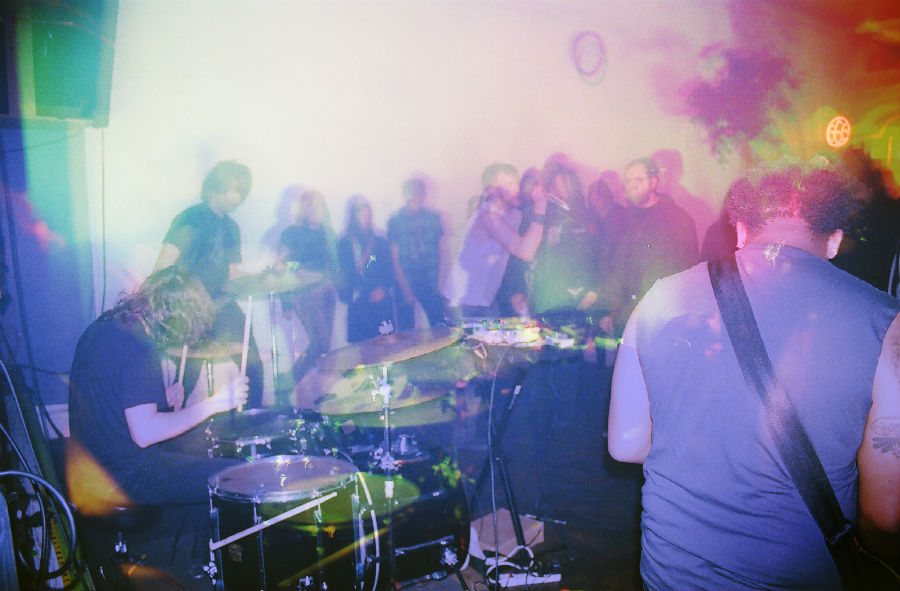
The band Negative Standards is essentially a crust art project.

While maintaining d-beat chords and sludge-like breakdowns, the Oakland-based group makes use of non-instrumental noise and videos created by the band’s bassist, Will, during shows.

And as a quartet that blends elements of crust, doom metal, and noise; Negative Standards sticks out like a sore thumb in the endless sea of fellow crusty brethren and fuzzy lo-fi that exists in the East Bay.

Anonymity is key for the band. Negative Standards sticks to Roman numerals in place of song titles and prefers not to have band members names attached to the project. While being interviewed, the guys chose to keep it on a first-name basis.

So, for housekeeping purposes, the band is as follows: Al on guitar, Will on bass/video, Max on drums and noise, and Will — who wasn’t interviewed — on vocals and non-instrumental noise.

According to Will, the choice to maintain anonymity is to let the music speak for itself.

“From the beginning, the idea was to present each recording as a coherent whole, rather than just a collection of unrelated songs, and doing it this way somewhat anonymizes the individual components,” Will says. “Another effect is that the lyrics, music and samples have to speak for themselves, not having been distilled into a name or a slogan.”

http://www.youtube.com/watch?v=RYApseTorGQ

The band makes the conscious decision to only play all-ages shows to battle the age-old problem of gentrification in the Bay Area.

Drummer and non-instrumental noise creator, Max, expands on this idea: “Gentrification and the attendant cultural colonialism of bars and ‘the underground’ is threatening the existence of DIY all ages spaces in the East Bay more with each passing year,” Max says. “It makes sense that, as a band, we would want to resist the destruction of the cultural environment that has made our existence possible.”

Guitarist Al recalls going to Berkeley’s world-famous all-ages punk venue, 924 Gilman when he was growing up. Al believes that without all-ages venues such as the Gilman, bands like theirs would not exist. Everybody has a starting point, and Al credits the Gilman as his.

“If it weren’t for this place, I wouldn’t know most any of my current good friends, let alone be in this band,” Al says. “I think it’s important to support the future punks instead of shutting them out because you want to drink.”

The band credits the Bay Area for having a thriving scene with the likes of fellow bands such as Noothgrush,Permanent Ruin, Ordstro and Vaccuum. But like most to all existing punk scenes, there exists various isms.

“Seeing the amount of misogyny, transphobia, and racism that goes totally unchecked within some corners of our supposedly ‘radical’ scene can be pretty disheartening, but there’s also some incredible people working against those normative tides,” says Will.

Negative Standards, however, is leaving the sub-cultural hub of Oakland to embark on a European tour, playing with the likes of European punks Bacchus and Throwers.

“Vendetta Records from Germany put out our LP and hooked us up with Timo from Alerta Antifacista Records, who busted his ass to put this tour together for us,” Al  says. “I’m incredibly excited. I’ve never travelled in Europe before and am looking forward to it greatly.”

http://www.youtube.com/watch?v=SnNPxLnRGVo

The band also has a split LP with doom band Whitehorse coming out on Vendetta Records in October.

Most of the band remains extremely cordial and modest, lauding other bands and the proverbial scene at large (for the most part). But as mentioned before, this band sticks out amongst others and Max is sure to break the tide.

“Fuck this false modesty,” Max says. “I defy you to name another local band that has both a totally gnarly wolf AND an outlandishly colored manatee on their van’s dashboard.”

You can catch this band at its upcoming going away show at the Oakland Metro. As the Oakland Metro site states, “no turds allowed.”

Negative Standards
With Ordstro, Sutekh Hexen, Filthchain, Xenotaph
Thu/26, 7pm, $7
Oakland Metro
630 3rd Street, Oakland
(510) 763-1146
www.oaklandmetro.org

Theater Listings: September 25 – October 2, 2013

0

Stage listings are compiled by Guardian staff. Performance times may change; call venues to confirm. Reviewers are Robert Avila, Rita Felciano, and Nicole Gluckstern. Submit items for the listings at listings@sfbg.com.

THEATER

OPENING

“Shocktoberfest 14: Jack the Ripper” Hypnodrome, 575 10th St, SF; www.thrillpeddlers.com. $25-35. Previews Thu/26-Sat/28, 8pm; Mon/30, 8pm. Opens Oct 3, 8pm. Runs Thu-Sat and Oct 29-30, 8pm. Through Nov 23. Thrillpeddlers presents their 14th annual Grand Guignol show, “a evening of horror, madness, spanking, and song.”

BAY AREA

A Winter’s Tale Bruns Amphitheater, 100 California Shakespeare Theater Way, Orinda; www.calshakes.org. $35-72. Previews Wed/25-Fri/27, 8pm. Opens Sat/28, 8pm. Runs Tue-Thu, 7:30pm; Fri-Sat, 8pm (also Oct 19, 2pm); Sun, 4pm. Through Oct 20. Cal Shakes concludes its 2013 season with the Bard’s fairy tale, directed and choreographed by sister team Patricia and Paloma McGregor.

ONGOING

Acid Test: The Many Incarnations of Ram Dass Marsh San Francisco, 1062 Valencia, SF; www.themarsh.org. $15-50. Fri, 8pm; Sat, 8:30pm. Through Oct 12. Playwright Lynne Kaufman invites you to take a trip with Richard Alpert, aka Ram Dass (Warren David Keith) — one of the bigwigs of the psychedelic revolution and (with his classic book, Be Here Now) contemporary Eastern-looking spirituality — as he recounts times high and low in this thoughtful, funny, and sometimes unexpected biographical rumination on the quest for truth and meaning in a seemingly random life. Directed by Joel Mullennix, the narrative begins with Ram Dass today, in his Hawaiian home and partly paralyzed from a stroke, but Keith (one of the Bay Area’s best stage actors, who is predictably sure and engagingly multilayered in the role) soon shakes off the stiff arm and strained speech and springs to his feet to continue the narrative as the ideal self perhaps only transcendental consciousness and theater allow. Nevertheless, Kaufman’s fun-loving and extroverted Alpert is no saint and no model of perfection, which is the refreshing truth explored in the play. He’s a seeker still, ever imperfect and trying for perfection, or at least the wisdom of acceptance. As the privileged queer child of a wealthy Jewish lawyer and industrialist, Alpert was both insider and outsider from the get-go, and that tension and ambiguity make for an interesting angle on his life, including the complexities of his relationships with a homophobic Leary, for instance, and his conservative but ultimately loving father. Perfection aside, the beauty in the subject and the play is the subtle, shrewd cherishing of what remains unfinished. Note: review from an earlier run of this show. (Avila)

Beautiful: The Carole King Musical Curran Theatre, 445 Geary, SF; www.shnsf.com. $55-210. Tue-Sat, 8pm (also Sat and Oct 9 and 16, 2pm); Sun, 2 and 7:30pm (no evening show Oct 13 or 20). Through Oct 20. Pre-Broadway premiere of the musical about the legendary songwriter.

Band Fags! New Conservatory Theatre Center, 25 Van Ness, SF; www.nctcsf.org. $25-45. Wed-Sat, 8pm; Sun, 2pm. Through Oct 13. New Conservatory Theatre Center performs the West Coast premiere of Frank Anthony Polito’s coming-of-age tale, set in 1980s Detroit.

“Bay One Acts Festival” Tides Theatre, 533 Sutter, SF; www.bayoneacts.org. $20-40. Programs One and Two run in repertory Wed-Sun, 8pm. Through Oct 5. The 2013 BOA fest presents the world premieres of 13 short plays in partnership with 13 Bay Area theater companies.

BoomerAging: From LSD to OMG Marsh San Francisco, 1062 Valencia, SF; www.themarsh.org. $15-50. Tue, 8pm. Extended through Oct 29. Will Durst’s hit solo show looks at baby boomers grappling with life in the 21st century.

Buried Child Magic Theatre, Fort Mason Center, Bldg D, Third Flr, SF; www.magictheatre.org. $20-60. Tue, 7pm; Wed-Sat, 8pm; Sun, 2:30. Through Oct 6. Magic Theatre performs a revival of Sam Shepard’s Pulitzer-winning classic.

Foodies! The Musical Shelton Theater, 533 Sutter, SF; www.foodiesthemusical.com. $32-34. Fri-Sat, 8pm. Open-ended. AWAT Productions presents Morris Bobrow’s musical comedy revue all about food.

Geezer Marsh San Francisco, 1062 Valencia, SF; www.themarsh.org. $25-50. Wed-Thu, 8pm; Sat, 8:30pm. Through Oct 26. Geoff Hoyle’s hit solo show, a comedic meditation on aging, returns to the Marsh.

The Golden Dragon ACT’s Costume Shop, 1117 Market, SF; www.doitliveproductions.com. $15. Thu/26-Sat/28, 9:30pm. Do It Live! Productions presents Roland Schimmelpfennig’s tragicomic take on globalization, set in and around an Asian restaurant.

Hedwig and the Angry Inch Boxcar Theatre, 505 Natoma, SF; www.boxcartheatre.org. $27-43. Thu-Sat, 8pm. Open-ended. John Cameron Mitchell’s cult musical comes to life with director Nick A. Olivero’s ever-rotating cast.

Macbeth Fort Point, end of Marine Dr, Presidio of San Francisco, SF; www.weplayers.org. $30-60. Thu-Sun, 6pm. Through Oct 6. We Players perform the Shakespeare classic amid Fort Point’s Civil War-era fortress.

1776 ACT’s Geary Theater, 415 Geary, SF; www.act-sf.org. $20-160. Tue-Sat, 8pm (also Wed and Sat, 2pm); Sun, 2pm. Through Oct 6. American Conservatory Theater performs the West Coast premiere of Frank Galati’s new staging of the patriotic musical.

Sex and the City: LIVE! Rebel, 1760 Market, SF; trannyshack.com/sexandthecity. $25. Wed, 7 and 9pm. Open-ended. It seems a no-brainer. Not just the HBO series itself — that’s definitely missing some gray matter — but putting it onstage as a drag show. Mais naturellement! Why was Sex and the City not conceived of as a drag show in the first place? Making the sordid not exactly palatable but somehow, I don’t know, friendlier (and the canned a little cannier), Velvet Rage Productions mounts two verbatim episodes from the widely adored cable show, with Trannyshack’s Heklina in a smashing portrayal of SJP’s Carrie; D’Arcy Drollinger stealing much of the show as ever-randy Samantha (already more or less a gay man trapped in a woman’s body); Lady Bear as an endearingly out-to-lunch Miranda; and ever assured, quick-witted Trixxie Carr as pent-up Charlotte. There’s also a solid and enjoyable supporting cast courtesy of Cookie Dough, Jordan Wheeler, and Leigh Crow (as Mr. Big). That’s some heavyweight talent trodding the straining boards of bar Rebel’s tiny stage. The show’s still two-dimensional, even in 3D, but noticeably bigger than your 50″ plasma flat panel. (Avila)

The Shakespeare Bug Stage Werx Theatre, 446 Valencia, SF; www.killingmylobster.com. $15-30. Thu/26-Sun/29, 8pm. Killing My Lobster in association with PlayGround perform Ken Slattery’s world-premiere comedy.

To Sleep and Dream Z Below, 470 Florida, SF; www.therhino.org. $15-30. Opens Wed/25, 8pm. Runs Wed-Sat, 8pm; Sun/29, 7pm; Oct 6, 3pm. Through Oct 6. Theatre Rhinoceros performs writer-director John Fisher’s North Bay-set drama about the challenges of love.

Too Much Light Makes the Baby Go Blind Boxcar Playhouse, 505 Natoma, SF; www.boxcar.org. $11-16. Fri/27-Sat/28, 9pm; Sun/29, 7pm. Want to experience a bit of what those legendary theater towns Chicago and New York probably take for granted? Attempting to establish a West Coast stronghold for the long-running Too Much Light Makes the Baby Go Blind, members of both the Chicago and New York ensembles of Neo-Futurists have converged at the Boxcar Playhouse for a three-week run of their signature show. The premise is simple, if dizzying. Thirty short plays are performed within the space of 60 timed minutes while the audience dictates the order of performance by shouting out the number of the play they want to see next. At the end of each performance, a die is rolled and that number of plays is dropped from the lineup to make space for brand-new ones written and rehearsed before the next weekend. The content ranges from silly to cerebral, wistful to weird, and stylistically veers from confessional to confrontational to surreal, using music, minimal props, and a complete irreverence for the fourth wall to move it forward. And while it’s nice to contemplate having our own cadre of Neo-Futurists to boast in the future, catching long-time Neo veterans such as John Pierson, Marta Rainer, and Cecil Baldwin now is a real treat. (Gluckstern)

The World’s Funniest Bubble Show Marsh San Francisco, 1062 Valencia, SF; www.themarsh.org. $8-11. Sun, 11am. Through Oct 27. Soapy, kid-friendly antics with Louis Pearl, aka “The Amazing Bubble Man.”

BAY AREA

After the Revolution Aurora Theatre, 2081 Addison, Berk; www.auroratheatre.org. $32-60. Tue, 7pm; Wed-Sat, 8pm; Sun, 2 and 7pm. Extended through Oct 6. Emma (Jessica Bates) is a left-wing lawyer from a lefty Jewish family of Communist Party members and fellow travelers who heads an important defense fund for incarcerated Black Panther Mumia Abu-Jamal. When Emma learns that a book is coming out that pins her revered late grandfather (a CP martyr to McCarthyism for whom the fund is named) as a spy for Stalin, she collapses into an incapacitating personal crisis exacerbated by the revelation that her adored father (an expansive Rolf Saxon) already knew and kept the secret from her. The crisis leads to Emma’s severing ties with her father and, eventually, alienating her boyfriend (Adrian Anchondo) as the rest of the family do their best to negotiate the new dynamic, including her uncle Leo (Victor Talmadge), her rehab habitué of a sister (Sarah Mitchell), and her mother (Pamela Gaye Walker). Meanwhile, Emma faces the fraught temptation of a large donation to the fund by a wealthy old lefty (a fine Peter Kybart). Almost above the fray, by virtue of her unwavering devotion to the political legacy she shared with her husband, is Emma’s unreconstructed Stalinist of a grandmother, Vera (a jarringly affected Ellen Ratner in fakey-fakey old-lady makeup). Aurora Theater’s production of Amy Herzog’s After the Revolution offers another look at the celebrated American playwright whose Obie Award-winning 4000 Miles recently premiered at ACT. But just as the ACT production left one wondering what all the fuss was about, After the Revolution disappoints in its promise of exploring political commitment through the complexities of modern history and familial bonds. Instead, director Joy Carlin marshals a mostly strong cast to little effect against an unconvincing and strained dramatic narrative that seems oddly out of touch with today’s political currents. (Avila)

All’s Well That Ends Well Forest Meadows Amphitheater, 890 Bella, Dominican University of California, San Rafael; www.marinshakespeare.org. $20-37.50. Presented in repertory through Sat/28; visit website for performance schedule. Marin Shakespeare Company continues its outdoor season with the Bard’s classic romance.

Bonnie and Clyde Ashby Stage, 1901 Ashby, Berk; www.shotgunplayers.org. $20-35. Wed/25-Thu/26, 7pm; Fri/27-Sat/28, 8pm; Sun/29, 5pm. Amorous outlaws and Depression-era rebels Bonnie Parker (Megan Trout) and Clyde Barrow (Joe Estlack) remain compelling as heroes and tragic figures in playwright Adam Peck’s 2010 retelling, but it’s their quieter, frailer, more delicate moments in Mark Jackson’s robust, at times transcendent staging that prove most memorable in this Shotgun Players production. It’s a sign of Jackson’s sure intelligence as a director that he can let a moment happen here wordlessly, without recourse to cut-and-dry cues of one sort or another, as happens near the outset of the evening as Barrow and Parker arrive on the run at an abandoned barn. We study them in such moments, and they breathe, like nowhere else. It’s here in this barn that they rest, woo, tussle, and tease for the next 80 enthralling minutes — interrupted only by Barrow’s moment-by-moment delivery to us of their final violent moments alive, channeling a fate awaiting them just down the road. Embodying the play’s only characters, Trout and Estlack are outstanding, dynamic and utterly persuasive. They’d be worth seeing even if the play and production were half as good as they are. Having “chosen to live lives less ordinary,” it turns out to be their palpable vulnerability and wide-ranging yet ordinary yearnings that make them exceptional creatures. (Avila)

Can You Dig It? Back Down East 14th — the 60s and Beyond Marsh Berkeley, 2120 Allston, Berk; www.themarsh.org. $15-50. Sat, 8:30pm; Sun, 7pm. Through Oct 27. Don Reed’s new show offers more stories from his colorful upbringing in East Oakland in the 1960s and ’70s. More hilarious and heartfelt depictions of his exceptional parents, independent siblings, and his mostly African American but ethnically mixed working-class community — punctuated with period pop, Motown, and funk classics, to which Reed shimmies and spins with effortless grace. And of course there’s more too of the expert physical comedy and charm that made long-running hits of Reed’s last two solo shows, East 14th and The Kipling Hotel (both launched, like this newest, at the Marsh). Can You Dig It? reaches, for the most part, into the “early” early years, Reed’s grammar-school days, before the events depicted in East 14th or Kipling Hotel came to pass. But in nearly two hours of material, not all of it of equal value or impact, there’s inevitably some overlap and indeed some recycling. Reed, who also directs the show, may start whittling it down as the run continues. But, as is, there are at least 20 unnecessary minutes diluting the overall impact of the piece, which is thin on plot already — much more a series of often very enjoyable vignettes and some painful but largely unexplored observations, wrapped up at the end in a sentimental moral that, while sincere, feels rushed and inadequate. (Avila)

A Comedy of Errors Forest Meadows Amphitheater, 890 Bella, Dominican University of California, San Rafael; www.marinshakespeare.org. $20-37.50. Presented in repertory through Sun/29; visit website for performance schedule. Marin Shakespeare Company presents a cowboy-themed spin on the Bard’s classic.

Ella, the Musical Center REPertory Company, 1601 Civic, Walnut Creek; (925) 943-SHOW. $37-64. Wed, 7:30pm; Thu-Sat, 8pm (also Sat/28 and Oct 12, 2:30pm); Sun, 2:30pm. Through Oct 12. Yvette Cason portrays the legendary Ella Fitzgerald in this Center REP presentation.

The Tempest Pear Avenue Theatre, 1220 Pear, Mtn View; www.thepear.org. $10-35. Thu-Sat, 8pm; Sun, 2pm. Through Oct 6. Pear Avenue Theatre performs Shakespeare’s play in a new staging by director Jeanie K. Smith.

Woman in Black — A Ghost Play Douglas Morrison Theatre, 22311 N. Third St, Hayward; www.dmtonline.org. $10-29. Thu/26-Sat/28, 8pm; Sun/29, 2pm. Douglas Morrison Theatre performs Stephen Mallatratt’s adaptation of Susan Hill’s spooky story.

PERFORMANCE/DANCE

Bodytraffic ODC Theater, 3153 17th St, SF; www.odcdance.org. Thu/26-Sat/28, 8pm; Sun/29, 7pm. $25-35. The LA-based repertory dance company performs Bay Area premieres by Barak Marshall and Richard Siegel, as well as a preview of a work by Kyle Abraham.

“Broadway Bingo” Feinstein’s at the Nikko, Hotel Nikko, 222 Mason, SF; www.feinsteinssf.com. Wed, 7-9pm. Ongoing. Free. Countess Katya Smirnoff-Skyy and Joe Wicht host this Broadway-flavored night of games and performance.

Caroline Lugo and Carolé Acuña’s Ballet Flamenco Peña Pachamama, 1630 Powell, SF; www.carolinalugo.com. Oct 6, 12, 20, and 26, 6:15pm. $15-19. Flamenco performance by the mother-daughter dance company, featuring live musicians.

“Death on the Ganges” Mission Cultural Center, 2868 Mission, SF; www.sirenproject.org. Thu/26-Sat/28, 7:30pm; Sun/29, 3pm. $15-50. Siren Project presents a work inspired by 57 real-life stories, staged by an all-female theater troupe, about four Bay Area women who travel to a holy city in India.

“Mission Position Live” Cinecave, 1034 Valencia, SF; www.missionpositionlive.com. Thu, 8pm. Ongoing. $10. Stand-up comedy with rotating performers.

“Mu” Jewish Community Center of San Francisco, 3200 California, SF; www.jccsf.org. Fri/27-Sat/28, 8pm; Sun/29, 2pm. $25. Choreographer Kimi Okada, performer Brenda Wong Aoki, and composer Mark Izu collaborate on this world premiere, based on a Japanese folk legend.

“Okeanos Intimate” Aquarium of the Bay, Pier 39, SF; www.capacitor.org. Sat/28, 7pm. $20-30 (free aquarium ticket with show ticket). Choreographer Jodi Lomask and her company, Capacitor, revive 2012’s Okeanos — a cirque-dance piece exploring the wonder and fragility of our innate connection to the world’s oceans — in a special “intimate” version designed for the mid-size theater at Pier 39’s Aquarium of the Bay. The show, developed in collaboration with scientists and engineers, comes preceded by a short talk by a guest expert — for a recent Saturday performance it was a down-to-earth and truly fascinating local ecological history lesson by the Bay Institute’s Marc Holmes. In addition to its Cirque du Soleil-like blend of quasi-representational modern dance and circus acrobatics — powered by a synth-heavy blend of atmospheric pop music — Okeanos makes use of some stunning underwater photography and an intermittent narrative that includes testimonials from the likes of marine biologist and filmmaker Dr. Tierney Thys. The performers, including contortionists, also interact with some original physical properties hanging from the flies — a swirling vortex and a spherical shell — as they wrap and warp their bodies in a kind of metamorphic homage to the capacity and resiliency of evolution, the varied ingenuity of all life forms. If the movement vocabulary can seem limited at times, and too derivative, the show also feels a little cramped on the Aquarium Theater stage, whose proscenium arrangement does the piece few favors aesthetically. Nevertheless, the family-oriented Okeanos Intimate spurs a conversation with the ocean that is nothing if not urgent. (Avila)

“People Show 121: The Detective Show” Fort Mason Center, Southside Theater, Marina at Laguna, SF; www.peopleshowusa.com. Thu/26-Sun/29, 8pm (also Sun/29, 2pm). $39-149 (all tickets include wine; some also include dinner). The veteran British alt-theater company performs.

“San Francisco Magic Parlor” Chancellor Hotel Union Square, 433 Powell, SF; www.sfmagicparlor.com. Thu-Sat, 8pm. Ongoing. $40. Magic vignettes with conjurer and storyteller Walt Anthony.

“Taps, Tunes, and Tall Tales” Feinstein’s at the Nikko, Hotel Nikko, 222 Mason, SF; www.feinsteinssf.com. Thu/26-Fri/27, 8pm; Sat/28, 7pm. $30-65. Tony-winning legend Tommy Tune performs.

“Union Square Live” Union Square, between Post, Geary, Powell, and Stockton, SF; www.unionsquarelive.org. Through Oct 9. Free. Music, dance, circus arts, film, and more; dates and times vary, so check website for the latest.

BAY AREA

“Bay Area Flamenco Festival” Freight and Salvage, 2020 Addison, Berk; www.bayareaflamencofestival.com. Sun/29, 8pm. $36.50-75. With David Serva, “godfather of Bay Area flamenco guitar.” *


Battle of the Bulb

33

news@sfbg.com

On a sunny September afternoon, Osha Neumann slowly walks onto the dirt path leading to the Albany Bulb, using a walking stick for balance against the pebbles. With a white beard and lanky frame, the 74-year-old artist and attorney is no stranger to this landfill turned art space turned homeless encampment that juts out of the East Bay shoreline near the Berkeley Marina and the Golden Gate Fields racetrack.

Neumann has been coming for more than a decade, with his son-in-law Jason DeAntonis to build driftwood sculptures, and as an attorney fighting for the rights of the homeless who live on the 31-acre plot. He’s witnessed its evolution from rubble-filled no man’s land to one of the last undeveloped stretches of open shoreline in the Bay Area.

“The Bulb has been a refuge, a solace, a place of inspiration,” he said. “It’s a place where I can get off the grid and live in this wonderful, successful, fruitful anarchy. I came to really love this place.”

But the Albany Bulb is now facing another transition point in its evolution, one that pits nature lovers and city officials against those who have call this strange stretch of shoreline “home.”

>>Check out a slideshow of the Albany Bulb here


TRASH TO TREASURE

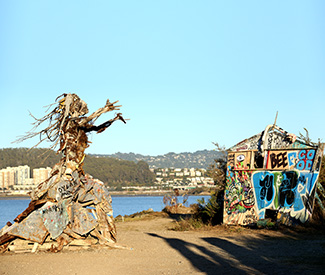
The Albany Bulb is a radical space of massive debris sculptures and structures, huge concrete slabs of graffiti, tents and tree houses, and artifacts from wreckage that, incorporated into the natural landscape of acacia and eucalyptus trees, is a unique and beloved slice of land symbolizing the free spirit of the region.

It’s where sparrows and other birds come to nest, and where dog walkers take dirt paths to the water’s edge. It’s also a space that major organizations such as the East Bay Regional Parks District, the Sierra Club, Save the Bay, the state park system, and the city of Albany have all fought for decades to preserve, with the idea that humans should not be allowed to live there. And in October, due to the enforcement of a no-camping policy approved on May 6 by the Albany City Council, the people living at the Albany Bulb will have to tear down their makeshift homes and say goodbye permanently.

“This has been in the works for 40 years,” said Robert Cheasty, a former Albany mayor and the current president of Citizens for East Bay Parks.

The Bulb became a part of the Eastshore State Park, a stretch of land with a trail along the East Bay shoreline that connects Oakland to Richmond, in the mid 1980s. And with the proclamation of a park came the people. Cheasty has become one of the most outspoken critics of people occupying the Bulb.

“It cannot be allowed to be privatized by any group or person,” he said.

It’s an argument that’s been made many times over the years, but now it seems to be on the verge of coming true.

The first people living in the Bulb came to take up residence after the eviction of the homeless campers from People’s Park in Berkeley in the mid ’90s. Before that, it was used as a landfill for BART and highway construction materials.

Nature inevitably took over, and much of the debris has been moved to certain areas within the park. Some of the first residents were immortalized in the documentary film Bum’s Paradise, where they lived in harmony with four artists known as Sniff, whose paintings and sculptures came to beautify the unconventional living space. In 1999, the first major eviction took place.

“Then, as now, the city provided them no place to go,” Neumann said. “People just scattered with no place to go, into the surrounding jurisdictions primarily.”

Neumann said he worked unsuccessfully with the people living at the Bulb in fighting the 1999 eviction, telling the Guardian, “People were unorganized and it felt hopeless and despairing.”

Neumann said little has changed. The Bulb remained the same, a landfill, albeit without a regular crew of humans living on it. In 2002 the planning of the Eastshore State Park moved ahead, and Neumann, not content to let the Bulb become homogenized, formed the group Let It Be, advocating to keep the “wildness” of the space. It didn’t go over well, and plans moved forward to clear the plateau of its coyote bush, in an area directly north of the racetrack, and fill it in with dirt.

Norman Laforce, who chairs the Sierra Club’s East Bay Shoreline Park Task Force and East Bay Public Lands Committee, has been involved in the planning since its creation. He says hundreds of people worked to make the park possible. He believes that because the city of Albany did not engage in strict enforcement of illegally camping after 1999, it was ripe to be occupied again. And it was.

The city of Albany handed over the deed of the park to the state park system, and the cap and seal order from the Regional Water Board — which stated that the area was clear of any hazardous waste leaching into the bay — was lifted in 2005. Over time, the Bulb’s current 64 residents sought refuge there, about the same number of people who were forced to leave in 1999.

Of those, at least 36 residents don’t have any regular income, while those who do rely mostly on government programs such as Supplemental Security Income. Laforce and Neumann may not agree on much, but both understand the impending enforcement of the no-camping policy to be a new chapter in the Bulb’s story.


WHOSE PARK?

As Neumann makes his way to one of the resident campsites, he stops to take in the view. It’s an unrivaled panoramic portrait of the San Francisco skyline against the glittering bay. He shakes his head when I ask him about the people who oppose campers at the Bulb.

“I think there is a small group of people who are committed to kicking people out of here,” he said.

“Our position has been that the Albany Bulb is a part of the McLaughlin East Shore State Park and is not to be privatized,” Laforce said of the Sierra Club’s view. “We fully support the removal of the illegal campers that are currently out there.”

The Sierra Club and the Citizens for East Bay Parks cite safety concerns as a reason the campers need to leave.

“I was attacked by somebody’s pit bull,” Cheasty said. “It’s happening regularly out there. It’s the antithesis of open space and public land.”

The city of Albany, hesitant at first to ruffle feathers, now supports the removal of campers. “The City Council is working to achieve the Strategic Plan Goals, adopted in 2012,” said Albany City Clerk Nicole Almaguer in an email.” The goals include maximizing park and open space for all members of the community.”

Almaguer noted that the Albany City Council retained the services of Berkeley Food and Housing Project with a $60,000 contract to conduct outreach and engagement services to the city’s homeless, and voted unanimously to extend this agreement to help the campers at the Bulb.

But she made it clear that once October arrives, the people will need to leave. They will receive verbal and written warnings if they don’t. (A camping violation generally amounts to $161 in fines, according to one of the Bulb campers.) One of the major problems, both Laforce and Cheasty say, is that some of the campers don’t want BFHP’s or the city’s help.

They just want to stay on the Bulb.

Neumann introduces me to three-year resident Katherine Cody, or KC. With pink hair and a wide smile, she seems younger than her 60 years. She babies her shih tzu Eva and makes beaded jewelry. Before living in a tent at the Bulb, she lived in her van. One of the perks to living at the Bulb, she explained, is seeing dolphins swimming in the bay, and watching the 50 to 100 hummingbirds nest in the tree above her tent every year.

KC’s past isn’t so idyllic. She said she was stabbed 20 years ago and the traumatic experience of yelling for help to no avail made her grateful to find a place like the Bulb.

“I am terminally ill,” she said on a recent afternoon, “So I need a lot of help sometimes, and without my having to ask or go begging door to door, my neighbors show up.”

After losing a lot of blood from the stabbing, Cody contracted Hepatitis C from a blood transfusion. Despite its rough exterior, KC and other residents argue that their neighborhood at the Bulb is not any more conducive to drug addiction or infighting than any other neighborhood or town.

“They are not capable of doing this job,” KC said of the Berkeley Food and Housing Project’s efforts. “It’s ridiculous to expect in that time span to be able to get the job done. It’s just long enough to make it look like they were being kind and not throw us out immediately, but it’s not long enough to really do anything.”

For Neumann, who has never been homeless himself, watching his friends and people he has known for years struggle to find a place to live makes him want to resist the city’s enforcement.

“They are criminalizing the status of being homeless in Albany,” Neumann said outside of KC’s tent. “Albany doesn’t have anything. It doesn’t have a shelter, it doesn’t have transitional housing, it doesn’t have available subsided housing, doesn’t have any services. Nothing. Zero.”

Neumann and some of the Bulb campers claim that police from surrounding jurisdictions told many homeless people, forced to leave their encampments in other areas, to go to the Bulb. Albany Police deny the charge, with a spokesperson telling us, “the Albany Police Department did not/does not have a policy of instructing homeless people to relocate to the Bulb.”

Nonetheless, Neumann says, “For a long while, this was Albany’s homeless shelter.”

Amber Lynn Whitson, 32, said that she will celebrate her seventh year living at the Bulb on Oct. 31, if she is able to stay. But she is one of the few inhabitants, she said, who is actually preparing to leave.

“Me and my boyfriend have gotten rid of almost everything we own,” she said between cigarettes. Whitson said she came to stay at the Bulb after moving around a lot.

“It’s so nice here,” she laughed. “When you have been kicked around from place to place and told you don’t belong here, you don’t belong there, it’s so refreshing to be told by the local authorities you belong there.”

Whitson said she isn’t sure where she will go after the no-camping policy is enforced. She is sure though, that the fight to resist will continue.

“This won’t be over in October,” she said. “Even if we are out, it won’t be over in October.”


LIGHTS OUT

After we speak with some of the residents, Neumann and I part ways. Before he leaves, he encourages me to take a look around, meet people, and enjoy the art.

Along with the people residing at the Bulb, the art has become a major sticking point surrounding what the Bulb is and what it could be. Cheasty, while not wanting the people to stay, personally doesn’t see the harm in keeping the art intact. In contrast, Laforce believes that part of making the Bulb into a “usable” park requires the removal of the art.

But many people want it to stay. An activist group known as Friends of the Bulb organized a concert with Santa Cruz band Blackbird RAUM at the Bulb for Sept. 28, hoping to draw a large crowd to resist the city’s efforts to remove the campers, and discuss the future of the Bulb.

“We hope it will bring people that live on the Bulb and those that use it to enjoy it together, because who knows how much longer it’s going to be there,” said Doug Gilbert, one of the event’s organizers.

Gilbert said the group started out of the necessity to answer the question of who will control the space: “There are two fundamentally different world views. Those that use the space are the ones in control of it, and those who are truly privatizing it, by deciding who can go there, if the dogs have to be leashed, if the art will stay.”

In the coming month, Laforce said the Sierra Club will continue to support the city’s efforts to relocate the people living there.

“The Albany Bulb is not going to be the homeless solution to the East Bay,” he said. “It’s not just some wasteland.”

Neumann, for his own part, remains skeptical about what will actually take place in October, but he’s certain that, from now on, things at the Bulb will be different. “They do not want to have a repeat of what happened in ’99,” he said before he left for the day. “And that will be the end of this incredible experiment.”

Theater Listings: September 18 – 24, 2013

0

Stage listings are compiled by Guardian staff. Performance times may change; call venues to confirm. Reviewers are Robert Avila, Rita Felciano, and Nicole Gluckstern. Submit items for the listings at listings@sfbg.com.

THEATER

OPENING

Beautiful: The Carole King Musical Curran Theatre, 445 Geary, SF; www.shnsf.com. $55-210. Opens Tue/24, 8pm. Runs Tue-Sat, 8pm (also Sat and Oct 9 and 16, 2pm); Sun, 2 and 7:30pm (no evening show Oct 13 or 20). Through Oct 20. Pre-Broadway premiere of the musical about the legendary songwriter.

Geezer Marsh San Francisco, 1062 Valencia, SF; www.themarsh.org. $25-50. Opens Wed/18, 8pm. Runs Wed-Thu, 8pm; Sat, 8:30pm. Through Oct 26. Geoff Hoyle’s hit solo show, a comedic meditation on aging, returns to the Marsh.

To Sleep and Dream Z Below, 470 Florida, SF; www.therhino.org. $15-30. Previews Thu/19-Sat/21, 8pm; Sun/22, 7pm. Opens Sept 25, 8pm. Runs Wed-Sat, 8pm; Sept 29, 7pm; Oct 6, 3pm. Through Oct 6. Theatre Rhinoceros performs writer-director John Fisher’s North Bay-set drama about the challenges of love.

The World’s Funniest Bubble Show Marsh San Francisco, 1062 Valencia, SF; www.themarsh.org. $8-11. Opens Sun/22, 11am. Runs Sun, 11am. Through Oct 27. Soapy, kid-friendly antics with Louis Pearl, aka “The Amazing Bubble Man.”

BAY AREA

The Tempest Pear Avenue Theatre, 1220 Pear, Mtn View; www.thepear.org. $10-35. Previews Thu/12, 8pm. Opens Sat/13, 8pm. Runs Thu-Sat, 8pm; Sun, 2pm. Through Oct 6. Pear Avenue Theatre performs Shakespeare’s play in a new staging by director Jeanie K. Smith.

ONGOING

Acid Test: The Many Incarnations of Ram Dass Marsh San Francisco, 1062 Valencia, SF; www.themarsh.org. $15-50. Fri, 8pm; Sat, 8:30pm. Through Oct 12. Playwright Lynne Kaufman invites you to take a trip with Richard Alpert, a.k.a. Ram Dass (Warren David Keith)—one of the big wigs of the psychedelic revolution and (with his classic book, Be Here Now) contemporary Eastern-looking spirituality—as he recounts times high and low in this thoughtful, funny, and sometimes unexpected biographical rumination on the quest for truth and meaning in a seemingly random life. Directed by Joel Mullennix, the narrative begins with Ram Dass today, in his Hawaiian home and partly paralyzed from a stroke, but Keith (one of the Bay Area’s best stage actors, who is predictably sure and engagingly multilayered in the role) soon shakes off the stiff arm and strained speech and springs to his feet to continue the narrative as the ideal self perhaps only transcendental consciousness and theater allow. Nevertheless, Kaufman’s fun-loving and extroverted Alpert is no saint and no model of perfection, which is the refreshing truth explored in the play. He’s a seeker still, ever imperfect and trying for perfection, or at least the wisdom of acceptance. As the privileged queer child of a wealthy Jewish lawyer and industrialist, Alpert was both insider and outsider from the get-go, and that tension and ambiguity make for an interesting angle on his life, including the complexities of his relationships with a homophobic Leary, for instance, and his conservative but ultimately loving father. Perfection aside, the beauty in the subject and the play is the subtle, shrewd cherishing of what remains unfinished. Note: review from an earlier run of this show. (Avila)

Band Fags! New Conservatory Theatre Center, 25 Van Ness, SF; www.nctcsf.org. $25-45. Wed-Sat, 8pm; Sun, 2pm. Through Oct 13. New Conservatory Theatre Center performs the West Coast premiere of Frank Anthony Polito’s coming-of-age tale, set in 1980s Detroit.

“Bay One Acts Festival” Tides Theatre, 533 Sutter, SF; www.bayoneacts.org. $20-40. Programs One and Two run in repertory Wed-Sun, 8pm. Through Oct 5. The 2013 BOA fest presents the world premieres of 13 short plays in partnership with 13 Bay Area theater companies.

BoomerAging: From LSD to OMG Marsh San Francisco, 1062 Valencia, SF; www.themarsh.org. $15-50. Tue, 8pm. Extended through Oct 29. Will Durst’s hit solo show looks at baby boomers grappling with life in the 21st century.

Buried Child Magic Theatre, Fort Mason Center, Bldg D, Third Flr, SF; www.magictheatre.org. $20-60. Tue, 7pm; Wed-Sat, 8pm; Sun, 2:30. Through Oct 6. Magic Theatre performs a revival of Sam Shepard’s Pulitzer-winning classic.

Foodies! The Musical Shelton Theater, 533 Sutter, SF; www.foodiesthemusical.com. $32-34. Fri-Sat, 8pm. Open-ended. AWAT Productions presents Morris Bobrow’s musical comedy revue all about food.

The Golden Dragon ACT’s Costume Shop, 1117 Market, SF; www.doitliveproductions.com. $15. Thu-Sat, 9:30pm. Through Sept 28. Do It Live! Productions presents Roland Schimmelpfennig’s tragicomic take on globalization, set in and around an Asian restaurant.

Hedwig and the Angry Inch Boxcar Theatre, 505 Natoma, SF; www.boxcartheatre.org. $27-43. Thu-Sat, 8pm. Open-ended. John Cameron Mitchell’s cult musical comes to life with director Nick A. Olivero’s ever-rotating cast.

Macbeth Fort Point, end of Marine Dr, Presidio of San Francisco, SF; www.weplayers.org. $30-60. Thu-Sun, 6pm. Through Oct 6. We Players perform the Shakespeare classic amid Fort Point’s Civil War-era fortress.

“San Francisco Fringe Festival” Exit Theatreplex, 156 Eddy, SF; www.sffringe.org. $12.99 or less (passes, $45-75). Through Sat/21. The 22nd SF Fringe presents 36 shows that explore the boundaries of theater and performance.

1776 ACT’s Geary Theater, 415 Geary, SF; www.act-sf.org. $20-160. Opens Thu/19, 8pm. Runs Tue-Sat, 8pm (also Wed and Sat, 2pm; Tue/24, show at 7pm); Sun, 2pm. Through Oct 6. American Conservatory Theater performs the West Coast premiere of Frank Galati’s new staging of the patriotic musical.

Sex and the City: LIVE! Rebel, 1760 Market, SF; trannyshack.com/sexandthecity. $25. Wed, 7 and 9pm. Open-ended. It seems a no-brainer. Not just the HBO series itself — that’s definitely missing some gray matter — but putting it onstage as a drag show. Mais naturellement! Why was Sex and the City not conceived of as a drag show in the first place? Making the sordid not exactly palatable but somehow, I don’t know, friendlier (and the canned a little cannier), Velvet Rage Productions mounts two verbatim episodes from the widely adored cable show, with Trannyshack’s Heklina in a smashing portrayal of SJP’s Carrie; D’Arcy Drollinger stealing much of the show as ever-randy Samantha (already more or less a gay man trapped in a woman’s body); Lady Bear as an endearingly out-to-lunch Miranda; and ever assured, quick-witted Trixxie Carr as pent-up Charlotte. There’s also a solid and enjoyable supporting cast courtesy of Cookie Dough, Jordan Wheeler, and Leigh Crow (as Mr. Big). That’s some heavyweight talent trodding the straining boards of bar Rebel’s tiny stage. The show’s still two-dimensional, even in 3D, but noticeably bigger than your 50″ plasma flat panel. (Avila)

The Shakespeare Bug Stage Werx Theatre, 446 Valencia, SF; www.killingmylobster.com. $15-30. Thu-Sun, 8pm. Through Sept 29. Killing My Lobster in association with PlayGround perform Ken Slattery’s world-premiere comedy.

BAY AREA

After the Revolution Aurora Theatre, 2081 Addison, Berk; www.auroratheatre.org. $32-60. Tue, 7pm; Wed-Sat, 8pm; Sun, 2 and 7pm. Extended through Oct 6. Aurora Theatre opens its 22nd season with the Bay Area premiere of Amy Herzog’s family drama.

All’s Well That Ends Well Forest Meadows Amphitheater, 890 Bella, Dominican University of California, San Rafael; www.marinshakespeare.org. $20-37.50. Presented in repertory Fri-Sun through Sept 28; visit website for performance schedule. Marin Shakespeare Company continues its outdoor season with the Bard’s classic romance.

Bonnie and Clyde Ashby Stage, 1901 Ashby, Berk; www.shotgunplayers.org. $20-35. Wed-Thu, 7pm; Fri-Sat, 8pm; Sun, 5pm. Through Sept 29. Amorous outlaws and Depression-era rebels Bonnie Parker (Megan Trout) and Clyde Barrow (Joe Estlack) remain compelling as heroes and tragic figures in playwright Adam Peck’s 2010 retelling, but it’s their quieter, frailer, more delicate moments in Mark Jackson’s robust, at times transcendent staging that prove most memorable in this Shotgun Players production. It’s a sign of Jackson’s sure intelligence as a director that he can let a moment happen here wordlessly, without recourse to cut-and-dry cues of one sort or another, as happens near the outset of the evening as Barrow and Parker arrive on the run at an abandoned barn. We study them in such moments, and they breathe, like nowhere else. It’s here in this barn that they rest, woo, tussle, and tease for the next 80 enthralling minutes — interrupted only by Barrow’s moment-by-moment delivery to us of their final violent moments alive, channeling a fate awaiting them just down the road. Embodying the play’s only characters, Trout and Estlack are outstanding, dynamic and utterly persuasive. They’d be worth seeing even if the play and production were half as good as they are. Having “chosen to live lives less ordinary,” it turns out to be their palpable vulnerability and wide-ranging yet ordinary yearnings that make them exceptional creatures. (Avila)

Can You Dig It? Back Down East 14th — the 60s and Beyond Marsh Berkeley, 2120 Allston, Berk; www.themarsh.org. $15-50. Sat, 8:30pm; Sun, 7pm. Through Oct 27. Don Reed’s new show offers more stories from his colorful upbringing in East Oakland in the 1960s and ’70s. More hilarious and heartfelt depictions of his exceptional parents, independent siblings, and his mostly African American but ethnically mixed working-class community — punctuated with period pop, Motown, and funk classics, to which Reed shimmies and spins with effortless grace. And of course there’s more too of the expert physical comedy and charm that made long-running hits of Reed’s last two solo shows, East 14th and The Kipling Hotel (both launched, like this newest, at the Marsh). Can You Dig It? reaches, for the most part, into the “early” early years, Reed’s grammar-school days, before the events depicted in East 14th or Kipling Hotel came to pass. But in nearly two hours of material, not all of it of equal value or impact, there’s inevitably some overlap and indeed some recycling. Reed, who also directs the show, may start whittling it down as the run continues. But, as is, there are at least 20 unnecessary minutes diluting the overall impact of the piece, which is thin on plot already — much more a series of often very enjoyable vignettes and some painful but largely unexplored observations, wrapped up at the end in a sentimental moral that, while sincere, feels rushed and inadequate. (Avila)

A Comedy of Errors Forest Meadows Amphitheater, 890 Bella, Dominican University of California, San Rafael; www.marinshakespeare.org. $20-37.50. Presented in repertory Fri-Sun through Sept 29; visit website for performance schedule. Marin Shakespeare Company presents a cowboy-themed spin on the Bard’s classic.

Ella, the Musical Center REPertory Company, 1601 Civic, Walnut Creek; (925) 943-SHOW. $37-64. Wed, 7:30pm; Thu-Sat, 8pm (also Sept 28 and Oct 12, 2:30pm); Sun, 2:30pm. Through Oct 12. Yvette Cason portrays the legendary Ella Fitzgerald in this Center REP presentation.

Woman in Black — A Ghost Play Douglas Morrison Theatre, 22311 N. Third St, Hayward; www.dmtonline.org. $10-29. Fri-Sat and Sept 26, 8pm (also Sat/21, 2pm); Sun, 2pm. Through Sept 29. Douglas Morrison Theatre performs Stephen Mallatratt’s adaptation of Susan Hill’s spooky story.

PERFORMANCE/DANCE

“Broadway Bingo” Feinstein’s at the Nikko, Hotel Nikko, 222 Mason, SF; www.feinsteinssf.com. Wed, 7-9pm. Ongoing. Free. Countess Katya Smirnoff-Skyy and Joe Wicht host this Broadway-flavored night of games and performance.

Caroline Lugo and Carolé Acuña’s Ballet Flamenco Peña Pachamama, 1630 Powell, SF; www.carolinalugo.com. Sat/21, Oct 6, 12, 20, and 26, 6:15pm. $15-19. Flamenco performance by the mother-daughter dance company, featuring live musicians.

Megan Hilty Venetian Room, Fairmont San Francisco, 950 Mason, SF; www.bayareacabaret.org. Sun/21, 8pm. $95. The Broadway and television (Smash) star headlines Bay Area Cabaret’s tenth anniversary season opening gala.

“Mission Position Live” Cinecave, 1034 Valencia, SF; www.missionpositionlive.com. Thu, 8pm. Ongoing. $10. Stand-up comedy with rotating performers.

“Monkey Gone to Heaven” CounterPULSE, 1310 Mission, SF; www.counterpulse.org. Thu/19-Sat/21, 8pm; Sun/22, 7pm. $20. EmSpace Dance performs the world premiere of a dance-theater work inspired by the relationship between primates and prayer.

“Okeanos Intimate” Aquarium of the Bay, Pier 39, SF; www.capacitor.org. Sat, 7pm. Through Sept 28. $20-30 (free aquarium ticket with show ticket). Choreographer Jodi Lomask and her company, Capacitor, revive 2012’s Okeanos — a cirque-dance piece exploring the wonder and fragility of our innate connection to the world’s oceans — in a special “intimate” version designed for the mid-size theater at Pier 39’s Aquarium of the Bay. The show, developed in collaboration with scientists and engineers, comes preceded by a short talk by a guest expert — for a recent Saturday performance it was a down-to-earth and truly fascinating local ecological history lesson by the Bay Institute’s Marc Holmes. In addition to its Cirque du Soleil-like blend of quasi-representational modern dance and circus acrobatics — powered by a synth-heavy blend of atmospheric pop music — Okeanos makes use of some stunning underwater photography and an intermittent narrative that includes testimonials from the likes of marine biologist and filmmaker Dr. Tierney Thys. The performers, including contortionists, also interact with some original physical properties hanging from the flies — a swirling vortex and a spherical shell — as they wrap and warp their bodies in a kind of metamorphic homage to the capacity and resiliency of evolution, the varied ingenuity of all life forms. If the movement vocabulary can seem limited at times, and too derivative, the show also feels a little cramped on the Aquarium Theater stage, whose proscenium arrangement does the piece few favors aesthetically. Nevertheless, the family-oriented Okeanos Intimate spurs a conversation with the ocean that is nothing if not urgent. (Avila)

“San Francisco Magic Parlor” Chancellor Hotel Union Square, 433 Powell, SF; www.sfmagicparlor.com. Thu-Sat, 8pm. Ongoing. $40. Magic vignettes with conjurer and storyteller Walt Anthony.

“San Francisco Stand-Up Comedy Competition: Preliminary Round” Jewish Community Center of San Francisco, 3200 California, SF; www.jccsf.org. Sat/21, 8pm. $25-35. Stand-up comedians battle it out.

“Union Square Live” Union Square, between Post, Geary, Powell, and Stockton, SF; www.unionsquarelive.org. Through Oct 9. Free. Music, dance, circus arts, film, and more; dates and times vary, so check website for the latest.

“Vak: Song of Becoming” Yerba Buena Center for the Arts, 701 Mission, SF; www.ybca.org. Fri/20-Sat/21, 8pm. $20-35. Composer and vocalist Ann Dyer performs a work inspired by Indian goddess Vak, “who creates the world through sound vibration.” The work features choreography by Erika Chong Shuch.

“The Video Game Monologues” Cartoon Art Museum, 655 Mission, SF; www.cartoonart.org. Thu/19, 5-8pm. $5 (suggested donation). Get a sneak preview of the show that’s drawn from real stories of gamers and game characters.

Xitlalli Danza Azteca San Francisco Botanical Gardens, Golden Gate Park (near Ninth Ave at Lincoln), SF; www.sfbotanicalgarden.org. Sat/21, noon-2pm. Free. The group performs traditional ritual Aztec dances to celebrate the blooming of the SF Botanical Garden’s Mesoamerican Cloud Forest Garden.

BAY AREA

“Bay Area Flamenco Festival” La Peña Cultural Center, 3105 Shattuck, Berk; www.bayareaflamencofestival.com. Sun/21, 8pm. $30-50. Gypsy flamenco icon Concha Vargas headlines the first weekend of this eighth annual festival. *


Film Listings: September 18 – 24, 2013

0

Film listings are edited by Cheryl Eddy. Reviewers are Kimberly Chun, Dennis Harvey, Lynn Rapoport, Sam Stander, and Sara Maria Vizcarrondo. For rep house showtimes, see Rep Clock.

OPENING

Battle of the Year That’s “battle” as in “dance battle.” And yes, it’s in 3D. (1:49)

Blue Caprice See “Highway to Hell.” (1:34) Roxie.

C.O.G. The first feature adapted from David Sedaris’ writing, Kyle Patrick Alvarez’s film captures his acerbic autobiographical comedy while eventually revealing the misfit pain hidden behind that wit. Tightly wound David (Jonathan Groff), on the run from problematic family relations and his sexual identity, takes the bus from East Coast grad school to rural Oregon — his uninhibited fellow passengers providing the first of many mortifications here en route. Having decided that seasonal work as an apple picker will somehow be liberating, he’s viewed with suspicion by mostly Mexican co-workers and his crabby boss (Dean Stockwell). More fateful kinda-sorta friendships are forged with a sexy forklift operator (Corey Stoll) and a born-again war vet (Denis O’Hare). Under the latter’s volatile tutelage, David briefly becomes a C.O.G. — meaning “child of God.” Balancing the caustic, absurd, and bittersweet, gradually making us care about an amusingly dislikable, prickly protagonist, this is a refreshingly offbeat narrative that pulls off a lot of tricky, ambivalent mood shifts. (1:37) Elmwood, Smith Rafael, Sundance Kabuki. (Harvey)

Herb and Dorothy 50X50 Building upon her 2008 doc Herb and Dorothy, Megumi Sasaki revisits elderly Manhattan couple Herb and Dorothy Vogel, art-world legends for amassing a jaw-dropping collection of contemporary art despite holding modest jobs and living an otherwise low-key lifestyle. (Out of necessity, they favored smaller works on paper — and whatever they bought had to fit into their one-bedroom apartment.) Remarkably, in 1992, they donated the majority of their highly valuable collection to the National Gallery of Art, but it was so vast that most of it was put into storage rather than displayed. Sasaki’s camera picks back up with the couple (Herb now in a wheelchair, with Dorothy doing most of the talking) as they work with the National Gallery to select 50 museums nationwide, each of which will receive 50 pieces of the collection. Though the film chats with some of the Vogels’ favorite artists (Richard Tuttle, notably, was initially angered by the idea of the collection being broken up), its most compelling segments are those that focus on Vogel exhibitions in relatively far-flung places, Hawaii and North Dakota included. Of particular interest: scenes in which museums without modern-art traditions help skeptical patrons engage with the art — a towering challenge since much of it appears to be of the deceptively simple, “I-could-have-done-that” variety. (1:25) Elmwood, Roxie. (Eddy)

Ip Man: The Final Fight Yep, it’s yet another take on kung-fu icon Ip Man, whose real-life legacy as Wing Chun’s greatest ambassador (tl;dr, he taught Bruce Lee) has translated into pop-culture stardom, most recently with Donnie Yen’s Ip Man series and Wong Kar-wai’s still-in-theaters The Grandmaster. Final Fight is directed by the prolific Herman Yau, and though it lacks the slickness of Ip Man or the high-art trappings of The Grandmaster, it does have one heavy weapon: Hong Kong superstar Anthony Wong. A less-charismatic actor might get lost in Yau’s hectic take on Ip’s later years; it’s chockablock with plot threads (union strikes, police corruption, health woes, romantic drama, brawls with rival martial-arts schools, scar-faced gangsters …) that battle for supremacy. But that’s not a problem for Wong, who calmly rises above the chaos, infusing even corny one-liners (“You can’t buy kung fu like a bowl of rice!”) with gravitas. (1:42) (Eddy)

Mademoiselle C Fabien Constant’s portrait of French fashion editor-professional muse-stylish person Carine Roitfeld may be unabashedly fawning, but it does offer the rest of us slobs a peek into the glamorous life. The film begins as Roitfeld leaves her job at Vogue Paris; there’s passing mention of her subsequent feud with Condé Nast as she readies her own luxury magazine start-up, CR Fashion Book, but the only conflicts the film lingers on are 1) when a model cancels last-minute and 2) when Roitfeld goes double over budget on her first issue. (Looking at the lavish photo shoots in action, with big-name photogs and supermodels aplenty, it’s not hard to see why.) Mostly, though this is a fun ride-along with Roitfeld in action: hanging with “Karl” (Lagerfeld) and “Tom” (Ford); swooning over her first grandchild; sneaking a little cell phone footage inside the Met Ball; allowing celebs like Sarah Jessica Parker and designer Joseph Altuzarra to suck up to her, etc. There’s also a funny moment when her art-dealer son, Vladimir, recalls that he was never allowed to wear sweatpants as a kid — and her daughter, fashion-person Julia, remembers her mother’s horror when she dared to wear Doc Martens. (1:30) Sundance Kabuki. (Eddy)

Museum Hours See “The Observer.” (1:46) Opera Plaza.

My Lucky Star Aspiring cartoonist Sophie (Ziyi Zhang) puts her romantic fantasies into her artwork — the bright spot in an otherwise dull life working in a Beijing call center and being hassled about her perma-single status by her mother and catty friends. As luck would have it, Sophie wins a trip to Singapore right when dreamy secret agent David (Leehom Wang) is dispatched there to recover the stolen “Lucky Star Diamond;” it doesn’t take long before our klutzy goofball stumbles into exactly the kind of adventure she’s been dreaming about. Romancing the Stone (1984) this ain’t, but Zhang, so often cast in brooding parts, is adorable, and occasional animated sequences add further enhancement to the silly James Bond/Charlie’s Angels-lite action. (1:53) (Eddy)

Prisoners Canadian director Denis Villeneuve (2010’s Incendies) guides a big-name cast through this thriller about a father (Hugh Jackman) frantically searching for his missing daughter with the help of a cop (Jake Gyllenhaal). (2:33) Four Star, Marina.

Salinger Documentary about the reclusive author of Catcher in the Rye. (2:00) Presidio.

Thanks for Sharing Mark Ruffalo, Gwyneth Paltrow, and Tim Robbins star in this comedy about sex addicts from the co-writer of 2010’s The Kids Are All Right. (1:52)

Wadjda The first-ever feature directed by a female Saudi Arabian follows a young Saudi girl who dreams of buying a bicycle. (1:37) Opera Plaza.

You Will Be My Son Set at a Bordeaux vineyard that’s been in the same family for generations, Gilles Legrand’s drama hides delightfully trashy drama beneath its highbrow exterior. Patriarch Paul de Marseul (Niels Arestrup of 2009’s A Prophet) treats his only son, Martin (Lorànt Deutsch) with utter contempt — think the relationship between Tywin and Tyrion Lannister on Game of Thrones, only with even more petty digs and insults. Still hopeful that he’ll inherit the estate someday, despite Papa Jackass’ loud proclamations about his “lack of palate,” Martin sees his future prospects crumble when dapper Philippe (Nicolas Bridet) blows into town, having left his California gig as “Coppola’s head winemaker” to care for his dying father, Paul’s longtime second-in-command François (Patrick Chesnais). Things go from terrible to utterly shitty when Paul decides Philippe is the answer to his prayers (see: title). Melodrama is the only recourse here, and the film’s over-the-top last act delivers some gasp-inducing (or guffaw-inducing, your choice) twists. Heading up a classy cast, Arestrup manages to make what could’ve been a one-note character into a villain with seemingly endless layers, each more vile than the last. (1:41) Opera Plaza. (Eddy)

ONGOING

Adore This glossy soap opera from director Anne Fontaine (2009’s Coco Before Chanel) and scenarist Christopher Hampton, adapted from a Doris Lessing novella, has had its title changed from Two Mothers — perhaps because under that name it was pretty much the most howled-at movie at Sundance this year. Lil (Naomi Watts) and Roz (Robin Wright) are lifelong best friends whose hunky surfer sons Ian (Xavier Samuel) and Tom (James Frecheville) are likewise best mates. Widow Lil runs a gallery and Roz has a husband (Ben Mendelsohn), but mostly the two women seem to lay around sipping wine on the decks of their adjacent oceanfront homes in Western Australia’s Perth, watching their sinewy offspring frolic in the waves. This upscale-lifestyle-magazine vision of having it all — complete with middle-aged female protagonists who look spectacularly youthful without any apparent effort — finds trouble in paradise when the ladies realize that something, in fact, is missing. That something turns out to be each other’s sons, in their beds. After very little hand-wringing this is accepted as the way things are meant to be — a MILF fantasy viewed through the distaff eyes — despite some trouble down the road. This outlandish basic concept might have worked for Lessing, but Fontaine’s solemn, gauzily romantic take only slightly muffles its inherent absurdity. (Imagine how creepy this ersatz women-finding-fulfillment-at-midlife saga would be if it were two older men boning each others’ daughters.) Lord knows it isn’t often that mainstream movies (this hardly plays as “art house”) focus on women over 40, and the actors give it their all. But you’ll wish they’d given it to a better vehicle instead. (1:50) Sundance Kabuki. (Harvey)

Afternoon Delight It takes about five seconds to suss that Kathryn Hahn is going to give a spectacular performance in Jill Soloway’s charming seriocomedy. Figuring to re-ignite husband Jeff’s (Josh Radnor) flagging libido by taking them both to a strip club, Rachel (Hahn) decides to take on as a home- and moral-improvement project big-haired, barely-adult stripper McKenna (Juno Temple). When the latter’s car slash-home is towed, bored Silver Lake housewife and mother Rachel invites the street child into their home. Eventually she’s restless enough to start accompanying McKenna on the latter’s professional “dates.” Afternoon Delight is a better movie than you’d expect — not so much a typical raunchy comedy as a depthed dramedy with a raunchy hook. It’s a notable representation of no-shame sex workerdom. It’s also funny, cute, and eventually very touching. Especially memorable: a ladies’ round-table discussion about abortion that drifts every which way. (1:42) Sundance Kabuki. (Harvey)

Blue Jasmine The good news about Blue Jasmine isn’t that it’s set in San Francisco, but that it’s Woody Allen’s best movie in years. Although some familiar characteristics are duly present, it’s not quite like anything he’s done before, and carries its essentially dramatic weight more effectively than he’s managed in at least a couple decades. Not long ago Jasmine (a fearless Cate Blanchett) was the quintessential Manhattan hostess, but that glittering bubble has burst — exactly how revealed in flashbacks that spring surprises up to the script’s end. She crawls to the West Coast to “start over” in the sole place available where she won’t be mortified by the pity of erstwhile society friends. That would be the SF apartment of Ginger (Sally Hawkins), a fellow adoptive sister who was always looked down on by comparison to pretty, clever Jasmine. Theirs is an uneasy alliance — but Ginger’s too big-hearted to say no. It’s somewhat disappointing that Blue Jasmine doesn’t really do much with San Francisco. Really, the film could take place anywhere — although setting it in a non-picture-postcard SF does bolster the film’s unsettled, unpredictable air. Without being an outright villain, Jasmine is one of the least likable characters to carry a major US film since Noah Baumbach’s underrated Margot at the Wedding (2007); the general plot shell, moreover, is strongly redolent of A Streetcar Named Desire. But whatever inspiration Allen took from prior works, Blue Jasmine is still distinctively his own invention. It’s frequently funny in throwaway performance bits, yet disturbing, even devastating in cumulative impact. (1:38) Balboa, Clay, Metreon, 1000 Van Ness. (Harvey)

Closed Circuit (1:36) 1000 Van Ness, SF Center, Sundance Kabuki.

Elysium By the year 2154, the one percent will all have left Earth’s polluted surface for Elysium, a luxurious space station where everyone has access to high-tech machines that can heal any wound or illness in a matter of seconds. Among the grimy masses in burned-out Los Angeles, where everyone speaks a mixture of Spanish and English, factory worker Max (Matt Damon) is trying to put his car-thief past behind him — and maybe pursue something with the childhood sweetheart (Alice Braga) he’s recently reconnected with. Meanwhile, up on Elysium, icy Secretary of Defense Delacourt (Jodie Foster, speaking in French and Old Hollywood-accented English) rages against immigration, even planning a government takeover to prevent any more “illegals” from slipping aboard. Naturally, the fates of Max and Delacourt will soon intertwine, with “brain to brain data transfers,” bionic exo-skeletons, futuristic guns, life-or-death needs for Elysium’s medical miracles, and some colorful interference by a sword-wielding creeper of a sleeper agent (Sharlto Copley) along the way. In his first feature since 2009’s apartheid-themed District 9, South African writer-director Neill Blomkamp once again turns to obvious allegory to guide his plot. If Elysium‘s message is a bit heavy-handed, it’s well-intentioned, and doesn’t take away from impressive visuals (mercifully rendered in 2D) or Damon’s committed performance. (2:00) Metreon, 1000 Van Ness, Sundance Kabuki. (Eddy)

The Family It’s hard to begrudge an acting monolith like Robert De Niro from cashing out in his golden years and essentially going gently into that good night amid a volley of mild yuks. And when his mobster-in-witness-protection Giovanni Manzoni takes a film-club stage in his Normandy hideout to hold forth on the veracity of Goodfellas (1990), you yearn to be right there in the fictional audience, watching De Niro’s Brooklyn gangster take on his cinematic past. That’s the most memorable moment of this comedy about an organized criminal on the lam with his violent, conniving family unit. Director-cowriter Luc Besson aims to lightly demonstrate that you can extract a family from the mob but you can’t expunge the mob from the family. There’s a $20 million bounty on Giovanni’s head, and it’s up to his keeper Stansfield (Tommy Lee Jones) to keep him and his kin quiet and undercover. But the latter has his hands full with Gio penning his memoirs, wife Maggie (Michelle Pfeiffer) blowing up the local supermarket, daughter Belle (Dianna Agron, wrapped in bows like a soft-focus fantasy nymphet) given to punishing schoolyard transgressors with severe beatings, and son Warren (John D’Leo) working all the angles in class. Besson plays the Manzoni family’s violence for chuckles, while painting the mob family’s mayhem with more ominous colors, making for a tonal clash that’s as jarring as some of his edits. The pleasure here comes with watching the actors at play: much like his character, De Niro is on the run from his career-making albeit punishing past, though if he keeps finding refuge in subpar fare, one wonders if his “meh” fellas will eventually outweigh the Goodfellas. (1:51) Metreon, 1000 Van Ness, Presidio, Sundance Kabuki, Vogue. (Chun)

Fruitvale Station By now you’ve heard of Fruitvale Station, the debut feature from Oakland-born filmmaker Ryan Coogler. With a cast that includes Academy Award winner Octavia Spencer and rising star Michael B. Jordan (The Wire, Friday Night Lights), the film premiered at the 2013 Sundance Film Festival, winning both the Audience Award and the Grand Jury Prize en route to being scooped up for distribition by the Weinstein Company. A few months later, Coogler, a USC film school grad who just turned 27, won Best First Film at Cannes. Accolades are nice, especially when paired with a massive PR push from a studio known for bringing home little gold men. But particularly in the Bay Area, the true story behind Fruitvale Station eclipses even the most glowing pre-release hype. The film opens with real footage captured by cell phones the night 22-year-old Oscar Grant was shot in the back by BART police, a tragedy that inspired multiple protests and grabbed national headlines. With its grim ending already revealed, Fruitvale Station backtracks to chart Oscar’s final hours, with a deeper flashback or two fleshing out the troubled past he was trying to overcome. Mostly, though, Fruitvale Station is very much a day in the life, with Oscar (Jordan, in a nuanced performance) dropping off his girlfriend at work, picking up supplies for a birthday party, texting friends about New Year’s Eve plans, and deciding not to follow through on a drug sale. Inevitably, much of what transpires is weighted with extra meaning — Oscar’s mother (Spencer) advising him to “just take the train” to San Francisco that night; Oscar’s tender interactions with his young daughter; the death of a friendly stray dog, hit by a car as BART thunders overhead. It’s a powerful, stripped-down portrait that belies Coogler’s rookie-filmmaker status. (1:24) Four Star. (Eddy)

Getaway (1:29) SF Center.

The Grandmaster The Grandmaster is dramatic auteur Wong Kar-Wai’s take on the life of kung-fu legend Ip Man — famously Bruce Lee’s teacher, and already the subject of a series of Donnie Yen actioners. This episodic treatment is punctuated by great fights and great tragedies, depicting Ip’s life and the Second Sino-Japanese War in broad strokes of martial arts tradition and personal conviction. Wong’s angsty, hyper stylized visuals lend an unusual focus to the Yuen Woo-Ping-choreographed fight scenes, but a listless lack of narrative momentum prevents the dramatic segments from being truly engaging. Abrupt editing in this shorter American cut suggests some connective tissue may be missing from certain sequences. Tony Leung’s performance is quietly powerful, but also a familiar caricature from other Wong films; this time, instead of a frustrated writer, he is a frustrated martial artist. Ziyi Zhang’s turn as the driven, devastated child of the Northern Chinese Grandmaster provides a worthy counterpoint. Another Wong cliché: the two end up sadly reminiscing in dark bars, far from the rhythm and poetry of their martial pursuits. (1:48) Four Star, Metreon, 1000 Van Ness, Sundance Kabuki. (Stander)

In a World… (1:33) Sundance Kabuki.

Insidious: Chapter 2 The bloodshot, terribly inflamed font of the opening title gives away director James Wan and co-writer and Saw series cohort Leigh Whannell’s intentions: welcome to their little love letter to Italian horror. The way an actor, carefully lit with ruby-red gels, is foregrounded amid jade greens and cobalt blues, the ghastly clown makeup, the silent movie glory of a gorgeous face frozen in terror, the fixation with 1981’s The Beyond — lovers of spaghetti shock will appreciate even a light application of these aspects, even if many others will be disappointed by this sequel riding a wee bit too closely on its financially successful predecessor’s coattails. Attempting to pick up exactly where 2011’s Insidious left off, Chapter 2 opens with a flashback to the childhood of demonically possessed Josh Lambert (Patrick Wilson), put into a trance by the young paranormal investigator Elise. Flash-forward to Elise’s corpse and the first of many terrified looks from Josh’s spouse Renai (Rose Byrne). She knows Josh killed Elise, but she can’t face reality — so instead she gets to face the forces of supernatural fantasy. Meanwhile Josh is busy forcing a fairy tale of normalcy down the rest of his family’s throats — all the while evoking a smooth-browed, unhinged caretaker of the Overlook Hotel. Subverting that fiction are son Dalton (Ty Simpkins), who’s fielding messages from the dead, and Josh’s mother Lorraine (Barbara Hershey), who sees apparitions in her creepy Victorian and looks for help in Elise’s old cohort Carl (Steve Coulter) and comic-relief ghost busters Specs (Whannell) and Tucker (Angus Sampson). Sure, there are a host of scares to be had, particularly those of the don’t-look-over-your-shoulder variety, but tribute or no, the derivativeness of the devices is dissatisfying. Those seeking wickedly imaginative death-dealing machinations, or even major shivers, will curse the feel-good PG-13 denouement. (1:30) Metreon, 1000 Van Ness. (Chun)

Instructions Not Included (1:55) Metreon.

Kick-Ass 2 Even an ass-kicking subversive take on superherodom runs the risk of getting its rump tested, toasted, roasted — and found wanting. Too bad the exhilaratingly smarty-pants, somewhat mean-spirited Kick-Ass (2010), the brighter spot in a year of superhero-questioning flicks (see also: Super), has gotten sucker-punched in all the most predictable ways in its latest incarnation. Dave, aka Kick-Ass (Aaron Taylor-Johnson), and Mindy, otherwise known as Hit-Girl (Chloë Grace Moretz), are only half-heartedly attempting to live normal lives: they’re training on the sly, mostly because Mindy’s new guardian, Detective Marcus Williams (Morris Chestnut), is determined to restore her childhood. Little does he realize that Mindy only comes alive when she pretends she’s battling ninjas at cheerleader tryouts — or is giving her skills a workout by unhanding, literally and gleefully, a robber. Kick-Ass is a little unnerved by her semi-psychotic enthusiasm for crushing bad guys, but he’s crushing, too, on Mindy, until Marcus catches her in the Hit-Girl act and grounds her in real life, where she has to deal with some really nasty characters: the most popular girls in school. So Kick-Ass hooks up with a motley team of would-be heroes inspired by his example, led Colonel Stars and Stripes (an almost unrecognizable Jim Carrey), while old frenemy Chris, aka Red Mist (Christopher Mintz-Plasse) begins to find his real calling — as a supervillain he dubs the Motherfucker — and starts to assemble his own gang of baddies. Unlike the first movie, which passed the whip-smart wisecracks around equally, Mintz-Plasse and enabler-bodyguard Javier (John Leguizamo) get most of the choice lines here. Otherwise, the vigilante action gets pretty grimly routine, in a roof-battling, punch-’em-up kind of way. A romance seems to be budding between our two young superfriends, but let’s skip part three — I’d rather read about it in the funny pages. (1:43) SF Center. (Chun)

Lee Daniels’ The Butler (1:53) Marina, 1000 Van Ness, SF Center, Sundance Kabuki.

The Mortal Instruments: City of Bones Adapted from the first volume of Cassandra Clare’s bestselling YA urban fantasy series, The Mortal Instruments: City of Bones follows young Clary Fray (Lily Collins) through her mother’s disappearance, the traumatic discovery of her supernatural heritage, and her induction into the violent demon-slaying world of Shadowhunters. This franchise-launching venture is unlikely to win any new converts with its flimsy acting, stilted humor, and clichéd action. It will probably also disappoint diehard fans, since it plays fast and loose with the mythology and plot of the novel, with crucial details and logical progressions left by the wayside for no clear reason. It’s never particularly awful — except for a few plot twists that fall wincingly, hilariously flat — but it’s hard to care about the perfectly coiffed, emotionally clueless protagonists. Fantastic character actors Jared Harris, Lena Headey, and Jonathan Rhys Meyers are all dismally underused, though at least Harris gets to exercise a bit of his vaguely irksome British charm. (2:00) SF Center. (Stander)

One Direction: This is Us Take them home? The girls shrieking at the opening minutes of One Direction: This Is Us are certainly raring to — though by the closing credits, they might feel as let down as a Zayn Malik fanatic who was convinced that he was definitely future husband material. Purporting to show us the real 1D, in 3D, no less, This Is Us instead vacillates like a boy band in search of critical credibility, playing at an “authorized” look behind the scenes while really preferring the safety of choreographed onstage moves by the self-confessed worst dancers in pop. So we get endless shots of Malik, Niall Horan, Liam Payne, Harry Styles, and Louis Tomlinson horsing around, hiding in trash bins, punking the road crew, jetting around the world, and accepting the adulation of innumerable screaming girls outside — interspersed with concert footage of the lads pouring their all into the poised and polished pop that has made them the greatest success story to come out of The X Factor. Too bad the music — including “What Makes You Beautiful” and “Live While We’re Young” — will bore anyone who’s not already a fan, while the 1D members’ well-filtered, featureless, and thoroughly innocuous on-screen personalities do little to dispel those yawns. Director Morgan Spurlock (2004’s Super Size Me) adds just a dollop of his own personality, in the way he fixates on the tearful fan response: he trots out an expert to talk about the chemical reaction coursing through the excitable listener’s system, and uses bits of animation to slightly puff up the boy’s live show. But generally as a co-producer, along with 1D mastermind Simon Cowell, Spurlock goes along with the pop whitewashing, sidestepping the touchy, newsy paths this biopic could have sallied down — for instance, Malik’s thoughts on being the only Muslim member of the biggest boy band in the world — and instead doing his best undermine that also-oh-so-hyped 3D format and make One Direction as tidily one dimensional as possible. (1:32) 1000 Van Ness. (Chun)

Our Nixon Cobbled together from previously unseen footage shot by some of Richard Nixon’s closest aides — the destined-for-infamy trio of H.R. Haldeman, John Ehrlichman, and Dwight Chapin — Penny Lane’s doc, which also uses Oval Office recordings and additional archival material (not to mention the best-ever use of Tracey Ullman’s 1983 pop confection “They Don’t Know”), offers a new perspective on Tricky Dick and White House life during his tumultuous reign. But while Our Nixon brings fresh perspective to notable moments like Nixon’s visit to China and Tricia Nixon’s lavish wedding, and peeks behind the public façade to reveal the “real” Nixon (hardly a spoiler: he’s shown to be bigoted and behind the times), the POTUS is just one of many figures in this inventive collage. The home movies themselves are the real stars here, filled with unguarded moments and shot for no reason other than personal documentation; as a result, and even taking Lane’s editing choices into account, Our Nixon feels thrillingly authentic. (1:25) Roxie. (Eddy)

Passion The notion of Brian De Palma directing a remake of Alain Corneau’s 2010 hit Love Crime suggested camp guilty pleasure at the very least. The original film was a clever if implausible psychological thriller in which a corporate boss (Kristin Scott Thomas) and junior-executive protegee (Ludivine Sagnier) come to fatal comeuppance blows over a particularly cruel abuse of power in the name of love. It was a stereotypical girlfight par excellance, dressed up via reasonably smart treatment. You’d expect De Palma to ramp up the lurid and tawdry-violent aspects to delightfully tasteless degrees — but what’s most depressing about Passion is that the life has gone out even from his love of violence and sexploitation. It’s a tepid movie, and not even a stylish one. In contrast to Scott Thomas’ formidible strength through-negativity, Rachel McAdams’ villain is just another yuppie princess with a snit fit in store. Sagnier might well be the Gallic answer to Chloe Sevigny, yet her waxy inexpressiveness is still better than another horribly awkward English language performance (see: last year’s Prometheus) by Swedish star Noomi Rapace. Passion (which notably took a full year to secure any US release after a festival debut) commits a sin that De Palma has seldom attained: it is just dull. It promises titillation, yet real people and real sex are so plastic and cartooned here they seem the last call of an old-school playboy horndog who can’t get it up anymore. (1:42) Smith Rafael. (Harvey)

Planes Dane Cook voices a crop duster determined to prove he can do more than he was built for in Planes, the first Disney spin-off from a Pixar property. (Prior to the film’s title we see “From The World of Cars,” an indicator the film is an extension of a known universe — but also not quite from it.) And indeed, Planes resembles one of Pixar’s straight-to-DVD releases as it struggles for liftoff. Dreaming of speed, Dusty Crophopper (Cook) trains for the Wings Around the World race with his fuel-truck friend, Chug (Brad Garrett). A legacy playing Brewster McCloud and Wilbur Wright makes Stacy Keach a pitchy choice for Skipper, Dusty’s reluctant ex-military mentor. Charming cast choices buoy Planes somewhat, but those actors are feathers in a cap that hardly supports them — you watch the film fully aware of its toy potential: the race is a geography game; the planes are hobby sets; the cars will wind up. The story, about overcoming limitations, is in step with high-value parables Pixar proffers, though it feels shallower than usual. Perhaps toys are all Disney wants — although when Ishani (a sultry Priyanka Chopra) regrets an integrity-compromising choice she made in the race, and her pink cockpit lowers its eyes, you can feel Pixar leaning in. (1:32) Metreon, 1000 Van Ness. (Vizcarrondo)

Populaire Perhaps if it weren’t set in the 1950s, this would be the fluorescent-lit story of a soul-sucking data entry job and the office drone who supplements it with a moonlighting gig. But it is the ’50s — a cheery, upbeat version of the era — and director Régis Roinsard’s Populaire reflects its shiny glamour onto the transformation of small-town girl Rose Pamphyle (Déborah François) from an incompetent but feisty secretary with mad hunting-and-pecking skills into a celebrated and adored speed-typing champion. Her daffy boss, Louis Échard (Romain Duris), is a handsome young insurance salesman who bullies her (very charmingly) into competing against a vast secretarial pool in a series of hectic, nail-biting tourneys, which treat typing as a sporting event for perhaps the first time in cinematic history. (See also: scenes of Rose cranking up her physical endurance with daily jogs and cross-training at the piano.) The glamour slips a touch when Populaire starts to delve into psychological motivations to rationalize some of Louis’s more caddish maneuvers. But meanwhile, back in the arena, bets are made, words-per-minute stats are quoted by screaming, tearful fans in the bleachers, hearts are won and bruised, a jazz band performs that classic tune “Les Secrétaires Cha Cha Cha,” and we find ourselves rooting passionately for Rose to best the reigning champ’s 512(!)-wpm record. (1:51) Smith Rafael. (Rapoport)

Riddick This is David Twohy’s third flick starring Vin Diesel as the titular misunderstood supercriminal. Aesthetically, it’s probably the most interesting of the lot, with a stylistic weirdness that evokes ’70s Eurocomix in the best way — a pleasing backdrop to what is essentially Diesel playing out the latest in a series of Dungeons & Dragons scenarios where he offers his wisecracking sci-fi take on Conan. Gone are the scares and stakes of Pitch Black (2000) or the cheeseball epic scale of The Chronicles of Riddick (2004); this is a no-nonsense action movie built on the premise that Riddick just can’t catch a break. He’s on the run again, targeted by two bands of ruthless mercenaries, on a planet threatened by an oncoming storm rather than Pitch Black‘s planet-wide night. One unfortunate element leaves a bitter taste: the lone female character in the movie, Dahl (Katee Sackhoff), is an underdeveloped cliché “Strong Female Character,” a violent, macho lesbian caricature who is the object of vile sexual aggression (sometimes played for laughs) from several other characters, including Riddick. (1:59) Metreon, 1000 Van Ness. (Stander)

Short Term 12 A favorite at multiple 2013 festivals (particularly SXSW, where it won multiple awards), Short Term 12 proves worthy of the hype, offering a gripping look at twentysomethings (led by Brie Larson, in a moving yet unshowy performance) who work with at-risk teens housed in a foster-care facility, where they’re cared for by a system that doesn’t always act with their best interests in mind. Though she’s a master of conflict resolution and tough love when it comes to her young chargers, Grace (Larson) hasn’t overcome her deeply troubled past, to the frustration of her devoted boyfriend and co-worker (John Gallagher, Jr.). The crazy everyday drama — kids mouthing off, attempting escape, etc. — is manageable enough, but two cases cut deep: Marcus (Keith Stanfield), an aspiring musician who grows increasingly anxious as his 18th birthday, when he’ll age out of foster care, approaches; and 16-year-old Jayden (Kaitlyn Dever), whose sullen attitude masks a dark home life that echoes Grace’s own experiences. Expanding his acclaimed 2008 short of the same name, writer-director Destin Daniel Cretton’s wrenchingly realistic tale achieves levels of emotional honesty not often captured by narrative cinema. He joins Fruitvale Station director Ryan Coogler as one of the year’s most exciting indie discoveries. (1:36) SF Center. (Eddy)

The Spectacular Now The title suggests a dreamy, fireworks-inflected celebration of life lived in the present tense, but in this depiction of a stalled-out high school senior’s last months of school, director James Ponsoldt (2012’s Smashed) opts for a more guarded, uneasy treatment. Charming, likable, underachieving, and bright enough to frustrate the adults in his corner, Sutter (Miles Teller, 2012’s Project X) has long since managed to turn aimlessness into a philosophical practice, having chosen the path of least resistance and alcohol-fueled unaccountability. His mother (Jennifer Jason Leigh), raising him solo since the departure of a father (Kyle Chandler) whose memories have acquired — for Sutter, at least — a blurry halo effect, describes him as full of both love and possible greatness, but he settles for the blessings of social fluidity and being an adept at the acquisition of beer for fellow underage drinkers. When he meets and becomes romantically involved with Aimee (Shailene Woodley), a sweet, unpolished classmate at the far reaches of his school’s social spectrum, it’s unclear whether the impact of their relationship will push him, or her, or both into a new trajectory, and the film tracks their progress with a watchful, solicitous eye. Adapted for the screen by Scott Neustadter and Michael H. Weber (2009’s 500 Days of Summer) from a novel by Tim Tharp, The Spectacular Now gives the quirky pop cuteness of Summer a wide berth, steering straight into the heart of awkward adolescent striving and mishap. (1:35) Balboa, Presidio, SF Center, Sundance Kabuki. (Rapoport)

This Is the End It’s a typical day in Los Angeles for Seth Rogen as This Is the End begins. Playing a version of himself, the comedian picks up pal and frequent co-star Jay Baruchel at the airport. Since Jay hates LA, Seth welcomes him with weed and candy, but all good vibes fizzle when Rogen suggests hitting up a party at James Franco’s new mansion. Wait, ugh, Franco? And Jonah Hill will be there? Nooo! Jay ain’t happy, but the revelry — chockablock with every Judd Apatow-blessed star in Hollywood, plus a few random inclusions (Rihanna?) — is great fun for the audience. And likewise for the actors: world, meet Michael Cera, naughty coke fiend. But stranger things are afoot in This Is the End. First, there’s a giant earthquake and a strange blue light that sucks passers-by into the sky. Then a fiery pit yawns in front of Casa Franco, gobbling up just about everyone in the cast who isn’t on the poster. Dudes! Is this the worst party ever — or the apocalypse? The film — co-written and directed by Rogen and longtime collaborator Evan Goldberg — relies heavily on Christian imagery to illustrate the endtimes; the fact that both men and much of their cast is Jewish, and therefore marked as doomed by Bible-thumpers, is part of the joke. But of course, This Is the End has a lot more to it than religious commentary; there’s also copious drug use, masturbation gags, urine-drinking, bromance, insult comedy, and all of the uber-meta in-jokes fans of its stars will appreciate. (1:46) Metreon, 1000 Van Ness, Presidio. (Eddy)

20 Feet From Stardom Singing the praises of those otherwise neglected backup vocalists who put the soul into that Wall of Sound, brought heft to “Young Americans,” and lent real fury to “Gimme Shelter,” 20 Feet From Stardom is doing the rock ‘n’ roll true believer’s good work. Director Morgan Neville follows a handful of mainly female, mostly African American backing vocal legends, charts their skewed career trajectories as they rake in major credits and keep working long after one-hit wonders are forgotten (the Waters family) but fail to make their name known to the public (Merry Clayton), grasp Grammy approval yet somehow fail to follow through (Lisa Fischer), and keep narrowly missing the prize (Judith Hill) as label recording budgets shrivel and the tastes, technology, and the industry shift. Neville gives these industry pros and soulful survivors in a rocked-out, sample-heavy, DIY world their due on many levels, covering the low-coverage minis, Concert for Bangladesh high points, gossipy rumors, and sheer love for the blend that those intertwined voices achieve. One wishes the director had done more than simply touch in the backup successes out there, like Luther Vandross, and dug deeper to break down the reasons Fischer succumbed to the sophomore slump. But one can’t deny the passion in the voices he’s chosen to follow — and the righteous belief the Neville clearly has in his subjects, especially when, like Hill, they are ready to pick themselves up and carry on after being told they’re not “the Voice.” (1:30) Smith Rafael. (Chun)

We’re the Millers After weekly doses on the flat-screen of Family Guy, Modern Family, and the like, it’s about time movieland’s family comedies got a little shot of subversion — the aim, it seems, of We’re the Millers. Scruffy dealer David (Jason Sudeikis) is shambling along — just a little wistful that he didn’t grow up and climb into the Suburban with the wife, two kids, and the steady 9-to-5 because he’s a bit lonely, much like the latchkey nerd Kenny (Will Poulter) who lives in his apartment building, and neighboring stripper Rose (Jennifer Aniston), who bites his head off at the mailbox. When David tries to be upstanding and help out crust punk runaway Casey (Emma Roberts), who’s getting roughed up for her iPhone, he instead falls prey to the robbers and sinks into a world of deep doo-doo with former college bud, and supplier of bud, Brad (Ed Helms). The only solution: play drug mule and transport a “smidge and a half” of weed across the Mexican-US border. David’s supposed cover: do the smuggling in an RV with a hired crew of randoms: Kenny, Casey, and Rose&sdquo; all posing as an ordinary family unit, the Millers. Yes, it’s that much of a stretch, but the smart-ass script is good for a few chortles, and the cast is game to go there with the incest, blow job, and wife-swapping jokes. Of course, no one ever states the obvious fact, all too apparent for Bay Area denizens, undermining the premise of We’re the Millers: who says dealers and strippers can’t be parents, decent or otherwise? We may not be the Millers, but we all know families aren’t what they used to be, if they ever really managed to hit those Leave It to Beaver standards. Fingers crossed for the cineplex — maybe movies are finally catching on. (1:49) 1000 Van Ness. (Chun)

The Wolverine James Mangold’s contribution to the X-Men film franchise sidesteps the dizzy ambition of 2009’s X-Men Origins: Wolverine and 2011’s X-Men: First Class, opting instead for a sleek, mostly smart genre piece. This movie takes its basics from the 1982 Wolverine series by Chris Claremont and Frank Miller, a stark dramatic comic, but can’t avoid the convoluted, bad sci-fi plot devices endemic to the X-Men films. The titular mutant with the healing factor and adamantium-laced skeleton travels to Tokyo, to say farewell to a dying man who he rescued at the bombing of Nagasaki. But the dying man’s sinister oncologist has other plans, sapping Wolverine of his healing powers as he faces off against ruthless yakuza and scads of ninjas. The movie’s finest moments come when Mangold pays attention to context, taking superhero or Western movie clichés and revamping them for the modern Tokyo setting, such as a thrilling duel on top of a speeding bullet train. Another highlight: Rila Fukushima’s refreshing turn as badass bodyguard Yukio. Oh, and stay for the credits. (2:06) Metreon. (Stander)

The World’s End The final film in Edgar Wright’s “Blood and Ice Cream Trilogy” finally arrives, and the TL:DR version is that while it’s not as good as 2004’s sublime zombie rom-com Shaun of the Dead, it’s better than 2007’s cops vs. serial killers yarn Hot Fuzz. That said, it’s still funnier than anything else in theaters lately. Simon Pegg returns to star and co-write (with Wright); this time, the script’s sinister bugaboo is an invasion of body snatchers — though (as usual) the conflict is really about the perils of refusing to actually become an adult, the even-greater perils of becoming a boring adult, and the importance of male friendships. Pegg plays rumpled fuck-up Gary, determined to reunite with the best friends he’s long since alienated for one more crack at their hometown’s “alcoholic mile,” a pub crawl that ends at the titular beer joint. The easy chemistry between Pegg and the rest of the cast (Nick Frost, Paddy Considine, Martin Freeman, and Eddie Marsan) elevates what’s essentially a predictable “one crazy night” tale, with a killer soundtrack of 1990s tunes, slang you’ll adopt for your own posse (“Let’s Boo-Boo!”), and enough hilarious fight scenes to challenge This is the End to a bro-down of apocalyptic proportions. (1:49) Metreon, 1000 Van Ness, Presidio. (Eddy)

You’re Next The hit of the 2011 Toronto Film Festival’s midnight section — and one that’s taken its sweet time getting to theaters — indie horror specialist (2010’s A Horrible Way to Die, 2007’s Pop Skull, 2012’s V/H/S) Adam Wingard’s feature isn’t really much more than a gussied-up slasher. But it’s got vigor, and violence, to spare. An already uncomfortable anniversary reunion for the wealthy Davison clan plus their children’s spouses gets a lot more so when dinner is interrupted by an arrow that sails through a window, right into someone’s flesh. Immediately a full on siege commences, with family members reacting with various degrees of panic, selfishness. and ingenuity, while an unknown number of animal-masked assailants prowl outside (and sometimes inside). Clearly fun for its all-star cast and crew of mumblecore-indie horror staples, yet preferring gallows’ humor to wink-wink camp, it’s a (very) bloody good ride. (1:36) SF Center. (Harvey) *


On the Cheap: September 18 -24, 2013

0

On the Cheap listings are compiled by Guardian staff. Submit items for the listings at listings@sfbg.com. For further information on how to submit items for the listings, see Selector.

WEDNESDAY 18

Robert Boswell Booksmith, 1644 Haight, SF; www.booksmith.com. 7:30pm, free. The author reads from Tumbledown, his first new novel in 10 years.

Tom Kizzia Books Inc., 301 Castro, Mtn. View; www.booksinc.net. 7pm, free. Also Thu/19, 7pm, free, Book Passage, 51 Tamal Vista, Corte Madera; www.bookpassage.com. The Alaska-based author reads from true-crime frontier thriller Pilgrim’s Wilderness.

Antoine Laurain Book Passage, 1 Ferry Bldg, SF; www.bookpassage.com. 6pm, free. The Paris-born author reads from his French bestseller The President’s Hat, a fable set during the Mitterrand years.

Radar Reading Series SF Public Library, 100 Larkin, SF; www.radarproductions.org. 6pm, free. Michelle Tea hosts this series highlighting independent and underground writers and artists. This month: Imogene Binnie, Kevin Simmonds, Wendy C. Ortiz, and Katie Haegele.

THURSDAY 19

“ConVerge” Yerba Buena Center for the Arts, 701 Mission, SF; www.ybca.org. 4-8pm, free. This month’s program features Chris Treggiari and Peter Foucalt’s Mobile Arts Platform project — “an interactive, neighborhood-generated social sculpture” — and its Mobile Screen Print Cart, which explores the history of community posters and enables the creation of new ones.

Molly Haskell Booksmith, 1644 Haight, SF; www.booksmith.com. 7:30pm, free. The film critic discusses her new memoir, My Brother My Sister, which chronicles her younger brother’s transformation into a woman.

“Sights and Sounds of Bayview” Bayview Opera House, 4705 Third St, SF; www.sfartscommission.org. 5:30-9pm (program starts at 7pm), free. This live radio event features multi-media storytelling and music by Bayview residents and workers. Come early for a concert by Pat Wilder and Serious Business and to enjoy the monthly 3rd on Third neighborhood arts party.

“We Heart the Tamale Lady” Knockout, 3223 Mission, SF; indiegogo.com/projects/viva-la-tamale-lady. 9pm, $5-15 sliding scale. Help Virginia Ramos, aka the Tamale Lady, get into the brick-and-mortar biz at this fundraiser, featuring tamales (duh) and live music by Grandma’s Boyfriend, Scraper, Windham Flat, and Quite Polite.

FRIDAY 20

“Bill T. Jones/Arnie Zane Dance Company 30th Anniversary Exhibition” Yerba Buena Center for the Arts, 701 Mission, SF; www.ybca.org. Gallery hours Thu-Sat, noon-8pm, $8-10. Through Nov 3. Alongside a performance series featuring the dance company, YBCA hosts a survey exhibition compiling the sets, props, moving images, and other elements contributed over three decades by visual artists and designers (including Keith Haring, Huck Snyder, and Bjorn Amelan).

Hazel Reading Series 1564mrkt, 1564 Market, SF; www.hazelreadingseries.org. 7pm, $5 suggested donation. Local women writers read “daring and experimental” work.

Sukkot Shabbat Celebration Jewish Community Center of San Francisco, 3200 California, SF; www.jccsf.org. 4:30pm, free. As part of the JCCSF’s weeklong Sukkot celebration, “Outside In,” the organization hosts a free, all-are-welcome holiday Shabbat celebration in its atrium. Visit the web site for related events.

SATURDAY 21

Sarah Clark Cartoon Art Museum, 655 Mission, SF; www.cartoonart.org. 1-3pm, free. The museum’s current cartoonist-in-residence shows and discusses her work, including current project Season Ticket Diaries, based on her experiences as an Oakland A’s fan this season.

“An Evening of Poetry and Prose” San Francisco Buddhist Center, 37 Bartlett, SF; www.sfbuddhistcenter.org. 8pm, $5-30 suggested donation. Bay Area writers Pia Chatterjee, Genny Lim, Kenneth Wong, and Nellie Wong read to benefit Jai Bhim International, a group that provides English lessons and empowerment workshops for Indian youths of all economic backgrounds.

Friends of Duboce Park 16th annual tag sale Duboce Park, Duboce between Steiner and Scott, SF; www.friendsofdubocepark.org. 9am-2pm, free. Support Friends of Duboce Park, which funds improvements to the park — and pick up some sweet bargains! — at this popular annual neighborhood sale.

Mill Valley Fall Arts Festival #57 Old Mill Park, 325 Throckmorton, Mill Valley; www.mvfaf.org. 10am-5pm, $5-10. Also Sun/22. Over 140 artists from around the country showcase their works amid redwood trees. Plus: live music and children’s entertainment.

New Belgium’s Tour de Fat Lindley Meadow, Golden Gate Park, SF; sfbike.org/?fat. 10am-5pm, free. This annual “ballyhoo of bikes and beer” features a bike parade and a bike rodeo, live performances, fire-jumping bike acts, and more. Beer-sale proceeds benefit the San Francisco Bicycle Coalition.

SUNDAY 22

Grady Hendrix and Amanda Cohen Omnivore Books on Food, 3885a Cesar Chavez, SF; www.omnivorebooks.com. 3-4pm, free. The authors present Dirt Candy: A Cookbook, filled with vegetarian recipes from Cohen’s NYC restaurant, creatively illustrated like a graphic novel by artist Ryan Dunlavey. Added bonus: Cohen will be serving Dirt Candy’s famous “Portobello mousse.” *


Frankenkeg

0

emilysavage@sfbg.com

BEER + WINE It seemed to just appear one day, lurking around the corner of the kitchen entryway. It was huge, buzzing, rectangular, and nearly five feet tall. Its glossy belly gurgled with homemade California Common brown ale, a slightly off concoction, similar to a typical Anchor Steam beer, that nevertheless tasted quite fresh, and spewed forth from the newly attached tap.

And that’s when I learned to love the scrappy new project in my kitchen: the Frankenkeg. It’s a bulky, DIY kegerator pieced together by my husband, Marcus, over the past few months, after a homebrewing obsession that began a little over three years ago. And although it’s a work in progress, it’s a real beauty in the way you’ll always love the rescued dog you taught new tricks. Plus, with three taps, it churns out a pretty constant stream of the good stuff.

The whole homebrewing thing started off far more inauspiciously, after a few friends in the East Bay and Outer Richmond area began their own homebrew experiments.

“I just always thought it was too difficult, but once I saw [my friends] doing it, I was like, ‘okay, I can do this,'” says Marcus, a GIS specialist for an environmental nonprofit in the East Bay. “And you know, I always need a hobby, and this one involves making stuff. You get to make something and watch it grow.”

He began where many budding homebrewers in the Bay Area start: Brewcraft, a devoted homebrew shop in the Richmond district, led by brewmaster Gregory William Miller the Thirdstein, aka Griz. Griz, who also teaches free classes at the shop, was once quoted on KAWL as saying, “I learned how to brew out of the back of a Field and Stream magazine.” From my limited interactions with him at Brewcraft, it’s clear he knows a whole lot about the craft of beer.

Marcus learned through Griz’s store and also by going to San Francisco Homebrewers Guild events, like a recent one at Cervecería de Mateveza at 18th and Church, where the brewers crafted a Dulce de Leche imperial stout. The San Francisco Homebrewers Guild is a combination of two groups that merged in January 2013, in which there are 140 dues-paying members and nearly 500 in the Meetup group. The founder and president is Chris Cohen. Group VP Kevin Inglin says the experience level in the group is wide-ranging, “We have several brewers who have been at it for a decade or more and a large group of people new to the hobby.” Inglin, an Army officer who is working to open his own nano brewery with his wife in the city, started homebrewing in 1996 with an ingredient kit he bought from a display set up in the corner of a German bar, while living in the South. He’s since homebrewed in Tennessee, Alabama, Hawaii, Virginia, Texas, Germany, and California.

Marcus first picked up his kit from Brewcraft, which included a big glass fermenting jug. His initial recipes, cooked up on our stove in a huge boiling pot, were all from Griz. He’s since learned to switch up ingredients to form his own concoctions by listening to podcasts like The Jamil Show, and visiting websites including Home Brew Talk, the Homebrewers Association Forum, and the homebrewing subreddit.

And Marcus enters his beers onto online recipe toolkit, Brewtoad. The site helps keep a batch within the style and tells you how it will taste with all the ingredients because, “to me it’s a little bit abstract: you throw all this stuff in there; I know this thing will do that, but I don’t know how much of each. So it will tell you, if you add this much crystal 40 — a grain that adds color and sugars — this is what the final color will be, and if it’s within the style you’re trying to make.”

In the past few years, Marcus has made batches of Imperial stout, IPA, cider, black ale, and a hibiscus saison inspired by Pacific Brewing Laboratory, which we sipped at Outside Lands.

The kegerator idea came in when he realized he was spending entire evenings cleaning out old bottles, only to use the same bottles for the next batch of homebrews, usually enjoyed in our own apartment with friends, or at the park.

He started with the smallest piece of the equation, hence why I was so surprised by the final, monstrous outcome. At first, it was just the miniature gift box-sized temperature controller, which he got the idea for off a homebrew forum. The STC1000 is the part he got off Amazon.com, which is just the switch and the temperature probe. He attached that to a plastic project box, which he got at a hardware store.

Gathering up parts for the eventual kegerator, he found a deal online for four Cornelius (Corny) kegs on a homebrewing site. His kegs have the pinlock type of closure, and were originally used as syrup containers by the Coca-Cola company, likely at a fast food restaurant.

Next came the beast itself: the chest freezer, which would eventually hold the Corny kegs, a 20-pound CO2 tank, and that little temperature box attached to the outside, controlling the temp of the beer fermenting inside.

He picked up the chest freezer from another hobbyist on Craigslist, who lived in Oakley, near Antioch. The man raised pitbulls for show, had a garage full of fishing lures, and also raised pigeons — which explained why there was bird shit all over the chest freezer at first. It’s since been vigorously scrubbed down and lacquered with appliance paint then spray painted white.

On a sweltering weekend afternoon a few months back, our friends in Oakland helped us build a wood collar, which sits between the lid and the body of the chest freezer to give it extra height. It makes it roomier for the Corny Kegs and that oversized CO2 tank — which will likely fill around 20 to 30 kegs before it needs to be refilled. They also helped drill holes to attach the taps, because how else are we going to transform our apartment into a brewlab?

The beast was trucked to our third-story walkup and dragged into the kitchen with the help of those same friends. And now it sits, all seven cubic feet of it, chilling and cleansing two brand new batches of homebrew.

We cooked up both in the past week, one a pale ale and one an IPA. I used “we” liberally here, as I’m more of a sous chef, holding up pots and stirring when needed. The pale ale is a typical West Coast ale, in which we used Chinook bittering hops and cascade, and newer hop Amarillo, which “supposedly has a pineapple flavor.”

The IPA also includes a lot of Amarillo, along with simcoe for bittering, and citra at the end. The husband fears the IPA might be a bit too bitter for most palates, hence the more balanced pale ale, which will be ready to spill forth from the first tap come next month. The IPA might take slightly longer, as fermentation processes vary, and can take anywhere from a few days to months.

And to answer your question: yes, you’re all invited to the next tasting party.

For more information on the San Francisco Homebrewers Guild, see our Q&A.


Alerts: September 18 – 24

0

WEDNESDAY 18

Discussing Art and Social Change Mission Cultural Center for Latino Arts (MCCLA), 2868 Mission, SF. missionculturalcenter.org. 7-9 p.m., free. The MCCLA is hosting a discussion on the use of art to take a stand against oppression, and to bring about change in public policy. A panel of six local, Latino artists will discuss their work and influences, including Paz De La Calzada and Eliza Barrios — who re-purposed newspaper stands in Downtown SF to display messages about economic problems.

THURSDAY 19

Spiritual support for the Trust Act Alameda County Sheriff’s Office, 1401 Lakeside Dr., Oakland. www.icir-clue.blogspot.com. 8:30-10am, free. Join The Interfaith Coalition for Immigrant Rights (CLUE-CA), Faith for a Moral Economy and the East Bay Interfaith Immigration Coalition (EBIIC) as they stand together in support of the Trust Act (AB 4), a bill that directly opposes the repressive Secure Communities program. Since 2008, S-Comm has deported more than 160,000 Californians and detained countless others. The Trust Act’s main opposition is the CA State Sheriff’s Association, and the president of the association, Sheriff Gregory Ahern, is based in Alameda County. The group will be sharing testimonials, prayer and meditation in favor of the Trust Act. RSVP by sending an email to either dlee@clueca.org or kristi@workingeastbay.org.

FRIDAY 20

Affordable Care Act information workshop SF Public Library Chinatown Branch, Chinatown Meeting Room, 1135 Powell, SF. tinyurl.com/ACA920. 3-4pm, free. Spokespeople from the Chinese Community Health Plan (CCHP) will explain the Affordable Care Act and Covered California, new options for health care coverage under federal healthcare reform. Learn what options are available to you, whether financial assistance is available and how to enroll. Information will be available for individuals, families and small businesses. The presentation will also be given in Cantonese 2-3 p.m. For more information and resources, visit http://tinyurl.com/m8zl2hx.

SATURDAY 21

Baile Annual de MUA El Rio, 3158 Mission, SF. mujeresunidas.net 3-8 p.m., $15. Join Mujeres Unidas y Activas for its annual benefit and dance party, featuring Latin American food and DJs spinning the best of Latin contemporary, banda, punta, Durangense, salsa, and cumbia. MUA is a nonprofit organization based in SF and Oakland that works with Latina immigrants, and is dedicated to both the personal transformation and working toward social and economic justice.

SUNDAY 22

4 Little Girls 1187 Franklin, SF. tinyurl.com/4Lgirls. 12:30-2pm, free. Spike Lee’s 1997 documentary, 4 Little Girls, is showing at the Unitarian Universalist Center on Sun/22, the 50th anniversary of the 16th Street Baptist Church bombing in Birmingham. The documentary chronicles the tragic 1963 attack, which took the lives of four young girls of color. Sponsored by the Unitarian Universalists for Peace (San Francisco) and Sensible Cinema. Lunches are available for a suggested donation of $5.


Heads Up: 7 must-see concerts this week

0

This week’s must-sees include a riot grrl legend with a shiny new project, a crew of gritty Brooklyn punks, an Oakland music fest (the Oakland Music Festival), a former Closer Musik member, and an experimental vocalist, formerly of Swans. Plus, Blouse, Dirty Beaches, and oh, so-much-more!

Here are your must-see shows: 

The So So Glos

“Did you want to spend a night pogo-ing around like the animal you are? The So So Glos, gritty DIY punks from Brooklyn, have just what the doctor ordered. Literally a band of brothers (the majority of the group is blood-related), the So So Glos lay testament to what hard work and determination can accomplish. Helping establish East Coast all-ages DIY venues such as Market Hotel and “Shea Stadium” (where the band also lives), the group is dedicated to keeping the proverbial DIY scene alive. Often compared to fellow Brooklynites Japanther, the So So Glos are hot off their newest release Blowout. Also on the bill is unfortunately-named Diarrhea Planet, and Unstrung. Straight off Burger Records, the Tennessee-based Diarrhea Planet is Southern-fried Ramones worship while SF-based trio Unstrung goes for a more aggressive, punk route.” — Erin Dage
Tue/17, 9pm, $10
Brick and Mortar Music Hall
1710 Mission, SF
(415) 371-1631
www.brickandmortarmusic.com
http://www.youtube.com/watch?v=Fr-swKOsEYw

The Julie Ruin
Before Le Tigre but after the demise of Bikini Kill, Kathleen Hanna created a mystical lo-fi electropop solo project called Julie Ruin. More than 15 years after that record and a whirlwind of life changes later (Le Tigre hiatus, Beastie Boy husband), Hanna and a newly assembled band of cohorts — Kathi Wilcox, Kenny Mellman, Carmine Covelli, Sara Landeau — reformed that project as the Julie Ruin. The Julie Ruin released its first group full-length, Run Fast, last week on Dischord. A dancey new wave record bursting with head-bopping beats, lightning bolt electric guitars, and empowering lyrics, it’s set to be another chant-along feminist anthem album.
With La Sera
Tue/17, 8pm, $18
Slim’s
333 11th St, SF
www.slimspresents.com
http://www.youtube.com/watch?v=hEltsPb8M6Q

Oakland Music Festival
The Oakland Music Festival is coming this weekend, which means live music, gourmet eats, and lots of beers, all in the name of celebrating the beloved East Bay city. Oakland hip-hop stalwarts the Coup headline along with Dam-Funk, Religious Girls, James & Evander, Bang Data, and more. Plus, expect craziness from the Trill Team 6 and Lights Down Low crews.
Sat/21, 11am-7:30pm, $25-$30
At the corner of 19th and Jefferson Streets, Oakl.
www.oaklandmusicfestival.com
http://www.youtube.com/watch?v=acT_PSAZ7BQ

Matias Aguayo
“If you know this one time minimalist-Closer Musik member from the all a capella cut-up jam “Rollerskate” or his wild Spanglish guest appearance on math-rockers Battles’s “Ice Cream,” you know that Aguayo’s voice is impossible to pin down. On The Visitor, his latest release on South American Kompakt offshoot Cómeme, Aguayo is as hard as ever to locate geographically, blurring Latin dialects and reverse engineering English lyrics over a mix of increasingly psychedelic rhythms that cut across (and veer from) generic dance and world music boundaries. With a new live show — expect lots of percussion and off-the-wall vocals on top of tracks — Aguayo could seem to be less on tour from another country, and more like a visitor from outer space.” — Ryan Prendiville
With Ghosts on Tape, Shawn Reynaldo, Rollie Fingers
Sat/21, 10pm-3am, $10-15
Public Works
161 Erie, SF
(415) 932-0955
www.publicsf.com
http://www.youtube.com/watch?v=JE12dG6i6i4

Blouse
Portland, Oreg. trio, Blouse, may have ditched the synths and drum machines of its 2011 debut self-titled album with new Captured Tracks full-length, Imperium, but the sound remains as hazy and dreamy as ever. Now it’s just backed by rippling reverb and distortion. The misty dreampop band makes siren calls that would entice a shipwrecked sailor, floating endlessly in a gurgling oceanic abyss. See? Wistful. Check first single, “A Feeling Like This” or next track “No Shelter” for that particular mental imagery. It’s all there, the swashing of fuzz, the wide open minimalism à la xx, the delicate, teetering vocal tracks, and an uneasy feeling of isolation.
With Social Studies, Feathers
Sat/21, 9:30pm, $12
Bottom of the Hill
1233 17 St, SF
(415) 626-4455
www.bottomofthehill.com
http://www.youtube.com/watch?v=KlxjGFaQKu4

Dirty Beaches
“Alex Zhang Hungtai, the musician behind the Dirty Beaches moniker, is an old soul. An eternal stranger in a strange land with a flair for eccentricity, Hungtai seems straight out of the beat generation. Taiwan-born and Montreal-based, he has lived in a veritable laundry list of cities around the world (including a stint in San Francisco) and through his music and touring schedule, Hungtai’s wanderlust shows no signs of slowing down. This restlessness is evident in Dirty Beaches’ music, a muddy, murky mix of doo-wopesque vocals and surf-tinged guitars that never quite rises to the surface. His simple guitar- and sample-based rock is beefed up on the road with a full band and a saxophone player. This tour promises to be especially interesting, with Hungtai possibly performing sitting down or with a cane after he jumped out of a second story window to make his flight back to North America, like Neal Cassady reincarnate.” — Haley Zaremba
With SISU, Chasms
Sun/22, 9pm, $12
Bottom of the Hill
1233 17th St, SF
(415) 626-4455
www.bottomofthehill.com
http://www.youtube.com/watch?v=WOZFVFF-ATw

The Living Jarboe
“Jarboe’s music is defined by the way she uses her powerful voice, a mutable, inventive instrument that haunts, terrifies, soothes and mourns. The former member of beloved post-punk outfit Swans has been prolific since the band’s break-up in 1997, perfecting her experimental art and collaborating widely across the musical spectrum, notably with Bay Area legends Neurosis. This appearance as the Living Jarboe enlists the help of a violinist and a guitarist to bring her seething, squalling, challenging songs to life.” — Ben Richardson
With Faun Fable, Amber Asylum
Mon/23, 8pm, $15
Cafe Du Nord
2170 Market, SF
(415) 861-5016
www.cafedunord.com
http://www.youtube.com/watch?v=sKEcbzKubME

Bugging out

0

MUSIC As Urinals folklore goes, the band was formed in 1978 by a group of five UCLA students looking to have a spot in their dorm talent show. Guitarist and vocalist John Talley-Jones recalls the band’s earnest beginnings as an experiment that evolved into something much more. “We were in film school, not approaching it as musicians, but as conceptual artists,” Talley-Jones says. “It was an experiment to see if you put five people with limited music in a room and see what they can do with one quasi guitarist. It was like an art project.”

And 35 years later — save for a decade-long hiatus and a few changes in the lineup — the Urinals are still at it. The group play’s Oakland record shop Stranded’s one-year anniversary party this weekend, and has a new full-length in the works for next year (label yet to be determined).

Coming forth in a time when virtuoso-like musicians were most valued, inexperience and ineptitude were the Urinals’ calling card — from music on down to the etching of a garbled face on its Sex E.P. (Happy Squid Records, 1980) and anthology Negative Capability…Check it Out! (Amphetamine Reptile Records, 1997).

“Carey Southall, a person I worked with at UCLA, drew the illustration using his non-dominant hand,” Talley-Jones says. “It was a metaphor for the Urinals — he was handicapped by not using his dominant hand [and] we were handicapped by our musical capabilities.”

And yet, it’s no question that the Urinals have been deemed influential by today’s music scene, with covers of “Black Hole” by lo-fi punk outfit Grass Widow, “Male Masturbation” covered by noisy punk group No Age, and “I’m a Bug” by hardcore punk group Ceremony. But if one takes notice of all these songs, they are all from early Urinals releases. And Talley-Jones is sure to take notice of this.

“When I think of the Urinals, I see a band that got together in ’78, and developed in the last 35 years,” Talley-Jones says. “Not many people have heard or recognized material past our first few releases.”

And just as people grow and develop, so did the Urinals. In their infancy, the Urinals were known for their raucous, simplistic sound. As the band members matured and learned how to play their instruments, the band reached its adolescent stage, becoming an admittedly post-punk outfit dubbed 100 Flowers for a brief stint during the ’80s and playing shows during the 2000s.

“I remember starting out with the Urinals, feeling that I had to carry on a certain stage persona, mine being theatrically psychotic” Talley-Jones says. “But as time wore on, I grew into my own. When I first started I would be anxious the entire day before the show. After the first few years, that disappeared.”

Though many elements have shifted with the band throughout the years, one thing remains pertinent: DIY ethics. In the age of virtuoso-like butt-rock, Talley-Jones and fellow band mates accepted the fact that two-chord songs seldom lasting more than a minute about just being a bug (“I’m a Bug”) or a hologram (“Hologram”), weren’t exactly a hot commodity. Known for putting out many of their releases on self-owned record label, Happy Squid Records, self-production was a necessity.

Talley-Jones recalls being approached by Vitus Matare, keyboardist for Los Angeles power punk outfit the Last, about recording the Urinals.

“Everything was starting from the ground up,” Talley-Jones says. “Of course Vitus Matare recorded us initially, but following that we taught ourselves how to write, play, and distribute. We had no misapprehension to ever be signed, because what we were doing was not marketable to the masses.”

That being said, the Urinals appreciate doing things on the cheap — that’s why the band is playing this free show with the original lineup (comprised of Talley-Jones, Kjehl Johansen, and Kevin Barrett), in honor of an East Bay record store.

URINALS

With Meg Baird, Ava Mendoza, Dominique Leon Sat/14, 3pm, free Stranded 6436 Telegraph, Oakl. (510) 858-5977 www.strandedinoakland.com


Stage listings

0

Stage listings are compiled by Guardian staff. Performance times may change; call venues to confirm. Reviewers are Robert Avila, Rita Felciano, and Nicole Gluckstern. Submit items for the listings at listings@sfbg.com.

THEATER

OPENING

Band Fags! New Conservatory Theatre Center, 25 Van Ness, SF; www.nctcsf.org. $25-45. Opens Fri/13, 8pm. Runs Wed-Sat, 8pm; Sun, 2pm. Through Oct 13. New Conservatory Theatre Center performs the West Coast premiere of Frank Anthony Polito’s coming-of-age tale, set in 1980s Detroit.

“Bay One Acts Festival” Tides Theatre, 533 Sutter, SF; www.bayoneacts.org. $20-40. Opens Sat/14, 8pm. Programs One and Two run in repertory Wed-Sun, 8pm. Through Oct 5. The 2013 BOA fest presents the world premieres of 13 short plays in partnership with 13 Bay Area theater companies.

Buried Child Magic Theatre, Fort Mason Center, Bldg D, Third Flr, SF; www.magictheatre.org. $20-60. Previews Wed/11-Sat/14, 8pm; Sun/15, 2:30pm; Mon/16, 7pm. Opens Tue/17, 8pm. Runs Tue, 7pm; Wed-Sat, 8pm; Sun, 2:30. Through Oct 6. Magic Theatre performs a revival of Sam Shepard’s Pulitzer-winning classic.

The Golden Dragon ACT’s Costume Shop, 1117 Market, SF; www.doitliveproductions.com. $15. Opens Fri/13, 9:30pm. Runs Thu-Sat, 9:30pm. Through Sept 28. Do It Live! Productions presents Roland Schimmelpfennig’s tragicomic take on globalization, set in and around an Asian restaurant.

1776 ACT’s Geary Theater, 415 Geary, SF; www.act-sf.org. $20-160. Previews Wed/11-Sat/14 and Tue/17, 8pm (also Sat/14, 2pm); Sun/15, 7pm. Opens Thu/19, 8pm. Runs Tue-Sat, 8pm (also Wed and Sat, 2pm; Sept 24, show at 7pm); Sun, 2pm. Through Oct 6. American Conservatory Theater performs the West Coast premiere of Frank Galati’s new staging of the patriotic musical.

The Shakespeare Bug Stage Werx Theatre, 446 Valencia, SF; www.killingmylobster.com. $15-30. Previews Thu/12-Fri/13, 8pm. Opens Sat/14, 8pm. Runs Thu-Sun, 8pm. Through Sept 29. Killing My Lobster in association with PlayGround perform Ken Slattery’s world-premiere comedy.

ONGOING

Acid Test: The Many Incarnations of Ram Dass Marsh San Francisco, 1062 Valencia, SF; www.themarsh.org. $15-50. Fri, 8pm; Sat, 8:30pm. Through Oct 12. Lynne Kaufman’s acclaimed play returns to the Marsh, with Warren David Keith reprising the titular role.

American Dream New Conservatory Theatre Center, 25 Van Ness, SF; www.nctcsf.org. $35-45. Wed/11-Sat/14, 8pm; Sun/15, 2pm. A recently divorced and recently out architect falls in love with his Spanish teacher — and tries to bring him from Mexico to California — in this world premiere by Brad Erickson at the New Conservatory Theatre Center.

BoomerAging: From LSD to OMG Marsh San Francisco, 1062 Valencia, SF; www.themarsh.org. $15-50. Tue, 8pm. Extended through Oct 29. Will Durst’s hit solo show looks at baby boomers grappling with life in the 21st century.

Foodies! The Musical Shelton Theater, 533 Sutter, SF; www.foodiesthemusical.com. $30-34. Fri-Sat, 8pm. Open-ended. AWAT Productions presents Morris Bobrow’s musical comedy revue all about food.

In Friendship: Stories By Zona Gale Z Below, 470 Florida, SF; www.zspace.org. $20-50. Wed/11-Thu/12, 7pm (also Wed/11, 3pm); Fri/13, 8pm. Word for Word performs Zona Gale’s “comedy of American manners.”

Hedwig and the Angry Inch Boxcar Theatre, 505 Natoma, SF; www.boxcartheatre.org. $27-43. Thu-Sat, 8pm. Open-ended. John Cameron Mitchell’s cult musical comes to life with director Nick A. Olivero’s ever-rotating cast.

Macbeth Fort Point, end of Marine Dr, Presidio of San Francisco, SF; www.weplayers.org. $30-60. Thu-Sun, 6pm. Through Oct 6. We Players perform the Shakespeare classic amid Fort Point’s Civil War-era fortress.

Macbeth Main Post Parade Ground Lawn, Presidio of San Francisco, SF; www.sfshakes.org. Free. Sat/14-Sun/15, 2pm. In its 31st season, Free Shakespeare in the Park also takes on one of the Bard’s major tragedies.

“San Francisco Fringe Festival” Exit Theatreplex, 156 Eddy, SF; www.sffringe.org. $12.99 or less (passes, $45-75). Through Sept 21. The 22nd SF Fringe presents 36 shows that explore the boundaries of theater and performance.

Sex and the City: LIVE! Rebel, 1760 Market, SF; trannyshack.com/sexandthecity. $25. Wed, 7 and 9pm. Open-ended. It seems a no-brainer. Not just the HBO series itself — that’s definitely missing some gray matter — but putting it onstage as a drag show. Mais naturellement! Why was Sex and the City not conceived of as a drag show in the first place? Making the sordid not exactly palatable but somehow, I don’t know, friendlier (and the canned a little cannier), Velvet Rage Productions mounts two verbatim episodes from the widely adored cable show, with Trannyshack’s Heklina in a smashing portrayal of SJP’s Carrie; D’Arcy Drollinger stealing much of the show as ever-randy Samantha (already more or less a gay man trapped in a woman’s body); Lady Bear as an endearingly out-to-lunch Miranda; and ever assured, quick-witted Trixxie Carr as pent-up Charlotte. There’s also a solid and enjoyable supporting cast courtesy of Cookie Dough, Jordan Wheeler, and Leigh Crow (as Mr. Big). That’s some heavyweight talent trodding the straining boards of bar Rebel’s tiny stage. The show’s still two-dimensional, even in 3D, but noticeably bigger than your 50″ plasma flat panel. (Avila)

BAY AREA

After the Revolution Aurora Theatre, 2081 Addison, Berk; www.auroratheatre.org. $32-60. Tue, 7pm; Wed-Sat, 8pm; Sun, 2 and 7pm. Extended through Oct 6. Aurora Theatre opens its 22nd season with the Bay Area premiere of Amy Herzog’s family drama.

Can You Dig It? Back Down East 14th — the 60s and Beyond Marsh Berkeley, 2120 Allston, Berk; www.themarsh.org. $15-50. Opens Sat/14, 8:30pm. Runs Sat, 8:30pm; Sun, 7pm. Through Oct 27. Don Reed’s new show offers more stories from his colorful upbringing in East Oakland in the 1960s and ’70s. More hilarious and heartfelt depictions of his exceptional parents, independent siblings, and his mostly African American but ethnically mixed working-class community — punctuated with period pop, Motown, and funk classics, to which Reed shimmies and spins with effortless grace. And of course there’s more too of the expert physical comedy and charm that made long-running hits of Reed’s last two solo shows, East 14th and The Kipling Hotel (both launched, like this newest, at the Marsh). Can You Dig It? reaches, for the most part, into the “early” early years, Reed’s grammar-school days, before the events depicted in East 14th or Kipling Hotel came to pass. But in nearly two hours of material, not all of it of equal value or impact, there’s inevitably some overlap and indeed some recycling. Reed, who also directs the show, may start whittling it down as the run continues. But, as is, there are at least 20 unnecessary minutes diluting the overall impact of the piece, which is thin on plot already — much more a series of often very enjoyable vignettes and some painful but largely unexplored observations, wrapped up at the end in a sentimental moral that, while sincere, feels rushed and inadequate. (Avila)

Ella, the Musical Center REPertory Company, 1601 Civic, Walnut Creek; (925) 943-SHOW. $37-64. Wed, 7:30pm; Thu-Sat, 8pm (also Sept 28 and Oct 12, 2:30pm); Sun, 2:30pm. Through Oct 12. Yvette Cason portrays the legendary Ella Fitzgerald in this Center REP presentation.

Good People Marin Theatre Company, 397 Miller, Mill Valley; www.marintheatre.org. $37-58. Wed/11, 7:30pm; Thu/12-Sat/14, 8pm (also Sat/14, 2pm); Sun/15, 2 and 7pm. Marin Theatre Company performs the Bay Area premiere of David Lindsay-Abaire’s Broadway triumph about class and poverty.

Orlando Live Oak Theatre, 1301 Shattuck, Berk; www.theatrefirst.com. $10-30. Thu/12-Sat/14, 8pm; Sun/15, 5pm. TheatreFIRST performs Sarah Ruhl’s gender-shifting comedy, which takes place over a span of 300 years.

PERFORMANCE/DANCE

“Broadway Bingo” Feinstein’s at the Nikko, Hotel Nikko, 222 Mason, SF; www.feinsteinssf.com. Wed, 7-9pm. Ongoing. Free. Countess Katya Smirnoff-Skyy and Joe Wicht host this Broadway-flavored night of games and performance.

Caroline Lugo and Carolé Acuña’s Ballet Flamenco Peña Pachamama, 1630 Powell, SF; www.carolinalugo.com. Sun/15, Sept 21, Oct 6, 12, 20, 26, 6:15pm. $15-19. Flamenco performance by the mother-daughter dance company, featuring live musicians.

“Dancing Poetry Festival” Florence Gould Theater, California Palace of the Legion of Honor, 100 34th Ave, F; (510) 235-0361. Sat/14, noon-4pm. $6-15. Now in its 20th year, this festival combines poetry and dance, with companies from across Northern California lending their talents.

“Faux Queen Pageant 2013: Sisters Grimm” Slim’s, 333 11th St, SF; www.slimspresents.com. Sat/14, 7pm. $20. “Drag Queens trapped in women’s bodies” compete for supremacy at this contest, a benefit for local charities including Mickaboo Companion Bird Rescue, SaveABunny, and Women Organized To Make Abuse Nonexistent, Inc.

“Here and Then” ODC Studio B, 351 Shotwell, SF; www.humanshakes.com. Sat/14-Sun/15, 8-9:30pm (no admission after 8:45pm). $17-20. Tim Rubel Human Shakes performs a dance installation dedicated to Harvey Milk and other human rights workers.

Kathleen Madigan Yoshi’s San Francisco, 1330 Fillmore, SF; www.yoshis.com. Sat/14, 8 and 10pm. $45. The comedian performs.

“Maestros of the Movies” Davies Symphony Hall, 201 Van Ness, SF; www.sfsymphony.org. Mon/16, 8pm. $15-152. John Williams conducts SF Symphony for this tribute to his iconic film scores. Frequent collaborator Steven Spielberg co-hosts the performance.

“A Match Made in Hell” Bindlestiff Studio, 185 Sixth St, SF; www.matchmadeinhellmusical.com. Fri/13-Sat/14, 8pm. $15-20. Max Weinbach’s original musical follows a couple brought together by the Devil.

“Mission Position Live” Cinecave, 1034 Valencia, SF; www.missionpositionlive.com. Thu, 8pm. Ongoing. $10. Stand-up comedy with rotating performers.

“Monkey Gone to Heaven” CounterPULSE, 1310 Mission, SF; www.counterpulse.org. Fri/13-Sat/14 and Sept 19-21, 8pm; Sun/15 and Sept 22, 7pm. $20. EmSpace Dance performs the world premiere of a dance-theater work inspired by the relationship between primates and prayer.

“Okeanos Intimate” Aquarium of the Bay, Pier 39, SF; www.capacitor.org. Sat, 7pm. Through Sept 28. $20-30 (free aquarium ticket with show ticket). Choreographer Jodi Lomask and her company, Capacitor, revive 2012’s Okeanos — a cirque-dance piece exploring the wonder and fragility of our innate connection to the world’s oceans — in a special “intimate” version designed for the mid-size theater at Pier 39’s Aquarium of the Bay. The show, developed in collaboration with scientists and engineers, comes preceded by a short talk by a guest expert — for a recent Saturday performance it was a down-to-earth and truly fascinating local ecological history lesson by the Bay Institute’s Marc Holmes. In addition to its Cirque du Soleil-like blend of quasi-representational modern dance and circus acrobatics — powered by a synth-heavy blend of atmospheric pop music — Okeanos makes use of some stunning underwater photography and an intermittent narrative that includes testimonials from the likes of marine biologist and filmmaker Dr. Tierney Thys. The performers, including contortionists, also interact with some original physical properties hanging from the flies — a swirling vortex and a spherical shell — as they wrap and warp their bodies in a kind of metamorphic homage to the capacity and resiliency of evolution, the varied ingenuity of all life forms. If the movement vocabulary can seem limited at times, and too derivative, the show also feels a little cramped on the Aquarium Theater stage, whose proscenium arrangement does the piece few favors aesthetically. Nevertheless, the family-oriented Okeanos Intimate spurs a conversation with the ocean that is nothing if not urgent. (Avila)

“Signaling Arcana” Z Space, 450 Florida, SF; www.cimimarie.com. Thu/11-Sat/14, 8pm (also Sat/14, 2pm); Sun/15, 5pm. $25. Cinematic shadow theater with 3D effects and original music from director-inventor Christine Marie and composter Dan Cantrell.

“Swingin’ Back Home” Feinstein’s at the Nikko, Hotel Nikko, 222 Mason, SF; www.ticketweb.com. Wed/11 and Fri/13, 8pm; Sat/14-Sun/15, 7pm. $30-65. Michael Feinstein performs his new tribute to popular songs. *


Film Listings

0

Film listings are edited by Cheryl Eddy. Reviewers are Kimberly Chun, Dennis Harvey, Lynn Rapoport, Sam Stander, and Sara Maria Vizcarrondo. For rep house showtimes, see Rep Clock.

OPENING

And While We Were Here This second collaboration between writer-director Kat Coiro and actor Kate Bosworth is a far cry from 2011’s oops-a-baby comedy Life Happens — owing, perhaps, to that film’s co-writer and co-star, Krysten Ritter. There’s no snarky, raunchy Ritter-ness in And While We Were Here, a drama about a brittle woman named Jane (Bosworth) whose marriage to a workaholic viola player (Iddo Goldberg) is more polite than passionate; their relationship has baggage that he’d prefer not to work through, despite the expanding tension between them. On a trip to Naples, Jane meets a free-spirited 19-year-old (Jamie Blackley) who sparks her interest; before long, it’s groove-reclaiming time. Alas, sun-dappled scenery can’t offset a familiar story — with themes heavily underlined by a subplot that has Jane listening to tapes of her grandmother (richly voiced by Claire Bloom) reminiscing about love and loss during wartime. Jane’s too self-centered to be particularly likable (to her husband, mid-argument: “You’re not curious about me!”), but Here deserves some backhanded props for gender-bending a tired plot device. Ready or not, the manic pixie dream boy has arrived. (1:23) Presidio. (Eddy)

The Family Luc Besson directs mob-comedy veterans Robert De Niro and Michelle Pfeiffer in this tale of a mafia family bumbling their way through their new, witness-protection-program lives. (1:51) Presidio, Shattuck, Vogue.

Insidious: Chapter 2 Hot off this summer’s The Conjuring, horror director James Wan turns in a sequel to his 2011 hit, also about a family with big-time paranormal problems. (1:30) California.

Our Nixon Cobbled together from previously unseen footage shot by some of Richard Nixon’s closest aides — the destined-for-infamy trio of H.R. Haldeman, John Ehrlichman, and Dwight Chapin — Penny Lane’s doc, which also uses Oval Office recordings and additional archival material (not to mention the best-ever use of Tracey Ullman’s 1983 pop confection “They Don’t Know”), offers a new perspective on Tricky Dick and White House life during his tumultuous reign. But while Our Nixon brings fresh perspective to notable moments like Nixon’s visit to China and Tricia Nixon’s lavish wedding, and peeks behind the public façade to reveal the “real” Nixon (hardly a spoiler: he’s shown to be bigoted and behind the times), the POTUS is just one of many figures in this inventive collage. The home movies themselves are the real stars here, filled with unguarded moments and shot for no reason other than personal documentation; as a result, and even taking Lane’s editing choices into account, Our Nixon feels thrillingly authentic. (1:25) Roxie. (Eddy)

Populaire Perhaps if it weren’t set in the 1950s, this would be the fluorescent-lit story of a soul-sucking data entry job and the office drone who supplements it with a moonlighting gig. But it is the ’50s — a cheery, upbeat version of the era — and director Régis Roinsard’s Populaire reflects its shiny glamour onto the transformation of small-town girl Rose Pamphyle (Déborah François) from an incompetent but feisty secretary with mad hunting-and-pecking skills into a celebrated and adored speed-typing champion. Her daffy boss, Louis Échard (Romain Duris), is a handsome young insurance salesman who bullies her (very charmingly) into competing against a vast secretarial pool in a series of hectic, nail-biting tourneys, which treat typing as a sporting event for perhaps the first time in cinematic history. (See also: scenes of Rose cranking up her physical endurance with daily jogs and cross-training at the piano.) The glamour slips a touch when Populaire starts to delve into psychological motivations to rationalize some of Louis’s more caddish maneuvers. But meanwhile, back in the arena, bets are made, words-per-minute stats are quoted by screaming, tearful fans in the bleachers, hearts are won and bruised, a jazz band performs that classic tune “Les Secrétaires Cha Cha Cha,” and we find ourselves rooting passionately for Rose to best the reigning champ’s 512(!)-wpm record. (1:51) Opera Plaza, Shattuck. (Rapoport)

ONGOING

Adore This glossy soap opera from director Anne Fontaine (2009’s Coco Before Chanel) and scenarist Christopher Hampton, adapted from a Doris Lessing novella, has had its title changed from Two Mothers — perhaps because under that name it was pretty much the most howled-at movie at Sundance this year. Lil (Naomi Watts) and Roz (Robin Wright) are lifelong best friends whose hunky surfer sons Ian (Xavier Samuel) and Tom (James Frecheville) are likewise best mates. Widow Lil runs a gallery and Roz has a husband (Ben Mendelsohn), but mostly the two women seem to lay around sipping wine on the decks of their adjacent oceanfront homes in Western Australia’s Perth, watching their sinewy offspring frolic in the waves. This upscale-lifestyle-magazine vision of having it all — complete with middle-aged female protagonists who look spectacularly youthful without any apparent effort — finds trouble in paradise when the ladies realize that something, in fact, is missing. That something turns out to be each other’s sons, in their beds. After very little hand-wringing this is accepted as the way things are meant to be — a MILF fantasy viewed through the distaff eyes — despite some trouble down the road. This outlandish basic concept might have worked for Lessing, but Fontaine’s solemn, gauzily romantic take only slightly muffles its inherent absurdity. (Imagine how creepy this ersatz women-finding-fulfillment-at-midlife saga would be if it were two older men boning each others’ daughters.) Lord knows it isn’t often that mainstream movies (this hardly plays as “art house”) focus on women over 40, and the actors give it their all. But you’ll wish they’d given it to a better vehicle instead. (1:50) Sundance Kabuki. (Harvey)

Afternoon Delight It takes about five seconds to suss that Kathryn Hahn is going to give a spectacular performance in Jill Soloway’s charming seriocomedy. Figuring to re-ignite husband Jeff’s (Josh Radnor) flagging libido by taking them both to a strip club, Rachel (Hahn) decides to take on as a home- and moral-improvement project big-haired, barely-adult stripper McKenna (Juno Temple). When the latter’s car slash-home is towed, bored Silver Lake housewife and mother Rachel invites the street child into their home. Eventually she’s restless enough to start accompanying McKenna on the latter’s professional “dates.” Afternoon Delight is a better movie than you’d expect — not so much a typical raunchy comedy as a depthed dramedy with a raunchy hook. It’s a notable representation of no-shame sex workerdom. It’s also funny, cute, and eventually very touching. Especially memorable: a ladies’ round-table discussion about abortion that drifts every which way. (1:42) Albany, Sundance Kabuki. (Harvey)

Ain’t Them Bodies Saints “This was in Texas,” reads the hand-lettered opening of Ain’t Them Bodies Saints. It’s a fittingly homespun beginning to a film that pays painstaking homage to bygone-era cinema. After its Sundance Film Festival premiere, writer-director David Lowery’s first high-profile release earned frequent comparisons to 1970s works by Robert Altman and Terrence Malick. That’s no accident; Saints openly feasts upon the decade’s intimate, sun-burnished neo-Westerns. Though Saints earned praise on the film-fest circuit for its craftsmanship, its big-name cast — Casey Affleck and Rooney Mara as lovers separated by his jail stint; Keith Carradine as a shopkeeper with a dark past; Ben Foster as a cop who pines for Mara’s character — is likely what will pique mainstream interest. But will pre-release hype translate to a Beasts of the Southern Wild-style breakthrough? Saints‘ storytelling keeps to a very deliberate pace, a quality owing to Lowery’s background as a film editor (most notable credit: Upstream Color), and Saints‘ dipped-in-amber, outlaw-chic mise-en-scène — 10-gallon hat tips to cinematographer Bradford Young, production designer Jade Healy, and composer Daniel Hart — is overtly antique-y. But its actors, particularly Affleck and Carradine, ground what could’ve been an overly constructed objet d’cinema in subtle, deep emotions. (1:45) Smith Rafael. (Eddy)

Austenland Jane (Keri Russell) is a Jane Austen fanatic who finds real-life modern romance highly lacking as compared to the fictive Regency Era variety — though having a life-sized cutout of Colin Firth as Mr. Darcy in her bedroom surely didn’t help recent relationships. After yet another breakup, she decides to live her fantasy by flying to England to vacation at the titular theme park-fantasy role play establishment, where guests and staff meticulously act out Austen-like scenarios of well-dressed upper class leisure and chaste courtship. Upon arriving, however, Jane discovers she’s very much a second-class citizen here, not having been able to afford the “platinum premium” package purchased by fellow guests. Thus cast by imperious proprietor Mrs. Wattlesbrook (Jane Seymour) as the unmarriageable “poor relation,” she gets more flirtatious vibes from the actor cast as sexy stable boy (Bret McKenzie) than the one playing a quasi-Darcy (JJ Feild), at least initially. Adapting Shannon Hale’s novel, Jerusha Hess (making her directorial bow after several collaborations with husband Jared Hess, of 2004’s Napoleon Dynamite) has delightfully kitsch set and costume designs and a generally sweet-natured tone somewhat let down by the very broad, uninspired humor. Even wonderful Jennifer Coolidge can’t much elevate the routine writing as a cheerfully vulgar Yank visitor. The rich potential to cleverly satirize all things Austen is missed. Still, the actors are charming and the progress lively enough to make Austenland harmless if flyweight fun. (1:37) Shattuck. (Harvey)

Blackfish The 911 call placed from SeaWorld Orlando on February 24, 2010 imparted a uniquely horrific emergency: “A whale has eaten one of the trainers.” That revelation opens Gabriela Cowperthwaite’s Blackfish, a powerful doc that offers a compelling argument against keeping orcas in captivity, much less making them do choreographed tricks in front of tourists at Shamu Stadium. Whale experts, former SeaWorld employees, and civilian eyewitnesses step forward to illuminate an industry that seemingly places a higher value on profits than it does on safety — skewed priorities that made headlines after veteran trainer Dawn Brancheau was killed by Tilikum, a massive bull who’d been involved in two prior deaths. Though SeaWorld refused to speak with Cowperthwaite on camera, they recently released a statement calling Blackfish “shamefully dishonest, deliberately misleading, and scientifically inaccurate” — read the filmmaker’s response to SeaWorld’s criticisms at film blog Indiewire, or better yet, see this important, eye-opening film yourself and draw your own conclusions. (1:30) Opera Plaza. (Eddy)

Blue Jasmine The good news about Blue Jasmine isn’t that it’s set in San Francisco, but that it’s Woody Allen’s best movie in years. Although some familiar characteristics are duly present, it’s not quite like anything he’s done before, and carries its essentially dramatic weight more effectively than he’s managed in at least a couple decades. Not long ago Jasmine (a fearless Cate Blanchett) was the quintessential Manhattan hostess, but that glittering bubble has burst — exactly how revealed in flashbacks that spring surprises up to the script’s end. She crawls to the West Coast to “start over” in the sole place available where she won’t be mortified by the pity of erstwhile society friends. That would be the SF apartment of Ginger (Sally Hawkins), a fellow adoptive sister who was always looked down on by comparison to pretty, clever Jasmine. Theirs is an uneasy alliance — but Ginger’s too big-hearted to say no. It’s somewhat disappointing that Blue Jasmine doesn’t really do much with San Francisco. Really, the film could take place anywhere — although setting it in a non-picture-postcard SF does bolster the film’s unsettled, unpredictable air. Without being an outright villain, Jasmine is one of the least likable characters to carry a major US film since Noah Baumbach’s underrated Margot at the Wedding (2007); the general plot shell, moreover, is strongly redolent of A Streetcar Named Desire. But whatever inspiration Allen took from prior works, Blue Jasmine is still distinctively his own invention. It’s frequently funny in throwaway performance bits, yet disturbing, even devastating in cumulative impact. (1:38) Albany, Balboa, Clay, Metreon, Piedmont, 1000 Van Ness. (Harvey)

Closed Circuit (1:36) 1000 Van Ness, Piedmont, SF Center, Shattuck, Sundance Kabuki.

Cutie and the Boxer Ushio “Gyu-Chan” Shinohara was a somewhat notorious artist in Japan’s fertile avant-garde scene of the 1960s. In 1969, he decided he needed a bigger stage, so he moved to New York. An early 1970s TV documentary excerpted here calls him perhaps “the most famous of the poor and struggling artists in the city,” noting that while his often outsized work gets a lot of attention, people seldom actually want to buy it. This is a situation that, we soon learn, hasn’t altered much since. Gyu-Chan was 41 when he met wife Noriko, a 19-year-old art student also from Japan. She was swept up in the “purity” of his art and lifestyle; within six months she was pregnant with their only child, Alex (also a talented visual artist). In hindsight, she flatly tells us “I should have married a guy who made a secure living and took responsibility for what he did.” We first meet the protagonists of Zachary Heinzerling’s doc on Gyu-Chan’s 80th birthday. It’s hardly a conventionally comfortable old age — in a tone so weary it can hardly be classified as nagging, Noriko reminds him that they’re late with the rent on their fairly large yet cluttered Brooklyn apartment-studio. It’s a classic dysfunctional-yet-still maintaining marital dynamic: the easygoing, charming, eternal bad boy herded about as successfully as a cat on a leash by the long-suffering wife. Meanwhile Noriko, who one senses has long resented living under the shadow of this larger-than-life figure, feels she’s finally escaped his influence in her own work. A quiet, almost meditative portrait of messy lives, Cutie and the Boxer doesn’t really answer the question of why these two remained together despite all (her) dissatisfaction. But you get the feeling Noriko, while hardly an emotional open book, loves her burdensome, unruly spouse more than she’d admit. Or at least she’s accepted the “struggle” of life with him as her own goading raison d’être. You know the saying: life is short, art is long. (1:22) Smith Rafael. (Harvey)

Elysium By the year 2154, the one percent will all have left Earth’s polluted surface for Elysium, a luxurious space station where everyone has access to high-tech machines that can heal any wound or illness in a matter of seconds. Among the grimy masses in burned-out Los Angeles, where everyone speaks a mixture of Spanish and English, factory worker Max (Matt Damon) is trying to put his car-thief past behind him — and maybe pursue something with the childhood sweetheart (Alice Braga) he’s recently reconnected with. Meanwhile, up on Elysium, icy Secretary of Defense Delacourt (Jodie Foster, speaking in French and Old Hollywood-accented English) rages against immigration, even planning a government takeover to prevent any more “illegals” from slipping aboard. Naturally, the fates of Max and Delacourt will soon intertwine, with “brain to brain data transfers,” bionic exo-skeletons, futuristic guns, life-or-death needs for Elysium’s medical miracles, and some colorful interference by a sword-wielding creeper of a sleeper agent (Sharlto Copley) along the way. In his first feature since 2009’s apartheid-themed District 9, South African writer-director Neill Blomkamp once again turns to obvious allegory to guide his plot. If Elysium‘s message is a bit heavy-handed, it’s well-intentioned, and doesn’t take away from impressive visuals (mercifully rendered in 2D) or Damon’s committed performance. (2:00) Metreon, 1000 Van Ness, Sundance Kabuki. (Eddy)

Fruitvale Station By now you’ve heard of Fruitvale Station, the debut feature from Oakland-born filmmaker Ryan Coogler. With a cast that includes Academy Award winner Octavia Spencer and rising star Michael B. Jordan (The Wire, Friday Night Lights), the film premiered at the 2013 Sundance Film Festival, winning both the Audience Award and the Grand Jury Prize en route to being scooped up for distribition by the Weinstein Company. A few months later, Coogler, a USC film school grad who just turned 27, won Best First Film at Cannes. Accolades are nice, especially when paired with a massive PR push from a studio known for bringing home little gold men. But particularly in the Bay Area, the true story behind Fruitvale Station eclipses even the most glowing pre-release hype. The film opens with real footage captured by cell phones the night 22-year-old Oscar Grant was shot in the back by BART police, a tragedy that inspired multiple protests and grabbed national headlines. With its grim ending already revealed, Fruitvale Station backtracks to chart Oscar’s final hours, with a deeper flashback or two fleshing out the troubled past he was trying to overcome. Mostly, though, Fruitvale Station is very much a day in the life, with Oscar (Jordan, in a nuanced performance) dropping off his girlfriend at work, picking up supplies for a birthday party, texting friends about New Year’s Eve plans, and deciding not to follow through on a drug sale. Inevitably, much of what transpires is weighted with extra meaning — Oscar’s mother (Spencer) advising him to “just take the train” to San Francisco that night; Oscar’s tender interactions with his young daughter; the death of a friendly stray dog, hit by a car as BART thunders overhead. It’s a powerful, stripped-down portrait that belies Coogler’s rookie-filmmaker status. (1:24) Four Star, Metreon, Shattuck. (Eddy)

Getaway (1:29) 1000 Van Ness, SF Center.

The Grandmaster The Grandmaster is dramatic auteur Wong Kar-Wai’s take on the life of kung-fu legend Ip Man — famously Bruce Lee’s teacher, and already the subject of a series of Donnie Yen actioners. This episodic treatment is punctuated by great fights and great tragedies, depicting Ip’s life and the Second Sino-Japanese War in broad strokes of martial arts tradition and personal conviction. Wong’s angsty, hyper stylized visuals lend an unusual focus to the Yuen Woo-Ping-choreographed fight scenes, but a listless lack of narrative momentum prevents the dramatic segments from being truly engaging. Abrupt editing in this shorter American cut suggests some connective tissue may be missing from certain sequences. Tony Leung’s performance is quietly powerful, but also a familiar caricature from other Wong films; this time, instead of a frustrated writer, he is a frustrated martial artist. Ziyi Zhang’s turn as the driven, devastated child of the Northern Chinese Grandmaster provides a worthy counterpoint. Another Wong cliché: the two end up sadly reminiscing in dark bars, far from the rhythm and poetry of their martial pursuits. (1:48) Four Star, Metreon, 1000 Van Ness, Sundance Kabuki. (Stander)

I Give It a Year This glossy feature writing-directing debut from longtime Sacha Baron Cohen collaborator Dan Mazer has been called the best British comedy in some time — but it turns out that statement must’ve been made by people who think the Hangover movies are what comedy should be like world-wide. Rose Byrne and Rafe Spall play mismatched newlyweds (she’s stiff-upper-lippy advertising executive, he’s a manboy prankster novelist) who worry their marriage won’t last, in part because everyone tells them so — including such authorities as her bitchy sister (Minnie Driver), his obnoxious best friend (Stephen Merchant), and their incredibly crass marriage counselor (Olivia Colman). Also, they’re each being distracted by more suitable partners: she by a suave visiting American CEO (Simon Baker), he by the ex-girlfriend he never formally broke up with (Anna Faris). This is one of those movies in which you’re supposed to root for a couple who in fact really don’t belong together, and most supporting characters are supposed to be funny because they’re hateful or rude. There’s plenty of the usual strained sexual humor, plus the now-de rigueur turn toward earnest schmaltz, and the inevitable soundtrack stuffed with innocuous covers of golden oldies. Some wince-inducing moments aside, it all goes down painlessly enough — and Mazer deserves major props for straying from convention at the end. Still, one hopes the future of British comedy isn’t more movies that might just as well have starred Vince Vaughn and Jennifer Aniston. (1:37) Opera Plaza. (Harvey)

In a World… (1:33) Shattuck, Sundance Kabuki.

Instructions Not Included (1:55) Metreon.

Kick-Ass 2 Even an ass-kicking subversive take on superherodom runs the risk of getting its rump tested, toasted, roasted — and found wanting. Too bad the exhilaratingly smarty-pants, somewhat mean-spirited Kick-Ass (2010), the brighter spot in a year of superhero-questioning flicks (see also: Super), has gotten sucker-punched in all the most predictable ways in its latest incarnation. Dave, aka Kick-Ass (Aaron Taylor-Johnson), and Mindy, otherwise known as Hit-Girl (Chloë Grace Moretz), are only half-heartedly attempting to live normal lives: they’re training on the sly, mostly because Mindy’s new guardian, Detective Marcus Williams (Morris Chestnut), is determined to restore her childhood. Little does he realize that Mindy only comes alive when she pretends she’s battling ninjas at cheerleader tryouts — or is giving her skills a workout by unhanding, literally and gleefully, a robber. Kick-Ass is a little unnerved by her semi-psychotic enthusiasm for crushing bad guys, but he’s crushing, too, on Mindy, until Marcus catches her in the Hit-Girl act and grounds her in real life, where she has to deal with some really nasty characters: the most popular girls in school. So Kick-Ass hooks up with a motley team of would-be heroes inspired by his example, led Colonel Stars and Stripes (an almost unrecognizable Jim Carrey), while old frenemy Chris, aka Red Mist (Christopher Mintz-Plasse) begins to find his real calling — as a supervillain he dubs the Motherfucker — and starts to assemble his own gang of baddies. Unlike the first movie, which passed the whip-smart wisecracks around equally, Mintz-Plasse and enabler-bodyguard Javier (John Leguizamo) get most of the choice lines here. Otherwise, the vigilante action gets pretty grimly routine, in a roof-battling, punch-’em-up kind of way. A romance seems to be budding between our two young superfriends, but let’s skip part three — I’d rather read about it in the funny pages. (1:43) 1000 Van Ness, SF Center. (Chun)

Lee Daniels’ The Butler (1:53) Marina, 1000 Van Ness, Opera Plaza, Piedmont, SF Center, Sundance Kabuki.

The Mortal Instruments: City of Bones Adapted from the first volume of Cassandra Clare’s bestselling YA urban fantasy series, The Mortal Instruments: City of Bones follows young Clary Fray (Lily Collins) through her mother’s disappearance, the traumatic discovery of her supernatural heritage, and her induction into the violent demon-slaying world of Shadowhunters. This franchise-launching venture is unlikely to win any new converts with its flimsy acting, stilted humor, and clichéd action. It will probably also disappoint diehard fans, since it plays fast and loose with the mythology and plot of the novel, with crucial details and logical progressions left by the wayside for no clear reason. It’s never particularly awful — except for a few plot twists that fall wincingly, hilariously flat — but it’s hard to care about the perfectly coiffed, emotionally clueless protagonists. Fantastic character actors Jared Harris, Lena Headey, and Jonathan Rhys Meyers are all dismally underused, though at least Harris gets to exercise a bit of his vaguely irksome British charm. (2:00) SF Center. (Stander)

One Direction: This is Us Take them home? The girls shrieking at the opening minutes of One Direction: This Is Us are certainly raring to — though by the closing credits, they might feel as let down as a Zayn Malik fanatic who was convinced that he was definitely future husband material. Purporting to show us the real 1D, in 3D, no less, This Is Us instead vacillates like a boy band in search of critical credibility, playing at an “authorized” look behind the scenes while really preferring the safety of choreographed onstage moves by the self-confessed worst dancers in pop. So we get endless shots of Malik, Niall Horan, Liam Payne, Harry Styles, and Louis Tomlinson horsing around, hiding in trash bins, punking the road crew, jetting around the world, and accepting the adulation of innumerable screaming girls outside — interspersed with concert footage of the lads pouring their all into the poised and polished pop that has made them the greatest success story to come out of The X Factor. Too bad the music — including “What Makes You Beautiful” and “Live While We’re Young” — will bore anyone who’s not already a fan, while the 1D members’ well-filtered, featureless, and thoroughly innocuous on-screen personalities do little to dispel those yawns. Director Morgan Spurlock (2004’s Super Size Me) adds just a dollop of his own personality, in the way he fixates on the tearful fan response: he trots out an expert to talk about the chemical reaction coursing through the excitable listener’s system, and uses bits of animation to slightly puff up the boy’s live show. But generally as a co-producer, along with 1D mastermind Simon Cowell, Spurlock goes along with the pop whitewashing, sidestepping the touchy, newsy paths this biopic could have sallied down — for instance, Malik’s thoughts on being the only Muslim member of the biggest boy band in the world — and instead doing his best undermine that also-oh-so-hyped 3D format and make One Direction as tidily one dimensional as possible. (1:32) Metreon, 1000 Van Ness. (Chun)

Pacific Rim The fine print insists this film’s title is actually Warner Bros. Pictures and Legendary Pictures Pacific Rim (no apostrophe, guys?), but that fussy studio demand flies in the face of Pacific Rim‘s pursuit of pure, dumb fun. One is tempted to picture director/co-writer Guillermo del Toro plotting out the battle scenes using action figures — Godzillas vs. Transformers is more or less what’s at play here, and play is the operative word. Sure, the end of the world seems certain, thanks to an invading race of giant “Kaiju” who’ve started to adapt to Earth’s decades-long countermeasures (giant robot suits, piloted by duos whose minds are psychically linked), but there’s far too much goofy glee here for any real panic to accumulate. Charlie Hunnam is agreeable as the wounded hunk who’s humankind’s best hope for salvation, partnered with a rookie (Rinko Kikuchi) who’s eager, for her own reasons, to kick monster butt. Unoriginal yet key supporting roles are filled by Idris Elba (solemn, ass-kicking commander); Charlie Day (goofy science type); and Ron Perlman (flashy-dressing, black-market-dealing Kaiju expert). Pacific Rim may not transcend action-movie clichés or break much new ground (drinking game idea: gulp every time there’s an obvious reference or homage, be it to Toho or Bruckheimer), but damn if it doesn’t pair perfectly with popcorn. (2:11) Metreon. (Eddy)

Passion The notion of Brian De Palma directing a remake of Alain Corneau’s 2010 hit Love Crime suggested camp guilty pleasure at the very least. The original film was a clever if implausible psychological thriller in which a corporate boss (Kristin Scott Thomas) and junior-executive protegee (Ludivine Sagnier) come to fatal comeuppance blows over a particularly cruel abuse of power in the name of love. It was a stereotypical girlfight par excellance, dressed up via reasonably smart treatment. You’d expect De Palma to ramp up the lurid and tawdry-violent aspects to delightfully tasteless degrees — but what’s most depressing about Passion is that the life has gone out even from his love of violence and sexploitation. It’s a tepid movie, and not even a stylish one. In contrast to Scott Thomas’ formidible strength through-negativity, Rachel McAdams’ villain is just another yuppie princess with a snit fit in store. Sagnier might well be the Gallic answer to Chloe Sevigny, yet her waxy inexpressiveness is still better than another horribly awkward English language performance (see: last year’s Prometheus) by Swedish star Noomi Rapace. Passion (which notably took a full year to secure any US release after a festival debut) commits a sin that De Palma has seldom attained: it is just dull. It promises titillation, yet real people and real sex are so plastic and cartooned here they seem the last call of an old-school playboy horndog who can’t get it up anymore. (1:42) Smith Rafael. (Harvey)

Planes Dane Cook voices a crop duster determined to prove he can do more than he was built for in Planes, the first Disney spin-off from a Pixar property. (Prior to the film’s title we see “From The World of Cars,” an indicator the film is an extension of a known universe — but also not quite from it.) And indeed, Planes resembles one of Pixar’s straight-to-DVD releases as it struggles for liftoff. Dreaming of speed, Dusty Crophopper (Cook) trains for the Wings Around the World race with his fuel-truck friend, Chug (Brad Garrett). A legacy playing Brewster McCloud and Wilbur Wright makes Stacy Keach a pitchy choice for Skipper, Dusty’s reluctant ex-military mentor. Charming cast choices buoy Planes somewhat, but those actors are feathers in a cap that hardly supports them — you watch the film fully aware of its toy potential: the race is a geography game; the planes are hobby sets; the cars will wind up. The story, about overcoming limitations, is in step with high-value parables Pixar proffers, though it feels shallower than usual. Perhaps toys are all Disney wants — although when Ishani (a sultry Priyanka Chopra) regrets an integrity-compromising choice she made in the race, and her pink cockpit lowers its eyes, you can feel Pixar leaning in. (1:32) Metreon, 1000 Van Ness. (Vizcarrondo)

Riddick This is David Twohy’s third flick starring Vin Diesel as the titular misunderstood supercriminal. Aesthetically, it’s probably the most interesting of the lot, with a stylistic weirdness that evokes ’70s Eurocomix in the best way — a pleasing backdrop to what is essentially Diesel playing out the latest in a series of Dungeons & Dragons scenarios where he offers his wisecracking sci-fi take on Conan. Gone are the scares and stakes of Pitch Black (2000) or the cheeseball epic scale of The Chronicles of Riddick (2004); this is a no-nonsense action movie built on the premise that Riddick just can’t catch a break. He’s on the run again, targeted by two bands of ruthless mercenaries, on a planet threatened by an oncoming storm rather than Pitch Black‘s planet-wide night. One unfortunate element leaves a bitter taste: the lone female character in the movie, Dahl (Katee Sackhoff), is an underdeveloped cliché “Strong Female Character,” a violent, macho lesbian caricature who is the object of vile sexual aggression (sometimes played for laughs) from several other characters, including Riddick. (1:59) Metreon, 1000 Van Ness. (Stander)

Short Term 12 A favorite at multiple 2013 festivals (particularly SXSW, where it won multiple awards), Short Term 12 proves worthy of the hype, offering a gripping look at twentysomethings (led by Brie Larson, in a moving yet unshowy performance) who work with at-risk teens housed in a foster-care facility, where they’re cared for by a system that doesn’t always act with their best interests in mind. Though she’s a master of conflict resolution and tough love when it comes to her young chargers, Grace (Larson) hasn’t overcome her deeply troubled past, to the frustration of her devoted boyfriend and co-worker (John Gallagher, Jr.). The crazy everyday drama — kids mouthing off, attempting escape, etc. — is manageable enough, but two cases cut deep: Marcus (Keith Stanfield), an aspiring musician who grows increasingly anxious as his 18th birthday, when he’ll age out of foster care, approaches; and 16-year-old Jayden (Kaitlyn Dever), whose sullen attitude masks a dark home life that echoes Grace’s own experiences. Expanding his acclaimed 2008 short of the same name, writer-director Destin Daniel Cretton’s wrenchingly realistic tale achieves levels of emotional honesty not often captured by narrative cinema. He joins Fruitvale Station director Ryan Coogler as one of the year’s most exciting indie discoveries. (1:36) California, SF Center. (Eddy)

The Spectacular Now The title suggests a dreamy, fireworks-inflected celebration of life lived in the present tense, but in this depiction of a stalled-out high school senior’s last months of school, director James Ponsoldt (2012’s Smashed) opts for a more guarded, uneasy treatment. Charming, likable, underachieving, and bright enough to frustrate the adults in his corner, Sutter (Miles Teller, 2012’s Project X) has long since managed to turn aimlessness into a philosophical practice, having chosen the path of least resistance and alcohol-fueled unaccountability. His mother (Jennifer Jason Leigh), raising him solo since the departure of a father (Kyle Chandler) whose memories have acquired — for Sutter, at least — a blurry halo effect, describes him as full of both love and possible greatness, but he settles for the blessings of social fluidity and being an adept at the acquisition of beer for fellow underage drinkers. When he meets and becomes romantically involved with Aimee (Shailene Woodley), a sweet, unpolished classmate at the far reaches of his school’s social spectrum, it’s unclear whether the impact of their relationship will push him, or her, or both into a new trajectory, and the film tracks their progress with a watchful, solicitous eye. Adapted for the screen by Scott Neustadter and Michael H. Weber (2009’s 500 Days of Summer) from a novel by Tim Tharp, The Spectacular Now gives the quirky pop cuteness of Summer a wide berth, steering straight into the heart of awkward adolescent striving and mishap. (1:35) Balboa, Marina, SF Center, Shattuck, Sundance Kabuki. (Rapoport)

This Is the End It’s a typical day in Los Angeles for Seth Rogen as This Is the End begins. Playing a version of himself, the comedian picks up pal and frequent co-star Jay Baruchel at the airport. Since Jay hates LA, Seth welcomes him with weed and candy, but all good vibes fizzle when Rogen suggests hitting up a party at James Franco’s new mansion. Wait, ugh, Franco? And Jonah Hill will be there? Nooo! Jay ain’t happy, but the revelry — chockablock with every Judd Apatow-blessed star in Hollywood, plus a few random inclusions (Rihanna?) — is great fun for the audience. And likewise for the actors: world, meet Michael Cera, naughty coke fiend. But stranger things are afoot in This Is the End. First, there’s a giant earthquake and a strange blue light that sucks passers-by into the sky. Then a fiery pit yawns in front of Casa Franco, gobbling up just about everyone in the cast who isn’t on the poster. Dudes! Is this the worst party ever — or the apocalypse? The film — co-written and directed by Rogen and longtime collaborator Evan Goldberg — relies heavily on Christian imagery to illustrate the endtimes; the fact that both men and much of their cast is Jewish, and therefore marked as doomed by Bible-thumpers, is part of the joke. But of course, This Is the End has a lot more to it than religious commentary; there’s also copious drug use, masturbation gags, urine-drinking, bromance, insult comedy, and all of the uber-meta in-jokes fans of its stars will appreciate. (1:46) Metreon, 1000 Van Ness, Presidio, Shattuck. (Eddy)

20 Feet From Stardom Singing the praises of those otherwise neglected backup vocalists who put the soul into that Wall of Sound, brought heft to “Young Americans,” and lent real fury to “Gimme Shelter,” 20 Feet From Stardom is doing the rock ‘n’ roll true believer’s good work. Director Morgan Neville follows a handful of mainly female, mostly African American backing vocal legends, charts their skewed career trajectories as they rake in major credits and keep working long after one-hit wonders are forgotten (the Waters family) but fail to make their name known to the public (Merry Clayton), grasp Grammy approval yet somehow fail to follow through (Lisa Fischer), and keep narrowly missing the prize (Judith Hill) as label recording budgets shrivel and the tastes, technology, and the industry shift. Neville gives these industry pros and soulful survivors in a rocked-out, sample-heavy, DIY world their due on many levels, covering the low-coverage minis, Concert for Bangladesh high points, gossipy rumors, and sheer love for the blend that those intertwined voices achieve. One wishes the director had done more than simply touch in the backup successes out there, like Luther Vandross, and dug deeper to break down the reasons Fischer succumbed to the sophomore slump. But one can’t deny the passion in the voices he’s chosen to follow — and the righteous belief the Neville clearly has in his subjects, especially when, like Hill, they are ready to pick themselves up and carry on after being told they’re not “the Voice.” (1:30) Shattuck, Smith Rafael. (Chun)

The Way, Way Back Duncan (Liam James) is 14, and if you remember being that age you remember the awkwardness, the ambivalence, and the confusion that went along with it. Duncan’s mother (Toni Collette) takes him along for an “important summer” with her jerky boyfriend, Trent (Steve Carell) — and despite being the least important guy at the summer cottage, Duncan’s only marginally sympathetic. Most every actor surrounding him plays against type (Rob Corddry is an unfunny, whipped husband; Allison Janney is a drunk, desperate divorcee), and since the cast is a cattle call for anyone with indie cred, you’ll wonder why they’re grouped for such a dull movie. Writer-directors Nat Faxon and Jim Rash previously wrote the Oscar-winning screenplay for 2011’s The Descendants, but The Way, Way Back doesn’t match that film’s caliber of intelligent, dry wit. Cast members take turns resuscitating the movie, but only Sam Rockwell saves the day, at least during the scenes he’s in. Playing another lovable loser, Rockwell’s Owen dropped out of life and into a pattern of house painting and water-park management in the fashion of a conscientious objector. Owen is antithetical to Trent’s crappy example of manhood, and raises his water wing to let Duncan in. The short stint Duncan has working at Water Wizz is a blossoming that leads to a minor romance (with AnnaSophia Robb) and a major confrontation with Trent, some of which is affecting, but none of which will help you remember the movie after credits roll. (1:42) California, Four Star, Presidio. (Vizcarrondo)

We’re the Millers After weekly doses on the flat-screen of Family Guy, Modern Family, and the like, it’s about time movieland’s family comedies got a little shot of subversion — the aim, it seems, of We’re the Millers. Scruffy dealer David (Jason Sudeikis) is shambling along — just a little wistful that he didn’t grow up and climb into the Suburban with the wife, two kids, and the steady 9-to-5 because he’s a bit lonely, much like the latchkey nerd Kenny (Will Poulter) who lives in his apartment building, and neighboring stripper Rose (Jennifer Aniston), who bites his head off at the mailbox. When David tries to be upstanding and help out crust punk runaway Casey (Emma Roberts), who’s getting roughed up for her iPhone, he instead falls prey to the robbers and sinks into a world of deep doo-doo with former college bud, and supplier of bud, Brad (Ed Helms). The only solution: play drug mule and transport a “smidge and a half” of weed across the Mexican-US border. David’s supposed cover: do the smuggling in an RV with a hired crew of randoms: Kenny, Casey, and Rose&sdquo; all posing as an ordinary family unit, the Millers. Yes, it’s that much of a stretch, but the smart-ass script is good for a few chortles, and the cast is game to go there with the incest, blow job, and wife-swapping jokes. Of course, no one ever states the obvious fact, all too apparent for Bay Area denizens, undermining the premise of We’re the Millers: who says dealers and strippers can’t be parents, decent or otherwise? We may not be the Millers, but we all know families aren’t what they used to be, if they ever really managed to hit those Leave It to Beaver standards. Fingers crossed for the cineplex — maybe movies are finally catching on. (1:49) Metreon, 1000 Van Ness, Presidio, Shattuck. (Chun)

The Wolverine James Mangold’s contribution to the X-Men film franchise sidesteps the dizzy ambition of 2009’s X-Men Origins: Wolverine and 2011’s X-Men: First Class, opting instead for a sleek, mostly smart genre piece. This movie takes its basics from the 1982 Wolverine series by Chris Claremont and Frank Miller, a stark dramatic comic, but can’t avoid the convoluted, bad sci-fi plot devices endemic to the X-Men films. The titular mutant with the healing factor and adamantium-laced skeleton travels to Tokyo, to say farewell to a dying man who he rescued at the bombing of Nagasaki. But the dying man’s sinister oncologist has other plans, sapping Wolverine of his healing powers as he faces off against ruthless yakuza and scads of ninjas. The movie’s finest moments come when Mangold pays attention to context, taking superhero or Western movie clichés and revamping them for the modern Tokyo setting, such as a thrilling duel on top of a speeding bullet train. Another highlight: Rila Fukushima’s refreshing turn as badass bodyguard Yukio. Oh, and stay for the credits. (2:06) Metreon. (Stander)

The World’s End The final film in Edgar Wright’s “Blood and Ice Cream Trilogy” finally arrives, and the TL:DR version is that while it’s not as good as 2004’s sublime zombie rom-com Shaun of the Dead, it’s better than 2007’s cops vs. serial killers yarn Hot Fuzz. That said, it’s still funnier than anything else in theaters lately. Simon Pegg returns to star and co-write (with Wright); this time, the script’s sinister bugaboo is an invasion of body snatchers — though (as usual) the conflict is really about the perils of refusing to actually become an adult, the even-greater perils of becoming a boring adult, and the importance of male friendships. Pegg plays rumpled fuck-up Gary, determined to reunite with the best friends he’s long since alienated for one more crack at their hometown’s “alcoholic mile,” a pub crawl that ends at the titular beer joint. The easy chemistry between Pegg and the rest of the cast (Nick Frost, Paddy Considine, Martin Freeman, and Eddie Marsan) elevates what’s essentially a predictable “one crazy night” tale, with a killer soundtrack of 1990s tunes, slang you’ll adopt for your own posse (“Let’s Boo-Boo!”), and enough hilarious fight scenes to challenge This is the End to a bro-down of apocalyptic proportions. (1:49) Metreon, 1000 Van Ness, Presidio. (Eddy)

You’re Next The hit of the 2011 Toronto Film Festival’s midnight section — and one that’s taken its sweet time getting to theaters — indie horror specialist (2010’s A Horrible Way to Die, 2007’s Pop Skull, 2012’s V/H/S) Adam Wingard’s feature isn’t really much more than a gussied-up slasher. But it’s got vigor, and violence, to spare. An already uncomfortable anniversary reunion for the wealthy Davison clan plus their children’s spouses gets a lot more so when dinner is interrupted by an arrow that sails through a window, right into someone’s flesh. Immediately a full on siege commences, with family members reacting with various degrees of panic, selfishness. and ingenuity, while an unknown number of animal-masked assailants prowl outside (and sometimes inside). Clearly fun for its all-star cast and crew of mumblecore-indie horror staples, yet preferring gallows’ humor to wink-wink camp, it’s a (very) bloody good ride. (1:36) Metreon, 1000 Van Ness. (Harvey) *


 

A bridge so far

46

By Steven T. Jones

steve@sfbg.com

Pedaling onto the Bay Bridge over the weekend, I was suspended between our industrial past and sleek present. But my ride into the future was abruptly stopped just before I reached the island.

All the experts say we should all just be happy with the world’s longest bike and pedestrian pier, and it certainly is a wondrous thing to behold, this spacious and beautiful two-mile path that pasted big grins on the dozens of faces that I rode past on its sunny first Friday in operation.

But just as the duality of riding between the old Bay Bridge and the new invoked myriad metaphors, so too did the fact that my fellow taxpayers and I just spent $6.4 billion on a bridge from Oakland to San Francisco built almost exclusively for the private automobile.

Is this the future we’ve embraced? Are global warming, economic equity, and collective responsibility such distant abstractions that we can fill this beautiful new bridge with people sitting alone in expensive, deadly, polluting, space-hogging machines?

I looked into their work-weary eyes as I rode my bicycle out from Oakland with a few of my friends during rush hour, on a path wide enough to facilitate conversations among a pair of cyclists in each direction and strolling pedestrians, six abreast. It was lovely, like we had finally arrived in the civilized, people-powered present that we Guardianistas have been working toward for decades.

And then it ended, a vivid reminder that we’re not there yet.


SHARING THE ROAD

The past is blocking our progress, literally and metaphorically, at least for now.

The old Bay Bridge stands between the stubbed-off end of the new bike/pedestrian path and its intended touchdown spot on natural Yerba Buena Island, the conjoined twin of the artificial Treasure Island, where developers dream of building high-rise condo towers buffered against the rising sea.

Officials tell the Guardian that the path will likely be completed in early 2015, after the old bridge comes down. Then, we’ll be able to ride our bikes onto the island and cruise our way to the west side, with its beautiful views of our beloved city, San Francisco, shimmering just out of reach.

Next month, the Metropolitan Transportation Commission will release its latest study of how to complete the ride/walk, examining the placement of pathways balanced on either side of the Bay Bridge’s western span, their added weight compensated for with lighter decks for the cars, all at a cost approaching a billion bucks, with a capital B.

“Everything about this is going to be hard,” MTC spokesperson John Goodwin told me when I asked about allowing cyclists and pedestrians onto the Bay Bridge’s western span, citing an array of engineering, financial, and political obstacles.

“It’s a 10-year project even if a local billionaire decides to put up the money,” Goodwin said, noting that there is no public funding identified for the project except for maybe raising automobile tolls again, which would be a tough sell to voters for a bike and pedestrian project. “It’s an uphill climb and I’m not sure it will ever reach its intended goal.”

But completing this journey is really only as difficult as we make it. Just ask local activist/author Chris Carlsson, who says that he and some of his buddies could fix the problem in a day for a few thousand dollars. All we need to do it take the righthand lane, install some barriers, done.

“The bridge is more malleable than people treat it as and we need to have this discussion publicly,” Carlsson, a founder of Critical Mass and author of Nowtopia, told us. “Let’s solve this problem today. The idea that they would open this bridge without completing this path is insulting.”

To Carlsson and others of his radical ilk, this is an equity issue, and the opening of a car-only bridge is symbolic of our societal myopia. To believers in the automotive status quo, the idea of giving up one of five traffic lanes for the final, two-mile-long descent into San Francisco makes their heads explode.

“That’s just wildly unrealistic,” Goodwin said of Carlsson’s idea, even instituted on a temporary basis, noting that the Bay Bridge handles more than 270,000 cars per day, by far the busiest state-run bridge in California.

To many modern minds, automobiles are essential to our personal freedom and economic vitality — bikes are toys, public transit is for the poor, walking is what you do in your neighborhood or on the treadmill at the gym — but San Francisco is a voter-approved “transit-first” city that supposedly gives each of these modes priority over cars.

“The idea that the five lanes of automobile traffic is inviolable is ridiculous,” Carlsson said, calling it a relic from the days before the freeway revolts of the 1950s and ’60s, when San Franciscans rejected the conception of The City as just another stop along the fast and efficient interstate highway system.

In fact, it was that cars-first vision — before it was rejected by a populist revolt — that helped lead officials to remove the passenger trains that operated on the lower decks of this New Deal/WPA bridge for its first 17 years of life, turning the whole Bay Bridge over to cars, trucks, and the occasional bus.

The era of unfettered automobility had begun, and the idea that capitalism/industrialism and the health of our world might someday, somehow come into conflict with one another also seemed wildly unrealistic.


BRIDGING THE GAP

The Bay Bridge was my bridge growing up in the East Bay, our link to the big city that I traversed while safely cocooned in the backseat of my parents’ car, windows up, car filled with what we’d later call secondhand smoke, buffered against the wilds of West Oakland as we launched over the bay.

Today, my perspective has changed and so has my access through the old industrial waterfront, which has been opened up to all by a pair of new paths leading bikers and hikers to the bridge, both short rides from the West Oakland BART station.

One starts on Maritime Street, near the Port of Oakland and the remnants of the old railyard on what the Realtors have started calling Oakland Point; the other starts on Shellmound Street right across from Ikea, best accessed from West Oakland along 40th Street, where crews were in the process of placing tall cones to protect the bike lane as we rode past.

After the trails merge, it proceeds past the yards for the government agencies set up to serve the motoring public: CalTrans and its freeway maintenance facilities, and the California Highway Patrol, which has doubled its local bicycle brigade (which had worked just the Golden Gate Bridge) to police the new path.

“Best job in the world,” a smiling Officer Sean Wilkenfeld told me as he arrived at the end of the Bay Bridge path, where a couple dozen people stood watching the new Bay Bridge and the old, which took on a ghostly feel as we hovered next to its newfound lifelessness.

Personally, I really like the new Bay Bridge, with its elegant modern architecture and unobstructed bay views. But some of the friends and strangers that I chatted up there at the end of the line disagreed, singing the praises of the old, industrial, seismically unsound original.

“The new bridge is beautiful, but in some ways I like the old bridge better because you can see its functionality,” Joel Fajans, a physics professor at UC Berkeley, told me.

Conversation among the cyclists turned to our beautiful new path and its untimely end. “What a dream come true to have a bike path on the Bay Bridge. I already wrote to my representatives about completing the route to San Francisco,” said Kurt Vogler, a 47-year-old environmental consultant from Oakland who rode the bridge with Fajans.

That was the phrase that everyone used, this notion of completion, conveying the sense that we’re somehow stuck between where we were and where we should be, suspended between the old and the new, waiting to catch up.

“I think it’s beautiful. It’s an engineering marvel, a miracle,” Garris Shipon, a engineer from Berkeley, said halfway through his bike ride on the Bay Bridge. “I’m glad they launched with a bike path at all, and I hope they finish it because I’d love to ride all the way across.”


TWO BRIDGES

The San Francisco-Oakland Bay and Golden Gate bridges were built at the same time, started in 1933. But the Bay Bridge — the industrial, utilitarian bridge connecting The City to its biggest, most diverse nearby population centers — was done first. The tall, pretty one — with its Art Deco flourishes and tourist appeal — took longer.

On its opening day, the Golden Gate Bridge was filled with pedestrians, while the Bay Bridge hosted its first traffic jam as it was unveiled, “with every auto owner in the Bay Region, seemingly, trying to crowd his machine onto the great bridge,” the San Francisco Chronicle reported.

It’s been the same story ever since, with cyclists and walkers crowding onto the Golden Gate daily, salty winds howling through their hair, while travelers on the Bay are caged behind steel and glass.

But not anymore. In fact, it’s far more pleasant to ride on the Bay than the Golden Gate, where the bike path is narrow and cluttered. Now, it’s the golden one that seems to belong to another age, with the Bay Bridge designed to be personally experienced.

“It’s really a spectacular excursion,” Renee Rivera, executive director of the East Bay Bicycle Coalition, told me. “I was taken by surprise by what fun it is to be on a bike on that bridge.”

But the stirring sensation of riding or walking the Bay Bridge only accentuates its main shortcoming; at least the noisy, harrowing Golden Gate Bridge goes all the way across.

“We just spent $6 billion on that,” Fajans said, gesturing to the new Bay Bridge, “and you’re saying we can’t spend a little more to complete the bike lane? That’s not fair.”

Goodwin and others say that motorists paid for the new Bay Bridge with their tolls, but Fajans calls bullshit, noting that BART passengers pay more than drivers for a round trip across the bay without buying exclusive access in the future.

In this age of austerity, with government funding for transportation projects drying up and people reluctant to raise their own tolls or taxes, it’s hard to do what’s needed. That’s one reason cycling advocates take what they can get, such as an expensive western span proposal with one of two paths reserved for maintenance vehicles to smooth the automotive flow.

“If we have to sell it to the public to increase tolls, we’ll have to show that it benefits everyone,” Rivera said.

Completing this path, somehow, is a top priority for the cyclists.

“It was a little tough to get people’s attention on the western span for the last couple years, but now is the time,” Leah Shahum, executive director of the San Francisco Bicycle Coalition, told us.

Neither director seems willing to embrace Carlsson’s radical approach of simply seizing a lane.

“Like Chris, we feel strongly about equity on the bridge,” Rivera said. “At the same time, it needs to function smoothly as a bridge and I would be concerned about it bottlenecking at Treasure Island.”

Carlsson rejects the neoliberal approach of begging for scraps as we ride into a future that simply can’t continue to be dominated by automobiles. He says the Bay Pier must not rest there for another decade.

“Both bike coalitions have a resistance to appearing anti-car,” Carlsson says, “so they aren’t willing to say the obvious thing.”

Carlsson talks about the Bay Bridge as part of the free Shaping San Francisco lecture series at 7:30pm, Sept. 11, Eric Quezada Center for Culture and Politics, 518 Valencia, SF.