News

Reel to real

1

arts@sfbg.com

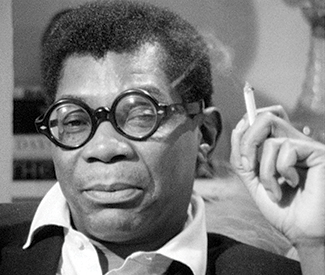
FILM At a moment when gay people and gay rights have never been more prominent — from the escalating numbers of states and countries permitting gay marriage to the controversy over Olympics-hosting Russia’s murky new anti-gay legislation — it’s hard to imagine the climate in which Portrait of Jason premiered in late 1967. The “new permissiveness” was just beginning to impact American cinema; soon there would be a small vogue of mainstream films addressing homosexuality in one way or another. But they would mostly be condescending, tragic, hostile and/or grotesquely comedic — you could argue there wasn’t a truly sympathetic Hollywood feature about a non-stereotypical gay relationship until 1982’s Making Love. (Which flopped, despite all publicity, and encouraged no imitations.)

Today it’s a common complaint that them perverts are too damn omnipresent in the news, on TV, everywhere — their heightened public profile somehow violating the “rights” of others to ignore or hate on them. But nearly half a century ago, Shirley Clarke’s documentary “portrait” of one rather flaming real-life personality — not just gay, but African American, too — seemed unprecedentedly exotic. No less than then-Supreme God of All Cinema (and supremely heterosexual) Ingmar Bergman called it “the most extraordinary film I’ve ever seen in my life … absolutely fascinating.” He probably found mankind’s first moon landing two years later less startling.

The latest in Milestone Films’ “Project Shirley” series of restored Clarke re-releases, Portrait of Jason can’t be experienced that way now. Any surviving exoticism is now related to the subject’s defining a certain pre-Stonewall camp persona, and the movie’s reflecting a 1960s cinema vérité style of which its director was a major proponent. Perhaps influenced by fellow New Yorker Andy Warhol’s early films, the setup couldn’t be simpler: instead of staring at the Empire State Building or somebody sleeping for X number of hours, we spend 12 hours in the company of Jason Holliday, née Aaron Payne. (He explains someone named Sabu in San Francisco during his “three, four, five years” there “was changing people’s names to suit their personality,” adding “San Francisco is a place to be created, believe me.”)

Or rather Clarke and her then-partner, actor Carl Lee, spend those hours — from 9 pm to 9 am — with Jason, while we get a 107-minute distillation. Nattily attired, waving a cigarette around while downing an epic lineup of cocktails, Jason is a natural performer who relishes this filmic showcase as “my moment.” No matter what, he says, he will now “have one beautiful something that is my own.”

At first Clarke and Lee simply let him riff, prompting him to speak calculated outrages they’ve probably already heard. (“What do you do for a living, Jason?” “I’m a … I’m a stone whore. And I’m not ashamed of it.”) He seems to be trying out material for a nightclub act that’s part Lenny Bruce, part snap diva. “I guess I’m a male bitch, because I have a tendency to go around and unglue people. I’ve spent so much of my time bein’ sexy I haven’t gotten anything else done. I’ve been balling from Maine to Mexico.” He shares anecdotes of working as a “houseboy” for rich white women during his in SF; he dons ladies’ hats and a feather boa to do imitations of Scarlett O’Hara, Miss Prissy, Katharine Hepburn, and Carmen Jones.

He’s indeed the life of his own party — increasingly smashed as wee hours encroach in Clarke’s Chelsea Hotel room — but there’s a certain desperation to this act that she and particularly Lee eventually pounce on. The exact nature of the two men’s relationship intrigues once Lee starts goading Jason to cut the “bullshit” and pony up some truths. “We know you’re a big con artist and you don’t really give a shit about nothin’ and nobody,” the off-camera Lee barks, later referencing some “dirty lies” Jason had allegedly spread about him.

By the time the former is calling the latter a “fuckin’ nasty bitch,” the film has become a queasy mix of exploitation and collusion. “Nervous and guilty and simple as I am,” Jason has a braggadocio that camouflages a self-loathing he’s just as willing to expose. When actual tears-of-a-clown are shed, the filmmakers seem cruel. Still, the “portrait” is incomplete — Clarke and Lee don’t press their subject to explicate the past spousal abuse, suicide attempt, and “nuthouse” and jail stays he drops into conversation as casually as he mentions a friendship with Miles Davis.

Two years later Yoko Ono and John Lennon would film the extremely disturbing Rape — 77 minutes of a camera crew silently, aggressively following an increasingly bewildered and panicked young woman around Manhattan, reducing her to a whimpering wreck. It was a human experiment in the name of art as striking as it was sadistic. While less traumatic, Portrait of Jason also stretches a very 1960s notion of cinema-as-angry-analyst’s-couch to uncomfortable lengths.

Clarke, who died in 1997 — one year before Jason — remains a fascinating, underappreciated figure who suffered all the consequences of being a stubbornly individual filmmaker in an era when women directors were rare and little-respected. (Not that that’s changed greatly since.) Switching from dance to movies in the ’50s, she earned an Oscar nomination for a 1960 short, then won one outright for a 1963 documentary about poet Robert Frost. Yet her career was constantly stymied, finally forcing her into academia. French director Agnès Varda’s 1969 curio Lions Love has her playing herself, a matter-of-fact New Yorker baffled equally by the Hollywood industry she’s trying to enter and by the upscale hippie ménage à trois antics of her hosts, Warhol star Viva and Hair co-creators Gerome Ragni and James Rado.


PORTRAIT OF JASON opens Fri/16 at the Roxie.

Dream deferred

3

news@sfbg.com

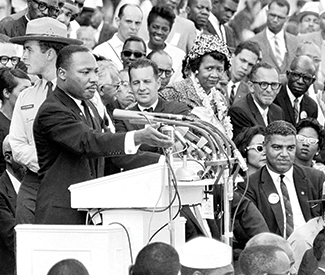
Nearly 50 years ago, hundreds of thousands of people marched at our nation’s capital to demand racial equality and respect. And half a century later, people are still fighting for that same cause.

In July, when George Zimmerman was found not guilty of any crimes for fatally shooting 17-year-old Trayvon Martin, racial tensions flared in the Bay Area and abroad. Martin’s death brought the issue of racial profiling to the surface, energizing a new generation of activists just in time for Aug. 28, the 50th anniversary of the Great March on Washington and Martin Luther King Jr.’s “I Have a Dream” speech.

Rev. Arnold Townsend, vice president of San Francisco’s chapter of the National Association for the Advancement of Colored People, is a veteran of the Civil Rights Movement. Townsend told the Guardian that Martin’s death triggered memories of Emmett Till, a 14-year-old African-American who was lynched in 1955 for flirting with a white woman.

Townsend was 12 when Till was murdered, and he says seeing the pictures of Till’s disfigured body in a casket posted in Jet magazine was what inspired him to be actively involved in the movement for racial justice.

“What happens in the world finds ways of bringing people together. What happened to Trayvon Martin isn’t so different from what happened to Emmett Till,” Townsend told us. “I knew that people could come for my father, my uncle, but from this I learned that they could come for me.”

The Zimmerman verdict resulted in large demonstrations of anger and outrage all across the country, including Oakland and San Francisco. The verdict inspired Zack Aslanian-Williams, a 24-year-old San Francisco resident, and others to join the NAACP and become activists.

“There is something about the Trayvon Martin case that definitely impacted my willingness to get involved,” Aslanian-Williams told us. “The case caught fire, and I have a sense of urgency to get involved in any way I can.”

In the wake of the verdict, many new and veteran activists targeted National Night Out, a neighborhood watch program event that African American activists fear fosters the kind of racist vigilantism they say motivated Zimmerman to kill Martin.

Jesse Strauss and more than a dozen other Oakland residents fanned out all over Oakland during the Aug. 6 event, visiting dozens block parties in an attempt to educate people as to why they should be wary of police and wannabe cops.

“We’re doing this to build community and talk to people about real safety,” Strauss said. “I think that the way that police function has been steady, and from that we have so many black and brown people locked up. This is a reflection of the struggles that have been going on and this shows that racism has not stopped at all.”

Rev. Amos Brown, president of the San Francisco NAACP chapter, said he wants to see people come together around racial equality and he fears the targeting of neighborhood watch programs may hinder that goal.

“We don’t need extreme provocateurs,” Brown said of anti-police activists. “The movement is like an airplane, and if one wing is too heavy, the whole thing goes down”

But Brown is just as critical of police, saying the 52 hours of sensitivity training that all personnel at San Francisco Police Department have to undergo isn’t enough.

“If relations were good between them, we would not have numerous calls coming in from people who were profiled by police, immediately being asked if they were on parole when they were approached,” Brown said.

Many San Franciscans are sensitive to the racial profiling issue. Last year, when Mayor Ed Lee proposed a stop-and-frisk policy to combat the proliferation of guns — despite studies showing a similar policy in New York City disproportionately targets African Americans — the community rose up and forced Lee to abandon the idea.

“Being a person of color who has been racially profiled, I couldn’t stand back and let this happen,” says Theo Ellington, president of Black Young Democrats of San Francisco, which organized people against the idea.

But activists say it’s not enough to play good defense. Fifty years after the strong show of support for racial justice, there is still much progress to be made.

“We need to keep pushing forward,” Townsend said. “Success is not measured by what you have done, it’s measured by what you’re going to do next.”

On Aug. 24, the San Francisco chapter of the NAACP plans to head over to Mosswood Park in Oakland for a rally commemorating the march put on by the Coalition of Black Trade Unionists.

The University of San Francisco will also be hosting an event on Aug. 20 to discuss the progress and setbacks in the march toward racial equality since the 1960s. Speakers at the event will include Clarence B. Jones, Martin Luther King Jr.’s former lawyer and adviser, and Mayor Ed Lee.

“It’s important to pause and see what’s happened in the past 50 years. It is the 50th anniversary of the dream and it is important to recognize that there’s been some unraveling of the dream,” USF Vice Provost Mary Wardell-Ghiraduzzi said.

Ellington said he’s still waiting for his own generation’s Great March on Washington. “The death of Trayvon Martin was a wakeup call. It proved that my life, as a person of color, is not as valuable as my counterparts,” Ellington said. “We have to be the ones to turn the tide. There’s still a lot more work to do to fulfill Martin Luther King Jr.’s dream. We are still fighting the same social ills we faced 50 years ago.”

Tales from the tracks

83

news@sfbg.com

BART’s trains will keep running, for now, after a San Francisco Superior Court judge ordered the 60-day cooling-off period that Gov. Jerry Brown was angling for last week to address BART’s labor contract impasse. The injunction is in effect until Oct. 10, blocking any strike or lockout until then.

A report by the Bay Area Council said that the four-day strike in early July cost the Bay Area $73 million a day. That estimate was also a conservative one, according to a report put together by a special investigative board convened by Brown to look into the brinkmanship between BART workers and management.

“All parties agree that the major issues of the negotiations remain unresolved, including wages, health benefits, pensions contributions, and workplace safety,” the Aug. 8 report said.

Aside from the nitty gritty of the contracts, the two parties can’t even agree on math. The report found that the “parties do not agree on the magnitude of the gap in their respective economic proposals,” and that they are between $56 and $62 million apart on their forecasts of district finances for the next three years.

Management’s biggest concerns are still capital investments. Last year, BART approved a contract for 410 new cars, at a cost of about $2.2 million per car. The union’s proposals leave little room for capital improvements, BART management said at the Aug. 8 investigatory hearing.

But the unions say that BART is financially healthy and can offer a decent contract to workers. Out of a budget of $1.5 billion, union officials say payroll for their members totals about $200 million.

The unions and management will now have two months to cool off. But will that help along their negotiations? SEIU Local 1021, which represents engineers and custodial workers, doesn’t seem to think so.

“We have bargained unsuccessfully with this employer from May 13 to June 30, 2013 with no true indication from the district that it intended to reach an agreement,” the unions wrote in a letter to the investigative board. “We have no reason to believe that if a 60 day cooling off period were created, we would not be standing then on the precipice of another work stoppage without an agreement.”

Meanwhile, to put a human face on a labor standoff that has provoked sometimes nasty reactions from the public, we ran a couple profiles of BART workers on the SFBG.com Politics blog last week. The response was so passionate and overwhelming, we decided to run them in the paper as well:


ROBERT BRIGHT

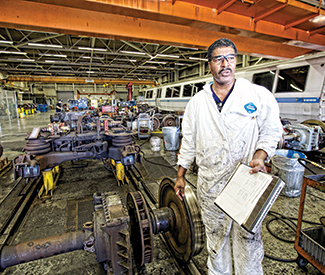
First we met Robert Earl Bright, a 47-year-old transit vehicle mechanic at the Hayward yards, where he’s been for three years. BART trains seem tame compared to the machines he used to work with, starting out as an Air Force mechanic working on cargo planes.

It’s that experience he draws from when he said BART’s policies are becoming increasingly dangerous.

Bright is tall but soft-spoken, and while we sat at a bench in a courtyard at Lake Merritt BART station, he talked about the shortcuts BART has taken lately, and how overtime and consolidation are bad practices for everyone involved.

There used to be specific workers called Power & Way controllers who looked out for workers on the train tracks and made sure they were safe, he said, but those responsibilities were consolidated into a separate train controller position. Since then, Bright saw the death of a colleague, a mechanic who switched from a graveyard shift to a day shift and was hit by an oncoming train.

Only after the death did BART take steps to ensure parts of the track where there was less clearance safe from trains were marked, he said.

“The problem is BART seems to wait until someone gets killed until they want to do something about it,” he said.

Bright is a new grandfather. He helps support his daughter and her two toddlers, and he supports his older brother who suffers from dementia. Bright has a home that his fiancée bought, but is “upside-down,” as he says, because of a predatory loan.

He’s one of the lucky ones though, as the military pays for his health care, and the negotiations don’t impact him as far as that goes. But he does worry about his pension, and thinks he may have to cut back on supporting his elderly brother and his grandchildren. Even with those cutbacks in his life, he’ll likely have to look for a part-time job as a car mechanic, he said.

While contemplating that future, his four-hour daily commute, and the new expectations BART asked of his crew to repair more cars in less time, he started to develop an ulcer.

“They’re short on people, and it’s cheaper for the managers to pay for overtime than to pay for another person,” he said. The stress pressed on him and one day at work he grew dizzy and collapsed. That’s when he started to be a little more Zen about what BART asked of him. But he still said it’s not right.

“Our shop is a mod [modification] shop, but we got tasked with doing preventive maintenance. Our shop isn’t set up for that,” he said. And that means workers who aren’t trained for that particular job are pushed to fix up cars when normally they’re doing an entirely different job. That can be dangerous, he said.

“We have to make sure that those trains not only run, we also have to make sure they’re safe,” Bright said. “Something could happen, like a panel popping off. It touches the third rail, it could catch on fire. If we could miss something… it could cause a derailment.”

As far as Bright goes, he said he’s seeing more people working overtime at the request of managers, working longer hours that could lead to unsafe conditions — not just for the mechanics, but for the people who ride BART every day.


PHYLLIS ALEXANDER

Phyllis Alexander has been with BART for 16 years in systems service, which she said basically means, “cleaning, cleaning, cleaning.”

“Wherever they need me, that’s what I do,” she said.

Alexander often starts her days cleaning the elevators and escalators at Powell Street Station, and if you’ve been reading the news lately, you know what that means.

She doesn’t mince words about it: “I clean the urine and the feces out of the elevators and make sure it’s clean and smelling good for the patrons.”

But Alexander doesn’t hold it against the homeless. When she first started at BART, she had little contact with them. But over the years, she’s made good friends out of some of the homeless at Powell and 16th Street stations, and the latter is where she sat and told her story.

“As the years passed, it got worse. People living in their cars on the streets, in their doorways. I’ve met a lot of wonderful homeless people, wonderful people,” she said. And as the years went by, it got harder for the cleaning crew, too. She’s one of two systems service folk who take care of Powell Street Station at any one time.

“Sometimes it can be tough, it can get hectic, but we get it done. It’s hecka huge, and there’s only two of us, but we have to do the best we can do.”

But she keeps with it for herself and her daughter.

Her daughter just finished medical school and is still living with her. Alexander makes about $52,000 a year, she said, and couldn’t figure out major cuts she’d make in her lifestyle to make room for paying more into her pension or health care.

“It would hurt me,” she said. She said that though people in the Bay Area demonize BART workers for wanting a raise, she feels it’s simply been too long since they’ve had one.

“I think I haven’t gotten a raise in two contracts. It’s been like seven or eight years,” she said.

Devoutly religious, ultimately she keeps faith that the workers will prevail in negotiations.

“(God) is going to bring this through,” she said. “This thing with management, it’s going to be all right.”


For the Record: Clearing up misinformation about BART workers


HEALTHCARE

BART workers pay only $92 a month into their health care. Right? Wrong. “That doesn’t tell the full story,” said Vincent Harrington, a lawyer representing the unions at the negotiating table. “These workers contributed 1.627 percent of their wages into a fund to cover not only the ongoing health care of active employees, but also the retirees.”

That brings the total to about $180 per person, he said, with a caveat. Some time ago, employer-provided health care was capped. “Additional (healthcare) costs beyond that cap would be on the workers and their families, not on BART,” he said.


PENSIONS

It’s true that BART workers don’t contribute to their pensions, but the entity responsible for that is BART management. In 1980, BART made the proposal to pay employee contributions to pensions in exchange for wage concessions from BART workers. The unions recently proposed to contribute 7 percent of their pension benefits, with wage increases of 6.5 percent to offset that. BART management said they’d agree, if the wage increase was lowered to 0.5 percent instead.


WAGES VERSUS COST

A database constructed by the San Jose Mercury News lists a BART employee’s full cost to the taxpayer — often at around $100,000. This is their “cost” to BART, not the wages they take home, a common mistake regularly made by angry online commenters. All employees everywhere, private or public sector, have a cost to their employer past their base salary.

According to Intuit.com, a web resource for small businesses, business owners should consider that each employee they hire will cost twice the amount of their wages. This is normal stuff, people. It’s wrong, and not factually significant, to demonize BART workers for costing more than their salaries.


OVERTIME

BART employees have also been villainized for working overtime. But these employees don’t necessarily want to work overtime at all, and often do it at the urging of managers who have slashed so many workers in the past decade that the only way the trains will run is if everyone puts in extra work. A worker at the Aug. 7 BART hearing said, “I go to work before my daughter wakes up, and I’m home from work when my daughter goes to sleep.”

Some mechanics we talked to said that working overtime can also lead to more injuries, and a higher possibility of mistakes that could cost riders their lives.


SAFETY

Since 2010, 1,099 BART customers reported being physically attacked, and so were 99 BART employees. Those station agents often work alone at night and just before dawn, the only staff in the entire station. They want extra staffing to help meet OSHA recommendations that employees work in pairs. They also want better worker’s compensation coverage. Saul Almanza, a BART representative from SEIU Local 1021 and a 17-year railroader, said “The area where [BART mechanic] Mr. [Robert] Rhodes was killed was very dark, and remains that way today. Look at the picture to the left, and that’s where Mr. Rhodes was standing as the southbound train proceeded through the interlock. It was dark and loud, and that’s where he was struck as he stood there with no place to go.”


BATHROOMS

One of the underreported asks at the bargaining table is unlocked bathrooms. Since the terrorist attacks of 9/11/01, many of the bathrooms at most BART’s stations have been locked. This prevents customers and workers alike from doing as nature intended. It’s a matter of respect and dignity to be able to do use a bathroom while at your workplace, said one BART worker, Jon Kozlosky, at the hearing. THE TRAINS DRIVE THEMSELVES One of the accusations we see on our comment board with every article is that since the trains drive themselves, the workers must have little expertise. But the drivers still carry out many functions of the trains. Besides, most BART workers toil behind the scenes: 920 of BART workers are drivers and station agents, but about 1,450 employees are in mechanical maintenance, clerical, and other jobs (like sanitation).

California’s refusal to reduce its prison population is a sign of deeper problems

40

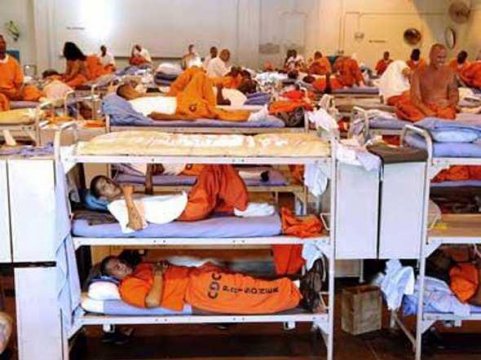
California just doesn’t get it when it comes to criminal justice. We have among the highest incarceration rates in the world (just below Russia’s, and about four times the European average); our prisons eat up far too much of our state budget; they are shamefully overcrowded, secretive, and inhumane; yet politicians from Gov. Jerry Brown on down refuse to show the courage or leadership to try a different approach.

When the conservative-dominated US Supreme Court — which on Friday upheld the lower court requirement that California reduce its prison population by 10,000 by the end of the year — is more progressive and enlightened than California’s leaders, you know there’s something seriously wrong here.

Rather than finally doing the right thing and complying with court orders to reduce a population that is still more than 43 percent over design capacity — despite reducing the population by 46,000 since 2006 because of court orders related to woefully inadequate health care in prisons — Corrections Secretary Jeffrey Beard yesterday responded to last week’s news by saying he will send more inmates to prisons in other states, at a high cost to California taxpayers.

What’s wrong with these people?!?! California prisons already lock up 124,363 people as of July 31, with another 8,959 inmates locked up in Arizona, Mississippi, and Oklahoma prisons at our expense. Tens of thousands more have been sent back to county jails under the state’s Realignment policies (which San Francisco, to the credit of its progressive approach to criminal justice, has managed to absorb and still reduce our jail population, thanks to smart alternatives to incarceration). And yet state officials still can’t get our prisons back to anywhere close to their design capacity?!?!

Of course, doing so would require rethinking decades of mindless “tough-on-crime” legislation that swelled our prison population. They’d probably also need to address the gutting of reentry and rehabilitation programs in the state, as well as conditions in some prisons that drive inmates mad (the subject of an onoing prison hunger strike). And they might even need to reform an economic system that is squeezing those on the bottom — sowing widespread economic insecurity that drives even law-abiding citizens to contemplate desperate measures —  just to maintain the wasteful churn of modern capitalism and the obscenely inequitable concentration of wealth at the top.

Hmm, I do believe that I’m starting to understand the motivations of our elected officials after all, those guardians of status quo power and privilege from both major parties. But if we’re ever going to move toward justice and sustainability, California’s prison system is probably a good place to start. 

From the mouths of BART workers; cleaning the dreaded escalators, skirting death

213

A reprieve in BART negotiations has given the Bay Area time to breathe before the next possible strike, but a lot of public concerns and animosity toward BART still remains. So the Guardian decided to take a look at BART workers themselves (we found them through their union) and ask, “How would your life change if the unions adopted BART management’s offers on safety, pensions, wages and health care?”

Note: The audio interviews are summarized in this post, but give them a listen to get a fuller picture of the impact of labor negotiations on worker’s lives.

First we met Robert Earl Bright, a 47-year-old transit vehicle mechanic at the Hayward yards, where he’s been for three years. BART trains seem tame compared to the machines he used to work with, as he started out as an Air Force mechanic working on cargo planes.

It’s that experience he draws from when he said BART’s policies are becoming increasingly dangerous.

Bright is tall but soft-spoken, and while we sat at a bench in a courtyard at Lake Merrit BART station, he talked about the shortcuts BART has taken lately, and how overtime and consolidation are bad practices for everyone involved.

There used to be specific workers called Power & Way controllers who looked out for workers on the train tracks and made sure they were safe, he said, but those responsibilities were consolidated into a separate train controller position. Since then, Bright saw the death of a colleague, a mechanic who switched from a graveyard shift to a day shift and was hit by an oncoming train.

Only after the death did BART take steps to ensure parts of the track where there was less clearance safe from trains were marked, he said.

“The problem is BART seems to wait until someone gets killed until they want to do something about it,” he said.

Bright is a new grandfather. He helps support his daughter and her two toddlers, and he supports his older brother who suffers from dementia. Bright has a home that his fiance bought, but is “upside-down,” as he says, because of a predatory loan.

He’s one of the lucky ones though, as the military pays for his health care, and the negotiations don’t impact him as far as that goes. But he does worry about his pension, and thinks he may have to cut back on supporting his elderly brother and his grandchildren. Even with those cutbacks in his life, he’ll likely have to look for a part time job as a car mechanic, he said.

While contemplating that future, his four-hour daily commute, and the new expectations BART asked of his crew to repair more cars in less time, he started to develop an ulcer.

“They’re short on people, and it’s cheaper for the managers to pay for overtime than to pay for another person,” he said. The stress pressed on him and one day at work he grew dizzy and collapsed, and that’s when he started to be a little more zen about what BART asked of him. But he still said it’s not right.

“Our shop is a mod [modification] shop, but we got tasked with doing preventive maintenance. Our shop isn’t set up for that,” he said. And that means workers who aren’t trained for that particular job are pushed to fix up cars when normally they’re doing an entirely different job. That can be dangerous, he said.

“We have to make sure that those trains not only run, we also have to make sure they’re safe,” Bright said. “Something could happen, like a panel popping off. It touches the third rail, it could catch on fire. If we could miss something… it could cause a derailment.”

As far as Bright goes, he said he’s seeing more people working over time at the request of managers, working longer hours that could lead to unsafe conditions — not just for the mechanics, but for the people who ride BART every day.


Phyllis Alexander, a BART systems service worker, cleans up in the Mission. Photo courtesy of Mark Mosher, SEIU 1021

Phyllis Alexander

Phyllis Alexander has been with BART for 16 years in systems service, which she said basically means, “cleaning, cleaning, cleaning.”

“Wherever they need me, that’s what I do,” she said.

Alexander often starts her days cleaning the elevators and escalators at Powell Street Station, and if you’ve been reading the news lately, you know what that means.

She doesn’t mince words about it: “I clean the urine and the feces out of the elevators and make sure it’s clean and smelling good for the patrons.”

But Alexander doesn’t hold it against the homeless. When she first started at BART, she had little contact with them. But over the years, she’s made good friends out of some of the homeless at Powell and 16th St. stations, and the latter is where she sat and told her story.

“As the years passed it got worse. People living in their cars on the streets, in their doorways. I’ve met a lot of wonderful homeless people, wonderful people,” she said. And as the years went by, it got harder for the cleaning crew, too. She’s one of two systems service folk who take care of Powell Street Station at any one time.

“Sometimes it can be tough, it can get hectic, but we get it done. It’s hecka huge, and there’s only two of us, but we have to do the best we can do.”

But she keeps with it for herself and her daughter.

Her daughter just finished medical school and is still living with her. Alexander makes about $52,000 a year, she said, and couldn’t figure out major cuts she’d make in her lifestyle to make room for paying more into her pension or health care.

“It would hurt me,” she said. She said that though people in the Bay Area demonize BART workers for wanting a raise, she feels it’s simply been too long since they’ve had one.

“I think I haven’t gotten a raise in two contracts. Its been like seven or eight years,” she said.

Devoutly religious, ultimately she keeps faith that the workers will prevail in negotiations.

“(God) is going to bring this through … this thing with management, it’s going to be all right,” she said.

Guardian forum sparks lively discussion

26

We had a packed house last night for our community forum on the future of the Bay Guardian and the progressive movement in the Bay Area, with lots of great input, advice, gratitude, and just a bit of acrimony. It was even more informative and inspiring than we had hoped for and we appreciate everyone coming out and speaking so frankly.

As Sup. David Campos (who just announced his candidacy for the California Assembly) said last night, “The Bay Guardian has been the conscience of the [progressive] movement and I think it’s important for the Guardian to continue to play that role,” and that’s a role that the new generation of Guardian leaders will continue playing while also reaching out to a new generation of Guardian readers.  

We’ll have a full rundown in next week’s paper, along with an extended letters to the editor section to make up for shutting down online comments this week, so for now let me just offer a brief overview. In addition to Campos, the crowd of around 100 people included Sup. John Avalos, Sheriff Ross Mirkarimi, and City College of San Francisco Trustees Rafael Mandelman and Chris Jackson.

The crowd also included Todd Vogt, CEO of the San Francisco Print Media Company, who got an earfull from progressive activists Gabriel Haaland, Chris Cook, and others over the abrupt departure of longtime Guardian Editor Tim Redmond in June, with concerns expressed over the Guardian’s credibility and editorial autonomy.

Both Vogt and those on the Guardian’s panel — which included (from right in the photo above) Publisher Marke Bieschke, Editor Steven T. Jones, Music Editor Emily Savage, Senior A&E Editor Cheryl Eddy, Art Director Brooke Robertson, and News Editor Rebecca Bowe — emphasized that the Guardian has full editorial autonomy and control over what we cover and how, and who we endorse. The mission of the paper — “To print the news and raise hell,” and to be an indispensible guide to Bay Area arts and culture — hasn’t changed.

We’re all still digesting everything what was said last night (both at the forum in the LGBT Center and an informal session afterwards at Zeitgeist that went late), and we will be factoring it into what we do and continuing this ongoing conversation with all of you. We also welcome everyone’s input and advice, which you can send to us at news@sfbg.com.

A special thanks to Alix Rosenthal for moderating the public input — and to everyone who came — for somehow keeping the comments and questions clear, concise, and constructive.

Onward!

UPDATE: Journalist Josh Wolf has written an excellent summary of the forum here at on the Journalism That Matters website. Check it out.

8/6 UPDATE: We just turned comments back on after shutting them off for a week-long experiment.

Music Listings: July 31-August 6, 2013

0


WEDNESDAY 31

ROCK

Bottom of the Hill: 1233 17th St., San Francisco. Al Lover, Coo Coo Birds, Face Tat, Bubblegum Crisis, 9 p.m., $8.

Brick & Mortar Music Hall: 1710 Mission, San Francisco. Mammoth Life, Giggle Party, Animal Friend, Li Xi, DJ Neil Martinson, 9 p.m., $8.

Cafe Du Nord: 2170 Market, San Francisco. Sebadoh, Octa#grape, 9 p.m., $15.

El Rio: 3158 Mission, San Francisco. Pale Chalice, Larvae, Verdant Realm, 9 p.m., $7.

Hemlock Tavern: 1131 Polk, San Francisco. Winter Teeth, The Plurals, Rare Animals, 8:30 p.m., $6.

Milk Bar: 1840 Haight, San Francisco. Down Dirty Shake, Siddhartha, DJ Dahmer, 8 p.m., $2.

Neck of the Woods: 406 Clement St., San Francisco. Heavy Glow, I’m Dirty Too, 9 p.m., $5.

DANCE

The Cafe: 2369 Market, San Francisco. “Sticky Wednesdays,” w/ DJ Mark Andrus, 8 p.m., free.

Cat Club: 1190 Folsom, San Francisco. “Bondage A Go Go,” w/ DJs Damon, Tomas Diablo, & guests, 9:30 p.m., $5-$10.

The Cellar: 685 Sutter, San Francisco. “Eye Candy Wednesdays,” 9 p.m., free.

Club X: 715 Harrison, San Francisco. “Electro Pop Rocks,” 18+ dance party with A.C. Slater, more, 9 p.m.

F8: 1192 Folsom St., San Francisco. “Housepitality,” w/ KMLN, Keith Kraft, Sharon Buck, Kimmy Le Funk, 9 p.m., $5-$10.

Harlot: 46 Minna, San Francisco. “Qoöl,” 5 p.m.

Infusion Lounge: 124 Ellis, San Francisco. “Indulgence,” 10 p.m.

The Knockout: 3223 Mission, San Francisco. “Doing It for the Kids: A Tribute to Creation Records,” w/ DJs Nickie & Gareth, 10 p.m., $3.

The Lab: 2948 16th St., San Francisco. “Replicant: Part II,” w/ Vice Device, RedRedRed, Time Release, Jon Porras, 9 p.m., $5-$8.

Lookout: 3600 16th St., San Francisco. “What?,” 7 p.m.

MatrixFillmore: 3138 Fillmore, San Francisco. “Innov8,” 8 p.m.

Monarch: 101 6th St., San Francisco. “Queen Bitch,” w/ DJs Mario Muse, Jacob Lehrbaum, Galine Modemoeselle, and Baron Van West, 9 p.m., $5.

Q Bar: 456 Castro, San Francisco. “Booty Call,” w/ Juanita More, Joshua J, guests, 9 p.m., $3.

Rickshaw Stop: 155 Fell, San Francisco. Astro, Miles the DJ, 9 p.m., $15-$20.

HIP-HOP

Double Dutch: 3192 16th St., San Francisco. “Cash IV Gold,” w/ DJs Kool Karlo, Roost Uno, and Sean G, 10 p.m., free.

The Independent: 628 Divisadero, San Francisco. El-P, Killer Mike, Despot, Kool A.D., 8 p.m., $20.

Skylark Bar: 3089 16th St., San Francisco. “Mixtape Wednesday,” w/ resident DJs Strategy, Junot, Herb Digs, & guests, 9 p.m., $5.

ACOUSTIC

Cafe Divine: 1600 Stockton, San Francisco. Craig Ventresco & Meredith Axelrod, 7 p.m., free.

Fiddler’s Green: 1333 Columbus, San Francisco. Terry Savastano, Every other Wednesday, 9:30 p.m., free/donation.

Plough & Stars: 116 Clement, San Francisco. The Toast Inspectors, Last Wednesday of every month, 9 p.m.

JAZZ

Amnesia: 853 Valencia, San Francisco. Gaucho, Eric Garland’s Jazz Session, The Amnesiacs, 7 p.m., free.

Burritt Room: 417 Stockton St., San Francisco. Terry Disley’s Rocking Jazz Trio, 6 p.m., free.

Cafe Royale: 800 Post, San Francisco. Ken Husbands Trio, 9 p.m.

Club Deluxe: 1511 Haight, San Francisco. The Techtonics, Every other Wednesday, 8:30 p.m., free.

Jazz Bistro At Les Joulins: 44 Ellis, San Francisco. Charles Unger Experience, 7:30 p.m., free.

Le Colonial: 20 Cosmo, San Francisco. The Cosmo Alleycats featuring Ms. Emily Wade Adams, 7 p.m., free.

Martuni’s: 4 Valencia, San Francisco. Tom Shaw Trio, Last Wednesday of every month, 7 p.m., $7.

Oz Lounge: 260 Kearny, San Francisco. Hard Bop Collective, 6 p.m., free.

Rasselas Ethiopian Cuisine & Jazz Club: 1534 Fillmore, San Francisco. M.B. Hanif & The Sound Voyagers, 8 p.m.

Revolution Cafe: 3248 22nd St., San Francisco. Michael Parsons Trio, Every other Wednesday, 8:30 p.m., free/donation.

The Rite Spot Cafe: 2099 Folsom, San Francisco. The Glasses, 8:30 p.m., free.

Savanna Jazz Club: 2937 Mission, San Francisco. “Cat’s Corner,” 9 p.m., $10.

Top of the Mark: One Nob Hill, 999 California, San Francisco. Ricardo Scales, Wednesdays, 6:30-11:30 p.m., $5.

Zingari: 501 Post, San Francisco. Brenda Reed, 7:30 p.m., free.

INTERNATIONAL

Bissap Baobab: 3372 19th St., San Francisco. Timba Dance Party, w/ DJ WaltDigz, 10 p.m., $5.

Cafe Cocomo: 650 Indiana, San Francisco. “Bachatalicious,” w/ DJs Good Sho & Rodney, 7 p.m., $5-$10.

Pachamama Restaurant: 1630 Powell, San Francisco. “Cafe LatinoAmericano,” 8 p.m., $5.

Yoshi’s San Francisco: 1330 Fillmore, San Francisco. Oliver Mtukudzi & The Black Spirits, 8 p.m., $22.

REGGAE

Elbo Room: 647 Valencia, San Francisco. FogDub, The Rudicals, Carne Cruda, 9 p.m., $8.

BLUES

Biscuits and Blues: 401 Mason, San Francisco. Tinsley Ellis, 8 & 10 p.m., $24.

The Saloon: 1232 Grant, San Francisco. Little Jonny & The Giants, 9:30 p.m.

SOUL

Boom Boom Room: 1601 Fillmore, San Francisco. West Grand Boulevard, 9:30 p.m., free.

The Cellar: 685 Sutter, San Francisco. “Color Me Badd,” w/ DJ Matt Haze, Wednesdays, 5-9 p.m.

THURSDAY 1

ROCK

Cafe Du Nord: 2170 Market, San Francisco. The Dangerous Summer, Tommy & The High Pilots, Rare Monk, Breaking Laces, 7:30 p.m., $10.

The Knockout: 3223 Mission, San Francisco. The Remones, Astro Zombies, Japanese Baby, 9:30 p.m., $6.

Make-Out Room: 3225 22nd St., San Francisco. Colossal Yes, Zachary Cale, 7:30 p.m.

Monarch: 101 6th St., San Francisco. Heart of the Whale, Pony Fight, Le Fomo, 8 p.m., $5-$8.

Slim’s: 333 11th St., San Francisco. The Protomen, The Deadlies, 8 p.m., $14.

DANCE

Abbey Tavern: 4100 Geary, San Francisco. DJ Schrobi-Girl, 10 p.m., free.

Aunt Charlie’s Lounge: 133 Turk, San Francisco. “Tubesteak Connection,” w/ DJ Bus Station John, 9 p.m., $5-$7.

Boom Boom Room: 1601 Fillmore, San Francisco. J-Boogie’s Dubtronic Science, 9:30 p.m., $7-$10.

The Cafe: 2369 Market, San Francisco. “¡Pan Dulce!,” 9 p.m., $5.

Cat Club: 1190 Folsom, San Francisco. “All ‘80s Thursdays,” w/ DJs Damon, Steve Washington, Dangerous Dan, and guests, 9 p.m., $6 (free before 9:30 p.m.).

The Cellar: 685 Sutter, San Francisco. “XO,” w/ DJs Astro & Rose, 10 p.m., $5.

Club X: 715 Harrison, San Francisco. “The Crib,” 9:30 p.m., $10, 18+.

DNA Lounge: 375 11th St., San Francisco. Cynical Mass, The Vile Augury, Flesh Industry, Black Gradient, DJ Mephobic, 9:30 p.m., $8.

S.F. Eagle: 398 12th St., San Francisco. Bézier, RedRedRed, DJ Josh Cheon, 9 p.m., $8.

Elbo Room: 647 Valencia, San Francisco. “Afrolicious,” w/ DJs Pleasuremaker, Señor Oz, and live guests, 9:30 p.m., $5-$7.

The EndUp: 401 Sixth St., San Francisco. EDMSF Thursdays, 10 p.m., $10 (free before midnight).

F8: 1192 Folsom St., San Francisco. “Beat Church,” w/ Bosstone, Psymbionic, Liquid Geometry Crew, Ryury, 10 p.m., $5-$10.

Infusion Lounge: 124 Ellis, San Francisco. “I Love Thursdays,” 10 p.m., $10.

Madrone Art Bar: 500 Divisadero, San Francisco. “Night Fever,” 9 p.m., $5 after 10 p.m.

MatrixFillmore: 3138 Fillmore, San Francisco. “Fusion,” w/ DJ Big Bad Bruce, 9 p.m., $5.

Otis: 25 Maiden, San Francisco. “Art Star S.F.,” First Thursday of every month, 10 p.m., free.

Public Works: 161 Erie, San Francisco. Bay Area VJ Meetup, Showcase, and Battle, 7:30 p.m., free; Nick the Neck, Kimba, Peter Blick, 9:30 p.m., $7-$10.

Q Bar: 456 Castro, San Francisco. “Throwback Thursday,” w/ DJ Jay-R, 9 p.m., free.

Raven: 1151 Folsom St., San Francisco. “1999,” w/ VJ Mark Andrus, 8 p.m., free.

Rickshaw Stop: 155 Fell, San Francisco. “Popscene,” w/ French Horn Rebellion, 9:30 p.m., $12-$14.

Ruby Skye: 420 Mason, San Francisco. “Awakening,” w/ Tritonal, Topher Jones, 9 p.m., $15-$20 advance.

The Tunnel Top: 601 Bush, San Francisco. “Tunneltop,” DJs Avalon and Derek ease you into the weekend with a cool and relaxed selection of tunes spun on vinyl, 10 p.m., free.

Underground SF: 424 Haight, San Francisco. “Bubble,” 10 p.m., free.

Vessel: 85 Campton, San Francisco. “Base,” w/ Tone of Arc, Mozhgan, 10 p.m., $5-$10.

HIP-HOP

Eastside West: 3154 Fillmore, San Francisco. “Throwback Thursdays,” w/ DJ Madison, 9 p.m., free.

John Colins: 138 Minna, San Francisco. “The Premiere,” video hip-hop party with VDJ T.D. Camp, First Thursday of every month, 9 p.m., $5.

Park 77 Sports Bar: 77 Cambon, San Francisco. “Slap N Tite,” w/ resident Cali King Crab DJs Sabotage Beats & Jason Awesome, free.

The Parlor: 2801 Leavenworth, San Francisco. “Locals Night Out,” w/ DJ Illy D, 9 p.m., free.

Skylark Bar: 3089 16th St., San Francisco. “Peaches,” w/lady DJs DeeAndroid, Lady Fingaz, That Girl, Umami, Inkfat, and Andre, 10 p.m., free.

ACOUSTIC

Amnesia: 853 Valencia, San Francisco. Misisipi Mike & The Midnight Gamblers, First Thursday of every month, 9 p.m.

Atlas Cafe: 3049 20th St., San Francisco. The Country Casanovas, 8 p.m., free.

Bottom of the Hill: 1233 17th St., San Francisco. Owen, Laura Stevenson, Shawn Alpay, 9 p.m., $13-$15.

Hemlock Tavern: 1131 Polk, San Francisco. Josephine Foster, Victor Herrero, Mark Borthwick, 8:30 p.m., $10-$12.

Musicians Union Local 6: 116 Ninth St., San Francisco. San Francisco Singer-Songwriters’ Workshop, hosted by Robin Yukiko, First Thursday of every month, 6:30 p.m., $25 (free for AFM members).

Plough & Stars: 116 Clement, San Francisco. The Shannon Céilí Band, First Thursday of every month, 9 p.m., free.

JAZZ

Blush! Wine Bar: 476 Castro, San Francisco. Doug Martin’s Avatar Ensemble, 7:30 p.m., free.

Bottle Cap: 1707 Powell, San Francisco. The North Beach Sound with Ned Boynton, Jordan Samuels, and Tom Vickers, 7 p.m., free.

Club Deluxe: 1511 Haight, San Francisco. Michael Parsons, 8:30 p.m., free.

Le Colonial: 20 Cosmo, San Francisco. Steve Lucky & The Rhumba Bums, 7:30 p.m.

The Royal Cuckoo: 3202 Mission, San Francisco. Chris Siebert, 7:30 p.m., free.

Savanna Jazz Club: 2937 Mission, San Francisco. Savanna Jazz Jam with Eddy Ramirez, 7:30 p.m., $5.

Top of the Mark: One Nob Hill, 999 California, San Francisco. Stompy Jones, 7:30 p.m., $10.

Yoshi’s San Francisco: 1330 Fillmore, San Francisco. NaJe, in Yoshi’s lounge, First Thursday of every month, 6:30 p.m., free; Steve Cole, 8 p.m., $24.

Zingari: 501 Post, San Francisco. Anne O’Brien, First Thursday of every month, 7:30 p.m., free.

INTERNATIONAL

Bissap Baobab: 3372 19th St., San Francisco. “Pa’Lante!,” w/ Juan G, El Kool Kyle, Mr. Lucky, 10 p.m., $5.

Pachamama Restaurant: 1630 Powell, San Francisco. “Jueves Flamencos,” 8 p.m., free.

Rasselas Ethiopian Cuisine & Jazz Club: 1534 Fillmore, San Francisco. Latin Breeze, 8 p.m.

SFJAZZ Center: 205 Franklin St., San Francisco. World Drum Extravaganza: Body Music with Keith Terry, 4 p.m., $20.

Verdi Club: 2424 Mariposa, San Francisco. The Verdi Club Milonga, w/ Christy Coté, DJ Emilio Flores, guests, 9 p.m., $10-$15.

Yerba Buena Gardens: Fourth St. & Mission, San Francisco. Will Magid Trio, 12:30 p.m., free.

REGGAE

The Independent: 628 Divisadero, San Francisco. Rootz Underground, Blue King Brown, 9 p.m., $15.

Pissed Off Pete’s: 4528 Mission St., San Francisco. Reggae Thursdays, w/ resident DJ Jah Yzer, 9 p.m., free.

BLUES

Biscuits and Blues: 401 Mason, San Francisco. Deanna Bogart, 8 & 10 p.m., $20.

Jazz Bistro At Les Joulins: 44 Ellis, San Francisco. Bohemian Knuckleboogie, 7:30 p.m., free.

EXPERIMENTAL

The Luggage Store: 1007 Market, San Francisco. Doug Lynner, Lindsey Walker, 8 p.m., $6-$10.

FUNK

Brick & Mortar Music Hall: 1710 Mission, San Francisco. Mingo Fishtrap, The Eleven, 9 p.m., $7-$10.

FRIDAY 2

ROCK

Bottom of the Hill: 1233 17th St., San Francisco. Happy Body Slow Brain, Beta State, Via Coma, Ghost Parade, 9 p.m., $10-$12.

Brick & Mortar Music Hall: 1710 Mission, San Francisco. “Southern Fried Seance: A Mississippi–Bay Area Mind Expansive Guitar Celebration,” w/ Luther Dickinson, Alvin Youngblood Hart, Andy Cabic, Richard Osborn, Jimbo Mathus, 8 p.m., $15-$20.

Hemlock Tavern: 1131 Polk, San Francisco. Neil Michael Hagerty & The Howling Hex (performing Rogue Moon), Sands, 9 p.m., $12-$15.

The Independent: 628 Divisadero, San Francisco. Ben Kweller, Mahgeetah, Bonnie & The Bang Bang, Surf for Life benefit show, 9 p.m., $25.

Milk Bar: 1840 Haight, San Francisco. The Institution, Empire Slum, 8 p.m., $10.

Neck of the Woods: 406 Clement St., San Francisco. French Girls, Down Dirty Shake, The Downbeat Crowd, 9 p.m., $5-$8.

Slim’s: 333 11th St., San Francisco. The Sword, Castle, American Sharks, 9 p.m., $20.

Thee Parkside: 1600 17th St., San Francisco. Filthy Thieving Bastards, Jayke Orvis & The Broken Band, Sean Wheeler & Zander Schloss, 9 p.m., $10.

DANCE

1015 Folsom: 1015 Folsom St., San Francisco. “Witness 3.0,” w/ Hudson Mohawke (DJ set), Cashmere Cat, Jacques Greene, Om Unit, Roosevelt, Nick Hook, DJ Dials, Danny Corn, Hokobo, more, 10 p.m., $25 advance.

Amnesia: 853 Valencia, San Francisco. “Brass Tax,” w/ resident DJs JoeJoe, Ding Dong, Ernie Trevino, Mace, First Friday of every month, 10 p.m., $5.

BeatBox: 314 11th St., San Francisco. “As You Like It,” w/ Rrose, Rich Korach, Mossmoss, Honey Soundsystem, 9 p.m., $10-$15 advance.

Cafe Flore: 2298 Market, San Francisco. “Kinky Beats,” w/ DJ Sergio, 10 p.m., free.

The Cafe: 2369 Market, San Francisco. “Boy Bar,” w/ DJ Matt Consola, 9 p.m., $5.

Cat Club: 1190 Folsom, San Francisco. “Strangelove: A Tribute to Depeche Mode,” w/ DJs Tomas Diablo, Melting Girl, Sage, and Panic, 9:30 p.m., $7 ($3 before 10 p.m.).

The Cellar: 685 Sutter, San Francisco. “F.T.S.: For the Story,” 10 p.m.

DNA Lounge: 375 11th St., San Francisco. One More Time, Delorean Overdrive, DJs Mr. Tyler Jackson & Devon, 9 p.m., $15-$20; “Twitch,” w/ Vice Device, plus DJs Justin, Omar, Rachel, and Mozhgan, 10 p.m., $5-$8.

The EndUp: 401 Sixth St., San Francisco. “Fever,” 10 p.m., free before midnight.

F8: 1192 Folsom St., San Francisco. “Vintage,” w/ DJ Toph One & guests, 5 p.m., free.

The Grand Nightclub: 520 4th St., San Francisco. “We Rock Fridays,” 9:30 p.m.

Infusion Lounge: 124 Ellis, San Francisco. “Escape Fridays,” 10 p.m., $20.

Lookout: 3600 16th St., San Francisco. “HYSL,” 9 p.m., $3.

Madrone Art Bar: 500 Divisadero, San Francisco. “Dirty Rotten Dance Party,” w/ Kap10 Harris, Shane King, guests, First Friday of every month, 9 p.m., $5.

MatrixFillmore: 3138 Fillmore, San Francisco. “F-Style Fridays,” w/ DJ Jared-F, 9 p.m.

Mezzanine: 444 Jessie, San Francisco. “Future Fridays,” w/ Gorgon City, 9 p.m., $10-$20.

Monarch: 101 6th St., San Francisco. Christian Cambas, Syd Gris, Eliki, Sex Pixels, 9:30 p.m., $10 before 11 p.m.

Powerhouse: 1347 Folsom, San Francisco. “Nasty,” First Friday of every month, 10 p.m., $5.

Public Works: 161 Erie, San Francisco. “Dusty Rhino Pre-Burn Extravaganza,” w/ DJ Icon, Kramer, Ding Dong, Shooey, Alvaro Bravo, DJ Dane, Nugz, Jason Wilson, DJMK, Mystr/Htcht, more (in the main room), 9 p.m., $15-$20; “Clockworks,” w/ DJ Doc Martin (in the OddJob Loft), 10 p.m., $10-$15.

Q Bar: 456 Castro, San Francisco. “Pump: Worq It Out Fridays,” w/ resident DJ Christopher B, 9 p.m., $3.

Rickshaw Stop: 155 Fell, San Francisco. Trapeze 8: One-Year Anniversary Hot August Hoo-Ha, DJs Delachaux, JsinJ, and The Klown spin electro-swing cabaret platters while Lux-O-Matic, Fou Fou Ha!, Eva D’Luscious, and Miss Scarlet Conte get down in dapper flapper burlesque performances., 9 p.m., $10.

Ruby Skye: 420 Mason, San Francisco. Gabriel & Dresden, 9 p.m., $20 advance.

Slate Bar: 2925 16th St., San Francisco. “Haçeteria,” w/ Avalon Kalin, Nonamoan, plus resident DJs Jason P, Smac, Tristes Tropiques, and Nihar, 10 p.m., $5-$7.

Underground SF: 424 Haight, San Francisco. “No Way Back,” w/ Daniel Avery, Conor, Solar, 10 p.m., $10-$15.

Vessel: 85 Campton, San Francisco. “Blitz,” w/ Oliver, Justin Milla, 10 p.m., $10-$30.

Wish: 1539 Folsom, San Francisco. “Bridge the Gap,” w/ resident DJ Don Kainoa, Fridays, 6-10 p.m., free; “Depth,” w/ resident DJs Sharon Buck & Greg Yuen, First Friday of every month, 10 p.m., free.

HIP-HOP

EZ5: 682 Commercial, San Francisco. “Decompression,” Fridays, 5-9 p.m.

Mighty: 119 Utah, San Francisco. “Summer in the City,” w/ Triple Threat DJs Shortkut, Vinroc, and Apollo, 9 p.m., free.

Nickies: 466 Haight, San Francisco. “First Fridays,” w/ The Whooligan & Dion Decibels, First Friday of every month, 11 p.m., free.

ACOUSTIC

Bazaar Cafe: 5927 California, San Francisco. Sugar Ponies, 7 p.m.

The Chapel: 777 Valencia St., San Francisco. Griffin House, Megan Slankard, 9 p.m., $18-$20.

Elbo Room: 647 Valencia, San Francisco. The Pine Box Boys, Cutthroat Shamrock, Three Times Bad, 10 p.m., $10.

Pa’ina: 1865 Post St., San Francisco. Kimie, 7 p.m., $15 advance.

Plough & Stars: 116 Clement, San Francisco. The Naked Bootleggers, The Westpile Boys, 9 p.m.

The Sports Basement: 610 Old Mason, San Francisco. “Breakfast with Enzo,” w/ Enzo Garcia, 10 a.m., $5.

St. Cyprian’s Episcopal Church: 2097 Turk, San Francisco. First Fridays Song Circle, First Friday of every month, 7 p.m., $5-$10.

JAZZ

Beach Chalet Brewery & Restaurant: 1000 Great Highway, San Francisco. Johnny Smith, 8 p.m., free.

Bird & Beckett: 653 Chenery, San Francisco. Don Prell’s SeaBop Ensemble, First Friday of every month, 5:30 p.m., free.

Jazz Bistro At Les Joulins: 44 Ellis, San Francisco. Charles Unger Experience, 7:30 p.m., free.

Savanna Jazz Club: 2937 Mission, San Francisco. Savanna Jazz Trio, 7 p.m., $5.

SFJAZZ Center: 205 Franklin St., San Francisco. World Drum Extravaganza: Monk on Drums with Allison Miller, 4 p.m., $20.

Top of the Mark: One Nob Hill, 999 California, San Francisco. Black Market Jazz Orchestra, 9 p.m., $10.

Zingari: 501 Post, San Francisco. Joyce Grant, 8 p.m., free.

INTERNATIONAL

Cafe Cocomo: 650 Indiana, San Francisco. Taste Fridays, featuring local cuisine tastings, salsa bands, dance lessons, and more, 7:30 p.m., $15 (free entry to patio).

Little Baobab: 3388 19th St., San Francisco. “Paris-Dakar African Mix Coupe Decale,” 10 p.m.

Pachamama Restaurant: 1630 Powell, San Francisco. Cuban Night with Fito Reinoso, 7:30 & 9:15 p.m., $15-$18.

Yerba Buena Gardens: Fourth St. & Mission, San Francisco. Venezuelan Music Project, 11 a.m. & 12:15 p.m., free.

REGGAE

Cafe Du Nord: 2170 Market, San Francisco. One Drop, Midnight Raid, Jethro Jeremiah & The Soulmates, 9:30 p.m., $10-$12.

Gestalt Haus: 3159 16th St., San Francisco. “Music Like Dirt,” 7:30 p.m., free.

Showdown: 10 Sixth St., San Francisco. “How the West Was Won,” w/ Nowtime Sound, First Friday of every month, 10 p.m., free.

BLUES

Biscuits and Blues: 401 Mason, San Francisco. Samantha Fish Trio, 8 & 10 p.m., $20.

Boom Boom Room: 1601 Fillmore, San Francisco. Bill Phillippe, 6 p.m., free.

FUNK

Amnesia: 853 Valencia, San Francisco. Swoop Unit, First Friday of every month, 6 p.m.

Boom Boom Room: 1601 Fillmore, San Francisco. Moksha, Ruby Velle & The Soulphonics, 9:30 p.m., $5-$15.

Make-Out Room: 3225 22nd St., San Francisco. “Loose Joints,” w/ DJs Centipede, Damon Bell, & Tom Thump, 10 p.m., $5.

SOUL

Edinburgh Castle: 950 Geary, San Francisco. “Soul Crush,” w/ DJ Serious Leisure, 10 p.m., free.

The Knockout: 3223 Mission, San Francisco. “Oldies Night,” w/ DJs Primo, Daniel, Lost Cat, friends, First Friday of every month, 10 p.m., $5.

Yoshi’s San Francisco: 1330 Fillmore, San Francisco. Les Nubians, 8 & 10 p.m., $28-$32.

SATURDAY 3

ROCK

Bender’s: 806 S. Van Ness, San Francisco. Hornss, Apogee Sound Club, 10 p.m., $5.

Bottom of the Hill: 1233 17th St., San Francisco. Guy Fox, Ghost & The City, Fortress Social Club, 9:30 p.m., $10-$12.

The Chapel: 777 Valencia St., San Francisco. This Charming Band, Strangelove, Add It Up, 9 p.m., $15.

El Rio: 3158 Mission, San Francisco. Nobunny, The Shrills, Sweat Lodge, 10 p.m., $8.

Hemlock Tavern: 1131 Polk, San Francisco. Neil Michael Hagerty & The Howling Hex (performing Earth Junk), Sweet Chariot, 9 p.m., $12-$15.

Make-Out Room: 3225 22nd St., San Francisco. Screature, POW!, Mane, 7:30 p.m., $8.

Slim’s: 333 11th St., San Francisco. The Sword, Castle, American Sharks, 9 p.m., $20.

Sub-Mission Art Space (Balazo 18 Gallery): 2183 Mission, San Francisco. Lightsystem, Broken Cities, Your Cannons, Tracing Figures, 8 p.m., $5.

Thee Parkside: 1600 17th St., San Francisco. Third Annual San Frandelic Summerfest, w/ Vincent Gallo, Spindrift, Guy Blakeslee, Outlaw, Greg Ashley, The Groggs, Wild Honey, Owl, Meat Market, Cool Ghouls, Virgin Hymns, 2 p.m., $30.

DANCE

Cafe Flore: 2298 Market, San Francisco. “Bistrotheque,” w/ DJ Ken Vulsion, 8 p.m., free.

Cat Club: 1190 Folsom, San Francisco. “Leisure,” w/ DJs Aaron, Omar, & Jetset James, First Saturday of every month, 10 p.m., $7.

DNA Lounge: 375 11th St., San Francisco. “Bootie S.F.,” w/ DJs Tripp, Faroff, Fox, Kool Karlo, Starr, Artitude, and more, 9 p.m., $10-$15.

The EndUp: 401 Sixth St., San Francisco. “Play,” w/ Mike Huckaby, John Tejada, Hoj, Atish, 10 p.m.

Infusion Lounge: 124 Ellis, San Francisco. “Volume,” First Saturday of every month, 10 p.m., $10-$20.

The Knockout: 3223 Mission, San Francisco. “Debaser,” w/ resident DJs EmDee, Jamie Jams, and Stab Master Arson, First Saturday of every month, 10 p.m., $5 (free before 11 p.m. if wearing flannel).

Lookout: 3600 16th St., San Francisco. “Bounce!,” 9 p.m., $3.

Madrone Art Bar: 500 Divisadero, San Francisco. “The Prince & Michael Experience,” w/ DJs Dave Paul & Jeff Harris, First Saturday of every month, 9 p.m., $5.

Mezzanine: 444 Jessie, San Francisco. Conspirator, The Flying Skulls, DJ Morale, 9 p.m., $20.

Mighty: 119 Utah, San Francisco. The Bromance Tour, w/ Gesaffelstein & Brodinski, 10 p.m., $18 advance.

Monarch: 101 6th St., San Francisco. “15 Years of Viva Recordings,” w/ Pezzner, Johnny Fiasco, Rick Preston, Jon Lemmon, Chad Neiro, 9 p.m., $10-$15.

Public Works: 161 Erie, San Francisco. “All Night Long: 1-Year Anniversary Party,” w/ DJ Garth & Eric Duncan (in the OddJob Loft), 9:30 p.m., $10-$15.

Q Bar: 456 Castro, San Francisco. “Homo Erectus,” w/ DJs MyKill & Dcnstrct, First Saturday of every month, 9 p.m., $5.

Rickshaw Stop: 155 Fell, San Francisco. “LCD Soundsystem Is Playing at My House,” w/ North American Scum, plus American Tripps ping-pong, 8 p.m., $6-$8.

Ruby Skye: 420 Mason, San Francisco. “House Connection,” w/ Bad Boy Bill & Richard Vission, 9 p.m., $20 advance.

The Stud: 399 Ninth St., San Francisco. “Go Bang!,” w/ Jordan Fields, DJ Osmose, Sergio Fedasz, Steve Fabus, 9 p.m., $7 (free before 10 p.m.).

Vessel: 85 Campton, San Francisco. Norman Doray, 10 p.m., $10-$30.

HIP-HOP

John Colins: 138 Minna, San Francisco. “N.E.W.: Never Ending Weekend,” w/ DJ Jerry Ross, First Saturday of every month, 9 p.m., free before 11 p.m.

Milk Bar: 1840 Haight, San Francisco. “Sonic Universe Mini-Festival,” w/ VerBS, Gee Soul & Rayshell with Rod Roc, Bwan, Digital Martyrs, MonBon, Rymeezee, J.R. & Mariyet, 10 p.m., $5.

Public Works: 161 Erie, San Francisco. Rye Rye, MicahTron, DJ Olga T, Hard French DJs Carnita & Brown Amy, in the main room, 9 p.m., $15-$20.

Slate Bar: 2925 16th St., San Francisco. “Touchy Feely,” w/ The Wild N Krazy Kids, First Saturday of every month, 10 p.m., $5 (free before 11 p.m.).

ACOUSTIC

Atlas Cafe: 3049 20th St., San Francisco. Craig Ventresco & Meredith Axelrod, Saturdays, 4-6 p.m., free.

Bazaar Cafe: 5927 California, San Francisco. Alex Jimenez, Lauren Oakshott, 7 p.m.

Neck of the Woods: 406 Clement St., San Francisco. Shani, Blackford Hill, Exhausted Pipes, 8 p.m., $8.

Plough & Stars: 116 Clement, San Francisco. “Americana Jukebox,” w/ Old Belle, Misisipi Rider, 9 p.m., $6-$10.

Revolution Cafe: 3248 22nd St., San Francisco. Seth Augustus, First Saturday of every month, 9 p.m., free/donation.

The Riptide: 3639 Taraval, San Francisco. Back40, 9 p.m., free.

JAZZ

Club Deluxe: 1511 Haight, San Francisco. Saturday Afternoon Jazz, w/ Danny Brown, Danny Grewen, Eugene Warren, & Beth Goodfellow, 4:30 p.m., free.

Jazz Bistro At Les Joulins: 44 Ellis, San Francisco. Bill “Doc” Webster & Jazz Nostalgia, 7:30 p.m., free.

Rasselas Ethiopian Cuisine & Jazz Club: 1534 Fillmore, San Francisco. The Robert Stewart Experience, 9 p.m., $7.

Savanna Jazz Club: 2937 Mission, San Francisco. Savanna Jazz Trio, 7 p.m., $5.

Sheba Piano Lounge: 1419 Fillmore, San Francisco. Charles Unger Experience, First Saturday of every month, 8 p.m.

Yerba Buena Gardens: Fourth St. & Mission, San Francisco. AfroSolo’s Jazz in the Gardens, w/ E.W. Wainwright, African Roots of Jazz, Denise Perrier Quintet, 1 p.m., free.

Zingari: 501 Post, San Francisco. Hubert Emerson, 8 p.m., free.

INTERNATIONAL

1015 Folsom: 1015 Folsom St., San Francisco. “Pura,” 9 p.m., $20.

Little Baobab: 3388 19th St., San Francisco. “Paris-Dakar African Mix Coupe Decale,” 10 p.m.

Make-Out Room: 3225 22nd St., San Francisco. “El SuperRitmo,” Latin dance party with DJs Roger Mas & El Kool Kyle, 10 p.m., $5.

Pachamama Restaurant: 1630 Powell, San Francisco. Peña Eddy Navia & Pachamama Band, 8 p.m., free.

SFJAZZ Center: 205 Franklin St., San Francisco. World Drum Extravaganza: Rumba Cubana with Sandy Pérez, Jesús Diaz, and Erick Barberia, noon, $20; World Drum Extravaganza: Samba Batucada with Jorge Alabe, 2:30 p.m., $20; World Drum Extravaganza: Uruguayan Candombe with Edgardo Cambón, 5 p.m., $20.

St. Cyprian’s Episcopal Church: 2097 Turk, San Francisco. The Klez-X, 8 p.m., $14-$17.

BLUES

Biscuits and Blues: 401 Mason, San Francisco. E.C. Scott, 8 & 10 p.m., $20.

EXPERIMENTAL

Victoria Theatre: 2961 16th St., San Francisco. Sun Ra Arkestra, sfSoundGroup, Hans Grusel’s Krankenkabinet, 8 p.m., $20.

FUNK

Boom Boom Room: 1601 Fillmore, San Francisco. Polyrhythmics, 9:30 p.m., $5-$15.

Brick & Mortar Music Hall: 1710 Mission, San Francisco. Afrofunk Experience, Broun Fellinis, 9 p.m., $7-$10.

Yoshi’s San Francisco: 1330 Fillmore, San Francisco. Cameo, 8 & 10 p.m., $42.

SOUL

El Rio: 3158 Mission, San Francisco. “Hard French,” w/ DJs Carnita & Brown Amy, First Saturday of every month, 2 p.m., $7.

Elbo Room: 647 Valencia, San Francisco. “Saturday Night Soul Party,” w/ DJs Lucky, Phengren Oswald, & Paul Paul, First Saturday of every month, 10 p.m., $10 ($5 in formal attire).

SUNDAY 4

ROCK

Bottom of the Hill: 1233 17th St., San Francisco. Balmorhea, Young Moon, 9:30 p.m., $10.

Brick & Mortar Music Hall: 1710 Mission, San Francisco. Lecherous Gaze, Joy, Red Octopus, Grill Cloth, DJ Hackk, DJ Goosebumps, 9 p.m., $7.

Cafe Du Nord: 2170 Market, San Francisco. The Pops, The Beggars Who Give, Sad Tires, Headlines, 8 p.m., $8.

DNA Lounge: 375 11th St., San Francisco. “Summer Throwdown,” w/ Space Vacation, Son of a SuperCar, Systematic Decay, Look a Flying Pig, Dammit!, When Earth Awakes, Anisoptera, Sea in the Sky, Serville, Demacia, How the Beautiful Decay, 4:30 p.m., $10-$15.

Hemlock Tavern: 1131 Polk, San Francisco. A Million Billion Dying Suns, Foli, Disappearing People, 8:30 p.m., $6.

DANCE

The Cellar: 685 Sutter, San Francisco. “Replay Sundays,” 9 p.m., free.

The Edge: 4149 18th St., San Francisco. “’80s at 8,” w/ DJ MC2, 8 p.m.

Elbo Room: 647 Valencia, San Francisco. “Dub Mission,” w/ DJ Adam, DJ Sep, Vinnie Esparza, 9 p.m., $6 (free before 9:30 p.m.).

The EndUp: 401 Sixth St., San Francisco. “T.Dance,” 6 a.m.-6 p.m.; “Sunday Sessions,” 8 p.m.; “BoomBox,” First Sunday of every month, 8 p.m.

F8: 1192 Folsom St., San Francisco. “Stamina Sundays,” w/ DJs Lukeino, Jamal, and guests, 10 p.m., free.

Holy Cow: 1535 Folsom, San Francisco. “Honey Sundays,” w/ Honey Soundsystem & guests, 9 p.m., $5.

The Knockout: 3223 Mission, San Francisco. “Sweater Funk,” 10 p.m., free.

Lookout: 3600 16th St., San Francisco. “Jock,” Sundays, 3-8 p.m., $2.

Monarch: 101 6th St., San Francisco. “Ms. White: A Chic Polyamorous Monthly,” w/ DJs Solar & Robert Jeffrey, 10 p.m., $5.

Otis: 25 Maiden, San Francisco. “What’s the Werd?,” w/ resident DJs Nick Williams, Kevin Knapp, Maxwell Dub, and guests, 9 p.m., $5 (free before 11 p.m.).

The Parlor: 2801 Leavenworth, San Francisco. DJ Marc deVasconcelos, 10 p.m., free.

Q Bar: 456 Castro, San Francisco. “Gigante,” 8 p.m., free.

Temple: 540 Howard, San Francisco. “Sunset Arcade,” 18+ dance party with bar games and video arcade, 7 p.m., $5.

HIP-HOP

El Rio: 3158 Mission, San Francisco. “Swagger Like Us,” First Sunday of every month, 3 p.m.

Skylark Bar: 3089 16th St., San Francisco. “Shooz,” w/ DJ Raymundo & guests, First Sunday of every month, 10 p.m., free.

ACOUSTIC

Bazaar Cafe: 5927 California, San Francisco. Gary Adler, Aaron Ford, Lesley Greer, 6 p.m.

Club Deluxe: 1511 Haight, San Francisco. Musical Mayhem with the Dimestore Dandy, 5:30 p.m., free.

Jane Warner Plaza: Market, San Francisco. The Buds, 3 p.m., free.

The Lucky Horseshoe: 453 Cortland, San Francisco. Sunday Bluegrass Jam, 4 p.m., free.

Madrone Art Bar: 500 Divisadero, San Francisco. “Spike’s Mic Night,” Sundays, 4-8 p.m., free.

Milk Bar: 1840 Haight, San Francisco. Parlor Tricks, The Rusty String Express, 4 p.m., free.

Neck of the Woods: 406 Clement St., San Francisco. “iPlay,” open mic with featured weekly artists, 6:30 p.m., free.

Plough & Stars: 116 Clement, San Francisco. Seisiún with Cieran Marsden, 9 p.m.

St. Luke’s Episcopal Church: 1755 Clay, San Francisco. “Sunday Night Mic,” w/ Roem Baur, 5 p.m., free.

JAZZ

Amnesia: 853 Valencia, San Francisco. Kally Price Old Blues & Jazz Band, First Sunday of every month, 9 p.m., $5.

Chez Hanny: 1300 Silver, San Francisco. Soul Sauce, 4 p.m., $20 suggested donation.

Club Deluxe: 1511 Haight, San Francisco. Jay Johnson, 9 p.m., free.

Jazz Bistro At Les Joulins: 44 Ellis, San Francisco. Bill “Doc” Webster & Jazz Nostalgia, 7:30 p.m., free.

Madrone Art Bar: 500 Divisadero, San Francisco. “Sunday Sessions,” 10 p.m., free.

Revolution Cafe: 3248 22nd St., San Francisco. Jazz Revolution, 4 p.m., free/donation.

The Royal Cuckoo: 3202 Mission, San Francisco. Lavay Smith & Chris Siebert, 7:30 p.m., free.

SFJAZZ Center: 205 Franklin St., San Francisco. Josh Jones & The Jazz-Funk Messengers, 9:30 p.m., $20.

INTERNATIONAL

Atmosphere: 447 Broadway, San Francisco. “Hot Bachata Nights,” w/ DJ El Guapo, 5:30 p.m., $10 ($15-$20 with dance lessons).

Bissap Baobab: 3372 19th St., San Francisco. “Brazil & Beyond,” 6:30 p.m., free.

Oasis Bar & Grill: 401 California Ave., San Francisco. “El Vacilón,” 4 p.m., $10.

SFJAZZ Center: 205 Franklin St., San Francisco. World Drum Extravaganza: Caribbean Sensibility for Drummers with Josh Jones, 1 p.m., $20; World Drum Extravaganza: Brazilian Bloco Afro Workshop with Wagner Santos, 4 p.m., $20.

Thirsty Bear Brewing Company: 661 Howard, San Francisco. “The Flamenco Room,” 7:30 & 8:30 p.m.

BLUES

Biscuits and Blues: 401 Mason, San Francisco. Mitch Woods & His Rocket 88s, 7 & 9 p.m., $15.

Revolution Cafe: 3248 22nd St., San Francisco. HowellDevine, 8:30 p.m., free/donation.

The Saloon: 1232 Grant, San Francisco. Blues Power, 4 p.m.

Sheba Piano Lounge: 1419 Fillmore, San Francisco. Bohemian Knuckleboogie, 9 p.m., free.

COUNTRY

The Riptide: 3639 Taraval, San Francisco. “The Hootenanny West Side Revue,” First Sunday of every month, 7:30 p.m., free.

SOUL

Boom Boom Room: 1601 Fillmore, San Francisco. “Deep Fried Soul,” w/ DJs Boombostic & Soul Sauce, 9:30 p.m., $5.

Delirium Cocktails: 3139 16th St., San Francisco. “Heart & Soul,” w/ DJ Lovely Lesage, 10 p.m., free.

MONDAY 5

ROCK

Bottom of the Hill: 1233 17th St., San Francisco. Heavy Action, Caustic Casanova, City of Women, 9 p.m., $8.

Hemlock Tavern: 1131 Polk, San Francisco. M.O.T.O., Surprise Vacation, Manatee, 6 p.m., $8.

DANCE

DNA Lounge: 375 11th St., San Francisco. “Death Guild,” 18+ dance party with DJs Decay, Joe Radio, Melting Girl, & guests, 9:30 p.m., $3-$5.

Q Bar: 456 Castro, San Francisco. “Wanted,” w/ DJs Key&Kite and Richie Panic, 9 p.m., free.

Underground SF: 424 Haight, San Francisco. “Vienetta Discotheque,” w/ DJs Stanley Frank and Robert Jeffrey, 10 p.m., free.

ACOUSTIC

Amnesia: 853 Valencia, San Francisco. Belle Monroe & Her Brewglass Boys, First Monday of every month, 9 p.m., free.

The Chieftain: 198 Fifth St., San Francisco. The Wrenboys, 7 p.m., free.

Fiddler’s Green: 1333 Columbus, San Francisco. Terry Savastano, 9:30 p.m., free/donation.

Hotel Utah: 500 Fourth St., San Francisco. Open mic with Brendan Getzell, 8 p.m., free.

Osteria: 3277 Sacramento, San Francisco. “Acoustic Bistro,” 7 p.m., free.

JAZZ

Cafe Divine: 1600 Stockton, San Francisco. Rob Reich, First and Third Monday of every month, 7 p.m.

Le Colonial: 20 Cosmo, San Francisco. Le Jazz Hot, 7 p.m., free.

Make-Out Room: 3225 22nd St., San Francisco. “The Monday Makeout,” Local ensembles push the boundaries of jazz — and sometimes even sound itself — in a free whirlwind of improvisational whimsy., First Monday of every month, 8 p.m., free.

Rasselas Ethiopian Cuisine & Jazz Club: 1534 Fillmore, San Francisco. Open Mic Jazz Jam with Tod Dickow, 8 p.m.

The Union Room at Biscuits and Blues: 401 Mason, San Francisco. “The Session: A Monday Night Jazz Series,” pro jazz jam with Mike Olmos, 7:30 p.m., $12.

Zingari: 501 Post, San Francisco. Nora Maki, 7:30 p.m., free; Kitt Weagant, 7:30 p.m., free.

REGGAE

Skylark Bar: 3089 16th St., San Francisco. “Skylarking,” w/ I&I Vibration, 10 p.m., free.

BLUES

Jazz Bistro At Les Joulins: 44 Ellis, San Francisco. Bohemian Knuckleboogie, 7:30 p.m., free.

The Saloon: 1232 Grant, San Francisco. The Bachelors, 9:30 p.m.

SOUL

Madrone Art Bar: 500 Divisadero, San Francisco. “M.O.M. (Motown on Mondays),” w/ DJ Gordo Cabeza & Timoteo Gigante, 8 p.m., free.

TUESDAY 6

ROCK

Bottom of the Hill: 1233 17th St., San Francisco. Dead Serious, Bob Nick & Sutro, Black Belt Karate, 9 p.m., $8.

Brick & Mortar Music Hall: 1710 Mission, San Francisco. “Wood Shoppe,” w/ Lightning Dust, Louise Burns, Spells, 8 p.m., free.

The Chapel: 777 Valencia St., San Francisco. Eric D. Johnson & Yellowbirds, Black Cobra Vipers, 9 p.m., $13-$15.

Hemlock Tavern: 1131 Polk, San Francisco. Down Dirty Shake, Mrs. Henry, Open Bar: The Band, 8:30 p.m., $6.

The Knockout: 3223 Mission, San Francisco. Iron Fist, Ewig Frost, Speedboozer, Hemorage, DJ Agitator, 9:30 p.m., $7.

Neck of the Woods: 406 Clement St., San Francisco. Adventure Galley, Tall Sheep, Behind Sapphire, 9 p.m., $8-$10.

DANCE

Aunt Charlie’s Lounge: 133 Turk, San Francisco. “High Fantasy,” w/ DJ Viv, Myles Cooper, & guests, 10 p.m., $2.

Laszlo: 2532 Mission, San Francisco. “Beards of a Feather,” Enjoy classy house records, obscuro disco, and laid-back late-’80s jams with DJ Ash Williams and guests, First Tuesday of every month, 9 p.m., free.

MatrixFillmore: 3138 Fillmore, San Francisco. “TRL,” w/ DJ Big Bad Bruce, 10 p.m.

Monarch: 101 6th St., San Francisco. “Soundpieces,” 10 p.m., free-$10.

Q Bar: 456 Castro, San Francisco. “Switch,” w/ DJs Jenna Riot & Andre, 9 p.m., $3.

Underground SF: 424 Haight, San Francisco. “Shelter,” 10 p.m., free.

Wish: 1539 Folsom, San Francisco. “Tight,” w/ resident DJs Michael May & Lito, 8 p.m., free.

HIP-HOP

Skylark Bar: 3089 16th St., San Francisco. “True Skool Tuesdays,” w/ DJ Ren the Vinyl Archaeologist, 10 p.m., free.

Slim’s: 333 11th St., San Francisco. MC Chris, Dr. Awkward, Jesse Dangerously, Tribe One, 8 p.m., $15.

ACOUSTIC

Bazaar Cafe: 5927 California, San Francisco. Songwriter-in-Residence: Wilson Wong, 7 p.m. Starts . continues through Aug. 27.

Plough & Stars: 116 Clement, San Francisco. Seisiún with Suzanne Cronin, 9 p.m.

JAZZ

Beach Chalet Brewery & Restaurant: 1000 Great Highway, San Francisco. Gerry Grosz Jazz Jam, 7 p.m.

Burritt Room: 417 Stockton St., San Francisco. Terry Disley’s Rocking Jazz Trio, 6 p.m., free.

Cafe Divine: 1600 Stockton, San Francisco. Chris Amberger, 7 p.m.

Club Deluxe: 1511 Haight, San Francisco. Eugene Warren Trio, 8:30 p.m., free.

Jazz Bistro At Les Joulins: 44 Ellis, San Francisco. M.B. Hanif & The Sound Voyagers, 7:30 p.m., free.

Oz Lounge: 260 Kearny, San Francisco. Emily Hayes & Mark Holzinger, 6 p.m., free.

Revolution Cafe: 3248 22nd St., San Francisco. West Side Jazz Club, 5 p.m., free; Conscious Contact, First Tuesday of every month, 8 p.m., free.

Verdi Club: 2424 Mariposa, San Francisco. “Tuesday Night Jump,” w/ Stompy Jones, 9 p.m., $10-$12.

Yoshi’s San Francisco: 1330 Fillmore, San Francisco. Tommy Igoe Big Band, 8 p.m., $22.

INTERNATIONAL

The Cosmo Bar & Lounge: 440 Broadway, San Francisco. “Conga Tuesdays,” 8 p.m., $7-$10.

F8: 1192 Folsom St., San Francisco. “Underground Nomads,” w/ rotating resident DJs Cheb i Sabbah, Amar, Sep, and Dulce Vita, plus guests, 9 p.m., $5 (free before 9:30 p.m.).

REGGAE

Milk Bar: 1840 Haight, San Francisco. “Bless Up,” w/ Jah Warrior Shelter Hi-Fi, 10 p.m.

Pa’ina: 1865 Post St., San Francisco. Paula Fuga & Mike Love Trio, 8 p.m., $15 advance.

BLUES

Rasselas Ethiopian Cuisine & Jazz Club: 1534 Fillmore, San Francisco. Bohemian Knuckleboogie, 8 p.m., free.

The Saloon: 1232 Grant, San Francisco. Lisa Kindred, First Tuesday of every month, 9:30 p.m., free.

EXPERIMENTAL

Elbo Room: 647 Valencia, San Francisco. Pete Swanson, Bad News, Earth Jerks, 9 p.m., $10.

FUNK

Madrone Art Bar: 500 Divisadero, San Francisco. “Boogaloo Tuesday,” w/ Oscar Myers & Steppin’, 9:30 p.m., free.

SOUL

Boom Boom Room: 1601 Fillmore, San Francisco. The JRo Project, First Tuesday of every month, 9:30 p.m., $5.

Make-Out Room: 3225 22nd St., San Francisco. “Lost & Found,” w/ DJs Primo, Lucky, and guests, 9:30 p.m., free.


 

Downwardly mobile

0

arts@sfbg.com

FILM The good news about Blue Jasmine isn’t that it’s set in San Francisco — more on that later — but that it’s Woody Allen’s best movie in years. Although some familiar characteristics are duly present, it’s not quite like anything he’s done before, and carries its essentially dramatic weight more effectively than he’s managed in at least a couple decades. Yes, Match Point (2005) and Cassandra’s Dream (2007) were “serious” too, but they were basically thrillers (one pretty good, one awful) that, whatever their other qualities, demonstrated that he doesn’t have much feel for suspense.

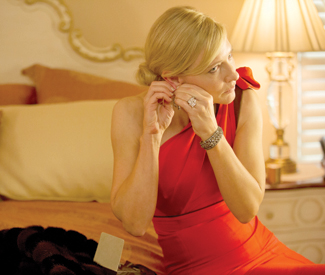
Blue Jasmine is, in a very different way, full of tension — because its protagonist is uncomfortable in almost any situation, often teetering on the edge of a full-on anxiety attack. Yet these are recent developments. Not long ago Jasmine (Cate Blanchett) was the quintessential Manhattan society hostess, with homes hither and thither (including the Hamptons, naturally), ever-so-busy planning dinner parties, sitting on charity boards, and going to Pilates class. Her immaculately put-together elegance isn’t Brahmin-bred: a natural upscaler, she remade herself from humble roots to suit the role of picture-perfect wife to Hal (Alec Baldwin), a master of the universe type whose questionably legal investment schemes and not-particularly-discreet infidelities she turns a willful blind eye toward. (It helps that he’s a really, really good liar.)

But at the start here, that glittering bubble of money and privilege has burst — exactly how revealed in flashbacks that spring surprises up to the script’s end — with the result that marriage and material comfort are now gone. Penniless, fleeing her husband’s public disgrace (he seems Allen’s belated commentary on the bankster-induced crash of ’08), Jasmine has crawled to the West Coast to “start over” in the sole place available where she won’t be mortified by the pity of erstwhile society friends. That would be the SF apartment of Ginger (Sally Hawkins), a fellow adoptive sister who was always looked down on by comparison to pretty, popular, clever Jasmine.

Theirs is an uneasy alliance — arguably the most discomfiting flashback is to Ginger’s Manhattan visit with now ex-husband Augie (Andrew Dice Clay), a mini-festival of thinly veiled class snobbery. Ginger has good reason to resent her big sis, whose attempted financial assistance via slippery Hal actually wound up destroying the visitors’ marriage. (Allen’s casting can sometimes seem stunt-like and overdependent on “who’s hot now.” Yet its top to-bottom brilliance here is personified by comedian Clay’s excellence in a small but important role.) Still, she’s too big-hearted to say no.

Ergo, Jasmine arrives at the flat Ginger shares with her two young sons — nose immediately curling at its IKEA/thrift-shop modesty and the boys’ noisy energy — with no clear idea what she’ll do, or how she’ll support herself. She has no marketable skills, and god forbid she’d take something as lowly as Ginger’s supermarket-cashier job. Yet she continues to judge everything by standards she can no longer afford, notably sis’s new beau Chili (a terrific Bobby Cannavale), another working-class stiff who justifiably worries Jasmine will convince her she can “do better.”

Surfacing later in the SF portion of the narrative are three men who might actually fulfill that “bettering” function: Dr. Flicker (Boardwalk Empire‘s Michael Stuhlbarg), a grab-handy dentist from whom she reluctantly accepts a receptionist gig. Then at a party she drags Ginger to in order to blatantly find men of the “quality” they both “deserve,” the latter duly meets seemingly good catch Al (Louis C.K.), while the former reels in a much bigger fish in Dwight (Peter Sarsgaard), a dreamboat diplomat who’s just the ticket for a woman who’s never paid her own way in anything but trophy-wife good taste.

It’s somewhat disappointing that Blue Jasmine doesn’t really do much with San Francisco. Ginger lives in a nondescript neighborhood (near the start of South Van Ness). There are no gay characters, racial diversity is limited to background players, and good as they are, Cannavale and Clay have the kinds of personalities that yell “Jersey!” and “Brooklyn!,” respectively. There are a few shots nodding at the colorful, pretty, touristy side of the city, but that’s not the world Ginger lives or that Jasmine lands in. Really, the film could take place anywhere — although setting it in a non-picture-postcard SF (despite the warm tones of Javier Aguirresarobe’s cinematography) does bolster the film’s unsettled, unpredictable air.

Without being an outright villain, Jasmine is one of the least likable characters to carry a major US film since Noah Baumbach’s underrated Margot at the Wedding (2007), whose central dynamics (Nicole Kidman as neurotic older sister who destroyed Jennifer Jason Leigh’s prior marriage, and might now destroy her imminent second one) bear an eerie similarity. The general plot shell, moreover, is strongly redolent of A Streetcar Named Desire.

But whatever inspiration Allen took from prior works, Blue Jasmine is still distinctively his own invention. It’s frequently funny in throwaway performance bits, yet disturbing, even devastating in cumulative impact. Like Streetcar (and Margot for that matter), this is a movie as much about undiagnosed mental illness as it is about family (dis-)loyalties and class conflicts.

One of those actors who can do just about anything, Blanchett is fearless here — it’s a great role she burrows into so deeply it’s a wonder she ever came back out. Her Jasmine is cringe-inducing, terrified, superficial, unconsciously cruel. Yet she’s simultaneously so helpless that we can’t help but hope she’ll find her feet again, a rooting interest answered by the most haunting Woody Allen fadeout since 1985’s The Purple Rose of Cairo

BLUE JASMINE opens Fri/2 in Bay Area theaters.

Building on progress

0

news@sfbg.com

A month-long labor standoff at the Hunters Point Shipyard redevelopment project has been put on hold as the city steps in to provide workforce mediation and oversight. But community-based organizations are left wondering how their workers will actually benefit.

Aboriginal Blackman United (ABU), a Bayview organization representing roughly 300 construction workers, announced on July 15 that it was calling off demonstrations at the construction site that had begun just before a June 26 groundbreaking ceremony (see “Lennar finally breaks ground amid controversies,” July 10).

ABU President James Richards suspended the protests after the Successor Agency to the San Francisco Redevelopment Agency informed him that Young Community Developers (YCD), another neighborhood nonprofit, would no longer exclusively manage job placements at Lennar Urban’s shipyard project.

The Hunters Point construction is expected to create 1,500 jobs annually, over the course of a 15- to 20-year build out. But critics have taken issue with local hiring guidelines hashed out in a 2003 development agreement with Lennar Corp. that are limited to good-faith promises rather than binding quotas.

Since then, community-based organizations have urged Lennar and the Building Trades Council to formalize their commitment to hiring from within the Bayview-Hunters Point community.

Building Trades Secretary-Treasurer Michael Theriault has so far been resistant to these efforts. “There is no inherent flaw in good faith,” Theriault said of local hire promises by Lennar. “Like any system, you have to enforce it.”

Until last week, Young Community Developers (YCD) was tasked with meeting local hire goals by recruiting and training tradespeople from the neighborhood and facilitating their placement on the project.

But Richards and other community advocates were skeptical of this arrangement because Theriault is vice president of YCD’s executive board. “How can [Theriault] be against mandatory hiring and be on YCD’s board?” asked Richards, who viewed it as an obvious conflict of interest.

ABU’s protests finally prompted Lennar and the Building Trades Council to seek the involvement of CityBuild, a workforce-training program and centralized referral network administered by the San Francisco Office of Economic and Workforce Development.

YCD Executive Director Shamann Walton said a meeting between the two organizations produced “a gentleman’s agreement that there will be an MOU in place between YCD and CityBuild,” designating CityBuild, rather than YCD, as the primary recruiting coordinator on the project.

YCD will be just one of a handful of community-based organizations that will assist in training and placement — others will include ABU, Anders & Anders, and the A. Philip Randolph Institute (APRI). APRI San Francisco Executive Director Jacqueline Flin says she supports a switch to CityBuild because it provides “a very good prospect of goal delivery. They have a fair process that’s been proven to work and the city’s invested in the effort.” Flin added, however, that she hadn’t yet heard any real details of the new arrangement with CityBuild. SFOEWD did not respond to the Guardian’s requests for comment. Terry Anders, director of the Anders & Anders Foundation, expressed disappointment that negotiations were taking place behind closed doors. Anders wants to see all the stakeholders brought to the table. He was quick to point out that, though CityBuild promises to be above board, “it is not a neighborhood organization.” “Somebody is making backroom deals,” Anders asserted, “and I am not for it. I don’t like being left out of the process.” He demanded an inclusive and transparent discussion, but a week after bargaining seemingly began and ended, it was unclear whether he would get one. “Lennar’s main concern is getting the buildings up, and they don’t care who does it,” he said. And though Richards is hopeful that CityBuild will be an improvement over YCD, he too was measured in expressing full confidence in the municipal agency just yet. For a lasting solution, CityBuild will need to work very closely with ABU and others. “We stopped all traffic ongoing to the shipyard and coming out for about a month,” to get this far, explained Richards, “the only way we guarantee that our people get jobs is that we are involved.”

Yahoo and other tech companies are squeezing the Chronicle’s newsroom

17

With high demand for office space in San Francisco these days — thanks largely to the latest technology bubble, Mayor Ed Lee’s economic development focus, and its amplification by the San Francisco Chronicle — Hearst Corp., which owns both the paper and the Chronicle Building, seems to be more focused on property management than journalism these days.

Following up on blogs that broke the story, Chronicle Technology Columnist James Temple today reported that Yahoo is negotiating with Hearst to move its headquarters into the Chronicle Building at 5th and Mission streets. What Temple didn’t say — and what sources at the Chronicle confirmed to the Guardian, despite the fact that it hasn’t yet been announced to Chronicle staff — is that the third floor newsroom will soon be relocated while the space undergoes a renovation.

It’s not clear whether the two pieces of news are related, and we’re still waiting for a response to our questions on the subject from Chronicle Editor Ward Bushee. But it certainly seems true that Hearst and the Chronicle are doing everything they can to profit from the commercial real estate market that they have helped to heat up while operating a newspaper that has struggled to become profitable in recent years.

Valued at more than $30 million and covering nearly a full city block in the heart of the city, the Chronicle Building has been steadily taken over by outside companies in recent years, many of them technology corporations such as Square, the online payment company. The newsroom that used to occupy the second and third floors has already been squeezed onto the third, and now even that space is getting an overhaul.

Meanwhile, Hearst has been working with Forest City and Strada Investment Group on a plan to redevelop the property, reportedly replacing the old Hearst headquarters and other buildings that share the block with an office and residential tower and trying to win historic landmark status for the Chronicle Building itself.

Chronicle staffers tell the Guardian that they were surprised to hear about the newsroom relocation last week and they don’t have many details, except that they will remain in the building. And given how valuable it has become, they say they’re just happy to not be totally squeezed out by the tech boom.

Pedaling slowly

0

news@sfbg.com

With San Francisco bicycle rental companies such as Blazing Saddles and Bay City Bicycle Rentals and Tours having bike fleets numbering in the thousands, why does the new San Francisco bike share program only have 350 bikes? And can that really be effective?

In August, San Francisco and a handful of other Bay Area cities will join the ranks of the dozens of cities in the country that have bicycle share programs, although most are more robust than ours. For example, New York City’s bike share program offer 6,000 bikes.

Sponsored by the Bay Area Air Quality Management District and bankrolled by the Metropolitan Transportation Commission with more than $7 million, the program will bring 700 bikes to the region — half of which will make their way to San Francisco.

In the following months, San Francisco could be allotted 500 total bikes. For the initial launch, 35 bike share stations will be spread throughout the city, and when the bicycle count rises, the number of stations will jump to 50.

MTC spokesperson Sean Co told us that most of the money for the program goes to the cost of the bikes themselves. Each bike costs $5,000, is outfitted with tracking technology, and is expected to last 10 years. In addition to being high-tech, all bike share bikes are unique to Alta Bike Share Systems, and require special tools to be taken apart, another factor in the high price tag.

The rest of money goes toward the stations and fees for a consultant that helps run the program. Co believes that the membership fees alone will make up for the over $7 million spent on the program. But that’s assuming the program isn’t a flop, which some fear it could be given the anemic number of bikes being offered.


WHY SO FEW?

New York City’s bike share, Citi Bike — financed completely by Citigroup Inc. with no public funds — launched in May with 6,000 bikes and 300 stations. That program is already approaching a million total rides. Chicago’s Divvy bike share system started off with 750 bikes at the beginning of July and will increase to 3,000 at the end of August.

Kit Hodge, deputy director of the San Francisco Bicycle Coalition, is one of the people who says that 350 bikes just isn’t enough for San Francisco. “The city and SFMTA have estimated that it would take 3,000 bikes to have an effective bicycle share,” Hodge told us. “We definitely are pushing for more bikes.”

But San Francisco’s bicycle share may get the thousands of bikes that some believe it needs. The Board of Supervisors recently passed a resolution that calls on the San Francisco Municipal Transportation Agency and Department of Public Works to have a much larger system by 2014.

“Five hundred bikes isn’t enough for a citywide bike share,” Sup. Scott Wiener, who sponsored the resolution, told us. “If you look at other cities with a large population and a lot of people biking, bicycle share stations have to be heavily concentrated in many different areas. With the 500 bikes, other areas of the city will be excluded.”

But critics like Wiener and Hodge may not have taken into account that this program is only a trial run, with enough funding to last a year, according to BAAQMD representatives.

BAAQMD Director of Strategic Incentives Damian Breen told us the program is just the right size: “We feel the pilot is appropriately sized. I don’t think we’ve limited ourselves at all. This is to test the waters and see what it can grow into.”

Breen also thinks that mainly focusing on San Francisco for the Bay Area-wide bicycle sharing program would be unfair to other cities. Unlike other bicycle sharing programs, such as New York City and Chicago, San Francisco’s bicycle sharing system is just one part of a regional program that includes Redwood City, Palo Alto, Mountain View, and San Jose.

“This stage of the program is to see what works and what doesn’t,” Breen said. “Maybe the bicycle share might be used more in the suburbs than in San Francisco. When you do something regionally you have to take all cities and all outcomes into account.”

When asked if the bicycle sharing program would have increased the number of bikes in San Francisco if there was additional funding, he said no.

“I think obviously all partners would have liked the program to be bigger in certain areas,” Breen said. “Whether or not it would have been bigger in places like San Francisco, if there was more funding, I cannot say.”

Breen says BAAQMD will consider corporate sponsorship for the bike share once the initial money from the pilot runs out.


THE LAST MILE

The possibility of more stations and bike share rides in the city isn’t appealing to Blazing Saddles bicycle rental company owner Jeff Sears.

“If stations are placed in areas like the Fisherman’s Wharf, or North Beach, people may be tempted to use bike share instead,” Sears said. “But, we’ve been assured by the BAAQMD that that’s not going to happen.”

Breen says the service is directed at residents who commute, and may need the bike for that “last mile” of their trek.

“This is different than bicycle rentals, which are usually meant for a day of riding,” Breen said. “They are designed for 30 minute use — the main audience is folks who are looking for that last mile after they get off of Caltrain or BART.”

Breen went on to say that areas with bicycle sharing programs also saw bicycle renting programs go up as a whole. But Jeanne Orellana of Bay City Bicycle Rentals and Tours believes otherwise.

“We absolutely feel that it would affect business,” Orellana said. “We wish that it would coexist with our business, but other cities with bicycle sharing programs have seen bicycle rental shops close down due to the competition.” A scenario similar to what Orellana imagined played out in Miami Beach, Fla. Unlike the program in store for the Bay Area, Miami Beach’s DecoBike offers pricing plans for residents and tourists, and many of the tourists find themselves choosing the bike share over rental shops in the area, causing business in bicycle rental shops to reportedly drop 40 to 50 percent. Wiener acknowledges the reservations that Orellana and Sears hold about bike share, but he said that both options can coexist in the same city. “They’re two completely different markets,” Wiener said. “I understand the concerns that they have but comparing bike sharing and bicycle rental is like comparing apples to oranges.” And the BAAQMD, SFBC, SFMTA, and Wiener all agree on one thing: Tourists choosing bike share over bicycle rental companies just doesn’t make sense economically. Renting a bicycle for a day at Bay City Bicycle Rentals and Tours is $32. Taking a bicycle out for the day at the bike share comes at a heftier price. For $9, customers can get a 24-hour subscription with unlimited 30 minute rides from station to station. But after those 30 minutes are up, fees get added. A 31- to 60-minute ride costs $4, and each 30-minute increment after that costs $7, which can build up to over $150 in a day if the bicycle is not returned to a station. In the meantime, Orellana hopes that consumers will make the right decision for themselves. “I trust and hope that many people will do the math and find that bike share isn’t cheaper for exploring the city,” Orellana said. Co said that more than 300 people purchased memberships for the Bay Area bicycle share 24 hours after memberships were up for grabs a couple weeks ago. BAAQMD is pleased with the results, and viewed it as a good turnout. The official launch date has not been released, but its infrastructure is now being put into place with its imminent launch.

Solomon: Obama’s escalating war on freedom of the press

3

The part of the First Amendment that prohibits “abridging the freedom … of the press” is now up against the wall, as the Obama administration continues to assault the kind of journalism that can expose government secrets.

Last Friday the administration got what it wanted — an ice-cold chilling effect — from the Fourth Circuit Court of Appeals, which ruled on the case of New York Times reporter James Risen. The court “delivered a blow to investigative journalism in America by ruling that reporters have no First Amendment protection that would safeguard the confidentiality of their sources in the event of a criminal trial,” the Guardian reported.

The Executive Branch fought for that ruling — and is now celebrating. “We agree with the decision,” said a Justice Department spokesman. “We are examining the next steps in the prosecution of this case.” The Risen case, and potentially many others, are now under the ominous shadow of the Appeals Court’s pronouncement: “There is no First Amendment testimonial privilege, absolute or qualified, that protects a reporter from being compelled to testify … in criminal proceedings.”

At the Freedom of the Press Foundation, co-founder Trevor Timm calls the court ruling “the most significant reporter’s privilege decision in decades” and asserts that the court “eviscerated that privilege.” He’s not exaggerating. Press freedom is at stake.

Journalists who can be compelled to violate the confidentiality of their sources, or otherwise go to prison, are reduced to doing little more than providing stenographic services to pass along the official story. That’s what the White House wants.

The federal Fourth Circuit covers the geographical area where most of the U.S. government’s intelligence, surveillance and top-level military agencies — including the NSA and CIA — are headquartered. The ruling “pretty much guts national security journalism in the states in which it matters,” Marcy Wheeler writes.

That court decision came seven days after the Justice Department released its “News Media Policies” report announcing “significant revisions to the Department’s policies regarding investigations that involve members of the news media.” The report offered assurances that “members of the news media will not be subject to prosecution based solely on newsgathering activities.” (Hey thanks!) But the document quickly added that the government will take such action “as a last resort” when seeking information that is “essential to a successful investigation or prosecution.”

Translation: We won’t prosecute journalists for doing their jobs unless we really want to.

Over the weekend, some news accounts described Friday’s court decision as bad timing for Attorney General Eric Holder, who has scrambled in recent weeks to soothe anger at the Justice Department’s surveillance of journalists. “The ruling was awkwardly timed for the Obama administration,” the New York Times reported. But the ruling wasn’t just “awkwardly timed” — it was revealing, and it underscored just how hostile the Obama White House has become toward freedom of the press.

News broke in May that the Justice Department had seized records of calls on more than 20 phone lines used by Associated Press reporters over a two-month period and had also done intensive surveillance of a Fox News reporter that included obtaining phone records and reading his emails. Since then, the Obama administration tried to defuse the explosive reaction without actually retreating from its offensive against press freedom.

At a news conference two months ago, when President Obama refused to say a critical word about his Justice Department’s targeted surveillance of reporters, he touted plans to reintroduce a bill for a federal shield law so journalists can protect their sources. But Obama didn’t mention that he has insisted on a “national security exception” that would make such a law approximately worthless for reporters doing the kind of reporting that has resulted in government surveillance — and has sometimes landed them in federal court.

Obama’s current notion of a potential shield law would leave his administration fully able to block protection of journalistic sources. In a mid-May article — headlined “White House Shield Bill Could Actually Make It Easier for the Government to Get Journalists’ Sources” — the Freedom of the Press Foundation shed light on the duplicity: As a supposed concession to press freedom, the president was calling for reintroduction of a 2009 Senate bill that “would not have helped the Associated Press in this case, and worse, it would actually make it easier for the Justice Department to subpoena journalists covering national security issues.”

Whether hyping a scenario for a shield law or citing new Justice Department guidelines for news media policies, the cranked-up spin from the administration’s PR machinery does not change the fact that Obama is doubling down on a commitment to routine surveillance of everyone, along with extreme measures specifically aimed at journalists — and whistleblowers.

The administration’s efforts to quash press freedom are in sync with its unrelenting persecution of whistleblowers. The purpose is to further choke off the flow of crucial information to the public, making informed “consent of the governed” impossible while imposing massive surveillance and other violations of the First, Fourth and Fifth Amendments. Behind the assault on civil liberties is maintenance of a warfare state with huge corporate military contracts and endless war. The whole agenda is repugnant and completely unacceptable.

Norman Solomon is co-founder of RootsAction.org and founding director of the Institute for Public Accuracy. His books include “War Made Easy: How Presidents and Pundits Keep Spinning Us to Death.”

(Bruce B. Brugmann, who signs his emails and blogs b3, edits and writes the Bruce blog on the Guardian website at SFBG.com.  He is the editor at large and  former co-founder and co-publisher with his wife Jean Dibble, 1966-2012.)

Jello sounds off

0

When setting up an interview with Jello Biafra, I got this light-hearted warning: “There is no such thing as a short interview with Jello.” It’s true, the legendary punk showman/spoken word enthusiast is full of political ideas, historical references, and elder-punk-dude tales. How can he be expected to keep it brief?

Below, we spend an intense half hour discussing the media, corruption, spoken word, Jello Biafra and the Guantanamo School of Medicine, Jello Biafra and the New Orleans Raunch and Soul All-Stars, and the future of underground rock’n’roll. (For the feature on Jello Biafra and the Guantanamo School of Medicine, see this week’s paper):

San Francisco Bay Guardian
Where do you gather your news? What are your sources for political commentary in your songs?

Jello Biafra Why, the Bay Guardian, of course! Where would a local voter be without your fine rag? I just hope the new ownership and staff goes pedal to the metal to keep up the standard of muckraking and ethics. There’s so much corruption to dig up in this area.

I think the real renaissance was before the Weekly was sold to New Times/VVM, when the Guardian and the Weekly were both muckraking papers concentrating on local issues and were trying to out-scoop each other. That’s what I’d like to see continue and come back.

But basically I’d read a lot of periodicals. Locally, we have you folks, among others. And then you know Nation, Progressive, Mother Jones, interesting things people send me in the mail, digitally or otherwise, talking to people, putting two and two together — trying to write songs about stuff that no one else has! Or at least not in the same way.

SFBG Why is that? Why choose to write songs about something no one else has?

JB It’s just filling in the gaps with what’s interesting. I’m proud that no two of my music albums sound alike. Not even the Lard albums sound alike. From Dead Kennedys onward my mission as the main lyricist and composer of the damn tunes, I kind of stick to my punk core — whether I intend to or not, it’s just who and what I am — and but kind of widen the base of the pyramid to what you can do with that energy.

http://www.youtube.com/watch?v=NQpPvFPegdE

SFBG What are some the topics you focused on when writing White People and the Damage Done?

JB I guess it was a little more focused as a semi-concept album, than anything since Frankenchrist. It’s basically about grand theft austerity, and how unnecessary it is, what a scam it is. People have asked me when we go to play different cities or countries, what I think is the biggest problem in the world today and they expect me to say something like “climate change” which I prefer to call “climate collapse” because that’s what it is, or inequality, or war, or whatever, and I say you know, there’s a worse one, it’s corruption. Because that is what’s blocking anything constructive being done about all the other problems. There’s a thread through White People and the Damage Done about that. 

The title track is not so much about race specifically, but about this attitude of the higher ups in the United States, the EU, and others, is that other countries, especially ones run by people of color, where we call them “Third World” or whatever, are somehow unfit to govern themselves and need us to pull the strings, plant the puppets, and tell everyone what to do. And it’s often for the purposes of looting their resources and exploiting their people. And what kind of unintended consequences that can have.

For example, we talk about why we need more democracy in Iran, and we don’t have the big bad Soviet Empire to freak out everyone anymore so we have Iran and North Korea instead. Wait a minute, you want democracy in the Middle East? Well Iran was a democracy in the early 1950s, guess who decided to overthrow the democratically-elected leader Mohammad Mosaddegh, and put the most hated person in the country, the Shah, back into power? But he was our policeman for the gulf basically, and he got overthrown anyway. And now it’s a theocratic regime. Where would be today if we had just left that region alone in the 1950s?

Same for Afghanistan. I nearly went through the roof when I found out about an interview with Jimmy Carter’s old national security advisor, Zbigniew Brzezinski’s, whose daughter is on one of the morning cartoon pundit shows, bragged on an interview with French media about what a great thing we did by arming, training, and financing the guerrillas in Afghanistan before the Soviet Union invaded, and how we cracked apart the evil empire, hooray for us, we win.

But look what we created for crying out loud. We were even helping back a young hothead with a trust fund named Osama Bin Laden. And then once the Soviets were out, we didn’t lift a finger to help rebuild the country, let alone take back the guns and rocket-launchers. And now look where we are. That’s another example of white people and the damage done.

[Pause] hold on my juice machine, now I have to turn it off, it’s bouncing all over the counter.

SFBG What kind of juice are you making?

JB Oh, just a mixture of stuff. Spinach, apples, other things.

SFBG Can you tell me about forming Guantanamo School of Medicine?

JB Here we go again. I wanted to have another band ever since Dead Kennedys, it just never quite happened. Either people weren’t available, or I was off doing spoken word or other adventures, but of course I never stopped making albums, there was Lard, two with the Melvins, one with DOA, Mojo Nixon, NoMeansNo.

I kept the music out there, I just didn’t have a performing vehicle. And then when I was down at the Warfield seeing the Stooges on Iggy’s 60th birthday, it occurred to me, “oh shit, I turn 50 next year. I better do something or I may never get another chance.” If it’s half as good as the Stooges, I’ll declare victory.

SFBG Do you have any other projects coming up?

JB I started getting back into spoken word. I did a tour in Australia after the band’s tour was done. And at some point, something that will probably see the light of day: some of the New Orleans guys from Cowboy Mouse and Dash Rip Rock dared me to come down there during the jazz fest a few years ago and do a whole set of New Orleans soul and rhythm and blues songs, which I did with some badly needed garage rock added in and we got Mojo Nixon’s keyboard wizard with all the Jerry Lee Lewis moves, and quite the cacophonous horn section, as well as [Cowboy Mouth’s] Fred LeBlanc, and [Dash Rip Rock’s] Bill Davis.

The multitrack recording was a trainwreck, but then Ben Mumphrey who works with Frank Black and the Pixies and many others, called me up and said he could rescue this recording. Slowly but surely he has been rescuing it. So Jello Biafra and the New Orleans Raunch and Soul All-Stars will see the light of day somehow. We haven’t been able to pull it together to play a show though. 

http://www.youtube.com/watch?v=as8Y2HWzUwI

SFBG I was wondering your opinion of this new, kind of second tech bubble taking over in areas like the Mission?

JB Again, I refer you to one of my songs. It came out on the EP of the rest of the recording session when we recorded The Audacity of Hype with Billy Gould. The song is called “Dot Com Monte Carlo.” And sure enough there was a little mini firestorm on the Internet of course. A lot of people writing in were too chicken-shit to sign their own names, but they said ‘oh that’s such an old topic, it doesn’t matter anymore.’

Well I had this funny feeling we weren’t done with the Dot Com Holocaust. Sure enough, now it’s more aggressive and obnoxious than ever. Dot Com Monte Carlo — that’s kind of what Willie Brown’s puppets are trying to turn this city into, yet again.

It has been really sad for me to see so many cool people and artists and service-workers and people of color just bull-dozed out of this town to make room for more mini little yuppies who treat San Francisco as a suburb of Silly-clone Valley.

And now you don’t see people like me when I was 19, just moving out to San Francisco chasing a dream. There was a time when the vitality of the underground was maintained by entire bands moving here as a unit. Everybody from MDC and the Dicks to DRI and later, Zen Guerilla, the only one I can think of in recent years, who dare tried to relocate to San Francisco were I believe No Doctors and Sixteen Bitch Pile-Up, and I’m not sure either one of them exist at this point. Maybe they all packed up and left. A lot of that underground fire, and that’s not just confined to rock of course, but a lot is going on in Oakland now.

SFBG Yeah, I’ve had a lot of bands telling me they can’t afford San Francisco anymore, so they’ve been moving to the East Bay or beyond…

JB I mean, I’d hate to see San Francisco turn any further into a giant Aspen, Colorado, or even Boulder, Colorado, which is where I fled from in order to come here [in ’78.]

SFBG Are there current East Bay or San Francisco bands that you feel like are doing good things?

JB Of course I always brain-fart on this question. Well, of course I’m going to support my label bands, I love Pins of Light.

SFBG How involved are you with Alternative Tentacles? Are you going out and finding bands?

JB Well I’m still the absentee-thought-lord, the buck stops with me. Someone deeply suspicious of capitalism has wound up owning a business by default, whether I should or not. Luckily there’s still money to pay a shrinking staff and to make sure we can keep putting out cool things. But it’s becoming harder and harder because of the combination of a crashed economy, rents going through the ceiling all over country, and file-sharing on the other hand. Of course, one feeds the other when people don’t have any money.

That doesn’t mean I support these misguided efforts, these major label RIAA scams to blackmail people and sue them for file-sharing. They’ve raked in over a hundred million dollars doing that and no artist has seen a penny. That’s not the way to solve this.

On the other hand, when I see one of the best bands we’ve seen in years like the Phantom Limbs break up way too soon, I can’t help but wonder whether file-sharing might be a part of the problem, with so many people going crazy over them and going to their shows all over the place, and then hardly anybody buys the album.

When you’ve got people in the age of high housing and transportation cost trying to keep themselves fed or also sustain a family, that hurts. I wonder how many people save up money from their shitty jobs for years in order to make some really cool piece of music only to find that nobody actually gives anything back; they’re that much more likely to quit making anything.

Maybe the solution is, for people who want to get their friends into really cool music, don’t just send them the whole album, pick some favorites and send them a little teaser package, a little file to inspire them to check out them more.

Not to mention, be conscious of whose file you’re sharing. Major labels go so far out of their way to rip off their artists anyways, with an army of lawyers to back them up. But when it’s an underground artist or label, that’s different. I never would have thought that GSL would’ve stopped, for example. Or that Touch and Go would draw mainly into reissues and back catalogue. It’s not just the economy and music industry crashed that’s to blame, it’s also people who don’t think artists should get any of their support.

SFBG Do you still love performing in front of a crowd? Do you have any recent performances with this band that you’ll take with you?

JB I’m not sure I’d be doing it if there wasn’t this inner need to do it. I’m really greatful that at my age anybody even cares about what I have to say, or new stuff I’ve been making.

We’ve been able to play a lot of places Dead Kennedys weren’t, because countries hadn’t opened up yet and they were still under the boot of Communist dictators or Latin American military or whatever. And we get to play for people in those places now. I don’t have the kind money where I can go jet-setting around to these places, I have to play my way to places like Buenos Aires or Slovenia, or I’ll never get there.

Bringing these musical riffs in my head to life and to have them actually work and getting to play them for people, that’s always pretty cool.

Some of the stranger moments were last time we were in Geneva we had a stage-diver in a wheelchair. The crowd was very gentle with him, passing him around, and making sure he was reunited with the chair, which was floating somewhere else in the crowd. Three or four songs later, he’d be back again! That was good.

Also, being able to scrape together just enough of my high school Spanish to be able to talk to people in Buenos Aires from the stage about some songs that were written with them in mind. I mean, “Bleed for Me,” the old Dead Kennedys song, was written about the Dirty Wars. And this was the first time I could actually dedicate “Bleed for Me” to the Desaparecidos in Argentina and explain it a little bit.

Jello Biafra and the Guantanamo School of Medicine
With D.I., the Divvys, Girl-illa Biscuits
Fri/26, 9pm, $15
Uptown
1928 Telegraph, Oakl.
www.uptownnightclub.com

Damaged goods

0

emilysavage@sfbg.com

TOFU AND WHISKEY Jello Biafra could be your theatrical political science professor. The still-charismatic frontperson and song-composer has long spewed knowledge deep from the underbelly of political theater, from his influential early 1980s Bay Area punk band Dead Kennedys, and projects like the band Lard, through his nine dense spoken word albums, and up to his newest musical endeavor, louder than ever in his 50s, Jello Biafra and the Guantanamo School of Medicine.

That band, which also includes Victims Family guitarist Ralph Spight, plays the Uptown this weekend with D.I., the Divvys, and Gir-illa Biscuits — an excellent local Gorilla Biscuits tribute act (Fri/26, 9pm, $15. Uptown, 1928 Telegraph, Oakl. www.uptownnightclub.com.)

Given Biafra’s affinity for weaving news-worthy (though oft-overlooked) scandals into contextual lyrics, I have often wondered from where he gathered his news. “Why, the Bay Guardian, of course! Where would a local voter be without your fine rag?” Biafra tells me from his San Francisco home, while finishing up making a juice of apples and greens. Is he mocking me? “I just hope the new ownership and staff goes pedal to the metal to keep up the standard of muckraking and ethics. There’s so much corruption to dig up in this area.” No, his tone is just often sarcastic.

“Locally, we have you folks, among others. And then you know, the Nation, Progressive, Mother Jones, interesting things people send me in the mail, digitally or otherwise, putting two and two together — trying to write songs about stuff that no one else has. Or at least, not in the same way.”

He continues: “It’s just filling in the gaps with what’s interesting. I’m proud that no two of my music albums sound alike. Not even the Lard albums sound alike. From Dead Kennedys onward my mission as the main lyricist and composer of the damn tunes, I kind of stick to my punk core — whether I intend to or not, it’s just who and what I am —but widen the base of the pyramid to what you can do with that energy.”

Guantanamo School of Medicine’s White People and the Damage Done (Alternative Tentacles, 2013) is the group’s most recent album. A semi-concept album, Biafra says it’s about “grand theft austerity, and how unnecessary it is.”

He explains, “People have asked me…what I think is the biggest problem in the world today and they expect me to say something like ‘climate change’… or inequality, or war, or whatever. I say you know, there’s a worse one, it’s corruption. Because that is what’s blocking anything constructive from being done about all those other problems.”

The title track of White People and the Damage Done, a pounding, guitar-heavy, Dead Kennedys-esque song, explicitly points a finger toward attitudes of the higher-ups in the US and EU regarding countries run by people of color, and the need to step in and take control.

Anthemic single “Shock-U-Py!” has a chantable chorus, and moment-in-time impact. In it, Biafra howls “Wake up and smell the noise/We can’t take it any more/Corporate coup must go/We will Occupy/We will Shock-U-py.” The Occupy movement may have left the mainstream radar for now, but Biafra’s song commemorated the moment, much like he did in early career chants calling out yuppies and atrocities in places like Cambodia, in the early ’80s. His lyrics are typically both rooted in the present, and packed with historical references.

A fast-paced earlier released track (still with that Biafra-esque carnivalian breakdown), “Dot Com Holocaust,” recorded at the time of the The Audacity of Hype EP (AT, 2009), touched on problems more local to Biafra and this rag, of gentrification and a new class of tasteless techies coming in to the Bay. Dripping with satire, the song seemed to have touched a nerve when first released, and garnered scores of angry, faceless Internet comments.

“I had this funny feeling we weren’t done with the Dot Com Holocaust. Sure enough, now it’s more aggressive and obnoxious than ever. Dot Com Monte Carlo — that’s kind of what Willie Brown’s puppets are trying to turn this city into, yet again,” he says. “It has been really sad for me to see so many cool people and artists and service-workers and people of color just bulldozed out of this town to make room for more mini little yuppies who treat San Francisco as a suburb of Silly-clone Valley.” Yes, Biafra talks like he sings.

When we discuss newer bands, he notes many acts are fleeing SF for the East Bay, something bands across genre styles and influences have brought up with me during casual conversations and interviews.

“Now you don’t see people like me when I was 19, just moving out to San Francisco [from Boulder, Colo.], chasing a dream. There was a time when the vitality of the underground was maintained by entire bands moving here as a unit. Everybody from MDC and the Dicks to DRI and later, Zen Guerilla.”

But as an underground label owner (Alternative Tentacles) he knows times are tough for both bands and music fans, with a poisonous combination of the crashed economy and rampant file-sharing affecting all involved. “I wonder how many people save up money from their shitty jobs for years in order to make some really cool piece of music only to find that nobody actually gives anything back,” he says. “Maybe the solution for people who want to get their friends into really cool music, don’t just send them the whole album, pick some favorites and send them a little teaser package, a little file to inspire them to check out them more.”

For the complete Jello Biafra Q&A, see SFBG.com/Noise.


YASSOU BENEDICT

Counterpoint, there are still some bands and artist types heading way out west to San Francisco in these turbulent, high-priced times: Yassou Benedict. This band is not in the slightest akin to Biafra’s people, though it is a group of hopeful young dreamers.

The shoegazing dreampop four-piece formed at a small high school in Upstate New York. While most bands from the area would migrate south to New York City, Yassou Benedict made the “fairly random” decision to head to SF. “We all got into a Subaru Forrester with a Great Dane in the back and all our stuff in a trailer and drove across country,” says guitarist James Jackson, who traveled with singer-bassist Lilie Bytheway-Hoy, guitarist-keyboardist A.J. Krumholz, and drummer Patrick Aguirre.

Now in the Bay, they work as servers at Outerlands, a cook at Beauty Bagels and Wise Sons, a bartender at the Boxing Room, and a pizza-dealer at Lanesplitter Pizza and Pub.

But more importantly, the group of 20-somethings recently released its debut EP, In Fits in Dreams, a moody, complex, emotionally fraught record that leaves the listener itching for a full-length, and touches on themes of “anxiety, and wanting to be weightless, the desire to run through wide open spaces.” The album release party was actually a few weeks back, but you can catch the band this week at Milk Bar with Beautiful Machines, Hotel Eden, and NVO (Fri/26, 8:30pm, $10. Milk Bar, 1840 Haight, SF. www.milksf.com).

Led by Bytheway-Hoy’s dramatic, high-ranging vocals, and unconventional song structures (like shifting time signatures) In Fits in Dreams also features guest vocals by Hole’s Melissa Auf Der Maur on track “Cloisters.”

The subtle beats and rolling vocals of “Cloisters” feels like a doomed march toward the unknown, while closer “Last Cicada” ventures more into Radiohead In Rainbows territory (the band has been known to cover “Jigsaw Falling Into Place”). There’s also the church-like pop hymn of “Back Roads that Dead End,” which begins as an anxious vocal solo with faraway chimes, the beats and guitars slowing filtering in.

It’s surely been noted elsewhere on the blogosphere, but there’s something strangely seductive within Yassou Benedict, which I mention to Jackson. “I am not sure why that is. If we are making people feel, whether it is the desire to make love, or children or anything else, than we are succeeding. It is kind of strange though. Our music is fairly depressing. Now I’m just imaging people holding each other and crying while they listen. Lilie’s voice probably has a lot to do with that.” Bytheway-Hoy’s voice is indeed both haunting and captivating.

There’s also a cinematic quality to In Fits in Dreams, likely driven by that high emotional tug. Given the soundtrack capabilities, I asked Jackson what type of film would best be suited to Yassou Benedict and he picked a future Wes Anderson film, also noting that a dream opening slot would be an imaginary Radiohead show in an intimate venue (no arenas!).

While the record was recorded and produced back in Hudson, NY (with Steve Durand at Dioramaland Studios), the band is touring on it from its new homebase in the Bay.


The death aquatic

0

cheryl@sfbg.com

FILM The 911 call placed from SeaWorld Orlando on February 24, 2010 imparted a uniquely horrific emergency: “A whale has eaten one of the trainers.” That revelation opens Gabriela Cowperthwaite’s Blackfish, a powerful doc that puts forth a compelling argument against keeping orcas in captivity, much less making them do choreographed tricks in front of tourists at Shamu Stadium.

Whale experts, former SeaWorld employees, and civilian eyewitnesses step forward to illuminate an industry that seemingly places a higher value on profits than on safety — skewed priorities that made headlines after veteran trainer Dawn Brancheau was killed by Tilikum, a massive bull who’d been involved in two prior deaths. (Though SeaWorld refused to speak with Cowperthwaite on camera, they recently released a statement calling Blackfish “shamefully dishonest, deliberately misleading, and scientifically inaccurate;” read the filmmaker’s response to SeaWorld’s criticisms at film blog Indiewire.) Blackfish, which premiered locally at the San Francisco International Film Festival, opens theatrically this week. I spoke with Cowperthwaite ahead of its release.

SF Bay Guardian Blackfish uses home-movie footage to illustrate training accidents, whale misbehavior, and so forth. I’m guessing a company as image-conscious as SeaWorld would strive to keep that kind of material out of the public eye. How did you get ahold of it?

Gabriela Cowperthwaite It came from every source imaginable: personal archives, historical archives, people who happened to be filming shows when they were visitors at the park. We had to vet every piece of footage, figure out the original owner, and go from there. It was the most time-consuming process imaginable — but we really needed to be inside the park to tell the story, so we had no choice but to really do the detective work to find out where every little bit came from.

SFBG Did you do any of your own clandestine filming at SeaWorld?

GC We kind of had to. I had to “meet” Tilikum, you know? Whatever we could do to get footage that could truthfully represent the story, we did.

SFBG The film interviews several former SeaWorld trainers who seem eager to speak out against the park. How did you find them?

GC When they heard how SeaWorld responded to Dawn Brancheau’s death in the news, they knew something was amiss and they began speaking out. In terms of them being comfortable [with being in] the film, they had spoken to author Tim Zimmerman [for the] Outside magazine article “Killer in the Pool,” and had felt a level of comfort with him. His article was one of the best articles I read about the Brancheau case. So from that, I was able to contact them. Their only caveat was that the film [would have to] be truthful, and I told them I planned to do a fact-based narrative that wasn’t sensationalized or gratuitous. Because we saw eye to eye on that approach, they agreed to be interviewed.

SFBG Blackfish highlights the disconnect between SeaWorld’s version of Brancheau’s death and what the trainers suspect actually happened. Their analysis of the video shot in the moments leading up to the attack is very effective.

GC It’s exactly what you want to know because you can’t understand what’s happening. The lay viewer sees a whale circling a pool; there’s nothing other than, “Isn’t this a cute trick?” Audience members at these shows are trained just as much as the whales are, to respond and laugh and clap on cue. And yet, to have a trainer say, “Oh no, this session is going badly” — that was so eye opening for me, and I could only learn that from these former trainers.

SFBG What do you think would be the best-case scenario for whales in captivity, going forward?

GC If SeaWorld were to stop its breeding program, that would be hugely important. And one of the best alternatives [for whales in the park] is instituting a sea pen, which is essentially cordoning off part of an ocean cove with a big net. You can’t just dump [the whales] into the ocean because they don’t know how to eat live fish, and a lot of them are hopped up on antibiotics. But you could soft-release them and keep them in a place where you could monitor their health, and yet allow them to be in an ocean environment. That would be an amazing thing that SeaWorld could do.

SFBG You mentioned that you had gone to see Tilikum in person. What was that like?

GC I was terrified of Tilikum when I first started making the documentary — I think because I’d read [Brancheau’s] autopsy report early on, and it was the stuff of nightmares. But when I started unpacking his life to try and understand [him], I started feeling this empathy. It culminated with me seeing him and truly feeling sorry for this tremendous, impossible animal — relegated to doing this silly lap around the pool and splashing everybody, and then going right back into his little pool.

SFBG And SeaWorld doesn’t acknowledge that it’s the whale that killed the trainer, of course.

GC Oh no. Absolutely not. They just don’t talk about it. And remember, they call everything Shamu. That’s the easiest way not to have to deal with the Tilikum factor.

BLACKFISH opens Fri/26 in Bay Area theaters.

New Guardian leadership wants your input

0

San Francisco Print Media Company last week named Marke Bieschke as publisher and Steven T. Jones as editor of the San Francisco Bay Guardian, elevating two longtime Guardianistas into the top spots, guaranteeing them editorial autonomy, and letting them work with the community to chart its future.

As a first step in that process, the Guardian will hold a public forum on July 31 from 6-8pm in the LGBT Center, 1800 Market Street, to solicit input and discuss the Guardian’s unique role in the Bay Area’s political and journalistic landscape. Helping to coordinate the forum is Guardian writer Rebecca Bowe, who has accepted the position of news editor. The forum and subsequent discussions will form the basis for a strategic plan that will help guide the Guardian into a new era.

The newspaper’s future was uncertain a month ago following the abrupt departure of longtime Guardian Editor-Publisher Tim Redmond in a dispute with the owners over layoffs and the Guardian’s autonomy. The company’s Vice President of Editorial Operations Stephen Buel, who is also editor of the San Francisco Examiner, was named interim Guardian publisher and Bieschke its interim editor.

Heeding concerns in the community about whether the Guardian would remain an independent, progressive voice in San Francisco, Bieschke and Jones negotiated terms with SF Print Media Company CEO Todd Vogt that guarantee them full editorial control, the addition of three new advertising sales positions and another staff writer, and guaranteed minimum staffing levels during a rebuilding period.

Bieschke and Jones, who are in their early 40s and have been with the Guardian for around 10 years each, say they are excited for the opportunity to work collaboratively with Guardian staff and its community to rejuvenate the paper, attract new readers, and achieve economic sustainability.

“Losing Tim’s leadership was hard on all of us at the Guardian, and we struggled with what to do next. But ultimately, the Guardian plays such an important role in San Francisco — particularly now, at a pivotal moment for this gentrifying city and its progressive movement — that we wanted to find a way to keep that voice alive, maintain our credibility, and reach out to a new generation of Bay Area residents,” Jones said.

The San Francisco Bay Guardian was founded in 1966 by Jean Dibble and Bruce B. Brugmann, who continues to blog and serve as editor-at-large for the Guardian. The couple retired from regular duties when the financially troubled paper was sold to Canadian investors headed by Vogt in the spring of 2012, a deal engineered by Redmond, whose writing is always welcome in the pages of the Guardian as he pursues a new media venture.

“I’m stoked to bring a different energy and openness to innovation to the Guardian, while respecting our legacy and strengthening our bonds with the progressive, alternative community,” Bieschke said. “Obviously, Steve Jones and I stand on the shoulders of giants, and we’re so grateful to our Guardian family, past and present, for blazing a trail for world class progressive journalism, arts and culture coverage, and community-building in the Bay Area. In that spirit, I’m eager to reconnect with our readers and partner with them to amplify the Guardian voice and continue to change the Bay Area for the better.”

Vogt said he’s excited by the prospects of new generation of Guardian leadership: “I’m happy about this. I think it’s appropriate that two recognized leaders in the progressive community are in charge of the Guardian and I look forward to seeing what they do with it.”

Years of cutbacks have distilled the Guardian newsroom down to just a few excellent journalists, but all say they’re excited for the chance to rejuvenate the paper, build its readership and revenues, and work more closely with the community.

“We all hope you’ll help us to guard San Francisco’s values, appreciating all of its best cultural, artistic, and culinary offerings in the process,” Jones said. “We love the San Francisco Bay Area, in all its messy urban glory, and we think it’s worth fighting for.”

After Oscar, after Trayvon…

49

rebecca@sfbg.com

Even before Cephus “Uncle Bobby” Johnson picked up the phone on Feb. 27, 2012, he wasn’t having an easy day. His nephew, Oscar Grant, would have celebrated his 26th birthday on that date if he had not been killed by a gunshot wound on Jan. 1, 2009.

Grant was shot by BART police officer Johannes Mehserle while lying face down on a train platform, an incident that was caught on film, prompted riots in Oakland, drew international scrutiny, and became the subject of the award-winning film Fruitvale Station by Oakland filmmaker Ryan Coogler.

In the years since Grant’s death, Johnson and his wife, Beatrice X, founded the Oscar Grant Foundation to develop a support network for families who’ve lost loved ones due to police violence. It was his involvement in this work that led Johnson to be contacted that day, and informed that a 17-year-old boy named Trayvon Martin had been gunned down in Florida one day earlier.

It wasn’t a police shooting but nevertheless, “We knew at this point that we had to go to Florida,” Johnson recalled. “What we’ve decided is that whenever a family experienced that, we would definitely try and get to them.”

Fast forward to July 13, almost exactly three years after violent protests erupted in Oakland following the news that Mehserle, who was charged with second degree murder, had been convicted of involuntary manslaughter instead. A new wave of demonstrations flared up as word spread that George Zimmerman, the neighborhood watch volunteer who killed Martin, had been acquitted.

“We weren’t surprised,” Johnson, who returned to Florida last month to observe the jury selection process for Zimmerman’s trial, told the Guardian. “But it was still painful.”

The verdict in this high-profile case has brought discussions about racial profiling and unequal treatment in the criminal justice system to the forefront. Even President Barack Obama touched on the theme in comments to White House reporters on July 19, saying, “Trayvon Martin could have been me 35 years ago.”

At the national level, new findings on “implicit bias” — unconscious prejudices that research in psychology has shown can persist in individuals (including poorly trained police officers), even if they consciously reject racial stereotypes — has started to inform policy debates around racial profiling.

“Policy needs to recognize that implicit bias exists,” Maya Wiley, founder and president of the New York City-based Center for Social Inclusion, told us. “Rep. John Conyers introduced a bill last year to prohibit racial profiling in law enforcement. That bill, if made law, would collect data on stops by race, as well as provide resources for training. That is a step in the right direction.”

But things get complicated, Wiley says, because “research shows that people of color, women, the elderly, may all experience discrimination as a result of implicit bias. There is no remedy in the law for this. … I think what is important now is to fight Stand Your Ground Laws which empower people to act on their implicit biases.”

At a July 16 rally held on the steps of San Francisco City Hall, Rev. Malcolm Byrd, pastor of San Francisco’s First A.M.E. Zion Church, illustrated his point about racial profiling by donning a hoodie and sneakers at the rally.

“I wanted to come looking suspicious,” he explained. “I wanted to give you an image that America has of young black men. I look suspicious. This is my country. I love my country. Yet, I look suspicious.”

Last year, Mayor Ed Lee’s proposal to introduce a stop-and-frisk policy, which would have allowed police officers to randomly stop individuals who appeared to be suspicious in an effort to get weapons off the streets, was abandoned in the face of widespread community concern.

Officers who undergo training at the San Francisco Police Department Academy must complete 52 hours of “cultural diversity” training, according to SFPD spokesperson Sgt. Dennis Toomer, which includes a mandatory four-hour intensive geared toward preventing racial profiling. State law mandates just 16 hours for such training for law enforcement agencies, Toomer told us.

But despite supplemental police training and the efforts of grassroots organizations that carefully monitor police activity, the Bay Area has witnessed a number of fatal shootings at the hands of police since Grant’s death, and many draw a link between these cases and the broader issue of racial profiling.

When asked about the outreach efforts of the Oscar Grant Foundation, Johnson began to rattle off a long list of names — mostly young black men, from places ranging from Oakland to Vallejo to Stockton to San Leandro — who were killed by police, and whose families his organization has reached out to.

They have also been in touch with several families in New York City who lost loved ones in similar situations, Johnson said. In many cases, the individuals were killed despite being unarmed, and officers later explained their actions by saying they’d mistakenly believed the shooting victims had firearms.

After several years of taking an up-close look at the investigative and legal proceedings that unfold in the aftermath of officer-involved shootings, Johnson has reached the conclusion that from case to case, “The playbook is pretty much the same. The officer first alleges he felt threatened — it’s all about the thought process of the officer. It’s always found to be justifiable because the officer feared for his life.”

One long-term goal of the Oscar Grant Foundation is to build up a coalition that can mount a meaningful challenge to the California Peace Officers Bill of Rights, a law enacted some 30 years ago that affords special protections for law enforcement officers facing misconduct charges. Johnson and others are critical of provisions such as officers’ rights to keep confidential information out of their personnel files, which can prevent significant information from being disclosed during a criminal trial. Meanwhile, others throughout the Bay Area seem primed to push for change in the wake of the Zimmerman verdict. “On Sunday, every black church in the nation was talking about what? Trayvon Martin, and what we need to do,” Andrea Shorter, a member of the San Francisco Commission on the Status of Women, said during the July 16 rally. “Two weeks ago, and we were all standing here as San Franciscans to rejoice … because we knew that LGBT people could be treated as first class citizens. The job is not done.” San Francisco NAACP President Rev. Amos Brown, who organized the rally, vowed that his organization “will push for a civil suit to bring this Zimmerman gentlemen to justice.” The national NAACP is petitioning U.S. Attorney General Eric Holder to open a civil rights case against Zimmerman. Sups. London Breed, Malia Cohen, Jane Kim, and David Campos also delivered speeches at the rally. “For the first time in my life, after growing up and going to funeral after funeral after funeral after funeral, of all boys and black men throughout my life, I see people in this audience who are not African American, who are just as hurt as I am, who are just as sick of this as I am,” Breed said. “And we are all in this together. We have got to work together if we want to change it.”