New York Times

Pride faces backlash from defenders of gay whistleblower

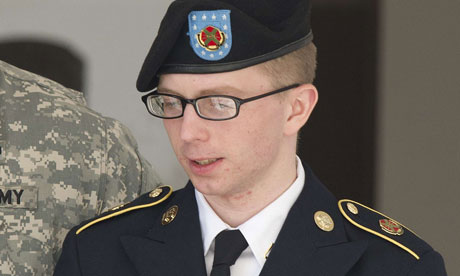
In the wake of the debacle unleashed by San Francisco Pride’s announcement that gay whistleblower Bradley Manning would not be grand marshal for this year’s Pride Parade after all, a large crowd of protesters assembled outside Pride’s Market Street headquarters April 29 for a hastily organized rally condemning the move. They held signs depicting Manning’s image, and chanted, “Grand marshal, not court martial!”

Famed whistleblower Daniel Ellsberg, who helped foment opposition to the Vietnam War by leaking classified government documents known as the Pentagon Papers to the New York Times in 1971, expressed support and admiration for the young US Army soldier. Manning was arrested in May of 2010 on suspicion of having leaked classified government cables and military footage later published by WikiLeaks, and faces a possible life sentence.

“A big mistake was made by the Board of Directors of SF Pride,” Ellsberg said. Referencing director Lisa Williams’ statement that not even a “hint” of support for Manning would be tolerated, Ellsberg said, “I don’t hint at support for Bradley Manning. I couldn’t be louder. I will be marching in that parade, for the first time for me, with a banner honoring Bradley Manning.”

Gay Navy veteran John Caldera, commander of the Bob Basker Post 315 of the American Legion, an LGBT-focused veteran’s organization, announced that his members had voted unanimously to call for Williams’ resignation, saying she had “negated and belittled all of the voices of the community” who had expressed support for Manning. He also condemned Pride for withholding its support for Manning while accepting funding from the likes of Wells Fargo, a banking giant responsible for foreclosures that have affected veterans. “The SF Pride committee has to put people first and corporations second,” he said.

Joey Cain, a former grand marshal who said he nominated Manning, noted that he was not calling for Williams to resign, but hoped she would realize the mistake and reinstate him as grand marshal. “What he did was heroic … Bradley made the world a better place,” Cain said. He shamed Pride for straying so far from the roots of the gay movement. “We believed in radical inclusivity,” practicing tolerance for all “colors, genders and opinions,” he said, with the understanding that “We don’t all agree. We never will. But we’re sure never going to throw any part of the community under the bus.”

The rally was organized by longtime housing activist Tommi Mecca (pictured, center), comedian Lisa Geduldig and blogger Michael Petrelis.

Some counter-protesters from the Log Cabin Republicans, a gay GOP organization, even made an appearance. “We were praising the Pride Committee for not having selected Manning,” SF Log Cabin Republicans Fred Schein told the Bay Guardian.

Paul Bloom, a longtime activist, handed the Guardian a written statement on his take of the whole dustup, which he viewed as “an opportunity for people to unite in our understanding that there is no antiwar movement without gay people, and no movement for human rights that doesn’t envision an end to war.”

“Why does the SF Gay Pride Parade need corporate sponsorship, anyway?” Bloom wrote. “The parade must be brought back into the struggle as a part of it instead of remaining the grossly commercial spectacle it has become. We need to occupy the parade.”


Former Pride grand marshal: Manning is LGBT hero, Board action ‘height of stupidity’

61

“I was one of the 15 former grand marshals on the electoral commission that voted for Bradley Manning,” Barry Saiff, former BiNet president, told me over the phone this morning from Washington, DC, about the Bradley Manning Pride grand marshalship controversy. (As one half of a bi-national queer couple, he lives most of the year in the Phillipines with his boyfriend, who is unable to come to the United States due to discriminatory immigration laws.)

To recap: An ‘electoral college’ of former grand marshals elected the jailed gay (possibly now transgender) whistleblower who provided Wikileaks with a huge dump of raw classified US government info. Someone announced the choice on Friday and the media went nuts. Then the Pride executive director issued this bizarre statement repudiating the decision and rescinding the honor, to the dismay of the electoral college and a huge swath of LGBT locals. A protest at Pride HQ is planned for today, 5pm at 1841 Market, SF.) 

“The list of nominees from the other board members was presented to me in March, and the instant I saw Bradley’s name on there I knew it was the right choice. Pride stands for justice, freedom, and an end to discrimination, and I feel Bradley represents all of these things — as well as complete honesty and bravery. What the Pride board did to repudiate that choice, especially in its official statement — to not be able to make the distinction between Manning’s necessary actions and way the government is denigrating our troops with these illegal and unjust wars — is the height of stupidity.

“They [the Pride board] are colluding in the giant ‘Support Our Troops’ hoax that says you must never question the leadership of the military. There is actually no contradiction between supporting our troops as individuals, including our LGBT folks in the armed services, and supporting Bradley Manning and what he did.

“Specifically, if we care about our troops, we should care that they are used by our military for just ends, for missions and goals that actually increase our security, rather than decrease it, and that they are dealt with honestly. And, regardless of how you feel about the rightness or wrongness of Manning’s actions, there is no question that it is both immoral and illegal under international law (the US is a signatory to the Convention Against Torture), that he was tortured by the USA. Bradley Manning is an American hero, and an LGBT hero. We can rightfully be proud of him. He will rightly be remembered long after his duplicitous superiors are forgotten.

“What the Pride Board should have done to respond to the critics of the nomination was to point out that they were failing to make a crucial distinction. That it is simply a point of logic that we can support our troops while being diametrically opposed to the ends to which they are used by our government. This is a crucial point for the LGBT movement to understand and promote. We should not allow ourselves to be divided by people who are committed to denying reality. We can agree to disagree on the military and the wars in Afghanistan and Iraq, but there is no disagreement on this, it is a point of fact.”

What about the charge that Manning’s leaks endangered US troops?

“I say, ‘Bullshit.’ Of course that’s what the government says. Look, Manning did not act alone. He worked with some extremely savvy media people with this — Wikileaks, the New York Times — he didn’t just publish everything himself. Those organizations worked to edit what was put out there and protect peoples’ lives. To dump this all on him and call him a traitor is a mistake.”

How much of all this had to do with Manning’s queerness?

“Well, all things being equal, that’s what qualified him in the first place. But as I said, this fight has resonance with LGBT people in terms of freedom and justice. The fact that he’s gay may play into his situation in terms of military and former persecution.”

Were you ever given guidelines by the Pride board about who was qualified to be elected a grand marshall?  

“Not that I know of. I don’t know the bylaws off-hand, but every year, as the ‘electoral college,’ we’ve been able to elect one grand marshall and it’s never been a problem. We voted in March, although there may have been a period before the final decision was tallied. [Radical faerie elder and historian Joey Cain put forth the Manning nomination.] And that was the last I heard of it until Friday. I wasn’t contacted personally by [executive director] Lisa Williams or anybody else saying we had to change anything. It wasn’t until Friday that I found out about any controversy — in the news media, like everybody else. And I was outraged.”  


Covering the Boston bombing

21

Ever since the horrible, awful bombing at the Boston Marathon, I’ve been doing what every crazy newshound does and spending far too much time on the Internet trying to get the latest scrap of information. This morning, none of us could drag ourselves away from the developing story.

And I have to say: There are thousands of web sites covering this, mostly be aggregating other people’s content. But the real work of finding and reporting news has been done by the old-fashioned traditional mainstream media that we all so freely dismiss as dinosaurs.  The New York Times and The Boston Globe have done an exceptional job, as has the Associated Press. That’s in large part because they still employ significant numbers of staff reporters, with the experience and contacts to accurately cover this kind of story.

The MSM screws up a lot, and allows politicians to avoid accountability, and has all sorts of biases. But nobody else has the ability to cover a tragedy and disaster like this.

Of course, not all is perfect. The New York Daily News and CNN have screwed up badly. The rightwingosphere is so obsessed with Muslim Terrorists that it’s seeing them everywhere, creating them out of paranoid visions if necessary.

But if there weren’t newspapers and broadcast outlets with old-fashioned reporting staff, we’d be far less informed and more reliant on official law-enforcement sources. The old business model is falling apart, but there’s still a need for actual news outlets.

And for my money, the absolute best source of accurate, fair, complete, and insightful coverage has been that very, very old medium — raido — and that old goverment-funded institution, NPR.

Something to think about when a real major news event happens.

Solomon: The Orwellian warfare state of carnage and doublethink

3

By Norman Solomon

Norman Solomon is co-founder of RootsAction.org and founding director of the Institute for Public Accuracy. His books include “War Made Easy: How Presidents and Pundits Keep Spinning Us to Death.” He writes the Political Culture 2013 column.

After the bombings that killed and maimed so horribly at the Boston Marathon, our country’s politics and mass media are awash in heartfelt compassion — and reflexive “doublethink,” which George Orwell described as willingness “to forget any fact that has become inconvenient.”

In sync with media outlets across the country, the New York Times put a chilling headline on Wednesday’s front page: “Boston Bombs Were Loaded to Maim, Officials Say.” The story reported that nails and ball bearings were stuffed into pressure cookers, “rigged to shoot sharp bits of shrapnel into anyone within reach of their blast.”

Much less crude and weighing in at 1,000 pounds, CBU-87/B warheads were in the category of “combined effects munitions” when put to use 14 years ago by a bomber named Uncle Sam. The U.S. media coverage was brief and fleeting.

One Friday, at noontime, U.S.-led NATO forces dropped cluster bombs on the city of Nis, in the vicinity of a vegetable market. “The bombs struck next to the hospital complex and near the market, bringing death and destruction, peppering the streets of Serbia’s third-largest city with shrapnel,” a dispatch in the San Francisco Chronicle reported on May 8, 1999.

And: “In a street leading from the market, dismembered bodies were strewn among carrots and other vegetables in pools of blood. A dead woman, her body covered with a sheet, was still clutching a shopping bag filled with carrots.”

Pointing out that cluster bombs “explode in the air and hurl shards of shrapnel over a wide radius,” BBC correspondent John Simpson wrote in the Sunday Telegraph: “Used against human beings, cluster bombs are some of the most savage weapons of modern warfare.”

Savage did not preclude usage. As a matter of fact, to Commander in Chief Bill Clinton and the prevailing military minds in Washington, savage was bound up in the positive attributes of cluster bombs. Each one could send up to 60,000 pieces of jagged steel shrapnel into what the weapon’s maker described as “soft targets.”

An unusually diligent reporter, Paul Watson of the Los Angeles Timesreported from Pristina, Yugoslavia: “During five weeks of airstrikes, witnesses here say, NATO warplanes have dropped cluster bombs that scatter smaller munitions over wide areas. In military jargon, the smaller munitions are bomblets. Dr. Rade Grbic, a surgeon and director of Pristina’s main hospital, sees proof every day that the almost benign term bomblet masks a tragic impact. Grbic, who saved the lives of two ethnic Albanian boys wounded while other boys played with a cluster bomb found Saturday, said he had never done so many amputations.”

The LA Times article quoted Dr. Grbic: “I have been an orthopedist for 15 years now, working in a crisis region where we often have injuries, but neither I nor my colleagues have ever seen such horrific wounds as those caused by cluster bombs.” He added: “They are wounds that lead to disabilities to a great extent. The limbs are so crushed that the only remaining option is amputation. It’s awful, awful.”

The newspaper account went on: “Pristina’s hospital alone has treated 300 to 400 people wounded by cluster bombs since NATO’s air war began March 24, Grbic said. Roughly half of those victims were civilians, he said. Because that number doesn’t include those killed by cluster bombs and doesn’t account for those wounded in other regions of Yugoslavia, the casualty toll probably is much higher, he said. ‘Most people are victims of the time-activated cluster bombs that explode some time after they fall,’ he said.”

Later, during invasions and initial periods of occupation, the U.S. military dropped cluster bombs in Afghanistan and fired cluster munitions in Iraq.

Today, the U.S. State Department remains opposed to outlawing those weapons, declaring on its official website: “Cluster munitions have demonstrated military utility. Their elimination from U.S. stockpiles would put the lives of its soldiers and those of its coalition partners at risk.”

The State Department position statement adds: “Moreover, cluster munitions can often result in much less collateral damage than unitary weapons, such as a larger bomb or larger artillery shell would cause, if used for the same mission.” Perhaps the bomber(s) who stuffed nails and ball bearings into pressure cookers for use in Boston had a similarly twisted rationale.

But don’t expect explorations of such matters from the USA’s daily papers or commercial networks — or from the likes of NPR’s “Morning Edition” and “All Things Considered,” or the PBS “NewsHour.” When the subject is killing and maiming, such news outlets take as a given the presumptive moral high ground of the U.S. government.

In his novel 1984, Orwell wrote about the conditioned reflex of “stopping short, as though by instinct, at the threshold of any dangerous thought . . . and of being bored or repelled by any train of thought which is capable of leading in a heretical direction.”

The doublethink — continually reinforced by mass media — remains within an irony-free zone that would amount to mere self-satire if not so damaging to intellectual and moral coherence

Every news report about the children killed and injured at the finish line in Boston, every account of the horrific loss of limbs, makes me think of a little girl named Guljumma. She was seven years old when I met her at an Afghan refugee camp one day in the summer of 2009

At the time, I wrote: “Guljumma talked about what happened one morning last year when she was sleeping at home in southern Afghanistan’s Helmand Valley. At about 5 a.m., bombs exploded. Some people in her family died. She lost an arm.

In the refugee camp on the outskirts of Kabul, where several hundred families were living in squalid conditions, the U.S. government was providing no help. The last time Guljumma and her father had meaningful contact with the U.S. government was when it bombed them.

War thrives on abstractions, but Guljumma was no abstraction. She was no more or less of an abstraction than the children whose lives have been forever wrecked by the bombing at the Boston finish line.

But the same U.S. news media that are conveying the preciousness of children so terribly harmed in Boston are scarcely interested in children like Guljumma.

I thought of her again when seeing news reports and a chilling photo on April 7, soon after 11 children in eastern Afghanistan were even more unlucky than she was. Those children died from a U.S./NATO air strike. For mainline American journalists, it wasn’t much of a story; for American officials, it was no big deal.

“Circus dogs jump when the trainer cracks his whip,” Orwell observed, “but the really well-trained dog is the one that turns his somersault when there is no whip.”

Norman Solomon is co-founder of RootsAction.org and founding director of the Institute for Public Accuracy. His books include “War Made Easy: How Presidents and Pundits Keep Spinning Us to Death.” He writes the Political Culture 2013 column.

On the Cheap listings

0

Listings compiled by Cortney Clift and Caitlin Donohue. Submit items for the listings at listings@sfbg.com. For further information on how to submit items for listings, see Picks.

WEDNESDAY 17

My Foreign Cities reading Booksmith, 1644 Haight, SF. www.booksmith.com. 7:30pm, free. In her heartfelt and much discussed piece from the New York Times’ "Modern Love" series, Elizabeth Scarboro shares her experience being married to a terminally ill husband who wasn’t expected to live past 30. Scarboro will be at Booksmith to share her new memoir Foreign Cities, which delves further into her relationship and subsequent widowhood.

Smack Dab open mic Magnet, 4122 18th St., SF. www.magnetsf.org. Signup 7:30pm, show 8pm, free. The featured reader at this monthly open mic night will be William Benemann, a historian who focuses on the history of gay men in America throughout the early 19th century. The evening is also open to musicians or writers who wish to perform.

Ian Svenonius Book Signing City Lights, 261 Columbus, SF. www.citylights.com. 7pm, free. Underground rock musician Svenonius has recently released Supernatural Strategies for Making a Rock N’ Roll Group, a satirical "how-to" guide for aspiring rock stars. Also the author of The Psychic Soviet, Svenonius will be at City Lights tonight to speak and sign copies of his new release.

THURSDAY 18

Poems Under the Dome City Hall, North Light Court, 1 Dr. Carlton B. Goodlett Place, SF. www.poemdome.net. 5:30-8pm, free. Forget dimly lit poetry readings in the corner of the bar, now you can perform your material in a grand manner — under the dome of City Hall. In celebration of National Poetry Month, San Francisco’s poet laureate will read the first ode. Head over early, aspiring bards, to enter the open mic lottery.

FRIDAY 19

Cal Day 2013 UC Berkeley, Sproul Plaza, Berk. www.calday.berkeley.edu. 8am-6pm, free. Whether you’ve always dreamed of going to Berkeley or simply aching to relive your glory days, today is the day. The university hosts 300 free lectures, performances, tours, concerts, and more to showcase the campus and the school’s programs. Chose from activities such as a pre-med information session, a circus exhibit, a make-your-own-antlers project, and much more.

"Goodbye Taxes, Hello Mary Jane" Brick and Mortar, 1710 Mission, SF. www.brickandmortarmusic.com. Doors open at 8pm, show starts at 9pm, $7 advance, $10 door. Relieve yourself from the stress of filing your taxes at this pre-420 event, which includes live music, face and body painting, and dance contests. Underground Burlesque will also be putting on a sultry performance.

SATURDAY 20

Cherry Blossom Festival Japantown, Post between Laguna and Fillmore. www.sfcherryblossom.org. 10am-5pm, free. Also occurring 4/21. Back for its 46th year, the Cherry Blossom Festival in Japantown celebrates Japanese culture and the diversity of the Japanese American community. The festival will include food booths, cultural performances, martial arts, live bands, and more. The grand parade finale will begin at City Hall at 1pm and ends up at the festival around 3pm.

Goat Festival Ferry Plaza Farmers Market, Embarcadero and Market, SF. www.cuesa.org/markets. 10am-1pm, free. Wait, dude — am I petting a goat? Start your 420 the right way, with an adorable baby goat petting zoo at the Ferry Building’s farmers market. It’s the Goat Fest, meaning goat product samples, aforementioned cuties, and talks by goat-oriented business owners about why they like workings with these fine fellows.

Jack London Square Earth Day Festival Jack London Square, Oakl. www.jacklondonsquare.com. 9am-2pm, free. The perfect excuse to visit this sunny plaza’s farmers market — today, you’ll get the chance to enjoy free Popsicles from a solar-powered truck, sustainable living exhibits, crafts for the kiddos, gardening activities, and the weekly free yoga class, all in celebration of this year’s day for the planet.

Pedals, Pipes, and Pizza Cathedral of Christ the Light, 2121 Harrison, Oakl. www.ctlcathedral.org. 11am-1pm, $5 donation requested. Children under 5 are free. Peter and the Wolf is a timeless folktale with a serious honesty lesson. Bring the kids to the Cathedral of Christ the Light for a unique performance in which the story is told through narration, percussion, and organ. After the story wraps, and kids promise never to lie again, head outside for a pizza party on Cathedral Plaza.

Varnish Fine Art 10-year anniversary show Varnish Fine Art, 16 Jessie, SF. www.varnishfineart.com. Through May 18. Opening reception: 6-9pm, free. Gallerists Jen Rogers and Kerri Stephens set out to create a fine space for contemporary art 10 years ago and look at them now — hosting "DECADE-1", a show of 14 artist that commemorate the pair’s decade of success with pieces that reflect mind-soul journeys.

World Naked Bike Ride Ride starts at noon, free. Justin Herman Plaza, Embarcadero and Market, SF. www.sfbikeride.org. Remember the Deepwater Horizon-Macondo Well oil spill? It was only the worst natural disaster in industrial history and wrecked havoc on the coastline of Louisiana and adjacent states. The free spirits behind the World Naked Bike Ride haven’t — this edition of the clothing-optional two-wheeled group ride falls on the spill’s third anniversary.

SUNDAY 21

Swap Not Shop Earth Day Edition Soundwave Studios, 2200 Wood, Oakl. www.swapnotshop.info. Snagging up a bag of new (to you) threads is good for both your wallet and the planet. Celebrate Earth Day with Homeygrown a collective of artist and friends putting on its biannual clothing swap. Bring in a bag of gently used, clean clothes, let Homeygrown separate the good from the bad, and then help yourself to as much as you’d like.

Union Square Live kick-off concert Union Square, SF. www.unionsquarelive.org. 2-4pm, free. The best place in San Francisco to recover from heavy retail migraines is hosting 75 free concerts and performances this summer season, and it kicks off today with Sila, of Afrofunk Experience fame. Breeze through for R&B with Kenyan inflections and a passel of Afro-reggae, Afro-Brazilian, and other references.

Vintage Paper Fair Elks Lodge, 1475 Creekside, Walnut Creek. www.vintagepaperfair.com. 10am-5pm, free. With over a million items for sale, the Vintage Paper Fair has one of the West Coast’s biggest selection of postcards, trade cards, photography, brochures, Victorian memorabilia, and an array of curious, beautiful, and interesting old paper.

TUESDAY 23

Filipino Heritage Festival at AT&T Park Lefty O’ Doul Plaza. SF. sanfrancisco.giants.mlb.com. 5-7pm. Pregame festivities are free. Head to AT&T Park before the Giants play the Diamondbacks to take part in the biannual Filipino heritage celebration. Attendees can expect live music and cultural food vendors outside the stadium. Head inside and sit in one of the Filipino heritage sections to enjoy on-field cultural performers leading up to the start of the game. All special event ticket holders will also receive a limited-edition Tim Lincecum scarf.

Fallacis and fallacies

0

arts@sfbg.com

THEATER Speaking of oneself in the third person is a thing few figures outside of fiction can really pull off. Tarzan and Yoda, fine. Oriana Fallaci — well, in journalist-playwright Lawrence Wright’s new two-hander, Fallaci, you could be forgiven for thinking the title character is not that real either.

But she was. And in a way the cartoonish aspects of this clunky bio-play do some unintentional justice to the sillier and more reckless and reprehensible qualities of the influential Italian journalist and war correspondent known for her confrontational interviews with powerful men like Henry Kissinger and the Ayatollah Khomeini, as well as for her post-9/11 book-length screeds against Islam.

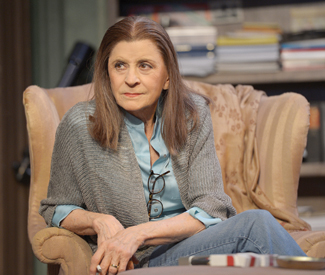
Berkeley Rep’s production, directed by Oskar Eustis of New York’s Public Theater, opens on a sixtysomething Oriana Fallaci (Broadway veteran Concetta Tomei donning Italianate gestures) at home in her book-cluttered New York brownstone as a young New York Times reporter comes calling. Maryam (a somewhat anemic Marjan Neshat), a fictional creation of the playwright’s, is an Iranian American journalist tasked with preparing the obituary on the famous Italian now battling cancer (such an assignment being a standard practice at the paper for subjects of hefty historical stature). We soon learn that Maryam, who has idolized the older woman since the latter famously threw off her chador during her interview with Iran’s Khomeini, “fought like a tiger” for the assignment.

She gets past Fallaci’s initial brush-off a bit too easily to be believed, but secures a 25-minute interview with her cagey and self-aggrandizing heroine. Early on, Fallaci lets drop several casual racist dismissals of Iranians, Mexicans, and others as she recounts the highlights from her storied career and slowly opens up (or seems to) about her personal life, especially her father and the child she lost. Maryam, who seems to have all of Fallaci’s published writings memorized, is quick to recognize inconsistencies, however, and to call her out on them. “This is a lesson for you, huh?” prods Fallaci. “Find the lie.”

Fallaci’s master class in the art of the interview is baldly spelled out a little further on: the interviewer is out to violently expose her subjects, insists Fallaci, to lay them bare, but ultimately as an “act of love.” This, indeed, is the dynamic set up, in both directions, between Fallaci and her protégé-antagonist who defends a moderate version of Islam against the older woman’s insistence that “moderate Islam does not exist,” and so on. Several years pass and Maryam returns to confront Fallaci again. By now Maryam is a best-selling author herself (she seems to have written a book reminiscent of Azar Nafisi’s Reading Lolita in Tehran). She has also become a more devout Muslim and, moreover, has returned from an Iranian prison where nothing less than the intervention of Fallaci seems to have saved her from execution. However, now it’s Fallaci’s turn to dig into Maryam’s father complex —producing in no time a revelation as crassly dramatic as it is impossible to take seriously in so heavy-handed a form.

As if the mishmash of citation, exposition, and motivation that makes up the dialogue were not wearying enough, each time the dramatic tables turn in this play they creak so loudly you want to hide under your seat. Equally strained and unconvincing are the roughly managed philosophic debate about the relation between truth and drama and the half-hearted infusion of operatic overtones — naturally, and far too predictably, Fallaci’s story lends itself to the comparison, and it asserts itself like an afterthought in a dry-ice moment at the end.

But more disconcerting than the clichéd premise and the poor staging (which includes uneven, often leaden performances) is the way the relationship at the center of the play has a way of sweeping fundamental issues, and serious charges, under the carpet in the name of a shared admiration and soul-bearing. Those interested in a more serious investigation of such subject matter would be better off at Yerba Buena Center for the Arts, where the current gallery exhibition, “Without Reality There Is No Utopia” (through June 9; www.ybca.org), provides a lively critical engagement with the vast false narratives of the age, including the role of media and journalism in the ideologically laden construction of historical truth.

FALLACI

Through April 21

Tue, Thu-Sat, 8pm (also Sat, 2pm); Wed and Sun, 7pm (also Sun, 2pm), $29-89

Berkeley Repertory Theatre

2015 Addison, Berk.

www.berkeleyrep.org

Fine Arts Museums management blasted in colorful anonymous letter

Ever since the Guardian reported on recent firings and allegations of improper behavior by senior staff at the Fine Arts Museums of San Francisco (FAMSF), we’ve received a great deal of correspondence relating to the museums. The barbs continue to fly as current and former museum staff members describe an intimidating internal atmosphere within the city’s charitable trust departments, which Curator Emeritus Robert Flynn Johnson has termed “Orwellian dysfunction.” Just this afternoon, another letter arrived — with no return address.

Dated March 20, it was addressed to Richard Benefield, Deputy Director of the de Young. Here’s the text in full, with our own links inserted to clarify the issues the writer is referencing:

“What a ridiculous and absurd Dept. Head Meeting yesterday!

“Aside from the competent I.T. report … how could you expect even a singular response regarding the recent media attention when everyone in the room has been completely intimidated and muted into silence?

“You, sir, are operating with the same delusion as our board president.

“‘Orwellian Dysfunction’ doesn’t even begin to describe the underlying rage, resentment, and disloyalty among most of us still employed by this institution.”

The letter goes on to name three top-ranking museum staff members, calling them “the greatest threat to this museum’s future function and credibility. If Colin Bailey cannot swiftly address these problem individuals, provide the city and public with a transparent accounting of its operating budget, reinstate board president term limits, and modify the draconian time clock surveillance system for our once dedicated hourly workers, then its [sic] certain that the probing press will only continue.”

Additional recipients were listed as San Francisco Mayor Ed Lee; Colin Bailey (rumored to have been selected as the new director of the de Young); FAMSF Board of Trustees President Diane “Dede” Wilsey; San Francisco Chronicle reporter Jesse Hamlin (who managed to get Wilsey on the phone; she ignored Guardian requests for an interview); New York Times reporter Patricia Cohen and arts journalist Lee Rosenbaum.

The Guardian left a message for Ken Garcia, spokesperson for the museums, to share the contents of the letter and request comment. So far, he has not responded.

The lies of war

111

I was listening to Democracy Now this morning, and the introduction to a segment on the tenth anniversary of the Iraq War started out with such an honest, accurate, straightforward statement that I didn’t even think about it until later:

It was 10 years ago today that the U.S. invaded Iraq on the false pretext that Saddam Hussein was hiding weapons of mass destruction. The attack came despite worldwide protest and a lack of authorization from the U.N. Security Council.

Those are facts. That’s about as clean and well-documented a lead as you can put on a news story. It took me a while to realize that a show I listen to because of it’s outfront progressive politics was simply saying what should have been on the front page of the New York Times and every other “objective” news media outlet in the country.

Let’s just parse those 40 words for a second.

Yes, it was 10 years ago. Yes, the U.S. invaded Iraq. Yes, Bush knew that Saddam had no weapons of mass destruction, making that claim by definition a “false pretext.” Yes, there was well-documented worldwide protest. Yes, the U.N. Security Council refused to sanction the invasion.

That’s not liberal bias. It’s demonstrable historical fact.

Let’s compare that to what the New York Times said:

Ten years ago this week, on March 20, 2003, the United States invaded Iraq.

Also true — but inaccurate. Inaccurate because it’s incomplete. And that matters, a lot.

I go to Paul Krugman, the NYT columnist who (unlike his bosses) was right about the war from the start. Here’s his lead:

Ten years ago, America invaded Iraq; somehow, our political class decided that we should respond to a terrorist attack by making war on a regime that, however vile, had nothing to do with that attack.

That’s 100 percent accurate and a lot more complete than the “news stories.” He continues:

There were, it turned out, no weapons of mass destruction; it was obvious in retrospect that the Bush administration deliberately misled the nation into war. And the war — having cost thousands of American lives and scores of thousands of Iraqi lives, having imposed financial costs vastly higher than the war’s boosters predicted — left America weaker, not stronger, and ended up creating an Iraqi regime that is closer to Tehran than it is to Washington.So did our political elite and our news media learn from this experience? It sure doesn’t look like it.

And here’s why it matters: We’re doing the same thing again, in a different forum, with the discussion of budget deficits and the need for cuts in spending:

What we should have learned from the Iraq debacle was that you should always be skeptical and that you should never rely on supposed authority. If you hear that “everyone” supports a policy, whether it’s a war of choice or fiscal austerity, you should ask whether “everyone” has been defined to exclude anyone expressing a different opinion

Here’s my lead for the next story on the “sequester:”

House Republicans and the Obama administration met again this week to discuss a problem that doesn’t exist, offer solutions that won’t work, and drive the nation further into poverty, inequality, and debt.

Accurate. Complete. Factual. I can’t wait to see it on the front page of the Times.


Reports of new director appointment at SF arts museums follow critical NYT piece

A report in the New York Times this past weekend highlighted troubles at the Fine Arts Museums of San Francisco (FAMSF), which were also outlined in twin reports in the Guardian two weeks ago. On the heels of that critical news story, reports are surfacing that the museums may be poised to announce the appointment of a new director after a 15-month gap in leadership.

The New York Times piece highlighted internal museum tensions, which staff members say have persisted since former director John Buchanan passed away at the end of 2011:

“For 15 months, since the death of John Buchanan, their last director, the museums have been without a leader. Longtime staff members have been ousted. Unhappy employees have leaked internal e-mails to embarrass management … Several trustees, major donors, former board members and staff members blame the powerful board president, Diane B. Wilsey, an art collector, philanthropist and a hub of San Francisco society, for creating some of the problems.”

This last point was underscored with a quote from trustee Denise B. Fitch, who told the New York Times “one person is in control.” 

In a new twist, the museums may now be on the verge of naming a new director. Journalist and cultural commentator Lee Rosenbaum issued this report in a March 17 blog post:

“Someone with strong ties to the Fine Arts Museums of San Francisco told me today that he had it on good authority that Colin Bailey, who is deputy director and curator at the Frick Collection, New York, is soon to be officially named as director of the Fine Arts Museums of San Francisco. I have tonight confirmed this with an unimpeachably reliable art professional (not from the Frick or FAMSF), who has knowledge of the imminent appointment. As you may remember, I had been told last month by an inside source at FAMSF that the museum was then in negotiations with its leading candidate. It is now thought to be on the verge of making that announcement.”

Ken Garcia, spokesperson for the museums, could not immediately be reached by phone. The Guardian left a voice message with Bailey seeking comment, and soon heard back from a representative of the Frick Collection press office, who said she had no information about it.

The New York Times piece also included an interview with Wilsey herself. (The San Francisco philanthropist did not respond to Guardian requests for comment.)

“No one person has authority to do anything,” Wilsey told the New York Times. “I serve at the will of the board, and all decisions are made through the staff. We are a public institution and we are totally transparent.” She added: “I almost have to give 72 hours of public notice if I want to gain weight.”

Author (and former strip-club DJ) Dee Simon talks ‘Play Something Dancy’

2

Former SF resident Dee Simon wrote a very funny, very raunchy book of short stories about his experiences spinning tunes at local strip clubs; it’s called Play Something Dancy. Clearly I had to talk to him and get the inside scoop.

San Francisco Bay Guardian Standard first question: how did you become a strip club DJ?

Dee Simon I moved to SF in 2000 to pursue a career in broadcasting. Unable to land a paying radio job, I started hosting Rampage Radio at KUSF 90.3FM and eventually found a job in production at The Industry Standard magazine. The Standard was very successful for about a year and then folded once the crash happened. I was unemployed for about eight months until that fateful day I ran into my weed dealer who hooked me up with an audition at a club on Broadway, which launched my illustrious five-year career as a DJ at clubs across the city.

SFBG When you lived in San Francisco, I used to see you at punk and metal shows all the time. Did you ever get to sneak that kind of music into your playlist?

DS When I first started working as a DJ, I mistakenly assumed that all strippers danced to Motley Crue or Guns n’ Roses. Those bands had loads of strippers in their videos. In reality, they don’t dance to hair metal. There might be a few exceptions but most tend to prefer hip-hop and R&B. In the story “Run to the Hills” I talk about how all strip club DJs reserve a special cache of music for girls who choose not to tip. If a girl tipped me, I would play her anything she wanted. But if she didn’t tip, she’d dance to the music I liked — Iron Maiden, Slayer, Gwar, W.A.S.P., Motorhead, the Dwarves — till she realized it was in her best interest to take care of the DJ.

SFBG What constitutes a good versus bad song for stripper utilization?

DS The managers invariably want the DJ to keep the music uptempo. However, there are a variety of factors involved in selecting a song for a dancer. If it’s a Friday night and the club is packed, you don’t want to play a slower song like Portishead or R. Kelly that will decimate the energy in the room. You’ll risk losing the crowd and invoking the wrath of your manager. But at the same time, the DJ also wants to satisfy the dancer, especially if she’s a good tipper.

I would base my decision on the crowd. If the crowd seemed to be really tipping the dancers on stage during rock songs, then I’d persuade her to dance to Aerosmith or Led Zeppelin or AC/DC because she’ll make a lot of money. Conversely, if the crowd was more into hip-hop, I’d choose something old school like Notorious BIG’s “Hypnotize” or Tupac’s “How Do U Want it.” Both songs are recognizable classics and upbeat.

http://www.youtube.com/watch?v=glEiPXAYE-U

SFBG What was your most-hated song to play? Also, please explain how Weird Al became part of your playlist.

DS I despised the song “Hot In Herre” by Nelly. Try listening to that wretched song 12 times a night, four nights a week, and then see how many times you contemplate suicide. It’s been years and I still cringe when I hear it. Weird Al was only bought out in extreme circumstances when a non-tipping stripper was undaunted by the heavy metal and punk music that I was playing for her. In that case, I had no choice but to play some fine Weird Al tunes such as “Dare To Be Stupid,” “Yoda,” or “Amish Paradise.” Most dancers would usually tip after dancing to “Amish Paradise” two or three times in a night.

SFBG Were you writing down the crazy stories that happened to you all along, or did you compile them later? What inspired you to write a book, and how true to life are the stories?

DS Over the five years I worked at the clubs, I kept a journal to chronicle my mishaps and shenanigans. I had several notebooks filled with amusing stories but never really did anything with them. It wasn’t until two years ago when I moved to Los Angeles and was unpacking some boxes, I found my journals and decided to officially write some of the stories down in book form. Sadly, all of the stories in the book are quite true; however, in order to protect myself from criminal prosecution and civil liability, names, locations, and identifying characteristics had to be changed.

SFBG Strip clubs are often fodder for films (Showgirls, The Wrestler, etc.) In your opinion, which is the most accurate portrayal of what goes on behind the scenes? Which is the worst, and why?

http://www.youtube.com/watch?v=CRbUSIRV6i4

DS I think The Wrestler offered a very accurate portrayal of the depressing reality of a strip club and we got to see Marisa Tomei’s ta-tas. I also thought that Tarantino did an excellent job of showing how much of an asshole strip club owners can be in Kill Bill Vol 2.

I know it’s not a film but The Sopranos delivered a realistic portrayal of strip club life with the Bada Bing! club.

Critically, it might be one of the worst films ever made but Showgirls is a hilarious cult classic that has stood the test of time, and it would be blasphemy to criticize it. In my opinion, the worst strip club movie has to be Striptease with Demi Moore and Burt Reynolds. The name of the strip club where Demi Moore worked was called the Eager Beaver and that’s all I really need to say about that.

SFBG You DIY’d the publication of the book, and are doing your own publicity. How has that process been? How do you get the word out and what has the reaction been?

DS Like the music industry, publishing has radically changed and authors are no longer beholden to literary agents and the “Big 6” publishers to produce their book. Now all an author needs to do is find an editor and a digital conversion tool and he or she can make their own digital book and publish it on Amazon or iTunes.

Instead of spending months collecting rejection letters, an author can put his or her own work out there and see who wants to read it. I’ve found that the most difficult part of self-publishing is publicity and promotion. Since I cannot afford to hire a professional publicist nor purchase ads in the New York Times, I rely on social media, blog posts, podcast interviews, and book reviews to spread the word. From what I can tell, people seem to dig the book. I’ve received a lot of positive feedback and good ratings on Amazon and iTunes, which definitely helps with exposure.

SFBG Have any of the people who figure into your stories read the book and given you feedback? Which story do people respond to the most?

DS Thankfully, none of the people I have written about have recognized themselves in the book, hunted me down, and physically harmed me. I’m rather afraid of one character in particular named Pepper. He was a frightening individual but he didn’t strike me as the type of person who would bother reading a book that didn’t have any titty pics so I’ll probably be all right.

I’ve received the biggest response from the opening story “Lexi” and the final story “Kashmir.” In fact, several people mentioned that after reading “Kashmir,” they have been unable to listen to that Led Zeppelin song again without feeling nauseous.

http://www.youtube.com/watch?v=dwisLnjsOCA

SFBG What do you think of Tucker Max comparisons? Personally I think you are a better writer than he is, but some of the … racier subject matter might speak to similarities between you two.

DS Though I’m not a fan, Tucker Max is a bestselling author who has legions of devoted readers. I’d love to replicate that success. I suppose the subject matter of our books is comparable but the theme is vastly different. Rather than boast about my various sexual exploits and deviant acts, I regret having had to endure them.

A lot of the stories in the book are humiliating and some involve venereal disease and diarrhea. There’s a definite reason the full title of the book is Play Something Dancy: The Tragic Tales of a Strip Club DJ.

SFBG What are you up to these days? What is the Sick and Wrong podcast all about?

DS I live in Los Angeles now and am writing a follow up to Play Something Dancy. I host a weekly comedy podcast called Sick and Wrong where my cohost and I ridicule inept criminals, dish out horrible advice to callers, and interview some colorful guests. At seven years, Sick and Wrong is one of the longest-running podcasts and ranked among the top 100 comedy podcasts on iTunes. I also just started a new vidcast called the Obscenesters, which is recorded at Tradiov.com/LA.

SFBG Bonus question — what’s the best rock show you’ve seen lately?

DS My favorite recent show was Graveyard. Their new record, “Lights Out” is fantastic. I highly recommend it.

Dee Simon’s book Play Something Dancy is available on Amazon.com, iTunes Bookstore, and barnesandnoble.com. Learn more about Simon and his other ventures at his website.

Desi Santiago inflates Juanita More’s Pride party plans

0

Does the idea of one of SF’s best-known drag fashionistas rendered in massivem inflatable form excite you? You then, are the target audience for this item of news: Juanita More has announced that multimedia artist Desi Santiago will lend his dark, dramatic style to her yearly Pride party in 2013 as its set designer. 

“Desi is someone with great vision,” More told me in an email. That vision has produced black dogs that swallowed a South Beach hotel whole, outfits that appear to be made from different garments when viewed from various vantage points, atmospheric runway sets, and extravagant works various couture happenings.

After he visited the Jones 620 rooftop where this year’s June 30th party will be held. It was only the Puerto Rican-via-New Jersey artist’s second trip to San Francisco, and my Instagram feed told me that More had celebrated with him over homemade pernil. I chatted with Santiago about what, exactly he means with this plan for balloon Juanita.

“I’m taking her body apart,” he said. “I’m exploding Juanita’s body. I don’t know how much I should give away at this point. But we’re working on an intereactive experience wehere you get to interact with her body.” One of those ways, he said, will be via a “giant” version of the drag queen — reminiscent of his work he did converting the Lords Hotel into “Black Lords,” an installation that saw the hotel morph into a red-eyed black dog. 

“[Juanita] has a heart of gold, and she’s fierce,” he said as towards his motivation for accepting the gig. This isn’t the pair’s first collaboration — More’s played Santiago’s Van Dam party in New York. “I booked her because I loved her but when she spun,” he told me. “She kind of kicked my ass. She really turned it out.” Man can appreciate a good scene-setter.

But who’s to say, really, what the Pride blow-out (tickets available in June) will end up looking like.

“I’m interested in creating completely consuming environments that make you leave the norm,” the artist told me. Santiago’s resume includes work in bondage costume design, metalwork, sculpture, set design. For more on the artist, check out his March 2012 New York Times profile

Severino (Horse Meat Disco, UK), Derek Opperman (Gemini Disco, SF), and Kim Ann Foxman (NYC) have all been announced as DJs for the afternoon party. More was also stoked to tell me about her flyer designer, De La Soul and Snoop Dogg video vet and Bay Area local visual artist Serge Gay Jr.

On the Om Front: Guys Wanted in the Yoga Room

4

I teach a weekly employee yoga class at a hospital where my students are all women. Every week, a young man peers curiously into the classroom. I asked him once if he’d like to join us, and he said, “Yes, but what would my friends say? Yoga is for girls.”

This odd societal notion that yoga is an emasculating, status-reducing activity is bad enough. But to make matters worse, people like William J. Broad, the so-called New York Times science writer, have publically espoused that yoga is actually harmful to men. Why? Because, he says, men have a tendency to push themselves too hard, and their bigger muscles are more injury prone.

Wait … what?

Here’s the truth: The majority of the yoga poses that we do in the studio today were developed by men, not women. In fact, women had to fight for the right to take part in this practice in the first place. And I could spend days discussing the fallacies of Broad’s arguments (which are based on poor science and don’t at all credit men with the ability to take care of themselves), but we all have better things to do. The point is: When did yoga get deemed wussifying or, worse, a threat to one’s health?

I don’t live in a man’s body, but I do teach yoga to a lot of strong, masculine, and intelligent men, and I can tell you from what I see that yoga is every bit as beneficial to men as it is to women. It does not seem to have negatively affected anyone’s testosterone levels, nor do my male students get injured any more than my female students — if they practice intelligently. (If one practices unintelligently, regardless of gender, one will get injured.) In fact, despite the obvious anatomical disparities, I see very little difference between the male and female practitioners I know in terms of commitment to practice, injury rate, and advancement. The largest challenge for men is the message in Western society that yoga was not made for them.

As a response to the dearth of dudes in yoga class, an interesting movement to promote male-only yoga classes has come about. The national Broga program is one example of this trend, though it hasn’t yet caught on locally. While I love that this movement is encouraging more men into the classroom, the segregation aspect feels weird to me. This is yoga, not football. I’d prefer to see all of us — men, women, and trans folk — practicing in the same room, side by side. Together.

As a society, both men and women have suffered from countless years of gender segregation. The yoga room can be a place for us to be in community together. Sure, we have different bodies, but we’re all there for the same reason: to improve ourselves and develop a deeper sense of inner intelligence. I understand that there’s a comfort in being around people who look like you, and avoiding environments where the other gender dominates. But if women had let that fear deter us, we wouldn’t have gained the right to attend college, vote, or have our own bank accounts. Besides, yoga is actually about moving out of your comfort zone, and confronting the fears and insecurities that imprison you. What better place to push your boundaries?

I’m a fan of anything that gets more guys, straight or gay, into the yoga room — even boys-only yoga. But the beautiful thing about bringing the genders together in general, and particularly in the yoga room, is that we balance one another energetically. We can learn from, support, and better understand one another. I think the time is ripe now for us to come together in mindful community — in fact, I think our evolution as a species depends on it.

And a little secret for those men who’ve yet to take a yoga class because they think the women don’t want them there: We do.

Karen Macklin is a writer and yoga teacher in San Francisco — her On the Om Front column appears biweekly here on sfbg.com.

___________________________________________________

Yoga and Spirituality Listings

By Joanne Greenstein

Restorative Yoga with Live Singing Bowls with Kevin Hibbit and Sam Jackson
Combining crystal bowl music, healing touch, poetry, and restorative yoga, this workshop will help attendees to slow down, relax and look within.
Sat/9, 6:30-9:30pm, $35, Mindful Body, 2876 California, SF

Naked Men’s Yoga
Check out these weekly classes for men that are aimed at offering community and more freedom for expression and movement. Clothing is not optional. Days and times and locations vary.

Therapeutics Workshop with John Friend
After a long hiatus from the yoga world, the founder of Anusara yoga is back in town. In this workshop, he will focus on common issues and injuries in the body, and how to overcome them using therapeutic postures based on principles of alignment.
Sat/9, 6:30-8:30pm, $50, Urban Flow Yoga, 1543 Mission, SF

Yoga Grad School
Laughing Lotus is offering several weekend workshops between now and the end of June on topics ranging from teaching yoga to at-risk youth to hands-on assisting. The workshops are appropriate for dedicated practitioners looking to deepen their practice as well as for those interested in earning credit toward advanced teacher certification. Price varies based on number of workshops taken.
Next up:
Lotus Fly: Advanced Asana and Sequencing with Sheri Celentano
March 16-17, 1-6pm, $199
Laughing Lotus, 3271 16th Street, SF

Healing the Heart – A Daylong Immersion in Bhakti Yoga with Jai Uttal, Nubia Teixeira, and Swami Ramananda
Immerse yourself in a day of devotional exploration. This daylong workshop integrates meditation, ceremony, breathing exercises, devotional dance, and chanting.
March 16, 10am-5pm, $100 ($90 by Mon/11); includes a vegetarian lunch
Integral Yoga Institute, 770 Dolores, SF

Yoga and Dance with Wendy Faith
Link two forms of movement in one in this workshop combining yoga and dance. Dance forms visited include Afro-Brazilian, salsa, tribal bellydance, Bhangra, West African and hip-hop.
March 17, 1-3:30pm, $35
Aha Yoga, 1892 Union, SF

Why labor should oppose the pipeline

0

OPINION As pressure from the fossil-fuel industry, conservative Canadian and US politicians, and some construction unions mounts on President Obama to greenlight the controversial Keystone XL Pipeline project, a growing coalition has a different message.

On February 17, tens of thousands rallied against the pipeline in cities across the US, including San Francisco — a testament to the climate movement, ranchers and farmers, First Nations leaders, most Canadian unions, some US unions (including my nurses’ organization), transport and domestic workers, and young people who are rightfully alarmed over the global impact of Keystone XL.

For nurses, who already see patients sickened by the adverse effects of pollution and infectious diseases linked to air pollutants and the spread of water and food borne pathogens associated with environmental contaminants, Keystone XL presents a clear and present danger.

First, extracting tar sands is more complex than conventional oil drilling, requiring vast amounts of water and chemicals. The discharge accumulates in highly toxic waste ponds and risks entering water sources that may end up in drinking water, as is already occurring.

Second, the corrosive liquefied bitumen form of crude the pipeline would carry is especially susceptible to leaks that can spill into farmland, water aquifers and rivers on route, threatening an array of adverse health outcomes.

Public health costs from fossil-fuel production in the US through contaminants in our air, rivers, lakes, oceans, and food supply are already pegged at more than $120 billion every year by the National Academy of Sciences. The Environmental Protection Agency warns that exposure to particulate matter emitted from fossil fuel plants is a cause of heart attacks, long term respiratory illness including asthma, cancer, developmental delays and reproductive problems. Global-warming inducted higher air temperatures can also increase bacteria-related food poisoning, such as salmonella, and animal-borne diseases like the West Nile virus.

That’s just the tip of the melting iceberg given the planet altering consequences of rising sea levels, intensified weather events including droughts, floods and super storms already in evidence, and mass dislocation of coastal populations and starvation that may well follow our failing to stem climate change.

Far more jobs would be created by converting to a green economy. As economist Robert Pollin put it in his book Back to Full Employment, every $1 million spent on renewable clean energy sources creates 16.8 jobs, compared to just 5.2 jobs created by the same spending on fossil-fuel production.

And, as one person acerbically commented on a recent New York Times article, there are no jobs on a dead planet.

Further, stumping for the pipeline puts labor in league with the many of the most anti-union, far right corporate interests in the U.S., such as the oil billionaire Koch Brothers and energy corporations, abetted by the politicians who carry their agenda.

The future for labor should not be scrambling for elusive crumbs thrown down by corporate partners, but advocating for the larger public interest, as unions practiced in the 1930s and 1940s, the period of labor’s greatest growth and the resulting emergence of a more egalitarian society.

Deborah Burger is a registered nurse and co-president of National Nurses United, the nation’s largest organization of nurses.

The World’s Best Artist©: Getting weird with Mitch O’Connell

0

Can you guess which of the 290 pages of Mitch Connell‘s jampacked new, puffy-covered-like-cheap-tablecloth art anthology he is most proud of? It is not the vaguely seedy Hanna Barbera art, commissions all for Warner Brothers that were never utilized commercially. It’s not the illustrations for porno mags, the public works benches in Chicago, several Newsweek covers, untold numbers of event flyers, or his late-1980s pop art aerial views of reclining women hoisting hot dogs.

It’s the crazy shit he drew after he discovered his wife had been chronically cheating on him. You thought the rest of it was wacky!

But hoist a copy of Mitch O’Connell: The World’s Best Artist — you should, it’s awesome — and there’s no telling where you’ll get lost amid the artist’s decades of work. The book is a (puffy-covered) homage to an insane career of drawing and illustration, accomplished by a man (PS, not this guy) who has managed to raise a family on his skills while steadfastly pushing the bounds of good taste. The Chicago-based artist is coming to the Bay Area tonight (Thu/21, Berkeley) and tomorrow (Fri/22, San Francisco) for book tour dates. If you like insane, and talent, and professionally insane talent, you’ll most likely be there. 

We email-interviewed him, to talk.

SFBG: You did a few series of drawings for Warner Bros., how on earth did that come about? What was your highest hope for that collaboration?

 Mitch O’Connell: After doing this drawing thing forever, it would be hard NOT to accumulate a long list of clients. If I hadn’t, I’d be writing this from my cardboard box estate situated on the sidewalk of Michigan Avenue.

I’ve done little bits and pieces for Warner Brothers over the years, working with art directors who must have just seen my art here and there, but the “Hanna Barbera” series was the most fun and involving. I think I pushed a few of the paintings into PG-13 territory, but they encouraged me to be irreverent. Which might not have been a good thing. Once they got the finished art and started pondering how it might look on a kid’s lunchbox it seems they rethought their initial enthusiasm and put the job on the shelf. Where it’s still collecting dust. But I still like ’em!

Your next lunchbox

SFBG: You’re favorite and/or most disturbing tattoo you’ve done?

MO: ALL the tattoos I actually tattooed into peoples flesh were disturbing. Mostly because the clients kept on squirming, screaming, and bleeding. How the hell am I supposed to get any work done with those type of folks?! Actually, now I’m just sticking with simply designing the tattoos, and leaving the actual permanent engraving to the professional tattooists. It was much too nerve-wracking trying to get the art right the first time. As for my best ones, I’m working on my fourth set off flash [ink newbs: “flash” refers to the 11″x14″ sheets of sample ink that hang in tattoo parlors] now, and I like how it’s turning out the best of all. But I’m biased. Tattoo shops, start clearing some room on the walls!

SFBG: How long did your “covering up the naughty bits” gig for Fox Magazine last?

MO: The Fox mascot will hopefully be on the cover blocking out nipples and vaginas as long as there’s a Fox magazine. I did the painting a dozen years ago, it’s all up to them where/when/how often it appears. The more the merrier!

SFBG: Besides its puffy cover (please explain that feature) what are you most proud about with this book?

MO: The graphic design work of my pal Joseph Allen Black (yes, that would be www.josephallenblack.com). He took my rough placement of where I wanted everything and made it look stunning. Think of me as the guy who delivers the 4000-pound block of marble to Michelangelo. As for the puffy glittery cover, a) I loved the look, and b) wanted my book to stand out from the millions of others. At least I’ll have a better chance of folks actually picking it up out of curiosity. Then, considering what’s inside, the better chance of them putting it back.

I kid! They’ll LOVE it!

SFBG: Advice for aspiring freelance illustrators?

MO: Try to be more creative, distinctive, easy to work with, and talented than anyone else. Sadly, you’ll never be able to be the best, because I’ve already copyrighted it.

SFBG: We must know: What does makes you the World’s Best Artist?

MO: One reason was that no matter who reviews it, they have to use the title [of the book]. That way if the opinion is “Mitch O’Connell the World’s Best Artist sucks!” I can turn that into “‘The world’s best artist!,’ raves the New York Times!”

Also, if you keep on repeating something, at some point folks might start falling for it. Think “weapons of mass destruction,” “trickle down economics,” and “guaranteed to add inches to your penis!”. And I’m STILL waiting for my money back!

Mitch O’Connell: The World’s Best Artist book tour

Thu/21, 7-9pm, free

Pegasus Books

2349 Shattuck, Berk. 

www.pegasusbookstore.com


Fri/22, 7-9pm, free

Mission Comics and Art

3520 20th St., SF

www.missioncomicsandart.com

Our Weekly Picks: February 20-26, 2013

0

WEDNESDAY 20

Mega Shark vs. Giant Octopus

Head on down to the waterfront tonight for a hilarious night of bad B-movie fun! Where could be better to watch the schlocky sci-fi flick Mega Shark vs. Giant Octopus (featuring over-the-top cheesy performances from Deborah Gibson and Lorenzo Lamas) than an actual aquarium on the San Francisco Bay? Part of Aquarium of the Bay’s “Octopalooza,” a week-long fete celebrating cephalopods, the price of admission to this “Bad Movie Night” will include two drinks, popcorn, admission to the aquarium, and live satiric commentary about the film from Dark Room Theater. (Sean McCourt)

6pm, $16

Aquarium of the Bay, Bay Theater

Pier 39, SF

(415) 623-5300

www.aquariumofthebay.com


Patricia Schultz

Travel writer Patricia Schultz explained how she selected entries for her New York Times-bestseller 1,000 Places to See Before You Die in the book’s introduction: “In the final analysis, the common denominator I chose was a simple one: that each place impress upon the visitor — and, I hope, upon the reader — some sense of the earth’s magic, integrity, wonder, and legacy.” Lately, Schultz seems like she is looking for the next 1,000 places to pass on to readers. She has made stops in Connecticut, Boston, and California this month, and has a 10-day jaunt through Ethiopia in April ($5,400 to join her) followed by a 19-day cruise ship voyage near the Antarctic coast in November ($9,500). Interested (and perhaps more frugal) travelers can listen in tonight on her latest adventures. (Kevin Lee)

7pm, $12–$20

Oshman Family Jewish Community Center

3921 Fabian Way, Palo Alto

(415) 597-6700

www.commonwealthclub.org


THURSDAY 21

“Migration Now!”

The creators of the fabulous People’s History poster series, Justseeds, and Culturestr/ke have assembled a poster show to heal the psychic wounds you’ve done to yourself listening to the Right rage on against immigrants ruining our country. Seriously, this is the antidote: undocumented queer activist Julio Salgado’s peaceful odes to cross-border gay marriage, the flock of monarch butterflies that Portland, Ore.’s Roger Peet has conjured, alighting on a human skull in protest of the War on Drugs. King of the subversive poster Emory Douglas will also show work, along with many others. The opening reception features hip-hop performance, panel discussion, an appearance by the Filipino Caregiver Theater Ensemble, and more. (Caitlin Donohue)

Through Feb. 28

Opening reception: 6-10pm, free

Eric Quesada Center for Culture and Politics

518 Valencia, SF

www.justseeds.org

www.migrationnow.com


“Fabulous Artistic Guys Get Overtly Traumatized Sometimes: the Musical!”

After a sold-out weekend premiere in October, DavEnd’s sharp-witted, madcap, acronym-inviting musical comes back for another raucous binge of self-obsession and doubt before the bedroom mirror. Fabulous Artistic Guys Get Overtly Traumatized Sometimes features writer, composer, performer, chanteuse, accordionist, and costume designer extraordinaire DavEnd as, who else, queer artist DavEnd and her active — very active — imagination. Upon reflection (her own that is, courtesy of a full-length looking-glass (Maryam Farnaz Rostami)), solipsism turns to schism as DavEnd confronts a fractured fashion show of ideal or not-so-ideal types, MC’d by her Fairy Drag Mother (luminous burlesque star World Famous *BOB*). Discerning direction by D’Arcy Drollinger and musical director Chris Winslow support a pitch-perfect combo of the effervescent and deadpan, in a comedy that actually asks stark present-day questions about difference, acceptance, and validation of the self. (Robert Avila)

Through Sun/24, 8pm; (also Sun/24, 3pm), $20–$25

Counterpulse

1310 Mission, SF

(415) 626-2060

www.counterpulse.org


CHERYL at the Asian Art Museum

In the third century BCE, a Chinese emperor wanted to defeat death by commissioning a life-size terracotta army of over 7,000 warriors. In 2013, New York-based art collective CHERYL wants to defeat convention by throwing a party in honor of 10 of these warriors. At the opening of the Asian Art Museum’s “China’s Terracotta Warriors: The First Emperor’s Legacy,” the collective, joined by DJ Hakobo and the Extra Action Marching Band, will set up a video installation, an excellent set of tunes, and a bar, and they invite you to join them (preferably in a costume of your choosing). Probably not what the emperor had in mind, but it just might work. (Laura Kerry)

7pm, $18

Asian Art Museum

200 Larkin, SF

(415) 581-3500

www.asianart.org


FRIDAY 22

“Sexual Politics”

The full title of the Roxie’s first post-SF Indiefest event is “Sexual Politics: The Occasionally Autobiographical and Always Personal Films of Joe Swanberg,” a mouthful befitting a prolific filmmaker who is only 31 and yet has already made nearly 20 films. His debut, 2005’s Kissing on the Mouth, isn’t included here, but his second and third films are — LOL (2006) and Hannah Takes the Stairs (2007), both of which rushed him to the forefront of the lo-fi, low-budget, mostly-improv’d genre known (for better and worse) as “mumblecore.” (Both also star Hollywood’s next big thing, Greta Gerwig.) Among the 12 Swanberg selections is IndieFest closer All the Light in the Sky, a 2012 release that isn’t even his most recent (that’s be Drinking Buddies, which just screened at Sundance). Never sleep, Joe. (Cheryl Eddy)

Fri/22-Mon/25, $6.50–$10

Roxie Theater

3117 16th St, SF

www.roxie.com


Dave Alvin and Marshall Crenshaw

Fans of Americana, rockabilly, and roots music — or just plain old fashioned rock’n’roll — are in for a special treat tonight as two of the greatest singer-songwriters-guitarists of the past 30 years come to town on tour together — Dave Alvin and Marshall Crenshaw. First displaying his formidable chops as a member of the Blasters, Alvin has gone on to a distinguished solo career, as has Crenshaw, who gained mainstream exposure with his 1981 hit “Someday, Someway,” and portrayed Buddy Holly in the 1987 film La Bamba. Get ready for a night of shredding Stratocasters as these two tunesmith titans, who just keep getting better with age, play live backed by the Guilty Ones. (McCourt)

8pm, $22

Great American Music Hall

859 O’Farrell, SF

(415) 885-0750

www.slimspresents.com


Chrome Canyon

At this rate, I’ll never make it to the future. But when I do, I know exactly what would make the perfect soundtrack. Giorgio Moroder’s Metropolis, Wendy Carlos’s Tron, John Carpenter’s Escape From New York, Michael Jarre’s Dreamscape, and Hirokazu Tanaka’s Metroid. Of course, that’s too much for one Walkman, but since I’ll be going that direction anyway, I’ll make a point to procure a copy of Elemental Themes, the recent analog synth saturated non-soundtrack from Brooklyn’s Chrome Canyon. It captures the mood. First order of business: find a place that sells cassettes. Second: restore causality. (Ryan Prendiville)

Voltaire Records and Stones Throw Present, with Peanut Butter Wolf (DJ set), Jonas Reinhardt, Shock, Chautauqua (DJ set)

9pm, $13-15

Mezzanine

444 Jessie, SF

(415) 625-8880

www.mezzaninesf.com


SATURDAY 23

FaltyDL

Producer Drew Lustman may hail from New York, but his newest release Hardcourage impressively fuses the pace and smoothness of Chicago house with the synths and bleeps found in Detroit techno. The result is a multilayered work that leans more toward spacey introspection than frenetic movement, a somewhat surprising departure from vintage FaltyDL productions of two-step and UK-influenced garage. Consistent throughout Lustman’s discography is an emphasis on melody and texture that is quite fitting, given Lustman played upright bass and piano in jazz groups and counts Miles Davis as a big influence. How Lustman mixes groovier works like the luscious “She Sleeps” with harder-stepping garage in the tighter confines of Public Works’ loft space will bear watching. (Lee)

9:30pm, $10–$20

Public Works

161 Erie, SF

(415) 932-0955

www.publicsf.com


SUNDAY 24

Morrissey

It’s difficult to describe the voice — a tinge of a yowl but always fluid and warm. Then there’s the songwriting — mysteriously transcendent. And the incredible style that is both quirky and catchy. OK, this might be gushing, but come on, it’s Morrissey, and he’s coming to Davies Symphony Hall (and we’re keeping our fingers crossed that he actually makes it to the Bay this time). The influential artist, who established his reputation with the Smiths in the ’80s, will release a “very best of” album in April. Even though he’s looking back on career classics, he wants to show us he can still rock out. Morrissey, we wouldn’t doubt you for a second. (Kerry)

With Kristeen Young

8pm, $50-$90

Davies Symphony Hall

201 Van Ness, SF

(415) 864-6000

www.daviessymphonyhall.org


Matmos

Relax. Try to concentrate. I’m going to play some sounds. Tell me what you see. A triangle? No. Try again. A velvet blivet? No. Focus, please. What? I assure you, no one has had sex on this table. One more. A damn deacon? Please, there’s no call for that sort of language. Fail, a complete fail. Correct answer was A Marriage of True Minds, an auditory experiment into ESP by former SF — now Baltimore — residing duo Matmos. Yes, extra-sensory perception. Telepathy for the layperson like you. Here, give it a listen the next time you’re in the flotation tank. (Prendiville)

With Horse Lords, C.L.A.W.S. (DJ set), Kit Clayton, and visuals by Golden Suicide

8pm, $10

Public Works

161 Erie St., SF

(415) 932-0955

www.publicsf.com


MONDAY 25

Surfer Blood

Surfer Blood has discovered a magical formula. When the band came together in ’09, it united with the simple goal to produce an album and go on tour, but with the album and EP it has released since that time, the quartet has earned impressive recognition for its unceasingly gratifying pop-rock. Surfer Blood’s four-year-old goal continues with the launch of another tour leading up to the June release of Pythons. In the single, “Weird Shapes,” the magic continues in a catchy tune that somehow recalls both the Strokes and the Beach Boys. Come see what other tricks it has up its sleeve. (Kerry)

With Grand Rapids, Aaron Axelsen

8pm, $11

Brick and Mortar Music Hall

1710 Mission, SF

(415) 800-8782

www.brickandmortarmusic.com

Editor’s notes

37

tredmond@sfbg.com

EDITORS NOTES This is how dysfunctional the San Francisco housing market has become:

The Chron reported in late January that young people who are just arriving in San Francisco are paying exorbitant rents for tiny spaces — $500 for a laundry room, $600 for an upper bunk — and often living in substandard conditions.

And on Feb. 11, The New York Times reported that a significant number of high-end condos in that city were vacant almost all the time, owned by the uber-rich who used them as pieds a terre — something that’s going on increasingly in San Francisco.

The Times notes:

“The higher up you go in price, the higher the concentration is likely to be of owners who spend only a few months, a few weeks or even just a few days each year in their apartments. This very costly form of desolation means that some of the city’s most expensive residential buildings stand mostly dark, lonesome and empty on the inside.”

I called Brad Paul, a former deputy mayor for housing and a longtime expert on development in San Francisco and read him that quote. “As my nine-year-old son would say, ‘You think?'” he said. My kids would be shorter: “Duh.”

The more housing you build that only multimillionaires can afford, the more likely your serving a population that has three or four other houses and just wants this one for the couple of weeks a year that they jet into San Francisco.

Planning Commission member Katherine Moore has mused about the problem in public, noting that in her Nob Hill neighborhood, there are more and more dark apartments.

Who cares? Everyone should — for a couple of reasons. For one, empty neighborhoods are no good for small businesses. They’re also not as safe. And it just seems so ass-backward: A city that can’t provide decent affordable housing for current residents, much less for the next generation of immigrants who keep the place lively, is giving up valuable land to build housing for people who aren’t going to live here at all.

That’s what the fight over the new condo projects on the waterfront, 8 Washington and 75 Howard, ought to be about.

At the very least, the city ought to get some data here. It’s not that hard — just check property records against the tax documents filed for homeownership exemptions. As Sup. David Chiu told me, “It would be good for us to know if San Francisco’s high-end condos are actually being used.”

Maybe we should find that out before we build any more. You think?


Ten years after Powell’s U.N. speech, old hands are ready for more blood

1

By Norman Solomon

Norman Solomon is the author of “War Made Easy: How Presidents and Pundits Keep Spinning Us to Death.” He is the founding director of the Institute for Public Accuracy and co-founder of RootsAction.org.

When Secretary of State Colin Powell spoke to the U.N. Security Council on February 5, 2003, countless journalists in the United States extolled him for a masterful performance — making the case that Saddam Hussein’s Iraq had weapons of mass destruction. The fact that the speech later became notorious should not obscure how easily truth becomes irrelevant in the process of going to war.

Ten years later — with Powell’s speech a historic testament of shameless deception leading to vast carnage — we may not remember the extent of the fervent accolades. At the time, fawning praise was profuse across the USA’s mainline media spectrum, including the nation’s reputedly great newspapers.

The New York Times editorialized that Powell “was all the more convincing because he dispensed with apocalyptic invocations of a struggle of good and evil and focused on shaping a sober, factual case against Mr. Hussein’s regime.” The Washington Post was more war-crazed, headlining its editorial “Irrefutable” and declaring that after Powell’s U.N. presentation “it is hard to imagine how anyone could doubt that Iraq possesses weapons of mass destruction.”

Yet basic flaws in Powell’s U.N. speech were abundant. Slanted translations of phone intercepts rendered them sinister. Interpretations of unclear surveillance photos stretched to concoct the worst. Summaries of cherry-picked intelligence detoured around evidence that Iraq no longer had WMDs. Ballyhooed documents about an Iraqi quest for uranium were forgeries.

Assumptions about U.S. prerogatives also went largely unquestioned. In response to Powell’s warning that the U.N. Security Council would place itself “in danger of irrelevance” by failing to endorse a U.S.-led invasion of Iraq, the adulation from U.S. media embraced the notion that the United Nations could only be “relevant” by bending to Washington’s wishes. A combination of cooked intelligence and geopolitical arrogance, served up to rapturous reviews at home, set the stage for what was to come.

The invasion began six weeks after Powell’s tour de force at the United Nations. Soon, a search for Iraqi weapons of mass destruction was in full swing. None turned up. In January 2004 — 11 months after Powell’s U.N. speech — the Carnegie Endowment for International Peace released a report concluding that top officials in the Bush administration “systematically misrepresented the threat from Iraq’s WMD and ballistic missile programs.”

Left twisting in the wind was Powell’s speech to the U.N. Security Council, where he’d issued a “conservative estimate” that Iraq “has a stockpile of between 100 and 500 tons of chemical weapons agent.” The secretary of state had declared: “There can be no doubt that Saddam Hussein has biological weapons and the capability to rapidly produce more, many more.”

Nineteen months after the speech, in mid-September 2004, Powell made a terse public acknowledgment. “I think it’s unlikely that we will find any stockpiles,” he said. But no gingerly climb-down could mitigate the bloodshed that continued in Iraq.

A decade ago,  Powell played a starring role in a recurring type of political dramaturgy. Scripts vary, while similar dramas play out on a variety of scales. Behind a gauzy curtain, top officials engage in decision-making on war that gives democracy short shrift. For the public, crucial information that bears on the wisdom of warfare remains opaque or out of sight.

Among the powerful and not-so-powerful, in mass media and on Capitol Hill, the default position is still to defer to presidential momentum for war. Public candor and policy introspection remain in short supply.

The new secretary of state, John Kerry — like the one he just replaced, Hillary Clinton — voted for the Iraq war resolution in the Senate, nearly four months before Powell went to the U.N. Security Council. During the crucial lead-up months, Senator Kerry was at pains to show his avid support for an invasion. In early October 2002, appearing for an hour on MSNBC’s “Hardball” program live from The Citadel as an audience of young cadets filled the screen, Kerry said: “I’m prepared to go. I think people understand that Saddam Hussein is a danger.”

Since then, Kerry has publicly said that he would have voted for the war resolution even if he’d known that Iraq actually had no weapons of mass destruction. But on the Senate floor, Kerry prefaced his vote for war by rhetorically demanding to know why Saddam Hussein was “attempting to develop nuclear weapons when most nations don’t even try.” The senator emphasized that “according to intelligence, Iraq has chemical and biological weapons.”

Months later, when Powell trumpeted that theme at the United Nations, the landslide of testimonials included this one from a future U.S. ambassador to the U.N., Susan Rice: “I think he has proved that Iraq has these weapons and is hiding them, and I don’t think many informed people doubted that.”

Meanwhile, the Washington Post edition with the editorial headlined “Irrefutable” also included unanimous agreement from each of the opinion columns on the facing page.

Longtime Post columnist Richard Cohen attested to Powell’s unquestionable veracity with these words: “The evidence he presented to the United Nations — some of it circumstantial, some of it absolutely bone-chilling in its detail — had to prove to anyone that Iraq not only hasn’t accounted for its weapons of mass destruction but without a doubt still retains them. Only a fool — or possibly a Frenchman – could conclude otherwise.”

Inches away, another venerable pundit held forth. Powell managed to “present the world with a convincing and detailed X-ray of Iraq’s secret weapons and terrorism programs yesterday,” wrote Jim Hoagland, a Post foreign-policy specialist. He concluded: “To continue to say that the Bush administration has not made its case, you must now believe that Colin Powell lied in the most serious statement he will ever make, or was taken in by manufactured evidence. I don’t believe that. Today, neither should you.”

Fast forward to the current era. What are Richard Cohen and Jim Hoagland writing — about Iran?

On February 6, 2012, exactly nine years after proclaiming that “only a fool” could doubt Iraq had weapons of mass destruction, Cohen’s column declared flatly: “The ultimate remedy is Iranian regime change.” Four months ago, Cohen wrapped up a column by observing “there is still time for Iran to back down before President Obama’s red line — no nuclear weapon — is crossed. This is a war whose time has not yet come.” Not yet.

Hoagland — a decade after telling readers they should put their trust in Colin Powell’s “convincing and detailed X-ray of Iraq’s secret weapons” — is now making clear that his patience with Iran is wearing thin. “Until recently,” Hoagland wrote five weeks ago, “I had been relatively comfortable with Obama’s assertions that there is time to reach a peaceful resolution with Iran.” Hoagland’s column went on to say that military strikes on Iran “threaten disastrous political and economic consequences for the world,” so diplomatic efforts should try to avert the need for such strikes — before they become necessary.

So goes the dominant spectrum of opinionating and policymaking for war, from eagerness to reluctance. Propaganda lead-ups to warfare are as varied as wars themselves; and yet every style of such propaganda relies on deception, and every war is unspeakable horror.

After jumping onto ghastly bandwagons for one war after another, the nation’s media establishment is available to do it again. So is the current U.S. ambassador to the United Nations. So is the new secretary of state. They’re old hands, dripping with blood. They have not had enough.

Norman Solomon is the author of “War Made Easy: How Presidents and Pundits Keep Spinning Us to Death.” He is the founding director of the Institute for Public Accuracy and co-founder of RootsAction.org.

Trail to historic gay Boy Scouts vote started in the Bay Area

23

This Wednesday, the Boy Scouts of America’s (BSA) Executive Board will consider removing the controversial ban on gay members and allow each individual troop to adopt its own policy on gay scouts. The board publicly reaffirmed the anti-gay policy just last summer, but recent pressure from gay rights groups, corporate sponsors, and Bay Area troops has forced the governing body to revisit the blanket prohibition on gay members.  

Opposition to the Boy Scout’s ban first surfaced in Northern California in the late 1980s when Tim Curran, an Eagle Scout and aspiring scoutmaster, sued the Mount Diablo Boy Scout Council for discrimination after being denied the position. Curran took the suit to the Supreme Court and lost. The court’s landmark decision in Curran v. Mount Diablo Council of the Boy Scouts of America continues to provide the legal justification for the BSA’s anti-gay policies.

Since the ruling, the San Francisco Bay Area has emerged as a key battleground in the struggle for gay membership in the scouts. Local troops often clash with the national organization over the ban and many local scout leaders publicly denounce the policy as discriminatory and hateful.

In October, openly gay East Bay scout Ryan Andresen was denied his Eagle Scout badge by the Mt. Diablo-Silverado Council due to his sexual orientation. Although officials with the council voiced reservations about denying Andresen, they are bound by BSA national policy that has long maintained homosexuality is inconsistent with the scouts oath to be “morally straight.”  

Andresen’s father resigned his position as an assistant scoutmaster, and Andresen’s mother organized an online petition which collected nearly half a million signatures protesting her son’s expulsion. The incident is sparking a widespread public debate about the Scout’s discrimination policy. Andresen appeared on national TV, and his petition garnered high profile support from California politicians like Lt. Gov. Gavin Newsom and US Sen. Barbara Boxer.

Andresen’s national profile and the publicity surrounding his case inspired outrage among local scouts and adult leaders. Steve Tennant, committee chair of Palo Alto Troop 57, said the parents and volunteers in his troop felt compelled to act. “We were all outraged and we immediately started thinking about how we could go about changing this policy,” he told the Guardian.

The controversy quickly galvanized parents and scouts throughout the Bay Area to more openly challenge the gay ban. From San Francisco to Palo Alto, parents and scouts penned public letters of protest decrying the policy and and urging the local Mt. Diablo-Silverado Council to reconsider Andresen.

Parents in Tennant’s Troop 57, located just a few miles from Andresen’s troop, unanimously adopted a non-discrimination policy both to voice solidarity with Anderson and to avoid potential discrimination in their own troop.

“It was just a matter of time until a kid in our troop faced the same situation as Ryan. I would rather resign my position than kick a kid out of the Scouts for being gay,” Tennant, whose two sons are currently scouts, told the Guardian. “Seeing the reaction of our parents and seeing the support for Ryan convinced me personally to stay involved with the Scouts,” he added.  

Eagle Scouts from Andresen’s district also mobilized against the ban. Trevor Wallace, an Eagle Scout from the nearby Troop 57, helped to organize meetings to pressure the Mt. Diablo-Silverado Council to allow Andresen to earn his badge. “My troop has been completely outraged by what happened to Ryan,” Wallace told the Guardian. “I got my Eagle Scout badge the same time Ryan was supposed to get his… discriminating against him like this is old fashioned and wrong.”

Michael and Andrew Dotson, a father-son scoutmaster duo who lead San Francisco’s Troop 88, echoed the concerns of Wallace and Tennant. “I want the boys to feel safe and be able to be open,” Michael Dotson told the Guardian. “Troop 88 would be very accepting of gay members once the ban is removed. And I hope it is.”

Andrew Dotson, a recent Eagle Scout who now works as his father’s assistant scoutmaster also opposes the ban. Growing up in San Francisco, he encountered plenty of gay scouts. But because of the national policy, the boys in his troop had to stay formally in the closet or risk expulsion. “I just don’t think that’s right,” he told the Guardian. “Scouting should be open to everybody.

Andresen’s case and the outpouring of support from other Bay Area scouts drew the attention of Zack Wahls, founder of Scouts for Equality, a national organization founded last summer to pressure the BSA Executive Board d to revisit the gay-ban.  

Wahls credits Andresen and his supporters with providing the necessary grassroots pressure to potentially change the national policy.

“It’s important to remember that only seven months ago, the Scouts were adamant that this policy was not going to change,” Wahls told the Guardian. “What happened in those seven months was that we harnessed online tools and worked with people like Ryan to highlight the negative impact this ban has on the local level.”

Wahl and Boy Scouts for Equality also targeted corporations and sympathetic members of the BSA board.  Over the summer, board members Randall Stephenson, CEO of AT&T, and James Turley, CEO of Ernst & Young, announced publicly their opposition to the ban. Since September, several major corporate sponsors, including Intel and UPS, announced that they would rescind financial support for the BSA until the national organization lifted the ban.  

Ahead of the board meeting, BSA officials reiterated that lifting the ban would not force any individual troops to change their own membership policies. “The Boy Scouts would not, under any circumstances, dictate a position to units, members, or parents,” BSA spokesperson Deron Smith told the New York Times. “This would mean there would no longer be any national policy regarding sexual orientation.

For many scouts in the Bay Area, however, removing the national ban is just the beginning. The end goal is the adoption of a national non-discrimination policy. But given the Boy Scouts history of strident opposition to gay rights, reconsidering the ban is significant development. “I think a national policy will take time,” reflected Michael Dotson of Troop 88, “but this is a good first step.”


Norman Solomon: Verbal tics and political routines

1

By Norman Solomon

Norman Solomon is co-founder of RootsAction.org and founding director of the Institute for Public Accuracy. His books include “War Made Easy: How Presidents and Pundits Keep Spinning Us to Death.” He writes the Political Culture 2013 column.

A lot of what we say and do becomes habit-forming. Groundhog Day 2013 could serve as a reminder that some political habits should be kicked. Here are a few:

**  “Defense budget

No, it’s not a defense budget. It’s a military budget.

But countless people and organizations keep saying they want to cut “the defense budget” or reduce “defense spending.”

Anyone who wants to challenge the warfare state should dispense with this misnomer. We don’t object to “defense” — what we do oppose, vehemently, is military spending that has nothing to do with real defense and everything to do with killing people, enforcing geopolitical control and making vast profits for military contractors. And no, they’re not “defense contractors.”

President Eisenhower’s farewell address didn’t warn against a “defense-industrial complex.”

The fact that there’s something officially called the Department of Defense — formerly the Department of War, until 1947 — doesn’t make its huge budget a “defense budget,” any more than renaming the Bureau of Prisons “the Bureau of Love” would mean we should talk about wanting to cut the “love budget.”

**  “Pro-life”

Last week, midway through a heated debate on the PBS “NewsHour,” the president of NARAL Pro-Choice America said that some politicians get elected while hiding their extreme anti-abortion positions — but would be rejected at the ballot box “if they ran on their pro-life values.”

“Pro-life” values? Not a label that abortion-rights advocates should use for opponents of a woman’s right to choose an abortion. One of the main reasons those opponents keep calling themselves “pro-life” is they want to imply that supporters of abortion rights are anti-life. Why help?

**  “Globalization”

In many realms, globalization can be positive, even essential. For instance, wonderful results flow from globalizing solidarity among workers around the world. Likewise, the planetary spread of awareness and cooperation among people taking action to protect the environment, stop human-rights abuses and end war.

Corporate globalization is another matter. Its destructive effects are lashing every continent with voracious commercialization along with exploitive races to the bottom for cheap labor, extraction of raw materials, privatization, flattening of protective tariffs, overriding of national laws that protect workers and replacement of democratic possibilities with the rule of big money.

Putting “corporate” before “globalization” may seem cumbersome, but it’s worth another three syllables. There’s a world of difference between globalization for human cooperation and corporate globalization. Blurring it all together misses the chance to clarify the distinct possibilities.

**  “Moderates”

Fifty-five years ago, in his book “The Causes of World War Three,” sociologist C. Wright Mills wrote about what he called “crackpot realism” — policy nostrums widely touted by mass media outlets and other powerful institutions as wisely reasonable, yet actually disastrous.

In a similar groove, these days, we hear about how certain elected officials are “moderates.” And we might refer to them that way ourselves. But the grim results of crackpot moderation — climate change and environmental degradation, incessant warfare, more poverty, widening economic inequities, abuse of civil liberties and so much more — are all around us. So-called “moderates” fuel the infernos of catastrophe.

What’s moderate about the extreme injustices and destructiveness of the status quo?

**  Skimming the headlines

We all do it sometimes — glancing at headlines and scarcely reading the stories — one of the reasons why, all too often, what we think we know actually isn’t so.

Case in point: a headline at the top of the New York Times front page days ago, no doubt leaving many quick readers with the belief that President Obama is getting tough on Wall Street.

Well, that’s what the headline conveyed. “SIGNAL TO STREET IN OBAMA’S PICK FOR REGULATORS,” it began, followed by an elaboration in big type just below: “A Renewed Resolve to Hold Financial Firms Accountable.”

Mostly focusing on the appointment of Mary Jo White to chair the Securities and Exchange Commission, the article offered a fleeting indication in its eighth paragraph that the “renewed resolve” might actually be wobbly. “While Ms. White is best known as an aggressive prosecutor,” the article noted, “she also built a lucrative legal practice defending Wall Street executives, a potential concern for consumer advocates.”

The basis for that potential concern, however, did not gain any further elucidation until the article’s twenty-sixth paragraph, which provided the other mention of why consumer advocates might be concerned: “Ms. White could face additional questions about her career, a revolving door in and out of government. In private practice, she defended some of Wall Street’s biggest names, including Kenneth D. Lewis, a former chief of Bank of America. As the head of litigation at Debevoise & Plimpton, she also represented JPMorgan Chase and the board of Morgan Stanley.”

So much for headlines

Norman Solomon is co-founder of RootsAction.org and founding director of the Institute for Public Accuracy. His books include “War Made Easy: How Presidents and Pundits Keep Spinning Us to Death.” He writes the Political Culture 2013 column.

Norman Solomon: Dear progressives

21

A Letter I Wish Progressive Groups Would Send to Their Members

By Norman Solomon

Norman Solomon is co-founder of RootsAction.org and founding director of the Institute for Public Accuracy. He co-chairs the Healthcare Not Warfare campaign organized by Progressive Democrats of America. His books include “War Made Easy: How Presidents and Pundits Keep Spinning Us to Death.” He writes the Political Culture 2013 column. b3

Dear Progressives,

With President Obama’s second term underway and huge decisions looming on Capitol Hill, consider this statement from Howard Zinn: “When a social movement adopts the compromises of legislators, it has forgotten its role, which is to push and challenge the politicians, not to fall in meekly behind them.”

With so much at stake, we can’t afford to forget our role. For starters, it must include public clarity.

Let’s face it: despite often nice-sounding rhetoric from the president, this administration has continued with a wide range of policies antithetical to progressive values.

Corporate power, climate change and perpetual war are running amok while civil liberties and economic fairness take a beating. President Obama has even put Social Security and Medicare on the table for cuts.

Last fall, the vast majority of progressives voted for Obama to prevent the presidency from going to a Republican Party replete with racism, misogyny, anti-gay bigotry and xenophobia. Defeating the right wing was cause for celebration. And now is the time to fight for genuine progressive policies.

But let’s be real about our current situation. Obama has led the Democratic Party — including, at the end of the legislative day, almost every Democrat on Capitol Hill — deeper into an abyss of corporate-driven austerity, huge military outlays, normalization of civil-liberties abuses and absence of significant action on climate change. Leverage from the Oval Office is acting as a brake on many — in Congress and in progressive constituency groups — who would prefer to be moving legislation in a progressive direction.

Hopefully we’ve learned by now that progressive oratory is no substitute for progressive policies. The soaring rhetoric in Obama’s inaugural address this week offered inspiring words about a compassionate society where everyone is respected and we look out for each other. Unfortunately and routinely, the president’s lofty words have allowed him to slide by many progressives despite policies that often amount to a modern version of “social liberalism, fiscal conservatism.”

The New York Times headline over its front-page coverage, “Obama Offers a Liberal Vision in Inaugural Address,” served up the current presidential recipe: a spoonful of rhetorical sugar to help the worsening austerity go down. But no amount of verbal sweetness can make up for assorted policies aligned with Wall Street and the wealthy at the expense of the rest of us.

“At their inaugurals,” independent journalist I.F. Stone noted long ago, our presidents “make us the dupes of our hopes.”

Unlike four years ago, Obama has a presidential record — and its contrasts with Monday’s oratorical performance are stark. A president seeking minimally fair economic policies, for instance, would not compound the disaster of four years of Timothy Geithner as Secretary of the Treasury by replacing him with Jack Lew — arguably even more of a corporate flack.

On foreign policy, it was notably disingenuous for Obama to proclaim in his second inaugural speech that “enduring security and lasting peace do not require perpetual war” — minutes after completing a first term when his administration launched more than 20,000 air strikes, sharply escalated the use of weaponized drones and did so much else to make war perpetual.

Meanwhile, the media hype on the inaugural speech’s passage about climate change has lacked any indication that the White House is ready to push for steps commensurate with the magnitude of the real climate crisis.

The founder of the Sustainable Energy and Economy Network, Daphne Wysham, points out that the inaugural words “will be meaningless unless a) the Obama administration rejects the Keystone XL tar sands pipeline; b) Obama selects a new EPA administrator who is willing to take action under the Clean Air Act to rein in CO2 emissions from all sources; c) he stops pushing for dangerous energy development deep offshore in the Gulf, in the Arctic and via continued fracking for oil and gas; d) he pursues a renewable energy standard for the entire country; and e) he directs our publicly financed development banks and export credit agencies to get out of fossil fuels entirely.”

The leadership we need is certainly not coming from the White House or Congress. “A genuine leader is not a searcher for consensus but a molder of consensus,” Martin Luther King Jr. observed. The leadership we need has to come, first and foremost, from us.

Some members of Congress — maybe dozens — have shown commitment to a progressive agenda, and a larger number claim a progressive mantle. In any event, their role is not our role. They adhere to dotted lines that we should cross. They engage in Hill-speak euphemisms that we should bypass. Routinely, they decline to directly confront wrong-headed Obama administration policies. And we must confront those policies.

If certain members of Congress resent being pushed by progressives to challenge the White House, they lack an appreciation for the crucial potential of grassroots social movements. On the other hand, those in Congress who “get” progressive social change will appreciate our efforts to push them and their colleagues to stand progressive ground.

When we’re mere supplicants to members of Congress, the doors that open on Capitol Hill won’t lead very much of anywhere. Superficial “access” has scant impact. The kind of empowered access we need will come from mobilizing grassroots power.

We need to show that we’ll back up members of Congress who are intrepid for our values — and we can defeat others, including self-described “progressives,” who aren’t. Building electoral muscle should be part of building a progressive movement.

We’re in this for the long haul, but we’re not willing to mimic the verbiage or echo the silences from members of Congress who fail to challenge egregious realities of this administration’s policies. As Howard Zinn said, our role is to challenge, not fall in line.

Norman Solomon is co-founder of RootsAction.org and founding director of the Institute for Public Accuracy.  He co-chairs the Healthcare Not Warfare campaign organized by Progressive Democrats of America. His books include “War Made Easy: How Presidents and Pundits Keep Spinning Us to Death.” He writes the Political Culture 2013 column. b3


________________________________________


On the Cheap Listings

0

On the Cheap listings by Cortney Clift. Submit items for the listings at listings@sfbg.com. For further information on how to submit items for the listings, see Picks.

WEDNESDAY 23

“From Vision to Icon: Building the Golden Gate Bridge” Sports Basement, 1590 Bryant, SF. www.sfwalksandtalks.com. 7pm, free. Local writer, producer, and narrator Peter Moylan presents the story of the Golden Gate Bridge, exploring all the triumphs and challenges encountered throughout its creation The lecture will be told with over 120 historic photos in the live documentary style SF Walks and Talks is known for.

THURSDAY 24

“Pixilated Drift” Johansson Projects, 2300 Telegraph, Oakl. www.johanssonprojects.net. Through March 16. Noon-6pm, free. The show will feature Andrew Benson’s hypnotic pixel prints, David O’ Brien’s explosive and abstract video stills, and Tamara Albaitis’ sound sculptures, sure to be as entrancing and mysterious to look at as they are to listen to.

FRIDAY 25

“Full Wolf Moon” Cotton Mill Studios, 1091 Calcot, Oakl. www.f3oakland.com. 6-10pm, free. F3 at the Cotton Mill will be showing off resident and guest artists’ new work in the collective’s eighth event. The evening will be a bit of a cultural smorgasbord with various galleries and studios open throughout the building, live music, dance, and spoken word in the “Wolf Den,” a design bazaar, and food trucks. Free shuttle transportation will be provided to the Cotton Mill Studios from the Fruitvale BART station from 6-10:30pm.

Fundraiser for KPOO Radio Mercury Café, 201 Page, SF. 7-10pm, free. For over 40 years local nonprofit radio station has been discussing issues facing underserved communities such as GLBT folks, low-income families and young people as well as playing music largely absent in mainstream media. But KPOO has recently lost a significant source of funding due to budget cuts. Head over to Mercury Café for a night of food, drinks, and music to help keep the station on the air. 10 percent of all sales will go to KPOO.

“Deviant Type Press Benefit Show” Temescal Arts Center, 511 Eighth St., Oakl. 7pm, $10 donation suggested. Hosted by Jezebel Delilah X, this evening will consist of readings by Mia McKenzie, fat activist Virgie Tovar, Sister Spit-Valencia queer author Michelle Tea, and Manish Vaidya. After the readings Bay Area band Gaymous rocks.

SATURDAY 26

“All You Can Dance” Alonzo King LINES Dance Center, 26 Seventh St., fifth floor, SF. www.linesballet.org. 1-5pm, $5. Whether you’ve been itching to brush up on your ballet skills or wanting to test your talent in Zimbabwean dance, the $5 entry fee allows you try out any and all classes on today’s schedule. Offering everything from Bollywood dance to Pilates to Argentinean tango, you’re free to dance ’til you drop.

Roe Vs. Wade 40th anniversary celebration Justin Herman Plaza, SF. www.oursilverribbon.org. 10am-noon, free. Reproductive rights pioneer Pat Maginnis, president of the San Francisco Board of Supervisors David Chiu, and other speakers will be addressing women’s issues today in remembrance of the legendary court case that gave us our reproductive rights. It may not technically be a carnival, but there will be face-paining, airbrush tattoos, balloon artists, a bubble artist, and a performance by One Billion Rising, a radical gang of flash mobbers.

SUNDAY 27

“San Francisco Poet Laureate Alejandro Murguía’s Inaugural Address” San Francisco Main Library, Koret Auditorium, 100 Larkin, SF. www.sfpl.org. 1-3pm, free. Murguía will give his inaugural address as the city’s sixth poet laureate and speak about the connection Latino history and San Francisco history have to one another as well as how poetry has affected the local Latino community. A reception will follow his wise words, so you’ll have ample time to chew them over.

“Drunken Spelling Bee” Café Royal, 800 Post, SF. www.caferoyale-sf.com. 6pm, free. Hosted by Jimi Moran, this event is exactly what it sounds like. Maybe you dominated in your sixth grade spelling bee, but how are your skills after a few beers? No iPhone spell checks allowed.

“Oakland Youth Orchestra ‘Russian Romance’ Winter Concert” Holy Names University, 3500 Mountain, Oakl. www.oyo.org. 3pm, free. Get classy Sunday afternoon at what is sure to be something far better than an average high-school music recital. The 75 musicians who make up the Oakland Youth Orchestra range from ages 12 to 22 but possess musical skills far beyond their years. The concert will include festive pieces by Dimitri Shostakovich, Pyotr Ilyich Tchaikovsky, and Sergei Rachmaninov.

MONDAY 28

Berkeley Arts & Letters presents Adam Mansbach’s Rage is Back The Marsh Berkeley, 2120 Allston, Berk. www.berkeleyarts.org. 7:30pm, $5/students, $12/advance. The author of the No. 1 New York Times bestseller Go the F**k to Sleep is back to tell the story of a clever kid, the father who left him, and the greatest graffiti stunt New York City has ever seen in his new book titled Rage is Back. Today Mansbach will read and discuss his new release. The Marsh Cabaret Bar will be open before, during, and after the program.

TUESDAY 29

Recology art exhibit and panel discussion Reception at 503 Tunnel, SF. 5-7pm, free. Panel discussion at 401 Tunnel, SF. 7pm, free. Exhibition also on display Fri/25, 5-9pm; Sat/26, 1-3pm. www.recologysf.com. Recology’s artist in residence program will exhibit work created by Michael Damm, Julia Goodman, and Jeff Hantman over the past four months, made from scavenged materials found at the dump. After the exhibit, head a few doors down to catch the artists talking about their experience working to create art in trashland.