Music

Inspiring doc ‘Keeper of the Beat: A Woman’s Journey into the Heart of Drumming’ airs on KQED

0

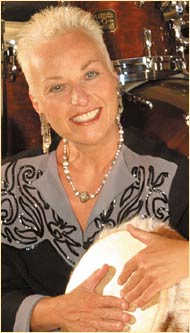
“I would get the comment ‘Gosh, you play really good for a girl,’” Barbara Borden admits in the introduction of Keeper of the Beat, which chronicles her lifelong passion for drumming. The documentary, by San Francisco’s David L. Brown, airs Sun/6 on KQED

The Always brand’s empowering #LikeAGirl ad campaign made the rounds on the internet this week, but Borden’s musical sojourn, discouraged for a female at the time, is decidedly more inspiring (especially since it’s delivered by a badass drummer and not a corporation). 

https://www.youtube.com/watch?v=2aABBZ1fl7M&feature=kp

Borden is aptly described in the film as a “drumbeat diplomat” — she bypasses the language barrier (cultural, too, as the film highlights the universality of music during the Yugoslavia Civil War and in a remote part of Siberia) between her and people she meets by quickly finding a way to communicate in the language of drums and punchy beats.

Clips from her past performances are cleanly weaved between interviews, showcasing both Borden and director Brown’s strengths: her story and his storytelling. Lavish camerawork and breathtaking shots are noticeably absent from the film; they’d really only detract from the unadulterated music and dialogue. It’s a shame the documentary only clocks in at a little under an hour long, as the poignant montage of vignettes whizzes right by you. 

Grimm but not grim: SF Playhouse’s winning fairy tale ‘Into the Woods’

0

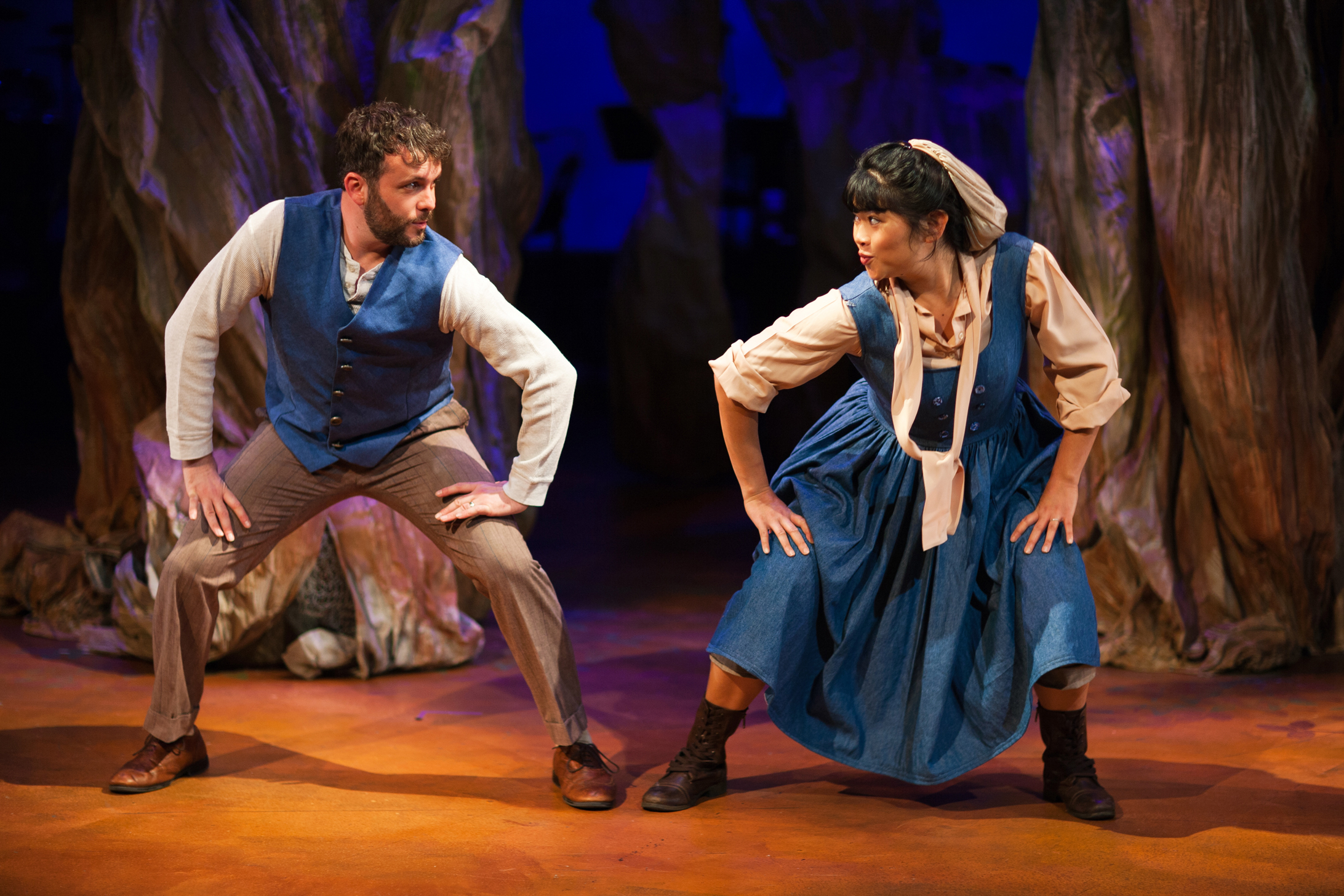
Given all traditional parameters of critical experience, SF Playhouse’s production of Into the Woods (now playing through Sept 6) should be at least somewhat irksome. The vocal talent can be inconsistent, the accents are ambiguous, the set looks busy, and the musical is high-strung enough that it can be insufferable without expert work on all fronts. Shockingly, despite the surface-level issues, the Playhouse production is an unqualified technical success and a complete joy to take in.

The watchability may result from the impeccable staging and verbal interplay between the actors, or the reliable and often gorgeous small orchestra that accompanies the singing. Or perhaps the musical’s hilarity comes from the Robert Goulet-esque swagger of the dual princes and the coy and satirically sexualized awakening of Little Red Ridinghood. Or maybe the show is so good because, in addition to his expert instrumental direction, music director Dave Dobrusky helps his cast find their vocal strengths — the entire ensemble navigates the passaggio-shredding score with astonishing tact. All these positives combine to make Into the Woods an atmospheric journey more than worth taking.

Stephen Sondheim and James Lapine’s 1986 work has aged majestically. The book avoids any hint of contemporary cultural referentiality, giving the work a timelessness and broad humor that seems just as applicable in the millennial age as it was 30 years ago. Gender expectation, the limitations of heroics, and the predictability of children’s stories are all over the 2014 liberal zeitgeist and all play big thematic roles in the production.

Sondheim and Lapine manage to boil down these issues to atomic levels — Ridinghood’s titillation at the lascivious Wolf’s advances, Jack’s clueless but powerful desire to traverse the world of the giants, and the witch’s overprotectiveness over Rapunzel all explore basic yearnings and are remarkably Freudian in scope. It’s no wonder that Disney is releasing a blockbuster version of the musical this December.

The plot is a flimsy excuse to combine the stories of Cinderella (Monique Hafen), Rapunzel (Noelani Neal), Jack and the Beanstock (Tim Homsley), and Little Red Ridinghood (Corinne Proctor) into a single entity. A Baker (Tim Pinto) and his Wife (El Beh) are victims of an infertility curse at the hands of a vengeful witch (Safiya Fredericks) and the very convenient antidote is to steal items from each of the other Brothers Grimm icons.

Despite the storyline’s more contrived elements, Sondheim and Lapine, in typically sophisticated fashion, fill the show with fast-talking, convoluted numbers and twists that require actors capable of sudden and realistic emotional shits as well as deft pronunciation. Not one of the lines in the show was garbled or dropped, nor did any of the sudden shifts cause interruptions in the emotional momentum of the piece. For a Sondheim piece, this is an impressive achievement — I hate to think how many run-throughs some of the more word-heavy interchanges took. Whether to credit this more to Dobrusky or director (and Playhouse co-founder) Susi Damilano is unclear, but they both deserve extensive kudos for the verbal and emotional clarity of the play.

Chiefly responsible for this are Hafen’s Cinderella and the Pinto and Beh’s Baker couple, who have the least flashy parts in the production and need to act as its emotional center. Hafen is the stand-out, with a beautiful coloratura voice that floats up effortlessly to the higher notes in her melancholic “Cinderella at the Grave” and the conflicted “On the Steps of the Palace.” She moves with authenticity and humbleness — she never eats scenery or overdoes anything, which allows the other actors to be more flamboyant. Her evasion of the Baker’s Wife’s questions about her courtship with the Prince is a revelatory moment.

Pinto’s Baker is equally full of humanity. He has to deal with the most opposition and tragedy throughout the narrative and retain the full sympathy of the audience —any garish showboating and nobody cares about his trials anymore. Pinto utilizes his creamy baritone voice and telling body language to field an incredibly likable performance.

El Beh is more dynamic than Pinto, but also less consistent. Her decidedly clipped and modern delivery clashes with his more Victorian dictation and some of her more tender moments come off a bit contrived. At her best though, she delivers powerhouse belting and charged emotive complexity that nicely counters Pinto’s down-to-earth style.

Fredericks is another vocal star as the witch. She has both the fastest (her part during the “Prologue”) and slowest (“The Last Midnight”) songs and manages to carry both — her diction is crisp without sounding contrived, her pitch is accurate without sounding clinical, and her intensity is undeniable.

Cinderella’s Prince and Rapunzel almost steal the show and don’t seem like supporting cast members at all despite their slightly briefer stage time. The Prince (Jeffrey Brian Adams) is a delightful archetype; a square-jawed, Jon Hamm look-alike who charms his way into the heart of Cinderella before realizing that he is addicted to “the rescue” of princesses. He hams it up to an extreme degree, but does so with a charming degree of self-referentiality. His vocals and timing in “Agony,” in which he bemoans the elusiveness of the princesses with Rapunzel’s Prince (Ryan McCrary, who is also solid) were perfection and his seduction of the Baker’s Wife in “Any Moment” is truly inspired Space Age Bachelor Pad-esque sexual panache.

Noelani Neal’s Rapunzel has a gorgeous tone, which she shows off during a tongue-in-cheek reoccurring vocalise that could easily have been shrill. Sadly, she fades into the woodwork a bit as the play goes on. When she’s on stage, however, she owns it, and I’m sure she will be in lead roles at the Playhouse and elsewhere before long.

The ensemble enthusiasm, also increased by the every-fiery local theater legend Maureen McVerry as Jack’s Mother and Homsley’s doe-eyed but mostly relatable Jack, carries through the play’s almost three-hour running time. Even as the unnecessarily trite and sappy ending begins to take shape (no fault of the production, just a rare miscue by Sondheim and Lapine), the chemistry and focus onstage is still palpable. All of the detractions alluded to earlier are still detractions — the set could use more space, there could have been a more unified dialect, and the frenetic action of the play is sometimes overwhelming in the weaker moments. The heart of the production, however, makes it irresistible and sure to fill seats throughout its lengthy run. 

INTO THE WOODS

Through Sept. 6

Tue-Thu, 7pm; Fri-Sat, 8pm (also Sat, 3pm); Sun, 2pm, $20-$120

San Francisco Playhouse

450 Post, SF

www.sfplayhouse.org

This Week’s Picks: July 2 – 8, 2014

0

WEDNESDAY 2


Be Calm Honcho

As Be Calm Honcho’s lead singer croons about her love of California on the band’s debut album, differences between the SF-based band and an LA-based band quickly emerge. (Yes, LA. You can stop bragging about being able to bath in sunshine at the beach 365 days a year.) Be Calm Honcho recorded the album in Stinson Beach, where Karl the Fog must’ve frequently drifted in, comfortably settling into his guest role on the album. The tunes sound effortlessly dreamy — even a little gloomily hopeful. The band is joined, fittingly, by fellow local bands, The She’s and Owl Paws, at its record release show tonight. (Amy Char)

With The She’s and Owl Paws

8pm, $10

Rickshaw Stop

155 Fell, SF

(415) 861-2011

www.rickshawstop.com


Deafheaven

For the past three years, these hometown heroes have managed to charm the pants off of critics and fans alike with their powerfully emotive mixture of black metal and shoegaze. The band’s most recent album, Sunbather, a sad, seething record about the melancholy of perfectionism and unattainable ideals, was a critical darling that brought Deafheaven onto the national stage in a flood of gushing reviews and end-of-the-year best-of lists. Though they are a relatively new band, with only a few years and two albums under their belt, Deafheaven both record and perform with a masterful confidence and unabashed willingness to break the rules, creating a sound that has been described as “post-everything.” You don’t want to miss the chance to see them shred on their home turf. (Haley Zaremba)

With Wreck & Reference

8pm, $16

Great American Music Hall

859 O’Farrell, SF

(415) 885-0750

www.slimspresents.com


Answer Me! A Comedy Game Show

A thick layer of dust covers your high school quiz bowl trophy in your childhood bedroom. Between Netflix marathons of Orange Is the New Black, you sort of yearn for an intellectually stimulating challenge. Take everything you know about Piper Chapman and head over to the Mission for tonight’s pop culture game show. (While you’re at it, consider renting a video or two to support Lost Weekend Video before the competition begins.) Two teams, each comprised of two local comedians and one randomly selected audience member, duke it out for frivolous fame and useless trinkets. Plus, your teammates are sure to be more entertaining than that awkward mouth-breather back in high school. (Amy Char)

8pm, $10

The Cinecave at Lost Weekend Video

1034 Valencia, SF

(415) 643-3373

www.lostweekendvideo.com


THURSDAY 3


Legendary Stardust Cowboy

Inspired by his obsession with space travel, Norman Carl Odam became the Legendary Stardust Cowboy in 1961 and has been honing his maniacal psychobilly style ever since. “The Ledge” is as interested in cars and girls as he is in sci-fi, toilet humor, and the political issues of whatever era he happens to find himself in (“They signed the treaty in Kyoto, Japan!” he screams on “Global Warming,” as if a UN conference was as exciting as a sockhop.) His absurd subject matter and often incomprehensible vocals have earned him fans from outsider-music guru Irwin Chusid to David Bowie, who covered “I Took A Ride On A Gemini Spacecraft” on his album Heathen. The Ledge’s upcoming Stork Club show should demonstrate why he’s considered one of America’s best — or at least most polarizing — touring musicians. (Daniel Bromfield)

9:30pm, $5

Stork Club

2330 Telegraph, Oakland

(510) 444-6174

www.storkcluboakland.com


FRIDAY 4


Venetian Snares

Winnipeg-based electric music artist Andy Funk, better known as Venetian Snares, has been releasing bass-heavy odysseys of albums since the early 1990s. His artistic diversity and tendency to reinvent himself has led to a scattered but unbelievably prolific output — he’s put out 26 formal full-lengths for 8 different labels since 1998 alongside hundreds of EPs, singles, and mixes. While Venetian Snare’s time signatures, samples, and equipment are constantly in flux, his music stays abrasive and challenging no matter the set-up. His newest album, My Love, is a Bulldozer, released two weeks ago, juxtaposes modern classical elements — particularly strings — with extended drum machine and bass breakdowns and irreverent, often hilarious lyrics. Known for his live mixing and aggressive sets, expect both IDM aficionados and raging moshers to be showing up in full force. Avoid the trite fireworks and head to the Independent for some real explosives. (David Kurlander)

8pm, $15

Independent

628 Divisadero, SF

(415) 771-1421

www.theindependentsf.com


Gilman Benefit

924 Gilman has gotten some flak recently for hiking up the prices of its shows, deviating from its original $5-a-show credo in order to satisfy the demands of its $4,500 rent. Luckily, Gilman will will be hosting not one, but two benefit concerts in the first two weeks of June — and both will only set you back a paper Lincoln. The first will take place on the 4th of July and features a host of local bands, including The SoundWaves (San Leandro), Flip & The European Mutts (San Jose), and Black Dream (San Francisco) — plus Drinking Water, an Arizona ska-punk trio that’s toured in the US and Mexico. Though benefit No. 2 features a higher proportion of indie rockers, this one is as punk as anything the Gilman’s ever put on. (Daniel Bromfield)

7pm, $5

924 Gilman

924 Gilman, Berkeley

(510) 524-8180

www.924gilman.org


SATURDAY 5


The Fresh & Onlys

Though they rose to fame with the San Francisco garage-rock explosion of a few years back, the Fresh & Onlys eschew the punky pulp-horror aesthetic of many of their contemporaries in favor of a romantic sound that’s more Heart Shaped World than “Heart Shaped Box.” Though their early recordings (Grey Eyed Girls, Play It Strange) are as fuzzy as anything Ty Segall or John Dwyer’s ever done, the Fresh & Onlys have always been more pop than rock, more brain than body, more introverted than extroverted. But that doesn’t mean they can’t hold it down live — whether as an opener or headliner, they can bend their style to suit just about any live setting and keep the party going. (Daniel Bromfield)

9pm, $15

The Chapel

777 Valencia, San Francisco

(415) 551-5157

www.thechapelsf.com


SUNDAY 6


“Brakhage, Brakhage, Brakhage!”

Add about 397 more “Brakhages” to the title of this Yerba Buena Center of the Arts tribute to the late, great experimental filmmaker, and you’ll have the approximate number of films he created over the span of his career. Three programs highlight both familiar and rare works from the celluloid wizard. Up first is today’s “Self and Other,” films from 1974-86 that examine “how autobiography and portraiture can be represented with motion pictures.” Later programs are “Sound Films” (1962-74), spotlighting some of the oft-silent artist’s soundtracked pieces; and a vivid, gorgeous array of late-career works represented in “Hand-Painted Films” (1993-2002). (Cheryl Eddy)

2pm, $8-$10

Also July 10, 7:30pm; July 13, 2pm

Yerba Buena Center for the Arts

701 Mission, SF

www.ybca.org


The San Francisco Symphony

The San Francisco Symphony heads west to the Sunset on Sunday for its annual appearance at the free Stern Grove Festival. The outdoor affair, picturesquely located in a green basin of rocks and picnic tables, will feature a mostly 20th-century program conducted by charismatic former Symphony Resident Conductor Edwin Outwater. More unconventional programming, including several offerings from Howard Hansons 1930s opera Merry Mount, join standard overtures and waltzes by Bernstein and Richard Rodgers. A potential second-half highlight comes in the form of Ravel’s heartbreakingly gorgeous “Pavane Pour Une Infante Defunte” and exhilarating “Bolero,” both presented with jazz improvisations from prolific pianist Makoto Ozone — the reworking of these iconic classics into new styles should lead to striking new modalities and moods. Pack up a cheese plate and your best white capris and head down to the Grove for an alternately meditative and rousing journey through the modern classical canon. (David Kurlander)

2pm, free

Sigmund Stern Grove

19th Ave. and Sloat, SF

(415) 252-6252

www.sterngrove.org


MONDAY 7


Cloud Nothings

Cleveland’s Cloud Nothings have been indie darlings since the band’s formation in 2009, but have received special praise for April’s Here and Nowhere Else. The new work sees the group embracing a punchier punk aesthetic — lead singer and rhythm guitarist Dylan Baldi spins confused, remarkably catchy choruses over staccato guitar lines and astonishing drum fills by hitherto unknown new addition Jayson Gerycz. Their present tour, which winds around iconic mid-size theaters in the West and Midwest before a European leg, promises a taut, kinetic setlist that includes all of their new album and a few scattered cuts from their three preceding LPs. These guys may be melodic, but they embrace involved and improvised instrumental interludes onstage that lend each show unpredictability and showcase Gerycz, Baldi, and excellent bassist TJ Duke. The stately Great American Music Hall provides an ideal locale for the group’s blend of flash and homage. (David Kurlander)

8pm, $20

859 O’Farrell, SF

(415) 885-0750

www.gamhtickets.com


TUESDAY 8

Nick Cave and the Bad Seeds

Eccentric doesn’t really being to cover it. Nick Cave is a madman with a burning spark of genius propelling his frenetic presence and unparalleled career, careening from genre to genre, turntable to page to screen, and implanting his gritty, unmistakable thumbprint into everything he touches. With an almost four-decade career, the onetime frontman of Australian punk and post-punk bands the Lost Boys and the Birthday Party, and current frontman of Grinderman and the Bad Seeds, Nick Cave is a legendary force of nature. Everything about Cave’s musical style is unique, but it is his lyrics that set him apart as one of the most imaginative and unapologetically confrontational artists in the industry. Stained pink with blood, sweat, and semen, his songs are a visceral journey that only Cave, one of the most energetic and impassioned performers alive, could properly deliver. His sneer and snarl are a sight to behold. (Haley Zaremba)

With Jonathan Richman

8pm $53

The Warfield

982 Market, SF

(415) 673-4653

www.thewarfieldtheatre.com

The Guardian listings deadline is two weeks prior to our Wednesday publication date. To submit an item for consideration, please include the title of the event, a brief description of the event, date and time, venue name, street address (listing cross streets only isn’t sufficient), city, telephone number readers can call for more information, telephone number for media, and admission costs. Send information to Listings, the Guardian, 225 Bush, 17th Flr., SF, CA 94105; or e-mail (paste press release into e-mail body — no attachments, please) to listings@sfbg.com. Digital photos may be submitted in jpeg format; the image must be at least 240 dpi and four inches by six inches in size. We regret we cannot accept listings over the phone.

The resurrection of Ronnie Spector

1

esilvers@sfbg.com

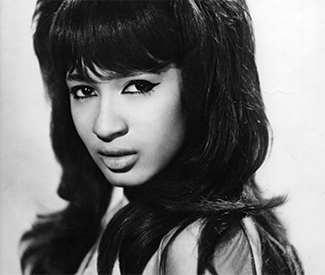
LEFT OF THE DIAL How do you address a woman who toured with the Rolling Stones as an opening act, while being chased after by a baby-faced John Lennon? Who had five singles in the Top 40 by the age of 21? Who perfected the beehive hairdo two decades before Amy Winehouse was even born?

“Call me Ronnie,” purrs Ronnie Spector, age 70, on the other end of the line. You can almost hear the hairdo.

The woman who influenced performers like Billy Joel, Patti Smith, and Joey Ramone is calling from a suburb near Danbury, Conn., where she lives with her manager/husband of 30 years, Jonathan Greenfield. Their life is a quiet one. Spector — who, as the lead singer of the Ronettes, perhaps the most iconic girl group of the early ’60s thanks to hits like “Be My Baby,” has been described as the original bad girl of rock ‘n’ roll — likes to read and watch movies. She goes grocery shopping, does a little cooking, goes to Bed, Bath & Beyond. Three times a week she goes to an office and dictates responses to her fan mail to an assistant (she doesn’t like to use the Internet much herself). She doesn’t drink (never has, she says), but she still smokes (Marlboro Reds).

Okay, and every now and then she’ll catch up with her old friend Keith Richards, who lives 15 minutes away.

For the past two years, the ’60s icon has also been on tour again: Her one-woman stage show, “Beyond the Beehive,” chronicles her tumultuous life from childhood onward, punctuated with songs, stories, behind-the-scenes dirt and dishing. She’ll bring elements of that show to the Bay Area July 4 weekend, when she performs at Brick and Mortar Music Hall Sat/5 (in a ridiculously fabulous-sounding evening hosted by Peaches Christ) and at Burger Boogaloo in Oakland’s Mosswood Park Sun/6.

So: Why would someone who’s lived such a full life — not to mention a self-described homebody — put herself through the rigors of a touring stage show at a time in her life when she could be resting on her laurels? Or at least, one might think, just resting?

“Because I love it — it lets all of my emotions out,” says Ronnie, sounding straight-up girlishly, genuinely excited. “When I first started, of course, I was scared to death: I’ve been on stage singing since I was a little girl, but I never had to sit down and talk to an audience. Now, I feel so good after I do that show. I go through the good, the bad, and the ugly. I tell them everything, and I’m nervous every time, but I love it.”

A little like on-stage therapy, no?

“I stopped going to therapy when I started ‘Beehive’!” she cries. “Who needs a psychiatrist? My show is my therapy. The audience loves it, I love it, and I get to tell them things I never got to talk about.

“Because a lot of stories from my life — ooh, if walls could talk…”

FROM HARLEM TO HOLLYWOOD

Born to a Cherokee and African American mother and an Irish father, a drummer, on Aug. 10, 1943, Veronica Bennett grew up in Spanish Harlem, in a large, working-class family that served as her first audience.

“When I was 7 or 8, me and eight of my cousins were in the lobby of our building and I was singing ‘Why Do Fools Fall In Love’ — the sound was great down there, the tall ceilings — and my cousins all started clapping,” she recalls. “And I thought, I got it! From that point on, all I thought about was singing. I didn’t do homework. The teachers were calling my house saying ‘She’s just singing for the class.’ It was all I cared about.” She spent hours singing with her sister, Estelle Bennett, and cousin, Nedra Talley, the trio that would go on to become the Ronettes.

When the girls were young teens, as if to say “Okay, let’s see what you’ve got,” Ronnie and Estelle’s mother, a waitress at a restaurant next door to the Apollo Theater, managed to get the girls a spot on the bill at the legendary venue’s amateur night. They didn’t win that evening’s competition, but the audience applauded (as opposed to throwing tomatoes), and Spector still remembers the feeling. “That was it. It was the toughest crowd in town, and they liked us,” she says.

The rest is show business history: The signature eye makeup and impeccable on-stage style. Hordes of shrieking fans during appearances on American Bandstand. The UK tour on which the girls spent evenings flirting and dancing with the Beatles. Bottles upon bottles of hairspray.

And, of course, the group’s relationship with wunderkind producer Phil Spector, the man responsible for the “wall of sound” instrumentation that makes so many ’60s records sound so beautifully, chart-toppingly lush. “Be My Baby,” a song Brian Wilson has called the best pop song ever made (at 21, he was driving when he first heard it and had to pull over), is considered the first pop record to use a full orchestra, with horns, multiple pianos, and guitars layered generously over each other. Backup singers included Darlene Love and a then-unknown couple named Sonny and Cher.

To be sure, Spector was ahead of his time. But 30 seconds of any Ronettes song will tell you everything you need to know about what made the group stand out from the pack.

As the Time magazine writer Michael Enright once put it: “Ronnie had a weird natural vibrato – almost a tremolo, really – that modulated her little-girl timber into something that penetrated the Wall of Sound like a nail gun. It is an uncanny instrument. Sitting on a ragged couch in my railroad flat, I could hear her through all the arguments on the street, the car alarms, the sirens. She floated above the sound of New York while also being a part of it…stomping her foot on the sidewalk and insisting on being heard.”

It’s that same combination of vulnerability, sex appeal, and determinedly tough-as-nails I’ve-been-through-hell-so-don’t-test-me bravado that still attracts fans to her shows some 50 years later — despite the fact they’ve probably already heard a good chunk of the story.

Her low points are well-documented: the nightmarish marriage to a jealous Phil Spector that, according to her 1989 memoir, involved death threats and the young singer being physically locked in his mansion. Then rehab, which she later said was just a means of escape from her ex-husband (who, it must be mentioned, as of this writing, is five years into a 19-year sentence for the 2003 murder of actress Lana Clarkson — after a trial in which at least five female acquaintances recounted him holding them at gunpoint).

Then there was life after Phil. Ronnie burst back onto the charts in 1986 as a guest on Eddie Money’s “Take Me Home Tonight” (with her signature whoa-oh-oh-ohs front and center), may or may not have had a brief fling with David Bowie, released a critically acclaimed solo album produced by Joey Ramone, married her second husand, had two kids (not necessarily in that order). In 2000, after a 15-year royalty battle, a New York State Supreme Court judge ruled that Phil Spector owed the Ronettes $2.6 million; despite licensing their songs to everything from commercials to Dirty Dancing over the previous four decades, he’d only ever paid the women $14,000 and change.

And now? She’s an unmistakably happy woman, and she clearly likes to talk. It doesn’t take much to get her going on today’s pop music: “It’s like a circus! You can’t see a show without dancers and lights and booms and bangs. It takes away from rock ‘n’ roll. Everyone has to have ridiculous outfits, and you don’t even know who they are by the time their record comes out. People don’t have an identity! Miley Cyrus gets up there with an [inflatable] penis coming out of her? Hello? What is that?”

“You take away the dancers, you take away the choreographers, and [with a lot of pop stars] you will not see a real artist there,” she says. “And everybody lip-syncs. In my day you didn’t do that; I would never do that. To me, it’s cheating the audience.” (Ronnie’s voice has stayed strong, she says, because she’s never liked parties.)

However: “I do love that today’s women artists [are allowed to] write their own material, which we couldn’t. You look at the artists from the past like me, the pioneers, we ended up with nothing because of royalties. Now, Taylor Swift is one of the richest girls in rock ‘n’ roll.”

She also has nothing but kind words for Amy Winehouse — a singer who owed her obvious debts in the vocal and visual style department, and whose “Back To Black” Ronnie sometimes covers in return (once, in London, with Winehouse trying not to be spotted in the audience). “She was a dirty rock ‘n’ roll singer, her voice was real, and she was real,” she says. “I miss her.”

Aside from not really enjoying Top 40 radio, however, Ronnie says she’s loving life — and you believe her. She talks like a survivor — not just of an abusive marriage, but of a time and a place in pop music that chewed young women up and spit them out with astounding ease.

“To be honest, a lot of the groups I knew 50 years ago are dead or dead broke,” she says. “And I had to fight for my career. I was in court for 15 years.

“But you know what? What goes around comes around,” she says conspiratorially. “Karma’s a bitch, and it’ll bite you right in the ass. He’s in prison, and I’m not. I’m out there singing, having the time of my life, and I have everything I want: My shows, a great husband, everything I wanted back then. Turns out you can have your cake and eat it too.” A hearty laugh.

“Otherwise, what’s the point of having cake?” 

Ronnie Spector will perform at the Burger Boogaloo After-Party (Sat/5 9pm, $35) at Brick and Mortar Music Hall and at Burger Boogaloo Day 2 (Sun/6, all day, $35-$50) in Oakland’s Mosswood Park.


Events: July 2 – 8, 2014

0

Listings are compiled by Guardian staff. Submit items for the listings at listings@sfbg.com. For further information on how to submit items for the listings, see Selector.

WEDNESDAY 2

Jean Kwok Book Passage, 1 Ferry Bldg, SF; www.bookpassage.com. 6pm, free. The author discusses her new novel, Mambo in Chinatown.

Craven Rock Long Haul Info Shop, 3124 Shattuck, Berk; www.thelonghaul.org. 7pm, free. The author reads from cultural-studies tome Days and Nights in a Dark Carnival. Yes, it’s about Juggalos.

Judy Wells and Dale Jensen Books Inc, 1344 Park, Alameda; (510) 522-2226. 7pm, free. The poets read as part of the Last Word Reading Series, followed by an open mic.

THURSDAY 3

“Target Independence Day Celebration” Craneway Pavilion, 1414 Harbour Way South, Richmond; www.oebs.org. 6:30pm, free. Oakland East Bay Symphony performs patriotic works to celebrate Independence Day, followed by a fireworks display.

FRIDAY 4

Fourth of July at the Berkeley Marina Berkeley Marina, 201 University, Berk; www.anotherbullwinkelshow.com. Noon-10pm, $15. Family-friendly fun with live entertainment, pony rides, arts and crafts, and fireworks (9:30pm).

July 4th Festival of Family Fun Jack London Square, Broadway and Embarcadero, Oakl; www.jacklondonsquare.com. 11am-4pm, free. Fun activities for families including a petting zoo, balloon artists, face paint, bubble wrangling, and more.

Pier 39 Fourth of July Pier 39, SF; www.pier39.com. Noon, free. The family-friendly fun begins at noon with live music from the USAF Band of the Golden West, followed by Tainted Love. At 9:30pm, enjoy the traditional fireworks display over the bay.

SATURDAY 5

Fillmore Jazz Festival Fillmore between Jackson and Eddy, SF. www.fillmorejazzfestival.com. 10am-6pm, free. Also Sun/6. The largest free jazz fest on the West Coast fills 12 blocks with music, arts and crafts, gourmet food, and more.

LaborFest 2014 Redstone Building, 2940 16th St, SF; www.laborfest.net. 11am-5pm, free. Street fair in honor of the 100th anniversary of the San Francisco Labor Temple. Also today: Noon, meet at 518 Valencia, SF. Free. Labor bike tour with Chris Carlsson (ends at Spear and Market). 2pm, meet at Harry Bridges Plaza Tower, Embarcadero at Market, SF. Free. SF General Strike walk led by retired ILWU longshoreman Jack Heyman and others. 7pm, ILWU Local 34 Hall, 801 Second St, SF. Donations accepted. “FilmWorks United” screening of Miners Shot Down (Desai, 2014).

SUNDAY 6

LaborFest 2014 First Unitarian Universalist Church, 1187 Franklin, SF; www.laborfest.net. 9:30am, free. “Working Class Housing, Ethnic Housing: Hunters Point and Bayview” panel discussion. Also today: 9:45am, meet at Coit Tower entrance, One Telegraph Hill, SF. Free. Coit Tower mural walk with Peter O’Driscoll, Gray Brechin, and Harvey Smith. 11am, meet at 18th St and Tennessee, SF. Free. Dogpatch and Potrero Point walk with Nataly Wisniewski of SF City Guides. Noon, meet at One Market St, SF. Free. Labor history and Market St. walk with Chuck Schwartz of SF City Guides. 2pm, Bird and Beckett Bookstore, 653 Chenery, SF. Free. Author Zeese Papanikolas discusses the Ludlow Massacre. 7pm, 518 Valencia, SF. Free. “Labor, Privatization, and How to Defend Public Education” discussion.

Temescal Street Fair Telegraph between 40th and 51st Sts, Oakl; www.temescaldistrict.org. Noon-6pm, free. Three food courts and multiple stages showcasing local performers (including an entire stage just for kids with magicians, jugglers, and more), plus 150 booths with local crafts, artworks, and more.

MONDAY 7

LaborFest 2014 Meet at Portsmouth Square, Washington St, SF; www.laborfest.net. 10am, free. Chinatown walk with Mae Schoeing of SF City Guides. Also today: 7pm, Bird and Beckett Bookstore, 653 Chenery, SF. Free. Poetry reading by Nellie Wong and Alice Rogoff.

TUESDAY 8

LaborFest 2014 Meet at the corner of Stockton and Maiden Lane, SF; www.laborfest.net. 10am, free. “Rising Steel: Two Centuries of San Francisco Architecture” walking tour. Also today: 6-9pm, Pacific Media Workers Guild, 433 Natoma, SF. Free. “Méndez Rising: Spotlight on the Revolutionary Works of an Artist for Social Justice,” tribute to the art of Leopoldo Méndez. *


It’s alive!

2

arts@sfbg.com

FILM There’s a T-shirt that’s achieved must-have status in record time, even though as yet it may just be an idea for a T-shirt: A picture of Al Gore gesticulating at the podium, with the words “If you don’t believe in climate change just look at San Francisco … only a few years ago that city was still cool.” Haha. Sob. The temperature drift from cool to tepid (and expensive) registers in a thousand ways, big and small, with the shuttering of cultural venues now a predictable minor-key prelude to the ka-ching symphony of condo construction.

Not yet axed, but with head positioned above the bucket, is the Vortex Room — that SOMA venue so cool you need to know the address (there’s no sign), as if it were a Prohibition speakeasy or something. Spawn of the late, beloved Werepad, the Vortex was threatened with eviction last fall. After a few months of legal skirmishing the landlord backed down, but then served notice again not long afterward. “We are currently fighting it out in, I guess, a battle of resources. They appear to just want to wear us down. This new real estate marketing is just too tempting, I suppose,” says founder Scott Moffett.

Aptly, July’s Film Cult series at the Vortex takes as its theme “Bad Vibrations.” The bounty of five Thursdays this month allows plenty of room for programmer Joe Niem to mine a collection of largely 16mm exploitation obscurities in which “Summer is spelled with a ‘B’.” As in, you know, bummer! — but more about that film title later.

Things kick off with a double dose of female imperilment from the golden age of TV movies. A Vacation in Hell (1979) has one would-be playa (Michael Brandon) arranging a day trip from a Club Med-type resort with four women so he can hit on the dumb blonde (Priscilla Barnes). The others are Andrea Marcovicci as Embittered Neurotic Man-Hating Possible Lesbian, Get Smart!‘s Barbara Feldon as an insecure divorcee still looking for love, and erstwhile Marcia Brady Maureen McCormick as the teenage daughter she’s dragged along as security blanket.

Upon reaching an isolated beach, their inflatable boat gets a puncture. They attempt to dither their way back to civilization cross-country, and in pure idiot panic incur the wrath of a strapping native hunter (Ed Ka’ahea) whom Marcovicci dubs “you murderous savage.” Under the silly, talky circumstances, this ABC Movie of the Week has some surprisingly good acting. Which cannot be said, perhaps thankfully, for the prior year’s Summer of Fear, aka Stranger in Our House. Fully exorcised then-telepic queen Linda Blair plays a seriously bratty SoCal teen who grows suspicious of the freshly orphaned cousin (Lee Purcell) who comes to live with her family, and who in record time goes from twangy wallflower to usurping seductress. This (eventually) Satanic thriller was the first mainstream Hollywood project for a Wes Craven fresh from Last House on the Left (1972) and The Hills Have Eyes (1977), and remains the tamest thing he ever directed — yes, tamer than Meryl Streep inspiring Harlem youth in 1999’s Music of the Heart.

Fear not, stronger meat is ahead. July 10 brings two theatrical horrors, 1980’s Blood Beach and 1976’s Who Can Kill a Child?, aka Island of the Damned. The first is a late entry in the cycle of Jaws (1975) rip-offs, which it winks at by having one character quip, “Just when you thought it as safe to get back in the water, you can’t get to it” — because something unseen is pulling Santa Monica beachgoers down screaming, right through the sand. It turns out to be an all-too-briefly seen monster in this lethargic chiller by the future director of Flowers in the Attic (1987 version, not the recent made-for-Lifetime version), with the highlight being a surprising political speech by John Saxon’s police chief about how taxpayers want the sun and the moon in city services … they just don’t want to pay for it.

Who Can Kill a Child? is something else: a beautifully atmospheric Spanish nightmare by underrated Uruguayan Narcisco Ibáñez Serrador, in which two English tourists row to a quaint village off the mainland. When they arrive, however, everyone appears to be gone save a few children — with whom something has gone very, very wrong. Quiet and slow-building, it’s a striking parable that really pays off once ominousness turns to terror at the completely irrational crisis these visitors have stumbled into. Equally memorable and shocking is 1978’s US Blue Sunshine, a tale of a government LSD experimentation that the Vortex (and the Werepad before it) has shown so many times it might as well be its filmic mascot.

The rest of the schedule is obscure even by Vortex standards. English-language 1972 Eurotrash hostage drama Summertime Killer stars Christopher Mitchum, one of two (with sibling Jim) Robert Mitchum offspring who experienced moderate movie fame — despite dad’s oddly dismissive public statements about their B-list careers. Aussie One Night Stand (1984) has New Wave youth in Sydney acting like mildly New Wave cut-ups in a John Hughes movie as they await nuclear holocaust. It’s less fun than it sounds. More fun than it sounds is 1990’s direct-to-video Punk Vacation, in which mildly “punk” miscreants slumming in the sticks wage war against local hicks.

Lastly there’s 1973’s Bummer!, a sobering film about the groupie lifestyle — even before the fat misogynist drummer no one will have sex with goes postal. Offering further proof the rock ‘n’ roll lifestyle leads to Hades is Down Beat, a feature so obscure imdb.com doesn’t know it exists. Even the few to note Christian film “pioneer” Ken Anderson’s passing in 2006 made no mention of this 1967 warning against all that was then groovy and ungodly. If and when the Vortex goes away for keeps, who will unearth such treasures for us henceforth? That’s right: Nobody. *

“THURSDAY NIGHT FILM CULT: BAD VIBRATIONS”

Thursdays in July, 9 and 11pm, $10

Vortex Room

1082 Howard

Facebook: The Vortex Room


Key of twee

0

cheryl@sfbg.com

FILM The joke’s been made elsewhere that Begin Again, the latest from writer-director John Carney (2007’s Once), should have been dubbed Twice. There are undeniable similarities. Though Begin Again takes place in New York City, not Dublin, it’s another musical tale of a romantically-challenged artist whose life is changed by a chance encounter. However, unlike Once, Begin Again has an A-list cast, with Mark Ruffalo, Keira Knightley, and Catherine Keener, plus big-name musicians like Adam Levine and CeeLo Green.

Carney eases us into this tale of Big Apple heartbreak and redemption by playing its opening moments multiple times from different perspectives. Jolly busker Steve (scene-stealer James Corden) puts his bummed-out buddy Greta (Knightley) on the spot at an open-mic night, where she croons a song she’s just written about jumping in front of a subway train. (Knightley does her own singing, but careful camerawork ensures we never get a good look at her guitar skills.) Dan (Ruffalo), a down-on-his-luck music-biz professional whose career status is nearly as dismal as his personal life — he’s estranged from his music-journalist wife (Keener) and teenage daughter (Hailee Steinfeld) — happens to stumble into the joint as Greta takes the stage.

He’s enthralled by her performance, and the film does an “earlier that day” rewind to let us know why Dan is so drunk. Truth is, he woke up wasted, to the annoyance of his longtime business partner (Mos Def), who’s laser-focused on keeping their record label profitable (one idea: bands doing “audio commentary” on their own records…ugh). Dan, whose job is in serious danger, dreamily clings to the old-school “fostering talent” model. His ideals may be sky-high, but his dignity’s sloshing at the bottom of the flask he keeps stashed in his aging Jaguar — a status symbol of a lifestyle he hasn’t been able to afford for some time.

After he introduces himself to Greta, certain she’s his ticket to creative rebirth, he’s surprised to learn she’s packing a fully-operational bullshit detector. She also doesn’t take compliments well — “Music is about ears, not eyes,” she insists, when Dan says she has the looks to make it big. But there’s an easy chemistry between them, and once she Googles him and checks his bona fides (Harvard, Grammys), she softens. A little.

We see why Greta is so angry at the world in another rewind. She’s a recent arrival in NYC, tagging along with boyfriend and songwriting partner Dave (Levine). He’s a hotshot rising star who soon morphs into a lying, cheating, trendy facial hair-growing rock ‘n’ roll cliché. (If you have a built-in aversion to the “Moves Like Jagger” singer, this is, needless to say, perfect casting.) These scenes are so overdone — Rob Morrow cameos as a sleazy record-company exec — that Carney’s point of view is abundantly clear: tailoring one’s music to please the basic-bitch demographic and achieving overnight success is bad; while penning personally meaningful tunes and recording them on one’s own terms is good.

Fine. On principle, who doesn’t agree with that? Of course, it’s rad that Greta and Dan decide to take to the streets, NYPD be damned, and record an entire outdoor album with a rag-tag band that signs on thanks to Dan’s fading reputation and, it would seem, Greta’s talent, although for all its emphasis on musical integrity, Begin Again doesn’t bother fleshing out any of the other musician characters. Playing a former client of Dan’s, Green materializes to command a scene or two and undermine the film’s “it shouldn’t be about the money” message, since he sure makes living in a fancy mansion look like a good time.

Another point of contention: Greta never claims to be a great singer, but Knightley’s wispy pipes hardly suggest the glorious potential that perks Dan’s golden ears. Her tunes are forgettable folk-pop, and while some of the same songwriters worked on Begin Again, there’s nothing here that telegraphs the emotional weight of “Falling Slowly,” Once‘s Oscar winner. Begin Again‘s broader themes of music as a healing balm (the film’s original title, as subtle as an anvil to the skull: Can A Song Save Your Life?) are equally generic, illustrated by a scene that has Dan and Greta soothing their sadness by bopping all over the city with a headphone splitter listening to soul jams.

Begin Again strives, with obvious effort, to Make a Statement about an industry struggling to find its identity amid such troubling inventions as revenue-sapping free downloads, YouTube as a career launching pad, and shows like Levine’s own The Voice, which bring instant stardom to artists without the benefit of record-company nurturing. These are worthy issues, but they also make for some heavy-handed dialogue: “We need vision, not gimmicks!”

Fortunately, Begin Again fares better with its explorations of complicated relationships. Nobody does rumpled and wounded better than Ruffalo, and his connections with Keener and Steinfeld feel lived-in and authentic. Knightley has the most obvious character arc, as well as the biggest burden in having to sing — easily the film’s primo curiosity factor, aside from the stunt casting of Levine — but she’s likable as a hipster scorned, determined to figure out her next move even as her world crumbles around her. (Carney does a good job keeping the breakup storyline from getting too maudlin; witness a musical fuck-you drunk dial to Dave’s voice mail, in which an outpouring of emotion is livened up by an impromptu kazoo solo.) It’s also a surprisingly relaxed performance, given her predilection for films like 2012’s overstuffed Anna Karenina. Bonus: despite those wistful song lyrics, she doesn’t end up jumping in front of a train in this one. *


BEGIN AGAIN opens Wed/2 in San Francisco.

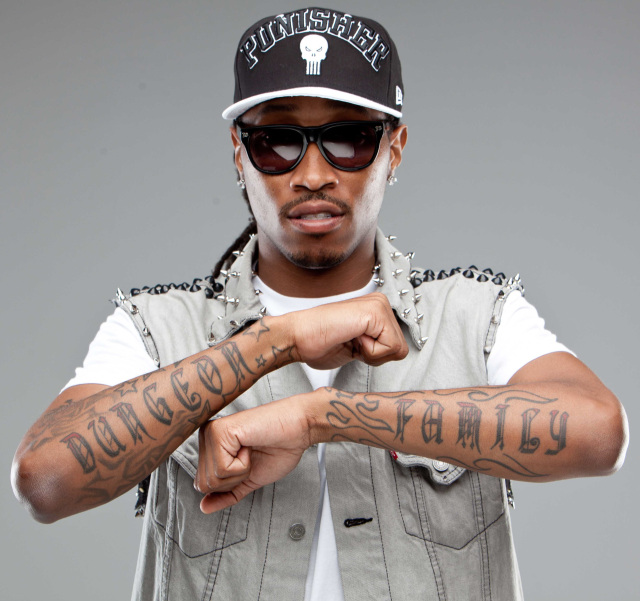
Future, the Auto-Tune rapper du jour, had a very lazy night at the Regency

0

Future, America’s Auto-Tune rapper du jour, is in a cushy position. His recent album Honest is one of the year’s most critically acclaimed rap albums so far, and it’s moved enough units to establish him as a major presence on 2014’s hip-hop scene. Hip-hop fans know who he is, as do a lot of indie kids who’ve stumbled across fawning reviews of his work online. But he’s not yet a star.

As such, he doesn’t get a lot of high-profile hate. His most notable detractor is his direct stylistic predecessor, T-Pain, who’s expressed resentment towards the acclaim Future’s garnered through his use of the same software T-Pain was so often mocked for during his own career heyday. Auto-Tune was — and still is — viewed by musical conservatives as a crutch, a fancy tool for artists who couldn’t sing and were thus “talentless.” Along with laptop DJing and lip-synching, it is one of the most likely factors anyone will cite in arguing music has gotten worse.

All three of these factors were part of Future’s Regency Ballroom set on June 30. And as highly as I hold my own musical non-conservatism as a value, I must admit I have a much better conception of why the rockists, live-music defenders, and Tupac worshippers of the T-Pain era were so incensed. I still believe laptops, lip-synching, and Auto-Tune are not mutually exclusive to a great performance. But I also see how people can use them to cut corners.

Future didn’t even try to put on a show. He made no attempt to hide the fact that he was rapping over a pre-recorded vocal track, frequently staring off into space and taking brief but obvious pauses to catch his breath. His stage banter was incomprehensible. He moved around a lot, but not with any particular charisma — his stiff, awkward bounces made him look like a figurine being held by the head and “walked” by an invisible child. His job was not to perform or to rap — his job was to be Future, to stand there and be important while the DJ absent-mindedly cued up his own songs.

The most glaring aspect of his performance was the lack of his trademark vocal processing. Without it, the weakness of his flow and rhymes stuck out like a sore thumb — especially given how good he sounded on the pre-recorded track, all effects intact. At the risk of sounding like one of the rockists who unfairly accused T-Pain, Lil Wayne, and Kanye West of using Auto-Tune as a crutch, I am prepared to lobby the same accusation at Future. He simply doesn’t seem able to do anything well without it.

The opening acts easily showed him up. The show kicked off with mini-sets by members of Future’s Freebandz crew, at least two of whom were both better performers and rappers than Future but who engaged in some heinous misogyny and uncomfortable crowd interactions (hearing a rapper spend 12 acapella bars describing an audience member’s vagina isn’t really fun for anyone except the rapper). Rico Love’s set was worth watching if only because his trio of DJs made their own beats live; Love himself was buffoonish, one of those alpha-male lovermen who seem more obnoxious and dated as each of their peers falls from grace (Chris Brown, Robin Thicke, Justin Timberlake).

This might sound like a nightmare to sit through. For the uninitiated, perhaps. But the artists increased in popularity as they decreased in showmanship, meaning that a Future fan could be thrilled by the openers, even more thrilled when Future drops one of his trademark tracks, and come out of the show having had a great time. Future’s set was essentially a bunch of Future recordings being played over a massive sound system, with the man himself MCing. If you’ve heard and come to love “Move That Dope” and “Turn On The Lights,” hearing them on such a scale must be a treat.

And for the audience, that seemed to be the case. The entire floor shook during “Move That Dope,” with all the diverse audience demographics — hip-hop fans, bros, middle-aged staff, the occasional Hitler Youth hairdo who could only have been there because of Honest‘s 8.1 on Pitchfork — jumping up and down in a massive communal wave. Blunts were lit every six feet, couples did the grind, hands were thrown in the air. Everyone seemed to be enjoying themselves.

Which brings me back to my criticism of Future’s set, and my own insecurities over my willingness to play along with the natural and unstoppable (d)evolution of live music. How can I criticize Future for not putting any effort into his show when nobody really seemed to care? Is it fair to judge his set as an outsider, when those who know all the Honest songs by heart can revel in singing along to them? If people are willing to shell out 30 bucks to watch their favorite artist not give a shit, so be it.  As for me, I’ll be at home, illegally downloading his albums.

Robyn + Röyskopp + Pride = lots and lots of glitter

0

By Tiffany Rapp

When two major figures in the Scandinavian electronic music scene collaborate for a mini-album and tour, it’s bound to feel like something special. But when a Röyskopp and Robyn tour comes to San Francisco and it’s Pride weekend — when there’s always a little magic (and quite literally glitter) in the air, anyway — it almost seems like strobe-lit, sparkly fate.

At the Bill Graham Civic Auditorium on Saturday night, a good portion of the crowd was already decked out from the day’s festivities, sporting neon pink wigs, rainbow leis, gold short shorts, and more articles of clothing that can light up than you maybe thought was possible.

roy

Röyskopp was the first headliner to take the stage, remixing some of their most popular songs — “Happy Up Here”, “Remind Me”, and the peppy “Eple.” The number of glowsticks in the very packed house made it feel like a less drug-fueled (maybe?) rave. The group bobbing illuminated gummy bears up and down didn’t hurt, either.

Next up was Robyn, donning bright yellow Muay Thai boxing shorts and a mullet for the ages. The crowd began to shift from swaying to booty-shaking when she belted “Indestructible” from 2010‘s Body Talk. Everyone upstairs was on their feet with “Call Your Girlfriend,” which still makes you smile four years later, despite the not-so-happy sentiment of the song. Then, with an almost acoustic performance of the single “Dancing on my Own,” Robyn allowed us all to do what we really wanted to in that moment — reach out to hold your friend’s hand and sing along at the top of your lungs.

robyn

Though by this point of the night certain people might have desperately needed a bathroom and/or water break, fog machines and flashing lights cued that the main event was about to start. With a quick change of costume, including disco ball-like masks for Röyskopp and everyone on stage except for our puffy-coated Robyn, the set began with the bass-heavy “SayIt.”

The performance of candidate for Song of the Summer “Do It Again” ended with confetti shooting fiercely into the air and the crowd jumping for joy. The trio still had room for one more, doing an encore of Robyn’s “None of Dem” to cap off the show, before sending the satisfied crowd out gleefully into Saturday night — and onto the rest of a very glittery weekend.

robyn

Sharon Van Etten banters happily through the sad songs at The Independent

2

Sharon Van Etten had yet to play a note before someone in the crowd shouted forth a marriage proposal toward the stage. The term “adoring fans” might sound generic, but it’s apt in describing the audience at Van Etten’s first of a pair of sold-out shows at The Independent last night [Sun/29 — the second is tonight].  For just short of two hours they sang along and showered the 33-year old singer with love at every chance they got.

“You guys seem really…happy,” Van Etten said, aware of the mismatch, “because my songs can be really dark.”

That certainly may be true, but Van Etten wasn’t fooling anybody: She was easily the happiest person in the room all night. Upbeat, droll, and genuinely down-to-earth, Van Etten threaded her fantastic 14-song set with banter and sass throughout the evening, inciting her fans to ever more gleeful misbehavior.

sve

Leaning heavily on songs from her recently released new album – Are We There – Van Etten showcased the new work in front of a deft four-piece band that provided lush and layered compositions on tracks like “Taking Chances” and “Break Me.” This new material carried the show forward with little lull, embraced by the fans with as much enthusiasm as the older songs (“Serpents” or “Don’t Do It”), possibly because Van Etten herself appears equally enamored singing them. Even still, her performance of “All I Can” (from her 2012 album Tramp) may have been the evening’s surefire highlight, carving Van Etten’s niche somewhere in the orbit of Suzanne Vega and Leslie Feist.

sve

But still, that juxtaposition is there. How do those “really dark” songs render such a jovial atmosphere? After all, Van Etten’s bio infers that her music was generated as a means to cope through some tough times. And if so, her presence and performance on Sunday night would give the impression that she has emerged successfully…with a small catalogue of wonderful songs under her belt, no less.

And that is where it gets really interesting. Before the last song of the night – “Every Time the Sun Comes Up” – Van Etten encouraged the crowd to sing along, because, as she put it, “This is the one fun song on the album.” And it really is, as cheeky as it is soulful (“We broke your glasses/but covered our asses”). As the last song on the album, it leaves you the impression that Van Etten’s next move might be her most interesting one yet. Maybe dark…but playfully dark. Less Joshua Tree and more Achtung Baby.

sve

As the last song of the show, it punctuated the evening with the feeling that Van Etten is on the ascent, destined to play rooms much larger the next time she comes to town. And maybe that is the answer to why she seems so happy.

Heavy metal time machine: “Dio: Live in London, Hammersmith Apollo 1993”

3

December 12, 1993: Mariah Carey, Janet Jackson, and Whitney Houston were owning the American airwaves, but over in London’s Hammersmith Apollo, a different soaring voice — one that veered more toward doom than bubblegum — was showing how it’s really done. Dio: Live in London Hammersmith Apollo 1993 (Eagle Rock Entertainment) captures Ronnie James Dio (with band: drummer Vinny Appice, bassist Jeff Pilson, guitarist Tracy G, and keyboard player Scott Warren … yep, instrumental solos abound) at his peak-wizard powers. 

The setlist is, naturally, packed with jams that were new at the time (the tour was in support of the band’s Strange Highways album), as well as plenty of songs spanning Dio’s career as solo artist and frontman of various bands: “Holy Diver,” “Stand Up and Shout,” “Heaven and Hell,” “Rainbow in the Dark,” “Man on the Silver Mountain,” “We Rock” and “The Mob Rules” (“of course, that one from the Sabs,” he points out).

The set is stripped-down — aside from the amps (SO MANY AMPS … eight Marshall stacks), it’s just dudes in black wielding instruments (and flowing hair), and youuuuu know who holding it down center-stage, wearing a subdued cross necklace but occasionally flashing the devil-horns hand gesture he’s credited with inventing, or at least introducing into heavy-metal culture. 

The DVD insert contains a short essay sharing band members’ memories of Dio, who died in 2010 (Warren recalls they had the same favorite meal: curry), and of the 1993 gig (moments before they took the stage, Warren says, “You could hear a pin drop, except for Ronnie’s occasional gentle throat clear, and the clicking of his cough drop”).

DVD extras include the 20-minute featurette “Hangin’ With the Band,” a backstage glimpse at Dio (yes! chomping a cough drop!) and company as they load in from a tour bus parked on the rainy London street outside the venue, go through sound check, prep backstage, unwind post-concert, etc. It’s a pretty PG-rated affair — no debauchery (just beer and Gatorade), no Spinal Tap-style revelations, and certainly no Satanic rituals (though a hair dryer does get sacrificed, in honor of the tour ending). It’s just a bunch of self-described “mellow” guys who are super-stoked to be playing music together.

“I look forward to playing with this band every night,” Dio enthuses as he’s getting stage make-up applied (foundation, mascara, and just a swipe of eyeliner). “After doing it for 3,000 years, as I have, it’s kind of special to be able to still enjoy it as much. More, really.”

A benefit series aims to keep the unique Meridian Gallery afloat

0

In 2001, interns at Powell Street’s Meridian Gallery planned and painted a 13×48 foot mural on the wall of the SRO Hartland Hotel, a few blocks away in the Tenderloin. The mural, a colorful and sunny street scene showcasing the multiculturalism of the neighborhood, was revered by residents and and left untouched for 10 years until it was vandalized by graffiti. In response, former interns who had worked on the project came back together and, alongside the current kids in the program, repainted the piece. The artists’ lasting willingness to help Meridian in times of need reemerges in a broader sense this week, which marks the climax of the gallery’s June Benefit Series (tonight’s entry: “16 Years of Meridian Music,” a diverse program of new music). 

Meridian Gallery, whose name comes from its mission to focus on hemispheric and cross-cultural interactions, is facing eviction. As rent around Union Square has skyrocketed, from $400 per square foot in 2007 to up to $3,000 today (according to retail consultant Helen Bulwik, quoted in a KQED report), many galleries have been forced to close their doors. The stately Perine Mansion, the three-story French Second Empire brick building where Meridian makes its home, is an especially attractive and lucrative piece of property. Instead of throwing in the towel, Anne Brodzsky, the dynamic co-founder of the gallery who has overseen its operations for over 25 years, has reached out to her friends. 

The original eviction notice was handed down in April. Some close to the gallery are convinced that despite any efforts, the rent will be impossible to pay. Others, Brodzky chief among them, think that the response to the bad news suggests a potential long-term rally from Meridian. Her optimism is fueled by two forces. First, on May 13, the SF Board of Supervisors beefed up affordability programs, including supplemental displacement funds and health benefits, for struggling art non-profits in the city. “I’m amazed by how they’ve managed to come together to help arts programs,” Brodzky exclaimed. 

More effective and instantly helpful than any bureaucratic assistance, however, have been the programs put together by artists affiliated with Meridian. Around the time of the Supervisors’ decision, Brodzky asked her gallery-mates if they were willing to stage an auction. The response was staggering; over 60 artists put up works. More astonishing to Brodzky, though, was the kind of excitement many of the participants exhibited for further events. “Bob Marsh, among many others, approached me and asked if they could stage fundraisers.” 

 Tonight, Marsh is one of the main attractions at the “16 Years of Meridian Music” showcase. An avant-garde visual artist and musician, Marsh discovered Meridian shortly after his arrival in San Francisco 14 years ago. “I started visiting galleries and found that Meridian had a wonderful monthly music series,” he says.

Marsh was inspired by the political sharpness of the organization. “I thought early on, ‘They’re not purveyors of bourgeois wallpaper,’ like so many galleries can be.” For Marsh’s offering, “The Visitor,” he’ll don his Sonic Suit #9, a wearable sculpture made from empty water bottles and other modern detritus, and engage in narrative movement to a musical accompaniment.

“He’s a visitor from another dimension,” Marsh says. “He arrives here, looks around, and has different reactions to the confusing environment that is our world.” Marsh debuted the ever-changing character at the Meridian and feels that its a fitting tribute to the openness and experimentation that the gallery fosters. 

Despite his excitement about the benefit, Marsh turns somber when discussing its necessity. “They have given so much with such passion,” he says. “It’s sad to see them persecuted by blind greed … I don’t think its personal, but everyone just wants a lot of money. Everybody thinks that’s some kind of virtue.”

Neither Brodzky, Marsh, nor other performers and Meridian affiliates with whom I talked  were quick to link the gallery’s financial troubles to a larger ill in San Francisco. They seemingly eschew that brand of macrocosmic victimhood and instead zoom in on what they can do to stay open, one step at a time. Their optimism may be healthier, but it does not mask the sad fact that rising rents are making grassroots galleries a thing of the past. If the artists continue to come together with the intensity of the mural renovation, auction, and benefit series, however, Meridian may just buck the trend.  


16 Years of Meridian Music: Composers in Performance

With Bob Marsh, Andrea Williams, Bryan Day, Phillip Greenlief and Jon Raskin’s 1+1, David Samas, Tom Bickley, and the Cornelius Cardew Choir

Thu/26, 7-10pm, $35

Meridian Gallery

535 Powell, SF

meridiangallery.org


‘Purple Rain’ at 30

1

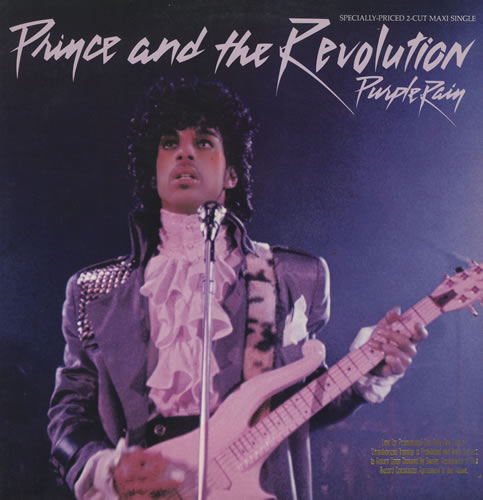
Just over a year ago, Adam Tod Brown wrote a great article for Cracked called “4 Classic Albums That Get More Praise Than They Deserve.” Though it contained as much Yoko Ono-bashing as you’d expect from a website as frequently fratty as Cracked, it made a great argument for Ringo’s self-titled as the best solo ’70s Beatles album and contributed substantially to the recent critical revival of Neil Young’s On The Beach. The thing that interested me most, however, was Brown’s citation of Prince’s Purple Rain as a “flawless album” that gets as much press as it deserves, “no matter how many other great Prince albums there are.”

I instantly disagreed with the implication that his 1984 soundtrack to the film of the same name was Prince’s greatest album, but his article didn’t elicit a cynical “nahh” from me as much as a bolt of surprise. Sure, Purple Rain is the Prince album random people on the street will be most likely to name. But I’d been raised alongside 1999 and Sign O’ The Times as well — albums that both get well-deserved five-star ratings  but still don’t place quite as highly on critical lists as Purple Rain. I always presumed these albums were just as famous, and I wasn’t sure why this meek 9-track album was getting all the praise.

I still agree it’s not Prince’s best. But it’s his most solid — meaning the fewest indulgences, the highest masterpiece-to-crap ratio, the most content per its running time. Dirty Mind is two-thirds as long and lacks a single bad song, but its structure is a bit uneven; in my opinion, this adds to its carefree appeal, but it’s still an imperfection. Meanwhile, 1999 contains some of the most ambitious and daring pop music made during the 1980s, but a lot of its songs are about twice as long as they need to be — though not necessarily as they should be.

Purple Rain takes everything Prince does best and puts it together into a cohesive whole that’s easy to listen to front to back. All of the contradictions in Prince’s personality show up here side by side.  We see the conflicted Christian Prince (“Let’s Go Crazy”) alongside the hypersexual Prince (“Darling Nikki”), then the pop-visionary Prince (“When Doves Cry”) alongside the pop-conservative Prince (“Take Me With U”). There’s Prince the introverted studio whiz (“I Would Die 4 U,” “Computer Blue”) and Prince as the all-devouring, mic stand-humping frontman (“Baby I’m A Star”).

prince

And then there’s “The Beautiful Ones,” the ultimate workout for what might be the best vocal sound in all of music — Prince’s scream, a throat-shredding release of ecstasy that its owner wields with the same control of any of the many instruments he’s mastered. It’s as simultaneously sexy and disturbing as…well, Prince’s whole persona. It’s the thing that cemented my obsession with Prince, and only on Purple Rain does it have its own song.

Elsewhere on the album we see Prince fleshing out some of his later obsessions. “I Would Die 4 U” and “Purple Rain” both find Prince using his trademark Linn LM-1 drum machine to create that very ’80s sense of retro-futuristic isolation exemplified by Blade Runner; Sign O’ The Times would expand on this mood for the duration of a 78-minute opus. Because of how much of Prince’s personality we get on this album, it’s tempting to single Purple Rain out as the best introduction to Prince.

But it’s also the one least likely to blow a newcomer’s mind. As bold and stylistically diverse an album as it is, it’s one of the least interesting of Prince’s major albums, and the least representative of his aesthetic. It’s his least eccentric major album, its most meticulously produced, and the most in line with the “rock” ideal — perhaps a reason why the guitar-obsessed Rolling Stone staffers praised it and continue to praise it so much more highly than anything else in the man’s oeuvre.

If you took out the vocals and the awesomely detuned synth, there wouldn’t be much in “Let’s Go Crazy” to signify it as a Prince song. The production is too meticulous, too arena-rock to really be representative of the eccentricity that makes Prince so endlessly fascinating. “Purple Rain” suffers from the opposite problem. There are a million slow-burning ballads like it, and that plaintive Linn drum is the only thing really tying it to his aesthetic.

This is Prince working in a pop setting. It is worth remembering Purple Rain is first and foremost the soundtrack to a film, and much like the Beatles’ film albums, it’s an artist being as creative as possible within the medium of a stocking-stuffer item designed chiefly to promote another work of art and make some extra cash from it. Prince is one of those artists who usually scores hits on his own terms, who makes no compromises but just happens to make audacious music that people really like. Here, it’s the other way around — the desire to make something people will like is the box in which Prince’s creativity freely bounces around.

It is perhaps for this reason that “Take Me With U” is the most effective song here. Prince’s co-star Apollonia guests on this song; her vocals fit so well into the song that her presence merges with that of Prince until it’s unclear whose song it really is. Prince takes into account all the hallmarks of a great lovebird duet — playfulness, chemistry, and above all else, romance. This song isn’t explicitly sexual, but it’s incredibly sensual. Both vocal performances are bursting with excitement beneath the functional cool required of pop vocals, and by the time they reach the ecstatic bridge (“I don’t care if we spend the night in your mansion”), they’re barely able to control themselves.  It’s brilliant.

Yesterday was the 30th anniversary of Purple Rain, and in mentioning this, most news outlets have inevitably mentioned the massive amount of praise this album has received. As such, people who have not previously heard Prince will be drawn to that album. But as undeniably fantastic as it is, I’d maintain that Purple Rain is not the album most likely to convince a newcomer of Prince’s genius — Sign O’ The Times is more eclectic, 1999 more diverse, Dirty Mind more did-he-just-say-that sexual, The Black Album more bizarre. If you know Prince first and foremost as that skinny pop star with the high voice and need convincing of his genius, any of those albums would work better.

Which is not to say you should overlook Purple Rain by any means. Though I would argue it’s not his most essential work, it’s the album that does the best job of proving he’s capable of just about anything.

https://www.youtube.com/watch?v=r-ShT9k4lzM

[Ed. note: Prince makes it notoriously difficult to find his music online, so here’s a recent interview instead. But really, if you don’t own a Prince album by now, there are worse things you could spend money on.]

Comedy without limits means ‘No Happy Endings’ for SF’s Granny Cart Gangstas

0

Sexy granny panties? Up-and-coming San Francisco comedy troupe Granny Cart Gangstas recently proved this isn’t an oxymoron. Taking a cue from the Kids in the Hall — one of member Ava Tong’s biggest inspirations — who were once photographed wearing bras over suits, the troupe decided to do something similar (one member flaunted a pair of leopard-print granny panties) for a photo shoot ahead of its Sat/28 show, “No Happy Endings,” at SF’s Little Boxes Theater. 

Founding members Tong and Aureen Almario dreamed about creating their own comedy troupe since 2006. The two met at San Francisco State University, where Tong was Almario’s teaching assistant in an Asian American studies class. “Then she ended up being one of my friends’ girlfriends and I was like ‘Oh … hey!’ and I saw her at Bindlestiff [Studio] and it was like … ‘Can’t get away from you, Aureen!’” The two finally created the troupe in 2011, with five total members, and continued to expand by inviting women associated with Bindlestiff that they worked well with. 

The name of the comedy troupe, Granny Cart Gangstas, juxtaposes two contrasting concepts. Tong said Almario, who came up with the name, was inspired by the pedestrian lifestyle of granny-cart owners in the midst of the hustle and bustle of certain SF neighborhoods. “That’s like, ‘I don’t care. I’m going to do my thing and I don’t care what anyone else thinks,’” Tong explained. 

Lauren Garcia, who joined the troupe last October, expanded on the name’s connotations. “If you have a granny cart, you know, you can’t politely, say, go through the bus or the street, and go ‘Excuse me, excuse me.’” (Tong interjected, “You’re just unapologetic.”) Garcia continued, “You just run over those people’s feet.”

When it comes to the troupe’s material, this mindset is always relevant. Its material is solely comprised of things that make its own members laugh. And even though members grapple with worries that no one else will find certain things funny, they’ll keep them in anyway.

“No Happy Endings” opens with a piece that pays homage to grannies — one of the first pieces where the members assume the role of grannies. “You’ve got to respect grannies,” Garcia said. “They’re grannies — they’ve been through shit.” In the sketch, the troupe members are nursing home residents (sans granny carts, unfortunately), comatose as a nurse administers their daily medicine. Before the nurse leaves, she switches on a radio, which starts playing classical music. But one of the grannies won’t have that and slowly trudges to the radio — with the assistance of her walker — and changes the music to something more modern: Beyoncé’s “Grown Woman.” Instantly rejuvenated, the grannies begin to dance. 

The troupe returns to this scene later to close the show. “Grown Woman” is still playing. “We actually bust out into our younger selves and we do a short synchronized dance,” Tong said, “kind of saying that every granny is young inside them. They have that young person that lived there before.” Combined with the young souls’ dance, Beyoncé’s lyrics “I’m a grown woman / I can do whatever I want” only serve to further drive this message home.

“I feel like so many people forget that older people were young once and they are people — they’re not the sacks that people treat them as,” Garcia said. As a nurse, she said she constantly witnesses incidents of verbal elder abuse where nurses and other people in the hospital condescendingly speak to elderly patients. 

Besides the geriatric piece, the group likes to write about womanhood. For their first show, “Rise of the Red Dawn,” the group performed a sketch titled “Look At This Betch.” “We’re making fun of the idea that women sometimes … have this competition with each other,” Garcia said. “They’re cutthroat and catty and will cut other women to get ahead when they should be helping other women. They know what it’s like to be a woman in this world.”

However, Tong said the group noticed that much of the last show focused on the negative aspects of womanhood. To depict women in a more positive light, it included a sketch titled “Vag Save” in the upcoming show, which also includes films and stand-up. Garcia introduced “Vag Save” to me through a mock movie trailer voiceover: “Save your best friend’s vagina. Coming soon, this Saturday, June 28, we will be saving … your vaginas.”

The sketch follows a group of women at a club banding together to protect each other from the unwelcome advances of creepy men. “Not everybody sees that world,” Tong said. “Guys definitely don’t know when other guys are being creepy — or when they’re being creepy — and this is how women see it.”

The troupe is entirely comprised of women of color. Members write cultural references sparingly — one of the lines in sketch “Spanx” plays with how similar the word “backpack” and the Tagalog word for “vagina” (pekpek) sound: “Reach into my pekpek” — because they don’t want to alienate any audience members. Sometimes they’ll include references if a character has an accent (the references are usually improv ad libs), but they stray from writing references that aren’t obvious or explained. 

At the same time, Tong and Garcia appreciate San Francisco’s diversity and open-mindedness. “I think we take advantage of that,” Tong said. “We almost take it for granted. We don’t think about having to be sensitive.” The two joked that they might have things thrown at them on stage or their citizenship papers checked in more conservative states. Most of the members are Bay Area natives, but live in cities as spread apart as Walnut Creek, San Francisco, and Hayward, which Tong admitted makes getting together for rehearsal tough.

Inspiration can hit the troupe at any time — sources range from people, such as Beyoncé, or the minutiae of daily life, such as putting in a Diva Cup. (A Diva Cup is an eco-friendly alternative to a tampon. Garcia shared some tips from a YouTube how-to video she watched, where an upside-down wine glass served as a model vagina: improper nail length can quickly make the experience unpleasant and one of the tricky things is “getting it into a little ball and making sure it goes in before it pops open … because then that’s painful and you don’t want to do that, let me tell you.” Tong was a little hesitant about this sketch idea.) Throughout the interview, Tong and Garcia effortlessly bounced new ideas off each other, assuring me they could even parody the interview we were having. “You’ll be in this,” Garcia told me. “Come watch our stuff; you’ll see yourself.”

Six days before the show, at least one troupe member’s grandmother was confirmed to attend “No Happy Endings.” Garcia’s mother purchased tickets for several family members — before her daughter explained that the not-so-family-friendly show was “mature, sexual, and raunchy.” Garcia complained that her grandmother would simply have to sit through performances such as “Octopussy,” where she sings “I’ve tried everything / You could possibly do / When you’re in bed with two / Wheelbarrow, doggy style / Missionary, 69 / It feels so fine / But he can’t make me cum.”

“We’ll apologize later if you need us to,” Tong reassured Garcia. 

Emphasis on “need.” After all, a true granny cart gangsta is never apologetic if they can help it. 

Granny Cart Gangstas’ “No Happy Endings”

Sat/28, 8pm, $15

Little Boxes Theater

1661 Tennessee, SF

(415) 603-0061

www.littleboxestheater.wordpress.com

Your latest SF gentrification soundtrack: Cold Beat, Thee Oh Sees, Violent Change, and more

3

Is San Francisco doomed?  The legendary SF punk band Crime said so 35 years ago on their album San Francisco’s Doomed. Yet with tech money flowing into San Francisco and musicians being priced out of the city, the phrase has taken on a new resonance among those musicians who have stayed in town.

There’s been no shortage of music and other art forms lamenting the sea change in our dear city: Earlier this month, Katie Day drew accolades and vitriol with “San Francisco (Before the West Falls),” and tonight [Wed/25], cabaret singer-songwriter Candace Roberts will celebrate the debut of her theatrical “Not My City Anymore” with a party at the Gold Dust Lounge (where the music video was shot).

Stepping up to the plate for the indie/garage/punk kids is Hannah Lew, currently of Cold Beat, formerly of Grass Widow, and most recently the curator of a compilation whose name differs from Crime’s album by one contraction: San Francisco Is Doomed.  Released on Lew’s Crime On The Moon label, the compilation features 13 songs by either former or current San Francisco bands and artists, from Thee Oh Sees to Erase Errata to Violent Change, all of them dealing with the tech boom’s effect on the city and its music scene.

Lew has lived in the city since 1989, and was a first-hand witness to the ascent of the city’s garage-rock scene to international prominence as a member of Grass Widow. Though she plans to stay in the city, it’s increasingly difficult for musicians in San Francisco to keep up with increased prices. Most of the artists on the compilation have since moved.

“People are moving here to make money now,” Lew said. “It’s never really been like that before — not since the Gold Rush. Because of that there’s a lot of foodie culture…things catered to people with a lot of money. I think that creates a cultural divide.”

The compilation isn’t an act of war against the “techies,” though; according to Lew, some of the artists on the compilation actually work in the tech industry. It’s not a benefit album either. It’s simply a snapshot of the time and place in which SF musicians currently exist. 

For now, Lew and Cold Beat are still headquartered and playing shows in the city — the compilation seems timed nicely to coincide with the release of the band’s latest, Over Me, which will be out July 8 (a music video for the first single just premiered over at NPR). But it’s hard to say the band is part of a “scene” anymore. Bay Area scenes have come and gone, of course, from psychedelic rock to ’80s thrash metal, and, as others have noted, it’s increasingly apparent that the garage-rock movement is at the end of its lifespan. The question of whether or not San Francisco’s music scene is truly doomed relies on a different equation — whether musicians are willing to move into San Francisco. And according to Lew, it’s not exactly an attractive option for most.

“I can’t really imagine people moving here for a thriving music scene without the rent prices going way down,” she said. “Usually the towns with a thriving music scenes are affordable to live in. But it’s hard to even find an affordable practice space in San Francisco these days.”

“There’s nothing we can do about it,” she added. “[San Francisco] is becoming more of a fancy town. But we just want to talk about it and hopefully provide another voice in that conversation.”
 
San Francisco Is Doomed Record Release

With Cold Beat, Synethic ID, Violent Change, Caged Animal

July 1, 9pm, free

Brick and Mortar Music Hall

1710 Mission, SF

www.brickandmortarmusic.com


This Week’s Picks: June 25 – July 1, 2014

0

WEDNESDAY 25


‘Football Under Cover’

Unofficial festivities for World Cup fans whose allegiances lie with Die Mannschaft (rather than with The Yanks) begin the night before the Germany-USA match. Don’t expect the Goethe-Institut San Francisco’s screening of 2008’s Football Under Cover to include any headbutts directed toward German athletes. The documentary follows the first match between the Iranian women’s soccer team and a German women’s club team. In spite of cultural differences, the two teams are united by a universal love for soccer — or in that part of the world, football. In that mindset, it doesn’t matter which team wins Thursday’s match&ldots;right? Thomas Müller will be noticeably absent tonight to convince you otherwise. (Amy Char)

6:30 pm, $5

Goethe-Institut San Francisco

530 Bush, SF

(415) 263-8760

www.goethe.de


‘Yours For Eternity’ with Damien Echols and Lorri Davis

In 1996, Lorri Davis attended a early screening of Paradise Lost, the first in what would become a trilogy of documentaries about the West Memphis Three. Haunted by the film, she dashed off a letter to Damien Echols, who’d been sentenced to death for a brutal crime all evidence suggested he did not commit. They soon became passionate pen pals, and she left her successful career in NYC to devote herself to proving his innocence. Echols penned best-selling memoir Life After Death after the WM3 were released in 2011; now comes the intimate Yours For Eternity, a collection of missives Davis and Echols exchanged over 16 years. The WM3 tale is well-known, but this angle is not, and it makes for one of the most unusual and genuine love stories you’ll ever read. (Cheryl Eddy)

6pm, free

Book Passage

1 Ferry Bldg, SF

www.bookpassage.com 


Also Thu/26, 7pm, free

Copperfield’s Books

850 Fourth St, San Rafael

www.copperfieldsbooks.com


Zvuloon Dub System

Despite hailing from Tel Aviv rather than Kingston, Zvuloon Dub System is committed to the sound of classic roots reggae. The band’s two albums, 2012’s Freedom Time and this year’s Anbessa Dub, eschew the tight production sheen of contemporary reggae artists like Rebelution in favor of a spacious sound evoking the classic soundboard wizardry of Lee “Scratch” Perry and King Tubby. Yet Zvuloon is hardly conservative. Anbessa Dub finds the group collaborating with Ethiopian-Jewish artists, wrapping the sounds of modern Ethiopian music in a dense cloak of dub. Though some of the sounds on Anbessa Dub might sound alien to Western ears —particularly set against the more familiar sounds of reggae — the melange of styles and sounds rapidly starts to make a whole lot of sense. (Daniel Bromfield)

9pm, $15

Brick & Mortar

1710 Mission, SF

(415) 800-8782

www.brickandmortarmusic.com


THURSDAY 26


Kit Hinrichs

Five years removed from the founding of his independent graphic design outlet, former Pentagram partner Kit Hinrichs is still going strong. His recent work includes crafting new brand identities and aesthetics for the University of San Francisco, the Golden Gate Bridge’s 75th anniversary, and the Walt Disney Family Museum. Add that to visual consultancy work with the San Francisco Zoo, the California Academy of Sciences, and a bevy of other local institutions, and one begins to understand the extensive cultural influence that Hinrichs wields in the city. He takes to the stage of the Contemporary Jewish Museum to discuss the legacy of Paul Rand, the late Modernist designer responsible for the ABC, IBM, and UPS logos. Hinrich’s lecture, which is part of San Francisco Design Week, will focus on Rand’s uncanny ability to adapt to trends over the course of his half-century career. (David Kurlander)

6:30pm, $10

Contemporary Jewish Museum

736 Mission, SF

(415) 655-7881

www.thecjm.org


FRIDAY 27


Daria Kaufman farewell show

When she graduated from Mills in 2008, Daria Kaufman decided to stick around. The Bay Area seemed a good place for the kind of choreography she had in mind — interdisciplinary, flexibly structured, collaborative, site-specific. Now she is going to another, reportedly hot city for experimental dance on the western edge of another continent, Lisbon. The upcoming concert is summing up and looking forward. The reprise of Product examines the type of job that used to be routinely offered to women grads: marketing assistant. (The other was editorial assistant). She is also taking with her two world premieres, a solo for herself, Restless Myth, and an ensemble piece, In Her Tower, for longtime collaborators and colleagues Bianca Brzezinski, Rebecca Chun, Aura Fischbeck, and Karla Quintero. (Rita Felciano)

Also June 28, both 8pm, $20

Joe Goode Annex

401 Alabama, SF

www.inhertower.brownpapertickets.com


‘What Stays’

Home is where the art is in this site-specific dance-theater piece presented by Right Brain Performancelab and Dance Up-Close/East Bay — a final iteration of Right Brain Performancelab’s What Stays, which explores the subjects of home and the passage of time in a literal and metaphorical treatment that has the audience moving about Berkeley’s Shawl-Anderson Dance Center (once a craftsman house, now a series of spacious studios). Performers include Right Brain’s John Baumann and Jennifer Gwirtz along with Lisa Claybaugh, Laura Marsh, and Jennifer Minore. David Samas accompanies on instruments of his own invention, performing original compositions by Dave Rodgers. (Robert Avila)

Also June 28, both at 8pm, and June 29, 5pm, $20-25

Shawl-Anderson Dance Center

2704 Alcatraz at College, Berk.

www.whatstays.brownpapertickets.com


SATURDAY 28


No Happy Endings

Even without the guarantee of any happy endings, Granny Cart Gangstas’ one-night-only comedy show promises to deliver. Feeling uncertain? The “granny cart” will steer you in the right direction. In fact, the members of this women-of-color comedy troupe have even reclaimed the very notion of strolling in San Francisco’s streets with one of those recognizable carts. It’s commendable —”gangsta,” even — in their eyes. The group will also wheel in other stereotypes, such as glorified consumerism and sexist media depictions, to satirize during tonight’s show, promising a night full of laughs, regardless of your gender. (Amy Char)

8pm, $15

Little Boxes Theater

1661 Tennessee, SF

(415) 603-0061

www.littleboxestheater.wordpress.com


Dave and Phil Alvin

Hailing from the working class town of Downey, California, brothers Dave and Phil Alvin grew up absorbing a host of varied musical influences, among them old-school blues. Forming scorching roots-rockers extraordinaire The Blasters in 1979, the siblings eventually went their separate ways when Dave left the band in 1986 — until now, that is. Following a health scare for Phil two years ago, the duo has gotten back together and returned to one of their first musical loves, paying tribute to bluesman Big Bill Broonzy on their excellent new LP, the aptly titled Common Ground (Yep Roc). This is a family reunion you won’t want to miss. (Sean McCourt)

8pm, $22

Great American Music Hall

859 O’Farrell, SF

(415) 885-0750

www.slimspresents.com

The British Invasion

Dust off your best mod outfit and head over to this Inner Richmond haunt for The British Invasion, a night of tunes and dance from Anglophilic local bands. Topping the bill is Chick Jagger, an energetic, female-fronted Rolling Stones tribute band. Known for an oeuvre-spanning set that includes tracks as disparate as “It’s All Over Now” and “Beast of Burden” — not to mention a delightfully gimmicky “Moves Like Jagger”), the group’s Stones scholarship and appreciation is palpable. Also performing are The Landbirds, who are first and foremost a Beatles cover group but may also offer hits from The Kinks, the Who, and the Yardbirds (from whom they take their name). Dancer Rasa Vitalia offers a choreographed set of additional upbeat British classics. The nostalgia and pastiche will be flowing along with the drinks late into the evening. (David Kurlander)

8:30pm, $10

Neck of the Woods

406 Clement, SF

(415) 857-2725


www.neckofthewoodssf.com


SUNDAY 29

Roxie Kids

By now, even childless people are sick of Frozen and every song that filled last year’s Disney sensation. Take a break from Elsa and company and introduce the kids to Papa Panda and his wee son, stars of Panda! Go, Panda!, an early entry in Hayao Miyazaki’s filmography (he wrote the 1972 film, which came out over 10 years before Studio Ghibli was founded). This gentle adventure — about a young girl who befriends the roly-poly zoo escapees — kicks off the Roxie’s “Reel Kids” Japanese animation summer series, a co-presentation with CAAM. Future entries include Miyazaki’s directorial debut, The Castle of Cagliostro (1979), in July; and four episodes of Osamu Tezuka’s classic manga series Astro Boy in August. (Eddy)

Also July 27 and Aug 24

2pm, free for kids under 12 (adults, $7.50)

Roxie Theater

3117 16th St, SF

www.roxie.com


Sharon Van Etten

Less than a month removed from the release of her acclaimed fourth album Are We There, Sharon Van Etten is already on a summer-long world tour. The new album, on which she is also the lead producer, sounds remarkably live — extended jams and minimal overdubs make the songs feel kinetic and ready for the stage. The Brooklyn-based folk-rocker sticks mostly with her favorite subject, the torture and confusion of love and relationships, but couples her angst with hilarious and confrontational lyrics like “I washed your dishes, then I shit in your bathroom.” Van Etten is looking increasingly consistent and prolific, as the shockwaves from her gorgeous and hyped 2012 album Tramp had barely settled before talk of Are We There began. Add constant touring, including a summer 2013 stint with Nick Cave and the Bad Seeds, and Van Etten begins to look almost supernatural in her output. (Kurlander)

8pm, $20

Independent

628 Divisadero, SF

(415) 771-1421

www.theindependentsf.com


MONDAY 30


Future

One of modern hip-hop’s greatest eccentrics, Future takes the Auto-Tuned rapper-turned-singer template established by T-Pain and Lil Wayne in the aughts and runs wild with it. While those artists use the oft-derided vocal software to make their voices slippery and smooth, Future wails, growls, and shrieks maniacally, leaving the Auto-Tune to bubble up over his voice like a pie crust. By all logic, such an unhinged artist should be an underground curiosity. But he’s a rising star, with names as prestigious as Pharrell, Kanye, and Andre 3000 gracing his new album Honest. Even if you still blast “Death of Auto-Tune” in your car every day, there’s no denying Future is — and will likely continue to be — one of the most interesting figures in contemporary hip-hop. (Bromfield)

8pm, $30

Regency Ballroom

1300 Van Ness, SF

(415) 673-5716

www.theregencyballroom.com


The Guardian listings deadline is two weeks prior to our Wednesday publication date. To submit an item for consideration, please include the title of the event, a brief description of the event, date and time, venue name, street address (listing cross streets only isn’t sufficient), city, telephone number readers can call for more information, telephone number for media, and admission costs. Send information to Listings, the Guardian, 225 Bush, 17th Flr., SF, CA 94105; or e-mail (paste press release into e-mail body — no attachments, please) to listings@sfbg.com. Digital photos may be submitted in jpeg format; the image must be at least 240 dpi and four inches by six inches in size. We regret we cannot accept listings over the phone.

Rep Clock: June 25 – July 1, 2014

0

Schedules are for Wed/25-Tue/1 except where noted. Director and year are given when available. Double and triple features marked with a •. All times pm unless otherwise specified.

ANSWER COALITION 2969 Mission, SF; www.answersf.org. $5-10 donation. Two Spirits (Nibley, 2009), Wed, 7.

ARTISTS’ TELEVISION ACCESS 992 Valencia, SF; www.atasite.org. $7-10. “Rotterdam VHS Festival,” short videos, Thu, 8. “Mission Eye and Ear #5,” new music/sound and film/video collaborations by Dominique Leone and Brenda Contreras, Kyle Bruckmann and John Slattery, and Gino Robair and Bryan Boyce, Fri, 8.

BERKELEY FELLOWSHIP OF UNITARIAN UNIVERSALISTS 1924 Bonita, Berk; www.bfuu.org. $10 suggested donation. Born This Way (Tullmann and Kadlec, 2012), Sat, 7:30.

CASTRO 429 Castro, SF; (415) 621-6120, www.castrotheatre.com. $8.50-11. Frameline 38: SF International LGBT Film Festival, June 19-29. For tickets and schedule, visit www.frameline.org.

COURTHOUSE SQUARE 2200 Broadway, Redwood City; www.redwoodcity.org. Free. Frozen (Buck and Lee, 2013), Thu, 8:45. Presented sing-along style.

JACK LONDON FERRY LAWN Clay and Water, Oakl; www.jacklondonsquare.com. Free. “Waterfront Flicks:” The Secret Life of Walter Mitty, Thu, sundown.

PACIFIC FILM ARCHIVE 2575 Bancroft, Berk; (510) 642-5249, bampfa.berkeley.edu. $5.50-9.50. “Martin Scorsese Presents Masterpieces of Polish Cinema:” Mother Joan of the Angels (Kawalerowicz, 1961), Wed, 7; Innocent Sorcerers (Wajda, 1960), Fri, 7. “Kenji Mizoguchi: A Cinema of Totality:” The Story of the Last Chrysanthemums (1939), Thu, 7; The 47 Ronin, Parts I and II (1941/42), Sat, 6. “Rude Awakening: American Comedy, 1990-2010:” Waiting for Guffman (Guest, 1996), Fri, 8:50; Groundhog Day (Ramis, 1993), Sun, 6. “Picture This: Classic Children’s Books on Film:” “Take Aways,” short films, Sun, 3:30.

ROXIE 3117 and 3125 16th St, SF; (415) 863-1087, www.roxie.com. $6.50-11. Frameline 38: SF International LGBT Film Festival, Wed-Sun. For tickets and schedule, visit www.frameline.org. Ping Pong Summer (Tully, 2014), Wed-Thu, 6:30, 8:20. Breathing Earth: Susumu Shingu’s Dream (Riedelsheimer, 2013), Fri-Sat, 6, 8; June 29-July 3, 7, 9. “Roxie Kids:” Panda! Go, Panda! (Takahata, 1972), Sun, 2.

SMITH RAFAEL FILM CENTER 1118 Fourth St, San Rafael; (415) 454-1222, www.cafilm.org. $6.50-$10.75. Breathing Earth: Susumu Shingu’s Dream (Riedelsheimer, 2013), June 27-July 3, call for times.

YERBA BUENA CENTER FOR THE ARTS 701 Mission, SF; www.ybca.org. $8-10. Thy Womb (Mendoza, 2012), Thu and Sat, 7:30; Sun, 2. *


Fuck Buttons on their wildly visual live show, the writing process, and bringing “fuck” to the world stage

0

“I think I’ve heard of them before,” is the kind of spineless response you’ll never hear if you ask someone about Fuck Buttons.  If you’ve heard them, you’ll most definitely will remember.  With music that elicits feelings of wonder and rebellion, intense live shows, and of course an, err — catchy name, Benjamin John Power and Andrew Hung leave a lasting impression.

If you didn’t catch them when they played at The Independent last October, chances are you heard Fuck Buttons in 2012 when the band received arguably the most widespread kind of exposure — their tracks “Surf Solar” and “Olympians” were featured separately during the London Summer Olympics opening ceremony. Their self-produced third effort, Soft Focus, has earned the band a multitude of accolades, including an 8.7 and Best New Music honor from persnickety Pitchfork, as well as the #3 Dance Album Of The Year 2013 from Rolling Stone.

I got the opportunity to chat with Fuck Button Benjamin John Power about the process behind the band’s unique live performance set-up, as well as the AV show they’re bringing to the US for the first time.  The English experimental-electro duo are currently in the middle of a monthlong tour, coming back to The Independent this Fri/27.

San Francisco Bay Guardian So you just played North By Northeast. Taking some time off on the West Coast right now?

Benjamin John Power Yeah, that’s right.  Andy had to go home to a wedding so there is a slight break in the tour, but it’s cool.

SFBG I’m sure the time off to before the shows next week is welcomed.

BJP I get a week off in LA and my wife is coming out to join me for the time off. It’s nice to take a breather.

SFBG NXNE has such a diverse lineup, between all the acts and comedians.

BJP NXNE was great. Quick turnaround, but a really amazing crowd. I didn’t get a chance to see anyone else on the lineup, but I wish I could have seen Tim Hecker.

SFBG It’s funny you mention him. You’re familiar with Steve Hauschildt, yes?

BJP Yep, from Emeralds? I’m a fan.

SFBG I liken his and Tim Hecker’s music to your solo project, Blanck Mass. They form a genre I refer to as “lunar planning music.”

BJP Oh yeah? That’s a nice term.

SFBG I mean that in the best way possible.

BJP It is welcomed — fear not.

SFBG You recently played a show with Mount Kimbie that involved some some special visuals.  Can the stateside crowd expect anything like that?

BJP Yes, 100 percent. We have brought our full AV show with us this time — for the first time in the USA — so that’s totally in the cards. We wanted to make sure that the visual aspect wasn’t just a bunch of video loops, as a separate focus.  The visuals are interactive and in real time, so it’s a more interesting show and it’s working out really well.

SFBG Sounds great. I saw you last year at Primavera Sound, and your music translates really well on stage.

BJP Thank you. The live show and the recorded output go hand in hand, so when we write, we write in exactly the same way that we do when we play live — across the table from each other, with all the gadgets in front of us — so it translates easily into the live performance.

SFBG You also produced the last album (Soft Focus) yourselves — have other people been contacting you regarding production work?

BJP Yeah, a few people have.  We like to keep ourselves busy, and I think from working on the last record primarily by ourselves we have picked up some pretty helpful production tricks.

SFBG Last question — do you feel the word “fuck” is losing its potency?

BJP I don’t really think too much about the word fuck losing its potency. If anything, it probably makes my life easier, haha.

SFBG I can see that.  Being featured in the Olympics, you guys are like ambassadors of “fuck.”  Bringing “fuck” to the world stage.

BJP Yeah! Well, in those instances, everybody just seems to go with “F Buttons.” It’s really fine. What’s in a name anyway?

FUCK BUTTONS
With Total Life
6/27, 9pm, $20
The Independent
628 Divisadero, SF
www.theindependentsf.com


Summer spins

0

BORIS

NOISE

(SARGENT HOUSE)

Boris have been dabbling so much in pop lately it’s tempting to look at the band’s latest album, Noise, as a return to their sludge-metal glory days. There are only eight songs, its title is appropriately hostile, and the dark gray cover looks formidable compared to the white-hued, glamorous art on the last few Boris records. But remember: This album is called Noise. Not Metal, not Amps Up To 11. Not even Heavy Rocks, the name given to two of Boris’s most metallic albums. Noise.

And noise is what it offers. These songs are loud, but not in a metallic way — the guitars don’t confront or cut into the red, preferring to simply churn away in the background. Yet this is the only thing really connecting these songs. Noise veers from J-pop to shoegaze to something fairly close to metal, charting a path that ends up sounding more like overly ambitious hardcore punk. Accordingly, it suffers from an identity crisis. As another chapter in the capricious experimental period the band’s been stuck in for the last half-decade, Noise is an interesting curiosity. But if you choose to view it as a return to form, you’re likely to come out of your listening experience very depressed.


LANA DEL REY

ULTRAVIOLENCE

(INTERSCOPE/POLYDOR)

Lana Del Rey embodies the trashiest, most cartoonish version of American iconography. Her music reeks of Gatsby, guns, Hollywood, star-spangled banners, Marilyn Monroe, and just about every other cartoon of superficial American glamour. It thus makes sense on paper that she should pair up with producer Dan Auerbach for her second album, Ultraviolence; his band the Black Keys excavates a different patch of the same oilfield, dredging up Route 66 rock reveries rather than Pepsi-Cola pop mythology.

But their respective worlds don’t collide as often as they should on this album. When Auerbach’s bluesy licks bubble up from the background, it’s intensely satisfying, putting Del Rey’s mythology in the context of his own and casting her as another great American cliché: a rock star. But for the most part, Auerbach leaves Del Rey to languish in a bath of reverb. There’s no subtlety to this production: It’s as if Auerbach cranked up a crude GarageBand “reverb” setting on all the master tracks and declared them finished. Del Rey’s persona is as monolithic as the Empire State Building — but obscured behind all the production fog, you might as well be looking at Big Ben.


WHITE LUNG

DEEP FANTASY

(DOMINO)

Mish Way has a lot of good things to say. She’s one of America’s most engaging music critics, incorporating her personal experience into her pieces without making them too subjective to interest readers. Much of her writing is filtered through a feminist lens, something far too rare in rock criticism — especially as the misogyny of yesteryear’s rock becomes increasingly stale and obvious. She extends a lot of these sentiments to her gig as the singer of punk band White Lung, whose third album Deep Fantasy addresses sexual assault, body image, and abusive relationships. Apparently. You’d have a hard time doing much more than guessing what these songs were about without the help of a lyric sheet, because most of Way’s lyrics are incomprehensible. I’d be okay with this if not for how pristine everything else sounds. The guitars and drums are punchy and full, but Way’s vocals are so quiet in the mix that her shouting seems less of a deluge of expression as a desperate attempt just to be heard. This music should confront the listener — but ultimately, the listener ends up having to confront the music just to understand what Way is on about.

Dirty, sweet, and far from down low

0

esilvers@sfbg.com

LEFT OF THE DIAL/QUEER ISSUE Take the sexual braggadocio of Lil Kim, the rapid-fire flow of Twista, and a fashion sense that combines Nicki Minaj with, depending on the day, Bjork, Ma$e, or, say, the board game Candyland, and you have a close approximation of Cakes da Killa. The Brooklyn-based, baby-faced musician is both a rising star and, unfortunately, something of an oddity, just by virtue of being a gay man and a rapper.

His participation in one of the most homophobic quadrants of pop culture as an out gay guy aside, however, Cakes — born Rashard Bradshaw — doesn’t see what’s so shocking about some of his lyrics, even when he’s rapping matter-of-factly about how he’s going to fuck your boyfriend (actual song title: “Fuck Ya Boifriend”).

After making a name for himself with two mix tapes in 2011 and 2013 (Easy Bake Oven and The Eulogy, respectively, with the latter receiving a positive mention from Pitchfork), his latest EP, Hunger Pangs, reveals a darker, harder sound. He’s still X-rated and super funny, but he also sounds like he’s ready to fight.

We caught up over the phone ahead of Cakes’ appearance at Public Works Sat/28, as part of the club’s “House of Babes” Dyke March after-party.

SF Bay Guardian You grew up in Jersey. How did you start rapping?

Cakes da Killa I always wrote when I was young, whether it was poetry or something else. But I started rapping as a joke in high school, because I saw a bunch of straight guys doing it and getting lots of attention. And me being an attention whore, it was “I can do that.” In college I started making videos of me rapping over instrumentals on YouTube, and after people saw those videos I started getting asked to record on projects.

SFBG How did the straight guys respond to it when you were younger? Did you get any backlash for being an out gay kid, trying to get into something that’s so associated with straight, heteronormative culture, or did they just notice how good you were? 

CK You know, they noticed. I came out in the third grade, and I’ve always been the gay boy that was so comfortable in myself I didn’t make straight people insecure or uncomfortable. I think I’m still that way.

SFBG The mixtape before this, when you started getting noticed, was called The Eulogy. Why’s that?

CK Honestly, I thought it was going to be my last project. I just didn’t see the longevity in rapping — it’s weird to think of yourself as a rapper, because I’m so not that. Not even just because I’m gay, but also I don’t have a rapper’s ego.

SFBG I think maybe the ego comes after you make a ton of money? 

CK Yeah, but then my friends would all hate me. I just want to do it until it’s not fun anymore. So far, though, it’s still fun.

SFBG You’re so young, though. You’re, what, 22? Didn’t you just graduate from college? 

CK I’m 23. And in gay years. We age like dinosaurs, so I’m basically a fossil. I graduated last May, and I moved out of my mother’s house. I’m living in Bushwick now; I’m a fully realized member of society.

SFBG You have a pretty big fan base in Europe. Where have you toured? How are audiences over there different from stateside? 

CK I’ve been to Europe three times on kind of mini-tours. Mostly Berlin, Paris. I’ve been to Australia twice too. I think I have a bigger fan base overseas because it’s just harder to break [out] in the States; the way the music business works, it’s just harder to get attention here.

When I do a show overseas, I think the main difference is Europeans think, “If we’re gonna pay five euros to see you, you better be on stage for two hours.” In the States we pay way more to see someone for a few minutes, then it’s back to the bar, or a DJ or something…we have ADD here. When I tour overseas, I have to some cardio before the show.

SFBG You’re known for some pretty filthy lyrics. Does that come naturally to you? 

CK You know, I didn’t realize the fact of me being filthy until people started saying that — it’s just that the things I talk about aren’t talked about. I grew up with my mom, and I came out in the third grade; we talked about sex pretty openly in my house. When I make a song about giving blowjobs, I’m not thinking “Let’s make a song about giving blowjobs.” This isn’t breaking news. Everyone likes blowjobs. It’s just not really filthy to me; people have sex. I am conscious now though of, you know, not becoming “the blowjob rapper.”

SFBG Do you see homophobia in the rap world getting better? What is it going to take for the culture to change? 

CK I think it’s going to take an openly gay person who can really sell in the black media, do a world tour. But people that run black media right now clearly don’t see it as a marketable thing. And it’s all about money. That’s the fucked up thing about the situation, it’s not about how talented the person is, it’s ‘How can we sell this situation?’ And if you’re not marketable and a bunch of people can’t make money off you, you’re just gonna be, you know, living in Bushwick.

SFBG Musically, do you see yourself heading in any particular direction with Hunger Pangs?

CK Yeah, if I compare myself to the boy who was rapping in high school in the cafeteria, I’m definitely not the same person. I make music off of touring, experiencing things. I’m having a butch moment right now. And for my next project, I think I’m making more depressing songs.

SFBG Did that come out of anything in particular? 

CK Living life. Dealing with dumb boys. Instead of being all sad about it, I’m like, let’s write an album about it. At least make some money!

CAKES DA KILLA

With Junglepussy and Lisa Delux

The House of Babes Presents the Dyke March After-Party

Public Works

161 Erie, SF

www.publicsf.com