MUNI

Morning Muni shutdown commemorates death of Kenneth Harding, Jr.

34

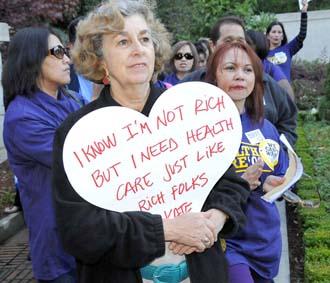
More than 50 protesters disrupted Muni service for about an hour this morning before peacefully leaving to march down Market, in commemoration of the death of Kenneth Harding, Jr., on July 16, 2011.

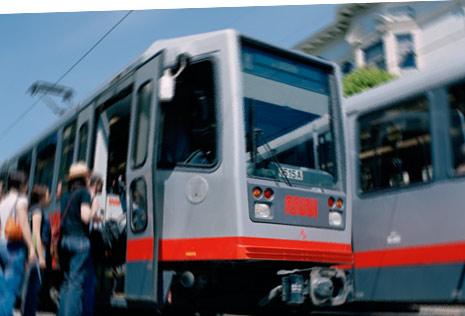
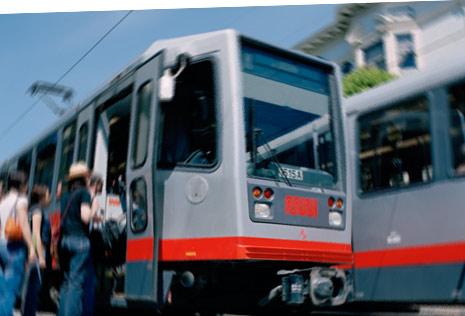
After gathering at 14th and Market, the group marched to the intersection of Duboce and Church, where Muni trains headed outbound exit the tunnel. Soon, at least four outbound trains and two inbound trains were backed up.

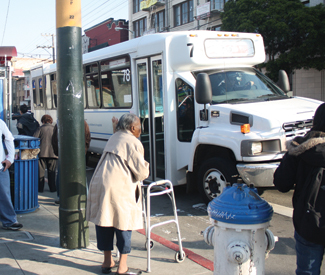
Buses replaced their service.

Some passengers were angered, while most took literature from protesters on their way to catch another train. A few joined in the picket line. Drivers, meanwhile, were mostly nonchalant. “I’m just enjoying the show,” said one driver.

“They shoot us down, we shut it down,” protesters chanted. They also mentioned the names of Raheim Brown Jr., Derrick Gaines, Oscar Grant, and other young African American Bay Area men killed by police.

As a police line closed in, one protester shouted at cops, “you are all complicit!” The group left the intersection around 7:30 without much confrontation with police.

Denika Chatman, Harding’s mother, has been organizing a movement demanding that the police who shot him be charged with murder since his death.

Harding, 19, was stopped by police last year as part of a ticket check while exiting the T train at third and Palou. He ran, and police shot at him. He fell and bled for about thirty minutes, while police surrounded him, before he was taken to a hospital.

Police say Harding pulled a gun out as he ran and shot at them, and that the fatal bullet in his neck was his own. They say that, since the bullet that killed him was from a .380-caliber handgun and police carry .40 caliber guns, Harding shot himself. No gun was found on Harding, but police acquired a gun a week after the shooting that they believe Harding used.

Police have pointed to a video which they say shows a man picking up the gun at the scene, while Harding’s family members and supporters say the object is a cell phone.

By no accounts did police know Harding’s identity before shooting.

Officers Richard Hastings and Matthew Lopez have recieved medals of valor for their handling of the incident.

Dorian Maxwell, a whistleblower former Muni driver who refused to operate his bus and made noise about unsafe conditions on Muni, attended the protest as well. He said Labor Black and Brown, one of the organizations who planned the protest, supported him after he risked his job.

“Your life is in danger if you’re riding the Muni,” Maxwell told the crowd, pointing out what he identified as partially flat tires on a nearby 22 Fillmore.

“We wanted to combine the brutality of the police with the workers getting victimized,” said protest organizer Charles Du Bois.

Chatman has also connected her demonstrations to the movement for free Muni tickets for youth.

“I wanted to organize a Muni shutdown, and it just started growing from there,” Chatman said. It was in honor of Kenny, and to unite the community as well. Because a lot of them witness these horrible murders and I wanted to do something to give back to a community that has supported me since this happened.”

After marching down Market stopping traffic every few blocks, the group ended with a speak-out in front of SFMTA headquarters. There were no arrests. A vigil is planned for 5pm at Third and Palou, in Mendell Plaza, the spot when Harding died. Supporters call the plaza Kenny’s Plaza in Harding’s honor.

Alerts

0

WEDNESDAY 11

Students organizing for CCSF Student Union upper level lounge, CCSF Ocean Campus, 50 Phelan, SF; www.ccsfwill.blogspot.com. 5-8pm, free. At an emergency community meeting concerning the threatened closure of City College of San Francisco July 9, many meetings were called, including the organizing to form a student union, to campaign for the parcel tax initiative to get money to CCSF, and to organize in solidarity with labor. This meeting is discussing support for the parcel tax, which could send $15 million City Colleges way if it passes in November. Come organize with labor on this issue. This meeting is a working group on student response to the accreditation report.

THURSDAY 12

It calls you back 826 Valencia, SF; www.826valencia.org. A book reading and film screening with Luis Rodriguez, a poet, journalist, and fiction writer and author of the best-selling memoir Always Running, La Vida Loca, Gang Days in L.A. He will read from his new sequel and screen Rushing Waters, Rising Dreams: How the Arts are Transforming a Community, documenting how Tia Chucha’s Centro Cultural and Bookstore is bringing art and community to the once devastated post-industrial San Fernando Valley.

Happiness Happiness Institute, 1720 Market, SF; www.meetup.com/SF-Free-School. An afternoon of yoga and a workshop on community building. This event is presented by a collaboration between the Bay Area Community Exchange Time Bank, the San Francisco Free School, and the Happiness Institute- three of the organizations that work on spending time and energy in the gift economy.

FRIDAY 13

4 days for Kenneth Harding Jr. around Bayview-Hunters Point, July 13-16; www.tinyurl.com/4days4kenny. On July 16, 2011, 19-year-old Kenneth Harding Jr. was killed. He was stopped by police and asked for his transfer when off-boarding the Muni T train—he ran, and police began shooting. As far as the SFPD is concerned, the case is settled; they say Harding drew a gun and shot back at them, and the fatal bullet was his own. His family, friends, and the movement resisting police murder of black youth disagree. On this anniversary of his death, commemorate Kenny with four days of events. On July 13, a community speak out at NOI Mosque at 26a 3rd & Revere at 7pm. On July 14th, a free community hip hop show. On July 15th a free community meal at 3rd and Palou St from 10am-2pm. And on July 16th, join Kenneth Harding’s mother and a broad coalition of community and labor to shut down Muni in honor of Kenneth Harding.

SATURDAY 14

Occupy Bohemian Grove Monte Rio Amphitheater, 9925 Main, Monte Rio; www.occupybohemiangrove.com. Noon, free. What, you’ve never heard of Bohemian Grove? It’s just the private club of CEOs, politicians, and their favorite performers that meet every year for debauchery and rituals such as the “Cremation of Care” at the Owl Shrine. The rich and powerful go camping among the redwoods every year, and although business talk is frowned upon, they often make deals, including, notoriously, a 1942 Manhattan Project planning meeting that led to the atomic bomb. Many anti-war activists and others who are pissed off that the 1 percent meets in this strange private camping party to plot acts of war and environmental destruction will be setting up their own protest encampment outside Bohemian Grove this year. The kick-off on Saturday will include musical performances and speakers, including the Fukushima Mothers and Cindy Sheehan.

Tardeada/ women’s social for women’s rights, 2969 Mission, SF; www.defendwomensrights.org. 2pm, $3-10. Women Organized to Defend and Resist are planning a nationwide protest August 26 to defend women’s rights. This Saturday, come share food, entertainment and political conversation to meet and bond with others who won’t stand for attacks on women’s rights.

Free Muni for kids: Tough slog at the MTC

15

There are plenty of reasons I like the David Campos free Muni for youth plan. Anything that gets the next generation used to seeing Muni as the primary form of transportation in town is a good idea. It’s a great benefit for low-income kids (and around SF these days, the only ones who we’re giving any benefits to are businesses that get tax breaks, and those breaks are worth far more than the modest cost of the Campos plan). But it’s particularly important this year, because the school district is in serious financial straights and is probably going to eliminate most school-bus transportation next year. So poor kids and kids whose parents don’t have cars will have a harder time getting to school.

The supervisors approved this, and the mayor signed off on it — but some of the money is supposed to come from the Metropolitan Transportation Commission, made up of regional representatives, and Campos is having a tough battle.

The MTC staff recommended that SF get $4 million in regional transit money for the idea, but not all, or even most, of the 16 members of the panel want to see one city get money for something all of them would love to do.

But: Someone has to try this as a pilot project, and SF, with the highest per-capita transit ridership, is a good place to start.

Sup. Scott Wiener is also on the MTC, representing San Francisco, and he’s totally against the free Muni for youth plan. And when it come up at an MTC committee, he was willing to vote for it — “I realize I lost that battle, and at the MTC I’m representing San Francisco,” he said — but only if MTC stipulated that no additional city money would go to the program.

And that kind of screws the whole thing up, since it will be hard to do with just the $4 million.

Ugh. Such a great idea, for a fraction of the money we’re handing out like hot dogs to everyone who asks for a tax break. Why don’t the poor kids get a break for once?

Another reason corporate shuttles are a problem

54

They’re huge, and they block Muni stops, and they crowd into narrow streets. And now there’s another reason the city needs to get into the businesses of regulating private corporate shuttles:

The buses can get stuck on the hills.

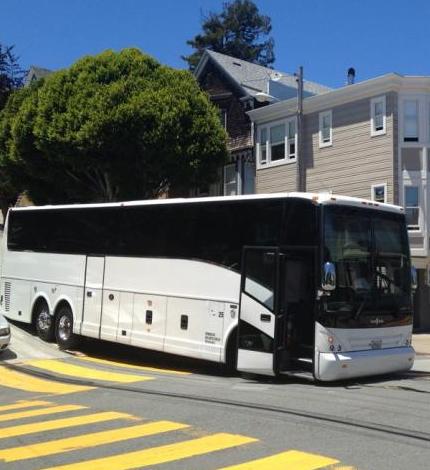
Uptown Almanac has a great item, with excellent photos and a video, of a Google shuttle getting caught in Noe Valley, beached like a whale at 23rd and Chattanooga. A pickup truck tries in vain to haul the monster away.

Folks: The streets of SF’s neighborhoods weren’t designed for 50-foot luxury coaches. Someone’s got to write some rules about where these private shuttles can go — and where they can’t. 

Big (Robot) Brother is watching you on Muni

20

So I’m not usually the paranoid type (I said usually), but this one is a little creepy: According to Fast Company, Muni is going to deploy a camera system that can detect criminal or potential terrorist behavior — without a human being.

Not clear what happens when the cameras find something suspicious (and anyone who rides Muni knows that “anomalous behavior” is pretty standard fare). But I sense this could cause some trouble when over-anxious cops hyped on terror-watching charge into the tunnel to grab some guy who’s pissing on the wall.

Unless the cameras decide that’s “normal.”


Rites of passage

0

arts@sfbg.com

FILM It’s commonly said of Nathaniel Dorsky’s films that they are beautiful beyond words. Which is true as far as it goes, but then the same could be said of many poems and they are words. What’s clear is that Dorsky is absorbed with a classical fulfillment of form, and as such his films do better with poetics than interpretation (he has himself supplied a fine entry point with his slim volume Devotional Cinema). Poetics in this context means respecting the mystery and proceeding gingerly with gesture, metaphor, and detail. No one ever says of a Dorsky film, “I liked it the more I thought about it.” Conversely, watching a second or third time one marvels to find the beauty springing to life with the same force, subtler and lovelier now for this trick of renewal. No one ever says of a sunset, “I’ve seen this one before.”

A three-part retrospective at the Pacific Film Archive beginning June 10 retraces the last decade of Dorsky’s work. The Return (2011) and August and After (2012) receive local premieres this weekend, accompanied by the delicate Pastourelle (2010). June 17 brings his “Quartet,” to my mind a signal achievement of the young century. The series concludes June 24 with three earlier films confirming Dorsky’s mastery of an open (sometimes called polyvalent) form of montage: Song and Solitude (2006), Threnody (2004), and The Visitation (2002). How fitting that these films should be spaced out over consecutive days of rest! They will be shown on 16mm because that is what they are (last I checked the museums still show the Old Masters in paint).

It’s our good fortune to share a city with Dorsky: opportunities to see the films with him as a guide come a little more frequently, and the phenomena that supply his visual repertoire are that much more familiar. Here are the blossoms, the Chinatown lanterns, the drifting Muni trains, the ocean skies, and the seasons as we only dare to see them in deepest reverie.

Dorsky began making movies under the influence of people like Stan Brakhage and Gregory Markopoulos, filmmakers who strove for an intrinsic cinematic language (while the auteurists chiseled out an essential cinema, they sought cinema’s essence). After relocating to San Francisco in 1971, he reemerged with Hours for Jerome (1980-1982), a dense exercise in spiritual autobiography culled from pastoral years in New Jersey. The films began arriving with greater regularity after Triste (1998) and continue apace even after the desertion of his beloved Kodachrome.

The silence of Dorsky’s films is lush, providing intoxicating accompaniment to the slowed projection of 18 frames per second which dips the photographic action just out of the flow of representation. The crescendos that surge past the finish of his films invariably leave me surprised that I haven’t been listening to music, as the black of the theater seems clarified in the same way silence is after an expressive composition. Pushing the analogy further, the relationship between movement and stillness in his films is akin to that of sound and rest in music, the two leaved together as intonation. We really need a new word to describe the juddering movement of branches and buds that punctuate Dorsky’s films. “Quiver” is close, but it doesn’t capture the spring in the frame, like dancers on a stage.

A couple of months ago, Dorsky showed something called Kodachrome Dailies from the Time of Song and Solitude (Reel 1) at Lincoln Center: Song and Solitude-era footage in the chronological order in which it was shot. The material had a completely distinct character viewed this way. Dorsky talked of it as a journal. The loose form made it easier to relate to his eye being grasped by something in the world, and yet one missed the justice of the cuts.

If pressed for a defining quality of these films, I would say rightness —each shot developing to its fullness, tuned to what comes before and after. The fact that this formal refinement is itself the focus of the films creates a suspension of time which, after all, is a basic condition of paradise. Certainly the films are colored by experience, as August and After for instance is clearly marked by grief, yet this is never what they are “about.” Trust is placed in the self-expression of the film stock — its luster and dusk.

Dorsky’s films will reintroduce you to what branches make of the sky and how the grass gladdens when the sun reappears from its shade. I think this is what people are talking about when they say the films remind them of childhood. “A child said What is the grass? fetching it to me with full/hands;/How could I answer the child? I do not know what it is any/more than he./I guess it must the flag of my disposition, out of hopeful/green stuff woven.” We could choose many lines of verse to say the same, but Whitman’s will do. There is something mystical in Dorsky’s slightly ajar illuminations of worldly objects and features. And yet so too is there something altogether sensible and almost courtly in their formal arrangements. The shots of dogs make us chuckle because we’re in a position to recognize our own recognition, all too human.

On first viewing The Return struck me as a deeply melancholy work, its darkly reflecting surfaces and doublings bearing the impression of lost sleep. August and After, on the other hand, is more immediate in its effect and a superior example of how Dorsky’s style can serve distinct emotional structures (threnody here). Tender impressions taken near the end of George Kuchar’s life, the filmmaker surrounded by family and friends, are framed in the light of long afternoons. Everything that follows is touched by these pictures of intimacy: two workers sliding down a skyscraper, a distant glass door sweeping a ray of light across a café, agitated steps into bramble. A rhythmic montage focuses on packages and fruits carried down the street, the actual things transfigured into pure color. When the film’s ship finally sails, it does so with such grace as to say love without saying.

“AFTERIMAGE: THREE NIGHTS WITH NATHANIEL DORSKY”

June 10, 17, and 24, 7:30pm, $5.50-$9.50

Pacific Film Archive

2575 Bancroft, Berk.

(510) 642-5249

bampfa.berkeley.edu

Housing and highrise offices

0

EDITORIAL It's something of a civic shame that the only way San Francisco can build a new transit terminal is to sell a private developer the rights to stick a 1,070-foot highrise office tower on public land. In fact, it's a sad statement on the city, state, and local government: Once upon a time — and it wasn't the long ago — tax dollars collected through a progressive system paid for major infrastructure projects.

But there's no easy way to raise $4 billion in tax money for the Transbay Terminal — even though it ought to be seen as part of the high-speed rail project, and the federal and state government ought to be picking up the tab. So San Francisco ambles forward, selling land and lease rights to the highest bidder.

In this case, Gerald Hines of Houston won the right to build the largest highrise west of the Mississippi on property owned by the Transbay Joint Powers Authority. There are all sorts of drawbacks to the deal — among other things, it will cast shadows on a number of city parks, all the way to Portsmouth Square in Chinatown. Like any massive office complex, it will put pressure on Muni, on city streets, on police and fire and other city services — and no commercial office building ever pays its fair share of that burden. And since in this case the major recipient of the money from the project will be the TJPA, the city's General Fund will suffer.

Oh, and the building is ugly.

Meanwhile, city planners want to increase height limits all around the Transbay Terminal and allow hundreds of units of new (luxury) housing and more commercial office space. It's going to be a new highrise neighborhood, complete with a rooftop park and a few little patches of ground-level open space, which won't get a whole lot of sun, particularly in the morning and evening.

And at this point, there's been very little focus on what ought to be the defining issue of this and the other major developments on the city's planning horizon, and that's affordable housing.

This city has a terrible jobs-housing mix. The vast majority of the people who currently work in San Francisco can't afford to buy a house here, and many of them can only rent if they pay for more than the federal standard of one-third of their income for housing. So people who work in hotels and restaurants and city, state and federal offices and hospitals and even financial district companies wind up living far from the city and commuting. Nobody thinks that's a sound environmental policy.

And this kind of full-scale rezoning and development will only make it worse. According to the City Planning Department, the Hines project will pay about $27 million into the city's affordable housing fund, enough to pay for maybe 60 or 70 housing units. That won't even begin to cover the need created by the thousands of employees who will fill that tower. The market-rate housing on the site will almost certainly be beyond the reach of most San Franciscans, and probably many of the office workers who fill the Hines building. And only 35 percent of the new housing — at maximum — will be affordable.

San Francisco has to get a grip. The city can't keep allowing more high-end housing and highrise office space without a plan to meet its housing needs. We're glad to see the mayor talking about a $50 million a year fund, but that will barely meet existing needs; it can't possible keep pace with new development.

So before the supervisors rush ahead to approve this ambitious new downtown district, they need to ask Hines, and the TJPA, and any other developer who comes along, how it intends to meet the demonstrated need for affordable housing that these projects will create — and demand a much higher level of payment that what's currently on the city's books.

Head of the (dance) class

0

DANCE Complaining about the quality of public schools is about as ubiquitous as whining about MUNI. Admittedly, the quality of the former has a bigger impact on our future than having to wait for the N another 10 minutes. The good news is that the San Francisco Unified School District is not nearly as bad as its reputation; talk to some parents who have kids in it. While its art components are woefully underfunded, at least they exist. The yearly “Young at Art” exhibit at the de Young Museum (through Sun/20) has a selection from this year’s crop.

Dance programs, however, would probably not exist without outside funding. Zaccho Dance Theatre, for instance, has had but the minutest support from SFUSD for a program it has run for elementary school children in the Bayview neighborhood since 1990. On May 9, 125 kids packed Z Space with a rockingly exuberant and intelligent program in front of cheering, shouting, and stomping parents and friends. It was quite a show.

However, San Francisco does have one first-rate arts education program that is the envy of school districts with much better reputations: the Ruth Asawa School of the Arts, which this year celebrates its 30th anniversary. Its dance department is so good that students from around the Bay Area request inter-city transfers to attend. “I have one student who comes all the way from Vacaville,” says its director, Elvia Marta.

These dancers — 40 of them — will show their moxie this week at the Palace of Fine Arts with a concert of student and faculty choreography. Also included is a piece from alumnus Zack Benitez, who worked in Hollywood with Paula Abdul and is now coaching a musical, Adam and Eve, in Paris. (In French, of course.) At a rehearsal at ODC Commons, the students looked young, raw, and fierce. You could see these were dancers on their way, knowing where they want to be in a few years and having an inkling of how to get there. They were disciplined, focused, and attentive to the suggestions that Marta and Brittany Ceres Brown, who teaches choreography, gave them. In that way they are already professionals.

Getting into this public-school dance program is not easy. The application process is rigorous — questionnaires, grades, recommendations, essays, statements of commitment, auditions with small pieces of solo choreography — and sounds suspiciously like a rehearsal for college. Plus, according to the department’s website, students need “a basic ballet foundation.”

“Ballet focuses on alignment,” Marta explains. “It gives you an understanding of how the body and its skeletal and anatomical systems function.” But she also says that over the years she has had “kids who come from modern dance with a really good understanding of the body.” One way or another, this is not a program for beginners.

It also means that in all probability, the students come from families who have been willing and able to pay for ballet lessons in private studios or ballet-company schools. Criticism about “elitism” has wafted around RASOTA almost since the beginning. Marta is not deterred: “I let people talk. I don’t think it’s elitist. I think kids need something to be passionate about. It keeps them focused and on the straight and narrow. These [students] work very hard, taking academics in the morning and dance in the afternoon.”

Marta, born in Panama, grew up doing salsa. “Everybody knew how to do it. We didn’t have any training,” she says. At Balboa High School, dance teacher Yvonne McClung, who later became the first head of the RASOTA’s Dance Department, suggested Marta and her twin sister should take dance classes. At first, she didn’t know what a dance class was. She has since learned.

This year, all ten graduating dancers are off to colleges — many of which have distinguished dance departments. One of them, Marta says, was accepted at Juilliard. “It’s the second year,” she says with almost motherly pride. Juilliard is the country’s toughest dance program to get into. 

“RUTH ASAWA SAN FRANCISCO SCHOOL OF THE ARTS 30TH YEAR ANNIVERSARY DANCE CONCERT”

Fri/18-Sat/19, 8pm, $18-$28

Palace of Fine Arts

3301 Lyon, SF

www.sfsota.org

20 percent by 2020

52

steve@sfbg.com

There’s no doubt that San Francisco is one of the best cities in the United States for bicyclists, a place where near universal support in City Hall has translated into regular cycling infrastructure improvements and pro-cyclist legislation, as a slew of activists and politicians will attest to on May 10 after dismounting from their Bike to Work Day morning rides.

But even the most bike-friendly U.S. cities — including Portland, Ore., Davis, Chicago, and New York City — are still on training wheels compared to our European counterparts, such as Amsterdam and Copenhagen, where around 30 percent of all vehicle trips are by bike. By comparison, even the best U.S. cities are still in the low single digits. [Correction: Davis, which stands alone among U.S. cities, is actually at about 15 percent bike mode share]

Board President David Chiu and other city officials proposed to aggressively address that gap two years ago after returning from a fact-finding trip to Europe that also included Ed Reiskin, executive director of the San Francisco Municipal Transportation Agency (SFMTA), the agency charged with implementing city policies that favor transit riders, cyclists, and pedestrians over motorists.

Chiu sponsored legislation setting the goal of having 20 percent of all vehicle trips in San Francisco be by bike by the year 2020 and calling for the SFMTA to do a study on how to meet that goal. It was overwhelmingly approved by the Board of Supervisors and signed by Mayor Ed Lee, who has regularly cited it and proclaimed his support for what it now official city policy.

But the city will fail to meet that goal, probably by a significant amount, unless there is a radical change on our roadways.

The latest SFMTA traffic survey, released in February, showed that bikes represent about 3.5 percent of vehicle trips, a 71 percent increase in five years. While the San Francisco Bicycle Coalition (SFBC) lauded that gain as “impressive,” it would mean a 571 percent increase in the next seven years to meet the 2020 goal.

The SFMTA study on how to meet the goal is long overdue, with sources telling us its potentially controversial conclusions have it mired by internal concerns and divisions. SFMTA spokesperson Paul Rose told us in March that it was coming out in April, and now he won’t say when to expect it and he won’t even make its authors available to answer our questions.

“We want to make sure everything is addressed before the plan is finalized,” he told us, acknowledging that it’s been a difficult process. “The challenge of reaching the goal is ambitious.”

Chiu acknowledges that the goal he set probably won’t be met and expressed frustration with the SFMTA. “I’m disappointed that two years after we set that goal, there is still no plan,” he told us, adding that to make major gains “will take leadership at the top” and a greater funding commitment to this cost-effective transportation option: “We’re spending budget dust on something that we say is a priority for the city.”

Reiskin also seemed to acknowledge the difficulty in meeting the goal when we asked him about it and he told us, “To get to 20 percent would be a quantum leap, no question, but the good news is there’s strong momentum in the right direction.”

Yet on Bike to Work Day, it’s worth exploring why we’re failing to meet our goal and how we might achieve it. What would have to happen, and what would it look like, to have 20 percent of traffic be people on bikes?


CLOSING THE GAP

SFBC Executive Director Leah Shahum said that all the group’s studies show safety concerns are by far the biggest barrier to getting more people on bikes. Most people are simply scared to share space with automobiles, so SFBC’s top priority has been creating more bikes lanes, particularly lanes that are physically separated from traffic, known as cycletracks, like those on a portion of Market Street.

“We’ve seen it time and again, when you build, they will come,” Shahum said. “People want to feel safe. They want dedicated space on the roadways.”

SFBC’s Connecting the City proposal calls for the creation of four crosstown colored cycletracks totaling 100 miles. Other bike activists emphasize the importance of projects that close key gaps in the current bike network, such as the dangerous section along Oak and Fell streets that separates the Panhandle from the Wiggle, scary spots that deter people from cycling.

That safety concern — and the possibilities for making cycling a more attractive option to more people — extends to neighborhood streets that don’t have bike lanes, where Shahum said measures to slow down automobile traffic and increase motorist awareness of cyclists would help. “What we’re talking about is a calmer, safer, greener, neighborhood-focused street,” she said.

Bike advocates say the goal is to make cycling a safe and attractive option for those 8 to 80 years old, a goal that will require extensive new bike infrastructure — not just new bike lanes, but also more dedicated bike parking — as well as education programs for all road users.

“What I hope is on the drawing board is infrastructure that will make more people feel safe riding, particularly women,” SFMTA board member Cheryl Brinkman, a regular cyclist, told us.

Shahum also praised the Bay Area Rapid Transit District’s new Bike Plan, which seeks to double the percentage of passengers who bike to stations (from 4 percent now up to 8 percent in 10 years), saying Muni should also take steps to better accommodate cyclists. And she praised the city’s bike-sharing program that will debut in August, making 1,000 bikes available to visitors.

But to realize the really big gains San Francisco would need to hit 20 percent by 2020 would take more than just steadily increasing the mileage of bike lanes, says Jason Henderson, a San Francisco State University geography professor who is writing a book on transportation politics. It would take a systemic, fundamental shift, one either deliberately chosen or forced on the city by dire circumstances.

“If gasoline goes to $10 per gallon, sure, we’ll get to 20 percent just because of austerity,” Henderson said. But unless energy prices experience that kind of sudden shock, which would idle cars and overwhelm public transit, thus forcing people onto bikes, getting to 20 percent would take smart planning and political will. In fact, it will require the city to stop catering to drivers and accommodating cars.

Henderson noted that bicycle mode share is as high as 10 percent in some eastern neighborhoods, such as the Mission District, Lower Haight, and in some neighborhoods near Civic Center. “In this part of the city, Muni is crowded and young people get tired of Muni being such a slow option,” Henderson said. “If you live within a certain radius of downtown, it’s easier to bike.”

To build on that, he said the city needs to limit the number of parking spaces built in residential projects in the city core even more than it does now, as well as adding substantially more affordable units. “The most bikeable parts of the city have massive rent increases,” he said. “We have to make sure affordable housing is wrapped around downtown.”

Henderson said city leaders need to show more courage in converting car lanes and street parking spaces into bike lanes, creating bike corridors that parallel those focused on cars or transit, and exempting most bike projects from the detailed environment review that slow their implementation. At the same time, he said the city needs to drastically expand Muni’s capacity to give people more options and compensate for bike improvements that may make driving slower.

“If you want 20 percent bike mode share, you need 30 percent on transit,” he said, noting that public transit ridership in San Francisco is now about 17 percent, far less than in the great bike cities of Amsterdam and Copenhagen, which made a commitment to reducing reliance on the automobile starting in the 1970s. “It’s like a puzzle.”


BARRIERS AND BACKLASH

The kind of active urban planning that Henderson advocates would be anathema to many San Franciscans, particularly people like Rob Anderson, the blogger and activist who sued San Francisco over the lack of studies supporting its Bike Plan and created a four-year court injunction against bike projects that just ended two years ago.

“The only way you could get to 20 percent is creating gridlock in San Francisco. I don’t think it’s going to happen. City Hall is adopting a slogan as transportation policy,” he told us. “It’s a statement of pro-bike, anti-car principle, but it’s not a realistic transportation policy.”

Anderson considers bicycles to be dangerous toys that will never be used by more than a small minority of city residents, believing the majority will always rely on automobiles and there will be a huge political backlash if the city continues to take space from cars for bikes or open space.

Many city officials and cycling advocates say making big gains means convincing people like Anderson that bicycles are not just a viable transportation option, but an important one to facilitate given global warming, oil wars, public health issues, and traffic congestion that will only worsen as the population increases.

“We need to help all San Franciscans see cycling as a legitimate transportation option,” Chiu said. Or as Shahum put it, “It’s prioritizing space for biking, walking, and transit over driving.”

Shahum said the city’s political leaders seem to get it, but she doesn’t feel the same sense of urgency from the city’s planners.

“I feel like the bureaucracy needs to get on board. We have strong political support and the public support is growing,” Shahum said. “We’ve set ambitious, worthwhile, and I think achievable goals, yet nobody is holding the city accountable….It can’t just be a political platitude, it needs to be an actual plan with measureables and people held accountable.”

She cited studies showing that the most bike-friendly cities in the U.S. are spending between $8 million and $40 million a year on bike infrastructure and education programs, “but San Francisco is spending more like $2-3 million, which is peanuts…San Francisco has got to start putting its money where its mouth is to improve biking numbers.”

It’s cheap and easy to stripe new bike lanes. “It’s one of the best investments we can make in terms of mode share,” Reiskin said. That makes cycling advocates question the city’s true commitment to goals like the 2020 policy. “We will need more investment,” Chiu said, “but compared to other modes of transportation, it is far cheaper per mile.”


POLITICAL WILL

So why then has San Francisco slipped back into a slow pace for doing bike projects following a year of rapid improvements after the bike injunction was lifted? And why does the city set arbitrary goals that it doesn’t know how to meet? The answer seems to lie at the intersection of the political and the practical.

“We need a more detailed and comprehensive strategy that says this is where we need to be in five years and this is how we get there,” Sup. David Campos, who chairs the San Francisco Transportation Authority, told us. “I feel like the commitment is there, but it’s a question of what resources you have to devote to that goal.”

But it’s also a question of how those resources are being used, and whether political leaders are grabbing at low-hanging fruit rather than making the tough choices to complete the city’s bike network and weather criticisms like those offered by Anderson.

It often seems as if SFMTA is still prioritizing political projects or experimenting in ways that waste time and money. For example, the most visible improvement to the bike network in the last year, and the one most often cited by Mayor Lee, is the new cycletracks on JFK Drive in Golden Gate Park. But they do little to make cycling more attractive and they may even exacerbate tensions between cyclists and drivers.

It was one of two major bike projects that Mayor Lee announced on Bike to Work Day last year, and it seemed to have more to do with politicians announcing more bike lane mileage that with actually improving the bike network.

The other project Lee announced, just a few blocks of bike lanes on Fell and Oak streets, really was a significant bike safety advance that SFBC has been seeking for several years. But Lee failed to live up to his pledge to install them by the end of 2011 after neighbors complained about the lost parking spots, and the project was pushed back to next year at the earliest.

“We’re talking about three blocks. It’s relatively small in scope but huge in impacts,” Shahum said of the project. “If the pace of change on these three blocks is replicated through the city, it’ll take hundreds of years to meet the [20 percent] goal.” But Lee Press Secretary Christine Falvey said: “The mayor is very much committed to the aggressive goals set to get to 20 percent by 2020 and the city is moving in the right direction. He has also always supported the Oak Fell project and we’re seeing progress.” Yes, but not the kind of progress the city would need to make to meet its own goal. “Chicago is really the leader right now,” Shahum said, noting Chicago Mayor Rahm Emanuel’s commitment to building 25 miles a year of new cycletracks and the city’s advocacy for getting more federal transportation money devoted to urban cycling improvements. “Where does San Francisco fit in this? Do we want to be at that level or not?”

Our Weekly Picks May 2-8, 2012

0

WEDNESDAY 2

Loom of Ruin reading

Sam McPheeters has a way with language that has translated from lyrics to journalism and now: his first official solo novel, The Loom of Ruin. The former frontperson of a trilogy of punk and experimental acts (Born Against, Men’s Recovery Project, Wrangler Brutes) has long written columns for the likes of Vice, and put out his own fanzines. But his first published output came at age 12 — a local legends book assembled with a pal. Now he comes full circle, back to book publishing, though this time it’s a bit different. He’s rather grown, and writing exquisitely detailed dark Los Angeles fiction about the angriest man in the world. Far from grumpy himself — the facetious gent was once known to recite Patrick Henry’s famous speech — McPheeters brings his words to the Bay this week on a book tour, including a spoken word stop at the Secret Alley tonight at 7pm after Needles+Pens. (Emily Savage)

5-7pm, free

Needles+Pens

3253 16th St., SF

(415) 255-1534

www.needlesandpens.com


Thu/3, 7:30pm, free

1234Go Records

420 40 St., Oakl.

(510) 985-0325

www.1234gorecords.com


Edward Sharpe & the Magnetic Zeros

If Alex Ebert were the best version of himself (a selfless hero akin to Superman or Jesus) he’d be Edward Sharpe. Ebert, Edward Sharpe & the Magnetic Zero’s crazy-haired front man/only guy I’ve seen successfully pull off the shirtless blazer look, dreamt up this alternate identity after getting over a serious drug addiction and shirking his reverence to the punkish concept of rebellion. On stage this ten-piece folky, psychedelic rock tribe looks like a ragtag flurry of ecstasy. There’s a lot going on when these guys perform, but somehow it’s always hard to take your eyes off Jade Castrinos, whose sultry voice and free form movements lull you into a blissful, calming trance. (Mia Sullivan)

With Aaron Embry

8pm, $32.50

Fox Theater

1807 Telegraph, Oakl.

(510) 302-2250

www.thefoxoakland.com


El Clásico: More Than a Game

Spain may have won the last World Cup, but as a new documentary by Kelly Candaele and students from Chico State University shows, there’s no love lost between passionate fans of the country’s two biggest club teams. When Real Madrid and FC Barcelona clash (in a game so monumental it is referred to as “El Clásico”), they bring to the field some of the world’s greatest players (Messi! Ronaldo!) — and decades of history that go way beyond fútbol and into weighty areas of national identity and politics. Even Barça fans still reeling from certain late-April results will enjoy this 55-minute exploration of one of Europe’s greatest sports rivalries. (Cheryl Eddy)

7pm, $5–$10

Mission Cultural Center

2868 Mission, SF

www.missionculturalcenter.org


THURSDAY 3

Electric Shepherd & OUTLAW

When Bay Area psychedelic rock groups Electric Shepherd & OUTLAW get together, their sound is something like the Doors meeting up with Jimi Hendrix on a tribalistic march and then starting to jam with a death metal version of Phish. If you carry deep-seated nostalgia for the epic rock shows you missed during the ’60s — or listen to the Velvet Underground’s Bootleg series on repeat — you should probably check these guys out. Expect luscious guitar riffs, sexy bass lines, compulsory dancing, and a wonderfully spaced out experience. (Sullivan)

With Blues for Carl Sagan, and Douglas

9pm, $6

Hemlock Tavern

1131 Polk, SF

(415) 923-0923

www.hemlocktavern.com


FRIDAY 4

Predator and The Thing

Though it may be hard to believe for those of us who grew up watching them, two classic sci-fi flicks from the 1980s have come upon major milestones anniversaries. To celebrate, Jesse Hawthorne Ficks’ Midnites For Maniacs series is hosting a night not to be missed, with a 25th anniversary screening of Predator and a 30th anniversary screening of John Carpenter’s The Thing. Featuring some of the best creature designs and special effects of the era thanks to visionaries Stan Winston and Rob Bottin, both films re-defined the genre, and have continued to stand the test of time. A Boy & His Dog (1975) also screens.(Sean McCourt)

7:30pm, $13

Castro Theatre

429 Castro St., SF

(415) 621-6120

www.midnitesformaniacs.com


JackHammer Disco with Tiga, Damian Lazarus, & Light Year

Let’s indulge in some squelchiness, shall we? Montreal-based Tiga and UK-born, Los Angeles resident Damian Lazarus share an affinity for acid-y, electro house. In the early 2000s, Lazarus played a prominent role at the UK label City Rockers, where he oversaw the release of Tiga & Zyntherius’ cover of Corey Hart’s “Sunglasses at Night.” Since gaining fame from that release, Tiga has been a busy producer and remixer, keeping a Euro-glam tone reminiscent of the synth-y works Giorgio Moroder pushed in the ’70s. Recent Lazarus works have a more stripped-down, minimal feel that sometimes wander into leftfield, like in his 2009 album Smoke the Monster Out. (Kevin Lee)

With Light Year 10pm, $15–<\d>$20 Public Works 161 Erie, SF (415) 932-0955 www.publicsf.com


FRIDAY 4

It’s Casual

Here in the Bay Area, we like to complain about public transportation. There are BART horror stories and Muni diaries tossed around like old war stories, used as social currency. But really, when you compare our rapid transit systems with the snarled mess of cars elsewhere in California, we come out on top. That’s why LA-based hardcore group It’s Casual got so much traction with an ode to its own local bus line, “The Red Line.” The song, and sentiment, struck a nerve: “The freeways/are not so nice.” The band itself is growly loud, with classic Southern California punk hooks. Tonight it opens for beloved shit-stirrers Early Man (note: the two bands will release a split seven-inch come May 22). Take the 22 Fillmore to the show and write a song about it. (Savage)

With Early Man, Shock Diamond, Satya Sena

9pm, $8

Thee Parkside

1600 17th St., SF

(415) 252-1330

www.theeparkside.com


SATURDAY 5

CreaturesCon

Seemingly rising from the grave like so many of the monsters and ghouls that it showcased over a 14-year run on local television, the beloved Bay Area show Creature Features is being resurrected once again to satiate fans’ undying thirst for the creepy, kooky, and campy. John Stanley, who hosted the KTVU program from 1979-’84, will be on hand for CreaturesCon One, a day of special screenings, Q&As, and more, along with archivist and documentary filmmaker Tom Wyrsch and Ernie Fosselius of Hardware Wars fame. For all you monster kids out there, this will be a nightmare, er, dream come true. (McCourt)

3-10pm, $10

Historic Bal Theater

14808 East 14th St., San Leandro

www.creaturescon.com


Father John Misty

I always wonder about the drummer. They’re usually the life of the party but, at the same time, are often concealed behind a wall of instruments, and you rarely hear them sing, or say, anything. Ex-Fleet Foxes drummer Joshua Tillman has said that drumming for his former superstar band began to bore him. So he exited, took up the moniker “Father John Misty,” and started creating lush, lyrically based Americana folk ballads laden with lucid imagery and social commentary. He played SXSW this year, made a surprise appearance at Café Du Nord in April, and his debut, Fear Fun, came out Tuesday. (Sullivan)

With Har Mar Superstar, Worth Taking

10pm, $12

Bottom of the Hill

1233 17th St., SF

(415) 621-4455

www.bottomofthehill.com


SUNDAY 6

Omar Sosa Afreecanos Quartet

Talk about versatility. Cuban pianist and composer Omar Sosa splits his time between Oakland and Spain and incorporates musical influences from just about everywhere in between. On last year’s Calma: Solo Piano &… Sosa displayed his introspective and meditative side with floating piano melodies flanked by the occasional electronic accent or sampled sound. Contrast the solo effort on Calma with Sosa’s performance as lead of the Afreecanos Quartet, where technical dynamism becomes the name of the game. At live shows, Sosa becomes a grinning whirlwind, playing classical piano on one hand and electronic piano on another, trading looks and body language with his fellow musicians, and fostering a joyful, collective, improvisational spirit. (Lee)

With Marque Gilmore, Childo Tomas and Peter Apfelbaum

1pm, free

Yerba Buena Gardens

760 Howard, SF

(415) 543-1718

www.ybgfestival.org


MONDAY 7

“La Bamba: Latinos in Vintage Rock, Pop, and Soul”

Local rock music historian and author Richie Unterberger, whose books include White Light/White Heat: The Velvet Underground Day by Day and Music USA: The Rough Guide, will once again share his extensive knowledge with music fans at his presentation “La Bamba: Latinos in Vintage Rock, Pop, and Soul.” Featuring film clips of performers such as Ritchie Valens, Santana, Linda Ronstadt, and Los Lobos, the evening promises to be a unique look at the contributions of Latinos in rock from the earliest days of the 1950s up through the ’80s. (McCourt)

6:30-8:30pm, free

SF Public Library, Mission Branch

300 Bartlett, SF

www.sfpl.org


TUESDAY 8

Steve Coll

Longtime journalist Steve Coll won a Pulitzer Prize and widespread acclaim for his 2004 account on the CIA and the agency’s history in Afghanistan leading up to 9/11. In his latest investigative effort, Private Empire: ExxonMobil and American Power, Coll explores the global influence of the Texas-based oil corporation. According to Coll, big-money donations and a sophisticated DC lobbying machine have allowed ExxonMobil to shift the debate on climate change. At the same time, the oil corporation continues to expand its foothold in developing countries. A two-time Pulitzer Prize winner, Coll currently serves as president of the New American Foundation, a nonprofit, nonpartisan think tank that maintains a significant presence in California. (Lee)

In conversation with Greg Dalton

6pm, $7–$20

Commonwealth Club

595 Market, SF

(415) 597-6700

www.commonwealthclub.org


The Guardian listings deadline is two weeks prior to our Wednesday publication date. To submit an item for consideration, please include the title of the event, a brief description of the event, date and time, venue name, street address (listing cross streets only isn’t sufficient), city, telephone number readers can call for more information, telephone number for media, and admission costs. Send information to Listings, the Guardian Building, 135 Mississippi St., SF, CA 94107; fax to (415) 487-2506; or e-mail (paste press release into e-mail body — no text attachments, please) to listings@sfbg.com. Digital photos may be submitted in jpeg format; the image must be at least 240 dpi and four inches by six inches in size. We regret we cannot accept listings over the phone.

Those rich city workers

10

The Chron’s Matier and Ross celebrated May Day early by running a piece on all of those overpaid city workers who are hauling in hundreds of thousands of dollars. And indeed, it sounds shocking: Nathaniel Ford, who was ousted from his job as the head of Muni, walked away  with $567,000. That’s worse than Arlene Ackerman, who screwed up the public schools and got a $375,000 golden parachute. (Actually, the bulk of Ford’s payout was approved last summer, so it’s not really new information.)

Still: The $500K Club and all of the $200K-and-up people makes it appear that the city is just pouring the taxpayers’ hard-earned cash down the maw of those greedy public-sector workers (some of whom just happen to be in contract talks).

Imagine:

The average pay for all city workers was $93,229, plus benefits. According to the city controller, the average wage earner in the city’s private sector, on the other hand, made about $78,228.

Enough to make the average private-sector person, who lacks retirement benefits, angry at the apparent largesse.

But let’s put this in perspective.

The vast majority of the highly-paid city employees are either people with advanced degrees and skills (doctors and lawyers) who would make even more in the private sector, or people in the management ranks, or — most notably — people in the public-safety sector.

Cops and firefighters in the city make a lot of money. More than their counterparts in much of the rest of the nation. Yes, those are tough jobs, and yes, they deserve to be well paid, but should every retired chief and command-staff-level cop walk away with a pension and benefits of close to $200,000 a year, for life? That’s a fair question.

Take out the cops, firefighters, doctors, lawyers and top-dollar department heads, who get special employment contracts that nobody else gets, and you have a very different picture.

The average member of SEIU 1021 who works for the City and County of San Francisco earns $50,400 a year. That’s average — and since SEIU represents some high-skilled workers who make considerably more than that, quite a few of the city workers make less. It’s decent pay compared to a lot of nonprofit and some private-sector jobs, but for a unionized staff in an expensive city — a staff that’s taken pay cuts and furloughs for the past few years — it hardly seems excessive.

I realize how sexy these “bloated city worker salary” stories are — the Chron loves to put this stuff on the front page — but it would be nice if Matier and Ross gave a more accurate picture.


Our Weekly Picks April 25-May 1

0

WEDNESDAY 25

>> Norm Talley

It’s been a good decade since the Detroit Beatdown sound was unleashed on the world via an eponymous triple-disc release on the UK’s Third Ear Records, which collected the works of several integral Motor City dance music producers. In truth, the Beatdown sound wasn’t so much a cohesive style — although it did reflect the spinetingling synthesis of Detroit’s hypnotic, unhurried house sound with the Zen-like disco-funk loopiness that was earning Moodymann and Theo Parrish rabid followers at the time — than a foray into bumpin’ erotic grooviness, no matter the tempo or sample source. An uptick in Beatdown sound reverence has lead to recent tours by many of the original players, including Norm Talley, who will bring almost 30 years worth of decks magic to the incredibly welcoming Housepitality weekly party. (Marke B.)

9pm, $5 before 11pm, $10 after

Icon

1192 Folsom, SF

(415) 626-4800

www.housepitalitySF.com


>> Eric Erlandson

As the guitarist for Hole, Eric Erlandson was at the center of alternative rock explosion of the early ’90s, a member of one of the most popular bands of the time, and a friend and confidant to one of the scene’s most influential players, Nirvana’s Kurt Cobain. With the 18th anniversaries of both the suicide of Cobain and the release of Hole’s hit record Live Through This passing this month, Erlandson has just released his first book, Letters To Kurt (Akashic Books) a touching and enlightening collection of prose poems addressed to his departed friend. He’ll read from the book and do an acoustic performance tonight. (Sean McCourt)

7:30pm, free

Moe’s Books

2476 Telegraph, Berk.

(510) 849-2087

www.moesbooks.com


In conversation with Andi Mudd

Thu/26, 7pm, free

City Lights

261 Columbus, SF

(415) 362-8193

www.citylights.com


>> “A Change of the World: In Memory of Adrienne Rich”

The iconic contemporary poet — how many of those have we got left, friend? — passed away at her home in Santa Cruz last month. But Adrienne Rich’s legacy of strong-willed, powerfully voiced feminism, radical lesbian activism, perfectly illuminated quotidian details, and, hopefully, incredible control of poetic form, is set to be carried on for generations, beginning with this huge tribute at the SF Main Library from notable Bay Area wordsmiths. Join Elana Dykewomon, Aaron Shurin (whose latest volume, Citizen, is a stunner), Jewelle Gomez, Justin Chin, Kevin Killian, Toni Mirosevich, and oodles more as they resurrect Rich’s voice and offer their own oblations on the rough altar of her inspiring genius. OMG she would hate that I got all over-dramatic with the language back there. (Marke B.)

6pm, free

Hormel Gay and Lesbian Center at the SF Main Library

100 Larkin, SF

www.sfpl.org


>> “John Waters in Conversation”

Oh hell yes. Sometimes San Francisco resident John Waters (if you’ve spotted him on Muni, I am sooo jealous) visits California College of the Arts to screen 2004 sex-com A Dirty Shame, which features a typically eclectic cast (including Waters regulars Mink Stole and Patricia Hearst, and Selma Blair’s memorable, uh, udders). The “Pope of Trash” (he’s also an author, occasional actor, hilarious solo performer, and photographer) hangs out after to chat about his filmmaking career — and the fact that this killer event is free (part of CCA’s Cinema Visionaries program and Design and Craft Lecture Series) is just icing on the poo. Er, cake. (Cheryl Eddy)

7-9pm, free

Timken Lecture Hall

California College of Arts

1111 Eighth St., SF

(415) 703-9563

www.cca.edu


THURSDAY 26

>> “Bloomsbury/It’s Not Real”

In the early part of the 20th century and for a short period only, the London neighborhood of Bloomsbury became a center of civilized thought. In their salons its members argued about poetry, painting, and history. They passionately believed in Art and embraced total freedom — artistic, sexual, personal. Some of them became famous; others dropped by the wayside. Yet in retrospect, Bloomsbury looks like a small Shangri-la. Or was it? Jenny McAllister has been popping the balloons of pretense for close to 20 years, creating dance theater pieces that are as witty as they are humorous. In “Bloomsbury Group/It’s Not Real” she and her 13th Floor Dance Theater introduces us to some of those peculiar characters that called Bloomsbury home. (Rita Felciano)

Thu/26-Sun/29, 8pm, $18–$23

ODC Theater

3153 17th St., SF

(415) 863-9834

www.odctheater.org


>> The Touré-Raichel Collective

Israeli pianist Idan Raichel and Malian guitarist Vieux Farka Touré forged a friendship after crossing paths at a Germany airport in 2008. The Israeli pop star, known for culling from many worldly influences, had been a fan of Vieux’s father, legendary guitarist Ali Farka Touré. Raichel beckoned the younger Touré to visit him in Tel Aviv for a jam session. Their serendipitous collaboration resulted in The Tel Aviv Session, an acoustic, improvisational masterwork. Throughout Tel Aviv, Touré sets the stage with dramatic strumming and guitar-picking, while Raichel engages with his own meticulous, twinkling ripostes. The duo’s casual chemistry facilitates a rare and absolutely mesmerizing interplay fused together by impeccable technique. (Kevin Lee)

8pm, $25–$85 Herbst Theatre 401 Van Ness, SF (415) 392-4400

www.cityboxoffice.com


>> Trippple Nippples

Poised to make a splash at SXSW this year with its hyperkinetic live show, Tokyo’s Trippple Nippples unfortunately had to cancel due to visa complications. The band is now making up for lost time with a string of West Coast shows that includes a Thursday stop at Thee Parkside. A mix of psychedelic performance art, electronics. and in-your-face noise rock, the group has caused a stir in Japan, in addition to finding endorsements from American artists such as Pharrell, who recently championed it in Vice’s mini-documentary, Tokyo Rising. Check out the Dan Deacon-esque slice of kaleidoscopic electropop “LSD” for a taste. (Landon Moblad)

With Ass Baboons of Venus and Ghost Town Refugees

9pm, $10

Thee Parkside

1600 17th St., SF

(415) 252-1330

www.theeparkside.com


>> Afrolicious Five-Year Anniversary

Give it up for unstoppable, adorable DJ brothers Señor Oz and Pleasuremaker, a.k.a. Oz and Joey McGuire. A half-decade ago, when the idea of mixing as many global dance music styles into one party as possible was still pretty radical, the bros’ Afrolicious party went one better with live instrumentation (often courtesy of Joey’s band, Pleasuremaker, which drops a new full-length later this year), remarkable guest stars, and a fantasy Latin funk sheen. Best of all, Afrolicious pumped a welcoming, soulful, old-school smiley vibe — free of the slightly sour, scene-y sting of other such endeavors. Afrolicious anniversary parties burst apart at the seams with guest-star goodies and span two wild nights. This one is no exception, with resident percussionists Qique and Diamond, Brazilian drum troupe Fogo Na Roupa, DJs New Life and Sergio, and more. (Marke B.)

Thu/26-Fri/27, 9:30pm, $10

Elbo Room

647 Valencia, SF

(415) 552-7788

www.elbo.com


FRIDAY 27

>> “First Breath — Last Breath”

Bad Unkl Sista, participators in arts-party mega-fare (like Maker Faire, for instance), take over Z Space this weekend for the world premiere of a new performance work, “First Breath — Last Breath,” directed, choreographed, and costumed by founder and artistic director Anastazia Louise, a Butoh-trained dancer and dance teacher who honed her skills in the “wearable art” costuming department as a core member of the Carpetbag Brigade from 2000 to 2009. A sensory-stimulating meditation on life and death, the piece promises an apt element of the unscripted in its hybrid spectacle of dance, Butoh, aerial work, couture, percussive scenic design, film, and music. (Robert Avila)

Fri/27, 8pm; Sat/28, 2 and 8pm, $35

Z Space

450 Florida, SF

(415) 209-5569

www.badunklsista.com


SATURDAY 28

>> Jim Gaffigan

Comedian and actor Jim Gaffigan could pontificate on any subject, but his delightful treatises on bacon bits, Cinnabons, and other dubious delectables rank as fan favorites. “I’ve never eaten a Hot Pocket and been like, ‘I’m glad I ate that,'” he opines during a popular sermon on the sloppy snack. Followers gravitate toward his languid style and natural inclination to poke fun at his own comedy, especially through whiny, one-line asides he whispers as an aghast faux audience member. New 75-minute stand-up routine “Mr. Universe” is available for $5 as an online stream, $1 of which will go toward The Bob Woodruff Foundation in support of veterans and their families. (Lee)

Sat/28, 7:30 and 10pm; Sun/29, 7pm, $39.75–$49.75 Warfield 982 Market, SF (415) 567-2060 www.thewarfieldtheatre.com


>> “Dear Howard, I Love You But I’m Leaving You For Bryant”

You know how friends get your help moving with a little beer and a few laughs? Artists go all out in this regard. This joint fundraiser between the Garage and THEOFFCENTER benefits the new home for the Garage at 715 Bryant. The current Garage space at 975 Howard was literally that in 2007 when Joe Landini moved in and converted it into his “safehouse” for local artists, an ambitious low-rent breeding ground for dance, theater, and performance. The name stays but the venue changes to a more accommodating space nearby. In celebration, the Garage plays, parades, parties, and moves this Saturday in cunningly pragmatic programming that starts at 975 Howard and ends, via “procession,” with a bash at the new digs. (Avila)

The Garage

6pm, performance

975 Howard, SF

8pm, procession

8:30pm, party

715 Bryant, SF

www.715bryant.org


MONDAY 30

>> Marshall Crenshaw

Singer-songwriter-guitarist extraordinaire Marshall Crenshaw has been writing and making records for more than 30 years now, first gaining mainstream exposure with his 1981 hit “Someday, Someway.” In 1987, he portrayed Buddy Holly in the film La Bamba, playing an excellent cover of Holly’s then-obscure outtake “Crying, Waiting, Hoping,” virtually turning the song into his own, one which remains a staple in his live shows to today. The past few years have seen Crenshaw nominated for a Golden Globe for Best Original Song for the title track he wrote for the movie Walk Hard: The Dewey Cox Story, and the release of the album Jaggedland—don’t miss your chance to see him at this unique solo performance. (McCourt)

8pm, $18

Yoshi’s

1330 Fillmore, SF

(415) 655-5600

www.yoshis.com


TUESDAY 1

>> Treat Social Club

On a blustery evening in March, organizers Finn Kelly and Adam Theis invited their friends to converge inside a hangar-like space in the Mission for Treat Social Club’s inaugural event. No one knew quite what to expect but once inside revelers found themselves swaying to Realistic Orchestra’s moody silent film score, awed by fabulous visuals, and mesmerized by the aerial choreography Amanda Boggs. It was an auspicious start for the monthly series and with performances by tap dancer Tyler Knowlin, and an aerial piece that will be influenced by crowd participation, the second edition promises to be just as tantalizing as the first. (Mirissa Neff)

7:30pm, $10-20

Go Game Headquarters

400 Treat (Suite F), SF

www.treatsocialclub.com


The Guardian listings deadline is two weeks prior to our Wednesday publication date. To submit an item for consideration, please include the title of the event, a brief description of the event, date and time, venue name, street address (listing cross streets only isn’t sufficient), city, telephone number readers can call for more information, telephone number for media, and admission costs. Send information to Listings, the Guardian Building, 135 Mississippi St., SF, CA 94107; fax to (415) 487-2506; or e-mail (paste press release into e-mail body — no text attachments, please) to listings@sfbg.com. Digital photos may be submitted in jpeg format; the image must be at least 240 dpi and four inches by six inches in size. We regret we cannot accept listings over the phone.

The private bus problem

84

If you’re used to riding to work on a crowded, lurching Muni bus that arrives late and costs too much, consider this: Some San Franciscans commute on 50-foot luxury coaches with cushioned seats, wifi, air conditioning and mini television screens. The state-of-the-art vehicles arrive on time — and the service is free.

The buses aren’t regulated by the city and pay nothing for the use of public streets. But these giant private beasts freely and without penalty stop in the Muni zones, clogging traffic, and sometimes preventing the city’s buses from loading and discharging passengers. They barely fit through narrow corridors in neighborhoods like Noe Valley and Glen Park.

City officials agree the fleets of private commuter buses have created a problem — but so far, they’ve done nothing about it.

And most people don’t realize that some of these luxury bus lines are, in effect, open to the public.

The buses primarily serve the city’s growing status as a Silicon Valley bedroom community, carrying commuters to and from the corporate campuses of places like Genentech and Google.

Private shuttle buses have been booming in San Francisco. Genentech has more than 6,000 employees registered in commute programs on 56 routes. Google’s Gbus service transports more than 3,500 daily riders on more than 25 routes, with about 300 scheduled departures. Then there’s Zynga, Gap, California College of Arts, Apple, Google, Yahoo!, and Academy of Art. And the University of California, San Francisco has its own fleet of 50 shuttles.

The good news is that the buses take cars off the road, giving tech workers a much less environmentally damaging way to get to work. Google’s transportation manager, Kevin Mathy, noted in the GoogleBlog that “The Google shuttles have the cleanest diesel engines ever built and run on 5 percent bio-diesel, so they’re partly powered by renewable resources that help reduce our carbon footprint.” He continued, “In fact, we’re the first and largest company with a corporate transportation fleet using engines that meet the Environmental Protection Agency’s 2010 emission standards.”

But nobody at City Hall has any idea how many total buses are running on the San Francisco streets.

Jesse Koehler, a planner at the city’s transportation authority, conducted a study on shuttles that identified a number of problems, most linked to a lack of local regulation.

Requested by then-Supervisor Bevan Dufty, the study, completed in 2011, found that, while shuttles play a valuable role in the overall San Francisco transportation system, there’s little policy guidance or management. In fact, there’s no local oversight, the study found: Shuttle operators are licensed by the state, but the California Public Utilities Commission is mostly concerned with the safety of the equipment and the licensing of the drivers. Local concerns aren’t under the agency’s purview.

And there are plenty of reasons for local concern. Under city law, only Muni buses are allowed to pull over and use the designated bus stops — but Koehler reported, “Shuttles are generally also using these Muni bus spots. Some cases prevent Muni buses from entering the Muni bus zone and having the passengers board late.”

The study notes that “the large majority (approximately 90 percent) of shuttle stops occur at Muni bus zones.” The shuttles take much longer to load and unload than Muni buses (because of their size and the lack of a rear door) and often force the public buses to wait, delaying routes, or to pick up and discharge passengers outside of the bus zone, creating a safety problem.

Shuttle carnage

Local residents surveyed had their own complaints. The study quotes critics saying that “the shuttles can be noisy, especially at night when there isn’t much other traffic or when they are the kind with diesel engines” and “large coach shuttles are noisy on small neighborhood streets.”

Muni routes are designed with the city’s neighborhoods in mind; you don’t see the extra-long articulated coaches that ply Mission Street and Geary Boulevard cramming themselves into the much-tighter and more residential streets of Potrero Hill, Noe Valley, Glen Park and the Castro. That’s not a concern for the giant corporate shuttles; they go where they want.

That can cause problems for pedestrians, bicyclists and drivers who aren’t used to seeing these long, tall buses, which at times take up both lanes, squeezing through turns with barely an inch to spare.

And while Muni drivers are far from perfect, the shuttle safety records are even more of a concern. In November of 2010, a UCSF shuttle bus struck and killed 65-year-old Nu Ha Dam as she was crossing Geary Street at Leavenworth Street. Not even a year later, another UCSF shuttle was involved in a collision, killing Dr. Kevin Allen Mack and injuring four other passengers. A witness confirmed that the shuttle ran a red light.

On February 14, a pedestrian crossing Eddy Street at Leavenworth in the Tenderloin was run over by a paratransit van. The victim was pinned under the shuttle for 20 minutes until he was finally rescued. The victim lived, but suffered several broken bones.

Carli Paine, transportation demand management project manager of the SFMTA, told us that shuttles are a growing component of the San Francisco transportation network and overall, support San Francisco’s greenhouse gas emission goals.

But, she noted, “Because they are relatively new, and a growing one at that, there is really a need to work together between the city and shuttle providers to make sure that our policy framework is supporting shuttles and also working to avoid conflict with shuttles and transit, pedestrians, and bikes.”

Paine noted: “What we’ve heard is that there are places where shuttles do have conflict with other uses and then there are places that work really well, so one of the things we want to find out in those areas where spaces are being shared successfully, is what’s happening.”

Elizabeth Fernandez, press officer at UCSF, said the city doesn’t have any specific rules regarding transit systems like UCSF’s. “With the proliferation of corporate services throughout the city, there are several studies that are ongoing,” she said. “These studies are an attempt to manage the growth of these kinds of shuttle services in regards to volume as well as routing, staging, and parking.”

Tony Kelly, a Potrero Hill community activist, said the root of the problem is the consistent cut in Muni service over the past 20 years. “Potrero Hill is going to double population in the next 15 years,” he said. “People and new housing units are doubling.

“When all the shuttles are in our bus stops, everyone is wondering why we can’t ride these things,” he said. “Why can’t they take it when there is so much unused capacity?”

Hitching a ride

Actually, I rode several UCSF shuttles around the city, and nobody ever asked for identification.

I was picked up at the Muni stop on Sutter St. at the UCSF Mt. Zion Campus (yes, the shuttle pulled — illegally — into the Muni stop to pick up passengers). Fernandez told me the school’s official policy states that “Riding UCSF shuttles is restricted for use by Campus faculty, staff, students, patients and patient family members, and formal guests.” But when I boarded, the driver made no attempt to verify if I was associated with UCSF. I did a full trip, passing through the UCSF Laurel Heights Campus, and then back to Mt Zion. There were no more than seven people on the shuttle, and about 20 seats available for riders. There are also handrails for standing if the bus ever gets too crowded.

I also hopped a Genebus at Glen Park BART and rode to company headquarters in South San Francisco. Again, nobody asked for ID; in fact, Genentech spokesperson Nadine O’Campo said the company is happy to let others who work in the area hitch a ride on the cush coaches.

For information on the Genenbus routes and schedules for the Millbrae bus line, go to www.caltrain.com and look under “schedules.” UCSF also provides shuttle schedules and route maps at www.campuslifeservices.ucsf.edu under transportation. For general information on shuttle providers that provide service from and to BART, visit www.transit.511.org and go to Transit Provider Info.

Riding on these shuttles is an entirely different experience than riding on the Muni. People are friendlier, the buses are clean, the seats were nicer, and the transportation is a lot faster.
A UCSF student on the shuttle, commutes using the BART from South San Francisco to 16th and Mission to take a shuttle to UCSF. She said it’s far better (and cheaper) than driving — and while Muni costs $2, the shuttles are free.

The downside of that, of course, is that some of the shuttles are bleeding off Muni patrons, and riders of other public systems, in effect stealing customers, and thus robbing the transit system of fares. They’re also another example of the privatization of what were once public services. Instead of working with the city and the region to improve transit for everyone, these tech firms have decided to create a private system of their own..

And that may be the most disturbing trend of all.

Where would Jesus park?

31

The Examiner’s big front-page head, “Pay to Pray,” reflects the opposition of some religious folk, including the Rev. Amos Brown, who was one of the worst supervisors in San Francisco history, to Sunday afternoon meter enforcement. OMG! People won’t be able to go to church because they’ll have to feed the meter! It’s sexist, too, since: Women go to church! And, apparently, none of the Rev. Brown’s parishoners walk or take the bus.

But let’s put a little reality into this. First of all, the meters are good for four hours, and if you’re listening to Rev. Brown preach for that long, you need to take a break to feed the meter anyway. But in all seriousness, we know exactly what’s going to happen here: The cops and meter-readers who patrol the areas around the churches aren’t going to issue tickets while services are going on. They never do. Anywhere. 

Drive along Valencia some Sunday morning — the church-goers just park in the middle of the street. It’s fine — no tickets. It annoys the hell out of me, since you can’t go to, say, yoga on Sunday and park in the middle of the street without getting a ticket, maybe because Jesus never did yoga or something, but the reality is, nobody in any of these churches is going to have to pay anything.

At least, the ones who drive won’t. The poor souls who take the bus to church don’t get free passes on Sunday. They have to fork over the full fare like the rest of us.

And shouldn’t all these people of the cloth be encouraging their flocks to be good Christian citizens and avoid driving when they don’t need to? Aren’t all the bishops and stuff denoucing global warming? Isn’t God an environmentalist?

Pay to pray. As they say at the churches back where I came from, Yougoddabefuckinkiddin.

Free Muni for kids makes sense

0

EDITORIAL San Francisco is a transit-first city that has spent millions of dollars over the years trying to convince people to ride Muni. And yet, one of the best and most effective ways to get people out of their cars is facing surprising opposition.

Sup. David Campos has been pushing for months to get Muni to allow young people to ride free. It makes immediate sense: The school district, perpetually short on funds, is cutting back bus service (which is preferable to cutting back classroom instruction). For low-income families, the disappearance of a yellow school bus, which offered transportation free of charge, is a financial obstacle — and the last thing anyone needs is another obstacle to keep kids out from coming to school.

Reduced-fare youth passes are already available — but they aren’t easy to get. Parents need to show up in person, during the day, with a birth certificate, passport or other government ID; that’s hard for a lot of working parents. The school district ought to be able to sell the passes, but right now nobody has the resources to make that happen.

It’s possible to create a system to identify and offer free service to low-income families, but again, unless it’s done through the schools, where that data is already kept (for reduced-price lunches), we’re talking about creating a complicated bureaucracy that isn’t remotely necessary.

According to Campos, the cost of providing free service for all youth is only $8 million a year — and he’s identified regional transit funds to pay for much of it. Muni has a deep budget deficit already, and anything that costs more money has to be carefully evaluated, but there are so many ways to cover the price tag. (Why is Muni still paying the Police Department tens of millions of dollars to get cops on the buses when that’s part of the department’s job already?)

And this goes beyond Ethe very clear needs of low-income families. Getting young people onto the buses is an excellent way to convince the next generation of San Franciscans that it’s not necessary to own and operate a motor vehicle in the city. The message is already getting out — according to an April 5, 2012 study by the Frontier Group, the number of car miles driven by people between 16 and 34 dropped 23 percent between 2001 and 2009. That trend crosses class lines — in fact, among young people who earned more than $70,000 a year, public transit use rose 100 percent over the decade and biking by 122 percent.

In other words, it’s proving to be a massive challenge to get older people out of their cars, but the kids are already moving in that direction. With a little help and push, San Francisco could make giant strides in the next few years.

And a significant reduction in car use would more than pay for the cost of free Muni for youth. Every car off the road means less road maintenance, less air pollution — and perhaps more important, less congestion to slow down the buses. Faster buses means more riders and more fares (and less money spent paying drivers to sit in traffic).

So it’s a great idea that pays for itself and helps the environment. And yet some city officials (led by Sup. Scott Wiener) still resist. They should back off; the city should move to approve this plan immediately.

Editorial: Free Muni tickets for kids makes sense

5

San Francisco is a transit-first city that has spent millions of dollars over the years trying to convince people to ride Muni. And yet, one of the best and most effective ways to get people out of their cars is facing surprising opposition.

Sup. David Campos has been pushing for months to get Muni to allow young people to ride free. It makes immediate sense: The school district, perpetually short on funds, is cutting back bus service (which is preferable to cutting back classroom instruction). For low-income families, the disappearance of a yellow school bus, which offered transportation free of charge, is a financial obstacle — and the last thing anyone needs is another obstacle to keep kids out from coming to school.

Reduced-fare youth passes are already available — but they aren’t easy to get. Parents need to show up in person, during the day, with a birth certificate, passport or other government ID; that’s hard for a lot of working parents. The school district ought to be able to sell the passes, but right now nobody has the resources to make that happen.

It’s possible to create a system to identify and offer free service to low-income families, but again, unless it’s done through the schools, where that data is already kept (for reduced-price lunches), we’re talking about creating a complicated bureaucracy that isn’t remotely necessary.

According to Campos, the cost of providing free service for all youth is only $8 million a year — and he’s identified regional transit funds to pay for much of it. Muni has a deep budget deficit already, and anything that costs more money has to be carefully evaluated, but there are so many ways to cover the price tag. (Why is Muni still paying the Police Department tens of millions of dollars to get cops on the buses when that’s part of the department’s job already?)

And this goes beyond the very clear needs of low-income families. Getting young people onto the buses is an excellent way to convince the next generation of San Franciscans that it’s not necessary to own and operate a motor vehicle in the city. The message is already getting out — according to an April 5, 2012 study by the Frontier Group, the number of car miles driven by people between 16 and 34 dropped 23 percent between 2001 and 2009. That trend crosses class lines — in fact, among young people who earned more than $70,000 a year, public transit use rose 100 percent over the decade and biking by 122 percent.

In other words, it’s proving to be a massive challenge to get older people out of their cars, but the kids are already moving in that direction. With a little help and push, San Francisco could make giant strides in the next few years.

And a significant reduction in car use would more than pay for the cost of free Muni for youth. Every car off the road means less road maintenance, less air pollution — and perhaps more important, less congestion to slow down the buses. Faster buses means more riders and more fares (and less money spent paying drivers to sit in traffic).

So it’s a great idea that pays for itself and helps the environment. And yet some city officials (led by Sup. Scott Wiener) still resist. They should back off. The city should move to approve this plan immediately.


Why free Muni for youth makes sense

62

Supervisor Scott Wiener has gone out of his way to dis the plan to let kids ride Muni for free. His oped in the Chron April 9 argued that the city just doesn’t have the money ($8 million):

We need to increase access to transportation for low-income youth, but a new and expensive obligation for Muni – at a time when Muni cannot pay for its basic operational needs and is expanding parking meters and increasing parking fines – is a bad idea.

But that misses the point — and People Organized to Win Employment Rights is mounting a petition campaign to get Wiener back on track.

The Municipal Transportation Agency, which oversees Muni, failed to approve the plan the first time around, but the vote was tied with Commission Chair Tom Nolan absent, so it’s still possible to move it forward. And on April 17, Sup. David Campos, who proposed the plan, and his allies will try again.

Yes, Muni is (perpetually) broke, and yes, deficits and cuts mean declines in service. But Campos has identified money to pay for the program without damaging operating and maintenance funds. Oh, and the parking meters get dragged in again:

The understandable public perception is that Muni is expanding parking meters to Sundays, adding new meters, and raising ticket prices not to pay for improvements to the system but rather to fund free Muni for all youth, even those who don’t need the subsidy.

And the problem with that is … what? People with cars ought to subsidize transit riders — young, old and everything in between. It’s really not that expensive to park at a meter in San Francisco, and now that most of them take credit cards, you don’t have to carry $5 in quarters around with you. I drive a car myself, to ferry my kids around. I have no sympathy for people who pay to have a large motor vehicle in a transit-first city and don’t want to pay for the impacts.

(Besides, what are all those religious people complaining about — nobody pays to park for Sunday church anyway. They just park in the middle of the street.)

But put all of that aside for a minute and think about this: San Francisco spends all kinds of money, directly and indirectly, trying to convince people to ride Muni instead of driving. And one of the best ways to get new riders is to get kids started as transit users as soon as their parents decide they’re old enough to get on the bus.

For us, that was sixth grade, when we bought my son a clipper card and told him we weren’t leaving work early to pick him up (in the car) after school any more. I showed him how to find the Muni map on the web, showed him how to connect to NextBus on his phone, gave him a pat on the head (not really) and sent him off to explore the wonders of San Francisco public transit. It’s worked like a charm: He takes the bus to his martial arts class, takes the bus to Cards and Comics to buy Magic Cards, takes the bus to the mall and to visit friends … and now he knows more about the system than I do. He can navigate on his own anywhere in town — and he loves it. It’s freedom. Suburban kids have to wait until they’re 16 and can get a driver’s license to even begin to get that sense that they don’t need parents in tow to go where they want to go.

Most of the teenagers I know in this city don’t bother to learn to drive any more. They bike and they take the bus. That’s a wonderful thing — and San Francisco should do everything possible to encourage it.

And a great way to start is to invest a modest amount of money — less than one percent of Muni’s budget — in training kids that the way to travel is by bus and train. Make it easy; make it free. Hell, half the middle-school kids who ride Muni never pay the fare anyway; they go in the back door and pocket the money that their parents gave them for bus fare so they can buy something they aren’t supposed to have. It’s the way of the world.

This isn’t just a subsidy for kids who can’t afford Muni, although that’s a great thing and I’m all in favor. It’s an investment in the future, a cheap step toward a future day when turning 16 isn’t all about going to the DMV, and travel doesn’t mean car travel — and the streets of San Francisco are cleaner, safer, less crowded and better for all of us. Isn’t that worth the money?

Come on, Tom Nolan; you’re the swing vote. Make this happen.


Was the cyclist who killed a pedestrian reckless?

215

San Francisco’s bicycling community is bracing for a backlash following the second recent case of a cyclist hitting and killing a pedestrian, particularly given a callous online posting by someone claiming to be the cyclist, whose 71-year-old victim this week died of injuries sustained a week ago at the intersection of Castro and Market streets.

The case was a hot topic at last night’s monthly Carfree Happy Hour, a gathering of cyclists, transportation professionals, and alternative transportation activists, many of whom had unearthed new information about a case they’re all grappling with. And the consensus opinion was that the cyclist seemed reckless and may deserve to face criminal charges.

Yet activists also sought to place this case in context, noting that an average of almost three pedestrians are hit by cars everyday in San Francisco, even though that rarely makes headlines. There were 220 pedestrians killed in San Francisco from 2000-2009, the vast majority hit by cars whose drivers rarely faced criminal charges. In fact, the same week that Sustchi Hui was killed there was another pedestrian killed by a motorist and another one by a Muni bus.

But that doesn’t lessen the importance of this latest bike-vs.-pedestrian fatality, which is sure to make news precisely because it’s so rare, and because it comes just weeks after 23-year-old Randolph Ang pled guilty to vehicular manslaughter for running a red light at Embarcadero and Folsom Street in July 2001, hitting a 68-year-old woman who later died from her head injury.

San Francisco Police Department won’t identify the cyclist in the latest incident unless he’s charged with a crime, and its investigation is still ongoing, said SFPD spokesperson Albie Esperanza. “It’s a tragic accident,” he told us, noting that the cyclist was cooperating with the investigation. Once the investigation is complete, the District Attorney’s Office will decide whether to bring criminal charges against the cyclist.

Someone who identified himself as Chris Bucchere posted a note on the Mission Cycling Google group on the afternoon of the incident, March 29, describing an accident that apparently took place at the same time and place. And the description that Bucchere gave of the accident is not likely to garner much public sympathy for him (We contacted Bucchere by e-mail and telephone, we’re waiting to hear back for him, and we can’t independently confirm the authenticity of the message or its contents).

“I wrecked on the way home today from the bi-weekly Headlands Raid today. Short story: I’m fine. The pedestrian I clobbered? Not so much,” the message began.

The post then goes on to describe the incident, which matches the details of other reported accounts of the fatal crash: “Around 8 am I was descending Divisidero Street southbound and about to cross Market Street. The light turned yellow as I was approaching the intersection, but I was already way too committed to stop. The light turned red as I was cruising through the middle of the intersection and then, almost instantly, the southern crosswalk on Market and Castro filled up with people coming from both directions. The intersection very long and the width of Castro Street at that point is very short, so, in a nutshell, blammo.”

Another member of the Carfree Happy Hour group who is a regular competitive cyclist said that Bucchere was a member of the website strava.com, which tracks minute-by-minute data of cyclists for training purposes. And this source said he was able to use the site to determine that Bucchere was traveling through the intersection – which is at the bottom of a steep hill – at approximately 35 mph at the time of the collision.

Bucchere’s message continued: “The quote/unquote ‘scene of the crime’ was that intersection right by the landmark Castro Theatre – it leads from a really busy MUNI station to that little plaza where The Naked Guy always hangs out. It was commuter hour and it was crowded as all getup. I couldn’t see a line through the crowd and I couldn’t stop, so I laid it down and just plowed through the crowded crosswalk in the least-populated place I could find.

“I don’t remember the next five minutes but when I came to, I was in a neck brace being loaded into an ambulance. I remember seeing a RIVER of blood on the asphalt, but it wasn’t mine. Apparently I hit a 71-year old male pedestrian and he ended up in the ICU with pretty serious head injuries. I really hope he ends up OK.

“They asked me a bunch of stupid easy questions that I couldn’t answer, so they kept me for a few hours for observation, gave me a tetanus shot and sent me on my way.

“Anyway, other than a stiff neck, a sore jaw/TMJ, a few bruises and some raspberries, I’m totally fine. I got discharged from the hospital during the lunch hour. The guy I hit was not as fortunate. I really hope he makes it.

“The cops took my bike. Hopefully they’ll give it back.

“In closing, I want to dedicate this story to my late helmet. She died in heroic fashion today as my head slammed into the tarmac. Like the Secret Service would do for a president, she took some serious pavement today, cracking through-and-through in five places and getting completely mauled by the ragged asphalt. May she die knowing that because she committed the ultimate sacrifice, her rider can live on and ride on. Can I get an amen?

“Amen.

“The moral of this little story is: WYFH”

Several members of the newsgroup took issue with the lesson Bucchere claims to have learned : WYFH, or “Wear Your Fucking Helmet.” One poster wrote, “I’m not sure that’s the moral of the story,” to which several others agreed. Another poster wrote: “What were you thinking ? As a 15 year sf resident and a 10 year cyclist and a pedestrian at that intersection every weekday .. I’m kind of embarrassed to wear my mc kit anywhere nearby now. I truly hope you’ve learned your lesson but I’d have to say this is not the end of the story for you, and yes you should get yourself a lawyer.”

Recent studies have shown that San Francisco is a dangerous city for pedestrians, but not as dangerous as many other cities on a per capita basis given our density and high pedestrian populations. A study released in January by the Alliance for Biking & Walking concludes San Francisco has the third highest biking and walking levels among major US cities, but ranks eighth in bicycle and pedestrian fatality rates.

A 2011 study by the group Transportation for America, “Dangerous by Design,” analyzed factors associated with pedestrian deaths – some of which seem to be at play in this case – and concluded, “Especially when combined with unsafe street and road design, vehicle speed presents a deadly threat to pedestrians.”

Arrests after overnight ‘San Francisco Commune’ occupation

14

After at least 100 people remained in a building at 888 Turk for almost 24 hours, police ended the occupation at 1:30 pm today, blocking off the street, and arrested more than 70.

According to a press release from OccupySF, the occupation’s purpose was “creating a community center in the spirit of the buildings original intention, to create a center for health and healing.  In a city with ten thousand homeless people and thirty two thousand vacant but habitable units, it is a crime against humanity that people are prevented from sleeping through the night as part of a political protest or as a basic human right.”

A muni bus carrying police in riot gear pulled up in front of the building and officers ran out, issuing no warning to those inside.

The number of occupiers had jumped since noon, when a march of about 40 supporters arrived. A large group was on the second floor when police entered; according to protesters who remained inside, some had barricaded the stairway.

“For a while, we knew they were inside the building and we could hear a sound like a battering ram,” said one protester, who says that she was transported to the jail in the same vehicle as a man who sustained a broken wrist during the raid.

Some who were outside the building when police arrived were allowed to leave out the front door, and others may have exited from different routes.

Independent journalists were among those arrested.

Protesters say that they were occupying the space to demand rights for the homeless and a community center in which to organize.

The occupation was part of a “National Day of Action for the Right to Exist,” organized by the Western Regional Advocacy Project (WRAP) and USA-Canada Alliance of Inhabitants. According to Paul Boden, an organizer with WRAP, demonstrations in conjunction with the day of action took place in 17 cities.

“The government serves the people. If the laws stops working, and there are people who are homeless on the street and they need a place to stay, they should be able to stay there,” said Shannon Mueller, a sophomore environmental studies major at the University of San Francisco. Mueller and others from Occupy USF joined about 50 others who protested outside police lines as the arrests took place.

Most have been charged with misdemeanor trespass.

Neighbors varied in their responses to the occupation on their street. Some from the Parkview Terraces apartment building across the street expressed support and gave donations to occupiers, while others reproached the group or called, “get a job.”

A group of about 50 supporters gathered at Union Square to at 5pm and marched to 850 Bryant where some of those arrested were being released, blasting music, dancing, and chanting “this is what solidarity looks like.”

Guest opinion: Free Muni for all youth

20

On Tuesday, April 3, the Municipal Transportation Agency board faces a decision between providing free Muni passes for all San Francisco youth or providing free passes to only low-income youth. ComMunity advocates and Sup. David Campos have identified the funding. We are calling on the MTA board to take this opportunity to invest in a new generation of transit riders by establishing free Muni for ALL youth.

The movement to win free Muni passes for youth originated from cuts of between 40 percent and 100 percent to yellow school busses over the next two years.  As a society, we have responsibility to make sure youth can access free public education — and as a city we have a responsibility to get kids to school even as state funding is eliminated.

Right now 60 percent of all trips in San Francisco are taken by car, and for years we have not seen a huge change in transit mode share. If San Francisco wants to meet our climate objectives, we need to take steps now to encourage young people to get out of their cars.  In New York City, a program of free transit passes for youth has created generations of loyal transit riders. In order to truly become a transit-first city, we need to do the same here.

While the struggle to afford bus fare is obviously a larger challenge for very low-income families, due to the high cost of living in the city, there are many working-class and middle-income families who also struggle with the costs of transit for their children. The costs of housing, food, healthcare, and transit add up quickly for San Francisco families and have all contributed to a crisis of family flight out of San Francisco.

San Francisco currently has the smallest child population of any major U.S. city. While this is complex problem, requiring a huge investment in affordable housing and a strategy to bring more working-class jobs to the city, by establishing free Muni for all youth the city can take a very concrete step forward towards making the city more family friendly. Thousands of families would benefit from an extremely modest investment of $8.7 million a year.

The low-income youth and parents who have been at the forefront of this movement advocating for the free youth passes are nervous about their own ability to access a low-income-only pass because of the bureaucratic challenges they experience trying to apply to other government programs. The Muni Lifeline pass for low-income adults is very hard to access, requiring applicants to wait for hours during a weekday at the Human Service Agency headquarters.

The Federal Free School Lunch Program requires parents to provide documentation of income level. Using a means test would be difficult and costly to administer and could exclude some low-income young people — especially those from undocumented families and the children of parents who work in the informal economy. San Francisco should not create paperwork barriers that will prevent our young people from getting to school.

The documentation required now to get youth clipper cards prevents many families from getting them. Immigrant families who do not have copies of all their birth certificates are prevented from getting youth passes when they encounter difficulties getting birth records from their native countries.

With all of those factors, it just makes sense to make Muni free for all youth.

Jane Martin is an organizer with People Organized to Win Employment Rights (POWER).

SFMTA seeks more parking meter revenue to balance its budget

49

San Francisco Municipal Transportation Agency staff and Director Ed Reiskin today unveiled a two-year budget proposal that avoids Muni fare increases or service cuts and directs more money to address the transit system’s deferred maintenance needs, but it relies on substantially increasing parking meter revenues in ways that have been tough sells before.

In addition, the budget proposal – which will be considered by the SFMTA Board of Directors on Tuesday – is seeking labor concessions to lop off another $7 million, which will still need to be negotiated with the militant Transport Workers Union Local 250A. That won’t be easy, but Reiskin made a good first move by recently canning 10 of the agency’s top-paid executives en route to saving $2 million per year just in management salaries.

But the parking meter proposals are likely to stir a hornet’s nest of angry motorists who have come to expect free street parking. Reiskin is proposing to eliminate the free parking on Sundays, making drivers pay for parking between noon and 6 pm. And he wants to add another 500 parking meters.

Both are good ideas for an agency that desperately needs the money, and it has done studies showing that businesses and motorists would benefit from the charges making parking spots more readily available. But each time the SFMTA has tried to implement these proposals – trying to do Sunday meter hours in 2009 and trying to add hundreds of new meters in the Mission and Potrero Hill earlier this year – the torches and pitchforks came out and agency officials sulked off to lick it wounds.

But Reiskin says this is what the city needs to do. An SFMTA press release labels the proposals “modernizing antiquated parking policies, and Reiskin says, “While we’ve made tough decisions in order to develop a responsible, balanced budget, we are doing everything we can to avoid fare increases and service cuts. These proposals reflect our commitment to the city’s Transit First policy and allows for improvement in all modes of transportation.”