MUNI

You have the right to remain weird

0

arts@sfbg.com

FILM It’s not easy being a repertory cinema these days, even when you’re the coolest (or only, or both) one in town. Hoping that this town is big enough for more than just one, at least for a few days, the Roxie this weekend is hosting a kind of cult cinema smackdown between itself and two more of the nation’s finest such emporiums. Under the blanket title “Cinemadness!,” the three-day marathon of rarities, oddities, and unbilled surprises challenges you to look away, or stay away — either way, your sanity will surely be shakier come Monday.

Cinefamily kicks things off, road-tripping up from L.A.’s Silent Movie House. More than just film programmers, the collective also contrives relevant ring tones (intrigue your fellow Muni riders with the “Death Wish II-O-Rama”!), multimedia shows, curated archival wonders online, and live events like the “Jean Harlow Pajama Party.”

The party may be in your pants as well as onscreen Friday, March 23, as Cinefamily brings “100 Most Outrageous Fucks,” a clip compilation of the most tasteless, ridiculous, over-acted, and anatomically unlikely sex scenes yet found by people with an inordinate interest in such things. Expect mainstream Hollywood, exploitation cinema, and le porn to be fully representing.

This will be followed by a real obscurity. Dirkie a.k.a. Lost in the Desert was a 1970 endeavor by the late South African writer-director-producer-actor Jamie Uys, who would later have a fluke international smash with 1980’s The Gods Must Be Crazy. (And end his career 16 years later with barely-noticed The Gods Must Be Crazy V.) The Apartheid-era racial attitudes that drew criticism to some of his other works are absent from Dirkie, a film nonetheless distinguished as one of the most traumatizing and sadistic “family movies” ever made.

The titular eight-year-old (Uys’ own offspring Wynand) is sent for his “weak chest” to the country. Unfortunately a plane crash strands Dirkie and terrier Lolly (played by “Lady Frolic of Belvedale,” whose performance is indeed splendid) alone in the Kalahari Desert. As Dad (Uys) frantically oversees search efforts from Johannesburg, our wee asthmatic hero is attacked by a viciously persistent hyena; scorpion-stung; blinded by snake venom; fed Lolly’s cooked remains (or so he thinks); etc. Preceding by one year Nicolas Roeg’s better-known Walkabout, Dirkie is an equally spectacular survival adventure saga that’s less arty but even less suitable for young viewers.

http://www.youtube.com/watch?v=QTCJWVLfAYo

The Alamo Drafthouse — jewel of Austin, that oasis of civilization in Texas — takes up Roxie residence Saturday, March 24, with two of 1987’s finest sci-fi-horror-action black comedies. A sleeper hit then that’s underappreciated now, The Hidden has pre-Twin Peaks Kyle MacLachlan as a mysterious “FBI agent” (OK, he’s from outer space) tracking an interplanetary homicidal maniac who quite enjoys Earth — especially its loud crap pop music, Ferraris, and automatic weapons. This mayhem-spreading tourist fears no physical peril because it can always abandon one human (or canine) host body for another. Typical of the script’s over-the-top glee is a stretch when said thingie “possesses” a stripper, taking rather more pleasure in her bodacious form than any slimy, tentacled whatsit ought to.

It’s followed by Street Trash, to date the only feature film directed by J. Michael Munro (still a busy cameraman), who incredibly was just 20 when he made it. This last word in low-budget Escape From New York-Road Warrior knockoffs finds a depressed city’s ginormous Skid Row population winnowed by (among other things) cheap Mad Dog-type wine with a flesh-melting-acid bouquet. Incredibly crass (typical banter: “You fuckworm!”), gross (see: severed-penis-as-Frisbee set piece) and energetic, it’s the guiltiest, most pleasurable of guilty pleasures.

The Roxie wrestles its own back Sunday, March 25 with three big attractions. First up is George Kuchar: Comedy of the Underground, an ultra-rare 1982 documentary about San Francisco’s beloved, recently deceased DIY auteur that was unavailable for preview. Then there’s Robert Altman’s 1984 Secret Honor, with Philip Baker Hall as the craziest faux Richard Nixon on record.

That is nothing, however, compared to the brain-warping experience that is Elvis Found Alive. An alleged two-hour-plus interview with the King himself (shot in silhouette), whom filmmaker Joel Gilbert located with stunning ease thanks to poorly-redacted paperwork obtained via Freedom of Information Act, this … documentary? re-enactment? mock-doc fantasia? … bares many a shocking revelation.

To wit: secret FBI agent Presley faked his own death because the Weathermen, Black Panthers, and Mafia had joined forces to assassinate him. Believe me, that is just the tip of the ice cube in this video cocktail. It all makes more sense if you know Gilbert is himself a professional impersonator of Bob Dylan (whom Elvis confides “dumped that awful Joan Baez when she tried to push him into leftist politics”) and has also made such direct-to-your fallout-shelter opuses as Paul Is Really Dead and Atomic Jihad. Does “Elvis” have an opinion about President Obama? Ohhh yeah, and that “socialist thug” best not mess with Memphis. America forever! *

“CINEMADNESS!”

Fri/23-Sun/25, $6.50-$10

Roxie Theater

3117 16th St., SF

www.roxie.com

The case against 8 Washington

35

tredmond@sfbg.com

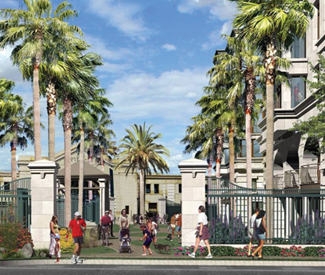
In city planning terms, it’s a fairly modest project: 134 condos, no buildings more than 12 stories tall, on a 27,000-square-foot site. It’s projected to meet the highest environmental building standards and offers new open space and pedestrian walkways. It’s near Muni, BART, and ferry lines. And the city will collect millions of dollars in new taxes from it.

But the 8 Washington project, which will come before the Planning Commission March 8, has become a flashpoint in city politics, one of the defining battles of Mayor Ed Lee’s administration — and a symbol of how the city’s housing policy has failed to keep pace with the needs of the local workforce.

Put simply, it will create the most expensive condos in city history, housing for the richest of the 1 percent on the edge of the waterfront — and will further push San Francisco toward becoming a city that caters almost entirely to the very wealthy.

So in a city where the growing divide between the 1 percent and the rest of us has become a central issue and where the lack of affordable housing is one of the top civic concerns, 8 Washington is an important test. By any rational standard, this sort of development is the last thing San Francisco needs.

But some of the best-connected lobbyists in the city are pushing it. One of the mayor’s closest allies, Chinatown powerbroker Rose Pak, is a leading advocate — and the final outcome will say a lot about city politics in the Lee administration.

There are all sorts of half-truths and misleading statements by supporters of 8 Washington. Here are the five main reasons the project shouldn’t be approved.

1. It fills no housing need. San Francisco has no shortage of housing for the very rich; the dramatic need, outlined in both regional planning documents and the city’s own General Plan, is for low- and moderate-income housing for the people who actually work in this city (see “Dollars or sense?” 9/28/10). While San Francisco is getting richer by the day, the core workforce — public employees, workers in the hotel and restaurant industry, service workers, construction and trade workers, and a majority of the people in the lower levels of the finance and tech sector — are being priced out of the city. That means more people working here and living far out of town, often commuting by car, in what everyone agrees is an unsustainable situation. Meanwhile, more and more high-paid workers from Silicon Valley are living in San Francisco — again, commuting to distant jobs, either by car or by corporate bus.

The city’s General Plan states that some 60 percent of all new housing built in the city should be below market rate. San Francisco desperately needs housing for its workforce. This type of project simply puts the city deeper in the hole and further from its housing goals.

2. It’s a reward for bad actors. The main developer of this project is Simon Snellgrove, but one of his partners is, by necessity, Golden Gateway, which owns a significant part of the land — and which has been flouting at least the spirit if not the letter of city and state law and costing San Francisco tens of millions of dollars.

As project opponent Brad Paul has noted in written testimony, when Timothy Foo, the current owner, bought the complex from Perini Corp. about 20 years ago, he used a loophole in state law that allowed him to avoid a formal transfer of ownership. That means the property wasn’t re-assessed, costing the city about $1.5 million a year. According to the Assessor’s Office, the deal wasn’t illegal (and these tricks to avoid reassessment are relatively common) but still: He’s costing the city millions by using a loophole not available to most people.

Golden Gateway, which was built in a redevelopment area as middle-class housing, is now renting out apartments as short-term tourist or corporate rentals. There are dozens of examples right now on Craigslist. City law bars the owners of rental housing from converting it to hotel rooms, but a loophole in that law makes what Foo’s outfit is doing technically legal. But he’s clearly violating the spirit of the city ordinance that seeks to protect rental housing from hotel conversions.

One of the main aesthetic complaints about the area — something Snellgrove’s lobbyists have tried to use to support the project — is the ugly fence that now surrounds the Golden Gateway Tennis and Swim Club. But who do you suppose put that fence there?

Do we as a city want to be giving special zoning benefits to companies that try to circumvent tax and housing laws?

3. It’s an environmental disaster. Snellgrove and his architects, Skidmore Owning and Merrill, are seeking LEED platinum certification for the project, saying that its energy-efficiency, water use, and green building materials will make it one of the most sustainable structures in San Francisco. It is, the project website notes, close to all types of public transit.

But LEED doesn’t take into account what the building is used for (see “Is LEED really green,” 7/5/11) — and in this case, the use makes a huge amount of difference.

People who buy multi-million-dollar condos don’t tend to take Muni or BART when they go places. That’s not conjecture, it’s a proven fact. A 2008 study by the American Public Transportation Association notes, bluntly, that wealthier people are more likely to drive cars. When you move into the stratospheric regions of the ultra-rich, that’s even more true. A 2011 report on the Charting Transport website notes: “The very rich tend to shun public transport.”

The current zoning in the area allows for one parking space for every four residential units. Snellgrove is asking for one space per unit — in other words, he figures every single buyer will have a car.

Many of the people who buy these condos won’t be working or even living most of the time in San Francisco. These are condos for world travelers, second and third homes for people who want to spend a few weeks a year in San Francisco. “They aren’t going to be living here all year,” Christina Olague, a former Planning Commission member who is now the District 5 supervisor, told us last July.

If five of the 165 residents of 8 Washington fly in a private or corporate jet from, say, New York to their SF pad once a month, the project will cause the use of jet fuel equivalent to what a normal family would use driving a car for 330 years, Paul noted.

“How many solar panels are needed compensate for burning 396,000 gallons of jet fuel a year?” he asked.

Then there’s the construction issue. If the developer’s projections are correct, as many as 20,000 dump truck runs will be trundling along the Embarcadero for several months, one every two minutes — and it could be happening right as the traffic nightmare called the America’s Cup is hitting the waterfront.

It also goes against some 40 years of waterfront planning policy, all of which as focused on downzoning and creating open space. This would be the first upzoning of San Francisco waterfront property in decades.

4. It will wipe out what is mostly a middle-class recreation facility. The Golden Gateway Tennis and Swim Club will be closed for three years, then (possibly) reopened later as a smaller facility. The club — with two outdoor pools and six tennis courts — sounds like something for the elite, and it’s managed by the upscale Bay Club, but a lot of the users are longtime Golden Gateway residents and seniors. “I would say 30 or 35 percent of the users are seniors,” Lee Radner, chair of Friends of Golden Gateway, told me. Most, he said, are middle-class people, and the expense isn’t that high. “My wife and I pay $3 a day to use the pool,” he said. “I swim every day, and it would cost more than that to use the public pools in the city.” He added: “There are some wealthier people, of course, but many of us are retired and on fixed incomes.”

We’re talking about 90,000 total square feet of outdoor recreation space — which dwarfs the 20,000 square feet of open space the developer promised to provide.

5. The city doesn’t get much out of the deal. In exchange for upzoning the waterfront, creating a big all of buildings and screwing up the city’s housing balance, what does the San Francisco general fund get? Not a lot. The estimates for new tax revenue run about $1.5 million a year of the next 60 years — and when you translate that to what economist call “net present value,” the cash equivalent today of that revenue stream, it’s about $30 million. The Port of San Francisco is talking about creating a special infrastructure financing district — sort of the equivalent of a redevelopment area — to pull that money out in advance, which may not even be legal (since part of the land is a former redevelopment area, the state law that allows these special finance districts may not apply). But even so, a Jan. 14 Port memo suggests that the agency has plans to spend all that money on its own infrastructure — setting up a potential battle between the supervisors and the Port Commission over where the money, if it actually can be collected up front, will go.

Like any developer, Snellgrove will pay into the city’s affordable housing fund — in this case, about $9 million to pay for the equivalent of 27 units. No affordable units will be on site, of course; that would detract from the uber-wealthy ambience of the place. And it’s not clear when those units would be built. “Nobody builds 27-unit buildings any more,” Paul, a former deputy mayor for housing, said. “We’ll have to wait until there’s enough money for a bigger project, somewhere, sometime down the road. That’s what we’re getting here.”

Either way, it’s not a huge benefit for allowing this disaster of a project — and it’s a terrible statement for San Francisco to make. At a time when the mayor has cleared the Occupy protesters — who are talking about how little the rich pay in taxes — off the waterfront, the city is preparing to move in the exceptionally rich, who aren’t paying anywhere near their fair share in tax revenue to local government.

(Nobody knows for sure whether the costs of servicing high-end residential exceed the revenue the city gets from property taxes. In 1971, the Guardian put together the first-ever cost-benefit study for highrise office development, which showed that commercial buildings cost the city more than they paid; that’s been confirmed and demonstrated over the years to the point where it’s hardly even an argument any more. The supervisors ought to ask the city economist or the budget analyst to do the same sort of analysis for luxury condos.)

There’s another element here: Mayor Lee made a point during his campaign to say over and over again that he was an independent thinker, that powerful and influential allies like Rose Pak would not be calling the shots at City Hall. This will be his first major test: Pak and lobbyist Marcia Smolens are working hard to promote 8 Washington. And we’re already getting some disturbing signals out of the mayor’s office.

Lee told us that he has “no thoughts” about the project and hasn’t been paying any attention to it. That’s an odd stance, considering that his own Port Commission is pushing it and staffers in his office are working with the developer. This is a big priority for Pak, and the notion that she has never mentioned it to the mayor defies reason. Board President David Chiu, who talks to the mayor regularly, opposes the project, which is in Chiu’s district.

It’s hard to imagine that anyone who pays attention to local politics could be missing what will be one of the landmark votes this spring on the Planning Commission — which will take up the project March 8 — and the Board of Supervisors.

The mayor, may, indeed, be ignoring everything that supporters and opponents of 8 Washington have said and may be waiting until the Planning Commission vote to take a position. But if he’s just ducking questions because he’s planning to support it, he’s making a big mistake.

This is a chance for San Francisco to go beyond the platitudes about building housing, go beyond the hype about “green” buildings, see through the fraud about community benefits and consider what this really is: A special favor for a developer who wants to cater to the top 1 percent of the 1 percent and move San Francisco even closer to being a city of, by, and for the elite. The only reasonable vote on 8 Washington is No.

Editorial: The case against the 8 Washington tower

27

Editorial note: In 1971, at the height of the Alvin Duskin anti-highrise battle, the Guardian did a special first ever cost benefit study for high rise office development.

We found that highrises cost the city  more in services than they produce in revenue.  This meant that the commercial high rise boom could be fought on economic grounds, not just aesthietic and environmental grrounds, and the Chamber of Commerce/Big development gang could never adequately refute our findings.  In fact, they are now taken for  granted. So, as the 8 Washington battle is poised to open the floodgates even further for a forest of market rate residential  buildings, it’s time for the city to do its own study to determine the economics of high end  residential buildings.  Does the cost of servicing luxury residential buildings exceed the taxes they pay? We and many others in the neighborhoods are certain that market rate housing doesn’t pay for itself. But the facts are needed and so we urge the supervisors to direct the budget analyst or the city economist to do a similar analysis  for luxury condos.  Below is Executive Editor Tim Redmond’s powerful argument against 8 Washington.

By Tim Redmond

tredmond@sfbg.com

In city planning terms, it’s a fairly modest project: 134 condos, no buildings more than 12 stories tall, on a 27,000-square-foot site. It’s projected to meet the highest environmental building standards and offers new open space and pedestrian walkways. It’s near Muni, BART, and ferry lines. And the city will collect millions of dollars in new taxes from it.

But the 8 Washington project, which will come before the Planning Commission March 8, has become a flashpoint in city politics, one of the defining battles of Mayor Ed Lee’s administration — and a symbol of how the city’s housing policy has failed to keep pace with the needs of the local workforce.

Put simply, it will create the most expensive condos in city history, housing for the richest of the 1 percent on the edge of the waterfront — and will further push San Francisco toward becoming a city that caters almost entirely to the very wealthy.

So in a city where the growing divide between the 1 percent and the rest of us has become a central issue and where the lack of affordable housing is one of the top civic concerns, 8 Washington is an important test. By any rational standard, this sort of development is the last thing San Francisco needs.

But some of the best-connected lobbyists in the city are pushing it. One of the mayor’s closest allies, Chinatown powerbroker Rose Pak, is a leading advocate — and the final outcome will say a lot about city politics in the Lee administration.

There are all sorts of half-truths and misleading statements by supporters of 8 Washington. Here are the five main reasons the project shouldn’t be approved.

1. It fills no housing need. San Francisco has no shortage of housing for the very rich; the dramatic need, outlined in both regional planning documents and the city’s own General Plan, is for low- and moderate-income housing for the people who actually work in this city (see “Dollars or sense?” 9/28/10). While San Francisco is getting richer by the day, the core workforce — public employees, workers in the hotel and restaurant industry, service workers, construction and trade workers, and a majority of the people in the lower levels of the finance and tech sector — are being priced out of the city. That means more people working here and living far out of town, often commuting by car, in what everyone agrees is an unsustainable situation. Meanwhile, more and more high-paid workers from Silicon Valley are living in San Francisco — again, commuting to distant jobs, either by car or by corporate bus.

The city’s General Plan states that some 60 percent of all new housing built in the city should be below market rate. San Francisco desperately needs housing for its workforce. This type of project simply puts the city deeper in the hole and further from its housing goals.

2. It’s a reward for bad actors. The main developer of this project is Simon Snellgrove, but one of his partners is, by necessity, Golden Gateway, which owns a significant part of the land — and which has been flouting at least the spirit if not the letter of city and state law and costing San Francisco tens of millions of dollars.

As project opponent Brad Paul has noted in written testimony, when Timothy Foo, the current owner, bought the complex from Perini Corp. about 20 years ago, he used a loophole in state law that allowed him to avoid a formal transfer of ownership. That means the property wasn’t re-assessed, costing the city about $1.5 million a year. According to the Assessor’s Office, the deal wasn’t illegal (and these tricks to avoid reassessment are relatively common) but still: He’s costing the city millions by using a loophole not available to most people.

Golden Gateway, which was built in a redevelopment area as middle-class housing, is now renting out apartments as short-term tourist or corporate rentals. There are dozens of examples right now on Craigslist. City law bars the owners of rental housing from converting it to hotel rooms, but a loophole in that law makes what Foo’s outfit is doing technically legal. But he’s clearly violating the spirit of the city ordinance that seeks to protect rental housing from hotel conversions.

One of the main aesthetic complaints about the area — something Snellgrove’s lobbyists have tried to use to support the project — is the ugly fence that now surrounds the Golden Gateway Tennis and Swim Club. But who do you suppose put that fence there?

Do we as a city want to be giving special zoning benefits to companies that try to circumvent tax and housing laws?

3. It’s an environmental disaster. Snellgrove and his architects, Skidmore Owning and Merrill, are seeking LEED platinum certification for the project, saying that its energy-efficiency, water use, and green building materials will make it one of the most sustainable structures in San Francisco. It is, the project website notes, close to all types of public transit.

But LEED doesn’t take into account what the building is used for (see “Is LEED really green,” 7/5/11) — and in this case, the use makes a huge amount of difference.

People who buy multi-million-dollar condos don’t tend to take Muni or BART when they go places. That’s not conjecture, it’s a proven fact. A 2008 study by the American Public Transportation Association notes, bluntly, that wealthier people are more likely to drive cars. When you move into the stratospheric regions of the ultra-rich, that’s even more true. A 2011 report on the Charting Transport website notes: “The very rich tend to shun public transport.”

The current zoning in the area allows for one parking space for every four residential units. Snellgrove is asking for one space per unit — in other words, he figures every single buyer will have a car.

Many of the people who buy these condos won’t be working or even living most of the time in San Francisco. These are condos for world travelers, second and third homes for people who want to spend a few weeks a year in San Francisco. “They aren’t going to be living here all year,” Christina Olague, a former Planning Commission member who is now the District 5 supervisor, told us last July.

If five of the 165 residents of 8 Washington fly in a private or corporate jet from, say, New York to their SF pad once a month, the project will cause the use of jet fuel equivalent to what a normal family would use driving a car for 330 years, Paul noted.

“How many solar panels are needed compensate for burning 396,000 gallons of jet fuel a year?” he asked.

Then there’s the construction issue. If the developer’s projections are correct, as many as 20,000 dump truck runs will be trundling along the Embarcadero for several months, one every two minutes — and it could be happening right as the traffic nightmare called the America’s Cup is hitting the waterfront.

It also goes against some 40 years of waterfront planning policy, all of which as focused on downzoning and creating open space. This would be the first upzoning of San Francisco waterfront property in decades.

4. It will wipe out what is mostly a middle-class recreation facility. The Golden Gateway Tennis and Swim Club will be closed for three years, then (possibly) reopened later as a smaller facility. The club — with two outdoor pools and six tennis courts — sounds like something for the elite, and it’s managed by the upscale Bay Club, but a lot of the users are longtime Golden Gateway residents and seniors. “I would say 30 or 35 percent of the users are seniors,” Lee Radner, chair of Friends of Golden Gateway, told me. Most, he said, are middle-class people, and the expense isn’t that high. “My wife and I pay $3 a day to use the pool,” he said. “I swim every day, and it would cost more than that to use the public pools in the city.” He added: “There are some wealthier people, of course, but many of us are retired and on fixed incomes.”

We’re talking about 90,000 total square feet of outdoor recreation space — which dwarfs the 20,000 square feet of open space the developer promised to provide.

5. The city doesn’t get much out of the deal. In exchange for upzoning the waterfront, creating a big all of buildings and screwing up the city’s housing balance, what does the San Francisco general fund get? Not a lot. The estimates for new tax revenue run about $1.5 million a year of the next 60 years — and when you translate that to what economist call “net present value,” the cash equivalent today of that revenue stream, it’s about $30 million. The Port of San Francisco is talking about creating a special infrastructure financing district — sort of the equivalent of a redevelopment area — to pull that money out in advance, which may not even be legal (since part of the land is a former redevelopment area, the state law that allows these special finance districts may not apply). But even so, a Jan. 14 Port memo suggests that the agency has plans to spend all that money on its own infrastructure — setting up a potential battle between the supervisors and the Port Commission over where the money, if it actually can be collected up front, will go.

Like any developer, Snellgrove will pay into the city’s affordable housing fund — in this case, about $9 million to pay for the equivalent of 27 units. No affordable units will be on site, of course; that would detract from the uber-wealthy ambience of the place. And it’s not clear when those units would be built. “Nobody builds 27-unit buildings any more,” Paul, a former deputy mayor for housing, said. “We’ll have to wait until there’s enough money for a bigger project, somewhere, sometime down the road. That’s what we’re getting here.”

Either way, it’s not a huge benefit for allowing this disaster of a project — and it’s a terrible statement for San Francisco to make. At a time when the mayor has cleared the Occupy protesters — who are talking about how little the rich pay in taxes — off the waterfront, the city is preparing to move in the exceptionally rich, who aren’t paying anywhere near their fair share in tax revenue to local government.

(Nobody knows for sure whether the costs of servicing high-end residential exceed the revenue the city gets from property taxes. In 1971, the Guardian put together the first-ever cost-benefit study for highrise office development, which showed that commercial buildings cost the city more than they paid; that’s been confirmed and demonstrated over the years to the point where it’s hardly even an argument any more. The supervisors ought to ask the city economist or the budget analyst to do the same sort of analysis for luxury condos.)

There’s another element here: Mayor Lee made a point during his campaign to say over and over again that he was an independent thinker, that powerful and influential allies like Rose Pak would not be calling the shots at City Hall. This will be his first major test: Pak and lobbyist Marcia Smolens are working hard to promote 8 Washington. And we’re already getting some disturbing signals out of the mayor’s office.

Lee told us that he has “no thoughts” about the project and hasn’t been paying any attention to it. That’s an odd stance, considering that his own Port Commission is pushing it and staffers in his office are working with the developer. This is a big priority for Pak, and the notion that she has never mentioned it to the mayor defies reason. Board President David Chiu, who talks to the mayor regularly, opposes the project, which is in Chiu’s district.

It’s hard to imagine that anyone who pays attention to local politics could be missing what will be one of the landmark votes this spring on the Planning Commission — which will take up the project March 8 — and the Board of Supervisors.

The mayor, may, indeed, be ignoring everything that supporters and opponents of 8 Washington have said and may be waiting until the Planning Commission vote to take a position. But if he’s just ducking questions because he’s planning to support it, he’s making a big mistake.

This is a chance for San Francisco to go beyond the platitudes about building housing, go beyond the hype about “green” buildings, see through the fraud about community benefits and consider what this really is: A special favor for a developer who wants to cater to the top 1 percent of the 1 percent and move San Francisco even closer to being a city of, by, and for the elite. The only reasonable vote on 8 Washington is No.

Food-truck battle at the board of supes

14

The supervisors are weighing in on a state bill that would ban food truck from parking within 1500 feet of schools — and it’s really tricky.

Let’s start with a bit of reality: My kids go to public schools, my son’s in middle school, he rides Muni home — and there’s ample opportunity for him to buy some really nasty stuff. There’s a 7-Eleven a couple of blocks from his school, and kids walk over there all the time and buy those disgusting 32-ounce sugar bombs. If a truck selling chips and soda and greasy tacos showed up at 3:30 p.m., the kids would be lined up to spend the money their parents though was going for a nice healthy lunch.

And the trucks would go there, if they could, the same way the ice cream trucks used to cruise through my suburban neighborhood in the 1960s (yeah, I’m old, old, old) in the late afternoon, when they could guarantee America’s children would be hungry and ready to spoil their supper.

But they can’t, see, because San Francisco already bans food trucks from within 1,500 feet of a public middle school or high school — which is a pretty broad zone.

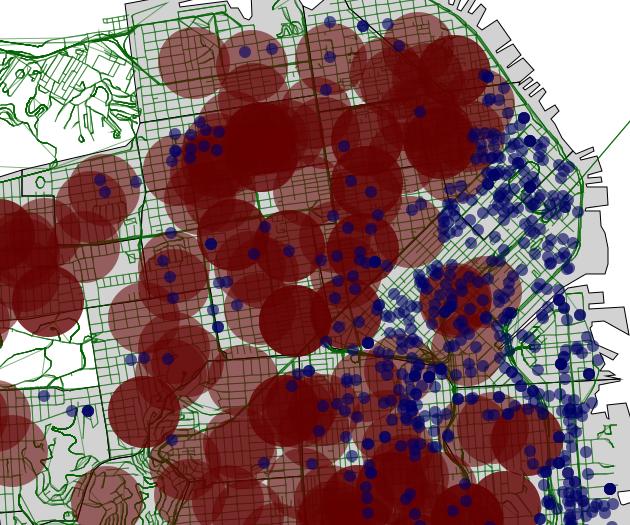
Now Assemblymember Bill Monning has introduced a bill that would make that ban statewide — and would include middle schools and private schools. Sounds good, and some healthy-food advocates love it. But San Francisco’s a little different than, say, Hayward or Fresno — this is such a dense city that there are schools almost everywhere. If you ban food trucks from within 1,500 feet of all schools, then you ban them from about 80 percent of the city. Burrito Justice has a great set of maps that give you the picture (burritohibition!)

The maps also suggest the problems with banning anything from within 1,500 feet of a school in San Francisco. Pot clubs, liquor stores, sex clubs … there are all sorts of places where you really don’t want your kids hanging out, but if you make those broad exclusions, you force them all into a very few small areas (including northern Soma, the waterfront and Bayview) and that’s not exactly fair, either. Should all the food trucks in the city be congregated in those crowded places that fit the 1,500 foot rule?

My 10-year-old daughter walks through the heart of the Castro, which is probably within 1,500 feet of her school, and there’s some stuff in the storefronts that isn’t exactly age appropriate, and we deal. She asked me once why people were walking around naked, and I said “because they like to,” and she shrugged and that was that.My 12-year-old son knows that people smoke pot and that it’s legal for adults to use as medicine; I don’t think the notion of him walking past a well-regulated dispensary is going to make him any more (or less, god help me) likely to try some for himself some day.

So I’m kind of with Sup. Scott Wiener, who wants the city to oppose the Monning bill — not because I want trucks selling Doritos out in front of Aptos in the afternoon, but because I think San Francisco already prevents that, and 1,500 feet is way too much for a city this size. Maybe amend the bill to allow cities to make their own rules, but have the state rules apply if they don’t. Maybe allow cities beyond a certain density to change the distance to 500 feet.

Maybe think a little more about what it really means to ban things because they’re close to schools. It doesn’t always make sense.

PS: Actually, I’m thinking maybe we should ban all multimillion-dollar condos from anywhere within 5,000 feet of a school. Exposing the impressionable minds of small children to such graphic, disgusting, ostentatious displays of wealth has to be bad for them. Worse than seeing a sex club, anyway.


15 lipsmacking cocktails for $5 and under

0

Screw on your drinking hats, cheapos — we tracked down 15 watering holes that’ll leave you toasted, in a financially stable kind of way. 

1. Tempest Bar’s $5 boilermaker

A shot of Jim Beam in a pint of PBR. Is this a terrible idea? Yes. Should you do it anyways? Yes. 

431 Natoma. (415) 495-1863

2. Phone Booth’s $4 tequila sunrise 

It’s a small place, but is embellished with awesome décor, cute bartenders, an eclectic mix of people, and really strong, cheap drinks. Their jukebox will have you coming back for more.  

1398 S. Van Ness, SF. (415) 648-4683


3. Moby Dick’s $6 2-for-1 margaritas 

Put both straws in your mouth, ease in to your brain freeze, and distract yourself with any of the three music videos playing on the screen overhead — a flawless solution for the worst of dates. 

4049 18th St., SF. (415) 861-1199, www.mobydicksf.com


4. Edinburgh Castle Pub’s $5 Jameson and coke 

It kind of looks like a barn — and this isn’t necessarily a bad thing. It’s a dive bar with a second floor, and is a fun place to go with a big group of friends.  

950 Geary, SF. (415) 885-4074, www.castlenews.com


5. Gold Cane Cocktail Lounge’s $4 bloody mary

The back patio here makes you forget you’re in a bar and feel like you’re in someone else’s backyard. The bartenders are sweet, the regulars always have a crazy story or four to share, and there’s free books in the back. 

1569 Haight, SF. (415) 626-1112


6. Butter’s $5 trailer tea 

Trailer tea, for those who were wondering, is sweet tea vodka. Butter also serves Prom Night punch in mason jars and has deep-fried Twinkies and SpaghettiOs. 

354 11th St., SF. (415) 863-5964, www.smoothasbutter.com 


7. You See Sushi’s $2.75 hot sake 

Now you see it, now you don’t. Your third round of sake will bring a whole new meaning to the restaurant’s name. 

94 Judah, SF. (415) 681-4010, www.youseesushi.com 


8. The Blue Light’s $3 SF Giant’s shot 

There’s not as much blue light as you think there would be, which is kind of disappointing. But their SF Giant’s shot — Harlem liqueur mixed with orange soda — will make you forget all of that anyway. 

1979 Union, SF. (415) 922-5510, www.thebluelightsf.com 


9. Delaney’s $4 vodka cranberry

A wonderful breath of dive bar air away from the typical Marina bars. Fully quipped with a jukebox, popcorn machine, and a Galaga/Pacman sit-down video game. 

2241 Chestnut, SF. (415) 931-8529 


10. Tornado’s $5 pomegranate cider 

This is a no-nonsense kind of bar. Know what you’re going to order, grab your drink, and gulp it down with a sausage from Rosamunde next door. 

547 Haight. (415) 863-2276, www.tornado.com


11. Lucky 13’s $4 whiskey sour

This dimly lit bar has cheap drinks, a good looking juke box, and free movie-grade popcorn (think butter). And the cutest dogs show up too.  

2140 Market, SF. (415) 487-1313 


12. Mission Bar’s $4 Manhattan

The red “BAR” sign that hangs outside lets you know this place gets straight to the point. Forget about names, just drink your drink. 

2695 Mission, SF. (415) 647-2300 


13. Specs’ Twelve Adler Museum Cafe’s $5 dirty vodka martini 

Postcards from around the world adorn the walls, a bluesy pianist playing in the corner, and an old school vibe that will take you back. 

12 William Saroyan, SF. (415) 421-4112 


14. Pittsburgh’s Pub’s $4 Ketel One and tonic 

If you ever fall asleep on the N-Judah and end up at the end of the Muni line, pick yourself up with any of the many cheap drinks at Pittsburgh’s Pub. 

4207 Judah, SF. (415) 664-3926 


15. Lexington Club’s $1 Margarita Fridays 

The only time it is perfectly okay to drink five margaritas in one sitting is at Lexington before 10 p.m. on Fridays. 

3464 19th St., SF. (415) 863-2052, www.lexingtonclub.com

Nightlife: Fun plus jobs

8

By Supervisor Scott Weiner

OPINION We all know the cultural benefits of nightlife. It’s fun. We get to meet people — friends, lovers, and all the rest. We build community. We hear great music. We dance. We spend time outside on our streets. For LGBT people, we meet other LGBTs and keep our community strong. The list goes on: Without a strong entertainment scene, including bars, clubs, live music venues, arts venues, night-time restaurants, and street fairs, our city would be a less interesting and less diverse place.

But the undisputed cultural importance of nightlife isn’t the whole story. Nightlife is a significant economic contributor to San Francisco. It creates jobs, particularly for working-class and young people. It generates tax revenue that helps fund Muni, health clinics, and parks. It allows creative entrepreneurs to start businesses. It generates tourism. It draws foot traffic into neighborhoods to the benefit of other neighborhood businesses.

This is all pretty intuitive. Yet, as a city, we’ve never actually measured the economic impact of our nightlife scene. One of my first acts a member of the Board of Supervisors was to request the city economist to conduct an economic impact study doing just that.

The study is almost done, and we already have a few preliminary results. Nightlife in San Francisco generates $4.2 billion a year in spending, with $1 billion of that amount coming from bars, clubs, performance venues, and art spaces. Some 48,000 people are employed in nightlife businesses, and these businesses contribute $55 million a year in local taxes. On March 5, we’ll announce the full results of the study at a hearing of the Land Use and Economic Development Committee.

This data will help us make smart public policy around nightlife. In the past, those decisions frequently have been driven by anecdote and over-reaction to isolated events. Trouble near a small number of nightclubs? The city responds by making it difficult for all nightclubs to operate, even those with excellent safety records and despite the dramatic improvement in the Entertainment Commission’s oversight. Or, the city goes even further and proposes requiring all clubs, even small ones, to scan ID cards of everyone who enters. (That proposal, thankfully, was roundly rejected.)

When we make these decisions, we should do so with a full understanding not just of the downsides of nightlife but of the positives, including cultural and economic benefits.

Entertainment is under pressure in San Francisco. There are neighborhoods with significant friction between housing and nightlife. Some of that friction results from a small number of problem venues. Other times, a good venue is jeopardized for simply conducting its business within the limits of San Francisco law — for example, a single neighbor got Slim’s shut down for a few weeks for noise, despite the club’s compliance with our noise ordinance.

We also continue to have bizarre Planning Code restrictions that undermine entertainment, such as the Mission Alcohol Special Use District, which makes it difficult or impossible to start creative new businesses in the Mission if alcohol is involved. This provision almost prevented a new bowling alley from locating at 17th and South Van Ness. Similarly, some are concerned that the Western SoMa Plan, as currently written, will undermine nightlife on 11th Street by surrounding clubs with new housing and by reducing the number of venues.

A thriving nightlife scene is key to our city’s cultural identity and economic future. Now that we have the data on its benefits, we can take a more balanced and thoughtful approach.

Supervisor Scott Wiener represents District 8 on the Board of Supervisors. The March 5 hearing will start with a noon rally on the steps of City Hall followed by the hearing at 1 p.m. in City Hall Room 263.


The losing bets

26

By Darwin BondGraham

news@sfbg.com

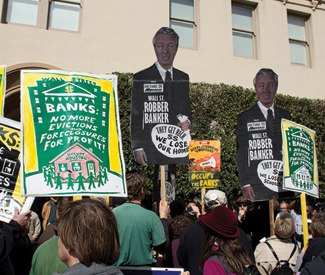
Wall Street’s massive taxpayer funded bailout, initiated by the Bush administration and carried forward under President Obama, never really ended — it just shifted from federal to local sources of funding. Even while local and state governments have been forced to cut back on crucial services, wealthy banks and investment firms are being padded with enormous cash flows sucked directly from the already strained budgets of cities, counties, and public agencies.

That’s the message a growing chorus of activists in the Bay Area are bringing before the boards, councils, and commissions that entered into complex financial deals with Wall Street banks, deals that turned toxic in the crash of 2008. Activists want elected officials and the banks to cancel the contracts and refund the public.

The Bay Area is the epicenter of this renewed movement for financial justice. Last week, teachers from Peralta College, organizers with the Alliance of Californians for Community Empowerment (ACCE), Oakland religious leaders, and Occupy Oakland activists organized four protests contesting what they say is bank predation on local communities.

At issue are arcane financial instruments called interest rate swaps. Sold by banks to virtually every sizable government and local agency in the US through the 2000s, rate swaps promised governments the ability to “swap” their potentially costly variable rate payments on bonds into a synthetic fixed rate. Seeking to protect local taxpayers during the volatile 2000s, when floating interest rates were rising, local leaders eagerly signed on.

But the economic meltdown turned those tools into golden handcuffs for local government agencies. Taxpayers are now forced to regularly pay millions to the banks simply because variable interest rates, at the urging of the Federal Reserve, have fallen far below the synthetic rates. These deals might seem numbingly complex, but the effects on local communities are clear and painful.

“The Metropolitan Transportation Commission is paying upwards of $53 million a year on rate swaps,” said Alia Phelps of ACCE at a protest on Feb. 21 outside of the former Bank of America building at 555 California Street. “This is money that isn’t going to keep routes in service, that isn’t paying drivers, nor going to repair buses, or to keep fares lower. We need these swaps renegotiated.”

That protest included visits to half a dozen banks. Activists demanded branch managers fax a letter to their corporate headquarters calling on the banks to voluntarily renegotiate swaps signed with the Metropolitan Transportation Commission (MTC), the Bay Area’s regional transportation authority, which has lost over $100 million on toxic swap deals.

In 2002 the Bay Area Toll Authority (BATA), a state-level agency operated by the MTC, issued more than $1 billion in bonds to pay for repairs and seismic upgrades of regional toll bridges. Three financial giants stepped forward promising to lower MTC’s long-term borrowing costs on these bonds by using interest rate swaps. Ambac, Solomon Smith Barney and Morgan Stanley signed deals with the MTC to cover $300 million in debt.

“With this transaction, we are getting the peace of mind of a fixed debt payment at a significant discount from traditional price levels,” MTC’s Chief Financial Officer Brian Mayhew said at the time of the deal.

Basically the swap agreement had the MTC paying a fixed interest rate of 4.1 percent to the banks, while the banks paid 65 percent of the London Interbank Offered Rate (LIBOR), a key benchmark used in global financial markets. Whichever party’s sum happened to be higher when payments came due would pay the difference. The advantage of the deal, in the eyes of the MTC’s managers, was that it would lock-in a low interest rate on MTC’s debt, potentially saving as much as $45 million.

“We think it’s a good time to lock in these low rates,” Mayhew said in 2002.

Fast forward to 2009. A year into the financial crisis, interest rates collapsed. LIBOR, which had been fluctuating around 5 percent and reached a peak of 5.8 percent in September of 2007, plummeted to virtually zero. The flow of payments became entirely one-sided, from MTC to banks that offered this deal. The advantage of the swap evaporated, and it became a toxic asset. While the Federal Treasury would offload similar toxic assets from the “too big to fail banks” using the TARP program, local governments were stuck with them.

As Ambac careened toward bankruptcy in 2010 due to its absurdly over-leveraged portfolio of credit default swaps, the MTC was forced to terminate its swap agreement with the company, paying the exorbitant sum of $104 million, after already having paid out $23 million in interest. All of this was essentially bridge toll money, surrendered by drivers crossing the seven state-owned bridges administered by BATA: the Bay, Antioch, Benicia-Martinez, Carquinez, Dumbarton, Richmond-San Rafael, and San Mateo bridges.

The drain on MTC funds indirectly affects all of its programs, including operational support for AC Transit, Muni, and other regional bus and train services. According to its most recent Comprehensive Annual Financial Report, MTC and its transit agency partners are on the hook for another $235 million in interest rate payments due on swaps with a rogue’s gallery of banks including Wells Fargo, Morgan Stanley, Citigroup, Bank of America, JP Morgan, Bank of New York, and Goldman Sachs. All of this money will be diverted from the MTC’s various transit infrastructure, planning, and operations accounts.

“The big picture is service cuts, pay cuts, work speed ups, fare hikes, route eliminations, and other things that harm working people who ride transit,” said retired Muni worker Ellen Murray.

The MTC’s quarter-billion dollar rate swap nightmare is only the most obvious part of a more systemic problem. Until at least 2030, given current conditions, San Francisco’s Airport Commission must make costly rate swap payments to numerous banks, including JP Morgan Chase, Goldman Sachs, Depfa, Bank of America, and Merrill Lynch, on agreements associated with more than a half-billion in debt. Much of this is linked to commercial paper issued to pay for infrastructure at the Airport (SFO).

Unlike the MTC, SFO’s financial managers were more prudent in entering swap agreements, and therefore secured better terms that have produced a net savings. “The Airport has saved about $92 million to date,” Assistant Deputy Airport Director Kevin Kone told us, referring mostly to gains made between 2005 and late 2007.

But since 2008, SFO’s swaps have been losing money. When Lehman Brothers collapsed, and Bear Stearns imploded and was absorbed into JP Morgan, SFO was forced to terminate swaps with both companies, costing $6.7 million. Last year SFO paid $6.65 million to terminate a rate swap agreement with Ireland’s Depfa Bank. In September, the Airport paid another $4.6 million to end yet another rate swap with JP Morgan. These specific swap agreements, Kone says, “were functioning as they should have early on, providing savings,” but now they’re draining public funds.

SFO’s seven remaining swaps have a negative value of $67 million, according to San Francisco’s 2011 Comprehensive Annual Financial Report. As with the MTC, SFO’s debts will ultimately be paid by passengers and taxpayers. Kone says nobody really knows how much these swaps could ultimately impact the airport, either in terms of cost or savings.

“If interest rates rise, they could have a positive cost savings impact on the airport,” he said.

Joe Keffer of the Service Employees International Union (SEIU) Local 1021 said at the Feb. 21 rally that Oakland has already paid Goldman Sachs $26 million on a swap that dates back to 1997, and that under current market conditions, the city will have to pay roughly another $25 million until the contract expires in 2021.

Oakland’s toxic deal with Goldman Sachs is now the subject of much scrutiny. The newly formed Coalition for Economic and Social Justice —made up of churches, labor unions, neighborhood groups, and Occupy Oakland activists— took up the issue with the City Council on Feb. 21, packing the chamber with one of the more diverse activist coalitions in recent memory.

“We’re here to implore you to get the City of Oakland out of this toxic relationship,” Rev. Daniel Buford of the Allen Temple Baptist Church told the council.

Members of the Oakland City Council are sympathetic to this message. In a letter sent last June, Council member Rebecca Kaplan implored Goldman Sachs CEO Lloyd Blankfein to spare Oakland’s taxpayers: “By bringing the contract to conclusion with no penalty fees, and negotiating a reasonable exit strategy, you would be demonstrating good faith to public taxpayers in the most substantial way.” At the conclusion of public comment Tuesday night, Oakland Council member Libby Schaaf promised the public action on the swap.

In a Valentine’s Day protest the previous week, 50 activists visited the Oakland offices of Morgan Stanley. Faculty and students from the Peralta Community College system went there demanding the bank renegotiate a rate swap that is estimated to have cost the college $1.6 million last year. The same day the college’s board of trustees discussed the need to cut $12 million more from the budget in 2012. Morgan Stanley CEO James Goreman’s pay for 2011 was $14 million, opponents of the swap point out.

Peralta student and Bay Area transit activist Adam Ross attempted to reach the 9th floor offices of Morgan Stanley in a small delegation to deliver a letter demanding the bank renegotiate the swap: “There were signs on the door saying the office was closed. They probably got tipped off and locked the doors.”

Afterward, Caesar Swaby of Riders for Transit Justice addressed the rally, connecting dots for the different constituencies present: “Morgan Stanley is taking money from Peralta College, causing classes to be cut. Morgan Stanley is also taking money from transit riders. Morgan Stanley has a $3 million rate swap with the MTC, causing cuts to bus and train services.”

A Morgan Stanley representative declined to comment for this report. Goldman Sachs did not return calls and emails. A spokesperson for the MTC was unable to be reached by deadline.

Making black herstory, every day

8

news@sfbg.com

Deconstructing the roots of

The black n gray suits

with hands in the Loot

That has buried the truth

About our black, brown and disabled youth

— excerpt from KKKourt by Tiny

OPINION On the first day of Black Herstory Minute (I mean, Month), I practiced black herstory, and walked through activism and breathed organizing and lived resistance by putting my body in the benches belonging to the criminal injustice system (a.k.a. the plantation) at 850 Bryant. I was there to support a struggle against injustice in the case of a young African warrior for truth, Fly Benzo, a.k.a. Debray Carpenter — student, son, media producer, organizer, and hip-hop artist who is facing a felony charge, jail sentence and $95,000 fine for nothing more than exercising his First Amendment right to free speech.

How many among you, overwhelmed with multiple Face-crack postings and a cacophony of tweets, might have missed the story of Fly, who spoke the truth about racism, police brutality and the unjust death of Kenneth Harding Jr. to a cop in a poor-people-of-color neighborhood, Bayview, which is under seize from the occupying army known as the police (or po’lice as we call them at POOR Magazine)?

As a woman criminalized and incarcerated for the sole act of being poor and houseless, the melanin-challenged daughter of a poor black single mother who spent all of her life in poverty and in struggle, I have witnessed first hand unequal justice against people of color and poor people. It’s a fact that remains, in 2012, still a very dire reality.

“They arrested me for exercising my Constitutional right to free speech,” said Benzo, 22.

Benzo’s revolution began when he was born to conscious African-descendant parents who, like many African descendant people in San Francisco, have been under the constant threat of removal, displacement, redlining, and ongoing police harassment for decades. He has been speaking out about injustices since he was a teen, starting with the fact that hardly any Bayview residents were hired to construct the multi-million-dollar T-Train that runs from downtown to Third Street — and the dramatic rise in the violent policing of the T-Train and the Muni bus lines that run through the poor communities of color in S.F.

But the beginning of Benzo’s current battle with the criminal injustice system began when he began to speak up about Harding, murdered by San Francisco police officers for not having a $2 dollar bus transfer. The judge might not admit the video that was taken at the scene of Benzo’s arrest, making his case all the more difficult to fight, and the truth all the more difficult to hear and see, which is where community support comes in.

A lot of people and organizers and politricksters talk about stopping the violence and how to “deal” with the inequities of racism and classism and violence on our youth of color. And yet when this brother spoke out, used his voice for nothing but truth and resistance about injustices he personally experiences everyday, who comes out to support him?

Practicing revolutionaries at POOR Magazine, the Idriss Stelly Foundation, The BayView Newspaper, Education not Incarceration, and United Playaz have been there, as well as his hard-working attorney, Severa Keith, and a few more. But we all need to be there, fighting for a very alive, very revolutionary, young truth-teller who is making black history, every day.

Tiny, a.k.a. Lisa Gray-Garcia, is an editor at POOR Magazine. Opening statements in the trial of Debray Carpenter are expected to begin Feb. 8 in Dept. 27.

The parking war

29

EDITORIAL When you talk about changing parking rules in San Francisco, you’re setting off the political equivalent of shooting war. Nobody wants more parking tickets, nobody wants more expensive parking meters, nobody wants to pay for parking that’s been free for years — and the Municipal Transportation Agency has, by most accounts, done a pretty poor job of selling its new parking management program.

That’s too bad, because the MTA proposals aren’t all bad. In fact, the agency is doing exactly the right thing by looking at a long-term citywide plan for altering the way people pay for and use on-street parking. If the bureaucrats at a city department that isn’t used to San Francisco’s often slow community-oriented planning process can shift their outreach efforts into a different gear, there’s no reason they can’t come up with a plan that most neighborhood residents and small businesses will support.

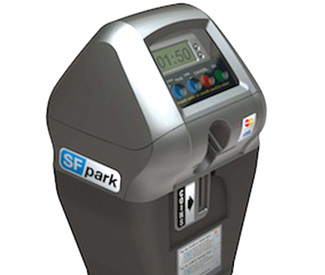
The MTA’s SFPark program uses high-tech meters that accept credit cards and change prices at different points of the day to maximize turnover on the streets. That’s actually good for local businesses — the less time people spend circling the block looking for a parking space, the more likely they are to stop and shop. Limiting the number of cars cruising for a space improves traffic flow. And parking for an hour or two at a meter is still much cheaper than parking in a garage.

But when the MTA announced that it was expanding SFPark into the Northeast Mission, Dogpatch, Potrero Hill and Mission Bay, the neighborhoods rebelled. Some of that was just anger over the prospect of meters being installed on streets that don’t have them. Some of it comes from the changing land use in areas that are increasingly both residential and commercial. Some of it comes from the intense development pressure in those areas.

But a lot of it was a legitimate response to a perception that the MTA was trying to ram the changes through without making a serious effort to work with the community. It’s not surprising — the MTA has been somewhat isolated from the politics of land use and planning in the city. So the staff isn’t used to the fact that San Francisco is a process-oriented place where a wide range of constituent groups want input before anything happens where they live or work.

The neighborhoods need to understand reality, too: The era of free parking in San Francisco is coming to an end. That’s a good thing — the city as a matter of policy should discourage the use of cars, and charging drivers for parking (and using that money to improve Muni) is an obvious solution. And the proposals aren’t that onerous: Paying 25 cents an hour for all-day parking where you work is hardly a terrible financing burden. (And let’s face it — the neighborhood parking stickers are way, way too cheap.)

But much of the southeast is badly served by transit and there are vehicle-intensive production, distribution and repair uses, and MTA needs to understand that. The agency has wisely delayed the program — and after its shown it can work with the neighborhoods, this sort of bold initiative will be possible.

Guardian editorial: The parking war

3

EDITORIAL When you talk about changing parking rules in San Francisco, you’re setting off the political equivalent of shooting war. Nobody wants more parking tickets, nobody wants more expensive parking meters, nobody wants to pay for parking that’s been free for years — and the Municipal Transportation Agency has, by most accounts, done a pretty poor job of selling its new parking management program.

That’s too bad, because the MTA proposals aren’t all bad. In fact, the agency is doing exactly the right thing by looking at a long-term citywide plan for altering the way people pay for and use on-street parking. If the bureaucrats at a city department that isn’t used to San Francisco’s often slow community-oriented planning process can shift their outreach efforts into a different gear, there’s no reason they can’t come up with a plan that most neighborhood residents and small businesses will support.

The MTA’s SFPark program uses high-tech meters that accept credit cards and change prices at different points of the day to maximize turnover on the streets. That’s actually good for local businesses — the less time people spend circling the block looking for a parking space, the more likely they are to stop and shop. Limiting the number of cars cruising for a space improves traffic flow. And parking for an hour or two at a meter is still much cheaper than parking in a garage.

But when the MTA announced that it was expanding SFPark into the Northeast Mission, Dogpatch, Potrero Hill and Mission Bay, the neighborhoods rebelled. Some of that was just anger over the prospect of meters being installed on streets that don’t have them. Some of it comes from the changing land use in areas that are increasingly both residential and commercial. Some of it comes from the intense development pressure in those areas.

But a lot of it was a legitimate response to a perception that the MTA was trying to ram the changes through without making a serious effort to work with the community. It’s not surprising — the MTA has been somewhat isolated from the politics of land use and planning in the city. So the staff isn’t used to the fact that San Francisco is a process-oriented place where a wide range of constituent groups want input before anything happens where they live or work.

The neighborhoods also  need to understand reality: The era of free parking in San Francisco is coming to an end. That’s a good thing — the city as a matter of policy should discourage the use of cars, and charging drivers for parking (and using that money to improve Muni) is an obvious solution. And the proposals aren’t that onerous: Paying 25 cents an hour for all-day parking where you work is hardly a terrible financing burden. (And let’s face it — the neighborhood parking stickers are way, way too cheap.)

But much of the southeast is badly served by transit and there are vehicle-intensive production, distribution and repair uses, and MTA needs to understand that. The agency has wisely delayed the program — and after its shown it can work with the neighborhoods, this sort of bold initiative will be possible.


Pay to park

62

The San Francisco Municipal Transportation Agency has hailed the success of its SFpark program — which uses high-tech meters and demand-variable pricing to manage on-street parking — noting that expired meter citations are down and meter revenue is up. The resulting 11 percent net increase in revenue  is all going to improve Muni. So transit improves, drivers get more spots and fewer tickets — everybody wins.

[CLARIFICATION (2/1): The new meters had an 11 percent net revenue increase compared to the old meters, but overall net revenues from citations and meters was still down by 3 percent.]

But the SFMTA has run into a hornet’s nest of opposition with its latest proposal to expand SFpark into the Northeast Mission District, Potrero Hill, Dogpatch, and Mission Bay, largely because the plan involves placing meters on streets where parking is now free. And even those who don’t object to paying for parking say the SFMTA has bungled this process.

The problem isn’t just what critics say are arrogance and dubious outreach efforts by agency officials. It may be that the SFMTA pursued too many goals at once, mixing them in ways that muddled the message. Or it may just be that charging for parking will always anger drivers, no matter how it’s proposed.

The agency wants to discourage driving — particularly cruising for parking, hence SFpark’s “Circle Less, Live More” slogan — to speed up Muni and reduce traffic congestion. But that also means charging for street parking so cars won’t just sit in those spaces, and that involves a complicated balancing act in mixed use neighborhoods.

Residents, many employers, and commuters want all-day street parking, preferably free and easy. But most business owners want enough parking turnover so their customers can find a spot. City policies call for prioritizing residents’ needs, and the SFMTA needs money to fund and expand Muni service.

Meeting all of those needs isn’t easy. But over the last couple of months, the SFMTA’s effort to expand its successful and popular SFpark program have managed to turn thousands of residents angrily against that program, the agency, and the proposition that people shouldn’t expect free parking.


COMMUNITY OUTRAGE

Architect John Lum and artist-designer Miranda Caroligne didn’t know each other a couple months ago, but now they’re helping to lead a movement that is uniting neighborhood groups in the Mission, Dogpatch, and Potrero Hill against the parking meter proposals.

“You have an agency that is not listening at all to the community. That’s fascism!” declares Lum. He’s actually an amiable and soft-spoken young guy who employs 10 people at his architecture firm near 17th and Capp streets, but this issue really gets his blood boiling.

And Lum isn’t alone, as the Jan. 13 public meeting before an SFMTA hearing officer showed. Not only did everyone who streamed to the microphone voice opposition to the proposals, but they usually did so in angry and accusatory ways, saying it would destroy businesses, punish the poor, and result in conditions that are simply unworkable and intolerable. And they said the SFMTA simply doesn’t care.

“If you’re a PDR business,” Caroligne said, referring to the Production, Distribution, and Repair businesses whose last bastion is some of the targeted areas, “you’re never going to get people to work at a place that doesn’t have parking…This proposal will push them out.”

There are myriad ways that the plans are flawed, say their critics: Meters were proposed on some residential streets in initial plans, despite SFMTA policies to the contrary; traffic surveys had too small a sampling and weren’t realistic; residential permit districts would be replaced by meters, or meters would be placed where districts might work better; transit service on Potrero Hill is too bad to expect people to use it; live-work spaces were inappropriately treated like retail outlets; and meters near the 22nd Street Caltrain station could actually discourage the use of public transit.

“There’s not that much disagreement, but where there is, it’s really important,” said Tony Kelly, president of the Potrero Boosters Neighborhood Association. “I’m someone who supports parking management, and I’m frustrated that the MTA is so tone deaf with this. We’ve been through a lot of fake public outreach efforts and this is looking like one of those.”

Janet Carpinelli, president of the Dogpatch Neighborhood Association, said her members feel like the SFMTA is ramming this through without regard for the needs or input of that neighborhood.

“The real issue is it’s a very big inconvenience to the businesses and residents in this neighborhood and it’s not really helping anything. It’s just a revenue grab by the MTA,” she said.

Potrero Hill resident Jim Wilkins was so outraged by the proposal to install meters along Pennsylvania Street outside his home that he started an online petition against the proposals that has so far garnered about 1,300 signatures. “We’re forming an organization to resist these proposals,” he told us.

Lum was already a member of the 17th Street Coalition, which formed in 2010 to oppose the renewal of a liquor license at the local Gas’n’Shop, but more recently organized opposition to the meter proposal. It attracted Caroligne, and now they’ve formed a new group, Northeast Mission Neighbors, which held a joint organizing meeting with the Dogpatch and Potrero groups on Jan. 23. They’re all determined to delay and modify the SFMTA’s proposal, which had been scheduled for adoption by the SFMTA Board of Directors Feb. 7.

Lum said the proposed changes are tough to accept: “I don’t think this is about free parking, it’s about living and working in a community with certain things and now those things are changing.”


CHANGE IS HARD

The biggest target of critics’ ire is Jay Primus, who runs the SFpark program for the SFMTA. He maintains that he’s done extensive outreach and gathered community input that has shaped the plans. “These are still proposals and nothing has been approved yet,” he told us.

For example, Wilkins told us his campaign continued even after the meters in front of his house were eliminated from the proposal last month. Primus also noted the proposed meters allow for all-day parking at just 25 cents an hour in most places, so it isn’t really such an inconvenience or financial hardship. And Primus just announced that the Feb. 7 hearing is being pushed back by at least two weeks to heed more community input.

But most of the opposition to the proposals isn’t surprising, and Primus thinks it comes more from the idea of charging for street parking than with the specifics of the proposal.

“Parking is always an emotional and delicate issue in San Francisco, as it is in most cities,” Primus said, citing protests against charging for parking going back to when the first meters were installed in 1947. “This has happened at every block that has gotten meters.”

But now, there are even more benefits and ease of use with modern meters, which motorists can pay with a credit card or even remotely. Variable pricing is also used to ensure more parking based on demand, although it’s being kept at a very low rate in areas where businesses or residents still need all-day parking.

“If people are opposed to paying 25 cents per hour, the lowest rate in the city, then they are opposed to paying for parking,” Primus said. He said it’s a matter of equity among citizens: “There’s nothing equitable about providing parking for free and asking people to pay $4 for a round trip Muni ride.”

That’s a notion that is echoed by others who say it’s time for motorists to start paying their fair share.

“Everybody wants something for nothing. We all want that. Nobody wants to pay for parking, not even me,” Don Shoup, the UCLA professor who wrote the influential book The High Cost of Free Parking, told us. He later added, “That whining you hear is the sound of change.”

At a time when governments are hurting for revenue to provide basic services — among them, maintaining extensive roadway systems for motorists whose taxes don’t come anywhere near covering their societal impacts — he said it just doesn’t make sense to continue subsidizing the storage of automobiles.

“San Francisco has some of the most valuable land on earth. You have expensive housing for people and free parking for cars. It’s not surprising that San Francisco has homeless people and traffic congestion,” Shoup said. “There was never a city that is so liberal about other people’s affairs and so conservative about its own affairs.”

But Shoup did agree with critics that the real goal of managing parking isn’t to discourage driving, although he applauds the SFpark program for using its increased revenue on public transit, which he thinks makes sense from a social justice perspective.

Jason Henderson, a professor of geography at San Francisco State and author of an upcoming book on the politics of parking and mobility, goes even further than Shoup in saying that San Francisco should use its parking policies to discourage driving. But at the very least, Henderson said it is counterproductive to offer free parking.

“The city is giving away valuable real estate with all of this free and underpriced curbside parking at a time when the city’s transportation infrastructure is crumbling and essential city services for parks, after school programs, and libraries are constantly being cut. And here we have thousands of acres of real estate just being given away,” Henderson told us.

“If anything, it needs to be done citywide so that it’s judicious and level, so that merchants won’t say that people won’t come to their neighborhood because they can go to a different neighborhood where there’s free parking.”

Primus said there is a particularly strong need to manage parking around Mission Bay and the North Mission, where much of the city’s growth is occurring.

“In a way, the SFMTA is catching up with the growth of the city. These are some of the last remaining areas that are residential-commercial mixed use areas with no parking management,” Primus said.

Kelly agrees that time has come, but he doesn’t think the SFMTA has helped its case, particularly given the emotions surrounding the issue and the need to maintain public support for improved transit service.

“They’ve been spending all their waking hours in the last couple years pissing people off over parking meters, do you really think people will then support their revenue proposals?” Kelly questioned.

Lum and Caroligne both said the SFMTA should have been willing to make the fundamental argument to people that the days of free parking are coming to an end.

“That’s where a lot of the anger is coming from, you’re doing this for all these reasons that don’t make sense and treating us like children,” Caroligne said, although she also added, “I agree with you that there would still be some outrage, even if the outreach had been better.”

Occupy is back — with horns and glitter

8

yael@sfbg.com

On Jan. 20, hundreds of activists converged on the Financial District in a day that showed a reinvigorated and energized Occupy movement.

The day of action was deemed “Occupy Wall Street West.” Despite pouring rain, the numbers swelled to 1,200 by early evening.

Critics have said that the Occupy movement is disorganized and lacks a clear message. Some have decried its supposed lack of unity. Others have even declared it dead.

But the broad coalition of community organizations that came together to send a message focused on the abuses of housing rights by corporations and the 1 percent sent a clear message:

The movement is very much alive.


A FULL SCHEDULE

Protesters packed the day with an impressive line-up of marches, pickets, flash mobs, blockades, and everything in between.

The action began at 6:30 a.m., when dozens chained and locked themselves together, blocking every entrance to Wells Fargo’s West Coast headquarters at 420 Montgomery Street. The bank didn’t open for business that morning.

Another group of protesters did the same thing at the Bank of America Building around the corner. A dozen blockaded one of the bank’s entrances from 8:30 a.m. to 6 p.m., preventing its opening. A group organized by Act Now to Stop War and End Racism (ANSWER) closed down the Bank of America branch at Powell and Market for several hours.

The Bank of America branch at Market and Main was also closed when activists turned it into “the Food Bank of America.” Several chained themselves for the door, while others set up a table serving donated food to hundreds of people.

Meanwhile, activists with the SF Housing Rights Coalition and Tenants Union occupied the offices of Fortress Investments, a hedge fund that has overseen the destruction of thousands of rent controlled apartments at Parkmerced. Direct actions also took place at the offices of Bechtel, Goldman Sachs, and Citicorp.

Hundreds picketed the Grand Hyatt at Union Square in solidarity with UNITE HERE Local 2 hotel workers.

A group of about 600 left from Justin Herman Plaza at noon and marched to offices of Fannie Mae, Wells Fargo, and the Immigration and Customs Enforcement Agency (ICE) in a protest meant to draw attention to housing and immigrant-rights issues.

“It’s not just a corporate problem. The government has been complicit in these abuses as well,” said Diana Masaca, one of the protest’s organizers.

More than 100 activists from People Organized to Win Employment Rights (POWER) and the Progressive Workers Alliance “occupied Muni,” riding Muni buses on Market Street with signs and chants demanding free transit for youth in San Francisco.

Another 200 participated in an “Occupy the Courts” action at the Ninth Circuit Court of Appeals, in protest of the Citizens United Supreme Court decision and corporate personhood.


GLITTER AND BRASS

Exhausted, soaked protesters managed to keep a festive spirit throughout the day, with colorful costumes, loud music, and glitter — lots of glitter.

The Horizontal Alliance of Very Organized Queers (HAVOQ) and Pride at Work brought the sparkly stuff, along with streamers and brightly colored umbrellas, to several different actions. Many painted protest slogans onto their umbrellas, proclaiming such sentiments as “I’ll show you trickle down” and “Not gay as in happy, queer as in fuck capitalism.”

According to protester Beja Alisheva, “HAVOQ is about bringing fabulosity to the movement with glitter, queerness, and pride. All day we’ve been showing solidarity between a lot of different types of oppression.”

There was also the Occupy Oakland party bus — a decked-out former AC transit bus — and carnival, a roving party that shut down intersections and bank entrances in its path while providing passengers a temporary respite from rain.

The Brass Liberation Orchestra, a radical marching band that has been energizing Bay Area protests for a decade, showed up in full force with trumpets, drums, trombones, and a weathered sousaphone.

The Interfaith Allies of Occupy also used horns to declare their message. About 30 participated in a mobile service, sounding traditional rams’ horns and declaring the need to “lift up human need and bring down corporate greed.”

Said Rabbi David J. Cooper of Kehela Community Synagogue in Oakland: “Leviticus 19 says, do not stand idly by in the face of your neighbor’s suffering. Well, we’re all neighbors here. Ninety-nine percent of us are suffering in some way, economically or spiritually. And maybe that number is 100 percent.”


FOCUS ON HOUSING

A coalition called Occupy SF Housing called for and organized the day of action, but the messages ranged from environmental to anti-war to immigrant rights.

Many groups did focus in on housing-related issues — and a takeover of a vacant hotel building stressed the urgency and need to house homeless San Francisco residents.

Housing protests included an anti wage-theft occupation led by the Filipino Community Center and the National Alliance for Filipino Concerns at the offices of CitiApartments, an action at the offices of Fortress Investments to demand a halt to predatory equity, and an “Occupy the Auction” demonstration in which protesters with Occupy Bernal stopped the day’s housing auction (at which foreclosed homes are sold) at City Hall.

“A lot of the displacement in this city is happening because of banks and because of things that are out of peoples’ control,” said Amitai Heller, a counselor with the San Francisco Tenants Union. “People will live in a rent controlled apartment for 20 years thinking that they have their retirement planned. A lot of the critiques of the movement are, if you couldn’t afford it you should move. But these people moved here knowing they could afford it because of our rent controls.”


LIBERATE THE COMMONS

Most of the early protests drew a few hundred people. But when the 5 p.m. convergence time rolled around, many people got off work and joined the march. A rally at Justin Herman Plaza brought about 600; by the time the march joined up with others at Bank of America on Montgomery and California, the numbers had doubled.

The evening’s demonstration, deemed “liberate the commons,” was also more radical than other tactics throughout the day; organizers hoped to break into and hold a vacant building, the 600-unit former Cathedral Hill Hotel at 1101 Van Ness.

When protesters arrived at the site, police were waiting for them. Wearing riot gear and reinforced by barricades, the cops successfully blocked the Geary entrance to the former hotel.

The darkness, rain, and uncertainty created a chaotic environment as protesters decided how to proceed. Some attempted to remove barricades; others chanted anti-police slogans.

Soon, cries of “Medic! We need a medic!” pierced the air. A dozen or so protesters had been pepper sprayed.

Police Information Officer Carlos Manfredi later claimed that the pepper spray was in response to “rocks, bottles and bricks” thrown by protesters. He also claimed that one officer was struck in the chest by a brick, and another “may have broken his hand.”

But I witnessed the entire incident, and I can say that no rocks, bottles or bricks were thrown at police.

When protesters opted to march down Van Ness, apparently towards City hall, several broke windows at a Bentley dealership at 999 Van Ness.

The march then turned around and headed back up Franklin, ending at the former hotel’s back entrance. There, it became clear that some protesters had successfully entered the building; they unfurled a banner from the roof reading “liberate the commons.”

Soon, many other protesters streamed into the building. They held it, with no police interference, for several hours.

Around 9:30, police entered the building and arrested three protesters for trespassing. About 15 others remained in the building, but left voluntarily by midnight.

This building has been a target of protest campaigns in San Francisco since it was purchased by California Pacific Medical Center, which closed the hotel in 2009. There are plans underway for a hospital to open at the site in 2015.

The project has been met with opposition from unions such as SEIU United Healthcare Workers West and UNITE HERE Local 2. The California Nurses Association (CNA) has also come out against the hospital proposal. In fact, it was the target of a CNA protest earlier in the day Jan. 20, when protesters created a “human billboard” reading “CPMC for the 1 percent.”

At a Jan.18 press conference, CNA member Pilar Schiavo said that at the former Cathedral Hill Hotel site, “A huge hospital is being planned with is being likened by Sutter to a five-star hotel. At the same time, Sutter is gutting St. Lukes Hospital, which is essential to providing healthcare for residents in the Mission, the Excelsior and Bayview- Hunter’s Point.”

Homes Not Jails, a group that finds housing for the homeless, often without regard to property rights, was crucial to planning the “Liberate the Commons’ protest. The group insists that the 30,000 vacant housing units in San Francisco should be used to shelter the city’s homeless, which they estimate at 10,000.


RAINY REBIRTH

Wet and cold conditions were not what Occupy SF Housing Coalition organizers had in mind they spent weeks planning Occupy Wall Street West, which was billed as the reemergence of the Occupy Movement in San Francisco for 2012.

Yet for many, the day was still a success.

“The rain’s a downer. But I think it speaks to the power of the movement, the fact that all these people are still out getting soaked,” said Heller on Jan. 20.

Perhaps hundreds of “fair-whether activists” did forgo the day’s events to stay out of the cold. If that’s the case, then occupy protesters with big plans for the spring should be pleased.

At this rate, it seems that Occupy will survive the winter- and emerge with renewed energy in 2012.


This article has been to corrected. We originally reported that a demonstration at the offices of Citi Apartments was led by the Chinese Progressive Association (CPA). In fact, it was led by the Filipino Community Center and the National Alliance for Filipino Concerns, and supported by a number of organizations including the Progressive Workers Alliance, of which CPA is a member organization. We regret the error.

Residents slam proposal for more parking meters

65

Nothing makes people more angry than when the city tries to take away their free street parking. The San Francisco Municipal Transportation Agency was reminded of that fact at a City Hall hearing this morning when residents and business owners unleashed a storm of angry criticism over a proposal to install new parking meters in Potrero Hill, Dogpatch, Mission Bay, and parts of the Mission District.

The plans for this pilot program, which were released on Dec. 20, are intended to address the increased demand for parking in the “Mission Bay Parkshed” from development now underway in the area, as well as concerns about increased demand for street spaces once the parking lot at Folsom and 17th Street is converted into a park.

As with previous SFMTA proposals for extended parking meter hours – which were also met with angry criticism – the idea is to encourage increased use of transit and to free up more street parking space for business customers by discouraging local residents from taking up street parking spots for extended periods of time.

But even people who support that idea in concept say that the SFMTA plans are badly designed and don’t take into account the conditions on the ground, largely because they say planners did an abysmal job of outreach and gathering community input before creating the plans.

“I’m urging a cooling off period,” said Tony Kelly, president of the Potrero Boosters Neighborhood Association. He wants to see more active parking management of that neighborhood, but said planners need to better consult local residents. “We’ve earned that right in our neighborhood and you have not earned our trust.”

And that was among the more mild criticisms at this sometimes raucous hearing, where there were standing room only crowds in the main hearing room and an overflow room showing the hearing on television. Officials were accused of hostility to working families, incompetence, arrogance, and with trying to drive businesses out of town.

“Are you insane?” asked one commenter, while another asked, “How do you look at yourself in the mirror?” Several business owners said they would leave the city in the plans were implemented, and one said half of his employees were driven to tears over the proposals. “I don’t hear anyone asking for meters,” said one commenter. “I don’t hear anyone saying this is good.”

But there are those who say the city shouldn’t be expected to supply free parking to residents who choose to own cars, particularly given the SFMTA’s tight budget situation and the role that drivers searching for limited street parking spaces play in increasing traffic congestion in the city, thus slowing down Muni.

“On behalf of Livable City (and as a Mission District resident), I want to express our support for the expansion of SFpark meters into the Mission Bay, 12th and Folsom, and 17th and Folsom neighborhoods,” Livable City Executive Director Tom Radulovich wrote in a recent letter to the SFMTA. “Each of these areas is seeing intensified activity – new residents, new businesses, and new restaurants, bars, and entertainment venues – and each is badly in need of intelligent parking management. The expansion of metered spaces will provide the parking turnover that neighborhood-serving businesses need. SFpark metering and pricing will also reduce cruising for parking in these neighborhoods.”

But the opinions expressed at the hearing were almost uniformly critical, saying the plans actually call for meters on streets that are mostly residential and that they need more work. We’ll have more detailed analysis of the proposals and related issues in upcoming issues of the Guardian.

From prison bars to classroom stars

2

culture@sfbg.com

CAREERS AND EDUCATION Wearing a neatly-pressed army uniform in his office at City College of San Francisco Charles Moore, tells a Guardian reporter that he is a warrior for education.

Moore is the recruiter and outreach developer for the college’s Extended Opportunity Program and Services (EOPS) ex-offender counseling program, Second Chance. His team struggles with the fate of underserved refugees from an expanding state prison population (at last count, comprised of 132,887 adults) and the budget cuts that have dug deep into universities and community colleges across California.

Their battle? On a minuscule budget of $150,000 program staff must find a way to help ex-offenders break the incarceration cycle and get a college degree.

And by most counts, they’re winning. Second Chance is fueled by a surprising mix of personal experience, stretched resources, and a steadfast dedication to an underserved student population. It is one of very few such endeavors in the nation.

Moore says one of the recurring problems that ex-offenders face in the school system are Rip Van Winkel moments, inevitable occurrences after years of incarceration. The most minute-seeming technological changes in the world — an automatic-flush toilet for instance, or unfamiliar crosswalk signage — have shaken advisees, sometimes enough to prompt drop-outs.

This kind of culture shock is precisely what Second Chance works to combat, in addition to more traditional academic concerns. Staff wear a number of hats, answering students’ questions about financial aid and programs of study. Peer counselors are also crucial to the program, students who have themselves matriculated with the help of Second Chance and are available to assist those with questions.

“This is a community college,” says Moore. “And we need to be in touch with our community.”

“Second Chance and EOPS really set up a model for similar programs throughout the state and the country,” says Juanita Gray, the program secretary. She has worked from its beginnings as Project Scorpio to the program’s 1981 refashioning under EOPS’ then-director Bill Chin.

Gray remembers the days when inmates would file off the Sheriff Department’s bus and into EOPS, get their handcuffs unlocked, and complete student applications. Nowadays Second Chance, which boasted 120 students last year, sees ex-offenders arrive of their own accord, having already received essential information about the program in prison.

Moore works within Bay Area neighborhoods to spread the word, but more often than not, prospective students seek him out.

“The majority of our referrals come from word of mouth, from within the state’s prison system. People move to the Bay Area for Second Chance,” he says.

Many of the program’s small staff have made it through both a prison sentence and a degree at City College. As Second Chance students they, like their current advisees, received book vouchers, Muni passes, a basic meal plan, priority registration, and advisory support on their journey towards a college degree.

Moore is one of these graduates.

“Those who work in the program are often ‘been there, done that,’ — we understand the struggle of stepping onto a college campus after 25 years in prison,” says Moore.

Like several of his colleagues, Moore passed through California’s penal system multiple times. After one stint, he remembers, “I began to take a serious look at myself. I always had to start over again with nothing once I was released. Things had not changed in my environment.”

But then he found Second Chance. Moore sees the program in stark terms: “education as an alternative to incarceration.”

The program’s staff and tutors say adjusting to a school environment is a major obstacle for ex-offender-students. Jeffrey Masko, who volunteers with eight Second Chance participants each week, tutoring them in English and math, describes the basic challenges for students who are coming from prison time.

“[Second Chance students] sometimes only have one shot, an hour at a library computer, to do their work,” says Masko. “For a lot of these students, there is no ‘later’ — they have to do the work before they get on the bus home, or [maybe if] they have an hour before class [they can do it then].”

If the program’s longevity alone is not enough to prove its effectiveness, statistics help. In the fall 2010 semester, more than 80 percent of students in Second Chance were in good academic standing, according to a 2011 article by program director Ray Fong. Also in that year, students bent on further study transferred to San Francisco State University, University of California at Berkeley, and Mills College.

Second Chancers have gone on to work as drug counselors, social workers, and activists.

“There’s definitely a strange phenomenon [within the Second Chance student body] of giving back,” explains Masko. “Even though they may have spent 10 years in the penitentiary, they look for fields that they can make a contribution within.”

Alumnus Jason Bell heads San Francisco State’s Project Rebound, a similar program geared towards helping the ex-incarcerated towards college degrees. Rudy Corpuz Jr., another graduate, founded United Playaz in 1994 to combat youth violence.

In 2010, students earned certificates in violence intervention, emergency medicine, administration of justice, trauma prevention, and case management skills.

“I haven’t had one person in my office say they didn’t want to give back,” says Moore, “They say it each and every time. And I’m coming up on 15 years.”

Bikes and sailboats

8

OPINION I’m not much of a sailor. In fact, I’ve been known to turn more than a little green when venturing out on the bay under sail. So it may seem a little odd that I am excited about the America’s Cup regatta coming to San Francisco. This high-profile international yacht race has the potential to accomplish even more impressive feats on land than on water, ultimately leaving a legacy of safer streets and more accessible neighborhoods.

An anticipated five million spectators will put the city’s transportation infrastructure to the test. It starts this summer with the qualifying races, then ramps up in summer, 2013, when upward of a half million people are expected to travel to the waterfront on peak race days.

There’s no possible way to move all of these people around this tightly packed city in cars. For proof, talk to anyone who’s been near the waterfront during Fleet Week, a traffic nightmare at a fraction of the size of the America’s Cup.

The Mayor’s Office plan for the America’s Cup wisely puts bicycle transportation front and center. Event planners and politicians know that traffic and parking constraints will preclude many from driving, and transit capacity can be stretched only so far so fast.

Event organizers propose investing in a robust bike share program, park-and-ride lots where visitors can ditch their cars on the edge of the city and pedal the last few miles, and plenty of secure valet bike parking lots.

The most important component is ensuring that the city also invests in safe, comfortable routes welcoming the wide diversity of people who will be trying out two wheels — people who are likely to continue biking long after the events if they have a good experience.

A top priority must be the Embarcadero. Already an enormously popular — and overcrowded — bike route for locals and visitors, the Embarcadero should be made more welcoming to the huge numbers of people who will be drawn there on bikes and by foot.

On big event days, the plan calls for temporarily designating an existing travel lane as bicycle-only space and freeing up the pathway for walking — a more comfortable set-up for everyone.

I urge city leaders to take advantage of this opportunity to pilot a permanent, dedicated bikeway on the waterside of the roadway — the EmBIKEadero. It’s a low-cost, easy way to reconnect people with the waterfront and offer an unparalleled biking experience.

Imagine riding on a mini-version of Sunday Streets on the Embarcadero any day of the week. Imagine a New York City-style high line for S.F.’s waterfront, from Mission Bay to the Golden Gate Bridge. Imagine a way to connect diverse neighborhoods and draw people to local businesses…long after the yachts have left the bay.

The city should also use the momentum behind the America’s Cup to test other opportunities for safe, more welcoming streets, including Polk Street, a major connector to the northern waterfront and already an important route for the growing number of people biking in San Francisco.

Market Street should continue to be a site for innovation. Recent pilot programs prioritizing biking, walking, and transit are already proving to save bus riders time and the Muni system big dollars.

The America’s Cup is our opportunity not only to stage a world-class event, but to build toward a world-class bicycling city.

Leah Shahum is executive director of the San Francisco Bicycle Coalition. To learn more about the San Francisco Bicycle Coalition’s vision for the EmBIKEadero, see connectingthecity.org

Stuck in reverse

18

Some days, you wake up, check the news, and wonder just what the hell happened to this country. And I’m not talking about that nutty right-wing view that we’ve strayed from the original vision laid out for us by the authors of the Constitution or the Bible. I have just the opposite view: I’m wondering why those people seem so intent on dragging us back into the bad old days of bygone centuries, when white male property owners ran things as they saw fit.

A dangerously intolerant religious fundamentalist who longs for the Puritan days, Rick Santorum, essentially tied for first place in the Iowa Republican presidential caucuses. And he was part of an entire field of candidates that wants to revoke women’s reproductive and LGBT rights, deny that industrialization has affected the environment and should be addressed, dismantle already decimated government agencies, simply let the strong exploit the weak, and hope that Jesus comes back to save us from ourselves. Their strange reverence for the Constitution apparently stems from wanting to drag us back into the 18th century.

And don’t even get me started on President Barack Obama and his worthless Democratic Party, which is only a bit better than the truly heinous Republicans. At least Obama says some of the right things – like wanting to raise taxes on millionaires, reverse Bush-era attacks on civil liberties, respect states’ medical marijuana laws, and use diplomacy rather than only bellicosity with concerning countries like Iran – even though he acts in contradiction of those statements, over and over again.

It’s no better in the Golden State, where the yestercentury crowd now wants to abandon plans for a high-speed rail system that has already been awarded $3.5 billion in federal transportation funding and for which California voters authorized another $10 billion in bond funding. Why? Because a panel headed by an Orange County douchebag says the business plan isn’t detailed enough and the money for the entire $100 billion buildout isn’t nailed down yet. Well guess what? California also doesn’t have a plan for when its highway and airport systems get overwhelmed by population growth over the next 20 years. And criticizing the viability of high-speed rail – something most other advanced countries figured out how to build decades ago – isn’t exactly going to help secure private equity commitments. It’s a super fast train, folks – not some scary satanic iron horse from the future – people will pay to ride it.

But the situation must be better here in liberal San Francisco, right? Wrong! Mayor Ed Lee, the San Francisco Chronicle, and all their business community allies continue to relentlessly push their belief that the main job of government is to create private sector jobs, even though most economists say a politician’s ability to do so is limited at best.

Lee is pushing for all city legislation to be measured by whether it creates private sector jobs, as if protecting the environment, preserving public sector jobs, or safeguarding the health, welfare, and workers’ rights of citizens weren’t also under the purview of local government. A Chronicle editorial today called Lee the most “realistic city leader in memory. He’s all about creating jobs, repaving streets, sprucing up faded Market Street and fixing Muni’s flaws,” the same goals the paper was focused on a century ago.

But the main trust of the editorial was calling for Lee to also focus on homelessness. Not poverty, mind you, but homelessness. “A decrease in jobless numbers is important, but so are fewer shopping carts pushed along sidewalks and a drop in the numbers of mentally ill in doorways and on park benches,” they wrote. In other words, they just don’t want to see poor people on the streets, because that newspaper and its fiscally conservative editorial writers and base of readers certainly haven’t been calling for a fairer distribution of this city’s wealth, or even higher taxes on the rich that might fund more subsidized housing programs or mental health treatment. I get the feeling they’d be content to just allow shanty towns on our southern border where our low-wage workers can live, just like the Third World cities that they seem to want to emulate.

Ugh, so depressing, so ridiculous, so regressive. I think I’m going back to bed now.

Editor’s notes

0

tredmond@sfbg.com

My gut response to the America’s Cup was always like this: I love a party. I love a big party, and a party that brings lots of visitors and money into San Francisco is a great thing. But you have to remember that at some point the party will be over, and somebody’s got to clean up the mess and pay for the damage.

And right now, in San Francisco, when the party’s over, the big winner will be a multibillionaire named Larry Ellison, and the rest of us will be paying for it.

That said, the party’s going to happen. There may be a little bluster about the Environmental Impact Report, but the 34th America’s Cup race will take place in the waters of the San Francisco Bay, and a whole lot of people will be coming into town to see it.

So we better be ready, and I’m not sure we are.

I read the draft EIR section dealing with transportation and traffic, and it’s kind of crazy. The planners are projecting about 25,000 new vehicle trips a day — and that’s just into San Francisco. Sausalito and the East Bay cities will have their own issues. There are pictures of projected parking areas along the waterfront, including Crissy Field. There are plans to close the Embarcadero, but only the northbound lanes.

Additional Muni service will be able to handle about 1,200 riders a day. That’s way less than five percent of the number of people who are projected to be getting around by car.

So maybe San Francisco should try something radical that would last way beyond the sailing event. Why don’t we see what it would look like if we banned cars from the entire waterfront, closed all the streets and created a real transit-first city — at a time when the whole world will be watching?

No cars at all. Buses for seniors and people with disabilities. Everyone else walks, bikes, or takes a pedicab (that’s a whole lot of jobs, by the way, particularly for young people who can pedal). Could one of the most environmentally conscious cities in the world pull that off? It’s worth a try.

The good news about the mid-year state cuts

6

Well, there isn’t much good news, really — Gov. Jerry just announced another $1 billion in cuts, mostly to education and services for the disabled and poor. Check out the state’s priorities: $429.6 million in cuts to education, $225 million in cuts to MediCal, In-Home Supportive Services and developmental services — and a whopping $20 million in cuts to the prison system.

Supporters of K-12 education will walk away a little happier than they expected; the direct cuts (which could have meant losing an entire week of the school year) will amount to far less, only about $11 a student. But that doesn’t include $248 million in cuts to state funding for school transportation, which a lot of district will have to absorb in other ways. In San Francisco, it’s easier for kids in middle school and high school to take Muni; in more rural areas, school buses are a bigger deal.

Missing in a lot of the MSM coverage of the midyear cuts is the fact that the state is actually spending more money than expected. As Calitics points out, that’s no surprise:

It turns out that during a bad economic period, people need more services, but in the current climate in Sacramento, getting the legislature to approve the revenues for those services is an impossible feat even for somebody with the experience of Jerry Brown.

But here’s what’s interesting. In his press conference, Brown noted that the bright spot on the state’s fiscal front was increased money coming in from Prop. 63 — a surtax on incomes of more than $1 million to pay for services for the mentally ill. Which means that there’s additional money to be made by taxing the very rich.

And the voters seem more than willing to do just that.


Alerts

0

alert@sfbg.com

WEDNESDAY, NOV. 30


Protesting Muni firings

Transport Workers Solidarity Committee hosts a press conference to highlight Muni operators who have recently been fired. The group claims SF politicians, the MTA, and the current Transit Workers Union Local 250A leaders are culpable in unfair and unjustified dismissals. TWSC — with support from the NAACP and United Public Workers for Action — says it hopes to spur the TWU to speak out against unfair contracts and bosses.

11 a.m., free

San Francisco Chronicle 5th & Mission, SF

415-867-3320

www.transportworkers.org


Occupying foreclosed homes

Occupy Santa Cruz is taking opposition to the 1 percent a step further. Congregate and picket in front of corporate banks in downtown Santa Cruz to show contempt for unfair capitalistic practices. A march toward the foreclosed homes in Santa Cruz will protest against banks and highlight how many properties are left empty and unused despite many citizens who struggle to find affordable shelter.

2-6 p.m., free

Meet at the Courthouse on Water Street March to banks at *:30 p.m.

www.occupysantacruz.org


SATURDAY, DEC. 3


OccupySF Housing

OccupySF Housing, a coalition comprised of the Housing Rights Committee, OccupySF, Asian Law Caucus, San Francisco Tenants Union, Eviction Defense Collaborative, Tenants Together, and other groups leads a protest to protect San Franciscans from predatory banks and landlords who degrade the 99 percent’s access to affordable housing. The protest will highlight equity loans designed to turn a fast profit at the expense of homeowners and illegal evictions financed by big banks and their role in contributing to the city’s affordable housing crisis. Delegations from four of the most affected SF neighborhoods will converge on the banks most responsible for foreclosures in the city.

11 am, 3rd and Palou (Bayview)

Noon, Market and Castro (Castro)

1 p.m., Mission and *4th (The Mission)

1 p.m., Civic Center (Tenderloin)

March will end @ 3 p.m. in Justin Herman Plaza

Contact Amitai Heller at 415-971-9664

amitai@sftu.org

SUNDAY, DEC. 4


Occupy Oakland Self Defense

Occupy Oakland ensures that the 99 percent can protect itself. Girl Army spearheads community development as a self-defense collective, run through Suigetsukan Dojo, a nonprofit martial arts school in Oakland. Women and queer people are especially welcome, but the class is also geared toward those who are occupying foreclosed homes and camping in protest of the 1 percent.

1-2:30 p.m., free

Oscar Grant Park/Frank Ogawa Plaza, Oakland

Meet at North Plaza near the flower shop

Contact Melissa at girlarmyoakland@gmail.com

www.girlarmy.org

Mail items for Alerts to the Guardian Building, 135 Mississippi St., SF, CA 94107; fax to (415) 437-3658; or e-mail alert@sfbg.com. Please include a contact telephone number. Items must be received at least one week prior to the publication date.

About that “acrimonious fall”

Catch this. Mayor Ed Lee’s mayoral victory had nothing to do with millions of dollars in campaign contributions from private interests, a sophisticated get-out-the vote effort targeting Lee supporters, the advantage of incumbency, some funny business, or a calculated campaign strategy concentrating efforts on absentee ballots.

Instead, the fact that Lee triumphed over voters’ second pick, the significantly less well-funded progressive candidate Sup. John Avalos, is proof that the left in San Francisco has plummeted into a dark abyss. In fact, the progressive movement has descended so far into disarray and become so irrelevant that its condition warrants front page news.

That’s essentially the narrative that Benjamin Wachs and Joe Eskenazi of the San Francisco Weekly offer in their cover article, “Progressively Worse: The Tumultuous Rise and Acrimonious Fall of the City’s Left,” in which they refer to the Guardian as “the movement’s cajoling ward boss, kingmaker, and sounding board.” Gosh, I feel so goddamn important right now.

Once the blood pressure returned to normal, my initial reaction to this piece was that Wachs and Eskenazi seem to misunderstand who and what progressives actually are. They portray the city’s left as a caricature, a brash bunch of power mongers now on the losing end that can be easily summed up with pithy video game references, Happy Meal toy bans, and bikes.

Witness the contrast between the Weekly’s portrayal of progressives (helped along by former Newsomite Eric Jaye), and the portrait of the left the Guardian offers this week with an Op-Ed written by NTanya Lee — an actual progressive who volunteered for the Avalos for Mayor campaign.

Here’s the Weekly on the left:

“This is an eclectic group, one often bound not by mutual interests as much as mutual enmity — toward Brown, his successors, and the corporate interests of ‘downtown.’ As a result, progressive principles are often wildly inconsistent. Progressives favor more government control over people’s lives for their own good, as when they effectively banned McDonald’s Happy Meals. But sometimes progressives say the government needs to let people make their own choices … Progressives believe government should subsidize homeless people who choose to drink themselves to death, while forbidding parents from buying McNuggets because fast food is bad for us. … Without consistent principles, it’s easy to associate progressives with the craziest ideas to come out of City Hall, and the movement’s bad ideas are memorable. … Daly’s pledge to say ‘Fuck’ at every public meeting makes a killer Internet meme. Hey, let’s legalize prostitution and outlaw plastic bags!”

Here’s Lee on the left:

“The Avalos coalition was largely community forces: SF Rising’s base in working class Black, Latino, Filipino and Chinese communities; the Bike Coalition’s growing base of mostly white bike riders; affinity groups like Filipinos, Queers, Latinos and Arabs for Avalos; progressive Democrats; social networks of creative, young progressive activists affiliated with the League of Young Voters; and loyal families and neighborhood leaders from John’s own District 11. The campaign prioritized communicating to voters in four languages, and according to the Chinese press, John Avalos was the only non-Chinese candidate with a significant Chinese outreach program. There were stalwarts from progressive labor unions (most notably SEIU 1021 and USWW) who threw down — but overall, labor played it safe and invested resources in other guys. And then, in the great surprise development of the race, supporters of the new national occupy movement came to be a strong part of the Team Avalos base because the campaign was so well positioned to resonate with the call to take on the one percent.”

When it comes to takeaways from the November election, the Weekly’s conclusion is essentially opposite that of progressives. While many on the left see themselves as regaining momentum and building the power to rise even in the face of defeat by the established powers-that-be, the Weekly casts San Francisco’s left as deflated and out-of-touch.

Speaking of out-of-touch, the SF Weekly refers to San Francisco’s “increasingly imaginary working class.”  But in reality, 61 percent of students attending public schools in S.F. Unified School District qualify for free or reduced lunch, and a majority of San Franciscans cannot afford market-rate housing.

However, the Weekly is correct in pointing out that shifting demographics have dealt a blow to the progressive base.

“Between 2000 and 2010, the city grew older (every age group over 50 increased), wealthier (there are now 58 percent more households earning $125,000 or more), and more heavily Asian (up from around 30 to nearly 35 percent of the city’s population): exactly the groups progressives don’t win with. These voters don’t respond well to campaigns against developments or for city services, because they’re often living in those developments and don’t need city services.”

I take issue with the Asian part of that statement as a sweeping generalization, however, having witnessed the solid organizing work of the Chinese Progressive Association, for example.

The Weekly also says progressives and the Guardian never called out former Mayor Gavin Newsom for ripping off their best ideas. Oh, they didn’t?  That’s news to me.

The Weekly article implies that progressives got trounced by moderates because jobs are priority No. 1 for voters, and the left has no feasible economic plan — but at the same time, the article completely dismisses ideas that the Guardian has put forth, like creating a municipal bank, implementing Avalos’ Local Hire legislation, or taxing the rich.

Taxing the rich is precisely the kind of economic solution the international Occupy movement is clamoring for, and the concept has even attracted a few unlikely supporters, like billionaires Warren Buffet and Sean Parker, who is not some conservative a*hole by the way.

“The Guardian … stays on the progressive agenda because they put it there, along with taxing the rich, tapping downtown to subsidize Muni, and other measures … Proposing the same old solutions to every new problem turns policies into punch lines.”

Speaking of predictable, no profile authored by the Weekly mentioning the Guardian would be complete without some dig about public power. “The Guardian has been flogging public power since Tesla invented the alternating-current generator,” the S.F. Weekly squawks. Those clever reporters, turning policies into punch lines.

But wait, I thought the problem was that progressives couldn’t get it together on the job creation thing. Consider the CleanPower SF program, which has been strongly advocated for by progressive Sup. and Sheriff-elect Ross Mirkarimi (who it turns out is “not toxic,” according to the Weekly, since he was elected citywide and all). According to an analysis by the Local Clean Energy Alliance, CleanPowerSF will create 983 jobs — 4,357 jobs when indirect job creation is factored in — over the course of three years, assuming the 51 percent renewable energy target is met. Presented with this kind of information, the Weekly will only yawn and say, “Are we on that again?”

That being said, our friends’ article might actually have a pearl of wisdom or two buried somewhere in that nauseating sea of sarcasm. Everyone needs to engage in self-reflection. So right after you’re done throwing up, think about how to take advantage of the opportunity this article presents for a citywide dialogue about progressivism in San Francisco.