Media

Wiener goes after historic preservation

40


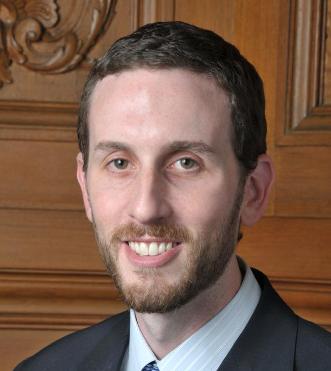
Sup. Scott Wiener is pushing a bill that would make it more difficult to create historic districts in San Francisco, and it’s already cleared the Land Use and Economic Development Committee.

UPDATE: Milk Club calls on Sup. Olague to drop her support for the bill.

The measure hasn’t received a lot of news media attention, but it could have a far-reaching effect on development in San Francisco.

In essence, the Wiener bill amends two parts of the city planning code to tighten the requirements for designating a part of the city as a protected historic area — a designation that makes it harder to demolish or substantially alter buildings.
Developers and some property owners dislike the historic designation. Perservationists see it as a way to prevent the destruction of buildings and neigbhorhoods that are a part of the city’s heritage.

Classic example: In the 1980s, members of the Residential Builders Association were tearing down vintage Victorians in the Richmond district and replacing them with boxy, multi-unit apartments that were worth more money than a single-family home. The builders made a lot of quick cash; the city lost some elegant old houses that can never be replaced.

They couldn’t do that as easily in Alamo Square, which is a historic district.

On the other hand, the owners of those stately well-protected houses in these special districts have to go through increased Planning Department scrutiny any time they want to make any substantial alteration in the structure.

Context: Less than 1 percent of the developed part of San Francisco is currently in a historic district. It’s not a huge deal, and most people don’t pay any attention to this stuff.

But it’s important, and here’s why: One, this city doesn’t care enough about its past — but more important, preservation is a tool that can be used to prevent very bad things from happening.

If we’d had good historic preservation laws in the 1970s, the International Hotel could have been designated an historic structure and wouldn’t have been demolished. Same, possibly, for the Goodman Building. Preservation laws could have been used to fight some of the horrors of redevelopment, which mowed down African American and Filipino neighborhoods in the 1960s and 1970s.

Some of Wiener’s suggestions are relatively benign. He wants to exempt affordable housing units from the laws that apply to historic districts, and Sup. Christina Olague, his co-sponsor, wants an economic hardship exemption so that the owners of buildings, particularly in communities of color, can avoid expensive battles over minor repairs and alterations.

I’m fine with all of that. I’m all for it. Good idea. Although it’s not fair to say that this process was driven by a concern for affordable housing; I spoke to Peter Cohen, at the Council of Community Housing Organizations, and he told me that the idea didn’t come from his crew. Not one affordable housing activist showed up at the Land Use hearing to support the Wiener bill.

But the measure also adds more burdens to the process of designating an historic district. It mandates a written survey of all property owners and occupants in an area proposed for historic designation — an expensive and cumbersome thing that isn’t required for commercial development, demolitions, zoning changes, massive market-rate housing projects, full-on gentrification, or anything else that screws up neighborhoods.
It requires the Planning Commission to consider whether historic preservation conflicts with “the provision of housing to meet the city’s regional housing needs allocation,” which is odd because the commission didn’t consider that when it approved 8 Washington, which directly conflicts with the city’s housing needs allocation, or when it’s allowed 20,000 units of mostly high-end housing over the past decade without any provision for the proper corresponding amount of affordable housing.

In short, it gives opponents of historic preservation more ways to stop new protections. That’s going to make developers very happy.

I asked Wiener why he decided to do this, what the problem was that this law is meant to solve. His answer: There are lots of potential new historic districts (including where he lives, in the Duboce Park and Dolores Street areas) and he wants to be sure that there’s a “robust community process.” Excuse me, Supervisor: There’s a robust community process every time anyone does anything in this town, and designating a historic district is no different.

Also: “A lot of people believe that in some situations, historic preservation can be taken to the extremes. This is a real hot topic for the city.”

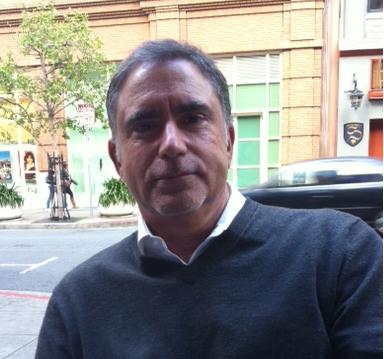
Now here’s where it gets interesting (and even more complicated). There’s a neighborhood group called the Mission Dolores Neighborhood Association that’s been trying for almost seven years to get the area between Market and 20, Valencia and Sanchez designated a historic district. Peter Lewis, a musician who has been leading the battle, told me that he got involved because developers were tearing down some important old buildings (a Willis Polk building on Dolores and 15th came down a few years ago) and he wanted to halt it.
The group’s got sophistication and resources — MDNA has raised $80,000 for the necessary studies and has been working the the Planning Department and the Historic Preservation Commission.

Wiener is opposed to the idea — particularly the concept of including the Dolores Street median (designed by John Mclaren, he of Golden Gate Park fame) and Dolores Park in the district. The median’s already a state landmark.

“He’s been very polite to us, but he’s made it clear he doesn’t want to see streets or parks included in any historic designation,” Lewis told me.
Why? Well, for one thing, the Planning Department is talking about building bulb-outs on Dolores as a traffic-calming measure. Historic designation for the median might make that more difficult. And Lewis opposes the bulb-outs for all the wrong reasons: “They just want to get people out of their cars,” he said, dismissively.

But really: Is this all worth pushing a measure that could undermine preservation and encourage demolitions and bad development all over the city? Is the current system really all that bad? Didn’t a measure to strengthen historic preservation (placed on the ballot with an 11-0 vote on the Board of Supervisors) just pass overwhelmingly two years ago?

Because it seems to me that this is a solution in search of a problem.


City case speculates about Mirkarimi’s interference with investigation

111

The City Attorney’s Office laid out much of its case against suspended Sheriff Ross Mirkarimi yesterday when it released a list of witnesses and their expected testimony, as requested by the Ethics Commission, and it offers little support for the city’s accusation that Mirkarimi dissuaded witnesses or sought to destroy evidence of a crime, which are among the most serious allegations in the official misconduct case against him.

The longest and most significant section in the brief was the testimony of Ivory Madison, the neighbor who initiated the police investigation into whether Mirkarimi physically abused his wife, Eliana Lopez, during a Dec. 31 incident that she subsequent reported to Madison, who made a video of her story and a bruise on her arm.

It was the most detailed account yet of what happened from the perspective of Madison, who has refused media interviews, and it differs in some key areas from accounts that Mirkarimi gave to the Guardian and other media outlets.

For example, Mirkarimi said he grabbed his wife’s arm in the car during a heated argument and that tempers had cooled by the time they went inside. But Madison is expected to testify that, “Inside the house, Sheriff Mirkarimi pushed, pulled and grabbed Ms. Lopez, who was crying and screaming, as was their son. Ms. Lopez asked Sheriff Mirkarimi to stop, and said look what you’re doing to our son. Ms. Lopez then ran out of the house. While both inside and outside the house, Lopez was yelling, do you want me to call the police. When Ms. Lopez yelled about calling the police while outside, Sheriff Mirkarimi said no, come inside. Ms Lopez went back inside.”

It is unclear from the memo whether Madison was a direct witness to those events or whether they were relayed to her by Lopez, but it sounds like the latter given that the story is in a paragraph that began with the phrase “According to Ms. Lopez.” Since the incident, Lopez has consistently denied that Mirkarimi abused her and downplayed the conflict. The only other neighbor on the witness list, Callie Williams, wasn’t at home during the conflict, but she’s expected to testify that Lopez told her about that and an earlier instance of abuse and that “Sheriff Mirkarimi was scared that she was going to tell people what happened.”

While Madison’s expected testimony confirms Lopez’s account that the video was made to be used in the event of a child custody battle if the couple divorced, Madison’s account paints Lopez as actively worried about her safety: “Ms. Madison suggested calling the police. Ms. Lopez was afraid that the police would not believe her and would not protect her from Sheriff Mirkarimi, and was concerned about what the police could do to protect her.”

It also confirms what journalist Phil Bronstein, a friend Madison called for advice, told the Guardian about Madison’s initial call to police being a simple inquiry and that she didn’t intend to initiate a police investigation just yet. And it indicates that “Ms. Lopez was unhappy about the investigation. Ms. Lopez called Linnette Peralta Haynes (Sheriff Mirkarimi’s campaign manager in the November 2011 election) on her mobile phone. After speaking with Ms. Haynes, Ms. Lopez handed her phone to Ms. Madison. Ms. Haynes attempted to dissuade Ms. Madison from cooperating with the police and attempted to persuade Ms. Madison to lie to the police.”

Yet there is nothing in Madison’s expected testimony to indicate Mirkarimi was behind any of these efforts, and he denies it and says that he wasn’t even aware that Lopez had talked to Madison or made a video or that police had been called at that point. Peralta Haynes, who sources say is in the late stage of a difficult pregnancy, hasn’t cooperated with the investigation so it’s obviously speculative on the city’s part to indicate that she was acting as Mirkarimi’s “agent” in thwarting the investigation, as the city is claiming.

The only “evidence” that the city seems to offer in support of its accusation that Mirkarimi tried to thwart the criminal investigation comes from Madison’s husband, Abraham Mertens, who is expected to repeat the claim he first made in a controversial March 20 op-ed in the San Francisco Chronicle that, “During the time that SFPD inspectors were interviewing Ms. Madison on January 4, Mr. Mertens received a telephone call from Eliana Lopez urging him to make Ms. Madison stop talking to the police. Mr. Mertens heard Sheriff Mirkarimi’s voice in the background,” a more resolute version than Mertens had previously given when he wrote in the op-ed: “I recognized what I thought was Ross’ voice in the background.” Mertens also has not answered Guardian calls.

Mirkarimi categorically denies that he was present during that phone call and says that he was in meetings at City Hall and that he wasn’t aware that any of this was happening at the time. And he has denied urging Peralta Hayes to get involved, but her testimony could evolve into evidence if the city can show they talked before she spoke to Madison, but that’s still speculative. The city is seeking live testimony from Peralta Haynes about her communications with Mirkarimi on Jan. 4 and before.

During the recent Ethics Commission hearing on setting up procedures for the hearing, Mirkarimi attorney Shepherd Kopp noted that the city hadn’t done key interviews or collected physical evidence (such as phone records or the Lopez video) to support its charges against Mirkarimi before making its allegation, something that Deputy City Attorney Peter Keith didn’t dispute, noting that the the city had not yet received much of the evidence that it intends to present, such as the video.

The city appears to be banking on compelling incriminating testimony from Lopez and Mirkarimi, who they plan to treat as hostile witnesses. The other interesting name on the city’s witness list was Mayor Ed Lee, who the city is recommending give live testimony and who could also likely be subjected to a vigorous cross-examination that could have interesting political ramifications.

IAPA: A message for World Press Freedom Day (May 3)

0

Editor’s note: Remarks by Milton Coleman, president of the Inter American Press Association, in  commemoration of  World Press Freedom Day on May 3 Thursday. Coleman is the senior editor of the Washington Post. IAPA is the organization defending and promoting freedom of  the press and expression in the Americas. The Bay Guardian and I have been members of IAPA for years and I currently serve as co-chair of the North American membership committee. B3

Miami (May 2, 2012)—As we near the 70th anniversary of the founding of the Inter American Press Association this month, I’d also like to take this especial date, May 3, World Press Freedom Day, as an opportunity to pay homage to the 24 journalists from Brazil, Colombia, Dominican Republic, Guatemala, Haiti, Honduras, Mexico and Peru that were killed over the last 12 months. Our thoughts are with their families and colleagues, especially because in the majority of these cases, justice has not yet been done.

We also extend our sympathy to all those traditional journalists, citizen journalists, bloggers and owners of media houses that have been attacked, threatened, or have had to seek refuge and exile in other countries after being harassed and hounded because of their work.

We are concerned at the direct and subtle – and in the case of Ecuador not so subtle – economic, legal, and judicial means used against the news media in a number of countries in the region that result in prior restraint and self-censorship, harming not only the news media itself, but most importantly, weakening the public’s right to receive information.

At our recent meeting in Cádiz, Spain, where we celebrated the bicentennial of the first Spanish Constitution, we devoted much time to the defense of the work of the inter-American human rights system that a number of governments in the region have put under attack. From Cádiz, we urged all Organization of American States member governments to defend the system and in particular, the autonomy and work of the Office of the Special Rapporteur for Freedom of Expression, a body which since its creation in 1998 has contributed to guarding and strengthening citizens’ right to freedom of expression in each nation of the Americas.

Also from Cádiz we voiced the hope that the changes pursued by the government of Cuba, the longest standing dictatorship surviving in our hemisphere, would include respect for its citizens’ right to free speech; the cessation of persecution of independent journalists, bloggers, and dissidents; and an unlimited access to the Internet.

We maintain our deep concern that politicized practices by governments be combated with laws that establish technical and equitable criteria for the placement of official advertising, particularly in those nations where there is greater discrimination, such as in Argentina, Bolivia, Ecuador, El Salvador, Nicaragua and Venezuela.

On the legislative front, we applaud the efforts of certain governments, such as those of El Salvador and Mexico that have made defamation and libel no longer criminal offenses. At the same time, we protest the efforts of governments like those of the United States and Guatemala that seek to impose greater restrictions on classified information.

We regret that all countries have not yet enacted access to public information laws and the fact that where these laws do exist, they are not used effectively. We do acknowledge the government of the Dominican Republic for promoting an educational campaign that would include 700 training workshops to teach people how to use access to public information laws to foster a culture of transparency and accountability.

We regret the efforts of governments, to enact press laws to limit privately-owned news media’s ability to function and obstruct the denunciations resulting from investigative reporting, a tactic that would curtail one of the greatest counterbalances existing within democratic systems.

We revile governments’ expropriation, creation, or purchasing of news-media outlets and news press to be used as partisan organs of propaganda instead of as public service media.

On a final note, I would hope that on this 3rd of May we reflect on three important issues throughout the hemisphere – Canada, United States, Mexico, the Caribbean with all its languages, Central America and South America: The social consequences that result from the lack of respect for press freedom and free speech; the responsibility that journalists and the media have to defend and promote these freedoms; and the need for governments to extend access to the Internet and broadband to the most vulnerable sectors of society in their countries, as per commitments expressed during the recent Summit of the Americas.

*World Press Freedom Day is celebrated on May 3.  It was established in commemoration of the Declaration of Windhoek, a document that contains principles on the defense of freedom of the press, drawn up in 1991 during a meeting of African journalists organized by the United Nations Educational, Scientific and Cultural Organization (UNESCO).

The IAPA is a not-for-profit organization dedicated to the defense and promotion of freedom of the press and of expression in the Americas. It is made up of more than 1,300 print publications from throughout the Western Hemisphere and is based in Miami, Florida. For more information,  please go to www.sipiapa.org

A teachable moment

2

caitlin@sfbg.com

HERBWISE On the occasion of leaving our gentle green bubble in the Bay, I often find myself in the position of explaining what it is I write about. Sometimes I am satisfied with focusing on my federally legal interests as the Guardian’s culture editor. But other times I am compelled to stretch the limits of my extended family’s imagination, which usually leads to some pretty interesting conversations.

I’m sure I’m not the only person interested in demystifying cannabis issues to their loved ones. Which is why I’m happy to introduce you to a 2011 documentary that might prove useful: Lynching Charlie Lynch, a DVD release you can find on Amazon or director Rick Ray’s website (www.rickrayfilms.com). The film even starts with a world history of cannabis usage: look guys, early Mormons used the stuff!

Charlie Lynch is a total goober (a word I use lovingly.) A suburbanite from Arroyo Grande, Calif., Lynch takes pleasure in winning stuffed animals from claw machines and rocking out to self-penned anti-drunk driving ballads in his DIY home studio. When he began medicating for his atrocious migraines with cannabis, Lynch decided to open a dispensary close to his home town, eventually starting one in 10,000-person Morro Bay. It was the only dispensary in San Luis Obispo County.

http://www.youtube.com/watch?v=ZzFsSx84EE4

Ray shows us Lynch’s adorably earnest and thorough process of setting up shop. Lynch goes so far as to call the DEA office, and is directed to four different numbers before an agent gruffly tells him that cities and counties are tasked with “dealing” with such enterprises. Thus enthused, Lynch obtains proper permitting from city and county administrations and holds a ribbon-cutting ceremony. The mayor and other city officials attend, the chamber of commerce is represented in cheerful photos from that day.

At this point one might pause the film and explain to friends and family that the California medical marijuana industry is not without its complicated issues, and that despite his phone calls, Lynch might have expected trouble from the federal government. But these caveats aside, what happens next is awful enough that “might-haves” and “could-dos” will probably dissipate from their minds.

A San Luis Obispo sheriff’s RV surveils patients and staff coming and going from Central Coast Compassionate Caregivers until sufficient evidence is gathered to obtain a federal search warrant. Your educational audience will cringe as law enforcement raids not just Lynch’s dispensary, but his home. He is taken into federal custody and released only when his family posts $400,000 in bail. There’s a media storm, the feds threaten his landlord, the business is ruined, and finally, Lynch puts his house — the same one where he once warbled cautionary notes to drunk drivers — on the market.

It is worthwhile to note that the Morro Bay raid occurred in 2007, and as an update to the fam you might want to mention the Oaksterdam debacle last month. (A scene from the Oakland cannabis school is included in Lynching Charles Lynch — prophetically, it is an in-class roleplay meant to teach students how to interact with federal agents.)

We say in the Bay Area that we are the epicenter of the cannabis movement, which in some senses may be true. But in some ways it’s not. Regardless of how conscious we are in Oakland, Marin, and San Jose of the hypocrisy of the federal government, national change is not going to take place until awareness of the issue is raised nationally.

Or maybe I’m just trying to justify that post-Lynching joint with my aunt in Maryland. Meh!

Our Weekly Picks May 2-8, 2012

0

WEDNESDAY 2

Loom of Ruin reading

Sam McPheeters has a way with language that has translated from lyrics to journalism and now: his first official solo novel, The Loom of Ruin. The former frontperson of a trilogy of punk and experimental acts (Born Against, Men’s Recovery Project, Wrangler Brutes) has long written columns for the likes of Vice, and put out his own fanzines. But his first published output came at age 12 — a local legends book assembled with a pal. Now he comes full circle, back to book publishing, though this time it’s a bit different. He’s rather grown, and writing exquisitely detailed dark Los Angeles fiction about the angriest man in the world. Far from grumpy himself — the facetious gent was once known to recite Patrick Henry’s famous speech — McPheeters brings his words to the Bay this week on a book tour, including a spoken word stop at the Secret Alley tonight at 7pm after Needles+Pens. (Emily Savage)

5-7pm, free

Needles+Pens

3253 16th St., SF

(415) 255-1534

www.needlesandpens.com


Thu/3, 7:30pm, free

1234Go Records

420 40 St., Oakl.

(510) 985-0325

www.1234gorecords.com


Edward Sharpe & the Magnetic Zeros

If Alex Ebert were the best version of himself (a selfless hero akin to Superman or Jesus) he’d be Edward Sharpe. Ebert, Edward Sharpe & the Magnetic Zero’s crazy-haired front man/only guy I’ve seen successfully pull off the shirtless blazer look, dreamt up this alternate identity after getting over a serious drug addiction and shirking his reverence to the punkish concept of rebellion. On stage this ten-piece folky, psychedelic rock tribe looks like a ragtag flurry of ecstasy. There’s a lot going on when these guys perform, but somehow it’s always hard to take your eyes off Jade Castrinos, whose sultry voice and free form movements lull you into a blissful, calming trance. (Mia Sullivan)

With Aaron Embry

8pm, $32.50

Fox Theater

1807 Telegraph, Oakl.

(510) 302-2250

www.thefoxoakland.com


El Clásico: More Than a Game

Spain may have won the last World Cup, but as a new documentary by Kelly Candaele and students from Chico State University shows, there’s no love lost between passionate fans of the country’s two biggest club teams. When Real Madrid and FC Barcelona clash (in a game so monumental it is referred to as “El Clásico”), they bring to the field some of the world’s greatest players (Messi! Ronaldo!) — and decades of history that go way beyond fútbol and into weighty areas of national identity and politics. Even Barça fans still reeling from certain late-April results will enjoy this 55-minute exploration of one of Europe’s greatest sports rivalries. (Cheryl Eddy)

7pm, $5–$10

Mission Cultural Center

2868 Mission, SF

www.missionculturalcenter.org


THURSDAY 3

Electric Shepherd & OUTLAW

When Bay Area psychedelic rock groups Electric Shepherd & OUTLAW get together, their sound is something like the Doors meeting up with Jimi Hendrix on a tribalistic march and then starting to jam with a death metal version of Phish. If you carry deep-seated nostalgia for the epic rock shows you missed during the ’60s — or listen to the Velvet Underground’s Bootleg series on repeat — you should probably check these guys out. Expect luscious guitar riffs, sexy bass lines, compulsory dancing, and a wonderfully spaced out experience. (Sullivan)

With Blues for Carl Sagan, and Douglas

9pm, $6

Hemlock Tavern

1131 Polk, SF

(415) 923-0923

www.hemlocktavern.com


FRIDAY 4

Predator and The Thing

Though it may be hard to believe for those of us who grew up watching them, two classic sci-fi flicks from the 1980s have come upon major milestones anniversaries. To celebrate, Jesse Hawthorne Ficks’ Midnites For Maniacs series is hosting a night not to be missed, with a 25th anniversary screening of Predator and a 30th anniversary screening of John Carpenter’s The Thing. Featuring some of the best creature designs and special effects of the era thanks to visionaries Stan Winston and Rob Bottin, both films re-defined the genre, and have continued to stand the test of time. A Boy & His Dog (1975) also screens.(Sean McCourt)

7:30pm, $13

Castro Theatre

429 Castro St., SF

(415) 621-6120

www.midnitesformaniacs.com


JackHammer Disco with Tiga, Damian Lazarus, & Light Year

Let’s indulge in some squelchiness, shall we? Montreal-based Tiga and UK-born, Los Angeles resident Damian Lazarus share an affinity for acid-y, electro house. In the early 2000s, Lazarus played a prominent role at the UK label City Rockers, where he oversaw the release of Tiga & Zyntherius’ cover of Corey Hart’s “Sunglasses at Night.” Since gaining fame from that release, Tiga has been a busy producer and remixer, keeping a Euro-glam tone reminiscent of the synth-y works Giorgio Moroder pushed in the ’70s. Recent Lazarus works have a more stripped-down, minimal feel that sometimes wander into leftfield, like in his 2009 album Smoke the Monster Out. (Kevin Lee)

With Light Year 10pm, $15–<\d>$20 Public Works 161 Erie, SF (415) 932-0955 www.publicsf.com


FRIDAY 4

It’s Casual

Here in the Bay Area, we like to complain about public transportation. There are BART horror stories and Muni diaries tossed around like old war stories, used as social currency. But really, when you compare our rapid transit systems with the snarled mess of cars elsewhere in California, we come out on top. That’s why LA-based hardcore group It’s Casual got so much traction with an ode to its own local bus line, “The Red Line.” The song, and sentiment, struck a nerve: “The freeways/are not so nice.” The band itself is growly loud, with classic Southern California punk hooks. Tonight it opens for beloved shit-stirrers Early Man (note: the two bands will release a split seven-inch come May 22). Take the 22 Fillmore to the show and write a song about it. (Savage)

With Early Man, Shock Diamond, Satya Sena

9pm, $8

Thee Parkside

1600 17th St., SF

(415) 252-1330

www.theeparkside.com


SATURDAY 5

CreaturesCon

Seemingly rising from the grave like so many of the monsters and ghouls that it showcased over a 14-year run on local television, the beloved Bay Area show Creature Features is being resurrected once again to satiate fans’ undying thirst for the creepy, kooky, and campy. John Stanley, who hosted the KTVU program from 1979-’84, will be on hand for CreaturesCon One, a day of special screenings, Q&As, and more, along with archivist and documentary filmmaker Tom Wyrsch and Ernie Fosselius of Hardware Wars fame. For all you monster kids out there, this will be a nightmare, er, dream come true. (McCourt)

3-10pm, $10

Historic Bal Theater

14808 East 14th St., San Leandro

www.creaturescon.com


Father John Misty

I always wonder about the drummer. They’re usually the life of the party but, at the same time, are often concealed behind a wall of instruments, and you rarely hear them sing, or say, anything. Ex-Fleet Foxes drummer Joshua Tillman has said that drumming for his former superstar band began to bore him. So he exited, took up the moniker “Father John Misty,” and started creating lush, lyrically based Americana folk ballads laden with lucid imagery and social commentary. He played SXSW this year, made a surprise appearance at Café Du Nord in April, and his debut, Fear Fun, came out Tuesday. (Sullivan)

With Har Mar Superstar, Worth Taking

10pm, $12

Bottom of the Hill

1233 17th St., SF

(415) 621-4455

www.bottomofthehill.com


SUNDAY 6

Omar Sosa Afreecanos Quartet

Talk about versatility. Cuban pianist and composer Omar Sosa splits his time between Oakland and Spain and incorporates musical influences from just about everywhere in between. On last year’s Calma: Solo Piano &… Sosa displayed his introspective and meditative side with floating piano melodies flanked by the occasional electronic accent or sampled sound. Contrast the solo effort on Calma with Sosa’s performance as lead of the Afreecanos Quartet, where technical dynamism becomes the name of the game. At live shows, Sosa becomes a grinning whirlwind, playing classical piano on one hand and electronic piano on another, trading looks and body language with his fellow musicians, and fostering a joyful, collective, improvisational spirit. (Lee)

With Marque Gilmore, Childo Tomas and Peter Apfelbaum

1pm, free

Yerba Buena Gardens

760 Howard, SF

(415) 543-1718

www.ybgfestival.org


MONDAY 7

“La Bamba: Latinos in Vintage Rock, Pop, and Soul”

Local rock music historian and author Richie Unterberger, whose books include White Light/White Heat: The Velvet Underground Day by Day and Music USA: The Rough Guide, will once again share his extensive knowledge with music fans at his presentation “La Bamba: Latinos in Vintage Rock, Pop, and Soul.” Featuring film clips of performers such as Ritchie Valens, Santana, Linda Ronstadt, and Los Lobos, the evening promises to be a unique look at the contributions of Latinos in rock from the earliest days of the 1950s up through the ’80s. (McCourt)

6:30-8:30pm, free

SF Public Library, Mission Branch

300 Bartlett, SF

www.sfpl.org


TUESDAY 8

Steve Coll

Longtime journalist Steve Coll won a Pulitzer Prize and widespread acclaim for his 2004 account on the CIA and the agency’s history in Afghanistan leading up to 9/11. In his latest investigative effort, Private Empire: ExxonMobil and American Power, Coll explores the global influence of the Texas-based oil corporation. According to Coll, big-money donations and a sophisticated DC lobbying machine have allowed ExxonMobil to shift the debate on climate change. At the same time, the oil corporation continues to expand its foothold in developing countries. A two-time Pulitzer Prize winner, Coll currently serves as president of the New American Foundation, a nonprofit, nonpartisan think tank that maintains a significant presence in California. (Lee)

In conversation with Greg Dalton

6pm, $7–$20

Commonwealth Club

595 Market, SF

(415) 597-6700

www.commonwealthclub.org


The Guardian listings deadline is two weeks prior to our Wednesday publication date. To submit an item for consideration, please include the title of the event, a brief description of the event, date and time, venue name, street address (listing cross streets only isn’t sufficient), city, telephone number readers can call for more information, telephone number for media, and admission costs. Send information to Listings, the Guardian Building, 135 Mississippi St., SF, CA 94107; fax to (415) 487-2506; or e-mail (paste press release into e-mail body — no text attachments, please) to listings@sfbg.com. Digital photos may be submitted in jpeg format; the image must be at least 240 dpi and four inches by six inches in size. We regret we cannot accept listings over the phone.

Sam McPheeters is not the angriest man in the world

0

Sam McPheeters has a way with words, and that has translated from lyrics to journalism to his first official solo novel, The Loom of Ruin (Mugger Books, 2012).

The former frontperson to a trilogy of exciting punk and experimental acts (Born Against, Men’s Recovery Project, Wrangler Brutes) has long written columns for the likes of VICE Magazine and more, along with his own fanzines. But his first published output came at age 12, Travelers’ Tales – a patched-together local legends book assembled with a neighborhood teen.

Now he comes full circle, back to book publishing, though this time it’s a bit different. He’s rather grown, married, and writing exquisitely detailed, dark and humorous Los Angeles fiction about the angriest man in the world. Far from grumpy himself, the amusing gent was once known to recite Patrick Henry’s famous “Give me liberty, or give me death” speech during shows.

Last week, on the eve of McPheeter’s book tour to SF, I spoke with the candid author from his home in Pomona about The Loom of Ruin, life beyond the bands, his love for Microsoft Excel, and a brand new literary rag:

SFBG You’ve been writing for so long in different formats, why finally put out your first solo novel now?

Sam McPheeters I’ve been writing fiction for a long time, so I have a large stockpile of unpublished fiction. There came a point about six years ago where I realized I needed to really reconfigure what I was doing.

Part of that was that I was writing fiction on my terms [and] the fiction I was writing was very serious – I really put my heart and soul into it – and it read like that, it was a little labored and probably hard to read. I realized there was a disconnect. A lot of the art that I like – music, fine art, movies – is all on the audiences’ terms. I don’t like really high brow stuff in my media.

I like music that is written for the enjoyment of the listener, that is not for the artist, the musician, to work out whatever demons he or she is trying to work out. I realized I had not been doing that with my fiction. I’d been doing it with some of my journalism – for example I did a long piece for VICE that I was really proud of about Doc Dart, the singer for the Crucifucks and I took pains to provide context for everything, so that you can read it not knowing anything about punk music and still get the gist of the article.

I wanted to start writing fiction in that style and this book came out of that. I wouldn’t say it was easy, it was very arduous, but it was much easier, labor aside, to really get out what I wanted to do and have it flow quickly.

SFBG I’ve just read the first three chapters on VICE.com so I can’t speak with total authority, but to me if feels like a humorous take on modern noir. Was that intentional, to be a modern Los Angeles noir story?

SM I’m way, way, way too close to it. That wasn’t my intention but it sort of developed that way. As a reader I’m really far behind the curve, I feel like I’m playing catch-up. I only started reading my first Raymond Chandler book this year and I’m really enjoying it but I don’t feel equipped at all to be able to hold my own in a conversation about the literature of Los Angeles, especially noir literature, not just Los Angeles – [all of] California. But I think it definitely unconsciously developed that way, which is great. I’m pleased, but that wasn’t the original intention.

SFBG So where did you come up with the idea for this main character [Trang]?

SM You know, I’m not sure. It’s odd to me, a lot of people who talk to me about the book have said the character really resonated with them, which surprises me. I liked the idea of writing a character who was self-consciously one-dimensional. From page one you’re told this character only has one emotional setting – I think that’s a really neat comedic device that hasn’t really been done the way I did it. You can do a lot of funny things with a character who is only angry. I’ve had those experiences in my life with a couple different employers that verged into this realm so some of this is just really crazy caricatures of past bosses I’ve had.

SFBG What were some of the jobs you had, where you had these bosses?

SM I’ve worked a lot of retail, I’ve worked in a bunch of health food stores, I’ve worked in a couple different industrial painting companies, a lot of restaurant jobs. I am kind of scraping out a living now being a freelance writer but it’s very tricky so I’m always looking to supplement it with whatever else I can get.

My job stories are profoundly uninteresting, the only interesting job I had was for six weeks, for a company that designed “things” – I signed a contract explicitly stating that I would never discuss my actual work….I remember thinking, as I was signing the contract, “god dammit, this would make a really good article.”

SFBG Where did you come up with the ideas for your VICE column, they were so varied.

SM Part of that is the same process as fiction. I use spreadsheets for everything, I have for a long time. A job I had six years ago…I got my employer to pay for me to go to a seminar on Microsoft Excel. Honest to god it was like a – I don’t want to say religious – but it was like a serious heavy-duty religious conversion or something where I realized how much of the philosophy of Microsoft Excel I could apply to my life.

So I keep these vast spreadsheets for everything, and part of it is just lists of ideas. I do triage, maybe that’s a good non-fiction idea, but that’s a good idea for fiction….I’m a really good hoarder of ideas. Anyone can come up with stuff on the spot but I don’t need to, I have this tool.

I’m very careful whenever anyone comes over, if the spreadsheets are on my computer, I minimize it, because it looks like I’m a crazy person. The spreadsheet I had for Loom of Ruin was this massive color-coded thing. One friend saw it once, and they said ‘I don’t think that’s how a book is made.’ I said, ‘that’s very much how a book is made. You need these little road maps.’

SFBG Are you also still making music?

SM No, the last band I was in ended at the end of 2004 and I realized that was a good way to just, gracefully bow out. I had some talent as for dramatics on stage, I think when I wanted to be I was a good performer. But there’s not much range in what I can do. I can yell and I can do some funny voices and that’s it. At a certain point it really felt like I was repeating myself. Also I just am not excited about music right now anymore. The bands I listen to – with a few exceptions – it’s all the same music I listened to in high school and I stopped trying to fight that.

http://www.youtube.com/watch?v=ySGLH6XKCgY&feature=endscreen

SFBG So you don’t miss the performing aspect of it?

SM No, no, oh my god no. I would get headaches as I got older. I was in a band in my mid-30s and I’d get really intense headaches, headaches that felt wrong, like I was doing some kind of damage to some part of my brain.

I realized at one point – in the middle of a show that people aren’t designed to scream. I mean, we can scream for certain things but to scream every night for 40 minutes straight is not something we’re built for physically and it does really weird things to you. So I think even if I wanted to I might be prevented anyway.

SFBG As someone who wrote zines when you were younger and has always had a DIY approach to creativity, how has the rise of blogs and the Web in general affected your work?

SM I really enjoy my blog, the way it fulfills my life is absolutely the spot that fanzines used to inhabit. In 1999 and 2000 for awhile I was all set to do a weekly fanzine – I mean, it’s a blog! It just didn’t occur to me that I could do this online.

I was really excited about [the weekly fanzine], but when I sat down and did the math…I got really discouraged, it didn’t make sense. And even this book actually, was supposed to be originally a series of 10 fanzines and the skeleton of that design is still kind of there. So it took awhile for me to shift, to realize that doing a blog filled that spot in my life perfectly.

The big disadvantage obviously, is that it’s harder and harder to find an audience, just ’cause your slice of the pie is getting smaller and smaller every year, there’s just more and more competition. The people who read my stuff now, and also the people who are paying attention to my book, are almost entirely my pre-existing audience, it’s been really hard for me to find new people to notice my stuff.

I think a big part of that is just too much competition. It’s nice to have a physical book, it turned out the design looks really nice and it’s a solid object you can hold. There had been some talk for awhile about doing only e-publishing and I’m completely receptive to e-publishing and all its formats, but it feels like it takes the very high hurdle of having something physical to get people to take notice.

SFBG Are you currently working on anything else?

SM Of course, yeah, I’m starting a new magazine with Jesse Pearson, former editor of VICE. It’s called Exploded View, it’s a literary quarterly that will attempt to fill the gap between very saccharine twee lit magazines and super-serious chore lit magazines that one wants to read to be a good person but that are just simply not fun. We want to find a middle ground between [those].

Good long-form journalism, a lot of fiction, a lot of photography, a strong emphasis on humor. It’s just been a huge amount of work, and clearly this is the wrong time in my life to take it on, while I’m doing a 40-city book tour, but this is what I’ve been shooting for for a long time. It’s an odd coincidence that all these things converged on 2012 for me, but I got what I asked for and I absolutely cannot complain.

The first issue will be out in September. My god, which is only what, four months away? That’s a little scary.

The Loom of Ruin reading
Wed/2, 5-7pm, free
Needles+Pens
3253 16th St., SF
(415) 255-1534
www.needlesandpens.com

Sam McPheeters spoken word
Wed/2, 7pm, $5 donation
FB: The Secret Alley
(415) 553-8944

www.thesecretalley.com

The Loom of Ruin reading
Thu/3, 7:30pm, free
1234Go Records
420 40 St., Oakl.
(510) 985-0325
www.1234gorecords.com

The Bay Citizen divorces NYT to marry CIR

2

This Sunday is the last day The Bay Citizen – the nonprofit San Francisco newsroom started two years ago by Warren Hellman, the local philanthropist who died in December – will be producing content for The New York Times, as it has been doing throughout its existence. The question now is what are Bay Area citizens losing and what are we gaining?

The Bay Citizen was taken over by the Berkeley-based Center for Investigative Reporting, creating the country’s largest nonprofit news organization, a merger that will be completed next week. Under the direction of veteran local journalists Phil Bronstein, Robert Rosenthal, and Mark Katches, the combined newsrooms won’t be covering breaking news or press conferences, focusing instead on investigations and “accountability journalism” delivered under those two brands and CIR’s California Watch, in collaboration with newspapers and broadcast outlets around the state (read our previous stories for more details on each entity).

“In the end, how does journalism survive and how do you define journalism?” Bronstein told us, relaying the questions his organization is trying to answer. “We’re betting on the idea that quality journalism is something people are willing to pay for.”

But with CIR focused on an inclusive model of partnering with news outlets to do deep reporting and widely offering the resulting work, and The Bay Citizen providing content to The New York Times under an exclusive contract, the new entity decided to end that contract and focus The Bay Citizen on CIR’s mission.

“The Bay Citizen has done a lot of things really well – accountability, watchdog journalism – but they’ve also done breaking news and tried to do too many things,” Katches, the editorial director for the merged newsrooms, told us. “We want to figure out what our lane is and stay in it.”

CIR, with a 35-year history of award-winning investigations, undoubtedly has strong journalistic chops and a talented team of reporters. Its “On Shaky Ground” series on the seismic vulnerabilities of schools throughout the state won a number of big awards and was a finalist for this year’s Pulitzer Prize in Public Service. But in many ways, this is the biggest and best newsroom that most people have never heard of.

“People on the street might know The Bay Citizen, but not the Center for Investigative Reporting,” Bronstein said. That was something that he hoped the merger would help compensate for, with CIR also benefiting from the base of donors and technological expertise that The Bay Citizen had developed.

“CIR isn’t the brand, its stories are the brand, which it distributes to scores of publications,” said Peter Lewis, an longtime journalist who joined The Bay Citizen at its inception.

Lewis spent 18 years with The New York Times and seven with Fortune magazine, then he studied and taught journalism and new media at Stanford University before joining The Bay Citizen. During merger talks, he advocated for a marriage of equals and was “disappointed” that CIR took the lead role, and that it subsequently didn’t create a position for him (veteran local reporter John Upton and a few others were also let go).

While Lewis said that The Bay Citizen has had about eight times the Web traffic as CIR, which is pretty astounding given the age difference in the two entities, it’s unclear how much of The Bay Citizen’s brand identity – something that Rosenthal and Bronstein cited as an important component of the merger – had to do with its now-severed relationship with the Old Gray Lady.

“The decision was made to launch The Bay Citizen simultaneously with The New York Times relationship. That gave it an instant cache and respectability that most startups don’t get,” Lewis said, but it was a “double-edged sword” that also strained the resources of the nascent newsroom to the limits of its capabilities.

“To be honest, The Bay Citizen never reached its potential. It never had time to establish its own voice,” Lewis said. And now that the decision was made to eliminate much of the focus that it has had, covering breaking news and local happenings, Lewis says he unsure what it will mean: “Anytime you reduce coverage, it’s not good for citizens, but they’ll be doing a different kind of journalism.”

Rosenthal said he’s excited about the merger’s possibilities, drawing on the strengths of each entity, but that it will be a work in progress. “It’s going to be a very inclusive model, and it’s going to keep evolving,” he said. “The real measure is not three to six months, but looking at this a year from now will be very interesting.”

“It’s uncharted territory for both of us, but there’s an air of excitement,” Katches said. “We may do some things that are fabulous and some things that flop.”

He said the decision to drop The New York Times was the result of “a thoughtful process,” and they ultimately concluded, “We feel like we can reach even more readers in the Bay Area in a non-exclusive way…If the goal of your work is impact, then you broaden the impact if you broaden your readership.”

The model has worked well at CIR and its California Watch project, which has sought to beef up statehouse coverage that had been waning for years. Katches noted that the “On Shaky Ground” series had the impact it did precisely because it ran in so many media outlets around the state (many of which did localized stories based on the research) and reached millions of readers and viewers.

But CIR wasn’t as successful as The Bay Citizen in creating a stable, long-term financial base. Starting with Hellman and a handful of his wealthy friends, The Bay Citizen sought donations from a wide variety of sources that totaled more than $15 million. By contrast, CIR had limited term foundation funding for a staff of talented journalists.

“How we sustain that and can we do it long term was not something we thought out,” Bronstein (president of the CIR board) said of the efforts he and Rosenthal (CIR’s executive director) made to beef up CIR’s newsroom with foundation funding a couple years ago. “We didn’t have a business structure, we had a journalism structure.”

As newspapers have been hurt by the Internet and corporate consolidations and cuts, Bronstein said said the mission of news organizations has never been more vital.

“With fewer journalists, everything is harder, but it also becomes more important,” he said. Bronstein said the basic question that their journalists will address in San Francisco are: “Who are the people controlling our lives and how are they doing it?”

We spoke to Bronstein on the same day that the Guardian announced Publisher Bruce Brugmann is stepping down from day-to-day operations and that we’re negotiating the Guardian’s sale to a consortium that also owns the San Francisco Examiner. Despite a history of clashes between him and the Guardian, which has always done media coverage and often criticized Bronstein and his newspapers, he had only positive things to say.

“You cannot underestimate Bruce’s affect on San Francisco,” Bronstein said, calling him one of the most influential San Francisco journalists of his era.

“I have a lot of respect for Bruce. He’s yelled at me, like everyone else – it’s a rite of passage in San Francisco. But you’ve stuck to your ideological roots,” he said.

As for advice to the Guardian during this period of transition, Bronstein offered a few questions to ponder: “Can you afford to stick with the base of readers you’ve got? Can you be more digital? Can you give readers more than you’re giving them?”

While he was the editor of the Examiner, Bronstein said his mantra to reporters was, “You have to have an intense curiosity about things and an open mind.” It was something that fit his own belief about the world he was covering.

“Life is never like Walt Disney,” he said, eschewing the idea that there are clear heroes and villains. “The truth is more complicated, but also more interesting.”

The (latest) battle of KPFA

2

yael@sfbg.com

If you’re a member of KPFA, the progressive Berkeley radio station, you’ll be receiving a ballot in the mail shortly with one issue at hand: the recall of Tracy Rosenberg. She’s an elected member of the Local Station Board, and her critics want her removed from office.

Rosenberg is also the former chair of the Finance Committee at Pacifica Network, the nonprofit that owns KPFA. And she has become the face of a conflict at KPFA that is about issues much bigger than Rosenberg herself. The petition to recall Rosenberg accuses her of stealing an email list of KPFA supporters, of election fraud in a 2011 Local Station Board election, and of orchestrating the cancellation of the station’s beloved Morning Show. But there’s a deeper issue here: How should the famously fractious KPFA handle a downturn in financial support — and should the station rely more on volunteer programming and less on paid professional staff? How will the station, which is an essential part of the Bay Area left, face a changing media landscape?

As the staff at KPFA—administrative and broadcaster, paid and unpaid, union and non-union—try to answer these questions, most of them with a real commitment to progressive radio, they are also mired in a political dispute that’s been draining for everyone involved.

KPFA has a long history of providing news and critique that supports progressive efforts and questions the status quo. But, like most businesses, it took a hit in the 2008 financial crisis.

That came a decade after some dramatic governance changes. In July 1999, Pacifica put all the local staff on administrative leave and brought in staff from Houston affiliate KPFT to run the station. In response, hundreds protested in the streets, and the establishment of a detailed democratic governing structure came out of the dispute. Soon after, listener donations took off—parties on both sides attribute this to an increased demand for progressive content in the wake of 9/11 and the war on Iraq. But around 2007, KPFA started to use up the last of its reserves.

According to data provided by the station, listener contributions peaked at more than $4 million during fiscal year 2005, and then began to level off. By 2010, donation income was back below $3 million —still more than 2001 levels. As donations dropped significantly during those five years, salaries and related personnel expenses continued a slow and steady increase, and KPFA managed to avoid outright staff and programming cuts.

That is, until September 2008, when the hosts and producers of the Morning Show were laid off and the show cancelled.

According to the recall campaign, the lay offs were retaliatory (the Morning Show staff had criticized Pacifica management on the air). According to defenders, canceling the Morning Show was a necessary budget decision. The recall campaign argues that the dire financial situation has stabilized after the Morning Show was cancelled; the recall people say that the local board had already balanced it through buyouts. The recall crowd says donations have gone down; the other crowd, they’ve shifted, but remain about the same. According to Brian Edwards-Tiekert, one of the forces behind the recall effort, “At the start of the dispute were these retaliatory firings a year and a half ago. It became a recall because of how they dealt with it.”

The Pacifica Foundation has partnered with KPFA since they were both founded out of anti-war movements in the late 1940s, but their relationship has evolved over the years. As it stands, KPFA and Pacifica’s four other member stations pay yearly dues to the foundation; Pacifica, in turn, provides program that is syndicated over many stations such Free Speech Radio News and Democracy Now!

The Save KPFA campaign website makes the case that Pacifica “uses KPFA as a cash cow,” and notes money KPFA loaned to Pacifica around 2000, from which Pacifica apparently still owes KPFA $1.4 million.

As a staff-elected representative on KPFA’s Local Station Board, Edwards-Tiekert pushed back on attempts by Pacifica to seize station funds. The Morning Show invited Pacifica’s executives onto to the airwaves and “challenged them about how much they were taking from KPFA, and about Pacifica’s spending priorities,” the site reads.

“All of those charges are somewhat overstated. There’s a certain percentage of KPFA’s budget that goes to overall expenses,” Rosenberg told us. In fact, according to Rosenberg’s allies, the situation was reversed; KPFA had run out of funds and was threatening to bankrupt Pacifica. In response to budget shortfalls, Pacifica’s executive director Arlene Engleheart “asked all five Pacifica stations to cut down on paid staff 2-3 years ago, as the only way to meet escalating deficits, KPFA’s 4 “sister” Pacifica stations have already done this. Only KPFA continued to employ more paid staff than it can afford.”

According to the website of a campaign against the recall, Support KPFA, in the fall of 2010, KPFA owed Pacifica more than $100,000 in unpaid dues. “At that time I was the representative from KPFA at the national Finance Committee, which does the budget from KPFA after it comes back from the local level,” said Rosenberg. She claims that the budget that the board came up with came short of meeting expenses.

“So as a board member I went to the station and said, where’s the budget? So I pushed for a couple of meetings saying look, a budget has to come up here that makes sense and is balanced. I told the executive director it was her responsively to make sure a plan for a balanced budget went forward. I would say that I put some pressure on the executive director to make some hard decisions.”

Communication Workers of America Local 9415, a union that represents KPFA’s paid workers, brought the issue to the National Labor Relations Board in late 2011, and the federal agency dismissed five charges of retaliation and layoffs out of the seniority order. Edwards-Tiekert, however, was reinstated as the result of a successful union grievance.

The other charges on the recall petition include putting forward two motions to overturn Jan 2011 local station board elections under fraudulent auspices and for specious reasons and misappropriating a list of KPFA members’ personal email addresses.

The election fraud charge refers to a motion Rosenberg brought disqualify Dan Siegel, an attorney who was elected to the Local Station Board, from holding his seat, based on Pacifica policy barring individuals who hold a public office from serving on the board.

“I pointed out that this seemed to be a violation of the bylaws. That’s all I did,” she said.

But the incident turned into a court battle, and a judge eventually issued an injunction reinstating Siegel.

The email theft charge refers to an email blast that Rosenberg sent out concerning the Morning Mix, the Morning Show’s replacement.

The Morning Show provided an in-depth look at stories from around the Bay Area. It had, and still has, a large following. “The corporate media doesn’t cover real issues as they really affect people,” said Sasha Futran, a listener member of the Local Station Board. With its cancellation, she said, “I want to know what’s going on. I want intelligent analysis.”

Democracy Now!—the foremost example of professional progressive journalism in the country—is now KPFA’s highest donation-generating show. And in style and content, the Morning Mix is distinctly not a Bay Area version of Democracy Now!

Instead, it is a show with rotating hosts Dennis Bernstein, Davey D Cook, JR Valrey, Andres Soto, Anita Johnson, Peter Phillips and Mickey Huff. The content and approach varies depending on the host.

Henry Norr, a listener and elected member of the Local Station Board, is pleased with the format, and thinks it might represent a good path for KPFA. “The station should be more community-oriented. We should have a diversity of voices, and lots of people on who aren’t skilled or paid but represent progressive voices and active movements,” said Norr. The new show has increased coverage of Richmond politics and has provided a forum for Valrey and Cook to talk about left-wing politics from an African-American perspective.

But cutting the Morning Show had its financial implications: The old format brought in significantly more donations than the Morning Mix. According to KPFA documents, donations have increased in other time slots that air more traditional-sounding journalism, including during Letters and Politics, Flashpoints, and the Evening News.

So the recall is about the Morning Show, but it’s also about the future: Should KPFA seek to retain a traditional structure, with paid staff who can earn a decent living and focus on making news programs whose quality compares to that of more mainstream outlets? Or should the station solve its budget woes by relying on more community volunteers with more wide-ranging content?

And should the people who work at KPFA have the right to discuss the station’s finances, policies and future openly, on the air, without fear of retaliation?

Rosenberg or not, those issues aren’t going away.


Our Weekly Picks April 25-May 1

0

WEDNESDAY 25

>> Norm Talley

It’s been a good decade since the Detroit Beatdown sound was unleashed on the world via an eponymous triple-disc release on the UK’s Third Ear Records, which collected the works of several integral Motor City dance music producers. In truth, the Beatdown sound wasn’t so much a cohesive style — although it did reflect the spinetingling synthesis of Detroit’s hypnotic, unhurried house sound with the Zen-like disco-funk loopiness that was earning Moodymann and Theo Parrish rabid followers at the time — than a foray into bumpin’ erotic grooviness, no matter the tempo or sample source. An uptick in Beatdown sound reverence has lead to recent tours by many of the original players, including Norm Talley, who will bring almost 30 years worth of decks magic to the incredibly welcoming Housepitality weekly party. (Marke B.)

9pm, $5 before 11pm, $10 after

Icon

1192 Folsom, SF

(415) 626-4800

www.housepitalitySF.com


>> Eric Erlandson

As the guitarist for Hole, Eric Erlandson was at the center of alternative rock explosion of the early ’90s, a member of one of the most popular bands of the time, and a friend and confidant to one of the scene’s most influential players, Nirvana’s Kurt Cobain. With the 18th anniversaries of both the suicide of Cobain and the release of Hole’s hit record Live Through This passing this month, Erlandson has just released his first book, Letters To Kurt (Akashic Books) a touching and enlightening collection of prose poems addressed to his departed friend. He’ll read from the book and do an acoustic performance tonight. (Sean McCourt)

7:30pm, free

Moe’s Books

2476 Telegraph, Berk.

(510) 849-2087

www.moesbooks.com


In conversation with Andi Mudd

Thu/26, 7pm, free

City Lights

261 Columbus, SF

(415) 362-8193

www.citylights.com


>> “A Change of the World: In Memory of Adrienne Rich”

The iconic contemporary poet — how many of those have we got left, friend? — passed away at her home in Santa Cruz last month. But Adrienne Rich’s legacy of strong-willed, powerfully voiced feminism, radical lesbian activism, perfectly illuminated quotidian details, and, hopefully, incredible control of poetic form, is set to be carried on for generations, beginning with this huge tribute at the SF Main Library from notable Bay Area wordsmiths. Join Elana Dykewomon, Aaron Shurin (whose latest volume, Citizen, is a stunner), Jewelle Gomez, Justin Chin, Kevin Killian, Toni Mirosevich, and oodles more as they resurrect Rich’s voice and offer their own oblations on the rough altar of her inspiring genius. OMG she would hate that I got all over-dramatic with the language back there. (Marke B.)

6pm, free

Hormel Gay and Lesbian Center at the SF Main Library

100 Larkin, SF

www.sfpl.org


>> “John Waters in Conversation”

Oh hell yes. Sometimes San Francisco resident John Waters (if you’ve spotted him on Muni, I am sooo jealous) visits California College of the Arts to screen 2004 sex-com A Dirty Shame, which features a typically eclectic cast (including Waters regulars Mink Stole and Patricia Hearst, and Selma Blair’s memorable, uh, udders). The “Pope of Trash” (he’s also an author, occasional actor, hilarious solo performer, and photographer) hangs out after to chat about his filmmaking career — and the fact that this killer event is free (part of CCA’s Cinema Visionaries program and Design and Craft Lecture Series) is just icing on the poo. Er, cake. (Cheryl Eddy)

7-9pm, free

Timken Lecture Hall

California College of Arts

1111 Eighth St., SF

(415) 703-9563

www.cca.edu


THURSDAY 26

>> “Bloomsbury/It’s Not Real”

In the early part of the 20th century and for a short period only, the London neighborhood of Bloomsbury became a center of civilized thought. In their salons its members argued about poetry, painting, and history. They passionately believed in Art and embraced total freedom — artistic, sexual, personal. Some of them became famous; others dropped by the wayside. Yet in retrospect, Bloomsbury looks like a small Shangri-la. Or was it? Jenny McAllister has been popping the balloons of pretense for close to 20 years, creating dance theater pieces that are as witty as they are humorous. In “Bloomsbury Group/It’s Not Real” she and her 13th Floor Dance Theater introduces us to some of those peculiar characters that called Bloomsbury home. (Rita Felciano)

Thu/26-Sun/29, 8pm, $18–$23

ODC Theater

3153 17th St., SF

(415) 863-9834

www.odctheater.org


>> The Touré-Raichel Collective

Israeli pianist Idan Raichel and Malian guitarist Vieux Farka Touré forged a friendship after crossing paths at a Germany airport in 2008. The Israeli pop star, known for culling from many worldly influences, had been a fan of Vieux’s father, legendary guitarist Ali Farka Touré. Raichel beckoned the younger Touré to visit him in Tel Aviv for a jam session. Their serendipitous collaboration resulted in The Tel Aviv Session, an acoustic, improvisational masterwork. Throughout Tel Aviv, Touré sets the stage with dramatic strumming and guitar-picking, while Raichel engages with his own meticulous, twinkling ripostes. The duo’s casual chemistry facilitates a rare and absolutely mesmerizing interplay fused together by impeccable technique. (Kevin Lee)

8pm, $25–$85 Herbst Theatre 401 Van Ness, SF (415) 392-4400

www.cityboxoffice.com


>> Trippple Nippples

Poised to make a splash at SXSW this year with its hyperkinetic live show, Tokyo’s Trippple Nippples unfortunately had to cancel due to visa complications. The band is now making up for lost time with a string of West Coast shows that includes a Thursday stop at Thee Parkside. A mix of psychedelic performance art, electronics. and in-your-face noise rock, the group has caused a stir in Japan, in addition to finding endorsements from American artists such as Pharrell, who recently championed it in Vice’s mini-documentary, Tokyo Rising. Check out the Dan Deacon-esque slice of kaleidoscopic electropop “LSD” for a taste. (Landon Moblad)

With Ass Baboons of Venus and Ghost Town Refugees

9pm, $10

Thee Parkside

1600 17th St., SF

(415) 252-1330

www.theeparkside.com


>> Afrolicious Five-Year Anniversary

Give it up for unstoppable, adorable DJ brothers Señor Oz and Pleasuremaker, a.k.a. Oz and Joey McGuire. A half-decade ago, when the idea of mixing as many global dance music styles into one party as possible was still pretty radical, the bros’ Afrolicious party went one better with live instrumentation (often courtesy of Joey’s band, Pleasuremaker, which drops a new full-length later this year), remarkable guest stars, and a fantasy Latin funk sheen. Best of all, Afrolicious pumped a welcoming, soulful, old-school smiley vibe — free of the slightly sour, scene-y sting of other such endeavors. Afrolicious anniversary parties burst apart at the seams with guest-star goodies and span two wild nights. This one is no exception, with resident percussionists Qique and Diamond, Brazilian drum troupe Fogo Na Roupa, DJs New Life and Sergio, and more. (Marke B.)

Thu/26-Fri/27, 9:30pm, $10

Elbo Room

647 Valencia, SF

(415) 552-7788

www.elbo.com


FRIDAY 27

>> “First Breath — Last Breath”

Bad Unkl Sista, participators in arts-party mega-fare (like Maker Faire, for instance), take over Z Space this weekend for the world premiere of a new performance work, “First Breath — Last Breath,” directed, choreographed, and costumed by founder and artistic director Anastazia Louise, a Butoh-trained dancer and dance teacher who honed her skills in the “wearable art” costuming department as a core member of the Carpetbag Brigade from 2000 to 2009. A sensory-stimulating meditation on life and death, the piece promises an apt element of the unscripted in its hybrid spectacle of dance, Butoh, aerial work, couture, percussive scenic design, film, and music. (Robert Avila)

Fri/27, 8pm; Sat/28, 2 and 8pm, $35

Z Space

450 Florida, SF

(415) 209-5569

www.badunklsista.com


SATURDAY 28

>> Jim Gaffigan

Comedian and actor Jim Gaffigan could pontificate on any subject, but his delightful treatises on bacon bits, Cinnabons, and other dubious delectables rank as fan favorites. “I’ve never eaten a Hot Pocket and been like, ‘I’m glad I ate that,'” he opines during a popular sermon on the sloppy snack. Followers gravitate toward his languid style and natural inclination to poke fun at his own comedy, especially through whiny, one-line asides he whispers as an aghast faux audience member. New 75-minute stand-up routine “Mr. Universe” is available for $5 as an online stream, $1 of which will go toward The Bob Woodruff Foundation in support of veterans and their families. (Lee)

Sat/28, 7:30 and 10pm; Sun/29, 7pm, $39.75–$49.75 Warfield 982 Market, SF (415) 567-2060 www.thewarfieldtheatre.com


>> “Dear Howard, I Love You But I’m Leaving You For Bryant”

You know how friends get your help moving with a little beer and a few laughs? Artists go all out in this regard. This joint fundraiser between the Garage and THEOFFCENTER benefits the new home for the Garage at 715 Bryant. The current Garage space at 975 Howard was literally that in 2007 when Joe Landini moved in and converted it into his “safehouse” for local artists, an ambitious low-rent breeding ground for dance, theater, and performance. The name stays but the venue changes to a more accommodating space nearby. In celebration, the Garage plays, parades, parties, and moves this Saturday in cunningly pragmatic programming that starts at 975 Howard and ends, via “procession,” with a bash at the new digs. (Avila)

The Garage

6pm, performance

975 Howard, SF

8pm, procession

8:30pm, party

715 Bryant, SF

www.715bryant.org


MONDAY 30

>> Marshall Crenshaw

Singer-songwriter-guitarist extraordinaire Marshall Crenshaw has been writing and making records for more than 30 years now, first gaining mainstream exposure with his 1981 hit “Someday, Someway.” In 1987, he portrayed Buddy Holly in the film La Bamba, playing an excellent cover of Holly’s then-obscure outtake “Crying, Waiting, Hoping,” virtually turning the song into his own, one which remains a staple in his live shows to today. The past few years have seen Crenshaw nominated for a Golden Globe for Best Original Song for the title track he wrote for the movie Walk Hard: The Dewey Cox Story, and the release of the album Jaggedland—don’t miss your chance to see him at this unique solo performance. (McCourt)

8pm, $18

Yoshi’s

1330 Fillmore, SF

(415) 655-5600

www.yoshis.com


TUESDAY 1

>> Treat Social Club

On a blustery evening in March, organizers Finn Kelly and Adam Theis invited their friends to converge inside a hangar-like space in the Mission for Treat Social Club’s inaugural event. No one knew quite what to expect but once inside revelers found themselves swaying to Realistic Orchestra’s moody silent film score, awed by fabulous visuals, and mesmerized by the aerial choreography Amanda Boggs. It was an auspicious start for the monthly series and with performances by tap dancer Tyler Knowlin, and an aerial piece that will be influenced by crowd participation, the second edition promises to be just as tantalizing as the first. (Mirissa Neff)

7:30pm, $10-20

Go Game Headquarters

400 Treat (Suite F), SF

www.treatsocialclub.com


The Guardian listings deadline is two weeks prior to our Wednesday publication date. To submit an item for consideration, please include the title of the event, a brief description of the event, date and time, venue name, street address (listing cross streets only isn’t sufficient), city, telephone number readers can call for more information, telephone number for media, and admission costs. Send information to Listings, the Guardian Building, 135 Mississippi St., SF, CA 94107; fax to (415) 487-2506; or e-mail (paste press release into e-mail body — no text attachments, please) to listings@sfbg.com. Digital photos may be submitted in jpeg format; the image must be at least 240 dpi and four inches by six inches in size. We regret we cannot accept listings over the phone.

Guardian endorsements for June 5 election

34

>>OUR ONE-PAGE “CLEAN SLATE” PRINTOUT GUIDE IS HERE. 

As usual, California is irrelevant to the presidential primaries, except as a cash machine. The Republican Party has long since chosen its nominee; the Democratic outcome was never in doubt. So the state holds a June 5 primary that, on a national level, matters to nobody.

It’s no surprise that pundits expect turnout will be abysmally low. Except in the few Congressional districts where a high-profile primary is underway, there’s almost no news media coverage of the election.

But that doesn’t mean there aren’t some important races and issues (including the future of San Francisco’s Democratic Party) — and the lower the turnout, the more likely the outcome will lean conservative. The ballot isn’t long; it only takes a few minutes to vote. Don’t stay home June 5.

Our recommendations follow.

PRESIDENT

BARACK OBAMA

Sigh. Remember the hope? Remember the joy? Remember the dancing in the streets of the Mission as a happy city realized that the era of George Bush and The Gang was over? Remember the end of the war, and health-care reform, and fair economic policies?

Yeah, we remember, too. And we remember coming back to our senses when we realized that the first people at the table for the health-policy talks were the insurance industry lobbyists. And when more and more drones killed more and more civilian in Afghanistan, and the wars didn’t end and the country got deeper and deeper into debt.

Oh, and when Obama bailed out Wall Street — and refused to spend enough money to help the rest of us. And when his U.S. attorney decided to crack down on medical marijuana.

We could go on.

There’s no question: The first term of President Barack Obama has been a deep disappointment. And while we wish that his new pledge to tax the millionaires represented a change in outlook, the reality is that it’s most likely an election-year response to the popularity of the Occupy movement.

Last fall, when a few of the most progressive Democrats began talking about the need to challenge Obama in a primary, we had the same quick emotional reaction as many San Franciscans: Time to hold the guy accountable. Some prominent left types have vowed not to give money to the Obama campaign.

But let’s get back to reality. The last time a liberal group challenged an incumbent in a Democratic presidential primary, Senator Ted Kennedy wounded President Jimmy Carter enough to ensure the election of Ronald Reagan — and the begin of the horrible decline in the economy of the United States. We’re mad at Obama, too — but we’re realists enough to know that there is a difference between moderate and terrible, and that’s the choice we’re facing today.

The Republican Party is now entirely the party of the far right, so out of touch with reality that even Reagan would be shunned as too liberal. Mitt Romney, once the relatively centrist governor of Massachusetts, has been driven by Newt Gingrich and Rick Santorum so deeply into crazyland that he’s never coming back. We appreciate Ron Paul’s attacks on military spending and the war on drugs, but he also opposes Medicare and Social Security and says that people who don’t have private health insurance should be allowed to die for lack of medical care.

No, this one’s easy. Obama has no opposition in the Democratic Primary, but for all our concerns about his policies, we have to start supporting his re-election now.

U.S. SENATE

DIANNE FEINSTEIN

The Republicans in Washington didn’t even bother to field a serious candidate against the immensely well-funded Feinstein, who is seeking a fourth term. She’s a moderate Democrat, at best, was weak-to-terrible on the war, is hawkish on Pentagon spending (particularly Star Wars and the B-1 bomber), has supported more North Coast logging, and attempts to meddle in local politics with ridiculous ideas like promoting unknown Michael Breyer for District Five supervisor. She supported the Obama health-care bill but isn’t a fan of single-payer, referring to supporters of Medicare for all as “the far left.”

But she’s strong on choice and is embarrassing the GOP with her push for reauthorization of an expanded Violence Against Women Act. She’ll win handily against two token Republicans.

U.S. CONGRESS, DISTRICT 2

NORMAN SOLOMON

The Second District is a sprawling region stretching from the Oregon border to the Golden Gate Bridge, from the coast in as far as Trinity County. It’s home to the Marin suburbs, Sonoma and Mendocino wine country, the rough and rural Del Norte and the emerald triangle. There’s little doubt that a Democrat will represent the overwhelmingly liberal area that was for almost three decades the province of Lynn Woolsey, one of the most progressive members in Congress. The top two contenders are Norman Solomon, an author, columnist and media advocate, and Jared Huffman, a moderate member of the state Assembly from Marin.

Solomon’s not just a decent candidate — he represents a new approach to politics. He’s an antiwar crusader, journalist, and outsider who has never held elective office — but knows more about the (often corrupt) workings of Washington and the policy issues facing the nation than many Beltway experts. He’s talking about taxing Wall Street to create jobs on Main Street, about downsizing the Pentagon and promoting universal health care. He’s a worthy successor to Woolsey, and he deserves the support of every independent and progressive voter in the district.

U.S. CONGRESS, DISTRICT 12

NANCY PELOSI

Nancy Pelosi long ago stopped representing San Francisco (see: same-sex marriage) and began representing the national Democratic party and her colleagues in the House. She will never live down the privatization of the Presidio or her early support for the Iraq war, but she’s become a decent ally for Obama and if the Democrats retake the House, she’ll be setting the agenda for his second term. If the GOP stays in control, this may well be her last term.

Green Party member Barry Hermanson is challenging her, and in the old system, he’d be on the November ballot as the Green candidate. With open primaries (which are a bad idea for a lot of reasons) Hermanson needs support to finish second and keep Pelosi on her toes as we head into the fall.

U.S. CONGRESS, DISTRICT 12

BARBARA LEE

This Berkeley and Oakland district is among the most left-leaning in the country, and its representative, Barbara Lee, is well suited to the job. Unlike Pelosi, Lee speaks for the voters of her district; she was the lone voice against the Middle East wars in the early days, and remains a staunch critic of these costly, bloody, open-ended foreign military entanglements. We’re happy to endorse her for another term.

U.S. CONGRESS, DISTRICT 13

JACKIE SPEIER

Speier’s more of a Peninsula moderate than a San Francisco progressive, but she’s been strong on consumer privacy and veterans issues and has taken the lead on tightening federal rules on gas pipelines after Pacific Gas and Electric Company killed eight of her constituents. She has no credible opposition.

STATE SENATE, DISTRICT 11

MARK LENO

Mark Leno started his political career as a moderate member of the Board of Supervisors from 1998 to 2002. His high-profile legislative races — against Harry Britt for the Assembly in 2002 and against Carole Migden for the Senate in 2008 — were some of the most bitterly contested in recent history. And we often disagree with his election time endorsements, which tend toward more downtown-friendly candidates.

But Leno has won us over, time and again, with his bold progressive leadership in Sacramento and with his trailblazing approach to public policy. He is an inspiring leader who has consistently made us proud during his time in the Legislature. Leno was an early leader on the same-sex marriage issue, twice getting the Legislature to legalize same-sex unions (vetoed both times by former Gov. Arnold Schwarzenegger). He has consistently supported a single-payer health care system and laid important groundwork that could eventually break the grip that insurance companies have on our health care system. And he has been a staunch defender of the medical marijuana patients and has repeatedly pushed to overturn the ban on industrial hemp production, work that could lead to an important new industry and further relaxation of this country wasteful war on drugs. We’re happy to endorse him for another term.

STATE ASSEMBLY, DISTRICT 17

TOM AMMIANO

Ammiano is a legendary San Francisco politician with solid progressive values, unmatched courage and integrity, and a history of diligently and diplomatically working through tough issues to create ground-breaking legislation. We not only offer him our most enthusiastic endorsement — we wish that we could clone him and run him for a variety of public offices. Since his early days as an ally of Harvey Milk on gay rights issues to his creation of San Francisco’s universal health care system as a supervisor to his latest efforts to defend the rights of medical marijuana users, prison inmates, and undocumented immigrants, Ammiano has been a tireless advocate for those who lack political and economic power. As chair of Assembly Public Safety Committee, Ammiano has blocked many of the most reactionary tough-on-crime measures that have pushed our prison system to the breaking point, creating a more enlightened approach to criminal justice issues. We’re happy to have Ammiano expressing San Francisco’s values in the Capitol.

STATE ASSEMBLY, DISTRICT 19

PHIL TING

Once it became abundantly clear that Assessor-Recorder Phil Ting wasn’t going to get elected mayor, he started to set his eyes on the state Assembly. It’s an unusual choice in some ways — Ting makes a nice salary in a job that he’s doing well and that’s essentially his for life. Why would he want to make half as much money up in Sacramento in a job that he’ll be forced by term limits to leave after six years?

Ting’s answer: he’s ready for something new. We fear that a vacancy in his office would allow Mayor Ed Lee to appoint someone with less interest in tax equity (prior to Ting, the city suffered mightily under a string of political appointees in the Assessor’s Office), but we’re pleased to endorse him for the District 19 slot.

Ting has gone beyond the traditional bureaucratic, make-no-waves approach of some of his predecessors. He’s aggressively sought to collect property taxes from big institutions that are trying to escape paying (the Catholic Church, for example) and has taken a lead role in fighting foreclosures. He commissioned, on his own initiative, a report showing that a large percentage of the foreclosures in San Francisco involved some degree of fraud or improper paperwork, and while the district attorney is so far sitting on his hands, other city officials are moving to address the issue.

His big issue is tax reform, and he’s been one the very few assessors in the state to talk openly about the need to replace Prop. 13 with a split-role system that prevents the owners of commercial property from paying an ever-declining share of the tax burden. He wants to change the way the Legislature interprets Prop. 13 to close some of the egregious loopholes. It’s one of the most important issues facing the state, and Ting will arrive in Sacramento already an expert.

Ting’s only (mildly) serious opponent is Michael Breyer, son of Supreme Court Justice Breyer and a newcomer to local politics. Breyer’s only visible support is from the Building Owners and Managers Association, which dislikes Ting’s position on Prop. 13. Vote for Ting.

DEMOCRATIC COUNTY CENTRAL COMMITTEE

You can say a lot of things about Aaron Peskin, the former supervisor and retiring chair of the city’s Democratic Party, but the guy was an organizer. Four years ago, he put together a slate of candidates that wrenched control of the local party from the folks who call themselves “moderates” but who, on critical economic issues, are really better defined as conservative. Since then, the County Central Committee, which sets policy for the local party, has given its powerful endorsement mostly to progressive candidates and has taken progressive stands on almost all the ballot issues.

But the conservatives are fighting back — and with Peskin not seeking another term and a strong slate put together by the mayor’s allies seeking revenge, it’s entirely possible that the left will lose the party this year.

But there’s hope — in part because, as his parting gift, Peskin helped change state law to make the committee better reflect the Democratic voting population of the city. This year, 14 candidates will be elected from the East side of town, and 10 from the West.

We’ve chosen to endorse a full slate in each Assembly district. Although there are some candidates on the slate who aren’t as reliable as we might like, 24 will be elected, and we’re picking the 24 best.

DISTRICT 17 (EAST SIDE)

John Avalos

David Campos

David Chiu

Petra DeJesus

Matt Dorsey

Chris Gembinsky

Gabriel Robert Haaland

Leslie Katz

Rafael Mandelman

Carole Migden

Justin Morgan

Leah Pimentel

Alix Rosenthal

Jamie Rafaela Wolfe


DISTRICT 19 (WEST SIDE)

Mike Alonso

Wendy Aragon

Kevin Bard

Chuck Chan

Kelly Dwyer

Peter Lauterborn

Hene Kelly

Eric Mar

Trevor McNeil

Arlo Hale Smith

State ballot measures

PROPOSITION 28

YES

LEGISLATIVE TERM LIMITS

Let us begin with a stipulation: We have always opposed legislative term limits, at every level of government. Term limits shift power to the executive branch, and, more insidiously, the lobbyists, who know the issues and the processes better than inexperienced legislators. The current system of term limits is a joke — a member of the state Assembly can serve only six years, which is barely enough time to learn the job, much less to handle the immense complexity of the state budget. Short-termers are more likely to seek quick fixes than structural reform. It’s one reason the state Legislatures is such a mess.

Prop. 28 won’t solve the problem entirely, but it’s a reasonable step. The measure would allow a legislator to serve a total of 12 years in office — in either the Assembly, the Senate, or a combination. So an Assembly member could serve six terms, a state Senator three terms. No more serving a stint in one house and then jumping to the other, since the term limits are cumulative, which is imperfect: A lot of members of the Assembly have gone on to notable Senate careers, and that shouldn’t be cut off.

Still, 12 years in the Assembly is enough time to become a professional at the job — and that’s a good thing. We don’t seek part-time brain surgeons and inexperienced airline pilots. Running California is complicated, and there’s nothing wrong with having people around who aren’t constantly learning on the job. Besides, these legislators still have to face elections; the voters can impose their own term limits, at any time.

Most of the good-government groups are supporting Prop. 28. Vote yes.

PROPOSITION 29

YES

CIGARETTE TAX FOR CANCER RESEARCH

Seriously: Can you walk into the ballot box and oppose higher taxes on cigarettes to fund cancer research? Of course not. All of the leading medical groups, cancer-research groups, cancer-treatment groups and smoking-cessation groups in the state support Prop. 29, which was written by the American Cancer Society and the American Heart Association.

We support it, too.

Yes, it’s a regressive tax — most smokers are in the lower-income brackets. Yes, it’s going to create a huge state fund making grants for research, and it will be hard to administer without some issues. But the barrage of ads opposing this are entirely funded by tobacco companies, which are worried about losing customers, particularly kids. A buck a pack may not dissuade adults who really want to smoke, but it’s enough to price a few more teens out of the market — and that’s only good news.

Don’t believe the big-tobacco hype. Vote yes on 29.

San Francisco ballot measures

PROPOSITION A

YES

GARBAGE CONTRACT

A tough one: Recology’s monopoly control over all aspects of San Francisco’s waste disposal system should have been put out to competitive bid a long time ago. That’s the only way for the city to ensure customers are getting the best possible rates and that the company is paying a fair franchise fee to the city. But the solution before us, Proposition A, is badly flawed public policy.

The measure would amend the 1932 ordinance that gave Recology’s predecessor companies — which were bought up and consolidated into a single behemoth corporation — indefinite control over the city’s $220 million waste stream. Residential rates are set by a Rate Board controlled mostly by the mayor, commercial rates are unregulated, and the company doesn’t even have a contract with the city.

Last year, when Recology won the city’s landfill contract — which was put out to bid as the current contract with Waste Management Inc. and its Altamont landfill was expiring — Recology completed its local monopoly. At the time, Budget Analyst Harvey Rose, Sup. David Campos, and other officials and activists called for updating the ordinance and putting the various contracts out to competitive bid.

That effort was stalled and nearly scuttled, at least in part because of the teams of lobbyists Recology hired to put pressure on City Hall, leading activists Tony Kelley and retired Judge Quentin Kopp to write this measure. They deserve credit for taking on the issue when nobody else would and for forcing everyone in the city to wake up and take notice of a scandalous 70-year-old deal.

We freely admit that the measure has some significant flaws that could hurt the city’s trash collection and recycling efforts. It would split waste collection up into five contracts, an inefficient approach that could put more garbage trucks on the roads. No single company could control all five contracts. Each of those contracts would be for just five years, which makes the complicated bidding process far too frequent, costing city resources and hindering the companies’ ability to make long-term infrastructure investments.

It would require Recology to sell its transfer station, potentially moving the waste-sorting facility to Port property along the Bay. Putting the transfer station in public hands makes sense; moving it to the waterfront might not.

On the scale of corrupt monopolies, Recology isn’t Pacific Gas and Electric Co. It’s a worker-owned company and has been willing to work in partnership with the city to create one of the best recycling and waste diversion programs in the country. For better or worse, Recology controls a well-developed waste management infrastructure that this city relies on, functioning almost like a city department.

Still, it’s unacceptable to have a single outfit, however laudatory, control such a massive part of the city’s infrastructure without a competitive bid, a franchise fee, or so much as a contract. In theory, the company could simply stop collecting trash in some parts of the city, and San Francisco could do nothing about it.

As a matter of public policy, Prop. A could have been better written and certainly could, and should, have been discussed with a much-wider group, including labor. As a matter of real politics, it’s a messy proposal that at least raises the critical question: Should Recology have a no-bid, no contract monopoly? The answer to that is no.

Prop. A will almost certainly go down to defeat; Kopp and Kelly are all alone, have no real campaign or committee and just about everyone else in town opposes it. Our endorsement is a matter of principle, a signal that this longtime garbage deal has to end. If Recology will work with the city to come up with a contract and a bid process, then Prop. A will have done its job. If not, something better will be on the ballot in the future.

For now, vote yes on A.

PROPOSITION B

YES

COIT TOWER POLICY

In theory, city department heads ought to be given fair leeway to allocate resources and run their operations. In practice, San Francisco’s Department of Recreation and Parks has been on a privatization spree, looking for ways to sell or rent public open space and facilities as a way to balance an admittedly tight budget. Prop. B seeks to slow that down a bit, by establishing as city policy the premise that Coit Tower shouldn’t be used as a cash cow to host private parties.

The tower is one of the city’s most important landmarks and a link to its radical history — murals painted during the Depression, under the Works Progress Administration, depict local labor struggles. They’re in a bit of disrepair –but that hasn’t stopped Rec-Park from trying to bring in money by renting out the place for high-end events. In fact, the tower has been closed down to the public in the past year to allow wealthy patrons to host private parties. And the city has more of that in mind.

If the mayor and his department heads were acting in good faith to preserve the city’s public spaces — by raising taxes on big business and wealthy individuals to pay for the commons, instead of raising fees on the rest of us to use what our tax dollars have already paid for — this sort of ballot measure wouldn’t be necessary.

As it is, Prop. B is a policy statement, not an ordinance or Charter amendment. It’s written fairly broadly and won’t prevent the occasional private party at Coit Tower or prevent Rec-Park from managing its budget. Vote yes.


GUEST OPINION: The Mirkarimi case — is this justice?

65

I appreciate that everyone is doing his or her best to dialogue on the very complicated, nuanced and difficult issue of domestic violence in a context where the press and politicians are doing their best to use the issue for their own agenda and making it a very polarizing issue in the media.

I know that many of us confront this issue at work, and  most encounter it in our own personal lives, so it is a very emotionally charged issue.  My heart goes out to Eliana Lopez, their son Theo, and yes, Ross.  As a practicing Buddhist, I find that people are often unwilling to forgive others, like Ross, because they are unwilling to forgive themselves for their own challenging impulses. 

We live in an emotionally and physically violent world, and demonizing Ross only externalizes the story, externalizes our own pain, denies our own impulses.  Anyone who thinks that he or she is perfect or above this seriously needs a mirror.  Bringing mindfulness to that is all that we can do and hope that we can have compassion for ourselves.  Truly, our inability to have compassion for him only exposes our inability to have compassion for ourselves.

Myrna Melgar, a survivor of domestic violence, wrote a very thoughtful piece for the SF Bay Guardian on restorative justice as an alternative to the criminal justice response to domestic violence, and if you get a chance, take a moment to read it.
http://www.sfbg.com/bruce/2012/03/27/guardian-op-ed-domestic-violence-latina-feminist-perspective

For me, the main question she poses is:   “How did it come to be that a system that was intended to empower women has evolved into a system that disempowers them so completely?”  In short, when Ross grabbed her arm, it became a media/political frenzy that destroyed Eliana’s life.  Myrna posits that the increased criminalization on low-level, first offenses of domestic violence on this one immigrant woman, Eliana Lopez, meant that a long list of mostly men spent the next few months making decisions on her behalf without her input as she was treated as incompetent to make decisions.

Eliana never had a chance ever to find justice, to regain her power,  and Ross never really had the opportunity to take 100 percent responsibility for his actions, which is the goal of restorative justice.  For Ross to take 100 percent responsibility means not defending, not explaining, not evading.  Simply taking responsibility.  I haven’t seen Ross do this — but to be fair, he never had a chance.

I am a survivor of domestic violence as a child, and it has been painful to me to observe people using a family’s pain for their own political agendas and missing this opportunity to do things differently, There could have been a path where the powers that be could have acted with integrity towards this family, our city, and to all the survivors of domestic violence.  Instead, the whole situation was manipulated from beginning to end.

Honestly, no “side” has been perfect.  Those that are loyal to Ross seem unwilling to hear anything beyond how people are out to “get” him, and those that are against him, well, most of the resources against Ross are from a “side” that has all the social capital, resources, media,  and political power at their disposal which leaves me frustrated with those who are supposedly holding him accountable. 

It’s a disservice to survivors of domestic violence to be used a political pawns, and it’s a disservice to survivors of domestic violence for the media and governmental powers to be misused like this. 

As it relates to Ross being sheriff, it’s clear that the system for accountability has also broken down and no one trusts what is happening in the courts. And as one observer has written, “Are we considering the public punishment that has already been heaped on both Ross and Eliana? Was Mirkarimi’s act so vile that we don’t allow him a chance to attend domestic violence treatment and redeem himself before ruining his life?  I’m not defending domestic violence in any way, shape or form, but I do believe this situation has been badly politicized.”

It’s unfortunate.  It leaves me with little hope that justice will be served. I have long been a proponent of restorative justice, and now more than ever in my life, I see the power of taking full responsibility for my actions, for our actions.  I’m so sorry the road to healing and restoration was not taken in this case.

Shanti.

Gabriel Haaland is a survivor of domestic violence, and a queer, transfeminist man who sits on the San Francisco Democratic County Central Committee.

Judge denies Mirkarimi motions; city process begins Monday

35

Superior Court Judge Harold Kahn today denied all motions by Sheriff Ross Mirkarimi’s legal team challenging his suspension without pay, city procedures, and the constitutionality of the city’s official misconduct charter language, saying it’s premature to conclude Mirkarimi isn’t being treated fairly.

“But the courthouse door remains open,” Kahn concluded, inviting Mirkarimi to return after the Ethics Commission establishes rules of procedure and evidence, which it will begin doing on Monday. Today’s rulings, and another yesterday, in which Kahn ruled against a motion to disqualify the City Attorney’s Office from overseeing the proceedings, clears the way for the Ethics Commission to consider recommending to the Board of Supervisors that Mirkarimi be removed from office.

Kahn also seemed to agree with Mirkarimi’s team that Mayor Ed Lee didn’t give him a fair hearing before suspending him or that he made an argument for suspending him without pay. But Kahn sided with the city on the legal question of whether Mirkarimi has a “property interest” in his salary, which would have triggered the right to a hearing before being suspended, making such procedural questions moot.

“If there was a property right, what the mayor stated would not be adequate due process,” Kahn said, referring to Lee’s affidavit describing their March 19 meeting, where Lee told Mirkarimi to resign or be suspended. Lee claims he gave Mirkarimi the opportunity to tell his side of the story, which Mirkarimi denies, saying the mayor had made up his mind and wasn’t interested in the real story. On the salary question, Deputy City Attorney Sherri Kaiser said Mirkarimi would be entitled to full back pay from his suspension period if the supervisors vote to keep him in office, arguing that he isn’t being harmed.

Mirkarimi was suspended based on language in the city charter that was adopted in 1996 – banning “conduct that falls below the standard of decency, good faith and right action impliedly required of all public officers” – that has never been reviewed by the courts and which Mirkarimi attorney David Waggoner contends is unconstitutionally vague.

But Kahn didn’t agree, saying, “The charter is not so clearly outside the bounds of California law that I should preempt the processes.”

Waggoner complained that the city procedures didn’t set rules of evidence or procedure or standards of guilt, making it difficult to prepare a defense, a point to which Kahn seemed sympathetic, noting the variety of legal standards for different types of cases, from “beyond reasonable doubt” to “a preponderance of evidence.”

“We don’t know which of any of those is going to apply here. Is that a problem?” Kahn asked Kaiser.

She said no, that Mirkarimi and his legal team could return to court for help “if the commissioners really mess up” in the work they’ll begin on Monday. “That summarizes my view. It is hypothetical to say the procedures are going to be unfair,” Kahn agreed. 

Addressing reporters after the hearing, Kaiser praised the judge’s rulings and offered a small window into what will likely transpire in the coming months: “Certainly, the sheriff is going to have to testify under oath and not just to the media.” (Waggoner told reporters “no comment” when asked whether Mirkarimi will indeed testify under oath).

Kaiser’s apparent dig at the various media interviews that Mirkarimi has just started to grant this week echoes statements that have come from District Attorney George Gascón, who has criticized Mirkarimi’s characterization of his guilty plea and the behaviors that constituted false imprisonment, calling the media accounts “disturbing and telling.”

But Mirkarimi shot back at Gascón today, noting that the two men “have had some very high-profile disagreements” when Gascón was police chief and Mirkarimi chaired the Board of Supervisors Public Safety Committee. They had high-profile clashes over requiring police to do foot patrols, the crime lab controversy, budget issues (including Mirkarimi’s unsuccessful efforts to find out how much Mayor Gavin Newsom’s police security detail was costing the city as he ran for governor), and Gascón’s controversial public statement equating people of Middle Eastern descent (such as Mirkarimi, who is Persian) with terrorists.

“It sometimes bubbles up in the course of these proceedings,” Mirkarimi said of Gascón’s alleged personal or political animosity toward him.

Asked for a response, District Attorney’s Office spokeperson Stephanie Ong Stillman wrote, ““It is the duty of the San Francisco District Attorney to uphold the law,
regardless of who violates it and without political motivation.  Ross Mirkarimi was afforded the same rights as any defendant. We treated his case no differently than any of the 776 domestic violence cases our office charged and reviewed last year.”

“This was such a wipeout psychologically”: Mirkarimi tells the story Lee didn’t want to hear

89

As Ross Mirkarimi and his legal team prepare for a trio of legal hearings that could determine the future of his career, the suspended sheriff sat down with the Guardian for nearly two hours in his first extended interview recounting what happened during that fateful New Year’s Eve conflict with his wife, their actions in its aftermath, and whether any of it should cost him his job.

As the story continues to unfold, and the facts come out, it’s becoming more and more clear that neither of two central players – Mirkarimi’s wife, Eliana Lopez, and the neighbor who called the police, Ivory Madison – had any idea how this would play out, or, apparently, any desire for the incident to bring down the elected sheriff.

Mirkarimi has been in a bind for much of the last four months: Because of a pending criminal case, he hasn’t been able to tell his side of the story. And since he pled guilty instead of going to trial, his version of events is only now beginning to trickle out.

And the interview made clear that the man who has in the past been accused of arrogance has lost a lot of his ego.

“This was such a wipeout psychologically,” Mirkarimi said. “It makes me immensely insecure and has left me in vulnerable state.”

He looks it – the elected sheriff’s face is drawn, almost haggard. His once-frequent smile and laughter is almost gone.

>>Read our full Mirkarimi coverage here.

He’s a politician who freely admits he had marital troubles, was in some ways a bad husband, treated his wife poorly and, in an incident sparked by his own anger, physically hurt her. He knows he’s let down his supporters and damaged his once-bright political future.

He’s struggling to keep his job, arguing that the incident has been blown out of proportion and inappropriately used to remove him from elected office, with Mayor Ed Lee showing a reckless disregard for the truth before making the rare decision to institute official misconduct proceedings.

And you don’t have to endorse Mirkarimi’s actions or even agree that he should stay in office to find indications that the mayor’s case against him is shaky and at times clearly unfair.

Judge Harold Kahn will hear arguments today [April 19] that the City Attorney’s Office should be barred for overseeing the official conduct proceedings, and the next day he will hear Mirkarimi’s main challenges to Lee’s actions, including the arguments that the city’s official misconduct statute is unconstitutionally broad and that Mirkarimi was denied due process before being suspended without pay.

Then, on April 23, the Ethics Commission will convene to discuss procedures for handling the case.

Some key issues that could affect the outcomes of the city and court processes involve what Mirkarimi actually did – as opposed to what others have suggested he did. The whole thing may hinge on whether the sheriff did anything to hinder the domestic violence investigation, what his plea deal to official misconduct entailed – and whether the mayor made efforts to differentiate between fact and rumor.  

But let’s start at the beginning, just before lunchtime on New Year’s Eve, with a story that Mirkarimi told in great detail as we peppered him with questions seeking details on what happened, what his motivations and thoughts were at critical junctures, and what it all meant.

Around 11:45 am on Dec. 31, Mirkarimi, Lopez, and their nearly three-year-old son, Theo, got into their red 1998 Dodge Caravan to go to lunch at Delfina Pizzeria. Just before leaving their house on Webster Street, the couple had started talking about how Lopez wanted to take Theo on a trip to her native Venezuela to visit her father, who is battling cancer.

“It was not an unfamiliar topic,” Mirkarimi said, recounting how it had become an issue of increasing concern by him after her three previous trips had each been extended. They had been having marital problems, and he told us he was concerned that she might not come back – or that Theo could be at risk of kidnapping.

“We didn’t have a plan and there was no permission,” Mirkarimi said, with “permission” meaning his written permission to take their son out of the country, which he had learned from a lawyer was required. “The body of our quarrel on Dec. 31 is we need a plan.”

But Lopez told him in the car than she had also talked to an attorney and she contested that it was as clear-cut as Mirkarimi claimed. He later learned that the “attorney” Lopez was referring to was their neighbor, Ivory Madison, a writer who had attended law school and noted her “legal training” on the www.redroom.com website she ran with her husband, lawyer Abraham Mertens. But Madison hadn’t taken the bar exam and wasn’t licensed to practice law in California.

“This was a sucker punch, it really walloped me,” Mirkarimi said of the news that Lopez was speaking with an attorney, and it made him angry. “I was acting inappropriately, I swore at my wife and said ‘where is this coming from?’ So I could have handled it better.”

“I decided, because we were quarreling, to make the unilateral decision against Eliana’s wishes to turn the car around,” he said.

This, he contends, was the act that constituted false imprisonment, the misdemeanor charge that he pled guilty to last month in exchange for prosecutors dropping misdemeanor charges of domestic violence, dissuading a witness, and child endangerment. Mirkarimi contends this was the only point in their conflict in which he restrained his wife’s freedom. Other reports suggest that he didn’t let her leave the house shortly after the conflict, which he denies.

Mirkarimi’s criminal attorney, Lidia Stiglich, told us false imprisonment is a very broad term, and because it was such low-level charge, there wasn’t a specific action it covered. In other words there’s nothing factual in the legal record or anywhere supporting the notion that Mirkarimi actually held his wife against her will.

“You don’t need to agree to a factual basis to plead to a misdemeanor,” Stiglich said, noting that Mirkarimi’s interpretation is reasonable, but prosecutors might mean something different by it. “We can agree to disagree,” she said, although she acknowledges that vagueness has opened him up to a variety of interpretations in the political arena.

In other words, the notion that a sheriff, who oversees the jails, has pled guilty of false imprisonment looks just terrible, and has been been played up in the press. But it’s not clear that he actually imprisoned anyone, beyond refusing to take his wife and son to lunch. It’s an oddity of law, and the nuance doesn’t play well in a scandal-crazed media.  

But back to the day of the incident.

“I was loud, I was gruff, I was just pissed off, and I am ashamed of my behavior,” Mirkarimi said. By the time they got back home, the sheriff-elect had calmed down, but Lopez was getting increasingly angry at being mistreated.

He said she quickly got out of the car and was brusquely trying to remove Theo, who was crying and upset over his parents’ conflict, from his car seat. “I got scared because Theo was in danger a little bit,” he said, his voice choking up and eyes filled with tears, saying that he reached back and grabbed Lopez’s right arm, with three fingers under her arm, while he was still seatbelted into the front seat.

“Eliana reacted like, get away from me, and she tugged her arm,” he said. “The incident was minutes.”

Inside the house, tensions quickly de-escalated, he said, and they didn’t discuss the conflict again that day. They went grocery shopping together, brought home takeout for dinner, and Lopez went out briefly that night while Mirkarimi stayed home with their son.

But the next morning, she showed him the bruise that had formed on her right bicep where he grabbed her. “She said, ‘Look,’ and it just crushed me,” Mirkarimi said, adding that he apologized for hurting her and that he agreed to go to couples counseling.

Lopez had been asking her husband to seek counseling for some time, he acknowledged, and he’d been putting it off. “I take full blame that that didn’t happen earlier,” he said.

Then, mid-morning, Lopez told him that she was going to talk with their neighbors, Madison and Mertens, who Mirkarimi considered “nice people. They were supporters during my race, but I didn’t know them that well.” He said that he didn’t think much of it or worry that she might talk about the previous day’s incident, although he said he did make the connection after she left that perhaps this was the “lawyer” Lopez has referred to the day before – something she later confirmed.

From Mirkarimi’s perspective, the next few days were uneventful. The family left for a long-planned vacation to Monterey the next day, staying at the Intercontinental Hotel and taking Theo to the Monterey Bay Aquarium. He said they talked “a little” about their New Year’s Eve conflict. “We were trying to gauge each other and our comfort level in talking about this,” he said. 

But Mirkarimi didn’t know about the storm that was brewing. He said he had no idea that Lopez had heeded Madison’s suggestion on Jan. 1 to make a video in which Lopez tearfully recounted the grabbing incident and displayed her bruise. Lopez, a former Venezuelan soap opera star, has consistently denied publicly that Mirkarimi ever abused her and has said, directly and through attorney Paula Canny, that the video was intended solely to be used in child custody proceedings if their marriage continued to devolve and that Lopez assumed she was getting legal advice and that the communications were private and subject to attorney-client privilege.

But Madison, who has not returned calls from the Guardian or other media outlets, wrestled with whether to go to the police and sought counsel on the question from several people, as information obtained by Mirkarimi’s team during discovery showed, including Phil Bronstein, the former editor for the Examiner and Chronicle who now chairs the board of the Center for Investigation and Bay Citizen.

Madison had two phone conversations with Bronstein, the veteran journalist told us. He said he knew Madison socially and “she gave me a brief narrative of the events.

“I said you should do whatever you think you should do to keep Eliana safe,” Bronstein told us.

Bronstein said he doesn’t know what happened between Mirkarimi and Lopez, but he understood from Madison that she was acting on behalf of Lopez, that the two women were communicating by text and e-mail, and that “I got the impression that Eliana was still trying to figure out what she wanted to do.”

“Eliana was continuing to e-mail with Ivory, saying he was being nicer now,” Bronstein said, but Madison was still concerned enough that she didn’t want to let the incident go, so Bronstein said she decided to call the San Francisco Police Department on Jan. 4 to get information on whether domestic violence incidents could be reported several days after they occurred, a decision he learned about after the fact.

“Ivory called the police hotline hypothetically to get information on when they can file,” Bronstein said, recounting a phone conversation they had on the afternoon of Jan. 4. But he said Madison was told by police that she could be charged with obstruction of justice for not reporting a crime – which isn’t exactly true under California law – and that SFPD had sent officers to her house to discuss the matter.

Shortly after that visit from police, Madison called Bronstein to tell him the story. “She was surprised that an inquiry had triggered a police investigation,” Bronstein said. Madison’s initial refusal to turn the videotape over to police, who needed a court order to seize it, is another indication that perhaps she didn’t want this case to explode the way it did.

In one version of events that Bronstein has discussed, Madison told him she wanted to help Lopez get in touch with three people who might be able to talk to Mirkarimi and convince him to seek counseling. Madison asked Bronstein if he had phone numbers for Aaron Peskin, Mike Hennessey and Art Agnos.

The odd thing about that is that Lopez already knew the three, and that their contact information was in the couple’s house.

But Mirkarimi had no idea any of this was going on, or even that his wife had discussed their conflict with Madison and made the videotape. “Everything happened on the 4th of January and literally I was the last one to know,” Mirkarimi told us.

Months later, Mertens wrote an op-ed for the Chronicle (“A neighbor’s side of Ross Mirkarimi case,” 3/20) in which he alleges Mirkarimi “paid a team of lawyers to relentlessly attempt to discredit, dissuade, and harm my wife,” although he didn’t return Guardian calls seeking comment or clarification of what he meant.

“The last time I spoke to Eliana was when she called me on Jan. 4. I recognized what I thought was Ross’ voice in the background as Eliana pressured me to destroy evidence and lie to the police. Then she repeatedly called Ivory, demanding that Ivory destroy the video, e-mail and texts from Eliana about the incident,” Mertens wrote. The allegation was parroted in the city’s official misconduct charges against Mirkarimi, which claim he “or his agents” sought to destroy evidence and obstruct the investigation.

But Mirkarimi and his lawyers say the charge is simply untrue. “The idea that he sought to get the videotape back or destroy it is nonsense,” Waggoner said, noting that Mirkarimi wasn’t even home as these events unfolded – on that fateful January day, he attended a ceremony marking the demolition of the old jail and then was in a long Budget Committee meeting, followed by a farewell celebration from the Local Agency Formation Commission. In other words, he couldn’t have been “in the background” during that call.

In fact, as far as we can tell, there is no evidence anywhere that Mirkarimi ever contacted Madison or Mertens. “I never talked to Ivory Madison and I never talked to her husband, Abraham Mertens, after any of this happened,” Mirkarimi said.

Mirkarimi said that Lopez first told him that she had told Madison about the grabbing incident by phone on the afternoon of Jan. 4, shortly after Madison told her in the street that she had called the police and they were on the way. Lopez didn’t know what to do and wanted to come meet her husband near City Hall. The officers that came tried to talk to Lopez, but she refused.

“She was panicked because she thought things were getting out of control with this neighbor and she asked for my recommendation,” Mirkarimi said, noting that Lopez literally ran from their home to City Hall and met Mirkarimi outside on Grove Street. It was then, he said, that Lopez first told Mirkarimi about making the videotape.

Mirkarimi said he greeted the news with stunned disbelief, and that his first instinct was to try to help his panic-stricken wife, but that he didn’t know what to do. “She was petrified about what was going on…She was frantic and I was getting frantic too,” he said. “I didn’t have a remedy, except oh my God, I think we need an attorney.”

They made a couple calls to find an attorney, and he said Lopez had the idea of having their friend, Linnette Peralta Haynes, a domestic violence advocate with the Our Family Coalition, reach out to Madison about why she had gone to police and what could be done at that point. “I had no idea what they were going to talk about,” Mirkarimi claims. Peralta Haynes didn’t return our calls and she is reportedly being sought as a witness by the City Attorney’s Office in the official misconduct proceedings.

Mirkarimi is adamant that he never did anything to gain possession of the videotape, dissuade his wife or any other witnesses from talking to police or prosecutors, or otherwise interfere with the investigation, even though Lopez was appealing to him to do something.

“She really wanted me to stop it, and I was like, dear, this bell has already rung and I don’t think we can unring it,” Mirkarimi said.

Lopez has said publicly that she felt betrayed by Madison, and Canny filed motions to suppress the video on the grounds of attorney-client privilege, conflicts that seem to have soured the relationship between the two women and fed feelings by Mertens that Madison was wronged for doing the right thing during the media circus that followed.

As a result, as part of Mirkarimi’s plea deal last month, the District Attorney’s Office insisted that Mirkarimi publicly apologize to Madison. It was an odd demand, since nobody (other than an op-ed writer in the Chron who gave no substantiation for his charges) had ever said that Mirkarimi had any contact at all with Madison.

DA’s spokesperson Stephanie Ong Stillman explained the insistence to us this way: “Ivory Madison’s actions were courageous. She found herself in a difficult situation trying to protect a friend who was in danger. In a surprising and disappointing turn, she was vilified for this act of courage. She suffered much unnecessary public scrutiny.”

Stillman wouldn’t deviate from that prepared statement when we asked specifically what Mirkarimi had done to Madison – or if there was any indication that the sheriff had ever done anything to “vilify” her – but she did said that the insistence on that direct apology was about encouraging witnesses of domestic violence, an underreported crime, to come forward. “We didn’t want other witnesses to be discouraged from reporting crimes after seeing what Ivory Madison went through,” she said.

Yet Stiglich said Canny’s motions and the divisions that developed between Lopez and Madison had nothing to do with Mirkarimi: “There were lot of actions taken by Eliana’s lawyers that caused a backlash that affected Ross.”

It’s not a minor issue: The allegation that Mirkarimi attempted to dissuade witnesses and used his official position to gain advantage is central to the mayor’s formal misconduct charges. But Mirkarimi and Stiglich maintain that there is nothing in the public record that supports the charge that he dissuaded witnesses or that he used his position as sheriff to gain advantage either before or after the incident.

“I was very surprised to see the allegation from the Mayor’s Office about dissuasion [of witnesses or interfering with the investigation] because there was no evidence of that,” Stiglich said. “He was the last person to know there was a video and that police were involved.”

It appears that Mirkarimi thought his guilty plea would end the case – and it was crafted not to give the mayor any grounds for removal. “I would not have entered a plea in a way that would inhibit my ability to be sheriff,” Mirkarimi said. “This was a very lucid conversation.”

In fact, he said, his instinct was to fight the charges all the way. “We were dying to go to trial,” Mirkarimi said.

But the cops and the DA’s Office did an excellent job of creating pre-trial publicity that made it almost impossible for Mirkarimi to get an impartial jury pool. Jury surveys showed that more than 70 percent of the potential jurors had already formed a negative opinion about Mirkarimi based on news coverage, he said.  

He has belatedly sought to address other oft-repeated misimpressions, disputing telling his wife that he would get custody because “I am a powerful man” (he says he told her the U.S. has powerful child custody laws) and saying journalists have distorted his comment that the conflict was “a private matter.”

In a charge that will be central to the upcoming legal battles, Mirkarimi and his attorneys say Mayor Lee wasn’t interested in hearing from Mirkarimi or discovering the truth about what happened before deciding to suspend Mirkarimi without pay and bring official misconduct charges against him. That, they say, denied the elected sheriff his due-process rights.

In his sworn affidavit in the case, Lee characterized his March 19 meeting with Mirkarimi – which he began by asking Mirkarimi to resign within 24 hours or be suspended – this way: “I explained to Sheriff Mirkarimi that I wanted to give him an opportunity to talk to me about this issue. It was a free flowing conversation with no time constraints. Sheriff Mirkarimi told me that he has not yet told his side of the story. I said, Okay, and waited for him to tell me his side of the story. He did not. Instead, after pausing, he asked me whether the suspension was based on his conduct as Sheriff. I responded that it was based on his conduct as a public official. I paused again and waited for Sheriff Mirkarimi to give me whatever information he thought important. He did not. Instead, Sheriff Mirkarimi asked me whether the suspension would be with or without pay. I told him it would be without pay. After giving him another chance to ask questions or give more information, I told Mr. Mirkarimi to consider my instruction to resign over the next 24 hours.”

But Mirkarimi said that narrative isn’t accurate or complete. He had sought to talk with Lee the previous week to explain what happened, but Lee refused. And when he showed up to talk to Lee on the March 19, he brought Sheriff’s Department legal counsel Freya Horne with him and asked that she be included in the conversation, but Lee refused, so there were no witnesses to the conversation.

“I went into that meeting with the express purpose to tell the mayor everything…As soon as I walk in the door, he gives me a little bit of preamble and then asks me to resign,”Mirkarimi said. “I said I’d really like you to talk to Eliana, can I give you her phone number? Nothing…I was asking questions and I wasn’t getting answers.”

Asked why he didn’t just start telling the full story, as Lee’s narrative indicates he was ready to hear, Mirkarimi insists that Lee simply informed him of the decision he had made and didn’t want to hear anything else. “He wanted the meeting to end after a minute, and I dragged it out by asking questions,” Mirkarimi said of the 15-minute meeting. Asked why he didn’t take a more forceful position, insisting on Horne being there or telling his full story, Mirkarimi said, “I’m the guy who’s trying to be contrite, not the one to walk in there with muscle.”

But now that those lines have been drawn, Mirkarimi says he intends to mount a vigorous defense, and he has some serious muscle on his legal team, including Waggoner and Shepard Kopp, who has worked on a variety of high profile cases.

Waggoner said the mayor’s affidavit, which he made under penalty of perjury, “is not truthful,” noting the inconsistency between telling Mirkarimi that he had made a decision to suspend him and saying he wanted to hear his side of story.

“That claim is undermined by his statements after when he describes how the meeting went down,” Waggoner said, saying he’s hopeful that the courts will agree that Lee acted inappropriately. “All that language undermines his initial claim that the purpose of the meeting was to gather information.”

That’s a central question: Did the mayor give the sheriff a chance to defend himself before making the highly unusual decision to suspend him? Or did Lee base that decision on evidence (like Mertens’ opinion piece) that lacked substantiation without giving Mirkarimi a chance to rebut it?

In other words, was Lee’s decision already made when he met with Mirkarimi? And if so, did the city’s chief executive deny another elected official the basic legal right to a fair hearing?

That’s what the courts will address.

Then if the case moves forward, the Ethics Commission will hold hearings –and again, Mirkarimi is at a disadvantage. The Mayor’s Office, through the city attorney, is already sending subpoenas to witnesses and preparing testimony. The defense can’t do that – because there are, at this point, no rules of evidence, no rights for the defense to compel testimony and, frankly, nothing for Mirkarimi’s lawyers to go on.

Four of the five members of the Ethics Commission are lawyers. At some point, they’re going to have to find a way to make this case comply to the rule of law.


Our Weekly Picks: April 18-24

0

WEDNESDAY 18

Wild Flag

Though it could be called an all-star band based on previous groups and collaborations, which include Sleater-Kinney, Helium, Quasi, and the Minders, the members of Wild Flag have made sure their new project stands firmly on its own solid ground. Last September saw the release of the band’s excellent self-titled debut album on Merge Records, highlighted by the singles “Future Crime” and “Romance,” proving that Carrie Brownstein, Rebecca Cole, Mary Timony, and Janet Weiss have a special chemistry and searing musical bond that comes across on both tape and stage. (Sean McCourt)

8pm, $20

Fillmore

1805 Geary, SF

(415) 346-6000

www.thefillmore.com


THURSDAY 19

Anoushka Shankar

“The daughter of legendary sitar player Ravi Shankar.” It must be a daunting label to perform under, but after training and performing extensively with her father beginning at age nine, Anoushka has carved out her own following. The younger Shankhar recorded a live album in New York’s Carnegie Hall at 19 and has received two nominations for Grammy Awards. She uses classical Indian instruments and techniques to delve into other genres, including jazz and electronica. Her sixth studio release, Traveler, recently released stateside, is an exploration into the relationship between sitar and flamenco that features a variety of Spanish artists and vocalists. (Kevin Lee)

7:30pm, $25-$60

Herbst Theatre

401 Van Ness

(415) 392-4400

www.sfjazz.org


“Tease-O-Rama”

In a celebration of all things sultry, seductive, sexy and saucy, “Tease-O-Rama 2012” promises four days and nights of the best in burlesque, showcasing the brightest modern talents awhile also honoring several legends of the scene. Boasting live shows, workshops, meet and greets, and more, the festival features standouts of today such as Catherine D’Lish and performers from Cirque Du Soleil’s Zumanity, and appearances by icons such as Satan’s Angel, who started her career back in 1961 here in San Francisco. (McCourt)

$12–$45 per event; $150 for a festival pass

Multiple venues, SF

www.teaseorama.com


Madness

British two-tone ska act Madness has enjoyed considerable commercial success in its native UK, charting numerous hit songs over a more than 35 year career, but it seems to be best known here in the states for one hit single, 1982 release “Our House,” which exposed the band to American audiences via radio and MTV’s heavy rotation of the tune’s cheeky video. Local fans will want to make sure to catch the group when it comes to the city tonight between its two slots at Coachella, and hear the full breadth of the band’s varied ace catalog. (McCourt)

With DJ Harry Duncan.

8pm, $35–$42.50

Warfield

982 Market, SF

(415) 567-2060

www.thewarfieldtheater.com


FRIDAY 20

Cuba Caribe Festival

Perhaps we are a little too smug about living in the “second largest” dance community in the country. But then arrives — for the eighth year — another Cuba Caribe Festival. Where else would you see, in one program, companies such as Las Que Son’s jubilant women dancers; storyteller Muriel Johnson; Cunamacué’s Afro-Peruvian music and dance, and Grupo Experimental Nagó’s East-Cuban traditions? On weekend two, at Laney College Theater in Oakland, Ramón Ramos Alayo, who synthesizes tradition with modernism, is premiering “Oil and Water,” his perspective on the despoiling of the oceans. Also workshops, lectures, and film presentations. (Rita Felciano)

Fri/20-Sat/21, 8pm; Sun/22, 3 and 7pm, $10–$24

Dance Mission Theater

3316 24th St., SF

(415) 826-4441

www.cubacaribe.org


School of Seven Bells

The rejiggered School of Seven Bells marches on with vocalists Alejandra Deheza and producer Benjamin Curtis after Alejandra’s twin Claudia left the band a couple of years back for “personal reasons.” Ghostory, the first SVIIB LP since the lineup shift, has more of a free flow and electronic feel than previous releases; think of a Ladytron-like sound rather than the melodious pop heard in the band’s first release, Alpinisms. Alejandra’s ethereal voice takes on a plaintive tone that melds especially well with Curtis’ low-slung shoegaze atmospherics on highlight track “Love Story.” (Lee)

With Exitmusic

9pm, $15

Rickshaw Stop

155 Fell, SF

(415) 861-2011

www.rickshawstop.com


STS9

I’m gonna go out on a limb here and suggest that there may be a general correlation between interest in 2012 phenomena and smoking a righteous amount of pot. If getting supremely baked and attributing significance to arbitrary dates is your thing, then truly the stars align this 4/20 with Sound Tribe Sector 9 performing at the Fox. As if the popular electronic jam band wasn’t reason enough for stoners to organically celebrate, STS9 will be bringing its Great Cycle Spectacles — featuring a glowing LED Mayan pyramid — to the already dazzling venue. End of the world or beginning of the next stage? Either way, smoke up. (Ryan Prendiville)

With Nosaj Thing (4/20), Mimosa (4/21)

8pm, $29.50

Fox Theater

1807 Telegraph, Oakl.

(510) 548-3010

www.thefoxtheater.com


SATURDAY 21

Cesar Chavez Festival

For too many of us, Cesar Chavez Day passes by in a blur of I’m-not-at-work (or dammit-I’m-at-work) chaos. We don’t really stop to celebrate the man, and that’s a shame because as you can tell from the way Rainbow Grocery shuts its door to celebrate him, he was a seminal figure in California history, Chicano history, and labor movement history. Luckily, we all get a hall pass this and every year if we didn’t observe the man on his state-sanctioned holiday. Today, the Mission will be marked by a parade in his honor, leading to a street fair on 24th Street with live music by Carlos Santana’s son Salvador, local hip-hop phenom Bang Data, and the Cuicacalli Youth Ballet Folklorico, among many other acts. (Caitlin Donohue)

11am parade; noon-6pm fair, free

Street fair: 24th St. between Bryant and Treat, SF

(415) 621-2665

www.cesarchavezday.org


MONDAY 23

All Tiny Creatures

There are a lot of voices on Harbor, the debut album from Wisconsin’s All Tiny Creatures, some from the quartet itself — featuring musicians from Collections of Colonies of Bees and Volcano Choir — and then a number of guest collaborators, most notably Bon Iver’s Justin Vernon (who All Tiny Creatures also open for at the Bill Graham) and members of Megafaun. Given the number of vocalists, it’s surprising how restrained they are in the mix, lightly drawing on their instrumental quality instead of normal lyrical structuring. The result — from the driving opener “Holography” to the scattered march of “Aviation Class” — is an immediately catchy album of prog pop that moves along weightlessly. (Prendiville)

With Minor Kingdom, Kill Moi

9pm, $10

Bottom of the Hill

1233 17th St., SF

(415) 621-4455

www.bottomofthehill.com


TUESDAY 24

Real Estate

While listening to the dazed, sun-baked surf rock of Real Estate, the pulse of Southern California comes to mind. But, wait. These guys are describing New Jersey? Yes. Childhood buddies Martin Courtney, Matt Mondanile, and Alex Bleeker started making music a few summers back in their hometown of Ridgewood, N.J. and have cited the state itself as a major influence. Now the band is based in Brooklyn (phew!), but the bliss and nostalgia attached to carefree, suburban teenage summers of partying discretely in parents’ basements and spending long days with a first love permeates its freshman and sophomore albums. Congratulations, New Jersey! You were due for this type of artistic beautification. (Mia Sullivan)

With the Twerps, Melted Toys

8 p.m., $17

Great American Music Hall

859 O’Farrell St.

(415) 885-0750

www.slimspresents.com


Neon Indian

When your debut album features ADHD-affected sampling, retro arpeggios, and tracks like “Should Have Taken Acid With You”, “(AM)”, and “Mind, Drips” it can be hard to sustain that level of weirdness. Despite its title, Era Extraña — the sophomore release from Denton, Texas’s Neon Indian — is a comparatively straightforward record, with Italo influenced, electro dance tracks more attuned to a club performance as a band than the product of fiddling around in a bedroom. But rather than running out of or exhausting its oddball energy, Neon Indian seems to have just redistributed it to the fringe, releasing a freak EP with the Flaming Lips as well as recording a future-vintage VHS manual for its limited release toy synth, the PAL198X. (Prendiville)

With Lemonade

8pm, $25

Fillmore

1850 Geary, SF

(415) 346-6000

www.thefillmore.com


Rusko

Leeds native Christopher Mercer chose to go the retrospective route with new release Songs, bringing dubstep back to its, well, roots. The artist popularly known as Rusko pays homage to the UK two-step garage popular in the ’90s with tracks “Pressure” and “Whistle Crew.” Mercer fills out the album with dub-like tracks that feature a healthy serving of Jamaican vocals and a moderate indulgence in full-on wobbliness. As a whole, Songs is more likely to invoke respectful head-nodding, rather than the injury-inducing cranium-banging that has become the dubstep norm these days. (Lee)

With Sigma

8pm, $33

Warfield

982 Market, SF

(415) 567-2060

www.thewarfieldtheatre.com

The Guardian listings deadline is two weeks prior to our Wednesday publication date. To submit an item for consideration, please include the title of the event, a brief description of the event, date and time, venue name, street address (listing cross streets only isn’t sufficient), city, telephone number readers can call for more information, telephone number for media, and admission costs. Send information to Listings, the Guardian Building, 135 Mississippi St., SF, CA 94107; fax to (415) 487-2506; or e-mail (paste press release into e-mail body — no text attachments, please) to listings@sfbg.com. Digital photos may be submitted in jpeg format; the image must be at least 240 dpi and four inches by six inches in size. We regret we cannot accept listings over the phone.

Alter egos

13

arts@sfbg.com

MUSIC At first blush the music of St. Vincent, the alter-ego of accomplished guitar hero Annie Clark, and that of live looping sensation tUnE-yArDs, born Merrill Garbus, don’t appear to have a lot in common.

Sure, they share a gender, a label, and an impulse for quirky alias and chimerical shape-shifting, but Clark’s complex guitar-and-synth driven compositions and Garbus’ polyrhythmic ukulele and percussion spree emerge from completely different musical impulses and backgrounds.

Even so, their upcoming double-header at the Fox Theater promises to be a thrilling combination, as both ladies share a reputation for explosive stagecraft and are currently creating some of the most uniquely stylized pop music in the country.

Annie Clark aka St. Vincent, may have hit the cover of Spin‘s “Style” issue, but in interviews Clark is more likely to refer to herself not as fashionista but as a “nerd”. As in, a prog-rock-loving, guitar-shredding, architecture of music kind of nerd.

Her third solo album Strange Mercy (4AD, 2011), an oblique reflection on old traumas and fresh starts is characterized by contrast. Bell-clear vocals edging towards the ethereal, meaty guitar riffs ricocheting in from unexpected directions, and soaring organ and mini-Moog fills contributed by acclaimed gospel musician, Bobby Sparks, (easily the second most striking musician on the album).

http://www.youtube.com/watch?v=6eOt1GWD7gU

A study in contraposition both as a musician and as a media personality,Clark admits to a fondness for playing with character — further evidenced by her stage alias and deceptively delicate off-stage physicality, which belies the raw power of her live performances — but is equally quick to assert ownership of all of her public faces.

“Whenever you walk onto a stage you are fundamentally yourself,” she explains over email. “It’s just that you hold a mixing board to your personality and turn up some aspects and turn down others.”

http://www.youtube.com/watch?v=sB3dBiD5Bj4

It’s almost impossible to speak of Oakland-dwelling Merrill Garbus, or tUnE-yArDs, without referencing the time she spent studying Taarab music in Kenya. The frenetic, border-blending polyrhythms on w ho k i l l (4AD, 2011) transport the listener into an experiential space in which music and body are inextricably enmeshed.

In the current ranks of American pop-makers it’s difficult to find an act to compare her to, though TV on the Radio’s Tunde Adebimpe does occasionally rise to mind, particularly in the context of vocal phrasing and politicized lyrical content.

No less of an onstage powerhouse than labelmate Clark, Garbus’ personal aesthetic skews more towards that of performance artist than rock star. With a fondness for facepaint, explosive vocalization techniques, and the rubber-mask facial tics of Lily Tomlin, Garbus’ previous training in the theater arts still serve as a springboard for her approach to performance, as well as composition.

“The music stems from how I can envision myself performing it,” she explains. “I like to think of the music in terms of…altering space, and transformation, and the experience of the group.”

Whether onstage or in the studio, Garbus flows smoothly between laying her own rhythm tracks, pounding fiercely on her uke, and charging into the musical fray with her battle cry vocals, but her personal fascination is with uncomfortable moments — highlighting them as absurdities and working thorough them with her audiences. Her other proclivity — that of an almost exaggerated playfulness — is less a spontaneous expression of id than an intentional construction of a persona who unifies the many strands of Garbus’ transcontinental influences and obsessions into one cohesive force.

“There is power in the facepaint, and in the performance, and of a warrior stance of sorts,” she opines. “I’m not using ‘tribal fashion’ in an ironic, disconnected and aloof way. I’m a freaking badass. And I wear face paint.” *


Can’t get enough of that tUnE-yArDs character? Look for extended interview highlights with Merrill Garbus online at sfbg.com


MERRILL GARBUS OF TUNE-YARDS WITH BUSTER KEATON SHORTS

Mon/23, 8pm, $20–<\d>$25

Castro Theatre

429 Castro, SF

(415) 621-6120

www.sffs.org


ST. VINCENT/TUNE-YARDS

With Kapowski Tue/24, 7:30pm, $29.50

Fox Theater

1807 Telegraph, Oakl. (510) 548-3010 www.thefoxoakland.com

Justice for Trayvon organizers react to Zimmerman murder charges

3

The Bay Area joined cities across the country in holding protests and rallies demanding justice for Trayvon Martin, a 17-year-old shot and killed by 28-year-old George Zimmerman in Sanford, Florida Feb. 26. 700 wore hoodies and marched downtown March 21. An “emergency scream-out” held March 26 outside of the Hall of Justice and jail at 850 Bryant called for justice for Martin as well as victims of police violence such as Ramarley Graham, an unarmed 18-year old Bronx man who was killed in his home by police. A “hoodies and hijabs” march last week in Oakland commemorated Martin’s death alongside the death of Shaima Al-Awadi, a 32-year old mother of five who was killed in a potential hate crime in her El Cajon home last month.

Speakers at these protests expressed outrage that Zimmerman had not been charged with any crime.

Now he has. On April 11, Zimmerman was charged with murder in the second degree.

I asked local activists- is this justice?

“I’m not jumping up for joy that this murderer has finally been arrested. I hope we can question what took so long,” said Tiny Gray-Garcia, creator of POOR magazine, who helped organize the scream-out.

She compared the case to that of Oscar Grant and his killer, Johannes Mehserle. After protest erupted demanding that Mehserle be charged with Grant’s killing, he became the first police officer in the history of California to be charged with murder. He was convicted of involuntary manslaughter and served eleven months in prison. 

“In the same way that Mehserle was finally charged, will Zimmerman eventually get a slap on the wrist?” asked Gray-Garcia. 

The March 26 scream-out was “not only for our young brother Trayvon. It was for Oscar Grant, Ramarley Graham, it was for Idress Stelley, Aiyana Jones, all the victims of police terror,” said Gray-Garcia

Unlike Graham, Stelley, and Jones, Martin was not killed by a police officer. But Gray-Garcia believes that his death can be atttibuted to “police culture.”

“Trayvon was murdered by a volunteer vigilante,” said Gray-Garcia of the neighborhood watch captain who had aspirations of becoming a police officer. “He was part of a violent police culture.”

If police and prison culture is a problem, is Zimmerman’s arrest- by police- justice?

In the media storm that followed the incident, some writers, such as this one at the Crunk Feminist Collective, have grappled with the question.

“How can I demand a criminal conviction for Zimmerman when I am opposed to prisons?” asks the Crunk Feminist Collective writer. “How do I reconcile these things?  I’m not sure yet.  But what I do know is that this really is not about the prison, but about a prison state that targets black and brown bodies in problematic ways.  It’s about a system of policing and surveillance, in which some bodies are always under the eye of the state.”

Isaac Ontiveros of the Oakland-based Critical Resistance, a group whose “vision is the creation of genuinely safe, healthy communities that respond to harm without relying on prisons and punishment,” has also struggled with this issue.

“That’s a challenging question for everybody,” said Ontiveros. “Part of it is, how can we start to dislodge the logic of neighborhood watches? You look at neighborhood watch associations and who are they watching, what do they mean by neighborhood, and who is considered suspicious?”

After Martin’s death, protests across the country were unrelenting calling for Zimmerman’s arrest. Days before the arrest and charge were made, a group of students who had marched 40 miles to Sanford from Daytona Beach “occupied” the Sanford police station, condemning how the case had been handled and demanding the termination of Sanford police Chief Bill Lee Jr. Police had declined to press charges against Zimmerman, saying that he had acted in self-defense.

On March 23, almost a month after the Feb. 26 shooting, Florida governor Rick Scott appointed special prosecutor Angela Corey to investigate the case. Zimmerman was charged with murder and taken into custody April 11.

“We do not prosecute by public pressure or petition. We prosecute based on facts and the laws of Florida,” said Corey at the time.

“She contends that neither petitions or media pressure influenced her decision, when we know too well that without it, nothing would have happened to Zimmerman,” said Mesha Irizarry, another scream-out organizer. Irizarry’s son, Idriss Stelley, was killed by police in 2001. 

The incident has put a national spotlight on racism in the United States. In Sanford, the NAACP held a town hall meeting for African American residents to air their frustrations with profiling in their own lives; hundreds attended

“If you’re black and you’re shot, particularly by someone who’s not black, that it is not viewed as seriously,” Sanford City Manager Norton Bonaparte told Reuters.

He added: “that’s why some feel that Mr. Zimmerman was allowed to just go on his way while Mr. Martin went to a morgue. And certainly if it was reversed, and Zimmerman had been black, he would have been detained and arrested.”

The same sentiment was expressed by protesters in San Francisco March 21. The speakers that day were family members of black teens who had been killed and whose murders had, they said, not been thoroughly investigated.

“Personal justice would be to open up all these other cases,” said Gray-Garcia.

Mirkarimi claims Lee didn’t care what really happened

129

UPDATED BELOW Did Mayor Ed Lee ask Ross Mirkarimi what really happened in the conflict with his wife before removing him as sheriff? That question is not only important to understanding Lee and whether he was interested in the truth, but it could also be central to next week’s court hearing on whether Mirkarimi was denied due process before being suspended without pay.

In an interview published today in the New York Times, and in statements made today to the Guardian, Mirkarimi maintains that he sought to tell Lee the full story but that the mayor wasn’t interested. “He was clear that he was not interested in events or details, which were represented by me, even when I encouraged him,” Mirkarimi told The Bay Citizen, whose content the Times runs. “It was more than one occasion I offered to tell him my side of the story. If I had, it could have dramatically changed the mayor’s understanding of the situation.”

Yet the affidavit by Lee that was submitted to the court this week – which is written under penalty of perjury – paints a very different picture: one of the two men sitting in uncomfortable silence rather than Mirkarimi seizing the chance to shape Lee’s understanding of the situation.

“I asked Sheriff Mirkarimi to meet with me, because I felt that I needed to hear from him and consider what he had to say,” Lee wrote of the March 19 meeting where he gave Mirkarimi 24 hours to resign or be suspended, noting that he had reviewed the court records and “it appeared to me that he had engaged in official misconduct.”

“I explained to Sheriff Mirkarimi that I wanted to give him an opportunity to talk to me about this issue. It was a free flowing conversation with no time constraints. Sheriff Mirkarimi told me that he has not yet told his side of the story. I said, Okay, and waited for him to tell me his side of the story. He did not. Instead, after pausing, he asked me whether the suspension was based on his conduct as Sheriff. I responded that it was based on his conduct as a public official. I paused again and waited for Sheriff Mirkarimi to give me whatever information he thought important. He did not. Instead, Sheriff Mirkarimi asked me whether the suspension would be with or without pay. I told him it would be without pay. After giving him another chance to ask questions or give more information, I told Mr. Mirkarimi to consider my instruction to resign over the next 24 hours,” Lee wrote.

In an exchange of text messages with the Guardian, Mirkarimi maintains that Lee wasn’t interested in hearing from him or his wife, Eliana Lopez, what happened during the New Year’s Eve altercation or in its aftermath.

“On more than one occasion I offered details to Lee. He was either mute or changed the subject. Think about it – why else would they have DHR Miki Callahan [the city’s deputy human resources director] try to depose me after I was suspended without pay – they shoot first, then realize they better ask questions,” Mirkarimi wrote.

We asked why he didn’t use the opportunity of his meeting with Lee to tell his story.

“As I said, I did try. More than once. He wasn’t interested. In fact I told him how painful it’s been to not have contact [with Lopez, whom the court has barred him from contacting] since January 13, and encouraged him to get an independent account from my wife, Eliana; offered her phone number. Lee didn’t take it,” Mirkarimi said.

Paula Canny, Lopez’s attorney, has also said that Lee never tried to reach her and didn’t seem interested in what really happened. But the city’s official misconduct complaint makes a number of unsubstantiated allegations about that incident and what happened since that Mirkarimi and Lopez deny.

For example, the complaint claims that Mirkarimi “or his agents” asked Ivory Madison, the neighbor who helped Lopez make a videotape of her showing a bruise on her arm inflicted by Mirkarimi, to “destroy evidence,” a charge her husband, Abraham Mertens, made in a Chronicle op-ed. But in her own subsequent op-ed, Lopez says that wasn’t true and that Mirkarimi wasn’t even aware of the existence of the tape until after Madison had called the police and told them about it.

In the Times article, Mirkarimi also disputed another key allegation from the formal charges against him: “Sheriff Mirkarimi misused his office, and the status and authority it carries, for personal advantage when he stated to Ms. Lopez that he could win custody of their child because he was very powerful.”

That allegation also came from Madison, who hasn’t responded to calls from the Guardian, the Times, or other media outlets. But Mirkarimi told the Times that what he really told his wife was that California has “powerful” child custody laws that would make it difficult for her to take their son back to Venezuela if they divorced.

“I never said, ever, that I’m a powerful person,” he said. “It’s not even my style. I was quoting in the context of what had been a very familiar and painful reminder that, six months earlier, Eliana had been out of the country with Theo for two and a half months. I was referencing family law.”

Other news broken in the Times story was Mirkarimi disputing that he called the case a “private matter, a family matter,” saying that statement that so outraged domestic violence groups was “distorted by the press.” The article also quotes journalist Phil Bronstein minimizing the phone conversation he had with Madison before she decided to report the Mirkarimi-Lopez incident to the police, saying he only helped Madison contact “three people who Ross was close to” for reasons that weren’t clear. Bronstein, who hasn’t returned our calls on the issue [SEE UPDATE BELOW], was on the witness list for Mirkarimi’s domestic violence trial before Mirkarimi pled guilty to the lesser charge of false imprisonment.

The City Attorney’s Office isn’t commenting on the case, and when we asked the mayor’s Press Secretary Christine Falvey why Lee didn’t seek an account of what happened from Lopez or Mirkarimi, she told us simply, “The Mayor met with Ross Mirkarimi twice to discuss this.”

In the city’s response to Mirkarimi’s lawsuit seeking reinstatement of his pay and position until the official conduct hearings are resolved, which will be heard in Superior Court on April 20, they claim, “The Mayor met personally with Petitioner to discuss his intentions and has repeatedly invited Petitioner to tell his side of the story, an invitation Petitioner has repeatedly declined. But even more fundamentally, the due process claim fails as a matter of law. The constitutional right to due process is triggered only when the government works a deprivation of a legally recognized liberty or property interest.”

The city says caselaw is clear that elected officials can’t claim their office belongs to them. “A public office is always a public trust,” the city argues. But Mirkarimi’s attorneys say all employees have a clear property interest in their salaries, and they say it was illegal, coercive, and unfair to deprive Mirkarimi of his while he goes through the months-long official misconduct process. Police officers are almost always paid during their suspensions.

UPDATE 4/16: The message that I left for Bronstein seeking to speak with him about his conversation with Madison was nearly two weeks ago, and he called to take issue with my statement that he didn’t call back and with my characterization that he “minimized” his conversation with Madison in the New York Times article, although he did characterize their conversation as brief and fairly insignificant.

“Ivory Madison called me to say there were three people that Ross trusts and Eliana might want to get ahold of them, do you have their contact information, and I said I could probably get it,” Bronstein told us, noting that he never contacted any of them on her behalf. Sources tell us the three people were Aaron Peskin, Art Agnos, and Michael Hennessey. “No one was contacted, no information was passed, that was the extent of the conversation.”

Bronstein left those comments in a voicemail. I’m still waiting to talk to him about whether the conversation included talk of the incident and whether police should be involved, and I’ll update this post when I hear back.

Hot sexy events: April 13-19

0

Kink.com is getting its star turn in the mainstream media – everyone’s favorite historic-building-cum-porn-palace served as the shooting locaiton for the movie that Stephen Elliott and Kink star Lorelei Lee penned, Cherry (trailer here). The flick, which makes its San Francisco debut at the SF International Film Festival (April 24, 27, 28) stars James Franco and Heather Graham, who plays a female director at a porn company.

It isn’t Kink in the movie, exactly — it’s not a BDSM company, for one. And I met up with Lee at Thieves Tavern this week and she told me that despite the vocation of Cherry‘s protagonist, she didn’t consider it a movie based in sex-positive activism.

“You can really destroy a movie by making it too political,” said the NYU student and star of multiple Kink sites, over a glass of red wine. Lee says she and co-writer Elliott wanted to write a story with a happy ending (er, spoiler alert.) “I think it’s a complicated story that doesn’t try to sell you on anything.” Of course, showing happy, functioning sex workers should be considered activism in and of itself these days.

Theirs isn’t the only project that uses the Armory as a backdrop for for an upcoming non-NSFW film. Filmmaker Simone Jude has been shooting a documentary on the lives of Kink’s women – Lee, Isis Love, and Princess Donna primarily — for the last four years. The trailer looks fucking awesome, and Jude needs your Kickstarting help funding the final editing process. 

The three women portrayed are total badasses, and it’d be great if this film could recieve the same kind of exposure that Cherry, which picked up IFC as its distributor and is being slated for a limited-city release, is enjoying. With all the sex-negative politicking going on these days, we could use some more high profile looks at women who refuse to let conservative social norms guide their views of fucking. People need to be exposed to that kind of stuff. Or at least, as Lee told me “I hope that they leave the theater feeling like they’ve watched a movie about real people.”

And now for your week in sex events.

“A Taste for Brown Sugar: The History of Black Women in American Pornography”

Rad lecture alert: University of California Santa Barbara professor Mireille Miller-Young will be giving a talk about her much-needed manuscript examining the history of black women in porn this afternoon. Miller-Young’s work tends to focus on race, gender, and sexuality as it appears in sex work and popular culture and she is also currently collaborating with sex-positive author Tristan Taormino and others on The Feminist Porn Book: The Politics of Producing Pleasure. 

Fri/13 4-7 p.m., free

California College of the Arts

1111 Eighth St., Room GC7, SF

(415) 703-9500

www.cca.edu

Writers With Drinks with Rachel Kramer Bussel and Curvy Girls

Rachel Kramer Bussel is the editor of Curvy Girls: Erotica For Women, which I recently had the pleasure of reading and is real hot. The stories are all about voluptuous women getting it on – in restaurant kitchens with the head chef, with the house sittee’s relative, with the guy that sold them those hot boots. The erotica follows curves like a racecar, and is a phenomenal piece of work for anyone who is looking for a re-up on body image – no matter what their measurements. Tonight, Bussel is reading at the much-loved Writers With Drinks event, so expect to get nicely liquored and hear her talk about sexy, body-positive couplings. 

Sat/14 7:30 p.m., $5-$10 sliding scale

The Make-Out Room

3225 22nd St., SF

www.writerswithdrinks.com

“A Taste of Rope”

The perfect opportunity to sample wines from around the globe while training your obedient submissive, this Femina Potens event has an value-added feature: different models from rope companies Maui Kink, Twisted Monk, Bind Me, Lover’s Knot, and Jugoya will be on hand, and wrist, and ankle, and ribs so that you can see the difference that quality and texture can make in your play. There’s limited space available here, so you should get on this quick-like.

Sat/14 9-10:30 p.m., $40-99 per couple

Location disclosed upon purchase

www.feminapotens.org

Bawdy Storytelling: Master and Servant

The pervy storytelling series goes on a power trip, with six kinky souls going on the record about their BDSM power play good-times. 

Thu/19 7-10:30 p.m., $12-$15

The Uptown 

1928 Telegraph, Oakl.

www.bawdystorytelling.com

Cyclists gain an unlikely defender against the backlash

53

After yesterday’s media pile-on – with the Examiner’s cover story and the Chronicle leading both its front page and Bay Area section with stories bashing bicyclists in the wake of a pedestrian death – it was refreshing to read today’s level-headed Examiner editorial “Rare pedestrian death exploited by bike foes.”

When I posted last week on the fatal cyclist-vs.-pedestrian collision (one of the first to report disturbing new details of the incident), I noted that the cycling community was braced for a backlash. And it came in the form of calls for police crackdowns, angry anti-cyclist diatribes, proposals for elaborate bike regulatory and re-education programs, and other opportunistic jabs.

The Examiner – which, under new ownership, has abandoned its nutty old right-wing stances – not only called out those critics as predictably lacking in perspective, but the editorial even took that next step of tying them to the pro-car reactionaries who get so lathered up about paying for street parking or losing any street turf they now control.

“There is an audience out there — mostly older, mostly cranky — that loves to marinate in the notion that drivers in The City are victimized by political correctness run amok,” the Examiner wrote. “This idea of two-wheeled liberalism is an attitude that is pandered to by the likes of curmudgeonly columnists at San Francisco newspapers.”

Yeah, git ’em, Ex 2.0! It’s amazing how the most privileged and entitled members of our society – such as rich white motorists – are so quick to play the victim card these days, a tactic popularized by Rush Limbaugh that has become the standard reaction to any perceived imposition on their comfort and convenience.

“Transportation policy and budget priorities are complex, especially in tough times. It is easy to sit back and paint in broad strokes about issues, but that does nothing to truly advance the conversations that need to be happening,” the Ex wrote (in sharp contrast to Chron’s reactionary, ridiculous editorial stance).

Mayor Ed Lee and SFMTA chief Ed Reiskin deserve credit for supporting the controversial proposal to put in new parking meters and begin charging on Sundays – an issue on which former Mayor Gavin Newsom pandered to the mob and showed a real lack of leadership – but that’s just the beginning of doing what needs to be done to create a 21st century transportation system.

The death of this pedestrian is a horrible accident that has reminded the cycling community of our responsibility to other road users, and it has prompted discussions and realizations that are probably overdue. We get it. But we shouldn’t lose sight of the fact that cars create more pressing and widespread problems – in terms of being deadly, costly, bad for the environment, and dominating public space – than do bikes. That’s not judgment, just perspective.

Or as the Examiner says, “Bicyclists can be rude — they certainly ride through red lights or on the sidewalk and are rarely punished, in part because on the scale of criminality, this is fairly minor. But the one thing they almost never do is kill someone. We shouldn’t let this incident distort our approach to traffic laws or add fuel to the apparently endless battle of the bike and the car.”

Alerts

0

FRIDAY 13

Born N Raised in Frisco Eric Quesada Center for Culture and Politics, 518 Valencia, SF, 6:30pm, free www.tinyurl.com/poormagevent. A celebration of the end of the People Skool/Escuela de la Gente Winter 2012 session’s course, entitled Born N Raised in Frisco. This class concerned the “stories, poetry, music and media of people who have undergone the trauma of eviction, removal, gentriFUKation, displacement and/or forced migration out of San Francisco due to poverty, redlining, and/or re-devil-opment” and is part of the Uncle Al Robles Living Library project. People Skool, presented by POOR Magazine, lets the voices of San Francisco be heard, and this graduation party will continue the mission of POOR Magazine- to provide “poor people-led/indigenous people-led, grassroots, arts familia creating media, education and art on poverty, racism, disability, indigenous resistance and im/migraiton locally and globally.” 

SATURDAY 14

Just Cause Direct Action Training Lake Merritt United Methodist Church, 1330 Lakeshore, Oakland, 9am-6pm, free. Register at www.tinyurl.com/99springoakland. Around the country, a huge coalition of organizations moveon.org, Green For All, Code Pink, Jobs With Justice, UNITE HERE, and dozens of others have joined forces to present the 99% Spring action training. Their goal is true train 100,000 people in non-violent direct action and this is the week. In the Bay Area, a community-wide training will be led by Causa Justa / Just Cause, Mujeres Unidas y Activas (MUA), the School of Unity and Liberation (SOUL), and the Ruckus Society. The first part of the day will be a lesson on the current political economy, the second part a training in nonviolent direct action “open to people who are organizing with local organizations, Occupy groups, or who want to get involved in actions this Spring.” Smaller trainings in San Francisco will also take place at Million Fishes gallery and the UNITE HERE Local 2 headquarters.

Occupy Oakland Patriarchy BBQ and Speakout Rainbow Park, 5800 International Blvd, 1-5pm, free, www.tinyurl.com./OOpatriarchy. Occupy Oakland continues its weekly Saturday barbecues, meant to engage those who have been occupying with other Oakland residents, share free food, and build community. Last week, they commemorated the anniversary of the death of Black Panther Party icon Lil Bobby Hutton with a celebration of black power; this week, the theme is a speak-out on issues ranging from cuts to schools and services to low wages to racist policing. As organizers say, “the cycle of violence that currently exists attacks poor people, people of color, and women, and is specifically designed to keep us weak so we will passively accept our place in society.”

SUNDAY 15

Youth Theater Project Mission Cultural Center for Latino Arts, 2868 Mission, SF, 4/14 7pm and 4/15 2pm, free, www.tinyurl.com/youththeaterproject. The San Francisco Mime Troupe presents theater written by and about youth in San Francisco. The play comes after an eight-week workshop, and according to the Mime Troupe “The Project promotes artistic expression, discipline, and cross-cultural understanding as creative alternatives to drugs, gangs, prejudice, hostility and violence.”