Media

Our Weekly Picks: April 11-17

0

WEDNESDAY 11

Sepultura

Playing a pummeling, hardcore-influenced mix of thrash and death metal, Sepultura put Brazil on the metal map with a run of vaunted albums that culminated in 1996’s sublime Roots. Since then, the band has been dogged by discord — only one original member, lead guitarist Andreas Kisser, will appear under the Sepultura banner this week in SF. Nevertheless, for fans looking to mosh with abandon to live renditions of classics like “Refuse/Resist,” the opportunity may be too good to pass up. They should be further enticed by a stellar opening line-up, which includes local heroes Death Angel and unrelenting Brazilian death metallers Krisiun. (Ben Richardson)

With Havok

7:30pm, $25

DNA Lounge

375 11th St., SF

(415) 626-2532

www.dnalounge.com


Mazzy Star

The rhythm of the current wave of 1990s band reunion tours suggests that the phenomena may be approaching its apogee. Best to gather ye alt-rock roses while ye may, and enjoy the expansive, fuzz drenched melodies of genre legends Mazzy Star. Hope Sandoval and co. will be appearing at this year’s ’90s-heavy Coachella — leading up to the big gig, however, the band will headline a series of more intimate shows, perfect for those who don’t feel like trekking all the way to Indio (to say nothing of Coachella ticket prices). (Tony Papanikolas)

With the Entrance Band, Alina Hardin

8pm, $37

Regency Ballroom

1300 Van Ness, SF

(415) 673-5716

www.theregencyballroom.com


THURSDAY 12

“Strange Concepts, Inc.”

Until HGTV has a show called Creepy Cribs, with experts on taxidermy, graveyard art, and vintage horror-movie posters advising homeowners on their Halloween-is-every-day decorating schemes, fans of unusual, unsettling décor will have to fend for themselves. (That’s how we like it, anyway!) Ghoul up your walls with a little help from San Franciscans Genevieve Coleman and Domonic Vescio, whose “Strange Concepts, Inc.” goes on display as part of the Divisadero Art Walk, and stays on the walls of Mini Bar through May. You’ll find paintings of colorful zombie pin-up girls, skulls, motorcycle-riding goats, and more — just the thing to hang above your mantle, next to the Fiji mermaid. (Cheryl Eddy)

Opening reception tonight, 7-10pm, free

Exhibit runs through May 31

Mini Bar

837 Divisadero, SF

(415) 525-3565


The Sandwitches

If you’re looking for an extremely talented local group to idolize and swoon over, try the Sandwitches. With guitars, muted drums, and haunting, high-pitched vocals, these three ladies create dark and whimsical folk and punk-influenced “sad pop.” Last year’s LP, Mrs. Jones’ Cookies, focuses on longing, desire, and the unattainable, with lush, moving tracks like “In the Garden” and “Joe Says.” Principle songwriters Heidi Alexander and Grace Cooper, who used to sing backup for the Fresh & Onlys, have the ability to lucidly illustrate emotions and insecurities most of us share but tend to conceal. (Mia Sullivan)

With Deep Time, Muscle Drum

9pm, $12

Brick and Mortar Music Hall

1710 Mission, SF

(415) 800-8782

www.brickandmortarmusic.com


Kevin Nealon

Springing from the stand-up comedy circuit to mainstream success as a cast member of Saturday Night Live from 1986-1995, Kevin Nealon has gone on to pop up in several familiar TV shows and films, such as Showtime’s Weeds and Happy Gilmore. He’s even written a book, Yes, You’re Pregnant, But What About Me? His live act is still sharp as ever, though, as evidenced by his 2009 DVD release Now Hear Me Out! He continues to exploit the hilarity of mundane occurrences in everyday life, making for side-splitting comedy that virtually anyone can relate to.(Sean McCourt)

Thu/12, 8pm; Fri/13, 8pm and 10:15pm; Sat/14, 7 and 9:30pm; Sun/15, 7pm; $25–$30

Cobb’s Comedy Club

915 Columbus, SF

(415) 928-4320

www.cobbscomedyclub.com


FRIDAY 13

Yonder Mountain String Band

“We don’t have a lot of nostalgia for the past,” banjoist Dave Johnston once said when asked why his often-pigeon-holed-as-bluegrass quartet decided to use a rock producer for its most recent release, The Show. While it’s cited influences ranging from Phish to the Talking Heads, John Hartford to the Grateful Dead, Yonder Mountain String Band’s bluegrass/folk/rock/jam sound is its very own. The Show further exemplifies YMSB’s refusal to fit neatly into a generic construct as the album features rambling bluegrass, alt-rock sounds, and funky country beats. Listening to its music at home will induce some swaying-by-yourself enjoyment, but the proper way to take these guys is live. (Sullivan)

With Brown Bird

Fri/13-Sat/14, 9pm, $35

Fillmore

1805 Geary, SF

(415) 346-6000

www.thefillmore.com


Modeselektor

Before bringing its live show to some unbearably hot desert next week, Berlin’s Modeselektor will be making a stop at 103 Harriet on the Monkeytown Tour. Possibly its best album to date, certainly the most accessible, Monkeytown continues to illustrate Gernot Bronsert and Sebastian Szary’s tendency to slyly disregard genres while crafting layered electronic grooves. With the forceful slam of “Pretentious Friends” featuring comically warped vocals by Busdriver, Thom Yorke chopping it up over a juggled FlyLo recalling uptempo beat on “Shipwreck,” or the ominous step of the snarling “Evil Twin” with Otto von Schirach, Modeselektor could fit in almost any scene from the UK to LA, if it ever wanted to settle for just ruling one. (Ryan Prendiville)

With Clicks & Whistles, Distal

10pm, $30

103 Harriet, SF

(415) 431-1200

www.1015.com


SATURDAY 14

“Down the Congo Line”

Inspired by a trip to the Republic of Congo, Dimensions Dance Theater’s “Down the Congo Line” promises us a look into the heart of Africa. Artistic director Deborah Vaughn invited two very different Diaspora perspectives. With The Last Dance and St. Ann and Rampart, LaTanya d.Tigner, a Dimensions alumna, is celebrating the African roots of New Orleans funeral processions. In Ndozi: Ancient Truth Revealed — both traditional and contemporary in its outlook — she is reprising her power collaboration with four Congolese drummers, led by Kiazi Malonga. The Salvador/Bahia-born Isaura Oliveira’s Congo in Brazil lets us see and hear African traditions through her country’s indigenous music and dance. (Rita Felciano)

8pm, $25

Malonga Casquelourde Center for the Arts

1428 Alice, Oakl.

(510) 465-3363

www.dimensionsdance.org


Acid Mothers Temple

A quick perusal through Acid Mothers Temple’s erotic, multi-colored, swirly cover art and excavation of its mantra (“Do Whatever You Want, Don’t Do Whatever You Don’t Want!!”) begs the question — how did this band not form in the 1960s? But, alas, this experimental psychedelic space-rock group hails from mid-’90s Japan. Its sound may metaphorically represent what would happen if our mothers decided to drop acid in a temple — a distorted, discordant, slightly frightening yet freeing and beautiful experience that feels nonsensical but fun. Caution: many of the people who attend this show may be on some type of illicit drug. Plan accordingly. (Sullivan)

With the Phantom Family Halo, High Horse

10pm, $12

Bottom of the Hill

1233 17th, SF

(415) 621-4455

www.bottomofthehill.com


Alcest

Though it began in Norway as misanthropic musical chaos, black metal has been reimagined and redefined after roughly two decades in existence. Swapping Scandinavian forests for the south of France, Alcest founder Neige (Stéphane Paut) added shoegaze and post-rock to a black metal substrate, creating music that is ethereal, other-worldly, and self-consciously beautiful. The meditative melodies and clean vocals have broadened the band’s audience, though Alcest retains the layered, overdriven guitars that recall black metal’s original palette. It may not please corpse-painted purists, but it’s haunting, unique, and well-worth bathing in in person. (Richardson)

With Giant Squid, Bryan Von Reuter

4pm, $12

Elbo Room

647 Valencia, SF

(415) 552-7788

www.elbo.com


SUNDAY 15

Pontiak

Don’t be fooled by the heavy shred that opens Pontiak’s latest LP. As much as the dense riffs and pounding drums from the heavy Appalachian blues rockers immediately lends Echo Ono to being cranked up ’till the neighbors move out of state, it also makes for a rewarding headphone experience. With a psychedelic edge that recalls contemporaries Tame Impala, and some harmonic depth harkening back to Pink Floyd (without the jazz influence), the album features some spacious production, from tom beats that rock back and forth from ear to ear and guitar parts that seem to gracefully step out of the way for one another. (Prendiville)

With Electric Shepherd & Outlaw, White Cloud

9pm, $10

Bottom of the Hill

1233 17th St., SF

(415) 621-4455

www.bottomofthehill.com


TUESDAY 17

Wanda Jackson

Throughout her more than 50 years in show business, she’s been called “The Queen of Rockabilly” and “The Sweet Lady With The Nasty Voice”—and now fans can rightly call Wanda Jackson a true musical icon, with her recent induction into the Rock and Roll Hall of Fame. Don’t let that enshrinement cheat you into thinking she’s retired though; the fiery chanteuse that released hits such as “Mean, Mean Man” and “Fujiyama Mama” can still belt out tunes like nobody’s business, and proved that yet again with the release of last year’s Jack White-produced The Party Ain’t Over. Retro rockers Sallie Ford and the Sound Outside open. (McCourt)

8pm, $27–$40

Regency Ballroom

1300 Van Ness, SF

(415) 673-5716

www.theregencyballroom.com

 The Guardian listings deadline is two weeks prior to our Wednesday publication date. To submit an item for consideration, please include the title of the event, a brief description of the event, date and time, venue name, street address (listing cross streets only isn’t sufficient), city, telephone number readers can call for more information, telephone number for media, and admission costs. Send information to Listings, the Guardian Building, 135 Mississippi St., SF, CA 94107; fax to (415) 487-2506; or e-mail (paste press release into e-mail body — no text attachments, please) to listings@sfbg.com. Digital photos may be submitted in jpeg format; the image must be at least 240 dpi and four inches by six inches in size. We regret we cannot accept listings over the phone.


Diva in the headlights

0

arts@sfbg.com

FILM It’s a bit difficult from hereabouts to get a hold on what kind of star Paprika Steen is in Denmark, beyond being a kinda huge one. Here, she’s at most a familiar face from the Dogme 95 movies of a decade or more ago, having appeared in such significant entries as Thomas Vinterberg’s The Celebration (1998), Lars von Trier’s The Idiots (1998), and Susanne Bier’s Open Hearts (2002), as well as subsequent non-Dogme films by those and other leading directors. From those you might figure she’s a leading light in a sort of loose stock company of people who constantly work in each others’ emotionally unruly, sometimes outrageous, usually satisfying movies.

But at home it seems she’s more ubiquitous, in various media and as an all around personality. There they’ve gotten to see her in films we haven’t (particularly envied is 2007’s The Substitute, in which she plays a space monster posing as the world’s worst elementary school teacher), in TV series, as a skit comic, stage actress, and god knows what else — there’s a mystifying YouTube clip of her gyrating through a “Single Ladies” cover on some awards show, and it does not appear intended as a joke.

The new-ish (it’s taken its sweet time crossing the Atlantic) Applause distills what we might already know and guess at about this skillful, somewhat larger-than-life actress. She plays Thea Barfoed, a duly larger than-life actress undeniably skillful at her job — a flunky gushes she’s “one of the best in the whole country,” causing Thea to bristle not just at “one of,” but at the dinkiness of said country — but a floundering mess everywhere else.

We first see her playing Martha, natch, in Who’s Afraid of Virginia Woolf? onstage (sequences shot during a real-life production of the Albee play Steen starred in), boozing and yelling, reeling and lashing about. It’s typecasting: offstage, Thea is just out of rehab, having hit a bottom that ended her marriage and handed her husband (Michael Falch) sole child custody. Yet she’s still sneaking booze, even during performances; attending AA meetings she yawns and smokes through while others bare their souls. Snapping “I hate ordinary people” — no one is convinced when she claims that was a joke — she has that unpleasant brat-egomaniac’s manner of suggesting everyone else is wasting her time with their stupidity, and that any attempts to be civil on her part require a Herculean exercise in acting. It’s hard to pity her evident self-loathing when she’s such a complete asshole.

Still, she wants to be better, sort of, and others are trying to help. Ex spouse Michael and his infuriatingly reasonable new partner (Sara-Marie Maltha) have decided it’s best for all that she have visitation rights to her young sons, despite the past (which included unspecified maternal physical violence). When Thea sees the boys for the first time in 18 months, they’re understandably skittish. Struck by their fearful distance, she goes home and pours every intoxicant down the drain. But she still has the overpowering and impulsive needs of an addict — whether exercised in her way-too-soon demands for custody, a weird and unwise bar pickup (Shanti Roney), or the rant directed at a dim Toys R Us salesgirl who momentarily gets between Thea and the impossible dangling carrot of happiness.

Rather incongruously nostalgic in its Dogme-style aesthetic of shaky camera and jump cuts (editor-turned-director Martin Zandvliet has since made a much more classically polished second feature), Applause is a good movie that’s unimaginable without Steen. Yet it might have been better still if less overwhelmed by her. Like a salad plate supporting an entire roast turkey, its narrative framework is underscaled for such a glistening mass of banquet-sized acting meat.

With her great mane of hair looking magnificent one minute and Medusa-like the next, she’s a glam gorgon, both utterly credible and nearly Joan Crawford-esque in determination to stare the medium down. Paprika Steen is the kind of actress who revels in making herself unattractive, though the ravaged result is less “plain” than its own kind of masochistic spectacle. (Thea is the very picture of a proud 25-year-old beauty two decades and umpteen cosmos later.) It’s a flamboyant, arresting, faultless star turn — even if Applause itself is finally just a vehicle. To really gauge what she’s capable of, we’d probably need to see that Virginia Woolf? in its entirety. 

APPLAUSE opens Fri/13 in Bay Area theaters.

Social liberalism beats economic populism?

13

Eric Alterman, who writes on media for The Nation, has a book out on the history of liberalism in America and a fascinating essay in The New York Times on how progessives lost the economic war. It’s hard to make a case this complicated in a few hundred words, so he sounds as if he’s somewhat downplaying the importance of civil rights. And American history is, of course, complicated and the post-War era one of the most confusing times to understand and analyze. But Alterman seems to come down on the side of those who argue that the fight for what he calls the “rights agenda” undermined the battle for economic equality:

In other words, economic liberalism is on life-support, while cultural liberalism thrives. The obvious question is why. The simple answer is that cultural liberalism comes cheap. Supporting same-sex marriage or a woman’s right to choose does not cost the wealthy anything or restrict their ability to become wealthier.

He also disses incompetence, always an easy target, since the economic crises that post-War liberals addressed — from inner-city and rural poverty to energy prices and inflation — defied easy solutions and there were bound to be mistakes. But here’s his basic hit:

“The great liberal failing of this time,” Daniel Patrick Moynihan observed as early as 1968, was “constantly to over-promise and to overstate, and thereby constantly to appear to under-perform.” This not only alienated key constituencies, but it also diminished the trust between the governing and the governed that previous generations of liberals had worked so hard to earn.

Caught in the crosswinds of so many simultaneous crises — I have not even mentioned Vietnam — many liberals chose to focus, rather perversely, on a “rights” agenda and the internecine fights it engendered within their increasingly fractured coalition. They lost sight of the essential element that had made the coalition possible in the first place: the sense that liberalism stood with the common man and woman in their struggle against economic forces too large and powerful to be faced by individuals on their own.

In other words, if we’d just been willing to throw the gays and the women under the bus (or do what so many “liberals” so often suggested, and move more slowly on things like abortion rights, comparable worth and same-sex marriage, which are so easy for the Right to use as wedge issues) we might have held on to the coalition that was able to wage the War on Povery under LBJ.

Okay, that’s not fair — Alterman is a lot more nuanced than that. And I agree with him entirely that it’s easy (particularly in a place like San Francisco) to support same-sex marriage, and that cultural issues can give fiscal conservatives cover with a left-leaning electorate. It drives me nuts. And I completely agree that Obama needs to return liberalism to an economic populist agenda.

And a lot of this discussion has been done before, starting with Thomas Frank and What’s the Matter with Kansas?

But would we really be better off in the long run if we’d abandoned the “rights” agenda in favor of economic equality? Or is it possible that the Right is losing steam on the Culture War and in the process discrediting its economic ideas? Do women who heard Rush Limbaugh call a law student a “slut” start questioning what he says about taxes?

I dunno. Interesting questions.

Guest opinion: It’s not about Mirkarimi, it’s about us

70

Virtually unmentioned in the torrent of words that have flowed over the Ross Mirkarimi false imprisonment, suspension and pending vote to determine his removal by the Board of Supervisors is any reference to what should now be the most important issue to be considered as the sad saga unfolds: the fact that Mirkarimi was, just four months before his removal, elected by a majority vote and his removal from office would simply set aside that vote, diminishing all of our cherished beliefs about “majority rule.”

Mirkarimi didn’t just win, he won big. He beat the second place candidate by nearly 19,000 votes, winning outright without the need for the magic of instant run-off. Mirkarimi got more first place votes than did Ed Lee (70,204 vs. 59,663). Moreover, Mirkarimi’s election was without controversy, complaint or charge of illegality, unlike Ed Lee’s, which resulted in a total of 25 misdemeanor convictions for illegal campaign contributions by a city contractor with a pending contact before a commission appointed by the mayor.

Since the 5-4 vote of the Supreme Court to give George Bush the election in 2000 after Al Gore won a majority of the popular vote, there has been a distressingly frequent willingness by the media to accept executive and judicial actions that set aside popular votes. The conservative governor of Michigan has simply taken over local governments that he deems financially “irresponsible” setting aside the votes of local residents. In California, a tiny minority of Republican legislators, elected by a comparative handful of voters, yearly stymie the overwhelmingly majority elected legislators, forcing deeply unpopular budget cuts — and the media simply goes along.

Majority rule, the very bedrock of representative democracy, seems unnervingly easy to set aside now days. Majority rule is our bedrock because it’s the only way in which our system has to define the political will of the people. Let’s be clear, the very City Charter that is being used to remove Mirkarimi from office rests on the power given by “the people of the City and County of San Francisco,” (Preamble to the Charter) and was itself adopted by a majority vote. Setting aside majority votes is a dangerous business for us all; it risks substituting the will of a few insiders for the will of the people.

The political riskiness of the move has been entirely incorrectly cast by the San Francisco Chronicle, the main voice to overturn the expressed will of the people. The Chronicle asserts the political risks as now falling on the supervisors who most vote to sustain the mayor’s action with nine votes. Indeed, the ace vote counter at the “Comical,” former Mayor Willie Brown, who went zero-for-ever in the last four years of his term in votes at the board, confidently predicts that the vote will be 11-zip to sustain the mayor because of the fear of voter retribution.

But facts indicate that “fear” will play the other way. Last November Mirkarimi won in six of the 11 supervisorial districts (D3, D5, D6, D8, D9 and D10) . In two of them (D8 and D10), he won more first-place votes than the current supervisor. In these same six districts he outpolled Ed Lee by some 18,000 votes. By what measure, other than the huffing and puffing of ex-Mayor Willie, C(onsistenly) W(rong) Nevius, and the two stooges, Matier and Ross, does any political risk fall on these supervisors to vote with their constituents?

Chances are nine votes will NOT be there and that Mirkarimi will remain sheriff, where the people put him.We will have gone through a divisive fight addressing none of our deep problems, Mayor Lee will squander the good will of the supervisors and voters for nothing and we will be exactly where we are now.

We have a way to remove Mirkarimi from office that is far better for our democracy. It’s one of the great inventions of the Progressive Era. It’s called recall, and it puts the matter where it should be: before the people. It’s really not about Mirkarimi anymore. Its about us, the meaning of our votes, and the responsibility of supervisors to understand in whose name they govern. All power to the people!

Calvin Welch lives, works and plays in San Francisco.

Our Weekly Picks: April 4-10

0

WEDNESDAY 4


Nile

Death metal fans are eagerly awaiting At the Gate of Sethu, the newest album from South Carolina speed-demons Nile. Influenced, as always, by singer-guitarist Carl Sanders’ exhaustive study of Egyptian history and myth, the band’s new offering is sure to feature Nile’s distinctive traits: impossibly fast blast-beats (courtesy of drummer George Kollias), keening, Middle Eastern chords, and creepy, atmospheric interludes played on traditional instruments. Still, the chief delight for any Nile fan should be witnessing the band’s superhuman stamina and chops in person — despite a truncated opening set, few bands can play more individual notes in a single night.(Ben Richardson)

With the Black Dahlia Murder, Skeletonwitch, Hour of Penance

7:30pm, $21

Slim’s

333 11th St., SF

(415) 255-0333

www.slimspresents.com


Blank Tape Beloved featuring Brother Ali

“Sometimes I don’t write a lot/ I know folks out there call that writer’s block/ I just call it my process/ It comes out when it’s ready to, I guess…” So explains Brother Ali in new single “Writer’s Block,” perhaps as a reply to fans asking about the lengthy stretches between releases. The Minneapolis-based emcee brings a big-picture perspective, striking a lyrical balance between brevity and bookishness. New (and free!) seven-song EP The Bite Marked Heart provides the appetizer for upcoming LP Mourning in America and Dreaming in Color. Ali brings in the band Blank Tape Beloved for what he describes as an impromptu and intimate performance. (Kevin Lee)

9pm, $10

Cafe Du Nord

2170 Market, SF

(415) 861-5016

www.cafedunord.com


Cults

Cults sound like a ’60s girl group (think the Shangri-Las/Ronettes) drenched in dreamy, lo-fi noise. New York-based couple and artistic collaborators Madeline Follin and Brian Oblivion began making music in their home as a hobby not too long ago. Shortly after their hit single “Go Outside” went viral in the blogosphere, however, they landed a record deal and released their first album (Cults). Their vocals, which Follin belts out in a sweet, crooning manner, suggest foreboding themes like senseless depression, unalterable inadequacies, and uneven, entrapping love. You’ll most likely want to slowly sway to these songs — and reverently mimic Oblivion’s steady, controlled head banging. (Mia Sullivan)

With Spectrals, Mrs. Magician

8pm, $21

Great American Music Hall

859 O’Farrell, SF

(415) 885-0750

Thu/5, 8 p.m., $21

Slim’s

333 11th St., SF

(415) 255-0333

www.slimspresents.com


THURSDAY 5

“Behind The Scenes: The Art and Craft of Cinema”

As a costume designer in Hollywood, Deborah Nadoolman Landis has worked on a host of legendary films and created iconic looks such as the fedora and jacket of Harrison Ford (Indiana Jones) in Raiders of The Lost Ark (1981), the candy apple red leather jacket for Michael Jackson in Thriller, the “College” shirt worn by John Belushi in Animal House (1978), and many more. Landis will be appearing at PFA this week to discuss her work as part of “Behind The Scenes: The Art and Craft of Cinema,” a special two-night program — on Thursday she will be joined by her husband, director John Landis, for a screening of Three Amigos! (1986) — one of several projects they’ve worked on together over the years. On Friday she will join fellow costume designer Aggie Guerard Rodgers for a talk and screening of the classic American Graffiti (1973). (Sean McCourt)

Thu/4-Fri/5, 7pm, $5.50–<\d>$9.50

Pacific Film Archive

2575 Bancroft Way, Berk.

(510) 642-1412

bampfa.berkeley.edu


Argentine Tango USA Festival

There are few cities more similar to San Francisco than Buenos Aires — leaving aside the vagaries of bistec versus burrito and geographic shaping (121 compared to 203 square kilometers). The two are major cities with world-class art scenes, passionate histories of social protest, and dammit, we dance. Be you a hippie-shaker or a vogue hand-waver, the motion in your ocean will most surely respond to the sultry allure of tango, brought to us this week in spades in a big-time competition authorized by the Buenos Aires city government. Spring to attend a milonga, which is like a tango jam session, or take a seat to watch the pros pivot it out. (Caitlin Donohue)

Thu/5-Sun/8, $20 competition spectator admission Check website for competition times

San Francisco Airport Marriott

1800 Old Bayshore Highway, Burlingame

www.argentinetangousa.com


Dark Star Orchestra

Depending on how much second-hand pot you’ve smoked, if you close your eyes and listen up to Dark Star Orchestra, it’s possible to convince yourself you’ve transported back to 1969 for a Grateful Dead show. Yes, DSO is a nationally recognized and acclaimed Dead tribute act (seriously, the band really sound like the Dead) that is coming to show us young whippersnappers what we missed in the 1960s, ’70s, ’80s, and ’90s. So melt into the sunny jams that have shaped our fair city’s culture, expose your inner ecstasy, and rub against the person next to you; lovingly. Also, consider this is a prime opportunity to people-watch and swap Jerry Garcia-related personal transformation stories. (Sullivan)

9pm, $35

Great American Music Hall

859 O’Farrell, SF

(415) 885-0750

www.slimspresents.com


FRIDAY 6


Yours and Mine

If contemporary performance originated partly in response to the cultural primacy of visual art, Macklin Kowal’s Yours and Mine suggests a full-circle act of reclamation in which performance shares not only space but a full dynamic partnership with other objets d’art. In it Kowal, a San Francisco performer-choreographer and current artist-in-residence at Meridian Gallery, responds with capable, thoughtful intelligence to an exhibition by leading Irish contemporary painter Patrick Graham, in an hour-long performance installation involving ten dancers and all three floors of the gallery. The piece promises a further livening of the rooms beyond the already electric effect of Graham’s roiling canvases, as well as an exploration of the way we literally embody the aesthetic experience. (Robert Avila)

Fri/6-Sat/7, 7:30pm, $10–<\d>$20

Meridian Gallery

535 Powell, SF

(415) 624-6765.

www.meridiangallery.org


“Beautiful Rebels: A Celebration of the Fashion World of Jean Paul Gaultier”

You got epaulet envy trawling the paparazzi shots from the opening of the JPG-de Young exhibit a few weeks ago. Chin up girl, your chance to fete fashion’s enfant terrible hasn’t passed you by. Sashay to Golden Gate Park to hang with the Guardian (we’re the media sponsors) at this Friday night happy hour event. Drag-cinema supernova Peaches Christ will be doing us the honor of emceeing, and would you believe there will be a fashion show featuring the work of Mister David and others — not to mention a performance by SF’s queer-hop representatives Double Duchess and a craft table by Some Thing artisan Haute Gloo? (Donohue)

Fri/6 5:30pm, free de Young Museum 50 Hagiwara Tea Garden, SF (415) 750-7694

Facebook: Beautiful Rebels www.peacheschrist.com


dead prez

The dead prez anthem “It’s Bigger Than Hip-Hop” may as well apply to both dead prez lyricists-producers M-1 and stic.man. Since teaming together in New York in the mid-1990s in New York, M-1 and stic.man have developed from hip-hop artists into social change activists, revolutionary lecturers, and health advocates. (Legend has it the duo used to fling apples into the crowd at concerts.) Both have kept busy with their own projects — stic.man came out with a “fit-hop” album The Workout (Boss Up Inc) espousing the benefits of good breathing tactics and calisthenics, while M-1 has paired with Italian electro producer Bonnot of Assalti Frontali to become AP2P (aka All Power to the People). But dead prez is still very much alive, continuing to tour and working on the long-delayed LP Information Age. (Lee)

With Los Rakas, DJ Mr. E

9pm, $20

Mezzanine

444 Jessie, SF

(415) 625-8880

www.mezzaninesf.com


Thrones

Game on: the band Thrones has been around far longer than that newbie medieval fantasy television show (though not quite as long as the book series it’s based on). Another key difference, this Thrones is actually just one dude: Seattle’s Joe Preston, the metal-grinding doom bassist/Moog-enthusiast who’s spent time on tastemaker labels Kill Rock Stars and Southern Lord, and played alongside Earth, the Melvins, and High on Fire. If Preston were to play his own Thrones game, it would likely involve some sort of underground “chew up this sheet metal and spit it out stylishly” auditory sensation contest. Coda: I was advised against relating Thrones in any way to Games of Thrones, but it has now just happened, so do with that what you will. (Emily Savage)

With Helms Alee, Grayceon

9:30pm, $10

Hemlock Tavern

1131 Polk, SF

(415) 923-0923

www.hemlocktavern.com


GWAR

You know a band is worth seeing when the singer has a seven-syllable name for his prosthetic penis. The “Cuttlefish of Cthulu” has flopped mightily at the forefront of GWAR shows for over 20 years, and the Richmond, Va. outfit shows no signs of slowing down. The tunes are still mostly straightforward, forgettable headbanger fuel, but the elaborate costumes and stage show change every tour — half the fun is discovering which foam-rubber politician effigy GWAR is going to disembowel next. My money’s on Rick Santorum this time around. (Ben Richardson)

With Municipal Waste, Ghoul, Legacy of Disorder

8pm, $25

Regency Ballroom

1300 Van Ness, SF

(415) 673-5716

www.theregencyballroom.com


MONDAY 9

Jeff Mangum

How much do we owe the Elephant Six Recording Company collective for our current slate of folk and indie rock? Two decades after a group of four friends launched their own record label in Denver, Elephant Six bands and spin-off projects (The Apples in Stereo and of Montreal among them) are still pushing critically acclaimed music. Core member Jeff Mangum remains among the collective’s most followed musicians, even though his Neutral Milk Hotel released the last of its two LPs fifteen years ago. The everlasting appeal of On Avery Island and In the Aeroplane Over the Sea may stem from a refreshing rawness devoid of glossy production. In these two shows before Coachella, Mangum’s acoustic performances highlight his signature sweet serenade. (Lee)

With Laura Carter and Andrew Rieger of Elf Power and Scott Spillane of the Gerbils

Mon/9-Tue/10, 8pm, $36

Fox Theater

1807 Telegraph, Oakl.

(510) 548-3010

www.thefoxoakland.com 


The Guardian listings deadline is two weeks prior to our Wednesday publication date. To submit an item for consideration, please include the title of the event, a brief description of the event, date and time, venue name, street address (listing cross streets only isn’t sufficient), city, telephone number readers can call for more information, telephone number for media, and admission costs. Send information to Listings, the Guardian Building, 135 Mississippi St., SF, CA 94107; fax to (415) 487-2506; or e-mail (paste press release into e-mail body — no text attachments, please) to listings@sfbg.com. Digital photos may be submitted in jpeg format; the image must be at least 240 dpi and four inches by six inches in size. We regret we cannot accept listings over the phone.

We and Mr. Jones

1

caitlin@sfbg.com

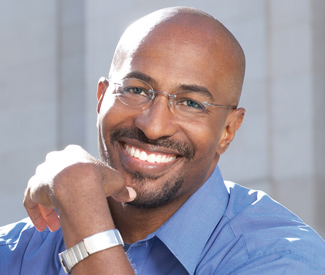
THE GREEN ISSUE No one can accuse Van Jones of being a one trick pony. In the early days of his activist career he monitored police violence in the Bay Area, and from there gradually widened the frame of his activist efforts. Jones formed the Ella Baker Center for Human Rights in Oakland in 1996, then became a green jobs pioneer, promoting environmentally-friendly work in low income communities — a revolutionary tactic that eventually landed him a short-lived adviser position within President Obama’s Council on Environmental Quality.

In his new book Rebuild the Dream (Nation Books, 278pp, $25.99) Jones has expanded his talking points to include the ways in which the financial sector has let us down, how Obama only did what we forced him to do (we gotta yell louder, Jones says), and how we can help fix the economy by focusing on “collaborative consumption.” Call it holistic activism. He’s launched a national junket to talk Rebuild that will bring him to the Commonwealth Club on April 16.

It is perhaps this kind of nuanced approach that scared the bejeezus out of the conservative demagogues whose smear campaign convinced Jones to resign from his White House post in 2009. Leave it to Glenn Beck to shame someone for saying he wanted “a whole new system” (as Jones proclaimed in a speech at a youth climate change conference.) The conservative media accused Jones of a communist past — which was accurate enough — and of signing a 9/11 truther petition that said that George Bush had prior knowledge of the World Trade Center attacks. He was innocent of this last point, the organization in question admitted months later, to a deafening media silence.

But Jones hasn’t retracted his call for a new system. In fact, in the pages of Rebuild the Dream he seems to step into a post-resignation hybrid role, in which he is no longer an outsider activist, but still has no formal role in Washington, D.C. Accordingly, he seems less fired up by the actions of national politicians as the agenda-pushing energy of the Tea Party and Occupy movements, which his new book spends entire chapters analyzing and critiquing. Even certain innovative businesses get a shout-out.

“You have Kiva, Kickstarter, Airbnb, and Zip Car already beginning to point to a future economy where more people are sharing fewer things,” Jones told the Guardian in a phone interview last week. “That’s good for people and the planet. You are also are saving money and you’re relying on people and relationships rather than dollars, you’re refinancing your social capital.”

He calls this economic ethos “collaborative consumption,” and it’s a heady idea for proponents of self-sustaining communities. Building a new economy on this business model, however, will take some tweaking that’s not covered in Rebuild — the city-level debate on whether SF Airbnb users should be subject to the city’s 14 percent hotel tax is one current-day example of how things can get complicated.

Rebuild offers a fairly honest critique of Obama’s successes and failures during the president’s first year in office. Nonetheless, the timing of the book, with it’s underlying message that we need to stay engaged in the political system to achieve real change, seems somewhat cagily timed. Is Rebuild the Dream part of Obama’s re-election campaign?

“The answer is no,” Jones is quick to reply. “We’re a non-partisan organization, we don’t endorse political candidates.”

But the election year publication is no coincidence: he wants all candidates to start talking about fixing the institutional reasons behind inequality.

“The two factors once used to pull people out of poverty were home ownership and education,” he says. “Those have now become the two factors by which people are being pulled into poverty because of the underwater mortgage problem and the fact that kids are coming away from college with massive debt and no ability to get a job. We think that these are issues that the politicians need to be forced to respond to and rethink.”

VAN JONES

April 17, 7pm, $20

Commonwealth Club

595 Market, second floor, SF.

(415) 597-6700

www.commonwealthclub.org


Brown says Lee shouldn’t have taken Mirkarimi’s pay away

53

As Mayor Ed Lee continues to duck questions about why he suspended Sheriff Ross Mirkarimi without pay or due process, even former Mayor Willie Brown – who helped elevate Lee into Room 200 – is second-guessing the decision and its legality.

In his Willie’s World column in Sunday’s San Francisco Chronicle, entitled “Ross Mirkarimi needs cash in struggle to keep his job,” Brown wrote, “And on the salary point, I agree with Mirkarimi: He should not be suspended without pay. He should continue to get paid unless and until he ultimately is found guilty of misconduct by the Board of Supervisors.”

The issue isn’t just one of fairness or of Lee trying to coerce Mirkarimi into resigning to avoid city hearings that will determine whether grabbing his wife’s arm during a New Year’s Eve conflict constitutes official misconduct, as Lee charges. It’s also a specific legal issue, particularly to lawyers like Brown.

Mirkarimi’s attorney, David Waggoner, said it’s not surprising to see Brown publicly undercutting the mayor on this issue. “He’s simply stating what the applicable law is on the subject,” Waggoner told us. In this case, it was the Supreme Court, hearing the case Skelly v. State Personnel Board in 1975, that said an executive can’t just unilaterally take away someone’s livelihood.

“If you’re going to fire public employees, you have to give them notice, you have to let them respond, you need to observe due process,” Waggoner said.

That’s one of three causes of action that Superior Court Judge Harold Kahn will consider in a hearing set for April 18 at 9:30 am, where Mirkarimi is asking the courts to reinstate him and restore his salary pending hearings before the Ethics Commission and Board of Supervisors that could take months.

Given the pressure being applied by anti-domestic violence groups and many mainstream media voices, Lee may have felt like he had to remove Mirkarimi and that he could just blame supervisors or the process if it didn’t work. But if the courts find Lee acted illegally while attempting to put supervisors in such an untenable position, it could be a serious blow to Lee’s reputation and governing authority.

UPDATE 5 PM: I also placed a call on the issue to former Mayor Art Agnos, who just back to me and he agreed that Lee acted in a way that was unfair and probably illegal. “I think it’s heavy-handed,” said Agnos, who has been supporting Mirkarimi through the ordeal.

Agnos noted that former Sheriff Richard Hongisto served several days in jail for contempt of court for refusing to carry out the evictions of International Hotel tenants, and he never had his pay docked or faced official misconduct charges. “And here, we see the sheriff being charged with something that occurred before he even took office, and it’s a low-grade misdemeanor that he accepted a plea deal on.”

According to Agnos, Mirkarimi told him that during his brief conversation with the mayor, he offered to tell his side of the story and have Lee talk to his wife, Eliana Lopez, as well, but the mayor wasn’t interested. “When you’re the mayor, you like to hear both sides before making a decision,” Agnos said. “But Lee wasn’t interested.”

Mirkarimi case: Eliana Lopez friend and defender Myrna Melgar responds to critics

107

My opinion piece regarding the plight of my friend Eliana Lopez and San Francisco’s approach to handling domestic violence in her case has generated a lot of discussion since it was printed last week. I have heard from a lot of folks who tell me that it has challenged their assumptions about the particular situation but also about the unintended outcomes of handling all domestic violence through the criminal justice system. It has also generated quite a bit of defensiveness from some anti-domestic violence advocates, who have suggested that questioning their methods is an attack on their goals – it is not, and people who dedicate themselves to helping victims of domestic violence have my very highest respect and admiration.

So allow me elaborate that a little further on that point:

No one is advocating for the return to the bad old days when we looked away from the abuse of women. I am pointing out that for many, having the police automatically open a criminal investigation, regardless of the nature of the problem, which is then followed by prosecution, is a strong deterrent to seeking help.  Defining progress by rates of conviction while we know that more than half of domestic abuse incidents go unreported suggests that something in our approach is not working. 

Domestic violence seldom begins with a murder. It usually begins with the putdowns, the sarcasm, the psychological and emotional abuse, and then, often, to escalating levels of physical abuse. Of course, not every guy who makes sarcastic remarks will eventually hit his girlfriend. Instead of opening a criminal case when the first call comes in from an affected party or a well-meaning neighbor, how about we create a support system within mental health and family support that has a trained health professionals who can answer questions and guide a path to rehabilitation?  

San Francisco has led the way in showing the country how an integrated, public health-oriented healthcare system, community rooted and accessible to all, ought to be run.  We have the technology already to share data among health care professionals that can be immediately transferred to criminal justice professionals when needed.  A system that has only one gear — criminal prosecution — that treats women as children, robs them of their voice and their rights, and renders them incapable of making their own decisions at the slightest evidence or even accusation of abuse is a system that needs to evolve.  We can do better. We need to stop domestic violence while at the same time working towards equal rights and the empowerment of all women individually and as a whole. Those two things must never be mutually exclusive goals.

Despite the strong reactions my opinion has generated in the past week among people who defend the current system, no one has addressed the problem that the zero-tolerance criminalization approach has created in communities where there is fear of the police. It seems that everyone wants to talk about Eliana Lopez, mostly as an appendage of Ross Mirkarimi, but the many women facing this issue remain seemingly invisible in this conversation, their fears and issues unaddressed.  I have heard from immigrants’ rights advocates that they have been voicing these concerns for years, and have gotten nowhere within the domestic violence community. We can do better.

In her essay on March 29 in the Huffington Post, Andrea Shorter of the Commission on the Status of Women explains that the current system for dealing with domestic violence came about as the implementation of 84 recommendations by a group of advocates in response to the gruesome 2000 murder of an Asian immigrant woman at the hands of her boyfriend. In the past 12 years, great progress has been made in reducing domestic violence related homicide rates, both in San Francisco and across the country.

But 12 years is a long time, and a critical look at the system that we have created is needed. It’s important to note that immigrant women are still overrepresented in the domestic-violence homicide statistics in San Francisco. We can do better. We need a system that is both capable of responding quickly and decisively to cases where women’s security or lives are at stake, but of also handling the far more numerous and ambiguous cases in which domestic troubles have not reached that point, but in which families need help to make sure that they do not.

Finally, I feel I must address a couple of the specific accusations that have been made that are just not true. I have never worked for Ross Mirkarimi. I didn’t even contribute to his campaign. (It is, after all, possible for a woman to have an opinion independent of a man’s agenda). I care about my friend Eliana, and the issue of domestic violence. My interest was in addressing what I saw as an thoughtless reaction both by our government and much of our media, which produced results that were needlessly cruel and counter-productive to the people directly involved, and that also, ironically given the supposed purpose of the whole exercise, sent a bad message on how to respond to domestic violence.

Another perspective on the Mirkarimi case

34

We have an interesting opinon piece in this week’s paper by a close friend of Eliana Lopez, the wife of Sheriff Ross Mirkarimi. It gives a very different perspective on the situation than we’ve seen in the media so far. You can read it here.

Our Weekly Picks: March 28-April 3

0

WEDNESDAY 28

“How to Drink Like a Locavore” Rents in the Mission and Noe Valley rose 10 percent in the last six months? Sea changes are afoot in this city (as always). But let’s make lemonade with the lemons of increasing preciousness — the monied have certainly provided a market for the Bay’s burgeoning local liquor scene. Community service for having snapped up the rental market? Today, for $25 anyone can sample pours from more than six distilleries in the tony climes of the Commonwealth Club — the ambrosial offerings of St. George’s Spirits, Anchor, and Distillery No. 209 included. Oh, and there’ll be an expert panel of hoochmakers to educate on what you’re sipping. Ask them if they need a roommate. (Caitlin Donohue)

6:30 p.m., $7–<\d>$25

595 Market, SF

(415) 597-6700

www.commonwealthclub.org


Sea of Bees

To call Julie Baenziger’s brand of sweet, haunting, exasperated vocals unique is an understatement. The Sea of Bees leader hails from California’s Central Valley and creates dreamy, blissful folk rock with a small group of co-conspirators. Sea of Bees’ debut album, Songs for the Ravens (2010), received critical acclaim and carries a fair bit of angst (with subtlety, mind you). Its forthcoming LP, Orangefarben, out this spring, includes “Gnomes,” a dynamic, surreal track released last summer on EP. Baenziger’s songs focus on love, sadness, hope, and intimacy, and her soulful style and live candor will draw you in.(Mia Sullivan)

With Radiation City, the Loom

8 p.m., $10

Rickshaw Stop

155 Fell, SF

(415) 861-2011

www.rickshawstop.com


THURSDAY 29

The Ferocious Few

Oh the Ferocious Few, how do we love thee, let me count the ways. That with just a guitar and drum kit you are nonetheless able to create a rock’n’roll ruckus any five-piece combo would be lucky to emulate (one). That Francisco Fernandez’s vocals, a honeyed firewater blaze, haunt every BART-station-street-corner-park-bench you’ve ever played (two). That every lyric you’ve penned about love lost slices right through the heart and straight for the jugular (three).That despite the massive setback of getting your gear stolen (since recovered), you still made it to SXSW with aplomb to spare (four). That you’re headlining a gig, indoors for a change, just before we went into major FF withdrawal (five). There are more reasons, but we’re out of word count. Just go. (Nicole Gluckstern)

With Zodiac Death Valley, B. Hamilton

8 p.m., $14

Great American Music Hall

859 O’Farrell, SF

(415) 885-0750

www.slimspresents.com


FRIDAY 30

“Dance Anywhere”

The world is in the toilet, and at times it feels like a giant cosmic hand is just about to flush us all. But a glimmer of hope for humanity lurks amid events like “Dance Anywhere,” which advises even the two-left-footed among us to pause and bust a joyful move in as part of a coordinated, global public art movement. Check the event’s website to line up your time zone (in San Francisco, it’s noon), and limber up for your solo macarena — or find your way to a free professional performance. Bay Area participants include Anne Bluethenthal Dance (at SFMOMA), Raisa Simpson and Push Dance Co. (at the Oakland Museum of California), and Alyce Finwall Dance Theatre (on 343 Sansome’s rooftop deck). In the words of Footloose: dance your ass off! (Eddy)

Noon, free

Various locations

www.danceanywhere.org


Kevin Brownlow

“The visual resources of the cinema have never been stretched further than in Napoléon vu par Abel Gance.” — that’s what Academy-honored film historian Kevin Brownlow had to say about the 1927 epic in his silent film tome The Parade’s Gone By… Now, his decades of restoration work on the film are culminating with screenings at the Paramount Theater in Oakland (the remaining two are Sat/31 and Sun/1; visit www.silentfilm.org for info). Brownlow will appear at UC Berkeley’s Pacific Film Archive to present “Abel Gance’s Napoléon, A Restoration Project Spanning a Lifetime,” a discussion of his work, sure to be an invaluable companion to the movie itself, which will feature scenes from the film and live piano accompaniment from Judith Rosenberg. (Sam Stander)

Book signing and reception, 5:30 p.m.; on Napoleon, 7:00 p.m., $5.50–<\d>$9.50

Pacific Film Archive

2575 Bancroft Way, Berk.

(510) 642-1412

bampfa.berkeley.edu


“Computer Face: A Show by Kirk Read”

Make way Wolf Blitzer, writer-performer-instigator Kirk Read, following the campaign trail as a sex worker like Mother Courage hauling her wares after the armies of Europe, offers his own take on the Republican primaries — among so much else — in his latest performance piece, now up through this weekend at the Garage. Read’s theater work is often grouped, not unreasonably, under performance art, queer cabaret, and such, but he has a quality that feels sui generis and shouldn’t be missed. Exuding a charming combination of practical, everyday groundedness and unmoored fancy, Read is a pure artist, and Rick Santorum’s hot wet nightmare. (Robert Avila)

Through Sat/31, $10–$20

Garage

975 Howard, SF

(415) 518-1517

www.975howard.com


Galactic

For those who aren’t really into jam, think of Galactic as an incarnate of Phish with brass instead of wah; but really, if you have a soul and like fun, you should probably acquaint yourself with Galactic, as it represents jazz-funk jam at its finest. The group’s live shows have been known to induce expressive dance as well as impressive marijuana intake. The pulsing and ecstatic Carnivale Electricos, which came out this past Mardi Gras, is an ode to carnivale in New Orleans (the band’s home city) and Brazil, where people take the responsibility of engaging in lustful debauchery on this crazy night quite seriously. (Sullivan)

With Soul Rebels Brass Band, Corey Henry

Fri/30-Sat/31, 9 p.m., $41.50

Fillmore

1805 Geary, SF

(415) 346-6000

www.thefillmore.com


Filastine

Could there be anything more emblematic of the “global economy” — its giddy consumerism, its nomadic promise, its horrid displacement — than the lowly shopping cart? Audio-visual percussionist Filastine makes the shopping cart central to his transnational electro bass music project, zinging, plucking, and kicking its ribs to turn a metaphor into a dance party of resistance. His amazing latest video, “Colony Collapse,” was filmed at several sites of ecological disaster, pairing with the sites’ residents to make a fractured song of despair and hope. His live stage show, this appearance opening for Bay Area electro-jazz-hop collective Beats Antique, couples virtuoso live drumming and electronic grooves with a visual spectacle that holds crowds spellbound, a neat complement to the mobile dance parties and sonic activism he’s renowned for leading, from Tokyo to Barcelona. (Marke B.)

With Beats Antique, the Loyd Family Players

8 p.m., $25

Fox Theater

1807 Telegraph, Oakl.

(510) 548-3010

www.thefoxoakland.com


SATURDAY 31

Pilot 60

ODC’s Pilot Program is giving young choreographers a leg up, so to speak. Having an idea about making a dance is easy. Shaping it so that it makes sense to the choreographer as well as to an audience is tough. Being in the same boat with others, however, helps. Just ask the dozens of choreographers who over the years (this is Pilot’s 60th incarnation) have gone through this well structured, proven way to nudge budding professionals to the spotlight. Alison Williams, Samantha Giron, Milissa Payne Bradley, David Schleiffers, Lisa Fagan and Claudia Anata Hubiak will be presenting works this time around. (Rita Felciano)

Sat/31-Sun/1, 8 p.m., $12

ODC Dance Commons, Studio B

351 Shotwell, SF

(415) 863-9834

www.odctheater.org


SUNDAY 1

“Memorabilia from the Ira and Leonore Gershwin Trust”

Know your Gershwins: Ira was the older brother (born 1896), but he outlived George (born 1898) by nearly 50 years. Together, they were a songwriting dream team ruling Broadway and American popular song — but even after George’s death, Ira continued writing lyrics for the stage and screen. He died in 1983; his widow, Leonore, died in 1991 after devoting her later years to preserving the legacy of the talented brothers. Fans won’t want to miss the exhibition of items from the Ira and Leonore Gershwin Trust (sheet music, concert posters, family photos, awards), as well as related events, including a talk by Ira’s nephew Mike Strunsky (Mon/2) and performances of The Man That Got Away: Ira After George (April 13-15). (Eddy)

Through June 15

Gallery hours Mon.-Thurs., 7 a.m.-10 p.m.; Fri.-Sun., 7 a.m.-8 p.m., free

Jewish Community Center of San Francisco

Katz Snyder Gallery

3200 California, SF

www.jccsf.org


“April Fools With Miss Coco Peru”

Tempting as it might be to play a trick on some poor fool today, firing the opening shot in a prank war is risky — payback is, after all, a notorious bitch. Instead of getting your April Fool’s Day guffaws at the expense at someone else, why not show your appreciation for a razor-sharp and unfailingly glamorous comedian? Miss Coco Peru, star of screens big (1999’s Trick) and small (“Wee Britain”-era Arrested Development) — and, of course, of stage (Ugly Coco) — performs her latest, There Comes a Time, a no-holds-barred monologue reflecting on her colorful life in the spotlight. Earlier in the day, Miss Peru will be on hand for a short Q&A after a screening of 2003’s Girls Will Be Girls, a campy cult comedy (tantalizingly described as “every novel Jacqueline Susann’s ever written”) with a sequel due out this year. (Eddy)

Screening, noon, $10

Performance, 7 and 9:30 p.m., $29.95

Victoria Theatre

2961 16th St., SF

(415) 863-0611

www.ticketfly.com


Chain & the Gang

You’re either with Ian Svenonius or you’re against him. The shamanic leader of Nation of Ulysses, Make-Up, and Weird War (all quality on their own, according to me) inspires fervor, mirrored weirdness, and the occasional eye-roll (hey, I’ve seen it). His most recent project Chain & the Gang (touring now in support new LP, In Cool Blood ) doesn’t get any less quirked, so if you’re not in line with Svenonius, you won’t find it as thrilling as the rest of us. With a muffled scream here, a tambourine shake there, and a buzzing chainsaw guitar slicing through it all, Chain & the Gang is a testament to Svenonius’s continuity, and his ongoing ability to scrap genres, culling the best bits of the past — Southern blues, working man shuffles, post-punk, and mod — for his own future perfect. (Emily Savage)

With Neonates, the Smell

9 p.m., $9–$12

Brick and Mortar Music Hall

1710 Mission, SF

(415) 800-8782

www.brickandmortarmusic.com


TUESDAY 3

Field Report

Chris Porterfield used to be a member of the now-defunct Wisconsin-based act DeYarmond Edison with Justin Vernon (Bon Iver) and the men of Megafaun (Brad Cook, Phil Cook, Joe Westerlund). He also made music under the Conrad Plymouth moniker for a while but recently debuted his new project, Field Report, at SXSW — a lush and poetic picture of longing, nostalgia, and hope. The retrospection and emotionality wrapped into Porterfield’s folksy, bluesy Americana is easily relatable and will make you want to melt into his world. Field Report’s debut album, which was recorded in Vernon’s studio and produced by Paul Koderie, is due out in July. (Sullivan)

With Megafaun

9 p.m., $12

Cafe Du Nord

2170 Market, SF

(415) 861-5016

www.cafedunord.com


The Guardian listings deadline is two weeks prior to our Wednesday publication date. To submit an item for consideration, please include the title of the event, a brief description of the event, date and time, venue name, street address (listing cross streets only isn’t sufficient), city, telephone number readers can call for more information, telephone number for media, and admission costs. Send information to Listings, the Guardian Building, 135 Mississippi St., SF, CA 94107; fax to (415) 487-2506; or e-mail (paste press release into e-mail body — no text attachments, please) to listings@sfbg.com. Digital photos may be submitted in jpeg format; the image must be at least 240 dpi and four inches by six inches in size. We regret we cannot accept listings over the phone.
Sorting through scandal

22

news@sfbg.com

>>Read the Guardian Op-Ed by Eliana Lopez’s friend Myrna Melgar here.

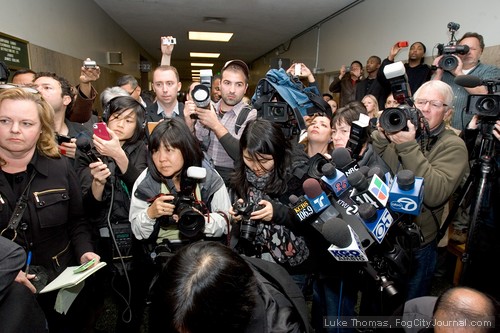
On March 20, Mayor Ed Lee announced his decision to suspend and seek the removal of Sheriff Ross Mirkarimi, taking the city into complex and uncharted legal and political territory. He did so with little explanation in a statement lasting two minutes. Then he went and hid.

Over the past week, the mayor has refused to expound on the reasoning behind his decision, won’t answer questions from reporters, and has held no public events where he might face the news media.

But he’s set off the political equivalent of a nuclear bomb, forcing the supervisors to take on a no-win situation in an election year and leaving the City Attorney’s Office, the Ethics Commission, and Mirkarimi’s lawyers scrambling to figure out how this will all play out.

At issue is whether Mirkarimi’s guilty plea to a misdemeanor false imprisonment charge — and his actions since the New Year’s Eve conflict with his wife, Eliana Lopez, that led to the three domestic violence charges that he originally faced — warrant his immediate removal from office without pay pending hearings that could take months. Mirkarimi, the mayor alleges, violated official misconduct standards written into the City Charter with little discussion in 1995, broad language that has yet to be interpreted by a court.

Mirkarimi and his new attorney, David Waggoner, responded March 27 by filing a court petition challenging that language — “conduct that falls below the standard of decency, good faith and right action impliedly required of all public officers” — as unconstitutionally vague and arguing Lee abused his mayoral discretion in suspending Mirkarimi and violated his due process rights by taking away his livelihood without a hearing. They are asking the court to order Mirkarimi’s reinstatement, or at least the restoration of his salary, until the long city process determines his fate.

“It makes it more difficult for the sheriff to fight these charges when he’s suspended without pay,” Waggoner told us.

To those who have been calling for Mirkarimi’s removal for the last few months, the case seems simple: Mirkarimi grabbed Lopez’s arm with enough force to leave a bruise, police and prosecutors got a video the neighbor made of the wife tearfully telling the story, and Mirkarimi tried to quell the controversy by calling it a “private matter” — infuriating anti-domestic-violence advocates who have spent decades trying to explain that DV is a crime, not a family issue. The sheriff ended up pleading guilty to a related charge.

That, many say, is plenty of reason to remove him from office: How can a top law-enforcement official do his job when he’s been convicted of a crime for which advocates say there should be zero tolerance? How can a man who runs the jails have any credibility when he’s pled guilty to false imprisonment?

“He has chosen not to resign and now I must act,” Lee said at a press conference he held shortly after the 24-hour deadline he gave Mirkarimi to resign or be removed.

But like everything in this politically fractured and passionate city, it’s a lot more complicated.

WHAT REALLY HAPPENED

Lopez and her attorneys have consistently maintained that Mirkarimi was not abusive, that the video was created solely in case their deteriorating marriage devolved into a child custody battle, and that it was not an accurate description of what happened that day, suggesting the former Venezuelan soap opera star was telling a particular kind of story.

The Guardian and the San Francisco Chronicle (“Mirkarimi’s argument with wife detailed,” March 25) have pieced together some of what happened. Sources say the couple argued in the car on the way to lunch at Delfina Pizzeria about whether Lopez would take their nearly three-year-old son, who was sitting in the backseat, with her to Venezuela.

The couple had been having marital problems and Mirkarimi, worried that she might not return or that their son could be kidnapped for ransom, got angry. As the argument escalated, Mirkarimi decided to take the family home. On the way, Mirkarimi told her that he had spoken to a lawyer and learned that she needed written permission from him to take their son out of the country and that he wouldn’t do so.

That made Lopez angry and she got out of the car and tried to unfasten their son to leave when Mirkarimi grabbed her right arm, leaving a bruise that was clear in the videotape but which wasn’t visible a week later when she wore a sleeveless dress to Mirkarimi’s swearing in ceremony for sheriff.

That’s the couple’s version of events, anyway. There are no witnesses who can verify or dispute it.

Lee never called Lopez or her attorney to hear this story before deciding to remove him from office. But in the official charges he filed against Mirkarimi, Lee alleges “acts of verbal and physical abuse against his wife” and that he “restrained Ms. Lopez and violated her personal liberty,” plus unproven allegations that he was never charged with, including encouraging neighbors to destroy evidence, and of hurting morale in the Sheriff’s Department (based on a newspaper quote from a political opponent).

You don’t have to defend Mirkarimi’s conduct or belittle the serious crime of domestic violence — in fact, you don’t have to believe anything the sheriff or his wife have said — to ask a few basic questions. Is this extraordinary executive power warranted in this case? What harm would come from waiting for a recall election, the usual method of removing elected officials after a scandal? Why did Lee give Mirkarimi 24 hours to resign and did he offer anything as incentive (sources tell us he offered another city job)? Will he release the City Attorney’s Office advice memo, and if not, why?

The Guardian submitted those and many other questions to Mayoral Press Secretary Christine Falvey, who said she would answer them by March 23, but then sent us this message at the end of that day before going on vacation: “After looking at your questions, it seems Mayor Lee addressed much of this in his comments on Tuesday. After Sheriff Mirkarimi pleaded guilty to a crime of false imprisonment, Mayor Lee made a thorough review of the facts, reviewed his duties under the Charter and gave the Sheriff an opportunity to resign. When that did not happen, he moved to suspend the Sheriff.”

Very few progressives have stood up publicly and taken Mirkarimi’s side. One of them is Debra Walker, a longtime activist and city commissioner.

“This is about McCarthyism at this point, and not domestic violence,” Walker told us. “Instead of helping [Lopez], they have succeeded in breaking this family apart. It’s just bullying. It was always aimed at Ross stepping down and removing him as sheriff.”

THE LEGAL MESS

So what happens next? It is, to say the least, unclear.

The last time a public official was charged with misconduct was in the 1970s, when Joe Mazzola, an official with the Plumbers Union, was removed from the Airport Commission because he refused to order striking plumbers back to work. The state Court of Appeal later overturned that decision, ruling that “official misconduct” had to be narrowly construed to be conduct directly related to the performance of official duties (a case Waggoner relies on in his petition).

But the City Charter has changed since then, and now allows removal for the vague charge of “conduct that falls below the standard of decency and good faith and right action impliedly required by all public officers.” That phrase gives extraordinary power to the mayor — and, given some of the conduct we’ve seen at City Hall over the years, could have been used to remove a long list of city officials.

The Charter states that Mirkarimi, as the accused, will get a hearing before the Ethics Commission, and that he can be represented by counsel. It’s silent on the question of what form that hearing will take, what the rules of evidence will be, what witnesses will be allowed, and what rights the defendant will have.

Four of the five Ethics Commission members are practicing attorneys, and before they can call a hearing, they’ll have to hold a meeting to discuss the rules.

In the case of former Sup. Ed Jew, who was accused of falsifying his address, Ethics was prepared to take only written testimony (Jew resigned before any hearing, partially to deal with more serious federal charges of shaking down constituents for bribes). But that’s not a hard and fast rule — this time, the panel could decide to allow both sides to present witnesses.

If the commission decides to allow evidence, someone will have to rule on what evidence can be presented and what can’t. Will that be the commission chair, Benjamin Hur, or the commission as a whole?

The answer is: Nobody knows for sure. Hur told us he couldn’t comment on anything related to the case; the City Attorney’s Office won’t comment, either, since the office is representing both the mayor (on the prosecution side) and the supervisors and the Ethics Commission, and the board and the commission haven’t made any decisions on rules yet.

Then it gets even trickier. The Board of Supervisors has to vote on whether to remove the sheriff, and it takes nine votes to do that. So if three supervisors vote no, Mirkarimi is automatically back in office.

There are no rules in the Charter for how the board will proceed; in theory, the supervisors could simply accept the recommendation of the Ethics Commission and vote without any further hearings. They could rely on the record of the Ethics proceedings — or they could hold the equivalent of a second trial, with their own witnesses and procedures.

To add another layer of confusion, Mirkarimi, as sheriff, is classified under state law as a peace officer — and the Peace Officers’ Bill of Rights sets entirely different standards for administrative and disciplinary hearings. Among other things, Mirkarimi could assert the right to have the Ethics Commission hearing closed to the public and the records sealed.

State law also mandates that a peace officer facing suspension without pay has the right to a hearing and adjudication within 90 days. That’s not in the City Charter; under the Charter, the city can wait as long as it wants to decide the issue.

Nobody knows for sure whether the Peace Officers Bill of Rights trumps the City Charter.

It’s clear that Mirkarimi, like anyone accused of a crime or facing an administrative hearing, has the right to due process — but not necessarily the same rights as he would have in a court proceeding. It’s also clear that the supervisors will be sitting in a quasi-judicial role — and thus can’t take into account anything that isn’t part of the official record of the case.

They probably can’t, for example, hold a public hearing on the issue — and judges in a case are theoretically supposed to ignore the hundreds of calls and emails that are now flooding in to the board offices on all sides.

The political implications are equally complex. Lee would have been in a dangerous situation if he declined to file charges — if Mirkarimi ever did anything else this disturbing, some would say it was Lee’s fault for leaving him in office.

It’s a safe bet that none of the supervisors are happy about having to vote on Mirkarimi’s job, but it’s particularly tough for the progressives. Anyone on the left who votes against removal will be subject to a barrage of attack ads — and since the balance of power on the board will be decided in November, when David Chiu, John Avalos, Eric Mar, David Campos, and Christina Olague, all more or less part of the progressive bloc, will all be up for re-election, the pressure on them will be immense.

That, in and of itself, ought to be reason for the sheriff to step down, some progressives say: Is preserving Mirkarimi in the Sheriff’s Office worth potentially destroying the progressive majority on the board? It’s a good question — and one that Lee’s advisors were well aware of, too.

Bay Area media merger approved, pending okay from AG

2

The Center for Investigative Reporting (CIR) and the Bay Citizen today approved a merger that would consolidate the media organizations into a single newsroom, eliminating its breaking news coverage of San Francisco but seeking to generate local news stories from the data-heavy reporting of CIR’s California Watch and figure out what’s next for the journalism industry.

The merger requires approval from the California Attorney General’s Office because of potential anti-trust issues, with approval becoming final if AG Kamala Harris doesn’t object within 20 days. Although it was announced as a merger by both organizations, the Bay Citizen reported that it’s really an acquisition given that CIR will run the combined organizations under the leadership of Phil Bronstein, the CIR Board President who served as editor of the Examiner and the Chronicle before spearheading this merger.

CIR Executive Director Robert Rosenthal, who will oversee the combined newsrooms, confirmed to us that CIR will play the lead role, but he emphasized the complimentary aspects of the two organizations. “They have strengths we don’t have in terms of membership and local brand,” he told us, noting the Bay Citizen’s website will be a local portal and “a way to send people to other stories that we’re doing.”

Membership-based fundraising has been Bay Citizen’s strong suit since the late financier Warren Hellman launched it as the Bay Area News Project in late 2009 with $5 million in seed money, raising more than $17 million since then. The Hellman family and Bay Citizen Board Chairman Jeff Ubben have also reportedly committed to give another $4 million as part of the merger.

Bay Citizen has broken some important stories since going live in 2010, although it has recently suffered from a leadership crisis after resignations from two consecutive editors and then its CEO, who had clashed with the journalists there. While welcoming the leadership of a respected editor like Rosenthal, one Bay Citizen source told us that many in the newsroom are disappointed that they’ll no longer be covering breaking news.

“We’re not going to be a breaking news organization,” Rosenthal told me, confirming the report. “But it does not mean we’re not going to be a lively site.”

So while the Bay Citizen may stop doing stories on City Hall meetings, developments in political scandals, and spot news stories likes fires and crimes, Rosenthal said the intention is still to do “accountability reporting” that would provide strong local coverage. “I would hope that what we’re doing as for as covering City Hall would be more in-depth,” he told us.

Jonathan Weber, Bay Citizen’s first editor who now serves as West Coast Bureau chief for Reuters, said it’s not clear how the new approach will work but he thinks strong local news coverage is important. “It was my view when we started the Bay Citizen that if you’re going to be a news site that it be very vibrant and give a sense of what’s happening around the Bay Area on a timely basis,” he told us.

But he doesn’t want to second-guess the decisions CIR is making, telling us, “The Bay Citizen has a bigger mission than it had resources to accomplish it, so making a decision about what you’re going to do and not do is appropriate.” Yet he believes the Bay Area is underserved with strong local news coverage, “so to the extent that goes away, it will be a loss.”

Still to be determined is whether Bay Citizen will continue providing semi-weekly content for the New York Times, an agreement that immediately elevated the stature of the media startup. Some local journalists say they fear the merger will mean less local journalism, which has already been hit hard by corporate media consolidations and layoffs.

Bay Citizen reports that Tom Goldstein, interim dean of UC Berkeley’s School of Journalism and the only journalist on Bay Citizen’s board, resigned in the last couple weeks after being the only board member resisting the merger. Calls and emails to Goldstein were not immediately returned, but I’ll update this post with his comments if and when I hear back.

The other aspect of this merger that may be troubling to some is the leadership by Bronstein, a controversial figure who led the Examiner and then the Chronicle through a era of major downsizing by Hearst Corp. Bronstein wasn’t available today, but when I asked him about the issue in February, he defended his local record and blamed cuts to local journalism on corporate decisions and general industry trends.

He also said, “I don’t know that I’m the best person to take it over. That’s something other people should determine, not me.” Yet the Bay Citizen’s coverage of merger indicates its board asked Bronstein to be its president – he was already president of the CIR board – and that he declined but suggested the merger as an alternative and has been working to make it happen.

Rosenthal, a longtime journalist who worked under Bronstein for years at the Chronicle, said they work well together and that Rosenthal has always felt supported in doing good journalism. Under the merged entity, Bronstein and Rosenthal will reportedly get the same salary, a little more than $200,000, and Rosenthal will focus on the newsroom while Bronstein focuses on the donor base.

As we reported in February, Rosenthal has had to expand on his journalism skill sets in recent years as he successfully sought foundation funding to beef up CIR’s news-gathering operations and launch California Watch, which partners CIR with media outlets around the state to do investigative reporting and statehouse coverage.

“Our merger with The Bay Citizen announced today puts us in a unique position as journalists, innovators, technologists and, yes, entrepreneurs. I worked in newspapers for decades, starting as a copy boy and ending up as the top editor. No one ever strung those four words together to describe what we were as an organization,” Rosenthal wrote today in blog post describing the merger. “But to survive, thrive and evolve, the journalism, the innovation, the technology and the entrepreneurial vision all have to be intertwined in the new model.”

That sense of trying to create a new model for the journalism industry – which has been decimated in recent years, hindering its ability to play a watchdog role in a country founded on the importance of a free press – seems to dominate in the comments coming out of each news organization, emphasizing new ways of funding, covering, and delivering the news.

“We are bringing together two Bay Area enterprises with very complementary strengths,” Bronstein said in the press release. “They are both devoted to protecting justice and democracy through great, engaging journalism.”

But what that looks like, whether it’s sustainable, and how it is going embraced by Bay Area residents remain open questions as the merged newsrooms struggle to work together and resolve outstanding issues. Or as Rosenthal told me, “This is going to evolve.”

Pop-Up Magazine is back with issue six

0

There are so many creative concepts and winning events every week in San Francisco, it can sometimes feel overwhelming. Let me make this easy for your muddled brain waves: you should go to Pop-Up Magazine. The organizers just now tweeted the date of the sixth issue – April 25, at Davies Symphony Hall – and the date tickets go on sale, which is next Tuesday, April 3.

For those who’ve yet to attend, it’s a live format feature magazine that pops up for one night and includes different writers and artists presenting totally new ideas and concepts in creative presentations. And it was a Best of the Bay winner in 2010, an Editor’s Pick for “Best Gazette Refresher.”

The event – which happens a couple of times a year in San Francisco – is a must for anyone interested in media, arts, writing, film, photography, and/or radio. It features a rotating, shifting mix of contributors to The New Yorker, This American LifeAll Things Considered, Mother Jones, Wired, and National Geographic, and more.

With so much documentation going on in our everyday lives, and in particular at large Bay Area events, it’s a refreshing change of pace (especially for me) – there are no audience cameras allowed inside, you may not record, do not press play. Just sit back and enjoy.

Over the course of several of the events I’ve learned weird new facts and been enthralled with earnest stories about turkey vultures, crazed sports fanatics, mapping infographics, sign spinners, ping-pong, surfers, Asian fetishists, fake bellies for expectant pops, and a teenage message in a bottle (love you, Starlee Kine).

Impertinent question: Will Mayor Lee take on the Bank of America for unethical behavior?

16

Mayor Ed Lee moved with lightning speed to suspend Sheriff Ross Mirkarimi without pay on misconduct charges and unethical behavior  in a spousal abuse case and continue the costly, distracting, divisive  media and City Hall circus.

Meanwhile, the Bank of America, an institution called “Too Crooked to Fail” by Rolling Stone,  is responsible for 10 per cent of all foreclosures in San Francisco and the city keeps its lucrative multi-million dollar short term investment portfolio in the B of A.  Matt Taibbi, the Rolling Stone investigative reporter on the story, said in a lengthy interview  on the Democracy Now radio program Thursday morning that bailouts and fraud are the secrets to the B of A success. The B of A, he said,  has defrauded “everyone from investors and insurers to homeowners and the unemployed.”  He said “most people think of the mortgage crisis as some airy abstraction–you know, bankers ripping off bankers. That’s not what it is.  It’s bankers stealing from old ladies and retirees.”

Impertinent question: So will Lee apply his new found standard of ethics to the Bank of America? See the Democracy Now clip on the Taibbi interview for specifics on B of A behavior:

http://www.democracynow.org/2012/3/22/too_crooked_to_fail_matt_taibbi

Our Weekly Picks: March 21-27

0

WEDNESDAY 21

Al Pacino

Iconic actor Al Pacino brings his new experimental documentary Wilde Salome to the city tonight for its U.S. debut screening, with a red carpet celebration and a variety of special guests including Jean-Paul Gaultier, Dita Von Teese, and more. Pacino has described the film, a look into legendary writer Oscar Wilde’s works and influence, as his most personal project ever, and he will also be on hand tonight for the gala screening that benefits the GLBT Historical Society, and commemorates the 130th anniversary of the legendary writer’s visit to San Francisco. (Sean McCourt)

6 p.m., $25

Castro Theatre

429 Castro, SF

(415) 777-5455

Glbthistory.org/WildeSalome


of Montreal

A part conspiratorial, part confessional Kevin Barnes lies at the heart of Paralytic Stalks, the latest release from the of Montreal mastermind and his rotating ensemble of collaborators. Paralytic is complex and genre-bending like most of the of Montreal repertoire. In Paralytic‘s first half, Barnes croons moody lyrics transposed on psychedelic pop melodies not unlike 2007’s Hissing Fauna, Are You The Destroyer? Paralytic‘s second half challenges listeners with Barnes’ violent tones jumbled with harrowing electronic-classical interludes. (Kevin Lee)

With Deerhoof, Kishi Bashi

8 p.m., $21

Slim’s

333 11th St., SF

(415) 255-0333

www.slimspresents.com

Also Thurs/22, 8 p.m., $22

Fillmore

1805 Geary, SF

(415) 346-6000

www.thefillmore.com


Bonaparte

An electro rock’n’roll circus led by an inspired madman, Berlin’s Bonaparte has campaigned through Europe, Russia, and Australian, but is just now taking aim at the U.S. via SXSW. A rotating collective of musicians, designers, dancers, and freaks (performing in wildly excessive costumes), Bonaparte combines a trash punk energy with a theatricality that borders on the surreal. The ringleader, Tobias Jundt, is a sharp lyricist hiding behind dada non sequiturs and unbridled hedonism. (Witness the apt “gloryhole to the universe” line on “Computer in Love.”) Remember: when they ask “Are you ready to party with the Bonaparte?” — it’s a rhetorical question. (Ryan Prendiville)

With 2 Men Will Move You, Stay Gold DJs Rapid Fire and Pink Lightning

9 p.m., $10

Public Works

161 Erie, SF

(415) 932-0955

www.publicsf.com


THURSDAY 22

indifference and MASTERWORK

Outsiders and insiders at once, Lisa Townsend and Mica Sigourney culminate their CounterPULSE winter residencies with indifference and MASTERWORK. Experimental choreographer Townsend leaps off from Camus and the idea of free will in a dance-theater piece investigating the conflict between society and the solitary action, or not, of the stranger. Sigourney offers MASTERWORK, a concept demanding the all-caps title, an experiment in hubris promising “the most important performance of our generation and time.” Maybe. But if you’ve seen any of Sigourney’s work (recently in Laura Arrington’s “Wag,” or more recently with a bottle of bourbon, two glasses, and some sheets of paper at a crowded reading in the SomARTS men’s room) —or drag persona VivvyAnne ForeverMORE! and the envelope-pushing drag queen confab-cabaret “Work MORE!” — you’ll be there just to make sure. (Robert Avila)

Thurs/22-Sun/25, 8 p.m., $20

CounterPULSE

1310 Mission, SF

(415) 626-2060 www.counterpulse.org


“Hope Mohr Dance: Fifth Annual Home Season”

Christy Funsch recently choreographed an intriguing evening of solos for Bay Area dancers. One of its delights was watching Hope Mohr — exquisite, focused and powerful — take to the stage. In the last few years Mohr has focused her energy on creating work for her own company, but she clearly is still a mesmerizing performer. During her Fifth Annual Home Season, she is premiering “Reluctant Light” for her troupe, but she will also dance her 2011 solo “Plainsong”, inspired by the myth of Penelope and first seen at last year’s San Francisco International Dance Festival. As is her want, Mohr has invited an out of town company whose work she feels complements her own to share this evening. They are the Dušan Týnek Dance Theatre from New York. (Rita Felciano)

Thurs/22-Sat/24, 8 p.m., $20–$25

Z Space

450 Florida, SF

(800) 838-3006

www.zspace.org


FRIDAY 23

The Brightness of the Day . . .

Peter Whitehead makes instruments out of the things you’ve got in your kitchen, toolbox, and garbage bin — and makes them sound fucking rad. Brightness of the Day . . . will feature his experimental instruments, including his spoon harp, ektar, and buzzing bass lyre, alongside his textile paintings and collages. Whitehead’s visual art and musical endeavors parallel each other: his art illustrates music’s patterns and variation, and he conceptualizes music visually. Whitehead has exhibited his instruments in various museums and galleries in the past, but this is the first time he’ll be bringing together the various aspects of his visual art, music, and instrument building for an exhibit. (Mia Sullivan)

6 p.m., free

60Six

66 Elgin Park, SF

(415) 621-8377

www.gallery60six.com


Saviours

When Saviours first broke into the Bay Area metal and punk scenes, their unrepentant Thin Lizzy worship, filtered through a nasty hardcore sensibility, was as refreshing as a cold Hamm’s on a hot Tuesday afternoon. Like their recently-disbanded peers, Annihilation Time, Saviours dig deep into the record vault of the great hoary cannon of metal’s early days, reemerging with forgotten treasures like the weedeley-weedeley twin-guitar lead, and lyrics about getting epically baked. The band plans to get loud at a familiar San Francisco haunt, the Elbo Room, this Friday. (Tony Papanikolas)

With Holy Grail, Hazard’s Cure

9:30 p.m., $10–$13

Elbo Room

647 Valencia, SF

(415) 552-7788

www.elbo.com


Yuksek

Someone repeatedly tapping a note on a natural sounding piano. A bunch of finger snaps. An additional R&B riff on the keys. A man singing…Fitz and the Tantrums?…with an accent. Who is this? Metronomy? French accent. Phoenix? An electro snare/kick. MGMT? Background children’s vocals. Justice? Errrrr. Times up. We could play another song, or the full album, but it probably wouldn’t help. With Living on the Edge of Time, an album inspired by life as a lonely electronic musician on the road, French producer Yuksek expanded his sound — heading into a lighter, melodic though dance-oriented pop territory — as well as his band, which kicks off its US tour here. (Prendiville)

With Tenderlions, Realboy, DJ Aaron Axelsen

9 p.m., $15

Mezzanine

444 Jessie, SF

(415) 625-8880

www.mezzaninesf.com


SATURDAY 24

Napoleon

Fans of silent film and early cinema are in for an incredibly special treat this week and next when the San Francisco Silent Film Festival presents a series of screenings featuring Abel Gance’s legendary 1927 masterpiece Napoleon. Lauded for its use of then-groundbreaking and innovative techniques, the epic five-and-a-half hour biography of the French ruler has been painstakingly restored over the past several years, and will be shown accompanied by a live musical score performed by the Oakland East Bay Symphony. Don’t miss the opportunity to see this amazing event in the Bay Area’s own movie palace, the Paramount Theatre — these performances will not be staged anywhere else in the world. (McCourt)

Sat/24-Sun/25, March 31, April 1

1:30 p.m., $40–$120

Paramount Theatre

2025 Broadway, Oakl.

www.silentfilm.org


Thee Oh Sees

As prolific as they are prodigiously loud, San Francisco favorites Thee Oh Sees have cultivated over the course of ten albums (and a shitload of EPs, singles, etc.) a familiar wilderness, equal parts Black Flag and Their Satanic Majesties Request. This shouldn’t mask how unpredictable the band can sound — like the vaguely grotesque, multicolored nightmare aesthetic of the band’s instantly recognizable fliers and album covers, Thee Oh Sees couldn’t be any less concerned with weirding out our delicate sensibilities. (Papanikolas)

With White Mystery, Coathangers, Guantanamo Baywatch, Cyclops

9 p.m., $10

Thee Parkside

1600 17th St., SF

(415) 252-1330

www.theeparkside.com


The Magnetic Fields

The Magnetic Fields are known for their sardonic, poetic, and, at times, absolutely hilarious songs that tend to focus on loneliness, sexual identity, unrequited love, and other love-related mishaps. Lead singer-songwriter Stephin Merritt has been releasing albums with the Magnetic Fields for more than two decades. Their new album, Love at the Bottom of the Sea, marks the indie pop group’s return to a synthy sound, which they were all about in the ’90s, but veered from in their past three albums (Realism, Distortion, and I). Love at the Bottom of the Sea delves into sexual taboos with catchy tracks like “God Wants Us to Wait” and “Andrew in Drag.” (Sullivan)

8 p.m., $35

Fox Theater

1807 Telegraph, Oakl.

(510) 548-3010

www.thefoxoakland.com


TUESDAY 27

Kendrick Lamar

Best of lists, while good for selling issues or getting views, are guaranteed to start arguments. So it’s no surprise that when XXL released its 2012 Freshmen Issue, crowning emerging hip-hop artists, there was fallout: A$AP Rocky opted out, readers cried foul over selections, and firebrand Azaelia Banks put Iggy Azalea on blast (starting a beef which, given their names, was inevitable.) Time will sort it out, though, as it has with 2011 inductee Kendrick Lamar, who a year later has made the grade, and is now teasing a follow-up to his stellar Section.80. (Although I’m still trying to understand his “I climax where you begin” line on “Rigamortis.”) (Ryan Prendiville) With Hopsin 8 p.m., $30-$50 Regency Ballroom 1300 Van Ness, SF (800) 745-3000 www.theregencyballroom.com


Mr. Gnome

Fuzzy Cleveland drums-and-guitar duo Mr. Gnome has been named some variant on the “band to watch” so many times now, it’s best you lift your chin and pay attention. Maybe, you’ll also be scratching that chin, because the band — sugary singer-guitarist Nicole Barille and thwacking drummer-pianist Sam Meister — doesn’t quite sound like anything else. It’s an eye-popping hybrid. And its aesthetic of natural psychedelia in hazy orange and yellow hues with Donny Darko-esque imaginary belies the dark, hard rocking core. Not that they don’t have fun with their music, there are spacey shots of wailing guitars and the occasional high vocal peeps (“Bit of Tongue”), it’s just far more realized a sound than one might expect based on the superficial. Listening yet? (Emily Savage)

With Electric Shepherd & Outlaw, Plastic Villians

8 p.m., $8

Thee Parkside

1600 17th St., SF

(415) 252-1330

www.theeparkside.com


The Guardian listings deadline is two weeks prior to our Wednesday publication date. To submit an item for consideration, please include the title of the event, a brief description of the event, date and time, venue name, street address (listing cross streets only isn’t sufficient), city, telephone number readers can call for more information, telephone number for media, and admission costs. Send information to Listings, the Guardian Building, 135 Mississippi St., SF, CA 94107; fax to (415) 487-2506; or e-mail (paste press release into e-mail body — no text attachments, please) to listings@sfbg.com. Digital photos may be submitted in jpeg format; the image must be at least 240 dpi and four inches by six inches in size. We regret we cannot accept listings over the phone.
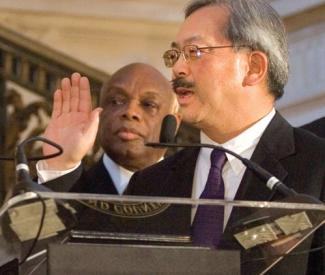
Spring fairs and festivals

1

culture@sfbg.com

MARCH

SF Flower and Garden Show, San Mateo Event Center, 495 S. Delaware, San Mateo. (415) 684-7278, www.sfgardenshow.com. March 21-25, 10am-6pm, $15–$65, free for 16 and under. This year’s theme is “Gardens for a Green Earth,” and features a display garden demonstrating conservation practices and green design. Plant yourself here for thriving leafy greens, food, and fun in the sun.

The Art of Aging Gracefully Resource Fair, Jewish Community Center of San Francisco, 3200 California, SF. (415) 292-1200, www.jccsf.org. March 22, 9:30am-2:45pm, free. Treat yourself kindly with presentations by UCSF Medical Center professionals on healthy living, sample classes, health screenings, massages, giveaways and raffles.

California’s Artisan Cheese Festival, Sheraton Sonoma County, 745 Sherwood, Petaluma. (707) 283-2888, www.artisancheesefestival.com. March 23-25, $20–$135. Finally, a weekend given over to the celebration of cultures: semi-soft, blue, goat, and cave-aged. More than a dozen award-winning cheesemakers will provide hors d’oeuvres and educational seminars.

15th Annual Rhone Rangers Grand Tasting, Fort Mason Festival Pavilion, Buchanan and Marina, SF. (800) 467-0163, www.rhonerangers.org. March 24-25, $45–$185. The largest American Rhone wine event in the country, with over 2,000 attendees tasting 500 of the best Rhones from its 100 US member wineries.

Whiskies of the World Expo, Hornblower Yacht, Pier 3, SF. (408) 225-0446, www.whiskiesoftheworld.com. March 31, 6pm-9pm, $120–$150. The expo attracts over 1400 guests intent on sampling spirits on a yacht and meeting important personages from this fine whiskey world of ours.

Bay Area Anarchist Book Fair, SF County Fair Building’s Hall of Flowers, Golden Gate Park, SF. (415) 431-8355, bayareaanarchistbookfair.wordpress.com. March 31-April 1, free. This political book fair brings together radical booksellers, distributors, independent presses, and political groups from around the world.

Monterey Jazz Festival’s Next Generation Festival Monterey Conference Center, One Portola Plaza, Monterey. (831) 373-3366, www.montereyjazzfestival.org. March 30-April 1, free. 1200 student-musicians from schools located everywhere from California to Japan compete for the chance to perform at the big-daddy Monterey Jazz Festival. Free to the public, come to cheer on the 47 California ensembles who will be playing, or pick an away team favorite.

APRIL

Argentine Tango Festival, San Francisco Airport Marriot Hotel, 1800 Old Bayshore Highway, Burlingame. www.argentinetangousa.com. April 5-8, $157–$357. Grip that rose tightly with your molars — it’s time to take the chance to dance in one of 28 workshops, with a live tango orchestra, and tango DJs. The USA Tango championship is also taking place here.

Salsa Festival, The Westin Market Street, 50 Third St., SF. (415) 974-6400. www.sfsalsafestival.com. April 5-7, $75–$125. Three nights of world-class performances, dancing, competition and workshops with top salsa instructors.

Union Street Spring Celebration and Easter Parade, Union between Gough and Fillmore, SF. (800) 310-6563, April 8, 10am-5pm, parade at 2pm, free. www.sresproductions.com/union_street_easter. A family festival with kids rides and games, a petting zoo, and music.

45th Annual Northern California Cherry Blossom Festival, Japan Center, Post and Buchanan, SF. (415) 567-4573, www.sfjapantown.org. April 14-15 and 21-22, parade April 22, free. Spotlighting the rich heritage and traditional customs of California’s Japanese-Americans. Costumed performers, taiko drums, martial arts, and koto music bring the East out West.

Bay One Acts Festival, Boxcar Theatre, 505 Natoma, SF. www.bayoneacts.org. April 22 — May 12, 2012, $25–$45 at the door or online. Showcasing the best of SF indie theater, with new works by Bay Area playwrights.

Earth Day, Civic Center Plaza, SF. (415) 571-9895, www.earthdaysf.org. April 22, free. A landmark day for the “Greenest City in North America,” featuring an eco-village, organic chef demos, a holistic health zone, and live music.

Wedding and Celebration Show, Parc 55 Wyndham, 55 Cyril Magnin, SF. (925) 594-2969, www.bayareaweddingfairs.com. April 28, 10:00am-5:00pm. Exhibitors in a “Boutique Mall” display every style of product and service a bride may need to help plan his or her wedding.

San Francisco International Beer Festival, Fort Mason Center, Festival Pavilion, SF. www.sfbeerfest.com. April 28, 7pm-10pm, $65. The price of admission gets you a bottomless taster mug for hundreds of craft beers, which you can pair with a side of food from local restaurants.

Pacific Coast Dream Machines Show, Half Moon Bay Airport, 9850 Cabrillo Highway North, Half Moon Bay. www.miramarevents.com/dreammachines. April 28-29, 9am-4pm, $20 for adults, kids under 10 free. The annual celebration of mechanical ingenuity, an outdoor museum featuring 2,000 driving, flying and working machines from the past 200 years.

May:

San Francisco International Arts Festival Various venues. (415) 399-9554, www.sfiaf.org. May 2-20, prices vary. Celebrate the arts, both local and international, at this multimedia extravaganza.

Cinco de Mayo Festival, Dolores Park, Dolores and 19th St, SF. www.sfcincodemayo.com. May 5, 10am-6pm, free. Enjoy live performances by San Francisco Bay Area artists, including mariachis, dancers, salsa ensembles, food and crafts booths. Big party.

A La Carte and Art, Castro St. between Church and Evelyn, Mountain View. May 5-6, 10am-6pm, free. With vendors selling handmade crafts, micro-brewed beers, fresh foods, a farmers market, and even a fun zone for kids, there’s little you won’t find at this all-in-one fun fair.

Young at Art Festival, De Young Museum, 50 Hagiwara Tea Garden Drive, SF. (415) 695-2441. www.youngatartsf.com. May 12-20, regular museum hours, $11. An eight-day celebration of student creativity in visual, literary, media, and performing arts.

Asian Heritage Street Celebration Larkin and McAllister, SF. www.asianfairsf.com. May 19, 11am-6pm, free. Featuring a Muay Thai kickboxing ring, DJs, and the latest in Asian pop culture, as well as great festival food.

Uncorked! San Francisco Wine Festival, Ghirardelli Square, 900 North Point, SF. (415) 775-5500, www.ghirardellisq.com. May 19, 1pm-6pm, $50 for tastings; proceeds benefit Save the Bay. A bit of Napa in the city, with tastings, cooking demonstrations, and a wine 101 class for the philistines among us.

Maker Fair, San Mateo Event Center, San Mateo. www.makerfaire.com. May 19-20, $8–$40. Make Magazine’s annual showcase of all things DIY is a tribute to human craftiness. This is where the making minds meet.

Castroville Artichoke Festival, Castroville. (831) 633-2465 www.artichoke-festival.com. May 19-20, 10am-5pm, $10. Pay homage to the only vegetable with a heart. This fest does just that, with music, parades, and camping.

Bay to Breakers, Begins at the Embarcadero, ends at Ocean Beach, SF. www.zazzlebaytobreakers.com. May 20, 7am-noon, free to watch, $57 to participate. This wacky San Francisco tradition is officially the largest footrace in the world, with a costume contest that awards $1,000 for first place. Just remember, Port-A-Potties are your friends.

Freestone Fermentation Festival Salmon Creek School, 1935 Bohemian Hwy, Sonoma. (707) 479-3557, www.freestonefermentationfestival.com. May 21, Noon-5pm, $12. Answer all the questions you were afraid to ask about kombucha, kefir, sauerkraut, yogurt, and beer. This funky fest is awash in hands-on demonstrations, tastings, and exhibits.

San Francisco Carnaval Harrison and 23rd St., SF. www.sfcarnaval.org. May 26-27, 10am-6pm, free. Parade on May 27, 9:30pm, starting from 24th St. and Bryant. The theme of this year’s showcase of Latin and Caribbean culture is “Spanning Borders: Bridging Cultures”. Fans of sequins, rejoice.

June:

Union Street Eco-Urban Festival Union Street between Gough and Steiner, SF. (800) 310-6563, www.unionstreetfestival.com. June 2-3, 10am-6pm, free. See arts and crafts created with recycled and sustainable materials and eco-friendly exhibits, along with two stages of live entertainment and bistro-style cafes.

Haight Ashbury Street Fair, Haight between Stanyan and Ashbury, SF. www.haightashburystreetfair.org. June Date TBD, 11am-5:30pm, free. Celebrating the cultural history and diversity of one of San Francisco’s most internationally celebrated neighborhoods, the annual street fair features arts and crafts, food booths, three musical stages, and a children’s zone.

San Mateo County Fair, San Mateo County Fairgrounds, 2495 S. Delaware, San Mateo. www.sanmateocountyfair.com. June 9-17, 11am-10pm, $6–$30. Competitive exhibits from farmers, foodies, and even technological developers, deep-fried snacks, games — but most importantly, there will be pig races.

Queer Women of Color Film Festival Yerba Buena Center for the Arts, 701 Mission, SF. (415) 752-0868, www.qwocmap.org. June 8-10 times vary, free. Three days of screenings from up-and-coming filmmakers with unique stories to tell.

Harmony Festival, Sonoma County Fairgrounds, 1350 Bennett Valley, Santa Rosa. www.harmonyfestival.com. Date TBA. One of the Bay Area’s best camping music festivals and a celebration of progressive lifestyle, with its usual strong and eclectic lineup of talent.

North Beach Festival, Washington Square Park, SF. (415) 989-2220, www.northbeachchamber.com. June 16-17, free. This year will feature over 150 art, crafts, and gourmet food booths, three stages, Italian street painting, beverage gardens and the blessing of the animals.

Marin Art Festival, Marin Civic Center, 3501 Civic Center Drive, San Rafael. (415) 388-0151, www.marinartfestival.com. June 16-17, 10am-6pm, $10, kids under 14 free. Over 250 fine artists in the spectacular Marin Civic Center, designed by Frank Lloyd Wright. Enjoy the Great Marin Oyster Feast while you’re there.

Sierra Nevada World Music Festival, Mendocino County Fairgrounds Booneville. (916) 777-5550, www.snwmf.com. June 22-24, $160. A reggae music Mecca, with Jimmy Cliff, Luciano, and Israel Vibration (among others) spreading a message of peace, love, and understanding.

Gay Pride Weekend Civic Center Plaza, SF; Parade starts at Market and Beale. (415) 864-FREE, www.sfpride.org. June 23-24, Parade starts at 10:30am, free. Everyone in San Francisco waits all year for this fierce celebration of diversity, love, and being fabulous.

Summer SAILstice, Encinal Yacht Club, 1251 Pacific Marina, Alameda. 415-412-6961, www.summersailstice.com. June 23-24, 8am-8pm, free. A global holiday celebrating sailing on the weekend closest to the summer solstice, these are the longest sailing days of the year. Celebrate it in the Bay Area with boat building, sailboat rides, sailing seminars and music.

Stern Grove Festival, Stern Grove, 19th Ave. and Sloat, SF. (415) 252-6252, www.sterngrove.org. June 24-August 26, free. This will be the 75th season of this admission-free music, dance, and theater performance series.

July:

4th of July on the Waterfront, Pier 39, Beach and Embarcadero, SF. www.pier39.com 12pm-9pm, free. Fireworks and festivities, live music — in other words fun for the whole, red-white-and-blue family.

High Sierra Music Festival, Plumas-Sierra Fairgrounds, Lee and Mill Creek, Quincy. www.highsierramusic.com. July 5-8, gates open 8am on the 5th, $185 for a four-day pass. Set in the pristine mountain town of Quincy, this year’s fest features Ben Harper, Built To Spill, Papodosio, and more.

Oakland A’s Beer Festival and BBQ Championship, (510) 563-2336, www.oakland.athletics.mlb.com. July 7, 7pm, game tickets $12–$200. A baseball-themed celebration of all that makes a good tailgate party: grilled meat and fermented hops.

Fillmore Street Jazz Festival, Fillmore between Jackson and Eddy, SF. (800) 310-6563, www.fillmorejazzfestival.com. July 7-8, 10am-6pm, free. The largest free jazz festival on the Left Coast, this celebration tends to draw enormous crowds to listen to innovative Latin and fusion performers on multiple stages.

Midsummer Mozart Festival, Herbst Theater, 401 Van Ness, SF (also other venues in the Bay Area). (415) 627-9141, www.midsummermozart.org. July 19-29, $50. A Bay Area institution since 1974, this remains the only music festival in North America dedicated exclusively to Mozart.

Renegade Craft Fair, Fort Mason Center, Buchanan and Marina, SF. (415) 561-4323, www.renegadecraft.com. July 21-22, free. Twee handmade dandies of all kinds will be for sale at this DIY and indie-crafting Mecca. Like Etsy in the flesh!

Connoisseur’s Marketplace, Santa Cruz and El Camino Real, Menlo Park. July 21-22, free. This huge outdoor event expects to see 65,000 people, who will come for the art, live food demos, an antique car show, and booths of every kind.

The San Francisco Shakespeare Festival, locations TBA, SF. (415) 558-0888, www.sfshakes.org. July 23-August 28, free. Shakespeare takes over San Francisco’s public parks in this annual highbrow event. Grab your gang and pack a picnic for fine, cultured fun.

Gilroy Garlic Festival, Christmas Hill Park, Miller and Uvas, Gilroy. (408) 842-1625, www.gilroygarlicfestival.com. July 27-29, $17 per day, children under six free. Known as the “Ultimate Summer Food Fair,” this tasty celebration of the potent bulb lasts all weekend.

27th Annual Berkeley Kite Festival & West Coast Kite Championship, Cesar E. Chavez Park at the Berkeley Marina, Berk. (510) 235-5483, www.highlinekites.com July 28-29, 10am-5pm, free. Fancy, elaborate kite-flying for grown-ups takes center stage at this celebration of aerial grace. Free kite-making and a candy drop for the kiddies, too.

Up Your Alley Fair, Dore between Howard and Folsom, SF. (415) 777-3247, www.folsomstreetfair.org. July 29, 11am-6pm, free with suggested donation of $7. A leather and fetish fair with vendors, dancing, and thousands of people decked out in their kinkiest regalia, this is the local’s version of the fall’s Folsom Street Fair mega-event.

It’s not what you get, it’s what you keep

0

caitlin@sfbg.com

LIT In Redefining Black Power (City Lights Books, 206pp, $16.95), Joanne Griffith’s assemblage of her interviews with black thought leaders, Obama is not the focus, but his presidency is the frame. Journalists, activists, an economist, a theologist who wrote speeches for Martin Luther King, Jr. — each chapter of the book is a dialogue faithfully transcribed from Griffith’s well-informed questionings, reminding readers that the fight for expanded democracy in the United States didn’t end when the brand-new First Family took the stage that night in Chicago’s Grant Park.

Because when it comes to the fight for equal rights in this country — as economist Julienne Malveaux quotes from Lauryn Hill in her Redefining Black Power interview — “it’s not what you get, it’s what you keep.”

Griffith wants to make sure that the words of black leaders are kept in history’s permanent ledger. The Redefining Black Power project was born after she visited KPFK in Los Angeles, where the Pacifica Radio Archives are kept. The archives, a repository for interviews with African American leaders going back for decades, inspired her role as a modern day chronologist. With the help of Brian DeShazor, director of the Archives, Griffith has been airing one historical interview a week on her BBC Radio 5 Sunday evening show.

She also started conducting interviews herself. This edition of Redefining Black Power (she hopes there will be more) is structured as a look at the state of black America since President Obama ascended to the Oval Office, public fist bumps, and dolorous battles over health care.

The book is important, more readable than you’d think interview transcripts would be, and includes seldom-heard perspectives like those of an activist who refuses to vote and calls President Obama “crack” for African Americans, and a Ghana-born New York journalist who asserts we must never forget what it meant when Malia Obama wears her hair in twists.

Griffith acts as the conduit of information, rarely the pontificator herself. That’s why we tapped her for a Guardian interview via email last month, eager to hear what she’s learned about black power today.

SFBG: Explain where the interviews in the book came from. How did you become acquainted with the Pacifica Radio Archives and why are they important?

JG: The idea for the Redefining Black Power Project, of which the book is part, was born out of the historic audio held in the Pacifica Radio Archives, a national treasure trove of material charting America’s history from a progressive perspective dating back to 1949. But it was one recording of Fannie Lou Hamer addressing the 1964 Democratic national convention that sparked the idea for Redefining Black Power. Brian DeShazor heard the tape and wanted to find a permanent way to preserve and share the voices held in the Archives with a wider audience, and what better way than through the written word? Brian approached City Lights Books with the idea, and this book is the result, drawing on the voices of history to link us to the election of Barack Obama, one of the most significant moments in the social and political history of the United States. Through this project, we hope to preserve the voices, opinions and perspectives of African-Americans in this so called ‘Age of Obama’ for historians to digest and explore in years to come.

How did I get involved? As a complete audio nut, I always make a point of visiting local radio stations wherever I travel in the world. Back in 2007, I was in Los Angeles, called KPFK to arrange a visit and was introduced to the Pacifica Radio Archives. Because of this work and the extensive list of people I have interviewed over the years, Brian invited me to do the interviews for the Redefining Black Power project. Through this book, we delve into the role of the activist from different perspectives; the legal system, the media, religion, the economy, green politics and emotional justice.

SFBG: Was there an interview from the book in which your subject’s answers deeply surprised you? 

Joanne Griffith: It was Dr Vincent Harding, the man behind Dr. Martin Luther King Jr.’s “Beyond Vietnam” speech that surprised me the most. A true veteran of the civil rights movement, he made the point that the election of President Obama was never the goal of the movement; instead he prefers to call the work “the movement for the expansion and deepening of democracy in America.” Put this way, it made me realize more than ever, that the work we do today is not in isolation, but part of a wider movement, stretching back all the way to slavery. And the work isn’t over.

SFBG: Who should read this book? How should it be used? 

JG: Use it as a conversation starter to discuss issues in your own community. Parents, use it as a way to engage your children in history. Students, use it as a resource for papers on race and the Obama presidency. Most importantly, everyone, share your thoughts at www.redefiningblackpower.com. This book is not the end of the project; we’re only getting started.


The legacy of racism

5

steve@sfbg.com

The legacy of brutal racism in this country, particularly against African Americans, shapes the events of today. That’s a notion that much of white America resists accepting, particularly conservatives. But actions create reactions, hatred begets hatred, and those cycles can roll forward endlessly and manifest in unpredictable ways.

That’s one of the most compelling lessons in local journalist Thomas Peele’s gripping and insightful new book, Killing the Messenger: A Story of Radical Faith, Racism’s Backlash, and the Assassination of a Journalist (2012, Crown), which grew out of covering the aftermath of the 2007 murder of Oakland journalist Chauncey Bailey by members of Your Black Muslim Bakery.

Bailey was killed to prevent him from writing a story in the Oakland Post about the violence and financial crimes perpetrated by followers of the late Yusuf Bey and his sons, including Yusuf Bey IV (aka Fourth). Peele and other local journalists and media outlets (including the Bay Guardian) formed the Chauncey Bailey Project to build on the work Bailey began and investigate his murder, which Fourth was convicted last year of ordering.

“The free press on which the public depends to keep it informed had been attacked,” Peele wrote. While such murders are rare in the U.S. — the last was a Mafia hit on a reporter from Arizona in 1976 — Peele and his brethren considered it important to send the message that, “A story could not be killed by killing a journalist.”

But the story that emerges from Peele’s years-long investigation goes well beyond Bailey’s murder, its flawed investigation by the Oakland Police Department, the violence and hypocrisy of the Your Black Muslim Bakery “cult,” or its long and complex relationship with Oakland’s political and community leaders.

Peele delves deeply into the 80-plus-year history of the Nation of Islam and Black Muslim ideology, dissecting its turbulent evolution and belief system that white people are “devils,” created by a mad scientist named Big-Headed Yakub, who use “tricknology” to hide the truth that African Americans are superior beings who will be spared during a coming Armageddon inflicted by a spaceship that has long circled the earth — a belief system that Malcolm X rejected after taking a hajj to Mecca and shortly before his assassination.

Peele dismisses the entire religion — which has very little in common with true Islam — as a deceptive scam from its inception, devised by the “con man” W.D. Fard and promoted by Elijah Muhammad simply to enrich its leaders by manipulating poor African Americans. Similarly, Yusuf Bey spoke the language of black empowerment in founding his own breakaway Black Muslim sect in North Oakland then used it as cover for criminal enterprises and raping the women under his control over a period of decades.

But to understand the appeal of Black Muslims preaching hatred of white devils, you have to look at the African American experience and horrible racism and violence that black people have endured in this country, as Peele does. He starts in Depression-era Detroit, where Fard and Muhammad met amid the virulent racism against Southern blacks who migrated north to work in Henry Ford’s automobile factories.

“This is the question of the psychology of race,” legendary attorney Clarence Darrow said during the Detroit murder trial of blacks defending their home against an attacking white mob, which Peele uses to great effect. “Of how everything known to a race affects its actions. What we learn as children we remember — it gets fastened to the mind. I would not claim that the people outside the Sweet house were bad. But they would do to Negroes something they would not do to whites. It’s their race psychology.”

We see Joseph Stephens (who would later become Yusuf Bey) growing up with tales of brutal lynchings in his hometown of Greenville, Texas, and later as a Santa Barbara hairdresser who discovered the Nation of Islam in 1962 after the Los Angeles Police Department had shot up its mosque and Stephens found his calling in the resolute words of Malcolm X and the Honorable Elijah Muhammad.

African American history made Bailey want to become a journalist focused on covering and empowering his community. And this same legacy — mixed with hopelessness, poverty, and broken homes during an upbringing in San Francisco and Richmond — animated Devaughndre Broussard, who fired three shotgun blasts into Bailey on a sunny morning in downtown Oakland.

“His life was no accident. Neither was his faith,” Peele wrote of Fourth in the last chapter. “The society that now worked through its flawed laws and imperfect courts to put him in prison for life had only itself to blame for the terror that Fourth and his fellow believers had inflicted upon it. The backlash against centuries of enslavement of Africans and the subhuman treatment of their descendants had seen to that. The stick figure hanging from a loose that Elijah Muhammad had ordered displayed in all the Nation of Islam mosques, the symbol of the boyhood lynching of his friend Albert Hamilton, showed that some could never forget, or forgive. Neither could Yusef Bey forget the stories of cotton fields his parents brought west from East Texas along with the story of a Negro burned to death as white people gathered in the square of a horrible place called Greenville and cheered. Some wounds are too deep to heal.”

But Americans have short memories for even our recent history, coupled with a growing sense that society’s have-nots somehow deserve to be that way and a lack of understanding of the many ways that racism and its legacy still affects this country.

“I don’t think white America understands it at all. White America has this attitude of: get over it,” Peele told me when I asked about that “racism’s backlash” theme. “How long can you oppress people and treat them like utter garbage before there is a rebellion?”

Gauged by poverty or incarceration rates, or by the poor quality of many of its schools, much of black America still faces tough struggles. It wrestles with a lack of opportunities and an understandable sense of hopelessness that can easily breed resentment or even violence. One example that Peele includes were the Death Angels (aka the “Zebra murders”), in which a small group of militant black ex-convicts randomly shot dozens of white people in San Francisco and Oakland in the early 1970s.

Peele closes the book with a chilling suggestion that Broussard, who is serving a fixed 25-year prison sentence because of his cooperation in the prosecution of Fourth and co-defendant Antoine Mackey, is studying to become a spiritual leader and may follow familiar patterns. “Look at where he came from? Have things changed that much?” Peele said of the lack of opportunities that Broussard faced growing up, and will face again when he gets out of prison in his mid-40s.

Peele has long been an award-winning investigative reporter rooted in deep research, which he combines with a colorful and dramatic narrative style. Yet he sometimes oversimplifies and harshly judges events and people, even Bailey, who Peele deems a lazy journalist and bad writer.

“The truth speaks for itself,” Peele told me. But the truth is often a matter of perspective, and Peele can’t escape the fact that he’s a white guy who has worked out of Contra Costa and Alameda counties since 2000. Perhaps that’s why he’s so quick to label poor urban areas with substantial African American populations as “ghettos.” Or, sometimes even more dramatically, as a “sagging, blood-splattered ghetto,” a phrase that a Los Angeles Times reviewer singled out as an example of how “Peele’s prose occasionally overreaches.”

I was repeatedly struck by the same thought, almost physically cringing when Peele labeled San Francisco’s Western Addition, my old neighborhood, as a violent ghetto. Or when he wrote, “Richmond is one of the most hopeless and violent cities in America, an oil-refinery town of 103,000 people, littered with shanties where shipyard workers lived during World War II ,” as if it were a cross between an Appalachian coal town and Third World hovel rather than a clean, modern Bay Area city well-served by public transit and a Green Party mayor.

Peele got defensive when I asked him about the labels, telling me, ” I stand by characterizations,” although he admitted that maybe Western Addition isn’t really a ghetto. “I think you’re nitpicking,” he told me.

Perhaps, and I do think that Peele’s flair for the dramatic is one of the things that makes Killing the Messenger such a page-turner, in the tradition of great true-crime novels such as Truman Capote’s In Cold Blood. But in a book that bravely takes on the complexities of racism and its backlash, I think this is more than a trivial “nit.”

It’s tempting for white America to dismiss such details, treat racism is a thing of the past, and malign racial sensitivity as political correctness. But as Peele and his book remind us, the wounds of not-so-distant indignities can run deep. And the collapsing opportunities for social and economic advancement in this country will create a backlash if we try to ignore it.

Threats from mayor and neighbor in evolving Mirkarimi saga

43

In Old West and pulp fiction stories, it’s usually the sheriff who tells a criminal that he has 24 hours to get out of town or else. But in the latest twist in an increasingly ugly San Francisco drama, that’s what Mayor Ed Lee reportedly told Sheriff Ross Mirkarimi yesterday afternoon, setting up a 5 pm showdown by which Lee told Mirkarimi to resign or face removal from office.

That’s just one of a few rapidly unfolding developments surrounding domestic violence allegations against Mirkarimi, who pleaded guilty to a reduced charge of false imprisonment and is now facing Lee’s threat of bringing official misconduct charges against him.

With the criminal case ending yesterday, Mirkarimi’s wife, Eliana Lopez, and her attorney Paula Canny called a press conference for noon today to finally tell the story of what happened on New Year’s Eve, when the couple fought and Lopez was left with a bruise on her arm, the next day telling neighbor Ivory Madison that Mirkarimi had inflicted it.

But Canny arrived without Lopez, telling the large pack of journalists that they were no longer free to talk because of a cease-and-desist letter and civil lawsuit threatened by Madison and her lawyer husband, Abraham Mertens, who wrote an op-ed in today’s Chronicle calling for Mirkarimi’s removal and accusing Mirkarimi, Lopez, and their lawyers of trying to “discredit, dissuade and harm my wife.”

“Events have risen so that Eliana Lopez is no longer willing to come speak,” Canny said, noting that she has had to get her own lawyer to defend against the accusations and legal threats from Mertens and Madison. 

[added from here at 3:30 pm] Canny repeated a previous claim that Lopez knew Madison had attended law school and was seeking legal help from her, making the videotape confidential under attorney-client privilege, a claim Mirkarimi’s judge rejected. “My client sought legal advice from someone she thought reasonably to be an attorney,” Canny said today, noting that only Lopez can lift the veil of confidentiality in such cases.  

Although Lopez didn’t cooperate with the prosecution of her husband, maintaining that she was not a victim of domestic violence, Canny reiterated that Lopez was willing to testify in court as to what really happened that night but that she wanted immunity from prosecution first. “She has always said she would testify under immunity, but the District Attorney’s Office refused to offer it,” Canny said today. 

Given that Mirkarimi faced a child endangerment charge because their two-year-old son, Theo, was present during the altercation, it’s conceivable that Lopez could also be charged with a crime. Sources close to Mirkarimi and Lopez told the Guardian that Lopez was prepared to say today that Mirkarimi was restraining rather than attacking her, something she was willing to discuss with reporters before these latest legal threats.

Canny noted that the media circus and threats made on the couple’s livelihood have been the most damaging part of a saga that she called “an amazing, horrible experience” and  “oppressive and unfair,” noting the irony of a prosecution that purported to be about helping victims of domestic violence.

“Has any of this helped Eliana Lopez? Has any of this helped Theo?” Canny said. “This is not about helping her.”

She said that neither Lee nor anyone from the Mayor’s Office have tried to contact Lopez. “If the mayor wants to call me, I’d say he’s not trying to make the world a better place,” Canny said.

Canny also had this message for Lee: “To the mayor, please respect the electoral process,” adding that Lopez also strongly wants Mirkarimi to remain in office and that “Eliana Lopez is not afraid of Ross. Eliana Lopez loves Ross…If people care about them at all, let Ross do his job.”

Canny also took issue with La Casa de las Madres and other domestic violence advocates that have pressured Lee to oust Mirkarimi and sought to capitalize on the case, even circulating Lopez’s name and image. “That’s not how crime victims are to be taken care of,” Canny said. 

Many political and legal observers say they’re surprised by Lee’s apparent decision to suspend Mirkarimi and bring official misconduct charges, saying it will be a complicated, distracting, and divisive process that is unlikely to result in Mirkarimi’s removal. They say the charges so clearly don’t rise to the level of official misconduct that even the Ethics Commission, where the hearing is held, may reject them. If Ethics recommends Mirkarimi’s removal, it was take nine of the 11 members of the Board of Supervisors to remove him.

Then again, these observers speculate that Lee may simply want to use the hearings to air the evidence and discredit Mirkarimi so that he’d be easy pickings for a recall campaign that could be launched this summer — in the process, potentially gaining a campaign issue to use against progressive supervisors facing reelection this fall. The Chronicle reported yesterday that the case has generated a bonanza of donations to La Casa de las Madres, which is planning to do Spanish-language billboards in the Mission District, where Sup. David Campos is now running for reelection.

Lee has not offered many substantial comments on why he may believe official misconduct charges are warranted, but he’s expected to do so as soon as this afternoon when he announces his decision on the Mirkarimi matter.


Editorial: Mayor Lee: Ease off Mirkarimi and help stop the foreclosure crisis

16

And so the downtown gang (Willie Brown/Rose Pak, PG&E, the Chamber, the big developers et al) used Ed Lee to outmaneuver the progressives and roll Lee into the job of “interim mayor” on condition Lee not run for mayor.  Then Lee kept lying for months about his intentions and saying over and over that he would not run for mayor–until the downtown gang convinced him to run as a way to further damage the progressives. And now, according to news reports, Mayor Lee is poised to file misconduct charges against Mirkarimi for his gulty plea of false imprisonment in the Mirkarimi domestic violence case.

This could lead to an explosive and polarizing scenario where the Board of Supervvisors, in an election year, would be asked to remove Mirkarimi, a former fellow supervisor and political ally, as sheriff or side with him on what has turned out to become a toxic political issue. This would affect at minimum Mar, Avalos, Campos, and Olague in the supervisors’ races and Mar, Avalos, and Campos in the upcoming Democratic County Central Committee race. It would also affect any candidate in any race that said a nice word about Mirkarimi.  If anybody thinks the mayor and the downtown gang would be unhappy with this prospect, think again. I recommend that Lee hold off on Mirkarimi, and work to uphold his position as a “unifier,” and not become a polarizer and promoter of media and City Hall circuses. Instead of taking on Mirkarimi and the progressives, he should concentrate on such important and timely issues as helping stop the foreclosure process on the thousands of homes facing foreclosure in San Francisco. More: he should go after the big foreclosure banks, starting with the Bank of America and its multi-million dollar short term cash account with the city, and  Wells Fargo, with its national headquarters here in town.b3

More than 1,000 homes in San Francisco are either in foreclosure or at the start of the process. Some 16,000 homeowners are underwater, and as many as 12,000 may face foreclosure in the next 12 months. A report by the Alliance of Californians for Community Empowerment shows that the city could lose $115 million from the reduced property taxes and the costs of carrying out evictions.

That’s a crisis — and while the mayor has no direct control over home foreclosures, he ought to be speaking out and joining the protesters who are fighting this cascade of often-fraudulent bank actions.

The problems are legion: An audit released in February by Assessor Phil Ting shows that more than 80 percent of the foreclosure notices filed in San Francisco contain at least one legal irregularity, and many contain multiple. Banks back-date documents, use faulty information, and in some cases clearly and directly break the law when they move to seize property — often because of bad-faith loans that were more the fault of the banks than the homeowners.

A group from Occupy Bernal, the well-organized, sophisticated operation that’s been intervening in foreclosures and evictions in the Southeast neighborhoods, visited us recently, and the stories we heard were alarming. Some told of bankers who promised to make loan modifications — then went ahead with foreclosure anyway. Some people spend weeks just trying to figure out who actually owns the mortgage — and while the financial institutions are ducking calls and hiding from responsibility, they’re moving forward to toss people out of their homes.

ACCE and Occupy Bernal have had some successes — they slowed down foreclosure actions, forced banks to come to the table and in some cases saved homes. But the activists are up against big corporations and big numbers — too many homes on the block, too many financial institutions, and not enough people and money.

The Ting report showed enough violations of law that we’ve already urged the city attorney and the district attorney to start taking action.

But we’ve heard little beyond silence from the office of Mayor Ed Lee.

Lee’s the city’s chief executive, the person who has to handle the financial fallout of the foreclosure crisis as well as the human impacts — families evicted from their homes have a high chance of winding up on the streets, putting additional pressure on already-stressed social services.

Besides, this is a tragedy — and a lot of the problem is simply unaccountable, unreachable financial institutions. If Occupy Bernal and ACCE, through volunteer organizing and community pressure, can prevent a fair number of evictions, think of what the mayor of San Francisco could do — just by speaking out.

Lee ought to show up at some of the Occupy Bernal actions, but that may be too much to ask. But it’s not too much to suggest that he publicly support the foreclosure fighters and call on the banks to work with local homeowners.

The city keeps its multibillion-dollar short-term cash accounts in institutions like Bank of America, which is responsible for more than 10 percent of all foreclosures in the city. Wells Fargo, with its headquarters right here in town, is responsible for 22 percent of the local foreclosures. Lee ought to let the banks know the city won’t keep doing business with bad actors.

With a little visibility, the mayor could help save hundreds, maybe thousands of families from facing homelessness. This crisis calls for leadership; where’s the mayor?

Entering the pixels at the Creators Project

3

The computer mouse was invented by Douglas Engelbart in 1963, and don’t get Jamie Zigelbaum wrong, because he thinks it was a great invention.

For its time.

But, surrounded by his and other feats of computational art at last weekend’s Creators Project at Fort Mason, Zigelbaum was understandably over the mouse.

“I don’t want to poke at things with a stick anymore. I want to form things with my hands. And touchscreens, that’s still like poking stuff behind glass,” he says.

I’ve had my share of psychedelic discussions at festivals, and this is actually not one of them. Zigelbaum and creative partner Marcelo Coelho created the epic-sized Lite-Brite behind us that allows Creators Project-goers the chance to manipulate pixels with their hands. Touch one of the palm-sized magnetic boxes and its oscillating light will change colors – touch one and then another and the second will swap hues to reflect that of the first. Your body becomes a conduit. We stayed far away from technical details in our interview, so don’t expect me to explain how this happens. 

His project is one of many lining the Herbst Pavilion hanger early in the afternoon on Saturday. Hours still lie between us and the festival’s musical headliner the Yeah Yeah Yeahs (check Guardian music editor Emily Savage’s report for the best of the day’s sounds), and the space is relatively calm, lacking lines, and resembles a museum more than part of a weekend-long affair of big ticket bands and hype organized and curated by VICE and Intel. 

Jamie Zigelbaum guards over his baby at Creators Project. Guardian photos by Caitlin Donohue

There is a constant, ambient hum. One side of the space is lined by Chris Milk’s “The Treachery of Sanctuary,” a massive three-panel interactive projection that allows users to be converted into a wing-flapping guardian angel or two other flight-related visual trip-outs. Outside in Fort Mason’s bitter winds stands the festival’s version of Mecca: a 40-feet by 40-feet cube made of scaffolding grid traversed by beams of light, perfectly calibrated to match the work’s haunting soundtrack of chords arranged by composer Scanner. 

Zigelbaum’s piece is situated in what he calls the “Media Lab triangle,” a triad of works by artists who studied at MIT’s Media Lab. The other two are Casey Reas, who has made a slow-doodling Technicolor algorithm and Sosolimited, with a Big Brother-skew of a live TV channel feed.

Compared to other places where Zigelbaum and Coelho have shown work (Design Miami during Art Basel Miami Beach comes to mind), Zigelbaum says the Creators Project has a less commercial focus, and is more dedicated to the kind of computational, gestural art that he does. 

Be the bird: Chris Milk’s “The Treachury of Sanctuary”

“These people are just really interested in this stuff,” he reflects. Zigelbaum’s primary interest lies in getting people to realize that “computing can be a much deeper and richer form,” than is typically employed by our hunt and peck iPhoning era. His Creators’ piece “Six-Forty by Four-Eighty” could be adapted for commercial use, he thinks, though the right offer hasn’t presented itself to himself and Coelho yet. 

But surely having his piece at a traveling festival that has been incarnated everywhere from Sao Paolo to Seoul gives him a wider perspective on the capabilities of the system he and his co-artist have built. Festival-goers constantly discover new features of the piece, like when one pushed all the pixels together, and left a human-shaped shadow on their surfaces after someone changed the color scheme with the piece’s remote behind their back. Zigelbaum is still surprised by what his creation is capable of.

Wandering through “Origin” by United Visual Artists

The human traffic is also a good reminder that not even computational, gestural interface art lasts forever – hence the three staff members positioned around the velvet ropes of “Six-Forty by Four-Eighty”. 

“Oh yeah, people will take the pixels,” Zigelbaum sighs. “It’s like, c’mon – that thing isn’t even going to be lighting up after a week! The pixel will end up in the garbage.”

Zola Jesus, Shabazz Palaces, and more at Creators Project

0

Along with all the epic-sized Lite-Brites and wing-flapping guardian angels at Creators Project this weekend in soggy Fort Mason, there also was plenty of super bass-heavy, heart-pumping, mind-expanding live music. Again, all free.

In the airport-hanger openness of midday in the Festival Pavilion — after a brief, freak hale storm outside — a loud, high-pitched electro-clatter came ringing down the forever long row of speakers. The culprit being Bejing indie rock act, New Pants.

With rapid energy the band bounced through hyperactive synth pop “punk disco,” while video projections by new media artist Feng Mengbo flashed on the screen behind. I most recall one song nearly matched up lyrically with clips from Spongebob Squarepants — the lyrics inexplicably being “I am not gay. Gay gay gay gay gay” and later, New Pants singer Peng Lei in a white button-up smashing a computer on stage, much to the small gathering crowd’s amusement.

After a quick trip back through the “Origin” cube and a saucy vegan tofu burger with pineapple from an Off the Grid truck (Koja Kitchen), I crawled back through the slightly more filled up hanger for always-entertaining LA noise band, HEALTH.  As far as I’m concerned, the best parts of HEALTH were the drumming and the headbanging, which went hand in hand.

The experimental sounds, the mixed vocals, the frantic live show, it was great — but the drummer just killed it, and when another band member picked up the sticks to drum along in pummeling unison, it was near blistering perfection. And to my other point, I just like seeing bands headbang on stage, especially in this odd setting (still bright and light outside, still relatively empty in the enormous space). 

There was one true fan in the crowd — though I’m sure more were there, just possibly bodily contained — that couldn’t help but headbang along with dark flowing hair flying, jump methodically in place, and throw a near-empty cup of beer, much to the chagrin of the nerds around him.

The Antlers followed, and were rather unexciting. It was just that mild, lovely indie rock from a former blog buzz band, suitable for impassioned scenes on nighttime soaps. Though they played it well, not a whole lot of heat.

Seattle’s Shabazz Palaces brought the fun back. While the music off last year’s Black Up is sometimes playful, there’s a refined dynamic in the act, laid out by the casual-close interplay and synchronized dancing between smooth lyricist-808 controller Ishmael “’Palaceer Lazaro” Butler (once of ‘90s jazz-rap group Digable Planets) and bongo slapping multi-instrumentalist Tendai “Baba” Maraire. Lots of grooving followed, and some memorably awkward white boy shoulder jerks of free-form dance in the crowd.

After a round of sweet potato tator tots from Brass Knuckle, it was Zola Jesus mind-melting time.  And just in time to catch that powerfully operatic voice soaring through moving single “Avalanche” off Conatus.

The diminutive vocalist, wrapped in her usual flowing, cape-y white frock, spread her winged-arms out wide during high notes, giving the illusion of a bird about to take flight, or an eerily angelic force, like the inverse of the black angel in Chris Milk’s interactive installation in the nearby Herbst Pavillion.

She was the first act of the day able to truly transcend the challenges of the wide-open space fighting the elements (outdoor rain, shots of wind through open doors, free concert-itus causing general disinterest).  Though that also could have been because the sun was finally officially down, and the true crowds were finally there, more efficiently using the room to huddle. 

And this is when a balding elder with a badge around his neck began holding up his camera and filming Zola Jesus’ set. And it was right in front of me. And then I was watching the floating eerie angel through his tiny screen.

With general media personnel, bloggers, reporters, Intel people, and VICE people all there with a barrage of fancy cameras with huge lenses, or iPads, or iPhones snapping away all day, it felt like nearly everyone was there to document the event. If not for a specific outlet, most definitely for some form of social networking.

It left me wondering, who was there to simply absorb the magic in real-time?  Who came for fun? Are we all part of some scary dystopia in which nothing happens but documentation? But also, perhaps paradoxically, who cares? This was a great event, tying together master creators in the worlds of technology, art, music, and food. Who am I to shit on that?

Left pondering this, I realized: my cheeks were frozen stiff, my belly ached from fried foods, and my ugly sniffling cold was rearing its ugly sniffling head. It was time to go home. Luckily, my photographer stayed behind to document Squarepusher and Yeah Yeah Yeahs for those who missed it real-time.


Pink slime and the SFUSD

7

Let’s start off with a basic assumption: This stuff is gross. If you eat hamburgers, you don’t want to know what goes in them anyway, since it’s never been pretty, but the idea of taking stuff so likely to be infected with e. coli that you have to run it through a centrifuge and the expose it to ammonia gas — and then call it “food” — is pretty icky even to me, and I eat sausage.

And like a lot of things in our world-class corporate agribusiness food system, nobody knew much about it until ABC News revealed that it’s in most of the ground beef sold in America.

Which leads to the obvious question that Dana Woldow asked in BeyondChron today: Are San Francisco school kids eating pink slime?

It’s actually not too hard to find out. The San Francisco Unified School District has a press office, and the folks there answer the phone, and it took me exactly four minutes to get ahold of Heidi Anderson, who told me that the district had contacted the Illinois-based food service it uses, and has been assured that pink slime is not on the mix or in the menu.

She sent me a March 9, 2012 memo from James Gunner, director of quality assurance at Preferred Meal Systems, which said:

Please be assured that Preferred Meal Systems does NOT use any lean fine textured beef in any of the burger or meat crumble products we produce. All of the beef we use comes from ‘block beef’, which are whole muscle meat trimmings. These trimmings are not pre-ground in any way similar to the lean fine textured beef. Preferred Meal Systems actually grinds its own beef from this block to produce its hamburger patties, Salisbury steak and crumbles which are then used in our customer’s meals.

How appetizing.

I have no reason to believe that’s untrue, although I bet if we really wanted to check, the chemistry students at one of the high schools could run a test for ammonia traces in the school hamburgers.

I get Woldow’s complaint — the district could have put this up on its website, could have issued a press release, could have made more of an effort to get out ahead of this story. On the other hand, what passes for the education coverage in the mainstream media could have been better (and I’m to blame too — I could have called SFUSD the minute the first word about this nastiness hit the news). In the old days, when the Chron and Ex had hundreds of staffers and TV news had big investigative teams and there were people scouring the city for stories, I suspect someone one would have asked this question a week ago, when the ABC news story broke.

That’s part of the tragedy of the decline of newspapers (I know, I know, the dailies weren’t much good even the glory days, and it’s their own damn fault that they didn’t keep up with technology, I get it, heard it, been there, done that, threw away the T-Shirt) — we still count on reporters to do the work of monitoring local government, and until we all figure out a new way to make enough money to pay the staff, it’s getting harder and harder to do. As Anderson told me: “We just haven’t gotten an official query from the press on this.”

Amazing. A week after a blockbuster story (and again, if ABC news didn’t pay investigative reporters, none of us would have known anything about this) and nobody in the local news media thought to pick up the phone and call the SFUSD press office.

My usual parental concern didn’t kick in on this one, in part because my elementary-school daughter alwasy brings her own lunch and my middle-school son, who loves animals, wants to be a vet and never ate much meat, has recently announced that he’s a vegan. That’s quite a challenge at the local school district — there’s not a whole lot of vegan fare in the cafeteria. Most of the protein in the veggie lunches comes from milk and cheese, which is understandable, I guess, since there’s probably not enough demand for vegan food to justifiy a special set of entrees. But, you know, beans and rice. And vanilla soy milk.

The bigger problem here is that SFUSD gets so little money for its lunches that there aren’t many options — and the district doesn’t have a central kitchen to cook better food locally. When Margaret Brodkin ran for school board, that was one of her issues, and I agree with it: In this food-obsessed (and rich) city, we ought to be able to figure out a way to get decent locally-produced food to the kids.

That, and the fact that the PR staff at public agencies need to start thinking like reporters, and getting news like this out to the public, because too often the reporters aren’t doing it for them anymore.