Media

Bay to Breakers will have video surveillance, license plate scans, and secret “FBI assets”

19

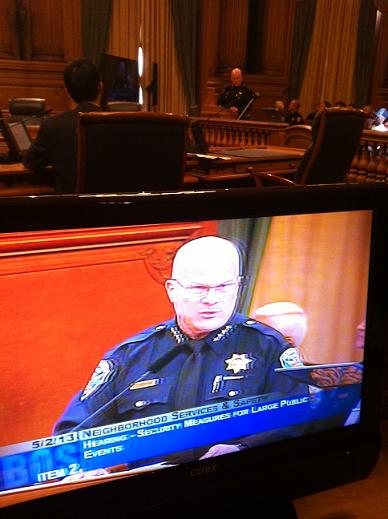
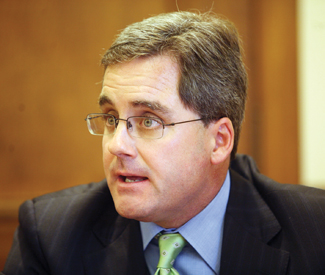
Police video surveillance was in the spotlight during yesterday’s City Hall hearing on security measures at large events, as supervisors voiced a desire to strike the right balance between security and civil liberties. And while they got some reassurance and small signs of restraint from the SFPD, they also learned about secretive new security measures that go beyond what the public was aware of.

San Francisco Police Chief Greg Suhr clarified misleading media reports (a Chronicle story then picked up by Associated Press) that he’s seeking real time video surveillance along Market Street. Right now, Suhr said he just wants an inventory of existing video cameras along Market and downtown that he can request footage from after a crime is committed and that he would make his case to the board if he ever wanted to go beyond that.

“Right now, we only look at footage in retrospect,” Suhr told the Neighborhood Services and Safety Committee hearing, adding that he has no objections to seeking a court warrant to obtain that footage because “we do want it to be admissible.”

Yet Suhr and Deputy Chief James Loftus also revealed that SFPD will be deploying an undisclosed number of temporary real-time video surveillance cameras atop long poles at the Bay to Breakers footrace on May 19, as it did last fall during the World Series and the big parade down Market Street celebrating the Giants victory.

“We always want more video,” Suhr told the Guardian, although he said that he also understands the civil liberties sensitivities of San Franciscans, which is why he isn’t now seeking a permanent increase in SFPD’s real time video surveillance capabilities. “I’m from San Francisco, I get it.”

Other security tools that the SFPD will be employing at Bay to Breakers and other large events are technology that uses video cameras on police cars to capture license plate numbers and run them through a DMV database, what Loftus vaguely described as “specialized resources from surrounding jurisdictions” (watch out for the drones, y’all), and unspecified “FBI assets [that] will be present and assisting in event security.”

When Sup. Eric Mar, who called the hearing, asked about those last two items, Loftus said he wouldn’t discuss them publicly, but “I could talk to you about it offline if you’d like.”

Sup. David Campos said that he doesn’t want San Francisco to be reactionary after incidents like the Boston Marathon bombing and that we should be a model city for balancing security with civil liberties: “I think that’s a very difficult balance to strike, but it anyone can strike that balance, I think San Francisco can.” He also expressed concerns about plans to ban backpacks at Bay to Breakers: “I don’t know if that’s going to address the problem.”

Loftus said the ban only applied to large backpacks (larger than 8.5x11x14 inches) and that runners and spectators will still be allowed to use small backpacks to hold water and changes of clothing. Yet for those concerned about the creeping police state, including several people who spoke during the public comment period, there was little consolation offered in the presentations, and the supervisors said this would be an important ongoing discussion.

“This is a discussion that goes beyond San Francisco,” Campos said. “We as a country need to have this discussion.”

Aquarius rising

0

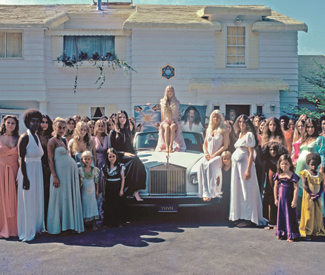
FILM Under the guidance of charismatic, luxuriously-bearded leader Father Yod (once named Jim Baker, later known as YaHoWha), the Source Family operated one of the country’s first health food restaurants. They lived in a Hollywood Hills mansion, wore flowing robes, assumed dreamy new names, meditated, and studied Father Yod’s custom blend of Eastern and Western philosophy and mysticism.

As the home movies that comprise Maria Demopoulos and Jodi Wille’s documentary, The Source Family, suggest, there were golden moments aplenty, even as the mainstream began to view the group with suspicion (and an aging Father Yod’s decision to take multiple wives confused some members — particularly the woman he was already legally married to). Tapping into the group’s extensive film and music archives, as well as interviews with surviving members, The Source Family (opening here with a big gala Thu/2 and running through May 9 at the Roxie) offers a captivating look at what had to be the most earnest (and most photogenic) cult of the 1970s. I spoke with Demopoulos and Wille to learn more.

San Francisco Bay Guardian When did you first hear about the Source Family, and how did you hook up with “Family historian” Isis Aquarian?

Jodi Wille In 1999, a friend showed me a CD box set with all nine of the original Family records. I’d been obsessed with cults, communes, and radical groups from the 1960s and ’70s for 20 years — but I’d never heard of the Source Family. I was shocked that this existed, and that they had this kind of musical output. Also, there were pictures of them looking very beautiful and stylish. But I went online and there was nothing there [about them].

One day, my then-husband, [Feral House publisher] Adam Parfrey, came home with a DVD he’d found at Amoeba Records: a very limited-release student film on the Source Family. We watched it, and I was struck by how thoughtful and charming the Family members were in the interviews.

I went online again, and this time there was a website. I’m a book publisher, too — I put out books on counterculture, sustainability, and things like that [on Process Media and Dilettante Press] — so I emailed, asking if they’d ever considered doing a book. Isis Aquarian wrote back and said [she and her Source Family brother Electricity] had been working on a book for seven years. So I started going through her massive archives with her; we worked to expand the book, which had been written for Family members, for the public. As we were doing that, we were filming interviews with other Family members. When Isis let me know about the film component to her archive, I realized that this was an extraordinary story that had all of the elements we would need for a great documentary.

At that point, I brought in Maria, a close friend of mine who had become a very talented commercial director. Before the book, [The Source: The Untold Story of Father Yod, Ya Ho Wa 13, and The Source Family], people were really private about their experiences, and I think some of them were uncomfortable about going public. But the book was received positively; it told the story from the believers’ point of view and I think that helped develop their trust. So we were very lucky to get incredible access.

SFBG You were friends with Isis, who’s credited as an associate producer, by the time you started working on the film — yet it offers a balanced portrait. How did you stay objective?

JW Isis has done an enormous amount of work helping us in many ways, but she was not involved creatively. That was really important to us, to have that freedom, and she agreed to that. But I became close to some Family members, so I think bringing Maria in was really essential to help with the balance.

Maria Demopoulos I think, objectivity aside, we just focused on letting the Family members speak for themselves, and trying to go for as much authenticity as possible, hearing all perspectives. We worked hard to represent as many Family members as possible and really tell the story from an insider’s point of view.

JW We tried to reflect the overall feelings that we were getting from Family members, because everyone had completely different experiences within the Family, and everybody had strong opinions about it.

And it’s not really about being objective — no filmmaker or documentary is ever truly objective. It’s just about being open and letting people come to their own conclusions.

SFBG Since you had access to all of that footage, what was the editing process like?

MD It was extremely difficult, but honestly, we hit the jackpot. It was just like an incredible gift and honor to go through the archive. We had a three-and-a-half-hour cut, and we just kept whittling it down. Often times, we just had to stay focused; even if we had some fantastic footage, if it didn’t absolutely serve the story, we had to pull it out. It was difficult, but that’s actually a great problem to have.

JW And I’d like to give credit to Isis Aquarian for preserving that archive. There were hundreds or maybe thousands of groups like this that existed. But most of them didn’t document themselves, or if they did, they didn’t hold on to the artifacts or preserve the documents. She’s a true documentarian, even now.

SFBG Did you encounter any resistance from former members, or anyone who thought the documentary shouldn’t be made?

MD From the Family members’ perspective, no. They were extremely cooperative. [On the other hand,] since the Source Family existed in Hollywood, they had many connection to celebrities. We approached a lot of celebrities who were around at that time, and we had a tough time getting access to them.

JW The Source Family members all knew about the book, and they knew that people in their 20s and 30s had become fans of the Family. So I think that made them a lot more open to talking to us. But as far as people like Warren Beatty and Donald Sutherland, who were actually friends with Father Yod, I don’t think they were aware of that phenomenon. They were still thinking about how the Source Family was perceived with a lot of controversy back in the ’70s. I think it’s possible that those people, besides being really busy, weren’t quite sure what we were doing with the material, or if they wanted to associate themselves with it.

SFBG Also, now that decades have passed, when people hear “Southern California cult” and “the Family,” they automatically think “Manson.”

JW For me, that was an important inspiration to make this film. Again, when you speak with the participants, or even with scholars, you find it’s a very different story. We have such a primitive understanding of what these radical, social, and spiritual experiments were really doing back in the 1960s and ’70s, and the kinds of effects that they were having on the participants’ lives.

Maria and I interviewed about 40 of them just for The Source Family, and I’ve gotten to know members of other groups over the years. I find that these groups, more often than not, were very important cultural incubators. A lot of progressive ideas came from them, including the slow food movement, the mind-body-spirit movement, the natural birthing movement. A lot of tech-industry people came from these experiments — San Francisco was a hotbed for them. And many of them were harmless. They didn’t create any major havoc. They were high-risk experiments, of course, but a lot of what people took away was deep and transformative.

SFBG Music plays a huge part in the film, and again, you had a lot of material to choose from. How did you decide which songs to match with the footage?

JW I knew the music really well, and then our editor, Jennifer Harrington, did an incredible job working with the music, and Maria pitched in, too. We did it by knowing the music and thinking about the mood, and just playing with stuff to see what fit.

MD We often chose songs that actually lyrically fit with what was happening in that particular scene. The music was incredibly well-suited to what was happening, because they’re basically singing their own story.

SFBG I missed The Source Family when it played the San Francisco International Film Festival last year, but I heard the Q&A got pretty colorful. How have screenings been going overall?

MD Response has been great. We’ve been selling out shows, and the Q&As have been very lively. A lot of people who participated in social experiments or lived in communes have been coming to the Q&As, but we’ve been getting a lot of younger kids as well. It’s been intergenerational.

JW That was the fun part in San Francisco, because there were two or three people in the audience who were in different communities who spoke up during the Q&A, and it became this really interesting group therapy session. And it’s not about us saying, “Oh, it was this way.” It’s us opening up new ideas so people can have new discussions about what was really going on back then.

SFBG What’s the opening event going to be like?

JW For the various premieres, we have Source Family members showing up to do Q&As in eight cities. We’ve got three in San Francisco: Isis, Electricity, and Galaxy — who was the fashion designer in the family. Also at the Roxie, we’re going to have food made from original Source Family recipes.

We’ll also have tribute bands in six cities. In San Francisco, after the screening, the Source Family tribute band is going to be playing at the Chapel [at 777 Valencia] — they’re called the Penetration Blues Band, with Michael Beach from Electric Jellyfish and Colossal Yes, Noel von Harmonson from Comets On Fire and Sic Alps, [and others]. It’s going to be a really fun night! *

THE SOURCE FAMILY

Opening event Thu/2, 7pm (complete experience with food, film, and concert, $40; film only, $10; concert only, $15)

Film runs May 3-9, 7:15 and 9:30pm (also Sat/4-Sun/5, 2:45pm), $6.50–$10

Roxie

3117 16th St., SF

www.roxie.com

‘Maximus’ through Flarf

0

marke@sfbg.com

LIT Mm-hmm

Yeah, mm-hmm, it’s true

Big birds make

Big doo! I got fire inside

My “huppa”-chimpTM

Gonna be agreesive, greasy aw yeah god …

In 2000, Gary Sullivan’s grandfather fell victim to a then-familiar poetry.com scam. (“You’ve won a poetry contest! Order the book with your poem in it now!”) In revenge, he went on the scam site and wrote what he thought was the worst, most offensive poem ever — which of course won its own scam contest. Then a curious thing happened:

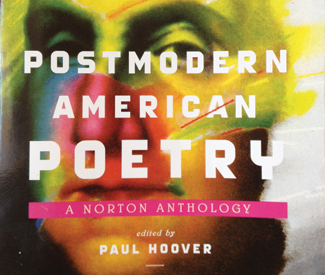
“When Sullivan sent his poem to friends online, they decided to write their own purposely bad poems,” editor Paul Hoover tells the tale in the introduction to his updated Norton Anthology of Postmodern American Poetry, released last month. Soon a whole listserv of sniggering poets were randomly Googling phrases from bad poems (this was when Google was brand new, mind you) and “plugging in” the random juxtapositions to create new, worse ones — which incidentally also captured the logorrheic splooge, misfired proto-snark, corrosive cuteness, pornographic troll-holes, and manic self-hype of the Internet itself.

Thus a new poetic movement called Flarf was born.

A lot has changed since the first edition of NAPAP came out, in 1994. Back then, hyperacademic multicultural poetics and practitioners of the Language school, which sought to “scatter attention” over the poem with discursive overload and deliberate (yet often hilarious) difficulty, were riding high. In the color-saturated days before the Internet, the first edition was a revelation. Hoover, a San Francisco-based poet and teacher with a knack for highlighting the emotional resonance in abstract practices, served as a perfect guide to postmodern poetry, or at least a certain exciting type, which he broadly defines as “an experimental approach to composition, as well as a worldview that sets itself apart from mainstream culture and the sentimentality and self-expressiveness of its life in writing.” In other words: “truth” is out, truthiness in. And enough weeping over your dead great-grandmother’s recipe book, already.

I met with the tall, calm Hoover in his frighteningly humble San Francisco State office, where he’d been “locked up for months” working on the second edition (see my full interview this week at www.sfbg.com/pixel_vision). “We called the anthology ‘post-modern’ rather than ‘experimental’ or ‘avant-garde’ mostly because those terms are problematic, and have enough cultural baggage to really turn people off. So we started with the poet Charles Olson, who was the first poet to label himself postmodern and attempt to break with the grand modernist past. ‘And had we not ourselves (I mean postmodern man) better just leave such things behind us — and not so much trash of discourse, & gods?’ he wrote to fellow poet Robert Creeley. And he put this into practice in his ‘Maximus’ poems.”

The anthology is chronological: after Olson, in almost 1000 pages, we get almost all the big avant-garde-y names like John Cage, Robert Duncan, Denise Levertov, Frank O’Hara, John Ashbery, Jack Spicer, Allen Ginsberg … Uncontroversially, Hoover takes his lodestars to be the Black Mountain School, the New York School, and (somewhat shakily to me, in terms of intellectual rigor, yet still charming) the Beats. Then come the Language poets, near where the first volume ended, and afterward a multitude of newbies — Vanessa Place, G.C. Waldrep, Noelle Kocot, Ben Lerner — begin.

“In order for this book to not be 13,000 pages, I had to make some hard decisions, about who was not to be included, and who needed to go. It wasn’t so much a matter of redefining what is ‘post-modern’ or even what’s ‘American,’ although maybe those things have also changed. But so much has happened — the Internet, social media, September 11, the expansion of global capitalism, mass media, and multinational corporations. I don’t think there’s been such a fundamental change that we’ve moved out of this thing called ‘postmodernism’ into something completely different or new. But poetry reflects these changes with constant innovations of its own. There’s a lyricism completely of the time in the best of these poems, but also completely outside of it.”

So what are some of the innovations? Besides the hyperreal grotesqueness of Flarf poets like Sullivan, Sharon Mesmer, and K. Silem Mohammed, there is its nemesis — at least in a poetry beef possibly ginned up for attention — Conceptualism. Whereas Flarf adrenalizes visceral response within a poem’s span, conceptualism often makes the poem into nothing but the static result of grand idea: the best example of this is Kenneth Goldsmith’s epic “Day,” in which he reconstructed the entire September 1, 2000 issue of the New York Times into a 900-page book (excerpted in the anthology).

In between lie practices like Proceduralism (Christian Bök’s strangely affecting “Vowels” made out of words that contain the same letters as the title, and which ends “wolves evolve”), Google sculpting and cybernetics (Muhammed’s hilarious “Sonnagrams,” in which he puts Shakespeare’s sonnets through an online anagram generator, then “sculpts” the results in Microsoft Word, dragging the words around to form a new sonnet). There is also the deliberately “girly” “Gurlesque” poetry of Catherine Wagner, and the eerie and complex “ambient” poetics of Tan Lin, which is just a beautiful drift of words across a page, a “gossip of the mind.” And much, much more in this fascinating and necessary volume.

Funny, infuriating, dangerously familiar, hauntingly strange, way too intellectual, true despite itself: poetry is the same as it ever was. The next edition, in 2034, ought to be a real corker.

POSTMODERN AMERICAN POETRY READING CELEBRATION with Paul Hoover and 16 more poets: Fri/3, 6:30pm, free. Koret Auditorium, de Young Museum, 50 Hagiwara Tea Garden Drive, SF. 


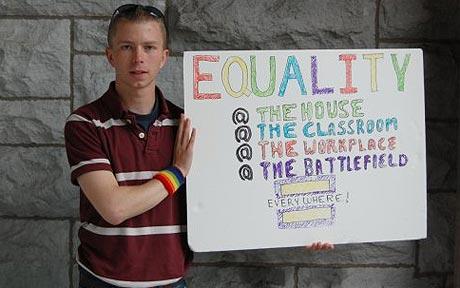
Former Pride grand marshal: Manning is LGBT hero, Board action ‘height of stupidity’

61

“I was one of the 15 former grand marshals on the electoral commission that voted for Bradley Manning,” Barry Saiff, former BiNet president, told me over the phone this morning from Washington, DC, about the Bradley Manning Pride grand marshalship controversy. (As one half of a bi-national queer couple, he lives most of the year in the Phillipines with his boyfriend, who is unable to come to the United States due to discriminatory immigration laws.)

To recap: An ‘electoral college’ of former grand marshals elected the jailed gay (possibly now transgender) whistleblower who provided Wikileaks with a huge dump of raw classified US government info. Someone announced the choice on Friday and the media went nuts. Then the Pride executive director issued this bizarre statement repudiating the decision and rescinding the honor, to the dismay of the electoral college and a huge swath of LGBT locals. A protest at Pride HQ is planned for today, 5pm at 1841 Market, SF.) 

“The list of nominees from the other board members was presented to me in March, and the instant I saw Bradley’s name on there I knew it was the right choice. Pride stands for justice, freedom, and an end to discrimination, and I feel Bradley represents all of these things — as well as complete honesty and bravery. What the Pride board did to repudiate that choice, especially in its official statement — to not be able to make the distinction between Manning’s necessary actions and way the government is denigrating our troops with these illegal and unjust wars — is the height of stupidity.

“They [the Pride board] are colluding in the giant ‘Support Our Troops’ hoax that says you must never question the leadership of the military. There is actually no contradiction between supporting our troops as individuals, including our LGBT folks in the armed services, and supporting Bradley Manning and what he did.

“Specifically, if we care about our troops, we should care that they are used by our military for just ends, for missions and goals that actually increase our security, rather than decrease it, and that they are dealt with honestly. And, regardless of how you feel about the rightness or wrongness of Manning’s actions, there is no question that it is both immoral and illegal under international law (the US is a signatory to the Convention Against Torture), that he was tortured by the USA. Bradley Manning is an American hero, and an LGBT hero. We can rightfully be proud of him. He will rightly be remembered long after his duplicitous superiors are forgotten.

“What the Pride Board should have done to respond to the critics of the nomination was to point out that they were failing to make a crucial distinction. That it is simply a point of logic that we can support our troops while being diametrically opposed to the ends to which they are used by our government. This is a crucial point for the LGBT movement to understand and promote. We should not allow ourselves to be divided by people who are committed to denying reality. We can agree to disagree on the military and the wars in Afghanistan and Iraq, but there is no disagreement on this, it is a point of fact.”

What about the charge that Manning’s leaks endangered US troops?

“I say, ‘Bullshit.’ Of course that’s what the government says. Look, Manning did not act alone. He worked with some extremely savvy media people with this — Wikileaks, the New York Times — he didn’t just publish everything himself. Those organizations worked to edit what was put out there and protect peoples’ lives. To dump this all on him and call him a traitor is a mistake.”

How much of all this had to do with Manning’s queerness?

“Well, all things being equal, that’s what qualified him in the first place. But as I said, this fight has resonance with LGBT people in terms of freedom and justice. The fact that he’s gay may play into his situation in terms of military and former persecution.”

Were you ever given guidelines by the Pride board about who was qualified to be elected a grand marshall?  

“Not that I know of. I don’t know the bylaws off-hand, but every year, as the ‘electoral college,’ we’ve been able to elect one grand marshall and it’s never been a problem. We voted in March, although there may have been a period before the final decision was tallied. [Radical faerie elder and historian Joey Cain put forth the Manning nomination.] And that was the last I heard of it until Friday. I wasn’t contacted personally by [executive director] Lisa Williams or anybody else saying we had to change anything. It wasn’t until Friday that I found out about any controversy — in the news media, like everybody else. And I was outraged.”  


San Francisco International Film Festival tickets on sale now!

0

Anything but expected.

The San Francisco International Film Festival returns for two lively weeks. SFIFF showcases cinematic innovation and presents marquee premieres, international competitions, new media programs, and star-studded events – including anticipated appearances by actor Julie Delpy of closing night film Before Midnight, actor Kate Bosworth and director Michael Polish of Big Sur, actors Greta Gerwig, Michael Cera, Amy Acker, and Alexis Denisof, Kanbar Screenwriting Award recipient Eric Roth, and POV Award recipient Jem Cohen. The program features 200 films and events of international and local distinction – highlighting new works by Peaches and Sarah Polley.
 
Thursday, April 25 thru Thursday, May 9 | Buy tickets and see full line-up at festival.sffs.org

Care clash

13

The first week in April was a rough time for Connie Salguero. The Filipina nursing assistant, who says she would’ve been eligible to retire in two years, reported to her shift at the University of California San Francisco medical center at Mt. Zion on April 1 — and was told she was laid off. Two days after that, she was forced out of her home through an eviction, but fortuitously met an elderly Filipina woman who said Salguero could stay with her until she gets back on her feet.

“This manager said to me, Connie, come here, let’s talk,” and delivered the bad news, Salgeuro recounted, getting a little misty-eyed. Two other Filipina hospital assistants in her unit met with the same fate that day, she said.

“I’m trying to find a job,” Salguero said. “It’s very hard. But I will survive.” She projected a sense of resolve despite the whirlwind of sudden stress, which seemed fitting for someone whose job entailed feeding, bathing, and assisting up to ten bedridden patients at a time, many of them suffering from cancer.

Salguero said management told her the layoffs were necessary because of the most recent wave of federal budget cuts. But Cristal Java, lead organizer for UC patient care technical workers’ union, AFSCME 3299, interjected during an interview with the Bay Guardian to refute that explanation, calling it “total crap. They don’t want to tell workers the truth,” Java said, “which is that the hospitals are extremely profitable.”

UCSF ELIMINATES 300 POSITIONS

Salguero is one of about 25 UCSF certified nursing assistants whose recent layoffs prompted AFSCME to register a formal complaint with the Public Employee Relations Board, an agency that mediates labor disputes. The CNA layoffs hit in March and early April as part of a raft of cutbacks that eliminated a total of 300 full-time equivalent positions. Some of those positions were unfilled while other staffers were reassigned elsewhere or had their hours cut; a total of 75 individuals were laid off.

The cuts prompted union representatives to organize a protest at UCSF’s Parnassus Campus April 4, with San Francisco Sup. John Avalos and California Sen. Leland Yee turning out in support of the workers. Salguero was there too, waving a sign, and she wound up telling her story for an international broadcast by a Filipino news station. Things took a dramatic turn when police arrived on the scene, and Union President Kathryn Lybarger and some others were escorted off the premises in handcuffs.

Asked to explain the rationale behind the layoffs, UCSF spokesperson Karin Rush-Monroe responded, “We evaluated the impact of the Affordable Care Act, expected reductions in Medicare, MediCal and private insurance reimbursements,” as well as employee benefits and rising costs in drugs and medical supplies, and ultimately decided on a 4 percent labor budget cut. “We must make a ‘course correction’ if we are to maintain our resources to care for our patients,” Rush-Monroe said.

But the staffing cuts hit just weeks after AFSCME published a blistering report, titled “A Question of Priorities,” charging that UC has prioritized profit margins at its medical centers since 2009 while needlessly eliminating frontline staff positions, all to the detriment of patient care.

“It feels very much like they’re chasing down the Wall Street model of business,” Randall Johnson, an MRI technologist at UCSF Parnassus Campus who is active with Local 3299, told the Guardian. “We’re pressed to move faster and faster and faster. It’s more about profit than it is about patient care.”

Steve Montiel, spokesperson for UC Office of the President, told us that UCSF is “consistently ranked as one of the top hospitals in the country by U.S. News and World Report,” and pointed out that the AFSCME report coincided with an ongoing contract dispute concerning patient care technical workers, which may lead to a strike authorization in the next few weeks.

DANGEROUSLY LOW STAFFING LEVELS?

Billed as a “whistleblower report,” AFSCME’s 40-page publication portrays an internal environment throughout UC medical centers in which staffers — particularly frontline workers — are exhausted, overburdened, and dangerously likely to make mistakes.

Peppered with anecdotal horror stories describing things like dried blood observed on operating room tables at facilities where custodial staffing was cut to a bare minimum, or an incident in which a mentally altered patient was found on a window sill at a medical facility where harrowed nursing assistants’ attention was divided too many ways, the report portrays an unsafe environment that seems out of sync with the system’s reportedly healthy earnings derived from patient care.

“Bring it up at bargaining, and you get told to kick rocks,” said union spokesperson Todd Stenhouse. AFSCME has called upon state agencies and lawmakers to investigate UC policies on “cutting costs, reducing staff, and maximizing revenue.”

“We’ve been getting lots of reports about short staffing, and no coverage for breaks,” said Tim Thrush, a diagnostic sonographer who works with patients experiencing complications in pregnancy, and has worked at UCSF for years. “If you get a break or a lunch, it seems to be rare — even though it’s state law.” Thrush added. “It looks to us … that UC’s response to us raising concerns … is to say, OK well then let’s make it worse. Let’s lay off a whole bunch of people.

“It’s been very disappointing,” he said, “and it’s getting to be kind of scary.”

The report emphasizes California Department of Public Health findings of violations relating to bedsores from 2008 to 2012. The sores can occur if a patient stays in one position for too long, causing reduced blood flow and damage to skin tissue, and have been linked to infection.

Among those affected by the layoffs were “lift and turn team” members, including care workers tasked with turning immobilized patients to prevent bedsores.

Ironically, Rush-Monroe, the UCSF spokesperson, noted in response to a Guardian query that a $300,000 “incentive pay” bonus CEO Mark Laret received in 2011 was based on multiple “clinical improvement goals” that had to be satisfied in order to qualify for the 2011 compensation increase. One of these targets was a reduction in the number of hospital-acquired bedsores.

While the union report points to rising instances of bedsores, and the UCSF administration claims they were reduced to the extent that the CEO was monetarily rewarded for the accomplishment, a quick look at scores on hospital ranking website California Hospital Compare showed that pressure sore rankings at UCSF are almost exactly even with the statewide average.

Meanwhile, hospital rankings of patient safety indicators on Health Grades, an online consumer ranking website, didn’t reflect any dramatic differences between patient safety scores at UCSF, CPMC or Kaiser Permanente.

QUESTIONS RAISED

In the midst of these staffing cuts, AFSCME charges, the $6.9 billion system has enjoyed robust finances, with UCSF earning $100 million in net revenue last year. Between 2009 to 2012, management positions increased by 38 percent system-wide, while payroll costs for managers grew by 50 percent, with an additional $100 million a year allocated to administrative staffing.

According to a 2013-14 budgetary report prepared at the UC level, the system’s network of public universities have suffered deep financial cuts while its five medical centers “have continued to flourish and grow,” and “enjoy robust earnings.”

A revenue breakdown in the UC budget report shows that 62 percent of medical center earnings system-wide were derived from private health care plan reimbursements, while about a third came from Medicare and MediCal, funded by the federal and state government.

Meanwhile, ASCFME’s report has raised eyebrows in the California Senate. Sen. Ed Hernandez, who represents part of Los Angeles County and chairs the Senate Health Committee, “has expressed an interest in looking at it further,” according to committee consultant Vincent Marchand. “We may decide to call a hearing” sometime in May to see if further action is warranted, he added.

Sen. Yee lambasted the UC system for what he called “blatant disregard for the working staff.” Yee said the layoffs raised concerns about the quality of patient care, saying, “How do you lay off 300 individuals and think that it’s not going to compromise patient care?”

Yee added that he thought the UC budget ought to be scrutinized when it goes before the Senate. “Although the Constitution gives the UCs of California tremendous autonomy via the Board of Regents, ultimately we in the Legislature still allocate dollars … so there is a legislative and moral responsibility that we need to exercise,” he said. “Are the dollars within UC being used appropriately to take care of patients and in ensuring their safety?”

CONSTRUCTION, COMPENSATION AND VIPS

In early 2015, UCSF will open its new Mission Bay complex, a 289-bed facility featuring a children’s hospital with an urgent/emergency care unit and an adult care unit for cancer patients. The estimated price tag for the project is about $1.5 billion, and construction costs associated the project were referenced in an Oct. 12 letter Laret, UCSF’s CEO, issued to hospital staff announcing the pending staffing cuts.

Thrush questions decisions made at the highest administrative levels. Laret is “eliminating 300 jobs, and we’re opening a new facility, and he’s getting a $300,000 bonus,” he said, referring to a “retention bonus” expected to be awarded this year, which could be followed by a $400,000 bonus in 2014. “Why is he getting a huge bonus if we’re having to lay off so much staff?”

With a total compensation of around $1.2 million in 2011, Laret’s salary seems excessive in comparison with that of frontline workers — and it is. At the same time, it seems to be within the realm of a CEO of a major medical facility, a quick Internet search reveals.

ACSFME’s report targets Laret specifically, saying he repeatedly emphasized to hospital staff, “When you see patients, you should see dollar signs.” Johnson, the MRI technician, told the Guardian he heard Laret make this statement years ago, when he first came on as CEO. “I know that some physicians were outraged by it,” he said. “I heard that the physicians told him to stop, and he stopped saying it.” UCSF did not respond to Guardian requests for a comment on this allegation.

The report also focuses on a practice of so-called “VIPs” — patients connected with the UC Regents or other influential persons — receiving preferential care. “I got called in on a Sunday to take care of a celebrity, because they had a headache,” said Johnson. “I’ve seen patients have to be on hold so we can scan the [VIPs]. They definitely get preference. I’ve been told, if one of those VIPs comes in, we have to get them on the scanner.” UCSF didn’t respond to Guardian questions concerning VIP patient treatment, either.

LABOR DISPUTE

Montiel, the media relations director for the UC system, responded to a Guardian query with a wholesale rejection of the detailed 40-page report, without directly addressing any of the allegations. Instead, he said the whole controversy arose from a labor rift over pension reform.

“These claims by AFSCME coincide with a bargaining impasse, and the scheduling of a strike vote by its patient care technical workers,” Montiel wrote in an email. “Quality of care is not the issue. The real issue is pension reform. AFSCME has resisted pension reforms that eight unions representing 14 other UC bargaining units have agreed to. The reforms also apply to UC faculty and staff not in unions.”

AFSCME recently announced that its membership would begin voting on April 30 over whether to authorize a strike, following months of stalled negotiations over a contract that expired last September. Stenhouse, the union spokesperson, called it “the impasse of impasses” yet suggested to the Guardian that the strike authorization vote was a side issue from the concerns raised in the whistleblower report. The workers are there to “provide patient care,” he told the Guardian. “They’re not making Buicks.”

“This report is about something much bigger than our members’ livelihoods,” Lybarger stated when the report was released. “It’s about whether the UC is prioritizing quality care for the millions of Californians who put their lives in our hands.”


Solomon: It’s time to renounce the “war on terror”

1

Norman Solomon is co-founder of RootsAction.org and founding director of the Institute for Public Accuracy. His books include “War Made Easy: How Presidents and Pundits Keep Spinning Us to Death.” He writes the Political Culture 2013 column.

As a perpetual emotion machine — producing and guzzling its own political fuel — the “war on terror” continues to normalize itself as a thoroughly American way of life and death. Ongoing warfare has become a matter of default routine, pushed along by mainline media and the leadership of both parties in Washington. Without a clear and effective upsurge of opposition from the grassroots, Americans can expect to remain citizens of a war-driven country for the rest of their lives.

Across the United States, many thousands of peeling bumper stickers on the road say: “End this Endless War.” They got mass distribution from MoveOn.org back in 2007, when a Republican was in the White House. Now, a thorough search of the MoveOn website might leave the impression that endless war ended with the end of the George W. Bush presidency.

MoveOn is very big as online groups go, but it is symptomatic of a widespread problem among an array of left-leaning organizations that have made their peace with the warfare state. Such silence assists the Obama administration as it makes the “war on terror” even more resolutely bipartisan and further embedded in the nation’s political structures — while doing immense damage to our economy, siphoning off resources that should go to meet human needs, further militarizing society and undermining civil liberties.

Now, on Capitol Hill, the most overt attempt to call a halt to the “war on terror” is coming from Rep. Barbara Lee, whose bill H.R. 198 would revoke the Authorization for Use of Military Force that Congress approved three days after 9/11. Several months since it was introduced, H.R. 198 only has a dozen co-sponsors. (To send your representative and senators a message of support for Lee’s bill, click here.)

Evidently, in Congress, there is sparse support for repealing the September 2001 blanket authorization for war. Instead, there are growing calls for a larger blanket. Bipartisan Washington is warming to the idea that a new congressional resolution may be needed to give War on Terror 2.0 an expansive framework. Even for the law benders and breakers who manage the executive branch’s war machinery, the language of the September 2001 resolution doesn’t seem stretchable enough to cover the U.S. warfare of impunity that’s underway across the globe . . . with more on the drawing boards.

On Tuesday afternoon, when a Senate Judiciary subcommittee held a hearing on “targeted killing,” the proceedings underscored the great extent of bipartisan overlap for common killing ground. Republican super-hawk Sen. Lindsey Graham lauded President Obama for “targeting people in a very commander-in-chief-like way.” And what passed for senatorial criticism took as a given the need for continuing drone strikes. In the words of the subcommittee’s chairman, Sen. Dick Durbin, “More transparency is needed to maintain the support of the American people and the international community” for those attacks.

This is classic tinkering with war machinery. During the first several years of the Vietnam War, very few senators went beyond mild kibitzing about how the war could be better waged. In recent years, during President Obama’s escalation of the war in Afghanistan that tripled the U.S. troop levels in that country, senators like John Kerry (now secretary of state) kept offering their helpful hints for how to fine tune the war effort

The “war on terror” is now engaged in various forms of military intervention in an estimated two-dozen countries, killing and maiming uncounted civilians while creating new enemies. It infuses foreign policy with unhinged messages hidden in plain sight, like a purloined letter proclaiming “What goes around won’t come around” and telling the world “Do as we say, not as we do.”

Political ripple effects from the Boston Marathon bombings have only begun. While public opinion hasn’t gotten carried away with fear, much of the news media — television in particular — is stoking the fires of fear but scarcely raising a single question that might challenge the basic assumptions of a forever “war on terror.”

After a city has been traumatized and a country has empathized, a constructive takeaway would be that it’s terribly wrong to set off bombs that kill and maim. But that outlook is a nonstarter the moment it might be applied to victims of U.S. drones and cruise missiles in Afghanistan, Pakistan, Yemen and elsewhere. The message seems to be that Americans should never be bombed but must keep bombing.

The death of Richie Havens days ago is a loss and reminder. Each of us has only so many days ahead. We may as well live them with deeper meaning, for peace and social justice. To hear Havens performing the song “Lives in the Balance” written by another great musician, Jackson Browne, is to be awakened anew:

I want to know who the men in the shadows are
I want to hear somebody asking them why
They can be counted on to tell us who our enemies are
But they’re never the ones to fight or to die

And there are lives in the balance
There are people under fire
There are children at the cannons
And there is blood on the wire

Norman Solomon is co-founder of RootsAction.org and founding director of the Institute for Public Accuracy. His books include “War Made Easy: How Presidents and Pundits Keep Spinning Us to Death.” He writes the Political Culture 2013 column.


Selector: April 24-30, 2013

0

FRIDAY 26

Robot Chicken

Marking the end of the special exhibit Between Frames: The Magic Behind Stop Motion Animation, the comedic geniuses behind the hit Adult Swim TV show Robot Chicken — Stoopid Buddy Stoodios — are coming to the city this weekend for several special events celebrating their craft. Join Seth Green, Matthew Senreich, John Harvatine IV, Eric Towner, and Alex Kamer on Friday night for an after-hours museum party featuring food, drinks, an audience Q&A, and screenings of behind-the-scenes footage. Then on Saturday there’s a special animation workshop followed by a panel discussion taking a closer look at the hilarious TV show. (Sean McCourt)

Fri/26, 7pm; Sat/27, 10am and 2pm, $8–$60

Walt Disney Family Museum

104 Montgomery, SF

(415) 345-6800

www.waltdisney.org


San Francisco Global Vietnamese Film Festival

A three-day celebration of films from Vietnam (as well as Cambodia, Canada, France, Japan, the Czech Republic, and the United States), the San Francisco Global Vietnamese Film Festival offers up both narratives and documentaries, as well as experimental works. Highlights include screenings of Oscar nominee Tran Angh Hung’s dreamy 2010 adaptation of Haruki Murakami’s novel Norwegian Wood — as well as Duc Nguyen’s brand-new doc about Vietnamese refugees, Stateless, and a shorts program comprised of Yxine Film Festival standouts. (Cheryl Eddy)

Opening gala tonight, 7:30pm, $10

Artists’ Television Access

992 Valencia, SF

Festival screenings Sat/27-Sun/28, 2:30pm-midnight, $10

Roxie Theater

3117 16th St., SF

sfgvff.wordpress.com


“SF Choral Society and Volti present battle hymns”

Making Love may be a more common theme for dance than Making War. This did not stop Philadelphia-based choreographer Leah Stein, whose small company dances big and not just on stage, and collaborating composer David Lang. Stein has created a reputation for site-specific, improv-inspired choreography combined with an uncommonly sophisticated musicality. Lang based his choral work, Battle Hymn, on texts from the Civil War. Together they have created a meditation on a topic that, unfortunately, is as timely a ever. Stein’s dancers and 150 singers — including SF music group Volti, San Francisco Choral Society vocalists, and the Piedmont East Bay Children’s Choir — will perform along with the percussion score conducted by Robert Geary. (Rita Felciano)

Fri/26, 8pm; Sat/27, 3 and 8pm; Sun/28, 3pm, $30–$50

Kezar Pavilion

755 Stanyon, SF

(415) 392-4400

www.cityboxoffice.com


SATURDAY 27

“Fortuna Paper Moon”

In art, process can be everything. In the case of Jovi Schnell, the colorful and lively works that seem to borrow from folk art, celestial imagery, and mechanical ideas speak for themselves, but the story of their creation embeds them with particular meaning — or rather, an intriguing lack of meaning. In paintings such as Honeycomb Hideaway, repeated rolling of dice determined the order of colors and the pattern that comprises the piece (which is no pattern at all). Schnell has invented a language in paint, collage, and sculpture that is whimsical, energetic, and overall, fascinating. The “Fortuna Paper Moon” exhibition is on view at Gregory Lind Gallery until June 1. (Laura Kerry)

Through June 1

4pm, free

Gregory Lind Gallery

49 Geary, SF

(415) 296-9661

www.gregorylindgallery.com


Queen’s Day

You love excessive drinking in the street and the color orange, right? (Don’t lie SF, I’ve seen many a fake tan Bay to Breakdown.) A celebration for the Queen of the Netherlands’ birthday in SF goes down in the park this year and will feature Dutch cheese and DJs, a beer garden, and family activities, sponsored by the Consulate General of the Netherlands. Head up the road to the de Young afterward for even more Dutch madness: more DJs and a 7pm lecture on the country’s royal family that you won’t remember the next day if you’re celebrating in the traditional manner. (Caitlin Donohue)

Noon-5pm, free

Murphy Windmill

Lincoln Way and Great Highway, Golden Gate Park, SF

www.sfdutch.com


“Night Light: Multimedia Garden Party”

Disco dancing about diasporas, an opera in shadow, moving crystals, nude hula hooping, a slowed down wave, and a technological cocoon: these are not club names mentioned by Stefon in Saturday Night Live, but some of the art pieces that will be on display at SOMArts’ Multimedia Garden Party. With more than 50 artists displaying their music, dance, video installations, sculptures, and art in various other mediums, the night promises to be overwhelmingly spectacular. While art is often confined to the quiet and clean spaces of museums and galleries, tonight it participates in a party. SOMArts offers a chance to participate with it. (Kerry)

8pm, $12

SOMArts

934 Brannan, SF

(415) 863-1414

www.somarts.org


Men in Suits

Long before computer graphics became all the rage in Hollywood, a special breed of actors and special effects magicians worked together to bring a vast array of wild monsters, creatures, beasts and more to life on the big screen, entertaining (and scaring) generations of movie-goers. Take a look back at that golden age of film making tonight at a screening of Men In Suits, a new documentary about the people who played monsters in the movies, ranging from the Creature From The Black Lagoon to Predator. Writer-director Frank Woodward will be on hand for a discussion, along with special displays, prizes, and a second flick, 1955’s Revenge of the Creature. (McCourt)

7pm, $12–$15

Historic Bal Theater

14808 East 14th St., San Leandro

www.bayareafilmevents.com


SUNDAY 28

How Weird

Do we love New Orleans so because it reflects a more diverse, wilder, woolier, earlier version of our fair city? Play out your Nola dreams with lunch at the gorgeous SF Jazz Center’s Big Easy-inspired restaurant South, and then head to the 14th year of the How Weird street fair in your best freak flag. Per usual, a sizable portion of SoMa will be blocked off and filled with wacky vendors, art, and 10 stages of music — mainly EDM, but with this year’s “Weirdi Gras” theme, five marching bands will be strutting the streets to syncopate your Sunday. (Donohue)

Noon-8pm, $10 suggested donation

Howard and Second St., SF

www.howweird.org


SUNDAY 28

Cave Singers

At first listen, the Cave Singers’ music inhabits a place directly related to rotting porches on the edges of mountainous forests. They play folk. Spend a little more time with them, though, and it starts to make sense that their favorite bands are the Replacements, the Pixies, and Fleetwood Mac. Pete Quirk’s singing, a bit raspy and raw, recalls other genres that typically involve more yelping and distortion (he was previously a part of a Seattle post-punk band); the compositions have a little too much edge to be played from a porch in the mountains. Yes, it’s folk that they’ll play at Great American Music Hall, but it’s the Cave Singers’ version of it. (Kerry)

With Bleeding Rainbow

8pm, $16

Great American Music Hall

859 O’Farrell, SF

(415) 885-0750

www.slimspresents.com


Marnie Stern

On the cover of Marnie Stern’s new album, Chronicles of Marnia, the artist walks on the beach in a summer dress, silhouetted by a setting sun. This would suggest that inside, one would find some sweet, vulnerable melodies in a singer-songwriter style. And that is not completely wrong — her soul-bearing songwriting comes up in some very positive reviews of her four albums — but what Stern does particularly well, is shred on the electric guitar; her finger tapping post-punk experimental rock sound earned her a spot on many greatest guitarist lists. Stern is the real deal, and you can see her bear shred (and bear her soul) at the Rickshaw Stop tonight. (Kerry)

With SISU, E V Kain

8pm, $12

Rickshaw Stop

155 Fell, SF

(415) 861-2011

www.rickshawstop.com


MONDAY 29

La Mar Cebicheria pisco dinner

Sure, when Peru’s Gaston Acurio opened up his first US restaurant here on our waterfront we knew we weren’t going to be regulars — that sustainable seafood doesn’t come cheap, babe. That being said, there’s something about shellfooding out on a special occasion. So we wanted to let you know about this: a four-course dinner, each course paired with a dram of pisco, or a cocktail based off that Peruvian liquor that’s been beloved in SF since the days of the Gold Rush. Before the heavy plates come in, check out the 6pm pisco seminar taught by Manuel Ainzuain, Alfonso Rouillon, and La Mar bar manager Joselino Solis. (Donohue)

Reservations required

Open 5:30-9:30pm, $75/person

La Mar Cebichería Peruana

Pier 1½, SF

(415) 397-8880

www.lamarsf.com


The Guardian listings deadline is two weeks prior to our Wednesday publication date. To submit an item for consideration, please include the title of the event, a brief description of the event, date and time, venue name, street address (listing cross streets only isn’t sufficient), city, telephone number readers can call for more information, telephone number for media, and admission costs. Send information to Listings, the Guardian, 225 Bush, 17th Flr., SF, CA 94105; or e-mail (paste press release into e-mail body — no attachments, please) to listings@sfbg.com. Digital photos may be submitted in jpeg format; the image must be at least 240 dpi and four inches by six inches in size. We regret we cannot accept listings over the phone.

Check, please

44

steve@sfbg.com

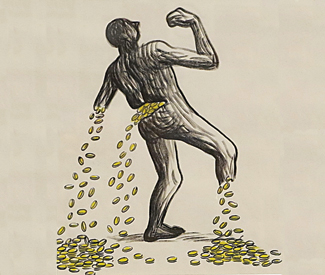
San Francisco restaurants that have been cheating their customers and employees — charging diners for city-required healthcare coverage that they aren’t fully providing to workers — will finally be exposed in the coming weeks, with some notable names in foodie circles among the likely culprits.

City Attorney Dennis Herrera is working on settlements with dozens of restaurants that responded to his investigation and partial amnesty offer, which had an April 10 deadline. His effort augments the complaint-driven enforcement actions by the city’s Office of Labor Standards Enforcement, which has collected millions of dollars for thousands of employees of negligent local businesses in recent years.

At issue is the Healthcare Security Ordinance, the landmark 2008 law authored by then-Sup. Tom Ammiano that requires San Francisco businesses to provide a minimal level of healthcare benefits to their workers. Businesses are also required to report spending and surcharge figures to the OLSE annually, with the next report due April 30.

Last year’s data show celebrity chef Michael Mina’s Mina Group LLC — which includes the restaurants Michael Mina, RN74, Bourbon Steak, and Clock Bar — to be the top violator, collecting $539,806 in surcharges from customers and spending just $211,809 on employee healthcare.

Herrera used that list to ask more than 70 businesses to show they are in compliance with the law or reach discounted settlements now to avoid punitive fines or criminal charges later, and Herrera told us he received 60 responses and had his inquiry snubbed by fewer than a dozen.

“It’s too early to talk about how large a recovery we’ll be getting for workers, but I’m pleased with the response rate,” Herrera told us. He refused to estimate how many of the respondents were found to be in violation, but in an April 11 message to reporters covering the issue, his spokesperson Matt Dorsey wrote, “Based on our investigation so far, we anticipate that the majority of these establishments will be required to pay money to compensate their workers.”

WHAT THE FIGURES SHOW

The Guardian contacted many of the restaurants that topped the OLSE list. Some wouldn’t respond, some said they’ve changed their policies since the controversy erupted, and some wouldn’t talk until after a settlement is announced — including the Mina Group. That seems to indicate they’re about to pay for past violations.

Nicole Kraft, who handles public relations for the Mina Group, responded to Guardian inquires by writing, “I wanted to let you know that Mina Group will soon be releasing a joint statement with the City Attorney’s office, which should answer many of your questions. We’ll be sure to send it your way ASAP.” [UPDATE 4/29: Mina Group settled its case for $83,617.]

Sources in the City Attorney’s Office say settlements with as many as 10 restaurants that admit clear violations of the HCSO could be announced in the next week or two, while another 10 or so have provided data showing they are not in violation. The rest are more complicated and could take weeks or months of investigations, which are being led by Deputy City Attorney Sarah Eisenberg.

“There are going to be some that are given a clean bill of health,” Herrera told us. Herrera also told us that his investigation is just getting started and that it will look at businesses that haven’t made required annual reports to the OLSE. “When we get to a place where we’re announcing settlements, we’ll have more to say,” he said when asked for details and dimensions of his investigation.

GGRA Executive Director Rob Black has maintained that the OLSE figures don’t accurately reflect whether businesses are in compliance because the reporting requirements are confusing. GGRA held a compliance workshop on April 17, and Black told us about 40 restaurateurs attended.

“It was very informative and we got really good feedback from the restaurants,” Black told us. “We had people saying, ‘knowing what I know now, we should redo my 2011 form because I did it wrong.”

Black was initially critical of Herrera’s focus on the restaurant industry, but told us last week, “He made a commitment that the process would be efficient and fair, and he’s lived up to that so far….I still believe that the majority [of violators] didn’t have a mal-intent…Many people on the list that was reported have done nothing wrong.”

Cheesecake Factory — which was seventh on last year’s OLSE list, allegedly taking in $159,242 more in surcharges than it spent on employee health care — insists that it is in compliance and expects the City Attorney’s Office to confirm that.

“We believe the City Attorney’s initial review was erroneous,” Richard J. Frings, the company’s vice president of compensation and benefits, told us. “We are in full compliance with HCSO. Our healthcare costs in San Francisco have far exceeded the surcharge that we have collected. Once the City Attorney’s office has an opportunity to review our filings, we believe this matter will be closed without any further action.” He refused to provide figures to support the assertions.

THE HSA PROBLEM

Most of the restaurants that have been accused of stiffing employees use health savings accounts, which health officials say is a far worse option than private health insurance or the city’s Healthy San Francisco plan, which was created in conjunction with HCSO. Federal law bars cities from prescribing how health benefits are delivered.

San Francisco’s restaurant industry has always been hostile to the HCSO’s employer mandate, with the Golden Gate Restaurant Association unsuccessfully challenging the law all the way to the US Supreme Court. Controversy then erupted in 2011 with revelations (first in the Wall Street Journal, followed up by local media outlets) that some of the city’s most high-profile restaurants were shirking their responsibilities even as they charged diners 3 percent to 5 percent surcharges, sometimes essentially pocketing that money at the end of each year.

That verges on consumer fraud, but District Attorney George Gascon has refused to investigate, telling the Guardian and other papers that he was deferring to the OLSE and the City Attorney’s Office.

In 2011, a progressive-led majority on the Board of Supervisors passed legislation authored by Sup. David Campos to require that businesses keep the money they are required to spend on employee healthcare — which is currently $2.33 per employee-hour for large companies or $1.55 per employee-hours for businesses with less than 100 employees — for employees to use as needed.

But under aggressive lobbying by the GGRA and San Francisco Chamber of Commerce — which asserted the right of business owners to raid these funds, calling the set-aside a multi-million-dollar annual loss to the local economy — Mayor Ed Lee vetoed the measure. He later signed watered-down legislation requiring the money be set aside for two years, setting standards for letting employees know how to access the funds, and explicitly calling for all customer surcharges to remain in escrow accounts.

The OLSE, which also monitors compliance with the city’s paid sick leave and minimum wage laws, can only investigate businesses when an employee files a complaint. But then complaints trigger investigations that cover all of a given business’s employees, who are often compensated for past violations. To file a complaint, just write hcso@sfgov.org or call (415) 554-7892.

OLSE figures show the agency has investigated more than 100 complaints since 2008, resulting in $8.1 million in health care benefits provided to more than 6,400 employees and $244,000 in penalties paid to the city. Herrera’s office also reached a $320,000 settlement with the owners of Patxi’s Chicago Pizza in January, just before announcing his broader investigation.

“The vast majority of San Francisco employers have complied with their obligation to make health care expenditures pursuant to the HCSO,” OLSE Manager Donna Levitt told the Guardian. “With respect to the minority of businesses who fail to meet their obligations, the OLSE works tirelessly to ensure that workers receive the benefits to which they are entitled and that all businesses compete on a level playing field.”

Among the restaurants near the top of the OLSE list that did not respond to the Guardian inquires are Squat & Gobble, Wayfare Tavern, and Trinity Building Services.

“We are actually in complete compliance,” Larry Bouchard, manager of One Market restaurant, told us, explaining its inclusion on the OLSE list by saying, “It’s my understanding that we reported the wrong information.” He said the restaurant uses health savings accounts, but that they are widely used by employees, who get their expenditures repaid within three weeks.

Scott Carr, general manager of Boulevard — who sources say was one of the first restaurants to use the healthcare surcharges on customer bills, and whose parent company, Reroute LLC, was fifth on the OLSE list, underspending by $169,777 — told us the figures didn’t fully reflect the company’s spending on employee health care.

He wouldn’t say whether the company will be settling with Herrera for any past violations, but he did say that the restaurants decided to abandon health savings accounts in favor of health insurance policies for employees starting on Jan. 1. As he told us, “We feel we’ve made a positive step.”

420 trip(tych)

0

caitlin@sfbg.com

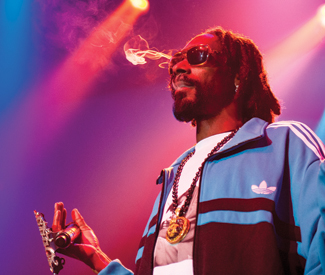
STREET SEEN Snoop wore rhinestone-dripping dichotomy to his 420 concert at the Fillmore. Trust, I was stoned enough to come up with theories based around it.

This year’s preposterous stoner holiday weekend in San Francisco featured a Haight Street-Hippie Hill clusterfuck that snarled traffic lanes for those hoping to flee the THC clouds for lands with slightly more manageable level of good vibes. Down South in Santa Cruz, cops confiscated a two-pound joint stuffed with an estimated $6,000 worth of Cali green from the traditional festivities in the hinterlands of the town’s UC campus.

I stayed far from such daytime fray, though we did manage to snap some photos of Hill-bound bridge-and-tunnelers seeking the 71 bus in their UNIF “Weed Be Good Together” tank tops (available, of course, at Urban Outfitters for some astronomical sum.) They seemed nice enough. I hope they weren’t the ones who left Golden Gate Park trashed with 10,000 pounds of garbage. Yes, that’s an actual park worker estimate.

Not mad at tasteful stoner styling. All park photos by Caitlin Donohue 

My camera and I opted for the slightly more local version of 420 at Dolores Park, where neon Spring Breakers fashion trumped pot leaves and the gentleman proudly sporting a Rastafarian flag as a cape was the exception, rather than the bleary eyed rule to the sunburning throngs. Capturing flicks of various, impressively large picnic buffets, I was proud of my fellow stoners for the most part. Has weed culture progressed to the point where we need not don fake dreadlocks or shiny plastic leaf necklaces to proclaim our affinity to legalization? Down.

Cool cape, breh.

So many snacks. Ladies came prepared. For more DP style, click

KNUCKLE PIECE

Later that evening, after clearing the multi-layered gauntlet of security at the Fillmore (I don’t remember there being metal detectors the last time I came through for a hip-hop show, granted that was for Macklemore) and waiting for his hour-late, $75-ticket appearance, Snoop Dogg put on a predictably fun show. “Classic smash hits” were performed, as promised by the show’s promotional materials. Nate Dogg was piped in for choruses, back from the dead. The crowd sang along to each song, unchallenged by the repertoire of a man as familiar to the world’s hip-hop fans as the MTV logo. He covered “Jump Around,” but even this seemingly unnecessary riff seemed in keeping with much of the first half of the show’s reliance on material from eras gone by.

All Snoop photos by Matthew Reamer

But pacifist, Bunny Wailer-blessed Snoop Lion and his Major Lazer-produced album Reincarnated was entirely absent. Perhaps I was the only one harboring hopes of a surprise appearance by tween daughter Cori B. — whose turn on the hook for “No Guns Allowed” I like to imagine as payback from Daddy for the time those cops found firearms in the family home.

You could see it in his bling, this lack of commitment to his new persona. Though a rhinestone lion swung from Snoop’s slim neck, far more apparent was the garish fist-covering knuckle “Snoop Dogg” piece, which partially obscured his microphone. One wonders if the Lion persona will stick around long enough for Snoop to compile an impressive, be-maned collection of accessories. Maybe not — much of the shtick seems redundant for a rapper already famous for smoking more weed than federal agent bonfires in Humboldt County.

But old school the entirety of the set was not. Singles by Katy Perry and Bruno Mars in which Snoop guest-raps each made the hip-hop purists in the crowd spit. Despite the overwhelming scorn around me, I bopped to Perry’s “California Girls” — but even I couldn’t stomach the aging rapper juxtaposed with the chorus of Mars’ “Young, Wild, and Free”. I wondered if he could be convinced that “No Guns Allowed” ventures far closer to “classic good hit” arena than pop prince crossovers ever will.

MILE HIGH

Uhhhh, like, what else happened? Oh right, there was a shooting at Denver’s massive 420 celebration, the first since Colorado legalized the stuff for recreational use. The news would have been a bummer, had I not gotten to catch up with my girl Coral Reefer, who was a speaker on the Cannabis Cup’s first panel discussion about social media and weed.

“It has been amazing,” said the chipper Reefer, who runs a near 24/7 train of political information and nug glamour shots on her various social networks and Stoney Sunday YouTube potcasts. “Colorado’s been so hospitable and generous.”

News of the shooting — which left two attendees at Denver’s Civic Center Park with non-life-threatening injuries and several with injuries sustained while being trampled during the ensuing chaos amid the estimated 80,000 crowd — didn’t reach attendees at the Cup until a few hours later, Reefer said.

“It was complete sadness. Everyone I spoke to was so disappointed that we had experienced such a great day of community and positive vibrations, and a few miles away something so terrible had happened.”

But at the Cup itself, peace reigned, with the possible exception of the grumblers stuck in the at-times hours-long wait to get in. Reefer says the sophistication of marijuana concentrates continues to improve at these mega-events, and the variety of pot accoutrements — like local brands of vape pens — is impressive. “There’s so much issue with crossing state lines with cannabis products, it seems like each state has developed their own economy when it comes to cannabis goods.”

For Reefer, even the chaotic Civic Center scene signified a growing interest in marijuana she sees as positive. “We need to understand there are millions of people on our side and we need to be prepared when they come to us,” she said.

She also wanted to reinforce that this is one party the Golden State wants in on. “More and more people are celebrating cannabis in Colorado. California needs to step up and legalize, because it’s getting really fun out here.”

Perhaps — a la Snoop’s schizophrenic accessories — someday no one will feel the urge to don crocheted red-yellow-and-green beanies, or make a reggae album, merely to proclaim allegiance to marijuana. Dear government, if we drop the culturally derivative stoner trappings, will you accept that weed has been a part of us all along?

Covering the Boston bombing

21

Ever since the horrible, awful bombing at the Boston Marathon, I’ve been doing what every crazy newshound does and spending far too much time on the Internet trying to get the latest scrap of information. This morning, none of us could drag ourselves away from the developing story.

And I have to say: There are thousands of web sites covering this, mostly be aggregating other people’s content. But the real work of finding and reporting news has been done by the old-fashioned traditional mainstream media that we all so freely dismiss as dinosaurs.  The New York Times and The Boston Globe have done an exceptional job, as has the Associated Press. That’s in large part because they still employ significant numbers of staff reporters, with the experience and contacts to accurately cover this kind of story.

The MSM screws up a lot, and allows politicians to avoid accountability, and has all sorts of biases. But nobody else has the ability to cover a tragedy and disaster like this.

Of course, not all is perfect. The New York Daily News and CNN have screwed up badly. The rightwingosphere is so obsessed with Muslim Terrorists that it’s seeing them everywhere, creating them out of paranoid visions if necessary.

But if there weren’t newspapers and broadcast outlets with old-fashioned reporting staff, we’d be far less informed and more reliant on official law-enforcement sources. The old business model is falling apart, but there’s still a need for actual news outlets.

And for my money, the absolute best source of accurate, fair, complete, and insightful coverage has been that very, very old medium — raido — and that old goverment-funded institution, NPR.

Something to think about when a real major news event happens.

Solomon: The Orwellian warfare state of carnage and doublethink

3

By Norman Solomon

Norman Solomon is co-founder of RootsAction.org and founding director of the Institute for Public Accuracy. His books include “War Made Easy: How Presidents and Pundits Keep Spinning Us to Death.” He writes the Political Culture 2013 column.

After the bombings that killed and maimed so horribly at the Boston Marathon, our country’s politics and mass media are awash in heartfelt compassion — and reflexive “doublethink,” which George Orwell described as willingness “to forget any fact that has become inconvenient.”

In sync with media outlets across the country, the New York Times put a chilling headline on Wednesday’s front page: “Boston Bombs Were Loaded to Maim, Officials Say.” The story reported that nails and ball bearings were stuffed into pressure cookers, “rigged to shoot sharp bits of shrapnel into anyone within reach of their blast.”

Much less crude and weighing in at 1,000 pounds, CBU-87/B warheads were in the category of “combined effects munitions” when put to use 14 years ago by a bomber named Uncle Sam. The U.S. media coverage was brief and fleeting.

One Friday, at noontime, U.S.-led NATO forces dropped cluster bombs on the city of Nis, in the vicinity of a vegetable market. “The bombs struck next to the hospital complex and near the market, bringing death and destruction, peppering the streets of Serbia’s third-largest city with shrapnel,” a dispatch in the San Francisco Chronicle reported on May 8, 1999.

And: “In a street leading from the market, dismembered bodies were strewn among carrots and other vegetables in pools of blood. A dead woman, her body covered with a sheet, was still clutching a shopping bag filled with carrots.”

Pointing out that cluster bombs “explode in the air and hurl shards of shrapnel over a wide radius,” BBC correspondent John Simpson wrote in the Sunday Telegraph: “Used against human beings, cluster bombs are some of the most savage weapons of modern warfare.”

Savage did not preclude usage. As a matter of fact, to Commander in Chief Bill Clinton and the prevailing military minds in Washington, savage was bound up in the positive attributes of cluster bombs. Each one could send up to 60,000 pieces of jagged steel shrapnel into what the weapon’s maker described as “soft targets.”

An unusually diligent reporter, Paul Watson of the Los Angeles Timesreported from Pristina, Yugoslavia: “During five weeks of airstrikes, witnesses here say, NATO warplanes have dropped cluster bombs that scatter smaller munitions over wide areas. In military jargon, the smaller munitions are bomblets. Dr. Rade Grbic, a surgeon and director of Pristina’s main hospital, sees proof every day that the almost benign term bomblet masks a tragic impact. Grbic, who saved the lives of two ethnic Albanian boys wounded while other boys played with a cluster bomb found Saturday, said he had never done so many amputations.”

The LA Times article quoted Dr. Grbic: “I have been an orthopedist for 15 years now, working in a crisis region where we often have injuries, but neither I nor my colleagues have ever seen such horrific wounds as those caused by cluster bombs.” He added: “They are wounds that lead to disabilities to a great extent. The limbs are so crushed that the only remaining option is amputation. It’s awful, awful.”

The newspaper account went on: “Pristina’s hospital alone has treated 300 to 400 people wounded by cluster bombs since NATO’s air war began March 24, Grbic said. Roughly half of those victims were civilians, he said. Because that number doesn’t include those killed by cluster bombs and doesn’t account for those wounded in other regions of Yugoslavia, the casualty toll probably is much higher, he said. ‘Most people are victims of the time-activated cluster bombs that explode some time after they fall,’ he said.”

Later, during invasions and initial periods of occupation, the U.S. military dropped cluster bombs in Afghanistan and fired cluster munitions in Iraq.

Today, the U.S. State Department remains opposed to outlawing those weapons, declaring on its official website: “Cluster munitions have demonstrated military utility. Their elimination from U.S. stockpiles would put the lives of its soldiers and those of its coalition partners at risk.”

The State Department position statement adds: “Moreover, cluster munitions can often result in much less collateral damage than unitary weapons, such as a larger bomb or larger artillery shell would cause, if used for the same mission.” Perhaps the bomber(s) who stuffed nails and ball bearings into pressure cookers for use in Boston had a similarly twisted rationale.

But don’t expect explorations of such matters from the USA’s daily papers or commercial networks — or from the likes of NPR’s “Morning Edition” and “All Things Considered,” or the PBS “NewsHour.” When the subject is killing and maiming, such news outlets take as a given the presumptive moral high ground of the U.S. government.

In his novel 1984, Orwell wrote about the conditioned reflex of “stopping short, as though by instinct, at the threshold of any dangerous thought . . . and of being bored or repelled by any train of thought which is capable of leading in a heretical direction.”

The doublethink — continually reinforced by mass media — remains within an irony-free zone that would amount to mere self-satire if not so damaging to intellectual and moral coherence

Every news report about the children killed and injured at the finish line in Boston, every account of the horrific loss of limbs, makes me think of a little girl named Guljumma. She was seven years old when I met her at an Afghan refugee camp one day in the summer of 2009

At the time, I wrote: “Guljumma talked about what happened one morning last year when she was sleeping at home in southern Afghanistan’s Helmand Valley. At about 5 a.m., bombs exploded. Some people in her family died. She lost an arm.

In the refugee camp on the outskirts of Kabul, where several hundred families were living in squalid conditions, the U.S. government was providing no help. The last time Guljumma and her father had meaningful contact with the U.S. government was when it bombed them.

War thrives on abstractions, but Guljumma was no abstraction. She was no more or less of an abstraction than the children whose lives have been forever wrecked by the bombing at the Boston finish line.

But the same U.S. news media that are conveying the preciousness of children so terribly harmed in Boston are scarcely interested in children like Guljumma.

I thought of her again when seeing news reports and a chilling photo on April 7, soon after 11 children in eastern Afghanistan were even more unlucky than she was. Those children died from a U.S./NATO air strike. For mainline American journalists, it wasn’t much of a story; for American officials, it was no big deal.

“Circus dogs jump when the trainer cracks his whip,” Orwell observed, “but the really well-trained dog is the one that turns his somersault when there is no whip.”

Norman Solomon is co-founder of RootsAction.org and founding director of the Institute for Public Accuracy. His books include “War Made Easy: How Presidents and Pundits Keep Spinning Us to Death.” He writes the Political Culture 2013 column.

Selector: April 17-23, 2013

0

WEDNESDAY 17

Night Beats

Seattle’s Night Beats has all of the fixings of a good psych-garage act; the lo-fi recordings, the raspy vocals with punctuated yelps, and the noisily manipulated guitar. But the band, which takes its name from Sam Cooke’s best record, has a direct link to the more soulful breeds of music the title suggests, such as R&B. “Dial 666” is simple, 12-bar blues, “High Noon Blues” borrows sentiment and structure from that genre, and “Puppet on a String” seems to call for some old-fashioned dance moves. With the combination of vigorous rock and sensuous roll, Night Beats’ show at Brick and Mortar promises to be satisfying. (Laura Kerry)

With Cool Ghouls, Primitive Hearts, Big Drag

9pm, $10

Brick and Mortar Music Hall

1710 Mission, SF

(415) 800-8782

www.brickandmortarmusic.com


Bad Religion

Mixing aggressive guitar riffs with politically-savvy lyrics and harmony-laden vocals — which the band refers to as “oozin’ aahs” in its liner notes — Southern California’s Bad Religion has been going strong for more than three decades. It just released latest album, True North on founding member Brett Gurewitz’ iconic independent label Epitaph Records last January. And the punk rock stalwarts continue to be driven by singer-author-professor Greg Graffin’s powerful songwriting, which touches on everything from global politics and religion to more personal experiences and emotions that just about anyone can relate to and share in a sense of powerful catharsis. (Sean McCourt)

With the Bronx, Polar Bear Club

8pm, $27.50–$30

Regency Ballroom

1300 Van Ness, SF

www.theregencyballroom.com


The 2 Bears

I don’t need caffeine. My computer just starts playing “Work” by the 2 Bears at 7am, complete with rising organ, a pulsing groove, and motivational chorus: “We’ve got to work harder, for the future, my love we got to work.” It might not even be the best song on Be Strong from the 2 Bears (Hot Chips’s Joe Goddard and the Raf Daddy), as it faces stiff competition from hilarious, cuddly club anthem “Bear Hug” and the uplifting, romantic space dub on “Church.” But, it does the job of getting me moving, and by the time the disco queen vocals kick in I’m likely showered and downstairs having breakfast. (Ryan Prendiville)

With Sleazemore, Richie Panic (Lights Down Low)

10pm, $15 presale

1015 Folsom, SF

www.1015.com


THURSDAY 18

“Touching Art: Tribute to Judith Scott”

Skin, the largest organ, keeps our insides safe from the perils of the outside, but it is also the membrane through which we experience the world. In its tribute to Judith Scott, swissnex will explore this, looking at touch’s role in the creation of art. Scott, who could neither speak nor hear and therefore relied heavily on her sense of touch, made beautiful cocoon structures at Oakland’s Creative Growth Art Center for 20 years. Swissnex, in conjunction with Switzerland’s L’Art Brut, will screen a film about the artist, showcase some of her work, and host a talk by Dr. Sandra Weiss on the connection between touch and emotion. The night promises be a touching intersection of art and science. (Kerry)

6pm, $10

swissnex

730 Montgomery, SF

(415) 912-5901

www.swissnexsanfrancisco.org


FRIDAY 19

An evening with Manlio Argueta

While a hard punishment, exile can also be the place where great works of art are born. “I left with a closed fist and came back with an open hand,” said Rafael Alberti returning to Spain after 38 years of exile. Ostracized in Mexico, Pablo Neruda finished one of his masterpieces Canto General. Exiled in Costa Rica, acclaimed Salvadorean poet Manlio Argueta wrote his most celebrated novel, One Day of Life (Vintage Book, 1983). In line with his mentor, poet Roque Dalton, Argueta vividly writes about the 12-year civil war through a peasant family’s eyes. The book, available in 15 languages, was named one of the best 10 novels in Spanish of the 20th century by NY’s Modern Library. (Fernando Andres Torres)

7pm $10

ANSWER

2969 Mission, SF

(415) 902-4754

www.manlioargueta.com


“We Are Winning, Don’t Forget: Short works by Jean-Gabriel Périot”

Jean-Gabriel Périot developed a painstaking approach to making films. By carefully stitching together archival images, both still and moving, he creates political narratives that are poignant despite (or because of) their brevity. As a part of a US tour that begins at New York’s Museum of Modern Art, the filmmaker comes to the Bay with nine short films, with subjects ranging from Hiroshima to “politics and tomatoes.” The evening at Artist’s Television Access presents a great opportunity to see these stunning films and the man behind the camera. (Kerry)

8pm, $10

Artist’s Television Access

992 Valenica, SF

(415) 824-3890

www.atasite.org


Sheetal Ghandi: Bahu Beti Biwis

Deconstructing cultural artifacts is just about today’s lingua franca. Sometimes you might wish that artists left well enough alone. Yet, at its best it shows creative minds at work that are willing to take the risks inherent in changing lenses. Sheetal Ghandi is one of them. Even though her performance practices are already exceptionally broad —Kathak, modern and West African dance, plus Broadway as well as Cirque du Soleil — she took a lot of imaginative leaps for her solo show Bahu Beti Biwis (Daughter-in-law, daughter, wife), a series of both humorous and poignant portraits of women and the roles traditionally assigned to them. It’s a piece that has been described as empathizing with “Indian women across time and space.” (Rita Felciano)

Fri/19-Sat/20, 8pm; Sun/21, 7pm, $20–$25

ODC Theater

3153 17th St., SF

(415) 863-9834

odctheater.org/buytickets.php


SATURDAY 20

Mishap Psychic Fair

Nothing will make sense on 420 anyway (unless you snagged tickets for Snoop Lion at the Fillmore, in which case: jealous), so you may as well go to the goofiest damn event you can find. Surely the Mishap Psychic Fair is in the running for the honorific — the (is it?) satirical set-up will feature tongue-in-cheek booths where you can align your crystals via rock opera, attune to your inner “sexy anger,” and temper it all with cocktails if you’re not too bleary-eyed from the traditional mode of celebration on this international holiday. Buy tix to the fair in advance and you’ll snag a complimentary photo of your aura, a so-called magic elixir, or henna tattoo. Heal thyself, hippie. (Caitlin Donohue)

Sat/20, 8pm, $10

Geoffrey’s Inner Circle

410 14th St., Oakl.

www.mishapproductions.com


The Last Unicorn screening and birthday celebration

And now for something completely magical: Peter S. Beagle, author of beloved 1968 fantasy novel The Last Unicorn (among dozens of other works), turns 74 today, and he’ll journey from his home in Oakland for a pair of birthday- and unicorn-themed San Francisco events. (Hooves up if you ever had a unicorn-themed birthday party! I know I did … maybe more than once.) First is a screening of the 1982 animated film adapted from the book, with voices by Mia Farrow, Jeff Bridges, and Alan Arkin; Beagle will be on hand to answer questions and sign books. Diehards can continue the festivities at the Cartoon Art Museum, which hosts a reading and further signings by the author, plus an auction of some mighty nifty original artwork to benefit the museum and Beagle’s imminent multi-city tour. Costumes are encouraged, obvi. (Cheryl Eddy)

Screening, noon-3pm, $8.50

Castro Theatre

429 Castro, SF

VIP reception, 6-8pm, $25

Cartoon Art Museum

655 Mission, SF

www.cartoonart.org


“Bill Frisell presents Hunter S. Thompson’s The Kentucky Derby

Jazz guitarist Bill Frisell has tackled many an avant-garde project in his 40-plus year career, and his latest foray beckons fans of music, stage, and literature. Bringing life to Hunter S. Thompson’s memorable “The Kentucky Derby is Decadent and Depraved” this weekend, Frisell will be joined by narrator Tim Robbins in a multimedia production featuring set design by the iconic writer’s longtime collaborator Ralph Steadman. Considered the first of Thompson’s pieces to truly reflect his “Gonzo” style of journalism, the story and production will no doubt envelop audience members in an aural and visual way never before experienced. Buy the ticket, take the ride. (McCourt)

Sat/20, 7:30pm; Sun/21, 4 and 7:30pm, $35–$80

SF Jazz Center

201 Franklin, SF

www.sfjazz.org


Maria Minerva

Minerva was the Roman goddess of wisdom. That’s what I’ve found out on Wikipedia. What I’ve found out about Estonian lo-fi electronic chanteuse Maria Minerva is that she’s an art school graduate/critic/glossolalia expert/comedy student. But, all I really know is that her Bless EP on 100% Silk is excellent. “Soulsearchin’,” focuses on the anxiety of options, built around George Carlin’s “Modern Man,” but it’s the laid-back guitar, slightly off-kilter percussion, and circling vocals on “Symbol of My Pleasure” that stay with me. (Prendiville)

With Butterclock (live), Marco De La Vega, and more

9pm, $10 presale

Public Works

161 Erie, SF

(415) 932-0955

www.publicsf.com


MONDAY 22

Oakland Veg Week

Perhaps you are deluged by the information regarding sustainable eating available today. This is completely understandable — at times, we feel as though we will surely perish under the mountainous weight of fair trade quinoa foisted upon us by Bay Area foodie culture. Luckily, Oakland Veg Week is going on, with its host of events meant to dispel myths about what to eat. Go on a farm field trip, take vegan cheese-making classes (both April 27), attend a talk by Paul Shapiro of the Humane Society on why eating animals is bad for the earth (April 25), snack your way through a delicious grand finale at the Lake Merritt Sailboat House (April 28), or check out the host of other, veg-friendly events this week. (Donohue)

Through April 28

Various Oakland locations

www.oaklandveg.com


The Guardian listings deadline is two weeks prior to our Wednesday publication date. To submit an item for consideration, please include the title of the event, a brief description of the event, date and time, venue name, street address (listing cross streets only isn’t sufficient), city, telephone number readers can call for more information, telephone number for media, and admission costs. Send information to Listings, the Guardian, 225 Bush, 17th Flr., SF, CA 94105; or e-mail (paste press release into e-mail body — no attachments, please) to listings@sfbg.com. Digital photos may be submitted in jpeg format; the image must be at least 240 dpi and four inches by six inches in size. We regret we cannot accept listings over the phone.

Punk democracy

1

arts@sfbg.com

MUSIC When the going gets tougher in the music biz, scrappy little South Bay punk label Asian Man Records has kept on going, downsizing yet sticking to its guns. That means standing by bands that have a chance to jump ship to a bigger imprint — by wishing them well.

Such might be the case with San Francisco’s Wild Moth, which came heavy with its sprawling, epic post-punk on the Mourning Glow EP released by Asian Man last summer, plays this week’s showcase, and has recently completed a full-length. “There’s some bigger labels that might be interested,” says Asian Man’s main man Mike Park, 43, on a recent morning in the office in his mom’s basement garage in affluent, arcadian Monte Sereno, right where it’s been for the past 16 years. “Our thought pattern is we want what’s best for the band. We’re here for you, but we want you to get the best deal.”

DIY, book-your-own-life punk has always hinged on that kind of support to Park, no slouch when it comes to both music-making and community-building. I last spoke to the vet of the South Bay ska scene and linchpin of Skankin’ Pickle about eight years ago when he was embarking on his “Bike For Peace” tour, cycling down the coast along with others to play and raise funds for a local youth center. Five years along from the opening of the first drug- and alcohol-free arts-focused Plea For Peace center in Stockton, Park continues to keep the faith — and to keep Asian Man out of the red — by staying small, though over the years he’s sold more than a 1 million albums by artists as disparate as Alkaline Trio, Andrew Jackson Jihad, the Queers, Kepi Ghoulie, the Lawrence Arms, and Slow Gherkin.

“A lot has to do with, when the music industry started to tank, I had a big jump-start on it,” says Park today. “I felt there was going to be a big turn and I started cutting back quite a bit. Bigger labels were still spending a lot of money and doing well in 2000, but I’ve always been able to turn a profit and, with the present-day music industry, I cut back even more.”

“We’re really upfront with the bands as far as our limitations — and we don’t do much at all!” he continues, chuckling. Yet despite the fact that Asian Man doesn’t harbor a major’s or major-indie’s marketing team (Park employs only one full-time employee besides himself) it does what it can, fostering a space that helps everyone help themselves. “Mostly the bands want to be part of this community. A lot of bands come over and hang out, help us pack records, lend a hand. We try to go to each other’s shows, and bands help out other bands when they tour.”

Park clearly took the lessons of Ian MacKaye’s Dischord Records to heart: keep prices low, maintain integrity, the works. The upcoming show with Wild Moth, the Exquisites, and Shinobu might be considered a good example of punk democracy in action: “They’re all on the same level,” Park says of the groups. “We’re just hoping we get a decent crowd. It’s a test to see how many people we can get out with no real headliner!” He got SF’s Great Apes on the bill because he’s known member Brian Moss since he was a teenager playing music: “He’s a super-talented guy and very supportive of all bands. You can tell some people are into it for what can further their careers, but instead with him, it’s ‘how can I help others?'”

Sounds a little like someone else we know. Still, punks mature, get married, and have kids, much like Park, who, despite an upcoming reunion show for his combo the Chinkees at a ska festival in Las Vegas in May, seems most excited about his latest project: his album of kids music and his kids label, Fun Fun Fun, which aims to release children’s music by punks. So far, the imprint’s Play Date, composed of Greg Attonito of Bouncing Souls and wife Shanti Wintergate, has shown up on NPR, and Park himself won a spot as the “Super Music Friend” on this winter’s Yo Gabba Gabba! Live! tour. “Other than the fact that we try to put out music that isn’t dumbed down, musically, it can pass for any of the records we normally put out,” he explains of Fun Fun Fun’s sounds, “only more G-rated and more educational lyrics.”

Whether he’s teaching kids when it’s safe to cross the street via ska or learning about new hardcore genres from the high schoolers that come by the office to help out, Park certainly can’t be accused of turning into a cranky punk nostalgist, grumbling about awesome mosh pits long gone.

“Punk’s evolved like everything. Things can’t stay the same with technology and the social media tools that artists have,” he says optimistically. “Let’s say there’s an underground show, and it gets canceled. Someone says, ‘Let’s do it at my house and here’s the address,’ and after a social media blast, you have 100 kids in a house in an hour. I remember pre-Internet you’d have to call people, and no one would have a cell phone, and someone would camp out at the old location and say the new location is here. I think it’s kind of cool, to be honest.”

SHINOBU, WILD MOTH, THE EXQUISITES, GREAT APES

Sat/20, 9pm, $9

Bottom of the Hill

1233 17th St., SF

(415) 621-4455

www.bottomofthehill.com

Billy and the golden toads

1

Reverend Billy Talen and his Church of Stop Shopping — which evolved from anti-consumerism street theater in San Francisco in the 1990s into a venerable New York City protest/performance institution — is bringing its creative environmentalist prayers and ploys back to the Bay Area next week.

Talen is a talented talker and writer whose most recent book, The End of the World, is a poetic plea for people to finally get serious about climate change, loss of biodiversity, and other environmental indicators that are passing irreversible global tipping points, all of them fed by the relentless growth of global capitalism.

“When Hurricane Sandy hit New York, there was no discussion of the underlying causes,” Talen told us. “There’s a disconnect. We have a 1,000-mile wide storm that seems to be aimed at Wall Street, and we’re not mentioning Wall Street.”

Billy and his crew are, using street theater to make their point. As he spoke, Talen said he was surrounded by two dozen costumes of the extinct Golden Toad that his crew has been donning to invade and engage in media-friendly civil disobedience at branches of Chase Bank, which the Rainforest Action Network concluded is the leading investor in carbon-emitting projects.

“Amphibians are going extinct around the world, and if I can mix my metaphors, that’s the canary in the coal mine,” Talen said, calling climate change a systemic result of an economic system predicated on consumption and growth. “Corporations are made to not be sustainable. They have to expand every quarter.”

Talen begins his visit on Monday, April 22, with a 7pm reading at Booksmith, 1644 Haight Street, and he wraps up on April 27 at 8pm with a full 17-member Church of Stop Shopping performance at Victoria Theater, 2961 16th St., SF. In between, they’ll be Lone Mountain College in SF on April 24, Pt. Reyes Dance Palace on April 25, the Chalkupy event at Oakland City Plaza on April 26, the Live Coast West taping on April 27 — and perhaps exorcising a Chase Bank or two along the way.

When conservatives love Leno

11

State Sen. Mark Leno is used to facing opposition. His efforts to regulate chemicals, end gender discrimination in insurance, and force cell-phone makers to come clean about radiation levels put him up against some of the most powerful interest groups in the state. He’s fought with Republicans over state spending and taxes.

He’s not used to getting support from right-wing media.

Yet that’s what’s happening now: In an odd political reversal, Leno’s (eminently reasonable) bill to allow cities to explore extending drinking hours is getting flak from progressive groups like Alcohol Justice — and support from the Orange County Register and Fox News.

The Register, which hates all forms of regulation, ran an editorial endorsing Leno’s bill on the grounds that it makes perfect sense for a world where people no longer always work 9-5. (Oh, and it makes sense because there are two many damn laws anyway and we should let people drink when they want.)

Neil Cavuto of Fox News interviewed Leno recently, and his only complaint about the bill was that the procedure for actually getting a late-hours license would be so complicated that even hearing about it was driving him to drink.

That’s the thing: Leno’s bill doesn’t force anyone to do anything. It just sets up a long, complicated process that might, in the end, after extensive public input on the state and local level, allow a couple of bars in a few limited areas (in cities that want to pursue this) to stay open until 4am, as bars in many civilized states already do.

So while Bruce Livingston, who is a decent guy and usually works on good issues, is running around the state trying to get progressives to oppose the Leno bill, the conservatives who usually vote against everything Leno does might wind up on board.

And wouldn’t that be an odd way to get a good bill passed?


CycleSF event canceled, but RecPark gets paid anyway

115

Bicycling around San Francisco has become increasingly popular with both residents and tourists, but apparently that doesn’t mean people want to pay $40-75 for an organized ride around the city’s perimeter, even when the money goes to the San Francisco Recreation and Parks Department and the cause of putting more bike racks into the parks.

Despite a citywide ad campaign (for which I was one of several cyclists voluntarily photographed with our bikes) and aggressive social media effort, Jumping Fences – the company that also produces the San Francisco Marathon, which is set for June 16 – has canceled the CycleSF event it had planned for April 28, citing lower than anticipated demand.

The company had pledged $100,000 to RPD in connection with the event, which was to involve 13- and 26-mile rides through the city ending with a big party in the park, and the company announced that it would still be giving the department $25,000 despite “postponing” the event.

“We are disappointed Cycle SF has chosen to postpone their event. We are looking forward to working with them in the future on a family-friendly bicycle event,” said Connie Chan, spokesperson for the Recreation and Parks Department.

Jumping Fencing Marketing Director Joanna Reuland contended that “awareness was strong” surrounding the event and she wasn’t sure why it didn’t take off. “It had become clear that we weren’t going to make our promise so we thought it was probably best to just postpone the event,” Reuland told us.

Part of the problem might have been how cheap and easy it is to cycle around the city and the availability of free monthly group rides like Critical Mass and SF Bike Party. Apparently paying to bike around the city just doesn’t have the same demand as the San Francisco Marathon, which costs $35 for the 5K or $145 for the full marathon.

Some in the bike community also grumbled that the event was benefiting a city department about which many have decidedly mixed opinions, particularly given its closeness with corporate donors, rather than a bike advocacy organization such as the San Francisco Bicycle Coalition, whose 12,000-plus members organizers did little to directly target. What whatever it was, it is no more.

No progress in condo conversion standoff, despite the Chron’s spin

93

Perhaps it was just an unfunny April Fool’s Day joke or some wishful political spin, but the San Francisco Chronicle’s April 1 article about how tenancy-in-common owners and their political supporters are pushing legislation that would allow them to bypass the condo conversion lottery seriously misrepresented the city’s biggest current political standoff.

Nevermind the article’s over-the-top bias in favor of those poor, hard-luck TIC owners, like the featured Pacific Heights couple forced to raise their baby in a closet when all they really want to do is flip the apartment they bought for a profit. Or how the Chron all-but-ignored the fact that these TICs were rent-controlled apartments in a city where two-thirds of citizens rent. That kind of top-down view of the world is pretty typical for the Chron, even in its news stories, despite the paper’s strained claim to “objectivity.”

No, the article’s real sin was to get the basic facts wrong on where this political stalemate now stands, presenting the wishful spin of one side as if it were the latest news. Between the headline, “Owners seeking condo conversions may have shot” and the first deckhead, “Making progress” (which plays off this paragraph. “’I think we’re making progress in our discussions and negotiations,’ said [sponsoring Sup. Mark] Farrell, while noting the talks with tenant advocates, TIC owners, and real estate interests are ‘far from the finish line.’”) the article leaves the impression current negotiations may produce a compromise.

But the problem is that there aren’t any current negotiations between the two sides, and there haven’t been for weeks, according to tenant and other involved sources. In fact, they say there’s been no movement in this standoff since almost a month ago when I last reported that tenant groups and progressive supervisors were preparing a set of hostile amendments to the legislation.

They would allow a one-time condo lottery bypass for the nearly 2,500 TIC owners in the pipeline in exchange to shutting down the lottery for many years and preventing any conversions of rent-controlled apartments into condos until city builds a comparable amount of new affordable housing, and then probably restricting condo conversions to smaller buildings after that to protect large rent-controlled apartment buildings from real estate speculators.

That proposed compromise, which the article barely mentions before letting Farrell say “his legislation poses no threat to rent control,” would help the poor Pacific Heights couple at the center of the article. But the real estate industry and its conservative allies don’t really care about that couple as much as they do maintaining the flow of rental units into the real estate market, which is why the negotiations have broken down.

Instead, the Chron has Sup. London Breed – who is indeed a swing vote of the issue, but not one that tenant groups are counting on given how close she is to Plan C and the landlord lobby – citing a compromise proposal that would prevent the new condo owners from selling their properties for five years to discourage real estate speculation.

Perhaps that’s something the TIC owners and real estate interests that the article relies on think is a realistic compromise, but it’s not something that has been seriously discussed with tenant groups, mediating Sup. David Chiu, or the other interests that would be needed to pass this legislation.

Sara Shortt, the token tenant activist that the Chron talked to for the article, confirmed to us that there is no real compromise deal in the works and preventing the creation of new condos from existing apartments is a bottom-line issue that unites everyone who is now opposed to this legislation.

“The Plan C/Realtor etc. won’t concede on our key issue: restriction on future conversions in exchange for the bypass. We have given as much as we can give and they have given virtually nothing in return,” Shortt, executive director of the Housing Right Committee, told us by email.

Even Sup. Scott Wiener, who co-sponsors the legislation with Farrell, told us there has been “no change from before,” when negotiations broke down. But the legislation is on the April 15 agenda for the Land Use and Economic Development Committee – for the fifth time, with most hearings canceled because of the lack of negotiating progress.

If the Realtors and Plan C (which is dominated by real estate and banking interests) stick to their intransigent position – hurting this poor Pac Heights couple in the process, which the Chron fails to note – then tenants and progressive supervisors are likely to amend the legislation and call the bluff of those who claim this issue is simply about poor TIC owners stuck with shared mortgages.