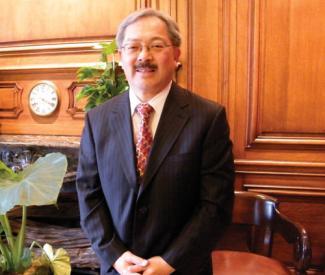
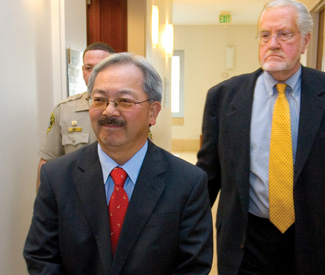
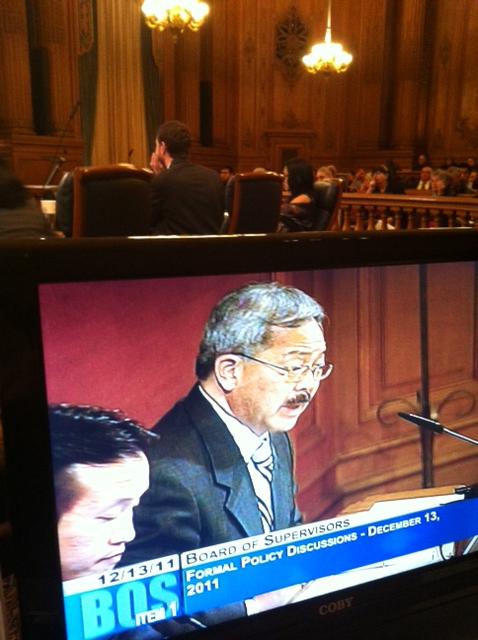
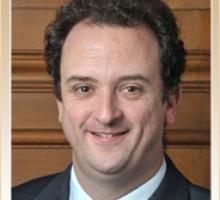
Mayor Lee

Sorting out the America’s Cup re-do

8

I have to say this for Mayor Ed Lee: He’s not so stubborn or egotistical. He’s willing to listen. And when something really, really doesn’t make sense, he’s willing to let it slide.

Not like Gavin Newsom.

If Newsom were still the mayor (ick! gasp!), he’d be desperately trying to keep together the deal that gave five pieces of the waterfront to the sixth richest person on Earth for more than two-thirds of a century. He’d refuse to admit that maybe the promises of vast wealth accruing to the city from what’s really an untested event might be a little lower than projected. He’s be sucking up madly to Larry Ellison, promising him more and more city money if only His Larryness would bestow the greatness of his hotel, restaurant and condo manna upon us poor lowly San Franciscans.

The current mayor has a little more sense. But then, I don’t think Ed Lee spends much time dreaming about the Oval Office.

So now that Ellison’s team realized they weren’t going to be guaranteed enough of a profit on waterfront development and Lee realized that giving away any more of the store, or rushing this through any faster, was bad for the city, we have a deal that’s based on San Francisco hosting a sports event, not on extensive real-estate development on the waterfront. It’s better than it was, and I give the mayor credit for that.

But a few things are worth remembering:

The proverbial devil is in the proverbial details, and right now they aren’t so proverbial. There’s the minor matter of about $15 million worth of upgrades and repairs to the waterfront that’s needed for the race — and the city’s on the hook for it. Right now, it’s not clear where that money’s going to come from.

One option: The city could go back to giving Ellison some property or development rights. The Chron quotes Jennifer Matz, the mayor’s economic development director, saying that the rights to Seawall Lot 330 are still on the table (bad, bad idea). Stephanie Martin, spokesperson for Ellison’s operation, told me there are no long-term development plans included at all. Maybe the city will just pay cash from the General Fund to Ellison (seems unlikely; I’d love to watch that Budget and Finance Committee meeting.) Maybe the Port will sell revenue bonds and pay Ellison out of the projected new income from the event.

Or maybe some other deal that will be bad for the city and good for Larry will emerge, and we’ll all have to fight that one.

I realize that, if the attendance figures are anywhere near what’s projected, the city will still wind up millions of dollars to the good.

But I still don’t understand: Why are we paying Ellison to hold his race here? Yeah, it will bring tourists to the city — but as former Sup. Aaron Peskin points out, we don’t pay the Navy to bring Fleet Week and the Blue Angels to town. If anything, we should be charging these folks for the right to use so much public property for their own commercial gain. (Yes, the America’s Cup involves commercial gain. Ellison does it because he loves yacht racing and likes to win shit, but you don’t think that giant Oracle logo in 80 million pictures in newspapers and on TV isn’t worth a whole lot of money?)

Why isn’t a guy who counts as one of this generation’s great industrialists, with a fortune rivaling the Rockefellers and the Morgans and that gang, donating anything at all to San Francisco? Those old robber barons built libraries and museums and stuff for the benefit of the public. Come on, Larry — step up and help out here. Do the race, defend your Cup, then give something back to the city instead of asking the taxpayers to cover your tab.

PS: I read Randy Shaw’s attack (if that’s what this odd little piece was) on Aaron Peskin, and I wonder — what’s wrong with being a maverick who works from the outside to try to defend the city’s interests? I don’t always agree with Peskin (see: Home Depot) but I can tell you: There are a lot of people inside City Hall who are really, really happy that he’s out there doing what he’s doing. If nobody on the outside was taking on the America’s Cup deal, the city would absolutely be worse than it is. Peskin’s trying to save the city money. Why is that a bad thing?

Here’s what made me really laugh, though: Shaw criticizes Peskin for failing to support Malia Cohen and Jane Kim for supervisor, saying that he could have been mayor if he’d been working for candidates who ended up winning. Huh? Don’t progessives usuall go after pols who sell out their principles for political gain? If Peskin thought that Debra Walker and Tony Kelly would be better supervisors than Cohen and Kim, shouldn’t he be working for them instead of thinking about his own political future?

Odd where Randy Shaw is going these days.


Who gets to live here?

38

yael@sfbg.com

Housing policy — which determines who will be able to live in San Francisco — has been a hot topic at City Hall these days.

At a Board of Supervisors Land Use and Economic Development Committee meeting on Feb. 13, representatives from the Mayors Office of Housing (MOH) reported on the state of middle-income housing in San Francisco, at the request of Sup. Scott Wiener. “Middle class” people make up 28 percent of the city’s population, a 10 percent decrease in the past two decades, and to reverse that decline would cost about $4.3 billion in housing subsidies, or more than half the city’s annual budget.

Wiener, who insists that “middle income and low income housing are not mutually exclusive,” said he’s raising the issue because the needs of the shrinking middle class are not being addressed. But during the public comment period, a long procession of low-income residents say city housing policies have kept them on the brink of homelessness. The takeaway message was: don’t embark on new housing efforts until you can enforce the ones that are already in place.

Also underscoring the desperate state of many San Francisco residents, Assessor-Recorder Phil Ting released a report Feb. 16 that contains shocking statistics about invalid foreclosures and illegal evictions in San Francisco. Ting found that 99 percent of all foreclosure proceedings in San Francisco in the past four years have contained paperwork irregularities, and in 84 percent of cases, banks or lenders have committed fraud or broke other laws.

With the loss of the redevelopment agencies, Mayor Ed Lee’s proposal for a housing trust fund, renewed calls for more condo conversions, and a new focus on middle income housing incentives, the conversation on housing in San Francisco is heating up.


MOVING TOWARDS RENTAL

San Francisco’s housing market is 64 percent rentals and 36 percent ownership, according to MOH. So despite the focus of politicians and developers on homeownership, housing policy in San Francisco mostly involves renters, many of whom face myriad threats.

Rents can be so steep that market-rate rental housing is becoming increasingly accessible only for parts of the middle class and the highest income brackets in the city. People in San Francisco tend to pay a huge chunk of their income towards rent.

The federal Housing and Urban Development Agency considers it reasonable for a households to pay 30 percent of their income towards rent; but for the city’s very low income households, rent is typically nearly 60 percent of income. For middle income households, the average percent paid toward rent has increased since 1990, but remains below 30 percent.

Those people fall mainly into the middle-income bracket, those earning 80-120 percent of Area Median Income (AMI.) Planning Director John Rahaim said that for the very low-income population (0-50 percent AMI) all rental housing is “virtually off-limits.”

So, for the middle class, renting a place in San Francisco is tough. For the low and very-low income, it’s next to impossible. And that reality threatens the city’s diversity.

“The highest rent burden still falls on lower income residents, many of whom pay 70 percent of their income as rent,” Sup. Eric Mar, who also sits on the Land Use Committee, said at the hearing. “In my district, people have whole families living in their living room or extra bedroom.”

But things may be looking up for renters. MOH’ Brian Cheu said developers believe that the market trends are heading towards construction of new rental housing after being almost exclusively owner-occupied units for many years. Cheu said there are 725 rental units in the pipeline for the next five to ten years, more than twice the new housing units meant for ownership slated for that time period.

Most of this will be market rate housing, and thus still unaffordable for a good deal of the population. But for those making around 100 percent of AMI — the middle class that Wiener hopes to serve — there are more rental units on the way.

“Any increase in supply of rental housing would help,” said San Francisco Tenants Rights head Ted Gullickson, “because there’s been virtually no new rental housing built in San Francisco is last 20 years.”

Even as Wiener promised to continue to prioritize the needs low-income residents, the foreclosure crisis was barely acknowledged at the Feb. 13 hearing. Many low-income residents say they are not sure they can trust the city’s claim that “this is not a matter of us vs. them.”

At public comment, many community members spoke of the housing troubles that they were already facing. Yue Hua Yu, who spoke at the Feb. 13 hearing, lives with her family of four in a single residency occupancy hotel room (SRO), units intended for single occupants.

“We would support a policy that protects the city’s affordable housing stock,” said a statement from Wing Hoo Leumg, president of the Chinatown Community Tenants Association.

Renting may be the realistic choice for most San Franciscans, but homeownership remains an important goal and achievement for many families, and the main obsession of many politicians.

Part of the middle class exodus is unmistakably due to better homeownership rates in Oakland, Daly City, Marin, and other surrounding areas. But there are neighborhoods with higher rates of homeownership than others, including Bayview-Hunters Point.

BHP has long been a prime spot for low-income homeowners, but it’s slated for extensive new housing construction in the coming decades that could compromise its affordability. It is also an area hit hard by the foreclosure crisis: there have been 2,000 foreclosures in Bayview in the past four years, according to Ed Donaldson, housing counseling director at the San Francisco Housing Development Corporation.

Rising prices and the foreclosure crisis have played a large part in the large-scale African American out-migration that has devastated San Francisco communities in recent decades.


APARTMENTS OR CONDOS?

One of the biggest points of controversy in the homeownership debate has been the issue of condo conversion, which was brought up again this past week at the Feb. 14 Board of Supervisors meeting, when Sup. Mark Farrell asked Lee if he would support legislation to let 2400 tenancy-in-common (TIC) owners bypass legal limits and fastrack towards condo conversion.

Farrell framed this as “a vehicle to allow residents of our city to realize their goal of homeownership.”

On Jan. 16, the city held its annual condo conversion lottery, in which 200 lucky TIC owners win the chance to convert their units into condos, thereby legally becoming homeowners. TICs and condo conversion have long been fraught with controversy in San Francisco, where there is never enough housing for everyone who wants it.

Condo conversion proponents say that turning a TIC — usually a building that used to be rental housing that has been purchased by a group of people that own it in common — into condos is a cheap way to become a homeowner in a city as expensive as San Francisco.

But tenants rights advocates have long opposed this process on the basis that it depletes the city of its rental housing stock. “When you have more condo conversions, you have more evictions, and it’s harmful to low-income residents” Gullicksen said.

This controversy, and the struggle to maintain a balance between opportunities for homeownership and reasonable rents has raged in San Francisco for years. In 1982, the Board of Supervisors passed a limit of 200 condo conversions per year as a compromise. There are no regulations, however, on converting rental housing to TICs.

“This has come up almost every single year for years and years about this time,” said Peter Cohen, organizer with the Council of Community Housing Organizations.

This year, however, proponents are not simply reiterating a request to bypass the condo conversion lottery. Plan C, a coalition of San Francisco moderates, is pushing for adding a fee to condo conversion, ranging from $10,000 to $25,000, which would go towards an affordable housing fund.

Mayor Lee said that he is open to considering a change in condo conversion policy, “providing it balances our need for revenue for affordable housing, the value that responsible homeownership brings to the city, and the rights of tenants who could be affected by a change in policy.”


WHOSE TRUST FUND?

This comes at a time when the city is facing a loss of millions per year for affordable housing with the dissolution of the redevelopment agency (see “Transfer of power, Jan. 31).

That dissolution led to Mayor Lee’s plan for an affordable housing trust fund, to be voted on as a ballot measure this November. The kick-off for that plan also began recently, with a press conference and big-tent meeting to discuss what it might look like.

On the day after the Land Use Committee meeting, where he started the conversation on “middle class” housing, Wiener posed a question to Lee at a Board of Supervisors meeting, asking how the mayor plans to “ensure that the housing trust fund that comes out of the process you have convened will meaningfully address the need for moderate/middle income housing.”

Some are concerned that too much of the trust fund could be allocated outside low-income demographics. “There’s a limited size pie of resources,” Cohen said. “Just in a matter of the last months, we lost the redevelopment agency. The city is madly scrambling to try to replace that through housing trust fund, and working to get us back to somewhere close to where we were…Is that pie, that has dramatically shrunk, going to be stretched further for another income band?”

That question will be important when the proposal goes to vote in November. According to Donaldson, many low-income homeowners will not vote for the measure unless it addresses their needs. The specifics of the measure calling for the trust fund are still being worked out. But, it will likely be funded by an increase of the transfer tax paid when homes change ownership.

Yet that proposal was the subject of an unusual political broadside from the San Francisco Association of Realtors, which last week sent out election-style mailers attacking the idea. “Brace yourself for an unexpected visit from the city’s tax collector,” the mailer warns, showing the hand of government bursting through the wall of a home, urging people to contact Lee’s office.

The measure may also see opposition from low-income communities, especially if, as Wiener has urged in the past week, it allocates a chunk of funds towards middle-income housing.

“It’s hard to find people who will support it. They’re saying, ‘what’s in it for me? Why would I vote for a transfer tax that I’m going to have to pay to help finance the building of affordable housing or middle-income housing. Why support programs that will support middle income people, who make more money than existing homewoners?” explained Donaldson. To agree on a way forward for housing in San Francisco, policymakers will need to reconcile a range of interests. In the worst-case scenario, the profit interests of realtors and developers will overtake the interests of San Francisco families struggling to continue to live in the city they love. But housing advocates are willing to work together to come to a solution. “Let’s put everything on the table, and let’s figure it out. In the spirit of cooperation, and with the understanding that each respective constituent group is not going to get everything that they want, but let’s put all the cards of the table,” said Donaldson.

Mayor Lee’s vanishing bike lanes

77

By Morgan Fitzgibbons

OPINION When Mayor Ed Lee announced in February 2011 that he understood both the critical importance and the severe dangers inherent in the current bicycle infrastructure along the dual three-block stretches of Fell and Oak between Scott and Baker, a shot went through the community of people who had worked for so long to bring awareness to this troubled path.

Finally, it seemed, we had a mayor who understood that if San Francisco was serious about living up to its own nearly 40-year-old pledge to be a transit-first city, a narrow bike lane sandwiched between parked cars and fast-moving traffic on Fell Street and a complete absence of any bicycle infrastructure on Oak simply wouldn’t do.

Finally, we had a mayor who wouldn’t be satisfied with mere words on a page, who had the courage to carve out one single safe bike route from the east side of town to the west, to create a viable alternative to automobile transportation, to prepare our city for the inevitable challenges presented by climate change, peak oil, and economic collapse, and to do it in the face of the predictable objections from a few small-picture citizens who couldn’t look at the 60 square feet of a parking spot and imagine anything other than a privately owned two-ton pile of steel taking up precious public space.

The community of people who had waited nearly 40 years for the city to live up to its own word kept on waiting throughout 2011, patiently allowing the Municipal Transportation Agency to perform its due diligence, attending multiple public meetings in the hundreds, and delivering a resounding verdict: bring us our separated bike lanes. Make this neighborhood a better place to live. Begin the long work of preparing our city for a way of living that doesn’t center around the automobile.

With the public process complete and the calendar turning to nearly one year since Lee called for the MTA to “move quickly” to create separated bike lanes on Fell and Oak, the MTA handed down a jarring announcement. The Fell and Oak Bikeways were being delayed because the agency needed to take extra time to do all that could be done to find nearby replacements for the 80 parking spots set to be removed for the bike lanes.

That’s right — in a city that has for 40 years had an explicit policy of giving preference to transit options that weren’t the automobile, in a city that, nevertheless, has over 440,000 public parking spots and zero safe, accessible bike routes from the east side of town to the west, the creation of a separated bikeway that the vast majority of the community wants, and that the mayor’s own newly appointed District Supervisor, Christina Olague, is in support of, was being delayed by nearly a year so that the loss of private automobile parking would be as small as possible.

How does this happen? In a word: fear. The mayor and MTA are afraid of ruffling a few feathers to do what they know is right.

Cities like New York, Portland, and Minneapolis are leapfrogging us in building the cities of tomorrow. Chicago is creating 100 miles of separated bike lanes in the next four years. Don’t call us America’s Greenest City — you’re thinking of the San Francisco of 40 years ago.

Morgan Fitzgibbons is co-founder of the Wigg Party, a Western Addition neighborhood sustainability group

How business was done

8

news@sfbg.com

A complicated civil lawsuit alleging corruption and fraud and involving several prominent current and former city officials — including Mayor Ed Lee, who took the witness stand to discuss actions he took as city purchaser a decade ago — could end up costing city taxpayers as much as $10 million.

City and County of San Francisco vs. Cobra Solutions and Telecon was being deliberated by jurors in Superior Court at press time. It centers on a fraud and kickback scheme engineered by convicted felon Marcus Armstrong, a former Department of Building Inspection information technology manager who bilked the city out of at least $482,000 between 1999 and 2001 (see “Dirty Business,” 2/8/11). His scheme was exposed by an FBI investigation following a whistleblower’s complaints in September 2001 that sub-contractors were not being paid.

The City Attorney’s Office accused Cobra Solutions of participating in Armstrong’s fraud, but Cobra’s owners denied being part of the scheme and they say their business was wrongfully damaged when their contracts were frozen by city officials.

Armstrong created two phony companies, Monarch Enterprises and Mindstorm Technologies, and ordered master contractor Cobra Solutions to use the phony sub-contractor companies to provide technology services to the city’s Computer Store (a list of approved contractors) under an agreement awarded to Cobra by the Committee on Information Technology (COIT). It also partnered with another company alleged by the city to be fraudulent, Government Computer Sales, Inc. (GCSI), whose principals fled and whose whereabouts are unknown.

Cobra Solutions founder and president James Brady had raised questions about Armstrong as early as 2000, questions that triggered an unfruitful investigation by the city. Brady maintained in court testimony that Cobra, unaware of Armstrong’s fraud, relied on him to sign off on work services that Armstrong’s phony companies were supposed to have supplied to the city.

The Computer Store was set up by then-Purchaser Ed Lee under the administration of then-Mayor Willie Brown to centralize technology procurement across departments. Now-Mayor Lee was deposed in the case and called to the witness stand on Feb. 6, where he said he awarded Cobra Solutions the highest-rated ranking among several vendors being evaluated by COIT for master contract award status. Each of the other city evaluators, including Deputy Controller Monique Zmuda, also ranked Cobra the top service provider.

According to Armstrong’s guilty plea agreement, GCSI partnered with Armstrong to defraud the City out of $240,000. Deborah Vincent James — then-director of COIT and now deceased — testified in a pre-trial deposition that GCSI was “fraudulent,” that city staffers recommended against certifying the company, and that it was only awarded master contract status because of its political ties to Brown, who directed Lee to overrule the staff recommendation. In his deposition, Lee claimed he could not remember GCSI.

Vincent-James and former Purchasing Directory Judith Blackwell forwarded whistleblower complaints about GCSI to the City Attorney’s Office in early 2001, but neither that office nor the Controller’s Office acted on the complaints until GCSI had gone bankrupt and GCSI’s owners, two foreign nationals, had disappeared.

Of note, Lee was not questioned about his and Brown’s involvement in awarding GCSI its master contract status in 1998. Time restrictions placed on attorneys by Judge James McBride limited the scope of witness examinations, so the most politically explosive charges went largely unexplored in court.

The city completed a subsequent investigation in January 2003 that resulted in stopped payments to Cobra, contract termination, and the city’s civil lawsuit filed by City Attorney Dennis Herrera against Cobra in April 2003. Following Herrera’s filing against Cobra, Herrera demanded an audit of Cobra which Cobra refused, citing a conflict of interest. Herrera had previously represented Cobra in private practice before he was elected City Attorney in 2001.

A trial court ruled in that Herrera had a conflict of interest, disqualifying Herrera and his office from participating in the Cobra case, a ruling later upheld by the California Supreme Court. Yet the suit alleges Herrera and his office continued to supply work to various City agencies and to effectively prevent Cobra from doing further business with city. By withholding the $2 million Cobra was owed by the City, COIT was able to disbar Cobra from entering into master contract agreements with the city, claiming Cobra was fiscally “non-responsible,” according to court testimony.

Blackwell, in her testimony at trial, said the determination of Cobra’s non-responsibility was used as a “pretext” for Cobra’s disbarment, a procedure that should have triggered a hearing to allow Cobra to defend itself against debarment. That never happened.

An FBI investigation into Armstrong’s kickback scheme resulted in Armstrong pleading guilty to mail fraud, wire fraud, and obstruction of justice in July 2003. No criminal charges were ever brought against Cobra Solutions or Telecon and yet the city’s outside law firm, Cotchett, Pitre & McCarthy LLP, which tried the case on behalf of the city, held on to the city’s allegation of fraud committed by Cobra and Telecon throughout the case and trial until closing arguments on Feb. 9.

In his closing arguments, attorney Ara Jabagchourian made no mention of Telecon, effectively dropping the city’s claims against Telecon, and constricted the city’s damage claims against Cobra. He asked the jury to award the city up to $266,000, money paid to Cobra for work authorized and signed-off by the city, via Armstrong, for breaching a provision in the contract agreement between the city and Cobra that requires the master contractor to “supervise” sub-contractors.

But Cobra’s lawyers — the firm of Gonzalez & Leigh, which includes former Board of Supervisors President Matt Gonzalez, who took a leave from his current job as deputy public defender to consult on the case — says it is the city that should pay for fatally harming a business without just cause.

“The City and City Attorney’s office falsely accused Cobra and Telecon of stealing $2.4 million dollars from the City, destroying these companies and ruining the lives of good, decent people who were the victims of a city tech official who should not have been hired in the first place,” said attorney Whitney Leigh. “Then the City Attorney made it worse, flatly defying an order disqualifying the City Attorney’s Office and instead driving efforts to run Cobra and Telecon out of business just because Cobra raised the issue of the conflict of interest. I’ve been unable to find any case in which an attorney has so flagrantly ignored a disqualification order.”

Herrera can’t comment on the case, but his office previously told the Guardian, “Immediately upon discovery of Cobra’s role, the office screened Herrera off from further involvement in the investigation and all matters related to it in accordance with a stringent ethical screening policy Herrera established when he took office.”

The-City Controller Ed Harrington, who exerted significant influence over contract awards and debarment proceedings as chair of COIT, conceded in court testimony that internal controls failed to detect Armstrong’s scheme.

“In the case of Marcus Armstrong, the control within the city failed and the control within Cobra failed,” Harrington, now head of the San Francisco Public Utilities Commission, told the court. “We had both controls in place. If they had worked, the city would have been protected. Both failed.”

Cobra is seeking damages for breach of contract (the city’s failure to pay monies owed Cobra), and civil rights due process violations in connection with the city’s apparent conspiracy to bar Cobra from doing further business with the city.

A business valuation expert testified Cobra Solutions was valued between $5.2 million and $8.8 million based on future lost profits from the city’s debarment. With attorney fees and court costs, the city could be on the hook for as much as $10 million.

The city has subsequently established more stringent controls as it relates to the authorization of work assigned to master contractors and sub-contractors. The jury was expected to resume deliberations on Feb. 14 and deliver its verdict by week’s end. Check the SFBG.com Politics blog for the latest.

Meet the new supervisor

10

Christina Olague, the newest member of the Board of Supervisors, faces a difficult balancing act. She was appointed by Mayor Ed Lee, whom she supported as co-chair of the controversial “Run Ed Run” campaign, to fill the vacancy in District 5, an ultra-progressive district whose voters rejected Lee in favor of John Avalos by a 2-1 margin.

So now Olague faces the challenge of keeping her district happy while staying on good terms with the Mayor’s Office, all while running in her first campaign for elected office against what could be a large field of challengers scrutinizing her every vote and statement.

Olague has strong progressive activist credentials, from working with the Mission Anti-Displacement Coalition to protect low-income renters during the last dot-com boom to her more recent community organizing for the Senior Action Network. She co-chaired the 2003 campaign that established the city’s minimum wage and has been actively involved in such progressive organizations as the Milk Club, Transit Riders Union, and the short-lived San Francisco People’s Organization.

“One of the reasons many of us are so supportive of Christina is she is grounded in the issues of low-income San Franciscans,” said Gabriel Haaland, who works with SEIU Local 1021 and accompanied Olague to a recent interview at the Guardian office.

She also served two terms on the Planning Commission — appointed by Board of Supervisors then-President Matt Gonzalez in 2004 and reappointed by then-President Aaron Peskin in 2008 — where she was known for doing her homework on complicated land use issues and usually landing on the progressive side of divided votes.

“Coming from the Planning Commission, she can do a lot of good,” said Tom Radulovich, executive director of Livable City and a supporter who has worked with Olague for 15 years. “We lost a lot of collective memory on land use issues,” he said, citing the expertise of Chris Daly and Aaron Peskin. “We do need that on the board. There is so much at stake in land use.”

Olague disappointed many progressives by co-chairing Progress for All, which was created by Chinatown power broker Rose Pak to push the deceptive “Run Ed Run” campaign that was widely criticized for its secrecy and other ethical violations. At the time, Olague told us she appreciated how Lee was willing to consider community input and she thought it was important for progressives to support him to maintain that open door policy.

In announcing his appointment of Olague, Lee said, “This is not about counting votes, it’s about what’s best for San Francisco and her district.” Olague also sounded that post-partisan theme, telling the crowd at her swearing-in, “I think this is an incredible time for our city and a time when we are coming together and moving past old political pigeonholes.”

With some big projects coming to the board and the working class being rapidly driven out of the city, progressives are hoping Olague will be a committed ally. There’s some concern, though, about her connections to Progress For All campaign’s secretive political consultant, Enrique Pearce.

Pearce has become a bit of a pariah in progressive circles for his shady campaign tactics on behalf of powerful players. In 2010, his Left Coast Communications got caught running an independent expenditure campaign partly funded by Willie Brown out of Pearce’s office, even though Sup. Jane Kim was both its beneficiary and his client — and that level of coordination is illegal. Last year, Pearce was hired by Pak to create the “Run Ed Run” campaign and write the hagiographic book, The Ed Lee Story, which also seemed to have some connections with Lee’s campaign. The Ethics Commission hasn’t fined Pearce for either incident, and he didn’t return a Guardian call for comment.

Olague told us not to worry. “He’s a friend…and I think it’s an exaggerated concern,” she said, confirming but minimizing his role so far. Yet she hired one of Pearce’s former employees, Jen Low, as one of her board aide. Olague’s other aides are Chris Durazo from South of Market Community Action Network (SOMCAN) and Dominica Henderson, formerly of the SF Housing Authority.

Debra Walker, a progressive activist who served on the Building Inspection Commission and has worked with Olague for decades, said she’s a reliable ally: “She’s from the progressive community and I have no equivocation about that.”

Olague makes no apologies for her alliances, saying that she is both independent and progressive and that she should be judged by her actions as a supervisor. “People will have to decide who I am based on how I vote,” she said, later adding, “I support the mayor and I’m not going to apologize for that.”


OLAGUE’S PRIORITIES

Olague was born in Merced in 1961 to a Mexican immigrant father who fixed farming equipment and a stay-at-home mother. She went to high school in Fresno and moved to the Bay Area in 1982. She attended San Francisco State University but had to drop out to help support her family, working at various stock brokerage firms in the Financial District. She later got a degree in liberal studies from California Institute of Integral Studies.

In 1992, Olague’s mother was in serious car accident that left her a quadriplegic, so Olague spent the next seven years caring for her. After her mother died, Olague left the financial services industry and became a community organizer for the Mission Anti-Displacement Coalition, battling the forces of gentrification and then-Mayor Brown and becoming an active player in the ascendant progressive movement.

But Olague never abided progressive orthodoxy. She backed Mark Leno over the more progressive Harry Britt in their 2002 Assembly race and backed Leno again in 2007 when he ran for state Senate against Carole Migden. She also voted for the Home Depot project on Bayshore Boulevard despite a progressive campaign against the project.

Olague worked with then-Sup. Chris Daly to win more community benefits and other concessions from developers of the Trinity Plaza and Rincon Tower projects, but now she is critical of Daly’s confrontational tactics. “Daly’s style isn’t what I agree with anymore,” Olague said, criticizing the deals that were cut on those projects to approve them with larger than required community benefits packages. “I think we romanticized what we got.”

So how does Olague plan to approach big development proposals, and is she willing to practice the brinksmanship that many progressives believe is necessary to win concessions? While she says her approach will be more conciliatory than Daly’s, she says the answer is still yes. “You push back, you make demands, and if you don’t think it’s going to benefit the city holistically, you just fucking say no,” Olague said.

Walker said Olague has proven she can stand up to pressure. “I think she’ll do as well as she did on the Planning Commission. She served as president and there is an enormous amount of pressure that is applied behind the scenes,” Walker said. “She’s already stood up to mayoral pressure on some issues.”

Yet even some of Olague’s strongest supporters say her dual — and perhaps dueling — loyalties to the Mayor’s Office and her progressive district are likely to be tested this year.

“It’ll be challenging for her to navigate,” Radulovich said. “The Mayor’s Office is going to say I want you to do X and Y, and it won’t always be progressive stuff, so it’ll be interesting to see how that plays out.”

But he said Olague’s land use expertise and progressive background will likely count for more than any bitter pills that she’s asked to swallow. “Sometimes, as a policy maker, you have to push the envelope and say we can get more,” he said. “It helps if you’re willing to say no to things and set boundaries.”

When we asked Olague to lay out her philosophy on dealing with land-use issues, she said that her approach will vary: “I have a very gray approach, project by project and neighborhood by neighborhood.”

Only a couple weeks into her new role, Olague said that she’s still getting a lay of the land: “I’m in information gathering mode, meeting with neighborhood groups to try to figure out what their issues are.”

But Olague said she understands that part of her job is making decisions that will disappoint some groups. For example, after Mayor Lee pledged to install bike lanes on Fell and Oak streets to connect the Panhandle to The Wiggle and lessen the danger to bicyclists, he recently stalled the project after motorists opposed the idea.

“I’m a transit-first person, for sure. I don’t even drive,” Olague said of her approach to that issue, which she has now begun to work on. “We’ll try to craft a solution, but then at some point you have to fall on one side or the other.”


THE “JOBS” FOCUS

One issue on which Olague’s core loyalities are likely to be tested is on the so-called “jobs” issue, which both Lee and Olague call their top priority. “Jobs and economic revitalization are very important,” she told us.

Progressives have begun to push back on Lee for valuing private sector job creation over all other priorities, such as workers’ rights, environmental safeguards, and public services. That came to a head on Jan. 26 at the Rules Committee hearing on Lee’s proposed charter amendment to delay legislation that might cost private sector jobs and require extra hearings before the Small Business Commission. Progressives and labor leaders slammed the proposal as unfair, divisive, unnecessary, and reminiscent of right-wing political tactics.

But when we interviewed Olague the next day, she was reluctant to criticize the measure on the record, even though it seemed so dead-on-arrival at the Board of Supervisors that Mayor Lee voluntarily withdrew it the next week.

Olague told us job creation is important, but she said it can’t squeeze out other priorities, such as protecting affordable rental housing.

“We always have to look at how the community will benefit from things. So if we want to incentivize for businesses, how do we also make it work for neighborhoods and for people so that we don’t end up with where we were in the Mission District in the ’90s?” she said.

Olague also said that she didn’t share Lee’s focus on jobs in the technology sector. “There’s a lot of talk of technology, and that’s fine and I’m not against that, and we can see how it works in the city. But at the same time, I’m concerned about folks who aren’t interested necessarily in working in technology. We need other types of jobs, so I think we shouldn’t let go of the small scale manufacturing idea.”

Conflicted Chron buries the lead in city corruption case

67

UPDATE 2/15: READ OUR CURRENT STORY ON THE CASE HERE. The San Francisco Chronicle’s Matier and Ross love to poke snarky fun at progressives such as Matt Gonzalez, as they did again today when they wrote about his work on the Cobra Solutions vs. San Francisco case, for the second time. But they waited until the last paragraph in this second-to-last item in their column to reveal the real news: Mayor Ed Lee was deposed in the case last week and may be called as a witness.

Wow, talk about burying the lead. Here you have a sitting mayor implicated in a major corruption scandal – acting on orders from then-Mayor Willie Brown, who last year helped elevate Lee into Room 200 (and who just happens to write a weekly column for the Chronicle) – in a case that could cost city taxpayers $16 million.

The Chron hasn’t really covered the substance of the case, but Guardian readers may remember our investigative report on it last year. That’s when we unearthed evidence that Ed Lee, who was the city purchaser at the time, approved a fraudulent city contract – overruling city staff in the process – allegedly on orders from Brown.

It’s a complicated case and a long story well worth reading, but essentially it involves a company called Government Computer Sales Inc. (GCSI) that had ties to Brown. It’s accused of improperly getting a multi-million-dollar city contract with Lee’s help and then soliciting kickbacks from its subcontractors, including Cobra Solutions.

Cobra claims it didn’t know payments to GCSI were kickbacks and that it was damaged by the accusations and being frozen out of its city work by the City Attorney’s Office (under Dennis Herrera, who has his own interesting conflicts in the case). Also implicated in the case are SFPUC Director (and then-Controller) Ed Harrington; Monique Zmuda, still a top official in the Controller’s Office; and Steve Kawa, the chief-of-staff for Lee, Brown, and Gavin Newsom, and a powerful player at City Hall.

In a deposition, a city computer operations manager named Deborah Vincent-James testified that she and other city staffers knew GCSI was a fraudulent company, but that they were placed in the Computer Store (a list of qualified city contractors) to do work for the Department of Building Inspection on orders from above: “[Lee] was directed by the Mayor’s Office and told to do an evaluation process. They evaluated them. They were put in the store.”

UPDATE 2/7: Mayor Lee took the witness stand in court yesterday, where he was questioned by attorney Whitney Leigh about overruling staff to certify GCSI, which the City Attorney’s Office has deemed a fraudulent company that has since left town and evaded justice. More on what he said later.

Mayor Lee’s call for more hearings gets wary reception

41

Labor and the Left came out strongly against Mayor Ed Lee’s proposed charter amendment to require all city legislation be delayed and subjected to hearings by the Small Business Commission and other commissions if it might cost private sector jobs, putting its prospects of making the ballot in doubt.

 “This legislation is one, unnecessary; two, unbalanced; and three, divisive,” Mike Casey, president of the San Francisco Labor Council – whose executive committee voted unanimously to oppose the legislation – said during today’s Rules Committee hearing on the measure.

He and other labor leaders noted that members of the business community have plenty of opportunities to weigh in on legislation it opposes, but Lee’s proposal would elevate employers’ interests far above those concerning the environment, consumers, public health, or workers. “This legislation gives one stakeholder undue power in the democratic process, which is undemocratic,” said Kate Hegé of La Raza Centro Legal, which represents day laborers and other immigrants.

Teacher Ken Tray of United Educators of San Francisco said, “Often times ‘jobs’ is used as a red herring to divert the city from doing what it needs to do.” It was a common theme, as opponents of the proposal noted that paid sick leave, the local minimum wage, and requiring employee health benefits were all fiercely opposed by the business community. “Anything that raises workers up, we’re told it’s a job killer,” said Larry Bradshaw of SEIU Local 1021.

Small business representatives – a bit sheepishly, given the tenor of the hearing, and without support from their downtown brethren – said they were simply looking for the ability to express their concerns. “We’ve tried to let small business have a voice at the Board of Supervisors,” said longtime small business advocate Scott Hauge, a regular at City Hall.
Keith Goldstein of Potrero Dogpatch Merchants Association said, “We feel we don’t have a say in this process.”

Mayor’s Office board liaison Jason Elliott emphasized that Lee’s charter amendment would create a delay and an extra hearing or two, but that supervisors would still be free to approve the legislation anyway. “This is about public participation and feedback,” Elliott said.

But Sup. David Campos, who led the questioning of Elliott, wasn’t buying it. “What’s the reason behind this? Is there a specific reason the Mayor’s Office has decided to do this now and through a charter amendment?” Campos said, probing for instances in which the Mayor’s Office thought the business community hadn’t been heard.

Elliott continued to say it was about emphasizing jobs and taking more public input, but he couldn’t explain what’s lacking currently or what’s muting employers. Campos thanked the Mayor’s Office for being willing to work with supervisors and accept amendments – including many introduced today, which delayed the vote on the measure until next week.
But Campos questioned the need for the legislation, comparing it to the hollow jobs rhetoric from the current field of Republican presidential candidates. “It’s not just the number of jobs you have, it’s the quality of those jobs,” Campos said.

(Side note: the Mayor’s Office issued a press release today celebrating the first two businesses to take advantage of last year’s controversial mid-Market payroll tax exemption, Zendesk and Pearl’s Deluxe Burgers, which created 56 jobs between them. And to help create those great burger joint jobs, Pearl’s got Redevelopment Agency assistance, a low-interest city loan, and an exemption from the payroll tax. For hiring burger flippers that probably make minimum wage. But I digress…)

Campos said that everyone in City Hall wants to see more good jobs in the city, “but I don’t believe this is a constructive approach.” Sup. Jane Kim echoed the sentiment, saying private sector job creation isn’t the only imperative. “Lowering our minimum wage to $3 or $1 an hour would create plenty of jobs in San Francisco,” she said.

Even the more conservative third committee member, Sup. Mark Farrell, said he tends to agree with his committee colleagues and made the motion to continue the item until next week, when its prospects for passage look weak unless Lee can convince them that there’s more to this measure than just political grandstanding.

Editorial: Mayor Lee, support Prop. 13 reform

4

EDITORIAL You want a quick way to cut a huge chunk out of the city’s budget deficit? A way to save essential services without having to put a tax increase before the voters?

Just force the owners of large commercial properties to pay their property taxes.

It’s an open secret in California that the biggest properties are bought and sold under a loophole in the Proposition 13 that prevents city’s from reassessing them. It’s a fairly easy scam, one that almost never happens with lower-priced residential property: Instead of selling, say, a large commercial office building, the owners simply incorporate the building as a limited liability corporation and then sell shares in the LLC. That doesn’t count as a property transfer under Proposition 13, so the building is never reassessed.

That means a building that may have sold for $500 million still pays taxes on an earlier assessment, which is often far, far lower. That loophole alone is costing San Francisco millions of dollars a year, according to Assessor Phil Ting.

The California Tax Reform Association, in a May, 2010 report, notes that many of the biggest mergers, acquisitions, and property sales in the state over the past 30 years have taken place with legal tricks that keep property taxes artificially low.

Assembly Member Tom Ammiano has introduced a bill, AB 448, that would classify any substantive transfer of property, even if it’s done through subsidiaries and corporate shells, as a sale and allow counties to reassess the property. It’s a fairly mild step, far short of a split-roll measure that would treat commercial and residential property differently. In fact, Ting told us, 99 percent of all commercial sales (mostly smaller properties) don’t use the loophole. It’s just (once again) the 1 percent taking advantage of everyone else.

Los Angeles Mayor Antonio Villaraigosa has contacted Ammiano and asked to testify and help pass the bill. But at press time, Ammiano had heard nothing from San Francisco Mayor Ed Lee. (Lee’s spokesperson, Christine Falvey, told us she didn’t think the bill was still alive. It is.)

Lee needs to take a high-profile position in support of this bill — and he needs to encourage every other mayor in the state to do the same. The Board of Supervisors ought to pass a resolution of support — and push the County Supervisors Association of California to make this bill a top priority.

Making even a minor, eminently reasonable change in Prop. 13 is tough, and Ammiano’s best chance is if local elected officials really push for this. It’s crazy that Mayor Lee isn’t leading the way.


Guardian editorial: Mixed report on Mayor Lee

21

EDITORIAL Mayor Ed Lee’s first big decision — the appointment of a District 5 supervisor — demonstrated something very positive:

The mayor knows that he can’t do what his predecessor did and ignore and dismiss the progressive community.

His inauguration speech demonstrated something else: That he has no intention of being a mayor who takes on and defies the interests of downtown.

Part of the reason Gavin Newsom was a failure as mayor is that he was constantly at war with the left. He ran the city as if his was the only way, as if there were no good ideas coming out of anywhere except his office — and as if anyone who disgreed with or voted against him was his enemy.

That didn’t work, and it doesn’t seem to be Lee’s style. He was under pressure to appoint a supervisor who would go along with him on key votes, but he also knew that a moderate or a lackey would deeply offend the voters in D5, who supported John Avalos for mayor and remain among the most progressive voters in the city. The choice of Christina Olague shows a willingless to accept that progressives play a significant role in San Francisco politics. (It also shows that he is better than any mayor in recent memory at keeping a secret — nobody outside of his inner circle had any idea who his choice was until he announced it Jan 9.)

Olague was, overall, an excellent planning commissioner, and has the potential to be an excellent supervisor. But she will need to make clear from the start that she is representing the district, not the person who gave her the job. Because on some of the key issues that will come before the board this spring, her constituents are well to the left of the mayor. If she can’t vote against his wishes, she’ll have trouble in November.

Olague also needs to be sure that some of the issues her predecessor, Sheriff Ross Mirkarimi, championed (public power and community policing, for example) don’t fall by the wayside. Her expertise in land use issues should be helpful as the board wrangles with waterfront development, affordable housing and the giant California Pacific Medical Center hospital project.

Lee’s inaugural speech was mostly a typical political speech for a new mayor, but it contained a nugget that’s worthy of note. He proclaimed that San Francisco should be a “city of the 100 percent,” a takeoff on the Occupy movement’s 99 percent slogan. And while that’s mostly rhetoric, it’s also a sign that the former housing activist is not going to be a mayor who wants to make a legacy of challenging the economic and political powers of San Francisco.

Working together is fine — but there are a small number of very wealthy and powerful people who have interests that are utterly opposed to the interests of the rest of us. Economic injustice is every bit as real in this city as it is elsewhere in the country — and that’s something the mayor didn’t even mention or acknowledge. Pacific Gas and Electric Co., the big real-estate developers, the landlords out at ParkMerced, the Chamber of Commerce,  and the Board of Realtors … they don’t want to work together. They want their way.

So it’s a mixed report for Mayor Lee — and over the next few months, he’s going to have to realize that everyone in the city can’t and shouldn’t work together, that there are battles where politicians have to take sides, and that all of us will be watching very closely to see where he draws the line.

Ed Lee’s 100 percent

26

I expected a lot of talk about togetherness at the mayor’s inauguration, but Ed Lee went a step further: He acually announced that he wants to be the mayor “for the 100 percent.” That’s a remarkable statement when you think about it, and it indicates to me that Lee doesn’t want to be, and isn’t going to be, and activist leader.

It’s nice to talk at political events about how we’re all in this together, how everyone in San Francisco is part of the same nice big city family, how we all really love each other and can hold hands and build a better city and all that happy horsehit. But the truth is, we aren’t, and we can’t.

San Francisco is a divided city, increasingly split between the rich and the poor, the powerful and the powerless. The politics are bitterly divided — and not because the progressives fought with former mayor Gavin Newsom. No: There are people who are used to getting their way in this town, and they have been for years, and they make up an oligarchy that stands with big landlords, and big developers, and big corporations, often using terms like “job creation”  to disguise an agenda of tax breaks, minimal regulation and a disdain for social justice.

That’s not conspiracy theory; it’s fact, and anyone who has been a part of this city for a long as me knows it.

It’s about political power. An activist, progressive mayor would acknowlege that fact — and the fact that power is never surrendered voluntarily. Sorry to spoil your spirit of togetherness, Ed, but Willie Brown and his clients, including Pacific Gas and Electric Company, have very little in common with me; I want to kick PG&E out of San Francisco and replace it with a publicly-owned utility. There is no compromise here, no middle ground — PG&E has to lose for us to win.

Not every issue in San Francisco is like that — some of the 1 percenters are all in favor of bicycle lanes and same-sex marriage and a lot of other wonderful things. There are plenty of areas where everyone in San Francisco can work together for the glory of our collective greatness.

But there are also issues that involve, yes, class warfare. Ed Lee must know that; he’s been around long enough, fought enough bad guys, stood up for the poor people. But he also apparently thinks he can be mayor and be pals with Brown and the billionaires — and still be on the side of the 99 percent. And it doesn’t work that way. Not if you want to make economic justice a part of the local agenda.

I think Lee’s going to be a lot better than Gavin Newsom, who was intractable and a jerk. But this notion that you never have to pick sides, that there is no 99 percent on one side up against a 1 percent on the other, is either cluelessness or bullshit. And I don’t think Lee is clueless.

Who will push progressive taxes in 2012?

47

Mayor Ed Lee talked to the Examiner about his plans for the next year, and it’s a lot of the usual political crap: I’m going to create jobs, I’m going to bring people together and promote civility, ho hum. But he did mention, briefly, the need to change the city’s business tax, and here’s how he put it:

We have given ourselves four months to reach out to all the business groups. There will be different views and opinions. You can have a hybrid [between a payroll and gross receipts tax], and you can also have a phase-in period of time. We want to have a good conversation with everybody and get their best ideas, and then use those ideas to craft what we think could be on the ballot. We’re not saying it has to be on the November ballot, but it could be. We want to have something that is not job punishing, but also something that does not decrease our revenue.

First: He’s going to reach out to all the business groups — but what about everyone else in the city? The level of business taxes has a direct impact on city services; is that not part of the equation? Clearly, he’s talking about something that’s at best revenue-neutral, something that “does not decrease our revenue.”

And please, don’t tell me about “job punishing” — it makes me even crazier than I already am. Look: There has to be a business tax in San Francisco. And any time you tax businesses, you take money for the city that could be used for other things. In some cases — not that many — the extra money might be used to hire a few people. In reality, for most businesses, the payroll tax is absolutely NOT a factor in job creation. It sounds bad — Gasp! a tax on jobs! — but the truth is that payroll is a rough approximation for the size of a company, and that’s what the city uses as a tax base.

Of course, we could change that to a gross receipts tax — another rough approximation for the size of a company. It’s also imperfect — some companies have a lot of money (VC funding, for example) and a lot of employees, but at this point not much in the way of sales. Some companies (supermarkets, for example) have high gross receipts but relatively low profit margins. And, of course, if you do a gross receipts tax the same people who complain about the payroll tax will have a new line: The GR tax penalizes growth! It penalizes success! The more money you make the more you pay! Unfair! Un-American! Job killer!

Because some people in this town (mostly big business types) just want lower taxes, period — not different taxes, lower taxes

So let’s get rid of the “job killer” rhetoric and start talking about what the city’s tax policy should be. And it should go like this: The individuals and businesses with the most money should pay the highest tax rates. The rich don’t pay their fare share anywhere in the U.S., and while the mayor and the supervisors can’t change federal policy, they can do their part on a modest level at home.

This a great year for tax reform in San Francisco. The spirit of Occupy is very much alive. There is, for the first time in decades, a national discussion about income and wealth inequality. There’s strong evidence that the middle class is vanishing in San Francisco. And, thanks to the wierdness of state law, in 2012, when there’s an election for the Board of Supervisors, a tax measure can pass with a simple majority vote In many ways, this is the single most important policy issue in the city, the one that defines who pays for what and who gets what and whether (public sector) jobs are created or destroyed and what kind of a city we want to be.

So let’s take it seriously. Instead of allowing Mayor Lee and the (big) business folks set the agenda, the progressives really need to move forward on a tax-reform plan that looks at making big business pay more and small business pay less — and that brings in another $250 million a year for the local coffers If gross receipts is the flavor of the day, I’m good with that — but not a flat tax. Exempt, say, the first $250,000 (or the first $500,000, whatever, run the numbers and see what we can afford). Put a 1 percent tax on the next million, a 1.5 percent tax on all receipts between $1.5 million and $5 million, a 2 percent tax on $5 million to $10 million and 3 percent on everything higher. Adjust the numbers either way, but that’s the general idea. Then add in a tax on commercial rents (again, exempt the first $500,000 or whatever) to make sure the the big landlords (who get away with murder under Prop. 13) are paying, too. And yes, based on market supply and demand, some will try to pass that on to their tenants, but companies (including a lot of law firms) that rent enough space to be paying millions of dollars a year in rent can afford to modest tax hike.

It will take the city controller or the city’s economist to do the math and see what the options are and how you get to $250 million net new revenue, so my proposal is just a start. But somebody needs to take this on, some member of the Board of Supervisors — or else we’ll just be responding to what the Chamber of Commerce wants. Who wants to be the champion of Tax Reform for the 99 Percent? Time is getting short.

Police foot patrols help with crime drop in SF

6

The Mayor’s Office and San Francisco Police Department this morning sent out a press release announcing a decrease in violent crime in 2011, citing a number of factors for the drop but failing to mention an important and once-controversial one: increased police foot patrols.

But Police Chief Greg Suhr told us that foot patrols are a big part of the community policing techniques – and “community policing” was indeed mentioned in the release – responsible for the drop.

“They’re big. When we talk about increasing community involvement, that definitely includes foot patrols,” Suhr told the Guardian, explaining his policy of having a visible police presence in high-crime corridors like mid-Market, 3rd and Palou streets, and parts of the Mission District. “People should always see a cop on foot or on a bike in some places.”

For a long time, the SFPD resisted getting cops out of their cars and onto the streets – even in the first couple years of then-Mayor Gavin Newsom’s tenure, when the city had almost twice the 50 murders it experienced each of the last two years — until it became a pitched political battle in the city.

Sup. Ross Mirkarimi and other progressives on the Board of Supervisors and the Police Commission locked horns with Newsom and then-Police Chief Heather Fong over the issue in 2010. After Newsom vetoed legislation to require foot patrols, Mirkarimi and Sup. David Campos co-authored a ballot measure requiring them, Measure M, which was narrowly defeated after SFPD began to implement them on its own.

“I believe that any analysis will eventually show – and they should really do this study – that community policing and foot patrols have a lot to do with this drop,” Campos, a former Police Commissioner, told us. “Community policing and foot patrols are the most pro-active way to reduce crime in any given neighborhood.”

Suhr agrees, something that Campos recognizes and praises the new chief for, saying he’s much better than his predecessors on the issue. “Chief Suhr has been very supportive of community policing,” Campos said. “He’s been very good about working with us to make it happen.”

Suhr said that the department needs to have enough personnel in the stations to take calls, do investigations, and otherwise process information. “Everyone else should be on the street trying to get in front of this stuff,” he told us.

He does still defend the department’s opposition to Prop. M, noting that it would have micromanaged SFPD in a way that he didn’t think was appropriate. But he’s also a true believer in foot beats and other community policing techniques, and he said things are better today than “years ago, when there wasn’t as much open communication as there is now.”

As for the Mayor’s Office and its failure to give credit directly to foot patrols, Press Secretary Christine Falvey told us, “Foot Patrols, the Ambassador Program and other efforts are all critical pieces of Community Policing, which is referenced as part of the success we have seen in getting the crime rate down in San Francisco.”

Her office’s press release follows:

MAYOR LEE & CHIEF SUHR ANNOUNCE SAN FRANCISCO’S CONTINUED HISTORIC CRIME RATE DROP
Year End Statistics Show Continued Historic Lows for Homicides & Violent Crime Rates Overall Since 1960s

San Francisco, CA— Today Mayor Edwin M. Lee and Police Chief Greg Suhr released the year end crime statistics showing continued historic low crime trends for the City. Mayor Lee and Chief Suhr announced that 2011 violent crime rates in San Francisco are down 6 percent from last year.

“Violent crime in San Francisco remains at historic lows because of stronger community partnerships, targeted approaches to violent crime and aggressive crime prevention strategies,” said Mayor Lee. “Despite some tough economic times, Chief Suhr and the San Francisco Police Department are working to make our City the safest big city in the United States through the best use of 21st century technology, strategic deployment of police resources, the use of innovative crime fighting strategies and successful partnerships with our diverse communities and neighborhoods.”

Homicides were at their second lowest annual rate of any year in San Francisco since the 1960s again in 2011.

In 2011, total violent crime in San Francisco was down six percent from 2010 and shows a reduction of 18 percent compared to 2008:
·        Homicide showed no statistical change; there were 50 homicides in both 2011 and 2010;
·        Aggravated Assault is down nine percent in 2011 from 2010;
·        Robbery is down two percent in 2011 from 2010;
·        Rape is down 12 percent in 2011 from 2010; and
·        Burglary is down five percent in 2011 from 2010.

In 2011, total property crime in San Francisco was up three percent from 2010.

The SFPD continues to pursue innovative crime reduction strategies including a “task force style” response to all crimes of violence. Increased community policing efforts, improved approach in assisting those suffering from mental illness and those with limited English proficiency, town hall community meetings and the decentralization of traffic officers and Beach/Park Patrols for safer streets and neighborhoods are also critical to the reduction of crime in San Francisco. In addition, the formation of the new Special Victims Unit allows our City’s most vulnerable populations the compassion and consideration they deserve.

“The year end crime statistics are an indication to the people of San Francisco of how well the men and women of the San Francisco Police Department are serving this City,” said Chief Suhr. “Our goal is for San Francisco to be the safest big city in America, and the men and women of the SFPD in partnership with our communities are committed to this end. We will achieve this goal by reducing crime and the perception of crime through the use of innovative crime fighting strategies, accessing the best technology available, predictive policing, strategic planning, and working collaboratively with all those concerned. There is nothing we cannot achieve when we all work together for the common good.”

OFFIES 2011

0

It was the year of the Rapture (oh, wait, maybe not), the year of the great Republican resurgence (oh wait, maybe not), the year of Anthony Weiner’s penis and Gerard Depardeiu’s piss, the year of the Kardashians and Charlie Sheen … and the Offies in-basket overflows. Here are our favorite choice moments of 2011.


ACTUALLY, HIS THUMBS ON THE PHONE WERE THE ONES DOING DAMAGE

Anthony Weiner, in a sexting conversation with a middle-aged Nevada Democratic volunteer, described his penis as “ready to do some damage.”


AT LEAST SOMEBODY’S DOING SOMETHING ABOUT THE UNEMPLOYMENT RATE

Hustler publisher Larry Flynt offered Weiner a job


GOOD THING EXPERTISE IN THE ENGLISH LANGUAGE HAS NEVER BEEN A PREREQUISITE OF THE JOB

Presidential candidate Herman Cain, in an interview, said he didn’t know the name of the president of Uzbekistan, which he called UBEKE BEKI KEIE BAH BAH STAND O BAN STAN SO WHAT WHAT?


CERTAINLY NOT THE KIND OF FOOD FOR A MIGHTY MAN WHO SEXUALLY HARASSES HIS SUBORDINATES

Cain said that too many vegetable toppings make a “sissy pizza.”


BECAUSE AN ELECTRIFIED CARTOON MOUSE IS AN INSPIRATION TO US ALL

Cain blamed “elites” for derailing his campaign, then quoted from the Pokemon theme song.


NICE TO SEE HERMAN CAIN HAS COMPANY IN THE DEPARTMENT OF QUALITY POLITICAL CANDIDATES

Joe the Plumber announced he would run for Congress


COULD IT BE — THE STUPIDEST REPUBLICAN CANDIDATE EVER?

Rick Perry couldn’t remember which federal agencies he wanted to shut down.


EXCEPT THAT THE ALMIGHTY HASN’T BEEN ABLE TO TELL US WHICH DEPARTMENTS HE WOULD CUT, EITHER

Michelle Bachman said that the East Coast earthquake and hurricane were signs that God thought the country was spending too much money on government services.


IT APPEARS THE CHRISTIAN RIGHT CAN’T GET ITS STORIES STRAIGHT

Rush Limbaugh said that the power of Hurricane Irene, which caused 53 deaths and $15 billion in property damage, was blown out of proportion to promote “the leftist agenda.”


HMMM… SINCE HERS MAKES A BUSINESS OF “CONVERTING” GAY PEOPLE, WE HAVE TO WONDER WHAT HE TELLS HER TO DO

Bachman said wives should be obedient to their husbands


BUT HEY — THOSE GUYS ALL LOOK ALIKE

Bachman praised Waterloo, Iowa as the home of John Wayne, when it’s actually the home of serial killer John Wayne Gacy


AN EXCEPTIONAL NEW INTERPRETATION OF THE INTELLECTUAL ROOTS OF THE SECOND AMENDMENT

Sarah Palin insisted that Paul Revere “warned the British that they weren’t going to be taking away our arms, by ringing those bells.”


UM, RICK, THE SCHOOLS ARE CLOSED ON CHRISTMAS

A Rick Perry campaign ad said that “something’s wrong with America” because “gays can serve openly in the military but our kids can’t openly celebrate Christmas or pray in school.”


DAMN — THAT MEANS HE REALLY IS A DUMB AS HE LOOKS

Perry insisted he wasn’t drunk when he delivered a rambling speech in New Hampshire


OR MAYBE A LITTLE LIKE FINDING OUT THAT SHE WAS JUST USING YOU ALL ALONG

Sup. David Chiu said meeting Mayor Lee — who he helped put in office — after he broke his promise not to run was “a little like meeting an ex-girlfriend after a breakup.”


AND TALK ABOUT BEING USED

Ed Lee said he didn’t want to run for mayor, but he had trouble saying no to Rose Pak and Willie Brown


IT DOESN’T MATTER — AS THE GREAT RONALD REAGAN ONCE SAID, “FACTS ARE STUPID THINGS.”

Sen. John Kyle announced that 90 percent of Planned Parenthood’s business was abortions, and when it turned out he was wrong by a factor of 30, he said his allegation “wasn’t meant to be factual.”


THE U.S. HAS DEPOSED PEOPLE FOR LESS THAN THAT. OH, WAIT …

Moammar Gadafi said his political opponents were on LSD and kept a stash of photos of Condoleeza Rice.


OH WELL, YOU KNOW HOW GOD IS; HE FLAKES OUT ON DATES ALL THE TIME

Oakland radio minister Harold Camping announced that the end of the world would come Oct. 21.


TOO BAD THAT WILL ONLY COVER THE FIRST SESSION OF THE POOR KID’S THERAPY

A woman who created a media frenzy when she said that she had given her young daughter botox admitted she made the story up so a tabloid would pay her $200.


WHEREAS, OBAMA HAS NEVER DEMANDED THAT TRUMP SHOW HIS REAL HAIR

Donald Trump demanded that Barack Obama show his birth certificate.


IF THE JAPANESE WOULD ONLY CUT GOVERNMENT SPENDING SOME MORE, THIS SORT OF THING WOULDN’T HAPPEN

Rush Limbaugh made fun of Japanese people after the earthquake and tsunami, saying “where Gaia blew up is right where they make all these electric cars.”


THE SCHOOL’S ESTEEMED NAMESAKE, ON THE OTHER HAND, HAD 27 WIVES, SOME AS YOUNG AS 15, AND AT LEAST 64 CHILDREN, SO HE WOULD NEVER HAVE APPROVED OF SUCH A THING

Brigham Young University suspended basketball star Brandon Davies because he sex with his girlfriend.


IT’S AWFUL, THE SACRIFICES OUR POLITICAL LEADERS HAVE TO MAKE IN THE NAME OF THE COUNTRY

Newt Gingrich told the Christian Broadcasting Network that he’d cheated on his wife because he loved America so much.


ON THE OTHER HAND, IF YOU WEREN’T SO FULL OF SHIT THE PLUMBING MIGHT FUNCTION A BIT BETTER

Sen. Rand Paul complained to an energy department official that he didn’t like appliance efficiency standards because “we have to flush the toilet 10 times before it works.”


NATURALLY — CLEANLINESS IS NEXT TO GODLINESS. SORT OF LIKE MARITAL FIDELITY

Gingrich told Occupy protesters to take a bath.


WHAT — HE DOESN’T CONSIDER HIMSELF A “FROTHY MIX OF FECAL MATTER AND LUBE THAT IS SOMETIMES THE BYPRODUCT OF ANAL SEX?”

Former Senator and presidential candidate Rick Santorum complained about what turns up when you put his name in a Google search.


AND NEXT, WE’LL REDEFINE “POOR” AND ELIMINATE FOOD STAMPS

House Republicans tried to redefine “rape” to eliminate funding for abortions


OH WELL, THERE GOES THE SEASON

Stanford University stopped giving student athletes special lists of easy classes


DONALD — YOU’RE FIRED

Donald Trump tried to host a presidential debate but gave up when nobody wanted to be there.


THIS FROM A MAN WITH “INVENTED” INTEGRITY

Gingrich called the Palestinians an “invented” people.


GOOD THING ABOUT THE CRACK — THAT SHIT FUCKS UP YOUR BRAIN

Charlie Sheen opened his Violent Torpedo of Truth Tour in Detroit, where he burned a Two and A Half Men T-shirt, told the crowd that he was “finally here to identify and train the Vatican assassin locked inside each and every one of you,” demanded “freedom from monkey-eyed&ldots;sweat-eating whores,” and said he doesn’t do crack anymore.


AT LEAST HE’S GOT ONE THING GOING FOR HIM: HE JOGS WITH A GUN AND SO FAR HASN’T SHOT HIS OWN BALLS OFF

Rick Perry told the Associated Press that he shot a coyote that had threatened him on his morning jog.


KILL ‘EM ALL AND LET GOD SORT ‘EM OUT

The crowd at a Republican debate cheered after moderator Brian Williams noted that Rick Perry had overseen 234 executions.


ANOTHER GREAT MOMENT IN THE ANNALS OF LAW ENFORCEMENT

A Davis police officer pepper sprayed a group of peaceful protesters who were sitting on the ground.


SINCE THERE’S NO NEWS IN THE WORLD OF THE 1 PERCENT

The New York Post investigated sex at Occupy Wall Street


GOOD THING IT DIDN’T WORK — THE WATER FROM HEAVEN WOULD HAVE MADE THE BUNS ALL SOGGY

Perry held a religious rally to pray for rain at Reliant Stadium in Houston, and urged people to fast, although the concession stands sold hot dogs.


BUT WAIT — IF WE SHUT DOWN THE GOVERNMENT, AREN’T WE … OH, NEVER MIND

Michelle Bachman said she opposes same-sex marriage because “the family is the fundamental unit of the government.”


THE FACT THAT WE’RE EVEN WRITING ABOUT A TEENAGER WHO CALLS HER TITS “SNOWBALLS” IS A SIGN OF THE END OF CIVILIZATION

Child bride Courtney Stodden was kicked out of a pumpkin patch for dressing in daisy dukes and making out with her 53-year old husband, Doug Hutchinson, and she madly tweets things like “Squeezing my snowballs inside of a seasonal sexy little lingerie as I begin to swing around the Christmas tree to hot rock ‘n roll hits!”


IT SELLS, BABY, IT’S SELLS

Kim Kardashian made $12 million for doing essentially nothing.


A NEW DEFINITION OF TERROR: WATCHING A 63-YEAR-OLD MAN WHIP OUT HIS DICK

Gerard Depardieu pissed on the floor of an Air France jet after flight attendants told him he’d have to wait to use the bathroom.


WE’RE GOING TO TAKE A BUNCH OF STEROIDS AND THEN LIE ABOUT IT AND MAYBE WE CAN SPEND A MONTH THERE, TOO

The U.S. Justice Department spent millions of dollars and eight years to convince a judge to sentence Barry Bonds to spend a month at his Beverly Hills estate.

City Hall’s 2012 agenda

16

EDITORIAL There’s so much on the to-do list for San Francisco in 2012 that it’s hard to know where to start. This is a city in serious trouble, with unstable finances, a severe housing crisis, increased poverty and extreme wealth, a shrinking middle class, crumbling and unreliable infrastructure, a transportation system that’s a mess, no coherent energy policy — and a history of political stalemate from mayors who have refused to work with progressives on the Board of Supervisors.

Now that Ed Lee has won a four-year term, he and the supervisors need to start taking on some of the major issues — and if the mayor wants to be successful, he needs to realize that he can’t be another Gavin Newsom, someone who is an obstacle to real reform.

Here are just a few of the things the mayor and the board should put on the agenda for 2012:

• Fill Sup. Ross Mirkarimi’s seat with an economic progressive. This will be one of the first and most telling moves of the new Lee administration — and it’s critical that the mayor appoint a District 5 supervisor who is a credible progressive, someone who supports higher taxes on the rich and better city services for the needy and is independent of Lee’s more dubious political allies.

• Make the local tax code more fair — and bring in some new revenue. Everybody’s talking about changing the payroll tax, which makes sense: Only a small fraction of city businesses even pay the tax (which is not a “job killer” but is far too limited). Sup. David Chiu had a good proposal last year that he abandoned; it called for a gross receipts tax combined with a commercial rent tax — a way to get big landlords and companies (like law firms) that pay no business tax at all to contribute their fair share. That’s a good starting point — but in the end, the city needs more money, and the new system should be set up to bring in at least $100 million more a year.

• Create a linkage between affordable and market-rate housing. This has to be one of the key priorities for the next year: San Francisco’s housing stock is way out of balance, and it’s getting worse. The city’s own General Plan mandates that 60 percent of all new housing should be available at below-market-rate prices; the best San Francisco ever gets from the developers of condos for the rich is 20 percent. The supervisors need to enact legislation tying the construction of new market-rate housing to an acceptable minimum level of affordable housing to keep the city from becoming a place where only the very rich can live.

• Demand a good community-benefits agreement from CPMC. The California Pacific Medical Center has a massive new hospital project planned for Van Ness Avenue — and so far, CPMC officials are refusing to provide the housing, transportation and public health mitigations that the city is asking for. This will be a key test of the new Lee administration — the mayor has to demonstrate that he’s willing to play hardball, and refuse to allow the project to move forward unless hospital officials reach agreement with community activists on an acceptable benefits agreement.

• Make CleanEnergySF work. A recent study by the website Energy Self-Reliant States shows that by 2017 — in just five years — the cost of solar energy in San Francisco will drop below the cost of Pacific Gas and Electric Company’s fossil-fuel and nuclear mix. So the city’s new electricity program, CleanEnergySF, needs to be planning now to build out both a large-scale solar infrastructure system and small-scale distributed generation facilities on residential and commercial roofs and set the agenda of offering clean, cheaper energy to everyone in the city. The money from the city’s generation can be used to purchase distribution facilities to phase out PG&E altogether.

• Don’t let Oracle Corp. take over even more of the waterfront. The America’s Cup continues to move forward — but at every step of the way, multibillionaire Oracle CEO Larry Ellison is trying to squeeze the city for more. Mayor Lee has to make it clear: We’ve given one of the richest people in the world vast amounts of valuable real estate already. He doesn’t need a giant TV screen in the Bay or more land swaps or more city benefits. Enough is enough.

There’s plenty more, but even completing part of this list would put the city on the right road forward. Happy new year.

Guardian editorial: City Hall’s 2012 agenda

20

EDITORIAL There’s so much on the to-do list for San Francisco in 2012 that it’s hard to know where to start. This is a city in serious trouble, with unstable finances, a severe housing crisis, increased poverty and extreme wealth, a shrinking middle class, crumbling and unreliable infrastructure, a transportation system that’s a mess, no coherent energy policy — and a history of political stalemate from mayors who have refused to work with progressives on the Board of Supervisors.

Now that Ed Lee has won a four-year term, he and the supervisors need to start taking on some of the major issues — and if the mayor wants to be successful, he needs to realize that he can’t be another Gavin Newsom, or Willie Brown, mayors who were an obstacle  to real reform.

Here are just a few of the things the mayor and the board should put on the agenda for 2012:

+Fill Sup. Ross Mirkarimi’s seat with an economic progressive. This will be one of the first and most telling moves of the new Lee administration — and it’s critical that the mayor appoint a District 5 supervisor who is a credible progressive, someone who supports higher taxes on the rich and better city services for the needy and is independent of Lee’s more dubious political allies.

+Make the local tax code more fair — and bring in some new revenue. Everybody’s talking about changing the payroll tax, which makes sense: Only a small fraction of city businesses even pay the tax (which is not a “job killer” but is far too limited). Sup. David Chiu had a good proposal last year that he abandoned; it called for a gross receipts tax combined with a commercial rent tax — a way to get big landlords and companies (like law firms) that pay no business tax at all to contribute their fair share. That’s a good starting point — but in the end, the city needs more money, and the new system should be set up to bring in at least $100 million more a year.

+Create a linkage between affordable and market-rate housing. This has to be one of the key priorities for the next year: San Francisco’s housing stock is way out of balance, and it getting worse. The city’s own General Plan mandates that 60 percent of all new housing should be available at below-market-rate prices; the best San Francisco ever gets from the developers of condos for the rich is 20 percent. The supervisors need to enact legislation tying the construction of new market-rate housing to an acceptable minimum level of affordable housing to keep the city from becoming a place where only the very rich can live.

+Demand a good community-benefits agreement from CPMC. The California Pacific Medical Center has a massive new hospital project planned for Van Ness Avenue — and so far, CPMC officials are refusing to provide the housing, transportation and public health mitigations that the city is asking for. This will be a key test of the new Lee administration — the mayor has to demonstrate that he’s willing to play hardball, and refuse to allow the project to move forward unless hospital officials reach agreement with community activists on an acceptable benefits agreement.

+Make CleanEnergySF work. A recent study by the website Energy Self-Reliant States shows that by 2017 — in just five years — the cost of solar energy in San Francisco will drop below the cost of Pacific Gas and Electric Company’s fossil-fuel and nuclear mix. So the city’s new electricity program, CleanEnergySF, needs to be planning now to build out both a large-scale solar infrastructure system and small-scale distributed generation facilities on residential and commercial roofs and set the agenda of offering clean, cheaper energy to everyone in the city. The money from the city’s generation can be used to purchase distribution facilities to phase out PG&E altogether.

+Don’t let Oracle Corp. take over even more of the waterfront. The America’s Cup continues to move forward — but at every step of the way, multibillionaire Oracle CEO Larry Ellison is trying to squeeze the city for more. Mayor Lee has to make it clear: We’ve given one of the richest people in the world vast amounts of valuable real estate already. He doesn’t need a giant TV screen in the Bay or more land swaps or more city benefits. Enough is enough.

There’s plenty more, but even completing part of this list would put the city on the right road forward. Happy new year.


PG&E’s system fails — again

2

EDITORIAL There’s no question that officials from Santa Clara — thrilled to have finalized financing for a new 49ers stadium — were taking full political advantage of the Dec. 19 blackouts at Candlestick Park. There’s no question that the event Mayor Ed Lee called a “national embarrassment” helped guarantee that the team will leave San Francisco after one more season.

But this is about more than football — and the mayor and the supervisors ought to using this latest PG&E screw-up to take a serious look at the company’s reliability and its impact on the city.

This is hardly the first embarrassing PG&E blackout in San Francisco. For the past few years, the private utility’s aging infrastructure has been failing, leaving businesses and residents in the dark. And while PG&E officials are trying to blame the city for the latest snafu, everyone admits that the problem started when a PG&E power line snapped.

Snapping power lines are a dangerous prospect — in this case, nobody was hurt and the arcing electricity didn’t start any fires. But that was largely a matter of luck — the jolt from the broken line lit up TV screens all over the country and if it had happened close to some flammable object (or, worse, some live person), the damage could have been serious.

As it was, millions of people watched San Francisco’s football stadium go dark — twice. The electricians at Candlestick patched things together and the game went on, but the message was clear: PG&E can’t be trusted to keep its equipment in safe, operating condition.

The city of San Bruno is still trying to recover from the natural gas explosion that killed eight people and leveled a neighborhood. And while local and state officials are giving increased scrutiny to PG&E’s underground gas pipes, the electricity system isn’t in much better shape.

Blackouts are more than an embarrassment — they cost the city and its businesses money. And, as the almost certain loss of the 49ers shows, unreliable infrastructure doesn’t help the local business climate. As Santa Clara Mayor Jamie Matthews told the Bay Citizen: “The reason they moved to Santa Clara is the reliability of our services. We have reliability in our electricity system that is unparalleled.”

One reason: Santa Clara has its own municipal power system. Rates are lower, blackouts are unheard of and the equipment is well maintained. Compare that to PG&E, where company executives diverted gas line maintenance money to pay themselves bonuses, and you see why San Francisco, which relies on the private monopoly, has a problem.

The supervisors ought to take this opportunity to hold hearings on the reliability of PG&E’s electric and gas system in the city — looking not just at the Candlestick problem but at the maintenance records, the age of crucial equipment, the company’s replacement plans and the economic impact of a shoddy electrical system. That should be part of Mayor Lee’s investigation, too.

At some point, San Francisco residents are going to have to pay to rebuild this system. They can pay through higher PG&E rates when the utility finally gets around to it — or they can begin the process of creating a municipal utility, which can do the job right, bring down rates and improve the business climate that the mayor so loves to discuss.

Guardian editorial: PG&E’s system fails again!

37

EDITORIAL There’s no question that officials from Santa Clara — thrilled to have finalized financing for a new 49ers stadium — were taking full political advantage of the Dec. 19 blackouts at Candlestick Park. There’s no question that the event Mayor Ed Lee called a “national embarrassment” helped guarantee that the team will leave San Francisco after one more season.

But this is about more than football — and the mayor and the supervisors ought to be using this latest PG&E screw-up to take a serious look at the company’s reliability and its impact on the city.

This is hardly the first embarrassing PG&E blackout in San Francisco. For the past few years, the private utility’s aging infrastructure has been failing, leaving businesses and residents in the dark. And while PG&E officials are trying to blame the city for the latest snafu, everyone admits that the problem started when a PG&E power line snapped.

Snapping power lines are a dangerous prospect — in this case, nobody was hurt and the arcing electricity didn’t start any fires. But that was largely a matter of luck — the jolt from the broken line lit up TV screens all over the country and if it had happened close to some flammable object (or, worse, some live person), the damage could have been serious.

As it was, millions of people watched San Francisco’s football stadium go dark — twice. The electricians at Candlestick patched things together and the game went on, but the message was clear: PG&E can’t be trusted to keep its equipment in safe, operating condition.

The city of San Bruno is still trying to recover from the natural gas explosion that killed eight people and leveled a neighborhood. And while local and state officials are giving increased scrutiny to PG&E’s underground gas pipes, the electricity system isn’t in much better shape.

Blackouts are more than an embarrassment — they cost the city and its businesses money. And, as the almost certain loss of the 49ers shows, unreliable infrastructure doesn’t help the local business climate. As Santa Clara Mayor Jamie Matthews told the Bay Citizen: “The reason they moved to Santa Clara is the reliability of our services. We have reliability in our electricity system that is unparalleled.”

One reason: Santa Clara has its own municipal power system with a much better service and reliability record than PG&E.  Rates are lower, blackouts are unheard of and the equipment is well maintained. Compare that to PG&E, where company executives diverted gas line maintenance money to pay themselves bonuses, and you see why San Francisco, which relies on the private monopoly, has a problem.

The supervisors ought to take this opportunity to hold hearings on the reliability of PG&E’s electric and gas system in the city — looking not just at the Candlestick problem but at the maintenance records, the age of crucial equipment, the company’s replacement plans, the expensive loss of the city’s Hetch Hetchy power being wheeled on PG&E lines, and the economic impact of a shoddy electrical system.  That should be part of Mayor Lee’s investigation, too.

At some point, San Francisco residents are going to have to pay to rebuild this system. They can pay through higher PG&E rates when the utility finally gets around to it — or they can begin the process of creating a municipal utility, which can do the job right, bring down rates, improve the business climate that the mayor so loves to discuss, and move  the city  into compliance with the federal Raker Act mandating public power for San Francisco.


Mayor Lee, Sharp Park, and Gavin Newsom

43

So Ed Lee’s going to veto the Board of Supervisors resolution on Sharp Park. Of course he is. And there’s more than snakes and frogs at issue here.

The veto, I think, sets the tone for what we’re going to see over the next four years, which is: Gavin Newsom.

For four years, the progressive bloc on the board — that is, the shaky sometimes-majority that can pull together six votes on an issue — is going to run slam into a mayoral veto a good deal of the time.

In this case, John Avalos, David Campos, David Chiu, Jane Kim, Eric Mar and Ross Mirkarimi — that’s the list of the six — all supported a plan to negotiate with the National Park Service to take over the property, which would probably mean the end of the golf course. It’s an environmental issue, mostly, and also a public-resource issue — but the main thing is that it’s an issue that split the board along the left-center/right lines that we’ll see again and again over Lee’s term. And Lee is siding with the right.

That’s what we came to expect from Newsom — every progressive initiative was a struggle; often, bill sponsors had to line up eight votes, not six, because there was always the threat that Newsom would shoot it down. And I’m getting the feeling that we’ll be facing the same thing with Mayor Lee.


A step forward and step back for SF’s homeless families

26

As San Francisco grapples with a record-high number of homeless families seeking shelter space during the holiday season, a pair of homeless policy discussions at yesterday’s Board of Supervisors meeting highlighted shortcomings and missed opportunities in the city’s approach to the issue.

Mayor Ed Lee announced that he is opening up more shelter space and public housing units for homeless families, finally relenting to weeks of pressure to address the pressing problem. Yet the board also narrowly approved turning surplus city property over to neighborhood residents rather than using proceeds from selling it to benefit homeless families, as city policies call for.

The property in question, 341 Corbett Avenue, is a vegetated hillside near Upper Market that the city declared a surplus property in 2004, transferring it to the Mayor’s Office of Housing to either develop as housing for poor families or to put the proceeds from its sale toward that purpose. Providing housing for the homeless is what city policy calls for surplus property to be used for, according to 2002’s Surplus City Property Ordinance. The property was assessed at $2.2 million, but it wasn’t developed because of costs associated with the steep hillside, nor was it listed for sale.

Neighbors of the property have sought to use the property for open space and a community garden, so the district’s Sup. Scott Wiener authored legislation to facilitate a community garden by transferring it to the Department of Public Works. The transfer would involve no money, leaving homeless advocates concerned about depriving homeless families of any revenues from the property.

“There are a lot of public assets we could sell if we wanted to fund this need or that,” Wiener told his colleagues, noting that neighbors would rather see a community garden on the site and that Upper Market lacks adequate open space.

But Sups. Jane Kim and Eric Mar led the opposition to the move, saying they didn’t object to that kind of community use of this property, but that city policies need to be followed, particularly considering the dire need for more resources to address the needs of homeless families. “I do have concerns about the precedent we set and also being consistent,” she said, arguing for a delay in the action until city officials find a way to compensate MOH for at least some of the property’s value.

“Overriding the surplus property ordinance is not something I want to do right now,” Sup. John Avalos said.

But the board voted 6-5 to approve the transfer, with progressive Sups. Kim, Avalos, Mar, David Campos, and Ross Mirkarimi in dissent. Housing advocates upset by the action directly their ire at the swing vote, one-time progressive Sup. David Chiu, with activist Tommi Avicolli Mecca sending out an e-mail blast saying, “david chiu betrayed us again — he wouldn’t support continuing the 341 Corbett item so that affordable housing advocates could try and work out a better deal with the Mayor’s Office on Housing and others.”

Meanwhile, the skyrocketing number of homeless families has become a big issue in town since the Guardian broke the story on Oct. 13, with repeated stories in the Chronicle, Examiner, and other media outlets, and homeless advocates staging rallies outside City Hall and unsuccessfully pushing for a meeting with Mayor Lee on the issue.

During yesterday’s monthly mayoral question time, Kim asked Lee what he was doing to address the “alarming rate” of homeless families in the city – with 267 families now on a wait list for emergency shelter space, a 356 percent increase since 2007 – specifically challenging him to expand the city’s Rental Subsidy Program by 50 families and open new emergency winter shelters. She also noted three recent suicides in the city by individuals facing homelessness.

“I share your concern about family homelessness in San Francisco. My staff has been hard at work for a long time now trying to proactively respond to this very serious challenge and I’m proud to offer some very constructive, tangible solutions,” Lee said. He announced that his administration had just this week starting expediting the placement of homeless families into vacant public housing units, with 18 families now being processed and a goal of placing about 30 of the 79 families now in shelters into public housing units.

Lee also said that SalesForce.com CEO Marc Benioff is donating $1.5 million to the Home for the Holidays program the city is creating to provide rent subsidies and case management to 160 families, a donation that the city will match. “Their generosity is inspiring,” Lee said.

He also pledged to open up an unspecified number of new family shelter spots and, somewhat bizarrely, tried to wrap this issue into his relentless focus on promoting private sector job creation, mostly through tax breaks that actually cut into the city’s ability to provide direct assistance to homeless families. As Lee said, “The long-term goal is to increase these families’ incomes and to place them into permanent unsubsidized housing.”

Should Occupy pull back and reinvent itself?

14

Maybe it’s time for the Occupy movement to simply take a bow, step off the national stage for now, and start planning its next big production. Because at this point, Occupy has been a smashing success – winning over its audiences and key critics, influencing the national debate – but it’s in danger of losing that luster if its lingers too long in its current form.

Consider the events of this week. When OccupySF’s long-standing encampment was finally removed by police and city workers, the general public barely noticed or reacted. Unlike during previous police raids, hundreds of supporters didn’t pour in to defend the camp and social media sites didn’t light up with messages of indignation and solidarity.

Why? Well it’s not because people don’t support the movement. Polls have consistently shown most people back Occupy, and even higher percentages support its basic message that the 99 percent are being screwed over by the 1 percent. Top political leaders at every level – Mayor Ed Lee, Gov. Jerry Brown, and President Barack Obama – made statements and speeches this week that echo the themes and ideas that Occupy has injected into the national dialogue.

But the tactic of occupation was only going to get us so far. It was a great way to start a conversation and demonstrate a broad discontent with this country’s inequities and plutocratic excess. Finally, the people have started to challenge those who are exploiting them, and it’s been particularly exciting to see young people fighting to reclaim their stolen futures.

That energy hasn’t dissipated, and it’s interesting to see it morphing into other campaigns, such as the recent takeovers of vacant foreclosed homes, the human rights march planned for tomorrow, and West Coast port shutdown scheduled for Monday. But I predict the crowds blockading the Port of Oakland will be a fraction of the size of the tens of thousands who took to the streets during the Oakland General Strike on Nov. 2.

Then, people were reacting to police violently crushing Occupy Oakland’s peaceful political assembly on Oct. 25, a galvanizing event, much like the raid on Occupy Wall Street and the abusive police tactics against occupiers on the UC Berkeley and UC Davis campuses. Each example showcased the police state’s willingness to use a heavy hand against peaceful protesters, demonstrating for a global audience what an important struggle this is and what we’re up against.

Yet it was hard to summon up much indignation over this week’s raid on OccupySF, even as protesters complained about being given just five minutes to get out and having their belonging seized and destroyed. Mayor Lee had been threatening the raid for weeks and had offered the group a free new home in the Mission – an offer they probably should have taken, one that would have allowed the group to declare victory and have a base of operations throughout the winter.

But unlike my cranky, “you kids get off my lawn” colleagues in the mainstream press, who have consistently derided the movement and valued anti-camping laws over the core constitutional right to peaceably assemble to petition for a redress of grievances, I think Occupy has been extremely important and effective. My desire is to see it evolve and continue.

Mayor Lee and other city officials have praised the goals and worldview of Occupy at every turn, even as they oppose the tactic of camping. As Police Chief Greg Suhr raided OccupySF, he told reporters that “part of the 99 percent removed part of the 99 percent to give the other part of 99 percent some relief,” tipping his hat to Occupy’s basic paradigm. Gov. Brown echoed Occupy’s economic inequity language in his call for higher taxes on the rich this week.

“I’m here in Kansas to reaffirm my deep conviction that we’re greater together than we are on our own. I believe that this country succeeds when everyone gets a fair shot, when everyone does their fair share, when everyone plays by the same rules. These aren’t Democratic values or Republican values. These aren’t 1 percent values or 99 percent values. They’re American values. And we have to reclaim them,” Obama said in his big speech this week, embracing the Occupy paradigm even as he tried to transcend it. But go back and read the whole speech and you’ll see that it would have fit right in during any Occupy General Assembly, with its regular calls to tax the rich, something this movement has given him the political cover to more forcefully advocate.

So the conversation has now begun, thanks largely to this movement. But, as most supporters of Occupy already know, our elected officials won’t simply enact the reforms we need on their own. They will need to be pushed and prodded relentlessly by a restive public, so the supporters of Occupy still have a lot of work to do.

How will they do that and what will it look like? I don’t know, but after watching these smart, creative, courageous, and committed young people and their supporters change the political dynamics of this country over the last three months, I’m anxious to see what they come up with and I stand read to chronicle and support the next phase, whatever it’s called and whenever it begins.

State of the occupations

0

news@sfbg.com, rebeccab@sfbg.com


STUDENTS TARGET THE 1 PERCENT

Another Occupy offshoot sprung up at San Francisco State University Dec. 1 when about 150 students attended a march and rally that culminated at Malcolm X Plaza, now the site of the San Francisco’s newest Occupy camp.

Students symbolically blocked off ATMs, wrapped Chase Bank machines in cellophane and plastered nearby Wells Fargo and Bank of America ATMs with “meet the one percent” flyers profiling wealthy University of California Trustee Monica Lozano and California State University Regent Bill Hauck.

The highlight of the action came when SF State President Robert Corrigan arrived on the scene. The group was using the people’s mic to read a letter addressed to Corrigan, penned by the Occupy SF State General Assembly, demanding that he write two letters. One should be directed to the school’s chancellor and CSU Board of Trustees, “urging them to repeal the 9 percent tuition fee increase” that the board passed Nov. 16, and another should go to “the presidents of every other CSU campus asking them to also contact the chancellor and Board of Trustees regarding a repeal of the 9 percent tuition fee increase.”

Corrigan listened, then participated in a frank question-and-answer session with protesters, urging them to contact Sacramento legislators. Yet he refused to write those letters or declare support for Occupy SF State.

Afterwards, the students returned to Malcolm X Plaza and erected about 15 tents, which organizers said would contain “books, food, and homework help” along with providing shelter for sleeping protesters.


OCCUPY LA MISIÓN

In the Mission, where city officials have been encouraging OccupySF to relocate from its current home in the Financial District, a separate new Occupy effort could be underway.

Organizer Enrique Del Valle says he and other organizers have been distributing flyers and talking to people and organizations throughout the neighborhood. “We’re getting it together to have a General Assembly,” he told us.

The effort is unrelated to the OccupySF General Assembly’s Nov. 29 decision to decline the city’s offer to utilize an abandoned lot at 1950 Mission Street, he added. Before the city made that offer, Del Valle, a community volunteer with connections with many Mission groups, says he was already working on forming a neighborhood occupation.

If Occupy SF had set up shop in the space offered by the city, “We would have worked with them,” he explained, “but set up somewhere else.”

Meanwhile, Mayor Ed Lee and OccupySF are still waiting for one another’s next moves. On the evening of Dec. 1, when San Francisco Police officers surrounded the camp in steel barricades, protesters felt another raid was underway. But they resisted and took down some barricades, causing police to suddenly back down and remove the rest.

“They’ve just been mindfucking us,” OccupySF protester Markus Destin told us. “As soon as they spend all that money breaking us down, we’ll just come back in a week and re-encamp.”

Mayoral Press Secretary Christine Falvey said Lee wasn’t aware OccupySF rejected his offer: “We haven’t heard back one way or another from the group. The offer is still out there and the group has all of the information they need from us. We are awaiting a decision. Mayor Lee has made it very clear to the group that he supports their first amendment rights and their right to assemble, but that overnight camping at Justin Herman Plaza is not an option for the long term because of the health and safety problems it creates.”


OCCUPY AGAINST FORECLOSURE

Community members rallied outside a foreclosed Visitacion Valley home Dec. 1 before moving their protest to the offices of the company that purchased the property.

At 11 a.m., dozens gathered in front of the residence where 75-year-old Josephine Tolbert had lived for nearly 40 years. A day earlier, Tolbert had arrived home with three young grandchildren in tow to find her locks changed. Organizers say the evicted resident needs to access the house to retrieve food and medicine.

The crowd — which included neighbors, friends, and members of Alliance of Californians for Community Empowerment (ACCE), Service Employees International Union (SEIU), OccupySF, and Occupy the Hood — demanded that Tolbert be let back in. According to Bayview resident and self-proclaimed “foreclosure fighter” Vivian Richardson, “They would not let her in to get food, diapers, or her diabetes medicine.”

Tolbert had run a daycare business from her home for 20 years. One of her regular clients, a mother with two young children, arrived during the rally. She was surprised to find that Tolbert was locked out of her home and unable to care for her children that day.

“I want to get in my home so I can resume my business,” Tolbert said. “That’s my occupation there, I don’t have any other way of caring for myself.”

The group then headed to the offices of True Compass Loan Services, LLC, the new owners of Tolbert’s home. About 20 supporters gathered at the Ocean Ave office, where ACCE organizer Grace Martinez singled out True Compass owner Ashok Gujral, who owns a $2.75 million home and multiple restaurants, according to a press release from a group calling itself the Foreclosure Fighters.

“The man is worth $10 million, and he has a bunch of limited liability companies,” said Martinez. “Everyone has been shocked at how this man could do this, he knows she is a senior.”

According to Martinez, Gujral personally refused to let Tolbert into her home Nov. 30. He and others from the company “don’t want her in there because they say she’ll refuse to leave,” Martinez added. Calls to Gujral’s office were referred to attorney Jak Marques, who did not return Guardian requests for comment.

A True Compass representative informed protesters “there’s no one here to talk to you,” then swiftly shut the door. But when a few protesters went around through a side entrance and let everyone else in, the group took their protest to the hallway inside.

They remained there for almost an hour, chanting, pounding rhythmically on the walls, and flooding the office on the other side of a locked door with phone calls, demanding Tolbert be allowed to return to her home to retrieve her medicine and belongings.

Five police officers arrived almost immediately as protesters entered company offices. One explained to the protesters that if they didn’t leave, they would face arrest for trespassing. A heated but measured back-and-forth ensued, in which protesters insisted that if Tolbert was his mother, the officer would feel differently. The officer, Lieutenant C. Johnson, responded, “If it was my mother — I don’t know. I have a house for my mother. But I feel for Josephine, and for the millions of other Americans in the same situation.”

Martinez quieted groans from protesters, replying, “You’re part of the 99 percent, and we’re not going to shoot the messenger.”

Organizers conferred and decided to leave the building voluntarily. Sergeant R. Young, who was also at the scene, told the Guardian, “It’s heartbreaking to do this. Their freedom of speech is a constitutional right that we take a sworn oath to protect.”


THE SEEDS OF A NEW AMERICA?

Does the Occupy movement signify a new beginning for America? Is history repeating itself? Is violence inevitable? These were some of the big questions pondered by a handful of prominent Bay Area writers, thinkers, artists, and activists Dec. 1 during a panel discussion organized by Salon.com.

Dan Siegel, who most recently made headlines for resigning as Oakland Mayor Jean Quan’s legal advisor because he disagreed with her decision to order a police raid of the Occupy Oakland encampment, was a panelist. “The perspective of Mayor Quan and other mayors, besides reflecting the 1 percent, reflects a misguided paradigm,” Siegel said. “The nation’s clearly in an economic crisis that this country has not seen since the 1930s. The mayors should be on the side of the 99 percent. They ought not be the lapdogs of Wall Street.”

Renowned author Rebecca Solnit also participated in the panel discussion. Asked if she thought Occupy symbolized a new beginning, she reflected on the past. “Huge mistakes were made on the left,” in past social movements, she said. “It was supposed to be the revolution, but the women were still expected to make the coffee.” She offered that Occupy represented an evolved manifestation that had benefitted from lessons learned over the years.

“It’s a culmination of decades of refining, searching, and building coalitions,” Solnit said. “It’s the beginning in the sense that summer’s the beginning. We’re reaping the fruit of … what’s been imagined.”

It’s also provided a spark for campus-based organizing. “The Occupy movement has given a tremendous amount of wind to the sails of the student movement and had a consciousness-raising aspect,” said Matt Haney, executive director of the University of California Student Association. “Now they are prepared in a new way to join all of those other folks who are also suffering.”

A key question put to panelists was whether Occupy ought to consider running candidates for office. In response, panelist Melanie Cervantes, an artist and activist, got to the heart of the issue. “What is political power? Is it just representation?” she asked.

Cervantes pointed out that autonomous social movements in Latin America have given rise to leftist political leaders, and she spoke of the past successes of mass-based organizations. “There were things that preceded us generationally, and they worked,” she pointed out. “There’s a lot of different ways people are experienced in trying to change things.”

Panelist Peter Coyote, an actor, activist, and founder of a radical underground group called The Diggers, offered an analogy in response to the idea of Occupy running candidates for office. “If you take a healthy goldfish and throw it into polluted water, it’s gonna get sick,” he said.

Solnit framed her answer as an analogy, too. “We live in a really crummy house with roaches and a leaky roof … Occupy is saying, let’s try to build a better house,” she said. “Our demand is for a better world, isn’t that obvious? We’re building a whole new political vocabulary, a whole new sense of possibility.”

As to the question of whether violence is inevitable as the movement continues to unfold, some panelists discussed nonviolence as a protest tactic, while others focused on the violent behavior of law enforcement officers against protesters. “You don’t hear students talk about using violence,” Haney said. “It’s more like how do we deal with violence that’s being used against us?”

Siegel stressed that the protests ought to be disruptive, yet nonviolent. “The question for our society is, who has the power?” he said. “At the end of the day, we live in a nation state, and people control things. And if they continue to control things, we’re screwed.”


WEST COAST PORT BLOCKADE

Occupy Oakland organizers have been engaged in planning yet another shutdown of the Port of Oakland on Dec. 12, which will coincide with attempts to shut down West Coast ports in San Diego, Los Angeles, Portland, Seattle, Longview, Tacoma, and Anchorage. “On December 12, the Occupy movements in different cities will … effectively shutdown the hubs of commerce, in the same fashion that Occupy Oakland shut down the Port of Oakland on November 2nd, the day of our general strike,” according to a Call to Action on WestCoastPortShutdown.org. “The message to you from Occupy Oakland in the face of police raids and continued disruptions of workers lives by the 1 percent is the following: The Occupy movement will strike back and rise again! We will blockade all of the West Coast Ports on December 12th in solidarity with longshoremen, port workers and truckers in their struggle against the 1 percent!” Steven T. Jones contributed to this report.

Sup. Elsbernd ducks more Impertinent Questions

4

Well, I am sad to report that my neighborhood supervisor, Sean Elsbernd, has once again refused to answer my Impertinent Questions and to say if he voted for Ed Lee for mayor. Perhaps I will tell you, he says, perhaps not and he chose to perhaps not. He has thus refused to shed light on his role in one of the most fateful nominations in San Francisco history.

 Here’s the latest version of the almost famous Que Syrah correspondence between Elsbernd and me on these critical Impertinent Questions. (As attentive readers of this blog know, I have been trying for months to get Elsbernd to meet me to talk about these questions at Que Syrah, a nifty little wine bar in the West Portal area of Elsbernd’s district. I am still trying.)

 When Willie Brown, Rose Pak, and the downtown gang were plotting their move  to outfox the progressives in City Hall in January  and install Ed Lee as the interim mayor, they chose Sean Elsbernd to take the lead and nominate Lee for this crucial job.

 He intoned at the time and later in writing to me that he was nominating Lee only on condition that Lee would serve as an interim mayor to fulfill the vacancy created by then Mayor Newsom who was off to Sacramento as the newly elected lieutenant governor. Lee, Elsbernd emphasized, thumping the lectern, would not run for mayor.

 Well, the Guardian and many progressives and I said at the time that this was just the Willie and Rose play, to get Lee in as interim mayor and then roll him over to run for mayor in the fall with the major advantage of incumbency.

 And so when Lee as we expected changed his mind and ran for mayor, Elsbernd was left in the position of being a key player in the plot to put Lee into the mayor’s office under false pretenses. And of course in the process he would ace out two more qualified candidates, former Mayor Art Agnos, and retiring sheriff Mike Hennessey.. Both were ready to serve as interim mayor and both pledged they would not run for mayor and most important neither would operate as enablers for Willie, Rose, and their undisclosed clients. (Willie, for starters, is on a  $200,000 plus a year retainer for PG&E, according to PG&E filings with the California Public Utilities Commission.)

 When the tide of sleaze started rising in the mayor’s office and Willie, Rose, and the gang were pounding on Lee to run, I asked Elsbernd another Impertinent Question: Would he have nominated Lee if he knew Lee was going to reverse field and run for mayor?

Elsbernd replied that he had not endorsed anyone, but that “I have been most attracted to the candidacies of City Attorney Dennis Herrera and former Supervisors Alioto-Pier and Bevan Dufty.” He said that these three have the “right combination of qualifications, experience, intelligence, skills and integrity to serve as mayor. Should Mayor Lee run for election, I would only consider endorsing his effort under one circumstance—if, and only if, I was convinced that without his candidacy, Sen. Leland Yee would be elected. That is, if I see that no one else can beat Sen, Yee other than Mayor Lee, then I would support a Mayor Lee campaign. At this point, I’m not convinced of that—I still think any one of the three I mentioned above could beat Sen.Yee.”

Just before election day when Lee was running solidly ahead in the polls, I posed more Impertinent Questions to Elsbernd: who did he support for mayor and why? He replied that he had not yet voted and had not endorsed a candidate and then stated, “Talk to me on November 9 and perhaps I’ll tell you who I voted for. Rest assured, the Bay Guardian’s endorsements will certainly influence my decision-making process.”

And again,  after Lee won handily thanks in large part to the decisive advantage that Elsbernd helped give him, I took Elsbernd up on his promises and emailed him more Impertinent Questions: Who  did he vote for and why? He ducked again and asked me to read his “original email” and to note the significance of the word “perhaps.”

Perhaps he would tell me, perhaps he wouldn’t tell me. He chose not to tell me, and the rest of his constituents,  why he made the nomination as a “neighborhood” supervisor  that helped return Willie, Rose, and the downtown gang to power in City Hall.

His explanation was classic Elsberndese and I quote it in full in all of its elegance.

”Another e-mail?  Another entry in your blog? And now a deadline?  At what point am I going to start receiving a byline in the “Guardian?” I am not going to share with you and your readers for whom I voted.  I’ll keep that one between me and my ballot.  I voted for 3 candidates who I believed had integrity, intelligence , and some grasp of the daunting fiscal challenges facing the State and the City.

“Am I happy with the results?  Again, I’m going to deflect that question because I have learned in the short time I’ve been around here, that focussing on wins and losses of past elections can take you down a rabbit hole from which you’ll never recover.  Rather, the most pragmatic thing I can do for my constituents, which is, after all, what I am here to do, is to recognize the result, accept it, and move forward with it.  Ed Lee is now San Francisco’s Mayor-elect, and I am very excited about being able to work with him during my remaining 13 months in office.  He and I worked extremely well together in developing Proposition C, which the voters overwhelmingly endorsed (and, yes, thank you to the Guardian for your endorsement – you actually got a few right this year).

“We have had some policy disagreements (e.g.  Proposition B), but I have always found him to be open to dialogue, extremely deliberate and thoughtful, and, most importantly, honest.  When we have disagreed, he has explained why and has done so with a logical argument.  While that may sound simple, I can assure you, that is a rare characteristic in this building and it is one I very much appreciate. Have fun parsing this e-mail apart.”

Final Impertinent Questions: If Elsbernd really finds Lee “open to dialogue, extremely deliberate and thoughtful and most importantly honest” and Lee explains his disagreements with Elsbernd with “a logical argument,” how in the world does Elsbernd explain the months of lies and deceptions by Lee before he decided, gosh, golly, gee, that he changed his mind and  was running for mayor after all? How does Elsbernd explain how the sleaze continues to rise in Lee’s office?  How does Elsbernd explain why, as a “neighborhood” supervisor, that he has once again followed the Willie Brown/RosePak/downtown gang agenda by introducing a June 2012 charter amendment to repeal rank choice voting, with public financing and perhaps even district elections in his gun sights? Wasn’t this all part of the master plan to gut progressive measures to level the playing field on local  elections?

Sean? Sean? Let’s talk about all of this this over flights of the wondrous wines from small, locally owned wineries and the Barcelona -style tapas served up  at Que Syrah. To that end, I will keep sending you the notices of Que Syrah special events. B3


Millionaires eyeing Potrero Hill

60

I hate to harp on this (well, no I don’t) but when people tell me that we don’t have to worry so much about gentrification these days, that we’re living in a different world than the days of the dot-com boom, I have to wonder: Am I the only one reading the business pages?

Because in the real world of San Francisco business, the real-estate boom is on and housing prices — particularly in the southeast part of the city — are about to start soaring again.

In fact, according to the Chron, the market is already flying high — and dealing with the influx of new wealth and the continuing change in the demographics of the city will be very much a serious issue for Mayor Lee over the next year:

ZipRealty just completed a study on the millennial home buyer, pointing out that this generation, born after 1982,  is the largest in American history, larger even than the Baby Boomer generation. To these buyers, walkability and a vibrant urban community are huge draws in a home purchase. The ZipRealty study seems confirmed by this recent mini-boom in neighborhoods close to SoMa’s flourishing tech industry: newly minted millionaires in their 20s and 30s have the buying power to drive prices up.

Want proof? We’ve got it. The median price of a single-family home in San Francisco County was $745,000 in October, up $10K from October of 2010. In the neighborhoods in question though, the increase is more striking. In Noe Valley this October, the average price-per-square-foot was up 5% from last year for the third month in a row; in SoMa, up 11%; in eastern Potrero Hill, up 16%.

So: When Zynga goes public in a few months, a whole lot of young millionaires will want to buy houses in Potrero Hill. Dogpatch, and the southern end of SOMA. Oh, and the Mission. Rents will go way up. Housing prices will go even further beyond the level that ordinary, non-millionaire working people can afford.

I’m happy for all the Zyngites, and I’m glad the company is here in SF and generating economic activity. But one of the lessons of the dot-com boom is that the city, as a matter of policy, has to protect existing neighborhoods and residents (and existing industrial blue-collar businesses and jobs) from displacement. Otherwise the horrors of the late 1990s will start creeping back.