Local

Time for change

10

news@sfbg.com

Christy Price doesn’t want to work forever. At 60, the security guard has worked in formula retail stores for 25 years. She says she has trouble making a living due to cuts in her work schedule, a setback that could prevent her from retiring for the foreseeable future.

Price, who has been with her current company for a decade, works at various retailers her company contracts with. Her shift from full- to part-time work is typical for employees of formula retailers in the city, many of whom are half Price’s age and attempting to support families or make their way through college.

“I’m more or less in the same predicament as [the retail workers], in terms of hours,” Price said. “It’s scary, and it’s awful sad. You’ve got people who want to work and contribute, but they aren’t given the opportunity.”

Sup. Eric Mar’s recently proposed Retail Workers Bill of Rights aims to change that. Unveiled at a July 29 press conference at San Francisco City Hall, the legislation seeks to boost prospects for retail workers “held hostage by on-call scheduling, diminished hours and discriminatory treatment by employers,” according to a statement issued by Mar’s office. There are also plans to expand the legislation to include employees of formula retail contractors, like Price.

“We’re here today because raising the minimum wage isn’t enough,” Jobs with Justice Retail Campaign Organizer Michelle Lim said at the press conference. That same day, the Board of Supervisors voted unanimously to place a measure on the November ballot to raise the San Francisco minimum wage to $15 an hour by 2018.

The current trend is for retail employers to hire part-time workers, spreading the hours thin and requiring employees to be on call for many more hours of work than they actually receive. That creates unpredictable schedules, making it difficult for workers to pay the bills.

Having stable work hours makes it possible for formula retail employees to plan for other parts of their lives, like earning college degrees, spending time with family or working other jobs — which is often a necessity for lower wage workers. Plus, as Price notes, companies with too many part-time employees aren’t getting the most out of their workers.

“If you keep undercutting them and cutting their hours, you’re not going to get the customer service that you’re looking for,” Price said. “You’re going to get what you pay for. You do need that skill; some people can do it, some people can’t.”

At the press conference, Mar was joined by fellow lead sponsor Board President David Chiu and co-sponsor Sup. John Avalos, along with speakers from local labor advocacy groups and a host of current and former formula retail workers.

As Lim explained, the proposed Bill of Rights package has four provisions. The first calls for “promoting full-time work and access to hours.” It would require formula retail employers to offer additional hours of work to current part-time employees, before hiring additional part-timers.

That would help prevent situations like those mentioned by retail employees speaking at the press conference. One Gap employee noted that part-time workers are often expected to commit to up to 30 hours of availability a week, yet would only be offered as little as 10 hours, despite being required to remain on call.

Another formula retail employee, Brian Quick, had a particularly rough experience while working for Old Navy at the clothing retailer’s flagship store. Having worked in retail for four years, he said his schedule for the upcoming week would come out on Thursday night, and the hours constantly fluctuated.

“It’s hard to plan anything such as doctor appointments when you aren’t even sure when you work,” Quick said. “Some weeks I would work 35 hours, and the next I’d get 15 hours. How am I supposed to pay bills?”

Last-minute notices became routine for Quick, who sometimes received calls informing him he didn’t have a shift anymore the night before he was scheduled to work.

“One day I came into work and they cut my hours right then and there,” Quick said. “Seems like everything is based on sales and not the well-being of the people who make the sales happen.”

Quick had other troubling experiences while working for Old Navy, including when he was denied Christmas vacation despite applying for it three months in advance. He eventually got the time off, but only through persistence and “the last-minute intervention of a sympathetic manager.”

“We know that consistent and reliable scheduling is important to our employees,” said Laura Wilkinson, a spokesperson for Gap Inc. “We are exploring ways to increase scheduling stability and flexibility across our fleet of stores. For example, last month we announced a pilot project with Professor Joan Williams of [University of California] Hastings College of Law to examine workplace scheduling and productivity.”

Gap Inc., the corporation that owns Old Navy, could be at the forefront of improving conditions, but the legislation’s supporters aren’t counting on retailers to make the necessary changes.

Instances like Quick’s are common in formula retail all over the country. Many retail employees, including some of Quick’s co-workers, must support families despite the unpredictable hours and low wages.

The second provision of the Retail Workers Bill of Rights attempts to fix that. It calls for “discouraging abusive on call practices” and aims to “encourage fair, predictable schedules.” Specifically, that would entail employers posting core schedules in advance with reasonable notice and providing premium pay “when an employer requires an employee to be ‘on-call’ for a specific shift, or cancels a shift with less than 24 hours notice.”

The third provision looks to improve conditions for part-time workers, calling for “equal treatment.” That means prohibiting employers from discriminating against employees “with respect to their rate of pay,” among other things like promotion opportunities and paid or unpaid time off.

It also addresses a chief concern for many part-time workers: ensuring that employees unable to maintain “open availability,” or being available at any time for a shift, are not denied employment. That’s especially significant for students and parents who have to balance their lives outside the retail industry with its demanding work hours.

“These policies, I feel, will have a huge impact on the lives of tens of thousands of our services workers, many of them low-wage workers who live with uncertainty and fear about their schedules and their other responsibilities in life,” Mar said as he introduced the legislation.

“Many of my family members and close friends are in that category, [along with] single moms, students in college and others that really deserve fair scheduling and a fair chance at economic justice.”

The final provision seeks to protect workers’ job security when their companies are bought or sold, requiring a 90-day trial period for existing employees if a formula retail business is acquired. This is meant to prevent companies from simply forcing out previous employees, allowing the workers a grace period to search for new work.

The legislation would impact an estimated 100,000 workers at approximately 1,250 stores across San Francisco. Those that qualify as formula retail businesses under city law include fast food businesses, restaurants, hotels and banks, and they must meet requirements in Section 703.3 of the San Francisco Planning Code.

In short, the law will apply to businesses considered to be chain stores, such as Target, McDonald’s, Starbucks, Wells Fargo and other major companies doing business throughout the city.

But the Retail Workers Bill of Rights’ supporters believe its impact will be felt beyond San Francisco, citing the city’s history of starting nationwide movements.

“San Francisco has always led the way when it comes to policies that protect working people,” Lim said. “The Retail Workers Bill of Rights is a commonsense proposal to bring stability to some of our city’s most marginalized workers.”

The supervisors sponsoring the ordinance have received plenty of help from Lim and Jobs with Justice San Francisco, a worker’s rights organization that has played an integral role in the city’s fight to improve labor conditions.

In 2013, Jobs with Justice mobilized labor support for the California Domestic Workers Bill of Rights, legislation not unlike Mar’s proposed legislation. In September 2013, Gov. Jerry Brown signed the Domestic Workers Bill into law, making California the nation’s first state to mandate overtime pay for domestic employees, specifically designating time-and-a-half pay for those working more than 45 hours a week or nine hours a day.

Even more support has come from the San Francisco Labor Council, Service Employees International Union Local 87 and Young Workers United, among many others, all of which have endorsed the legislation.

The proposal will come back into play in September, when the board returns from its summer recess. The process will start with public hearings, at which Mar said he looks forward to “really lively public conversation.”

That will give workers like Julissa Hernandez, a Safeway employee for 13 years and a veteran of the retail system, a chance to have their voices heard.

Speaking at the City Hall press conference, Hernandez said, “We should let retail workers know that they are not alone in this fight.”


The last Republican

34

steve@sfbg.com

BART Director James Fang is San Francisco’s only elected official who is a registered Republican, yet over the last 24 years, he has somehow managed to easily win election after election in a city dominated by the Democratic Party, often with the endorsements of top Democrats.

But this year, Fang is facing a strong and well-funded challenge from investor and former solar company entrepreneur Nicholas Josefowitz, a Harvard graduate in his early 30s. Thanks in part to support from the tech community — Lyft cofounder Logan Green is one of several prominent figures in tech to host fundraisers for him, according to Re/Code — Josefowitz has managed to amass a campaign war chest of about $150,000.

Josefowitz has also secured some key political endorsements, including from Sups. John Avalos, Eric Mar, and Scott Wiener, BART Director Tom Radulovich, former SF Mayor Art Agnos, and the Sierra Club.

After Josefowitz sold his solar company, RenGen, almost two years ago, “I got more and more involved in sustainable community advocacy,” he told us. “Then the BART strike happened and I was like, wow, this shouldn’t be happening.”

Josefowitz cited BART’s history of worker safety violations, last year’s unnecessarily divisive labor contract negotiations, the district’s massive deferred maintenance budget, property devoted to parking lots that could be put to better uses (he sees potential there for real-estate development), corrupt cronyism in its contracting, and lack of cooperation with other transit agencies as problems that urgently need correcting.

Fang is being challenged by well-funded Democratic newcomer Nicholas Josefowitz.

“BART does a terrible job at coordinating with other transit agencies,” Josefowitz told us, arguing the transit connections should be timed and seamless. “James has been there for 24 years, and if he was going to be the right guy to fix it, then he would have done it by now.”

But perhaps Josefowitz’s strongest argument is that as a Republican in liberal San Francisco, Fang’s values are out-of-step with those of voters. “Why is someone still a Republican today? … He’s a Republican and he’s a Republican in 2014, with everything that means,” Josefowitz told us. “He hasn’t been looking out for San Francisco and he’s out of touch with San Francisco values.”

We asked Fang why he’s a Republican. After saying it shouldn’t matter as far as the nonpartisan BART board race is concerned, he told us that when he was in college, he and his friends registered Republican so they could vote for John Anderson in the primary election.

“Some people feel the expedient thing for me to is switch parties,” Fang said, but “I think it’s a loyalty thing. If you keep changing … what kind of message does that send to people?”

Fang said he thought the focus ought to be on his track record, not his political affiliation. It shouldn’t matter “if it’s a black cat or a white cat, as long as it catches mice,” he said. He pointed to programs such as seismic upgrades, completing the BART to the airport project, and instituting a small-business preference for BART contractors as evidence of his strong track record. “I’m a native San Franciscan — I’ve gone through all the public schools,” Fang added. “It’s very important to get people from a San Francisco perspective and San Francisco values.”

Josefowitz supporters say he has perhaps the best shot ever at defeating Fang, largely because of his prodigious fundraising and aggressive outreach efforts on the campaign trail. “He is doing all the things that someone should do to win the race,” Radulovich, San Francisco’s other longtime elected representative on the BART board, told us. “There’s a lot of unhappiness with BART these days.”

But in an interesting political twist, Fang has the endorsement of Service Employees International Union Local 1021, a champion of many progressive causes in San Francisco, after he walked the picket line with striking BART employees last year and opposed the district’s decision to hire a high-priced, union-busting labor consultant.

“It’s a priority for us to elect Fang,” SEIU 1021 organizer Gabriel Haaland told us. “When we needed him on the strike, he walked our picket line.”

SEIU Political Chair Alysabeth Alexander sounded a similar note. “In the middle of one of the most important and highest-profile labor fights in the nation, when two workers had to die to prove that safety issues were the heart of the struggle, Fang was the only board member who took a position for safety,” she said. “Every other member shut out the workers and refused to acknowledge that serious safety issues put workers lives at risk every day. If more BART Board members has the courage of Fang, two workers would be alive today.”

BART got a series of public black eyes last year when its contract standoff with its employees resulted in two labor strikes that snarled traffic and angered the public. Then two BART employees were killed by a train operated by an unqualified manager being trained to deliver limited service to break the strike, a tragedy that highlighted longstanding safety deficiencies that the district had long fought with state regulators to avoid correcting. Finally, after that fatal accident helped force an end to the labor standoff, BART officials admitted making an administrative error in the contract that reopened the whole ugly incident.

“One of the things that really opened my eyes in this labor negotiation is that often we get told things by management, and we just assume them to be true,” Fang said, noting that he’d questioned the agency’s plan to run train service during last year’s strike.

Yet Josefowitz said the BART board should be held accountable for the agency’s shortcomings in dealing with its workers. “It starts with having a genuine concern over worker safety issues, and not just at bargaining time,” he said. “If the board had acted early enough, that strike was totally avoidable.”

Indeed, BART’s decisions that led to the tragedy have been heavily criticized by the National Transportation Safety Board, California Division of Occupational Safety and Health, and the California Assembly Committee on Labor and Employment.

Fang also has the support of many top Democrats, including Attorney General Kamala Harris, US Rep. Nancy Pelosi, and former state legislator and current Board of Equalization candidate Fiona Ma, who told us: “I have endorsed one Republican in my political history, and that is James Fang for BART Board.” Noting that Josefowitz “just moved here,” Ma said, “The BART system is one of our jewels, and I don’t think we should elect first-time newcomers in San Francisco to manage it.”

Radulovich said he was mystified by prominent San Francisco politicians’ support for Fang, saying, “In this solidly Democratic town, this elected Republican has the support of these big Democrats — it’s a mystery to me.”

One reason could be Fang’s willingness to use newspapers under his control to support politicians he favors, sometimes in less than ethical ways. Fang is the president of Asian Week and former owner of the San Francisco Examiner, where sources say he shielded from media scrutiny politicians who helped him gain control of the paper, including Willie Brown and Pelosi (see “The untouchables,” 4/30/03).

But political consultant Nicole Derse, who is working on the Josefowitz campaign, told us that she thinks support for Fang among top Democrats is softening this year, noting that US Sen. Dianne Feinstein and state Sen. Mark Leno haven’t endorsed Fang after doing so in previous races.

“[Fang] has longstanding relationships with folks, but Nick is challenging people in this race to stop supporting the Republican,” Derse told us. “It’s now up to the Democratic Party and it’ll be interesting to see what they do.”

She was referring to the San Francisco Democratic County Central Committee, which plans to vote on its endorsements on Aug. 13. While DCCC bylaws prevent the body from endorsing a Republican, Ma and other Fang allies have been lobbying for no endorsement in the race, which would deny Josefowitz a key avenue for getting his name and message out there.

“This is going to be one of the most expensive races in BART’s history. He will kill me on money,” Fang said of Josefowitz. He suggested that his opponent’s candidacy underscores tech’s growing influence in local politics, and urged voters to take a closer look. “People are saying oh, it’s all about Fang. What about this gentleman?” Fang asked. “Nobody’s questioning him at all.”

Derse, for her part, noted the importance of having a well-funded challenge in this nonpartisan race. “It allows him the resources to get his message out there,” she said of Josefowitz. “Most San Franciscans wouldn’t knowingly vote for a Republican.”


Arguments against minimum wage increase are out of touch

8

EDITORIAL

“Will the SF minimum wage hike kill our restaurants?” Zagat SF tweeted last week.

No, Chicken Little, it won’t. Not even if you tweet it.

Two days earlier, the Board of Supervisors had unanimously approved a measure for the November ballot to raise the city’s minimum wage to $15 an hour by 2018, up from where it stands at $10.74.

Zagat may be fine for restaurant reviews, but this attack on raising the minimum wage — which parroted fearmongering about high-priced burgers and relied heavily on a narrative served up by a powerful business lobby, the Golden Gate Restaurant Association — was enough to cause heartburn.

And it’s only one example of the backlash directed at low-wage workers since the bid to boost the minimum wage has picked up steam. A now-infamous billboard that popped up in SOMA, funded by conservative lobbying group Employment Policies Institute, taunted minimum-wage workers by claiming they would be replaced with iPads if they didn’t give up the fight for higher pay.

The proposed minimum wage increase, actually a compromise that turned out weaker than an initial proposal spearheaded by a progressive coalition that would have delivered $15 an hour a year earlier, is backed by business-friendly Mayor Ed Lee. Even the San Francisco Chamber of Commerce has expressed support for it. Still, some conservative interests seem bent on ensuring that minimum-wage workers never achieve living-wage status — demonstrating how out of touch these naysayers are.

Once better known for its rich labor history and track record of holding employers accountable for wage theft and discriminatory practices, San Francisco is better known these days as one of the nation’s highest-ranking cities for income inequality.

Scraping by at a minimum wage job translates to a stressful existence. Even if minimum-wage earners were currently earning $31,000 a year, the amount a full-time $15-an-hour job would bring in before taxes, it wouldn’t begin to stretch far enough to rent a market-rate apartment. Earlier this year, the National Low Income Housing Coalition pointed out that a renter’s got to earn at least $29.83 an hour — or $62,046 annually — to afford a San Francisco one-bedroom at market rate.

Meanwhile, those spouting doomsday scenarios over a higher minimum wage seem blind to the fact that the city is regularly populated with hordes of tourists and well-compensated San Francisco professionals with a penchant for fine food, even if it’s pricey.

Just for a sense of how much cash is pumping through the local economy, the San Francisco Center for Economic Development reports that San Francisco claimed 40 percent of all venture capital investment in the Bay Area last year, with nearly $5 billion in VC funding invested in 2013. Meanwhile, 16.5 million visitors flocked to the Bay Area last year — can anyone really claim with a straight face that a higher minimum wage for restaurant workers will prevent this army of tourists from chowing down at local restaurants?

Instead of having a debate about whether we ought to raise the minimum wage, a better conversation would focus on the consequences of allowing the city’s sharp inequality to continue unchecked.

PROMO: San Francisco Street Food Festival

0

La Cocina’s San Francisco Street Food Festival on Saturday, August 16th, is a celebration of community, culture and entrepreneurial spirit.  Where micro-entrepreneurs and informal food vendors cook next to James Beard Award winners and Michelin-starred chefs.  Where every block is a barbacoa to bhelpuri to banh mi exploration of flavor (although probably not all at once), all on the same street, and all at the same price.  Located in San Francisco’s Mission District, the festival showcases the best of the Bay Area’s local food entrepreneurs and restaurants.  The event is hosted by La Cocina, a non-profit kitchen working to formalize food businesses for low-income and immigrant food entrepreneurs.  Visit sfstreetfoodfest.com for more information and purchase a passport for extra drink tokens and savings on 8/16!

All the buzz: a report from CoffeeCon San Francisco

2

Whether your caffeinated allegiances lie with Blue Bottle, Four Barrel, or a non-coffee drink, CoffeeCon San Francisco offered something to appeal to everyone’s cravings on July 26. Venturing out of Chicago for the first time, the consumer coffee festival boasted a multitude of roasters — many of them local and therefore well-acquainted with using glorious Hetch Hetchy water in the brewing process — and a wide variety of presentations to intrigue both casual coffee drinkers and connoisseurs. Plus, unlimited coffee samples!

One of CoffeeCon’s immediate strengths was its venue. A far cry from a sterilized, gray environment, the event took place at Terra Gallery & Event Venue, a SOMA art gallery. Paintings and coffee naturally complement each other, and within minutes, it felt like a laid-back Saturday morning, where I admired colorful, contemporary paintings while sipping rich, appropriately bitter coffee. The only way for the event organizers to improve future venues is to recreate the feelings of a cozy coffee shop, which it seems like they made a crack at with the abundant comfy couches. However, I was a little disappointed to see that the live music, which was promised on CoffeeCon’s website to “add atmosphere,” was absent, although I suppose that gives it something to improve on next year.

While I was impressed by the roundup of some of SF’s more recognizable coffee brands and enjoyed their samples, I gravitated more toward more unconventional participants — ones that technically didn’t even sell coffee. Drawn in by the wafels and the company’s clever name, my first stop was Rip van Wafels. Stroopwafels are heavenly, although I’ve always been too impatient and scarfed them down before I could pair them with coffee. There are two main strategies to tackle the combo: you can either one, place the wafel on the edge of the coffee cup, let the steam from the drink infuse the wafel’s caramel flavor, and eat it once the wafel droops or two, say “fuck it” and just dunk the wafel in the coffee. 

In addition to Rip van Wafels, I was a big fan of Project Juice and Torani — all three of which are local companies. I did a double take when I walked past Project Juice’s booth; it seemed just a little out of place at a coffee festival. My hesitation quickly waned. The company sells organic, cold-pressed drinks, including a tasty, healthy coffee alternative: Get Up and Go-Go (claiming to be 67 percent less acidic than normal coffee), which is incidentally made with another one of its drinks, Almond Mylk. The other drinks were just as delicious, although I didn’t expect the ginger to pack such a punch. Torani was a breath of fresh air on the unusually hot SF summer day. The booth served iced coffee with liberal additions of its flavored syrups — vanilla is a popular, traditional favorite, but the s’mores syrup is a tempting flavor that recalls childhood summers.

Though the upper level of the gallery was a perfect setup for the booths, the lower level was much less suited to handle the presentations. Essentially, the lower level is divided into two rooms of similar size. A handful of presentations simultaneously went on in the first room, which was divided into curtained subsections. It was a cacophony; I’d strain to hear my speaker over the presentations happening mere feet away and the louder speaker in the other room, who had the privilege of using a microphone. 

Still, I managed to clearly hear one poignant comment Helen Russell, co-founder and CEO of Equator Coffee & Teas, made: “It’s more than just what’s in the bag.” Russell spoke about social and economic responsibility, telling a heartwarming story about a little girl with a debilitating leg infection she met on a Panama coffee farm. She invested in the girl’s medical treatment and education, and even bought her a horse named Barista (because why not?) Maybe there’s more to coffee than just being a life-restoring elixir in the morning.

Happy Hour: The week in music

9

Happy Friday, friends, and welcome to August. We’re only about a month away from summer weather!

As happy hour draws closer, here’s a look back at the best music and music news we heard and saw this past week:

Sharon Van Etten shone in a free, intimate (though packed-to-the-gills), Pandora-presented evening at The Chapel on Tuesday night [July 29]. “I wrote this song while living in my parents’ basement…I was 26,” she said with a laugh in her voice. “How many of you have ever tried to move back in with your parents’ when you were in your twenties?” [Loud whooping from most of the room.]

“I think that just usually means you’re trying to figure out who you are, that you’re still finding your path, you know?” she continued. “I mean, if you really knew who you were by the time you were 20, fuck you. No, sorry, that’s great. Anyway, this song is about trying to get your shit together.” Millennial anthem for the ages?

— New for this year at Outside Lands: an entire stage devoted to food events, called “GastroMagic.” Some of said events are paired somewhat hilariously with accompanying musical acts, like the “Beignets & Bounce Brunch with Big Freedia and Brenda’s French Soul Food,” in which audience members who answer the Queen of Bounce’s call to twerk will be “awarded with beignets.” No word on the distribution method, exactly, but we pictured t-shirt cannons?

freedia

This NPR piece on why band photos look the way they do is relevant to our interests. Specifically, if any banjo-laden alt-country/Americana band ever sends us an EPK that includes a photo shoot in an alley full of burning crash cans, we will run it.

Speaking of Americana: This is a fun piece from the Bay Bridged about the boys of Goodnight, Texas, who make it work despite being in what amounts to a four-way long-distance relationship. Are there Cosmo tips for that yet? Get with it, lady mags. Anyway, GN,TX’s new album Uncle John Farquhar drops Aug. 5, and it’s rather good.

Here’s a smart essay at Ebony about the shitstorm that ensued this week from Nicki Minaj’s new album, um, art for Anaconda.

Like much of the music-related Internet, we too got obsessed with a little-known Canadian singer-songwriter named Tobias Jesso Jr., who by all appearances is a young reincarnation of Harry Nilsson mixed with shades of Joe Jackson and who hasn’t even put out an album yet, but damn does he need to hurry up (quick, while Stereogum, Pitchfork, Consequence of Sound, your local PTA president, etc., are addicted to this song):

Hardly Strictly Bluegrass keeps dropping hints about this year’s lineup. Listen here and tell us your guesses.

Andrew Bird is a self-deprecating sweetheart in addition to being very good at songwriting and whistling, as you can see in this SFist interview, and he’s playing Stern Grove for free this Sunday at 2pm.

Mastodong.

Democracy wow!

0

arts@sfbg.com

THEATER From a certain angle, democracy is just one big bout of audience participation. So when playwright Aaron Landsman, director Mallory Catlett, and designer Jim Findlay started kicking around the idea of somehow staging a city council meeting, of all things, the notion that the audience itself should enact it must have come as a eureka moment.

It is indeed the charm and challenge of City Council Meeting that, while conceived and instigated by the New York–based artistic trio, the show is ultimately a collaboration with whoever shows up, plus a few semi-rehearsed locals in on the running of the thing. These latter include a group of “staffers” who help guide participants through an actual city council meeting — or more precisely, a seamless composite of public transcripts of such meetings held around the US in the past couple of years, plus an artistic flourish or two. For the San Francisco premiere (running this weekend at local co-presenter Z Space), the staffers include Claudia Anderson, Awele, Dwayne Calizo, Jennifer Chien, Sarah Curran, and me.

Moreover, the piece always concludes with an original ending crafted specifically for the locale in which it plays (that, so far, has been Houston, Texas; Tempe, Ariz.; and New York City). This time, the play’s unique final movement, a creative response to what has preceded it, was built in partnership with Bay Area director-choreographer Erika Chong Shuch.

As a staffer, your job is to help facilitate the encounter between the play and its audience. Since that’s kind of what a critic does anyway, I reasoned, and given that everyone in the audience is already at least minimally involved in the production, I signed on for a more inside track on City Council Meeting‘s three-day San Francisco run. At the first rehearsal, director Catlett introduced us to our binders, which contained things we’d need, including something like the script of the performance.

(There is no definitive script. The play is an un-distillable architecture of discrete dialogue, directions on note cards, live and recorded video feeds, and whispered cues, not to mention the unforeseeable but pretty much guaranteed contingency. And perspectives and experiences will vary pretty widely depending on the physical and dramatic space one chooses to occupy: council member, speaker, bystander.)

It was a little confusing, frankly. But halfway through a swift two weeks of rehearsal, I’m seeing more clearly the shape of the show as well as appreciating the subtleties in its construction. Like much contemporary participatory performance, or what’s sometimes called “social practice” art, City Council Meeting moves the bulk of the action and agency onto its audience as a way to simultaneously investigate and manifest our social circumstances and potentialities. It is therefore purposely unsettled — participants are always themselves and yet tasked with enacting the words of other real people like, or more often not like, themselves.

The sheer awkwardness of it is really the point. Is this a study, a parody, an incitement, an invocation? In enacting the form, does the piece share in some of its power? A strange combination of sincerity and dry humor runs throughout it all, as the double-consciousness built into the piece throws everything gleefully up in the air, suspended somewhere between the rehearsal of dead forms (whether political or aesthetic) and the activation of new ones.

That’s a salubrious position, encouraged by the context at large. Or so I couldn’t help thinking. Was it merely coincidence that after leaving rehearsal one night I walked directly into road blocks, sirens, and hundreds of cops — the wake left by a president and secretary of state on political shopping sprees? Is the power that creates such disruption, traffic, and annoyance wherever it goes, like some heedless B-movie giant, even related to the power invested in local government? Was it just coincidence that after leaving another rehearsal a few days later, the Chronicle building was papered over in posters reading, “the media lies as Gaza dies,” this time the unsanctioned wake of a protest on behalf of the powerless?

For a moment there, Occupy took back government from representative bodies and held it in the bodies of real people, acting on their own behalf. It was wild, unexpected, and startlingly easy. It was also strikingly creative — and art was everywhere in the movement. It’s become clearer since then that the relationship between art and politics is a much more serious question than many of us had realized. We can’t afford a paucity of imagination in either. We need the room and wherewithal to ask questions. If nothing else, City Council Meeting asks questions. Including these:

“Are we working together? Are we capable of it? Is that why this structure is here? Or is that what the structure prevents?” *

CITY COUNCIL MEETING

Fri/1-Sat/2, 7pm; Sun/3, 2pm, $20

Z Space

450 Florida, SF

www.zspace.org


This Week’s Picks: July 30 – August 5, 2014

0

WEDNESDAY 30


The Budos Band

If you ever hear someone say they find instrumental music boring, all you need to do is point them in the direction of the Budos Band, a 10- to 13-member (depending on the year) Afro-soul group that collectively, with its energetic meanderings through jazz and deep-pocket funk with just the right smattering of pop sweetness, commands more attention on stage than many a lead singer I’ve seen. Daptone Records labelmate Sharon Jones is having a banner year — and with the Budos’ first album since 2010, Burnt Offering, due out Oct. 21, we imagine the record company is too. Head to the Independent prepared to get sweaty. (Emma Silvers)

8pm, $25

The Independent

628 Divisadero, SF

www.theindependentsf.com


THURSDAY 31


Matthew Curry

Matthew Curry may only be 19, but the burgeoning blues guitarist has already had a career that many musicians spend their entire lives trying to accumulate. The Normal, Illinois native recently came off of a summer tour with Bay Area legends the Steve Miller Band and has already released an acclaimed album made up entirely of originals. His music isn’t just Stevie Ray Vaughan rehashing either — his first disk, Electric Religion, is made up of tracks that explore dynamics, confessional lyricism, and modern production. “Bad Bad Day,” an almost seven-minute jam with prolonged solos by all members of the band, is exhilarating: When Curry comes in on vocals four minutes in, he sounds like a gruff and aged Southern bluesman of the ’50s; he’s that throwback and that mature. Along with his band, The Fury (which is made up of equally talented players who are, on average, about twice Curry’s age), the group is in the midst of a cross-country odyssey that sees them opening for the Doobie Brothers and Peter Frampton. Yoshi’s will provide a break from larger venues and a chance to see Curry’s intricate guitar work up close. (David Kurlander)

8pm, $12-14

Yoshi’s

1330 Fillmore, SF

(415) 655-5600

www.yoshis.com


Pretty In Ink

Featuring highlights from the personal archives of comics historian Trina Robbins, Pretty In Ink (Fantagraphic Books) looks at the work of some of the top women cartoonists from the early 20th century, including Ethel Hays, Edwina Dumm, Nell Brinkley, and Ramona Fradon. An exhibit of the same name is currently on display at the Cartoon Art Museum, with original artwork, photographs, and other rare items featuring characters such as Miss Fury and Flapper Fanny — don’t miss your chance to head down tonight for a reception and party celebrating both, where Robbins will be on hand to autograph the toon-filled tome. (Sean McCourt)

6-8pm, free

Cartoon Art Museum

655 Mission, SF

(415) CAR-TOON

www.cartoonart.org


FRIDAY 1


Omar Souleyman

Though Syrian singer Omar Souleyman’s been performing for two decades and allegedly has over 500 releases to his name, you may not have heard of him until recently. Formerly a regular performer at weddings in Syria, Souleyman performs dabke music, meant to accompany the traditional line dance of the same name. Wild videos of these dances and performances found their way onto YouTube and attracted the attention of Seattle label Sublime Frequencies, which released several compilations of his work and brought him to the attention of the world’s music cognoscenti. A Four Tet-produced album and a few inexplicable Bjork remixes later, he’s become something of an underground star, performing for audiences across the world — including in San Francisco, where he’s set to most likely fill The Independent tonight. (Daniel Bromfield)

9pm, $20

The Independent

628 Divisadero, SF

(415) 771-1421

www.theindependentsf.com


Xiu Xiu

Twelve albums and 15 years in, Xiu Xiu remains one of the most fearless and uncompromising bands in the American rock underground. Bandleader and songwriter Jamie Stewart speaks to the part of the brain that craves the twisted and taboo, but doesn’t dare make itself known. At best, he’s like that friend you can talk to about just about anything; at worst, he’s like your own fears, screaming in your ears and telling you everything you’re thinking is sick and wrong. Approaching Xiu Xiu’s music takes mental preparation and a certain mindset. But if you think you’re ready, put on one of their records (I’d recommend Knife Play or Fabulous Muscles, but they’re all good) and trek out to see them at Bottom of the Hill. (Daniel Bromfield)

9:30pm, $14

Bottom of the Hill

1233 17th St., SF

(415) 626-4455

www.bottomofthehill.com


Real Estate

As members try to shrug off the stereotype of a “beach band,” there’s something about Real Estate’s mellow guitar pop that resonates with listeners, telling them the band definitely isn’t the modern Jersey equivalent of the Beach Boys. Shaking off a reliance on overdubs, the band recorded almost each take on its newest album, Atlas, live, which bodes well for the Fillmore’s audience tonight. Grab a friend who doesn’t babble about housing prices when you ask if they like Real Estate and prepare for a musical journey of sorts, as the tracks on Atlas are meant to compose a personal road map for the listener. (Amy Char)

With Kevin Morby, Corey Cunningham

9pm, $22.50

The Fillmore

1805 Geary, SF

(415) 346-3000

www.thefillmore.com


Brainwashing The Ride

Seldom has there been a more romantic musical coupling than that of Katie Ann and MC Zill. Ann, an indie singer who recently recorded her debut album, the heart-wrenching The Ride, at Goo Goo Dolls frontman Robbie Takac’s studio in New York, met the socially conscious Zill (his website is mcofpositivity.com) during her recording process, when she hit his car during a stressful day of outtakes. Their friendship morphed into an engagement, and the duo took to the road to spread their music together. The juxtaposition of Ann’s redemptive lyrics and Zill’s existential queries evoke the power pop/hip-hop mashup of later Eminem. The artists have fused the songs from their debuts into alternately sung and rapped tracks that promise an evening of emotional and stylistic fluctuation. (David Kurlander)

8pm, $10

50 Mason Social House

50 Mason, SF

(415) 433-5050

www.50masonsocialhouse.com


SATURDAY 2


Film Night in the park: Clueless

Watch a movie alone on your couch Saturday night? As if! This week’s free film screening, 1995’s Clueless, is timeless. Way timeless. Forget about feeling like a heifer and happily gorge on ice cream from Bi-Rite, a community partner of the outdoor film series, before the movie begins — don’t forget to bring some herbal refreshments. Tonight’s selection is this summer’s third movie in the series, following mid-July’s Frozen, and let’s be real, Coolio’s “Rollin’ With My Homies” totally has more musical merit than that annoying song about a snowman. And sure, this isn’t LA, but the event still offers valet — bicycle valet, that is. So it’s totally okay if you’re a virgin who can’t drive. (Amy Char)

Dusk, free

Dolores Park

19th St. & Dolores, SF

(415) 554-9521

www.sfntf.squarespace.com


Art + Soul Blues & BBQ Blowout

Live blues music all day in the sunshine, paired with barbecue cooked up by 40 top “pitmasters” from all over California. Need I say more? Oakland’s Art + Soul festival has long been a gem in the city’s cultural crown, with visual art, kids’ activities, and killer musical lineups, this year drawing old-school local favorites like Tommy Castro and the Painkillers and “Oakland Blues Divas” Margie Turner, Ella Pennewell, and more for a showcase presented by the Bay Area Blues Society. How good will the barbecue be? Mayor Jean Quan is presenting California “Chef of the Year” Tanya Holland of Oakland’s Brown Sugar Kitchen and B-Side BBQ with a key to the city. So, you know: Officially, city-decreed, smokin.’ (Emma Silvers)

Through Sun/3, noon to 6pm

$10 adults, $7 seniors and youth, kids 12 and under free

14th and Broadway, Oakl.

www.artandsouloakland.com


SUNDAY 3


The Sturgeon Queens

This quick documentary, which celebrates the 100th anniversary of iconic Jewish fishmongers/New York deli nosh-purveyors Russ & Daughters, is a must-see for delicatessen aficionados, or food history buffs, or, you know, anyone who likes to get really hungry while watching movies. At the film’s center are 100-year-old Hattie Russ Gold and 92-year-old Anne Russ Federman, the daughters after which the store was named and the heirs to their family’s culinary Lower East Side legacy; guest appearances by loyal celebrity fans of the store include Maggie Gyllenhaal, Mario Batali, and Supreme Court Justice Ruth Bader Ginsberg. (Emma Silvers)

12:15pm, $14 (as part of SFJFF)

The Castro Theatre

429 Castro, SF

www.sfjff.org


MONDAY 4


Bad Suns

The 2012 release of “Cardiac Arrest” was supposed to be a one-time deal from Bad Suns — the band planned to have only one song to its name. But not surprisingly, the catchy, sleek track caught people’s attention and blew up on the radio. Opening for groups such as Geographer and The 1975 in the past year or so, the LA-based band finally sets out on its own tour to promote its debut LP, Language & Perspective. With a more impressive repertoire than the members might’ve imagined, the album is comprised of sunshine-infused ’80s-tastic New Wave tunes. Fellow Southern California musical compadres Klev and Hunny join Bad Suns tonight. (Amy Char)

With Klev, Hunny

8pm, $15

The Independent

628 Divisadero, SF

(415) 771-1421

www.theindependentsf.com


TUESDAY 5


Clap Your Hands Say Yeah

Even Clap Your Hands Say Yeah couldn’t have predicted the impact the unassuming Philly band’s self-titled debut had on the music world when it dropped in 2005. First blogs hopped on the hype, then Bowie and Byrne, then The Office. Seemingly overnight, the band and its leader Alec Ounsworth became one of the most polarizing entities in the indie world, at once beloved and derided for their off-kilter vocals and bizarro art-pop. Their second album, Some Loud Thunder, helped members shake off some of the buzzband backlash they’d accumulated, but now that they’re practically elder statesmen, their fan reputation is only growing. Catch the band at The Independent — before music critics decide they were the Talking Heads of their time in 10 years. (Daniel Bromfield)

9pm, $20

The Independent

628 Divisadero, SF

(415) 771-1421

www.theindependentsf.com


The Guardian listings deadline is two weeks prior to our Wednesday publication date. To submit an item for consideration, please include the title of the event, a brief description of the event, date and time, venue name, street address (listing cross streets only isn’t sufficient), city, telephone number readers can call for more information, telephone number for media, and admission costs. Send information to Listings, the Guardian, 835 Market Street, Suite 550, SF, CA 94103; or e-mail (paste press release into e-mail body — no attachments, please) to listings@sfbg.com. Digital photos may be submitted in jpeg format; the image must be at least 240 dpi and four inches by six inches in size. We regret we cannot accept listings over the phone.

Of borders and love songs

0

esilvers@sfbg.com

LEFT OF THE DIAL The way in which Diana Gameros first came to America is a world away from the heart-wrenching images we’re currently seeing in the news media of children who’ve been sent, on their own, to the U.S. border from Honduras, Guatemala, and El Salvador. At 13, she arrived on an airplane from her home city of Juarez, Mexico; the plan was to stay with an aunt who lived in Michigan for the summer. When Gameros visited her cousin’s school there, and saw that it had a swimming pool, among other luxurious-seeming facilities, her aunt asked if she wanted to go to that school and learn English. Gameros couldn’t say yes fast enough. She wound up staying three years, returning to Mexico for the second half of high school, and then moving back to the U.S. for college.

So no, no one ever sent her out on foot for the border, hoping that on the other side lay someone or something that could mean a brighter future.

And yet: “I’m kind of a fanatic when it comes to following this country’s immigration system and its history,” says Gameros, a fixture in San Francisco’s singer-songwriter scene for her thoughtful, melodic story-songs that contain both English and Spanish (she’s been referred to as the Latin Feist).

“I think there’s a lot that most American people don’t know. You hear people judging, calling these parents irresponsible…it’s so much more complicated than that,” she says. “People don’t know how the U.S.’s actions have affected these countries. People are risking their children’s lives because they need to be here. It’s not for the American dream, they’re not here to buy a nice car, a big house. They’re here because they want to eat, have a roof over their heads, fulfill basic necessities. It’s frustrating. There’s so much ignorance.”

Her unique perspective on border issues is one reason Gameros was selected to perform at MEX I AM: Live It to Believe It, a nearly weeklong festival organized by the Yerba Buena Center for the Arts in conjunction with SF’s Consulate General of Mexico. Bringing together musicians, actors, visual artists, and academics from throughout Mexico from July 31 through Aug. 5, the festival includes classical, indie, and pop music and dance, lectures and discussion of Mexico’s achievements and challenges, and a meeting of minds around border issues.

The program in which Gameros will perform, on the evening of Friday, Aug. 1, is called “Ideas: North and South of the Border,” and aims to explore innovation in the sciences, arts, and culture in Mexico. Among the other speakers: astronaut Jose Hernandez, who grew up in the Central Valley as the son of immigrant farmers; he’ll discuss his journey from childhood (he didn’t learn to read or speak in English until he was 12) through getting a degree in electrical engineering and eventually being tapped by NASA. Rosario Marin, the first Mexican-American woman to serve as Treasurer of the United States, will also be present, along with Favianna Rodriguez, a transnational visual artist whose work “depicts how women, migrants and outsiders are affected by global politics, economic inequality, patriarchy and interdependence” and the director of CultureStrike, an arts organization that works to organize artists, writers, and performers around migrant rights.

On the afternoon of Saturday, Aug. 2, actress-dancer Vicky Araico will perform her award-winning monologue Juana In a Million, which chronicles an undocumented immigrant’s quest to find home.

The other musical performances throughout the week run the gamut from Natalia Lafourcade, a two-time Latin Grammy winning pop singer, to Murcof + Simon Geilfus, an electronic audio-visual collaboration, the award-winning percussion ensemble Tambuco, renowned composer and jazz musician Hector Infanzon, and more.

Gameros, whose 2013 album Eterno Retorno (Eternal Return) features a song called “SB 1070” (after the racist Arizona law designed to prosecute undocumented immigrants), says she thinks her music can be a subtle form of education, an artistic entry point for people who might not know or think much about immigration issues.

“It’s a topic that touches me deeply, so my protest music is my offering, my way to say I’m with you and I stand with you,” she says. “Though if you listen to my lyrics you might think many [songs] are love songs, or written to a lover who didn’t treat me right.”

Gameros adds that she hopes the Latino community in San Francisco will embrace the festival and show up, a sentiment that carries a particular weight as housing prices in areas like the Mission are changing the local face of the local Latino population. “Unless its the symphony doing something with a Mexican artist, we don’t really have access to events like this that are mainstream cultural celebrations, normally,” she says. “And there’s such a fascinating group of people all here for it — I just hope as many people as possible take advantage of it, that they come and hear these stories we have to tell.”


MEX I AM: LIVE IT TO BELIEVE IT

July 31 through Aug. 5, prices and times vary

Most events at Yerba Buena Center for the Arts

701 Mission, SF

(415) 978-2700

www.ybca.org/mex-i-am

Events: July 30 – August 5, 2014

0

Listings are compiled by Guardian staff. Submit items for the listings at listings@sfbg.com. For further information on how to submit items for the listings, see Selector.

WEDNESDAY 30

“We are CA: Yosemite Stories with Latino Outdoors” California Historical Society, 678 Mission, SF; www.californiahistoricalsociety.org. 6:15pm, $5. Panel discussion featuring Latino Outdoors founder Jose Gonzalez and others sharing stories about Yosemite and other national parks.

THURSDAY 31

“Pretty in Ink: The Trina Robbins Collection” Cartoon Art Museum, 655 Mission, SF; www.cartoonart.org. 6-8pm, free. Reception for the exhibit with a curator-led tour, featuring highlights from the personal archives of comics “herstorian” Trina Robbins. The focus is on North American woman cartoonists from the early 20th century.

FRIDAY 1

“Jack’s Night Market” Webster Plaza, Jack London Square, Broadway at Embarcadero, Oakl; www.jacklondonsquare.com. 6-10pm, free. Outdoor bazaar with street performers celebrating Oakland artists, music, and food. All beer and wine sales benefit the Sustainable Business Alliance and Oakland Grown.

SATURDAY 2

Art + Soul Oakland Downtown Oakland (adjacent to the 12th St/City Center BART station); www.artandsouloakland.com. Noon-6pm, free. Through Sun/3. Live music is Art + Soul’s main draw, but a new event — the Oaktown Throwdown BBQ competition — will surely be a popular addition.

Bay Area Aloha Festival San Mateo County Event Center, 1346 Saratoga, San Mateo; www.pica-org.org. 10am-5pm, free. Through Sun/3. The Pacific Islanders’ Cultural Association showcases Polynesian dance and island cuisine at its annual event.

“Baycation Day” Classic Cars West, 411 26th St, Oakl; http://oaklandartmurmur.org/events/baycation-day. 1-5pm, free. Oakland Art Murmur and Broke-Ass Stuart present this afternoon of beer garden-ing, with arts and crafts by local artists, photo workshops, a display of classic cars, and food and drink, followed by the Saturday Stroll Art Walk at nearby galleries.

“Carnival of Stars” Richmond Auditorium, 403 Civic Center Plaza, Richmond; www.carnivalofstars.com. 10am-10pm (also Sun/3, 10am-8pm), $6-15. Family-friendly fantasy festival with classic horror films, belly dancing, magicians, live music, comics, and more.

Nihonmachi Street Fair Post between Laguna and Fillmore, SF; www.nihonmachistreetfair.org. 11am, free. Through Sun/3. This long-running community event celebrates Asian-Pacific American life with performances, food, activities for kids, and more. Plus: the crowd-pleasing dog pageant and accompanying parade.

“19th Annual Wienerschnitzel Wiener Nationals — Bay Area Regionals” Santa Clara County Fair, 344 Tully, San Jose; http://wwnraces.com. Noon (check-in); 2:30pm (prelims); 4pm (finals). Free for participants (fair admission, $5-8; parking, $5). Dachshunds waddle their way to the finish in the hopes of being crowned “Bay Area’s Top Dog.” The winning wiener gets a trip to the 2014 Wiener National Finals in San Diego.

SUNDAY 3

“Cupcakes and Muffintops v6.0” Humanist Hall, 390 27th St, Oakl; cupcakesandmuffintops.wordpress.com. Noon-4pm, $10 suggested donation (no one turned away). Dance company Big Moves, “fat queer community” NOLOSE, and the FatFriendlyFunders co-host this benefit sale of gender-inclusive clothing — with an emphasis on “size large and up, up, and up” — and baked goods. Bargains galore!

Jerry Day Jerry Garcia Amphitheater, McLaren Park, 45 John F. Shelley, SF; www.jerryday.org. 11:30am, free (donate for reserved seating). Live music (with Melvin Seals and JGB, Stu Allen and Mars Hotel, Tea Leaf Trio, and more) honors the legacy of the Grateful Dead star, who grew up on nearby Harrington Street in the Excelsior.

“Poetry Unbound #15” Art House Gallery, 2905 Shattuck, Berk; http://berkeleyarthouse.wordpress.com. 5pm, $5 (no one turned away). Poetry reading with Daniel Yaryan, Hollie Hardie, and Gary Turchin, plus open mic.

MONDAY 4

“From Ignorance to Acceptance: How the LGBTQ Movement Has Evolved in a Lifetime” Commonwealth Club, 595 Market St, Second Flr, SF; www.commonwealthclub.com. 6pm, $7-20. Political activist and author James Hormel discusses how LGBTQ Americans have gained visibility since 1945.

TUESDAY 5

“Litquake’s Epicenter” Hotel Rex, 562 Sutter, SF; www.litquake.org. 7pm, $5-15. Literary event hosting the launch of Edan Lepucki’s new novel, California. *


In tune

0

arts@sfbg.com

DANCE If you have attended any ODC Theater presentations in the last couple of years, chances are you’ll recognize Christy Bolingbroke. Until recently, she was the ODC Theater director, and the one who welcomed audiences with unmatched enthusiasm. Now that she has added ODC deputy director for advancement to her title, she will be able to pour even more energy into two of her passions: performance and connecting audiences with it.

One of her initiatives, the Walking Distance Dance Festival, has offered double bills on two different ODC stages and allowed audiences to discuss the performances while navigating between the venues. During the festival’s late May run, the 300 block of Shotwell Street never looked more alive. Bolingbroke’s latest project is the ambitious, almost month-long Music Moves Festival (July 31-Aug. 24), which looks at the relationship between dance and music.

The timing of the festival, Bolingbroke explains, is tied to ODC’s first Next Moves Summer Intensive, a two-week residency program for professional and budding dancers which ODC hopes to expand into something larger, not unlike the Jacob’s Pillow Dance Festival in Massachusetts. Music Moves is a way to expose these students — and the audience — to different ways of thinking about looking and listening.

Music and dance, of course, have been connected since time immemorial. Many culturally specific genres, such as African, Hawaiian, Indian, and flamenco, are still unthinkable without this symbiotic relationship. Concert dance, ballet included, however, has developed a more ambiguous association with musical compositions. Think of Merce Cunningham’s works, where the sound simply ran along a parallel track to the dance. Today’s choreographers may choose an existing score, commission one, work in tandem with a composer, forego music entirely, or use it solely in the background like wallpaper.

As marketing director for the Mark Morris Dance Group, Bolingbroke became intimately aware of how dance and music inform each other. But she also realized that dance audiences are much smaller than those for music. “So if I can pull in a few more people to see dance because of the music that was used, that is exciting for me,” she says. “We’re not booking the super stars of contemporary dance. This is really for audiences interested in the creative process, and in being able to think about performance in a different way.”

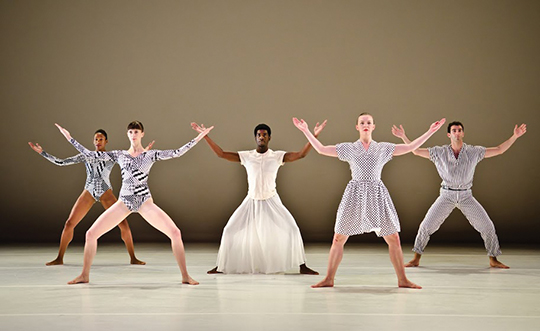
The festival opens with ODC/Dance’s highly popular “Summer Sampler,” which this year includes Brenda Way’s Breathing Underwater, a collaboration with cellist Zoe Keating; Way’s Life Saving Maneuvers, set to a commissioned score by Jay Cloidt; and KT Nelson’s Scramble, her take on a couple dancing to a Bach cello suite.

The festival’s closing night program highlights alumni of ODC’s Pilot program: deaf dancer Antoine Hunter and ballet-trained Milissa Payne Bradley. Says Bolingbroke, “Antoine has interesting things to say about the fact that we hear music, while he feels it. Milissa challenges herself not to start choreography with music, as she had been trained to do.”

Other programs include “Tuesday is Tunesday” setups, with choreographers like Eric Kupers — who started out in modern dance, but with his Dandelion Dance Theater’s Bandelion Ensemble has increasingly blurred lines between dance, music, and community action (Aug 5). There’s also body music pioneer Keith Terry, making a rare local appearance on his home turf with his Corposonic ensemble (Aug 12).

Bolingbroke is also intrigued by the intersection of concert performance and pop culture, so the idea of having a culturally-rooted form like taiko collaborating with a DJ proved irresistible. So for one night it will be San Jose Taiko x The Bangerz in what the program calls “a musical conversation between taiko and hip-hop” (Aug 17).

Also on the pop side of this festival will be Napita Kappor’s Hindu Swing, her fusion of Bollywood and jazz; she shares an evening with Cuba’s salsa band Rueda Con Ritmo (Aug 22-23). Pearl Marill, who likes to meld theater, modern dance, and comedy, will premiere Some Bodies Confessional (Aug 10-11). Irresistibly Drawn, Joe Goode’s evening of song and dance (Aug 3-4), includes former company member Marit Brook-Kothlow and singer-songwriter Holcombe Waller, who will also have his own show (Aug 19).

Kate Weare is returning one more time to set work on ODC’s dancers. Drop Down is her take on the tango, and Still Life with Avalanche is a collaboration with Brenda Way. The evening also features Rande Paufve’s recent Soil, her musing on aging, set to a live cello and piano score (Aug 14-16).

Finally, the young but already much acclaimed Dance Heginbotham will present three works, including one of the late Remy Charlip’s Air Mail Dances (Aug 7-9). Says Bolingbroke, “I have been interested in them for a while, particularly as a 21st century version [of] Mark Morris,” with whom John Heginbotham danced for 14 years. “So it’s exciting to be able to present the company’s West Coast debut.” *

MUSIC MOVES FESTIVAL

July 31-Aug 24, $25-45

ODC Theater

3153 17th St, SF

www.odctheater.org

Alerts: July 30 – August 5, 2014

0

WEDNESDAY 30


Screening: The Internet’s Own Boy

David Brower Center, Goldman Theater, 2150 Allston, Berk. 7pm, $10 advance/$12 door/ $5 students This film tells the story of programming prodigy and information activist Aaron Swartz, whose groundbreaking work in social justice and political organizing, combined with his aggressive approach to information access, ensnared him in legal nightmare that dragged on for two years. It was a battle that ended with the taking of his own life, at the age of 26. The film was directed, written, and produced by Brian Knappenberger. This screening of The Internet’s Own Boy is part of the David Brower Center’s Reel to Real documentary film series.

THURSDAY 31


San Francisco Women’s Political Committee: Summer in the City Awards

Chambers, 601 Eddy, SF. 6-8pm, $15 for members, $35 for non-members (includes membership). Join the San Francisco Women’s Political Committee in recognizing the 2014 Summer in the City Honorees: Assemblymember Tom Ammiano (Lifetime Achievement award), Sup. London Breed (Inspiration award), and Rebecca Solnit (Local Heroine award).

SUNDAY 3


Fundraiser for Marty’s Place

1165 Treat, SF. 2-4pm, donation requested. Founded by Richard Purcell and named for his brother Marty, who died of AIDS, Marty’s Place is an old Victorian house that served as a place for indigent people with AIDS to call home for nearly 20 years. When Purcell died in August 2011, he left the place to Dolores Street Community Services (DSCS) with the agreement that it would not be sold for 10 years and would remain a place for indigent people with HIV/AIDS. DSCS is now leasing the property to the SF Community Land Trust (SFCLT) which, with the help of LGBT community housing advocates, will set up it up as a co-op for low-income people with AIDS. But funding is needed for renovations so that it can become a co-op for 6-9 low-income individuals with HIV. Visit Marty’s Place for this fundraiser, hear live music by Tommi Avicolli Mecca, Lupe Arreola, and Joel Mark, and pledge your support.


Everyone’s hospital

15

rebecca@sfbg.com

“I am a survivor of the AIDS epidemic,” Daniel volunteered, beginning to tell us his very San Francisco story.

He was diagnosed with HIV in the 1980s. Working in fine dining rooms of San Francisco hotels at the time, he had health insurance, and had gone to Kaiser for an unrelated procedure. That led to a blood test — and then wham.

“They just bluntly, without any compassion, just told me: You have it,” Daniel said. “Like telling you that you have a pimple on your nose or something.”

All around him, friends were dying from the disease. “I didn’t freak out, because that’s just my personality,” he recalled. “I know a lot of people who have been diagnosed, and they want to take their lives or whatever.”

Today, he’s unemployed and living on a fixed income. He lost his left eye years ago to an infection linked to HIV; he now has a prosthetic eye.

“I’m single, disabled, and low-income,” reflected Daniel, who didn’t want his last name printed due to privacy concerns. Originally from El Salvador, his family came to the U.S. when he was 10 and Daniel has permanent resident status. But despite the disadvantages he faces, Daniel still isn’t freaking out. His medical needs are met.

He got on MediCal after having to drop Kaiser. “And then I ended up at SF General,” he said, “with some of the most professional staff, doctors rated worldwide. It has some of the most professional health care providers for HIV, all in one place.”

Daniel is one satisfied San Francisco General Hospital patient, and he might as well be a poster child for how public health is supposed to work in big cities. Rather than being deprived of primary care and then showing up at the emergency room with preventable complications stemming from his disease, he’s keeping everything in check with regular doctor’s visits — and he can access this high level of care even though he’s on a very tight budget.

There’s a concerted effort underway in the San Francisco Department of Public Health to give more patients precisely the kind of experience Daniel has had, while also expanding its role as the region’s go-to trauma center.

But a difficult and uncertain road lies ahead of that destination, shaped in part by federal health care reform. The new course is being charted amid looming financial uncertainty and with more patients expected to enter the system and the doors of SF General.

Not every General Hospital patient is as lucky as Daniel. For scores of others, SF General is the last stop after a long, rough ride.


EMERGENCY CARE

Craig Gordon and Dan Goepel drive an ambulance for the San Francisco Fire Department, regularly charging through congested city streets with sirens blaring as they rush patients to SF General and other care facilities. They see it all: Patients who are violent and psychotic and need to be restrained in the back of the ambulance, folks who’ve just suffered burns or gunshot wounds.

Sometimes, in the thick of all of this, SF General’s Emergency Department is closed to ambulances — in public safety lingo, it’s called being “on diversion” — so the medics will have to reroute to different hospitals.

SF General might go on diversion because the Emergency Department is too slammed to take on anyone new, or because it’s too short-staffed to take on new patients without pushing nurse-to-patient ratios to unsafe levels.

For serious trauma cases, strokes, heart attacks, or traumatic brain injuries, however, the doors are always open. Patients with less-serious cases are the ones to be turned away when the hospital is on diversion.

Patients who wind up en route to SF General in Gordon and Goepel’s ambulance might be living on the margins. “If you’re kind of living on the cusp … you’re not likely going to pursue getting a primary care physician,” Goepel pointed out. “When something comes up, then you find yourself in the emergency room.”

Or their patients might be getting rescued from a spectacularly awful situation, like a plane crash. In this densely populated, earthquake-prone region, there is only one top-level trauma center between Highway 92 and the Golden Gate Bridge: SF General. Anyone in the city or northern San Mateo County unfortunate enough to experience a life-threatening incident — a car wreck, shooting, nasty fall, boating accident — winds up there, regardless of whether they’re rich or poor, indigent or insured. Ranked as a Level 1 trauma center, SF General is equipped to provide the highest level of care.

“In the summer, when school is out, we have a high season of gunshot wounds and stab wounds,” explained Chief Nursing Officer Terri Dentoni, who recently led the Guardian on a tour of the Emergency Department. “When it’s really nice outside, you have a lot of people who get into bike accidents, car accidents. … Last week, we were just inundated with critical care patients.”

Around 100,000 patients flow through SF General’s doors each year, and more than 3,900 need trauma care. On July 6, 2013, when Asiana Airlines’ Flight 214 crash-landed at San Francisco International Airport, more than 60 crash victims were rushed to SF General with critical issues ranging from organ damage to spinal injuries.

“It was a very big tragedy,” Dentoni said. “But it was amazing how many people we took care of, and how well we took care of them.”

Aside from being the sole trauma center, SF General is also designated as the county’s safety-net hospital, making it the only healthcare option for thousands who are uninsured, poor, undocumented, homeless, or some combination thereof. This makes for complex cases. Patients might require translators, be locked in psychiatric episodes, or need a social worker to help them get to a medical respite facility after being discharged if they’re too weak to fend for themselves and don’t have anyplace to go. There isn’t always a place to send them off to.

“We’re seeing people who are dealing with poverty, and often homelessness, in addition to mental health issues,” explained Jason Negron, a registered nurse in the Emergency Department. “You’re seeing patients who often have a number of things going on. Someone who has multiple illnesses — HIV, heart failure, Hepatitis C — even under the best of circumstances, they would be juggling medications. So what happens when they’re out on the streets?”

San Francisco ranks high on the list of health-conscious cities, a haven for organic food aficionados, yoga addicts, and marathon runners. It’s also a world of high stakes struggles and mounting economic pressures. With the city’s skyrocketing cost of living, sudden job loss can spell disaster for someone without a financial cushion. SF General is the catchall medical care facility for anyone who’s slipped through the cracks.

But while rank-and-file hospital staff must tackle grueling day-to-day problems, like how to juggle multiple patients with complex health issues when all the beds are full and the hospital is understaffed, hospital administrators face an altogether different challenge.

For the past several years, the city’s Department of Public Health has been preparing for the implementation of the Affordable Care Act, aka Obamacare, the federal policy that is reshaping the health care landscape. Since public hospitals are mandated to provide safety-net care, they are uniquely impacted by the ACA.

Even with a sweeping new rule mandating health insurance for all, some segment of the population will nevertheless remain uninsured. But they’ll still need medical care — and when health crises come up, they’ll turn to SF General. Trouble is, no one knows exactly how much funding will be available to meet that need as the financial picture shifts.


FUNDING CUTS LOOM

Even as ACA aims to increase access to medical care, it’s also going to trigger major funding cuts at the local level. With both state and federal funding being slashed, San Francisco’s county health system stands to lose $131 million in financial support over the next five years, a budgetary hit totaling around 16 percent.

That’s a significant shortfall that will directly impact SF General — but the cuts are being made with the expectation that these gaps will be filled by reimbursements riding in on the waves of newly insured patients enrolled in ACA. Before federal health care reform took effect, around 84,000 San Franciscans lacked health insurance. At the start of this year, 56,000 became eligible to enroll in a health insurance plan.

SF General serves most of the area’s MediCal patients, the subsidized plan for people living on less than $16,000 a year. And since the county gets reimbursed a flat rate for each patient, the expansion of MediCal under federal health care reform will presumably help San Francisco absorb the state and federal funding losses.

“There’s a certain set of patients who previously were not paid for, who now will have MediCal,” explained Ken Jacobs, an expert in health care policy and professor at the UC Berkeley Labor Center.

But there’s a catch. Since MediCal and insured patients will be able to choose between San Francisco’s public system (called the San Francisco Health Plan) and a private medical provider, SF General also runs the risk of losing patients. If too many decide to go with Anthem Blue Cross instead, the system could veer into the red.

“There’s some question of what share of those we’ll keep,” Jacobs noted.

Asked about this, hospital CEO Sue Currin sounded a note of confidence. “Because our outcomes and our quality of care has been so high…75 percent of everyone who’s enrolled in MediCal managed care default to the Department of Public Health,” she told us.

But the journey toward ACA has only just begun, and things are still falling into place. Costs are projected to rise if nothing is done to improve efficiency, while at the same time, the pending state and federal funding shortfalls could take a toll.

Retaining and attracting insured patients is the only way to avoid a resource crunch — but patients could always walk away if they’re dissatisfied. This uncertainty “makes financial planning and management of risk even more challenging,” according to a report issued by the City Controller.

“We don’t know yet today how the Affordable Care Act will impact the safety net,” acknowledged Erica Murray, CEO of the California Association of Public Hospitals, which represents 21 public safety-net institutions throughout the state. “How are these health care systems evolving to be competitive? How do we continue to fulfill our core mission of being the safety net? That is the fundamental challenge. And we don’t know today, and we can’t be certain, that these public health systems will have sufficient funding.”

It’s all “very dynamic,” Murray said. “We don’t have sufficient data to be able to draw any definitive conclusions. It’s just too short of a time to be able to make any predictions. It will take several years.”

For all the newly insured patients under ACA, a certain segment will continue to rely on the safety net. Undocumented immigrants who don’t qualify will be left outside the system. Some individuals can be expected to outright refuse ACA enrollment, or be too incapacitated to do so. Others will opt out of Covered California, the ACA plan for people who make more than about $29,000 a year, because their budgets won’t stretch far enough to afford monthly payments even though they technically qualify. They’ll need safety-net care, too.

Yet under the new regime, “We can’t, as a safety net, go forward only with uninsured patients — because there won’t be funding to sustain the whole organization,” explained hospital spokesperson Rachael Kagan. “We will still have uninsured patients, always. But it won’t be sufficient to serve only them.”

Mike Wylie, a project manager in the Controller’s Office, worked on the city’s Health Reform Readiness project, an in-depth assessment performed in tandem with DPH and consultants. “The million dollar question is: Are we going to be on target with the projections?” Wylie asked.

Instead of standing still, San Francisco’s health system must transform itself, the Health Reform Readiness study determined. Ask anyone who works in health care management in the city, and they’ll tell you that DPH has been working on just that. The idea is to focus on network-wide, integrated care that runs more efficiently.

“We need to switch from being the provider of last resort, to the provider of choice,” Wylie noted, voicing an oft-repeated mantra.

This could mean fielding more patient calls with nursing hotlines, or using integrated databases to improve communication. There’s also emphasis on increasing the number of patients seen by a care provider in a given day. The report urged the department to ramp up its productivity level from 1.5 patient visits per hour, where it currently stands, to 2.25 patient visits per hour. Currin noted that the hospital has also been looking into group patient visits.

“Part of getting ready for health care reform was creating more medical home capacity,” Currin said, referring to a system where multiple forms of care are integrated into a single visit, “so we knew we needed to have better access to primary care.”

If no changes are made, the Health Reform Readiness study found, the city’s General Fund contribution to DPH is projected to rise substantially — to $831 million by 2019, up from $554 million in 2014-15.

“We’re a little concerned about this rising General Fund support,” Wylie noted. And even though staffing represents a major expenditure, “They didn’t assume cuts in staff,” while performing the assessment, he said. “What they’re trying to get is more outputs, more efficiency. The managers went over this and said: in order for us to survive, we’ve got to get more out of our system. We may have to cut money — we may have to cut later, if city leaders don’t commit to this rising General Fund. We’ve got to do all these best practices.”

Throughout crafting this road map, he added, “There were some uncomfortable meetings and uncomfortable moments. But I think [DPH Director] Barbara Garcia got everyone to agree to these strategies.”

Talk to rank-and-file hospital staff, however, and some will tell you that getting more out of the system is a tall order — especially when the system already feels like it’s busting at the seams.


SPACE CRUNCH, STRESSED STAFF

“We hit capacity every single day,” said Negron, the RN in the Emergency Department. Patients are regularly placed on beds in the hallways, he said. Wait times for the Emergency Department can last four to six hours, or even longer. The hospital is working on limiting those waits, not just because it’s better in practice, but because timely patient care is mandated under ACA.

“Now, we have 26 or 27 licensed beds in our Emergency Department,” Negron said. But in reality, on a regular basis, “We function with 45 to 50 patients.”

A nurse who works in the Psychiatric Emergency Services unit described her work environment as “a traffic jam with all lanes blocked. This is totally business as usual.”

The workload is on the rise, she added. “The psych emergency room used to see 500 patients a month,” she said. “Now we see 600 patients a month, sometimes more. People are moving faster and faster through the system.”

Her unit is the receiving facility for anyone who is placed on an involuntary psychiatric hold, known as a 5150, for individuals who are a danger to themselves or others or gravely disabled.

“It doesn’t matter who they are,” she said. “We get homeless and destitute. We get CEOs. And we have had CEOs — it’s an experience for everyone involved.” Some patients have been involved in criminal activity. “I’ve had high profile people in my unit; people who have done things that, if I tell you what they did, you would easily be able to Google them.”

Patients who come to her wing need to be evaluated, because someone has determined that they are dangerous. It could be that they are “eating rotten food, or running naked in the street, or suicidal, or want to jump off Golden Gate Bridge, or their family thinks they’re out of control.” Sometimes, patients have to be let go once they’re no longer deemed to be a threat, but they still aren’t altogether recovered, she said.

In the psychiatric inpatient unit, meanwhile, the total number of beds has declined from 87 to 44 in the past five years — leading some staff members to voice concerns.

“There is more to do, and there’s less time to do it,” said another staff member who did not want to be named. This person said one psych unit was essentially shut down and another left open — “but then … a patient climbed up into the ceiling, broke some pipes, and flooded the room” in the open unit, so everything was shifted back to the closed unit.

In part, the daily patient crunch is due to a vacancy rate in the hospital nursing staff that hovers around 18 percent — but steps are being taken to address this problem, caused in part by the city’s Byzantine hiring process.

“The nurses are concerned about how, on a day-to-day basis, they don’t feel they have the support and resources they need,” said Nato Green, who represented the nurses’ union, SEIU Local 1021, in recent contract negotiations. “Staff was expected to do more with less. SF General chronically operates at a higher capacity than what it is budgeted for.”

Currin, the hospital CEO — who started out as a nurse herself — rejected this assertion, saying it is not the norm for the hospital to operate over budget. She added that she would like to reduce the nursing staff vacancy rate down to just 5 percent.

“We have had a fairly significant vacancy rate,” she acknowledged. “But just like any other hospital in the city and the country, you have countermeasures that you put in place to address staffing shortages. And so we use nurse travelers. We use as-needed staff, who work here part-time. We’ve been able to fill those gaps with these other staffing measures. We do want to have a more permanent workforce. We’re working with the city and [DPH] to bring in new hires.”

Roland Pickens, director of the San Francisco Health Network (the patient-care division of the Department of Public Health), said he was working with the city’s Human Resources Department to further streamline operations and get a jump on filling vacancies.

“[Chief Financial Officer] Greg Wagner is working with City Controller’s office and the Mayor’s Office, so everyone is addressing the issue of having a more expedited hiring process,” he said.

Negron, the RN, seemed to think it couldn’t happen soon enough. “For us, at the end of the day, who do we actually have that’s on the schedule, that’s on the floor?” he said. Being fully staffed is important, he added, “so we don’t have any more shortages. So we don’t close beds, or go on divert unnecessarily.”

Staff members, who deal hands-on with a vulnerable patient population, lament that there doesn’t seem to be enough resources flowing into the system to care for people who are at the mercy of the public safety net. After all, San Francisco is a city of incredible wealth — shouldn’t there be adequate funding to care for the people who are the most in need?

“Poor people are not profitable,” Green said. “Without regulatory intervention, poor people would not have adequate health care.”


EVOLVING INTO THE FUTURE

For all the concerns about staffing and the financial uncertainty caused by ACA, SF General still has plenty to brag about. For one, it’s moving into a brand new, nine-story facility in December 2015, which will be equipped with a seventh-floor disaster preparedness center and nearly twice as much space in the Emergency Department.

It will have 283 acute care beds, 31 more than there are now. Most of the patient rooms will be private, and the new hospital will be seismically sound — a critical upgrade in a city prone to earthquakes. The hospital construction was funded with an $887.4 million bond approved by voters in 2008.

“In a new care environment, it will be more comfortable for the patients and the staff,” Currin said. “It’s just a much better environment. We’re hoping with the expansion … the wait times [in the Emergency Department], instead of taking four to six hours, we’re hoping to decrease that by 50 percent,” she said. “There will be more nurses, physicians, housekeepers.”

Pickens, the Health Network director, said he felt that “the stars had aligned” to have the hospital rebuild nearing completion just as ACA gets into full swing, since the new facility can help attract the patients needed to make sure the health system is fully funded.

The hospital has also launched an initiative to reduce patient mortality linked to a deadly infection. “Sepsis is a reaction the body has to a severe infection,” explained Joe Clement, a medical surgical unit clinical nurse specialist. “It causes organ dysfunction, and in some cases death. It’s very common, it’s growing, there’s more and more of it every year, and about a third of hospital deaths have been associated with sepsis in some way.”

In 2011, SF General began implementing new practices — and successfully reduced the hospital mortality rate from 20 percent in 2010 to 8.8 percent in 2014.

SF General was also recently lauded in The New York Times for being a top performer in quality and safety scores for childbirth. In San Francisco, low-income women who may be uninsured and dealing with harsh life circumstances can nevertheless get full access to multilingual doctors, midwives, lactation consultants, and doulas. The World Health Organization has even designated it as “Baby Friendly,” because of practices that support breastfeeding.

As things move ahead, management is projecting a sense of confidence that SF General’s high-quality care will allow the hospital to attract patients and maintain a healthy system that can continue to support the insured and uninsured alike.

“Value, we usually define as improving health outcomes, and optimizing the resources we have, for as many people as we can,” said William Huen, associate chief medical officer.

Speaking about the sepsis initiative, he said, “This is kind of our model program of, how do you focus on one area where you know you can improve health outcomes, with integration throughout the system, education at every level … and then having the data and perfecting the care. That can be applied to anything. So as a system, I think we’ve developed infrastructure to support that type of work.”

But for the staff members who are actively involved in the union, it continues to be a waiting game to see if the promises of new staffing levels are realized. Until then, many have said that the low staffing levels are a threat to patient safety. “They are waiting to see if DPH lives up to its commitment to hire the people they said they were going to hire, and staff it at the level they were going to staff at,” Green said.

It all comes down to providing care for people who really have nowhere else to turn, Negron told us in the Emergency Department. “I’m sure we see the highest portion of uninsured patients in the city,” he said. “We’re doing that in many different languages, with people from all over the world. I feel like it’s a real honor to be able to work there in that context. I feel honored to meet a need — that’s not always able to be met.”

Monday music video mayhem

5

Just in case you’ve been living under a rock slightly behind on your local music coverage for the past couple weeks, allow us to remind you of a crazy little 48-hour contest called the Music Video Race, which saw yours truly judging some rather impressive entries from 16 different local band/filmmaker posses, and which culminated with a premiere party at The Independent on July 20.

In honor of the teams’ hasty, ambitious efforts — and in honor of this amazing time-suck/curated exercise in pop culture history — we’ve decided to spend the rest of the day watching music videos. It’ll be kind of like coming home from school and zoning out in front of TRL, only you don’t have to look at Carson Daly. Join us, won’t you?

First, here are a few of the winning videos from the competition:

The Tropics‘ “Sons and Daughters” took home Best Video, with this otherwordly feast for the eyes that looks like it took way longer than 48 hours:


…while the ever-ingenious/usually pretty insane Bill Baird was the runner-up with “Soggy Soul,” featuring this kaleidascopic naked-cartwheel-on-the-beach party. 


Lemme Adams took Best Song with “Toys”…


And Mission-based man-about-town Doctor Popular won hearts and Best On-Screen Performance with “Rumspringa,” a song crafted using a GameBoy Advance. 


Still with us? Good. Here are a few new videos from local bands (not part of the MVR) that did take longer than 24 hours, that are still very worth your eyes and ears:

There’s this trippy orange business for “Always,” by SF’s Melted Toys, off their new release: 


Then there’s this dreamy, unabashed love letter to our home state in “I Love California,” from Be Calm Honcho:


And this hypnotic offering for “No Werewolf,” by LA hooligans the Allah-Las, off their upcoming full-length:


Finally, there’s this adrenaline-fueled sprint for “Story 2” from clipping., a three-man rap crew also based in LA, but we have it on good authority that two out of three of ’em grew up in the East Bay.


Landlord plaintiff in eviction fee case has history of tenant law violations

37

San Francisco landlord attorneys filed a lawsuit on Thursday against San Francisco and five tenants in an effort to overturn Sup. David Campos’ new law requiring higher relocation assistance payments to tenants evicted under the Ellis Act, but the main plaintiff in the case may not be the helpless victim the suit purports him to be.  

Under the recently implemented measure, landlords must now pay the difference between their tenants’ current rent and the cost of “comparable” units for two years, as determined by the City Controller’s Office. Though many property owners haven’t been deterred by the measure, as evidenced by the Ellis Act evictions that continue to sweep the city, a group of landlords and their attorneys filed a lawsuit (Jerrold Jacoby et al. v. City and County of San Francisco, et al.) claiming the new law is unjust.

“The city has tried to change the rules on them,” said attorney Andrew Zacks, who represents the plaintiffs. “We don’t think that is allowed under the law.”

Jacoby, the lawsuit’s main plaintiff, is an 80-year-old property owner who, according to tenant attorney Joseph Tobener, is a “slumlord” who has mistreated his tenants and failed to adequately maintain his valuable rental property.

“He is in the business of landlording. That is all he does,” Tobener, who represents three of the five tenants being sued in the lawsuit, told the Guardian. “The lawsuit against the City only used Jacoby as plaintiff because he is a senior…They think this guy Jacoby, a slumlord, is a perfect plaintiff, but they misrepresent this story in their complaint.”

One of Tobener’s clients, Judith Barrett, is a 62-year-old single mother who teaches English at Galileo High School in San Francisco. She has lived in her current unit for 25 years, and she lives paycheck-to-paycheck.

Barrett, who Jacoby recently evicted using the Ellis Act, has been involved in protracted legal proceedings with her landlord in the past. Tobener said Jacoby and unit co-owner Jeanmarie Hryshko (Jacoby’s ex-wife) have collected more than $22,500 in illegal rent since October 2009, according to a ruling by the San Francisco Rent Board. That’s just the tip of the iceberg, according to Tobener, who said there was “much more prior” but that it extends beyond the statute of limitations.

Using a clause in the San Francisco Rent Board’s regulations, Jacoby claimed “financial hardship” when sued by Barrett over the illegal rent collection. “He tried to file a hardship exemption for the $22,500 at the Rent Board and he lost,” said Tobener, who also noted that Jacoby and Hryshko still owe Barrett an additional $8,000 because they executed the eviction before the reduced rent could cover the landlord’s debt to his tenants.

Barrett’s eviction, according to Tobener, was prompted by a lawsuit filed by tenants that claimed the landlords wouldn’t make “even the most basic repairs to the subject unit.” The lawsuit, which is still pending, claims that Jacoby and Hryshko have saved hundreds of thousands of dollars over the years, though they have an equity of $1.8 million on the two-unit property.

“That’s flat out untrue. There is a chronology that completely undercuts Mr. Tobener’s statement,” Zacks said, noting that aggressive moves by the tenants—specifically ”legal threats” from Tobener—ultimately resulted in the Ellis evictions. “This is exactly why we have the Ellis Act and why it’s an important right for property owners. The notion that [Jacoby] should have to pay $100,000 to stop being a landlord is not only unfair, it’s illegal by state law.”

The “aggressive moves” in question are chronicled in Tobener’s letter to David Wasserman, an attorney involved in the case. Tobener believes Jacoby and Hryshko have no intention of living together, and that they instead hope to rid their debt by evicting their rent-controlled tenants.

“If we are successful in proving that your clients have ulterior motives or are retaliating against the tenants, we will then file a wrongful eviction action against your clients,” Tobener wrote. “By now, I am sure your clients have wrongful eviction insurance. Perhaps they take comfort in the protections this insurance will provide them should they lose their unlawful detainer bid. But, what your clients may not know is that their insurance policy will not cover our largest seam of gold — the treble-damages penalties under the San Francisco Rent Ordinance for wrongful eviction.”

In the event of an unfavorable ruling, Zacks said he and his client don’t plan to remain complacent. “If the local judge agrees with the city,” he said. “We will appeal.”

Indeed, could be just the beginning of epic court battles between landlord and tenants advocates in San Francisco, where the hot housing market has triggered an eviction epidemic. The November ballot includes a tax on real estate speculation, which landlord groups have already threatened a lawsuit to challenge.

“Ellising a two-unit building is a real estate speculation play,” Tobener told the Guardian. “They are going to remodel and sell as TICs [tenants-in-common] to wealthy new owners. They cannot re-let the units, so they have to remodel and sell.”


Citizens United measure challenged — does it matter what Californians think about corporate personhood?

2

Recently, the California Legislature approved a nonbinding question that would allow California voters to show their thoughts – mainly, their disdain – for the 2010 US Supreme Court ruling in the Citizens United case that allowed corporations to make unlimited campaign contributions.

But on Tuesday, opponents filed a lawsuit seeking to remove the question from the November ballot. They say the ballot should be reserved for laws, not the measurement of non-binding feelings. Meanwhile, advocates say putting the question on the ballot provides California voters with the very voice often quieted and underfunded compared to the corporations that the court decision empowered.

The advisory measure, which would appear as Proposition 49, is threatened by a lawsuit filed by the Howard Jarvis Taxpayers Association, an advocacy group for taxpayers’ rights. Gov. Jerry Brown isn’t a massive cheerleader for the advisory measure, either. He opted not to sign it, pointing out that the Legislature had already approved a resolution asking Congress to convene a constitutional convention to overturn the decision.

He added that the state should not “make it a habit to clutter our ballots with non-binding measures as citizens rightfully assume that their votes are meant to have legal effect.” The HJTA claim the measure is an attempt to increase voter participation in a a mostly mundane statewide election.

“It is very disappointing that the majority in the Legislature views the elections process as their personal plaything,” HJTA President Jon Coupal wrote in a biting statement.

Similarly, the Sacramento Bee wrote that the proposed ballot measure is “designed to lure more Democrats to the polls when legislators are trying to keep their seats.”

But the initiative’s supporters argue that it’s important to bring voters to the polls because citizens could use more of a voice. This argument is not so different than those who think political protests matter because they help voice public opposition and attract political attention. This measure just has a more legislative flavor than the typical street protest, and involves more taxpayers’ cash. But according to Michael Sutter, volunteer organizer for The Money Out Voters In Coalition, it would only cost voters two pennies at most.

“This is one of those issues where Californians know that this is wrong, want to do something about it, and feel that this is a very good way to have the national conversational in an unavoidable way,” Sutter said. “We can make big noise here in California.”

Since the Citizens United decision, cities around California have found comfort in voicing their disapproval through non-binding resolutions at the local level. In 2010, Richmond voted unanimously to support a resolution calling for a constitutional amendment to abolish corporate personhood, and two years later, San Franciscans followed suite, passing Proposition G with 81 percent of the vote.

Yet the Citizens United decision still stands, and the usefulness of such non-binding resolutions remains to be seen.

John Bonifaz, co-founder and president of Free Speech for the People, launched a national campaign opposing Citizens United right after the decision was made. Since then, 11 states have passed some kind of resolution announcing their support for overturning Citizens United.

“It was not a waste to have Montana voters vote on this kind of measure in 2012, nor to have Colorado voters vote on this measure in 2012,” Bonifaz told the Guardian. “This is a critically important measure for the future of our democracy. Are we going to become a nation where only the big money interests and corporations are able to be heard, or are we in fact going to reclaim a basic fundamental promise of government by and for the people?”

Non-binding measures rarely make an appearance on the California ballot. According to Sutter, the last time to come close was in 2007 when the State Senate passed a non-binding ballot measure asking voters if they supported withdrawal of troops in Iraq. “We only use these kinds of measures when national policy is directly at odds with the will of the California people,” Sutter said.

The Iraq ballot measure was promptly vetoed by then-Gov. Arnold Schwarzenegger. Critics condemned its usefulness; after all, how could California opposition bring the troops home? And now, how can opposition in California to outrageous campaign contribution help level the political playing field?

The truth is that maybe it won’t.

“By allowing SB 1272 to become law without my signature, it is my intention to signal that I am not inclined to repeat this practice of seeking advisory opinions from the voters,” Brown stated.

But Sutter thinks his attitude is the problem, and that maybe political figures should consider seeking voter feedback more often. “Jerry Brown has a problem with the concept of the people advising their representatives, and that’s an attitude I have a problem with,” she said.

Prop. 49 might not change the Citizens United Decision, but — if it survives the lawsuit — it will make it apparent that a whole lot of California voters want the court decision overturned. The question is whether or not those in power care what people think.

Smart Bomb goes off in Oakland

0

By Micah Dubreuil

As a child, you imagine your toys come to life whenever your back is turned. As an adult in the Bay Area, you imagine that every night you choose to stay in, the bars are all packed with experimental underground DJs, food carts, live visual artists and the kind of freaky electronic jazz you would see in a Blade Runner spinoff series. And yet when you do turn around — at either age — your dreams often fall short (if your toys ever did come to life, please let us know).

This is not the case at Smart Bomb, a bi-monthly multimedia showcase at the Legionnaire Saloon in downtown Oakland; the next edition is this Saturday, July 26. Centered on the East Bay beat scene, the night is a multi-layered affair in every sense: local food outside, fringe producers, controllerists, and DJs downstairs, out-of-the-box grooving live acts upstairs. Here you might find a homemade synthesizer or heavily effected saxophone wailing the night away while a painter furiously creates an accompanying visual spectacle. It’s a creative assault on every sensory input, in the best possible way.

Smart Bomb is the brainchild of the band Secret Sidewalk, which is itself a microcosm of the Smart Bomb smorgasbord: a collection of electronic and acoustic musicians arranged around beat music with backgrounds in turntablism, hip hop, DIY synthesis, and jazz.

“We’re a band, yes, but we’re a collective,” says saxophonist Marcus Stephens, of the collaborative artistic community the band has built. Any night might feature a solo performance or duo experimentation as well as the full group’s mainstay set. (This weekend’s event coincides with and celebrates the release of Secret Sidewalk’s new 7” vinyl single “Cholo Curls” on CB Records.) 

In addition to the ever-changing cast of local performers, Smart Bomb regularly features guests from both the local and national scene, including heavy-hitters such as the Broun Felinis, rapper Kool A.D. (from Das Racist), and Dibia$e. “We wanted to invite other performers and artists as well — MCs and a few live bands that are on our same wavelength in terms of progressive music,” says Stephens. At their last event, Phesto Dee — from the seminal Oakland hip-hop groups Heiroglyphics and Souls of Mischief — performed a solo set with Secret Sidewalk as the backing band, an arrangement of MC and experimental beat ensemble that neither had ever explored before. 

Even with the event’s avant-garde leanings, the experience is decidedly unpretentious; Stephens says they reliably get a positive response from a super diverse room full of people. “We always seem to get a warm crowd — a lot of musicians, a lot of artists, a lot of curious mofos who want to see what the buzz is about.” 

SMART BOMB (w/ record release for Secret Sidewalk)

Sat/26, 9pm-2am, $5

Legionnaire Saloon

2722 Telegraph, Oakl.

www.legionnairesaloon.com

Will San Francisco voters give Muni more money to serve a growing population?

56

Beating up on Muni and the San Francisco Municipal Transportation Agency is a perennial pastime for many San Franciscans, who will be given the opportunity to put their money where their mouths are this November. Will they be willing to give Muni the money it needs to serve its growing ridership, even at the cost of other city programs and priorities?

The Board of Supervisors yesterday [Tues/22] voted narrowly to place Sup. Scott Wiener’s Muni funding measure on the fall ballot. It would increase General Fund contributions to the SFMTA as the city population increase, retroactive back to 2003 when the current rate was set, giving the agency an immediate $20-25 million boost to serve the roughly 85,000 new residents the city has added since then.

“For too long City Hall has been slow to prioritize transit funding,” Wiener said in a press release. “We are a growing city, and we need to take firm steps to ensure that our transportation system keeps up with that growth.  Improving transit reliability and capacity and making our streets safer are key to that goal.”

While everyone says they support Muni — even David Looman, the proponent behind the Restore Transportation Balance initiative that seeks more SFMTA funding for cars, which will also appear on that ballot — Wiener has been the rare strong advocate locally for actually giving the agency more money.

Mayor Ed Lee created a $10 million hole in the SFMTA budget by demanding the repeal of charging for parking meters on Sunday this year, and then he dropped his support for a local increase in the vehicle license fee this year, prompting Wiener to introduce his Muni funding measure, which the mayor would have the authority to terminate if voters approve a VLF increase in 2016.

A $500 million general obligation bond transportation measure backed by Lee and the full Board of Supervisors will also appear on the November ballot, but it will go mostly to cover Muni’s capital needs, not the growing demands on its operating budget.

Wiener’s Muni funding measure yesterday barely got the six votes this charter amendment needed to qualify for the ballot: those of Wiener and Sups. London Breed, David Campos, David Chiu, Malia Cohen, and Jane Kim (Sup. John Avalos was absent).

In recent years, there’s been a rift in the city’s progressive coalition between environmental and transportation activists on one side and affordable housing advocates on the other, who sometimes battle over city funding they see as a zero sum game. So it will be interesting to watch how the politics surrounding this measure shape up going into the fall campaign season.  

Photo Gallery: Graffiti artists tagging in the sunshine at Precita Park

1

Normally the sound of 20 or so artists rattling and spraying aerosol cans would be quickly followed by the sound of sirens. But Sat/19 the fades went up with gusto. 

Artists tagged free standing art boards at Precita Park for the Urban Youth Arts Festival, an event that brings the ultimate underground art into a safe space. Attendees munched on burgers and listened to some good tunes at the festival, which is now in its 18th year.

Many of the street style murals paid homage to the Bay Area, from SF to Oakland. “We’re showing our love to the aesthetic of the community,” Xavier Schmidt, a 25-year-old organizer of the event and SF native, told us. One muralist hand painted a robot adorned in SF Giants and 49ers gear punching out a Google Glass-wearing Godzilla. 

“We’ve been doing this since 1987,” Schmidt said, speaking to the event’s roots. Even the event’s hosts, the Precita Eyes Muralists Association, have deep SF bonafides: they’ve been around since 1977.

“This is for solidarity, for community,” he said. “It’s a family event.”

Kids sprayed paint and played, adults kicked back and kvetched about youngsters, SF natives complained about tech employees, and many chowed down on burgers, hot dogs, and veggies donated by the local YMCA. Local musicians A-1 and Hazel Rose came out to play too, adding the head-banging element to the day. We’ve embedded one of A-1’s tracks below. Consider it your photo gallery soundtrack.

Names of the artists have been withheld because callin’ them out on the internet would be wack. All photos by Joe Fitzgerald Rodriguez. 

https://www.youtube.com/watch?v=YKpwI4aRAzM

image1

image3

This dude’s head was bangin’ as he sprayed. We’re not sure how he managed to make it look so good.

image2

This kid was super into it, which was hilarious.

image5

image6

A San Francisco robot takes down a Google Glass wearing tech-zilla.

image7

Hazel Rose performed a bombastic set that the crowd, below, felt all sorts of love for. 

image 8

image 9

Oakland got plenty of love too.

image10

image 11

Xavier Schmidt, one of the event’s organizers, said this high schooler is a real up and comer in the graffiti scene.

image12

image13

alienexperience

Some of the art boards were for everyone to paint, leading to some dooby-ous results. (Get it? Ha!)

homer

Mmmm, donuts. 

puppy


This Week’s Picks: July 23 – 29, 2014

0

WEDNESDAY 23


Man or Astro-Man?

Auburn, Ala.’s Man or Astro-Man? has spent decades perfecting their sprawling surf-rock. Incredibly imaginative and extremely prolific, the group has recorded and toured tirelessly since early 1990s. Drawing diverse influences from the likes of Dick Dale and Link Wray, punk and new wave, and science fiction and a fascination with space and extraterrestrial life, Man or Astro-Man? take surf rock in directions and galaxies previously uncharted. Largely instrumental and entirely captivating, the band’s nine-album catalog is a musically-stunning journey through sound and space. Known for their high-energy live sets, often performed in space-suits complete with astronaut helmets with intricate sci-fi set pieces, musicians Star Crunch and Birdstuff will shred their way into your hearts. (Haley Zaremba)

With The Ogres, WRAY

8pm, $20

The Independent

628 Divisadero, SF

(415) 771-1421

www.theindependentsf.com


Cymbals

The cooler-than-thou French monologue on UK band Cymbals’s single “The End” might have you in the dark, but the intro’s melancholy melody should be instantly familiar to anyone who’s spent too many hours in a club. The faint, ringing tone stuck in ear the next day (or week), bringing back memories: “It’s the end of the night, you’ve been dancing too much. They’ve got to turn on the lights.” Smartly placed on a stellar album (The Age of Fracture) of arty synth-pop that’s in line with Metronomy, Passion Pit, and David Byrne, it’s a reminder that, for better or worse, some things don’t last as long as you want. (Ryan Prendiville)

With Astronauts, etc., The Wild Wild

8pm, $10-12

Rickshaw Stop

155 Fell, SF

(415) 861-2011

www.rickshawstop.com


THURSDAY 24


CAM & Co. Productions’ Spring Awakening

Once a high school theater kid, always a high school theater kid. After receiving their hard-earned diplomas from San Francisco’s School of the Arts, some of the city’s most talented teens realized they couldn’t abandon the pool of talent at the school. So instead of embracing the idea of a deadbeat summer before college, the members created their own production company. Their conception of Spring Awakening is financed through an online fundraiser they created, and is completely driven by efforts from School of the Arts family members. Support up-and-coming youth theater while wondering why you couldn’t be as cool as them when you were 18. (Amy Char)

Through Sat/26

7:30pm, $20

Phoenix Theatre

414 Mason, SF

(415) 336-1020

www.phoenixtheatresf.org


FRIDAY 25


RAWdance

With a decade of distinguished work behind the company, RAWdance has every reason to celebrate. Ryan T. Smith and Wendy Rein collaborations draw you in with the integrity of a highly structural approach that yet yields works that resonate emotionally. Their newest piece seems tailor-made to the kind of intelligence that they bring to their work. Turing’s Apple explores both the genius of the British scientist Alan Turing and his tragedy when he came out as a gay man. It will be joined by the final version of Burns that the choreographers describe as Rorschach-test driven, and film-noir inspired. RAWdance will be joined by a guest artists Gretchen Garnett + Dancers in a trio, and a grief-exploring sextet, Nawala (“Lost”) by Tany Bello’s Project B. (Rita Felciano)

July 25-26, 8 pm. July 27, 7 pm. $25-30

Z Space

450 Florida St. SF

866-811-4111

www.zspace.org


This Must Be the Place: The End of the Underground 1991- 2012

Named for an excellent Talking Heads song, This Must Be the Place is an annual summer celebration of rock docs, exploring the birth, life, death, and (depending on whom you ask) near-constant rebirth of punk rock through iconic moments captured on film. This third installment, curator Mike Keegan has announced, will sadly be the Roxie’s last, so get to it. Friday’s ’90s-tastic triple bill sounds too fun to miss, with 1991: The Year Punk Broke (featuring live performances from Sonic Youth and their then-opener, Nirvana), Hated: GG Allin and the Murder Junkies (featuring the never sober, always charming GG Allin, who was dead before the film finished shooting), and What’s Up, Matador? (featuring three-minute bursts of rarely seen excellence from labelmates Guided By Voices, Pavement, Yo La Tengo and more). Don’t forget your flannel. (Emma Silvers)

Through Sun/27, prices and showtimes vary

The Roxie Theater

3117 16th St., SF

www.roxie.com


SATURDAY 26


CoffeeCon 2014

Cursed with the personality of an ogre if you skip your morning coffee? Once you’ve gotten a head start on your caffeine fix Saturday morning, head over to this art gallery — for one day only, it houses an interactive latte art exhibit (arguably just as creatively esteemed as postmodern paintings). The coffee festival features a plethora of other hands-on lessons, including one titled “How to Review Coffee,” and unlimited coffee samples, so you can sound like a pretentious — but educated — coffee snob while you pine over an obscure roast when you’re with your friends at Starbucks. Local bands perform live to simulate a hipster coffeehouse vibe. (Amy Char)

9am – 4pm, $15-$20

Terra Gallery & Event Venue

511 Harrison, SF

(415) 896-1234

www.terrasf.com


Fritz Montana

The spike in blues-rock appreciation that came with The Black Keys and their various contemporaries may be losing its luster — the Keys’ newest LP, Turn Blue, hardly lived up to their previous releases. But Fritz Montana shows that the blues are alive and well in San Francisco. A blistering three-piece band fronted by high-octane vocalist and guitarist David Marshall, won Live 105’s local band contest last October, which led to them opening for Kings of Leon, Queens of the Stone Age, and Vampire Weekend at the station’s Not So Silent Night. Fritz Montana’s first album, Scaredy Cat, is ready to drop, and the group has chosen the Rickshaw Stop as the spot for their release party. The group will play their new release, along with their celebrated 2013 EPs, and sell copies of their debut full-length hot off the presses. Fritz Montana may not be reinventing the wheel, but the band’s songs pulse with an energy and technical grace that bodes very well for their dreams of airwave domination. (David Kurlander)

$10-13, 9pm

Rickshaw Stop

155 Fell, SF

(415) 861-2011

www.rickshawstop.com


Rick Springfield

One of the biggest surprises in Dave Grohl’s 2013 doc Sound City — about the legendary SoCal recording studio where Nirvana’s Nevermind and other iconic works were recorded — was the inclusion of 1980s hunk Rick Springfield, the General Hospital star turned pop singer. Turns out he recorded the 1981 album Working Class Dog there, thus gifting the world with Grammy-winning radio jam “Jessie’s Girl.” Springfield’s kept busy since his teen-dream days; aside from offering up Sound City memories, he wrote a memoir (2010’s Late, Late at Night) and now, a novel: Magnificent Vibration, about a curious man’s unconventional spiritual journey. Book Passage touts his appearance as “featuring a live musical performance,” so get those lighters ready. (Cheryl Eddy)

4pm, free

Book Passage

51 Tamal Vista, Corte Madera

www.bookpassage.com


SUNDAY 27


Waffle Opera

Waffle Opera, founded by a group of young local singers in 2012, has altered the glitzy opera house aesthetic using an unexpected prop: succulent, syrup-covered Belgian waffles. The company, which serves the treats after each of its shows, embraces a remarkably unpretentious approach to legendary works, using minimalistic sets and small houses to bring out the lyrical and musical subtlety of centuries-old classics. The group is presenting a concert version of Cosi fan tutte, the 1789 Mozart opera whose title translates roughly to “Women are like that.” An uproarious comedy about two Neapolitan officers who don disguises and try to woo each others’ fiancées to prove the inconstency of female affection. While still a archaic by the standards of contemporary gender politics, the women (spoiler alert) are presented as smart and capable; they quickly pick up their lovers’ plot, leading to a madcap phantasmagoria of mistaken identities and partially-broken hearts. Waffle’s semi-staged version highlights the soaring arias, clever quips, and intricate plot of Mozart’s funniest work. (Kurlander)

$15-$25, 3pm

Center for New Music

55 Taylor, SF

www.waffleopera.com


MONDAY 28


Andrew Jackson Jihad

In my mind, Phoenix’s Andrew Jackson Jihad is both the quintessential and the essential folk-punk band. With bitingly clever lyrics that toe the line between hilarious and heartbreaking, an unflinching confrontation of social justice issues and a willingness to examine and sing about their own privilege, Sean Bonnette and Ben Gallaty have created some of the most important and tenderly earnest albums in the folk-punk canon. The band’s unsteady, cracking vocals and mediocre musicianship lend a charming naivete, emotional sincerity, and accessibility to their music. The band’s frenetic energy and the fierce dedication of their fan-base make Andrew Jackson Jihad’s live shows a powerful experience. (Zaremba)

With Hard Girls, Dogbreth

8pm, $16

Slim’s

333 11th St, SF

(415) 255-0333

www.slimspresents.com


Wolfmother

Wolfmother came roaring out of Australia in the mid-aughts with its self-titled debut, which went five times platinum in the band’s home country and did well enough abroad to secure them a position as one of the Anglophone world’s most formidable touring acts. Combining a shameless love for ’70s hard rock (Led Zeppelin in particular) with the sharp hooks of stoner rock, the trio struck a chord with both the classic-rock and alt-rock crowds, and just about any guitarist born in the mid-’90s can likely remember learning one of their songs early on. Though the band only records sparsely, Wolfmother has remained a regular on the international touring and festival scene — a position that this year’s New Crown should secure. (Bromfield)

8pm, $28

The Fillmore

1508 Geary, SF

(415) 346-6000

www.thefillmore.com


TUESDAY 29

Hundred Waters

Hundred Waters are signed to Skrillex’s OWSLA label, but don’t expect big bass drops from this Florida crew. Rather, they trade in a “digital folk” style that offers an intriguing rural perspective to the retro-futuristic conversation currently taking place in underground electronic circles. Birds chirp in unison with drum machines; Blade Runner synths support Tolkienesque fantasias. At the front of it all is Nicole Miglis, a one-woman choir whose voice seems as perpetually omnipresent as the sun and the sky. Though this year’s The Moon Rang Like A Bell suggests pop ambitions lurking beneath their idiosyncratic exterior, the band is still one of the most unique and fascinating bands in the electronic universe — as well as one of the few that can truly claim to sound like nothing else. (Bromfield)

8pm, $14

The Independent

628 Divisadero, SF

(415) 771-1421

www.theindependentsf.com