Local

Da Mayor, local hire advocate

Even as Sup. John Avalos continues to be raked over the coals by San Francisco Examiner columnist Melissa Griffin for his so-called “peacocking, disrespectful demeanor” and “flexible hate speech standards,” the progressive District 11 supervisor nevertheless earned something akin to praise May 22 from an unlikely figure: former San Francisco Mayor Willie Brown.

The San Francisco Chronicle columnist, attorney (Brown mentioned in his speech that he paid $50 a semester for law school), sometimes PG&E consultant, self-proclaimed “buddy” of former California Gov. Arnold Schwarzenegger, and all-around power broker delivered his Annual Lecture on Political Trends at the Commonwealth Club yesterday. He plugged his own column, saying, “On Sunday, you can read a column that can’t be disputed. Because it’s my version of the facts.”

Brown is known for his cozy relationship with Mayor Ed Lee and is politically at odds with Avalos, who ran against Lee in 2011. Emphasizing his support for Lee, Brown lauded him for clinching the city’s right to host Super Bowl 2016 events in San Francisco. He pointed out, “That Super Bowl is going to be exactly when he’s possibly seeking reelection.”

Brown also mentioned accompanying the mayor on a recent trip to China, where Lee was reportedly “treated as if he was the president of America instead of just the mayor of San Francisco.”

However, Da Mayor had a bone to pick. He launched into a tale of how he often wanders down to the city’s bustling construction sites, marked by “these 24 or 25 cranes that you see around town” (presumably he finds time for this aimless wandering this between international excursions, dining with the Gettys in North Beach, and palling around with his “buddy” Schwarzenegger?). “Invariably I take a look at the cars, the crews,” he said, and has concluded that “they’re not San Franciscans.” Not only are private development projects being built by out-of-towners, he said, no local hire requirement was imposed upon the city’s Central Subway contractors. 

Giving voice to a cause long championed by Avalos, a progressive who fought doggedly to enact a local hire ordinance, Brown expressed frustration that locals aren’t the ones scoring gigs in the city’s construction bonanza.  

Then he gave Avalos a sort of backhanded compliment, calling him “the strongest advocate for local hire,” but saying “he hasn’t followed up the way he should follow up, to ensure that people who live here get the jobs.”

It seems unfair to lay the blame for this at Avalos’ feet, but Da Mayor seems to be on the money as far as this point is concerned: As long as SF has embarked on a building frenzy, shouldn’t it be residents who reap the benefits of decent paying construction gigs?

Enough already

106

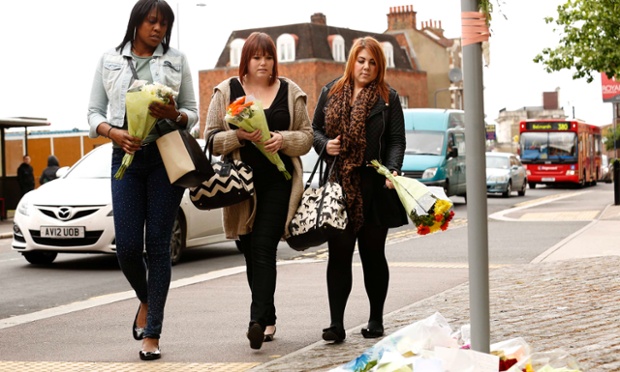
The gruesome and sordid attack in Woolwich, UK has alarmed and horrified that nation and a fair amount of the world. An unprovoked beheading by cleaver of the 25 year old Afghanistan war vet has stunned London and in the wake of the killing, reprisals have been carried out against Muslims in the UK as well. There have been heroes in this story as well, but it is impossible to imagine that anything would balance off this lunatic brutality. 

As has become almost rote in the wake of these events, both sides in this battle are already fully engaged. I don’t mean the British military and local terrorists. I mean the dildos and dildettes of the Net, who regard every news story no matter what it is as vindication or repudiation of their cause.

When it became clear that the attackers were Muslims, you could almost hear the Pamela Geller’s and Steven Emerson’s of the world climaxing in sexual ecstasy over the intertubes. Their “opposition”, the people that trot out Tim McVeigh as the “white Christian terrorist” by way of “everyone does it” when these attacks occur were silent–they’d lost this one. Better luck next time, I suppose.

Which isn’t quite as sickening as the violence itself, but shit: What is wrong with these people? A dad had his head lopped off and for all the expressed sorrow by Islamophobes, they were actually pretty jazzed. Whether they admit it or not, what’s one dead dude you never met compared to the thrill of rubbing it in some “dumb lib’s” face? You were right and what’s better than that? Nothing!

It’s just as bad when it’s some white supremacist asshole and the “I told you so” palaver comes from the left. 

Thing is, the idea that “my team won, yay!” over this story and other negates the painfully obvious. This is a complex issue. It doesn’t boil down to “see, I told you the Islamofascists were crazy/No, they aren’t”. Imperialism, propping up bogus sheikdoms, coups, invasions, nationalism–a melange of those plus the asymetricality of terrorism is complicated. Nobody wants to delve too deeply into the actual cause. They just wanna be the “right person at the water cooler this morning”. To which I say enough already. Really. 


Airbnb is still snubbing SF, even after a NY judge rules it illegal there

39

Now that a judge in New York has ruled that Airbnb is illegal there, a model that violates city tenant laws and state law, that should put pressure on the San Francisco-based company to finally stop snubbing cities and find a way to exist within local regulatory frameworks and finally start paying its taxes.   

It was good to hear KQED’s Forum discuss Airbnb this morning – it was getting lonely as the only local reporter highlighting the company’s open defiance of San Francisco’s ruling that it should be paying the city’s Transient Occupancy Tax, just like hotels – and to finally question an Airbnb executive on an issue the company has been refusing to address publicly (yes, they still aren’t returning my calls).

But the answer that David Hantman, Airbnb’s global head of public policy, gave this morning was pretty astounding in its hypocritical arrogance. He acknowledged the tax ruling by San Francisco and the company’s lack of compliance, and said the company was waiting for clarification on the various issues related to the questions of the legality of some of the short-term rentals it facilitates before paying its taxes.

In other words, this company is making tens of millions of dollars annually in San Francisco alone on a business model that it developed – one that often runs afoul of local land use and tenant laws, and in violation of people’s leases – and it’s up to city officials to find a solution to this company’s problems before it will pay taxes?!?

To his credit, Board of Supervisors President David Chiu has been trying to do just that for months, slogging through a number of complex and difficult issues that arise from this business model, and he has been clear throughout that Airbnb should be paying its taxes to the city, which it isn’t.

“It’s reasonable to ask people who benefit from the economic transactions we’re talking about to pay their fair share,” Chiu reiterated on Forum, citing the cost to the city of serving the 16 million tourists who visit the city each year.

Coincidentally, there’s a German television crew from ARD (Germany’s equivilent of the BBC) in San Francisco this week doing a story on Airbnb and the shareable economy, interviewing me about my coverage of the company, as well as others, including Airbnb co-founder Nathan Blecharczyk.

The ARD reporter told me this afternoon that Blecharczyk was animated and expansive when discussing how wonderful his company is and how it’s changing the world, but he became terse and unresponsive when she raised the issue of local taxes and regulations.

As I said on camera today, Airbnb and other shareable economy companies are cool, I’ve used them myself, and they’re certainly here to stay. But I just don’t understand their unwillingness to be good corporate citizens and to pay the taxes they owe to support the city services that their customers use.

Chiu has clearly said that Airbnb should pay the TOT — which my reporting has shown would bring $1.8 million annually into city coffers — and that paying its taxes will be a part of the regulatory package he’s working on. But sources have also told me that negotiations have been hard slog, largely because of Airbnb’s unwillingness to play by the rules and because of the unqualified support the company has from Mayor Ed Lee, whose main political fundraiser, Ron Conway, is also a major investor in Airbnb.

Hopefully the New York ruling and growing media scrutiny will prompt the young executives at Airbnb to finally become good faith partners in a city that has been so good to them — a city whose leaders seem anxious to return the favor and legalize Airbnb’s operations in San Francisco.


For No God’s Sake

21

The nightmarish aftermath of the Moore, Oklahoma EF-5 tornado is in rebuilding and rebounding mode. People are digging out of the mess. Survivors located. Businesses re-opening.

And the stories emanating from the Prairie are running the gamut. From heart warming to predictably dire. The human spirit seems both undaunted and inexplicable. 

But because the world we live in now has around the clock news cycles and a plethora of channels devoted to same, sometimes the mavens of media reveal themselves to be a sorry lot. So was the case of Wolf Blitzer–a CNN talking head of much experience–and his interview with a local named Rebecca Vitsmun whose response to a question posed by Blitzer threw him.

Blitzer asked Vitsmun if she thanked the Lord for presumably sparing her life and that of her baby. She replied (nervously) that she didn’t as she was an atheist, quickly adding that she didn’t blame people that did.  

It was quick and she was good humored about it. But there’s something really rancid about Blitzer’s question. The subtext isn’t theological or even sociological. It’s bigotry–Oklahoma is a deeply religious state with an enormous Evangelical community, so Blitzer assumed without asking that this woman must be one of those people.

This is no different than asking someone with an Irish surname what beer they drink, or a Mexican their favorite recipe for salsa or any number of stereotypes. The presumption that this woman is religious without asking (did the same question arise in New Jersey after Sandy?) pigeonholes Oklahomans as one-dimensional fanatics.

If you are a person over a certain age (40 say), ask yourself if newsmen asked these questions in our long gone youths. They didn’t. It would have been seen as trivial, leading and out of place. But because our culture has been “Tebowed” to death by loud public declarations of fealty to the Lord, this kind of piffle is not only manistream, it’s encouraged.

The moment passed, but it seems to have ignited the standard back and forth over the existance of a God or not. Not the issue (although asking someone whose home was razed if they thank the presumable force behind the razing does seem a little absurd). Religion is a matter of faith, conjecture and wishful thinking/culture. The news is supposed to be facts. I know that Blitzer has to filibuster to fill space, but c’mon, man–everything has its place. 


Tour of duty

0

arts@sfbg.com

THEATER Audience members entering the drill court of the Mission Armory and climbing the bleachers to their seats do so amid the buzzing drone of Highland music and an eager swarm of searchlights, all of it punctuated by booming pre-show announcements over the PA. When silence falls at last, a solitary man in jeans and leather jacket emerges a bit sheepishly from a doorway at the far end of the stage. Appearing small and inconsequential against the stadium-like surroundings and the preceding pomp and circumstance, he stutters a few opening lines before returning to his element — the local pub in Scotland’s Fife. There he assumes wholly different proportions, as he and his friends relay their own perspectives on the spectacle of war.

In Black Watch, the touring revival of a site-specific 2006 production by the National Theatre of Scotland (currently being presented by American Conservatory Theater), writer Gregory Burke and director John Tiffany set out to present a spectacle grounded in real lives. To that end, they blend fictionalized scenes with the accounts of young Fife veterans who served in Iraq as part of Scotland’s famed 300-year-old Black Watch regiment.

Meanwhile, the show employs a hybrid theatrical form that draws equally on the conventions of the music hall, the docudrama, and physical theater. The stage is a wide and busy corridor running between two tall banks of seats, with scaffolding on either end where actors also play, video monitors flicker, and large video projections are sometimes cast.

This is the production’s fourth international tour, remarkably. But despite its continued popularity abroad, little in it seems especially surprising or penetrating. There’s a lot of brash dialogue (hyper-macho, casually chauvinistic, expletive-laden soldierly banter in slightly toned-down Scottish brogues); some muscular dance routines (with the martial drills the most interesting); a sometimes affecting, sometimes overbearing musical score; and a few flashy staging ideas (including an eerily unexpected entrance in the barroom).

But whether the play is offering gritty realism or stylized interpretation, the message is generally and familiarly on-the-nose: war seems glamorous to the young man back home, and hell to the soldier in the field; soldiers are sold out by politicians; and soldiers don’t fight for their country or some high ideal, but for less abstract ties and especially for their fellow soldiers. The lies, illegality, and massive unpopularity surrounding the Iraq War is also hardly new ground in itself — though one line rings with unintended irony in the Armory setting (where Kink.com has been in residence since 2007) when a Scottish officer (Stephen McCole) jokingly admits the war is being waged for “petrol and porn.”

The narrative toggles between the aforementioned pub — where Cammy (Stuart Martin) and his fellow vets somewhat grudgingly and aggressively divulge their experiences to a timid middle-class Writer (Robert Jack) — and a flashback to the daily drudgery and danger of Iraq in 2004, where the company’s assignment in support of devastating American military assault on Fallujah leads to the death of three Scottish soldiers in a suicide car bombing. There’s also a segue into a somewhat silly if historically relevant recruitment scene at the outset of World War I, which further convolutes a narrative already burdened with details about political machinations at home and distress over “amalgamation” (the British government’s ill-timed decision to dissolve the Black Watch and fold it into a single, cheaper Royal Scottish Regiment).

The play never represents Iraqi lives or perspectives, nor is there more than passing sympathy for them among the characters; this is instead a work focused squarely on the Scottish soldier’s experience and, most significantly, the molding of that experience by a state reliant on a voluntary military. In a world of limited and dispiriting options, the military opportunistically and very successfully offers young men a seeming basis for pride in themselves and in an inflated (or degraded) masculine ideal. Black Watch is itself successful in those rare moments where sentimental spectacle gives way to images that register the profound, uneasy, and complex implications of this fact.

BLACK WATCH

Through June 16

Tue-Sat, 8pm (also Wed and Sat, 2pm); Sun, 2pm, $100

Drill Court, Armory Community Center

333 14th St, SF

www.act-sf.org


Film listings

0

Film listings are edited by Cheryl Eddy. Reviewers are Kimberly Chun, Dennis Harvey, Lynn Rapoport, and Sara Maria Vizcarrondo. For rep house showtimes, see Rep Clock.

OPENING

Elemental Even those suffering from environmental-doc fatigue (a very real condition, particularly in the eco-obsessed Bay Area) will find much to praise about Elemental, co-directed by Gayatri Roshan and NorCal native Emmanuel Vaughan-Lee (who also co-composed the film’s score). This elegantly shot and edited film approaches the issues via three “eco-warriors,” who despite working on different causes on various corners of the planet encounter similar roadblocks, and display like-minded determination, along the way: Rajendra Singh, on a mission to heal India’s heavily polluted Ganges River; Jay Harman, whose ingenious inventions are based on “nature’s blueprints”; and Eriel Deranger, who fights for her indigenous Canadian community in the face of Big Oil. Deranger cuts a particularly inspiring figure: a young, tattooed mother who juggles protests, her moody tween (while prepping for a new baby), and the more bureaucratic aspects of being a professional activist — from defending her grassroots methods when questioned by her skeptical employer, to deflecting a drunk, patronizing Robert F. Kennedy Jr. at a big-ticket fundraiser — with a calm, steely sense of purpose. (1:33) Opera Plaza. (Eddy)

Epic Animated fantasy about a teenager who finds herself drawn into a conflict between warring forest creatures. Features the voices of Amanda Seyfried, Colin Farrell, Beyoncé, and Christoph Waltz. (1:42) Balboa, Presidio.

Fast and Furious 6 Just FYI, part seven has already been announced. (2:10)

Frances Ha See “Let’s Dance.” (1:26) Embarcadero, Piedmont, Shattuck, Smith Rafael.

The Hangover Part III The bros reunite for another ill-advised Las Vegas trip. (1:40) Four Star, Marina, Shattuck.

The Painting Veteran animator Jean-François Laguionie’s French-Belgian feature is a charming and imaginative fable whose characters live in the worlds of an elusive artist’s canvases. It begins in one particular picture, a fanciful landscape in which society is strictly stratified in terms of how “finished” the figures in it are. At the top of the heap are the Alldunns, elitist castle-dwelling snobs who look down on the semi-completed Halfies. Everybody shuns the Sketchies, pencil preliminaries come to life. When members of each group get chased into the Forbidden Forest, they discover they can actually exit the frame entirely and visit other paintings in the artist’s studio. As a parable of prejudice and tolerance it’s not exactly sophisticated, and the story doesn’t quite sustain its early momentum. But it’s a visual treat throughout, nodding to various early 20th-century modern art styles and incorporating some different animation techniques (plus, briefly, live action). Note: the last screenings of each day will be in the film’s original French language, with English subtitles; all others offer the English-dubbed version. (1:18) Opera Plaza, Shattuck. (Harvey)

A Wedding Invitation Already a hit in China, this romantic drama directed by Korea’s Oh Ki-hwan follows a young couple (Eddie Peng, Bai Baihe) as they break up to pursue careers in Beijing and Shanghai, making a pact that they’ll reunite in five years if they’re both still single. (1:45) Metreon.

What Maisie Knew In Scott McGehee and David Siegel’s adaptation of the 1897 Henry James novel, the story of a little girl caught between warring, self-involved parents is transported forward to modern-day New York City, with Julianne Moore and Steve Coogan as the ill-suited pair responsible, in theory, for the care and upbringing of the title character, played by Onata Aprile. Moore’s Susanna is a rock singer making a slow, halting descent from some apex of stardom, as we gather from the snide comments of her partner in dysfunctionality, Beale (Coogan). As their relationship implodes and they move on to custody battle tactics, each takes on a new, inappropriate companion — Beale marrying in haste Maisie’s pretty young nanny, Margo (Joanna Vanderham), and Susanna just as precipitously latching on to a handsome bartender named Lincoln (True Blood‘s Alexander Skarsgård). The film mostly tracks the chaotic action — Susanna’s strung-out tantrums, both parents’ impulsive entrances and exits, Margo and Lincoln’s ambivalent acceptance of responsibility — from Maisie’s silent vantage, as details large and small convey, at least to us, the deficits of her caretakers, who shield her from none of the emotional shrapnel flying through the air and rarely bother to present an appropriate, comprehensible explanation. Yet Maisie understands plenty — though longtime writing-and-directing team McGehee and Siegel (2001’s The Deep End, 2005’s Bee Season, 2008’s Uncertainty) have taken pains in their script and their casting to present Maisie as a lovely, watchful child, not the precocious creep often favored in the picture shows. So we watch too, with a grinding anxiety, as she’s passed from hand to hand, forced to draw her own unvoiced conclusions. (1:38) Albany, Embarcadero. (Rapoport)

ONGOING

At Any Price Growing up in rural Iowa very much in the shadow of his older brother, Dean Whipple (Zac Efron) cultivated a chip on his shoulder while dominating the figure 8 races at the local dirt track. When papa Henry (Dennis Quaid) — a keeping-up-appearances type, with secrets a-plenty lurking behind his good ol’ boy grin — realizes Dean is his best hope for keeping the family farm afloat, he launches a hail-mary attempt to salvage their relationship. This latest drama from acclaimed indie director Ramin Bahrani (2008’s Goodbye Solo) is his most ambitious to date, enfolding small-town family drama and stock-car scenes into a pointed commentary on modern agribusiness (Henry deals in GMO corn, and must grapple with the sinister corporate practices that go along with it). But the film never gels, particularly after an extreme, third-act plot twist is deployed to, um, hammer home the title — which refers to prices both monetary and spiritual. A solid supporting cast (Kim Dickens, Heather Graham, Clancy Brown, Red West, newcomer Maika Monroe) helps give the film some much-needed added weight as it veers toward melodrama. (1:45) SF Center. (Eddy)

The Big Wedding The wedding film has impacted our concepts of matrimony, fashion, and marital happiness more than all the textbooks in the world have affected our national testing average; but it’s with that margin of mediocrity I report from the theater trenches of The Big Wedding. With this, the wedding movie again peters to a crawl. Susan Sarandon (an actress I love with a loyalty beyond sense) is Bebe, the stepmother/caterer swept under the rug by the selfishness of her live in lover Don (De Niro), his ex-wife/baby momma Elle (Diane Keaton) and their racist wackjob future in-laws. When Don and Elle faced the end of their marriage, they tried to rekindle with a Columbian orphan. Cue Ben Barnes in brownface. Alejandro is set to wed Amanda Seyfried and when his mother ascends from Columbia for the wedding, he decides Don and Elle have to act like their marriage never ended &ldots; which makes Bebe a mistress. Surprise! A decade of caring selflessly for your lover’s kids has won you a super shitty wedding you still have to cater! To give you a sense of the conflict management on display, Bebe — the film’s graceful savior —drops a drink on Don before fleeing the scene in her Alfa Romeo; she’s the one character not determined to act out her more selfish urges in the style of an MTV reality show. Despite some less imaginative conflicts and degrading “solutions,” this blended family still speaks some truth about the endearing embarrassment of the happy family. (1:29) SF Center. (Vizcarrondo)

The Croods (1:38) Metreon.

Disconnect (1:55) SF Center.

Evil Dead “Sacrilege!” you surely thought when hearing that Sam Raimi’s immortal 1983 classic was being remade. But as far as remakes go, this one from Uruguayan writer-director Fede Alvarez (who’d previously only made some acclaimed genre shorts) is pretty decent. Four youths gather at a former family cabin destination because a fifth (Jane Levy) has staged her own intervention — after a near-fatal OD, she needs her friends to help her go cold turkey. But as a prologue has already informed us, there is a history of witchcraft and demonic possession in this place. The discovery of something very nasty (and smelly) in the cellar, along with a book of demonic incantations that Lou Taylor Pucci is stupid enough to read aloud from, leads to … well, you know. The all-hell that breaks loose here is more sadistically squirm-inducing than the humorously over-the-top gore in Raimi’s original duo (elements of the sublime ’87 Evil Dead II are also deployed here), and the characters are taken much more seriously — without, however, becoming more interesting. Despite a number of déjà vu kamikaze tracking shots through the Michigan forest (though most of the film was actually shot in New Zealand), Raimi’s giddy high energy and black comedy are replaced here by a more earnest if admittedly mostly effective approach, with plenty of decent shocks. No one could replace Bruce Campbell, and perhaps it was wise not to even try. So: pretty good, gory, expertly crafted, very R-rated horror fun, even with too many “It’s not over yet!” false endings. But no one will be playing this version over and over and over again as they (and I) still do the ’80s films. (1:31) SF Center. (Harvey)

42 Broad and morally cautious, 42 is nonetheless an honorable addition to the small cannon of films about the late, great baseball player Jackie Robinson. When Dodgers owner Branch Rickey (Harrison Ford) declares that he wants a black player in the white major leagues because “The only real color is green!”, it’s a cynical explanation that most people buy, and hate him for. It also starts the ball curving for a PR shitstorm. But money is an equal-opportunity leveling device: when Robinson (Chadwick Boseman) tries to use the bathroom at a small-town gas station, he’s denied and tells his manager they should “buy their 99 gallons of gas another place.” Naturally the gas attendant concedes, and as 42 progresses, even those who reject Robinson at first turn into men who find out how good they are when they’re tested. Ford, swashbuckling well past his sell-by date, is a fantastic old coot here; his “been there, lived that” prowess makes you proud he once fled the path of a rolling bolder. His power moves here are even greater, but it’s ultimately Robinson’s show, and 42 finds a lot of ways to deliver on facts and still print the legend. (2:08) Metreon, 1000 Van Ness, Sundance Kabuki. (Vizcarrondo)

The Great Gatsby Every bit as flashy and in-your-face as you’d expect the combo of “Baz Luhrmann,” “Jazz Age,” and “3D” to be, this misguided interpretation of F. Scott Fitzgerald’s classic tale is, at least, overstuffed with visual delights. For that reason only, all the fashion-mag fawning over leading lady Carey Mulligan’s gowns and diamonds, and the opulent production design that surrounds them, seems warranted. And in scenes where spectacle is appropriate — Gatsby’s legendary parties; Tom Buchanan’s wild New York romp with his mistress — Luhrmann delivers in spades. The trade-off is that the subtler aspects of Fitzgerald’s novel are either pushed to the side or shouted from the rooftops. Leonardo DiCaprio, last seen cutting loose in last year’s Django Unchained, makes for a stiff, fumbling Gatsby, laying on the “Old Sports” as thickly as his pancake make-up. There’s nothing here so startlingly memorable as the actor and director’s 1996 prior collaboration, Romeo + Juliet — a more successful (if still lavish and self-consciously audacious) take on an oft-adapted, much-beloved literary work. (2:22) California, Four Star, Marina, 1000 Van Ness, Presidio, SF Center, Sundance Kabuki, Vogue. (Eddy)

The Iceman Methody-y changeling Michael Shannon is pretty much the whole show in The Iceman, about a real-life hitman who purportedly killed over 100 people during his career. Despite some scarily violent moments, however, Ariel Vromen’s film doesn’t show much of that body count — he’s more interested in the double life Richard Kuklinski (Shannon) leads as a cold-blooded killer whose profession remains entirely unknown for years to his wife, daughters, and friends. The waitress he marries, Deborah (Winona Ryder), isn’t exactly a brainiac. But surely there’s some willful denial in the way she accepts his every excuse and fake profession, starting with “dubbing Disney movies” when he actually dupes prints of pornos. It’s in that capacity that he first meets Roy Demeo (Ray Liotta), a volatile Newark mobster who, impressed by Kuklinski’s blasé demeanor at gunpoint, correctly surmises this guy would make a fine contract killer. When he has a falling out with Demeo, Kuklinski “freelances” his skill to collaborate with fellow hitman Mr. Freezy (Chris Evans), so named because he drives an ice-cream truck — and puts his victims on ice for easier disposal. For the sake of a basic contrast defined by its ad line — “Loving husband. Devoted father. Ruthless killer.” — The Iceman simplifies Kuklinski’s saga, making him less of a monster. The movie only briefly suggests Kuklinski’s abused childhood, and it omits entirely other intriguing aspects of the real-life story. But Shannon creates a convincing whole character whose contradictions don’t seem so to him — or to us. (1:46) Embarcadero, Shattuck, Sundance Kabuki. (Harvey)

In the House In François Ozon’s first feature since the whimsical 2010 Potiche, he returns somewhat to the playful suspense intrigue of 2003’s Swimming Pool, albeit with a very different tone and context. Fabrice Luchini plays a high school French literature teacher disillusioned by his students’ ever-shrinking articulacy. But he is intrigued by one boy’s surprisingly rich description of his stealth invasion into a classmate’s envied “perfect” family — with lusty interest directed at the “middle class curves” of the mother (Emmanuelle Seigner). As the boy Claude’s writings continue in their possibly fictive, possibly stalker-ish provocations, his teacher grows increasingly unsure whether he’s dealing with a precocious bourgeoisie satirist or a literate budding sociopath — and ambivalent about his (and spouse Kristin Scott Thomas’ stressed gallery-curator’s) growing addiction to these artfully lurid possible exposé s of people he knows. And it escalates from there. Ozon is an expert filmmaker in nimble if not absolute peak form here, no doubt considerably helped by Juan Mayorga’s source play. It’s a smart mainstream entertainment that, had it been Hollywood feature, would doubtless be proclaimed brilliant for its clever tricks and turns. (1:45) Smith Rafael. (Harvey)

Iron Man 3 Neither a sinister terrorist dubbed “the Mandarin” (Ben Kingsley) nor a spray-tanned mad scientist (Guy Pearce) are as formidable an enemy to Tony Stark (Robert Downey, Jr.) as Tony Stark himself, the mega-rich playboy last seen in 2012’s Avengers donning his Iron Man suit and thwarting alien destruction. It’s been rough since his big New York minute; he’s been suffering panic attacks and burying himself in his workshop, shutting out his live-in love (Gwyneth Paltrow) in favor of tinkering on an ever-expanding array of manned and un-manned supersuits. But duty, and personal growth, beckon when the above-mentioned villains start behaving very badly. With some help (but not much) from Don Cheadle’s War Machine — now known as “Iron Patriot” thanks to a much-mocked PR campaign — Stark does his saving-the-world routine again. If the plot fails to hit many fresh beats (a few delicious twists aside), the 3D special effects are suitably dazzling, the direction (by series newcomer Shane Black) is appropriately snappy, and Downey, Jr. again makes Stark one of the most charismatic superheros to ever grace the big screen. For now, at least, the continuing Avengers spin-off extravaganza seems justified. (2:06) Metreon, 1000 Van Ness, Presidio, Sundance Kabuki. (Eddy)

Jurassic Park 3D “Life finds a way,” Jeff Goldblum’s leather-clad mathematician remarks, crystallizing the theme of this 1993 Spielberg classic, which at its core is more about human relationships than genetically manufactured terrors. Of course, it’s got plenty of those, and Jurassic Park doesn’t really need its (admittedly spiffy) 3D upgrade to remain a thoroughly entertaining thriller. The dinosaur effects — particularly the creepy Velociraptors and fan-fave T. rex — still dazzle. Only some early-90s computer references and Laura Dern’s mom jeans mark the film as dated. But a big-screen viewing of what’s become a cable TV staple allows for fresh appreciation of its less-iconic (but no less enjoyable) moments and performances: a pre-megafame Samuel L. Jackson as a weary systems tech; Bob Peck as the park’s skeptical, prodigiously thigh-muscled game warden. Try and forget the tepid sequels — including, dear gawd, 2014’s in-the-works fourth installment. This is all the Jurassic you will ever need. (2:07) 1000 Van Ness. (Eddy)

Kon-Tiki In 1947 Norwegian explorer and anthropologist Thor Heyderdahl arranged an expedition on a homemade raft across the Pacific, recreating what he believed was a route by which South Americans traveled to Polynesia in pre-Columbian times. (Although this theory is now disputed.) The six-man crew (plus parrot) survived numerous perils to complete their 101-day, 4300-mile journey intact — winning enormous global attention, particularly through Heyderdahl’s subsequent book and documentary feature. Co-directors Joachim Roenning and Espen Sandberg’s dramatization is a big, impressive physical adventure most arresting for its handsome use of numerous far-flung locations. Where it’s less successful is in stirring much emotional involvement, with the character dynamics underwhelming despite a decent cast led by Pal Sverr Hagen as Thor (who, incredibly, was pretty much a non-swimmer). Nonetheless, this new Kon-Tiki offers all the pleasures of armchair travel, letting you vicariously experience a high-risk voyage few could ever hope (or want) to make in real life. (1:58) Albany, Embarcadero, Piedmont. (Harvey)

Love is All You Need Copenhagen hairdresser Ida (Trine Dyrholm) has just finished her cancer treatments — with their success still undetermined — when she arrives home to find her longtime husband Leif (Kim Bodnia) boning a coworker on their couch. “I thought you were in chemo” is the closest he comes to an apology before walking out. Ida is determined to maintain a cheerful front when attending the Italian wedding of their daughter Astrid (Molly Blixt Egelind) — even after emotionally deaf Leif shows up with his new girlfriend in tow. Meanwhile brusque businessman and widower Philip (Pierce Brosnan), the groom’s father, is experiencing the discomfort of returning to the villa he once shared with his beloved late wife. This latest from Danish director Susanne Bier and writing partner Anders Thomas Jensen (2006’s After the Wedding, 2004’s Brothers, 2010’s In a Better World) is more conventionally escapist than their norm, with a general romantic-seriocomedy air reinforced by travel-poster-worthy views of the picturesque Italian coastline. They do try to insert greater depth and a more expansive story arc than you’d get in a Hollywood rom com. But all the relationships here are so prickly — between middle-aged leads we never quite believe would attract each other, between the clearly ill-matched aspiring newlyweds, between Paprika Steen’s overbearing sister in-law and everyone — that there’s very little to root for. It’s a romantic movie (as numerous soundtracked variations on “That’s Amore” constantly remind us) in which romance feels like the most contrived element. (1:50) Opera Plaza, Shattuck. (Harvey)

Midnight’s Children Deepa Mehta (2005’s Water) directs and co-adapts with Salman Rushdie the author’s Booker Prize-winning 1981 novel, which mixes history (India’s 1947 independence, and the subsequent division of India and Pakistan) with magical elements — suggested from its fairy-tale-esque first lines: “I was born in the city of Bombay, once upon a time.” This droll voice-over (read by Rushdie) comes courtesy of Saleem Sinai, born to a poor street musician and his wife (who dies in childbirth; dad is actually an advantage-taking Brit played by Charles “Tywin Lannister” Dance) but switched (for vaguely revolutionary reasons) with Shiva, born at the same moment to rich parents who unknowingly raise the wrong son. Rich or poor, it seems all children born at the instant of India’s independence have shared psychic powers; over the years, they gather for “meetings” whenever Saleem summons them. And that’s just the 45 minutes or so of story. Though gorgeously shot, Midnight’s Children suffers from page-to-screen-itis; the source material is complex in both plot and theme, and it’s doubtful any film — even one as long as this — could translate its nuances and more fanciful elements (“I can smell feelings!,” Saleem insists) into a consistently compelling narrative. Last-act sentimentality doesn’t help, though it’s consistent with the fairy-tale vibe, I suppose. (2:20) Shattuck, Smith Rafael. (Eddy)

Mud (2:15) California, Metreon, 1000 Van Ness, Piedmont, Sundance Kabuki.

Oblivion Spoiler alert: the great alien invasion of 2017 does absolutely zilch to eliminate, or at least ameliorate, the problem of sci-fi movie plot holes. However, puny humans willing to shut down the logic-demanding portions of their brains just might enjoy Oblivion, which is set 60 years after that fateful date and imagines that Earth has been rendered uninhabitable by said invasion. Tom Cruise plays Jack, a repairman who zips down from his sterile housing pod (shared with comely companion Andrea Riseborough) to keep a fleet of drones — dispatched to guard the planet’s remaining resources from alien squatters — in working order. But Something is Not Quite Right; Jack’s been having nostalgia-drenched memories of a bustling, pre-war New York City, and the déjà vu gets worse when a beautiful astronaut (Olga Kurylenko) literally crash-lands into his life. After an inaugural gig helming 2010’s stinky Tron: Legacy, director Joseph Kosinski shows promise, if not perfection, bringing his original tale to the screen. (He does, however, borrow heavily from 1968’s 2001: A Space Odyssey, 1996’s Independence Day, and 2008’s Wall-E, among others.) Still, Oblivion boasts sleek production design, a certain creative flair, and some surprisingly effective plot twists — though also, alas, an overlong running time. (2:05) Metreon, 1000 Van Ness. (Eddy)

Pain & Gain In mid-1995 members of what became known as the “Sun Gym Gang” — played here by Mark Wahlberg, Dwayne Johnson, and Anthony Mackie — were arrested for a series of crimes including kidnapping, extortion, and murder. Simply wanting to live large, they’d abducted one well-off man (Tony Shalhoub) months earlier, tortured him into signing over all his assets, and left him for dead — yet incredibly the Miami police thought the victim’s story was a tall tale, leaving the perps free until they’d burned through their moolah and sought other victims. Michael Bay’s cartoonish take on a pretty horrific saga repeatedly reminds us that it’s a true story, though the script plays fast and loose with many real-life details. (And strangely it downplays the role steroid abuse presumably played in a lot of very crazy behavior.) In a way, his bombastic style is well-suited to a grotesquely comic thriller about bungling bodybuilder criminals redundantly described here as “dumb stupid fucks.” There have been worse Bay movies, even if that’s like saying “This gas isn’t as toxic as the last one.” But despite the flirtations with satire of fitness culture, motivational gurus and so forth, his sense of humor stays on a loutish plane, complete with fag-bashing, a dwarf gag, and representation of Miami as basically one big siliconed titty bar. Nor can he pull off a turn toward black comedy that needs the superior intelligence of someone like the Coen Brothers or Soderbergh. As usual everything is overamped, the action sequences overblown, the whole thing overlong, and good actors made to overact. You’ve got to give cranky old Ed Harris credit: playing a private detective, he alone here refuses to be bullied into hamming it up. (2:00) Metreon. (Harvey)

Peeples (1:35) Metreon, 1000 Van Ness.

The Place Beyond the Pines Powerful indie drama Blue Valentine (2010) marked director Derek Cianfrance as one worthy of attention, so it’s with no small amount of fanfare that this follow-up arrives. The Place Beyond the Pines‘ high profile is further enhanced by the presence of Bradley Cooper (currently enjoying a career ascension from Sexiest Man Alive to Oscar-nominated Serious Actor), cast opposite Valentine star Ryan Gosling, though they share just one scene. An overlong, occasionally contrived tale of three generations of fathers, father figures, and sons, Pines‘ initial focus is Gosling’s stunt-motorcycle rider, a character that would feel more exciting if it wasn’t so reminiscent of Gosling’s turn in Drive (2011), albeit with a blonde dye job and tattoos that look like they were applied by the same guy who inked James Franco in Spring Breakers. Robbing banks seems a reasonable way to raise cash for his infant son, as well as a way for Pines to draw in another whole set of characters, in the form of a cop (Cooper) who’s also a new father, and who — as the story shifts ahead 15 years — builds a political career off the case. Of course, fate and the convenience of movie scripts dictate that the mens’ sons will meet, the past will haunt the present and fuck up the future, etc. etc. Ultimately, Pines is an ambitious film that suffers from both its sprawl and some predictable choices (did Ray Liotta really need to play yet another dirty cop?) Halfway through the movie I couldn’t help thinking what might’ve happened if Cianfrance had dared to swap the casting of the main roles; Gosling could’ve been a great ambitious cop-turned-powerful prick, and Cooper could’ve done interesting things with the Evel Knievel-goes-Point Break part. Just sayin’. (2:20) Opera Plaza, Shattuck, Sundance Kabuki. (Eddy)

The Reluctant Fundamentalist Based on Pakistani novelist Mohsin Hamid’s award-winning 2007 novel, and directed by the acclaimed Mira Nair (2001’s Monsoon Wedding, 2006’s The Namesake), The Reluctant Fundamentalist boasts an international cast (Kate Hudson, Martin Donovan, Kiefer Sutherland, Liev Schreiber, Om Puri) and nearly as many locations. British-Pakistani actor Riz Ahmed (2010’s Four Lions) stars as Changez Khan, a Princeton-educated professor who grants an interview with a reporter (Schreiber) after another prof at Lahore University — an American citizen — is taken hostage; their meeting grows more tense as the atmosphere around them becomes more charged. Most of the film unfolds as an extended flashback, as Changez recounts his years on Wall Street as a talented “soldier in [America’s] economic army,” with a brunette Hudson playing Erica, a photographer who becomes his NYC love interest. After 9/11, he begins to lose his lust for star-spangled yuppie success, and soon returns to his homeland to pursue a more meaningful cause. Though it’s mostly an earnest, soul-searching character study, The Reluctant Fundamentalist suddenly decides it wants to be a full-throttle political thriller in its last act; ultimately, it offers only superficial insight into what might inspire someone’s conversion to fundamentalism (one guess: Erica’s embarrassingly bad art installation, which could make anyone hate America). Still, Ahmed is a compelling lead. (2:08) Smith Rafael. (Eddy)

Renoir The gorgeous, sun-dappled French Riviera setting is the high point of this otherwise low-key drama about the temperamental women (Christa Theret) who was the final muse to elderly painter Auguste Renoir (Michel Bouquet), and who encouraged the filmmaking urges in his son, future cinema great Jean (Vincent Rottiers). Cinematographer Mark Ping Bin Lee (who’s worked with Hou Hsiao-hsein and Wong Kar Wai) lenses Renoir’s leafy, ramshackle estate to maximize its resemblance to the paintings it helped inspire; though her character, Dédée, could kindly be described as “conniving,” Theret could not have been better physically cast, with tumbling red curls and pale skin she’s none too shy about showing off. Though the specter of World War I looms in the background, the biggest conflicts in Gilles Bourdos’ film are contained within the household, as Jean frets about his future, Dédée faces the reality of her precarious position in the household (which is staffed by aging models-turned-maids), and Auguste battles ill health by continuing to paint, though he’s in a wheelchair and must have his brushes taped to his hands. Though not much really happens, Renoir is a pleasant, easy-on-the-eyes experience. (1:51) Smith Rafael. (Eddy)

Scatter My Ashes at Bergdorf’s This glossy love letter to posh New York City department store Bergdorf Goodman — a place so expensive that shopping there is “an aspirational dream” for the grubby masses, according to one interviewee — would offend with its slobbering take on consumerism if it wasn’t so damn entertaining. The doc’s narrative of sorts is propelled by the small army assembled to create the store’s famed holiday windows; we watch as lavish scenes of upholstered polar bears and sea creatures covered in glittering mosaics (flanking, natch, couture gowns) take shape over the months leading up to the Christmas rush. Along the way, a cavalcade of top designers (Michael Kors, Vera Wang, Giorgio Armani, Jason Wu, Karl Lagerfeld) reminisce on how the store has impacted their respective careers, and longtime employees share anecdotes, the best of which is probably the tale of how John Lennon and Yoko Ono saved the season by buying over 70 fur coats one magical Christmas Eve. Though lip service is paid to the current economic downturn (the Madoff scandal precipitated a startling dropoff in personal-shopper clients), Scatter My Ashes is mostly just superficial fun. What do you expect from a store whose best-selling shoe is sparkly, teeteringly tall, and costs $6,000? (1:33) Clay. (Eddy)

Star Trek Into Darkness Do you remember 1982? There are more than a few echoes of Star Trek II: The Wrath of Khan in J. J. Abrams’ second film retooling the classic sci-fi property’s characters and adventures. Darkness retains the 2009 cast, including standouts Zachary Quinto as Spock and Simon Pegg as comic-relief Scotty, and brings in Benedict “Sherlock” Cumberbatch to play the villain (I think you can guess which one). The plot mostly pinballs between revenge and preventing/circumventing the destruction of the USS Enterprise, with added post-9/11, post-Dark Knight (2008) terrorism connotations that are de rigueur for all superhero or fantasy-type blockbusters these days. But Darkness isn’t totally, uh, dark: there’s quite a bit of fan service at work here (speak Klingon? You’re in luck). Abrams knows what audiences want, and he’s more than happy to give it to ’em, sometimes opening up massive plot holes in the process — but never veering from his own Prime Directive: providing an enjoyable ride. (2:07) Balboa, Metreon, 1000 Van Ness, Presidio, Sundance Kabuki. (Eddy)

Stories We Tell Actor and director Sarah Polley (2011’s Take This Waltz) turns the camera on herself and her family for this poignant, moving, inventive, and expectation-upending blend of documentary and narrative. Her father, actor Michael Polley, provides the narration; our first hint that this film will take an unconventional form comes when we see Sarah directing Michael’s performance in a recording-studio booth, asking him to repeat certain phrases for emphasis. On one level, Stories We Tell is about Sarah’s own history, as she sets out to explore longstanding family rumors that Michael is not her biological father. The missing piece: her mother, actress Diane Polley (who died of cancer just days after Sarah’s 11th birthday), a vivacious character remembered by Sarah’s siblings and those who knew and loved her. Stories We Tell‘s deeper meaning emerges as the film becomes ever more meta, retooling the audience’s understanding of what they’re seeing via convincingly doc-like reenactments. To say more would lessen the power of Stories We Tell‘s multi-layered revelations. Just know that this is an impressively unique film — about family, memories, love, and (obviously) storytelling — and offers further proof of Polley’s tremendous talent. (1:48) Embarcadero, Shattuck, Smith Rafael. (Eddy)

Sun Don’t Shine Prolific indie producer and actor (Upstream Color) Amy Seimetz’s debut as feature writer-director is a intriguingly ambiguous mumblecore noir about a couple on the run, à la Bonnie and Clyde. Crystal (Kate Lyn Sheil) and Leo (Kentucker Audley) are driving south through Florida — a state that seemingly always relaxes demands on intelligence and legality — with a handgun, innumerable anxieties, and something problematic hidden in the trunk. We gradually realize she’s unstable, though to what extent remains unclear. Seimetz’s refusal to spell out that and other basic narrative elements lends her film a compelling aura of mystery, one that heightens some striking, tense sequences but also can prove somewhat frustrating in the long run. (A little more insight would have made it easier to understand why the seemingly level-headed Leo has hitched his wagon to the increasingly off-putting Crystal.) Overall, though, it’s the kind of first feature that makes you eager to see what she’ll come up with next. (1:20) Roxie. (Harvey)

Upstream Color A woman, a man, a pig, a worm, Walden — what? If you enter into Shane Carruth’s Upstream Color expecting things like a linear plot, exposition, and character development, you will exit baffled and distressed. Best to understand in advance that these elements are not part of Carruth’s master plan. In fact, based on my own experiences watching the film twice, I’m fairly certain that not really understanding what’s going on in Upstream Color is part of its loopy allure. Remember Carruth’s 2004 Primer? Did you try to puzzle out that film’s array of overlapping and jigsawed timelines, only to give up and concede that the mystery (and sheer bravado) of that film was part of its, uh, loopy allure? Yeah. Same idea, except writ a few dimensions larger, with more locations, zero tech-speak dialogue, and — yes! — a compelling female lead, played by Amy Seimetz, an indie producer and director in her own right. Enjoying (or even making it all the way through) Upstream Color requires patience and a willingness to forgive some of Carruth’s more pretentious noodlings; in the tradition of experimental filmmaking, it’s a work that’s more concerned with evoking emotions than hitting some kind of three-act structure. Most importantly, it manages to be both maddening and moving at the same time. (1:35) Roxie. (Eddy) 

Film listings

0

Film listings are edited by Cheryl Eddy. Reviewers are Kimberly Chun, Dennis Harvey, Lynn Rapoport, and Sara Maria Vizcarrondo. For rep house showtimes, see Rep Clock.

OPENING

Elemental Even those suffering from environmental-doc fatigue (a very real condition, particularly in the eco-obsessed Bay Area) will find much to praise about Elemental, co-directed by Gayatri Roshan and NorCal native Emmanuel Vaughan-Lee (who also co-composed the film’s score). This elegantly shot and edited film approaches the issues via three “eco-warriors,” who despite working on different causes on various corners of the planet encounter similar roadblocks, and display like-minded determination, along the way: Rajendra Singh, on a mission to heal India’s heavily polluted Ganges River; Jay Harman, whose ingenious inventions are based on “nature’s blueprints”; and Eriel Deranger, who fights for her indigenous Canadian community in the face of Big Oil. Deranger cuts a particularly inspiring figure: a young, tattooed mother who juggles protests, her moody tween (while prepping for a new baby), and the more bureaucratic aspects of being a professional activist — from defending her grassroots methods when questioned by her skeptical employer, to deflecting a drunk, patronizing Robert F. Kennedy Jr. at a big-ticket fundraiser — with a calm, steely sense of purpose. (1:33) Opera Plaza. (Eddy)

Epic Animated fantasy about a teenager who finds herself drawn into a conflict between warring forest creatures. Features the voices of Amanda Seyfried, Colin Farrell, Beyoncé, and Christoph Waltz. (1:42) Balboa, Presidio.

Fast and Furious 6 Just FYI, part seven has already been announced. (2:10)

Frances Ha See “Let’s Dance.” (1:26) Embarcadero, Piedmont, Shattuck, Smith Rafael.

The Hangover Part III The bros reunite for another ill-advised Las Vegas trip. (1:40) Four Star, Marina, Shattuck.

The Painting Veteran animator Jean-François Laguionie’s French-Belgian feature is a charming and imaginative fable whose characters live in the worlds of an elusive artist’s canvases. It begins in one particular picture, a fanciful landscape in which society is strictly stratified in terms of how “finished” the figures in it are. At the top of the heap are the Alldunns, elitist castle-dwelling snobs who look down on the semi-completed Halfies. Everybody shuns the Sketchies, pencil preliminaries come to life. When members of each group get chased into the Forbidden Forest, they discover they can actually exit the frame entirely and visit other paintings in the artist’s studio. As a parable of prejudice and tolerance it’s not exactly sophisticated, and the story doesn’t quite sustain its early momentum. But it’s a visual treat throughout, nodding to various early 20th-century modern art styles and incorporating some different animation techniques (plus, briefly, live action). Note: the last screenings of each day will be in the film’s original French language, with English subtitles; all others offer the English-dubbed version. (1:18) Opera Plaza, Shattuck. (Harvey)

A Wedding Invitation Already a hit in China, this romantic drama directed by Korea’s Oh Ki-hwan follows a young couple (Eddie Peng, Bai Baihe) as they break up to pursue careers in Beijing and Shanghai, making a pact that they’ll reunite in five years if they’re both still single. (1:45) Metreon.

What Maisie Knew In Scott McGehee and David Siegel’s adaptation of the 1897 Henry James novel, the story of a little girl caught between warring, self-involved parents is transported forward to modern-day New York City, with Julianne Moore and Steve Coogan as the ill-suited pair responsible, in theory, for the care and upbringing of the title character, played by Onata Aprile. Moore’s Susanna is a rock singer making a slow, halting descent from some apex of stardom, as we gather from the snide comments of her partner in dysfunctionality, Beale (Coogan). As their relationship implodes and they move on to custody battle tactics, each takes on a new, inappropriate companion — Beale marrying in haste Maisie’s pretty young nanny, Margo (Joanna Vanderham), and Susanna just as precipitously latching on to a handsome bartender named Lincoln (True Blood‘s Alexander Skarsgård). The film mostly tracks the chaotic action — Susanna’s strung-out tantrums, both parents’ impulsive entrances and exits, Margo and Lincoln’s ambivalent acceptance of responsibility — from Maisie’s silent vantage, as details large and small convey, at least to us, the deficits of her caretakers, who shield her from none of the emotional shrapnel flying through the air and rarely bother to present an appropriate, comprehensible explanation. Yet Maisie understands plenty — though longtime writing-and-directing team McGehee and Siegel (2001’s The Deep End, 2005’s Bee Season, 2008’s Uncertainty) have taken pains in their script and their casting to present Maisie as a lovely, watchful child, not the precocious creep often favored in the picture shows. So we watch too, with a grinding anxiety, as she’s passed from hand to hand, forced to draw her own unvoiced conclusions. (1:38) Albany, Embarcadero. (Rapoport)

ONGOING

At Any Price Growing up in rural Iowa very much in the shadow of his older brother, Dean Whipple (Zac Efron) cultivated a chip on his shoulder while dominating the figure 8 races at the local dirt track. When papa Henry (Dennis Quaid) — a keeping-up-appearances type, with secrets a-plenty lurking behind his good ol’ boy grin — realizes Dean is his best hope for keeping the family farm afloat, he launches a hail-mary attempt to salvage their relationship. This latest drama from acclaimed indie director Ramin Bahrani (2008’s Goodbye Solo) is his most ambitious to date, enfolding small-town family drama and stock-car scenes into a pointed commentary on modern agribusiness (Henry deals in GMO corn, and must grapple with the sinister corporate practices that go along with it). But the film never gels, particularly after an extreme, third-act plot twist is deployed to, um, hammer home the title — which refers to prices both monetary and spiritual. A solid supporting cast (Kim Dickens, Heather Graham, Clancy Brown, Red West, newcomer Maika Monroe) helps give the film some much-needed added weight as it veers toward melodrama. (1:45) SF Center. (Eddy)

The Big Wedding The wedding film has impacted our concepts of matrimony, fashion, and marital happiness more than all the textbooks in the world have affected our national testing average; but it’s with that margin of mediocrity I report from the theater trenches of The Big Wedding. With this, the wedding movie again peters to a crawl. Susan Sarandon (an actress I love with a loyalty beyond sense) is Bebe, the stepmother/caterer swept under the rug by the selfishness of her live in lover Don (De Niro), his ex-wife/baby momma Elle (Diane Keaton) and their racist wackjob future in-laws. When Don and Elle faced the end of their marriage, they tried to rekindle with a Columbian orphan. Cue Ben Barnes in brownface. Alejandro is set to wed Amanda Seyfried and when his mother ascends from Columbia for the wedding, he decides Don and Elle have to act like their marriage never ended &ldots; which makes Bebe a mistress. Surprise! A decade of caring selflessly for your lover’s kids has won you a super shitty wedding you still have to cater! To give you a sense of the conflict management on display, Bebe — the film’s graceful savior —drops a drink on Don before fleeing the scene in her Alfa Romeo; she’s the one character not determined to act out her more selfish urges in the style of an MTV reality show. Despite some less imaginative conflicts and degrading “solutions,” this blended family still speaks some truth about the endearing embarrassment of the happy family. (1:29) SF Center. (Vizcarrondo)

The Croods (1:38) Metreon.

Disconnect (1:55) SF Center.

Evil Dead “Sacrilege!” you surely thought when hearing that Sam Raimi’s immortal 1983 classic was being remade. But as far as remakes go, this one from Uruguayan writer-director Fede Alvarez (who’d previously only made some acclaimed genre shorts) is pretty decent. Four youths gather at a former family cabin destination because a fifth (Jane Levy) has staged her own intervention — after a near-fatal OD, she needs her friends to help her go cold turkey. But as a prologue has already informed us, there is a history of witchcraft and demonic possession in this place. The discovery of something very nasty (and smelly) in the cellar, along with a book of demonic incantations that Lou Taylor Pucci is stupid enough to read aloud from, leads to … well, you know. The all-hell that breaks loose here is more sadistically squirm-inducing than the humorously over-the-top gore in Raimi’s original duo (elements of the sublime ’87 Evil Dead II are also deployed here), and the characters are taken much more seriously — without, however, becoming more interesting. Despite a number of déjà vu kamikaze tracking shots through the Michigan forest (though most of the film was actually shot in New Zealand), Raimi’s giddy high energy and black comedy are replaced here by a more earnest if admittedly mostly effective approach, with plenty of decent shocks. No one could replace Bruce Campbell, and perhaps it was wise not to even try. So: pretty good, gory, expertly crafted, very R-rated horror fun, even with too many “It’s not over yet!” false endings. But no one will be playing this version over and over and over again as they (and I) still do the ’80s films. (1:31) SF Center. (Harvey)

42 Broad and morally cautious, 42 is nonetheless an honorable addition to the small cannon of films about the late, great baseball player Jackie Robinson. When Dodgers owner Branch Rickey (Harrison Ford) declares that he wants a black player in the white major leagues because “The only real color is green!”, it’s a cynical explanation that most people buy, and hate him for. It also starts the ball curving for a PR shitstorm. But money is an equal-opportunity leveling device: when Robinson (Chadwick Boseman) tries to use the bathroom at a small-town gas station, he’s denied and tells his manager they should “buy their 99 gallons of gas another place.” Naturally the gas attendant concedes, and as 42 progresses, even those who reject Robinson at first turn into men who find out how good they are when they’re tested. Ford, swashbuckling well past his sell-by date, is a fantastic old coot here; his “been there, lived that” prowess makes you proud he once fled the path of a rolling bolder. His power moves here are even greater, but it’s ultimately Robinson’s show, and 42 finds a lot of ways to deliver on facts and still print the legend. (2:08) Metreon, 1000 Van Ness, Sundance Kabuki. (Vizcarrondo)

The Great Gatsby Every bit as flashy and in-your-face as you’d expect the combo of “Baz Luhrmann,” “Jazz Age,” and “3D” to be, this misguided interpretation of F. Scott Fitzgerald’s classic tale is, at least, overstuffed with visual delights. For that reason only, all the fashion-mag fawning over leading lady Carey Mulligan’s gowns and diamonds, and the opulent production design that surrounds them, seems warranted. And in scenes where spectacle is appropriate — Gatsby’s legendary parties; Tom Buchanan’s wild New York romp with his mistress — Luhrmann delivers in spades. The trade-off is that the subtler aspects of Fitzgerald’s novel are either pushed to the side or shouted from the rooftops. Leonardo DiCaprio, last seen cutting loose in last year’s Django Unchained, makes for a stiff, fumbling Gatsby, laying on the “Old Sports” as thickly as his pancake make-up. There’s nothing here so startlingly memorable as the actor and director’s 1996 prior collaboration, Romeo + Juliet — a more successful (if still lavish and self-consciously audacious) take on an oft-adapted, much-beloved literary work. (2:22) California, Four Star, Marina, 1000 Van Ness, Presidio, SF Center, Sundance Kabuki, Vogue. (Eddy)

The Iceman Methody-y changeling Michael Shannon is pretty much the whole show in The Iceman, about a real-life hitman who purportedly killed over 100 people during his career. Despite some scarily violent moments, however, Ariel Vromen’s film doesn’t show much of that body count — he’s more interested in the double life Richard Kuklinski (Shannon) leads as a cold-blooded killer whose profession remains entirely unknown for years to his wife, daughters, and friends. The waitress he marries, Deborah (Winona Ryder), isn’t exactly a brainiac. But surely there’s some willful denial in the way she accepts his every excuse and fake profession, starting with “dubbing Disney movies” when he actually dupes prints of pornos. It’s in that capacity that he first meets Roy Demeo (Ray Liotta), a volatile Newark mobster who, impressed by Kuklinski’s blasé demeanor at gunpoint, correctly surmises this guy would make a fine contract killer. When he has a falling out with Demeo, Kuklinski “freelances” his skill to collaborate with fellow hitman Mr. Freezy (Chris Evans), so named because he drives an ice-cream truck — and puts his victims on ice for easier disposal. For the sake of a basic contrast defined by its ad line — “Loving husband. Devoted father. Ruthless killer.” — The Iceman simplifies Kuklinski’s saga, making him less of a monster. The movie only briefly suggests Kuklinski’s abused childhood, and it omits entirely other intriguing aspects of the real-life story. But Shannon creates a convincing whole character whose contradictions don’t seem so to him — or to us. (1:46) Embarcadero, Shattuck, Sundance Kabuki. (Harvey)

In the House In François Ozon’s first feature since the whimsical 2010 Potiche, he returns somewhat to the playful suspense intrigue of 2003’s Swimming Pool, albeit with a very different tone and context. Fabrice Luchini plays a high school French literature teacher disillusioned by his students’ ever-shrinking articulacy. But he is intrigued by one boy’s surprisingly rich description of his stealth invasion into a classmate’s envied “perfect” family — with lusty interest directed at the “middle class curves” of the mother (Emmanuelle Seigner). As the boy Claude’s writings continue in their possibly fictive, possibly stalker-ish provocations, his teacher grows increasingly unsure whether he’s dealing with a precocious bourgeoisie satirist or a literate budding sociopath — and ambivalent about his (and spouse Kristin Scott Thomas’ stressed gallery-curator’s) growing addiction to these artfully lurid possible exposé s of people he knows. And it escalates from there. Ozon is an expert filmmaker in nimble if not absolute peak form here, no doubt considerably helped by Juan Mayorga’s source play. It’s a smart mainstream entertainment that, had it been Hollywood feature, would doubtless be proclaimed brilliant for its clever tricks and turns. (1:45) Smith Rafael. (Harvey)

Iron Man 3 Neither a sinister terrorist dubbed “the Mandarin” (Ben Kingsley) nor a spray-tanned mad scientist (Guy Pearce) are as formidable an enemy to Tony Stark (Robert Downey, Jr.) as Tony Stark himself, the mega-rich playboy last seen in 2012’s Avengers donning his Iron Man suit and thwarting alien destruction. It’s been rough since his big New York minute; he’s been suffering panic attacks and burying himself in his workshop, shutting out his live-in love (Gwyneth Paltrow) in favor of tinkering on an ever-expanding array of manned and un-manned supersuits. But duty, and personal growth, beckon when the above-mentioned villains start behaving very badly. With some help (but not much) from Don Cheadle’s War Machine — now known as “Iron Patriot” thanks to a much-mocked PR campaign — Stark does his saving-the-world routine again. If the plot fails to hit many fresh beats (a few delicious twists aside), the 3D special effects are suitably dazzling, the direction (by series newcomer Shane Black) is appropriately snappy, and Downey, Jr. again makes Stark one of the most charismatic superheros to ever grace the big screen. For now, at least, the continuing Avengers spin-off extravaganza seems justified. (2:06) Metreon, 1000 Van Ness, Presidio, Sundance Kabuki. (Eddy)

Jurassic Park 3D “Life finds a way,” Jeff Goldblum’s leather-clad mathematician remarks, crystallizing the theme of this 1993 Spielberg classic, which at its core is more about human relationships than genetically manufactured terrors. Of course, it’s got plenty of those, and Jurassic Park doesn’t really need its (admittedly spiffy) 3D upgrade to remain a thoroughly entertaining thriller. The dinosaur effects — particularly the creepy Velociraptors and fan-fave T. rex — still dazzle. Only some early-90s computer references and Laura Dern’s mom jeans mark the film as dated. But a big-screen viewing of what’s become a cable TV staple allows for fresh appreciation of its less-iconic (but no less enjoyable) moments and performances: a pre-megafame Samuel L. Jackson as a weary systems tech; Bob Peck as the park’s skeptical, prodigiously thigh-muscled game warden. Try and forget the tepid sequels — including, dear gawd, 2014’s in-the-works fourth installment. This is all the Jurassic you will ever need. (2:07) 1000 Van Ness. (Eddy)

Kon-Tiki In 1947 Norwegian explorer and anthropologist Thor Heyderdahl arranged an expedition on a homemade raft across the Pacific, recreating what he believed was a route by which South Americans traveled to Polynesia in pre-Columbian times. (Although this theory is now disputed.) The six-man crew (plus parrot) survived numerous perils to complete their 101-day, 4300-mile journey intact — winning enormous global attention, particularly through Heyderdahl’s subsequent book and documentary feature. Co-directors Joachim Roenning and Espen Sandberg’s dramatization is a big, impressive physical adventure most arresting for its handsome use of numerous far-flung locations. Where it’s less successful is in stirring much emotional involvement, with the character dynamics underwhelming despite a decent cast led by Pal Sverr Hagen as Thor (who, incredibly, was pretty much a non-swimmer). Nonetheless, this new Kon-Tiki offers all the pleasures of armchair travel, letting you vicariously experience a high-risk voyage few could ever hope (or want) to make in real life. (1:58) Albany, Embarcadero, Piedmont. (Harvey)

Love is All You Need Copenhagen hairdresser Ida (Trine Dyrholm) has just finished her cancer treatments — with their success still undetermined — when she arrives home to find her longtime husband Leif (Kim Bodnia) boning a coworker on their couch. “I thought you were in chemo” is the closest he comes to an apology before walking out. Ida is determined to maintain a cheerful front when attending the Italian wedding of their daughter Astrid (Molly Blixt Egelind) — even after emotionally deaf Leif shows up with his new girlfriend in tow. Meanwhile brusque businessman and widower Philip (Pierce Brosnan), the groom’s father, is experiencing the discomfort of returning to the villa he once shared with his beloved late wife. This latest from Danish director Susanne Bier and writing partner Anders Thomas Jensen (2006’s After the Wedding, 2004’s Brothers, 2010’s In a Better World) is more conventionally escapist than their norm, with a general romantic-seriocomedy air reinforced by travel-poster-worthy views of the picturesque Italian coastline. They do try to insert greater depth and a more expansive story arc than you’d get in a Hollywood rom com. But all the relationships here are so prickly — between middle-aged leads we never quite believe would attract each other, between the clearly ill-matched aspiring newlyweds, between Paprika Steen’s overbearing sister in-law and everyone — that there’s very little to root for. It’s a romantic movie (as numerous soundtracked variations on “That’s Amore” constantly remind us) in which romance feels like the most contrived element. (1:50) Opera Plaza, Shattuck. (Harvey)

Midnight’s Children Deepa Mehta (2005’s Water) directs and co-adapts with Salman Rushdie the author’s Booker Prize-winning 1981 novel, which mixes history (India’s 1947 independence, and the subsequent division of India and Pakistan) with magical elements — suggested from its fairy-tale-esque first lines: “I was born in the city of Bombay, once upon a time.” This droll voice-over (read by Rushdie) comes courtesy of Saleem Sinai, born to a poor street musician and his wife (who dies in childbirth; dad is actually an advantage-taking Brit played by Charles “Tywin Lannister” Dance) but switched (for vaguely revolutionary reasons) with Shiva, born at the same moment to rich parents who unknowingly raise the wrong son. Rich or poor, it seems all children born at the instant of India’s independence have shared psychic powers; over the years, they gather for “meetings” whenever Saleem summons them. And that’s just the 45 minutes or so of story. Though gorgeously shot, Midnight’s Children suffers from page-to-screen-itis; the source material is complex in both plot and theme, and it’s doubtful any film — even one as long as this — could translate its nuances and more fanciful elements (“I can smell feelings!,” Saleem insists) into a consistently compelling narrative. Last-act sentimentality doesn’t help, though it’s consistent with the fairy-tale vibe, I suppose. (2:20) Shattuck, Smith Rafael. (Eddy)

Mud (2:15) California, Metreon, 1000 Van Ness, Piedmont, Sundance Kabuki.

Oblivion Spoiler alert: the great alien invasion of 2017 does absolutely zilch to eliminate, or at least ameliorate, the problem of sci-fi movie plot holes. However, puny humans willing to shut down the logic-demanding portions of their brains just might enjoy Oblivion, which is set 60 years after that fateful date and imagines that Earth has been rendered uninhabitable by said invasion. Tom Cruise plays Jack, a repairman who zips down from his sterile housing pod (shared with comely companion Andrea Riseborough) to keep a fleet of drones — dispatched to guard the planet’s remaining resources from alien squatters — in working order. But Something is Not Quite Right; Jack’s been having nostalgia-drenched memories of a bustling, pre-war New York City, and the déjà vu gets worse when a beautiful astronaut (Olga Kurylenko) literally crash-lands into his life. After an inaugural gig helming 2010’s stinky Tron: Legacy, director Joseph Kosinski shows promise, if not perfection, bringing his original tale to the screen. (He does, however, borrow heavily from 1968’s 2001: A Space Odyssey, 1996’s Independence Day, and 2008’s Wall-E, among others.) Still, Oblivion boasts sleek production design, a certain creative flair, and some surprisingly effective plot twists — though also, alas, an overlong running time. (2:05) Metreon, 1000 Van Ness. (Eddy)

Pain & Gain In mid-1995 members of what became known as the “Sun Gym Gang” — played here by Mark Wahlberg, Dwayne Johnson, and Anthony Mackie — were arrested for a series of crimes including kidnapping, extortion, and murder. Simply wanting to live large, they’d abducted one well-off man (Tony Shalhoub) months earlier, tortured him into signing over all his assets, and left him for dead — yet incredibly the Miami police thought the victim’s story was a tall tale, leaving the perps free until they’d burned through their moolah and sought other victims. Michael Bay’s cartoonish take on a pretty horrific saga repeatedly reminds us that it’s a true story, though the script plays fast and loose with many real-life details. (And strangely it downplays the role steroid abuse presumably played in a lot of very crazy behavior.) In a way, his bombastic style is well-suited to a grotesquely comic thriller about bungling bodybuilder criminals redundantly described here as “dumb stupid fucks.” There have been worse Bay movies, even if that’s like saying “This gas isn’t as toxic as the last one.” But despite the flirtations with satire of fitness culture, motivational gurus and so forth, his sense of humor stays on a loutish plane, complete with fag-bashing, a dwarf gag, and representation of Miami as basically one big siliconed titty bar. Nor can he pull off a turn toward black comedy that needs the superior intelligence of someone like the Coen Brothers or Soderbergh. As usual everything is overamped, the action sequences overblown, the whole thing overlong, and good actors made to overact. You’ve got to give cranky old Ed Harris credit: playing a private detective, he alone here refuses to be bullied into hamming it up. (2:00) Metreon. (Harvey)

Peeples (1:35) Metreon, 1000 Van Ness.

The Place Beyond the Pines Powerful indie drama Blue Valentine (2010) marked director Derek Cianfrance as one worthy of attention, so it’s with no small amount of fanfare that this follow-up arrives. The Place Beyond the Pines‘ high profile is further enhanced by the presence of Bradley Cooper (currently enjoying a career ascension from Sexiest Man Alive to Oscar-nominated Serious Actor), cast opposite Valentine star Ryan Gosling, though they share just one scene. An overlong, occasionally contrived tale of three generations of fathers, father figures, and sons, Pines‘ initial focus is Gosling’s stunt-motorcycle rider, a character that would feel more exciting if it wasn’t so reminiscent of Gosling’s turn in Drive (2011), albeit with a blonde dye job and tattoos that look like they were applied by the same guy who inked James Franco in Spring Breakers. Robbing banks seems a reasonable way to raise cash for his infant son, as well as a way for Pines to draw in another whole set of characters, in the form of a cop (Cooper) who’s also a new father, and who — as the story shifts ahead 15 years — builds a political career off the case. Of course, fate and the convenience of movie scripts dictate that the mens’ sons will meet, the past will haunt the present and fuck up the future, etc. etc. Ultimately, Pines is an ambitious film that suffers from both its sprawl and some predictable choices (did Ray Liotta really need to play yet another dirty cop?) Halfway through the movie I couldn’t help thinking what might’ve happened if Cianfrance had dared to swap the casting of the main roles; Gosling could’ve been a great ambitious cop-turned-powerful prick, and Cooper could’ve done interesting things with the Evel Knievel-goes-Point Break part. Just sayin’. (2:20) Opera Plaza, Shattuck, Sundance Kabuki. (Eddy)

The Reluctant Fundamentalist Based on Pakistani novelist Mohsin Hamid’s award-winning 2007 novel, and directed by the acclaimed Mira Nair (2001’s Monsoon Wedding, 2006’s The Namesake), The Reluctant Fundamentalist boasts an international cast (Kate Hudson, Martin Donovan, Kiefer Sutherland, Liev Schreiber, Om Puri) and nearly as many locations. British-Pakistani actor Riz Ahmed (2010’s Four Lions) stars as Changez Khan, a Princeton-educated professor who grants an interview with a reporter (Schreiber) after another prof at Lahore University — an American citizen — is taken hostage; their meeting grows more tense as the atmosphere around them becomes more charged. Most of the film unfolds as an extended flashback, as Changez recounts his years on Wall Street as a talented “soldier in [America’s] economic army,” with a brunette Hudson playing Erica, a photographer who becomes his NYC love interest. After 9/11, he begins to lose his lust for star-spangled yuppie success, and soon returns to his homeland to pursue a more meaningful cause. Though it’s mostly an earnest, soul-searching character study, The Reluctant Fundamentalist suddenly decides it wants to be a full-throttle political thriller in its last act; ultimately, it offers only superficial insight into what might inspire someone’s conversion to fundamentalism (one guess: Erica’s embarrassingly bad art installation, which could make anyone hate America). Still, Ahmed is a compelling lead. (2:08) Smith Rafael. (Eddy)

Renoir The gorgeous, sun-dappled French Riviera setting is the high point of this otherwise low-key drama about the temperamental women (Christa Theret) who was the final muse to elderly painter Auguste Renoir (Michel Bouquet), and who encouraged the filmmaking urges in his son, future cinema great Jean (Vincent Rottiers). Cinematographer Mark Ping Bin Lee (who’s worked with Hou Hsiao-hsein and Wong Kar Wai) lenses Renoir’s leafy, ramshackle estate to maximize its resemblance to the paintings it helped inspire; though her character, Dédée, could kindly be described as “conniving,” Theret could not have been better physically cast, with tumbling red curls and pale skin she’s none too shy about showing off. Though the specter of World War I looms in the background, the biggest conflicts in Gilles Bourdos’ film are contained within the household, as Jean frets about his future, Dédée faces the reality of her precarious position in the household (which is staffed by aging models-turned-maids), and Auguste battles ill health by continuing to paint, though he’s in a wheelchair and must have his brushes taped to his hands. Though not much really happens, Renoir is a pleasant, easy-on-the-eyes experience. (1:51) Smith Rafael. (Eddy)

Scatter My Ashes at Bergdorf’s This glossy love letter to posh New York City department store Bergdorf Goodman — a place so expensive that shopping there is “an aspirational dream” for the grubby masses, according to one interviewee — would offend with its slobbering take on consumerism if it wasn’t so damn entertaining. The doc’s narrative of sorts is propelled by the small army assembled to create the store’s famed holiday windows; we watch as lavish scenes of upholstered polar bears and sea creatures covered in glittering mosaics (flanking, natch, couture gowns) take shape over the months leading up to the Christmas rush. Along the way, a cavalcade of top designers (Michael Kors, Vera Wang, Giorgio Armani, Jason Wu, Karl Lagerfeld) reminisce on how the store has impacted their respective careers, and longtime employees share anecdotes, the best of which is probably the tale of how John Lennon and Yoko Ono saved the season by buying over 70 fur coats one magical Christmas Eve. Though lip service is paid to the current economic downturn (the Madoff scandal precipitated a startling dropoff in personal-shopper clients), Scatter My Ashes is mostly just superficial fun. What do you expect from a store whose best-selling shoe is sparkly, teeteringly tall, and costs $6,000? (1:33) Clay. (Eddy)

Star Trek Into Darkness Do you remember 1982? There are more than a few echoes of Star Trek II: The Wrath of Khan in J. J. Abrams’ second film retooling the classic sci-fi property’s characters and adventures. Darkness retains the 2009 cast, including standouts Zachary Quinto as Spock and Simon Pegg as comic-relief Scotty, and brings in Benedict “Sherlock” Cumberbatch to play the villain (I think you can guess which one). The plot mostly pinballs between revenge and preventing/circumventing the destruction of the USS Enterprise, with added post-9/11, post-Dark Knight (2008) terrorism connotations that are de rigueur for all superhero or fantasy-type blockbusters these days. But Darkness isn’t totally, uh, dark: there’s quite a bit of fan service at work here (speak Klingon? You’re in luck). Abrams knows what audiences want, and he’s more than happy to give it to ’em, sometimes opening up massive plot holes in the process — but never veering from his own Prime Directive: providing an enjoyable ride. (2:07) Balboa, Metreon, 1000 Van Ness, Presidio, Sundance Kabuki. (Eddy)

Stories We Tell Actor and director Sarah Polley (2011’s Take This Waltz) turns the camera on herself and her family for this poignant, moving, inventive, and expectation-upending blend of documentary and narrative. Her father, actor Michael Polley, provides the narration; our first hint that this film will take an unconventional form comes when we see Sarah directing Michael’s performance in a recording-studio booth, asking him to repeat certain phrases for emphasis. On one level, Stories We Tell is about Sarah’s own history, as she sets out to explore longstanding family rumors that Michael is not her biological father. The missing piece: her mother, actress Diane Polley (who died of cancer just days after Sarah’s 11th birthday), a vivacious character remembered by Sarah’s siblings and those who knew and loved her. Stories We Tell‘s deeper meaning emerges as the film becomes ever more meta, retooling the audience’s understanding of what they’re seeing via convincingly doc-like reenactments. To say more would lessen the power of Stories We Tell‘s multi-layered revelations. Just know that this is an impressively unique film — about family, memories, love, and (obviously) storytelling — and offers further proof of Polley’s tremendous talent. (1:48) Embarcadero, Shattuck, Smith Rafael. (Eddy)

Sun Don’t Shine Prolific indie producer and actor (Upstream Color) Amy Seimetz’s debut as feature writer-director is a intriguingly ambiguous mumblecore noir about a couple on the run, à la Bonnie and Clyde. Crystal (Kate Lyn Sheil) and Leo (Kentucker Audley) are driving south through Florida — a state that seemingly always relaxes demands on intelligence and legality — with a handgun, innumerable anxieties, and something problematic hidden in the trunk. We gradually realize she’s unstable, though to what extent remains unclear. Seimetz’s refusal to spell out that and other basic narrative elements lends her film a compelling aura of mystery, one that heightens some striking, tense sequences but also can prove somewhat frustrating in the long run. (A little more insight would have made it easier to understand why the seemingly level-headed Leo has hitched his wagon to the increasingly off-putting Crystal.) Overall, though, it’s the kind of first feature that makes you eager to see what she’ll come up with next. (1:20) Roxie. (Harvey)

Upstream Color A woman, a man, a pig, a worm, Walden — what? If you enter into Shane Carruth’s Upstream Color expecting things like a linear plot, exposition, and character development, you will exit baffled and distressed. Best to understand in advance that these elements are not part of Carruth’s master plan. In fact, based on my own experiences watching the film twice, I’m fairly certain that not really understanding what’s going on in Upstream Color is part of its loopy allure. Remember Carruth’s 2004 Primer? Did you try to puzzle out that film’s array of overlapping and jigsawed timelines, only to give up and concede that the mystery (and sheer bravado) of that film was part of its, uh, loopy allure? Yeah. Same idea, except writ a few dimensions larger, with more locations, zero tech-speak dialogue, and — yes! — a compelling female lead, played by Amy Seimetz, an indie producer and director in her own right. Enjoying (or even making it all the way through) Upstream Color requires patience and a willingness to forgive some of Carruth’s more pretentious noodlings; in the tradition of experimental filmmaking, it’s a work that’s more concerned with evoking emotions than hitting some kind of three-act structure. Most importantly, it manages to be both maddening and moving at the same time. (1:35) Roxie. (Eddy) 

UCSF medical centers prepare for strike

On Tuesday morning at 4 a.m., a 48-hour strike will begin at University of California medical centers across the state.

The strike was called by the American Federation of State, County, and Municipal Employees (AFSCME) Local 3299, a union representing more than 13,000 UC patient care technical workers.

AFSCME has been at an impasse on contract negotiations with UC for months. Administrators have pointed to proposed pension reform measures as the central issue, while the union has highlighted rising executive salaries and bonuses that they deem unfair at a time when frontline staff positions have been cut. AFSCME also recently called for new caps on UC executives’ pensions.

Speaking on a conference call earlier today, Jack Stobo, senior vice president for health sciences and services at the UC system, told reporters that the upcoming strike would affect patient care. He said 150 surgeries had to be rescheduled, and estimated that some 100 patient transfers would be delayed. “We have canceled a number of chemotherapy sessions and approximately half of radiation sessions with patients who are about to start radiation therapy,” he added. 

UC administrators pegged the total cost of the two-day strike at about $20 million for the entire system, mostly associated with hiring temporary staffers. They did not provide the number of temporary staffers that would be brought on. Stobo said the strike “will impact our ability to provide the quality services that we’re committed to provide to a large number of patients.”

AFSCME, on the other hand, says it has been working for months to craft a patient protection plan. “We have a patient protection task force in place in the event of a medical emergency,” such as an event that would cause a major influx of patients, AFSCME 3299 spokesperson Todd Stenhouse told the Bay Guardian. “Our workers are the ones … who understand the stakes. That’s why they’ve taken pains to make sure patients are protected.”

Union representatives say they are striking in part due to concern about the long-term erosion of patient care, stemming from cuts to frontline staff positions earlier this year.

“This strike is not just about the next two days – it’s about the fact that UC is endangering its patients every day with chronic understaffing and reckless cost cutting,” said AFSCME 3299 President Kathryn Lybarger. “If we don’t stand up to it now, we are inviting disaster when thousands of new patients begin flooding UC hospitals with the onset of the Affordable Care Act in the coming year.”

Earlier today, a California Superior Court decision enjoined certain respiratory therapists and other critical classifications from striking, but the ruling does not prevent the strike from going forward. The decision stemmed from an effort by UC to halt the strike by petitioning for injunctive relief with the Public Employees Relations Board (PERB). The labor board upheld the union’s right to strike and only sought a temporary injunction in court.

Meanwhile, AFSCME-represented UC service workers will also hold a “sympathy strike” in support of patient care employees, and the University Professional and Technical Employees (UPTE), a union which represents pharmacists, clinical lab scientists, social workers and other health care professionals, is also planning a daylong sympathy strike on May 21. 

Jelger Kalmijn, systemwide president of UPTE, told the Bay Guardian that his union membership had voted to strike because “we support our sisters and brothers who work at UCSF.” He added that UPTE is also in contract negotiations with UC, and noted that pension reform is a key issue. “People stay here because of the benefits and the pension,” Kalmijn said. “It’s a serious concern. When [UC] makes half a billion in profit, why should employees have to give up their right to retire with dignity?”

Housing for the rootless superrich

61

When San Francisco looks at building ultra-luxury housing — places like 8 Washington — and some city officials and “experts” say it’s going to help meet the housing needs of the city, we ought to look at what’s happening in Manhattan. There, high-end housing is being flooded with people who don’t live in Manhattan, won’t live in Manhattan, and will at best hang out there a few weeks a year.

Only 10 floors have been completed in what is intended to be the tallest residential building in the Western Hemisphere — a slender, 84-story tower on Park Avenue at 56th Street in Manhattan. But the top penthouse is already under contract for $95 million. Other buyers have snapped up apartments on lower floors for prices that are almost as breathtaking. While their identities are not known, it is likely that many are the rootless superrich: Russian metals barons, Latin American tycoons, Arab sheiks and Asian billionaires.

Why does that matter? Other than the fact that, according to developers, “Only about a quarter of the units will be occupied at any one time,” which doesn’t make for street life, community or even much in the way of economic benefits? Here’s the problem:

The growth in high-end projects in Manhattan comes as housing for the working and middle class is in increasingly short supply in the city. These buildings are proving so profitable that they are warping the local real-estate market, making it more difficult to put up more-affordable housing.

Developers have long complained that the prices of land, construction materials and labor are high in New York, even if they are somewhat less expensive than in London or Hong Kong.

But builders of ultraluxury apartments have much more latitude on costs because they are securing spectacular prices for their projects.

As a result, the luxury building trend is driving up the overall cost of land in the city. Several developers maintained that they could build moderately priced housing only if they could get significant tax breaks.

Sound familiar? There is, one New York architects say, “only two markets, ultraluxury and subsidized housing.” San Francisco is also an international city, and prices here are even better than New York. So don’t be surprised if, in a city that doesn’t seem a bit concerned about how much new housing costs or who the buildings are designed for, we reach Manhattan-like levels of insanity.


Heads Up: 7 must-see concerts this week

4

Bjork is coming! She’ll bring Biophilia’s ambitiously in-the-round and touch screen app-filled show to Richmond, Calif. this week. Plus, the educational component of that tour will make its way to the Exploratorium via a handful of science and sound experiments.

The sparkly avant-pop star is the major music news this week in the Bay, however there also is the annual (and reliably well-curated) SF Popfest, plus a bunch of other shows you should be checking out as well, like Japanese doom masters Boris, Swedish indie popsters the Shout Out Louds, the gritty B-side soul goodness of the Detroit Cobras, and local rock’n’roller Mikal Cronin — high on the release of a celebrated new solo album, MCII.

Here are your must-see Bay Area concerts this week/end:

Boris
The experimental Japanese drone legends are playing two shows at the Rickshaw Stop this week — only one of those is sold out (that would be Tuesday). At Wednesday’s show, Boris will perform the four song, 70-minute masterpiece/“cult classic” album Flood, in its entirety. The ‘00 sludge-rock album hovers between psychedelic and doomy in all the right ways.
With deafheaven
Wed/22, 8pm, $18
Rickshaw Stop
155 Fell, SF
www.rickshawstop.com
http://www.youtube.com/watch?v=CvCLhq8okxc

Mortar and Pestle
On its self-titled new full-length, Oakland’s Mortar and Pestle sounds something like a trippier Little Dragon. There are bouncy keyboard lines and scattered upbeat found-sound touches boosted by the lush and dreamy vocals of lead singer Janaysa Lambert. On first single “U.V” there’s even the familiar ping-ping-ping of a classic pinball game, forcing you to picture the full Mortar and Pestle set-up placed neatly between games in a 1980s arcade. The tropical synth-pop trio is also one of the first acts to see release on Metal Mother’s new label-collective, Post Primal, so you know it has her stamp of approval.
With the Visibles (Record Release), Great Spirits
Wed/22, 9pm, $8
Brick and Mortar
1710 Mission, SF
www.brickandmortarmusic.com
http://www.youtube.com/watch?v=wqEGK6li2rE

Bjork
Can you even recall your first run-in with the mythic, boundary-less creature that is Björk? Perhaps it was bounding through the forest with crystals underneath her eyes as a giant paper-mache bear chased her through Michel Gondry’s video for “Human Behaviour,” off 1993 solo album Debut. Or maybe it was poised for the tabloids in an elegant swan dress, holding a large egg purse at the ’01 Academy Awards after her devastating performance in Dancer in the Dark (2000). Those long obsessed will likely point to first hearing ’88’s “Birthday” by the Sugarcubes, her early Icelandic act (post teenage punk bands), on international radio. Whenever — and however — it went down, it left a lasting impression, the stunning shock of that otherworldly voice tends to permeate memories. Solo, Bjork has long coupled that voice with innovation, always grasping at new objects and sounds, or as she described it to me in conversation, she’s “like a kid in a toy shop.”
Wed/22, Sat/25, Tue/28, 8:30pm, $75
Craneway Pavilion
1414 Harbour Way, Richmond
www.craneway.com
http://www.youtube.com/watch?v=MvaEmPQnbWk

Shout Out Louds
“My favorite songs by this Swedish pop group have clear antecedents in ’80s New Wave. With Our Ill WIlls (2007) opener “Tonight I Have To Leave It” singer Adam Olenius was a ringer for Robert Smith at his most ebullient (read: “Just Like Heaven”) and “Impossible” hit on the Human League and Simple Minds. It could be derivative, but with the Joy Division via Interpol meets the B-52s sound of “Glasgow” on its latest album Optica, the system the group has is working, particularly the sparkling production. Opening band Haerts seems a perfect match, as its slick debut single “Wings” sees the SOLs referent for referent, and adds in some Spandau Ballet and Stevie Nicks vocals to great effect.” — Ryan Prendiville
With Haerts
Wed/22, 8pm, $19
Great American Music Hall
859 O’Farrell, SF
(415) 885-0750
www.slimspresents.com
http://www.youtube.com/watch?v=4dXpmbZDnRk

The Detroit Cobras
“Some bands you’ll just never be able to judge by their album cover(s). Some bands just don’t have time for all that studio nonsense. They wanna rock — and they wanna rock with you. Up close and personal. In your face. Get it? That pretty much describes the rough-and-ready Detroit Cobras method, after releasing a scant handful of albums, they’ve continued to tour extensively, bringing the husky, tough-girl vocals of Rachel Nagy and the gritty, jangling guitar riffs of Mary Ramirez to the people. Their reinterpretations of vintage, B-side rock, soul, and Motown give songs that could have been contenders a brash new life, while their relentless stage show gives their adoring fans a good, old-fashioned, foot-stomping workout.” — Nicole Gluckstern
With Pangea, the Chaw
Thu/23, 9pm, $16
Slims
333 11th St., SF
(415) 255-0333
www.slimspresents.com
http://www.youtube.com/watch?v=v8ZhLBO9NZY

Sea Lions
The pizza-loving Sea Lions (think a more beachy Vaselines) come to the Bay via Oxnard, Calif. courtesy of this weekend’s SF Popfest. And that fest lineup for the evening is rather ingenious, bookended with the awesome “stoner-punk” LA shredder Colleen Green — go now and check fuzzy “Heavy Shit” — along with distorted-pop maker Permanent Collection, and more.
With Still Flyin’, Burnt Palms
Fri/24, 9pm, $12
Café Du Nord
2170 Market, SF
www.cafedunord.com
http://www.youtube.com/watch?v=ko_FxbKq9PM

Mikal Cronin
“Mikal Cronin has been bouncing around the San Francisco music scene for a couple of years as an unsung hometown hero, collaborating with Thee Oh Sees, recording with Ty Segall and performing in the Ty Segall Band, while quietly releasing his own solo records and singles. Finally, Cronin is no longer sidekicking. This year’s full-length MCII has received rave reviews from major music publications (SPIN and Pitchfork have labeled it among the best new music of the year) and Cronin is enjoying a headlining slot on a national tour. Tonight’s gig at the Rickshaw Stop is a much-deserved album release-party, and I wouldn’t be too surprised if Cronin pulls up some old friends to help him celebrate.”  — Haley Zaremba
With Audacity, Michael Stasis
Sat/25, 9pm, $12
Rickshaw Stop
155 Fell, SF
(415) 861-2011
www.rickshawstop.com
http://www.youtube.com/watch?v=0S2eTV2v3V0

“One powerful newsroom” pulls back from its San Francisco roots

22

Locally focused journalism in San Francisco took another big hit today with the announcement that The Bay Citizen — which was founded by the late Warren Hellman in 2009 specifically to augment declining reporting on San Francisco and the Bay Area — is being folded into Center for Investigative Reporting [Updated below].

When the two entities merged last year, Bay Guardian and others raised concerns that local accountability journalism in San Francisco would suffer and that the strong donor base that Hellman developed to support Bay Citizen was being used to support CIR, whose board is chaired by former San Francisco Chronicle Editor Phil Bronstein, who engineered the deal.

“It’s exciting for us to be able to address what has been a vacuum in San Francisco for a long time,” CIR Executive Director Robert Rosenthal, addressing the need to strengthen local coverage, told us last year.

But today, in an upbeat press release and blog post announcing The Bay Citizen’s demise entitled “One Powerful Newsroom,” Rosenthal seems to dismiss the importance of San Francisco City Hall coverage and other locally based reporting in justifying CIR’s flip to a more national focus.  

“We know that as long as we are telling the right stories – the stories that no one else is covering, the stories that reveal deeply hidden information, the stories that actually make a difference in people’s lives – it doesn’t matter if they are about San Francisco or Sacramento or Washington, D.C.,” wrote Rosenthal, who has not yet returned our call to discuss the issue [see below].

For anyone who cares about journalism and accountability in San Francisco, where wealthy interests have essentially partnered with the Mayor’s Office on an ambitious agenda that is changing the face and future of the city, it does matter where reporters focus their time and energies.

CIR Editorial Director Mark Katches also wrote today that in addition to less coverage of San Francisco, the merged organization will do fewer overall stories: “First and foremost, we have rededicated ourselves to high-impact investigative reporting – stories that matter. We’ve largely stopped covering routine stories and breaking news, which got in the way of this core mission. Last year, we generated about 1,000 stories. By choice, we expect to produce about 200 stories this year. But the stories we go after will be the ones we think can make a difference.

“The newsroom will also rethink the scope of its coverage: Last year, about 95 percent of the stories generated out of this newsroom were either focused on the Bay Area or the state of California. That left a small fraction of our work focused on national or international issues or produced in a way that would appeal to an audience outside California’s borders,” wrote Katches, who also hasn’t yet returned our call (we’ll update this post if and when we hear back from Rosenethal and Katches).

While it’s always good to have more quality journalism focused on national and international issues, San Francisco needs more accountability journalism, not less, particularly when the Chronicle newsroom has been decimated and the stories that its reporters are doing are now stuck behind an online paywall, further reducing readership.

That dearth of San Francisco-based reporting is why Hellman created The Bay Citizen, as he told me while he was conceiving the concept and shortly after it was created. “It will focus on local news events, including politics and the arts, the kind of thing that is just dying at the Chronicle,” Hellman told me.

And now, just as we feared, two of the Chronicle editors who oversaw that demise — Bronstein and Rosenthal — are killing off the once-successful local newsroom that was created to shine a critical light on what’s happening in San Francisco and around the Bay Area.

We certainly wish CIR well and we hope that this “one powerful newsroom” will continue to devote some reporting resources to San Francisco, as they did most recently in exposing radioactive contamination at Treasure Island. But this is still a sad day for the Fourth Estate in the rapidly evolving city of St. Francis.

Update: Rosenthal just got back to me and expressed the hope that San Francisco won’t suffer from this latest move: “We’re going to continue doing what we hope will be stories that make a difference in San Francisco and the Bay Area.”

But as a longtime newspaper editor who also values local reporters working beats to hold powerful people and entities accountable and to inform local citizens about issues that affect them, Rosenthal said that he understands the Guardian’s concerns.

“I love beat reporting, and yes, beat reporting will suffer,” Rosenthal said, decrying the newsroom cutbacks in communities across the country. “At the same time, we’re the only news organization, if you can call us that, in the country that has been adding staff in the last five years.”

Rosenthal emphasized that there were no layoffs during last year’s merger or as part of this current move, and in the always challenging modern media environment, he said the question he wrestles with is: “How do we keep the whole organization alive?”

Rosenthal also said CIR plans to expand its investigative reporting on the technology industry and its impact on San Francisco and other cities, which should benefit the need for accountability journalism here.

“We don’t want to abandon the Bay Area or the Bay Area media,” he said, citing recent coverage of Bay Area pedestrian deaths as an example the kind of stories that can make a difference locally.

As for Hellman’s vision of The Bay Citizen as a local news outlet, Rosenthal said, “It evolved.”

New designers show their stuff at this weekend’s Asian Heritage Street Celebration

2

The annual Asian Heritage Street Celebration and fashion fever may not be automatically associated in the brains of Bay Areans. But then, most Bay Areans probably are unacquainted with the work of Runway Couturier — the group behind this year’s festival finale, featuring local designers from all across the SF fashion world, on Sat/18.

The show is what Runway’s executive producer Fritz Lambandrake dubs a “little fashion show that could.” But in actually, this is one catwalk that’ll help small-scale fashionistas to realize large-scale dreams. Presenting various Bay Area designers, Runway Couturier promotes young hopefuls free of charge — and even supplies them with fabric, courtesy of sponsor Linda Blake of Discount Fabrics. It is Lambandrake’s goal to “to use fashion as a bridge between cultures and communities”, as he told the Guardian, which explains the show’s presence at this weekend’s Asian Heritage Street Celebration. The fair will also feature cooking demos, live musical performances, a car show, craft market, a blessing by Thai monks, and food galore.  

Although Lambandrake’s heritage lies elsewhere than the Asian continent, he says he feels honored to be a part of the event. San Francisco supervisor Jane Kim was the one responsible for hooking up Lambandrake and Asian Week Foundation, who produces the yearly street fair. “You should see her stiletto heels!” says Lambandrake of his well-shod politician connection.

Making their debut at the show three new designers: Sam Shan, Tina Maier, and Huab Vue. Shan, a 21-year-old Burmese political refugee, shows a collection inspired by the folktales of his homeland. Maier, a self-educated fiber artist, is a master manipulator of materials, and her collection is sure to be high-minded yet grounded, with a mishmash of thrift store finds, unique textiles., and re-purposed upholstery. Check out the AHSC site for a full list of designers. 

A preview of Tomboy Tailors‘ highly anticipated genderqueer debut collection will stalk the catwalk, and there will be a competition for the best designs of the day, judged by a discerning panel including drag mistress Donna Sachet and Supervisor Kim.

Runway Couturier at the Asian Heritage Street Celebration

Sat/18, 3:30pm

Larkin and Eddy, SF

www.runwaycouterier.com


Is Larkin Street Youth Services using public funds to fight a union organizing drive?

57

Larkin Street Youth Services does great and important social work with homeless youth in San Francisco, for which it receives generous support from city taxpayers, as well as federal grants. That’s why its employees and some prominent local officials are questioning the organization’s aggressive, deceptive, and anti-union resistance to the request by a majority of its 88 employees to be represented by Service Employees International Union Local 1021.

A majority of employees submitted an organizing petition on April 8, asking LSYS Executive Director Sherilyn Adams to honor the request and recognize card check neutrality, as other local city-supported nonprofits have done, such as Tenderloin Housing Clinic. But SEIU organizer Peter Masiak said Adams refused to even discuss it, leading the National Labor Relations Board to set a mail-in ballot election that begins May 21.

“That was two months she was able to buy by forcing this election,” he told us.

Adams and LSYS management have used that time to try to undermine the organizing effort with staff meetings and mailers that criticize SEIU in particular and the labor movement in general, using misleading scare tactics about the costs of organizing.  

“In my view, if employees become represented by a union, our organization will be significantly impacted, and not for the better,” Adams wrote in an April 23 email to staff announcing the NLRB election. LSYS management has also posted flyers with inaccurate information on the costs of joining the union and dated information about a contentious contract impasse between Local 1021 and its workers that has [since been settled. CORRECTION: Local 1021 workers rejected that settlement, with negotiations scheduled to restart May 21].

“They have been engaged in an anti-union campaign and hired outside counsel to fight this,” Masiak told us, noting how inappropriate such actions are for an organization that gets the vast majority of its funding from government grants. “I think it’s a misuse of these funds.”

Some public officials agree, including Assembly member Tom Ammiano and Sup. John Avalos, who have written letters to LSYS criticizing the tactics and urging Adams to recognize the union.

“Their desire to have a voice on the job and develop professionally in a supportive environment should be celebrated by LSYS management,” Ammiano wrote to Adams on April 30, noting his long history of advocating for increased city funding of the organization. “Unions are an important voice for employees regarding salary, benefits, working conditions, and many other issues. I strongly encourage you to accept card check recognition, to remain neautral during your employees’ organizing efforts, and not to use public funds on anti-union attorneys or consultants, so that your employees may make their own decision on whether or not to form a union.”

Eva Kersey, who works in LSYS HIV-prevention programs and helped organize the union drive, said it was driven by concerns about low wages, poor benefits, and the belief that “we don’t have a meaningful voice in how our programs are run,” she told us.

Kersey said she was disappointed at how management has reacted to the organizing drive. “What was most surprising is the general lack of respect we’ve gotten as workers and an organizing committee,” Kersey said, citing belittling management statements about how employees were being manipulated by the desperate union. “We’ve put a lot of work into this and put ourselves out there in a lot of ways.”

But Kersey believes support for the union has only grown and that LSYS employees — who are used to cutting through the bullshit they hear from troubled teens — haven’t been swayed by the speeches, flyers, and emails from management.

“I don’t think they’re very effective. They’re pretty one-sided,” Kersey said.  

Adams did not return our calls for comment, but had LSYS spokesperson Nicole Garroutte respond by asking for questions in writing, and we provided a list raising the issues and concerns expressed in this article. She didn’t answer the questions directly but offered this prepared statement: “Thank you for your interest in Larkin Street and, in particular, the election process that is currently underway. Out of respect for all of our employees and to help ensure a fair and independent process, we will confine our response to reaffirming the high degree to which we value our staff and the faith that we have in their ability to make informed individual decisions regarding the election. We recognize that there are expected differences of opinions regarding the preferred labor-management model, but we are confident that we all share a mutual passion for our mission and, most importantly, for assisting to our fullest potential the vulnerable clients we serve. We would be happy to talk further after the election process is concluded.” 

Masiak said the ballots will be mailed out May 21, they must be returned by June 5, and they will counted June 6.

More protests over Willits bypass project

Controversy over the Willits Bypass continued Monday, as Willits protesters sought to block Caltrans contractors from continuing work on the highway construction project. Protester Robert Chevalier, 66, locked himself to a Caterpillar tractor used for hauling felled logs using a steel “lock box.” At another location, four other protesters unfurled a banner to block work trucks that were preparing for pile-driving tests. Chevalier was arrested along with protesters Sara Grusky and Ellen Faulkner, who is 75.

Meanwhile, a new tree-sitter took to the branches of a rare wetland ash earlier this month. The protester, who goes by the name Condor, stationed himself at the northern end of the bypass on May 2. Since then, Condor has been replaced by a tree sitter who goes by the name of Hawk. “Part of the message of the medium is that birds move around,” explained Naomi Wagner, a spokesperson for Redwood Nation Earth First.

Condor was the eighth tree-sitter to protest the bypass. The first five were forcibly removed by CHP with cherry pickers on April 2. Two others decamped more recently before being arrested.

In the meantime, construction on the six-mile, four-lane highway continues, albeit with a few setbacks. On April 9, an inspector for the North Coast Water Quality Control Board visited the site and found that Caltrans had violated its permits by disturbing ground within 50 feet of streams and failing to follow statewide practices designed to prevent streamside runoff.

Critics maintain that it’s typical of Caltrans to go ahead with construction, even if that means violating the conditions of their permits. Jamie Chevalier of Earth First said, “Caltrans will just do what they’re gonna do and pay a fine.”

According to Caltrans spokesperson Phil Frisbie, however, the inspection was “normal routine business.”

“[The infraction] was an oversight on Caltrans and the contractor’s parts because the vegetation is so dense you can’t actually see the creek.” said Frisbie. “It won’t happen again.”

Last week, the California Transportation Commission approved an additional $26 million for the creation and rehabilitation of approximately 2,000 acres of wetlands. Many of those mitigation projects are years down the road, said Frisbie, a fact that alarms Chevalier and other opponents of the bypass.

Frisbie also said they were aware of the new tree-sitter, and were monitoring the situation.

When the Guardian reached Condor by phone last week, the tree sitter said he’d experienced minimal contact with Caltrans employees so far. “Yesterday they limbed an oak tree about a 100 feet from me,” he said. “I guess that was their response to my presence.”

Chevalier, the protester who locked himself to the Caterpillar, is a retired commercial fisherman who worked for years in Alaska.  He said he felt compelled to take a stand: “One thing we learned from fishing is that taking care of our rivers and forests creates a booming economy that will last. These big make-work projects leave the locals and the taxpayers worse off than before. It’s just a waste,” he said. “This project is trashing the land, water, and local jobs that we really do need.”

Can the tech boom solve our housing crisis? No, but it can make it worse

64

 San Francisco Housing Action Coalition and San Francisco Magazine posed an intriguing question at a forum they sponsored last night in the W Hotel: “San Francisco’s Housing Crisis: Can the Tech Boom Help Us?” Unfortunately, it wasn’t a question they ever really addressed at an event of, by, and for developers and their most ardent supporters.

Instead, the event was mostly just pro-development boosterism supporting HAC’s goal of building 100,000 new homes in SF over the next 20 years, and the discussion seems to show that the tech boom will exacerbate the housing crisis without ever addressing it, particularly given the local tax breaks and subsidies Mayor Ed Lee keeps giving the industry.

“San Francisco must radically increase its anemic housing production,” HAC Executive Director Tim Colen said during the introduction.

The pro-development cheerleading was slightly offset by the dose of reality offered by panelist Peter Cohen of the San Francisco Council of Community Housing Organizations, who noted that market rate developers aren’t building for today’s San Franciscans, 61 percent of whom make less than 120 percent of the Area Median Income. 

“We don’t believe the market will ever touch the 120 and lower,” Cohen said, later offering, “How do we build for the kind of San Francisco we have now?”

San Francisco Magazine Editor-in-Chief Jon Steinberg, who moderated the panel, said this event grew out of an important and widely acclaimed story that David Talbot wrote for the magazine last fall, “How Much Tech Can One City Take?” that raised critical questions about the wisdom of the big bet that San Francisco has placed on an industry driven by speculative bubbles.

“We got more responses from readers than anything we published in our history,” Steinberg said of the article, before shamefully expressing second thoughts on publishing it. “I felt the writer had been a little hard on our friends in the tech industry.”

He introduced UC Berkeley Economics Professor Enrico Moretti, whose 2012 book “The New Geography of Jobs” argues for reducing regulations that hinder housing production in cities, by saying that if he’d read it before publishing Talbot’s excellent article, “I think it would have had a little different tenor.”

Yet Moretti’s presentation was an overly simplistic Economics 101 argument that housing prices go up when demand is strong and supply is weak. “It doesn’t take a degree in economics to know those workers will bid up the price of housing,” Moretti said after noting San Francisco added 21,500 job but just 2,548 new housing units last year.

That’s the basic line we hear a lot these days, that only a massive housing construction boom will keep housing prices down and prevent mass displacement. “The only answer is to radically increase the supply,” said SPUR Executive Director Gabriel Metcalf, noting that means tossing out many of the city’s historic preservation and height and density restrictions. “All we have to do is get out of the way and allow housing to increase to make it normal again.”

Metcalf confidently predicted that housing prices and rents would drop if the city pursued that kind of unfettered housing boom, offering to buy Cohen a beer if he was wrong. Yet even Moretti’s research shows that Metcalf would probably lose that bet.

Moretti compared San Francisco to Seattle, which is also experiencing a comparable high-tech job boom that exacerbated a housing supply shortage, which Seattle responded to by following the prescription of HAC and building thousands of new condos in the downtown core.

The result was that rents in Seattle have increased 31 percent less than San Francisco’s, which he called significant, despite the fact that rents are still on the rise there even with a massive influx of new people and condos and all the infrastructure challenges that presents (it’s widely accepted that new development in San Francisco doesn’t pay for the full cost of infrastructure needed to serve it, which is a huge issue in the transportation sector alone).

Nobody had a good answer to Cohen’s point that building tons of market rate housing won’t actually do much to prevent the displacement of a majority of current city residents. As he put it, “What’s missing is who is that housing for, who is it actually serving?”

Metcalf welcomes the wholesale transformation of San Francisco – “It will be a change, a total change, and guess what? That could be great.” – but even he argues for the importance of policies that protect those on the bottom half of the economic scale, from rent control to more government-subsidized affordable housing production.

As Metcalf, one of the biggest market rate development cheerleaders in city, said, “If it were not for rent control, I would have been forced out of the city by now.”

Small Business Awards 2013

0

Welcome to a tradition we hold near and dear at the Guardian — our annual round-up of independent businesses that represent the best of entrepreneurship here in the Bay. From a local sweet shop that’s defied the Nestle odds to become the Bay’s best-loved ice cream treat to the Castro’s best new spot for punting and catching, read on for our favorite small businesses now.


>>WOMEN IN BUSINESS: MOTHERSHIP HACKERMOMS

>>COMMUNITY SERVICE: UNIVERSAL MARTIAL ARTS

>>CULTURE CHAMPION: HI TOPS

>>LEGACY AWARD: LA VICTORIA BAKERY

>>SMALL BUSINESS ADVOCATE: BUSINESS ALLIANCE FOR LOCAL LIVING ECONOMIES

>>EMPLOYEE-FRIENDLY BUSINESS: R & G LOUNGE

>>GOLDEN SURVIVOR: IT’S IT

>>LOCAL MANUFACTURING: BABETTE

>>READER’S CHOICE: SHAMELESS PHOTOGRAPHY


Small Business Awards 2013: Babette

0

I cannot help but insert italics into Babette Pinsky quotes, bear with me.

“It didn’t dawn on me that I shouldn’t open a business by myself.”

“It was sort of survival for a really long time.”

“We have to show things the way we want them.”

Perhaps such signs of effusiveness are befitting for one of the Bay’s more experienced purveyors of fashion.

Pinsky started her line of comfortable, elegant items most often worn by town’s over-40 set of museum and travel-inclined doyennes back in 1968. She considers the eponymous line’s signature piece a pleated cream or white button-down shirt.

Her retail locations — there are eight Babette stores across the country with a ninth in the works for the Mid-West, and the company recently launched a thriving e-commerce site — is filled with outfits for “the woman who wants to look good without looking like her daughter,” says Pinsky, sitting for our interview with husband and co-owner of the company Steven in their Union Square shop.

But the Pinskys’ sartorial sense is but one of the reasons we’re honoring them with a Small Business Award. Perhaps just as importantly, the two provide healthcare and 401k’s for all of their 100-plus employees, and have always manufactured their clothes right here in the Bay Area, currently at their Oakland factory.

The two attribute their buoyancy in the fashion industry, in fact, to their local production line. Trade policies like NAFTA, they say, decimated the Bay Area’s fashion industry, once one of San Francisco’s biggest job sources. Their ability to continue producing quality product right here in California, they say, distinguished them from the thousands who lost their jobs over the last few decades.

Now, having survived the worst of times, Babette (the company and its founder) can be a role model company to those who would make beautiful clothes.

“The most rewarding part of this business?” asks Babette (the person this time, over a pair of round glasses that go nicely with those that Steven wears alongside her). “A big part of that is how happy [the clothes] make our customer. I’ll come into one of our stores and a woman will tell me ‘you’ve changed my life!’ I’m a clothing designer! It’s just clothes.”

361 Sutter, SF. (415) 837-1442, www.shopbabette.com

Small Business Awards 2013: It’s-It

0

What’s been San Francisco’s go-to cold ‘n creamy treat for the past 85 years? No, its not Dianne Feinstein. It’s It’s-It, that native warm weather snack, created on a deliciously fateful day in 1928 when George Whitney squished a scoop of vanilla ice cream between two big oatmeal cookies and dipped the resulting sandwich into dark chocolate. For more than four decades, Whitney sold his It’s-Its at Playland-at-the-Beach, until that legendary local amusement park was demolished in the 1970s. Fortune intervened, and the brand was reinvigorated — soon to travel beyond the Bay, throughout California, and into pretty much every western state, spreading yumminess up and down the coast.

The Shamieh family now operates It’s-It (the company, based in Burlingame, is headed by Charles Shamieh) and continues to uphold the tasty tradition of “the official food of San Francisco.” (Take that, cioppino!)

“Sure it’s always a tough to be the little guy — when you’ve got your Nestles and your Unilevers out there as competition,” vice president of sales Jim Shamieh told us. “But we have an amazing built-in fan base that includes parents, grandparents, great-grandparents … it’s the best kind of loyalty. And we keep it current by introducing different flavors.” (Those flavors include the Big Daddy — a “chunk of ice cream between two chocolate wafers” — and the Super Sundae, an ice cream dipped in dark chocolate and rolled in roasted peanuts). “And we distribute to Denver, Seattle, Portland … pretty much everywhere this side of the Rocky Mountains.” Sweet.

www.itsiticecream.com

Small Business Awards 2013: Business Alliance for Local Living Economies

0

The folks at the Business Alliance for Local Living Economies were locavores before the fancy foodies ever created that word. They were talking about a new economy more than a decade ago — and their vision involves networks that are human, not just electronic.

BALLE is the heart of the movement for localism, for building economies based on communities.

Founded in 2001 by Judy Wicks, who owned a restaurant in Philadelphia, and Laury Hammel, who owned a group of sports clubs in Boston, the group has expanded to a national operation with one of its two main offices in Oakland.

BALLE offers resources, training, and connections for businesses that want to build a more sustainable economy.

The main premise of the BALLE model is the notion that businesses are best when they are locally owned, use local suppliers, and operate as part of a local community. The philosophy of the group is ecological: living economies are like all living systems, and they do better when they’re diverse and recycle energy and resources.

Not to mention that BALLE rolled out the concept of crowd-funding long before Kickstarter ever made the scene. Its built businesses that defy the traditional model — and they’ve succeeded. The group’s dedicated to sharing that vision, and the tools they’ve developed, with others.

BALLE conferences, affinity groups, and mentoring programs help individual entrepreneurs and startups — but also play a role in trying to build a more equitable, just, and sustainable economy for everyone. 

www.bealocalist.org

No justice, no piece

0

caitlin@sfbg.com

SEX Speaking as a media professional who has been subject the past month to her PR push for this year’s Sex Worker Film and Arts Festival (Sat/18-May 26), let me tell you that Carol “Scarlet Harlot” Leigh will stop at nothing to raise awareness about sex worker’s rights.

But she has a lot to talk about. The festival’s eighth incarnation is one of the biggest yet, featuring films curated by Laure McElroy, member of POOR Magazine’s board of directors, and “Whore’s Bath”, a spa day for sex workers (Sun/19) that was the brain child of Leigh’s co-organizer Erica Fabulous. Film screenings (including a mini-film fest May 25 at the Roxie), panel discussions, empowerment workshops, and performance events abound.

Poster illustration for this year’s festival by Finley Coyl

Leigh says the festival, inspired in part by the sex worker events organized by India’s Durbar Mahila Samanwaya Committee, is meant as a repository for the formidable creative output by members of the world’s oldest profession, but also as a bid for greater visibility for sex workers.

“I look around me and see lots of people with so much to be proud of in their skills, talents, wisdom, persistence, and generosity,” says Leigh.

www.sexworkerfest.com

TOP PICKS AT THE SEX WORKER FEST

“Whorecast” Live! Sat/18, 8pm, $10-50 sliding scale. Center for Sex and Culture, 3149 Mission, SF. Ira Glass may have effectively barred sex activist Siouxsie Q from calling her sex worker podcast “This American Whore”, but under its current moniker the show is just as smart and sparkling. In this live edition, our host interviews queer porn stars James Darling, Courtney Trouble, and more.

“Oral Services” Thu/16, 7pm, $5-20 sliding scale. Center for Sex and Culture, 3149 Mission, SF. Author of vaunted sex work novel Sub Rosa Amber Lynn will use her ginger locks to seduce you into acquiescence at this night of spoken word — the fest’s first ever — by sexy pros. She’s joined onstage by Brontez Purnell, Rhiannon Argo, Juba Kalamka, and other authors who’ve turned a trick or two thousand on their life’s path.

Take a ride with Mariko Passion May 24

Whorrific Popcorn Theatre Bus May 24, 7pm cabaret $15, 9:30pm bus $30, both $35-50. Meet at Center for Sex and Culture, 3149 Mission, SF. “We did decide not to be too wild, so there is no sex on the bus, because Mariko’s dad will be there,” clarifies Leigh about this performance cabaret followed by a three-hour mystery tour around the city hosted by Mariko Passion (whose one-woman Modern Day Asian Sex Slavery: The Musical played the festival back in 2011.) “Well, maybe a little lap dancing would be okay.” We can tell you that after this evening, you’ll be a lot more familiar with the local habitués of SF sex workers, and perhaps someone’s lap.

Selector: May 15-21, 2013

0

WEDNESDAY 15

Appleseed Cast

Change seems to be the only constant for Lawrence, Kansas’ meandering Appleseed Cast. Chris Crisci’s 14-year-old band has produced eight albums, dabbled in about as many different genres, and has a revolving-door lineup that would exhaust any frontperson. But Crisci shows no signs of tiring. In fact, the lyrics for the band’s most recent album, this year’s Illumination Ritual, were written over the course of three nights, between the hours of midnight and 4am. Though the band’s career has arced far from its oldschool emo beginnings, the vespertine Illumination Ritual gets back to its moody roots. With a fresh lineup and a nostalgic new sound, the Appleseed Cast’s tender instrumentals and Crisci’s earnest vocals have never sounded so good. (Haley Zaremba)

With Hospital Ships, the Dandelion War

8:30pm, $14

Bottom of the Hill

1233 17th St, SF

(415) 626-4455

www.bottomofthehill.com


THURSDAY 16

ArtPad

Here’s an idea for a surrealist film: enter one hotel room and find metal hands that respond to their viewers, enter another and find a strange light sculpture, then cut to a performance of a synchronized swimming team in a pool in the courtyard. This is no film plot, but a description of ArtPad, the arts fair that will take over the entire Phoenix Hotel for three days. With galleries from the Bay Area and beyond filling every room with experimental exhibitions, while food, drink, and performances contribute to the festive vibe, the event promises to be surreally epic. (Laura Kerry)

Through May 19

$15–$40

Phoenix Hotel

601 Eddy, SF

www.artpadsf.com


Liss Fain

It was almost exactly a year ago that Liss Fain Dance premiered her luminous The Water is Clear and Still at Z Space. It’s perhaps her must successful collaboration with her longtime designer Matthew Antaky, who created a translucent multi-level space that welcomed Fain’s choreography and her fine dancers. It was one of those wondrous installation pieces that you could walk around in, but most of us stayed glued to our spots in an attempt to catch everything. Water is steeped in Jamaica Kincaid’s lyrical memories of a Caribbean childhood, both painful and exotic. Fain now has added a prologue. Solid Ground, based on Kincaid’s latest book, in which she revisits those childhood memories from a mature woman’s perspective. The piece is also moving from Z Space to YBCA’s Forum, which has successfully hosted other Liss Fain Dance installations. (Rita Felciano)

Thu/16-Sat/18, 8pm; Sun/19, 5pm forum, $15–$30

Yerba Buena Center for the Arts

700 Howard, SF

www.lissfaindance.org


Sandra Bernhard

It’s hard to pinpoint the moment when one learned that Sandra Bernhard was amazing. The stand-up comedian has been doing the damn thing for so long (since the ’70s), that she’s always just — been around, a fixture of the alternative culture firmament. A foulmouthed, straightforward, erudite queer back when they never made it network TV, she languidly lent cameos to Isaac Mizrahi’s Stripped and Madonna’s Truth or Dare, turned in seam-busting rants for her epic performance art-concert films like 1990’s Without You, I’m Nothing, and yes, was the first regular-appearing gay character on a network sitcom on Roseanne. To miss Bernhard’s first run in San Francisco in two years would be a revocation of your cool card, don’t do it. (Caitlin Donohue)

Also Fri/17

9pm, $45

Bimbo’s 365 Club

1025 Columbus, SF

(415) 474-0365

www.bimbos365club.com


Big Boi

Any lingering notions of Big Boi as the “conventional” half of legendary Atlanta hip-hop duo Outkast should be dispelled by his two solo albums, including his most recent effort Vicious Lies and Dangerous Rumors, released last November. Aided by cameos from Phantogram and Little Dragon in “Vicious,” Big Boi dives into rock guitars, female vocalists, and electronic bass to present a fearless, kaleidoscopic vision of rap. Track “Objectum Sexuality” sees Big Boi wax lyrical about women in between Phantogram’s Sarah Barthel’s floating vocals, a French interlude, and samples of atmospheric harp plucking. And just when you think he has slipped too far into moody, indie-fusion territory, Big Boi snaps you back with a devastating, horns-laden, proudly Atlantan club banger “In the A” with T.I. and Ludacris. (Kevin Lee)

With Killer Mike, Fishhawk, Goast

8:30pm, $35

Mezzanine

444 Jessie

(415) 625-8880

www.mezzaninesf.com


Janelle Monae at the SF Symphony

“Is it peculiar that she twerk in the mirror?” You can’t really blame her if you’ve caught R&B andro-angel Janelle Monae’s newest single with Erykah Badu “Q.U.E.E.N.” — the ode to iconoclasm, with its simple, catchy bass line is the perfect soundtrack to strutting and popping in front of reflective surfaces. Catch the singer’s turn with the SF Symphony tonight — the musicians have prepared original arrangements for her songs, and you’ll get tunes from her new album to boot. The ticket price is fairly astronomical, but the evening is a fundraiser for the Symphony’s educational programs, so there’s that. Plus attendees are granted access to a pre-show sparkling wine reception and after-party at City Hall. (Donohue)

7pm reception, 8pm concert, $90-$275

Davies Symphony Hall

201 Van Ness, SF

www.sfsymphony.org


FRIDAY 17

Midi Matilda

The first time I was confronted with local pop duo Midi Matilda, I was not-so-patiently waiting for Starfucker to take the stage at the Regency Lodge last September. Not expecting much from an electronic duo that was playing one of its very first shows, I was dumbstruck by the second song. Midi Matilda is the embodiment of everything that’s missing from contemporary twee-pop. It has a sense of intimacy, soul, and joy, embodied by great hooks and hilarious choreographed dances that are absolutely infectious. Operating backward from most bands, Midi Matilda wrote and recorded music before it ever established a live presence, gaining attention on the web with its “Day Dreams” music video. The duo’s catchy, dreamy pop songs make for a nice listen, but it is its goofy antics and blissful onstage presence that make a great new addition to the San Francisco music scene. (Zaremba)

With OONA, holychild

8:30pm, $12

Rickshaw Stop

155 Fell, SF

(415) 861-2011

www.rickshawstop.com


Dale Earnhardt Jr. Jr.

“You’re Supposed To Roll Your Hips In Time/ You’re Supposed To See Your Age Rewind” intones Dale Earnhardt Jr. Jr. on the bright electronic pop track “If You Didn’t See Me (Then You Weren’t On The Dancefloor),” off its new Patterns EP. On its albums, the Detroit duo of Daniel Zott and Joshua Epstein alternate between aw-shucks folksiness and the party-hearty synth-and-rock of MGMT and Phoenix. While firmly rooted in the here and now, DEJJ have shown respect to its musical inspirations with covers to classics by Madonna and the Beach Boys. The duo paid homage to Gil-Scott Heron with a shimmering, upbeat take on his funk classic “We Almost Lost Detroit,” resplendent with a video showcasing authentic locals and establishments from the Motor City. (Lee)

9pm, $16

Independent

628 Divisadero

(415) 771-1421

www.theindependentsf.com


SATURDAY 18

Disappears

A 16-minute song has to do a lot of work to keep its listeners invested, but the strange thing about Disappears’ “Kone” off of the band’s April EP is that it is compelling because it doesn’t seem to make too much of an effort. An experiment in Kraut and psych-rock, the song harkens back to the very beginnings of proto-punk; though it involves less muddy intensity, it recalls those stretches in some Velvet Underground songs that don’t feel the need to arrive anywhere, but simply relish the ride. And isn’t that the aim of any good concert? It certainly will be at the Disappears’ Bottom of the Hill show. (Kerry)

With LENZ, the Tambo Rays

10pm, $12

Bottom of the Hill

1233 17th St., SF

(415) 626-4455

www.bottomofthehill.com


Exrays and Mwahaha

Going to the Lab is like a weekly, weekend celebration of “the other.” You might see any combination of drag, performance art interludes, or Sunday’s ritual Godwaffle Noise Pancakes, but should definitely count on some underground, experimental shit. Hidden among the crowded club corridor along 16th and Mission, at times it becomes a mini-rave cave. This Sat/18 should be no exception to those guidelines when Exrays (members of THEMAYS and Maus Haus) bring their old-school Atari-sounding glitchiness. The band hangs on to fun melodies while the frontperson delivers mopey vocals (it could just be that his voice is deep). Oakland’s Mwahaha headlines and goes for more of a sensory overload approach. It’s collaborated with tUnE-yArDs and will open for Sigur Ros in London this summer. (Andre Torrez)

With Seventeen Evergreen, Mohani

9pm, $7–$15 (sliding scale)

Lab

2948 16th St., SF

(415) 864-8855

www.thelab.org


Hunx and His Punx

It was a dark day here in the Bay when Seth Bogart, a.k.a Hunx, packed up his bags and moved to Los Angeles, leaving the city’s burgeoning garage rock scene a little less gay in every way. Despite this tragic loss, Bogart hasn’t slowed down at all since his relocation, with a variety web TV show (Hollywood Nailz), his own novelty record label (Wacky Wacko), a new solo album, and a brand new Hunx and His Punx record on the way. Despite the 2011 dissolution of the Punkettes, Hunx still rocks a deliciously genderqueer persona and is backed by some truly kickass ladies. This intimate show, featuring bandmate Shannon Shaw’s own group Shannon and the Clams as well as fellow SF ex-pat Ty Segall’s Fuzz is like a big, happy Bay Area reunion — and everyone’s invited! (Zaremba)

With Shannon and the Clams, Fuzz, Peach Kelli Pop, Twin Steps

8pm, $15

New Parish

579 18th St, Oakl.

(510) 444-7474

www.thenewparish.com


SUNDAY 19

Gothic Tropic

For a band that has released so little music — only the 2011 EP Awesome Problems — Gothic Tropic has a developed sense of itself. Part of it is in frontperson Cecilia Della Peruti’s tendency to perform shoeless so as not restrict her dance moves. Another aspect arises in her nickname for the trio, “the Sacred Three.” The primary feature, though, is the band’s sound. As its name suggests, Gothic Tropic plays sunny and exotic psych-pop tinted with some grit and darkness, and it plays it well. See the band in all of it’s fully-formed glory at Brick and Mortar. (Kerry)

With Seatraffic, Cruel Summer

9pm, $10

Brick and Mortar

1710 Mission, SF

(415) 800-8782

www.brickandmortarmusic.com


TUESDAY 21

“Eating Nose-to-Tail: The Whole Animal Movement”

Let’s face it, Americans loves meat. But everyday consumers and informed connoisseurs are grappling with an increasing number of unanswered health and environmental questions with their meat, questions that an increasingly centralized food industry has left mostly unanswered. Unsatisfied with the growing gaps along the production chain, farmers, butchers, and chefs have banded together under the Whole Animal movement, which emphasizes using all of an animal for preparation and consumption. At this talk, four of the Bay Area’s meat authorities slice into how the movement stresses conservation and connects local producers, preparers, and eaters. After the talk, Dave the Butcher gives a whole animal butchery lesson while diners delve into delectables at the Ferry Building, with proceeds going to the Center for Urban Education about Sustainable Agriculture. (Lee)

With Chris Cosentino, Ryan Farr, John Fink and Tia Harrison

6:30pm program, $12–$20; 8pm butchering demo, $80–$100

Commonwealth Club

95 Market

(415) 597-6700

www.commonwealthclub.org


The Guardian listings deadline is two weeks prior to our Wednesday publication date. To submit an item for consideration, please include the title of the event, a brief description of the event, date and time, venue name, street address (listing cross streets only isn’t sufficient), city, telephone number readers can call for more information, telephone number for media, and admission costs. Send information to Listings, the Guardian, 225 Bush, 17th Flr., SF, CA 94105; or e-mail (paste press release into e-mail body — no attachments, please) to listings@sfbg.com. Digital photos may be submitted in jpeg format; the image must be at least 240 dpi and four inches by six inches in size. We regret we cannot accept listings over the phone.

Film listings

0

Film listings are edited by Cheryl Eddy. Reviewers are Kimberly Chun, Dennis Harvey, Lynn Rapoport, and Sara Maria Vizcarrondo. For rep house showtimes, see Rep Clock.

OPENING

The Iceman See “Assassination Character” at www.sfbg.com. (1:46) Embarcadero, Shattuck.

Midnight’s Children Deepa Mehta (2005’s Water) directs and co-adapts with Salman Rushdie the author’s Booker Prize-winning 1981 novel, which mixes history (India’s 1947 independence, and the subsequent division of India and Pakistan) with magical elements — suggested from its fairy-tale-esque first lines: “I was born in the city of Bombay, once upon a time.” This droll voice-over (read by Rushdie) comes courtesy of Saleem Sinai, born to a poor street musician and his wife (who dies in childbirth; dad is actually an advantage-taking Brit played by Charles “Tywin Lannister” Dance) but switched (for vaguely revolutionary reasons) with Shiva, born at the same moment to rich parents who unknowingly raise the wrong son. Rich or poor, it seems all children born at the instant of India’s independence have shared psychic powers; over the years, they gather for “meetings” whenever Saleem summons them. And that’s just the 45 minutes or so of story. Though gorgeously shot, Midnight’s Children suffers from page-to-screen-itis; the source material is complex in both plot and theme, and it’s doubtful any film — even one as long as this — could translate its nuances and more fanciful elements (“I can smell feelings!,” Saleem insists) into a consistently compelling narrative. Last-act sentimentality doesn’t help, though it’s consistent with the fairy-tale vibe, I suppose. (2:20) Opera Plaza, Shattuck, Smith Rafael. (Eddy)

Something in the Air After accidentally causing a guard serious harm during a Molotov-cocktail revenge attack on high school campus police, floppy-haired Gilles (Clément Métayer) and his baby anarchist comrades have to scatter for summer vacation. He heads to Italy along with potential new girlfriend Christine (Lola Créton), the last one (Carole Combes’ Laure) having tripped off to London and Ibiza with her artist parents. Gilles wants to be an artist, too. As much of a narrative arc as there is here details his gradual shift from dedication to political ideology toward decisions that might help further his career and define his aesthetic as a painter (or maybe a filmmaker). Always interesting but never involving, Olivier Assayas’ somewhat autobiographical feature is a portrait-of-a-young-man exercise that’s ultimately a little too much like everyone’s freshman college year: Fascinating and life-changing if you were there, not so much if you’re just hearing someone else’s counter cultural reminiscences. Gilles is a petulant blank whose revolutionist convictions seem borrowed rather than felt — which may be the writer-director’s intent, but it’s hard to tell. Originally titled Apres Mai — a much more useful reference to the French far-left political tumult of May 1968 and its aftermath — this is one more cinematic attempt to encapsulate the “turbulent” 1960s (extending here into the mid-’70s) that at least fleetingly captures the era’s fluidity of sex, love, community, and ideology. And that’s far less successful at convincing us the beliefs our protagonists tout are anything more than an immature following of cultural fashion. It’s an incongruously passive movie about a time in which passion reigned. (2:01) Opera Plaza, Shattuck. (Harvey)

Star Trek Into Darkness CUMBERBATCH! (2:07) Balboa, Presidio.

Stories We Tell Actor and director Sarah Polley (2011’s Take This Waltz) turns the camera on herself and her family for this poignant, moving, inventive, and expectation-upending blend of documentary and narrative. Her father, actor Michael Polley, provides the narration; our first hint that this film will take an unconventional form comes when we see Sarah directing Michael’s performance in a recording-studio booth, asking him to repeat certain phrases for emphasis. On one level, Stories We Tell is about Sarah’s own history, as she sets out to explore longstanding family rumors that Michael is not her biological father. The missing piece: her mother, actress Diane Polley (who died of cancer just days after Sarah’s 11th birthday), a vivacious character remembered by Sarah’s siblings and those who knew and loved her. Stories We Tell‘s deeper meaning emerges as the film becomes ever more meta, retooling the audience’s understanding of what they’re seeing via convincingly doc-like reenactments. To say more would lessen the power of Stories We Tell‘s multi-layered revelations. Just know that this is an impressively unique film — about family, memories, love, and (obviously) storytelling — and offers further proof of Polley’s tremendous talent. (1:48) Embarcadero, Shattuck, Smith Rafael. (Eddy)

Sun Don’t Shine Prolific indie producer and actor (Upstream Color) Amy Seimetz’s debut as feature writer-director is a intriguingly ambiguous mumblecore noir about a couple on the run, à la Bonnie and Clyde. Crystal (Kate Lyn Sheil) and Leo (Kentucker Audley) are driving south through Florida — a state that seemingly always relaxes demands on intelligence and legality — with a handgun, innumerable anxieties, and something problematic hidden in the trunk. We gradually realize she’s unstable, though to what extent remains unclear. Seimetz’s refusal to spell out that and other basic narrative elements lends her film a compelling aura of mystery, one that heightens some striking, tense sequences but also can prove somewhat frustrating in the long run. (A little more insight would have made it easier to understand why the seemingly level-headed Leo has hitched his wagon to the increasingly off-putting Crystal.) Overall, though, it’s the kind of first feature that makes you eager to see what she’ll come up with next. (1:20) Roxie. (Harvey)

ONGOING

Aftershock Dumped into theaters without fanfare or advance screenings, this collaboration between co-scenarist/producer/star Eli Roth and Chilean director Nicolás López deserves better — it’s possibly the most luridly entertaining of numerous recent jokey homages to retro grindhouse cinema. Roth plays a character known only as Gringo, a divorced Yank lawyer on vacation traveling around Chile with two local friends, brash Pollo (Nicolás Martínez) and mopey Ariel (Ariel Levy). Their tour of raves, clubs, drugz, and tail-chasing — the rare warm-up half-hour that’s actually very funny and enjoyable — comes to an abrupt halt in Valparaiso. Partying with three newly met multinational lady friends (Lorenza Izzo, Andrea Osvárt, Natasha Yarovenko) they find themselves caught in a major earthquake — and the carnage that it causes is just the beginning of their woes, as crisis piles upon crisis. Spinning ’70s disaster-flick tropes toward crass gore-horror, Aftershock is gleefully trashy enough to get away with outrageous cruelties, including mortal harm served out to characters shockingly high on the cast list. (1:30) (Harvey)

The Angels’ Share The latest from British filmmaker Ken Loach (2006’s The Wind that Shakes the Barley) and frequent screenwriter collaborator Paul Leverty contains a fair amount of humor — though it’s still got plenty of their trademark grit and realism. Offered “one last opportunity” by both a legal system he’s frequently disregarded and his exasperated and heavily pregnant girlfriend, ne’er-do-well Glaswegian Robbie (Paul Brannigan) resolves to straighten out his life. But his troubled past proves a formidable roadblock to a brighter future — until he visits a whiskey distillery with the other misfits he’s been performing his court-ordered community service with, and the group hatches an elaborate heist that could bring hope for Robbie and his growing family … if his gang of “scruffs” can pull it off. Granted, there are some familiar elements here, but this 2012 Cannes jury prize winner (the fest’s de facto third-place award) is more enjoyable than predictable — thanks to some whiskey-tasting nerd-out scenes, likable performances by its cast of mostly newcomers, and lines like “Nobody ever bothers anybody wearing a kilt!” (not necessarily true, as it turns out). Thankfully, English subtitles help with the thick Scottish accents. (1:41) Smith Rafael. (Eddy)

At Any Price Growing up in rural Iowa very much in the shadow of his older brother, Dean Whipple (Zac Efron) cultivated a chip on his shoulder while dominating the figure 8 races at the local dirt track. When papa Henry (Dennis Quaid) — a keeping-up-appearances type, with secrets a-plenty lurking behind his good ol’ boy grin — realizes Dean is his best hope for keeping the family farm afloat, he launches a hail-mary attempt to salvage their relationship. This latest drama from acclaimed indie director Ramin Bahrani (2008’s Goodbye Solo) is his most ambitious to date, enfolding small-town family drama and stock-car scenes into a pointed commentary on modern agribusiness (Henry deals in GMO corn, and must grapple with the sinister corporate practices that go along with it). But the film never gels, particularly after an extreme, third-act plot twist is deployed to, um, hammer home the title — which refers to prices both monetary and spiritual. A solid supporting cast (Kim Dickens, Heather Graham, Clancy Brown, Red West, newcomer Maika Monroe) helps give the film some much-needed added weight as it veers toward melodrama. (1:45) SF Center. (Eddy)

The Big Wedding The wedding film has impacted our concepts of matrimony, fashion, and marital happiness more than all the textbooks in the world have affected our national testing average; but it’s with that margin of mediocrity I report from the theater trenches of The Big Wedding. With this, the wedding movie again peters to a crawl. Susan Sarandon (an actress I love with a loyalty beyond sense) is Bebe, the stepmother/caterer swept under the rug by the selfishness of her live in lover Don (De Niro), his ex-wife/baby momma Elle (Diane Keaton) and their racist wackjob future in-laws. When Don and Elle faced the end of their marriage, they tried to rekindle with a Columbian orphan. Cue Ben Barnes in brownface. Alejandro is set to wed Amanda Seyfried and when his mother ascends from Columbia for the wedding, he decides Don and Elle have to act like their marriage never ended &ldots; which makes Bebe a mistress. Surprise! A decade of caring selflessly for your lover’s kids has won you a super shitty wedding you still have to cater! To give you a sense of the conflict management on display, Bebe — the film’s graceful savior —drops a drink on Don before fleeing the scene in her Alfa Romeo; she’s the one character not determined to act out her more selfish urges in the style of an MTV reality show. Despite some less imaginative conflicts and degrading “solutions,” this blended family still speaks some truth about the endearing embarrassment of the happy family. (1:29) SF Center. (Vizcarrondo)

Blancanieves If you saw the two crappy overblown Hollywood takes on Snow White last year, my condolences. This is probably its best cinematic incarnation ever not made by someone called Walt. Pablo Berger’s Blancanieves transplants the tale to 1920s Spain and told (à la 2011’s The Artist) in the dialogue-free B&W style of that era’s silent cinema. Here, Snow is the daughter of a famous bullfighter (a beautiful performance by Daniel Giménez Cacho) who’s paralyzed physically in the ring, then emotionally by the death of his flamenco star wife (Inma Cuesta) in childbirth. He can’t bring himself to see his daughter until a grandmother’s death brings little Carmencita (the marvelous Sofía Oria) to the isolated ranch he now shares with nurse-turned-second-wife Encarna — Maribel Verdú as a very Jazz Age evil stepmother. Once the girl matures (now played by the ingratiating, slightly androgynous Macarena García), Encarna senses a rival, and to save her life Carmen literally runs away with the circus — at which point the narrative slumps a bit. But only a bit. Where The Artist was essentially a cleverly sustained gimmick elevated by a wonderful central performance, Blancanieves transcends its ingenious retro trappings to offer something both charming and substantiative. Berger doesn’t treat the story template as a joke — he’s fully adapted it to a culture, place, and time, and treats its inherent pathos with great delicacy. (1:44) Opera Plaza, Smith Rafael. (Harvey)

The Company You Keep Robert Redford directs and stars as a fugitive former member of the Weather Underground, who goes on the run when another member (Susan Sarandon) is arrested and a newspaper reporter (Shia LaBeouf) connects him to a murder 30 years earlier during a Michigan bank robbery. Both the incident and the individuals in The Company You Keep are fictive, but a montage of archival footage at the start of the film is used to place them in the company of real-life radicals and events from the latter days of the 1960s-’70s antiwar movement. (The film’s timeline is a little hard to figure, as the action seems to be present day.) Living under an assumed name, Redford’s Nick Sloan is now a recently widowed public interest lawyer with a nine-year-old daughter, still fighting the good fight from the suburbs of Albany, NY — though some of his movement cohorts would probably argue that point. And as Nick heads cross-country on a hunt for one of them who’s still deep underground, and LaBeouf’s pesky reporter tussles with FBI agents (Terrance Howard and Anna Kendrick) and his besieged editor (Stanley Tucci) — mostly there to pass comment on print journalism’s precipitous decline — there’s plenty of contentious talk, none of it particularly trenchant or involving. Redford packs his earnest, well-intentioned film with stars delineating a constellation of attitudes about revolution, justice, and violent radical action — Julie Christie as an unrepentant radical and Nick’s former lover, Nick Nolte and Richard Jenkins as former movement members, Brendan Gleeson as a Michigan police detective involved in the original investigation, Chris Cooper as Nick’s estranged and disapproving younger brother. But their scrutiny, and the film’s, feels blurry and rote, while the plot’s one major twist seems random and is clumsily exposed. (2:05) Albany, SF Center, Sundance Kabuki. (Rapoport)

The Croods (1:38) Metreon.

Disconnect (1:55) Presidio, SF Center.

Evil Dead “Sacrilege!” you surely thought when hearing that Sam Raimi’s immortal 1983 classic was being remade. But as far as remakes go, this one from Uruguayan writer-director Fede Alvarez (who’d previously only made some acclaimed genre shorts) is pretty decent. Four youths gather at a former family cabin destination because a fifth (Jane Levy) has staged her own intervention — after a near-fatal OD, she needs her friends to help her go cold turkey. But as a prologue has already informed us, there is a history of witchcraft and demonic possession in this place. The discovery of something very nasty (and smelly) in the cellar, along with a book of demonic incantations that Lou Taylor Pucci is stupid enough to read aloud from, leads to … well, you know. The all-hell that breaks loose here is more sadistically squirm-inducing than the humorously over-the-top gore in Raimi’s original duo (elements of the sublime ’87 Evil Dead II are also deployed here), and the characters are taken much more seriously — without, however, becoming more interesting. Despite a number of déjà vu kamikaze tracking shots through the Michigan forest (though most of the film was actually shot in New Zealand), Raimi’s giddy high energy and black comedy are replaced here by a more earnest if admittedly mostly effective approach, with plenty of decent shocks. No one could replace Bruce Campbell, and perhaps it was wise not to even try. So: pretty good, gory, expertly crafted, very R-rated horror fun, even with too many “It’s not over yet!” false endings. But no one will be playing this version over and over and over again as they (and I) still do the ’80s films. (1:31) Metreon. (Harvey)

42 Broad and morally cautious, 42 is nonetheless an honorable addition to the small cannon of films about the late, great baseball player Jackie Robinson. When Dodgers owner Branch Rickey (Harrison Ford) declares that he wants a black player in the white major leagues because “The only real color is green!”, it’s a cynical explanation that most people buy, and hate him for. It also starts the ball curving for a PR shitstorm. But money is an equal-opportunity leveling device: when Robinson (Chadwick Boseman) tries to use the bathroom at a small-town gas station, he’s denied and tells his manager they should “buy their 99 gallons of gas another place.” Naturally the gas attendant concedes, and as 42 progresses, even those who reject Robinson at first turn into men who find out how good they are when they’re tested. Ford, swashbuckling well past his sell-by date, is a fantastic old coot here; his “been there, lived that” prowess makes you proud he once fled the path of a rolling bolder. His power moves here are even greater, but it’s ultimately Robinson’s show, and 42 finds a lot of ways to deliver on facts and still print the legend. (2:08) Metreon, 1000 Van Ness, Sundance Kabuki. (Vizcarrondo)

From Up on Poppy Hill Hayao (dad, who co-wrote) and Goro (son, who directed) Miyazaki collaborate on this tale of two high-school kids — Umi, who does all the cooking at her grandmother’s boarding house, and Shun, a rabble-rouser who runs the school newspaper — in idyllic seaside Yokohama. Plans for the 1964 Olympics earmark a beloved historic clubhouse for demolition, and the budding couple unites behind the cause. The building offers a symbolic nod to Japanese history, while rehabbing it speaks to hopes for a brighter post-war future. But the past keeps interfering: conflict arises when Shun’s memories are triggered by a photo of Umi’s father, presumed lost at sea in the Korean War. There are no whimsical talking animals in this Studio Ghibli release, which investigates some darker-than-usual themes, though the animation is vivid and sparkling per usual. Hollywood types lending their voices to the English-language version include Jamie Lee Curtis, Christina Hendricks, Ron Howard, and Gilllian Anderson. (1:31) Shattuck. (Eddy)

The Great Gatsby Every bit as flashy and in-your-face as you’d expect the combo of “Baz Luhrmann,” “Jazz Age,” and “3D” to be, this misguided interpretation of F. Scott Fitzgerald’s classic tale is, at least, overstuffed with visual delights. For that reason only, all the fashion-mag fawning over leading lady Carey Mulligan’s gowns and diamonds, and the opulent production design that surrounds them, seems warranted. And in scenes where spectacle is appropriate — Gatsby’s legendary parties; Tom Buchanan’s wild New York romp with his mistress — Luhrmann delivers in spades. The trade-off is that the subtler aspects of Fitzgerald’s novel are either pushed to the side or shouted from the rooftops. Leonardo DiCaprio, last seen cutting loose in last year’s Django Unchained, makes for a stiff, fumbling Gatsby, laying on the “Old Sports” as thickly as his pancake make-up. There’s nothing here so startlingly memorable as the actor and director’s 1996 prior collaboration, Romeo + Juliet — a more successful (if still lavish and self-consciously audacious) take on an oft-adapted, much-beloved literary work. (2:22) California, Four Star, Marina, 1000 Van Ness, Presidio, SF Center, Sundance Kabuki, Vogue. (Eddy)

In the House In François Ozon’s first feature since the whimsical 2010 Potiche, he returns somewhat to the playful suspense intrigue of 2003’s Swimming Pool, albeit with a very different tone and context. Fabrice Luchini plays a high school French literature teacher disillusioned by his students’ ever-shrinking articulacy. But he is intrigued by one boy’s surprisingly rich description of his stealth invasion into a classmate’s envied “perfect” family — with lusty interest directed at the “middle class curves” of the mother (Emmanuelle Seigner). As the boy Claude’s writings continue in their possibly fictive, possibly stalker-ish provocations, his teacher grows increasingly unsure whether he’s dealing with a precocious bourgeoisie satirist or a literate budding sociopath — and ambivalent about his (and spouse Kristin Scott Thomas’ stressed gallery-curator’s) growing addiction to these artfully lurid possible exposé s of people he knows. And it escalates from there. Ozon is an expert filmmaker in nimble if not absolute peak form here, no doubt considerably helped by Juan Mayorga’s source play. It’s a smart mainstream entertainment that, had it been Hollywood feature, would doubtless be proclaimed brilliant for its clever tricks and turns. (1:45) Opera Plaza, Shattuck, Smith Rafael. (Harvey)

Iron Man 3 Neither a sinister terrorist dubbed “the Mandarin” (Ben Kingsley) nor a spray-tanned mad scientist (Guy Pearce) are as formidable an enemy to Tony Stark (Robert Downey, Jr.) as Tony Stark himself, the mega-rich playboy last seen in 2012’s Avengers donning his Iron Man suit and thwarting alien destruction. It’s been rough since his big New York minute; he’s been suffering panic attacks and burying himself in his workshop, shutting out his live-in love (Gwyneth Paltrow) in favor of tinkering on an ever-expanding array of manned and un-manned supersuits. But duty, and personal growth, beckon when the above-mentioned villains start behaving very badly. With some help (but not much) from Don Cheadle’s War Machine — now known as “Iron Patriot” thanks to a much-mocked PR campaign — Stark does his saving-the-world routine again. If the plot fails to hit many fresh beats (a few delicious twists aside), the 3D special effects are suitably dazzling, the direction (by series newcomer Shane Black) is appropriately snappy, and Downey, Jr. again makes Stark one of the most charismatic superheros to ever grace the big screen. For now, at least, the continuing Avengers spin-off extravaganza seems justified. (2:06) Marina, Metreon, 1000 Van Ness, Presidio, Sundance Kabuki. (Eddy)

Jurassic Park 3D “Life finds a way,” Jeff Goldblum’s leather-clad mathematician remarks, crystallizing the theme of this 1993 Spielberg classic, which at its core is more about human relationships than genetically manufactured terrors. Of course, it’s got plenty of those, and Jurassic Park doesn’t really need its (admittedly spiffy) 3D upgrade to remain a thoroughly entertaining thriller. The dinosaur effects — particularly the creepy Velociraptors and fan-fave T. rex — still dazzle. Only some early-90s computer references and Laura Dern’s mom jeans mark the film as dated. But a big-screen viewing of what’s become a cable TV staple allows for fresh appreciation of its less-iconic (but no less enjoyable) moments and performances: a pre-megafame Samuel L. Jackson as a weary systems tech; Bob Peck as the park’s skeptical, prodigiously thigh-muscled game warden. Try and forget the tepid sequels — including, dear gawd, 2014’s in-the-works fourth installment. This is all the Jurassic you will ever need. (2:07) 1000 Van Ness. (Eddy)

Kon-Tiki In 1947 Norwegian explorer and anthropologist Thor Heyderdahl arranged an expedition on a homemade raft across the Pacific, recreating what he believed was a route by which South Americans traveled to Polynesia in pre-Columbian times. (Although this theory is now disputed.) The six-man crew (plus parrot) survived numerous perils to complete their 101-day, 4300-mile journey intact — winning enormous global attention, particularly through Heyderdahl’s subsequent book and documentary feature. Co-directors Joachim Roenning and Espen Sandberg’s dramatization is a big, impressive physical adventure most arresting for its handsome use of numerous far-flung locations. Where it’s less successful is in stirring much emotional involvement, with the character dynamics underwhelming despite a decent cast led by Pal Sverr Hagen as Thor (who, incredibly, was pretty much a non-swimmer). Nonetheless, this new Kon-Tiki offers all the pleasures of armchair travel, letting you vicariously experience a high-risk voyage few could ever hope (or want) to make in real life. (1:58) Albany, Embarcadero, Piedmont. (Harvey)

Love is All You Need Copenhagen hairdresser Ida (Trine Dyrholm) has just finished her cancer treatments — with their success still undetermined — when she arrives home to find her longtime husband Leif (Kim Bodnia) boning a coworker on their couch. “I thought you were in chemo” is the closest he comes to an apology before walking out. Ida is determined to maintain a cheerful front when attending the Italian wedding of their daughter Astrid (Molly Blixt Egelind) — even after emotionally deaf Leif shows up with his new girlfriend in tow. Meanwhile brusque businessman and widower Philip (Pierce Brosnan), the groom’s father, is experiencing the discomfort of returning to the villa he once shared with his beloved late wife. This latest from Danish director Susanne Bier and writing partner Anders Thomas Jensen (2006’s After the Wedding, 2004’s Brothers, 2010’s In a Better World) is more conventionally escapist than their norm, with a general romantic-seriocomedy air reinforced by travel-poster-worthy views of the picturesque Italian coastline. They do try to insert greater depth and a more expansive story arc than you’d get in a Hollywood rom com. But all the relationships here are so prickly — between middle-aged leads we never quite believe would attract each other, between the clearly ill-matched aspiring newlyweds, between Paprika Steen’s overbearing sister in-law and everyone — that there’s very little to root for. It’s a romantic movie (as numerous soundtracked variations on “That’s Amore” constantly remind us) in which romance feels like the most contrived element. (1:50) Embarcadero, Shattuck. (Harvey)

Mud (2:15) California, Metreon, 1000 Van Ness, Piedmont, Sundance Kabuki.

Oblivion Spoiler alert: the great alien invasion of 2017 does absolutely zilch to eliminate, or at least ameliorate, the problem of sci-fi movie plot holes. However, puny humans willing to shut down the logic-demanding portions of their brains just might enjoy Oblivion, which is set 60 years after that fateful date and imagines that Earth has been rendered uninhabitable by said invasion. Tom Cruise plays Jack, a repairman who zips down from his sterile housing pod (shared with comely companion Andrea Riseborough) to keep a fleet of drones — dispatched to guard the planet’s remaining resources from alien squatters — in working order. But Something is Not Quite Right; Jack’s been having nostalgia-drenched memories of a bustling, pre-war New York City, and the déjà vu gets worse when a beautiful astronaut (Olga Kurylenko) literally crash-lands into his life. After an inaugural gig helming 2010’s stinky Tron: Legacy, director Joseph Kosinski shows promise, if not perfection, bringing his original tale to the screen. (He does, however, borrow heavily from 1968’s 2001: A Space Odyssey, 1996’s Independence Day, and 2008’s Wall-E, among others.) Still, Oblivion boasts sleek production design, a certain creative flair, and some surprisingly effective plot twists — though also, alas, an overlong running time. (2:05) Balboa, Metreon, 1000 Van Ness, Sundance Kabuki. (Eddy)

Oz: The Great and Powerful Providing a backstory for the man behind the curtain, director Sam Raimi gives us a prequel of sorts to 1939’s The Wizard of Oz. Herein we follow the adventures of a Depression-era Kansas circus magician named Oscar (James Franco) — Oz to his friends — as he cons, philanders, bickers with his behind-the-scenes assistant Frank (Zach Braff), and eventually sails away in a twister, bound for a Technicolor land of massively proportioned flora, talking fauna, and witches ranging from dazzlingly good to treacherously wicked. From one of them, Theodora (Mila Kunis), he learns that his arrival — in Oz, just to clarify — has set in motion the fulfillment of a prophecy: that a great wizard, also named Oz, will bring about the downfall of a malevolent witch (Rachel Weisz), saving the kingdom and its cheery, goodhearted inhabitants. Unfortunately for this deserving populace, Oz spent his last pre-twister moments with the Baum Bros. Circus (the name a tribute to L. Frank Baum, writer of the Oz children’s books) demonstrating a banged-up moral compass and an undependable streak and proclaiming that he would rather be a great man than a good man. Unfortunately for the rest of us, this theme is revisited ad nauseam as Oz and the oppressively beneficent witch Glinda (Michelle Williams) — whose magic appears to consist mainly of nice soft things like bubbles and fog — stand around debating whether he’s the right man for the task. When the fog clears, though, the view is undeniably pretty. While en route to and from the Emerald City, Oz and his companions — among them a non-evil flying monkey (voiced by Braff) and a rather adorable china doll (Joey King) — wander through a deliriously arresting, Fantasia-esque landscape whose intricate, inventive construction helps distract from the plodding, saccharine rhetoric and unappealing story line. (2:07) SF Center. (Rapoport)

Pain & Gain In mid-1995 members of what became known as the “Sun Gym Gang” — played here by Mark Wahlberg, Dwayne Johnson, and Anthony Mackie — were arrested for a series of crimes including kidnapping, extortion, and murder. Simply wanting to live large, they’d abducted one well-off man (Tony Shalhoub) months earlier, tortured him into signing over all his assets, and left him for dead — yet incredibly the Miami police thought the victim’s story was a tall tale, leaving the perps free until they’d burned through their moolah and sought other victims. Michael Bay’s cartoonish take on a pretty horrific saga repeatedly reminds us that it’s a true story, though the script plays fast and loose with many real-life details. (And strangely it downplays the role steroid abuse presumably played in a lot of very crazy behavior.) In a way, his bombastic style is well-suited to a grotesquely comic thriller about bungling bodybuilder criminals redundantly described here as “dumb stupid fucks.” There have been worse Bay movies, even if that’s like saying “This gas isn’t as toxic as the last one.” But despite the flirtations with satire of fitness culture, motivational gurus and so forth, his sense of humor stays on a loutish plane, complete with fag-bashing, a dwarf gag, and representation of Miami as basically one big siliconed titty bar. Nor can he pull off a turn toward black comedy that needs the superior intelligence of someone like the Coen Brothers or Soderbergh. As usual everything is overamped, the action sequences overblown, the whole thing overlong, and good actors made to overact. You’ve got to give cranky old Ed Harris credit: playing a private detective, he alone here refuses to be bullied into hamming it up. (2:00) Metreon, 1000 Van Ness. (Harvey)

Peeples (1:35) 1000 Van Ness.

The Place Beyond the Pines Powerful indie drama Blue Valentine (2010) marked director Derek Cianfrance as one worthy of attention, so it’s with no small amount of fanfare that this follow-up arrives. The Place Beyond the Pines‘ high profile is further enhanced by the presence of Bradley Cooper (currently enjoying a career ascension from Sexiest Man Alive to Oscar-nominated Serious Actor), cast opposite Valentine star Ryan Gosling, though they share just one scene. An overlong, occasionally contrived tale of three generations of fathers, father figures, and sons, Pines‘ initial focus is Gosling’s stunt-motorcycle rider, a character that would feel more exciting if it wasn’t so reminiscent of Gosling’s turn in Drive (2011), albeit with a blonde dye job and tattoos that look like they were applied by the same guy who inked James Franco in Spring Breakers. Robbing banks seems a reasonable way to raise cash for his infant son, as well as a way for Pines to draw in another whole set of characters, in the form of a cop (Cooper) who’s also a new father, and who — as the story shifts ahead 15 years — builds a political career off the case. Of course, fate and the convenience of movie scripts dictate that the mens’ sons will meet, the past will haunt the present and fuck up the future, etc. etc. Ultimately, Pines is an ambitious film that suffers from both its sprawl and some predictable choices (did Ray Liotta really need to play yet another dirty cop?) Halfway through the movie I couldn’t help thinking what might’ve happened if Cianfrance had dared to swap the casting of the main roles; Gosling could’ve been a great ambitious cop-turned-powerful prick, and Cooper could’ve done interesting things with the Evel Knievel-goes-Point Break part. Just sayin’. (2:20) Embarcadero, Four Star, 1000 Van Ness, Presidio, Shattuck, Sundance Kabuki. (Eddy)

The Reluctant Fundamentalist Based on Pakistani novelist Mohsin Hamid’s award-winning 2007 novel, and directed by the acclaimed Mira Nair (2001’s Monsoon Wedding, 2006’s The Namesake), The Reluctant Fundamentalist boasts an international cast (Kate Hudson, Martin Donovan, Kiefer Sutherland, Liev Schreiber, Om Puri) and nearly as many locations. British-Pakistani actor Riz Ahmed (2010’s Four Lions) stars as Changez Khan, a Princeton-educated professor who grants an interview with a reporter (Schreiber) after another prof at Lahore University — an American citizen — is taken hostage; their meeting grows more tense as the atmosphere around them becomes more charged. Most of the film unfolds as an extended flashback, as Changez recounts his years on Wall Street as a talented “soldier in [America’s] economic army,” with a brunette Hudson playing Erica, a photographer who becomes his NYC love interest. After 9/11, he begins to lose his lust for star-spangled yuppie success, and soon returns to his homeland to pursue a more meaningful cause. Though it’s mostly an earnest, soul-searching character study, The Reluctant Fundamentalist suddenly decides it wants to be a full-throttle political thriller in its last act; ultimately, it offers only superficial insight into what might inspire someone’s conversion to fundamentalism (one guess: Erica’s embarrassingly bad art installation, which could make anyone hate America). Still, Ahmed is a compelling lead. (2:08) Opera Plaza, Shattuck, Smith Rafael. (Eddy)

Renoir The gorgeous, sun-dappled French Riviera setting is the high point of this otherwise low-key drama about the temperamental women (Christa Theret) who was the final muse to elderly painter Auguste Renoir (Michel Bouquet), and who encouraged the filmmaking urges in his son, future cinema great Jean (Vincent Rottiers). Cinematographer Mark Ping Bin Lee (who’s worked with Hou Hsiao-hsein and Wong Kar Wai) lenses Renoir’s leafy, ramshackle estate to maximize its resemblance to the paintings it helped inspire; though her character, Dédée, could kindly be described as “conniving,” Theret could not have been better physically cast, with tumbling red curls and pale skin she’s none too shy about showing off. Though the specter of World War I looms in the background, the biggest conflicts in Gilles Bourdos’ film are contained within the household, as Jean frets about his future, Dédée faces the reality of her precarious position in the household (which is staffed by aging models-turned-maids), and Auguste battles ill health by continuing to paint, though he’s in a wheelchair and must have his brushes taped to his hands. Though not much really happens, Renoir is a pleasant, easy-on-the-eyes experience. (1:51) Shattuck, Smith Rafael. (Eddy)

The Sapphires The civil rights injustices suffered by these dream girls may be unique to Aboriginal Australians, but they’ll strike a chord with viewers throughout the world — at right about the same spot stoked by the sweet soul music of Motown. Co-written by Tony Briggs, the son of a singer in a real-life Aboriginal girl group, this unrepentant feel-gooder aims to make the lessons of history go down with the good humor and up-from-the-underdog triumph of films like The Full Monty (1997) — the crucial difference in this fun if flawed comedy-romance is that it tells the story of women of color, finding their voices and discovering, yes, their groove. It’s all in the family for these would-be soul sisters, or rather country cousins, bred on Merle Haggard and folk tunes: there’s the charmless and tough Gail (Deborah Mailman), the soulful single mom Julie (Jessica Mauboy, an Australian Idol runner-up), the flirty Cynthia (Miranda Tapsell), and the pale-skinned Kay (Shari Sebbens), the latter passing as white after being forcibly “assimilated” by the government. Their dream is to get off the farm, even if that means entertaining the troops in Vietnam, and the person to help them realize that checkered goal is dissolute piano player Dave (Chris O’Dowd). And O’Dowd is the breakout star to watch here — he adds an loose, erratic energy to an otherwise heavily worked story arc. So when romance sparks for all Sapphires — and the racial tension simmering beneath the sequins rumbles to the surface — the easy pleasures generated by O’Dowd and the music (despite head-scratching inclusions like 1970’s “Run Through the Jungle” in this 1968-set yarn), along with the gently handled lessons in identity politics learned, obliterate any lingering questions left sucking Saigon dust as the narrative plunges forward. They keep you hanging on. (1:38) Piedmont, Shattuck. (Chun)

Scatter My Ashes at Bergdorf’s This glossy love letter to posh New York City department store Bergdorf Goodman — a place so expensive that shopping there is “an aspirational dream” for the grubby masses, according to one interviewee — would offend with its slobbering take on consumerism if it wasn’t so damn entertaining. The doc’s narrative of sorts is propelled by the small army assembled to create the store’s famed holiday windows; we watch as lavish scenes of upholstered polar bears and sea creatures covered in glittering mosaics (flanking, natch, couture gowns) take shape over the months leading up to the Christmas rush. Along the way, a cavalcade of top designers (Michael Kors, Vera Wang, Giorgio Armani, Jason Wu, Karl Lagerfeld) reminisce on how the store has impacted their respective careers, and longtime employees share anecdotes, the best of which is probably the tale of how John Lennon and Yoko Ono saved the season by buying over 70 fur coats one magical Christmas Eve. Though lip service is paid to the current economic downturn (the Madoff scandal precipitated a startling dropoff in personal-shopper clients), Scatter My Ashes is mostly just superficial fun. What do you expect from a store whose best-selling shoe is sparkly, teeteringly tall, and costs $6,000? (1:33) Clay. (Eddy)

The Source Family Under the guidance of charismatic, luxuriously-bearded leader Father Yod (once named Jim Baker, later known as YaHoWha), the Source Family operated one of the country’s first health food restaurants. They lived in a Hollywood Hills mansion, wore flowing robes, assumed dreamy new names, meditated, and studied Father Yod’s custom blend of Eastern and Western philosophy and mysticism. As the home movies that comprise Maria Demopoulos and Jodi Wille’s documentary, The Source Family, suggest, there were golden moments aplenty, even as the mainstream began to view the group with suspicion (and an aging Father Yod’s decision to take multiple wives confused some members — particularly the woman he was already legally married to). Tapping into the group’s extensive film and psych-rock music archives, as well as interviews with surviving members, The Source Family offers a captivating look at what had to be the most earnest (and most photogenic) cult of the 1970s. (1:38) Roxie. (Eddy)

Upstream Color A woman, a man, a pig, a worm, Walden — what? If you enter into Shane Carruth’s Upstream Color expecting things like a linear plot, exposition, and character development, you will exit baffled and distressed. Best to understand in advance that these elements are not part of Carruth’s master plan. In fact, based on my own experiences watching the film twice, I’m fairly certain that not really understanding what’s going on in Upstream Color is part of its loopy allure. Remember Carruth’s 2004 Primer? Did you try to puzzle out that film’s array of overlapping and jigsawed timelines, only to give up and concede that the mystery (and sheer bravado) of that film was part of its, uh, loopy allure? Yeah. Same idea, except writ a few dimensions larger, with more locations, zero tech-speak dialogue, and — yes! — a compelling female lead, played by Amy Seimetz, an indie producer and director in her own right. Enjoying (or even making it all the way through) Upstream Color requires patience and a willingness to forgive some of Carruth’s more pretentious noodlings; in the tradition of experimental filmmaking, it’s a work that’s more concerned with evoking emotions than hitting some kind of three-act structure. Most importantly, it manages to be both maddening and moving at the same time. (1:35) Roxie. (Eddy)