Local

Hearing to probe safety at BART and issues related to recent tragedy

10

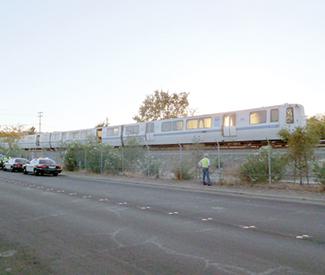
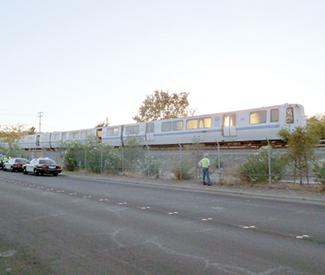
The Assembly Committee on Labor and Employment will hold a hearing in San Francisco tomorrow (Thu/7 at 10am) looking at workplace safety issues in the BART system, one initially prompted by the district’s record of unaddressed safety violations, but which took on special resonance when two BART workers were killed on the tracks on Oct. 19.

Assemblymember Phil Ting called for the hearing back in June, but he postponed it until the district resolved a protracted contract impasse with its three unions that resulted in two four-day strikes this year, with an agreement finally reached two days after the tragedy — and at least partially prompted by it.

Ting told the Guardian that he was motivated by dozens of violations from the California Occupational Safety and Health Administration that the district has received since its last fatality in 2008 — which were highlighted by the unions and reported by us — and the fact that “BART ended up appealing them instead of going to fix them.”

“It’s so unfortunate that we have this tragedy, which will create a greater sense of urgency on this issue,” Ting said, noting that he wants to focus on, “How do we move forward and fix these problems?”

Beyond those safety issues lurk another important issue that we at the Guardian have been raising, but which most journalists have ignored and the district has tried to avoided addressing: Was the district ignoring safety concerns by its unions to train replacement drivers on that ill-fated train, and did its preparations to run limited service during a strike harden its negotiating stance and force the strikes and ultimately the tragedy?

It may be many months before the National Transportation Safety Board investigation arrives at conclusions about what caused the fatalities, but it has already said that a trainee was at the helm at the time. Although the NTSB has told the district not to publicly discuss the accident, that doesn’t cover the labor negotiations that led up to it, and the Guardian has finally been able to get some responses from the district to our questions (below, you can find an extended exchange between me and BART spokesperson Alicia Trost), but key questions remain unanswered.

Will tomorrow’s hearing illuminate the connection between the labor impasse and the tragedy? “We’ll have to touch on some of it,” Ting told us. “But I’m not sure what they’ll say.”

BART Board President Tom Radulovich discussed the issues with the Guardian, and he cautioned about any rush to judgement about the cause of the Oct. 19 accident and whether it was connected to preparations that the district was making to possibly offer replacement service, which the board would have had to approve.

Although he said the board was briefed by district officials about the possibility of offering service, Radulovich said he didn’t consider the idea feasible and that “a lot of directors had misgivings about even the possibility of running replacement service.”

Radulovich also defended the eventual deal as resulting from compromises on both sides and not simply the district sweetening its offer and dropping some of its work rule demands — which the unions had blamed for the Oct. 17 breakdown in negotiations — and “I don’t think [limited replacement service] would have broken a strike.”

But SEIU Local 1021 Political Director Chris Daly, who was part of the union’s negotiating team, said the district was “bargaining toward a strike” all year and that the threat of running replacement service was taken seriously by the unions, all of whom warned the district it would be unsafe.

“We would have lost this fight if they had put limited service on,” Daly told us, noting how that would have allowed the district to weather a strike long enough to break the will of union members.

Daly also disputes the district’s characterization that relaxed work rules demands by the unions settled the impasse, telling us, “In the end, the deal was a little more compromise on substance, but not as much as that would have occurred in the binding arbitration that we proposed before the strikes.”

The district rejected that offer, setting the stage for the latest strike, and Daly said the only reason why BART softened its stance was because the tragedy made BART realize its plan to run replacement service was not longer a viable option: “There is not question in anyone’s mind that was the breakthrough.”

Both Radulovich and district officials insist there were no active plans to run replacement service, although BART spokesperson Alicia Trost made clear that the district had publicly raised that possibility and that training to that end was already underway at the time the tragedy.

Radulovich insists that the district wasn’t bargained toward a strike and that “we just wanted a balanced package.” But he also wasn’t at the bargaining table, and he says that he’s not aware of how much driver training had been done and whether it was being done on the ill-fated train in preparation for replacement service.

“I still have a lot of questions and I do want to see the facts,” Radulovich told us.    

We at the Guardian also still have a lot of questions, which Trost was dodging until just a few days ago, when my last blog post on the topic finally prompted a substantial response. So here’s our most recent email exchange:


SFBG: Who at the district proposed training replacement drivers and did the board approve that training?
Did the district discuss warnings from the unions that such training would be unsafe? Why was the decision made to go ahead with the training anyway?
Why did it take days for BART to admit a trainee was driving the train that killed those men? And wasn’t casting that train as solely on a maintenance run deceptive?
Does the district regret the decision to train replacement drivers?
What role did the tragedy play in BART’s decision to sweeten its final offer and end the strike?
Did anyone at the district discuss with Tom Hocke how running replacement service could help break a strike? Do you deny that running limited service would help to break a strike?
Did the possibility of running replacement service allow the district to take a tougher stance at the bargaining table? And did this tragedy help the district conclude that running such service wasn’t a viable option?
Can you characterize what you meant by an “extended strike” and explain why training took place immediately at the onset if the strike?


BART: The District wanted a plan in place to run limited train service in the event of a prolonged strike.  The intent was never to replace workers, as our workers would be welcomed back once a strike ended, but to provide some limited congestion relief if the Bay Area was faced with a long, crippling and economically devastating strike. 

If the district was going to provide this limited service for the public it would need more certified managers which is why we were training. At the same time we were negotiating in good faith and trying to prevent a strike from happening in the first place. Our priority was always to get to a deal and avoid an unnecessary strike.  Once the unions went on strike for the second time we continued to negotiate and leave the door open for a deal. Which is exactly what happened. A deal came together and BART never needed to go to the board with a limited train service plan. Safety is always our top priority and is always the first, second and third consideration in everything we do. 

The NTSB immediately put a gag order on BART officials just hours after the tragic deaths, which remains in place today. Only the NTSB can provide information surrounding the incident. The NTSB announced the train was being used for both maintenance and training purposes. Under the gag order, BART is allowed to site what the NTSB has reported to date. 

The tragedy certainly redoubled everyone’s efforts to get to a deal.   The breakthrough came when the unions presented language on Beneficial Past Practice on Sunday night. This opened the door to continue to work off the progress that had been made on the economic components with the mediators just days before and resolve the remaining issues. 


SFBG: Thanks for finally getting back to me, but I don’t think you directly answered any of the questions that I posed.


BART: Did BART management consider the warnings (include one in the form of a

lawsuit) that running that service was unsafe?  Safety is always our top priority and is always the first, second and third consideration in everything we do.

And did the tragedy reinforce that safety question and signal to the district that running trains during a strike was probably unwise and that the district should sweeten its contract offer?

We have to run trains during a strike to exercise the system (details sent in a earlier email.) If you are talking about running passenger service, we never needed to move forward with such a plan as we were not faced with a prolonged strike.  The tragedy certainly redoubled everyone’s efforts to get to a deal.   The breakthrough came when the unions presented language on Beneficial Past Practice on Sunday night. This opened the door to continue to work off the progress that had been made on the economic components with the mediators just days before and resolve the remaining issues.

Who at the district proposed training replacement drivers and did the board approve that training?

The Operations Department was conducting the training as publically discussed by Paul Oversier to the MTC and to the media.  The board does not need to approve training.  (on background: I do not know if or who officially “proposed it.”  The first I learned of the concept was the MTC meeting.)

Did the district discuss warnings from the unions that such training would be unsafe? Why was the decision made to go ahead with the training anyway?

Safety is always our top priority and is always the first, second and third consideration in everything we do. The District wanted a plan in place to run limited train service in the event of a prolonged strike.

Why did it take days for BART to admit a trainee was driving the train that killed those men? And wasn’t casting that train as solely on a maintenance run deceptive?   

During the press conference immediately following the accident, a reporter asked where the train was going.  Mr. Oversier explained the train had just dropped off the graffiti train and was headed back to Concord.  He said he didn’t know who was driving the train as he had just arrived to the scene. The NTSB immediately put a gag order on BART

officials just hours after the tragic deaths, which remains in place today. Only the NTSB can provide information surrounding the incident. The NTSB announced the train was being used for both maintenance and training purposes. Under the gag order, BART is allowed to site what the NTSB has reported to date, which is why we can now point out the fact the train was both a training train and a maintenance/inspection trains we routinely run during strikes to exercise the system and deploy staff to assignments.
Does the district regret the decision to train replacement drivers?

This is a difficult question to answer without a summary of findings from the NTSB.
What role did the tragedy play in BART’s decision to sweeten its final

offer and end the strike?

The tragedy certainly redoubled everyone’s efforts to get to a deal.   The breakthrough came when the unions presented language on Beneficial Past Practice on Sunday night. This opened the door to continue to work off the progress that had been made on the economic components with the mediators just days before and resolve the remaining
issues.

Did anyone at the district discuss with Tom Hocke how running replacement

service could help break a strike?

No, the intent was to provide some contingencies for the travelling public being adversely impacted by the unions decision to strike.  

Do you deny that running limited service would help to break a strike?

The intent was never to replace workers, as our workers would be welcomed back once a strike ended, but to provide some limited congestion relief if the Bay Area was faced with a long, crippling and economically devastating strike.  Skeletal service would never be able to replace BART’s normal operation but it could provide a tiny bit of
congestion relief to the public.  BART’s bargaining team was always focused
on getting a deal with union leadership- one that would be approved by the
workers as well.

Did the possibility of running replacement service allow the district to take a tougher stance at the bargaining table? And did this tragedy help the district conclude that running such service wasn’t a viable option?

Our priority was always to get to a deal and avoid an unnecessary strike. Once the unions went on strike for the second time we continued to negotiate in good faith and leave the door open for a deal. Which is exactly what happened. A deal came together and BART never needed to go to the board with a limited train service plan.

Can you characterize what you meant by an “extended strike” and explain why training took place immediately at the onset if the strike?

There was never an exact time period placed on what an “extended strike” would be, but
union leadership indicated publically they were prepared for a month long strike which would be the “longest and bloodiest strike” we’ve ever seen. We began initial training weeks before the strike- as widely covered by the media.  If the district was going to provide limited service for the public it would need more certified managers than we had.


The horror

1

arts@sfbg.com

THEATER Just last night a cordial campfire conversation with a hobgoblin and a menorah tumbled precipitously from the obscenity of rents in the city to the cold hard facts of our existence on this planet. Halloween was not yet over, and the really scary stuff had already returned.

You don’t have to be a librarian to have gathered something of the unlikeness, the arbitrariness, the inconsequence of an individual life measured against the eons of time and the vastness of space — but let’s say you are a librarian. What would get under your skin more than this? Maybe one thing: the fact that in addition to the obvious indifference of the universe, existence comes with the seemingly unnecessary cruelty visited on us by our fellow human beings.

Maybe one more thing, too: a library book returned 113 years overdue.

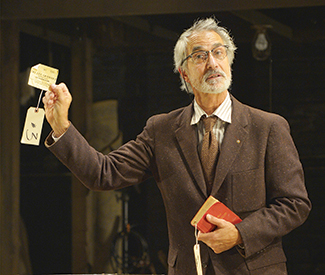
Both of these unpalatable situations gnaw at the bookish protagonist in Glen Berger’s 2001 play, Underneath the Lintel, currently enjoying a revival courtesy of American Conservatory Theater. Our protagonist, the play’s sole character, is a garrulous but faintly troubled librarian from Holland (played by an endearingly geeky David Strathairn, in trim graying beard and neat but comfy wool suit). In a makeshift lecture in an old rented theater, the librarian-turned-sleuth presents his remarkable findings concerning the possible reality behind an ancient myth. Along the way, we discover a gradual dovetailing of his own increasingly unmoored career and that of his subject: the fabled Wandering Jew, condemned to bear silent witness to history after a show of callousness before a desperate stranger at his door (who turned out to be Christ on the march to Golgotha, wouldn’t you know it).

The play — whose title refers to the upper portion of a doorway, the regretful place from which an ancient cobbler turned his back on his fellow man and our modern-day librarian dismissed the only woman he ever loved — works a tension between competing frameworks. Bounded by our little lives with their precious but small concerns, the play suggests, we too easily miss the bigger picture and stumble accordingly. But even when confronted with the worst of fate, the baleful immensity of history, or our own actions, we also carry on despite all the universe may throw at us.

Of course, the Geary stage is almost as vast as the aforementioned universe. Director Carey Perloff and her actor work hard to see this pocket-sized piece expand as much as possible to fill it. Strathairn’s fastidious and childlike librarian moves nervously, enthusiastically around the stage, scaling a tall freestanding ladder one moment, rummaging around a set of files the next, or stalking the second-tier storage area at the back of scenic designer Nina Ball’s atmospherically dingy, drippy, haze-filled bric-a-brac set.

The only time this nervous energy seems to go too far is in the final moment, when the librarian exits the stage in an awkward physical underscoring of a key line, wandering out who-knows-where. But Berger’s charming mystery, while ultimately affirming, has a haunted, melancholy streak running through it — a creeping pessimism at the edge of the firelight that is its most provoking aspect, and saves it from being purely sentimental.


ONCE UPON A WEEKNIGHT DREARY: ‘GRAND GUIGNOL’

The father of Paris’s Théâtre du Grand Guignol, French playwright Oscar Méténier (1859–1913), rests in pieces — or at least the pieces he left for the stage; naturalistic horror plays that were themselves full of body parts strewn hither and thither. Thither, in this case, has been renamed “the splatter zone” for playwright Carl Grose and director Mitchell Altieri’s macabre comedy homage to the legendary Parisian theater and genre (a specialty of local company Thrillpeddlers, whose own “Shocktoberfest” is also up and running not far away).

But though audiences in the first rows sit dutifully in plastic rain ponchos, the gore and the titillation and the laughs are surprisingly spare. Grand Guignol‘s opening night, moreover, was a rocky horror show, to say the least, plagued by delays, poor acoustics, slippery pacing, slightly inept execution (of executions, and other bloody deeds), and a storyline almost as mangled as the bodies it left in its wake. It has a game cast, however, and while variously successful at projecting their voices above the atmospheric sound design, its members deliver some nicely tailored performances under the circumstances, which are messy in ways intended and otherwise. *

UNDERNEATH THE LINTEL

Extended through Nov 23

Tue-Sat, 8pm (check website for matinees); Sun, 2pm, $20-150

Geary Theater

415 Geary, SF

www.act-sf.org

Theater Listings: November 6 – 12, 2013

0

Stage listings are compiled by Guardian staff. Performance times may change; call venues to confirm. Reviewers are Robert Avila, Rita Felciano, and Nicole Gluckstern. Submit items for the listings at listings@sfbg.com.

THEATER

OPENING

Emmett Till: A River NOH Space in Project Artaud, 2840 Mariposa, SF; www. theatreofyugen.org. $20-30. Opens Thu/7, 8pm. Runs Thu-Sat, 8pm; Sun, 2pm. Through Nov 17. Theatre of Yugen presents a world premiere by Kevin Simmonds and Judy Halebsky; it uses classical Japanese Noh drama to tell the story of civil rights-era murder victim Emmett Till.

The Gershwins’ Porgy and Bess Golden Gate Theatre, One Taylor, SF; www.shnsf.com. $60-210. Opens Sun/10, 2pm. Runs Tue-Sat, 8pm (no show Nov 28; check website for matinee schedule); Sun, 2pm. Through Dec 8. The Tony-winning Broadway revival launches its national tour in San Francisco.

My Beautiful Launderette New Conservatory Theatre Center, 25 Van Ness, SF; www.nctcsf.org. $25-45. Opens

Fri/8, 8pm. Runs Wed-Sat, 8pm; Sun, 2pm. Through Dec 22. New Conservatory Theatre Center performs Andy Gram and Roger Parsley’s adaptation of Hanif Kureishi’s award-winning screenplay.

The Rita Hayworth of this Generation Garage, 715 Bryant, SF; www.715bryant.org. $10-15. Opens Wed/6, 8pm. Runs Wed-Thu, 8pm. Through Nov 21. Tina D’Elia performs her multi-character solo play.

BAY AREA

A Bright New Boise Aurora Theatre, 2081 Addison, Berk; www.auroratheatre.org. $32-50. Previews Fri/8-Sat/9 and Nov 13, 8pm; Sun/10, 2pm; Tue/12, 7pm. Opens Nov 14, 8pm. Runs Tue, 7pm; Wed-Sat, 8pm; Sun, 2 and 7pm. Through Dec 8. Aurora Theatre presents Samuel D. Hunter’s tale of an ex-Evangelical cult member attempting to bond with his estranged son before the end of the world.

ONGOING

The Barbary Coast Revue Stud Bar, 399 Ninth St, SF; eventbrite.com/org/4730361353. $10-40. Wed, 9pm (no show Nov 27). Through Dec 18. Blake Wiers’ new “live history musical experience” features Mark Twain as a tour guide through San Francisco’s wild past.

Bengal Tiger at the Bagdad Zoo SF Playhouse, 450 Post, SF; www.sfplayhouse.org. $30-100. Tue-Thu, 7pm; Fri-Sat, 8pm (also Sat, 3pm). Through Nov 16. In Rajiv Joseph’s Pulitzer-nominated Bengal Tiger at the Bagdad Zoo, the dead quickly outnumber the living, and soon the stage is littered with monologist ghosts lost in transition. In Joseph’s world, at least, death is but another phase of consciousness, a plane of existence where a man-eating tiger might experience a crisis of conscience, and a brash young soldier with a learning disability might suddenly find himself contemplating algebraic equations and speaking Arabic — knowledge that had eluded his comprehension in life. Will Marchetti’s portrayal of the titular tiger is on the static side, though his wry intelligence and philosophical awakening comes as a welcome contrast to the willfully obtuse world view of the American soldiers (Gabriel Marin and Craig Marker) guarding him. But it’s Musa (Kuros Charney), a translator for the Americans and a former gardener and topiary “artist,” who eventually emerges as the play’s most fully realized character and also the most tragic, becoming that which he dreads the most, a beast in a lawless land, egged on by the ghost of his former employer, the notoriously sadistic Uday Hussein (Pomme Koch). At times, director Bill English’s staging feels too understated and contained for a play that’s so muscular and expansive (an understatement not carried over into Steven Klems’ appropriately jarring sound design) focused less on its metaphysical implications than on its mundane surface, but however imperfect the production and daunting the script, it remains a fascinating response to an unwinnable war — the war against our own animal natures. (Gluckstern)

BoomerAging: From LSD to OMG Marsh San Francisco, 1062 Valencia, SF; www.themarsh.org. $15-50. Tue, 8pm. Extended through Dec 17. Will Durst’s hit solo show looks at baby boomers grappling with life in the 21st century.

Dirty Little Showtunes New Conservatory Theatre Center, 25 Van Ness, SF; www.nctcsf.org. $25-45. Wed/6-Sat/9, 8pm; Sun/10, 2pm. Lyricist-performer Tom Orr and director F. Allen Sawyer’s sassy but loving remix of iconic Broadway songs returns in another iteration, this one at the New Conservatory Theatre Center, complete with a willing and able cast of five (Rotimi Agbabiaka, David Bicha, Jesse Cortez, Randy Noak, Orr), piano accompaniment by musical director Scrumbly Koldewyn, and some rudimentary if evocative choreography by Jayne Zaban. Truly silly, sometimes inspired, the show mixes favorite parodies from past productions with some new ones. Orr’s wit shines throughout, even if it does not necessarily outshine every borrowed theme. Gilbert and Sullivan, for example, are hardly upstaged as much as celebrated with Bicha belting out, “I Am the Very Model of a Modern Homosexual.” More sentimental numbers about T cell counts or gay marriage, while an understandable part of the landscape of gay life explored here, can feel a little strained in the context of the generally ribald. But the high-spirited nature of this whimsical show makes pardonable even the less-dirty parts. (Avila)

Driving Miss Daisy Buriel Clay Theater at the African American Art and Culture Complex, 762 Fulton, SF; www.african-americanshakes.org. $12.50-37.50. Fri-Sat, 8pm; Sun, 3pm. Through Nov 17. African-American Shakespeare Company performs Alfred Uhry’s Pulitzer-winning drama.

Foodies! The Musical Shelton Theater, 533 Sutter, SF; www.foodiesthemusical.com. $32-34. Fri-Sat, 8pm. Open-ended. AWAT Productions presents Morris Bobrow’s musical comedy revue all about food.

Gruesome Playground Injuries Tides Theatre, 533 Sutter, SF; www.tidestheatre.org. $20-40. Wed/6-Sat/9, 8pm. Tides Theatre performs Rajiv Joseph’s drama about two people who first meet as eight-year-olds in the school nurse’s office.

Hedwig and the Angry Inch Boxcar Theatre, 505 Natoma, SF; www.boxcartheatre.org. $27-43. Thu-Sat, 8pm. Open-ended. John Cameron Mitchell’s cult musical comes to life with director Nick A. Olivero’s ever-rotating cast.

I Married an Angel Eureka Theatre, 215 Jackson, SF; www.42ndstmoon.org. $25-75. Wed-Thu, 7pm; Fri, 8pm; Sat, 6pm (also Sat/9, 1pm), Sun, 3pm. Through Nov 17. 42nd Street Moon performs the Rodgers and Hart classic.

The Jewelry Box: A Genuine Christmas Story The Marsh San Francisco, 1062 Valencia, SF; www.themarsh.org. $15-40. Fri, 8pm; Sat, 5pm. Through Dec 28. Brian Copeland performs the world premiere of his new, holiday-themed work, an Oakland-set autobiographical tale that’s a prequel to his popular Not a Genuine Black Man.

The Life Machine DanzHaus, 1275 Connecticut, SF; www.faultlinetheater.com. $15-20. Fri/8-Sat/9, 8pm; Sun/10, 2pm. A naïve and restive young woman (Gwen Kingston), working as admin for a high-powered and ethically questionable business firm, marries her pig-headed and lecherous boss (Nick Medina) in a desperate bid to escape the drudgery of the work-a-day world. Instead, she finds her suffocating marriage and unwanted motherhood its own prison. An extramarital affair with a latter-day beatnik (Jon Oleson) gives her a first taste of life and freedom, for which she pays the ultimate price when things go south. Set in a palpably near future, this socially rich dystopic drama acknowledges several “reflective texts” as influences, including Donna Haraway’s “A Cyborg Manifesto” and (as evidenced in some of Maxx Kurzunshki and Clive Walker’s wide-ranging and remarkable video design) Godfrey Reggio and Philip Glass’s Koyaanisqatsi. But the piece remains in large part an astute revamping and updating of Sophie Treadwell’s Machinal. Director Cole Ferraiuolo’s inspired retooling of that 1928 expressionist stage classic proves a potent contemporary lens on the persistent anomie of the people, and growing enemies of the state, in a self-congratulatory high-tech and hyper-connected world. Sophie Needelman’s mercurial choreography for five dancers, meanwhile, evokes everything from the crush of the daily commute to the cyborg cogs of the post-industrial work world or the drift of the moon across a fathomless sky. At the heart of this worthwhile production from impressive newcomers FaultLine are a handful of strong and intelligent performances. These are led by Kingston’s dynamic, rigorously unsentimental performance as a tragically alienated every-woman, who must suffer any number of mundane indignities before her apotheosis as a deeply violent and repressed society’s convenient cipher. (Avila)

Lovebirds Marsh San Francisco, 1062 Valencia, SF; www.themarsh.org. $15-100. Thu/7-Fri/8, 8pm; Sat/9, 8:30pm. Workshop performances of Marga Gomez’s 10th solo show, about different characters seeking romance in the 1970s.

Peter and the Starcatcher Curran Theatre, 445 Geary, SF; www.shnsf.com. $40-160. Tue-Sat, 8pm (also Wed and Sat, 2pm; no show Nov 28); Sun, 2pm. Through Dec 1. Fanciful, Tony-winning prequel to Peter Pan.

Shakespeare Night at the Blackfriars (London Idol 1610) Phoenix Arts Association Annex Theatre, 414 Mason, SF; www.subshakes.com. $20-25. Fri-Sat, 8pm; Sun, 7pm. Through Nov 17. Subterranean Shakespeare performs George Crowe’s comedy about a playwriting contest between Ben Jonson, Thomas Middleton, Francis Beaumont, and the ghost of Christopher Marlowe.

“Shocktoberfest 14: Jack the Ripper” Hypnodrome, 575 10th St, SF; www.thrillpeddlers.com. $25-35. Thu-Sat, 8pm. Through Nov 23. It’s lucky 14 for the Thrillpeddlers’ annual Halloween-tide Shocktoberfest, and while there are few surprises in this year’s lineup, there’s plenty of reliable material to chew on. Opening with A Visit to Mrs. Birch and the Young Ladies of the Academy, a ribald Victorian-era “spanking drama,” the fare soon turns towards darker appetites with a joint Andre De Lorde-Pierre Chaine work, Jack the Ripper. Works by De Lorde — sometimes referred to as the “Prince of Fear” — have graced the Hypnodrome stage over the years, and this tense Victorian drama, though penned in the 30s, is suitably atmospheric. Although it becomes pretty evident early on who dunnit, it’s the why that lies at the heart of this grim drama, and in the course of that discovery, the play’s beleaguered lawmen reveal themselves to be no less ruthless than the titular Ripper (John Flaw) in pursuit of their quarry. Norman Macleod as Inspector Smithson particularly embodies this unwholesome dichotomy, and Bruna Palmeiro excels as his spirited yet doomed bait. Inspired by Oscar Wilde’s Salome, the Thrillpeddlers’ piece by the same name is perhaps the weak link in the program, despite being penned by the ever-clever Scrumbly Koldewyn, and danced with wanton abandon by Noah Haydon. Longtime Thrillpeddlers’ collaborator Rob Keefe ties together the evening’s disparate threads under one sprawling big top media circus of murder, sex, ghosts, and sensationalism with his somewhat tongue-in-cheek, San Francisco-centric The Wrong Ripper. (Gluckstern)

Sidewinders Exit on Taylor, 277 Taylor, SF; www.cuttingball.com. $10-50. Thu, 7:30pm; Fri-Sat, 8pm (also Sat, 2pm); Sun, 5pm. Through Nov 17. Cutting Ball opens its 15th season with the world premiere of Basil Kreimendahl’s absurdist romp through gender queerness. In a cartoonish, desolate wasteland (designed by Michael Locher), Dakota (Sara Moore), a bleached-blonde gunslinger in buckskin fringes, and Bailey (DavEnd), a possibly AWOL soldier rocking high-heeled boots and a single drop earring, wrestle with the conundrum of what to call their respective genitals. And more to the point, what to do with them after they figure it out. Or as Bailey bluntly puts it, “Who am I supposed to fuck?” But there’s more to being stranded in the uncharted wilderness at stake than “organ confusion,” and soon they must channel their uncommon alliance into finding a way back out. What they find instead include a regal figure of indeterminate gender possessed of extra limbs (Donald Currie), a suicidal servant with surgical skills (Norman Muñoz), and a growing realization that wilderness, like identity, is relative. Moore and DavEnd make a good comedic team, their endless banter, circular logic and exaggerated facial gymnastics giving them the philosophical gravitas of a Looney Tunes episode, while Currie’s turn as mutated muse is unexpectedly moving. Recent winner of the prestigious Rella Lossy award, this intriguing world premiere marks playwright Basil Kreimendahl’s first professional production, though it seems safe to say that it won’t be the last. (Gluckstern)

BAY AREA

Can You Dig It? Back Down East 14th — the 60s and Beyond Marsh Berkeley, 2120 Allston, Berk; www.themarsh.org. $15-50. Sat, 8:30pm; Sun, 7pm. Extended through Dec 15. Don Reed’s new show offers more stories from his colorful upbringing in East Oakland in the 1960s and ’70s. More hilarious and heartfelt depictions of his exceptional parents, independent siblings, and his mostly African American but ethnically mixed working-class community — punctuated with period pop, Motown, and funk classics, to which Reed shimmies and spins with effortless grace. And of course there’s more too of the expert physical comedy and charm that made long-running hits of Reed’s last two solo shows, East 14th and The Kipling Hotel (both launched, like this newest, at the Marsh). Can You Dig It? reaches, for the most part, into the “early” early years, Reed’s grammar-school days, before the events depicted in East 14th or Kipling Hotel came to pass. But in nearly two hours of material, not all of it of equal value or impact, there’s inevitably some overlap and indeed some recycling. Reed, who also directs the show, may start whittling it down as the run continues. But, as is, there are at least 20 unnecessary minutes diluting the overall impact of the piece, which is thin on plot already — much more a series of often very enjoyable vignettes and some painful but largely unexplored observations, wrapped up at the end in a sentimental moral that, while sincere, feels rushed and inadequate. (Avila)

Don’t Dress For Dinner Center REPertory Company, 1601 Civic, Walnut Creek; www.centerrep.org. $33-52. Wed, 7:30pm; Thu-Sat, 8pm (also Nov 23, 2:30pm); Sun, 2:30pm. Through Nov 23. Center REP performs Marc Camoletti’s sequel to his classic farce Boeing-Boeing.

A King’s Legacy Pear Avenue Theatre, 1220 Pear, Mtn View; www.thepear.org. $10-35. Thu-Sat, 8pm; Sun, 2pm. Through Nov 24. Pear Avenue Theatre performs Elyce Melmon’s world premiere, a drama about King James VI of Scotland.

A Little Princess Julia Morgan Theater, 2640 College, Berk; www.berkeleyplayhouse.org. $17-60. Thu-Fri, 7pm (Nov 28, shows at 1 and 6pm); Sat, 1 and 6pm; Sun, noon and 5pm (no 5pm show Dec 1). Through Dec 8. Berkeley Playhouse opens its sixth season with Brian Crawley and Andrew Lippa’s musical adaptation of the Frances Hodgson Burnett story.

Metamorphoses South Berkeley Community Church, 1802 Fairview, Berk; www.infernotheatre.org. $10-25. Thu and Sat-Sun, 8pm; Fri, 9pm (no show Sat/9). Through Nov 23. Additional performance Sat/9, 8pm, $5-20, Laney College, 900 Fallon, Oakl. Inferno Theatre performs a multimedia, contemporary adaptation of Ovid’s classic.

The Pianist of Willesden Lane Berkeley Repertory Theatre, Thrust Theatre, 2015 Addison, Berk; www.berkeleyrep.org. $29-89. Tue and Thu-Sat, 8pm (also Thu/7, Dec 5, and Sat, 2pm; no matinee Sat/9; no show Nov 28); Wed and Sun, 7pm (also Sun, 2pm). Through Dec 8. Mona Golabek stars in this solo performance inspired by her mother, a Jewish pianist whose dreams and life were threatened by the Nazi regime.

Red Virgin, Louise Michel and the Paris Commune of 1871 Berkeley City Club, 2315 Durant, Berk; www.centralworks.org. $15-28. Thu-Sat, 8pm; Sun, 5pm. Through Nov 24. Central Works presents a new play (with live music) by Gary Graves about the Paris Commune uprising.

Social Security Muriel Watkin Gallery, 1050 Crespi Drive, Pacifica; (650) 359-8002. $10-25. Fri-Sat, 8pm; Sun, 2pm. Through Nov 24. Pacifica Spindrift Players performs Andrew Bergman’s classic comedy.

strangers, babies Ashby Stage, 1901 Ashby, Berk; www.shotgunplayers.org. $20-35. Wed-Thu, 7pm; Fri-Sat, 8pm; Sun, 5pm. Through Nov 17. Shotgun Players present Linda McLean’s drama about a woman confronting her past.

Swing Shift Onboard the SS Red Oak Victory, 1337 Canal, Berth 6A, Richmond; www.galateanplayers.com. $18-20. Fri/8-Sat/9, 8pm; Sun/10, 3pm. Galatean Players Ensemble Theatre perform Kathryn G. McCarty’s adaptation of Joseph Fabry’s novel, performed aboard a ship in the yards where Fabry once worked.

PERFORMANCE/DANCE

BATS Improv Bayfront Theater, B350 Fort Mason Center, SF; www.improv.org. $20. This week: “DuoProv Championship,” Fri, 8pm, through Nov 29; “Family Drama,” Sat, 8pm, through Nov 30.

“Best of the 2013 San Francisco Fringe Festival” Exit Studio, 156 Eddy, SF; www.theexit.org. Fri/8-Sat/9, 8pm. $15-25. This week: 53 Letters (“Best of” series continues through Nov. 23)

Jim Brickman Venetian Room, Fairmont San Francisco, 950 Mason, SF; www.bayareacabaret.org. Sun/10, 5pm (with David Burnham) and 8pm (solo). $48. Romantic piano sensation Brickman plays, joined at the earlier show by Broadway tenor David Burnham.

“Broadway Bingo” Feinstein’s at the Nikko, Hotel Nikko, 222 Mason, SF; www.feinsteinssf.com. Wed, 7-9pm. Ongoing. Free. Countess Katya Smirnoff-Skyy and Joe Wicht host this Broadway-flavored night of games and performance.

“Cabinet of Wonders” Jewish Community Center of SF, Kanbar Hall, 3200 California, SF; www.jccsf.org. Mon/11, 8pm. $30-40. Musician-author Wesley Stace curates and hosts this variety show, featuring Eugene Mirman, Alec Ounsworth, Dean & Britta, Bobcat Goldthwaite, and others.

“Comedy Returns to El Rio!” El Rio, 3158 Mission, SF; www.brownpapertickets.com. Mon/11, 8pm. $7-20. With Micia Mosely, David Hawkins, Sampson McCormick, Emily Epstein White, and Lisa Geduldig.

“Competitive Erotic Fan Fiction” Punchline, 444 Battery, SF; www.punchlinecomedyclub.com. Tue/12, 8pm. $15. Ten comics (Nato Green, Caitlin Gill, Sean Keane, and others) perform erotic fan fic.

CounterPULSE 1310 Mission, SF; www.counterpulse.org. This week: Instrument by Monique Jenkinson (aka Fauxnique), Fri/8, 8pm and Sat/9, 7pm, $20-30; “Beware the Band of Lions (They’re Dandy Lions),” with Bandelion, Sun/10 and Nov 17, 3pm, free (reservations required as space is extremely limited; to request an invitation, email info@dandeliondancetheater.org).

Flyaway Productions Joe Goode Annex, 401 Alabama, SF; www.flyawayproductions.com. Fri/8-Sat/9 and Nov 13-16, 7:30 and 9:30pm. $25. Choreographer Jo Kreiter and designer Sean Riley present the world premiere of Give a Woman a Lift.

“Hysterical Historical San Francisco, Holiday Edition” Shelton Theater, 533 Sutter, SF; www.sheltontheater.org. Sun, 7pm. Through Dec 29. $30-40. Comic Kurt Weitzman performs.

Roslyn Kind Feinstein’s at the Nikko, Hotel Nikko, 222 Mason, SF; www.feinsteinssf.com. Fri/8, 8pm; Sat/9, 7pm. $30-60 ($20 food and beverage minimum per person). The Broadway star performs.

Kunst-Stoff Dance Company ODC Theater, 3153 17th St, SF; www.kunst-stoff.org. Fri/8-Sat/9, 8pm; Sun/10, 7pm. $25-45. The company marks its 15th anniversary with retrospectives, contained in two different programs: recreated old works and new works inspired by repertory.

“Mission Position Live” Cinecave, 1034 Valencia, SF; www.missionpositionlive.com. Thu, 8pm. Ongoing. $10. Stand-up comedy with rotating performers.

“ODC/Dance Unplugged” ODC Dance Commons Studio B, 351 Shotwell, SF; www.odctheater.org. Fri/8, 7pm. $25. Get a unique, behind-the-scenes look at Triangulating Euclid, a new collaboration between Brenda Way, KT Nelson, and Kate Weare.

“Okeanos Intimate” Aquarium of the Bay, Pier 39, SF; www.capacitor.org. Sat, 4:30 and 7pm. $20-30 (free aquarium ticket with show ticket). Extended through Dec 28. Choreographer Jodi Lomask and her company, Capacitor, revive 2012’s Okeanos — a cirque-dance piece exploring the wonder and fragility of our innate connection to the world’s oceans — in a special “intimate” version designed for the mid-size theater at Pier 39’s Aquarium of the Bay. The show, developed in collaboration with scientists and engineers, comes preceded by a short talk by a guest expert — for a recent Saturday performance it was a down-to-earth and truly fascinating local ecological history lesson by the Bay Institute’s Marc Holmes. In addition to its Cirque du Soleil-like blend of quasi-representational modern dance and circus acrobatics — powered by a synth-heavy blend of atmospheric pop music — Okeanos makes use of some stunning underwater photography and an intermittent narrative that includes testimonials from the likes of marine biologist and filmmaker Dr. Tierney Thys. The performers, including contortionists, also interact with some original physical properties hanging from the flies — a swirling vortex and a spherical shell — as they wrap and warp their bodies in a kind of metamorphic homage to the capacity and resiliency of evolution, the varied ingenuity of all life forms. If the movement vocabulary can seem limited at times, and too derivative, the show also feels a little cramped on the Aquarium Theater stage, whose proscenium arrangement does the piece few favors aesthetically. Nevertheless, the family-oriented Okeanos Intimate spurs a conversation with the ocean that is nothing if not urgent. (Avila)

Point Break Live!” DNA Lounge, 373 11th St, SF; www.dnalounge.com. Dec 6 and Jan 3, 7:30 and 11pm. $25-50. Interactive interpretation of Kathryn Bigelow’s 1991 classic. (Some tickets include meatball sandwiches!)

“San Francisco Magic Parlor” Chancellor Hotel Union Square, 433 Powell, SF; www.sfmagicparlor.com. Thu-Sat, 8pm. Ongoing. $40. Magic vignettes with conjurer and storyteller Walt Anthony.

“Solitude” Brava Theater Center, 2781 24th St, SF; www.brava.org. Thu/7-Sat/9, 8pm (also Sat/9, 3pm). $15-35. LA’s Latino Theater Company performs Evelina Fendandez’s critically acclaimed play about Chicaco life and culture.

“Upside-Downton Abbey” Palace of Fine Arts Theatre, 3301 Lyon, SF; www.lamplighters.org. Sun/10, 4pm (silent auction at 3pm). $35-97. Also Nov 24, 4pm, $58-83, Mountain View Center for the Performing Arts, 500 Castro, Mtn View; www.mvcpa.com. Lamplighters Musical Theatre’s annual gala performance spoofs the popular British soap opera.

“WERK! Performance Festival 2013” Dance Mission Theater, 3316 24th St, SF; www.werkcollective.org. Fri/8-Sun/10, 8pm (also Sun/10, 4pm). $20. Choreographers Alyce Finwall, Samantha Giron, Timothy Rubel, and Ashley Trottier share the weekend.

BAY AREA

Diablo Ballet Smith Center, Ohlone College, 43600 Mission, Fremont; www.diabloballet.org. Sat/9, 2 and 8pm. Also Nov 15-16, 8pm (also Nov 16, 2pm), Lesher Center for the Arts, 1601 Civic, Walnut Creek; www.lesherartscenter.org. $20-52. The company’s 20th season kicks off with Our Waltzes Trilogy and A Swingin’ Holiday.

“Dogugaeshi” Zellebach Playhouse, Dana at Bancroft, UC Berkeley, Berk; www.calperformances.org. Wed/6-Fri/8, 8:30pm (also Thu/7-Fri/8, 6pm); Sat/9-Sun/10, 2 and 7pm. $48-76. The latest from innovative puppeteer Basil Twist.

“Rapunzel” Marin Theatre Company, 397 Miller, Mill Valley; www.marintheatre.org. Sat/9-Sun/10, 10am and 12:30pm. $15-20. Marin Theatre Company performs a fairy-tale play for all ages. *


Film Listings: November 6 – 12, 2013

0

Film listings are edited by Cheryl Eddy. Reviewers are Kimberly Chun, Dennis Harvey, Lynn Rapoport, Sam Stander, and Sara Maria Vizcarrondo. For rep house showtimes, see Rep Clock.

OPENING

Dallas Buyers Club See “Life’s Work.” (1:58) Embarcadero.

The Motel Life Brothers (Stephen Dorff, Emile Hirsch) go on the run after a tragic accident. Kris Kristofferson and Dakota Fanning co-star. (1:25) Roxie.

Running From Crazy Can one ever escape one’s toxic genetic legacy, especially when one’s makeup, and even one’s genius, is so entangled with mental illness, the shadow of substance abuse, and a kind of burden of history? Actor, author, healthy-living proponent, and now suicide prevention activist Mariel Hemingway seems cut out to try, as, eh, earnestly as she can, to offer up hope. Part of that involves opening the door to documentarian Barbara Kopple, in this look at the 20th century’s most infamous literary suicide, Mariel’s grandfather Ernest Hemingway, and just one of his familial threads, one full of lives cut deliberately short. For Running From Crazy, Kopple generally keeps the focus on Mariel, who displays all the disarming groundedness and humility of the youngest care-taking, “good” child. Her father, Ernest’s eldest son, Jack, regularly indulged in “wine time” with his ailing wife and, according to Mariel, had a pitch-black side of his own. But we don’t look to closely at him as the filmmaker favors the present, preferring to watch Mariel mountain climb and bicker with her stuntman boyfriend, meet up with her eldest sister Muffet, and ‘fess up about the depression that runs through the Hemingway line to her own daughters. Little is made of Mariel’s own artistic contributions in acting, though Kopple’s work is aided immeasurably by the footage Mariel’s rival middle sister Margaux shot for a documentary she planned to do on Ernest. Once the highest paid model in the world, Margaux leaves the viewer with a vivid impression of her brash, raw, eccentric, and endearingly goofy spirit — she’s courageous in her own way as she sips vino with her parents and older sister and tears up during a Spanish bull fight. Are these just first world problems for scions who never hesitated to trade on their name? Kopple is more interested in the humans behind the gloss of fame, spectacle and sensation — the women left in the wake of a literary patriarch’s monumental brand of masculinity and misogyny. And you feel like you get that here, plainly and honestly, in a way that even Papa might appreciate. (1:40) Opera Plaza, Smith Rafael. (Chun)

Spinning Plates Joseph Levy’s enjoyable documentary contrasts life at three widely disparate U.S. restaurants: the Martinez family’s modest enterprise La Cocina de Gabby, a Tucson showcase for a wife and mother’s Mexican cooking; Breitbach’s Country Dining in rural Iowa, a 151-year-old purveyor of all-American comfort food; and superstar chef Grant Achatz’s Chicago Alinea, where a 24-course meal of culinary art/science experiments can set you back $800 (yes, that’s for one diner). The latter is a global destination for serious foodies, acclaimed by the industry’s most prestigious observers. (Its nearly 24/7 supply deliveries are also a noisy nightmare for someone I know whose apartment is next door.) The teensy town that’s grown up around Breitbach’s has a population of 70; on a busy weekend, the business attracts up to 2,000, many driving long distances to get there. Yet the people we get to know the best here, the émigré Martinezes, illustrate another side of restaurant life — the side in which a majority of new eateries fail within three years, despite (as seemingly is the case at Gabby’s) all palate-pleasing, reasonable pricing and tireless labor. Tying together these three stories is … well, nothing, really, beyond some vague notion that good food is something that breeds “community.” (Yet high-ticket Alinea can hardly be said to reflect that, while Levy doesn’t actually bother interviewing any patrons to let us know whether the other two establishments’ food is anything special.) Still, and despite some rather bogus dramatic chronology-manipulation of events that happened several years ago, Spinning Plates is an entertaining sampler plate of a movie. And the Martinez family’s story lends it a bit of real gravitas. (1:32) Opera Plaza, Shattuck. (Harvey)

Thor: The Dark World The Avengers juggernaut rolls on as Thor (Chris Hemsworth) grabs his hammer for a stand-alone sequel. See review at www.sfbg.com. (2:00) Balboa, Presidio.

ONGOING

About Time Richard Curtis, the man behind 2003’s Love Actually, must be enjoying his days in England, rolling in large piles of money. Coinciding with the 10-year anniversary of that twee cinematic love fest comes Curtis’ latest ode to joy, About Time. The film begins in Cornwall at an idyllic stone beach house, as Tim (Domhnall Gleeson) describes his family members (Bill Nighy is dad; Richard Cordery is the crazy uncle) and their pleasures (rituals (tea on the beach, ping pong). Despite beachside bliss, Tim is lovelorn and ready to begin a career as a barrister (which feels as out of the blue as the coming first act break). Oh! And as it happens, the men in Tim’s family can travel back in time. There are no clear rules, though births and deaths are like no-trespass signs on the imaginary timeline. When he meets Mary (Rachel McAdams), he falls in love, but if he paves over his own evening by bouncing back and spending that night elsewhere, he loses the path he’s worn into the map and has to fix it. Again and again. Despite potential repetition, About Time moves smoothly, sweetly, slowly along, giving its audience time enough to feel for the characters, and then feel for the characters again, and then keep crying just because the ball’s already in motion. It’s the most nest-like catharsis any British film ever built. (2:03) Marina, SF Center, Shattuck, Sundance Kabuki. (Vizcarrondo)

All Is Lost As other reviewers have pointed out, All Is Lost‘s nearly dialogue-free script (OK, there is one really, really well-placed “Fuuuuuck!”) is about as far from J.C. Chandor’s Oscar-nominated script for 2011’s Margin Call as possible. Props to the filmmaker, then, for crafting as much pulse-pounding magic out of austerity as he did with that multi-character gabfest. Here, Robert Redford plays “Our Man,” a solo sailor whose race to survive begins along with the film, as his boat collides with a hunk of Indian Ocean detritus. Before long, he’s completely adrift, yet determined to outwit the forces of nature that seem intent on bringing him down. The 77-year-old Redford turns in a surprisingly physical performance that’s sure to be remembered as a late-career highlight. (1:46) Albany, SF Center, Sundance Kabuki. (Eddy)

Big Sur (1:21) 1000 Van Ness, Smith Rafael.

Blue is the Warmest Color The stars (Adèle Exarchopoulos and Léa Seydoux) say the director was brutal. The director says he wishes the film had never been released (but he might make a sequel). The graphic novelist is uncomfortable with the explicit 10-minute sex scene. And most of the state of Idaho will have to wait to see the film on Netflix. The noise of recrimination, the lesser murmur of backpedaling, and a difficult-to-argue NC-17 rating could make it harder, as French director Abdellatif Kechiche has predicted, to find a calm, neutral zone in which to watch Blue is the Warmest Color, his Palme d’Or–winning adaptation (with co-writer Ghalya Lacroix) of Julie Maroh’s 2010 graphic novel Le Blue Est une Couleur Chaude. But once you’ve committed to the three-hour runtime, it’s not too difficult to tune out all the extra noise and focus on a film that trains its mesmerized gaze on a young woman’s transforming experience of first love. (2:59) Embarcadero, Shattuck, Smith Rafael, Sundance Kabuki. (Rapoport)

Blue Jasmine The good news about Blue Jasmine isn’t that it’s set in San Francisco, but that it’s Woody Allen’s best movie in years. Although some familiar characteristics are duly present, it’s not quite like anything he’s done before, and carries its essentially dramatic weight more effectively than he’s managed in at least a couple decades. Not long ago Jasmine (a fearless Cate Blanchett) was the quintessential Manhattan hostess, but that glittering bubble has burst — exactly how revealed in flashbacks that spring surprises up to the script’s end. She crawls to the West Coast to “start over” in the sole place available where she won’t be mortified by the pity of erstwhile society friends. That would be the SF apartment of Ginger (Sally Hawkins), a fellow adoptive sister who was always looked down on by comparison to pretty, clever Jasmine. Theirs is an uneasy alliance — but Ginger’s too big-hearted to say no. It’s somewhat disappointing that Blue Jasmine doesn’t really do much with San Francisco. Really, the film could take place anywhere — although setting it in a non-picture-postcard SF does bolster the film’s unsettled, unpredictable air. Without being an outright villain, Jasmine is one of the least likable characters to carry a major US film since Noah Baumbach’s underrated Margot at the Wedding (2007); the general plot shell, moreover, is strongly redolent of A Streetcar Named Desire. But whatever inspiration Allen took from prior works, Blue Jasmine is still distinctively his own invention. It’s frequently funny in throwaway performance bits, yet disturbing, even devastating in cumulative impact. (1:38) Metreon, Opera Plaza, Shattuck, Vogue. (Harvey)

Captain Phillips In 2009, Captain Richard Phillips was taken hostage by Somali pirates who’d hijacked the Kenya-bound Maersk Alabama. His subsequent rescue by Navy SEALs came after a standoff that ended in the death of three pirates; a fourth, Abduwali Abdukhadir Muse, surrendered and is serving a hefty term in federal prison. A year later, Phillips penned a book about his ordeal, and Hollywood pounced. Tom Hanks is perfectly cast as Phillips, an everyman who runs a tight ship but displays an admirable ability to improvise under pressure — and, once rescued, finally allows that pressure to diffuse in a scene of memorably raw catharsis. Newcomer Barkhad Abdi, cast from an open call among Minneapolis’ large Somali community, plays Muse; his character development goes deep enough to emphasize that piracy is one of few grim career options for Somali youths. But the real star here is probably director Paul Greengrass, who adds this suspenseful high-seas tale to his slate of intelligent, doc-inspired thrillers (2006’s United 93, 2007’s The Bourne Ultimatum). Suffice to say fans of the reigning king of fast-paced, handheld-camera action will not be disappointed. (2:14) Four Star, 1000 Van Ness, Piedmont, SF Center, Sundance Kabuki. (Eddy)

Carrie Is the world ready for a candy-covered Carrie? It’s a sad state of affairs when the best thing about a movie, particularly a wholly superfluous remake like this, is its creepy poster. That’s the closest thing this Carrie has to offer next to that retina-scorching, iconic 1976 image of blood-saturated Sissy Spacek that continues to lend inspiration to baby Billiths everywhere. Nonetheless, like a shy violet cowering in the gym showers, this Carrie comes loaded with potential, with Boys Don’t Cry (1999) director Kimberly Peirce at the helm, the casting of Julianne Moore and Chloe Grace Moretz in the critical mother-daughter roles, and the unfortunately topical bullying theme. Peirce makes a half-hearted attempt to update the, um, franchise when the tormented Carrie (a miscast Moretz) is virally videoed by spoiled rival Chris (Portia Doubleday), but the filmmaker’s heart — and guts — aren’t in this pointless exercise. We speed through the buildup — which unconvincingly sets up Carrie’s torments at home, instigated by obviously mentally ill, Christian fundamentalist mom Margaret (Moore), and at school, where the PE teacher (Judy Greer) pep-talks Carrie and Sue Snell (Gabriella White) is mysteriously hellbent on paying penance for her bullying misdeeds — to the far-from-scary denouement. Let’s say mean-spirited reflexive revenge-taking is no real substitute for true horror and shock. Supposedly drawn to Carrie for its female-empowerment message, Peirce nevertheless isn’t cut out to wade into horror’s crimson waters — especially when one compares this weak rendition with Brian De Palma’s double-screen brio and high-camp Freudian passion play. (1:32) Metreon, 1000 Van Ness, Shattuck. (Chun)

Cloudy With a Chance of Meatballs 2 (1:35) Metreon.

The Counselor The reviews are in, and it’s clear Ridley Scott has made the most polarizing film of the season. Most of The Counselor‘s detractors blame Cormac McCarthy’s screenplay, the acclaimed author’s first that isn’t drawn from a prexisting novel. To date, the best film made from a McCarthy tale is 2007’s No Country for Old Men, and The Counselor trawls in similar border-noir genre trappings in its tale of a sleek, greedy lawyer (Michael Fassbender) who gets in way over his head after a drug deal (entered into with slippery compadres played by Brad Pitt and Javier Bardem) goes wrong. Yes, there are some problems here, with very few unexpected twists in a downbeat story that’s laden with overlong monologues, most of them delivered by random characters that appear, talk, and are never seen again. But some of those speeches are doozies — and haters are overlooking The Counselor‘s sleazy pleasures (many of which are supplied by Cameron Diaz’s fierce, feline femme fatale) and attention to grimy detail. One suspects cult appreciation awaits. (1:57) Metreon, 1000 Van Ness, Sundance Kabuki. (Eddy)

Diana The final years of Diana, Princess of Wales are explored in what’s essentially a classed-up Lifetime drama, delving into the on-off romance between “the most famous woman in the world” (Naomi Watts) and heart surgeon Hasnat Khan (Naveen Andrews). Relationship roadblocks (his Muslim family, back home in Pakistan, is hesistant to accept a divorced, Christian Brit as their son’s partner) are further complicated by extraordinary circumstances (Diana’s fame, which leads to paparazzi intrusions on the very private doctor’s life), but there’s real love between the two, which keeps them returning to each other again and again. By the third or fourth tearful breakup — followed by a passionate reunion — Diana‘s story becomes repetitive as it marches toward its inevitable tragic end. Still, director Oliver Hirschbiegel (2004’s Downfall, another last-days-in-the-life biopic, albeit of a slightly different nature) includes some light-hearted moments, as when a giggling Diana smuggles Hasnat through the palace gates (past guards who know exactly what she’s up to). As you’d expect, Watts is the best thing here, bringing warmth and complexity to a performance that strives to reach beyond imitation. (1:52) SF Center. (Eddy)

Don Jon Shouldering the duties of writer, director, and star for the comedy Don Jon, Joseph Gordon-Levitt has also picked up a broad Jersey accent, the physique of a gym rat, and a grammar of meathead posturing — verbal, physical, and at times metaphysical. His character, Jon, is the reigning kingpin in a triad of nightclubbing douchebags who pass their evenings assessing their cocktail-sipping opposite numbers via a well-worn one-to-10 rating system. Sadly for pretty much everyone involved, Jon’s rote attempts to bed the high-scorers are spectacularly successful — the title refers to his prowess in the art of the random hookup — that is, until he meets an alluring “dime” named Barbara (Scarlett Johansson), who institutes a waiting period so foreign to Jon that it comes to feel a bit like that thing called love. Amid the well-earned laughs, there are several repulsive-looking flies in the ointment, but the most conspicuous is Jon’s stealthy addiction to Internet porn, which he watches at all hours of the day, but with a particularly ritualistic regularity after each night’s IRL conquest has fallen asleep. These circumstances entail a fair amount of screen time with Jon’s O face and, eventually, after a season of growth — during which he befriends an older woman named Esther (Julianne Moore) and learns about the existence of arty retro Swedish porn — his “Ohhh&ldots;” face. Driven by deft, tight editing, Don Jon comically and capably sketches a web of bad habits, and Gordon-Levitt steers us through a transformation without straining our capacity to recognize the character we met at the outset — which makes the clumsy over-enunciations that mar the ending all the more jarring. (1:30) Elmwood, Metreon, 1000 Van Ness. (Rapoport)

Ender’s Game Those entering Ender’s Game in search of homophobic threads or politically unsavory themes will likely be frustrated. After all, Orson Scott Card — once a board member of the National Organization for Marriage, and here serving as a producer intent on preserving the 1985 novel that netted him acclaim — has revisited what was initially a short story multiple times over the years, tweaking it to reflect a new political climate, to ready it for new expedient uses. Who knows — the times are a-changin’ fast enough, with the outcry of LGBT activists and the growing acceptance of gay military members, to hope that a gay character might enter the mix someday. Of course, sexuality of all sorts is kept firmly in check in the Ender‘s world. Earth has been invaded by an insect-like species called the Formics, and the planet unifies to serve up its best and brightest (and, it’s implied, most ruthless) young minds, sharpened on first-person-shooters and tactical games, to the cause of defeating the alien “other.” Andrew “Ender” Wiggin (Asa Butterfield) is the knowing hybrid of his sociopath brother Peter (Jimmy Pinchak) and compassionate sister Valentine (Abigail Breslin) — of the trinity, he’s “the One,” as Han Solo, I mean, Harrison Ford, cadet talent-spotter and trainer Colonel Graff, puts it. Ender impresses the leather off the hardened old war horse, though the Colonel’s psychologically more equipped cohort Major Anderson (Viola Davis) suspects there’s more going on within their chosen leader. Director-screenwriter Gavin Hood demonstrates his allegiance to Card’s vision, valorizing the discipline and teamwork instilled by military school with the grim purpose and dead serious pleasure one might take in studying a well-oiled machine, while Ender is sharpened and employed as a stunningly effective tool in a war he never truly conceived of. This game has a bit more in common with the recent Wii-meets-Rock ‘Em Sock ‘Em Godzillas of Pacific Rim than the winking, acidic satire of Starship Troopers (1997), echoing a drone-driven War on Terror that has a way of detaching even the most evolved fighter from the consequences of his or her actions. The question is how to undo, or rewrite, the damage done. (1:54) 1000 Van Ness, Presidio, SF Center, Sundance Kabuki. (Chun)

Enough Said Eva (Julia Louis-Dreyfus) is a divorced LA masseuse who sees naked bodies all day but has become pretty wary of wanting any in her bed at night. She reluctantly changes her mind upon meeting the also-divorced Albert (James Gandolfini), a television archivist who, also like her, is about to see his only child off to college. He’s no Adonis, but their relationship develops rapidly — the only speed bumps being provided by the many nit-picking advisors Eva has in her orbit, which exacerbate her natural tendency toward glass-half-empty neurosis. This latest and least feature from writer-director Nicole Holofcener is a sitcom-y thing of the type that expects us to find characters all the more adorable the more abrasive and self-centered they are. That goes for Louis-Dreyfus’ annoying heroine as well as such wasted talents as Toni Colette as her kvetching best friend and Catherine Keener as a new client turned new pal so bitchy it makes no sense Eva would desire her company. The only nice person here is Albert, whom the late Gandolfini makes a charming, low-key teddy bear in an atypical turn. The revelation of an unexpected past tie between his figure and Keener’s puts Eva in an ethically disastrous position she handles dismally. In fact, while it’s certainly not Holofcener’s intention, Eva’s behavior becomes so indefensible that Enough Said commits rom-com suicide: The longer it goes on, the more fervently you hope its leads will not end up together. (1:33) Albany, Piedmont. (Harvey)

Escape Plan It’s fascinating how ruined faces and silvered goatees can lend an air of, uh, gravitas to even the most muscle-bound action-movie veterans. The logic: Sylvester Stallone and Arnold Schwarzenegger have been around so long that they must possess more than a few brain cells to rub together. And rub they do — to surprisingly pleasing effect in this cut-above-the-next-Expendables-sequel meeting of blockbuster behemoths. Stallone’s Ray Breslin is a prison security specialist so nerdily devoted to his work that he gets himself locked up to test his clients’ jails. He gets in over his head when he’s thrown into the most secure private prison in the world, which happens to be run by former Blackwater mercenaries. It’s essentially the next, rather permanent-looking step after your not-so-friendly rendition flight. Breslin befriends security man Rottmayer (Schwarzenegger), who’s in the clink on behalf of his “digital Robin Hood” boss. Menaced by warden Hobbs (Jim Caviezel) and brawny Drake (Vinnie Jones), the two prisoners kick off a changeable game, Muslim prisoner Javed (Faran Tahir) in tow. Director Mikael Håfström lays out the plans with geeky enthusiasm by way of zippy point-of-view shots that are supposed to let you into Breslin’s noggin. Shockingly, after Stallone’s recent brain-dead exercises (2012’s Bullet to the Head), it’s not an unhappy experience in this smarter-than-it-looks post-9/11 prison-break drama that wears its complicated feelings about War on Terror-era crime and punishment — and torture — on its sleeve. Still, matters never get too bleeding-heart liberal here, at the risk of alienating the stars’ audiences. Sly obviously embraces this opportunity to play smarter than usual, while the ex-Governator sinks his choppers into his role with glee, trotting out a Commando-style slo-mo gun-swinging move that will have his geek brigade cheering. (1:56) SF Center. (Chun)

Free Birds (1:31) Elmwood, Metreon, 1000 Van Ness.

God Loves Uganda Most contemporary Americans don’t know much about Uganda — that is, beyond Forest Whitaker’s Oscar-winning performance as Idi Amin in 2006’s The Last King of Scotland. Though that film took some liberties with the truth, it did effectively convey the grotesque terrors of the dictator’s 1970s reign. But even decades post-Amin, the East African nation has somehow retained its horrific human-rights record. For example: what extremist force was behind the country’s Anti-Homosexuality Bill, which proposed the death penalty as punishment for gayness? The answer might surprise you, or not. As the gripping, fury-fomenting doc God Loves Uganda reveals, America’s own Christian Right has been exporting hate under the guise of missionary work for some time. Taking advantage of Uganda’s social fragility — by building schools and medical clinics, passing out food, etc. — evangelical mega churches, particularly the Kansas City, Mo.-based, breakfast-invoking International House of Prayer, have converted large swaths of the population to their ultra-conservative beliefs. Filmmaker Roger Ross Williams, an Oscar winner for 2010 short Music by Prudence, follows naive “prayer warriors” as they journey to Uganda for the first time; his apparent all-access relationship with the group shows that they aren’t outwardly evil people — but neither do they comprehend the very real consequences of their actions. His other sources, including two Ugandan clergymen who’ve seen their country change for the worse and an LGBT activist who lives every day in peril, offer a more harrowing perspective. Evocative and disturbing, God Loves Uganda seems likely to earn Williams more Oscar attention. (1:23) Roxie. (Eddy)

Gravity “Life in space is impossible,” begins Gravity, the latest from Alfonso Cuarón (2006’s Children of Men). Egghead Dr. Ryan Stone (Sandra Bullock) is well aware of her precarious situation after a mangled satellite slams into her ship, then proceeds to demolition-derby everything (including the International Space Station) in its path. It’s not long before she’s utterly, terrifyingly alone, and forced to unearth near-superhuman reserves of physical and mental strength to survive. Bullock’s performance would be enough to recommend Gravity, but there’s more to praise, like the film’s tense pacing, spare-yet-layered script (Cuarón co-wrote with his son, Jonás), and spectacular 3D photography — not to mention George Clooney’s warm supporting turn as a career astronaut who loves country music almost as much as he loves telling stories about his misadventures. (1:31) Metreon, 1000 Van Ness, Presidio, Sundance Kabuki. (Eddy)

Inequality for All Jacob Kornbluth’s Inequality for All is the latest and certainly not the last documentary to explore why the American Dream is increasingly out of touch with everyday reality, and how the definition of “middle class” somehow morphed from “comfortable” to “struggling, endangered, and hanging by a thread.” This lively overview has an ace up its sleeve in the form of the director’s friend, collaborator, and principal interviewee Robert Reich — the former Clinton-era Secretary of Labor, prolific author, political pundit, and UC Berkeley Professor of Public Policy. Whether he’s holding forth on TV, going one-on-one with Kornbluth’s camera, talking to disgruntled working class laborers, or engaging students in his Wealth and Poverty class, Inequality is basically a resourcefully illustrated Reich lecture — as the press notes put it, “an Inconvenient Truth for the economy.” Fortunately, the diminutive Reich is a natural comedian as well as a superbly cogent communicator, turning yet another summary of how the system has fucked almost everybody (excluding the one percent) into the one you might most want to recommend to the bewildered folks back home. He’s sugar on the pill, making it easier to swallow so much horrible news. (1:25) California. (Harvey)

Jackass Presents: Bad Grandpa (1:32) Metreon, 1000 Van Ness.

Kill Your Darlings Relieved to escape his Jersey home, dominated by the miseries of an oft-institutionalized mother (Jennifer Jason Leigh) and long-suffering father (David Cross), Allen Ginsberg (Daniel Radcliffe) enters Columbia University in 1944 as a freshman already interested in the new and avant-garde. He’s thus immediately enchanted by bad-boy fellow student Lucien Carr (Dane DeHaan), a veteran of numerous prestigious schools and well on the road to getting kicked out of this one. Charismatic and reckless, Carr has a circle of fellow eccentrics buzzing around him, including dyspeptic William S. Burroughs (Ben Foster) and merchant marine wild child Jack Kerouac (Jack Huston). Variably included in or ostracized from this training ground for future Beat luminaries is the older David Kammerer (Michael C. Hall), a disgraced former academic who’d known Carr since the latter was 14, and followed him around with pathetic, enamored devotion. It’s this last figure’s apparent murder by Carr that provides the bookending crux of John Krokidas’ impressive first feature, a tragedy whose motivations and means remain disputed. Partly blessed by being about a (comparatively) lesser-known chapter in an overexposed, much-mythologized history, Kill Your Darlings is easily one of the best dramatizations yet of Beat lore, with excellent performances all around. (Yes, Harry Potter actually does pass quite well as a somewhat cuter junior Ginsberg.) It’s sad if somewhat inevitable that the most intriguing figure here — Hall’s hapless, lovelorn stalker-slash-victim — is the one that remains least knowable to both the film and to the ages. (1:40) SF Center, Shattuck. (Harvey)

Last Vegas This buddy film may look like a Bucket List-Hangover hybrid, but it’s got a lot more Spring Breakers in it than you expect — who beats Vegas for most bikinis per capita? Four old friends reunite for a wedding in Vegas, where they drink, gamble, and are confused for legendary men. Morgan Freeman sneaks out of his son’s house to go. Kevin Kline’s wife gave him a hall pass to regain his lost sense of fun. Kline and Freeman trick Robert De Niro into going — he’s got a grudge against Michael Douglas, so why celebrate that jerk’s nuptials to a 30-year-old? The conflicts are mostly safe and insubstantial, but the in-joke here is that all of these acting legends are confused for legends by their accidentally obtained VIP host (Romany Malco). These guys have earned their stature, so what gives? When De Niro flings fists you shudder inside remembering Jake LaMotta. Kline’s velvety comic delivery is just as swaggery as it was during his 80s era collaborations with Lawrence Kasdan. Douglas is “not as charming as he thinks he is,” yet again, and voice-of-God Freeman faces a conflict specific to paternal protective urges. Yes, Last Vegas jokes about the ravages of age and prescribes tenacity for all that ails us, but I want a cast this great celebrated at least as obviously as The Expendables films. Confuse these guys for better? Show me who. (1:44) Four Star, Metreon, 1000 Van Ness, Presidio. (Vizcarrondo)

Man of Tai Chi (1:45) Metreon.

Muscle Shoals Hard on the heels of Dave Grohl’s Sound City comes another documentary about a legendary American recording studio. Located in the titular podunk Northern Alabama burg, Fame Studio drew an extraordinary lineup of musicians and producers to make fabled hits from the early 1960s through the early ’80s. Among them: Percy Sledge’s “When a Man Loves a Woman,” a slew of peak era Aretha Franklin smashes, the Rolling Stones’ “Brown Sugar,” and those cornerstones of Southern rock, Lynyrd Skynyrd’s “Freebird” and “Sweet Home Alabama.” Tales of how particular tracks came about are entertaining, especially when related by the still-lively likes of Etta James, Wilson Pickett, and Keith Richards. (Richards is a hoot, while surprisingly Mick Jagger doesn’t have much to say.) Director Greg Camalier’s feature can be too worshipful and digressive at times, and he’s skittish about probing fallouts between Fame’s founder Rick Hall and some long-term collaborators (notably the local in-house session musicians known as the Swampers who were themselves a big lure for many artists, and who left Fame to start their own successful studio). Still, there’s enough fascinating material here — also including a lot of archival footage — that any music fan whose memory or interest stretches back a few decades will find much to enjoy. (1:51) Opera Plaza, Shattuck. (Harvey)

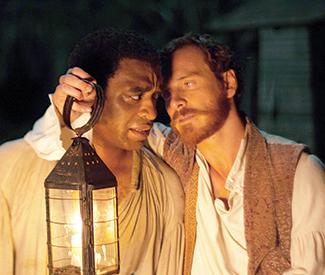
12 Years a Slave Pop culture’s engagement with slavery has always been uneasy. Landmark 1977 miniseries Roots set ratings records, but the prestigious production capped off a decade that had seen some more questionable endeavors, including 1975 exploitation flick Mandingo — often cited by Quentin Tarantino as one of his favorite films; it was a clear influence on his 2012 revenge fantasy Django Unchained, which approached its subject matter in a manner that paid homage to the Westerns it riffed on: with guns blazing. By contrast, Steve McQueen’s 12 Years a Slave is nuanced and steeped in realism. Though it does contain scenes of violence (deliberately captured in long takes by regular McQueen collaborator Sean Bobbitt, whose cinematography is one of the film’s many stylistic achievements), the film emphasizes the horrors of “the peculiar institution” by repeatedly showing how accepted and ingrained it was. Slave is based on the true story of Solomon Northup, an African American man who was sold into slavery in 1841 and survived to pen a wrenching account of his experiences. He’s portrayed here by the powerful Chiwetel Ejiofor. Other standout performances come courtesy of McQueen favorite Michael Fassbender (as Epps, a plantation owner who exacerbates what’s clearly an unwell mind with copious amounts of booze) and newcomer Lupita Nyong’o, as a slave who attracts Epps’ cruel attentions. (2:14) California, Embarcadero, Marina, Piedmont, Sundance Kabuki. (Eddy)

Wadjda Hijabs, headmistresses, and errant fathers fall away before the will and wherewithal of the 11-year-old title character of Wadjda, the first feature by a female Saudi Arabian filmmaker. Director Haifaa al-Mansour’s own story — which included filming on the streets of Riyadh from the isolation of a van because she couldn’t work publicly with the men in the crew — is the stuff of drama, and it follows that her movie lays out, in the neorealist style of 1948’s The Bicycle Thief, the obstacles to freedom set in the path of women and girls in Saudi Arabia, in terms that cross cultural, geographic, and religious boundaries. The fresh star setting the course is Wadjda (first-time actor Waad Mohammed), a smart, irrepressibly feisty girl practically bursting out of her purple high-tops and intent on racing her young neighborhood friend Abudullah (Abdullrahman Algohani) on a bike. So many things stand in her way: the high price of bicycles and the belief that girls will jeopardize their virginity if they ride them; her distracted mother (Reem Abdullah) who’s worried that Wadjda’s father will take a new wife who can bear him a son; and a harsh, elegant headmistress (Ahd) intent on knuckling down on girlish rebellion. So Wadjda embarks on studying for a Qu’ran recital competition to win money for her bike and in the process learns a matter or two about discipline — and the bigger picture. Director al-Mansour teaches us a few things about her world as well — and reminds us of the indomitable spirit of girls — with this inspiring peek behind an ordinarily veiled world. (1:37) Opera Plaza, Shattuck. (Chun)

Zaytoun It’s 1982 in war-torn Beirut, and on the semi-rare occasion that streetwise 12-year-old Palestinian refugee Fahed (Abdallah El Akal) attends school, he’s faced with an increasing number of empty desks, marked by photos of the dead classmates who used to sit there. His own father is killed in an air strike as Zaytoun begins. When an Israeli pilot (Stephen Dorff — a surprising casting choice, but not a bad one) is shot down and becomes a PLO prisoner, Fahed’s feelings of hatred give way to curiosity, and he agrees to help the man escape back to Israel, so long as he brings Fahed, who’s intent on planting his father’s olive sapling in his family’s former village, along. It’s not an easy journey, and a bond inevitably forms — just as problems inevitably ensue when they reach the border. Israeli director Eran Riklis (2008’s Lemon Tree) avoids sentimentality in this tale that nonetheless travels a pretty predictable path. (1:50) Smith Rafael. (Eddy) *


Alive, not well

0

[Update: La Luz was in a car accident during its tour and will no longer be playing these shows. The accident totaled the van, destroyed the gear, and band members suffered injuries. To donate, click here]

TOFU AND WHISKEY Sometimes the unexpected can rip you apart. It can gnaw at your insides, leave your stomach in knots, and twist your thoughts into a confused, messy blur. And sometimes, those rare unanticipated moments can inspire you anew. All the hurt and bewilderment and dark emotions reconfigure and morph into a project, such as an album.

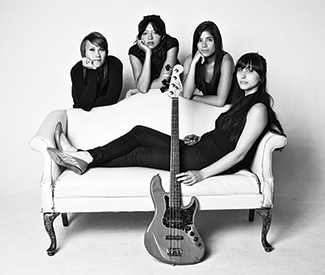
La Luz guitarist-vocalist Shana Cleveland felt this molten wave firsthand and the end result is a striking, blackened surf rock album with four-way doo-wop melodies and churling riffs smacking against the seawall. It’s the full-length debut from the Seattle all-lady quartet: It’s Alive (Hardly Art). The group tours to SF this week, opening up for of Montreal (Fri/8-Sat/9, 9pm, $21. Great American Music Hall, 859 O’Farrell, SF. www.slimspresents.com).

It’s Alive was built from death. “When something that dramatic happens, it could either crush you or give you a crazy energy,” Cleveland says. “For me it was like, after I came out of just being really depressed for awhile I was really inspired to….I don’t know exactly how to phrase it. It’s kind of a weird thing to talk about, I guess. It’s so heavy.”

That heavy moment took place May 30, 2012, when a deranged shooter burst into a Seattle café — Café Racer, where Cleveland and her friends routinely hung out — and killed five people. Around the corner from her house, it’s where she first met La Luz bassist Abby Blackwell. On that spring day last year, it’s where her friend Drew Keriakedes (otherwise known as “Shmootzi the Clod”), a vaudeville-style singing circus clown, died, slain in the rampage.

She describes him as always giving open, honest performances that made everyone fall in love with him — that performance style informed her own artistry. And the months after the shooting informed her songwriting. Though she also notes an intuition affected the record.

“It’s weird because a lot of the lyrics I wrote before the shooting happened and then a lot of them I wrote after. But then when I looked back…I kept seeing these weird premonitions. It just seems like the air was really heavy with this insane event and I was sort of channeling this crazy shit that was about to happen. This sounds kind of New Age-y. But when I looked back over the lyrics I was just like, ‘holy shit!’ I think I just felt something in the air.”

That gloom bled into It’s Alive, a record equally inspired by legendary surf guitarist Link Wray, who also lent a darker edge to the style.

“So it’s sort of a haunted album. It’s kind of cool that it’s coming out around Halloween, it seems fitting.”

It’s the band’s first real record, though before it played a single show, it recorded a demo tape called Damp Face. Both were recorded with the group’s friend Johnny Goss, who was living in a trailer park on the outskirts of town at the time. Goss, who “accumulated all this really cool old recording gear,” took a leisurely approach to It’s Alive, hanging out with La Luz and working together to add new vocal overdubs or extra fuzz.

Cleveland describes it as a highly collaborative process between Goss and the rest of La Luz — bassist Blackwell, drummer Marian Li Pino, and keyboardist Alice Sandahl — though she wrote the bulk of the lyrics before they started playing together. Once La Luz came together, the group altered the music and included everyone’s input.

But Cleveland is also comfortable making art on her own. In addition to La Luz, she’s also a poet (she actually majored in poetry at Columbia College in Chicago) and a visual artist, known for drawings and paintings of other bands and singers, often with big retro hairstyles or matching vintage suits.

“I found this record in a thrift store once and someone had done like, a ballpoint pen drawing of Buffalo Springfield. It was tucked inside of the record and I was really fascinated by it..and I kind of became obsessed with it. I’ve [always] been kind of obsessed with bands I guess, because my parents were both in bands too so it’s my whole life.”

Her dad plays in country and blues bands, her mom sings and plays blues harmonica. They met on tour, in fact — her dad was traveling with a band and stopped in her mom’s Colorado town, then she joined him on the road.

Cleveland grew up playing the instruments her parents — since divorced — had strewn around the house in Kalamazoo, Mich. She picked up guitar around 15 and began playing Veruca Salt songs.

After college, Cleveland headed west to LA but says she hated living in the San Fernando Valley. One day her mom brought her a copy of Seattle alt-weekly, The Stranger, and on a whim, she decided to move there.

“I packed up my Oldsmobile and moved. I don’t know if [The Stranger] knows that yet! I kind of want to tell them.”

Seattle became home and she has since ingrained herself in the local music scene, ticking off favorite Seattle acts like Rose Windows — “They’re doing this like, ’60s psych Jefferson Airplane kind of thing, they’re all really amazing players” — blues combo Lonesome Shack, and Pony Time.

For now, La Luz is touring on It’s Alive, and revving up for a first ever European jaunt in early 2014. While the songwriting began on a darker note, Cleveland is now seeing brightness in the future, at least when I pry out her band goals: “I really want to tour with Ty Segall. That’s just a dream of mine because I would like to see him play every night. I hope that happens. I really want to play with Shannon and the Clams too, because we’re all huge fans of theirs. And the Growwlers. We just played with them but I think it’d be fun to play more shows with them in the future too. They’re one of our favorite bands.”


SIX WEEKS RECORDS 20TH ANNIVERSARY

Two decades is a long lifeline for a DIY record label — especially one known for such short songs. Six Weeks Records, founded in ’92 by Athena Kautsch and Jeff Robinson, has distributed dozens of grimy grindcore, breakneck punk, and loud-as-hell hardcore albums from bands around the world. Clearly dedicated to the art of deafening music, the label also publishes the Short, Fast & Loud fanzine. This two-night anniversary fest features acts of the Six Weeks Records family including LA powerviolence legends Despise You, Tokyo’s Slight Slappers, NY’s Magrudergrind, Capitalist Casualties, Backslider, Coke Bust, P.L.F, and more.

Fri/8-Sat/9, 7pm, $17 each ($30 two-day pass). Oakland Metro, 630 Third St, Oakl. www.oaklandmetro.org.


MINOR ALPS

With Matthew Caws of Nada Surf and Juliana Hatfield of guest-starring-angel-on-My So-Called Life fame forming an intricate new pop band together — Minor Alps — it’s clear the ’90s resurgence beats on. The guitar-swelling, melodious new act, which just released debut LP Get There (Barsuk), plays the Independent Mon/11. And with it comes openers Churches, whom we previewed here at the Guardian before. The Nirvana-loving Bay Area band just released two new tracks: “Pretty in Black” and “Goths on the Boardwalk.” Says frontperson Caleb Nichols, “‘Goths on the Boardwalk’ is the culmination of my two years of living in Santa Cruz. It’s been weird — goths everywhere. [It’s] an ode to my love-hate with this place.” The angst continues.

Mon/11, 8pm, $20. Independent, 628 Divisadero, SF. www.theindependentsf.com.


CRASHFASTER

Local Nintendo-blasting electro rock group crashfaster released the track “Beacon,” the first single of its forthcoming sophomore LP, Further, this week. Like its earlier work, “Beacon” is a bouncy, nostalgic, digi-ride through ’80s video game culture, backed by motorcycle revving guitarwork and sound effects, in rock’n’roll chiptune style, which looks good for the rest of Further. Recorded at Different Fur Studios, that new full-length sees release Nov. 19 — but before that there’s a show at DNA Lounge. With Bit Shifter, Trash80, Unwoman.

Nov. 14, 9pm, $15. DNA Lounge, 375 11th St, SF. www.dnalounge.com.


High fidelity rockers

0

MUSIC Everyone knows the best way to music idolatry is a solid education in the school of rock (or pop, or hip-hop, or goth, Madchester, shoegaze, techno, et. al). And what better way to soak up the sexy, jagged history of music than to work at one of the few brick-and-mortar stores left that sells it exclusively.

Yes, we’re talking about the classic record shop clerk/artist dichotomy. It’s alive and well in San Francisco and the Bay Area beyond. We see it in Andee Connors of Aquarius Records and his bands like A Minor Forest [see full story]. And also bubbling over elsewhere in sound city thanks to still-vibrant music purveyors and lovers of all things sonic:

Perhaps the most well-documented record shop employee is SF’s darling garage rocker Kelley Stoltz, who works at Grooves on Market Street (he has done so for 12 years), and who released his latest full-length, Double Exposure, last month on Third Man Records.

There’s also Amoeba’s Upper Haight location, which is a hotbed of worker-musicians, including Fresh & Onlys bassist Shayde Sartin, whose formerly fuzzy band a few months back released latest EP Soothsaver on Mexican Summer, a shiny vintage pop gem. In that Golden Gate-adjacent mega-shop (which also has locations in Berkeley and LA) there’s also Andrew Kerwin of Trainwreck Riders, Luciano Talpini of Ceiling Eyes, Rory Smith of Death Pajamas, Steve Peacock of Pale Challis, and David James, who plays in many a band (Afrofunk Experience, Beth Custer Ensemble, Curtis Bumpy, David James’s GPS).

Brand-spanking-new record store RS94109 in the Tenderloin is brimming with vinyl dance music — and dance music talent. Twin owners Askander and Sohrab Harooni both make tracks upstairs, while close associate Oliver Vereker is rising through the dark techno ranks with eardrum-challenging DJ sets and hyped new L.I.E.S. label releases “Rosite” and “Fear Eats the Soul.”

The main man behind Explorist International, Chris Dixon, is currently in a few bands, including duo tujurikkuja, and a synthy electronic drone-psych project called Earth Jerks. He’s also finally remixed some Death Sentence: Panda! (remember them?) recordings from 2011 that will probably be released on cassette.

Punk-friendly Thrillhouse Records on the border of the Mission and Bernal hosts staffers who are also members of Apogee Sound Club, Dead Seeds, C’est Dommage, Dead Seeds, Pig DNA, Robocop 3, New Flesh, and Fantasy World.

Oakland’s newest record shop, Stranded, has Sam Lefebvre, a music writer himself who also plays in Pure Bliss and Cold Circuits.

And Rob Fletcher at 1-2-3-4 Go! is in Beasts of Bourbon-influenced rock band MUSK.

Some shops are breeding grounds for bands. Streetlight Records’ San Jose and Santa Cruz locations, for instance, harbor members of nearly a dozen different bands including death metal acts Abnutivum and Infernal Slave (both Matt DeLeon), Churches (Caleb Nichols), Cat & Shout (Cat Johnson), Folivore (Kyle Kessler), and Doctor Nurse (Jeff Brummett). There’s also Stiff Love, which includes four Street Light Santa Cruz co-workers: Raul Medrano, Rey Apodaca, Chelsea Cooper, Cherene Araujo.

Of course, there are plenty more budding musicians behind those shop counters. Do yourself a favor and talk to your local record store clerk. Get the dirt on his or her own musical project then dig deeper through the vinyl crates for the inspirations. And feel free to add your favorites in the comments.

Finally, lest we forget the archetypal, faintly satirical pop culture reference: there’s High Fidelity‘s band of jaded collectors who are also sort-of musicians and DJs on the side. “We’re no longer called Sonic Death Monkey. We’re on the verge of becoming Kathleen Turner Overdrive, but just for tonight, we are Barry Jive and his Uptown Five.”

On the Cheap: November 6 – 12, 2013

0

On the Cheap listings are compiled by Guardian staff. Submit items for the listings at listings@sfbg.com. For further information on how to submit items for the listings, see Selector.

WEDNESDAY 6

“The Big Book of Orgasms: 69 Sexy Stories” Good Vibrations, 1620 Polk, SF; www.goodvibes.com. 6:30pm, free. Contributors read from editor Rachel Kramer Bussel’s latest erotica anthology.

David Henry and Joe Henry Diesel, A Bookstore, 5433 College, Oakl; www.dieselbookstore.com. 7pm, free. The brothers (David’s a screenwriter; Joe’s a musician) discuss their new book, Furious Cool: Richard Pryor and the World That Made Him.

THURSDAY 7

Bill Ayers Booksmith, 1644 Haight, SF; www.booksmith.com. 7:30pm, free. The author discusses Public Enemy: Confessions of an American Dissident, a sequel to his Fugitive Days that delves into his life after the Weather Underground.

Travis Smith and Chris Bale Books Inc., 2275 Market, SF; www.booksinc.net. 7:30pm, free. The authors discuss their best-selling travel book, Guide for the Modern Bear, at this official SF Bear Pride Week (www.sfbearpride.com) event.

FRIDAY 8

“Last Word Reading Series” Nefeli Caffe, 1834 Euclid, Berk; (510) 841-6374. 7pm, free. Poets Ivan Arguelles and Mary-Marcia Castoly read, followed by an open mic.

“A Planned Disappearance Of” Proxy, 432 Octavia, SF; www.deptofarchitecture.com. 6-9:30pm, free. Also Sat/9, noon-8pm, free. Dept. of Architecture gallery presents this pop-up event with sound performances, temporary exhibitions, talks, music, and more.

SATURDAY 9

Daniel Alarcón Diesel, A Bookstore, 5433 College, Oakl; www.dieselbookstore.com. 7pm, free. The San Francisco-based author discusses his latest novel, At Night We Walk in Circles.

“Celebration of Craftswomen” Festival Pavilion, Fort Mason Center, Buchanan at Marina, SF; www.fortmason.org. 10am-5pm. Through Mon/11. $7-9 (free for children 12 and under; two-day pass, $15). Over 190 female artists showcase their wares and skills at this 35th annual juried event. Proceeds benefit the Women’s Building.

“Come Out & Play Festival” Today: Everett Middle School, 450 Church, SF; www.comeoutandplaysf.org. 11am-7pm (Journey to the End of Night, pre-registration required, 7pm), free. Sun/10, Mission Recreation Center, 2450 Harrison, SF. 11am-4pm, free. Local and visiting designers and street-game enthusiasts take to the Mission for smart phone-based games, alternative sports, sidewalk chalk-based adventures, and more.

“Diwali: The Festival of Lights” Brahma Kumaris Meditation Center, 401 Baker, SF; www.bksanfrancisco.com. 6-8pm, free (register online). Celebrate the Indian festival of Diwali, or “festival of lights,” with music and meditation to envision “the dawn of the era of peace, happiness, and prosperity.” Supervisor London Breed is the special guest.

“Issue in Focus: The Chocolate Industry” Eric Quezada Center for Cultura and Politics, 518 Valencia, SF; www.518valencia.org. 6-9pm, $5-10. Food Empowerment Project screens two short films (The Dark Side of Chocolate and The Shady Side of Chocolate) at its first-ever public event.

San Francisco Opera Free Community Open House War Memorial Opera House, 301 Van Ness, SF; www.sfopera.com. 10:30am-2:30pm, free. Onstage musical demonstrations, stage combat workshops, makeup and costume demos, a costume photo booth, scavenger hunt, food trucks, and more highlight this second annual event. Register online to win tickets to The Barber of Seville or The Barber of Seville for Families at sfopera.com/openhouse.

SF Green Festival Concourse Exhibition Center, 635 Eighth St, SF; www.greenfestivals.org. 10am-6pm; Sun/10, 11am-5pm. $10-15. Two-day festival celebrating sustainability and ecology, with cooking demos, environmental films, speakers, activities for kids, a green-biz marketplace, and more.

SUNDAY 10

Novemberfest in Temescal Alley Temescal Alley, 49th St at Temescal, Oakl; www.temescalalleys.com. Noon-4pm, free (beers, $5; all-you-can-drink tasting glass, $15-25; proceeds benefit Walk Oakland Bike Oakland). Live music and a showcase of local craft brewers, including Linden Street Brewery, Calicraft, Ale Industries, Drakes Brewing Company, and others.

MONDAY 11

Gail Carriger Borderlands Books, 866 Valencia, SF; www.borderlands-books.com. 7pm, free. The steampunk author reads from Curtsies and Conspiracies, the second title in her “Finishing School” series.

TUESDAY 12

Roxanne Dunbar-Ortiz University Press Books, 2430 Bancroft, Berk; www.universitypressbooks.com. 6pm, free. The author discusses indigenous resistance and the re-release of The Great Sioux Nation: Sitting in Judgment on America. There will also be a poetry reading by Julie Thi Underhill, a descendant of the indigenous Cham of Vietnam.

“The Fabulous World of Queer Pulp Yesterday and Today” Koret Auditorium, San Francisco Main Library, 100 Larkin, SF; www.sfpl.org. 6pm, free. Pulp icon Ann Bannon, historians Martin Meeker and Jenny Worey, and authors F. Allen Sawyer and Monica Nolan gather to discuss queer pulp paperbacks.

Warren Lehrer Booksmith, 1644 Haight, SF; www.booksmith.com. 7:30pm, free. The artist and author discusses A Life in Books: The Ride and Fall of Beau Mobley. *


Media let BART slide

2

BART continues to stonewall important questions about whether it was training scab drivers to break the recent strike by its unions when its trainee-driven train killed two workers on Oct. 19 — a stance made possible by the failure of the mainstream media to connect the dots or correct the anti-union bias that characterized its coverage of this long labor impasse.

Local journalists have failed to highlight the connection between that tragedy and the subsequent decision by the district to suddenly soften its stance and sweeten its offer, within hours of the National Transportation Safety Board revealing that a trainee was driving and that BART’s “maintenance run” story was a deception.

Local media outlets did dutifully report that a trainee was driving, but they failed to point out to readers and viewers the significance of that disclosure or ask the district whether the training was intended to break the strike and whether that plan fed the district’s hardline bargaining stance.

We have asked those questions of the district, and when we got misleading obfuscations, we asked again and again, and our questions are still being largely ignored. And here’s why they matter: Because if the district was planning to run trains during the strike, it reinforces the unions’ contention that the district forced a strike that it was preparing to break, a plan that became untenable when two people died, just as the unions warned might happen if the district ran trains without experienced drivers.

BART spokesperson Alicia Trost did finally confirm to us that, “BART has been training some non-union employees to operate limited passenger train service in the event of an extended strike if so authorized by the Board of Directors,” but she and BART Board President Tom Radulovich have each ignored our follow-up questions and requests to discuss this is greater detail.

This should be a huge scandal, the kind of thing that might force General Manager Grace Crunican to resign and BART directors to lose their seats — except for the fact that the media are ignoring this simple, obvious narrative and failing to do their job.

The East Bay Express, a rare exception on the local media landscape, published an excellent article on Oct. 30 about how the San Francisco Chronicle and Bay Area News Group (which includes the Oakland Tribune, Contra Costa Times, and San Jose Mercury News) misled the public about the BART standoff.

Not only have these daily newspapers written some truly atrociously anti-worker editorials, but even the supposedly objective news stories have been clearly biased in their emphasis and omissions, including the current failure to demand accountability.

But this could backfire considering the truth will probably come out eventually, even if it’s long after the media spotlight has moved on. NTSB investigations can take up to a year, but they are remarkably thorough and it will probably eventually discuss why these drivers were being trained.

The Assembly Committee on Labor and Employment announced on Oct. 29 that it will also hold a hearing to “get to the bottom” of the tragedy, and one can only hope that someone on that committee will grill the district about its intentions in running that ill-fated train and conducting new driver training just one day into the latest strike.

Filipino group snubs mayor over evictions

4

The board members of a local Filipino heritage organization, with ties to a high-profile eviction defense battle at San Francisco’s International Hotel in the late 1970s, have declined to an accept an award that San Francisco Mayor Ed Lee had planned to extend to them as part of a Filipino American History celebration because they are angry about a growing trend of senior evictions.

In a written statement sent to the media by board member Tony Robles, the Manilatown Heritage Foundation explained that it couldn’t accept the award as long as “elders are being preyed upon, evicted and given a de facto death sentence thereof.”

The Manilatown Heritage Foundation board members were informed by Board of Supervisors President David Chiu that Lee had planned to recognize the I-Hotel as part of an annual cultural history celebration at City Hall, the statement noted.

“Part of the occasion was to honor the I-Hotel and its many tenants and activists for its contribution to Filipino American history,” board members explained.

In 1976, the I-Hotel was targeted for demolition, prompting a historic eviction defense battle led by housing activists who rallied to the defense of the impacted tenants. As a young attorney who worked with the Asian Law Caucus, Ed Lee was involved in that fight — as an activist defending tenants’ rights to stay. He frequently referred to this chapter of his personal history while running for mayor in 2011, to demonstrate his sensitivity to concerns about affordable housing.

But now that Lee is well into his mayoral term, a surge of evictions of low-income seniors is worsening on his watch. Tenant defense organizations such as Eviction Free San Francisco are showing up outside landlords’ homes and offices to protest eviction notices that threaten to push low-income seniors with few options out of the city.

“The I-Hotel fight was for dignity and it lived by the premise that housing is a human right,” the group’s statement explained. “The fight for the I-Hotel galvanized the community around the fight for affordable housing, particularly for seniors who sacrificed much and on whose shoulders we stand. The fight included tenants, elders, activists, artists and students who recognized that the real estate developers and financial interests were out of control—power unchecked.” 

Home from prison

3

rebecca@sfbg.com

Danielle Evans, director of Women’s Services at the Center on Juvenile and Criminal Justice, likes to tell the story of a woman who managed to turn over a new leaf after spending a year in a residential support program.

The client was found on the streets of San Francisco, pregnant, after an overdose. She was over 40, had never graduated from high school, and had a string of drug offenses on her rap sheet. She had multiple children who had been given up for adoption, and she was homeless.

But after getting emergency treatment at San Francisco General Hospital and entering substance abuse counseling and transitional housing from there, she was able to overcome her drug addiction, regain custody of her daughter from Child Protective Services, and enroll in a vocational program for janitorial work.

The woman was aided through a yearlong stay at Cameo House, a transitional home for homeless pregnant women and new moms run by CJCJ. After living there with her daughter while getting pointers on parenting from the staff, she’s now working toward her GED and has a goal of landing a job — something she’s never had.

“I’m like, look where you came from and where you are today,” Evans reflected. The client’s daughter is now a healthy two-year-old, Evans said, and “she is so motivated to be a good mom.”

It’s not a typical narrative. A recent event hosted by New America Media focused on the personal stories of Bay Area youth who’ve grown up with parents entangled in the criminal justice system. More often, those parent-child relationships are strained or nonexistent, especially in cases where parents are far away from home, serving out prison sentences.


CHILDREN OF REENTRY

For many, having a parent behind bars has the potential of becoming a vicious cycle, but new realizations about how harmful that childhood experience can be are giving rise to a new way of thinking about how to deal with parents in the criminal justice system.

New approaches include alternatives to incarceration, something that’s gaining momentum in this era of prison overcrowding and realignment, which has shifted some responsibility of housing inmates from the state to California counties.

Children of incarcerated parents are three times as likely as their peers to wind up in the criminal justice system, Jessica Flintoff, director of the Reentry Division at San Francisco’s Adult Probation Department, said at the New America Media forum in downtown San Francisco. Some policies that the county has embraced are designed to factor in long-term youth impacts, at the time when key decisions are being made about their parents’ fates.

The event featured a series of short films and multimedia projects spotlighting the experiences of youth and their formerly incarcerated parents, with a focus on what happened when the parents returned home.

Young producers, working with the nonprofit Silicon Valley DeBug and community newspaper Richmond Pulse, created the projects through hours of interviews in which parents and kids divulged intensely personal details about their experiences. The idea behind the Children of Reentry media project was to open up a conversation that kids with incarcerated parents often shy away from, because of an associated stigma.

The project conveyed intimate narratives about an experience that an estimated 2.7 million children of incarcerated parents are familiar with nationwide: A son who got to know his father in a prison visitation room; a mother who gave birth to her daughter in prison only to be separated until completing her sentence; a father who barely knew his daughter before her 21st birthday because he’d been in prison for the duration of her childhood.


WHAT DO KIDS NEED?

In San Francisco, the mission of the San Francisco Adult Probation Department explicitly includes a goal of “breaking the intergenerational cycle of incarceration,” Flintoff explained at the forum.

The city tries to take a child’s needs into account before the parent is sentenced, she said. Under this system, a deputy probation officer is required to conduct an investigation into the needs of the affected children, and even maps out a genogram of the convicted person’s familial ties, to convey to a judge what kind of situation the child will wind up in once their parent is imprisoned.

The sentencing then takes this background information into account. “The criminal justice system is a series of decisions,” Flintoff said. “We can make different decisions at every turn.”

The impact of parental incarceration on youth has been a hot topic lately. In August, a White House conference was devoted to understanding the problem, which is fueled by an American incarceration rate that’s four times higher than it was in the 1970s.

Research has yielded sobering data. According to the American Bar Foundation, which hosted the White House conference, roughly half of all inmates serving time in U.S. prisons are parents. Communities of color are disproportionately impacted — nationwide, one in four black children has had a parent behind bars at some point. These youth tend to have a tougher time once they reach adulthood, with typically lower rates of academic achievement, decreased chances of graduating from college, and a higher percentage facing unemployment.

“I feel like I saw both of my parents in each video,” Mailee Wang said after the series of short film screenings, tearing up a little. Wang, whose mother and father each spent time in prison, is now program director at Project WHAT! (We’re Here And Talking), an initiative run by local nonprofit Community Works that aims to assist these impacted youth.

“Having a prison mentality is real,” she added. “How do you lock somebody up, and keep them from their kids, and release them, and expect that prison mentality to turn off? It’s chaos when the person returns home. People talk about family reunification, but what does that look like?”

SERVICES INSTEAD OF PRISON

Meanwhile, a new partnership between San Francisco and CJCJ seeks to eliminate the traumatizing effect of parental incarceration by swapping out time behind bars for a different rehabilitative approach. That option involves sending would-be inmates to Cameo House, the transitional home that already helps homeless moms to get on track as providers for their young kids.

Housed in an 11-unit Victorian in the Mission, the center offers group therapy, parenting classes, training for job seekers, and other kinds of support services to help put women in the position of being able to provide for their kids. Cameo House contracts with the Department of U.S. Housing and Urban Development to provide the services, and receives local funding and assistance from private donors.

Under this alternative, pregnant women or mothers with children under six who are facing prison or jail time could be placed in Cameo House instead of being made to spend time behind bars away from their kids.

“It’s an option on the table, where before it was, ‘you’re going to county jail, and there is no other option,'” Evans said. “But we’re saying, ‘hey, let’s try this. Let’s intervene where intervention is needed. Let’s not re-traumatize this family.'”

Betting on Graton

15

news@sfbg.com

The route to Wine Country was chock-full of gamblers on Nov. 5. They came in cars and limos. And they came on buses, just like hundreds of San Franciscans do every evening, many of them older Asian and Latino immigrants hoping to win big — or at least enjoy a diversion and a few free drinks.

But this day was a little different. It was the grand opening of Graton Resort & Casino, which is closer to San Francisco than the other casinos, both in distance and in its pro-labor progressive values.

Normally, Northern California tribes and even Harrah’s in Reno pay private bus companies to bring Bay Area customers to their doors. Graton hasn’t contracted these services yet, but the buses came anyway.

“Graton’s not paying us,” said Rocio Medrano, coordinator at Kenny Express, which planned to send three buses from Mission and 15th streets — where buses to various casinos line up every evening — to the opening. “But we had to go. Everyone was so excited.”

FADA Tours, which leaves from Kearny and Sacramento streets, sent six buses, every seat sold out in advance. Xin Jing Service dispatched three buses from downtown Oakland. Walter Wooden, a driver at Xin Jing, gave the same reason for the not-so-chartered bus service as Medrano: “The people want to go.”

Graton’s counting on it. California’s newest casino has steep profit projections, based largely on its proximity to the Bay Area. “Winning Just Got Closer,” Graton’s homepage screams. Next to the purple slogan, a map shows directions from San Francisco to the casino’s Rohnert Park address.

Odds are, most of the estimated 10,000 people who are swarming Graton in its opening days didn’t take home much winnings. But for a 1,300-person Native American tribe, and an Oakland-based labor union, winning really just got closer.


RARE UNION CASINOS

“Graton is very important,” said Marty Bennett, research and policy analyst at UNITE HERE Local 2850. “Now that it’s open, our organizing drive will begin soon.”

The 2,000-member local represents food service, hotel, and gaming workers, mostly in the East Bay. In a recent campaign, it organized a strike of 180 food service workers at Oakland International Airport. Its only current North Bay location is the Petaluma Sheraton, but Graton is poised to become its newest shop.

The likely unionization of Graton stems from an agreement signed in 2003 by Local 2850 and the tribal chairman who made Graton happen, Greg Sarris. The agreement guarantees card check neutrality, the union’s preferred way of organizing.

The other path to unionization is a secret ballot election overseen by the National Labor Relations Board (NLRB). But these elections are generally announced months before their dates, and notoriously offer a window of time for management to harass and intimidate workers.

The difference between card check and secret ballots is “night and day,” according to Wei-Ling Huber, president of Local 2850.

“It’s not even close. In a secret ballot election that’s run by the NLRB, about 50 percent of all organizing drives include termination of organizers,” Huber said.

If Graton workers vote to unionize with a card check, it could grow Local 2850’s 2,000-person membership by more than 50 percent. Huber said that about 1,200 of Graton’s 2,200 workers have jobs that would be represented by UNITE HERE, including bartenders, servers, and cleaning staff.

“It’s incredibly exciting,” Huber said. “The office is definitely abuzz.”

So is the Las Vegas office of Station Casinos. Members of the Federated Indians of Graton Rancheria own the casino, but Station has the contract to manage it. And it’s a lucrative property. Graton is projected to bring in $300 to $400 million in its first year.

Station spokesperson Lori Nelson told us by email the company is “excited to welcome residents from the Bay Area as we invite them all out to check out the newest entertainment destination created just for them.”

Nelson emphasized that Graton is targeting Bay Area customers.

“In fact, our advertising campaign that’s been on the air and on billboards the past few weeks even reads ‘From Bay to Play in 43 Minutes,'” Nelson wrote.

That “43 minutes” can be more like a couple hours on traffic congested days such as opening day. But increased congestion aside, Graton’s location 50 miles from San Francisco is a jackpot for Station. It was also key to the leverage Sarris had when he hired Station to manage Graton, using that leverage to require a worker-friendly operation.

When Sarris was looking to hire a management company, he invited representatives from the many interested firms to his living room, pitting them against each other.

“I did create what I like to call a cock fight,” Sarris tells us.

Sarris’ conditions were audacious. He wanted full tribal control of the development board, a LEED-certified green building, and $200 million upfront. But the condition that made most companies back down, he said, was his demand for living wages and benefits right off the bat, and the option for workers to unionize once the casino opened.

“The union thing was a deal breaker for everyone else. Station even had a problem with it,” Sarris said. “But it was my way or the highway on that one.”


RIPPLE EFFECT?

In Las Vegas, Culinary Union Local 226 — a UNITE HERE affiliate — has been waging a campaign against Station since 2010. Its website devoted to Station workers’ struggle includes a list of 88 instances of alleged unfair labor practices committed by Station and calls the company called “rabidly anti-union.”

But in Rohnert Park, UNITE HERE and Station have been working together.

“We’re optimistic that our relationship here can be very different,” said Huber. “I think that the tribe has had a really positive influence on bringing us together in California in a way that is not the case in Las Vegas.”

At Sarris’ urging, the casino was built with 100 percent union labor. It created about 700 jobs. And Jack Buckhorn, president of the North Bay Labor Council, said that 75 percent of people hired to build Graton were Sonoma County residents.

“These were long-term jobs. It really helped out as we’re recovering from this great recession,” Buckhorn said. “These were all really good jobs.”

That 75 percent local hire rate is impressive compared to some construction projects with similar price tags in San Francisco. After neighborhood activism, the $1.5 billion UCSF Mission Bay Hospital has maintained a rate of 20 percent local hire. And the Golden State Warriors have been praised for its promise of 25 percent local hire for construction of its proposed arena on Piers 30-32.

Sarris says that his commitment to good working conditions at Graton is rooted in history.

“I believe in dignity in the workplace,” Sarris said. “Let’s not forget the way we labored in kitchens and fields with low wages and no benefits.”

Workers’ rights are just one part of the vision Graton’s tribal council has for the casino, which also includes a bevy of social programs, more than $25 million annually for parks and open spaces in Sonoma County, and an organic farm.

“We see Graton as a means to an end,” said Joanne Campbell, a 12-year tribal council member.

With Graton’s opening, Sarris isn’t just the leader of a tribe that’s about to get rich. He has influence in Sonoma County, and he says he intends to use it to fight injustice.

The Oct. 22 death of 13-year-old Santa Rosa boy Andy Lopez at the hands of Sonoma County Sheriff’s Deputy Erick Gelhaus sparked weeks of protests in Santa Rosa, including a march Oct. 29 attended by hundreds from the East Bay and San Francisco.

“There was a 13-year old boy who was just shot up here. We now have the power to put people in and out of office, and we will,” Sarris said in a conversation last week. He declined to specify which officials might be a target of such a campaign, but said that “it’s not just police and sheriffs, it’s elected officials.”

“We can elect a spotted Chihuahua into office if we want,” Sarris said. “Look at all the money we’re going to have.”


KEEPING THE TURKEY

Sarris reiterated those ideas at a Nov. 3 meeting of the North Bay Organizing Project that was focused on Lopez. He then presented Lopez’s family with a check for $8,000.

“From day one, the only reason I got into it is to create something here that will benefit Indian and non-Indian alike,” Sarris said. “I’m especially concerned about people of color.”

After the genocide of Native Americans and centuries of oppression that followed, getting wealth back into indigenous communities is a complicated task. And with Graton, Sarris may achieve it for a tribe made up of descendants of those who first populated Novato, Marshall, Tomales, San Rafael, Petaluma, Bodega, and Sebastopol.

“It’s Thanksgiving again. But this time, we’re keeping the turkey,” Sarris said. “We’ll share it, but we’re keeping it.”

The people slogging up 101 this week were financing more than a glitzy new casino. Graton’s profits could fund serious progressive causes in Sonoma County. But first, its Bay Area customers will need to empty their pockets.

Someone has to lose for the house to win. Which demographics will most frequent Graton remains to be seen. One indication could be the clientele of Kenny Express.

“The seniors that are retired, they go on a daily basis. We also have people who work during the day and take the bus at night,” Medrano said. “They’re mostly Filipino, Hispanic, Chinese.”

Alerts: November 6 – 12, 2013

0

WEDNESDAY 6

Talk on Ohlone history 518 Valencia, SF. shapingsf.org. 7:30pm, free. This free public talk sponsored by Shaping San Francisco is about ongoing history. Doesn’t European and American history in San Francisco begin with genocide? Today, we have the chance to talk with people who descended from some of those who lived here before 1775, when Europeans arrived. We can’t change what happened, but what can we learn about San Francisco, the US, Europe, the Ohlone and Native America from this dialogue? This is part of a larger conversation spearheaded by the Ohlone Profiles Project, to counteract a history of discrimination.


Big Oil in the East Bay Berkeley Ecology Center, 2530 San Pablo, Berk. 7-9pm, free. A panel discussion with scientists and community activists about East Bay refineries, which export more petroleum than any other metropolitan region in the country, their plans for expansion, their impact on local communities’ health and the climate, and what can be done to combat them. The event will be hosted by 350 Bay Area, the Sunflower Alliance, Idle No More, and the Ecology Center.


THURSDAY 7


Film Screening: “Call Me Kuchu” Roxie Theater, 3117 16th St, SF. 7-9pm, free. Screening of the award-winning documentary chronicling the life and death of the first openly gay man in Uganda, activist David Kato. The film follows Kato’s fight for the human rights of the LGBT community within one of the most homophobic countries in the world, where a bill making homosexuality punishable by death was proposed in 2009. Directors Katherine Fairfax Wright and Malika Zouhali-Worrall are expected to attend the San Francisco screening of the documentary.

SATURDAY 9

San Francisco Green Festival Concourse Exhibition Center, 635 8th St, SF. 10am-6pm Sat/9, 11am-5pm Sun/10. www.greenfestivals.org. $10–$25, free for cyclists who park with Clif Bar Bike Valet and youth under 18. This weekend-long festival features talks by leaders in the social justice and environmental community, an organic beer and wine pavilion, live cooking demos, hundreds of eco-friendly businesses and informational workshops on green living. The Green Festival is a project of Green America and Global Exchange.  

Poets and speakers on human trafficking Emerald Tablet Gallery, 80 Fresno, SF. 7pm, free. As part of social justice month, the Revolutionary Poets Brigade will host speakers such as filmmaker Jeffrey Brown and poets Alejandro Murguia, Agneta Falk, Mahnaz Badihian and others. The focus of the evening will be seeking justice for victims of human trafficking.

A big Oscar contender opens! Plus: two politically charged docs, ‘Diana,’ and more new movies

1

The movie you need to see this weekend, ASAP, is 12 Years a Slave — one of the most important releases of the year, and a likely contender for all possible awards, including Best Actor and Best Picture. (Review here.) Also new to theaters is the Cannes-winning, controversy-stirring Blue is the Warmest Color. (Review here.)

Read on for more short takes on today’s new releases, plus a 1979 cult classic that’s ripe for rediscovery.

http://www.youtube.com/watch?v=Q2Ir5LsraA4

About Time Richard Curtis, the man behind 2003’s Love Actually, must be enjoying his days in England, rolling in large piles of money. Coinciding with the 10-year anniversary of that twee cinematic love fest comes Curtis’ latest ode to joy, About Time. The film begins in Cornwall at an idyllic stone beach house, as Tim (Domhnall Gleeson) describes his family members (Bill Nighy is dad; Richard Cordery is the crazy uncle) and their pleasures (rituals (tea on the beach, ping pong). Despite beachside bliss, Tim is lovelorn and ready to begin a career as a barrister (which feels as out of the blue as the coming first act break). Oh! And as it happens, the men in Tim’s family can travel back in time. There are no clear rules, though births and deaths are like no-trespass signs on the imaginary timeline. When he meets Mary (Rachel McAdams), he falls in love, but if he paves over his own evening by bouncing back and spending that night elsewhere, he loses the path he’s worn into the map and has to fix it. Again and again. Despite potential repetition, About Time moves smoothly, sweetly, slowly along, giving its audience time enough to feel for the characters, and then feel for the characters again, and then keep crying just because the ball’s already in motion. It’s the most nest-like catharsis any British film ever built. (2:03) (Sara Maria Vizcarrondo)

http://www.youtube.com/watch?v=8oOG3vUkKUM

A.K.A. Doc Pomus “All greatness comes from pain.” The simple statement comes from Raoul Felder, brother of legendary R&B songwriter Doc Pomus, in the beautiful, crushing mediation on his brother’s life, A.K.A. Doc Pomus, opening theatrically this week after serving as the closing-night film of the 2012 San Francisco Jewish Film Festival. Doc wrote some of the greatest music of a generation: R&B and early rock’n’roll standards such as “This Magic Moment,” “A Teenager in Love,” “Save the Last Dance For Me,” and “Viva Las Vegas” — songs made famous by the likes of Dion, the Drifters, and Elvis Presley. Jewish, debilitated by polio, and vastly overweight, Doc defied expectations while struggling with a lifetime of outsider status and physical pain. William Hechter and Peter Miller’s doc offers a revealing look at his remarkable life. (1:38) Vogue. (Emily Savage)

http://www.youtube.com/watch?v=axLcfpj7xeU

Diana The final years of Diana, Princess of Wales are explored in what’s essentially a classed-up Lifetime drama, delving into the on-off romance between “the most famous woman in the world” (Naomi Watts) and heart surgeon Hasnat Khan (Naveen Andrews). Relationship roadblocks (his Muslim family, back home in Pakistan, is hesistant to accept a divorced, Christian Brit as their son’s partner) are further complicated by extraordinary circumstances (Diana’s fame, which leads to paparazzi intrusions on the very private doctor’s life), but there’s real love between the two, which keeps them returning to each other again and again. By the third or fourth tearful breakup — followed by a passionate reunion — Diana’s story becomes repetitive as it marches toward its inevitable tragic end. Still, director Oliver Hirschbiegel (2004’s Downfall, another last-days-in-the-life biopic, albeit of a slightly different nature) includes some light-hearted moments, as when a giggling Diana smuggles Hasnat through the palace gates (past guards who know exactly what she’s up to). As you’d expect, Watts is the best thing here, bringing warmth and complexity to a performance that strives to reach beyond imitation. (1:52) (Cheryl Eddy)

http://www.youtube.com/watch?v=2UNWLgY-wuo

Ender’s Game Asa Butterfield (star of 2011’s Hugo), Harrison Ford, and Ben Kingsley appear in this adaptation of Orson Scott Card’s sci-fi novel. (1:54)

http://www.youtube.com/watch?v=mueIglaVYDk

Free Birds Owen Wilson and Woody Harrelson lend their voices to this animated turkey tale. (1:31)

http://www.youtube.com/watch?v=m3_hKv4pEM4

God Loves Uganda Most contemporary Americans don’t know much about Uganda — that is, beyond Forest Whitaker’s Oscar-winning performance as Idi Amin in 2006’s The Last King of Scotland. Though that film took some liberties with the truth, it did effectively convey the grotesque terrors of the dictator’s 1970s reign. But even decades post-Amin, the East African nation has somehow retained its horrific human-rights record. For example: what extremist force was behind the country’s Anti-Homosexuality Bill, which proposed the death penalty as punishment for gayness? The answer might surprise you, or not. As the gripping, fury-fomenting doc God Loves Uganda reveals, America’s own Christian Right has been exporting hate under the guise of missionary work for some time. Taking advantage of Uganda’s social fragility — by building schools and medical clinics, passing out food, etc. — evangelical mega churches, particularly the Kansas City, Mo.-based, breakfast-invoking International House of Prayer, have converted large swaths of the population to their ultra-conservative beliefs. Filmmaker Roger Ross Williams, an Oscar winner for 2010 short Music by Prudence, follows naive “prayer warriors” as they journey to Uganda for the first time; his apparent all-access relationship with the group shows that they aren’t outwardly evil people — but neither do they comprehend the very real consequences of their actions. His other sources, including two Ugandan clergymen who’ve seen their country change for the worse and an LGBT activist who lives every day in peril, offer a more harrowing perspective. Evocative and disturbing, God Loves Uganda seems likely to earn Williams more Oscar attention. (1:23) Roxie. (Cheryl Eddy)

http://www.youtube.com/watch?v=AxGgkEHmHHg

Kill Your Darlings Relieved to escape his Jersey home, dominated by the miseries of an oft-institutionalized mother (Jennifer Jason Leigh) and long-suffering father (David Cross), Allen Ginsberg (Daniel Radcliffe) enters Columbia University in 1944 as a freshman already interested in the new and avant-garde. He’s thus immediately enchanted by bad-boy fellow student Lucien Carr (Dane DeHaan), a veteran of numerous prestigious schools and well on the road to getting kicked out of this one. Charismatic and reckless, Carr has a circle of fellow eccentrics buzzing around him, including dyspeptic William S. Burroughs (Ben Foster) and merchant marine wild child Jack Kerouac (Jack Huston). Variably included in or ostracized from this training ground for future Beat luminaries is the older David Kammerer (Michael C. Hall), a disgraced former academic who’d known Carr since the latter was 14, and followed him around with pathetic, enamored devotion. It’s this last figure’s apparent murder by Carr that provides the bookending crux of John Krokidas’ impressive first feature, a tragedy whose motivations and means remain disputed. Partly blessed by being about a (comparatively) lesser-known chapter in an overexposed, much-mythologized history, Kill Your Darlings is easily one of the best dramatizations yet of Beat lore, with excellent performances all around. (Yes, Harry Potter actually does pass quite well as a somewhat cuter junior Ginsberg.) It’s sad if somewhat inevitable that the most intriguing figure here — Hall’s hapless, lovelorn stalker-slash-victim — is the one that remains least knowable to both the film and to the ages. (1:40) (Dennis Harvey)

http://www.youtube.com/watch?v=IMnr-R7BkkU

Last Vegas This buddy film may look like a Bucket List-Hangover hybrid, but it’s got a lot more Spring Breakers in it than you’d expect — who beats Vegas for most bikinis per capita? Four old friends reunite for a wedding in Vegas, where they drink, gamble, and are confused for legendary men. Morgan Freeman sneaks out of his son’s house to go. Kevin Kline’s wife gave him a hall pass to regain his lost sense of fun. Kline and Freeman trick Robert De Niro into going — he’s got a grudge against Michael Douglas, so why celebrate that jerk’s nuptials to a 30-year-old? The conflicts are mostly safe and insubstantial, but the in-joke here is that all of these acting legends are confused for legends by their accidentally obtained VIP host (Romany Malco). These guys have earned their stature, so what gives? When De Niro flings fists you shudder inside remembering Jake LaMotta. Kline’s velvety comic delivery is just as swaggery as it was during his ’80s-era collaborations with Lawrence Kasdan. Douglas is “not as charming as he thinks he is,” yet again, and voice-of-God Freeman faces a conflict specific to paternal protective urges. Yes, Last Vegas jokes about the ravages of age and prescribes tenacity for all that ails us, but I want a cast this great celebrated at least as obviously as The Expendables films. Confuse these guys for better? Show me who. (1:44) (Sara Maria Vizcarrondo)

http://www.youtube.com/watch?v=-v5ZXAxTGHg

Let the Fire Burn In 1985 a long-simmering conflict between Philadelphia police and the local black liberation group MOVE came to a catastrophic conclusion. Ordered to leave their West Philly building after numerous neighborhood complaints about unsanitary conditions, incessant noise, child endangerment and more, the commune refused. An armed standoff came to a halt when a helicopter dropped two FBI-supplied water gel bombs on the roof, killing 11 MOVE members (including five kids) and creating an uncontrollable fire that destroyed some 60 nearby homes. It’s hard to deny after watching Jason Osder’s powerful documentary that MOVE then looked like one crazy cult — its representatives spouting extreme, paranoid rhetoric in and out of court; its child residents (their malnutrition-bloated stomachs nonsensically explained as being due to “eating so much”) in visibly poor health; its charismatic leader John Africa questionably stable. But whatever hazards they posed to themselves and the surrounding community, it’s also almost undeniable here that city law enforcement drastically overreacted, possibly in deliberate retaliation for an officer’s shootout death seven years earlier. The filmed and amply media-reported trials that ensued raised strong suspicions that the police even shot unarmed MOVE members trying to escape the blaze. This outrageous saga, with numerous key questions and injustices still dangling, is an American history chapter that should not be forgotten. Let the Fire Burn is an invaluable reminder. (1:35) (Dennis Harvey)

http://www.youtube.com/watch?v=HIKQCZDYfEI

Man of Tai Chi Keanu Reeves directs and plays a supporting role in this contemporary Beijing-set martial-arts drama. (1:45)

http://www.youtube.com/watch?v=N6lImifpiZM

The Pin Canadian film about a romance between two Eastern European youths, in hiding during World War II. (1:23)

The Visitor Directed by “Michael J. Paradise” (aka Giulio Paradisi), this 1979 Italian-US. co-production is belatedly starting to acquire a cult following. Joanne Nail is Barbara, mother of Katy (Paige Conner), a seemingly normal little girl with a disconcerting tendency to swear like a longshoreman when out of ma’s earshot. Also unbeknownst to mom is that her boyfriend (Lance Henriksen, no less), as well as characters played by Mel Ferrer, Glenn Ford, John Huston, Sam Peckinpah, and the inimitable Shelley Winters are all very interested — on the good and the evil side — in Katy, a “miracle of nature” with “immense powers.” Those powers apparently include making Kareem Abdul-Jabbar’s basketball explode at the hoop, and sending teenage boys through plate glass at an ice rink. Some of the adults nosing around Katy really, really want Barbara to give her a similarly gifted baby brother, others do not. It all involves some kind of interplanetary conspiracy to … well, beats me, frankly. Its utter senselessness part of the charm, The Visitor includes any number of bizarre moments, including Winters’ evident enjoyment of slapping some sense into Katy (the child thesp later confirmed that the Oscar winner went a little too Method in that scene), and crusty old Huston intoning the line “I’m, uh, the babysitter.” This glossy sci-fi horror mess. which the Roxie is showing in a new digital transfer, borrows elements freely from 1977’s Exorcist II: The Heretic (a fiasco that inspired very little imitation), 1976’s The Omen (or rather 1978’s Damien: Omen II) and, strangely, Orson Welles’ 1947 The Lady from Shanghai (directly ripping off its famous hall of mirrors scene). Yet there’s a certain undeniable originality to its incoherence. (1:48) Roxie. (Dennis Harvey)

Angered by senior evictions, Filipino American activists decline award

The board members of a local Filipino heritage organization, with ties to a high-profile eviction defense battle at San Francisco’s International Hotel in the late 1970s, have declined to an accept an award that San Francisco Mayor Ed Lee had planned to extend to them as part of a Filipino American History celebration because they are angry about a growing trend of senior evictions.

In a written statement sent to media by board member Tony Robles, the Manilatown Heritage Foundation explained that it couldn’t accept the award as long as “elders are being preyed upon, evicted and given a de facto death sentence thereof.”

The Manilatown Heritage Foundation board members were informed by Board of Supervisors President David Chiu that Lee had planned to recognize the I-Hotel as part of an annual cultural history celebration at City Hall, the statement noted. “Part of the occasion was to honor the I-Hotel and its many tenants and activists for its contribution to Filipino American history,” board members explained.

In 1976, the I-Hotel was targeted for demolition, prompting an historic eviction defense battle led by housing activists who rallied to the defense of the impacted tenants. A significant fixture in what was once a predominantly Filipino neighborhood known as Manilatown, the I-Hotel housed 196 tenants, predominantly low-income Filipino immigrants. 

“The I-Hotel fight was for dignity and it lived by the premise that housing is a human right,” Manilatown Heritage Foundation members explained in the written statement. “The fight for the I-Hotel galvanized the community around the fight for affordable housing, particularly for seniors—who sacrificed much and on whose shoulders we stand. The fight included tenants, elders, activists, artists and students who recognized that the real estate developers and financial interests were out of control—power unchecked.” 

The fight dragged on, at one point more than two thousand people surrounded the building to blockade the doors in an effort to prevent an eviction from going forward. The battle over the I-Hotel also brought on a famous San Francisco episode in which then-Sheriff Richard Hongisto served five days in his own jail for refusing to carry out the eviction order. In the end, the tenants were finally ousted. But the epic battle ultimately helped to produce a different outcome, many years later: The property became the site of low-cost senior housing, complete with a commemorative display in the interior documenting the dramatic I-Hotel fight.

As a young attorney who worked with the Asian Law Caucus, San Francisco Mayor Ed Lee was involved in that fight – as an activist defending tenants’ rights to stay. He frequently referred to this chapter of his personal history while running for mayor in 2011, to demonstrate his sensitivity to concerns about affordable housing.

But now that Lee is well into his mayoral term, a surge of evictions of low-income seniors is worsening on his watch. Tenant defense organizations such as Eviction Free San Francisco are showing up outside landlords’ homes and offices to protest eviction notices that threaten to push low-income seniors with few options out of the city. Some evictions have caught the attention of mainstream media, such as the ouster of elderly Chinatown couple Gum Gee Lee and Poor Heung Lee and their disabled daughter, Shiuman Lee.

Some advocates have proposed legislative solutions; meanwhile, the situation has evidently become so criticial that even city’s Human Services Agency is seeking outside assistance to provide eviction prevention services for elderly and disabled tenants facing Ellis Act evictions.

And today, the board of the Manilatown Heritage Foundation drew a line in the sand to send Lee a clear message by refusing to accept the honor of recognition in the current housing climate. So far, mayoral spokesperson Christine Falvey has not responded to the Bay Guardian’s request for comment in response to the Manilatown Heritage Foundation’s statement.

“Given the current state of San Francisco housing by forces out to make a killing by killing our communities, we as the torch bearers of the I-Hotel struggle and in the memory of its displaced elders and advocates Al Robles, Bill Sorro, Felix Ayson, Wahat Tampao and others, cannot, in good consciousness, accept any honor or award while elders are being preyed upon, evicted and given a de facto death sentence thereof. And it doesn’t matter if the honor is bestowed by Mayor Lee, President Obama or the pope. We have to say no.”

Here’s the full statement from the Manilatown Heritage Foundation. Here’s an historical essay about the I-Hotel from Shaping San Francisco’s digital archive at FoundSF.org.

Ultimate Towner Obstacle Course Race

0

The Ultimate Towner Obstacle Course Race is a benefit for Project Open Hand and  was built upon the desire to celebrate life and overcome obstacles, while supporting and promoting local business in Jackson Hole, Wyoming in 2012. The overwhelming response led the Grand Dynamics team to bring the benefit to other communities across the nation.

Ultimate Towner a 4 mile course with Fast and Fun classes and 25 obstacles!  Climbing over walls, crawling through mud, zig-zagging over wine barrels… it’s going to be AWESOME! Come run, walk, climb, or just come and be spectator and have a complimentary beer from Lagunitas. Sponsored by Grand Dynamics Interantional, The Sports Basement, Lagunitas Brewery, GU Energy, UpOut, Ghirardelli Chocolate, SF Fire Dept, and others.

Visit ultimatetowner.com for more info and to register. To save money, use Guardian40 code when registering.  
 
Saturday, November 2 at 8am (on-site registration begins) @ Treasure Island, SF

Zombies to attack City Hall! UPDATED

50

We in the Bay Guardian newsroom have just received word of an impending zombie attack on City Hall. I repeat: Zombies are planning to attack City Hall this afternoon! [Updated coverage from the scene below]

Oh, wait, it looks like it’s actually going to be City College of San Francisco students and supporters — dressed as zombies and other Halloween creatures — that will be descending on City Hall around 4pm today (Thurs/31). Okay, maybe this isn’t as big a deal as an actual zombie attack, but it’s still newsworthy.

The faux-zombies came to see Mayor Ed Lee to demand that he stop supporting the state takeover of CCSF and that he stand up for local control over this important, low-cost educational institution. The San Francisco-elected college’s board of trustees’ powers were given to Special Trustee Bob Agrella, who was in turn appointed by the California Community College Chancellor Brice Harris.

At the rally Alisa Messer, CCSF’s local faculty union president, called for Lee to push for the board’s reinstatement.

“We’re calling on Mayor Lee to ask the state chancellor to restore democracy at City College,” Messer said, “We want our board restored next year. Not two years from now, not three years from now, next year!” 

She also called on the mayor to demand that Accrediting Commission for Community and Junior Colleges restore CCSF’s accreditation immediately.

Christine Falvey, the mayor’s spokesperson, wrote in an email to the Guardian that the mayor supports efforts to save CCSF — but only the ones he thinks will work.

“The mayor has said these are difficult times for the college, but that this is the time to commit to true reforms,” she wrote. “The mayor wants to focus his efforts on activities that will ultimately help the college stay open.” 

When asked if the mayor supported City Attorney Dennis Herrera’s lawsuit against the ACCJC meant to stop the closure of CCSF, she responded that the lawsuit may “go up and beyond” critical deadlines to save the college. The mayor has so far shown no support for any of the efforts to combat the ACCJC, despite multiple lawsuits against the accreditors as well as condemnation from the U.S. Department of Education of their practices.

The zombie march will began at 3:30pm, at the CCSF Downtown Campus, 750 Eddy Street, and hundreds of protesters arrived at City Hall around 4pm — to see if there’s anyone in City Hall with any brains.


Halloween 1951 and the good old days in Rock Rapids, Iowa

0

The tale of what really happened on Halloween Eve in 1951 in Rock Rapids, Iowa.  (Updated by popular demand.)

By Bruce B. Brugmann

Back where I come from,  Halloween was one of the most culturally advanced holidays of our era.  We had some fast times and created some enduring smalltown legends on Halloween. This was in my hometown of Rock Rapids, a small farming community nestled along the Rock River in northwest Iowa just five miles south of  the Minnesota state line.  I can speak for a generation or two back in the early 1950s when Halloween was the one night of the year when we could raise a little hell and and hope to stay one step ahead of the cops.

Or, in the case of Rock Rapids, the one and only cop, who happened to be Elmer “Shinny” Sheneberger. Shinny had the unenviable job of trying to keep some semblance of law and order during an evening when the Hermie Casjens gang was on the loose and genial mayhem was on the agenda.  Somehow through the years, nobody remembered exactly when, the tradition was born that the little kids would go house to house trick and treating but the older boys could roam the town looking to make trouble and pull off some pranks.

It was all quite civilized.

The Casjens gang would gather (no girls allowed) and set out about our evening’s business, being careful to stay away from the houses of watchful parents and Shinny on patrol. Dave Dietz and I specialized in finding cars with keys in the ignition and driving them to the other end of town and just leaving them. We tipped over an outhouse or two, the small town cliche, but one time we thought there was someone inside. We never hung around to find out. There was some mischief with fences and shrubs and lawn sprinklers and potted plants on porches.

After an evening of such lusty adventures, we would go home about 11 p.m. and tell our parents what we had been up to and how we evaded Shinny the whole evening and they would (generally) be relieved. Shinny would just drive around in his patrol car and shine his lights here and there when he saw trouble brewing  and do some honking. But somehow he never caught anybody, made no arrests nor did any  followup investigations.  And the targets of our pranks never seemed to make police complaints. I once asked Paul Smith, the editor of the celebrated Lyon County Reporter, why he never wrote up this bit of zesty small town lore. “Bruce,” he said, “I don’t want things to get out of hand.” During my era, they never did. As a Rock Rapids reporter on special assignment, I feel an obligation to retell this story on Halloween and bring some Rock Rapids values to San Francisco.

Nonetheless, the city elders decided to keep Halloween devastation to a minimum and scheduled a dance in the Community Building, with the misbegotten idea the pranksters would give up their errant ways and come to the dance. The Casjens Gang would have none of this. In fact it was the year of the dance diversion that we made our most culturally significant contribution to Halloween lore in Rock Rapids. We happened upon a boxcar, loaded with coal, parked on a siding a block or so from Main Street, which also served as a busy main arterial highway for cars coming across northwest Iowa.

It is not clear to this day who came up with the idea of rolling the boxcar across Main Street and blocking all traffic coming from both directions. We massed behind the car and pushed and pushed but it wouldn’t budge. Then Bob Babl came up with a brilliant idea:  to use a special lever his dad used to move boxcars full of lumber from the  nearby Babl  lumberyard. Bob slipped through a fence behind the yard and somehow managed to find the lever in the dark. He soon came forth, triumphantly holding the lever.

We massed again, now some 20 or so strong, behind the railroad  car and waited for the signal to push. Willie Ver Meer climbed to the top of the car and wrenched the wheel that loosened the brakes. We heaved in unison and the car moved slowly on the tracks until it reached the middle of Main Street. Willie gave a mighty heave and ground the car to a dead stop, bang, squarely in the middle of the street. Almost immediately, the cars started lining up on both sides of the car, honking away. Grace under pressure. An historic event. Man, were we proud.

We slipped away and from a safe distance watched the fruits of our labor unfold. Shinny, the ever resourceful police chief, soon came upon the scene. He strode into the dance in the nearby Community Building and commandeered the dancers to come out and help him move the car back onto its siding. We bided our time, waited till the dancers started dancing again and then went back and pushed the car once again into the middle of the street. Jerry Prahl added a nice touch by rolling out a batch of Firestone tires onto the street from his Dad’s nearby store. Suddenly, Main Street was a boxcar- blocked, tire-ridden mess. Again, the cars started lining up, honking away. Then we fled, figuring we were now wanted pranksters and needed to be on the lam for the duration.

The Casjens gang and groupies have retold the story through the years at our regular get togethers at the Sportsmen’s Club bar at Heritage Days in Rock Rapids and at our all-Rock Rapids Cocktail Party and Beer Kegger held for years in a Long Beach park and then in the back lawn of the Mary Rose Babl Hindt house in Cupertino. We would jokingly say that the statute of limitations never runs out in Rock Rapids and so we needed to be careful what we said and ought not to disclose fully the involvement of Dave Dietz, Hermie Casjens, Ted Fisch, Ken Roach, Jerry Prahl, Bob Babl, Romain Hahn, Willie Ver Meer, and lots of others, some who were there working in peril, others who declared they were there safely after the fact.

A few years ago, just before Halloween, I was invited back to Rock Rapids to speak to a fund-raising event for the local high school. It was a a crisp clear night just like the night of Halloween in l95l and a perfect setting to tell the story publicly in town for the first time. The event was at the new community building, on Main Street, just a block or so from the old Community Building, and a block or so from the siding where we found the boxcar. I told the audience that Shinny had assured me the statute of limitations had run out in Rock Rapids and that I could now,  five decades later, tell the boxcar- across -Main -Street caper with no fear of prosecution. And so I did, with relish.

Chuck Telford was in the audience and I recalled that he had driven up to us that night, as part of a civilian patrol, and inquired as to what we were doing. When he could see what we were doing, he just quietly drove off. “Very civilized behavior,” I told the audience.  Afterward, I told Chuck I would back him for mayor, on the basis of that enlightened response alone. Craig Vinson, then the Iowa  highway patrolman for the area, came up to me and said he remembered the incident vividly because he was on duty that night and came upon the boxcar blocking the highway with long lines of honking cars. “I got ahold of Shinny that night and told him it was his job to move the boxcar and get it off the highway,” he said. Others in attendance said they had gotten a whiff of the story but were never able to pin it down and were glad to get the real story.  The high school principal and superintendent didn’t say much and, I suspect, were worried my tale might lead to the Rock Rapids version of the movie “Ferris Buhler Takes A Day Off.”

For years, I said in my talk, I didn’t think that Shinny ever knew exactly what happened or who was involved in the caper or how we pulled it off, twice, almost before his very eyes. Shinny retired in Rock Rapids and I saw him twice a year when I came back to visit my parents. But I never said anything and he never said anything but I finally found the right moment and cautiously filled him in. He chuckled and said, “Let’s drink to it.”  And we did,  for years.

At the 55th reunion of the famous Dream Class of l953, I invited Shinny to sit in with us. He was still going strong at 89. He assured us once again that the statute of limitations had run out and we could speak openly about the Halloween caper in his presence and in front of witnesses. So Dave Dietz and I retold the story with expansiveness and gusto. Shinny supplied some key missing details. For example, he said that he didn’t get his troops out of the dance but out of the nearby movie theater with the threat that he would arrest them if they didn’t help him move the boxcar. However, Dave and I didn’t pin down some key details, such as how Shinny got someone nimble and brave enough to undo the work of Willie Ver Meer, climb to the top of the boxcar, twice, and wrench loose the brake. The boxcar would not budge until that brake was undone. That would have required some  expertise with boxcars, plus some physical skills, and would have been quite a feat to do at night with a gallery of a crowd and honking cars.  And then there was the issue of the second boxcar blocking and how he could rally his troops twice in one might. Thus, there are some tantalizing questions that may never get answered.

So there we were, five decades later, working to make the fast times even faster on Halloween in Rock Rapids. Did Shinny  ever arrest anybody on Halloween? “No,” he said. “I would just shine my car lights and honk my horn and everybody would run.” Any hard feelings? Shinny chuckled. “Naw,” he replied. “Let’s drink to Halloween in the good old days.”

And so we did. Shinny often called me at my office in San Francisco and he always told  the receptionist, “Tell Bruce, it’s Shinny. I’m his parole officer in Rock Rapids.”  I”m glad that we were able to confess properly to the top cop of Rock Rapids in l951 and to hear Shinny’s side of the story. 

Alas, Shinny had died by the time of our 60th class reunion last summer. But in the curious way that news gets around Rock Rapids, Delores Ockenga Berg  reported at the reunion that there was some major news about Shinny. She said the source for the news was a relative of hers who was the camp director at Camp Foster, a YMCA camp on East Lake Okiboji where Dave Dietz, Alan Lyng, and I from our class and many other boys from Rock Rapids and northwest Iowa towns spent many happy summers. Among other things, we learned to swim, because our town had no swimming pool, and we learned to row boats and paddle canoes, because we had no lake and only a shallow river. 

Shinny, Delores said, had willed his farm to Camp Foster. The camp had sold the farm and used the money to build a large lodge in his honor. Delores said the lodge was named Sheneberger Hall and that it  was a splendid addition to the camp. Shinny didn’t say much before he died about his plans for this unusual bequest. Most people didn’t even know he owned a farm. But he confided in me in his later years and explained  that he wanted to do something special for Camp Foster. The reason, he said, was because the boys who went to Foster had all turned out so well and he wanted to do his bit to see that this trend continued.  

And so we toasted Shinny as a philanthropist for young boys and an enlightened small town police officer whose career was symbolized by the way he handled things on Halloweens in Rock Rapids: he turned on his patrol lights and honked his horn but never made any arrests.

Those were the days, my friends. The days of fast times and enduring legends of Halloweens in Rock Rapids, Iowa. Let’s hope they never end.  B3

P.S.: Ted Fisch, a key conspirator, and I talk regularly about Rock Rapids. He was the center and I was the left-handed quarterback on our almost  famous 195l football  team. He became a colonel in the Air Force and loved to say that he was the only field grade officer he knew of who was a solid Democrat. He lives in Redondo Beach and we talk often on the phone and discuss such things as why there are so few Democrats in Rock Rapids. and why our congressional district must live with Rep Steve King, a tea party politician before there was a tea party. In one conversation, he said, “Bruce, a friend of mine googled my name the other day and found that I was mentioned in your Halloween story. How could that be? Does that mean I am up there forever? Does that mean the boxcar story will be up there forever?” Somehow, the news made me feel good.

STOP THE DIGITAL PRESSES:  Then I realized as I was finishing  this blog that Ted has a good and timely point. So I just now googled Dave Dietz and Hermie Casjens and Jerry Prahl  for starters and found that they, too, and probably all other named co-conspirators, have been outed in my world-wide blog, Thank God the statute of limitations has run out in Rock Rapids.


Media misses connection between BART tragedy and settlement

23

BART continues to stonewall important questions about whether it was training scab drivers to break the recent strike by its unions when its trainee-driven train killed two workers on Oct. 19 — a stance made possible by the failure of the mainstream media to connect the dots or correct the anti-union bias that characterized its coverage of this long labor impasse.

The failure of local journalists to highlight the connection between that tragedy and the subsequent decision by the district to suddenly soften its stance and sweeten its offer — within hours of the National Transportation Safety Board revealing that a trainee was driving and that BART’s “maintenance run” story was a deception — is as myopic as it is appalling.

After all, the daily newpapers, television stations, and wire services did finally, dutifully report that a trainee was driving, even as they failed to point out to readers and viewers the significance of that disclosure or ask the district, “Why were you training drivers during a strike? Were you planning to offer service during the strike?”

We have asked those questions of the district, and when we got misleading obfuscations, we asked again and again, and our questions are still being largely ignored (actually, we just got a limited but important response, see below). And here’s why they matter: Because if the district was planning to run trains during the strike, it reinforces the unions’ contention that the district was hard-bargaining to force a strike that it was preparing to break, a plan that became untenable when two people died, just as the unions warned might happen if the district ran trains without experienced drivers.

This should be a huge scandal, the kind of thing that might force General Manager Grace Crunican to resign and BART directors to lose their seats — except for the fact that the media is ignoring this simple, obvious narrative and failing to do its job.

The East Bay Express, which today published an excellent article on how the San Francisco Chronicle and Bay Area News Group (which includes the Oakland Tribune, Contra Costa Times, and San Jose Mercury News) mislead the public about the BART standoff, is the only other media outlet in the region to join the Bay Guardian in highlighting the relevant facts in this story.

Not only have these newspapers written some truly atrociously anti-worker editorials, but even the supposedly objective news stories have been clearly biased in their emphasis and omissions. Why else would they repeatedly emphasize a proposal by an obscure Republican member of the Orinda City Council to prohibit future BART strikes — a bit of election-related grandstanding that has no chance of passing in Democrat-controlled Sacramento — while failing to analyze why BART suddenly sweetened its offer beyond what Crunican said the district could afford?

But this could be a situation that backfires on local media managers considering that the truth will probably come out eventually, even if it’s long after the media spotlight has moved on. NTSB investigations can take up to a year, but they are remarkably thorough and it will probably eventually discuss why these drivers were being trained.

The Assembly Committee on Labor and Employment announced yesterday that it will also hold a hearing to “get to the bottom” of the tragedy, and one can only hope that someone on that committee will grill the district about its intentions in running that ill-fated train and conducting new driver training just one day into the latest strike.

UPDATE: As I was posting this story, I finally heard back from BART spokesperson Alicia Trost, who made it sound like preparations to break the strike weren’t news — even though it may be news to most newspaper readers.

“The District has publicly acknowledged, dating back to a September 13, 2013 Metropolitan Transportation Commission subcommitee meeting, that BART has been training some non-union employees to operate limited passenger train service in the event of an extended strike if so authorized by the Board of Director. The Board was never requested to authorize revenue service during the strike,” she wrote by email.

Yet those public aknowledgements don’t appear to have made it to the public. And when the Chronicle’s Matier & Ross did run an anonymously sourced item breaking the news that BART may be training replacement drivers, BART refused to comment, the duo soft-peddled the scoop, and the relevation failed to make it into the larger narratives the newspaper offered about BART.

And even now, Trost followed up her admission by minimizing its importance, saying that the ill-fated train was also being run for maintenance purposes, which the NTSB had also reported.

“BART has to ‘exercise the system’ by running trains on the tracks to prevent rust build up. Rust can build up quickly and will interfere with train service. BART continued to run inspection trains throughout the entire strike just as it did during the July strike,” she wrote.

But the real issue is whether the district deliberately triggered two strikes that the heavily impacted public angrily blamed on workers, thanks largely to how the standoff had been cast by the mainstream media and the district. After all, BART chose a notoriously anti-union labor consultant as its lead negotiator, a decision that even Willie Brown criticized in his Sunday column, although Brown cast the district as just dumb instead of intentionally forcing a strike.

I’m still waiting for Trost to answer my follow-up questions, and I’ll update this post if and when I hear back. I’m also still waiting to hear from BART Board President Tom Radulovich, whose progressive credibility has been tarnished in the eyes of some for playing such a lead role in BART’s media strategy.

Thankfully, the divisive standoff between BART and its unions seems to be over, but the questions about what really drove it and how its conclusion came about are still relevant and largely unanswered. And that says a great deal about the state of journalism today.

Music Listings: Oct. 30-Nov 5

0

WEDNESDAY 30
ROCK
Bottom of the Hill: 1233 17th St., San Francisco. Oceanography, Timothy Robert Graham, Buzzmutt, 9 p.m., $8.
Brick & Mortar Music Hall: 1710 Mission, San Francisco. Cellar Doors, Mr. Elevator & The Brain Hotel, The Spiral Electric, DJs Joel Gion & Darragh Skelton, 9 p.m., $6-$10.
Cafe Du Nord: 2170 Market, San Francisco. Lee DeWyze, Jeff Conley, 8 p.m., $18-$60.
El Rio: 3158 Mission, San Francisco. Big Baby Guru, Just People, The Beggars Who Give, 8 p.m., $8.
Elbo Room: 647 Valencia, San Francisco. Nobunny, Mongoloid, Shannon & The Clams with Russell Quan, 9:30 p.m., $8.
Hemlock Tavern: 1131 Polk, San Francisco. Battle of the Network Cover Bands, w/ The Booze Brothers, Lady Stardust, Th Mrcy Hot Sprngs, 8:30 p.m., $6.
Hotel Utah: 500 Fourth St., San Francisco. Fast Romantics, Mise en Scene, Bears for Sharks, 8 p.m., $8-$10.
The Knockout: 3223 Mission, San Francisco. Dancer, Crez DeeDee, Jerks, DJ Ryan Smith, 9:30 p.m., $6.
Rickshaw Stop: 155 Fell, San Francisco. Kevin Devine & The Goddamn Band; Now, Now; Jonah’s Onelinedrawing; Harrison Hudson, 8 p.m., $13-$15.
DANCE
The Cafe: 2369 Market, San Francisco. “Sticky Wednesdays,” w/ DJ Mark Andrus, 8 p.m., free.
Cat Club: 1190 Folsom, San Francisco. “Bondage A Go Go,” w/ DJs Damon, Tomas Diablo, & guests, 9:30 p.m., $5-$10.
Club X: 715 Harrison, San Francisco. Electro Pop Rocks: CarnEvil, 18+ dance party with St. John, Jays One, Harris Pilton, Sound It Out, Linx, more, 9 p.m.
The EndUp: 401 Sixth St., San Francisco. “Tainted Techno Trance,” 10 p.m.
F8: 1192 Folsom St., San Francisco. Housepitality Halloween, w/ Daniel Bell, Tyrel Williams, Miguel Solari, Joel Conway, Fil Latorre, 9 p.m., $5-$10.
Harlot: 46 Minna, San Francisco. “Qoöl,” 5 p.m.
Infusion Lounge: 124 Ellis, San Francisco. “Indulgence,” 10 p.m.
Lookout: 3600 16th St., San Francisco. “What?,” w/ resident DJ Tisdale and guests, 7 p.m., free.
Madrone Art Bar: 500 Divisadero, San Francisco. “Rock the Spot,” 9 p.m., free.
MatrixFillmore: 3138 Fillmore, San Francisco. “Reload,” w/ DJ Big Bad Bruce, 10 p.m., free.
Milk Bar: 1840 Haight, San Francisco. Powwoww, Witowmaker, Bubblegum Crisis, The Early Days of Aviation, 8:30 p.m., $5.
Monarch: 101 6th St., San Francisco. The Overlook 3D, w/ Meikee Magnetic, Brycie Bones, DJ Fact.50, 9:30 p.m., $5-$10 (free before 10:30 p.m.).
Q Bar: 456 Castro, San Francisco. “Booty Call,” w/ Juanita More, Joshua J, guests, 9 p.m., $3.
Ruby Skye: 420 Mason, San Francisco. Freak Circus: Day 4, w/ Arty, 9 p.m., $25-$30 advance.
Slide: 430 Mason, San Francisco. Gatsby: Halloween at Slide, w/ Crazibiza, 9 p.m.
HIP-HOP
Double Dutch: 3192 16th St., San Francisco. “Cash IV Gold,” w/ DJs Kool Karlo, Roost Uno, and Sean G, 10 p.m., free.
Skylark Bar: 3089 16th St., San Francisco. “Mixtape Wednesday,” w/ resident DJs Strategy, Junot, Herb Digs, & guests, 9 p.m., $5.
ACOUSTIC
Bazaar Cafe: 5927 California, San Francisco. Acoustic Guitar Showcase, w/ Teja Gerken, 7 p.m.
Cafe Divine: 1600 Stockton, San Francisco. Craig Ventresco & Meredith Axelrod, 7 p.m., free.
Club Deluxe: 1511 Haight, San Francisco. Happy Hour Bluegrass, 6:30 p.m., free.
Johnny Foley’s Irish House: 243 O’Farrell St., San Francisco. Terry Savastano, Every other Wednesday, 9 p.m., free.
Plough & Stars: 116 Clement, San Francisco. The Toast Inspectors, Last Wednesday of every month, 9 p.m.
JAZZ
Amnesia: 853 Valencia, San Francisco. Gaucho, Eric Garland’s Jazz Session, The Amnesiacs, 7 p.m., free.
Burritt Room: 417 Stockton St., San Francisco. Terry Disley’s Rocking Jazz Trio, 6 p.m., free.
Cafe Royale: 800 Post, San Francisco. Negative Press Project, 9 p.m.
Jazz Bistro At Les Joulins: 44 Ellis, San Francisco. Charles Unger Experience, 7:30 p.m., free.
Le Colonial: 20 Cosmo, San Francisco. The Cosmo Alleycats featuring Ms. Emily Wade Adams, 7 p.m., free.
Martuni’s: 4 Valencia, San Francisco. Tom Shaw Trio, Last Wednesday of every month, 7 p.m., $7.
Oz Lounge: 260 Kearny, San Francisco. Hard Bop Collective, 6 p.m., free.
Pier 23 Cafe: Pier 23, San Francisco. Macy Blackman, 6 p.m., free.
Savanna Jazz Club: 2937 Mission, San Francisco. “Cat’s Corner,” 9 p.m., $10.
Sheba Piano Lounge: 1419 Fillmore, San Francisco. Sebastian Parker Trio, 8 p.m.
Top of the Mark: One Nob Hill, 999 California, San Francisco. Ricardo Scales, Wednesdays, 6:30-11:30 p.m., $5.
Zingari: 501 Post, San Francisco. Linda Kosut, 7:30 p.m., free.
INTERNATIONAL
Bissap Baobab: 3372 19th St., San Francisco. Timba Dance Party, w/ DJ WaltDigz, 10 p.m., $5.
Cafe Cocomo: 650 Indiana, San Francisco. “Bachatalicious,” w/ DJs Good Sho & Rodney, 7 p.m., $5-$10.
Make-Out Room: 3225 22nd St., San Francisco. “International Freakout A Go-Go,” 10 p.m., free.
Pachamama Restaurant: 1630 Powell, San Francisco. 15th Annual Halloween Party with Freddy Clarke & Wobbly World, 8 p.m.
BLUES
Biscuits and Blues: 401 Mason, San Francisco. The Hound Kings, 7 & 9 p.m., $15.
The Saloon: 1232 Grant, San Francisco. Jose Simioni, 9:30 p.m.
Tupelo: 1337 Green St., San Francisco. Chris Cobb, 9:30 p.m.
EXPERIMENTAL
Meridian Gallery: 535 Powell, San Francisco. Maria Chavez, Beauty School, 7:30 p.m.
SOUL
The Royal Cuckoo: 3202 Mission, San Francisco. Freddie Hughes & Chris Burns, 7:30 p.m., free.
THURSDAY 31
ROCK
Boom Boom Room: 1601 Fillmore, San Francisco. Talking Heads Halloween Bash with Naive Melodies, 9:30 p.m., $8-$10.
Bottom of the Hill: 1233 17th St., San Francisco. Halloween Show with La Plebe, The Re-Volts, Ruleta Rusa, Bum City Saints, 9 p.m., $12.
Cafe Du Nord: 2170 Market, San Francisco. The Shondes, Naive Americans, The Galloping Sea, 8:30 p.m., $7.
The Chapel: 777 Valencia St., San Francisco. Bobb Saggeth, Haight Breeders, 9 p.m., $12-$16.
Connecticut Yankee: 100 Connecticut, San Francisco. Halloween Party with Steel Hotcakes, The Insufferables, plus a costume contest, 9:15 p.m., free.
Hemlock Tavern: 1131 Polk, San Francisco. Ultra Bide, Lord Dying, Tiger Honey Pot, 8:30 p.m., $8.
Hotel Utah: 500 Fourth St., San Francisco. The Beards, The Wave Commission, Wild Ass, 9 p.m., $12-$15.
The Knockout: 3223 Mission, San Francisco. Kill Yr Idols, Kiss Me on the Butt, Jesus Fuck, Pyl-It-On, 9:30 p.m., $6.
Rickshaw Stop: 155 Fell, San Francisco. Popscene: Popscream Halloween 2013, w/ North American Scum, Bang On, plus DJs, Aaron, Omar, and Miles, 9:30 p.m., $10.
Thee Parkside: 1600 17th St., San Francisco. Hallorager II, w/ Glitter Wizard, Twin Steps, Mr. Elevator & The Brain Hotel, more, 9 p.m., $8.
DANCE
1015 Folsom: 1015 Folsom St., San Francisco. Mad Hatters Ball, w/ R.L. Grime, Tourist, DJ Funeral, Gladkill, Noah D, Sugarpill, DJ Dials, Goldrush, Astronautica, more, 10 p.m., $20 advance.
Abbey Tavern: 4100 Geary, San Francisco. DJ Schrobi-Girl, 10 p.m., free.
Audio Discotech: 316 11th St., San Francisco. Halloween Night with Marcus Schössow, Tall Sasha, 9:30 p.m., $15 advance.
Aunt Charlie’s Lounge: 133 Turk, San Francisco. “Tubesteak Connection,” w/ DJ Bus Station John, 9 p.m., $5-$7.
Beaux: 2344 Market, San Francisco. Heklina’s Halloween Costume Contest, w/ DJ Kidd Sysko, 9 p.m.
The Cafe: 2369 Market, San Francisco. Sugar: All Hallows’ Eve, 9 p.m.
Cat Club: 1190 Folsom, San Francisco. “Throwback Thursdays,” ‘80s night with DJs Damon, Steve Washington, Dangerous Dan, and guests, 9 p.m., $6 (free before 9:30 p.m.).
The Cellar: 685 Sutter, San Francisco. Dungeon, w/ Romeo Reyes, J-Trip, St. John, 10 p.m., $15-$30; “XO,” w/ DJs Astro & Rose, 10 p.m., $5.
Chambers Eat + Drink: 601 Eddy, San Francisco. Ritual x Haus: A Halloween Party, w/ Bixu, Azin Ash, Siouxsie Black, Chrissie Six, 9 p.m., $5 (free with costume).
Club X: 715 Harrison, San Francisco. “The Crib,” 9:30 p.m., $10, 18+.
DNA Lounge: 375 11th St., San Francisco. All Hallow’s Eve, 18+ dance party with DJs Zach Moore, KidHack, A+D, Santa Muerte, Blondie K, subOctave, Shindog, Mitch, BaconMonkey, Decay, Joe Radio, and Netik, 9 p.m., $13 advance.
F8: 1192 Folsom St., San Francisco. No Way Back + Honey Soundsystem Halloween, w/ Willie Burns, Split Secs, Robot Hustle, Conor, P-Play, Jason Kendig, Solar, Josh Cheon, 10 p.m., $5-$20.
Harlot: 46 Minna, San Francisco. Monster Mash, w/ DJ Spider & The Schmidt, 9 p.m., $10-$30 advance.
Infusion Lounge: 124 Ellis, San Francisco. “I Love Thursdays,” 10 p.m., $10.
Lookout: 3600 16th St., San Francisco. The Drunk Tank: An Underwater Halloween Adventure, w/ DJ Russ Rich, 8 p.m., $8.
Madrone Art Bar: 500 Divisadero, San Francisco. Halloween Night Fever, w/ DJs Jerry Nice & Sonny Phono, 9 p.m., $5 after 10 p.m.
Manor West: 750 Harrison, San Francisco. Villains & Vixens, w/ J. Espinosa, The Les, 10 p.m., $20.
Mezzanine: 444 Jessie, San Francisco. Lights Down Low, w/ The Magician, Tensnake, Andre Bratten, Richie Panic, Sleazemore, 9 p.m., $25-$40.
Mighty: 119 Utah, San Francisco. Black Mammoth, w/ Gravity, Derek Hena, Galen, DJ Kramer, Josh Vincent, A.M. Rebel, Miguel Solari, Tyrel Williams, DJ Dane, DJ Alvaro, Mystr/Hatchet, Wobs, Christopher Charles, 9 p.m., $10 before 10 p.m.
Milk Bar: 1840 Haight, San Francisco. A Nightmare on Haight Street, w/ DJ Vin Sol., 9 p.m., $5.
Monarch: 101 6th St., San Francisco. Green Gorilla Lounge: The Monster Mash, w/ Heidi, DJ M3, Anthony Mansfield, Jimmy B, Sharon Buck, Greer, Mozhgan, Davi A, 9 p.m., $10-$20.
The Parlor: 2801 Leavenworth, San Francisco. Halloween Hoedown, w/ Chris Clouse, 9 p.m., $7-$15.
Project One: 251 Rhode Island, San Francisco. Back2Back: 9-Year Anniversary – Halloween Edition, w/ DJs Jenö & Garth, 8 p.m.
Public Works: 161 Erie, San Francisco. M-nus Monster Mash, w/ Gaiser, Matador, Hobo, 9 p.m., $15-$20.
Q Bar: 456 Castro, San Francisco. “Throwback Thursday,” w/ DJ Jay-R, 9 p.m., free.
Raven: 1151 Folsom St., San Francisco. “1999,” w/ VJ Mark Andrus, 8 p.m., free.
Ruby Skye: 420 Mason, San Francisco. Freak Circus: Day 5, w/ Jack Beats, Bones, 9 p.m., $20-$30 advance.
San Francisco Belle: 3 Pier, San Francisco. S.S. Crowdtilt, w/ Traviswild, DJ Purple, American Tripps ping-pong, open bars, more, 9 p.m., $65-$75.
Slide: 430 Mason, San Francisco. Gatsby: Halloween at Slide, w/ DJ Midnight SF, Zhaldee, Grandwizard, Duy Pham, 9 p.m.
Supperclub San Francisco: 657 Harrison, San Francisco. Beautiful Nightmare, w/ DJ Chris White, 10 p.m., $15 advance.
Temple: 540 Howard, San Francisco. Detonate: Halloween Thriller, 18+ dance party with Goshfather & Jinco, Indo, Tigran, GLSS, 10 p.m., $15.
The Tunnel Top: 601 Bush, San Francisco. “Tunneltop,” DJs Avalon and Derek ease you into the weekend with a cool and relaxed selection of tunes spun on vinyl, 10 p.m., free.
Underground SF: 424 Haight, San Francisco. “Bubble,” 10 p.m., free.
Vessel: 85 Campton, San Francisco. Base: Halloween, w/ Pete Tong, 10 p.m.
W San Francisco: 181 Third St., San Francisco. Saints and Sinners, 10 p.m.
HIP-HOP
111 Minna Gallery: 111 Minna St., San Francisco. My Boo, w/ Neil Armstrong, DJ Shortkut, Ry Toast, Prince Aries, Royce, Chauee, 9 p.m., $10.
Atmosphere: 447 Broadway, San Francisco. Thriller on Broadway: Halloween Night Extravaganza, w/ DJs Mind Motion, Supreme, and Momix, 10 p.m., $10 advance.
Eastside West: 3154 Fillmore, San Francisco. “Throwback Thursdays,” w/ DJ Madison, 9 p.m., free.
The EndUp: 401 Sixth St., San Francisco. “Cypher,” w/ resident DJ Big Von, 10 p.m., $5-$10.
Park 77 Sports Bar: 77 Cambon, San Francisco. “Slap N Tite,” w/ resident Cali King Crab DJs Sabotage Beats & Jason Awesome, free.
Skylark Bar: 3089 16th St., San Francisco. “Peaches,” w/lady DJs DeeAndroid, Lady Fingaz, That Girl, Umami, Inkfat, and Andre, 10 p.m., free.
Yoshi’s San Francisco: 1330 Fillmore, San Francisco. Freaks & Beats 2013, w/ DJs D-Sharp, Apollo, Sake One, Mr. E, and Ruby Red I (in Yoshi’s lounge), 10:30 p.m., $10 advance.
ACOUSTIC
Amnesia: 853 Valencia, San Francisco. Halloween with Rube Waddell, Sour Mash Hug Band, The Barbary Ghosts, 9 p.m., $10-$15.
Bazaar Cafe: 5927 California, San Francisco. Acoustic Open Mic, 7 p.m.
The Independent: 628 Divisadero, San Francisco. Elephant Revival, Allie Kral & The Morrison Brothers, 8 p.m., $16-$18.
Plough & Stars: 116 Clement, San Francisco. Halloween Costume Party with Crooked Road, 9 p.m.
Slim’s: 333 11th St., San Francisco. Boograss 2013: Hillbilly Halloween Hoedown, w/ The Pine Box Boys, The Fucking Buckaroos, The Harmed Brothers, Kemo Sabe, 9 p.m., $15.
JAZZ
Blush! Wine Bar: 476 Castro, San Francisco. Doug Martin’s Avatar Ensemble, 7:30 p.m., free.
Bottle Cap: 1707 Powell, San Francisco. The North Beach Sound with Ned Boynton, Jordan Samuels, and Tom Vickers, 7 p.m., free.
Cafe Claude: 7 Claude, San Francisco. Alex Conde Trio, 7:30 p.m., free.
Le Colonial: 20 Cosmo, San Francisco. Steve Lucky & The Rhumba Bums, 7:30 p.m.
Pier 23 Cafe: Pier 23, San Francisco. Snakebite & Friends, 7 p.m., free.
The Royal Cuckoo: 3202 Mission, San Francisco. Charlie Siebert & Chris Siebert, 7:30 p.m., free.
Savanna Jazz Club: 2937 Mission, San Francisco. Savanna Jazz Jam with Eddy Ramirez, 7:30 p.m., $5.
Top of the Mark: One Nob Hill, 999 California, San Francisco. Stompy Jones, 7:30 p.m., $10.
Zingari: 501 Post, San Francisco. Barbara Ochoa, 7:30 p.m., free.
INTERNATIONAL
Bissap Baobab: 3372 19th St., San Francisco. “Pa’Lante!,” w/ Juan G, El Kool Kyle, Mr. Lucky, 10 p.m., $5.
Cafe Cocomo: 650 Indiana, San Francisco. Special Halloween Night with N’Rumba, DJ Good Sho, DJ Hong, 8 p.m., $12.
Pachamama Restaurant: 1630 Powell, San Francisco. Flamenco Halloween Party, 8 p.m.; “Jueves Flamencos,” 8 p.m., free.
Sheba Piano Lounge: 1419 Fillmore, San Francisco. Latin Breeze, 8 p.m.
Verdi Club: 2424 Mariposa, San Francisco. The Verdi Club Milonga, w/ Christy Coté, DJ Emilio Flores, guests, 9 p.m., $10-$15.
REGGAE
Pissed Off Pete’s: 4528 Mission St., San Francisco. Reggae Thursdays, w/ resident DJ Jah Yzer, 9 p.m., free.
BLUES
50 Mason Social House: 50 Mason, San Francisco. Bill Phillippe, 5:30 p.m., free.
Biscuits and Blues: 401 Mason, San Francisco. R.J. Mischo, 7 & 9 p.m., $15.
Jazz Bistro At Les Joulins: 44 Ellis, San Francisco. Bohemian Knuckleboogie, 7:30 p.m., free.
The Saloon: 1232 Grant, San Francisco. Freddie Roulette, 4 p.m.; Carlos Guitarlos, 9:30 p.m.
EXPERIMENTAL
Center for New Music: 55 Taylor St., San Francisco. Ken Ueno, Tim Feeney, and Matt Ingalls, 7:30 p.m., $10-$15.
FUNK
Brick & Mortar Music Hall: 1710 Mission, San Francisco. Soul Discipilz, The Hogan Brothers, Extra Ordinary Astronauts, 9 p.m., free.
Elbo Room: 647 Valencia, San Francisco. Afrolicious: A Super Fly Halloween, w/ Afrolicious Band (performing Curtis Mayfield’s Super Fly soundtrack), plus DJs Still Life, Boogiemeister, Pleasuremaker, and Señor Oz, 9:30 p.m., $10-$15.
Yoshi’s San Francisco: 1330 Fillmore, San Francisco. Cameo’s Funky Halloween, 8 & 10 p.m., $46.
SOUL
Cigar Bar & Grill: 850 Montgomery, San Francisco. Halloween Party with Big Blu Soul Revue, 7:30 p.m., free.
FRIDAY 1
ROCK
50 Mason Social House: 50 Mason, San Francisco. Lemme Adams, Coo Coo Birds, Not Sure. Not Yet, Tall Fires, 8 p.m.
Amnesia: 853 Valencia, San Francisco. Ash Reiter, FpodBpod, Li Xi, 9 p.m., $7-$10.
Amoeba Music: 1855 Haight, San Francisco. Golden Void, 6 p.m., free.
Bottom of the Hill: 1233 17th St., San Francisco. Pirates Press Ninth Anniversary Weekend, w/ Street Dogs, Harrington Saints, Custom Fit, Sydney Ducks, 9 p.m., $15 (or $45 for 3-day pass).
Brick & Mortar Music Hall: 1710 Mission, San Francisco. Satan’s Pilgrims, The Gregors, The Deadbeats, 9 p.m., $12-$15.
Cafe Du Nord: 2170 Market, San Francisco. Battlehooch, Just People, Guy Fox, 9:30 p.m., $8-$10.
El Rio: 3158 Mission, San Francisco. Friday Live: The Dead Ships, DJ Emotions, 10 p.m., free.
Hemlock Tavern: 1131 Polk, San Francisco. Early Graves, Narrows, Glaciers, 9:30 p.m., $10.
Hotel Utah: 500 Fourth St., San Francisco. Lady Zep, Sordid Humor, Mental 99, 9 p.m., $10.
Red Devil Lounge: 1695 Polk, San Francisco. Stroke 9, Jackson Rohm, 9 p.m., $15.
Rickshaw Stop: 155 Fell, San Francisco. American Tripps Halloween/Día de los Muertos Party, w/ Still Flyin’ (as New Order), Honeymoon in Canada, DJ Beauregard, 8 p.m., $10-$12.
Sub-Mission Art Space (Balazo 18 Gallery): 2183 Mission, San Francisco. Inferno of Joy, Beast of England, Gozzard, Asada Messiah, Szandora LaVey, Miss Bella Trixx, 8 p.m., $7.
Thee Parkside: 1600 17th St., San Francisco. The Memorials, Gigantis, Bite, Gotaway Girl, 9 p.m., $10.
DANCE
1015 Folsom: 1015 Folsom St., San Francisco. “Witness 4.0,” w/ Cyril Hahn, Ryan Hemsworth, XXXY, Oneman, Henry Krinkle, Letherette, DJ Dials, Sleazemore, Richie Panic, Popgang, Pedro Arbulu, Kevvy Kev, 9 p.m., $17.50-$20 advance.
Amnesia: 853 Valencia, San Francisco. “Brass Tax,” w/ resident DJs JoeJoe, Ding Dong, Ernie Trevino, Mace, First Friday of every month, 10 p.m., $5.
Audio Discotech: 316 11th St., San Francisco. Amine Edge & Dance, Quinn Jerome, J. Remy, Glade Luco, 9 p.m., $20.
Balancoire: 2565 Mission St., San Francisco. “Haçeteria: 3-Year Anniversary,” w/ Sapphire Slows, Magic Touch (DJ set), Bobby Browser (DJ set), Roche (DJ set), 10 p.m., $5-$8.
Cafe Flore: 2298 Market, San Francisco. “Kinky Beats,” w/ DJ Sergio, 10 p.m., free.
The Cafe: 2369 Market, San Francisco. “Boy Bar,” w/ DJ Matt Consola, 9 p.m., $5.
Cat Club: 1190 Folsom, San Francisco. Strangelove: Día de los Muertos, w/ DJs Tomas Diablo, Sage, Prince Charming, and Fact.50, $7 ($3 before 10 p.m.).
The Cellar: 685 Sutter, San Francisco. “F.T.S.: For the Story,” 10 p.m.
The EndUp: 401 Sixth St., San Francisco. “Fever,” 10 p.m., free before midnight.
F8: 1192 Folsom St., San Francisco. “Vintage,” w/ DJ Toph One & guests, 5 p.m., free.
The Grand Nightclub: 520 4th St., San Francisco. “We Rock Fridays,” 9:30 p.m.
Infusion Lounge: 124 Ellis, San Francisco. “Escape Fridays,” 10 p.m., $20.
Lookout: 3600 16th St., San Francisco. “HYSL,” 9 p.m., $3.
Madrone Art Bar: 500 Divisadero, San Francisco. “Dirty Rotten Dance Party,” w/ Kap10 Harris, Shane King, guests, First Friday of every month, 9 p.m., $5.
Manor West: 750 Harrison, San Francisco. “Fortune Fridays,” 10 p.m., free before 11 p.m. with RSVP.
MatrixFillmore: 3138 Fillmore, San Francisco. “F-Style Fridays,” w/ DJ Jared-F, 9 p.m.
Mezzanine: 444 Jessie, San Francisco. “Future Fridays,” w/ One More Time: A Tribute to Daft Punk, 9 p.m., $15-$20.
Mighty: 119 Utah, San Francisco. French Express Label Night, w/ Jonas Rathsman, Moon Boots, Isaac Tichauer, 10 p.m., $15 advance.
Milk Bar: 1840 Haight, San Francisco. Spooktasm 2.0, w/ Falcons, Light Echo, GHz Funk, 9:30 p.m., $12-$14 advance.
Monarch: 101 6th St., San Francisco. Día de los Muertos, w/ 8Ball, Aaron Pope, Clarkie, Ding Dong, Kapt’n Kirk, Matt Kramer, Tamo, ViaJay, Shooey, Mace, Ethan, John Schiffer, 9 p.m., $10-$15.
OMG: 43 6th St., San Francisco. “Release,” 9 p.m., free before 11 p.m.
Powerhouse: 1347 Folsom, San Francisco. “Nasty,” First Friday of every month, 10 p.m., $5.
Public Works: 161 Erie, San Francisco. As You Like It: Freaky Friday, w/ Maya Jane Coles, Cosmin TRG, Bells & Whistles, Brian Knarfield, Mossmoss, Mike Bee, Nackt, William Wardlaw, more, 9 p.m., $20 advance.
Q Bar: 456 Castro, San Francisco. “Pump: Worq It Out Fridays,” w/ resident DJ Christopher B, 9 p.m., $3.
Region: 139 Steuart St., San Francisco. Hollywood Halloween, w/ DJs Rufio, Rose, and Feldy, 9 p.m., $38 advance.
Ruby Skye: 420 Mason, San Francisco. Aly & Fila, 9 p.m., $20 advance.
Underground SF: 424 Haight, San Francisco. “Bionic,” 10 p.m., $5.
Vessel: 85 Campton, San Francisco. “Blitz,” w/ Festiva, Traviswild, Kean B, Aditiv, Loud Mouth, 10 p.m., $10-$30.
Wish: 1539 Folsom, San Francisco. “Bridge the Gap,” w/ resident DJ Don Kainoa, Fridays, 6-10 p.m., free; “Depth,” w/ resident DJs Sharon Buck & Greg Yuen, First Friday of every month, 10 p.m., free.
HIP-HOP
EZ5: 682 Commercial, San Francisco. “Decompression,” Fridays, 5-9 p.m.
F8: 1192 Folsom St., San Francisco. “Cash4Gold: Some Kind of Way,” w/ Cellus, Pony P, Phleck, Roost Uno, Kool Karlo, 9 p.m., $5.
Nickies: 466 Haight, San Francisco. “First Fridays,” w/ The Whooligan & Dion Decibels, First Friday of every month, 11 p.m., free.
Slate Bar: 2925 16th St., San Francisco. Thriller: Post-Halloween/Pre-Día de los Muertos Costume Dance Party, w/ DJs Sean G & Mackswell, 10 p.m.
ACOUSTIC
The Chapel: 777 Valencia St., San Francisco. Jonathan Wilson, Extra Classic, 9 p.m., $15.
The Sports Basement: 610 Old Mason, San Francisco. “Breakfast with Enzo,” w/ Enzo Garcia, 10 a.m., $5.
St. Cyprian’s Episcopal Church: 2097 Turk, San Francisco. First Fridays Song Circle, First Friday of every month, 7 p.m., $5-$10.
JAZZ
Beach Chalet Brewery & Restaurant: 1000 Great Highway, San Francisco. Johnny Smith, 8 p.m., free.
Bird & Beckett: 653 Chenery, San Francisco. Don Prell’s SeaBop Ensemble, First Friday of every month, 5:30 p.m., free.
Jazz Bistro At Les Joulins: 44 Ellis, San Francisco. Charles Unger Experience, 7:30 p.m., free.
The Palace Hotel: 2 New Montgomery, San Francisco. The Klipptones, 8 p.m., free.
Savanna Jazz Club: 2937 Mission, San Francisco. Savanna Jazz Trio, 7 p.m., $8.
Top of the Mark: One Nob Hill, 999 California, San Francisco. Black Market Jazz Orchestra, 9 p.m., $10.
Zingari: 501 Post, San Francisco. Joyce Grant, 8 p.m., free.
INTERNATIONAL
Bissap Baobab: 3372 19th St., San Francisco. “Paris-Dakar African Mix Coupe Decale,” 10 p.m., $5.
Cafe Cocomo: 650 Indiana, San Francisco. Taste Fridays, featuring local cuisine tastings, salsa bands, dance lessons, and more, 7:30 p.m., $15 (free entry to patio).
Elbo Room: 647 Valencia, San Francisco. La Gente, Bayonics, Emcee Infinite, 10 p.m., $10.
The Emerald Tablet: 80 Fresno St., San Francisco. Brazil Beat, 8 p.m., $15 suggested donation.
Pachamama Restaurant: 1630 Powell, San Francisco. Cuban Night with Fito Reinoso, 7:30 & 9:15 p.m., $15-$18.
Roccapulco Supper Club: 3140 Mission, San Francisco. “Viva la Cumbia,” w/ Aniceto Molina, Los Hermanos Flores, Orquesta San Vicente, 8 p.m., $55-$60 advance.
REGGAE
Gestalt Haus: 3159 16th St., San Francisco. “Music Like Dirt,” 7:30 p.m., free.
Neck of the Woods: 406 Clement St., San Francisco. Thicker Than Thieves, Perro Bravo, Midnight Sun Massive, Burnt, 8 p.m., $10.
Showdown: 10 Sixth St., San Francisco. “How the West Was Won,” w/ Nowtime Sound, First Friday of every month, 10 p.m., free.
BLUES
Biscuits and Blues: 401 Mason, San Francisco. Sonny Rhodes, 7:30 & 10 p.m., $22.
Tupelo: 1337 Green St., San Francisco. Jinx Jones & The KingTones, First Friday of every month, 9 p.m.
EXPERIMENTAL
Center for New Music: 55 Taylor St., San Francisco. Ouroboros, Distant Intervals, poetry/music hybrids, 7:30 p.m., $10-$15.
FUNK
Amnesia: 853 Valencia, San Francisco. Swoop Unit, First Friday of every month, 6 p.m., $3-$5.
Boom Boom Room: 1601 Fillmore, San Francisco. Funk Revival Orchestra, The Bumptet, DJ K-Os, 9:30 p.m., $10-$15.
Make-Out Room: 3225 22nd St., San Francisco. “Loose Joints,” w/ DJs Centipede, Damon Bell, & Tom Thump, 10 p.m., $5.
SOUL
Edinburgh Castle: 950 Geary, San Francisco. “Soul Crush,” w/ DJ Serious Leisure, 10 p.m., free.
The Independent: 628 Divisadero, San Francisco. Hiatus Kaiyote, Martin Luther, Oscar Key Sung, Ghost & The City, 9 p.m., $20.
The Knockout: 3223 Mission, San Francisco. “Oldies Night,” w/ DJs Primo, Daniel, Lost Cat, friends, First Friday of every month, 10 p.m., $5.
Yoshi’s San Francisco: 1330 Fillmore, San Francisco. Avant, 8 & 10 p.m., $29-$33.
SATURDAY 2
ROCK
Amnesia: 853 Valencia, San Francisco. Día de los Muertos with Novos Beaches, Sugar Candy Mountain, Jared Saltiel, 9 p.m., $7-$10.
Bender’s: 806 S. Van Ness, San Francisco. Altamont, Frehley’s Vomet, Stone Chimp, 10 p.m., $5.
Bottom of the Hill: 1233 17th St., San Francisco. Pirates Press Ninth Anniversary Weekend, w/ Street Dogs, The Interrupters, Druglords of the Avenues, Bishops Green, 9 p.m., $15 (or $45 for 3-day pass).
Brick & Mortar Music Hall: 1710 Mission, San Francisco. Tracorum, JeConte, The Sleeping Giants, 9 p.m., $12-$15.
Cafe Du Nord: 2170 Market, San Francisco. Midnight Cinema, 8:30 p.m., $12-$15.
El Rio: 3158 Mission, San Francisco. Black Cobra, Hot Lunch, Owl, 10 p.m., $10.
Hemlock Tavern: 1131 Polk, San Francisco. The Shape, Buzzmutt, Appendixes, 8:30 p.m., $6.
Hotel Utah: 500 Fourth St., San Francisco. Dax Riggs, 9 p.m., $15.
Milk Bar: 1840 Haight, San Francisco. Down Dirty Shake, Mr. Elevator & The Brain Hotel, The Love Dimension, We Are the Men, 8:30 p.m., $5.
Neck of the Woods: 406 Clement St., San Francisco. Subkulture: Eternal Death Wake XI, w/ Peeling Grey, Roadside Memorial, Sorrow Church, Dominion, DJs Xiola & 1369 (on the upstairs stage), 8 p.m., $8.
Rickshaw Stop: 155 Fell, San Francisco. Total Trash Halloween Bash, w/ The Sonics, Roy Loney, Dukes of Hamburg, Wounded Lion, Chad & The Meatbodies, The Rantouls, Midnite Snaxxx, Thee S’Lobsters, 7 p.m., $35-$45.
Slim’s: 333 11th St., San Francisco. Little Comets, Starsystem, 9 p.m., $13-$15.
Thee Parkside: 1600 17th St., San Francisco. Blaak Heat Shujaa, Buffalo Tooth, Wicked Goddess, 9 p.m., $8.
DANCE
Audio Discotech: 316 11th St., San Francisco. Amtrac, Dr. Fresch, Anoctave, 9:30 p.m.
BeatBox: 314 11th St., San Francisco. “Chaos,” w/ DJs Stephan Grondin & Tristan Jaxx, 10 p.m., $20 ($5 before 11 p.m.).
Cafe Flore: 2298 Market, San Francisco. “Bistrotheque,” w/ DJ Ken Vulsion, 8 p.m., free.
Cat Club: 1190 Folsom, San Francisco. “Leisure,” w/ DJs Aaron, Omar, & Jetset James, First Saturday of every month, 10 p.m., $7.
DNA Lounge: 375 11th St., San Francisco. “Bootie S.F.,” w/ DJ Tripp, Faroff, Billy Jam, DJ Fox, Kool Karlo, John!John!, more, 9 p.m., $10-$15.
The EndUp: 401 Sixth St., San Francisco. “Play,” w/ DJ Three, Francis Harris, Michael Perry, Will Spencer, 10 p.m., $15-$20 (free before 11 p.m.).
F8: 1192 Folsom St., San Francisco. “Cult,” w/ Dubtribe, DJ Markie, DJ Jenö, Danja, Andre, Jason Douglas, Matt Holland, 10 p.m., $10-$15.
Infusion Lounge: 124 Ellis, San Francisco. “Volume,” First Saturday of every month, 10 p.m., $10-$20.
The Knockout: 3223 Mission, San Francisco. “Debaser: Day of the Dead – Nirvana Nirvana,” w/ DJs Jamie Jams & EmDee, 10 p.m., $5.
Madrone Art Bar: 500 Divisadero, San Francisco. “The Prince & Michael Experience,” w/ DJs Dave Paul & Jeff Harris, First Saturday of every month, 9 p.m., $5.
Mezzanine: 444 Jessie, San Francisco. “Lights Down Low,” w/ Jamie Jones, Dax, Richie Panic, Sleazemore, 9 p.m., $15-$25.
Mighty: 119 Utah, San Francisco. “Deep Blue,” w/ Guti, DJ Rooz, DJ Bo, more, 10 p.m., $13 advance.
Monarch: 101 6th St., San Francisco. Night Moves: Day of the Disco, w/ Doctor Dru, J-Boogie, Deejay Theory, Papa Lu, Joey Alaniz, 9 p.m., $10-$20.
Public Works: 161 Erie, San Francisco. LTJ Bukem, MC Armanni Reign, Bachelors of Science, 10 p.m., $20-$22.
Q Bar: 456 Castro, San Francisco. “Homo Erectus,” w/ DJs MyKill & Dcnstrct, First Saturday of every month, 9 p.m., $5.
Ruby Skye: 420 Mason, San Francisco. Cazzette, 9 p.m., $30-$40.
The Stud: 399 Ninth St., San Francisco. “Go Bang!: I-Beam Tribute,” w/ Lester Temple, Kenneth L. Kemp, Sergio Fedasz, Steve Fabus, 9 p.m., $7 (free before 10 p.m.).
Underground SF: 424 Haight, San Francisco. “Push the Feeling,” w/ residents Yr Skull & Epicsauce DJs, First Saturday of every month, 9 p.m.
Vessel: 85 Campton, San Francisco. “One Night in Morocco,” w/ Pheeko Dubfunk, Kada, Nile, Lorentzo, 10 p.m., $10-$30.
HIP-HOP
John Colins: 138 Minna, San Francisco. “N.E.W.: Never Ending Weekend,” w/ DJ Jerry Ross, First Saturday of every month, 9 p.m., free before 11 p.m.
Slate Bar: 2925 16th St., San Francisco. “Touchy Feely,” w/ The Wild N Krazy Kids, First Saturday of every month, 10 p.m., $5 (free before 11 p.m.).
ACOUSTIC
Atlas Cafe: 3049 20th St., San Francisco. Craig Ventresco & Meredith Axelrod, Saturdays, 4-6 p.m., free.
Bazaar Cafe: 5927 California, San Francisco. Fourth Annual Mary Elizabeth Beckman Memorial Concert, 7 p.m.
Plough & Stars: 116 Clement, San Francisco. “Americana Jukebox,” w/ Spidermeow, Doug Blumer & The Bohemian Highway, 9 p.m., $6-$10.
Revolution Cafe: 3248 22nd St., San Francisco. Seth Augustus, First Saturday of every month, 9 p.m., free/donation.
Tupelo: 1337 Green St., San Francisco. Shantytown, 9 p.m.
JAZZ
The Emerald Tablet: 80 Fresno St., San Francisco. Clairdee with the Ken French Trio, 8 p.m., $5-$10.
Jazz Bistro At Les Joulins: 44 Ellis, San Francisco. Bill “Doc” Webster & Jazz Nostalgia, 7:30 p.m., free.
Savanna Jazz Club: 2937 Mission, San Francisco. Savanna Jazz Trio, 7 p.m., $8.
Sheba Piano Lounge: 1419 Fillmore, San Francisco. The Robert Stewart Experience, 9 p.m.
Zingari: 501 Post, San Francisco. Barbara Ochoa, 8 p.m., free.
INTERNATIONAL
1015 Folsom: 1015 Folsom St., San Francisco. “Pura,” 9 p.m., $20.
Bissap Baobab: 3372 19th St., San Francisco. “Paris-Dakar African Mix Coupe Decale,” 10 p.m., $5.
Boom Boom Room: 1601 Fillmore, San Francisco. Lagos Roots, Cha-Ching, 9:30 p.m., $10-$15.
Make-Out Room: 3225 22nd St., San Francisco. “El SuperRitmo,” w/ DJs Roger Mas & El Kool Kyle, 10 p.m., $5.
Pachamama Restaurant: 1630 Powell, San Francisco. Peña Eddy Navia & Pachamama Band, 8 p.m., free.
Qi Ultra Lounge: 917 Folsom St., San Francisco. Brazilian Halloween Ball 2013: Back to the ‘80s, w/ 20V Band, Energia do Samba, Roberto Martins, The Les, DJ Kblo, DJ Hanik, 10 p.m., $15 advance.
REGGAE
The Independent: 628 Divisadero, San Francisco. John Brown’s Body, Stick Figure, Alific, 9 p.m., $20.
BLUES
Biscuits and Blues: 401 Mason, San Francisco. Sista Monica, 7:30 & 10 p.m., $22.
The Lucky Horseshoe: 453 Cortland, San Francisco. Dr. Mojo, 9 p.m., free.
EXPERIMENTAL
Center for New Music: 55 Taylor St., San Francisco. Ray-Kallay Duo, 7:30 p.m., $10-$15.
Hyde Street Pier: 499 Jefferson St., San Francisco. “Vessels for Improvisation,” Featuring the Rova Saxophone Quartet with dancer Shinichi Iova-Koga (aboard the history ferryboat Eureka)., 6 p.m., $12-$20.
The Lab: 2948 16th St., San Francisco. A Benefit for the Lab with Rodger Stella, Heartworm, Erors, Malocculsion, Pink Gaze, Omer Gal, 7:30 p.m., $8+.
FUNK
Red Devil Lounge: 1695 Polk, San Francisco. Big Sam’s Funky Nation, 9 p.m., $15.
SOUL
El Rio: 3158 Mission, San Francisco. “Hard French,” w/ DJs Carnita & Brown Amy, First Saturday of every month, 2 p.m., $7.
Elbo Room: 647 Valencia, San Francisco. “Saturday Night Soul Party,” w/ DJs Lucky, Phengren Oswald, & Paul Paul, First Saturday of every month, 10 p.m., $10 ($5 in formal attire).
Yoshi’s San Francisco: 1330 Fillmore, San Francisco. Avant, 8 & 10 p.m., $29-$33.
SUNDAY 3
ROCK
Bottom of the Hill: 1233 17th St., San Francisco. Pirates Press Ninth Anniversary Weekend, w/ FM359, The Ratchets, Downtown Struts, Lenny Lashley’s Gang of One, 8 p.m., $15 (or $45 for 3-day pass).
The Knockout: 3223 Mission, San Francisco. The Bloodtypes, Blammos, The Custom Kicks, Whoosie What’s It’s, 4 p.m., $6.
Thee Parkside: 1600 17th St., San Francisco. He Is Legend, Name, When Earth Awakes, 8 p.m., $10.
DANCE
The Cellar: 685 Sutter, San Francisco. “Replay Sundays,” 9 p.m., free.
The Edge: 4149 18th St., San Francisco. “’80s at 8,” w/ DJ MC2, 8 p.m.
Elbo Room: 647 Valencia, San Francisco. “Dub Mission,” w/ DJ Beset, DJ Sep, J-Boogie, 9 p.m., $6 (free before 9:30 p.m.).
The EndUp: 401 Sixth St., San Francisco. “T.Dance,” 6 a.m.-6 p.m.; “BoomBox,” First Sunday of every month, 8 p.m.; “Sunday Sessions,” 8 p.m.
F8: 1192 Folsom St., San Francisco. “Stamina Sundays,” w/ DJs Lukeino, Jamal, and guests, 10 p.m., free.
The Knockout: 3223 Mission, San Francisco. “Sweater Funk,” 10 p.m., free.
Lookout: 3600 16th St., San Francisco. “Jock,” Sundays, 3-8 p.m., $2.
MatrixFillmore: 3138 Fillmore, San Francisco. “Bounce,” w/ DJ Just, 10 p.m.
Monarch: 101 6th St., San Francisco. “Black Magic Disko,” w/ Finnebassen, Bob Campbell, NDK, 9 p.m., $10-$20.
Otis: 25 Maiden, San Francisco. “What’s the Werd?,” w/ resident DJs Nick Williams, Kevin Knapp, Maxwell Dub, and guests, 9 p.m., $5 (free before 11 p.m.).
The Parlor: 2801 Leavenworth, San Francisco. DJ Marc deVasconcelos, 10 p.m., free.
Q Bar: 456 Castro, San Francisco. “Gigante,” 8 p.m., free.
HIP-HOP
Boom Boom Room: 1601 Fillmore, San Francisco. “Return of the Cypher,” 9:30 p.m., free.
El Rio: 3158 Mission, San Francisco. “Swagger Like Us,” First Sunday of every month, 3 p.m.
Skylark Bar: 3089 16th St., San Francisco. “Shooz,” w/ DJ Raymundo & guests, First Sunday of every month, 10 p.m., free.
ACOUSTIC
The Chapel: 777 Valencia St., San Francisco. Zoë Keating, You Are Plural, 9 p.m., $20-$22.
The Lucky Horseshoe: 453 Cortland, San Francisco. Sunday Bluegrass Jam, 4 p.m., free.
Madrone Art Bar: 500 Divisadero, San Francisco. “Spike’s Mic Night,” Sundays, 4-8 p.m., free.
Make-Out Room: 3225 22nd St., San Francisco. Dave Dondero, Virgil Shaw, Tom Heyman, 7:30 p.m.
Milk Bar: 1840 Haight, San Francisco. Parlor Tricks, Grand Lake Islands, 3 p.m., free.
Neck of the Woods: 406 Clement St., San Francisco. “iPlay,” open mic with featured weekly artists, 6:30 p.m., free.
St. Luke’s Episcopal Church: 1755 Clay, San Francisco. “Sunday Night Mic,” w/ Roem Baur, 5 p.m., free.
Tupelo: 1337 Green St., San Francisco. “Twang Sunday,” 4 p.m., free.
Yoshi’s San Francisco: 1330 Fillmore, San Francisco. Makana, 7 p.m., $17-$23.
JAZZ
Amnesia: 853 Valencia, San Francisco. Kally Price Old Blues & Jazz Band, First Sunday of every month, 9 p.m., $7-$10.
Jazz Bistro At Les Joulins: 44 Ellis, San Francisco. Bill “Doc” Webster & Jazz Nostalgia, 7:30 p.m., free.
Madrone Art Bar: 500 Divisadero, San Francisco. “Sunday Sessions,” 10 p.m., free.
Musicians Union Local 6: 116 Ninth St., San Francisco. Noertker’s Moxie, 7:30 p.m., $8-$10.
Revolution Cafe: 3248 22nd St., San Francisco. Jazz Revolution, 4 p.m., free/donation.
The Royal Cuckoo: 3202 Mission, San Francisco. Lavay Smith & Chris Siebert, 7:30 p.m., free.
Tupelo: 1337 Green St., San Francisco. The Joe Cohen Show, 9 p.m.
Zingari: 501 Post, San Francisco. Lisa Lindsley, 7:30 p.m., free.
INTERNATIONAL
Atmosphere: 447 Broadway, San Francisco. “Hot Bachata Nights,” w/ DJ El Guapo, 5:30 p.m., $10 ($15-$20 with dance lessons).
Bissap Baobab: 3372 19th St., San Francisco. “Brazil & Beyond,” 6:30 p.m., free.
Thirsty Bear Brewing Company: 661 Howard, San Francisco. “The Flamenco Room,” 7:30 & 8:30 p.m.
BLUES
Cafe Du Nord: 2170 Market, San Francisco. Girls Got the Blues, Salamander 6, 8 p.m., $12-$15.
Revolution Cafe: 3248 22nd St., San Francisco. HowellDevine, 8:30 p.m., free/donation.
The Saloon: 1232 Grant, San Francisco. Blues Power, 4 p.m.
Sheba Piano Lounge: 1419 Fillmore, San Francisco. Bohemian Knuckleboogie, 8 p.m., free.
Swig: 571 Geary, San Francisco. Sunday Blues Jam with Ed Ivey, 9 p.m.
COUNTRY
The Riptide: 3639 Taraval, San Francisco. “The Hootenanny West Side Revue,” First Sunday of every month, 7:30 p.m., free.
EXPERIMENTAL
Artists’ Television Access: 992 Valencia, San Francisco. Ollie Bown & Raven with Bill Hsu, Tim Perkis, 8 p.m., $6-$10.
Brick & Mortar Music Hall: 1710 Mission, San Francisco. Fred Frith Trio, Surplus 1980, 9 p.m., $8-$10.
SOUL
Delirium Cocktails: 3139 16th St., San Francisco. “Heart & Soul,” w/ DJ Lovely Lesage, 10 p.m., free.
MONDAY 4
ROCK
Bottom of the Hill: 1233 17th St., San Francisco. The Cliks, KVSK, Hot Peach, 9 p.m., $10.
Brick & Mortar Music Hall: 1710 Mission, San Francisco. Social Studies, Upstairs Downstairs, Tartufi, 9 p.m., $6.
The Independent: 628 Divisadero, San Francisco. Destroyer, Pink Mountaintops, 8 p.m., $15-$17.
Slim’s: 333 11th St., San Francisco. The Chariot, Glass Cloud, Birds in Row, To the Wind, 8 p.m., $13.
DANCE
DNA Lounge: 375 11th St., San Francisco. “The Party Strikes Back,” w/ Mega Ran & K-Murdock, D&D Sluggers, Amanda Lepre, Professor Shyguy, 8:30 p.m., $8-$11; “Death Guild,” 18+ dance party with DJs Decay, Joe Radio, Melting Girl, & guests, 9:30 p.m., $3-$5.
Q Bar: 456 Castro, San Francisco. “Wanted,” w/ DJs Key&Kite and Richie Panic, 9 p.m., free.
Underground SF: 424 Haight, San Francisco. “Vienetta Discotheque,” w/ DJs Stanley Frank and Robert Jeffrey, 10 p.m., free.
HIP-HOP
Elbo Room: 647 Valencia, San Francisco. “Bass Is Great,” w/ PremRock, Zilla Rocca, Curly Castro, DJ Halo, 9 p.m., $5.
ACOUSTIC
Amnesia: 853 Valencia, San Francisco. Front Country, First Monday of every month, 9 p.m., free.
The Chieftain: 198 Fifth St., San Francisco. The Wrenboys, 7 p.m., free.
Fiddler’s Green: 1333 Columbus, San Francisco. Terry Savastano, 9:30 p.m., free/donation.
Hotel Utah: 500 Fourth St., San Francisco. Open mic with Brendan Getzell, 8 p.m., free.
Milk Bar: 1840 Haight, San Francisco. Jeff Desira, Kitten Grenade, Hart Bothwell, Tate Tousaint, 8 p.m., free.
Osteria: 3277 Sacramento, San Francisco. “Acoustic Bistro,” 7 p.m., free.
The Saloon: 1232 Grant, San Francisco. Peter Lindman, 4 p.m.
Tupelo: 1337 Green St., San Francisco. The Barren Vines, 9 p.m.
JAZZ
Cafe Divine: 1600 Stockton, San Francisco. Rob Reich, First and Third Monday of every month, 7 p.m.
Le Colonial: 20 Cosmo, San Francisco. Le Jazz Hot, 7 p.m., free.
Sheba Piano Lounge: 1419 Fillmore, San Francisco. City Jazz Instrumental Jam Session, 8 p.m.
The Union Room at Biscuits and Blues: 401 Mason, San Francisco. The Session: A Monday Night Jazz Series, pro jazz jam with Mike Olmos, 7:30 p.m., $12.
Zingari: 501 Post, San Francisco. Nora Maki, 7:30 p.m., free.
REGGAE
Skylark Bar: 3089 16th St., San Francisco. “Skylarking,” w/ I&I Vibration, 10 p.m., free.
BLUES
Jazz Bistro At Les Joulins: 44 Ellis, San Francisco. Bohemian Knuckleboogie, 7:30 p.m., free.
The Saloon: 1232 Grant, San Francisco. The Bachelors, 9:30 p.m.
EXPERIMENTAL
Make-Out Room: 3225 22nd St., San Francisco. Dyemark, Hora Flora, Voicehandler, 8 p.m., free.
SOUL
Madrone Art Bar: 500 Divisadero, San Francisco. “M.O.M. (Motown on Mondays),” w/ DJ Gordo Cabeza & Timoteo Gigante, 8 p.m., free.
Mezzanine: 444 Jessie, San Francisco. K. Michelle, Sevyn Streeter, 9 p.m., $26.
TUESDAY 5
ROCK
Amnesia: 853 Valencia, San Francisco. French Cassettes, Black Cobra Vipers, Ash Reiter, 9:15 p.m., $7.
Bottom of the Hill: 1233 17th St., San Francisco. Deerhoof, LXMP, Solos, 9 p.m., $17.
Brick & Mortar Music Hall: 1710 Mission, San Francisco. “Wood Shoppe,” w/ Strange Talk, Battleme, Aan, 9 p.m., free.
DNA Lounge: 375 11th St., San Francisco. Soulfly, Havok, 8 p.m., $20-$25.
Elbo Room: 647 Valencia, San Francisco. PSSNGRS, Red Light, Cry, DJs Robert Spector & Sky Madden, 9 p.m., $5.
DANCE
1015 Folsom: 1015 Folsom St., San Francisco. Neon Indian (DJ set), Matrixxman, Avalon Emerson, Manics, 10 p.m., $12-$15.
Aunt Charlie’s Lounge: 133 Turk, San Francisco. “High Fantasy,” w/ DJ Viv, Myles Cooper, & guests, 10 p.m., $2.
Laszlo: 2532 Mission, San Francisco. “Beards of a Feather,” Enjoy classy house records, obscuro disco, and laid-back late-’80s jams with DJ Ash Williams and guests, First Tuesday of every month, 9 p.m., free.
Monarch: 101 6th St., San Francisco. “Soundpieces,” 10 p.m., free-$10.
Q Bar: 456 Castro, San Francisco. “Switch,” w/ DJs Jenna Riot & Andre, 9 p.m., $3.
Underground SF: 424 Haight, San Francisco. “Shelter,” 10 p.m., free.
Wish: 1539 Folsom, San Francisco. “Tight,” w/ resident DJs Michael May & Lito, 8 p.m., free.
HIP-HOP
Skylark Bar: 3089 16th St., San Francisco. “True Skool Tuesdays,” w/ DJ Ren the Vinyl Archaeologist, 10 p.m., free.
Slim’s: 333 11th St., San Francisco. SoMo, PropaneLv, Kid Slim, 8 p.m., $16.
ACOUSTIC
Bazaar Cafe: 5927 California, San Francisco. Andy Padlo, 7 p.m. Starts . continues through Nov. 26.
Hotel Utah: 500 Fourth St., San Francisco. Jon Dee Graham, Mike June, Colonels of Truth, 8 p.m., $10-$12.
JAZZ
Beach Chalet Brewery & Restaurant: 1000 Great Highway, San Francisco. Gerry Grosz Jazz Jam, 7 p.m.
Blush! Wine Bar: 476 Castro, San Francisco. Kally Price & Rob Reich, 7 p.m., free.
Burritt Room: 417 Stockton St., San Francisco. Terry Disley’s Rocking Jazz Trio, 6 p.m., free.
Cafe Divine: 1600 Stockton, San Francisco. Chris Amberger, 7 p.m.
Jazz Bistro At Les Joulins: 44 Ellis, San Francisco. M.B. Hanif & The Sound Voyagers, 7:30 p.m., free.
Le Colonial: 20 Cosmo, San Francisco. Lavay Smith & Her Red Hot Skillet Lickers, 7 p.m.
Oz Lounge: 260 Kearny, San Francisco. Emily Hayes & Mark Holzinger, 6 p.m., free.
Revolution Cafe: 3248 22nd St., San Francisco. West Side Jazz Club, 5 p.m., free; Conscious Contact, First Tuesday of every month, 8 p.m., free.
Tupelo: 1337 Green St., San Francisco. Mal Sharpe’s Big Money in Jazz Band, 6 p.m.
Verdi Club: 2424 Mariposa, San Francisco. “Tuesday Night Jump,” w/ Stompy Jones, 9 p.m., $10-$12.
Yoshi’s San Francisco: 1330 Fillmore, San Francisco. Tommy Igoe Big Band, 8 p.m., $22.
Zingari: 501 Post, San Francisco. Brenda Reed, 7:30 p.m., free.
INTERNATIONAL
Cafe Cocomo: 650 Indiana, San Francisco. “Descarga S.F.,” w/ DJs Hong & Good Sho, 8 p.m., $12.
The Cosmo Bar & Lounge: 440 Broadway, San Francisco. “Conga Tuesdays,” 8 p.m., $7-$10.
Elbo Room: 647 Valencia, San Francisco. Benefit to Help Roberta with Bayonics, Grupo da Sete, Fogo Na Roupa, BrazilVox, Gringa, DJ Lucio K, DJ Carioca, 8 p.m., $10-$20.
F8: 1192 Folsom St., San Francisco. “Underground Nomads,” w/ rotating resident DJs Cheb i Sabbah, Amar, Sep, and Dulce Vita, plus guests, 9 p.m., $5 (free before 9:30 p.m.).
REGGAE
Milk Bar: 1840 Haight, San Francisco. “Bless Up,” w/ Jah Warrior Shelter Hi-Fi, 10 p.m.
BLUES
The Saloon: 1232 Grant, San Francisco. Lisa Kindred, First Tuesday of every month, 9:30 p.m., free.
EXPERIMENTAL
Center for New Music: 55 Taylor St., San Francisco. sfSoundSalonSeries, 7:49 p.m., $7-$10.
Hemlock Tavern: 1131 Polk, San Francisco. Les Rhinocéros, Glimr, Lost Animal, 8:30 p.m., $7.
FUNK
Biscuits and Blues: 401 Mason, San Francisco. Fat Tuesday Band, 7 & 9 p.m., $15.
Madrone Art Bar: 500 Divisadero, San Francisco. “Boogaloo Tuesday,” w/ Oscar Myers & Steppin’, 9:30 p.m., free.
SOUL
Boom Boom Room: 1601 Fillmore, San Francisco. The JRo Project, First Tuesday of every month, 9:30 p.m., $5.
Make-Out Room: 3225 22nd St., San Francisco. “Lost & Found,” w/ DJs Primo, Lucky, and guests, 9:30 p.m., free. 

In the year of worms

4

emilysavage@sfbg.com

TOFU AND WHISKEY That voice. Those eerie, singular vocals that are somehow both alien and intimately familiar. They sound like electric Tesla coils wrapped in whipped silk. San Francisco’s Hannah Lew is most often heard harmonizing by three with her striking post-punk trio Grass Widow. With newer project Cold Beat, it’s her vocals alone above the needling guitars and anxious synths of a different band.

Lew has been writing songs as Cold Beat for some time, in between Grass Widow releases and tours, but this week she releases her first EP under the moniker: Worms/Year 5772, with songs inspired by the trauma of Lew’s father passing away a few years back. While Cold Beat is mainly a Lew production, she enlisted many local rock ‘n’ roll luminaries to both play on the album and back her up at shows.

The record’s sound is rounded out by guitarist Kyle King, drummer Lillian Maring, and Shannon and the Clams’ Cody Blanchard on guitar and synths. The live band features King, the Mallard’s Greer Mcgettrick on guitar, and Erase Errata’s Bianca Sparta on drums. That live version will celebrate the release of the EP with a show at the Night Light in Oakland Tue/5.(Cold Beat also plays Great American Music Hall on Nov. 14.) But before that, Lew spoke with the Bay Guardian about the origins of Worms/Year 5772, her DIY record label and music video projects, and the songs she played at her wedding last week:

SF Bay Guardian What inspired you to write new music as Cold Beat, outside of Grass Widow?

Hannah Lew I always write songs and sometimes they just didn’t totally feel like Grass Widow songs. I just kept collecting them and not really knowing if I should release them. As the tunes started accumulating I decided I should get a band together and figure out a way to share the songs. When Kyle King and I started playing — his energy really enabled the songs to come to fruition.

SFBG Can you tell me a bit about the songwriting process with Worms/Year 5772 and how the themes of “death, Internet surveillance, paranoia and science fiction” translated into the music?

HL “Worms” was written as a response to my grief about my father’s death in 2009. I couldn’t help but imagine worms eating his corpse — which was a very visceral image I couldn’t get out of my head…I think the horror of this was something I couldn’t really share with anyone, and in taking time to write more songs on my own I started realizing that it was good for me to have an outlet for some other concepts that were a bit more personal.

I always turn to science fiction when I am trying to understand or relate my feelings. It gives me a change to explore depths of doom and hope that I can more easily imagine not on this earth. In writing all the lyrics alone for Cold Beat there is a little more of me just in my own head which can be great and sometimes paranoid or depressed. I get really bad insomnia and many Cold Beat songs were demoed at 5 or 6am.

Grass Widow lyrics are always more of a conversation where as Cold Beat lyrics are more like an interior dialogue. It’s kind of like describing a dream to someone.

SFBG Does “Year 5772” refer to the Jewish calendar? Why did you make this connection?

HL My late father was a rabbi and I was raised very religious. I was writing Year 5772 about a dystopian post-apocalyptic dream I had that seemed to take place in some distant future and I started thinking about how the Jewish calendar is already in Year 5772 — actually a couple years later now since the song was written a few years ago — and how our concept of the future is based in what point in time we imagine ourselves in — but the concept of linear time is very relative.

I guess being Jewish is kind of futuristic and ancient simultaneously. I like the idea of collapsing time and writing a song that takes place in a landscape outside of time. I also like thinking about existing in many times simultaneously.

SFBG Did you find the solo songwriting process freeing or more complicated without the group’s input?

HL Some of the Cold Beat songs were written during the time Grass Widow was writing our last record — Internal Logic. Somehow they just seemed more personal and better spoken from one voice instead of related by three people. I think the complicated part for me was deciphering which songs were Cold Beat songs and which ones to give to Grass Widow.

Grass Widow is a great space where the three of us would relate and abstract our feelings and dreams together. But there were some things I was going through that I couldn’t synthesize with anyone else and just had to express on my own. I like having conversations about concepts with bandmates, but I also like working alone.

Luckily I can do both! I think it is important to be able to do things on your own so you know who you are and have something to offer a collaborative project. Just like in love.

SFBG You got married last weekend — what key songs were on your playlist? Are you willing to give up any other details?

HL It’s all kind of a blur. but it was so much fun! Some friends of ours put together a wedding band with Kyle King as the band leader. My husband (whoa!) and I put together a set list for the band to play of all our favorite dancing songs. I think the party really went crazy during the Dick Dale version of “Hava Nagila” and we got lifted up in chairs and everything, but also [the Flamin’ Groovies song] “Shake Some Action” was pretty epic too.

My friend Henson Flye made giant clamshells and Raven Mahon made a moon photo backdrop. We had a choir of friends sing “I’ll Be Your Mirror” while I walked down the aisle. It was really beautiful and a beautiful way for all our friends to express their love and friendship and show us support and for us to throw a fun party for everyone. We’re lucky to have a lot of love. Still buzzing from it!

SFBG As with Grass Widow (HLR), you’re putting Cold Beat out on your own label, Crime On The Moon. Can you tell me about the label, and why you’re sticking with DIY?

HL I really enjoy doing everything myself. HLR has been a great experience and we really took the time to make critical decisions about how we wanted to do business. I figured I could easily do it myself with Crime On The Moon since I had the experience of putting out the last few Grass Widow releases. One drawback is that when you put music out on a label you have an instant fan, publicist, and advocate — so when you’re on your own you have to manufacture your own confidence for what you are doing. But having good bandmates and support from your friends goes a long way!

SFBG You also make music videos — will you make any for Cold Beat? Are you working on any others currently?

HL Mike Stoltz, who made the Grass Widow “11 of Diamonds” video and collaborated with me on “Give Me Shapes,” is in the process of editing a Cold Beat video for “Worms.” So that will be out in the next couple of weeks! I am always updating my site (www.hannahlew.com) with new finished videos I make for other bands.

SFBG Anything else you want people to know about Cold Beat or about other upcoming projects?

HL Well I’m excited for our EP to be released November 5. We’ll have copies at our record release show at the Night Light in Oakland with Screature and Pure Bliss. Then we’ll be touring the West Coast to follow that.

I’m also releasing a seven-inch [that] Raven and I recorded with Jon Shade on drums under the name Bridge Collapse. We recorded with Kelley Stoltz and I’m looking forward to releasing those songs along with a compilation of SF bands writing songs as a response to the tech boom. So a lot of exciting Crime On The Moon projects ahead!

COLD BEAT

Tue/5, 9pm, $6

Night Light

311 Broadway, Oakl.

www.thenightlightoakland.com

Meister: A Halloween invasion from Mars

0

Guardian columnist Dick Meister is a longtime Bay Area journalist.

“2X2L calling CQ … 2X2L calling CQ, New York … Isn’t there anyone on the
air? Isn’t there anyone on the air? Isn’t there anyone?”

Millions of Americans — panic-stricken, many of them — waited anxiously
for a response to the message, delivered over the CBS radio network in slow,
flat, mournful tones on the crisp Halloween eve of Oct. 30, 1938.

“Isn’t … there … anyone?”

There wasn’t. Listeners heard only the slapping sounds of the Hudson River.

Many of New York’s residents were dead. The others had fled in panic from
“five great machines,” as tall as the tallest of the city’s skyscrapers,
that the radio announcer at CQ, New York, had described in the last words he
would ever utter. The metallic monsters had crossed the Hudson “like a man
wading a brook,” destroying all who stood in their way.

“Our army is wiped out, artillery, air force — everything wiped out,”
gasped the radio announcer.

It was the War of the Worlds, Mars versus Earth, and the Martians were
winning with horrifying ease. Their giant machines had landed in the New
Jersey village of Grovers Mill, and soon they would be coming to your town,
too … and yours … and yours. Nothing could stop them.

The War of the Worlds had sprung with frightening clarity from the extremely
fertile imagination of Orson Welles and the other young members of the
Mercury Theater of the Air who adopted Wells’ novel and dramatized it so
brilliantly — and believably — from the CBS radio studios on that long ago
Halloween eve.

Their use of realistic sounding bulletins and other tools of radio news
departments made it sound as if Martian machines truly were everywhere, and
everywhere invincible.

Studies done at the time show that at least one million of the program’s
estimated six million listeners panicked.

“People all over the United States were praying, crying, fleeing frantically
to escape death from the Martians,” noted Hadley Cantril, an actual
Princeton professor who directed the most detailed study of the panic that
was caused in part by the pronouncements of “Richard Pierson,” a bogus
Princeton professor played by Welles.

“Some ran to rescue loved ones. Others telephoned farewells or warnings,
hurried to inform neighbors … summoned ambulances and police cars … For
weeks after the broadcast, newspapers carried human interest stories
relating the shock and terror of local citizens.”

“When the Martians started coming north from Trenton we really got scared,”
a New Jerseyian told one of Professor Cantril’s interviewers. “They would
soon be in our town. I drove right through Newberg and never even knew I
went through it … I was going eighty miles an hour most of the way. I
remember not giving a damn, as what difference did it make which way I’d get
killed.”

Those who didn’t join the streams of cars that clogged the highways clogged
the phone lines or huddled in cellars and living rooms to await the end,
some with pitchfork, shotgun or Bible in hand.

“I knew it was something terrible and I was frightened,” a woman recalled.
“When they told us what road to take, and to get up over the hills, and the
children began to cry, the family decided to go. We took blankets and my
granddaughter wanted to take the cat and the canary.”

It was an extremely rare occurrence., as Cantril noted: “Probably never
before have so many people in all walks of life and in all parts of the
country become so suddenly and so intensely disturbed …”

And never since then has the country experienced such deep and widespread
fear and anxiety. Not even after Japan’s surprise attack on Pearl Harbor
three years later. Not even in the wake of the terrorist attacks of Sept.
11, 2001.

It was a unique display of widespread panic. Many people actually believed
their very world was coming to an end and there was nothing anyone could do
to stop it.

Welles had made clear at the start that the presentation was fictional. But
radio listeners generally paid little attention to opening announcements,
and many Sunday night listeners commonly turned first to the very popular
Edgar Bergen-Charley McCarthy show that was broadcast over another network
in the same 8 p.m. time slot, turning to the Mercury Theater out of
curiosity only later.

What they heard that Sunday were primarily news reports and commentaries
ingeniously patterned on the real reports and commentaries that were
constantly interrupting programs to report the aggressive actions of Nazi
Germany and other events that would shortly lead to the outbreak of World
War II.

People expected to hear the worst. Most also expected that what they heard
would be accurate, radio having supplanted newspapers as the most trusted
and relied upon of the mass media.

It helped, too, that much of the information was presented by “experts” …
Welles and other make-believe professors from universities around the world,
supposed astronomers, army officers and Red Cross officials, even the
otherwise unidentified “secretary of the interior.”

“I believed the broadcast as soon as I heard the professor from Princeton
and the officials in Washington,” as one listener recalled.

Even relatively sophisticated and well-informed listeners were fooled by
what Cantril cited as the program’s “sheer dramatic excellence.”

Events developed slowly, starting with the relatively credible — brief news
bulletins calmly reporting some “atmospheric disturbances,” later some
“explosions of incandescent gas,” and finally the discovery of what appeared
to be a large meteorite. Only then came the incredible — the discovery that
the “meteorite” was a Martian spaceship, reported in a halting, incredulous
manner by the “reporter” supposedly broadcasting live from Grovers Mill.

The police, the New Jersey State Guard, the army — none could subdue the
invaders. Finally, the “secretary of the interior” announced that man could
do no more, that the only hope for deliverance from the Martians was to
“place our faith in God.”

Few listeners were in a position to make independent judgements about
matters Martian. Few knew astronomy, and what standards does one use to
judge an invasion from Mars anyway?

Listeners could easily have turned to other radio networks for the truth, of
course, but many were too caught up in the masterful drama of the CBS
program to think of that.

Even some people who lived near the alleged invasion site were fooled. “I
looked out the window and everything was the same as usual,” said one, “so I
thought it hadn’t reached our section yet.”

The second half of the hour-long broadcast, with “Professor Pierson”
wandering dazedly through the deserted and ravaged streets of New York,
should have made it obvious to even the most gullible that they had been
listening to drama rather than news. Welles, shocked and shaken by the
listener response, followed that quickly with an ad-libbed assurance that it
had all been make-believe.

But by then, many people had left their radios. They had other ways in which
to spend their last hours on earth.

Copyright © 2013 Dick Meister
Guardian columnist Dick Meister is a longtime Bay Area journalist
.