Local

Soft eyes

2

cheryl@sfbg.com

FILM Chip Lord first came to public attention as a founding member of art collective Ant Farm (1968-78), which allowed him to explore his interest in alternative architecture via projects like the Cadillac Ranch installation in Amarillo, Texas. He later segued into teaching (at UC Santa Cruz) and video art, with works that include a long-running series examining city spaces. A San Francisco resident, he’ll be at the Exploratorium this week screening a trio of urban-themed works.

SF Bay Guardian Before we get into your Exploratorium screening, I wanted to ask about 2010’s Abscam (Framed), a re-creation of the 1981 FBI surveillance operation that exposed a government bribery scandal. Have you seen American Hustle, which dramatizes the same events?

Chip Lord I did! I enjoyed it. Obviously, it takes liberties with the truth of the Abscam events — but it was done in a very clever way.

SFBG Do you think it got the hotel-room surveillance scene right?

CL No, because when I did my re-enactment I went to the actual room where one of the FBI operations took place, at the Travelodge at [New York’s] Kennedy Airport. What was rather ironic was that the art on the wall was the US Capitol building — I think it had to have been added after the fact by an ironic hotel decorator.

SFBG As a nod to the Congressman who was busted there?

CL Yeah. [Laughs.] But I will say, in terms of the way [American Hustle depicted] the appearance of the video surveillance — that scene was very accurate.

SFBG You have three films screening at the Exploratorium, one of which, Venice Underwater, is making its local debut. You’ve been making city-centric films for over 20 years. What drew you to Venice, Italy, as your latest subject?

CL I had a residency in Venice at the Emily Harvey Foundation in 2008. I’d never been there before, and I was attracted to it as a city where there are no cars — and, of course, knowing that it’s a prime tourist destination. At the time, I didn’t have a high definition camera. I shot a lot of footage in standard definition video, and then I realized that I had to go back and reshoot some of it in HD.

It’s largely an observed film. It has some voice-over, but it’s very minimal. I wanted it to be in the style of Frederick Wiseman, which gives the viewer more responsibility in arriving at its meaning. Not being specifically guided as much.

SFBG When the voice-over happens, it’s like the viewer becomes a tourist for a few minutes. But most of the time, the viewer is observing the tourists. And there are so many of them!

CL The title refers metaphorically to the flood of tourists, which has gone up every year over the past 10 or 15 years. Meanwhile, the residential population is diminishing. Most of the people who work in the tourist industry don’t live in the city; they’re commuting in every day. And the city has been cooperative in allowing more and more buildings to be converted into hotels. It reaches a point at which you wonder: Is it becoming a Disneyland version of itself?

SFBG Did the sheer number of tourists allow you to blend in and film discreetly?

CL That was an advantage, especially on the Rialto Bridge, where everybody has a camera. You can be filming a subject, and they’re not aware of it because it’s just another camera. There’s one sequence with a Japanese couple, and I was kind of stalking them for awhile — intentionally trying to construct a sequence where you would see them wandering and taking pictures and interacting. I think that was a more substantive portrait of the tourist experience in a way.

They did become aware, but they didn’t say anything; a couple of shots, I couldn’t use because the young woman was looking at the camera and sort of giving me a dirty look. At that point, I stopped [filming them].

This type of shooting is a form of people-watching. If you introduce a camera into that equation, it’s very challenging. You want to get close to people, but without changing their normative behavior, and you don’t want to be invading somebody’s privacy. It’s a kind of complicated ethical situation.

SFBG Another film in the program is Une Ville de l’Avenir (2011), which uses clips from Jean-Luc Godard’s Alphaville (1965). This recontextualizing technique is one you’ve used previously. What do you think it helps achieve?

CL What’s wonderful about Godard’s film is that it’s set in the future and has a very archetypical sci-fi plot, with a Big Brother character. But he shot it in present-day Paris, which was a brilliant idea. He found very good locations. I love that film, but I thought, “Now we’re in the future that was imagined in that film, in a way. It would be interesting to go back and re-imagine some of the locations.” That’s the basic idea. I also book ended it as an airplane movie. So what you’re seeing of Alphaville, you’re seeing on an airplane.

I’m more interested in defining these kinds of public spaces than sticking to the narrative plot of his original film, although I did use music from Alphaville as well — such an evocative score.

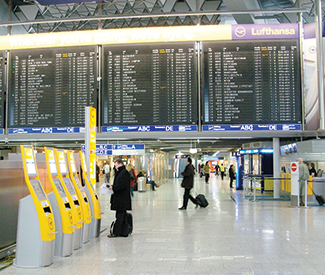
SFBG Air travel is a recurring theme in your films, including the final Exploratorium film, In Transit (2011). Have you encountered any post-9/11 artistic challenges?

CL I’ve been told to stop filming many times. [Laughs.] I happened to make the unfortunate choice of spending some time at Kennedy Airport right after the “shoe bomber” had been apprehended. At that point, anybody who took out a camera in an airport was kind of suspect.

But from a larger perspective, air travel is an activity that has become so boring and routine — but it’s still kind of miraculous. I always try to get a window seat, because it can be just amazing to look out the window for an extended period of time. For In Transit, I wanted to capture both of those elements. *

“OFF THE SCREEN: CHIP LORD CITY FILMS”

Thu/16, 7pm, free with museum admission ($19-$25)

Exploratorium

Pier 15, SF

www.exploratorium.edu


Left turn?

27

rebecca@sfbg.com

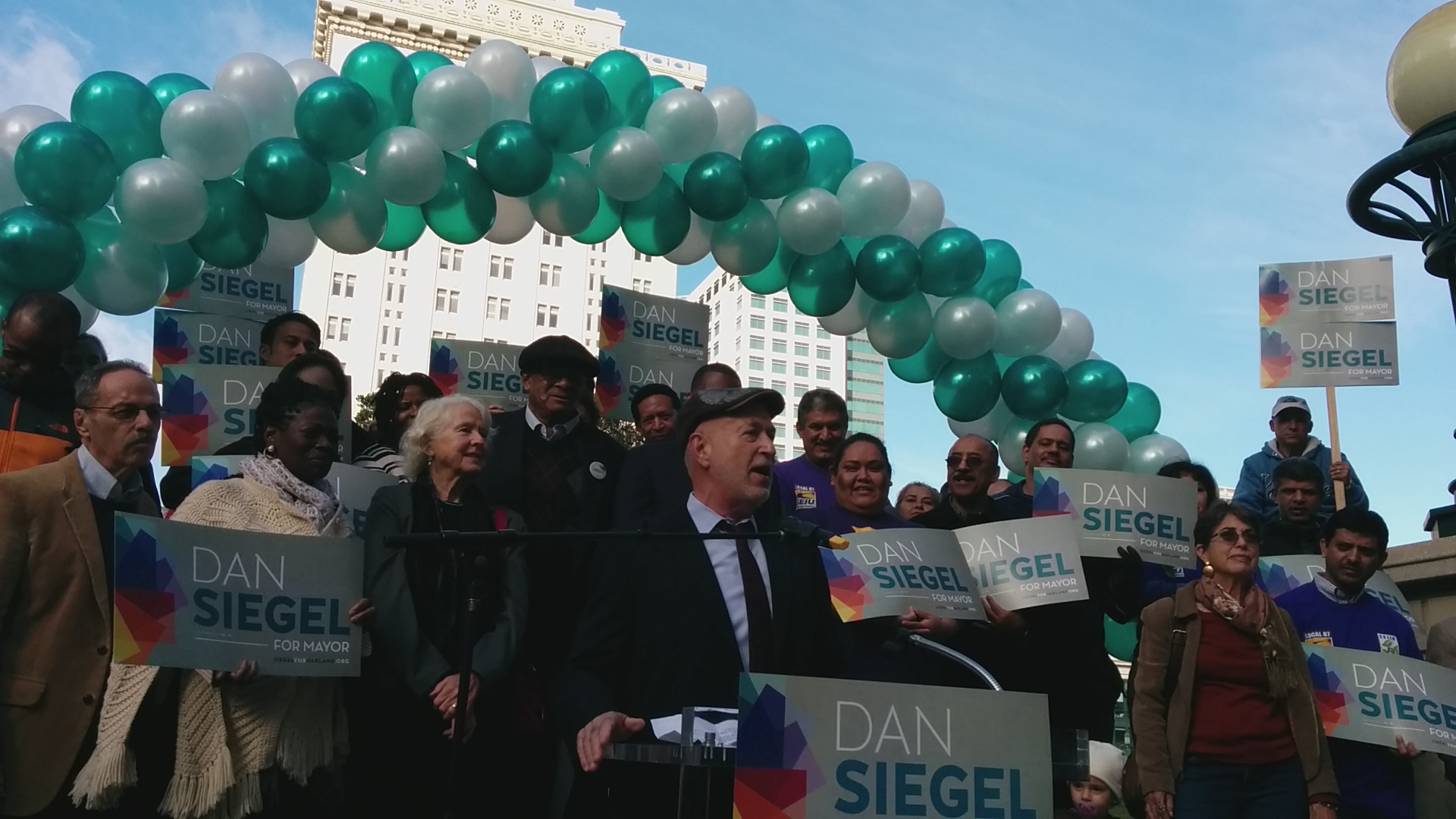
Dan Siegel, an Oakland civil rights attorney and activist with a long history of working with radical leftist political movements, joined a group of more than 150 supporters in front of Oakland City Hall on Jan. 9 to announce his candidacy for mayor.

With this development, the mayor’s race in Oakland is sure to be closely watched by Bay Area progressives. Siegel’s bid represents a fresh challenge from the left against Mayor Jean Quan at a time when concerns about policing, intensifying gentrification, and economic inequality are on the rise.

Siegel is the latest in a growing list of challengers that includes Joe Tuman, a political science professor who finished fourth in the 2010 mayor’s race; Oakland City Councilmember Libby Schaaf; and Port Commissioner Bryan Parker.

In a campaign kickoff speech emphasizing the ideals of social and economic justice, Siegel laid out a platform designed “to make Oakland a safe city.” But he brought an unusual spin to this oft-touted goal, saying, “We need people to be safe from the despair and hopelessness that comes from poverty and long-term unemployment. We need safety for our tenants from unjust evictions and … gentrification.”

Siegel voiced support for raising the city’s minimum wage to $15 an hour. He also called for shuttering Oakland’s recently approved Domain Awareness Center, a controversial surveillance hub that integrates closed circuit cameras, license plate recognition software, and other technological law enforcement tools funded by a $10.9 million grant from the federal Department of Homeland Security.

He spoke about pushing for improvements in public education “to level the playing field between children from affluent backgrounds and children from poor backgrounds,” and described his vision for reorganizing the Oakland Police Department to foster deeper community engagement.

Among Siegel’s supporters are East Bay organizers with a deep history of involvement in social justice campaigns. His campaign co-chair is Walter Reilly, a prominent Oakland National Lawyers Guild attorney who said he’s been involved with civil rights movements for years. “This is a continuation of that struggle,” Reilly told the Bay Guardian, adding that leadership affiliated with “a progressive and class-conscious movement” is sorely needed in Oakland.

Left Coast Communications was tapped as Siegel’s campaign consultant. Siegel’s communications director is Cat Brooks, an instrumental figure in Occupy Oakland and the grassroots movement that arose in response to the fatal BART police shooting of Oscar Grant, whose Onyx Organizing Committee is focused on racial justice issues.

Olga Miranda, an organizer with San Francisco janitors union, SEIU Local 87, also spoke on Siegel’s behalf during the kickoff event. “San Francisco has become for the rich, and we understand that,” she said. “But at the same time, Oakland isn’t even taking care of its own.”

Referencing a recent surge in Oakland housing prices due in part to an influx of renters priced out of San Francisco, she added, “Dan understands that if you live in Oakland, you should be able to stay in Oakland.”

Siegel’s decision to challenge Quan for the Mayor’s Office has attracted particular interest since he previously served as her legal advisor, but their relationship soured after a public disagreement.

In the fall of 2011, when the Occupy Oakland encampment materialized overnight in front of Oakland City Hall, Siegel resigned from his post as Quan’s adviser over a difference in opinion about her handling of the protest movement. Police crackdowns on Occupy, which resulted in violence and the serious injury of veteran Scott Olsen and others, made national headlines that year.

“I thought that the Occupy movement was a great opportunity for this country to really start to understand the issues of inequality in terms of wealth and power,” Siegel told the Bay Guardian when queried about that. “And I thought the mayor should embrace that movement, and become part of it and even become a leader of it. And obviously, that’s not what happened.”

Since then, his relationship with Quan has been “Cool. As in temperature, not like in hip,” he said during an interview. “I don’t want to make this personal. But we have a difference about policy and leadership.”

With Oakland’s second mayoral election under ranked-choice voting, the race could prove fascinating for Bay Area politicos. Also called instant runoff voting, the system allows voters to select their first, second, and third choice candidates. If nobody wins more than 50 percent of the vote, the last-place candidates are eliminated in subsequent rounds and their vote redistributed until one candidate crosses the majority threshold.

Quan, who ran on a progressive platform in 2010, was elected despite winning fewer first-place votes than her centrist opponent, former State Senate President Don Perata. She managed to eke out an electoral victory with a slim margin (51 percent versus Perata’s 49), after voting tallies buoyed her to the top with the momentum of second- and third-place votes, many gleaned from ballots naming Councilmember Rebecca Kaplan as first choice.

Early polling conducted by David Binder Research showed Quan to be in the lead with the ability to garner 32 percent of the vote, as compared with 22 percent for Tuman, who placed second. That’s despite Quan’s incredibly low approval ratings — 54 percent of respondents said they disapproved of her performance in office.

When Schaaf announced her candidacy in November, Robert Gammon of the East Bay Express opined, “Schaaf’s candidacy … likely will make it much more difficult for Quan to win, particularly if no true progressive candidate emerges in the months ahead.” But Siegel’s entry into the race means there is now a clear progressive challenger.

The Guardian endorsed Kaplan as first choice in 2010, and gave Quan a second-place endorsement. While there has been some speculation as to whether Kaplan would run this time around — the David Binder Research poll suggested she would be a formidable opponent to Quan — Kaplan, who is Oakland’s councilmember-at-large, hasn’t filed.

Siegel, meanwhile, cast his decision to run as part of a broader trend. “I feel that not only in Oakland, but across the country, things are really ripe for change,” he told the Guardian.

Indeed, one of the biggest recent national political stories has been the election of Kshama Sawana, a socialist who rose to prominence during the Occupy Wall Street movement, to the Seattle City Council.

“When you have a city like Oakland where so many people are in poverty or on the edge of poverty, or don’t have jobs or face evictions,” Siegel told us, “it’s no wonder that the social contract falls apart. It seems to me that what government should do is elevate the circumstances of all people, and particularly people who are poor and disadvantaged.”

Lies, damned lies, and statistics

0

When is a public opinion poll a valid representation of how people feel? That turns out to be a tricky and ever-evolving question, particularly in San Francisco — thanks to its prevalence of tenants and technology — and even more particularly when it concerns the approval rating of Mayor Ed Lee.

Traditionally, the central requirements for public opinion polls to be considered valid is that respondents need to be representative of the larger population and they need to be selected at random. Polls are often skewed when people need to opt-in, as is the case in most online polls.

So the Guardian took issue with claims that 73 percent of voters approve of the job that Mayor Lee is doing, a figure derived from an opt-in online poll focused on “Affordability and Tech” that was conducted by University of San Francisco Professors Corey Cook and David Latterman and released to the San Francisco Chronicle on Dec. 9. That figure quickly wallpapered the comment section of the Guardian’s website as the answer to any criticism of Mayor Lee, his policies, or the city’s eviction and gentrification crises.

“Any survey that relies on the ability and/or availability of respondents to access the Web and choose whether to participate is not representative and therefore not reliable,” is how The New York Times Style Guide explains that newspaper’s refusal to run such polls, a quote we used in our Jan. 10 Politics blog post on the subject, and we quoted an academic making a similar point.

We also interviewed and quoted Latterman discussing the challenges of doing accurate and economical polling in a city with so many renters (64 percent of city residents) and so few telephone landlines. “San Francisco is a more difficult model,” Latterman told us. “So Internet polling has to get better, because phone polling has gotten really expensive.”

So we ran our story dubbing the poll “bogus” — and the next day got angry messages from Cook and Latterman defending the poll and educating us on efforts within academia to craft opt-in online polls that are as credible as traditional telephone polls.

“The author is so quick to dismiss the findings of the study, which is based upon accepted methodology, and which had nothing to do with mayoral approval scores, that he actually misses the entire thrust of the study — that voters in San Francisco are deeply ambivalent about the current environment, concerned about the affordability crisis, and not trusting of local government to come up with a solution,” Cook wrote in a rebuttal we published Jan. 13 on the Politics blog.

Cook told us the survey’s methods are endorsed by the National Science Foundation and peer-reviewed academic papers, including a Harvard University study called “Does Survey Mode Still Matter?” that concludes “a carefully executed opt-in Internet panel produces estimates that are as accurate as a telephone survey.”

That study went to great lengths to create a sample group that was representative of the larger population, while Cook and Latterman both admit that their survey’s respondents had a disproportionate number of homeowners. But they say the results were then weighted to compensate for that and they stand by the accuracy of their work.

Yet Cook also notes that the mayoral approval rating number wasn’t even part of the package they developed from this survey, it was just a finding that they decided to give the Chronicle. “I don’t think the 73 percent means anything,” Cook told us, noting that snapshot in time doesn’t reflect Lee’s actual popularity going forward, despite how Lee supporters focused on it. “The number they use politically is not a meaningful number.”

What Cook found more significant is the “tepid support” for Lee indicated by the poll, including the 86 percent that expressed concern about affordability in the city, a concern that cuts across all demographic groups. Most respondents had little faith in City Hall to address the problem and many felt the tech industry should be doing more to help, particularly companies that have received tax breaks.

Article overlooks key findings and new academic research

43

By Corey Cook

I am writing in regard to Reed Nelson’s story “’Poll’ showing 73 percent approval for Mayor Lee was flawed.” As one of the two authors of the survey, I am deeply disappointed in the many insinuations in the article and the author’s cavalier abandonment of evidence or reason in order to make his politically expedient, but otherwise inane, point.

In fact, the author is so quick to dismiss the findings of the study, which is based upon accepted methodology, and which had nothing to do with mayoral approval scores, that he actually misses the entire thrust of the study – that voters in San Francisco are deeply ambivalent about the current environment, concerned about the affordability crisis, and not trusting of local government to come up with a solution.

You’d think the Bay Guardian might find that an interesting subject. Under a previous editor I have little doubt it would have. Instead, the author mind numbingly asserts that the mayor’s approval rate – a largely irrelevant number – is clearly overinflated and the survey must then be “bogus” (meaning fake or phony). While other scholars might find the popular characterization of their work as “fake” somewhat amusing. I do not.

The author relies on two main sources to claim that an on-line panel survey is “bogus”, the New York Times “style guide” and the “website publication” of Southeast Missouri State University Political Scientist Russell D. Renka, who is neither a survey researcher nor a political methodologist, and who does not seem to have published anything in this field (or even in political science based on his on-line vita), but who does seem to have a fairly robust home page that includes cute photos of his grandkids.

It’s not the kind of “source” that I would utilize to deride another academic’s work as “bogus”, and I could suggest some other (actual) publications to consider, including Harvard political scientist Stephen Ansolabehere’s peer reviewed article in Political Analysis titled “Does Survey Mode Still Matter?” from 2011 that compares national surveys fielded at the same time over the Internet (using an opt-in Internet panel), by telephone with live interviews (using a national RDD sample of landlines and cell phones), and by mail (using a national sample of residential addresses).

The authors of that study conclude that “comparing the findings from the modes to each other and the validated benchmarks, we demonstrate that a carefully executed opt-in Internet panel produces estimates that are as accurate as a telephone survey and that the two modes differ little in their estimates of other political indicators and their correlates.” But unfortunately that peer reviewed publication by a Harvard political scientist seems to contradict the simple assertion that a survey result the author doesn’t like must be phony.

Let me say that I don’t considered this issue “settled” in the scholarly community, but it is far from the case that serious on-line panel surveys ought to be derided as “bogus.” My preference would be to do a 1,200 person phone survey. If the Bay Guardian would like to commission such a survey, I would enjoy working with you on that project. But given the various cost limitations that preclude such a robust research design, this is not an altogether bad alternative.

That said, feel free to poke at the methodology and suggest that the numbers for Lee might not reflect that of the overall population because of the timing of the survey or because it was only conducted in English (though I’d disagree with you there – that likely holds down his numbers), or frankly just that surveys do often get it wrong. Even the best random sample is outside the margin of error one time out of 20 according to basic probability theory.

But the other thing I’d like to draw your attention to is that you’ve missed the entire point of the survey. Why do you focus on mayoral approval when it’s a survey about attitudes towards affordability and tech? In fact the article notes that “(i)nterestingly, the USF “poll” also found that 86 percent of respondants (sic) said that lack of affordability was a major issue in the city, while 49.6 percent of that same group considered housing developers to be most at fault for the astronomical real estate prices.” So apparently that part of the survey wasn’t bogus.

Here were our four findings:

* San Franciscans are of two minds: a clear majority of respondents say the city is going in the right direction, yet affordability is seen as a significant, and newly exacerbated problem.

* Most respondents see the tech boom as most strongly helping tech executives and workers. Though there is little sense that respondents and their families benefit from the tech boom, a clear majority say that tech is also good for other white collar workers and the city overall.

* The public strongly supports the idea that the city government ought to enact policies to preserve affordability but were skeptical of public officials’ ability to deal with these issues.

* Despite these concerns, there was little interest in making it harder for tech companies to come to San Francisco. For now, keeping the economy strong appears to be the priority, and we expect that feelings about the economy will likely stave off a substantial political “backlash” at least at the present time.

While Ed Lee has high approval scores, they are tepid – much more “good” than “excellent”. And those numbers erode on affordability, what the voters regard as the city’s most important issue. And we found that people don’t articulate a high degree of trust in mayor in dealing with affordability. Yes, they trust him more than they do others (like developers, or the Board of Supervisors), but not much. This survey help me understand what happened on the 8 Washington vote. Voters like the mayor, as they do Newsom incidentally, but don’t buy their argument that the development would address housing affordability. His popularity didn’t have coattails on this issue.

It strikes me as a real missed opportunity for your journalists to trash the poll, based on really flimsy grounds, rather than address it’s important, and yes, ambivalent findings.

Sincerely,


Corey Cook, Ph.D.

Dan Siegel announces candidacy for Oakland mayor

Oakland attorney Dan Siegel, known for a long history of involvement in Bay Area social justice movements, joined a group of more than 150 supporters in front of Oakland City Hall this morning to announce his candidacy for mayor.

In a speech emphasizing his campaign ideals of social and economic justice, Siegel called for shutting down Oakland’s recently approved Domain Awareness Center, raising the city’s minimum wage to $15 an hour, making improvements in public education “to level the playing field between children from affluent backgrounds and children from poor backgrounds,” and shifting the city’s approach to policing by reorganizing the police department to foster deeper community engagement. We caught a few moments from his speech here:

Guardian video by Rebecca Bowe

Siegel’s campaign co-chair is Walter Reilly, a prominent attorney affiliated with the National Lawyers Guild who said he has a long history of involvement with civil rights and social justice movements. “This is a continuation of that struggle,” he said, adding that Siegel’s affiliation with “a progressive and class-conscious movement” is sorely needed in Oakland.

Left Coast Communications was tapped as Siegel’s campaign consultant. Siegel’s communications director is Cat Brooks, who was previously an organizer and sometimes spokesperson for Occupy Oakland.

In 2011, when the Occupy Oakland encampment sprung up in front of Oakland City Hall, Siegel resigned as a legal advisor to Mayor Jean Quan over a difference in opinion about her handling of the protest movement. Police crackdowns on Occupy, which resulted in violence and the serious injury of veteran Scott Olsen, made national headlines that year. 

Olga Miranda, an organizer with San Francisco janitors union, SEIU Local 87, also spoke on Siegel’s behalf. “San Francisco has become for the rich, and we understand that,” she said. “But at the same time, Oakland isn’t even taking care of its own.” Referencing gentrification, a term that seemed to be everyone’s lips, she added, “Dan understands that if you live in Oakland, you should be able to stay in Oakland.”

Asked why he’d decided to run, Siegel told the Bay Guardian, “I feel that not only in Oakland but across the country, things are really ripe for change. When you have a city like Oakland where so many people are in poverty or on the edge of poverty, or don’t have jobs or face evictions … it’s no wonder that the social contract falls apart. It seems to me that what government should do is elevate the circumstances of all people, and particularly people who are poor and disadvantaged.”

Jack of All Trades Oakland

0

Shop local, shop unique at Jack of All Trades Market at Jack London Square this Saturday!

Over 100+ local craft and antique vendors, underground food startups, mobile fashion trucks and more. Plus: live music, craft beer, and food trucks!

Click here to win a $100 shopping spree! See more at JackofAllTradesOakland.com.

Saturday, January 11 from 11am-5pm @ Jack London Square, Oakland


Music Listings: January 8-15, 2014

0

WEDNESDAY 8
ROCK
Bottom of the Hill: 1233 17th St., San Francisco. A Lot Like Birds, Sianvar, Stolas, The Venetia Fair, 8:30 p.m., $12.
El Rio: 3158 Mission, San Francisco. Apogee Sound Club, Grandma’s Boyfriend, UFOFBI, 8 p.m., $1.
Hemlock Tavern: 1131 Polk, San Francisco. Augurs, North, Bloodmoon, 8:30 p.m., $7.
Milk Bar: 1840 Haight, San Francisco. Bonnie & The Bang Bang, Strange Vine, Down & Outlaws, Wag, 8:30 p.m., $5.
Rickshaw Stop: 155 Fell, San Francisco. Rickshaw Stop 10th Anniversary: Mikal Cronin, Cool Ghouls, Cocktails, 8 p.m., $15.
Yoshi’s San Francisco: 1330 Fillmore, San Francisco. The Young Dubliners, 8 p.m., $19-$23.
DANCE
111 Minna Gallery: 111 Minna St., San Francisco. “Qoöl,” w/ D.F. Tram, Marshall Watson, Dulce, Will Spencer, Dan Sherman, Spesh, 5-10 p.m., free.
Beaux: 2344 Market, San Francisco. “BroMance: A Night Out for the Fellas,” 9 p.m., free.
The Cafe: 2369 Market, San Francisco. “Sticky Wednesdays,” w/ DJ Mark Andrus, 8 p.m., free.
Cat Club: 1190 Folsom, San Francisco. “Bondage A Go Go,” w/ DJs Damon, Tomas Diablo, & guests, 9:30 p.m., $5-$10.
Club X: 715 Harrison, San Francisco. “Electro Pop Rocks,” 18+ dance night with Tittsworth, Jays One, DJ Dials, Cocaine at the Disco (SwitchBlade & Mr. Brandon), Jazz-E, Shane Fontane, Dmitri Reign, Cosmo Koyote, 9 p.m., $15-$20.
Edinburgh Castle: 950 Geary, San Francisco. “1964,” w/ DJ Matt B & guests, Second and Fourth Wednesday of every month, 10 p.m., $2.
Elbo Room: 647 Valencia, San Francisco. “Commune,” w/ Pixel Memory, Niteppl, Alien Angel Brigade, Popgang DJs, 9 p.m., free.
The EndUp: 401 Sixth St., San Francisco. “Tainted Techno Trance,” 10 p.m.
F8: 1192 Folsom St., San Francisco. “Housepitality,” 9 p.m., $5-$10.
Infusion Lounge: 124 Ellis, San Francisco. “Indulgence,” 10 p.m.
The Knockout: 3223 Mission, San Francisco. “Disorder,” w/ The Victoriana, PSSNGRS, DJ Nickie, 10 p.m.
Lookout: 3600 16th St., San Francisco. “What?,” w/ resident DJ Tisdale and guests, 7 p.m., free.
Madrone Art Bar: 500 Divisadero, San Francisco. “Rock the Spot,” 9 p.m., free.
MatrixFillmore: 3138 Fillmore, San Francisco. “Reload,” w/ DJ Big Bad Bruce, 10 p.m., free.
Q Bar: 456 Castro, San Francisco. “Booty Call,” w/ Juanita More, Joshua J, guests, 9 p.m., $3.
HIP-HOP
Skylark Bar: 3089 16th St., San Francisco. “Mixtape Wednesday,” w/ resident DJs Strategy, Junot, Herb Digs, & guests, 9 p.m., $5.
Slate Bar: 2925 16th St., San Francisco. “Special Blend,” w/ resident DJs LazyBoy & Mr. Murdock, 9 p.m., free.
ACOUSTIC
Cafe Divine: 1600 Stockton, San Francisco. Craig Ventresco & Meredith Axelrod, 7 p.m., free.
Club Deluxe: 1511 Haight, San Francisco. Happy Hour Bluegrass, 6:30 p.m., free.
Hotel Utah: 500 Fourth St., San Francisco. The Verms, Sister Exister, Octomutt, 8 p.m., $7.
JAZZ
Amnesia: 853 Valencia, San Francisco. Gaucho, Eric Garland’s Jazz Session, The Amnesiacs, 7 p.m., free.
Burritt Room: 417 Stockton St., San Francisco. Terry Disley’s Rocking Jazz Trio, 6 p.m., free.
Jazz Bistro at Les Joulins: 44 Ellis, San Francisco. Charles Unger Experience, 7:30 p.m., free.
Le Colonial: 20 Cosmo, San Francisco. The Cosmo Alleycats featuring Ms. Emily Wade Adams, 7 p.m., free.
Savanna Jazz Club: 2937 Mission, San Francisco. “Cat’s Corner,” 9 p.m., $10.
SFJAZZ Center: 205 Franklin St., San Francisco. John Santos Listening Party, 7:30 p.m., $5-$10.
Top of the Mark: One Nob Hill, 999 California, San Francisco. Ricardo Scales, Wednesdays, 6:30-11:30 p.m., $5.
Zingari: 501 Post, San Francisco. Sherri Roberts, 7:30 p.m., free.
INTERNATIONAL
Bissap Baobab: 3372 19th St., San Francisco. Timba Dance Party, w/ DJ WaltDigz, 10 p.m., $5.
Cafe Cocomo: 650 Indiana, San Francisco. “Bachatalicious,” w/ DJs Good Sho & Rodney, 7 p.m., $5-$10.
Pachamama Restaurant: 1630 Powell, San Francisco. Cafe Latino Americano, 8 p.m., $12.
EXPERIMENTAL
Meridian Gallery: 535 Powell, San Francisco. Composers in Performance: Todd Lerew, 7:30 p.m., $8-$10.
FUNK
Vertigo: 1160 Polk, San Francisco. “Full Tilt Boogie,” w/ KUSF-in-Exile DJs, Second Wednesday of every month, 8 p.m.-1:30 a.m., free.

THURSDAY 9
ROCK
Boom Boom Room: 1601 Fillmore, San Francisco. Koobi Fora, Jay Trainer Band, 9:30 p.m., $5-$8.
Bottom of the Hill: 1233 17th St., San Francisco. Maus Haus, Tiaras, Memory Motel, 9 p.m., $10.
The Chapel: 777 Valencia St., San Francisco. Pickwick, Elliott Brood, Fine Points, 9 p.m., $15-$17.
Hemlock Tavern: 1131 Polk, San Francisco. Brookhaven, Commissure, The Silhouette Era, 8:30 p.m., $5.
Make-Out Room: 3225 22nd St., San Francisco. Chain & The Gang, The Shivas, Skate Laws, 7 p.m., $8.
Milk Bar: 1840 Haight, San Francisco. Turn Me On Dead, Cash for Gold, The Gold Medalists, The Sweet Bones, 8 p.m., $8.
Monarch: 101 6th St., San Francisco. Dangermaker, Odd Owl, Margaret the King, 9 p.m., $5-$10.
Rickshaw Stop: 155 Fell, San Francisco. Rickshaw Stop 10th Anniversary: Geographer, Trails & Ways, DJ Aaron Axelsen, 8 p.m., sold out.
S.F. Eagle: 398 12th St., San Francisco. La Plebe, The Meat Sluts, The Bloody Hells, 9 p.m., $10.
Tupelo: 1337 Green St., San Francisco. Hot Einstein, 9 p.m.
DANCE
1015 Folsom: 1015 Folsom St., San Francisco. “Gem & Jam: A Light in the Attic S.F. Preparty,” w/ Govinda, Love & Light, Nico Luminous, Insightful, The Flying Skulls, Matt Haze, 10 p.m., $10 advance.
Abbey Tavern: 4100 Geary, San Francisco. DJ Schrobi-Girl, 10 p.m., free.
Aunt Charlie’s Lounge: 133 Turk, San Francisco. “Tubesteak Connection,” w/ DJ Bus Station John, 9 p.m., $5-$7.
The Cafe: 2369 Market, San Francisco. “¡Pan Dulce!,” 9 p.m., $5.
Cat Club: 1190 Folsom, San Francisco. “Throwback Thursdays,” ‘80s night with DJs Damon, Steve Washington, Dangerous Dan, and guests, 9 p.m., $6 (free before 9:30 p.m.).
The Cellar: 685 Sutter, San Francisco. “XO,” w/ DJs Astro & Rose, 10 p.m., $5.
Club X: 715 Harrison, San Francisco. “The Crib,” 9:30 p.m., $10, 18+.
Danzhaus: 1275 Connecticut, San Francisco. “Alt.Dance,” Second Thursday of every month, 7 p.m., $7, 18+.
Elbo Room: 647 Valencia, San Francisco. “Afrolicious,” w/ DJs Pleasuremaker, Señor Oz, and live guests, 9:30 p.m., $5-$8.
Infusion Lounge: 124 Ellis, San Francisco. “I Love Thursdays,” 10 p.m., $10.
Madrone Art Bar: 500 Divisadero, San Francisco. “Night Fever,” 9 p.m., $5 after 10 p.m.
Q Bar: 456 Castro, San Francisco. “Throwback Thursday,” w/ DJ Jay-R, 9 p.m., free.
Raven: 1151 Folsom St., San Francisco. “1999,” w/ VJ Mark Andrus, 8 p.m., free.
The Tunnel Top: 601 Bush, San Francisco. “Tunneltop,” DJs Avalon and Derek ease you into the weekend with a cool and relaxed selection of tunes spun on vinyl, 10 p.m., free.
Underground SF: 424 Haight, San Francisco. “Bubble,” 10 p.m., free.
Vessel: 85 Campton, San Francisco. “Base,” w/ Lisa Rose, Jaime James, OneMoHit, Monchis the DJ, 10 p.m., free.
HIP-HOP
Eastside West: 3154 Fillmore, San Francisco. “Throwback Thursdays,” w/ DJ Madison, 9 p.m., free.
John Colins: 138 Minna, San Francisco. “Party with Friends,” w/ resident DJs IllEfect, GeektotheBeat, Merrick, and Delrokz, Second Thursday of every month, 9 p.m., free.
Skylark Bar: 3089 16th St., San Francisco. “Peaches,” w/ lady DJs DeeAndroid, Lady Fingaz, That Girl, Umami, Inkfat, and Andre, 10 p.m., free.
ACOUSTIC
Amnesia: 853 Valencia, San Francisco. The Dull Richards, Dinner with the Kids, Demimonde, Old Belle, 9 p.m., $7-$10.
Atlas Cafe: 3049 20th St., San Francisco. Mountain Dojo, 8 p.m., free.
Bazaar Cafe: 5927 California, San Francisco. Acoustic Open Mic, 7 p.m.
Hotel Utah: 500 Fourth St., San Francisco. Minor Birds, Robert Deeble, Caitlin Eadie, 9 p.m., $8-$10.
The Lost Church: 65 Capp St., San Francisco. Andrew St. James & Scott Mickelson, 8 p.m., $10.
Plough & Stars: 116 Clement, San Francisco. John Caulfield & Friends, 9 p.m.
Yoshi’s San Francisco: 1330 Fillmore, San Francisco. Andy McKee, Janet Noguera, 8 p.m., $31.
JAZZ
Blush! Wine Bar: 476 Castro, San Francisco. Doug Martin’s Avatar Ensemble, 7:30 p.m., free.
Jazz Bistro at Les Joulins: 44 Ellis, San Francisco. Clifford Lamb, Mel Butts, and Friends, Second Thursday of every month, 7:30 p.m., free.
Le Colonial: 20 Cosmo, San Francisco. Steve Lucky & The Rhumba Bums, 7:30 p.m.
Savanna Jazz Club: 2937 Mission, San Francisco. Savanna Jazz Jam with Eddy Ramirez, 7:30 p.m., $5.
SFJAZZ Center: 205 Franklin St., San Francisco. “Hotplate,” w/ Le Jazz Hot (playing Django Reinhardt), 8 & 9:30 p.m., $15-$20.
Top of the Mark: One Nob Hill, 999 California, San Francisco. Stompy Jones, 7:30 p.m., $10.
Zingari: 501 Post, San Francisco. Barbara Ochoa, 7:30 p.m., free.
INTERNATIONAL
Bissap Baobab: 3372 19th St., San Francisco. “Pa’Lante!,” w/ Juan G, El Kool Kyle, Mr. Lucky, 10 p.m., $5.
Pachamama Restaurant: 1630 Powell, San Francisco. “Jueves Flamencos,” 8 p.m., free.
Sheba Piano Lounge: 1419 Fillmore, San Francisco. Gary Flores & Descarga Caliente, 8 p.m.
Verdi Club: 2424 Mariposa, San Francisco. The Verdi Club Milonga, w/ Christy Coté, DJ Emilio Flores, guests, 9 p.m., $10-$15.
REGGAE
Make-Out Room: 3225 22nd St., San Francisco. “Festival ‘68,” w/ Revival Sound System, Second Thursday of every month, 10 p.m., free.
Pissed Off Pete’s: 4528 Mission St., San Francisco. Reggae Thursdays, w/ resident DJ Jah Yzer, 9 p.m., free.
BLUES
50 Mason Social House: 50 Mason, San Francisco. Bill Phillippe, 5:30 p.m., free.
Biscuits and Blues: 401 Mason, San Francisco. Toronzo Cannon, 7:30 & 9:30 p.m., $20.
COUNTRY
The Parlor: 2801 Leavenworth, San Francisco. “Twang Honky Tonk & Country Jamboree,” w/ DJ Little Red Rodeo, 7 p.m., free.
EXPERIMENTAL
The Luggage Store: 1007 Market, San Francisco. “Trance Mutations,” w/ I.C.P.C.P., Demon Sleeper, Loachfillet, 8 p.m., $6-$10.
SOUL
Cigar Bar & Grill: 850 Montgomery, San Francisco. Big Blu Soul Revue, Second Thursday of every month, 7:30 p.m., free.
Lookout: 3600 16th St., San Francisco. Queen B, Beyoncé tribute night with the Rice Rockettes and DJ Brenda Dong., 9 p.m., $5.

FRIDAY 10
ROCK
Bottom of the Hill: 1233 17th St., San Francisco. Tennis, Kyle M. Terrizzi, 9:30 p.m., sold out.
Brick & Mortar Music Hall: 1710 Mission, San Francisco. Death Valley High, Flexx Bronco, Happy Fangs, 9 p.m., $5-$8.
DNA Lounge: 375 11th St., San Francisco. Girls Rock!, Fundraiser for victims of drunk drivers with music by Punk Funk Mob, MoonFox, Victoria & The Vaudevillains, and Coffee Shop Dropout., 9 p.m., $10-$12.
Hemlock Tavern: 1131 Polk, San Francisco. Eyes on the Shore, Spidermeow, The Midnight Snackers, 9:30 p.m., $6.
Hotel Utah: 500 Fourth St., San Francisco. Panic Is Perfect, My Stupid Brother, Salty De Vito, 9 p.m., $10.
Make-Out Room: 3225 22nd St., San Francisco. The Minks, Matthew Edwards & The Unfortunates, 7:30 p.m., $8.
Milk Bar: 1840 Haight, San Francisco. Fritz Montana, The Meat Packers, Peachelope, 9 p.m., $7-$10.
Rickshaw Stop: 155 Fell, San Francisco. Rickshaw Stop 10th Anniversary: YACHT, Shock, plus Three Kinds of Stupid DJs Brother Grimm, Chris Baty, and BAS, 9 p.m., $20.
Slim’s: 333 11th St., San Francisco. Battlehooch, Sun Hop Fat, Hungry Skinny, The Rotten Kids, Jazzy Fox, 8 p.m., $15.
DANCE
1015 Folsom: 1015 Folsom St., San Francisco. “Trap City,” w/ Ookay, Caked Up, Sasha Go Hard, UltraViolet, VNDMG, Napsty, Jocelyn, 10 p.m., $15 advance.
Amnesia: 853 Valencia, San Francisco. “Indie Slash,” w/ resident DJs Danny White, Rance, and Sweethearts, Second Friday of every month, 10 p.m., $5.
Audio Discotech: 316 11th St., San Francisco. Hot Since 82, Pheeko Dubfunk, 9:30 p.m., $15 advance.
BeatBox: 314 11th St., San Francisco. “Bears in the Dark,” w/ DJ Del Stamp, 10 p.m., $5-$10.
Cafe Flore: 2298 Market, San Francisco. “Kinky Beats,” w/ DJ Sergio, 10 p.m., free.
The Cafe: 2369 Market, San Francisco. “Boy Bar,” w/ DJ Matt Consola, 9 p.m., $5.
Cat Club: 1190 Folsom, San Francisco. “Dark Shadows,” w/ DJs Daniel Skellington, Joe Radio, Melting Girl, and Mz. Samantha, 9:30 p.m., $7 ($3 before 10 p.m.).
The Cellar: 685 Sutter, San Francisco. “F.T.S.: For the Story,” 10 p.m.
The EndUp: 401 Sixth St., San Francisco. “Fever,” 10 p.m., free before midnight.
The Grand Nightclub: 520 4th St., San Francisco. “We Rock Fridays,” 9:30 p.m.
Harlot: 46 Minna, San Francisco. “The Animal Party: Snowy Playground,” w/ Traviswild & Wallace, 9 p.m., $10-$20 advance.
Infusion Lounge: 124 Ellis, San Francisco. “Escape Fridays,” 10 p.m., $20.
Lone Star Saloon: 1354 Harrison, San Francisco. “Cubcake,” w/ DJ Medic, Second Friday of every month, 9 p.m.
Lookout: 3600 16th St., San Francisco. “HYSL,” 9 p.m., $3.
Manor West: 750 Harrison, San Francisco. “Fortune Fridays,” 10 p.m., free before 11 p.m. with RSVP.
MatrixFillmore: 3138 Fillmore, San Francisco. “F-Style Fridays,” w/ DJ Jared-F, 9 p.m.
Monarch: 101 6th St., San Francisco. “Direct to Earth,” w/ Ambivalent, Mossmoss, Brian Knarfield, Bob Five, Dao & Pwny, 9 p.m., $15 advance.
OMG: 43 6th St., San Francisco. “Release,” 9 p.m., free before 11 p.m.
Public Works: 161 Erie, San Francisco. “The Music of Radiohead vs. The Music of Daft Punk,” w/ DJs Motion Potion & Matt Haze (in the OddJob Loft), 9 p.m., $5-$10; Wait What, in the main room, 9 p.m., $8-$10.
Q Bar: 456 Castro, San Francisco. “Pump: Worq It Out Fridays,” w/ resident DJ Christopher B, 9 p.m., $3.
Ruby Skye: 420 Mason, San Francisco. BT, 9 p.m., $25.
S.F. Eagle: 398 12th St., San Francisco. “Cub Trap,” 8 p.m.
Showdown: 10 Sixth St., San Francisco. “Electric WKND,” w/ The Certain People Crew, Second Friday of every month, 10 p.m., free.
Slide: 430 Mason, San Francisco. “E2F,” Second Friday of every month, 9 p.m.
Temple: 540 Howard, San Francisco. DJ Enfo, E-20, Reflecta, Mikey Tan, Ayla Simone, DJ Midnight, 10 p.m., $15.
Underground SF: 424 Haight, San Francisco. “Bionic,” 10 p.m., $5.
Vessel: 85 Campton, San Francisco. “Sound Addiction,” w/ Konman, Adam Cova, Halloran, DJ Nile, 10 p.m., $10-$30.
Wish: 1539 Folsom, San Francisco. “Bridge the Gap,” w/ resident DJ Don Kainoa, Fridays, 6-10 p.m., free.
Women’s Building: 3543 18th St., San Francisco. Prom Night: Redux, SF IndieFest launch party and benefit dance with DJs Shindog and Junkyard., 8 p.m., $5-$10.
HIP-HOP
EZ5: 682 Commercial, San Francisco. “Decompression,” Fridays, 5-9 p.m.
John Colins: 138 Minna, San Francisco. “Heartbeat,” w/ resident DJ Strategy, Second Friday of every month, 9 p.m., $5 (free before 11 p.m).
Mighty: 119 Utah, San Francisco. DJ Jazzy Jeff, DJ Shortkut, DJ Proof, 9 p.m., $15-$25 advance.
Slate Bar: 2925 16th St., San Francisco. “The Hustle,” w/ DJs Sake One & Sean G, Second Friday of every month, 9 p.m.
ACOUSTIC
Bazaar Cafe: 5927 California, San Francisco. Acoustic Guitar Showcase, hosted by Teja Gerken, 7 p.m.
The Chapel: 777 Valencia St., San Francisco. Lia Rose, Misisipi Mike Wolf, 9 p.m., $12-$15.
Dolores Park Cafe: 501 Dolores, San Francisco. Jeff Desira, 7:30 p.m.
The Independent: 628 Divisadero, San Francisco. Dead Winter Carpenters, American Nomad, Sleeping Giants, 9 p.m., $15.
The Lost Church: 65 Capp St., San Francisco. “Brian Belknap’s Front Porch Friday Night,” w/ The Parmesans & Field Medic, 8 p.m., $10.
Plough & Stars: 116 Clement, San Francisco. Anju’s Pale Blue Eyes, Hardly Strictly Trad., 9 p.m.
The Sports Basement: 610 Old Mason, San Francisco. “Breakfast with Enzo,” w/ Enzo Garcia, 10 a.m., $5.
JAZZ
Atlas Cafe: 3049 20th St., San Francisco. Jazz at the Atlas, 7:30 p.m., free.
Beach Chalet Brewery & Restaurant: 1000 Great Highway, San Francisco. Johnny Smith, 8 p.m., free.
Bird & Beckett: 653 Chenery, San Francisco. Jimmy Ryan Quintet, Second Friday of every month, 5:30 p.m., free.
Boom Boom Room: 1601 Fillmore, San Francisco. Grant Green Jr. with Bernard Purdie, Eamonn Flynn, and Daniel Casares, 9 p.m., $15 advance.
The Emerald Tablet: 80 Fresno St., San Francisco. Vince Lateano Quartet, 8 p.m., $15 suggested donation.
Jazz Bistro at Les Joulins: 44 Ellis, San Francisco. Charles Unger Experience, 7:30 p.m., free.
The Palace Hotel: 2 New Montgomery, San Francisco. The Klipptones, 8 p.m., free.
Pier 23 Cafe: Pier 23, San Francisco. 29th Street Swingtet, 8 p.m., free.
Red Poppy Art House: 2698 Folsom, San Francisco. Beth Custer Ensemble, 7:30 p.m., $15-$20.
Savanna Jazz Club: 2937 Mission, San Francisco. Savanna Jazz Trio, 7 p.m., $8.
Top of the Mark: One Nob Hill, 999 California, San Francisco. Black Market Jazz Orchestra, 9 p.m., $10.
Zingari: 501 Post, San Francisco. Joyce Grant, 8 p.m., free.
INTERNATIONAL
Bissap Baobab: 3372 19th St., San Francisco. “Paris-Dakar African Mix Coupe Decale,” 10 p.m., $5.
Cafe Cocomo: 650 Indiana, San Francisco. Taste Fridays, featuring local cuisine tastings, salsa bands, dance lessons, and more, 7:30 p.m., $15 (free entry to patio).
Cliff House: 1090 Point Lobos, San Francisco. Orquesta Conquistador Quartet, 7 p.m.
Pachamama Restaurant: 1630 Powell, San Francisco. Cuban Night with Fito Reinoso, 7:30 & 9:15 p.m., $15-$18.
REGGAE
Gestalt Haus: 3159 16th St., San Francisco. “Music Like Dirt,” 7:30 p.m., free.
BLUES
Biscuits and Blues: 401 Mason, San Francisco. Toronzo Cannon, 7:30 & 10 p.m., $22.
Lou’s Fish Shack: 300 Jefferson St., San Francisco. Eldon Brown, 6 p.m.
The Saloon: 1232 Grant, San Francisco. Jinx Jones & The KingTones, Second Friday of every month, 4 p.m.
Tupelo: 1337 Green St., San Francisco. Marshall Law Band, 9 p.m.
FUNK
Make-Out Room: 3225 22nd St., San Francisco. “Loose Joints,” w/ DJs Centipede, Damon Bell, and Tom Thump, 10 p.m., $5-$10.
ROCKABILLY
Elbo Room: 647 Valencia, San Francisco. The Chop Tops, Hayride to Hell, Hard Fall Hearts, Blacktop Tragedy, 9 p.m., $12.
SOUL
Edinburgh Castle: 950 Geary, San Francisco. “Soul Crush,” w/ DJ Serious Leisure, 10 p.m., free.
The Knockout: 3223 Mission, San Francisco. “Nightbeat,” w/ DJs Primo, Lucky, and Dr. Scott, Second Friday of every month, 10 p.m., $4.
Madrone Art Bar: 500 Divisadero, San Francisco. “Yo Momma: M.O.M. Weekend Edition,” w/ DJ Gordo Cabeza, Second Friday of every month, 9 p.m., $5 (free before 10 p.m.).
Yoshi’s San Francisco: 1330 Fillmore, San Francisco. Amel Larrieux, 8 & 10 p.m., $30-$40.

SATURDAY 11
ROCK
Bender’s: 806 S. Van Ness, San Francisco. Alabaster & The Original Bastards, Colonel Jimmy & The Blackfish, 10 p.m., $5.
Bottom of the Hill: 1233 17th St., San Francisco. I the Mighty, Fighting the Villain, Rin Tin Tiger, Mr. Kind, 8:30 p.m., $10.
Hemlock Tavern: 1131 Polk, San Francisco. Odawas, Jon Bernson, Paint the Trees White, 9:30 p.m., $7.
Neck of the Woods: 406 Clement St., San Francisco. The Shape, Style Like Revelators, The Saint Ides, on the downstairs stage, 9 p.m., $6-$8.
The Riptide: 3639 Taraval, San Francisco. The Copper Tones, 9:30 p.m., free.
Slim’s: 333 11th St., San Francisco. Astronauts, etc.; Waterstrider; There’s Talk, show moved from Cafe Du Nord, 9 p.m., $7-$10.
Thee Parkside: 1600 17th St., San Francisco. StaG, Tidelands, Dinners, 9 p.m., $8.
Tupelo: 1337 Green St., San Francisco. The Bonedrivers, 9:30 p.m.
DANCE
Amnesia: 853 Valencia, San Francisco. “2 Men Will Move You,” w/ DJs Primo & Jordan, Second Saturday of every month, 9 p.m.
Audio Discotech: 316 11th St., San Francisco. Adrenalin Room Label Showcase, w/ SNR, Jacob Henry, David Gropper, Zulu Company, 9 p.m., $10 advance.
Cafe Flore: 2298 Market, San Francisco. “Bistrotheque,” w/ DJ Ken Vulsion, 8 p.m., free.
Cat Club: 1190 Folsom, San Francisco. “Club Gossip,” w/ DJ Damon & guests, Second Saturday of every month, 9 p.m., $5-$8 (free before 9:30 p.m.).
DNA Lounge: 375 11th St., San Francisco. “Bootie S.F.,” w/ Earworm, Smash-Up Derby, A+D, DJ Dada, DJ Dcnstrct, Meikee Magnetic, Mixtress Shizaam, more, 9 p.m., $10-$15.
Edinburgh Castle: 950 Geary, San Francisco. Bowie & Elvis Birthday Bash, w/ DJs Shindog, Cammy, Moonshine, and Andy T, 9 p.m., $5.
Elbo Room: 647 Valencia, San Francisco. “Tormenta Tropical,” w/ Poirier, Oro11, Deejay Theory, 10 p.m., $5-$10.
The EndUp: 401 Sixth St., San Francisco. “Eclectricity,” Second Saturday of every month, 10 p.m.
The Hot Spot: 1414 Market, San Francisco. “Love Will Fix It,” w/ DJ Bus Station John, Second Saturday of every month, 10 p.m., $5.
Infusion Lounge: 124 Ellis, San Francisco. “One Way Ticket Saturdays,” w/ Eric D-Lux, Second Saturday of every month, 10 p.m., $20.
The Knockout: 3223 Mission, San Francisco. “Galaxy Radio,” w/ resident DJs Smac, Emils, Holly B, and guests, Second Saturday of every month, 9 p.m., free.
Lookout: 3600 16th St., San Francisco. “Bounce!,” 9 p.m., $3.
Madrone Art Bar: 500 Divisadero, San Francisco. “Music Video Night,” w/ DJs Satva & 4AM, Second Saturday of every month, 10 p.m., $5.
Mezzanine: 444 Jessie, San Francisco. Benga, Twrk, RyuRy, Tchphnx, 9 p.m., $17-$20.
Mighty: 119 Utah, San Francisco. “Salted,” w/ Miguel Migs, Julius Papp, guests, Second Saturday of every month, 10 p.m., $10 before 11 p.m.
Milk Bar: 1840 Haight, San Francisco. “Week-End: Saturday Edition,” w/ DJ Madison, 9 p.m., free.
Monarch: 101 6th St., San Francisco. “The Super Silly Circus Birthday Bash,” w/ Detroit Swindle, Bells & Whistles, Bo Bo the Clown, B the Bohemian, Machete Master Mitsu, Jonny the Pocket Juggler, 10 p.m., $5-$15.
OMG: 43 6th St., San Francisco. “Fixup,” Second Saturday of every month, 10 p.m., $5 (free before 11 p.m).
Public Works: 161 Erie, San Francisco. “Isis,” w/ Kim Ann Foxman, Avalon Emerson, Mountaincount (in the OddJob Loft), 9:30 p.m., $10-$15.
Q Bar: 456 Castro, San Francisco. “Shoop!,” w/ DJs Tommy T & Bryan B, Second Saturday of every month, 9 p.m.
Rickshaw Stop: 155 Fell, San Francisco. Rickshaw Stop 10th Anniversary: Cockblock, w/ DJs China G & Kidd Sysko, 10 p.m., $10.
Ruby Skye: 420 Mason, San Francisco. Robbie Rivera, 9 p.m., $20.
The Stud: 399 Ninth St., San Francisco. “Frolic,” w/ Cosmo Coyote, Neshamah, Orion Barkley, NeonBunny, 8 p.m., $8 ($4 in costume).
Temple: 540 Howard, San Francisco. AndDrop!, Drezo, Brotherboard, Lukas Felt, Sean B, Roger Moorehouse, Rich Era, 10 p.m., $20.
Vessel: 85 Campton, San Francisco. Scooter & Lavelle, 10 p.m., $10-$30.
Wish: 1539 Folsom, San Francisco. “All Styles & Smiles,” w/ DJ Tom Thump, Second Saturday of every month, 10 p.m., free.
HIP-HOP
111 Minna Gallery: 111 Minna St., San Francisco. “Back to the ‘90s,” Second Saturday of every month, 9:30 p.m., $10.
50 Mason Social House: 50 Mason, San Francisco. Maya Castleman, Mantis One, Yarrow Slaps, DJ Dalej, 7 p.m., free.
Double Dutch: 3192 16th St., San Francisco. “Cash IV Gold,” w/ DJs Kool Karlo, Roost Uno, and Sean G, Second Saturday of every month, 10 p.m., free.
John Colins: 138 Minna, San Francisco. “Second Saturdays,” w/ resident DJ Matt Cali, Second Saturday of every month, 10 p.m., free.
Showdown: 10 Sixth St., San Francisco. “The Shit Show,” w/ resident DJ Taurus Scott, Second Saturday of every month, 10 p.m., two for $5.
ACOUSTIC
Amnesia: 853 Valencia, San Francisco. The Highway Poets, 7 p.m., $5-$7.
Atlas Cafe: 3049 20th St., San Francisco. Craig Ventresco and/or Meredith Axelrod, Saturdays, 4-6 p.m., free.
Bazaar Cafe: 5927 California, San Francisco. David Whitaker with Gary Adler, Sugar Ponies, Dane Ohri, Mario DiSandro, and David Colón, 7 p.m.
Great American Music Hall: 859 O’Farrell, San Francisco. The Good Luck Thrift Store Outfit, w/ The Human Condition, Three Times Bad, 9 p.m., $13.
Hotel Utah: 500 Fourth St., San Francisco. Andrew Duhon, Don DiLego, Jeff Conley, Keyan Keihani, 9 p.m., $10.
The Independent: 628 Divisadero, San Francisco. Diego’s Umbrella, Con Brio, 9 p.m., $20-$25.
The Lost Church: 65 Capp St., San Francisco. Dara Ackerman, MacClain & Cole, 8 p.m., $10.
JAZZ
Boom Boom Room: 1601 Fillmore, San Francisco. Wil Blades, Skerik, Jeff Parker, and Simon Lott, 9:30 p.m., $15 advance.
The Emerald Tablet: 80 Fresno St., San Francisco. Rebecca Kleinmann, 8 p.m.
Hotel Rex: 562 Sutter, San Francisco. Pamela Joy’s “Strange Bedfellows: The Music and Unlikely Partnership of Cole Porter and Irving Berlin,” 8 p.m., $20.
Jazz Bistro at Les Joulins: 44 Ellis, San Francisco. Bill “Doc” Webster & Jazz Nostalgia, 7:30 p.m., free.
Savanna Jazz Club: 2937 Mission, San Francisco. Savanna Jazz Trio, 7 p.m., $8.
Sheba Piano Lounge: 1419 Fillmore, San Francisco. The Robert Stewart Experience, 9 p.m.
Zingari: 501 Post, San Francisco. Barbara Ochoa, 8 p.m.
INTERNATIONAL
1015 Folsom: 1015 Folsom St., San Francisco. “Pura,” 9 p.m., $20.
Bissap Baobab: 3372 19th St., San Francisco. Misión Flamenca, Monthly live music and dance performances., Second Saturday of every month, 7:30 p.m. “Paris-Dakar African Mix Coupe Decale,” 10 p.m., $5.
Brick & Mortar Music Hall: 1710 Mission, San Francisco. Bang Data, El Conjunto Nueva Ola, Deejay Julicio, 9 p.m., $10-$13.
Make-Out Room: 3225 22nd St., San Francisco. “El SuperRitmo,” w/ DJs Roger Mas & El Kool Kyle, 10 p.m., $5 before 11 p.m.
Pachamama Restaurant: 1630 Powell, San Francisco. Eddy Navia & Pachamama Band, 8 p.m., free.
Public Works: 161 Erie, San Francisco. “Non Stop Bhangra,” w/ DJ Jimmy Love, DJ Sep, DJ Nix, Dholrhythms dance troupe, more (in the main room), 9 p.m., $10-$15.
Red Poppy Art House: 2698 Folsom, San Francisco. Guatam Tejas Ganashan, 7:30 p.m., $12-$20.
Space 550: 550 Barneveld, San Francisco. “Club Fuego,” 9:30 p.m.
BLUES
Biscuits and Blues: 401 Mason, San Francisco. Andy T & Nick Nixon Band with Janiva Magness, 7:30 & 10 p.m., $22.
Lou’s Fish Shack: 300 Jefferson St., San Francisco. Willie G, 6 p.m.
The Saloon: 1232 Grant, San Francisco. Dave Workman, Second Saturday of every month, 4 p.m.

SUNDAY 12
ROCK
Brick & Mortar Music Hall: 1710 Mission, San Francisco. Amoebapalooza S.F., 9 p.m., $5.
Hemlock Tavern: 1131 Polk, San Francisco. Ownership, The Rabbles, Reverse Headache, 8:30 p.m., $5.
The Knockout: 3223 Mission, San Francisco. Buffalo Tooth, Harsh Toke, Artifact, 3 p.m.
Make-Out Room: 3225 22nd St., San Francisco. Enorchestra, 3 Leafs, Henry Plotnick, 7:30 p.m., $8.
Rickshaw Stop: 155 Fell, San Francisco. Rickshaw Stop 10th Anniversary: Leslie & The LY’s, Double Duchess, DJ Kidd Sysko, 8 p.m., $16.
DANCE
BeatBox: 314 11th St., San Francisco. “Tea-Rex,” w/ DJ Corey Craig, 4-8 p.m., $10.
Beaux: 2344 Market, San Francisco. “Full of Grace: A Weekly House Music Playground,” 9 p.m., free.
The Cellar: 685 Sutter, San Francisco. “Replay Sundays,” 9 p.m., free.
The Edge: 4149 18th St., San Francisco. “’80s at 8,” w/ DJ MC2, 8 p.m.
Elbo Room: 647 Valencia, San Francisco. “Dub Mission,” w/ DJ Sep, J-Boogie, Matt Haze, 9 p.m., $6 (free before 9:30 p.m.).
The EndUp: 401 Sixth St., San Francisco. “T.Dance,” 6 a.m.-6 p.m.; “The Rhythm Room,” Second Sunday of every month, 8 p.m.; “Sunday Sessions,” 8 p.m.
F8: 1192 Folsom St., San Francisco. “Stamina,” w/ DJs Lukeino, Jamal, and guests, 10 p.m., free.
The Knockout: 3223 Mission, San Francisco. “Sweater Funk,” 10 p.m., free.
Lookout: 3600 16th St., San Francisco. “Jock,” Sundays, 3-8 p.m., $2.
MatrixFillmore: 3138 Fillmore, San Francisco. “Bounce,” w/ DJ Just, 10 p.m.
Otis: 25 Maiden, San Francisco. “What’s the Werd?,” w/ resident DJs Nick Williams, Kevin Knapp, Maxwell Dub, and guests, 9 p.m., $5 (free before 11 p.m.).
The Parlor: 2801 Leavenworth, San Francisco. DJ Marc deVasconcelos, 10 p.m., free.
Q Bar: 456 Castro, San Francisco. “Gigante,” 8 p.m., free.
Slate Bar: 2925 16th St., San Francisco. “Vibes,” w/ Druid Cloak, Benito, Josh Mace, more, 10 p.m., free.
Temple: 540 Howard, San Francisco. “Sunset Arcade,” 18+ dance party & game night, 9 p.m., $10.
HIP-HOP
Boom Boom Room: 1601 Fillmore, San Francisco. “Return of the Cypher,” 9:30 p.m., free.
ACOUSTIC
Amnesia: 853 Valencia, San Francisco. The Dustbowl Revival, 9 p.m., $7-$10.
Bazaar Cafe: 5927 California, San Francisco. “Ukuladies & Gentleman,” w/ Allison Craig, Robin Galante, more, 6 p.m.
The Lucky Horseshoe: 453 Cortland, San Francisco. Bernal Mountain Bluegrass Jam, 4 p.m., free.
Madrone Art Bar: 500 Divisadero, San Francisco. “Spike’s Mic Night,” Sundays, 4-8 p.m., free.
Plough & Stars: 116 Clement, San Francisco. Seisiún with Marla Fibish, Erin Shrader, and Richard Mandel, 9 p.m.
St. Luke’s Episcopal Church: 1755 Clay, San Francisco. “Sunday Night Mic,” w/ Roem Baur, 5 p.m., free.
JAZZ
Chez Hanny: 1300 Silver, San Francisco. Matt Renzi Cello Quartet, 4 p.m., $20 suggested donation.
Jazz Bistro at Les Joulins: 44 Ellis, San Francisco. Bill “Doc” Webster & Jazz Nostalgia, 7:30 p.m., free.
Madrone Art Bar: 500 Divisadero, San Francisco. “Sunday Sessions,” 10 p.m., free.
Martuni’s: 4 Valencia, San Francisco. Madame Jo Trio, second Sunday of every month, 4-6 p.m., free.
Revolution Cafe: 3248 22nd St., San Francisco. Jazz Revolution, 4 p.m., free/donation.
The Royal Cuckoo: 3202 Mission, San Francisco. Lavay Smith & Chris Siebert, 7:30 p.m., free.
Zingari: 501 Post, San Francisco. Amanda King, 7:30 p.m., free.
INTERNATIONAL
Atmosphere: 447 Broadway, San Francisco. “Hot Bachata Nights,” w/ DJ El Guapo, 5:30 p.m., $10 ($18-$25 with dance lessons).
Bissap Baobab: 3372 19th St., San Francisco. “Brazil & Beyond,” 6:30 p.m., free.
El Rio: 3158 Mission, San Francisco. “Salsa Sundays,” Second and Fourth Sunday of every month, 3 p.m., $8-$10.
Thirsty Bear Brewing Company: 661 Howard, San Francisco. “The Flamenco Room,” 7:30 & 8:30 p.m.
BLUES
Lou’s Fish Shack: 300 Jefferson St., San Francisco. Little Wolf & The HellCats, 4 p.m.
The Saloon: 1232 Grant, San Francisco. Blues Power, 4 p.m.
Sheba Piano Lounge: 1419 Fillmore, San Francisco. Bohemian Knuckleboogie, 8 p.m., free.
Swig: 571 Geary, San Francisco. Sunday Blues Jam with Ed Ivey, 9 p.m.
COUNTRY
The Riptide: 3639 Taraval, San Francisco. Joe Goldmark & The Seducers, Second Sunday of every month, 7:30 p.m., free.
EXPERIMENTAL
Musicians Union Local 6: 116 Ninth St., San Francisco. Confluence: Adventurous Music for Building Brain Cells, w/ Thollem McDonas, 7:30 p.m., $8-$10.
SOUL
Delirium Cocktails: 3139 16th St., San Francisco. “Heart & Soul,” w/ DJ Lovely Lesage, 10 p.m., free.
Yoshi’s San Francisco: 1330 Fillmore, San Francisco. Amel Larrieux, 7 & 9 p.m., $30-$40.

MONDAY 13
ROCK
Elbo Room: 647 Valencia, San Francisco. “Americalia,” w/ Mark Matos & guests, 9 p.m. continues through Jan. 27, $7.
DANCE
DNA Lounge: 375 11th St., San Francisco. “Death Guild,” 18+ dance party with DJs Decay, Joe Radio, Melting Girl, & guests, 9:30 p.m., $3-$5.
Q Bar: 456 Castro, San Francisco. “Wanted,” w/ DJs Key&Kite and Richie Panic, 9 p.m., free.
Underground SF: 424 Haight, San Francisco. “Vienetta Discotheque,” w/ DJs Stanley Frank and Robert Jeffrey, 10 p.m., free.
ACOUSTIC
Amnesia: 853 Valencia, San Francisco. The Pick Bluegrass Jam, Second Monday of every month, 6 p.m., free; Toshio Hirano, Second Monday of every month, 9 p.m., free.
The Chieftain: 198 Fifth St., San Francisco. The Wrenboys, 7 p.m., free.
Fiddler’s Green: 1333 Columbus, San Francisco. Terry Savastano, 9:30 p.m., free/donation.
Hotel Utah: 500 Fourth St., San Francisco. Open Mic with Brendan Getzell, 8 p.m., free.
Osteria: 3277 Sacramento, San Francisco. “Acoustic Bistro,” 7 p.m., free.
The Saloon: 1232 Grant, San Francisco. Peter Lindman, 4 p.m.
JAZZ
Jazz Bistro at Les Joulins: 44 Ellis, San Francisco. Eugene Pliner Quartet with Tod Dickow, 7:30 p.m., free.
Le Colonial: 20 Cosmo, San Francisco. Le Jazz Hot, 7 p.m., free.
Sheba Piano Lounge: 1419 Fillmore, San Francisco. City Jazz Instrumental Jam Session, 8 p.m.
The Union Room at Biscuits and Blues: 401 Mason, San Francisco. The Session: A Monday Night Jazz Series, pro jazz jam with Mike Olmos, 7:30 p.m., $12.
REGGAE
Skylark Bar: 3089 16th St., San Francisco. “Skylarking,” w/ I&I Vibration, 10 p.m., free.
BLUES
The Saloon: 1232 Grant, San Francisco. The Bachelors, 9:30 p.m.
SOUL
Madrone Art Bar: 500 Divisadero, San Francisco. “M.O.M. (Motown on Mondays),” w/ DJ Gordo Cabeza & Timoteo Gigante, 8 p.m., free.

TUESDAY 14
ROCK
Bottom of the Hill: 1233 17th St., San Francisco. PSSNGRS, Face Tat, Casey Chisholm, Kid in the Attic, 9 p.m., $8.
The Chapel: 777 Valencia St., San Francisco. Black Cobra Vipers, 8 p.m., $12.
The Knockout: 3223 Mission, San Francisco. The Custom Kicks, Pogo Ono, Adderall Lavigne, DJ Lightnin’ Jeff G, 9:30 p.m.
Rickshaw Stop: 155 Fell, San Francisco. Maria Taylor, PJ Bond, The Ian Fays, 8 p.m., $12-$14.
DANCE
Aunt Charlie’s Lounge: 133 Turk, San Francisco. “High Fantasy,” w/ DJ Viv, Myles Cooper, & guests, 10 p.m., $2.
Harlot: 46 Minna, San Francisco. “Tutu Tuesday,” w/ resident DJ Atish, Second Tuesday of every month, 9 p.m., $7 ($2 in a tutu before 11 p.m.).
Monarch: 101 6th St., San Francisco. “Soundpieces,” 10 p.m., free-$10.
Q Bar: 456 Castro, San Francisco. “Switch,” w/ DJs Jenna Riot & Andre, 9 p.m., $3.
Underground SF: 424 Haight, San Francisco. “Shelter,” 10 p.m., free.
Wish: 1539 Folsom, San Francisco. “Tight,” w/ resident DJs Michael May & Lito, 8 p.m., free.
HIP-HOP
Double Dutch: 3192 16th St., San Francisco. “Takin’ It Back Tuesdays,” w/ DJs Mr. Murdock & Roman Nunez, Second Tuesday of every month, 10 p.m., free.
ACOUSTIC
Amnesia: 853 Valencia, San Francisco. Farallons, Indianna Hale, Jeffrey Manson, 9:15 p.m., $7.
Bazaar Cafe: 5927 California, San Francisco. Songwriter in Residence: Tom Rhodes, 7 p.m. continues through Jan. 28.
Plough & Stars: 116 Clement, San Francisco. Seisiún with Vinnie Cronin, 9 p.m.
Yoshi’s San Francisco: 1330 Fillmore, San Francisco. Shawn Colvin, Jan. 14-16, 8 p.m., $45.
JAZZ
Beach Chalet Brewery & Restaurant: 1000 Great Highway, San Francisco. Gerry Grosz Jazz Jam, 7 p.m.
Blush! Wine Bar: 476 Castro, San Francisco. Kally Price & Rob Reich, 7 p.m., free.
Burritt Room: 417 Stockton St., San Francisco. Terry Disley’s Rocking Jazz Trio, 6 p.m., free.
Cafe Divine: 1600 Stockton, San Francisco. Chris Amberger, 7 p.m.
Jazz Bistro at Les Joulins: 44 Ellis, San Francisco. Clifford Lamb, Mel Butts, and Friends, 7:30 p.m., free.
Le Colonial: 20 Cosmo, San Francisco. Lavay Smith & Her Red Hot Skillet Lickers, 7 p.m.
Revolution Cafe: 3248 22nd St., San Francisco. West Side Jazz Club, 5 p.m., free.
Tupelo: 1337 Green St., San Francisco. Mal Sharpe’s Big Money in Jazz Band, 6 p.m.
Verdi Club: 2424 Mariposa, San Francisco. “Tuesday Night Jump,” w/ Stompy Jones, 9 p.m., $10-$12.
INTERNATIONAL
Cafe Cocomo: 650 Indiana, San Francisco. “Descarga S.F.,” w/ DJs Hong & Good Sho, 8 p.m., $12.
The Cosmo Bar & Lounge: 440 Broadway, San Francisco. “Conga Tuesdays,” 8 p.m., $7-$10.
F8: 1192 Folsom St., San Francisco. “Underground Nomads,” w/ rotating resident DJs Amar, Sep, and Dulce Vita, plus guests, 9 p.m., $5 (free before 9:30 p.m.).
REGGAE
Milk Bar: 1840 Haight, San Francisco. “Bless Up,” w/ Jah Warrior Shelter Hi-Fi, 10 p.m.
BLUES
Biscuits and Blues: 401 Mason, San Francisco. Fat Tuesday Band, 7:30 & 9:30 p.m., $15.
FUNK
Madrone Art Bar: 500 Divisadero, San Francisco. “Boogaloo Tuesday,” w/ Oscar Myers & Steppin’, 9:30 p.m., free.
SOUL
Make-Out Room: 3225 22nd St., San Francisco. “Lost & Found,” w/ DJs Primo, Lucky, and guests, 9:30 p.m., free. 2


Pelosi denounces City College’s accreditors

41

Rep. Nancy Pelosi denounced the accreditors seeking to close City College at a press conference held yesterday at the school’s Chinatown campus.

“You can be sure it will be subjected to harsh scrutiny in terms of how they do what they do, who they are and why is it the Department of Education cannot do more,” she said to the crowd of local luminaries and City College faculty. 

City College of San Francisco is one of the state’s largest community colleges, home to a student body of over 85,000. The school came under fire from its accreditors, the Accrediting Commission for Community and Junior Colleges, last July, who moved to revoke the school’s accreditation. Such a move would force the college to close. 

Since then the ACCJC has been beaten back from many directions: it’s tangled in three lawsuits, as well as a state inquiry from the Joint Legislative Audit Committee. Arguably the highest profile thrashing the agency received was from Congresspeople Anna Eshoo and Jackie Speier in November.

“I think the ACCJC has run amok, they have lost their vision — if they ever had one,” Speier told the Guardian. “They are riddled with conflicts of interest and arbitrariness.”

Pelosi voiced support for those views yesterday.

“I want to associate myself with remarks Congresswoman Jackie Speier and Anna Eshoo,” she told the crowd, to cheers. 

Singing the praises of City College is all well and good, but the Guardian asked her directly: what can you do, and what is your next step?

Pelosi indicated that Congresspersons Speier, Eshoo, and George Miller, would review the role of the Department of Education regarding accreditors at a congressional higher education committee. This is something they’ve looked at before

“We’ll see what is recommended when we go there,” she said. “Suffice to say this is not something that will be ignored.”

This Week’s Picks: January 8 – 14, 2014

0

WEDNESDAY 8

Major Barbara

Should a charity that relies on donations to fund its good works be picky about the source of its cash flow? It’s a conundrum as relevant today as it was in 1905, when George Bernard Shaw first scripted it into Major Barbara, about a Salvation Army officer who happens to be the estranged daughter of a wealthy munitions magnate. When Pops puts up the dough to fund her church — matching donations already given by a booze manufacturer — Barbara is beyond flummoxed. What’s a morally upstanding woman, deeply devoted to her cause, to do? Described as “a devilishly funny satire exploring themes of business, faith, family, and philanthropy,” this production teams American Conservatory Theater with Theatre Calgary, and features a cast of both Canadian and American actors. (Cheryl Eddy)

Through Feb. 2

Previews tonight through Sat/11, 8pm; Sun/12, 7pm

Opens Jan. 15, 8pm; runs Tue-Sat, 8pm; Sun, 2pm, $20-$140

ACT’s Geary Theater

415 Geary, SF

www.act-sf.org


THURSDAY 9

King Creole

If Elvis Presley had survived his doctor-enabled substance abuse problem, he would have turned 79 yesterday (and if he is still alive, as the conspiracy theory suggests, he probably had one hell of a party). Celebrate the rock ‘n’ roll legend in royal style by taking in 1958’s King Creole, often cited by fans and critics as his best big-screen effort. It casts the singer-actor as a New Orleans ne’er-do-well who happens to have the voice of an angel, showcased in tunes like the title track, “Trouble,” and “Hard Headed Woman.” Yeah, the Big E starred in a lot of stinkers, but King Creole isn’t one of them, with a supporting cast that includes Vic Morrow, Walter Matthau, and Carolyn “Morticia Addams” Jones — plus sure-handed, noirish direction by Michael Curtiz (1942’s Casablanca, 1945’s Mildred Pierce). Diehard King devotees Will Viharo and Monica Cortés Viharo TCB as hosts of this birthday-themed “Thrillville Theater” screening. (Eddy)

9:15pm, $8

New Parkway

474 24th St, Oakl.

www.thenewparkway.com


After the Light

On a page written long ago by Virginia Woolf lies an abstraction of feelings: passion, defeat, nostalgia, anxiety. Though Woolf chose words to express these emotions, she believed that “love had a thousand shapes.” In After the Light, choreographer Liss Fain uses the human body and Woolf’s words in a dance installation to add to the thousands of shapes of the human heart. Threading together music by Dan Wool, a set by Matthew Antaky, and costumes by Mary Domenico, this performance constantly shifts, ebbing like the ocean tide that once led Woolf to the lighthouse. After the Light gives the public a brief understanding of “miracles, illuminations, matches struck unexpectedly in the dark,” which we continue to carry, even when the darkness closes in again. (Kaylen Baker)

Thu/9-Sat/11, 8pm; Sun/12, 2pm, $15-$35

Z Space

450 Florida, SF

www.lissfaindance.org


FRIDAY 10

San Francisco Ethnic Dance Festival auditions

It’s that time of the year when cash, even for non-indulging shoppers, seems to have evaporated. There is no better remedy to beat those post-holiday blues than with a great show, at a good price, in a superb location with comfortable seats where you can watch dance for six hours or more — should you be so inclined. The yearly auditions for the San Francisco Ethnic Dance Festival are a love feast of world dance. What you get is a taste of what these artists are all about: five minutes for soloists and duets; 10 minutes for groups. To see some of them, perhaps for the first time, in a magnificent professional theater is its own reward. You can also engage in a guessing game of who might (and who might not) make it into June’s 36th annual SF Ethnic Dance Festival. (Rita Felciano)

Today, 3:20-9pm; Sat/11, 11am-6:30pm; Sun/12, 11am-7pm, $10 (children under 12, free)

Zellerbach Hall

UC Berkeley, Berk.

www.worldartswest.org


Chop Tops

Tearing up stages for nearly two decades now, Santa Cruz rockers the Chop Tops take traditional rockabilly and chuck the owner’s manual, boosting the power, streamlining the chassis, and hot rodding it into something that’s all the band’s own. Perennial favorites at the Viva Las Vegas festival, the trio has toured across the country and performed as far away as Australia — but local fans can check out the action tonight at the Elbo Room, where Sinner, Shelby, and Brett are guaranteed to blow the roof off the joint with their always incendiary set of what they call “revved-up rockabilly.” With South Bay psychobilly icons Hayride To Hell. (Sean McCourt)

With Hard Fall Hearts, Blacktop Tragedy

9pm, $12

Elbo Room

647 Valencia, SF

www.elbo.com


“For Your Consideration: A Selection of Oscar Submissions from Around the World”

So you spent your entire holiday posted up in a movie theater, consuming America’s potential Oscar fodder (American Hustle, The Wolf of Wall Street, etc.) Time to cross some cinematic borders, film fans, and sample contenders in the Foreign Language Film category. Sure, the shortlist has already been announced, but the Smith Rafael Film Center is screening a wide swath of submissions; even if they didn’t all make the Academy’s final cut (one that did: World War II spy tale Two Lives, from Germany), they’re all worthy of attention. Others in the series include In Bloom, about two teen girls in post-Soviet Georgia; Swiss bee documentary More Than Honey; New Zealand’s White Lies, about three generations of Maori women; Argentina’s The German Doctor, about Nazi Josef Mengele’s post-war life in South America; and Polish director Andrzej Wajda’s biopic Walesa, Man of Hope. And that ain’t even all of it: there are also films from Canada, Czech Republic, Sweden, Afghanistan, Australia, Japan, Austria, and Romania — no passport required. (Eddy)

Through Jan. 16, $6.50-$10.75

Christopher B. Smith Rafael Film Center

1118 Fourth St, San Rafael

www.cafilm.org


“Prom Night: Redux”

I skipped my prom. There, I said it. I failed at being a teenager and I’m not ashamed to admit it. But I really don’t think I missed out, since I “went to the prom” about 10,000 times by watching just about every high school movie ever made. There’s no guarantee of pig’s blood or a muttered apology from Blane or a Mean Girls-style symbolically broken crown, but there will be slow dancing, strapless gowns, corsages, terrible suits, and probably some crimped hair at “Prom Night: Redux,” a benefit for SF IndieFest, which turns Sweet 16 this year. By the time you read this, the full schedule for this year’s fest (coming up in early February) will be posted on www.sfindie.com, but no need to wait for juicy moviegoing, since the Roxie is also kicking off the brilliantly-titled “I Was a Teenage Teenager” series (all teen flicks, all the time), tonight through Jan. 14. DJs Shindog (New Wave City) and Junkyard (Litterbox) rock the tunes, and yes, a king and queen will be crowned. They’re all gonna laugh at you! (Eddy)

8pm, $5-$10

Women’s Building

3543 18th St, SF

http://tinyurl.com/lmrczfy


SATURDAY 11

“Bowie and Elvis Birthday Bash”

For those keeping score at home, that makes two Elvis birthday events (and two DJ Shindog events) in a single Selector spread. But while the King’s b-day is indeed an occasion worthy of multiple peanut butter and banana (and bacon) sandwiches, we cannot forget that Mr. Presley shares a birthday with David Bowie. And when the music, videos, and film performances of these legends collide, it’ll be a magic night of sequins, scarves, and platforms in the Tenderloin. For the fourth year, the “Bowie and Elvis Birthday Bash,” with DJs Shindog, Cammy, Moonshine, and Andy T, promises jams “from ‘Hound Dog’ to ‘Diamond Dogs'” — and don’t be cruel, Ziggy, do your part by outfitting yourself in homage to one (or both at once!) of these well-dressed twin stars. (Eddy)

9pm-2am, $5

Edinburgh Castle

950 Geary, SF

www.castlenews.com


SUNDAY 12

Shapeshifters Cinema

Last April, the San Francisco Cinematheque devoted one of its “Crossroads 2013” programs to local experimental filmmaker Scott Stark and his dazzling, haunting mannequin epic The Realist. Stark returns with brand-new work in Shapeshifters Cinema’s first program of 2014, both collaborations with Allison Leigh Holt: dual projector performance Nocturnal Symmetries, which delves into “dreamlike urban and natural landscapes;” and Treasures of the Big House, “a playful, yet manic interaction between two performers using toys, household objects, and toiletries out of control.” Watch where you’re aiming those golf tees! Also on the bill are a pair of older Stark works, Right (2008), a 13-minute exploration of right-wing ideology in the context of the 2003 Iraq invasion; and the 20-minute More Than Meets the Eye: Remaking Jane Fonda (2001/2006), an homage to the actor and cultural icon via a re-creation of one of her workout videos. (Eddy)

8pm, free

Temescal Art Center

511 48th St, Oakl.

www.shapeshifterscinema.com

Film Listings: January 8 – 14, 2014

0

Film listings are edited by Cheryl Eddy. Reviewers are Kimberly Chun, Dennis Harvey, Lynn Rapoport, Sam Stander, and Sara Maria Vizcarrondo. For rep house showtimes, see Rep Clock.

OPENING

August: Osage County Considering the relative infrequency of theater-to-film translations today, it’s a bit of a surprise that Tracy Letts had two movies made from his plays before he even got to Broadway. Bug and Killer Joe proved a snug fit for director William Friedkin (in 2006 and 2011, respectively), but both plays were too outré for the kind of mainstream success accorded 2007’s August: Osage County, which won the Pulitzer, ran 18 months on Broadway, and toured the nation. As a result, August was destined — perhaps doomed — to be a big movie, the kind that shoehorns a distracting array of stars into an ensemble piece, playing jes’ plain folk. But what seemed bracingly rude as well as somewhat traditional under the proscenium lights just looks like a lot of reheated Country Gothic hash, and the possibility of profundity you might’ve been willing to consider before is now completely off the menu. If you haven’t seen August before (or even if you have), there may be sufficient fun watching stellar actors chew the scenery with varying degrees of panache — Meryl Streep (who else) as gorgon matriarch Violet Weston; Sam Shepard as her long-suffering spouse; Julia Roberts as pissed-off prodigal daughter Barbara (Julia Roberts), etc. You know the beats: Late-night confessions, drunken hijinks, disastrous dinners, secrets (infidelity, etc.) spilling out everywhere like loose change from moth-eaten trousers. The film’s success story, I suppose, is Roberts: She seems very comfortable with her character’s bitter anger, and the four-letter words tumble past those jumbo lips like familiar friends. On the downside, there’s Streep, who’s a wizard and a wonder as usual yet also in that mode supporting the naysayers’ view that such conspicuous technique prevents our getting lost in her characters. If Streep can do anything, then logic decrees that includes being miscast. (2:10) Presidio. (Harvey)

The Invisible Woman See “A Tale of Two.” (1:51) Embarcadero.

The Legend of Hercules Renny Harlin rises from the dead to direct Twilight series hunk Kellan Lutz in this 3D, CG-laden retelling of you know which myth. (1:38)

Lone Survivor Peter Berg (2012’s Battleship, 2007’s The Kingdom) may officially be structuring his directing career around muscular tails of bad-assery. This true story follows a team of Navy SEALs on a mission to find a Taliban group leader in an Afghani mountain village. Before we meet the actors playing our real-life action heroes we see training footage of actual SEALs being put through their paces; it’s physical hardship structured to separate the tourists from the lifers. The only proven action star in the group is Mark Wahlberg — as Marcus Luttrell, who wrote the film’s source-material book. His funky bunch is made of heartthrobs and sensitive types: Taylor Kitsch (TV’s Friday Night Lights); Ben Foster, who last portrayed William S. Burroughs in 2013’s Kill Your Darlings but made his name as an officer breaking bad news gently to war widows in 2009’s The Messenger; and Emile Hirsch, who wandered into the wilderness in 2007’s Into the Wild. We know from the outset who the lone survivors won’t be, but the film still manages to convey tension and suspense, and its relentlessness is stunning. Foster throws himself off a cliff, bounces off rocks, and gets caught in a tree — then runs to his also-bloody brothers to report, “That sucked.” (Yesterday I got a paper cut and tweeted about it.) But the takeaway from this brutal battle between the Taliban and America’s Real Heroes is that the man who lived to tell the tale also offers an olive branch to the other side — this survivor had help from the non-Taliban locals, a last-act detail that makes Lone Survivor this Oscar season’s nugget of political kumbaya. (2:01) (Vizcarrondo)

Liv and Ingmar You wouldn’t expect anything less than soul-scorching intimacy from a documentary on the relationship of acting icon Liv Ullmann and moviemaking maestro Ingmar Bergman. And Dheeraj Akolkar satisfies with the help of plentiful clips from Bergman’s filmography, disarmingly frank interviews with Ullmann, behind-the-scenes footage, and grainy images of and excerpts from letters and memoirs by Bergman. Ullmann was the unforgettable face and inspiration for Persona (1966) and other Bergman classics; he was her director, mentor, and teacher; and they were brought together by film and remained drawn to each other despite the scandal of their respective spouses. Their at-first-happy then increasingly jealously-filled and isolated life is translated into intensely personal, searing visions like Shame (1968), which sparks at least one close-to-the-bone anecdote from Ullmann. She shows Akolkar photos of a bundled-up Bergman in a boat beside a vessel carrying an underdressed, freezing Ullmann and Max Von Sydow. “He was really angry that day,” she recounts. “You ask if he was ever cruel to me. This time, he was really cruel. I hated him so much and I was planning to leave him.” Some might criticize Akolkar for his loose hand with the couple’s story and his heavy reliance on invaluable Bergman works like 1973’s Scenes From a Marriage — no dates or clues to the films or productions used are given until the credits roll — but more irksome are the sentimental montages, “reenactments,” and score: one can picture Bergman convulsed in the beyond during the most saccharine moments. Liv and Ingmar‘s strength is the woman at its center. Revealing mementos from her “dearest Pingmar,” as well as unguarded glimpses into her heart, the almost achingly sincere Ullmann gets the last word here, as befits a survivor and an actress who never hesitated to let the camera see every emotion flitting across her lush features — making this doc less about Ingmar and the specifics of his career, and more about Liv and her still living, breathing emotional life. (1:23) Opera Plaza. (Chun)

ONGOING

American Hustle David O. Russell’s American Hustle is like a lot of things you’ve seen before — put in a blender, so the results are too smooth to feel blatantly derivative, though here and there you taste a little Boogie Nights (1997), Goodfellas (1990), or whatever. Loosely based on the Abscam FBI sting-scandal of the late 1970s and early ’80s (an opening title snarks “Some of this actually happened”), Hustle is a screwball crime caper almost entirely populated by petty schemers with big ideas almost certain to blow up in their faces. It’s love, or something, at first sight for Irving Rosenfeld (Christian Bale) and Sydney Prosser (Amy Adams), who meet at a Long Island party circa 1977 and instantly fall for each other — or rather for the idealized selves they’ve both strained to concoct. He’s a none-too-classy but savvy operator who’s built up a mini-empire of variably legal businesses; she’s a nobody from nowhere who crawled upward and gave herself a bombshell makeover. The hiccup in this slightly tacky yet perfect match is Irving’s neglected, crazy wife Rosalyn (Jennifer Lawrence), who’s not about to let him go. She’s their main problem until they meet Richie DiMaso (Bradley Cooper), an ambitious FBI agent who entraps the two while posing as a client. Their only way out of a long prison haul, he says, is to cooperate in an elaborate Atlantic City redevelopment scheme he’s concocted to bring down a slew of mafioso and presumably corrupt politicians, hustling a beloved Jersey mayor (Jeremy Renner) in the process. Russell’s filmmaking is at a peak of populist confidence it would have been hard to imagine before 2010’s The Fighter, and the casting here is perfect down to the smallest roles. But beyond all clever plotting, amusing period trappings, and general high energy, the film’s ace is its four leads, who ingeniously juggle the caricatured surfaces and pathetic depths of self-identified “winners” primarily driven by profound insecurity. (2:17) Four Star, Marina, Metreon, 1000 Van Ness, Presidio, Sundance Kabuki. (Harvey)

Anchorman 2: The Legend Continues Look, I fully understand that Anchorman 2: The Legend Continues — which follows the awkward lumberings of oafish anchor Ron Burgundy (Will Ferrell) and his equally uncouth team (Paul Rudd, Steve Carell, David Koechner) as they ditch San Diego in favor of New York’s first 24-hour news channel, circa 1980 — is not aimed at film critics. It’s silly, it’s tasteless, and it’s been crafted purely for Ferrell fans, a lowbrow army primed to gobble up this tale of Burgundy’s national TV rise and fall (and inevitable redemption), with a meandering storyline that includes chicken-fried bat, a pet shark, an ice-skating sequence, a musical number, epic amounts of polyester, lines (“by the bedpan of Gene Rayburn!”) that will become quoteable after multiple viewings, and the birth of infotainment as we know it. But what if a film critic happened to be a Ferrell fan, too? What if, days later, that film critic had a flashback to Anchorman 2‘s amplified news-crew gang war (no spoilers), and guffawed at the memory? I am fully aware that this ain’t a masterpiece. But I still laughed. A lot. (1:59) Four Star, Marina, Metreon, 1000 Van Ness. (Eddy)

Blue is the Warmest Color The stars (Adèle Exarchopoulos and Léa Seydoux) say the director was brutal. The director says he wishes the film had never been released (but he might make a sequel). The graphic novelist is uncomfortable with the explicit 10-minute sex scene. And most of the state of Idaho will have to wait to see the film on Netflix. The noise of recrimination, the lesser murmur of backpedaling, and a difficult-to-argue NC-17 rating could make it harder, as French director Abdellatif Kechiche has predicted, to find a calm, neutral zone in which to watch Blue is the Warmest Color, his Palme d’Or–winning adaptation (with co-writer Ghalya Lacroix) of Julie Maroh’s 2010 graphic novel Le Blue Est une Couleur Chaude. But once you’ve committed to the three-hour runtime, it’s not too difficult to tune out all the extra noise and focus on a film that trains its mesmerized gaze on a young woman’s transforming experience of first love. (2:59) Opera Plaza. (Rapoport)

Blue Jasmine The good news about Blue Jasmine isn’t that it’s set in San Francisco, but that it’s Woody Allen’s best movie in years. Although some familiar characteristics are duly present, it’s not quite like anything he’s done before, and carries its essentially dramatic weight more effectively than he’s managed in at least a couple decades. Not long ago Jasmine (a fearless Cate Blanchett) was the quintessential Manhattan hostess, but that glittering bubble has burst — exactly how revealed in flashbacks that spring surprises up to the script’s end. She crawls to the West Coast to “start over” in the sole place available where she won’t be mortified by the pity of erstwhile society friends. That would be the SF apartment of Ginger (Sally Hawkins), a fellow adoptive sister who was always looked down on by comparison to pretty, clever Jasmine. Theirs is an uneasy alliance — but Ginger’s too big-hearted to say no. It’s somewhat disappointing that Blue Jasmine doesn’t really do much with San Francisco. Really, the film could take place anywhere — although setting it in a non-picture-postcard SF does bolster the film’s unsettled, unpredictable air. Without being an outright villain, Jasmine is one of the least likable characters to carry a major US film since Noah Baumbach’s underrated Margot at the Wedding (2007); the general plot shell, moreover, is strongly redolent of A Streetcar Named Desire. But whatever inspiration Allen took from prior works, Blue Jasmine is still distinctively his own invention. It’s frequently funny in throwaway performance bits, yet disturbing, even devastating in cumulative impact. (1:38) Opera Plaza. (Harvey)

Dallas Buyers Club Dallas Buyers Club is the first all-US feature from Jean-Marc Vallée. He first made a splash in 2005 with C.R.A.Z.Y., which seemed an archetype of the flashy, coming-of-age themed debut feature. Vallée has evolved beyond flashiness, or maybe since C.R.A.Z.Y. he just hasn’t had a subject that seemed to call for it. Which is not to say Dallas is entirely sober — its characters partake from the gamut of altering substances, over-the-counter and otherwise. But this is a movie about AIDS, so the purely recreational good times must eventually crash to an end. Which they do pretty quickly. We first meet Ron Woodroof (Matthew McConaughey) in 1986, a Texas good ol’ boy endlessly chasing skirts and partying nonstop. Not feeling quite right, he visits a doctor, who informs him that he is HIV-positive. His response is “I ain’t no faggot, motherfucker” — and increased partying that he barely survives. Afterward, he pulls himself together enough to research his options, and bribes a hospital attendant into raiding its trial supply of AZT for him. But Ron also discovers the hard way what many first-generation AIDS patients did — that AZT is itself toxic. He ends up in a Mexican clinic run by a disgraced American physician (Griffin Dunne) who recommends a regime consisting mostly of vitamins and herbal treatments. Ron realizes a commercial opportunity, and finds a business partner in willowy cross-dresser Rayon (Jared Leto). When the authorities keep cracking down on their trade, savvy Ron takes a cue from gay activists in Manhattan and creates a law evading “buyers club” in which members pay monthly dues rather than paying directly for pharmaceutical goods. It’s a tale that the scenarists (Craig Borten and Melisa Wallack) and director steep in deep Texan atmospherics, and while it takes itself seriously when and where it ought, Dallas Buyers Club is a movie whose frequent, entertaining jauntiness is based in that most American value: get-rich-quick entrepreneurship. (1:58) Sundance Kabuki. (Harvey)

47 Ronin (2:00) Metreon, 1000 Van Ness.

Frozen (1:48) Metreon, 1000 Van Ness.

Gravity “Life in space is impossible,” begins Gravity, the latest from Alfonso Cuarón (2006’s Children of Men). Egghead Dr. Ryan Stone (Sandra Bullock) is well aware of her precarious situation after a mangled satellite slams into her ship, then proceeds to demolition-derby everything (including the International Space Station) in its path. It’s not long before she’s utterly, terrifyingly alone, and forced to unearth near-superhuman reserves of physical and mental strength to survive. Bullock’s performance would be enough to recommend Gravity, but there’s more to praise, like the film’s tense pacing, spare-yet-layered script (Cuarón co-wrote with his son, Jonás), and spectacular 3D photography — not to mention George Clooney’s warm supporting turn as a career astronaut who loves country music almost as much as he loves telling stories about his misadventures. (1:31) Metreon. (Eddy)

The Great Beauty The latest from Paolo Sorrentino (2008’s Il Divo) arrives as a high-profile contender for the Best Foreign Language Film Oscar, already annointed a masterpiece in some quarters, and duly announcing itself as such in nearly every grandiose, aesthetically engorged moment. Yes, it seems to say, you are in the presence of this auteur’s masterpiece. But it’s somebody else’s, too. The problem isn’t just that Fellini got there first, but that there’s room for doubt whether Sorrentino’s homage actually builds on or simply imitates its model. La Dolce Vita (1960) and 8 1/2 (1963) are themselves swaying, jerry-built monuments, exhileratingly messy and debatably profound. But nothing quite like them had been seen before, and they did define a time of cultural upheaval — when traditional ways of life were being plowed under by a loud, moneyed, heedless modernity that for a while chose Rome as its global capital. Sorrentino announces his intention to out-Fellini Fellini in an opening sequence so strenuously flamboyant it’s like a never-ending pirouette performed by a prima dancer with a hernia. There’s statuary, a women’s choral ensemble, an on-screen audience applauding the director’s baffled muse Toni Servillo, standing in for Marcello Mastroianni — all this and more in manic tracking shots and frantic intercutting, as if sheer speed alone could supply contemporary relevancy. Eventually The Great Beauty calms down a bit, but still its reason for being remains vague behind the heavy curtain of “style.” (2:22) Opera Plaza. (Harvey)

Grudge Match If the prospect of watching Rocky go glove-to-glove with Jake LaMotta sounds either tired or exploitive, Grudge Match wants to change your mind. A comedy that delivers a decent bout inside the ring and a worthwhile message about fulfilling your potential at every age, Grudge Match is 100 percent feel-good movie, 100 percent of the time. Yes, the publicity campaign contrived by Kevin Hart’s promoter character is embarrassing. Yes, Alan Arkin plays yet another foul-mouthed curmudgeon. And yes, the boxers have a torn family this match could heal (though fighting threatens to kill them both). But the takeaway is an all-ages lesson our elders are most qualified to teach: having guts is pretty glorious. And at 68 and 70, Sylvester Stallone and Robert De Niro seem delighted to lampoon past greatness. “Kid” (DeNiro) does a puppet show that’s less pathos-filled than the poetry he spouted in 1980’s Raging Bull; the training montages “Razor” (Stallone) slogs through naturally recall 1976’s Rocky. But Grudge Match is about today — not yesterday. Alongside Gravity and The Wolf of Wall Street, Grudge Match is yet another populist lovefest throwaway, but who cares? Few have cornered the market on audience affection like Stallone, and he’s helped De Niro find that love too. (1:53) Metreon. (Vizcarrondo)

Her Morose and lonely after a failed marriage, Theodore (Joaquin Phoenix) drifts through an appealingly futuristic Los Angeles (more skyscrapers, less smog) to his job at a place so hipster-twee it probably will exist someday: beautifulhandwrittenletters.com, where he dictates flowery missives to a computer program that scrawls them onto paper for paying customers. Theodore’s scripting of dialogue between happy couples, as most of his clients seem to be, only enhances his sadness, though he’s got friends who care about him (in particular, Amy Adams as Amy, a frumpy college chum) and he appears to have zero money woes, since his letter-writing gig funds a fancy apartment equipped with a sweet video-game system. Anyway, women are what gives Theodore trouble — and maybe by extension, writer-director Spike Jonze? — so he seeks out the ultimate gal pal: Samantha, an operating system voiced by Scarlett Johansson in the year’s best disembodied performance. Thus begins a most unusual relationship, but not so unusual; Theodore’s friends don’t take any issue with the fact that his new love is a machine. Hey, in Her‘s world, everyone’s deeply involved with their chatty, helpful, caring, always-available OS — why wouldn’t Theo take it to the next level? Inevitably, of course, complications arise. If Her‘s romantic arc feels rather predictable, the film acquits itself in other ways, including boundlessly clever production-design touches that imagine a world with technology that’s (mostly) believably evolved from what exists today. Also, the pants they wear in the future? Must be seen to be believed. (2:00) Presidio, SF Center. (Eddy)

The Hobbit: The Desolation of Smaug Just when you’d managed to wipe 2012’s unwieldy The Hobbit: An Unexpected Journey from your mind, here comes its sequel — and it’s actually good! Yes, it’s too long (Peter Jackson wouldn’t have it any other way); arachnophobes (and maybe small children) will have trouble with the creepy, giant-spider battle; and Orlando Bloom, reprising his Lord of the Rings role as Legolas the elf, has been CG’d to the point of looking like he’s carved out of plastic. But there’s much more to enjoy this time around, with a quicker pace (no long, drawn-out dinner parties); winning performances by Martin Freeman (Bilbo), Ian McKellan (Gandalf); and Benedict Cumberbatch (as the petulent voice of Smaug the dragon); and more shape to the quest, as the crew of dwarves seeks to reclaim their homeland, and Gandalf pokes into a deeper evil that’s starting to overtake Middle-earth. (We all know how that ends.) In addition to Cumberbatch, the cast now includes Lost‘s Evangeline Lilly as elf Tauriel, who doesn’t appear in J.R.R. Tolkien’s original story, but whose lady-warrior presence is a welcome one; and Luke Evans as Bard, a human poised to play a key role in defeating Smaug in next year’s trilogy-ender, There and Back Again. (2:36) Balboa, Metreon, 1000 Van Ness, Sundance Kabuki. (Eddy)

The Hunger Games: Catching Fire Before succumbing to the hot and heavy action inside the arena (intensely directed by Francis Lawrence) The Hunger Games: Catching Fire force-feeds you a world of heinous concept fashions that’d make Lady Gaga laugh. But that’s ok, because the second film about one girl’s epic struggle to change the world of Panem may be even more exciting than the first. Suzanne Collins’ YA novel The Hunger Games was an over-literal metaphor for junior high social survival and the glory of Catching Fire is that it depicts what comes after you reach the cool kids’ table. Katniss (Jennifer Lawrence) inspired so much hope among the 12 districts she now faces pressures from President Snow (a portentous Donald Sutherland) and the fanatical press of Capital City (Stanley Tucci with big teeth and Toby Jones with big hair). After she’s forced to fake a romance with Peeta (Josh Hutcherson), the two watch with horror as they’re faced with a new Hunger Game: for returning victors, many of whom are too old to run. Amanda Plummer and Jeffrey Wright are fun as brainy wackjobs and Jena Malone is hilariously Amazonian as a serial axe grinder still screaming like an eighth grader. Inside the arena, alliances and rivalries shift but the winner’s circle could survive to see another revolution; to save this city, they may have to burn it down. (2:26) Metreon, 1000 Van Ness, Sundance Kabuki. (Vizcarrondo)

I Am Divine Bringing joy to a lot of people during his too-brief life was Glenn Milstead, the subject of Jeffrey Schwarz’s I Am Divine. A picked-on sissy fat kid, he blossomed upon discovering Baltimore’s gay underground — and starring in neighbor John Waters’ underground movies, made by and for the local “freak” scene they hung out in. Yet even their early efforts found a following; when “Divine” appeared in SF to perform at one of the Cockettes’ midnight movie/theater happenings, he was greeted as a star. This was before his greatest roles for Waters, as the fearsome anti-heroines of Pink Flamingos (1972) and Female Trouble (1974), then the beleaguered hausfraus of Polyester (1981) and Hairspray (1988). Despite spending nearly his entire career in drag, he wanted to be thought of as a character actor, not a “transvestite” novelty. Sadly, he seemed on the verge of achieving that — having been signed to play an ongoing male role on Married … with Children — when he died of respiratory failure in 1988, at age 42. (1:25) Roxie. (Harvey)

Inside Llewyn Davis In the Coen Brothers’ latest, Oscar Isaac as the titular character is well on his way to becoming persona non grata in 1961 NYC — particularly in the Greenwich Village folk music scene he’s an ornery part of. He’s broke, running out of couches to crash on, has recorded a couple records that have gone nowhere, and now finds out he’s impregnated the wife (Carey Mulligan) and musical partner of one among the few friends (Justin Timberlake) he has left. She’s furious with herself over this predicament, but even more furious at him. This ambling, anecdotal tale finds Llewyn running into one exasperating hurdle after another as he burns his last remaining bridges, not just in Manhattan but on a road trip to Chicago undertaken with an overbearing jazz musician (John Goodman) and his enigmatic driver (Garrett Hedlund) to see a club impresario (F. Murray Abraham). This small, muted, droll Coens exercise is perfectly handled in terms of performance and atmosphere, with pleasures aplenty in its small plot surprises, myriad humorous idiosyncrasies, and T. Bone Burnett’s sweetened folk arrangements. But whether it actually has anything to say about its milieu (a hugely important Petri dish for later ’60s political and musical developments), or adds up to anything more profound than an beautifully executed shaggy-dog story, will be a matter of personal taste — or perhaps of multiple viewings. (1:45) Embarcadero, Sundance Kabuki. (Harvey)

Mandela: Long Walk to Freedom As tough as it is to separate the man from the monument, Idris Elba, Naomie Harris, director Justin Chadwick manage it in this cinematic rendering of Nelson Mandela’s autobiography — perfectly if unintentionally timed, all us cynics recognize, to coincide with the sad passing of the father of the modern South Africa. Chadwick starts slow, and somewhat chaotically, by quickly sketching out Mandela’s relatively wild youth, with plenty of women and clubbing and few specifics on particulars like, say, the fact that he established the first black law firm in South Africa. So when Mandela finally joins forces with the ANC, you wonder at his sudden radicalization — the context is taken for granted. Not so when Mandela is sentenced to life in prison and he turns into an international symbol of anti-apartheid injustice, and the white authorities turn desperately to him for ways to quell a country erupting in violence. Meanwhile wife Winnie (a surprisingly fiery Harris) gets her just share of screen time as Chadwick concentrates on the couple’s romance and marriage. She’s also offered ample reason for her promotion of violence in the struggle when she’s harassed by the police and put in solitary confinement for more than a year, for no cause. Here the Mandelas come to conveniently embody polar opposite approaches in the movement, and it works, as Chadwick attempts to show how political the personal became. When Mandela’s amazing story takes over, it blows away reservations and inconvenient codas, and remembers the leader at his most triumphant. As the film’s iconic lead character, Elba at first seems physically miscast, but nevertheless effortlessly projects Mandela’s authority, gravitas, and charisma. (2:26) 1000 Van Ness, SF Center. (Chun)

Nebraska Alexander Payne may be unique at this point in that he’s in a position of being able to make nothing but small, human, and humorous films with major-studio money on his own terms. It’s hazardous to make too much of a movie like Nebraska, because it is small — despite the wide Great Plains landscapes shot in a wide screen format — and shouldn’t be entered into with overinflated or otherwise wrong-headed expectations. Still, a certain gratitude is called for. Nebraska marks the first time Payne and his writing partner Jim Taylor weren’t involved in the script, and the first one since their 1996 Citizen Ruth that isn’t based on someone else’s novel. (Hitherto little-known Bob Nelson’s original screenplay apparently first came to Payne’s notice a decade ago, but getting put off in favor of other projects.) It could easily have been a novel, though, as the things it does very well (internal thought, sense of place, character nuance) and the things it doesn’t much bother with (plot, action, dialogue) are more in line with literary fiction than commercial cinema. Elderly Woody T. Grant (Bruce Dern) keeps being found grimly trudging through snow and whatnot on the outskirts of Billings, Mont., bound for Lincoln, Neb. Brain fuzzed by age and booze, he’s convinced he’s won a million dollars and needs to collect it him there, though eventually it’s clear that something bigger than reality — or senility, even — is compelling him to make this trek. Long-suffering younger son David (Will Forte) agrees to drive him in order to simply put the matter to rest. This fool’s mission acquires a whole extended family-full of other fools when father and son detour to the former’s podunk farming hometown. Nebraska has no moments so funny or dramatic they’d look outstanding in excerpt; low-key as they were, 2009’s Sideways and 2011’s The Descendants had bigger set pieces and narrative stakes. But like those movies, this one just ambles along until you realize you’re completely hooked, all positive emotional responses on full alert. (1:55) Embarcadero. (Harvey)

Paranormal Activity: The Marked Ones (1:24) Metreon, 1000 Van Ness.

The Past Splits in country, culture, and a harder-to-pinpoint sense of morality mark The Past, the latest film by Asghar Farhadi, the first Iranian moviemaker to win an Oscar (for 2011’s A Separation.) At the center of The Past‘s onion layers is a seemingly simple divorce of a binational couple, but that act becomes more complicated — and startlingly compelling — in Farhadi’s capable, caring hands. Ahmad (Ali Mosaffa) has returned to Paris from Tehran, where he’s been living for the past four years, at the request of French wife Marie (Bérénice Bejo of 2011’s The Artist). She wants to legalize their estrangement so she can marry her current boyfriend, Samir (Tahar Rahim of 2009’s A Prophet), whose wife is in a coma. But she isn’t beyond giving out mixed messages by urging Ahmad to stay with her, and her daughters by various fathers, rather than at a hotel — and begging him to talk to teen Lucie (Pauline Burlet), who seems to despise Samir. The warm, nurturing Ahmad falls into his old routine in Marie’s far-from-picturesque neighborhood, visiting a café owned by fellow Iranian immigrants and easily taking over childcare duties for the overwhelmed Marie, as he tries to find out what’s happening with Lucie, who’s holding onto a secret that could threaten Marie’s efforts to move on. The players here are all wonderful, in particular the sad-faced, humane Mosaffa. We never really find out what severed his relationship with Marie, but in the end, it doesn’t really matter. We care about, and end up fearing for, all of Farhadi’s everyday characters, who are observed with a tender and unsentimental understanding that US filmmakers could learn from. The effect, when he finally racks focus on the forgotten member of this triangle (or quadrilateral?), is heartbreaking. (2:10) Clay, Smith Rafael. (Chun)

Philomena Judi Dench gives this twist on a real-life scandal heart, soul, and a nuanced, everyday heft. Her ideal, ironic foil is Steve Coogan, playing an upper-crusty irreverent snob of an investigative journalist. Judging by her tidy exterior, Dench’s title character is a perfectly ordinary Irish working-class senior, but she’s haunted by the past, which comes tumbling out one day to her daughter: As an unwed teenager, she gave birth to a son at a convent. She was forced to work there, unpaid; as supposed penance, the baby was essentially sold to a rich American couple against her consent. Her yarn reaches disgraced reporter Martin Sixsmith (Coogan), who initially turns his nose up at the tale’s piddling “human interest” angle, but slowly gets drawn in by the unexpected twists and turns of the story — and likely the possibility of taking down some evil nuns — as well as seemingly naive Philomena herself, with her delight in trash culture, frank talk about sex, and simple desire to see her son and know that he thought, once in a while, of her. It turns out Philomena’s own sad narrative has as many improbable turnarounds as one of the cheesy romance novels she favors, and though this unexpected twosome’s quest for the truth is strenuously reworked to conform to the contours of buddy movie-road trip arc that we’re all too familiar with, director Stephen Frears’ warm, light-handed take on the gentle class struggles going on between the writer and his subject about who’s in control of the story makes up for Philomena‘s determined quest for mass appeal. (1:35) Embarcadero, Sundance Kabuki. (Chun)

Saving Mr. Banks Having promised his daughters that he would make a movie of their beloved Mary Poppins books, Walt Disney (Tom Hanks) has laid polite siege to author P.L. Travers (Emma Thompson) for over 20 years. Now, in the early 1960s, she has finally consented to discuss the matter in Los Angeles — albeit with great reluctance, and only because royalty payments have dried up to the point where she might have to sell her London home. Bristling at being called “Pam” and everything else in this sunny SoCal and relentlessly cheery Mouse House environ, the acidic English spinster regards her creation as sacred. The least proposed changes earn her horrified dismissal, and the very notion of having Mary and company “prancing and chirping” out songs amid cartoon elements is taken as blasphemy. This clash of titans could have made for a barbed comedy with satirical elements, but god forbid this actual Disney production should get so cheeky. Instead, we get the formulaically dramatized tale of a shrew duly tamed by all-American enterprise, with flashbacks to the inevitable past traumas (involving Colin Farrell as a beloved but alcoholic ne’er-do-well father) that require healing of Travers’ wounded inner child by the magic of the Magic Kingdom. If you thought 2004’s Finding Neverland was contrived feel-good stuff, you’ll really choke on the spoons full of sugar force-fed here. (2:06) Balboa, 1000 Van Ness, Presidio, SF Center. (Harvey)

The Secret Life of Walter Mitty Walter Mitty (Ben Stiller) works at the Life magazine archives, where the world’s greatest photojournalists send him images of their extraordinary adventures. Walter lives vicariously. When he imagines his office crush (Kristen Wiig) trapped in a burning building, his inner superhero arrests his faculties and sends him flying through windows, racing up stairs to liberate children from their flaming homes. It’s all a fantasy, of course: the man works in a basement with pictures and George Bailey-styled dreams of travel, what does he have but his imagination to keep him warm? Turns out his workplace is planning to kill off its print edition and become LifeOnline — so facing the end of Life, and imminent quiet desperation, this office-mouse is tasked with delivering the last cover the magazine will ever have. But frame 25 on the contact sheet — the one the magazine’s star photog (Sean Penn) calls “The Quintessence of Life” — is blank. Instead of crying defeat, Walter goes on a hunt for the photographer, his avatar of rugged outdoorsmanship, and the realization of his dreams of adventure. It’s liberating to watch him take risks — Stiller says years of watching Danny Kaye movies (Kaye starred in the 1947 adaptation of James Thurber’s short story) inspired the awkwardly balletic gestures of roving, frightened, ultimately exuberant Walter. The film, which Stiller also directed, is ultimately a dreamy parable about getting caught up in imagination — or just confusing images for real life — both of which feel timely in a world where libraries are cyberplaces and you can play “tennis” in front of your couch. The kind of guy who thought the biggest threat was making the first move, Walter learns differently when he takes actual risks: there is magic in this. (2:05) 1000 Van Ness, SF Center, Sundance Kabuki. (Vizcarrondo)

A Touch of Sin This bleak, gritty latest from Jia Zhangke (2004’s The World) is said to be based on actual incidents of violence in China. The writer-director also drew inspiration — as the title suggests — from King Hu’s martial arts epic A Touch of Zen (1971). And despite some scattered Buddhist references, sin — delivered in heavy doses, hardly just “a touch” — reigns over zen in the film’s four barely connected stories. Before the credits finish rolling, we’ve witnessed a stone-faced man in a Chicago Bulls beanie (Wang Baoqiang) respond to a trio of roadside muggers with a hail of bullets. Is he a vigilante, or did the robbers just mess with the wrong motorcyclist? Next, we visit “Black Gold Mountain,” site of a coal mine whose profits have been funneled into the pockets of its obscenely rich owner and the corrupt local village chief, who’s prone to put-downs like “You’ll be a loser all your life.” On the receiving end of that insult is worker Dahai (the magnetic Wu Jiang), a human pressure cooker of rage and resentment. Later, we pick up the thread of the man in the Bulls hat. He’s a migrant worker, traveling home to a mother who ignores him and a wife who insists “I don’t want your money.” Another fractured family appears in the film’s next chapter, as a woman (Zhao Tao, Jia’s wife and muse) gives her married boyfriend an ultimatum. As the man’s train rumbles away (A Touch of Sin’s characters are constantly in motion: trains, buses, motorcycles, riding in the backs of trucks, etc.), she travels to her job, working the front desk at “Nightcomer Sauna,” as unglamorous a joint as the name suggests. When a pair of wealthy customers decide she’s on the menu (“I’ll smother you with money, bitch!”), she’s forced to defend herself, with blood-drenched consequences. In the film’s final segment, we follow a young man drifting between jobs, finally settling into soul-stifling tech-gadget factory work. That his company housing is dubbed the “Oasis of Prosperity” would be funny, if it wasn’t so depressing. In A Touch of Sin‘s final scene, the film’s one potentially salvageable character passes by an opera being performed in the street. “Do you understand your sin?” the singer warbles. The character pauses, remembering what happened — and why it had to happen. So do we. And yes, we understand. (2:13) Roxie, Smith Rafael. (Eddy)

12 Years a Slave Pop culture’s engagement with slavery has always been uneasy. Landmark 1977 miniseries Roots set ratings records, but the prestigious production capped off a decade that had seen some more questionable endeavors, including 1975 exploitation flick Mandingo — often cited by Quentin Tarantino as one of his favorite films; it was a clear influence on his 2012 revenge fantasy Django Unchained, which approached its subject matter in a manner that paid homage to the Westerns it riffed on: with guns blazing. By contrast, Steve McQueen’s 12 Years a Slave is nuanced and steeped in realism. Though it does contain scenes of violence (deliberately captured in long takes by regular McQueen collaborator Sean Bobbitt, whose cinematography is one of the film’s many stylistic achievements), the film emphasizes the horrors of “the peculiar institution” by repeatedly showing how accepted and ingrained it was. Slave is based on the true story of Solomon Northup, an African American man who was sold into slavery in 1841 and survived to pen a wrenching account of his experiences. He’s portrayed here by the powerful Chiwetel Ejiofor. Other standout performances come courtesy of McQueen favorite Michael Fassbender (as Epps, a plantation owner who exacerbates what’s clearly an unwell mind with copious amounts of booze) and newcomer Lupita Nyong’o, as a slave who attracts Epps’ cruel attentions. (2:14) Embarcadero. (Eddy)

Walking With Dinosaurs Like hungry, fast-moving Chirostenotes, movieland has a habit of poaching from all comers, be it a toy, video game, or here, a hugely successful 1999 BBC documentary miniseries of the same name. This 3D hamburger version of the award-winning six-parter plays to dinos’ most avid audience, traditionally — kids — by anthropomorphizing runt Pachyrhinosaurus, otherwise known as Patchi (voiced by Justin Long), as the scrappy young hero of this adventure and dramatizing life-and-death migrations his herd undertakes each year as rites of passage. Framing the adventure is a present-day dig with archaeologist Zack (Karl Urban), his skeptical nephew (Charlie Rowe), and gung-ho niece (Angourie Rice). With a broken 70 million-year-old tooth in hand — and with help from prehistoric Alexomis bird Alex (John Leguizamo, who provides most of the levity), we learn about Patchi, his brother Scowler (Skyler Stone), and their herd of horned, thick-noised lizards as they make their way south for winter and back, encountering multiple dangers and predators, as well as let’s-make-a-family delights in the form of young female Juniper (Tiya Sircar) along with way. Count on the CGI to be seamless, the 3D to come in handy when it comes to incoming Quetzalcoatlus, and the choice of not having the lizards’ lips move as they speak to seem tasteful and wise — especially when it comes dubbing for a global audience. (1:27) Metreon. (Chun)

The Wolf of Wall Street Three hours long and breathless from start to finish, Martin Scorsese’s tale of greed, stock-market fraud, and epic drug consumption has a lot going on — and the whole thing hinges on a bravado, breakneck performance by latter-day Scorsese muse Leonardo DiCaprio. As real-life sleaze Jordan Belfort (upon whose memoir the film is based), he distills all of his golden DiCaprio-ness into a loathsome yet maddeningly likable character who figures out early in his career that being rich is way better than being poor, and that being fucked-up is, likewise, much preferable to being sober. The film also boasts keen supporting turns from Jonah Hill (as Belfort’s crass, corrupt second-in-command), Matthew McConaughey (who has what amounts to a cameo — albeit a supremely memorable one — as Belfort’s coke-worshiping mentor), Jean Dujardin (as a slick Swiss banker), and newcomer Margot Robbie (as Belfort’s cunning trophy wife). But this is primarily the Leo and Marty Show, and is easily their most entertaining episode to date. Still, don’t look for an Oscar sweep: Scorsese just hauled huge for 2011’s Hugo, and DiCaprio’s flashy turn will likely be passed over by voters more keen on honoring subtler work in a shorter film. (2:59) 1000 Van Ness, SF Center, Sundance Kabuki, Vogue. (Eddy) *


Down at the Rickshaw

0

arts@sfbg.com

TOFU AND WHISKEY The Rickshaw Stop has a pretty basic modus operandi: Shows should be fun and bands should be treated well. Hey, it’s a method that’s worked so far. San Francisco’s eclectic, two-story, rock-pop-dance venue on the edge of Hayes Valley opened in January 2004 — exactly 10 years back. The popular independent and locally owned venue has since hosted a slew of then-rising major acts across genres and weekly packed shows for all ages (depending on the night in question).

“God, there are so many great memories,” says longtime Rickshaw Stop talent buyer Dan Strachota.

MIA played the 400-person Rickshaw Stop many years back and climbed right up on the piano while performing. Once, Jens Lenkmen walked through an awestruck crowd and kept singing on his way to a couch, taking a load off mid-show. During a raucous, out-of-control Monotonix gig, a fan in a wheelchair crowd surfed through the Israeli punk trio’s San Francisco set. South Africa’s Die Antwoord brought clamoring crowds, as has DJ Funk at Blow Up, Jonathan Richman, Toro y Moi, Glass Candy, Jessie Ware, Grimes, Vampire Weekend, tUnE-yArDs, Sharon Jones, and Mayer Hawthorne. There was once an iTunes showcase that featured back-to-back sets, weirdly enough, by Jolie Holland, Sammy Hagar, and E-40.

And to think, during all those shows, at least one guy was likely trying to finagle his way into one of the actual rickshaws scattered around the venue. (The comedian Robin Williams once did it too, if you’re curious about random star power).

So in celebration of those 10 years of fun and mayhem, the Rickshaw Stop (155 Fell, SF; www.rickshawstop.com) is throwing a near week-long mini fest, inviting back old favorites including gifted rocker Mikal Cronin with fellow locals Cool Ghouls and Cocktails (Wed/8, 8pm, $17); dramatic, synth-popped Geographer (Thu/9, sold out); experimental pop duo YACHT (Fri/10, 9pm, $20); and queer dance party Cockblock (Sat/11, 10pm, $10). There’s also Leslie and the Lys with Double Duchess and DJ Kidd Sysko (Sun/12, 8pm, $16), which should be an extra-fun dance pop evening. (There was a show Jan. 7 as well, kicking off the fest, with the Spits, Violent Change, and Crez DeeDee.)

The venue is offering a weeklong pass for the event at $65, for those who know they’ll be showing up nightly. And it’ll be giving away free limited edition posters for all the individual shows during the fest.

“The idea behind the headliners was [that] we wanted bands that had all played the club before, that we loved both musically and as people, and that had gone on to play larger venues. For openers, I wanted to do what we always try to do — pick great, fun local bands that will fit nicely with the headliners,” says Strachota.

Strachota has been involved with the venue since day one, in one form or another — DJing the opening night celebration, then throwing a regular party dubbed Three Kinds of Stupid. He began booking some six months into the venue’s run. The western Massachusetts native moved to San Francisco in 1990 and worked previously as the music editor at SF Weekly and as a freelance music writer. But booking was something new when the Rickshaw first opened. “I liked the challenge of starting a club from scratch,” he says.

While the venue has had its fair share of hits, including breaking major acts and hosting ingenious yearly Noise Pop nights, there are also those rare times when it misses a chance at a touring act. It had a first shot at booking Lorde in SF but didn’t realize how quickly she’d blow up. It also, incredibly, never hosted Thee Oh Sees (and yes, it might be awhile now. See below).

Strachota notes his only other main frustration comes from “when no one shows up for a great band and you have no idea why.”

That said, he’s consistently amazed by the enthusiasm of audiences for the broad spectrum of acts they pack in. “We’re really proud of our diversity. That’s something I’ve always strived for. And our staff really clamors for. They don’t want the same thing every night.”

One random week at the club might play host to an up-and-coming rock ‘n’ roll band, a Nerd Nite talk or Moth StorySLAM, and a lesbian dance party. This week, however, will be an even glitzier lineup — a sort of best-of mix of the lively venue’s thrilling past decade.


GOODBYE DWYER

I’d be remiss if I didn’t note a certain pang of despair after learning in late December of John Dwyer’s SF abandonment. The Thee Oh Sees front person is much more than his current band (now on hiatus). He’s a San Francisco art punk-garage rock icon, having cutting his teeth in the late ’90s and early aughts in seminal SF bands Pink and Brown and the Coachwhips before achieving even more national acclaim with Thee Oh Sees. He screamed into megaphones and invited the crowds to circle in closer, closer even.

He was one of the last holdouts of a dwindling local DIY scene, and news of his departure for sunny LA sent shockwaves through the blogosphere. One friend posted: “Somewhere I read, ‘If John Dwyer leaves, you really know it’s an end of an era’ and well, it’s an end of an era.” SF Weekly was first to report the move, quoting Dwyer at the Great American Music Hall — “This will be the last Oh Sees show for a long while, so dig in” — and confirming with the band’s booking agent, Annie Southworth, that Thee Oh Sees would indeed be going on indefinite hiatus. In the meantime, hold your rockers closer tonight.


CHAIN & THE GANG AND THE SHIVAS

Speaking of art punk legends, Ian Svenonius’ Chain & the Gang is back! The DC group, led by the lithe former Make-Up, Nation of Ulysses, and Weird War front person has a sound that matches its moniker. It’s the shrieking, chain-dragging rock ‘n’ roll of weirdo outlaws (the Gang including organ, saxophone, and traditional guitar-drums-bass). Svenonius’ gang comes to SF with the Shivas, a quite young fellow K Records act that pays tribute to fuzzy ’60s dance rock and throws in some horror surf in all the wavy, beat-filled, harmonious ways you’d hope for. The Shivas released its debut LP, Whiteout, on K this past April. A few spins of the record are highly recommended before the show. It makes you want to make out on the beach at night. Thu/9, 7pm, $8. Make-Out Room, 3225 22nd St, SF; www.makeoutroom.com. *


Local heroes

0

joe@sfbg.com

LIT Comics have grown a lot since their humble early days, when superheroes seemed confused as to whether their underwear belonged on the inside or the outside of their tights. Now anti-heroes and tales of personal tragedy guide the ink on the page as often as not, and Berkeley-based publisher Image Comics leads the pack in pushing comic stories to wonderfully dark places.

This year’s Image Expo is an opportunity to rub noses with comic authors whose work is still cool, dammit, even if their work is crossing into the mainstream. We’ll forgive Walking Dead creator Robert Kirkman for letting his comics get turned into a TV show and videogames, if only because they expand the captivatingly complicated, zombie-infested universe he first created on paper.

Image publisher Eric Stephenson attributes the company’s success to its creator-owned model, which might explain why the Telltale-made Walking Dead video games are so good — Kirkman owns the rights to his Walking Dead, allowing all the creative control that entails. Though Kirkman may be one of the shiniest stars at the expo (he gets his own panel, by his lonesome!), he’ll be one of over a dozen comic creators to nerd out over.

Heavy-hitters like Jonathan Hickman (East of West and The Nightly News), Matt Fraction (Sex Criminals and Satellite Sam), Nick Dragotta (East of West), and Kelly Sue DeConnick (Pretty Deadly) will all be on hand. East of West in particular has garnered critical acclaim, and made the New York Times best seller list in October. It has much to love, but the setting is as interesting as any of its characters. It’s an alternate reality-history-dystopian future yarn pitting the Four Horsemen of the Apocalypse against the president of the United States. What’s not to love?

The expo also offers a good opportunity to meet newer artists too, if only to say you knew them before they were a big deal. Ales Kot is one of those up and comers, and his series Zero is an espionage and war story in the near future with disturbing echoes of the present — from Manning’s leaks to our near constant state of war. It’s frank about its brutality, neither glorifying nor hiding it away.

Locals are making their mark with Image as well. Bay Area author Antony Johnston and artist Justin Greenwood’s Fuse concept is “what if a detective story was set on Battlestar Galactica?” (Thanks Johnston, you’ve got me frakkin’ excited now.) It won’t be out until February, but a preview of the comic had my sci-fi loving self drooling over a Babylon 5-like cylindrical space station — but the story is almost Sherlock-like, a genuine whodunit.

With WonderCon’s recent move to SoCal, Image Expo’s Bay Area foothold is more vital than ever. But though it will no doubt yield a handful of cosplayers and swag-hunting fans, Image’s event — now in its second year in its current format — tends to be a lot cozier than WonderCon (or the mightiest behemoth of them all, Comic-Con). With just 600 attendees in 2013, compared to Comic-Con’s 100,000-plus, the comic creators were able to chat with readers at length.

Image’s Stephenson will be my main reason for bum-rushing the expo. Taking time away from his duties as publisher, he penned the recently anthologized Nowhere Men, which rocked, hard. The story of a Beatles-like group of scientists (because science is the new rock ‘n’ roll), it tells a tale similar enough to Frankenstein’s monster — but watching the characters justify their choices is fascinating. Sure, they end up ruining the lives of their test subjects and turning them into twisted super powered monsters, but they meant well, right?

The series will continue through the year, but it can’t come soon enough. (Maybe new Nowhere Men developments will be revealed at the expo?) Though there are only a dozen comic-creator attendees listed on the event’s website, an email from Stephenson hinted that unannounced surprise guests would bring the count of artists and authors to over 20. The slated panels center around the comic artists, the “eccentric” lives of comic authors, and an “interrogation” whose purpose is to deduce where comic creators get their inspiration.

“We have a very ambitious year ahead of us in 2014, and I think some of what we reveal at Image Expo is going to surprise a lot of people,” Stephenson said. *

IMAGE EXPO 2014

Thu/9, 9am, $20-$50

Yerba Buena Center for the Arts

701 Mission, SF

imagecomics.com/expo

Super Tramp

0

cheryl@sfbg.com

FILM Was ever an actor so closely associated with his signature character than Charlie Chaplin and his Little Tramp? (The best second-place I could come up with: Paul Reubens, aka Pee-wee Herman.) The San Francisco Silent Film Festival honors the 100th anniversary of Chaplin’s creation with “The Little Tramp at 100: A Charlie Chaplin Centennial Celebration.” Naturally, the 11-minute Kid Auto Races at Venice, which introduced the character to audiences Feb. 7, 1914, is on the bill. (For sticklers: Mabel’s Strange Predicament, the actual debut of the Tramp, was filmed prior to Venice, but released a few days later.)

In Chaplin’s 1964 autobiography, he wrote about assembling the character in the wardrobe room. “I wanted everything to be a contradiction: the pants baggy, the coat tight, the hat small, and the shoes large. I was undecided whether to look old or young, but remembering [producer Mack] Sennett had expected me to be a much older man [Chaplin was around 25 at the time of filming], I added a small mustache, which I reasoned, would add age without hiding my expression. I had no idea of the character. But the moment I was dressed, the clothes and the makeup made me feel the person he was. By the time I walked on stage he was fully born.”

You know the rest: Moviegoers couldn’t get enough, and — apologies to Team Buster Keaton — the Tramp became the silent era’s most popular figure, and remains its most iconic symbol. This tribute screens Venice with 1921’s The Kid, which begins as a destitute young mother (Chaplin’s frequent co-star and sometimes girlfriend Edna Purviance) tearfully places her newborn in the back seat of a fancy car with a note: “Please love and care for this orphan child.” Her desperate scheme is foiled when the auto is stolen by a pair of heavies; fortunately, the baby is soon scooped up by the Tramp, whose initial reluctance to play Daddy melts away with reassuring speed.

The action jumps ahead five years, with Jackie Coogan — one of the first child stars, and the reason there’s a California law protecting the earnings of underage performers from their greedy guardians — playing the ovary-rattlingly adorable title character. He and his adoptive father may live in squalor, and earn their dough a few shades on the wrong side of the law, but they make a surprisingly tight family unit, sharing comically huge stacks of pancakes, battling the local bullies, etc. Meanwhile, the tyke’s mother has become wealthy, and there’s a happy ending in store — but not before a rooftop chase, a trippy dream sequence, and deliverance on the film’s opening promise to supply “a picture with a smile, and perhaps a tear.” This screening features accompaniment by the San Francisco Chamber Orchestra (with Timothy Brock conducting Chaplin’s score), plus a Chaplin look-alike contest before the show — so get that mustache correct!

The Kid was Chaplin’s first full-length after nearly a decade of shorts, a trio of which are grouped together in a program dubbed “Our Mutual Friend.” The title references the Mutual Film Corporation, which signed Chaplin to a $670,000-per-year contract in 1916. (Not too shabby a figure today, it was a mind-blowing amount at the time.) He immediately got to work justifying his huge salary, cranking out hit after hit. These three share similar casts, with Purviance playing “the girl” and favorite Chaplin foil Eric Campbell (who stood a foot taller, and from some angles a foot wider, than the diminutive Chaplin) playing “the baddie.”

The Vagabond (1916) is the most melodramatic of the bunch; it follows a violin-playing hobo who encounters a waif being held captive by what the glossary of unfortunate movie stereotypes would call “gypsies.” (Campbell plays a whip-cracking patriarch.) The Tramp rescues her, but not before a passing artist paints her portrait and helps her reunite with her (rich) family — like The Kid, The Vagabond contains themes of economic disparity, a favorite Chaplin topic. Far more lighthearted are Easy Street (1917), in which the Tramp finds religion (thanks to an angelic church worker) and a backbone, after becoming a cop and defeating the local heavy (Campbell, adorned with spectacularly “evil” eyebrows); and The Cure (1917), in which an wobbly “inebriate” checks into a health spa, toting a huge suitcase full of booze. His fellow patients include a comely lass and an angry, towering brute.

The simple stories of all three shorts are elevated by flamboyant comedy set pieces, so effortless-seeming they mask what had to have been elaborate preparations and choreography. Any time there’s a bucket of water, or a hole in the ground, Chaplin is bound to fall in eventually — but there’s great delight in watching him teeter around and prolong disaster as long as possible. He also never met a revolving door he could pass through just once. And there’s never a stretch without some little moment of subtle hilarity, to counteract all the broad slapstick: Watch as Chaplin pretends to share his hymnal with an infant in Easy Street, then shrugs when he’s ignored. (That film also contains one of the oddest moments in Chaplin’s filmography, when the tramp accidentally sits on a heroin addict’s needle and leaps up, infused with drug-fueled super strength — pre-Production Code sordid humor at its finest.) All three films feature accompaniment by Jon Mirsalis on piano.

The final program is 1925’s The Gold Rush — like The Kid, an essential feature that no Chaplin fan minds revisiting, and an ideal vehicle for newbies to make his acquaintance. As a prospector seeking his fortune in the frozen Yukon, the Tramp fights a hungry bully and falls in love with a pretty girl (of course), but he also performs the oft-imitated tableside “roll dance” — and gnaws on his own boot. Priceless. And since lively music is a huge part of the experience: Timothy Brock once again conducts the San Francisco Chamber Orchestra, playing Chaplin’s own score. *

“THE LITTLE TRAMP AT 100: A CHAPLIN CENTENNIAL CELEBRATION”

Sat/11, “Our Mutual Friend,” 1pm; The Kid, 4pm; The Gold Rush, 7:30pm, $10-$22

Castro Theatre

429 Castro, SF

www.silentfilm.org


Beathoven

0

marke@sfbg.com

SUPER EGO A couple of years ago, Muni put out a public safety campaign that showed this gorgeous woman in giant silver headphones texting ferociously right before she stepped into the path of an oncoming train. Tagline: “Do you want Beethoven to be the last thing you hear?

Which was a bit unintentionally hilarious because, yes, I do want Beethoven to be the last thing I hear, specifically the insanely great, otherworldly “late string quartets,” which would be a fine soundtrack with which to finally divest myself from this gorgeous, all-natural, all-me, not-silicone-at-all, nope-definitely-not, personal body.

But I’ll take any Beethoven at all, really — and local contemporary “laptop classical” composer Mason Bates is teaming up with the SF Symphony for a special treat: two nights of great Beethoven works paired with Bates’ electronica-obsessed orchestral pieces (Symphony No. 7 and The B-Sides Jan. 8-11, and Mass in C Major and Liquid Interface Jan. 15-18, www.sfsymphony.org).

If you’re unfamiliar with Bates, he uses digital and electronic instruments to bring lush, eerie dancefloor atmospherics and a leftfield backbeat to a full symphony and chorus setting. Adding Beethoven’s existential and ecstatic works to the mix might start some kind of weird fire.


AMBIVALENT

The Berlin-via-NYC favorite, a.k.a. Kevin McHugh, takes a heady, design-oriented approach to techno, reaching back into minimal to tease skeins of pulsing sonic ideas into a more visceral present. And you can dance to it. With Mossmoss, Brian Knarfield, Bob Five, and more.

Fri/10, 9pm-4am, $15. Monarch, 101 Sixth St., SF. www.monarchsf.com


HOT SINCE ’82

And he is hot! Out of the current crop of tech house pretty boys, Daley Padley of Leeds is also one of the sharpest, with a thoughtful sound that isn’t afraid to recall your champagne hangovers and long-lost puppy love dreams.

Fri/10, 9:30pm, $15-20. Audio Discotech, 316 11th St., SF. www.audiosf.com


MR. TIES

Have you heard this Berlin bearded queer techno wonder’s killer, slow-burn three-hour Boiler Room DJ set? Kind of all you need to hear. He’s coming in from his beloved Homopatik club to play Honey Soundsystem’s “Midi Slave” party, and it will get steamy.

Fri/10, 9pm-4am, $10–$15. F8, 1192 Folsom, SF. mrtieshoneysoundsystem.eventbrite.com


CIRCUIT SLAVE

Experimental psychedelic electronic music brings all the kids to the yard for a mini-festival of sorts. Headliners Circuit Slave slice punk angst through the wiring; duo Cry gets emotive with some 4AD-influenced eeriness, Bezier’s loops and arpeggios drive us back to analog days. With Redredred, PSSNGRS, and PowWow.

Sat/11, 9pm, $5, The Holdout, 2313 San Pablo Ave., Oakl. www.tinyurl.com/circuitslaveOAK


DJ DEEON

“Let me bang!” The legend of booty bass comes to the jackin’ Two Men Will Move You party for a night of low-low-low.

https://www.youtube.com/watch?v=hMtBpGqA1mU

Sat/11, 9pm, $8. Amnesia, 853 Valencia, SF.


KIM ANN FOXMAN

The NYC superfox of house grooves somes to the monthly Isis party, bringing with her a dose of classics with a devilishly danceable helping of transcendent 1980s and early ’90s sound-a-likes. Nice and funky, with a slow-motion vogue-ready twist. With Avalon Emerson, Hi Today, and Brittany B.

Sat/11, 9:30pm-3:30am, $10 advance. Public Works, 161 Erie, SF. www.publicsf.com


LESLIE AND THE LYS

Rickshaw Stop celebrates 10 years of rolling us out — wow, remember the insanely fun hipster-glitzy hardcore electro scene there? — with this appearance by the Iowan queen of hyper-ironic dance rap (she made it into art). Grab your gem sweater and let’s reach for the gold!

Sun/12, 8pm, $16, all ages. Rickshaw Stop, 155 Fell, SF. www.rickshawstop.com


Google’s androids

0

rebecca@sfbg.com

CAREERS AND ED Robotics, a field that largely exists in the realm of research and development, is poised to grow leaps and bounds right here in the Bay Area now that Google has decided to dump mountains of cash into it.

So far, the search giant with the “don’t be evil” slogan has acquired eight robotics firms, and is pursuing a robotics initiative that nobody seems willing to describe in detail when speaking on record to the press.

Its December acquisition of Boston Dynamics, a leading robotics firm famous for developing robots like Cheetah — which can move at 29 miles per hour on a treadmill — has generated rampant speculation about the Silicon Valley giant’s ultimate intentions.

Since Boston Robotics receives funding from military sources, including the Defense Advanced Research Projects Agency (DARPA), the high-profile purchase has raised a few eyebrows to be sure — like, they keep all of our email data forever and they just went out and bought some military-funded robots?

“None of these companies have products — they have prototypes,” points out Berkeley robotics professor Dr. Homayoon Kazerooni, who founded Ekso Bionics, a company that aids paraplegics in overcoming mobility limitations with robotic aids.

“Not all scientists or engineers are fully considering commercial applications yet. I don’t know why Google’s buying that stuff, except to push those applications.” From there, the question becomes “what can you do with that, to create jobs that are helpful to people?”

Kazerooni says the research being generated by robot scientists and engineers could yield many possibilities, whether in the form of new robots or something else. While he specializes in robotic machines for paraplegics, he says robots can sometimes be helpful replacements for humans in dangerous situations, like when a repair is needed at a nuclear power plant.

Several of the other firms purchased by Google are based in San Francisco. A recent, um, Google search revealed that while the companies’ website URLs remained intact, their pages had mostly been scrubbed of any information, save a single line of text announcing the acquisitions and that they were joining “the robotics revolution.”

So much for transparency from a company that knows all your secrets.

But thanks to a handy tool created by the San Francisco-based Internet Archive, called the Wayback Machine, we at the Bay Guardian were able to unearth a few nuggets to shed some light on what the hell Google just bought.

Meka Robotics, founded in 2007 by roboticists from the Massachusetts Institute of Technology, is one of the Google robotics acquisitions that lists a San Francisco address. A Wayback search revealed that it has developed something called “the Meka S2 Humanoid Head,” which is a “robotic active vision head” featuring high resolution cameras in each eye. “Designed for a wide range of expressive postures, it is the ideal platform for researchers interested in human-robot interaction and social robotics,” according to a description that no longer exists on Meka’s current website.

Another local firm Google gobbled up is Industrial Perception, a Palo Alto company that the Wayback search revealed is “a leader in 3D vision-guided robot technology” that “enables industrial robots to assume challenging logistical tasks,” mainly related to shipping.

Julia Gottlieb is the executive producer at Bot & Dolly, a San Francisco outfit that operates dinosaur-sized robotic arms equipped with high-end cameras that capture footage while the machines glide through space. “You may have heard the news that we were recently acquired by Google,” she wrote in response to a Bay Guardian inquiry. “Unfortunately, this means I am not able to speak to or make any decisions about press or PR related matters.”

New FCC boss coming to Oakland

On Thu/9, Voices for Internet Freedom, Free Press and the Center for Media Justice are hosting Tom Wheeler, the recently installed Federal Communications Commission chairman, for a town hall-style meeting about the state of communication policy, both in the Bay Area and nationally.

The event, which will be held in Nile Hall of Preservation Park, runs from 7-9pm and will feature a panel discussion, commentary from influential community members and remarks from Wheeler. There also will be a lengthy time slot reserved for public comments and questions. While the event has sold out, viewers can catch a live webstream here during the event.

“It’s going to be a fairly short event, but power packed,” said Malkia Cyril, founder and Executive Director of the Center for Media Justice. “We want to bring the frame of consciousness about the role of media and culture to the dialogue with the FCC, [because] that generally isn’t there.

“Generally, when it’s those kind of conversations they have, we are not the kind of people they’re talking to. And we want to make sure that the voices of folks that are usually in the margins of debate really get heard.”

Preceding the main event will be a smaller, more focused meeting between Wheeler and “a few leaders of social justice in the Bay Area,” according to Cyril. The purpose is to give local leaders a chance to share the types of conditions affecting their communities in a small group setting, she added.

But it will be during the main town hall meeting that Wheeler, who was officially named FCC Chairman on Nov. 4 of 2013, will face a litany of questions from Oakland-area community members.

The topics expected to be broached during the meeting range from broad — net-neutrality, ownership of broadband, corporate ownership of broadcast mediums — to specific — like the fact that, according to Cyril, “there are zero African-Americans who own a full power television station in this country.”

And they’ll also want to discuss the abject employment bridge between the FCC and big-money corporations. “Given the fact that previous FCC Chair, [Julius] Genachowski just got a huge Wall Street job, I think they’ll also raise questions about this revolving door at the FCC between companies and policy makers,” said Cyril, who was referring to Genachowski’s transition from FCC Chair to the Carlyle Group, which is (naturally) a global asset management firm.

“I think we see that as a critical issue right now, so that will probably come up.”

For more information about the event, or to be added to the waitlist, visit tinyurl.com/OaklandFCCMeet.

Ignore less

0

culture@sfbg.com

CAREERS AND ED Often called the first feminist, Sor Juana Ines de la Cruz could well be your guiding spirit heading into this bright new year. Born in 1651 in colonial Mexico, Sor Juana defied societal expectations about women at the time to study herself into becoming one of the smartest people in New Spain. She became a nun rather than marry, and eventually amassed one of the largest libraries in the Americas.

One of Sor Juana’s enduring catch phrases was “I don’t study to know more, but to ignore less,” a prettily humble bon mot from a woman who constantly had to defend her right to learn. Sadly, threats of censure by the church slowed her educational roll — but nonetheless, her unlikely influence on the fight for women’s rights is still honored today.

Will you ignore less in the new year? Surely there are fewer obstacles in your way than Sor Juana’s. Here are some excellent ways to engage with the world around you in 2014.


FEMINIST BOOK CLUB FOR MEN

So you say you’re a boor? For all the menfolk — or anyone, really — boggled by feminism, this monthly book club may be the ticket. Held at Noisebridge, the Mission’s tech learning center (check its calendar for amazing, mainly free classes and meetups), the club will start with bell hooks’ Feminism is for Everybody and feature conversations about how to be the best ally possible. All gender identities welcome.

Second Wednesdays starting Wed/8, 7pm, free. Noisebridge, 2169 Mission, SF. www.noisebridge.net


BEGINNING STAND-UP COMEDY

The stand-up school with the most working comedians on staff of any similar institution in the country wants to get you in front of an exposed brick wall talking about your boyfriend’s crazy roommate.

Wednesdays Jan. 8-Feb. 12, 6pm, $239-279. SF Comedy College, 442 Post, Fifth Fl., SF. www.sfcomedycollege.com


REGGAETON FUSION DANCE

Instructor Tika Morgan explores the hip-hop, dancehall, Cuban salsa, and other influences that create the pounding rhythms of reggaeton.

Wednesdays, 8-9:30pm, $13. Dance Mission Theater, 3316 24th St., SF. www.dancemission.com


LGBT COUNTRY-WESTERN DANCE

Two-step, skiffle, country swing, and waltz your way through these inclusive country-western lessons and dance parties run by community advocates Sundance Association.

Thursdays 5:30pm, Sundays 7pm, $5. Sundance Saloon, 550 Barneveld, SF. www.sundancesaloon.org


CHOW QIGONG BASICS

Learn about qigong, the Chinese chi-balancing practice that involves breathing, other physical movements, and mental exercises. This free class is taught by Effie Chow, a qigong grandmaster who founded her East West Academy of Healing Arts here in 1973, and has served on White House advisory boards concerning alternative medicine.

Fri/10, 7-9pm, free. Polish Club, 3040 22nd St., SF. tinyurl.com/qigongsf


MEDIA LITERACY

Support your local community college through its battle to retain its accreditation by enrolling in one of its class offerings — there’s no charge for non-credit courses (though you may have to buy books and materials). This class examines the hidden and explicit messages sent out through mass media, and helps students pinpoint how these cues affect the decisions that they and other members of society make.

Fridays Fri/10-May 23, 8am-12:50pm, free. City College of San Francisco, 1125 Valencia, SF. www.ccsf.edu


STAND-UP PADDLING

Start at the Aquatic Center next to Fisherman’s Wharf where you’ll learn safety and equipment basics, then head down with this SF Rec and Park class to Lake Merced’s scenic bird estuary to get down on some core-strengthening, stand-up paddle boarding action. Bring your own wetsuit, kiddies — it gets cold on those waters!

Sat/11, 1-4pm, free. Aquatic Park, Beach and Hyde, SF. www.sfrecpark.org


INTRODUCTION TO GRAPHIC AND WEB DESIGN

To do anything these days, you need a website. To have a website, you need a web designer. So basically, you may need to sign up for one of the Bay Area Video Coalition’s intro courses on dynamic layouts and client interfaces so that you can continue living your life as a functional citizen in 2014.

Sat/11-Sun/12, 10am-6pm, $595. Bay Area Video Coalition, 2727 Mariposa, SF. www.bavc.org


MAGNIFICENT MAGNOLIAS

With 51 species of this lovely, placid bloom sprinkling the premises, the San Francisco Botanical Garden is the perfect place to learn about the majesty of the magnolia. The garden offers daytime walks if you’re scared of the dark, but we think the nocturnal stroll sounds divine.

Jan. 16, 6-8pm, $20. Register in advance. SF Botanical Garden, Ninth Ave. and Lincoln, Golden Gate Park, SF. www.sfbotanicalgardensociety.org


INDOOR CANNABIS HORTICULTURE

Sure the price tag is steep for this class on raising buds in bright indoor light, but you’ll be supporting your green thumb and your local pot movement institution, which has surfed the tsunami of federal persecution and will live to blow clouds right through legalization (we reckon).

Thursdays Jan. 16-March 20, 10:30am-1pm, $1,195. Oaksterdam University, 1734 Telegraph, Oakl. www.oaksterdamuniversity.com


HYPNOTIC RESTORATIVE YOGA

Accessing the subconscious’s potential for healing is the name of the game in this extremely mellow yoga class, during which you’ll be put into a trance-like state through a hybrid method developed by a Reiki, yoga, and hypnotherapy professional. The dream state is said to be highly beneficial for psychic health -– and sounds hella fun.

Jan. 18, 2:30-5:45, $40-50. Yoga Tree Telegraph, 2807 Telegraph, Berk. www.yogatreesf.com


MEZCAL MASTER CLASS

Each month La Urbana, the chic new taqueria on Divisadero, hosts fancy mezcal tastings. But you’re not just getting your drink on: A different producer of the agave-based spirit comes in each time to present a signature mezcal alongside tales of its production. Educated boozery, this is it.

5-6pm, $10-15. La Urbana, 661 Divisadero, SF. mezcalmasterclasses.eventbrite.com


FAN DANCING

Valentine’s Day (sorry for any unwanted reminders) is on its effusive, heart-shaped way, giving you the perfect excuse for you to drop in on this class with Sin Sisters Burlesque co-founder Balla Fire to learn how to swish, conceal, and reveal with the best of them for your sweetheart.

Jan. 21, 7-9pm, $30. Center for Sex and Culture, 1349 Mission, SF. www.sexandculture.org


INEXPENSIVE AND INCREDIBLE: HOW TO SPOT GREAT VALUE WINE

Does paying $40 to learn how to parse affordable wines make sense? Depends on how many bottles of Cab Sauv you’re consuming — and one would think that after partaking in this one-off seminar with Bar Tartine’s old wine director Vinny Eng, that tally will increase.

Jan. 22, 7-9pm, $40. 18 Reasons, 3674 18th St. SF. www.18reasons.org


WORLD OF FISH

A full weekend of learning about ways to cook fish from around the globe will go on at this friendly North Beach cooking school (which tends to book up its workshops early, so book now). On the menu: black cod poached in five-spice broth, brodo di pesce, and much more.

Feb. 1-2, 10am-3pm, $385. Tante Marie’s Cooking School, 271 Francisco, SF. www.tantemaria.com


PORTRAITURE UNVEILED

Do you have a staring problem? Fix your gaze on this 10-session course including anatomy tips, representational tricks, and a focus on the art of portraiture.

Thursdays, Feb. 6-April 10, 6:30-9:30pm, $360. California College of the Arts, 1111 Eighth St., SF. www.cca.edu


THE BASICS OF BUDGETING AND SAVING

If the only thing you can depend on in this wacky 2014 is yourself, it’s time to hone those financial security skills. This free class is held once a month at the LGBT Community Center, and should give you a couple things to think about when it comes to money management.

Feb. 11, 6:30-8:30pm, free. LGBT Community Center, 1800 Market, SF. www.sfcenter.org


HERBS FOR FLUS AND COLDS

In addition to a more long-running courses and a by-donation, student-staffed herbal health clinic that is open to the public, Berkeley’s Ohlone Herbal Center offers practical classes in Western herbalism for regular folks. Your loved ones will thank you for brushing up with this one — it teaches preventative anti-cold and flu measures, and home remedies for when you inevitably catch something. Yes, tea is provided during classtime.

Feb. 12, 7-9:30pm, free. Register at ohlonecenter@gmail.com. Ohlone Herbal Center, 1250 Addison, Berk. www.ohlonecenter.org


AIN’T I A WOMAN? MY JOURNEY TO WOMANHOOD

If you are looking for educational opportunites as to changing the face of culture, look no further than this public lecture hosted by the California Institute of Integral Studies. For two hours, Orange is the New Black breakout star Laverne Cox will discuss her journey to becoming the most visible black transwoman on television (not to mention the first ever to produce and star in her own program with VH1’s “TRANSForm Me”). The talk won’t be lacking in looks-ahead to the important activism that still remains for Cox and her allies.

March 19, 7-9pm, $25-75. Nourse Theater, 275 Hayes, SF. www.ciis.edu


EVENT SPONSORSHIP

You will finally be able to get that organic farmstand delivery service to sponsor your yearly watermelon seed-spitting contest (or whatever) after you take this crash course on getting money to hold events. The secrets to obtaining event sponsorships are divulged during this one-day class: how to pitch potential partners, going market rates, and more, all in a group discussion-centric format.

April 26, 9am-5pm, $300. San Francisco State University Downtown Campus, 835 Market, SF. www.sfsu.edu


BART approves contract, union threatens electoral challenges

0

The BART Board of Directors approved a modified contract with its two biggest labor unions on Jan. 2, an action that received faint praise and was followed up with implied threats from both sides, continuing one of the ugliest and most impactful Bay Area labor disputes in recent memory.

The four-year contract resolves a dispute over a paid family leave provision that BART officials say was mistakenly included in the contract that the unions negotiated and approved in November following two strikes and two workers being killed by a train that was being used to train possible replacement drivers on Oct. 19.

Recent negotiations yielded a contract with seven new provisions favorable to workers, including a $500 per employee bonus if ridership rises in the next six months and more pension and flex time options, in exchange for eliminating six weeks of paid leave for family emergencies.

The new contract was approved on a 8-1 vote, with new Director Zakhary Mallett the lone dissenter, continuing his staunchly anti-union stance. Newly elected President Joel Keller was quoted in a district statement put out afterward pledging to change the “process” to prevent future strikes.

“The Bay Area has been put through far too much and we owe it to our riders and the public to make the needed reforms to our contract negotiations process so mistakes are avoided in the future,” Keller said.

But from labor’s perspective, the problem wasn’t the “process,” but the actions taken by the Board of Directors; General Manager Grace Crunican; and Thomas Hock, the union-busting labor negotiator they hired for $400,000 — and the decision by BART to practice bargaining table brinksmanship backed up by a fatally flawed proposal to run limited replacement service to try to break the second strike.

A statement by SEIU Local 1021 Executive Director Pete Castelli put out after the vote began, “Today’s Board vote incrementally restores the faith that the riders and workers have lost in the Board of Directors, but it’s not enough to fix the damage they’ve caused to our communities.”

It goes on the blame the district for the strikes and closes with a vague threat to target the four directors who are up for election this year: Keller, James Fang, Thomas Blalock, and Robert Raburn (whose reelection launch party last month was disrupted by union members).

“Today BART is less safe and less reliable because of the Directors’ reckless leadership,” Castelli said. “Something has to change in order for all of us to regain our confidence in BART, and it starts with having BART Directors who are committed to strengthening the transportation system we all rely on and who prioritize its workers’ and riders’ safety. We look forward to the opportunity to work with our communities and to elect Directors who are committed to improving service and safety to all who depend on BART.”

Asked whether the union was indeed threatening to get involved in those four elections this year, spokesperson Cecille Isidro told the Guardian, “You’re absolutely right, that’s exactly what we’re trying to project.”

Local 1021 Political Director Chris Daly took the threat a step further, singling out Mallett as by far the most caustic and anti-union director, saying the union is currently considering launching a recall campaign against Mallett, although that could be complicated by the fact that he represents pieces of three counties: San Francisco, Alameda, and Contra Costa.

“He is so out-of-touch with the region. When he was elected, people didn’t know what they were getting,” Daly said, noting that voters elected Mallett over longtime incumbent Lynette Sweet in 2012 mostly out of opposition to her and not support for him. The Bay Guardian and others who endorsed Mallett have been critical of Mallett’s erratic actions since then, which included trying to raise fares within San Francisco without required social equity studies before becoming the most dogmatic critic of BART’s employee unions.

Daly was also particularly critical of Keller, who he accused of using today’s vote “to roll out his reelection campaign” with an anti-worker tenor. Mallett didn’t respond to Guardian requests for comment, but Keller told us he takes the union’s threat seriously.

“They’ll probably be successful,” Keller said of the impact that a serious union-backed challenge would have on his race. “If I lose my seat over this, I lose my seat.”

And by “this,” Keller means the likelihood that he’ll push for prohibiting BART employees from going on strike, which he said is already the case with the country’s four largest systems — Boston, Chicago, New York City, and Washington DC — which have deemed transit an essential service.

“Large transit agencies do not allow their employees to strike,” Keller said, noting that the San Francisco City Charter also bans transit strikes, something he pointed out Daly didn’t alter during his tenure on the Board of Supervisors.

And Keller said he’s willing to risk his seat to make that change: “I feel my responsibility is to use my remaining time to break this dysfunctional labor process.”

Daly cited a litany of grievances that could be corrected by new blood on the board. “The experience of the last 8-10 months elevates the importance of these BART Board races,” Daly told us. “They spent about $1 million to basically malign their workers and improve their negotiating position on the contract.”

SEIU Local 1021 members are slated to vote on the latest BART contract on Jan. 13.

Start the mayor’s race now

4

EDITORIAL

We hope you enjoyed last week’s cover package, “The Rise of Candidate X,” a parable about politics and the media in San Francisco. While it was clearly a fantastical tale, it also had a serious underlying message that we would like to discuss more directly here. Bold actions are needed to save San Francisco. It will take a broad-based coalition to keep the city open to all, and that movement can and should morph into a progressive campaign for the Mayor’s Office, starting now.

While 22 months seems like an eternity in electoral politics, and it is, any serious campaign to unseat Mayor Ed Lee — with all the institutional and financial support lined up behind him — will need to begin soon. Maybe that doesn’t even need to involve the candidate yet, but the constellation of progressive constituencies needs to coordinate their efforts to create a comprehensive vision for the city, one radical enough to really challenge the status quo, and a roadmap for getting there.

It’s exciting to see the resurgence of progressive politics in the city over the last six months, with effective organizing and actions by tenant, immigrant rights, affordable housing, anti-corporate, labor, economic justice, LGBT, environmental, transit, and other progressive groups.

Already, they’ve started to coordinate their actions and messaging, as we saw with the coalition that made housing rights a centerpiece of the annual Milk-Moscone Memorial March. Next, we’d like to see progressive transportation and affordable housing activists bridge their differences, stop fighting each other for funding within the current zero-sum game of city budgets, and fully support a broad progressive agenda that seeks new resources for those urgent needs and others.

Yet City Hall is out of touch with the growing populist outrage over trends and policies that favor wealthy corporations and individuals, at the expense of this city’s diversity, health, and real economic vitality (which comes from promoting and protecting small businesses, not using local corporate welfare to subsidize Wall Street). The San Francisco Chamber of Commerce recently gave this Board of Supervisors its highest-ever ranking on its annual “Paychecks and Pink Slips” ratings, which is surely a sign that City Hall is becoming more sympathetic to the interests of business elites than that of the average city resident.

This has to change, and it won’t be enough to focus on citizens’ initiatives or this year’s supervisorial races, which provide few opportunities to really change the political dynamics under the dome. We need to support and strengthen the resurgent progressive movement in this city and set its sights on Room 200, with enough time to develop and promote an inclusive agenda.

San Francisco has a strong-mayor form of government, a power that has been effectively and repeatedly wielded on behalf of already-powerful constituents by Mayor Ed Lee and his pro-downtown predecessors. Lee has used it to veto Board of Supervisors’ actions protecting tenants, workers, and immigrants; and the commissions he controls have rubber-stamped development projects without adequate public benefits and blocked the CleanPowerSF program, despite its approval by a veto-proof board majority.

Maybe Mayor Lee will rediscover his roots as a tenant lawyer, or he will heed the prevailing political winds now blowing through the city. Or maybe he’ll never cross the powerful economic interests who put him in office. But we do know that the only way to get the Mayor’s Office to pursue real progressive reforms is for a strong progressive movement to seek that office.

New York City, which faces socioeconomic challenges similar to San Francisco’s, has exciting potential right now because of the election of Mayor Bill de Blasio, who waged a long and difficult campaign based on progressive ideals and issues. By contrast, San Francisco seems stuck in the anachronistic view that catering to capitalists will somehow serve the masses.

The Mayor’s Office has been a potent force for blocking progressive reforms over the last 20 years. Now is the time to place that office in service of the people.


Alerts: January 8 – 14

0

WEDNESDAY 8

Mayor Art Agnos on Warriors development Upper Noe Recreation Center, 299 Day, SF. 7:30pm, free. Former San Francisco Mayor Art Agnos will discuss the Warriors proposal for Piers 30/32 (near the Bay Bridge) and the possible impacts it that it, as well as the associated condo development, would have on the City. The event is being sponsored by Upper Noe Neighbors and San Francisco Village.


THURSDAY 9

Immersive video exhibit: “Lives in Transit” Folsom Street Foundry, 1425 Folsom, SF. www.globallives.org/jan9event. 6-11pm, sliding scale. The Global Lives Project — a volunteer-based creative collaboration that curates an exponentially expanding collection of films documenting people from around the world, 24/7/365 — invites you to a celebration and a sneak preview of “Lives in Transit.” The film series followed 10 transit workers for 24 hours, faithfully documenting their experiences. In addition to the sneak peek, there will be music, appetizers and drinks. The Rent Is Too Damn High Park Branch Library Community Room, 1833 Page, SF. www.hanc-sf.org. 7-9pm, free. The Haight-Ashbury Neighborhood Council (HANC) hosts “The Rent Is Too Damn High,” a meeting on the affordable housing crisis. In light of the lack of affordable housing as well as San Francisco’s alarming distinction as one of the most expensive places to live, HANC invites you to join with tenant advocacy leaders in discussing ways to respond.

FRIDAY 10

Roy Zimmerman comedy concert Mount Tamalpais United Methodist Church, 410 Sycamore, Mill Valley. tinyurl.com/zimconcert. 7:30-9:30pm, $15–$18 (benefit for Health Care for All). “There’s a whole new political landscape,” Roy Zimmerman sang in 2012, “painted by Jackson Pollack.” The local satirical songwriter is playing a benefit show to benefit Health Care For All Marin, an organization dedicated to building support for publicly financed, single-payer health care. Head up north for an evening and watch Zimmerman rip on all things local and national, political and social, Socialism and Popeye. Tickets are $15 in advance, $18 at the door.

SATURDAY 11

Castro Tenants Convention LGBT Center, 1800 Market, SF. Noon-2pm, free. This gathering of tenants from the Castro area will brainstorm strategies for fighting the evictions in their neighborhood and defending those who are being evicted. Participants in the convention will also come up with suggestions for a ballot initiative next November, and these suggestions will be presented to a citywide tenants convention in February. Other neighborhoods, including the Mission, Chinatown, Haight/Richmond/Western Addition and Tenderloin-SOMA are also holding or have held conventions. Free and open to all tenants. Organizers of the convention include the Housing Rights Committee of San Francisco, AIDS Housing Alliance, Harvey Milk LGBT Democratic Club and District 8 Democrats.

Why Muni won’t earn a dime off the tech buses

174

Every day mammoth private buses squeeze into San Francisco public bus stops, and every day they contribute to the delay of countless Muni buses. Riders walk around the Google, Apple and Genentech luxury rides and into the street to board their grimy, underfunded public transit system. 

Now finally, the mayor has announced the near-approaching implementation of a pilot program to permit and regulate the tech industry’s private coaches. If approved by a vote from the SFMTA Board of Directors on Jan. 21, the pilot will begin. The only catch is, though they’ll charge those companies for the cost of implementing the program, the San Francisco Municipal Transportation Agency won’t make any money off of the tech shuttles.

The chronically underfunded Muni won’t get a lift from Google. Yesterday (Mon/6) we finally got an explanation as to why.

On the 8th floor of the SFMTA offices, the transit agency’s director Ed Reiskin told reporters that his hands were tied by California Proposition 218, which limits what new revenue municipalities can raise without voter approval.

“Only the voters of San Francisco can enact a tax that generates excess revenue,” he said. 

“This isn’t new,” Reiskin said, but he’s only half right. Though Prop. 218 was passed in 1996, this is the first time anyone at the MTA has touted it as a reason not to profit off of the tech shuttles.

We even asked Mayor Ed Lee this question just a month ago, and got a two-minute response that did not once include Prop. 218

Part of this might have to do with the nebulous quality of Prop. 218. An implementation guide from the California Budget Analyst office puts it this way: “Proposition 218’s requirements span a large spectrum, including local initiatives, water standby charges, legal standards of proof, election procedures, and the calculation and use of sewer assessment revenues. Although the measure is quite detailed in many respects, some important provisions are not completely clear.”

The waters of Proposition 218 are murky: is the government charging for the use of Muni stops a fee or a tax? In that grey area lies the answer on whether the city truly can’t charge tech buses to help fix Muni, or if this is just political cover for a government who doesn’t want to piss off tech.

Tellingly, that’s pretty much what Reiskin said.

“There’s a lot of benefit these services (buses) are bringing to San Francisco,” Reiskin told us after the press conference. “We wanted to resolve the conflicts without killing the benefit.”

“I imagine if we sat down with them and said ‘we wanna start taxing you guys’ they’d say ‘screw it, we don’t want to do the shuttles.’”

The 18-month pilot will recoup an estimated $1.5 million, the estimated cost of the project, according to the SFMTA. The project would give approval for use of 200 Muni stops by private shutle providers, out of 2,500 Muni stops in the system. We’ve reached out to California’s budget analyst office to dig into Proposition 218.