Local

Localized Appreesh: The Sandwitches

0

Localized Appreesh is our weekly thank-you column to the musicians that make the Bay. Each week a band/music-maker with a show, album release, or general good news is highlighted and spotlit. To be considered, contact emilysavage@sfbg.com.

The Sandwitches are all about high highs and low lows. The vocals of Heidi Alexander and Grace Cooper (both former back-up singers for Fresh & Onlys) defy the bounds of San Francisco garage, piping up from low and fuzzed out to high-pitched and near theatrical. The music strays similiarly from convention, with an underlying garage-pop root that sometimes hits close to country-folk, other times lends itself more toward dewy trophy love song/doo-wap. It’s a sound that takes a minute to digest – and that’s a good thing.

You can check it out for yourself. The trio’s upcoming seven-inch single The Pearl is streaming now, here. And then you can go see it live. The Sandwitches will fill the opening slot of a pretty righteous show this week at the Fillmore, with headliners/Australian indie poppers Architecture in Helsinki and lo-fi American rockers DOM.

You may protest, “but that’s not how you spell sandwiches!” Yes, spelling wizards, it’s a play on words. Sand-witches. Witches of bread. Meaning sourdough with warts, or something less gross. Spooky PB&J? Bubbling cauldrons of BLT? Or as you’ll see below, the name simply came from “a process of elimination.”  It’s also way easier to Google.

Year and location of origin: 2009, Frisco, baby.
Band name origin: A process of elimination
Band motto: “More feeling”
Description of sound in 10 words or less: dingy, pingy, bumpy, pumpy, lumpy, brash, sophisticated, and smooth.
Instrumentation: Mexican telecaster, Mexican stratocaster, drum set
Most recent release: The Pearl/Benny’s Memory Palace 7″, Hardly Art
Best part about life as a Bay Area band:  The buds [ed note — double entendre?]
Worst part about life as a Bay Area band: The fog?
First record/cassette tape/or CD ever purchased:  Queen Greatest Hits I & II, Blue Beatles hits collection on tape.
Most recent record/cassette tape/CD/or Mp3 purchased/borrowed from the Web: Jackie Gleason, Music for Lover’s Only.
Favorite local eatery and dish: Chevys and fried chicken.

Sandwitches
With Architecture in Helsinki and DOM
Thurs/3, 8 p.m., $20-$29
Fillmore
1805 Geary, SF
(415) 346-6000
www.livenation.com

Superviors and labor leaders challenge Lee’s OccupySF stance

41

Mayor Ed Lee has put the city and its police force on a collision course with not only OccupySF, but also several members of the Board of Supervisors and top labor leaders who support the movement and want the city to allow its encampment to continue.

They spoke at a special hearing of the City Operations and Neighborhood Services Committee that was convened by Chair John Avalos this morning, supporting a resolution that Avalos created to allow OccupySF to have tents and other infrastructure that Lee opposes. The resolution – which is co-sponsored by Sups. Eric Mar, David Campos, and Jane Kim – was approved by the committee and is set to be considered by the full Board of Supervisors tomorrow (Tues/1).

“It is something I am wholeheartedly supporting because it is an expression of great frustration and concern about the economic system,” Avalos said. “We need to speak with a greater voice about changing our economic system so it works for the many and not just the few,” Avalos said, explaining why he is “wholeheartedly supporting” the OccupySF movement.

But Avalos said he’s been frustrated that Lee and the police have raided the camp twice and are threatening more, something that Avalos has been trying to mediate since the first raid on Oct. 5. He also said the city should learn from Oakland that using the police force to stop the movement only makes it stronger.

“If we were to try to stop it from happening, it would just encourage more people to take part in it,” he said, noting that more midnight raids are dangerous for both police and protesters. “We have to figure out as a city how we’re going to facilitate, encourage, and accommodate this movement.”

But instead, Avalos said Lee’s stand against allowing tents or an kind of encampment, while claiming to support the message OccupySF, has created a tense standoff. “I’ve seen very mixed messages come out of this administration,” Avalos said, adding that nobody believes police statements that the massing of SFPD cops in riot gear on Oct. 26 was only a training exercise.

Mar said OccupySF deserves tremendous credit for holding the space and being responsive to the health and safety concerns raised by city officials. “I’ve seen a transformation in the movement in the last three weeks that is truly impressive,” Mar said. “I’ve also seen, during the General Assemblies, an incredible exercise in democracy.”

He also disputed accusations that the camps are dirty and that the movement is unfocused. “Don’t believe the hype from the mainstream media but look at the messages coming out of this movement,” said Mar, who was wearing a “We are the 99 percent” sticker.

“We should allow OccupySF to do what they’re doing,” Campos said. “It’s good for San Francisco.”

Campos also called out Lee and Oakland Mayor Jean Quan for ordering violent raids on the peaceful encampment, disputing the idea that “somehow it’s okay for us to spend the limited resources we have on these kinds of police actions…I hope we don’t have Mayors Quan and Lee wasting resources that could be better spent elsewhere.”

During the public comment portion of the hearing, each of the more than two dozen speakers supported the resolution.

“What this resolution does is it calls on the other supervisors and the mayor to decide how they want to deal with OccupySF,” said Gus Feldman of SEIU Local 1021.

Representatives of several labor unions and the San Francisco Labor Council that have voted to endorse OccupySF spoke at the hearing, include Ken Tray with United Educators of San Francisco, who gave a rousing speech in support of the movement.

“The times have changed and the political landscape has shifted,” Tray said, ticking off a long list of reasons for supporting the movement, from San Francisco’s long tradition of advocating for progressive change to the fact that “the schoolchildren of San Francisco are being denied resources because the 1 percent refuse to pay their fair share.”

Frank Martin del Campo of the SF Labor Council displayed the bruises on his arm inflicted by police during the raid on the Occupy Oakland, saying “this was an attempt to criminalize dissent…It represents the politicization of the police.”

Labor Council Executive Director Tim Paulson said, “I just want to be clear that we are the 99 percent….We want Occupy San Francisco to be there 24/7.” He and others say the Occupy movement is highlighting deep economic inequities that the labor movement has long been raising as well. “OccupySF has called the question on really important issues we’ve been struggling with for years,” said Gabriel Haaland of SEIU Local 1021

“Here is a peaceful protest being answered with violence,” said Pilar Schiavo of California Nurses Association, which has been supporting the occupations. This is an important political struggle, she said, and “It’s time for the mayor to decide what side he’s on.”

Many speakers focused their criticism on Lee, such as Brad Newsham, who said, “Any official who would send in the riot police to deal with this camp does not deserve to be mayor of San Francisco.” He said the city should set an example for the country by formally allowing the encampment to continue, and he turned to the young protesters in the room and said, “Hold your ground and we’ll try to get your back.”

Sean Semans, an active member of OccupySF since the beginning, thanked Avalos and the other progressive supervisors for “saving us when nobody would,” and he expressed frustration with the Mayor’s Office.

“The mayor still doesn’t recognize us, he won’t come down and see the work we’re doing,” Semans said. “We can do all kinds of work when we’re not fighting to protect our First Amendment rights.”

He was part of an OccupySF delegation that met with Lee last week, and Semans said the mayor offered to help get the protesters rooms in SRO hotels or meals from local soup kitchens, showing that he has a fundamental misunderstanding about what this occupation is about.

As Semans said, “It shows what we’re dealing with here.”

Dick Meister: Respect for car wash workers

2

RESPECT FOR CAR WASH WORKERS – AT LAST

By Dick Meister

Dick Meister, former labor editor of the SF Chronicle and KQED-TV Newsroom, has covered labor and politics for more than a half-century. Contact him through his website, www.dickmeister.com, which includes more than 350 of his columns.

Few workers are more poorly treated and generally ignored than those swift moving and hard-working employees of the country’s many thousands of car washing facilities. But finally, there’s genuine hope that the carwash workers will win much better conditions.

Workers at a major Southern California carwash have won what could very well be just the first of many union contracts in California and elsewhere that will guarantee them decent treatment. The workers are significantly strengthened by their membership in a local of the powerful United Steelworkers union.

Their initial contract, with a major Southern California carwash, is what could be only the first of many union contracts in California and elsewhere that will promise carwash workers decent treatment.

As they had in winning the contract, it’s certain they’ll have strong backing from a coalition of the Steelworkers, AFL-CIO and hundreds of community and faith organizations that began a unionizing drive three years ago.

The contract terms are modest, but they’re an important, badly needed start toward correcting the carwash workers’ truly deplorable conditions. As one Steelworkers official said, they generally are treated “like workers in a third-world country.”

Most carwash workers are immigrants, many undocumented. A successful organizing drive among them undoubtedly would lead to stepped-up organizing drives among the nation’s millions of other immigrant workers, particularly janitors, nursing home aides and security guards.

The AFL-CIO noted that the car wash workers generally “are without the power to fight back against the horrible conditions in which they work.” The New York Times reported that “they are to scared to speak out or give their bosses any excuse to fire them.”

A veteran car washer, Oliverio Gomez, said bosses at the now unionized firm “didn’t treat us like people. What I hope is that future generations who come to work here aren’t treated as badly as we were – that they’re no longer humiliated, but respected.”

Car washers often work 10-hour days, six days a week, often for as little as less than half the legal minimum wage, often for as little as $30 to $40 a day. Some work before, after or even during their scheduled shifts strictly for tips. Many aren’t paid for the time they spend waiting for customers to drive in.

The work is dangerous. As the AFL-CIO reported, employers commonly violate health and safety laws, exposing workers to “a variety of toxic chemicals without adequate protective gear and frequently work for extended periods under the sun without rest or shade.”

An investigation by the Los Angeles Times estimated that two-thirds of the car washing facilities that have been investigated by California’s Labor Department over the past eight years were violating one or more laws. That included underpaying workers, hiring child labor, going without workers compensation insurance and denying workers meal breaks.

Meanwhile, the employers were doing well. Their profits in Los Angeles, for instance, were averaging $1 million a year.

The monetary terms of the car washers’ two-year union contract include a modest raise of only about 2 percent, and cover only 30 workers. But whatever the terms, they are an important foundation for better terms in later contracts covering far more workers at other car washing firms.

There are other terms in the contract, however, that are more important than pay raises. The contract guarantees badly needed health and safety protections, prohibits employers from disciplining or firing workers without just cause, including firing those who complain openly about unsafe conditions. And it sets up a formal procedure for settling grievances and a procedure to settle disputes by arbitration.

Although it shouldn’t be necessary, but certainly is, the contract requires employers to follow the labor laws that many have been openly violating. Among other things, that will require breaks for workers and paying them for time spent awaiting customers rather than just for their time working.

Above all, as car wash worker Olivereo Gomez declared, the union contract means “we finally get respect as workers.”

Dick Meister, former labor editor of the SF Chronicle and KQED-TV Newsroom, has covered labor and politics for more than a half-century. Contact him through his website, www.dickmeister.com, which includes more than 350 of his columns.

Gear up: Trevor Traynor’s lowrider captures cruise into the Mission

1

Photographer Trevor Traynor is moved by lowriders. And he says he’s not the only one.

“Lowriders move people,” he wrote to the Guardian in an email interview. “Literally and figuratively. When you’re cruising people smile, wave, they take pictures. The cars connect people of all walks of life and the clubs enjoy it as well. It keeps people productive with a strong passion in cars.”

You can tap into his love for the low on Thu/3, when Traynor’s photo show “Low Life” opens at The Summit SF in the Mission.

Though the Mac-sprouting coffeeshop might seem like an odd venue for a show that celebrates the Mission’s Latino car clubs, the San Francisco-based shutterbug’s exhibition will be hanging just a few blocks away from where his passion for lowriders was first spawned on Cinco de Mayo in 2010. 

“As a native New Yorker, seeing 30-plus lowriders cruising low and slow, hopping on three wheels down Mission Street was something new and exciting and the energy [could] not be ignored,” Traynor recalls. The sight was enough to get him in a ride. “I remember hanging out of the back of a mint 1969 yellow [author’s note: he’s also described it as “flan-colored”] Buick Skylark Convertible while Lexxx from the Padrinos Car Club drove nice and slow for me to steady my camera.”

Traynor’s body of work has tended to specialize in hip-hop culture — he’s shot everyone from Mos Def and E-40 to Lil’ B and N.E.R.D. over the years. But since that Cinco, Traynor has ridden with a score of Bay Area clubs: The Inspirations (the only cars people are stoked to see when Sunday Streets hits the Mission), Padrinos, Pachuco, Aztecas, Excandalow, Frisco’s Finest, Bay Riders, and Fo’ Fifteen Car Club among others. The images from the show come from outside the Bay, too — places like Santa Fe and Sacramento make appearances. On opening night, they’ll be accompanied by shifting motion visuals from John Coyne, and DJs bumping lowrider anthems from the Summit sound system.  

It’s clear from looking at the shots of the cars and their riders that result that he digs the aesthetic (craziest thing he’s ever seen airbrushed on a ride: “A nude angel goddess holding two smoking guns riding a fire-breathing dragon above the pits of hell”) but he insists that these are more than just pretty machines. 

“Lowriders hold history in the Chicano community. [The cars’ purpose is] a sense of pride, passion, and respect. Car clubs are a small community, a family, a group of friends that are all car-loving aficionados.” He’s even seen car clubs that do youth outreach programs and toy drives. 

“Some people wake up on a sunny Sunday and go golfing, go to the park, go to the courts, go hiking. Car clubs cruise. Lowriding is a lifestyle.”


“Low Life”

Through Dec. 1

Opening reception: Thu/3 7-10 p.m., free

The Summit

780 Valencia, SF

(415) 861-5330

www.thesummit-sf.com


Potrero Hill History Night: a special occasion for a special neighborhood

3

Scroll down for Potrero Hill History Night photos

And so Country Joe McDonald ambled on to the stage Saturday night at the International Studies Academy on Potrero Hill and told an full auditorium full of history night groupies  that since he was playing in a school he would open with a spelling lesson.

“Give me an F,” he roared,  and the audience roared back with an F.

“Give me a U, give me a C, give me a K,” and the audience roared back again and again  with knowledge of the lyrics of the anti-war song “I Feel Like I’m Fixing To Die” that Country Joe made famous during the Vietnam war and has been singing as his trademark song ever since.

He would pause and the audience would continue on with the words. Country Joe was in top form, the audience loved him, and it was a stunning beginning to the 12th annual Potrero Hill History Night.  And the fact that Occupy SF and Occupy Oakland were fixing to explode sooner or later in nearby neighborhoods  only gave some timely poignancy to the occasion.

But Country Joe wasn’t at History NIght to perform as a singer or political activist. He explained that he was there as a turnaround artist to interview Joel Selvin, the veteran San Francisco Chronicle pop culture reviewer and author of “Smart Ass,” a collection of 40 years of Selvin’s music journalism. Significantly, Selvin also happens to be a longtime Potrero Hill resident. The latter phrase is the key, because the point of History Night is to focus on the rich history and colorful personalities of Potrero Hill and put them together into a lively program. In this segment, Joe the performer interviewed Joel the reviewer/reporter who had been writing about Joe for years.

The two made a splendid team and it turned out that Joel was as good onstage in this format as Country Joe. It was good fun, instructive at times, particularly with the stories about Bill Graham’s antics and angry outbursts and how each dealt with him. The audience had fun trying to figure out through questions just how rock n’ roll and Country Joe from Berkeley connected to the hill. Well, one answer was that Jann Wenner, the founder of Rolling Stone magazine, claimed three different addresses on Rhode Island Street.

The program this year was the best ever. A barbecue outside the building serviced by a platoon of History Night  groupies on a warm and wondrous Potrero Hill evening. And a program featuring a formal presentation of a chunk of goat hoofprints embedded in concrete, an interview with the woman who tended the goats decades ago, a surprise appearance by the lady who found and preserved the hoofprints for years, and a starring role by Phillip DeAndrade of Goat Hill Pizza who was given the goat hill hoofprints as a surprise gift because he once had goats in the back of his Goat Hill pizza parlor and because, well, he’s Phil DeAndrade.

DeAndrade is a Potrero Hill version of the Scarlett Pimpernel (he’s here, he’s there, he’s everywhere). For this evening, he was doing triple duty as the worthy receiver of goat hoofprints in concrete, as master of ceremonies, and as the Hot Interviewer of the Colorful Potrero Hill Veteran, the key finale of every history night event.

DeAndrade was specially eloquent in explaining the importance of history night. It is, he said, a special event (nobody else in town has one) that showcases Potrero Hill.as a special place and its people as special people who live in a special neighborhood with a special culture and a special history and such institutions as the Neighborhood House built in the 1920s  with Julia Morgan as the architect.

The goat hoofprints in cement  made his special point. The artifact dates from 1925 or so and was found and preserved by Rose Marie Ostler, a Potrero Hill native. She kept the hoofprints for years and then decided they should go to DeAndrade of Goat Hill for his historic connection with goats.  She presented them at the ceremony, with help from Dr. Frank Gilson, a local chiropractor wearing a Halloween type goat hill mask.

This year’s Potrero Hill veteran was Josephine Firpo Alioto, who was born on Potrero Hill 90 years ago, and now lives in San Jose.  She married Frank Alioto, son of Police Capt Calogero and Vincenza Alioto.  The Alioto family moved to 755 Carolina St. around 1930, just around the corner from Josephine’s house. There were no houses on the cornerin those days,  so they had a clear view of one another’s houses. Josephine and Frank were friends for 80 years and married for 65 and a half years.  They were married at nearby St. Theresa’s Church.  With expert coaching from DeAndrade, she was most articulate and provided the details of life and times of growing up on the hill in the 1920s and 1930s.

Perhaps the most “newsworthy” comment came when she took the audience by surprise when she mentioned that her cousin, Luis  Firpo, known as the Raging Bull of the Pampas in Argentina, knocked Jack Dempsey out of the ring in a  championship fight. (My google check showed she was right. Firpo did knock Dempsey out of the ring in the  famous 1923 heavyweight championship fight at the Polo Grounds in New York City and Dempsey’s head hit a reporter’s typewriter. But Dempsey got back in the ring on a contested long count and won the fight in the third round in what many think is the greatest fight of all time. It was Dempsey’s last successful defense of his title. The fight is on UTube and googleable under Firpo.)

As is the history night custom, there were lots of Firpos and Aliotos in the audience to help fill in Josephine Alioto’s story and answer questions from the audience and provide the evidence of a very special neighborhood.

All in all, it was a most memorable event and all to the credit of Peter Linenthal, the founder and impresario of Potrero Hill History Night. His event even got a nice writeup in Leah Garchik’s Chronicle column. UCSF at Mission Bay was the sponsor of the event and the Parkside, Chat’s Coffee, and Bottom of the Hill donated to the barbecue.  Linenthal  is also the curator of the Potrero Hill Archives project, assisted by Abigail Johnston. The two co-authored an excellent book on Potrero Hill.  For more on the archives project, go to potreroarchives.com.  You may find out more about Potrero Hill than you need to know.

I think Linenthal has done what every impresario dreams of doing:  making his event so special and so memorable that it will live on and on.  B3

history night 2

Rose Marie Ostler formally  presents the goat hoofprints in cement to Goat Hill Phi.

history night 4

The audience of History Night groupies.

history night 5

Selvin expands, Country Joe listen.

history night 6

Josephine and Phil,  a dynamic duo, 

history night 7

Josephine and Phil, getting ready for prime time.

history night 8

The Apollo  jazz group in concert at History Night.

history night 9

A student from the International Studies Academy selling tickets for the barbecue.  The money goes to the ISA student travel program.


Spellbound

0

Harry Houdini: the name conjures up a multitude of images and ideas about what a magician and escape artist should be. The Contemporary Jewish Museum in San Francisco is currently celebrating that rich and long-lasting legacy with Houdini: Art and Magic, a new exhibit featuring a collection of vintage photographs, event posters, archival film, original props, art installations, and more, focusing on the world’s most famous magician — who died in 1926, on Halloween.

“The genesis for the show was just really seeing how Houdini’s relevance still remains today in popular culture, and how despite being born in 1874, he still is so visible in the culture, visible in contemporary art. His celebrity has really transcended three centuries,” says CJM curator Dara Solomon.

The exhibition was originally put together by the Jewish Museum in New York, with the CJM also getting involved early on in the process, as local organizers felt that there would be a strong interest in Houdini from the Bay Area — after all, the legendary icon had performed in San Francisco several times; he appeared at the Orpheum Theater, broke out of locked box lowered into the bay at Aquatic Park, and hung off the side of the Hearst Building to perform his famous straitjacket escape stunt.

Tracing Houdini’s life from his birth as Erich Weiss in Budapest in 1874 and following his family’s immigration to the United States, his upbringing as the son of a rabbi, and the eventual evolution of his performing talents and ascension to the world stage, the exhibit tells Houdini’s story through displays of rarely-seen personal photographs, handwritten journals, and what may be the biggest draws for fans — a trunk, milk can, straitjacket, and handcuffs that actually belonged to the magician and were used in his shows.

What visitors to the exhibit won’t see are any explanations or descriptions revealing Houdini’s secrets — something that organizers wanted to avoid.

“It would be seen as the ultimate sort of betrayal if the exhibition set out to reveal Houdini’s tricks,” says Solomon. “He worked so hard at making his body this sort of instrument to do these performances, he was in such amazing physical shape — that was what really allowed him to do these amazing feats of strength.”

Another aspect to the exhibit is the exploration of the impact of Houdini and his mystique on contemporary artists — paintings and other installations from artists such as Deborah Oropallo and Raymond Pettibon add to the survey of his legacy.

“So many artists in the past 20 or 25 years have really been taken by Houdini as inspiration and as a model for how an artist works; they find this real connection with the art of the magician and the art that they make, that they are both illusionists,” says Solomon.

For 10 years after his death, Houdini’s widow Bess conducted séances on Halloween attempting to contact and communicate with him from beyond the grave — with his ever-growing popularity, and a new fan base with each new generation, somebody, somewhere in the world will undoubtedly be trying to do the same on Monday night.

“I think that there has been nobody else like him — he was such a master of communications and a marketing genius that he ensured that he left this incredible legacy,” says Solomon. “When people think of the world of magic, he is still the one and only.”


HOUDINI: ART AND MAGIC

Through Jan. 16, 2012

Thurs., 1-8 p.m.; Fri.-Tues., 11 a.m.-5 p.m.

$5–<\d>$12 (18 and under free)

Contemporary Jewish Museum

736 Mission, SF

(415) 655-7800

www.thecjm.org

Progressive group stands out as the lone Lee endorser

86

Mayor Ed Lee’s support by the wealthy power brokers and his checkered history with the Willie Brown administration has caused most progressive groups to shun him in this election, with one notable exception. San Francisco Rising Action Fund, a grassroots organization for working class people of color, gave Lee its second place endorsement, right after progressive favorite John Avalos. It’s the only slate that the two political opposites appear on together.

The San Francisco Democratic Party, Sierra Club, San Francisco Labor Council, the Bay Guardian, and other progressive groups have all issued endorsement slates that generally include Avalos, Dennis Herrera, and sometimes Leland Yee. But Lee has been almost entirely shut out on the left – except for a third place endorsement by the San Francisco Bicycle Coalition, which is generally left but mostly single issue – making SFRAF the rare exception.

Alex Tom, one of the directors of SFRAF, clarified that its endorsement “ is not about Ed, but about the larger progressive movement.” Going against the endorsement grain, he said SFRAF consolidates the Asian, Latino, and Black communities— a strategy to compensate the divided nature in the political left.

“We need to step back in general and have a conversation with how people of color engage with politics and the progressive movement,” Tom told us.

Like many liberal groups, SFRAF is at the front lines of OccupySF and supports progressive bills like the Health Care Security Ordinance, which was the subject of Lee’s first veto this week, angering progressive groups who sought to close a loophole that lets businesses raid the health savings accounts of their employees.

But Tom points out that “there is an assumption in SF that to get progressive things passed you need to go to District 5, 6, and 9— you don’t go to the Southeast,” or other lower income neighborhoods. SFRAF is trying to reframe the broad spectrum of progressives, to “civically engage [voters of color and lower incomes] and [include them] in the electorate.”

Voters of color don’t engage in the same spaces that other progressive do. “We are not insiders, we are not even inside the progressive circle,” Tom says.

SFRAF’s Board of Directors includes Joel Aguilar, who recently left SF Day Labor Program; Chelsea Boilard with Coleman Advocates for Children and Youth; Antonio Diaz of People Organized to Demand Environmental and Economic Rights; Ariana Gil of Mujers Unidas y Activas; Adam Gold of Causa Justa: Alex Tom with the Chinese Progressive Association; and Steve Williams of People Organized to Win Employment Rights (POWER).

The Directors promote Ed Lee’s platforms on local hire, summer school, fight against wage-theft, and facilitating equitable budget process. Lee’s a viable candidate for a new type of progressive, says SFRAF, who doesn’t “agree with the insider game” in regards to Rose Pak and Willie Brown, Lee’s closest associates.

SFRAF doesn’t believe the company Lee keeps makes him untrustworthy. While many progressives see a politician’s connections as good indicators of their future actions and allegiances, SFRAF doesn’t seem to place much emphasis on this. Indeed, Lee seems to be an obstacle to much of the group’s agenda.

Take the SFRAF’s 10-point platform, which is diametrically opposed to many of Lee’s recent actions. In the matters of health care, SFRAF’s promotes, “policies that require employers to provide quality, affordable healthcare coverage to their employees and their families,” something that Lee’s recent veto seemed to weaken, letting businesses take about $50 million per year that city law required them to set aside for employee health care.

The next day, Lee faced the same groups he voted against— at a labor union rally— and explained his veto was an act of diligence to protect jobs. But the sponsor of the vetoed legislation, Sup. David Campos, said the veto was an setback for workers’ rights and consumer protection. “It’s a defining issue for us at City Hall,” Campos told us.

But Tom disagrees with progressive assessments that “pay to play” is a major force in City Hall politics, although to did say it is important to “acknowledge your power structure.” To SFRAF, the progressive sector cannot duplicate a city run by a few insiders— a fear SFBG expects to be a reality with Ed Lee as mayor. Instead, he says a progressive City Hall must bring a “multi-sectored” people into the decision-making process.

And he think Lee will be an ally in doing so.

Steven T. Jones contributed to this report.

“Total Decay” your Halloween holiday, the Soft Moon way

0

In anticipation of local haunted popsters The Soft Moon‘s Halloween concert at the Independent, here’s the static-drenched new video for track “Total Decay.” (And get into the band’s fresh and freaky mix for Fact Magazine here.)

Bronc busting: Allegations of cruelty to animals at this year’s Grand National Rodeo

78

When the Grand National Rodeo was in town Oct. 14-15 and 21-22, we wrote about the presence of animal rights advocates lofting signs in the parking lot of Cow Palace outside the vernerable event. But it turns out the activists got to catch the show too — the Guardian has been sent videos from a local animal advocate that suggest that animals were in fact being mistreated at the event. The video shows a man prodding a bronco that’s waiting to be ridden with a long, angular object. Broncs are also shown having their tail twisted and at one point, being touched with a black object by a cowboy that Andrew Zollman of animal rights group LGBT Compassion says the video is “clearly showing two instances of electric shocks administered to animals” — and that’s illegal.

But when contacted for comment Lindsay Branquinho, press liasion for the Grand National stuck by what she had told this reporter on the sidelines of the very event in the video.

“For these animals their quality of life far exceeds that of most. They are fed the highest quality feeds, given frequent regular medical attention (i.e., check-ups, vaccinations, etc). The amount of time, money, and love that is wrapped up in these animals is huge and the people that own them do all that they can to protect them. These animals are their livelihood, and they would not jeopardize that.” She denied that the black object seen in the video was an electric prod, and said she’d get back to us about what it really was.

But Zollman wasn’t surprised by the contents of the video at all. He says that abuse from the kinds of offenses he sees in it — in addition to “painful caustic ointments” and stabbing, all which he says are violations of California’s penal code section 597(b) which bars tormenting, needless suffering, and unnecessary cruelty towards animals with the exception of slaughter for food — is endemic to all rodeos. He leads a campaign against the Golden State Gay Rodeo Association as well. A history of the Grand National Rodeo’s past offenses can be found here

The official response from the Professional Rodeo Cowboys Association was as follows (yawn): 

The Professional Rodeo Cowboys Association (PRCA) is committed to the proper care and handling of all animals that participate in our sanctioned rodeos.  There are 60 rules governing the treatment of the livestock are enforced by on-site rodeo officials.  A veterinarian is in attendance at all rodeo competition.  In addition to the PRCA rules, we are aware that the Grand National has additional standards for livestock care. 

The PRCA and the management of the Grand National were contacted regarding videotapes taken by those who wish to ban many uses of animals, including rodeo.  The videotapes have been reviewed by officials at the Grand National, the PRCA  as well as experts on the care of livestock and upon initial review the overall opinion is that the livestock were properly handled in accordance with standard livestock practices and PRCA rules.  There were, however,  a few instances where the care and handling of the livestock was not up to Grand National standards.  In one case, a livestock handler’s actions did not meet Grand Nationals standards for livestock care and was dismissed from working the remainder of the show.  

 The PRCA will continue to work with local officials, rodeo judges, on-site rodeo veterinarians, rodeo livestock owners and our members to insure that the livestock at PRCA sanctioned events is afforded proper care and handling. 

Calls for comment from the SFPD Mounted Unit (who ride at the Grand National and were also forwarded Zollman’s emails) and the Peninsula Humane Society, the organization who handles animal cruelty law enforcement for San Mateo County Animal Control, have so far gone unanswered. We’ll update when they get back to us. 

But is tail twisting inexcusable abuse? Akin to a horseback rider’s spurs? This reporter attended the rodeo and was standing quite close to the bronco pit as the above video was being taken — the tail twisting seemed a little harmful, but it’s hard to say with animals this large how much permanent damage that could cause to a 1,700 pound bull. Of course, some would say that any abuse to animals, regardless of severity, counts as cruelty. And the cattle roping — in which calves are lassoed around the neck as they run at top speed through the ring and thrown to the ground — definitely gave me pause. How much discomfort should animals have to endure to lead cushy lives (as doubtless the broncs’ are, bred as they are for generations to be in top form for the events). 

Thoughts from the cowpokes?


Hot sexy events: October 27-November 1

0

Friday evening of the Folsom Street Fair saw a throng gathered in a second-story SoMa apartment for an art opening. The space was owned by a one Mark I. Chester, a man who counts as one of the city’s many hubs of sex culture. Chester tends towards the art side of rough sex — regularily hosting drawing sessions where men pose in various states of disarray — a harness here, a dog mask there, and not much else. But tonight, the crowd was more diverse. It was there to witness the opening of “Fear No Art,” the sex and power exhibition that you watch close its doors on Sun/30 this week.

Black-and-white photographs hung densely on Chester’s walls, but the opening party was 3D. On”stage” (the front of the living room), a man in a gold lamé thong performed comedic showtunes describing his life as a D-List porn star. Soliciting audience interaction, he neatly displayed his aptitude for deep-throating. Lucky banana. 

Any lingering effects of his levity was appreciated for the next act (at least, your hemophobic reporter appreciated them). Next up was Leland of the San Francisco girls of Leather, who announced to the crowd that she’d be etching the exhibition’s name onto the back of the helper she’d brought to the front of the cramped room with her. 

“Don’t be afraid to move in closer, it’s actually really quite beautiful,” she counseled the audience. A handful of art lovers obliged, pushing in for a closer look at her razor-thin lines that blossomed into strips of blood before their eyes as the woman who the back belonged to squirmed in agony — particularly when Leland went back over the lines for a more pronounced look. 

“Fear No Art” advises you in a similar manner — not to be afraid to look at sex in all its forms, and to consider what every kind of eroticism says about us as humans. It closes Sun/30, an excellent chance to take in 2D representations of human beauty, lust, and love. 


Naked Girls Reading: Neil Gaiman edition

So lit-sexy it’s scary, this regular reading event — hosted by the area’s hottest female sex activists in their alltogether — welcomes to its featured artist slot Rain DeGrey, professional bondage rigger, Kink.com star, and sex educator. She and the regular crew of NGR will be reading from the works of Neil Gaiman, a novelist whose children’s book featured a young orphan being raised by a graveyard, if that gives you any idication of the creepiness of his canon of work. C. Theodore Walker will perform a “half play, half ritual” based on the works of Aleister Crowley.

Thu/27 8-10:30 p.m., $15

Center for Sex and Culture

1349 Mission, SF

www.sexandculture.org


Steam’s one-year anniversary party

Powerhouse kicks off Halloween weekend with the 12-monther of its bathhouse revival shindig, Steam. It’ll be garaunteeing that the ghouls drop their sheets with a wet towel contest (winner gets $100, which will buy a zombie Amy Winehouse-sized load of vodka-Red-Bulls. Go-gos, power showers, hot boys — oh, boo. 

Fri/28 10 p.m.- 2 a.m., $5

Powerhouse

1347 Folsom, SF

www.powerhouse-sf.com


XXX Haunted Fun House

Halloween at Mission Control is like Christmas Day in Santa’s Workshop — all the work from around the year pretty much leads up to this one big spectacular. Do these swingers have mad flair game? Obviously. Pack more than a sheet with holes in it when you go to this two-night extravaganza featuring performances to fuck to from DJs Jocelyn and Cyril Noir, seances, zombie strippers, and virgin sacrifices (yeah right). 

Fri/28 10 p.m.-late, $25-$35 free membership required

Mission Control

www.missioncontrolsf.org


“Building Our Own White Picket Fences”

In a sex events column gone by we talked about Femina Potens’ plans for an art exhibit that re-envisioned what family and home meant in the alt sex-LGBT community. It’s opening on Fri/28, a multi-media presentation featuring artists Midori, Monica Canilao, Harrison Bartlett, Mev Luna, Amelia Reiff Hill, and Madison Young. Go to reflect on your own notion of what the future holds, and be inspired by the imaginings of others. 

Fri/28 7:30 p.m., free

Michele O’Connor gallery

2111 Mission, SF

www.feminapotens.org


“Fear No Art” closing party

“Things I Have Fucked Someone With: An Incomplete Collection” is photographic round-up of just those things by Patti Beadles. It looks like one of those kitchen posters that show you all the different kinds of chili peppers, and at this sex art exhibition she also displays a similarly-configured of things she has not fucked anyone with (shape seems to be the defining factor between the two). Pair this with Jim Duvall’s BDSM romance novel cover of a woman being used as a harp by a lover, Shilo McCabe’s pussy-baring fetish art, and others and you have yourself a panoramic view of human sexuality at local sex luminary Mark I. Chester’s SoMa apartment. 

Sun/30 2-5 p.m., donations suggested

1229 Folsom, SF

www.markichester.com

Big victory for OccupySF, Occupy Oakland reconvenes after crackdown (VIDEO)

36

(UPDATED/CORRECTED AT 11:30 AM)The Occupy movements in San Francisco and Oakland reportedly scored big victories last night, with huge numbers of people overcoming police crackdowns and the shutdown of public transit stations, turning back city efforts to clear the OccupySF encampment and voting in the General Assembly in Oakland to call a general strike for Nov. 2.

We’ll have a full reports later today. Occupy Oakland protesters showed up outside a cordoned-off Frank Ogawa Plaza to figure out how to respond to the previous day’s aggressive police raid, which made national news and left Iraq War veteran Scott Olsen in the hospital with a fractured skull after apparently being hit by a tear gas canister or some other projectile fired by police.

In San Francisco, Mayor Ed Lee and the SFPD threatened to shut down the OccupySF encampment over alleged public health problems – which the movement tried to address by bringing in their own porta-potties because the city refused to provide them at night – but the camp swelled with supporters. Among them were mayoral candidates John Avalos, Leland Yee, Jeff Adachi, and David Chiu, as well as Sups. Jane Kim, Eric Mar, and David Campos.

Video by Rebecca Bowe

They spoke to the crowd around 2 a.m., expressing their support and saying that neither police nor Lee had responded to requests for information about the city’s intentions. Other notables on the scene included writer Rebecca Solnit, SF Democratic Party Chair Aaron Peskin, Shawn San Liu of the Chinese Progressive Association, and local labor leaders Tim Paulson, Gabriel Haaland, and Mike Casey. Spirits were high, and protesters were ready to link arms and form a human blockade in the event that police showed up.

SF police reportedly massed nearby in the early morning hours, preparing to clear Justin Herman Plaza, and there were rumors that hundreds more were on the way. BART stations in the area were shut down to prevent more arrivals, while police in Oakland also reportedly stopped protesters there who tried to cross the bay to support OccupySF. But the raid was then reportedly called off because police were outnumbered and possibly to avoid a repeat of the violence and mass arrests that have plagued Oakland since the decision to clear the encampment there, and protesters sent out jubilant messages of victory.

Check back later for video and eyewitness details of what went down, from the the Guardian’s Rebecca Bowe (who contributed to this report) and Yael Chanoff, as well as information on what comes next. Or follow the Oakland live stream here or San Francisco live stream here.

Halloween style guide: A timely warning about hipster headdresses

22

One of my favorite activities of late seems to be railing against the prevalence of “Native American”-themed swag that a certain demographic has recently been using to accessorize their MDMA and Chromeo sets (no thanks to you Urban Outfitters — but reluctant semantic kudos for de-naming the line in question “Navajo”). Just in time for Halloween, along comes a blog that can neatly sum up these feelings, and do it in a constructive way. Please forward to your girlfriend frantically readying her dreamcatcher earrings.

Cherokee (“really!” as she asserts on her site) blogger Adrienne K. has assembled an ace 101 on why you can’t dress up like another ethnic group on her blog Native Appropriations, which is pretty much devoted to the topic. Her rationale (which comes structured as a conversation with a feather-sporting individual): you’re promoting a wildly stereotypical image of actual Native Americans, for one. Your godawful headdress is mocking someone’s spiritual rites, for two. Additional reasons are unnecessary, but they include the fact that you’re basically walking around in blackface. 

On a local note: Asterisk Magazine, I loved your recent Style Issue. But this single paragraph was enough to halt me in my see-through clothing raptures:

Just when you thought we took everything from American Indians, these Navajo prints are popping up on handbags and jackets everywhere. What may be culturally insensitive is also pretty sharp when done right. This is nothing new, but the urban arena is really just getting on board, and huge turquoise jewelry is surely close behind.

Who let that one slip through? Ick.

While we’re at it, you might want to check out this post by queer Chicana blogger April’s Eye on (white-and-)blackfacing it on Dia de los Muertos.

Live Shots: Gold Panda at the Independent

0

The endangered giant panda. The vulnerable red panda. But, the most rare variety of all, the elusive Gold Panda, emerged under the cover of a hooded sweatshirt (as is his nature) at the Independent Tuesday night, drawn out by the lure of a MPC, samples, and a sold out crowd.

Gold Panda’s music runs between melancholy and exuberance. Even when the BPM picks up on one level and the notes get more and more chopped up, the speedy, aggressive current that runs through so much electronic music never emerges. Maybe it’s the slow drone or the endless, never collapsing crashes that seem to be in the background of most of his songs, a building hypnotic tension behind his beats. (Hypnotic that is, until a quick little break comes around, smacks you in the ear, and leaves like nothing happened.)

As the UK/Germany based musician (“real” name Derwin Panda) played a fairly long set, covering most of the material off his LPs Lucky Shiner and Companion, the music seemed natural and organic, but also utterly inhuman. When voices appear, they’re abstracted, like the foreign ragas or the dissected “you.” (No setlist for this one; knowing the title of “I Suppose I Should Say ‘Thanks’ Or Some Shit”, contributes little to the appreciation, and is arguably distracting.) The stage setup was simple with some LED string lights and a paper lantern, but the live visuals by Ronni Shendar complemented the emotional mood of the songs perfectly, with found typographic examples, oceanic and urban triptychs, and some nature shots deserving of Attenborough.

Openers:
Blackout Make Out wins the best name award. A shaggy haired, jeans-clad, sunglassed, mustachioed, local singer songwriter sang ballads, sustaining notes on the electric guitar over synthetic beats. “Do you, you run away? Will you, will you stay?” At times a little ooh-ooh moan-y, but dude wasn’t afraid to let his guitar go to work over a building four-to-the-floor bass beat. Some cool moments sounded like he was having a conversation with his instrument, or more appropriately, arguing that no one is broken hearted like a man in denim.

At the conclusion of Jonti, a guy behind me said, “It was like a Rain Man set.” Burn, dude. That’s a little harsh, but I knew when Jonti, hailing from South Africa, took off his shoes right before starting, that it was going to be an idiosyncratic performance. Charmingly awkward, he lost a lot of momentum in his mic breaks, and was then be faced with the hard labor up building it back up. But there was a joy in watching Jonti get into his own distinctive beats enough to not just put words together but actually sing. Better than counting matchsticks.

Period piece: The San Francisco prostitute march of 1917

3

One morning in January 1917, 300 prostitutes marched into the church of their biggest detractor, Reverend Paul J. Smith. They were ready to show the anti-vice crusader what they were made of. The women were organizing in the face of what had become a decades-long dwindling of their rights, spearheaded by the reverend himself.

The world’s oldest profession flourished in brothels all over the city during the Gold Rush, thanks to all those lonely 49ers. But sex work has never been uncontroversial — and the local practice quickly accumulated its own critics.

Officials began cracking down on city brothels in the 1850s, slowly pushing them into tinier and tinier spaces. By 1909, sex work had been ghettoized in the Chinatown neighborhood and in 1911, to an even tinier strip of city known as the Barbary Coast. 

The 300 prostitutes had some community support, even a municipal clinic supposed to cater to their needs. But weekly checkups were mandatory. Anyone who refused could be arrested.

Reverend Smith took a hard line against what he saw as the heart of San Francisco’s vice. With friends, he gathered data on nightly wanderings through houses of ill repute (next time you find yourself in a gallivanting bachelor party, just use the “collecting evidence” excuse). Smith aggressively proposed a “state farm” – olden speak for rehab – for the sex workers, insisting he had their moral wellbeing at heart. 

The Reverend stepped on a few toes on the way, accusing police and politicians of having their hands in the pockets and up the skirts of brothels. An obviously annoyed Mayor James Rolph published an open letter in the San Francisco Chronicle lampooning Smith’s idea for a state farm. “I fail to see how it is proposed to reform the women by putting them on a farm. Is it your idea to make them milkmaids?”

But Smith’s most compelling challengers were the prostitutes themselves, who crowded into the reverend’s church the day of their march asking what, exactly, his intentions were for his campaign of persecution. 

“Are you trying to reform us or are you trying to reform social conditions?” asked one woman. Smith proposed that the sex workers turn to alternate professions where they would earn the minimum wage – $10 a week, half of what the prostitutes estimated they made through sex work. His suggestion was met with laughter.

“What ship are you going to send us away on?” challenged another. Smith brought up the possibility of doing housework, presumably while being financially dependent on a husband (numerous men, in fact, had written the reverend looking to be fixed up with a good-looking fallen woman). 

“What woman wants to work in a kitchen?” a member of the crowd shouted. 

Citing his “impassioned critics,” the reverend adjourned the meeting. By Valentine’s Day, the anti-vice movement forced a roundup of more than a thousand working women from city brothels and dance halls. 

But for a brief moment, sex workers native and foreign, young, old, and middle-aged, had made their voices heard in a city mostly hostile to their existence. At the time, the Chronicle characterized the march as “one of the strangest gatherings that ever took place in San Francisco.” 

Yeah right. In any case, “strange” isn’t the right word.


Unknown Mortal Orchestra returns to the Bay, digs Dolores Park

0

No one could have predicted what was about to happen when Ruban Nielson uploaded a single  track – the fuzzy, undeniably catchy “Ffunny Ffriends” – to Bandcamp in late 2010.  A mere 24 hours later, Pitchfork had seized upon “Ffunny Ffriends,” posted the song on its site, and bloggers were going nuts for the new project, Unknown Mortal Orchestra.

When Nielson recorded the track that launched a thousand blog posts, he’d essentially given up any serious pursuit of a musical career. The New Zealand native had resigned to a job as an illustrator in his adopted home of Portland, Ore., after ending a lengthy stint as guitarist in the semi-successful noise rock outfit the Mint Chicks.

Despite its mysterious lack of identity, live gig offers for Unknown Mortal Orchestra started pouring in. Neilson recruited veteran Portland producer Jacob Portrait to play bass, enlisted wunderkind Julian Ehrlich on drums, then took his pet project on the road. The band ran out of money during the early stages of touring, so Nielson succumbed to relentless courting by Fat Possum and handed his recordings over to the label. With its clear psychedelic influences, glimpses of early Motown soul, and tripped out basement beats, Unknown Mortal Orchestra’s self-titled debut is one of the most entrancing albums of 2011.

When I speak with Nielson, he’s laid out on a friend’s couch, throttled to exhaustion by the rigorous performing schedule of CMJ. “I just need to sleep for, like, four days,” he says. Though he clearly needs it, sleeping for four days is beyond the bounds of possibility for Nielson. Unknown Mortal Orchestra is embarking on yet another national tour, this time bringing up-and-coming shout-pop duo Gauntlet Hair along for the ride. Unknown Mortal Orchestra has already hit up a bunch of local venues this year, and will return next week to play at the Rickshaw Stop on Nov. 3. “San Francisco is maybe our favorite place to play,” says Nielson. “We always go to Dolores Park for some reason and buy drugs and stuff. It seems kind of cheesy, [but] we always end up taking acid.”

Amidst the acid trips and endless touring itinerary, Nielson’s been steadily developing material for his next album. “I just write things down in the notepad on my phone and hum things into the recorder,” he says. The severely fatigued Nielson perks up a little when he tells me the writing of the album is almost complete.

He’s just purchased a house in Milwaukie  (a suburb of Portland), and is setting up a recording studio in the basement. Much of Unknown Mortal Orchestra’s debut was recorded in a similar location. “I didn’t have my own basement,” Nielson explains. “Some friends of mine went on tour and I would borrow their basement.”

“It’s just a nice place to get away from people,” he says. “I feel like I work better by myself.” With his crackly, witchy voice and a talent for arranging weirdly addicting instrumentals, a shadowy underground recording lair seems all too appropriate.

UNKNOWN MORTAL ORCHESTRA
With Gauntlet Hair and Popscene DJs
Nov. 3, 9 p.m., $12-14
Rickshaw Stop
155 Fell, SF
(415) 861-2011
www.rickshawstop.com

With Gauntlet Hair
Nov. 7, 9 p.m., $8-10
The New Parish
579 18th St., Oakland
(510) 444-7474
www.thenewparish.com

Check it: “Ffunny Ffriends”
http://www.youtube.com/watch?v=c-36lCKovBg

Halloween 2011

0

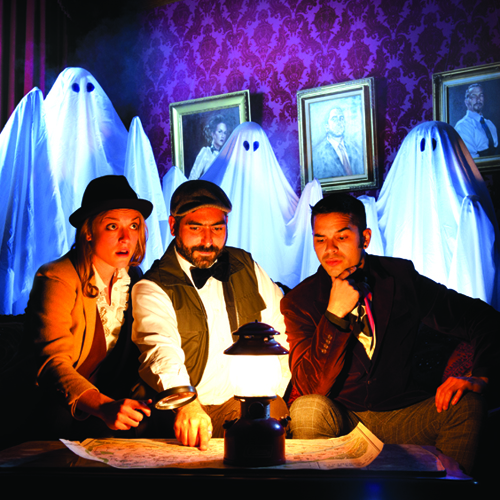
Ghost Hunt! On this week’s cover, the spirits of Johnny Venetti, Jasmine Donaldson, and Jackie Andrews haunt meddling kids Caitlin Donohue, Marcus Banshee, and Walter Gomez on the Kink.com Armory’s Upper Floor (NSFW). Photo by Matthew Reamer, concept by Mirissa Neff. 

This year we’re doin’ it up (f)right for halloween with an issue full of ectoplamic boo-ness. Fear our terrifyingly bad puns!

>>Our spooky, kooky, altogether ookie list of Halloween events to die for

>>A paranormal interview with local ghost detective Loyd Auerbach, with a chilling excerpt from The Ghost Detectives’ Guide to San Francisco 

>>A map of classic haunted San Francisco spots — oooOOooOo!

>>Tagging along on a ghost hunt through horrifyingly charming Pacific Heights

>>The great Houdini died tragically on Halloween — his legend lives on in a spellbinding exhibit at the Contemporary Jewish Museum

>>Forget “The Walking Dead”: Horror classic Zombie shambles through the Roxie

>>Get into the bewitching, haunted pop of local breakout act the Soft Moon

Boonus! Here’s your ghoulishly incredible retro Halloween video:

Boo ya!

0

culture@sfbg.com

Hell’s bells, our very own high unholy day approaches — and the fact that Halloween’s on a Monday this year means an entire weekend of insane. Oh, why not just make it a whole week. Surely you have a week’s worth of slutty Rick Perry toupee costumes in your closet? Tape ’em on crooked and check out some of the eee-vil events below, from fiendishly family friendly to naughtily “adult.”

WEDNESDAY 26

“Death in Parallel” fundraiser and preview Mission Cultural Center, 2868 Mission, SF. (415)821-1155, www.missionculturalcenter.org. 6:30 p.m.–9:30 p.m., $50. Get your dead on a little early at this sneak preview of the epicenter of SF’s Dia de los Muertos celebration.

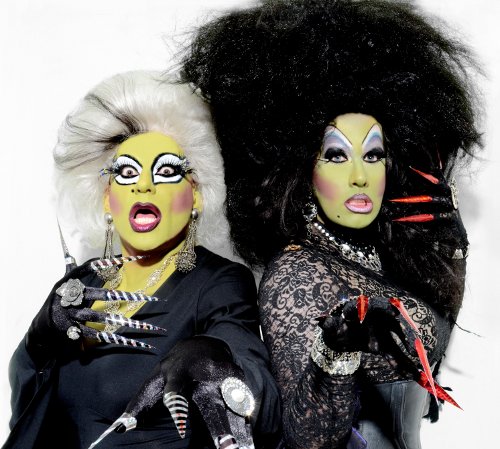
Dream Queens Revue: Halloween Spooktacular Show Aunt Charlie’s Lounge, 133 Turk, SF. www.dreamqueensrevue.com. 9:45 p.m., free. The dreamy weekly drag show goes ghoulish with SF’s sole goth queen, Sophilya Leggz.

THURSDAY 27

“Ann Magnuson plays David Bowie and Jobriath, or, the Rock Star as Witch Doctor, Myth Maker, and Ritual Sacrifice San Francisco Museum of Modern Art, 151 Third St., SF. (415) 357-4000, www.sfmoma.org. 6 p.m.-9:45 p.m., free with museum admission. Fierce hero of the 1980s New York performance underground (and familiar face as sitcom television sidekick-boss-neighbor), Magnuson returns to her fabulous roots in this piece that include incorporate “dreams, Jung, human sacrifice, Aztec shamanism, and all things dark, bloody, and beautiful.” And it’s a costume party! In the SF MoMA! Creativity abounds.

“Halloween! The Ballad of Michele Myers” CounterPULSE, 1310 Mission, SF. www.counterpulse.org. 8 p.m., also Fri/28-Sun/30, $20. Gear up for a drag-studded slasher musical taking cues from “Heathers” and “The Facts of Life,” starring the perfectly horrific Raya Light. She’s a-scary!

Naked Girls Reading: Neil Gaiman Center for Sex and Culture, 1349 Mission, SF. www.sexandculture.org. 8 p.m., $15. Costumes and masks are encouraged at this semi-participatory, all-but-traditional reading of Sandman creator Gaiman’s darker work.

TheaterPop SF: SuperNatural, Red Poppy Arthouse, 2698 Folsom, SF. www.redpoppyarthouse.org. 7 p.m., $10. Local performers skip the tacky underchin flashlights and dry ice for carefully composed, intricate explorations of the macabre.

“Unmasked! The 2011 GLBT Historical Society Gala” Green Room, San Francisco War Memorial, 401 Van Ness, SF. www.unmaskedgala.org. 6 p.m.-9 p..m., $60/$100. A star-studded affair featuring fabulous (of course) entertainment, yummy food, and some of the most revered names in the queer community, including Phyllis Lyon, Jose Sarria, and Armistead Maupin.

Zombie Nightlife with Peaches Christ California Academy of Sciences, 55 Music Concourse Dr., Golden Gate Park, SF. www.calacademy.org. 6 p.m.-10 p.m., $12. The undead are by no means unfashionable — get a zombie makeover, dance with similarly festering folks, sample the latest zombie video games, and listen to a presentation by the Zombie Research Society at the ever-popular, always good-looking weekly Nightlife event at the Cal Academy of Sciences. With Peaches Christ as hostess, it’s a zombie no-brainer.

FRIDAY 28

The Big Nasty: 10th Anniversary Party with Too $hort Mezzanine, 444 Jesse, SF. www.mezzaninesf.com. 8 p.m., $30. A $1000 best costume prize is sure to put the kibosh on those perennially popular nurse get-ups. As if legendary Bay legend Boo $hort, er, Too $hort weren’t enough of an incentive to ditch tired costumes and go as your favorite classic rapper.

Haunted Hoedown, Bottom of the Hill, 1233 17th St., SF. www.bottomofthehill.com, 9 p.m., $10. Rin Tin Tiger and Please Do Not Fight headline the second annual hoedown at this live rock showcase; expect a barn-burner.

Jason Webley’s Halloween Spectacular Slim’s, 333 11th St., SF. www.slims-sf.com. 9 p.m., $14. After once faking his own death at a Halloween show and then disappearing for six months, accordionist Webley’s full-band show this year promises excitement, to say the least.

Night of the Living Shred Club Six, 66 Sixth St., SF. www.clubsix1.com. 9 p.m.-4a.m., $10. This hip-hop and electro throwdown is one where we’ll let the WTF press release speak for itself: “four rooms, five bands, five of the Bay’s best DJs including The Whooligan and Richie Panic, a Paradise Wheels half-pipe and best skate trick contest” — all catered by Mission Chinese Food and Bar Crudo and hosted by two of our favorite people ever, Kelly Kate Warren and Parker Day.

“Rhythm of the 90s” Ultimate Halloween Party Café Cocomo, 650 Indiana, SF. www.fivestarunited.com. 9 p.m.-2 a.m., $45. Break out the Clueless costume and the ketchup bottle; Café Cocomo’s massive dance floor has plenty of room to turn back the clock. Macarena, anyone?

Salem 103 Harriet, SF. www.1015.com, 10 p.m., free. The biggest and scariest name in the witch house dance music movement swoops in from Michigan for a free show, with Tearist, Pfang, Gummybear, Dials and Whitch providing gallows support.

Scaregrove, Stern Grove, 2750 19th Ave., SF. www.sfrecpark.org. 4 p.m.-9 p.m., $8. ‘Tis the season for bouncy castles — bring the kids out for hayrides, carnival activities, a haunted house, and (fingers crossed) funnel cake at the park.

Speakeasy’s Monsters of Rock Halloween Festival Speakeasy Ales and Lagers, 1195 Evans, SF. www.goodbeer.com. 4 p.m.-9 p.m., free. Parties centered upon the theme of good beer never really get old — especially when there are food trucks, live music, and heady costumes.

Sugar Skull Decorating Workshop Autumn Express, 2071 Mission, SF. www.autumnexpress.com. 5 p.m.–6 p.m., $20. Sugar skulls are provided (so you can keep licking away at last year’s) at artist Michele Simon’s decorative exploration of the Dia de los Muertos tradition.

Third Annual Zombie Prom Verdi Club, 2424 Mariposa, SF. www.zombiepromsf.com. 9 p.m., $20. Costume contest, coffin photo booth, live music, and a scary thought: the dancers on the floor tonight may have been doing that move for hundreds of years. Hey, our prom was kind of like night of the living dead, too.

SATURDAY 29

BiBi SF: Queer Middle East Masquerade 4 Shine, 1337 Mission, SF. www.bibisf.org, 9 p.m., $10. The charitable and extremely sultry BiBi SF throws a great party that combines Arabic, Persian, Pan-African, and Latin sounds with hip-shaking belly dancers, lovely drag performances, and an unbelievably hot crowd. All are welcome to this fourth installment of marvelous masquerading.

Club 1994 Halloween Special Vessel, 85 Campton Pl., SF. www.vesselsf.com. 9 p.m.-3 a.m., $18.50 advance.  Sexy electro glamour throwdown for Halloween, anyone? The gorgeous crew behind Blow Up is resurrecting its super-popular, Nintendo-rrific tribute to the pop sounds of the early ’90s (oh yes boy bands and TERL classics!) for a Halloween dress ’em up. With Stretch Armstrong, Jeffrey Paradise, and Vin Sol. The awesome Ava Berlin hosts.  

Circus Center’s Haunted House Circus Center, 755 Frederick, SF. www.circuscenter.org. Tours from 6-7 p.m., show at 7:30. Putting your body in the hands of a practicing student is sometimes not the best idea (see: haircuts, dental exams), but the Circus Center’s students have thrown together an extensive haunted house sure to turn your stomach in only the best way.

Dark Room does Halloween Hot Spot, 1414 Market, SF. 10 p.m., $5. “It’s like Debbie Does Dallas for freaks!” Quoth the undead hosts of this cute monthly queer goth and industrial party at a the little-known but awesome Hot Spot club on Market. Throw on your sheet and twirl. 

Ghost Ship IV: The Afterlife Treasure Island. www.spacecowboys.org. 9 p.m.-4 a.m., $50 tickets (extremely limited) on site. A massive, Halloween-themed arm of Burning Man, Ghost Ship mashes together DJs, art cars, food trucks, a stroboscopic zoetrope, and thousands of people.

GO BOO! Deco Lounge, 510 Larkin, SF. www.decosf.com, 9 p.m.-late, $5. If you want to experience some really sexy underground disco energy with a fantastically diverse crowd, the monthly Go Bang! Party is one of your best bets — this Halloween edition brings in DJ Glenn Rivera and Mattski to join residents Sergio and Steve Fabus of the storied Trocadero Disco. Pop on a costume and hustle on down.

Halloween Freakout with Planet Booty Café du Nord, 2170 Market, SF. www.planetbooty.org. 9 p.m., $12. It’s hard to imagine a more extreme Planet Booty, but this would be the night for it: swap your standard neon unitard for a black velvet version.

Halloween Masquerade with Zach Deputy The Independent, 628 Divisidero, SF. www.theindependentsf.com. 8:30 p.m., $20. Deputy’s “gospel-ninja-soul” provides the soundtrack to an unorthodox masquerade, followed by a free (with ticketstub) Boom Boom Room afterparty.

Halloween 2011: A Red Carpet Runway Massacre Jones, 620 Jones, SF., www.juanitamore.com. 9 p.m., $35. “I prefer the glamour to the gore on Halloween,” quoth ever-poised (even while double-fisting shots) drag ruler Juanita More. Join her at recently opened rooftop bar Jones for dancing and fashionable fun with Djs Delachaux and Sparber, club Some Things hilarious Project Runtover amateur design contest, treats from farm:table and Gimme Shoes, and More, More, More.

“Hallowscreen” cartoon screening Walt Disney Family Museum, 104 Montgomery, Presidio, SF. www.waltdisney.org 11 a.m., 1 p.m., 3 p.m., 4 p.m., 5 p.m. Also Sun/30, Mon/31. $7 adults, $5 children. Catch “Hell’s Bells” and other early, strange Disney shorts that show Walt’s more uncanny side. If you haven’t been to the excellent museum yet, here’s a great occasion.

Horror Costume Party, SUB-Mission, 2183 Mission, SF. www.sf-submission.com. 9 p.m., $4 in costume. Get your gore on with Meat Hook and the Vital Organs; after an earsplitting set, zombiewalk down the street for a taco at Cancun.

Foreverland Halloween Ball Bimbos 365 Club, 1025 Columbus, SF. www.bimbos365club.com. 9 p.m., $22. The Thriller dance is only the beginning at this costume-intensive, 14-piece tribute to M.J. himself.

Jack O’Lantern Jamboree Children’s Fairyland, Oakl. www.fairyland.org. 10 a.m. — 5 p.m., also Sun/30. $10. From juggling and puppets to rides and parades, Oakland’s Fairyland puts on a gentle All Hallow’s weekend.

Lights Down Low Halloween SOM Bar, 2925 16th St., SF. www.som-bar.com. 9:30 p.m., $10 advance. One of the city’s finest, wildest parties brings in bass music star Pearson Sound a.k.a. Ramadanman with DJ Christian Martin, Manaré, Sleazemore, and Eli Glad.

Mansion Madness: Official Playboy Halloween 2011 Mist Ultra Club, 316 11th St., SF. 9 p.m., $40-$80 Find your haunted honey bunny among the bodacious playmate hostesses at this hoppin’ Slayboy event.

Monster Bash on the U.S.S. Hornet 707 W. Hornet, Pier 3, Alameda. www.uss-hornet.org. 7:30 p.m., $25. What better place to celebrate spooks than among the 300 ghosts haunting the crannies of Alameda’s ancient aircraft carrier?

Spooktacular Japantown Halloween Party and Trick-or-Treat Japantown Peace Plaza, Post at Buchanan, SF. www.sfjapantown.org. 12 p.m.–4 p.m., free. Uni-nigiri and candy corn: the perfect combination. Trick-or-treat in the light of day through the Japan Center Malls.

32nd Annual Spiral Dance, Kezar Pavilion, 755 Stanyan, SF. www.reclaimingspiraldance.org. 7:30 p.m., $10–$20 (sliding scale). The witches of San Francisco gather for a huge participatory dance honoring those who have passed.’

Trannyshack Presents: Halloween: A Party DNA Lounge, 375 11th, SF. www.dnalounge.com. 11 p.m., $25. Anything but the traditional drag, the 5th incarnation of Peaches Christ and Heklina’s annual costumed throwdown features a fantastically horrific secret (and “big!”) guest judge. Oh, and the usual genius-creative bevy of outré drag performers, including Fauxnique, Becky Motorlodge, Toxic Waist, and Exhibit Q.

Wild Side West Costume Contest and Party Wild Side West, 424 Cortland, SF. 8 p.m., free. Try not to get your t.p. body cast caught on a shrub in the Bernal hotspot’s beer garden.

Wicked Gay! Halloween Bash Lexington Club, 3464 19th St., SF. www.lexingtonclub.com. 9 p.m., free. The happily hectic Mission dyke bar holds a costume party and contest with live beats.

SUNDAY 30

All Hallow’s Eve DNA Lounge, 375 11th St., SF. www.dnalounge.com. 9 p.m.-afterhours, $13, 18+. Great goth and industrial music parties Meat and Death Guild form an unholy alliance with the gorily titillating Hubba Hubba revue burlesque dancers for what’s sure to be a night to dismember. DJs Decay, devon, Joe Radio, Netik, and more tear you apart on the dance floor

Ceremony Halloween Tea, City Nights, 715 Harrison, SF. www.industrysf.com. 5 p.m.-midnight, $40. The name sounds genteel; the shirtless gay dancing to Freemasons and others will likely be raucous.

Fruitvale Dia de los Muertos Festival Fruitvale Village, Oakl. www.unitycouncil.org. 10 a.m.-5 p.m., free. Oakland’s Day of the Dead festival, falling a bit before SF’s, features dancers, gloriously fragrant food, huge crowds, and, of course, compelling tributes to loved ones who have passed.

Halloween Family Dance Class, ODC Dance Commons, 351 Shotwell, SF. www.odcdance.org. 1 p.m-2 p.m., $5/person, $20/family. Britt Van Hees allows kids and folks who’ve already mastered the Sprinkler to add the Thriller dance to their repertoire.

The Holy Crow Holy Cow, 1535 Folsom, SF., www.honeysoundsystem.com. 8 p.m.-2 a.m., $5. Quaffingly queer electronic music collective Honey Soundsystem throw one of the best weekly parties in the city — the Halloween edition of Honey Sunday should be a total scream, queen. 

Midnight Monster Mayhem, Rockit Room, 406 Clement, SF. www.rock-it-room.com. 9 p.m., $10 before 11 p.m. The live hip-hop dance party (costumed, of course) may well be the perfect nightcap to pumpkin pork stew at nearby Burma Superstar.

PETNATION 5 Public Works, 161 Erie, SF. www.publicsf.com. 9 p.m., $5 before 10 p.m., $10 after. Dance to Fido’s memory — Public Works honors deceased pets with soul-shaking beats, a DDLM art exhibit and a commemorative altar (plus, proceeds go to OccupySF).

MONDAY 31

Classical at the Freight Freight and Salvage Coffeehouse, 2020 Addison, Berk. www.freightandsalvage.org. 6:30 p.m., $10.50 for adults, under 12 free. The Bellavente Wind Quintet breathes chilling strains to a kid’s costume parade and candy-filled celebration.

Halloween at El Rio El Rio, 3158 Mission, SF. www.elriosf.com. 8 p.m., $7. Two Ohioans under the stage name “Mr. Gnome” take over the inclusive, ever-popular dive for Halloween.

Teatro ZinZombie, Teatro ZinZanni, Pier 29, SF. www.love.zinzanni.org. 6 p.m.-11 p.m., tickets start at $117. Tonight might be the one to finally catch SF’s cabaret mainstay, which for a few precious hours transforms into a zombie-laden spectacle.

Viennetta Discotheque: Halloween! UndergroundSF, 424 Haight, SF. 10 p.m., free. One of SF’s cutest underground queer Monday weekly parties will claws you to reel in horror at the frightful fantasticity of its drag denizens. Your body hits the floor with DJ Stanley Frank, Alexis Blair Penny, and Jason Kendig on the decks.


 

Haunting the hunters

0

marke@sfbg.com

“There are so many popular ghost-hunting apps, software programs, and TV shows out there right now that rely only on the tech side of things — but what people don’t realize is that if you take the human part out of the ghost-hunting equation, you’re really left with nothing. Sure, it may look like your app is detecting some sort of peripheral movement, or the people on TV may be tracking some remote electromagnetic phenomenon. But you have to remember that ghosts were once people, that you’re dealing with human beings. Technology will only take you so far. You need that human sensory and extrasensory contact for the spirit to fully reveal itself as more than just a blip on a screen. You can’t just go take a photo of a ghost with your iPhone!”

Master of Parapsychology, professor at JFK university, and Bay Area ghost detective Loyd Auerbach (www.mindreader.com) is speaking to me over the phone about the book he published earlier this year with psychic Annette Martin, The Ghost Detectives’ Guide to San Francisco, a spooky and involving compendium of the duo’s 16-year investigations into local paranormal phenomenon. Auerbach had just come from a weeklong conference on the paranormal at Atlantic University in Virginia, where hot topics included quantum psychometrics, split beam research, global consciousness projection and convergences, and — his specialties — recurrent research with mediums and parapsychology education.

That’s some heady stuff for a down-to-earth guy who credits comic book geekiness as his gateway to paranormal investigation. “It’s either surprising or not surprising that so many paranormal investigators are comic book geeks and old TV show fanatics,” he says with a laugh. (Auerbach is also a well-known chocolatier: his Haunted By Chocolate line, www.hauntedbychocolate.com, will be featured at Berkeley’s Spun Sugar shop for Halloween.)

Besides the ghost detectives’ indepth sleuthing at places like Alcatraz, the Queen Anne Hotel, and Chinatown, I was particularly intrigued by Auerbach and Martin’s concept of “residual haunting” versus actual haunting. “Residual hauntings are simply traces of emotion or action that clutters the psychic territory of a location — even living people can ‘haunt’ a place residually. A real haunting consists of a complex set of phenomena that naturally involve one or several spirits, but that moves beyond repetitive enactments and into a fuller narrative.”

The ghost detectives do indeed experience fuller narratives — several of them chilling, like the barrage of negative feelings that assault Annette in Chinatown and the echoes of despair filling Alcatraz. And some are more, er, entertaining, like Auerbach’s intimate encounter with a specter named Cayte at the Moss Beach Distillery that’s jokingly referred to as “ghost sex.”

The book was to have kicked off a series exploring Bay Area. Unfortunately, Annette, whose “gift of the white light” brought her a considerable amount of TV and radio fame, passed away in September. “I have so much material from our collaboration, I’m still planning to do something,” Auerbach said. “And to answer your next question: no, I haven’t exactly heard from Annette from the other side. But several of her psychic friends have, and I’m hoping my next project will involve seeking her out.”

ENCOUNTER AT THE PRESIDIO OFFICERS’ CLUB

An excerpt from The Ghost Detectives’ Guide to San Francisco

LOYD I indicated we should move back to the main room, it had large windows looking out toward the bay. In front of the windows was a platform. Annette moved to the platform and windows.

ANNETTE What I felt was a lot of energy, right around here.

LOYD Right here?

I set down the TriField Meter as well as a natural EMF meter, which measures non-tech sources of magnetic and EM fields. The latter has a sound indicator to alert the user when the readings change.

ANNETTE I am going to turn on my tape recorder and see if we can pick up any voices.

Something is registering with me. … She stands at the window, waiting for him. Ah, she’s asking me why he hasn’t come.

[Annette took a few deep breaths and began to channel.]

My name is Annette and this is Loyd. There is nothing to be afraid of. Can you show me something?

[Annette: She was certainly curious. I was getting her questions intuitively.]

ANNA MARIE Yes, I am from San Francisco. I went to school here, Notre Dame de Victoria and St. Gabriel’s and Mercy High School… Did I like the nuns? Some of them. You spend time in the chapel [at the Presidio]. You feel good there. You want to run and play with the children, but sometimes they get frightened.

LOYD What is your name?

ANNA MARIE Anna Marie.

LOYD What is your last name?

ANNA MARIA Guiterrez.

LOYD Where were you born?

ANNA MARIE Not in this country. I came as a child. Travelled a long ways…

LOYD How did you travel? By what means of transportation?

ANNA MARIE Mother said by boat. Mother was beautiful. I came back to find her, but she is not here ….

LOYD Do you remember when you came back here?

ANNA MARIE People, many parties … noise … people … men … no ladies. I used to swing on a tree.

LOYD A tree here? [Annette nods.] Were you married?

ANNETTE She’s turned away from me now, she says others come here but not her love, not her man. “Ships, many ships.”

LOYD Annette, can you tell what she is wearing?

ANNETTE Yes, she is wearing this long white dress, with something tied in the center. She has very long hair but there is something tied around her head. Like a white scarf… She looks, she could be 20. She keeps changing, sometimes she looks older…. This is where she is waiting for him.

LOYD The man she loves?

ANNETTE She says she calls him Pugsy, but that wasn’t his real name….She doesn’t want to talk anymore. Anna Marie, can you tell me his real name? “It’s too painful,” she says. It’s alright, it’s alright, we will call him Pugsy.

This is the place where they would meet. There was a big tree, a great big tree with branches that go way up. He put a rope around the branch so that she could swing and they would laugh.

She doesn’t understand why all these people were here. She says that if she stays here, maybe he will find her. She can’t find him…

LOYD What year does she remember being here?

ANNETTE She thinks it’s 1776…. This is 1996, Anna Marie. We come with love and we don’t want you to be sad and you can leave if you want. [Annette takes in two deep breaths.] OK, she ran away. Wow!

LOYD So she’s basically stuck here?

ANNETTE She is stuck here, on her fixation on this man. And there was this tree, like a big oak tree, I saw it so clearly, and laughing and giggling.

LOYD Do you think it was taken down to build this building?

ANNETTE I forgot to mention that I felt closer to the water when I was talking to Anna Marie. Did anything measure on the meter?

LOYD Yes, a couple times when she was speaking through you.

ANNETTE She would come in close to me and then she would back away. At one point is was like we were holding hands. She is very friendly, very loving, but also very sad.

From The Ghost Detectives’ Guide to Haunted San Francisco, copyright 2011 by Loyd Auerbach and Annette Martin, published by Craven Street Books


The way we were weird

0

arts@sfbg.com

FILM In 1990, cable was still a luxury many chose not to afford. The Big Three — it was now grudgingly being admitted that Fox might make it Four — weren’t doing anything all that different from what they had a decade or two or three before. Certainly the popular likes of Major Dad, Beverly Hills 90210, and America’s Funniest Home Videos weren’t exactly rocking the boat as thus far known to viewers and sponsors.

Then came Twin Peaks, which most ABC executives had thought a grievous mistake. Principal writer Mark Frost had the successful Hill Street Blues under his belt, but co-creator David Lynch’s four movies hadn’t remotely seemed to qualify him for America’s living rooms. The Elephant Man (1980) was a prestige project for which he was a hired hand, still his most “normal” film even if eccentric by most other standards; Dune (1984) was an expensive disaster fan-editors are still trying to salvage. Blue Velvet was the most perverse Americana joke imaginable in 1986, a screen year otherwise defined by Top Gun. As for Eraserhead (1977) — well, never mind.

Debuting in April of 1990, Twin Peaks took Velvet‘s surreal juxtaposition of Eisenhower-era small town idyllicism with hair-raising behavioral excesses, then stretched it semi-mockingly over the broad, flat ensemble canvas of Peyton Place — a trashily soap-operatic bestseller and TV series whose movie incarnation Frost-Lynch screened for inspiration. The notion of innocence defiled almost beyond comprehension was crystallized in their startling image of a homecoming queen beatifically dead, plastic-wrapped, washed onto the riverbank of her picturesque Washington state burg.

“Who killed Laura Palmer?” briefly gripped the nation, just as “Who shot J.R.?” had 10 years earlier. Two decades ago everything tasted better when drizzled with the special chocolate sauce of “postmodernism,” and Twin Peaks was the most ironic cherry pie vehicle for that addictive popular culture had yet baked up. It was so cool you could hardly believe it was actually being watched.

Then it wasn’t, making for one of the medium’s brightest, fastest flameouts. But naturally its cult has endured, despite so many home-viewing releases since compromised by laziness and rights issues, not to mention the colossal buzz kill of 1992’s first/last big-screen spin-off. Its actors have aged, and in numerous cases not prospered. But Twin Peaks itself is like Dorian Gray, forever ageless, seductively not-quite-right.

You can indulge your undying love at the Roxie, when a more-or-less “20th Anniversary Tribute” offers close to six consecutive hours of Peaks-iana. Co presented by short-range nostalgists Midnites for Maniacs, the evening commences with Otto Preminger’s noir-ish 1944 Laura, another story about an obsessed-over dead babe that was an apparent influence on the much later series.

Things begin in earnest with the 90-minute Peaks pilot, directed by Lynch himself. Swaying to the drugged prom dance themes of Angelo Badalamenti’s signature score, it introduced an incredible range not just of characters but of actors, both running the gamut from dewy to screwy.

Beyond those luscious youths (Lara Flynn Boyle, James Marshall, Sherilyn Fenn, etc.) who all seemed poised to become movie stars — particularly Sheryl Lee, whose Laura Palmer incited such mania that the Seattle “local girl” cast simply to be a corpse was brought back as a hastily conceived doppelganger — there were ex-actual movie stars (Piper Laurie, Richard Beymer, Russ Tamblyn), faded TV stars (Michael Ontkean, Peggy Lipton), David Lynch “stars” (Eraserhead himself, Jack Nance), miscellaneous oddjobs, and onetime “Elizabeth Taylor of China” Joan Chen. The latter never seemed quite to know what she was doing there, but then she wasn’t supposed to be — Isabella Rossellini had dropped out. Bemusedly observing all was Kyle MacLachlan’s apple-cheeked FBI Agent Dale Cooper, a Lynchian alter ego willing to plangently wade into swamps of teenage prostitution, cocaine deals, surreal dwarf fantasias, and so forth — as long as he could break for a cuppa diner joe and more of that fine pie.

Alternately queasy, campy, and swoony, Twin Peaks had it all. With its unending parade of lurid revelations, not excluding occult ones, the whole miraculous brew constantly threatened to sink into self-parody. Many thought it did so in the second season. ABC’s shuffleboard scheduling dealt further death blows to a fickle mainstream audience that had decided they weren’t sure if they cared who killed Laura Palmer anyway. (Lynch would have preferred the mystery remain unsolved.)

Still, the fanatics who remained made it seem viable to roll camera on 1992’s Twin Peaks: Fire Walk With Me (the Roxie program’s final feature) just after the show’s cancellation. No longer writing with Frost but Robert Engels, Lynch saw it as the first in a feature trilogy that would expand and complete the Peaks universe.

That was not to be. Booed at Cannes, Fire tanked everywhere but Japan. As with everything Lynch has ever done, it has defenders. The worse the project, the more vehement the defense, and as very possibly the worst of all, Fire is some folks’ notion of a cruelly maligned masterpiece. The director shot over five hours of material; should those umpteen deleted scenes ever surface, you can bet on a corrective-fan-edit frenzy.

In the meantime there’s still just the movie, as infuriating as the show was frequently great. It’s also (very) occasionally great, which itself is infuriating. The first section (starring Chris Isaac as Agent Non-Cooper in Upside-Down Pin Tweaks-ville) is the smug, dumb, garish self-parody the series never quite descended to. Eventually things come in to relative focus around Laura Palmer’s final week on Earth, building toward a surprisingly blunt religious fall-ascension, complete with literal angels.

The hellfire bits do have their moments, like scary Bob (Frank Silva) slithering into a bed, or driving two leashed girls at the end like panicked farm animals to slaughter. But the heightened gore and nudity seem pandering; fascinating Lee, 18 going on menopause, is made to totter around like a cokehead version of Bette Davis in Beyond the Forest (1949). There is dialogue as gee-whiz as Laura answering “Nowhere fast!” when asked “Where you going?” by Donna (Moira Kelly replacing Boyle, which doesn’t work); and as crass as demon-addled daddy Leland (Ray Wise) telling daughter “Let’s get your muffin!” en route to breakfast and the apocalypse. What is David Bowie doing here? As the New York Times review noted, such useless incongruities “would have made [just] as much sense inserted into a segment of Golden Girls.”

“20TH ANNIVERSARY CELEBRATION FOR DAVID LYNCH’S TWIN PEAKS

Sat/29, 7 p.m., $15

Roxie Theater

3117 16th St., SF

(415) 863-1087

www.roxie.com