Lit

Green shopping guide: 7 shops for kids and housewares

0

Children, don’t let your parents grow up to throw away aluminum foil. Now that you’re a big kid, with attendant home cleaning and offspring-maintaining concerns, there’s little reason to stop paying attention to the environment — in fact, what with the better-world-for-the-little-ones hope, you might find yourself doubling down on decorating motifs that will save the world.

Here’s a passel of stores (locally-based online enterprises and brick-and-mortar both) in the Bay where you can shop with a clean conscious for housewares and kid’s items. We’re guiding around enviro shopping all this week — check out yesteday’s guide to garden stores.

Eco-Terric

This store bills itself as “natural beauty for natural homes,” and does indeed provide a wide selection of gorgeous homewares. Offering everything from Earth Weave bio-floor carpeting to Pacific Rim Woodworking furniture, Eco-Terric allows you to furnish your whole home tastefully and in good conscience. After you’re all done with the hard work of home decorating, lounge around in one of its organic cotton robes and have a spa day with the Coyuchi organic bath products you picked up.

1401 16th St., SF. (866) 933-1655, www.eco-terric.com

Ambassador Toys

With an exciting stock of sustainably-produced toys, this progressive West Portal spot is a child’s dream come true: a shiny, colorful extravaganza of different ways to play. From science kits and board games to stuffed animals, there’s no shortage of great gifts to be found here. Best of all, it’s locally owned and operated, a nice relief for parents used to shopping in the horrific, fluorescent-lit warehouses of the chain stores.

186 W. Portal, SF. (415) 759-8697, www.ambassadortoys.com

A Happy Planet

Everything sold here is organic, non-toxic, and beautiful in a simple, clean way. Untreated wood furniture, natural drapery, and hemp shower curtains are just a few of the things that an eco-shopper can find here. Happy Planet stocks three different types of organic mattresses: rubber core, inner spring, and woolen, as well as futons. Organic Egyptian cotton baby blankets make a great shower present for your latest crop of knocked-up friends in Noe Valley.

4501 Irving, SF. (415) 753-8300, www.ahappyplanet.com

Cisco Home

This stylish Hayes Valley shop specifies its goal as “sustainable living,” using only natural and environmentally-friendly materials. Regardless of its lofty and admirable ideals, its stock is simply beautiful. The furniture is delicately crafted and striking, the lighting is hand blown by local artisans, and the beds are luxuriously upholstered. Anyone, no matter how much they may deny global warming, would shop here if they were in the market for stunning home décor.

580 Hayes, SF. (415) 436-0131, www.ciscohome.net

Giggle

This Cow Hollow boutique is specifically geared towards new parents, exclusively featuring products that are allergy-free, non-toxic, socially and environmentally conscious, and well-designed. Since they stock only the best, there might be some sticker-shock, but rest assured that for those price your baby will be growing up in a soft, organic cotton bubble of adorably patterned textiles and safely-made pacifiers.

2110 Chestnut, SF. (415) 440-9034, www.giggle.com

Woodshanti

A worker-owned furniture and cabinetry building cooperative, Woodshanti uses only responsibly harvested lumber materials and natural finishes. The results are unique, the sort of furniture Thoreau might have had in his shack in the woods. From the shop’s economic utopianism, to its emphasis on creativity and quality craftsmanship, you might feel a happy little glow of saintliness while filling out your online order for a solid cherrywood kitchen island. Don’t worry, this is a normal reaction, it will fade as soon as you order another Starbucks.

909 Palou, SF. (415) 822-8100, www.woodshanti.com

Bella Luna Toys

This Petaluma store specializes in the sort of toys that leave a little something to the child’s imagination, encouraging creative play. A spare wooden sword and shield set for jousting and make-believe quests; a set of simple, colorful wood building blocks, some featuring the rough natural bark of tree branches for constructing fantastic cities; a wooden horse and wagon on wheels for trips to a fictional market. The sort of toys Amish children might play with, classically crafted and pretty enough to decorate a well-appointed living room.

921 Transport Way, Petaluma. (707) 782-0727, www.bellalunatoys.com

The Performant: Ferocious many

0

The Ferocious Few and the Anarchist Bookfair disturb the peace.

In the as-yet unwritten book of Bay Area music, at least one chapter should be devoted solely to the bands whose crowd-wrangling skills and attention-grabbing music was honed on the mean streets. From the Mission District’s once-infamous “Live at Leeds” location, inaugurated by punk band Shotwell and later championed by the imitable Rube Waddell (the band, not the ballplayer), to the wriggling mass hysteria of a Gomorran Social Aid and Pleasure Club Parade, to the compact cacophony of one-person clown band Masha Matin, and the finger-pickin’ good Americana of Brian Belknap, the streets of San Francisco, like the infamous hills, are alive with the sound of music.

Of the current ranks of street-side crooners, The Ferocious Few have come to embody the best qualities of the breed. Combining sheer persistence with a driving, southern-rock-influenced, guitar-and-drum combo, at a volume constantly pushing at the edge of 11, the Few prove that safety may be in numbers, but that rock music was never meant to be safe.

However, headlining the Great American Music Hall is a considerable step up from frolicking anonymously in the gutters, and it may be for this reason that when the Few took the stage after a blistering set from Zodiac Death Valley, they had morphed into the many — five rather than two. The focal point was still frontman Francisco Fernandez, whose full-throttle guitar-playing and aggressive, sandpaper-and-moonshine vocals have remained the constant of the Few through several lineups.

Joined by Fred Barnes on Bass, Kevin Oliver on Guitar and keys, and not one but two rock-solid drummers, Jeremy Black, and an effervescent Andrew Laubacher, Fernandez did stray from the Ferocious formula a couple of times, even edging into noodly psych-band territory, but for the most part, adding new musicians to the mix merely meant adding an extra boost to the overall Ferocious sound. But the question remaining is, does this show herald the beginning of a new era for the not-quite-as-Few, or a temporary enhancement of the old? Either way, you’ll want to stay tuned.

Another constantly morphing, scrappy San Francisco stand-by is the annual Anarchist Bookfair, now in its 17th year. One part bookseller’s convention, one part soapbox, and one part educational forum, the Bookfair pulls together a more or less unified presence from a variety of splinter factions from the activist frontlines: radical librarians, punk rock zinesters, oral historians, animal liberators, intentional communities, ideological theorists, and more. Speakers and panels are a big part of the draw, and every year it seems like there’s someone new to the lineup, a reason to keep coming back for more.

This year’s wild card event was a panel somewhat opportunistically entitled “Occupy the Future: Science Fiction writers on radical visions of tomorrow,” featuring sci-fi authors Rudy Rucker, John Shirley, and Terry Bisson. Beginning by positing the question of whether or not the future might include an “anarchist society that works,” the three alternated between discussing technology vs. its breakdown, cooperation vs. chaos, cyberpunk vs. technological singularity, and whether or not humanity has the capability to change with or without a tech “fix.” It was by far the most engaging conversation I encountered at the fair all weekend, though no group consensus was ever reached as to what the future might hold. Hopefully, at a minimum, it will hold more bookfairs.

Panther cry

0

culture@sfbg.com

LIT Over a five-year period in Oakland, California, archivist Pat Thomas befriended key leaders of the Black Power movement, dug through Huey Newton’s archives at Stanford University, spent countless hours and thousands of dollars on eBay, and talked to rank and file Black Panther Party members. He uncovered dozens of obscure albums, singles, and stray tapes. Along the way, he began to piece together a time period (1967-1974) when revolutionaries were seen as pop culture icons.

The result of Thomas’ discoveries is Listen Whitey!: The Sounds of Black Power 1967-1974 (Fantagraphics, 224pp, $39.99), a 70,000-word hardcover book with 200 full-color images of obscure recordings and ephemera, and an accompanying CD that traces the vast cultural output of the black power movement.

Besides being a visually stunning collection of photographs and album covers, Thomas’ book shines as a concise, clear-sighted history of the Black Panther movement and the ascendance of black power in American life. “While I can’t claim to know what happened, much less what it felt like to participate,” he says in the introduction, “it’s my hope that readers will find the personalities and music inspiring as I did. Dig deep; blood is thicker than mud.”

Done with a reverence of the times and people, Thomas distinguishes the Panthers from black nationalist movements like Karenga’s US and Amiri Baraka’s Black Arts by focusing on the diversity of the contributors and supporters. Listen, Whitey! steps outside of the boundaries established by other books covering the culture of the movement by showing black power as an engine that generated a multi-cultural global resistance.

This Black-Powered cross-cultural revolution is Bob Dylan’s album Highway 61 Re-visited in the hands of black radical imagination. A transformative album for Jimi Hendrix, the song “Ballad of a Thin Man” was on Huey Newton’s heavy rotation list during the early drafts of the Panther doctrine. Dylan later reciprocated with an elegy to “George Jackson”, an homage to Ruben “Hurricane” Carter, and other songs in service to the movement. The most curious inclusion on the CD, in fact, is white folk singer Roy Harper’s “I Hate The White Man,” a track that — to this day — is as enigmatic as it is honest.

Known musicians like Gil-Scott Heron and John Lennon mix with under-appreciated or unknown talent like Gene McDaniels and the marvelous Marlena Shaw. From the humorous seriousness of the Watts Prophets’ “Dem Niggas Ain’t Playing” to the serious humor of Dick Gregory, and on to the sublime sounds of struggle from Elaine Brown, the music is full and beautiful. The omission of any of any New Thing jazz and Jimi Hendrix (though Thomas sees Hendrix as disengaged, if not apathetic to the riots, “Look At The Sky” from Electric Ladyland opens the dialogue even further beyond the typical), makes the CD function more as a primer to the genre than a definitive review. But when all is said and done, this honky wrote a great black book. *

PAT THOMAS AUTHOR READINGS:

April 10 7 p.m., free

The Booksmith

1644 Haight, SF

(415) 863-8688

www.booksmith.com


April 11 7 p.m., free

Pegasus Books

2349 Shattuck, Berk.

(510) 649-1320

www.pegasusbookstore.com

It’s not what you get, it’s what you keep

0

caitlin@sfbg.com

LIT In Redefining Black Power (City Lights Books, 206pp, $16.95), Joanne Griffith’s assemblage of her interviews with black thought leaders, Obama is not the focus, but his presidency is the frame. Journalists, activists, an economist, a theologist who wrote speeches for Martin Luther King, Jr. — each chapter of the book is a dialogue faithfully transcribed from Griffith’s well-informed questionings, reminding readers that the fight for expanded democracy in the United States didn’t end when the brand-new First Family took the stage that night in Chicago’s Grant Park.

Because when it comes to the fight for equal rights in this country — as economist Julienne Malveaux quotes from Lauryn Hill in her Redefining Black Power interview — “it’s not what you get, it’s what you keep.”

Griffith wants to make sure that the words of black leaders are kept in history’s permanent ledger. The Redefining Black Power project was born after she visited KPFK in Los Angeles, where the Pacifica Radio Archives are kept. The archives, a repository for interviews with African American leaders going back for decades, inspired her role as a modern day chronologist. With the help of Brian DeShazor, director of the Archives, Griffith has been airing one historical interview a week on her BBC Radio 5 Sunday evening show.

She also started conducting interviews herself. This edition of Redefining Black Power (she hopes there will be more) is structured as a look at the state of black America since President Obama ascended to the Oval Office, public fist bumps, and dolorous battles over health care.

The book is important, more readable than you’d think interview transcripts would be, and includes seldom-heard perspectives like those of an activist who refuses to vote and calls President Obama “crack” for African Americans, and a Ghana-born New York journalist who asserts we must never forget what it meant when Malia Obama wears her hair in twists.

Griffith acts as the conduit of information, rarely the pontificator herself. That’s why we tapped her for a Guardian interview via email last month, eager to hear what she’s learned about black power today.

SFBG: Explain where the interviews in the book came from. How did you become acquainted with the Pacifica Radio Archives and why are they important?

JG: The idea for the Redefining Black Power Project, of which the book is part, was born out of the historic audio held in the Pacifica Radio Archives, a national treasure trove of material charting America’s history from a progressive perspective dating back to 1949. But it was one recording of Fannie Lou Hamer addressing the 1964 Democratic national convention that sparked the idea for Redefining Black Power. Brian DeShazor heard the tape and wanted to find a permanent way to preserve and share the voices held in the Archives with a wider audience, and what better way than through the written word? Brian approached City Lights Books with the idea, and this book is the result, drawing on the voices of history to link us to the election of Barack Obama, one of the most significant moments in the social and political history of the United States. Through this project, we hope to preserve the voices, opinions and perspectives of African-Americans in this so called ‘Age of Obama’ for historians to digest and explore in years to come.

How did I get involved? As a complete audio nut, I always make a point of visiting local radio stations wherever I travel in the world. Back in 2007, I was in Los Angeles, called KPFK to arrange a visit and was introduced to the Pacifica Radio Archives. Because of this work and the extensive list of people I have interviewed over the years, Brian invited me to do the interviews for the Redefining Black Power project. Through this book, we delve into the role of the activist from different perspectives; the legal system, the media, religion, the economy, green politics and emotional justice.

SFBG: Was there an interview from the book in which your subject’s answers deeply surprised you? 

Joanne Griffith: It was Dr Vincent Harding, the man behind Dr. Martin Luther King Jr.’s “Beyond Vietnam” speech that surprised me the most. A true veteran of the civil rights movement, he made the point that the election of President Obama was never the goal of the movement; instead he prefers to call the work “the movement for the expansion and deepening of democracy in America.” Put this way, it made me realize more than ever, that the work we do today is not in isolation, but part of a wider movement, stretching back all the way to slavery. And the work isn’t over.

SFBG: Who should read this book? How should it be used? 

JG: Use it as a conversation starter to discuss issues in your own community. Parents, use it as a way to engage your children in history. Students, use it as a resource for papers on race and the Obama presidency. Most importantly, everyone, share your thoughts at www.redefiningblackpower.com. This book is not the end of the project; we’re only getting started.


The legacy of racism

5

steve@sfbg.com

The legacy of brutal racism in this country, particularly against African Americans, shapes the events of today. That’s a notion that much of white America resists accepting, particularly conservatives. But actions create reactions, hatred begets hatred, and those cycles can roll forward endlessly and manifest in unpredictable ways.

That’s one of the most compelling lessons in local journalist Thomas Peele’s gripping and insightful new book, Killing the Messenger: A Story of Radical Faith, Racism’s Backlash, and the Assassination of a Journalist (2012, Crown), which grew out of covering the aftermath of the 2007 murder of Oakland journalist Chauncey Bailey by members of Your Black Muslim Bakery.

Bailey was killed to prevent him from writing a story in the Oakland Post about the violence and financial crimes perpetrated by followers of the late Yusuf Bey and his sons, including Yusuf Bey IV (aka Fourth). Peele and other local journalists and media outlets (including the Bay Guardian) formed the Chauncey Bailey Project to build on the work Bailey began and investigate his murder, which Fourth was convicted last year of ordering.

“The free press on which the public depends to keep it informed had been attacked,” Peele wrote. While such murders are rare in the U.S. — the last was a Mafia hit on a reporter from Arizona in 1976 — Peele and his brethren considered it important to send the message that, “A story could not be killed by killing a journalist.”

But the story that emerges from Peele’s years-long investigation goes well beyond Bailey’s murder, its flawed investigation by the Oakland Police Department, the violence and hypocrisy of the Your Black Muslim Bakery “cult,” or its long and complex relationship with Oakland’s political and community leaders.

Peele delves deeply into the 80-plus-year history of the Nation of Islam and Black Muslim ideology, dissecting its turbulent evolution and belief system that white people are “devils,” created by a mad scientist named Big-Headed Yakub, who use “tricknology” to hide the truth that African Americans are superior beings who will be spared during a coming Armageddon inflicted by a spaceship that has long circled the earth — a belief system that Malcolm X rejected after taking a hajj to Mecca and shortly before his assassination.

Peele dismisses the entire religion — which has very little in common with true Islam — as a deceptive scam from its inception, devised by the “con man” W.D. Fard and promoted by Elijah Muhammad simply to enrich its leaders by manipulating poor African Americans. Similarly, Yusuf Bey spoke the language of black empowerment in founding his own breakaway Black Muslim sect in North Oakland then used it as cover for criminal enterprises and raping the women under his control over a period of decades.

But to understand the appeal of Black Muslims preaching hatred of white devils, you have to look at the African American experience and horrible racism and violence that black people have endured in this country, as Peele does. He starts in Depression-era Detroit, where Fard and Muhammad met amid the virulent racism against Southern blacks who migrated north to work in Henry Ford’s automobile factories.

“This is the question of the psychology of race,” legendary attorney Clarence Darrow said during the Detroit murder trial of blacks defending their home against an attacking white mob, which Peele uses to great effect. “Of how everything known to a race affects its actions. What we learn as children we remember — it gets fastened to the mind. I would not claim that the people outside the Sweet house were bad. But they would do to Negroes something they would not do to whites. It’s their race psychology.”

We see Joseph Stephens (who would later become Yusuf Bey) growing up with tales of brutal lynchings in his hometown of Greenville, Texas, and later as a Santa Barbara hairdresser who discovered the Nation of Islam in 1962 after the Los Angeles Police Department had shot up its mosque and Stephens found his calling in the resolute words of Malcolm X and the Honorable Elijah Muhammad.

African American history made Bailey want to become a journalist focused on covering and empowering his community. And this same legacy — mixed with hopelessness, poverty, and broken homes during an upbringing in San Francisco and Richmond — animated Devaughndre Broussard, who fired three shotgun blasts into Bailey on a sunny morning in downtown Oakland.

“His life was no accident. Neither was his faith,” Peele wrote of Fourth in the last chapter. “The society that now worked through its flawed laws and imperfect courts to put him in prison for life had only itself to blame for the terror that Fourth and his fellow believers had inflicted upon it. The backlash against centuries of enslavement of Africans and the subhuman treatment of their descendants had seen to that. The stick figure hanging from a loose that Elijah Muhammad had ordered displayed in all the Nation of Islam mosques, the symbol of the boyhood lynching of his friend Albert Hamilton, showed that some could never forget, or forgive. Neither could Yusef Bey forget the stories of cotton fields his parents brought west from East Texas along with the story of a Negro burned to death as white people gathered in the square of a horrible place called Greenville and cheered. Some wounds are too deep to heal.”

But Americans have short memories for even our recent history, coupled with a growing sense that society’s have-nots somehow deserve to be that way and a lack of understanding of the many ways that racism and its legacy still affects this country.

“I don’t think white America understands it at all. White America has this attitude of: get over it,” Peele told me when I asked about that “racism’s backlash” theme. “How long can you oppress people and treat them like utter garbage before there is a rebellion?”

Gauged by poverty or incarceration rates, or by the poor quality of many of its schools, much of black America still faces tough struggles. It wrestles with a lack of opportunities and an understandable sense of hopelessness that can easily breed resentment or even violence. One example that Peele includes were the Death Angels (aka the “Zebra murders”), in which a small group of militant black ex-convicts randomly shot dozens of white people in San Francisco and Oakland in the early 1970s.

Peele closes the book with a chilling suggestion that Broussard, who is serving a fixed 25-year prison sentence because of his cooperation in the prosecution of Fourth and co-defendant Antoine Mackey, is studying to become a spiritual leader and may follow familiar patterns. “Look at where he came from? Have things changed that much?” Peele said of the lack of opportunities that Broussard faced growing up, and will face again when he gets out of prison in his mid-40s.

Peele has long been an award-winning investigative reporter rooted in deep research, which he combines with a colorful and dramatic narrative style. Yet he sometimes oversimplifies and harshly judges events and people, even Bailey, who Peele deems a lazy journalist and bad writer.

“The truth speaks for itself,” Peele told me. But the truth is often a matter of perspective, and Peele can’t escape the fact that he’s a white guy who has worked out of Contra Costa and Alameda counties since 2000. Perhaps that’s why he’s so quick to label poor urban areas with substantial African American populations as “ghettos.” Or, sometimes even more dramatically, as a “sagging, blood-splattered ghetto,” a phrase that a Los Angeles Times reviewer singled out as an example of how “Peele’s prose occasionally overreaches.”

I was repeatedly struck by the same thought, almost physically cringing when Peele labeled San Francisco’s Western Addition, my old neighborhood, as a violent ghetto. Or when he wrote, “Richmond is one of the most hopeless and violent cities in America, an oil-refinery town of 103,000 people, littered with shanties where shipyard workers lived during World War II ,” as if it were a cross between an Appalachian coal town and Third World hovel rather than a clean, modern Bay Area city well-served by public transit and a Green Party mayor.

Peele got defensive when I asked him about the labels, telling me, ” I stand by characterizations,” although he admitted that maybe Western Addition isn’t really a ghetto. “I think you’re nitpicking,” he told me.

Perhaps, and I do think that Peele’s flair for the dramatic is one of the things that makes Killing the Messenger such a page-turner, in the tradition of great true-crime novels such as Truman Capote’s In Cold Blood. But in a book that bravely takes on the complexities of racism and its backlash, I think this is more than a trivial “nit.”

It’s tempting for white America to dismiss such details, treat racism is a thing of the past, and malign racial sensitivity as political correctness. But as Peele and his book remind us, the wounds of not-so-distant indignities can run deep. And the collapsing opportunities for social and economic advancement in this country will create a backlash if we try to ignore it.

Where there’s a Will

0

arts@sfbg.com

FILM You gotta love a guy who is willing to poke fun at his man handles. But the consistency with which Will Ferrell is willing to drop trou has had even Terry Gross wondering, what’s with the vast expanses of exposed carne asada, dude?

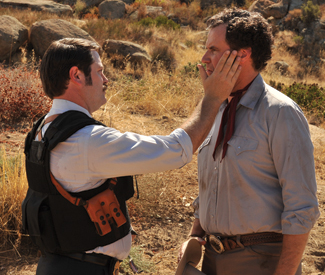
Ferrell’s new Casa de mi Padre — a Spanish-language jab at telenovelas, spaghetti-burrito westerns, and just plain low-budget moviemaking, circa the early 1970s — is no exception. It, er, climaxes with a sweet, sweet love scene, complete with close-ups on rumps.

“Well, that was always in the script — that was literally written in the stage direction: lots of butts. Way too many butts. And that made me laugh, if that was going to be our big crescendo lovemaking scene,” Ferrell says gamely. “Of course, lit beautifully with soft lenses and elegant tracking shots and dissolves.”

Tanned, gold-tressed, and outfitted in a gingham shirt and khakis, the actor resembles the tall, well-groomed human incarnation of a Steiff teddy bear. He also comes off as one of the nicest every-guy movie stars around — the kind that justifies the response you get when you tell someone you’re interviewing Will Ferrell (inevitably: “Omigod, I love him!”)

Maybe that appeal has to do with a willingness to embrace the painfully awkward. Anything to heighten the comedy of the moment, he explains, but also, “I think we’re so body- and image-conscious in this culture, and there’s so much emphasis on staying in shape, looking good, plastic surgery, this, that, and the other, that it’s just kind of my protest against all of that. It’s just, that’s what real bodies look like, and if mine happens to look funny, then that’s good, too.”

The latest challenge in a long line of actorly exercises and comic gestures — from his legendary stint on Saturday Night Live and his Funny or Die videos, to his long list of comedies probing the last gasps of American masculinity, and such serious forays as Stranger Than Fiction (2006) — is Casa de mi Padre. Here Ferrell tackles an almost entirely Spanish script (with only meager high school and college language courses under his belt) alongside Mexican superstars Gael García Bernal and Diego Luna and telenovela veteran Genesis Rodriguez.

The entire project, directed by Matt Piedmont and written by Andrew Steele, sprang from Farrell’s noggin. “I had this idea for the longest time, just from watching telenovelas,” he recounts. “It’s one of those things where you’re cruising around the dial, and you stop, and you watch it for four or five minutes, and it’s like, my god. It’s way over the top, but it was so funny to put myself in that world. I’ve never seen that before and I thought, wow, it would be a unique opportunity to take someone from American comedy and have them commit to speaking Spanish. That could be a cool movie.”

So Ferrell worked with Patrick Pérez, who translated the script from English to Spanish, before the shoot and then during the production, driving to and from the set every day, going over lines and working on pronunciation. “It was a little bit crazy — a lot crazy,” Ferrell confesses. “But it was so much fun. I don’t know if I’ve ever had a more fun yet stressful experience.”

All of which led to almost zero improvisation on the actor’s part; plenty of meta, Machete-like spoofs; and a new twist in the world of Ferrell’s films, which seem to all share a glee at poking holes in American masculinity. Yes, Casa punctures padre-informed transmissions of Latin machismo, but it equally ridicules the idea of a gringo actor riding in and superimposing himself, badly or otherwise, over another country’s culture.

“That theme of the macho Americans, ‘USA! We’re number one!’ has been so fascinating and such a great thing to make fun of. That we think we’re the best,” Ferrell observes. “I’ve always been fascinated with that level of ego.” 

CASA DE MI PADRE opens Fri/16 in Bay Area theaters.

C’mon inside “Silent House” with co-director Laura Lau

0

Yep, it’s another remake of a foreign horror movie — but Uruguay’s La casa muda is obscure enough that Silent House, which recycles its plot and filming style, feels like a brand-new experience. Co-directors Chris Kentis and Laura Lau, last seen bobbing in shark-infested waves for 2003’s similarly bare-bones Open Water, apply another technical gimmick here: Silent House appears to be shot in one continuous take.

Though it’s not actually made this way, each shot is extraordinarily long — way longer than you’d expect in a horror film, since the genre often relies on quick edits to build tension. Instead, the film’s aim is “real fear captured in real time” (per its tag line), and there’s no denying this is one shriek-filled experience.


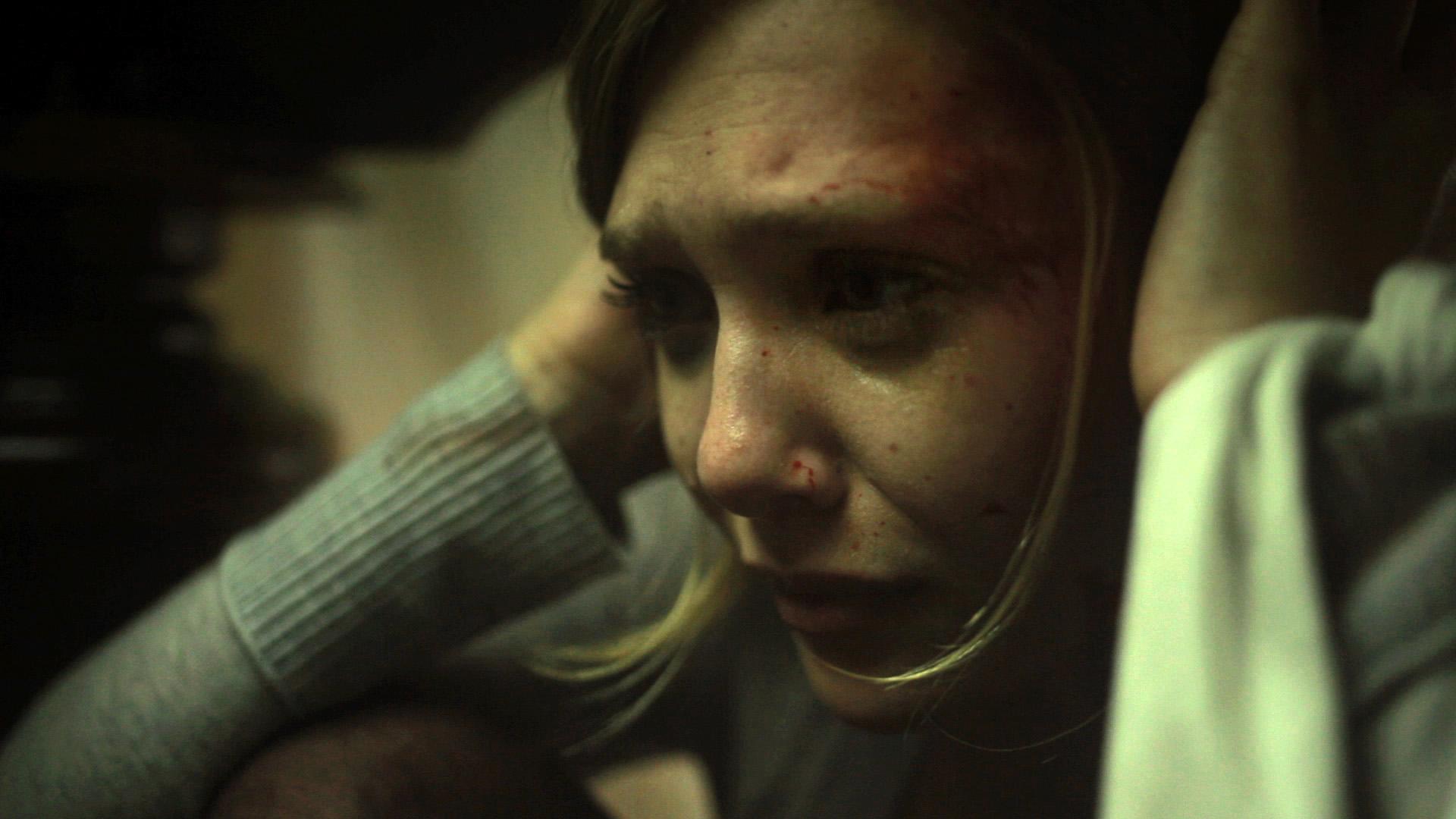
The dwelling in question is an isolated, rambling lake house being fixed up to sell by Sarah (Elizabeth Olsen), her father (Adam Trese), and uncle (Eric Sheffer Stevens). The lights don’t work, the windows are boarded up, most doors are padlocked shut, and there are strange noises coming from rooms that should be empty. Much of the film follows Sarah as she descends into deeper and deeper terror, scrabbling from floor to floor trying to hide from whoever (or whatever) is lurking, while at the same time trying to bust her way out. Though the last-act exposition explosion is a little hard to take, the film’s slow-burn beginning and frantic middle section offer bona fide chills.

I caught up with the Tiburon, Calif.-born, New York-based co-director and writer Laura Lau just prior to Silent House‘s release.

SFBG: Like Open Water, which used a minimal crew and took place, for the most part, in the middle of the ocean, Silent House combines a streamlined story with a complicated technical set-up — the illusion of one long take. What do you think attracts you and co-director Chris Kentis to these types of films?

Laura Lau: I think it’s true that we want to challenge ourselves as filmmakers. We don’t want to repeat what’s already been done. We want to try and do things that are different — that makes it interesting for us. I think that’s absolutely true about both of these projects. Each one of them had its own really unique challenges. But of course it’s all about telling a story, and what it is that, emotionally, creates a reaction in us. Both of these films were really about certain kinds of horrors, true horrors that really spoke to us and we wanted to make films about.

http://www.youtube.com/watch?v=Wc7-biVJlJQ

SFBG: And just to clarify, Silent House is not really one continuous shot. You did cut sometimes.

LL: Yes. It is a seamless, continuous shot, and the experience for the viewer is that it is one continuous take. However, to achieve that we did that in very long takes, but they were different shots that we stitched together.

SFBG: But the takes are, as you say, a lot longer that what you would see in an average film.

LL: Absolutely. And not only that, but all of the sort of usual filmmaking tools that you have were taken away from us. We didn’t shoot any coverage at all. Usually, you go on a film shoot and you shoot a lot of coverage, and then you go and make your movie in the editing room. In our situation here, we had to make all those decisions ahead of time; what we shot was what we had. And all of the usual ways that you would control pacing, revealing information, even sculpting performances were taken away from us.

SFBG: The lighting appears to come only from on-set sources, mostly flashlights. Was this really what happened?

LL: Well, the whole house was pre-lit from above, and it was all on a dimmer board. We had a dimmer board operator who had to ride those lights. That was one of the elements that made it tricky, because not only was there performance and camera choreography, but there were elements like the lights, like the [assistant director] department hitting cues, like props. All of those things that were critical to actually getting the shot the way we wanted it — if any one of those elements went awry, we would have to start over again.

SFBG: Did you do a lot of rehearsing?

LL: We did. After I had written the script, and then, once we had gotten the location, I re-wrote the script. And then Chris and I just started to run the movie from top to bottom. I would actually just act out Sarah’s part, and we could run it over and over again. Especially since the script was like, 60 pages, so it was short for a feature, and there was a lot of trepidation about whether it was feature-length. Which it was, but nobody knew, because nobody in our crew had made a movie in this way, and of course [neither had any of the] producers. So, there was that process of Chris and I basically running it through, and our [director of photography], Igor Martinovic, came on, and we ran it with him. And then we went into rehearsal. We had two weeks of rehearsal with the actors, and then we had three weeks to shoot the movie. We had 15 days.

SFBG: Martinovic has a lot of documentary experience (2010’s The Tillman Story; 2008’s Man on Wire). Did that play into your decision to work with him on Silent House?

LL: Absolutely.

SFBG: Silent House isn’t part of the “we’re filming ourselves!” trend in films right now, but it has some similarities to those types of movies.

LL: I can see why you would say that, and I think it’s because the continuous shot is entirely coming from one person’s experience. Since there’s no cutting, you really are trapped with this character, who is trapped in a nightmare, in a terrifying situation. We hope that the experience is that you really feel like you are there with her as she’s going through this.

SFBG: How did you approach building tension and suspense within the continuous shots?

LL: I think that actually the continuous take is what really builds the tension. If you can’t release yourself, and there’s no cutting, I think it just builds the intensity. You can’t get away from this character and you can’t get away from her experience. I think that the story I wanted to tell with this technique of the continuous take was really about one woman’s experience. It’s about her experience and what it is that she’s going through.

SFBG: How did you cast Elizabeth Olsen as Sarah?

LL: We had been working with casting directors Kerry Barden and Paul Schnee on previous projects that we’d been trying to get off the ground, and as soon as they read the script, they said, “Oh, we know who Sarah has to be.” They had cast Jennifer Lawrence in Winter’s Bone the year before. So [Olsen] came in as the girl our casting directors had already cast, and they were right! She had the charisma and the luminosity and the depth, because again, this is a film where we knew that we were going to be watching one character, and she had to be somebody that we wanted to watch, and somebody that we would care about.

SFBG: A lot of what’s scary about Silent House are the unseen elements, including mysterious noises throughout the house. Did you choreograph the sounds as carefully as the lighting and performances?

LL: Yes, of course, the sound and the score were all part of the design of conveying Sarah’s experience. What she was going through, throughout the film. So everything was working together through the entire film.

SFBG: You mentioned earlier that you’re interested in making movies that don’t repeat what’s already been done. Silent House is a remake, but the source film hasn’t been seen in the U.S., has it?

LL: No, it has not. And I think the last time a film that was a continuous take has been seen by American audiences was Hitchcock’s Rope, in 1948. It’s been a long time. It really is a very different cinema experience, we think. And Rope is not a horror movie. It’s a very different genre. It feels very theater-like; all of the action takes place in two rooms, it could really almost be like a theater stage. It’s quite different from our film. We were just thrilled when we were offered to do the remake, because it was really an opportunity to do something different. And how often do you get to actually do something different?

Silent House opens Fri/9 in Bay Area theaters.

15 lipsmacking cocktails for $5 and under

0

Screw on your drinking hats, cheapos — we tracked down 15 watering holes that’ll leave you toasted, in a financially stable kind of way. 

1. Tempest Bar’s $5 boilermaker

A shot of Jim Beam in a pint of PBR. Is this a terrible idea? Yes. Should you do it anyways? Yes. 

431 Natoma. (415) 495-1863

2. Phone Booth’s $4 tequila sunrise 

It’s a small place, but is embellished with awesome décor, cute bartenders, an eclectic mix of people, and really strong, cheap drinks. Their jukebox will have you coming back for more.  

1398 S. Van Ness, SF. (415) 648-4683


3. Moby Dick’s $6 2-for-1 margaritas 

Put both straws in your mouth, ease in to your brain freeze, and distract yourself with any of the three music videos playing on the screen overhead — a flawless solution for the worst of dates. 

4049 18th St., SF. (415) 861-1199, www.mobydicksf.com


4. Edinburgh Castle Pub’s $5 Jameson and coke 

It kind of looks like a barn — and this isn’t necessarily a bad thing. It’s a dive bar with a second floor, and is a fun place to go with a big group of friends.  

950 Geary, SF. (415) 885-4074, www.castlenews.com


5. Gold Cane Cocktail Lounge’s $4 bloody mary

The back patio here makes you forget you’re in a bar and feel like you’re in someone else’s backyard. The bartenders are sweet, the regulars always have a crazy story or four to share, and there’s free books in the back. 

1569 Haight, SF. (415) 626-1112


6. Butter’s $5 trailer tea 

Trailer tea, for those who were wondering, is sweet tea vodka. Butter also serves Prom Night punch in mason jars and has deep-fried Twinkies and SpaghettiOs. 

354 11th St., SF. (415) 863-5964, www.smoothasbutter.com 


7. You See Sushi’s $2.75 hot sake 

Now you see it, now you don’t. Your third round of sake will bring a whole new meaning to the restaurant’s name. 

94 Judah, SF. (415) 681-4010, www.youseesushi.com 


8. The Blue Light’s $3 SF Giant’s shot 

There’s not as much blue light as you think there would be, which is kind of disappointing. But their SF Giant’s shot — Harlem liqueur mixed with orange soda — will make you forget all of that anyway. 

1979 Union, SF. (415) 922-5510, www.thebluelightsf.com 


9. Delaney’s $4 vodka cranberry

A wonderful breath of dive bar air away from the typical Marina bars. Fully quipped with a jukebox, popcorn machine, and a Galaga/Pacman sit-down video game. 

2241 Chestnut, SF. (415) 931-8529 


10. Tornado’s $5 pomegranate cider 

This is a no-nonsense kind of bar. Know what you’re going to order, grab your drink, and gulp it down with a sausage from Rosamunde next door. 

547 Haight. (415) 863-2276, www.tornado.com


11. Lucky 13’s $4 whiskey sour

This dimly lit bar has cheap drinks, a good looking juke box, and free movie-grade popcorn (think butter). And the cutest dogs show up too.  

2140 Market, SF. (415) 487-1313 


12. Mission Bar’s $4 Manhattan

The red “BAR” sign that hangs outside lets you know this place gets straight to the point. Forget about names, just drink your drink. 

2695 Mission, SF. (415) 647-2300 


13. Specs’ Twelve Adler Museum Cafe’s $5 dirty vodka martini 

Postcards from around the world adorn the walls, a bluesy pianist playing in the corner, and an old school vibe that will take you back. 

12 William Saroyan, SF. (415) 421-4112 


14. Pittsburgh’s Pub’s $4 Ketel One and tonic 

If you ever fall asleep on the N-Judah and end up at the end of the Muni line, pick yourself up with any of the many cheap drinks at Pittsburgh’s Pub. 

4207 Judah, SF. (415) 664-3926 


15. Lexington Club’s $1 Margarita Fridays 

The only time it is perfectly okay to drink five margaritas in one sitting is at Lexington before 10 p.m. on Fridays. 

3464 19th St., SF. (415) 863-2052, www.lexingtonclub.com

Nathan Blumberg, a tough but compassionate teacher

0

By James Oset

(James  Oset was a classmate of Wilbur Wood in both Roundup High School (Montana) and the School of Journalism at the University of Montana in Missoula. Both were students of Blumberg in the early 1960s.  Oset was a reporter at the Wisconsin State Journal in Madison, Wisconsin, from 1967-69,  copy editor at the Milwaukee Journal.from 1969-71, and copy desk chief for the Billings (Montana) Gazette from 1971 to 2005. He lives in Billings with his wife Karen.  His remembrance of Blumberg was published in the Feb. 23 issue of the Billings (Montana) Outpost, an independent weekly published by David Crisp. Read two remembrances of Blumberg by Wilbur Wood and Les Gapay, both former Blumberg students,  as well as an obit that Blumberg wrote on himself. http://www.sfbg.com/bruce/2012/02/29/nathaniel-blumberg-open-change )

No one could ever walk away with a feeling of indifference after a conversation with Nathaniel Blumberg. Knowledgeable and sagacious, Nathaniel always made a deep impression on those who met him and those who knew him. A masterful teacher of journalism, he deeply delved into history, current events and political issues. He was, in my mind, a scholar’s scholar, insisting on accuracy in speech, writing and thought. Forever curious about everything, Nathaniel also possessed an almost childlike sense of wonder.

He developed deep and lasting bonds with most of his students. If you were a friend when you were in school, you remained a friend for life.

Nathaniel was a tough teacher, always insisting on academic excellence. He approached his work much like an Army drill sergeant training new recruits. He would give you holy hell for a dumb mistake but then offer a big pat on the back and great praise when you corrected yourself.

Nathaniel, a Rhodes Scholar, received a Ph.D in modern history from Oxford University in England. After leaving Oxford in the early 1950s, he worked for a short time for the Washington Post, among other newspapers. He told me on several occasions that the Post sought to hire him in the early 1960s to be an understudy for the editor there. Nathaniel, who fell in love with Montana, said he just couldn’t bring himself to move his family to D.C. The man who eventually got the job was Ben Bradlee. And the rest is history. “I could have been the guy directing Watergate coverage,” Nathaniel told me without a hint of regret.

When I worked as a copy editor for The Milwaukee Journal, I talked to the medical reporter, who was a graduate of Northwestern University’s Medill School of Journalism in Illinois. I knew that he was at Northwestern at about the same time Nathaniel was a visiting professor there. When I mentioned Nathaniel’s name, the reporter’s face lit up with a broad smile. Yes, he said, Nathaniel was the only journalism prof at Northwestern who would go out and have a few beers with his students.

About a decade ago, the School of Journalism at the University of Montana, invited former students and faculty to a reunion. I recall John Frook, a former student who was the managing editor of Life magazine before it folded, asking Nathaniel if he had any famous historians as dons at Oxford. Nathaniel named about four, but the name that stuck with me was Arnold Toynbee, a major 20th century historian.

Nathaniel also could be personally influential. In the early 1980s, my teenage daughter Becky and I had problems getting along. She and I quarreled constantly about relatively small matters, and I was reaching my wits’ end. We took a family vacation and decided to visit Nathaniel who was living several miles south of Big Fork and just above Flathead Lake. By that time, Nathaniel had retired as dean and professor at the University of Montana School of Journalism, and he and his wife Barbara, a poet, were spending much of their time writing. When I told Nathaniel how difficult it was raising a teenage daughter, he put his arm around Becky’s shoulder, and they walked down to the lake where they had a three-hour conversation. When they returned, Nathaniel said something like: You have a beautiful and bright daughter, but the schools in Billings are not teaching her much. I could tell that their long talk had gone very well. It was a transformational moment. I look back on that late afternoon as the time my daughter and I began a much closer and healthier relationship. When Becky attended the University of Montana, she became close friends with Nathaniel and Barbara, frequently taking the bus to Flathead Lake to stay with them over long weekends or holidays.

Beginning in the mid-1980s my family and I would drive to Missoula to meet Nathaniel and sometimes Barbara for Grizzly homecoming football games. We often visited them in summer at their place near Big Fork. Nathaniel always offered his insights on state and national events and often told us amazing and amusing stories. But he also talked about daily events in his life and asked about ours. His warmth radiated through those conversations, and he never hesitated to tell us that he loved us.

With Nathaniel alive, I looked to Northwestern Montana and, in my mind, I saw a bright beacon. Now that light has been extinguished. But Nathaniel leaves us his daughters and their children and hundreds of students, colleagues and friends who honor his life. The beacon is becoming many points of light emanating from many different places. I am sure of that.


Stage Listings

0

Stage listings are compiled by Guardian staff. Performance times may change; call venues to confirm. Reviewers are Robert Avila, Rita Felciano, and Nicole Gluckstern. Submit items for the listings at listings@sfbg.com. For further information on how to submit items for the listings, see Picks.

THEATER

OPENING

Maurice New Conservatory Theatre Center, 25 Van Ness, SF; (415) 861-8972, www.nctcsf.org. $25-45. Previews Wed/29-Fri/2, 8pm. Opens Sat/3, 8pm. Runs Wed-Sat, 8pm; Sun, 2pm. Through March 25. New Conservatory Theatre Center presents a play about two young men who fall in love in pre-World War I England, adapted from E.M. Forster’s novel.

Merchants Exit Stage Left, 156 Eddy, SF; www.brownpapertickets.com. $10-25. Previews Thurs/1-Fri/2, 8pm. Opens Sat/3, 8pm. Runs Thurs-Sat, 8pm. Through March 24. No Nude Men Productions performs Susan Sobeloff’s tale of two sisters trying to balance financial stability and career satisfaction.

ONGOING

*Blue/Orange Lorraine Hansberry Theatre, 450 Post, SF; (415) 474-8800, www.lhtsf.org. $43-53. Thurs-Sat, 8pm (also Sat, 2pm). Through March 18. Lorraine Hansberry Theater offers an uneven but worthwhile production of British playwright Joe Penhall’s sardonic comedy of ideas and institutional racism, an intriguingly frustrating three-hander about a young doctor (a bright Dan Clegg) at a psychiatric teaching hospital who begins a battle royal with his suave and pompous supervising physician (a comically nimble Julian Lopez-Morillas) over the release of a questionably-sane black patient. Originally brought in by police for creating a disturbance, Christopher (the excellent Carl Lumbly) still exhibits signs of psychosis and his ability to care for himself seems doubtful to the young doctor treating him. The older physician appeals to the patient’s general competence, hospital procedures, the shortage of beds, and the exigencies of career advancement in countering the younger doctor’s insistence on keeping the patient beyond the mandatory 28-day period required by law. For his part, Christopher, nervous and rather manic, is at first desperately eager to be released back to his poor London neighborhood. Competing interviews with the two doctors complicate his perspective and ours repeatedly, however, as a heated debate about medicine, institutionalization, cultural antecedents to mental “illness,” career arcs, and a “cure for black psychosis,” leave everyone’s sanity in doubt. Although our attention can be distracted by a too-pervading sound design and less than perfect British accents, Edris Cooper-Anifowoshe directs a strong and engaging cast in a politically resonant not to say increasingly maddening play. (Avila)

52 Man Pick Up Brava Theater, 2781 24th St, SF; (415) 647-2822, www.brava.org. $10-25. Thurs/1-Sat/3, 8pm. Desiree Butch performs her solo show about a deck of cards’ worth of sexual encounters.

Geezer Marsh San Francisco, MainStage, 1062 Valencia, SF; (415) 282-3055, www.themarsh.org. $25-100. Thurs and Sat, 8pm; Sun, 5pm. Through March 18. Geoff Hoyle’s hit solo show returns.

Glengarry Glen Ross Actors Theatre of San Francisco, 855 Bush, SF; (415) 345-1287, www.brownpapertickets.com. $26-40. Fri-Sat, 8pm. Through March 24. David Mamet’s cutthroat comedy, courtesy of the Actors Theatre of San Francisco.

The Pirates of Penzance Julia Morgan Center for the Arts, 2640 College, Berk; (510) 845-8542, www.juliamorgan.org. $17-35. Fri-Sat, 7pm (also Sat, 2pm); Sun, noon and 5pm. Through April 1. Berkeley Playhouse performs the Gilbert and Sullivan classic, with the setting shifted to a futuristic city.

The Real Americans Marsh Studio Theater, 1062 Valencia, SF; (415) 282-3055, www.themarsh.org. $25-50. Fri, 8pm; Sat, 5pm; Sun, 2pm. Through March 18. Dan Hoyle revives his hit solo show about small-town America.

Scorched American Conservatory Theater, 415 Geary, SF; (415) 749-2228, www.act-sf.org. $10-85. Tues-Sat, 8pm; Wed, Sat-Sun, 2pm. Through March 11. Lebanese-Canadian playwright Wajdi Mouawad bites off a little more than he can chew, and ACT thus offers a less than satisfying three-hour feast with its stilted production of Mouawad’s 2008 epic about a brother and sister (Babak Tafti and Annie Purcell) sent by their estranged, recently deceased mother’s executor (David Strathairn) on a hunt for her past in her unnamed civil war-torn Middle Eastern homeland. At that point, the story of their mother, Nawal (Marjan Neshat), comes center stage — or rather crisscrosses it with that of her children in a mash-up that only undercuts the potential tension or interest in either plot strand. Director Carey Perloff’s cast also proves unevenly compelling. Strathairn’s Alphonse is a compassionate, slyly wise man who nervously rambles to make up for the extremely laconic and resentful mood of Nawal’s children. But he is of peripheral importance, and his malapropisms are laid on a little thicker than his endearing Quebecois accent, as if betraying the limits of his function onstage. The other characters meanwhile feel too thinly sketched to occupy the middle. As the sad and horrifying details of this Sophocles-inspired tale unfold, there is surprisingly little sense of authentic experience, and much more the feeling of over-indulgence it certain dramatic devices. Between the sententious and ponderous dialogue, strained characterization, and unwieldy storyline is a play flailing away at something beyond its ken or capacity. (Avila)

Three’s Company Live! Finn’s Funhouse, 814 Grove, SF; www.brownpapertickets.com. $20. Fri/2-Sat/3, 7 and 9pm. Cat Fights and Shoulder Pads Productions (best production company name ever?) brings the classic sitcom to the stage.

Tontlawald Exit on Taylor, 277 Taylor, SF; (415) 525-1205, www.cuttingball.com. $10-50. Thurs, 7:30pm; Fri-Sat, 8pm (also Sat, 2pm); Sun, 5pm. Through March 11. Entering the theater space thought the back door, squeezing alongside a giant fishing net motif, which wraps the entire stage in a fabric grid, almost imperceptibly skews one’s perspective in advance of the show, just a brief twist that sets the tone for this abbreviated epic of abuse, friendship, and revenge. The heroine, an earthy yet somehow fragile maid (Marilet Martinez), inadvertently manages to rile her evil stepmother (Madeline H. D. Brown) for what seems to be the umpteenth time before fleeing into the mysterious wooded Tontlawald, inhabited by joyously frolicking beasts (or boys) and a preternaturally beautiful princess (Rebecca Frank) who immediately adopts her as a friend. Told through snatches of repetitive text, solemnly-intoned and ecstatically sung, and moments of engagingly acrobatic, hyper-stylized movement, Cutting Ball’s Tontlawald meanders through an Estonian fairy tale-hero’s quest, as if told from the perspective of the child protagonist — light on detail, heavy on drama. Inspired by TeatrZAR, the resident company of Poland’s Grotowski Centre, co-directors Paige Rogers and Annie Paladino and choreographer Laura Arrington worked to emulate certain characteristics of its style, notably the emphasis on song. But while there are some gorgeously transcendent moments of musical direction courtesy of Rogers, and of choreography courtesy of Arrington, the work plays out mostly as a disjointed series of striking tableaux, which intrigue the intellect, but somehow fail to inflame the soul. (Gluckstern)

*Tree City Legends Intersection for the Arts, 925 Mission, SF; (415) 626-2787, www.theintersection.org. $20-25. Thurs/1-Sat/3, 8pm. The three surviving Kane brothers — Sum (Juan Amador), Min (Taiyo Na), and Denizen (Sean San José) — come together to remember in pain and ecstasy the life of their fallen fourth, Junie Kane (Dennis Kim), whose voice and shadow come back now and then through a materializing recording session with his band (Dirty Boots: James Dumalo and Rachel Lastimosa). Set in the violent, drug-addled, but tenacious streets of an imaginary Bay Area inner-city neighborhood called Tree City, Campo Santo’s production of Kim’s new play transforms the daytime office space at Intersection for the Arts into an all-embracing mise-en-scene that feels, intentionally, like a memorial service, a concert, a dreamy almost hallucinatory reverie, and an incipient rebellion. The shadow-filled, ritual-like atmosphere (lit by Darl Andrew Packard amid Joan Osato’s lush, all-pervading video installation) suits well the play’s roiling mix of grief, restive anger, defiant humor, and communion — given exquisite expression in both song and extended, persuasive monologues by the fine trio of actors. Directed by Marc Bamuthi Joseph, the production’s ability to envelop the audience in this raucous ceremony lends just the right support to Kim’s strong, flowing, eloquent, and earthy ruminations on the fractious but soulful lives of the oppressed among us. (Avila)

*True West Boxcar Studios, 125A Hyde, SF; (415) 967-2227, www.boxcartheatre.org. $25. Thurs-Sat, 8pm. Through April 7. The first installment of Boxcar Theatre’s four-play Sam Shepard repertory project, True West ushers in the ambitious run with a bang. This tale of two brothers who gradually assume the role of the other is one of Shepard’s most enduring plays, rich with humorous interludes, veering sharply into dangerous terrain at the drop of a toaster. In time-honored, True West tradition, the lead roles of Austin, the unassuming younger brother, and Lee, his violent older sibling, are being alternated between Nick A. Olivero and Brian Trybom, and in a new twist, the role of the mother is being played by two different actresses as well (Adrienne Krug and Katya Rivera). The evening I saw it, Olivero was playing Austin, a writer banging away at his first screenplay, and Trybom was Lee, a troubled, alcoholic drifter who usurps his brother’s Hollywood shot, and trashes their mother’s home while trying to honor his as yet unwritten “contract”. The chemistry between the two actors was a perfect blend of menace and fraternity, and the extreme wreckage they make of both the set (designed by both actors), and their ever-tenuous relationship, was truly inspired. (Gluckstern)

*Vice Palace: The Last Cockettes Musical Thrillpeddlers’ Hypnodrome, 575 10th St, SF; (415) 377-4202, www.thrillpeddlers.com. $30-35. Fri/2-Sat/3, 8pm. Hot on the high heels of a 22-month run of Pearls Over Shanghai, the Thrillpeddlers are continuing their Theatre of the Ridiculous revival with a tits-up, balls-out production of the Cockettes’ last musical, Vice Palace. Loosely based on the terrifyingly grim “Masque of the Red Death” by Edgar Allan Poe, part of the thrill of Palace is the way that it weds the campy drag-glamour of Pearls Over Shanghai with the Thrillpeddlers’ signature Grand Guignol aesthetic. From an opening number set on a plague-stricken street (“There’s Blood on Your Face”) to a charming little cabaret about Caligula, staged with live assassinations, an undercurrent of darkness runs like blood beneath the shameless slapstick of the thinly-plotted revue. As plague-obsessed hostess Divina (Leigh Crow) and her right-hand “gal” Bella (Eric Tyson Wertz) try to distract a group of stir-crazy socialites from the dangers outside the villa walls, the entertainments range from silly to salacious: a suggestively-sung song about camel’s humps, the wistful ballad “Just a Lonely Little Turd,” a truly unexpected Rite of Spring-style dance number entitled “Flesh Ballet.” Sumptuously costumed by Kara Emry, cleverly lit by Nicholas Torre, accompanied by songwriter/lyricist (and original Cockette) Scrumbly Koldewyn, and anchored by a core of Thrillpeddler regulars, Palace is one nice vice. (Gluckstern)

The Waiting Period MainStage, Marsh San Francisco, 1062 Valencia, SF; (415) 282-3055, www.themarsh.org. $15-50. Fri, 8pm; Sat, 5pm. Through March 24. Brian Copeland returns with a new solo show about his struggles with depression.

BAY AREA

*Body Awareness Aurora Theatre, 2081 Addison, Berk; (510) 843-4822, www.auroratheatre.org. $30-48. Tues, 7pm; Wed-Sat, 8pm; Sun, 2 and 7pm. Through March 11. In Annie Baker’s new comedy, receiving a top-notch Bay Area premiere at Aurora Theatre, peppy psychology prof Phyllis (Amy Resnick) hosts “Body Awareness Week” at her small Vermont college, while back home partner Joyce (Jeri Lynn Cohen) talks to her 21-year-old son Jared (Patrick Russell) about the porn pay-per-view bill he’s racked up. Phyllis contends that Joyce’s introverted, somewhat explosive virgin son (who in addition to bouts of violent anger soothes himself compulsively with an electric security toothbrush) has Asperger’s Syndrome — a diagnosis that Jared, a budding not too say obsessive lexicographer, hotly contests. That same week, the couple hosts a guest artist, Frank (Howard Swain), a breezy man’s man whose career stands squarely on a series of photographs of nude women and girls. The young man seeks sexual advice from the older one, much to Phyllis’s disgust and Joyce’s relief, while also tempting Joyce with the notion of posing for a nude portrait and “reclaiming her body image,” in a well-used phrase. An already delicate balance thus goes right off kilter as, between the poles of Phyllis and Frank, Joyce and Jared chase competing notions and definitions of themselves and the world. In the volatile tension between perspectives, power trips, and extreme personalities, playwright Baker initially pushes a comic form toward an unsettling edge, only to retreat in the end for safer ground and a family-friendly resolution. While that feels like a lost opportunity, Body Awareness is still a stimulating and solidly entertaining evening, brought to life by a warm and dexterous ensemble under fine, lively direction by Joy Carlin. (Avila)

Counter Attack! Ashby Stage, 1901 Ashby, Berk; (510) 444-4755, ext. 114, www.stagebridge.org. $18-25. Wed/29-Thurs/1, 7:30pm; Fri/2-Sat/3, 8pm; Sun/4, 2pm. Stagebridge presents the world premiere of Joan Holden’s waitress-centric play.

A Doctor in Spite of Himself Berkeley Repertory Theatre, Roda Theatre, 2015 Addison, Berk; (510) 647-2949, www.berkeleyrep.org. $14.50-73. Tues and Thurs-Sat, 8pm (no show March 23); Wed and Sun, 7pm (also Sun, 2pm). Through March 25. Berkeley Rep performs a contemporary update of the Molière comedy.

*The Kipling Hotel: True Misadventures of the Electric Pink ’80s New venue: Marsh Berkeley, 2120 Allston, Berk; (415) 282-3055, www.themarsh.org. $20-50. Sat, 8:30pm; Sun, 7pm. Extended through March 25. This new autobiographical solo show by Don Reed, writer-performer of the fine and long-running East 14th, is another slice of the artist’s journey from 1970s Oakland ghetto to comedy-circuit respectability — here via a partial debate-scholarship to UCLA. The titular Los Angeles residency hotel was where Reed lived and worked for a time in the 1980s while attending university. It’s also a rich mine of memory and material for this physically protean and charismatic comic actor, who sails through two acts of often hilarious, sometimes touching vignettes loosely structured around his time on the hotel’s young wait staff, which catered to the needs of elderly patrons who might need conversation as much as breakfast. On opening night, the episodic narrative seemed to pass through several endings before settling on one whose tidy moral was delivered with too heavy a hand, but if the piece runs a little long, it’s only the last 20 minutes that noticeably meanders. And even with some awkward bumps along the way, it’s never a dull thing watching Reed work. (Avila)

Mesmeric Revelation Berkeley City Club, 2315 Durant, Berk; (510) 558-1381, www.centralworks.org. Thurs-Sat, 8pm; Sun, 5pm. Through March 18. Central Works opens its season of world premieres with Aaron Henne’s Edgar Allen Poe-inspired drama.

Titus Andronicus La Val’s Subterranean, 1834 Euclid, Berk; www.impacttheatre.com. $10-20. Thurs-Sat, 8pm. Through March 31. Impact Theatre takes on the Bard’s bloodiest tragedy.

The World’s Funniest Bubble Show Marsh Berkeley, TheaterStage, 2120 Allston, Berk; (415) 826-5750, www.themarsh.org. $8-50. Extended run: March 11 and 18, 11am. Louis “The Amazing Bubble Man” Pearl returns with this kid-friendly, bubble-tastic comedy.

PERFORMANCE/DANCE

“The Abduction from the Seraglio (Yanked from the Harem)” Marines Memorial Theater, 609 Sutter, SF; www.pocketopera.org. Sun/4 and March 11, 2pm. Also March 18, 2pm, Berkeley Hillside Club, 2286 Cedar, Berk. $15-39. Pocket Opera performs artistic director Donald Pippin’s witty translation of Mozart’s classic work.

“Alice Superbrain/The Twin Section” Garage, 975 Howard, SF; www.975howard.com. Fri/2-Sat/3, 8pm. $10-20. Andrea Lanza’s multidisciplinary perfomance is inspired by Lewis Carroll’s Alice adventures.

“Arthur in Underland” CounterPULSE, 1310 Mission, SF; www.counterpulse.org. Previews Fri/2-Sun/4, 8pm. Opens March 8, 8pm. Runs Fri-Sun, 8pm. Through March 24. $15-24. Dandelion Dancetheater performs a new work about a young man whose life is changed when he becomes part of a rock group’s entourage.

“Elect to Laugh” Studio Theater, Marsh San Francisco, 1062 Valencia, SF; (415) 282-3055, www.themarsh.org. Tues, 8pm. Ongoing through Nov 6. $15-50. Will Durst and friends perform in this weekly political humor show that focuses on the upcoming presidential election.

“The Eric Show” Milk Bar, 1840 Haight, SF; www.milksf.com. Tues, 8pm (ongoing). $5. Local comedians perform with host Eric Barry.

“Finding the Michaels” Shotwell Studios, 3252-A 19th St, SF; www.brownpapertickets.com. Sat/3 and March 9-10, 8pm; Sun/4, 3pm. Footloose presents Cassie Angley’s solo play about her experiences in post-9/11 New York City.

Nina Haft & Company and Facing East Dance and Music ODC Theater, 3153 17th St, SF; www.odcdance.org. Fri/2-Sat/3, 8pm; Sat/3-Sun/4, 3pm. $18-24. The companies perform this.placed, a dance and multimedia performance about what the body remembers.

“The Whole Megillah 2: Uncut” Jewish Theatre, 470 Florida, SF; www.jccsf.org. Thurs-Fri, 8pm; Sat, 7 and 10pm. Through March 10. Also March 7, 8pm, Kanbar Hall, Jewish Community Center of San Francisco, 3200 California, SF. $15-20. The Hub and Killing My Lobster present this Purim-themedsketch comedy show.

I came, I saw, I glittered: Monthly live sex show debuts in the Mission

46

The only other time I had been to a live sex show was in the Red Light District of Amsterdam. The thing was crude – even amid the slew of debauchery that makes up tourist Amsterdam. Mostly, that was because of the concrete venue, Eurotrash techno, and slimy men masturbating and jeering behind me. But the Saturday night debut of Cum and Glitter at an underground venue in the Mission was an entirely different experience. Hosted by the elegant and welcoming Ginger Murry of Whore Magazine, the show is the brainchild of Ava Solanas and Maxine Holloway, who started the new monthly event as an expressive outlet for the sex worker community.

The show started at a little past ten p.m. Attendees descended wooden steps to an intimate underground event space that resembled a 1920’s speakeasy. The room was dimly lit, dotted with small round tables, and overflowing with anticipation. Garter belts and playsuit-flaunting babes appeared, accompanied by the deep, warm bellows of a cello being played by the artist Unwoman that vibrated through the air. 

The series’ first performance, an enchanting strip tease by Dorian Faust, set a sexy mood that carried through the rest of the evening, despite ensuing acts that registered higher on the comedy scale. Faust looked like a mermaid in her sequined outfit of varying blue hues, and her nimble body moved in waves, creating an optical illusion that carried on until she was stripped down to just her gold and blue glitter and thong. 

Next on stage were Courtney Trouble and Maxine Holloway, the latter of whose nipples were swiftly cinched with clothes pins, mouth gagged with her brunette mane. The evening proceeded in this manner, switching off between sensual and expressive solo dances and the longer duo role-plays that involved plenty of spankings, toys, and at times, ordinary household items used in surprisingly creative ways. 

Eden Alexander’s lesson on how to be a dominatrix was awe-inspiring to say the least. She spoke with comedic conviction as she took charge of her male submissive, who was ordered to worship his mistress — when he wasn’t being used as a standing surface for her stillettoes. Alexander’s delightful sass was perfectly complemented by her — even sassier — hot pink latex floor-length dress. 

Dialogue and interactions were clearly exaggerated, and the performance was more stylized than realistic. However, the sheer and genuine excitement of the performers made the show feel unforced. The audience reaped all the usual benefits of watching a performance in a small venue, and we were able to intimately enjoy every soft moan and fleeting expression –- moments that are normally missed entirely in onscreen porn. Being eye-level with the action literally involved the audience that much more in the ecstasy of the performers — when Solanas squirted in all her glittering glory to the swells of the cello mere feet to her right, barely missing my shoe in the process, it was as if she was coming for all of us. 

It is billed as a live sex show, but don’t be misled — the first installation of “Cum and Glitter” was not simply an explicit display of intercourse as it was a series of rather light-hearted scenarios acted out by nine gorgeous women who understand how pleasurable the mix of consent and wild imagination can be.  Whether your fantasy is a naughty baby sitter, sexy shoeshine, or being gagged with a rubber chicken, there was an elated smile on everyone’s face by the end of the night — it was clear that everyone left the show feeling quite satisfied. 

Check out Cum and Glitter’s website for information on the collective’s next show 

The war at home

0

FILM Agnieszka Holland is that kind of filmmaker who can become a well known, respectable veteran without anyone being quite sure what those decades have added up to. Her mentor was Andrzej Wadja, the last half-century’s leading Polish director (among those who never left). He helped shape a penchant for heavy historical drama and a sometimes clunky style not far from his own.

Since the late 1970s the result has been numerous great or at least weighty themes tackled head-on, with variable success. Following some well-received works at home, she commenced her international career with 1985’s Angry Harvest, about the amorous relationship between a Polish man and the Austrian, a Jewish woman, he hides during Nazi occupation. Very seldom inhabiting the present in her films, she’s approached classic children’s lit (1993’s The Secret Garden) and Henry James (1997’s Washington Square) with the same slightly ham-fisted competence.

She’s bolstered the notion of artistic genius being irascible via Ed Harris going Pollock on the ivories in 2006’s Copying Beethoven, and of Rimbaud and Verlaine shocking the bourgeoisie in 1995’s Total Eclipse. To Kill a Priest (1988) and The Third Miracle (1999) dealt with the uneasy relationship between faith, politics, and the Catholic Church in Poland. Less conspicuously, Holland has worked for hire on TV movies (one about murderer Gary Gilmore, another about murder victim Gwen Araujo) and series episodes (The Wire, Treme) that must rate among her least personal projects — as well as her finest.

http://www.youtube.com/watch?v=0LV4JJPZCwI

Her one indispensable feature is 1990’s Europa, Europa, an ideal vehicle for her favored mix of the grotesque, sober, and factual — following a Jewish boy who passed as Aryan German, to the point of joining the Hitler Youth. The new In Darkness is her best since then, and it can’t be chance that this too dramatizes a notably bizarre case of real-life peril and survival under the Nazis.

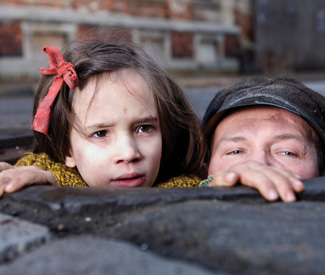
Its protagonist is Leopold Socha (Robert Wieckiewicz), an ordinary family man in Lvov (Poland then, Ukraine now) who’s not above exploiting the disarray of occupation and war to make ends meet. A sewer inspector, he uses his knowledge of underground tunnels to hide Jews who can pay enough when even the fenced-off ghetto is no longer safe. It’s late in the war; all avenues of flight are closed. The dozen or so citizens Socha secretes in the city’s bowels — freezing amidst vermin and waste — run a gamut despite shared panic. They include a professor, a junkie, a philanderer and mistress, and children. Extreme adversity doesn’t ennoble them — even in this dank entrapment there occur betrayals, fights, a bastard pregnancy. It is typical of Holland that when copulation and masturbation occur, the acts are at once furtively shameful and barnyard-frank.

Though both sides risk all, the “Polacks” openly disdain the “Yids,” and vice versa. In any other circumstance they’d happily snub one another. Only the flat brutality of the Nazis, gloating and laughing as they kill, can impose a thin allegiance. Yet as grueling months go by under constant threat of capture, something more than sheer dependency develops. Reluctantly, Socha finds himself unable to abandon “his” Jews even when they can no longer pay, and discovery would cost his life as well as theirs.

Holland will never be a cinematic poet. Her blunt, sometimes graceless approach to any story can leach its emotional subtleties as well as (more usefully) potential forced bathos and uplift. In Darkness has a few sequences poorly shaped enough to seem pointless. It takes us longer than it should to sort out all the major characters, and the sense of time passing is murky at best.

But for such a long, oppressive, and literally dark film, this one passes quickly, maintaining tension as well as a palpable physical discomfort that doubtlessly suggests just a fraction what the refugees actually suffered. On rare instances when Socha or others venture outdoors, sunlight feels as harsh and exposing as bleach.

In Darkness isn’t quite a great movie, but it’s a powerful experience. At the end it’s impossible to be unmoved, not least because the director’s resistance toward Spielbergian exaltation insists on the banal and everyday, even in human triumph.

In Darkness opens Fri/24 in San Francisco.

Stage Listings

0

Stage listings are compiled by Guardian staff. Performance times may change; call venues to confirm. Reviewers are Robert Avila, Rita Felciano, and Nicole Gluckstern. Submit items for the listings at listings@sfbg.com. For further information on how to submit items for the listings, see Picks.

THEATER

OPENING

The Pirates of Penzance Julia Morgan Center for the Arts, 2640 College, Berk; (510) 845-8542, www.juliamorgan.org. $17-35. Opens Sat/25, 2 and 7pm. Runs Fri-Sat, 7pm (also Sat, 2pm); Sun, noon and 5pm. Through April 1. Berkeley Playhouse performs the Gilbert and Sullivan classic, with the setting shifted to a futuristic city.

Titus Andronicus La Val’s Subterranean, 1834 Euclid, Berk; www.impacttheatre.com. $10-20. Previews Thurs/23-Fri/24, 8pm. Opens Sat/25, 8pm. Runs Thurs-Sat, 8pm. Through March 31. Impact Theatre takes on the Bard’s bloodiest tragedy.

ONGOING

*Blue/Orange Lorraine Hansberry Theatre, 450 Post, SF; (415) 474-8800, www.lhtsf.org. $43-53. Thurs-Sat, 8pm (also Sat, 2pm). Through March 18. Lorraine Hansberry Theater offers an uneven but worthwhile production of British playwright Joe Penhall’s sardonic comedy of ideas and institutional racism, an intriguingly frustrating three-hander about a young doctor (a bright Dan Clegg) at a psychiatric teaching hospital who begins a battle royal with his suave and pompous supervising physician (a comically nimble Julian Lopez-Morillas) over the release of a questionably-sane black patient. Originally brought in by police for creating a disturbance, Christopher (the excellent Carl Lumbly) still exhibits signs of psychosis and his ability to care for himself seems doubtful to the young doctor treating him. The older physician appeals to the patient’s general competence, hospital procedures, the shortage of beds, and the exigencies of career advancement in countering the younger doctor’s insistence on keeping the patient beyond the mandatory 28-day period required by law. For his part, Christopher, nervous and rather manic, is at first desperately eager to be released back to his poor London neighborhood. Competing interviews with the two doctors complicate his perspective and ours repeatedly, however, as a heated debate about medicine, institutionalization, cultural antecedents to mental “illness,” career arcs, and a “cure for black psychosis,” leave everyone’s sanity in doubt. Although our attention can be distracted by a too-pervading sound design and less than perfect British accents, Edris Cooper-Anifowoshe directs a strong and engaging cast in a politically resonant not to say increasingly maddening play. (Avila)

52 Man Pick Up Brava Theater, 2781 24th St, SF; (415) 647-2822, www.brava.org. $10-25. Thurs-Sat and Mon/27, 8pm. Through March 3. Desiree Butch performs her solo show about a deck of cards’ worth of sexual encounters.

Geezer Marsh San Francisco, MainStage, 1062 Valencia, SF; (415) 282-3055, www.themarsh.org. $25-100. Thurs and Sat, 8pm; Sun, 5pm. Through March 18. Geoff Hoyle’s hit solo show returns.

Glengarry Glen Ross Actors Theatre of San Francisco, 855 Bush, SF; (415) 345-1287, www.brownpapertickets.com. $26-40. Fri-Sat, 8pm. Through March 24. David Mamet’s cutthroat comedy, courtesy of the Actors Theatre of San Francisco.

Higher Theater at Children’s Creativity Museum, 221 Howard, SF; (415) 749-2228, www.act-sf.org. $10-65. Extended run: Wed/22, 2pm; Thurs/23-Sat/25, 8pm (also Sat/25, 2pm). American Conservatory Theater premieres artistic director Carey Perloff’s ambitious but choppy play about renowned architect Michael Friedman (an affably egotistical Andrew Polk) and brilliant but still up-and-coming Elena Constantine (a restlessly clever yet vulnerable René Augesen), lovers who find themselves competing for the same commission to design a memorial at the site of a bus bombing on the Sea of Galilee. The spunky widow (Concetta Tomei) of a wealthy American Jewish businessman is funding the memorial, and supervising the competition with the help of a handsome young Israeli, Jacob (Alexander Crowther), grieving for his father. The jet-set lovers only gradually realize they’re competitors (Michael very late in the game, which seems a bit too clueless). Meanwhile, Michael attends to the strained relationship with his grown-up but too-long-neglected gay son (Ben Kahre), a convert to “born-again Judaism” in contrast to his father’s attenuated affiliations; and shiksa Elena finds inspiration for a radical design in the grief-stricken (but soon smitten) Jacob, kneading the burnt sand at the shore of a lake “filled with Jewish tears.” In a play dealing with land and memory, reconciliation, chauvinism, and short-sightedness, the absence of any mention of Palestinian “tears” in the same water (or Palestinians at all) seems a conspicuous absence. The dialogue, meanwhile, while often witty, can be labored in its mingling of airy architectural notions with earthier matters. Mark Rucker’s direction gives scope to an admirably tailored performance from Augesen (the small stage offers a rewarding chance to watch the ACT veteran work up close) but not enough attention goes to the supposed sexual tension between Elena and Michael, which, despite sporadically randy dialogue and some awkward blocking on a mattress, is effectively nil. (Avila)

*Little Brother Gough Street Playhouse, 1620 Gough, SF; www.custommade.org. $25-32. Thurs/23-Sat/25, 8pm. Custom Made Theatre Co. performs Josh Costello’s adaptation of Cory Doctorow’s San Francisco-set thriller.

Not Getting Any Younger Marsh San Francisco, Studio Theater, 1062 Valencia, SF; (415) 826-5750, www.themarsh.org. $15-50. Extended run: Fri/24, 8pm; Sat/25, 5 and 8:30pm. Marga Gomez is back at the Marsh, a couple of too-brief decades after inaugurating the theater’s new stage with her first solo show — an apt setting, in other words, for the writer-performer’s latest monologue, a reflection on the inevitable process of aging for a Latina lesbian comedian and artist who still hangs at Starbucks and can’t be trusted with the details of her own Wikipedia entry. If the thought of someone as perennially irreverent, insouciant, and appealingly immature as Gomez makes you depressed, the show is, strangely enough, the best antidote. (Avila)

Private Parts SF Playhouse, Stage 2, 533 Sutter, SF; www.sfplayhouse.org. $20. Thurs, 7pm; Fri/24-Sat/25, 8pm. Graham Gremore performs his autobiographical solo comedy.

The Real Americans Marsh Studio Theater, 1062 Valencia, SF; (415) 282-3055, www.themarsh.org. $25-50. Fri, 8pm; Sat, 5pm; Sun, 2pm. Through March 18. Dan Hoyle revives his hit solo show about small-town America.

Scorched American Conservatory Theater, 415 Geary, SF; (415) 749-2228, www.act-sf.org. $10-85. Opens Wed/22, 7pm. Runs Tues-Sat, 8pm (Tues/28, show at 7pm); Wed, Sat-Sun, 2pm (no matinee Wed/22). Through March 11. Oscar nominee David Strathairn stars in ACT’s performance of Wajdi Mouawad’s haunting drama.

Three’s Company Live! Finn’s Funhouse, 814 Grove, SF; www.brownpapertickets.com. $20. Fri-Sat, 7 and 9pm. Through March 3. Cat Fights and Shoulder Pads Productions (best production company name ever?) brings the classic sitcom to the stage.

Tontlawald Exit on Taylor, 277 Taylor, SF; (415) 525-1205, www.cuttingball.com. $10-50. Thurs, 7:30pm; Fri-Sat, 8pm (also Sat, 2pm); Sun, 5pm. Through March 11. Cutting Ball Theater presents this world premiere ensemble piece, using text by resident playwright Eugenie Chan, a capella harmonies, and movement to re-tell an ancient Estonian tale.

*True West Boxcar Studios, 125A Hyde, SF; (415) 967-2227, www.boxcartheatre.org. $25. Thurs-Sat, 8pm. Through April 7. The first installment of Boxcar Theatre’s four-play Sam Shepard repertory project, True West ushers in the ambitious run with a bang. This tale of two brothers who gradually assume the role of the other is one of Shepard’s most enduring plays, rich with humorous interludes, veering sharply into dangerous terrain at the drop of a toaster. In time-honored, True West tradition, the lead roles of Austin, the unassuming younger brother, and Lee, his violent older sibling, are being alternated between Nick A. Olivero and Brian Trybom, and in a new twist, the role of the mother is being played by two different actresses as well (Adrienne Krug and Katya Rivera). The evening I saw it, Olivero was playing Austin, a writer banging away at his first screenplay, and Trybom was Lee, a troubled, alcoholic drifter who usurps his brother’s Hollywood shot, and trashes their mother’s home while trying to honor his as yet unwritten “contract”. The chemistry between the two actors was a perfect blend of menace and fraternity, and the extreme wreckage they make of both the set (designed by both actors), and their ever-tenuous relationship, was truly inspired. (Gluckstern)

*Vice Palace: The Last Cockettes Musical Thrillpeddlers’ Hypnodrome, 575 10th St, SF; (415) 377-4202, www.thrillpeddlers.com. $30-35. Fri-Sat, 8pm. Through March 3. Hot on the high heels of a 22-month run of Pearls Over Shanghai, the Thrillpeddlers are continuing their Theatre of the Ridiculous revival with a tits-up, balls-out production of the Cockettes’ last musical, Vice Palace. Loosely based on the terrifyingly grim “Masque of the Red Death” by Edgar Allan Poe, part of the thrill of Palace is the way that it weds the campy drag-glamour of Pearls Over Shanghai with the Thrillpeddlers’ signature Grand Guignol aesthetic. From an opening number set on a plague-stricken street (“There’s Blood on Your Face”) to a charming little cabaret about Caligula, staged with live assassinations, an undercurrent of darkness runs like blood beneath the shameless slapstick of the thinly-plotted revue. As plague-obsessed hostess Divina (Leigh Crow) and her right-hand “gal” Bella (Eric Tyson Wertz) try to distract a group of stir-crazy socialites from the dangers outside the villa walls, the entertainments range from silly to salacious: a suggestively-sung song about camel’s humps, the wistful ballad “Just a Lonely Little Turd,” a truly unexpected Rite of Spring-style dance number entitled “Flesh Ballet.” Sumptuously costumed by Kara Emry, cleverly lit by Nicholas Torre, accompanied by songwriter/lyricist (and original Cockette) Scrumbly Koldewyn, and anchored by a core of Thrillpeddler regulars, Palace is one nice vice. (Gluckstern)

*Vigilance Phoenix Theatre, 414 Mason, SF; (415) 335-6087, secondwind.8m.com. $20-25. Thurs/23-Sat/25, 8pm. Ian Walker (The Tender King) directs a sharp revival of his own lucid, involving 2000 domestic drama about three households brought to the brink by the arrival of a menacing working-class loner. Seamlessly staged in a single pair of rooms (designed by Fred Sharkey) representing all three suburban middle-class homes — as well as downstage on the street where dream-home lottery winner Duncan (an imposing Steven Westdahl) throws his beer cans and leers at the wives and children — Vigilance begins with three friends meeting under the pretext of a poker game. Host Virgil (played with gruff charm by a commanding Mike Newman) is a 30-something husband, father, and guy’s guy whose Montana-grown libertarian machismo compensates for the agro of a stormy marriage and rocky finances. He talks the suggestible, nebbishy Bert (a slyly humorous Ben Ortega) and the equally nerdy but independent-minded Dick (a nicely layered Stephen Muterspaugh) into forming a “committee” to deal with the troublesome Duncan. Walker’s well-honed dialogue brings out the false notes in the supposed pre-Duncan harmony right away, and the play strikes best at the buried politics of marriage and friendship. (Avila)

The Waiting Period MainStage, Marsh San Francisco, 1062 Valencia, SF; (415) 282-3055, www.themarsh.org. $15-50. Fri, 8pm; Sat, 5pm. Through March 24. Brian Copeland returns with a new solo show about his struggles with depression.

BAY AREA

Arms and the Man Lesher Center for the Arts, Margaret Lesher Theater, 1601 Civic, Walnut Creek; (925) 943-7469, www.centerrep.org. $38-43. Wed/22, 7:30pm; Thurs/23-Sat/25, 8pm. Center REPertory Company presents George Bernard Shaw’s classic romantic comedy.

*Body Awareness Aurora Theatre, 2081 Addison, Berk; (510) 843-4822, www.auroratheatre.org. $30-48. Tues, 7pm; Wed-Sat, 8pm; Sun, 2 and 7pm. Through March 11. In Annie Baker’s new comedy, receiving a top-notch Bay Area premiere at Aurora Theatre, peppy psychology prof Phyllis (Amy Resnick) hosts “Body Awareness Week” at her small Vermont college, while back home partner Joyce (Jeri Lynn Cohen) talks to her 21-year-old son Jared (Patrick Russell) about the porn pay-per-view bill he’s racked up. Phyllis contends that Joyce’s introverted, somewhat explosive virgin son (who in addition to bouts of violent anger soothes himself compulsively with an electric security toothbrush) has Asperger’s Syndrome — a diagnosis that Jared, a budding not too say obsessive lexicographer, hotly contests. That same week, the couple hosts a guest artist, Frank (Howard Swain), a breezy man’s man whose career stands squarely on a series of photographs of nude women and girls. The young man seeks sexual advice from the older one, much to Phyllis’s disgust and Joyce’s relief, while also tempting Joyce with the notion of posing for a nude portrait and “reclaiming her body image,” in a well-used phrase. An already delicate balance thus goes right off kilter as, between the poles of Phyllis and Frank, Joyce and Jared chase competing notions and definitions of themselves and the world. In the volatile tension between perspectives, power trips, and extreme personalities, playwright Baker initially pushes a comic form toward an unsettling edge, only to retreat in the end for safer ground and a family-friendly resolution. While that feels like a lost opportunity, Body Awareness is still a stimulating and solidly entertaining evening, brought to life by a warm and dexterous ensemble under fine, lively direction by Joy Carlin. (Avila)

Counter Attack! Ashby Stage, 1901 Ashby, Berk; (510) 444-4755, ext. 114, www.stagebridge.org. $18-25. Wed-Thurs, 7:30pm; Fri-Sat, 8pm (also Sat, 2pm); Sun, 2pm. Through March 4. Stagebridge presents the world premiere of Joan Holden’s waitress-centric play.

A Doctor in Spire of Himself Berkeley Repertory Theatre, Roda Theatre, 2015 Addison, Berk; (510) 647-2949, www.berkeleyrep.org. $14.50-73. Tues and Thurs-Sat, 8pm (also Thurs and Sat, 2pm; no matinees Sat/25, March 1, 8, and 15; no show March 23); Wed and Sun, 7pm (also Sun, 2pm). Through March 25. Berkeley Rep performs a contemporary update of the Molière comedy.

*The Kipling Hotel: True Misadventures of the Electric Pink ’80s New venue: Marsh Berkeley, 2120 Allston, Berk; (415) 282-3055, www.themarsh.org. $20-50. Sat, 8:30pm; Sun, 7pm. Extended through March 25. This new autobiographical solo show by Don Reed, writer-performer of the fine and long-running East 14th, is another slice of the artist’s journey from 1970s Oakland ghetto to comedy-circuit respectability — here via a partial debate-scholarship to UCLA. The titular Los Angeles residency hotel was where Reed lived and worked for a time in the 1980s while attending university. It’s also a rich mine of memory and material for this physically protean and charismatic comic actor, who sails through two acts of often hilarious, sometimes touching vignettes loosely structured around his time on the hotel’s young wait staff, which catered to the needs of elderly patrons who might need conversation as much as breakfast. On opening night, the episodic narrative seemed to pass through several endings before settling on one whose tidy moral was delivered with too heavy a hand, but if the piece runs a little long, it’s only the last 20 minutes that noticeably meanders. And even with some awkward bumps along the way, it’s never a dull thing watching Reed work. (Avila)

Mesmeric Revelation Berkeley City Club, 2315 Durant, Berk; (510) 558-1381, www.centralworks.org. Thurs-Sat, 8pm; Sun, 5pm. Through March 18. Central Works opens its season of world premieres with Aaron Henne’s Edgar Allen Poe-inspired drama.

A Steady Rain Marin Theatre Company, 397 Miller, SF; (415) 388-5208, www.marintheatre.org. $34-55. Wed/22, 7:30pm; Thurs/23-Sat/25, 8pm (also Sat/25, 2pm); Sun/26, 2 and 7pm. Marin Theatre Company performs Keith Huff’s neo-noir drama.

The World’s Funniest Bubble Show Marsh Berkeley, TheaterStage, 2120 Allston, Berk; (415) 826-5750, www.themarsh.org. $8-50. Extended run: Sun/26, March 11, and 18, 11am. Louis “The Amazing Bubble Man” Pearl returns with this kid-friendly, bubble-tastic comedy.

PERFORMANCE/DANCE

“Accentuate the PAWSitive!” DNA Lounge, 365 11th St, SF; www.dnalounge.com. Tues/28, 7pm. $20. Cabaret star Carly Ozard and friends perform to raise money for Pets Are Wonderful Support.

“The Auction” Kanbar Hall, Jewish Community Center of San Francisco, 3200 California, SF; (415) 292-1233, www.jccsf.org. Sat/25, 8pm. $10-40. Miranda July performs a piece based on her book It Chooses You.

Batsheva Dance Company Novellus Theater, Yerba Buena Center for the Arts, 700 Howard, SF; (415) 398-6449, www.sfperformances.org. Thurs/23-Sat/25, 8pm. $35-60. The Tel Aviv-based company performs Max.

“Black Choreographers Festival: Here and Now 2012” Dance Mission Theater, 3316 24th St, SF; www.bcfhereandnow.com. Fri/24-Sat/25, 8pm; Sun/26, 7pm. $10-25. Celebrate African and African American dance and culture at this multi-part festival, with works by Marc Bamuthi Joseph, Kendra Kimbrough Barnes, and more.

“Club Chuckles” Hemlock Tavern, 1131 Polk, SF; www.hemlocktavern.com. Thurs/23, 9pm. $8. Comedians Rob Cantrell, W. Kamau Bell, John Hoogasian, and Caitlin Gill perform.

“Elect to Laugh” Studio Theater, Marsh San Francisco, 1062 Valencia, SF; (415) 282-3055, www.themarsh.org. Tues, 8pm. Ongoing through Nov 6. $15-50. Will Durst and friends perform in this weekly political humor show that focuses on the upcoming presidential election.

“The Eric Show” Milk Bar, 1840 Haight, SF; www.milksf.com. Tues, 8pm (ongoing). $5. Local comedians perform with host Eric Barry.

“No Exit” and “Dead/Alive” Garage, 975 Howard, SF; www.brownpapertickets.com. Fri/24-Sat/25, 8 p.m., $15. Christine Bonansea and Minna Harri Experience Set perform new works.

“Oracle and Enigma” CounterPULSE, 1310 Mission, SF; 1-800-838-3006, www.counterpulse.org. Fri/24-Sat/25, 8pm. $20. Master Katsura Kan directs this Butoh dance theater work.

Liberation, sexy sartorial style: My night at the underwear party

4

When we got there at 10:40 p.m., the underwear party was just getting started. The Knockout isn’t a big place, and it wouldn’t take long before it filled up with barely-dressed young people. We shed our pants at the door. My friend slipped her dress over her head while I peeled off my shirt. The feeling of freedom didn’t hit us right away, but by the time our wristbands had been secured and we made our way to the coat check we were looking at each other with elation.

“Do you feel it too? How amazing this is, not having to wear clothes?”

Club Neon has been hosting its annual pants-less Valentine’s Day party since 2004. This year it was DJ’ed by Jamie Jams and EmDee.There was a $5 cover, but only for those too shy and repressed to expose their undies. The primary attraction of this night is, in Club Neon’s words, “the chance to dance with no pants.” 

We started dancing immediately. The music penetrated us right away – as if, without clothes, the beat had a more direct line into our skin. 1980s dance hits, of course, captured the joy of the moment perfectly.

Love was certainly in the air. A couple nearby had swapped underwear, so the man was wearing a lacy thong and the woman had on striped boxer briefs. They stood swaying rhythmically while they stroked each other’s respective undergarments.

Pretty soon the entire group I came with was making out, in various permutations and combinations of coupling. Two random French men had joined us somehow, and we were all basking in the collective effervescence of the disco ball-lit dance floor.

The music switched from ’80s to modern pop, and we all started singing the words. We couldn’t hear each other over the music, but we could feel the same patterns of air were exiting our mouths. Something about being in underwear made partial telepathy possible. As strangers partnered up on the dance floor, they found themselves immediately touching all those normally hidden parts of each other – no way to avoid being thrilled.

In conclusion, why can’t all parties be underwear parties? 

Stage Listings

0

Stage listings are compiled by Guardian staff. Performance times may change; call venues to confirm. Reviewers are Robert Avila, Rita Felciano, and Nicole Gluckstern. Submit items for the listings at listings@sfbg.com. For further information on how to submit items for the listings, see Picks.

THEATER

OPENING

The Real Americans Marsh Studio Theater, 1062 Valencia, SF; (415) 282-3055, www.themarsh.org. $25-50. Opens Fri/17, 8pm. Runs Fri, 8pm; Sat, 5pm; Sun, 2pm. Through March 18. Dan Hoyle revives his hit solo show about small-town America.

Scorched American Conservatory Theater, 415 Geary, SF; (415) 749-2228, www.act-sf.org. $10-85. Previews Thurs/16-Sat/18 and Tues/21, 8pm (also Sat/18, 2pm). Opens Feb 22, 7pm. Runs Tues-Sat, 8pm (Feb 28, show at 7pm); Wed, Sat-Sun, 2pm (no matinee Feb 22). Through March 11. Oscar nominee David Strathairn stars in ACT’s performance of Wajdi Mouawad’s haunting drama.

Three’s Company Live! Finn’s Funhouse, 814 Grove, SF; www.brownpapertickets.com. $20. Opens Fri/17, 7 and 9pm. Runs Fri-Sat, 7 and 9pm. Through March 3. Cat Fights and Shoulder Pads Productions (best production company name ever?) brings the classic sitcom to the stage.

Tontlawald Exit on Taylor, 277 Taylor, SF; (415) 525-1205, www.cuttingball.com. $10-50. Previews Fri/17-Sat/18, 8pm; Sun/19, 5pm. Opens Feb 23, 7:30pm. Runs Thurs, 7:30pm; Fri-Sat, 8pm (also Sat, 2pm); Sun, 5pm. Through March 11. Cutting Ball Theater presents this world premiere ensemble piece, using text by resident playwright Eugenie Chan, a capella harmonies, and movement to re-tell an ancient Estonian tale.

BAY AREA

Mesmeric Revelation Berkeley City Club, 2315 Durant, Berk; (510) 558-1381, www.centralworks.org. Previews Thurs/16-Fri/17, 8pm. Opens Sat/18, 8pm. Runs Thurs-Sat, 8pm; Sun, 5pm. Through March 18. Central Works opens its season of world premieres with Aaron Henne’s Edgar Allen Poe-inspired drama.

ONGOING

*Blue/Orange Lorraine Hansberry Theatre, 450 Post, SF; (415) 474-8800, www.lhtsf.org. $43-53. Thurs-Sat, 8pm (also Sat, 2pm). Through March 18. Lorraine Hansberry Theater offers an uneven but worthwhile production of British playwright Joe Penhall’s sardonic comedy of ideas and institutional racism, an intriguingly frustrating three-hander about a young doctor (a bright Dan Clegg) at a psychiatric teaching hospital who begins a battle royal with his suave and pompous supervising physician (a comically nimble Julian Lopez-Morillas) over the release of a questionably-sane black patient. Originally brought in by police for creating a disturbance, Christopher (the excellent Carl Lumbly) still exhibits signs of psychosis and his ability to care for himself seems doubtful to the young doctor treating him. The older physician appeals to the patient’s general competence, hospital procedures, the shortage of beds, and the exigencies of career advancement in countering the younger doctor’s insistence on keeping the patient beyond the mandatory 28-day period required by law. For his part, Christopher, nervous and rather manic, is at first desperately eager to be released back to his poor London neighborhood. Competing interviews with the two doctors complicate his perspective and ours repeatedly, however, as a heated debate about medicine, institutionalization, cultural antecedents to mental “illness,” career arcs, and a “cure for black psychosis,” leave everyone’s sanity in doubt. Although our attention can be distracted by a too-pervading sound design and less than perfect British accents, Edris Cooper-Anifowoshe directs a strong and engaging cast in a politically resonant not to say increasingly maddening play. (Avila)

Cabaret Young Performers Theatre, Fort Mason Center, Bldc C, Room 300, Marina at Laguna, SF; (415) 381-1638, cabaretsf.wordpress.com. $25-45. Thurs/16-Sat/18, 8pm; Sun/19, 7pm. Shakespeare at Stinson and Independent Cabaret Productions perform the Kander and Ebb classic in an intimate setting.

52 Man Pick Up Brava Theater, 2781 24th St, SF; (415) 647-2822, www.brava.org. $10-25. Thurs-Sat, Wed/15, and Feb 27, 8pm. Through March 3. Desiree Butch performs her solo show about a deck of cards’ worth of sexual encounters.

Geezer Marsh San Francisco, MainStage, 1062 Valencia, SF; (415) 282-3055, www.themarsh.org. $25-100. Thurs and Sat, 8pm; Sun, 5pm. Through March 18. Geoff Hoyle’s hit solo show returns.

Glengarry Glen Ross Actors Theatre of San Francisco, 855 Bush, SF; (415) 345-1287, www.brownpapertickets.com. $26-40. Fri-Sat, 8pm. Through March 24. David Mamet’s cutthroat comedy, courtesy of the Actors Theatre of San Francisco.

Higher Theater at Children’s Creativity Museum, 221 Howard, SF; (415) 749-2228, www.act-sf.org. $10-65. Wed/15-Sat/18, 8pm (also Wed/15 and Sat/18, 2pm); Sun/19, 2pm. American Conservatory Theater premieres artistic director Carey Perloff’s ambitious but choppy play about renowned architect Michael Friedman (an affably egotistical Andrew Polk) and brilliant but still up-and-coming Elena Constantine (a restlessly clever yet vulnerable René Augesen), lovers who find themselves competing for the same commission to design a memorial at the site of a bus bombing on the Sea of Galilee. The spunky widow (Concetta Tomei) of a wealthy American Jewish businessman is funding the memorial, and supervising the competition with the help of a handsome young Israeli, Jacob (Alexander Crowther), grieving for his father. The jet-set lovers only gradually realize they’re competitors (Michael very late in the game, which seems a bit too clueless). Meanwhile, Michael attends to the strained relationship with his grown-up but too-long-neglected gay son (Ben Kahre), a convert to “born-again Judaism” in contrast to his father’s attenuated affiliations; and shiksa Elena finds inspiration for a radical design in the grief-stricken (but soon smitten) Jacob, kneading the burnt sand at the shore of a lake “filled with Jewish tears.” In a play dealing with land and memory, reconciliation, chauvinism, and short-sightedness, the absence of any mention of Palestinian “tears” in the same water (or Palestinians at all) seems a conspicuous absence. The dialogue, meanwhile, while often witty, can be labored in its mingling of airy architectural notions with earthier matters. Mark Rucker’s direction gives scope to an admirably tailored performance from Augesen (the small stage offers a rewarding chance to watch the ACT veteran work up close) but not enough attention goes to the supposed sexual tension between Elena and Michael, which, despite sporadically randy dialogue and some awkward blocking on a mattress, is effectively nil. (Avila)

Jesus in India Magic Theatre, Fort Mason Center, Marina at Laguna, SF; www.magictheatre.org. $20-55. Wed/15-Sat/18, 8pm (also Sat/18, 2:30pm); Sun/19, 2:30pm. Lloyd Suh’s American Hwangap is still one of Magic’s strongest premieres in recent years; his latest makes a disappointing contrast. There’s again an absent father (or two) and a sense of dislocation, but Suh’s “Jesus in India” does little or nothing with them. Director Daniella Topol assembles a bright cast headed by musically adept charmer Damon Daunno — on Michael Locher’s colorful, all-encompassing street mosaic set (comprised of floor-to-wall stickers, spray-paint, and mandalas around a central thicket of abandoned bicycle wheels) — but it all serves an insipid chronicle of the deity’s wayward teen years. (Avila)

*Little Brother Gough Street Playhouse, 1620 Gough, SF; www.custommade.org. $25-32. Thurs-Sat, 8pm; Sun, 7pm. Through Feb 25. Custom Made Theatre Co. performs Josh Costello’s adaptation of Cory Doctorow’s San Francisco-set thriller.

Not Getting Any Younger Marsh San Francisco, Studio Theater, 1062 Valencia, SF; (415) 826-5750, www.themarsh.org. $15-50. Fri, 8pm; Sat, 5 and 8:30pm. Extended through Feb 25. Marga Gomez is back at the Marsh, a couple of too-brief decades after inaugurating the theater’s new stage with her first solo show — an apt setting, in other words, for the writer-performer’s latest monologue, a reflection on the inevitable process of aging for a Latina lesbian comedian and artist who still hangs at Starbucks and can’t be trusted with the details of her own Wikipedia entry. If the thought of someone as perennially irreverent, insouciant, and appealingly immature as Gomez makes you depressed, the show is, strangely enough, the best antidote. (Avila)

Olivia’s Kitchen Exit Theatre, 156 Eddy, SF; www.generationtheatre.com. $20-40. Fri/17-Sat/18, 8pm; Sun/19, 3pm. GenerationTheatre offers this “remix” of Shakespeare’s Twelfth Night.

Private Parts SF Playhouse, Stage 2, 533 Sutter, SF; www.sfplayhouse.org. $20. Thurs, 7pm; Fri-Sat, 8pm. Through Feb 25. Graham Gremore performs his autobiographical solo comedy.

*True West Boxcar Studios, 125A Hyde, SF; (415) 967-2227, www.boxcartheatre.org. $25. Thurs-Sat, 8pm. Through April 7. The first installment of Boxcar Theatre’s four-play Sam Shepard repertory project, True West ushers in the ambitious run with a bang. This tale of two brothers who gradually assume the role of the other is one of Shepard’s most enduring plays, rich with humorous interludes, veering sharply into dangerous terrain at the drop of a toaster. In time-honored, True West tradition, the lead roles of Austin, the unassuming younger brother, and Lee, his violent older sibling, are being alternated between Nick A. Olivero and Brian Trybom, and in a new twist, the role of the mother is being played by two different actresses as well (Adrienne Krug and Katya Rivera). The evening I saw it, Olivero was playing Austin, a writer banging away at his first screenplay, and Trybom was Lee, a troubled, alcoholic drifter who usurps his brother’s Hollywood shot, and trashes their mother’s home while trying to honor his as yet unwritten “contract”. The chemistry between the two actors was a perfect blend of menace and fraternity, and the extreme wreckage they make of both the set (designed by both actors), and their ever-tenuous relationship, was truly inspired. (Gluckstern)

*Vice Palace: The Last Cockettes Musical Thrillpeddlers’ Hypnodrome, 575 10th St, SF; (415) 377-4202, www.thrillpeddlers.com. $30-35. Fri-Sat, 8pm. Through March 3. Hot on the high heels of a 22-month run of Pearls Over Shanghai, the Thrillpeddlers are continuing their Theatre of the Ridiculous revival with a tits-up, balls-out production of the Cockettes’ last musical, Vice Palace. Loosely based on the terrifyingly grim “Masque of the Red Death” by Edgar Allan Poe, part of the thrill of Palace is the way that it weds the campy drag-glamour of Pearls Over Shanghai with the Thrillpeddlers’ signature Grand Guignol aesthetic. From an opening number set on a plague-stricken street (“There’s Blood on Your Face”) to a charming little cabaret about Caligula, staged with live assassinations, an undercurrent of darkness runs like blood beneath the shameless slapstick of the thinly-plotted revue. As plague-obsessed hostess Divina (Leigh Crow) and her right-hand “gal” Bella (Eric Tyson Wertz) try to distract a group of stir-crazy socialites from the dangers outside the villa walls, the entertainments range from silly to salacious: a suggestively-sung song about camel’s humps, the wistful ballad “Just a Lonely Little Turd,” a truly unexpected Rite of Spring-style dance number entitled “Flesh Ballet.” Sumptuously costumed by Kara Emry, cleverly lit by Nicholas Torre, accompanied by songwriter/lyricist (and original Cockette) Scrumbly Koldewyn, and anchored by a core of Thrillpeddler regulars, Palace is one nice vice. (Gluckstern)

*Vigilance Phoenix Theatre, 414 Mason, SF; (415) 335-6087, secondwind.8m.com. $20-25. Thurs-Sat, 8pm; Sun, 2pm. Through Feb 25. Ian Walker (The Tender King) directs a sharp revival of his own lucid, involving 2000 domestic drama about three households brought to the brink by the arrival of a menacing working-class loner. Seamlessly staged in a single pair of rooms (designed by Fred Sharkey) representing all three suburban middle-class homes — as well as downstage on the street where dream-home lottery winner Duncan (an imposing Steven Westdahl) throws his beer cans and leers at the wives and children — Vigilance begins with three friends meeting under the pretext of a poker game. Host Virgil (played with gruff charm by a commanding Mike Newman) is a 30-something husband, father, and guy’s guy whose Montana-grown libertarian machismo compensates for the agro of a stormy marriage and rocky finances. He talks the suggestible, nebbishy Bert (a slyly humorous Ben Ortega) and the equally nerdy but independent-minded Dick (a nicely layered Stephen Muterspaugh) into forming a “committee” to deal with the troublesome Duncan. Walker’s well-honed dialogue brings out the false notes in the supposed pre-Duncan harmony right away, and the play strikes best at the buried politics of marriage and friendship. (Avila)

Waiting for Godot Royce Gallery, 2901 Mariposa, SF; (415) 336-3522, www.tidestheatre.org. $20-38. Thurs/16-Sat/18, 8pm. The fuchsia papier-mâché tree and swirling grey-on-white floor pattern (courtesy of scenic designer Richard Colman) lend a psychedelic accent to the famously barren landscape inhabited by Vladimir (Keith Burkland) and Estragon (Jack Halton) in this production of the Samuel Beckett play by newcomers Tides Theatre. The best moments here broadcast the brooding beauty of the avant-garde classic, with its purposely vague but readily familiar world of viciousness, servility, trauma, want, fear, grudging compassion, and the daring, fragile humor that can look it all squarely in the eye. (Avila)

The Waiting Period MainStage, Marsh San Francisco, 1062 Valencia, SF; (415) 282-3055, www.themarsh.org. $15-50. Fri, 8pm; Sat, 5pm. Through March 24. Brian Copeland returns with a new solo show about his struggles with depression.

BAY AREA

Arms and the Man Lesher Center for the Arts, Margaret Lesher Theater, 1601 Civic, Walnut Creek; (925) 943-7469, www.centerrep.org. $38-43. Wed, 7:30pm; Thurs-Sat, 8pm; Sun, 2:30pm. Through Feb 25. Center REPertory Company presents George Bernard Shaw’s classic romantic comedy.

*Body Awareness Aurora Theatre, 2081 Addison, Berk; (510) 843-4822, www.auroratheatre.org. $30-48. Tues, 7pm; Wed-Sat, 8pm; Sun, 2 and 7pm. Through March 11. In Annie Baker’s new comedy, receiving a top-notch Bay Area premiere at Aurora Theatre, peppy psychology prof Phyllis (Amy Resnick) hosts “Body Awareness Week” at her small Vermont college, while back home partner Joyce (Jeri Lynn Cohen) talks to her 21-year-old son Jared (Patrick Russell) about the porn pay-per-view bill he’s racked up. Phyllis contends that Joyce’s introverted, somewhat explosive virgin son (who in addition to bouts of violent anger soothes himself compulsively with an electric security toothbrush) has Asperger’s Syndrome — a diagnosis that Jared, a budding not too say obsessive lexicographer, hotly contests. That same week, the couple hosts a guest artist, Frank (Howard Swain), a breezy man’s man whose career stands squarely on a series of photographs of nude women and girls. The young man seeks sexual advice from the older one, much to Phyllis’s disgust and Joyce’s relief, while also tempting Joyce with the notion of posing for a nude portrait and “reclaiming her body image,” in a well-used phrase. An already delicate balance thus goes right off kilter as, between the poles of Phyllis and Frank, Joyce and Jared chase competing notions and definitions of themselves and the world. In the volatile tension between perspectives, power trips, and extreme personalities, playwright Baker initially pushes a comic form toward an unsettling edge, only to retreat in the end for safer ground and a family-friendly resolution. While that feels like a lost opportunity, Body Awareness is still a stimulating and solidly entertaining evening, brought to life by a warm and dexterous ensemble under fine, lively direction by Joy Carlin. (Avila)

Counter Attack! Ashby Stage, 1901 Ashby, Berk; (510) 444-4755, ext. 114, www.stagebridge.org. $18-25. Wed-Thurs, 7:30pm; Fri-Sat, 8pm (also Sat, 2pm); Sun, 2pm. Through March 4. Stagebridge presents the world premiere of Joan Holden’s waitress-centric play.

A Doctor in Spire of Himself Berkeley Repertory Theatre, Roda Theatre, 2015 Addison, Berk; (510) 647-2949, www.berkeleyrep.org. $14.50-73. Opens Wed/15, 8pm. Runs Tues and Thurs-Sat, 8pm (also Thurs and Sat, 2pm; no matinees Thurs/16, Feb 25, March 1, 8, and 15; no show March 23); Wed and Sun, 7pm (also Sun, 2pm). Through March 25. Berkeley Rep performs a contemporary update of the Molière comedy.

Ghost Light Berkeley Repertory Theatre, Thrust Stage, 2025 Addison, Berk; (510) 647-2949, www.berkeleyrep.org. $14.50-73. Wed/15 and Sun/19, 7pm (also Sun/19, 2pm); Thurs/16-Sat/18, 8pm (also Thurs/16 and Sat/18, 2pm). Berkeley Rep performs Tony Taccone’s world-premiere play about George Moscone’s assassination, directed by the late San Francisco mayor’s son, Jonathan Moscone.

*The Kipling Hotel: True Misadventures of the Electric Pink ’80s New venue: Marsh Berkeley, 2120 Allston, Berk; (415) 282-3055, www.themarsh.org. $20-50. Sat, 8:30pm; Sun, 7pm. Extended through March 25. This new autobiographical solo show by Don Reed, writer-performer of the fine and long-running East 14th, is another slice of the artist’s journey from 1970s Oakland ghetto to comedy-circuit respectability — here via a partial debate-scholarship to UCLA. The titular Los Angeles residency hotel was where Reed lived and worked for a time in the 1980s while attending university. It’s also a rich mine of memory and material for this physically protean and charismatic comic actor, who sails through two acts of often hilarious, sometimes touching vignettes loosely structured around his time on the hotel’s young wait staff, which catered to the needs of elderly patrons who might need conversation as much as breakfast. On opening night, the episodic narrative seemed to pass through several endings before settling on one whose tidy moral was delivered with too heavy a hand, but if the piece runs a little long, it’s only the last 20 minutes that noticeably meanders. And even with some awkward bumps along the way, it’s never a dull thing watching Reed work. (Avila)

A Steady Rain Marin Theatre Company, 397 Miller, SF; (415) 388-5208, www.marintheatre.org. $34-55. Tues and Thurs-Sat, 8pm (also Thurs/16, 1pm; Feb 25, 2pm); Wed, 7:30pm; Sun, 2 and 7pm. Through Feb 26. Marin Theatre Company performs Keith Huff’s neo-noir drama.

The World’s Funniest Bubble Show Marsh Berkeley, TheaterStage, 2120 Allston, Berk; (415) 826-5750, www.themarsh.org. $8-50. Extended run: Sun/19, Feb 26, March 11, and 18, 11am. Louis “The Amazing Bubble Man” Pearl returns with this kid-friendly, bubble-tastic comedy.

PERFORMANCE/DANCE

Tanya Bello’s Project. B. and Alyce Finwall Dance Theater Garage, 975 Howard, SF; www.975howard.com. Fri/17-Sat/18, 8pm. $15. New work by choregraphers Bello and Finwall.

“Black Choreographers Festival: Here and Now 2012” Dance Mission Theater, 3316 24th St, SF; www.bcfhereandnow.com. Fri/17-Sat/18 and Feb 24-25, 8pm; Sun/19, 4pm; Feb 26, 7pm. $10-25. Celebrate African and African American dance and culture at this multi-part festival, with works by Marc Bamuthi Joseph, Kendra Kimbrough Barnes, and more.

Company C Contemporary Ballet Yerba Buena Center for the Arts, 701 Mission, SF; (415) 978-2787. Fri/17, 8pm; Sat/18, 6:30pm (gala benefit); and Sun/19, 3pm. $23-175. The company opens its 10th anniversary season.

“Elect to Laugh” Studio Theater, Marsh San Francisco, 1062 Valencia, SF; (415) 282-3055, www.themarsh.org. Tues, 8pm. Ongoing through Nov 6. $15-50. Will Durst and friends perform in this weekly political humor show that focuses on the upcoming presidential election.

“The Eric Show” Milk Bar, 1840 Haight, SF; www.milksf.com. Tues, 8pm (ongoing). $5. Local comedians perform with host Eric Barry.

“Forever Tango” Marines Memorial Theatre, 609 Sutter, SF; www.marinesmemorialtheatre.com. Wed/15-Sat/18, 8pm (also Sat/18, 2pm); Sun/19, 2pm. $45-75. Dancing With the Stars’ Anna Trebunskaya stars in this tango extravaganza.

“Hold Me Closer, Tiny Dionysus: A Greek Comedy Rock Epic” CounterPULSE, 1310 Mission, SF; www.counterpulse.org. Fri/17-Sun/19, 8pm. $20. Trixxie Carr and Ben Randle’s San Francisco-set multimedia performance returns.

Holly Johnston/Ledges and Bones ODC Theater, 3153 17th St, SF; (415) 863-9834, www.odctheater.org. Fri/17-Sat/18, 8pm; Sun/19, 7pm. $17-37. The contemporary dance company world-premieres Want.

“The Past is a Grotesque Animal” Yerba Buena Center for the Arts, 701 Mission, SF; (415) 978-2787, www.ybca.org. Thurs/16-Sat/18, 8pm. $5-25. Argentine writer-director Mariano Pensotti presents the Bay Area premiere of his acclaimed drama.


Trash Lit: The Expats (almost) lives up to the hype

0

There’s an awful lot of hype around this first novel by Chris Pavone. John Grisham compares it to the early works of Ken Follett, Frederick Forsyth, and Robert Ludlum. The folks at Crown publishing think this is going to be the Next Big Thing in the thriller world. And since I’m such a huge fan of overhyped authors, I decided I’d pour a nice glass of Buffalo Trace and read the first 20 pages.

I have a William Shakespeare theory about thrillers. The way my English Lit professor in college used to tell it, Willie played to a tough room: The theater-goers in 16th Century London got bored fast, and they brought rotten vegetables, and it wasn’t pleasant up there on stage if the plot started to drag. So there’s always action in the Bard’s first scene or two.

I read a lot of thrillers and I drink fast, so if I can’t get past the first couple of chapters, I’m done. Saves a lot of time.

I got past the start of The Expats and kept going; it became hard to put down.

Grisham is wrong: It’s not a lot like the work of Robert Ludlum or Frederick Forsyth — but I can live with that. The world only needed one Ludlum; you like his style, have at it — he wrote 25 books.

Pavone is different, in an odd way more polished. The Expats is as much a novel about a woman trying to balance a job, a husband and kids as it is a spy thriller. And while there’s a little too much Mr. and Mrs. Smith going on, it’s really a pretty fun read.

You get fake passports, big money and a gun just a few pages in. Then you get the more mundane story of Kate giving up her job as a run-of-the-mill government analyst (read: deadly killer spy) to move with her husband to Luxembourg, where he’s got a job doing computer security for a bank.

Except, of course, that’s not what he’s really doing. And the nice expat couple that happens to befriend Kate and hubby might be CIA assassins coming to take out Kate for her past indescretions, or they might by FBI agents trying to frame hubby for something that he might or might not be doing, or they might be something else altogether. But nobody is telling the truth about anything. And Kate is bored taking care of the kids and the house, so she has to become a secret agent again to find out what’s going on.

There’s a great section about what it means to quit your job so you have more time to spend with the kids and then discover that you can’t stand being a full-time parent. There’s a Paris nightclub with naked people and random sex and violence. There’s wierd almost-sex with the hubby’s new best bud who is supposed to be married but really wants to fuck her. She has to fend him off, spy on hubby, spy on the neighbors, lie to everyone involved and still get home in time for dinner.

Unusually literary for a thriller. The flashbacks got tiring after a while, but overall, it works. Put it on the spring list.


The Performant: Science, Honor, Psychogeography

0

The Phenomenauts and Alley Cat Books shoot for the moon.

Trapped in a world they didn’t create, the spacecraft-garage band known to us as The Phenomenauts must surely come from a more evolved time and place, as evidenced by the spiffiness of their natty uniforms — and the electric jolt of their stage shows. As refinement and heroism (the band motto is “Science and Honor”) are qualities in tragically short supply among your run-of-the-mill rock groups, bands which contain both are bound to stand out, with or without the additions of attention-grabbing technical flourishes such as pinpoint lasers, billows of stage fog, and the custom-built Streamerator 2000, which shoots festive streamers of toilet paper out onto the frenetic crowd. Speaking of frenetic, I love a band that can make San Franciscans dance as if possessed by dervishes with hyperkinesis. For that feat alone, they deserve an intergalactic medal for courage in the face of cosmic indifference.

Headlining last Friday night at the Rickshaw Stop, the band was in top form, steering their craft through a set-list packed with velocity and passion. Their sonic profile can be described as a jaunty blend of Devo, the B-52’s, Oingo-Boingo, the Aquabats, and the Stray Cats, and their costumed concept is straight out of a low-budge sci-fi serial, let’s say “Jason of Star Command,” or “Lost in Space.” From their high-octane, punky cover of the Polecats’ “Make a Circuit with Me,” to the pumped-up psychobilly of Phenomenauts classics such as “Space Mutants,” complete with call-and-response oddience participation, to “It’s Only Chemical,” a slo-mo doo-wop duet between Commander Angel Nova and Leftenent AR7, a robot with strikingly human harmonizing capabilities (obviously an advanced model), the ‘nauts never let their tongue-in-cheek, space-explorer personas get in the way of solid musicianship and creative range.

If NASA had a house band, my guess is they’d want them to sound like the Phenomenauts. Actually, maybe NASA should just hire the Phenomenauts. You heard it here first.

Meanwhile, the excitement surrounding the grand opening of Alley Cat Books — the fourth sibling of an honorable lineage that includes Dog Eared, Red Hill, and Phoenix Books — maintained its momentum with the opening of a new art show in the somewhat cavernous space in the back of the store. The theme was California maps, though the interpretation was open, and one of the more striking pieces involved an interactive slideshow installation of Cuba designed by Hanna Quevado and Azael Ferrer, who I’m assuming also invited the percussion players jamming in the corner of the room. Other pieces included a textured tapestry of California Delta patterns, by Adrian Mendoza and a bare bones affair by Geoff Horne, an unadorned web of straight lines connecting the bars of San Francisco, a useful bit of reference knowledge. I’m looking forward to the promise of events to come, bands, readings, and film screenings are all rumored to be in the works, and of course, when all else fails to capture the imagination, there’re always *books.* And honor.

Stage Listings

0

Stage listings are compiled by Guardian staff. Performance times may change; call venues to confirm. Reviewers are Robert Avila, Rita Felciano, and Nicole Gluckstern. Submit items for the listings at listings@sfbg.com. For further information on how to submit items for the listings, see Picks.

THEATER

OPENING

Blue/Orange Lorraine Hansberry Theatre, 450 Post, SF; (415) 474-8800, www.lhtsf.org. $43-53. Previews Wed/8-Fri/10, 8pm. Opens Sat/11, 8pm. Runs Thurs-Sat, 8pm (also Sat, 2pm). Through March 18. Lorraine Hansberry Theatre performs Joe Penhall’s comedic drama about a hospital patient who claims to be the son of an African dictator.

52 Man Pick Up Brava Theater, 2781 24th St, SF; (415) 647-2822, www.brava.org. $10-25. Opens Tues/14, 8pm. Runs Thurs-Sat, Feb 15, and Feb 27, 8pm. Through March 3. Desiree Butch performs her solo show about a deck of cards’ worth of sexual encounters.

Geezer Marsh San Francisco, MainStage, 1062 Valencia, SF; (415) 282-3055, www.themarsh.org. $25-100. Opens Thurs/9, 8pm. Runs Thurs and Sat, 8pm; Sun, 5pm. Through March 18. Geoff Hoyle’s hit solo show returns.

BAY AREA

A Doctor in Spire of Himself Berkeley Repertory Theatre, Roda Theatre, 2015 Addison, Berk; (510) 647-2949, www.berkeleyrep.org. $14.50-73. Previews Fri/10-Sat/11 and Tues/14, 8pm; Sun/12, 7pm. Opens Feb 15, 8pm. Runs Tues and Thurs-Sat, 8pm (also Thurs and Sat, 2pm; no matinees Feb 16, Feb 25, March 1, 8, and 15; no show March 23); Wed and Sun, 7pm (also Sun, 2pm). Through March 25. Berkeley Rep performs a contemporary update of the Molière comedy.

ONGOING

Cabaret Young Performers Theatre, Fort Mason Center, Bldc C, Room 300, Marina at Laguna, SF; (415) 381-1638, cabaretsf.wordpress.com. $25-45. Thurs-Sat, 8pm; Sun, 7pm. Through Feb 19. Shakespeare at Stinson and Independent Cabaret Productions perform the Kander and Ebb classic in an intimate setting.

Glengarry Glen Ross Actors Theatre of San Francisco, 855 Bush, SF; (415) 345-1287, www.brownpapertickets.com. $26-40. Fri-Sat, 8pm. Through March 24. David Mamet’s cutthroat comedy, courtesy of the Actors Theatre of San Francisco.

Higher Theater at Children’s Creativity Museum, 221 Howard, SF; (415) 749-2228, www.act-sf.org. $10-65. Tues-Sat, 8pm (also Wed, Sat-Sun, 2pm; no matinee Wed/8). Through Feb 19. American Conservatory Theatre presents Carey Perloff’s smart and sexy world premiere.

Jesus in India Magic Theatre, Fort Mason Center, Marina at Laguna, SF; www.magictheatre.org. $20-55. Tues, 7pm; Wed-Sat, 8pm (also Feb 18, 2:30pm); Sun, 2:30pm. Through Feb 19. Lloyd Suh’s American Hwangap is still one of Magic’s strongest premieres in recent years, an intriguingly funny and affecting cross-cultural tale of an absent Korean father’s return to the family he abandoned in West Texas 15 years earlier. Suh’s latest makes a disappointing contrast. There’s again an absent father (or two) and a sense of dislocation, but Suh’s “Jesus in India” does little or nothing with them. Director Daniella Topol assembles a bright cast headed by musically adept charmer Damon Daunno — on Michael Locher’s colorful, all-encompassing street mosaic set (comprised of floor-to-wall stickers, spray-paint, and mandalas around a central thicket of abandoned bicycle wheels) — but it all serves an insipid chronicle of the deity’s wayward teen years, which are spent getting high and playing in a punk band in India. Pure irreverence might have been worthwhile, but the “dude, fuckin’ &ldots; dude” humor here — one-note and rarely that funny — comes yoked to a fourth-quarter theme (basically a Henry IV thing, the sowing of wild oats ahead of the taking on of a “king’s” responsibilities) that proves even sketchier, not to mention out-of-step with these deliberately leaderless times. (Avila)

*Little Brother Gough Street Playhouse, 1620 Gough, SF; www.custommade.org. $25-32. Thurs-Sat, 8pm; Sun, 7pm. Through Feb 25. Custom Made Theatre Co. performs Josh Costello’s adaptation of Cory Doctorow’s San Francisco-set thriller.

Not Getting Any Younger Marsh San Francisco, Studio Theater, 1062 Valencia, SF; (415) 826-5750, www.themarsh.org. $15-50. Fri, 8pm; Sat, 5 and 8:30pm. Extended through Feb 25. Marga Gomez is back at the Marsh, a couple of too-brief decades after inaugurating the theater’s new stage with her first solo show — an apt setting, in other words, for the writer-performer’s latest monologue, a reflection on the inevitable process of aging for a Latina lesbian comedian and artist who still hangs at Starbucks and can’t be trusted with the details of her own Wikipedia entry. If the thought of someone as perennially irreverent, insouciant, and appealingly immature as Gomez makes you depressed, the show is, strangely enough, the best antidote. (Avila)

Olivia’s Kitchen Exit Theatre, 156 Eddy, SF; www.generationtheatre.com. $20-40. Fri-Sat, 8pm; Sun, 3pm. Through Feb 19. GenerationTheatre offers this “remix” of Shakespeare’s Twelfth Night.

Private Parts SF Playhouse, Stage 2, 533 Sutter, SF; www.sfplayhouse.org. $20. Thurs, 7pm; Fri-Sat, 8pm. Through Feb 25. Graham Gremore performs his autobiographical solo comedy.

*True West Boxcar Studios, 125A Hyde, SF; (415) 967-2227, www.boxcartheatre.org. $25. Thurs-Sat, 8pm. Through April 7. The first installment of Boxcar Theatre’s four-play Sam Shepard repertory project, True West ushers in the ambitious run with a bang. This tale of two brothers who gradually assume the role of the other is one of Shepard’s most enduring plays, rich with humorous interludes, veering sharply into dangerous terrain at the drop of a toaster. In time-honored, True West tradition, the lead roles of Austin, the unassuming younger brother, and Lee, his violent older sibling, are being alternated between Nick A. Olivero and Brian Trybom, and in a new twist, the role of the mother is being played by two different actresses as well (Adrienne Krug and Katya Rivera). The evening I saw it, Olivero was playing Austin, a writer banging away at his first screenplay, and Trybom was Lee, a troubled, alcoholic drifter who usurps his brother’s Hollywood shot, and trashes their mother’s home while trying to honor his as yet unwritten “contract”. The chemistry between the two actors was a perfect blend of menace and fraternity, and the extreme wreckage they make of both the set (designed by both actors), and their ever-tenuous relationship, was truly inspired. (Gluckstern)

*Vice Palace: The Last Cockettes Musical Thrillpeddlers’ Hypnodrome, 575 10th St, SF; (415) 377-4202, www.thrillpeddlers.com. $30-35. Fri-Sat, 8pm. Through March 3. Hot on the high heels of a 22-month run of Pearls Over Shanghai, the Thrillpeddlers are continuing their Theatre of the Ridiculous revival with a tits-up, balls-out production of the Cockettes’ last musical, Vice Palace. Loosely based on the terrifyingly grim “Masque of the Red Death” by Edgar Allan Poe, part of the thrill of Palace is the way that it weds the campy drag-glamour of Pearls Over Shanghai with the Thrillpeddlers’ signature Grand Guignol aesthetic. From an opening number set on a plague-stricken street (“There’s Blood on Your Face”) to a charming little cabaret about Caligula, staged with live assassinations, an undercurrent of darkness runs like blood beneath the shameless slapstick of the thinly-plotted revue. As plague-obsessed hostess Divina (Leigh Crow) and her right-hand “gal” Bella (Eric Tyson Wertz) try to distract a group of stir-crazy socialites from the dangers outside the villa walls, the entertainments range from silly to salacious: a suggestively-sung song about camel’s humps, the wistful ballad “Just a Lonely Little Turd,” a truly unexpected Rite of Spring-style dance number entitled “Flesh Ballet.” Sumptuously costumed by Kara Emry, cleverly lit by Nicholas Torre, accompanied by songwriter/lyricist (and original Cockette) Scrumbly Koldewyn, and anchored by a core of Thrillpeddler regulars, Palace is one nice vice. (Gluckstern)

*Vigilance Phoenix Theatre, 414 Mason, SF; (415) 335-6087, secondwind.8m.com. $20-25. Thurs-Sat, 8pm; Sun, 2pm. Through Feb 25. Ian Walker (The Tender King) directs a sharp revival of his own lucid, involving 2000 domestic drama about three households brought to the brink by the arrival of a menacing working-class loner. Seamlessly staged in a single pair of rooms (designed by Fred Sharkey) representing all three suburban middle-class homes — as well as downstage on the street where dream-home lottery winner Duncan (an imposing Steven Westdahl) throws his beer cans and leers at the wives and children — Vigilance begins with three friends meeting under the pretext of a poker game. Host Virgil (played with gruff charm by a commanding Mike Newman) is a 30-something husband, father, and guy’s guy whose Montana-grown libertarian machismo compensates for the agro of a stormy marriage and rocky finances. He talks the suggestible, nebbishy Bert (a slyly humorous Ben Ortega) and the equally nerdy but independent-minded Dick (a nicely layered Stephen Muterspaugh) into forming a “committee” to deal with the troublesome Duncan. Walker’s well-honed dialogue brings out the false notes in the supposed pre-Duncan harmony right away, especially in the volatile arguments between Virgil and wife Marla (a sure Natalie Palan Walker) and the passive but more troubled confrontations between Dick and his distant, frustrated wife Cathy (a subtly fraught Kim Stephenson). While the insular, repressed lives of the moderately well off come across well, Duncan’s final monologue is a compressed, if dramatically necessary, attempt at voicing the other side. Vigilance strikes best at the buried politics of marriage and friendship, the latter further invoked in the concerned intervention of cop and childhood friend Frank (a sympathetic Leon Goertzen). (Avila)

Waiting for Godot Royce Gallery, 2901 Mariposa, SF; (415) 336-3522, www.tidestheatre.org. $20-38. Thurs-Sat, 8pm. Through Feb 18. The fuchsia papier-mâché tree and swirling grey-on-white floor pattern (courtesy of scenic designer Richard Colman) lend a psychedelic accent to the famously barren landscape inhabited by Vladimir (Keith Burkland) and Estragon (Jack Halton) in this production of the Samuel Beckett play by newcomers Tides Theatre. Director (and Tides’ producing artistic director) Jennifer Welch layers the avant-garde classic with some audio accents as well (although Jon Bernson’s minimalist industrial soundscape is a bit low in the mix to be very effective). More compelling is the gentle, sad humor and couched intelligence captured expertly by Halton in the circular but deliberate rhythms of his hapless tramp. Burkland as pal Vladimir exudes a palpable presence as well, though lacks the same focus. Timing is all in vaudeville — the parallel universe from whence these tangible modernist archetypes hail — as well as in a play whose plot goes intentionally nowhere, or rather loops back on itself in an implied dance with eternity. The halting aspect to Tides’ staging gets compounded with the arrival of brash whip-cracker Pozzo (a suitably stentorian but inconsistent Duane Lawrence) and his pitiful slave Lucky (a haunted, generally sharp Renzo Ampuero, made up to look like a goth doll à la some Tim Burton movie). That said, the best moments here broadcast the brooding beauty of the play, with its purposely vague but readily familiar world of viciousness, servility, trauma, want, fear, grudging compassion, and the daring, fragile humor that can look it all squarely in the eye. (Avila)

The Waiting Period MainStage, Marsh San Francisco, 1062 Valencia, SF; (415) 282-3055, www.themarsh.org. $15-50. Fri, 8pm; Sat, 5pm. Through March 24. Brian Copeland returns with a new solo show about his struggles with depression.

BAY AREA

Arms and the Man Lesher Center for the Arts, Margaret Lesher Theater, 1601 Civic, Walnut Creek; (925) 943-7469, www.centerrep.org. $38-43. Wed, 7:30pm; Thurs-Sat, 8pm; Sun, 2:30pm. Through Feb 25. Center REPertory Company presents George Bernard Shaw’s classic romantic comedy.

Body Awareness Aurora Theatre, 2081 Addison, Berk; (510) 843-4822, www.auroratheatre.org. $34-55. Tues, 7pm; Wed-Sat, 8pm; Sun, 2 and 7pm. Through March 4. Aurora Theatre performs Annie Baker’s comedy.

Counter Attack! Ashby Stage, 1901 Ashby, Berk; (510) 444-4755, ext. 114, www.stagebridge.org. $18-25. Wed-Thurs, 7:30pm; Fri-Sat, 8pm (also Sat, 2pm); Sun, 2pm. Through March 4. Stagebridge presents the world premiere of Joan Holden’s waitress-centric play.

Ghost Light Berkeley Repertory Theatre, Thrust Stage, 2025 Addison, Berk; (510) 647-2949, www.berkeleyrep.org. $14.50-73. Tues, Thurs-Sat, 8pm (also Sat and Feb 16, 2pm); Wed and Sun, 7pm (also Sun, 2pm). Through Feb 19. Berkeley Rep performs Tony Taccone’s world-premiere play about George Moscone’s assassination, directed by the late San Francisco mayor’s son, Jonathan Moscone.

*The Kipling Hotel: True Misadventures of the Electric Pink ’80s New venue: Marsh Berkeley, 2120 Allston, Berk; (415) 282-3055, www.themarsh.org. $20-50. Sat, 8:30pm; Sun, 7pm. Extended through March 25. This new autobiographical solo show by Don Reed, writer-performer of the fine and long-running East 14th, is another slice of the artist’s journey from 1970s Oakland ghetto to comedy-circuit respectability — here via a partial debate-scholarship to UCLA. The titular Los Angeles residency hotel was where Reed lived and worked for a time in the 1980s while attending university. It’s also a rich mine of memory and material for this physically protean and charismatic comic actor, who sails through two acts of often hilarious, sometimes touching vignettes loosely structured around his time on the hotel’s young wait staff, which catered to the needs of elderly patrons who might need conversation as much as breakfast. On opening night, the episodic narrative seemed to pass through several endings before settling on one whose tidy moral was delivered with too heavy a hand, but if the piece runs a little long, it’s only the last 20 minutes that noticeably meanders. And even with some awkward bumps along the way, it’s never a dull thing watching Reed work. (Avila)

The Pitman Painters TheatreWorks at Mountain View Center for the Arts, 500 Castro, SF; (650) 463-1960, www.theatreworks.org. $19-69. Wed/8, 7:30pm; Thurs/9-Sat/11, 8pm (also Sat/11, 2pm); Sun/12, 2 and 7pm. TheatreWorks performs a new comedy from the author of Billy Elliot about a group of British miners who become art world sensations.

A Steady Rain Marin Theatre Company, 397 Miller, SF; (415) 388-5208, www.marintheatre.org. $34-55. Tues and Thurs-Sat, 8pm (also Sat/11 and Feb 25, 2pm; Feb 16, 1pm); Wed, 7:30pm; Sun, 2 and 7pm. Through Feb 26. Marin Theatre Company performs Keith Huff’s neo-noir drama.

The World’s Funniest Bubble Show Marsh Berkeley, TheaterStage, 2120 Allston, Berk; (415) 826-5750, www.themarsh.org. $8-50. Extended run: Sun/12, Feb 19, 26, March 11, and 18, 11am. Louis “The Amazing Bubble Man” Pearl returns with this kid-friendly, bubble-tastic comedy.

PERFORMANCE/DANCE

“Elect to Laugh” Studio Theater, Marsh San Francisco, 1062 Valencia, SF; (415) 282-3055, www.themarsh.org. Tues, 8pm. Ongoing through Nov 6. $15-50. Will Durst and friends perform in this weekly political humor show that focuses on the upcoming presidential election.

“Epic Romance” Bayfront Theater, B350 Fort Mason Center, Marina at Laguna, SF; (415) 474-6776, www.improv.org. Tues/14, 8pm. $25. BATS Improv taps its collective quick-wit talents to conjure a romantic play on the spot.

“The Eric Show” Milk Bar, 1840 Haight, SF; www.milksf.com. Tues, 8pm (ongoing). $5. Local comedians perform with host Eric Barry.

“How We First Met” Marines’ Memorial Theatre, 609 Sutter, SF; www.howwefirstmet.com. Tues/14, 8pm. $40-75. Jill Bourque’s long-running holiday tradition is inspired by audience members’ real-life tales of romance.

“The I Hate Valentine’s Day Show” Dark Room, 2263 Mission, SF; www.crackpotcrones.com. Tues/14, 8pm; Feb 19, 5pm. $20. “Sketch comedy and improv as a public service for the romantically challenged” with Crackpot Crones Terry Baum and Carolyn Myers.

“It’s Got to Be Love” Eureka Theatre, 215 Jackson, SF; (415) 392-4400, www.cityboxoffice.com. Mon/13-Tues/14, 8pm. $20. Craig Jessup sings Rodgers, Hart, Gershwin, and Sondheim to benefit the San Francisco Arts Education Project.

“Love Bites — and So Did the ’80s” Mission Cultural Center, 2868 Mission, SF; www.lgcsf.org. Fri/10-Sat/11, 8pm. $15-30. The Lesbian/Gay Chorus of San Francisco celebrates the neon decade with this cabaret and musical extravaganza.

“Mortified! Doomed Valentine’s Show” DNA Lounge, 375 11th St, SF; www.getmortified.com. Fri/10, 7:30pm. $21. Also Sat/11, 8pm, $20, Shattuck Down Low, 2184 Shattuck, Berk. The awkward storytelling series returns with a romance-gone-awry theme.

“Our Feet Speak the Rhythms of Our Hearts” Cowell Theater, Fort Mason Center, Marina at Laguna, SF; (415) 345-7575, www.fortmason.org. Sat/11, 8pm; Sun/12, 3pm. $15-25. Tango and More Argentine Dance and World Arts West present this event featuring six ethnic dance companies, including La Tania, Ensembles Ballet Folklórico de San Francisco, Valverde Dance, Barbary Coast Cloggers, and Ballet Pampa Argentina.

“Through the Night” Brava Theatre, 2781 24th St, SF; www.communityworkswest.org. Sat/11, 7pm. $40-100. Daniel Beaty performs at this evening honoring author Nell Bernstein and activist Sujatha Baliga; proceeds benefit Community Works’ programs for Bay Area children, families, and communities impacted by incarceration.

“The Weight Game” NOHspace Theater, 2840 Mariposa, SF; www.brownpapertickets.com. Fri/10-Sat/11 and Feb 17-18, 8pm. $15. Sarah Abbey performs her semi-autobiographical solo show about diets and self-esteem.

BAY AREA

“Black Choreographers Festival: Here and Now 2012” Laney College Theater, 900 Fallon, Oakl; www.bcfhereandnow.com. Fri/10-Sat/11, 8pm; Sun/12, 4pm. Also Feb 17-18 and Feb 24-25, 8pm; Feb 19, 4pm; Feb 26, 7pm, Dance Mission Theater, 3316 24th St, SF. $10-25. Celebrate African and African American dance and culture at this multi-part festival, with works by Marc Bamuthi Joseph, Kendra Kimbrough Barnes, and more.

Frilly werewolf

1

LIT “When you’ve lived so far like I have,” Christine Beatty’s wry voice came crackling through the phone as she drove to Las Vegas to play the slots, “you sometimes just have to catch your eye in the rearview mirror and laugh. I’ve led such a charmed life, really.”

Some doe-eyed Wisconsinite may have snagged the Miss America crown last week, but in terms of representing this nation’s glorious variousness, that tiara should be tucked neatly into Beatty’s glovebox. A transsexual activist, author, and good-time girl, Beatty just published her memoir, Not Your Average American Girl on her newly christened Glamazon Press (available at Modern Times bookstore in the Mission, www.mtbs.com). In it, she tells her story of growing up and discovering her inner self during a very turbulent time in Northern California, through the stoner 1970s to the economically rocky ’80s to our own time, when trans people have gained an unprecedented visibility yet still find themselves the targets of discrimination from both conservative quarters and other LGBTs.

“I started Glamazon Press because I want transwomen to have another outlet for expression that I think is lacking, ” Beatty said. “I feel that the Internet has brought us more visibility, but we’re still tucked under the wing of the gay movement, and maybe it’s time to move out. I don’t want to divorce the ‘T’ from LGBT, it’s been very politically beneficial in many ways. But we need to develop our own voice. There are situations unique to us — the surgery costs money, and we’re completely vulnerable in the work place from a legal viewpoint, if people employ us at all.”

In her memoir, a significant amount of valuable San Francisco history is unearthed. Not Your Average American Girl’s juiciest bits, for me, recall her life as a trans newbie in the Tenderloin in the ’80s, hanging out at the Spirit Club and embracing sex worker life — a period vividly evoked, the city seething with a grimy energy and sense of family, a lost drama of payphones, sex ads, and backrooms. And then she’s a ’90s rocker with her band Glamazon, the book also nailing the electrifying live scene of the time.

The most resonant parts, all recounted with a kind of surprised honesty, deal with Beatty’s deathly drug habit and recovery, her HIV diagnosis 25 years ago, and her journey into transwomanhood, something she approached with such unrelenting drive that her ex-wife and her mother became two of her biggest supporters, despite initial upset.

http://www.youtube.com/watch?v=mWziz4N6RUY

Even considering Beatty’s storytelling talents, however, it’s a wonder that Not Your Average American Girl exists at all. It meticulously recreates scenes from Beatty’s experiences using entries from the journals that she’s kept all her life. And really, if your mortal coil encompassed typical suburban mama’s boy, stoner hippie, macho soldier, undercover married cross-dresser (or “frilly werewolf”), Tenderloin call girl, recovering heroin addict, pioneering rock musician, and author-publisher, how legible would your diary be?

“When I went to write the book, I looked at these old journals and I was filled with gratitude,” Beatty said. “I was so scared, hopeless, resentful in parts. But I see how far I’ve come and I’m still alive. And I must have known I was going to survive — otherwise why the hell would I write all this down?”

Last night with Michael: Cirque Du Soleil revives the King of Pop

3

I consider myself a casual Michael Jackson fan; I’ve long owned worn vinyl copies of Thriller and Off the Wall, and have fuzzy memories of attempting — painfully — to learn the dance moves in the videos for “Beat It” and “Scream” (oddly, a personal favorite). But I know I will never fully appreciate what Michael did for his fans, how much he obviously meant to the costumed group sitting in front of me at the Oracle Arena in Oakland on Tuesday evening during Cirque du Soleil’s thrilling new production, Michael Jackson: The Immortal World Tour. But I was there for the spectacle of it all, and spectacle I got.

It began with a whimper, as I suspect most Cirque du Soleil productions do, to impress with the thundering glittery expanse soon thereafter and to later highlight the true magnitude of the event. Start small, end gigantic. Tumbling on to the rounded area of the stage at the center of the arena, a few young Michaels in bright bell-bottoms and ‘fros stumbled around in a clowny dance routine. Drop the curtain, flash the lights, and shoot the pyrotechnics into electric showers of flickering white; and the stylized beauty of the production was on its way.

There were dozens of costume changes, impressive backdrops, and a few totems of MJ  (hearts, globes, a giant hot air balloon). The physical humming, lit-up red heart was a constant throughout the night, with dancers holding up flashing hearts during big important moments. Michael’s “Heal the World” sentiment was also a recurring theme; bulbous globes appeared in both dancers’ paws and hovering above, raised into the Oracle’s huge space, as contortionist acrobats spun on spindly hoops. Near the end dancers came marching out holding gigantic national flags. Throughout the evening there were taut bodies wearing light-up costumes – the bodysuits sometimes shone harsh and bright with severe neon curve-defining lines a la Tron, other times twinkled with sparkling stars during heartfelt numbers — those moments occasionally nearing schmaltzy.

Each number popped with Michaelian (Jacksonian?) intensity, be it by force or remembrance. From the bold, stomping silver heart-shaped military marching during “They Don’t Really Care About Us” to the sweet, earthy white-draped mid-air tumbling during the more somber songs. I suspect those more subdued, tender parts — “You Are Not Alone” et al. — were for the true, obsessed fans in the audience, of which there were many. They were for those who miss him dearly, eternally, and came out dressed in bright red military garb, a solitary sequin glove, liquid black eyeliner, and delicate Michael-style curls plastered to the nape of the neck (again I’m talking about the crew near me). I felt the devotion and melancholy of the impersonator in Harmony Korine’s Mr. Lonely. It was luck that I got to be so near these fans, I felt their heat, and I danced when they danced.

http://www.youtube.com/watch?v=VPP9wVmxtVk

I much enjoyed the clock-cranking steampunk dance number with brassy robots pulling dancers, tapdancers atop pedestals, and high-flying acrobats flipping over machines. “Thriller” was also properly awesome, a smoky graveyard filled with mummy-like zombies wrapped in sexy gauze. There were song montages, classic choreography, and videos throughout, along with a man-sized sequined glove dancing, a pair of giant loafers, and plenty of actual Michael clips and quotes.

The musicians on stage brought a sense of the present, playing over MJ’s own recordings. With live brass horns, an insanely awesome bikini-clad electric cellist, and a seriously shredding guitarist (along with a full backing band), the show was also very much an arena concert.

Cirque and Michael merged best when a cluster of expert dancers would move seamlessly from classic choreography to high-flying acrobat, shot to the roof on pulleys and chords while the live band played below. An expert breakdancer mime in a sequined b-boy cap, the ringmaster also provided a nice bridge between the late King of Pop and the French-Canadian company.

While celebrating Michael in likely the most spectacular way possible, the night also served as a sobering reminder of his untimely passing. I saw many wiping tears from their cheeks. I couldn’t help but feel the same. The touring show is not for just the eternally Michael obsessed (though they’ll be there), it’s for the casual fan as well, those who only pull out Off The Wall when it’s time to dance.

“Toto, I don’t think we’re in Kansas anymore”: Good Vibrations’ company leaders on getting big

0

What will be the San Francisco-in-the-aughtteens equivalent of the creation of Good Vibrations in the Mission District in 1977? Let’s hope some fresh new sexuality invention is fomenting that will be rocking our beds in three decades with the robustness that Good Vibes has shown. From that initial single location, the well-lit place for women to shop for vibrators has expanded to encompass not only six brick-and-mortar shops (five in the Bay Area, one in Massachusetts) — but also a robust online business that has taken the original founders’ dreams of teaching America how to have safer, better sex and made it a reality. In 2007, the one-time worker-owned co-op turned corporation was sold to GVA-TWN, a Cleveland, Ohio sex toy company. 

But the engineers behind the Good Vibes brand say it hasn’t stopped growing. Last week, on the occasion of the brand’s new branch opening (on Lakeshore Avenue in Oakland Jan. 28, details below) the Guardian conducted email interviews with the company’s chief operating officer Jackie Strano and staff sexologist Carol Queen. The woman waxed pleasurably — dammit, now everything is sounding dirty — on the company’s possible digital education programs of the future, Carol Queen shared her views on a future with a Good Vibes location in every American city, plus we reveal what the hell a SESA is, and how it can help improve your orgasms.


San Francisco Bay Guardian: Good Vibrations’ store locations have been growing in leaps and bounds recently. Have online sales been burgeoning at an equal rate?

Jackie Strano, chief operating officer: We are up in double-digit percentages and are grateful for our loyal and fabulous customers. It’s a good place to be after some hard and lean years. We have been committed to keeping expenses down and making the company healthy again. We are still here 35 years later and have learned some hard lessons along the way. We’re grateful for everyone who visits goodvibes.com and who writes and yelps about us. We have always relied on grass roots word of mouth and are proud that our stellar reputation is still intact.

Carol Queen, staff sexologist: We also have always known how significant it is to people to have access to a live experience in one of our brick-and-mortar stores. This is the context within which the Good Vibrations difference was developed, and it really does matter to people when they can see and touch the products, leaf through the books, and talk to a Sex Educator Sales Associate (SESA).


SFBG: What is the company’s vision of success? How big does it want to get? Are there going to be Good Vibes in Kansas someday?

CQ: If we were in Kansas, would Dorothy have to stop saying “Toto, I don’t think we’re in Kansas anymore?” Actually, there has been a faction since co-op days that wanted Good Vibrations to be everywhere — we devoted an entire annual planning meeting to this in about 1997! And we have certainly discussed the possibility of expanding into other regions. Success in that context would mean that people in a much wider range of the US would know about and have access to a Good Vibes store and that we would be able to influence other cities with our values about sex education and culture, as we have in the Bay Area.

JS: Success is paying all your bills, making payroll, opening new stores, introducing new products, being the go-to source for reliable and accurate information on sexual health, and pushing out campaigns like our Ecorotic rating system. But success is also being agents for social change for 35 years and success to me is hearing from someone or meeting someone who says we helped change their life for the better. The original company vision was to have a store in every city so people would have access to a safe and welcoming space to learn more about sex and sexual health. This was before the Internet exploded and companies like Amazon ever existed. We have similar goals still, but overall success is staying solvent and profitable while we reach the masses and keep changing people’s lives for the better.


SFBG: Are there plans to expand the educational opportunities the company’s known for?

JS: Absolutely. We have been active in this arena over the last year, especially where we have sponsored college tours of certified sex educators and we are currently pursuing digital channels for our education department to be featured. We are the only company in our sector that employs two Ph.D.s on staff and we continue to train our staff with the program originated by us. We also partner with many bloggers, authors, and educators at large.

CQ: Wherever we expand, there will be educational programming; we will develop it hand-in-hand with the new area’s existing resources, and take advantage of the fact that many sex educators today travel widely to teach and offer workshops. Charlie Glickman, my colleague in the education department of GV, already does SESA trainings (our in-house staff sex-ed trainings) via webconferencing, so who knows, there may also be more virtual opportunities for education that we can develop.


SFBG: Do you still consider it a San Francisco company?

JS: Yes of course. We are proud of our roots here. Mind you we have been part of the greater Bay Area, including Berkeley and Oakland for decades but our headquarters are here. Our website serves the world and we have stores in Berkeley, Oakland, and Brookline, Massachusetts. We have partnered with many national organizations throughout the years but we are always involved in local communities of all genders, races, and classes here in the Bay Area, including San Francisco where we have four stores.

CQ: At our core, absolutely. We could only have been founded and grown in San Francisco.


SFBG: How has the way Good Vibes markets itself changed over the years?

JS: It’s interesting to look at old catalogs and marketing collateral because the message and logo hasn’t changed much at all, but the collateral and graphics change as we morphed from proprietary illustrations to branded photos and other campaigns depending upon what event we were sponsoring or what season we were calling out. As I said before, we have always relied on grassroots word-of-mouth and customer loyalty, and I think that social media helps translate that perfectly in this day and age. We have always marketed ourselves as the clean, well-lit, women-focused vibrator store where people feel safe and welcomed. We will never change our mantra that “pleasure is your birthright.” We may have an event called “Mommy’s Playdate,” as some of us get older and have kids (ha ha), and our newer stores have a more boutique imprint and overall feel — but we still just want to have fun and hope that people get that when they think of us. We are extremely pleased that things have gotten more mainstream around sexuality, and that sexual health and education are more accepted in the daily dialogue, but we are spoiled by being in some coastal cities and progressive areas. There is still a lot of work to do for everyone to feel safe and welcomed and we are tireless in our efforts to change the world and not just our own backyard.

CQ: We’re very much the same AND different when it comes to marketing. For the first 15 years or so of GV’s existence we did little beyond guerilla marketing — our fully-developed education program began as a way to get new people to enter the store. Then as now, our number one source of new customers is word-of-mouth, though we now have social networking to help boost that — [it’s not just] people bringing their Kansas cousin in to buy a Hitachi Magic Wand! That said, my own role at Good Vibrations developed to try to leverage editorial opportunities. We were the first company to offer a Ph.D. sexologist as a press commentator or expert, and by the end of the 1990s we were judiciously buying advertising in national publications, not just local ones. The other very-much-noticed change was when we began using photos, not just drawn graphics, in our ads and catalogs.


SFBG: Are there any product areas that the company would like to expand into? What about trans-oriented gear?

CQ: Well, we do have some trans-related products, especially for transmen — in fact, our wholesale division distributes packers (along with lots of vibrators and other toys) to other stores around the world. This has been the biggest in-house change lately, in fact — that we are taking charge of this part of the product line and marketing it to other companies, not just selling these items exclusively. I believe our next ideas for product development will involve the wealth of informational content we’ve developed over the years.

JS: Yes we are very keen on product development and bringing new offerings to market especially that are non-toxic and good for you. We carry a lot of products that are transgender-oriented and actually have a transgendered shopping guide on our web site. We were the first ones to do so, others have copied us now but we were the first. We also have a sex and gender policy we are very proud of that is built into the company handbook and culture. 


Good Vibrations’ Lakeshore store opening

Jan. 28 6-9 p.m., free

Good Vibrations

3219 Lakeshore, Oakl.

(510) 788-2389

www.goodvibes.com

Easy honors

0

virginia@sfbg.com

APPETITE It’s true: the East Bay cocktail scene is growing by leaps and bounds lately, with a slew of new bars (many opened by San Francisco bar stars) popping up from Albany to Alameda. Two comfortable new hangouts just debuted Jan. 3, serving cocktails for the geek and casual imbiber alike. Both claim noteworthy bartenders covering various shifts. I spent an evening tasting through their menus. Here’s an early peek at cocktail stand-outs at these two. For more exciting drink destinations in the East Bay, click here


HONOR BAR

Situated in its own building — with parking lot — not far from Emeryville’s shopping center madness (and E-ville’s other shining bar beacon, Prizefighter, www.prizefighterbar.com, which opened at the end of 2011), Honor Bar serves gourmet pub food in a room glowing with vintage signs, a Creature from the Black Lagoon pinball machine, and granite red bar at the center of it all. After passing through an entrance lined with cigar signs, records, even a stuffed owl, grab a beer from a tub of ice. It’s all on the honor system, so ask a bartender to add it to your tab. (No surprise: this is already garnering early buzz).

Cocktail menu quality was pretty much guaranteed under bar manager Alex Smith who came from SF’s Gitane. I’ve written about his exquisite drinks at Gitane few times, and was unsurprised to find his offerings at Honor Bar more casual but nonetheless sophisticated, easily exhibiting promise at this early date to be among the best cocktails in the East Bay.

While slurping oysters with St. Germain herb mignonette or dipping Kennebec fries ($3.50) in salt and vinegar aioli or Serrano ham jelly, select from cocktails (all $10) grouped under “stirred” (spirituous) or “shaken” (mixed with other ingredients). I was immediately won over by gently smoky, spicy, bright layers of the Porfiriato. Tequila, guajillo pepper-infused mezcal, Cocchi di Torino, Licor 43, and cinnamon bitters meld in a complex yet drinkable whole.

The spirit of tiki hovers over but does not overwhelm the bourbon-based Bleeding Monarch. Passion fruit lends a tropical air, orgeat adds texture, balsamico amaro and Campari finish with deliciously bitter undertones. Black Sabbath is as badass as it sounds: Laphroiag Scotch dominates with a rough and tumble, smoky presence, given nuance by Averna, absinthe, and orange bitters.

Smith’s established skill with sherry shows in Jenkins’ Ear, highlighting oloroso sherry with aged rum, Angostura bitters and cardamom-spice properties of Hum liqueur — no element out of balance. Dessert with a savory essence can be had in a Winter Flip. Whole egg softens brandy and tawny port, while Smith’s housemade Indian pudding is a cream base (rather than a thick pudding) for layers of spice.

1411 Powell, Emeryville, (510) 653-8667, www.honorbar.com


THE NEW EASY

In Oakland’s Grand Lake district, Easy Lounge closed, transforming into the New Easy. Big Easy inspiration is evident in upcoming Nola Sundays with BBQ, punch bowls (proceeds go to charities), and New Orleans tunes. The space is funky, eclectic, charming, with boozy quotes etched into one wall, stars painted on another, white lights draped over individual picnic tables. The small back patio is warmed by heat lamps and a skeleton gazing over cactus plants.

The welcoming neighborhood joint focuses on farmers market ingredients. Each Saturday a new menu of cocktails is created using ingredients from the big Grand Lake Farmers Market a block away.

Summer-Jane Bell not only created the menu but was hands-on with space design elements, painting stars as she crafted the menu. Her winning bartender team includes Yael Amyra (Circolo, Burritt Room), Ian Adams (15 Romolo, Orson), David Ruiz (Mr. Smith), and Morgan Schick (Nopa, Michael Mina).

Bell’s menu is decidedly playful, reminiscent of American childhood… but with booze. The festive theme starts as you receive Chinese take-out boxes of fresh-popped popcorn, while bites of mini sliders and grilled cheese sandwiches are passed around. I had the most fun with Mad Hatter ($10). Sailor Jerry rum and a spicy ginger soda are obvious mates, but the bright orange, creamy drink surprises with golden raisin puree and carrot juice. Bright and healthy, spice and sweetness (but not too much) make it a delightful alternative to an orange creamsicle.

Gift Horse ($9) was probably the most balanced, making fine use of Hayman’s Old Tom gin, which I haven’t seen much on cocktail menus in awhile. Dolin Blanc vermouth and Bell’s winter bitters made with a tequila base, unfold in floral, dry layers with notes of cranberry and fennel from the bitters.

Winter Sideshow ($11) offers the most spectacle, even if I prefer the former two drinks. The drink will change with the seasons, a base of Beefeater gin and Pür Spiced Blood Orange liqueur the backdrop for Angostura-flambeed kumquats, lit before you.

3255 Lakeshore Ave., Oakl., 510-338-4911, www.easy510.com 

Subscribe to Virgina’s twice-monthly newsletter, The Perfect Spot, www.theperfectspotsf.com