Lit

Trash Lit: The commies of Agent 6

2

Agent 6

By Tom Rob Smith

Grand Central Publishing, 467 pages, $25.99

I get it: Life in the Soviet Union under Stalin and Krushchev was pretty bad. Food was sometimes scarce, spies were everywhere, people got locked up in jail for disloyalty to the State … I know all that. I read The Gulag Archipelago when I was in High School. It made me more wary of powerful governments than it did of Communism, but whatever — I’ll stipulate that the Soviet Union of that era was not exactly the great workers paradise it was supposed to be. (We had a few problems with repression here at home, too.)

But Child 44, Tom Rob Smith’s bestselling 2008 thriller about Leo Demidov, an idealistic Soviet security officer, is still hard to read. Every single person in the Soviet government is corrupt and evil. Every aspect of life is absolutely miserable. There is no hope, just bleakness; the only way anyone can do any good at all is either by mistake or by subversion. Child 44 just drips of the sort of anti-Communist propaganda I was fed in grade school, and while it’s a brilliantly constructed crime mystery, I had to put it down every few pages and say:

Really?

So I opened the sequel, Agent 6, with some hesitation. These books are long and thick, and some of the references are obscure, so you have to pay attention. And I wasn’t sure I wanted to wade through another 467 pages of Commie Plot Nightmare.

But Agent 6 is a pleasant surprise. It’s much lower on the bleakness scale and much more of a serious international novel of intrigue, with realistic characters, some good action and (of course) not much sex. I guess they don’t do that in Russia. Maybe it’s too cold.

The plot actually stretches from the Cold War to the present, but the heart of the matter occurs in 1965, when out hero Demidov (dismissed from the security service in some sort of disgrace, downgraded to a minor plant manager with a crummy apartment) discovers that his schoolteacher wife, Raisa, has been asked to take her students on a friendship tour of the United States. Of course, the couple’s two teenage daughters will be going along — but not poor Leo. He’s been such a bad boy that he can’t leave the country.

Then there’s an African American singer who was a huge star — and an outspoken commie — in the U.S. in the 30s and 40s, but has since been blacklisted and driven to poverty by the American version of Soviet repression. He, like Leo, has a shitty apartment in a slum. But the singer, Jesse Austin, gets invited by some shady crew that may be part Soviet propaganda machine and may be part FBI/CIA op, to sing at the friendship event — except that he’s not really officially invited, so he stands outside on a box — and winds up dead. One of Leo’s daughters is arrested for the murder, Leo’s wife is killed along the way — and the former Soviet cop spends the rest of his life trying to figure out what happened (and for his efforts is exiled to Soviet-occupied Afghanistan).

What happened is a good tale. The parallels between the way the Americans treated a one-time commie and the commies treated a one-time cop make this a lot more intellectually interesting than the first book. The scenes (and lessons) from the Soviet disaster in Afghanistan are a good real, and relevant to anyone who thinks it’s every possible for a foreign nation to invade that country. The depressing ending is about what you’d expect from a writer who makes his living describing depressing conditions and sad people, but it works.

I’m changing my mind about Tom Rob Smith. And while this is being sold as the last one, I suspect he’s got another Leo Demidov story in him somewhere.

Trash Lit: Too much love for Stephanie Plum

1

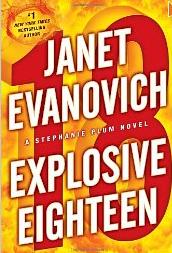
Janet Evanovich was a moderately successful writer of romance novels before she became the funniest thriller writer in the world, and I figured at some point that side of her would come out. It’s taken 17 books before the glorious madness that is the life of Stephanie Plum would start to take a turn toward the mundane normality of New Jersey polyamory, but that’s where the series is these days. In Smokin’ Seventeen and Explosive Eighteen, written and published less than 12 months apart, there’s a lot less insanity and a lot more about Plum’s love life.

At least she gets laid, a lot, once the grandmother of her sometimes boyfriend Morelli puts some type of evil-eye curse on her that makes her really, really horny. She goes back and forth between fucking Morelli, the Trenton cop, and fucking Ranger, the dangerous Cuban man of mystery (sounds like a romance novel, right?) — and she spends a fair amount of time (way too much) trying to figure it all out.

Seventeen is all about sex and dead bodies, the ones that appear in the empty lot near the trailer where her cousin Vinny’s bail-bonds business is temporarily located now that his old office was blown up. Although neither of these books is as funny as the others in the series, they both still have the Evanovich charm: In Seventeen, there’s the Gonna Gork Meter, a 72-year-old guy who thinks he’s a vampire and keeps biting women on the neck and an FTA who meets Plum and her pal Lula like this:

Merlin answered the door at the second knock. He was naked again, and he had a boner.
Lula checked Merlin out. “Must be that time of day.”

Eighteen has a really dumb theme about Plum taking a dream vacation in Hawaii with one of the two men but we don’t know which one, a gimmick that doesn’t really work. (Note to My Favorite Funny Writer Ever: The romance thing didn’t work out well, remember? Stick to gorking and vampires.) There’s a missing picture that half the crooks in Jersey seem to want to kill someone over and they think Plum has it. It’s actually a little more of a continuing plot line than a lot of the other books, and there’s still some excellent moments featuring Grandma Mazur, who loves to attend funerals and remains one of the best characters in modern American literature:

“It got better after you left,” she said. “Melvin Shupe came through the line and cut the cheese right when he got up to the casket. He said he was sorry but the widow made a big fuss over it. And then the funeral director came with air freshener and when he sprayed it around, Louis Belman got an asthma attack and they had to cart her out the back door to get some air. Earl Krizinski was sitting behand me, and he said he saw Louisa’s underpants when they picked her up, and he said he got a stiffy.”

Let’s face it: If you’re an Evanovich fan, and millions of us are, you’re going to read both of these books anyway, and you’ll enjoy them just fine. But if you haven’t been introduced to the world of this particular Jersey girl, I’d start with another selection.

PG&E’s system fails — again

2

EDITORIAL There’s no question that officials from Santa Clara — thrilled to have finalized financing for a new 49ers stadium — were taking full political advantage of the Dec. 19 blackouts at Candlestick Park. There’s no question that the event Mayor Ed Lee called a “national embarrassment” helped guarantee that the team will leave San Francisco after one more season.

But this is about more than football — and the mayor and the supervisors ought to using this latest PG&E screw-up to take a serious look at the company’s reliability and its impact on the city.

This is hardly the first embarrassing PG&E blackout in San Francisco. For the past few years, the private utility’s aging infrastructure has been failing, leaving businesses and residents in the dark. And while PG&E officials are trying to blame the city for the latest snafu, everyone admits that the problem started when a PG&E power line snapped.

Snapping power lines are a dangerous prospect — in this case, nobody was hurt and the arcing electricity didn’t start any fires. But that was largely a matter of luck — the jolt from the broken line lit up TV screens all over the country and if it had happened close to some flammable object (or, worse, some live person), the damage could have been serious.

As it was, millions of people watched San Francisco’s football stadium go dark — twice. The electricians at Candlestick patched things together and the game went on, but the message was clear: PG&E can’t be trusted to keep its equipment in safe, operating condition.

The city of San Bruno is still trying to recover from the natural gas explosion that killed eight people and leveled a neighborhood. And while local and state officials are giving increased scrutiny to PG&E’s underground gas pipes, the electricity system isn’t in much better shape.

Blackouts are more than an embarrassment — they cost the city and its businesses money. And, as the almost certain loss of the 49ers shows, unreliable infrastructure doesn’t help the local business climate. As Santa Clara Mayor Jamie Matthews told the Bay Citizen: “The reason they moved to Santa Clara is the reliability of our services. We have reliability in our electricity system that is unparalleled.”

One reason: Santa Clara has its own municipal power system. Rates are lower, blackouts are unheard of and the equipment is well maintained. Compare that to PG&E, where company executives diverted gas line maintenance money to pay themselves bonuses, and you see why San Francisco, which relies on the private monopoly, has a problem.

The supervisors ought to take this opportunity to hold hearings on the reliability of PG&E’s electric and gas system in the city — looking not just at the Candlestick problem but at the maintenance records, the age of crucial equipment, the company’s replacement plans and the economic impact of a shoddy electrical system. That should be part of Mayor Lee’s investigation, too.

At some point, San Francisco residents are going to have to pay to rebuild this system. They can pay through higher PG&E rates when the utility finally gets around to it — or they can begin the process of creating a municipal utility, which can do the job right, bring down rates and improve the business climate that the mayor so loves to discuss.

Guardian editorial: PG&E’s system fails again!

37

EDITORIAL There’s no question that officials from Santa Clara — thrilled to have finalized financing for a new 49ers stadium — were taking full political advantage of the Dec. 19 blackouts at Candlestick Park. There’s no question that the event Mayor Ed Lee called a “national embarrassment” helped guarantee that the team will leave San Francisco after one more season.

But this is about more than football — and the mayor and the supervisors ought to be using this latest PG&E screw-up to take a serious look at the company’s reliability and its impact on the city.

This is hardly the first embarrassing PG&E blackout in San Francisco. For the past few years, the private utility’s aging infrastructure has been failing, leaving businesses and residents in the dark. And while PG&E officials are trying to blame the city for the latest snafu, everyone admits that the problem started when a PG&E power line snapped.

Snapping power lines are a dangerous prospect — in this case, nobody was hurt and the arcing electricity didn’t start any fires. But that was largely a matter of luck — the jolt from the broken line lit up TV screens all over the country and if it had happened close to some flammable object (or, worse, some live person), the damage could have been serious.

As it was, millions of people watched San Francisco’s football stadium go dark — twice. The electricians at Candlestick patched things together and the game went on, but the message was clear: PG&E can’t be trusted to keep its equipment in safe, operating condition.

The city of San Bruno is still trying to recover from the natural gas explosion that killed eight people and leveled a neighborhood. And while local and state officials are giving increased scrutiny to PG&E’s underground gas pipes, the electricity system isn’t in much better shape.

Blackouts are more than an embarrassment — they cost the city and its businesses money. And, as the almost certain loss of the 49ers shows, unreliable infrastructure doesn’t help the local business climate. As Santa Clara Mayor Jamie Matthews told the Bay Citizen: “The reason they moved to Santa Clara is the reliability of our services. We have reliability in our electricity system that is unparalleled.”

One reason: Santa Clara has its own municipal power system with a much better service and reliability record than PG&E.  Rates are lower, blackouts are unheard of and the equipment is well maintained. Compare that to PG&E, where company executives diverted gas line maintenance money to pay themselves bonuses, and you see why San Francisco, which relies on the private monopoly, has a problem.

The supervisors ought to take this opportunity to hold hearings on the reliability of PG&E’s electric and gas system in the city — looking not just at the Candlestick problem but at the maintenance records, the age of crucial equipment, the company’s replacement plans, the expensive loss of the city’s Hetch Hetchy power being wheeled on PG&E lines, and the economic impact of a shoddy electrical system.  That should be part of Mayor Lee’s investigation, too.

At some point, San Francisco residents are going to have to pay to rebuild this system. They can pay through higher PG&E rates when the utility finally gets around to it — or they can begin the process of creating a municipal utility, which can do the job right, bring down rates, improve the business climate that the mayor so loves to discuss, and move  the city  into compliance with the federal Raker Act mandating public power for San Francisco.


Rearview mirror

0

emilysavage@sfbg.com

Year in Music “Out of all the records I’ve recorded, that was the worst experience,” says prolific Dinosaur Jr. bassist and Sebadoh guitarist Lou Barlow. He’s speaking of Bug, the classic, feedback opening alternative rock album Dinosaur Jr. released on SST in 1988.

Why then, did the band tour the East Coast during the spring of 2011, playing the album start to finish, and why does it continue to play it now — appearing at the Fillmore this week? “All the negative associations I had with it are gone. What I hear now is a really great batch of songs that J [Mascis] wrote.” He goes on to describe the early days of Dinosaur Jr., “when we formed it was my first textured, creatively ambitious band — and that was at the age of 17 — so it’s a real part of my DNA now. Musically, it’s a very familiar spot to be at.”

There, in a history-rich bed with a familiar texture, is the spot where aging rock fans crave to be. According to Simon Reynold’s exhaustive and polarizing 2011 tome Retromania, it’s also the space in which we all now inhabit, new listeners and old. His introductory words are harsh, if provoking. “The 2000s [was] the decade of rampant recycling: bygone genres revived and renovated, vintage sonic material, reprocessed and recombined. Too often with new young bands, beneath their taut skin and rosy cheeks, you could detect the sagging grey flesh of old ideas.” Brutal.

In some sections, Reynolds is dead on, and his methodology applies equally to the year in rock that was 2011 (though the book was written in the summer of 2010). We couldn’t possibly look back at these twelve months without including the grander trail of rock’n’roll, and how it was again repackaged throughout the year.

Given the retro-crazed times we live in, to judge the year, we must also fall deeper down the nostalgia inkwell, in part due to the onslaught of monster reunion tours, complete album trips, rereleased records, anniversary celebrations, and retro reverential new rock/garage/punk acts of 2011. One point Reynolds makes, is that the span of time elapsed between creative endeavor and nostalgia for said endeavor is rapidly fading.

Just recently the Weakerthans — which formed in 1997 — spent four power-pop nights at the Independent, playing one whole album from its catalogue each night. Earlier this year, Archers of Loaf launched a reunion tour (13 years after its demise) and the reissue of four of its studio albums on Merge. There were also reunion shows and tours from the Cars, Kyuss, Pulp, Cibo Matto, Masters of the Hemisphere, Death From Above 1979 (big up to Treasure Island Music Festival), and strangely, J. Geils Band, the Monkees, and System of a Down.

There were rereleased Smashing Pumpkins albums, a Throbbing Gristle greatest hits, and a Hot Snakes one-off (at press time) at All Tomorrow’s Parties’ Nightmare Before Xmas in Minehead, England — a fest also headlined by Archers of Loaf.

There was Nirvana’s Nevermind 20 year anniversary celebration, and Metallica’s 30 years strong, though the output for these celebrations was obviously disparate given the nature of the acts. Nirvana’s label released a series of singles and special edition anniversary batches. Metallica took perhaps the most surprising turn a no-frills metal act could — it paired with Lou Reed and released a confusing collaboration, Lulu, though the real anniversary celebration was yet to come — a four-night, devil-horned, juicy guest-starred tête-à-tête for hardcore fans at the Fillmore.

There were also the bands that just felt retro, or at least, stood with one foot in rock’s not-so-distant past. But the good ones were more reverent than carbon vintage copy, acts like Dum Dum Girls and Cults, played on romantic ideals of ’60s garage and slipped in some doo-wop and girl group-esque vocals, but neither directly mimics a particular era. In its debut follow-up, Only In Dreams (Sub Pop), Dum Dum Girls also referenced a distinct ’90s Mazzy Star vibe. Meanwhile, Canadian chanteuse Austra looped back to the ’80s with prominent synth and operatic love songs, and the Beets happily alluded to its own ’60s garage-meets-Ramones influences on fourth album Let The Poison Out (Hardly Art), like something out of a Nuggets boxset; a modern, bilingual Seeds.

Locally, longtime Ty Segall band member Mikal Cronin finally made the move to San Francisco in 2011. Raised on surf and garage rock down south, he brought with him a distinctive nostalgic sound; his solo self-titled record — released this year on Trouble in Mind — was one of the most intriguing of the year. Like many now living and playing in SF, he’s drawn to vintage rock’n’roll and garage, but his style stands out above the pack.

This year he released a multifarious record of crusted garage-punk and swirling psych-pop, glamorized with the hazy, sand-swept beach days pictured in vintage Polaroids. Opening track “Is It Alright” could be plucked from a psychedelic Beach Boys LP, laid thicker with grime. And Cronin, when pressed, reveals a long history of influences — along with current bands such as Thee Oh Sees and Strange Boys — mentioning longtime favorites “Emitt Rhodes, Del Shannon, the Beatles, the Beach Boys,” adding “I’ve been trying to relisten to the classics” And yes, the remaining Beach Boys were said to be planning yet another reunion for next year, a thrill for likely a few young fans (though the same can not be said for Brian Wilson’s 2011 Disney covers album).

Here’s another spot where Reynolds and I tend to split: I’m an unabashed rearview mirror fan. And while I agree that the “re-s” in our sonic world are sometimes overwhelmingly dull, the opportunity to see live bands that broke up before I was cognizant has just too strong a pull on my psyche. Even Reynolds seems to consent to that last bit, stating in Retromania, “The exceptions to my ‘no reunions’ policy are a few bands that I loved as a youth but never managed to see live.” So wouldn’t that be the case for someone in every audience? The giant pink headphones-wearing toddler I saw at the Iggy Pop show undoubtedly missed the punk singer’s first 40 odd years of shows. Now, will somebody please reunite Operation Ivy, Minor Threat, and Neutral Milk Hotel for complete album tours, or is that too sacrilegious for your precious memories? It’d just be for my own comfort, obviously. *


EMILY SAVAGE’S TOP 10 SHOWS OF 2011

Feb. 26: No Age, Grass Widow, and Rank/Xerox at Rickshaw Stop

April 27: Steve Ignorant plays Crass songs at Slim’s

June 1: Gayngs at Independent

July 13: King Khan & Gris-Gris, Shannon & the Clams, King Lollipop/1-2-3-4 Go! Records Showcase at Oakland Metro Opera House

Sept. 22: Hightower, Black Cobra, and Walken at Yerba Buena Center for the Arts

Oct. 6: CSS at Fillmore

Oct. 13: Gardens & Villa at Bottom of the Hill

Nov. 5: Wild Flag at Great American Music Hall

Dec. 4: Iggy Pop at Warfield

Dec. 10: Tycho at Independent

Lit shorts: Cocker, on paper

0

Mother, Brother, Lover
By Jarvis Cocker
Faber and Faber
208 pp., hardcover, $17

 
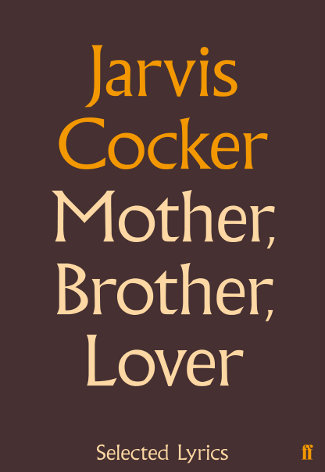
Books of lyrics — words uprooted from the music and set down naked on the page — are traditionally published with either self-congratulation or doubts by songwriters. Jarvis Cocker has some doubts.

“Lyrics are not poetry: they are words to songs,” he writes in the reluctant and faintly self-conscious introduction to Mother, Brother, Lover: The Selected Lyrics of Jarvis Cocker. But the former Pulp front man doesn’t give himself enough credit. His persona as a sexual fantasist makes for devilishly entertaining stories — scotched lovers, adultery, watching someone’s sister from the bedroom closet — all of which become more vivid here. Pulp classics like “Do You Remember the First Time?” are plain funnier when you can pick up on the subtleties in punctuation and position of words. Notes in the back are similarly revealing. The title of the misfit anthem “Mis-shapes” comes from chocolates called by the same name that are too malformed to fit in boxes.

Read more reviews in our Books Issue, on stands now

Lit shorts: ‘Beck’ by the book

0

Beck
By Autumn de Wilde
Chronicle Books
176 pp., hardcover, $35

 
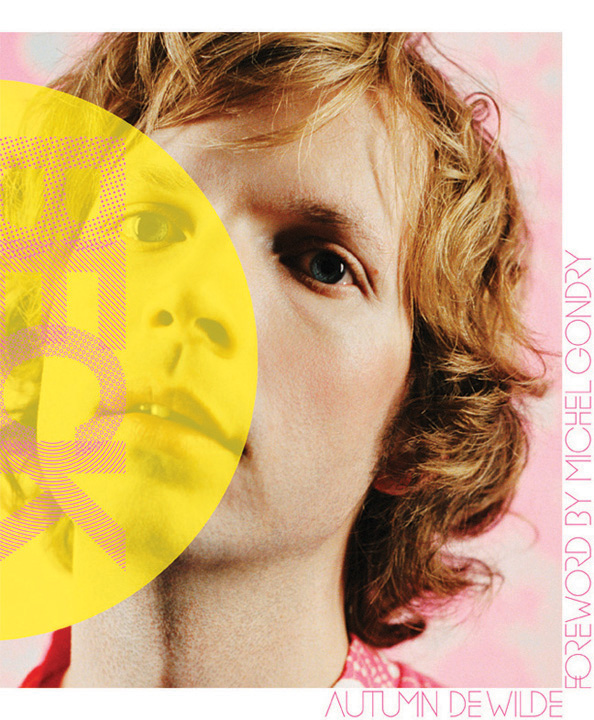
For more than a decade and half, pop culture photographer (and video director) Autumn de Wilde has chronicled Beck, the iconic songwriter and her personal friend, on tour, in the studio, and as he’s posed before the camera — the latter especially.

Indeed, in Wilde’s photos we find Beck looking as impenetrably cool as ever. Incorporating fewer candid shots and plenty of showy staged ones — Beck in a white suite; Beck lifting an enormous red egg; Beck surrounded by loosely clad dancers — the collection has few insights into the mythologized songwriter and too many into his eclectic wardrobe. Wilde is a fine photographer, but her photos evoke the same Beck we’ve been looking at for decades. For real insights, look to the front of the book at the conversations between Wilde and Beck, where the two are finishing each other’s sentences and looking back on their collaboration. 

Read more book reviews in our Books Issue, on stands now

Get read!

0


ROCK AND ROLL ALWAYS FORGETS

By Chuck Eddy

Duke University Press

352 pp., paper, $24.95

Chuck Eddy glides through music criticism like a grumpy fanatic. Each article included in Rock and Roll Always Forgets — culled from Eddy’s vast back catalogue of music journalism articles, beginning with the early 1980s — is packed with cultural references, touchstones, facts, witty asides, a dash of snark, and acknowledgments of once-obscure acts. Yet, he approaches each band like he’s the first to have discovered it. He’s a musical anthropologist, but also, archeologist, digging up the remains of musicians past, lest we forget. Take a piece on a Marilyn Manson show, written in 1996. More than simply describing the stage and the crowd (which he does, expertly: “[they] wore too much black makeup, but they didn’t scare me — most seemed to be upper-middle-class Catholic school teens from the burbs…”). He wanders near profundity, dissecting Manson’s overall persona, his ticks, his own cultural references, and those who came before him, namely Alice Cooper, but a great many more. Most importantly, Eddy alludes to why that all matters in the least. (Emily Savage)


TROPIC OF CHAOS

By Christian Parenti

Nation Books

295 pp., hardcover, $25.99

Through historical research and on-the-ground reporting in Kenya, war-torn areas of Afghanistan, and other regions marked by intense conflict, Christian Parenti offers an unusual and compelling analysis of violence through the lens of the environment. Tropic of Chaos: Climate Change and the New Geography of Violence teases out the idea that increasingly unstable weather patterns stemming from climate change have fueled conflict throughout impoverished areas of the Global South. In the savannahs of northwest Kenya, for instance, deadly cattle raids have intensified as intertribal warfare heats up in the face of water scarcity. Recurring droughts and floods in Afghanistan have made it exceedingly difficult for farmers raise traditional crops, making them increasingly reliant drought-resistant poppy — the raw ingredient for heroin — for economic survival. Parenti also turns a sharp eye upon the repression, surveillance, and counterinsurgency that first-world nations have employed to combat growing violence in water-scarce, conflict-ridden regions, and calls for a more enlightened approach. (Rebecca Bowe)


CAFE LIFE SAN FRANCISCO

by Joe Wolff

Interlink Books

224 pp., paperback $20

Small quirks in this guide to the city’s cafes and coffeehouses — the sixth in a series that includes Sydney, New York, and Venice — will let you know its not strictly, strictly for locals. Java Beach is lumped in with more gearhead-oriented Mojo Bicycle Cafe and Ninth Avenue’s Arizmendi Bakery is filed under the catchall “Sunset District and vicinity.” The introduction’s discussion of “San Fran” versus “Frisco” versus “the City” is one that became boring long ago. But those things matter little. In-depth histories of some of your favorite cafes, from Java Beach to Philz’ to Caffé Baonecci are lucid looks at the facts and rewards of small entrepreneurship in the city. And Roger Paperno’s loving photography of velvet crema and foccacia sheets combines with words to create an ode to the city’s third spaces that any caffeine-laptop addict will appreciate in their stocking. (Caitlin Donohue)


LIONS OF THE WEST: HEROES AND VILLAINS OF THE WESTWARD EXPANSION

By Robert Morgan

Algonquin Books

497 pp., hardcover, $29.95

Biography can be the best history; stories of the people who changed the world (for better, and often for worse) are more compelling than turgid texts of dates and places. Lions of the West recounts the development of the American frontier from the end of the Revolutionary War to the Civil War era through the lives of 10 men. Yeah, all men. In fact, Morgan (by choice or by the longtime bias of American historians) makes it appear as if all of the great and evil deeds done as the nation moved Westward Ho were the province of the male of the species. At times, the profiles are a bit over the top (I don’t really care that much about Kit Carson’s personal life.) Overall, though, it’s a detailed, lively, and informative book that minces no words, especially when discussing the theft of much of the southwest from Mexico. San Franciscans will enjoy learning who Stockton, Sloat, Castro, Winfield, and a few other streets were named after. (Tim Redmond)


VHS: ABSURD, ODD, AND RIDICULOUS RELICS FROM THE VIDEOTAPE ERA

By Joe Pickett and Nick Prueher

Running Press

272 pp., paper, $14

Found Footage Festival founders and comedy writers Joe Pickett and Nick Prueher are apparently the Indiana Joneses of VHS, unearthing remarkable video package cover art that would otherwise be relegated to hoarder basements, bonfires, and anywhere else the worst (a.k.a., the best) videotapes go to die. I salute these dudes, even though the captions they tag each page with aren’t always funny or necessary. Truly, the covers (soft-focus and garish, tacky and baffling) speak for themselves, direct dispatches from ye olden days, long before YouTube brought WTF-ness to anyone with an Internet connection. You see, children, back in the 1980s or 90s, home viewers had to seek this shit out: instruction in squirrel-calling, chair-dancing, seduction, hairstyling (“What the Heck Am I Going to Do With My Hair?”), baby-proofing, spotting counterfeit Beanie Babies, etc. Straight-to-video masterpieces (F.A.R.T.: The Movie). Horrible exercise fads (“Bunnetics: The Buttocks Workout”). Well-meaning but also ghoulish-looking self-improvement vids (“Face Aerobics”). Every page is magical. Your mind will be blown. (Cheryl Eddy)


BI-RITE MARKET’S EAT GOOD FOOD

By Sam Mogannam and Dabney Gough

Ten Speed Press

297 pp., hardcover, $32.50

Bi-Rite Market is the ultimate neighborhood grocery. Shockingly small (with ambition to expand), it’s jam-packed with the best in organic produce, meats, cheeses, and artisan food products, much of it local. Now, Bi-Rite founder Mogannam has a new book loaded with recipes for such inviting delectables as white bean puree with prosciutto crespelle and strawberry rhubarb pie. But don’t relegate it to the cookbook category. Hewing to Bi-Rite’s mantra of creating community through food, the authors share extensive tips on shopping seasonally and locally for the healthiest and best-tasting products, no matter where you may live. You’ll learn what to look for at the grocery, storage and usage tips, and more. Well-illustrated sections feature produce (broken down by season), wine, beer, cheese, deli meats, butchery, baked goods, and even farmer profiles. Bonus: stay tuned for Sweet Cream and Sugar Cones, Bi-Rite’s ice cream and frozen treats recipe book from its renowned creamery, out this April. (No word yet on whether it’ll tell us how to beat the ever-present line outside.) (Virginia Miller)


DAMNED

By Chuck Palahniuk

Doubleday

247 pp., hardcover, $25

Welcome to Hell, as seen through the eyes of 13-year-old Madison Spencer, the daughter of a jet-setting yet eco-hyperconscious movie starlet and philanthropist. This is Dante’s Inferno meets The Breakfast Club, a film that overtly informs the plot and its main characters. As in Palahniuk’s breakout novel Fight Club, it’s hard distinguish between reality and perception as Maddy leads readers past the Vomit Pond, across Dandruff Desert, and right into Satan’s black Town Car. As she recalls her final weeks on earth, you’re pretty sure that she didn’t really die from a marijuana overdose. Clearly, things are not what they seem as the novel looses an American teenager’s perspective on modern life in both the underworld and earthly realm, with wry commentary on everything from pop culture and capitalist excess to the defeated religions whose fallen gods roam Hades. The gags alone — like the telemarketing and chatroom porn the damned deliver to Earth, and Hell’s endless loop of The English Patient — make this a tough book to put down, all the way to its slightly unsatisfying conclusion. (Steven T. Jones)


BEST AMERICAN COMICS 2011

edited by Alison Bechdel

Houghton Mifflin Harcourt,

352 pp., paperback $25

Chris Ware’s textbooky flowcharts; Angie Wang’s Technicolor, spiraling pistil-armed super-flower-heroine; Peter and Maria Hoy’s intricately plotted cause-and-effect grid art — the sixth year of this hardcover assemblage of the year in superlative strip art soars as a holiday gift for your fave comic nerd. Visual trickery and innovative page staging aside, many of the graphic narratives in this book hold up on plot alone. An excerpt from Kevin Mutch’s Fantastic Life effectively mines zombie philosophy, dating paranoia, and begging drinks off your service industry friends for comic gold. Many of the best pieces, perhaps indicative of the graphic novel mood these days, explore the darker side of the human psyche. But what graphic novel fan is unfamiliar with complicated? (Caitlin Donohue)


THE TIPSY VEGAN

By John Schlimm

Lifelong Books/Da Capo

164 pp., paper, $17

Every time I think we’re past the stereotype of the sullen, uptight vegan, I get another comment like, “Wait, don’t you only eat vegetables?” Why yes, I do eat plenty of veggies, but I also eat decadent dishes such as The Tipsy Vegan‘s Party Monster Pancakes, loaded with the sweet nectar of amaretto and drenched in syrup. This book is a carnivorous teetotaler’s nightmare, boasting 75 boozy recipes stuffed with everything from “beer to brandy” for the liquor-loving vegan cooks among us. It’s not, as I initially imagined, a book on vegan cocktails — that would be far too easy. Written by John Schlimm (Ultimate Beer Lover’s Cookbook), a member of “one of the oldest brewing families in the United States,” the book includes booze-infused treats for parties, brunch, and supper: fried avocados, slur-baaaaked peaches with Cointreau, “Bruschetta on a Bender” — all of which kind of sound like stoner food to me. An nice touch: glossy food porn shots on every page. (Emily Savage)


PROJECT DOG

By Kira Stackhouse

self-published

352 pp., hardcover, $34.99

Local photographer Kira Stackhouse experienced an inspiration so intense that she ditched her high-profile marketing job to pursue it: she would photograph specimens of the 50 most popular canine breeds officially registered with the American Kennel Club (“purebred dogs”) that had been purchased from professional breeders — and pair them with photos of the exact same kinds of dogs found in local dog rescues and shelters. The purpose was to start a dialogue about the effects of professional breeding and highlight the many kinds of dogs available for adoption (and also to change peoples’ perceptions about rescue dogs). But a major part of the story — and what makes this book so fantastic — is the wonderful doggy photography and sumptuous layout. Dogs are posed, or pose themselves, against iconic Bay Area backdrops, accompanied by often hilarious, always revealing, biographies and profiles. Project Dog became an online sensation: this book cements its reputation. Available at www.projectdog.net. (Marke B.)


LISTEN TO THIS

By Alex Ross

Picador

384 pp., paper, $18

In the expanded paperback edition of his absorbing and erudite collection of essays, Alex Ross of the New Yorker writes what could be called his mantra as critic: “I have always wanted to talk about classical music as if it were popular music, and popular music as if it were classical.” Ross listened exclusively to classical until he was 20, something he admits may sound “freakish.” But whether he’s describing Björk in her recording studio in Iceland, or composer John Luther Adams’ sound and light installation in Alaska, Ross draws from an immeasurable well of knowledge and plunges into his subject with gusto. He can find commonalities between Radiohead’s “Pyramid Song” and Stravinsky’s Firebird Suite, clear away the myths that have clouded both Franz Shubert and Bob Dylan, and thoroughly explain why OK Computer and John Cage’s 4’33” are equally astonishing. Informative, eye opening, Ross is every lover of music thrown harmoniously into one. (James H. Miller)


MY FAMILY TABLE

By John Besh

Andrews McMeel Publishing

272 pp., hardcover, $35

To know anything about New Orleans’ dining scene is to know John Besh. As one of Nola’s great chefs, he has a number of restaurants, including the acclaimed August, elevating local cuisine in forward-thinking ways. His original book My New Orleans is a striking post-Katrina tome to one of the greatest cities in the world and its vibrant culinary history. It’s a gorgeous coffee table volume packed with photos of the region’s people, places, and foods — more than 200 recipes from Mardi Gras specialties to gumbo, many with a contemporary twist. Besh just released, My Family Table, with welcoming, everyday recipes he cooks with his family that are healthy, fresh, simple, and heartwarming. Besh’s star power (Iron Chef champion and James Beard award-winner that he is) never dominates. Like New Orleans, it’s a visually beautiful book, but this time themed by “School Nights,” “Breakfast with my Boys,” and recipes like “Curried Anything” or “Creamy Any Vegetable Soup.” Closing with the key element of cooking, the communal, he writes: “If asked what my last meal would be, I’d reply, ‘Any Sunday supper at home, cooked with love, for people I love.'” (Virginia Miller)


FOUR SEASONS OF YOSEMITE: A PHOTOGRAPHER’S JOURNEY

By Mark Boster

Time Capsule Press

128 pages, hardcover, $34.95

John Muir would have loved this book, the spectacular result of a passionate love affair with Yosemite National Park involving all of the principals in this impressive project. Muir helped glorify and preserve Yosemite with his voice and pen. Robert Redford, who fell in love with Yosemite as an 11-year-old boy recovering from a mild case of polio, wrote an eloquent introduction to the book. Photojournalist, Mark Boster was smitten by the beauty and grandeur of the Yosemite when he first visited the park as a child with his family. He spent a year in the park detailing its seasonal changes in more than 100 magnificent pictures. “I felt the breezes, analyzed the light, listened to the sound of the rivers and falls, and tried to capture the images that moved me,” he writes in his introduction. Catherine Hamm’s delicate haiku add a poetic touch to many scenes. (The two principals who brought this project to life with loving care are Narda Zacchino, a former editor of LA Times and the Chronicle, and Dickson Louie, a former executive at both those papers. Zacchino serves as publisher and editor and Louie as president and CEO of Time Capsule Press, which specializes in creating books by using the archival content of newspapers and magazines.) Available at www.fourseasonsofyosemite.com (Bruce B. Brugmann)


THE PDT COCKTAIL BOOK

By Jim Meehan

Sterling Epicure

368 pp., hardcover, $24.95

Few bars have made as much impact on the New York cocktail (and thus the international) scene than PDT. Known as an early mover in the speakeasy trend, PDT revives classic recipes and invents new ones in the classic spirit. Bartender Jim Meehan put PDT on the map, and he’s since gone on to write about drink and educate bar managers and tenders everywhere. In the PDT Cocktail Book, he shares more than 300 cocktail recipes in a comprehensive collection inspired by classic tomes like The Savoy Cocktail Book. There are recipes from generations of hard-working bartenders, tips on glassware, bar tools, equipment, garnishes, techniques, a listing of seasonal ingredients, even a spirits primer. In keeping with PDT’s connection to neighboring Crif Dogs who serve creative dogs in the bar, there’s a section of hot dog recipes from big-name chefs who are regulars at the bar, including David Chang (Momofuku), Wylie Dufresne (WD-50), and Daniel Humm (Eleven Madison Park). From the comfort of home, cook up a Mason Dog fried in cornmeal and huitlacoche (corn smut/fungus, a Mexican specialty) to go with the Little Bit of Country cocktail, which mixes bourbon, maple, and jalapeño. (Virginia Miller)


EVERYTHING IS ITS OWN REWARD: AN ALL OVER COFFEE COLLECTION

By Paul Madonna

City Lights

240 pp., hardcover, $27.95

Like Ben Katchor’s classic “Julius Knipl, Real Estate Photographer,” local artist Paul Madonna’s “All Over Coffee” — published every Sunday in the Chronicle and on essential Web zine The Rumpus (www.therumpus.net) — draws me into a psychic space that is at once serene and troubled, surreal and hyperreal. The effect comes as much from the drawing style as the dreamlike non-narrative: both are direct descendants of Winsor McKay’s “Little Nemo.” Madonna gets an extra chills-up-the-spine boost from his illustrations of semi-familiar San Francisco architecture and intersections, lucid as etchings of bleached Kodachrome shots. For this second collection of the strip, he broadens his nib to include not only the City by the Bay, but Paris, Rome, Buenos Aires, and Tokyo. Overheard quotes, snatches of philosophical discourse, interior monologue snippets, existential doubts, random observations, and short stories are floated over the images to capture a peculiarly lovely eddies in the zeitgeist.


I DON’T WANT TO KILL YOU

By Dan Wells

Tor

320 pp., paperback, $11.95

Some of this is sick shit. You need a warped sense of humor and a love for random violence to enjoy the tale of a young man who lives with his mom in a mortuary and fights a demon made of black goo who takes over the minds and bodies of humans. But it’s a different type of thriller — complete with its own kinda sweet moments of teenage love and angst — and it’s packed with great detail. (Did you know that undertakers use Vaseline to fill up bullet holes? Cool.) John Wayne Cleaver, perfect name for a demon hunter, is a sociopath who is beastly to his mother and can’t get along with the other kids . Except for a super-hot chick who he thinks must be a demon, otherwise why would she like such a loser geek? The demon is nasty and gouges out eyes, cuts off tongues, sticks bodies on poles … you gotta check it out. (Tim Redmond)


RICE AND CURRY: SRI LANKAN HOME COOKING

S.H. Fernando, Jr.

Hippocrene Books

224 pp., paperback, $19.95

After a tongue-inflaming visit to the East Village’s fantastic Sigiri restaurant in NYC a couple weeks back, my interest in — and lust for — spicy Sri Lankan treats like kiri hodhi (coconut milk gravy), rossam (coriander-tamarind broth), kool (seafood soup), Jaffna goat curry, and ulundu vai (savory donuts) was, er, inflamed. Fortunately for me, author “Skiz” Fernando recently spent a year on the island rediscovering his roots and delving into the varied cuisine (later serving as a guide for that cheeky culinary colonist Anthony Bourdain). The punchy, informative Rice and Curry is the result, and includes nice introductions to Sri Lankan geography and history, as well as tips on what to stock in your cupboard to achieve the certain Sri Lankan “oomph” that sets the cuisine apart from Indian. A particular passage that profiles Leela, Fernando’s aunt’s ancient maid, offers some real insight into the island’s food tradition and customs — and yields a marvelous, corruscating crab curry from her hometown of Chilaw, just in time for Dungeness season. (Marke B.)


HEDY’S FOLLY: THE LIFE AND BREAKTHROUGH INVENTIONS OF HEDY LAMARR

By Richard Rhodes

Doubleday

261 pp., hardcover, $26.95

An author best-known for his 1986 Pulitzer-winning The Making of the Atomic Bomb, Richard Rhodes might seem like an unlikely biographer for movie stunner Hedy Lamarr, who lit up Golden Age films like Cecil B. DeMille’s 1949 epic Samson and Delilah. But her above-average qualities (she was called “the most beautiful woman in the world”) extended beyond the superficial. After escaping her gilded-cage marriage to an Austrian munitions magnate, Lamarr found success — and five more husbands — in Hollywood; between roles, she started inventing “to challenge and amuse herself.” During World War II, she got serious about her hobby. Showbiz circles led her to avant-garde musician George Antheil, renowned for his groundbreaking composition for 1924 short Ballet Mécanique. As Rhodes writes, “[Lamarr] began thinking about how to invent a remote-control torpedo to attack submarines just at the time she met Antheil, who knew quite a lot about how to synchronize player pianos.” Together, the “charming Austrian girl” and “the bad boy of music” worked on that torpedo, as well as “spread-spectrum radio,” an innovation that paved the way for contemporary wireless technology. Unlikely? Yes. Fascinating? Indeed. Never underestimate a beautiful woman — or a skilled writer’s ability to humanize complicated characters and bring drama to a tale loaded with tech-speak. (Cheryl Eddy)


COME, THIEF

By Jane Hirschfield

Knopf

98 pp., hardcover, $25

As it happens, one of Bay Area poet Jane Hirschfield’s passages currently adorns the famous Kahn and Keville auto repair shop’s marquee in the Tenderloin: “What some could not have escaped/ others will find by decision/ each we call fate.” Well, you could never blame her for not thinking big. As a well-known and approachable poet, she sports a blurb from O, The Oprah Magazine on this, her ninth collection, the first in six years since releasing her arresting After. And while her slightly witchy, be-scarved, grandiloquent persona screams marketable poetess, there’s some understated magic in her latest poems. These ones are full of plums and glass and vague Zen spells that give off, in their overall effect, an rueful, anticipatory sigh. Some childlike wonder seeps in: “Another year ends./ This one, I ate Kyoto pickles,” says “Washing Doorknobs,” my favorite from the collection. “But one thing you’ll never hear from a cat/ is Excuse me” goes “A Small-Sized Mystery.” Sometimes you can almost Hirschfield her straining for ambiguity, the poems’ heavy life lessons tearing through her delicate webs of observation. Still, each poem here showcases Hirschfield’s incisive power. (Marke B.)


PLENTY

By Yotam Ottolenghi

Chronicle Books

287 pp., hardcover, $35

Recently I returned to London, eating my way extensively through the city. One of my gustatory highlights was Yotam Ottolenghi’s beloved bakery and restaurant, Ottolenghi (with four locations). Not only were his baked goods otherworldly delights, his straightforward but elegant dishes using pristine ingredients were among the freshest and satisfying of my London travels. Plenty, his new cookbook, is a cleanly designed book with vivid photos of recipes like broccoli gorgonzola pie and mushroom herb polenta. Most impressive? Ottolenghi’s recipes are 100% vegetarian. The meat-free aspect is barely emphasized, and one feels no lack in the diverse range of flavors (with Middle Eastern influences) presented. Since 2006, Ottolenghi has penned the UK Guardian’s vegetarian column — and he’s not even a vegetarian! This speaks to how respected he’s become as a chef in his use of veggies and grains. Plenty shows this talent off, but most importantly delivers approachable, easy-to-replicate recipes to tickle our palates. (Virginia Miller)


HILLBILLY NATIONALISTS, URBAN RACE REBELS, AND BLACK POWER

By Amy Sonnie and James Tracy

Melville House

201 pp., paper, $16.95

Gazing back in time to the era when the Black Panthers were serving up free breakfast to low income youth and coming into the crosshairs of COINTELPRO, few may be aware that an interracial coalition of radical organizers included a contingent of poor white southerners bent on fighting capitalism in solidarity with communities of color. Written by a cofounder of the Center for Media Justice and a longtime San Francisco housing activist, this detailed bit of radical history spotlights the organizing efforts of poor whites, transplanted from rural Appalachia to the low-income Uptown neighborhood of Chicago, to build coalitions of poor people in solidarity with civil rights leaders. Groups like Jobs or Income Now (JOIN), the Young Patriots, and Rising Up Angry launched campaigns against neglectful landlords and cops who brutalized their youth. They represented the white arc of the multiracial Rainbow Coalition, initiated by the Black Panthers in Chicago as “a code word for class struggle.” Bizarre as it may seem, “It became common to see [Panther] Fred Hampton ‘give a typically awe-inspiring speech on revolutionary struggle, while white men wearing berets, sunglasses, and Confederate rebel flags sewn into their jackets helped provide security for him.'”

(Rebecca Bowe)


MR. KILL

By Martin Limon

Soho Press

376 pp., hardcover, $24

Korea in the 1970s. The United States has 50,000 troops in country, mostly near the Demilitarized Zone, and they don’t always behave. In general, the Korean authorities allow the military to police its own — but when a young Korean woman is brutally raped on a train to Seoul, and the assailant appears to be an American, all hell breaks loose. Martin Limon lived in Korea for ten years, and he does a (fairly) good job of presenting a portrait of the Cold War tensions between the two supposed allies. There’s a little bit of American bias — the author is former military himself — and his potrayal of Korean society isn’t as sensitive or oddly loving as John Burdett’s descriptions of Thailand in the Bankok 8 series. Limon’s great storytelling and his lively and compelling protagonists, Sergeants George Sureno and Ernie Bascom, pull readers past those issues. Perfect gift for someone who likes international crime thrillers. (Tim Redmond)


THE RECIPE PROJECT

By One Ring Zero

Black Balloon Publishing

116 pp., hardcover, $24.95

It’s part cookbook, part music journalism, part rock opus, and hell, part coffee table book. The Recipe Project (subhead “A Delectable Extravaganza of Food and Music”) is a concept spearheaded by New York-based gypsy-klezmer act One Ring Zero. The band’s co-founders, Michael Hearst and Joshua Camp, created songs using the recipes of well-known chefs (Mario Batali, Isa Chandra Moskowitz, Chris Cosentino) as the word-for-word lyrics. The meals themselves served as musical influence; each recipe inspired a different sound. While the songs are not likely ones you’d listen to say, on a long lonesome drive, they do have a glint of childlike glee. It’s conceptual. The true genius of this project is its overall cohesiveness. It’s an all-in-one package. Follow the recipe, listen to the song, get some interesting background factoids. The Recipe Project also includes full recipe playlists, articles by rock journalists, and some pretty interesting interviews with chefs. (Emily Savage)


CARY GRANT: DARK ANGEL

By Geoffrey Wansell

Arcade Publishing

192 pp., hardcover, $24.95

Back in print (it was originally released in 1996), this paen to the dapper star of North By Northwest (1959), An Affair to Remember (1957), Notorious (1946), His Girl Friday (1940), and approximately 10 zillion other classic films is somewhere between a biography and a coffee-table book. It’s worth picking up for the lavish black-and-white photos alone, illustrating the span of Cary Grant’s career with film stills, behind-the-scenes shots, and the occasional almost-candid image (did he ever take a bad picture)? The accompanying text is straightforward, but — as its title suggests — doesn’t shy away from Grant’s well-documented countercultural experiments. (“Grant became so enthusiastic about the value of LSD that he extolled its virtues during the shooting of his next picture.”) Nor does it gloss over Grant’s vices (he smoked 30 to 40 cigarettes a day) and sometimes troubled personal life (he was married five times). But the book’s chief focus is Grant’s brilliant career. As Stanley Donen, who directed him three times, remarks to author Geoffrey Wansell, “He’s thought of as a man who achieved a certain elegance and savoir faire. But in truth he was a fantastic actor.” (Cheryl Eddy)


NATURAL HISTORY OF SAN FRANCISCO BAY

By Ariel Rubissow Okamoto and Kathleen M. Wong

University of California Press

352 pp., paperback, $24.95

Drag queens, beat poets, burlesque dancers, hyphy rappers, dot com techies — the human species of the Bay Area have been well-documented, but information on the non-human dwellers of the bay itself has been left to scattered guidebooks, obscure blogs, and academic sources. Authors Rubissow Okamoto and Wong have collected a wealth of biological and environmental information in their book, published this November. The cross-country saga of the striped bass, the hidden beauty of eelgrass, the varied contentions of the California water wars are presented in highly readable, easily digestible sections. The emphasis here is on environmental impact and recent conservation developments — I did not know that it’s officially dangerous to eat more than one pound a month of fish from the bay! — and the history of decades of restoration triumphs and setbacks is related sleekly and straightforwardly. Absorbing all the information in this illuminating primer helped me appreciate the seething loveliness and churning forces that make up the place I call home. (Marke B.)


On the Cheap Listings

0

Submit items for the listings at listings@sfbg.com. For further information on how to submit items for the listings, see Picks.

THURSDAY 8

Drag Queens on Ice Union Square Ice Rink, 333 Post, SF. www.unionsquareicerink.com. 8-9:30 p.m., $10. Mutha Chucka, Anna Conda, Lil’ Hot Mess and other dazzlingly-named lovelies gleefully speed and twirl through the Union Square ice skater crowd.

Archie Green: the Making of a Working-Class Hero talk Green Arcade, 1680 Market, SF. 7 p.m., free. Historian Sean Burns captured foundational labor activist Archie Green’s story over years of interviews and conversations. Now he shares how Green became a tireless and radical advocate for the preservation of American folklore.


FRIDAY 9

Winter Wunderkammer holiday art sale The Lab, 2948 16th St., SF. www.thelab.org. 6-11 p.m. Also Sat/10, 11 a.m.-4 p.m., free. For the 15th year, the Lab hosts a jewel of a holiday sale where it’s possible to spend anything from one buckaroo to 50. Up for grabs: small-format work by local artists.

OCCUPY! screening Artists’ Television Access, 992 Valencia, SF. www.atasite.org. 6:30 p.m., donation requested. ATA hosts a multimedia collage of the Occupy movement. Poetry, videos, history, aerial maps, and performance art relating to the massive protest are on the docket; all donations directly benefit Occupy San Francisco.

Luke Warm Water and Jim Barnard poetry reading Nefeli Caffe, 1854 Euclid, Berk. (510) 841-6374. 7 p.m., free. Stirring poets Luke Warm Water (a virtuoso of spoken word hailing from Rapid City, South Dakota) and Jim Barnard (cofounder of Berkeley’s Poetry Express readings) join forces for a colorful finger-snapper.


SATURDAY 10

End of Semester show Mission Cultural Center for Latino Arts, 2868 Mission, SF. www.missionculturalcenter.org. 2-5 p.m., $5. Mission Cultural Center showcases the multitudinous and fine community talents it has worked to cultivate this semester, from Afro-Peruvian dancers to Samba Jam Brazilian percussion artists.

Writers with Drinks Make Out Room, 3225 22nd St., SF. www.makeoutroom.com. 7:30-9:30 p.m., $5-10 sliding scale. Gail Carriger, Sean Baby, Mike Jung, and Diana Salier have between them a prestigious prize for young adult lit, a balls-out comic strip, MTV appearances, and a new poetry chapbook on heartache and Wikipedia. The Center for Sex and Culture reaps the proceeds from this all-star reading.

Vagabond Indie Craft Fair Urban Bazaar, 1371 9th Ave., SF. www.vagabondsf.wordpress.com. 12:30-6 p.m., free. Independent artisans and the SF Etsy street team unite amongst Urban Bazaar’s backyard succulents for a small-scale, high-quality local craft fair.

1901 Maritime Christmas Hyde Street Pier, SF. www.nps.gov/safr. 6-9 p.m., free with reservation to (415) 447-5000. If the idea of riding the waves circa 1900 brings to mind scurvy and mishaps with icebergs, you’ve got it wrong. The National Park Service trots out costumed actors and historic ships for a warm, watery Christmas performance by lamplight.

East Bay Alternative Press Book Fair Berkeley City College, 2050 Center, Berk. www.berkeleycitycollege.edu. 10 a.m.-4 p.m., free. Local independent writers, publishers, zinesters and craftspeople flood downtown Berkeley to showcase boundlessly-inventive bookworks.


SUNDAY 11

Christine Schmidt book signing Museum Store, SFMOMA, 151 Third St., SF. www.sfmoma.org. 2 p.m., free. Christine Schmidt, the artist behind Yellow Owl Workshop and those ubiquitous, beautifully-printed California poppy postcard sets, demonstrates a project and signs her recent how-to printmaking book meant for, she says, those with “low budgets and high ambition.”


MONDAY 12

Occupy Phoenix Books readings Phoenix Books, 3957 24th St., SF. www.dogearedbooks.com. 6:30 p.m., free. Young ‘uns from 826 Valencia join Denise Sullivan, author of Keep on Pushing: Black Power Music from Blues to Hip Hop for a night of Occupy-oriented readings. Accompanying the shindig is local Americana act McCabe and Mrs. Miller.

You grow, girl?

0

caitlin@sfbg.com

HERBWISE The average celebrity autobiography follows an arc of learning and growing. The earnestly-made mistake — whether in the form of childhood shenanigan or adult infidelity — and then the ensuing redemption. But rarely do book-sized treatises emerge from the decision to leave the celebrity fold for the greener fields of bud agriculture. Leave it to the girl from the Blair Witch Project to produce that one.

You know Heather Donahue’s snotface. Apparently too well, because as she writes in her new memoir Grow Girl: Once Upon a Time She Made The Blair Witch Project, Then She Went to Pot. Literally (Gotham Books, 286pp., paper, $26) — score nothing for succinct subtitles — too many people took the movie’s faux-reality premise seriously. Casting agents, it seems, couldn’t shake the feeling that this professional actress was merely a kid caught with a Camcorder when a malignant forest spirit got a bee in its bonnet.

But then she met a guy from Nuggettown (an actual place, renamed for anonymity). What ensued was a romance that left Donahue the proud renter of a secluded house in the wood and enough pot-growing equipment that she had to grow to stay afloat financially.

Such a pat story! Throughout Donahue’s at times overly flowery, but on the whole eminently readable narrative, the growth of her fellow (capital G) “Girls” mirrors her struggle against the confines of society — the larger, non-weed growing one but also more interestingly, the grower (capital C) Community of Nuggettown.

For not all is hunky-dory in the land of impressive tri-cone crystal formation. Women in Nuggettown are relegated to supporting roles — the kept “pot wife,” the “grow girl” that is often bossed about by her XY-chromosomed peers. On the cover of the book Donahue is clutching the top of a healthy bud plant to her naked breasts, a stereotypical male fantasy if there ever was one — but it’s ultimately all about empowerment. She blooms from a shattered ex-actress to a fuller human being, all under the Mondo Reflector she installs herself on the grow room ceiling.

One approach the medical marijuana movement might benefit from is humanizing its growers. Imagine a commercial like those for Florida oranges or California cheeses. A proud farmer fluffs up Mary Jane’s leafy bustle while a down-home voiceover plays in the background (“High CBD levels, if you want ’em. Donchaknow.”) Yes, your friendly medicine agriculturist is a person too, says Grow Girl. Possibly a person that reinforces gender stereotypes through a strict hippie code of conduct slash double standard, but a person with debts and passions and doubts nonetheless.

Donahue humanizes the cannabis industry. Some farmers, she writes, are making enough money to keep Nuggettown’s kayak store in business, but any conspicuous consumption masks the fact that it’s not really advisable for smalltown weed people to be saving their ducats in your run-of-the-mill local credit union. These are moms-and-pops, guys!

The book is slightly dated. The storyline ends in Nuggettown’s hope for a persecution-free Barack Obama presidency (Obama’s very promises rendered all the more poignant for today’s reader, informed of the President’s about-face on the issue of raiding state-legal growing facilities). For a brief moment, it seemed like cannabis would slough off the shackles of social stigma and claim to an honored position in our medical establishment.

That didn’t happen, of course — the feds raided Mendocino County’s Northstone Organics in October of this year, for chrissakes. But Mary Jane, still she rises, as does Donahue by book’s end, after agricultural disasters, horrendous break-ups, and shattered expectations.

So, Grow Girl is great if you like your marijuana stories imbued with a general sense of struggle. (And what other kind, really, exists these days?)

The Performant: Hamburger helpers

0

There’s certainly no shortage of live comedy in the Bay Area, but you have to hand it to Club Chuckles for keeping it weird. Avoiding line-ups packed with middle-aged men whining about their therapy bills, or cosmonaut princesses with pubic hair obsessions, Club Chuckles can often be found lurking in the rock-saturated shadows of the Hemlock Tavern’s back room performance space, infused with the kind of punk rock vibes you’ll never pick up at the buttoned-down, two-drink minimum comedy clubs. The sold out, eight-year anniversary show at the considerably swankier digs of the Verdi Club might have been better lit, but the rowdy element still prevailed, as an entire line-up devoted to the comedy of the awkward braved the hecklers to bring the laffs.

Imagine if you will an idiot savant of the yo-yo who turns out to just be an idiot, and you’ve got a good idea of what to expect when Kenny “K-Strass” Strasser takes the stage. The befuddled alter-ego of Mark Proksch, “K-strass” is a yo-yo wielding man-child out to save the environment from the ill-effects of too much toilet flushing. Determined to wow the crowd with one of his patented yo-yo tricks, The William Tell, Strasser put a bucket and an apple on the head of his first of two volunteers, who quipped, “is this like Guantanamo?” “I don’t know him,” Strasser responded immediately, nervously readying his yo-yo to fly, uncontrolled, in the general direction of the apple.

The most traditional comic of the evening, affable Duncan Trussell delivered a stand-up set filled with references to medical marijuana, tripping at Great America, and the embarrassment of being human. But then he veered into prop comedy territory with a long rambling story about his Wiccan parents and The Book of Shadows, which culminated in an impromptu séance and an appearance by ventriloquist dummy “L’il Hobo”. A classic, hinge-jawed variant, L’il Hobo became apparently possessed by Lucifer halfway through the otherwise standard dummy/ventriloquist act, culminating in an eerie duet of “Wish You Were Here,” and the devil’s gruff demand for worship.

Dressed like a turn-of-the-nineteenth-century butterfly collector, Tim Heidecker of Tim and Eric Awesome Show fame, launched into his bumbling act clutching a cheat sheet like a lifeline, dropping his punchlines as often as he dropped the mic. Declining to indulge in any of his recently released Herman Cain-inspired anthems (“Cainthology: Songs in the Key of Cain”), he instead turned his affection to Newt Gingrich’s presidential aspirations, and introduced an ambitious high-speed rail project dubbed “Zazz Rent-a-Train.” “Why own when you can rent?” intoned the movietone narrator of the video-screened infomercial on the rail project designed to connect all the continents by rail.

Kicking the emotionally tone-deaf dial to eleven, headliner Neil Hamburger emerged at last, his trademark greasy comb-over and bow-tie suggesting the desperation of the small-time Vaudeville circuit. “Get some drinks up here asshole,” he snarled at booker Anthony Bedard, before launching into a series of dead-weight knock-knock jokes, a lengthy segment focused on the dubious “talents” of Britney Spears, embittered rants against various oddience members (“laugh your fool head off…this is fun. Everyone else is having fun…with your girlfriend”), and “an award-winning tribute to ice cream” which segued into a ribald joke about Ben and Jerry’s and prostitutes.

Like Kenny “K-Strass” Strasser, the Hamburger character is a long-inhabited alter ego, whose public appearances often appear more painful for the character than for his cringing fans, who really ought to have some kind of convenient moniker by which to call themselves, like “Hamburger-heads,” or “total masochists.” And indeed, by the show’s end only the true total masochists remained, each empty seat in the rows attesting to that peculiar comedic format of anti-success that Hamburger wields so well.

Win FREE TICKETS to the Great Dickens Christmas Fair

0

While supplies last, visit the quaint streets of Victorian London right here is San Francisco for FREE. Drop of any non-perishable food item – canned haggis perhaps? – for donation to the Guardian building @ 135 Mississippi and receive two (2) tickets!

The original Great Dickens Christmas Fair is the only event of its kind anywhere and is celebrating its 33rd year. The winding lanes of Victorian London come to life in over three indoor acres magically transformed into music halls, pubs, dance parties and charming shops overflowing with hand-made holiday treasures. Enticing aromas of roasted chestnuts and hearty foods fill the air.  It’s a lamp-lit city brimming with lively and colorful characters from the pages of history and the imaginations of Charles Dickens, Jules Verne & Lewis Carroll.

Friday, November 25 and every Saturday-Sunday until December 18 from 11am-1pm @ The Cow Palace, 2600 Geneva, SF | free-$25 | Free Bart Shuttle from Glen Park station

Dickens and drag queens and dreidels (oh my!)

0

culture@sfbg.com

HOLIDAY GUIDE 2011 You know what would be a good present to yourself this holiday season? Some ankle weights. Imagine all the almond cake and vegan eggnog you’ll have shoved into your belly by this time next month, you soon-to-be-less-svelte snowy sexpot. Not into approximating a house arrest prisoner? How about pledging to run about to as many as the Bay’s holiday hotspots as possible this year — you’ll be a Kwanzaa cutie in no time a’tall. And with such jingling gems — from costume fairs to drag queens in Union Square and free chamber orchestra performances — you’ll come out on the other side (2012) cut and cultured. 


Union Square iceskating rink Good news for nervous wall-grabbers and double axel spinners alike: the holiday ice rink is back at Union Square. Cue icicle lights, grand romantic gestures, and seizing onto strangers for suddenly-needed support.

Through Jan. 16. 10 a.m.-11:30 p.m. except for when closed for private parties, $10 for 90-minute session. Union Square, SF. www.unionsquareicerink.com


Great Dickens Fair Before Harry Potter and Kate Middleton transformed young Americans into full-blown Anglophiles, a whole different conception of Britain flourished stateside: the Dickensian version, replete with scones and hot toddies. Walk off your burgeoning middle with a jaunt through the Cow Palace’s temporary lamp-lit alleys.

Saturdays and Sundays through Dec. 18, 11 a.m.-7 p.m., $25. Cow Palace, 2600 Geneva, SF. www.dickensfair.com


“The Best Time of Year” SF Symphony Christmas special concert The San Francisco Symphony and Chorus exhale classical Christmas picks and carols to a fully-bedecked Davies Symphony Hall.

Nov.30-Dec.1, 8 p.m., $25–$68. Davies Symphony Hall, 201 Van Ness, SF. (451) 864-6000, www.sfsymphony.org


Working Solutions holiday gift fair Showcasing San Francisco businesses assisted by Working Solutions’ micro loan programs, this fair lets shoppers pick up everything from Bernal Heights-wrought knives to chunks of Mission-crafted chocolate.

Dec. 1, 5-8 p.m., free. 101 Second St., SF. (415) 655-5433, www.tmcworkingsolutions.org


The Golden Girls: The Christmas Episodes Trannyshack takes on the blue-haired wonder that was The Golden Girls in a glitzy, raucous yearly San Francisco tradition.

Thursdays, Fridays, and Saturdays Dec. 1-23, 8 p.m., $25–$30. Victoria Theater, 2961 16th St., SF. www.trannyshack.com


A Christmas Carol There’s no better way to get in the mistletoe mood than to watch old Ebenezer slowly thaw out his icy, pinched heart in the Deco glory of the ACT Theatre.

Dec. 1-24, 7 p.m., $20–$75. American Conservatory Theatre, 415 Geary, SF. (415) 749-2228, www.act-sf.org


Holiday tree-lighting ceremony Jack London Square becomes a Bay-side holiday crèche two hours with live reindeer, snow, wintry tunes, and a tree-lighting to launch the flurry of the holidays.

Dec. 2, 5-7 p.m., free. Jack London Square, Oakl. www.jacklondonsquare.com


Oakland-Alameda Estuary lighted yacht parade How can yachts parade, you ask? With style, we answer — East Bay boat owners trick out their vessels with festive lights visible from the shore.

Dec. 3, 5:30 p.m., free. Visible from Jack London Square, Oakl. www.lightedyachtparade.com


Fantasy of Lights celebration ‘Tis the season for brilliant night-time lights, and Union Street will not be an exception. Stately Victorians provide the glowing background for a holiday gathering featuring everything from a monkey to Santa and his elves.

Dec. 3, 3-7 p.m., free. Union between Van Ness and Steiner, Fillmore between Union and Lombard, SF. www.sresproductions.com


San Francisco Forest Choir Imagine yourself in a snowy Narnia glen, the Forbidden Forest, or roaming through the woods with Hansel and Gretel to the music of the San Francisco Forest Choir, an all-female group who sing in Japanese and English at the Western Addition library.

Dec. 3, 3-4 p.m., free. Western Addition branch library, 1550 Scott, SF. (415) 355-5727, www.sfpl.org.


Sharon Art Studio winter pottery and craft sale Thousands of gleaming pieces are up for sale by this staple of the Bay Area craft scene; lug your loot home and get your bicep curls out of the way for a week.

Dec. 4, 11 a.m., free. Sharon Art Studio, Children’s Playground, Golden Gate Park, SF. (415) 753-7005, www.sharonartstudio.org


SF Chamber Orchestra holiday family concert Circus Bella and the SF Chamber Orchestra team up for a strangely compelling holiday pairing: clownish acrobatics set to the strains of classical music.

Dec. 4, 3-4 p.m., free with RSVP. Bayview Opera House, 4705 Third St., SF. (415) 824-0386, www.bayviewoperahouse.org


Gourmet Ghetto’s snow day For those Bay citizens unfamiliar with the bliss of a true snow day, the Gourmet Ghetto’s version provides a superior version to the rest of the country’s admittedly frigid ones: real snow, yes, but also crafting, hot cocoa and cookies, a Snow Queen, and the warmth of community.

Dec. 5 10 a.m.-3 p.m., free. Andronico’s parking lot, 1550 Shattuck, Berk.; 1-4 p.m., free. M. Lowe and Co., 1519 Shattuck, Berk.; Noon-4 p.m., free. Twig and Fig, 2110 Vine, Berk. www.gourmetghetto.org


“Winter in the Wineries” Sixteen wineries will stamp your passport for a two-month period starting December 2, enabling you to enjoy unlimited tastings, tours, and meet-and-greets throughout Napa Valley.

Various locations and times, Calistoga. www.calistogavisitors.com. $50 for one passport ticket


Palestinian Craft Fair Straight from the hands of Palestinian artists and craftspeople: olive oil-based soap, embroidery, glassware, ceramics, books, honey, and Dead Sea products sold to benefit their makers an ocean away.

Dec. 4, 10 a.m.-4 p.m., free. Live Oak Park, 1301 Shattuck, Berk. (510) 548-0542, www.mecaforpeace.org


“Songs and Harps to Celebrate the Holiday Season” Harpists of the Bay, unite! The young pluckers of the Bay Area Youth Harp Ensemble join the Triskela Celtic Harp Trio to perform holiday pieces from around the world. Singing along is not only encouraged but expected.

Dec. 6, 6 p.m., free. Main Library, 100 Larkin, SF. (415) 557-4400, www.sfpl.org


“Drag Queens on Ice” Break out your very best glitz for a night spent skating next to legions of SF’s drag personalities. A 9:30 p.m. performance by the queens in question ends the evening.

Dec. 8, 8 p.m., $10 for 90-minute session. Union Square, SF. www.unionsquareicerink.com


“A Very Shut-Ins Xmas” The vanguard leaders of the “hulabilly” sound, the Shut-Ins return with a Christmas show to benefit San Francisco’s Legal Assistance to the Elderly.

Dec. 8, 5:30-8 p.m., $20. 50 Mason Social House, 50 Mason, SF. (415) 538-3333, www.laesf.org


Golden Gate Park tree lighting Golden Gate Park’s hundred-foot Monterey cypress (shouldn’t it have a name by now?) transforms into a light-bedecked behemoth for the 82 year.

Dec. 8, 5 p.m., free. McLaren Lodge, 501 Stanyan, SF.


La Cocina gift fair Its cryptic but tasty-sounding “tamale alley” should provide enough of a draw, but La Cocina’s gift fair also promises local vendors selling organic olive oils, handmade pasta, and mushrooms nourished by recycled coffee grounds. Pretty easy to stomach.

Dec. 9, 5-9 p.m., free. Mission Cultural Center for Latino Arts, 2868 Mission, SF. www.lacocinasf.org


Winter Wunderkammer holiday art sale The most you can spend here on one item is 50 bucks, the least a dollar. Accompanied by spiced wine and tunes, small-format works from local artists are on sale. Proceeds from this walk-in curio cabinet benefit The Lab and participating artists.

Opening party Dec. 9, 6-11 p.m., free. Also Dec. 10, 11 a.m.-4 p.m., free. The Lab, 2948 16th St., SF. (415) 864-885, www.thelab.org


California Revels Ah, the revels. This year, the interactive period presentation will sit you smack down at the Round Table. Dance and sing, young knight — no one’s mocking you at this costume-heavy conclave.

Dec. 9-11, 16-18; Fri. 8 p.m., Sat. and Sun. 1 p.m. and 5 p.m., $19-52. Scottish Rite Theater, 2850 19th Ave., SF. (510) 452-8800, www.californiarevels.org


SF Ballet’s Nutcracker Even with its lampoonable name, the Nutcracker remains a incomparable date choice for its lush costumes, fantastical storyline, and ability to trigger childhood flashbacks.

Dec. 9-25, various times, $25–$285. War Memorial Opera House, 301 Van Ness, SF. (415) 865-2000, www.sfballet.org


Misfit Toy Factory For one evening, artists cobble together sculptures, toys, and gifts under one roof to the beat of DJ Yukon Cornelius. Items are sold at the end of the evening for a fixed price of forty dollars.

Dec. 10, 7-10 p.m., free. Root Division, 3175 17th St., SF. (415) 863-7668, www.rootdivision.org


The Revolutionary Nutcracker Sweetie A radical alternative to the holiday classic, Dance Brigade’s version features Clara, an undocumented worker, a homeless Sugar Plum Fairy, and an angel of resistance.

Dec. 10, 2 p.m. and 6 p.m.; Dec. 11, 1 p.m. and 5 p.m., $15–$17. Brava Theater, 2781 24th St., SF. www.dancemission.com


Hanukah festival of light Geared towards the younger set and their handlers, the JCC East Bay’s festival of light features storytelling, menorah making, dreidel games, and a concert by Isaac Zones, a mainstay in the Bay’s Jewish music scene.

Dec. 11, 10 a.m-2 p.m., $5. JCC East Bay, 1414 Walnut, Berk. www.jcceastbay.org.


“Holidays: Christmas, Chanukah, and Other Festive Celebrations” lecture Library docents present an examination of paintings from around the world dealing with everyone’s favorite subject: the giving, feasting, and receiving endemic to the holiday season.

Dec. 14, 6:30-7:30 p.m., free. Glen Park branch library, 2825 Diamond, SF. (415) 355-2858, www.sfpl.org


Mechanics’ Institute holiday gift and poster sale The staggeringly lovely Mechanics’ Institute hosts a large sale of hard-cover and paperback books, gifts, and posters straight from its library.

Dec. 15, 4:30-6:30 p.m., free. Mechanics’ Institute, 57 Post, SF. (415) 393-0100, www.milibrary.org


Holiday youth mariachi concert Three zestful youth mariachi bands perform traditional Mexican holiday music, providing an energizing segue into a sometimes exhausting season.

Dec. 16, 7:30 p.m., $10. Mission Cultural Center for Latino Arts, 2868 Mission, SF. (415) 643-2785, www.missionculturalcenter.org


Holiday Memories double feature Head back to the times of toboggans and candle-lit windows with two short films recounting rural winters of yesteryear. A Child’s Christmas in Wales visualizes Dylan Thomas’ Welsh childhood; The Sweater animatedly recounts Roch Carrier’s Quebecois, hockey-centered upbringing.

Dec. 17, 2 p.m., free with $15 museum admission. The Exploratorium, 3601 Lyon, SF. (415) 561-0360, www.exploratorium.edu


Renegade Craft Fair holiday market For the third year and showcasing more than 250 makers and craftspeople, the Renegade Craft Fair’s holiday happening can be a bit overwhelming. But it’s an undeniably great answer to gifting woes: pick up jewelry, body products, paper goods, clothing, and way, way more, all DIY enough to satisfy your most loca-ttired friend.

Dec. 17-18, 11 a.m.-6 p.m., free. Concourse Exhibition Center, 635 Eighth St., SF. www.renegadecraft.com


Reclaiming Yule ritual It may be chilly outside, but Sebastapol’s midwinter celebration (led by Starhawk, a leader in Bay Area earth-based spirituality) is indoors and full of warmth-inducing activities, namely dancing in honor of the Earth and Sun.

Dec. 18, 6:30 p.m., $7. Sebastopol Community Center, 390 Morris, Sebastapol. www.reclaiming.org


Solstice Eve celebration With a bonfire and roles doled out to participants (rocks, trees and mists), celebrating the longest night of the year on Ocean Beach is actually rather toasty. Bring items to release into the transformative fire — love letters are just the starting point.

Dec. 20, 3:30 p.m., free. Ocean Beach at Taraval, SF. www.reclaiming.org


Bill Graham menorah lighting The lighting itself takes place at 5 p.m., but the hours-long run-up is by no means lacking: traditional Jewish music, arts and crafts, and menorahs for every child fill Union Square starting at 3 p.m.

Dec. 20, 5 p.m., free. Union Square, SF. www.chabadsf.org


Kujichagulia celebration Kwanzaa’s day of personal definition and expression comes to City Hall, followed by a candle-lighting ceremony and dinner at Gussie’s, known for its fried tasties, red velvet cake, and Southern sweet tea.

Dec. 27, noon, City Hall, SF., 6 p.m., Gussies Chicken and Waffles, 1521 Eddy, SF. www.kwanzaasanfrancisco.com


Ujima celebration On Ujima, the third day of the week-long Kwanzaa holiday, community members gather to celebrate a collective spirit of responsibility and work.

Dec. 28, 3-6 p.m., free. Bayview Hunters Point YMCA, 1601 Lane, SF. www.sfpl.org


Keeping Score: Ives Holiday Symphony screening Unrecognized at the time of his death, experimentalist composer Charles Ives labored over his Holiday Symphony, which now gets fitting recognition by the San Francisco Symphony in a library concert that follows an hour-long documentary on the man.

Dec. 29, noon, free. Main Library, 100 Larkin, SF. (415) 557-4400, www.sfpl.org


Kuumba celebration Fittingly, the main San Francisco celebration of Kwanzaa’s Kuumba (day of creativity) occurs in the Jazz Heritage Center, a space shared by musical hotspot Yoshi’s. Celebrate the Fillmore’s manifold musical virtuosos on the last day of the year.

Dec. 31, 1-5 p.m., free. Jazz Heritage Center, 1330 Fillmore, SF. www.jazzheritagecenter.org

Playlist

0

CASS MCCOMBS

HUMOR RISK

(DOMINO)

Cass McCombs’ Wit’s End, released in the spring, was as elegant and somber as a candle-lit church. It was consistent, too, both sonically and thematically. In contrast, Humor Risk, the singer songwriter’s second LP this year, is eclectic, brighter, and less restrained. “Robin Egg Blue” is a breezy, nod your head side-to-side number, and “Mystery Mail” is crunchy hard rock. However, Humor Risk is hardly all smiles. After all, it’s Cass McCombs. “The Same Thing” is upbeat, but the lyrics are chilling. And “To Everyman His Chimera” (a female monster that breathes fire) sounds like a sequel to Wit’s End‘s “County Line”— it’s stripped down and fraught with tension. On the whole, Humor Risk is as infectious as pop but so substantive that it resists being called it. (James H. Miller)


THE MUSICAL ART QUINTET

NUEVO CHAMBER

(CLASSICAL REVOLUTION RECORDS)

This lively local string quintet formed at Sunday jam sessions at Revolution Cafe (homebase of its label) with the purpose of fusing classical to Argentine, Cuban, African, and electronic dance rhythms. Not a novel concept, but main composer-bassist Sascha Jacobsen’s concoctions hop nimbly through a world of styles while impressing with ear-catching intricacy and handsome technique. (“Turtle Island String Quartet high on Ástor Piazzolla” springs to mind.) Occasionally the project errs slightly in its earnestness — the jazzy positivity of “Life is Beautiful” is a bit relentless, although little kids will dig it — but indelible tracks like “Milonga de San Francisco” and Afrobeat-inflected “Fela Feliz” are spirited treats that will have you twirling across the floor. Musical Art Quintet performs Fri/18, 8 p.m., $10/$20 at the Collins Theater, 1055 Ellis, SF. www.musicalartquintet.com. (Marke B.)


AYSHAY

WARN-U

(TRIANGLE)

It’s nice when a record begins and immediately you feel as if you are being summoned into a secret ceremony. Raised in Kuwait and born in Senegal, Ayshay (Fatimi Al Quadiri) translates traditional Islamic songs into haunting and hypnotic spells on Warn-U. These tracks creep way under your skin, layered and looped vocal chants, alongside witchy electronics that bridge the gap between Grouper, Zola Jesus, Dead Can Dance, and Ofra Haza. There is something refreshing and rewarding about a debut that understands its scope. These four songs, coming in at 20 minutes, illuminate a singular vision and new voice that we’re sure to hear a lot from in years to come. Simultaneously sensual and creepy. (Irwin Swirnoff)


ATLAS SOUND

PARALLAX (4AD)

The incomparable Bradford Cox’s genius lies in his ability to mate transcendent lightness with cumbersome human vulnerability. His third release as Atlas Sound, Parallax, is the most refined example of this skill thus far. Shimmering harmonic tones blossom throughout Cox’s celestial pop songs, but his stream-of-consciousness vocal musings are forever steeped in melancholy. “When you’re down, you’re always down,” Cox cries over twinkling harpsichord loops on “Te Amo.” “My Angel Is Broken” is an anthem for the downhearted driven by summery surf guitar riffs. Featuring piano and backing vocals from MGMT’s Andrew VanWyngarden, “Mona Lisa” is a jangly cosmic joyride. The album’s closing track, “Lightworks,” floats off into oblivion like a lost balloon in the night sky. (Frances Capell)


WAX IDOLS

NO FUTURE

(HOZAC RECORDS) It’s unnerving when you realize you’ve been subconsciously waiting for something. Wax Idols’ No Future, is the record that filled an unknown void in my music collection, the slim crack between 1980s sleaze and modern post-punk. On the album, the Bay Area trio offers a sweet taste of the past without dipping its dirty fingernails too deeply into the punk classics pie. While songs like “Hotel Room” have the paranoid drums of the Germs, and snarling female vocals of Lydia Lunch, tracks such as “Nothing At All” lean more toward a shoegazy, garage-y Pretenders. The disaffected mood throughout is set by titles like “Uneasy,” and “Bad Future,” and yet, No Future sounds to me like the future of punk. (Emily Savage)

Dick Meister: Mucho car!

1

By Dick Meister

Dick Meister is a San Francisco-based former sports car driver.

It’s gone forever, my beloved Triumph Spitfire, that classic, marvelous looking British sports car that never ran anywhere near as well as it looked. Pearl white it was, with black trim. Pretty. But noisy, roaring sports-car-like down streets and highways to disturb my neighbors and who knows how many others.

For more than 30 years my 1979-model British beauty served me, going everywhere I wanted it to go, drawing approving glances and remarks from pedestrians and other drivers. It was, as one Spanish-speaking admirer exclaimed, “mucho car!”

The Spitfire also gave me the chance to spend lots of time with John, an extremely able, pleasant and sympathetic mechanic. Not to mention the tow truck drivers I often called on to get the car to John’s place of business for fixing,

It also won me the acquaintance of Anthony, the attendant in the garage of the radio station where I regularly recorded commentaries. Whenever I drove in, his eyes lit up. And on those frequent occasions when the Spitfire was being cared for by John, and I arrived in my wife’s humble Toyota sedan, Anthony was clearly disappointed and concerned. He sincerely wanted to know right away whether something bad had happened to “the little car?”

But the Spitfire and I have both become too old to remain together – though the car’s looks don’t reveal its advanced age. My wife Gerry and I were reminded of that recently by two teenage boys who were walking by on the street adjacent to where we had just parked and were sitting with the car’s vinyl top pulled back.

“What,” one boy loudly asked, “is that funny old couple doing in that slick-ass car?”

So now we have parted for good. The memories, however, remain.

It seems not everyone is familiar with Triumph Spitfires, which don’t have brand name labels affixed to their bodies like most other cars. The rarity of the unlabeled Spitfires became frighteningly evident soon after we began our long relationship. My wife Gerry and I were purring along, a mild summer breeze flowing gently around us, brilliant sky above, and not a highway patrolman in sight. Sixty, seventy . . .

Suddenly, a car roared up behind us and then pulled alongside. The driver waved and shouted. What was he saying? “Flat? Flat? “

My God, and we were going close to 80! Gerry didn’t panic. She never does. But me, well . . . “Look! Look! Which tire! Find it! Watch out! Hang on!”

The car next to us slowed as we slowed, and the driver repeated his message. Only now I could see that he was smiling – and hear that he was not saying “flat” at all. The word was “Fiat” as in, “Is that a Fiat, or what?”

And there were those kids staring intently from the rear of cars in front of us on freeways, demanding to know what they were looking at. It wasn’t easy to concentrate on the road with two, three, maybe four kids mugging and waving and pointing as we rolled full tilt down the road.

Coming upon suspicious characters hovering about the car in darkened parking lots and alongside the curb on dark city streets was exciting, too. They always said things like, “Just trying to figure what make car you got here, mister.” But life in the big city being what it is, I was never sure about that.

Yet it was quite nice to be approached in garages and parking lots by young women anxious to learn the identity of “that great looking car.”

Some people didn’t even bother asking the question. One day, for instance, there was a couple crossing the street in front of us, eyeing my magnificent unlabeled machine.

“What?” asked the man, smirking most knowledgably. “A Fiat, of course.” Imagine. My unlabeled British gem being taken again for an Italian.

Then there was the time after I came out of a building in which I had been transacting some important business, quite aware the time had expired on the parking meter. A meter maid in no–nonsense navy blue was slowly circling my unlabeled Spitfire, peering quizzically at the front, side and rear.

“Ah,” said I. “Just in time.”

“No,” said she. “Ticket’s written up. Just looking to see what make to put on it.”

“Oh, ho. And what happens if I don’t tell you?”

“Nothing. I’ll just write it up, ‘Make unknown.’ Actually, you know, it doesn’t really matter to me what it is.”

The final insult to the Spitfire came on its very last day in my possession. It was in one of its frequent non-operating moods, so I yet one more time called AAA for a tow. Out came a truck in four hours – four hours! – a truck equipped to carry, not a beautiful sports car, but a mere motorcycle. The dispatcher had assumed that my Triumph Spitfire was – you guessed it – a Triumph-brand motorcycle.

I tried to drive the car out of the garage and onto the flatbed tow truck’s ramp. Click! Click! Click! Over and over I turned the key and pumped the gas pedal, expecting the usual roar. But the car refused to start. I could only conclude that my beloved Spitfire didn’t want to leave me after all our years together. Finally, the reluctant car was pushed up and onto the truck.

What a humiliating way to go for the Spitfire. For me, too. At least I was able to send the car off to a very good home – John the mechanic’s garage, where it will be on display with a half-dozen other bright, shiny, aged and I assume happy classic British sports cars.

I’ll miss the excitement and feeling of adventure that came with driving what I freely to concede was a highly undependable auto. Despite the fondness I now feel for the departed car, I can’t quite forget the feelings of genuine panic it too often caused me. Too many times, I’d be driving along happily, when, suddenly, the engine would fail me. “Sputter! Sputter! Sputter!” I panicked as I searched desperately for a safe place to park my temperamental machine.

The greatest adventure was my last. I was driving up a very steep San Francisco hill, cars moving in a steady stream in both directions. Then, suddenly, no brakes! Down I plunged, backwards, at ever-accelerating speed, until, finally, I smashed into a neighbor’s parked car. I had no other choice.

I also had no choice but to spend lots to get the brakes replaced. I was used to that, however. I calculate that over the 32 years of our life together, I spent more than $14,000 on repairs for the car that I bought new for $6200.

It’s taken lots of very hard thinking, but I’m finally reconciled to losing what has been my attractive daily companion for three decades. That’s all there is to it.

It’s gone. Gone!

Dick Meister is a San Francisco-based former sports car driver.

Justin Bua brings his hip-hop legends to the Bay

0

Justin Bua‘s new book Legends of Hip-Hop would look nice in your living room, but if you get a chance to snag the renowned portratist on his promotional swoop through the Bay Area this weekend (Thu/10-Sat/12) don’t feel like you have to call it a coffeetable book. This thing’s got wisdom to impart to the Beyonce feat. J. Cole generation.

You’ve probably seen Bua’s work before. He’s that “new urban realist” whose iconic DJ print hangs in just about every hip-hop gearhead’s hallway. He did the cityscapes for Slum Village’s “Tainted” video – a sober East Coast version of Sirron Norris’ Mission District send-ups

In Legends of Hip-Hop readers get to find out exactly why Bua has dedicated his lifework to exploring hip-hop culture. The man feels it deeply. He chose 50 artists for the pages of the book, each honored with a luminous image and page-long reflection on their importance in history, in music, in Bua’s own life. He’s picked old school classics like Sha-Rock, B-boy Mr. Wiggles, and pioneering tagger Lady Pink, and goes up straight through today’s greats that even the MTV generation can recognize as legendary: Jay-Z, Jay Dilla, Missy Elliott. 

And it’s not just rote explanations, either. Like any great hip-hop artist (he is one) Bua is unafraid to put some weird blanket statements out there, like his unexplicably tender profile of Snoop Dogg, subtitled “The Beloved,” no less.

“Snoop transcends definition, and everyone – from soccer moms to gang bangers – loves him.” [emphasis author’s own] Well…

Legends makes a good read for anyone stuck in that hip-hop-is-Auto-tuned miasma, and instructs also on the music’s greater influence on our culture as a whole. The book’s first profile is Muhammed Ali, progenitor of hip-hop’s swagger and patter. It ends with Obama, who Bua says quietly signaled hip-hop lovers when he gave daps to Michelle onstage and brushed his shoulders off during speeches. Perhaps those movements weren’t quite as under-the-radar as he thinks, but there’s no doubt that Obama is the first president to successfully use hip-hop’s power to organize his own campaign. 


Legends of Hip-Hop concert

Thu/10 9 p.m., $25

Feat. DJs Qbert, Shortkut, and Apollo

The Independent

628 Divisadero, SF

(415) 771-1421

www.theindependentsf.com


Legends of Hip-Hop book signing

Fri/11 6 p.m., free

The Booksmith

1644 Haight, SF

(415) 863-8688

www.booksmith.com


The Performant: Hell of a ‘ween

0

Getting scared with The Residents — and other Hallowed traditions

Used to be that on Halloween you could be assured of catching either The Residents or The Cramps storming the stages of San Francisco; bands practically designed to blend in with the emissaries of the afterlife creeping through the thin membrane demarcating the spiritual plane. But with the sad passing of The Cramps iconic frontman Lux Interior in 2009, and the always-sporadic scheduling of The Residents, it seems like those days may be gone forever. But perhaps not coincidentally, in a unique twist on the Halloween season tradition, The Residents lead singer Randy Rose has been workshopping a disturbing cabaret all his own at the Marsh in Berkeley.

Entitled “Sam’s Enchanted Evening,” the production in its current permutation is a stripped-down acoustic medley of altered cover tunes and rambling monologues, blustery dispatches from the tortured depths of a character named Sam—an old high school chum, according to Randy. A broken-down shell of a former Casanova and Vietnam War veteran, a stooped and decrepit figure tottered onstage, walker and bourbon in tow, dragging the oddience down the claustrophobic rabbit hole of his pessimistic world view. Accompanied by occasional Resident’s collaborator and Marsh stalwart Joshua Raoul Brody on the keys, Sam warbled through an All-American pop-culture soundtrack from “Sixteen Tons,” to “Living the Vida Loca,” with desperate intensity. A haunting portrait of a twisted, tragic life, and possibly the scariest thing you could have seen during the long Halloween weekend.

As party-packed as the weekend was, for Halloween traditionalists, Monday night was still the real deal. And what better way to celebrate the scariest night of the year than at a bona-fide, old-fashioned, haunted house? For years, tiny corner grocery store Appel and Dietrich Market at 6001 California has been hosting haunted house mayhem in its basement, conceptualized and staffed by a stalwart crew of Richmond district denizens. An eye-catching guillotine and witch-burning stake out on the sidewalk entertained the passerby, while in the “dungeons” below the street, mouthy chopped off heads in baskets, strobe-lit tortures chambers, a mad scientist’s laboratory, and a sacrificial ritual lay in wait for the thrill-seeking horrorphiliacs who ventured down.

Later that evening, the third annual Halloween edition of FlashDance, one of the city’s most low-key yet exuberant howl-day traditions, occupied an anonymous pier on the Embarcadero, affording a great view of the Bay bridge, lit up in the background like a strand of party lights. While the mild evening pulsed with the soundtrack of the evening (heavy on the Michael Jackson, a favorite of FlashDance founder Amandeep Jawa), a costumed frenzy of flashdancers put their hands in the air like they just didn’t care. If there were any spirits walking that evening, they blended right in with the spunky aerobics instructors, zombies, and deep sea creatures otherwise disguised as party revelers, which is exactly the point of such revels, both for the living and the dead. It makes one suspect that whatever the afterlife has going for it, dance parties are not among them, so we’d best enjoy them now while we can.

Sam’s Enchanted Evening
Through November 26
The Marsh Berkeley
2120 Allston Way, Berkeley
$15-$50
(415) 826-5750
www.themarsh.org

Dancing with the dead at Día de los Muertos

0

Candles were lit, marigolds were trimmed, and white face paint was spread carefully over cheeks.

A large crowd gathered by sunset, meandering their way through Garfield Park to look at all the exquisitely decorated altars that honored friends and family who have passed on. The annual Día de los Muertos procession and display is always such a vibrant and colorful event, embracing the reality that eventually we’ll all disappear, to who knows where, but buoyed by the thought that we’ll never be forgotten. There is sadness, but that’s part of life — so why not have an amazing night party in the park to make things just a little happier!

¡Felíz Día de los Muertos mis amigos!

Youth Lagoon kicks off his first national tour at Bottom of the Hill

0

My infatuation with Youth Lagoon is easy to explain. Youth Lagoon brainchild Trevor Powers and I have a lot in common. Like Powers, I’m an anxious kid who grew up in the scenic, laid back city of Boise, Id. The piano pop prodigy and I have our differences, though. For instance, I didn’t make one of 2011’s most surprising and heartfelt albums, The Year Of Hibernation (Fat Possum).


It was an evening of firsts at the Bottom of the Hill on Tuesday. The sold-out show marked the kick off of Youth Lagoon’s first national headlining tour. It was also Powers’ first time performing in San Francisco. With the way fans eagerly rushed the stage long before Powers appeared, you’d think he was a hometown hero. 

A hush fell over the audience as the shaggy-haired boy wonder laid out the tender leading notes of “Cannons.” Then the thunderclap of the drum machine kicked in, setting the crowd in motion and giving rise to appreciative hoots and hollers.

This became the pattern of Powers’ set; transfixing us with fragile, emotional delivery then compelling us to dance with his effervescent bedroom beats.

The highly personal nature of Powers’ music was intensified by his remarkably candid song introductions. I got a little verklempt when he revealed that “Bobby” was about his older brother easing his struggles with anxiety.


The Year Of Hibernation’s haunting guitar loops were skillfully re-created by Powers’ friend Logan Hyde. The duo’s entrancing rendition of “Daydream” was another first, as it had never before been performed for an audience. Seconds after closing with “July” and stepping offstage, the sheepish Powers returned for what seemed like an unplanned solo encore of his album’s bonus track, “Ghost To Me.”

Opener: Also making its San Francisco debut was Australian trio Young Magic. The group pulled off an occult vibe by placing lit candles on stage, layering lots of spooky, howling vocals, and rattling the venue with so much bass that my vision blurred. Though the spanking new group performed a super short set, it was enough catch my interest. I’m hereby pronouncing Young Magic a band to watch.

Himalayan Bear turns out one of the greatest shows of the year at Hemlock Tavern

0

Tuesday night, while all my friends tweeted incessantly about Male Bonding at the Rickshaw Stop, I was quietly preparing for Himalayan Bear at the Hemlock Tavern. After writing an article on Himalayan Bear’s Hard Times (Absolutely Kosher), I found myself obsessively revisiting the album.

Each time I listened to Ryan Beattie’s range-vaulting voice and dark, reverb-drenched guitar, yet another reason to love the album revealed itself to me. I spotted Beattie grabbing a beer and a shot at the bar before ducking back into the dimly lit concert room. I made a mad dash to catch what I knew would be a memorable set. What I didn’t know was that his performance would turn out to be one of the greatest things I’ve seen all year.

As soon as Beattie launched into the first wailing guitar notes of the title track, “Hard Times,” and began crooning with that mournful, impassioned voice, I was floored. Assisted
by his brother Patrick Beattie on keys, Megan Boddy on viola, and Matt Skillings on drums, Beattie treated us to Hard Times in its entirety. Years spent playing guitar in Frog Eyes have paid off; Beattie filled the tiny room with lush reverberation. He floated marvelously in and out of his divine trademark falsetto.

Witnessing this cathartic performance in such an intimate setting, I felt as if I’d cheated somehow. Standing there, enraptured by Beattie, I recalled what he told me the first time we spoke: “To me, playing live is the greatest thing ever.”