Labor

Film Listings: October 2 – 8, 2013

0

Film listings are edited by Cheryl Eddy. Reviewers are Kimberly Chun, Dennis Harvey, Lynn Rapoport, Sam Stander, and Sara Maria Vizcarrondo. For rep house showtimes, see Rep Clock.

MILL VALLEY FILM FESTIVAL

The 36th Mill Valley Film Festival runs Oct. 3-13 (most shows $12.50-$14). Major venues are the Christopher B. Smith Rafael Film Center, 1118 Fourth St, San Rafael; Cinéarts@Sequoia, 25 Throckmorton, Mill Valley; Lark Theater, 549 Magnolia, Larkspur; and 142 Throckmorton Theater, 142 Throckmorton, Mill Valley. Complete schedule at www.mvff.com; for commentary, see “Go North, Film Fan.”

OPENING

Blind Detective Johnnie To’s latest makes its local debut as part of the San Francisco Film Society’s “Hong Kong Cinema” series, hot on the heels of his Drug War, which had a theatrical run earlier this year. Blind Detective shares Drug War‘s crime theme and moody palette, but it also has — whimsy alert! — an accordion-inflected score. The cute quotient is further upped by Andy Lau and Sammi Cheng, who’ve been frequently paired in To’s lighter fare (perhaps most memorably in 2001’s Love on a Diet, which attired its attractive stars in fat suits). Lau plays a former cop who left the force after losing his vision, yet continues to solve crimes (in pursuit of reward money) using, among other unorthodox methods, his superior sense of smell. Cheng plays a scrappy policewoman who admires his investigative skills and asks him to track down a long-lost childhood friend. He agrees, but not before slyly tricking her into helping him pursue lucrative paydays on unrelated cases. Lau’s wannabe-Sherlock antics and Cheng’s lovelorn flailings wear thin after two-plus hours, but Blind Detective still manages to entertain despite its odd blend of broad comedy and serial-killer thrills. (2:10) Vogue. (Eddy)

Gravity “Life in space is impossible,” begins Gravity, the latest from Alfonso Cuarón (2006’s Children of Men). Egghead Dr. Ryan Stone (Sandra Bullock) is well aware of her precarious situation after a mangled satellite slams into her ship, then proceeds to demolition-derby everything (including the International Space Station) in its path. It’s not long before she’s utterly, terrifyingly alone, and forced to unearth near-superhuman reserves of physical and mental strength to survive. Bullock’s performance would be enough to recommend Gravity, but there’s more to praise, like the film’s tense pacing, spare-yet-layered script (Cuarón co-wrote with his son, Jonás), and spectacular 3D photography — not to mention George Clooney’s warm supporting turn as a career astronaut who loves country music almost as much as he loves telling stories about his misadventures. (1:31) Balboa, Cerrito, Presidio. (Eddy)

The Institute In 2008, mysterious flyers began popping up around San Francisco that touted esoteric inventions such as “Poliwater” and the “Vital-Orbit Human Force Field” and included a phone number for the curiously-monikered Jejuene Institute. On the other side of the phone line, a recording would direct callers to a Financial District office building where they would undergo a mysterious induction process, embarking on an epic, multi-stage, years-long alternate reality game, designed primarily to reveal the magic in the mundane. In Spencer McCall’s documentary The Institute, viewers are introduced to the game in much the same way as prospective inductees, with few clues as to what lies in store ahead. A handful of seemingly random interviewees offer a play-by-play recap of their own experiences exploring rival game entities the Jejune Institute and Elsewhere Public Works Agency — while video footage of them dancing in the streets, warding off ninjas, befriending Sasquatches, spelunking sewers, and haunting iconic Bay Area edifices gives the viewer a taste of the wonders that lay in store for the intrepid few (out of 10,000 inductees) who made it all the way to the end of the storyline. Frustratingly, however, at least for this former inductee, McCall’s documentary focuses on fleshing out the fictions of the game, barely scratching the surface of what must surely be an even more intriguing set of facts. How did a group of scrappy East Bay artists manage to commandeer an office in the Financial District for so long in the first place? Who were the artists behind the art? And where am I supposed to cash in these wooden “hobo coins” now? (1:32) New Parkway, Roxie. (Gluckstern)

Parkland Timed to tie in with the 50th anniversary of the JFK assassination, writer-director Peter Landesman’s sprawling ensemble drama takes that tragedy as its starting point and spirals outward, highlighting ordinary folks who were caught up in the drama’s aftermath by virtue of their jobs or circumstance. There’s a lot going on here, with a huge cast of mostly-recognizable faces (Billy Bob Thornton as Secret Service Agent Forest Sorrells; Paul Giamatti as amateur filmmaker Abraham Zapruder; Ron Livingston as an FBI agent; hey, there’s Oscar winner Marcia Gay Harden in two scenes as a stern nurse!), but the events depicted are so familiar that the plot never becomes confusing. Landesman — who favors scenes of breakneck-paced action punctuated by solemn moments of emotion — might’ve done better to narrow his focus a bit, perhaps keeping just to the law-enforcement characters or to Lee Harvey Oswald’s family (James Badge Dale plays his shell-shocked brother, while Jackie Weaver hams it up as his eccentric mother). But paired with 2006’s Bobby, Parkland — named for the hospital where both JFK and Oswald died — named for the hospital where both JFK and Oswald died — could make for an interesting, speculative-history double-feature for Camelot buffs. That said, Oliver Stone fans take note: Parkland is strictly Team Lone Gunman. (1:33) Elmwood, 1000 Van Ness. (Eddy)

Runner Runner Justin Timberlake is a gambler who runs afoul of con man Ben Affleck in this action drama from Brad Furman (2011’s The Lincoln Lawyer). (1:31) Elmwood, Presidio.

We Are What We Are See “Eat Your Meat.” (1:45) California.

When Comedy Went to School This scattershot documentary by Ron Frank and Mevlut Akkaya is about two big subjects — the Catskill Mountains resorts that launched a couple generations of beloved Jewish entertainers, and mid-to-late 20th century Jewish comedians in general. There’s a lot of overlap between them, but the directors (and writer Lawrence Richards) can’t seem to find any organizing focus, so their film wanders all over the place, from the roles of resort social directors and busboys to clips from History of the World Part I (1981) and Fiddler on the Roof (1971) to the entirely irrelevant likes of Larry King. That said, there’s entertaining vintage performance footage (of Totie Fields, Woody Allen, etc.) and interview input from the still-kicking likes of Sid Ceasar, Jackie Mason, Mort Sahl, Jerry Stiller, and Jerry Lewis. For some this will be a welcome if not particularly well crafted nostalgic wallow. For others, though, the pandering tone set by one Lisa Dawn Miller’s (wife of Sandy Hackett, who’s son of Buddy) cringe-worthy opening rendition of “Make ‘Em Laugh” — to say nothing of her “Send in the Clowns” at the close — will sum up the pedestrian mindset that makes this doc a missed opportunity. (1:23) Opera Plaza, Shattuck. (Harvey)

ONGOING

Baggage Claim Robin Thicke may be having the year of a lifetime, but spouse Paula Patton is clearly making a bid to leap those “Blurred Lines” between second banana-dom and Jennifer Aniston-esque leading lady fame with this buppie chick flick. How competitive is the game? Patton has a sporting chance: she’s certainly easy on the eyes and ordinarily a welcome warm and sensual presence as arm candy or best girlfriend — too bad her bid to beat the crowd with Baggage Claim feels way too blurry and busy to study for very long. The camera turns to Patton only to find a hot, slightly charming mess of mussed hair, frenetic movement, and much earnest emoting. I know the mode is single-lady desperation, but you’re trying too hard, Paula. At least the earnestness kind of works — semi-translating in Baggage Claim as a bumbling ineptitude that offsets Patton’s too-polished-and-perfect-to-be-real beauty. After all, we’re asked to believe that Patton’s flight attendant Montana can’t find a good man, no matter how hard she tries. That’s the first stretch of imagination, made more implausible by pals Sam (Adam Brody) and Janine (singer-songwriter Jill Scott), who decide to try to fix her up with her old high-flying frequent-flier beaus in the quest to find a mate in time for her — humiliation incoming — younger sister’s wedding. Among the suitors are suave hotelier Quinton (Djimon Hounsou), Republican candidate Langston (Taye Diggs), and hip-hop mogul Damon (Trey Songz), though everyone realizes early on that she just can’t notice the old bestie (Derek Luke) lodged right beneath her well-tilted nose. Coming to the conclusion that any sane single gal would at the end of this exercise, Patton does her darnedest to pour on the quirk and charm — and that in itself is as endearing as watching any beautiful woman bend over backwards, tumbling as she goes, to win an audience over. The strenuous effort, however, seems wasted when one considers the flimsy material, played for little more than feather-light amusement by director-writer David E. Talbert. (1:33) Metreon, 1000 Van Ness. (Chun)

Battle of the Year Nothing burns Americans more than getting beat at their own culture game. Hence the premise of this 3D dance movie named after the international b-boy competition that regularly shuts out US teams. Diddy-like hip-hop kingpin Dante (Laz Alonso) is feeling the softness of the market, never mind that the trend cycles have spun the other way — we gotta win the b-boy crown back from the Koreans and Russians! So he enlists his old friend and now-down-and-out coach Jason (Lost‘s Josh Holloway) to assemble a winning crew from ragtag talents pulled from across the country, among them the strutting Rooster (Chris Brown). How does one put together a real team from this loose gathering of testosterone-saturated, ever-battling egos? Korean American director Benson Lee twirls off his own documentary Planet B Boy with this fictitious exercise that begs this question: why aren’t there more 3D dance movies? Probably because, much like porn, everything surrounding the money shots usually feels like filler. Leave aside the forced drama of bad news unbearables like Brown and his frenemies — the moments when Battle really lives up to the hype are when the movie’s many hyperathletic, gravity-defying b-boys like Ivan “Flipz” Velez, Jon “Do Knock” Cruz, and David “Kid” Shreibman show off their moves. (1:49) 1000 Van Ness, SF Center. (Chun)

Blue Jasmine The good news about Blue Jasmine isn’t that it’s set in San Francisco, but that it’s Woody Allen’s best movie in years. Although some familiar characteristics are duly present, it’s not quite like anything he’s done before, and carries its essentially dramatic weight more effectively than he’s managed in at least a couple decades. Not long ago Jasmine (a fearless Cate Blanchett) was the quintessential Manhattan hostess, but that glittering bubble has burst — exactly how revealed in flashbacks that spring surprises up to the script’s end. She crawls to the West Coast to “start over” in the sole place available where she won’t be mortified by the pity of erstwhile society friends. That would be the SF apartment of Ginger (Sally Hawkins), a fellow adoptive sister who was always looked down on by comparison to pretty, clever Jasmine. Theirs is an uneasy alliance — but Ginger’s too big-hearted to say no. It’s somewhat disappointing that Blue Jasmine doesn’t really do much with San Francisco. Really, the film could take place anywhere — although setting it in a non-picture-postcard SF does bolster the film’s unsettled, unpredictable air. Without being an outright villain, Jasmine is one of the least likable characters to carry a major US film since Noah Baumbach’s underrated Margot at the Wedding (2007); the general plot shell, moreover, is strongly redolent of A Streetcar Named Desire. But whatever inspiration Allen took from prior works, Blue Jasmine is still distinctively his own invention. It’s frequently funny in throwaway performance bits, yet disturbing, even devastating in cumulative impact. (1:38) Clay, Metreon, 1000 Van Ness. (Harvey)

Cloudy With a Chance of Meatballs 2 (1:35) Balboa, Cerrito, Elmwood, Metreon, 1000 Van Ness, Presidio.

Don Jon Shouldering the duties of writer, director, and star for the comedy Don Jon, Joseph Gordon-Levitt has also picked up a broad Jersey accent, the physique of a gym rat, and a grammar of meathead posturing — verbal, physical, and at times metaphysical. His character, Jon, is the reigning kingpin in a triad of nightclubbing douchebags who pass their evenings assessing their cocktail-sipping opposite numbers via a well-worn one-to-10 rating system. Sadly for pretty much everyone involved, Jon’s rote attempts to bed the high-scorers are spectacularly successful — the title refers to his prowess in the art of the random hookup — that is, until he meets an alluring “dime” named Barbara (Scarlett Johansson), who institutes a waiting period so foreign to Jon that it comes to feel a bit like that thing called love. Amid the well-earned laughs, there are several repulsive-looking flies in the ointment, but the most conspicuous is Jon’s stealthy addiction to Internet porn, which he watches at all hours of the day, but with a particularly ritualistic regularity after each night’s IRL conquest has fallen asleep. These circumstances entail a fair amount of screen time with Jon’s O face and, eventually, after a season of growth — during which he befriends an older woman named Esther (Julianne Moore) and learns about the existence of arty retro Swedish porn — his “Ohhh&ldots;” face. Driven by deft, tight editing, Don Jon comically and capably sketches a web of bad habits, and Gordon-Levitt steers us through a transformation without straining our capacity to recognize the character we met at the outset — which makes the clumsy over-enunciations that mar the ending all the more jarring. (1:30) Four Star, Marina, 1000 Van Ness, SF Center, Sundance Kabuki. (Rapoport)

Elysium By the year 2154, the one percent will all have left Earth’s polluted surface for Elysium, a luxurious space station where everyone has access to high-tech machines that can heal any wound or illness in a matter of seconds. Among the grimy masses in burned-out Los Angeles, where everyone speaks a mixture of Spanish and English, factory worker Max (Matt Damon) is trying to put his car-thief past behind him — and maybe pursue something with the childhood sweetheart (Alice Braga) he’s recently reconnected with. Meanwhile, up on Elysium, icy Secretary of Defense Delacourt (Jodie Foster, speaking in French and Old Hollywood-accented English) rages against immigration, even planning a government takeover to prevent any more “illegals” from slipping aboard. Naturally, the fates of Max and Delacourt will soon intertwine, with “brain to brain data transfers,” bionic exo-skeletons, futuristic guns, life-or-death needs for Elysium’s medical miracles, and some colorful interference by a sword-wielding creeper of a sleeper agent (Sharlto Copley) along the way. In his first feature since 2009’s apartheid-themed District 9, South African writer-director Neill Blomkamp once again turns to obvious allegory to guide his plot. If Elysium‘s message is a bit heavy-handed, it’s well-intentioned, and doesn’t take away from impressive visuals (mercifully rendered in 2D) or Damon’s committed performance. (2:00) Metreon, 1000 Van Ness. (Eddy)

Enough Said Eva (Julia Louis-Dreyfus) is a divorced LA masseuse who sees naked bodies all day but has become pretty wary of wanting any in her bed at night. She reluctantly changes her mind upon meeting the also-divorced Albert (James Gandolfini), a television archivist who, also like her, is about to see his only child off to college. He’s no Adonis, but their relationship develops rapidly — the only speed bumps being provided by the many nit-picking advisors Eva has in her orbit, which exacerbate her natural tendency toward glass-half-empty neurosis. This latest and least feature from writer-director Nicole Holofcener is a sitcom-y thing of the type that expects us to find characters all the more adorable the more abrasive and self-centered they are. That goes for Louis-Dreyfus’ annoying heroine as well as such wasted talents as Toni Colette as her kvetching best friend and Catherine Keener as a new client turned new pal so bitchy it makes no sense Eva would desire her company. The only nice person here is Albert, whom the late Gandolfini makes a charming, low-key teddy bear in an atypical turn. The revelation of an unexpected past tie between his figure and Keener’s puts Eva in an ethically disastrous position she handles dismally. In fact, while it’s certainly not Holofcener’s intention, Eva’s behavior becomes so indefensible that Enough Said commits rom-com suicide: The longer it goes on, the more fervently you hope its leads will not end up together. (1:33) 1000 Van Ness, SF Center. (Harvey)

The Family It’s hard to begrudge an acting monolith like Robert De Niro from cashing out in his golden years and essentially going gently into that good night amid a volley of mild yuks. And when his mobster-in-witness-protection Giovanni Manzoni takes a film-club stage in his Normandy hideout to hold forth on the veracity of Goodfellas (1990), you yearn to be right there in the fictional audience, watching De Niro’s Brooklyn gangster take on his cinematic past. That’s the most memorable moment of this comedy about an organized criminal on the lam with his violent, conniving family unit. Director-cowriter Luc Besson aims to lightly demonstrate that you can extract a family from the mob but you can’t expunge the mob from the family. There’s a $20 million bounty on Giovanni’s head, and it’s up to his keeper Stansfield (Tommy Lee Jones) to keep him and his kin quiet and undercover. But the latter has his hands full with Gio penning his memoirs, wife Maggie (Michelle Pfeiffer) blowing up the local supermarket, daughter Belle (Dianna Agron, wrapped in bows like a soft-focus fantasy nymphet) given to punishing schoolyard transgressors with severe beatings, and son Warren (John D’Leo) working all the angles in class. Besson plays the Manzoni family’s violence for chuckles, while painting the mob family’s mayhem with more ominous colors, making for a tonal clash that’s as jarring as some of his edits. The pleasure here comes with watching the actors at play: much like his character, De Niro is on the run from his career-making albeit punishing past, though if he keeps finding refuge in subpar fare, one wonders if his “meh” fellas will eventually outweigh the Goodfellas. (1:51) Metreon, 1000 Van Ness, Sundance Kabuki. (Chun)

In a World… (1:33) Presidio, Sundance Kabuki.

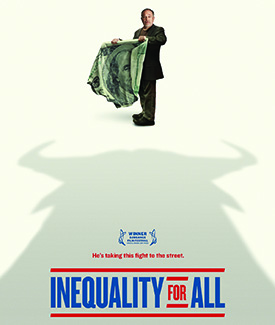
Inequality for All Jacob Kornbluth’s Inequality for All is the latest and certainly not the last documentary to explore why the American Dream is increasingly out of touch with everyday reality, and how the definition of “middle class” somehow morphed from “comfortable” to “struggling, endangered, and hanging by a thread.” This lively overview has an ace up its sleeve in the form of the director’s friend, collaborator, and principal interviewee Robert Reich — the former Clinton-era Secretary of Labor, prolific author, political pundit, and UC Berkeley Professor of Public Policy. Whether he’s holding forth on TV, going one-on-one with Kornbluth’s camera, talking to disgruntled working class laborers, or engaging students in his Wealth and Poverty class, Inequality is basically a resourcefully illustrated Reich lecture — as the press notes put it, “an Inconvenient Truth for the economy.” Fortunately, the diminutive Reich is a natural comedian as well as a superbly cogent communicator, turning yet another summary of how the system has fucked almost everybody (excluding the one percent) into the one you might most want to recommend to the bewildered folks back home. He’s sugar on the pill, making it easier to swallow so much horrible news. (1:25) California, Metreon. (Harvey)

Insidious: Chapter 2 The bloodshot, terribly inflamed font of the opening title gives away director James Wan and co-writer and Saw series cohort Leigh Whannell’s intentions: welcome to their little love letter to Italian horror. The way an actor, carefully lit with ruby-red gels, is foregrounded amid jade greens and cobalt blues, the ghastly clown makeup, the silent movie glory of a gorgeous face frozen in terror, the fixation with 1981’s The Beyond — lovers of spaghetti shock will appreciate even a light application of these aspects, even if many others will be disappointed by this sequel riding a wee bit too closely on its financially successful predecessor’s coattails. Attempting to pick up exactly where 2011’s Insidious left off, Chapter 2 opens with a flashback to the childhood of demonically possessed Josh Lambert (Patrick Wilson), put into a trance by the young paranormal investigator Elise. Flash-forward to Elise’s corpse and the first of many terrified looks from Josh’s spouse Renai (Rose Byrne). She knows Josh killed Elise, but she can’t face reality — so instead she gets to face the forces of supernatural fantasy. Meanwhile Josh is busy forcing a fairy tale of normalcy down the rest of his family’s throats — all the while evoking a smooth-browed, unhinged caretaker of the Overlook Hotel. Subverting that fiction are son Dalton (Ty Simpkins), who’s fielding messages from the dead, and Josh’s mother Lorraine (Barbara Hershey), who sees apparitions in her creepy Victorian and looks for help in Elise’s old cohort Carl (Steve Coulter) and comic-relief ghost busters Specs (Whannell) and Tucker (Angus Sampson). Sure, there are a host of scares to be had, particularly those of the don’t-look-over-your-shoulder variety, but tribute or no, the derivativeness of the devices is dissatisfying. Those seeking wickedly imaginative death-dealing machinations, or even major shivers, will curse the feel-good PG-13 denouement. (1:30) Metreon, 1000 Van Ness. (Chun)

Instructions Not Included (1:55) Metreon.

Inuk Though the Greenlandic-language Inuk takes its name from its troubled Inuit protagonist, ice is arguably its central character. And the lyrical sweep and striking beauty of the icy expanses in Uummannaq Bay and Nuuk, Greenland, threaten to upstage the adventure story at Inuk‘s heart. Seeking refuge from his alcoholic mother and her abusive friends and escaping into hip-hop, the teenage Inuk (Gaaba Petersen) has been found battered and sleeping his car far too often, so he’s taken to a in the north by teacher and foster care worker Aviaaja (Rebekka Jorgensen) to learn about the old ways of hunters and an ancient wisdom that is melting away with the polar icecap. A journey by dogsled with local hunters turns into a rite of passage when bear hunter Ikuma (Ole Jørgen Hammeken) takes Inuk under his damaged wing and attempts to reconnect him to his heritage. “The ice is no place for attitude,” he declares, as Inuk makes foolish choices, kills his first seal, and learns the hard way about survival north of the Arctic Circle. You can practically feel the freezing cold seeping off the frames of this gorgeous-looking film — a tribute to director Mike Magidson and his crew’s skills, even when the overt snow-blinding symbolism blots out clarity and threatens to swallow up Inuk. (1:30) Roxie. (Chun)

Lee Daniels’ The Butler (1:53) 1000 Van Ness, SF Center, Sundance Kabuki, Vogue.

Metallica: Through the Never The 3D IMAX concert film is lurching toward cliché status, but at least Metallica: Through the Never has more bite to it than, say, this summer’s One Direction: This is Us. Director Nimród Antal (2010’s Predators) weaves live footage of the Bay Area thrash veterans ripping through hits (“Enter Sandman,” “For Whom the Bell Tolls,” etc.) into a narrative (kinda) about one of the band’s roadies (The Place Beyond the Pines‘ Dane DeHaan). Sent on a simple errand, the hoodie-wearing hesher finds himself caught in a nightmarish urban landscape of fire, hanging bodies, masked horsemen, and crumbling buildings — more or less, the dude’s trapped in a heavy metal video, and not one blessed with particularly original imagery. The end result is aimed more at diehards than casual fans — and, R-rated violence aside, there’s nothing here that tops the darkest moments of highly personal 2004 documentary Metallica: Some Kind of Monster. (1:32) Metreon, 1000 Van Ness. (Eddy)

Morning (1:30) Metreon.

Museum Hours Feature documentaries Benjamin Smoke (2000) and Instrument (2003) are probably Jem Cohen’s best-known works, but this prolific filmmaker — an inspired choice for SFIFF’s Golden Gate Persistence of Vision Award, honoring “a filmmaker whose main body of work is outside the realm of narrative feature filmmaking” — has a remarkably diverse resumé of shorts, music videos, and at least one previous narrative film (albeit one with experimental elements), 2004’s Chain. Cohen appears in person to discuss his work and present his latest film, Museum Hours, about a guard at Vienna’s Kunsthistorisches Museum (“the big old one,” the man calls it) who befriends a Montreal woman visiting her comatose cousin. It’s a deceptively simple story that expands into a deeply felt, gorgeously shot rumination on friendship, loneliness, travel, art history and appreciation, and finding the beauty in the details of everyday life. (1:46) Opera Plaza. (Eddy)

On the Job Filipino director Erik Matti’s gritty crime thriller has such a clever hook that Hollywood is already circling it for a remake. No shock there. It is surprising, however, that On the Job is based on true events, in which prisoners were temporarily sprung to work as hired guns for well-connected politicos. (Kinda genius, if you think about it.) The big-screen version has veteran inmate Tang (Joel Torre) dreading his imminent parole; he’d rather have the steady income from his grisly gig than be unable to provide for his wife and daughter. As he counts down to his release, he trains volatile Daniel (Gerald Anderson) to take his place. Poking around on the other side of the law are world-weary local cop Acosta (Joey Marquez) and hotshot federal agent Francis (Piolo Pascual), who reluctantly team up when a hit cuts close to home for both of them. The case is particularly stressful for Francis, whose well-connected father-in-law turns out to be wallowing in corruption. Taut, thrilling, atmospheric, and graphic, On the Job makes up for an occasionally confusing storyline by offering bang-up (literally) entertainment from start to finish. Groovy score, too. (2:00) Metreon. (Eddy)

Planes Dane Cook voices a crop duster determined to prove he can do more than he was built for in Planes, the first Disney spin-off from a Pixar property. (Prior to the film’s title we see “From The World of Cars,” an indicator the film is an extension of a known universe — but also not quite from it.) And indeed, Planes resembles one of Pixar’s straight-to-DVD releases as it struggles for liftoff. Dreaming of speed, Dusty Crophopper (Cook) trains for the Wings Around the World race with his fuel-truck friend, Chug (Brad Garrett). A legacy playing Brewster McCloud and Wilbur Wright makes Stacy Keach a pitchy choice for Skipper, Dusty’s reluctant ex-military mentor. Charming cast choices buoy Planes somewhat, but those actors are feathers in a cap that hardly supports them — you watch the film fully aware of its toy potential: the race is a geography game; the planes are hobby sets; the cars will wind up. The story, about overcoming limitations, is in step with high-value parables Pixar proffers, though it feels shallower than usual. Perhaps toys are all Disney wants — although when Ishani (a sultry Priyanka Chopra) regrets an integrity-compromising choice she made in the race, and her pink cockpit lowers its eyes, you can feel Pixar leaning in. (1:32) 1000 Van Ness. (Vizcarrondo)

Populaire Perhaps if it weren’t set in the 1950s, this would be the fluorescent-lit story of a soul-sucking data entry job and the office drone who supplements it with a moonlighting gig. But it is the ’50s — a cheery, upbeat version of the era — and director Régis Roinsard’s Populaire reflects its shiny glamour onto the transformation of small-town girl Rose Pamphyle (Déborah François) from an incompetent but feisty secretary with mad hunting-and-pecking skills into a celebrated and adored speed-typing champion. Her daffy boss, Louis Échard (Romain Duris), is a handsome young insurance salesman who bullies her (very charmingly) into competing against a vast secretarial pool in a series of hectic, nail-biting tourneys, which treat typing as a sporting event for perhaps the first time in cinematic history. (See also: scenes of Rose cranking up her physical endurance with daily jogs and cross-training at the piano.) The glamour slips a touch when Populaire starts to delve into psychological motivations to rationalize some of Louis’s more caddish maneuvers. But meanwhile, back in the arena, bets are made, words-per-minute stats are quoted by screaming, tearful fans in the bleachers, hearts are won and bruised, a jazz band performs that classic tune “Les Secrétaires Cha Cha Cha,” and we find ourselves rooting passionately for Rose to best the reigning champ’s 512(!)-wpm record. (1:51) Smith Rafael. (Rapoport)

Prisoners It’s a telling sign of this TV-besotted times that the so-called best-reviewed film of the season so far resembles a cable mystery in line with The Killing and its ilk — in the way that it takes its time while keeping it taut, attempts to stretch out beyond the perimeters of the police procedural, and throws in the types of envelope-pushing twists that keep easily distractible viewers coming back. At two and a half hours plus, Prisoners feels like a hybrid, more often seen on a small screen that has borrowed liberally from cinema since David Lynch made the Twin Peaks crossing, than the large, as it brings together an art-house attention to detail with the sprawl and topicality of a serial. Incendies director Denis Villeneuve carefully loads the deck with symbolism from the start, opening with a shot of a deer guilelessly approaching a clearing and picking at scrubby growth in the cold ground, as the camera pulls back on two hunters: the Catholic, gun-toting Keller (Hugh Jackman) and his son (Dylan Minnette), intent on gathering a Thanksgiving offering. Keller and his fragile wife Grace (Maria Bello) are coming together with another family — headed up by the slightly more yuppified Franklin (Terence Howard) and his wife Nancy (Viola Davis) — for Thanksgiving in what seems like a middle-class East Coast suburb. The peace is shattered when the families’ young daughters suddenly disappear; the only clues are the mysterious RV that rumbles slowly through the quiet neighborhood and ominous closeups from a predator’s perspective. Police detective Loki (Jake Gyllenhaal) is drawn into the mystery when the RV is tracked down, along with its confused driver Alex (Paul Dano). That’s no consolation to the families, each grieving in their own way, with Keller perpetually enraged and Franklin seemingly on the brink of tears. When Alex’s aunt (an unrecognizable Melissa Leo) comes forward with information about her nephew, Keller decides to take matters into his own hands in ways that question the use of force during interrogation and the very definition of imprisonment. Noteworthy performances by Jackman, Gyllenhaal, and Dano highlight this elegant, wrenching thriller — while Villeneuve’s generally simple, smart choices might make the audience question not only certain characters’ morality but perhaps their own. (2:33) Four Star, Marina, 1000 Van Ness, SF Center, Sundance Kabuki. (Chun)

Riddick This is David Twohy’s third flick starring Vin Diesel as the titular misunderstood supercriminal. Aesthetically, it’s probably the most interesting of the lot, with a stylistic weirdness that evokes ’70s Eurocomix in the best way — a pleasing backdrop to what is essentially Diesel playing out the latest in a series of Dungeons & Dragons scenarios where he offers his wisecracking sci-fi take on Conan. Gone are the scares and stakes of Pitch Black (2000) or the cheeseball epic scale of The Chronicles of Riddick (2004); this is a no-nonsense action movie built on the premise that Riddick just can’t catch a break. He’s on the run again, targeted by two bands of ruthless mercenaries, on a planet threatened by an oncoming storm rather than Pitch Black‘s planet-wide night. One unfortunate element leaves a bitter taste: the lone female character in the movie, Dahl (Katee Sackhoff), is an underdeveloped cliché “Strong Female Character,” a violent, macho lesbian caricature who is the object of vile sexual aggression (sometimes played for laughs) from several other characters, including Riddick. (1:59) Metreon. (Stander)

Rush Ron Howard’s Formula One thriller Rush is a gripping bit of car porn, decked out with 1970s period details and goofily liberated camera moves to make sure you never forget how much happens under (and around, and on top of) the hood of these beastly vehicles. Real life drivers James Hunt and Niki Lauda (played by Chris Hemsworth and Daniel Brühl, respectively) had a wicked rivalry through the ’70s; these characters are so oppositional you’d think Shane Black wrote them. Lauda’s an impersonal, methodical pro, while Hunt’s an aggressive, undisciplined playboy — but he’s so popular he can sway a group of racers to risk their lives on a rainy track, even as Lauda objects. It’s a lovely sight: all the testosterone in the world packed into a room bound by windows, egos threatening to bust the glass with the rumble of their voices. I’m no fan of Ron Howard, but maybe the thrill of Grand Theft Auto is in Rush like a spirit animal. (The moments of rush are the greatest; when Lauda’s lady friend asks him to drive fast, he does, and it’s glorious.) Hunt says that “being a pro kills the sport” — but Howard, an overly schmaltzy director with no gift for logic and too much reliance on suspension of disbelief, doesn’t heed that warning. The laughable voiceovers that bookend the film threaten to sink some great stuff, but the magic of the track is vibrant, dangerous, and teeming with greatness. (2:03) 1000 Van Ness, SF Center, Sundance Kabuki. (Vizcarrondo)

Short Term 12 A favorite at multiple 2013 festivals (particularly SXSW, where it won multiple awards), Short Term 12 proves worthy of the hype, offering a gripping look at twentysomethings (led by Brie Larson, in a moving yet unshowy performance) who work with at-risk teens housed in a foster-care facility, where they’re cared for by a system that doesn’t always act with their best interests in mind. Though she’s a master of conflict resolution and tough love when it comes to her young chargers, Grace (Larson) hasn’t overcome her deeply troubled past, to the frustration of her devoted boyfriend and co-worker (John Gallagher, Jr.). The crazy everyday drama — kids mouthing off, attempting escape, etc. — is manageable enough, but two cases cut deep: Marcus (Keith Stanfield), an aspiring musician who grows increasingly anxious as his 18th birthday, when he’ll age out of foster care, approaches; and 16-year-old Jayden (Kaitlyn Dever), whose sullen attitude masks a dark home life that echoes Grace’s own experiences. Expanding his acclaimed 2008 short of the same name, writer-director Destin Daniel Cretton’s wrenchingly realistic tale achieves levels of emotional honesty not often captured by narrative cinema. He joins Fruitvale Station director Ryan Coogler as one of the year’s most exciting indie discoveries. (1:36) Opera Plaza, Roxie. (Eddy)

Thanks for Sharing (1:52) Metreon, Sundance Kabuki.

20 Feet From Stardom Singing the praises of those otherwise neglected backup vocalists who put the soul into that Wall of Sound, brought heft to “Young Americans,” and lent real fury to “Gimme Shelter,” 20 Feet From Stardom is doing the rock ‘n’ roll true believer’s good work. Director Morgan Neville follows a handful of mainly female, mostly African American backing vocal legends, charts their skewed career trajectories as they rake in major credits and keep working long after one-hit wonders are forgotten (the Waters family) but fail to make their name known to the public (Merry Clayton), grasp Grammy approval yet somehow fail to follow through (Lisa Fischer), and keep narrowly missing the prize (Judith Hill) as label recording budgets shrivel and the tastes, technology, and the industry shift. Neville gives these industry pros and soulful survivors in a rocked-out, sample-heavy, DIY world their due on many levels, covering the low-coverage minis, Concert for Bangladesh high points, gossipy rumors, and sheer love for the blend that those intertwined voices achieve. One wishes the director had done more than simply touch in the backup successes out there, like Luther Vandross, and dug deeper to break down the reasons Fischer succumbed to the sophomore slump. But one can’t deny the passion in the voices he’s chosen to follow — and the righteous belief the Neville clearly has in his subjects, especially when, like Hill, they are ready to pick themselves up and carry on after being told they’re not “the Voice.” (1:30) Smith Rafael. (Chun)

Wadjda Hijabs, headmistresses, and errant fathers fall away before the will and wherewithal of the 11-year-old title character of Wadjda, the first feature by a female Saudi Arabian filmmaker. Director Haifaa al-Mansour’s own story — which included filming on the streets of Riyadh from the isolation of a van because she couldn’t work publicly with the men in the crew — is the stuff of drama, and it follows that her movie lays out, in the neorealist style of 1948’s The Bicycle Thief, the obstacles to freedom set in the path of women and girls in Saudi Arabia, in terms that cross cultural, geographic, and religious boundaries. The fresh star setting the course is Wadjda (first-time actor Waad Mohammed), a smart, irrepressibly feisty girl practically bursting out of her purple high-tops and intent on racing her young neighborhood friend Abudullah (Abdullrahman Algohani) on a bike. So many things stand in her way: the high price of bicycles and the belief that girls will jeopardize their virginity if they ride them; her distracted mother (Reem Abdullah) who’s worried that Wadjda’s father will take a new wife who can bear him a son; and a harsh, elegant headmistress (Ahd) intent on knuckling down on girlish rebellion. So Wadjda embarks on studying for a Qu’ran recital competition to win money for her bike and in the process learns a matter or two about discipline — and the bigger picture. Director al-Mansour teaches us a few things about her world as well — and reminds us of the indomitable spirit of girls — with this inspiring peek behind an ordinarily veiled world. (1:37) Opera Plaza. (Chun)

We’re the Millers After weekly doses on the flat-screen of Family Guy, Modern Family, and the like, it’s about time movieland’s family comedies got a little shot of subversion — the aim, it seems, of We’re the Millers. Scruffy dealer David (Jason Sudeikis) is shambling along — just a little wistful that he didn’t grow up and climb into the Suburban with the wife, two kids, and the steady 9-to-5 because he’s a bit lonely, much like the latchkey nerd Kenny (Will Poulter) who lives in his apartment building, and neighboring stripper Rose (Jennifer Aniston), who bites his head off at the mailbox. When David tries to be upstanding and help out crust punk runaway Casey (Emma Roberts), who’s getting roughed up for her iPhone, he instead falls prey to the robbers and sinks into a world of deep doo-doo with former college bud, and supplier of bud, Brad (Ed Helms). The only solution: play drug mule and transport a “smidge and a half” of weed across the Mexican-US border. David’s supposed cover: do the smuggling in an RV with a hired crew of randoms: Kenny, Casey, and Rose&sdquo; all posing as an ordinary family unit, the Millers. Yes, it’s that much of a stretch, but the smart-ass script is good for a few chortles, and the cast is game to go there with the incest, blow job, and wife-swapping jokes. Of course, no one ever states the obvious fact, all too apparent for Bay Area denizens, undermining the premise of We’re the Millers: who says dealers and strippers can’t be parents, decent or otherwise? We may not be the Millers, but we all know families aren’t what they used to be, if they ever really managed to hit those Leave It to Beaver standards. Fingers crossed for the cineplex — maybe movies are finally catching on. (1:49) Metreon. (Chun)

The World’s End The final film in Edgar Wright’s “Blood and Ice Cream Trilogy” finally arrives, and the TL:DR version is that while it’s not as good as 2004’s sublime zombie rom-com Shaun of the Dead, it’s better than 2007’s cops vs. serial killers yarn Hot Fuzz. That said, it’s still funnier than anything else in theaters lately. Simon Pegg returns to star and co-write (with Wright); this time, the script’s sinister bugaboo is an invasion of body snatchers — though (as usual) the conflict is really about the perils of refusing to actually become an adult, the even-greater perils of becoming a boring adult, and the importance of male friendships. Pegg plays rumpled fuck-up Gary, determined to reunite with the best friends he’s long since alienated for one more crack at their hometown’s “alcoholic mile,” a pub crawl that ends at the titular beer joint. The easy chemistry between Pegg and the rest of the cast (Nick Frost, Paddy Considine, Martin Freeman, and Eddie Marsan) elevates what’s essentially a predictable “one crazy night” tale, with a killer soundtrack of 1990s tunes, slang you’ll adopt for your own posse (“Let’s Boo-Boo!”), and enough hilarious fight scenes to challenge This is the End to a bro-down of apocalyptic proportions. (1:49) Metreon, 1000 Van Ness. (Eddy) *

 

Go north, film fan

0

If you’re gonna make the journey across the Golden Gate Bridge, the movie better be worth it, right? Fortunately, the 2013 Mill Valley Film Festival boasts a stellar schedule. Read on for our top picks.

Run & Jump (Steph Green, Ireland/Germany) San Francisco-born director Steph Green’s first feature is a likable seriocomedy about an Irish family trying to adjust to some drastic, unforeseen changes. After suffering a stroke and coming out of a coma, Conor Casey (Edward MacLiam) is a changed man — uncommunicative, sometimes volatile, seldom at all like the beloved husband and father he was. As wife Venetia (Maxine Peake) and their two kids tiptoe around him, they get a houseguest in the form of American neurologist Ted (Will Forte), who’s here to study Conor’s recovery (or lack thereof) with clinical detachment. The reserved, emotionally withdrawn Yank finds himself drawn into the Caseys’ shared warmth, particularly in its current need for a fill-in adult male — opening up to the children and, more riskily, striking romantic sparks with the Mrs. A bit formulaic but a crowd-pleaser nonetheless, the film is perhaps most notable for its winning dramatic turn by Saturday Night Live alum Forte, also at MVFF in Alexander Payne’s Nebraska. Fri/4, 9:15pm, and Sun/6, 1pm, Sequoia. (Dennis Harvey)

Imagine (Andrzej Jakimowski, Poland) Andrzej Jakimowski’s quiet yet sometimes exhilaratingly original film manages to make blindness relatable as perhaps never before in a primarily visual medium. Ian (Edward Hogg) is an enigmatic Englishman who shakes up a Lisbon facility for his fellow sightless with radical ideas and an insistence that residents push their limits — throwing away their canes, moving about more boldly in the world via developing almost superhuman attentiveness to sound reverberation as their guide. There are a couple astounding (and hair-raising) sequences where the viewer’s own sensory intake is focused in unfamiliar ways. Mysterious, peculiar, and wistful, Imagine is uneven but often arrestingly memorable, its biggest minus being a musical score that mistakenly thinks this is an antic comedy. Sat/5, 6:15pm, and Sun/6, 6:30pm, Smith Rafael. (Harvey)

Desert Runners (Jennifer Steinman, US) It’s appropriate that Mill Valley, starting point of the legendary Dipsea Race, hosts the US premiere of this doc about a group of runners who attempt to complete the 4 Deserts Race Series, which stages ultramarathons across unforgiving terrain in Chile, China, Egypt, and Antarctica. Each athlete has his or her own stirring backstory, and each shows incredible grit in the face of injuries and intense dehydration. Darker moments come courtesy of petite Aussie Samantha’s mid-race encounter with a would-be rapist, and the news that a competitor (not featured in the film) has died along the trail. But Desert Runners is ultimately an admiring portrait of its charismatic subjects (all white, all presumably able to afford the $20,000-plus total cost of entering all four races) who willingly subject themselves to extreme bodily harm. It’s up to the viewer to decide if they’re inspirational, or kinda nuts. Or both. Sun/6, 2:15pm, Sequoia; Oct 12, 5:45pm, 142 Throckmorton. (Cheryl Eddy)

Le Week-End (Roger Michell, UK) Director Roger Michell and writer Hanif Kureishi first collaborated two decades ago on The Buddha of Suburbia, when the latter was still in the business of being Britain’s brashest multiculti hipster voice. But in the last 10 years they’ve made a habit of slowing down to sketching portraits of older lives — and providing great roles for the nation’s bottomless well of remarkable veteran actors. Here Lindsay Duncan and Jim Broadbent play a pair of English academics trying to re-create their long-ago honeymoon’s magic on an anniversary weekend in Paris. They love each other, but their relationship is thorny and complicated in ways that time has done nothing to smooth over. This beautifully observed duet goes way beyond the usual adorable-old-coot terrain of such stories on screen; it has charm and humor, but these are unpredictable, fully rounded characters, not comforting caricatures. Briefly turning this into a seriocomedy three-way is Most Valuable Berserker Jeff Goldblum as an old friend encountered by chance. It’s not his story, but damned if he doesn’t just about steal the movie anyway. Mon/7, 6:30pm, and Oct 11, 5:15pm, Sequoia. (Harvey)

Like Father, Like Son (Hirokazu Kore-eda, Japan) A yuppie Tokyo couple are raising their only child in workaholic dad’s image, applying the pressure to excel at an early age. Imagine their distress when the hospital phones with some unpleasant news: It has only just been learned that a nurse mixed up their baby with another baby, with the result that both families have been raising the “wrong” children these six years. Polite, forced interaction with the other clan — a larger nuclear unit as warm, disorganized, and financially hapless as the first is formal, regimented, and upwardly mobile — reveals that both sides have something to learn about parenting. This latest from Japanese master Hirokazu Kore-eda (1998’s After Life, 2004’s Nobody Knows, 2008’s Still Walking) is, as usual, low-key, beautifully observed, and in the end deeply moving. Oct 9, 2:30pm, Smith Rafael; Oct 12, 8pm, Lark. (Harvey)

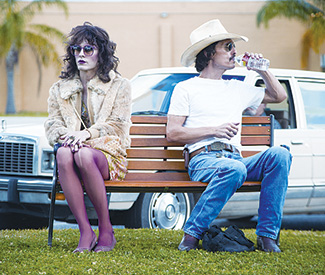
Dallas Buyers Club (Jean-Marc Vallée, US) Jared Leto appears in person for this screening of Jean-Marc Vallée’s well-crafted, based-on-true events drama about the early days of the AIDS epidemic, specifically focusing on the struggles patients faced in getting safe, effective medication. Leto, who has lately been focusing on his music career, has a standout supporting turn as Rayon, a transgender woman who loves Marc Bolan, gowns, and sparring with business partner Ron Woodroof (Matthew McConaughey). Look for Leto and McConaughey — the best he’s ever been, as a good ol’ boy and confirmed homophobe who becomes an activist and agitator after contracting HIV — to earn plenty of notice come awards season. Oct 10, 6:30pm, Smith Rafael. (Eddy)

At Middleton (Adam Rodgers, US) Star and co-producer Andy Garcia will be on hand for the local premiere of this romantic comedy co-starring Vera Farmiga. They play strangers paying introductory visits to the titular (fictive) college with offspring on the brink of leaving home and starting independent adult lives. Everyone is temperamentally ill-matched — jokester mom with humorless daughter, persnickety dad with laid-back son — but during the course of the day strolling around campus, frissons of romance and new self knowledge occur on both sides of the generation gap. Adam Rodgers’ feature is pleasant but a little too pat, relying overmuch on the appeal of lead actors who’ve been better served elsewhere. Oct 12, 5pm, and Oct 13, 11:15am, Sequoia. (Harvey)

All is Lost (J.C. Chandor, US) As other reviewers have pointed out, All is Lost‘s nearly dialogue-free script (OK, there is one really, really well-placed “Fuuuuuck!”) is about as far from J.C. Chandor’s Oscar-nominated script for 2011’s Margin Call as possible. Props to the filmmaker, then, for crafting as much pulse-pounding magic out of austerity as he did with that multi-character gabfest. Here, Robert Redford plays “Our Man,” a solo sailor whose race to survive begins along with the film, as his boat collides with a hunk of Indian Ocean detritus. Before long, he’s completely adrift, yet determined to outwit the forces of nature that seem intent on bringing him down. The 77-year-old Redford turns in a surprisingly physical performance that’s sure to be remembered as a late-career highlight. Oct 12, 3:30pm, Smith Rafael; Oct 13, 8:15pm, Sequoia. (Eddy)

The Missing Picture (Rithy Panh, Cambodia/France) Rithy Panh’s latest film about the homeland he fled as a teenager is atypically, directly autobiographical, and most unusually crafted. He re-creates his once comfortable Phnom Penh family’s grim fate after Pol Pot and company seized control of Cambodia in 1975 — as all fell prey to the starvation, forced labor, and other privations suffered by perceived “enemies” of the new regime — not by any conventional means but via elaborate dioramas of handmade clay figures depicted in prison camp life (and death). There’s also ample surviving propagandic footage of the Khmer Rouge trumpeting its “model society” that was in reality little more than an experiment in mass execution and torture. The result is a unique and powerful take on one of the 20th century’s worst crimes against humanity. Oct 12, 4:45pm, Lark; Oct 13, 5:30pm, Smith Rafael. (Harvey) *

The 36th Mill Valley Film Festival runs Oct. 3-13 (most shows $12.50-$14). Major venues are the Christopher B. Smith Rafael Film Center, 1118 Fourth St, San Rafael; Cinéarts@Sequoia, 25 Throckmorton, Mill Valley; Lark Theater, 549 Magnolia, Larkspur; and 142 Throckmorton Theater, 142 Throckmorton, Mill Valley. Complete schedule at www.mvff.com.

Endorsements 2013

125

We’re heading into a lackluster election on Nov. 5. The four incumbents on the ballot have no serious challengers and voter turnout could hit an all-time low. That’s all the more reason to read up on the issues, show up at the polls, and exert an outsized influence on important questions concerning development standards and the fate of the city’s waterfront, the cost of prescription drugs, and the long-term fiscal health of the city.


PROP. A — RETIREE HEALTH CARE TRUST FUND

YES

Note: This article has been corrected from an earlier version, which incorrectly stated that Prop A increases employee contributions to health benefits.

Throughout the United States, the long-term employee pension and health care obligations of government agencies have been used as wedge issues for anti-government activists to attack public employee unions, even in San Francisco. The fiscal concerns are real, but they’re often exaggerated or manipulated for political reasons.

That’s one reason why the consensus-based approach to the issue that San Francisco has undertaken in recent years has been so important, and why we endorse Prop. A, which safeguards the city’s Retiree Health Care Trust Fund and helps solve this vexing problem.

Following up on the consensus pension reform measure Prop. B, which increased how much new city employees paid for lifetime health benefits, this year’s Prop. A puts the fund into a lock-box to ensure it is there to fund the city’s long-term retiree health care obligations, which are projected at $4.4 billion over the next 30 years.

“The core of it says you can’t touch the assets until it’s fully funded,” Sup. Mark Farrell, who has taken a lead role on addressing the issue, told us. “The notion of playing political football with employee health care will be gone.”

The measure has the support of the entire Board of Supervisors and the San Francisco Labor Council. Progressive Sup. David Campos strongly supports the measure and he told us, “I think it makes sense and is something that goes beyond political divides.”

There are provisions that would allow the city to tap the fund in emergencies, but only after it is fully funded or if the mayor, controller, the Trust Board, and two-thirds of the Board of Supervisors signs off, a very high bar. So vote yes and let’s put this distracting issue behind us.


PROP. B — 8 WASHINGTON SPECIAL USE DISTRICT

NO, NO, NO!

Well-meaning people can arrive at different conclusions on the 8 Washington project, the waterfront luxury condo development that was approved by the Board of Supervisors last year and challenged with a referendum that became Prop. C. But Prop. B is simply the developer writing his own rules and exempting them from normal city review.

We oppose the 8 Washington project, as we explain in our next endorsement, but we can understand how even some progressive-minded people might think the developers’ $11 million affordable housing and $4.8 million transit impact payments to the city are worth letting this project slide through.

But Prop. B is a different story, and it’s something that those who believe in honesty, accountability, and good planning should oppose on principle, even if they support the underlying project. Contrary to the well-funded deceptions its backers are circulating, claiming this measure is about parks, Prop. B is nothing more than a developer and his attorneys preventing meaningful review and enforcement by the city of their vague and deceptive promises.

It’s hard to know where to begin to refute the wall of mendacity its backers have erected to fool voters into supporting this measure, but we can start with their claim that it will “open the way for new public parks, increased access to the Embarcadero Waterfront, hundreds of construction jobs, new sustainable residential housing and funding for new affordable housing.”

There’s nothing the public will get from Prop. B that it won’t get from Prop. C or the already approved 8 Washington project. Nothing. Same parks, same jobs, same housing, same funding formulas. But the developer would get an unprecedented free pass, with the measure barring discretionary review by the Planning Department — which involves planners using their professional judgment to decide if the developer is really delivering what he’s promising — forcing them to rubber-stamp the myriad details still being developed rather than acting as advocates for the general public.

“This measure would also create a new ‘administrative clearance’ process that would limit the Planning Director’s time and discretion to review a proposed plan for the Site,” is how the official ballot summary describes that provision to voters.

Proponents of the measure also claim “it empowers voters with the decision on how to best utilize our waterfront,” which is another deception. Will you be able to tweak details of the project to make it better, as the Board of Supervisors was able to do, making a long list of changes to the deal’s terms? No. You’re simply being given the opportunity to approve a 34-page initiative, written by crafty attorneys for a developer who stands to make millions of dollars in profits, the fine details of which most people will never read nor fully understand.

Ballot box budgeting is bad, but ballot box regulation of complex development deals is even worse. And if it works here, we can all expect to see more ballot measures by developers who want to write their own “special use district” rules to tie the hands of planning professionals.

When we ask proponents of this measure why they needed Prop. B, they claimed that Prop. C limited them to just talking about the project’s building height increases, a ridiculous claim for a well-funded campaign now filling mailers and broadcast ads with all kinds of misleading propaganda.

With more than $1 million and counting being funneled into this measure by the developer and his allies, this measure amounts to an outrageous, shameless lie being told to voters, which Mayors Ed Lee and Gavin Newsom have shamefully chosen to align themselves with over the city they were elected to serve.

As we said, people can differ on how they see certain development deals. But we should all agree that it’s recipe for disaster when developers can write every last detail of their own deals and limit the ability of professional planners to act in the public interest. Don’t just vote no, vote hell no, or NO, No, no!


PROPOSITION C — 8 WASHINGTON REFERENDUM

NO

San Francisco’s northeastern waterfront is a special place, particularly since the old Embarcadero Freeway was removed, opening up views and public access to the Ferry Building and other recently renovated buildings, piers, and walkways along the Embarcadero.

The postcard-perfect stretch is a major draw for visiting tourists, and the waterfront is protected by state law as a public trust and overseen by multiple government agencies, all of whom have prevented development of residential or hotel high-rises along the Embarcadero.

Then along came developer Simon Snellgrove, who took advantage of the Port of San Francisco’s desperate financial situation, offered to buy its Seawall Lot 351 and adjacent property from the Bay Club at 8 Washington St., and won approval to build 134 luxury condos up to 12 stories high, exceeding the city’s height limit at the site by 62 percent.

So opponents challenged the project with a referendum, a rarely used but important tool for standing up to deep-pocketed developers who can exert an outsized influence on politicians. San Franciscans now have the chance to demand a project more in scale with its surroundings.

The waterfront is supposed to be for everyone, not just those who can afford the most expensive condominiums in the city, costing an average of $5 million each. The high-end project also violates city standards by creating a parking space for every unit and an additional 200 spots for the Port, on a property with the best public transit access and options in the city.

This would set a terrible precedent, encouraging other developers of properties on or near the waterfront to also seek taller high-rises and parking for more cars, changes that defy decades of good planning work done for the sensitive, high-stakes waterfront.

The developers would have you believe this is a battle between rival groups of rich people (noting that many opponents come from the million-dollar condos adjacent to the site), or that it’s a choice between parks and the surface parking lot and ugly green fence that now surrounds the Bay Club (the owner of which, who will profit from this project, has resisted petitions to open up the site).

But there’s a reason why the 8 Washington project has stirred more emotion and widespread opposition that any development project in recent years, which former City Attorney Louise Renne summed up when she told us, “I personally feel rich people shouldn’t monopolize the waterfront.”

A poll commissioned by project opponents recently found that 63 percent of respondents think the city is building too much luxury housing, which it certainly is. But it’s even more outrageous when that luxury housing uses valuable public land along our precious waterfront, and it can’t even play by the rules in doing so.

Vote no and send the 8 Washington project back to the drawing board.


PROP. D — PRESCRIPTION DRUG PURCHASING

YES

San Francisco is looking to rectify a problem consumers face every day in their local pharmacy: How can we save money on our prescription drugs?

Prop. D doesn’t solve that problem outright, but it mandates our politicians start the conversation on reducing the $23 million a year the city spends on pharmaceuticals, and to urge state and federal governments to negotiate for better drug prices as well.

San Francisco spends $3.5 million annually on HIV treatment alone, so it makes sense that the AIDS Healthcare Foundation is the main proponent of Prop. D, and funder of the Committee on Fair Drug Pricing. Being diagnosed as HIV positive can be life changing, not only for the health effects, but for the $2,000-5,000 monthly drug cost.

Drug prices have gotten so out-of-control that many consumers take the less than legal route of buying their drugs from Canada, because our neighbors up north put limits on what pharmaceutical companies can charge, resulting in prices at least half those of the United States.

The high price of pharmaceuticals affects our most vulnerable, the elderly and the infirm. Proponents of Prop. D are hopeful that a push from San Francisco could be the beginning of a social justice movement in cities to hold pharmaceutical companies to task, a place where the federal government has abundantly failed.

Even though Obamacare would aid some consumers, notably paying 100 percent of prescription drug purchases for some Medicare patients, the cost to government is still astronomically high. Turning that around could start here in San Francisco. Vote yes on D.


ASSESSOR-RECORDER

CARMEN CHU

With residential and commercial property in San Francisco assessed at around $177 billion, property taxes bring in enough revenue to make up roughly 40 percent of the city’s General Fund. That money can be allocated for anything from after-school programs and homeless services to maintaining vital civic infrastructure.

Former District 4 Sup. Carmen Chu was appointed by Mayor Ed Lee to serve as Assessor-Recorder when her predecessor, Phil Ting, was elected to the California Assembly. Six months later, she’s running an office responsible for property valuation and the recording of official documents like property deeds and marriage licenses (about 55 percent of marriage licenses since the Supreme Court decision on Prop. 8 have been issued to same-sex couples).

San Francisco property values rose nearly 5 percent in the past year, reflecting a $7.8 billion increase. Meanwhile, appeals have tripled from taxpayers disputing their assessments, challenging Chu’s staff and her resolve. As a district supervisor, Chu was a staunch fiscal conservative whose votes aligned with downtown and the mayor, so our endorsement isn’t without some serious reservations.

That said, she struck a few notes that resonated with the Guardian during our endorsement interview. She wants to create a system to automatically notify homeowners when banks begin the foreclosure process, to warn them and connect them with helpful resources before it’s too late. Why hasn’t this happened before?

She’s also interested in improving system to capture lost revenue in cases where property transfers are never officially recorded, continuing work that Ting began. We support the idea of giving this office the tools it needs to go out there and haul in the millions of potentially lost revenue that property owners may owe the city, and Chu has our support for that effort.


CITY ATTORNEY

DENNIS HERRERA

Dennis Herrera doesn’t claim to be a progressive, describing himself as a good liberal Democrat, but he’s been doing some of the most progressive deeds in City Hall these days: Challenging landlords, bad employers, rogue restaurants, PG&E, the healthcare industry, opponents of City College of San Francisco, and those who fought to keep same-sex marriage illegal.

The legal realm can be more decisive than the political, and it’s especially effective when they work together. Herrera has recently used his office to compel restaurants to meet their health care obligations to employees, enforcing an earlier legislative gain. And his long court battle to defend marriage equality in California validated an act by the executive branch.

But Herrera has also shown a willingness and skill to blaze new ground and carry on important regulation of corporate players that the political world seemed powerless to touch, from his near-constant legal battles with PG&E over various issues to defending tenants from illegal harassment and evictions to his recent lawsuit challenging the Accreditation Commission of Community and Junior Colleges over its threats to CCSF.

We have issues with some of the tactics his office used in its aggressive and unsuccessful effort to remove Sheriff Ross Mirkarimi from office. But we understand that is was his obligation to act on behalf of Mayor Ed Lee, and we admire Herrera’s professionalism, which he also exhibited by opposing the Central Subway as a mayoral candidate yet defending it as city attorney.

“How do you use the power of the law to make a difference in people’s lives every single day?” was the question that Herrera posed to us during his endorsement interview, one that he says is always on his mind.

We at the Guardian have been happy to watch how he’s answered that question for nearly 11 years, and we offer him our strong endorsement.


TREASURER/TAX COLLECTOR

JOSE CISNEROS

It’s hard not to like Treasurer/Tax Collector Jose Cisneros. He’s charming, smart, compassionate, and has run this important office well for nine years, just the person that we need there to implement the complicated, voter-approved transition to a new form of business tax, a truly gargantuan undertaking.

Even our recent conflicts with Cisneros — stemming from frustrations that he won’t assure the public that he’s doing something about hotel tax scofflaw Airbnb (see “Into thin air,” Aug. 6) — are dwarfed by our understanding of taxpayer privacy laws and admiration that Cisneros ruled against Airbnb and its ilk in the first place, defying political pressure to drop the rare tax interpretation.

So Cisneros has the Guardian’s enthusiastic endorsement. He also has our sympathies for having to create a new system for taxing local businesses based on their gross receipts rather than their payroll costs, more than doubling the number of affected businesses, placing them into one of eight different categories, and applying complex formulas assessing how much of their revenues comes from in the city.

“This is going to be the biggest change to taxes in a generation,” Cisneros told us of the system that he will start to implement next year, calling the new regime “a million times more complicated than the payroll tax.”

Yet Cisneros has still found time to delve into the controversial realm of short-term apartment sublets. Although he’s barred from saying precisely what he’s doing to make Airbnb pay the $1.8 million in Transient Occupancy Taxes that we have shown the company is dodging, he told us, “We are here to enforce the law and collect the taxes.”

And Cisneros has continued to expand his department’s financial empowerment programs such as Bank on San Francisco, which help low-income city residents establish bank accounts and avoid being gouged by the high interest rates of check cashing outlets. That and similar programs are now spreading to other cities, and we’re encouraged to see Cisneros enthusiastically exporting San Francisco values, which will be helped by his recent election as president of the League of California Cities.


SUPERVISOR, DIST. 4

KATY TANG

With just six months on the job after being appointed by Mayor Ed Lee, Sup. Katy Tang faces only token opposition in this race. She’s got a single opponent, accountant Ivan Seredni, who’s lived in San Francisco for three years and decided to run for office because his wife told him to “stop complaining and do something,” according to his ballot statement.

Tang worked in City Hall as a legislative aide to her predecessor, Carmen Chu, for six years. She told us she works well with Sups. Mark Farrell and Scott Wiener, who help make up the board’s conservative flank. In a predominantly Chinese district, where voters tend to be more conservative, Tang is a consistently moderate vote who grew up in the district and speaks Mandarin.

Representing the Sunset District, Tang, who is not yet 30 years old, faces some new challenges. Illegal “in-law” units are sprouting up in basements and backyards throughout the area. This presents the thorny dilemma of whether to crack down on unpermitted construction — thus hindering a source of housing stock that is at least within reach for lower-income residents — look the other way, or “legalize” the units in an effort to mitigate potential fire hazards or health risks. Tang told us one of the greatest concerns named by Sunset residents is the increasing cost of living in San Francisco; she’s even open to accepting a little more housing density in her district to deal with the issue.

Needless to say, the Guardian hasn’t exactly seen eye-to-eye with the board’s fiscally conservative supervisors, including Tang and her predecessor, Chu. We’re granting Tang an endorsement nevertheless, because she strikes us as dedicated to serving the Sunset over the long haul, and in touch with the concerns of young people who are finding it increasingly difficult to gain a foothold in San Francisco.

Project Censored

17

joe@sfbg.com

This year’s annual Project Censored list of the most underreported news stories includes the widening wealth gap, the trial of Pfc. Bradley Manning for leaking classified documents, and President Obama’s war on whistleblowers — all stories that actually received considerable news coverage.

So how exactly were they “censored” and what does that say of this venerable media watchdog project?

Project Censored isn’t only about stories that were deliberately buried or ignored. It’s about stories the media has covered poorly through a sort of false objectivity that skews the truth. Journalists do cry out against injustice, on occasion, but they don’t always do it well.

That’s why Project Censored was started back in 1976: to highlight stories the mainstream media missed or gave scant attention to. Although the project initially started in our backyard at Sonoma State University, now academics and students from 18 universities and community colleges across the country pore through hundreds of submissions of overlooked and underreported stories annually. A panel of academics and journalists then picks the top 25 stories and curates them into themed clusters. This year’s book, Censored 2014: Fearless Speech in Fearful Times, hits bookstores this week.

What causes the media to stumble? There are as many reasons as there are failures.

Brooke Gladstone, host of the radio program On the Media and writer of the graphic novel cum news media critique, The Influencing Machine, said the story of Manning (who now goes by the first name Chelsea) was the perfect example of the media trying to cover a story right, but getting it mostly wrong.

“The Bradley Manning case is for far too long centered on his personality rather than the nature of his revelations,” Gladstone told us. Manning’s career was sacrificed for sending 700,000 classified documents about the Iraq war to WikiLeaks. But the media coverage focused largely on Manning’s trial and subsequent change in gender identity.

Gladstone said that this is part of the media’s inability to deal with vast quantities of information which, she said, “is not what most of our standard media does all that well.”

The media mangling of Manning is number one on the Project Censored list, but the shallow coverage this story received is not unique. The news media is in a crisis, particularly in the US, and it’s getting worse.


WATCHING THE WATCHDOGS

The Project for Excellence in Journalism, which conducts an annual analysis of trends in news, found that as revenue in journalism declined, newsrooms have shed 30 percent of their staff in the last decade. In 2012, the number of reporters in the US dipped to its lowest level since 1978, with fewer than 40,000 reporters nationally. This creates a sense of desperation in the newsroom, and in the end, it’s the public that loses.

“What won out is something much more palpable to the advertisers,” says Robert McChesney, an author, longtime media reform advocate, professor at University of Illinois, and host of Media Matters from 2000-2012. Blandness beat out fearless truth-telling.

Even worse than kowtowing to advertisers is the false objectivity the media tries to achieve, McChesney told us, neutering its news to stay “neutral” on a topic. This handcuffs journalists into not drawing conclusions, even when they are well-supported by the facts.

In order to report a story, they rely on the words of others to make claims, limiting what they can report.

“You allow people in power to set the range of legitimate debate, and you report on it,” McChesney said.

Project Censored stories reflect that dynamic — many of them require journalists to take a stand or present an illuminating perspective on a set of dry facts. For example, reporting on the increasing gulf between the rich and the poor is easy, but talking about why the rich are getting richer is where journalists begin to worry about their objectivity, Gladstone said.

“I think that there is a desire to stay away from stories that will inspire rhetoric of class warfare,” she said.

Unable to tell the story of a trend and unable to talk about rising inequality for fear of appearing partisan, reporters often fail to connect the dots for their readers.

One of Project Censored stories this year, “Bank Interests Inflate Global Prices by 35 to 40 Percent,” is a good example of the need for a media watchdog. Researchers point to interest payments as the primary way wealth is transferred from Main Street to Wall Street.

It’s how the banks are picking the pockets of the 99 percent. But if no politician is calling out the banks on this practice, if no advocacy group is gaining enough traction, shouldn’t it be the media’s role to protect the public and sound the battle cry?

“So much of media criticism is really political commentary squeezed through a media squeezer,” Gladstone said, “and it comes out media shaped.”


SHAPING THE MEDIA

McChesney says journalism should be a proactive watchdog by independently stating that something needs to be done. He said there’s more watchdog journalism calling out inequity in democracies where there is a more robust and funded media.

And they often have one thing we in US don’t — government subsidies for journalism.

“All the other democracies in the world, there are huge subsidies for public media and journalism,” McChesney said. “They not only rank ahead of us in terms of being democratic, they also rank ahead of us in terms of having a free press. Our press is shrinking.”

No matter what the ultimate economic solution is, the crisis of reporting is largely a crisis of money. McChesney calls it a “whole knife in the heart of journalism.”

For American journalism to revive itself, it has to move beyond its corporate ties. It has to become a truly free press. It’s time to end the myth that corporate journalism is the only way for media to be objective, monolithic, and correct.

The failures of that prescription are clear in Project Censored’s top 10 stories of the year:

1. Manning and the Failure of Corporate Media

Untold stories of Iraqi civilian deaths by American soldiers, US diplomats pushing aircraft sales on foreign royalty, uninvestigated abuse by Iraqi allies, the perils of the rise in private war contractors — this is what Manning exposed. They were stories that challenge the US political elite, and they were only made possible by a sacrifice.

Manning got a 35-year prison sentence for the revelation of state secrets to WikiLeaks, a story told countless times in corporate media. But as Project Censored posits, the failure of our media was not in the lack of coverage of Manning, but in its focus.

Though The New York Times partnered with WikiLeaks to release stories based on the documents, many published in 2010 through 2011, news from the leaks have since slowed to a trickle — a waste of over 700,000 pieces of classified intelligence giving unparalleled ground level views of America’s costly wars.

The media quickly took a scathing indictment of US military policy and spun it into a story about Manning’s politics and patriotism. As Rolling Stone pointed out (“Did the Media Fail Bradley Manning?”), Manning initially took the trove of leaks to The Washington Post and The New York Times, only to be turned away.

Alexa O’Brien, a former Occupy activist, scooped most of the media by actually attending Manning’s trial. She produced tens of thousands of words in transcriptions of the court hearings, one of the only reporters on the beat.

2. Richest Global 1 Percent Hide Billions in Tax Havens

Global corporate fatcats hold $21-32 trillion in offshore havens, money hidden from government taxation that would benefit people around the world, according to findings by James S. Henry, the former chief economist of the global management firm McKinsey & Company.

The International Consortium of Investigative Journalists obtained a leak in April 2013, revealing how widespread the buy-in was to these tax havens. The findings were damning: government officials in Canada, Russia, and other countries have embraced offshore accounts, the world’s top banks (including Deutsche Bank) have worked to maintain them, and the tax havens are used in Ponzi schemes.

Moving money offshore has implications that ripped through the world economy. Part of Greece’s economic collapse was due to these tax havens, ICIJ reporter Gerard Ryle told Gladstone on her radio show. “It’s because people don’t want to pay taxes,” he said. “You avoid taxes by going offshore and playing by different rules.”

US Senator Carl Levin, D-Michigan, introduced legislation to combat the practice, SB1533, The Stop Tax Haven Abuse Act, but so far the bill has had little play in the media.

Researcher James Henry said the hidden wealth was a “huge black hole” in the world economy that has never been measured, which could generate income tax revenues between $190-280 billion a year.

3. Trans-Pacific Partnership

Take 600 corporate advisors, mix in officials from 11 international governments, let it bake for about two years, and out pops international partnerships that threaten to cripple progressive movements worldwide.

The Trans-Pacific Partnership is a trade agreement, but leaked texts show it may allow foreign investors to use “investor-state” tribunals to extract extravagant extra damages for “expected future profits,” according to the Public Citizen’s Global Trade Watch.

The trade watch group investigated the TPP and is the main advocate in opposition of its policies. The AFL-CIO, Sierra Club, and other organizations have also had growing concerns about the level of access granted to corporations in these agreements.

With extra powers granted to foreign firms, the possibility that companies would continue moving offshore could grow. But even with the risks of outsized corporate influence, the US has a strong interest in the TPP in order to maintain trade agreements with Asia.

The balancing act between corporate and public interests is at stake, but until the US releases more documents from negotiations, the American people will remain in the dark.

4. Obama’s War on Whistleblowers

President Obama has invoked the Espionage Act of 1917 more than every other president combined. Seven times, Obama has pursued leakers with the act, against Thomas Drake, Shamai Leibowitz, Bradley Manning, Stephen Kim, Jeffrey Sterling, John Kiriakou and most recently, Edward Snowden. All had ties to the State Department, FBI, CIA, or NSA, and all of them leaked to journalists.

“Neither party is raising hell over this. This is the sort of story that sort of slips through the cracks,” McChesney said. And when the politicians don’t raise a fuss, neither does the media.

Pro Publica covered the issue, constructing timelines and mapping out the various arrests and indictments. But where Project Censored points out the lack of coverage is in Obama’s hypocrisy — only a year before, he signed The Whistleblower Protection Act.

Later on, he said he wouldn’t follow every letter of the law in the bill he had only just signed.

“Certain provisions in the Act threaten to interfere with my constitutional duty to supervise the executive branch,” Obama said. “As my Administration previously informed the Congress, I will interpret those sections consistent with my authority.”

5. Hate Groups and Antigovernment Groups on Rise across US

Hate groups in the US are on the rise, according to a report by the Southern Poverty Law Center. There are 1,007 known hate groups operating across the country, it wrote, including neo-Nazis, Ku Klux Klan, white nationalists, neo-Confederates, racist skinheads, black separatists, border vigilantes, and others.

Since 2000, those groups have grown by over half, and there was a “powerful resurgence” of Patriot groups, the likes of which were involved in the Oklahoma City bombing in 1995. Worst of all, the huge growth in armed militias seems to have conspicuous timing with Obama’s election.

“The number of Patriot groups, including armed militias, has grown 813 percent since Obama was elected — from 149 in 2008 to 1,360 in 2012,” the SPLC reported.

Though traditionally those groups were race motivated, the report noted that now they are gunning for government. There was a smattering of news coverage when the SPLC released its report, but not much since.

6. Billionaires’ Rising Wealth Intensifies Poverty and Inequality

The world’s billionaires added $241 billion to their collective net worth in 2012. That’s an economic recovery, right?

That gain, coupled with the world’s richest peoples’ new total worth of $1.9 trillion (more than the GDP of Canada), wasn’t reported by some kooky socialist group, but by Bloomberg News. But few journalists are asking the important question: Why?

Project Censored points to journalist George Monbiot, who highlights a reduction of taxes and tax enforcement, the privatization of public assets, and the weakening of labor unions.

His conclusions are backed up by the United Nations’ Trade and Development Report from 2012, which noted how the trend hurts everyone: “Recent empirical and analytical work reviewed here mostly shows a negative correlation between inequality and growth.”

7. Merchant of Death and Nuclear Weapons

The report highlighted by Project Censored on the threat of nuclear war is an example not of censorship, strictly, but a desire for media reform.

Project Censored highlighted a study from the The Physicians for Social Responsibility that said 1 billion people could starve in the decade after a nuclear detonation. Corn production in the US would decline by an average of 10 percent for an entire decade and food prices would make food inaccessible to hundreds of millions of the world’s poorest.

This is not journalism in the classic sense, Gladstone said. In traditional journalism, as it’s played out since the early 20th century, news requires an element of something new in order to garner reporting — not a looming threat or danger.

So in this case, what Project Censored identified was the need for a new kind of journalism, what it calls “solutions journalism.”

“Solutions journalism,” Sarah van Gelder wrote in the foreword to Censored 2014, “must investigate not only the individual innovations, but also the larger pattern of change — the emerging ethics, institutions, and ways of life that are coming into existence.”

8. Bank Interests Inflate Global Prices by 35 to 40 Percent

Does 35 percent of everything bought in the United States go to interest? Professor Margrit Kennedy of the University of Hanover thinks so, and she says it’s a major funnel of money from the 99 percent to the rich.

In her 2012 book, Occupy Money, Kennedy wrote that tradespeople, suppliers, wholesalers, and retailers along the chain of production rely on credit. Her figures were initially drawn from the German economy, but Ellen Brown of the Web of Debt and Global Research said she found similar patterns in the US.

This “hidden interest” has sapped the growth of other industries, she said, lining the pockets of the financial sector.

So if interest is stagnating so many industries, why would journalists avoid the topic?

Few economists have echoed her views, and few experts emerged to back up her assertions. Notably, she’s a professor in an architectural school, with no formal credentials in economics.

From her own website, she said she became an “expert” in economics “through her continuous research and scrutiny.”

Without people in power pushing the topic, McChesney said that a mainstream journalist would be seen as going out on a limb.

“The reporters raise an issue the elites are not raising themselves, then you’re ideological, have an axe to grind, sort of a hack,” he said. “It makes journalism worthless on pretty important issues.”

9. Icelanders Vote to Include Commons in Their Constitution

In 2012, Icelandic citizens voted in referendum to change the country’s 1944 constitution. When asked, “In the new constitution, do you want natural resources that are not privately owned to be declared national property?” its citizens voted 81 percent in favor.

Project Censored says this is important for us to know, but in the end, US journalism is notably American-centric. Even the Nieman Watchdog, a foundation for journalism at Harvard University, issued a report in 2011 citing the lack of reporting on a war the US funneled over $4 trillion into over the past decade, not to mention the cost in human lives.

If we don’t pay attention to our own wars, why exactly does Project Censored think we’d pay attention to Iceland?

“The constitutional reforms are a direct response to the nation’s 2008 financial crash,” Project Censored wrote, “when Iceland’s unregulated banks borrowed more than the country’s gross domestic product from international wholesale money markets.”

Solutions-based journalism rears its head again, and the idea is that the US has much to learn from Iceland, but even Gladstone was dubious.

“Iceland is being undercovered, goddamnit! Where is our Iceland news?” she joked with us. Certainly I agree with some of this list, Bradley Manning was covered badly, I was sad the tax haven story didn’t get more coverage. But when has anyone cared about Iceland?”

10. A “Culture of Cruelty” along Mexico–US Border

The plight of Mexican border crossings usually involves three types of stories in US press: deaths in the stretch of desert beyond the border, the horrors of drug cartels, and heroic journeys of border crossings by sympathetic workers. But a report released a year ago by the organization No More Deaths snags the 10th spot for overlooked stories in Project Censored.

The report asserts that people arrested by Border Patrol while crossing were denied water and told to let their sick die. No More Deaths conducted more than 12,000 interviews to form the basis of its study in three Mexican cities: Nacos, Nogales and Agua Prieta. The report cites grossly ineffective oversight from the Department of Homeland Security. This has received some coverage, from Salon showcasing video of Border Patrol agents destroying jugs of water meant for crossers to a recent New York Times piece citing a lack of oversight for Border Patrol’s excessive force.

The ACLU lobbied the United Nations High Commissioner for Human Rights to call international attention to the plight of these border crossers at the hands of US law enforcement.

If ever an issue flew under the radar, this is it.

The great divide

0

arts@sfbg.com

FILM Whatever the wisdom of Obama’s strategy for Syria, public response has made it clear that most Americans no longer want the US to meddle in foreign affairs — at least not if it costs money and might embroil our troops in another endless, winless imbroglio. This is a little flummoxing, since not so long ago we gave another president a free pass to invade countries for far more dubious reasons, and are still paying the price for those rubber stamps in many, many ways a decade later.

So why the turnabout? It’s pretty simple. Not only is 9/11 an increasingly distant memory rather than a recent open wound inviting retaliatory action (no matter how reckless or misguided), but the economic downturn has shifted Americans’ attitude toward (an even bigger than usual case of) “The hell with other people’s problems, what about me?” For good or ill, there is no injustice we feel more keenly, or care about more deeply, than that we suffer ourselves.

Yet the explanations proffered as to what happened to make us so enraged (and broke) are utterly contradictory. We’re still the richest country on Earth — richer than ever, in fact — so why do so few citizens feel that fact even remotely relates to their everyday reality?

Jacob Kornbluth’s Inequality for All is the latest and certainly not the last documentary to explore why the American Dream is increasingly out of touch with everyday reality, and how the definition of “middle class” somehow morphed from “comfortable” to “struggling, endangered, and hanging by a thread.” This lively overview has an ace up its sleeve in the form of the director’s friend, collaborator, and principal interviewee Robert Reich — the former Clinton-era secretary of labor, prolific author, political pundit, and UC Berkeley professor of Public Policy. Whether he’s holding forth on TV, going one-on-one with Kornbluth’s camera, talking to disgruntled working class laborers, or engaging students in his Wealth and Poverty class, Inequality is basically a resourcefully illustrated Reich lecture — as the press notes put it, “an Inconvenient Truth for the economy.”

Fortunately, the diminutive Reich is a natural comedian (he’s spent a life honing self-deprecatory height jokes) as well as a superbly cogent communicator, turning yet another summary of how the system has fucked almost everybody (excluding the one percent) into the one you might most want to recommend to the bewildered folks back home. He’s sugar on the pill, making it easier to swallow so much horrible news.

Reich takes us through the gamut of horrible figures: how the US now has the most unequal distribution of wealth among all developed nations (by far); how as adjusted for inflation the average male makes less than he did in 1978 while the average “person at the top” makes two-and-a-half times more (over $1 million annually as opposed to just under $400,000); how general productivity, profits, and costs of living have continued to rise since then, while 99-percenter wages flatlined; how eerily the stats on 1928 and 2007 mirror each other, in terms of peak wealth concentration and unregulated financial-sector speculation. (We all know what happened in 1929 and 2008: ka-boom, or rather, ka-bust.)

Contradicting the “trickle-down theory,” Reich stresses that the very, very wealthy can’t spend enough to uphold their share of a US whose well-being is now 70 percent dependent on consumer purchases — it behooves everyone for that money to be spread around more evenly, because “What makes an economy stable is a strong middle class.” (He also makes the point that contrary to even common liberal wisdom, globalization hasn’t significantly reduced the number of American jobs — only the amount that they pay.)

There are man-and-woman-on-the-street interviews — not just with those on the losing end of this equation, but with one company-owning Richie Rich who freely admits current tax rates, loopholes, and so on mean people like him pull far less than their fair weight society, job creators or no. (On the other hand there’s Mitt Romney, who shifts the silver spoon to the side of his mouth long enough to decry the “envy” and “class warfare” behind all income-inequality debate.)

We also hear from the usual chorus of reactionary hysterics, like the Fox yobbo who swears Reich surely must “secretly worship Karl Marx” to hold the opinions he does. Doesn’t he realize that all government is bad, and all things free market inherently good? Never mind that the “Great Prosperity” — America’s economic golden age from 1947 to 1977 — was precisely the time that unions were strongest, the middle-class flourished, the rich were taxed up the wazoo (and seldom complained about it, at least publicly), and the government kept close watch on Wall Street and corporate hijinks. That so many have come to accept an economic logic blatantly opposing everything that made that period prosperous for almost everyone testifies to decades of brilliant conservative propaganda.

Now we live in an era where duly employed (even doubly employed) people see their homes foreclosed upon, and higher education is a crippling financial burden many can afford only at the price of possibly lifelong debt. Yet we’re told that minimum wage laws are for crybabies and upward mobility remains a matter of, y’know, really wanting it.

Having seen all this coming a long way off (he admits by the end of his post under old college buddy Clinton, “I became a true pain in the ass” to anyone who’d listen), Reich prefers not to say “I told you so” but “Here’s what you can do” — despite Citizens United and other developments that have drastically reduced citizens’ influence on public policy. Depressing as much of what he says is, he’s such a mensch that hearing him say it here is still pretty enjoyable. *


INEQUALITY FOR ALL opens Fri/27 in San Francisco.

BART resists safety reforms in labor negotiations

1

BART maintenance workers training under safety instructor Saul Almanza are taught this most important lesson: the objective when you go to work is to come home afterward.

He remembers two BART engineers who were hit and killed by the trains they were charged with repairing: Robert Rhodes in 2001, and James Strickland in 2008. Almanza imagines the dark tunnels where the safe places to stand are small and the lighting is scarce. He says he thinks of Rhodes and Strickland every day.

As talks between BART labor unions and management resumed Sept. 9, negotiations over safety overhauls had stalled, according to representatives from SEIU Local 1021. On Sept. 11, union members on the negotiating team — which includes Almanza — released a chart of fines the transit agency received from the California Occupational Safety and Health Administration, stemming from those accidents.

The chart shows 20 citations from OSHA since 2001 that the unions said have been unaddressed. BART management, unsurprisingly, disputes this. The list shows incidents as minor as rain getting into a fare gate and as major as the two aforementioned deaths. All told, the safety fines add up to $192,375.

The complaints were also listed on CAL/OSHA’s website, with additional details revealing that some of the investigations into the complaints were closed, contrary to the union’s claim. But that doesn’t mean the underlying causes of the problems have been solved, and they remain a sticking point in the negotiations between BART management and SEIU.

BART spokesperson Rick Rice said the lighting issues that led to Rhodes’ death will soon be resolved. Strickland’s death was a separate issue, though, as dense vegetation blocked a driver’s line of sight, leading to the mechanic’s death. That was also addressed, Rice said.

“Starting next year there’s $4.5 million allocated by the board to improve all the lighting,” Rice told the Guardian, and that other changes have made the tunnels safer since the 2001 accident.

But Almanza said he won’t believe it until he sees it in writing. So far, that hasn’t happened.

“The only change that took place was they added signage to the location saying you can’t enter the area without ‘simple’ approval,” Almanza said. Simple approval is a process where the worker recites a waiver that absolves BART of fault should they be injured or die. “They make you proclaim that you won’t interfere with operations, and it means if you delay something or die, it’s your fault.” Robert Bright, a train mechanic at the Hayward BART shop, also told us he was worried about safety conditions for BART workers. In our previous coverage, “Tales from the Tracks,” he said he’s seen workers crushed under machinery and electrocuted due to lax safety conditions. CAL/OSHA’s required changes are simple enough, requiring trained electricians to shut off power to the third rails and remove power breakers before maintenance crews work on the tracks to prevent the power from accidentally being switched back on. Almanza said the procedure saves lives. But BART management has paid its lawyers to resist the changes recommended by CAL/OSHA, documentation shows. Recent minutes from BART Board of Directors show the board voted unanimously to retain legal services from law firm Glynn and Finley to “mount a vigorous defense” against the safety citations issued by OSHA, saying the recommended changes were unnecessary and would have little effect on safety. Meeting minutes show the directors don’t think it’s a necessary procedure, but Almanza contends that it’s a cost-saving measure, since electricians must be paid to remove the breakers. “If this prohibition is implemented, it would drastically change the way BART performs maintenance operations with no anticipated improvement in safety,” according to meeting minutes. It went on to state that the procedure introduces additional safety risks, which Almanza denies. The board then moved to approve a $188,000 increase for legal services to challenge the CAL/OSHA changes — almost as much as the agency paid in fines for safety violations in the first place.

Domestic workers may get labor rights

3

The California Legislature gave final approval to the Domestic Workers Bill of Rights on Sept. 12, legislation sponsored by Assemblymember Tom Ammiano (D-SF) to finally extend some labor rights to this largely female and immigrant workforce. Advocates are hopeful that Gov. Jerry Brown will sign it this time.

As we reported in a Guardian cover story, “Do we care?” (March 28), domestic and farm workers are the only two categories of employees exempted from federal labor law, and the caregiving professions are consistently undervalued in our economic and political systems. Last year, Brown vetoed the Domestic Workers Bill of Rights, expressing the concern that it might hurt the economy and cost jobs.

But advocates for the measure came back even stronger this year than last, and they recently accepted a set of amendments in the Senate that weaken the bill but may make it more palatable to Gov. Brown, including eliminating the requirement for rest and meal breaks and giving the measure a three-year sunset and commission to review its impacts.

“We’ve had discussions with the administration and we think we’re on the right track to get it signed,” Ammiano’s Press Secretary Carlos Alcala told the Guardian.

He emphasized that the bill still retains the requirement that domestic workers, who routinely work more than 40 hours per week, are entitled to overtime pay, something that Ammiano also emphasized in a prepared statement.

“This is a historic moment,” Ammiano said. “This now goes to the governor for his signature. That will give these workers, mostly women, the right to be paid fairly for overtime worked.”

Katie Joaquin, campaign coordinator the California Domestic Workers Coalition, said she’s excited to see the bill pass and hopeful that Brown will sign it this time.

“If he signs this bill, California would be the first state to give daily overtime rights to all domestic workers,” she said.

Gov. Brown has until Oct. 13 to sign it. 

Power struggle

51

steve@sfbg.com

Jason Fried could barely believe what was coming out of the squawk box in his office at the San Francisco Local Agency Formation Commission on Sept. 10, as he listened to Mayor Ed Lee describe the CleanPowerSF program Fried had spent years helping to develop.

The program would give San Franciscans the choice of buying their electricity from clean, renewable energy sources rather than Pacific Gas & Electric’s oil, coal, hydro, and nuclear dominated power portfolio, a program that was finally able to become competitive with PG&E on price and still fund the creation of local clean energy projects.

But the program that Lee described — which three of his appointees on the San Francisco Public Utilities Commission have recently decided to block, against the wishes of the Board of Supervisors supermajority that approved it (see “Fizzling energy,” Aug. 21) — sounded nothing like the program that Fried, LAFCo’s senior program officer, knows so well.

As Lee described it, CleanPowerSF is “based on vague promises” and has “questionable environmental benefits,” claiming it has “gotten progressively more expensive” and “creates no local jobs.”

“What the San Francisco Public Utilities Commission did was in the best interests of the city,” Lee said. The city has spent untold hours and dollars over the last decade developing and approving CleanPowerSF.

“It was very frustrating to watch, particularly when you see him just making stuff up,” said Fried. “If he wants to be against CCAs [Community Choice Aggregation, that state-created program the CleanPowerSF is a part of], fine, just say that…But he wasn’t even getting his numbers right.”


LIES, DAMN LIES, AND STATISTICS

Questioned by the Guardian following his monthly mayoral policy discussion at the board, where all five questions from frustrated supervisors were about CleanPowerSF, Lee cast himself as sticking to the facts.

“I know that elements of this are somewhat complicated because you have to actually read a lot of volumes of materials to understand the choice aggregation program,” Lee said, claiming, “I’m taking it exactly from facts that were presented.”

But in reality, Lee was cherry-picking facts that were either out-of-date or presented in a misleading way, while ignoring inconvenient questions like how the city can still achieve its clean energy goals without it, or why his appointees are subverting broadly supported public policy on technical grounds that appear to exceed their authority.

Take Lee’s claim that the CleanPowerSF program approved by the board “was 95 percent renewable on day one,” which he used to support his argument that “when the final project is so vastly different than the original intent, the SFPUC has to intervene.”

Lee is referring to the “three buckets” from which the program will draw its energy, as defined by the California Public Utilities Commission. Bucket 1 is the gold standard: juice coming directly from certified renewable energy sources in California. Bucket 2 is renewable energy that isn’t reliable and must be “firmed and shaped” by other energy sources, such as wind or solar farms supplemented by fossil fuels when there’s little wind or sunshine. And Bucket 3 is Renewable Energy Credits, which support creation of renewable energy facilities or green power purchased from other states.

When the board approved the program in September 2012, the SFPUC called for it to secure 10 percent of the power from Bucket 1, 85 percent from Bucket 2, and 5 percent from Bucket 3, although these were just guidelines and the SFPUC was specifically authorized to change that mix.

Lee and other critics of the program decried the program’s cost of more than 14 cents per kilowatt-hour, while supporters worried the price would cause more customers to opt-out, so the SFPUC decided to allow more RECs, while also substantially increasing the amount of guaranteed green power.

“The difference between buckets two and three is not that big a difference,” Fried said, noting the Bucket 2 can actually include a substantial amount of dirty energy. “It really depends on how you’re firming and shaping.”

So the SFPUC increased the size of Bucket 1 to 25 percent and Bucket 3 to 75 percent, with idea being that RECs are only an interim step toward issuance of revenue-bonds to build renewable energy projects that would eventually fill Bucket 1 to overflowing. All for the not-to-exceed rate of 11.5 cents per kilowatt-hour that the SFPUC is refusing to approve.

“Our entire mix would be 100 percent greenhouse-gas-free, but the mayor is ignoring that because it doesn’t fit his ‘green’ argument,” Fried said, also noting that it would be generated in-state by union workers. “PG&E can’t make that same claim.”

CPUC statistics show PG&E derives less than the state-mandated 20 percent of its energy from clean, renewable sources, and that the percentage of its portfolio that is greenhouse gas-free actually dropped in 2012, to 51 percent from 59 percent in 2011. And despite Lee’s emphasis on local jobs, PG&E’s three largest solar projects built in 2012 are outside California.

By contrast, CPSF contractor Shell Energy North America wrote in an Aug. 12 letter that in addition to setting aside $1.5 million for local buildout after its first year, which “should create local jobs,” it is now negotiating in-state wind and hydroelectric (“operated by union labor”) contracts to meet the program’s demands.

But at this point, supporters of the program are running out of options to get that contract approved.


“CHARTER CRISIS”

CleanPowerSF has broad political support in San Francisco, from Sups. David Campos, John Avalos, and other progressives, to moderates including Sup. Scott Wiener and state Sen. Mark Leno, who authored legislation to protect nascent CCAs from PG&E meddling and has been a steadfast supporter of CleanPowerSF.

“There’s a constitutional crisis, or a [City] Charter crisis, of sorts,” Leno said, referring to the standoff. “The legislative body has been unequivocal in its desire to proceed and it’s not for this commission to interfere with that decision.”

Leno said PG&E and its allies have played strong behind-the-scenes roles in sabotaging this program. “They are definitely exerting their influence,” Leno said, “they have never stopped trying to derail this.” SFPUC Chair Art Torres, who is leading the obstruction, didn’t return a Guardian call for comment.

If there is a silver lining, Leno said it’s that “PG&E has had to present its own version of green energy. But the two can coexist. We want competition.”

So does Fried, LAFCo, and all of the supervisors who sit on that commission, which has long tried to break PG&E’s monopoly.

“It’s close to checkmate, but we’re trying to breathe new life into this,” Sup. John Avalos, who sits on LAFCo, told us. “Part of the politics can be seen in the mayor’s statements, which are full of misinformation.”

Sup. David Campos, also on LAFCo, told us CleanPowerSF is “a good program, and it’s consistent with what the Board of Supervisors approved. I think it’s a mistake for the city not to move on this and it’s a bad thing for consumers.”

The newest member of LAFCo, Sup. London Breed, authored a resolution supporting CPSF that the Board of Supervisors was set to consider on Sept. 17, after Guardian press time. It recites a history of strong support for the program by the Board of Supervisors, starting with a unanimous votes in 2004 and 2007 to launch the CCA and continuing through the supermajority approval of CleanPowerSF and a $20 million appropriation to launch it in September 2012.

It noted that the SFPUC held 18 meetings on the program between September 2012 and August 2013, and that its Rate Fairness Board determined that rates for the Phase 1 are “technically fair.”

The resolution emphasizes an important governance issue at stake: “Irrespective of the particular policy decision, the Board of Supervisors must protect and defend its authority to make policy decisions.”

Yet there’s been a concerted effort to undermine CleanPowerSF this summer, led by appointees and allies of Lee and PG&E.

At the Aug. 6 Commission on the Environment meeting, Commissioner Joshua Arce pushed Department of the Environment head Melanie Nutter to renounce CPSF as no longer a green power program, something she refused to do. Arce fell a vote short of approving a resolution characterizing the program as not meeting “all of the commission’s original goals” and urging the SFPUC “to work with the Department of the Environment to craft a program that is acceptable to the San Francisco Environment Commission.”

Breed said she was disappointed in Lee’s approach, although she takes him at his word when he says he’s open to alternatives.

“The questions were answered, but there wasn’t any closure in terms of what this means for the future,” Breed said. “If not this program, what’s the alternative?”

If the city is going to meet its greenhouse gas reduction goals, which call for reducing 1990’s carbon emissions by 25 percent by 2017 and 40 percent by 2025, it’s going to have to offer some alternative.

“We need to be aggressive about moving in this direction,” Breed said, “and we need to make sure the public has an alternative to PG&E.”


Twelve years after BART train kills mechanic, lighting and electrical safety not improved

11

When BART maintenance workers train under safety instructor Saul Almanza, the most important thing they learn is this: your objective when you go to work is to come home. 

When he recites that mantra he remembers two BART engineers who were hit and killed by the trains whose tracks they were charged with repairing: Robert Rhodes in 2001, and James Strickland in 2008. Almanza imagines the dark tunnels, where the safe places to stand are small and the lighting is scarce. He thinks of Rhodes and Strickland every day.

As talks between BART labor unions and management resumed Sept. 9, negotiations over safety overhauls have stalled, representatives from SEIU Local 1021 said. On Sept. 11, union members on the negotiating team — which includes Almanza — released a chart of fines the transit agency had received from the California Occupational Safety and Health Administration, stemming from those accidents. 

The chart shows 20 citations from OSHA since 2001 that the unions said have been unaddressed. BART management, unsurprisingly, disputes this. The list shows incidents as minor as rain getting into a fare gate and as major as the two aforementioned deaths. All told, the safety fines add up to $192,375. 

spreadsheet documenting BART's safety violations

The complaints were also listed on the federal OSHA website, with additional details revealing that some of the investigations into the complaints were closed, contrary to the union’s claim. That doesn’t mean the underlying causes of the problems have been solved, though. Many of the problems persist, Almanza told us, endangering workers’ lives.

Those safety issues remain a sticking point in the negotiations between BART management and SEIU. 

BART spokesperson Rick Rice said the lighting issues that led to Rhodes’ death will soon be resolved. Strickland’s death was a separate issue, though, as dense vegetation blocked a driver’s line of sight led to the mechanic’s death. That was also addressed, Rice said. 

“Starting next year there’s $4.5 million allocated by the board to improve all the lighting,” Rice told the Guardian, he said other changes have also made the tunnels safer since the 2001 accident.

But Almanza said that while he’s heard that all before, he won’t believe it until he sees it in writing. So far, that hasn’t happened. 

“The only change that took place was they added signage to the location saying you can’t enter the area without ‘simple’ approval,” Almanza said. Simple approval is a process where the worker recites a waiver that absolves BART of fault should they be injured or die.  “They make you proclaim that you won’t interfere with operations, and it means if you delay something or die it’s your fault.”

Rhodes’ death in 2001 was a result of inadequate markings and lighting, he said, but Strickland’s death in 2008 was due to his being hidden behind tree ovegrowth. The union is asking for a dedicated grounds crew to cut back vegetation to improve visibility, hopefully saving lives in the process. BART management said progress was made on that point.

“Since the accident they’re referencing, there’s been extensive changes to the safety procedures and vegetation management,” Rice said. But Almanza told us those changes embedded groundskeepers with mechanics, and they started doing jobs that had nothing to do with groundskeeping. They weren’t even handed chainsaws for a year, he said. 

A train mechanic at the Hayward BART shop, Robert Bright, also told us he was worried about safety conditions for BART workers. In our previous coverage, “Tales from the Tracks,” he said he’s seen workers crushed under machinery and electrocuted due to lax safety conditions.

Almanza said BART’s resistance to making electric work safer is a prime example of their attitude toward safety. OSHA issued multiple citations requiring BART to change safety procedures for when mechanics work on or near the rails. 

“The third rail is electrified with a rubber blanket over it for protection,” Almanza explained. BART also uses a method of cutting power to the rail while a worker places a plastic board down to protect them from it. But the power could easily be turned back on, meaning electrocution or death for the workers. 

Electric third rail cover

This is the cover BART workers use when working on the third rail.

OSHA’s changes are simple enough, requiring trained electricians to shut off power to the third rails and remove power breakers before maintenance crews work on the tracks to prevent the power from accidentally being switched back on. Almanza said the procedure saves lives. 

But BART management has even paid its lawyers to resist the changes recommended by OSHA, documentation shows. 

>

Recent minutes from BART’s board of directors shows the board voted unanimously to retain legal services from law firm Glynn and Finley to “mount a vigorous defense” against the safety citations issued by OSHA, saying the recommended changes were unnecessary and would have little effect on safety. Meeting minutes show the directors don’t think it’s a necessary procedure, but Almanza contends that it’s a cost-saving measure, since electricians must be paid to remove the breakers.

“If this prohibition is implemented, it would drastically change the way BART performs maintenance operations with no anticipated improvement in safety,” according to meeting minutes. It went on to state that the procedure introduces additional safety risks, which Almanza denies. 

The board then moved to approve a $188,000 increase for legal services to challenge the OSHA changes — almost as much as the agency paid in fines for safety violations in the first place.

BART spokesperson Jim Allison said that by next week BART will look at the union’s proposals around safety and will respond to their concerns.

Legislature approves Domestic Workers Bill of Rights, but will Brown sign it this time?

5

The California Legislature today gave final approval to the Domestic Workers Bill of Rights, legislation sponsored by Assemblymember Tom Ammiano (D-SF) to finally extend some labor rights to this largely female and immigrant workforce. Advocates are hopeful that Gov. Jerry Brown will sign it this time.

As we reported in a Guardian cover story in March, “Do we care?,” domestic and farm workers are the only two categories of employees exempted from federal labor law, and the caregiving professions are consistently undervalued in our economic and political systems. Last year, Brown vetoed the Domestic Workers Bill of Rights, expressing the concern that it might hurt the economy and cost jobs.

But advocates for the measure came back even stronger this year than last, and they recently accepted a set of amendments in the Senate that weaken the bill but may make it more palatable to Gov. Brown, including eliminating the requirement for rest and meal breaks and giving the measure a three-year sunset and commission to review its impacts.

“We’ve had discussions with the administration and we think we’re on the right track to get it signed,” Ammiano’s Press Secretary Carlos Alcala told the Guardian.

He emphasized that the bill still retains the requirement that domestic workers, who routinely work more than 40 hours per week, are entitled to overtime pay, something that Ammiano also emphasized in a prepared statement.

“This is a historic moment,” Ammiano said. “This now goes to the governor for his signature. That will give these workers, mostly women, the right to be paid fairly for overtime worked.”

Katie Joaquin, campaign coordinator the California Domestic Workers Coalition, said she’s excited to see the bill pass and hopeful that Brown will sign it this time.

“If he signs this bill, California would be the first state to give daily overtime rights to all domestic workers,” she said, referring to its requirement that domestic workers get overtime pay after working nine hours in a day, the same standard as now applies to live-in caregivers. 

While she said it was hard to accept some of the amendments, such as removing the requirement that domestic workers get uninterrupted time for a full night’s sleep, she said they were acceptable conditions for this initial reform measure. And she said the sunset provision could actual work in their favor: “We plan to take that as an opportunity to fight for even more.”

The bill, AB241, was approved by the Assembly today on a 48-25 vote to concur with the amendment made in the Senate. Gov. Brown has until Oct. 13 to sign it. 

Alerts: September 11-16, 2013

0

ALERTS

Wednesday 11

Vandana Shiva on biotechnology Goldman Theater, David Brower Center, 2150 Allston, Berk. www.kpfa.org. 7:30pm, free. Join world-renowned environmental philosopher and author Vandana Shiva for a forum on the biotechnology industry. Shiva will illuminate the corporate assault on biological and cultural diversity, in conversation with Gopal Dayaneni of Movement Generation: Justice and Ecology Project. She’ll help concerned activists to connect the dots: What is the East Bay “Green Corridor,” who’s behind it, and what are the implications for communities here and around the globe?

Friday 13

Oil and unions in Iraq SEIU 1021 office, 350 Rhode Island, SF. 1021.seiu.org. 6:30pm, free. Listen as Hassan Juma’a Awad, president of the Iraq Federation of Oil Unions, shares his experience in struggling for basic labor rights for Iraqi workers. Iraq’s public sector workers (including the oil sector) lack the legal right to organize or engage in collective bargaining, more than a decade after the end of the dictatorship. Earlier this year, Hassan faced criminal charges in retaliation for worker strikes, and was accused of undermining Iraq’s economy.

Saturday 14

North by Northwest bike ride Velo Rouge Cafe, 798 Arguello, SF. 1:30pm, free. Interested in street design, bikeways, traffic calming, and other kinds of improvements along San Francisco city streets? Join a group of cyclists on this afternoon ride to learn about the history and current projects that shape the streets on which we walk and bike. This ride will feature a series of stops and information about how the 2009 Bike Plan and other ongoing projects are shaping the northwestern parts of San Francisco.


Monday 16

Mexican Independence Day 2940 16th St., SF. Livingwage-sf.org. 7pm, $10–$15. Join the San Francisco Living Wage Coalition for a concert and celebration of Mexican Independence Day. “Songs of Healing for Juarez” will provide an emergency benefit concert for Las Hormigas, an organization that has been working to address violence and poverty in Ciudad Juarez. The concert will feature Diana Gameros, Francisco Herrera and other guests, as well as a live art auction. For more information, call (415) 863-1225.

Jill Stein on movements vs. money Unite Here Local 2, 209 Golden Gate, SF. 6-9pm, free. Jill Stein, the Green Party Presidential Candidate of 2012, will discuss the creation and intent of The Green Shadow Cabinet, an organization that includes nearly 100 prominent community and labor leaders, physicians, cultural workers, veterans and others with the goal of providing an ongoing opposition and alternative voice to dysfunctional Washington, DC politics. Stein will speak on current political dynamics and strategies for creating good jobs, ending student debt, cultivating democracy and breathing new life into the environmental movement. Hosted by OccupyForum.


Alerts

0

ALERTS


Wednesday 11

Vandana Shiva on biotechnology Goldman Theater, David Brower Center, 2150 Allston, Berk. www.kpfa.org. 7:30pm, free. Join world-renowned environmental philosopher and author Vandana Shiva for a forum on the biotechnology industry. Shiva will illuminate the corporate assault on biological and cultural diversity, in conversation with Gopal Dayaneni of Movement Generation: Justice and Ecology Project. She’ll help concerned activists to connect the dots: What is the East Bay “Green Corridor,” who’s behind it, and what are the implications for communities here and around the globe?


Friday 13

Oil and unions in Iraq SEIU 1021 office, 350 Rhode Island, SF. 1021.seiu.org. 6:30pm, free. Listen as Hassan Juma’a Awad, president of the Iraq Federation of Oil Unions, shares his experience in struggling for basic labor rights for Iraqi workers. Iraq’s public sector workers (including the oil sector) lack the legal right to organize or engage in collective bargaining, more than a decade after the end of the dictatorship. Earlier this year, Hassan faced criminal charges in retaliation for worker strikes, and was accused of undermining Iraq’s economy.


Saturday 14

North by Northwest bike ride Velo Rouge Cafe, 798 Arguello, SF. 1:30pm, free. Interested in street design, bikeways, traffic calming, and other kinds of improvements along San Francisco city streets? Join a group of cyclists on this afternoon ride to learn about the history and current projects that shape the streets on which we walk and bike. This ride will feature a series of stops and information about how the 2009 Bike Plan and other ongoing projects are shaping the northwestern parts of San Francisco.


Monday 16

Mexican Independence Day 2940 16th St., SF. Livingwage-sf.org. 7pm, $10–$15. Join the San Francisco Living Wage Coalition for a concert and celebration of Mexican Independence Day. “Songs of Healing for Juarez” will provide an emergency benefit concert for Las Hormigas, an organization that has been working to address violence and poverty in Ciudad Juarez. The concert will feature Diana Gameros, Francisco Herrera and other guests, as well as a live art auction. For more information, call (415) 863-1225.

Jill Stein on movements vs. money Unite Here Local 2, 209 Golden Gate, SF. 6-9pm, free. Jill Stein, the Green Party Presidential Candidate of 2012, will discuss the creation and intent of The Green Shadow Cabinet, an organization that includes nearly 100 prominent community and labor leaders, physicians, cultural workers, veterans and others with the goal of providing an ongoing opposition and alternative voice to dysfunctional Washington, DC politics. Stein will speak on current political dynamics and strategies for creating good jobs, ending student debt, cultivating democracy and breathing new life into the environmental movement. Hosted by OccupyForum.


Still secret

22

news@sfbg.com
A high-profile local civil rights ordinance passed last year to shine light on the San Francisco Police Department’s joint activities with the FBI has been undermined by the SFPD’s refusal to disclose its surveillance activities. This comes at a time when the public is learning more than ever about the federal government’s intrusion into the privacy of law-abiding US citizens.

In May 2012, the Board of Supervisors unanimously passed the Safe San Francisco Civil Rights Ordinance, which Mayor Ed Lee signed in a photo-op ceremony with Police Chief Greg Suhr and the activists who supported it. They claimed the board’s passage of the ordinance ushered in a new era of transparency over the SFPD’s previously secretive work with the FBI-led Joint Terrorism Task Force.

“The ordinance basically requires three things,” Nasrina Bargzie, a civil rights attorney at the Asian Law Caucus who worked on the measure, told the Bay Guardian. “The first part requires that the Police Department work with the JTTF has to follow the California constitutional rights of privacy, so they’re not following the lax standards of the [US] Department of Justice. The second part is that they can no longer enter into any secret agreements with the FBI; it has to go before the Police Commission in a public setting. The final part of the ordinance exists to make sure the rules are being followed, so there is a requirement for a yearly report.”

At the time of its passage, activists told the Guardian that the ordinance was only as strong as the SFPD’s willingness to disclose its activities (see “Mayor Lee signs watered-down limits on SFPD spying,” 5/9/12). But the SFPD’s refusal to disclose even minimal, basic information calls into question the ordinance’s value.

After the release of multiple reports earlier this year that activists called inadequate, Suhr is now maintaining silence regarding the JTTF, while claiming the department is in full compliance with the ordinance. According to Bargzie, Suhr told her the FBI is barring him from disclosing the requested information.

Following multiple efforts by the Guardian to get a comment out of SFPD about the ordinance and whether the department was indeed taking a subservient role to the FBI, SFPD Sgt. Dennis Toomer told us, “We’re not talking about that at all.”

LACK OF RESPONSE

Activists have sparred with Chief Suhr over implementation of the ordinance and its required annual report since at least the beginning of 2013.

Deputy Chief John Loftus presented the first report to the Police Commission on Jan. 23, which claimed the SFPD was in “full compliance” with the ordinance without providing any details. Activists and the public quickly demanded a real response.

“The commission presented this short oral report, which was a little short of two minutes long,” Bargzie told us. “There was no data that we were not already aware of. It was just basic statements claiming that they were complying with the ordinance.”

Suhr apologized for the omissions while stating his department was still in compliance with the ordinance’s guidelines, pledging to be more forthcoming. At this time, SFPD Sgt. Michael Andraychak told the Guardian: “The Chief’s Office is in the process of scheduling meetings with Nasrina Bargzie [of the Asian Law Caucus] to develop a report with more detail so those concerned and the public can be as informed as possible. Chief Suhr is committed to remain in compliance with the ordinance.”

The Coalition for Safe San Francisco, an activist group consisting of Muslim Legal Fund of America, Asian Law Caucus, and dozens of other groups, met with Suhr to discuss setting up a template for the reports.

Suhr then released a second report, which contained more relevant information, stating that SFPD officers did not act as informants in 2012 and three full-time SFPD officers were assigned to the JTTF.

But the report still omitted key oversight information, such as whether any prosecutions resulted from JTTF and SFPD investigations, which would allow the Muslim Legal Fund of America and other groups to determine who the SFPD is arresting and why.

Last year, Suhr told a San Francisco Examiner reporter that his officers followed up on 2,000 tips regarding counterterrorism activities. However, this information curiously did not make it into the official report.

“We contacted the chief to let him know we were not okay with this. We had another meeting with him and he said he’d think about it and get back to us and now he is claiming he cannot honor a basic component of the ordinance,” Bargzie told us. “He asserts in writing this is because the FBI will not let him share the basic information.”

WEAKENED LEGISLATION

The weak efforts behind the implementation of the SSFCRO date back to Mayor Lee’s veto of a stronger ordinance in April 2012, which would have codified privacy protections and given the Police Commission more power to stop FBI-SFPD activities that did not comply with Department General Order (DGO) 8.10, the 1990 policy aimed at protecting First Amendment activities. After Lee’s veto, the Board of Supervisors passed a weaker version. Both were sponsored by Sup. Jane Kim.

John Crew, a former police practices expert with the Northern California American Civil Liberties Union, raised concerns to the Guardian about the weakened legislation. “It is a step in the right direction, there’s no doubt it’s progress,” Crew told us at the time. “But whether it’s real progress depends on the implementation. Ultimately, it will come down to political will at the Police Commission to enforce privacy protections.”

Much of the ordinance’s failure stems from the apparent lack of real intent to disclose what the activists sought. Critics painted the SSFCRO signing ceremony as a hollow symbolic act, a way for Mayor Lee and Chief Suhr to publicly promote civil rights and progressive ideals with an ordinance they purposefully weakened.

“My sense is that [the SFPD] is not taking this seriously,” Bargzie told us. “I think they probably believe that they are providing as much information as the FBI will let them and Chief Suhr thinks it’s fine that the FBI can tell him to share what they tell him to.”

The lack of transparency regarding the JTTF’s work with the SFPD requires the public to trust the federal government to safeguard civil liberties. But in the wake of whistleblower Edward Snowden’s leak exposing the expansive surveillance system by the National Security Agency and the SFPD’s notorious history of illegal surveillance and racial profiling, the public has little reason to trust the authorities.

HISTORY OF SPYING
The passage of the SSFCRO is the latest effort to counter a long history of racial profiling, spying on radical political groups, and other constitutional violations, episodes that have been followed by progressive reforms in San Francisco.
Prior to the passage of DGO 8.10 in 1990, the SFPD notoriously participated in the surveillance of non-criminal, pacifist political organizations. During the 1984 Democratic National Convention, the SFPD carried out surveillance on law-abiding organizations and, throughout the 1980s, it created files on civil, labor, and special interest groups in the Bay Area, revelations that led to the adoption of DGO 8.10.
But even after that, disclosures surfaced showing that the SFPD was blatantly violating its own rules. They included then-Police Chief Tony Ribera admitting that files on non-criminal political activity were not destroyed (as required by the ’90s reforms), the selling of confidential intelligence material to foreign governments and private entities, and the actions of SFPD Intelligence Officer Tom Gerad, who informed on local political groups for the FBI.
In the subsequent years following the Gerad scandal, San Francisco sought to strengthen DGO 8.10, requiring more transparency and oversight. But this progress was undercut in 2007 when the SFPD secretly signed a secret JTTF Memorandum of Understanding (MOU) undermining DGO 8.10.
San Francisco’s Human Rights Commission held hearings in which the community voiced concerns over illegal police and federal surveillance. In response, the SFPD said they were unable to discuss arrangements with the JTTF without the permission of the FBI.
In 2011, the previously secret MOU was unearthed by the ACLU (see “Spies in blue,” 4/26/11), prompting Suhr to issue Bureau Order #2011-07, which reinforced that SFPD personnel were under the jurisdiction of local and state privacy protections and did not spy on law-abiding groups. SFPD Public Information Officer Albie Esparza said the order reversed the language of the 2007 memo.
Part of Suhr’s amendment to SFPD policy at the time included the necessity of a predicate offense in all SFPD investigations. Thus, the SFPD could not investigate or spy on those who were not suspected of violating the California Penal Code or federal law.
Activists wanted those protections enshrined in city law, which resulted in last’s vetoed ordinance and passage of the watered down Safe San Francisco Civil Rights Ordinance in 2012, which activists now say they feel duped by.
“We have been extremely disappointed at the lack of information that has been included in the reports,” Summer K. Hararah, Regional Director for the Greater San Francisco Area Muslim Legal Fund of America told us. “If the SFPD is going to violate rights of Arab-Americans, the police chief has a responsibility to stand up to the FBI.”

POST 9/11 WORLD
Lax federal guidelines for counterterrorism have been building since the Bush Administration began implementing emergency measures after 9/11 terrorist attacks in 2001. In San Francisco’s case, the FBI has subjected local law enforcement to these rules.
Since 9/11, both the ACLU of Northern California and the Human Rights Commission have publicized cases of racial profiling and surveillance of pacifist, non-criminal Muslim and Middle-Eastern groups in San Francisco. A 2007 FBI memorandum illustrated a prominent instance of this profiling in which FBI agents attended Ramadan Iftar dinners in San Francisco purportedly as part of the FBI’s mosque outreach program. Under this guise, the agents collected data on certain attendants, including names, the content of conversations, and other information covered by the First Amendment. According to the FBI Domestic Investigations and Operations Guide, the JTTF is permitted to conduct surveillance of this nature, by identifying “locations of concentrated ethnic communities in the Field Office’s domain, if these locations will reasonably aid in the analysis of the potential threats and vulnerabilities, and, overall assist domain awareness for the purpose of performing intelligence analysis.” These policies directly contradict SSFCO, DGO 8.10, and the California Constitution’s privacy protections. In Portland, Ore., the local government successfully fought this issue by bifurcating local law enforcement from the JTTF after the public and the ACLU raised concerns over similar constitutional violations and racial profiling. This Portland model is now a precedent for activist groups nationwide, seeking to end the lack of oversight permeating their local police departments. “Portland has been a great model,” Hararah told us. “When the FBI began to interview Muslim men in mass after 9/11, Portland was one of the few that said ‘absolutely not.'” But in San Francisco, Lee (whose office also didn’t respond to our request for comment) and Suhr’s symbolic promotion of civil rights has diminished into a case of them basically bullshitting the public. “Civil rights is not a symbolic issue,” Hararah told us. “The mayor backed this legislation and we want to see that the commitment is put forth with global insurance. The first step is having info about what the JTTF is doing to be sure it abides by human rights protections and is appropriate.”

On the Cheap: September 4 -10, 2013

0

On the Cheap listings are compiled by Guardian staff. Submit items for the listings at listings@sfbg.com. For further information on how to submit items for the listings, see Selector.

WEDNESDAY 4

“The Neuroscience of Magic” SoMa StrEat Food Park, 428 11th St, SF; www.askascientistsf.com. 7pm, free. Buy yourself some tasty food-truck vittles, then settle in for Ask a Scientist’s lecture and demonstration with the brain-expanding duo of neuroscientist Adam Gazzaley and magician Robert Strong.

Mark Brennan Rosenberg Books Inc., 601 Van Ness, SF; www.booksinc.net. 7pm, free. The Single Life blogger shares his new memoir, Eating My Feelings: Tales of Overeating, Underperforming, and Coping with My Crazy Family.

THURSDAY 5

Michael Shea Book Passage, 1 Ferry Bldg, SF; www.bookpassage.com. 6pm, free. The author reads from his apocalyptic, Hollywood-tinged thriller Assault on Sunrise.

FRIDAY 6

“Word/Play” Booksmith, 1644 Haight, SF; www.booksmith.com. 7pm, $10 (includes drinks). Two teams of writers (including Eric Berkowitz and Sarah Griff) do battle in “made-up games of literary ridiculata.”

SATURDAY 7

“Bone Brewfest and Street Fair” Pyramid Alehouse, 901 Gilman, Berk; bonebrewfest2013.eventbrite.com. Noon-4pm, free (beer-tasting tickets, $30). Pyramid Alehouse and 107.7 the Bone team up for this street fair featuring live music (Van Halen tribute band Hot for Teacher and Led Zeppelin tribute band Custard Pie), food trucks, beer tastings, and more.

Crucible Fall Open House Crucible, 1260 7th St, Oakl; www.thecrucible.org. Noon-5pm, free. The industrial-arts space’s seasonal open house is themed “Tools to Table,” so you know what that means: fire meets food! In addition to the obligatory food trucks, look for flame workers crafting chopstick rests and swizzle sticks, “kinetic cocktail machines,” handmade dinnerware sets, an auction for a totally unique “Crucible Picnic Basket,” and more.

Bruce Neuburger Book Passage, 1 Ferry Bldg, SF; www.bookpassage.com. 1pm, free. The author reads from his memoir and labor-movement commentary Lettuce Wars: Ten Years of Work and Struggle in the Fields of California.

“Urban Gardens and Heavy Metal: Keeping Lead off the Menu” Spiral Gardens, 2850 Sacramento, Berk; www.ecologycenter.org. 10am-noon, free. The Ecology Center hosts this lecture and demo on avoiding lead exposure for urban gardeners with Daniel Miller, executive director of Spiral Gardens Community Food Security Project.

SUNDAY 8

Theron Humphrey Booksmith, 1644 Haight, SF; www.booksmith.com. 2pm, free. The author of Maddie On Things: A Super Serious Project About Dogs and Physics presents a talk and slide show with the help of his Internet-famous dog, Maddie — who’ll be “pawtographing” copies of Humphrey’s book.

“KUSF’s Rock ‘N’ Swap Record Fair” McLaren Hall, University of San Francisco, 2130 Fulton, SF; www.kusf.org. 10am-3pm, $3 (USF students get in free; “early bird shopping special,” 6-10am, $10). Calling all collectors: this long-running event features vendors with rare vinyl, CDs, DVDs, posters, books, and more. You need it all!

“Sunday Streets” Western Addition, SF; www.sundaystreetssf.com. 11am-4pm, free. Portions of Fulton, Fillmore, Grove, and other nearby streets close down for this sprawling block party; there’ll be live music, an REI rock climbing wall, a “re-imagine Fulton Street” project, a “History of Wrestling” exhibit, pet activities, and more.

MONDAY 9

Lucy Corin Booksmith, 1644 Haight, SF; www.booksmith.com. 7:30pm, free. The author reads from One Hundred Apocalypses and Other Apocalypses, her latest collection of short stories.

TUESDAY 10

David Bacon Books Inc., 601 Van Ness, SF; www.booksinc.net. 7pm, free. The journalist and photographer discusses The Right to Stay Home, his new book about how economic politics and free trade agreements have affected Mexican immigrants.

Mitchell S. Jackson Book Passage, 1 Ferry Bldg, SF; www.bookpassage.com. 6pm, free. The African American author, who grew up in one of America’s whitest cities (Portland, Ore.), reads from his autobiographical novel, The Residue Years.

Laurie R. King Books Inc., 3515 California, SF; www.booksinc.net. 7pm, free. The New York Times best-selling author reads from her new thriller, The Bones of Paris.

“Poetry Tuesday” Jessie Square, Yerba Buena Gardens, 4th St at Mission, SF; www.ybgfestival.org. 12:30-1:30pm, free. The senior wordsmiths known as the TODCO Poets read works on romance, family, aging, politics, and more. *


Film Listings: September 4 – 10, 2013

0

Film listings are edited by Cheryl Eddy. Reviewers are Kimberly Chun, Dennis Harvey, Lynn Rapoport, Sam Stander, and Sara Maria Vizcarrondo. For rep house showtimes, see Rep Clock. Due to early Labor Day deadlines, theater information was incomplete at presstime.

OPENING

Adore This glossy soap opera from director Anne Fontaine (2009’s Coco Before Chanel) and scenarist Christopher Hampton, adapted from a Doris Lessing novella, has had its title changed from Two Mothers — perhaps because under that name it was pretty much the most howled-at movie at Sundance this year. Lil (Naomi Watts) and Roz (Robin Wright) are lifelong best friends whose hunky surfer sons Ian (Xavier Samuel) and Tom (James Frecheville) are likewise best mates. Widow Lil runs a gallery and Roz has a husband (Ben Mendelsohn), but mostly the two women seem to lay around sipping wine on the decks of their adjacent oceanfront homes in Western Australia’s Perth, watching their sinewy offspring frolic in the waves. This upscale-lifestyle-magazine vision of having it all — complete with middle-aged female protagonists who look spectacularly youthful without any apparent effort — finds trouble in paradise when the ladies realize that something, in fact, is missing. That something turns out to be each other’s sons, in their beds. After very little hand-wringing this is accepted as the way things are meant to be — a MILF fantasy viewed through the distaff eyes — despite some trouble down the road. This outlandish basic concept might have worked for Lessing, but Fontaine’s solemn, gauzily romantic take only slightly muffles its inherent absurdity. (Imagine how creepy this ersatz women-finding-fulfillment-at-midlife saga would be if it were two older men boning each others’ daughters.) Lord knows it isn’t often that mainstream movies (this hardly plays as “art house”) focus on women over 40, and the actors give it their all. But you’ll wish they’d given it to a better vehicle instead. (1:50) (Harvey)

Afternoon Delight It takes about five seconds to suss that Kathryn Hahn is going to give a spectacular performance in Jill Soloway’s charming seriocomedy. Figuring to re-ignite husband Jeff’s (Josh Radnor) flagging libido by taking them both to a strip club, Rachel (Hahn) decides to take on as a home- and moral-improvement project big-haired, barely-adult stripper McKenna (Juno Temple). When the latter’s car slash-home is towed, bored Silver Lake housewife and mother Rachel invites the street child into their home. Eventually she’s restless enough to start accompanying McKenna on the latter’s professional “dates.” Afternoon Delight is a better movie than you’d expect — not so much a typical raunchy comedy as a depthed dramedy with a raunchy hook. It’s a notable representation of no-shame sex workerdom. It’s also funny, cute, and eventually very touching. Especially memorable: a ladies’ round-table discussion about abortion that drifts every which way. (1:42) Shattuck. (Harvey)

Far Out Isn’t Far Enough: The Tomi Ungerer Story Fairy tales really do come true — even when they’re as strange as the one lived by Hans Christian Andersen Award-winning illustrator, writer, and activist Tomi Ungerer. As a child, he was torn between Nazi Germany and occupied France, growing up in the Alsace region; as an artist, Ungerer possesses a creative fire fueled by the trauma of war and a bisected identity — his native Strasbourg, as he paints it with archetypal vivid colors, “is the sphincter of France. When France has indigestion, we’re the first to feel it.” In keeping with that free spirit, director Brad Bernstein playfully, beautifully captures Ungerer’s early years, from the artist’s preteen renderings of Nazi horrors, to his formative artistic inspirations, to the outpouring that followed during NYC’s golden age of illustration. In Big Apple, children’s classics like Crictor (1958), Adelaide (1959), and The Three Robbers (1961) inspired colleagues like Maurice Sendak (here in one of his last interviews) and Jules Feiffer. No niche branding and self-censorship for Ungerer, who happily fed the mid-century’s appetite for his drawings; imbued his kids tales with absurdity, fear, and his lifelong fascination with death; and created powerful anti-war posters and iconic illustrations reflecting the struggles of the ’60s (and very adult “Fornicon” erotica as well). The latter finally ushered in a kind of closing chapter to Ungerer’s American success story, when word spread that the “kidso” favorite also did porno and his children’s books were blacklisted from libraries. Bernstein generally hastens through the decades of “exile” that followed — staying so far from some of Ungerer’s personal particulars that we never even get the name of his wife (or is it wives?) — but the time he takes to give the viewer a sense of the witty, quirk-riddled artist’s personality keeps a viewer riveted. (1:38) Opera Plaza, Shattuck. (Chun)

The Flu As a shipping crate stuffed with illegal immigrants creeps into a ritzy Seoul suburb, one poor soul within stifles a cough; before long, everyone’s dead — save a crusty-eyed youth who’s apparently resistant to the disease yet still capable of kick-starting a devastating epidemic. Can the headstrong doctor (Soo Ae) save her sassy tot (Park Min-ha) from certain, blood-spewing death? Will the cocky EMT (Jang Hyuk) be able to help her, and win her heart in the process? Will the muckety-mucks in power get their shit together in time to prevent mass panic and a global outbreak? Zzzzz. Save some gnarly third-act visuals (you won’t believe what the government does with the bodies of the afflicted), this disaster movie from writer-director Kim Sung-su fails to innovate on the template laid down by films like 2011’s Contagion or 1995’s Outbreak. Also, for all the gory drama, the central storyline (re: the sick kid and the nascent couple) is completely devoid of tension, trudging for two hours toward the most predictable ending imaginable. (2:00) (Eddy)

I Give It a Year This glossy feature writing-directing debut from longtime Sacha Baron Cohen collaborator Dan Mazer has been called the best British comedy in some time — but it turns out that statement must’ve been made by people who think the Hangover movies are what comedy should be like world-wide. Rose Byrne and Rafe Spall play mismatched newlyweds (she’s stiff-upper-lippy advertising executive, he’s a manboy prankster novelist) who worry their marriage won’t last, in part because everyone tells them so — including such authorities as her bitchy sister (Minnie Driver), his obnoxious best friend (Stephen Merchant), and their incredibly crass marriage counselor (Olivia Colman). Also, they’re each being distracted by more suitable partners: she by a suave visiting American CEO (Simon Baker), he by the ex-girlfriend he never formally broke up with (Anna Faris). This is one of those movies in which you’re supposed to root for a couple who in fact really don’t belong together, and most supporting characters are supposed to be funny because they’re hateful or rude. There’s plenty of the usual strained sexual humor, plus the now-de rigueur turn toward earnest schmaltz, and the inevitable soundtrack stuffed with innocuous covers of golden oldies. Some wince-inducing moments aside, it all goes down painlessly enough — and Mazer deserves major props for straying from convention at the end. Still, one hopes the future of British comedy isn’t more movies that might just as well have starred Vince Vaughn and Jennifer Aniston. (1:37) Opera Plaza, Shattuck. (Harvey)

Passion See “Blah Lust.” (1:42) Castro, Smith Rafael.

Riddick This time around, the escaped con with exceptional night vision (Vin Diesel) battles aliens and the lingering stink of 2004’s The Chronicles of Riddick. (1:59)

Spark: A Burning Man Story A few months after kicking off DocFest — and mere days after the flames of Burning Man ’13 were extinguished — doc Spark: A Burning Man Story opens for a theatrical run. With surprisingly open access to Burning Man’s inner-circle organizers, San Francisco filmmakers Steve Brown and Jessie Deeter chronicle the organization’s tumultuous 2012 season, a time when the group was forced to confront concerns both practical (a stressful ticket-sale snafu) and philosophical (why are they selling tickets in the first place?) Spark doesn’t shy away from showing the less-graceful aspects of Burning Man’s exponential growth and transformation, but at its core it’s a fairly starry-eyed celebration of the event’s allure, reinforced by subplots that focus on artists who view “the playa” as their muse. (1:30) (Eddy)

ONGOING

Ain’t Them Bodies Saints “This was in Texas,” reads the hand-lettered opening of Ain’t Them Bodies Saints. It’s a fittingly homespun beginning to a film that pays painstaking homage to bygone-era cinema. After its Sundance Film Festival premiere, writer-director David Lowery’s first high-profile release earned frequent comparisons to 1970s works by Robert Altman and Terrence Malick. That’s no accident; Saints openly feasts upon the decade’s intimate, sun-burnished neo-Westerns. Though Saints earned praise on the film-fest circuit for its craftsmanship, its big-name cast — Casey Affleck and Rooney Mara as lovers separated by his jail stint; Keith Carradine as a shopkeeper with a dark past; Ben Foster as a cop who pines for Mara’s character — is likely what will pique mainstream interest. But will pre-release hype translate to a Beasts of the Southern Wild-style breakthrough? Saints‘ storytelling keeps to a very deliberate pace, a quality owing to Lowery’s background as a film editor (most notable credit: Upstream Color), and Saints‘ dipped-in-amber, outlaw-chic mise-en-scène — 10-gallon hat tips to cinematographer Bradford Young, production designer Jade Healy, and composer Daniel Hart — is overtly antique-y. But its actors, particularly Affleck and Carradine, ground what could’ve been an overly constructed objet d’cinema in subtle, deep emotions. (1:45) Smith Rafael. (Eddy)

Austenland Jane (Keri Russell) is a Jane Austen fanatic who finds real-life modern romance highly lacking as compared to the fictive Regency Era variety — though having a life-sized cutout of Colin Firth as Mr. Darcy in her bedroom surely didn’t help recent relationships. After yet another breakup, she decides to live her fantasy by flying to England to vacation at the titular theme park-fantasy role play establishment, where guests and staff meticulously act out Austen-like scenarios of well-dressed upper class leisure and chaste courtship. Upon arriving, however, Jane discovers she’s very much a second-class citizen here, not having been able to afford the “platinum premium” package purchased by fellow guests. Thus cast by imperious proprietor Mrs. Wattlesbrook (Jane Seymour) as the unmarriageable “poor relation,” she gets more flirtatious vibes from the actor cast as sexy stable boy (Bret McKenzie) than the one playing a quasi-Darcy (JJ Feild), at least initially. Adapting Shannon Hale’s novel, Jerusha Hess (making her directorial bow after several collaborations with husband Jared Hess, of 2004’s Napoleon Dynamite) has delightfully kitsch set and costume designs and a generally sweet-natured tone somewhat let down by the very broad, uninspired humor. Even wonderful Jennifer Coolidge can’t much elevate the routine writing as a cheerfully vulgar Yank visitor. The rich potential to cleverly satirize all things Austen is missed. Still, the actors are charming and the progress lively enough to make Austenland harmless if flyweight fun. (1:37) Sundance Kabuki. (Harvey)

Blue Jasmine The good news about Blue Jasmine isn’t that it’s set in San Francisco, but that it’s Woody Allen’s best movie in years. Although some familiar characteristics are duly present, it’s not quite like anything he’s done before, and carries its essentially dramatic weight more effectively than he’s managed in at least a couple decades. Not long ago Jasmine (a fearless Cate Blanchett) was the quintessential Manhattan hostess, but that glittering bubble has burst — exactly how revealed in flashbacks that spring surprises up to the script’s end. She crawls to the West Coast to “start over” in the sole place available where she won’t be mortified by the pity of erstwhile society friends. That would be the SF apartment of Ginger (Sally Hawkins), a fellow adoptive sister who was always looked down on by comparison to pretty, clever Jasmine. Theirs is an uneasy alliance — but Ginger’s too big-hearted to say no. It’s somewhat disappointing that Blue Jasmine doesn’t really do much with San Francisco. Really, the film could take place anywhere — although setting it in a non-picture-postcard SF does bolster the film’s unsettled, unpredictable air. Without being an outright villain, Jasmine is one of the least likable characters to carry a major US film since Noah Baumbach’s underrated Margot at the Wedding (2007); the general plot shell, moreover, is strongly redolent of A Streetcar Named Desire. But whatever inspiration Allen took from prior works, Blue Jasmine is still distinctively his own invention. It’s frequently funny in throwaway performance bits, yet disturbing, even devastating in cumulative impact. (1:38) Metreon, 1000 Van Ness. (Harvey)

Closed Circuit (1:36) 1000 Van Ness, SF Center, Sundance Kabuki.

Cutie and the Boxer Ushio “Gyu-Chan” Shinohara was a somewhat notorious artist in Japan’s fertile avant-garde scene of the 1960s. In 1969, he decided he needed a bigger stage, so he moved to New York. An early 1970s TV documentary excerpted here calls him perhaps “the most famous of the poor and struggling artists in the city,” noting that while his often outsized work gets a lot of attention, people seldom actually want to buy it. This is a situation that, we soon learn, hasn’t altered much since. Gyu-Chan was 41 when he met wife Noriko, a 19-year-old art student also from Japan. She was swept up in the “purity” of his art and lifestyle; within six months she was pregnant with their only child, Alex (also a talented visual artist). In hindsight, she flatly tells us “I should have married a guy who made a secure living and took responsibility for what he did.” We first meet the protagonists of Zachary Heinzerling’s doc on Gyu-Chan’s 80th birthday. It’s hardly a conventionally comfortable old age — in a tone so weary it can hardly be classified as nagging, Noriko reminds him that they’re late with the rent on their fairly large yet cluttered Brooklyn apartment-studio. It’s a classic dysfunctional-yet-still maintaining marital dynamic: the easygoing, charming, eternal bad boy herded about as successfully as a cat on a leash by the long-suffering wife. Meanwhile Noriko, who one senses has long resented living under the shadow of this larger-than-life figure, feels she’s finally escaped his influence in her own work. A quiet, almost meditative portrait of messy lives, Cutie and the Boxer doesn’t really answer the question of why these two remained together despite all (her) dissatisfaction. But you get the feeling Noriko, while hardly an emotional open book, loves her burdensome, unruly spouse more than she’d admit. Or at least she’s accepted the “struggle” of life with him as her own goading raison d’être. You know the saying: life is short, art is long. (1:22) Opera Plaza. (Harvey)

Drinking Buddies Mumblecore grows up in this latest from actor-writer-director Joe Swanberg (currently starring in You’re Next), about brewery co-workers Kate (Olivia Wilde) and Luke (Jake Johnson), BFFs who’d obviously be the perfect couple if they weren’t already hooked up with significant others. At least, they are at the start of Drinking Buddies; the tension between them grows ever-more loaded when the messy, chaotic Kate is dumped by older boyfriend Chris (Ron Livingston) — a pairing we know is bound to fail when we spot him chiding her for neglecting to use a coaster. Luke’s long-term coupling with the slightly younger but way-more-mature Jill (Anna Kendrick) is more complicated; all signs indicate how lucky he is to have her. But the fact that they can only meander around marriage talk indicates that Luke isn’t ready to settle down — and though Jill may not realize it, Luke’s feelings for Kate are a big reason why. Working from a script outline but largely improvising all dialogue, Swanberg’s actors rise to the challenge, conveying the intricate shades of modern relationships. Their characters aren’t always likable, but they’re always believable. Also, fair warning: this movie will make you want to drink many, many beers. (1:30) Roxie. (Eddy)

Elysium By the year 2154, the one percent will all have left Earth’s polluted surface for Elysium, a luxurious space station where everyone has access to high-tech machines that can heal any wound or illness in a matter of seconds. Among the grimy masses in burned-out Los Angeles, where everyone speaks a mixture of Spanish and English, factory worker Max (Matt Damon) is trying to put his car-thief past behind him — and maybe pursue something with the childhood sweetheart (Alice Braga) he’s recently reconnected with. Meanwhile, up on Elysium, icy Secretary of Defense Delacourt (Jodie Foster, speaking in French and Old Hollywood-accented English) rages against immigration, even planning a government takeover to prevent any more “illegals” from slipping aboard. Naturally, the fates of Max and Delacourt will soon intertwine, with “brain to brain data transfers,” bionic exo-skeletons, futuristic guns, life-or-death needs for Elysium’s medical miracles, and some colorful interference by a sword-wielding creeper of a sleeper agent (Sharlto Copley) along the way. In his first feature since 2009’s apartheid-themed District 9, South African writer-director Neill Blomkamp once again turns to obvious allegory to guide his plot. If Elysium‘s message is a bit heavy-handed, it’s well-intentioned, and doesn’t take away from impressive visuals (mercifully rendered in 2D) or Damon’s committed performance. (2:00) Metreon, 1000 Van Ness, Sundance Kabuki. (Eddy)

Fruitvale Station By now you’ve heard of Fruitvale Station, the debut feature from Oakland-born filmmaker Ryan Coogler. With a cast that includes Academy Award winner Octavia Spencer and rising star Michael B. Jordan (The Wire, Friday Night Lights), the film premiered at the 2013 Sundance Film Festival, winning both the Audience Award and the Grand Jury Prize en route to being scooped up for distribition by the Weinstein Company. A few months later, Coogler, a USC film school grad who just turned 27, won Best First Film at Cannes. Accolades are nice, especially when paired with a massive PR push from a studio known for bringing home little gold men. But particularly in the Bay Area, the true story behind Fruitvale Station eclipses even the most glowing pre-release hype. The film opens with real footage captured by cell phones the night 22-year-old Oscar Grant was shot in the back by BART police, a tragedy that inspired multiple protests and grabbed national headlines. With its grim ending already revealed, Fruitvale Station backtracks to chart Oscar’s final hours, with a deeper flashback or two fleshing out the troubled past he was trying to overcome. Mostly, though, Fruitvale Station is very much a day in the life, with Oscar (Jordan, in a nuanced performance) dropping off his girlfriend at work, picking up supplies for a birthday party, texting friends about New Year’s Eve plans, and deciding not to follow through on a drug sale. Inevitably, much of what transpires is weighted with extra meaning — Oscar’s mother (Spencer) advising him to “just take the train” to San Francisco that night; Oscar’s tender interactions with his young daughter; the death of a friendly stray dog, hit by a car as BART thunders overhead. It’s a powerful, stripped-down portrait that belies Coogler’s rookie-filmmaker status. (1:24) Metreon. (Eddy)

Getaway (1:29) 1000 Van Ness, SF Center.

The Grandmaster The Grandmaster is dramatic auteur Wong Kar-Wai’s take on the life of kung-fu legend Ip Man — famously Bruce Lee’s teacher, and already the subject of a series of Donnie Yen actioners. This episodic treatment is punctuated by great fights and great tragedies, depicting Ip’s life and the Second Sino-Japanese War in broad strokes of martial arts tradition and personal conviction. Wong’s angsty, hyper stylized visuals lend an unusual focus to the Yuen Woo-Ping-choreographed fight scenes, but a listless lack of narrative momentum prevents the dramatic segments from being truly engaging. Abrupt editing in this shorter American cut suggests some connective tissue may be missing from certain sequences. Tony Leung’s performance is quietly powerful, but also a familiar caricature from other Wong films; this time, instead of a frustrated writer, he is a frustrated martial artist. Ziyi Zhang’s turn as the driven, devastated child of the Northern Chinese Grandmaster provides a worthy counterpoint. Another Wong cliché: the two end up sadly reminiscing in dark bars, far from the rhythm and poetry of their martial pursuits. (1:48) Metreon, 1000 Van Ness, Sundance Kabuki. (Stander)

Instructions Not Included (1:55) Metreon.

Jobs With the upcoming Aaron Sorkin adaptation of Walter Isaacson’s biography nipping at its heels, Jobs feels like a quickie — true to Silicon Valley form, someone realized that the first to ship can end up defining the market. But as this independent biopic goes for each easy cliché and facile cinematic device, you can practically hear Steve Jobs himself spinning in the ether somewhere. Ashton Kutcher as Jobs lectures us over and over again about the virtues of quality product, but little seemed to have penetrated director Joshua Michael Stern as he distracts with a schmaltzy score (he should have stuck to Bob Dylan, Joe Walsh, and era-defining AOR), and relies on corny slow-motion to dramatize the passing of a circuit board. The fact that Kutcher might be the best thing here — he clearly throws himself into impersonating the Apple icon, from his intense, upward-glancing glare to his hand gestures — says a bit about the film itself, as it coasts on its self-made man-captain of enterprise narrative arc. Dispensing with much about the man Jobs became outside of Apple, apart from a few nods to his unsavory neglect of friends and offspring, and simply never acknowledging his work at, say, Pixar, Jobs, in the end, comes off as a lengthy infomercial for the Cupertino heavyweight. (2:02) 1000 Van Ness, SF Center, Sundance Kabuki. (Chun)

Kick-Ass 2 Even an ass-kicking subversive take on superherodom runs the risk of getting its rump tested, toasted, roasted — and found wanting. Too bad the exhilaratingly smarty-pants, somewhat mean-spirited Kick-Ass (2010), the brighter spot in a year of superhero-questioning flicks (see also: Super), has gotten sucker-punched in all the most predictable ways in its latest incarnation. Dave, aka Kick-Ass (Aaron Taylor-Johnson), and Mindy, otherwise known as Hit-Girl (Chloë Grace Moretz), are only half-heartedly attempting to live normal lives: they’re training on the sly, mostly because Mindy’s new guardian, Detective Marcus Williams (Morris Chestnut), is determined to restore her childhood. Little does he realize that Mindy only comes alive when she pretends she’s battling ninjas at cheerleader tryouts — or is giving her skills a workout by unhanding, literally and gleefully, a robber. Kick-Ass is a little unnerved by her semi-psychotic enthusiasm for crushing bad guys, but he’s crushing, too, on Mindy, until Marcus catches her in the Hit-Girl act and grounds her in real life, where she has to deal with some really nasty characters: the most popular girls in school. So Kick-Ass hooks up with a motley team of would-be heroes inspired by his example, led Colonel Stars and Stripes (an almost unrecognizable Jim Carrey), while old frenemy Chris, aka Red Mist (Christopher Mintz-Plasse) begins to find his real calling — as a supervillain he dubs the Motherfucker — and starts to assemble his own gang of baddies. Unlike the first movie, which passed the whip-smart wisecracks around equally, Mintz-Plasse and enabler-bodyguard Javier (John Leguizamo) get most of the choice lines here. Otherwise, the vigilante action gets pretty grimly routine, in a roof-battling, punch-’em-up kind of way. A romance seems to be budding between our two young superfriends, but let’s skip part three — I’d rather read about it in the funny pages. (1:43) 1000 Van Ness, SF Center. (Chun)

Lee Daniels’ The Butler (1:53) 1000 Van Ness, SF Center, Sundance Kabuki.

Long Distance Revolutionary: A Journey with Mumia Abu-Jamal Or, almost everything you ever wanted to know about the guy who inspired all those “Free Mumia” rallies, though Abu-Jamal’s status as a cause célèbre has become somewhat less urgent since his death sentence — for killing a Philadelphia police officer in 1981 — was commuted to life without parole in 2012. Stephen Vittoria’s doc assembles an array of heavy hitters (Alice Walker, Giancarlo Esposito, Cornel West, Angela Davis, Emory Douglas) to discuss Abu-Jamal’s life, from his childhood in Philly’s housing projects, to his teenage political awakening with the Black Panthers, to his career as a popular radio journalist — aided equally by his passion for reporting and his mellifluous voice. Now, of course, he’s best-known for the influential, eloquent books he’s penned since his 1982 incarceration, and for the worldwide activists who’re either convinced of his innocence or believe he didn’t receive a fair trial (or both). All worthy of further investigation, but Long Distance Revolutionary is overlong, fawning, and relentlessly one-sided — ultimately, a tiresome combination. (2:00) Roxie. (Eddy)

The Mortal Instruments: City of Bones Adapted from the first volume of Cassandra Clare’s bestselling YA urban fantasy series, The Mortal Instruments: City of Bones follows young Clary Fray (Lily Collins) through her mother’s disappearance, the traumatic discovery of her supernatural heritage, and her induction into the violent demon-slaying world of Shadowhunters. This franchise-launching venture is unlikely to win any new converts with its flimsy acting, stilted humor, and clichéd action. It will probably also disappoint diehard fans, since it plays fast and loose with the mythology and plot of the novel, with crucial details and logical progressions left by the wayside for no clear reason. It’s never particularly awful — except for a few plot twists that fall wincingly, hilariously flat — but it’s hard to care about the perfectly coiffed, emotionally clueless protagonists. Fantastic character actors Jared Harris, Lena Headey, and Jonathan Rhys Meyers are all dismally underused, though at least Harris gets to exercise a bit of his vaguely irksome British charm. (2:00) 1000 Van Ness, SF Center. (Stander)

One Direction: This is Us Take them home? The girls shrieking at the opening minutes of One Direction: This Is Us are certainly raring to — though by the closing credits, they might feel as let down as a Zayn Malik fanatic who was convinced that he was definitely future husband material. Purporting to show us the real 1D, in 3D, no less, This Is Us instead vacillates like a boy band in search of critical credibility, playing at an “authorized” look behind the scenes while really preferring the safety of choreographed onstage moves by the self-confessed worst dancers in pop. So we get endless shots of Malik, Niall Horan, Liam Payne, Harry Styles, and Louis Tomlinson horsing around, hiding in trash bins, punking the road crew, jetting around the world, and accepting the adulation of innumerable screaming girls outside — interspersed with concert footage of the lads pouring their all into the poised and polished pop that has made them the greatest success story to come out of The X Factor. Too bad the music — including “What Makes You Beautiful” and “Live While We’re Young” — will bore anyone who’s not already a fan, while the 1D members’ well-filtered, featureless, and thoroughly innocuous on-screen personalities do little to dispel those yawns. Director Morgan Spurlock (2004’s Super Size Me) adds just a dollop of his own personality, in the way he fixates on the tearful fan response: he trots out an expert to talk about the chemical reaction coursing through the excitable listener’s system, and uses bits of animation to slightly puff up the boy’s live show. But generally as a co-producer, along with 1D mastermind Simon Cowell, Spurlock goes along with the pop whitewashing, sidestepping the touchy, newsy paths this biopic could have sallied down — for instance, Malik’s thoughts on being the only Muslim member of the biggest boy band in the world — and instead doing his best undermine that also-oh-so-hyped 3D format and make One Direction as tidily one dimensional as possible. (1:32) Metreon, 1000 Van Ness. (Chun)

Pacific Rim The fine print insists this film’s title is actually Warner Bros. Pictures and Legendary Pictures Pacific Rim (no apostrophe, guys?), but that fussy studio demand flies in the face of Pacific Rim‘s pursuit of pure, dumb fun. One is tempted to picture director/co-writer Guillermo del Toro plotting out the battle scenes using action figures — Godzillas vs. Transformers is more or less what’s at play here, and play is the operative word. Sure, the end of the world seems certain, thanks to an invading race of giant “Kaiju” who’ve started to adapt to Earth’s decades-long countermeasures (giant robot suits, piloted by duos whose minds are psychically linked), but there’s far too much goofy glee here for any real panic to accumulate. Charlie Hunnam is agreeable as the wounded hunk who’s humankind’s best hope for salvation, partnered with a rookie (Rinko Kikuchi) who’s eager, for her own reasons, to kick monster butt. Unoriginal yet key supporting roles are filled by Idris Elba (solemn, ass-kicking commander); Charlie Day (goofy science type); and Ron Perlman (flashy-dressing, black-market-dealing Kaiju expert). Pacific Rim may not transcend action-movie clichés or break much new ground (drinking game idea: gulp every time there’s an obvious reference or homage, be it to Toho or Bruckheimer), but damn if it doesn’t pair perfectly with popcorn. (2:11) Metreon. (Eddy)

The Patience Stone “You’re the one that’s wounded, yet I’m the one that’s suffering,” complains the good Afghan wife of Patience Stone in this theatrical yet charged adaptation of Atiq Rahimi’s best-selling novel, directed by the Kabul native himself. As The Patience Stone opens, a beautiful, nameless young woman (Golshifteh Farahani) is fighting to not only keep alive her comatose husband, a onetime Jihadist with a bullet lodged in his neck, but also simply survive on her own with little money and two small daughters and a war going off all around her. In a surprising turn, her once-heedless husband becomes her solace — her silent confidante and her so-called patience stone — as she talks about her fears, secrets, memories, and desires, the latter sparked by a meeting with a young soldier. Despite the mostly stagy treatment of the action, mainly isolated to a single room or house (although the guerilla-shot scenes on Kabul streets are rife with a feeling of real jeopardy), The Patience Stone achieves lift-off, thanks to the power of a once-silenced woman’s story and a heart-rending performance by Farahani, once a star and now banned in her native Iran. (1:42) Opera Plaza. (Chun)

Planes Dane Cook voices a crop duster determined to prove he can do more than he was built for in Planes, the first Disney spin-off from a Pixar property. (Prior to the film’s title we see “From The World of Cars,” an indicator the film is an extension of a known universe — but also not quite from it.) And indeed, Planes resembles one of Pixar’s straight-to-DVD releases as it struggles for liftoff. Dreaming of speed, Dusty Crophopper (Cook) trains for the Wings Around the World race with his fuel-truck friend, Chug (Brad Garrett). A legacy playing Brewster McCloud and Wilbur Wright makes Stacy Keach a pitchy choice for Skipper, Dusty’s reluctant ex-military mentor. Charming cast choices buoy Planes somewhat, but those actors are feathers in a cap that hardly supports them — you watch the film fully aware of its toy potential: the race is a geography game; the planes are hobby sets; the cars will wind up. The story, about overcoming limitations, is in step with high-value parables Pixar proffers, though it feels shallower than usual. Perhaps toys are all Disney wants — although when Ishani (a sultry Priyanka Chopra) regrets an integrity-compromising choice she made in the race, and her pink cockpit lowers its eyes, you can feel Pixar leaning in. (1:32) Metreon, 1000 Van Ness. (Vizcarrondo)

Short Term 12 A favorite at multiple 2013 festivals (particularly SXSW, where it won multiple awards), Short Term 12 proves worthy of the hype, offering a gripping look at twentysomethings (led by Brie Larson, in a moving yet unshowy performance) who work with at-risk teens housed in a foster-care facility, where they’re cared for by a system that doesn’t always act with their best interests in mind. Though she’s a master of conflict resolution and tough love when it comes to her young chargers, Grace (Larson) hasn’t overcome her deeply troubled past, to the frustration of her devoted boyfriend and co-worker (John Gallagher, Jr.). The crazy everyday drama — kids mouthing off, attempting escape, etc. — is manageable enough, but two cases cut deep: Marcus (Keith Stanfield), an aspiring musician who grows increasingly anxious as his 18th birthday, when he’ll age out of foster care, approaches; and 16-year-old Jayden (Kaitlyn Dever), whose sullen attitude masks a dark home life that echoes Grace’s own experiences. Expanding his acclaimed 2008 short of the same name, writer-director Destin Daniel Cretton’s wrenchingly realistic tale achieves levels of emotional honesty not often captured by narrative cinema. He joins Fruitvale Station director Ryan Coogler as one of the year’s most exciting indie discoveries. (1:36) Metreon. (Eddy)

The Spectacular Now The title suggests a dreamy, fireworks-inflected celebration of life lived in the present tense, but in this depiction of a stalled-out high school senior’s last months of school, director James Ponsoldt (2012’s Smashed) opts for a more guarded, uneasy treatment. Charming, likable, underachieving, and bright enough to frustrate the adults in his corner, Sutter (Miles Teller, 2012’s Project X) has long since managed to turn aimlessness into a philosophical practice, having chosen the path of least resistance and alcohol-fueled unaccountability. His mother (Jennifer Jason Leigh), raising him solo since the departure of a father (Kyle Chandler) whose memories have acquired — for Sutter, at least — a blurry halo effect, describes him as full of both love and possible greatness, but he settles for the blessings of social fluidity and being an adept at the acquisition of beer for fellow underage drinkers. When he meets and becomes romantically involved with Aimee (Shailene Woodley), a sweet, unpolished classmate at the far reaches of his school’s social spectrum, it’s unclear whether the impact of their relationship will push him, or her, or both into a new trajectory, and the film tracks their progress with a watchful, solicitous eye. Adapted for the screen by Scott Neustadter and Michael H. Weber (2009’s 500 Days of Summer) from a novel by Tim Tharp, The Spectacular Now gives the quirky pop cuteness of Summer a wide berth, steering straight into the heart of awkward adolescent striving and mishap. (1:35) SF Center, Sundance Kabuki. (Rapoport)

20 Feet From Stardom Singing the praises of those otherwise neglected backup vocalists who put the soul into that Wall of Sound, brought heft to “Young Americans,” and lent real fury to “Gimme Shelter,” 20 Feet From Stardom is doing the rock ‘n’ roll true believer’s good work. Director Morgan Neville follows a handful of mainly female, mostly African American backing vocal legends, charts their skewed career trajectories as they rake in major credits and keep working long after one-hit wonders are forgotten (the Waters family) but fail to make their name known to the public (Merry Clayton), grasp Grammy approval yet somehow fail to follow through (Lisa Fischer), and keep narrowly missing the prize (Judith Hill) as label recording budgets shrivel and the tastes, technology, and the industry shift. Neville gives these industry pros and soulful survivors in a rocked-out, sample-heavy, DIY world their due on many levels, covering the low-coverage minis, Concert for Bangladesh high points, gossipy rumors, and sheer love for the blend that those intertwined voices achieve. One wishes the director had done more than simply touch in the backup successes out there, like Luther Vandross, and dug deeper to break down the reasons Fischer succumbed to the sophomore slump. But one can’t deny the passion in the voices he’s chosen to follow — and the righteous belief the Neville clearly has in his subjects, especially when, like Hill, they are ready to pick themselves up and carry on after being told they’re not “the Voice.” (1:30) Smith Rafael. (Chun)

The Way, Way Back Duncan (Liam James) is 14, and if you remember being that age you remember the awkwardness, the ambivalence, and the confusion that went along with it. Duncan’s mother (Toni Collette) takes him along for an “important summer” with her jerky boyfriend, Trent (Steve Carell) — and despite being the least important guy at the summer cottage, Duncan’s only marginally sympathetic. Most every actor surrounding him plays against type (Rob Corddry is an unfunny, whipped husband; Allison Janney is a drunk, desperate divorcee), and since the cast is a cattle call for anyone with indie cred, you’ll wonder why they’re grouped for such a dull movie. Writer-directors Nat Faxon and Jim Rash previously wrote the Oscar-winning screenplay for 2011’s The Descendants, but The Way, Way Back doesn’t match that film’s caliber of intelligent, dry wit. Cast members take turns resuscitating the movie, but only Sam Rockwell saves the day, at least during the scenes he’s in. Playing another lovable loser, Rockwell’s Owen dropped out of life and into a pattern of house painting and water-park management in the fashion of a conscientious objector. Owen is antithetical to Trent’s crappy example of manhood, and raises his water wing to let Duncan in. The short stint Duncan has working at Water Wizz is a blossoming that leads to a minor romance (with AnnaSophia Robb) and a major confrontation with Trent, some of which is affecting, but none of which will help you remember the movie after credits roll. (1:42) Metreon. (Vizcarrondo)

We’re the Millers After weekly doses on the flat-screen of Family Guy, Modern Family, and the like, it’s about time movieland’s family comedies got a little shot of subversion — the aim, it seems, of We’re the Millers. Scruffy dealer David (Jason Sudeikis) is shambling along — just a little wistful that he didn’t grow up and climb into the Suburban with the wife, two kids, and the steady 9-to-5 because he’s a bit lonely, much like the latchkey nerd Kenny (Will Poulter) who lives in his apartment building, and neighboring stripper Rose (Jennifer Aniston), who bites his head off at the mailbox. When David tries to be upstanding and help out crust punk runaway Casey (Emma Roberts), who’s getting roughed up for her iPhone, he instead falls prey to the robbers and sinks into a world of deep doo-doo with former college bud, and supplier of bud, Brad (Ed Helms). The only solution: play drug mule and transport a “smidge and a half” of weed across the Mexican-US border. David’s supposed cover: do the smuggling in an RV with a hired crew of randoms: Kenny, Casey, and Rose&sdquo; all posing as an ordinary family unit, the Millers. Yes, it’s that much of a stretch, but the smart-ass script is good for a few chortles, and the cast is game to go there with the incest, blow job, and wife-swapping jokes. Of course, no one ever states the obvious fact, all too apparent for Bay Area denizens, undermining the premise of We’re the Millers: who says dealers and strippers can’t be parents, decent or otherwise? We may not be the Millers, but we all know families aren’t what they used to be, if they ever really managed to hit those Leave It to Beaver standards. Fingers crossed for the cineplex — maybe movies are finally catching on. (1:49) Metreon, 1000 Van Ness. (Chun)

The Wolverine James Mangold’s contribution to the X-Men film franchise sidesteps the dizzy ambition of 2009’s X-Men Origins: Wolverine and 2011’s X-Men: First Class, opting instead for a sleek, mostly smart genre piece. This movie takes its basics from the 1982 Wolverine series by Chris Claremont and Frank Miller, a stark dramatic comic, but can’t avoid the convoluted, bad sci-fi plot devices endemic to the X-Men films. The titular mutant with the healing factor and adamantium-laced skeleton travels to Tokyo, to say farewell to a dying man who he rescued at the bombing of Nagasaki. But the dying man’s sinister oncologist has other plans, sapping Wolverine of his healing powers as he faces off against ruthless yakuza and scads of ninjas. The movie’s finest moments come when Mangold pays attention to context, taking superhero or Western movie clichés and revamping them for the modern Tokyo setting, such as a thrilling duel on top of a speeding bullet train. Another highlight: Rila Fukushima’s refreshing turn as badass bodyguard Yukio. Oh, and stay for the credits. (2:06) Metreon, 1000 Van Ness. (Stander)

The World’s End The final film in Edgar Wright’s “Blood and Ice Cream Trilogy” finally arrives, and the TL:DR version is that while it’s not as good as 2004’s sublime zombie rom-com Shaun of the Dead, it’s better than 2007’s cops vs. serial killers yarn Hot Fuzz. That said, it’s still funnier than anything else in theaters lately. Simon Pegg returns to star and co-write (with Wright); this time, the script’s sinister bugaboo is an invasion of body snatchers — though (as usual) the conflict is really about the perils of refusing to actually become an adult, the even-greater perils of becoming a boring adult, and the importance of male friendships. Pegg plays rumpled fuck-up Gary, determined to reunite with the best friends he’s long since alienated for one more crack at their hometown’s “alcoholic mile,” a pub crawl that ends at the titular beer joint. The easy chemistry between Pegg and the rest of the cast (Nick Frost, Paddy Considine, Martin Freeman, and Eddie Marsan) elevates what’s essentially a predictable “one crazy night” tale, with a killer soundtrack of 1990s tunes, slang you’ll adopt for your own posse (“Let’s Boo-Boo!”), and enough hilarious fight scenes to challenge This is the End to a bro-down of apocalyptic proportions. (1:49) Metreon, 1000 Van Ness. (Eddy)

You’re Next The hit of the 2011 Toronto Film Festival’s midnight section — and one that’s taken its sweet time getting to theaters — indie horror specialist (2010’s A Horrible Way to Die, 2007’s Pop Skull, 2012’s V/H/S) Adam Wingard’s feature isn’t really much more than a gussied-up slasher. But it’s got vigor, and violence, to spare. An already uncomfortable anniversary reunion for the wealthy Davison clan plus their children’s spouses gets a lot more so when dinner is interrupted by an arrow that sails through a window, right into someone’s flesh. Immediately a full on siege commences, with family members reacting with various degrees of panic, selfishness. and ingenuity, while an unknown number of animal-masked assailants prowl outside (and sometimes inside). Clearly fun for its all-star cast and crew of mumblecore-indie horror staples, yet preferring gallows’ humor to wink-wink camp, it’s a (very) bloody good ride. (1:36) Metreon, 1000 Van Ness. (Harvey) *


Music Listings: August 28-September 13, 2013

0

WEDNESDAY 28

ROCK

Bottom of the Hill: 1233 17th St., San Francisco. Whirr, Nothing, Lycus, 9 p.m., $10.

Cafe Du Nord: 2170 Market, San Francisco. Everest, White Dove, The Iron Heart, Aaron Lee Tasjan, 8 p.m., $10-$12.

El Rio: 3158 Mission, San Francisco. Beast Fiend, Raised by Zebras, The Lucky Eejits, 8 p.m., $5.

Hemlock Tavern: 1131 Polk, San Francisco. Fronds, Is/Is, Locomotives, 8:30 p.m., $7.

Hotel Utah: 500 Fourth St., San Francisco. Girls & Boys, Sad Robot, Saffell, 8 p.m., $8.

The Independent: 628 Divisadero, San Francisco. Spin Doctors, Solwave, 8 p.m., $15.

The Knockout: 3223 Mission, San Francisco. The Connies, Bicycle Day, Ex’s with Benefits, 9:30 p.m., $6.

Milk Bar: 1840 Haight, San Francisco. Ghost Parade, Belle Noire, A Midnight Drive, 8:30 p.m., $8.

Neck of the Woods: 406 Clement St., San Francisco. Modern Pantheist, The Spiral Electric, Mamri, 9 p.m., $5.

Sub-Mission Art Space (Balazo 18 Gallery): 2183 Mission, San Francisco. Moral Crux, The Nerv, The Rind, 9 p.m., $8.

Thee Parkside: 1600 17th St., San Francisco. Banner Pilot, Civil War Rust, The Breaks, 9 p.m., $10.

DANCE

Brick & Mortar Music Hall: 1710 Mission, San Francisco. Vinyl Only Dance Party, w/ DJs Jackie Sugarlumps, Joel Gion, Al Lover, Mario Delia, and more, 8 p.m., $3.

The Cafe: 2369 Market, San Francisco. “Sticky Wednesdays,” w/ DJ Mark Andrus, 8 p.m., free.

Cat Club: 1190 Folsom, San Francisco. “Bondage A Go Go,” w/ DJs Damon, Tomas Diablo, & guests, 9:30 p.m., $5-$10.

The Cellar: 685 Sutter, San Francisco. “Eye Candy Wednesdays,” 9 p.m., free.

Club X: 715 Harrison, San Francisco. “Electro Pop Rocks,” 18+ dance party, 9 p.m., $10-$20.

Edinburgh Castle: 950 Geary, San Francisco. “1964,” w/ DJ Matt B & guests, Second and Fourth Wednesday of every month, 10 p.m., $2.

Elbo Room: 647 Valencia, San Francisco. “Bodyshock,” w/ DJs Blk Rainbow, Crackwhore, and Unit 77, 9:30 p.m., $5.

F8: 1192 Folsom St., San Francisco. “Housepitality,” w/ Sweet P, Tasho, Deron, Jonene, Victor Vega, Mr. Bean, 9 p.m., $5-$10.

Harlot: 46 Minna, San Francisco. “Qoöl,” w/ Spesh, 5 p.m.

Infusion Lounge: 124 Ellis, San Francisco. “Indulgence,” 10 p.m.

Lookout: 3600 16th St., San Francisco. “What?,” w/ resident DJ Tisdale and guests, 7 p.m.

Madrone Art Bar: 500 Divisadero, San Francisco. “Rock the Spot,” 9 p.m., free.

MatrixFillmore: 3138 Fillmore, San Francisco. “Innov8,” 8 p.m.

Monarch: 101 6th St., San Francisco. “Queen Bitch,” w/ DJs Major Sean, Valentino, Cookie Sioux, and Baron Van West, 9 p.m., free.

Q Bar: 456 Castro, San Francisco. “Booty Call,” w/ Juanita More, Joshua J, guests, 9 p.m., $3.

HIP-HOP

Double Dutch: 3192 16th St., San Francisco. “Cash IV Gold,” w/ DJs Kool Karlo, Roost Uno, and Sean G, 10 p.m., free.

Skylark Bar: 3089 16th St., San Francisco. “Mixtape Wednesday,” w/ resident DJs Strategy, Junot, Herb Digs, & guests, 9 p.m., $5.

ACOUSTIC

Bazaar Cafe: 5927 California, San Francisco. Acoustic Guitar Showcase, hosted by Teja Gerken, 7 p.m.

Cafe Divine: 1600 Stockton, San Francisco. Craig Ventresco & Meredith Axelrod, 7 p.m., free.

Fiddler’s Green: 1333 Columbus, San Francisco. Terry Savastano, Every other Wednesday, 9:30 p.m., free/donation.

Plough & Stars: 116 Clement, San Francisco. The Toast Inspectors, Last Wednesday of every month, 9 p.m.

Yoshi’s San Francisco: 1330 Fillmore, San Francisco. Casey Abrams, 8 p.m., $22.

JAZZ

Amnesia: 853 Valencia, San Francisco. Gaucho, Eric Garland’s Jazz Session, The Amnesiacs, 7 p.m., free.

Boom Boom Room: 1601 Fillmore, San Francisco. Bjelde & Bros., Fourth Wednesday of every month, 9:30 p.m., $5.

Burritt Room: 417 Stockton St., San Francisco. Terry Disley’s Rocking Jazz Trio, 6 p.m., free.

Club Deluxe: 1511 Haight, San Francisco. The Techtonics, Every other Wednesday, 8:30 p.m., free.

Jazz Bistro At Les Joulins: 44 Ellis, San Francisco. Charles Unger Experience, 7:30 p.m., free.

Le Colonial: 20 Cosmo, San Francisco. The Cosmo Alleycats featuring Ms. Emily Wade Adams, 7 p.m., free.

Martuni’s: 4 Valencia, San Francisco. Tom Shaw Trio, Last Wednesday of every month, 7 p.m., $7.

Oz Lounge: 260 Kearny, San Francisco. Hard Bop Collective, 6 p.m., free.

Pier 23 Cafe: Pier 23, San Francisco. Macy Blackman, 6 p.m., free.

Revolution Cafe: 3248 22nd St., San Francisco. Michael Parsons Trio, Every other Wednesday, 8:30 p.m., free/donation.

Savanna Jazz Club: 2937 Mission, San Francisco. “Cat’s Corner,” 9 p.m., $10.

Sheba Piano Lounge: 1419 Fillmore, San Francisco. City Jazz Instrumental Jam Session, 8 p.m.

Top of the Mark: One Nob Hill, 999 California, San Francisco. Ricardo Scales, Wednesdays, 6:30-11:30 p.m., $5.

Zingari: 501 Post, San Francisco. Chris Duggan, 7:30 p.m., free.

INTERNATIONAL

BeatBox: 314 11th St., San Francisco. “Salsa-XS,” queer salsa night, 8 p.m.

Bissap Baobab: 3372 19th St., San Francisco. Timba Dance Party, w/ DJ WaltDigz, 10 p.m., $5.

Cafe Cocomo: 650 Indiana, San Francisco. “Bachatalicious,” w/ DJs Good Sho & Rodney, 7 p.m., $5-$10.

Cigar Bar & Grill: 850 Montgomery, San Francisco. Grupo da Sete, 8 p.m.

Pachamama Restaurant: 1630 Powell, San Francisco. “Cafe LatinoAmericano,” 8 p.m., $5.

Union Square Park: 333 Post, San Francisco. Oscar Reynolds, 12:30 p.m., free.

BLUES

Biscuits and Blues: 401 Mason, San Francisco. Ray Bonneville, 8 & 10 p.m., $15.

The Royal Cuckoo: 3202 Mission, San Francisco. Big Bones & Chris Siebert, 7:30 p.m., free.

The Saloon: 1232 Grant, San Francisco. G.G. Amos, 9:30 p.m., free.

EXPERIMENTAL

Meridian Gallery: 535 Powell, San Francisco. Shelley Hirsch, 8 p.m., $8-$10.

SOUL

The Cellar: 685 Sutter, San Francisco. “Color Me Badd,” w/ DJ Matt Haze, Wednesdays, 5-9 p.m.

THURSDAY 29

ROCK

Boom Boom Room: 1601 Fillmore, San Francisco. Nikki Hill, 9:30 p.m., $10-$12.

Bottom of the Hill: 1233 17th St., San Francisco. FIDLAR, Meat Market, 9 p.m., $12-$14.

The Chapel: 777 Valencia St., San Francisco. Converse Rubber Tracks Live: Kylesa, Torche, 8 p.m., free.

S.F. Eagle: 398 12th St., San Francisco. Thursday Nite Live: Bronze, Apache, Dancer, 9 p.m., $7.

Hemlock Tavern: 1131 Polk, San Francisco. Talkative, Mufassa, Luke Sweeney & Wet Dreams Dry Magic, 8:30 p.m., $6.

Monarch: 101 6th St., San Francisco. Mission Bells, Devon McClive & Sons, Exhausted Pipes, Lily Taylor, 8 p.m., $8.

Thee Parkside: 1600 17th St., San Francisco. Dead to Me, The Riverboat Gamblers, Blacklist Royals, The Radishes, 9 p.m., $12.

DANCE

Abbey Tavern: 4100 Geary, San Francisco. DJ Schrobi-Girl, 10 p.m., free.

Audio Discotech: 316 11th St., San Francisco. “Phonic,” w/ Hook N Sling, St. John, 9:30 p.m.

Aunt Charlie’s Lounge: 133 Turk, San Francisco. “Tubesteak Connection,” w/ DJ Bus Station John, 9 p.m., $5-$7.

BeatBox: 314 11th St., San Francisco. “Jukebox,” w/ DJ Page Hodel, 9 p.m., $10.

The Cafe: 2369 Market, San Francisco. “¡Pan Dulce!,” 9 p.m., $5.

Cat Club: 1190 Folsom, San Francisco. “Throwback Thursdays,” ‘80s night with DJs Damon, Steve Washington, Dangerous Dan, and guests, 9 p.m., $6 (free before 9:30 p.m.).

The Cellar: 685 Sutter, San Francisco. “XO,” w/ DJs Astro & Rose, 10 p.m., $5.

Club X: 715 Harrison, San Francisco. “The Crib,” 9:30 p.m., $10, 18+.

Elbo Room: 647 Valencia, San Francisco. “Afrolicious,” w/ DJs Pleasuremaker, Señor Oz, and live guests, 9:30 p.m., $5-$8.

The EndUp: 401 Sixth St., San Francisco. EDMSF Thursdays, 10 p.m., $10 (free before midnight).

Infusion Lounge: 124 Ellis, San Francisco. “I Love Thursdays,” 10 p.m., $10.

The Knockout: 3223 Mission, San Francisco. N.O.W., Airport, Bankie Phones, Deastro, plus DJs Mashi Mashi, Smac, and Shannon, 9:30 p.m., $7.

Madrone Art Bar: 500 Divisadero, San Francisco. “Night Fever,” 9 p.m., $5 after 10 p.m.

Make-Out Room: 3225 22nd St., San Francisco. “Frisco Disco,” w/ DJs 2shy-shy & Melt w/U, 8 p.m., free.

MatrixFillmore: 3138 Fillmore, San Francisco. “Fusion,” w/ DJ Big Bad Bruce, 9 p.m., $5.

Q Bar: 456 Castro, San Francisco. “Throwback Thursday,” w/ DJ Jay-R, 9 p.m., free.

Raven: 1151 Folsom St., San Francisco. “1999,” w/ VJ Mark Andrus, 8 p.m., free.

Rickshaw Stop: 155 Fell, San Francisco. “Popscene: 17-Year Anniversary Party,” featuring a “very special band” to be announced August 25, 10 p.m.

Ruby Skye: 420 Mason, San Francisco. “Awakening,” w/ Quintino, 9 p.m., $15-$20 advance.

The Tunnel Top: 601 Bush, San Francisco. “Tunneltop,” DJs Avalon and Derek ease you into the weekend with a cool and relaxed selection of tunes spun on vinyl, 10 p.m., free.

Underground SF: 424 Haight, San Francisco. “Bubble,” 10 p.m., free.

Vessel: 85 Campton, San Francisco. “Base: Attack of the DJs – The Make It Funky All-Star Edition,” w/ Lisa Rose, OneMoHit, Fortune Cookie, Jay Handles, 404, 10 p.m., $5-$10.

HIP-HOP

Eastside West: 3154 Fillmore, San Francisco. “Throwback Thursdays,” w/ DJ Madison, 9 p.m., free.

John Colins: 138 Minna, San Francisco. “Hella ‘90s,” w/ DJs Apollo & IllEfect, 9 p.m., free before 11:30 p.m.

Park 77 Sports Bar: 77 Cambon, San Francisco. “Slap N Tite,” w/ resident Cali King Crab DJs Sabotage Beats & Jason Awesome, free.

The Parlor: 2801 Leavenworth, San Francisco. “Locals Night Out,” w/ DJ Illy D, 9 p.m., free.

Skylark Bar: 3089 16th St., San Francisco. “Peaches,” w/lady DJs DeeAndroid, Lady Fingaz, That Girl, Umami, Inkfat, and Andre, 10 p.m., free.

ACOUSTIC

Atlas Cafe: 3049 20th St., San Francisco. Bluegrass & Old-Time Music Jam Session, Last Thursday of every month, 8-10 p.m., free.

Cafe Du Nord: 2170 Market, San Francisco. Scout Niblett, P.G. Six, Michael Beach, 8 p.m., $10-$12.

Plough & Stars: 116 Clement, San Francisco. Crooked Road, 9 p.m.

The Rite Spot Cafe: 2099 Folsom, San Francisco. Quinn DeVeaux, 8:30 p.m., free.

JAZZ

Blush! Wine Bar: 476 Castro, San Francisco. Doug Martin’s Avatar Ensemble, 7:30 p.m., free.

Bottle Cap: 1707 Powell, San Francisco. The North Beach Sound with Ned Boynton, Jordan Samuels, and Tom Vickers, 7 p.m., free.

Cafe Claude: 7 Claude, San Francisco. Dick Fregulia’s Good Vibes Trio, 7:30 p.m., free.

Club Deluxe: 1511 Haight, San Francisco. Michael Parsons, 8:30 p.m., free.

Le Colonial: 20 Cosmo, San Francisco. Steve Lucky & The Rhumba Bums, 7:30 p.m.

The Lucky Horseshoe: 453 Cortland, San Francisco. The TedTones, 9 p.m.

Pier 23 Cafe: Pier 23, San Francisco. Mitch Woods Trio, 7 p.m., free.

The Royal Cuckoo: 3202 Mission, San Francisco. Chris Siebert, 7:30 p.m., free.

Savanna Jazz Club: 2937 Mission, San Francisco. Savanna Jazz Jam with Eddy Ramirez, 7:30 p.m., $5.

Sheba Piano Lounge: 1419 Fillmore, San Francisco. Gary Flores & Friends, 8 p.m.

Top of the Mark: One Nob Hill, 999 California, San Francisco. Stompy Jones, 7:30 p.m., $10.

Yoshi’s San Francisco: 1330 Fillmore, San Francisco. Jeff Golub with Brian Auger, 8 p.m., $24-$28.

Zingari: 501 Post, San Francisco. Barbara Ochoa, 7:30 p.m., free.

INTERNATIONAL

Bissap Baobab: 3372 19th St., San Francisco. “Pa’Lante!,” w/ Juan G, El Kool Kyle, Mr. Lucky, 10 p.m., $5.

Pachamama Restaurant: 1630 Powell, San Francisco. “Jueves Flamencos,” 8 p.m., free.

Verdi Club: 2424 Mariposa, San Francisco. The Verdi Club Milonga, w/ Christy Coté, DJ Emilio Flores, guests, 9 p.m., $10-$15.

REGGAE

Pissed Off Pete’s: 4528 Mission St., San Francisco. Reggae Thursdays, w/ resident DJ Jah Yzer, 9 p.m., free.

BLUES

50 Mason Social House: 50 Mason, San Francisco. Bill Phillippe, 5:30 p.m., free.

Biscuits and Blues: 401 Mason, San Francisco. The Hound Kings, 8 & 10 p.m., $15.

Jazz Bistro At Les Joulins: 44 Ellis, San Francisco. Bohemian Knuckleboogie, 7:30 p.m., free.

The Saloon: 1232 Grant, San Francisco. Phil Berkowitz & The Dirty Cats, 4 p.m.; Chris Cobb, 9:30 p.m.

EXPERIMENTAL

The Luggage Store: 1007 Market, San Francisco. Whiskey Book, Teddy Rankin Parker & Daniel Pearce, 8 p.m., $6-$10.

SOUL

Amnesia: 853 Valencia, San Francisco. New Love Soul Revue, Wicked Mercies, Baby & The Luvies, 9 p.m., $7-$10.

FRIDAY 30

ROCK

Amnesia: 853 Valencia, San Francisco. Magic Leaves, Sugar Candy Mountain, Sky Country, 9 p.m., $7-$10.

Boom Boom Room: 1601 Fillmore, San Francisco. Johnny Sketch & The Dirty Notes, Chris Zanardi & The High Beamz, 9:30 p.m., $12-$15.

Bottom of the Hill: 1233 17th St., San Francisco. Owl Paws, Shady Maples, There’s Talk, Dead Feather Moon, 9 p.m., $10.

Brick & Mortar Music Hall: 1710 Mission, San Francisco. Burnt Ones, Santoros, Gravys Drop, Swiftumz, DJ Al Lover, 9 p.m., $9.

Cafe Du Nord: 2170 Market, San Francisco. The Secret Secretaries, High Anxiety, Dark Beach, Unstrung, 9 p.m., $10.

Sub-Mission Art Space (Balazo 18 Gallery): 2183 Mission, San Francisco. FocusedxMinds, Clarity, Still Ill, Uplift, True Hearted, 8 p.m., $10.

DANCE

1015 Folsom: 1015 Folsom St., San Francisco. Paul van Dyk, DJ Taj, Vahid, Frenchy Le Freak, John Beaver, Lyndsay, Festiva, Degai, Lorentzo, Teddy Rockspin, Sequence, Blurr, Kevin Kind, Lox, Kepik, many more, 9 p.m., $40-$65.

Cafe Flore: 2298 Market, San Francisco. “Kinky Beats,” w/ DJ Sergio, 10 p.m., free.

The Cafe: 2369 Market, San Francisco. “Boy Bar,” w/ DJ Matt Consola, 9 p.m., $5.

Cat Club: 1190 Folsom, San Francisco. “Dancing Ghosts: The Sandman Ball – Death vs. Dream,” w/ DJs Xander, BatKat, Daniel Skellington, and Tomas Diablo, 9:30 p.m., $7 ($3 before 10 p.m.).

The Cellar: 685 Sutter, San Francisco. “F.T.S.: For the Story,” 10 p.m.

DNA Lounge: 375 11th St., San Francisco. “Trap & Bass,” w/ Gladiator, UltraViolet, Napsty, 9 p.m., $10-$20.

The EndUp: 401 Sixth St., San Francisco. “Fever,” 10 p.m., free before midnight.

F8: 1192 Folsom St., San Francisco. “Vintage,” w/ DJ Toph One & guests, 5 p.m., free.

The Grand Nightclub: 520 4th St., San Francisco. “We Rock Fridays,” 9:30 p.m.

Infusion Lounge: 124 Ellis, San Francisco. “Escape Fridays,” 10 p.m., $20.

Lookout: 3600 16th St., San Francisco. “HYSL,” 9 p.m., $3.

Madrone Art Bar: 500 Divisadero, San Francisco. Groove Merchant Records Night, w/ DJs Cool Chris, Jerry Nice, Vinnie Esparza, and Jon Blunk, 9:30 p.m., $5.

Manor West: 750 Harrison, San Francisco. “Fortune Fridays,” 10 p.m., free before 11 p.m. with RSVP.

MatrixFillmore: 3138 Fillmore, San Francisco. “F-Style Fridays,” w/ DJ Jared-F, 9 p.m.

Mighty: 119 Utah, San Francisco. “Throwback,” w/ Fred Everything, David Harness, Tyrel Williams, Jayvi Velasco, Still Rob G, 9 p.m., $5 (free before 11:30 p.m.).

OMG: 43 6th St., San Francisco. “Release,” 9 p.m., free before 11 p.m.

Project One: 251 Rhode Island, San Francisco. “Revolution,” w/ DJs Gavin Hardkiss, Robbie Hardkiss, and Timoteo Gigante, 9 p.m.

Public Works: 161 Erie, San Francisco. “The Chase: Part IV,” w/ White Car, Vereker, Group Rhoda, Ash Williams, Alex Cruse, 10 p.m., $5-$10.

Q Bar: 456 Castro, San Francisco. “Pump: Worq It Out Fridays,” w/ resident DJ Christopher B, 9 p.m., $3.

Rickshaw Stop: 155 Fell, San Francisco. The 5 Year EOTB-Day Party, w/ Gardens & Villa, Painted Palms, Pale Blue Dot, DJs Glenn Jackson & Ears of the Beholder, 8 p.m., $12.

Ruby Skye: 420 Mason, San Francisco. Roger Shah, Frisko, 9 p.m., $20 advance.

Temple: 540 Howard, San Francisco. “Epic,” w/ DJs Alan Bentley & Erik Withakay, in the main room, 10 p.m., $15 advance; Blaus, Alder, Brogan Bentley, Mr. Vos, Fly School House, in the Destiny Lounge & Catacombs, 10 p.m., $15.

Vessel: 85 Campton, San Francisco. Michael Calfan, 10 p.m., $10-$30.

Wish: 1539 Folsom, San Francisco. “Bridge the Gap,” w/ resident DJ Don Kainoa, Fridays, 6-10 p.m., free.

HIP-HOP

EZ5: 682 Commercial, San Francisco. “Decompression,” Fridays, 5-9 p.m.

Mezzanine: 444 Jessie, San Francisco. “Fools in the Night,” w/ DJ Z-Trip, Oakland Faders, Ill Alien, 9 p.m., $22.

ACOUSTIC

Amnesia: 853 Valencia, San Francisco. John Klemmensen & The Party, 7 p.m.

Bazaar Cafe: 5927 California, San Francisco. Jim Bruno & Billy D, 7 p.m.

The Chapel: 777 Valencia St., San Francisco. The Lost Bayou Ramblers, Swinging Doors, 9 p.m., $12.

Plough & Stars: 116 Clement, San Francisco. The HillBenders, 9 p.m.

The Sports Basement: 610 Old Mason, San Francisco. “Breakfast with Enzo,” w/ Enzo Garcia, 10 a.m., $5.

Velo Rouge Cafe: 798 Arguello, San Francisco. Amber Snider, 6 p.m.

JAZZ

Beach Chalet Brewery & Restaurant: 1000 Great Highway, San Francisco. Johnny Smith, 8 p.m., free.

Jazz Bistro At Les Joulins: 44 Ellis, San Francisco. Charles Unger Experience, 7:30 p.m., free.

Pier 23 Cafe: Pier 23, San Francisco. 29th Street Swingtet, 8 p.m., free.

The Royal Cuckoo: 3202 Mission, San Francisco. Wil Blades & Jack Tone Riordan, 7:30 p.m., free.

Savanna Jazz Club: 2937 Mission, San Francisco. Savanna Jazz Trio, 7 p.m., $8.

Top of the Mark: One Nob Hill, 999 California, San Francisco. Black Market Jazz Orchestra, 9 p.m., $10.

Zingari: 501 Post, San Francisco. Joyce Grant, 8 p.m., free.

INTERNATIONAL

Cafe Claude: 7 Claude, San Francisco. Trio Garufa, 7:30 p.m., free.

Cafe Cocomo: 650 Indiana, San Francisco. Taste Fridays, featuring local cuisine tastings, salsa bands, dance lessons, and more, 7:30 p.m., $15 (free entry to patio).

Cigar Bar & Grill: 850 Montgomery, San Francisco. Danilo y Universal, 8 p.m.

Little Baobab: 3388 19th St., San Francisco. “Paris-Dakar African Mix Coupe Decale,” 10 p.m.

Pachamama Restaurant: 1630 Powell, San Francisco. Cuban Night with Fito Reinoso, 7:30 & 9:15 p.m., $15-$18.

Roccapulco Supper Club: 3140 Mission, San Francisco. Oscar D’León, Pepe y Su Orquesta, DJ JR Roldan, 8 p.m.

Yoshi’s San Francisco: 1330 Fillmore, San Francisco. Ottmar Liebert & Luna Negra, Aug. 30-31, 8 & 10 p.m.; Sun., Sept. 1, 6 & 8 p.m., $20-$30.

REGGAE

Gestalt Haus: 3159 16th St., San Francisco. “Music Like Dirt,” 7:30 p.m., free.

Make-Out Room: 3225 22nd St., San Francisco. Titan Ups, Keyser Soze, 7:30 p.m., $8.

BLUES

Biscuits and Blues: 401 Mason, San Francisco. Paula Harris, 8 & 10 p.m., $20.

Boom Boom Room: 1601 Fillmore, San Francisco. Bill Phillippe, 6 p.m., free.

Cafe Royale: 800 Post, San Francisco. Allister’s Chicago Blues Jam, Last Friday of every month, 9 p.m.

Lou’s Fish Shack: 300 Jefferson St., San Francisco. The Radio Blue, 8:30 p.m.

The Saloon: 1232 Grant, San Francisco. Jan Fanucchi, 4 p.m.; Delta Wires, 9:30 p.m.

Sheba Piano Lounge: 1419 Fillmore, San Francisco. South City Blues Band, 9 p.m.

Slim’s: 333 11th St., San Francisco. Mixing It Up with the Blues: West Coast Songwriters Showcase II, featuring Cathy Lemons with Stevie Gurr, Alabama Mike with Anthony Paule, Daniel Castro with Johnny Yu &, David Perper, Ron Thompson, Paul Olguin, Paul Revelli, 8 p.m., $17.

FUNK

Make-Out Room: 3225 22nd St., San Francisco. “Loose Joints,” w/ DJs Centipede, Damon Bell, & Tom Thump, 10 p.m., $5.

ROCKABILLY

Elbo Room: 647 Valencia, San Francisco. “The Hop,” w/ Thee Merry Widows, The Rumble Strippers, DJ Miss Cherry Bomb, more, 9 p.m., $13.

SOUL

Edinburgh Castle: 950 Geary, San Francisco. “Soul Crush,” w/ DJ Serious Leisure, 10 p.m., free.

SATURDAY 31

ROCK

Bottom of the Hill: 1233 17th St., San Francisco. The Greening, Major Powers & The Lo-Fi Symphony, Dot Punto, 9:30 p.m., $10.

Brick & Mortar Music Hall: 1710 Mission, San Francisco. The Richmond Sluts, The Asteroid #4, Lolita, DJ Joel Gion, 9 p.m., $7-$10.

The Chapel: 777 Valencia St., San Francisco. Sonny & The Sunsets, Shannon & The Clams, Warm Soda, 9 p.m., $15-$17.

El Rio: 3158 Mission, San Francisco. Disastroid, Crag Dweller, Wild Eyes, 9 p.m., $7.

Hotel Utah: 500 Fourth St., San Francisco. Love & The Skull, Posole, Legs, Bad Daddies, 9 p.m., $6-$8.

Islais Creek: Third St. & Cesar Chavez, San Francisco. FestFuck IV, w/ Bite, Lucabrazzi, Skin & Bonez, Kushgrinder, One-Eyed King, The Mengz, Happy Birth D-fect, Funeral Kings, Malicious Dismemberment, noon, free.

The Knockout: 3223 Mission, San Francisco. Devolutionaries, Sic Knif, Gimme Danger, 9:30 p.m., $8.

Milk Bar: 1840 Haight, San Francisco. The Hooks, Dialectic, Louder Space, 8:30 p.m., $10.

Neck of the Woods: 406 Clement St., San Francisco. The Tambo Rays, Fine Steps, plus “Special Guest” TBA, 8 p.m., $8-$10.

Thee Parkside: 1600 17th St., San Francisco. Rush & Attack, Meat Wave, Aleutia, 3 p.m., free; Duane Peters Gunfight, The White Barons, Rock Bottom, Dime Runner, 9 p.m., $10.

DANCE

BeatBox: 314 11th St., San Francisco. “Hades: The Official After-Party of Olympus,” w/ DJs Luis Perez & Tristan Jaxx (starts 4 a.m. Sunday morning), $15-$20; “Red Meat,” w/ DJs John LePage & DAMnation, 10 p.m., $10.

Cafe Du Nord: 2170 Market, San Francisco. “Dark Room,” w/ Inhalt, DJs Le Perv & Daniel T, Lady Bear & Her Dark Dolls, more, 9:30 p.m., $8 before 11 p.m.

Cafe Flore: 2298 Market, San Francisco. “Bistrotheque,” w/ DJ Ken Vulsion, 8 p.m., free.

DNA Lounge: 375 11th St., San Francisco. “Bootie S.F.,” w/ Deven Green, DJ Tripp, DJ MyKill, Lucio K, Bus Station John, more, 9 p.m., $10-$15.

Elbo Room: 647 Valencia, San Francisco. Psychic Mirrors, Sweater Funk DJs, 10 p.m., $8-$15.

The EndUp: 401 Sixth St., San Francisco. “Flavors,” w/ Hawthorne, DJ Salatiel, Cuervo, Mix Maddness, 10 p.m.

Lookout: 3600 16th St., San Francisco. “Bounce!,” 9 p.m., $3.

Madrone Art Bar: 500 Divisadero, San Francisco. “The No Theme Super Dance Jam,” w/ DJs Sonny Phono, Facemelter, and Precious Cargo, 9 p.m., $5 after 10 p.m.

Mezzanine: 444 Jessie, San Francisco. “Olympus,” w/ Chus + Ceballos, Alyson Calagna, James Torres, Shane Stiel, 9 p.m., $45-$55.

Mighty: 119 Utah, San Francisco. “Colossus,” 10 p.m., $30 advance.

Public Works: 161 Erie, San Francisco. “Icee Hot,” w/ Delroy Edwards, John Roberts, Shawn Reynaldo, Ghosts on Tape, Rollie Fingers (in the main room), 10 p.m., $5-$10; “Odyssey,” w/ David Harness, Matrixxman, Guy Ruben, Robert Jeffrey, Robin Simmons (in the OddJob Loft), 10 p.m., $10.

Rickshaw Stop: 155 Fell, San Francisco. “GameBoi S.F.: 3-Year Anniversary Party,” w/ resident DJ/VJ LaRock, 9:30 p.m., $12-$15.

Ruby Skye: 420 Mason, San Francisco. Andy Caldwell, Henrik B, 9 p.m., $20 advance.

The Stud: 399 Ninth St., San Francisco. “Gigante: Crema,” w/ DJ Carlitos, 9 p.m., $5.

Temple: 540 Howard, San Francisco. Pheeko Dubfunk, Frenchy Le Freak, Lorentzo, Lel_Lion, Leon Gotham, Jonsey, King James, 10 p.m., $20.

HIP-HOP

John Colins: 138 Minna, San Francisco. “Jungle Boogie,” w/ DJ Zita, 10 p.m., free.

Slate Bar: 2925 16th St., San Francisco. “Living Single,” w/ DJs Bobby B & Jackson S, 10 p.m.

Slim’s: 333 11th St., San Francisco. Andre Nickatina, Krayzie Bone, 9 p.m., $30.

ACOUSTIC

Amnesia: 853 Valencia, San Francisco. Elle Mary, Erin Brazill & The Brazillionaires, The Yellow Dress, 9 p.m., $7-$10.

Atlas Cafe: 3049 20th St., San Francisco. Craig Ventresco & Meredith Axelrod, Saturdays, 4-6 p.m., free.

Exit Theatre: 156 Eddy, San Francisco. “Songwriter Saturdays,” hosted by Melissa Lyn, Last Saturday of every month, 8:30 p.m., free/donation.

Plough & Stars: 116 Clement, San Francisco. Get Offa My Lawn, 9 p.m.

The Riptide: 3639 Taraval, San Francisco. The Lady Crooners, 9 p.m., free.

JAZZ

Cafe Claude: 7 Claude, San Francisco. Lori Carsillo, 7:30 p.m., free.

Center for New Music: 55 Taylor St., San Francisco. Ochs-Tarasov Duo, Michael Vlatkovich Quartet, 7:30 p.m., $10-$15.

Club Deluxe: 1511 Haight, San Francisco. Saturday Afternoon Jazz, w/ Danny Brown, Danny Grewen, Eugene Warren, & Beth Goodfellow, 4:30 p.m., free.

Jazz Bistro At Les Joulins: 44 Ellis, San Francisco. Bill “Doc” Webster & Jazz Nostalgia, 7:30 p.m., free.

The Royal Cuckoo: 3202 Mission, San Francisco. Jules Broussard, Danny Armstrong, and Chris Siebert, 7:30 p.m., free.

Savanna Jazz Club: 2937 Mission, San Francisco. Savanna Jazz Trio, 7 p.m., $8.

Sheba Piano Lounge: 1419 Fillmore, San Francisco. The Robert Stewart Experience, 9 p.m.

Zingari: 501 Post, San Francisco. Anne O’Brien, Last Saturday of every month, 8 p.m., free.

INTERNATIONAL

1015 Folsom: 1015 Folsom St., San Francisco. “Pura,” 9 p.m., $20.

Cigar Bar & Grill: 850 Montgomery, San Francisco. Orquesta La Clave, 8 p.m.

Little Baobab: 3388 19th St., San Francisco. “Paris-Dakar African Mix Coupe Decale,” 10 p.m.

Make-Out Room: 3225 22nd St., San Francisco. “El SuperRitmo,” Latin dance party with DJs Roger Mas & El Kool Kyle, 10 p.m., $5.

Pachamama Restaurant: 1630 Powell, San Francisco. Peña Eddy Navia & Pachamama Band, 8 p.m., free.

The Ramp: 855 Terry Francois, San Francisco. Orquesta Charanson, 5:30 p.m.

Roccapulco Supper Club: 3140 Mission, San Francisco. Los Hermanos Flores, 8 p.m.

Yoshi’s San Francisco: 1330 Fillmore, San Francisco. Ottmar Liebert & Luna Negra, Aug. 30-31, 8 & 10 p.m.; Sun., Sept. 1, 6 & 8 p.m., $20-$30.

REGGAE

Pier 23 Cafe: Pier 23, San Francisco. Native Elements, Last Saturday of every month, 10 p.m., $10-$15.

BLUES

Biscuits and Blues: 401 Mason, San Francisco. Earl Thomas & The Blues Ambassadors, Last Saturday of every month, 7:30 & 10 p.m., $24.

Lou’s Fish Shack: 300 Jefferson St., San Francisco. Willie G, 8:30 p.m.

The Saloon: 1232 Grant, San Francisco. Jose Simioni, 4 p.m.; Ron Hacker, Last Saturday of every month, 9:30 p.m.

FUNK

Boom Boom Room: 1601 Fillmore, San Francisco. Funk Revival Orchestra, Mark Sexton Band, 9:30 p.m., $10-$15.

SUNDAY 1

ROCK

Cafe Du Nord: 2170 Market, San Francisco. TV Girl, Seatraffic, Running in the Fog, 8:30 p.m., $8.

DNA Lounge: 375 11th St., San Francisco. Gorilla Music Battle of the Bands Finals, w/ California Medication, The Skinny Guns, Ethereal, Empire Slum, MKC, Parkside, Born to Break Down, Ocelot, Shay’s Rebellion, A Hero to Fall, 5:30 p.m., $10-$12.

Hemlock Tavern: 1131 Polk, San Francisco. Steel Cranes, Tik Tok, Flamingo Pink, 8:30 p.m., $6.

Make-Out Room: 3225 22nd St., San Francisco. Fartbarf, ShELO, 7:30 p.m., $8.

DANCE

1015 Folsom: 1015 Folsom St., San Francisco. “Sanctuary,” 10 p.m., $30 advance.

Cafe Cocomo: 650 Indiana, San Francisco. “Stompy + Sunset: Labor of Love,” w/ Terry Francis, J-Bird, Solar, Tasho, Jonene, Deron, Sweet P, 2 p.m., $10-$20.

The Cellar: 685 Sutter, San Francisco. “Replay Sundays,” 9 p.m., free.

The Edge: 4149 18th St., San Francisco. “’80s at 8,” w/ DJ MC2, 8 p.m.

Elbo Room: 647 Valencia, San Francisco. “Dub Mission’s 17th Anniversary,” w/ DJ Sep, Maneesh the Twister, Vinnie Esparza, Ludichris, 9 p.m., $7-$10.

The EndUp: 401 Sixth St., San Francisco. “T.Dance,” 6 a.m.-6 p.m.; “Sunday Sessions,” 8 p.m.; “BoomBox,” First Sunday of every month, 8 p.m.

F8: 1192 Folsom St., San Francisco. “Stamina Sundays,” w/ DJs Lukeino, Jamal, and guests, 10 p.m., free.

Holy Cow: 1535 Folsom, San Francisco. “Honey Sundays,” w/ Honey Soundsystem & guests, 9 p.m., $5.

The Knockout: 3223 Mission, San Francisco. “Sweater Funk,” 10 p.m., free.

Lookout: 3600 16th St., San Francisco. “Jock,” Sundays, 3-8 p.m., $2.

Otis: 25 Maiden, San Francisco. “What’s the Werd?,” w/ resident DJs Nick Williams, Kevin Knapp, Maxwell Dub, and guests, 9 p.m., $5 (free before 11 p.m.).

The Parlor: 2801 Leavenworth, San Francisco. DJ Marc deVasconcelos, 10 p.m., free.

Q Bar: 456 Castro, San Francisco. “Gigante,” 8 p.m., free.

Temple: 540 Howard, San Francisco. “Sunset Arcade,” 18+ dance party with bar games and video arcade, 7 p.m., $5.

Underground SF: 424 Haight, San Francisco. 3AM Devices 4 & 5 Record Release Party, w/ Ménage à Moi, NDK, ZOZ, Mossmoss, 10 p.m., free.

HIP-HOP

Boom Boom Room: 1601 Fillmore, San Francisco. “Return of the Cypher,” 9:30 p.m., free.

El Rio: 3158 Mission, San Francisco. “Swagger Like Us,” First Sunday of every month, 3 p.m.

Mighty: 119 Utah, San Francisco. “Doin’ It After Dark,” w/ DJ Apollo, Mr. E, Vinroc, Deejay Theory, Ruby Red I, 10 p.m., $5.

Phoenix Hotel: 601 Eddy, San Francisco. “Doin’ It at the Phoenix,” w/ DJ Apollo, Mr. E, The Whooligan, DJ Daneekah, Ry Toast, noon, free.

Skylark Bar: 3089 16th St., San Francisco. “Shooz,” w/ DJ Raymundo & guests, First Sunday of every month, 10 p.m., free.

ACOUSTIC

Bazaar Cafe: 5927 California, San Francisco. Bugs in Costumes, First Sunday of every month, 6 p.m., free.

Center for New Music: 55 Taylor St., San Francisco. “Dances, Lullabies, and Visions of the Sea,” w/ Aaron Larget-Caplan & Meghan Jacoby, 7:30 p.m., $10-$15.

Club Deluxe: 1511 Haight, San Francisco. Musical Mayhem with the Dimestore Dandy, 5:30 p.m., free.

Hotel Utah: 500 Fourth St., San Francisco. Erland, Megan Bonnell, 8 p.m., $8.

The Lucky Horseshoe: 453 Cortland, San Francisco. Sunday Bluegrass Jam, 4 p.m., free.

Madrone Art Bar: 500 Divisadero, San Francisco. “Spike’s Mic Night,” Sundays, 4-8 p.m., free.

Neck of the Woods: 406 Clement St., San Francisco. “iPlay,” open mic with featured weekly artists, 6:30 p.m., free.

St. Luke’s Episcopal Church: 1755 Clay, San Francisco. “Sunday Night Mic,” w/ Roem Baur, 5 p.m., free.

JAZZ

Amnesia: 853 Valencia, San Francisco. Kally Price Old Blues & Jazz Band, First Sunday of every month, 9 p.m., $7-$10.

Biscuits and Blues: 401 Mason, San Francisco. Lloyd Gregory, 7 & 9 p.m., $15.

Club Deluxe: 1511 Haight, San Francisco. Jay Johnson, 9 p.m., free.

Jazz Bistro At Les Joulins: 44 Ellis, San Francisco. Bill “Doc” Webster & Jazz Nostalgia, 7:30 p.m., free.

Madrone Art Bar: 500 Divisadero, San Francisco. “Sunday Sessions,” 10 p.m., free.

Revolution Cafe: 3248 22nd St., San Francisco. Jazz Revolution, 4 p.m., free/donation.

The Royal Cuckoo: 3202 Mission, San Francisco. Lavay Smith & Chris Siebert, 7:30 p.m., free.

Yerba Buena Gardens: Fourth St. & Mission, San Francisco. Dr. Anthony Brown and the Asian American Orchestra featuring the Voices of a Dream Vocal Ensemble, world premiere of Our Eyes on the Prize: King’s Dream Fifty Years On, 1 p.m., free.

INTERNATIONAL

Atmosphere: 447 Broadway, San Francisco. “Hot Bachata Nights,” w/ DJ El Guapo, 5:30 p.m., $10 ($15-$20 with dance lessons).

Bissap Baobab: 3372 19th St., San Francisco. “Brazil & Beyond,” 6:30 p.m., free.

Oasis Bar & Grill: 401 California Ave., San Francisco. “El Vacilón,” 4 p.m., $10.

Thirsty Bear Brewing Company: 661 Howard, San Francisco. “The Flamenco Room,” 7:30 & 8:30 p.m.

Union Square Park: 333 Post, San Francisco. Redwood Tango Ensemble, 2 p.m., free.

Yoshi’s San Francisco: 1330 Fillmore, San Francisco. Ottmar Liebert & Luna Negra, Aug. 30-31, 8 & 10 p.m.; Sun., Sept. 1, 6 & 8 p.m., $20-$30.

BLUES

Revolution Cafe: 3248 22nd St., San Francisco. HowellDevine, 8:30 p.m., free/donation.

The Saloon: 1232 Grant, San Francisco. Blues Power, 4 p.m.

Sheba Piano Lounge: 1419 Fillmore, San Francisco. Bohemian Knuckleboogie, 9 p.m., free.

COUNTRY

The Riptide: 3639 Taraval, San Francisco. “The Hootenanny West Side Revue,” First Sunday of every month, 7:30 p.m., free.

Tupelo: 1337 Green St., San Francisco. “Twang Sunday,” 4 p.m., free.

SOUL

Delirium Cocktails: 3139 16th St., San Francisco. “Heart & Soul,” w/ DJ Lovely Lesage, 10 p.m., free.

MONDAY 2

ROCK

America’s Cup Pavilion: 27 Pier, San Francisco. Mister Loveless, 3:30 p.m., free.

DANCE

DNA Lounge: 375 11th St., San Francisco. “Death Guild,” 18+ dance party with DJs Decay, Joe Radio, Melting Girl, & guests, 9:30 p.m., $3-$5.

Q Bar: 456 Castro, San Francisco. “Wanted,” w/ DJs Key&Kite and Richie Panic, 9 p.m., free.

Underground SF: 424 Haight, San Francisco. “Vienetta Discotheque,” w/ DJs Stanley Frank and Robert Jeffrey, 10 p.m., free.

ACOUSTIC

Amnesia: 853 Valencia, San Francisco. Front Country, First Monday of every month, 9 p.m., free.

The Chieftain: 198 Fifth St., San Francisco. The Wrenboys, 7 p.m., free.

Fiddler’s Green: 1333 Columbus, San Francisco. Terry Savastano, 9:30 p.m., free/donation.

Hotel Utah: 500 Fourth St., San Francisco. Open mic with Brendan Getzell, 8 p.m., free.

Osteria: 3277 Sacramento, San Francisco. “Acoustic Bistro,” 7 p.m., free.

The Saloon: 1232 Grant, San Francisco. Peter Lindman, 4 p.m.

JAZZ

Cafe Divine: 1600 Stockton, San Francisco. Rob Reich, First and Third Monday of every month, 7 p.m.

Le Colonial: 20 Cosmo, San Francisco. Le Jazz Hot, 7 p.m., free.

Make-Out Room: 3225 22nd St., San Francisco. “The Monday Makeout,” w/ Rent Romus’ Life’s Blood, Brett Carson’s Royal Baby, Jason Gillenwater Group, 8 p.m., free.

The Union Room at Biscuits and Blues: 401 Mason, San Francisco. The Session: A Monday Night Jazz Series, pro jazz jam with Mike Olmos, 7:30 p.m., $12.

Zingari: 501 Post, San Francisco. Kitt Weagant, 7:30 p.m., free.

REGGAE

Skylark Bar: 3089 16th St., San Francisco. “Skylarking,” w/ I&I Vibration, 10 p.m., free.

BLUES

Jazz Bistro At Les Joulins: 44 Ellis, San Francisco. Bohemian Knuckleboogie, 7:30 p.m., free.

The Saloon: 1232 Grant, San Francisco. The Bachelors, 9:30 p.m.

COUNTRY

El Rio: 3158 Mission, San Francisco. 11th Annual El Rio Cowgirlpalooza, w/ The Bootcuts, The Judea Eden Band, The Patsychords, Jessica Rose & The High Life, Shake it! Booty Band, Velvetta, 3 p.m., $10.

SOUL

Madrone Art Bar: 500 Divisadero, San Francisco. “M.O.M. (Motown on Mondays),” w/ DJ Gordo Cabeza & Timoteo Gigante, 8 p.m., free.

TUESDAY 3

ROCK

Bottom of the Hill: 1233 17th St., San Francisco. The European Mutts, Topless, Kill the Bats, 9 p.m., $8.

Brick & Mortar Music Hall: 1710 Mission, San Francisco. “Wood Shoppe,” w/ Pacific Air, Kan Wakan, Magic Fight, 8 p.m., free.

Hemlock Tavern: 1131 Polk, San Francisco. Field Trips, Mines, Safeword, 8:30 p.m., $6.

The Knockout: 3223 Mission, San Francisco. Standard Poodle, Mansion, Silver Shadows, DJ Julian, 9:30 p.m., $6.

Slim’s: 333 11th St., San Francisco. Charli XCX, Kitten, Little Daylight, 8 p.m., $19.

DANCE

Aunt Charlie’s Lounge: 133 Turk, San Francisco. “High Fantasy,” w/ DJ Viv, Myles Cooper, & guests, 10 p.m., $2.

Laszlo: 2532 Mission, San Francisco. “Beards of a Feather,” Enjoy classy house records, obscuro disco, and laid-back late-’80s jams with DJ Ash Williams and guests, First Tuesday of every month, 9 p.m., free.

MatrixFillmore: 3138 Fillmore, San Francisco. “TRL,” w/ DJ Big Bad Bruce, 10 p.m.

Monarch: 101 6th St., San Francisco. “Soundpieces,” 10 p.m., free-$10.

Q Bar: 456 Castro, San Francisco. “Switch,” w/ DJs Jenna Riot & Andre, 9 p.m., $3.

Underground SF: 424 Haight, San Francisco. “Shelter,” 10 p.m., free.

Wish: 1539 Folsom, San Francisco. “Tight,” w/ resident DJs Michael May & Lito, 8 p.m., free.

HIP-HOP

Skylark Bar: 3089 16th St., San Francisco. “True Skool Tuesdays,” w/ DJ Ren the Vinyl Archaeologist, 10 p.m., free.

ACOUSTIC

50 Mason Social House: 50 Mason, San Francisco. Erica Mou, AWE, Reggie Ginn, 8:30 p.m., $6.

BrainWash Cafe & Laundromat: 1122 Folsom, San Francisco. Josh Damigo, 8 p.m., free.

Cafe Du Nord: 2170 Market, San Francisco. Brendan James, Whetherman, 8:30 p.m., $12-$15.

Hotel Utah: 500 Fourth St., San Francisco. Emily Rath, Julia Price, Caroline Brooks, 8 p.m., $10.

JAZZ

Beach Chalet Brewery & Restaurant: 1000 Great Highway, San Francisco. Gerry Grosz Jazz Jam, 7 p.m.

Blush! Wine Bar: 476 Castro, San Francisco. Kally Price & Rob Reich, 7 p.m., free.

Burritt Room: 417 Stockton St., San Francisco. Terry Disley’s Rocking Jazz Trio, 6 p.m., free.

Cafe Divine: 1600 Stockton, San Francisco. Chris Amberger, 7 p.m.

Club Deluxe: 1511 Haight, San Francisco. Eugene Warren Trio, 8:30 p.m., free.

Jazz Bistro At Les Joulins: 44 Ellis, San Francisco. M.B. Hanif & The Sound Voyagers, 7:30 p.m., free.

Le Colonial: 20 Cosmo, San Francisco. Lavay Smith & Her Red Hot Skillet Lickers, 7 p.m.

Oz Lounge: 260 Kearny, San Francisco. Emily Hayes & Mark Holzinger, 6 p.m., free.

Revolution Cafe: 3248 22nd St., San Francisco. West Side Jazz Club, 5 p.m., free; Conscious Contact, First Tuesday of every month, 8 p.m., free.

Verdi Club: 2424 Mariposa, San Francisco. “Tuesday Night Jump,” w/ Stompy Jones, 9 p.m., $10-$12.

Yoshi’s San Francisco: 1330 Fillmore, San Francisco. Tommy Igoe Big Band, 8 p.m., $22.

Zingari: 501 Post, San Francisco. Lisa Lindsley, 7:30 p.m., free.

INTERNATIONAL

The Cosmo Bar & Lounge: 440 Broadway, San Francisco. “Conga Tuesdays,” 8 p.m., $7-$10.

Elbo Room: 647 Valencia, San Francisco. Dendê, 9 p.m.

F8: 1192 Folsom St., San Francisco. “Underground Nomads,” w/ rotating resident DJs Cheb i Sabbah, Amar, Sep, and Dulce Vita, plus guests, 9 p.m., $5 (free before 9:30 p.m.); “Underground Nomads,” w/ Cheb i Sabbah & Opium Sabbah, 9 p.m., $5 (free before 9:30 p.m.).

REGGAE

Milk Bar: 1840 Haight, San Francisco. “Bless Up,” w/ Jah Warrior Shelter Hi-Fi, 10 p.m.

BLUES

The Saloon: 1232 Grant, San Francisco. Lisa Kindred, First Tuesday of every month, 9:30 p.m., free.

FUNK

Madrone Art Bar: 500 Divisadero, San Francisco. “Boogaloo Tuesday,” w/ Oscar Myers & Steppin’, 9:30 p.m., free.

SOUL

Boom Boom Room: 1601 Fillmore, San Francisco. The JRo Project, First Tuesday of every month, 9:30 p.m., $5.

Make-Out Room: 3225 22nd St., San Francisco. “Lost & Found,” w/ DJs Primo, Lucky, and guests, 9:30 p.m., free.

Fall go boom

0

marke@sfbg.com

FALL ARTS: NIGHTLIFE Heads up, clubbers of the near future, on two new party spots. Audio Discotech (316 11th St, SF. www.audiosf.com) looks retro-fab, with a Funktion-One system — but the crowd retains a spritz of former-occupant Mist’s at-bro-sphere, and the headliners so far have leaned too pop-EDM for my taste. Beaux (2344 Market, SF. www.beauxsf.com), opening mid-September in the Castro, risks this on the gay side — it takes over the Trigger space — but with hip-explosion promoter Joshua J at the helm, a sleek-yet-comfy redesign, and a “soundscape “-oriented approach to its three floors, it might be quite cute.

But for right now: fall, parties, let’s get into them. (And for Labor Day Weekend party picks, hit up www.sfbg.com/noise.)


SENSATION: THE OCEAN OF WHITE

This critic-proof arena spectacle — wear all white! — seems too over-the-top to not devolve into just another writhing mass of fistpumpers waiting for the next drop. However! The surprise is that music coordinators actually have some good taste, and it’s more multimedia art project than quick cash-in — even though it costs a bundle.

Sept. 14, 7pm, $150–$250. Oracle Arena, 7000 Coliseum Way, Oakl. http://www.sensation.com


THE ORB

Prepare to be beamed aboard the dub-genius starship of Alex Paterson and fellow UK rave pioneer friends at this 25th anniversary live performance. Little Fluffy Clouds for all.

Sept. 18, doors 7pm, show 8pm, $25. Regency Ballroom, 1300 Van Ness, SF. www.theregencyballroom.com


SYMBIOSIS GATHERING

Yes, yoga, good vibes, crunchy granola, and astral projection are still on the macrobiotic menu at this mountain music and meditation festival, themed “Year of the Water Snake.” Check out this insane lineup, though: Mount Kimbie, Lunice, Hudson Mohawke, Iamwhoami’s US debut, Thugfucker, Matias Aguayo, Max Cooper, Lee Foss, STS9….

Sept. 19-23, $40–$275. Woodward Reservoir, Oakdale, CA. www.symbiosisgathering.com


INDIAN SUMMER BLOCK PARTY

A treasured daytime blackout tradition, with superstar undergrounders Speedy J, Tiger and Woods, Henrik Schwartz, Woolfy. And a block full of happy freaks. No headdresses please.

Sept. 28, 2pm-night, $20–$30. Public Works, 161 Erie, SF. www.publicsf.com


THE MAGICIAN

Earth’s reigning feel-good French electro prestidigitator returns to an adoring Bay Area — on Halloween. It’s going to be craziness.

Oct. 31, 9pm, $25. Mezzanine, 444 Jessie, SF. www.mezzaninesf.com


FREAKY FRIDAY

The As You Like It party crew brings in wicked young Brit househead Maya Jane Coles and cosmic German techno fave Cosmin TRG (as well as almost a dozen others) for some big fun.

Nov. 1, 9pm-4am, $20. Public Works, 161 Erie, SF. www.ayli-sf.com


BEAR PRIDE

Hey, are you fat, hairy, and gay? Can I snag your digits? Also: You’ll be dancing all Veterans Day weekend long at this inaugural week of woofy pride with tons of special guests. (Do people still say, “Woof?” Or is that a ’90s thing?)

Nov. 7-11, various locations, times, and prices. www.sfbearpride.com


Alerts: August 28 – September 3, 2013

0

FRIDAY 30

Pre-Labor Day breakfast Hilton San Francisco, 333 O’Farrell Street, SF. www.sflaborcouncil.org. 8am, $75. Join the San Francisco Labor Council for an annual event, the Pre-Labor Day Breakfast. The keynote speaker will be Assemblyman Tom Ammiano and guests will also hear from Executive Secretary Treasurer of the California Labor Federation, Art Pulaski. Mix around, sip coffee, and get updates on worker campaigns. RSVP to Emily Nelson at emily@sflaborcouncil.org.


Summer of Solidarity concert and forum ILWU Local 34, 801 2nd St, SF. www.summerofsolidarity.org. 4:30-10pm, donation. The Summer of Solidarity tour is a 17-day, 13-city nationwide tour of local union activists and community allies aimed at supporting local struggles and connecting them with the broader fight against corporate power. Cosponsored by Laborfest, the event will begin with a forum on labor journalism at 4:30pm, followed by a forum on labor and community struggles at 6pm and a concert at 7:30pm featuring Anne Feeney, Michael O’Brien and others. For more visit www.laborfest.net.

SAT 31

Community forum on transit workers Unitarian Universalists’ Hall, 1924 Cedar, Berk. www.bfuu.org, workweek@kpfa.org. 2-4pm, $5–$10 donation. Join KPFA for a town hall style labor community meeting. The talk will include the voices of transit workers, riders, and researchers about what is happening with our transit systems, and how to solve problems facing workers, communities and the public. Sponsored by KPFA WorkWeek, and the BFUU Social Justice Committee.


SUNDAY 1

San Francisco Zinefest 2013 County Fair Building, Golden Gate Park, 1199 9th Ave, SF. sfzinefest.org. 11-5pm, free. This year’s Zinefest convenes over 140 creators of art, comic, and writing zines packed into two exhibition halls, including workshops with local and national zinesters and artists, plus a reading room and library. Off-site poetry readings and post-festival party are open to all. Japan Dolphins Day Fisherman’s Wharf, between Piers 41 and 43, SF. japandolphinsday.net. 11am-2pm, free. Activists will gather to call attention to the slaughter of dolphins in Japan, a cruel practice that was exposed by the award-winning documentary, The Cove. This peaceful gathering will coincide with Japan Dolphins Day, an annual event created by activist Ric O’Barry, who has gathered more than 2 million petitions to put a stop to the dolphin slaughter.

Lawsuit alleges Uber unfairly withholds tips from drivers

A class action lawsuit filed against Uber, a tech-based service that connects riders to drivers and has filled San Francisco streets with sleek black town cars, alleges that the company is cheating its drivers out of tips.

The suit also charges that drivers have been misclassified as independent contractors under California law.

Uber’s website tells customers there is “no need to tip,” and drivers are prohibited from accepting any extra cash. The complaint alleges that “drivers do not receive the tips that are customary in the car service industry and that they would otherwise receive were it not for Uber’s communication to customers that they do not need to tip.”

The lawsuit was filed in San Francisco’s Northern District on Aug. 16. Attorney Shannon Liss-Riordan, of the Boston-based firm Lichten & Liss-Riordan, believes that by withholding tips “Uber is artificially trying to make the total price look lower – and in doing so, they’re hurting the drivers.”

Douglas O’Connor, who is named as a plaintiff in the lawsuit, said that when he started working as an Uber driver in San Francisco about 10 months ago, he was told not to accept tips because they were included in the service fees automatically charged to customers’ credit cards. But there’s nothing in his paycheck to indicate whether he has received a gratuity or for what amount, O’Connor said.

“For some of the drivers there has been a line item, but that line item that’s called the gratuity has not gone to the drivers,” Liss-Riordan explained. In those cases, it appears Uber takes half, she said. And in cases like O’Connor’s, “There is no separate gratuity that’s going to the drivers,” Liss-Riordan said, so the representation that any tip was included in the first place is “a lie.”

Liss-Riordan noted that Uber has even been known to send out “secret shoppers” who are directed to take Uber, offer cash tips, and report whether the drivers accepted the tips or declined with the explanation that the tips are included in the service fee, as they are instructed to.

Meanwhile, Uber recently required drivers to agree to revised contract terms, which is mandatory in order to continue their relationship with the ridesharing company. Buried in the fine print is an arbitration clause with a class action waiver. By agreeing to these terms – something Uber not only requires but makes exceptionally easy with the tap of a button on a smartphone – drivers are essentially giving up their rights to join a class action suit against the company. O’Connor noted that the contracts were sent out in English only, but English is not the first language of many Uber drivers.

“In order to opt out of this class action they have to send a hand-delivered letter to the general counsel of Uber in San Francisco,” Liss-Riordan pointed out. “We’re also trying to get the word out to Uber drivers that if they want to participate in this class action case and potentially recover their tips, they actually have to opt out of this arbitration clause.”

O’Connor said he drives between 30 and 70 hours a week, and would like to continue doing so in the long run. But without the additional income he feels he could be earning in tips, “I’m not going to be able to do it. It’s just so expensive to live in the San Francisco Bay Area.” He described what happened when a businessman he’d ferried to the airport offered to add an additional $10 to $15 onto his company credit card for exceptional customer service. He couldn’t, because Uber does not provide a mechanism for attaching an additional driver bonus onto the service fee. 

Asked if there was an estimate as to how much drivers could be losing in tips, Liss-Riordan said, “It adds up to a lot – for someone working there for over a year, you could be talking in the hundreds if not thousands of dollars.” And for the entire class of Uber drivers, who are estimated to number in the thousands across major U.S. cities, she noted that the total damages sought could end up being in the millions.

In addition to charging that Uber is “unjustly enriching” itself by collecting fees that are owed to drivers, the suit also claims that Uber drivers should be classified as employees under California law.  

“Under California law, there’s a multi-factor test to determine whether someone is an employee or an independent contractor and the test looks at things like … whether the workers’ services form the core part of what the business does,” Liss-Riordan explained. In this case, they do, she added: “If there were no drivers, there would be no Uber.”

As independent contractors, Uber drivers must pay for their own gas expenses and vehicle maintenance. They are not eligible for workers compensation or unemployment benefits in the event that they are terminated. Nor is Uber required to make any contributions toward its San Francisco drivers’ health care costs, since its drivers aren’t considered employees. The San Francisco Health Care Security Ordinance mandates that employers contribute toward healthcare for any employee working eight hours or more.

Liss-Riordan specializes in representing tipped employees. She prevailed in a lawsuit against American Airlines on behalf of skycaps who were prevented from receiving tips because the airline created a $2 fee for curbside check-in that led passengers to believe that gratuity was included.

Reached via email, Uber spokesperson Andrew Noyes declined to answer questions about the allegations raised in the complaint, nor would he explain why Uber required its drivers to agree to an arbitration clause waiving their rights to join a class action suit. Noyes declined to comment, saying the complaint had not yet been formally served.

O’Connor, meanwhile, said he agreed to be named as a plaintiff in the case “in order to improve working conditions for myself and my colleagues.” Asked if he was concerned whether this decision would affect his standing as an Uber driver, O’Connor shrugged it off. “I’m probably not going to get the employee driver of the month award,” he joked.

Dick Meister: Still dreaming of justice

2

Dick Meister is a San Francisco-based columnist who has covered labor and politics for more than a half-century.  Contact him through his website,www.dickmeister.com, which includes more than 350 of his columns.

Think back to Aug. 28, 1963.  More than a quarter-million labor and civil rights activists led by Martin Luther King Jr. march onto the National Mall in Washington, D.C., to demand good jobs at decent wages and strict enforcement and expansion of the laws guaranteeing meaningful civil and economic rights to all Americans.

The demands, spelled out in Dr. King’s famous “I have a Dream” speech that day,  will be forcefully raised once again by  a fiftieth  anniversary March from the Lincoln Memorial  to the King Memorial  on the  Mall  this August 24.

The 2013 march has been called for very good reason: The need for greatly strengthened labor and civil rights is at least as urgent today as it was in 1963. By any measure, the 1963 March was a huge success. It had a direct and strong influence on the enactment a year later of laws prohibiting discrimination in public accommodations and the passage two years later of the Voting Rights Act that enabled many African -Americans to freely cast ballots for the first time.

But despite the successes that followed the march, the nation once again faces severe economic and social problems. Consider:

*Voter suppression has become a serious problem once more, with several
states imposing new restrictions on the right to vote that have been upheld
in court.

*Unemployment remains notably high, particularly among African-American
workers, and young workers generally, even as a great need for workers to
rebuild the nation’s crumbling transportation and energy infrastructure
continues to mount.

*Jobless workers now, as then, need much more government aid, with
unemployment insurance payments averaging only $300 a week.  Many workers
who manage to find jobs are able to work only part-time or only temporarily,
and for less pay than they made on previous jobs.

*Millions of women workers face blatant job discrimination, as do older
workers, the young and African-American workers in general. They often are
paid less than others doing the same work, and often are denied promotions
that they’ve earned. Women sometimes face sexual harassment as well.
*Millions of workers, male and female alike, are forced to live on
poverty-level pay, including those workers making the grossly inadequate
federal minimum wage of $7.25 an hour. Many of the country’s fast-food
workers are lucky if they make even that.

*Millions lack paid sick leave needed to care for sick children and other
family members and to keep them from having to work when ill and endanger
the health of others as well as themselves.

*Public employees, who perform some of the country’s most vital work, are
under steady attack by politicians and others who seize on them as
scapegoats by blaming the workers, many of them women and people of color,
for the economic problems that beset government at all levels. They strive
mightily to cut the employees ‘pay and pensions and other benefits and mute
their political and economic voices.

*Income inequality is a severe problem. The gap between the haves and
have-nots is downright spectacular. A recent study by the Economic Policy
Institute showed, for instance, that the CEOs of major companies make on
average about 273 times more than the average worker. That’s right ­­
average executive pay is almost three times  the average pay of ordinary
workers. Are those who direct work really worth so much more than those who
actually do the work?

 *Thousands of workers are endangered by lax enforcement of job safety laws,
thousands shortchanged by employers who fail to pay them what they’ve been
promised and clearly earned.

*Anti-labor employers openly violate laws that promise workers the right of
unionization that would enable them to effectively try to improve their
inadequate pay and working conditions. That’s one of the key reasons the
share of workers in unions has declined to a 97-year low of barely 11
percent.

*Despite the rise of Cesar Chavez and the United Farm Workers union, the
men, women ­-and too often children — who harvest the food that sustains us
all are barely surviving on their poverty level wages.

*Free trade agreements and the offshoring of U.S. jobs have led to the loss
of millions of domestic jobs.

President Clayola Brown of the AFL-CIO’s A. Philip Randolph Institute, a key
2013 march sponsor named for the leader of the 1963 march, notes that as in
1963, “the job situation is deplorable. Today, we have 30-year-old people
who have never had a full-time job in their lives.”

Brown will be among the thousands of union and civil rights advocates who,
like the marchers 50 years ago, are expected to gather on the National
Mall Aug. 24 to raise their demands for justice, as they march from one to
the other of the sculpted likenesses of two of the greatest advocates of
social and economic justice who’ve ever lived.

Dick Meister is a San Francisco-based columnist who has covered labor and
politics for more than a half-century.  Contact him through his website,
www.dickmeister.com, which includes more than
350 of his columns.
   Copyright 2013 Dick Meister.

(Bruce B. Brugmann writes and edits the Bruce Blog on the San Francisco Bay Guardian website. He is the editor at large and former editor and co-founder and co-publisher with his wife Jean Dibble of the SF Bay Guardian, 1966-2012.)

Walmart fires Bay Area workers after strike

1

After working for nearly two years at Walmart in San Leandro, Dominic Ware said he’d witnessed too many co-workers struggle to make ends meet, and had felt disrespected for long enough. A co-worker recruited him to join Organization United for Respect at Walmart, or OURWalmart, a national group of Walmart associates organizing for better workplace conditions and pay.

“She couldn’t even pass the pen fast enough,” said Ware. Last October, he participated in the first mass-strike of American workers in Walmart’s history.

In May, Ware joined a hundred others in the longest Walmart workers’ strike yet, lasting from May 29 through June 8, to demand protection for strikes, livable wages, the option for full-time shifts, and respect in the workplace. After two weeks of striking, a legally protected activity for all workers, Ware went back to work. Things were normal at first. But in mid-July, he was fired.

Raymond Bravo, a maintenance associate at the Richmond Walmart, also joined Ware and other OURWalmart members on a caravan of striking workers to demonstrate outside Walmart’s corporate headquarters in Bentonville, Arkansas in May.

“I saw the lack of respect and favoritism,” said Bravo. “I wanted to join because I had no voice at Walmart, and I believe we should stand together.” Like Ware, Bravo returned to the job after Arkansas with little fuss.

“My next scheduled day was June 12, and nothing happened,” said Bravo. But two weeks down the line, Walmart began coaching associates for absences, and changing his schedule.

“I knew my days were numbered,” said Bravo. “I had already been disciplined for striking last year, and I’d heard from other associates that their hours were cut. That was kind of fishy.”

Roughly two weeks after returning, Bravo was fired. It appears that Ware and Bravo’s terminations weren’t isolated incidents. Around 60 Walmart associates across the country were disciplined or terminated after participating in the strike, according to OURWalmart. Since termination in retaliation for striking activity is illegal under the National Labor Relations Act, both Ware and Bravo plan to embark in legal battles to get their jobs back.

Walmart may rightfully fire an individual employee after he violates the company’s absence policy by missing work, Walmart spokesman Dan Fogleman told the Guardian. In Bravo’s case, “the decision has nothing to do with a specific protest or activity of that nature,” said Fogleman. “We have a strict policy against retaliation.”

Fogelman claims the OURWalmart demonstrations were not legitimate strikes, but “made for TV” publicity stunts for the union that has leant support for OURWalmart, the United Food and Commercial Workers. Walmart made a similar claim in response to the October 2012 strikes. The nation’s largest private employer, Walmart employs roughly 1.4 million American workers, all non-unionized.

“Walmart didn’t want to recognize a strike as a strike,” said Ware. “But they are playing with people’s lives. Those who are working 45 hours a week, that’s not a lot, but that’s all they have, and if you take that away, they’ll lose everything they have.”

Tales from the tracks

83

news@sfbg.com

BART’s trains will keep running, for now, after a San Francisco Superior Court judge ordered the 60-day cooling-off period that Gov. Jerry Brown was angling for last week to address BART’s labor contract impasse. The injunction is in effect until Oct. 10, blocking any strike or lockout until then.

A report by the Bay Area Council said that the four-day strike in early July cost the Bay Area $73 million a day. That estimate was also a conservative one, according to a report put together by a special investigative board convened by Brown to look into the brinkmanship between BART workers and management.

“All parties agree that the major issues of the negotiations remain unresolved, including wages, health benefits, pensions contributions, and workplace safety,” the Aug. 8 report said.

Aside from the nitty gritty of the contracts, the two parties can’t even agree on math. The report found that the “parties do not agree on the magnitude of the gap in their respective economic proposals,” and that they are between $56 and $62 million apart on their forecasts of district finances for the next three years.

Management’s biggest concerns are still capital investments. Last year, BART approved a contract for 410 new cars, at a cost of about $2.2 million per car. The union’s proposals leave little room for capital improvements, BART management said at the Aug. 8 investigatory hearing.

But the unions say that BART is financially healthy and can offer a decent contract to workers. Out of a budget of $1.5 billion, union officials say payroll for their members totals about $200 million.

The unions and management will now have two months to cool off. But will that help along their negotiations? SEIU Local 1021, which represents engineers and custodial workers, doesn’t seem to think so.

“We have bargained unsuccessfully with this employer from May 13 to June 30, 2013 with no true indication from the district that it intended to reach an agreement,” the unions wrote in a letter to the investigative board. “We have no reason to believe that if a 60 day cooling off period were created, we would not be standing then on the precipice of another work stoppage without an agreement.”

Meanwhile, to put a human face on a labor standoff that has provoked sometimes nasty reactions from the public, we ran a couple profiles of BART workers on the SFBG.com Politics blog last week. The response was so passionate and overwhelming, we decided to run them in the paper as well:


ROBERT BRIGHT

First we met Robert Earl Bright, a 47-year-old transit vehicle mechanic at the Hayward yards, where he’s been for three years. BART trains seem tame compared to the machines he used to work with, starting out as an Air Force mechanic working on cargo planes.

It’s that experience he draws from when he said BART’s policies are becoming increasingly dangerous.

Bright is tall but soft-spoken, and while we sat at a bench in a courtyard at Lake Merritt BART station, he talked about the shortcuts BART has taken lately, and how overtime and consolidation are bad practices for everyone involved.

There used to be specific workers called Power & Way controllers who looked out for workers on the train tracks and made sure they were safe, he said, but those responsibilities were consolidated into a separate train controller position. Since then, Bright saw the death of a colleague, a mechanic who switched from a graveyard shift to a day shift and was hit by an oncoming train.

Only after the death did BART take steps to ensure parts of the track where there was less clearance safe from trains were marked, he said.

“The problem is BART seems to wait until someone gets killed until they want to do something about it,” he said.

Bright is a new grandfather. He helps support his daughter and her two toddlers, and he supports his older brother who suffers from dementia. Bright has a home that his fiancée bought, but is “upside-down,” as he says, because of a predatory loan.

He’s one of the lucky ones though, as the military pays for his health care, and the negotiations don’t impact him as far as that goes. But he does worry about his pension, and thinks he may have to cut back on supporting his elderly brother and his grandchildren. Even with those cutbacks in his life, he’ll likely have to look for a part-time job as a car mechanic, he said.

While contemplating that future, his four-hour daily commute, and the new expectations BART asked of his crew to repair more cars in less time, he started to develop an ulcer.

“They’re short on people, and it’s cheaper for the managers to pay for overtime than to pay for another person,” he said. The stress pressed on him and one day at work he grew dizzy and collapsed. That’s when he started to be a little more Zen about what BART asked of him. But he still said it’s not right.

“Our shop is a mod [modification] shop, but we got tasked with doing preventive maintenance. Our shop isn’t set up for that,” he said. And that means workers who aren’t trained for that particular job are pushed to fix up cars when normally they’re doing an entirely different job. That can be dangerous, he said.

“We have to make sure that those trains not only run, we also have to make sure they’re safe,” Bright said. “Something could happen, like a panel popping off. It touches the third rail, it could catch on fire. If we could miss something… it could cause a derailment.”

As far as Bright goes, he said he’s seeing more people working overtime at the request of managers, working longer hours that could lead to unsafe conditions — not just for the mechanics, but for the people who ride BART every day.


PHYLLIS ALEXANDER

Phyllis Alexander has been with BART for 16 years in systems service, which she said basically means, “cleaning, cleaning, cleaning.”

“Wherever they need me, that’s what I do,” she said.

Alexander often starts her days cleaning the elevators and escalators at Powell Street Station, and if you’ve been reading the news lately, you know what that means.

She doesn’t mince words about it: “I clean the urine and the feces out of the elevators and make sure it’s clean and smelling good for the patrons.”

But Alexander doesn’t hold it against the homeless. When she first started at BART, she had little contact with them. But over the years, she’s made good friends out of some of the homeless at Powell and 16th Street stations, and the latter is where she sat and told her story.

“As the years passed, it got worse. People living in their cars on the streets, in their doorways. I’ve met a lot of wonderful homeless people, wonderful people,” she said. And as the years went by, it got harder for the cleaning crew, too. She’s one of two systems service folk who take care of Powell Street Station at any one time.

“Sometimes it can be tough, it can get hectic, but we get it done. It’s hecka huge, and there’s only two of us, but we have to do the best we can do.”

But she keeps with it for herself and her daughter.

Her daughter just finished medical school and is still living with her. Alexander makes about $52,000 a year, she said, and couldn’t figure out major cuts she’d make in her lifestyle to make room for paying more into her pension or health care.

“It would hurt me,” she said. She said that though people in the Bay Area demonize BART workers for wanting a raise, she feels it’s simply been too long since they’ve had one.

“I think I haven’t gotten a raise in two contracts. It’s been like seven or eight years,” she said.

Devoutly religious, ultimately she keeps faith that the workers will prevail in negotiations.

“(God) is going to bring this through,” she said. “This thing with management, it’s going to be all right.”


For the Record: Clearing up misinformation about BART workers


HEALTHCARE

BART workers pay only $92 a month into their health care. Right? Wrong. “That doesn’t tell the full story,” said Vincent Harrington, a lawyer representing the unions at the negotiating table. “These workers contributed 1.627 percent of their wages into a fund to cover not only the ongoing health care of active employees, but also the retirees.”

That brings the total to about $180 per person, he said, with a caveat. Some time ago, employer-provided health care was capped. “Additional (healthcare) costs beyond that cap would be on the workers and their families, not on BART,” he said.


PENSIONS

It’s true that BART workers don’t contribute to their pensions, but the entity responsible for that is BART management. In 1980, BART made the proposal to pay employee contributions to pensions in exchange for wage concessions from BART workers. The unions recently proposed to contribute 7 percent of their pension benefits, with wage increases of 6.5 percent to offset that. BART management said they’d agree, if the wage increase was lowered to 0.5 percent instead.


WAGES VERSUS COST

A database constructed by the San Jose Mercury News lists a BART employee’s full cost to the taxpayer — often at around $100,000. This is their “cost” to BART, not the wages they take home, a common mistake regularly made by angry online commenters. All employees everywhere, private or public sector, have a cost to their employer past their base salary.

According to Intuit.com, a web resource for small businesses, business owners should consider that each employee they hire will cost twice the amount of their wages. This is normal stuff, people. It’s wrong, and not factually significant, to demonize BART workers for costing more than their salaries.


OVERTIME

BART employees have also been villainized for working overtime. But these employees don’t necessarily want to work overtime at all, and often do it at the urging of managers who have slashed so many workers in the past decade that the only way the trains will run is if everyone puts in extra work. A worker at the Aug. 7 BART hearing said, “I go to work before my daughter wakes up, and I’m home from work when my daughter goes to sleep.”

Some mechanics we talked to said that working overtime can also lead to more injuries, and a higher possibility of mistakes that could cost riders their lives.


SAFETY

Since 2010, 1,099 BART customers reported being physically attacked, and so were 99 BART employees. Those station agents often work alone at night and just before dawn, the only staff in the entire station. They want extra staffing to help meet OSHA recommendations that employees work in pairs. They also want better worker’s compensation coverage. Saul Almanza, a BART representative from SEIU Local 1021 and a 17-year railroader, said “The area where [BART mechanic] Mr. [Robert] Rhodes was killed was very dark, and remains that way today. Look at the picture to the left, and that’s where Mr. Rhodes was standing as the southbound train proceeded through the interlock. It was dark and loud, and that’s where he was struck as he stood there with no place to go.”


BATHROOMS

One of the underreported asks at the bargaining table is unlocked bathrooms. Since the terrorist attacks of 9/11/01, many of the bathrooms at most BART’s stations have been locked. This prevents customers and workers alike from doing as nature intended. It’s a matter of respect and dignity to be able to do use a bathroom while at your workplace, said one BART worker, Jon Kozlosky, at the hearing. THE TRAINS DRIVE THEMSELVES One of the accusations we see on our comment board with every article is that since the trains drive themselves, the workers must have little expertise. But the drivers still carry out many functions of the trains. Besides, most BART workers toil behind the scenes: 920 of BART workers are drivers and station agents, but about 1,450 employees are in mechanical maintenance, clerical, and other jobs (like sanitation).