Iraq

The message of 1968

4

By J.H. Tompkins

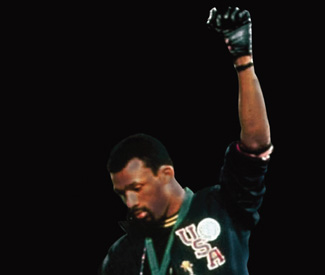
LIT On October 16, 1968, in Mexico City, American Olympic sprinters Tommie Smith and John Carlos electrified the world by accepting their medals with heads down and gloved fists thrust proudly in the air. Their defiance provided a fitting end for a year that began with Czechoslovakia’s Prague Spring and America’s military humiliation during the Tet Offensive in Vietnam, and saw the assassination of Dr. Martin Luther King Jr. and its explosive aftermath, the general strike in France, the riveting presence and influence of the Black Panther Party, mushrooming opposition to the draft, and rioting in Chicago during the Democratic Convention.

Like Mohammed Ali, who in 1967 went to prison rather than fight in Vietnam, Smith and Carlos wrote an important page in American history. Like Ali, they have remained true to the principles they embodied years ago. Now, 43 years down the road, it’s hard to find anyone to speak against what they did.

But at the time, precisely because their enemy was weakened by exposure and their supporters inspired, they faced a blistering backlash. They were banished from Olympic Village, and sent back to the United States. Their crime? Smith and Carlos were allegedly guilty of tarnishing the spirit of an Olympic games that were supposed to be above and beyond politics.

Author-columnist-cultural critic Dave Zirin, who with Carlos has just published “The John Carlos Story: The Sports Moment That Changed the World,” has more than a few things to say about the sanctity of sports and the way political context shapes athletes as well as the games they play. These days, a conversation with Zirin has a special quality: not only has he written a book that sheds new light on an important, long-ago event, the present moment is energized by political turmoil that brings to mind the 1960s.

“I was an absolute sports junkie in the ’90s, when I was in college,” Zirin told me in a recent interview. “I memorized stats, followed every sport, it was my oxygen. I didn’t follow politics, much less politics in sports, until something happened that stopped me cold: In 1996 [Denver Nuggets guard] Mahmoud Abdul Rauf made a decision not to stand during the National Anthem. He was asked whether he understood that the flag was a symbol of freedom and equality throughout the world, and he said it may be to some, but to others it’s a symbol of oppression and tyranny. This was before the spread of the Internet, and Rauf’s stand was only covered by the mainstream media. They crushed him.”

Zirin realized then that there was an aspect of sports history he hadn’t concerned himself with, “the place where social justice and sports intersect,” as he put it. It has shaped the work he’s done since.

Among many other things, Zirin writes a column, “Edge of Sports” for the Sports Illustrated Website, has a weekly radio show called “Edge of Sports Radio” on XM, and contributes regularly to The Nation and SLAM Magazine. Along with “The John Carlos Story,” he was written books including “What’s My Name, Fool? Sports and Resistance in the United States,” “Welcome to the Terrordome: The Pain, Politics, and Promise of Sports,” and “A People’s History of Sports in the United States.”

As Zirin and Carlos point out in the book, the futures of both runners were shaped by what they did in Mexico City. They struggled to find jobs, stability, and peace of mind. Still, Zirin writes “Unlike other 1960s iconography — Woodstock, Abbie Hoffman, Richard Nixon — the moment doesn’t feel musty. It still packs a wallop.”

It resonates because the injustices they protested are still rife in America, and because the arena in which they took their stand — sports — creates common ground for so many people.

“I don’t think there’s any place where the contradictions in American society are on such sharp display as in sports,” Zirin told me. “Think back to African American boxing champions Jack Johnson and Joe Louis. Neither made explicit political statements, but they had representative political power, representing power and pride in the context of racism and white supremacy. They weren’t just entertainers but in fact their presence, the inspiration they provided, was a threat to the established order of things.”

In sports today, there’s no doubt that athletes, in particular African American athletes, play a similar role. NBA hall of famer Charles Barkley once objected — perhaps with his tongue somewhat in his cheek — to the idea that he was a role model. Zirin laughed at the mention of this, saying, “Yeah, and the sky isn’t blue. You don’t chose to be a role model, you are one. It’s an objective thing. And if people are going to be role models, like it or not, then we all have to examine what they’re modeling. If you believe that the fact that a player can dunk makes him a great person, that says one thing. If having a sense of purpose in politics is important, then that says something very different.”

When Zirin and Carlos planned their book, both agreed that they weren’t interested in producing a sports memoir. “We didn’t want to say ‘look at me, genuflect at my athletic greatness.’ We wanted to say that not everyone can run at a world-class speed, but anyone can live a life dedicated to a sense of purpose.”

That approach runs head-on into a mainstream media that has made a point of emphasizing how “today’s pampered athletes,” as the media often put it, want nothing more than a fat pay check. There’s truth in this perspective — although it should be noted that both the NFL and NBA have experienced lockouts this year and that the same media outlets rarely describe the fabulously wealthy owners of professional franchises as pampered billionaires.

“I wrote an article,” he explained, called “‘NBA Players: Welcome to the 99%.’ Despite their money and privilege, they found themselves in a position where they were facing arrogant billionaires asking for a bailout because they made a lot of bad business decisions as NBA owners. It’s just like Wall Street bankers want American working people to cover all their bad bets. Will their proposed savings go back to fans? I don’t think so, they’ll just get a bigger slice of the pie.”

Besides, Zirin pointed out that there’s a lot more to the story that rarely reaches the public. Professional sports will publicly punish athletes who are caught crossing certain lines. But when it comes to speaking to the politics of injustice, the leagues try to deal with transgressions behind the scenes.

“There’s a ton of corporate and financial pressure on these athletes,” he says. “And these players talk to each other about guys like Craig Hodges [a guard on three Chicago Bulls championship teams], who in 1992 passed a note to Bush Sr. about Iraq War I when the Bulls visited the White House. He was drummed out of the league for that and these stories are passed down almost like scare stories. At the end of the day, we have to remember what Carlos and Smith did was in the context of global revolt and crisis. It was a symbol of the moment and a perfect merging of movements and moments. We can’t forget that.”

Although Zirin makes a point in his work to include athletes of all nationalities and sexual preferences, he has particular insights into the role African American athletes play in American culture.

“John Thompson says that Black athletes have the blessing of the burden of representation,” he noted. “It’s a burden because if one athlete does something, then it’s an issue for all Black athletes to deal with, for instance Michael Vick’s involvement with dog fighting. It’s not Peyton Manning’s problem that Chris Herron [a white one-time basketball standout from the mid-2000s] got on drugs. It works in a different way for Black athletes. The blessing part is the you’re part of a tradition, you stand on the shoulders of men and women like Jim Brown, Bill Russell, Wyomia Tyus, and Mohammed Ali, and you have an ownership of that tradition. It’s true that Steve Nash and all athletes are part of the tradition, but it runs more seamlessly through the African American community.”

These days, the sports world is talking about another scandal, this time the ugly situation at Penn State. Zirin discusses those problems in the context of a bankrupt culture, where the NCAA — the self-proclaimed moral arbiter of college sports — refuses to speak to hypocrisy that links all the problems in order to ensure its own survival.

Sooner or later, he said, the NCAA will either sink beneath its own corrupt weight, or athletes — who because of the professionalization of youth sports know each other in many cases from their early teens — band together and demand some compensation for the money that they generate. College presidents are the loudest complainers and the most important enablers.”

Editor’s notes

0

tredmond@sfbg.com

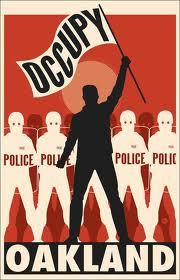
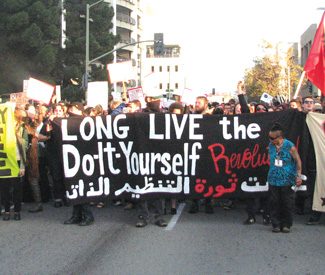
I really can’t get that upset about the broken bank windows in Oakland. This is minor stuff, a tiny part of what has been largely a peaceful Occupy movement. The windows have been replaced, the banks and their insurance companies have paid for it, the Occupy people helped clean up … whatever.

The problem was that the folks who went a bit Seattle ’99 on Oakland weren’t thinking too clearly — or else they didn’t care about the differences between then and now, and here and there, and why property destruction in downtown Oakland in the fall of 2011 is a bad strategic idea.

There are always folks at a big Bay Area demonstration who want to cause some mayhem. It happened during the protests against the Iraq War, and it happened during the Oscar Grant protests, and I figured it would happen when thousands of people convenened in the East Bay for what was dubbed a general strike. Sometimes it’s spontaneous anger (see: Oscar Grant), and it’s hard to argue with; sometimes it’s sparked by police riots and violence, and while it’s hard to blame protesters for fighting back.

I’m not here to attack the black bloc or denounce anarchists or get into the whole battle over whether property destruction counts as violence. Been there, done that, got the circle-A t-shirt. I just want the Occupy movement, in Oakland and San Francisco and the rest of the country, to continue to grow and develop and become an agent of real change in a way that we haven’t seen in decades. The potential is there; this could really happen.

And that requires not just debate and discussion and theory and action; it requires political strategy.

I’m not talking about turning the refreshingly leaderless and nonhierarchical, consensus-based structure into something more traditional. I’m talking about the protesters considering the way their actions are portrayed in the news media, their ability to build crucial alliances — and frankly, their willingness to be good neighbors.

Folks: You now live in downtown Oakland and downtown San Francisco. You’ve turned empty public spaces into lively, exciting communities. That’s a positive thing.

There are other people who share downtown Oakland, and some of them are evil corporations but some are small local businesses who are hurting, just like the rest of the 99 percent. So make alliances, shop local, and don’t trash the place. That’s just smart politics.

The Black Bloc is always with us

23

I learned about how a handful of people could screw up a major demonstration back in 1984, when the Democratic National Convention was in San Francisco and a fairly large number of peace activists had arranged a protest called the “War Chest Tour.” The idea was to draw attention to the fact that Democrats as well as Republicans got big campaign donations from defense contractors whose business was making war. Back then, a bunch of the biggest war profiteers had offices in San Francisco, and the demonstration — which attracted hundreds of people — wound through the financial district with signs and banners. It was, generally, a great success — except in the national press.

The thing is, the protest (like occupy Oakland) was prety anarchic, which a small “a” — peaceful, but leaderless. There was no organization with an office and a phone that the press could call for comment, no easy way to identify the coalition that had put it together.

Oh, but there was one very organized group present: The Revolutionary Communist Party had maybe a dozen members marching (which may have been the entire local membership of that particular group, which has been on the margins of the American left for many years). The RCP members had T-Shirts, newspapers, people designated to speak to the media, handouts with an office phone number — all the stuff that made lazy reporters’ lives easier. So when the story broke, both locally and nationally, the first paragraph read:

“Revolutionary Communists protestested yesterday in San Francisco ….” And the whole point of the War Chest Tour, which my friends had worked on for months, was lost.

Those of us who have been around awhile knew, and know, that the RCP is always with us. There may only be a handful of them still around, but they show up for everything — and don’t seem to care if they undermine the message that event organizers are trying to put out.

The Black Bloc — the “big A” Anarchists who broke windows in Oakland —  are becoming part of the same tradition. It’s a relatively small group, but it’s always around. The marches against the War in Iraq were huge, with tens of thousands of people, and entirely peaceful — except for a few Black Bloc-ers who broke windows and set fires.

Now: I’m not here to blast the Anarchists, or even the RCP. The Maoist/Bob Avakian types have become almost a parody of themselves in recent years, but if that’s what you’re into, go for it. I’m not even going to get into the argument over whether property damage counts as violence; been there, done that, got the circle-A T-shirt. Destroying stuff and causing mayhem can be a powerful political statement, and there have certainly been times when it was appropriate, effective and considered more than acceptable.

But it’s not always the right strategy, and in Oakland in 2011, I think it wasn’t. I recognize that this is an emergency situation, that the class warfare has already begun, and that extreme tactics are necessary to fight back. And hell, I don’t think smashing a bank window is so awful; smash enough of them and you put a lot of unemployed glaziers back to work. But in downtown Oakland, that tactic can too quickly backfire and lead to stuff like this. (Here’s an idea — how about a Shop Local day at Occupy Oakland, where everyone agrees to patronize small local businesses downtown? It fits right into the plan to withdraw your money from the big banks and put it in local credit unions.)

The problem with the Black Bloc (which isn’t really a bloc at all, it’s just a loose group of people who (a) think their tactics are appropriate and (b) love this shit) is that it’s acting in direct conflict with the many, many people who worked really, really hard to organize what was supposed to be a peaceful event. Like the RCP, they’re too quick to piss in the well.

You want to get violent? You want to break stuff? Show up for the general assembly, make your case, and see if you can convince the rest of the group that this is a good idea, right now, one that sends the right message and promotes the cause. Maybe you can do that; maybe everyone agrees. But if the majority of the group says no — that respect for property (much as we may hate private property, particularly bank property, and all that) is a better way to go right now, today, in this situation — then back off, dudes, and get with the program.

Big victory for OccupySF, Occupy Oakland reconvenes after crackdown (VIDEO)

36

(UPDATED/CORRECTED AT 11:30 AM)The Occupy movements in San Francisco and Oakland reportedly scored big victories last night, with huge numbers of people overcoming police crackdowns and the shutdown of public transit stations, turning back city efforts to clear the OccupySF encampment and voting in the General Assembly in Oakland to call a general strike for Nov. 2.

We’ll have a full reports later today. Occupy Oakland protesters showed up outside a cordoned-off Frank Ogawa Plaza to figure out how to respond to the previous day’s aggressive police raid, which made national news and left Iraq War veteran Scott Olsen in the hospital with a fractured skull after apparently being hit by a tear gas canister or some other projectile fired by police.

In San Francisco, Mayor Ed Lee and the SFPD threatened to shut down the OccupySF encampment over alleged public health problems – which the movement tried to address by bringing in their own porta-potties because the city refused to provide them at night – but the camp swelled with supporters. Among them were mayoral candidates John Avalos, Leland Yee, Jeff Adachi, and David Chiu, as well as Sups. Jane Kim, Eric Mar, and David Campos.

Video by Rebecca Bowe

They spoke to the crowd around 2 a.m., expressing their support and saying that neither police nor Lee had responded to requests for information about the city’s intentions. Other notables on the scene included writer Rebecca Solnit, SF Democratic Party Chair Aaron Peskin, Shawn San Liu of the Chinese Progressive Association, and local labor leaders Tim Paulson, Gabriel Haaland, and Mike Casey. Spirits were high, and protesters were ready to link arms and form a human blockade in the event that police showed up.

SF police reportedly massed nearby in the early morning hours, preparing to clear Justin Herman Plaza, and there were rumors that hundreds more were on the way. BART stations in the area were shut down to prevent more arrivals, while police in Oakland also reportedly stopped protesters there who tried to cross the bay to support OccupySF. But the raid was then reportedly called off because police were outnumbered and possibly to avoid a repeat of the violence and mass arrests that have plagued Oakland since the decision to clear the encampment there, and protesters sent out jubilant messages of victory.

Check back later for video and eyewitness details of what went down, from the the Guardian’s Rebecca Bowe (who contributed to this report) and Yael Chanoff, as well as information on what comes next. Or follow the Oakland live stream here or San Francisco live stream here.

To the wonderful folks at Occupy SF/Wall Street/Everywhere

122

First of all, don’t get depressed by this sort of stuff. During the occupation and blockade at Diablo Canyon, when about two thousand people managed to prevent the opening of the nuclear power plant, the mainstream news media kept reporting that the blockade was failing, that the protesters were getting tired, that everyone had given up and was going home. One person starting walking around with a poster that said “The media is getting tired and hungry and going home.”

Press accounts typically understate the numbers and dedication of protest movements. Instead of talking about how amazing it is that so many people have given up everything else in their lives to protest economic injustice, the press will say: Why aren’t there more?

So hang in — overall, the message is getting out. As we said in an editorial this week:

If the demonstrators don’t have all the solutions, at least they’ve identified the problem. And that’s more than Obama, Congress, or the mainstream news media have done.

But as someone who has watched, written about, worked on, joined and been otherwise involved in direct action and community organizing efforts for more than 30 years (yeah, I’m old), let me make a friendly suggestion.

Saul Alinsky, who pretty much invented modern community organizing, always said that building an effective organization and agitating for social change was as much about empowering the powerless as it was about winning a specific battle. He and his students learned quickly that nothing is worse for an organized movement than the frustration of constant failure. The movement that arose against the Iraq and Afghanistan wars suffered from that — when it was clear that nothing any of us did (including electing Obama) was going to bring the troops home and end hostilities, a lot of people gave up and stopped marching.

The people I learned from back at the Connecticut Citizens Action Group, which practiced Alinsky-style organizing, used to say that victories, even small victories, would prove to people that they really could fight City Hall. If a low-income neighborhood was worried about cars speeding down the streets where kids were playing, fine: Organize everyone and demand stop signs, speed bumps and police patrols. Once you’ve shown disenfranchised people that they can force the powers that be to listen and respond, you have the basis for something much more ambitious.

I guess what I’m saying here is that you might want to think about setting a goal that’s a little bit short of decentralizing all of society. When I worked with the Abalone Alliance, we were all about changing the way people related in the world; everything worked by consensus, we spent an immense amount of time discussing power relationships and we all had a radical model for rebuilding the United States (and the world). But we also wanted to stop a nuclear power plant from being built on an earthquake fault. And when that happened — the protests actually delayed the opening for several years — it gave tremendous life and energy not just to the movement but to all the people in it. It was radically empowering.

The Livermore Action Group, which emerged out of the Abalone Alliance, was dedicated to ending the threat of nuclear war (and all war), among other things. But it had as an immediate first step ending weapons reasearch at the Lawrence Livermore Lab.

Around the same time, the American Friends Service Committee came up with a campaign called the Nuclear Freeze. The bumper stickers read: “Step one: Freeze Nuclear Weapons.” The idea: When you’re in a hole, stop digging. Nuclear proliferation was threatening the world; as a first step, we ought to stop building more bombs. 

Since this is all about Wall Street, and you’ve got momentum on your side, maybe you want to start talking about something specific. How about “Step One: Tax Wall Street Transactions and Create A Million Jobs.” A transactions tax dedicated to public-sector job creation would do wonders for the economy. It’s the kind of campaign that a wide range of allies could join. It’s got simple, populist appeal. It’s not everything you want, but it’s not bad — and remember, it’s ony Step One.

Just a thought from a friend.


Get lit! A handy guide to Saturday night’s LitCrawl

0

LitQuake has been rough. You’ve been dashing out of work, shoving people away from their cabs to make it to the Chuck Klosterman event and sprinting after buses to catch Karen Russell; you’ve had to make the hard decision between “Kafkaesque” and “Rock Out with your Book Out;” and all the while, you keep thinking Jeffrey Eugenides has just passed you on the street. With LitCrawl coming up Sat/15, things become even more overwhelming and terrific. In the Mission, bars, cafes, and bookstores together host 450 readers in 79 readings, all free and open to the public. One way to navigate the event might be to pick your favorite bar or cafe, find a chair, order a drink and wait for something to happen. Or, you can check these readings out:
 
I Live Here: SF. How We Got Here, Why We Stay
Not a lot of us can say we were born and raised in San Francisco. Most of us fled here from elsewhere for one reason or another: failed relationships, parents kicked you out, a nervous breakdown, a mid-life crisis, you formed an indie-rock band. Maybe you came for LoveFest and simply forgot whom you were. There are a thousand reasons for arriving and a thousand more for staying. In Clarion Alley, writers and non-writers alike including Mark Bittner and M.C. Mars talk about what brought them here and why they haven’t budged. 6 p.m., Clarion Alley, between Mission and Valencia, and 17th and 18th Sts, SF

BARTab’s Blame it on the a a a a a Alcohol: Tall Tales of Inebriated Adventures
Alcohol and writers have always had a vital, if tumultuous relationship. Hemingway said that when you worked in your head day after grueling day, the only viable remedy was whiskey; that “The only time it isn’t good for you is when you write or when you fight. You have to do that cold.” Luckily, a drunken night can become a source of inspiration, if not the next morning, sometime when you’re “cold.” At this reading, writers like Daphne Gottlieb, Jon Ginoli, Brenda Knight, and the editor of BARtab, Joe Provenzano, read about nights of drunken debauchery. 6 p.m., Martuni’s, 4 Valencia, SF
 
Come Cheer the Reaper: Readings from the San Francisco Writers’ Grotto
The San Francisco Writers’ Grotto was founded because, dammit, this writing business can be agonizing, but it’s more manageable when others surround you with whom you can collectively suffer. Convening at the Elbo Room for a night of readings tied around death, you might think that collectively suffering wasn’t working out so well for the Grotto. However, tonight is not a night for morbidity and gloom. Nine writers, including Janis Cooke Newman, Marianna Cherry, Gerard Jones, and Chris Colin read work that looks at death with humor and lightheartedness. 7:15 p.m., Elbo Room, 647 Valencia, SF
 
The Three-Penny Review Presents…
The Three-Penny Review, based out of Berkeley, would naturally host a night of premium writers at LitCrawl. The journal has been hosting the best authors, poets, and critics in its pages since 1980, and it publishes reviews and essays about everything under the sun (their recent issue features 3 great essays about live music). A good way to gauge the journal’s breath is looking at tonight’s lineup at the Summit. Kay Ryan is, of course, the former Poet Laureate of the U.S. and the Pulitzer Prize winner for The Best of It: New and Selected Poems; Walter Murch is a three-time Oscar-winning film and sound editor famous for his work on Apocalypse Now and The English Patient; Louis B. Jones is an author whose most recent novel is Radiance. Others tonight are poet Victoria Chang and the playwright and screenwriter Erik Tarloff. 7:15 p.m., Summit, 760 Valencia, SF
 
Zyzzyva Presents…
If you’ve taken a look at the West Coast writers and artists magazine Zyzzyva lately, you probably noticed some substantial changes: a new design, a full color art spread, an additional 40 pages of content. The changes are credited to the magazine’s first new editor since its founding in 1985, Laura Cogan. At 29, Cogan has breathed new life into the magazine and given it more presence in the community by doing, among other things, events like this one. Contributors to the fall issue of the magazine W.S. Di Piero and Troy Jollimore are joined by Heather Altfeld, and Malena Watrous. 7:15 p.m., Blue Macaw, 2565 Mission, SF
 
From Buddha to Batman
If you’re a fan of comic superheroes and also have a costume you’re dying to wear before Halloween, this event is most certainly for you. Gotham Chopra, co-founder of Liquid Comics and co-author of the comic Bullet Proof Monk, discusses our persistent fascination with muscles, spandex, super powers, and sidekicks. If you’re one of the first 20 to arrive to the event in a superhero costume, you get a free drink, while the best three costumes win signed books. 8:30 p.m., Laszlo Bar, 2526 Mission, SF

McSweeny’s and The Believer Present…
McSweeny’s and The Believer need no introduction. They are of what they are, and everyone knows that, together, the publisher and magazine support the very best writing. This event features a handful of those talent writers and personalities: poets Matthew Zapruder and Tess Taylor, columnist Daniel Handler (known by some as Lemony Snicket), and Anthony Myint and Karen Leibowitz, founders of Mission Street Food, and authors of the book Mission Street Food: Recipes and Ideas from an Improbable Restaurant. 8:30 p.m., Latin American Club, 3286 22nd St., SF

The World Cries Out for Revolution
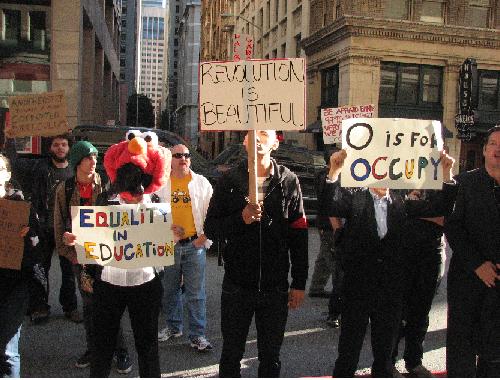
Some, like the protestors defiantly camping outside the Federal Reserve Building for OccupySF, get their voices heard by taking to the streets. Others, like us at the San Francisco Bay Guardian, stir things up with the written word. You can see this every week in the articles written by our own Steven T. Jones (check out his article on the pot club crackdowns in this week’s issue). At Cafe La Boheme, Jones reads in the spirit of dissent with former Black Panther Richard Brown, as well as Larry Everest, the author of Oil Power & Empire: Iraq and the U.S. Global Agenda.
8:30 p.m., Cafe La Boheme, 3318 24th St., SF

The Occupy Wall Street platform

6

EDITORIAL In New York City, the protesters who started the Occupy Wall Street movement remain camped out in Zuccotti Park. In Washington, DC, President Obama said at an Oct. 6 press conference that he understands the sentiment driving the activists. Yet in San Francisco, Mayor Ed Lee has approved a police crackdown and the confiscation of camping supplies in an effort to debilitate the occupation in front of the Federal Reserve Bank.

The move comes at a time when Lee is doing nothing to crack down on foreclosures that cost the city money, nothing to force the big banks that have the city’s deposits to lend more in the community, and nothing to promote local taxes on the wealthy.

While Lee says he supports the First Amendment rights of the protesters, he sent the cops in at 10:30 at night to confiscate their belongings — using, in part, the sit-lie law (which is only in effect until 11 p.m.)

His approach is just wrong. This city ought to be embracing and supporting the demonstrations. San Francisco makes room for all kinds of public events; this one should be no different. The people at City Hall should be working with the people in the streets to make San Francisco a central part of this growing national movement.

Make no mistake about it: What started as a small-scale, leaderless, somewhat ragtag group in lower Manhattan now has the potential to become a potent political force in this country. Occupy Wall Street has tapped into a deep feeling of frustration that’s shared by people in blue states and red states, in cities and towns and rural communities. The feeble economy impacts almost everyone — and this movement has managed to point the finger at the people who caused the problem, who are preventing solutions and who are making big money off the suffering of others.

We realize that at this point, there’s no specific focus for Occupy Wall Street. The civil rights movement and the anti-war movements of the 1960s and the antinuclear movement of the 1970s, the demonstrations against free trade agreements in the 1990s and the marches against the Iraq War in the past decade included people with hundreds of ideological agendas, but they had a pretty clear message — and, generally speaking, specific actions that government officials could take to address the issues.

Occupy Wall Street hasn’t called for any bills, regulations or policies. It’s still a group that is simply calling attention to a basic truth — the very wealthy in general, and the financial sector in particular, are enjoying economic gains at the expense of the rest of us. But that alone is a profound and potent message — if the demonstrators don’t have all the solutions, at least they’ve identified the problem. And that’s more than Obama, Congress, or the mainstream news media have done.

There’s been plenty of talk of a formal platform — one Occupy Wall Street activist posted a proposed list of 13 demands on the group’s website. It’s not a bad list (a guaranteed living wage, single-payer health care, free college education, debt forgiveness, a racial and gender equal rights amendment) with a few somewhat random elements (outlaw all credit agencies). Fox News has picked up the list, although the organization, such as it is, has made it clear that there is no consensus on any platform and agenda. And the labor unions that are joining the protests — with the proper respect for the folks who started things — have legislation in mind (a financial transaction tax, for example).

There’s a danger that the message becomes so diffuse, and imbued with every possible issue that anyone on the left cares about, that it loses the potential to have an impact on the 2012 elections. Occupy Wall Street could go a long way to providing a populist progressive message to counter the Tea Party (which is funded by and largely organized by billionaires but tries to claim grassroots legitimacy).

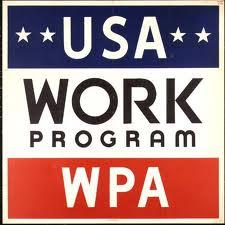
And there’s no need for a laundry list of agenda items. The focus is right where it ought to be: The richest Americans — and the big financial institutions — have been sucking all the money and energy out of the economy. The remaining 99 percent are suffering. Tax the top 1 percent and create a robust jobs program to put the rest of the country back to work; that’s a winning platform for 2012

Editorial: The Occupy Wall Street platform

6

In New York City, the protesters who started the Occupy Wall Street movement remain camped out in Zuccotti Park. In Washington, DC, President Obama said at an Oct. 6 press conference that he understands the sentiment driving the activists. Yet in San Francisco, Mayor Ed Lee has approved a police crackdown and the confiscation of camping supplies in an effort to debilitate the occupation in front of the Federal Reserve Bank.

The move comes at a time when Lee is doing nothing to crack down on foreclosures that cost the city money, nothing to force the big banks that have the city’s deposits to lend more in the community, and nothing to promote local taxes on the wealthy.

While Lee says he supports the First Amendment rights of the protesters, he sent the cops in at 10:30 at night to confiscate their belongings — using, in part, the sit-lie law (which is only in effect until 11 p.m.)

His approach is just wrong. This city ought to be embracing and supporting the demonstrations. San Francisco makes room for all kinds of public events; this one should be no different. The people at City Hall should be working with the people in the streets to make San Francisco a central part of this growing national movement.

Make no mistake about it: What started as a small-scale, leaderless, somewhat ragtag group in lower Manhattan now has the potential to become a potent political force in this country. Occupy Wall Street has tapped into a deep feeling of frustration that’s shared by people in blue states and red states, in cities and towns and rural communities. The feeble economy impacts almost everyone — and this movement has managed to point the finger at the people who caused the problem, who are preventing solutions and who are making big money off the suffering of others.

We realize that at this point, there’s no specific focus for Occupy Wall Street. The civil rights movement and the anti-war movements of the 1960s and the antinuclear movement of the 1970s, the demonstrations against free trade agreements in the 1990s and the marches against the Iraq War in the past decade included people with hundreds of ideological agendas, but they had a pretty clear message — and, generally speaking, specific actions that government officials could take to address the issues.

Occupy Wall Street hasn’t called for any bills, regulations or policies. It’s still a group that is simply calling attention to a basic truth — the very wealthy in general, and the financial sector in particular, are enjoying economic gains at the expense of the rest of us. But that alone is a profound and potent message — if the demonstrators don’t have all the solutions, at least they’ve identified the problem. And that’s more than Obama, Congress, or the mainstream news media have done.

There’s been plenty of talk of a formal platform — one Occupy Wall Street activist posted a proposed list of 13 demands on the group’s website. It’s not a bad list (a guaranteed living wage, single-payer health care, free college education, debt forgiveness, a racial and gender equal rights amendment) with a few somewhat random elements (outlaw all credit agencies). Fox news has picked up the list, although the organization, such as it is, has made it clear that there is no consensus on any platform and agenda. And the labor unions that are joining the protests — with the proper respect for the folks who started things — have legislation in mind (a financial transaction tax, for example).

There’s a danger that the message becomes so diffuse, and imbued with every possible issue that anyone on the left cares about, that it loses the potential to have an impact on the 2012 elections. Occupy Wall Street could go a long way to providing a populist progressive message to counter the Tea Party (which is funded by and largely organized by billionaires but tries to claim grassroots legitimacy).

And there’s no need for a laundry list of agenda items. The focus is right where it ought to be: The richest Americans — and the big financial institutions — have been sucking all the money and energy out of the economy. The remaining 99 percent are suffering. Tax the top 1 percent and create a robust jobs program to put the rest of the country back to work; that’s a winning platform for 2012.

Breaking free

20

rebeccab@sfbg.com

An ordeal that began with a hiking trip on July 31, 2009 in Northern Iraq came to a close Sept. 21 when Shane Bauer and Josh Fattal were released from Tehran’s Evin Prison. They’d languished in an 8-by-13-foot cell for 781 days while their friends and supporters waged a creative, behind-the-scenes campaign to free them.

Bauer and Fattal were ferried out in a convoy with Swiss and Omani officials and flown to Oman, where news cameras captured their joyful reunion with loved ones. Waiting on the tarmac with their family members was Sarah Shourd, Bauer’s fiancée, who’d been arrested with them and was released last September after spending 410 days in solitary confinement. It was the first time since their arrest that “the hikers” — as the trio came to be labeled in the campaign calling for their release — were together outside prison walls, free at last.

Watching their reunion from Seattle, their friend Shon Meckfessel — who went to Northern Iraq with them but hadn’t felt up to hiking that day — was overjoyed. “It’s like I’ve collapsed from relief,” he told us by phone. “I just feel like I’ve been asphyxiated for the last two years, and suddenly I remember what air smells like.”

In the Bay Area, friends who’d pulled together to work toward their release breathed a huge, collective sigh of relief. “It was just a crazy, amazing adrenaline rush of happiness,” said Jennifer Miller, who befriended Shourd years earlier while doing human rights work focused on violence against women in Juarez.

Bauer and Fattal had stood trial only weeks earlier in an Iranian court, on charges of espionage and illegally crossing an unmarked border between Iraq and Iran. They were found guilty and sentenced to eight years each in prison. Their release coincided with Iranian President Mahmoud Ahmadinejad’s visit to the United States for the United Nations General Assembly conference.

As Bauer, Shourd, and Fattal remained isolated at the mercy of guards they could barely communicate with, their family and supporters kept up a steady drumbeat calling for their release. They recruited actors, intellectuals, and foreign diplomats to urge the Iranian government — which has not had diplomatic ties with the U.S. Since 1979 — to let the Americans go. Once Bauer and Fattal were free and wandering around New York City, they’d morphed into minor celebrities — strangers approached them in the streets to wish them well.

In the end, nobody can say just what persuaded the Iranian government to release Bauer and Fattal. “Sarah was talking with diplomats in all kinds of countries. The thing is, none of us really knows what the calculus was,” said Liam O’Donoghue, a friend who helped out with the campaign.

The campaign was multi-faceted, with friends and family coordinating parallel efforts from various locales. While Bauer and Fattal’s group of friends in the Bay Area are quick to note that their work reflected just one slice of the overall push for the young men’s freedom, the grassroots organizing effort they created clearly had some effect in the end.

“If Shane, Sarah, and Josh were just three random people who didn’t have this group of friends who were so proficient at organizing, I think they would have still been in jail,” O’Donoghue mused.

Shortly after Bauer and Fattal were freed, Iran’s foreign ministry issued a statement acknowledging the involvement of the Sultan of Oman, United Nations Secretary General Ban Ki-Moon, Iraqi President Jalal Talabani, and — more surprisingly, given his adversarial relationship with the U.S. — Venezuelan President Hugo Chavez, who enjoys a close relationship with Ahmadinejad.

Once reports surfaced emphasizing Chavez’s involvement, the news broke that actor Sean Penn had played a role, too — by flying to Venezuela to encourage Chavez to approach Ahmadinejad about the case.

Yet the stage had already been set by friends of the hiking trio, a small crew of passionate social justice activists based in San Francisco and Oakland. They possessed skills as organizers, but this time the goal was more personal — they wanted nothing more than for their friends to be free.


TIME TO ORGANIZE

Based on the 17 alarmed messages on his voicemail, David Martinez knew something terrible had happened involving Bauer and Shourd. An independent filmmaker, Martinez was close to both and had collaborated with Bauer in 2007 to produce a film about Darfur.

Soon after learning that they were being detained in Iran, he found himself swept into a whirlwind, ad-hoc grassroots organizing effort as friends and family of the hikers contacted one another, fired off rapid emails, and organized conference calls to try and determine how to respond.

“We created this working group, this conference group — we wanted everybody’s expertise,” explained attorney Ben Rosenfeld, who has known Shourd for more than a decade and offered free legal representation to Shourd’s mother. “We set out to build a brain trust, essentially, and we did that very, very quickly.”

Shourd and Bauer had been living in Damascus, Syria, at a Palestinian camp when they decided to take a short trip to Iraqi Kurdistan. Shourd was teaching English to Iraqi refugees, and Bauer — a photojournalist — was writing articles about the Middle East. Fattal, an environmental educator, was visiting them. They journeyed along with Meckfessel to Kurdistan, a forested region of Iraq known as a safe destination for U.S. citizens. But once they arrived, Meckfessel felt groggy, so he opted to stay behind while the other three went off in search of a waterfall.

“I was on a bus to meet them and got a call from Shane that they were being arrested by Iranian authorities,” Meckfessel told the Guardian. After notifying their families, he flew to Istanbul to stay with a friend.

Back in the Bay Area, word of the hikers’ plight was starting to make news. “I had producers from morning shows like Good Morning America ringing my doorbell from the beginning,” Rosenfeld said.

Martinez was on a conference call with the core group of organizers when Meckfessel contacted him via Skype from Istanbul — and by that point, the national media was hungry for a statement from the elusive fourth hiker. So the group worked with Meckfessel to craft a statement for the press.

The first challenge they faced was this: Should they emphasize that Bauer, Shourd, and Fattal were humanitarian activists, or should they downplay their political leanings by casting them as adventuresome Americans with a love of the outdoors? Both portrayals were true, but the most important audience, as Rosenfeld pointed out, was ultimately their captors.

Meckfessel said he thought highlighting their politics would help their case. “The first minute after I got the phone call [from Bauer] … I thought that basically our involvement in the region as journalists, as academics, and as educators, and our long public record speaking out for human rights and as critics of US foreign policy in the area … would get them out,” he said.

Meckfessel later created a website, FreeOurFriends.eu, to emphasize the humanitarian and journalistic work that the three were engaged in. In the summer of 2010, he maxed out two credit cards to go on a 30-city European tour to drum up support overseas.

Despite the group’s initial contact with the Committee to Protect Journalists as well as Bauer’s editors at The Nation and Mother Jones, some were opposed to emphasizing the journalism aspect. “Think back to July 2009 in Iran,” Martinez said, referencing the popular uprising known as the Green Revolution that had sent shockwaves through Iran just months earlier. “Our friends were and are journalists involved in social movements and people’s movements. I’m pretty sure if you did a Google search with ‘Iran, July, 2009, activists,’ you’d come up with something like torture, prison. That is why we thought … let’s just say they’re hikers.”

So they came to be known as “the hikers,” and a website was created to go along with the campaign, called Free the Hikers.

“We wanted to make sure we weren’t divulging details about them that they weren’t divulging to their interrogators,” Rosenfeld said. “We wanted to be careful not to piss off the U.S. or the State Department. And, if we seemed too orchestrated, it might feed into Iran’s paranoid theories that they were spies. So we had to try to solve for all of these variables at the same time.”

It began to dawn on them that they were contending not only with the soured relationship between the U.S. and Iran, but an internal power struggle within Iran that had intensified in the wake of mass internal dissent. “The government that grabbed Shane, Josh, and Sarah was at war with its own people,” Martinez reflected. “They were prisoners of the historical moment.”

Nor was the trio the first in their circle of friends to stumble into a horrendous situation overseas. Tristan Anderson, of Berkeley, was attending a nonviolent protest of the Israeli occupation in a Palestinian village at the beginning of 2009 when he was hit by a high-velocity teargas projectile fired by Israeli Defense Forces, and sustained serious brain injuries.

“Tristan’s like a minor celebrity in Iran,” Meckfessel noted. “He’s known not only for initially getting shot … but Tristan’s whole case got a lot of sympathetic media in Iran.” When his three friends were captured, “the first thought I had was, we have proof that we’re all friends with Tristan,” he said.

On Feb. 10, 2010, Anderson’s parents, Nancy and Mike Anderson, sent a letter to Ahmadinejad. “It pains us greatly, on top of the tragedy we have already suffered, to see Tristan’s close friends made to bear the burden of grievances between nations,” they wrote.


GAME OF DIPLOMACY

The idea to approach the Venezuelan government started when Raymor Ryan, an Irish author who lives in Chiapas, phoned Martinez. “He said, ‘The only thing that’s going to really affect them is state power — this is a game of diplomacy,'” Martinez recounted. He suggested Venezuela — a country that is not only on friendly terms with Iran, but has connections with social movements. Martinez liked the idea, but first he ran it by another friend, famed academic Immanuel Wallerstein.

In an email, Wallerstein summarized for the Guardian the advice he gave. “The Iranians are using this as part of their struggles with the United States,” he wrote. “The least likely way to obtain their release is to allow U.S.-Iranian relations to be the issue, or to allow the virtues of the Iranian regime to be the issue. I suggested that they try to work with various left-of-center governments in Latin America, which have friendly relations with Iran, and see if they will intervene with the Iranian government. I did not single out Venezuela. After that, I was out of the picture.”

In October of 2009, Rosenfeld reached out to an attorney he knew through the National Lawyers Guild, Eva Golinger, who’s authored seven books, lives in Caracas, and occasionally serves as an adviser to Chavez. She agreed to help.

Nicolas Maduro, Venezuela’s foreign minister, told her he thought Chavez would be open to helping. “The foreign minister went to Tehran, and they told me they were going to broach the subject,” Golinger said. “When they came back, they told me unfortunately, it wasn’t a topic that was received favorably by the Iranians.”

Rosenfeld and Martinez were crazed, but they had another idea. Perhaps Chavez would be more responsive to appeals from lefty luminaries. Thanks to behind-the-scenes arrangements made by campaign organizers working every connection they could muster, a letter dated Feb. 26, 2010 was sent to Chavez on behalf of Noam Chomsky, Angela Davis, and Harry Belafonte.

“All three of the hikers are dedicated to improving living conditions for poor and oppressed people throughout the world, and to fostering a better understanding among their fellow citizens of the U.S.’s hegemonic role in global politics and economic privation,” they wrote.

Soon after, Golinger had a chance to speak with Chavez directly, when she was invited to join him on a trip to Uruguay to attend the presidential inauguration. “He said, ‘do you think they’re spies?’ I said, look, I don’t think they’re spies. I think they were gringos in the wrong place at the wrong time,” she recounted. “Chavez said, yeah, no problem. I’ll help.”

Soon after, the campaign recruited anti-war activist Cindy Sheehan to write to Chavez, too. But the months rolled by without word of a trial date, let alone a release. Rosenfeld thought up a new way to reach Chavez — by encouraging actor Sean Penn to speak with him.

Penn enjoyed a good relationship with the Venezuelan president and had been regularly traveling to the region to aid in earthquake relief efforts in Haiti, which Venezuela was deeply involved in. Rosenfeld asked Matt Gonzalez, chief attorney of the San Francisco Public Defender’s Office and a friend of Penn’s, to mention it to him.

Within months, Penn discussed the hikers’ case with Chavez, according to Golinger. Then, in September of 2010, Shourd was finally released. Bay Area friends described it as a moment of sheer joy, but also bittersweet, because Bauer and Fattal remained behind bars. Miller invited friends and organizers over to her place in Oakland to join her in the surreal experience of watching their friend deliver a speech on television.

Meckfessel was in Rome as part of his “Free Our Friends” tour through Europe. “I got a text message from somebody that she had been released, and I burst into tears of relief,” he said. “Then, just as I was preparing to do my presentation in Rome, I got a call — and it was Sarah. I just shouted and cried in front of this big group of Romans, and everyone was applauding.”

Upon her return, Shourd wasted no time throwing herself into the campaign. “I just have so much admiration and respect for Sarah,” Miller said. “She went from coming out of prison, and needing time to heal from that, to becoming a full-force, 24/7 international diplomacy worker.”

Shourd, Bauer, and Fattal were unavailable for an interview for this article, but their families emailed a statement. “As Josh and Shane said when they got home, many of their friends put their own lives on hold to fight for their freedom,” they wrote. “We are grateful to the many people who worked in many different ways to help Shane and Josh. Every single effort mattered and made a difference.”


INEXCUSABLE ACTS

When the day of their release finally came, Golinger watched in Caracas as television broadcasts showed Bauer and Fattal bounding down the steps of the plane and leaping into the arms of their loved ones. She sent a text to Maduro, the Venezuelan foreign minister, who was in New York for the UN General Assembly. “I asked … were we involved?” Minutes later, she received a text in response. “He said, fundamentally, yes.” The Iranian foreign minister had told him that the release went through because of Chavez’s request.

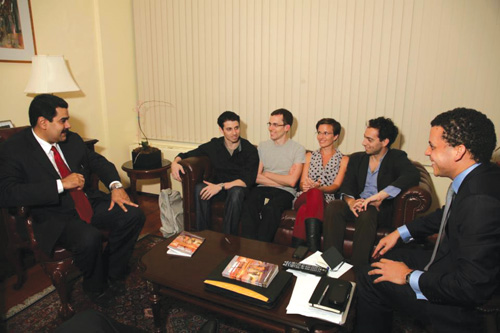
Days later, in New York, the hikers visited the Venezuelan consulate. And on the same trip, their first time back on U.S. soil, Bauer and Fattal held a press conference.

“The only explanation for our prolonged detention is the 32 years of mutual hostility between America and Iran,” Bauer said. “The irony is that Sarah, Josh, and I oppose U.S. policies towards Iran which perpetuate this hostility. We were convicted of espionage because we are American. It is that simple.”

He went on: “In prison, every time we complained about our conditions, the guards would immediately remind us of comparable conditions at Guantanamo Bay. They would remind us of CIA prisons in other parts of the world, and the conditions that Iranians and others experience in prisons in the U.S. We do not believe that such human rights violations on the part of our government justify what has been done to us, not for a moment. However, we do believe that these actions on the part of the U.S provide an excuse for other governments, including the governments of Iran, to act in kind.”


The Chron’s bizarre tax logic

32

Chronicle Washington columnist Carolyn Lochhead doesn’t typically show her political beliefs in such a clear and direct way, but her attack on the Obama tax plan is just … bizarre. Check it out:

Rather than pursue long-run tax and entitlement reform, the new Obama plan, his sixth by some counts, litters up the tax code even more and does nothing significant on debt drivers Medicare and Medicaid.

Actually, the big “debt drivers” over the past two decades haven’t been Medicare and Medicaid, or even social security — the debt and deficit problem comes from (1) tax cuts on the rich and (2) wars. Remember, Bill Clinton left office with a budget surplus (even including entitlements, and even including projections for the baby boomers retiring and all the other panic buttons the GOP likes to push). Bush turned that into a staggering deficit by cutting taxes at the same time he went to war in Iraq and Afghanistan.

And “litter up the tax code?” That’s crazy talk. Obama wants to get rid of tax breaks that litter up the code.

More:

He re-iterated his call to end the Bush tax cuts on high earners, but keeps the rest of the Bush tax cuts which are a bushel of special tax breaks for the middle class.

What? The middle class has been slammed by the recession (and by 20 years of income moving almost entirely to the top 5% of the population). The only way out of this recession is to give the middle class more spending power.

I’m not defending everything Obama’s done (his willingness to extend the Bush tax cuts was part of the problem), but seriously: This is economics 101.


Hikers could be freed within days

1

Shane Bauer and Josh Fattal, the American hikers who have been detained in Iran for more than two years, could be freed “in a couple of days,” according to statements made by Iranian President Mahmoud Ahmadinejad on NBC’s “Today” show and reported by the Associated Press. An Iranian court has set bail for each of them at $500,000, clearing the way for their release.

Bauer and Fattal, both 29, were first taken to prison after Iranian officials picked them up while hiking near the Iranian border in Northern Iraq in July of 2009. They were taken into custody along with Sarah Shourd, Bauer’s fiancee, who was released last year. Shourd, working alongside friends and family members, has organized numerous events in the Bay Area since returning to the United States to aid in the effort to free the hikers.

“While we do not have further details at this time, we are overjoyed by the positive news reports from Iran,” the hikers’ families noted in a statement. “Shane and Josh’s freedom means more to us than anything and it’s a huge relief to read that they are going to be released. We’re grateful to everyone who has supported us and looking forward to our reunion with Shane and Josh. We hope to say more when they are finally back in our arms.”

How to create jobs

15

I listened to the Obama speech, and at least he showed some energy (although this bipartisan shit clearly doesn’t work and I don’t know when he’s going to give it up). But here’s what makes me crazy: The whole point of this $447 billion stimulus is to create jobs. Why not just, you know, create jobs?

I agree that a cut in the payroll tax (which, for a lot of working Americans, amounts to more money than the income tax) will put money in the pockets of people who are likely to spend it, and will stimulate, to some extent, consumer demand. That, of course, is the crux of the issue — unless there’s demand for goods and services, the economy’s not going to turn around.

Of course, some of that money will go to replenish savings and pay down debt — not a bad thing, but not what we need right now.

Cutting the payroll tax for businesses will also be a direct stimulus, particularly for smaller employers, who create most of the new jobs. But again, let’s be real: I just ran the numbers, and a company the size of the Guardian would get enough of a tax break to hire one part-time person at not much more than the city’s minimum wage. Sure, you spread that across millions of small businesses, and you’ll get some new job creation. But I wonder: Is this the most efficent way to achieve the objective?

Let’s see. An economist at Moody’s says the plan could create 1.9 million jobs. That, of course, includes not just the jobs created by the tax cuts, but the multiplier effect (you hire someone to dig a ditch, that person buys shoes so the shoestore needs more help, etc.) And the prediction is just that — a prediction. It assumes, for example, that most of the employers who get the tax break will use the extra money to hire more people. I’m not so sure about that. Businesses tend to hire not because they have spare cash (which might just as well end up in the owner’s pocket) but because they need more workers to meet growing demand for goods and services. If that demand isn’t there, the jobs won’t magically appear just because employers have more cash on hand. (In fact, some of the biggest employers in this country have plenty of cash on hand; they aren’t using it to hire anyone.)

How about we try it another way? Let’s assume that $50,000 a year is a decent wage in most parts of the country. (You want to make it $60,000? Whatever. It just changes the calculus a little bit).

For $1 million, you can hire 20 people at $50K. For $1billion, you can hire 20,000 people. For $400 billion, you can hire 800,000 people.

Why not just do that? Why not take that stimulus money and hire public employees — to teach in schools, to build roads and bridges, to repair the nation’s electricity infrastructure, to construct high-speed rail lines, to rebuild crumbling housing in inner cities …. there’s plenty to do.

Yeah, some of the money would go to the dreaded “bureacrats” who would oversee the hiring programs and fill out the forms. But the world needs accountants and managers, too — and the ranks of the unemployed include quite a few people with those skills.

Now: There’s lots of debate about the size of the multiplier; when it comes to job creations, I’ve heard numbers from 1.4 to 5.0, depending on the circumstances. But there’s no doubt that direct federal hiring — 800,000 new living-wage jobs — would have a direct impact on consumer demand and create a guaranteed need for more private-sector workers. I’d bet it’s about one for one — the 800,000 federal jobs would lead to another 800,000 private-sector jobs. That’s 1.6 million jobs — and unlike the current plan, those are jobs that are not dependent on what employers decide to do with their tax breaks.

Hell, we want to cut unemployment in half? For, say, $1.5 trillion, you could create 7 million jobs pretty easily. That’s just about the annual cost of the wars in Iraq and Afghanistan.

The government knows how to create jobs. Federal, state and local agencies hire people every day. The whole thing seems so silly; why give money to private employers and hope for the best when you can use the same money to hire people directly? Why waste time and money on the middleman?


An American blindness

8

After the first jetliner crashed into the Twin Towers on that September 11 morning, a friend of mine and his 11-year old daughter climbed up to the roof of their Manhattan home to look around. Just then the second plane struck, the young girl fell backward, and went blind from shock.

It took more than a year of examinations and therapies before this girl came out of her blindness to look around.

That’s what happened to America itself ten years ago this Sunday on 9/11, though it might be claimed many of us were blinded by privilege and hubris long before. But 9/11 produced a spasm of blind rage, arising from a pre-existing blindness as to the way much of the world sees us. That in turn led to the invasions of Afghanistan, Iraq, Afghanistan again, Pakistan, Yemen, Somalia and, in all, a dozen “shadow wars” according to The New York Times.

Bob Woodward’s crucial book, Obama’s Wars, points out that there were already secret and lethal counterterrorism operations active in more than 60 countries as of 2009. From Pentagon think tanks came a new military doctrine of the “Long War,” a counter-insurgency vision arising from the failed Phoenix program of the Vietnam era, projecting U.S. open combat and secret wars over a span of 50 to 80 years, or 20 future presidential terms. The taxpayer costs of this Long War, also shadowy, would be in the many trillions of dollars — and paid for not from current budgets, but by generations born after the 2000 election of George W. Bush. The deficit spending on the Long War would invisibly force the budgetary crisis now squeezing our states, cities and most Americans.

Besides the future being mortgaged, civil liberties were thought to require a shrinking proper to a state of permanent and secretive war, so the Patriot Act was promulgated. All this happened after 9/11 through Democratic default and denial. Who knows what future might have followed if Al Gore, with a half-million popular vote margin over George Bush, had prevailed in the U.S. Supreme Court instead of losing by the vote of a single justice? In any event, only a single member of Congress, Barbara Lee of Berkeley-Oakland, voted against the war authorization, and only a single senator, Russ Feingold, voted against the Patriot Act.

Were we not blinded by what happened on 9/11? Are we still? Let’s look at the numbers we almost never see.


CASUALTIES OF WAR

As to American casualties, the figure now is beyond twice those who died in New York, Pennsylvania and Washington D.C. on 9/11. The casualties are rarely totaled, but are broken down into three categories by the Pentagon and Congressional Research Service. There is Operation Enduring Freedom, which includes Afghanistan and Pakistan but, in keeping with the Long War definition, also covers Kazakhstan, Kyrgyzstan, Pakistan, Tajikistan, Turkmenistan, and Uzbekistan. Second, there is Operation Iraqi Freedom and its successor Operation New Dawn, the name adopted after September 2010 for the 47,000 US advisers, trainers and counterterrorism units still in Iraq. The scope of these latter operations includes Bahrain, Jordan, Kuwait, Oman, Qatar, Saudi Arabia, Turkey and the United Arab Emirates. These territories include not only Muslim majorities but, according to former Centcom commander Tommy Franks, 68 percent of the world’s proven oil reserves and the passageway for 43 percent of petroleum exports, another American geo-interest which was heavily denied in official explanations.

A combined 6,197 Americans were killed in these wars as of August 16, 2011, in the name of avenging 9/11, a day when 2, 996 Americans died. The total number of American wounded has been 45,338, and rising at a rapid rate. The total number rushed by military Medivac out of these violent zones was 56, 432. That’s a total of 107,996 Americans. And the active-duty military suicide rate for the decade is at a record high of 2, 276, not counting veterans or those who have tried unsuccessfully to take their own lives. In fact, the suicide rate for last year was greater than the American death toll in either Iraq or Afghanistan.

The Pentagon has long played a numbers game with these body counts. In addition to being painfully difficult and extremely complicated to access, there was a time when the Pentagon refused to count as Iraq war casualties any soldier who died from their wounds outside of Iraq’s airspace. Similar controversies have surrounded examples such as soldiers killed in non-combat accidents.

The fog around Iraq or Afghanistan civilian casualties will be seen in the future as one of the great scandals of the era. Briefly, the United States and its allies in Baghdad and Kabul have relied on eyewitness, media or hospital numbers instead of the more common cluster-sampling interview techniques used in conflict zones like the first Gulf War, Kosovo or the Congo. The United Nations has a conflict of interest as a party to the military conflict, and acknowledged in a July 2009 U.N. human rights report footnote that “there is a significant possibility that UNAMA is underreporting civilian casualties.”

In August, even the mainstream media derided a claim by the White House counter-terrorism adviser that there hasn’t been a single “collateral,” or innocent, death during an entire year of CIA drone strikes in Pakistan, a period in which 600 people were killed, all of them alleged “militants.” As an a specific explanation for the blindness, the Los Angeles Times reported April 9 that “Special Forces account for a disproportionate share of civilian casualties caused by western troops, military officials and human rights groups say, though there are no precise figures because many of their missions are deemed secret.”


STICKER SHOCK OF WAR

Among the most bizarre symptoms of the blindness is the tendency of most deficit hawks to become big spenders on Iraq and Afghanistan, at least until lately. The direct costs of the war, which is to say those unfunded costs in each year’s budget, now come to $1.23 trillion, or $444.6 billion for Afghanistan and $791.4 billion for Iraq, according to the National Priorities Project.

But that’s another sleight-of-hand, when one considers the so-called indirect costs like long-term veteran care. Leading economists Joseph Stiglitz and Linda Bilmes recently testified to Congress that their previous estimate of $4 to $6 trillion in ultimate costs was conservative. Nancy Youssef of McClatchy Newspapers in D.C. — in my opinion, the best war reporter of the decade — wrote recently that “it’s almost impossible to pin down just what the United States spends on war.” The president himself expressed “sticker shock,” according to Woodward’s book, when presented cost projections during his internal review of 2009.

The Long War casts a shadow not only over our economy and future budgets but our innocent and unborn children’s future as well. This is no accident, but the result of deliberate lies, obfuscations and scandalous accounting techniques. We are victims of an information warfare strategy waged deliberately by the Pentagon. As Gen. Stanley McChrystal said much too candidly in a February 2010, “This is not a physical war of how many people you kill or how much ground you capture, how many bridges you blow up. This is all in the minds of the participants.” David Kilcullen, once the top counterinsurgency adviser to Gen. David Petraeus, defines “international information operations as part of counterinsurgency.” Quoted in Counterinsurgency in 2010, Kilcullen said this military officer’s goal is to achieve a “unity of perception management measures targeting the increasingly influential spectators’ gallery of the international community.”

This new war of perceptions, relying on naked media manipulation such as the treatment of media commentators as “message amplifiers” but also high-technology information warfare, only highlights the vast importance of the ongoing WikiLeaks whistle-blowing campaign against the global secrecy establishment. Consider just what we have learned about Iraq and Afghanistan because of WikiLeaks: Tens of thousands of civilian casualties in Iraq, never before disclosed; instructions to U.S. troops to not investigate torture when conducted by U.S. allies; the existence of Task Force 373, carrying out night raids in Afghanistan; the CIA’s secret army of 3,000 mercenaries; private parties by DynCorp featuring trafficked boys as entertainment, and an Afghan vice president carrying $52 million in a suitcase.

The efforts of the White House to prosecute Julian Assange and persecute Pfc. Bradley Manning in military prison should be of deep concern to anyone believing in the public’s right to know.

The news that this is not a physical war but mainly one of perceptions will not be received well among American military families or Afghan children, which is why a responsible citizen must rebel first and foremost against The Official Story. That simple act of resistance necessarily leads to study as part of critical practice, which is as essential to the recovery of a democratic self and democratic society. Read, for example, this early martial line of Rudyard Kipling, the poet of the white man’s burden: “When you’re left wounded on Afghanistan’s plains/ And the women come out to cut up what remains/ Just roll to your rifle and blow out your brains/And go to your God like a soldier.” Years later, after Kipling’s beloved son was killed in World War I and his remains never recovered, the poet wrote: “If any question why we died / Tell them because our fathers lied.”


A HOPE FOR PEACE

An important part of the story of the peace movement, and the hope for peace itself, is the process by which hawks come to see their own mistakes. A brilliant history/autobiography in this regard is Dan Ellsberg’s Secrets, about his evolution from defense hawk to historic whistleblower during the Vietnam War. Ellsberg writes movingly about how he was influenced on his journey by meeting contact with young men on their way to prison for draft resistance.

The military occupation of our minds will continue until many more Americans become familiar with the strategies and doctrines in play during the Long War. Not enough Americans in the peace movement are literate about counterinsurgency, counterterrorism and the debates about the “clash of civilizations”, the West versus the Muslim world.

The more we know about the Long War doctrine, the more we understand the need for a long peace movement. The pillars of the peace movement, in my experience and reading, are the networks of local progressives in hundreds of communities across the United States. Most of them are voluntary, citizen volunteers, always and immersed in the crises of the moment, nowadays the economic recession and unemployment.

This peace bloc deserves more. It won’t happen overnight, but gradually we are wearing down the pillars of the war. It’s painfully slow, because the president is threatened by Pentagon officials, private military contractors and an entire Republican Party (except the Ron Paul contingent) who benefit from the politics and economics of the Long War.

But consider the progress, however slow. In February of this year, Rep. Barbara Lee passed a unanimous resolution at the Democratic National Committee calling for a rapid withdrawal from Afghanistan and transfer of funds to job creation. The White House approved of the resolution. Then 205 House members, including a majority of Democrats, voted for a resolution that almost passed, calling for the same rapid withdrawal. Even the AFL-CIO executive board, despite a long history of militarism, adopted a policy opposing Afghanistan. The president himself is quoted in Obama’s Wars as opposing his military advisors, demanding an exit strategy and musing that he “can’t lose the whole Democratic Party.” At every step of the way, it must be emphasized, public opinion in Congressional districts was a key factor in changing establishment behavior.

As for Al Qaeda, there is always the threat of another attack, like those attempted by militants aiming at Detroit during Christmas 2009 or Times Square in May 2010. In the event of another such terrorist assault originating from Pakistan, all bets are off: According to Woodward, the U.S. has a “retribution” plan to bomb 150 separate sites in that country alone there, and no apparent plan for The Day After. Assuming that nightmare doesn’t happen, today’s al Qaeda is not the al Qaeda of a decade ago. Osama bin Laden is dead, its organization is damaged, and its strategy of conspiratorial terrorism has been displaced significantly by the people-power democratic uprisings across the Arab world.

It is clear that shadow wars lie ahead, but not expanding ground wars involving greater numbers of American troops. The emerging argument will be over the question of whether special operations and drone attacks are effective, moral and consistent with the standards of a constitutional democracy. And it is clear that the economic crisis finally is enabling more politicians to question the trillion dollar war spending.

Meanwhile, the 2012 national elections present an historic opportunity to awaken from the blindness inflicted by 9/11.

After more than 50 years of activism, politics and writing, Tom Hayden is a leading voice for ending the wars in Afghanistan, Iraq, and Pakistan and reforming politics through a more participatory democracy.

Imprisoned hikers’ families react to sentencing

12

The families of Shane Bauer and Josh Fattal issued a statement yesterday (Sun/21) after receiving confirmation that the two men, both 29, had been sentenced to eight years in prison after an Iranian court found them guilty of illegal entry into Iran and espionage on behalf of the United States.

“Of the 751 days of Shane and Josh’s imprisonment, yesterday and today have been the most difficult for our families,” the statement notes. “Shane and Josh are innocent and have never posed any threat to the Islamic Republic of Iran, its government or its people.

“We are encouraged that the Iranian Foreign Minister, Ali Akbar Salehi, has said he hopes the case will proceed in a manner that will result in Shane and Josh’s freedom. We appeal to the authorities in Iran to show compassion and allow them to return home to our families without delay.

“We also ask everyone around the world who trusts in the benevolence of the Iranian people and their leaders to join us in praying that Shane and Josh will now be released.”

Bauer and Fattal were arrested with Bauer’s fiancée, Sarah Shourd, on July 31, 2009 on the unmarked border between Iran and Iraqi Kurdistan where the three had been hiking during a vacation. Shourd, 32, was released on humanitarian grounds last September after spending 410 days in solitary confinement. Bauer and Fattal were sentenced after more than two years of detainment awaiting trial.

“We have repeatedly called for the release of Shane Bauer and Joshua Fattal,” U.S. State Department Spokesperson Victoria Nuland told the Guardian. “Shane and Josh have been imprisoned too long, and it is time to reunite them with their families.”

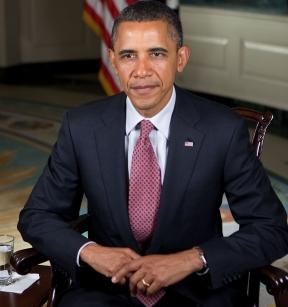
The United States maintains the two men have no connection to the United States government. Speaking earlier on the issue, President Barack Obama said, “I want to be perfectly clear: Sarah, Shane and Josh have never worked for the United States government. They are simply open-minded and adventurous young people who represent the best of America, and of the human spirit.”

Iraqi Kurdistan, the region where the three had been hiking, is a semi-autonomous region of northern Iraq that has been notably more stable then other areas of Iraq since the 2003 U.S. lead invasion. The U.S. State department had affirmed the relative safety of travel in the Kurdistan region of Iraq just weeks before their ill-fated trip.

Bauer, a freelance writer and photojournalist who has written for the Guardian and other Bay Area news outlets, and Fattal, an environmental advocate, are both graduates of UC Berkeley had both traveled extensively abroad pursuing their vocations and interests.

Shourd has indicated that she does not plan to return to Iran to stand trial, but has been a constant advocate for the release of her traveling companions. Supporters have organized several events in the Bay Area, including an art auction and film screening, to assist in the efforts calling for the hikers’ release from Iran.

Bauer and Fattal appeared in court only once on February 6 this year when they testified to their innocence verbally and in writing. Their Iranian lawyer, Masoud Shafiee, has said he will appeal the verdict. It remains unclear if the time they have served thus far will apply to the court sentence.

Speaking about the case, Secretary Of State Hillary Clinton said, “We continue to express our hope that the Iranian authorities will exercise the humanitarian option of releasing these two young men.”

The Iranian Ambassador to the United Nations has not yet returned the Guardian’s request for comment.

Rebecca Bowe contributed to this report.

Alerts

0

alerts@sfbg.com

WEDNESDAY 10

Protesting another police shooting

Raheim Brown Jr., 20, was killed on Jan. 22 by an Oakland school district police officer, after a fellow police officer was allegedly attacked with a screwdriver. This rally protests the latest in a series of killings by police, and supports Brown’s family, who will be confronting the Oakland School Board for its part in the death. After the rally, protestors will march to the Oakland School District headquarters where the family members will be making their address.

3:30 p.m., free

Lake Merritt Bart Station

Oak & 9th St., Oakland


THURSDAY 11

Mayoral debate

Watch the mayor mayoral candidates face off in a debate. The forum will be hosted by the San Francisco Young Democrats, Alice B. Toklas LGBT Democratic Club and the City Democratic Club, who have partnered with the Huffington Post and YouTube to broadcast and discuss the event. Melissa Griffin will be the evening’s moderator, with commenting by Beth Spotswood and Pollo de Mar.

6 p.m., free

African American Art & Cultural Complex

762 Fulton St., SF

www.sfyd.org


SATURDAY 13

Climate change and the EcoHouse

Learn how to reduce your carbon footprint on a tour of Berkeley’s EcoHouse, a toolshed built with straw bale, rammed earth, clay, and cob. The center has a living roof, laundry greywater system, 1100-gallon rainwater cistern, a native rain garden and three kinds of compost. The tour features tips on the best ways to save energy and reduce climate impact, with the EcoHouse as its prime example.

10 a.m.-noon, free

Ecohouse

1305 Hopkins St., Berkeley

(510) 548-2220 x239

www.ecologycenter.org


SUNDAY 14

Iraq War Veterans Speak Out

This event organized by March Forward!, an organization of veterans and soldiers on active duty, gives Iraq War Veterans a chance to speak out about their experiences, and against war. A former Marin Corps infantryman, former Army infantryman and former Army intelligence operative will share eyewitness accounts of their time in Iraq. They will explain how their Iraq war experiences turned them into anti-war activists, the current situation for veterans and veteran care, and how they are building an anti-war resistance among active duty troops within the military.

5-7 p.m., $5-10 donation, no one turned away

2969 Mission St., SF

www.answersf.org


Mail items for Alerts to the Guardian Building, 135 Mississippi St., SF, CA 94107; fax to (415) 437-3658; or e-mail alert@sfbg.com. Please include a contact telephone number. Items must be received at least one week prior to the publication date.

Week of action for detained hikers

Family, friends, and supporters of Shane Bauer and Josh Fattal, the Berkeley graduates who have been detained in an Iranian prison for nearly two years, are organizing a week of action leading up to the men’s July 31 trial date.

Fattal, Bauer, and Bauer’s fiancée, Sarah Shourd, were arrested two summers ago along an unmarked Iranian border while on a hiking trip in Iraq. Shourd was released last fall, but Fattal and Bauer have languished in prison ever since. They are expected to face trial on charges of espionage on Sunday, the two-year anniversary of their arrest.

A campaign for their release has been in swing since they were first taken to Iran’s Evin Prison, but it’s heating up this week with an effort called Two Years Is Too Long: One Million Voices for Shane Bauer and Josh Fattal. Organizers are asking supporters to phone the Interests Section of the Islamic Republic of Iran in Washington D.C. each day, from July 25 to July 29, with the following message: “I am a supporter of Shane Bauer and Josh Fattal. I know that the two are not spies and urge you to release them and allow them to travel home to their families tomorrow.” The idea is to use a flood of (polite) phone calls to build pressure for their release.

The Interests Section of the Islamic Republic of Iran in Washington D.C. can be reached at (202) 965-4990. For more information, go here, here, or here.

Repulsed by Recology’s tactics, Kopp strikes name from Adachi initiative

36

Who knew that a bunch of garbage could get a taxpayer watchdog like former supe/state senator/judge Quentin Kopp threatening not to endorse Public Defender Jeff Adachi’s pension reform initiative? But that’s what happened according to Kopp, who adds that he was “personally insulted’ by a signature gatherer outside the West Portal post office last week, after he struck his name from a petition he had signed in support of Public Defender Jeff Adachi’s pension reform measure.

Adachi, who has reportedly been paying up to $5 per signature, also came under fire this week from opponents of his measure, who are threatening legal action after an undercover video showed four signature gatherers for Adachi’s measure soliciting signatures while making misleading statements about the proposal.

But this misbehavior had not been made public when Kopp encountered a signature gatherer last Friday, who asked if he would sign the Adachi petition. “I wrote my name and has just started to print it, when he said, how do you feel about Recology?” recalled Kopp, who is backing a ballot initiative that would require competitive bidding and hundreds of millions of dollars in franchise fees from firms who seek to win San Francisco’s garbage collection and recycling contract.

As such, Kopp’s initiative threatens to up-end the terms of an 80-year old charter amendment that resulted in Recology (formerly Norcal Waste Systems) gaining a contractless monopoly on San Francisco’s $226 million-a-year garbage and recycling stream. 

When Kopp asked the signature gatherer, who identified himself as Tim McArdle, why he was asking about Recology, McArdle said he had another petition on hand, which referred to the allegedly satisfactory service that Recology is providing.

At which point, Kopp began to strike his name from Adachi’s $5-a pop petition. McArdle allegedly interrupted, saying, “No, that’s not the same petition as Recology’s.” And when Kopp kept scratching out his name, McArdle allegedly began swearing at him, even allegedly employing the time-honored F-word. “A woman walked by and was shocked,” Kopp said.(So far the Guardian has been unable to locate McArdle, but when we do, we’ll be sure to update this post.)


When McArdle grabbed back his clipboard, Kopp said he was able to see that on its backside was what Kopp describes as ‘Recology’s phony petition.”

So, why is Kopp so repulsed by Recology? According to Kopp. Recology recently signed up the city’s top signature-gathering firms to work on their petition thereby preventing Kopp and his associates from hiring these firms to collect signatures for his competitive bidding initiative. “And they are doing so from our rates, the money we pay, its legalized misappropriation of our money,” Kopp claimed

So far, it seems as if Recology’s strategy is paying off, at least in the short term. This week, sponsors of the competitive bidding initiative announced that they will turn in their signatures by December 11 to qualify their measure for the June 2012 ballot—and not their original target of November 2011.

Their decision followed less than three weeks of signature-gathering, a tight squeeze that occured, in part, because the City Attorney’s Office  took the full 15 days allowed by law to review the language of the Kopp initiative, which was first submitted June 3.

Even so, and despite an extensive Recology-financed media campaign that included push polls and network and cable TV ads against competitive bidding,  proponents and volunteers with Kopp’s campaign managed to gather the 7,168 signatures they needed to qualify his initiative by the city’s July 11 deadline for submitting petitions for the November election. But some signatures could prove invalid, hence the decision to delay the competitive bidding initiative until June.

And the Guardian learned today that the Board’s Budget and Finance Committee has scheduled a July 20 hearing on whether to award Recology the city’s $11 million-a-year landfill disposal contract, with the full Board set to vote on the issue on July 26 and August 2. In other words, the Board is rushing to make a decision on the landfill, which would further consolidate Recology’s monopoly on the city’s waste stream, before the Board’s summer recess.

The Guardian has also learned that the Budget and Finance Committee will hear a resolution July 20 concerning Recology’s existing agreement with the city over garbage. Rumors are swirling that this hearing will allow Sup. Ross Mirkarimi, who sits on the committee, is running for sheriff and has allegedly been meeting with Mayor Ed Lee and Recology president and CEO Mike Sangiacomo behind closed doors, to insert a clause to allow for the payment of a $4 million franchise fee. But insiders assure the Guardian that Mirkarimi has no such plans, although Mirkarimi himself could not be reached.


Either way, as Kopp points out, the alleged proposed $4 million fee would only amount to 2 percent of Recology’s annual revenue from San Francisco ratepayers. ‘That’s almost an insult,” Kopp said, noting that Oakland, whose population is 340,000, (42 percent of San Francisco’s daytime population) gets a franchise fee of $30 million.

Now, in a recent report to the Board’s LAFCO committee, Recology claimed it provides $18 million annually in “free services” to the city. But the report did not include an independent analysis of Recology’s estimates, and therefore these claims raised the hackles of Kopp, Kelly and other competitive bidding proponents.

Kopp predicts a $4 million franchise fee would allow city leaders who oppose his measure to claim that one of the two objectives of his proposed initiative have been addressed.

In an interview with the Guardian earlier this year, Mayor Ed Lee said he felt that Recology “has justified its privilege to be the permit holder in San Francisco because of the things that it has been willing to do with us.”

Kopp said Lee repeated this position in June, and that Board President David Chiu recently said that he is opposed to monopolies in concept, but felt that any effort to allow competitive bidding on garbage services would tear the city apart.

“Chiu spoke in such draconian terms I thought I was in Iraq or Afghanistan,” Kopp said.

But these latest developments have strengthened Kopp and Kelly’s resolve to push ahead with their effort to give local residents a chance to decide whether competitive bidding would be better for San Francisco rate payers. As they point out, such a vote doesn’t mean Recology would be ousted from the city because they stand an excellent chance of winning any competitive bid. But it could mean that Recology is ousted from its current cost-plus arrangement with the city that allows them to make an estimated 10-20 percent profit.

And whatever happens, the upcoming battle threatens to shed light on Recology’s business model, which is based on vertical expansion into other counties and states, and the knowledge that, unlike the competitive bids it submits everywhere else in California, it has a guaranteed annual revenue of $225 million in San Francisco. In its 1996 filings with the Securities Exchange Commission, NorCal Waste and its 45 subsidiaries (now known as Recology) reported that San Francisco accounts for 50 percent of its annual revenue. And while those public filings are 15 years old, it’s clear Recology continues to rely on San Francisco for a large and guaranteed chunk of its income.

Or as one insider put it, “When you have a cost-plus contract, you can start buying things—like the Pier 96 development, and the recycling facility. And you can move profits to a different part of the company. You’re not competitively bidding the composting. And you can shift your profits out of San Francisco. And with a cost-plus contract, you put everything in the rates. For instance, the city says it wants composting. Ok, here’s the cost, here’s the bill. But you take the profit from the composting and invest it in San Jose, or San Bernardino, and use it to advance your other objectives, like buying two large landfills in Nevada and financing political campaigns.”

Meanwhile, Kopp says he plans to take Adachi to task for hiring the same signature gathering firm that is trying to undermine his petition.


“And I’m not planning to sign his petition now, and I might not endorse it,” Kopp said.


The way forward

0

sarah@sfbg.com

Two days before President Obama announced his plan to begin withdrawing 33,000 troops from Afghanistan over the next 15 months, Peace Action West’s political director Rebecca Griffin delivered a box containing thousands of toy soldiers to Sen. Dianne Feinstein’s office in downtown San Francisco.

Tied to each soldier were handwritten messages that gave reasons for demanding a large and swift withdrawal. Many of the petitions came from folks whose loved ones are in the military or are veterans of Afghanistan and Iraq.

Unlike most Democratic Party leaders, Feinstein has not demanded a significant draw-down of combat troops, despite polls showing that Americans increasingly support leaving Afghanistan, particularly after the killing of Osama bin Laden. There’s good reason for the public’s growing restlessness. This 10-year war has already surpassed Vietnam as the longest conflict in U.S. history.

According to the online database icasualities.org, 1,637 U.S. soldiers have died in Afghanistan and 4,463 soldiers have died in Iraq. Another 11,722 service members have been wounded in Afghanistan, and 32,100 in Iraq, primarily by improvised explosive devices. And that’s not counting the thousands who are suffering from depression, posttraumatic stress disorder, and other ailments.

Griffin said her goal was to draw attention to the political organizing in support of ending the war. But even as she made her delivery, Feinstein was on MSNBC maintaining that draw-down decisions should be left to the military generals.

In the wake of President Obama’s June 22 announcement, which went way farther than the generals wanted, many of Feinstein’s colleagues such as Sen. Barbara Boxer and Rep. Nancy Pelosi, the house minority leader, expressed disappointment that the pace of withdrawal isn’t quicker.

“I am glad this war is ending, but it’s ending at far too slow a pace,” Boxer said.

“We will continue to press for a better outcome,” Pelosi stated.

Rep. John Garamendi (D-Concord), who visited the troops over Memorial Day weekend, told us that a different strategy is needed. “Our troops are incredible, dedicated, and skilled. But every minute of every day, they are in a very dangerous situation, and many of them are dying. There is no recognition that we are caught in the middle of a five-way civil war.”

And Rep. Barbara Lee (D-Oakland) vowed to offer defense appropriations amendments to cut all funding for combat operations. “History shows there is no military solution in Afghanistan,” she said. “We’ve got to engage with the Taliban and engage with those in the region to find some stability.”

But where does Obama’s plan leave the peace movement as the election nears?

Griffin said activists should take credit for getting Obama to withdraw 33,000 troops rather than the smaller number his generals wanted. She sees his plan as a sign that activists need to keep pushing for more, including a concrete timeline for when he will bring all the troops home.

Under Obama’s plan, 68,000 troops will still be on the ground in September 2012, and 2014 is identified as the deadline for completing the transition to Afghan control and ending the U.S.’s combat mission.

“This means there’ll be a significant military presence in Afghanistan for at least another three-and-a-half years,” Griffin said. “By the end of Obama’s first term, the war will be 11 years old and there will be nearly double the American troops on the ground as there were when [George W.] Bush left office.”

Progressive activist and author Norman Solomon, who is running in the 2012 race to replace Rep. Lynn Woolsey (D-Marin County), noted that a recent New York Times’ headline read “Obama Opts for Faster Afghan Pullout.”

“But faster than what?” Solomon said, noting that “10,000 troops are only 10 percent of our force. This is a pattern we saw in Iraq, where the withdrawal was too slow and the numbers remaining doubled when you factored in all the private contractors.”

Solomon said that when Nixon pulled 500,000 troops from Vietnam in the late 1960s, the conflict actually increased in terms of the tonnage of weaponry used. “And the U.S. is now engaged in wars in Libya, Yemen, and a Pakistan air war.”

But longtime antiwar activist and former Democratic state legislator Tom Hayden saw a number of clues in Obama’s speech for how to push for a faster, bigger, more significant draw-down.

“Obama said 33,000 troops will be withdrawn by next summer, followed by a steady pace of withdrawal. So that gets you to 50,000 troops by the election, and all combat troops out by 2014,” Hayden told us. “If he could be pushed by the peace movement, that would break the back of the warmongers’ planning.”

In his speech, Obama noted that the U.S. will host a summit with our NATO allies and partners to shape the next phase of this transition next May in Chicago, where Obama’s former chief of staff is mayor.

“Get ready, Rahm Emanuel, for big demonstrations,” warned Hayden, who was a member of the Chicago Seven group tried for inciting riots during the 1968 Democratic National Convention. “But do you imagine Obama would do that if he were going to escalate the war? No — he’s wrapping a ribbon of unity to transfer control to Afghanistan on a timetable.”

He also noted that Obama’s allies aren’t exactly pushing him to stay. “They may not have an exit strategy, but they are heading for the exits,” Hayden said. “So if you organize demonstrations with international support, that gives you an organizational opportunity in multiple governments to press Obama to leave.”

Hayden predicts that Obama is moving toward a diplomatic settlement, led by Secretary of State Hillary Clinton, that is pro withdrawal and pro women.

“But Obama’s got a genuine problem of his own making. He escalated the damn war,” Hayden said. “He doesn’t want the military to be attacking his plan. But if he wants to be in the center, he’s going to offend the generals.

Hayden noted that in his speech Obama said, “America, it is time to focus on nation building here at home.” It was a statement that sounded in line with a recent U.S. Conference of Mayors resolution calling on Congress “to bring these war dollars home to meet vital human needs, promote job creation, rebuild our infrastructure, aid municipal and state governments.”

But Richard Becker, western regional coordinator of the antiwar ANSWER Coalition, described Obama’s draw-down as “a minimal pledge.”

“Given the growing discontent with the war, it’s hard to see how you can claim that this is a step forward,” he told us.

Becker said it has been difficult to mobilize the antiwar movement under a Democratic administration. He also stressed the importance of people coming out in San Francisco for a “protest, march, and die-in” on Oct. 7, the 10th anniversary of the war, and for a major action in Washington. D.C., on Oct. 6. “What’s going to get the U.S. out is a combination of what’s going on in Afghanistan — and what kind of antiwar movement we have here.”

DREAM Act would reduce deficit, strengthen military…and perhaps save the world

23

Last December, when the DREAM (Development, Relief, and Education for Alien Minors) Act came up five votes short in the Senate, advocates began to worry that this seemingly modest piece of immigration reform, which offers a pathway to citizenship for undocumented youth who do well in college and/or serve in the military would not be able to get the necessary votes, even with Barack Obama as President. Rahm Emanuel, who served as Obama’s Chief of Staff up until last October, was reportedly criticized by some for allegedly not doing enough to support immigration reform. And frustration was high, as the community was forced to petition U.S. Immigration and Customs Enforcement (ICE) each and every time they heard that a well-performing student, with no criminal record, like Steve Li or Mandeep was about to be sent to a country that they barely knew–taking their education and knowledge of the United States with them.

But six months later, the DREAMers (undocumented students who want to serve their adopted country) are refusing to take “no” for an answer. (In December, Steve Li won a reprieve, and last week ICE decided not to deport Mandeep, who was voted in high school as “most likely to save the world.” ) And now Emanuel, who was sworn in as Chicago’s mayor in May, is raising his voice in support of the DREAM Act, which Sen. Dick Durbin (D-IL), who has been fighting for immigration reform for more than a decade, is sponsoring. And they are hoping to turn the tide and get Republicans to vote for legislation they say will reduce the deficit, build up the military and perhaps, by not deporting young U.S. trained geniuses, even save the world.

“The DREAM Act is consistent and reinforces the values of citizenship,” Emanuel said during a June 27 telephone call with reporters on the eve of the U.S. Senate’s first-ever hearing on the DREAM, which Durbin will chair June 28. “Having a DREAM Act pass at the national level will help us reinforce the right type of values,” Emanuel continued, noting that Colin Powell, a retired four-star general who was Secretary of State under President G.W. Bush, and Obama’s retiring Sec. of Defense Robert Gates, both support Durbin’s bill

Rahm was joined by Obama’s Education Secretary Arne Duncan and Margaret Stock, a former professor at the U.S. Military Academy at West Point, in arguing that the DREAM Act will stimulate the economy and benefit themilitary, by allowing thousands of top-performing U.S.-educated youth to give back to their adopted country rather than face deportation to countries they barely remember, where they could fall victim of forces that don’t have America’s interests at heart.

As former head of Chicago Public Schools, Duncan said he met plenty of students who “happened not to be born in America” but had excelled in public schools, only to find the door slammed shut, when it was time to go to college. “We need to summon the courage and political will to do the right thing for our country,” he said.

Duncan pointed to Pulitzer Prize-winning journalist Jose Vargas, whose story about his life as an undocumented immigrant was turned down by the Washington Post, before the New York Times magazine published it this weekend. “How many other Pulitzer Prize winners are there out there?” he asked.

And former West Point professor Margaret Stock explained that many of the DREAMers have great potential as military recruits, but are barred from enlisting, even though some of them try to anyway, under the current system.  “They are patriotic, honorable and want to serve the country,” Stock said.

Some of these potential recruits won’t qualify, because they have asthma or physical impairments, Stock noted. But she predicted that those that do, will do very well, based on a Pentagon study that showed that legal immigrants who enlist outperform U.S. citizens. And that, Stock added, could help fill the recruitment gap that is coming, as the economy recovers, and the U.S.-born population continues to age.

Records show that the military hasn’t had any difficulty meeting its goals since the economy tanked, a few years ago. But Stock predicted that the U.S. Armed Forces will face a difficult recruitment climate, as the recession ends. Unless the DREAM Act, which would dramatically enlarge the number of potential military recruits, passes.  “It would allow us to tap into a pool of homegrown talent that is highly motivated to join,” she said.

Asked what the point of the June 28 hearing is, given that the Republican votes for the DREAM Act still don’t seem to be there, Secretary Duncan, who will testify June 28 on behalf of the DREAM Act with Homeland Security Secretary Janet Napolitano, and Clifford Stanley, the Pentagon Undersecretary for Personnel and Readiness, replied,” to continue to raise awareness and build a groundswell of support.”

“I don’t think anyone has given up hope that we can do the right thing,” Stock added. “What may have changed is the serious talk about reducing the debt. “
.
According to a December 2010 Congressional Budget Office report, enacting the DREAM Act would save an estimated $1.3 billion over the next ten years. Supporters say that in addition to helping the military, the legislation would help fill 3 million job vacancies in the fields of stem cell, science and mathematics.
And as Stock pointed out, it makes no sense to deport large numbers of U.S. educated youth to foreign countries, where they risk being recruited to work for foreign governments against the U.S.’s best interests.

Asked whether new military recruits are really needed, now that Obama has announced a troop draw down in Afghanistan, Stock said that taking troops out of Afghanistan and Iraq doesn’t really reduce the global situation. “We constantly face crises in which we need the intervention of the U.S. military,” Stock said.

“We’re not turning into an era of full peace, and we expect to see a ten percent decline in pool of eligible recruits,” she said, noting that 35 percent of the U.S. citizens who sign up for the military fail medical fitness tests, another 18 percent fail because of drug and alcohol abuse, and 5 percent have criminal conduct problems.

“So, a crisis is coming, even with the draw down,” Stock continued, noting that the population of legal green card holders remains “relatively flat” even as the numbers of those who are legally here but can’t get a green card, and the numbers of those without documents but willing to serve, grows.

Stock noted that when you deport young people to countries they barely know and where they have no social safety net, they are in danger of being recruited by folks who might be at cross purposes with the United States. “The rise of MS-13 is directly related to our deportations to Central America,” Stock said. “The gang became their social network.”

Stock acknowledged that DREAM Act eligible students are “highly educated, high quality Americanized people,” and aren’t likely to become members of a gang. But they could be of interest to foreign militaries and intelligence organizations, she warned.

Asked how many non-citizens who are in the U.S. legally enlist in the military each year, Stock said about 9,000 non-citizens. But she noted that while documented non-citizens can join the military, they are however barred from becoming officers or attending West Point. “Most jobs are not open to them,” she said.  In other words, the DREAM Act doesn’t change the military’s requirements. But it would allow a much bigger number of non-citizens to join the military and eventually become citizens, which, in turn, would open more doors to them in the military, too.

And so ended the press conference ahead of Tuesday’s first-ever Senate hearing on the DREAM Act, which reportedly is being held in a large hearing room to accommodate at least 200 student supporters, including the daughter of a family of Albanian immigrants who was valedictorian of her Michigan high school class and is currently fighting deportation.

“These are young people who have that kind of exciting look in their eyes that they want to be part of the world,” Durbin, whose mother was a Lithuanian immigrant, recently said. “But they can’t make that first move toward the life that they want to live because they are undocumented.”

Predictably, the DREAM Act is being used as a recruiting tool for conservative groups, who argue that the DREAM is tantamount to amnesty for folks whose parents broke the law. These groups are already battling state-level Dream Act legislation in Maryland, which does not provide a pathway to citizenship but provides in-state tuition for qualified undocumented students. But a poll from Opinion Research Corporation in June 2010 found that 70 percent of likely voters support the DREAM, including 60 percent of Republican likely voters.

With the next election already looming, DREAMers aren’t likely to let up the pressure any time soon…so this could be an interesting political ride. Let’s hope it ends well for all the young people who are currently stuck in the middle of this Catch 22-like situation.