Interview

The Mirkarimi case: Did the city want to settle?

132

The real news in the Ross Mirkarimi case isn’t the sheriff attempting to get the city to pay his legal fees; that’s just something he had to try but it was a long shot at best. The story that’s come out in bits and pieces since we broke it is far more interesting:

City Attorney Dennis Herrera, with or without the knowledge of his client the mayor, offered to begin discussions with Mirkarimi around settling the case — and the conflicting accounts of what went on show haw harsh this legal proceding has become.

Whatever you think about Mirkarimi’s actions on New Year’s Eve — and I’ve said many times that what he did was unacceptable — the intensity of the prosecution, particularly in the removal proceding, is unprecedented.

Some of the political fallout is clearly Mirkarimi’s fault. He bruised his wife, got bad advice early on, said the wrong things, and didn’t do enough to repair the damage. But now Mirkarimi’s lawyer is charging that the city attorney used a nasty legal gambit to try to convince the embattled sheriff to resign.

David Waggoner, in a TV interview with KGO’s Dan Noyes, and later in discussions with me, said that City Attorney Dennis Herrera offered to look for a way to keep the video of Mirkarimi’s wife out of the public eye — if Mirkarimi would take a financial settlement and resign from his elected position.

Mirkarimi told me the offer he heard from his lawyer put him in a terrible bind: Franky, the video contains nothing that hasn’t already been out, and won’t be the defining issue in the official misconduct case now before the Ethics Commission. But his wife, Eliana Lopez, was adamant that she didn’t want the 45-second clip on the Internet, where she — and more important, their three-year-old son — will have to live with it forever.

“They were using the needs of my family to pressure me,” Mirkarimi said.

Waggoner was pretty specific about his recollection of the settlement discussions. He said that after Herrera contacted him to say that he was willing to discuss settling the case, Waggoner made it clear that keeping the video sealed had to be part of any deal.

“We hung up, and then he called me back five minutes later to say that his government team was working on it, and he thought they could keep the video under seal,” Waggoner said. “The mayor and the city attorney were using the video as leverage.”

Hererra confirmed that he reached out to Waggoner to see if Mirkarimi’s legal team was interested in settlement discussions. But told me that Waggoner’s story was “absolutely, categorically untrue.” He insisted that he had no choice but to release the video, since several media outlets had requested it under the San Francisco Sunshine Ordinance.

In a statement issued June 8, Hererra attacked not only Mirkarimi but his attorneys:

“Everyone involved in this case was well aware of the City’s legal obligations under the Sunshine Ordinance (which Ross Mirkarimi himself had a hand in drafting).  The City invoked the maximum allowable two-week extension after receiving Sunshine requests for the video, to allow other parties to seek a protective order.  But opposing counsel dropped the ball.  They didn’t get a protective order.  They didn’t seek Supreme Court review.  They didn’t raise the issue at the Ethics Commission hearing.  And as far as I know, [Lopez’s counsel Paula] Canny didn’t even bother to show up at the hearing.  So, I think it’s a little absurd now to be playing martyr.  These are lawyers representing a former lawmaker.  They have no excuse for not knowing the law.”

Wow. Sounds like the usually level-headed Herrera is one pissed-off attorney.

Interestingly, Mayor Lee told Noyes that he didn’t know anything about any settlement discussions. Either that’s false (the mayor could have been instructed by Herrera not to say anything) or Herrera was going ahead without the mayor’s knowledge or permission.

So let’s set aside for the moment the back-and-forth about who’s telling the truth and what was really involved in the negotiations. Here’s what’s not in any serious dispute:

Herrera, representing the mayor, was sufficiently motivated to settle the case before it got to the Ethics Commission that he personally called Mirkarimi’s attorney to see if there was any possibility of finding a way out. Again: Attorneys in the most bitter lawsuits are advised to seek settlement. But this isn’t in court, and no judge mandated a settlement conference.

Which suggests that the city attorney and possibly the mayor would be a lot happier if this case just went away. Maybe Lee doesn’t like the drama. Maybe Herrera thinks it would be best for Mirkarimi and the city to put this in the past and move on.

Or maybe they aren’t sure this case is such a slam-dunk winner.

There’s another interesting twist, too: Mirkarimi told me that he asked the Probation Department for permission to fly to Venezuala to see his son. There were no conditions on his guilty plea barring him from travelling outside of the country (what — they think he won’t come back? That he has run through all of his money and put himself heavily in debt to fight a case that he’s now going to run away from?) But when he made a formal request, it was denied.
That’s right — probation officials refused to let him go visit his son. Forget Mirkarimi — that’s not fair to the three-year-old kid who did nothing wrong at all and is suffering for it.

Mecke joins crowded District 5 supervisorial race

26

Progressive activist Quintin Mecke jumped into the District 5 supervisorial race today, echoing gentrification concerns raised this week by the Guardian and The New York Times and promising to be an independent representative of one of the city’s most progressive districts, a subtle dig at Sup. Christina Olague’s appointment by Mayor Ed Lee.

“The City is at an economic crossroads. As a 15 year resident of District 5, I cannot sit idly by while our City’s policies force out our residents and small businesses, recklessly pursuing profits for big business at whatever cost,” he began a letter to supporters announcing his candidacy, going on to cite the NYT article on the new tech boom that I wrote about earlier this week.

“What we do next will define the future of San Francisco; the city is always changing but what is important is how we choose to manage the change. One path leads to exponential rent increases, national corporate chain store proliferation, and conversion of rent-controlled housing. The other path leads to controlled and equitable growth, where the fruits of economic development are shared to promote and preserve what is great about this City and our district,” Mecke wrote.

Mecke came in second to Gavin Newsom in the 2007 mayor’s race and then served as the press secretary to Assembly member Tom Ammiano before leaving that post last week to run for office. Mecke joins Julian Davis and John Rizzo in challenging Olague from her left, while London Breed and Thea Selby are the leading moderates in a race that has 10 candidates so far, the largest field in the fall races.

Although he never mentioned Olague by name, Mecke closed his message by repeatedly noting his integrity and independence, a theme that is likely to be a strong one in this race as Olague balances her progressive history and her alliance with the fiscally conservative mayor who appointed her.

“Politics is nothing without principles; and it’s time now to put my own principles into action in this race,” Mecke wrote. “District 5 needs a strong, independent Supervisor. I am entering this race to fight for the values that I believe in and to fight to preserve what is great about District 5 and the city. I have brought principled independence to every issue I’ve worked on and that’s what I’ll continue to bring to City Hall.”

In an interview with the Guardian, Mecke said he sees the campaign as a “five-month organizing project” to reach both regular voters and residents of the district who haven’t been politically engaged, including those in the tech sector. He’d like to see the perspective of workers represented in discussions about technology, not simply the narrow view of venture capitalist Ron Conway that Mayor Lee has been relying on.

“Local politics needs new blood,” Mecke said, “it needs to hear from these people.”

Demand and ye shall receive: Wolfe enters the realm of VOD

0

Good news for fans of the watch-movies-at-home lifestyle (stay tuned for tomorrow’s post aimed at new-movies-in-the-theater junkies): just in time for Pride season (and just a week ahead of Frameline 36, the San Francisco International LGBT Film Festival), Wolfe — “the largest exclusive distributor of gay and lesbian films” — launched a worldwide video-on-demand service.

Zip on over to Wolfeondemand.com to check out the 30 titles available for instant streaming (kind of like Netflix, you “rent” the film for viewing via home computer, iPad, iPhone, or even iPodTouch). The company plans to have its entire library of features and docs available eventually, but for now, check out films like Tomboy, which spent just a brief time in Bay Area theaters last year but was among Guardian critic Lynn Rapoport’s top three of 2011 (read her review here).

http://www.youtube.com/watch?v=Jb-Oys-IcWE

In her blog on the Huffington Post, Wolfe founder Kathy Wolfe (speaking of Frameline, she and her groundbreaking company won the Frameline Award in 2010; check out my interview with her here), explained her motivation for starting the VOD service:

“Our goal all along has been to provide LGBT audiences with access to films that reflect their lives, but in reality, that’s not as simple as it sounds. There are certain territorial and language barriers that can complicate matters. As online distribution options have evolved, we’ve made it a priority to find ways Wolfe could provide our audiences unprecedented, timely access to our films, while at the same time discouraging the illegal ‘sharing’ of our films.”

Also among the current selections at Wolfe On Demand: critically acclaimed 2010 Peruvian import Undertow; read Dennis Harvey’s review here.

In the air

3

caitlin@sfbg.com

HERBWISE It’s Sunday afternoon and the hosts of Mutiny Radio’s Cannabis Cuts: The Next Generation have effectively commandeered the smoking lounge at SoMa’s Igzactly 420. They are deep into solving the world’s problems.

The crusade may just involve a pictorial calendar featuring sexy men smoking marijuana — a project which hosts Vaperonica Dee and Merry Toppins staunchly resist any attempts to qualify as frivolous. It’s about achieving parity in cannabis imagery, they say — much like their weekly podcast of marijuana news, product reviews, music, and banter.

“If you look at all the ads [for cannabis businesses and products], it’s sexy nurses or girls holding cannabis leaves over their tits,” Dee says between Volcano puffs. The young radio vet didn’t find that image particularly representative of her experience with the medicine (both she and Toppins are medical marijuana patients), so she jumped at the chance to work with DJ Wiid on his marijuana variety show at Pirate Cat Radio.

Merry Toppins and Vaperonica Dee plot their takeover of cannabis media (that’s not their car.) Guardian photo by Caitlin Donohue

Dee stuck with the project through Pirate Cat’s transformation into Mutiny Radio, the shuttering of its cafe and demise of its infamous maple bacon lattes — “I was excited!” she says. “I wanted to be in radio, I didn’t give a shit about the cafe” — and the exodus of her male co-host.

And when DJ Wiid moved onto new projects, it left the door open for an idea that seems nearly revolutionary in an industry filled with men: a platform for women’s perspectives on the cannabis movement.

Toppins was a natural choice as on-air co-host for Dee. The two had met when chef Toppins appeared on Cuts to hype her marijuana-infused olive oil that she had entered into the High Times Cannabis Cup. Toppins’ ebullience is the perfect compliment to Dee’s well-informed on-air tone. They both have natural radio voices, impeccable banter rhythm. “It was so cool to see a chick doing the news on a weed show,” says Toppins of their initial meeting. “I knew right away I’d either be their intern or host my own radio show.”

Listeners are responding. Toppins volunteers the following stats: 5,000 Cannabis Cuts podcast downloads each week, each one yielding an average of an hour spent with the two-hour long show. And though the women express views that aren’t always in lockstep with the cannabis establishment (a February 14 edition of the show highlighted a disempowering experience with Americans for Safe Access activists at a City Hall hearing and the two are candid about the fact that not all their tokes are strictly medicinal), many of the community’s luminaries have lent their support. They count Proposition 215 co-author Dennis Peron and Cannabis Action Network co-founder Debby Goldsberry as personal friends, and have interviewed Peron on the show.

The enthusiasm that has come their way makes sense — the continued strength of activists to improve cannabis access depends on developing and raising awareness about diverse viewpoints within the movement.

“We’re changing the idea that there could be a profile of a standard cannabis activist,” says Dee, who wants the world to know that it’s not just the grey-ponytailed Deadheads who care about access to pot. “Plus, radio doesn’t have that many women involved in it, cannabis doesn’t have that many women involved in it — the two go together.” 

Cannabis Cuts: The Next Generation Live podcast every Tuesday, 4pm-6pm. www.mutinyradio.org. Also available on www.stitcher.com and www.medicinalmarijuananetwork.org


Key lime hair with a side of porno: the Brande Baugh story

3

“My job is really weird. I think about that all the time.”

The Mission is a neighborhood accustomed to eccentric individuals. One would think Brande Baugh’s key lime hair and vintage Misfits t-shirt would make her fit right in. Yet her presence in a neighborhood cafe still elicited several stares when she walked in — with her perfectly-curated face, pastel pink lipstick, and evenly-powdered face, Baugh looked like one of Warhol’s Marlyn Monroe silkscreens. Though Baugh stays pretty busy living and working in Los Angeles, she also has regular gigs at Kink, a San Francisco-based pornography website that specializes in bondage and BDSM

I’ve often imagined what it would be like to be a fly on the wall at Kink, so my talk with Baugh was particularly illuminating. Sample quote: “I’m about five inches away from a person’s face. People start to break down their barriers and tell me things. And when you work with people in the sex industry all bets are off. People just say anything.”   

San Francisco Bay Guardian: How did you start doing makeup at Kink?

Brande Baugh: It started off as a fluke. I did makeup for Pink and White’s first episode of the Crash Pad Series. A talent on that production was starting to work at Kink. The talent identified more with a butch aesthetic and needed to do a femme look for her shoot. So she asked me to do her makeup. After the shoot, Princess Donna, a director at Kink, asked who did the talent’s makeup. The next thing you know, they were calling me in for an interview.

For my interview I did Princess Donna’s makeup. She told me to go all out, so I made her look like a drag queen. Donna said she loved it. It’s really funny in retrospect because I would never do someone in porn’s face like that now. I’m sure Donna in part really liked me. In her mind I was hired, and I could have probably done anything.  

SFBG: What is it like doing makeup for porn stars?

Brandy’s girls: Kink.com looks by Baugh

BB: There are simple differences in doing makeup for a porn production as opposed to a mainstream movie. A lot of the porn shoots I do are gonzo. I don’t have to stay on set all day, and it’s ok for people to see the makeup degrade over time. It seems like people feel like that’s more real. Also, I have to be really conscious about the makeup products I use. I have to use gloss lipstick and things that wear for a long time. I couldn’t use red lipstick. You have to keep in mind where this person’s lips are going to go. My job is really weird. I think about that all the time. 

I have found people in the sex industry to be very open and non-judgemental. I can say whatever I want while I’m at work. We can talk about the type of sex we like, our sexuality, and our gender freely. There is so much less ego in porn. That’s not to say there aren’t some divas. There are a wide range of people who work in porn. Some of the people go to school, some are moms, some are teachers. I’m doing makeup to make them look like they are all the same type of person, but they are all very different. Porn stars are producing something that there is an audience and a large market for, and it’s crazy how much shit they take for doing that.

SFBG: Where does sexuality and makeup intersect?

BB: As a makeup artist I’m creating characters who play out fantasies. Several of the people who work in porn are not the characters they portray. So I have to help transform themdon’t think most people would recognize porn stars if they saw them in the grocery store. There is a certain safety and anonymity behind having people wear this mask of makeup, and there are some porn stars who actually do look like porn stars. There are a lot of ways everyday people use makeup to express their sexuality as well. Sometimes you have to throw on a little red lipstick because it makes you feel sexy.

SFBG: Are you currently working on any other projects?

BB: Yeah, I’m working on a television show called Hollywood Nailz. It’s a show about my friend, a hair stylist, and I, and our interactions with all the people we meet in the beauty industry. We will finish filming at the end of June. I’m really excited.


Hollywood Nails: A different shade of Brandy.


SFBG: How do you identify with your gender?

BB: Well I’m a girl. I’m a lady. I’m a real butchy femme. I feel like I can be anything — I mean I’m a makeup artist, and I also went to school to be a mechanic. I like that dynamic quality. 

SFBG: What does creating a sex-positive space mean for you?

BB: For me, it’s a place where you can be whomever and not feel judged. People in a sex-positive space are interested in being progressively more open and aware. It’s about educating one another, but never in a negative way.

Save Adobe Books?

2

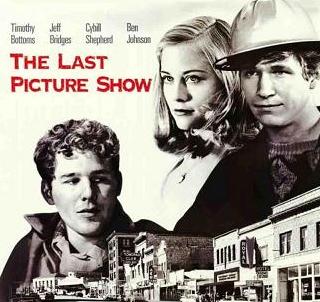
Adobe Books owner Andrew McKinley didn’t have to think long when I asked him the corniest question of our interview, occasioned by the announcement that his store was in serious danger of having to close. Question: if you had to choose one book to describe your situation, what would it be? “It reminds me of The Last Picture Show by Larry McMurty,” McKinley gamely responded. “It’s about a movie theater in a small Texas town that’s dying out.”

But! ask Mission District bibliophiles. Can Adobe Books be saved? The answer, according to McKinley, lies in whether you have a buddy with $60,000 to save the future of SF books — or better yet, $3 million.

McKinley has owned the store for the past 24 years, originally with a business partner. “I always dreamed of having a store filled with artists, poets, and writers,” he told me. “Meeting people who want to be artists has been the best part.” For decades, that’s what he did — he even opened a gallery space in the back that hosted near-monthly art openings. But times, they are a’changin’ — and rising real estate costs in the area have made it impossible for the bookstore to continue to exist in its prime location astride Valencia and 16th Streets. Granted, this isn’t the first time the alarm has been sounded, but McKinley forsees having to close his doors for good at some point over the next few months. 

Unless… and on this point he’s almost reluctant to give us hope. Unless some “angel” descends from heaven (or the hills south of Dolores Park perhaps) to pluck Adobe from its doom. With $60,000, McKinley reckons he could keep the shop open for three more years — that amount is approximately a year’s rent on the space. With $3 million, said “golden angel” could buy the building and ensure that the inner Mission continues to have a place to buy dog-eared paperbacks and browse well-curated banks of sweet, sweet literature. 

But. “I don’t want to be a charity,” says McKinley. “I feel that closure might be the best solution if no one can step into save it.” The bookshopkeep allows that he hasn’t exactly bent over backwards to adjust our times of Amazon.com and 140-character attention spans. He could have added a cafe to augment the business, he posits. Maybe started selling new and remaindered volumes. 

But. There it is, he didn’t, and now we’re faced with losing yet another Mission bookstore to the march of time. (Granted, it’s not all bad news for bookworms — Modern Times Bookstore Collective was able to relocate to a gorgeous new location on 24th Street and the Dog-Eared Books family recently had a new baby not too far away in the form of Phoenix Books.) 

Unless. McKinley says the notion of re-starting Adobe as a member-based collective has been thrown around by some of the shop’s super fans. But that could be just the well-wishing of the community members he’s held so dear over the years. 

Just remember. “The knowledge in books is not as important to get by in this modern world,” says McKinley. “People don’t put together large collections of books as much. It is funny, more books have been created in the last few decades and more people can read than ever before.” We read you, sir.

P.S., massive sale going on right now at Adobe Books. 

Adobe Books

3166 16th St., SF

(415) 864-3936

adobebooksbackroomgallery.blogspot.com

Just when you thought it was safe to go back in the theater: new movies!

0

Admit it: you’ve already searched showtimes for Piranha 3DD (I totally did). It wasn’t screened for critics (duh). There’s plenty more to report on in the world o’cinema, however, including buzzed-about indie The Color Wheel at the Roxie and Smith Rafael (check out Ryan Lattanzio’s review/interview here) and the latest from Wes Anderson, Moonrise Kingdom (Michelle Devereaux has mixed feelings here).

By dint of its cast (which includes an Oscar winner, a vampire baby mama, a superhero, and a cocksucker), Snow White and the Huntsman will probably rake in the most of any new movie. But is it worth seeing?

Snow White and the Huntsman It’s unclear why the zeitgeist has blessed us this year with two warring iterations of the Snow White fairy tale, one broadly comedic (April’s Mirror Mirror), one starkly emo. But it was only natural that Kristen Stewart would land in the latter rendering, breaking open the hearts of swamp beasts and swordsmen alike with the chaste glory of her mien. As Snow White flees the henchmen and hired killers dispatched by her seriously evil stepmother, Queen Ravenna (Charlize Theron), and traverses a blasted, virulent forest populated with hallucinogenic vapors and other life-threatening obstacles, Stewart need not act so much as radiate a dazzling benignity, weeping the tears of a martyr rather than a frightened young girl. (Unfortunately, when required to deliver a rallying declaration of war, she sounds as if she’s speaking in tongues after a heavy hit on the crack pipe.) It’s slightly uncomfortable to be asked, alongside a grieving, drunken huntsman (The Avengers‘ Chris Hemsworth), a handful of dwarfs (including Ian McShane and Toby Jones), and the kingdom’s other suffering citizenry, to fall worshipfully in line behind such a creature. But first-time director Rupert Sanders’s film keeps pace with its lovely heroine visually, constructing a gorgeous world in which armies of black glass shatter on battlefields, white stags dissolve into hosts of butterflies, and a fairy sanctuary within the blighted kingdom is an eye-popping fantasia verging on the hysterical. Theron’s Ravenna, equipped in modernist fashion with a backstory for her sociopathic tendencies, is credible and captivating as an unhinged slayer of men, thief of youth, destroyer of kingdoms, and consumer of the hearts of tiny birds. (2:07) (Lynn Rapoport)

Also among this week’s top offerings: an Oscar-nominated animated film, a touching coming-out story, and the latest fractured-childhood tale from Japanese director Hirokazu Kore-eda.

A Cat in Paris This year’s Best Animated Film nominees: big-budget entries Kung Fu Panda 2, Puss in Boots, and eventual winner Rango, plus Chico and Rita, which opened just before Oscar night, and French mega-dark-horse A Cat in Paris. Sure, Jean-Loup Felicioli and Alain Gagnol’s film failed to cash in on 2011’s Paris craze, but it’s still a charming if featherweight noir caper, being released stateside in an English version that features the voices of Marcia Gay Harden and Anjelica Huston. A streetwise kitty named Dino spends his days hanging with Zoey, a little girl who’s gone mute since the death of her father — a cop killed in the line of duty. Zoey’s mother (Harden), also a cop, is hellbent on catching the murderer, a notorious crook named Costa who runs his criminal empire with Reservoir Dogs-style imprecision. At night, Dino sneaks out and accompanies an affable burglar on his prowlings. When Zoey falls into Costa’s clutches, her mom, the thief, and (natch) the feisty feline join forces to rescue her, in a series of rooftop chase scenes that climax atop Notre Dame. At just over an hour, A Cat in Paris is sweetly old-fashioned and suitable for audiences of all ages, though staunch dog lovers may raise an objection or two. (1:07) (Cheryl Eddy)

http://www.youtube.com/watch?v=j-v4K8pRQ74

Chely Wright: Wish Me Away Grab a jumbo-sized box of tissues for this doc, which follows country singer Chely Wright as she counts down the days until her very public coming-out — via full-court-press media blitz. In candid interviews (which feel more like therapy sessions) and some extremely emotional, self-shot home video footage, a fragile Wright recounts the reasons why she stayed closeted for so long: her troubled upbringing in small-town Kansas, a steely determination to make it in a biz not known for open-mindedness, and her own deeply-held religious beliefs. Hiding who she was led to years of personal agony, even as her career took off (her biggest hit: 1999 number-one “Single White Female”). With this level of honest, raw build-up, Wright’s decision to come out feels like a full-scale personal revolution. It’s an inspiring tale. (1:36) Elmwood. (Eddy)

I Wish It’s tempting to hold Hirokazu Kore-eda’s I Wish up to that other kids adventure story in the theaters, Wes Anderson’s Moonrise Kingdom, but that’s a disservice to Anderson: his arch look back at an age of innocence comes off as loftily contrived in contrast to this gently empathetic, ground-level view of children’s dreams and desires, one that falls well short of preciousness, thanks to Kore-eda’s acute eye for a changing Japan. Brothers Koichi and Ryunosuke (real-life sibs Koki and Ohshiro Maeda) are living apart like their two parents: the former bunks with his mother (Nene Otsuka) and grandparents in Kagoshima, where he plots to get his parents together again and frets over the ash-spewing still-active volcano; the latter is busy enabling his laid-back guitar-playing father (Jo Odagiri of 2003’s Bright Future) on the other side of the island, where he grows fava beans, eats takeout, and hangs out with pals like budding actress Megumi (Kara Uchida). These offspring of Peter Pan-like parents, who have had a tough time growing up and fulfilling their own dreams, have been forced to grow up fast — but Koichi is pinning his hopes on something faster: the new bullet train line that will link his town with his brother’s. He gets it in his mind that if a wish is made when the first trains pass each other, a miracle, like his bickering parents’ reunion, will occur. The kids conspire to grab to that magical moment, by hook or crook, and a little help from an elderly couple that might have stepped out of an older, more gracious Japan, as rhapsodized by Yasujiro Ozu. And as with his devastating portrait of abandoned kids eking out a living on their own, Nobody Knows (2004), Kore-eda effortlessly coaxes great performances out of his child actors. Like Nobody Knows’s Akira, Koichi and Ryunosuke are determined to persevere, post-familial meltdown, through all personal Armageddons, be they triggered by volcano, tsunami, or heartbreak. (2:08)(Kimberly Chun)

Wall down, joints up

0

The tallest structure in Germany is a sky needle with a majestic ball sitting well up its length. Due to some vagaries of the physics of light and the shiny, Epcot-like nature of this ball, Berlin's Fernsehturm (a.k.a., television tower) casts the shadow of a cross over the city, much to the consternation of its East German builders.

One wonders what they would think of the head shop nestled into the base of their show of socialist triumph. For the past 11 years Udopea has been here, currently occupying a space next to a bike rental shop and mere feet from a line where a million visitors cue every year to ascend into the Fernsehturm's observation decks and fancy restaurant.

But maybe this isn't such a weird thing. A cursory look at Udopea's window offerings reveal the standard wacky tourist fare: rainbow hair dyes, black-light bongs, bongs spotted with hippie daisies. I was in the market for cotton candy hair, so we stopped in — only to see my beloved California-made Magic Flight vaporizer (see Herbwise, "Hippies do it better," 2/8/12) vaporizer. It appears Udopea actually knows its cannabis.

Berlin is not the least tolerant place for marijuana in Europe. Head over to Görlitzer Park in the trendy Kreuzberg neighborhood and you can score baggies of dry cannabis in a flash. Marijuana is openly smoked in many of the town's world-famous, dirty-as-hell techno churches. But it's no cannabis culture capital. After all, this is a place where entering "marijuana" as a search term on the website of Berlin's reigning English-language culture magazine turns up only one result: an interview with Evidence, of LA underground hip-hoppers Dilated People. (He's making a pun off of "bagpipes.")

So those looking for a conversation about weed that goes deeper than "you want" and "how much" should drop through Udopea. In addition to klassy US products, you can find Germany's finest glass company Roor (www.roor.de). Glassblower Martin Birzle's brand inspires fierce adherents — you should have heard the Udopea sales assistant's roar of disbelief when I told him I was unfamiliar with the product. (Nationalists.)

Plus, stuff for growing so that you don't have to keep heading out to Görlitzer. The quantity of lights, fertilizers, and various other accoutrements that Udopea deals will actually sound the death knell for their most idiosyncratic of its five Germany-wide locations. More space is needed to properly stock the grow section, so the Berlin store is moving to a more spacious location in another neighborhood. Later, tourists.

Reduce, re-use, replace

1

yael@sfbg.com

Greg Gaar knows the names, characteristics, and birds and butterflies attracted by every plant in the native plant nursery that he tends. Last week, he proudly toured me through the garden, pointing out plants like Yarrow ("great for bees and butterflies") and the beautiful flowers of the Crimson Columbine, of which Gaar believes there are "only two others left in San Francisco."

Gaar has been working at 780 Frederick St., where he now tends the garden, for decades. His mother went to high school on the same block, the old site of Polytechnic High. Before Gaar became the gardener, he ran the recycling center that Haight Ashbury Neighborhood Council (HANC) operates next to the garden. Now, the pioneering green operation he helped build may shut down.

At the center, people can recycle their bottles, cans, paper products, and even used vegetable oil, and make some cash along the way. Those who use the center say it's a green and dignified way to make some money.

But residents in the surrounding area have complained for years that the center is loud and attracts homeless people. They also say that, due to their proximity to the recycling center, the chance that their trash will get rifled through at night is greater than in other parts of the city.

Citing these concerns, the center's landlord, the San Francisco Recreation and Parks Department (RPD), has spent the past few years trying to evict the HANC recycling center. The center got an eviction notice in December 2010. HANC's lawyer, Robert DeVries, successfully challenged the eviction. RPD sued for eviction again in June 2011, and that matter may finally come to a close June 6 when it will be heard by a three-judge panel in SF Superior Court.

DELIVERING THE GARDEN


RPD officials cite neighbor concerns, claims that the recycling center's services are outdated and obsolete, and the idea of planting a community garden in its place. In fact, the Planning Commission approved a community garden in the place of the recycling center last year.

Since then, HANC staff got to work building its own community garden. In just a year, they erected 50 beds from recycled wood, and according to Gaar, about 100 neighbors have plots that they currently tend.

As the recycling center's director, Ed Dunn, tells it, the infrastructure already in place at the recycling center made building the garden come naturally. HANC was able to fund it with income from the recycling operation, and plant it with seeds from the native plant nursery.

Dunn emphasizes that no city money was used to build the current community garden. The city had laid out a $250,000 budget for the garden after it was approved and designed in 2010.

A bundle of documents containing arguments against HANC, provided by RPD, includes details of the Golden Gate Park Master Plan, surveys indicating a great need for community gardens in San Francisco, and letters and statements from neighbors complaining about the recycling center.

A 2004 survey discussed in the documents found that community gardens are among the top "recreation facilities most important to respondent households." Community gardens came in fifth in importance, after walking and biking trails, pools, fitness facilities, and running and walking tracks. The documents include a detailed map of the "Golden Gate Park community garden preliminary plan," imagined at HANC's current site.

The map was drawn up in November 2010, the same month that a meeting of the Recreation and Parks Commission laid out the reasons that HANC had to go. Minutes from the meeting include the city's need for community gardens as well as some neighbors' disdain for the recycling center in that site. It argues that the needs of recyclers can be well met with other recycling centers in the city.

Seventeen other recycling centers operate in San Francisco. Most are located in neighborhoods on the city's edges, with a few in the Outer Sunset and Excelsior, although most are located in Bayview-Hunters Point.

But the commission doesn't seem concerned with potential nuisance to neighbors in directing more traffic to these other recycling centers, or with the difficulty poor recyclers have in getting out there. "The San Francisco Department of the Environment is confident that recyclers that use the facility will take their material to another existing site for proper handling," according to the meeting's minutes.

The commission is, however, concerned about a nuisance that the recycling center creates for Haight-Ashbury neighbors, according to the minutes. The notes cite "neighborhood noise, truck traffic, litter, and public safety concerns as negative impacts related to continuing operations at the site."

AGAINST THE POOR?


But is this really just another case of resentment against people who are poor and homeless?

HANC's Dunn argues that, in fact, much of the material that those who use the center bring in isn't taken from residential waste bins. Besides, it's not technically "HANC's CRV redemption program" that encourages recycling as a revenue source for the less fortunate. State law requires that consumers be able to redeem bottles and cans for cash.

The meeting minutes argue that the recycling center "enables illegal camping and illicit and unhealthy behavior in Golden Gate Parks' eastern end and in neighborhoods in close proximity to the site."

Supposed evidence for the position cites letters to the editor published in the San Francisco Chronicle, a frequent outlet for anger at the homeless. One concerned resident, Karen Growney, asserts that the center "provides no benefit to people living in Haight/Cole Valley."

HANC disputes this, saying that many neighbors use the center. They have beneficial relationships with many nearby businesses, including New Ganges restaurant just across the street. Its website, kezargardens.com, shows many smiling neighbors who use the center to recycle.

Notable among them is actor/activist Danny Glover, a Haight resident since 1957. In a video on the website, Glover — interviewed while in his car dropping off recycling at the center — says, "I would be dismayed and not happy if we close this wonderful recycling center down…It would be a tragedy, and a great loss to this city and this community."

In her letter, Growney also laments that her family "had to pay a considerable amount to build a wrought-iron, locked gate to keep people out of our trash." Another letter, written by neighborhood resident Curtis Lee, asks that the city "eliminate the Haight Ashbury Recycling Center," saying that, "It is a blight on the neighborhood and an attraction to rodents and homeless carts."

Of course, those carts come with people. HANC takes issue with the assertion that their services "enable" or "encourage" homelessness, as well as the assumption that the recycling center only serves the homeless.

Dunn says that many of the recycling center' clientele are elderly immigrants, often housed, who contribute to their family income with cash from recyclables. He also insists that "most of the people that use the recycling center don't camp in the park."

Homeless people certainly do use the center, but it's not clear whether its presence truly "enables illegal camping and illicit and unhealthy activity." Dunn finds it laughable to say that "the center creates homelessness." It's a lot of work to cart around recyclables all day, he says, and the dedicated recyclers are generally not the same people that ask tourists on Haight Street for spare change.

THE RECYCLERS


There is a great diversity in how homeless San Franciscans spend their days, and recycling is in many ways a specialized, committed way of life. In her 2010 ethnography of homeless San Franciscans, Hobos, Hustlers and Backsliders, Teresa Gowan focuses on the "recyclers," the segment of the homeless population who have made a habit of collecting bottles and cans as a way of getting by.

"The phenomenon that captured my interest was the steady stream of shopping carts loaded high with glass, cans, cardboard, and scrap metal rolling past my door," she wrote.

Some of her interview subjects show disdain for the recyclers, who work hard all day and don't get much cash out of it. Dealing drugs, stealing, or panhandling can be more lucrative and less backbreaking. One subject, a man named Del who, according to Gowan, mostly stayed in the Tenderloin, thought the "20, 25 bucks on a big load" that recyclers usually made was pathetic. "'And that's for heaving around a big old rattling buggy all day,' Del said pityingly. 'I can make 15 bucks inside'a two minutes.'"

But many of her interview subjects prefer to recycle anyway. Gowan describes another subject, Sam, as "a champion recycler, muscular and persistent, who often put in nine, ten hours on the trot." She quotes Sam saying, "Without this, I'd kill myself. Couple a days, I'd do myself in…. You get some guys, seems like they can deal with homelessness. I'm not one of them."

The book argues that "pro recyclers" included a "large core group who had created an intense web of meaning around their work as a kind of blue-collar trade."

PIONEERING HANC


Recycling for cash may not be a respected or taxed job "blue collar" job. But it's certainly green.

Since the center began operating in the 1970s, mainstream attitudes towards environmentalism and sustainability have shifted dramatically. The HANC recycling center was a product of the environmental movement, and helped usher in the widespread support for recycling.

Now, with curbside recycling fully functional in San Francisco, many call the recycling center's work obsolete. But HANC argues that the city needs all the help it can get if it is to reach its goal for zero waste in 2020. It also employs 10 people, and Dunn argues that it would be foolish of the city to eliminate those stable green jobs.

HANC has also helped move along the trend towards community gardens that RPD is now embracing so thoroughly that, ironically, it could lead to the recycling center's demise. HANC helped underwrite the Garden for the Environment project as well as the Victory Garden planted outside City Hall in 2008. Dunn says that the staff enjoyed the challenge of building the garden, and would be interested in helping the city by creating more gardens without city money.

Gaar says he's committed to continuing to work for a healthier planet, regardless of what happens to the center. He and the other HANC staff have come to see the eviction process as symbolic of a direction in which the city's heading, that also includes last year's Sit-Lie Ordinance: decisions designed to shuffle homeless people out of wealthy neighborhoods.
The arguments for the community garden, however, seem to indicate a strong desire for a greener city. It's not easy balancing environmental initiatives with NIMBY woes — especially when your backyard is Golden Gate Park.


Tricky sings

0

MUSIC Compared with the smooth operator currently installed in the Oval Office, how nervous Richard Nixon looks now as a representative of America abroad, all stiff grins, rumpled shiftiness, outbursts of awkward rhetoric. Reviewing vintage footage of him recently, I half expected a rappin’ granny to suddenly appear, and goofy Uncle Dick to start “breaking it down.” And yet, 40 years after California’s second-most problematic political progeny (pace, zombie Reagan) went to Beijing to “open China” — ending 25 years of separation and going on to win re-election in a landslide, despite the growing Watergate scandal — might it be time to look past the jerky, jowly image of Tricky Dick and reassess the character of the man and the moment, to keep us on our toes?

“Nixon was an incredibly complicated man, whose intellect constantly got in his way,” Canadian opera director Michael Cavanagh told me over the phone during a wide-ranging interview. “And it’s especially relevant to examine him now in that light, with a certain distance of history. We tend to stop at the jowls, the scandal, and the Republicanism. But it’s often been remarked during this election cycle that there’s no way in hell Nixon would ever be considered for the Republican ballot now. He was too small ‘r’ republican, too centrist. So there’s this complexity to him that confronts lefties with their own stereotypes, assuming most patrons of the arts lean left. That’s something I really like.”

Cavanagh’s complexifying occasion will be his production of John Adams’ 1987 Nixon in China, part of the San Francisco Opera’s nifty-looking summer season. The opera, with a luminescent libretto by poet Alice Goodman and an engrossing, fever-dream score by Adams, whose melodies, time signatures, and musical reference points churn and shift like memory itself, takes us from the moment Nixon’s Spirit of ’76 touches down on the tarmac (Kissinger in tow), through his historic meetings with Chou En-Lai and Mao Tse-Tung, along with First Lady Pat on an eventful factory tour, and finally into the major characters’ bedrooms, memories, and fantasies. It’s a sensually intoxicating work, full of barnstorming arias sung by a multi-ethnic cast (you will have “I am the wife of Mao Tse-Tung” stuck in your head for days) that examines media spectacle, modern myth-making, and cultural difference on a truly, well, operatic scale.

San Francisco Bay Guardian Nixon was Californian, Adams is a longtime Bay Area resident. It’s the 40th anniversary of the China visit, and also an insanely contentious election year. The Bay Area as a huge Chinese population — many families escaped Mao’s Cultural Revolution. Do you feel any particular pressure bringing this production here, now? 

Michael Cavanagh I feel a tremendous amount of responsibility, but I also feel a lot of freedom. Of course, the events the opera depicts and its roots in the Bay Area will resonate, and that’s hugely exciting. But this isn’t a documentary, it’s a rumination, more of a poem. As Nixon says in the beginning of the opera, “News has a kind of mystery” — and I feel that’s what Adams and Goodman were really expanding upon with this.

I do think that this production, especially, will bring up memories for a lot of people. I myself had an inkling of this whole thing happening when I was really young — it’s something that a lot of the world shares, a memory of this iconic moment, even if that memory is only a glimpse of pavement or a handshake, kind of like my own. The opera works with that abstraction, those fuzzy frames of memory that overlay images of the past, while still sharpening some of the more historically relevant moments. I hope people can relate to it on all of those levels.

SFBG Twenty-five years separate us from the opera’s premiere in Houston in 1987 — and yet China remains, to use a slightly loaded term, as inscrutable as ever to many Americans, yet as enmeshed in their daily lives as ever. What relevance do you think the opera may hold today?

MC I think it has an eerie relevance. Even back when Nixon in China premiered, China was still remote and threatening to many, and this was before the reform machine revved into life, before China’s emerging economic dominance. In one scene, in Mao’s library, Mao goes off quite poetically about the revolution, and how things were changing, and he plays fast and loose with the concepts of capitalism and communism, almost as if he foresees the necessary reforms ahead, that came to pass.

Beyond that, the opera is very prescient about the evolution of the media — this was one of the first major world events to be broadcast on a global scale, to be covered as the kind of spectacle we base much of our opinions and thoughts on today. We think of Nixon as shifty-eyed, but he was really just trying to figure out where the cameras were most of the time, trying to acclimate to this new kind of fishbowl environment in which political figures were treated like movie characters. The opera records the beginnings of all that, and ends with them reviewing their memories of everything that’s occurred as if it was all this footage, which it is quite actually on stage.

Basically, though, the deepest relevance a work can have is by connecting to the audience through its characters. Take Pat Nixon. We hurt for Pat Nixon. She’s been betrayed. Nixon promised her a simple home life, the comforts of family and a man at home, and here she is traveling all the way to China! She’s bewildered, but as First Lady there’s really no place for that, so she forges her own, I think very American kind of resolve that cracks a couple times, but still gets her through.

It’s a very poignant psychological and emotional study, projected on the world stage, and amplified as only opera can. That’s what opera does better than any other art form: it amplifies life.

SFBG You’re a Canadian — have you caught any flack for interpreting these events that are so associated with the US?

MC You know, despite appeals to the contrary, our two countries really share the same history. This version of the opera was premiered in Vancouver during the Olympic Festival — it’s what Canada chose to represent itself will to the entire world. And when it comes down to it, really, everything you do effects us Canadians just as much. We sleep with the elephant. *

NIXON IN CHINA

June 8-July 3, times and prices vary

War Memorial Opera House

301 Van Ness, SF.

(415) 861-4008

www.sfopera.com


Sheriff’s wife talks to KGO-TV

28

KGO’s Dan Noyes flew to Caracas, Venezuela to interview the wife of embattled San Francisco Sheriff Ross Mirkarimi, and while her comments haven’t made anywhere near the media splash that most scraps of information on this sordid tale create, it’s very much worth watching the video. Check it out here.

Remember as you watch: Mirkarimi hasn’t been able to speak to his wife in months. The stay-away order prevents him from seeing her or phoning her or emailing her or contacting her in any way (except to coordinate his limited visits and skype calls with his son). It’s possible that the two of them came up with a joint story early on in the process, before the restraining order, but unless that happened, they’re both offering independent versions of the events.

And a lot of what Lopez says is consistent with a lot of what Mirkarimi says.

She tells Noyes that she was never afraid of her husband or fearful for their son. She says that she thought her neighbor, Ivory Madison, was an attorney and that the video — designed to be used in a possible future custody battle — would be confidential. (Madison’s lawyer disputes that.) She tells more or less the same tale of that New Year’s Eve that Mirkarimi does.

She also says there was no prior incidence of domestic violence — that her comments on the tape about “the second time” referred only to an earlier verbal argument about her travel to Venezuala.

Not defending Mirkarimi’s actions here (and no, trolls, I never have). Just saying that it’s important to hear his wife’s (presumably) unvarished version of events when we make judgments around whether he should keep his job. (The mayor never bothered to talk to Lopez before he filed official misconduct charges).

I don’t think the embattled sheriff was happy to hear his wife say that the couple may divorce, or that she may not return to San Francisco (the city, she says — justifiably — hasn’t been nice to her).

But I think the voice of Eliana Lopez has been missing too long in this whole political battle, and I’m glad to see she’s speaking out.

Landlocked

1

arts@sfbg.com

MUSIC Pavement. That’s all I really associate with Stockton. Personally, I’ve only been there once, few weeks back on my way to Yosemite, and I just drove through — 205 to 120 — stopping once for gas. So pavement all the way. Yet, despite the lack of waves, it’s home to Surf Club, a sunny four-piece that’s recently released its debut EP, Young Love, on Death Party Records.

“It’s not that bad living in Stockton,” says guitarist Eddie Zepeda. “You make the best of it.” Zepeda barely finished this optimistic assessment before bassist Fonso Robles offers a conflicting view: “Uh, it’s pretty bad.” Earlier in the week, Robles had been pulled out of his car, in the middle of the day, and held up at gunpoint. Before taking off, the robber cautioned, “Don’t let me catch you slippin’,” a combined threat and unsolicited piece of street advice.

Early last year, Justin Vallesteros of Craft Spells moved his project from Stockton to Seattle (where he was born), citing the former city’s number one placement on Forbes Magazine’s 2011 list of “America’s Most Miserable Cities” among the reasons. Surf Club’s Frankie Soto, then guitarist for Craft Spells, stayed behind in his own hometown. “It wasn’t really a hard decision. It was Justin’s band, so I was just like go ahead, dude,” Soto says.

There doesn’t appear to be bad blood between the groups: “Justin still comes over and we all jam,” Zepeda says, and a few days after the interview I run into Soto and Robles at the Great American Music Hall, where Craft Spells is opening for the Drums.

Still, after the split, Soto tells me he spent a few months depressed in his room, trying to find his own sound. When he re-emerged it was with Zepeda and Robles, as well as drummer Jose Medina, who the rest of the group insists is its most talented member. “He’s probably the best drummer and guitarist in the band, and he doesn’t even play guitar for us,” Soto says.

With individual experience in a variety of other bands, the four switched around on instruments, trying to find the right configuration. Medina went from bass to drums, Soto took on vocals in addition to guitar, and Robles — in a Tina Weymouth move — started learning bass from the beginning.

When the band first started coming together, Zepeda had been listening to a lot of surf rock and Beach Boys. It’s certainly an influence on the sound of material released so far, but they didn’t set out or plan to be a Dick Dale revival band.

“I can’t even swim,” Soto says, in a moment of irony recalling Brian Wilson’s fear of the water. “Of all the band names, Surf Club just seemed the easiest to hear.” (Robles angled for Faucet Water, presumably in reference to Stockton’s E. coli contamination warning a couple years back, and Youth Wave was another aquatic option.) “I don’t consider us a surf band. It’s just pop, and that’s what we focus on for all of our songs,” Soto asserts.

True to its name, Young Love is full of open-hearted lyrics with youthful longing. In addition to vocal harmonies, the biggest surf aspect is the tidal wave tempo, where bouncy guitar rhythms get carried by the super tight drumming, speedy fill, and shifts in patterns that reveal Medina’s background in metal and jazz. Soto sings with a light voice, and comes off as a bit of a tender softy. “I guess I’m still kind of shy,” he explains, “I took choir in high school, but it’s still kind of weird being in front of everyone with them paying attention to what you’re saying.”

Barely in their twenties, friends since fifth grade, a band for less than a year, with less than a dozen shows performed so far, Surf Club is clearly still figuring out how to make it work.

As Zepeda puts it, “we’re pretty young, we really don’t have any money, and we all have bills to pay.” That’s the point where people might give you advice, besides slippin’ or not slippin’. When they played with the Soft Pack a couple months back, singer Matt Lamkin gave them some. “He was telling us to move out of Stockton,” Soto says. But ignoring that kind of advice has worked so far.

SF Popfest Day 2

With Surf Club, Kids On A Crime Spree, Manatee, Dead Angle, Cruel Summer

Sat/26, 4pm, $10

Knockout

3223 Mission, SF

(415) 550-6994

www.theknockoutsf.com

Party like it’s 1986: “Big Fun in the Big Town”

0

Toward the end of Big Fun in the Big Town (released today and available here), Dutch filmmaker Bram Van Splunteren’s love letter to the birth of hip-hop in NYC, we’re treated to an interview with a young LL Cool J at his Grandma’s house in Queens. The newly released documentary, compiled from footage that’s been collecting dust in a European warehouse since 1986, is full of these revelatory moments, painting a vivid picture of an art form in the process of defining and justifying itself.

http://www.youtube.com/watch?v=iqnyQ5vhH7o

It’s endearing and revealing to witness younger versions of superstars like Run-DMC, Grandmaster Flash, and Russell Simmons discussing their artistic philosophy early on in their careers, hungry for the success and celebrity we now know they achieved. Van Splunteren effortlessly conveys his passion for hip-hop, and talent for filmmaking, without upstaging the musicians at the film’s center. Edited with a deft hand, Big Fun in the Big Town breezes through its 40-minute running time, offering a fresh take on one of the great paradigm shifts in American music history.

Sipping lattes with the transmale program specialist

1

“People at sex clubs are looking to hook up. It’s usually my safe sex practices that get me turned down more and not the fact that I’m transgender” 

I thought it would be cute to conduct today’s interview in a bathhouse sauna. Instead I found myself sipping a soy milk latte in one of the Mission’s many hip coffee shops — not as intimate of an option, but probably better for my note taking. For once, I was on time, and I patiently awaited San Francisco sex educator Niko Kowell.

I love Kowell’s official job title, transmale program specialist. It sounds so glamorous, and in truth, it is. Kowell is the creator of San Francisco’s Transmenformen night, held every second and fourth Thursday at Eros, one of San Francisco’s most innovative gay bathhouses. At TM4M, as the event is nicknamed, Kowell facilitates group dialogues for queer and transmen who want to have sex with other males. He teaches bathhouse cruising tactics (coy glances over one’s shoulder among them), screens transgender and queer-related films, and puts on an almost-naked yoga class. 

>>INNOVATIVE SEX ED MAKE YOU FEEL ALL WARM INSIDE? CHECK OUT LAST WEEK’S KELLY LOVEMONSTER INTERVIEW WITH CUDDLE THERAPY SPECIALIST TRAVIS SIGLEY

During our morning together, Kowell and I talked about bathhouse culture and fucking transmen. He also debunked the rumor that all transmen who sleep with men are bottoms. 

San Francisco Bay Guardian: Tell us about your experiences with gender and sexuality, particularly within gay male cruising and bathhouse culture.

Niko Kowell: It’s been interesting learning about gay male cruising. I come from a really communicative, consensual background when it comes to sex. And I have had to learn how to pick up men in a bathhouse in a completely different way. It’s a lot more to do with eye contact. Being too verbal can be seen as a turn off. I’ve also had to think of creative ways to disclose the fact that I’m transgendered. Recently I’ve taken to towel flashing hot guys I’m attracted to. 

I had a lot of assumptions of what male cruising spaces would be like. People at sex clubs are looking to hook up. It’s usually my safe sex practices that get me turned down more and not the fact that I’m transgender. It’s been good for me to learn that my trans-ness isn’t always the reason why people aren’t interested. There are are a number of reasons why someone wouldn’t be interested. I’ve also had to learn how to be my own best advocate. It’s important to know what your boundaries are and be willing to stand by them. 

SFBG: Take us through the series of events that led to your position as a transmale program specialist. 

NK: Five years ago when I was in college I came to San Francisco and did an internship at Eros. I was studying psychology, and I was working on a paper entitled the “First Timers’ Guide to Playing With a Transguy.” I went back to Ohio, graduated, and promptly returned to SF.

Upon my return, I was working part-time at Eros when Luke Woodward, the previous program supervisor at Transthrive, hired me as a private contractor to do Transthrive events. Last October our program got funding, and now I get to focus predominantly on transmale programing. TM4M is a collaboration between Eros, Trannywood Pictures, and Transthrive, a program at the Asian Pacific Islander Wellness Center

Showing them tats, flashing those biceps: Niko Kowell in the Transthrive offices.

SFBG: Eros is already known to be a queer masculine and transinclusive space. Why have a night specifically geared to transmen?

NK: It is important that TM4M happens at Eros because it gets transmen into a male space. It begins to build community between cismen and transmen, and it teaches everyone how to have casual sex with different types of bodies safely. TM4M is a space where transmen can talk about what it was like to transition and still be into the same gender. I want to reduce shame around the issue of transitioning and participating in one’s sexuality.

SFBG: What other events and projects are you currently working on?

NK: I’m working with Trannywood Pictures on a documentary project about transmen and their relationships to their penis, whether that be the cock they strap on or the cock they grew while on testosterone. The project was inspired by the 1999 documentary Private Dicks a special about cisguys and their relationships to their penis. 

SFBG: How do you identify with your gender today?

NK: I identify strongly as transgender. I use male pronouns, and I strongly feel genderqueer. I’m really proud of my female history. It’s important to me. I guess I identify as queer in general in regards to my sexuality and gender.

SFBG: Are you currently dating anyone?

NK: I’m in a nonmonogamous relationship with a ciswoman. I almost predominantly play with men, and she almost predominantly plays with woman. It works for us.

SFBG: Tell us something interesting and sexy.

NK: I’m versatile. It’s hard for me to find cismen who want me to top them. I just want to dispel the rumor that all transmen who sleep with men are bottoms. That’s why I wrote the top five reasons to fuck a transguy:

1. Transguys are hot

2. Trans cock is any shape or size you want, and it never goes soft

3. Three holes are better than two

4. Small hands make small fist(s)

5. Curiosity killed the cat, but satisfaction brought it back

I’m in part being cheeky with my list, and I acknowledge that every transguy is unique in the way they want to experience sex and their sexuality. I want people to keep in mind some transmen may not agree with these reasons. 

SFBG: What does creating a sex-positive space mean for you?

NK: A sex-positive space should be free of judgement. There is no certain way to be a man or be sexual. You should be sexual in a way that makes sense for you. When I’m facilitating dialogue about sex it’s important that everyone in the room remain open and supportive.

As a facilitator I’m open and honest about my experiences. I sleep with men and women. I’ve done porn. The people who keep coming back to my events are committed to cultivating a sex-positive space. It’s about diversity and really connecting with the diversity of queerness. People should have the space they need to share their personal experiences, and we need to really be in support of each other as a broader GLBTQI community as well. 

“Men on the Mat”: A queer guy yoga class

Thu/24, 7pm, $5-10 suggested donation

Eros

2051 Market, SF

www.erossf.com


The GOP has no answer on the state budget

80

The Republican leaders in Sacramento have absolutely no solutions to the state budget problems. They’re against the guv’s tax plan for November, they’re against raising any new revenue, they have their facts completely wrong — and they have no alternatives to offer.

That’s not me ranting, that’s the factual evidence based on a fascinating radio interview featuring Senators Mark Leno, a Democrat who chairs the Budget Committee, and Republican Bill Emmerson, who is the committee vice-chair.

Leno is his usual reasonable self, saying that he knows there will be cuts and that the Democrats are going to try to figure out where and how best to make the reductions. Emmerson says:

1. That there have been “no serious cuts” in the past;

2. That the state budget is too big and growing;

3. That there should be no cuts to education;

4. That there are “places where we can make cuts,” but there are no specific proposals on the table; and

5. That all of this will magically work with no new revenue.

Leno points out that the state’s general fund was over $100 billion in 2008, that pre-recession it was projected that normal revenue growth and growth in cost of living and state needs would bring it to $125 billion by this year — and that the actual state budget is about $85 billion. That’s $40 billion less than it should be. There have already been massive cuts.

Emmerson wants to “fund education at last year’s level,” which is nice, but amounts to a cut since costs go up every year. And last year’s level was way below what it ought to be.

But beyond that, he has no suggestions at all of what programs he wants to cut.

I guess I shouldn’t be surprised.

Obama: gay OK, pot not

0

steve@sfbg.com

HERBWISE President Barack Obama made big news last week when he became the first U.S. president to state his support for same-sex marriage, taking a states’ rights position on the issue and telling supporters “where states enact same-sex marriage, no federal act should invalidate them.” So why is his administration so aggressively going after medical marijuana providers that are fully compliant with state law?

As a presidential candidate, Obama said that his administration wouldn’t go after medical marijuana patients or suppliers that were in compliance with the laws in the 19 states where medical marijuana is legal or decriminalized, a position that his Department of Justice reinforced with a 2009 memo restating that position.

But then last year, the administration reversed course and began a multi-agency attack on the medical marijuana industry in California and other states, with the Drug Enforcement Administration raiding growers, dispensaries, and even Oaksterdam University; the Department of Justice and U.S. Attorneys’ Offices threatening owners of properties involved in medical marijuana with asset seizure; and the Internal Revenue Service adopting punitive policies aimed at shutting down dispensaries that are otherwise paying taxes and operating legally under state law.

Recently, Obama tried to explain his evolving stance on medical marijuana in a Rolling Stone interview: “What I specifically said was that we were not going to prioritize prosecutions of persons who are using medical marijuana. I never made a commitment that somehow we were going to give carte blanche to large-scale producers and operators of marijuana — and the reason is, because it’s against federal law. I can’t nullify congressional law.”

Yet statements like that only reinforce the idea that Obama has a double standard. After all, same-sex marriage is also against federal law, specifically the Defense of Marriage Act that President Bill Clinton signed in 1996. The Obama Administration last year refused to continue defending DOMA in the courts, whereas it has proactively and aggressively expanded enforcement of federal laws against pot.

When I asked Obama’s Press Office to address the contradiction, they referred to the Rolling Stone interview, provided a transcript of a press briefing from last week, and refused further comment.

Press Secretary Jay Carney spent much of that briefing discussing Obama’s “evolving” position on same-sex marriage, and said the president has always been supporter of states’ rights. “He vehemently disagrees with those who would act to deny Americans’ rights or act to take away rights that have been established in states. And that has been his position for quite a long time,” Carney said.

Assembly member Tom Ammiano, who has sponsored legislation to improve protections for those in the medical marijuana industry and criticized Obama’s crackdown on cannabis, said he was happy to hear Obama’s new stance on same-sex marriage. But he said that position of federal non-intervention in state and local jurisdictions isn’t being following with medical marijuana, or on immigration issues, where the federal government has circumvented local sanctuary city policies with its Secure Communities program targeting undocumented immigrants.

“Good move, Mr. President, now let’s work on that states rights issue,” Ammiano told us. “I don’t want to water down the significance of this, but I do want to treat it holistically.”

Ammiano praised House Minority Leader Nancy Pelosi for her May 3 public statement criticizing the federal raids on medical marijuana patients and suppliers, but he said federal leaders should act to remove marijuana from the list of Schedule 1 narcotics, a classification of dangerous drugs with no medical value.

“Pelosi was good to put that statement out, but now we need the next step of changing federal law,” Ammiano said.

David Goldman, a representative of Americans for Safe Access patient advocacy group who serves on the city’s Medical Cannabis Task Force, called Obama’s double-standard hypocritical: “If Obama is affirming federalism and states rights, then he’s inconsistent with state-regulated medical marijuana.”

But Goldman also said, “Why should we be surprised that politicians take contradictory positions on issues?”


Sonic attack on the poor

3

news@sfbg.com

It was 11pm on Thursday, May 3, and the ballet was just letting out. Affluently dressed dance enthusiasts streamed arm in arm down Grove street towards the Civic Center BART station chatting about the evening performance. That night’s show of Don Quixote at War Memorial and Performing Arts Center was likely excellent judging by the theatergoers’ exuberance.

As they passed by the Bill Graham Civic Auditorium, a half-dozen homeless people seated along the route begged the procession for change. Across the street and a block down Grove, a few homeless individuals had bedded down for the night in front of the Main Library.

It is these encounters, normal to urban life, that are at the center of a controversial strategy by Another Planet Entertainment, which leases the auditorium from the city, to drive the homeless away. They hope that by blasting a late night sampling of industrial noise through the venue’s sound system between the hours of 11pm and 7am, making sleep nearly impossible, that the homeless will be discouraged from congregating there.

A women selling the Street Sheet newspaper on the corner sums up the social tension that invoked the strategy. “They’re doing it to keep the homeless from sleeping there. All these people don’t want to see the homeless when they come through here,” she said, gesturing to the now thin stream from the ballet.

She had heard the noise over the past few nights and described it as deafening. “The first time I heard it I thought the building was under construction, then I thought a motorcycle gang was coming through. It is so bad it makes the windows of the building shake.”

Another Planet had no comment on the racket and would not say if the strategy would continue. But in an interview with the San Francisco Chronicle, company founder Gregg Perloff said the venue has had “an enormous amount of complaints” from their patrons about the homeless.

Late at night, police are powerless to respond to such complaints. The city’s carefully crafted sit-lie ordinance, which bars people from assuming either of those postures on city sidewalks during the day, is lifted between the hours of 11pm and 7am to satisfy constitutional concerns that have overturned similar ordinances in other cities.

“This it the first time I’ve heard of a strategy like this used against the homeless,” Bob Offer-Westort, civil rights organizer with the Coalition on Homelessness, said of the noise. “It is really problematic for a business to say that people on public property not breaking the law are a public nuance. It is a intrusion of a private company on public space.”

Standing in front of the building late on a foggy night, it’s easy to see why the homeless would gravitate to here. The building’s huge awning, covering much of the broad sidewalk, must be the easiest place to stay dry outdoors for many blocks. And since the demolition of the city’s old central bus terminal last year, it is perhaps the largest dry public space in the city’s core.

But is this sonic attack even legal? That’s a question that the Mayor’s Office and the San Francisco Police Department, neither of which answered our repeated inquiries, don’t seem to want to address.

San Francisco’s noise ordinance is a weighty document. Most cities suffice with a paragraph or two to regulate noise, while San Francisco’s ordinance runs nine pages. Noise, or rather the relative lack of it, seems of great importance to the city. There is even a city committee on noise.

The reason for the seriousness the city gives the issue of controlling excess noise is expressed in the very first paragraph of the noise ordinance: “Persistent exposure to elevated levels of community noise is responsible for public health problems including, but not limited to: compromised speech, persistent annoyance, sleep disturbance, physiological and psychological stress, heart disease, high blood pressure, colitis, ulcers, depression, and feelings of helplessness.”

Many of the cities homeless already suffer acutely from conditions on this list. Asked how an already vulnerable population could be affected by random industrial noise known to (and in this case intended to) cause agitation, Offer-Westort said, “It’s crazy to try to create these conditions, they are quite literally trying to create a civil disturbance, and not on their own property, but in a public space.”

With the adverse effects of noise pollution well-outlined, the ordinance goes on to state, “In order to protect public health, it is hereby declared to be the policy of San Francisco to prohibit unwanted, excessive, and avoidable noise.”

The ordinance pays particularly attention to licensed entertainment venues like the Bill Graham auditorium: “No noise or music associated with a licensed Place of Entertainment shall exceed the low frequency ambient noise level defined in Section 2901(f) by more than 8 dBC.”

As a matter of comparison the difference between a whisper and a quiet conversation is roughly an eight decibel increase, a relatively narrow margin. It seems reasonable that if you’re standing outside a venue, and the music coming from inside sounds louder than the person talking next to you, the city’s noise ordinance has been exceeded.

So motorcycles, saws, and other industrial sounds that were described at the auditorium late at night would range around 100 decibels without being amplified. Amplify it enough to shake the window in the building, one can assume it’s louder than a power tool, louder by far than the noise ordinance permits.

Everyone who has ever held a loud late night event in the city know the consequences of breaking the noise ordinance. A knock on the door by the SFPD that comes with a ticket and the end of your gathering. Do it again in a year and the fines doubles.

The strategy at the auditorium seems to be having some effect, but where the homeless will be shuffled off to is anybody’s guess. The reality of the homelessness crisis is there is no place for the homeless to simply move off too. With their numbers in the thousands, only bold political action on behalf of the city’s leadership can solve the problem.

“The root of the problem is that people can’t afford rent. Everyone who rents in San Francisco knows that it is way too expensive to live in this city,” says Offer-Westort. “We stopped creating public housing. Housing has become a commodity, an investment rather then a home, and that has driven up prices.”

Passing back through the area later at night, the building was quiet for the moment. A tow truck was loading a car out front with a beeping alarm, a motorcycle roars by, a boombox is playing across Civic Center Plaza, a man is yelling around the corner only to be drown out by a broken wheeled shopping cart clanking by. If this is the normal late night quiet of the streets, it’s a wonder the homeless get a moments sleep at all. But the building itself remains quiet right now.

A lone homeless man has bedded down in front but has not yet fallen asleep. Young and dreadlocked, he tells me that he has been in town only two days and is unaware of the controversial blasts of noise.

“God I hope they don’t do that,” he said from his sleeping bag. “It’s supposed to rain tonight. Why would they do that? As long as you are up before sunrise and move on, who are you bothering?”

And here in front of the auditorium in the middle of the night, with the concert patrons at home getting a comfortable night’s sleep, the question seemed valid. “It’s mean spirited. I think that we as society agree noise should be maintained at a reasonable level to not bother your neighbors,” said Offer-Westort. “The fact that their neighbors are homeless doesn’t mean they are not part of society.”

Tour de F*ck You: Sons of Science speak!

5

In our recent Bike Issue, we profiled several of our favorite Bike People — freewheelin’ movers on the 2012 bike scene we particularly admired. Among them, for how could it be otherwise, were the Sons of Science, an augmented trio of musical bike-tivists whose side-splitting viral “Motherf*cking Bike” video hit lampooned and celebrated SF’s precious, in-your-face bike culture. 

John Benson and Ward Evans of Sausage Films teamed up with amazing bike horn soloist Hector Pérez for the one-off (perhaps?) project — and there are plenty of juicy local cameos in the video. Benson and Evans took some time from sippin’ lattes on their fixies (kind of!) to answer some questions.

SFBG So…. I heard Russell Crowe just tweeted about you ….

SONS OF SCIENCE  Yes apparently he’s an avid cyclist, and we think he approved of the language. The video got several thousand more hits as a result of his tweet, and to show our appreciation we’re going to rent every one of his movies — even Breaking Up.

SFBG Who’s all in the band and when did you get together? Is it an outgrowth of other media projects?

SOS Sons of Science are Hector (Pérez, who appears as Horn Solo in the MFB video), John (Benson, who appears as Fixie Hipster) and Ward (Evans, who plays Stoner Messenger). We’ve known each other for years and just recently decided to collaborate for fun, and it clicked. John and Ward also direct as a team, so it was a great excuse to do a video. For this track we were also very lucky to feature Tim Brooks (formerly of the Young Offenders, who plays the Angry Commuter), he brought a pantload of energy and genuine cyclist cred to the project. He also knows the MASH guys, which was how we got that great cameo.

SFBG
Are you all on a motherfucking bike right now?

SOS Hells yeah, we are live-tweeting this interview from the center lane of Market at rush hour while sipping nonfat lattes.

SFBG Who are some of your bike heroes (besides Russell Crowe)?

SOS A guy named Joff Summerfield rode a penny farthing around the globe, he’d be right up there. Then there’s Elliot from ET, Dave from Breaking Away, Juliette Lewis (who also tweeted our video and has probably been on a bike), and pretty much everyone on two wheels who risks their lives in traffic every day — while employing common sense and basic courtesy, of course.

http://www.youtube.com/watch?v=VAJBXtVg8nQ

SFBG Will we see you performing live soon?

SOS You can see us anytime on YouTube, but a live show will require more songs and the perfect ratio of smoke to lasers. Right now we’re focused on MFB, but it’s definitely on the to-do list.

SFBG What’s your next big project? Because I want to see you rolling down Valencia on a motherfucking Ferris Wheel, living the dream of the 1890s.

SOS We’re considering some kind of performance art piece involving giant illuminated human hamster balls out on the Bay, but the wind and tides would have to be just right. It’s a work in progress.

SFBG If you could rename the Wiggle, what would you call it?

SOS We shot a good deal of Tim’s bits in and around the Wiggle, so in his honor we’d probably go with the “Tour de F*ck You.”

In bed with the cuddle expert

0

“I’ve been enveloped and swimming in love the last few years”

It’s early Saturday morning, and I’m quickly putting fresh sheets on my bed. The door bell rings before I can finish, and I run down the stairs to a incredibly punctual, smiling, and shirtless Travis Sigley, the cuddle therapy practitioner.

Sigley is a San Francisco-based, specializing in private appointments, group sessions, and workshops on non-sexual intimacy. I invited Sigley over to have a conversation about his line of work — and to find out why this beautiful man is always shirtless. He greets me at my door with a big hug. His handsome face and sun-kissed body make it easy to imagine spending an hour in my bed wrapped in his loving arms.

San Francisco Bay Guardian: Before we get started about life as a cuddle therapy practitioner, can you tell us why you don’t wear a shirt? Don’t you get cold?

Travis Sigley: I haven’t worn a shirt in five years. There are some social situations where I have to wear a shirt, like going on a plane. I would say, I live about 98 percent of my time without a shirt.

It started on a beautiful sunny day in Santa Cruz. I was headed to the beach to hang out with some friends, and I really didn’t see why I was putting on a shirt to travel there. So I didn’t put one on. The next day I asked myself, “Why are you putting on a shirt on yet another beautiful sunny day?” And since then, I really can’t seem to have an answer to putting on a shirt anymore. I’ve been enveloped and swimming in love the last few years.

In regards to getting cold, I’ve changed my relationship to weather. My body really embraces the change of season. I find myself eating more in the winter because my body knows it’s going to have to produce more heat. All in all, I have a pleasant experience feeling the change in weather. 

Shots from Sigley’s snuggle scene

SFBG: How did you begin your journey as a cuddle therapy practitioner?

TS: My first professional cuddle client was in the back room of a strip club when I first moved to San Francisco. As a stripper, I found myself spending a lot of my time cuddling with my clients in that back room. It really dawned on me that people are really seeking love and touch more than a sexual experience. And I realized there was no place to really seek this form of non-sexual intimacy. So this inspired me to start an educational and practical forum. A space for people to have intimate experiences and touch. 

SFBG: Where does sex intersect with cuddle therapy — if it does at all?

TS: I started cuddle therapy because I saw a discord between how people understood non-sexual affection and sex. This is a service to help people understand that difference and articulate what their needs are. I facilitate a space for my clients to explore and differentiate between their sexual desires and intimate non-sexual desires. I believe understanding the difference really allows you to live your life more fully..

SFBG: Do you cuddle both men and women?

TS: Yes, I absolutely cuddle both men and women. Every single human deserves love and affection. As long as you are willing to accept my boundaries of hygiene and sexuality I will happily cuddle you.

SFBG: Can you articulate further what your boundaries are around hygiene and sexuality?

TS: I’m referring to general hygiene maintenance. I cuddle lots of people. And in regards to sexuality, I think it’s really important that my clients understand the space we are cultivating is a non-sexually expressed space. I also want my clients to be open to moving whatever sexual energy may arise through conversation, and other ways of expression. 

>>MUST-READ: KELLY LOVEMONSTER’S INTERVIEW WITH TRANSMAN PORN PIONEER JAMES DARLING

SFBG: How do you respond to clients who get aroused during one of your cuddle sessions?

TS: I understand that the body communicates things. It’s about acknowledging the sexual energy in the space, and realizing that you are in control of your sexual energy. Communication is always the best method to move sexual energy during my sessions. It is a great way to help my clients articulate how they can channel their sexual energy in a non-sexual context. 

Some of my clients love doing a meditation. And we meditate on moving the sexual energy up the body, and enlivening their entire body. So the sexual energy is not concentrated in one particular place. I find doing breath work with people also works. Feeling the sexual energy fill their bodies and moving the sexual energy through breath. Singing, humming, and toning are all other methods I’ve used to help move sexual energy.

I’ve even done dream work with one client. She requested we both doze off and move our work to the dream world and the world of the subconscious. That was actually one of the most powerful session of cuddle therapy I’ve ever done. It requires a lot of trust to leave your body and do work from the subconscious. It’s really powerful knowing that you are going on a healing path through the subconscious to change and facilitate positive growth in a person.

SFBG: How do you identify your gender today?

TS: I believe gender is really fluid, and I have a felt sense of both feminine and masculine energies. I am particularly feeling more in line with embodying a masculine energy. And let’s not forget gender is constructed. Being a male to me today means being respectful, mindful, conscious, attentive, and  explorative within the spectrum of masculinity. 

SFBG: What does being sex-positive mean for you?

TS: Well for me being sex-positive has more to do with one’s perspective on sexuality. One who is sex-positive has the expression of health and is open to the spectrum of sex and sexuality. A sex-positive being is mindful to their physical body interactions with others, and they are sensitive to the traumatic experiences of others. Being sex-positive means being educated about sex, being a good listener, and being comfortable with all facets of what sex can look like.

Catch Travis hosting group cuddle workshops at the OmShanTea tea temple, which will be setting up poles at these feel-good festivals across the region

Symbiosis 

May 17-21, $280-$320 three day camping pass; $40-$60 car pass; $35-$60 early entry

Pyramid Lake, Nevada

www.pyramideclipse.com

Lightning in a Bottle

May 24-28, one-day pass $85-$100; four-day pass $215-$240

Oak Canyon Ranch 

Silverado, CA

www.lightninginabottle.org

Movement Play

June 22-25, $260

Willits, CA

www.movementplay.com

Wanderlust 

July 26-29, $99 one-day; $155 two-day; $395 three-day; $475 four-day yoga-music passes; $20-$34.50 music-only day passes 

Squaw Valley, CA

squaw.wanderlustfestival.com

Open Walls Baltimore: What the murals said, how the streets responded

1

Most of you will know the neighborhood I was walking that early evening in from The Wire. In fact, the school where season four was shot was a few blocks away. That TV show is an eternal point of reference for Baltimore’s Greenmount West neighborhood, which Open Walls, the town’s first street art festival which I was in the hood to cover, was hoping to combat. The festival, going since March, will conclude with a closing party on May 25.

“Hey! I have a question for you!” Sometimes when you’re walking through half-vacant blocks at dusk you don’t turn around when people yell at you from across the street (you know white people), but this time the Argentines and I turned. A woman was walking towards us and pointing up at Jetsonorama’s massive, half-finished wheatpaste of a man’s face hovering in the dark above our heads.

>>RELATED READ: CAITLIN DONOHUE’S INTERVIEW WITH GAIA, THE 23-YEAR OLD STREET ARTIST-ORGANIZER OF OPEN WALLS

“What are you guys doing with that wall? Is that Mr. Tony?”

It should be noted that I have little to nothing to do with Open Walls, though I managed to secure a spot sleeping on a half-inflated mattress in 23-year street artist and festival organizer Gaia‘s cavernous live-work space for a week to watch the haphazard business of trucking half-cans of paint and open containers of paste across town in various station wagons by underpaid, incredibily dedicated staff and volunteers.

But even though – alongside season four’s Primary School No. 42 – hundreds of young artists lived in a massive ex-cork factory just a few blocks from where we had our exchange, it struck me the woman that evening saw us (some white and Latino scruffy-types) as a big enough anomaly on her block that she knew we had to be associated with the steet art festival.  

“You know Mr. Tony?” I asked. “Yeah,” she replied, with something that sounded like worry in her voice. “Why is he up on the wall?” “You’ll have to ask the artist,” I said. “Do you like it?” “Oh yeah, it’s really nice,” she told us, walking away, back into the night.

Around the corner in an alleyway, I’d seen Jetsonorama’s mirror-image pasting on either side of the narrow corrdor; a black kid on his bike. It seemed like he was reflecting the neighborhood back at itself, in stark contrast with the neon triangles and backwards wording of Baltimore artist Josh Van Horn’ previously-completed building-sized piece or even Argentine Jaz‘s corner park, which he’d lined with regal, painterly drawings of big cats. 

So that night, back at Gaia’s paint-covered live-work circus, Jetsonorama and I found a quiet place to talk about street art. Of course, I set my Android up wrong and none of the video footage of our epic, enlightening interview recorded, so I’ll steal his quotes from an epic and enlightening blog post he later wrote on his trip to Bmore. 

Jetsonorama, a.k.a. 50-something family physician Chip Thomas, lives on a northeastern Arizona Navajo reservation. He initially came for a four-year engagement to pay back his medical school loans, but, he tells me, “I loved the land, loved the people. So I decided to stay on.” His street art career began in 2009 on a trip to Brazil where he was struck by the sense of community that had arisen among the street artists he met there. 

And so upon his return to the rez, he began printing and posting images from photos he’d taken of people and animals there in the community. Jetsonorama saw them as an expression of the hip-hop culture he’d grown up in, love letters to the beleagured reservation he adored. He called the series Big. His next project was the Painted Desert Project, started with a friend. The work started earning props from those omnipresent street art blogs, and Jetsonorama began an online correspondence with Gaia, another artist who does “site-specific” (often a code word for “something the neighborhood will like”) wheatpastes.

The decision of what to paint is a defining aspect of street artists. Many of the artists at Open Walls like Rome’s Sten and Lex, Argentina’s Jaz, and Capetown’s Freddy Sam, create works that follow a specific artistic canon — like gallery painters, their inspiration can be culled from all over. Others, like Gaia, Jetsonorama, Chris Stain — even the New York artist LNY who dropped through Baltimore for a night to put up his wheatpaste of a boy astride a halo-ed horse — will often choose themes that reflect the geographic location of their work. This approach can often lead to a sense that a piece was created for neighborhood residents, avoiding the fate of pieces like Swoon’s Open Walls wheatpaste of an ancient woman (an Aborigine elder she met in Australia, though that fact was apparent in the finished piece.) The neighborhood, it was said around among the street artists, didn’t really get that piece, found it “creepy.”

Freddy Sam comments on his wall’s reception in Baltimore

To date, Jetsonorama is the only African American artist that is part of the Open Walls, which made his exchanges with neighborhood residents particularly meaningful. 

Indeed, they shaped his time in Baltimore. When Jetsonorama’s first attempt at pasting up Mr. Tony — a neighborhood legend, by the way, known for raising pigeons and wearing quarters in the stretched holes in his earlobes, which Tony will tell you is his change for the payphone — failed on an unprepped wall, he tried again. As he and street artist-festival organizer Nanook worked into the wee hours of the morning on the first draft, the block turned out to support them, telling them how much they liked the piece. So when the wheatpaste refused to stick to the wall, Jetsonorama extended his eight-day trip, eventually staying for two weeks and turning out a second version of Tony and a few other pieces. 

Open Walls Baltimore was all about balancing art and neighborhood – an apt reflection of the city’s plan for those blocks, given that Greenmount West and adjoining Charles North are both parts of the planned Station North arts district. In addition to the half-vacant blocks, Greenmount West is marked by old factories that have been filled with hundreds of working artists. Artists plus low-income renters: an age-old recipe for gentrification.

Those involved with Open Walls are well aware that their project may be a harbinger of higher rents in the neighborhood. “There’s a latent fear of this being one aspect of a changing neighborhood,” festival organizer and 23-year old wheatpaste artist Gaia told me when I interviewed him in his live-work studio space, the chaotic center of Open Walls. 

“Not all developers are totally evil, despite what people may say,” says Ben Stone, executive director of Station North, the area’s arts advocacy organization that is playing a large role in the implementation of Open Walls. Our interview took place at a sidewalk cafe in front of Cafe Bohemian on Charles Street, the bustling center of the North Charles neighborhood that was once the commercial center of the city in addition to being its geographic hub (the bus and train station is a few blocks away.) Stone told me that neighborhood associations envision a future for the area that includes the same number of low income units – but no more. That means that all the infill of those abandoned buildings can be more expensive housing, even “30-story buildings,” Stone says.

Stone tells me that the aim behind Open Walls is to attract real estate developers to the area so more of the empty properties can be turned into housing and other businesses. It also looks to make visible the art scene that is going on in Greenmount West behind the doors like those of the famous Copy Cat, an ex-factory megalith of artist housing. Doing murals out on the street inspires conversation between the street artists and the other residents of Greenmount West. 

Jetsonorama certainly found that to be true. He tells me a handful of stories of neighbors taking pride in the fact that a black man was participating in an endeavor that was seen as being controlled by forces outside the neighborhood. He recounts an exchange that happened while putting up a piece for Open Walls in the Station Village area. A woman stopped at a light, rolled down her car window, and yelled at him the following: 

“That’s nice! I like that. Thank you for sharing your art with us. Be sure to put your name on it when you’re done because if you don’t, the white man will come along and say he did it.”  

The Performant: Tender is the ‘Loin

0

Cutting Ball Theater’s “Tenderloin” hits a sensitive zone.

Against a towering backdrop of junked furniture, which looks as if someone had collapsed the “Defenestration” building on itself and dragged it into the EXIT on Taylor, Michael Uy Kelly as Captain Gary Jimenez extols the virtues of an oft-maligned district. “The Tenderloin is the best part of the gut,” he grabs his own to demonstrate, “and it’s the best part of the city. It could be.”

Jimenez was one of 40-plus neighborhood fixtures to have been interviewed by a group of actors involved in The Cutting Ball Theater’s latest work, a documentary-style play called “Tenderloin,” and like most of the voices who made it into the play, his is sympathetic to his surroundings. Kelly, who also plays a trans bartender, an elderly gentleman named “Nappy Chin,” and a former Vietnamese “boat person,” is similarly sympathetic to his subjects, imbuing each with a quiet dignity and an almost stoic streak of optimism.

Located as it is in the tenderest parts of the ‘loin, an expedition to the EXIT Theatre on Eddy Street, and its sister outpost on Taylor, where resides The Cutting Ball, can be somewhat disconcerting for those unaccustomed to San Francisco’s meanest streets. But though the district is home to a large percentage of the city’s theatres, it’s the theatre verite featuring its other residents that most characterizes the neighborhood. Or, as resident amateur historian and self-taught documentary photographer Mark Ellinger puts it in his interview (performed by actor David Sinaiko), there’s “a lot of human drama that has taken place in these buildings.”

>>Read SFBG theater critic Robert Avila’s take on “Tenderloin” here.

Said buildings, an imposing bank of Beaux Arts architecture, somewhat camouflaged from public admiration by a veneer of city grime, house the densest population in the city, and one of the most diverse, a diversity reflected in the characters performed by an ensemble cast of six, each with a compelling story — and a different perspective on what it means to be in, and of, the Tenderloin.

“I wouldn’t live anywhere else,” says Kelly as barmaid Collette Ashton.

“I’m trying…to get the F@#% out,” growls Tristan Cunningham as street cleaner (and ex-con) Shomari Kenyatta.

All told, “Tenderloin” (which plays through June 3), is an ambitious amalgam of oral history, social commentary, and reality check. In certain ways, it hearkens to Marcus Gardley’s “Love is a Dream House in Lorin,” commissioned by the Shotgun Players as an ode to the working-class neighborhood where they’ve been located since 2004. But while Gardley’s lushly sprawling storyline compressed hundreds of years of history into its community-based theatrical tribute using interview material as a jumping off point rather than as the entire script, “Tenderloin” is more tightly focused on the present day and on word-for-word enactment of the interview material. Documentary rather than docudrama.

The other major difference between the two productions lies in the sensitive zone of community engagement. While Shotgun was able to utilize members of their community as cast and crew and filled the theatre seats with their families, Cutting Ball limits its acting pool to a cadre of (very!) capable professionals, none of whom actually hail from the Tenderloin, and while they’re offering a limited number of pay-what-you-can “neighborhood tickets” to Tenderloin residents, the crowd on the day I attended appeared to be mostly comprised of Cutting Ball subscribers (to be fair, it was a Saturday matinee). Despite this layer of missed opportunity, however, “Tenderloin” is a multi-faceted, mostly unsentimental snapshot of one of San Francisco’s most unique terrains, and is well worth the visit, not just as a play, but as a home.

“Tenderloin”
Through June 3
EXIT on Taylor
277 Taylor, SF
$10-$50
(415) 525-1205
www.cuttingball.com

The capital of cannabis?

4

HERBWISE A few days after House Minority Leader Nancy Pelosi finally voiced her displeasure that federal agencies were making moves to curtail medical marijuana access, I was touring the hallway outside her offices in Washington DC.

“Access to medicinal marijuana for individuals who are ill or enduring difficult and painful therapies is both a medical and a states’ rights issue,” said Pelosi in a statement released on May 2.

And though Pelosi was surely spurred to speak on behalf of her federally-beleaguered California, she gets good reminders of cannabis’ import in her adopted home in Washington. Here, the fight for medical marijuana is finally coming to a head: six cultivation centers have been given final approval and four preliminary approval to open.

“It seems likely that patients will have access to medicinal marijuana later this fall,” said DC councilperson David Catania. Catania is a primary figure responsible for penning DC’s cannabis regulations. He is also — in the words of one local cannabis activist who shall remain nameless — “a gay, Republican-leaning Independent corporate lawyer-type. He is both bright and brash, bordering on arrogant. He is so adamantly anti-California medical cannabis laws that most of the tight restrictions here are driven by his stark dislike for what California’s laws have become.”

Well! Since I was darting about our nation’s capital anyway, an interview seemed to be in order so that councilperson Catania could let us know just how DC regulations worked — and what is was like working on marijuana issues in an office situated less than a mile from the Capitol Building and a block or two from the White House. I spoke to him via email last week.

SFBG You played an integral role in setting up cannabis rules and regulations in DC. Were you drawing on things that work or didn’t work in any specific areas of the United States?

David Catania We set out to implement a well-regulated system that was still accessible for those who need the medication. As we are the nation’s capital, we knew the spotlight would be on the program. We set out to create a system that worked for patients in need and I believe we are well on our way to accomplishing that goal.

SFBG What would you like to see happen with dispensaries in DC?

DC The four dispensaries that have been given preliminary approval are in various neighborhoods throughout the District, each with its own needs and concerns. The District Department of Health is doing extensive community outreach and work to involve residents nearby both dispensaries and cultivation centers, to educate them on the program and ensure open lines of dialogue between cultivation center and dispensary owners and their neighbors. Ensuring that positive relationship between the various parties is going to be a vital component of the program’s success. [note: in DC, dispensaries have been regulated as separate from cultivation centers, which are allowed up to 95 plants per location, an amount which was designated as to avoid harsher punishment in the case of federal action.]

SFBG What is it like setting up regulations regarding a federally illegal substance here in the shadow of the White House?

DC It’s interesting. We were very intentional in how we established the program, as we realized we needed to be extra-sensitive to the fact that we are the home of the federal government.