International

Dutch show how SF cycling could grow

16


By Dara Colwell

OPINION During rush hour, seeing the intersection at Weesperzijde and Meester Treublaan in Amsterdam would make a San Franciscan gasp. As cars move forward, cyclists continually pedal past, undisturbed by traffic—20, 30, or 40 at a time, in both directions—onto the narrow Weesperzijde, which runs along the Amstel River.

For the Dutch, this is the norm. In the Netherlands, the average person takes 300 bike rides per year covering roughly 560 miles. Cycling deaths remain the lowest in the world.

If only this were true elsewhere. In San Francisco, four people were hit and killed while biking in and around SoMa in 2013. As of Nov. 14, the fifth person in nine days was killed cycling on London’s roads. On both sides of the Atlantic, the issue raised by such tragedies remains the same: as long as roads favor cars, cyclists are at a dangerous disadvantage.

As a former San Franciscan now living in Amsterdam, I am continually impressed by the comprehensive infrastructure that allows me to bike everywhere safely. But it didn’t come out of nowhere.

The Dutch had their love affair with cars, too. In rebuilding itself after World War II, the country became prosperous, and with more money flooding in, people ditched their bikes for cars. Because Dutch cities are small, densely populated, and hemmed in by canals, there wasn’t a great deal of room to expand. As cars piled onto the streets, traffic-related deaths soared. In 1971 alone, cars killed more than 3,000 people, 450 of which were children. The public, outraged that this was too high a price to pay, started demonstrating.

In 1973, the international oil crisis hit, heightening concerns about oil dependency. This also pushed the Dutch to invest in the cycling infrastructure we see today—where every major street contains separate bike lanes and traffic lights.

Cycling here looks very different from San Francisco: couples hold hands, mothers willingly cart their children from A to B and people hold conversations as they ride along bike paths separated from the road. Legally, too, Dutch cyclists have the right of way on the road. According to the ANWB, the Dutch tourism and car owners’ association, car drivers are liable for accidents unless they can prove they were overpowered by circumstances beyond their control.

Having lived in Amsterdam several years now, I am convinced that recreating the Dutch system elsewhere will take more than better bike lanes. In the Netherlands, cycling regularly (and not just for sport) has been ingrained for generations. Dutch children learn the importance, relevance, and necessity of cycling at an early age, and they learn how to do it well and therefore, safely.

In Dutch schools, cycling proficiency lessons are compulsory. Children have to pass two tests—one, an exam on road rules; the second, cycling through traffic— to earn a bike diploma. When these children cycle along bike paths, they are cycling next to drivers who have also cycled most of their lives, and are looking out for them.

In the USA, getting drivers to think about cyclists sharing the roads is going to be a gradual process. When cycling in San Francisco a decade ago, I was once sideswiped by a driver too busy looking left at oncoming traffic to notice I was on his right side. As he turned right and knocked me over, thank god at only 5 mph, I was so shocked I apologized. But he was at fault. A friend of my mother’s once joked I should be careful “because people like me never look out for cyclists.” Cycling deaths constantly prove this is really no joke.

While it is more challenging to build cycling infrastructure in America as there are greater distances to cover, with no infrastructure, nothing happens. Build it, and yes, the cyclists will come—but then you have to remind everyone else that cyclists are there. Do it repeatedly and years from now, we can boast it really works, just as it does in Holland.

Plans for SF clean energy program still underway, despite political opposition

San Francisco’s longstanding effort to develop a municipal renewable energy program has been stymied by politics, but Sup. London Breed has taken up the cause of advancing aspects of the plan that haven’t been obstructed.

At a Dec. 13 meeting of the Local Agency Formation Commission (LAFCo), a committee comprised of members of the Board of Supervisors that has been working to develop CleanPowerSF for years, Breed called for putting out a Request for Proposals to develop a concrete plan for building out local renewable energy infrastructure. LAFCo adopted the motion. 

With plans for solar panel arrays or wind power facilities that would generate hundreds of megawatts of electricity for the municipal energy program, the build-out is a key aspect of the plan that could lead to job creation and stable electricity rates in the long term.

“Part of what I think is important in developing a plan is to make sure that if there are people who oppose it, that we have answers,” Breed said. “And we have clear answers, so that we’re communicating what the real, true accurate message is: There is real possibility for local jobs.”

Earlier this year, members of the San Francisco Public Utilities Commission, a body composed of mayoral appointees, refused to approve a not-to-exceed rate, effectively obstructing any forward progress on the green municipal power program. But some advocates who are thinking long-term have merely taken the setback as an opportunity to put some time and energy into crafting a well thought out plan that serves the interests of job seekers and environmentalists alike, which would ulimately be politically difficult to oppose.

The rate approval was a necessary step toward inking a contract with Shell Energy North America, the contractor selected by the SFPUC to procure renewable energy on the open market until a build-out gets off the ground.

Just before the commissioners made their decision, opponents of the plan who are affiliated with Pacific Gas & Electric Company – the utility giant that stands to lose customers if CleanPowerSF goes forward – plastered San Francisco residences with flyers denouncing the program and Shell’s involvement. The mailers were paid for by IBEW 1245, the International Brotherhood of Electrical Workers union that represents PG&E employees.

Breed reflected on that messaging as an unfortunate setback. “It created, I think, the challenges that we’re facing getting this program moving forward,” she said. “We need a clear communication strategy. We need a clear understanding of the build-out.”

Eric Brooks, a longtime advocate of CleanPowerSF who has attended hundreds of meetings to help shape the plan on behalf of his nonprofit, Our City, said he was pleased with the latest direction LAFCo talks had taken. He recently penned an editorial for the Bay Guardian calling on LAFCo to take control of the program.

“This does not get around the political problem we have,” he said. “Politically, the program isn’t moving forward. On Aug. 13, from [the SFPUC’s] standpoint, they put the program on hold.” Nevertheless, “the idea is to work on all the other things, and get those things done.” Once there is a practical plan spelling out how the city will move forward with building out green renewable energy infrastructure, he said, it could serve to “show the building trade unions what’s possible.”

From what Brooks said and what was voiced at the meeting, it seems the political strategy of project proponents will be to bring on a consultant to hash out more tangible goals with regard to job creation, and then use those shovel-ready plans to bring trade unions on board. From there, Brooks hopes there may be more leverage to push for approval – or perhaps to pursue an alternative management structure that gets around the SFPUC, such as joining with another municipality to form a Joint Powers Authority that would oversee the program.

Sup. David Campos, who has been a key supporter of CleanPowerSF along with Sup. John Avalos, did voice some reservations about moving forward with the RFP. “We are here,” halted from moving forward, “even though we have a program that has been approved by the Board of Supervisors,” he pointed out. “How do we avoid going down the path of doing additional work, only to find ourselves in the same predicament?”

The political pressure against CleanPowerSF, fueled by groups associated with PG&E in political alignment with Mayor Ed Lee, is formidable. Nevertheless, advocates from environmental organizations such as 350.org, the Sierra Club and others have kept pushing for the program out of a conviction that it represents an opportunity to curb greenhouse gas emissions and combat climate change at the local level.

“This is a very important move,” said June Brashares, a steering committee member of the Local Clean Energy Alliance. “A key piece of work that has not yet been done is the selection of actual sites all over the city for the installation of hundreds of megawatts of local clean energy projects that will make up CleanPowerSF.”

UPDATE: After we posted this, Breed returned a phone call from earlier in the day. She shared some thoughts about the program:

“I just think we’re overdue, to do it. The fact that we have five commissioners appointed, not necessarily elected, [blocking the program] disturbs me,” she said.

Asked why she’s supportive of CleanPowerSF, Breed said, “It’s not just about the choice. It’s also about the environment, and the future. There’s a lot of money in energy in general, and part of that money should go back to the local economy through those jobs.”

When we asked her about the strategy for advancing the program, she responded, “We want labor to be a partner on this. We want to make sure that it’s clear, and more importantly, we want it to be a strong proposal … My goal is to make it difficult for them to oppose it.”

Finally, questioned on whether she was worried about the political opposition, Breed responded, “I can’t do my job in fear that someone may oppose it. I have to do it based on what I think is truly right for the city of San Francisco.”

Film Listings: December 18 – 24, 2013

0

Film listings are edited by Cheryl Eddy. Reviewers are Kimberly Chun, Dennis Harvey, Lynn Rapoport, Sam Stander, and Sara Maria Vizcarrondo. For rep house showtimes, see Rep Clock. For complete film listings, see www.sfbg.com.

OPENING

American Hustle See “All That Glitters.” (2:17)

Anchorman 2: The Legend Continues See “Back in Burgundy.” (1:59) Metreon.

Go For Sisters “Looks like trouble,” grumbles disgraced former LAPD detective Freddy Suárez when he spots Bernice (Lisa Gay Hamilton) and Fontayne (Yolonda Ross) on his front lawn. The women — childhood friends, recently reunited by the awkward circumstance of parole officer Bernice being assigned to recovering drug addict Fontayne’s case — are looking for Bernice’s estranged son, missing and probably in grave danger due to his entanglements with gangsters in Mexico. Suárez, nicknamed “the Terminator” despite his grizzled exterior, agrees to help (for a price), and the unlikely threesome travel to Tijuana on Rodney’s trail. Border tales are the specialty of writer-director John Sayles (1996’s Lone Star), and as usual, “border” doesn’t only refer to a line on a map. Go For Sisters‘ characters are mostly living between worlds, with morals that shift according to the situation. (The constant is the rekindled friendship between Bernice and Fontayne, once so close they could pass for sisters, or “go for sisters,” per the title.) If the resulting film is a little more rambling than Sayles’ best work, it still offers an experience that feels lived-in and authentic. (2:02) Opera Plaza. (Eddy)

Inside Llewyn Davis In the Coen Brothers’ latest, Oscar Isaac as the titular character is well on his way to becoming persona non grata in 1961 NYC — particularly in the Greenwich Village folk music scene he’s an ornery part of. He’s broke, running out of couches to crash on, has recorded a couple records that have gone nowhere, and now finds out he’s impregnated the wife (Carey Mulligan) and musical partner of one among the few friends (Justin Timberlake) he has left. She’s furious with herself over this predicament, but even more furious at him. This ambling, anecdotal tale finds Llewyn running into one exasperating hurdle after another as he burns his last remaining bridges, not just in Manhattan but on a road trip to Chicago undertaken with an overbearing jazz musician (John Goodman) and his enigmatic driver (Garrett Hedlund) to see a club impresario (F. Murray Abraham). This small, muted, droll Coens exercise is perfectly handled in terms of performance and atmosphere, with pleasures aplenty in its small plot surprises, myriad humorous idiosyncrasies, and T. Bone Burnett’s sweetened folk arrangements. But whether it actually has anything to say about its milieu (a hugely important Petri dish for later ’60s political and musical developments), or adds up to anything more profound than an beautifully executed shaggy-dog story, will be a matter of personal taste — or perhaps of multiple viewings. (1:45) Embarcadero. (Harvey)

Lenny Cooke In 2001, Brooklyn-raised Lenny Cooke was the number one high school basketball player in America — rated higher than future NBA megastars like Carmelo Anthony and LeBron James. This doc from brothers Joshua and Benny Safdie is largely a cautionary tale, starting with Cooke’s decision to forego college and enter the NBA draft after a much-hyped but unstable high school career. Footage shot by producer Adam Shopkorn — who followed Cooke during his late teenage years, hoping to track a star being born — captures Cooke excitedly watching the 2001 draft, when multiple “prep-to-pro” players were selected in the first round. It also shows him engaged in a fierce basketball camp match-up with the slightly younger James, who gets the better of him. An unlikely voice of reason comes early, when Kobe Bryant advises Cooke and other young players “Don’t rely on basketball for your happiness, because it’s not gonna happen.” Indeed, the 19-year-old Cooke goes undrafted in 2002, instead playing in various lesser leagues (including a stint in Quezon City, Philippines) before drifting away from his dreams. Inevitably, Lenny Cooke catches up with its subject in more recent years: nearing 30, noticeably overweight, and by turns reflective, regretful, angry, and humbled, cooking for his family as a New York Times sports reporter takes notes on what “not making it” looks like. (1:30) Roxie. (Eddy)

Walking With Dinosaurs Like hungry, fast-moving Chirostenotes, movieland has a habit of poaching from all comers, be it a toy, video game, or here, a hugely successful 1999 BBC documentary miniseries of the same name. This 3D hamburger version of the award-winning six-parter plays to dinos’ most avid audience, traditionally — kids — by anthropomorphizing runt Pachyrhinosaurus, otherwise known as Patchi (voiced by Justin Long), as the scrappy young hero of this adventure and dramatizing life-and-death migrations his herd undertakes each year as rites of passage. Framing the adventure is a present-day dig with archaeologist Zack (Karl Urban), his skeptical nephew (Charlie Rowe), and gung-ho niece (Angourie Rice). With a broken 70 million-year-old tooth in hand — and with help from prehistoric Alexomis bird Alex (John Leguizamo, who provides most of the levity), we learn about Patchi, his brother Scowler (Skyler Stone), and their herd of horned, thick-noised lizards as they make their way south for winter and back, encountering multiple dangers and predators, as well as let’s-make-a-family delights in the form of young female Juniper (Tiya Sircar) along with way. Count on the CGI to be seamless, the 3D to come in handy when it comes to incoming Quetzalcoatlus, and the choice of not having the lizards’ lips move as they speak to seem tasteful and wise — especially when it comes dubbing for a global audience. (1:27) Elmwood. (Chun)

White Reindeer Washington, DC area realtor Suzanne (Anna Margaret Hollyman) is in full Yuletide spirit well before Jesus’ actual b-day, looking forward to moving in the new year to Hawaii with her TV weatherman husband. But holiday cheer goes down the toilet when she comes home one day to find he’s been shot to death during an attempted break-in. While attempting to be supportive, her parents offer further trauma by announcing that they’re about to break up after probably 40 years or so of marriage. And a mourner at the wake unnecessarily unburdens himself of a secret he might well have kept: Suzanne’s late husband was pretty heavily involved with a local stripper, Autumn, a.k.a. Fantasia (Laura Lemar-Goldsborough). Suzanne seeks her out, first to get some closure, then to “hang out” — part of a pretty crazed grieving process that eventually involves much clubbing, drinking, snorting, and some swinging (new neighbors who bought their home through her turn out to be sexually … adventurous). Zach Clark’s bittersweet semi-black comedy set during a very white Christmas delivers outré content in a low-key, attuned to the emotional realities of characters whose actions make a certain internal sense even when they make absolutely none externally. It’s a holiday movie about depression that is not, ultimately, depressing in itself. (1:22) Roxie. (Harvey)

ONGOING

About Time Richard Curtis, the man behind 2003’s Love Actually, must be enjoying his days in England, rolling in large piles of money. Coinciding with the 10-year anniversary of that twee cinematic love fest comes Curtis’ latest ode to joy, About Time. The film begins in Cornwall at an idyllic stone beach house, as Tim (Domhnall Gleeson) describes his family members (Bill Nighy is dad; Richard Cordery is the crazy uncle) and their pleasures (tea on the beach, ping pong). Despite beachside bliss, Tim is lovelorn and ready to begin a career as a barrister (which feels as out of the blue as the coming first act break). Oh! And as it happens, the men in Tim’s family can travel back in time. There are no clear rules, though births and deaths are like no-trespass signs on the imaginary timeline. When he meets Mary (Rachel McAdams), he falls in love, but if he paves over his own evening by bouncing back and spending that night elsewhere, he loses the path he’s worn into the map and has to fix it. Again and again. Despite potential repetition, About Time moves smoothly, sweetly, slowly along, giving its audience time enough to feel for the characters, and then feel for the characters again, and then keep crying just because the ball’s already in motion. It’s the most nest-like catharsis any British film ever built. (2:03) SF Center. (Vizcarrondo)

All Is Lost As other reviewers have pointed out, All Is Lost‘s nearly dialogue-free script (OK, there is one really, really well-placed “Fuuuuuck!”) is about as far from J.C. Chandor’s Oscar-nominated script for 2011’s Margin Call as possible. Props to the filmmaker, then, for crafting as much pulse-pounding magic out of austerity as he did with that multi-character gabfest. Here, Robert Redford plays “Our Man,” a solo sailor whose race to survive begins along with the film, as his boat collides with a hunk of Indian Ocean detritus. Before long, he’s completely adrift, yet determined to outwit the forces of nature that seem intent on bringing him down. The 77-year-old Redford turns in a surprisingly physical performance that’s sure to be remembered as a late-career highlight. (1:46) Elmwood, SF Center, Sundance Kabuki. (Eddy)

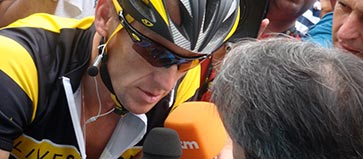
The Armstrong Lie “This is a story about power, not doping,” a talking head points out in Alex Gibney’s latest doc, The Armstrong Lie. Gibney, an Oscar winner for 2007’s Taxi to the Dark Side, set out to make something more along the lines of The Armstrong Return, shadowing Lance Armstrong as he prepped for his 2009 Tour de France comeback. He envisioned crafting a “feel-good movie,” especially when Armstrong notched an impressive third-place finish — a feat intended to silence those performance-enhancing drug rumors once and for all. In the end, it only amplified the skepticism that loomed over his accomplishments. And as the evidence against Armstrong mounted, Gibney scrapped his original concept and went in a decidedly darker direction. Armstrong’s critics, interviewed for Lie, admit they spotted the acclaimed documentarian among Armstrong’s Tour de France entourage and feared he was “buying into the bullshit.” Among these voices are Armstrong’s former US Postal Service teammate, Frankie Andreu, and his wife, Betsy, who’d been excoriated by their former good friend and his supporters for speaking out against him. A feel-good movie, this is not. And ultimately, Gibney’s film probes deeper than Armstrong’s flaws; it’s careful to point out that drug use is widespread among professional cyclists, who are surrounded by an insular, high-stakes culture that encourages it. The sports world lives and dies by the next world record or superhuman achievement. Is it any wonder that elite athletes seek out that extra competitive edge? And that Armstrong, in fully-inflated ego mode, would believe he had the power to rearrange reality to keep his victories intact? (2:03) Smith Rafael. (Eddy)

Bettie Page Reveals All Mark Mori’s affectionate Bettie Page Reveals All is narrated in the form of a rambling, chuckle-punctuated interview with the late pin-up icon herself. (We never actually see her except in archival film and images.) Even die-hards who already know the story behind the legend — a rough childhood, several unsuccessful marriages, mental-health issues — will likely learn some new tidbits. (A friend recalls watching 2005’s unauthorized biopic The Notorious Bettie Page with its subject, who hollered her opinion — “Lies! Lies!” — throughout.) Associates like Hugh Hefner and Dita Von Teese drop by to praise Page’s talents and legacy, but there’s no greater proof of lasting glamour than Page’s famous photographs, which she clearly loved posing for, and never regretted, even after embracing Christianity later in life. (1:41) Smith Rafael. (Eddy)

The Book Thief One of those novels that seems to have been categorized as “young adult” more for reasons of marketing than anything else, Markus Zusak’s international best seller gets an effective screen adaptation from director Brian Percival and scenarist Michael Petroni. Liesl (Sophie Nelisse) is an illiterate orphan — for all practical purposes, that is, given the likely fate of her left-leaning parents in a just-pre-World War II Nazi Germany — deposited by authorities on the doorstep of the middle-aged, childless Hubermanns in 1938. Rosa (Emily Watson) is a ceaseless nag and worrywart, even if her bark is worse than her bite; kindly housepainter Hans (Geoffrey Rush), who’s lost work by refusing to join “the Party,” makes a game of teacher Liesl how to read. Her subsequent fascination with books attracts the notice of the local Burgermeister’s wife (Barbara Auer), who under the nose of her stern husband lets the girl peruse tomes from her manse’s extensive library. But that secret is trivial compared to the Hubermanns’ hiding of Max Vandenburg (Ben Schnetzer), son of Jewish comrade who’d saved Hans’ life in the prior world war. When war breaks out anew, this harboring of a fugitive becomes even more dangerous, something Liesl can’t share even with her best friend Rudy (Nico Liersch). While some of the book’s subplots and secondary characters are sacrificed for the sake of expediency, the filmmakers have crafted a potent, intelligent drama whose judicious understatement extends to the subtlest (and first non-Spielberg) score John Williams has written in years. Rush, Watson, and newcomer Schnetzer are particularly good in the well-chosen cast. (2:11) Metreon. (Harvey)

Blue is the Warmest Color The stars (Adèle Exarchopoulos and Léa Seydoux) say the director was brutal. The director says he wishes the film had never been released (but he might make a sequel). The graphic novelist is uncomfortable with the explicit 10-minute sex scene. And most of the state of Idaho will have to wait to see the film on Netflix. The noise of recrimination, the lesser murmur of backpedaling, and a difficult-to-argue NC-17 rating could make it harder, as French director Abdellatif Kechiche has predicted, to find a calm, neutral zone in which to watch Blue is the Warmest Color, his Palme d’Or–winning adaptation (with co-writer Ghalya Lacroix) of Julie Maroh’s 2010 graphic novel Le Blue Est une Couleur Chaude. But once you’ve committed to the three-hour runtime, it’s not too difficult to tune out all the extra noise and focus on a film that trains its mesmerized gaze on a young woman’s transforming experience of first love. (2:59) Clay, Smith Rafael. (Rapoport)

Blue Jasmine The good news about Blue Jasmine isn’t that it’s set in San Francisco, but that it’s Woody Allen’s best movie in years. Although some familiar characteristics are duly present, it’s not quite like anything he’s done before, and carries its essentially dramatic weight more effectively than he’s managed in at least a couple decades. Not long ago Jasmine (a fearless Cate Blanchett) was the quintessential Manhattan hostess, but that glittering bubble has burst — exactly how revealed in flashbacks that spring surprises up to the script’s end. She crawls to the West Coast to “start over” in the sole place available where she won’t be mortified by the pity of erstwhile society friends. That would be the SF apartment of Ginger (Sally Hawkins), a fellow adoptive sister who was always looked down on by comparison to pretty, clever Jasmine. Theirs is an uneasy alliance — but Ginger’s too big-hearted to say no. It’s somewhat disappointing that Blue Jasmine doesn’t really do much with San Francisco. Really, the film could take place anywhere — although setting it in a non-picture-postcard SF does bolster the film’s unsettled, unpredictable air. Without being an outright villain, Jasmine is one of the least likable characters to carry a major US film since Noah Baumbach’s underrated Margot at the Wedding (2007); the general plot shell, moreover, is strongly redolent of A Streetcar Named Desire. But whatever inspiration Allen took from prior works, Blue Jasmine is still distinctively his own invention. It’s frequently funny in throwaway performance bits, yet disturbing, even devastating in cumulative impact. (1:38) Elmwood, Opera Plaza. (Harvey)

Captain Phillips In 2009, Captain Richard Phillips was taken hostage by Somali pirates who’d hijacked the Kenya-bound Maersk Alabama. His subsequent rescue by Navy SEALs came after a standoff that ended in the death of three pirates; a fourth, Abduwali Abdukhadir Muse, surrendered and is serving a hefty term in federal prison. A year later, Phillips penned a book about his ordeal, and Hollywood pounced. Tom Hanks is perfectly cast as Phillips, an everyman who runs a tight ship but displays an admirable ability to improvise under pressure — and, once rescued, finally allows that pressure to diffuse in a scene of memorably raw catharsis. Newcomer Barkhad Abdi, cast from an open call among Minneapolis’ large Somali community, plays Muse; his character development goes deep enough to emphasize that piracy is one of few grim career options for Somali youths. But the real star here is probably director Paul Greengrass, who adds this suspenseful high-seas tale to his slate of intelligent, doc-inspired thrillers (2006’s United 93, 2007’s The Bourne Ultimatum). Suffice to say fans of the reigning king of fast-paced, handheld-camera action will not be disappointed. (2:14) Elmwood, SF Center, Sundance Kabuki. (Eddy)

Dallas Buyers Club Dallas Buyers Club is the first all-US feature from Jean-Marc Vallée. He first made a splash in 2005 with C.R.A.Z.Y., which seemed an archetype of the flashy, coming-of-age themed debut feature. Vallée has evolved beyond flashiness, or maybe since C.R.A.Z.Y. he just hasn’t had a subject that seemed to call for it. Which is not to say Dallas is entirely sober — its characters partake from the gamut of altering substances, over-the-counter and otherwise. But this is a movie about AIDS, so the purely recreational good times must eventually crash to an end. Which they do pretty quickly. We first meet Ron Woodroof (Matthew McConaughey) in 1986, a Texas good ol’ boy endlessly chasing skirts and partying nonstop. Not feeling quite right, he visits a doctor, who informs him that he is HIV-positive. His response is “I ain’t no faggot, motherfucker” — and increased partying that he barely survives. Afterward, he pulls himself together enough to research his options, and bribes a hospital attendant into raiding its trial supply of AZT for him. But Ron also discovers the hard way what many first-generation AIDS patients did — that AZT is itself toxic. He ends up in a Mexican clinic run by a disgraced American physician (Griffin Dunne) who recommends a regime consisting mostly of vitamins and herbal treatments. Ron realizes a commercial opportunity, and finds a business partner in willowy cross-dresser Rayon (Jared Leto). When the authorities keep cracking down on their trade, savvy Ron takes a cue from gay activists in Manhattan and creates a law evading “buyers club” in which members pay monthly dues rather than paying directly for pharmaceutical goods. It’s a tale that the scenarists (Craig Borten and Melisa Wallack) and director steep in deep Texan atmospherics, and while it takes itself seriously when and where it ought, Dallas Buyers Club is a movie whose frequent, entertaining jauntiness is based in that most American value: get-rich-quick entrepreneurship. (1:58) Embarcadero, 1000 Van Ness, Sundance Kabuki. (Harvey)

Delivery Man Twenty years ago David Wozniak (Vince Vaughn) “put love in a cup” 600-plus times to finance a family trip to Italy. His mother was sick, his father couldn’t afford it, and with time running out, David embarked on a harebrained scheme to make (a lot of) “it” happen. The sperm bank that paid him $23K for his “seed” overused it, and 18 years later he has 533 kids, 143 of which are on a hunt to find their biological father, “Starbuck.” (This also the name of the 2011 Canadian comedy on which Delivery Man is based.) With a premise this quirky you’ll have a hard time finding something to hate, even if this is technically a film about runaway jizz. This heartwarming Thanksgiving release isn’t really appropriate for youngsters (unless you’re been trying to find a entrée to explain sperm banks) but the way Delivery Man deals with the seemingly limitless generosity contained in each of us is both touching and inspiring. Maybe David’s contribution to “Starbuck’s Kids” doesn’t obligate him to reveal his identity, but he’s desperately attached, and goes embarrassingly far outside his comfort zone to interact. The kids’ emotional stake in this is murky, but the way their search for identity finds a voice in tune with the current tech-confident yet socially-confused younger generation could make Delivery Man relevant to more generations than X or Y. (1:45) SF Center. (Vizcarrondo)

Ender’s Game Those entering Ender’s Game in search of homophobic threads or politically unsavory themes will likely be frustrated. After all, Orson Scott Card — once a board member of the National Organization for Marriage, and here serving as a producer intent on preserving the 1985 novel that netted him acclaim — has revisited what was initially a short story multiple times over the years, tweaking it to reflect a new political climate, to ready it for new expedient uses. Who knows — the times are a-changin’ fast enough, with the outcry of LGBT activists and the growing acceptance of gay military members, to hope that a gay character might enter the mix someday. Of course, sexuality of all sorts is kept firmly in check in the Ender‘s world. Earth has been invaded by an insect-like species called the Formics, and the planet unifies to serve up its best and brightest (and, it’s implied, most ruthless) young minds, sharpened on first-person-shooters and tactical games, to the cause of defeating the alien “other.” Andrew “Ender” Wiggin (Asa Butterfield) is the knowing hybrid of his sociopath brother Peter (Jimmy Pinchak) and compassionate sister Valentine (Abigail Breslin) — of the trinity, he’s “the One,” as Han Solo, I mean, Harrison Ford, cadet talent-spotter and trainer Colonel Graff, puts it. Ender impresses the leather off the hardened old war horse, though the Colonel’s psychologically more equipped cohort Major Anderson (Viola Davis) suspects there’s more going on within their chosen leader. Director-screenwriter Gavin Hood demonstrates his allegiance to Card’s vision, valorizing the discipline and teamwork instilled by military school with the grim purpose and dead serious pleasure one might take in studying a well-oiled machine, while Ender is sharpened and employed as a stunningly effective tool in a war he never truly conceived of. This game has a bit more in common with the recent Wii-meets-Rock ‘Em Sock ‘Em Godzillas of Pacific Rim than the winking, acidic satire of Starship Troopers (1997), echoing a drone-driven War on Terror that has a way of detaching even the most evolved fighter from the consequences of his or her actions. The question is how to undo, or rewrite, the damage done. (1:54) SF Center. (Chun)

Frozen (1:48) Metreon, 1000 Van Ness, Vogue.

Gravity “Life in space is impossible,” begins Gravity, the latest from Alfonso Cuarón (2006’s Children of Men). Egghead Dr. Ryan Stone (Sandra Bullock) is well aware of her precarious situation after a mangled satellite slams into her ship, then proceeds to demolition-derby everything (including the International Space Station) in its path. It’s not long before she’s utterly, terrifyingly alone, and forced to unearth near-superhuman reserves of physical and mental strength to survive. Bullock’s performance would be enough to recommend Gravity, but there’s more to praise, like the film’s tense pacing, spare-yet-layered script (Cuarón co-wrote with his son, Jonás), and spectacular 3D photography — not to mention George Clooney’s warm supporting turn as a career astronaut who loves country music almost as much as he loves telling stories about his misadventures. (1:31) Castro, Metreon, 1000 Van Ness. (Eddy)

The Great Beauty The latest from Paolo Sorrentino (2008’s Il Divo) arrives as a high-profile contender for the Best Foreign Language Film Oscar, already annointed a masterpiece in some quarters, and duly announcing itself as such in nearly every grandiose, aesthetically engorged moment. Yes, it seems to say, you are in the presence of this auteur’s masterpiece. But it’s somebody else’s, too. The problem isn’t just that Fellini got there first, but that there’s room for doubt whether Sorrentino’s homage actually builds on or simply imitates its model. La Dolce Vita (1960) and 8 1/2 (1963) are themselves swaying, jerry-built monuments, exhileratingly messy and debatably profound. But nothing quite like them had been seen before, and they did define a time of cultural upheaval — when traditional ways of life were being plowed under by a loud, moneyed, heedless modernity that for a while chose Rome as its global capital. Sorrentino announces his intention to out-Fellini Fellini in an opening sequence so strenuously flamboyant it’s like a never-ending pirouette performed by a prima dancer with a hernia. There’s statuary, a women’s choral ensemble, an on-screen audience applauding the director’s baffled muse Toni Servillo, standing in for Marcello Mastroianni — all this and more in manic tracking shots and frantic intercutting, as if sheer speed alone could supply contemporary relevancy. Eventually The Great Beauty calms down a bit, but still its reason for being remains vague behind the heavy curtain of “style.” (2:22) Opera Plaza, Smith Rafael. (Harvey)

The Hobbit: The Desolation of Smaug Just when you’d managed to wipe 2012’s unwieldy The Hobbit: An Unexpected Journey from your mind, here comes its sequel — and it’s actually good! Yes, it’s too long (Peter Jackson wouldn’t have it any other way); arachnophobes (and maybe small children) will have trouble with the creepy, giant-spider battle; and Orlando Bloom, reprising his Lord of the Rings role as Legolas the elf, has been CG’d to the point of looking like he’s carved out of plastic. But there’s much more to enjoy this time around, with a quicker pace (no long, drawn-out dinner parties); winning performances by Martin Freeman (Bilbo), Ian McKellan (Gandalf); and Benedict Cumberbatch (as the petulent voice of Smaug the dragon); and more shape to the quest, as the crew of dwarves seeks to reclaim their homeland, and Gandalf pokes into a deeper evil that’s starting to overtake Middle-earth. (We all know how that ends.) In addition to Cumberbatch, the cast now includes Lost‘s Evangeline Lilly as elf Tauriel, who doesn’t appear in J.R.R. Tolkien’s original story, but whose lady-warrior presence is a welcome one; and Luke Evans as Bard, a human poised to play a key role in defeating Smaug in next year’s trilogy-ender, There and Back Again. (2:36) Balboa, Cerrito, Metreon, 1000 Van Ness, Sundance Kabuki. (Eddy)

Homefront It’s not clear if Jason Statham’s undercover DEA agent is retired, but after a major meth bust he loses his scraggly mop of hair and put-on accent to enter seclusion in a town “not far from Appalachia.” He’s taught his daughter well, but when she defends herself against a school bully, the family incurs the wrath of the local tweaker-tiger mom (Kate Bosworth). Tiger Mom’s brother is the local meth lord, Gator (James Franco). He’s in cahoots with the Sheriff (Clancy Brown) and aspires to the heights of the biker badass Agent Statham put away, so he causes trouble for Statham’s family. Winona Ryder, looking more like Cher’s kid than she did in 1990’s Mermaids, is the “meth-whore” who starts a bustling lab with her business-savvy BF, and while she’s hardly out-performing any of the cast, she’s definitely the film’s best character. This mess of wonky editing and absurd send-ups totally delivers on gags and explosions, and when Franco sees his future he looks at it like a CEO applying at Starbucks. His face says “What the hell happened?” but his mouth yells, regrettably, “Are you retarded?” (1:40) SF Center. (Vizcarrondo)

The Hunger Games: Catching Fire Before succumbing to the hot and heavy action inside the arena (intensely directed by Francis Lawrence) The Hunger Games: Catching Fire force-feeds you a world of heinous concept fashions that’d make Lady Gaga laugh. But that’s ok, because the second film about one girl’s epic struggle to change the world of Panem may be even more exciting than the first. Suzanne Collins’ YA novel The Hunger Games was an over-literal metaphor for junior high social survival and the glory of Catching Fire is that it depicts what comes after you reach the cool kids’ table. Katniss (Jennifer Lawrence) inspired so much hope among the 12 districts she now faces pressures from President Snow (a portentous Donald Sutherland) and the fanatical press of Capital City (Stanley Tucci with big teeth and Toby Jones with big hair). After she’s forced to fake a romance with Peeta (Josh Hutcherson), the two watch with horror as they’re faced with a new Hunger Game: for returning victors, many of whom are too old to run. Amanda Plummer and Jeffrey Wright are fun as brainy wackjobs and Jena Malone is hilariously Amazonian as a serial axe grinder still screaming like an eighth grader. Inside the arena, alliances and rivalries shift but the winner’s circle could survive to see another revolution; to save this city, they may have to burn it down. (2:26) Balboa, Metreon, 1000 Van Ness, Sundance Kabuki. (Vizcarrondo)

Nebraska Alexander Payne may be unique at this point in that he’s in a position of being able to make nothing but small, human, and humorous films with major-studio money on his own terms. It’s hazardous to make too much of a movie like Nebraska, because it is small — despite the wide Great Plains landscapes shot in a wide screen format — and shouldn’t be entered into with overinflated or otherwise wrong-headed expectations. Still, a certain gratitude is called for. Nebraska marks the first time Payne and his writing partner Jim Taylor weren’t involved in the script, and the first one since their 1996 Citizen Ruth that isn’t based on someone else’s novel. (Hitherto little-known Bob Nelson’s original screenplay apparently first came to Payne’s notice a decade ago, but getting put off in favor of other projects.) It could easily have been a novel, though, as the things it does very well (internal thought, sense of place, character nuance) and the things it doesn’t much bother with (plot, action, dialogue) are more in line with literary fiction than commercial cinema. Elderly Woody T. Grant (Bruce Dern) keeps being found grimly trudging through snow and whatnot on the outskirts of Billings, Mont., bound for Lincoln, Neb. Brain fuzzed by age and booze, he’s convinced he’s won a million dollars and needs to collect it him there, though eventually it’s clear that something bigger than reality — or senility, even — is compelling him to make this trek. Long-suffering younger son David (Will Forte) agrees to drive him in order to simply put the matter to rest. This fool’s mission acquires a whole extended family-full of other fools when father and son detour to the former’s podunk farming hometown. Nebraska has no moments so funny or dramatic they’d look outstanding in excerpt; low-key as they were, 2009’s Sideways and 2011’s The Descendants had bigger set pieces and narrative stakes. But like those movies, this one just ambles along until you realize you’re completely hooked, all positive emotional responses on full alert. (1:55) Embarcadero. (Harvey)

Out of the Furnace Scott Cooper is best-known for directing Jeff Bridges to a long-overdue Oscar in 2009 country-music yarn Crazy Heart. Perhaps that’s why his follow-up contains so many stars: Christian Bale, Casey Affleck, Forest Whitaker, Willem Dafoe, Sam Shepard, Zoe Saldana, and Woody Harrelson. That cast is the main draw for Out of the Furnace, a glum fable of dying American dreams co-written by Cooper and Brad Inglesby. Furnace retains Crazy Heart‘s melodramatic tendencies and good ol’ boy milieu, though this time we’re deep in Pennsylvania’s Rust Belt, which manages to be even more depressing than Crazy Horse‘s honky-tonks. Cue gray skies, repeated shots of train tracks and smoke stacks, an emo banjo score, and dialogue that casually mentions that “the mill,” the only source of income for miles around, is about to close. Probably the nicest guy in town is Bale’s character, arrested early on for causing a fatal car accident thanks to his inability to turn down a drink offered by the town heavy (Dafoe). Post-prison, he discovers that his girlfriend (Saldana) has taken up with another man, and that his money-troubled Iraq-vet brother (Affleck) has been entering high-stakes pit fights. Really, this can’t end well for anyone. Adding to Out of the Furnace‘s bleak take on modern masculinity is Harrelson, stealing all his scenes with ease as a psychotically violent redneck. Mickey Knox lives! (1:56) 1000 Van Ness, SF Center, Sundance Kabuki. (Eddy)

Philomena Judi Dench gives this twist on a real-life scandal heart, soul, and a nuanced, everyday heft. Her ideal, ironic foil is Steve Coogan, playing an upper-crusty irreverent snob of an investigative journalist. Judging by her tidy exterior, Dench’s title character is a perfectly ordinary Irish working-class senior, but she’s haunted by the past, which comes tumbling out one day to her daughter: As an unwed teenager, she gave birth to a son at a convent. She was forced to work there, unpaid; as supposed penance, the baby was essentially sold to a rich American couple against her consent. Her yarn reaches disgraced reporter Martin Sixsmith (Coogan), who initially turns his nose up at the tale’s piddling “human interest” angle, but slowly gets drawn in by the unexpected twists and turns of the story — and likely the possibility of taking down some evil nuns — as well as seemingly naive Philomena herself, with her delight in trash culture, frank talk about sex, and simple desire to see her son and know that he thought, once in a while, of her. It turns out Philomena’s own sad narrative has as many improbable turnarounds as one of the cheesy romance novels she favors, and though this unexpected twosome’s quest for the truth is strenuously reworked to conform to the contours of buddy movie-road trip arc that we’re all too familiar with, director Stephen Frears’ warm, light-handed take on the gentle class struggles going on between the writer and his subject about who’s in control of the story makes up for Philomena‘s determined quest for mass appeal. (1:35) Embarcadero, 1000 Van Ness, Sundance Kabuki. (Chun)

The Punk Singer It was strange when Kathleen Hanna — riot grrrl activist, iconic Bikini Kill battle cry leader, electro-popping Le Tigre singer — went silent. Beat down by a mysterious illness, she seemingly tumbled into hardcore self-preservation mode, contributing her personal files of zines, show flyers, and lyrics to the “Riot Grrrl Collection” at New York University’s Fales Library. This archival material would prove key to Sini Anderson’s new documentary about Hanna, The Punk Singer. The film includes many lesser-seen clips from the early days of Bikini Kill, the band’s tours through Europe, and early moments with Hanna’s husband, Beastie Boy Adam Horovitz, and it uses archival footage and present-day interviews to color in Hanna’s childhood, the beginning of the riot grrrl movement, Le Tigre, and her post-Bikini Kill solo project, the Julie Ruin. The bulk of filming was done over the course of a year — and it was a momentous one: Halfway through, Hanna was diagnosed with late-stage neurological Lyme disease. The revelation spurred Anderson (who also has Lyme disease) to focus on the strength in Hanna’s vulnerability, and to depict how her subject chose to view her illness as motivation to return to music. Anderson’s interviews with Hanna are intimate and enlightening; the film also features commentary from Bikini Kill’s Tobi Vail, Billy Karren, and Kathi Wilcox (now of the Julie Ruin); Kim Gordon; Joan Jett; Carrie Brownstein and Corin Tucker; and teenage Rookie Magazine editor Tavi Gevinson. (1:56) Roxie. (Emily Savage)

Saving Mr. Banks Having promised his daughters that he would make a movie of their beloved Mary Poppins books, Walt Disney (Tom Hanks) has laid polite siege to author P.L. Travers (Emma Thompson) for over 20 years. Now, in the early 1960s, she has finally consented to discuss the matter in Los Angeles — albeit with great reluctance, and only because royalty payments have dried up to the point where she might have to sell her London home. Bristling at being called “Pam” and everything else in this sunny SoCal and relentlessly cheery Mouse House environ, the acidic English spinster regards her creation as sacred. The least proposed changes earn her horrified dismissal, and the very notion of having Mary and company “prancing and chirping” out songs amid cartoon elements is taken as blasphemy. This clash of titans could have made for a barbed comedy with satirical elements, but god forbid this actual Disney production should get so cheeky. Instead, we get the formulaically dramatized tale of a shrew duly tamed by all-American enterprise, with flashbacks to the inevitable past traumas (involving Colin Farrell as a beloved but alcoholic ne’er-do-well father) that require healing of Travers’ wounded inner child by the magic of the Magic Kingdom. If you thought 2004’s Finding Neverland was contrived feel-good stuff, you’ll really choke on the spoons full of sugar force-fed here. (2:06) Cerrito, SF Center. (Harvey)

Thor: The Dark World Since any tentacle of Marvel’s Avengers universe now comes equipped with its own money-printing factory, it’s likely we’ll keep seeing sequels and spin-offs for approximately the next 100 years. With its by-the-numbers plot and “Yeah, seen that before” 3D effects, Thor: The Dark World is forced to rely heavily on the charisma of its leads — Chris Hemsworth as the titular hammer-swinger; Tom Hiddleston as his brooding brother Loki — to hold audience interest. Fortunately, these two (along with Anthony Hopkins, Natalie Portman, Idris Elba, and the rest of the supporting cast, most of whom return from the first film) appear to be having a blast under the direction of Alan Taylor, a TV veteran whose credits include multiple Game of Thrones eps. Not that any Avengers flick carries much heft, but especially here, jokey asides far outweigh any moments of actual drama (the plot, about an alien race led by Christopher Eccleston in “dark elf” drag intent on capturing an ancient weapon with the power to destroy all the realms, etc. etc., matters very little). Fanboys and -girls, this one’s for you … and only you. (2:00) Metreon, 1000 Van Ness. (Eddy)

12 Years a Slave Pop culture’s engagement with slavery has always been uneasy. Landmark 1977 miniseries Roots set ratings records, but the prestigious production capped off a decade that had seen some more questionable endeavors, including 1975 exploitation flick Mandingo — often cited by Quentin Tarantino as one of his favorite films; it was a clear influence on his 2012 revenge fantasy Django Unchained, which approached its subject matter in a manner that paid homage to the Westerns it riffed on: with guns blazing. By contrast, Steve McQueen’s 12 Years a Slave is nuanced and steeped in realism. Though it does contain scenes of violence (deliberately captured in long takes by regular McQueen collaborator Sean Bobbitt, whose cinematography is one of the film’s many stylistic achievements), the film emphasizes the horrors of “the peculiar institution” by repeatedly showing how accepted and ingrained it was. Slave is based on the true story of Solomon Northup, an African American man who was sold into slavery in 1841 and survived to pen a wrenching account of his experiences. He’s portrayed here by the powerful Chiwetel Ejiofor. Other standout performances come courtesy of McQueen favorite Michael Fassbender (as Epps, a plantation owner who exacerbates what’s clearly an unwell mind with copious amounts of booze) and newcomer Lupita Nyong’o, as a slave who attracts Epps’ cruel attentions. (2:14) Embarcadero, 1000 Van Ness, Sundance Kabuki. (Eddy)

20 Feet From Stardom Singing the praises of those otherwise neglected backup vocalists who put the soul into that Wall of Sound, brought heft to “Young Americans,” and lent real fury to “Gimme Shelter,” 20 Feet From Stardom is doing the rock ‘n’ roll true believer’s good work. Director Morgan Neville follows a handful of mainly female, mostly African American backing vocal legends, charts their skewed career trajectories as they rake in major credits and keep working long after one-hit wonders are forgotten (the Waters family) but fail to make their name known to the public (Merry Clayton), grasp Grammy approval yet somehow fail to follow through (Lisa Fischer), and keep narrowly missing the prize (Judith Hill) as label recording budgets shrivel and the tastes, technology, and the industry shift. Neville gives these industry pros and soulful survivors in a rocked-out, sample-heavy, DIY world their due on many levels, covering the low-coverage minis, Concert for Bangladesh high points, gossipy rumors, and sheer love for the blend that those intertwined voices achieve. One wishes the director had done more than simply touch in the backup successes out there, like Luther Vandross, and dug deeper to break down the reasons Fischer succumbed to the sophomore slump. But one can’t deny the passion in the voices he’s chosen to follow — and the righteous belief the Neville clearly has in his subjects, especially when, like Hill, they are ready to pick themselves up and carry on after being told they’re not “the Voice.” (1:30) Metreon. (Chun)

Tyler Perry’s A Madea Christmas (1:45) Metreon, 1000 Van Ness. *


Candy crush

0

marke@sfbg.com

YEAR IN NIGHTLIFE The drink of the year was the Chinese Mai Tai at Lipo Lounge. It’s $9, but it’s huge and you only need one. Or maybe a half, if you want to remember your pants. Oh, just drink the whole thing.

It was another supersweet, neon-bright yet sonically sophisticated year of clubbing and dance music, full of ups, downs, and twirl-arounds. Celebrated rave cave 222 Hyde and Hayes Valley drag outpost Marlena’s closed (boooo). But Mighty and 1015 got mindblowing new sound systems, Monarch and DNA Lounge expanded, Project One inherited 222’s speakers, Public Works and F8 doubled-down on adventurous bookings, and ambitious venues Audio Discotech and Beaux opened (and are still finding their footing). And we got a new dance music record store, RS94109, and rising dark techno star, Vereker.

As far as music goes: we’ve managed to fend off the worst of pop-EDM, while welcoming the drum ‘n bass and big-room ’90s sound comeback with open underground arms. (Also, there is an actual underground!) San Francisco’s still a major destination for techno up-and-comers — and even though you may stumble across some clueless tech-bros sporting 2k7-wear or novelty rasta wigs on our finer dance floors, give them a hug and hope they improve! It’s all good.

>>Read Emily Savage’s take on the YEAR IN MUSIC 2013 

Before I get into some of my favorite 2013 things, let’s tip a hat to two legends we lost this year: Scott Hardkiss and Cheb i Sabbah. Between them, they brought a whole world’s worth of music to our dance floors and spanned generations. Dancing forever in their honor.

HIP-HOP, Q’ED UP

Hip-hop got so good in 2013, the Year that Twerking Ate the Internet. Trap sounds and molly pops seemed to invigorate the East Bay scene: E-40 dropped a zillion slaps, while Iamsu! and Sage the Gemini (who can totally get it, hellieu) swerved onto the national scene. Buffed-up SF legends Latyrx dropped a nifty disc after two decades. In the bigtime, Kanye bought up every edgy electronic producer he could to impress Pitchfork, while Danny Brown and Kendrick Lamar recontextualized essential ’90s rap tropes — gangsta and concept albums, respectively, but in a party way.

Unfortunately, another ’90s rap trope, tired homophobia, was also revived, with Eminem and Tyler, the Creator fumbling bigtime. This time, however, there was such a huge and thriving queer hip-hop party scene that we could look right past all that lazy ish. Queer rap broke big in 2012 when eye-catching artists blended witch-dark sounds, quantum vogue moves, and afro-surreal poetry with R&B licks, broken bass boost, and neon-bright performance art.

That scene deepened and brightened this year — here, at super parties like Swagger Like Us, 120 Minutes, Fix Yr Hair, and House of Babes and unstoppable homegrown talent like Micahtron, Double Duchess, and even cameo appearances by classic homohop babes Deep Dickollective — proving that spitting flames can still burn down the disco. And queer-rap resistance even grabbed the national spotlight when Daddie$ Pla$tic‘s electro-anarchic “Google Google Apps Apps” went viral.


SWEET AND LOW

The Honey Soundsystem crew ended its Sunday night parties at the top of its game with a huge blowout — surprise marriage proposal, performance by fabled ’80s singer Jorge Socarras, and slew of unannounced guest DJs included. Honey was an ostensibly gay club, but that might have just been a feint to pack the floor with hairdressers. While it never ceased brazenly shoving its raw homosexuality in the oft-frigid techno scene’s face, its influence went way beyond the queer sphere. For five years, it was our best weekly in terms of musical guests (Wednesdays’ fantastic Housepitality almost ties it on that score), bringing in a mind-blowing roster of international underground players.

But Honey Sundays were more. Will there ever be a party ballsy enough to take as a month-long theme the skyrocketing real estate market, condo-mapping its venue and printing “luxury house” brochures? Or base the décor of one of its biggest parties around a collection of putrid haters’ comments? What promoters, nowadays, even bother to actually design and print challenging works of art as posters and flyers, or truly transform their venues? (DJ Bus Station John, still our gold standard, is the only one I can think of.)

Fortunately, Honey parties will continue, just not weekly. But SF is full of such amazingly talented crews, both well-established (As You Like It, No Way Back, Sunset, Lights Down Low, Icee Hot, Opel, Pink Mammoth) and burgeoning (Isis, Face, Modular, Mighty Real, Trap City, Odyssey). My wish for 2014 is that many of these really invest themselves in building a whole vibe for their parties, top to bottom, instead of just relying on groovy headliners, online promotions, and audience goodwill. As the changing city chases out its artists and loses its edge, we need entire worlds of freakiness to escape into and call our own.


TOP SOUNDS OF 2013

>> Nebakaneza, “Expansion Project, Vols. 1-11

What does our most forward-thinking dubstep DJ do when dubstep’s no longer an option? He deepens his crates, cycling through 12 months-worth of excellent mixes, themed by genres like yacht rock and classic soul, to rediscover his bass roots while transforming his sound into something even more thrilling.

>> Swedish House Mafia, Bill Graham Center, Feb. 16

I finally get it! All you need is a $1 million light rig, 40,000 glowsticks, an indoor fireworks show, and an arena full of half-naked teens. This EDM stuff is actually kind of fun.

>> The Disclosure Effect

Disclosure’s Grammy-nominated debut Settle (Cherrytree) will nest atop most critic’s dance picks this year, and rightly so: the young Lawrence Brothers brought lovely, 2-step-fueled house back into headphones and charts worldwide. But if it also brings more attention to breezy sonic relatives like Bondax, AlunaGeorge, Joe Hertz, the Majestic Casual roster, and the hundreds of bedroom producers who suddenly switched from making EDM and dubstep to deeper house sounds, then so much the better.

>> Deafheaven, Sunbather (Deathwish, Inc.)

Shoegaze plus death metal equals an arctic beauty and burning mystery that transcends even My Bloody Valentine’s wonderful, self-released mbv and, when listened to alongside this year’s icy electronic-ish masterworks like Tim Hecker’s Virgins (Paper Bag Records) and the Haxan Cloak’s Excavations (Tri Angle) — or more emotive ones like Chance of Rain (Hyperdub) by Laurel Halo, Psychic (Matador) by Darkside, or Engravings (Tri Angle) by Forest Swords — makes strange sense of a near future.

Steve Reich, “Music for 18 Musicians,” SF Contemporary Music Players, Jan. 28

The fact that there was a near-riot to get into a performance this hypnotic, hyper-complex 50-minute 1974 piece by minimalist icon Reich attests to SF’s ravenous appetite for “contemporary classical.” That the audience sat in stunned silence a full two minutes after the piece concluded before exploding with applause attests to the excellence of our local players. (And while we’re on “classical,” kudos, too, to the SF Opera’s summer production of Mozart’s “Cosi fan tutte” — three fantastic hours of the most ravishing singing I’ve ever heard.

>> Patrick Cowley, School Daze 2 x LP (Dark Entries)

The instant Internet popularity of Montag’s trippy “Porn Archives Lo-Fi Mix” earlier this year should have tipped off the coming re-evaluation of porn soundtracks as electronic artworks. But when members of Honey Soundsystem released this two-disc compilation of fascinating, atmospheric early tracks by local electronic wizard Patrick Cowley (1950-1982) used in ’80s gay porn flicks, it became a critical sensation.

>> Regis, As You Like It and Public Works, July 26

Here’s a question: Do you need to actually be at a party to enjoy it? I was out of town when this joint went down. But after witnessing my feeds blow up and listening obsessively to the Soundcloud set, later posted to Youtube, it feels like I was there when the young Brit freaked everyone out with a hard, deep techno set. No FOMO, baby.

>> Throwback monthly, Mighty

I may be fascinatingly elderly, but all the young kids flocked to the ’90s big-room house sound revival this year. This party, a SF reunion brimming with new faces, classic tracks, and legends at the decks, is like Universe plus cool straight people, or maybe the End Up in the East Bay.

>> Jay Tripwire

I fell deep(er) in love with so many DJs this year: Guy Gerber, Kyle Hall, Osunlade, J.Phlip, Greg Wilson, Catz ‘n Dogz, South London Ordnance, Finnebassen, 0Phase, MK, Vakula, Robert Hood, Huerco S., Kastle, Psychemagik, Jeff Mills, Keep Schtum, Stretford Dogs Club — but this revered Canadian DJ’s DJ always sets my (vinyl!) standard, especially with this year’s banging techno DJ Mag and expansive Electronic Groove (best deep house buildup of the year on that one, imho) mixes.

>> Divoli S’vere, Ckuntinomksz Vols. 1-3

Vogue beats continued to come into, er, vogue harder than ever this year, their flashy attitude and underground authenticity influencing musicmakers, like our own up-and-coming Soo Wavey label. Young NYCer Divoli, however, gives you real quantum fishiness to gag on all day — and goes waaay above your wig, hunty. These three volumes of lightning-made bedroom beats might be overload, but take us into some incredible sonic landscapes, beyond the balls.

>> Mexico

Forget Miami, Playa del Carmen is the new Ibiza of North America — with all the tech house festivals, bare white flesh, and urbanizing displacement (and opportunity) that entails. And Mexico’s tech scene, like its economy recently, is coming on strong with players like Rebolledo and White Visitation. But the best nightlife sound in the world still comes from Plaza Garibaldi at 3am in Mexico City, when dozens of spangled mariachi bands play all at once for your attention. Pure musical bliss.


Alerts: December 18 – 24, 2013

0

WEDNESDAY 18

AK Press holiday book sale AK Press warehouse, 674-A 23rd St, Oakl. 4-9pm, free. The AK Press is an anarchist and radical publisher and distributor. Everything in the AK Press warehouse will be 25 percent off, and there are hundreds of blowout $1–$5 books to choose from. Come enjoy snacks and beverages, and pick up some reading for the holidays.


We Are Staying: Rally against eviction The Revolution Cafe, 3248 22nd St, SF. noon, free. Join Eviction Free San Francisco and allies in the fight for housing justice in San Francisco for a rally in opposition to the displacement of seniors, artists, immigrants and workers from this vibrant, diverse, working-class Mission neighborhood and citywide.


THURSDAY 19

Film screening: The World According to Monsanto Berkeley Fellowship of Unitarian Universalists’ Hall, 1924 Cedar, Berk. www.bfuu.com. 7-9pm, $5–$10 suggested donation but no one turned away. Come see a film about Monsanto’s use of genetic modification to radically alter our food supply. The movie will show the effect Monsanto has from America’s Heartland to countries around the world as well as how its practices hurt farmers, communities and the environment. Sponsored by the BFUU Social Justice Committee.


FRIDAY 20

Sonya Renee at Queer Open Mic night Modern Times Bookstore Collective, 2919 24th St, SF. 7-9pm, free. Performance poet, activist and transformational leader Sonya Renee is a national and international poetry slam champion, published author, and transformational leader. She has shared her work and activism across the globe, and is a founder and CEO of The Body is Not An Apology, a movement of over 23,000 members focused on radical self-love and body empowerment. She’ll be featured at Modern Times’ final monthly San Francisco Queer Open Mic event of the year, hosted by Baruch Porras-Hernandez and Blythe Baldwin. You can also sign up to do an open mic performance of your own.

Harvey Milk LGBT Democratic Club Holiday Happy Hour Party Beaux, 2344 Market, SF. www.milkclub.org. 6-9pm, free. RSVP required. Come celebrate at the Castro’s newest bar, Beaux, where you’re sure to be entertained with drag, DJs, a photo booth where you can sit on Santa’s lap, and amazing raffle prizes. Featuring drag performances by Persia, Anna Conda, and Tara Wrist, with music from GO BANG! (DJs Sergio and Steve Fabus), as well as raffle prizes.

SATURDAY 21

Berkeley Farmers Market holiday crafts fair 2151 Martin Luther King Jr. Way, Berk. www.ecologycenter.org. 10am-4pm, free. The Berkeley Farmers’ Market 22nd annual Holiday Crafts Fair, a benefit for the Berkeley Ecology Center, features local craftspeople and artisans selling handcrafted gifts (ceramics, fine art, jewelry, cards, clothes, tote bags, body products, toys, and more). These locally made crafts are in addition to the usual bounty of California organic produce, hot lunch offerings, and live outdoor musical performances.

Film Listings: December 11 – 17, 2013

0

Film listings are edited by Cheryl Eddy. Reviewers are Kimberly Chun, Dennis Harvey, Lynn Rapoport, Sam Stander, and Sara Maria Vizcarrondo. For rep house showtimes, see Rep Clock.

OPENING

The Hobbit: The Desolation of Smaug Peter Jackson’s sequel to last year’s An Unexpected Journey continues J.R.R. Tolkien’s epic story of hobbit Bilbo Baggins’ adventures. (2:36) Presidio.

Last Days on Mars An eight-member crew of a multinational expedition to Mars are just wrapping up their six-month mission when they discover sign of life — well, “bacterial cell division,” albeit of a virulent strain that seems hellbent on turning anyone who comes in contact with it into violent un-dead. Hence the visiting humans are soon battling for survival, including Liev Schreiber (hero), Romola Garai (sorta-love interest), Olivia Williams (mean girl), and Elias Koteas. Though well crafted, this first feature by Irish director Ruairi Robinson (adapted by Clive Dawson from Sydney J. Bounds’ 1975 short story) can’t help but be a letdown as its menace turns out to be nothing more than transformed humans in pasty “monster” makeup lurching around grabbing the panicked, still-living specimens. You’ve seen all this before, in forms both scarier and cheesier, but either way often more memorably handled than here. (1:38) Opera Plaza, Shattuck. (Harvey)

Saving Mr. Banks Having promised his daughters that he would make a movie of their beloved Mary Poppins books, Walt Disney (Tom Hanks) has laid polite siege to author P.L. Travers (Emma Thompson) for over 20 years. Now, in the early 1960s, she has finally consented to discuss the matter in Los Angeles — albeit with great reluctance, and only because royalty payments have dried up to the point where she might have to sell her London home. Bristling at being called “Pam” and everything else in this sunny SoCal and relentlessly cheery Mouse House environ, the acidic English spinster regards her creation as sacred. The least proposed changes earn her horrified dismissal, and the very notion of having Mary and company “prancing and chirping” out songs amid cartoon elements is taken as blasphemy. This clash of titans could have made for a barbed comedy with satirical elements, but god forbid this actual Disney production should get so cheeky. Instead, we get the formulaically dramatized tale of a shrew duly tamed by all-American enterprise, with flashbacks to the inevitable past traumas (involving Colin Farrell as a beloved but alcoholic ne’er-do-well father) that require healing of Travers’ wounded inner child by the magic of the Magic Kingdom. If you thought 2004’s Finding Neverland was contrived feel-good stuff, you’ll really choke on the spoons full of sugar force-fed here. (2:06) (Harvey)

Tyler Perry’s A Madea Christmas Writer-director-star Tyler Perry returns with his seventh Madea film. (1:45)

ONGOING

About Time Richard Curtis, the man behind 2003’s Love Actually, must be enjoying his days in England, rolling in large piles of money. Coinciding with the 10-year anniversary of that twee cinematic love fest comes Curtis’ latest ode to joy, About Time. The film begins in Cornwall at an idyllic stone beach house, as Tim (Domhnall Gleeson) describes his family members (Bill Nighy is dad; Richard Cordery is the crazy uncle) and their pleasures (tea on the beach, ping pong). Despite beachside bliss, Tim is lovelorn and ready to begin a career as a barrister (which feels as out of the blue as the coming first act break). Oh! And as it happens, the men in Tim’s family can travel back in time. There are no clear rules, though births and deaths are like no-trespass signs on the imaginary timeline. When he meets Mary (Rachel McAdams), he falls in love, but if he paves over his own evening by bouncing back and spending that night elsewhere, he loses the path he’s worn into the map and has to fix it. Again and again. Despite potential repetition, About Time moves smoothly, sweetly, slowly along, giving its audience time enough to feel for the characters, and then feel for the characters again, and then keep crying just because the ball’s already in motion. It’s the most nest-like catharsis any British film ever built. (2:03) SF Center. (Vizcarrondo)

The Armstrong Lie “This is a story about power, not doping,” a talking head points out in Alex Gibney’s latest doc, The Armstrong Lie. Gibney, an Oscar winner for 2007’s Taxi to the Dark Side, set out to make something more along the lines of The Armstrong Return, shadowing Lance Armstrong as he prepped for his 2009 Tour de France comeback. He envisioned crafting a “feel-good movie,” especially when Armstrong notched an impressive third-place finish — a feat intended to silence those performance-enhancing drug rumors once and for all. In the end, it only amplified the skepticism that loomed over his accomplishments. And as the evidence against Armstrong mounted, Gibney scrapped his original concept and went in a decidedly darker direction. Armstrong’s critics, interviewed for Lie, admit they spotted the acclaimed documentarian among Armstrong’s Tour de France entourage and feared he was “buying into the bullshit.” Among these voices are Armstrong’s former US Postal Service teammate, Frankie Andreu, and his wife, Betsy, who’d been excoriated by their former good friend and his supporters for speaking out against him. A feel-good movie, this is not. And ultimately, Gibney’s film probes deeper than Armstrong’s flaws; it’s careful to point out that drug use is widespread among professional cyclists, who are surrounded by an insular, high-stakes culture that encourages it. The sports world lives and dies by the next world record or superhuman achievement. Is it any wonder that elite athletes seek out that extra competitive edge? And that Armstrong, in fully-inflated ego mode, would believe he had the power to rearrange reality to keep his victories intact? (2:03) Smith Rafael. (Eddy)

Art Gods: An Oral History of the Tower Records Art Department Bay Area filmmaker Strephon Taylor (2012’s The Complete Bob Wilkins Creature Features) turns his lens on Tower Records circa its 1980s heyday, when the hard-partying bros of the store’s in-house art department crafted displays for the hottest new album releases. Taylor, himself a veteran of the crew, gathers its founding members to reminisce, including original store artist Steve Pollutro, who made eye-catching magic using everyday supplies (posters, foam board, X-Acto knives, spray paint, etc.) and spawned an art style that invaded record stores worldwide. An odd length at just over an hour, Art Gods could have been trimmed of some of its superfluous anecdotes (a story about Pollutro’s failed attempts to enter the UK to help Tower set up its London branch drags on forever) and presented as a more fine-tuned shorter doc — or made more substantial by widening its interview pool beyond nostalgic former artists. (1:12) Balboa. (Eddy)

At Berkeley The latest documentary from the great Frederick Wiseman runs 244 minutes — a time commitment intimidating enough to deter any casual viewer. But viewers intrigued by Wiseman’s long tradition of filming institutions (1968’s High School; 2011’s Crazy Horse) with fly-on-the-wall curiosity will want to carve out an afternoon for At Berkeley, as will those interested in 21st century educational issues, California’s financial crisis, and the care and maintenance of UC Berkeley’s free-spirited image, among other topics. The film divides its interests between classroom scenes and meetings between administrators, none of whom are identified by name. At first, this feels disorienting; most docs strive to hook the viewer with first-act exposition, but At Berkeley simply plunges in with a woman (a teacher?) regaling (a class?) with a myth about Berkeley’s origins that leads into a broader rumination on what the school represents. “A sense of imagination, of diversity,” she says. “An ideal.” Before long, it’s obvious that we don’t need to know the back stories of everyone who appears in the film. This portrait of UC Berkeley — as a complex place, not without unrest, but also not without spontaneous a capella performances — emerges with all of its subjects sharing equal footing, their experiences and points of view presented with equal interest. Filmgoers grasping for a throughline will pick up on the financial stress that permeates every corner of the school, and indeed, the unrest percolating throughout the film culimates in coverage of a late-2011 Occupy Cal demonstration, in which the main campus library is overtaken by protestors. Tellingly, Wiseman’s camera seeks out the most interesting angle, focusing not on the students, but on the bigwigs scrambling to respond behind the scenes. (4:04) Roxie. (Eddy)

The Best Man Holiday (2:00) Metreon.

Bettie Page Reveals All Mark Mori’s affectionate Bettie Page Reveals All is narrated in the form of a rambling, chuckle-punctuated interview with the late pin-up icon herself. (We never actually see her except in archival film and images.) Even die-hards who already know the story behind the legend — a rough childhood, several unsuccessful marriages, mental-health issues — will likely learn some new tidbits. (A friend recalls watching 2005’s unauthorized biopic The Notorious Bettie Page with its subject, who hollered her opinion — “Lies! Lies!” — throughout.) Associates like Hugh Hefner and Dita Von Teese drop by to praise Page’s talents and legacy, but there’s no greater proof of lasting glamour than Page’s famous photographs, which she clearly loved posing for, and never regretted, even after embracing Christianity later in life. (1:41) Opera Plaza. (Eddy)

Black Nativity You have to hand it to director-writer Kasi Lemmons (2001’s The Caveman’s Valentine) for even attempting an adaptation of Langston Hughes’ Black Nativity. The idea of recasting the original play’s straightforward hybrid of the nativity tale, gospel, and African folk traditions in contemporary Harlem as a spiffed-up urban street opera feels inspired, especially when the otherwise-familiar narrative is supercharged with emotion, thanks to Oakland-native music producer and co-composer Raphael Saadiq. The songs and their delivery make those moments when the cast members burst into song seem like the most natural thing in the world. The child rhapsodized about here is — wink, nudge — Langston (Jacob Latimore), who’s getting evicted along with his single mom, Naima (Jennifer Hudson). In an act of self-disgust, or grudging respect, she sends her feisty tween to stay with his estranged grandparents in NYC. Reverend Cornell (Forest Whitaker) and Aretha Cobbs (Angela Bassett) turn out to be proud pillars of their community, with deep connections to the Civil Rights movement, which Langston discovers when the stern Rev shows the boy his most prized possession: an engraved pocket watch given to him by Martin Luther King Jr. Alas, if Lemmons simply stuck to her present-day rework — and refrained from the self-consciously stagy Christmas dream sequences, which actually seem to hew closer to the original Black Nativity, break the momentum, and cue this operetta’s complete break with reality — this version would have fared much better than it does. Still, Black Nativity isn’t without its moments. Whitaker, playing against type and tasked with the heaviest acting effort, and particularly Bassett, who channels a fiery spirit via her upstanding matron to provide much-needed warmth, are mesmerizing, and though Mary J. Blige and Nas are unfortunately given little to do, Hudson pulls her weight, if not with acting, then with her sheer skill at conveying heartbreak amid the melismas. (1:33) Metreon, 1000 Van Ness. (Chun)

The Book Thief One of those novels that seems to have been categorized as “young adult” more for reasons of marketing than anything else, Markus Zusak’s international best seller gets an effective screen adaptation from director Brian Percival and scenarist Michael Petroni. Liesl (Sophie Nelisse) is an illiterate orphan — for all practical purposes, that is, given the likely fate of her left-leaning parents in a just-pre-World War II Nazi Germany — deposited by authorities on the doorstep of the middle-aged, childless Hubermanns in 1938. Rosa (Emily Watson) is a ceaseless nag and worrywart, even if her bark is worse than her bite; kindly housepainter Hans (Geoffrey Rush), who’s lost work by refusing to join “the Party,” makes a game of teacher Liesl how to read. Her subsequent fascination with books attracts the notice of the local Burgermeister’s wife (Barbara Auer), who under the nose of her stern husband lets the girl peruse tomes from her manse’s extensive library. But that secret is trivial compared to the Hubermanns’ hiding of Max Vandenburg (Ben Schnetzer), son of Jewish comrade who’d saved Hans’ life in the prior world war. When war breaks out anew, this harboring of a fugitive becomes even more dangerous, something Liesl can’t share even with her best friend Rudy (Nico Liersch). While some of the book’s subplots and secondary characters are sacrificed for the sake of expediency, the filmmakers have crafted a potent, intelligent drama whose judicious understatement extends to the subtlest (and first non-Spielberg) score John Williams has written in years. Rush, Watson, and newcomer Schnetzer are particularly good in the well-chosen cast. (2:11) Metreon, Shattuck, Sundance Kabuki. (Harvey)

Blue is the Warmest Color The stars (Adèle Exarchopoulos and Léa Seydoux) say the director was brutal. The director says he wishes the film had never been released (but he might make a sequel). The graphic novelist is uncomfortable with the explicit 10-minute sex scene. And most of the state of Idaho will have to wait to see the film on Netflix. The noise of recrimination, the lesser murmur of backpedaling, and a difficult-to-argue NC-17 rating could make it harder, as French director Abdellatif Kechiche has predicted, to find a calm, neutral zone in which to watch Blue is the Warmest Color, his Palme d’Or–winning adaptation (with co-writer Ghalya Lacroix) of Julie Maroh’s 2010 graphic novel Le Blue Est une Couleur Chaude. But once you’ve committed to the three-hour runtime, it’s not too difficult to tune out all the extra noise and focus on a film that trains its mesmerized gaze on a young woman’s transforming experience of first love. (2:59) Clay, Shattuck, Smith Rafael. (Rapoport)

Blue Jasmine The good news about Blue Jasmine isn’t that it’s set in San Francisco, but that it’s Woody Allen’s best movie in years. Although some familiar characteristics are duly present, it’s not quite like anything he’s done before, and carries its essentially dramatic weight more effectively than he’s managed in at least a couple decades. Not long ago Jasmine (a fearless Cate Blanchett) was the quintessential Manhattan hostess, but that glittering bubble has burst — exactly how revealed in flashbacks that spring surprises up to the script’s end. She crawls to the West Coast to “start over” in the sole place available where she won’t be mortified by the pity of erstwhile society friends. That would be the SF apartment of Ginger (Sally Hawkins), a fellow adoptive sister who was always looked down on by comparison to pretty, clever Jasmine. Theirs is an uneasy alliance — but Ginger’s too big-hearted to say no. It’s somewhat disappointing that Blue Jasmine doesn’t really do much with San Francisco. Really, the film could take place anywhere — although setting it in a non-picture-postcard SF does bolster the film’s unsettled, unpredictable air. Without being an outright villain, Jasmine is one of the least likable characters to carry a major US film since Noah Baumbach’s underrated Margot at the Wedding (2007); the general plot shell, moreover, is strongly redolent of A Streetcar Named Desire. But whatever inspiration Allen took from prior works, Blue Jasmine is still distinctively his own invention. It’s frequently funny in throwaway performance bits, yet disturbing, even devastating in cumulative impact. (1:38) Opera Plaza. (Harvey)

Captain Phillips In 2009, Captain Richard Phillips was taken hostage by Somali pirates who’d hijacked the Kenya-bound Maersk Alabama. His subsequent rescue by Navy SEALs came after a standoff that ended in the death of three pirates; a fourth, Abduwali Abdukhadir Muse, surrendered and is serving a hefty term in federal prison. A year later, Phillips penned a book about his ordeal, and Hollywood pounced. Tom Hanks is perfectly cast as Phillips, an everyman who runs a tight ship but displays an admirable ability to improvise under pressure — and, once rescued, finally allows that pressure to diffuse in a scene of memorably raw catharsis. Newcomer Barkhad Abdi, cast from an open call among Minneapolis’ large Somali community, plays Muse; his character development goes deep enough to emphasize that piracy is one of few grim career options for Somali youths. But the real star here is probably director Paul Greengrass, who adds this suspenseful high-seas tale to his slate of intelligent, doc-inspired thrillers (2006’s United 93, 2007’s The Bourne Ultimatum). Suffice to say fans of the reigning king of fast-paced, handheld-camera action will not be disappointed. (2:14) SF Center, Sundance Kabuki. (Eddy)

Dallas Buyers Club Dallas Buyers Club is the first all-US feature from Jean-Marc Vallée. He first made a splash in 2005 with C.R.A.Z.Y., which seemed an archetype of the flashy, coming-of-age themed debut feature. Vallée has evolved beyond flashiness, or maybe since C.R.A.Z.Y. he just hasn’t had a subject that seemed to call for it. Which is not to say Dallas is entirely sober — its characters partake from the gamut of altering substances, over-the-counter and otherwise. But this is a movie about AIDS, so the purely recreational good times must eventually crash to an end. Which they do pretty quickly. We first meet Ron Woodroof (Matthew McConaughey) in 1986, a Texas good ol’ boy endlessly chasing skirts and partying nonstop. Not feeling quite right, he visits a doctor, who informs him that he is HIV-positive. His response is “I ain’t no faggot, motherfucker” — and increased partying that he barely survives. Afterward, he pulls himself together enough to research his options, and bribes a hospital attendant into raiding its trial supply of AZT for him. But Ron also discovers the hard way what many first-generation AIDS patients did — that AZT is itself toxic. He ends up in a Mexican clinic run by a disgraced American physician (Griffin Dunne) who recommends a regime consisting mostly of vitamins and herbal treatments. Ron realizes a commercial opportunity, and finds a business partner in willowy cross-dresser Rayon (Jared Leto). When the authorities keep cracking down on their trade, savvy Ron takes a cue from gay activists in Manhattan and creates a law evading “buyers club” in which members pay monthly dues rather than paying directly for pharmaceutical goods. It’s a tale that the scenarists (Craig Borten and Melisa Wallack) and director steep in deep Texan atmospherics, and while it takes itself seriously when and where it ought, Dallas Buyers Club is a movie whose frequent, entertaining jauntiness is based in that most American value: get-rich-quick entrepreneurship. (1:58) California, Embarcadero, 1000 Van Ness, Piedmont, Sundance Kabuki. (Harvey)

Delivery Man Twenty years ago David Wozniak (Vince Vaughn) “put love in a cup” 600-plus times to finance a family trip to Italy. His mother was sick, his father couldn’t afford it, and with time running out, David embarked on a harebrained scheme to make (a lot of) “it” happen. The sperm bank that paid him $23K for his “seed” overused it, and 18 years later he has 533 kids, 143 of which are on a hunt to find their biological father, “Starbuck.” (This also the name of the 2011 Canadian comedy on which Delivery Man is based.) With a premise this quirky you’ll have a hard time finding something to hate, even if this is technically a film about runaway jizz. This heartwarming Thanksgiving release isn’t really appropriate for youngsters (unless you’re been trying to find a entrée to explain sperm banks) but the way Delivery Man deals with the seemingly limitless generosity contained in each of us is both touching and inspiring. Maybe David’s contribution to “Starbuck’s Kids” doesn’t obligate him to reveal his identity, but he’s desperately attached, and goes embarrassingly far outside his comfort zone to interact. The kids’ emotional stake in this is murky, but the way their search for identity finds a voice in tune with the current tech-confident yet socially-confused younger generation could make Delivery Man relevant to more generations than X or Y. (1:45) 1000 Van Ness, SF Center. (Vizcarrondo)

Ender’s Game Those entering Ender’s Game in search of homophobic threads or politically unsavory themes will likely be frustrated. After all, Orson Scott Card — once a board member of the National Organization for Marriage, and here serving as a producer intent on preserving the 1985 novel that netted him acclaim — has revisited what was initially a short story multiple times over the years, tweaking it to reflect a new political climate, to ready it for new expedient uses. Who knows — the times are a-changin’ fast enough, with the outcry of LGBT activists and the growing acceptance of gay military members, to hope that a gay character might enter the mix someday. Of course, sexuality of all sorts is kept firmly in check in the Ender‘s world. Earth has been invaded by an insect-like species called the Formics, and the planet unifies to serve up its best and brightest (and, it’s implied, most ruthless) young minds, sharpened on first-person-shooters and tactical games, to the cause of defeating the alien “other.” Andrew “Ender” Wiggin (Asa Butterfield) is the knowing hybrid of his sociopath brother Peter (Jimmy Pinchak) and compassionate sister Valentine (Abigail Breslin) — of the trinity, he’s “the One,” as Han Solo, I mean, Harrison Ford, cadet talent-spotter and trainer Colonel Graff, puts it. Ender impresses the leather off the hardened old war horse, though the Colonel’s psychologically more equipped cohort Major Anderson (Viola Davis) suspects there’s more going on within their chosen leader. Director-screenwriter Gavin Hood demonstrates his allegiance to Card’s vision, valorizing the discipline and teamwork instilled by military school with the grim purpose and dead serious pleasure one might take in studying a well-oiled machine, while Ender is sharpened and employed as a stunningly effective tool in a war he never truly conceived of. This game has a bit more in common with the recent Wii-meets-Rock ‘Em Sock ‘Em Godzillas of Pacific Rim than the winking, acidic satire of Starship Troopers (1997), echoing a drone-driven War on Terror that has a way of detaching even the most evolved fighter from the consequences of his or her actions. The question is how to undo, or rewrite, the damage done. (1:54) 1000 Van Ness, SF Center. (Chun)

Frozen (1:48) Four Star, Metreon, 1000 Van Ness, Presidio, Shattuck, Vogue.

Gravity “Life in space is impossible,” begins Gravity, the latest from Alfonso Cuarón (2006’s Children of Men). Egghead Dr. Ryan Stone (Sandra Bullock) is well aware of her precarious situation after a mangled satellite slams into her ship, then proceeds to demolition-derby everything (including the International Space Station) in its path. It’s not long before she’s utterly, terrifyingly alone, and forced to unearth near-superhuman reserves of physical and mental strength to survive. Bullock’s performance would be enough to recommend Gravity, but there’s more to praise, like the film’s tense pacing, spare-yet-layered script (Cuarón co-wrote with his son, Jonás), and spectacular 3D photography — not to mention George Clooney’s warm supporting turn as a career astronaut who loves country music almost as much as he loves telling stories about his misadventures. (1:31) Castro, Metreon, 1000 Van Ness. (Eddy)

The Great Beauty The latest from Paolo Sorrentino (2008’s Il Divo) arrives as a high-profile contender for the Best Foreign Language Film Oscar, already annointed a masterpiece in some quarters, and duly announcing itself as such in nearly every grandiose, aesthetically engorged moment. Yes, it seems to say, you are in the presence of this auteur’s masterpiece. But it’s somebody else’s, too. The problem isn’t just that Fellini got there first, but that there’s room for doubt whether Sorrentino’s homage actually builds on or simply imitates its model. La Dolce Vita (1960) and 8 1/2 (1963) are themselves swaying, jerry-built monuments, exhileratingly messy and debatably profound. But nothing quite like them had been seen before, and they did define a time of cultural upheaval — when traditional ways of life were being plowed under by a loud, moneyed, heedless modernity that for a while chose Rome as its global capital. Sorrentino announces his intention to out-Fellini Fellini in an opening sequence so strenuously flamboyant it’s like a never-ending pirouette performed by a prima dancer with a hernia. There’s statuary, a women’s choral ensemble, an on-screen audience applauding the director’s baffled muse Toni Servillo, standing in for Marcello Mastroianni — all this and more in manic tracking shots and frantic intercutting, as if sheer speed alone could supply contemporary relevancy. Eventually The Great Beauty calms down a bit, but still its reason for being remains vague behind the heavy curtain of “style.” (2:22) Opera Plaza, Shattuck, Smith Rafael. (Harvey)

Homefront It’s not clear if Jason Statham’s undercover DEA agent is retired, but after a major meth bust he loses his scraggly mop of hair and put-on accent to enter seclusion in a town “not far from Appalachia.” He’s taught his daughter well, but when she defends herself against a school bully, the family incurs the wrath of the local tweaker-tiger mom (Kate Bosworth). Tiger Mom’s brother is the local meth lord, Gator (James Franco). He’s in cahoots with the Sheriff (Clancy Brown) and aspires to the heights of the biker badass Agent Statham put away, so he causes trouble for Statham’s family. Winona Ryder, looking more like Cher’s kid than she did in 1990’s Mermaids, is the “meth-whore” who starts a bustling lab with her business-savvy BF, and while she’s hardly out-performing any of the cast, she’s definitely the film’s best character. This mess of wonky editing and absurd send-ups totally delivers on gags and explosions, and when Franco sees his future he looks at it like a CEO applying at Starbucks. His face says “What the hell happened?” but his mouth yells, regrettably, “Are you retarded?” (1:40) 1000 Van Ness, SF Center. (Vizcarrondo)

The Hunger Games: Catching Fire Before succumbing to the hot and heavy action inside the arena (intensely directed by Francis Lawrence) The Hunger Games: Catching Fire force-feeds you a world of heinous concept fashions that’d make Lady Gaga laugh. But that’s ok, because the second film about one girl’s epic struggle to change the world of Panem may be even more exciting than the first. Suzanne Collins’ YA novel The Hunger Games was an over-literal metaphor for junior high social survival and the glory of Catching Fire is that it depicts what comes after you reach the cool kids’ table. Katniss (Jennifer Lawrence) inspired so much hope among the 12 districts she now faces pressures from President Snow (a portentous Donald Sutherland) and the fanatical press of Capital City (Stanley Tucci with big teeth and Toby Jones with big hair). After she’s forced to fake a romance with Peeta (Josh Hutcherson), the two watch with horror as they’re faced with a new Hunger Game: for returning victors, many of whom are too old to run. Amanda Plummer and Jeffrey Wright are fun as brainy wackjobs and Jena Malone is hilariously Amazonian as a serial axe grinder still screaming like an eighth grader. Inside the arena, alliances and rivalries shift but the winner’s circle could survive to see another revolution; to save this city, they may have to burn it down. (2:26) Balboa, California, Marina, Metreon, 1000 Van Ness, Shattuck, Sundance Kabuki. (Vizcarrondo)

Last Vegas This buddy film may look like a Bucket List-Hangover hybrid, but it’s got a lot more Spring Breakers in it than you expect — who beats Vegas for most bikinis per capita? Four old friends reunite for a wedding in Vegas, where they drink, gamble, and are confused for legendary men. Morgan Freeman sneaks out of his son’s house to go. Kevin Kline’s wife gave him a hall pass to regain his lost sense of fun. Kline and Freeman trick Robert De Niro into going — he’s got a grudge against Michael Douglas, so why celebrate that jerk’s nuptials to a 30-year-old? The conflicts are mostly safe and insubstantial, but the in-joke here is that all of these acting legends are confused for legends by their accidentally obtained VIP host (Romany Malco). These guys have earned their stature, so what gives? When De Niro flings fists you shudder inside remembering Jake LaMotta. Kline’s velvety comic delivery is just as swaggery as it was during his 80s era collaborations with Lawrence Kasdan. Douglas is “not as charming as he thinks he is,” yet again, and voice-of-God Freeman faces a conflict specific to paternal protective urges. Yes, Last Vegas jokes about the ravages of age and prescribes tenacity for all that ails us, but I want a cast this great celebrated at least as obviously as The Expendables films. Confuse these guys for better? Show me who. (1:44) Metreon. (Vizcarrondo)

Nebraska Alexander Payne may be unique at this point in that he’s in a position of being able to make nothing but small, human, and humorous films with major-studio money on his own terms. It’s hazardous to make too much of a movie like Nebraska, because it is small — despite the wide Great Plains landscapes shot in a wide screen format — and shouldn’t be entered into with overinflated or otherwise wrong-headed expectations. Still, a certain gratitude is called for. Nebraska marks the first time Payne and his writing partner Jim Taylor weren’t involved in the script, and the first one since their 1996 Citizen Ruth that isn’t based on someone else’s novel. (Hitherto little-known Bob Nelson’s original screenplay apparently first came to Payne’s notice a decade ago, but getting put off in favor of other projects.) It could easily have been a novel, though, as the things it does very well (internal thought, sense of place, character nuance) and the things it doesn’t much bother with (plot, action, dialogue) are more in line with literary fiction than commercial cinema. Elderly Woody T. Grant (Bruce Dern) keeps being found grimly trudging through snow and whatnot on the outskirts of Billings, Mont., bound for Lincoln, Neb. Brain fuzzed by age and booze, he’s convinced he’s won a million dollars and needs to collect it him there, though eventually it’s clear that something bigger than reality — or senility, even — is compelling him to make this trek. Long-suffering younger son David (Will Forte) agrees to drive him in order to simply put the matter to rest. This fool’s mission acquires a whole extended family-full of other fools when father and son detour to the former’s podunk farming hometown. Nebraska has no moments so funny or dramatic they’d look outstanding in excerpt; low-key as they were, 2009’s Sideways and 2011’s The Descendants had bigger set pieces and narrative stakes. But like those movies, this one just ambles along until you realize you’re completely hooked, all positive emotional responses on full alert. (1:55) Albany, Embarcadero, Piedmont, Presidio. (Harvey)

Oldboy In 2003, South Korean director Park Chan-wook released a modern masterpiece of harsh, misanthropic revenge cinema with Oldboy, a twisty and visually stylish adaptation of a Japanese manga. Ten years later, Spike Lee and screenwriter Mark Protosevich have delivered a recombinatory remake of the Korean film. It’s neither satisfying nor particularly infuriating — it plays with the elements of Park’s intensely memorable movie, alluding to scenes and images without always exactly reproducing them, and it makes a valiant effort to restore suspense to a story whose gut-wrenching twist has been slightly softened by a decade. But it’s much less visually engaging, replacing Park’s sinister playfulness with a blander, more direct action palette. Josh Brolin’s Joe Doucett is brooding and brutal, but not as sickly compelling as Choi Min-sik’s wild-eyed Oh Dae-su; Elizabeth Olsen is emotionally powerful as his helper and lover; and Sharlto Copley offers a bizarre, rather gross caricature as the scheming antagonist. (2:00) 1000 Van Ness, SF Center. (Stander)

Out of the Furnace Scott Cooper is best-known for directing Jeff Bridges to a long-overdue Oscar in 2009 country-music yarn Crazy Heart. Perhaps that’s why his follow-up contains so many stars: Christian Bale, Casey Affleck, Forest Whitaker, Willem Dafoe, Sam Shepard, Zoe Saldana, and Woody Harrelson. That cast is the main draw for Out of the Furnace, a glum fable of dying American dreams co-written by Cooper and Brad Inglesby. Furnace retains Crazy Heart‘s melodramatic tendencies and good ol’ boy milieu, though this time we’re deep in Pennsylvania’s Rust Belt, which manages to be even more depressing than Crazy Horse‘s honky-tonks. Cue gray skies, repeated shots of train tracks and smoke stacks, an emo banjo score, and dialogue that casually mentions that “the mill,” the only source of income for miles around, is about to close. Probably the nicest guy in town is Bale’s character, arrested early on for causing a fatal car accident thanks to his inability to turn down a drink offered by the town heavy (Dafoe). Post-prison, he discovers that his girlfriend (Saldana) has taken up with another man, and that his money-troubled Iraq-vet brother (Affleck) has been entering high-stakes pit fights. Really, this can’t end well for anyone. Adding to Out of the Furnace‘s bleak take on modern masculinity is Harrelson, stealing all his scenes with ease as a psychotically violent redneck. Mickey Knox lives! (1:56) 1000 Van Ness, Presidio, Shattuck, SF Center, Sundance Kabuki. (Eddy)

Philomena Judi Dench gives this twist on a real-life scandal heart, soul, and a nuanced, everyday heft. Her ideal, ironic foil is Steve Coogan, playing an upper-crusty irreverent snob of an investigative journalist. Judging by her tidy exterior, Dench’s title character is a perfectly ordinary Irish working-class senior, but she’s haunted by the past, which comes tumbling out one day to her daughter: As an unwed teenager, she gave birth to a son at a convent. She was forced to work there, unpaid; as supposed penance, the baby was essentially sold to a rich American couple against her consent. Her yarn reaches disgraced reporter Martin Sixsmith (Coogan), who initially turns his nose up at the tale’s piddling “human interest” angle, but slowly gets drawn in by the unexpected twists and turns of the story — and likely the possibility of taking down some evil nuns — as well as seemingly naive Philomena herself, with her delight in trash culture, frank talk about sex, and simple desire to see her son and know that he thought, once in a while, of her. It turns out Philomena’s own sad narrative has as many improbable turnarounds as one of the cheesy romance novels she favors, and though this unexpected twosome’s quest for the truth is strenuously reworked to conform to the contours of buddy movie-road trip arc that we’re all too familiar with, director Stephen Frears’ warm, light-handed take on the gentle class struggles going on between the writer and his subject about who’s in control of the story makes up for Philomena‘s determined quest for mass appeal. (1:35) Albany, Embarcadero, Marina, 1000 Van Ness, Sundance Kabuki. (Chun)

The Punk Singer It was strange when Kathleen Hanna — riot grrrl activist, iconic Bikini Kill battle cry leader, electro-popping Le Tigre singer — went silent. Beat down by a mysterious illness, she seemingly tumbled into hardcore self-preservation mode, contributing her personal files of zines, show flyers, and lyrics to the “Riot Grrrl Collection” at New York University’s Fales Library. This archival material would prove key to Sini Anderson’s new documentary about Hanna, The Punk Singer. The film includes many lesser-seen clips from the early days of Bikini Kill, the band’s tours through Europe, and early moments with Hanna’s husband, Beastie Boy Adam Horovitz, and it uses archival footage and present-day interviews to color in Hanna’s childhood, the beginning of the riot grrrl movement, Le Tigre, and her post-Bikini Kill solo project, the Julie Ruin. The bulk of filming was done over the course of a year — and it was a momentous one: Halfway through, Hanna was diagnosed with late-stage neurological Lyme disease. The revelation spurred Anderson (who also has Lyme disease) to focus on the strength in Hanna’s vulnerability, and to depict how her subject chose to view her illness as motivation to return to music. Anderson’s interviews with Hanna are intimate and enlightening; the film also features commentary from Bikini Kill’s Tobi Vail, Billy Karren, and Kathi Wilcox (now of the Julie Ruin); Kim Gordon; Joan Jett; Carrie Brownstein and Corin Tucker; and teenage Rookie Magazine editor Tavi Gevinson. (1:56) Roxie. (Emily Savage)

Sweet Dreams When the all-female drum troupe at the center of Sweet Dreams performs — and we hear some of the players’ stories about their battles to emerge from the enormity of the Rwandan genocide — we fully understand why Oscar-winning editor Lisa Fruchtman and her brother, documentary director Rob Fruchtman, gravitated toward this story. Ingoma Nshya is rooted in a tradition that was once reserved for men, and is composed of the orphans, widows, wives, and offspring of both the victims and perpetrators of the genocide. Music seems to be one of the sole sources of creative expression and healing for them, until founder and theater director Kiki Katese convinces the hipster owners of Brooklyn’s Blue Marble Ice Cream to start a collective with the women to open the country’s first ice cream shop. The Fruchtmans touch on the horrors of the past but devote most of the drama to the quietly emotional as well as physically tangible issues of opening the store and actually going about making its soft-serve treats. With that focus, Sweet Dreams sometimes seems to overlook the obvious — the ever-lingering specter of violence and trauma, the unanswered questions of justice, and the women’s daily struggle to coexist — and those with a journalistic, or even musically ethnographic, mindset, will be frustrated by some of the absences, like the lack of information about the performances and music itself. That’s not to say Sweet Dreams‘ story isn’t worth telling — or relishing. (1:23) Opera Plaza, Shattuck. (Chun)

Thor: The Dark World Since any tentacle of Marvel’s Avengers universe now comes equipped with its own money-printing factory, it’s likely we’ll keep seeing sequels and spin-offs for approximately the next 100 years. With its by-the-numbers plot and “Yeah, seen that before” 3D effects, Thor: The Dark World is forced to rely heavily on the charisma of its leads — Chris Hemsworth as the titular hammer-swinger; Tom Hiddleston as his brooding brother Loki — to hold audience interest. Fortunately, these two (along with Anthony Hopkins, Natalie Portman, Idris Elba, and the rest of the supporting cast, most of whom return from the first film) appear to be having a blast under the direction of Alan Taylor, a TV veteran whose credits include multiple Game of Thrones eps. Not that any Avengers flick carries much heft, but especially here, jokey asides far outweigh any moments of actual drama (the plot, about an alien race led by Christopher Eccleston in “dark elf” drag intent on capturing an ancient weapon with the power to destroy all the realms, etc. etc., matters very little). Fanboys and -girls, this one’s for you … and only you. (2:00) Metreon. (Eddy)

12 Years a Slave Pop culture’s engagement with slavery has always been uneasy. Landmark 1977 miniseries Roots set ratings records, but the prestigious production capped off a decade that had seen some more questionable endeavors, including 1975 exploitation flick Mandingo — often cited by Quentin Tarantino as one of his favorite films; it was a clear influence on his 2012 revenge fantasy Django Unchained, which approached its subject matter in a manner that paid homage to the Westerns it riffed on: with guns blazing. By contrast, Steve McQueen’s 12 Years a Slave is nuanced and steeped in realism. Though it does contain scenes of violence (deliberately captured in long takes by regular McQueen collaborator Sean Bobbitt, whose cinematography is one of the film’s many stylistic achievements), the film emphasizes the horrors of “the peculiar institution” by repeatedly showing how accepted and ingrained it was. Slave is based on the true story of Solomon Northup, an African American man who was sold into slavery in 1841 and survived to pen a wrenching account of his experiences. He’s portrayed here by the powerful Chiwetel Ejiofor. Other standout performances come courtesy of McQueen favorite Michael Fassbender (as Epps, a plantation owner who exacerbates what’s clearly an unwell mind with copious amounts of booze) and newcomer Lupita Nyong’o, as a slave who attracts Epps’ cruel attentions. (2:14) California, Embarcadero, Four Star, 1000 Van Ness, Piedmont, Sundance Kabuki. (Eddy)

Walking the Camino: Six Ways to Santiago How dramatic can a walk be? Very, according to this documentary by Lydia B. Smith, which explores the centuries-old Camino de Santiago and follows a handful of travelers as they embark on the 500-mile journey on foot. Blisters and tendonitis, sparkling sun and heavy rain, weighty packs and roaring snorers, easy friendship and out-of-the-blue romance all occur on this well-traveled pilgrim’s path from Saint-Jean-Pied-de-Port to Santiago’s Santiago de Compostela, where St. James is said to be entombed. But the final destination plays only a small part in these travelers’ expedition, as they traverse astonishingly beautiful countryside and medieval villages, as well as the camino within, as one monk puts it. Director-producer Smith, who walked the life-changing route herself, follows, among others, American Annie, whose physical issues threaten to halt her pilgrimage; Portuguese Tomas, who initially picked the camino over kite surfing as a purely secular endurance activity; French Tatiana, who is devoutly Catholic and journeying with a young son and childlike, agnostic brother; and Brazilian Sam, who is trying to make her way toward healing after her job and relationship went south. At times, Smith seems too reverent when it comes to pushing her pilgrims — she’s clearly a booster of the process and the path — and though the dark nights of the soul are captured, she never attempts to penetrate the core of doubt or learn about those who strayed and gave up. Nature has a way of overcoming those reservations. But against the beauty of Northern Spain, the stories of those she follows are so inspiring, even skeptics will find it hard not to be drawn in. (1:24) Balboa, Smith Rafael. (Chun) *


Oakland fast food workers fight for $15

2

It was a bad day for Big Macs, but a good day for workers.

Joining a nationwide day of action, a wave of over 100 protesters crowded into an Oakland McDonald’s on Jackson Street, urging fast food workers to join in the strike. Four employees participated, while others briefly joined the march outside.

Similar strikes were held in 100 cities nationwide, with workers in Detroit, New York City and more rallying to demand a livable wage of $15 an hour.

The national actions were led by labor unions, including Service Employees International Union, but locally it was led by men like Jose Martinez, a KFC worker who led a strike at that fast food establishment some time back. “It’s a movement for all fast food workers to come together and fight for our rights,” he said.

Oakland rapper, performer and music producer Boots Riley turned out in support of the fast food workers’ movement. “Fighting to raise wages of anyone helps everyone. A high tide raises all boats,” he told the Guardian. “You help make that profit, your labor is worth more than minimum wage.”

Inside, the fast food joint was bursting at the seams. “Markeisha! Markeisha! Markeisha!” the protesters screamed, bursting into cheers as the five-foot tall girl hobbled around the counter to join the strike. Markeisha, who did not want her last name used, said she tore her ACL a week ago tripping over one of her children’s toys. She can’t afford not to be at work though, and worked the register from a chair.

We asked if she was afraid to be on strike. “Afraid? Kind of,” she said. If she lost her job, “I wouldn’t have a way to pay my bills and support her family.” She felt it was an important thing to do, because she isn’t earning a living wage. After three years of employment, she’s finally making 50 cents more per hour because she’s training to be a shift manager, and can now expect an hourly wage of $8.50.

A statement on McDonald’s website noted, “Our owner-operators are committed to providing our employees with opportunities to succeed. We offer employees advancement opportunities, competitive pay and benefits.”

One worker the Bay Guardian interviewed described having to visit food banks to get enough food, despite working full time.

McDonald’s’ official statement also noted: “The events taking place are not strikes. Outside groups are traveling to McDonald’s and other outlets to stage rallies.” But four workers did join the Oakland McDonald’s protesters to participate in the nationwide strike, and together they poured into the adjoining parking lot, dancing and chanting.

The protest was organized as a coalition between a number of groups, including the ReFund & ReBuild Oakland Community-Labor Coalition, ACCE, EBASE, the East Bay Organizing Committee, UNITE-HERE Local 2850, OUR WALMART, SEIU 1021, and SEIU ULTCW.

Fieldwork

4

marke@sfbg.com

After two more hours of hiking, we stop in a dry creek. One of the younger men enlists help pulling large cactus spines from one of his legs. We sit in a circle sharing food. The tastes link us to loved ones and Oaxaca…

After we have hiked again through blisters for many miles and I have shared all my ibuprofren with the others, we stop to rest. We fall asleep, using torn-open plastic trash bags as blankets. Our coyote leaves to talk to his contact on a nearby Native American reservation about giving us a ride past the second boarder checkpoint to Phoenix….

Suddenly, our guide runs back, speaking quickly in Triqui. Two Border Patrol agents — one black and one white — appear running through the trees, jump down in our creek bed, and point guns at us.

— Seth M. Holmes, Fresh Fruit, Broken Bodies

According to the US Public Health Service, there are, on average, an estimated 3.5 million migrant farmworkers in the United States, the majority of whom are undocumented immigrants. At harvest season, most of them perform the backbreaking work of picking our fruits and vegetables for an average $12,500 annually; at other times, they share slum-like apartments or live out of cars looking for odd jobs — 68 percent of them wondering if they should return home to Mexico and risk another border crossing to the US when picking time rolls around again. Only 5 percent of migrant workers have health insurance, and what happens to the rest if they get injured or fall ill doing the work the rest of us won’t is an eye-opening American tragedy.

To many Americans, this cheap, legally and socially vulnerable population is a faceless brown mass in the fields somewhere, maybe receiving a noble thought at Cesar Chavez Day or inducing the occasional twinge of guilt in the produce aisle, if thought of at all. But a provocative, important new book by UC Berkeley Assistant Professor of Public Health and Medical Anthropology Seth M. Holmes, Fresh Fruit, Broken Bodies: Migrant Farmworkers in the United States (University of California Press), which is picking up awards and has been featured on mainstream news outlets, is helping to re-personalize migrant farmworkers and move their health care situation into the media spotlight.

As the US finally addresses the facts that it spends the most money on health care for the worst outcomes, that a huge chunk of its population has no health care at all (and is severely underpaid for its work), and that we’re dependent on undocumented immigrants to harvest our produce and keep food costs down, we’re only just starting to realize the irony in giving the people who devastate their bodies to provide our healthiest foods perhaps the lousiest health care deal of all.


COMPLEX VOICES

Part heart-pounding adventure tale, part deep ethnograhic study, part urgent plea for reform, Fresh Fruit starts off with Holmes embedded in an ill-fated group of border-crossers from the mountains of Oaxaca: he gets arrested, they get deported after a harrowing stay in a detention center. Holmes then writes about his 18 months spent picking fruit alongside hundreds of others at a large family-owned farm in Skagit Valley, Wash., living in a closet with a dozen farmworkers in a rundown apartment while they look for work on the off-season, returning to Mexico to spend time with workers and their families, and shadowing the medical professionals in the publicly and privately funded clinics that serve migrant populations. Throughout, Holmes saw people “give premature birth, develop injured knees and backs, suffer from extreme stress, experience symptoms of pesticide poisoning, and even have farm trucks run over and crush their legs,” as he told Farmworker Justice magazine.

Holmes, a medical doctor as well as a doctor of anthropology — the book resulted from his thesis work — brings an enlightening complexity to the issue of migrant workers. (Including the label “migrant worker” itself, which, he notes piercingly at the end of the book, has been ossified with classist and racial overtones. If this group of people were flying over every summer from Europe or Hong Kong to secure investments on Wall Street, they would be called “international businesspeople.”)

He’s especially concerned not just with the grueling minutae of trying to receive treatment for the aches and pains that come with stooping to pick strawberries 12 hours a day, struggling to meet ambitious quotas in order to get paid very little, but also the larger, physically devastating effects of the structural violence visited upon a whole population by neoliberal economic policies that continue to widen the global income gap and entrench the wealthy in power. His “participant observation” method of studying migrant farmworkers means he writes about his own experiences in the field, and he brings his sophisticated anthropological knowledge to bear on the way contemporary society ensures that migrant farmworkers stay on the bottom rung of the economic ladder, building on the work of Pierre Bordieu, Philippe Bourgois, and others who’ve studied power relationships and structural violence in terms of workers’ health.

But, although there are scholarly footnotes and personal interjections, Holmes avoids an icky “anthropological tourism” vibe by providing the workers themselves with room to tell their histories, talk about their bodies, and react to the way they’re treated. People like Abelino, who falls victim to a series of misunderstandings over his severely injured knee, or Crescencio, who suffers acute headaches whenever he’s called racist names or ordered around degradingly, but is labeled a potential domestic abuser by one caregiver and resorts to drinking up to 24 beers per night to soothe his pain. We also hear from Marcelina, who talks to a Skagit Valley community gathering about low wages and high quotas.

And Holmes lets the owners and operators on all levels of Skagit’s Tanaka Brothers Farm — a pseudonym to protect his sources — speak as well, about the need for cheap labor in an increasingly competitive global agribusiness environment, among other concerns. (One especially interesting tidbit: organic distributors pressured Tanaka Brothers Farms to sign a machine-pick contract, which relegates farmworkers to the pesticide-ridden fields, despite the growing market for organic produce.) The Japanese-descended Tanaka family is deeply embedded in the Skagit Valley community, with roots stretching back before the Japanese internment period. The farm has seen different waves of migrant workers from poor white to Asian to Mexican. The Valley community itself has a fascinating relationship with the migrant community, emerging from it while reacting to it, developing its own social hierarchy as each generation “graduates” from farmworker to resident.


ANOTHER GENERATION

A lot has changed from Chavez’s day. For one thing, the previous generation of field workers, mostly from Guadalajara and northern Mexico or from Central America, has gained a toehold on American society — like the Asian workers that preceded them, many Hispanic workers’ children, placed in American schools, have grown up, providing their parents with a path to citizenship or work visas that allow them access to better jobs.

Today, a lot of workers are not mestizo Mexican, but of indigenous Mixtec descent, from increasingly violent mountain villages of Oaxaca in southern Mexico like San Miguel and San Pedro. Bloody land disputes, ethnic tension, the collapse of the local agriculture market that was exacerbated by the North American Free Trade Agreement in the 1990s and continued through the recent global recession, and the rowdy and malevolent presence of US-funded anti-drug military forces (strange since no major drug cartels operate there) have isolated this area, forcing its men, women, and children to look for work in America.

Triqui, not Spanish, is their native language — just one of the major hurdles when it comes to delivering healthcare to this population. Another hurdle comes with the specific cultural record of Triqui and general Mexican healthcare. Many Triqui workers rely on native healers, even in American farmworker camps, whose methods of consulting cards and drawing evil spirits from bodies using oils surely provide some psychosomatic respite. But reliance on native healers — out of a combination of tradition, availability, and fear of discovery or of health institutions in general — often prevents workers with deeper problems from receiving a wider range of appropriate treatments. Self-medication through alcohol is common (Holmes observed no drug use), and in one case a man named Bernardo took to the habit mashing his abdomen with soda bottles to ease a chronic stomache ache.

The migratory nature of these workers — and their shifting relationship to the law — all but insures disruptions in preventative and prescriptive care, lack of access to medications, frustratingly spotty medical records, and the inability to form a valuable personal bond with a trusted physician. But the major hurdle is that the system put in place by the government to serve migrant populations hasn’t been revisited since 1962, when a wave of media concern spotlighted the plight of migrant workers — most of whom, at that time, were white Oakies descended from the great Dustbowl diaspora of the ’30s and ’40s. The system has been only slightly adapted and enlarged since then, with dozens of clinics and organizations competing for limited grants, and nonprofits charging as little as they can (often still a steep fee on a farmworkers’ wage).

The picture Holmes paints of the clinics he visits and the doctors, nurses, and caseworkers he encounters is a mostly warm one — most health workers are hard-working and well-intentioned, stymied by cultural and linguistic differences, lack of funds and proper medical records, and racist attitudes from the surrounding communities. Some are prone to misinterpretation, and there are a couple outbursts of frustration that borders on stereotyping.

Still, most migrant worker health care providers are dedicated to their patients’ welfare. As one doctor, a mountaineer who serves the Tanaka Brothers Farm workers, put it: “It’s a very difficult problem. We have a bad situation where citizens cannot really afford health care. And the migrant workers, I truly believe they should have at least the same access as the others. I mean, this work that they are doing is something that nobody else is willing to do. That’s the truth. That’s probably the only reason why we are able to go to the supermarket and buy fruit for a fair price. So this is a group of people that really deserves our attention.”

That group will most likely be left out of the Affordable Care Act’s initial implementation, with possible implications for other, growing fields of migrant work, like software coding or childcare. Holmes’ book will hopefully inspire other investigations into this critical area of the nation’s health care gap — and concerted action to bridge it.

Film Listings: December 4 – 10, 2013

0

Film listings are edited by Cheryl Eddy. Reviewers are Kimberly Chun, Dennis Harvey, Lynn Rapoport, Sam Stander, and Sara Maria Vizcarrondo. For rep house showtimes, see Rep Clock.

OPENING

Art Gods: An Oral History of the Tower Records Art Department Bay Area filmmaker Strephon Taylor (2012’s The Complete Bob Wilkins Creature Features) turns his lens on Tower Records circa its 1980s heyday, when the hard-partying bros of the store’s in-house art department crafted displays for the hottest new album releases. Taylor, himself a veteran of the crew, gathers its founding members to reminisce, including original store artist Steve Pollutro, who made eye-catching magic using everyday supplies (posters, foam board, X-Acto knives, spray paint, etc.) and spawned an art style that invaded record stores worldwide. An odd length at just over an hour, Art Gods could have been trimmed of some of its superfluous anecdotes (a story about Pollutro’s failed attempts to enter the UK to help Tower set up its London branch drags on forever) and presented as a more fine-tuned shorter doc — or made more substantial by widening its interview pool beyond nostalgic former artists. (1:12) Balboa. (Eddy)

At Berkeley See “School Gaze.” (4:04) Roxie.

Bettie Page Reveals All Mark Mori’s affectionate Bettie Page Reveals All is narrated in the form of a rambling, chuckle-punctuated interview with the late pin-up icon herself. (We never actually see her except in archival film and images.) Even die-hards who already know the story behind the legend — a rough childhood, several unsuccessful marriages, mental-health issues — will likely learn some new tidbits. (A friend recalls watching 2005’s unauthorized biopic The Notorious Bettie Page with its subject, who hollered her opinion — “Lies! Lies!” — throughout.) Associates like Hugh Hefner and Dita Von Teese drop by to praise Page’s talents and legacy, but there’s no greater proof of lasting glamour than Page’s famous photographs, which she clearly loved posing for, and never regretted, even after embracing Christianity later in life. (1:41) Shattuck. (Eddy)

Out of the Furnace Christian Bale, Casey Affleck, and Woody Harrelson star in this crime drama from Crazy Heart (2009) director Scott Cooper. (1:56) Shattuck.

The Punk Singer See “Riot Acts.” (1:56) Roxie.

Sweet Dreams When the all-female drum troupe at the center of Sweet Dreams performs — and we hear some of the players’ stories about their battles to emerge from the enormity of the Rwandan genocide — we fully understand why Oscar-winning editor Lisa Fruchtman and her brother, documentary director Rob Fruchtman, gravitated toward this story. Ingoma Nshya is rooted in a tradition that was once reserved for men, and is composed of the orphans, widows, wives, and offspring of both the victims and perpetrators of the genocide. Music seems to be one of the sole sources of creative expression and healing for them, until founder and theater director Kiki Katese convinces the hipster owners of Brooklyn’s Blue Marble Ice Cream to start a collective with the women to open the country’s first ice cream shop. The Fruchtmans touch on the horrors of the past but devote most of the drama to the quietly emotional as well as physically tangible issues of opening the store and actually going about making its soft-serve treats. With that focus, Sweet Dreams sometimes seems to overlook the obvious — the ever-lingering specter of violence and trauma, the unanswered questions of justice, and the women’s daily struggle to coexist — and those with a journalistic, or even musically ethnographic, mindset, will be frustrated by some of the absences, like the lack of information about the performances and music itself. That’s not to say Sweet Dreams‘ story isn’t worth telling — or relishing. (1:23) Shattuck, Smith Rafael. (Chun)

Walking the Camino: Six Ways to Santiago This documentary follows six modern-day pilgrims as they embark on a journey across Spain. (1:24) Balboa.

ONGOING

About Time Richard Curtis, the man behind 2003’s Love Actually, must be enjoying his days in England, rolling in large piles of money. Coinciding with the 10-year anniversary of that twee cinematic love fest comes Curtis’ latest ode to joy, About Time. The film begins in Cornwall at an idyllic stone beach house, as Tim (Domhnall Gleeson) describes his family members (Bill Nighy is dad; Richard Cordery is the crazy uncle) and their pleasures (tea on the beach, ping pong). Despite beachside bliss, Tim is lovelorn and ready to begin a career as a barrister (which feels as out of the blue as the coming first act break). Oh! And as it happens, the men in Tim’s family can travel back in time. There are no clear rules, though births and deaths are like no-trespass signs on the imaginary timeline. When he meets Mary (Rachel McAdams), he falls in love, but if he paves over his own evening by bouncing back and spending that night elsewhere, he loses the path he’s worn into the map and has to fix it. Again and again. Despite potential repetition, About Time moves smoothly, sweetly, slowly along, giving its audience time enough to feel for the characters, and then feel for the characters again, and then keep crying just because the ball’s already in motion. It’s the most nest-like catharsis any British film ever built. (2:03) SF Center. (Vizcarrondo)

All Is Lost As other reviewers have pointed out, All Is Lost‘s nearly dialogue-free script (OK, there is one really, really well-placed “Fuuuuuck!”) is about as far from J.C. Chandor’s Oscar-nominated script for 2011’s Margin Call as possible. Props to the filmmaker, then, for crafting as much pulse-pounding magic out of austerity as he did with that multi-character gabfest. Here, Robert Redford plays “Our Man,” a solo sailor whose race to survive begins along with the film, as his boat collides with a hunk of Indian Ocean detritus. Before long, he’s completely adrift, yet determined to outwit the forces of nature that seem intent on bringing him down. The 77-year-old Redford turns in a surprisingly physical performance that’s sure to be remembered as a late-career highlight. (1:46) Opera Plaza, SF Center. (Eddy)

The Armstrong Lie “This is a story about power, not doping,” a talking head points out in Alex Gibney’s latest doc, The Armstrong Lie. Gibney, an Oscar winner for 2007’s Taxi to the Dark Side, set out to make something more along the lines of The Armstrong Return, shadowing Lance Armstrong as he prepped for his 2009 Tour de France comeback. He envisioned crafting a “feel-good movie,” especially when Armstrong notched an impressive third-place finish — a feat intended to silence those performance-enhancing drug rumors once and for all. In the end, it only amplified the skepticism that loomed over his accomplishments. And as the evidence against Armstrong mounted, Gibney scrapped his original concept and went in a decidedly darker direction. Armstrong’s critics, interviewed for Lie, admit they spotted the acclaimed documentarian among Armstrong’s Tour de France entourage and feared he was “buying into the bullshit.” Among these voices are Armstrong’s former US Postal Service teammate, Frankie Andreu, and his wife, Betsy, who’d been excoriated by their former good friend and his supporters for speaking out against him. A feel-good movie, this is not. And ultimately, Gibney’s film probes deeper than Armstrong’s flaws; it’s careful to point out that drug use is widespread among professional cyclists, who are surrounded by an insular, high-stakes culture that encourages it. The sports world lives and dies by the next world record or superhuman achievement. Is it any wonder that elite athletes seek out that extra competitive edge? And that Armstrong, in fully-inflated ego mode, would believe he had the power to rearrange reality to keep his victories intact? (2:03) Smith Rafael. (Eddy)

The Best Man Holiday (2:00) Metreon.

Black Nativity You have to hand it to director-writer Kasi Lemmons (2001’s The Caveman’s Valentine) for even attempting an adaptation of Langston Hughes’ Black Nativity. The idea of recasting the original play’s straightforward hybrid of the nativity tale, gospel, and African folk traditions in contemporary Harlem as a spiffed-up urban street opera feels inspired, especially when the otherwise-familiar narrative is supercharged with emotion, thanks to Oakland-native music producer and co-composer Raphael Saadiq. The songs and their delivery make those moments when the cast members burst into song seem like the most natural thing in the world. The child rhapsodized about here is — wink, nudge — Langston (Jacob Latimore), who’s getting evicted along with his single mom, Naima (Jennifer Hudson). In an act of self-disgust, or grudging respect, she sends her feisty tween to stay with his estranged grandparents in NYC. Reverend Cornell (Forest Whitaker) and Aretha Cobbs (Angela Bassett) turn out to be proud pillars of their community, with deep connections to the Civil Rights movement, which Langston discovers when the stern Rev shows the boy his most prized possession: an engraved pocket watch given to him by Martin Luther King Jr. Alas, if Lemmons simply stuck to her present-day rework — and refrained from the self-consciously stagy Christmas dream sequences, which actually seem to hew closer to the original Black Nativity, break the momentum, and cue this operetta’s complete break with reality — this version would have fared much better than it does. Still, Black Nativity isn’t without its moments. Whitaker, playing against type and tasked with the heaviest acting effort, and particularly Bassett, who channels a fiery spirit via her upstanding matron to provide much-needed warmth, are mesmerizing, and though Mary J. Blige and Nas are unfortunately given little to do, Hudson pulls her weight, if not with acting, then with her sheer skill at conveying heartbreak amid the melismas. (1:33) Metreon, 1000 Van Ness. (Chun)

The Book Thief One of those novels that seems to have been categorized as “young adult” more for reasons of marketing than anything else, Markus Zusak’s international best seller gets an effective screen adaptation from director Brian Percival and scenarist Michael Petroni. Liesl (Sophie Nelisse) is an illiterate orphan — for all practical purposes, that is, given the likely fate of her left-leaning parents in a just-pre-World War II Nazi Germany — deposited by authorities on the doorstep of the middle-aged, childless Hubermanns in 1938. Rosa (Emily Watson) is a ceaseless nag and worrywart, even if her bark is worse than her bite; kindly housepainter Hans (Geoffrey Rush), who’s lost work by refusing to join “the Party,” makes a game of teacher Liesl how to read. Her subsequent fascination with books attracts the notice of the local Burgermeister’s wife (Barbara Auer), who under the nose of her stern husband lets the girl peruse tomes from her manse’s extensive library. But that secret is trivial compared to the Hubermanns’ hiding of Max Vandenburg (Ben Schnetzer), son of Jewish comrade who’d saved Hans’ life in the prior world war. When war breaks out anew, this harboring of a fugitive becomes even more dangerous, something Liesl can’t share even with her best friend Rudy (Nico Liersch). While some of the book’s subplots and secondary characters are sacrificed for the sake of expediency, the filmmakers have crafted a potent, intelligent drama whose judicious understatement extends to the subtlest (and first non-Spielberg) score John Williams has written in years. Rush, Watson, and newcomer Schnetzer are particularly good in the well-chosen cast. (2:11) Metreon, 1000 Van Ness, Sundance Kabuki. (Harvey)

Blue is the Warmest Color The stars (Adèle Exarchopoulos and Léa Seydoux) say the director was brutal. The director says he wishes the film had never been released (but he might make a sequel). The graphic novelist is uncomfortable with the explicit 10-minute sex scene. And most of the state of Idaho will have to wait to see the film on Netflix. The noise of recrimination, the lesser murmur of backpedaling, and a difficult-to-argue NC-17 rating could make it harder, as French director Abdellatif Kechiche has predicted, to find a calm, neutral zone in which to watch Blue is the Warmest Color, his Palme d’Or–winning adaptation (with co-writer Ghalya Lacroix) of Julie Maroh’s 2010 graphic novel Le Blue Est une Couleur Chaude. But once you’ve committed to the three-hour runtime, it’s not too difficult to tune out all the extra noise and focus on a film that trains its mesmerized gaze on a young woman’s transforming experience of first love. (2:59) Clay, Smith Rafael. (Rapoport)

Blue Jasmine The good news about Blue Jasmine isn’t that it’s set in San Francisco, but that it’s Woody Allen’s best movie in years. Although some familiar characteristics are duly present, it’s not quite like anything he’s done before, and carries its essentially dramatic weight more effectively than he’s managed in at least a couple decades. Not long ago Jasmine (a fearless Cate Blanchett) was the quintessential Manhattan hostess, but that glittering bubble has burst — exactly how revealed in flashbacks that spring surprises up to the script’s end. She crawls to the West Coast to “start over” in the sole place available where she won’t be mortified by the pity of erstwhile society friends. That would be the SF apartment of Ginger (Sally Hawkins), a fellow adoptive sister who was always looked down on by comparison to pretty, clever Jasmine. Theirs is an uneasy alliance — but Ginger’s too big-hearted to say no. It’s somewhat disappointing that Blue Jasmine doesn’t really do much with San Francisco. Really, the film could take place anywhere — although setting it in a non-picture-postcard SF does bolster the film’s unsettled, unpredictable air. Without being an outright villain, Jasmine is one of the least likable characters to carry a major US film since Noah Baumbach’s underrated Margot at the Wedding (2007); the general plot shell, moreover, is strongly redolent of A Streetcar Named Desire. But whatever inspiration Allen took from prior works, Blue Jasmine is still distinctively his own invention. It’s frequently funny in throwaway performance bits, yet disturbing, even devastating in cumulative impact. (1:38) Opera Plaza. (Harvey)

Captain Phillips In 2009, Captain Richard Phillips was taken hostage by Somali pirates who’d hijacked the Kenya-bound Maersk Alabama. His subsequent rescue by Navy SEALs came after a standoff that ended in the death of three pirates; a fourth, Abduwali Abdukhadir Muse, surrendered and is serving a hefty term in federal prison. A year later, Phillips penned a book about his ordeal, and Hollywood pounced. Tom Hanks is perfectly cast as Phillips, an everyman who runs a tight ship but displays an admirable ability to improvise under pressure — and, once rescued, finally allows that pressure to diffuse in a scene of memorably raw catharsis. Newcomer Barkhad Abdi, cast from an open call among Minneapolis’ large Somali community, plays Muse; his character development goes deep enough to emphasize that piracy is one of few grim career options for Somali youths. But the real star here is probably director Paul Greengrass, who adds this suspenseful high-seas tale to his slate of intelligent, doc-inspired thrillers (2006’s United 93, 2007’s The Bourne Ultimatum). Suffice to say fans of the reigning king of fast-paced, handheld-camera action will not be disappointed. (2:14) SF Center, Sundance Kabuki. (Eddy)

Cloudy With a Chance of Meatballs 2 (1:35) SF Center.

Dallas Buyers Club Dallas Buyers Club is the first all-US feature from Jean-Marc Vallée. He first made a splash in 2005 with C.R.A.Z.Y., which seemed an archetype of the flashy, coming-of-age themed debut feature. Vallée has evolved beyond flashiness, or maybe since C.R.A.Z.Y. he just hasn’t had a subject that seemed to call for it. Which is not to say Dallas is entirely sober — its characters partake from the gamut of altering substances, over-the-counter and otherwise. But this is a movie about AIDS, so the purely recreational good times must eventually crash to an end. Which they do pretty quickly. We first meet Ron Woodroof (Matthew McConaughey) in 1986, a Texas good ol’ boy endlessly chasing skirts and partying nonstop. Not feeling quite right, he visits a doctor, who informs him that he is HIV-positive. His response is “I ain’t no faggot, motherfucker” — and increased partying that he barely survives. Afterward, he pulls himself together enough to research his options, and bribes a hospital attendant into raiding its trial supply of AZT for him. But Ron also discovers the hard way what many first-generation AIDS patients did — that AZT is itself toxic. He ends up in a Mexican clinic run by a disgraced American physician (Griffin Dunne) who recommends a regime consisting mostly of vitamins and herbal treatments. Ron realizes a commercial opportunity, and finds a business partner in willowy cross-dresser Rayon (Jared Leto). When the authorities keep cracking down on their trade, savvy Ron takes a cue from gay activists in Manhattan and creates a law evading “buyers club” in which members pay monthly dues rather than paying directly for pharmaceutical goods. It’s a tale that the scenarists (Craig Borten and Melisa Wallack) and director steep in deep Texan atmospherics, and while it takes itself seriously when and where it ought, Dallas Buyers Club is a movie whose frequent, entertaining jauntiness is based in that most American value: get-rich-quick entrepreneurship. (1:58) Embarcadero, 1000 Van Ness, Sundance Kabuki. (Harvey)

Delivery Man Twenty years ago David Wozniak (Vince Vaughn) “put love in a cup” 600-plus times to finance a family trip to Italy. His mother was sick, his father couldn’t afford it, and with time running out, David embarked on a harebrained scheme to make (a lot of) “it” happen. The sperm bank that paid him $23K for his “seed” overused it, and 18 years later he has 533 kids, 143 of which are on a hunt to find their biological father, “Starbuck.” (This also the name of the 2011 Canadian comedy on which Delivery Man is based.) With a premise this quirky you’ll have a hard time finding something to hate, even if this is technically a film about runaway jizz. This heartwarming Thanksgiving release isn’t really appropriate for youngsters (unless you’re been trying to find a entrée to explain sperm banks) but the way Delivery Man deals with the seemingly limitless generosity contained in each of us is both touching and inspiring. Maybe David’s contribution to “Starbuck’s Kids” doesn’t obligate him to reveal his identity, but he’s desperately attached, and goes embarrassingly far outside his comfort zone to interact. The kids’ emotional stake in this is murky, but the way their search for identity finds a voice in tune with the current tech-confident yet socially-confused younger generation could make Delivery Man relevant to more generations than X or Y. (1:45) 1000 Van Ness, SF Center. (Vizcarrondo)

Ender’s Game Those entering Ender’s Game in search of homophobic threads or politically unsavory themes will likely be frustrated. After all, Orson Scott Card — once a board member of the National Organization for Marriage, and here serving as a producer intent on preserving the 1985 novel that netted him acclaim — has revisited what was initially a short story multiple times over the years, tweaking it to reflect a new political climate, to ready it for new expedient uses. Who knows — the times are a-changin’ fast enough, with the outcry of LGBT activists and the growing acceptance of gay military members, to hope that a gay character might enter the mix someday. Of course, sexuality of all sorts is kept firmly in check in the Ender‘s world. Earth has been invaded by an insect-like species called the Formics, and the planet unifies to serve up its best and brightest (and, it’s implied, most ruthless) young minds, sharpened on first-person-shooters and tactical games, to the cause of defeating the alien “other.” Andrew “Ender” Wiggin (Asa Butterfield) is the knowing hybrid of his sociopath brother Peter (Jimmy Pinchak) and compassionate sister Valentine (Abigail Breslin) — of the trinity, he’s “the One,” as Han Solo, I mean, Harrison Ford, cadet talent-spotter and trainer Colonel Graff, puts it. Ender impresses the leather off the hardened old war horse, though the Colonel’s psychologically more equipped cohort Major Anderson (Viola Davis) suspects there’s more going on within their chosen leader. Director-screenwriter Gavin Hood demonstrates his allegiance to Card’s vision, valorizing the discipline and teamwork instilled by military school with the grim purpose and dead serious pleasure one might take in studying a well-oiled machine, while Ender is sharpened and employed as a stunningly effective tool in a war he never truly conceived of. This game has a bit more in common with the recent Wii-meets-Rock ‘Em Sock ‘Em Godzillas of Pacific Rim than the winking, acidic satire of Starship Troopers (1997), echoing a drone-driven War on Terror that has a way of detaching even the most evolved fighter from the consequences of his or her actions. The question is how to undo, or rewrite, the damage done. (1:54) 1000 Van Ness, SF Center. (Chun)

Free Birds (1:31) Metreon.

Frozen (1:48) Metreon, 1000 Van Ness, Vogue.

Gravity “Life in space is impossible,” begins Gravity, the latest from Alfonso Cuarón (2006’s Children of Men). Egghead Dr. Ryan Stone (Sandra Bullock) is well aware of her precarious situation after a mangled satellite slams into her ship, then proceeds to demolition-derby everything (including the International Space Station) in its path. It’s not long before she’s utterly, terrifyingly alone, and forced to unearth near-superhuman reserves of physical and mental strength to survive. Bullock’s performance would be enough to recommend Gravity, but there’s more to praise, like the film’s tense pacing, spare-yet-layered script (Cuarón co-wrote with his son, Jonás), and spectacular 3D photography — not to mention George Clooney’s warm supporting turn as a career astronaut who loves country music almost as much as he loves telling stories about his misadventures. (1:31) Metreon. (Eddy)

The Great Beauty The latest from Paolo Sorrentino (2008’s Il Divo) arrives as a high-profile contender for the Best Foreign Language Film Oscar, already annointed a masterpiece in some quarters, and duly announcing itself as such in nearly every grandiose, aesthetically engorged moment. Yes, it seems to say, you are in the presence of this auteur’s masterpiece. But it’s somebody else’s, too. The problem isn’t just that Fellini got there first, but that there’s room for doubt whether Sorrentino’s homage actually builds on or simply imitates its model. La Dolce Vita (1960) and 8 1/2 (1963) are themselves swaying, jerry-built monuments, exhileratingly messy and debatably profound. But nothing quite like them had been seen before, and they did define a time of cultural upheaval — when traditional ways of life were being plowed under by a loud, moneyed, heedless modernity that for a while chose Rome as its global capital. Sorrentino announces his intention to out-Fellini Fellini in an opening sequence so strenuously flamboyant it’s like a never-ending pirouette performed by a prima dancer with a hernia. There’s statuary, a women’s choral ensemble, an on-screen audience applauding the director’s baffled muse Toni Servillo, standing in for Marcello Mastroianni — all this and more in manic tracking shots and frantic intercutting, as if sheer speed alone could supply contemporary relevancy. Eventually The Great Beauty calms down a bit, but still its reason for being remains vague behind the heavy curtain of “style.” (2:22) Opera Plaza, Smith Rafael. (Harvey)

Homefront It’s not clear if Jason Statham’s undercover DEA agent is retired, but after a major meth bust he loses his scraggly mop of hair and put-on accent to enter seclusion in a town “not far from Appalachia.” He’s taught his daughter well, but when she defends herself against a school bully, the family incurs the wrath of the local tweaker-tiger mom (Kate Bosworth). Tiger Mom’s brother is the local meth lord, Gator (James Franco). He’s in cahoots with the Sheriff (Clancy Brown) and aspires to the heights of the biker badass Agent Statham put away, so he causes trouble for Statham’s family. Winona Ryder, looking more like Cher’s kid than she did in 1990’s Mermaids, is the “meth-whore” who starts a bustling lab with her business-savvy BF, and while she’s hardly out-performing any of the cast, she’s definitely the film’s best character. This mess of wonky editing and absurd send-ups totally delivers on gags and explosions, and when Franco sees his future he looks at it like a CEO applying at Starbucks. His face says “What the hell happened?” but his mouth yells, regrettably, “Are you retarded?” (1:40) 1000 Van Ness, SF Center. (Vizcarrondo)

The Hunger Games: Catching Fire Before succumbing to the hot and heavy action inside the arena (intensely directed by Francis Lawrence) The Hunger Games: Catching Fire force-feeds you a world of heinous concept fashions that’d make Lady Gaga laugh. But that’s ok, because the second film about one girl’s epic struggle to change the world of Panem may be even more exciting than the first. Suzanne Collins’ YA novel The Hunger Games was an over-literal metaphor for junior high social survival and the glory of Catching Fire is that it depicts what comes after you reach the cool kids’ table. Katniss (Jennifer Lawrence) inspired so much hope among the 12 districts she now faces pressures from President Snow (a portentous Donald Sutherland) and the fanatical press of Capital City (Stanley Tucci with big teeth and Toby Jones with big hair). After she’s forced to fake a romance with Peeta (Josh Hutcherson), the two watch with horror as they’re faced with a new Hunger Game: for returning victors, many of whom are too old to run. Amanda Plummer and Jeffrey Wright are fun as brainy wackjobs and Jena Malone is hilariously Amazonian as a serial axe grinder still screaming like an eighth grader. Inside the arena, alliances and rivalries shift but the winner’s circle could survive to see another revolution; to save this city, they may have to burn it down. (2:26) Balboa, Metreon, 1000 Van Ness, Sundance Kabuki. (Vizcarrondo)

Is the Man Who is Tall Happy? “I’m a leetle nervous,” French-accented Michel Gondry admits as he begins interviewing linguist and activist Noam Chomsky. Their chats make up this doc, aptly dubbed “an animated conversation” as it’s brought to life by the director’s whimsical animated drawings. The rambling convo (sometimes a lively back-and-forth, sometimes just Chomsky’s gravely voice pondering a topic at length) winds from autobiographical material — Chomsky’s earliest memory (a stubborn-baby moment in which he absolutely refused to eat oatmeal); his childhood ambitions of being a taxidermist (“Don’t ask me why! I guess I liked the word?”) — to more philosophical and intellectual topics. Is the Man Who is Tall Happy? might seem an offbeat choice for Gondry, but does he ever make any other kind of choice? This is, after all, the filmmaker who has maintained an edgy reputation throughout his varied career, from highlights (Björk’s “Human Behavior” video; 2005’s Eternal Sunshine of the Spotless Mind) to head-scratchers (2011 Seth Rogen superhero comedy The Green Hornet). (1:28) Roxie. (Eddy)

Jackass Presents: Bad Grandpa (1:32) Metreon.

Last Vegas This buddy film may look like a Bucket List-Hangover hybrid, but it’s got a lot more Spring Breakers in it than you expect — who beats Vegas for most bikinis per capita? Four old friends reunite for a wedding in Vegas, where they drink, gamble, and are confused for legendary men. Morgan Freeman sneaks out of his son’s house to go. Kevin Kline’s wife gave him a hall pass to regain his lost sense of fun. Kline and Freeman trick Robert De Niro into going — he’s got a grudge against Michael Douglas, so why celebrate that jerk’s nuptials to a 30-year-old? The conflicts are mostly safe and insubstantial, but the in-joke here is that all of these acting legends are confused for legends by their accidentally obtained VIP host (Romany Malco). These guys have earned their stature, so what gives? When De Niro flings fists you shudder inside remembering Jake LaMotta. Kline’s velvety comic delivery is just as swaggery as it was during his 80s era collaborations with Lawrence Kasdan. Douglas is “not as charming as he thinks he is,” yet again, and voice-of-God Freeman faces a conflict specific to paternal protective urges. Yes, Last Vegas jokes about the ravages of age and prescribes tenacity for all that ails us, but I want a cast this great celebrated at least as obviously as The Expendables films. Confuse these guys for better? Show me who. (1:44) Metreon. (Vizcarrondo)

Nebraska Alexander Payne may be unique at this point in that he’s in a position of being able to make nothing but small, human, and humorous films with major-studio money on his own terms. It’s hazardous to make too much of a movie like Nebraska, because it is small — despite the wide Great Plains landscapes shot in a wide screen format — and shouldn’t be entered into with overinflated or otherwise wrong-headed expectations. Still, a certain gratitude is called for. Nebraska marks the first time Payne and his writing partner Jim Taylor weren’t involved in the script, and the first one since their 1996 Citizen Ruth that isn’t based on someone else’s novel. (Hitherto little-known Bob Nelson’s original screenplay apparently first came to Payne’s notice a decade ago, but getting put off in favor of other projects.) It could easily have been a novel, though, as the things it does very well (internal thought, sense of place, character nuance) and the things it doesn’t much bother with (plot, action, dialogue) are more in line with literary fiction than commercial cinema. Elderly Woody T. Grant (Bruce Dern) keeps being found grimly trudging through snow and whatnot on the outskirts of Billings, Mont., bound for Lincoln, Neb. Brain fuzzed by age and booze, he’s convinced he’s won a million dollars and needs to collect it him there, though eventually it’s clear that something bigger than reality — or senility, even — is compelling him to make this trek. Long-suffering younger son David (Will Forte) agrees to drive him in order to simply put the matter to rest. This fool’s mission acquires a whole extended family-full of other fools when father and son detour to the former’s podunk farming hometown. Nebraska has no moments so funny or dramatic they’d look outstanding in excerpt; low-key as they were, 2009’s Sideways and 2011’s The Descendants had bigger set pieces and narrative stakes. But like those movies, this one just ambles along until you realize you’re completely hooked, all positive emotional responses on full alert. (1:55) Embarcadero. (Harvey)

Oldboy In 2003, South Korean director Park Chan-wook released a modern masterpiece of harsh, misanthropic revenge cinema with Oldboy, a twisty and visually stylish adaptation of a Japanese manga. Ten years later, Spike Lee and screenwriter Mark Protosevich have delivered a recombinatory remake of the Korean film. It’s neither satisfying nor particularly infuriating — it plays with the elements of Park’s intensely memorable movie, alluding to scenes and images without always exactly reproducing them, and it makes a valiant effort to restore suspense to a story whose gut-wrenching twist has been slightly softened by a decade. But it’s much less visually engaging, replacing Park’s sinister playfulness with a blander, more direct action palette. Josh Brolin’s Joe Doucett is brooding and brutal, but not as sickly compelling as Choi Min-sik’s wild-eyed Oh Dae-su; Elizabeth Olsen is emotionally powerful as his helper and lover; and Sharlto Copley offers a bizarre, rather gross caricature as the scheming antagonist. (2:00) 1000 Van Ness, SF Center, Sundance Kabuki. (Stander)

Philomena Judi Dench gives this twist on a real-life scandal heart, soul, and a nuanced, everyday heft. Her ideal, ironic foil is Steve Coogan, playing an upper-crusty irreverent snob of an investigative journalist. Judging by her tidy exterior, Dench’s title character is a perfectly ordinary Irish working-class senior, but she’s haunted by the past, which comes tumbling out one day to her daughter: As an unwed teenager, she gave birth to a son at a convent. She was forced to work there, unpaid; as supposed penance, the baby was essentially sold to a rich American couple against her consent. Her yarn reaches disgraced reporter Martin Sixsmith (Coogan), who initially turns his nose up at the tale’s piddling “human interest” angle, but slowly gets drawn in by the unexpected twists and turns of the story — and likely the possibility of taking down some evil nuns — as well as seemingly naive Philomena herself, with her delight in trash culture, frank talk about sex, and simple desire to see her son and know that he thought, once in a while, of her. It turns out Philomena’s own sad narrative has as many improbable turnarounds as one of the cheesy romance novels she favors, and though this unexpected twosome’s quest for the truth is strenuously reworked to conform to the contours of buddy movie-road trip arc that we’re all too familiar with, director Stephen Frears’ warm, light-handed take on the gentle class struggles going on between the writer and his subject about who’s in control of the story makes up for Philomena‘s determined quest for mass appeal. (1:35) Embarcadero, 1000 Van Ness, Sundance Kabuki. (Chun)

Thor: The Dark World Since any tentacle of Marvel’s Avengers universe now comes equipped with its own money-printing factory, it’s likely we’ll keep seeing sequels and spin-offs for approximately the next 100 years. With its by-the-numbers plot and “Yeah, seen that before” 3D effects, Thor: The Dark World is forced to rely heavily on the charisma of its leads — Chris Hemsworth as the titular hammer-swinger; Tom Hiddleston as his brooding brother Loki — to hold audience interest. Fortunately, these two (along with Anthony Hopkins, Natalie Portman, Idris Elba, and the rest of the supporting cast, most of whom return from the first film) appear to be having a blast under the direction of Alan Taylor, a TV veteran whose credits include multiple Game of Thrones eps. Not that any Avengers flick carries much heft, but especially here, jokey asides far outweigh any moments of actual drama (the plot, about an alien race led by Christopher Eccleston in “dark elf” drag intent on capturing an ancient weapon with the power to destroy all the realms, etc. etc., matters very little). Fanboys and -girls, this one’s for you … and only you. (2:00) Metreon. (Eddy)

12 Years a Slave Pop culture’s engagement with slavery has always been uneasy. Landmark 1977 miniseries Roots set ratings records, but the prestigious production capped off a decade that had seen some more questionable endeavors, including 1975 exploitation flick Mandingo — often cited by Quentin Tarantino as one of his favorite films; it was a clear influence on his 2012 revenge fantasy Django Unchained, which approached its subject matter in a manner that paid homage to the Westerns it riffed on: with guns blazing. By contrast, Steve McQueen’s 12 Years a Slave is nuanced and steeped in realism. Though it does contain scenes of violence (deliberately captured in long takes by regular McQueen collaborator Sean Bobbitt, whose cinematography is one of the film’s many stylistic achievements), the film emphasizes the horrors of “the peculiar institution” by repeatedly showing how accepted and ingrained it was. Slave is based on the true story of Solomon Northup, an African American man who was sold into slavery in 1841 and survived to pen a wrenching account of his experiences. He’s portrayed here by the powerful Chiwetel Ejiofor. Other standout performances come courtesy of McQueen favorite Michael Fassbender (as Epps, a plantation owner who exacerbates what’s clearly an unwell mind with copious amounts of booze) and newcomer Lupita Nyong’o, as a slave who attracts Epps’ cruel attentions. (2:14) Embarcadero, 1000 Van Ness, Sundance Kabuki. (Eddy) *


Film Listings: November 27 – December 3, 2013

0

Tough snowman Marshmallow is among the cast of characters in Disney’s new animated musical, Frozen, out Wed/27.

PHOTO COURTESY OF DISNEY

Film listings are edited by Cheryl Eddy. Reviewers are Kimberly Chun, Dennis Harvey, Lynn Rapoport, Sam Stander, and Sara Maria Vizcarrondo. For rep house showtimes, see Rep Clock.

OPENING

Black Nativity You have to hand it to director-writer Kasi Lemmons (2001’s The Caveman’s Valentine) for even attempting an adaptation of Langston Hughes’ Black Nativity. The idea of recasting the original play’s straightforward hybrid of the nativity tale, gospel, and African folk traditions in contemporary Harlem as a spiffed-up urban street opera feels inspired, especially when the otherwise-familiar narrative is supercharged with emotion, thanks to Oakland-native music producer and co-composer Raphael Saadiq. The songs and their delivery make those moments when the cast members burst into song seem like the most natural thing in the world. The child rhapsodized about here is — wink, nudge — Langston (Jacob Latimore), who’s getting evicted along with his single mom, Naima (Jennifer Hudson). In an act of self-disgust, or grudging respect, she sends her feisty tween to stay with his estranged grandparents in NYC. Reverend Cornell (Forest Whitaker) and Aretha Cobbs (Angela Bassett) turn out to be proud pillars of their community, with deep connections to the Civil Rights movement, which Langston discovers when the stern Rev shows the boy his most prized possession: an engraved pocket watch given to him by Martin Luther King Jr. Alas, if Lemmons simply stuck to her present-day rework — and refrained from the self-consciously stagy Christmas dream sequences, which actually seem to hew closer to the original Black Nativity, break the momentum, and cue this operetta’s complete break with reality — this version would have fared much better than it does. Still, Black Nativity isn’t without its moments. Whitaker, playing against type and tasked with the heaviest acting effort, and particularly Bassett, who channels a fiery spirit via her upstanding matron to provide much-needed warmth, are mesmerizing, and though Mary J. Blige and Nas are unfortunately given little to do, Hudson pulls her weight, if not with acting, then with her sheer skill at conveying heartbreak amid the melismas. (1:33) (Chun)

Frozen The voices of Kristen Bell, Idina Menzel, and Jonathan Groff star in Disney’s animated musical inspired by Hans Christian Andersen’s The Snow Queen. (1:48) Cerrito, Four Star, Presidio, Shattuck, Vogue.

The Great Beauty See “La Ho-Hum Vita.” (2:22) Opera Plaza, Shattuck, Smith Rafael.

Homefront It’s not clear if Jason Statham’s undercover DEA agent is retired, but after a major meth bust he loses his scraggly mop of hair and put-on accent to enter seclusion in a town “not far from Appalachia.” He’s taught his daughter well, but when she defends herself against a school bully, the family incurs the wrath of the local tweaker-tiger mom (Kate Bosworth). Tiger Mom’s brother is the local meth lord, Gator (James Franco). He’s in cahoots with the Sheriff (Clancy Brown) and aspires to the heights of the biker badass Agent Statham put away, so he causes trouble for Statham’s family. Winona Ryder, looking more like Cher’s kid than she did in 1990’s Mermaids, is the “meth-whore” who starts a bustling lab with her business-savvy BF, and while she’s hardly out-performing any of the cast, she’s definitely the film’s best character. This mess of wonky editing and absurd send-ups totally delivers on gags and explosions, and when Franco sees his future he looks at it like a CEO applying at Starbucks. His face says “What the hell happened?” but his mouth yells, regrettably, “Are you retarded?” (1:40) (Vizcarrondo)

Is the Man Who is Tall Happy? “I’m a leetle nervous,” French-accented Michel Gondry admits as he begins interviewing linguist and activist Noam Chomsky. Their chats make up this doc, aptly dubbed “an animated conversation” as it’s brought to life by the director’s whimsical animated drawings. The rambling convo (sometimes a lively back-and-forth, sometimes just Chomsky’s gravely voice pondering a topic at length) winds from autobiographical material — Chomsky’s earliest memory (a stubborn-baby moment in which he absolutely refused to eat oatmeal); his childhood ambitions of being a taxidermist (“Don’t ask me why! I guess I liked the word?”) — to more philosophical and intellectual topics. Is the Man Who is Tall Happy? might seem an offbeat choice for Gondry, but does he ever make any other kind of choice? This is, after all, the filmmaker who has maintained an edgy reputation throughout his varied career, from highlights (Björk’s “Human Behavior” video; 2005’s Eternal Sunshine of the Spotless Mind) to head-scratchers (2011 Seth Rogen superhero comedy The Green Hornet). (1:28) Roxie.

Oldboy In 2003, South Korean director Park Chan-wook released a modern masterpiece of harsh, misanthropic revenge cinema with Oldboy, a twisty and visually stylish adaptation of a Japanese manga. Ten years later, Spike Lee and screenwriter Mark Protosevich have delivered a recombinatory remake of the Korean film. It’s neither satisfying nor particularly infuriating — it plays with the elements of Park’s intensely memorable movie, alluding to scenes and images without always exactly reproducing them, and it makes a valiant effort to restore suspense to a story whose gut-wrenching twist has been slightly softened by a decade. But it’s much less visually engaging, replacing Park’s sinister playfulness with a blander, more direct action palette. Josh Brolin’s Joe Doucett is brooding and brutal, but not as sickly compelling as Choi Min-sik’s wild-eyed Oh Dae-su; Elizabeth Olsen is emotionally powerful as his helper and lover; and Sharlto Copley offers a bizarre, rather gross caricature as the scheming antagonist. (2:00) (Stander)

Philomena Stephen Frears directs Steve Coogan (who co-wrote the script) and Judi Dench in this drama about a journalist who helps an elderly woman find the son she was forced to give up for adoption 50 years earlier. (1:35) Albany, Embarcadero.

ONGOING

About Time Richard Curtis, the man behind 2003’s Love Actually, must be enjoying his days in England, rolling in large piles of money. Coinciding with the 10-year anniversary of that twee cinematic love fest comes Curtis’ latest ode to joy, About Time. The film begins in Cornwall at an idyllic stone beach house, as Tim (Domhnall Gleeson) describes his family members (Bill Nighy is dad; Richard Cordery is the crazy uncle) and their pleasures (tea on the beach, ping pong). Despite beachside bliss, Tim is lovelorn and ready to begin a career as a barrister (which feels as out of the blue as the coming first act break). Oh! And as it happens, the men in Tim’s family can travel back in time. There are no clear rules, though births and deaths are like no-trespass signs on the imaginary timeline. When he meets Mary (Rachel McAdams), he falls in love, but if he paves over his own evening by bouncing back and spending that night elsewhere, he loses the path he’s worn into the map and has to fix it. Again and again. Despite potential repetition, About Time moves smoothly, sweetly, slowly along, giving its audience time enough to feel for the characters, and then feel for the characters again, and then keep crying just because the ball’s already in motion. It’s the most nest-like catharsis any British film ever built. (2:03) Marina, 1000 Van Ness, Shattuck. (Vizcarrondo)

All Is Lost As other reviewers have pointed out, All Is Lost‘s nearly dialogue-free script (OK, there is one really, really well-placed “Fuuuuuck!”) is about as far from J.C. Chandor’s Oscar-nominated script for 2011’s Margin Call as possible. Props to the filmmaker, then, for crafting as much pulse-pounding magic out of austerity as he did with that multi-character gabfest. Here, Robert Redford plays “Our Man,” a solo sailor whose race to survive begins along with the film, as his boat collides with a hunk of Indian Ocean detritus. Before long, he’s completely adrift, yet determined to outwit the forces of nature that seem intent on bringing him down. The 77-year-old Redford turns in a surprisingly physical performance that’s sure to be remembered as a late-career highlight. (1:46) Elmwood, Opera Plaza, SF Center. (Eddy)

The Armstrong Lie “This is a story about power, not doping,” a talking head points out in Alex Gibney’s latest doc, The Armstrong Lie. Gibney, an Oscar winner for 2007’s Taxi to the Dark Side, set out to make something more along the lines of The Armstrong Return, shadowing Lance Armstrong as he prepped for his 2009 Tour de France comeback. He envisioned crafting a “feel-good movie,” especially when Armstrong notched an impressive third-place finish — a feat intended to silence those performance-enhancing drug rumors once and for all. In the end, it only amplified the skepticism that loomed over his accomplishments. And as the evidence against Armstrong mounted, Gibney scrapped his original concept and went in a decidedly darker direction. Armstrong’s critics, interviewed for Lie, admit they spotted the acclaimed documentarian among Armstrong’s Tour de France entourage and feared he was “buying into the bullshit.” Among these voices are Armstrong’s former US Postal Service teammate, Frankie Andreu, and his wife, Betsy, who’d been excoriated by their former good friend and his supporters for speaking out against him. A feel-good movie, this is not. And ultimately, Gibney’s film probes deeper than Armstrong’s flaws; it’s careful to point out that drug use is widespread among professional cyclists, who are surrounded by an insular, high-stakes culture that encourages it. The sports world lives and dies by the next world record or superhuman achievement. Is it any wonder that elite athletes seek out that extra competitive edge? And that Armstrong, in fully-inflated ego mode, would believe he had the power to rearrange reality to keep his victories intact? (2:03) Smith Rafael. (Eddy)

The Best Man Holiday (2:00) Metreon, 1000 Van Ness.

The Book Thief One of those novels that seems to have been categorized as “young adult” more for reasons of marketing than anything else, Markus Zusak’s international best seller gets an effective screen adaptation from director Brian Percival and scenarist Michael Petroni. Liesl (Sophie Nelisse) is an illiterate orphan — for all practical purposes, that is, given the likely fate of her left-leaning parents in a just-pre-World War II Nazi Germany — deposited by authorities on the doorstep of the middle-aged, childless Hubermanns in 1938. Rosa (Emily Watson) is a ceaseless nag and worrywart, even if her bark is worse than her bite; kindly housepainter Hans (Geoffrey Rush), who’s lost work by refusing to join “the Party,” makes a game of teacher Liesl how to read. Her subsequent fascination with books attracts the notice of the local Burgermeister’s wife (Barbara Auer), who under the nose of her stern husband lets the girl peruse tomes from her manse’s extensive library. But that secret is trivial compared to the Hubermanns’ hiding of Max Vandenburg (Ben Schnetzer), son of Jewish comrade who’d saved Hans’ life in the prior world war. When war breaks out anew, this harboring of a fugitive becomes even more dangerous, something Liesl can’t share even with her best friend Rudy (Nico Liersch). While some of the book’s subplots and secondary characters are sacrificed for the sake of expediency, the filmmakers have crafted a potent, intelligent drama whose judicious understatement extends to the subtlest (and first non-Spielberg) score John Williams has written in years. Rush, Watson, and newcomer Schnetzer are particularly good in the well-chosen cast. (2:11) Metreon, Shattuck, Sundance Kabuki. (Harvey)

Blue is the Warmest Color The stars (Adèle Exarchopoulos and Léa Seydoux) say the director was brutal. The director says he wishes the film had never been released (but he might make a sequel). The graphic novelist is uncomfortable with the explicit 10-minute sex scene. And most of the state of Idaho will have to wait to see the film on Netflix. The noise of recrimination, the lesser murmur of backpedaling, and a difficult-to-argue NC-17 rating could make it harder, as French director Abdellatif Kechiche has predicted, to find a calm, neutral zone in which to watch Blue is the Warmest Color, his Palme d’Or–winning adaptation (with co-writer Ghalya Lacroix) of Julie Maroh’s 2010 graphic novel Le Blue Est une Couleur Chaude. But once you’ve committed to the three-hour runtime, it’s not too difficult to tune out all the extra noise and focus on a film that trains its mesmerized gaze on a young woman’s transforming experience of first love. (2:59) Clay, Shattuck, Smith Rafael. (Rapoport)

Blue Jasmine The good news about Blue Jasmine isn’t that it’s set in San Francisco, but that it’s Woody Allen’s best movie in years. Although some familiar characteristics are duly present, it’s not quite like anything he’s done before, and carries its essentially dramatic weight more effectively than he’s managed in at least a couple decades. Not long ago Jasmine (a fearless Cate Blanchett) was the quintessential Manhattan hostess, but that glittering bubble has burst — exactly how revealed in flashbacks that spring surprises up to the script’s end. She crawls to the West Coast to “start over” in the sole place available where she won’t be mortified by the pity of erstwhile society friends. That would be the SF apartment of Ginger (Sally Hawkins), a fellow adoptive sister who was always looked down on by comparison to pretty, clever Jasmine. Theirs is an uneasy alliance — but Ginger’s too big-hearted to say no. It’s somewhat disappointing that Blue Jasmine doesn’t really do much with San Francisco. Really, the film could take place anywhere — although setting it in a non-picture-postcard SF does bolster the film’s unsettled, unpredictable air. Without being an outright villain, Jasmine is one of the least likable characters to carry a major US film since Noah Baumbach’s underrated Margot at the Wedding (2007); the general plot shell, moreover, is strongly redolent of A Streetcar Named Desire. But whatever inspiration Allen took from prior works, Blue Jasmine is still distinctively his own invention. It’s frequently funny in throwaway performance bits, yet disturbing, even devastating in cumulative impact. (1:38) Opera Plaza, Vogue. (Harvey)

Captain Phillips In 2009, Captain Richard Phillips was taken hostage by Somali pirates who’d hijacked the Kenya-bound Maersk Alabama. His subsequent rescue by Navy SEALs came after a standoff that ended in the death of three pirates; a fourth, Abduwali Abdukhadir Muse, surrendered and is serving a hefty term in federal prison. A year later, Phillips penned a book about his ordeal, and Hollywood pounced. Tom Hanks is perfectly cast as Phillips, an everyman who runs a tight ship but displays an admirable ability to improvise under pressure — and, once rescued, finally allows that pressure to diffuse in a scene of memorably raw catharsis. Newcomer Barkhad Abdi, cast from an open call among Minneapolis’ large Somali community, plays Muse; his character development goes deep enough to emphasize that piracy is one of few grim career options for Somali youths. But the real star here is probably director Paul Greengrass, who adds this suspenseful high-seas tale to his slate of intelligent, doc-inspired thrillers (2006’s United 93, 2007’s The Bourne Ultimatum). Suffice to say fans of the reigning king of fast-paced, handheld-camera action will not be disappointed. (2:14) Elmwood, 1000 Van Ness, SF Center, Sundance Kabuki. (Eddy)

Cloudy With a Chance of Meatballs 2 (1:35) SF Center.

The Counselor The reviews are in, and it’s clear Ridley Scott has made the most polarizing film of the season. Most of The Counselor‘s detractors blame Cormac McCarthy’s screenplay, the acclaimed author’s first that isn’t drawn from a prexisting novel. To date, the best film made from a McCarthy tale is 2007’s No Country for Old Men, and The Counselor trawls in similar border-noir genre trappings in its tale of a sleek, greedy lawyer (Michael Fassbender) who gets in way over his head after a drug deal (entered into with slippery compadres played by Brad Pitt and Javier Bardem) goes wrong. Yes, there are some problems here, with very few unexpected twists in a downbeat story that’s laden with overlong monologues, most of them delivered by random characters that appear, talk, and are never seen again. But some of those speeches are doozies — and haters are overlooking The Counselor‘s sleazy pleasures (many of which are supplied by Cameron Diaz’s fierce, feline femme fatale) and attention to grimy detail. One suspects cult appreciation awaits. (1:57) Metreon. (Eddy)

Dallas Buyers Club Dallas Buyers Club is the first all-US feature from Jean-Marc Vallée. He first made a splash in 2005 with C.R.A.Z.Y., which seemed an archetype of the flashy, coming-of-age themed debut feature. Vallée has evolved beyond flashiness, or maybe since C.R.A.Z.Y. he just hasn’t had a subject that seemed to call for it. Which is not to say Dallas is entirely sober — its characters partake from the gamut of altering substances, over-the-counter and otherwise. But this is a movie about AIDS, so the purely recreational good times must eventually crash to an end. Which they do pretty quickly. We first meet Ron Woodroof (Matthew McConaughey) in 1986, a Texas good ol’ boy endlessly chasing skirts and partying nonstop. Not feeling quite right, he visits a doctor, who informs him that he is HIV-positive. His response is “I ain’t no faggot, motherfucker” — and increased partying that he barely survives. Afterward, he pulls himself together enough to research his options, and bribes a hospital attendant into raiding its trial supply of AZT for him. But Ron also discovers the hard way what many first-generation AIDS patients did — that AZT is itself toxic. He ends up in a Mexican clinic run by a disgraced American physician (Griffin Dunne) who recommends a regime consisting mostly of vitamins and herbal treatments. Ron realizes a commercial opportunity, and finds a business partner in willowy cross-dresser Rayon (Jared Leto). When the authorities keep cracking down on their trade, savvy Ron takes a cue from gay activists in Manhattan and creates a law evading “buyers club” in which members pay monthly dues rather than paying directly for pharmaceutical goods. It’s a tale that the scenarists (Craig Borten and Melisa Wallack) and director steep in deep Texan atmospherics, and while it takes itself seriously when and where it ought, Dallas Buyers Club is a movie whose frequent, entertaining jauntiness is based in that most American value: get-rich-quick entrepreneurship. (1:58) California, Embarcadero, 1000 Van Ness, Piedmont, Sundance Kabuki. (Harvey)

Delivery Man Twenty years ago David Wozniak (Vince Vaughn) “put love in a cup” 600-plus times to finance a family trip to Italy. His mother was sick, his father couldn’t afford it, and with time running out, David embarked on a harebrained scheme to make (a lot of) “it” happen. The sperm bank that paid him $23K for his “seed” overused it, and 18 years later he has 533 kids, 143 of which are on a hunt to find their biological father, “Starbuck.” (This also the name of the 2011 Canadian comedy on which Delivery Man is based.) With a premise this quirky you’ll have a hard time finding something to hate, even if this is technically a film about runaway jizz. This heartwarming Thanksgiving release isn’t really appropriate for youngsters (unless you’re been trying to find a entrée to explain sperm banks) but the way Delivery Man deals with the seemingly limitless generosity contained in each of us is both touching and inspiring. Maybe David’s contribution to “Starbuck’s Kids” doesn’t obligate him to reveal his identity, but he’s desperately attached, and goes embarrassingly far outside his comfort zone to interact. The kids’ emotional stake in this is murky, but the way their search for identity finds a voice in tune with the current tech-confident yet socially-confused younger generation could make Delivery Man relevant to more generations than X or Y. (1:45) Elmwood, Four Star, 1000 Van Ness, Presidio, SF Center. (Vizcarrondo)

Ender’s Game Those entering Ender’s Game in search of homophobic threads or politically unsavory themes will likely be frustrated. After all, Orson Scott Card — once a board member of the National Organization for Marriage, and here serving as a producer intent on preserving the 1985 novel that netted him acclaim — has revisited what was initially a short story multiple times over the years, tweaking it to reflect a new political climate, to ready it for new expedient uses. Who knows — the times are a-changin’ fast enough, with the outcry of LGBT activists and the growing acceptance of gay military members, to hope that a gay character might enter the mix someday. Of course, sexuality of all sorts is kept firmly in check in the Ender‘s world. Earth has been invaded by an insect-like species called the Formics, and the planet unifies to serve up its best and brightest (and, it’s implied, most ruthless) young minds, sharpened on first-person-shooters and tactical games, to the cause of defeating the alien “other.” Andrew “Ender” Wiggin (Asa Butterfield) is the knowing hybrid of his sociopath brother Peter (Jimmy Pinchak) and compassionate sister Valentine (Abigail Breslin) — of the trinity, he’s “the One,” as Han Solo, I mean, Harrison Ford, cadet talent-spotter and trainer Colonel Graff, puts it. Ender impresses the leather off the hardened old war horse, though the Colonel’s psychologically more equipped cohort Major Anderson (Viola Davis) suspects there’s more going on within their chosen leader. Director-screenwriter Gavin Hood demonstrates his allegiance to Card’s vision, valorizing the discipline and teamwork instilled by military school with the grim purpose and dead serious pleasure one might take in studying a well-oiled machine, while Ender is sharpened and employed as a stunningly effective tool in a war he never truly conceived of. This game has a bit more in common with the recent Wii-meets-Rock ‘Em Sock ‘Em Godzillas of Pacific Rim than the winking, acidic satire of Starship Troopers (1997), echoing a drone-driven War on Terror that has a way of detaching even the most evolved fighter from the consequences of his or her actions. The question is how to undo, or rewrite, the damage done. (1:54) 1000 Van Ness, SF Center. (Chun)

Free Birds (1:31) Metreon.

Gravity “Life in space is impossible,” begins Gravity, the latest from Alfonso Cuarón (2006’s Children of Men). Egghead Dr. Ryan Stone (Sandra Bullock) is well aware of her precarious situation after a mangled satellite slams into her ship, then proceeds to demolition-derby everything (including the International Space Station) in its path. It’s not long before she’s utterly, terrifyingly alone, and forced to unearth near-superhuman reserves of physical and mental strength to survive. Bullock’s performance would be enough to recommend Gravity, but there’s more to praise, like the film’s tense pacing, spare-yet-layered script (Cuarón co-wrote with his son, Jonás), and spectacular 3D photography — not to mention George Clooney’s warm supporting turn as a career astronaut who loves country music almost as much as he loves telling stories about his misadventures. (1:31) Metreon, 1000 Van Ness, Sundance Kabuki. (Eddy)

The Hunger Games: Catching Fire Before succumbing to the hot and heavy action inside the arena (intensely directed by Francis Lawrence) The Hunger Games: Catching Fire force-feeds you a world of heinous concept fashions that’d make Lady Gaga laugh. But that’s ok, because the second film about one girl’s epic struggle to change the world of Panem may be even more exciting than the first. Suzanne Collins’ YA novel The Hunger Games was an over-literal metaphor for junior high social survival and the glory of Catching Fire is that it depicts what comes after you reach the cool kids’ table. Katniss (Jennifer Lawrence) inspired so much hope among the 12 districts she now faces pressures from President Snow (a portentous Donald Sutherland) and the fanatical press of Capital City (Stanley Tucci with big teeth and Toby Jones with big hair). After she’s forced to fake a romance with Peeta (Josh Hutcherson), the two watch with horror as they’re faced with a new Hunger Game: for returning victors, many of whom are too old to run. Amanda Plummer and Jeffrey Wright are fun as brainy wackjobs and Jena Malone is hilariously Amazonian as a serial axe grinder still screaming like an eighth grader. Inside the arena, alliances and rivalries shift but the winner’s circle could survive to see another revolution; to save this city, they may have to burn it down. (2:26) Balboa, California, Cerrito, Marina, Metreon, 1000 Van Ness, Presidio, Shattuck, Sundance Kabuki. (Vizcarrondo)

Jackass Presents: Bad Grandpa (1:32) Metreon.

Kill Your Darlings Relieved to escape his Jersey home, dominated by the miseries of an oft-institutionalized mother (Jennifer Jason Leigh) and long-suffering father (David Cross), Allen Ginsberg (Daniel Radcliffe) enters Columbia University in 1944 as a freshman already interested in the new and avant-garde. He’s thus immediately enchanted by bad-boy fellow student Lucien Carr (Dane DeHaan), a veteran of numerous prestigious schools and well on the road to getting kicked out of this one. Charismatic and reckless, Carr has a circle of fellow eccentrics buzzing around him, including dyspeptic William S. Burroughs (Ben Foster) and merchant marine wild child Jack Kerouac (Jack Huston). Variably included in or ostracized from this training ground for future Beat luminaries is the older David Kammerer (Michael C. Hall), a disgraced former academic who’d known Carr since the latter was 14, and followed him around with pathetic, enamored devotion. It’s this last figure’s apparent murder by Carr that provides the bookending crux of John Krokidas’ impressive first feature, a tragedy whose motivations and means remain disputed. Partly blessed by being about a (comparatively) lesser-known chapter in an overexposed, much-mythologized history, Kill Your Darlings is easily one of the best dramatizations yet of Beat lore, with excellent performances all around. (Yes, Harry Potter actually does pass quite well as a somewhat cuter junior Ginsberg.) It’s sad if somewhat inevitable that the most intriguing figure here — Hall’s hapless, lovelorn stalker-slash-victim — is the one that remains least knowable to both the film and to the ages. (1:40) SF Center. (Harvey)

Last Vegas This buddy film may look like a Bucket List-Hangover hybrid, but it’s got a lot more Spring Breakers in it than you expect — who beats Vegas for most bikinis per capita? Four old friends reunite for a wedding in Vegas, where they drink, gamble, and are confused for legendary men. Morgan Freeman sneaks out of his son’s house to go. Kevin Kline’s wife gave him a hall pass to regain his lost sense of fun. Kline and Freeman trick Robert De Niro into going — he’s got a grudge against Michael Douglas, so why celebrate that jerk’s nuptials to a 30-year-old? The conflicts are mostly safe and insubstantial, but the in-joke here is that all of these acting legends are confused for legends by their accidentally obtained VIP host (Romany Malco). These guys have earned their stature, so what gives? When De Niro flings fists you shudder inside remembering Jake LaMotta. Kline’s velvety comic delivery is just as swaggery as it was during his 80s era collaborations with Lawrence Kasdan. Douglas is “not as charming as he thinks he is,” yet again, and voice-of-God Freeman faces a conflict specific to paternal protective urges. Yes, Last Vegas jokes about the ravages of age and prescribes tenacity for all that ails us, but I want a cast this great celebrated at least as obviously as The Expendables films. Confuse these guys for better? Show me who. (1:44) Elmwood, Marina, Metreon, 1000 Van Ness. (Vizcarrondo)

Nebraska Alexander Payne may be unique at this point in that he’s in a position of being able to make nothing but small, human, and humorous films with major-studio money on his own terms. It’s hazardous to make too much of a movie like Nebraska, because it is small — despite the wide Great Plains landscapes shot in a wide screen format — and shouldn’t be entered into with overinflated or otherwise wrong-headed expectations. Still, a certain gratitude is called for. Nebraska marks the first time Payne and his writing partner Jim Taylor weren’t involved in the script, and the first one since their 1996 Citizen Ruth that isn’t based on someone else’s novel. (Hitherto little-known Bob Nelson’s original screenplay apparently first came to Payne’s notice a decade ago, but getting put off in favor of other projects.) It could easily have been a novel, though, as the things it does very well (internal thought, sense of place, character nuance) and the things it doesn’t much bother with (plot, action, dialogue) are more in line with literary fiction than commercial cinema. Elderly Woody T. Grant (Bruce Dern) keeps being found grimly trudging through snow and whatnot on the outskirts of Billings, Mont., bound for Lincoln, Neb. Brain fuzzed by age and booze, he’s convinced he’s won a million dollars and needs to collect it him there, though eventually it’s clear that something bigger than reality — or senility, even — is compelling him to make this trek. Long-suffering younger son David (Will Forte) agrees to drive him in order to simply put the matter to rest. This fool’s mission acquires a whole extended family-full of other fools when father and son detour to the former’s podunk farming hometown. Nebraska has no moments so funny or dramatic they’d look outstanding in excerpt; low-key as they were, 2009’s Sideways and 2011’s The Descendants had bigger set pieces and narrative stakes. But like those movies, this one just ambles along until you realize you’re completely hooked, all positive emotional responses on full alert. (1:55) Albany, Embarcadero, Piedmont. (Harvey)

Running From Crazy Can one ever escape one’s toxic genetic legacy, especially when one’s makeup, and even one’s genius, is so entangled with mental illness, the shadow of substance abuse, and a kind of burden of history? Actor, author, healthy-living proponent, and now suicide prevention activist Mariel Hemingway seems cut out to try, as, eh, earnestly as she can, to offer up hope. Part of that involves opening the door to documentarian Barbara Kopple, in this look at the 20th century’s most infamous literary suicide, Mariel’s grandfather Ernest Hemingway, and just one of his familial threads, one full of lives cut deliberately short. For Running From Crazy, Kopple generally keeps the focus on Mariel, who displays all the disarming groundedness and humility of the youngest care-taking, “good” child. Her father, Ernest’s eldest son, Jack, regularly indulged in “wine time” with his ailing wife and, according to Mariel, had a pitch-black side of his own. But we don’t look to closely at him as the filmmaker favors the present, preferring to watch Mariel mountain climb and bicker with her stuntman boyfriend, meet up with her eldest sister Muffet, and ‘fess up about the depression that runs through the Hemingway line to her own daughters. Little is made of Mariel’s own artistic contributions in acting, though Kopple’s work is aided immeasurably by the footage Mariel’s rival middle sister Margaux shot for a documentary she planned to do on Ernest. Once the highest paid model in the world, Margaux leaves the viewer with a vivid impression of her brash, raw, eccentric, and endearingly goofy spirit — she’s courageous in her own way as she sips vino with her parents and older sister and tears up during a Spanish bull fight. Are these just first world problems for scions who never hesitated to trade on their name? Kopple is more interested in the humans behind the gloss of fame, spectacle and sensation — the women left in the wake of a literary patriarch’s monumental brand of masculinity and misogyny. And you feel like you get that here, plainly and honestly, in a way that even Papa might appreciate. (1:40) Smith Rafael. (Chun)

Thor: The Dark World Since any tentacle of Marvel’s Avengers universe now comes equipped with its own money-printing factory, it’s likely we’ll keep seeing sequels and spin-offs for approximately the next 100 years. With its by-the-numbers plot and “Yeah, seen that before” 3D effects, Thor: The Dark World is forced to rely heavily on the charisma of its leads — Chris Hemsworth as the titular hammer-swinger; Tom Hiddleston as his brooding brother Loki — to hold audience interest. Fortunately, these two (along with Anthony Hopkins, Natalie Portman, Idris Elba, and the rest of the supporting cast, most of whom return from the first film) appear to be having a blast under the direction of Alan Taylor, a TV veteran whose credits include multiple Game of Thrones eps. Not that any Avengers flick carries much heft, but especially here, jokey asides far outweigh any moments of actual drama (the plot, about an alien race led by Christopher Eccleston in “dark elf” drag intent on capturing an ancient weapon with the power to destroy all the realms, etc. etc., matters very little). Fanboys and -girls, this one’s for you … and only you. (2:00) Balboa, Metreon, 1000 Van Ness, Sundance Kabuki. (Eddy)

12 Years a Slave Pop culture’s engagement with slavery has always been uneasy. Landmark 1977 miniseries Roots set ratings records, but the prestigious production capped off a decade that had seen some more questionable endeavors, including 1975 exploitation flick Mandingo — often cited by Quentin Tarantino as one of his favorite films; it was a clear influence on his 2012 revenge fantasy Django Unchained, which approached its subject matter in a manner that paid homage to the Westerns it riffed on: with guns blazing. By contrast, Steve McQueen’s 12 Years a Slave is nuanced and steeped in realism. Though it does contain scenes of violence (deliberately captured in long takes by regular McQueen collaborator Sean Bobbitt, whose cinematography is one of the film’s many stylistic achievements), the film emphasizes the horrors of “the peculiar institution” by repeatedly showing how accepted and ingrained it was. Slave is based on the true story of Solomon Northup, an African American man who was sold into slavery in 1841 and survived to pen a wrenching account of his experiences. He’s portrayed here by the powerful Chiwetel Ejiofor. Other standout performances come courtesy of McQueen favorite Michael Fassbender (as Epps, a plantation owner who exacerbates what’s clearly an unwell mind with copious amounts of booze) and newcomer Lupita Nyong’o, as a slave who attracts Epps’ cruel attentions. (2:14) California, Embarcadero, 1000 Van Ness, Piedmont, Presidio, Sundance Kabuki. (Eddy) *


Music Listigs, November 27-December 3, 2013

0

WEDNESDAY 27

ROCK

Bottom of the Hill: 1233 17th St., San Francisco. BFF.fm Launch Party, w/ The Happy Hollows, Deep Dimension, Kitten Grenade, DJ Jackson Sandland, 9 p.m., $10.

Brick & Mortar Music Hall: 1710 Mission, San Francisco. Solwave, Vanaprasta, Coo Coo Birds, 9 p.m., $10-$12.

Hotel Utah: 500 Fourth St., San Francisco. The Straight Ups, The Real Deal, 9 p.m., $6.

The Independent: 628 Divisadero, San Francisco. The Limousines, Mona, Dresses, 8 p.m., $15.

The Knockout: 3223 Mission, San Francisco. Unruly Things, Not Sure. Not Yet, Oceanography, 9:30 p.m., $6.

Slim’s: 333 11th St., San Francisco. Morbid Angel (playing Covenant), Rude, Blasphemous Creation, 9 p.m., $28.

Sub-Mission Art Space (Balazo 18 Gallery): 2183 Mission, San Francisco. Don’t Be a Hero, Parkside, The Truth Is …, The Temps, The Fourth & King, 8 p.m., $5-$8.

DANCE

Audio Discotech: 316 11th St., San Francisco. “Trancegiving,” w/ Kristina Sky, Mitka, SNR, Ryan Mendoza, 9:30 p.m., $10 advance.

BeatBox: 314 11th St., San Francisco. “Bassgiving,” w/ Dulce Vita, Simple Greene, Influence, Dr. Whiskers, Skywise, 9 p.m., $5-$10.

Bruno’s: 2389 Mission, San Francisco. “Black Wednesday: Pre-Thanksgiving Bash,” w/ DJs Miles Medina, Yo Yolie, Charly Fusion, Marv, and EMT, 9 p.m., $10 (free with RSVP).

Cafe Du Nord: 2170 Market, San Francisco. “Dark Sparkle,” w/ DJ Sage & Miz Margo, 10 p.m., $5.

The Cafe: 2369 Market, San Francisco. “Sugar: Thanksgiving Eve,” 9 p.m.

Cat Club: 1190 Folsom, San Francisco. “Bondage A Go Go,” w/ DJs Damon, Tomas Diablo, & guests, 9:30 p.m., $5-$10.

Club X: 715 Harrison, San Francisco. “Electro Pop Rocks,” 18+ dance night with Vaski & Schoolboy, 9 p.m., $10-$20.

Edinburgh Castle: 950 Geary, San Francisco. “1964,” w/ DJ Matt B & guests, Second and Fourth Wednesday of every month, 10 p.m., $2.

Elbo Room: 647 Valencia, San Francisco. “Bodyshock,” w/ Lust for Youth, Hive Mind, plus DJs Justin, Crackwhore, and Blk Rainbow, 9 p.m., $7.

The EndUp: 401 Sixth St., San Francisco. “Tainted Techno Trance,” 10 p.m.

F8: 1192 Folsom St., San Francisco. “Housepitality: Pre-Turkey Day Special,” w/ Tyree Cooper, Matrixxman, Vin Sol, Bai-ee, J.P. Soul, 9 p.m., $5-$10.

Harlot: 46 Minna, San Francisco. “Qoöl,” 5 p.m.

Infusion Lounge: 124 Ellis, San Francisco. “Indulgence,” 10 p.m.

Lookout: 3600 16th St., San Francisco. “What?,” w/ resident DJ Tisdale and guests, 7 p.m., free.

Madrone Art Bar: 500 Divisadero, San Francisco. “Rock the Spot,” 9 p.m., free.

MatrixFillmore: 3138 Fillmore, San Francisco. “Reload,” w/ DJ Big Bad Bruce, 10 p.m., free.

Mezzanine: 444 Jessie, San Francisco. “Lights Down Low,” w/ Azari & III (DJ set), Myles Cooper, Split, Richie Panic, Sleazemore, 9 p.m., $17.

Monarch: 101 6th St., San Francisco. “Fullyloaded: A Pre-Thanksgiving Get Down,” w/ Ardalan, Galen, Solar, DJ M3, DJ Omar, Mozhgan, Cole, 9 p.m., $5-$10.

Public Works: 161 Erie, San Francisco. 4 All Tour, w/ Nadastrom, Salva, Sinden, Deejay Theory (in the main room), 9 p.m., $12-$15.

Q Bar: 456 Castro, San Francisco. “Booty Call,” w/ Juanita More, Joshua J, guests, 9 p.m., $3.

Ruby Skye: 420 Mason, San Francisco. Cosmic Gate, 9 p.m., $25-$35 advance.

Supperclub San Francisco: 657 Harrison, San Francisco. “Foam for the Holidays,” w/ DJs Chris White & Jimmy Bell, 10 p.m., $15-$20.

HIP-HOP

Manor West: 750 Harrison, San Francisco. “Black Wednesday: Pre-Thanksgiving Event,” w/ DJs J. Espinosa, J-Trip, and Acme, 10 p.m.

Skylark Bar: 3089 16th St., San Francisco. “Mixtape Wednesday,” w/ resident DJs Strategy, Junot, Herb Digs, & guests, 9 p.m., $5.

Slate Bar: 2925 16th St., San Francisco. “Special Blend,” w/ DJs Max Kane, Roman Nunez, LazyBoy, and Mr. Murdock, 9 p.m., free.

ACOUSTIC

Bazaar Cafe: 5927 California, San Francisco. Bryce Wilson, 7 p.m.

Cafe Divine: 1600 Stockton, San Francisco. Craig Ventresco & Meredith Axelrod, 7 p.m., free.

Club Deluxe: 1511 Haight, San Francisco. Happy Hour Bluegrass, 6:30 p.m., free.

Johnny Foley’s Irish House: 243 O’Farrell St., San Francisco. Terry Savastano, Every other Wednesday, 9 p.m., free.

Milk Bar: 1840 Haight, San Francisco. KnightressM1, Rabbit Quinn, Yonat Mayer, 8:30 p.m., $7.

Plough & Stars: 116 Clement, San Francisco. The Toast Inspectors, Last Wednesday of every month, 9 p.m.

JAZZ

Amnesia: 853 Valencia, San Francisco. Gaucho, Eric Garland’s Jazz Session, The Amnesiacs, 7 p.m., free.

Burritt Room: 417 Stockton St., San Francisco. Terry Disley’s Rocking Jazz Trio, 6 p.m., free.

Jazz Bistro at Les Joulins: 44 Ellis, San Francisco. Charles Unger Experience, 7:30 p.m., free.

Le Colonial: 20 Cosmo, San Francisco. The Cosmo Alleycats featuring Ms. Emily Wade Adams, 7 p.m., free.

Martuni’s: 4 Valencia, San Francisco. Tom Shaw Trio, Last Wednesday of every month, 7 p.m., $7.

Savanna Jazz Club: 2937 Mission, San Francisco. “Cat’s Corner,” 9 p.m., $10.

Sheba Piano Lounge: 1419 Fillmore, San Francisco. Steve Snelling, 8 p.m.

Top of the Mark: One Nob Hill, 999 California, San Francisco. Ricardo Scales, Wednesdays, 6:30-11:30 p.m., $5.

Zingari: 501 Post, San Francisco. Anya Malkiel, 7:30 p.m., free.

INTERNATIONAL

Bissap Baobab: 3372 19th St., San Francisco. Timba Dance Party, w/ DJ WaltDigz, 10 p.m., $5.

Cafe Cocomo: 650 Indiana, San Francisco. “Bachatalicious,” w/ DJs Good Sho & Rodney, 7 p.m., $5-$10; Fifth Annual Pre-Thanksgiving Party, w/ Julio Bravo y Su Orquesta Salsabor, plus DJs Super Chino, MGD, Flako, and Mambo, 9 p.m.

Make-Out Room: 3225 22nd St., San Francisco. “International Freakout A Go-Go,” w/ DJs Ben Bracken, Moon Bowl, and Bobby Ganush, 10 p.m., free.

The Rite Spot Cafe: 2099 Folsom, San Francisco. Redwood Tango Ensemble, 8:30 p.m., free.

Yoshi’s San Francisco: 1330 Fillmore, San Francisco. International String Trio, 8 p.m., $17-$21.

BLUES

Biscuits and Blues: 401 Mason, San Francisco. HowellDevine, 7:30 & 9:30 p.m., $15.

The Saloon: 1232 Grant, San Francisco. Craig Horton, 9:30 p.m.

SOUL

The Royal Cuckoo: 3202 Mission, San Francisco. Freddie Hughes & Chris Burns, 7:30 p.m., free.


THURSDAY 28

DANCE

Aunt Charlie’s Lounge: 133 Turk, San Francisco. “Tubesteak Connection,” w/ DJ Bus Station John, 9 p.m., $5-$7.

The Cafe: 2369 Market, San Francisco. “¡Pan Dulce!,” 9 p.m., $5.

Cat Club: 1190 Folsom, San Francisco. “Throwback Thursdays,” ‘80s night with DJs Damon, Steve Washington, Dangerous Dan, and guests, 9 p.m., $6 (free before 9:30 p.m.).

The Cellar: 685 Sutter, San Francisco. “XO,” w/ DJs Astro & Rose, 10 p.m., $5.

Elbo Room: 647 Valencia, San Francisco. “Afrolicious,” w/ DJs Pleasuremaker, Señor Oz, and live guests, 9:30 p.m., $5-$8.

Madrone Art Bar: 500 Divisadero, San Francisco. “Night Fever,” 9 p.m., $5 after 10 p.m.

Q Bar: 456 Castro, San Francisco. “Throwback Thursday,” w/ DJ Jay-R, 9 p.m., free.

Raven: 1151 Folsom St., San Francisco. “1999,” w/ VJ Mark Andrus, 8 p.m., free.

Ruby Skye: 420 Mason, San Francisco. Morgan Page, Beltek, Topher Jones, 9 p.m.

Underground SF: 424 Haight, San Francisco. “Bubble,” 10 p.m., free.

HIP-HOP

Eastside West: 3154 Fillmore, San Francisco. “Throwback Thursdays,” w/ DJ Madison, 9 p.m., free.

The EndUp: 401 Sixth St., San Francisco. “Cypher,” w/ resident DJ Big Von, 10 p.m., $5-$10.

John Colins: 138 Minna, San Francisco. “#Quattro,” w/ DJ Dino, Fourth Thursday of every month, 9 p.m.

Mezzanine: 444 Jessie, San Francisco. “Cream of Beat: Reunion Party 2013, Part 2,” w/ Masta Ace, Spice 1, Mind Motion, DJ Ivan, Rolo 1-3, Dark Money, DJ Apollo, DJ Fuze, Big Von, Scotty Foxx, 9 p.m., $20-$60.

Skylark Bar: 3089 16th St., San Francisco. “Peaches,” w/lady DJs DeeAndroid, Lady Fingaz, That Girl, Umami, Inkfat, and Andre, 10 p.m., free.

JAZZ

Bottle Cap: 1707 Powell, San Francisco. The North Beach Sound with Ned Boynton, Jordan Samuels, and Tom Vickers, 7 p.m., free.

The Royal Cuckoo: 3202 Mission, San Francisco. Charlie Siebert & Chris Siebert, 7:30 p.m., free.

Savanna Jazz Club: 2937 Mission, San Francisco. Savanna Jazz Jam with Eddy Ramirez, 7:30 p.m., $5.

Top of the Mark: One Nob Hill, 999 California, San Francisco. Thanksgiving Brunch & Dinner Buffet with Michael Athans & Ricardo Scales, 11 a.m.-8 p.m., $59-$109.

Zingari: 501 Post, San Francisco. Brenda Reed, 7:30 p.m., free.

BLUES

The Saloon: 1232 Grant, San Francisco. T-Wrex & The Primitive Rhythm, 4 p.m.; Chris Cobb, 9:30 p.m.

COUNTRY

The Parlor: 2801 Leavenworth, San Francisco. “Twang Honky Tonk & Country Jamboree,” w/ DJ Little Red Rodeo, 7 p.m., free.


FRIDAY 29

ROCK

50 Mason Social House: 50 Mason, San Francisco. The Ever After, Bellygunner, Felsen, State to State, The Palace Ballroom, 8 p.m., $10.

Bottom of the Hill: 1233 17th St., San Francisco. Ancient Mariner, Crüella, Mexican Steel, 9:30 p.m., $10.

The Chapel: 777 Valencia St., San Francisco. I Need You Bad: The Live Show, w/ Little Wings, Chris Cohen, The Memories, Fronds, DJ Sonny Smith, 8 p.m., $12-$15.

Hemlock Tavern: 1131 Polk, San Francisco. Life Stinks, Quaaludes, Dancer, 9:30 p.m., $5.

Hotel Utah: 500 Fourth St., San Francisco. Ocelot, Skinny Guns, Mr. Turkey, RDR, 9 p.m., $8.

Slim’s: 333 11th St., San Francisco. Less Than Jake, Anti-Flag, Masked Intruder, Get Dead, 7:30 p.m., $26.

DANCE

1015 Folsom: 1015 Folsom St., San Francisco. Official Pretty Lights After-Party featuring Cut Chemist, Eliot Lipp, N.A.S.A., Marvel Years, Beni Haze, Bogl vs. Dials, Little John, Balance, 10 p.m., $20-$25.

Audio Discotech: 316 11th St., San Francisco. “The Pilgrim Party: Post-Thanksgiving Bash,” w/ Jessie Andrews, 10 p.m., $10 advance.

BeatBox: 314 11th St., San Francisco. “Hummer,” w/ DJs Mark Loque & Robert Jeffrey, 9 p.m., $7-$10.

Cafe Flore: 2298 Market, San Francisco. “Kinky Beats,” w/ DJ Sergio, 10 p.m., free.

The Cafe: 2369 Market, San Francisco. “Boy Bar,” w/ DJ Matt Consola, 9 p.m., $5.

Cat Club: 1190 Folsom, San Francisco. “Dancing Ghosts: 4AD vs. Mute Records,” w/ DJs Xander, Miz Margo, Orko, and Sage, 9:30 p.m., $7 ($3 before 10 p.m.).

The Cellar: 685 Sutter, San Francisco. “F.T.S.: For the Story,” 10 p.m.

DNA Lounge: 375 11th St., San Francisco. “Trap & Bass,” 18+ dance party with Butch Clancy, UltraViolet, Napsty, 9 p.m., $10-$20.

The EndUp: 401 Sixth St., San Francisco. “Fever,” 10 p.m., free before midnight.

The Grand Nightclub: 520 4th St., San Francisco. “We Rock Fridays,” 9:30 p.m.

The Independent: 628 Divisadero, San Francisco. Jon Hopkins, Clark, Nathan Fake, 9 p.m., $18-$20.

Infusion Lounge: 124 Ellis, San Francisco. “Escape Fridays,” 10 p.m., $20.

John Colins: 138 Minna, San Francisco. “Funky Friday,” w/ DJs Teeko & Julicio, 10 p.m., $5.

Lookout: 3600 16th St., San Francisco. “HYSL,” 9 p.m., $3.

Madrone Art Bar: 500 Divisadero, San Francisco. Groove Merchant Records Night, w/ DJs Cool Chris, Jerry Nice, Vinnie Esparza, and Jon Blunk, 9:30 p.m., $5.

Manor West: 750 Harrison, San Francisco. “Fortune Fridays,” 10 p.m., free before 11 p.m. with RSVP.

MatrixFillmore: 3138 Fillmore, San Francisco. “F-Style Fridays,” w/ DJ Jared-F, 9 p.m.

Mezzanine: 444 Jessie, San Francisco. Nightmares on Wax, 9 p.m., $20.

Mighty: 119 Utah, San Francisco. “Tribal Funk: 20-Year Family Reunion,” w/ Donald Glaude, Stacey Pullen, John Howard, Jenö, Tony, Rooz, Sharon Buck, Seven, Sean Murray, Dan Suda, George Didescu, 9 p.m., $15-$25.

Monarch: 101 6th St., San Francisco. “Lazy Days,” w/ Fred Everything, Paolo Rocco, Joey Alaniz, 9:30 p.m., $12-$15.

OMG: 43 6th St., San Francisco. “Release,” 9 p.m., free before 11 p.m.

Public Works: 161 Erie, San Francisco. “Mixologi Presents: Remember the Soundtrack,” w/ DJs Mackswell, Timoteo Gigante, and Wonway Posibul, 10 p.m., $10-$20.

Q Bar: 456 Castro, San Francisco. “Pump: Worq It Out Fridays,” w/ resident DJ Christopher B, 9 p.m., $3.

Ruby Skye: 420 Mason, San Francisco. Shogun, 9 p.m., $20 advance.

Supperclub San Francisco: 657 Harrison, San Francisco. “Black (Out) Friday,” w/ DJs Tall Sasha, Taj, Vodka Soda, and Volkan, 10 p.m.

Temple: 540 Howard, San Francisco. Ronn Carroll, Ben Tom, DJ Midnight SF, Monika Santucci, Philip Adrian, Goldroy, Mikey Tan, Kepik, DJ Caprise, 10 p.m., $15.

Underground SF: 424 Haight, San Francisco. “Bionic,” 10 p.m., $5.

Vessel: 85 Campton, San Francisco. Sound It Out, Tigran, Key Method, 10 p.m., $10-$30.

Wish: 1539 Folsom, San Francisco. “Bridge the Gap,” w/ resident DJ Don Kainoa, Fridays, 6-10 p.m., free.

HIP-HOP

Elbo Room: 647 Valencia, San Francisco. Brand Nubian, Pep Love, BPos, L*Roneous, 9 p.m., $20-$25.

EZ5: 682 Commercial, San Francisco. “Decompression,” Fridays, 5-9 p.m.

ACOUSTIC

Cafe Du Nord: 2170 Market, San Francisco. Turkey Trot 2013: 39th Annual Americana Music Feast, w/ Coffin Hunter, James Nash & The Nomads, The Highway Poets, Secret Town, 8:30 p.m., $13-$15.

Milk Bar: 1840 Haight, San Francisco. Thee Hobo Gobbelins, 5 Cent Coffee, Vagabondage, Victoria & The Vaudevillians, 8 p.m., $10.

Plough & Stars: 116 Clement, San Francisco. Benjamin Brown, 9 p.m.

The Sports Basement: 610 Old Mason, San Francisco. “Breakfast with Enzo,” w/ Enzo Garcia, 10 a.m., $5.

JAZZ

Beach Chalet Brewery & Restaurant: 1000 Great Highway, San Francisco. Johnny Smith, 8 p.m., free.

Biscuits and Blues: 401 Mason, San Francisco. Lavay Smith & Her Red Hot Skillet Lickers, 7:30 & 10 p.m., $20.

Cafe Claude: 7 Claude, San Francisco. Vijay Anderson Quartet, 7:30 p.m., free.

Cliff House: 1090 Point Lobos, San Francisco. David Costa, 7 p.m.

Jazz Bistro at Les Joulins: 44 Ellis, San Francisco. Charles Unger Experience, 7:30 p.m., free.

The Palace Hotel: 2 New Montgomery, San Francisco. The Klipptones, 8 p.m., free.

Pier 23 Cafe: Pier 23, San Francisco. Jack Dorsey & Shan Kenner, 8 p.m., free.

Sheba Piano Lounge: 1419 Fillmore, San Francisco. David Jeffrey Jazz Fourtet, 9 p.m.

Top of the Mark: One Nob Hill, 999 California, San Francisco. Black Market Jazz Orchestra, 9 p.m., $10.

Zingari: 501 Post, San Francisco. Joyce Grant, 8 p.m., free.

INTERNATIONAL

Bissap Baobab: 3372 19th St., San Francisco. “Paris-Dakar African Mix Coupe Decale,” 10 p.m., $5.

Cafe Cocomo: 650 Indiana, San Francisco. Taste Fridays, featuring local cuisine tastings, salsa bands, dance lessons, and more, 7:30 p.m., $15 (free entry to patio).

Cigar Bar & Grill: 850 Montgomery, San Francisco. Montuno Swing, 8 p.m.

Pachamama Restaurant: 1630 Powell, San Francisco. Cuban Night with Fito Reinoso, 7:30 & 9:15 p.m., $15-$18.

Red Poppy Art House: 2698 Folsom, San Francisco. Poppy Benefit Dance Party with DJs Boludo y Gurilla, 7 p.m., $5-$20.

Roccapulco Supper Club: 3140 Mission, San Francisco. Leo Dan, Raul Acosta y Oro Solido, 8 p.m., $55 advance.

REGGAE

Gestalt Haus: 3159 16th St., San Francisco. “Music Like Dirt,” 7:30 p.m., free.

Neck of the Woods: 406 Clement St., San Francisco. “Let’s Do It Again: Give Thanks Edition,” w/ Bayonics, Da Mainland, Arden Park Roots, Flex, DJs D Locc1 & Irie Hustle (on the upstairs stage), 9 p.m., $10-$12.

BLUES

Brava Theater Center: 2781 24th St., San Francisco. Second Annual Native American Day “Red ‘n’ Blues” Concert, Benefit for AIM-West featuring Dr. T & The Blues Criminals, Twice as Good, The Bobby Young Project, and Daniel Rodriguez, 6:30 p.m., $12.

Lou’s Fish Shack: 300 Jefferson St., San Francisco. Willie G, 7:30 p.m.

The Saloon: 1232 Grant, San Francisco. Jan Fanucchi, Last Friday of every month, 4 p.m.; Mari Mack & Livin’ Like Kings, 9:30 p.m.

FUNK

Boom Boom Room: 1601 Fillmore, San Francisco. Katdelic, Sal’s Greenhouse, DJ Be Smiley, 9:30 p.m., $12-$15.

Brick & Mortar Music Hall: 1710 Mission, San Francisco. Second Annual Black Fridye Fashion Show, w/ music by Papa Mali, Bobby Vega, Matt Hubbard, Robbie Kidd, and Trees of Mystery, 7:30 p.m., $30.

Make-Out Room: 3225 22nd St., San Francisco. “Loose Joints,” w/ DJs Centipede, Damon Bell, & Tom Thump, 10 p.m., $5.

SOUL

Balancoire: 2565 Mission St., San Francisco. “Soul Circuit,” Cosmic Entertainment networking mixer with Danny A. Thomas, DJ Therd Mic, Uncle Jess, more, 8 p.m., $8-$12.

DNA Lounge: 375 11th St., San Francisco. “Cosmic Love,” w/ Guthrie Galileo, Cloudship, The Beggars Who Give, Drii, Soul Spectrum, DJ Booda, Brsmsn, Illamayne, Bläp Dëli, Lifted Aquatic, 9 p.m., $10-$12.

Edinburgh Castle: 950 Geary, San Francisco. “Soul Crush,” w/ DJ Serious Leisure, 10 p.m., free.

The Royal Cuckoo: 3202 Mission, San Francisco. Freddie Hughes & Chris Burns, 7:30 p.m., free.


SATURDAY 30

ROCK

Bender’s: 806 S. Van Ness, San Francisco. Swamphammer, 10 p.m., $5.

Brick & Mortar Music Hall: 1710 Mission, San Francisco. Down Dirty Shake, Down & Outlaws, The Electric Magpie, DJs Joel Gion & Darragh Skelton, 9 p.m., $8.

Hemlock Tavern: 1131 Polk, San Francisco. Mammatus, The Broads, 9:30 p.m., $8.

The Independent: 628 Divisadero, San Francisco. Tea Leaf Green, Loyal Scam, 9 p.m., $20-$50.

Slim’s: 333 11th St., San Francisco. Red Fang, The Shrine, Indian Handcrafts, 8:30 p.m., $16.

Thee Parkside: 1600 17th St., San Francisco. Church of Misery, Saviours, Wizard Rifle, Disastroid, 9 p.m., $17.

DANCE

Audio Discotech: 316 11th St., San Francisco. “Modular,” w/ Agoria, Christian Mora, Pedro Arbulu, MFYRS, 9:30 p.m., $10 advance.

BeatBox: 314 11th St., San Francisco. “Industry,” w/ DJ Morabito, 10 p.m., $20.

Cafe Du Nord: 2170 Market, San Francisco. “Dark Room 2.0,” w/ DJ Jimmy Swear, San Cha, Vain Hein, Lady Bear, DJ Le Perv, more, 9:30 p.m., $9.

Cafe Flore: 2298 Market, San Francisco. “Bistrotheque,” w/ DJ Ken Vulsion, 8 p.m., free.

Cat Club: 1190 Folsom, San Francisco. “Right?!?!: The ‘90s Video Dance Party – Biggie vs. Tupac,” w/ Miles the DJ, Marco De La Vega, Porter, Tomas Diablo, Devon, Mr. Washington, Myster C, 9:30 p.m., $7-$10.

The Center S.F.: 546 Fillmore, San Francisco. “LoveTech: Integration,” w/ The Flashbulb, Moldover, Bartel, Hopscotch, Rich DDT, Janaka Selekta, Biomigrant, Colfax, Sabotage, more, 7 p.m., $12-$15 advance.

DNA Lounge: 375 11th St., San Francisco. “Bootie S.F.,” w/ Entyme, MyKill, Kendell & Clee, Brass Tax DJs, 9 p.m., $10-$15.

S.F. Eagle: 398 12th St., San Francisco. “Love Fur,” w/ DJ Gordon John, 9 p.m., $8.

Elbo Room: 647 Valencia, San Francisco. “Sweater Funk,” w/ XL Middleton & Moniquea, resident DJs, 10 p.m., $5-$10.

F8: 1192 Folsom St., San Francisco. “Icee Hot,” w/ Ben UFO, Avalon Emerson, Austin Cesear, Shawn Reynaldo, Ghosts on Tape, Rollie Fingers, 10 p.m., $5 before 11 p.m.

Harlot: 46 Minna, San Francisco. “Konnekted,” w/ Nick Warren, J. Remy, Zita Molnar, Rafael Vanoni, 9 p.m., $10-$25 advance.

Lookout: 3600 16th St., San Francisco. “Bounce!,” 9 p.m., $3.

Madrone Art Bar: 500 Divisadero, San Francisco. “The No Theme Super Dance Jam,” w/ DJs Sonny Phono, Facemelter, and Precious Cargo, 9 p.m., $5 after 10 p.m.

Mezzanine: 444 Jessie, San Francisco. Official Pretty Lights After-Party featuring Break Science, Tech Minds, Matt Haze, 10 p.m., $15.

Monarch: 101 6th St., San Francisco. “Funksgiving,” w/ Fort Knox 5, Pumpkin, Motion Potion, 10 p.m., $10-$15.

Public Works: 161 Erie, San Francisco. Seth Troxler, Felix Dickinson, Galen, Solar, Anthony Mansfield, Rich Korach, Dax Lee, 9 p.m., $18 advance.

Rickshaw Stop: 155 Fell, San Francisco. Planet Booty, NVO, 8th Grader, 9 p.m., $10.

Ruby Skye: 420 Mason, San Francisco. Manufactured Superstars, 9 p.m., $20-$30 advance.

Temple: 540 Howard, San Francisco. Festiva, Kid Alien, DJ Oons, Lel_Lion, Leon Gotham, Michael Milano, Mackwell, 10 p.m., $20.

Vessel: 85 Campton, San Francisco. Sex Panther, 10 p.m., $10-$30.

HIP-HOP

John Colins: 138 Minna, San Francisco. “Jungle Boogie,” w/ DJ Zita & Ill Equipt, 10 p.m., free.

The Knockout: 3223 Mission, San Francisco. “Basstown,” 10 p.m.

Project One: 251 Rhode Island, San Francisco. Native Tongues Appreciation Night, w/ DJs Platurn, J-Boogie, Cutso, and King Most, 9 p.m., $10.

Yoshi’s San Francisco: 1330 Fillmore, San Francisco. “The Ol’ Skool House Party,” w/ Naughty by Nature, plus DJs Pos Red, Supreme, and C.J. Flash (in Yoshi’s lounge), 10:30 p.m., $20-$30.

ACOUSTIC

Atlas Cafe: 3049 20th St., San Francisco. Craig Ventresco & Meredith Axelrod, Saturdays, 4-6 p.m., free.

Bazaar Cafe: 5927 California, San Francisco. Shannon Bryant, 7 p.m.

The Chapel: 777 Valencia St., San Francisco. Kacey Johansing, Sera Cahoone, 9 p.m., $12-$15.

Exit Theatre: 156 Eddy, San Francisco. “Songwriter Saturdays,” hosted by Melissa Lyn, Last Saturday of every month, 8:30 p.m., free/donation.

Hotel Utah: 500 Fourth St., San Francisco. Jonny Kaplan & The Lazy Stars, Broken Rodeo, Dear County, 9 p.m., $8-$10.

The Riptide: 3639 Taraval, San Francisco. The Parmesans, 9:30 p.m., free.

JAZZ

Cafe Claude: 7 Claude, San Francisco. Alex Conde Trio, 7:30 p.m., free.

Jazz Bistro at Les Joulins: 44 Ellis, San Francisco. Bill “Doc” Webster & Jazz Nostalgia, 7:30 p.m., free.

The Rite Spot Cafe: 2099 Folsom, San Francisco. Mr. Lucky & The Cocktail Party, 9 p.m., free.

The Royal Cuckoo: 3202 Mission, San Francisco. Jules Broussard, Danny Armstrong, and Chris Siebert, 7:30 p.m., free.

Savanna Jazz Club: 2937 Mission, San Francisco. Bryan Girard/Wayne Fettig Quartet, 7:30 p.m., $10.

Sheba Piano Lounge: 1419 Fillmore, San Francisco. The Robert Stewart Experience, 9 p.m.

St. Cyprian’s Episcopal Church: 2097 Turk, San Francisco. Spider Saloff: “The Memory of All That: Celebrating 115 Years of George Gershwin,” 8 p.m., $20-$23.

Zingari: 501 Post, San Francisco. Anne O’Brien, Last Saturday of every month, 8 p.m., free.

INTERNATIONAL

1015 Folsom: 1015 Folsom St., San Francisco. “Pura,” 9 p.m., $20.

Amnesia: 853 Valencia, San Francisco. Eva Salina, Zina Bozzay, Heather Domhoff, The Glasses, 6 p.m., $8-$10.

Bissap Baobab: 3372 19th St., San Francisco. “Paris-Dakar African Mix Coupe Decale,” 10 p.m., $5.

Cafe Cocomo: 650 Indiana, San Francisco. Mazacote, DJ EMV, 8 p.m., $15.

Cigar Bar & Grill: 850 Montgomery, San Francisco. Danilo y Universal, 8 p.m.

Make-Out Room: 3225 22nd St., San Francisco. “El SuperRitmo,” w/ DJs Roger Mas & El Kool Kyle, 10 p.m., $5.

Mighty: 119 Utah, San Francisco. Yas, Dirtyhertz, Mehrbod, Dadmehr, Dr. T, 10 p.m., $30 advance.

Pachamama Restaurant: 1630 Powell, San Francisco. Peña Eddy Navia & Pachamama Band, 8 p.m., free.

Roccapulco Supper Club: 3140 Mission, San Francisco. The Latin Kings All Stars, 9:30 p.m., $35-$40.

REGGAE

Pier 23 Cafe: Pier 23, San Francisco. Native Elements, Last Saturday of every month, 10 p.m., $10-$15.

BLUES

Biscuits and Blues: 401 Mason, San Francisco. Earl Thomas & The Blues Ambassadors, Last Saturday of every month, 7:30 & 10 p.m., $24.

Lou’s Fish Shack: 300 Jefferson St., San Francisco. Eldon Brown, 7:30 p.m.

Plough & Stars: 116 Clement, San Francisco. The Rattlecans, 9 p.m.

The Saloon: 1232 Grant, San Francisco. Kathy Tejcka, 4 p.m.; Nancy Wright, 9:30 p.m.

FUNK

Boom Boom Room: 1601 Fillmore, San Francisco. Tie Dye Panty Party with Papa Mali & The AllStar Band, 9:30 p.m., $15 advance.

SOUL

Yoshi’s San Francisco: 1330 Fillmore, San Francisco. Bobby V, 8 & 10 p.m., $22-$46.


SUNDAY 1

DANCE

The Cellar: 685 Sutter, San Francisco. “Replay Sundays,” 9 p.m., free.

The Edge: 4149 18th St., San Francisco. “’80s at 8,” w/ DJ MC2, 8 p.m.

Elbo Room: 647 Valencia, San Francisco. “Dub Mission,” w/ DJ Sep & Deejay Theory, 9 p.m., $6 (free before 9:30 p.m.).

The EndUp: 401 Sixth St., San Francisco. “T.Dance,” 6 a.m.-6 p.m.; “Sunday Sessions,” 8 p.m.; “BoomBox,” First Sunday of every month, 8 p.m.

F8: 1192 Folsom St., San Francisco. “Stamina Sundays,” w/ DJs Lukeino, Jamal, and guests, 10 p.m., free.

The Knockout: 3223 Mission, San Francisco. “Sweater Funk,” 10 p.m., free.

Lookout: 3600 16th St., San Francisco. “Jock,” Sundays, 3-8 p.m., $2.

MatrixFillmore: 3138 Fillmore, San Francisco. “Bounce,” w/ DJ Just, 10 p.m.

Otis: 25 Maiden, San Francisco. “What’s the Werd?,” w/ resident DJs Nick Williams, Kevin Knapp, Maxwell Dub, and guests, 9 p.m., $5 (free before 11 p.m.).

The Parlor: 2801 Leavenworth, San Francisco. DJ Marc deVasconcelos, 10 p.m., free.

Q Bar: 456 Castro, San Francisco. “Gigante,” 8 p.m., free.

The Stud: 399 Ninth St., San Francisco. “No Parking on the Dancefloor,” w/ resident DJs Dutchboy & Gehno Aviance, 11 p.m., $5.

HIP-HOP

Boom Boom Room: 1601 Fillmore, San Francisco. “Return of the Cypher,” 9:30 p.m., free.

El Rio: 3158 Mission, San Francisco. “Swagger Like Us,” First Sunday of every month, 3 p.m.; OneWerd, Task1ne, Joe Mousepad, 8 p.m., $5.

Mezzanine: 444 Jessie, San Francisco. Pusha T, Rico Dolla, DJs Ruby Red-I & Ant One, 8 p.m., $22.50.

Skylark Bar: 3089 16th St., San Francisco. “Shooz,” w/ DJ Raymundo & guests, First Sunday of every month, 10 p.m., free.

ACOUSTIC

Bazaar Cafe: 5927 California, San Francisco. Fourth Annual Mary Elizabeth Beckman Memorial Concert, 7 p.m.

The Independent: 628 Divisadero, San Francisco. Trevor Hall, Nahko, Dustin Thomas, 8 p.m., $20.

The Lucky Horseshoe: 453 Cortland, San Francisco. Sunday Bluegrass Jam, 4 p.m., free; Foggy Window String Band, 8 p.m.

Madrone Art Bar: 500 Divisadero, San Francisco. “Spike’s Mic Night,” Sundays, 4-8 p.m., free.

Neck of the Woods: 406 Clement St., San Francisco. “iPlay,” open mic with featured weekly artists, 6:30 p.m., free.

St. Luke’s Episcopal Church: 1755 Clay, San Francisco. “Sunday Night Mic,” w/ Roem Baur, 5 p.m., free.

JAZZ

Amnesia: 853 Valencia, San Francisco. Kally Price Old Blues & Jazz Band, First Sunday of every month, 9 p.m., $7-$10.

Biscuits and Blues: 401 Mason, San Francisco. Lloyd Gregory, 7 & 9:30 p.m., $15.

The Chapel: 777 Valencia St., San Francisco. Share the Music, Benefit for Bread & Roses with Marco Benevento & Friends, Megan Slankard with the Novelists, and vinyl DJ selections by Folk Yeah’s Britt Govea., 8 p.m., $20-$100.

Hotel Utah: 500 Fourth St., San Francisco. E. Doctor Smith, Flotation Device, Ian Robertson, 8 p.m., $12.

Jazz Bistro at Les Joulins: 44 Ellis, San Francisco. Bill “Doc” Webster & Jazz Nostalgia, 7:30 p.m., free.

Madrone Art Bar: 500 Divisadero, San Francisco. “Sunday Sessions,” 10 p.m., free.

Revolution Cafe: 3248 22nd St., San Francisco. Jazz Revolution, 4 p.m., free/donation.

The Royal Cuckoo: 3202 Mission, San Francisco. Lavay Smith & Chris Siebert, 7:30 p.m., free.

Zingari: 501 Post, San Francisco. Brenda Reed, 7:30 p.m., free.

INTERNATIONAL

Atmosphere: 447 Broadway, San Francisco. “Hot Bachata Nights,” w/ DJ El Guapo, 5:30 p.m., $10 ($18-$25 with dance lessons).

Balancoire: 2565 Mission St., San Francisco. “Tardeadas Tropicales,” 3 p.m.

Bissap Baobab: 3372 19th St., San Francisco. “Brazil & Beyond,” 6:30 p.m., free.

Salle Pianos & Events: 1632 Market St., San Francisco. Klezmer Brunch with Kugelplex, Hanukkah celebration with a menu including latkes, bagels, matzoh ball soup, and more., 1-3 p.m., $10-$20.

Thirsty Bear Brewing Company: 661 Howard, San Francisco. “The Flamenco Room,” 7:30 & 8:30 p.m.

BLUES

Revolution Cafe: 3248 22nd St., San Francisco. HowellDevine, 8:30 p.m., free/donation.

The Saloon: 1232 Grant, San Francisco. Blues Power, 4 p.m.

Sheba Piano Lounge: 1419 Fillmore, San Francisco. Bohemian Knuckleboogie, 8 p.m., free.

Swig: 571 Geary, San Francisco. Sunday Blues Jam with Ed Ivey, 9 p.m.

COUNTRY

The Riptide: 3639 Taraval, San Francisco. “The Hootenanny West Side Revue,” First Sunday of every month, 7:30 p.m., free.

SOUL

Delirium Cocktails: 3139 16th St., San Francisco. “Heart & Soul,” w/ DJ Lovely Lesage, 10 p.m., free.

Yoshi’s San Francisco: 1330 Fillmore, San Francisco. Ray Charles Project Christmas Show, 7 p.m., $19.


MONDAY 2

ROCK

Elbo Room: 647 Valencia, San Francisco. Billy Cramer & Share the Land, Red Light Radical, Letters from Readers, 9 p.m., $5.

Rickshaw Stop: 155 Fell, San Francisco. Waxahatchee, Swearin’, Joyride, Crabapple, 8 p.m., $10-$12.

DANCE

DNA Lounge: 375 11th St., San Francisco. “Death Guild,” 18+ dance party with DJs Decay, Joe Radio, Melting Girl, & guests, 9:30 p.m., $3-$5.

Q Bar: 456 Castro, San Francisco. “Wanted,” w/ DJs Key&Kite and Richie Panic, 9 p.m., free.

Underground SF: 424 Haight, San Francisco. “Vienetta Discotheque,” w/ DJs Stanley Frank and Robert Jeffrey, 10 p.m., free.

ACOUSTIC

Amnesia: 853 Valencia, San Francisco. Front Country, The Blackberry Bushes, 9 p.m., free.

The Chieftain: 198 Fifth St., San Francisco. The Wrenboys, 7 p.m., free.

Fiddler’s Green: 1333 Columbus, San Francisco. Terry Savastano, 9:30 p.m., free/donation.

Hotel Utah: 500 Fourth St., San Francisco. Open mic with Brendan Getzell, 8 p.m., free.

Osteria: 3277 Sacramento, San Francisco. “Acoustic Bistro,” 7 p.m., free.

The Saloon: 1232 Grant, San Francisco. Peter Lindman, 4 p.m.

JAZZ

Cafe Divine: 1600 Stockton, San Francisco. Rob Reich, First and Third Monday of every month, 7 p.m.

Jazz Bistro at Les Joulins: 44 Ellis, San Francisco. Eugene Pliner Quartet with Tod Dickow, 7:30 p.m., free.

Le Colonial: 20 Cosmo, San Francisco. Le Jazz Hot, 7 p.m., free.

Make-Out Room: 3225 22nd St., San Francisco. “The Monday Makeout,” 8 p.m., free.

Sheba Piano Lounge: 1419 Fillmore, San Francisco. City Jazz Instrumental Jam Session, 8 p.m.

The Union Room at Biscuits and Blues: 401 Mason, San Francisco. The Session: A Monday Night Jazz Series, pro jazz jam with Mike Olmos, 7:30 p.m., $12.

Zingari: 501 Post, San Francisco. Nora Maki, 7:30 p.m., free.

REGGAE

Skylark Bar: 3089 16th St., San Francisco. “Skylarking,” w/ I&I Vibration, 10 p.m., free.

BLUES

The Saloon: 1232 Grant, San Francisco. The Bachelors, 9:30 p.m.

SOUL

Madrone Art Bar: 500 Divisadero, San Francisco. “M.O.M. (Motown on Mondays),” w/ DJ Gordo Cabeza & Timoteo Gigante, 8 p.m., free.


TUESDAY 3

ROCK

Bottom of the Hill: 1233 17th St., San Francisco. Jail Weddings, The Dandy Lions, Bones of a Feather, 9 p.m., $8.

Brick & Mortar Music Hall: 1710 Mission, San Francisco. “Wood Shoppe,” w/ The She’s, Dream Boys, Wiles, 9 p.m., free.

El Rio: 3158 Mission, San Francisco. Happy Fangs, GoldBoot, Faux Canada, 7 p.m., $5.

Hotel Utah: 500 Fourth St., San Francisco. Leonhardt, The Vans, Sweetwater Black, Machine, 8 p.m., $7.

The Knockout: 3223 Mission, San Francisco. The Secret Secretaries, The Rinds, Pogo Ono, DJ Chad Stab, 9:30 p.m., $6.

Rickshaw Stop: 155 Fell, San Francisco. Cate Le Bon, Kevin Morby, 8 p.m., $10.

DANCE

Aunt Charlie’s Lounge: 133 Turk, San Francisco. “High Fantasy,” w/ DJ Viv, Myles Cooper, & guests, 10 p.m., $2.

Laszlo: 2532 Mission, San Francisco. “Beards of a Feather,” Enjoy classy house records, obscuro disco, and laid-back late-’80s jams with DJ Ash Williams and guests, First Tuesday of every month, 9 p.m., free.

Monarch: 101 6th St., San Francisco. “Soundpieces,” 10 p.m., free-$10.

Q Bar: 456 Castro, San Francisco. “Switch,” w/ DJs Jenna Riot & Andre, 9 p.m., $3.

Underground SF: 424 Haight, San Francisco. “Shelter,” 10 p.m., free.

Wish: 1539 Folsom, San Francisco. “Tight,” w/ resident DJs Michael May & Lito, 8 p.m., free.

ACOUSTIC

Bazaar Cafe: 5927 California, San Francisco. Songwriter in Residence: Kate Kilbane, 7 p.m. Starts . continues through 1.

JAZZ

Beach Chalet Brewery & Restaurant: 1000 Great Highway, San Francisco. Gerry Grosz Jazz Jam, 7 p.m.

Blush! Wine Bar: 476 Castro, San Francisco. Kally Price & Rob Reich, 7 p.m., free.

Burritt Room: 417 Stockton St., San Francisco. Terry Disley’s Rocking Jazz Trio, 6 p.m., free.

Cafe Divine: 1600 Stockton, San Francisco. Chris Amberger, 7 p.m.

Jazz Bistro at Les Joulins: 44 Ellis, San Francisco. Clifford Lamb, Mel Butts, and Friends, 7:30 p.m., free.

Le Colonial: 20 Cosmo, San Francisco. Lavay Smith & Her Red Hot Skillet Lickers, 7 p.m.

Revolution Cafe: 3248 22nd St., San Francisco. West Side Jazz Club, 5 p.m., free; Conscious Contact, First Tuesday of every month, 8 p.m., free.

Verdi Club: 2424 Mariposa, San Francisco. “Tuesday Night Jump,” w/ Stompy Jones, 9 p.m., $10-$12.

Yoshi’s San Francisco: 1330 Fillmore, San Francisco. Tommy Igoe Big Band, 8 p.m., $22.

Zingari: 501 Post, San Francisco. Linda Kosut, 7:30 p.m., free.

INTERNATIONAL

Cafe Cocomo: 650 Indiana, San Francisco. “Descarga S.F.,” w/ DJs Hong & Good Sho, 8 p.m., $12.

The Cosmo Bar & Lounge: 440 Broadway, San Francisco. “Conga Tuesdays,” 8 p.m., $7-$10.

F8: 1192 Folsom St., San Francisco. “Underground Nomads,” w/ rotating resident DJs Amar, Sep, and Dulce Vita, plus guests, 9 p.m., $5 (free before 9:30 p.m.).

REGGAE

The Independent: 628 Divisadero, San Francisco. Groundation, Pure Roots, 9 p.m., $25.

Milk Bar: 1840 Haight, San Francisco. “Bless Up,” w/ Jah Warrior Shelter Hi-Fi, 10 p.m.

BLUES

The Saloon: 1232 Grant, San Francisco. Lisa Kindred, First Tuesday of every month, 9:30 p.m., free.

FUNK

Biscuits and Blues: 401 Mason, San Francisco. Fat Tuesday Band, 7:30 & 9:30 p.m., $15.

Madrone Art Bar: 500 Divisadero, San Francisco. “Boogaloo Tuesday,” w/ Oscar Myers & Steppin’, 9:30 p.m., free.

SOUL

Boom Boom Room: 1601 Fillmore, San Francisco. The JRo Project, First Tuesday of every month, 9:30 p.m., $5.

Make-Out Room: 3225 22nd St., San Francisco. “Lost & Found,” w/ DJs Primo, Lucky, and guests, 9:30 p.m., free. 2


This stuff’ll kill ya

0

cheryl@sfbg.com

FILM Clad only in a dingy T-shirt and tighty-whities, with an overgrown beard and a hollow look of defeat in his eyes, shut-in Ian (Adrian DiGiovanni) spends his days channel-surfing and plotting ways to commit suicide. When his beloved vintage TV (“His name was Kent,” he tells the camera, in the first of many direct addresses) fizzles, smokes, and goes dark, he finally takes action.

But after he’s lurched off the couch and dumped enough household chemicals into his bathtub to kill several hundred depressed agoraphobics, he falls and hits his head. When he wakes up some time later, groggy and bleeding from the mouth, he realizes his grimy bathroom has a new inhabitant: a talking pile of mold that immediately starts spouting Tony Robbins-like encouragement at our sad-sack hero.

A lot happens in the opening act of first-time feature director Don Thacker’s Motivational Growth. Delightfully, and sometimes gruesomely, the rest of the film keeps pace, even though we never leave Ian’s apartment. Unwelcome visitors (a wacked-out TV repairman; a snarky delivery girl; Ian’s angry landlord) and a series of surreal hallucinations, in which Ian imagines he’s appearing in the shows he used to watch on Kent’s screen (the best one: an alien buddy-cop drama that looks straight outta Troma), are troubling — though the pretty neighbor he glimpses through his apartment peephole offers brief moments of relief.

But Ian’s main focus, of course, is Motivational Growth‘s title character (voiced with purring bravado by the great Jeffrey Combs). The mold — it insists on referring to itself in the third person — looks like a Krofft Superstar Hour prop that fell into a sewage tank; it has barely-discernable features beyond an expressive mouth that never stops talking (and “when the mold talks, you listen,” it says, sternly). Though the mold encourages Ian — who hasn’t left his apartment in over a year, to tidy up and set a course for “Successville” — there’s also something undeniably sinister about Ian’s increasingly bossy new buddy.

With its pleasingly retro vibe, including a bleep-blorp video game-y soundtrack, Motivational Growth is quirky without getting in your face about it — though it may inspire you to rush home and scrub every inch of your bathroom. It’s a high point in the 10th annual Another Hole in the Head Film Festival, produced by SF IndieFest and stuffed tighter than a turducken with indie horror, sci-fi, and fantasy flicks.

The fest offers a sprinkling of classics (for all you Room 237 obsessives out there, it features screenings of both 1980’s The Shining and projection-booth stunt “The Shining Forwards and Backwards” — talk about a labyrinth). But mostly, it’s a showcase of new films that might be having their only local theatrical screenings, including several intriguing imports.

Billed as the Philippines’ first-ever indie zombie movie, T.A. Aderto’s The Grave Bandits has a few major flaws, including an overload of bodily-function jokes and some of the worst mad-scientist acting ever captured on film. But its young leads — particularly Marti Sandino San Juan as the slingshot-wielding Peewee — and some gushing gore effects mitigate most of The Grave Bandits‘ more unfortunate elements.

The premise: Two scrappy ragamuffins (Peewee and his slightly older buddy, played by Ronald Pacifico) make their living robbing corpses, a survival strategy that makes them unpopular enough to be chased by angry mobs. They’re able to steal a small boat and escape to one of the country’s tiny islands — unluckily, it happens to be the same place a gang of pirates acted the wrong way around a giant gemstone tainted by “an alien virus, dormant for over 100 years.” Ergo, a new angry mob to evade — one made up of flesh-ripping zombies.

Elsewhere among the international selections is French Canadian filmmaker Renaud Gauthier’s Discopath. The writer-director is clearly a fan of cult-horror nasties — 1980’s Maniac and 1979’s Don’t Go in the House, and to a lesser extent 1977’s Suspiria, seem to have influenced this stylish, self-assured creepfest. After witnessing a terrible tragedy as a child, shy loner Duane (Jeremie Earp) can’t stand music, particularly that newfangled genre called disco. For whatever reason, he agrees to go to a dance club with a girl he’s just met — with disastrously bloody results. Fast-forward a few years, and he’s fled New York City for Montreal. Living under a fake name, he’s working as a handyman at a Catholic girl’s school and wearing hearing aids that mute out the dreaded sound of music (insert your own “Disco sucks!” joke here).

But once a psychopath, always a psychopath, and heads soon start rolling (and spinning on turntables, in fact). If Discopath‘s plot is familiar to the point of homage, its synth-scored commitment to detail reaches exceptional heights: period-perfect clothes, cars, tabloid newspapers, décor (including a giant remote control that Motivational Growth‘s Ian would covet), and carefully-calibrated amounts of garbage scattered on NYC’s Me Decade sidewalks. *

ANOTHER HOLE IN THE HEAD FILM FESTIVAL

Nov 29-Dec 12, $12

Balboa Theater, 3630 Balboa, SF

New People Cinema, 1746 Post, SF

www.sfindie.com


La ho-hum vita

1

arts@sfbg.com

FILM Paolo Sorrentino has only been directing features for 12 years, so perhaps it’s premature to expect a masterpiece from him — although he probably doesn’t think so. Amid generally tepid post-millennium Italian cinema, he’s been consistently ambitious and bold, from 2001’s One Man Up onward. That facility has won a lot of acclaim (most notably for 2008’s Il Divo), but also attracted a certain amount of skepticism: Is he more style than substance? What does he have to say?

The Great Beauty, aka La Grande Bellezza, arrives as a high-profile contender for the Best Foreign Language Film Oscar, already anointed a masterpiece in some quarters, and duly announcing itself as such in nearly every grandiose, aesthetically engorged moment. Yes, it seems to say, you are in the presence of this auteur’s masterpiece. But it’s somebody else’s, too. The problem isn’t just that Fellini got there first, but that there’s room for doubt whether Sorrentino’s homage actually builds on or simply imitates its model.

La Dolce Vita (1960) and 8 1/2 (1963) are themselves swaying, jerry-built monuments, exhilaratingly messy and debatably profound rather than “perfect” works of art. But nothing quite like them had been seen before, and they did define a time of cultural upheaval — when traditional ways of life were being plowed under by a loud, moneyed, heedless modernity that for a while chose Rome as its global capital. The mood there was giddy and alienating, magnetizing celebrities (especially as the Italian film industry found itself hosting myriad international productions), virtually creating “paparazzi” — a term introduced in 1960 by Fellini to describe the ambushing photographers buzzing like flies around movie stars and pop idols.

The films were so striking and influential that even (or most of all) Fellini himself couldn’t escape them. For the most part his later works were increasingly pale imitations, risking self-parody even as other artists waxed “Fellini-esque” on their own terms.

Sorrentino announces his intention to out-Fellini Fellini in an opening sequence so strenuously flamboyant it’s like a never-ending pirouette performed by a prima dancer with a hernia. There’s statuary, a women’s choral ensemble, an on-screen audience applauding the director’s baffled muse Toni Servillo, standing in for Marcello Mastroianni — all this and more in manic tracking shots and frantic intercutting, as if sheer speed alone could supply contemporary relevancy. Eventually The Great Beauty calms down a bit, but still its reason for being remains vague behind the heavy curtain of “style.”

Servillo’s dapper Jep Gambardella is turning 65, a never-married playboy who once wrote a well-regarded novel, then ever since has done nothing but interview other famous people and stay at the center of the Eternal City’s uppermost social whirl. Somehow he’s remained rich and famous himself, bearing the bored-with-it-all air that precludes discussion of what (if anything) he ever did to become either. He’s still invited everywhere, still occasionally beds the requisite younger women attracted by power. But it’s all getting old — not that Jep seems like someone to whom it was ever new, or who’d be able to find fulfillment elsewhere now that he’s drunk his fill of privileged excess.

As if to externalize the emptiness he feels, Beauty‘s Rome is all exquisitely framed but (aside from several lavish-party set pieces) underpopulated elegant rooms and grand exteriors. Has he simply forgotten the city’s teeming everyday life, or has Sorrentino? The supporting cast of available (albeit troubled) women, backbiting colleagues, and miscellaneous grotesques are right out of the Fellini handbook of “fabulous” faces. Yet when Jep (let alone the director) was coming of age, the “dolce vita” had already ended, degenerating into the political chaos of the 1970s, the tacky coke binges of the ’80s, then the crass, tawdry conspicuous consumption of Berlusconi and company — a decadence no longer divine but merely depressing. So why does this hangdog-faced protagonist’s world seem so little changed from the ones Mastroianni inhabited half a century ago?

Even the “shocking” novelties Jep is unimpressed by feel old-hat: a child artist whose violent tantrums create Pollock-like action paintings; a Marina Abramovic-type performance artist who solemnly bangs her head against a pillar for suitably worshipful patrons. We grok his superiority to such nonsense, but just what does he have to offer that’s any better? In a notably cruel sequence, Jep demolishes the pride of a prolific, idealistic female writer, calling her a fraud in both private life (she’s married to a closeted homosexual) and artistic endeavors (she’s acclaimed only by fellow Communist Party sympathizers). His smug satisfaction in doing so seems to be shared by the film itself. Yet when the film finally gets around to offering up what Jep can grasp as a core redemptive truth, it’s ye olden mother/whore equation: a sequence cutting between a 104-year-old Mother Teresa-like “modern saint” crawling up a staircase to a Madonna painting, and a flashback to the moment when his first love exposed her boobs to Young Jep. Seriously, 142 minutes of pretentious bravado leads to that?

Servillo is a chameleon, far more than Mastroianni was, but the latter had a soulfulness both contemporary actor and film sorely lack. (Admittedly, some of the latter’s layers may be inaccessible for foreign viewers, just as the equally over-amped but more focused Il Divo required familiarity with the never-ending scandalousness of Italy’s political circus to be fully grasped.) As for Sorrentino, he’s such a natural filmmaker on the surface that at times even the most skeptical will be seduced into The Great Beauty‘s sweeping gestures. But for all their panache, it’s reasonable to worry the movie’s “statement” may be no more than (to quote Jep’s favorite all-purpose dismissal) “Blah, blah, blah.” *


THE GREAT BEAUTY opens Fri/29 in Bay Area theaters.

Heavy-duty problems

2

rebecca@sfbg.com

As a kid, Turcilo Caldera would climb into his father’s big rig and accompany him on runs to the Port of Oakland. “He would sit me on his lap and show me how to drive,” he remembered.

Originally from Nicaragua, Caldera came to California at age 5 and grew up in San Francisco’s Excelsior District. Now 30, he too is a trucker.

Speaking by phone around 8:30pm on a recent Friday, on his way to Stockton to drop off a shipment, he recounted how he’d arrived at the port at 5am and waited in line until 8:30am, only to move to a different line to pick up a load. “I ended up leaving the terminal around 10,” he said. That’s when he started getting paid.

Companies pay by the load, regardless of the time it takes to wait in line. Caldera works 12 to 13 hours a day.

He recently became a member of the Port of Oakland Truckers Association. It’s not a union, since truckers are classified as owner-operators rather than employees of the companies that hire them. Nevertheless POTA, which represents several hundred owner-operators, reflects the truckers’ attempt to ban together for better working conditions.

Truckers never know what they’re hauling, but it’s safe to assume that major retailers — Walmart, IKEA — are expecting shipments in advance of a holiday shopping blitz. While some companies anticipate a bump in profits, POTA and hundreds of other port truckers are facing potential job loss come New Year’s Day.

At a Nov. 22 meeting, POTA membership voted unanimously to begin a work stoppage at the port, starting Wednesday (11/27). “We don’t want to stop working, we need to make a living,” said Roberto Ruiz, a POTA member. “But this is the only thing they respond to.”

On Jan. 1, 2014, when new clean air regulations go into effect, hundreds of independent truck drivers will lose work as their vehicles fall out of compliance. They can’t afford to pay out of pocket for trucks that are compliant with new emission control regulations. Many face a tough time getting loans, and those who have dodged the bullet by securing a loan now find themselves in a worse financial crunch than before.

Many could be forced out of jobs completely. By the Port’s estimates, around 80 percent of the roughly 6,000 registered to service the Port are set to be in compliance. POTA estimates 800 truckers could be impacted.

POTA’s vote to stop work followed a series of meetings with Oakland Mayor Jean Quan and Deputy Mayor Sandré Swanson, as well as representatives from the Port and the California Air Resources Board (CARB) to try and hash out a solution.

In meetings, POTA asked city officials and CARB to identify funding to help those in danger of job loss retrofit their vehicles to comply with the clean-air regulations. They also proposed some solutions: They want fees billed to shipping customers for the time truckers must spend waiting in line for the loads they haul, to help offset the cost of buying and maintaining compliant trucks.

The Jan. 1 ban on older trucks is part of a broader effort to alleviate air pollution in surrounding West Oakland, where cancer and asthma rates are abnormally high. The Port’s system of loading cargo shipments results in long lines idling for hours, leading to a chronic congestion problem that has fouled the air. Before the problem was addressed, “Ports were where old trucks went to die,” explained Isaac Kos-Read, a Port of Oakland spokesperson. “Old trucks were the worst polluters on the road.”

West Oakland, known for its iconic shipping cranes, has traditionally been a majority African American neighborhood with lower income levels than the surrounding Bay Area. The demographic is beginning to change as comparatively well-heeled newcomers settle in, but it was an economically disadvantaged community of color who disproportionately bore the brunt of harmful air pollution for decades. Switching to low-sulfur fuel for shipping vessels has helped the port make drastic reductions in air pollution, but harmful emissions linked to asthma are still emanating from truck tailpipes.

The rule change will lead to what is indisputably an environmental improvement. But that benefit doesn’t have to come with the tradeoff of job loss. State funding was made available in 2011 to help financially strapped truckers afford new rigs or retrofits — but the funding has now vanished, and truckers who are late in pursuing compliance are finding doors shut all the way around.

In December of 2011, the California Air Resources Board made $58 million available to the owners of 2,100 trucks across California “to replace their retrofitted trucks with newer trucks,” Karen Caesar, a CARB spokesperson, explained in an email. About 1,700 of those could legally service the Port of Oakland.

The funding came from a $4.5 billion set-aside created by Proposition 1B, a transportation bond approved by voters in 2006. The $58 million was available for truckers who had installed filters to comply with an earlier regulation limiting diesel particulates.

In theory, the funding was enough to award all 2,100 trucks more than $25,000 apiece. That’s an amount that Frank Adams, an organizer with POTA, told the Guardian would be adequate for affected truckers to get compliant without going underwater.

But that’s not what happened. “Applications for 970 trucks were received,” Caesar explained, bringing the total funding request to $24 million. But in the end, CARB awarded grants to just 359 trucks, disbursing $10 million. The rest of the money was reallocated to other air-quality improvement programs, Caesar said.

And since the remaining funding is now gone, neither the city of Oakland nor CARB has come up with any other answers for the truckers. “We’ve been meeting with them on a regular basis to see if there are other funding sources,” Kos-Read said. “We want to help all the truckers.” But the meetings clearly haven’t been productive, since POTA’s staging a work stoppage during the busiest shopping week of the year.

CARB officials emphasize that truckers can still take road work even after they’re banned from ports, but Caldera says it’s not that simple. “If my dad were to decide to run up and down California, he wouldn’t be home like he is now,” he said. Road work means being away from home for possibly long stretches, and it’s unclear whether enough of those jobs exist to make up for the port jobs that will be lost.

The truckers represent a predominantly immigrant workforce, with many native speakers of Chinese, Punjabi, and Spanish. “Most of the truckers don’t speak English, let alone write good English,” Adams said. He guesses that’s why some didn’t apply for CARB funding.

Yet CARB officials say they sent out materials in various languages and held outreach events. As for those now trying to stave off job loss, “It’s not as if this blindsided anybody,” Caesar said.

Caldera’s truck is compliant, but only because he borrowed $50,000 from a relative to purchase the $72,000 rig, which replaced a 2006 truck purchased on loan. Today, “I’m still paying that loan, which is $680 a month,” he explained. “But it’s not as much as I’m paying for my new truck.”

Truckers’ financial problems go deeper. Caldera estimates that fuel costs eat up around 40 percent of his earnings. There are insurance payments, registration fees, maintenance and other associated costs, all borne by the truckers and not the companies that hire them.

As it turns out, selling cheap Chinese goods to American consumers is rather lucrative. Delivering said goods by truck is not, even though it’s integral to the business.

Then there’s the restroom problem. A Port a Potty was recently installed near the Port entrance, Caldera said, but it’s only a partial solution. Truckers aren’t supposed to exit their vehicles while they’re waiting. “If you decide to go to the bathroom you have to leave your spot in line,” but that just means more unpaid time sitting in line. “So we have to carry bottles in here,” he said. “These are awful conditions. This is something that I imagine in a third world country where people have no rights.”

Now, with a work stoppage looming, the truckers could also wind up entangled in legal problems since they have no union and no authority to strike. “It’s a complicated and unclear legal situation that they’re in,” said attorney Dan Siegel, who is advising POTA. “Because they’re ‘owners,’ they’re not considered workers under labor laws … they are subject to punishment for anti-trust violations.”

“They cannot illegally block streets,” said Kos-Read, the port spokesperson. “Our goal is to respect the trucker’s free speech rights and keep commerce flowing.”

On Nov. 21, POTA members visited the International Longshore and Warehouse Union seeking support. Clarence Thomas, speaking as a rank-and-filer of the ILWU Local 10, said union or no, the truckers deserve to be treated fairly.

“For many years, trade unionists have looked at those workers as having a sweatshop on wheels,” Thomas said. “We don’t want to see anyone at the Port being exploited.”


Music Listings: November 20-26, 2013

0

WEDNESDAY 20
ROCK
Bottom of the Hill: 1233 17th St., San Francisco. Screaming Females, Upset, Peace Creep, 9 p.m., $10.
Brick & Mortar Music Hall: 1710 Mission, San Francisco. U.S. Girls, Chasms, Ether Island, 9 p.m., $7-$10.
The Chapel: 777 Valencia St., San Francisco. The Reverend Horton Heat, Larry & His Flask, Deke Dickerson, 9 p.m., $25.
El Rio: 3158 Mission, San Francisco. Apt H, Neon Satori, Pharaohs, 8 p.m., $5.
Elbo Room: 647 Valencia, San Francisco. Rocket Queens, BROFX, 9 p.m., $7.
Hemlock Tavern: 1131 Polk, San Francisco. Qui, Roland, Big Long Now, 8:30 p.m., $7.
Hotel Utah: 500 Fourth St., San Francisco. Josh Berwanger Band, Mammoth Life, The Silhouette Era, 8 p.m., $10.
The Knockout: 3223 Mission, San Francisco. Self-Inflicted Wounds, Balms, Demimonde, DJ Ryan Smith, 9:30 p.m., $6.
Milk Bar: 1840 Haight, San Francisco. City Tribe, We Arsons, The Wooden Suns, 8:30 p.m., $5.
DANCE
The Cafe: 2369 Market, San Francisco. “Sticky Wednesdays,” w/ DJ Mark Andrus, 8 p.m., free.
Cat Club: 1190 Folsom, San Francisco. “Bondage A Go Go,” w/ DJs Damon, Tomas Diablo, & guests, 9:30 p.m., $5-$10.
Club X: 715 Harrison, San Francisco. “Electro Pop Rocks,” 18+ dance night with DJ Dan, SwitchBlade, Frank Nitty, more, 9 p.m.
The EndUp: 401 Sixth St., San Francisco. “Tainted Techno Trance,” 10 p.m.
F8: 1192 Folsom St., San Francisco. “Housepitality,” w/ Marcel Vogel, James What, Tyrel Williams, Ben Bean, 9 p.m., $5-$10.
Harlot: 46 Minna, San Francisco. “Qoöl,” 5 p.m.
Infusion Lounge: 124 Ellis, San Francisco. “Indulgence,” 10 p.m.
Lexington Club: 3464 19th St., San Francisco. “Friends of Dorothy,” w/ DJ Sissyslap, 9 p.m., free.
Lookout: 3600 16th St., San Francisco. “What?,” w/ resident DJ Tisdale and guests, 7 p.m., free.
Madrone Art Bar: 500 Divisadero, San Francisco. “Rock the Spot,” 9 p.m., free.
Make-Out Room: 3225 22nd St., San Francisco. “Burn Down the Disco,” w/ DJs 2shy-shy & Melt w/U, Third Wednesday of every month, 9 p.m., free.
MatrixFillmore: 3138 Fillmore, San Francisco. “Reload,” w/ DJ Big Bad Bruce, 10 p.m., free.
Monarch: 101 6th St., San Francisco. “We Are Monsters,” w/ Sammy D, Mozhgan, Jason Greer, 10 p.m., $5-$10.
Q Bar: 456 Castro, San Francisco. “Booty Call,” w/ Juanita More, Joshua J, guests, 9 p.m., $3.
Showdown: 10 Sixth St., San Francisco. “Nokturnal,” w/ DJs Coyle & Gonya, Third Wednesday of every month, 9 p.m., free.
HIP-HOP
DNA Lounge: 375 11th St., San Francisco. Lunice, Rockie Fresh, B. Bravo, 8 p.m., $10-$15.
Double Dutch: 3192 16th St., San Francisco. “Cash IV Gold,” w/ DJs Kool Karlo, Roost Uno, and Sean G, 10 p.m., free.
The Independent: 628 Divisadero, San Francisco. Latyrx featuring Skins & Needles, Forrest Day, DJ Aaron Axelsen, hosted by Blackalicious, 9 p.m., $25.
Skylark Bar: 3089 16th St., San Francisco. “Mixtape Wednesday,” w/ resident DJs Strategy, Junot, Herb Digs, & guests, 9 p.m., $5.
ACOUSTIC
Cafe Divine: 1600 Stockton, San Francisco. Craig Ventresco & Meredith Axelrod, 7 p.m., free.
Club Deluxe: 1511 Haight, San Francisco. Happy Hour Bluegrass, 6:30 p.m., free.
Fiddler’s Green: 1333 Columbus, San Francisco. Terry Savastano, Every other Wednesday, 9:30 p.m., free/donation.
The Lost Church: 65 Capp St., San Francisco. Drea Muldavin, 8 p.m., $10.
JAZZ
Amnesia: 853 Valencia, San Francisco. Gaucho, Eric Garland’s Jazz Session, The Amnesiacs, 7 p.m., free.
Burritt Room: 417 Stockton St., San Francisco. Terry Disley’s Rocking Jazz Trio, 6 p.m., free.
Jazz Bistro At Les Joulins: 44 Ellis, San Francisco. Charles Unger Experience, 7:30 p.m., free.
Le Colonial: 20 Cosmo, San Francisco. The Cosmo Alleycats featuring Ms. Emily Wade Adams, 7 p.m., free.
Pier 23 Cafe: Pier 23, San Francisco. Ned Boynton & Friends, 6 p.m., free.
Red Poppy Art House: 2698 Folsom, San Francisco. The Suppression of Sound: An Evening of Poetry and Music, with Thomas Sayers Ellis, James Brandon Lewis, and Raina J. León, 7:30 p.m., $10-$15.
Revolution Cafe: 3248 22nd St., San Francisco. Michael Parsons Trio, Every other Wednesday, 8:30 p.m., free/donation.
Savanna Jazz Club: 2937 Mission, San Francisco. “Cat’s Corner,” 9 p.m., $10.
Sheba Piano Lounge: 1419 Fillmore, San Francisco. Fran Sholly, 8 p.m.
Top of the Mark: One Nob Hill, 999 California, San Francisco. Ricardo Scales, Wednesdays, 6:30-11:30 p.m., $5.
Zingari: 501 Post, San Francisco. Anya Malkiel, 7:30 p.m., free.
INTERNATIONAL
Bissap Baobab: 3372 19th St., San Francisco. Timba Dance Party, w/ DJ WaltDigz, 10 p.m., $5.
Cafe Cocomo: 650 Indiana, San Francisco. “Bachatalicious,” w/ DJs Good Sho & Rodney, 7 p.m., $5-$10.
Pachamama Restaurant: 1630 Powell, San Francisco. “Cafe LatinoAmericano,” 8 p.m., $5.
Yoshi’s San Francisco: 1330 Fillmore, San Francisco. Jorge Ben Jor, 8 & 10 p.m., $35-$55.
BLUES
Biscuits and Blues: 401 Mason, San Francisco. Mitch Woods & His Rocket 88s, 7:30 & 9:30 p.m., $15.
The Royal Cuckoo: 3202 Mission, San Francisco. Big Bones & Chris Siebert, 7:30 p.m., free.
The Saloon: 1232 Grant, San Francisco. Takezo, 9:30 p.m.
SOUL
Boom Boom Room: 1601 Fillmore, San Francisco. “Soul Train Revival,” w/ Ziek McCarter, Third Wednesday of every month, 9:30 p.m., $5.
Cafe Du Nord: 2170 Market, San Francisco. Daley, 7:30 p.m., sold out.

THURSDAY 21
ROCK
Amnesia: 853 Valencia, San Francisco. Nova Albion, The Foreign Resort, 9 p.m., $7-$10.
Brick & Mortar Music Hall: 1710 Mission, San Francisco. The Rock Collection, featuring Stu Allen, Greg Anton, Mark Karan, Melvin Seals, and Robin Sylvester, 9 p.m., $10-$13.
The Chapel: 777 Valencia St., San Francisco. Howe Gelb, 9 p.m., $18-$20.
DNA Lounge: 375 11th St., San Francisco. Norma Jean, Vanna, KEN Mode, Exotic Animal Petting Zoo, Name, 7 p.m., $13-$18.
Hemlock Tavern: 1131 Polk, San Francisco. Lemme Adams, Hungry Skinny, Fox & The Law, Electric Shepherd, 8 p.m., $7.
The Independent: 628 Divisadero, San Francisco. Dengue Fever, Seventeen Evergreen, 8 p.m., $16-$18.
Milk Bar: 1840 Haight, San Francisco. Build Them to Break, The Trash Pop Icons, Protected Left, 8:30 p.m., free.
Monarch: 101 6th St., San Francisco. The Kimberly Trip, Poeina Suddarth, Claire on a Dare, Drivers, 8 p.m., $8.
Slim’s: 333 11th St., San Francisco. Albert Hammond Jr., Rathborne, 9 p.m., $21.
Thee Parkside: 1600 17th St., San Francisco. White Barons, Hornss, Winter Teeth, Rock Bottom, 9:30 p.m., $7.
DANCE
Abbey Tavern: 4100 Geary, San Francisco. DJ Schrobi-Girl, 10 p.m., free.
Aunt Charlie’s Lounge: 133 Turk, San Francisco. “Tubesteak Connection,” w/ DJ Bus Station John, 9 p.m., $5-$7.
The Cafe: 2369 Market, San Francisco. “¡Pan Dulce!,” 9 p.m., $5.
Cat Club: 1190 Folsom, San Francisco. “Throwback Thursdays,” ‘80s night with DJs Damon, Steve Washington, Dangerous Dan, and guests, 9 p.m., $6 (free before 9:30 p.m.).
The Cellar: 685 Sutter, San Francisco. “XO,” w/ DJs Astro & Rose, 10 p.m., $5.
Club X: 715 Harrison, San Francisco. “The Crib,” 9:30 p.m., $10, 18+.
DNA Lounge: 375 11th St., San Francisco. “Turbo Drive,” w/ Anoraak, Marrow, plus DJs Devon, MyKill, and Mr. Smith, 9:30 p.m., $15.
Elbo Room: 647 Valencia, San Francisco. “Afrolicious,” w/ DJs Pleasuremaker, Señor Oz, and live guests, 9:30 p.m., $5-$8.
F8: 1192 Folsom St., San Francisco. “Beat Church,” w/ Mint, Humpfree Lowgart, residents, 9 p.m., $5-$10.
Infusion Lounge: 124 Ellis, San Francisco. “I Love Thursdays,” 10 p.m., $10.
John Colins: 138 Minna, San Francisco. “SoLuna,” w/ resident DJ Miquel Penn, Third Thursday of every month, 9 p.m., free.
The Knockout: 3223 Mission, San Francisco. Never Knows, Exotic Club, Bézier, DJs Nihar & Mashi Mashi, 9:30 p.m., $6.
Laszlo: 2532 Mission, San Francisco. “Werk It,” w/ DJ Kool Karlo, Third Thursday of every month, 9 p.m., free.
Madrone Art Bar: 500 Divisadero, San Francisco. “Night Fever,” 9 p.m., $5 after 10 p.m.
Mighty: 119 Utah, San Francisco. Alland Byallo, 10 p.m., $10 before 11 p.m.
Q Bar: 456 Castro, San Francisco. “Throwback Thursday,” w/ DJ Jay-R, 9 p.m., free.
Raven: 1151 Folsom St., San Francisco. “1999,” w/ VJ Mark Andrus, 8 p.m., free.
Rickshaw Stop: 155 Fell, San Francisco. “Popscene,” w/ Deptford Goth, Sohn, 9:30 p.m., $13-$15.
Ruby Skye: 420 Mason, San Francisco. “Awakening,” Coldharbour Recordings Night with Khomha, Beat Service, Grube & Hovsepian, 9 p.m., $20 advance.
SPARC: 1256 Mission, San Francisco. “Surya Dub Mission,” w/ Kush Arora, J-Boogie, DJ Sep, Maneesh the Twister, 7-10 p.m., free with RSVP (must be 18+).
The Tunnel Top: 601 Bush, San Francisco. “Tunneltop,” DJs Avalon and Derek ease you into the weekend with a cool and relaxed selection of tunes spun on vinyl, 10 p.m., free.
Underground SF: 424 Haight, San Francisco. “Bubble,” 10 p.m., free.
Vessel: 85 Campton, San Francisco. “Base,” w/ Nathan Barato, 10 p.m., $5-$10.
HIP-HOP
Eastside West: 3154 Fillmore, San Francisco. “Throwback Thursdays,” w/ DJ Madison, 9 p.m., free.
The EndUp: 401 Sixth St., San Francisco. “Cypher,” w/ resident DJ Big Von, 10 p.m., $5-$10.
Park 77 Sports Bar: 77 Cambon, San Francisco. “Slap N Tite,” w/ resident Cali King Crab DJs Sabotage Beats & Jason Awesome, free.
Showdown: 10 Sixth St., San Francisco. “Tougher Than Ice,” w/ DJs Vin Sol, Ruby Red I, and Jeremy Castillo, Third Thursday of every month, 10 p.m.
Skylark Bar: 3089 16th St., San Francisco. “Peaches,” w/lady DJs DeeAndroid, Lady Fingaz, That Girl, Umami, Inkfat, and Andre, 10 p.m., free.
ACOUSTIC
Bazaar Cafe: 5927 California, San Francisco. Acoustic Open Mic, 7 p.m.
Bottom of the Hill: 1233 17th St., San Francisco. Yesway, TaughtMe, Magic Magic Roses, 8:30 p.m., $8.
Cigar Bar & Grill: 850 Montgomery, San Francisco. The Neckbeard Boys, 8 p.m.
The Lost Church: 65 Capp St., San Francisco. The New Thoreaus, Ghost Lore, 8 p.m., $10.
Plough & Stars: 116 Clement, San Francisco. Tipsy House, Third Thursday of every month, 9 p.m., free.
JAZZ
Blush! Wine Bar: 476 Castro, San Francisco. Doug Martin’s Avatar Ensemble, 7:30 p.m., free.
Bottle Cap: 1707 Powell, San Francisco. The North Beach Sound with Ned Boynton, Jordan Samuels, and Tom Vickers, 7 p.m., free.
Cafe Claude: 7 Claude, San Francisco. Dick Fregulia’s Good Vibes Trio, 7:30 p.m., free.
The Lucky Horseshoe: 453 Cortland, San Francisco. Ralph Carney’s Serious Jass Project, 9 p.m.
Pier 23 Cafe: Pier 23, San Francisco. Art Lewis Trio, 7 p.m., free.
The Rite Spot Cafe: 2099 Folsom, San Francisco. Shannon Wolfe & Grant Levin, 8:30 p.m., free.
The Royal Cuckoo: 3202 Mission, San Francisco. Charlie Siebert & David Udolf, 7:30 p.m., free.
Savanna Jazz Club: 2937 Mission, San Francisco. Savanna Jazz Jam with Eddy Ramirez, 7:30 p.m., $5.
Zingari: 501 Post, San Francisco. Barbara Ochoa, 7:30 p.m., free.
INTERNATIONAL
1015 Folsom: 1015 Folsom St., San Francisco. “1002 Nights: A Celebration of the Life & Music of Cheb i Sabbah,” w/ Jai Uttal, Sukhawat Ali Khan & Party, Jef Stott, Momo Loudiyi, Opium Sabbah, Eva El Beze, Karsh Kale & The Midival Punditz, DJ Rekha, Dub Gabriel, Janaka Selekta, Shabi Farooq, Radiohiro, Fabian Alsultany, Little John, DJ Sep, Tarun Nayer, DJ Dragonfly, Jimmy Love, Bob Duskis, Maneesh the Twister, DJ Amar, many more, 7 p.m., $10-$20 suggested donation.
Bissap Baobab: 3372 19th St., San Francisco. “Pa’Lante!,” w/ Juan G, El Kool Kyle, Mr. Lucky, 10 p.m., $5.
Cafe Cocomo: 650 Indiana, San Francisco. Julio Bravo y Su Orquesta Salsabor, 8 p.m., $12.
Pachamama Restaurant: 1630 Powell, San Francisco. “Jueves Flamencos,” 8 p.m., free.
Sheba Piano Lounge: 1419 Fillmore, San Francisco. Gary Flores & Descarga Caliente, 8 p.m.
Verdi Club: 2424 Mariposa, San Francisco. The Verdi Club Milonga, w/ Christy Coté, DJ Emilio Flores, guests, 9 p.m., $10-$15.
Yoshi’s San Francisco: 1330 Fillmore, San Francisco. Septeto Nacional de Cuba, 8 & 10 p.m., $23-$28.
REGGAE
Pissed Off Pete’s: 4528 Mission St., San Francisco. Reggae Thursdays, w/ resident DJ Jah Yzer, 9 p.m., free.
BLUES
50 Mason Social House: 50 Mason, San Francisco. Bill Phillippe, 5:30 p.m., free.
Biscuits and Blues: 401 Mason, San Francisco. Jarekus Singleton, 7:30 & 9:30 p.m., $18.
Jazz Bistro At Les Joulins: 44 Ellis, San Francisco. Bohemian Knuckleboogie, 7:30 p.m., free.
The Saloon: 1232 Grant, San Francisco. Chris Ford, Third Thursday of every month, 4 p.m.; Wendy DeWitt, 9:30 p.m.
COUNTRY
The Parlor: 2801 Leavenworth, San Francisco. “Twang Honky Tonk & Country Jamboree,” w/ DJ Little Red Rodeo, 7 p.m., free.
EXPERIMENTAL
The Luggage Store: 1007 Market, San Francisco. Erors, Mountain vs. Building, 8 p.m., $6-$10.
Swedish American Hall: 2174 Market, San Francisco. Thomas Dolby: The Invisible Lighthouse Live, The synth-pop pioneer turns his attention to film for this transmedia event that combines documentary movie footage, live narration, and — naturally — electronic music and sound design., 8 p.m., $25-$60.
SOUL
Make-Out Room: 3225 22nd St., San Francisco. “Soul: It’s the Real Thing,” w/ The Selecter DJ Kirk & Jon Blunck, 10 p.m., free.

FRIDAY 22
ROCK
50 Mason Social House: 50 Mason, San Francisco. The Rabbles, The Wearies, Red Elk, Feed Me Jack, Modern Kicks, 8 p.m.
Bottom of the Hill: 1233 17th St., San Francisco. Papa, Panic Is Perfect, Bent Shapes, 9:30 p.m., $12.
The Chapel: 777 Valencia St., San Francisco. Lumerians, Factrix, Li Xi, 9 p.m., $12-$15.
Connecticut Yankee: 100 Connecticut, San Francisco. Pony Fight, 1906, The Quart of Blood Technique, 10 p.m.
El Rio: 3158 Mission, San Francisco. Friday Live: The Whoa Nellies, DJ Emotions, 10 p.m., free.
Hemlock Tavern: 1131 Polk, San Francisco. Moonbeams, Slowness, Venus Beltran, 9:30 p.m., $7.
Milk Bar: 1840 Haight, San Francisco. Wax Idols, Metal Mother, Opulence, DJ Omar, 9 p.m., $10.
Rickshaw Stop: 155 Fell, San Francisco. John Vanderslice, Doe Eye, 8:30 p.m., $15.
Slim’s: 333 11th St., San Francisco. Protest the Hero, Architects, The Kindred, Affiance, 7:30 p.m., $20.
Sub-Mission Art Space (Balazo 18 Gallery): 2183 Mission, San Francisco. Brave Ulysses, Downfall, Waterfly Spigot, Black Bones, Rundown Radio, 8 p.m.
Thee Parkside: 1600 17th St., San Francisco. Brocas Helm, Hatchet, Exmortus, Midnight Chaser, 9 p.m., $10.
DANCE
1015 Folsom: 1015 Folsom St., San Francisco. SnowGlobe Pre-Party with Amon Tobin (DJ set), Machinedrum, Just Blaze, G Jones, Mr. Rogers, Vin Sol, Stylust Beats, Digital Rust, Bogl vs. Dials, plus many more, 10 p.m., $20-$30 advance.
Audio Discotech: 316 11th St., San Francisco. Poolside, Pacific Disco, Papa Lu, 9:30 p.m., $10 advance.
BeatBox: 314 11th St., San Francisco. “U-Haul,” w/ DJs Jenna Riot & China G, 10 p.m., $5-$10.
Cafe Flore: 2298 Market, San Francisco. “Kinky Beats,” w/ DJ Sergio, 10 p.m., free.
The Cafe: 2369 Market, San Francisco. “Boy Bar,” w/ DJ Matt Consola, 9 p.m., $5.
Cat Club: 1190 Folsom, San Francisco. “Dark Shadows,” w/ DJs Daniel Skellington, Melting Girl, Owen, and Mz. Samantha, 9:30 p.m., $7 ($3 before 10 p.m.).
The Cellar: 685 Sutter, San Francisco. “F.T.S.: For the Story,” 10 p.m.
Elbo Room: 647 Valencia, San Francisco. “120 Minutes,” w/ House of LaDosha, Santa Muerte, Chauncey CC, 10 p.m., $10-$15.
The EndUp: 401 Sixth St., San Francisco. “Fever,” 10 p.m., free before midnight.
The Grand Nightclub: 520 4th St., San Francisco. “We Rock Fridays,” 9:30 p.m.
Harlot: 46 Minna, San Francisco. Sharam Jey, J. Remy, Laura Lisbona, Jeff Hinchman, 9 p.m., $10.
Infusion Lounge: 124 Ellis, San Francisco. “Escape Fridays,” 10 p.m., $20.
Lookout: 3600 16th St., San Francisco. “HYSL,” 9 p.m., $3.
Madrone Art Bar: 500 Divisadero, San Francisco. “I ♥ the ‘90s,” w/ DJs Samala, Teo, Mr. Grant, & Sonny Phono, Fourth Friday of every month, 9 p.m., $5.
Manor West: 750 Harrison, San Francisco. “Fortune Fridays,” 10 p.m., free before 11 p.m. with RSVP.
MatrixFillmore: 3138 Fillmore, San Francisco. “F-Style Fridays,” w/ DJ Jared-F, 9 p.m.
Mezzanine: 444 Jessie, San Francisco. “Dirtybird Players,” w/ Catz ‘N Dogz, Cause & Affect, J.Phlip, Leroy Peppers, Worthy, 9 p.m., $10-$20.
Mighty: 119 Utah, San Francisco. Aphrodite, Jamal & Audio Angel, Kimba, Chris the Junglist, Audio 1, Micah J, Kirin Rider, Sychosis, 10 p.m., $13 advance.
Monarch: 101 6th St., San Francisco. “Acid Test,” w/ D’Marc Cantu, Tyrel Williams, Bai-ee, Miguel Solari, Fil Latorre, 9:30 p.m., $12-$15.
Neck of the Woods: 406 Clement St., San Francisco. 100% Silk Label Tour, w/ Octo Octa, Magic Touch, Coyote Clean Up (on the upstairs stage), 9 p.m., $13-$15.
OMG: 43 6th St., San Francisco. “Release,” 9 p.m., free before 11 p.m.
Public Works: 161 Erie, San Francisco. Dubfire, DJ Rooz, Mossmoss, Bob Campbell, Bardia F, Keith Kraft, 9:30 p.m., $13-$20.
Q Bar: 456 Castro, San Francisco. “Pump: Worq It Out Fridays,” w/ resident DJ Christopher B, 9 p.m., $3.
Ruby Skye: 420 Mason, San Francisco. Super8 & Tab, 9 p.m., $20 advance.
Temple: 540 Howard, San Francisco. Blaus, Lenny Kiser, King James, Twin Spin, 10 p.m., $15.
Underground SF: 424 Haight, San Francisco. “Bionic,” 10 p.m., $5.
Vessel: 85 Campton, San Francisco. “Project X,” w/ Matth, Kepik, Beau Kelly, Rose, 10 p.m., $10-$30.
Wish: 1539 Folsom, San Francisco. “Bridge the Gap,” w/ resident DJ Don Kainoa, Fridays, 6-10 p.m., free.
HIP-HOP
DNA Lounge: 375 11th St., San Francisco. “Hella Fresh Fest,” w/ Zion I, Tribal Seeds, CunninLynguists, Pacific Dub, Richie Cunning, Rey Resurreccion, Rglnd & Duckwrth, MK Smth, more, 8 p.m., $25-$50.
EZ5: 682 Commercial, San Francisco. “Decompression,” Fridays, 5-9 p.m.
John Colins: 138 Minna, San Francisco. “#Flow,” w/ The Whooligan & Mikos Da Gawd, Fourth Friday of every month, 10 p.m., free befoe 11 p.m.
ACOUSTIC
Bazaar Cafe: 5927 California, San Francisco. Homesick Elephant, 7 p.m.
Cafe Du Nord: 2170 Market, San Francisco. Supermule, Cahalen Morrison & Eli West, The Barbary Ghosts, 9:30 p.m., $9-$12.
Dolores Park Cafe: 501 Dolores, San Francisco. Keeva, Beryl Baker, 7:30 p.m.
Hotel Utah: 500 Fourth St., San Francisco. Jason Powers, Karmina, XY Unlimited, 9 p.m., $10.
The Lost Church: 65 Capp St., San Francisco. “Once Silent Hollows,” w/ Jean Marc, Vessna Scheff, and David Colon, 8 p.m., $10.
Plough & Stars: 116 Clement, San Francisco. Get Offa My Lawn, 9 p.m.
The Sports Basement: 610 Old Mason, San Francisco. “Breakfast with Enzo,” w/ Enzo Garcia, 10 a.m., $5.
Swedish American Hall: 2174 Market, San Francisco. William Fitzsimmons, Denison Witmer, 8 p.m., $20.
JAZZ
Beach Chalet Brewery & Restaurant: 1000 Great Highway, San Francisco. Johnny Smith, 8 p.m., free.
Bird & Beckett: 653 Chenery, San Francisco. Chuck Peterson Quintet, Fourth Friday of every month, 5:30 p.m.
Cafe Claude: 7 Claude, San Francisco. Jerry Oakley Trio, 7:30 p.m., free.
Jazz Bistro At Les Joulins: 44 Ellis, San Francisco. Charles Unger Experience, 7:30 p.m., free.
The Palace Hotel: 2 New Montgomery, San Francisco. The Klipptones, 8 p.m., free.
Red Poppy Art House: 2698 Folsom, San Francisco. Voices for the Poppy: A Special Benefit Concert, Meklit Hadero hosts music and poetry by Tiffany Austin, Tom Sway, Prasant Radhakrishnan, Todd Thomas Brown, Schuyler Karr, and Michael Warr., 7:30 p.m., $15-$50.
The Royal Cuckoo: 3202 Mission, San Francisco. Steve Lucky & Carmen Getit, 7:30 p.m., free.
Savanna Jazz Club: 2937 Mission, San Francisco. Carol Luckenbach, 7:30 p.m., $8.
Sheba Piano Lounge: 1419 Fillmore, San Francisco. Sebastian Parker Quartet, 9 p.m.
Top of the Mark: One Nob Hill, 999 California, San Francisco. Black Market Jazz Orchestra, 9 p.m., $10.
Zingari: 501 Post, San Francisco. Joyce Grant, 8 p.m., free.
INTERNATIONAL
Amnesia: 853 Valencia, San Francisco. Baxtalo Drom, International shimmying for lovers of Balkan music, bellydancers, and burlesque., Fourth Friday of every month, 9 p.m., $5-$10.
Bissap Baobab: 3372 19th St., San Francisco. “Paris-Dakar African Mix Coupe Decale,” 10 p.m., $5.
Cafe Cocomo: 650 Indiana, San Francisco. Taste Fridays, featuring local cuisine tastings, salsa bands, dance lessons, and more, 7:30 p.m., $15 (free entry to patio).
Cigar Bar & Grill: 850 Montgomery, San Francisco. Orquesta Borinquen, 8 p.m.
Pachamama Restaurant: 1630 Powell, San Francisco. Cuban Night with Fito Reinoso, 7:30 & 9:15 p.m., $15-$18.
Yoshi’s San Francisco: 1330 Fillmore, San Francisco. Septeto Nacional de Cuba, 8 & 10 p.m., $26-$30.
REGGAE
Gestalt Haus: 3159 16th St., San Francisco. “Music Like Dirt,” 7:30 p.m., free.
The Independent: 628 Divisadero, San Francisco. The Green, Kimie, Extra Classic, 9:30 p.m., sold out.
BLUES
Biscuits and Blues: 401 Mason, San Francisco. Jarekus Singleton, 7:30 & 10 p.m., $20.
Lou’s Fish Shack: 300 Jefferson St., San Francisco. Eldon Brown, 8:30 p.m.
The Saloon: 1232 Grant, San Francisco. David M’ore, 4 p.m.; Eugene Huggins, 9:30 p.m.
Tupelo: 1337 Green St., San Francisco. Marshall Law Band, 9 p.m.
FREE
Pier 23 Cafe: Pier 23, San Francisco. Danilo y Universal, 8 p.m., free.
FUNK
Make-Out Room: 3225 22nd St., San Francisco. “Loose Joints,” w/ DJs Centipede, Damon Bell, & Tom Thump, 10 p.m., $5.
SOUL
Brick & Mortar Music Hall: 1710 Mission, San Francisco. Marcus Cohen & The Congress, Kev Choice Ensemble, 9 p.m., $12-$15.
Edinburgh Castle: 950 Geary, San Francisco. “Soul Crush,” w/ DJ Serious Leisure, 10 p.m., free.
Underground SF: 424 Haight, San Francisco. “Sissy Strut,” w/ The Handsome Young Men (DJs Ponyboy, Lil MC, Katie Duck, & Durt), Fourth Friday of every month, 10 p.m., $3-$5.

SATURDAY 23
ROCK
Amoeba Music: 1855 Haight, San Francisco. Nik Turner’s Hawkwind, 2 p.m., free.
Bender’s: 806 S. Van Ness, San Francisco. Wild Eyes, Buffalo Tooth, 10 p.m., $5.
Bottom of the Hill: 1233 17th St., San Francisco. That’s Not Her, Scissors for Lefty, Vela Eyes, 9:30 p.m., $10-$12.
Brick & Mortar Music Hall: 1710 Mission, San Francisco. Nobunny, Nubs, Primitive Hearts, G. Green, DJ Kevin Spaghetti, 9 p.m., $12.
Cafe Du Nord: 2170 Market, San Francisco. Lee Gallagher & The Hallelujah, Coo Coo Birds, Be Calm Honcho, 9:30 p.m., $10-$12.
The Chapel: 777 Valencia St., San Francisco. The Entrance Band, Raw Geronimo, 9 p.m., $12-$15.
Elbo Room: 647 Valencia, San Francisco. “The Hop,” w/ The Royal Deuces, Cole Walker & His Rhythm Section, Kountry Kittens Burlesque, DJ Tom G, more, 9 p.m., $13.
Hemlock Tavern: 1131 Polk, San Francisco. Brother JT, Carlton Melton, Life Coach, Suzuki Junzo, 9:30 p.m., $8.
The Knockout: 3223 Mission, San Francisco. “Shine On,” w/ Electro Group, Cruel Summer, Corey, Tepid Joy, 9 p.m., $6.
Make-Out Room: 3225 22nd St., San Francisco. The Impersonations, Mane, 7:30 p.m., $8.
Neck of the Woods: 406 Clement St., San Francisco. The Parmesans, Cash for Gold, Mary Jones’ Lights, Staring@Stars, 9 p.m., $8-$10.
Slim’s: 333 11th St., San Francisco. Finntroll, Blackguard, Metsatöll, 9 p.m., $25.
Sub-Mission Art Space (Balazo 18 Gallery): 2183 Mission, San Francisco. Garrett Miranda, The Resistance Panel, Skitzofrenik, The Residuals, 8 p.m., $5.
Thee Parkside: 1600 17th St., San Francisco. Attik Door, Moxie Kids, Field of Stones, Rage Against Florence & The Machine, 9 p.m., $8.
DANCE
BeatBox: 314 11th St., San Francisco. “Evolution,” w/ Marco Da Silva, Christopher B, 10 p.m., $10-$15 advance.
Cafe Flore: 2298 Market, San Francisco. “Bistrotheque,” w/ DJ Ken Vulsion, 8 p.m., free.
Cat Club: 1190 Folsom, San Francisco. “Villainy: The Dance Club with a Dark Side – Celebrating 50 Years of Doctor Who,” w/ DJs Tomas Diablo, Donimo, Chris Zachos, Daniel Skellington, and Prince Charming, 9:30 p.m., $5-$8.
DNA Lounge: 375 11th St., San Francisco. “Bootie S.F.,” w/ A+D, DJ Dada, Smash-Up Derby, DJ Tripp, DJ Lex, Barney Iller, Teknacolor Ninja, more, 9 p.m., $10-$15.
S.F. Eagle: 398 12th St., San Francisco. “Sadistic Saturdays,” Fourth Saturday of every month, 10 p.m., free.
The EndUp: 401 Sixth St., San Francisco. Shangri-La, Asian queer dance party., Fourth Saturday of every month, 10 p.m., $15-$20 (free before 11 p.m.).
F8: 1192 Folsom St., San Francisco. “Trap City,” w/ DJ Sliink, UltraViolet, Napsty, Audio 1, Lé Swndle, Astro, WolfBitch, Thizz Markie, 10 p.m., $15 advance.
Harlot: 46 Minna, San Francisco. Helena, Spektor, D-Bryk, 9 p.m., $10.
Infusion Lounge: 124 Ellis, San Francisco. “Set,” Fourth Saturday of every month, 10 p.m., $20.
Lookout: 3600 16th St., San Francisco. “Bounce!,” 9 p.m., $3.
Madrone Art Bar: 500 Divisadero, San Francisco. “Blunted Funk,” w/ resident DJs Sneak-E Pete & Chilipino, Fourth Saturday of every other month, 9 p.m., $5 (free before 10 p.m.).
Mighty: 119 Utah, San Francisco. “Bass Cabaret: A Titanic Experience,” w/ Stephan Jacobs, Gydyr, Jake Lamante, Nebakaneza, plus burlesque & circus performers, 10 p.m., $22-$60 advance.
Monarch: 101 6th St., San Francisco. Monarch 2-Year Anniversary, w/ Danny Daze, DJ M3, Shiny Objects, Dust Red Skies, Queen Majesty & Saboteur, Columbo Ahmed, Mozhgan, Jacob Fury, 9 p.m., $10-$20.
Public Works: 161 Erie, San Francisco. “Thanksgifting,” w/ Deekline, DJ Icon, Brad Robinson, Barney Iller, Ejagz, Nugz, Clarkie, Mystr Hatchet, DJMK, Alvaro Bravo, DJ Dane, 9 p.m., $15-$20.
Rickshaw Stop: 155 Fell, San Francisco. “Gameboi S.F.: Annual Thanksgiving Dinner & Canned Food Drive,” w/ VJ LaRock, 9:30 p.m., $8-$15.
Ruby Skye: 420 Mason, San Francisco. “World Town,” w/ Chocolate Puma, Trevor Simpson, 9 p.m., $25 advance.
The Stud: 399 Ninth St., San Francisco. “Porno,” w/ DJs James Torres & Trixxx, 9 p.m., $5.
Sub-Mission Art Space (Balazo 18 Gallery): 2183 Mission, San Francisco. “Requiem,” w/ DJs Xiola, Owen, and Calexica (in the back room), 9:30 p.m., $5.
Temple: 540 Howard, San Francisco. “Life,” w/ David Garcia, David Paul, The Whooligan, Tim Brown, Frankie Jr., J-Trip, 10 p.m., $20.
Vessel: 85 Campton, San Francisco. Chris Garcia, 10 p.m., $10-$30.
HIP-HOP
John Colins: 138 Minna, San Francisco. “Nice,” w/ DJ Apollo, Fourth Saturday of every month, 10 p.m., $5.
Milk Bar: 1840 Haight, San Francisco. Alexander Spit, 9 p.m., $8.
ACOUSTIC
Atlas Cafe: 3049 20th St., San Francisco. Craig Ventresco & Meredith Axelrod, Saturdays, 4-6 p.m., free.
Bazaar Cafe: 5927 California, San Francisco. Wave the Sea, 7 p.m.
The Lost Church: 65 Capp St., San Francisco. Erin Brazill & The Brazillionaires, Rusty Stringfield, 8 p.m., $10.
Plough & Stars: 116 Clement, San Francisco. Br’er Rabbit, 9 p.m.
St. Cyprian’s Episcopal Church: 2097 Turk, San Francisco. Anne & Pete Sibley, The T Sisters, 8 p.m., $12-$15.
JAZZ
Cafe Claude: 7 Claude, San Francisco. Lori Carsillo, 7:30 p.m., free.
Jazz Bistro At Les Joulins: 44 Ellis, San Francisco. Bill “Doc” Webster & Jazz Nostalgia, 7:30 p.m., free.
The Rite Spot Cafe: 2099 Folsom, San Francisco. Panique, 9 p.m., free.
The Royal Cuckoo: 3202 Mission, San Francisco. Steve Lucky & Carmen Getit, 7:30 p.m., free.
Savanna Jazz Club: 2937 Mission, San Francisco. Octobop, 7:30 p.m., $10.
Sheba Piano Lounge: 1419 Fillmore, San Francisco. The Robert Stewart Experience, 9 p.m.
Zingari: 501 Post, San Francisco. Lisa Lindsley, 8 p.m., free.
INTERNATIONAL
1015 Folsom: 1015 Folsom St., San Francisco. “Pura,” 9 p.m., $20.
Bissap Baobab: 3372 19th St., San Francisco. “Paris-Dakar African Mix Coupe Decale,” 10 p.m., $5.
Boom Boom Room: 1601 Fillmore, San Francisco. La Gente, La Chamba, DJ Kush Arora, 9:30 p.m., $10-$15.
Cafe Cocomo: 650 Indiana, San Francisco. Somos el Son, DJ Good Sho, 8 p.m., $15.
Cigar Bar & Grill: 850 Montgomery, San Francisco. Saboriche, 8 p.m.
El Rio: 3158 Mission, San Francisco. “Mango,” Fourth Saturday of every month, 3 p.m., $8-$10.
Make-Out Room: 3225 22nd St., San Francisco. “El SuperRitmo,” w/ DJs Roger Mas & El Kool Kyle, 10 p.m., $5.
Pachamama Restaurant: 1630 Powell, San Francisco. Peña Eddy Navia & Pachamama Band, 8 p.m., free.
REGGAE
The Independent: 628 Divisadero, San Francisco. The Green, Kimie, Skins & Needles, 9:30 p.m., sold out.
Mezzanine: 444 Jessie, San Francisco. Barrington Levy, Mango Kingz, DJ Smoky, Rozone, 9 p.m., $25-$45.
BLUES
Biscuits and Blues: 401 Mason, San Francisco. Rick Estrin & The Nightcats, 7:30 & 10 p.m., $22.
Lou’s Fish Shack: 300 Jefferson St., San Francisco. Robert “Hollywood” Jenkins, 7:30 p.m.
The Saloon: 1232 Grant, San Francisco. Dave Workman, Fourth Saturday of every month, 4 p.m.; Curtis Lawson, 9:30 p.m.
SOUL
Edinburgh Castle: 950 Geary, San Francisco. “Nightbeat,” w/ DJs Primo, Lucky, and Dr. Scott, Fourth Saturday of every month, 9 p.m., $3.

SUNDAY 24
ROCK
Brick & Mortar Music Hall: 1710 Mission, San Francisco. The Shivering Lilies featuring Lily Holbrook, Matt Jaffe & The Distractions, 7 p.m., $10.
DNA Lounge: 375 11th St., San Francisco. Thy Art Is Murder, I Declare War, Fit for an Autopsy, The Last Ten Seconds of Life, Kublai Khan, 6:30 p.m., $10-$12.
El Rio: 3158 Mission, San Francisco. Mercury in Retrograde, Bitter Fruit, DJ Adee Roberson, 8 p.m., $5-$10.
DANCE
440 Castro: 440 Castro, San Francisco. “Sunday Furry Sunday,” Last Sunday of every month, 4-10 p.m., $1.
The Cellar: 685 Sutter, San Francisco. “Replay Sundays,” 9 p.m., free.
The Edge: 4149 18th St., San Francisco. “’80s at 8,” w/ DJ MC2, 8 p.m.
Elbo Room: 647 Valencia, San Francisco. “Dub Mission,” w/ Mr. E, DJ Sep, Maneesh the Twister, 9 p.m., $6 (free before 9:30 p.m.).
The EndUp: 401 Sixth St., San Francisco. “T.Dance,” 6 a.m.-6 p.m.; “Sunday Sessions,” 8 p.m.; “Local Love,” Fourth Sunday of every month, 8 p.m.
F8: 1192 Folsom St., San Francisco. “Stamina Sundays,” w/ DBridge, Method One, Lukeino, Jamal, 10 p.m., free.
The Knockout: 3223 Mission, San Francisco. “Sweater Funk,” 10 p.m., free.
Lookout: 3600 16th St., San Francisco. “Jock,” Sundays, 3-8 p.m., $2.
MatrixFillmore: 3138 Fillmore, San Francisco. “Bounce,” w/ DJ Just, 10 p.m.
Monarch: 101 6th St., San Francisco. “Direct to Earth,” w/ Marc Houle, Solar, Bob Campbell, Max Gardner, Patrick Gil, 9 p.m., $15.
Otis: 25 Maiden, San Francisco. “What’s the Werd?,” w/ resident DJs Nick Williams, Kevin Knapp, Maxwell Dub, and guests, 9 p.m., $5 (free before 11 p.m.).
The Parlor: 2801 Leavenworth, San Francisco. DJ Marc deVasconcelos, 10 p.m., free.
Q Bar: 456 Castro, San Francisco. “Gigante,” 8 p.m., free.
The Stud: 399 Ninth St., San Francisco. “Cognitive Dissonance,” Fourth Sunday of every month, 6 p.m.; “No Parking on the Dancefloor,” w/ resident DJs Dutchboy & Gehno Aviance, 11 p.m., $5.
HIP-HOP
Boom Boom Room: 1601 Fillmore, San Francisco. “Return of the Cypher,” 9:30 p.m., free.
ACOUSTIC
Bazaar Cafe: 5927 California, San Francisco. Br’er Rabbit, The Family Crest, 6 p.m.
Hotel Utah: 500 Fourth St., San Francisco. Don DiLego, Misisipi Mike, The California Sons, 8 p.m., $8-$10.
Lou’s Fish Shack: 300 Jefferson St., San Francisco. Sam Johnson, 4 p.m.
The Lucky Horseshoe: 453 Cortland, San Francisco. Sunday Bluegrass Jam, 4 p.m., free; The Ring of Truth Trio, 8 p.m.
Madrone Art Bar: 500 Divisadero, San Francisco. “Spike’s Mic Night,” Sundays, 4-8 p.m., free.
Neck of the Woods: 406 Clement St., San Francisco. “iPlay,” open mic with featured weekly artists, 6:30 p.m., free.
Pier 23 Cafe: Pier 23, San Francisco. The Barren Vines, 6 p.m., free.
Plough & Stars: 116 Clement, San Francisco. Seisiún with Marla Fibish, 9 p.m.
The Rite Spot Cafe: 2099 Folsom, San Francisco. Happy Family Singers, Yard Sale, 5 p.m., free.
St. Luke’s Episcopal Church: 1755 Clay, San Francisco. “Sunday Night Mic,” w/ Roem Baur, 5 p.m., free.
JAZZ
Jazz Bistro At Les Joulins: 44 Ellis, San Francisco. Bill “Doc” Webster & Jazz Nostalgia, 7:30 p.m., free.
Madrone Art Bar: 500 Divisadero, San Francisco. “Sunday Sessions,” 10 p.m., free.
Revolution Cafe: 3248 22nd St., San Francisco. Jazz Revolution, 4 p.m., free/donation.
The Royal Cuckoo: 3202 Mission, San Francisco. Lavay Smith & Chris Siebert, 7:30 p.m., free.
Zingari: 501 Post, San Francisco. Barbara Ochoa, 7:30 p.m., free.
INTERNATIONAL
Atmosphere: 447 Broadway, San Francisco. “Hot Bachata Nights,” w/ DJ El Guapo, 5:30 p.m., $10 ($18-$25 with dance lessons).
Balancoire: 2565 Mission St., San Francisco. “Tardeadas Tropicales,” 3 p.m.
Bissap Baobab: 3372 19th St., San Francisco. “Brazil & Beyond,” 6:30 p.m., free.
El Rio: 3158 Mission, San Francisco. “Salsa Sundays,” Second and Fourth Sunday of every month, 3 p.m., $8-$10.
Old First Presbyterian Church: 1751 Sacramento, San Francisco. Melody of China: 20th Anniversary Concert, 4 p.m., $14-$17.
Thirsty Bear Brewing Company: 661 Howard, San Francisco. “The Flamenco Room,” 7:30 & 8:30 p.m.
REGGAE
Il Pirata: 2007 16th St., San Francisco. “Ragga Ragga,” w/ DJs Vinny Ras, Kure All, & Theory, Last Sunday of every month, 7 p.m., free.
BLUES
Biscuits and Blues: 401 Mason, San Francisco. Sean Chambers, 7:30 & 9:30 p.m., $18.
Revolution Cafe: 3248 22nd St., San Francisco. HowellDevine, 8:30 p.m., free/donation.
The Saloon: 1232 Grant, San Francisco. Blues Power, 4 p.m.; The Door Slammers, 9:30 p.m.
Sheba Piano Lounge: 1419 Fillmore, San Francisco. Bohemian Knuckleboogie, 8 p.m., free.
Swig: 571 Geary, San Francisco. Sunday Blues Jam with Ed Ivey, 9 p.m.
EXPERIMENTAL
Center for New Music: 55 Taylor St., San Francisco. Into the Thicket, w/ Anne Rainwater, 7:30 p.m., $10-$15.
SOUL
Delirium Cocktails: 3139 16th St., San Francisco. “Heart & Soul,” w/ DJ Lovely Lesage, 10 p.m., free.

MONDAY 25
ROCK
Brick & Mortar Music Hall: 1710 Mission, San Francisco. Social Studies, Ash Reiter, The She’s, 9 p.m., $6.
Cafe Du Nord: 2170 Market, San Francisco. Paws, Surf Club, Tiaras, Pro Fan DJs, 9 p.m., $10.
The Knockout: 3223 Mission, San Francisco. Will Sprott, Devotionals, DJ Neil Martinson, 9 p.m., $10.
DANCE
DNA Lounge: 375 11th St., San Francisco. “Death Guild,” 18+ dance party with DJs Decay, Joe Radio, Melting Girl, & guests, 9:30 p.m., $3-$5.
Q Bar: 456 Castro, San Francisco. “Wanted,” w/ DJs Key&Kite and Richie Panic, 9 p.m., free.
Underground SF: 424 Haight, San Francisco. “Vienetta Discotheque,” w/ DJs Stanley Frank and Robert Jeffrey, 10 p.m., free.
HIP-HOP
Elbo Room: 647 Valencia, San Francisco. Jel & Serengeti, 9 p.m., $10.
ACOUSTIC
Amnesia: 853 Valencia, San Francisco. The Pick Bluegrass Jam, Fourth Monday of every month, 6 p.m., free; The Earl Brothers, Fourth Monday of every month, 9 p.m., free.
Bazaar Cafe: 5927 California, San Francisco. West Coast Songwriters Competition, 7 p.m.
The Chieftain: 198 Fifth St., San Francisco. The Wrenboys, 7 p.m., free.
Fiddler’s Green: 1333 Columbus, San Francisco. Terry Savastano, 9:30 p.m., free/donation.
Hotel Utah: 500 Fourth St., San Francisco. Open mic with Brendan Getzell, 8 p.m., free.
Osteria: 3277 Sacramento, San Francisco. “Acoustic Bistro,” 7 p.m., free.
The Saloon: 1232 Grant, San Francisco. Peter Lindman, 4 p.m.
JAZZ
Le Colonial: 20 Cosmo, San Francisco. Le Jazz Hot, 7 p.m., free.
Sheba Piano Lounge: 1419 Fillmore, San Francisco. City Jazz Instrumental Jam Session, 8 p.m.
The Union Room at Biscuits and Blues: 401 Mason, San Francisco. The Session: A Monday Night Jazz Series, pro jazz jam with Mike Olmos, 7:30 p.m., $12.
Zingari: 501 Post, San Francisco. Gayle Wilhelm, 7:30 p.m., free.
REGGAE
Skylark Bar: 3089 16th St., San Francisco. “Skylarking,” w/ I&I Vibration, 10 p.m., free.
BLUES
Jazz Bistro At Les Joulins: 44 Ellis, San Francisco. Bohemian Knuckleboogie, 7:30 p.m., free.
The Saloon: 1232 Grant, San Francisco. The Bachelors, 9:30 p.m.
Tupelo: 1337 Green St., San Francisco. Chris Ford, 9 p.m.
SOUL
Madrone Art Bar: 500 Divisadero, San Francisco. “M.O.M. (Motown on Mondays),” w/ DJ Gordo Cabeza & Timoteo Gigante, 8 p.m., free.

TUESDAY 26
ROCK
Amnesia: 853 Valencia, San Francisco. French Cassettes, Black Cobra Vipers, Waterstrider, 9:15 p.m., $7.
Bottom of the Hill: 1233 17th St., San Francisco. Rode Down, Spooky Flowers, FayRoy, 9 p.m., $8.
Cafe Du Nord: 2170 Market, San Francisco. Rare Monk, Vinyl Spectrum, 7:30 p.m., $8.
Elbo Room: 647 Valencia, San Francisco. Ego Likeness, Servitor, The RaZor Skyline, DJ Unit 77, 9 p.m., $10.
Hemlock Tavern: 1131 Polk, San Francisco. Future Twin, Week of Wonders, Twin Steps, Randumbly Chillaxin, 8:30 p.m., $6.
The Independent: 628 Divisadero, San Francisco. Monster Magnet, Royal Thunder, Anti-Mortem, 8 p.m., $25.
The Knockout: 3223 Mission, San Francisco. The Nerv, Go Time, Nihilist Cunt, DJ Mashi Mashi, 9:30 p.m., $6.
DANCE
Aunt Charlie’s Lounge: 133 Turk, San Francisco. “High Fantasy,” w/ DJ Viv, Myles Cooper, & guests, 10 p.m., $2.
Monarch: 101 6th St., San Francisco. “Soundpieces,” 10 p.m., free-$10.
Q Bar: 456 Castro, San Francisco. “Switch,” w/ DJs Jenna Riot & Andre, 9 p.m., $3.
Underground SF: 424 Haight, San Francisco. “Shelter,” 10 p.m., free.
Wish: 1539 Folsom, San Francisco. “Tight,” w/ resident DJs Michael May & Lito, 8 p.m., free.
HIP-HOP
Double Dutch: 3192 16th St., San Francisco. “Takin’ It Back Tuesdays,” w/ DJs Mr. Murdock and Roman Nunez, Fourth Tuesday of every month, 10 p.m., free.
Skylark Bar: 3089 16th St., San Francisco. “True Skool Tuesdays,” w/ DJ Ren the Vinyl Archaeologist, 10 p.m., free.
ACOUSTIC
Bazaar Cafe: 5927 California, San Francisco. Andy Padlo, 7 p.m. continues through.
The Chapel: 777 Valencia St., San Francisco. Julianna Barwick, Mark McGuire, 8 p.m., $12.
Hotel Utah: 500 Fourth St., San Francisco. Claes Cem, Kingsborough, Austin James Hicks, 8 p.m., $7.
Plough & Stars: 116 Clement, San Francisco. Song session with Cormac Gannon, Last Tuesday of every month, 9 p.m.
The Rite Spot Cafe: 2099 Folsom, San Francisco. Toshio Hirano, 8:30 p.m., free.
JAZZ
Beach Chalet Brewery & Restaurant: 1000 Great Highway, San Francisco. Gerry Grosz Jazz Jam, 7 p.m.
Blush! Wine Bar: 476 Castro, San Francisco. Kally Price & Rob Reich, 7 p.m., free.
Burritt Room: 417 Stockton St., San Francisco. Terry Disley’s Rocking Jazz Trio, 6 p.m., free.
Cafe Divine: 1600 Stockton, San Francisco. Chris Amberger, 7 p.m.
Jazz Bistro At Les Joulins: 44 Ellis, San Francisco. M.B. Hanif & The Sound Voyagers, 7:30 p.m., free.
Le Colonial: 20 Cosmo, San Francisco. Lavay Smith & Her Red Hot Skillet Lickers, 7 p.m.
Revolution Cafe: 3248 22nd St., San Francisco. West Side Jazz Club, 5 p.m., free.
Sheba Piano Lounge: 1419 Fillmore, San Francisco. Eric Wiley, 8 p.m.
Tupelo: 1337 Green St., San Francisco. Mal Sharpe’s Big Money in Jazz Band, 6 p.m.
Verdi Club: 2424 Mariposa, San Francisco. “Tuesday Night Jump,” w/ Stompy Jones, 9 p.m., $10-$12.
Yoshi’s San Francisco: 1330 Fillmore, San Francisco. Tommy Igoe Big Band, 8 p.m., $22.
INTERNATIONAL
Cafe Cocomo: 650 Indiana, San Francisco. “Descarga S.F.,” w/ DJs Hong & Good Sho, 8 p.m., $12.
The Cosmo Bar & Lounge: 440 Broadway, San Francisco. “Conga Tuesdays,” 8 p.m., $7-$10.
F8: 1192 Folsom St., San Francisco. “Underground Nomads,” w/ rotating resident DJs Amar, Sep, and Dulce Vita, plus guests, 9 p.m., $5 (free before 9:30 p.m.).
REGGAE
Milk Bar: 1840 Haight, San Francisco. “Bless Up,” w/ Jah Warrior Shelter Hi-Fi, 10 p.m.
BLUES
Biscuits and Blues: 401 Mason, San Francisco. Ron Thompson & The Resistors, 7:30 & 9:30 p.m., $15.
Boom Boom Room: 1601 Fillmore, San Francisco. Dr. Mojo, 9:30 p.m., free.
The Saloon: 1232 Grant, San Francisco. Powell Street Blues Band, 9:30 p.m.
FUNK
Madrone Art Bar: 500 Divisadero, San Francisco. “Boogaloo Tuesday,” w/ Oscar Myers & Steppin’, 9:30 p.m., free.
SOUL
Make-Out Room: 3225 22nd St., San Francisco. “Lost & Found,” w/ DJs Primo, Lucky, and guests, 9:30 p.m., free.

On the Cheap: November 20 – 26, 2013

0

Listings are compiled by Guardian staff. Submit items for the listings at listings@sfbg.com. For further information on how to submit items for the listings, see Selector.

WEDNESDAY 20

“The Diversity of Habitable Zones and Their Planets” Randall Museum, 199 Museum Wy, SF; www.randallmuseum.org. 7:30pm, free. San Francisco State astrophysicist Dr. Stephen R. Kane discusses, among other things, advancements in knowledge about “planets in highly eccentric orbits” and “super-Earths.” Geared for adults but all ages are welcome.

“Lyrics and Dirges” Pegasus Books Downtown, 2349 Shattuck, Berk; (510) 649-1320. 7:30pm, free. Reading with a mix of prominent, emerging, and beginning writers, including Charles Kruger, Monica Wesolowska, Airial Clark, and others.

Michael McClure City Lights, 261 Columbus, SF; www.citylights.com. 7pm, free. The legendary Beat author reads from his recently reissued Ghost Tantras.

THURSDAY 21

Bay Street Tree Lighting Bay Street Emeryville, 5616 Bay, Emeryville; www.baystreetemeryville.com. 6-8pm, free. The shopping center ushers in the winter-holiday season with the lighting of its 34-foot tree, plus a light and sound show, photos with Santa, hot chocolate, and more.

Holiday Craft Fair Simple Family Health, One Rio Vista, Oakl; www.simplefamilyhealth.com. 6-9pm, free. Nine different craft artists — fleece hats, cute polka-dot items, fascinators and headbands, and more! — share their wares.

Paul Koudounaris Bone Room Presents, 1573 Solano, Berk; www.boneroompresents.com. 7pm, free. The author discusses and signs copies of his macabre, beautifully-photographed books The Empire of Death and Heavenly Bodies: Cult Treasures and Spectacular Saints from the Catacombs.

Karen Luk Cartoon Art Museum, 655 Mission, SF; thirdthursdaysf.wordpress.com. 5-8pm, free. The author and illustrator discusses her new release, Steampunk ABCs, at an appropriately steampunk-y event (hint: costumes encouraged!)

“Survival Not Extinction: A Fundraiser for Tribal Rights” Dr. Teeth and the Electric Mayhem, 2323 Mission, SF; (415) 503-1254. 6pm, free. A gallery, short film, raffle, photo booth, and other activities highlight this happy-hour fundraiser for Survival International, an international rights organization working to assist the Awá tribe of Brazil. The bar will donate 10 percent of its proceeds from the evening, so show up thirsty.

FRIDAY 22

“Pancakes and Booze Art Show” Minna Gallery, 111 Minna, SF; www.pancakesandbooze.com. 8pm, $5. Through Sat/23. Over 75 underground and emerging artists display their works — plus a performance by Xpander Xperience, a photo booth, body painting, and an all-you-can-eat pancake bar.

“Rude, Glued, and Screwed” Red Door Studios, 50-A Bannam Place, SF; www.collagemuseumsf.com. 7-10pm, free. Opening exhibition celebrating the launch of the Collage Museum of San Francisco, curated by Winston Smith.

SATURDAY 23

“Art and Ideas Day Festival” Yerba Buena Center for the Arts, 701 Mission, SF; www.ybca.org. Noon-9pm, free. In conjunction with its current “Dissident Futures” exhibit, YBCA hosts a festival aiming to inspire explorations of “possible futures,” with workshops, lectures, performances, interactive media and more presented by robotic experts, food activist, designers, environmentalists, and other experts.

“Magic Makers: The Bay Area’s Queer Art and Craft Fair” Temescal Arts Center, 511 48th Ave, Oakl; themagicmakers.wordpress.com. 1-8pm, free. A marketplace and showplace for Bay Area queer artists. Hey, the gift-giving season is approaching — and what better presents than jewelry, prints, body-care products, candles, and other items created by local makers?

“Operation: Fork 4!” Stork Club, 2330 Telegraph, Oakl; (510) 444-6174. 6pm-midnight, five cans of food or $10. Cobra 1st Legion hosts this costume party-dance party-food drive (with help from the Bay Area Ghostbusters). The Alameda County Community Food Bank benefits from donations, and Disastroid, Victoria and the Vaudevillians, MHA, and Maritime Wilderness provide the tunes. Costumes are encouraged.

“Ukranian Holodomer: Genocidal Famine of 1932-33 (80th Anniversary)” Koret Auditorium, San Francisco Main Library, 100 Larkin, SF; (650) 281-6927. 2pm, free. Speakers, including survivors and witness accounts; music; and a documentary screening highlight this historical commemoration of the Ukraine’s tragic famine.

SUNDAY 24

“Patchwork Indie Art and Craft Festival” Jack London Market Building, 55 Harrison, Oakl; www.jacklondonsquare.com. 11am-5pm. Over 140 local artists gather to sell handmade goods, including art, housewares, paper crafts, and clothing. Plus: food trucks, free DIY craft stations, a DIY gift-wrap booth, and more.

“Thangs Taken: Rethinking Thanksgiving” La Peña Cultural Center, 3105 Shattuck, Berk; www.lapena.org. 7pm, $10-25 sliding scale. Artists and activists come together to explore Thanksgiving’s complex history through music, dance, spoken word, and other avenues. Produced by the Free Land Project and curated and hosted by Ariel Luckey. *


Film Listings: November 20 – 26, 2013

0

Film listings are edited by Cheryl Eddy. Reviewers are Kimberly Chun, Dennis Harvey, Lynn Rapoport, Sam Stander, and Sara Maria Vizcarrondo. For rep house showtimes, see Rep Clock.

OPENING

Broken Circle Breakdown This Belgian movie by director Felix Van Groeningen arrives bearing major awards (from the Berlin and Tribeca festivals) and promising to nab plenty more of them. Why, you ask? I haven’t the faintest idea. Didier (Johan Heldenbergh) is leader of a bluegrass group; Elise (Veerle Baetens) is a tattoo artist until she meets him, they get together, and it’s discovered that when she opens her mouth Alison Krauss falls out. They have a child, Maybelle (Nell Cattrysse), who develops cancer at age six or so, and whose prospects are grim. So far, so ordinary — Once (2007) meets Lorenzo’s Oil (1992), a tearjerker in which people sing high lonesome American roots music (in English, too) well enough, but not so well that you ever stop wondering “Why are these Belgians doing this?” The expected tragedy hits halfway through, and that’s when the movie really gets into trouble. Its protagonists fall apart, understandably, but in irksome ways — mostly picking on each other — with particularly annoying sequences occurring in both past and present tense. It’s hard to tell which one is worse, the arch flashback wedding scene, her deciding to rename herself “Alabama,” his endless onstage outburst about Yahweh, the climactic psychedelic flashback crisis montage, or the wholly gratuitous final … well, never mind. This was originally a stage play, and in the usual way that seeing musicians act and actors play instruments live is exciting, it probably worked well in that medium. But on film it seems like a contrived pileup of ill-matched ideas and plot devices. Don’t take my word for it, though: From Seattle to Osaka, apparently there’s been nary a dry eye in the house. So knock yourself out. (1:50) Opera Plaza, Shattuck. (Harvey)

Delivery Man Twenty years ago David Wozniak (Vince Vaughn) “put love in a cup” 600-plus times to finance a family trip to Italy. His mother was sick, his father couldn’t afford it, and with time running out, David embarked on a harebrained scheme to make (a lot of) “it” happen. The sperm bank that paid him $23K for his “seed” overused it, and 18 years later he has 533 kids, 143 of which are on a hunt to find their biological father, “Starbuck.” (This also the name of the 2011 Canadian comedy on which The Delivery Man is based.) With a premise this quirky you’ll have a hard time finding something to hate, even if this is technically a film about runaway jizz. This heartwarming Thanksgiving release isn’t really appropriate for youngsters (unless you’re been trying to find a entrée to explain sperm banks) but the way Delivery Man deals with the seemingly limitless generosity contained in each of us is both touching and inspiring. Maybe David’s contribution to “Starbuck’s Kids” doesn’t obligate him to reveal his identity, but he’s desperately attached, and goes embarrassingly far outside his comfort zone to interact. The kids’ emotional stake in this is murky, but the way their search for identity finds a voice in tune with the current tech-confident yet socially-confused younger generation could make Delivery Man relevant to more generations than X or Y. (1:45) Four Star, Presidio. (Vizcarrondo)

The Hunger Games: Catching Fire Jennifer “Your BFF Who Happens to Have An Oscar” Lawrence returns as fierce fighter Katniss in this blockbuster-to-be. (2:26) Balboa, California, Marina, Presidio, Shattuck.

Nebraska See “Born to Lose.” (1:55) Embarcadero.

Persistence of Vision The Holy Grail of cartoon features is The Thief and the Cobbler, which can never really be “found” — after nearly 30 years of work the unfinished film was taken from its creators’ hands and released in crudely patched together form. (You can find online Garrett Gilchrist’s Recobbled Cut, a fan edit utilizing storyboards and other materials that give a much better idea of its potential than these bastardized versions.) Would it have been the greatest full-length animation ever, as mastermind Richard Williams intended? Maybe: The sequences he did manage to finish are extraordinary, with dazzling background designs and amazing sight gags. But this Arabian Nights-inspired comedy adventure was perhaps always doomed by his ambition, perfectionism, and inability to find a grounding narrative spine. The film was ultimately torpedoed by financing woes (a completion bond company seized it when Williams failed to deliver a finished film by deadline), but all the money in the world might simply have allowed its writer-director to never stop tinkering with it. A Canadian who moved to London in the mid 1950s, he started his own animation studio there, achieving considerable success via shorts, TV specials, umpteen commercials, movie credits sequences (notably for the Pink Panther films), and as the Oscar-winning animation director on 1988’s Who Framed Roger Rabbit. All the while (as of 1964) he was working on Thief, driving his talented staff to exhaustion, but also exhilarating them with its tortuously frame by-frame-produced quality. It all dragged on so long that several collaborators and voice actors (including Vincent Price) died en route; so many animators passed through that when Disney’s Aladdin came out in 1992, the current team was horrified yet not entirely surprised to see that it had clearly ripped off several design concepts from their own still-unfinished film. Kevin Schreck’s documentary about this fascinating saga is missing (archival interviews aside) one voice — Williams’ own, since understandably the outcome was so embittering he now refuses to discuss it. Schreck will be present (via Skype) to answer questions after this first Northern California screening at Rafael Film Center. (1:23) Smith Rafael. (Harvey)

ONGOING

About Time Richard Curtis, the man behind 2003’s Love Actually, must be enjoying his days in England, rolling in large piles of money. Coinciding with the 10-year anniversary of that twee cinematic love fest comes Curtis’ latest ode to joy, About Time. The film begins in Cornwall at an idyllic stone beach house, as Tim (Domhnall Gleeson) describes his family members (Bill Nighy is dad; Richard Cordery is the crazy uncle) and their pleasures (rituals (tea on the beach, ping pong). Despite beachside bliss, Tim is lovelorn and ready to begin a career as a barrister (which feels as out of the blue as the coming first act break). Oh! And as it happens, the men in Tim’s family can travel back in time. There are no clear rules, though births and deaths are like no-trespass signs on the imaginary timeline. When he meets Mary (Rachel McAdams), he falls in love, but if he paves over his own evening by bouncing back and spending that night elsewhere, he loses the path he’s worn into the map and has to fix it. Again and again. Despite potential repetition, About Time moves smoothly, sweetly, slowly along, giving its audience time enough to feel for the characters, and then feel for the characters again, and then keep crying just because the ball’s already in motion. It’s the most nest-like catharsis any British film ever built. (2:03) Four Star, 1000 Van Ness, SF Center, Shattuck, Sundance Kabuki. (Vizcarrondo)

All Is Lost As other reviewers have pointed out, All Is Lost‘s nearly dialogue-free script (OK, there is one really, really well-placed “Fuuuuuck!”) is about as far from J.C. Chandor’s Oscar-nominated script for 2011’s Margin Call as possible. Props to the filmmaker, then, for crafting as much pulse-pounding magic out of austerity as he did with that multi-character gabfest. Here, Robert Redford plays “Our Man,” a solo sailor whose race to survive begins along with the film, as his boat collides with a hunk of Indian Ocean detritus. Before long, he’s completely adrift, yet determined to outwit the forces of nature that seem intent on bringing him down. The 77-year-old Redford turns in a surprisingly physical performance that’s sure to be remembered as a late-career highlight. (1:46) Albany, Opera Plaza, SF Center. (Eddy)

American Promise This remarkable look at race, education, parenting, and coming-of-age in contemporary America is the result of 13 years spent following African American youths Seun and Idris (the latter the son of filmmakers Joe Brewster and Michèle Stephenson). At the beginning, the Brooklyn pals are both starting at the exclusive Dalton School, where most of their classmates are rich white kids. This translates into culture-clash experiences both comical (a 13-year-old Idris estimates he’s been to 20 bar mitzvahs) and distressing, as both boys struggle socially and academically for reasons that seem to have a lot to do with their minority status at the school. Culled from hundreds of hours of footage — a mix of interviews and cinéma vérité — Brewster and Stephenson’s film captures honest moments both mundane and monumental, sometimes simultaneously, as when Seun’s mother, driving the kids to school, discusses her battle with cancer as his younger siblings trill a Journey song in the back seat. (And even this seemingly light-hearted aside takes on heft later in the film.) Extra props to Brewster and Stephenson, who clearly made a conscious choice not to edit out any of their own foibles — for the most part, they’re caring, involved parents, but be warned: strident homework nagging is a recurrent theme. (2:20) Roxie. (Eddy)

The Armstrong Lie “This is a story about power, not doping,” a talking head points out in Alex Gibney’s latest doc, The Armstrong Lie. Gibney, an Oscar winner for 2007’s Taxi to the Dark Side, set out to make something more along the lines of The Armstrong Return, shadowing Lance Armstrong as he prepped for his 2009 Tour de France comeback. He envisioned crafting a “feel-good movie,” especially when Armstrong notched an impressive third-place finish — a feat intended to silence those performance-enhancing drug rumors once and for all. In the end, it only amplified the skepticism that loomed over his accomplishments. And as the evidence against Armstrong mounted, Gibney scrapped his original concept and went in a decidedly darker direction. Armstrong’s critics, interviewed for Lie, admit they spotted the acclaimed documentarian among Armstrong’s Tour de France entourage and feared he was “buying into the bullshit.” Among these voices are Armstrong’s former US Postal Service teammate, Frankie Andreu, and his wife, Betsy, who’d been excoriated by their former good friend and his supporters for speaking out against him. A feel-good movie, this is not. And ultimately, Gibney’s film probes deeper than Armstrong’s flaws; it’s careful to point out that drug use is widespread among professional cyclists, who are surrounded by an insular, high-stakes culture that encourages it. The sports world lives and dies by the next world record or superhuman achievement. Is it any wonder that elite athletes seek out that extra competitive edge? And that Armstrong, in fully-inflated ego mode, would believe he had the power to rearrange reality to keep his victories intact? (2:03) Opera Plaza, Smith Rafael. (Eddy)

The Best Man Holiday (2:00) Metreon, 1000 Van Ness.

The Book Thief One of those novels that seems to have been categorized as “young adult” more for reasons of marketing than anything else, Markus Zusak’s international best seller gets an effective screen adaptation from director Brian Percival and scenarist Michael Petroni. Liesl (Sophie Nelisse) is an illiterate orphan — for all practical purposes, that is, given the likely fate of her left-leaning parents in a just-pre-World War II Nazi Germany — deposited by authorities on the doorstep of the middle-aged, childless Hubermanns in 1938. Rosa (Emily Watson) is a ceaseless nag and worrywart, even if her bark is worse than her bite; kindly housepainter Hans (Geoffrey Rush), who’s lost work by refusing to join “the Party,” makes a game of teacher Liesl how to read. Her subsequent fascination with books attracts the notice of the local Burgermeister’s wife (Barbara Auer), who under the nose of her stern husband lets the girl peruse tomes from her manse’s extensive library. But that secret is trivial compared to the Hubermanns’ hiding of Max Vandenburg (Ben Schnetzer), son of Jewish comrade who’d saved Hans’ life in the prior world war. When war breaks out anew, this harboring of a fugitive becomes even more dangerous, something Liesl can’t share even with her best friend Rudy (Nico Liersch). While some of the book’s subplots and secondary characters are sacrificed for the sake of expediency, the filmmakers have crafted a potent, intelligent drama whose judicious understatement extends to the subtlest (and first non-Spielberg) score John Williams has written in years. Rush, Watson, and newcomer Schnetzer are particularly good in the well-chosen cast. (2:11) Metreon, Shattuck, Sundance Kabuki. (Harvey)

Blue is the Warmest Color The stars (Adèle Exarchopoulos and Léa Seydoux) say the director was brutal. The director says he wishes the film had never been released (but he might make a sequel). The graphic novelist is uncomfortable with the explicit 10-minute sex scene. And most of the state of Idaho will have to wait to see the film on Netflix. The noise of recrimination, the lesser murmur of backpedaling, and a difficult-to-argue NC-17 rating could make it harder, as French director Abdellatif Kechiche has predicted, to find a calm, neutral zone in which to watch Blue is the Warmest Color, his Palme d’Or–winning adaptation (with co-writer Ghalya Lacroix) of Julie Maroh’s 2010 graphic novel Le Blue Est une Couleur Chaude. But once you’ve committed to the three-hour runtime, it’s not too difficult to tune out all the extra noise and focus on a film that trains its mesmerized gaze on a young woman’s transforming experience of first love. (2:59) Clay, Shattuck, Smith Rafael, Sundance Kabuki. (Rapoport)

Blue Jasmine The good news about Blue Jasmine isn’t that it’s set in San Francisco, but that it’s Woody Allen’s best movie in years. Although some familiar characteristics are duly present, it’s not quite like anything he’s done before, and carries its essentially dramatic weight more effectively than he’s managed in at least a couple decades. Not long ago Jasmine (a fearless Cate Blanchett) was the quintessential Manhattan hostess, but that glittering bubble has burst — exactly how revealed in flashbacks that spring surprises up to the script’s end. She crawls to the West Coast to “start over” in the sole place available where she won’t be mortified by the pity of erstwhile society friends. That would be the SF apartment of Ginger (Sally Hawkins), a fellow adoptive sister who was always looked down on by comparison to pretty, clever Jasmine. Theirs is an uneasy alliance — but Ginger’s too big-hearted to say no. It’s somewhat disappointing that Blue Jasmine doesn’t really do much with San Francisco. Really, the film could take place anywhere — although setting it in a non-picture-postcard SF does bolster the film’s unsettled, unpredictable air. Without being an outright villain, Jasmine is one of the least likable characters to carry a major US film since Noah Baumbach’s underrated Margot at the Wedding (2007); the general plot shell, moreover, is strongly redolent of A Streetcar Named Desire. But whatever inspiration Allen took from prior works, Blue Jasmine is still distinctively his own invention. It’s frequently funny in throwaway performance bits, yet disturbing, even devastating in cumulative impact. (1:38) Opera Plaza, Shattuck, Vogue. (Harvey)

Captain Phillips In 2009, Captain Richard Phillips was taken hostage by Somali pirates who’d hijacked the Kenya-bound Maersk Alabama. His subsequent rescue by Navy SEALs came after a standoff that ended in the death of three pirates; a fourth, Abduwali Abdukhadir Muse, surrendered and is serving a hefty term in federal prison. A year later, Phillips penned a book about his ordeal, and Hollywood pounced. Tom Hanks is perfectly cast as Phillips, an everyman who runs a tight ship but displays an admirable ability to improvise under pressure — and, once rescued, finally allows that pressure to diffuse in a scene of memorably raw catharsis. Newcomer Barkhad Abdi, cast from an open call among Minneapolis’ large Somali community, plays Muse; his character development goes deep enough to emphasize that piracy is one of few grim career options for Somali youths. But the real star here is probably director Paul Greengrass, who adds this suspenseful high-seas tale to his slate of intelligent, doc-inspired thrillers (2006’s United 93, 2007’s The Bourne Ultimatum). Suffice to say fans of the reigning king of fast-paced, handheld-camera action will not be disappointed. (2:14) 1000 Van Ness, Piedmont, SF Center, Sundance Kabuki. (Eddy)

Carrie Is the world ready for a candy-covered Carrie? It’s a sad state of affairs when the best thing about a movie, particularly a wholly superfluous remake like this, is its creepy poster. That’s the closest thing this Carrie has to offer next to that retina-scorching, iconic 1976 image of blood-saturated Sissy Spacek that continues to lend inspiration to baby Billiths everywhere. Nonetheless, like a shy violet cowering in the gym showers, this Carrie comes loaded with potential, with Boys Don’t Cry (1999) director Kimberly Peirce at the helm, the casting of Julianne Moore and Chloe Grace Moretz in the critical mother-daughter roles, and the unfortunately topical bullying theme. Peirce makes a half-hearted attempt to update the, um, franchise when the tormented Carrie (a miscast Moretz) is virally videoed by spoiled rival Chris (Portia Doubleday), but the filmmaker’s heart — and guts — aren’t in this pointless exercise. We speed through the buildup — which unconvincingly sets up Carrie’s torments at home, instigated by obviously mentally ill, Christian fundamentalist mom Margaret (Moore), and at school, where the PE teacher (Judy Greer) pep-talks Carrie and Sue Snell (Gabriella White) is mysteriously hellbent on paying penance for her bullying misdeeds — to the far-from-scary denouement. Let’s say mean-spirited reflexive revenge-taking is no real substitute for true horror and shock. Supposedly drawn to Carrie for its female-empowerment message, Peirce nevertheless isn’t cut out to wade into horror’s crimson waters — especially when one compares this weak rendition with Brian De Palma’s double-screen brio and high-camp Freudian passion play. (1:32) Metreon. (Chun)

Cloudy With a Chance of Meatballs 2 (1:35) Metreon.

The Counselor The reviews are in, and it’s clear Ridley Scott has made the most polarizing film of the season. Most of The Counselor‘s detractors blame Cormac McCarthy’s screenplay, the acclaimed author’s first that isn’t drawn from a prexisting novel. To date, the best film made from a McCarthy tale is 2007’s No Country for Old Men, and The Counselor trawls in similar border-noir genre trappings in its tale of a sleek, greedy lawyer (Michael Fassbender) who gets in way over his head after a drug deal (entered into with slippery compadres played by Brad Pitt and Javier Bardem) goes wrong. Yes, there are some problems here, with very few unexpected twists in a downbeat story that’s laden with overlong monologues, most of them delivered by random characters that appear, talk, and are never seen again. But some of those speeches are doozies — and haters are overlooking The Counselor‘s sleazy pleasures (many of which are supplied by Cameron Diaz’s fierce, feline femme fatale) and attention to grimy detail. One suspects cult appreciation awaits. (1:57) Metreon, Roxie. (Eddy)

Dallas Buyers Club Dallas Buyers Club is the first all-US feature from Jean-Marc Vallée. He first made a splash in 2005 with C.R.A.Z.Y., which seemed an archetype of the flashy, coming-of-age themed debut feature. Vallée has evolved beyond flashiness, or maybe since C.R.A.Z.Y. he just hasn’t had a subject that seemed to call for it. Which is not to say Dallas is entirely sober — its characters partake from the gamut of altering substances, over-the-counter and otherwise. But this is a movie about AIDS, so the purely recreational good times must eventually crash to an end. Which they do pretty quickly. We first meet Ron Woodroof (Matthew McConaughey) in 1986, a Texas good ol’ boy endlessly chasing skirts and partying nonstop. Not feeling quite right, he visits a doctor, who informs him that he is HIV-positive. His response is “I ain’t no faggot, motherfucker” — and increased partying that he barely survives. Afterward, he pulls himself together enough to research his options, and bribes a hospital attendant into raiding its trial supply of AZT for him. But Ron also discovers the hard way what many first-generation AIDS patients did — that AZT is itself toxic. He ends up in a Mexican clinic run by a disgraced American physician (Griffin Dunne) who recommends a regime consisting mostly of vitamins and herbal treatments. Ron realizes a commercial opportunity, and finds a business partner in willowy cross-dresser Rayon (Jared Leto). When the authorities keep cracking down on their trade, savvy Ron takes a cue from gay activists in Manhattan and creates a law evading “buyers club” in which members pay monthly dues rather than paying directly for pharmaceutical goods. It’s a tale that the scenarists (Craig Borten and Melisa Wallack) and director steep in deep Texan atmospherics, and while it takes itself seriously when and where it ought, Dallas Buyers Club is a movie whose frequent, entertaining jauntiness is based in that most American value: get-rich-quick entrepreneurship. (1:58) California, Embarcadero, Piedmont, Sundance Kabuki. (Harvey)

Ender’s Game Those entering Ender’s Game in search of homophobic threads or politically unsavory themes will likely be frustrated. After all, Orson Scott Card — once a board member of the National Organization for Marriage, and here serving as a producer intent on preserving the 1985 novel that netted him acclaim — has revisited what was initially a short story multiple times over the years, tweaking it to reflect a new political climate, to ready it for new expedient uses. Who knows — the times are a-changin’ fast enough, with the outcry of LGBT activists and the growing acceptance of gay military members, to hope that a gay character might enter the mix someday. Of course, sexuality of all sorts is kept firmly in check in the Ender‘s world. Earth has been invaded by an insect-like species called the Formics, and the planet unifies to serve up its best and brightest (and, it’s implied, most ruthless) young minds, sharpened on first-person-shooters and tactical games, to the cause of defeating the alien “other.” Andrew “Ender” Wiggin (Asa Butterfield) is the knowing hybrid of his sociopath brother Peter (Jimmy Pinchak) and compassionate sister Valentine (Abigail Breslin) — of the trinity, he’s “the One,” as Han Solo, I mean, Harrison Ford, cadet talent-spotter and trainer Colonel Graff, puts it. Ender impresses the leather off the hardened old war horse, though the Colonel’s psychologically more equipped cohort Major Anderson (Viola Davis) suspects there’s more going on within their chosen leader. Director-screenwriter Gavin Hood demonstrates his allegiance to Card’s vision, valorizing the discipline and teamwork instilled by military school with the grim purpose and dead serious pleasure one might take in studying a well-oiled machine, while Ender is sharpened and employed as a stunningly effective tool in a war he never truly conceived of. This game has a bit more in common with the recent Wii-meets-Rock ‘Em Sock ‘Em Godzillas of Pacific Rim than the winking, acidic satire of Starship Troopers (1997), echoing a drone-driven War on Terror that has a way of detaching even the most evolved fighter from the consequences of his or her actions. The question is how to undo, or rewrite, the damage done. (1:54) 1000 Van Ness, SF Center. (Chun)

Free Birds (1:31) Metreon, 1000 Van Ness.

Gravity “Life in space is impossible,” begins Gravity, the latest from Alfonso Cuarón (2006’s Children of Men). Egghead Dr. Ryan Stone (Sandra Bullock) is well aware of her precarious situation after a mangled satellite slams into her ship, then proceeds to demolition-derby everything (including the International Space Station) in its path. It’s not long before she’s utterly, terrifyingly alone, and forced to unearth near-superhuman reserves of physical and mental strength to survive. Bullock’s performance would be enough to recommend Gravity, but there’s more to praise, like the film’s tense pacing, spare-yet-layered script (Cuarón co-wrote with his son, Jonás), and spectacular 3D photography — not to mention George Clooney’s warm supporting turn as a career astronaut who loves country music almost as much as he loves telling stories about his misadventures. (1:31) Metreon, 1000 Van Ness, Sundance Kabuki. (Eddy)

Jackass Presents: Bad Grandpa (1:32) Four Star, Metreon, 1000 Van Ness.

Kill Your Darlings Relieved to escape his Jersey home, dominated by the miseries of an oft-institutionalized mother (Jennifer Jason Leigh) and long-suffering father (David Cross), Allen Ginsberg (Daniel Radcliffe) enters Columbia University in 1944 as a freshman already interested in the new and avant-garde. He’s thus immediately enchanted by bad-boy fellow student Lucien Carr (Dane DeHaan), a veteran of numerous prestigious schools and well on the road to getting kicked out of this one. Charismatic and reckless, Carr has a circle of fellow eccentrics buzzing around him, including dyspeptic William S. Burroughs (Ben Foster) and merchant marine wild child Jack Kerouac (Jack Huston). Variably included in or ostracized from this training ground for future Beat luminaries is the older David Kammerer (Michael C. Hall), a disgraced former academic who’d known Carr since the latter was 14, and followed him around with pathetic, enamored devotion. It’s this last figure’s apparent murder by Carr that provides the bookending crux of John Krokidas’ impressive first feature, a tragedy whose motivations and means remain disputed. Partly blessed by being about a (comparatively) lesser-known chapter in an overexposed, much-mythologized history, Kill Your Darlings is easily one of the best dramatizations yet of Beat lore, with excellent performances all around. (Yes, Harry Potter actually does pass quite well as a somewhat cuter junior Ginsberg.) It’s sad if somewhat inevitable that the most intriguing figure here — Hall’s hapless, lovelorn stalker-slash-victim — is the one that remains least knowable to both the film and to the ages. (1:40) SF Center. (Harvey)

Last Vegas This buddy film may look like a Bucket List-Hangover hybrid, but it’s got a lot more Spring Breakers in it than you expect — who beats Vegas for most bikinis per capita? Four old friends reunite for a wedding in Vegas, where they drink, gamble, and are confused for legendary men. Morgan Freeman sneaks out of his son’s house to go. Kevin Kline’s wife gave him a hall pass to regain his lost sense of fun. Kline and Freeman trick Robert De Niro into going — he’s got a grudge against Michael Douglas, so why celebrate that jerk’s nuptials to a 30-year-old? The conflicts are mostly safe and insubstantial, but the in-joke here is that all of these acting legends are confused for legends by their accidentally obtained VIP host (Romany Malco). These guys have earned their stature, so what gives? When De Niro flings fists you shudder inside remembering Jake LaMotta. Kline’s velvety comic delivery is just as swaggery as it was during his 80s era collaborations with Lawrence Kasdan. Douglas is “not as charming as he thinks he is,” yet again, and voice-of-God Freeman faces a conflict specific to paternal protective urges. Yes, Last Vegas jokes about the ravages of age and prescribes tenacity for all that ails us, but I want a cast this great celebrated at least as obviously as The Expendables films. Confuse these guys for better? Show me who. (1:44) Metreon, 1000 Van Ness, Presidio. (Vizcarrondo)

Running From Crazy Can one ever escape one’s toxic genetic legacy, especially when one’s makeup, and even one’s genius, is so entangled with mental illness, the shadow of substance abuse, and a kind of burden of history? Actor, author, healthy-living proponent, and now suicide prevention activist Mariel Hemingway seems cut out to try, as, eh, earnestly as she can, to offer up hope. Part of that involves opening the door to documentarian Barbara Kopple, in this look at the 20th century’s most infamous literary suicide, Mariel’s grandfather Ernest Hemingway, and just one of his familial threads, one full of lives cut deliberately short. For Running From Crazy, Kopple generally keeps the focus on Mariel, who displays all the disarming groundedness and humility of the youngest care-taking, “good” child. Her father, Ernest’s eldest son, Jack, regularly indulged in “wine time” with his ailing wife and, according to Mariel, had a pitch-black side of his own. But we don’t look to closely at him as the filmmaker favors the present, preferring to watch Mariel mountain climb and bicker with her stuntman boyfriend, meet up with her eldest sister Muffet, and ‘fess up about the depression that runs through the Hemingway line to her own daughters. Little is made of Mariel’s own artistic contributions in acting, though Kopple’s work is aided immeasurably by the footage Mariel’s rival middle sister Margaux shot for a documentary she planned to do on Ernest. Once the highest paid model in the world, Margaux leaves the viewer with a vivid impression of her brash, raw, eccentric, and endearingly goofy spirit — she’s courageous in her own way as she sips vino with her parents and older sister and tears up during a Spanish bull fight. Are these just first world problems for scions who never hesitated to trade on their name? Kopple is more interested in the humans behind the gloss of fame, spectacle and sensation — the women left in the wake of a literary patriarch’s monumental brand of masculinity and misogyny. And you feel like you get that here, plainly and honestly, in a way that even Papa might appreciate. (1:40) Smith Rafael. (Chun)

Thor: The Dark World Since any tentacle of Marvel’s Avengers universe now comes equipped with its own money-printing factory, it’s likely we’ll keep seeing sequels and spin-offs for approximately the next 100 years. With its by-the-numbers plot and “Yeah, seen that before” 3D effects, Thor: The Dark World is forced to rely heavily on the charisma of its leads — Chris Hemsworth as the titular hammer-swinger; Tom Hiddleston as his brooding brother Loki — to hold audience interest. Fortunately, these two (along with Anthony Hopkins, Natalie Portman, Idris Elba, and the rest of the supporting cast, most of whom return from the first film) appear to be having a blast under the direction of Alan Taylor, a TV veteran whose credits include multiple Game of Thrones eps. Not that any Avengers flick carries much heft, but especially here, jokey asides far outweigh any moments of actual drama (the plot, about an alien race led by Christopher Eccleston in “dark elf” drag intent on capturing an ancient weapon with the power to destroy all the realms, etc. etc., matters very little). Fanboys and -girls, this one’s for you … and only you. (2:00) Balboa, Metreon, 1000 Van Ness, Sundance Kabuki. (Eddy)

12 Years a Slave Pop culture’s engagement with slavery has always been uneasy. Landmark 1977 miniseries Roots set ratings records, but the prestigious production capped off a decade that had seen some more questionable endeavors, including 1975 exploitation flick Mandingo — often cited by Quentin Tarantino as one of his favorite films; it was a clear influence on his 2012 revenge fantasy Django Unchained, which approached its subject matter in a manner that paid homage to the Westerns it riffed on: with guns blazing. By contrast, Steve McQueen’s 12 Years a Slave is nuanced and steeped in realism. Though it does contain scenes of violence (deliberately captured in long takes by regular McQueen collaborator Sean Bobbitt, whose cinematography is one of the film’s many stylistic achievements), the film emphasizes the horrors of “the peculiar institution” by repeatedly showing how accepted and ingrained it was. Slave is based on the true story of Solomon Northup, an African American man who was sold into slavery in 1841 and survived to pen a wrenching account of his experiences. He’s portrayed here by the powerful Chiwetel Ejiofor. Other standout performances come courtesy of McQueen favorite Michael Fassbender (as Epps, a plantation owner who exacerbates what’s clearly an unwell mind with copious amounts of booze) and newcomer Lupita Nyong’o, as a slave who attracts Epps’ cruel attentions. (2:14) California, Embarcadero, 1000 Van Ness, Piedmont, Presidio, Sundance Kabuki. (Eddy) *


Out of the fog

0

cheryl@sfbg.com

FILM In movies, maybe more than in life, trouble awaits outsiders who poke into cults that don’t take kindly to outsiders. Sound of My Voice (2011) is a recent example, but The Wicker Man (1973) remains probably the gold standard of “Pardon me, but I’ll be infiltrating your society, passing judgment, and suffering the inevitable consequences” cinema. For every recruitment-happy group (step right up, young ladies, and throw your lot in with 2011’s Martha Marcy May Marlene), there are plenty more that would just as soon be left alone.

A new entry into this genre, Holy Ghost People, comes courtesy of Mitchell Altieri, half of the directing duo known as the Butcher Brothers (the other “brother,” Phil Flores, co-wrote and co-produced). You may remember the BBs from their 2006 breakout, The Hamiltons — about a family with a bloody secret. It’d make a perfectly nightmarish double-feature with another recent indie horror, Jim Mickle’s We Are What We Are. Holy Ghost People, which borrows its title and some archival footage from the 1967 documentary about Pentecostal churchgoers in West Virginia (now in the public domain, it’s viewable on YouTube), aims more for dread than gore, and represents an artistic step forward for the San Francisco-bred pair.

If certain choices don’t entirely work (a bookending voice-over feels unnecessary, given the film’s vivid visuals; the score can feel intrusive at times), Holy Ghost People is bolstered by some blistering performances, chiefly from co-writer Joe Egender as Brother Billy, the boyish leader of a church compound tucked into the Southern wilderness. (The film was shot at a summer camp — a setting not used so creepily since the first few Friday the 13th flicks.) Stumbling not-so-innocently into Billy’s lair are unlikely friends Wayne (Brendan McCarthy) and Charlotte (Emma Greenwell), who pretend to be spiritual wanderers when really they’re searching for Charlotte’s long-lost sister, last seen spiraling into junkie oblivion.

Anyone — but particularly Billy, whose tidy pompadour and welcoming words can’t hide the fact that he’s as sinister as the serpents he handles during sermons — can see that Wayne, a haunted alcoholic, and Charlotte, who’s battling her own demons, aren’t who they claim to be. Still, they’re cautiously accepted by lower-ranking members, including Sister Sheila (Cameron Richardson), a soft-spoken blonde whose beauty is marred by prominent facial scars.

As events get freakier in God’s country (or is it?), Holy Ghost People doesn’t quite offer a grand payoff to all that suspense — though it does establish a new clause to that old cinematic rule about guns: If you see a poisonous snake in the first act, damn certain it’ll bite someone by the end.

Holy Ghost People kicks off the San Francisco Film Society’s fifth annual Cinema By the Bay Festival, which showcases movies made “in or about the Bay Area,” as well as works made by artists with Bay Area connections. This agreeably loose thematic structure allows the Tennessee-shot Holy Ghost People to share marquee space with SF-centric doc American Vagabond, by Finnish director Susanna Helke.

American Vagabond, about homeless LGBT youth, is particularly timely in light of the SF Board of Supervisors’ recent vote to close parks overnight. Golden Gate Park is home for James and Tyler, a young couple who’ve fled their close-minded families, dreaming of a better life in the rainbow capital of California. Guided by James’ poetic, confessional narration — as well as other voices that chime in to share their experiences — American Vagabond is a specific, deeply personal story that also offers a broader comment on how gay youths and the homeless are treated, even in a city as progressive as SF. And it does take some unexpected turns, as when James reunites with the family that rejected him — though the reasons for the reconciliation are not happy ones.

Elsewhere in the fest, take note of Berry Minott’s The Illness and the Odyssey, a medical whodunit of sorts that explores the history and controversy surrounding Lytico-Bodig, a neurological disease found almost exclusively in Guam. For years, scientists have believed that finding its cause would be like “a Rosetta stone,” according to Dr. Oliver Sacks, resulting in cures for Alzheimer’s, Parkinson’s, and related illnesses. But since nobody can settle on a hypothesis — is it infectious? Caused by plants? The result of a curse? — and nobody really wants to share research (what, and let that Nobel Prize slip away?), there’s been little progress other than clashing speculation, to the great annoyance of those in Guam whose families are affected by the disease. Ultimately, The Illness and the Odyssey is more about the scientific process than anything else, with plenty of prickly personalities (in both current and vintage footage) stepping up to share their views.

Also worth a mention: In Hak Jang’s The Other Side of the Mountain, a Korean War-era romance (with musical numbers) that happens to be the first-ever North Korea/US cinematic co-production. And don’t miss “Street Smarts: YAK Films’ Dance Then and Now,” an Oakland-born phenomenon that has spawned a international array of films showcasing so-called urban dance — staged on subway cars, in intersections, and other unexpected places — of the most limber, slinky, sassy, acrobatic, and awe-inspiring varieties. *

CINEMA BY THE BAY FESTIVAL

Fri/22-Sun/24, $10-$25

Roxie Theater

3117 16th St, SF

www.sffs.org


Pop shop

0

arts@sfbg.com

DANCE For an event with a reputation for wall-shaking energy, the first program of the 15th Annual San Francisco International Hip Hop DanceFest turned out to be an oddly muted experience. The mix of acts — which in the past has always opened new perspectives on an art that has moved from the street onto the stage (and even reality TV) — simply wasn’t potent enough. Also, with only one company from abroad, the evening just barely warranted its claim of being “international.”

But even though the program disappointed as a totality, it did include individual acts of quality. In an aesthetic that so often emphasizes virtuosic use of the torso and the legs, Struggle for Pleasure — from a sextet of dancers of the London-based Far From the Norm Company — captivated because of its gentle and controlled employment of the arms. They snaked, embraced, and coiled into tendrils, perhaps embodying the human spirit, maybe with a sense of longing. Performed to violins, the choreography, much of it presented as a group endeavor, dipped the dancers into a hypnotic state in which they froze or tried to break open. One of them readied himself for a sprint that never happened. Another exploded into a whirlwind. Struggle felt subdued, dreamlike, and yet true.

In their first appearance at this festival, New York’s Bones the Machine and DJ Aaron sent gasps through the audience with the decidedly uncommon Bonebreakkings. It was a truly astounding contortionist act in which they pretzled their arms into joint-crunching positions — accompanied by appropriate sound effects. Even though the act has been widely circulated thanks to America’s Got Talent, to see these two dancers live was a pleasure, though a somewhat chilly one.

Another excellent first-timer was the Embodiment Project, one of the Bay Area’s most fascinating hip-hop troupes, in part because of the way it collaborates with MoonCandy LiveHouse’s fine musicians who, once again, performed on stage. In the sinister Dare To Love, choreographer Nicole Klaymoon and Michelle “Mystique” Lukmani slithered in and out of d. Sabella Grimes’ slippery embrace, paying what looked like a heavy price. Grimes, a former member of Rennie Harris Puremovement, and an extraordinarily sinewy and seductive popper, finally snared himself vocalist Shamont Hussey. This was hot theater, over so fast you hardly knew what hit you.

Also fun to watch was the return of four members from FootworKINGz. These speed demons developed a virtuosic style of footwork, based on one that originated in Chicago as a response to house and juke music. In addition to delivering razor-sharp attacks at dizzying tempos, the quartet performed with wit and charm.

It is understandable that the fest wants to honor the Bay Area’s diverse hip-hop community, which offers training in dozens of local studios and schools. These are also places where many youngsters find a welcoming environment to develop skills and in which to express themselves, so there has always been place for them at the annual Hip Hop Fest. But this year’s selection short-changed the audience. Whatever the curating process, it needs to be improved. Openers Funk Beyond Control is one of the largest and most well-established Bay Area schools, but the group did not look as good as they had at previous festivals. The choreography looked tired and lacked care.

The premise for After Hours was intriguing enough. It took a popular dance trope — the doll that acquires life — and translated it into mannequins that take over a department store once it closes its doors. After opened with a sextet of women fighting over some hats on sale before being kicked out. Then the black-clad ensemble descended from its pedestal for elastic group dancing, some modestly intriguing solos, including the compulsory tot — here cast as the janitor. But the whole thing felt dutiful and uninspired. Also, not waiting for the traditional community bow at the end of the evening was disrespectful to fellow artists and the festival’s producer, Micaya.

Another first appearance, by the Great House of Dance, showcased a huge company from Sacramento. It was big but not great. Its group sequences seemed strung together willy-nilly, and went on for much too long. There was nothing that held this presentation together besides the good will by the performers — some who had real talent.

Illstyle & Peace Productions Ain’t No Party Like a Illstyle Party, sent individual performers into competent, sometimes athletically-impressive solos, but this was a thrown-together, clumsy, applause-milking endeavor, unworthy of a group that has done much better work. Why?

Also part of the festival were San Francisco’s well known and solidly performing SoulForce Dance Company, and Oakland’s spunky, in your face, all-women Mix’d Ingrdnts. *

New movies: a great week for docs

1

This week, doc lovers are in luck: not only is Chris Marker’s seminal 1962 Le Joli Mai making a return to theaters (Sam Stander’s take here), but Oscar-winning director Alex Gibney delves into cycling’s greatest scandal in The Armstrong Lie (my review here).

Plus! The moving American Promise, filmed over 13 years; the latest from Lynne Sachs, Your Day Is My Night; and more, after the jump.

http://www.youtube.com/watch?v=knFReWtLkgc

American Promise This remarkable look at race, education, parenting, and coming-of-age in contemporary America is the result of 13 years spent following African American youths Seun and Idris (the latter the son of filmmakers Joe Brewster and Michèle Stephenson). At the beginning, the Brooklyn pals are both starting at the exclusive Dalton School, where most of their classmates are rich white kids. This translates into culture-clash experiences both comical (a 13-year-old Idris estimates he’s been to 20 bar mitzvahs) and distressing, as both boys struggle socially and academically for reasons that seem to have a lot to do with their minority status at the school. Culled from hundreds of hours of footage — a mix of interviews and cinéma vérité — Brewster and Stephenson’s film captures honest moments both mundane and monumental, sometimes simultaneously, as when Seun’s mother, driving the kids to school, discusses her battle with cancer as his younger siblings trill a Journey song in the back seat. (And even this seemingly light-hearted aside takes on heft later in the film.) Extra props to Brewster and Stephenson, who clearly made a conscious choice not to edit out any of their own foibles — for the most part, they’re caring, involved parents, but be warned: strident homework nagging is a recurrent theme. (2:20) Roxie. (Eddy)

The Best Man Holiday Taye Diggs and Sanaa Lathan lead an ensemble cast in this seasonal sequel to 1999 hit The Best Man. (2:00)

http://www.youtube.com/watch?v=0sPr4snZqcM

The Book Thief One of those novels that seems to have been categorized as “young adult” more for reasons of marketing than anything else, Markus Zusak’s international best seller gets an effective screen adaptation from director Brian Percival and scenarist Michael Petroni. Liesl (Sophie Nelisse) is an illiterate orphan — for all practical purposes, that is, given the likely fate of her left-leaning parents in a just-pre-World War II Nazi Germany — deposited by authorities on the doorstep of the middle-aged, childless Hubermanns in 1938. Rosa (Emily Watson) is a ceaseless nag and worrywart, even if her bark is worse than her bite; kindly housepainter Hans (Geoffrey Rush), who’s lost work by refusing to join “the Party,” makes a game of teacher Liesl how to read. Her subsequent fascination with books attracts the notice of the local Burgermeister’s wife (Barbara Auer), who under the nose of her stern husband lets the girl peruse tomes from her manse’s extensive library. But that secret is trivial compared to the Hubermanns’ hiding of Max Vandenburg (Ben Schnetzer), son of Jewish comrade who’d saved Hans’ life in the prior world war. When war breaks out anew, this harboring of a fugitive becomes even more dangerous, something Liesl can’t share even with her best friend Rudy (Nico Liersch). While some of the book’s subplots and secondary characters are sacrificed for the sake of expediency, the filmmakers have crafted a potent, intelligent drama whose judicious understatement extends to the subtlest (and first non-Spielberg) score John Williams has written in years. Rush, Watson, and newcomer Schnetzer are particularly good in the well-chosen cast. (2:11) (Dennis Harvey)

How I Live Now As 16-year-old Daisy (Saoirse Ronan) arrives to spend the summer with cousins she’s never met, England is on the brink of war with an unnamed adversary. Daisy wants nothing to do with her new family and their idyllic countryside home — she’s too caught up in self-loathing image and diet obsessions, which manifest in the movie as overwhelming voiceover chatter. Her eldest cousin, Eddie (George MacKay), begins to draw her out of her shell, but everything changes when a nuclear explosion hits the country. At first, the cousins’ post-apocalyptic life is a charming bucolic, soundtracked by British folk-rock. But the horrors of war soon find them, and the movie’s latter half takes on a quite different tone. Adapted from Meg Rosoff’s YA novel, How I Live Now is almost eager to tackle the ugliest aspects of wartime existence — mass graves, prisoner abuse, work camps — and this unflinching approach is compelling, despite some flaws in the acting and character development. (1:41) (Sam Stander)

Your Day Is My Night Multidisciplinary artist Lynne Sachs returns to SF with this feature set in the world of NYC’s Chinatown “shift bed” apartments — ones whose crowded tenants take turns using sleeping space, a phenomenon that exists in many US cities and immigrant communities. An experimental mix of documentary and staged narrative, Day’s cohabiting protagonists are primarily older émigrés from China with diverse current jobs and divergent memories of life back home — from fond family reminiscences to the horrors of the Cultural Revolution. The individual stories told here are related not just in verbiage (both scripted and improvised), but song, dance, theater, poetical imagery, and composer-sound designer Stephen Vitiello’s collage soundtrack. At Other Cinema, Sachs will also present several of her short film works, including 2006’s Three Cheers for the Whale, a collaboration with the late Chris Marker that revised his 1972 Viva la Baleine, which was co-directed with Mario Ruspoli. In addition to its ATA screening Sat/16, Your Day Is My Night also plays the Pacific Film Archive Nov 20. (1:03) Artists’ Television Access. (Dennis Harvey)