History

Stage Listings

0

Performance times may change; call venues to confirm. Reviewers are Robert Avila, Rita Felciano, and Nicole Gluckstern. Submit items for the listings at listings@sfbg.com. For further information on how to submit items for the listings, see Picks.

THEATER

OPENING

Marat/Sade Brava Theatre, 2781 24th St, SF; (415) 863-0611, www.ticketfly.com. $20-38. Previews Wed/11-Thu/12, 8pm. Opens Fri/13, 8pm. Runs Wed-Sat, 8pm; Sun, 7pm (also July 22, 1:30pm). Through July 29. Marc Huestis and Thrillpeddlers present Peter Weiss’ macabre Tony-winner.

Sweeney Todd: The Demon Barber of Fleet Street Eureka Theatre, 215 Jackson, SF; www.rayoflighttheatre.com. $25-36. Opens Thu/12, 8pm. Runs Thu-Sat, 8pm (also Sat, 2pm); Sun, 2pm. Through Aug 11. Ray of Light Theatre performs Stephen Sondheim’s sexy, sinister musical.

BAY AREA

Ma Rainey’s Black Bottom Sister Thea Bowman Memorial Theater, 920 Peralta, Oakl; www.lowerbottomplayaz.com. $10-25. Opens Fri/13, 7pm. Runs Fri-Sat, 7pm; Sun, 2pm. Through July 22. Lower Bottom Playaz perform August Wilson’s music-industry expose.

The Marvelous Wonderettes Fox Theatre, 2215 Broadway, Redwood City; www.broadwaybythebay.org. $20-48. Opens Thu/12, 8pm. Runs Thu-Sat, 8pm (also July 21 and 28, 2pm); Sun, 2pm. Through July 29. Broadway By the Bay performs Roger Bean’s retro musical, featuring classic tunes of the 1950s and ’60s.

Roald Dahl’s Willy Wonka and the Chocolate Factory Julia Morgan Theatre, 2640 College, Berk; www.berkeleyplayhouse.org. $17-35. Previews Sat/14, 2pm. Opens Sat/14, 7pm. Runs Thu, Sat, and July 25, 7pm (also Sat, 2pm); Sun, noon and 5pm. Through Aug 19. Berkeley Playhouse performs a musical based on the candy-filled book, with songs from the 1971 movie adaptation.

Upright Grand TheatreWorks at Lucie Stern Theatre, 1305 Middlefield, Palo Alto; www.theatreworks.org. $24-73. Previews Wed/11-Fri/13, 8pm. Opens Sat/14, 8pm. Runs Tue-Wed, 7:30pm; Thu-Sat, 8pm (also Sat, 2pm); Sun, 7pm. Through Aug 10. TheatreWorks launches its 43rd season with the world premiere of Laura Schellhardt’s play about a musical father and daughter.

ONGOING

Absolutely San Francisco Alcove Theater, 414 Mason, Ste 502, SF; www.thealcovetheater.com. $32-50. Thu-Sat, 8pm. Through Aug 18. A multi-character solo show about the characters of San Francisco.

Duck Lake The Jewish Theater, 470 Florida, SF; www.duck-lake.com. $17-35. Fri-Sat, 8pm. Through July 28. By terns gross and engrossing, PianoFight’s Duck Lake — written and produced by associated sketch comedy locals Mission Control — proves a gangling but irresistible flight, a ballet-horror-comedy-musical with fair helpings of each. By the shore of the eponymous watery resort with a mysterious past as an animal testing site, a perennially “up-and-coming” theater director named Barry Canteloupe (poised and sassy Raymond Hobbs) marshals a pair of prosthetic teats and other trust-building paraphernalia in a cultish effort to bring off yet another reimagining of Swan Lake. His cast and crew include a rebounding TV starlet (a sure and winsome Leah Shesky), a lazy leading man (delightfully dude-ish Duncan Wold), a supremely confident and just god-awful tragedian (a duly expansive Alex Boyd), and a gleeful misfit of a tech guy (an innocently inappropriate, very funny Joseph Scheppers). When the thespians come beak-to-beak with a handsome local gang leader (a nicely multifaceted Sean Conroy) and his rowdy band of sun-addled jet-skiers (the awesome posse of Daniel Burke, David Burke, and Meredith Terry), a star-crossed college reunion ensues between the tattooed tough and the hapless production’s white swan. Meanwhile, “scary fucked-up super ducks” go on a killing rampage under tutelage of some cave-bound weirdo (an imposing, web-footed Rob Ready), leading to love, mayhem, and shameless appropriation of timeless musical numbers. It’s all supported by four tutu’d mallards (the po-faced, limber ensemble of Christy Crowley, Caitlin Hafer, Anne Jones, and Emma Rose Shelton) and flocks of murderous fellow fowl (courtesy of Crowley’s fine puppet design). And don’t worry about the convoluted plot, all will be niftily explained by an old codger of a groundskeeper (a hilariously persuasive Evan Winchester). If the action gets attenuated at times across two-plus hours, a beguilingly agile cast and robust concept more than compensate for the loosey-goosey. (Avila)

5 Lesbians Eating a Quiche Phoenix Theatre, 414 Mason, SF; www.tidestheatre.org. $20-38. Thu-Sat, 8pm (also Sat, 10pm). Through July 21. Tides Theatre performs Evan Linder and Andrew Hobgood’s comedy about five women forced into a bomb shelter during a mid-breakfast nuke attack.

Fwd: Life Gone Viral Marsh San Francisco, 1062 Valencia, SF; (415) 282-3055, www.themarsh.org. $20-50. Sat, 8:30pm; Sun, 7pm (Sun/15, show at 7:30pm). Extended through July 22. The internet becomes comic fodder for creator-performers Charlie Varon and Jeri Lynn Cohen, and creator-director David Ford.

Jip: His Story Marsh San Francisco, MainStage, 1062 Valencia, SF; www.themarsh.org. $8-50. Thu/12-Fri/13, 7:30pm; Sat/14, 2pm; Sun/15, 3pm. Marsh Youth Theater remounts its 2005 musical production of Katherine Paterson’s historical novel.

Proof NOHspace, 2840 Mariposa, SF; www.proofsf.com. Wed/11-Sat/14, 8pm. $28. Expression Productions performs David Auburn’s Pulitzer-winning play about a mathematician and his daughter.

“Risk Is This…The Cutting Ball New Experimental Plays Festival” Exit on Taylor, 277 Taylor, SF; (415) 525-1205, www.cuttingball.com. Free ($20 donation for reserved seating; $50 donation for five-play reserved seating pass). Fri/13-Sat/14, 8pm. Cutting Ball’s annual fest of experimental plays features two new works and five new translations in staged readings.

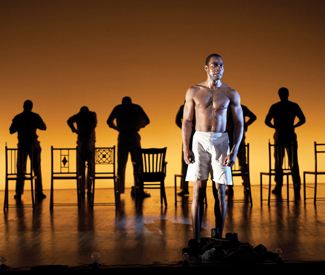
The Scottsboro Boys American Conservatory Theater, 415 Geary, SF; www.act-sf.org. $20-95. Tue-Sat, 8pm (also Wed and Sat, 2pm). Extended through July 22. American Conservatory Theater presents the Kander and Ebb musical about nine African American men falsely accused of a crime they didn’t commit in the pre-civil rights movement South.

Vital Signs Marsh San Francisco, 1062 Valencia, SF; (415) 282-3055, www.themarsh.org. $15-50. Sat, 8:30pm. Through July 21. The Marsh San Francisco presents Alison Whittaker’s behind-the-scenes look at nursing in America.

Waiting… Larkspur Hotel Union Square, 525 Sutter, SF; www.brownpapertickets.com. $49-75. Thu-Sat, 8pm; Sun, 2pm. Through Aug 5. Comedy set behind the scenes at a San Francisco restaurant.

The Waiting Period MainStage, Marsh San Francisco, 1062 Valencia, SF; (415) 282-3055, www.themarsh.org. $15-50. Fri, 8pm; Sat, 5pm. Extended through August 4. Brian Copeland (comedian, TV and radio personality, and creator-performer of the long-running solo play Not a Genuine Black Man) returns to the Marsh with a new solo, this one based on more recent and messier events in Copeland’s life. The play concerns an episode of severe depression in which he considered suicide, going so far as to purchase a handgun — the title coming from the legally mandatory 10-day period between purchasing and picking up the weapon, which leaves time for reflections and circumstances that ultimately prevent Copeland from pulling the trigger. A grim subject, but Copeland (with co-developer and director David Ford) ensures there’s plenty of humor as well as frank sentiment along the way. The actor peoples the opening scene in the gun store with a comically if somewhat stereotypically rugged representative of the Second Amendment, for instance, as well as an equally familiar “doood” dude at the service counter. Afterward, we follow Copeland, a just barely coping dad, home to the house recently abandoned by his wife, and through the ordinary routines that become unbearable to the clinically depressed. Copeland also recreates interviews he’s made with other survivors of suicidal depression. Telling someone about such things is vital to preventing their worst outcomes, says Copeland, and telling his own story is meant to encourage others. It’s a worthy aim but only a fitfully engaging piece, since as drama it remains thin, standing at perhaps too respectful a distance from the convoluted torment and alienation at its center. (Avila)

BAY AREA

Bloody Bloody Andrew Jackson The Stage, 490 S. First St, San Jose; www.thestage.org. $25-$50. Wed-Thu, 7:30pm; Fri-Sat, 8pm; Sun, 2pm. Through July 29. An overrated president and rock musical at once, the 2010 Broadway hit by Alex Timbers (book) and Michael Friedman (music, lyrics) takes its first Bay Area bow in San Jose Stage’s ho-hum production, directed by Rick Singleton. In this proudly irreverent but rarely very witty take on mob-democracy and the pack of jackals that are our illustrious political forefathers, a vicious and ambitious cornpone Jackson (David Colston Corris, subbing for Jonathan Rhys Williams) takes his Indian-hating ways to the top of the political establishment on a wave of backwoods resentments and Tea Party-style populism. Present-day parallels should run deep here, but the play is so shallow in its humor that it feels one-note for the most part, while its South Park-like insouciance has an unintentional way of making jokes about the Trail of Tears feel “too soon.” This American Idiocy and the 13 accompanying musical numbers are gamely if not always smoothly essayed by cast and band alike (under musical direction by Allison F. Rich), but dumb satire lines up with a generally unappealing score, straining after saucy eloquence while sounding derivative of the emo fare served up by the likes of Spring Awakening and that lot. A tack away from sheer vulgarity and buffoonery toward moralizing history lesson comes late in the hour and its guilty pretention — along with earlier gratuitous, vaguely uncomprehending references to Susan Sontag and Michel Foucault — only makes matters worse. (Avila)

Emotional Creature Berkeley Repertory Theatre, Roda Theatre, 2025 Addison, Berk; www.berkeleyrep.org. $14.50-73. Wed/11 and Sun/15, 7pm (also Sun/15, 2pm); Thu/12 and Sat/14, 8pm (also Sat/14, 2pm). It’s not easy being a girl, and Eve Ensler’s newest play Emotional Creature leaves no scenario unexplored: from high school shaming rituals to ritual clitorectomies. If that sounds like a jarring juxtaposition, you’d be right. It’s difficult theatrically to transition seamlessly from a deeply affecting monologue about being a teenage sex slave in the Democratic Republic of Congo to a cute song about wearing miniskirts, and it’s equally difficult for the audience to change emotional gears rapidly enough to be able to adequately absorb the impact of each individual segment. Instead, the play comes off as an earnest but awkward Girl Scout Jamboree variety show — attempting to address as wide a variety of social ills as possible (from teen suicide to industrial pollution) — despite the strong and savvy acting chops of the six performers. In contrast to Ensler’s most popular work, The Vagina Monologues, which effectively “humanized” a part of the body by giving it something highly personal to say, Emotional Creature weirdly depersonalizes its girls by putting lines in their mouths (“I’m not the life you never lived”) that clearly come from an adult perspective. And as for those girls who don’t particularly identify as “emotional creatures” at all? For them, there are no words. (Gluckstern)

For the Greater Good, Or The Last Election This week: Cedar Rose Park, 1300 Rose, Berk; www.sfmt.org. Free (donations accepted). Sat/14-Sun/15, 2pm. Various venues through Sept. 8. SF Mime Troupe launches its annual political musical (this year’s theme: one percenters behaving badly); the show travels around NorCal parks and other venues throughout the summer.

King John Forest Meadows Amphitheater, 890 Belle, Dominican University of California, San Rafael; www.marinshakespeare.org. $20-35. Opens Fri/13, 8pm. Runs Sun/15, July 21, 27, 29, Aug 4, 10-12, 8pm; July 22 and Aug 5, 4pm. Marin Shakespeare Company kicks off its 2012 outdoor summer festival season with this history play.

The Kipling Hotel: True Misadventures of the Electric Pink ’80s New venue: Marsh Berkeley, 2120 Allston, Berk; (415) 282-3055, www.themarsh.org. $20-50. Sat/14, 8:30pm; Sun/15, 7pm. This new autobiographical solo show by Don Reed, writer-performer of the fine and long-running East 14th, is another slice of the artist’s journey from 1970s Oakland ghetto to comedy-circuit respectability — here via a partial debate-scholarship to UCLA. The titular Los Angeles residency hotel was where Reed lived and worked for a time in the 1980s while attending university. It’s also a rich mine of memory and material for this physically protean and charismatic comic actor, who sails through two acts of often hilarious, sometimes touching vignettes loosely structured around his time on the hotel’s young wait staff, which catered to the needs of elderly patrons who might need conversation as much as breakfast. On opening night, the episodic narrative seemed to pass through several endings before settling on one whose tidy moral was delivered with too heavy a hand, but if the piece runs a little long, it’s only the last 20 minutes that noticeably meanders. And even with some awkward bumps along the way, it’s never a dull thing watching Reed work. (Avila)

Salomania Aurora Theatre, 2081 Addison, Berk; www.auroratheatre.org. $30-55. Tue, 7pm; Wed-Sat, 8pm; Sun, 2 and 7pm. Through July 22. The libel trial of a politically opportunistic newspaper publisher (Mark Andrew Phillips) and the private life of a famous dancer of the London stage — San Franciscan Maud Allan (a striking Madeline H.D. Brown) — become the scandalous headline-grabber of the day, as World War I rages on in some forgotten external world. In Aurora’s impressive world premiere by playwright-director Mark Jackson, the real-life story of Allan, celebrated for her risqué interpretation of Oscar Wilde’s Salomé, soon gets conflated with the infamous trial (20 years earlier) of Wilde himself (a shrewdly understated Kevin Clarke). But is this case just a media-stoked distraction, or is there a deeper connection between the disciplining of “sexual deviance” and the ordered disorder of the nation state? Jackson’s sharp if sprawling ensemble-driven exploration brings up plenty of tantalizing suggestions, while reveling in the complexly intermingling themes of sex, nationalism, militarism, women’s rights, and the webs spun by media and politics. A group of trench-bound soldiers (the admirable ensemble of Clarke, Alex Moggridge, Anthony Nemirovsky, Phillips, Marilee Talkington, and Liam Vincent) provide one comedy-lined avenue into a system whose own excesses are manifest in the insane carnage of war — yet an insanity only possible in a world policed by illusions, distractions and the fear of unsettled and unsettling “deviants” of all kinds. In its cracked-mirror portraiture of an era, the play echoes a social and political turmoil that has never really subsided. (Avila)

Truffaldino Says No Ashby Stage, 1901 Ashby, Berk; www.shotgunplayers.org. $18-25. Wed-Thu, 7pm; Fri-Sat, 8pm; Sun, 5pm. Through July 22. For centuries, stock characters have insidiously demonstrated to the working classes the futility of striving against type or station with broadly comedic pratfalls, doomed to play out their already-written destinies with no hope for a change in script. Truffaldino (William Thomas Hodges) is one such pitiable character. Longing for his airheaded mistress, Isabella (Ally Johnson), playing second fiddle to his father, the iconic Commedia dell’Arte fool Arlecchino (Stephen Buescher), Truffaldino becomes increasingly dissatisfied with the monotony of the “old world” and strikes out for the new one — eventually washing up in Venice Beach. Despite their dayglo California veneer and sitcom-appropriate shenanigans, the new world characters he meets quickly come to resemble the stock commedia characters Truffaldino has left behind, and he finds himself similarly trapped in their incessantly recurring cycle — pining predictably for valley girl waitress, Debbie (Johnson again). What thankfully cannot be predicted is how Truffaldino manages to rewrite his destiny after all while reconciling his two worlds in a raucous comedy of errors anchored by the solid physical comedy of its stellar cast, particularly that of Stephen Buescher as both Arlecchino and Hal, who bounces, prances, tumbles, and falls down the stairs with the kind of rubber-jointed dexterity that should come with a “kids, don’t try this at home” warning label. (Gluckstern)

PERFORMANCE/DANCE

“Ballroom With a Twist” Marines’ Memorial Theatre, 609 Sutter, Second Flr, SF; www.marinesmemorialtheatre.com. $49-79. Thu-Sat, 8pm (also Sat, 2pm); Sun, 2 and 6pm. Through July 29. Dancing With the Stars pros and contestants from American Idol and So You Think You Can Dance perform pumped-up ballroom dance and music.

BATS Improv Bayfront Theater, B350 Fort Mason Center, SF; www.improv.org. Fri, 8pm, through July 27: “Naked” Theatresports, $17. Sat, 8pm, through July 28: “Spontaneous Broadway,” $20.

“Elect to Laugh” Studio Theater, Marsh San Francisco, 1062 Valencia, SF; (415) 282-3055, www.themarsh.org. Tue, 8pm. Through Nov 6. $15-50. Veteran political comedian Will Durst emphasizes he’s watching the news and keeping track of the presidential race “so you don’t have to.” No kidding, it sounds like brutal work for anyone other than a professional comedian — for whom alone it must be Willy Wonka’s edible Eden of delicious material. Durst deserves thanks for ingesting this material and converting it into funny, but between the ingesting and out-jesting there’s the risk of turning too palatable what amounts to a deeply offensive excuse for a democratic process, as we once again hurtle and are herded toward another election-year November, with its attendant massive anticlimax and hangover already so close you can touch them. Durst knows his politics and comedy backwards and forwards, and the evolving show, which pops up at the Marsh every Tuesday in the run-up to election night, offers consistent laughs born on his breezy, infectious delivery. One just wishes there were some alternative political universe that also made itself known alongside the deft two-party sportscasting. (Avila)

“Expiration Date: Still Good” Jewish Theater, 470 Florida, SF; www.pianofight.com. Thu, 8pm. Through July 19. $20. PianoFight’s female-driven comedy group ForePlays performs fan-fave sketches.

“The Front Row: Live at the Dark Room!” Dark Room, 2263 Mission, SF; www.thefrontrow4.com. Sat/14, 8:30pm. $8. The all-girl sketch comedy troupe performs.

Keith Lowell Jensen San Francisco Punch Line, 444 Battery, SF; www.punchlinecomedyclub.com. July 17-18, 8pm. $15. The comedian performs and tapes a new CD for Stand Up! Records.

“Jillarious Tuesdays” Tommy T’s Showroom, 1000 Van Ness, SF; www.jillarious.com. Tue, 7:30. Ongoing. $20. Weekly comedy show with Jill Bourque, Kevin Camia, Justin Lucas, and special guests.

“Majestic Musical Review Featuring Her Rebel Highness” Harlot, 46 Minna, SF; www.herrebelhighness.com. Sun, 5pm. Through Aug 12. $25-65. Cocktails and hors d’oeuvres, performers in Baroque-chic gowns, music, and more.

“Mediate presents Soundwave ((5)) Humanities: Human Bionic” Lab, 2948 16th St, SF; www.projectsoundwave.com. Sat/14, 8pm. $12-25. Multimedia and interactive performances by Joe Cantrell, Kadet Kuhne, and Les Struck + Sonsherée Giles.

“Mediate presents Soundwave ((5)) Humanities: Sonicplace Exhibition” Intersection for the Arts, SF Chronicle Building, 925 Mission, SF; www.projectsoundwave.com. Opening night event Fri/16, 6-10pm, free. Exhibit runs Tue-Sat, noon-6pm. Through Sept 28. Innovative sound installations and exhibits presented by UC Santa Cruz’s OpenLab/Mechatronics Group.

“Stripping Down to Story” Garage, 715 Bryant, SF; www.brownpapertickets.com. Fri/13-Sat/14, 8pm. $10-20. Comedian and performance artist Jovelyn Richards performs her solo show.


Missing the point on Hetch Hetchy

35

So now we have to have a vote on tearing down Hetch Hetchy. That’s fine, let’s have the discussion. But let’s be honest about it: This isn’t just, or even primarily, a water issue. It’s really about electric power.

If you want to read the piece I wrote on this for Earth Island Journal, it’s here. I’ve written loads more over the years, enough to fill a couple of good-sized books. But let me try to make the point as simply as I can.

The dam would never have been approved by Congress if it were just a reservoir for San Francisco’s water. The reason the Raker Act, which authorized the destruction of Hetch Hetchy Valley, was approved was that the conservationists, who opposed the dam, were trumped by the public-power advocates, who argued that preventing private companies from controlling the electric power grid was so important that it justified environmental sacrilege. The dam was supposed to provide the centerpiece for a local public-power system that would prevent Pacific Gas and Electric Company from controlling the city’s energy system.

The history of Hetchy Hetchy isn’t about water — it’s about how that power never made it to San Francisco. You can read it in great detail here. I have spent weeks in the National Archives in DC researching this, and have thousands of pages of documents on it. You may or may not support the idea of the city running a public-power system, but it’s hard for anyone to argue that Congress intended anything else.

The city accepted the deal, built the dam, and has for almost a century ducked, bobbed, weaved, and tried everything possible to avoid kicking out PG&E.

So why keep the dam in place? I don’t believe the Restore Hetch Hetchy people when they say that the city can find other storage for its water needs. Tear down the dam and we’ll be sucking water out of the Delta soon enough. But forget that — let’s assume we could conserve enough water that we didn’t need that reservoir.

We’d still have to replace a buttload of electric power. The city’s hydropower system generates 1.7 billion kilowatt hours a year, enough to power more than 400,000 homes — and does so without producing an ounce of CO2. Although there are other powerhouses in the system, we’d lose almost half of its capacity if we tore down the dam.

It seem to me that existing large hydro, while imperfect, is a more environmentally sound form of electricity generation than coal, oil, natural gas, or nuclear — and right now, those are the alternatives.

Soon enough the city will have enough small-scale distributed generation, mostly rooftop solar, to get rid of both PG&E and the dam. Count me as a supporter. But we’re not there yet.

In the meantime, if we’re going to have this discussion, let’s talk about electricity, and PG&E, and the Raker Act, not just water and the once-pristine valley.


Dick Meister: “We want bread and roses, too”

0

By Dick Meister

Dick Meister, former labor editor of the SF Chronicle and KQED-TV Newsroom, has covered labor and politics for more than a half-century. Contact him through his website, www.dickmeister.com, which includes more than 350 of his columns.

 “Our lives shall not be sweated from birth until life closes;

Hearts starve as well as bodies, give us bread, but give us roses!”

–From a poem by James Oppenheim

Bread and roses. It was the battle cry of the thousands of striking women and their supporters who marched through the streets of Lawrence, Massachusetts, in 1912, in the heart of the textile industry. Although it’s been 100 years since they marched, their militancy and bravery remain among the brightest highlights in the long history of the American labor movement.

The three-months long strike in Lawrence, led by the Industrial Workers of the World (IWW) pitted the 25,000 workers – half of them women under 20, many as young as 14 – against the violently anti-labor textile mill owners, who were strongly backed by the press, politicians , school officials, and clergy.

Striking was difficult for the workers, who had only their poverty-level wages to live on. They had barely enough to pay the rent for the run-down, disease-ridden shacks and tenement flats where most of them lived. Many were constantly in debt, having to borrow money to meet their bare necessities. Health care and other fringe benefits were virtually unheard of, and more than one-third of the workers died in their mid-twenties.

Working conditions were brutal. They commonly worked 12 hours a day in the hot, dusty and dangerous textile mills for but $6 to $8 a week. The workers had neither the leisure time nor the means to improve the quality of their lives, no time or money to enjoy the good things of life – the roses.

They desperately needed the help that unionization could provide them, but that could come only through a strike that would impose even more hardships on the already extremely hard-hit workers.  They hesitated about actually walking off the job, but finally were convinced that striking would bring long-term benefits to them, their families and their communities.

The mill workers moved into action after employers unilaterally cut their already rock-bottom pay even more.  They marched to the mills and throughout Lawrence to the tune of militant labor songs by IWW bard Joe Hill and others, holding high  placards that declared ,”We Want Bread and Roses too,” a demand that soon would be taken up by labor and feminist groups nationwide.

It wasn’t easy, bringing the workers together. They belonged to two-dozen different national groups, speaking 72 languages. They had been purposely kept apart by employers, who kept them in ghettoes by setting up separate housing areas for different nationalities, lest they forget their ethnic differences and join together to challenge their miserable pay and unhealthy conditions.

Employers got their friends in City Hall to enact an ordinance preventing strikers from picketing individual mills, but strikers responded by the extraordinary act of forming a picket line around the perimeters of the entire textile mill district. Thousands of pickets were on the line 24 hours a day throughout the 10-week-long strike.

Some spent part of their evenings hoping to disturb the sleep of strikebreakers who employers had hired to replace them, loudly serenading them with IWW songs.

Thousands paraded through the streets of Lawrence regularly, until the city enacted an ordinance forbidding parades and mass meetings. They switched to sidewalk parades of up to four-dozen strikers and supporters, who locked arms, blocking shoppers and others from entering downtown businesses.

Eventually, martial law was declared, enforced by violent police and militiamen, who charged in to try to break up the marches and other demonstrations. They even tried to block strikers from putting their children on trains that would take them to safety with sympathizers in other cities.  The city called in the Army to block the trains from moving, which led to the killing of a woman striker and the beating of many others, including several children and two pregnant women who had miscarriages.

Then the authorities arrested two of the IWW’s principal leaders for murder, on grounds that their illegal acts had provoked police into the action that led them to kill a striker.

The widespread publicity about the strike finally helped pressure employers to settle. The terms were modest, primarily granting the workers union recognition, a 15 percent pay increase and a 54-hour workweek with overtime pay at double the regular rate.  But the mere recognition of the workers’ right to make and be granted any demands was crucial.  It inspired many other workers, especially women, to also assert their basic rights and brought strong support nationally for many workers who sought decent treatment.

What’s more, many textile mill owners, fearing they also might be struck, granted pay raises totaling almost $15 million to an estimated 438,000 workers throughout New England and elsewhere.

A much longer and lasting result was that the strike put the needs of working women on labor’s agenda for the first time and showed that women could very well provide decisive leadership and indeed win bread – and roses.

Dick Meister, former labor editor of the SF Chronicle and KQED-TV Newsroom, has covered labor and politics for more than a half-century. Contact him through his website, www.dickmeister.com, which includes more than 350 of his columns.


Guardian Voices: A place for rage

23

Just a few weeks ago, my partner came home from work in South San Francisco to tell me some horrifying news. A cop had killed a boy she knew, a Black eighth grader named Derrick Gaines. We looked at each other in the way we do when there is too much to say, our eyes wet, our hearts racing, our rage too big for words. We held our son extra tight that night.

Ayoka went to the funeral last Thursday, and was finally able to shed a few of what felt like a mountain of tears inside of her. She supported family and friends who were overwhelmed with grief, and listened to people’s efforts to make sense of this madness. But for anyone who can see the humanity of this young Black man, there is no way for his murder to make any damn sense at all.

I don’t know and I don’t care if Derrick was what the news calls “a good kid” or a “troubled kid,” a “gangbanger” or a straight-A student. What I do know, what matters to my heavy heart, and what is at the source of my rage, is that Derrick was a human being, that he was a kid, that a cop killed him needlessly and that he will most likely get away with it. There will be no apologies, no accountability, no recognition that the cop had many other options than to shoot and kill. And the absence of all this will be another silent attack on our psyche, an unstated affirmation of Black inferiority, of the lesser value of Black lives.

Derrick’s tragic murder has captured less attention than that of Trayvon Martin, but they both have weighed especially heavily on my heart. Both young, Black and male, they were supposedly “looking suspicious” in a non-Black neighborhood. Both Derrick and Trayvon were teenagers minding their business. Neither was in the midst of committing a crime – which would not in any case justify their murder but does draw attention to the degree to which their Blackness itself was apparently the crime being committed.

Both Derrick and Trayvon are dead, no one is safer, and Derrick’s four-year-old brother is left to struggle with the reality that his big brother will never be coming home again. I’ve been to more than my fair share of police accountability protests. But today, on this 4th of July, something is rising up in me that is new. It has to do with the place for rage.

Anybody Black in America has a strategy, conscious or not, for dealing with rage. Some of us are lucky and stumble upon socially productive paths – we serve, we organize for change, we become leaders in our church. Others are less lucky and make choices that lead to violence and self-destruction. Some of us stay permanently in a place of rage, and become one kind of crazy or another.

I confess to having been, for all these years, a fairly reasonable sister, reticent to fully voice my heartbreak, pain and rage about the state of my people. But I’m reconsidering this path.

The moment clearly calls for a new way. We may have a Black president, but these are dark times. It’s Trayvon and Derrick. It’s the Supreme Court’s racist ruling on SB1070, allowing the blatant racial profiling of the “papers please” provision to move forward. All the talk about government agents stopping black and brown people in the street takes me back to slave times, when we needed papers to leave the plantation, when white men were paid to hunt for fugitive slaves, and why my great great great grandfather took his family to Canada after the passage of the Fugitive Slave Act of 1850. It was time to protect his family and leave the madness of the United States of America.

The Black Community faces Depression-level unemployment, a resurgence racist Right and a level of state violence in our everyday lives that is largely invisible to most non-Black people. We have the greatest number of Black people incarcerated of any time in American history; there are more Black men under the control of the criminal justice system today than there were in slavery in 1850. In supposedly progressive San Francisco, Mayor Lee is openly considering New York’s notoriously racist “stop and frisk” policing policy. And even without such a draconian measure, the data already tell us that the majority of Black boys in San Francisco have been stopped, harassed, or arrested by the local cops by the time they become adults.

In the face of what can only be considered extreme conditions, extreme violence and extreme disenfranchisement amongst my people, I confess that I have failed to take the extraordinary measures that are plainly necessary.

See, the thing is, I had good home training and was socialized to be a nice Black girl. I can code-switch and communicate with nearly anyone with a passion that generally gains respect. Even when in the midst of political battle I don’t scream and holler, and have allowed any number of white people to do and say racist things and get away unharmed. Like so many of us, I try to be a Black person with dignity, without losing my shit. As Michael Jackson would say, I’m a lover not a fighter. This strategy has helped me gain social status, an elite education, and some middle class comforts of American life.

So what to do with this rage? What’s the path beyond reasonableness that does not lead to self-destruction? On this 4th of July, I’m remembering our freedom fighters Frederick Douglass and Harriet Tubman, and asking them for wisdom. In my own way and in these times, I want to walk with faith and fearlessness as they did, and not be afraid to put my body on the line for freedom. What sacrifices will we all need to make? What creature comforts or career plans will we need to put aside? What will it take to build a movement that lifts up the value of Black life and our place in a better, more just society?

In Michelle Alexander’s stunning book The New Jim Crow, she makes a clear case that since we won the formal battle against Jim Crow in the 1960s, “We have not ended racial caste in America; we have merely redesigned it.” This contemporary, supposedly colorblind, system of mass incarceration and social control of Black people makes our work more complicated, our moral outrage less understandable and our courage ever more necessary.

Let’s build a movement for racial justice, honor our rage, and find a way to be the Frederick Douglass’ and Harriet Tubmans of the 21st century that these times require.

To support Derrick Gaines’ family, donations can be made at any Wells Fargo to the ‘Derrick Gaines Memorial Fund’ account #: 1636477653.

You can check out Michelle Alexander’s work on the New Jim Crow here. And stay tuned for community organizing against attempts to bring “Stop and Frisk” to SF.

Faces of feminism

7

Is San Francisco still on the cutting edge of women’s issues? I recently spent a sunny Saturday morning buried in the radical archives of Bolerium Books (www.bolerium.com) — which is by the way, an amazing resource for anyone researching labor, African American, First Peoples, and queer history, among other things. Me, I was looking into our city’s rich history of feminist activism, inspiration for our upcoming Guardian “Bay Area Feminism Today” panel discussion. The event will unite amazing females from across the city who have but one thing in common: they’re pushing the envelope when it comes to the definition of what a “women’s issue” is, in a time when very few people claim feminism as their primary crusade. We’ll be talking more about their exciting projects –- but also touching on more universal issues. What is San Francisco’s role in fighting the nationwide attack on reproductive rights? How is our progressive community doing in terms of supporting women and maintaining a feminist perspective on issues?

Women’s work: it’s alive and kicking, and it deserves its moment in the spotlight. Meet our panelists here, in preparation for the real deal. 

THE GUARDIAN PRESENTS: “BAY AREA FEMINISM TODAY”

Wed/11 6-8pm, free

City College of San Francisco Mission campus

1125 Valencia, SF

www.sfbg.com/bayareafeminismtoday


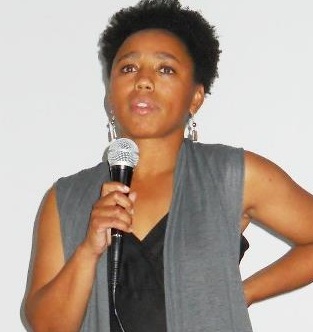
STEPHANY ASHLEY

St. James Infirmary programs director, ex-president of Harvey Milk LGBT Democratic Club


For me, sex worker rights are a feminist issue because they are about body autonomy. As much as reproductive choice is a feminist issue, so too is the right to determine the ways in which we use our bodies, change our bodies, and take care of our bodies. When people are criminalized for their HIV status, denied access to hormones and safe gender transitions, or are afraid to carry condoms because it might lead to police harassment or arrest — these are all feminist issues. At St. James Infirmary (www.stjamesinfirmary.org), we provide healthcare and social services from a peer-based model, so community is really the central aspect of the project. I was excited to chair the Harvey Milk LGBT Democratic Club (www.milkclub.org) last year, because I wanted to keep raising sex workers rights issues as part of the LGBT agenda. At St. James, nearly 70 percent of our community members are LGBTQ, so it’s really critical that sex workers rights are treated as a queer issue, a feminist issue, and a labor issue.

CELESTE CHAN

Artist and founder of Queer Rebels

My partner KB Boyce and I started our production company Queer Rebels (www.queerrebels.com) to honor the feminist and queer of color artists and elders who paved the way. Our main project is “Queer Rebels of the Harlem Renaissance,” a performance extravaganza which took place June 28-30. Such an exciting time! The Harlem Renaissance legacy remains with us to this day. It was an explosion of art, intellect, and sexual liberation led by queer Black artists. I’m also a board member at Community United Against Violence (www.cuav.org). CUAV was formed in the wake of Harvey Milk’s assassination and the White Night riots, and does incredible work to address violence within and against the LGBTQ community. Another way I’m involved with women’s issues is through Femme Conference (www.femme2012.com). In a culture where femininity is both de-valued and the expected norm, Femme Con creates a vital feminist space — this year it takes place in Baltimore, Maryland.

EDAJ

DJ and promoter of queer nightlife

I work in nightlife to provide space for communities that often don’t have spaces to come together. For 15 years, I have been providing music for women as the resident DJ at Mango (every fourth Sunday at El Rio, www.elriosf.com). I also work to support my fellow LGBT veterans by promoting their visibility through my nightlife projects. Ex-Filipino Marine and two-spirit drag king Morningstar Vancil’s story has inspired me to work on creating a space that raises awareness about LGBT veterans, especially women living with disabilities. I also think it’s important to do outreach in the Black LGBT community to help strengthen support for organizations such as the Bayard Rustin LGBT Coalition (www.bayardrustincoalition.com), a group that is not only fighting for Black LGBT equality, but is focused on social change for all oppressed people. After 10 years of executive producing the Women’s Stage at SF Pride, I was honored as a grand marshal this year at an event hosted by the BRC and Soul of Pride. It was beautiful to see so many Black LGBT people dedicated to moving global equality forward. Although there is a need to reach out to everyone in the Black LGBT community, naturally my goal is to first focus on connecting more women, a group that has always been less visible.

JUANA FLORES

Co-director of Mujeres Unidas y Activas

My organization Mujeres Unidas y Activas (www.mujeresunidas.net) is based on a double mission: personal transformation and community power for social justice. MUA is a place where women arrive through different challenges in their lives. We try to provide emotional support and references so that they don’t feel like they’re alone, so that they have strength to begin the process of healing and making changes. Those can include issues of domestic violence, problems with teenage children, labor or housing issues — when they arrive at MUA they begin the process of developing their self esteem and becoming stronger. They also begin to participate in trainings and making changes in their community and to the system through civic and political participation. At MUA, women find a home. They feel comfortable because they’re always welcome. We’re developing strong leadership, leadership that is at the table when it comes to making decisions about our campaigns, like our letter of labor rights and the help we give to victims of domestic violence through our crisis line. Every day our members are developing their ability to be involved in the organization and community, and making changes in their personal and familial lives.

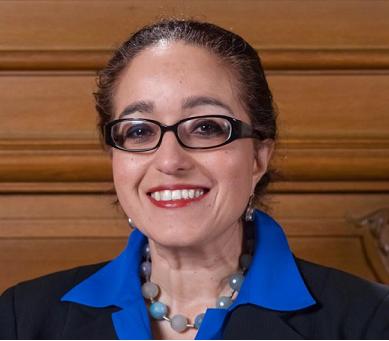
ALIX ROSENTHAL

Attorney and elected member of the SF Democratic County Central Committee

As an elected member of the SF DCCC (www.sfdemocrats.org), the governing body of the SF Democratic Party, I am working to involve the party in recruiting more women to run for political office locally. In the June 2012 election, I assembled a slate of the female candidates for DCCC — we called ourselves “Elect Women 2012.” It was a controversial effort, because it included both progressives and moderates. In the wake of a highly contentious and factional term on the DCCC, we hoped to prove that moderates and progressives can work together to re-energize Democrats in this important presidential election cycle. Running for office in San Francisco is a high stakes game; it is costly and requires an extensive political network. And so the DCCC is where many future candidates get their start — it is where they build the connections necessary to run for higher office, and where they hone their fundraising abilities. By recruiting and supporting women candidates for the DCCC, I am hoping to build a “farm team” of female candidates within the party. This year, I am proud that the seven women incumbents on the DCCC retained our seats in the June election, and that we achieved parity by electing four new women to the party’s governing board. I look forward to seeing what these women can accomplish together.

LAURA THOMAS

Deputy state director of Drug Policy Alliance

Ending the failed war on drugs is a women’s issue because women are far too often bearing the brunt of that failure, losing their freedom, children, economic independence, safety, health, and sometimes their lives as victims of the war on drugs. Women in prison in California can be shackled during childbirth, lose custody of their children because they use legal medical marijuana. They’re vulnerable to HIV and hepatitis C because they or their partners don’t have access to sterile syringes for injecting drugs. My major project for the Drug Policy Alliance (www.drugpolicy.org) is mobilizing San Francisco to show the rest of the world how effective progressive drug policy can be. I want to see San Francisco open the first supervised injection facility in the United States, to end new HIV and hepatitis C infections among people who use drugs. I want us to truly have effective, culturally appropriate substance use treatment for everyone who requests it. I want San Francisco to end the cycle of undercover drug buys-incarceration-recidivism. I want us to address the appalling racial disparities in who gets arrested, convicted, and incarcerated for drug offenses here. I want us to aggressively defend our ground-breaking, well-regulated medical cannabis dispensary system against all federal intervention. San Francisco is leading the way in the United States in addressing the harms of drug use and drug prohibition but we have a lot more we can do.

MIA TU MUTCH

Transgender activist and SF Youth Commission officer

I’ve worked for a plethora of LGBTQ organizations and have been on several national speaking tours. I currently serve as media and public relations officer of the San Francisco Youth Commission, and use my position to promote LGBTQ safety and overall health. I’ve partnered with several city departments in order to create a cultural competency video that will train all service providers on best practices for working with LGBTQ youth. As a vocal advocate against hate crimes and sexual assaults, I’m working with local groups to create a community patrol in the Mission to prevent violence against women and transgender people. I’m also the founder of Fundraising Everywhere for All Transitions: a Health Empowerment Revolution! (FEATHER), a collective aimed at making gender-affirming transitions more affordable for low income transgender people. I work to create avenues of equality for those who benefit the least from patriarchy by creating a culture of safety and support for people of all genders.

Brown, Pak, and Olague

38

Christina Olague was a great planning commissioner. I’ve always liked her, and when she was appointed we pointed out how strongly she was rooted in the progressive community.

Olague has strong progressive activist credentials, from working with the Mission Anti-Displacement Coalition to protect low-income renters during the last dot-com boom to her more recent community organizing for the Senior Action Network. She co-chaired the 2003 campaign that established the city’s minimum wage and has been actively involved in such progressive organizations as the Milk Club, Transit Riders Union, and the short-lived San Francisco People’s Organization.

She also served two terms on the Planning Commission — appointed by Board of Supervisors then-President Matt Gonzalez in 2004 and reappointed by then-President Aaron Peskin in 2008 — where she was known for doing her homework on complicated land use issues and usually landing on the progressive side of divided votes.

We’ve had some disagreements since she took office — particularly around 8 Washington. (I also disagreed with the Labor Council on that one, and only three of the supervisors agreed with me.) And it’s not the first time an elected official I supported turned around and infuriated me on a development vote.

I want Olague to succeed; I want her to come to us in the fall with a record that makes us want to endorse her for a full four-year term. She’s been talking seriously about violence in the district and about young people, predominantly African Americans, getting killed. I feel like she wants to do the right thing.

But her reelection effort is starting to feature some bad actors.

At a recent fundraiser in Chinatown, former Mayor Willie Brown, who ranks as one of the most corrupt public officials in modern San Francisco history and whose administration was a disaster for poor and working-class people (he once even said that poor people ought to just get out of town because this city is too expensive for them), stood up and made a speech, warmly endorsed Olague and said he would be with her “all the way.” Olague then thanked Rose Pak, the Chinatown power broker, for “all of her support over the last few months.”

This makes me nervous. And it hasn’t helped my nerves that I’ve been trying to talk to Olague about these issues for the last week, and she keeps avoiding the conversation by not returning calls or cutting conversations short when I do reach her.

Willie Brown, with his Chron column, has taken on this funny, warm, man-about-town persona, but when he was running City Hall, everything was about money. He cut deals right and left that destroyed communities and neighborhoods. He oversaw, aided and encouraged what we called the “Economic Cleansing of San Francisco.” Tens of thousands of working-class people, artist, writers, young people … were driven out of the city by a steamroller of gentrification — all with the mayor’s blessing.

Now he’s working as a private attorney, and last time we checked was getting $200,000 a year to represent PG&E. We have no idea what other big corporate clients he has or what he does for them — but it’s clearly not writing legal briefs and handling litigation. He gets paid for being a political fixer. For the bad guys.

And he’s going to be with Olague “all the way.”

Damn.

Stage Listings

0

Stage listings are compiled by Guardian staff. Performance times may change; call venues to confirm. Reviewers are Robert Avila, Rita Felciano, and Nicole Gluckstern. Submit items for the listings at listings@sfbg.com. For further information on how to submit items for the listings, see Picks.

THEATER

OPENING

Duck Lake The Jewish Theater, 470 Florida, SF; www.duck-lake.com. $17-35. Opens Fri/6, 8pm. Runs Fri-Sat, 8pm. Through July 28. PianoFight’s resident sketch comedy group, Mission CTRL, performs its new "ballet-horror-comedy."

For the Greater Good, Or The Last Election This week: Dolores Park, 18th St at Dolores, SF; www.sfmt.org. Free (donations accepted). Opens Wed/4, 2pm. Runs Sat/7-Sun/8, 2pm. Various venues through Sept. 8. SF Mime Troupe launches its annual political musical (this year’s theme: one percenters behaving badly); the show travels around NorCal parks and other venues throughout the summer.

BAY AREA

King John Forest Meadows Amphitheater, 890 Belle, Dominican University of California, San Rafael; www.marinshakespeare.org. $20-35. Previews Fri/6-Sun/8, 8pm. Opens July 13, 8pm. Runs July 15, 21, 27, 29, Aug 4, 10-12, 8pm; July 22 and Aug 5, 4pm. Marin Shakespeare Company kicks off its 2012 outdoor summer festival season with this history play.

ONGOING

Absolutely San Francisco Alcove Theater, 414 Mason, Ste 502, SF; www.thealcovetheater.com. $32-50. Thu-Sat, 8pm (no show Fri/6). Through Aug 18. A multi-character solo show about the characters of San Francisco.

5 Lesbians Eating a Quiche Phoenix Theatre, 414 Mason, SF; www.tidestheatre.org. $20-38. Thu-Sat, 8pm (also Sat, 10pm). Through July 21. Tides Theatre performs Evan Linder and Andrew Hobgood’s comedy about five women forced into a bomb shelter during a mid-breakfast nuke attack.

Fwd: Life Gone Viral Marsh San Francisco, 1062 Valencia, SF; (415) 282-3055, www.themarsh.org. $20-50. Sat, 8:30pm; Sun, 7pm (July 15, show at 7:30pm). Extended through July 22. The internet becomes comic fodder for creator-performers Charlie Varon and Jeri Lynn Cohen, and creator-director David Ford.

Hedwig and the Angry Inch Boxcar Playhouse, 505 Natoma, SF; www.boxcartheatre.org. $25. Wed/4-Thu/5, 8pm; Fri/6-Sat/7, 7 and 9:30pm; Sun/8, 5pm. Boxcar Theatre performs John Cameron Mitchell’s musical about a transgendered glam rocker.

Jip: His Story Marsh San Francisco, MainStage, 1062 Valencia, SF; www.themarsh.org. $8-50. Thu-Fri, 7:30pm; Sat, 2pm; Sun, 3pm. Through July 15. Marsh Youth Theater remounts its 2005 musical production of Katherine Paterson’s historical novel.

The Magic Flute War Memorial Opera House, 301 Van Ness, SF; www.sfopera.com. $31-340. Fri/6, 8pm; Sun/8, 2pm. San Francisco Opera adds some unexpected vitality to its new star-studded production of one of the world’s most popular operas, Mozart’s whimsical but philosophical tale of a romance and (Mason-inspired) spiritual evolution. Prince Tamino (poised tenor Alek Shrader) and sidekick Papageno (fine baritone Nathan Gunn in a blithe comedic performance) are on a quest to rescue from sorcerer Sarastro (imposing bass Kristinn Sigmundsson) the lovely Pamina (appealing soprano Heidi Stober), daughter of the Queen of the Night (the rousingly virtuosic Russian soprano Albina Shagimuratova). The battle royal between the Queen and Sarastro is one between darkness and light, but the emphasis of this joyful production is rightly on the latter, even as Tamino and Papageno’s journey takes them through the ritual rite of passage in Sarastro’s order, the Temple of Light. Visual artist Jun Kaneko (responsible for the giant ceramic heads on view outside the War Memorial Opera House until November) marshals a brightly extensive color palette and some state-of-the-art 3D software to create a mise-en-scène out of parallel planes of patterned line and color. These enveloping and fascinating geometric flights of fancy — animated by a drawn, human touch and organic trickles and blushes of color throughout — come complimented by wildly playful costumes, including a host of wonderfully oddball brightly painted birds, that make for some pleasantly cackling entrances. David Gockley’s English-language translation of the libretto, meanwhile, adds a zesty colloquial freshness whose tinge of irony contributes to an intellectual roominess that matches the aesthetic one, both together offering some necessary reflective space to the contemporary audience vis-à-vis the certainties of this Enlightenment fairytale. (Avila)

Proof NOHspace, 2840 Mariposa, SF; www.proofsf.com. Wed-Sat, 8pm. Through July 14. $28. Expression Productions performs David Auburn’s Pulitzer-winning play about a mathematician and his daughter.

"Risk Is This…The Cutting Ball New Experimental Plays Festival" Exit on Taylor, 277 Taylor, SF; (415) 525-1205, www.cuttingball.com. Free ($20 donation for reserved seating; $50 donation for five-play reserved seating pass). Fri-Sat, 8pm. Through July 14. Cutting Ball’s annual fest of experimental plays features two new works and five new translations in staged readings.

The Scottsboro Boys American Conservatory Theater, 415 Geary, SF; www.act-sf.org. $20-95. Tue-Sat, 8pm (also Wed and Sat, 2pm; no matinee Wed/4); Sun/8, 7pm. Extended through July 22. American Conservatory Theater presents the Kander and Ebb musical about nine African American men falsely accused of a crime they didn’t commit in the pre-civil rights movement South.

Vital Signs Marsh San Francisco, 1062 Valencia, SF; (415) 282-3055, www.themarsh.org. $15-50. Sat, 8:30pm. Through July 21. The Marsh San Francisco presents Alison Whittaker’s behind-the-scenes look at nursing in America.

Waiting… Larkspur Hotel Union Square, 525 Sutter, SF; www.brownpapertickets.com. $69-75. Thu-Sat, 8pm; Sun, 2pm. Through Aug 5. Comedy set behind the scenes at a San Francisco restaurant.

The Waiting Period MainStage, Marsh San Francisco, 1062 Valencia, SF; (415) 282-3055, www.themarsh.org. $15-50. Fri, 8pm; Sat, 5pm. Extended through August 4. Brian Copeland (comedian, TV and radio personality, and creator-performer of the long-running solo play Not a Genuine Black Man) returns to the Marsh with a new solo, this one based on more recent and messier events in Copeland’s life. The play concerns an episode of severe depression in which he considered suicide, going so far as to purchase a handgun — the title coming from the legally mandatory 10-day period between purchasing and picking up the weapon, which leaves time for reflections and circumstances that ultimately prevent Copeland from pulling the trigger. A grim subject, but Copeland (with co-developer and director David Ford) ensures there’s plenty of humor as well as frank sentiment along the way. The actor peoples the opening scene in the gun store with a comically if somewhat stereotypically rugged representative of the Second Amendment, for instance, as well as an equally familiar "doood" dude at the service counter. Afterward, we follow Copeland, a just barely coping dad, home to the house recently abandoned by his wife, and through the ordinary routines that become unbearable to the clinically depressed. Copeland also recreates interviews he’s made with other survivors of suicidal depression. Telling someone about such things is vital to preventing their worst outcomes, says Copeland, and telling his own story is meant to encourage others. It’s a worthy aim but only a fitfully engaging piece, since as drama it remains thin, standing at perhaps too respectful a distance from the convoluted torment and alienation at its center. (Avila)

BAY AREA

Emotional Creature Berkeley Repertory Theatre, Roda Theatre, 2025 Addison, Berk; www.berkeleyrep.org. $14.50-73. Tue and Thu-Sat, 8pm (also Sat, 2pm; no show July 13); Wed, 7pm (no show Wed/4); Sun, 2 and 7pm. Through July 15. It’s not easy being a girl, and Eve Ensler’s newest play Emotional Creature leaves no scenario unexplored: from high school shaming rituals to ritual clitorectomies. If that sounds like a jarring juxtaposition, you’d be right. It’s difficult theatrically to transition seamlessly from a deeply affecting monologue about being a teenage sex slave in the Democratic Republic of Congo to a cute song about wearing miniskirts, and it’s equally difficult for the audience to change emotional gears rapidly enough to be able to adequately absorb the impact of each individual segment. Instead, the play comes off as an earnest but awkward Girl Scout Jamboree variety show — attempting to address as wide a variety of social ills as possible (from teen suicide to industrial pollution) — despite the strong and savvy acting chops of the six performers. In contrast to Ensler’s most popular work, The Vagina Monologues, which effectively "humanized" a part of the body by giving it something highly personal to say, Emotional Creature weirdly depersonalizes its girls by putting lines in their mouths ("I’m not the life you never lived") that clearly come from an adult perspective. And as for those girls who don’t particularly identify as "emotional creatures" at all? For them, there are no words. (Gluckstern)

The Kipling Hotel: True Misadventures of the Electric Pink ’80s New venue: Marsh Berkeley, 2120 Allston, Berk; (415) 282-3055, www.themarsh.org. $20-50. Sat, 8:30pm; Sun, 7pm. Extended through July 15. This new autobiographical solo show by Don Reed, writer-performer of the fine and long-running East 14th, is another slice of the artist’s journey from 1970s Oakland ghetto to comedy-circuit respectability — here via a partial debate-scholarship to UCLA. The titular Los Angeles residency hotel was where Reed lived and worked for a time in the 1980s while attending university. It’s also a rich mine of memory and material for this physically protean and charismatic comic actor, who sails through two acts of often hilarious, sometimes touching vignettes loosely structured around his time on the hotel’s young wait staff, which catered to the needs of elderly patrons who might need conversation as much as breakfast. On opening night, the episodic narrative seemed to pass through several endings before settling on one whose tidy moral was delivered with too heavy a hand, but if the piece runs a little long, it’s only the last 20 minutes that noticeably meanders. And even with some awkward bumps along the way, it’s never a dull thing watching Reed work. (Avila)

Salomania Aurora Theatre, 2081 Addison, Berk; www.auroratheatre.org. $30-55. Tue, 7pm; Wed-Sat, 8pm; Sun, 2 and 7pm. Through July 22. The libel trial of a politically opportunistic newspaper publisher (Mark Andrew Phillips) and the private life of a famous dancer of the London stage — San Franciscan Maud Allan (a striking Madeline H.D. Brown) — become the scandalous headline-grabber of the day, as World War I rages on in some forgotten external world. In Aurora’s impressive world premiere by playwright-director Mark Jackson, the real-life story of Allan, celebrated for her risqué interpretation of Oscar Wilde’s Salomé, soon gets conflated with the infamous trial (20 years earlier) of Wilde himself (a shrewdly understated Kevin Clarke). But is this case just a media-stoked distraction, or is there a deeper connection between the disciplining of "sexual deviance" and the ordered disorder of the nation state? Jackson’s sharp if sprawling ensemble-driven exploration brings up plenty of tantalizing suggestions, while reveling in the complexly intermingling themes of sex, nationalism, militarism, women’s rights, and the webs spun by media and politics. A group of trench-bound soldiers (the admirable ensemble of Clarke, Alex Moggridge, Anthony Nemirovsky, Phillips, Marilee Talkington, and Liam Vincent) provide one comedy-lined avenue into a system whose own excesses are manifest in the insane carnage of war — yet an insanity only possible in a world policed by illusions, distractions and the fear of unsettled and unsettling "deviants" of all kinds. In its cracked-mirror portraiture of an era, the play echoes a social and political turmoil that has never really subsided. (Avila)

PERFORMANCE/DANCE

"Channels: An Evening of Cross-Disciplinary Performance" Shotwell Studios, 3252-A 19th St, SF; www.ftloose.org. Fri/6-Sun/7, 8pm. $10-20. Dancers Daria Kaufman, Bianca Brzezinski, and musician-composer Richard Warp perform Arti Ulate, a dance-theater piece; Brzezinski also performs a solo, Non-self.

"Comedy Bodega" Esta Noche Nightclub, 3079 16th St, SF; www.comedybodega.com. Thu/5, 8pm. Free (one drink minimum). Weekly free stand-up show. This week: Yayne Abeba, David Hawkins, Anna Seregina, Veronica Porras, Baruch P. Hernandez, and George Chen.

"Comedy Returns to El Rio" El Rio, 3158 Mission, SF; www.brownpapertickets.com. Mon/9, 8pm. $7-20. With Joe Klocek, Josh Healey, Regina Stoops, Johan Miranda, Shanti Charan, and Lisa Geduldig.

"Elect to Laugh" Studio Theater, Marsh San Francisco, 1062 Valencia, SF; (415) 282-3055, www.themarsh.org. Tue, 8pm. Through Nov 6. $15-50. Will Durst and friends perform in this weekly political humor show that focuses on the upcoming presidential election.

"The Eric Andre Show" Rickshaw Stop, 155 Fell, SF; www.rickshawstop.com. Mon/9, 8pm. $10. Adult Swim-spawned, SF Sketchfest-presented faux-cable access variety show with musical guests and "real and fake celebrity appearances," hosted by actor Eric André.

"The Fag Hag Comedy Show" Deco Lounge, 510 Larkin, SF; www.brownpapertickets.com. Sun/8, 8pm. $10. Charlie Ballard hosts this stand-up comedy extravaganza, with headliner Glamis Rory and more.

"A Funny Night for Comedy" Actors Theatre of San Francisco, 855 Bush, SF; www.natashamuse.com. Sun/8, 7pm. $10. Natasha Muse and Ryan Cronin host stand-up comedians, including headliner Jason Wheeler, at their monthly talk show.

"Jillarious Tuesdays" Tommy T’s Showroom, 1000 Van Ness, SF; www.jillarious.com. Tue, 7:30. Ongoing. $20. Weekly comedy show with Jill Bourque, Kevin Camia, Justin Lucas, and special guests.

Carolina Lugo and Carolé Acuña’s Café Flamenco Peña Pachamama, 1630 Powell, SF; www.carolinalugo.com. Sun/8, 6:15pm. $15-19. Mother-daughter flamenco dance and music company.

"Majestic Musical Review Featuring Her Rebel Highness" Harlot, 46 Minna, SF; www.herrebelhighness.com. Sun, 5pm. Through Aug 12. $25-65. Cocktails and hors d’oeuvres, performers in Baroque-chic gowns, music, and more.

"Schwabacher Summer Concert" Herbst Theatre, 401 Van Ness, SF; www.sfopera.com. Thu/5, 7:30pm. $25-40. The young talent of the Merola Opera Program performs scenes from works by Bizet, Stravinsky, and more.

Show trial

0

arts@sfbg.com

THEATER The set (by Beowulf Boritt) is almost unassuming in its simplicity: just a trio of receding frames arching over the stage, each progressively more askew, and beneath them a jumble of aluminum chairs piled to one side. Still, such simplicity also hints at, and soon delivers, rich complexity.

The chairs become many things over the course of the evening but first of all a bus stop, where an African American woman (C. Kelly Wright) in 1950s dress waits and remembers. This mute opening scene then gives way to a reverie and nightmare — a memory and history that take the form of a highly fraught “entertainment” — as a man in a white suit and a black string bow tie (Hal Linden), invariably recalling the Old South if only via the emblem of a certain fast-food chicken franchise, comes onto the stage and pronounces the start of the show.

That would be a minstrel show, a notorious artifact of 19th and 20th century American popular culture, which returns with subversive vengeance in The Scottsboro Boys — the iridescent 2010 Broadway musical by the famed song-making team of John Kander and the late Fred Ebb, in collaboration with equally-no-slouch associates David Thompson (book) and Susan Stroman (director and choreographer). Making an impressive Bay Area debut at American Conservatory Theater, The Scottsboro Boys revisits the trials and the international cause célèbre sparked by the false accusation of rape leveled by two white women at nine freight-train–hopping African American youths (all teenagers ranging in age from 13 to 19) in Depression-era Alabama.

If this seems a heavy subject for a musical, that hardly prevents The Scottsboro Boys from being exquisitely well wrought and enthralling, thanks to an excellent score (channeled wonderfully by Eric Ebbenga’s pit orchestra), Stroman’s devilishly potent staging and choreography, and a strikingly multifaceted, charismatic cast that includes a memorable Clifton Duncan as Haywood Patterson, upon whose memoir, Scottsboro Boy, the narrative partly draws (David Bazemore, Cornelius Bethea, Nile Bullock, Christopher James Culberson, Eric Jackson, Jared Joseph, James T. Lane, JC Montgomery, Clifton Oliver, and Clinton Roane make up the rest of the outstanding ensemble).

At the same time, it’s precisely the mesh-clash of form and content —recalling similar canny deployments of popular theatrical forms Kander and Ebb’s Cabaret and Chicago — that makes Scottsboro a vigorous, if sometimes simplified excavation of the case, as well as this country’s ongoing convolutions over race, sex, ethnicity, and class. A productive tension arises between the show’s exquisite spectacle and the often uncomfortable, even macabre content of the storyline. In just one example, a winning tap number erupts in the young men’s shared jail cell, inspired by the terrifying proximity of the electric chair. So charged a number generates as much thought as emotion, as the audience shifts uneasily in a place where popular entertainment mingles pleasure and complicity, truth and artifice.

The subversive appropriation of minstrelsy is not unique to Scottsboro —there’s the San Francisco Mime Troupe’s 1965 production of Minstrel Show, Or Civil Rights in a Cracker Barrel, Suzan-Lori Parks’ use of minstrel tropes in Topdog/Underdog and The America Play, and Spike Lee’s 2000 film Bamboozled, for instance — but the musical deploys it with its own intent, humanizing the young men whose lives were permanently altered by their arrest and the subsequent trials, which became international news when the Communist-led International Labor Defense got involved, sending in celebrated New York attorney Samuel Liebowitz as the new defense counsel. That the trials were themselves the lesser evil in a white Southern regime of lynching and mob justice (waiting, essentially, just outside the walls of the jailhouse) is never lost on the audience either.

Thompson’s admirable book, meanwhile, in the figure of the woman at the bus stop (an unnamed Rosa Parks) bearing witness to the events of the past, draws a line from the Scottsboro case to the later Civil Rights Movement. But, ironically, the use of Rosa Parks obscures as much as it reveals if we think of her as a lone actor who sparks a revolt against an unjust system. She too was a member of a movement culture, one that had built on the activism of the 1930s that first brought the Scottsboro case to light. *

THE SCOTTSBORO BOYS

Extended through July 22, $20-$95

American Conservatory Theater

415 Geary, SF

www.act-sf.org

A quick glimpse into the SF Mime Troupe’s history

1

The amazing SF Mime Troupe has been part of San Francisco so long, it basically is San Francisco. In honor of 53 years of guerilla theater (and new show “The Last Election”), the troupe put together this little vid full of nifty clips of past presentations. Catch ’em in Dolores Park and beyond.

Generations confer over La Peña’s second skin

3

I’m sitting in on a meeting between two generations of muralists. In name, our encounter was designed as an interview about La Peña Cultural Center’s plans to redo its decades-old facade, a historic piece that right now is a 3-D tableau named “Song of Unity” and meant to represent the people of North and South America coming together in art.

But it has become clear to me the interviewer that’s it’s way more momentous to let these groups talk largely unimpeded by my questions. Two people who created the mural in 1978 are speaking with two people who will design its rebirth in 2012 about changes in the world of street art over the last 34 years. It’s the first time the four have met together. Assasinated Chilean artist-activist Victor Jara‘s detached hands strum a guitar in silent soundtrack over us as we sit on folding chairs in front of the mural in question. 

In contrast to his “Song of Unity’s” figurative style, “graffiti is an abstract art,” says Osha Neumann.

Neumann was able to pay his original mural crew largely with funds from government-sponsored community arts program meant to train and employ creative types. La Peña’s wasn’t the only piece the group worked on — they also masterminded the piece on Berkeley’s Amoeba Music and a large wall at People’s Park. Their work was inspired, he says, by the school of Mexican muralists that included Diego Rivera, José Orozco — the masters that gave birth to the last mural renaissance in the United States. 

Osha Neumann, Cece Carpio, and O’Brien Thiele — two generations of La Peña artists. All Guardian photos by Caitlin Donohue

“Song of Unity” was meant to illustrate the coming-together of two continents through activist culture, at a time with US interventionism in Latin America was reaching a fevered pitch of corruption and when Bay Areans and Latin American refugees were coming together to form La Peña. It was a heavy moment. Jara’s hands, by way of illustration, are portrayed severed from his body for a reason. After the 1973 Chilean coup, they were said to have been cut from his body by military junta.

“Graffiti has no connection at all to the work of the Mexican muralists,” Neumann continues in response to my question about how street art has changed since his time.

“Graffiti artists don’t usually work collectively,” adds O’Brien Thiele, Neumann’s co-artist.

But here, Robert Trujillo must step in. Trujillo is a member of the Trust Your Struggle collective, the team of California-bred young people that have been elected to take up this historic mantle.

“But there are graffiti crews that are really well-established,” he interjects gently. “CPS from Los Angeles. TKO and MSK have crews worldwide. These are the groups that pioneered graffiti art on the West Coast.”

Trujillo should know — in a time in which street art has come into vogue and become a big-money game, TYS is a sterling example of what is still great about the genre. TYS travels the world connecting with communities in parts of the developing world like Latin America and the Phillipines. It uses graffiti-inspired murals to illustrate social problems, solutions. The center already bears the group’s mark — its superlative Cafe Valparaiso, which serves Chilean food at lunch and dinner, is adorned with a striking mural done by TYS members.


“When you’re in school, writing on the walls — that’s the thing they tell you not to do,” Trujillo tells us, by way of explaining the power of graffiti. “You don’t have a voice. With graffiti, suddenly you have a voice. People have to realize that it exists because of society.” He pauses, then hits upon an eloquent sum-up. “Graffiti is the perfect answer to society.”

“This is a really huge project for us,” says TYS member Cece Carpio. Carpio is La Peña’s program manager, one of many ties the local group has to the center. “This is a place of gathering. [With the new mural] we want to honor the history of Latin American activism here, but also the diversity that the place has now.”

This comes to the heart of why La Peña wants a new mural. Certainly, “Song of Unity” is in bad shape. It is crumbling at the junctures of its panels. Water is seeping in through the cracks, a death sentence for its three-dimensional figures. 

“Song of Unity” today

But perhaps even more importantly, the re-envisioning of the center’s facade will represent something rather extraordinary — that a radical institution that has been relevant in this community for decades has found itself in the hands of a new, dedicated generation.

La Peña’s programming has continued to diversify. Upcoming events include July 13’s Asian Rock Fest and this year has seen the fifth year of Queendom, DJ Zita’s all-female celebration of the five elements of hip-hop — not to mention the Immigrant Voices Festival that brought openly undocumented journalist Jose Antonio Vargas to the center last week. The Immigrant Voices Festival is a project explicitly sponsored by this “second generation” group — referred to as LP2G by the center. 

“I was sorry when they said they wanted to take [“Song of Unity”] down,” Neumann admits to the group that is assembled that sunny Sunday afternoon. “But they said they wanted new blood. What could I say to that?”

What indeed? Because if there is one good reason to donate to La Peña’s campaign to step, facade-first, into the new generation of activism — and you can! The last day to contribute to its Indie Gogo campaign is today, Mon/2 — it is to celebrate that a radical institution started in the fire of the ’70s has successfully found relevance today among the Internet generation. 

So what is TYS going to paint on this wall? Will it be three-dimensional, like Jara’s memorialized fingers and guitar? The final design won’t be determined until the collective’s done more meetings like this with the community members of La Peña. But you can rest easy on one point. Says Trujillo: “We all know it’s going to be fresh though.”

Guardian voices: The labor agreement that changed SF

18

This year marks the 53rd anniversary of the beginnings of  negotiations between the International Longshoreman’s and Warehouseman’s Union and the Pacific Maritime Association over what came to be known as the “Mechanization and Modernization Agreement.”  Signed in October, 1960, after months of talks,  the “M and M agreement” transformed San Francisco’s economy forever, moving its founding industry — shipping and trans shipping — to the East Bay, opening up the land once devoted to maritime uses to real estate development, and setting off the modern political era of San Francisco.

The agreement allowed containerization to come into the San Francisco Bay, making obsolete  the finger piers along San Francisco’s waterfront and the ILWU’s “gangs” that worked on them, hand-loading “break bulk” cargo into the holds of cargo ships. The new technology of shipping cargo in a single  container that could be transported by truck, train, and ship without unloading  transformed maritime trade.

During World War II, shipbuilding and shipping were  fundamental in the effort to move billions of tons of supplies and millions of troops across the global battlefield. In both cases the  San Francisco Bay was ground zero in that in that effort.

Kaiser and Bechtel, two Bay Area-based construction companies, wildly successful in undertaking huge construction projects during the New Deal, were urged to build ships during the war. Kaiser in Richmond and Bechtel in Sausalito constructed  huge shipyards that  built cargo ships by the hundreds, bringing tens of thousands of workers to the Bay Area and changing the demographics of the region for ever. These huge industrial centers didn’t last after the war, and while they transformed who lived in the region, they didn’t really have a lasting economic impact.

But wartime changes in cargo handling did.

For as long as San Francisco had been a city, it depended on its port as the base of its economy. The Gold Rush happened here in part because we had a port and the world rushed in on ships. The enduring fortunes were made during that period by merchants and shipping companies were totally dependent on shipping and cargo handling.

At the heart of the maritime economy was the longshoreman who, by hand, loaded and unloaded ships’ holds. The demand for speed during WWII saw the then-revolutionary introduction of the fork lift truck on the piers of San Francisco, replacing hands with a machine for the first time in the history of the San Francisco waterfront.

But that was only the beginning. New ship designs and new shipping techniques were invented to meet the needs of global war. Since most of the Pacific islands that were the military objectives of the war had no ports or piers, ships were designed that could land directly on a beach and unload preloaded trucks.  Preloaded containers were simply stacked on the decks of Liberty ships, avoiding the need to load the cargo below decks.  By the Korean War these containers were in such regular use by the Army that ships were modified to carry only them, replacing below-deck cargo entirely.

Since ports and piers had been major targets during the war and required extensive rebuilding in both Europe and Asia,  new cargo handling techniques were built into these new facilities, making US ports, undamaged by the war, outmoded and old fashioned.  If US ports were to keep up they had to be modernized.  But who would pay for these new facilities: the shipping business or the government?

San Francisco was still governed by an unbroken line of Republican Mayors during this key period: the anti-New Deal, pro-Mussolini Angelo Rossi; the shipping line owner and anti- ILWU leader Roger Lapham; the pro-real-estate development Elmer Robinson; and finally, the last Republican Mayor of San Francisco, the pro-urban-renewal stalwart George Christopher. These four had no desire to rebuild the waterfront and make the ILWU even stronger. Indeed, Robinson and his successor Christopher had a vision of the waterfront as prime real estate, not working waterfront.

And so, with no commitment to the maritime industry from the city’s leadership and with technological change making the status quo impossible to maintain, Harry Bridges and the leadership of the ILWU cut the best deal they could for their existing members: the 1960 M and M agreement, which gave all existing longshore workers lifetime jobs and very good pay — but sealed the fate of San Francisco waterfront.

By 1962 the Port of Oakland had built its first container facility, and that same year, the first containership, the S.S. Elizabethport, docked and begin loading. By the mid 1970’s, the ILWU was no longer a force in the San Francesco labor movement, its leadership taken by the Building Trades unions  whose  numbers increased as the development boom, fueled by land made vacant by the loss of the maritime industry, grew.

For the rest of the Bay Area, it was San Francisco’s model of waterfront as real estate development that was followed, not Oakland’s investment in cargo shipping. By 1965, development of the Bay was so intense that the McAteer-Petris Act was passed, creating the Bay Conservation and Development Commission, a regional body aimed at limiting the powers of local governments (like San Francisco) in filling and over-developing the Bay.

The 8 Washington battle, the struggle over the Hunters Point shipyard, and the looming battle over the use of a port pier for the Warriors arena all have their history deeply rooted in the 1960 M and M agreement.

In this second decade of the 21st century, our greatest challenge is creating and sustaining meaningful employment. Would our prospects be better if we had somehow been able to keep some maritime uses at the port? Would families in Bay View-Hunters Point be more able to buy homes in their own neighborhood if the same kinds of jobs that allowed their grandparents to buy theirs still existed? Would the boom-or-bust cycle of our real-estate dependent local economy been so disruptive if we had a more steady state base of a maritime sector — which kept the Great Depression from being so devastating in San Francisco in the1930s?

These questions are real — and should show that the shape of our economy is made by us and the decisions we make, locally, not solely by techological change, global trends or the far-too-palsied invisible hand of the free market.

Appetite: Spring weekend in Los Angeles yields intriguing tastes

0

I recently returned to my old SoCal stomping grounds for yet another long weekend. This time I stayed at funky, restored motel, The Farmer’s Daughter, gazing over a pool filled with giant rubber duckies, the hotel’s birds greeting me each morning in the lobby. Colorful and quirky, the hotel (with welcoming, engaging staff) is a worthwhile home base, ideally located across the street from the original LA Farmers Market. You won’t find farmers here, rather, it’s a permanent, open air mall of food purveyors.

Though not always gourmet, a few newcomers add foodie cred to the market. However, I hope to never see the demise of old school diners, pie shops and vendors selling unnaturally bright red popcorn and the like – it’s a charming slice of LA history.


On the newer side of things, Short Cake is one of the top Farmers Market destinations. I spent every morning there, happily downing shakeratos ($5 – four shots of espresso shaken with ice and simple syrup) and cappuccinos from one of my favorites, Verve Coffee of Santa Cruz. SF local TCHO chocolate shows up in Short Cake’s mochas, while Amy Pressman’s baked goods are among the best in all of LA.

She trained at Spago with friend and partner Nancy Silverton (Mozza, Pizzeria Mozza). At Short Cake she crafts ridiculously good eats like a curry raisin scones or bacon-cheddar-three chili croissant bread pudding. I rarely repeat places, but this one was worth returning to for breakfast three days in a row.

Another pleasing return this trip? A sunny, playful lunch at Roy Choi’s A-Frame, which I reviewed soon after it opened last year and still find an affordable winner.

BIERBEISL, Beverly Hills

I’m a sucker for cuisines done well, particularly the less commonly seen like Scandinavian, Eastern European or Burmese. I don’t get enough Austrian food. The new BierBeisl, just off Rodeo Drive in Beverly Hills (though not at all like Rodeo Drive – instead, it’s casual, spare and cozy), is one of the better Austrian restaurants around.

Starting with a cool BierBeisl carpaccio, thinly sliced pork roast is delicately doused in a Styrian Gold (Austrian pumpkin seed oil) vinaigrette – a unique, elegant starter. Assorted Austrian charcuterie ($18) and cheeses (add $10) are a brilliant example of the best to come out of the country, vivid with house spreads and rustic rye and pretzel breads.

There’s modern, fresh dishes like seared lamb loin with goat cheese polenta (the most expensive dish, a pricey $36), but I veer towards the traditional, like Vienna Schnitzel ($19-25 for pork, turkey or veal) garnished with lemon and lingonberries plus choice of side: potato salad, roasted parsley potatoes, fries, mixed green salad. House sausages from their sausage menu are a highlight, particularly a Swiss cheese-infused Käsekrainer ($10), lightly peppery and similar to a Polish sausage, while a traditional bratwurst with sauerkraut ($9) likewise satisfies.

Sausages come with a slice of rustic bread and dollops of tarragon mustard and fresh horseradish. The bratwurst is particularly zippy with the Radler Grapefruit: half Stiegl Goldbräu beer, half all-natural grapefruit soda ($6 for 10 oz.; $8 for 16.9 oz.)

Something unusual behind the bar? Reisetbauer Austrian Whisky. Yes, Austrian whisky – distilled in copper pot stills from malted barley, aged in Chardonnay and Trockenbeerenauslese oak wine casks. I appreciated the rogue, hearty spirit of this whisky, lively with chocolate, caramel, hazelnut, bread.

FORMOSA, West Hollywood

Formosa is a Hollywood classic bar/restaurant since 1925 with a storied past. There’s John Wayne’s regular booth which was extended a few feet to hold his long frame when he’d crash after a few drinks. Stars like Bette Davis or Dean Martin would take a cocktail break in between filming at the studios next door (once Pickford-Fairbanks Studio and now The Lot), connected to Formosa by underground walkways. Heavy on history and ghost stories of famed patrons whose photographs line the walls, Formosa has not been known for quality food or drink for years.

But this is not your mama’s Formosa. Though still slowly undergoing its transformation (including mischievous new menu offerings like a fried, spicy peanut butter sandwich), visiting the bar a few times in April I witnessed new bar manager Kate Grutman (previously at Sotto) refreshing the menu and bottle selection – not with fussy cocktails but with well-crafted, playful turns on the likes of a banana daiquiri, aka John Cazale ($10), the secret ingredient being a Fernet rinse, adding a minty, herbal layer. Her Bloody Mary twist is brilliant. Duck Down ($11) is Akvinta Vodka washed with duck confit, mixed with Vince’s original Formosa Bloody Mary mix, lime, Siracha hot sauce, and — wait for it — pickled gobo root (crisp, sweet, and earthy, it’s a member of the burdock root family). I tasted the washed vodka on its own: savory confit imparts a meaty, lush, joyously decadent spirit. It makes for a superior Bloody Mary.

Grutman upgrades dive bar favorites with quality ingredients, as with the Formosa Sour ($9), essentially an improved Midori Sour made from her house Midori liqueur: French honeydew, sugar, orange flower water and lychees with a hint of green food coloring to maintain the neon spirit of the junk food liqueur. Start with an aperitif of The Seven Year Itch ($10), referencing Marilyn Monroe’s potato chips and champagne scene in the film – they go one step further serving housemade chips with a cocktail of bubbles, Cynar, sugar, cherry liqueur and lemon. A perfect finish is Joan Crawford’s Chained ($9), essentially a Sherry Flip with Harvey’s Bristol Cream, Punt e Mes sweet vermouth, garnished with cinnamon. Creamy and savory, it’s dessert.

Grutman is clearly having fun with this menu – and drinking it is likewise a pleasure. Her grandfather was once a Formosa regular so she clearly maintains respect for the unique history of the place, studying old menus, celebrity clientele and films they made at the studios next door, which she’s naming cocktails after. Though there are minor updates happening throughout the building, the place retains its musty, classic Hollywood charm with dim lighting, red booths, rooftop bar, and circa 1930’s Chinese decor. You could still call it a dive but one where you don’t have to check taste at the door. I love witnessing one of the remnants of Old Hollywood reinvent itself while retaining its rich character, ready for more decades ahead.

LUKSHON by Sang Yoon, Culver City

Friends and fellow reviewers have found Lukshon http://www.lukshon.com/read uneven. In my experience, there were a couple brilliant dishes intermingled with a couple disappointments, though my overall meal was strong. I’d return.

The outdoor patio is a mellow alternative to a chic but cacophonous dining room. On a gorgeous LA night, the patio, fronted by a modern rock fireplace, becomes an urban respite.

Attentive, relaxed service made me immediately a fan of Lukshon, while a menu of single origin teas (from San Francisco’s special Red Blossom Tea Co.) and expertly-prepared cocktails confirm the restaurant’s “whole package” status. Asian twists on classic cocktails work, like a vividly tart Lukshon Sour ($11 – Michter’s Rye, lemon, tamarind, palm sugar, kumquats), a smoky Fujian Cure ($11 – Isle of Skye 8yr Scotch, lemon, galangal root, lapsang souchong black tea), or the savory, martini-spirited Formosa ($11): Ethereal gin, Lillet Blanc, atomized mizhiu tou (Taiwanese rice wine), and ginger pearl onions.

Green papaya salad ($9) was a less-than-pleasing version of the classic Thai salad, tasting oddly funky though ingredients were fresh. Chiang Mai curry noodles ($13) read as an enticing list of ingredients (coconut, chile, tumeric, lemongrass, chicken, prawn, yu choy, rice noodles), but came off a tad bland though still satisfying.

The kitchen excelled, however, with fantastic sweetbreads fried “orange chicken” style ($11) in a sweet-sour orange sauce, tender and tossed in scallion, ginger, and pickled lettuce. I’m dreaming of returning just for this dish. A side of yu choy ($7 – a Chinese vegetable), cooked in shaoxing wine and garlic with savory, aged ham is quite a pleasurable way to eat your greens. Short rib rendang ($17) is like the ultimate meatloaf, one cooked in malay spices, red chile lemongrass rempah (a spice paste), drizzled with coconut cream. Sigh.

A simple dessert of flan-like palm sugar caramel custard layered with rice krispies is a delicate finish, with a side of candy cap mushroom ice cream. Lukshon is trendy, yes, but talented chef Sang Yoon hints at the joys of California dining, where our dense Asian cultures and year-round, unparalleled produce combine with classic European cooking technique in inventive dishes.

ink.sack, West Hollywood

Top Chef star Michael Voltaggio smartly opened a sandwich shop half block from his casually hip fine dining restaurant ink., cheekily named ink.sack. Sandwiches come on the mini side at a cheap $4-7, though big enough that I’m unable to finish two. I wish all sandwich shops offered mini versions to vary tastes – and had staff as friendly as ink.sack’s.

Miso-cured albacore tuna is dubbed “spicy tuna” though I could have used more Sriracha mayo to make the sandwich actually spicy and offset a bit of dryness to the tuna. I delighted in sandwiches like The Jose Andres, aka “The Spanish Godfather”, a tribute to the man himself (of The Bazaar, one of my top LA restaurants), filled with Serrano ham, chorizo, and Manchego cheese. But my favorite is a twist on a Reuben with thinly shaved corned beef tongue, Swiss, sauerkraut, and Russian dressing.

EVELEIGH, West Hollywood

True: Eveleigh is the moneyed hipster’s hangout, from a bone marrow, charcuterie-heavy food menu to craft cocktails. But it stands out with a gorgeous setting off a trendy stretch of Sunset Boulevard and quality food and drink. You first pass through the front patio, green with trees and astro turf, into an open dining room with a center bar and ubiquitous fireplace, animal heads and book-lined, gastropub décor. The back of the restaurant is a huge patio covered in plastic with LA views. The space enchants, while my perch at the bar interfaced with busy, disengaged (but still professional, mannered) bartenders.

Though I’ve seen the like of these dishes countless times over the years, each one was well-executed and gratifying, whether bright crushed peas, mint, almonds, Arbequina olive oil and burrata cheese ($12) or a juicy, medium-rare Eveleigh burger (expensive at $19) topped with fontina cheese, pickles and tomato-chorizo relish.

Cocktails ($12) likewise are vivid, balanced and worth a stop on their own. Though, like a thousand cocktailian bars these days, they craft fine, spirituous classics, I’m most pleased with the farm fresh, seasonal side of the menu where they shine with fresh California ingredients and drinks like a Lucky Louie: rhum argicole, kumquats, star anise, ginger, fresh lime.

CURRYWURST, Mid-City West

I “heart” currywurst, that Berlin specialty of grilled dogs doused in German curry. Add chips (fries) if you wish. Currywurst, a few steps from my Farmers Daughter hotel base, is an affordable winner in the currywurst realm (like Berlin Currywurst in Silver Lake). With housemade sausages (my tops is the Hungarian pork) topped with satisfying curry (red German curry is akin to an amped-up, curry laden ketchup), friendly staff and cheap prices make this an ideal snack or lunch.

POUR VOUS, Mid-Wilshire

My bar disappointment this visit was Pour Vous, a sexy, French-influenced den with gorgeous décor, particularly a sunken, circular section with fireside seating. I thrilled to a French-heavy spirit menu highlighting Calvados, absinthe, Armagnac, Cognac. In theory, this could be a dream bar – an underdone concept I’d be thrilled to see well-executed. Maybe it is better early on a weeknight or depending on the bartender?

But on a Friday near midnight, it’s cacophonous, mobbed and irritating. The elegant space is dominated by well-dressed, middle-aged guys with young, blonde girlfriends (sporting breast implants, of course) with a pick-up scene of well-heeled 20-40-somethings on the prowl.

Though such a scene is always irritating (that cliché LA, Vegas, Miami feel), the clash of this crowd in such a romantic setting would be slightly lessened if drinks were excellent. At $14-15 a pop for many cocktails, they should be stellar.

Though it sounded amazing, a medicinally sweet, cloying Le Samourai ($14 – Armagnac, framboise, rhubarb, “umami”) was virtually undrinkable, while a Vadouvan Lassi ($15) could have been brilliant with rhum agricole, lime, coconut, falernum, Vadouvan curry and bitters, but ended up tasting like bland, minimally spiced milk on ice, the curry and the agricole lost in the milk. Tasting my friends’ drinks didn’t get me much further, while disengaged bartenders and a costly bill confirmed just how unsatisfying the entire experience was. I left convinced this is not so much a cocktail-spirits aficionado’s destination as a meat market dressed in pretty clothes.

Subscribe to Virgina’s twice-monthly newsletter, The Perfect Spot, www.theperfectspotsf.com

THEESatisfaction communicates its boldly cosmic agenda at the Independent

1

Amid the reign of Kanye, it can be easy to overlook the humble beginnings of hip-hop: a populist genre designed to be executed with minimal resources. Seattle duo THEESatisfaction’s reverence for this history was on full display at the Independent last Friday night, as they “turned off the swag” to deliver a remarkably unadorned performance, in support of the acclaimed awE naturalE, released earlier this year. Two microphones and a MacBook were all Catherine Harris-White and Stasia Irons needed to communicate their boldly cosmic agenda.

Taking the stage in matching leopard-print, Stas and Cat opened with the frenetic, Billy Cobham-esque “naturalE”, before easing into an expertly paced set, indebted to countless strains of black vanguard music: the astral thrust of Sun Ra and George Clinton; the buttery neo-soul of Erykah Badu; the political integrity of Last Poets; the loop-based hypnosis of J Dilla.

Musicians this boldly enterprising are notorious for massaging their egos, but conversely, Stas and Cat turned in an endearingly casual performance, devoid of hipster posturing and showbiz schtick. Everything, down to the synchronized dance moves, was imparted with the laid-back spirit of two best friends (or, in Stas and Cat’s case, lovers) goofing off in their living room.

Despite the relaxed vibe, the duo’s stage presence was incredibly refined, starting with their beautifully interlocking vocal techniques. Cat’s jazz-based vocal inflections provided the perfect foil to Stas’ rap verses, like the splash of milk in a cup of tea. “Deeper” was a highlight in this sense; revolving mainly around Stas’ rapping, Cat added subtle ornamentation, echoing syllables and completing phrases to create a swirling, intoxicating tremolo effect.

In a pleasant surprise, “Deeper” ended with a newly written, a capella outro, before transitioning seamlessly into the grooving, yet subdued, “Needs.” While the (predominantly female) audience went wild, nothing could’ve prepared them for the hedonistic centerpiece of awE naturalE, “QueenS”. A much needed, diversionary moment on a record abound with blistering social criticism, it entitled Cat to her Donna Summer moment of the night. The crowd reacted ecstatically, singing along to her chants of, “sweat in your cardigan!” while doing exactly that.

The remainder of THEESatisfaction’s set balanced material from awE naturalE, with cuts from their self-released That’s Weird (2008) and Snow Motion (2009). Clocking in at roughly an hour, it left the audience mostly satisfied, craving just a little more: an ideal balance that’s rarely achieved.

The “laptop set,” much like a solo singer-songwriter performance, is a difficult art to master. It takes a compelling personality to keep things interesting in such a minimal environment. On Friday night, THEESatisfaction showed a total command of their craft, never allowing their austere presentation to overshadow the richness of their creative vision.

The economies of desire

0

THEATER Since 2010, This Is What I Want has hitched its program to the National Queer Arts Festival to explore the artistic and social ground between intimacy and performance. Privileging the immediate, even confused elaborations of desire over the canny or slickly theorized, TIWIW (produced by THEOFFCENTER in association with SOMArts, the Center for Sex and Culture, and the Queer Cultural Center) challenges adept, professional performance makers to risk forgoing the usual control or cohesion in the hope of finding new avenues for creation and participation.

TIWIW’s free-ranging curatorial approach, which includes artists operating outside queer or identity-based practices, gets a further boost this year with the inclusion of several Los Angeles–based artists and a symposium at the Center for Sex and Culture moderated by Carol Queen.

San Francisco–based performance artist and choreographer Tessa Wills took over as artistic director this year at the invitation of TIWIW’s founder, choreographer Jesse Hewit. Wills’s own piece caps the five-day program with a “participatory experience” at the Center for Sex and Culture, and in general she brings a particular stamp to this year’s festival, even as TIWIW stretches out within and beyond the Bay Area via a curatorial team that includes Hewit, Rachael Dichter, and Los Angeles–based artists Anna Martine Whitehead and Doran George.

Wills, a thirtysomething whose relaxed mien belies a probing stare, is an internationally produced performance maker who grew up studying music, ballet, and contemporary dance in England before relocating to the Bay Area. She’s one of those artists always worth going out of your way for. In fact, she was behind one of the more memorable contributions to last year’s TIWIW program (more on that below). Wearing a sleeveless T-shirt that nonchalantly compliments the shorn sides of her sandy brown bob, Wills sat down at a Mission café last week to discuss her directorial vision for TIWIW and the economies of desire.

San Francisco Bay Guardian Can you describe briefly the curatorial process this year?

Tessa Wills We asked people to apply, either people whose work we like or with a specific piece in mind, like Sara Kraft’s — Rachael [Dichter] knew exactly what the piece was. [Multimedia artist Sara Kraft’s The Truth employs a pair of dueling narratives in what the artist describes as a desperate search for objectivity, “fueled by the deeply subjective madness of desire, loss and the chaos of experience.” It premiered at Yerba Buena Center for the Arts in 2007.]

I had the curatorial statement underway, and the other curators added to it, enriched it or changed parts, and we invited people from there. About half of them are new commissions from people we are just excited by, like Dia [Dear] and Mica [Sigourney], and half of them are pieces that already exist. There are loads of people coming up from LA this time because two of the curators are down there.

SFBG One of those is British artist Doran George. How did he become involved?

TW I followed his work in England but never met him. Then he came to San Francisco, and we made very fast, intense connections around work and politics, and also a friendship. So we were looking for a way to work with each other.

When Jesse asked me to direct TIWIW and invite in curators, it seemed like that was really where Doran was at. A lot of his work is about somatics as it relates to gender. Because he was [in Los Angeles], it seemed sensible to think about other people that could support him and his choices down there. Anna Martine [Whitehead] is also down there working, and obviously she has this strong history with the festival, and her voice is clear, rich and powerful.

SFBG Can you explain the emphasis on desire and economy in your work and in your directorial approach overall?

TW Broadly, people in this festival [in the last two years] have looked at desire through the lens of sexuality — but they also have not. My artistic direction has put it very specifically; I really wanted to bring in that question of how money and desire weave together, and where the places of empowerment and disempowerment are around that. I’ve brought sex work to the fore in that. Doran also is interested in that. But we were very careful in the curating to broaden that out a lot. The pieces are not all about sex; but the pieces are all about desire. So there is breadth, but also that very specific thing that I’ve brought in.

In my piece, at Center for Sex and Culture on Saturday, there are nine people who are “charging,” they’re doing one-on-one performances with audiences. Basically, they’re facilitating you talking about your desire. But it’s not like straight sex work. It’s not like they’re going to meet your desire. They’re going to interrogate it with you and charge it up.

SFBG So “charge up” has a double entendre.

TW It’s got a double entendre, exactly. All of the chargers are sex workers. I identify as a sex-worker ally, and I identify in the space between performance and sex work. Those are my two communities. So this theme, the value of desire, somehow has those two together.

SFBG Where do you see subversive or radical points of departure in the intersections of desire and economy? 

TW People will take money and then use it for their subversive practices. So there’s that. Then there’s the fact that everybody is working for free to put this festival on. I think that adds a really interesting perspective to the conversation about how desire and money relate. Because the thing that’s really driven this festival is this passionate desire to put it on for its own sake. It defies any economic logic that any of us are working this hard. I mean, it’s ridiculous. I feel stupid how hard I’m working on this.

SFBG That’s the position of a lot of art-making in this society. But then, ridiculousness is a tried-and-true strategy of subversion too. I’m reminded of the argument in Judith Halberstam’s book, The Queer Art of Failure, where a willingness to “fail” — in the terms set by the dominant social and economic order — may offer a way out from under that order, and suggest alternatives beyond its reach or ken.

TW There are all these other economies that come to light when you look at that disconnect or failure [vis-à-vis the dominant economic model]—then it’s like, ok, that’s obviously not working, so what else can be motivating? There are just so many diverse economies at work. Like DavEnds piece, for example. She was really motivated by wanting to have close, intimate exchanges and make more friends. The people she’s brought into her piece, she’s very clear about it, are people that she wants to be friends with.

SFBG There’s a social impulse mixed in there. I also like the idea that desire could be tied to giving away or losing, as opposed to taking, receiving, gaining or possessing. Does that resonate with some of the pieces this year? 

TW Yes, I think that’s right. Mica Sigourney’s piece is one that I was very keen to curate. He’s the only one who’s been in all the iterations of the festival, and I think each time he’s done [TIWIW], it’s gotten a little closer to actually managing to stage desire, in motion, on the stage. His piece is kind of a secret, but there’s a way in which he is working directly with money. He’s trying to figure out his erotic value in the moment, with the audience. There’s a way in which his work always gets right to the heart of the theme for me.

SFBG Back to your piece: Does it build on previous work?

TW Yes. Last year, when I was at the festival, I did this piece with electric butt plugs. [Note: In this piece, Wills and co-performer Harold Burns were naked inside (what looked like) giant pink bath scrunchies (designed by Honey McMoney), wearing electric butt-plugs attached to a microphone set low before a pillow at the front of the stage. Individual audience members could come kneel and whisper their fantasies, their words registering solely in the physical responses and expressions of the performers.]

When they asked me to be in the festival, I identified that what I’m really excited about is the process of saying what you want, the somatic experience of saying what you want — especially if it feels transgressive inside of you. I don’t really care what the content of the thing is. And I don’t care whether society thinks it’s ok or not. I’m not really interested in any of that. I’m just interested in the physical, somatic experience of saying what you want. That seems like the most valuable thing for me.

So what I did in the butt-plug piece was to get the audience to come up and say things, to say what they wanted, and they couldn’t really be heard, and then we would just get the sensation — we would get the quality of how they were talking but we wouldn’t get the content. And we’d experience that in a very intimate, deep way. That’s what I wanted to try and develop a bit further this year. So after this week of people watching other people struggle and interrogate and stage their desire, [in this piece] they get to have all of that research land in their own body. They have their own process of saying what they desire, and they have their own somatic experience.

SFBG So it’s very individual and private, there’s no larger audience, there’s no documentation of the whole thing.

TW Exactly. It’s kind of rough for me as an artist, because I’ve put so much work into it, and it’s a very generous piece in terms of the amount — like we talked about the economic worth and the amount of one-on-one time with the audience. So it’s very sad for me to never get an audience response, actually.

SFBG No payoff?

TW Yeah, I’ll never get that.


THIS IS WHAT I WANT

Performances Wed/27-Fri/29, 8pm, $20

SOMArts Cultural Center

934 Brannan, SF

“Slow Sex Symposium” Sat/30, noon-4pm, free

“This Is What You Want — Experiential” Sat/30, 5-11pm, $15-$25

Center for Sex and Culture

1349 Mission, SF

thisiswhatiwant.eventbrite.com

Garage Days re-revisited

0

MUSIC In 2003, at Moses Music in East Oakland, I stumbled across a CD labeled “Numskull of the Luniz Presents…Hittaz on tha Payroll, Ghetto Storm” (Hitta Records). I bought it and was blown away, not simply by the rappers — one of whom, Eddi Projex, has gone on to be a Bay hitmaker — but also by the cinematic expressiveness of the music, with its moody, minor-key atmospheres and rapid counterpunctual basslines, courtesy of the Mekanix: Dotrix 4000 and Kenny Tweed.

Who were they? I found out in ’04, when I met Dot at a Digital Underground show. Turned out, he’d been the group’s late ’90s tour DJ, but left to pursue production, forming the Mekanix with Tweed in 2001. They invited me to their High Street studio, the Garage, to meet J-Stalin, a rapper they were developing who’d debuted as a teen on Richie Rich’s Nixon Pryor Roundtree (Ten-Six, 2002).

Soon after, the yet-unnamed hyphy movement began to foment and I got a gig covering rap for a great metropolitan alt-weekly….

I’d say the rest is history but nothing in Bay Area rap is ever that simple. On the one hand, the prolific Stalin is among the most popular local rappers — currently second biggest seller after E-40, according to Rasputin rap buyer Saeed Crumpler — with Dot and Tweed producing his entire solo debut, On Behalf of the Streets (Zoo Ent., 2006) and a chunk of his sophomore effort, The Pre-Nuptial Agreement (SMC, 2010).

Besides Stalin and Eddi, the duo helped launch former Delinquent G-Stack’s solo career, as well as newer artists like Shady Nate, DB the General, and Philthy Rich. Last year, they even landed a track on the deluxe version of E-40’s Revenue Retrievin (Heavy on Da Grind), and 40 declares his intention to continue working with them.

“The Mekanix are pure talent,” 40 enthuses over the phone. “Even though they make mob music, you can tell they grew up listening to soul music from the R&B days; they could make a killer cry!”

On the other hand, in the digital age, when anyone can slap a beat together, the question is, how do you get paid for production in a region like the Bay, whose rap suffers the twin neglect of corporate radio and major labels? With the decline in album sales, rappers out here derive their music income chiefly from live performances, an option unavailable to producers.

Despite their undeniable artistic impact, the Mekanix today find themselves in a tiny East Oakland studio not far from the Garage where it all began.

“We can’t go outside without somebody playing our music,” Dot says. “That’s cool, but it’s not that fly if your rent ain’t paid.”

“We sell beats but it’s never consistent enough to feed our families and pay our bills,” Tweed admits. “That’s why we’re putting out albums now.”

Thus the duo have made 2012 the year of the Mekanix, beginning with February’s The Chop Shop (Zoo Ent.), a digitally-released compilation of Youtube and street hits they’ve produced for various artists, with a handful of new cuts like the Yukmouth-driven title song.

They followed in April with the Go Boyz, Everything Must Go (Zoo Ent.), a “lost” supergroup project from the hyphy era (ca. ’05), featuring Kaz Kyzah (the Team), Stalin and Shady (Livewire), and Dot himself on vocals in addition to producing with Tweed. Almost released half-a-dozen times, in deals that collapsed at the last minute, the darkly comedic, Ecstasy-themed Everything destroys most Bay albums of that period and remains fresh, even if Shady especially is a far greater beast on the mic today.

Both releases, however, are merely set-up for an album “coming all the way new,” according to Tweed: The Chop Shop 2 (Zoo Ent.), due late July. With a pair of monster lead singles — “Bay Area Perspective” teaming 40, Stalin, Keak Da Sneak, and Turf Talk, and “Money” featuring a vintage verse by Mac Dre recorded at the Garage, alongside fresh contributions from Stalin, Keak, and Bay R&B phenom R.O.D. — Chop 2 is the most ambitious Mekanix project to date, its judiciously matched voices sewn together by the gradual emergence of Dot’s rapping alter ego, 4rax.

Oddly enough, 4rax has had airplay outside the Bay, largely from DJ Premier, who’s spun several tracks on his SiriusXM show, Live from Headqcourterz, over the past two years. But Dot’s only begun sprinkling the conscious thug persona into the mix locally, dropping a very Oakland video, “Kerosene,” in January.

“4rax always been there,” Dot says. “I just ain’t focused on him. But it’s at the point where, shit, we done focused on everyone in the Bay, so either I do it now or not at all.”

“We’ve laid the groundwork, but people gotta pay for it this time,” he laughs. “But we made it; we’re still here.”

Resisting the police state: Berkeley activists demand local control

17

Editor’s Note: This article supplements this week’s cover story on FBI surveillance

By Sasha Hippard

As the federal government battles presumed threats to national security in this post-9/11 world, once-important distinctions between local and national police agencies have been blurred. But as local officers get drawn into federal counterterrorism operations and immigration crackdowns, and as their departments beef up with tanks and other military hardware, citizens and civil libertarians are pushing back on the creeping police state.

In the last year, San Francisco, Portland, Ore., and other cities have set limits on the participation by local officers in FBI’s surveillance operations of law-abiding citizens. San Jose has refused to honor federal immigration holds, creating a model for other sanctuary cities. And in Berkeley, citizens and politicians have taken a deliberate approach to limit their police department’s cooperation with the feds on several fronts.

“I don’t think most people understand just how dramatically the balance between government power and individual liberties has shifted in the last 10 years,” says Shahid Buttar, executive director of the Bill of Rights Defense Committee, a Washington DC-based nonprofit that has worked with Berkeley, San Francisco, and other cities on the issue.

Local activist group Coalition for a Safe Berkeley, the city’s Peace and Justice Commission, and the ACLU of Northern California have asked the Berkeley City Council to bring police practices in line with local values and state constitutional standards.

They held a special town hall meeting on June 9 to discuss ways to limit the Berkeley Police Department’s cooperation with the larger police state, the latest step in a methodical political process that began last year (see “Policing the police,” 12/12/11).

Concerned citizens were joined by representatives from the Northern California Regional Intelligence Center (NCRIC), Berkeley Police Department, and the Berkeley Police Review Commission. The workshop highlighted how federal partnerships with local law enforcement take the power from the hands of the city and place it under the control of the federal government.

Activists urged the city to terminate its relationship with the NCRIC, a so-called “fusion center” that culls information gathered by local, state, and federal agencies in ways they believe violates the right to privacy that is enshrined in the California Constitution, at least until limits on the gathering and use of that information can be clearly established.

Like all fusion centers, NICRIC’s primary goal is to promote information-sharing between state and local government and various federal agencies such as the FBI, CIA, and Department of Homeland Security. Of particular concern are reports NICRIC issues about people who have caught the attention of authorities for one reason or another.

Suspicious Activity Reports, or SARs, serve as the primary source of information gathering for fusion centers, which ask law enforcement agents and civilians to report activity based on whether or not it would “rouse suspicion in a reasonable person.” NCRIC’s Mike Sean listed off a number of possible report-worthy actions that ranged from cyber attacks and theft to photographing a building and “questioning personnel beyond a level of curiosity.” SARs rely on the vague “reasonable suspicion standard” to determine whether or not there is criminal intent behind activities.

Buttar said many citizens assume that the federal police state excesses of old — such as the FBI’s notorious COINTELPRO program, which spied on and sabotaged people who were critical of the government — are no longer happening. But with technology making it easier to gather ever-more information about private citizens, “there’s even more reason to be concerned by this government surveillance now.”

State and local privacy protections, as well as court rulings interpreting them, generally require an “articulable criminal predicate” — or reasonable suspicion that the target is doing something illegal — before police agencies can conduct surveillance on people. 

But SARs flood local authorities with potentially false reports of criminal activity, opening the door to racial profiling and unwarranted surveillance and potentially pitting groups of citizens against one another, with implications that can last for years.

“What happens if my neighbor who really doesn’t like me makes a report and it makes it to the level of filing?” Berkeley City Council member Linda Maio asked at the meeting,  “How does that effect my future interactions with law enforcement?”

Civil libertarians say the answers to those questions are as unsettling as they are unclear, deliberately so, despite efforts to seek a fuller understanding on how the police state gathers and processes information.

“[The ACLU] has concerns about the plethora of information gathered by NICRIC” Julia Mass, an ACLU staff attorney, said at the hearing. She said police should be looking at reports of “reasonable suspicion of criminal activity, not reasonable suspicion of suspicious activity.”

The counterterrorism tactics taken on by local police forces are not limited to policy change. In Berkeley, a grant of $200,000 by the Department of Homeland Security’s Urban Areas Security Initiative (UASI) allowed the Berkeley Police Department to purchase a military-grade armored vehicle. This purchase went unnoticed by the City Council.

Berkeley Cop Watch, an all-volunteer organization that monitors police action, only discovered information about the purchase through a public records request. The police department’s request for the grant was a one-time cash request and therefore not presented to the council for approval.

While Police Chief Michael Meehan insisted the vehicle has “only defensive not offensive capabilities,” there is no difference between the tank in Berkeley and the tanks used by the military except that the weapons have been removed. As one audience member proclaimed during the meeting: “If they’ve got it, they’ll use it.”

The police chief went on to say that the decision to buy this vehicle was based on the “need to protect our officers” and an agreement between the city police and UC Berkeley Police Department has been made to store the tank on a campus with a history of clashes between police and peaceful protesters.

The purchase of the tank raises concerns not only about the increasing militarization of local police forces, but the lack of transparency in regards to agreements between federal agencies and local law enforcement. Sharon Adams of the Coalition for a Safe Berkeley said she feels “a level of betrayal that the police were doing this the whole time and we only found out through Cop Watch.”

The coalition seeks to terminate the relationship between Berkeley Police Department and UASI, which also funds NICRIC fusion centers. The increasingly close relationship between local police and federal agencies has had a particularly significant impact on immigration reform.

Through the Secure Communities database the federal government uses to track and hold detainees in local jails across the country, the Immigration and Customs Enforcement (ICE) essentially coopts local police to act as federal immigration agents.   works with local police authorities to target and detain suspected undocumented immigrants. The Department of Homeland Security has recently made ICE a requirement for all jurisdictions in the nation, but the increase in non-crime related deportations that have occurred have caused many communities in the Bay Area to resist the partnership.

In response, Assembly memeber Tom Ammiano has been pushing for the approval of the state-wide TRUST Act, which would allow communities to op-out of Secure Communities, undoing what Mass calls “the lynch pin between local law enforcement and federal immigration officials.”

The city is not reimbursed for the holding fees by the federal government and it unfairly targets individuals who are not be involved in any criminal activity. While the Coalition and ACLU recommend the Berkeley Police Department not enforce civil immigration detainers under any circumstances, the Police Review Commission suggests instead that enforcement would only occur where an arrestee has been charged with a serious or violent felony offense in the last five years.

Although the work session was intended to present Council members with enough information to vote on various motions of revision to the Berkeley Police Department’s mutual aid memoranda of understanding with federal agencies, no decisions were made during the later City Council meeting. All proposals will be revisited in September.

Besting a star

1

le.chicken.farmer@gmail.com

CHEAP EATS Hedgehog goes and goes and goes to New York. For work — so they fly her and put her up in a nice hotel. This is what’s called (I believe) a business trip. But there’s more than that, of course, to it.

Examples include eating at WD-50 on my birthday (without me), and being at that Mets game (without me) when Johan Santana pitched the first no-hitter in team history, lucky duck. By which I mean Hedgehog. Santana’s a pretty good pitcher.

Me, I’m not a Mets fan or a foofy restaurant fan but, in a word, still… I like baseball. I like food. These are documented facts. Well, I must have whined and complained enough, because this time she said, “Wanna come with me?”

“No thanks,” I said. “I’d rather whine and complain.”

“Suit yourself,” she said, adding that there was a fitness center in the hotel, that she would take me to WD50 after work, and a Mets game the next night. Romanticness was insinuated. That, and hot dogs.

I thought and thought. And thought and thought. There was no guarantee that my new friend Shaya (from last week’s review) would be on this flight too. But Hedgehog would hold my hand real hard during takeoff and landing, she said, and sing my favorite songs into my ear.

I thought about how hot it was in New Orleans in June, how lonely it was in the air-conditioning without her, and I decided to go to New York.

She bought all the necessary tickets, made the necessary reservations, drove us to the necessary airport, and when I emerged from my necessary Valium haze I found myself in a nice, cozy room on Times Square, staring out the window at those scoreboardy ticker tape thingies with all the stupid stock statistics flying by. One of the most dizzyingly annoying events I have ever found outside of any window, anywhere…

Until early next morning, this morning, when I awoke abruptly to “Blister in the Sun” by Violent Femmes over a PA system in the street below. That’s a great song, but at 6:30am in the morning I think I might rather sleep, thank you.

At 7:30am in the morning it was yoga — loud, microphone yoga. This was the annual Mind over Madness yoga event, Solstice on Times Square, idea being “to find tranquility and transcendence in the midst of the world’s most commercial and frenetic place.” At an hour when sane, peaceful people are trying to sleep.

At least all the colorful mats and yogawear made a pretty picture when I finally got out of bed and opened the curtains to see what the flying fuck all the noise was about.

I need a nap.

Tonight, if all goes as planned, the normally entirely hittable Dillon Gee is going to pitch a no-hitter for the Mets! And I’ll be there, with Hedgehog and hot dogs.

Last night was more of a lobster roe duck egg chicken confit veal brisket crab toast lamb sweetbreads kind of a night, but even I know not to compare a Michelin-starred restaurant to stadium hot dogs. No. I’m going to compare it to a tiny takeout sushi place on Solano Avenue in Berkeley, where once I went with a Chunk de la Cooter and her dad to bring home the hamachi, as the saying goes, for the whole wide family.

Except there wasn’t much hamachi, as I recall. A lot of cucumber and avocado rolls, that sort of thing…

Mostly people get prepackaged sushi from the display case, which might explain the de la Cooter family’s preference for sushi-less sushi, but you can also order made-to-order items, and I got a lot of those.

All of them were awesome! I especially liked the unagi bowl and the nigiri saba.

Saba is my favorite sushi. Thus was I delighted to see something very much like it leading off the 13-thing tasting menu at WD-50 last night: nigiri’d mackerel on salsify, instead of rice, with seaweed and sesame. Many of the later dishes, especially the yuzu milk ice dessert, did indeed blow my mind. But this, the nigiri, wasn’t one of them. Ha! It’s better at:

KYOTO SUSHI

Mon-Fri 11am-7:30pm; Sat-Sun 11am-6:30pm

1599 Solano Ave., Berk.

(510) 527-3288

Cash only

No alcohol


Film Listings

0

Film listings are edited by Cheryl Eddy. Reviewers are Kimberly Chun, Max Goldberg, Dennis Harvey, and Lynn Rapoport. For rep house showtimes, see Rep Clock.

OPENING

The Amazing Spider-Man Spidey returns in a post-Raimi reboot. (Opens Tue/3.) (2:18)

Beyond the Black Rainbow Sci-fi in feel and striking look even though it’s set in the past (1983, with a flashback to 1966), Canadian writer-director Cosmatos’ first feature defies any precise categorization — let alone attempts to make sense of its plot (such as there is). Arboria is a corporate “commune”-slash laboratory where customers are promised what everyone wants — happiness — even as “the world is in chaos.” Just how that is achieved, via chemicals or whatnot, goes unexplained. In any case, the process certainly doesn’t seem to be working on Elena (Eva Allan), a near-catatonic young woman who seems to be the prisoner as much as the patient of sinister Dr. Nyle (Michael Rogers). The barely-there narrative is so enigmatic at Arboria that when the film finally breaks out into the external world and briefly becomes a slasher flick, you can only shrug — if it had suddenly become a musical, that would have been just as (il-)logical. Black Rainbow is sure to frustrate some viewers, but it is visually arresting, and some with a taste for ambiguous, metaphysical inner-space sci-fi à la Solaris (1972) have found it mesmerizing and profound. As they are wont to remind us, half of its original audience found 1968’s 2001: A Space Odyssey boring, pointless and walk out-worthy, too. (1:50) Roxie. (Harvey)

The Connection The first re-release in a project to restore all of quintessential 1960s American independent director Shirley Clarke’s features, this 1961 vérité-style drama was adapted from a controversial off-Broadway play by Jack Gelber. Set exclusively in a dingy Greenwich Village crash pad, it captures a little time in the lives of several junkies there — many off-duty jazz musicians — listlessly waiting for the return of their dealer, Cowboy. To mimic the stage version’s breaking of the fourth wall between actors and spectators, Clarke added the device of two fictive filmmakers who are trying to record this “shocking” junkie scene, yet grow frustrated at their subjects’ levels of cooperation and resistance. With actors often speaking directly to the camera, and all polished stage language and acting preserved, The Connection offers a curious, artificial realm that is nonetheless finally quite effective and striking. A prize-winner at Cannes, it nonetheless had a very hard time getting around the censors and into theaters back home. Hard-won achievement followed by frustration would be a frequent occurrence for the late Clarke, who would only complete one more feature (a documentary about Ornette Coleman) after 1964’s Cool World and 1967’s Portrait of Jason, before her 1997 demise. She was a pioneering female indie director — and her difficulty finding projects unfortunately also set a mold for many talented women to come. (1:50) Roxie. (Harvey)

Corpo Celeste A 13-year-old girl comes of age in Italy’s deeply Catholic Calabrian region. (1:40) SF Film Society Cinema.

Magic Mike A movie about male strippers with an unlikely director (Steven Soderbergh) and a predictably abs-tastic cast: Channing Tatum, Matthew McConaughey, and Joe Manganiello. (1:50)

People Like Us The opening song — James Gang’s can’t-fail “Funk #49” — only partially announces where this earnest family drama is going. Haunted by a deceased music-producer patriarch, barely sketched-out tales of his misadventures, and a soundtrack of solid AOR, this film has mixed feelings about its boomer bloodlines, much like the recent Peace, Love and Misunderstanding: these boomer-ambivalent films are the inverse of celebratory sites like Dads Are the Original Hipsters. Commodity-bartering wheeler-dealer Sam (Chris Pine) is skating on the edges of legality — and wallowing in his own kind of Type-A prickishness — so when his music biz dad passes, he tries to lie his way out of flying back home to see his mother Lillian (Michelle Pfeiffer), with his decent law student girlfriend (Olivia Wilde). He doesn’t want to face the memories of his self-absorbed absentee-artist dad, but he also doesn’t want to deal with certain legal action back home, so when his father’s old lawyer friend drops a battered bag of cash on him, along with a note to give it to a young boy (Michael Hall D’Addario) and his mother Frankie (Elizabeth Banks), he’s beset with conflict. Should he take the money and run away from his troubles or uncover the mysterious loved ones his father left behind? Director and co-writer Alexa Kurtzman mostly wrote for TV before this, his debut feature, and in many ways People Like Us resembles the tidy, well-meaning dramas about responsibility and personal growth one might still find on, say, Lifetime. It’s also tough to swallow Banks, as gifted as she is as an actress, as an addiction-scarred, traumatized single mom in combat boots. At the same time People Like Us isn’t without its charms, drawing you into its small, specific dramas with real-as-TV touches and the faintest sexy whiff of rock ‘n’ roll. (1:55) Shattuck. (Chun)

Pink Ribbons, Inc. This enraging yet very entertaining documentary by Canadian Léa Pool, who’s better known for her fiction features (1986’s Anne Trister, etc.), takes an excoriating look at “breast cancer culture” — in particular the huge industry of charitable events whose funds raised often do very little to fight the cease, and whose corporate sponsors in more than a few cases actually manufacture carcinogenic products. It’s called “cause marketing,” the tactic of using alleged do gooderism to sell products to consumers who then feel good about themselves purchasing them. Even if said product and manufacturer is frequently doing less than jack-all to “fight for the cure.” The entertainment value here is in seeing the ludicrous range to which this hucksterism has been applied, selling everything from lingerie and makeup to wine and guns; meanwhile the march, walk, and “fun run” for breast cancer has extended to activities as extreme (and pricey) as sky-diving. Pool lets her experts and survivors critique misleading the official language of cancer, the vast sums raised that wind up funding very little prevention or cure research (as opposed to, say, lucrative new pharmaceuticals with only slight benefits), and the products shilled that themselves may well cause cancer. It’s a shocking picture of the dirt hidden behind “pink-washing,” whose siren call nonetheless continues to draw thousands and thousands of exuberant women to events each year. They’re always so happy to be doing something for the sisterhood’s good — although you might be doing something better (if a little painful) by dragging friends inclined toward such deeds to see this film, and in the future question more closely just whether the charity they sweat for is actually all that charitable, or is instead selling “comforting lies.” (1:38) Opera Plaza, Shattuck, Smith Rafael. (Harvey)

Ted Here’s that crass comedy about a talking teddy bear from Seth MacFarlane you didn’t ask for. (1:46) California.

To Rome with Love See “Midnight in Woodyland.” (1:52) Albany, Embarcadero.

Tyler Perry’s Madea’s Witness Protection Pretty sure Madea has made more movies than James Bond at this point. (1:54)

ONGOING

Abraham Lincoln: Vampire Hunter Are mash-ups really so 2001? Not according to the literary world, where writer Seth Graham-Smith has been doing brisk trade in gore-washing perfectly interesting historical figures and decent works of literature — a fan fiction-rooted strategy that now reeks of a kind of camp cynicism when it comes to a terminally distracted, screen-aholic generation. Still, I was strangely excited by the cinematic kitsch possibilities of Graham-Smith’s Lincoln alternative history-cum-fantasy, here in the hands of Timur Bekmambetov (2004’s Night Watch). Historians, prepare to fume — it helps if you let go of everything you know about reality: as Vampire Hunter opens, young Lincoln learns some harsh lessons about racial injustice, witnessing the effects of slavery and the mistreatment of his black friend Will. As a certain poetic turn would have it, slave owners here are invariably vampires or in cahoots with the undead, as is the wicked figure, Jack Barts (Marton Csokas), who beats both boys and sucks Lincoln’s father dry financially. In between studying to be a lawyer and courting Mary Todd (Mary Elizabeth Winstead), the adult Lincoln (Benjamin Walker) vows to take revenge on the man who caused the death of his mother and enters the tutelage of vampire hunter Henry (Dominic Cooper), who puts Abe’s mad skills with an ax to good use. Toss in a twist or two; more than few freehand, somewhat humorous rewrites of history (yes, we all wish we could have tweaked the facts to have a black man working by Lincoln’s side to abolish slavery); and Bekmambetov’s tendency to direct action with the freewheeling, spectacle-first audacity of a Hong Kong martial arts filmmaker (complete with at least one gaping continuity flaw) — and you have a somewhat amusing, one-joke, B-movie exercise that probably would have made a better short or Grindhouse-esque trailer than a full-length feature — something the makers of the upcoming Pride and Prejudice and Zombies should bear in mind. (1:45) 1000 Van Ness, SF Center, Sundance Kabuki. (Chun)

Bel Ami Judging from recent attempts to shake off the gloomy atmosphere and undead company of the Twilight franchise, Robert Pattinson enjoys a good period piece, but hasn’t quite worked out how to help make one. Last year’s Depression-era Water for Elephants was a tepid romance, and Declan Donnellan and Nick Ormerod’s belle epoque–set Bel Ami is an ungainly, oddly paced adaptation of the Guy de Maupassant novel of the same name. A down-and-out former soldier of peasant stock, Georges Duroy (Pattinson) — or “Bel Ami,” as his female admirers call him — gains a brief entrée into the upper echelons of France’s fourth estate and parlays it into a more permanent set of social footholds, campaigning for the affections of a triumvirate of Parisian power wives (Christina Ricci, Uma Thurman, and Kristin Scott Thomas) as he makes his ascent. His route is confusing, though; the film pitches forward at an alarming pace, its scenes clumsily stacked together with little character development or context to smooth the way, and Pattinson’s performance doesn’t clarify much. Duroy shifts perplexingly between rapacious and soulful modes, eyeing the ladies with a vaguely carnivorous expression as he enters drawing rooms, dining rooms, and bedrooms, but leaving us with little sense of his true appetites or other motivations. (1:42) Lumiere, Smith Rafael. (Rapoport)

Bernie Jack Black plays the titular new assistant funeral director liked by everybody in small-town Carthage, Tex. He works especially hard to ingratiate himself with shrewish local widow Marjorie (Shirley MacLaine), but there are benefits — estranged from her own family, she not only accepts him as a friend (then companion, then servant, then as virtual “property”), but makes him her sole heir. Richard Linklater’s latest is based on a true-crime story, although in execution it’s as much a cheerful social satire as I Love You Philip Morris and The Informant! (both 2009), two other recent fact-based movies about likable felons. Black gets to sing (his character being a musical theater queen, among other things), while Linklater gets to affectionately mock a very different stratum of Lone Star State culture from the one he started out with in 1991’s Slacker. There’s a rich gallery of supporting characters, most played by little-known local actors or actual townspeople, with Matthew McConaughey’s vainglorious county prosecutor one delectable exception. Bernie is its director’s best in some time, not to mention a whole lot of fun. (1:39) Balboa, Embarcadero, Shattuck, SF Center, Smith Rafael. (Harvey)

The Best Exotic Marigold Hotel (1:42) Albany, Piedmont, Sundance Kabuki.

Brave Pixar’s latest is a surprisingly familiar fairy tale. Scottish princess Merida (voiced by Kelly Macdonald) would rather ride her horse and shoot arrows than become engaged, but it’s Aladdin-style law that she must marry the eldest son of one of three local clans. (Each boy is so exaggeratedly unappealing that her reluctance seems less tomboy rebellion than common sense.) Her mother (Emma Thompson) is displeased; when they quarrel, Merida decides to change her fate (Little Mermaid-style) by visiting the local spell-caster (a gentle, absent-minded soul that Ursula the Sea Witch would eat for brunch). Naturally, the spell goes awry, but only the youngest of movie viewers will fear that Merida and her mother won’t be able to make things right by the end. Girl power is great, but so are suspense and originality. How, exactly, is Brave different than a zillion other Disney movies about spunky princesses? Well, Merida’s fiery explosion of red curls, so detailed it must have had its own full-time team of animators working on it, is pretty fantastic. (1:33) Balboa, 1000 Van Ness, Shattuck, Sundance Kabuki. (Eddy)

A Cat in Paris This year’s Best Animated Film nominees: big-budget entries Kung Fu Panda 2, Puss in Boots, and eventual winner Rango, plus Chico and Rita, which opened just before Oscar night, and French mega-dark-horse A Cat in Paris. Sure, Jean-Loup Felicioli and Alain Gagnol’s film failed to cash in on 2011’s Paris craze, but it’s still a charming if featherweight noir caper, being released stateside in an English version that features the voices of Marcia Gay Harden and Anjelica Huston. A streetwise kitty named Dino spends his days hanging with Zoey, a little girl who’s gone mute since the death of her father — a cop killed in the line of duty. Zoey’s mother (Harden), also a cop, is hellbent on catching the murderer, a notorious crook named Costa who runs his criminal empire with Reservoir Dogs-style imprecision. At night, Dino sneaks out and accompanies an affable burglar on his prowlings. When Zoey falls into Costa’s clutches, her mom, the thief, and (natch) the feisty feline join forces to rescue her, in a series of rooftop chase scenes that climax atop Notre Dame. At just over an hour, A Cat in Paris is sweetly old-fashioned and suitable for audiences of all ages, though staunch dog lovers may raise an objection or two. (1:07) Opera Plaza. (Eddy)

The Dictator As expected, The Dictator is, yet again, Sacha Baron Cohen doing his bumbling-foreigner shtick. Said character (here, a ruthless, spoiled North African dictator) travels to America and learns a heaping teaspoon of valuable lessons, which are then flung upon the audience — an audience which, by film’s end, has spent 80 minutes squealing at a no-holds-barred mix of disgusting gags, tasteless jokes, and schadenfreude. If you can’t forgive Cohen for carbon-copying his Borat (2006) formula, at least you can muster admiration for his ability to be an equal-opportunity offender (dinged: Arabs, Jews, African Americans, white Americans, women of all ethnicities, and green activists) — and for that last-act zinger of a speech. If The Dictator doesn’t quite reach Borat‘s hilarious heights, it’s still proudly repulsive, smart in spite of itself, and guaranteed to get a rise out of anyone who watches it. (1:23) Metreon, Shattuck. (Eddy)

Elena The opening, almost still image of breaking dawn amid bare trees — the twigs in the foreground almost imperceptibly developing definition and the sky gradually growing ever lighter and pinker in the corners of the frame — beautifully exemplifies the crux of this well-wrought, refined noir, which spins slowly on the streams of dog-eat-dog survival that rush beneath even the most moneyed echelons of Moscow. Sixtyish former nurse Elena (Nadezhda Markina) is still little more than a live-in caretaker for Vladimir (Andrey Smirnov), her affluent husband of almost 10 years. She sleeps in a separate bed in their modernist-chic condo and dutifully funnels money to her beloved layabout son and his family. Vladimir has less of a relationship with his rebellious bad-seed daughter (Yelena Lyadova), who may be too smart and hedonistic for her own good. When a certain unlikely reunion threatens Elena’s survival — and what she perceives as the survival of her own spawn — a kind of deadly dawn breaks over the seemingly obedient hausfrau, and she’s driven to desperate ends. Bathing his scenes in chilled blue light and velvety dark shadows, filmmaker Andrey Zvyagintsev (2003’s The Return) keeps a detached but close eye on the proceedings while displaying an uncanny talent for plucking the telling detail out of the wash of daily routine and coaxing magnetic performances from his cast. (1:49) Lumiere. (Chun)

Found Memories The literal Portuguese-to-English translation of this film’s title — “stories that exist only when remembered” — is clunky, but more poignantly accurate than Found Memories. At first, it’s not entirely clear if Brazilian Júlia Murat is making a narrative or a documentary. In an tiny, isolated community populated by elderly people, Madalena (Sonia Guedes) follows a schedule she’s kept for years, probably decades: making bread, attending church, doing chores, tending the cemetery gates, writing love letters to a long-absent partner (“Isn’t it strange that after all these years, I still find your things around the house?”), and grousing at the “annoying old man” who grinds the town’s coffee beans. One day, young photographer Rita (Lisa Fávero) drifts into the village, an exotic import from the outside, modern world. Slowly, despite their differences, the women become friends. That’s about it for plot, but as this deliberately-paced film reflects on aging, dying, and memories (particularly in the form of photographs), it offers atmospheric food for thought, and a few moments of droll humor. Note, however, that viewer patience is a requirement to reap its rewards. (1:38) SF Film Society Cinema. (Eddy)

Headhunters Despite being the most sought-after corporate headhunter in Oslo, Roger (Aksel Hennie) still doesn’t make enough money to placate his gorgeous wife; his raging Napoleon complex certainly doesn’t help matters. Crime is, as always, the only solution, so Roger’s been supplementing his income by stealthily relieving his rich, status-conscious clients of their most expensive artworks (with help from his slightly unhinged partner, who works for a home-security company). When Roger meets the dashing Clas Greve (Nikolaj Coster-Waldau of Game of Thrones) — a Danish exec with a sinister, mysterious military past, now looking to take over a top job in Norway — he’s more interested in a near-priceless painting rumored to be stashed in Greve’s apartment. The heist is on, but faster than you can say “MacGuffin,” all hell breaks loose (in startlingly gory fashion), and the very charming Roger is using his considerable wits to stay alive. Based on a best-selling “Scandi-noir” novel, Headhunters is just as clever as it is suspenseful. See this version before Hollywood swoops in for the inevitable (rumored) remake. (1:40) Lumiere. (Eddy)

The Hunger Games Katniss Everdeen (Jennifer Lawrence) is a teenager living in a totalitarian state whose 12 impoverished districts, as retribution for an earlier uprising, must pay tribute to the so-called Capitol every year, sacrificing one boy and one girl each to the Hunger Games. A battle royal set in a perilous arena and broadcast live to the Capitol as gripping diversion and to the districts as sadistic propaganda, the Hunger Games are, depending on your viewpoint, a “pageant of honor, courage, and sacrifice” or a brutal, pointless bloodbath involving children as young as 12. When her little sister’s name comes up in the annual lottery, Katniss volunteers to take her place and is joined by a boy named Peeta Mellark (Josh Hutcherson), with whom she shares an old, unspoken bond. Tasked with translating to the screen the first installment of Suzanne Collins’s rabidly admired trilogy, writer-director Gary Ross (2003’s Seabiscuit, 1998’s Pleasantville) telescopes the book’s drawn-out, dread-filled tale into a manageable two-plus-hour entertainment, making great (and horrifying) use of the original work’s action, but losing a good deal of the narrative detail and emotional force. Elizabeth Banks is comic and unrecognizable as Effie Trinket, the two tributes’ chaperone; Lenny Kravitz gives a blank, flattened reading as their stylist, Cinna; and Donald Sutherland is sufficiently creepy and bloodless as the country’s leader, President Snow. More exceptionally cast are Woody Harrelson as Katniss and Peeta’s surly, alcoholic mentor, Haymitch Abernathy, and Stanley Tucci as games emcee Caesar Flickerman, flashing a bank of gleaming teeth at each contestant as he probes their dire circumstances with the oily superficiality of a talk show host. (2:22) 1000 Van Ness. (Rapoport)

Hysteria Tanya Wexler’s period romantic comedy gleefully depicts the genesis of the world’s most popular sex toy out of the inchoate murk of Victorian quackishness. In this dulcet version of events, real-life vibrator inventor Mortimer Granville (Hugh Dancy) is a handsome young London doctor with such progressive convictions as a belief in the existence of germs. He is, however, a man of his times and thus swallows unblinking the umbrella diagnosis of women with symptoms like anxiety, frustration, and restlessness as victims of a plague-like uterine disorder known as hysteria. Landing a job in the high-end practice of Dr. Robert Dalrymple (Jonathan Pryce), whose clientele consists entirely of dissatisfied housewives seeking treatments of “medicinal massage” and subsequent “parosysm,” Granville becomes acquainted with Dalrymple’s two daughters, the decorous Emily (Felicity Jones) and the first-wave feminist Charlotte (Maggie Gyllenhaal). A subsequent bout of RSI offers empirical evidence for the adage about necessity being the mother of invention, with the ever-underused Rupert Everett playing Edmund St. John-Smythe, Granville’s aristocratic friend and partner in electrical engineering. (1:35) Opera Plaza. (Rapoport)

The Intouchables Cries of “racism” seem a bit out of hand when it comes to this likable albeit far-from-challenging French comedy loosely based on a real-life relationship between a wealthy white quadriplegic and his caretaker of color. The term “cliché” is more accurate. And where were these critics when 1989’s Driving Miss Daisy and 2011’s The Help — movies that seem designed to make nostalgic honkies feel good about those fraught relationships skewed to their advantage—were coming down the pike? (It also might be more interesting to look at how these films about race always hinge on economies in which whites must pay blacks to interact with/educate/enlighten them.) In any case, Omar Sy, portraying Senegalese immigrant Driss, threatens to upset all those pundits’ apple carts with his sheer life force, even when he’s shaking solo on the dance floor to sounds as effortlessly unprovocative, and old-school, as Earth, Wind, and Fire. In fact, everything about The Intouchables is as old school as 1982’s 48 Hrs., spinning off the still laugh-grabbing humor that comes with juxtaposing a hipper, more streetwise black guy with a hapless, moneyed chalky. The wheelchair-bound Philippe (Francois Cluzet) is more vulnerable than most, and he has a hard time getting along with any of his nurses, until he meets Driss, who only wants his signature for his social services papers. It’s not long before the cultured, classical music-loving Philippe’s defenses are broken down by Driss’ flip, somewhat honest take on the follies and pretensions of high culture — a bigger deal in France than in the new world, no doubt. Director-writer Olivier Nakache and Eric Toledano aren’t trying to innovate —they seem more set on crafting an effervescent blockbuster that out-blockbusters Hollywood — and the biggest compliment might be that the stateside remake is already rumored to be in the works. (1:52) Embarcadero. (Chun)

The Invisible War Kirby Dick’s searing documentary takes a look at the prevalence of rape within U.S. military ranks, a problem whose unbelievably high levels of occurrence would long ago have caused huge public outcry and imposed reform in any other institutional context. Yet because it’s the military — where certain codes of loyalty, machismo, and insularity dominate from the grunt level to the highest ranks — the issue has not only been effectively kept secret, but perpetrators almost never suffer any disciplinary measures, let alone jail time or dishonorable discharges. Meanwhile the women — some studies estimate 20% of all female personnel (and 1% of the men) suffer sexual assault from colleagues — are further traumatized by an atmosphere that creates ideal conditions for stalking, rape, and “blame the victim” aftermaths from superiors. (Indeed, for many the superior to whom they would have reported an attack was the one who attacked them.) Most end up quitting promising service careers (often pursued because of generations of family enlistment), dealing with the serious mental health consequences on their own. The subjects who’ve come forward on the issue here are inspiring in their bravery, and dedication to a patriotic cause and vocation that ultimately, bitterly betrayed them. Their stories are so engrossing that The Invisible War is as compulsively watchable as its topic and statistics are inherently appalling. (1:39) Metreon. (Harvey)

Jiro Dreams of Sushi Celebrity-chef culture has surely reached some kind of zeitgeist, what with the omnipresence of Top Chef and other cooking-themed shows, and the headlines-making power of people like Paula Deen (diabetes) and Mario Batali (sued for ripping off his wait staff). Unconcerned with the trappings of fame — you’ll never see him driving a Guy Fieri-style garish sports car — is Jiro Ono, 85-year-old proprietor of Sukiyabashi Jiro, a tiny, world-renowned sushi restaurant tucked into Tokyo’s Ginza station. Jiro, a highly-disciplined perfectionist who believes in simple, yet flavorful food, has devoted his entire life to the pursuit of “deliciousness” — to the point of sushi invading his dreams, as the title of David Gelb’s reverential documentary suggests. But Jiro Dreams of Sushi goes deeper than food-prep porn (though, indeed, there’s plenty of that); it also examines the existential conflicts faced by Jiro’s two middle-aged sons. Both were strongly encouraged to enter the family business — and in the intervening years, have had to accept the soul-crushing fact that no matter how good their sushi is, it’ll never be seen as exceeding the creations of their legendary father. (1:21) Bridge. (Eddy)

Madagascar 3: Europe’s Most Wanted (1:33) Metreon, 1000 Van Ness.

Marvel’s The Avengers The conflict — a mystical blue cube containing earth-shattering (literally) powers is stolen, with evil intent — isn’t the reason to see this long-hyped culmination of numerous prequels spotlighting its heroic characters. Nay, the joy here is the whole “getting’ the band back together!” vibe; director and co-writer Joss Whedon knows you’re just dying to see Captain America (Chris Evans) bicker with Iron Man (a scene-stealing Robert Downey Jr.); Thor (Chris Hemsworth) clash with bad-boy brother Loki (Tom Hiddleston); and the Hulk (Mark Ruffalo) get angry as often as possible. (Also part of the crew, but kinda mostly just there to look good in their tight outfits: Jeremy Renner’s Hawkeye and Scarlett Johansson’s Black Widow.) Then, of course, there’s Nick Fury (Samuel L. Jackson) running the whole Marvel-ous show, with one good eye and almost as many wry quips as Downey’s Tony Stark. Basically, The Avengers gives you everything you want (characters delivering trademark lines and traits), everything you expect (shit blowing up, humanity being saved, etc.), and even makes room for a few surprises. It doesn’t transcend the comic-book genre (like 2008’s The Dark Knight did), but honestly, it ain’t trying to. The Avengers wants only to entertain, and entertain it does. (2:23) Metreon, 1000 Van Ness. (Eddy)

Men in Black III Why not? It’s been ten years since Men in Black II (the one where Lara Flynn Boyle and Johnny Knoxville — remember them? — played the villains), Will Smith has barely aged, and he hasn’t made a full-on comedy since, what, 2005’s Hitch? Here, he does a variation on his always-agreeable exasperated-guy routine, clashing with his grim, gimlet-eyed partner Agent K (Tommy Lee Jones, and in a younger incarnation, a spot-on Josh Brolin) in a plot that involves a vicious alien named Boris (Flight of the Conchords’ Jermaine Clement), time travel, Andy Warhol, the moon (as both space-exploration destination and modern-day space-jail location), and lines that only Smith’s delivery can make funny (“This looks like it comes from planet damn.“) It’s cheerful (save a bit of melodrama at the end), crisply paced, and is neither a must-see masterpiece nor something you should mindfully sleep through if it pops up among your in-flight selections. Oh, and it’s in 3D. Well, why not? (1:42) 1000 Van Ness, SF Center, Shattuck. (Eddy)

Moonrise Kingdom Does Wes Anderson’s new film mark a live-action return to form after 2007’s disappointingly wan Darjeeling Limited? More or less. Does it tick all the Andersonian style and content boxes? Indubitably. In the most obvious deviation Anderson has taken with Moonrise, he gives us his first period piece, a romance set in 1965 on a fictional island off the New England coast. After a chance encounter at a church play, pre-teen Khaki Scout Sam (newcomer Jared Gilman) instantly falls for the raven-suited, sable-haired Suzy Bishop (Kara Hayward, ditto). The two become pen pals, and quickly bond over the shared misery of being misunderstood by both authority figures and fellow kids. The bespectacled Sam is an orphan, ostracized by his foster parents and scout troop (much to the dismay of its straight-arrow leader Edward Norton). Suzy despises her clueless attorney parents, played with gusto by Bill Murray and Frances McDormand in some of the film’s funniest and best scenes. When the two kids run off together, the whole thing begins to resemble a kind of tween version of Godard’s 1965 lovers-on the-lam fantasia Pierrot le Fou. But like most of Anderson’s stuff, it has a gauzy sentimentality more akin to Truffaut than Godard. Imagine if the sequence in 2001’s The Royal Tenenbaums where Margot and Richie run away to the Museum of Natural History had been given the feature treatment: it’s a simple yet inspired idea, and it becomes a charming little tale of the perils of growing up and selling out the fantasy. But it doesn’t feel remotely risky. It’s simply too damn tame. (1:37) California, Metreon, Piedmont, Sundance Kabuki, Vogue. (Michelle Devereaux)

Oslo, August 31st Heroin movies are rarely much fun, and Oslo is no exception, though here the stress lies not in grisly realism but visceral emotional honesty. Following an abortive, Virginia Woolf-esque suicide attempt during evening leave from his rehab center, recovering addict Anders visits Oslo for a job interview. He reconnects bittersweetly with an old friend, tries and fails to meet up with his sister, and eventually submerges himself in the nightlife that once fueled his self-destruction. Expressionistic editing conveys Anders’ sense of detachment and urge for release, with scenes and sounds intercut achronologically and striking sound design which homes in on stray conversations. A late intellectual milieu is signified throughout, quite humorously, by serious discussions of popular television dramas, presumably an update of similar concerns addressed in Pierre Drieu La Rochelle’s 1931 novel Le Feu follet, on which the film is based. (1:35) Opera Plaza, Smith Rafael. (Sam Stander)

Peace, Love and Misunderstanding How is that even as a bona fide senior, Jane Fonda continues to embody this country’s ambivalence toward women? I suspect it’s a testament to her actorly prowess and sheer charisma that she’s played such a part in defining several eras’ archetypes — from sex kitten to counterculture-heavy Hanoi Jane to dressed-for-success feminist icon to aerobics queen to trophy wife. Here, among the talents in Bruce Beresford’s intergenerational chick-flick-gone-indie as a loud, proud, and larger-than-life hippie earth mama, she threatens to eclipse her paler, less colorful offspring, women like Catherine Keener and Elizabeth Olsen, who ordinarily shine brighter than those that surround them. It’s ostensibly the tale of high-powered lawyer Diane (Keener): her husband (Kyle MacLachlan) has asked for a divorce, so in a not-quite-explicable tailspin, she packs her kids, Zoe (Olsen) and Jake (Nat Wolff), into the car and heads to Woodstock to see her artist mom Grace (Fonda) for the first time in two decades. Grace is beyond overjoyed — dying to introduce the grandchildren to her protests, outdoor concerts, and own personal growhouse — while urbanite Diane and her kids find attractive, natch, diversions in the country, in the form of Jude (Jeffrey Dean Morgan), Cole (Chace Crawford), and Tara (Marissa O’Donnell). Yet there’s a lot of troubled water for the mother and daughter to cross, in order to truly come together. Despite some strong characterization and dialogue, Peace doesn’t quite fly — or make much sense at its close — due to the some patchy storytelling: the schematic rom-com arch fails to provide adequate scaffolding to support the required leaps of faith. But that’s not to deny the charm of the highly identifiable, generous-spirited Grace, a familiar Bay Area archetype if there ever was one, who Fonda charges with the joy and sadness of fallible parent who was making up the rules as she went along. (1:36) Smith Rafael. (Chun)

Prometheus Ridley Scott’s return to outer space — after an extended stay in Russell Crowe-landia — is most welcome. Some may complain Prometheus too closely resembles Scott’s Alien (1979), for which it serves as a prequel of sorts. Prometheus also resembles, among others, The Thing (1982), 2001: A Space Odyssey (1968), and Event Horizon (1997). But I love those movies (yes, even Event Horizon), and I am totally fine with the guy who made Alien borrowing from all of them and making the classiest, most gorgeous sci-fi B-movie in years. Sure, some of the science is wonky, and the themes of faith and creation can get a bit woo-woo, but Prometheus is deep-space discombobulation at its finest, with only a miscast Logan Marshall-Green (apparently, cocky dude-bros are still in effect at the turn of the next millennium) marring an otherwise killer cast: Noomi Rapace as a dreamy (yet awesomely tough) scientist; Idris Elba as Prometheus‘ wisecracking captain; Charlize Theron as the Weyland Corportation’s icy overseer; and Michael Fassbender, giving his finest performance to date as the ship’s Lawrence of Arabia-obsessed android. (2:03) Metreon, 1000 Van Ness, Sundance Kabuki. (Eddy)

Rock of Ages (2:03) 1000 Van Ness, SF Center, Sundance Kabuki.

Safety Not Guaranteed San Francisco-born director Colin Trevorrow’s narrative debut feature Safety Not Guaranteed, written by Derek Connolly, has an improbable setup: not that rural loner Kenneth (Mark Duplass) would place a personal ad for a time travel partner (“Must bring own weapons”), but that a Seattle alt-weekly magazine would pay expenses for a vainglorious staff reporter (Jake Johnson, hilarious) and two interns (Aubrey Plaza, Karan Soni) to stalk him for a fluff feature over the course of several days. The publishing budget allowing that today is true science-fiction. But never mind. Inserting herself “undercover” when a direct approach fails, Plaza’s slightly goth college grad finds she actually likes obsessive, paranoid weirdo Kenneth, and is intrigued by his seemingly insane but dead serious mission. For most of its length Safety falls safely into the category of off-center indie comedics, delivering various loopy and crass behavior with a practiced deadpan, providing just enough character depth to achieve eventual poignancy. Then it takes a major leap — one it would be criminal to spoil, but which turns an admirable little movie into something conceptually surprising, reckless, and rather exhilarating. (1:34) Metreon, Shattuck. (Harvey)

Seeking a Friend for the End of the World A first directorial feature for Lorene Scafaria, who’d previously written Nick and Norah’s Infinite Playlist (2008) — another movie dubiously convinced that sharing its Desert Island Discs equals soulfulness — Seeking is an earnest stab at something different that isn’t different enough. Really, the film isn’t anything enough — funny, pointed, insightful, surprising, whatever. Lars von Trier’s Melancholia (2011), for all its faults, ended the world with a bang. This is the whimper version. An asteroid is heading smack toward Earth; we are fucked. News of this certainty prompts the wife of insurance company rep Dodge Peterson (Steve Carell) to walk out — suggesting that with just days left in our collective existence, she would rather spend that time with somebody, anybody, else. When vandals force Dodge to flee his apartment building, he teams up with “flaky, irresponsible” neighbor Penny (Keira Knightley) for a tepid road-trip dramedy. Carell’s usual nuanced underplaying has no context to play within — Dodge is a loser because he’s … what? Too nice? His character’s angst attributable to almost nothing, Carell has little to play here but the same put-upon nice guy he’s already done and done again. So he surrenders the movie to Knightley, who exercises rote “quirky girl” mannerisms to an obsessive-compulsive degree, her eyes alone overacting so hard it’s like they’re doing hot yoga on amphetamines. It’s an empty, showy performance whose neurotically artificial character one can only imagine a naturally reserved man like Dodge would flee from. That we’re supposed to believe otherwise stunts Scafaria’s parting exhale of pure girly romanticism — admirable for its wish-fulfillment sweetness, lamentable for the extent that good actors in two-dimensional roles can’t turn passionate language into emotion we believe in. (1:41) Metreon, 1000 Van Ness, Piedmont, Shattuck, Sundance Kabuki. (Harvey)

Snow White and the Huntsman It’s unclear why the zeitgeist has blessed us this year with two warring iterations of the Snow White fairy tale, one broadly comedic (April’s Mirror Mirror), one starkly emo. But it was only natural that Kristen Stewart would land in the latter rendering, breaking open the hearts of swamp beasts and swordsmen alike with the chaste glory of her mien. As Snow White flees the henchmen and hired killers dispatched by her seriously evil stepmother, Queen Ravenna (Charlize Theron), and traverses a blasted, virulent forest populated with hallucinogenic vapors and other life-threatening obstacles, Stewart need not act so much as radiate a dazzling benignity, weeping the tears of a martyr rather than a frightened young girl. (Unfortunately, when required to deliver a rallying declaration of war, she sounds as if she’s speaking in tongues after a heavy hit on the crack pipe.) It’s slightly uncomfortable to be asked, alongside a grieving, drunken huntsman (The Avengers’ Chris Hemsworth), a handful of dwarfs (including Ian McShane and Toby Jones), and the kingdom’s other suffering citizenry, to fall worshipfully in line behind such a creature. But first-time director Rupert Sanders’s film keeps pace with its lovely heroine visually, constructing a gorgeous world in which armies of black glass shatter on battlefields, white stags dissolve into hosts of butterflies, and a fairy sanctuary within the blighted kingdom is an eye-popping fantasia verging on the hysterical. Theron’s Ravenna, equipped in modernist fashion with a backstory for her sociopathic tendencies, is credible and captivating as an unhinged slayer of men, thief of youth, destroyer of kingdoms, and consumer of the hearts of tiny birds. (2:07) Metreon, 1000 Van Ness, Shattuck. (Rapoport)

That’s My Boy (1:55) SF Center.

Ultrasonic Is it madness to imagine a stylish new twist on the claustrophobic conspiracy thriller? Multi-hyphenate director, co-writer, and cinematographer (and musician and software engineer) Rohit Colin Rao manages just that with this head-turning indie feature film debut, while managing to translate a stark indie aesthetic encapsulated by Dischord and Touch and Go bands, lovers of Rust Belt warehouses and waffle houses, culture vultures who revere both Don DeLillo and Wisconsin Death Trip, and critics who lean too hard on the descriptor “angular.” Musician Simon York (Silas Gordon Brigham) is one denizen firmly placed in that cultural landscape, but the pressures of funding his combo’s album, coping with the diminishing returns of his music teacher livelihood, and anticipating the arrival of a baby with his wife, Ruth (Cate Buscher), seem to be piling on his murky brow. Simon begins to hear a hard-to-pin-down sound that no one else can detect, though Ruth’s eccentric and possibly certified conspiracy-theorist brother Jonas (Sam Repshas) is quick to affirm — and build on — his fears. Painting his handsome, stylized mise-en-scène in noiry blacks and wintry whites, Rohit positively revels in this post-punk jewel of a world he’s assembled, and it’s a compelling one even if it’s far from perfect and ultimately shies away from the deepest shadows. (1:30) Roxie. (Chun)

Your Sister’s Sister The new movie from Lynn Shelton — who directed star and (fellow mumblecore director) Mark Duplass in her shaggily amusing Humpday (2009) — opens somberly, at a Seattle wake where his Jack makes his deceased brother’s friends uncomfortable by pointing out that the do-gooder guy they’d loved just the last couple years was a bully and jerk for many years before his reformation. This outburst prompts an offer from friend-slash-mutual-crush Iris (Emily Blunt) that he get his head together for a few days at her family’s empty vacation house on a nearby island. Arriving via ferry and bike, he is disconcerted to find someone already in residence — Iris’ sister Hannah (Rosemarie DeWitt), who’s grieving a loss of her own (she’s split with her girlfriend). Several tequila shots later, two Kinsey-scale opposites meet, which creates complications when Iris turns up the next day. A bit slight in immediate retrospect and contrived in its wrap-up, Shelton’s film is nonetheless insinuating, likable, and a little touching while you’re watching it. That’s largely thanks to the actors’ appeal — especially Duplass, who fills in a blunderingly lucky (and unlucky) character’s many blanks with lived-in understatement. (1:30) Embarcadero, Shattuck, Sundance Kabuki. (Harvey)


The Feds are watching — badly

9

yael@sfbg.com

So, you’re a law enforcement officer in training for participation on a local Joint Terrorism Task Force. Or a student at the United States Military Academy at West Point, involved in the counterterrorism training program developed in partnership with the FBI. Or you’re an FBI agent training up to deal with terrorist threats.

Get ready for FBI training in dealing with Arab and Muslim populations.

Take note that “Western cultural values” include “rational, straight line thinking” and a tendency to “identify problems and solve them through logical decision-making process” — while “Arab cultural values” are “emotional based” and “facts are colored by emotion and subjectivity.”

Be advised that Arabs have “no concept of privacy” and “no concept of ‘constructive criticism'” and that in Arab culture it is “acceptable to interrupt conversations to convey information or make requests.”

“Westerners think, act, then feel,” an FBI powerpoint briefing notes, while “Arabs feel, act, then think.”

Those are some of the most dramatic examples of racial profiling and outright racist stereotyping revealed in thousands of pages of documents obtained under the Freedom of Information Act by the Bay Guardian, the ACLU of Northern California and the Asian Law Caucus.

The documents show a pattern of cultural insensitivity, sometimes bordering on the ridiculous, not only tolerated by promoted as official instructions by the FBI. The records also show a broad pattern of surveillance of people who have engaged in no criminal activity and aren’t even suspected of crimes, but have been targeted because of their race or religion.

Pieces of this story have come out over the past year as the ACLU has charged the FBI with racial profiling and Attorney General Eric Holder has insisted it’s not happening. And some of the documents — which are not always properly dated — may be a few years old.

But none of it is ancient history: All of the material has been used by the FBI in the past few years, under the Obama administration.

This is the first complete report with the full details on a pattern of behavior that is, at the very least, disturbing — and in some parts, reminiscent of the notorious (and widely discredited) COINTELPRO program that sought to undermine and disrupt political groups in the 1960s.

The information suggests that the federal government is using methods that are not only imprecise and xenophobic but utterly ineffective in protecting the American public.

“This is the worst way to pursue security,” Hatem Bazian, professor of Near East Studies at UC Berkeley, told us.

CULTURAL STEREOTYPES

Dozens of documents attempt to describe “Arabs and Muslims” but other groups aren’t left out of the sweeping stereotyping and blatant racism and xenophobia that the FBI has used in its training guides. One training presentation is titled “The Chinese.” The materials give such tips as “informality is perceived as disrespectful.” The presentation warns “expect your gift (money) to be refused” but advises to give “a simple gift with significant meaning- tangerines or oranges (with stems/leaves.)” But “never give a clock as a gift! (death!)”

And if those in the training on “The Chinese” find themselves in “interactions with the opposite sex,” then “touching, too many compliments, may imply a romantic liaison is desired — be careful!”

The vast majority of the “cultural awareness” training materials imply that the authors believe that the law enforcement personnel receiving the training will never be female or interact with female members of the groups they describe. Some warn repeatedly to never ask Arabs how “females in their family” are doing in polite conversation.

A presentation on “Arab and Muslim culture” compares the western thought process with that of all Arabs. According to the FBI, westerners are “rational” thinkers; Arabs, on the other hand, are “emotion based.” A slideshow on cross-cultural interrogation techniques says, “It is characteristic of the Arabic mind to be swayed more by words than ideas and more by ideas than facts.”

Bazian said the FBI’s generalizations about the Arab intellect are “ideological constructs reflective of the orientalist discourse.”

“Many of these individuals have not done any primary sociological, psychological, or historical work in the Arab/Muslim world,” said Bazian, who works on UC Berkeley’s Islamophobia Research & Documentation Project. “What they basically do is take a text from a particular historical period and pick these points and put it as reflective of contemporary Muslim society. Most of these statements have no basis in any critical analysis. They’re not rooted in any type of research.”

Included in the FBI’s recommended reading list for counterterrorism agents-in-training is the “Politically Incorrect Guide to Islam,” in which “Islam expert Robert Spencer reveals Islam’s ongoing, unshakeable quest for global conquest and why the West today faces the same threat as the Crusaders did.”

It’s not exactly an academically sound piece of work, Bazian told us. Spencer and his cohorts are “political hacks,” the professor said. “They come from neo-con backgrounds. Even saying ‘extreme right wing’ is giving them credit; they’re way down below the cliff. They create this contrast between western society and the rest of the world based on a nostalgic idea of western society.”

Arab culture is often the target these days, but the rhetoric recalls that used during the Chinese Exclusionary Act era, and toward Latinos in the United States today, Bazian said.

“They pick on the weakest, most vulnerable people in western society at a particular time and lay blame on them,” he said.

The FBI’s xenophobic approach to interrogation training—which involves warning new agents that “If an Arab is scared, he will often lie to try to avoid trouble”—is not even productive, Bazian said.

“If you go to people with professional training in interrogation and investigation, they’ll say none of this gives them access to security. If anything, it creates a greater global misunderstanding.”

RACIAL MAPPING

And the creation of misunderstanding doesn’t stop there. The FBI is also involved in an intelligence-gathering method known as racial mapping. Racial mapping involves local FBI offices tracking groups in their “domains” based on race and ethnicity.

In blog post, the ACLU writes, “Empirical data show that terrorists and criminals do not fit neat racial, ethnic, nation-origin or religious stereotypes, and using such flawed profiles is a recipe for failure.” In the Counterterrorism Textbook read by all trainees the FBI seems to agree, warning multiple times that there is no such thing as a typical terrorist and that making assumptions based on stereotypes is dangerous and unproductive.

Yet the FBI files we’ve acquired reveal that the bureau consistently does just that. Though the Department of Justice prohibited race from being “used to any degree” in law enforcement investigations in 2003, a convenient and potentially unconstitutional exception allows racial profiling in national security matters.

When the FBI created its Domestic Investigation and Operations Guide in 2008, it used that loophole to permit the mapping of racial and ethnic demographic information and to keep tabs on “behavioral characteristics reasonably associated with a particular criminal or terrorist element of an ethnic community,” the ACLU reported.

Communities in San Francisco have been the victims of this prejudicial loophole more than once. In 2009, the ACLU reported that the FBI justified mapping and investigating the Chinese American population in the city because “within this community there has been organized crime for generations.” Likewise, the bureau collected demographic data on the Russian population because of the “Russian criminal enterprises” known to exist in San Francisco.

The loophole, however, may not even apply to these investigations in the first place.

According to Michael German, a 16-year veteran of the FBI and senior analyst with the ACLU, these investigations don’t fit the national security description. “In intelligence notes on Chinese and Russian organized crime, those are not national security issues,” German told us. “Those are all clearly criminal investigations.”

German has brought attention to another troubling use of racial mapping — documents revealing that the FBI’s Atlanta bureau tracks Georgia’s African American population.

The stated reason is a threat of black separatist groups; the documents name the New Black Panther Party and the Black Hebrew Israelites as the black separatist groups that pose a threat.

German wrote about this problematic practice in a May 29 article on the website Firedoglake.

“The problem with these documents,” German told us, “is that it’s not black separatists or alleged black separatists who are being tracked — it’s the entire black community in Georgia.”

“Those individuals and those communities are being targeted only for their race,” German said. “Were it not for their race they wouldn’t be part of that assessment. There is no reason to do that, accept to treat that community differently than the way it treats other communities. It’s problematic from a constitutional standpoint.”

The New Black Panther Party was founded in Dallas and has mostly East Coast chapters. According to the Southern Poverty Law Center, which tracks hate United States hate groups, “The group portrays itself as a militant, modern-day expression of the black power movement (it frequently engages in armed protests of alleged police brutality and the like), but principals of the original Black Panther Party of the 1960s and 1970s— a militant, but non-racist, left-wing organization — have rejected the new Panthers as a ‘black racist hate group’ and contested their hijacking of the Panther name and symbol.” The Black Hebrew Israelites is another fringe group, an apocalyptic group whose ideology holds that black Americans are God’s chosen people.

Both groups have written and spoken record of racist and violent rhetoric, but record of violent or criminal acts are hard to find.

“I’d say they’re a fairly small part of the radical right, and generally quite small. As far as we know, there is virtually no connection between these groups and criminal activity,” Mark Potok, a senior fellow with the SPLC, told the Guardian.

According to Potok, the center’s list of hate groups in operation in 2011 includes four organizations classified as black separatist, which, between them, have 140 chapters. Those chapters are counted as 140 of the list’s 1,018 groups.

“Most of the rest of the list are white supremacist groups,” Potok notes. “There are some exceptions — anti-gay groups and anti-Muslim groups.” After a quick count, Potok found 688 groups to be “straight-up white supremacist.”

The majority of these hate groups may be white supremacist — but the FBI is not involved in tracking white populations.

Last October, the FBI’s press office responded to the ACLU’s concerns with racial mapping. “These efforts are intended to address specific threats, not particular communities,” the agency’s statement reads.

“These domain management efforts seek to use existing, available government data to locate and better understand the communities that are potential victims of the threats. There must be an understanding of the communities we protect in order to focus our limited human and financial resources in the areas where those resources are most needed.”

With that defense, resources continue to pour into racial mapping efforts.

Black separatist organizations are not the only groups to be targeted for political beliefs. Groups such as “anarchist extremists” and “animal rights/environmental extremists” are also, according to the FBI, groups to watch out for.

A training presentation for the Bay Area’s Joint Terrorism Task Force includes a list of those groups: “animal rights/eco terrorism, anarchists, white separatists, black separatists, militia/sovereign citizens, and ‘lone offender’.”

How do you spot a potential “animal rights extremist”? According to the documents, “ideology and concepts” found among this group includes a “complete vegan lifestyle,” and activities include the promotion of “anti-capitalist literature.” In other words, your roommate is probably a terrorist.

SPYING ON MUSLIMS

Racial mapping is not the only FBI practice that targets people just for being members of groups “associated with crimes.” The FBI routinely gathers information on Muslims through deceptive “community outreach” programs.

Memoranda we’ve obtained reveal that FBI agents, operating under the guise of community outreach, attended various events hosted by local Muslim organizations in order to gather intelligence between 2007 and 2009.

When agents attended Ramadan Iftar dinners in San Francisco, they wrote down participants’ contact information and documented their conversations and opinions. At an alleged outreach event at CSU Chico, they recorded a conversation with a student about the Saudi Student Association’s activities and even took the student’s picture. That information was sent to the FBI in Washington, DC, the ACLU reported.

Writing down information on individuals’ First Amendment activities—in this case without any evidence that they were notified or asked—violates the federal Privacy Act, the ACLU says. Using access to community events to gather personal information undermines the FBI’s stated effort to form relationships with Muslim leaders and community members.

And covert surveillance can also have an immediate and hazardous impact on the unwitting subjects.

“It’s becoming more of a public discourse that these FBI background checks are affecting immigration status, the ability to send money back home, and generally creating an environment of fear,” said Miriam Zouvounis, membership coordinator with San Francisco’s Arab Resource and Organizing Center.

The organization has helped clients who have been detained for months because their names were mistakenly placed on a no-fly list, and others whose immigration processes have taken up to ten years because they were erroneously perceived as threatening, Zouvounis said.

“The process of information collecting on covert and overt levels is accelerating, and definitely a present reality in San Francisco. People don’t want to be civically engaged if that material’s being used against them,” she said.

ONLINE SPYING

“Extremism online is the most serious international terrorist threat in the world.” Or so says FBI training materials in a presentation entitled “Extremism online,” meant for those training to be online covert employees. The documents teach OCEs to scan through comment threads and enter chat rooms, searching for people whose speech may be “operational.”

This surveillance has led to investigations.

Some of the documents are individual files and summaries of individual files, and many note that the person (often someone who was convicted, so the name isn’t redacted in the documents) was “detected via the Internet.” Some examples: “Mohamad Osman Mohamud, detected via the Internet, discussing Jihad plans” and “Hosam Smadi, detected via the Internet: online chats.” Both men were 19 when they were convicted of crimes.

These men — and the many more who have not been accused of any criminal activity but are likely under surveillance or investigation by OCEs — could have been “detected via the Internet” in a variety of ways, according to German.

“It could be that the chats were open source, or that an informant was in the chat room, or a person participating simply turned them over to the FBI, none of which would require any legal process,” German explained.

“It could also be monitored under FISA [ the Foreign Intelligence Surveillance Act] or traditional criminal wiretaps, which would require court warrants (secret ones under FISA). Finally, the stored chat logs retained on third party servers could have been obtained with Patriot Act Section 215 orders, or what’s called a “D” order under the Stored Communications Act (if held for over 180 days),” German detailed in an email.

So what kind of speech are OCEs looking out for to peg potential terrorist threats? The Extremism Online presentation has a list of “major themes and language used in online extremist writings,” which includes Islam-related terms such as “Caliphate, Al-Ansar, Al-Rafidah, Mushrik, and Munafiq” as well as the Arabic words “Akhi, Uhkti, Ameen, Du’aa, Shari’ah, and Iman” (brother, sister, amen, prayer, Islamic law, and faith.) Other words the agents are told to look out for: “crusaders, hypocrites, dogs and pigs,” and any discussion of “occupation of Muslim lands.”

The FBI can really get into your business if agents confiscate your possessions. Personal computers, cell phones, and other electronic devices, according to the documents, are routinely checked out at Regional Computer Forensics Labs.

The nearest one to San Francisco is in Menlo Park, where employees brag of having investigated thousands of pieces of data.

Law enforcement routinely confiscates property after arrests, and if local cops are involved with the FBI through the Joint Terrorism Task Forces or other partnerships, they may very well send the belongings of those arrested to be checked out at a local RCFL. But there are other ways the FBI can obtain your electronics.

“Certainly the FBI has the authority to obtain computers and other devices with search warrants, either traditional search warrants where the individual is given notice or expedited warrants where the person isn’t aware,” German told the Guardian, noting that the second type of warrant is the preferred method, for obvious reasons, when the Feds plan to search a confiscated computer.

“The FBI also works with immigrations and customs enforcement, so laptops and other devices seized at the border the FBI can gain access to. There are myriad ways they can get them.”

“DISRUPTION”

A 2009 FBI memorandum on investigating suspected terrorists reveals that the Bureau encourages its agents to implement a “disruption strategy” that German wrote is “eerily reminiscent” of the COINTELPRO tactics used to stop political organizers in the1960s. “If the risk to public safety is too great, or if all significant intelligence has been collected, and/or the threat is otherwise resolved, investigators may, with substantive desk coordination and concurrence, implement a disruption strategy,” one memo reads. Investigators can conduct interviews, make arrests, or use any number of other undefined “tools” to “effectively disrupt subject’s [sic] activities.” Such disruption strategies have been used in the past to investigate and shut down First Amendment-protected activity, German said. The reintroduction of such tactics could open the door for a major breach of the subjects’ constitutional rights.

A MATTER OF PRIORITIES 

“After September 11th, 2001, the FBI realigned its mission and purpose to reflect the global and domestic threats that face the US,” begins an orientation packet for members of Joint Terrorism Task Forces. “FBI director Robert M. Meuller III defined the following as the top ten priorities (in order of importance) that confront the Bureau today,” Number one on the list: Protect the United States from terrorist attack.

Indeed, after 9/11, the FBI prioritized terrorism investigations, a shift from the previous focus on criminal investigations. Classified as national security threats, these investigations are not subject to the same type of privacy and anti-racial discrimination protections that other criminal investigations might be.

Terrorist threats, apparently, are to be found in mosques, in online conversations that involve criticism of US foreign policy, in entire populations of African Americans or Chinese Americans in given areas. In recent years, simply speaking Arabic online or being black makes a person a suspect and potential target of surveillance.

Look out America, especially members of that celebrated “melting pot.” The feds are watching.

No more fast food: Slow Sex Symposium proposes a love beyond capitalism

0

After a hectic Pride weekend, it’s about time to slow down. A Sat/30 performance-workshop (part of this week’s stellar This Is What I Want performance art fest — read Guardian theater critic Robert Avila’s enlightening interview with artistic director Tessa Wills here) should fit the bill nicely. Introducing “Slow Sex Symposia” and its curator, internationally-acclaimed writer and dancer Doran George. George is planning an afternoon exploration into alternative sexual practices, lifestyles, and unique relationships. Slow sex is a term the artist coined to serve as counterpoint to today’s fast-paced, commercialized notions of sex. Last week, George and I spoke about what it was like to work with a blockbuster lineup of artist, “the economics of queer desire,” and a childhood solo of  “Yankee Doodle.”

San Francisco Bay Guardian: Tell us about the slow sex movement. What makes it important?

Doran George: Slow sex is not a movement as far as I know. It’s a term that I coined for the symposium because I like the idea that communities of alternative sexual practice are engaged in the long-term process of cultivating a culture of sex that takes time, in contrast with the immediacy of practicing conventional ideas about sex. 

Setting up a good SM scene, negotiating non-monogamy, negotiating racist ideas about the sexuality of non-white bodies while still claiming the space for pleasure, these all take time. There is also a parallel [between slow sex and] the slow food movement, in the sense that I believe the radical pleasure community provides a model of sexual practice that is more nourishing, [similar to how] slow food is better than its fast equivalent. 

>>FOR MORE ON THE FESTIVAL, READ “ECONOMIES OF DESIRE”: ROBERT AVILA’S INTERVIEW WITH THIS IS WHAT I WANT‘S ARTISTIC DIRECTOR

SFBG: In your artist statement you reference accessibility to touch, conceptualizing new models of relationships, and the complexities of race in the sex industry. Can the slow sex movement move into mainstream and can queer forms of thought (around sex) be integrated into popular culture?

DG: There are many examples of alternative sexual practice entering mainstream culture. Unfortunately most of them are bitterly disappointing. Mainstream culture constantly needs new images and ideas to make it seem exciting, but at the same time it is usually committed to sustaining convention. Take Madonna’s use of SM imagery in the late 20th century as an example. Although some of the aesthetics were tantalizing, the bodies and constructions of gender were incredibly conservative. There were no sexy butch leather dykes on Madonna’s stage or in her videos. 

I think this is partly because the real power of alternative sexual culture is located in the fact that it is something you have learn and practice — it often entails carefully unpicking and rethinking relationships.. All of this takes careful work that is difficult for the fast consumer culture to contend with. In this sense I’m not sure that existing structures for the production and distribution of mainstream culture are very well designed for alternative sexual culture because radical sex depends upon local economy rather than global corporations. 

SFBG:  You are working with a blockbuster cast of queer artists, sex educators, and performers. What was it like working alongside all these influential queer people?

DG: I first heard about radical sex culture when I was in the fourth year of my dance training, nearly 20 years ago. Rachel Kaplan came to my dance academy and gave me a copy of More Out than In which was writing that came out of 848 space about the intersection between art, sex and community. 

A few years later I came to San Francisco from London with an artist’s grant to research diverse sexual cultures. It was 1999 and I was refusing to use gendered pronouns and regularly getting harassed on those big red buses for looking like a freak. When I first arrived in the Bay Area I felt like a queen. Susan Stryker showed me the hot-spots of transgender history and bought me my first\-ever burrito in the Mission. Pat (now Patrick) Califia and Matt Rice took me out for sushi. Annie Sprinkle gave me a pin badge that said “metamorphosexual” on it, and I met with Carol Queen and a host of other San Francisco folk. 

I was overwhelmed by the culture that had emerged in this city, the ideas and practices that people had pioneered, and the history that was being recorded. Returning to the UK I carried on making my own dance works that were influenced by the knowledge I had gleaned from people in the Bay. Being able to create a symposium that looks at how the unique sex culture of San Francisco has informed and been informed by the practice of art is therefore my own way of honoring the people and the gifts I was given as a young queer artists. 

SFBG: What does the term “the economics of queer desire” mean for you?

DG: I’m interested in how conventional economies of desire are queered, or how the queer dimensions of economies of desire become visible. Someone said to me recently that the extra-marital affair is the straight way to play. It made me laugh and struck me as a beautiful queering of heterosexuality, although Carol Queen’s Bend Over Boyfriend is still my all time favorite queering of straight sex.

SFBG: Where does art, desire, and sex intersect in your opinion?

DG: I don’t think that art, desire, and sex ever don’t intersect. Artistic practice has been involved in representing ideals of gender, desire and sex for centuries, and they inform the way that we practice sex. The symposium provides two different frames in which to think, one of them is

performance, and the other is sexual practice, but in reality these things are not separate. Having two frames is useful because it helps to start a conversation by giving us two different ideas to talk about: Performers make their work to represent or express something, and sex radicals do their practice to connect with people erotically (in all the different dimensions that the erotic can exist).

SFBG: How should attendees of the Slow Sex Symposia expect to walk away feeling? 

DG: I hope that attendees will walk away thinking about their feelings, and feeling about their thinking! I also hope their thinking and feeling moves in lots of different directions. My desire for the symposium is that it will provide a space for discourse about sexual and artistic practice to proliferate. A strong culture is one that can contend with diverse opinions being voiced.

SFBG: I enjoyed reading your bio on the This is What I Want website. You are quite an accomplished artist and scholar. Can you tell us something about yourself most people don’t know?

DG: My first major stage performance was a solo rendition of “Yankee Doodle” at the age of nine in the scout gangshow at the amateur dramatic theatre in a working class hosiery town in the British midlands. I don’t think the audience or I ever really recovered! 

Slow Sex Symposia 

Sat/30 noon-4pm, free with reservation

Center for Sex and Culture

1349 Mission, SF

www.theoffcenter.org