History

SFIFF report: French glam … and grit

0

At the outset of Friday evening’s SFIFF screening of the ’50s-set French film Populaire, director Régis Roinsard offered two hints as to what lay ahead — noting that his SF sightseeing agenda had included a visit to Jimmy Stewart’s Lombard Street Vertigo residence, and encouraging the audience to stick around for a Q&A sampling of his Borat-level English proficiency. As it turned out, Roinsard handled the post-screening questions with slightly awkward but un-Borat-like charm (and occasional interpreter assistance). And the film itself — while featuring a man gripped by a daffy obsession involving a beautiful blond, who, come to think of it, is often seen sporting an updo — has a considerably lighter mood than the Hitchcock thriller, finding its tense plot turns and clacking rhythms within the fast-paced world of competitive typing.

Yes, typing, and perhaps if it weren’t the ’50s, this would be the fluorescent-lit story of a soul-sucking data entry job and the office drone who supplements it with a moonlighting gig. But it is the ’50s, a cheery, upbeat, non–Far from Heaven version, and Populaire invests with a shiny glamour the transformation of small-town girl Rose Pamphyle (Déborah François) from an incompetent but feisty secretary with mad hunting-and-pecking skills into a celebrated and adored speed-typing champion. The daffy obsessed guy is her boss, Louis Échard (Romain Duris), a handsome young insurance salesman who bullies her, but very charmingly, into competing against a vast secretarial pool in a series of hectic, nail-biting tourneys, which treat typing as a sporting event for perhaps the first time in cinematic history. (See also: scenes of Rose cranking up her physical endurance with daily jogs and cross-training at the piano.)
 
The glamour slips a touch when Populaire (Roinsard said he took the title from the Nada Surf song “Popular”; the word also translates as “working-class”) starts to delve into psychological motivations to rationalize some of Louis’s more caddish maneuvers. But meanwhile, back in the arena, bets are made, words-per-minute stats are quoted by screaming, tearful fans in the bleachers, hearts are won and bruised, a jazz band performs that classic tune “Les Secrétaires Cha Cha Cha,” and we find ourselves rooting passionately for Rose to best the reigning champ’s 312(!)-wpm record.

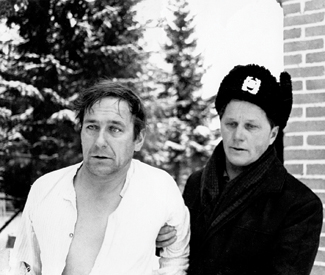
Fast-forwarding a few days and a couple decades, Olivier Assayas’s Something in the Air, which screened Monday night and opens theatrically May 17, depicts a France far removed from the modern-fairy-tale setting of Populaire. Set a few years after the strikes and street battles of May ’68 (the film’s original title is Après Mai, or “After May”), Something centers on a group of radical teenagers in the Paris suburbs grappling with riot police and questions of what use to make of themselves in the world. Only loosely plotted, the film is more a series of vignettes, tracking the restless progress of Gilles (Clément Métayer) and a handful of his cohorts through school’s end, their flight to an Italian squat for the summer after a political action at home turns violent, and the dispersal of the group to various world-map points.

School seems to be mainly a place to sell movement newspapers to other students, or to wheat-paste and graffiti-bomb the walls at night. Conversations revolve around political sectarianism and the pitfalls of bourgeois documentary-filmmaking impulses. And position speeches on revolutionary tactics and relationships alike are delivered with a flat dogmatism (Gilles’s friend Alain makes it through the entire two-hour film without cracking a smile) as the characters attempt to sort out their allegiances to political revolt, art making, and romantic entanglement.

While the youth of Assayas’s film seem to view their lives and actions against a vast panorama of political and social import, the heroine of Justine Malle’s Youth keeps her gaze trained on a smaller circle encompassing academic ambition, romantic and sexual exploration, and family, though the order of precedence shifts several times over the course of this small, somewhat slight coming-of-age film. Malle is the daughter of celebrated French director Louis Malle, who passed away in 1995, and Youth is a semi-autobiographical examination of a 20-year-old girl’s experience of losing her father amid a period of personal upheaval.
 
Juliette (Esther Garrel, daughter of director Philippe and sister of actor Louis) is in the midst of studying for entrance exams and falling in love (she believes) for the fourth time when she learns that her father has been diagnosed with a fatal and quickly moving virus. Unable or unwilling to fully register this terrible new reality, she spends little time with him at the country house where he lives with his third wife and their daughter, choosing to stay in Paris cramming for her exams and pursuing a lengthier sexual résumé.

This is some dark material to mold into story form, and in certain ways it feels as if Malle had trouble looking at it as she worked with script cowriter Cécile Vargaftig. It’s hard to know how much overlap exists between the events Malle experienced nearly 20 years ago and those Juliette goes through on-screen, but the film has the feel of a tight fit, with little room leftover to step back and gain perspective.

SFIFF continues through May 9.

Scenes from the struggle for economic justice

9

Hacking Oakland’s budget

Sporting trucker hats, nose rings, and in activist Shawn McDougal’s case, a white tee with “Revolutionary” printed across the front in simple black lettering, the young, energetic activists assembled at Sudo Room, an Oakland hacker space, come across as unlikely ballot-initiative proponents. Nevertheless, in a few short weeks, the all-volunteer Community Democracy Project crew intends to hit the pavement and begin collecting signatures for a measure to introduce “participatory budgeting” to Oakland city government.

Their objective is to set up a kind of direct democracy system for hashing out the city’s discretionary spending. The proposal would create a charter amendment and a new Oakland city department to reconfigure the politically contentious budget allocation process, by “shifting accountability in a way that more people are able to engage,” says organizer Sonya Rifkin.

The proposal envisions convening democratic “neighborhood assemblies,” each of which would represent roughly 4,000 Oaklanders. Any resident age 16 or older would be free to attend meetings and vote on NA proposals. The NA proposals would then be forwarded onto citywide committees and synthesized as proposals for the ballot, whereupon the electorate would have the final say.

For the Community Democracy Project organizers, who mostly became acquainted through Occupy Oakland, the radical concept is just as much about achieving equitable budget allocation as it is about stoking the embers of community building. To place it on Oakland’s city ballot, the ambitious campaigners hope to collect 40,000 signatures in the next six months.

It’s a tall order, yet the activists appear undaunted. It’s a movement, McDougal says, comprised of “regular people, realizing that they don’t have to be spectators. They can be participants.” (Rebecca Bowe)

Solidarity with Bangladeshi sweatshop workers

News of a Bangladesh factory collapse last week that killed hundreds of low-wage workers reached San Francisco just as labor organizers were preparing to rally for stronger safety measures in overseas sweatshops.

Last November, a fire broke out in the Tarzeen Fashions factory in Bangladesh, killing 112 employees who produced garments for Walmart and other retailers. Sumi Abedin, a 24-year-old garment worker who earned about $62 a month working 11-hour days, six days a week, survived the blaze.

Through a translator, Abedin told reporters, “We were trying to exit through the staircase, and then we saw a lot of burned bodies, injured bodies. And I jumped through a third floor window because I thought, instead of being burned alive, even if I die, my mother will get my body.”

Abedin was standing outside San Francisco’s Gap headquarters, flanked by Bay Area activists from Jobs with Justice, Unite HERE, Our Walmart, and others. They were there to call on the popular retailer to sign a fire-safety agreement to implement renovations, at an estimated cost of about 10 cents per garment. In a statement, Gap noted that it had implemented its own four-point plan “to improve fire safety at the selected factories that produce our products.”

Gap had no direct connection with the Tarzeen Fashions blaze that Abedin narrowly escaped. Yet Bangladesh Center for Worker Solidarity organizer Kalpona Akter explained that the campaign was targeting Gap because “they’re saying they have corporate social responsibility,” yet have refused to sign onto the worker-sanctioned, legally binding fire safety agreement endorsed by BCWS, which brands such as Tommy Hilfiger and German retailer Tchibo have committed to. “This is one appropriate thing Gap can do in this moment,” Akter said, “if they really wanted to prevent this death toll in other parts of the world.” (Bowe)

Making job-training programs actually work

The phrase “welfare” may conjure up the image of a couch potato catching up on daytime soaps while the checks roll in, but Karl Kramer of the San Francisco Living Wage Coalition says it’s simply not the case — some people are not only working to earn those meager checks, they’re faced with few options once their participation in such programs comes to an end.

In San Francisco, many recipients of public assistance are part of the local Community Jobs Program, designed to provide unemployed people with on-the-job experience to help them land on their feet after six months. In practice, however, “it’s not happening,” Kramer says. “They’re dead-end programs. People aren’t moving onto jobs, and at the end of the Community Jobs program, they’re cut off completely.”

Part of the problem is that few pathways exist to connect the workers with actual paid gigs once they’ve finished. So the Living Wage Coalition is pushing for legislation that would improve and expand upon the Community Jobs Program, by raising the wage rate from $11.03 to $12.43 per hour, giving participants the option of working 40 hours a week, extending the program from six months to one year to square with eligibility requirements for many job listings, and creating an advisory committee to facilitate entry-level job creation in city departments.

“There has not been political will to really make these programs successful,” Kramer notes. And in the meantime, “people don’t connect it with why there’s such a growth of homeless families” in San Francisco. (Bowe)

Basic rights for domestic workers

The California Domestic Workers Bill of Rights would apply basic federal labor protections (such as a minimum wage, the right to breaks, and basic workplace safety standards) to domestic workers. If it becomes law, credit will go in part to its author, Assemblymember Tom Ammiano, but also to the California Domestic Workers Coalition, which has been pushing the issue for years.

Supporters of the bill say it’s unconscionable that domestic workers — the people who care for our children and grandparents and tend our homes — are one of just two occupations exempt from the Fair Labor Standards Act of 1938, the other being farm workers (another profession with a well-documented history of labor abuses, and also one comprised largely of unpaid immigrants). “We need to have protections for the people who do really important work,” Katie Joaquin, campaign coordinator for the coalition, told the Guardian.

As we reported recently (“Do We Care?,” 3/26/13), Gov. Jerry Brown vetoed the measure last year after it was overwhelmingly approved by the Legislature, expressing the paternalistic concern that it may reduce wages or hours of domestic workers. But its supporters have come back stronger than ever this year. Now know as Assembly Bill 241, the measure cleared the Assembly Labor Committee on a 5-2 vote on April 24 and it now awaits action by the Assembly Appropriations Committee. They say this bill, which New York approved in 2010, is a key step toward valuing caregiving and other undervalued work traditionally performed by women. (Steven T. Jones)

Debt peons, unite!

49

rebecca@sfbg.com

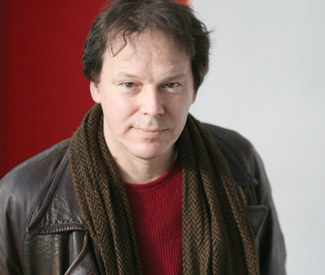
David Graeber is renowned among occupiers and idealists as an intellectual founder, or anti-leader as it were, of the Occupy Wall Street encampment that sprung up in Zucotti Park in the fall of 2011. He’s an organizer, an anarchist, a professor of anthropology and sociology at Goldsmiths University of London, a former instructor at Yale, and the author of several books, including Debt: The First 5,000 Years, a tome tracing the concept of debt back to the roots of Western civilization.

His latest book, The Democracy Project: A History, a Crisis, a Movement (Spiegel & Grau, 2013), chronicles the rise of Occupy, a leaderless economic justice movement Graeber unapologetically characterizes as a success. In honor of International Workers Day, May 1, the Bay Guardian caught up with him over coffee to talk about economic pressures facing today’s workers, particularly the young and marginalized.

Turns out, it’s not a pretty picture out there — but at least Graeber, who has a propensity to collapse into giggles between full throttle ruminations on the absurdity of global economic policy, has a sense of humor about it.

Below are some excerpts.

San Francisco Bay Guardian: Looking at the Occupy movement, the mainstream narrative seems to be that it was a short-lived, failed experiment and now it’s over. But in your book, you ask the question ‘why did it work?’

David Graeber: Let’s put it this way. When was the last time that the issue of social class was put at the center of American politics? Probably the 1930s. Social movements have been desperately trying to do this for 50, 60, 70 years and gotten nowhere. We managed to do it in three months. Um, that’s pretty impressive. … And I’m pretty sure that if it weren’t for us, we’d have a President Romney right now. That whole 47 percent thing? It would not have resonated had it not been for the 99 percent thing.

SFBG: Why do you think the idea of wealth inequality, of all issues, resonated so much?

DG: I think because there’s a basic change in the way capitalism works in America. It’s been going for some time, but it just became unmistakably apparent after 2008. People talk about the “financialization” of capitalism, and it sounds very abstract. Casino capitalism, speculation, they’re playing these games, they’re making money appear out of thin air, which is not entirely untrue. … It’s based on getting everybody into debt. The profits of Wall Street are — they now say a very small percentage is actually based on commerce — it’s now based on finance. But what does ‘based on finance’ actually mean? It means they go into your bank account and take your money.

I’ve been trying to figure out just what percentage of the average American’s income is simply extracted every month by the finance sector. …You count mortgages, you count credit card debt, loan debt, all the fees and penalties that you don’t notice… all that stuff put together comes to about 20 percent at least, and probably higher. For example, families that are in their early 30s, it’s often 40 percent. … I saw a poll the other day that said, for the first time since they’ve been taking statistics, a majority of Americans don’t consider themselves middle class. … And I think the reason for this is because it really never was an economic category. It has to do with how you feel you relate to basic institutions. What middle class first and foremost means is, if you see a policeman, do you feel safer, or do you feel less safe? … Then there’s more going on. For the first time, we found that there is incredible solidarity between students and workers, which have traditionally not been friends — go back to the 60s and it’s hard-hats beating up hippies. Now, the transit workers in New York are suing the police over taking their buses to arrest us [occupiers].

SFBG: How would you reflect on the economic condition that workers are facing, compared with how things were historically over the last several decades?

DG: It’s atrocious. One thing that’s happened is there’s been this disconnect between productivity and wages. This is kind of the deal they struck at the end of World War II in most of the North Atlantic countries: It used to be that you work harder, you produce more, you get a share of the profits. And that was worked out through mass unionization, it was worked out through negotiations, and it was tacit somewhat, but you know, it was understood.

Since the ’70s, that deal is off. So, productivity goes up, wages stay flat. So that’s why they say all profits have now gone to one percent of the population. So workers are working harder and harder, more and more hours, under more and more stress. …It’s all the more difficult because of education, because now it’s gotten to the point where if you don’t have a college degree, your chance of having any benefits at work is basically nil. If you want to have health care, you need to go to college. At the same time, if you want to go to college, you need to pay student loans. So you’re double damned. … You have all these people who are sort of trapped: I’d like to finish, I’m still going, I’ll take night classes — for five or ten years, while you have a working class job. So the line between the students and the proletariat blurs, and this is one of the reasons why the student loan issue actually spoke to people in unions.

And there’s also a shift in the type of work. Did you ever see the “We are the 99 percent” tumblr page? It was all these people talking about their jobs… their debts and difficult medical problems…. One of the things that fascinated me about that was that like 80 percent of the people on that page were women. …They were all doing something where the work was clearly to the benefit of someone else. And I think that those are the people who are the most screwed right now, ironically. The more obviously your work benefits other human beings, the less you’re paid.

SFBG: Going back to this idea of debt — your book [Debt: The First 5,000 Years] looks at debt through the ages of human history. I’m curious to hear your thoughts on debt as it relates to personal freedom.

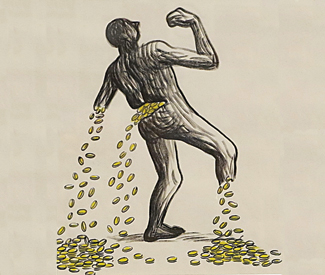
DG: That’s one of the most pernicious things about the current debt regime in America. Being young is supposed to be a place where you can let your imagination run free and explore your sense of possibility. That’s what college used to be. In a sense, those students who are just out of college, I always call them post-students, they’re the kind of people who are activists, the kind of people who are thinking okay I’ll start a band, maybe I’ll be an artist. That’s where everything comes out of in a generation, where everything new and exciting emerges. What could be more stupid than taking all those people and turning them into debt peons? … I think of it like horror movies — what is it that’s so scary about monsters? It’s that they turn you into them, right? Vampires, werewolves. But you don’t get to be like the really cool super count vampire, you get to be a pathetic minion vampire, where you’re in debt for the rest of eternity, as a flunkie. In a way, that’s what’s scary about debt. It forces you to think like a capitalist, you have to think about money and profit all the time. But it’s even worse, because you’re a capitalist with no capital. It like totally destroys your ability to think of anything but money, and you don’t even have any money.

SFBG: Another thing we’re seeing increasingly is austerity measures and public sector spending cuts. What’s the root cause of these rollbacks, and what do you see as the most appropriate response from economic justice activists?

DG: I am in the peculiar situation at the moment that some members of the ruling class actually talk to me and even ask for my advice. Which, you know they’re in trouble if they’re talking to me, right? Part of the reason for that is that these guys are on a completely self-destructive course. I live in the UK most of the time. They’re going into a triple debt recession because of these austerity programs. Now what are you going to make of it? It has nothing to do with economics.

SFBG: So why is it happening?

DG: It’s moral. It’s political, and moral. Neoliberalism is not basically an economic ideology. It’s about politics … Always prioritize the political advantage over the economic advantage. Breaking unions, getting rid of job security, making people work more and more hours — that’s not economically efficient … So what does it do? Well, it’s the best thing you could possibly do if you want to depoliticize workers … The classic justifications for capitalism are harder and harder to maintain. … So what excuse do they have left? They can say, well, it’s the only thing that’s possible. Basically all they can do is hammer away at our imagination. The only alternative is this, or North Korea. And the amazing thing is that the only war they’ve won, is the war against the imagination.


Film Listings

0

Film listings are edited by Cheryl Eddy. Reviewers are Kimberly Chun, Dennis Harvey, Lynn Rapoport, and Sara Maria Vizcarrondo. For rep house showtimes, see Rep Clock.

SAN FRANCISCO INTERNATIONAL FILM FESTIVAL

The San Francisco International Film Festival runs through May 9 at the Castro Theatre, 429 Castro, SF; New People Cinema, 1746 Post, SF; Pacific Film Archive, 2575 Bancroft, Berk; and Sundance Kabuki Cinemas 1881 Post, SF. For tickets (most shows $10-15) and complete schedule, visit festival.sffs.org.

OPENING

At Any Price Growing up in rural Iowa very much in the shadow of his older brother, Dean Whipple (Zac Efron) cultivated a chip on his shoulder while dominating the figure 8 races at the local dirt track. When papa Henry (Dennis Quaid) — a keeping-up-appearances type, with secrets a-plenty lurking behind his good ol’ boy grin — realizes Dean is his best hope for keeping the family farm afloat, he launches a hail-mary attempt to salvage their relationship. This latest drama from acclaimed indie director Ramin Bahrani (2008’s Goodbye Solo) is his most ambitious to date, enfolding small-town family drama and stock-car scenes into a pointed commentary on modern agribusiness (Henry deals in GMO corn, and must grapple with the sinister corporate practices that go along with it). But the film never gels, particularly after an extreme, third-act plot twist is deployed to, um, hammer home the title — which refers to prices both monetary and spiritual. A solid supporting cast (Kim Dickens, Heather Graham, Clancy Brown, Red West, newcomer Maika Monroe) helps give the film some much-needed added weight as it veers toward melodrama. (1:45) Sundance Kabuki. (Eddy)

Bert Stern: Original Mad Man Mad man, cad man: both describe photographer Bert Stern, famed for his groundbreaking vodka ads as well as his “Last Sitting” session with Marilyn Monroe (a series he recently re-created, rather regrettably, with Lindsay Lohan). Now in his 80s, he’s coaxed in front of the camera by longtime muse Shannah Laumeister; though their closeness (despite a 40-year age difference) means Bert Stern: Original Mad Man contains a few uncomfortably intimate moments, it also makes for some remarkably candid interviews. And what a life he’s had, melding his voracious appetite for women with a talent for capturing them in stunning, creatively innovative photographs. Though his parade of exes (including celebrated ballet dancer Allegra Kent) remember him with a certain amount of curled-lip disdain, his iconic work — 1959 documentary Jazz on a Summer’s Day, the poster for former co-worker Stanley Kubrick’s 1962 Lolita (those heart-shaped glasses? Stern’s idea) — speaks for itself. (1:50) Opera Plaza, Shattuck. (Eddy)

Iron Man 3 Well, shit. Looks like we got a trilogy on our hands. (2:06) Balboa, Marina, Presidio.

Kon-Tiki This Best Foreign Language Film nominee from Norway dramatizes Thor Heyerdahl’s 1947 Kon-Tiki expedition. (1:58) Embarcadero.

The Reluctant Fundamentalist Based on Pakistani novelist Mohsin Hamid’s award-winning 2007 novel, and directed by the acclaimed Mira Nair (2001’s Monsoon Wedding, 2006’s The Namesake), The Reluctant Fundamentalist boasts an international cast (Kate Hudson, Martin Donovan, Kiefer Sutherland, Liev Schreiber, Om Puri) and nearly as many locations. British-Pakistani actor Riz Ahmed (2010’s Four Lions) stars as Changez Khan, a Princeton-educated professor who grants an interview with a reporter (Schreiber) after another prof at Lahore University — an American citizen — is taken hostage; their meeting grows more tense as the atmosphere around them becomes more charged. Most of the film unfolds as an extended flashback, as Changez recounts his years on Wall Street as a talented “soldier in [America’s] economic army,” with a brunette Hudson playing Erica, a photographer who becomes his NYC love interest. After 9/11, he begins to lose his lust for star-spangled yuppie success, and soon returns to his homeland to pursue a more meaningful cause. Though it’s mostly an earnest, soul-searching character study, The Reluctant Fundamentalist suddenly decides it wants to be a full-throttle political thriller in its last act; ultimately, it offers only superficial insight into what might inspire someone’s conversion to fundamentalism (one guess: Erica’s embarrassingly bad art installation, which could make anyone hate America). Still, Ahmed is a compelling lead. (2:08) Embarcadero, Shattuck. (Eddy)

The Source Family See “Aquarius Rising.” (1:38) Roxie.

ONGOING

The Angels’ Share The latest from British filmmaker Ken Loach (2006’s The Wind that Shakes the Barley) and frequent screenwriter collaborator Paul Leverty contains a fair amount of humor — though it’s still got plenty of their trademark grit and realism. Offered “one last opportunity” by both a legal system he’s frequently disregarded and his exasperated and heavily pregnant girlfriend, ne’er-do-well Glaswegian Robbie (Paul Brannigan) resolves to straighten out his life. But his troubled past proves a formidable roadblock to a brighter future — until he visits a whiskey distillery with the other misfits he’s been performing his court-ordered community service with, and the group hatches an elaborate heist that could bring hope for Robbie and his growing family … if his gang of “scruffs” can pull it off. Granted, there are some familiar elements here, but this 2012 Cannes jury prize winner (the fest’s de facto third-place award) is more enjoyable than predictable — thanks to some whiskey-tasting nerd-out scenes, likable performances by its cast of mostly newcomers, and lines like “Nobody ever bothers anybody wearing a kilt!” (not necessarily true, as it turns out). Thankfully, English subtitles help with the thick Scottish accents. (1:41) Embarcadero. (Eddy)

Arthur Newman (1:41) Metreon.

The Big Wedding The wedding film has impacted our concepts of matrimony, fashion, and marital happiness more than all the textbooks in the world have affected our national testing average; but it’s with that margin of mediocrity I report from the theater trenches of The Big Wedding. With this, the wedding movie again peters to a crawl. Susan Sarandon (an actress I love with a loyalty beyond sense) is Bebe, the stepmother/caterer swept under the rug by the selfishness of her live in lover Don (De Niro), his ex-wife/baby momma Elle (Diane Keaton) and their racist wackjob future in-laws. When Don and Elle faced the end of their marriage, they tried to rekindle with a Columbian orphan. Cue Ben Barnes in brownface. Alejandro is set to wed Amanda Seyfried and when his mother ascends from Columbia for the wedding, he decides Don and Elle have to act like their marriage never ended &ldots; which makes Bebe a mistress. Surprise! A decade of caring selflessly for your lover’s kids has won you a super shitty wedding you still have to cater! To give you a sense of the conflict management on display, Bebe — the film’s graceful savior —drops a drink on Don before fleeing the scene in her Alfa Romeo; she’s the one character not determined to act out her more selfish urges in the style of an MTV reality show. Despite some less imaginative conflicts and degrading “solutions,” this blended family still speaks some truth about the endearing embarrassment of the happy family. (1:29) 1000 Van Ness, Presidio, SF Center. (Vizcarrondo)

Blancanieves If you saw the two crappy overblown Hollywood takes on Snow White last year, my condolences. This is probably its best cinematic incarnation ever not made by someone called Walt. Pablo Berger’s Blancanieves transplants the tale to 1920s Spain and told (à la 2011’s The Artist) in the dialogue-free B&W style of that era’s silent cinema. Here, Snow is the daughter of a famous bullfighter (a beautiful performance by Daniel Giménez Cacho) who’s paralyzed physically in the ring, then emotionally by the death of his flamenco star wife (Inma Cuesta) in childbirth. He can’t bring himself to see his daughter until a grandmother’s death brings little Carmencita (the marvelous Sofía Oria) to the isolated ranch he now shares with nurse-turned-second-wife Encarna — Maribel Verdú as a very Jazz Age evil stepmother. Once the girl matures (now played by the ingratiating, slightly androgynous Macarena García), Encarna senses a rival, and to save her life Carmen literally runs away with the circus — at which point the narrative slumps a bit. But only a bit. Where The Artist was essentially a cleverly sustained gimmick elevated by a wonderful central performance, Blancanieves transcends its ingenious retro trappings to offer something both charming and substantiative. Berger doesn’t treat the story template as a joke — he’s fully adapted it to a culture, place, and time, and treats its inherent pathos with great delicacy. (1:44) Embarcadero, Shattuck, Smith Rafael. (Harvey)

The Company You Keep Robert Redford directs and stars as a fugitive former member of the Weather Underground, who goes on the run when another member (Susan Sarandon) is arrested and a newspaper reporter (Shia LaBeouf) connects him to a murder 30 years earlier during a Michigan bank robbery. Both the incident and the individuals in The Company You Keep are fictive, but a montage of archival footage at the start of the film is used to place them in the company of real-life radicals and events from the latter days of the 1960s-’70s antiwar movement. (The film’s timeline is a little hard to figure, as the action seems to be present day.) Living under an assumed name, Redford’s Nick Sloan is now a recently widowed public interest lawyer with a nine-year-old daughter, still fighting the good fight from the suburbs of Albany, NY — though some of his movement cohorts would probably argue that point. And as Nick heads cross-country on a hunt for one of them who’s still deep underground, and LaBeouf’s pesky reporter tussles with FBI agents (Terrance Howard and Anna Kendrick) and his besieged editor (Stanley Tucci) — mostly there to pass comment on print journalism’s precipitous decline — there’s plenty of contentious talk, none of it particularly trenchant or involving. Redford packs his earnest, well-intentioned film with stars delineating a constellation of attitudes about revolution, justice, and violent radical action — Julie Christie as an unrepentant radical and Nick’s former lover, Nick Nolte and Richard Jenkins as former movement members, Brendan Gleeson as a Michigan police detective involved in the original investigation, Chris Cooper as Nick’s estranged and disapproving younger brother. But their scrutiny, and the film’s, feels blurry and rote, while the plot’s one major twist seems random and is clumsily exposed. (2:05) Albany, SF Center, Sundance Kabuki. (Rapoport)

The Croods (1:38) Metreon, 1000 Van Ness.

Disconnect (1:55) 1000 Van Ness, SF Center, Sundance Kabuki.

Evil Dead “Sacrilege!” you surely thought when hearing that Sam Raimi’s immortal 1983 classic was being remade. But as far as remakes go, this one from Uruguayan writer-director Fede Alvarez (who’d previously only made some acclaimed genre shorts) is pretty decent. Four youths gather at a former family cabin destination because a fifth (Jane Levy) has staged her own intervention — after a near-fatal OD, she needs her friends to help her go cold turkey. But as a prologue has already informed us, there is a history of witchcraft and demonic possession in this place. The discovery of something very nasty (and smelly) in the cellar, along with a book of demonic incantations that Lou Taylor Pucci is stupid enough to read aloud from, leads to … well, you know. The all-hell that breaks loose here is more sadistically squirm-inducing than the humorously over-the-top gore in Raimi’s original duo (elements of the sublime ’87 Evil Dead II are also deployed here), and the characters are taken much more seriously — without, however, becoming more interesting. Despite a number of déjà vu kamikaze tracking shots through the Michigan forest (though most of the film was actually shot in New Zealand), Raimi’s giddy high energy and black comedy are replaced here by a more earnest if admittedly mostly effective approach, with plenty of decent shocks. No one could replace Bruce Campbell, and perhaps it was wise not to even try. So: pretty good, gory, expertly crafted, very R-rated horror fun, even with too many “It’s not over yet!” false endings. But no one will be playing this version over and over and over again as they (and I) still do the ’80s films. (1:31) Metreon, 1000 Van Ness. (Harvey)

42 Broad and morally cautious, 42 is nonetheless an honorable addition to the small cannon of films about the late, great baseball player Jackie Robinson. When Dodgers owner Branch Rickey (Harrison Ford) declares that he wants a black player in the white major leagues because “The only real color is green!”, it’s a cynical explanation that most people buy, and hate him for. It also starts the ball curving for a PR shitstorm. But money is an equal-opportunity leveling device: when Robinson (Chadwick Boseman) tries to use the bathroom at a small-town gas station, he’s denied and tells his manager they should “buy their 99 gallons of gas another place.” Naturally the gas attendant concedes, and as 42 progresses, even those who reject Robinson at first turn into men who find out how good they are when they’re tested. Ford, swashbuckling well past his sell-by date, is a fantastic old coot here; his “been there, lived that” prowess makes you proud he once fled the path of a rolling bolder. His power moves here are even greater, but it’s ultimately Robinson’s show, and 42 finds a lot of ways to deliver on facts and still print the legend. (2:08) Four Star, Marina, Metreon, 1000 Van Ness, Sundance Kabuki. (Vizcarrondo)

From Up on Poppy Hill Hayao (dad, who co-wrote) and Goro (son, who directed) Miyazaki collaborate on this tale of two high-school kids — Umi, who does all the cooking at her grandmother’s boarding house, and Shun, a rabble-rouser who runs the school newspaper — in idyllic seaside Yokohama. Plans for the 1964 Olympics earmark a beloved historic clubhouse for demolition, and the budding couple unites behind the cause. The building offers a symbolic nod to Japanese history, while rehabbing it speaks to hopes for a brighter post-war future. But the past keeps interfering: conflict arises when Shun’s memories are triggered by a photo of Umi’s father, presumed lost at sea in the Korean War. There are no whimsical talking animals in this Studio Ghibli release, which investigates some darker-than-usual themes, though the animation is vivid and sparkling per usual. Hollywood types lending their voices to the English-language version include Jamie Lee Curtis, Christina Hendricks, Ron Howard, and Gilllian Anderson. (1:31) Opera Plaza, Shattuck. (Eddy)

GI Joe: Retaliation The plot exists to justify the action, but any fan of badass-ness will forgive the skimpy storyline for the outlandish badassery in GI Joe: Retaliation. Inspired by action figures and tying loosely to the first flick, Retaliation starts with a game of “secure the defector,” followed by “raise the flag,” but as soon as the stakes aren’t real, the Joes outright suck. They don’t have “neutral,” which is maybe why a mission to rescue and revive the Joes as a force is the most ferocious fight that ever pit metal against plastic. The set pieces are stunning: a mostly silent sequence with Snake Eyes (Ray Park) and Jinx (Elodie Yung) on a mountainside will leave the audience gaping in its high speed wake, and a prison break featuring covert explosives is nonstop amazing. You’ll notice an emphasis on chain link fences and puddles (terra nostra for action figures) and set pieces conceived as if by kids who don’t have a concept of basic irrefutable truths like gravity. It’s just that kind of imagination and ardor and limitlessness that makes this Joe incredible, memorable, and a reason to crack out your toys again. (1:50) Metreon, 1000 Van Ness. (Vizcarrondo)

In the House In François Ozon’s first feature since the whimsical 2010 Potiche, he returns somewhat to the playful suspense intrigue of 2003’s Swimming Pool, albeit with a very different tone and context. Fabrice Luchini plays a high school French literature teacher disillusioned by his students’ ever-shrinking articulacy. But he is intrigued by one boy’s surprisingly rich description of his stealth invasion into a classmate’s envied “perfect” family — with lusty interest directed at the “middle class curves” of the mother (Emmanuelle Seigner). As the boy Claude’s writings continue in their possibly fictive, possibly stalker-ish provocations, his teacher grows increasingly unsure whether he’s dealing with a precocious bourgeoisie satirist or a literate budding sociopath — and ambivalent about his (and spouse Kristin Scott Thomas’ stressed gallery-curator’s) growing addiction to these artfully lurid possible exposé s of people he knows. And it escalates from there. Ozon is an expert filmmaker in nimble if not absolute peak form here, no doubt considerably helped by Juan Mayorga’s source play. It’s a smart mainstream entertainment that, had it been Hollywood feature, would doubtless be proclaimed brilliant for its clever tricks and turns. (1:45) Albany, Clay, Smith Rafael. (Harvey)

Jurassic Park 3D “Life finds a way,” Jeff Goldblum’s leather-clad mathematician remarks, crystallizing the theme of this 1993 Spielberg classic, which at its core is more about human relationships than genetically manufactured terrors. Of course, it’s got plenty of those, and Jurassic Park doesn’t really need its (admittedly spiffy) 3D upgrade to remain a thoroughly entertaining thriller. The dinosaur effects — particularly the creepy Velociraptors and fan-fave T. rex — still dazzle. Only some early-90s computer references and Laura Dern’s mom jeans mark the film as dated. But a big-screen viewing of what’s become a cable TV staple allows for fresh appreciation of its less-iconic (but no less enjoyable) moments and performances: a pre-megafame Samuel L. Jackson as a weary systems tech; Bob Peck as the park’s skeptical, prodigiously thigh-muscled game warden. Try and forget the tepid sequels — including, dear gawd, 2014’s in-the-works fourth installment. This is all the Jurassic you will ever need. (2:07) 1000 Van Ness, SF Center, Shattuck. (Eddy)

Lords of Salem (1:41) Metreon.

Mud (2:15) California, Metreon, Piedmont.

No Long before the Arab Spring, a people’s revolution went down in Chile when a 1988 referendum toppled the country’s dictator, Augusto Pinochet, thanks in part to an ad exec who dared to sell the dream to his countrymen and women — using the relentlessly upbeat, cheesy language of a Pepsi Generation. In No‘s dramatization of this true story, ad man Rene Saavedra (Gael Garcia Bernal) is approached by the opposition to Pinochet’s regime to help them on their campaign to encourage Chile’s people to vote “no” to eight more years under the brutal strongman. Rene’s well-aware of the horrors of the dictatorship; not only are the disappeared common knowledge, his activist ex (Antonia Zegers) has been beaten and jailed with seeming regularity. Going up against his boss (Alfredo Castro), who’s overseeing the Pinochet campaign, Rene takes the brilliant tact in the opposition’s TV programs of selling hope — sound familiar? — promising “Chile, happiness is coming!” amid corny mimes, dancers, and the like. Director-producer Pablo Larrain turns out to be just as genius, shooting with a grainy U-matic ’80s video camera to match his footage with 1988 archival imagery, including the original TV spots, in this invigorating spiritual kin of both 2012’s Argo and 1997’s Wag the Dog. (1:50) New Parkway, Shattuck. (Chun)

Oblivion Spoiler alert: the great alien invasion of 2017 does absolutely zilch to eliminate, or at least ameliorate, the problem of sci-fi movie plot holes. However, puny humans willing to shut down the logic-demanding portions of their brains just might enjoy Oblivion, which is set 60 years after that fateful date and imagines that Earth has been rendered uninhabitable by said invasion. Tom Cruise plays Jack, a repairman who zips down from his sterile housing pod (shared with comely companion Andrea Riseborough) to keep a fleet of drones — dispatched to guard the planet’s remaining resources from alien squatters — in working order. But Something is Not Quite Right; Jack’s been having nostalgia-drenched memories of a bustling, pre-war New York City, and the déjà vu gets worse when a beautiful astronaut (Olga Kurylenko) literally crash-lands into his life. After an inaugural gig helming 2010’s stinky Tron: Legacy, director Joseph Kosinski shows promise, if not perfection, bringing his original tale to the screen. (He does, however, borrow heavily from 1968’s 2001: A Space Odyssey, 1996’s Independence Day, and 2008’s Wall-E, among others.) Still, Oblivion boasts sleek production design, a certain creative flair, and some surprisingly effective plot twists — though also, alas, an overlong running time. (2:05) Metreon, 1000 Van Ness, Presidio, Sundance Kabuki. (Eddy)

Olympus Has Fallen Overstuffed with slo-mo shots of the flag rippling (in breezes likely caused by all the hot air puffing up from the script), this gleefully ham-fisted tribute to America Fuck Yeah estimates the intelligence of its target audience thusly: an establishing shot clearly depicting both the Washington Monument and the US Capitol is tagged “Washington, DC.” Wait, how can you tell? This wannabe Die Hard: The White House follows the one-man-army crusade of secret service agent Mike Banning (Gerard Butler), the last friendly left standing when the President (Aaron Eckhart) and assorted cabinet members are taken hostage by North Korean terrorists. The plot is to ridiculous to recap beyond that, though I will note that Morgan Freeman (as the Speaker of the House) gets to deliver the line “They’ve just opened the gates of hell!” — the high point in a performance that otherwise requires him to sit at a table and look concerned for two hours. With a few more over-the-top scenes or slightly more adventurous casting, Olympus Has Fallen could’ve ascended to action-camp heights. Alas, it’s mostly just mildly amusing, though all that caked-on patriotism is good for a smattering of heartier guffaws. (2:00) 1000 Van Ness, SF Center. (Eddy)

On the Road Walter Salles (2004’s The Motorcycle Diaries) engages Diaries screenwriter Jose Rivera to adapt Jack Kerouac’s Beat classic; it’s translated to the screen in a streamlined version, albeit one rife with parties, drugs, jazz, danger, reckless driving, sex, philosophical conversations, soul-searching, and “kicks” galore. Brit Sam Riley (2007’s Control) plays Kerouac stand-in Sal Paradise, observing (and scribbling down) his gritty adventures as they unfold. Most of those adventures come courtesy of charismatic, freewheeling Dean Moriarty (Garrett Hedlund of 2010’s Tron: Legacy), who blows in and out of Sal’s life (and a lot of other people’s lives, too, including wives played by Kristen Stewart and Kirsten Dunst). Beautifully shot, with careful attention to period detail and reverential treatment of the Beat ethos, the film is an admirable effort but a little too shapeless, maybe simply due to the peripatetic nature of its iconic source material, to be completely satisfying. Among the performances, erstwhile teen dream Stewart is an uninhibited standout. (2:03) Four Star, Smith Rafael. (Eddy)

Oz: The Great and Powerful Providing a backstory for the man behind the curtain, director Sam Raimi gives us a prequel of sorts to 1939’s The Wizard of Oz. Herein we follow the adventures of a Depression-era Kansas circus magician named Oscar (James Franco) — Oz to his friends — as he cons, philanders, bickers with his behind-the-scenes assistant Frank (Zach Braff), and eventually sails away in a twister, bound for a Technicolor land of massively proportioned flora, talking fauna, and witches ranging from dazzlingly good to treacherously wicked. From one of them, Theodora (Mila Kunis), he learns that his arrival — in Oz, just to clarify — has set in motion the fulfillment of a prophecy: that a great wizard, also named Oz, will bring about the downfall of a malevolent witch (Rachel Weisz), saving the kingdom and its cheery, goodhearted inhabitants. Unfortunately for this deserving populace, Oz spent his last pre-twister moments with the Baum Bros. Circus (the name a tribute to L. Frank Baum, writer of the Oz children’s books) demonstrating a banged-up moral compass and an undependable streak and proclaiming that he would rather be a great man than a good man. Unfortunately for the rest of us, this theme is revisited ad nauseam as Oz and the oppressively beneficent witch Glinda (Michelle Williams) — whose magic appears to consist mainly of nice soft things like bubbles and fog — stand around debating whether he’s the right man for the task. When the fog clears, though, the view is undeniably pretty. While en route to and from the Emerald City, Oz and his companions — among them a non-evil flying monkey (voiced by Braff) and a rather adorable china doll (Joey King) — wander through a deliriously arresting, Fantasia-esque landscape whose intricate, inventive construction helps distract from the plodding, saccharine rhetoric and unappealing story line. (2:07) 1000 Van Ness, SF Center, Shattuck, Sundance Kabuki. (Rapoport)

Pain & Gain In mid-1995 members of what became known as the “Sun Gym Gang” — played here by Mark Wahlberg, Dwayne Johnson, and Anthony Mackie — were arrested for a series of crimes including kidnapping, extortion, and murder. Simply wanting to live large, they’d abducted one well-off man (Tony Shalhoub) months earlier, tortured him into signing over all his assets, and left him for dead — yet incredibly the Miami police thought the victim’s story was a tall tale, leaving the perps free until they’d burned through their moolah and sought other victims. Michael Bay’s cartoonish take on a pretty horrific saga repeatedly reminds us that it’s a true story, though the script plays fast and loose with many real-life details. (And strangely it downplays the role steroid abuse presumably played in a lot of very crazy behavior.) In a way, his bombastic style is well-suited to a grotesquely comic thriller about bungling bodybuilder criminals redundantly described here as “dumb stupid fucks.” There have been worse Bay movies, even if that’s like saying “This gas isn’t as toxic as the last one.” But despite the flirtations with satire of fitness culture, motivational gurus and so forth, his sense of humor stays on a loutish plane, complete with fag-bashing, a dwarf gag, and representation of Miami as basically one big siliconed titty bar. Nor can he pull off a turn toward black comedy that needs the superior intelligence of someone like the Coen Brothers or Soderbergh. As usual everything is overamped, the action sequences overblown, the whole thing overlong, and good actors made to overact. You’ve got to give cranky old Ed Harris credit: playing a private detective, he alone here refuses to be bullied into hamming it up. (2:00) Metreon, 1000 Van Ness, Shattuck. (Harvey)

The Place Beyond the Pines Powerful indie drama Blue Valentine (2010) marked director Derek Cianfrance as one worthy of attention, so it’s with no small amount of fanfare that this follow-up arrives. The Place Beyond the Pines‘ high profile is further enhanced by the presence of Bradley Cooper (currently enjoying a career ascension from Sexiest Man Alive to Oscar-nominated Serious Actor), cast opposite Valentine star Ryan Gosling, though they share just one scene. An overlong, occasionally contrived tale of three generations of fathers, father figures, and sons, Pines‘ initial focus is Gosling’s stunt-motorcycle rider, a character that would feel more exciting if it wasn’t so reminiscent of Gosling’s turn in Drive (2011), albeit with a blonde dye job and tattoos that look like they were applied by the same guy who inked James Franco in Spring Breakers. Robbing banks seems a reasonable way to raise cash for his infant son, as well as a way for Pines to draw in another whole set of characters, in the form of a cop (Cooper) who’s also a new father, and who — as the story shifts ahead 15 years — builds a political career off the case. Of course, fate and the convenience of movie scripts dictate that the mens’ sons will meet, the past will haunt the present and fuck up the future, etc. etc. Ultimately, Pines is an ambitious film that suffers from both its sprawl and some predictable choices (did Ray Liotta really need to play yet another dirty cop?) Halfway through the movie I couldn’t help thinking what might’ve happened if Cianfrance had dared to swap the casting of the main roles; Gosling could’ve been a great ambitious cop-turned-powerful prick, and Cooper could’ve done interesting things with the Evel Knievel-goes-Point Break part. Just sayin’. (2:20) California, Embarcadero, 1000 Van Ness, Piedmont, Presidio, Sundance Kabuki. (Eddy)

Quartet Every year there’s at least one: the adorable-old-cootfest, usually British, that proves harmless and reassuring and lightly tear/laughter producing enough to convince a certain demographic that it’s safe to go to the movies again. The last months have seen two, both starring Maggie Smith (who’s also queen of that audience’s home viewing via Downton Abbey). Last year’s The Best Exotic Marigold Hotel, in which Smith played a bitchy old spinster appalled to find herself in India, has already filled the slot. It was formulaic, cute, and sentimental, yes, but it also practiced more restraint than one expected. Now here’s Quartet, which is basically the same flower arrangement with quite a bit more dust on it. Smith plays a bitchy old spinster appalled to find herself forced into spending her twilight years at a home for the elderly. It’s not just any such home, however, but Beecham House, whose residents are retired professional musicians. Gingerly peeking out from her room after a few days’ retreat from public gaze, Smith’s Jean Horton — a famed English soprano — spies a roomful of codgers rolling their hips to Afropop in a dance class. “This is not a retirement home — this is a madhouse!” she pronounces. Oh, the shitty lines that lazy writers have long depended on Smith to make sparkle. Quartet is full of such bunk, adapted with loving fidelity, no doubt, from his own 1999 play by Ronald Harwood, who as a scenarist has done some good adaptations of other people’s work (2002’s The Pianist). But as a generator of original material for about a half-century, he’s mostly proven that it is possible to prosper that long while being in entirely the wrong half-century. Making his directorial debut: 75-year-old Dustin Hoffman, which ought to have yielded a more interesting final product. But with its workmanlike gloss and head-on take on the script’s very predictable beats, Quartet could as well have been directed by any BBC veteran of no particular distinction. (1:38) Smith Rafael. (Harvey)

Renoir The gorgeous, sun-dappled French Riviera setting is the high point of this otherwise low-key drama about the temperamental women (Christa Theret) who was the final muse to elderly painter Auguste Renoir (Michel Bouquet), and who encouraged the filmmaking urges in his son, future cinema great Jean (Vincent Rottiers). Cinematographer Mark Ping Bin Lee (who’s worked with Hou Hsiao-hsein and Wong Kar Wai) lenses Renoir’s leafy, ramshackle estate to maximize its resemblance to the paintings it helped inspire; though her character, Dédée, could kindly be described as “conniving,” Theret could not have been better physically cast, with tumbling red curls and pale skin she’s none too shy about showing off. Though the specter of World War I looms in the background, the biggest conflicts in Gilles Bourdos’ film are contained within the household, as Jean frets about his future, Dédée faces the reality of her precarious position in the household (which is staffed by aging models-turned-maids), and Auguste battles ill health by continuing to paint, though he’s in a wheelchair and must have his brushes taped to his hands. Though not much really happens, Renoir is a pleasant, easy-on-the-eyes experience. (1:51) Opera Plaza, Shattuck, Smith Rafael. (Eddy)

Room 237 What subtexts, hidden meanings, conspiracy theories, and strange coincidences are hidden within Stanley Kubrick’s 1980 horror masterpiece The Shining? Former San Franciscan Rodney Ascher’s wonderfully spooky and unconventional doc burrows deep down the rabbit hole with five Shining-obsessed people, who share their ideas in voice-over as images from that film (and others chosen for reasons both obvious and curious) flow together on the screen. Innovative sound design and a throwback electronic soundtrack contribute to Room 237‘s spellbinding vibe. You’ll never watch The Shining the same way again. (1:42) Roxie. (Eddy)

The Sapphires The civil rights injustices suffered by these dream girls may be unique to Aboriginal Australians, but they’ll strike a chord with viewers throughout the world — at right about the same spot stoked by the sweet soul music of Motown. Co-written by Tony Briggs, the son of a singer in a real-life Aboriginal girl group, this unrepentant feel-gooder aims to make the lessons of history go down with the good humor and up-from-the-underdog triumph of films like The Full Monty (1997) — the crucial difference in this fun if flawed comedy-romance is that it tells the story of women of color, finding their voices and discovering, yes, their groove. It’s all in the family for these would-be soul sisters, or rather country cousins, bred on Merle Haggard and folk tunes: there’s the charmless and tough Gail (Deborah Mailman), the soulful single mom Julie (Jessica Mauboy, an Australian Idol runner-up), the flirty Cynthia (Miranda Tapsell), and the pale-skinned Kay (Shari Sebbens), the latter passing as white after being forcibly “assimilated” by the government. Their dream is to get off the farm, even if that means entertaining the troops in Vietnam, and the person to help them realize that checkered goal is dissolute piano player Dave (Chris O’Dowd). And O’Dowd is the breakout star to watch here — he adds an loose, erratic energy to an otherwise heavily worked story arc. So when romance sparks for all Sapphires — and the racial tension simmering beneath the sequins rumbles to the surface — the easy pleasures generated by O’Dowd and the music (despite head-scratching inclusions like 1970’s “Run Through the Jungle” in this 1968-set yarn), along with the gently handled lessons in identity politics learned, obliterate any lingering questions left sucking Saigon dust as the narrative plunges forward. They keep you hanging on. (1:38) Embarcadero, Piedmont, Shattuck. (Chun)

Scary Movie 5 (1:35) Metreon.

Silver Linings Playbook After guiding two actors to Best Supporting Oscars in 2010’s The Fighter, director David O. Russell returns (adapting his script from Matthew Quick’s novel) with another darkly comedic film about a complicated family that will probably earn some gold of its own. Though he’s obviously not ready to face the outside world, Pat (Bradley Cooper) checks out of the state institution he’s been court-ordered to spend eight months in after displaying some serious anger-management issues. He moves home with his football-obsessed father (Robert De Niro) and worrywart mother (Jacki Weaver of 2010’s Animal Kingdom), where he plunges into a plan to win back his estranged wife. Cooper plays Pat as a man vibrating with troubled energy — always in danger of flying into a rage, even as he pursues his forced-upbeat “silver linings” philosophy. But the movie belongs to Jennifer Lawrence, who proves the chops she showcased (pre-Hunger Games megafame) in 2010’s Winter’s Bone were no fluke. As the damaged-but-determined Tiffany, she’s the left-field element that jolts Pat out of his crazytown funk; she’s also the only reason Playbook‘s dance-competition subplot doesn’t feel eye-rollingly clichéd. The film’s not perfect, but Lawrence’s layered performance — emotional, demanding, bitchy, tough-yet-secretly-tender — damn near is. (2:01) New Parkway. (Eddy)

Spring Breakers The idea of enfant terrible emeritus Harmony Korine — 1997’s Gummo, 2007’s Mister Lonely, 2009’s Trash Humpers — directing something so utterly common as a spring break movie is head-scratching enough, even moreso compounded by the casting of teen dreams Vanessa Hudgens, Selena Gomez, and Ashley Benson as bikini-clad girls gone wild. James Franco co-stars as drug dealer Alien, all platinum teeth and cornrows and shitty tattoos, who befriends the lasses after they’re busted by the fun police. “Are you being serious?” Gomez’s character asks Alien, soon after meeting him. “What do you think?” he grins back. Unschooled filmgoers who stumble into the theater to see their favorite starlets might be shocked by Breakers‘ hard-R hijinks. But Korine fans will understand that this neon-lit, Skrillex-scored tale of debauchery and dirty menace is not to be taken at face value. The subject matter, the cast, the Britney Spears songs, the deliberately lurid camerawork — all carefully-constructed elements in a film that takes not-taking-itself-seriously, very seriously indeed. Korine has said he prefers his films to make “perfect nonsense” instead of perfect sense. The sublime Spring Breakers makes perfect nonsense, and it also makes nonsense perfect. (1:34) New Parkway, 1000 Van Ness. (Eddy)

Starbuck Starbuck has a great (if not entirely original) comedic concept it chooses to play seriocomedically — i.e., less for the laughs it seldom earns than for the heart-tugging it eventually pretty much does. An ingratiatingly rumpled Patrick Huard (a major Quebec star best known for the mega-hit Les Boys series and 2006’s Good Cop, Bad Cop) plays David, erstwhile stellar contributor to a Montreal sperm bank in his salad days. Now older but no wiser, he finds himself confronted by the reality of 533 biologically fathered, now-grown offspring who’ve filed a class action lawsuit to discover his identity even as he deals with mob debt and an exasperated, pregnant semi-ex-girlfriend (Julie LeBreton). This is one of those “loser manboy must semi-grow up fast amid crisis, finding family values en route” scenarios tailor-fit for Adam Sandler. That said, the overlong, stubbornly endearing Starbuck is so much less insufferable than anything Sandler has made since … um, ever? Halfway through, this agreeable movie gets clever — as David stumbles into a meeting of his prodigious anonymous progeny — and remains reasonably so to the satisfyingly hard-won happy ending. It’s still got moments of contrivance, editorial fat (too many montages, for one thing), and more climactic hugs than any self-respecting dramedy needs to get the redemptive point across. Yet it’s also got something few comedies of any national origin have today: a lovely, distinctive, bright yet non-cartoonish widescreen look. (1:48) Four Star. (Harvey)

Tai Chi Hero Six months ago, Tai Chi Zero — Stephen Fung’s nutty tale of a martial arts savant who journeys to an isolated town to learn a top-secret technique — barreled into local theaters. A stylish kung fu flick with a high degree of WTF-ness, Zero ended on a pretty significant cliffhanger, so here’s the cheeky sequel for those who’ve been wondering what happened to Yang Lu Chan (Yuan Xiaochao) — a sweet fool when he’s not in supernatural Hulk-smash mode — and company. A brief intro gets newbies up to speed before the action starts: Lu Chan and the bossy-yet-comely daughter (Angelababy) of the local grandmaster (Tony Leung Ka Fai) have entered into a marriage of convenience — and there’s something fishy about Lu Chan’s brother-in-law, newly returned from a long exile with his own secretive bride. Meanwhile, the family worries about the dreadful “bronze bell prophecy” while the first film’s Westernized villain plots tasty revenge. In addition to all the high-flying, slo-mo scenes of hand-to-hand combat, highlights include a soundtrack filled with unexpected choices (heavy metal, accordion), a cameo by cult actor Peter Stormare (hamming it up big-time), and an army tricked out with steampunky weapons. (1:40) Four Star, Metreon. (Eddy)

Trance Where did Danny Boyle drop his noir? Somewhere along the way from Shallow Grave (1994) to Slumdog Millionaire (2008)? Finding the thread he misplaced among the obfuscating reflections of London’s corporate-contempo architecture, Boyle strives to put his own character-centered spin on the genre in this collaboration with Grave and Trainspotting (1996) screenwriter John Hodge, though the final product feels distinctly off, despite its Hitchcockian aspirations toward a sort of modern-day Spellbound (1945). Untrustworthy narrator Simon (James McAvoy) is an auctioneer for a Sotheby’s-like house, tasked with protecting the multimillion-dollar artworks on the block, within reason. Then the splashily elaborate theft of Goya’s Witches’ Flight painting goes down on Simon’s watch, and for his trouble, the complicit staffer is concussed by heist leader Franck (Vincent Cassel). Where did those slippery witches fly to? Simon, mixed up with the thieves due to his gambling debts, cries amnesia — the truth appears to be locked in the opaque layers of his jostled brain, and it’s up to hypnotherapist Elizabeth (Rosario Dawson) to uncover the Goya’s resting place. Is she trying to help Simon extricate himself from his impossible situation, seduce Franck, or simply help herself? Boyle tries to transmit the mutable mind games on screen, via the lighting, glass, and watery reflections that are supposed to translate as sleek sophistication. But devices like speedy, back-and-forth edits and off-and-on fourth-wall-battering instances as when Simon locks eyes with the audience, read as dated and cheesy as a banking commercial. The seriously miscast actors also fail to sell Trance on various levels — believability, likeability, etc. — as the very unmesmerized viewer falls into a light coma and the movie twirls, flaming, into the ludicrous. (1:44) SF Center, Shattuck, Sundance Kabuki. (Chun)

Upstream Color A woman, a man, a pig, a worm, Walden — what? If you enter into Shane Carruth’s Upstream Color expecting things like a linear plot, exposition, and character development, you will exit baffled and distressed. Best to understand in advance that these elements are not part of Carruth’s master plan. In fact, based on my own experiences watching the film twice, I’m fairly certain that not really understanding what’s going on in Upstream Color is part of its loopy allure. Remember Carruth’s 2004 Primer? Did you try to puzzle out that film’s array of overlapping and jigsawed timelines, only to give up and concede that the mystery (and sheer bravado) of that film was part of its, uh, loopy allure? Yeah. Same idea, except writ a few dimensions larger, with more locations, zero tech-speak dialogue, and — yes! — a compelling female lead, played by Amy Seimetz, an indie producer and director in her own right. Enjoying (or even making it all the way through) Upstream Color requires patience and a willingness to forgive some of Carruth’s more pretentious noodlings; in the tradition of experimental filmmaking, it’s a work that’s more concerned with evoking emotions than hitting some kind of three-act structure. Most importantly, it manages to be both maddening and moving at the same time. (1:35) Roxie. (Eddy) *


 

Stage Listings

0

Stage listings are compiled by Guardian staff. Performance times may change; call venues to confirm. Reviewers are Robert Avila, Rita Felciano, and Nicole Gluckstern. Submit items for the listings at listings@sfbg.com.

THEATER

OPENING

Dirty Dancing: Live! Dark Room, 2263 Mission, SF; dirtydancinglive-fbe.eventbrite.com. $20. Opens Fri/3, 8pm. Runs Fri-Sat, 8pm. Through May 25. Watermelons will be carried, lifts will be attempted, eyes will be hungry, and nobody better put Baby in a corner.

Last Love Mojo Theatre, 2940 16th St, SF; www.mojotheatre.com. $30. Opens Thu/2, 8pm. Runs Thu-Sun, 8pm. Through May 19. Mojo Theatre performs Peter Papadopoulos’ play about two couples struggling through “the landmines of love.”

Little Me Eureka Theatre, 215 Jackson, SF; www.42ndstreetmoon.org. $25-75. Previews Wed/1, 7pm; Thu/2-Fri/3, 8pm. Opens Sat/4, 6pm. Runs Wed, 7pm; Thu-Fri, 8pm; Sat, 6pm. Through May 19. 42nd Street Moon performs Neil Simon’s outrageous musical.

The Merry Wives of Windsor Buriel Clay Theater, African American Art and Culture Complex, 762 Fulton, SF; www.african-americanshakes.org. $10-35. Opens Sat/4, 8pm. Runs Sat, 8pm; Sun, 3pm. Through May 26. African-American Shakespeare Company performs a twist on the Shakespeare classic, set in an urban neighborhood in the 1950s.

“PlayGround Festival of New Works” Various venues, SF and Berk; www.playground-sf.org. $15-40. May 1-26. The 17th fest presented by “San Francisco’s incubator for a new generation of playwrights” includes the PlayGround Film Festival, staged readings of four new full-length plays, a fully-produced program of six short plays, panel discussions, and more.

ONGOING

Acid Test: The Many Incarnations of Ram Dass Marsh San Francisco, 1062 Valencia, SF; www.themarsh.org. $15-50. Fri, 8pm; Sat, 5pm (May 11, show at 8pm). Through May 18. Playwright Lynne Kaufman invites you to take a trip with Richard Alpert, a.k.a. Ram Dass (Warren David Keith), as he recounts times high and low in this thoughtful, funny, and sometimes unexpected biographical rumination on the quest for truth and meaning in a seemingly random life by one of the big wigs of the psychedelic revolution and (with his classic book, Be Here Now) contemporary Eastern-looking spirituality. Directed by Joel Mullennix, the narrative begins with Ram Dass today, in his Hawaiian home and partly paralyzed from a stroke, but Keith (one of the Bay Area’s best stage actors, who is predictably sure and engagingly multilayered in the role) soon shakes off the stiff arm and strained speech and springs to his feet to continue the narrative as the ideal self perhaps only transcendental consciousness and theater allow. Nevertheless, Kaufman’s fun-loving and extroverted Alpert is no saint and no model of perfection, which is the refreshing truth explored in the play, but rather a seeker still, ever imperfect and ever trying for greater perfection or at least the wisdom of acceptance. As the privileged queer child of a wealthy Jewish lawyer and industrialist, Alpert was both insider and outsider from the get-go, and that tension and ambiguity makes for an interesting angle on his life as well as the complexities of his relationships with a homophobic Leary, for instance, and his conservative but ultimately loving father. Perfection aside, the beauty in the subject and the play is the subtle, shrewd cherishing of what remains unfinished. (Avila)

Boomeraging: From LSD to OMG Marsh San Francisco, 1062 Valencia, SF; www.themarsh.org. $15-50. Tue, 8pm. Through May 28. Comedian Will Durst performs his brand-new solo show.

The Expulsion of Malcolm X Southside Theatre, Fort Mason Center, Marina at Laguna, SF; www.fortmason.org. $30-42.50. Fri/3-Sat/4, 8pm; Sun/5, 3pm. Colors of Vision Entertainment and GO Productions present Larry Americ Allen’s drama about the relationship between Malcolm X and Elijah Muhammad.

Foodies! The Musical Shelton Theater, 533 Sutter, SF; www.foodiesthemusical.com. $30-34. Fri-Sat, 8pm. Open-ended. AWAT Productions presents Morris Bobrow’s musical comedy revue all about food.

How To Make Your Bitterness Work For You Stage Werx Theatre, 446 Valencia, SF; www.bitternesstobetterness.com. $15-25. Sun/5, 2pm. Fred Raker performs his comedy about the self-help industry.

I’m Not OK, Cupid 🙁 Shelton Theatre, 533 Sutter, SF; www.leftcoasttheatreco.org. $15-35. Thu/2-Sat/4, 8pm. Left Coast Theatre Co., a new company formed in 2012 from the gay men’s writing group GuyWriters Playwrights, offers this rocky but sometimes clever evening of seven short gay comedies about love, relationships, getting it on, getting it off, and so forth. The evening begins with Andrew Black’s A Small Fishing Village Wedged Between Estonia and Latvia, set in the Castro, where a gay couple (Chris Maltby and Dene Larson) try to foil a mixed couple of would-be robbers (Laura Espino and Richard Sargent) by injecting some homoerotic tension between their otherwise heterosexual vibe. Directed by ShawnJ West, it’s drolly if inconsistently acted, but never very funny, and followed by three more non-starters: James A. Martin’s Lollipops, Rodney “Rhoda” Taylor’s Goodbye, Cupid, and Black’s verse-bound Arlecchino’s Last Prank. The second half of the bill proves more satisfying overall — Rich Orloff’s Chekhov-inspired That Bitch, directed by Joseph Frank and featuring the able trio of Hayley Saccomano, Laura Espino, and Danielle O’Dea; Joseph Frank’s wacky The Parenthetical Trap, directed by Frank and Saccomano, wherein sibling rivalry (i.e., the amusingly puerile duo of Kyle Glasow and Dawson Montoya) meets dysfunctional family (rounded out by Gabrielle Motarjemi and Frank) reunited in musical harmony; and Alex Dremann’s randy and well-acted Four Dry Tongues, directed by ShawnJ West, in which friends Ginny (Angela Chandra) and Tristan (Michael Erickson) compete for the affection of guest Matt (Robert Rushin) by flirting with his gorgeously haughty lesbian friend Laura (Danielle O’Dea). (Avila)

The Lost Folio: Shakespeare’s Musicals Un-Scripted Theater, 533 Sutter, Second Flr, SF; www.un-scripted.com. $10-20. Thu-Sat, 8pm. Through May 18. Un-Scripted Theater Company performs a fully-improvised, full-length musical inspired by Shakespeare.

The Lullaby Tree Phoenix Theater, 414 Mason, SF; www.secondwind.8m.com. $15-35. Thu/2-Sat/4, 8pm. In the face of the ever more extensive and controversial spread of GMO foods worldwide — not to mention last year’s state battle over Prop 37 — Second Wind premieres founding member and playwright Ian Walker’s half-whimsical, half-hardheaded drama about a boy searching for his mother in the underworld and a small band of lawyers and environmentalists going toe-to-toe with a multinational over the ownership of a mysterious crop of genetically engineered corn. It will eventually become plain that the two stories are linked, but first a ten-year-old boy (Samuel Berston) befriends a somewhat shrunken giant (Davern Wright) in an attempt to find his mother (Evangeline Crittenden) in an enchanted and hostile land of dragons. Elsewhere, Tim (Walker) and law partner Nod (Wright) prepare to do legal battle with a modern-day dragon, in the person of a corporate attorney (Cheryl Smith) for the ominous Mendes Corporation (read: Monsanto). They will argue over the ownership of the corn that has sprung up on the banks of a drowned town, and which may spell environmental disaster for the nature preserve surrounding it. In this fight Tim and Nod are in uneasy, ultimately disastrous alliance with activist Callie (Crittenden), whom Nod distrusts and with whom Tim is hopelessly smitten. The result is a convoluted plot and a fitful production (co-directed by Walker and Misha Hawk-Wyatt) in which a three-pronged story precariously balances the fairy tale, the romance, and the legal battle. It’s the last prong that offers the more interesting if formulaic scenes, in which the politics of GMOs mesh with the swashbuckling machinations of the attorneys. But the less compelling strands converge and take precedence, forcing things down a sentimental and forgettable road. (Avila)

reasons to be pretty San Francisco Playhouse, 450 Post, Second Flr, SF; www.sfplayhouse.org. $30-100. Tue-Thu, 7pm; Fri-Sat, 8pm (also Sat, 3pm). Through May 11. Completing a trilogy of plays about body awareness and self-image (along with The Shape of Things and Fat Pig), Neil LaBute’s reasons to be pretty begins with a misconstrued remark that quickly gathers enough weight and momentum to tear three sets of relationships apart in the span of a two-hour play. The SF Playhouse production begins with a bang, or rather an awesomely knock-down, blow-out breakup fight between a righteously pissed-off Steph (Lauren English) and her awkwardly passive boyfriend Greg (Craig Marker), who has inadvertently referred to her as “regular” in a conversation with his jerkish buddy Kent (Patrick Russell), which she takes to mean he finds her ugly. English’s Steph is at turns ferocious and fragile, and her comic timing as she eviscerates Greg’s looks in a mall food court zings, while the hyperkinetic Russell elevates the condition of noxiously irredeemable douchebag to an art form. But terrific acting and polished design can only make up so much for a script that feels not only flawed, barely scratching the surface of the whys and wherefores each character has internalized an unrealistic view of the importance of conventional beauty standards, but also already dated, with its circa-2008 pop culture references. Ultimately it gives the impression of being a rerun of a Lifetime television drama that wraps itself up into a too-neat package just in time for the final credits to roll to its admittedly kickass soundtrack (provided by Billie Cox). (Gluckstern)

Sam I Am: A Processional of Short Plays and Prose About Samuel Beckett Bindlestiff Studio, 185 Sixth St, SF; www.pustheatre.com. $10-20. Fri-Sat, 8pm; Sun, 2pm. Through May 11. Performers Under Stress remounts and revamps its series of short plays and pieces by Samuel Beckett, this time staging it throughout the basement quarters of Bindlestiff Studio, where audiences are led around an economical maze of performance spaces. Opening weekend consisted of too much text and too little in way of staging ideas, especially with several spoken selections of Beckett prose (which have reportedly since been dropped from the program). The best of what remains (in a program of six short plays total) includes Valerie Fachman’s respectable performance as the disembodied “mouth” of the brilliant Not I; and James Udom and Geo Epsilany’s duet in Rough for Theatre I, in which a wheelchair-bound food-hoarder (a softly eccentric Epsilany) strikes up a doomed friendship with a blind beggar (a solid Udom) amid a colorless and barren landscape. The bucket of Beckett dreary gets less satisfying from there, though director Scott Baker’s wordless performance as the titular Joe in Eh Joe proves poised and the doubled voices in his head (by Melissa Clason and Allison Hunter Blackwell) both haunting and intriguing. (Avila)

Sex and the City: LIVE! Rebel, 1760 Market, SF; trannyshack.com/sexandthecity. $25. Wed, 7 and 9pm. Open-ended. It seems a no-brainer. Not just the HBO series itself — that’s definitely missing some gray matter — but putting it onstage as a drag show. Mais naturellement! Why was Sex and the City not conceived of as a drag show in the first place? Making the sordid not exactly palatable but somehow, I don’t know, friendlier (and the canned a little cannier), Velvet Rage Productions mounts two verbatim episodes from the widely adored cable show, with Trannyshack’s Heklina in a smashing portrayal of SJP’s Carrie; D’Arcy Drollinger stealing much of the show as ever-randy Samantha (already more or less a gay man trapped in a woman’s body); Lady Bear as an endearingly out-to-lunch Miranda; and ever assured, quick-witted Trixxie Carr as pent-up Charlotte. There’s also a solid and enjoyable supporting cast courtesy of Cookie Dough, Jordan Wheeler, and Leigh Crow (as Mr. Big). That’s some heavyweight talent trodding the straining boards of bar Rebel’s tiny stage. The show’s still two-dimensional, even in 3D, but noticeably bigger than your 50″ plasma flat panel. (Avila)

Steve Seabrook: Better Than You Marsh San Francisco, 1062 Valencia, SF; www.themarsh.org. $15-50. Thu, 8pm; Sat, 8:30pm. Extended through May 18. Self-awareness, self-actualization, self-aggrandizement — for these things we turn to the professionals: the self-empowerment coaches, the self-help authors and motivational speakers. What’s the good of having a “self” unless someone shows you how to use it? Writer-performer Kurt Bodden’s Steve Seabrook wants to sell you on a better you, but his “Better Than You” weekend seminar (and tie-in book series, assorted CDs, and other paraphernalia) belies a certain divided loyalty in its own self-flattering title. The bitter fruit of the personal growth industry may sound overly ripe for the picking, but Bodden’s deftly executed “seminar” and its behind-the-scenes reveals, directed by Mark Kenward, explore the terrain with panache, cool wit, and shrewd characterization. As both writer and performer, Bodden keeps his Steve Seabrook just this side of overly sensational or maudlin, a believable figure, finally, whose all-too-ordinary life ends up something of a modest model of its own. (Avila)

Talk Radio Actors Theatre of San Francisco, 855 Bush, SF; www.actorstheatresf.org. $26-38. Wed-Sat, 8pm. Through June 15. Actors Theatre of San Francisco performs Eric Bogosian’s breakthrough 1987 drama.

Tinsel Tarts in a Hot Coma: The Next Cockettes Musical Hypnodrome, 575 10th St, SF; www.thrillpeddlers.com. $30-35. Thu-Sat, 8pm. Through June 1. Thrillpeddlers and director Russell Blackwood continue their Theatre of the Ridiculous series with this 1971 musical from San Francisco’s famed glitter-bearded acid queens, the Cockettes, revamped with a slew of new musical material by original member Scrumbly Koldewyn, and a freshly re-minted book co-written by Koldewyn and “Sweet Pam” Tent — both of whom join the large rotating cast of Thrillpeddler favorites alongside a third original Cockette, Rumi Missabu (playing diner waitress Brenda Breakfast like a deliciously unhinged scramble of Lucille Ball and Bette Davis). This is Thrillpeddlers’ third Cockettes revival, a winning streak that started with Pearls Over Shanghai. While not quite as frisky or imaginative as the production of Pearls, it easily charms with its fine songs, nifty routines, exquisite costumes, steady flashes of wit, less consistent flashes of flesh, and de rigueur irreverence. The plot may not be very easy to follow, but then, except perhaps for the bubbly accounting of the notorious New York flop of the same show 42 years ago by Tent (as poisoned-pen gossip columnist Vedda Viper), it hardly matters. (Avila)

The Waiting Period Marsh San Francisco, 1062 Valencia, SF; www.themarsh.org. $25-50. Fri, 8pm; Sat, 5pm. Through May 18. Brian Copeland (comedian, TV and radio personality, and creator-performer of the long-running solo play Not a Genuine Black Man) returns to the Marsh with a new solo, this one based on more recent and messier events` in Copeland’s life. The play concerns an episode of severe depression in which he considered suicide, going so far as to purchase a handgun — the title coming from the legally mandatory 10-day period between purchasing and picking up the weapon, which leaves time for reflections and circumstances that ultimately prevent Copeland from pulling the trigger. A grim subject, but Copeland (with co-developer and director David Ford) ensures there’s plenty of humor as well as frank sentiment along the way. The actor peoples the opening scene in the gun store with a comically if somewhat stereotypically rugged representative of the Second Amendment, for instance, as well as an equally familiar “doood” dude at the service counter. Afterward, we follow Copeland, a just barely coping dad, home to the house recently abandoned by his wife, and through the ordinary routines that become unbearable to the clinically depressed. Copeland also recreates interviews he’s made with other survivors of suicidal depression. Telling someone about such things is vital to preventing their worst outcomes, says Copeland, and telling his own story is meant to encourage others. It’s a worthy aim but only a fitfully engaging piece, since as drama it remains thin, standing at perhaps too respectful a distance from the convoluted torment and alienation at its center. Note: review from an earlier run of the same production. (Avila)

The World’s Funniest Bubble Show Marsh San Francisco, 1062 Valencia, SF; www.themarsh.org. $8-50. Sun, 11am. Through July 21. Louis “The Amazing Bubble Man” Pearl returns after a month-long hiatus with his popular, kid-friendly bubble show.

BAY AREA

The Arsonists Aurora Theatre, 2081 Addison, Berk; www.auroratheatre.org. $35-60. Tue and Sun, 7pm (also Sun, 2pm); Wed-Sat, 8pm. Through May 12. There’s a lot of humor to be found in Alistair Beaton’s crackling translation of Max Frisch’s The Arsonists, playing now at the Aurora Theatre, but much of the laughter it elicits is of the nervous variety, as the play’s mostly protagonist, the effete, bourgeois Herr Biedermann (Dan Hiatt) inadvertently signs off on his own destruction when he invites an uncouth arsonist to come and stay in his attic (Michael Ray Wisely). “If we assume everyone is an arsonist, where does that get us?” becomes his standard deflection, as one arsonist becomes two (adding in the unctuous, nihilistic Tim Kniffin), and the empty attic a repository for giant drums of gasoline, a detonator, and fuse wire — arousing the suspicions of a chorus of firefighters (Kevin Clarke, Tristan Cunningham, Michael Uy Kelly), who act as the conscience and guardians of the township. Although on the surface the scenario is patently absurd, the message that passivity in the face of evil is like helping to measure out the fuse wire that will eventually claim your life, is relatively clear. “Not every fire is determined by fate,” point out the firefighters right in the first act. Hiatt, as Biedermann, strikes an admirable balance between loathsome and powerless, while Gwen Loeb shines as his socialite wife, Babette, as does Dina Percia as his agitated housemaid, Anna. (Gluckstern)

The Coast of Utopia: Voyage & Shipwreck Ashby Stage, 1901 Ashby, Berk; www.shotgunplayers.org. $20-35. Shipwreck runs Wed/1-Thu/2, 7pm; Fri/3-Sat/4, 8pm; Sun/5, 5pm. Voyage runs Sat/4, 3pm. Last year in the Shotgun Players’ production of Voyage, the first part of Tom Stoppard’s The Coast of Utopia trilogy (also playing in repertory through May 4), we were introduced to a tight circle of Russian thinkers and dreamers, chafing against the oppressive regime of Nicholas I. In the second part, Shipwrecked, we find them older, perhaps wiser, struggling to keep their revolutionary ideals alive while also juggling familial concerns and personal passions. Focused mainly on Alexander Herzen (Patrick Kelley Jones) and family, Shipwrecked travels from Russia to Germany, France, Italy, and the English Channel, buffeted from all directions by the forces of the uprisings and burgeoning political consciousness of the European proletariat. It’s an unwieldy, sprawling world that Stoppard, and history, have built (made somewhat more so by the Shotgun production’s strangely languid pace during even the most dramatic sequences) but it’s worth making the effort to spend time absorbing the singular world views of Russian émigré Herzen, his impulsively passionate wife Natalie (Caitlyn Louchard), the cantankerous, influential critic Vissarion Belinsky (Nick Medina), professional rabble-rouser Michael Bakunin (Joseph Salazar) and up-and-coming writer Ivan Turgenev (Richard Reinholdt) as they desperately seek to carve out both their personal identities and a greater, cohesive Russian one from the imperfect turmoil of Western philosophy. (Gluckstern)

The Dead Girl Avant Garde, 1328 Fourth St, San Rafael; www.altertheater.org. $25. Wed, 7:30pm; Fri-Sat, 8pm; Sun, 3pm. Through May 19. AlterTheater performs 90-year-old playwright Ann Brebner’s new family drama.

A Killer Story Marsh Berkeley, 2120 Allston, Berk; www.themarsh.org. $20-50. Thu-Sat, 8pm (pre-show cabaret at 7:15pm). Through May 18. Dan Harder’s film noir-inspired detective tale premieres at the Marsh Berkeley.

Pericles, Prince of Tyre Berkeley Repertory Theatre, 2025 Addison, Berk; www.berkeleyrep.org. $29-77. Tue, Thu-Sat, 8pm (also Sat and May 23, 2pm; no show May 24); Wed and Sun, 7pm (also Sun, 2). Through May 26. Mark Wing-Davey directs Berkeley Rep’s take on the Bard.

PERFORMANCE/DANCE

Simon Amstell Brava Theater, 2781 24th St, SF; www.brava.org. Sat/4, 8 and 10pm. $31. The British comedian performs.

“Baasics.3: The Deep End” ODC Theater, 3153 17th St, SF; www.baasics.com. Mon/6, 7pm. Free (limited seating). Bay Area Art and Science Interdisciplinary Collaborative Sessions produces its third program, featuring artists and scientists discussing and presenting, via artistic methods, various neurodiversities.

“Baile en la Calle: The Mural Dances” Brava Theater, 2781 24th St, SF; www.brava.org. Sun/5, 11:30am, 12:15pm, 1pm, and 1:45pm. Free. Four free dance performances in a variety of styles, presented in front of five Mission District murals. Guided walking tours start at Brava.

“Bound for Glory” Marsh San Francisco, 1062 Valencia, SF; www.themarsh.org. Sat/4, 5pm; Sun/5, 3pm; May 10, 7:30pm; May 11, 2pm. $8-50. Marsh Youth Theater’s MainStage Performance Ensemble presents a musical (written by the ensemble with director Lisa Quoresimo) about a Dust Bowl-era family.

“Cabaret Showcase Showdown: Best Female Crooner” Martuni’s, 4 Valencia, SF; (415) 241-0205. Sun/5, 7pm. $7. With guest judge Linda Kosut and guest entertainer Sabrina Chap.

Caroline Lugo and Carolé Acuña’s Ballet Flamenco Peña Pachamama, 1630 Powell, SF; www.carolinalugo.com. Sat, 6:15pm. Through May 18. $15-19. Flamenco performance by the mother-daughter dance company, featuring live musicians.

“Comedy Stars Showcase” Neck of the Woods, 406 Clement, SF; www.dannydechi.com. Tue/7, 8pm. $10. With host Danny Dechi and guests Bobby Salem, Charlie Ballard, and more.

Company C Contemporary Ballet Z Space, 450 Florida, SF; www.companyballet.org/performances. Thu/2-Sat/4, 8pm. $23-45. Also May 9-11, 8pm; May 12, 1pm, Lesher Center for the Arts, 1601 Civic, Walnut Creek; www.lesherartscenter.org. The company’s spring program features Natoma, a world premiere by Company C dancer David von Ligon.

Hope Mohr Dance ODC Theater, 3153 17th St, SF; www.odcdance.org. Fri/3-Sat/4, 8pm; Sun/5, 2pm. $20-30. The company presents its sixth home season, including the world premiere of Hope Mohr’s Failure of the Sign is the Sign.

Kunst-Stoff Dance Company Old Mint, 88 Fifth St, SF; www.kunst-stoff.org. Wed/1-Thu/2, 7pm, 7:40pm, and 8:20pm. Free. Yannis Adoniou and company celebrate 15 years of Kunst-Stoff with the world premiere of Rapport, presented at the historic Old Mint Building.

“May Day 2013” CounterPULSE, 1310 Mission, SF; www.counterpulse.org. Fri/3-Sun/5, 8pm. $35-5000. Three nights of performances benefit CounterPULSE. The line-up includes Keith Hennessy, Sean Dorsey, Jess Curtis/Gravity, DavEnd, Marc Bamutho Joseph, Monique Jenkinson, and more.

“Mission Position Live” Cinecave, 1034 Valencia, SF; www.missionpositionlive.com. Thu, 8pm. Ongoing. $10. Stand-up comedy with rotating performers.

“Mutiny Radio Comedy Showcase” Mutiny Radio, 2781 21st St, SF; www.mutinyradio.org. Fri/3, 8:30pm. $5-20. Podcast Pamtastic’s Comedy Clubhouse presents this showcase of local comics.

“The News” SOMArts Cultural Center, 934 Brannan, SF; somarts.com/thenews. Tue/7, 7:30pm. $5. This month’s installment in the new and experimental performance series previews four shows from the upcoming National Queer Arts Festival.

Paul Taylor Dance Company Lam Research Theater, Yerba Buena Center for the Arts, 700 Howard, SF; www.sfperformances.org. Wed/1-Sat/4, 8pm; Sun/5, 2pm. $35-60. Local premieres include Kith and Kin, To Make Crops Grow, and The Uncommitted.

“Picklewater Clown Cabaret Benefit for the Medical Clown Project” Stage Werx Theatre, 446 Valencia, SF; ww.brownpapertickets.com. Mon/6, 8pm. $25. Picklewater Clown Cabaret performs to raise money for an ongoing project providing therapeutic clowning for adult and pediatric patients in Bay Area hospitals.

Red Hots Burlesque El Rio, 3158 Mission, SF; www.redhotsburlesque.com. Wed, 7:30-9pm. Ongoing. $5-10. Come for the burlesque show, stay for OMG! Karaoke starting at 8pm (no cover for karaoke).

“Rotunda Dance Series: Chitresh Das Dance Company” San Francisco City Hall, Grove at Van Ness, SF; www.dancersgroup.org. Fri/3, noon. Free. Free performance by the acclaimed Kathak dance troupe under the rotunda at City Hall.

San Francisco Ballet War Memorial Opera House, 301 Van Ness, SF; www.sfballet.org. Fri-Sat, Tue/7, and May 9, 8pm (also May 11, 2pm); Sun, 2pm; May 8, 7:30pm. Through May 12. $45-250. Performing the US premiere of Christopher Wheeldon’s Cinderella.

“San Francisco Magic Parlor” Chancellor Hotel Union Square, 433 Powell, SF; www.sfmagicparlor.com. Thu-Sat, 8pm. Ongoing. $40. Magic vignettes with conjurer and storyteller Walt Anthony.

“A Spaghetti Western” Stage Werx Theatre, 446 Valencia, SF; www.clownsnotbombs.com. Fri-Sat, 8pm (also Sat, 2pm). Through May 11. $15-20. ClownSnotBombs performs a circus adventure about pasta and the Wild West.

“Union Square Live” Union Square, between Post, Geary, Powell, and Stockton, SF; www.unionsquarelive.org. Through Oct 9. Free. Music, dance, circus arts, film, and more; dates and times vary, so check website for the latest.

“Yerba Buena Gardens Festival” Yerba Buena Gardens, Mission between 3rd and 4th Sts, SF; www.ybgfestival.org. Through Oct 15. Free. This week: Anna Halprin’s Planetary Dance (Sun/5, 2-3pm).

BAY AREA

Gamelan Sekar Jaya Julia Morgan Theater, 2640 College, Berk; www.brownpapertickets.com. Sun/5, 7:30pm. $10-20. Music and dance of Bali, featuring the world premiere of Warna.

“Les 7 Doigts de la Main” Zellerbach Hall, UC Berkeley, Bancroft at Telegraph, Berk; www.calperformances.org. Fri/3, 8pm; Sat/4, 2pm; Sun/5, 3pm. $22-52. Canada’s nouveau circus troupe performs.

“Swearing in English: Tall Tales at Shotgun” Ashby Stage, 1901 Ashby, Berk; www.shotgunplayers.org. Mon/6, June 3, and June 17, 8pm. $15. Shotgun Cabaret presents John Mercer in a series of three stranger-than-fiction dramatic readings. *


Alerts

0

WEDNESDAY 1

May Day immigrant rights march 24th and Mission, SF. 3pm march, 5pm rally, free. The San Francisco Bay Coalition for Immigrant Justice invites all to join this year’s May Day immigrant rights march, convened to urge Congressional representatives to fight for improvements to the recently unveiled federal immigration reform proposal bill. The march will begin at 24th and Mission and proceed to Civic Center for a 5pm rally.


May Day celebration 518 Valencia, SF. www.518valencia.org. 3-8pm, free. After the May Day marches and rallies have come to an end, head over to the Eric Quezada Center for Culture and Politics for a celebration of international worker solidarity, featuring a theater performance on the history of May Day by the Shaping SF Players on the history of Mayday, live screen printing, Cumbia beats, Aztec dance, protest art, sangria and beer.

SATURDAY 4

Movies that motivate change The New Parkway Theater, 474 24th St, Oakl. tinyurl.com/chngmovie. (510) 568-0702 6:30pm, $15–$100. In honor of the 20th anniversary of the Rose Foundation, attend this party and film festival and enjoy beer, wine, a silent auction, and four film screenings. Featuring Trash, a documentary exploration of global waste; 16 Seeds, a film highlighting the role of people of color in the Bay Area food justice movement; A Fierce Green Fire (Act 2), documenting the environmental battle over Love Canal, and a film about the Rose Foundation for Communities and the Environment.

SUNDAY 5

Justice for Tristan art opening La Peña Cultural Center, 3105 Shattuck, Berkl. Lapena.org. 7pm, free. This art opening will feature photos and art by Tristan Anderson, an activist who sustained a serious injury when he was struck with a teargas canister fired by the Israeli Defense Forces in 2009. Anderson’s art will be set to the sounds of 40 Thieves’ revolutionary hip hop, Nepantler@s’ queer Chicano punk, and more. Free Food Not Bombs dinner at the Long Haul, across the street, at 5:30pm before the program.

MONDAY 6

Debating “sustainable capitalism” Commonwealth Club, 595 Market, SF. www.climate-one.org. 5:30pm, $20. As a consumer, how do you know if a product billed as eco-friendly is the genuine article, or just greenwashing? Join Aron Cramer, CEO of Business for Social Responsibility, and Andrea Thomas of Walmart for an intriguing discussion on “the promise and perils of a move toward so-called sustainable capitalism.”

TUESDAY 7

Panel: Communities doing it for themselves RallyPad, 144 2nd St, SF. www.communitiesforthemselves.eventbrite.com. 6pm, free. Join the San Francisco Bay Area Chapter of the Social Enterprise Alliance for “Communities Doing it for Themselves,” a look at how UK community activists are utilizing “creative finance” to invest in local communities. Hear from panelists Jim Brown, of Community Shares; John Avalos, SF District 11 Supervisor; Charlie Sciammas of PODER and others for an exploration of how these strategies could be used by US social activists and entrepreneurs.

Hearing on event security as SFPD pushes police state

17

Just a few weeks ago, Sup. Scott Wiener, civil libertarians, and I were raising concerns here about the SFPD unilaterally expanding its video surveillance reach. Then came the bombings at the Boston Marathon, which the SFPD used to seriously up the ante in the police state pot, asking for real time video surveillance up and down Market Street and banning backpacks at Bay to Breakers.

Now, I’m not one to stand in the way of reasonable security precautions. But we shouldn’t just defer to the SFPD on whatever it says it wants because then we’ll have cameras on every corner, spy drones overhead, stop-and-frisk, and an ever-greater portion of our tax dollars going to expand the police state. Because the cops will always want more tools to police us, tools they will always say they need to protect us – it’s just in their nature. But it’s up to the rest of us to strike the right balance and not lose our heads every time some whack-job resorts to violence.

That’s why it’s good to see that Sup. Eric Mar has called a Neighborhood Service and Safety Committee hearing for this Thursday at 2pm on security measures for large events, to which he’s invited the SFPD, Planning Department, Recreation and Parks Department, and Entertainment Commission. Let’s talk about this before acting too rashly.

For example, is it really reasonable to ban backpacks at Bay to Breakers just because the Tsarnaev brothers allegedly carried their homemade bombs in backpacks? Is it possible for police to ensure that nobody in or around an event that draws more than 100,000 people has a backpack? Is it even legal to prevent me from riding my bike near a race that bisects San Francisco if I happen to be wearing a backpack?

I’m always amazed at Americans’ capacity for fear and overreaction. One nut decides to put a crude explosive in his shoe and suddenly we all have to remove our shoes every time we board an airplane (a silly measure most other countries don’t require). Even as horrible as the 9-11 attacks were, the 2,977 people they killed that day is a small fraction of the death toll that we inflicted in response (6,693 US troops killed in Afghanistan and Iraq, and at least hundreds of thousands of Iraqis and Afghanis killed), and I don’t think anyone can credibly claim that we’re any safer today as a result.

Fearful people will accept anything police say will make them safer, and that’s how the slide into police states throughout history always begin, pushed by tyrants of all ideological stripes. But isn’t that just giving in to terrorism? After all, we’re all far more likely to be killed by a distracted motorist than we are a terrorist, but I’m not hearing calls for big crackdowns on drivers, even in the face of good evidence this would keep us safer than banning backpacks.

Our country was founded by people who were more wary of soldiers and cops than they were random kooks, and I think we’d do well to remember what people like Benjamin Franklin had to say about irrational fears: “Those who would give up essential liberty to purchase a little temporary safety deserve neither liberty nor safety.”

Noodles, street dancers, and more from the Tribeca Film Fesival

0

The only-in-Noo Yawk perks of the Tribeca Film Festival? The proximity of theaters like AMC Loews Village 7 to repositories of ramen deliciousity like Momofuku Noodle Bar, a scant two blocks away. You can keep the free ketchup-flavored popcorn distributed by sponsors in front of other theaters. I’ll take Momofuku’s house ramen, which overwhelms with porky goodness (a.k.a. pork belly, pork shoulder) and comes with a soft poached egg and gotta-have-it fish cake, cabbage, and nori.

Momofuku’s mini mason jar of flavorful kimchi also makes an ideal spicy side to such Tribeca talkies as The Broken Circle Breakdown, Big Joy: The Adventures of James Broughton, and Flex Is Kings.

The grass is blue out in Belgian farm country in the completely recognizable albeit lovable The Broken Circle Breakdown. Imagine the sad-eyed, death-fixated songs of Appalachia with a tattooed rocker twist and European political bent (we’re talking socialized-med lefty rather than Bush-booster Hank Williams Jr.). Director Felix Van Groeningen gives his familiar love story a slight twirl through a nonlinear time-and-space mixing machine, and we pick it up as country-music-playing sweethearts Elise (Veerle Baetens) and Didier (Johan Heldenbergh) are anxiously watching over daughter Maybelle (Nell Cattrysse), hospitalized with leukemia.

Little is made of the disjunctions and commonalities between bucolic Belgium and backwoods America, though Van Groeningen dutifully charts the lovers’ highs (their sexual chemistry and affinity for high and lonesome music) and lows (the fights and personality conflicts in the form of Elise’s creative impulsiveness vs. Didier’s anger management issues) with affection and small moments of grace — much of which is brought to the screen by Baetens, who pulls her tattooed vintage girl beyond the cliche with the passionate intensity of a rock ‘n’ roll Noomi Rapace.

Serving up an inspired, wonderful, flawed glimpse of the inspired, wonderful, and sadly, happily flawed James Broughton and his multigenerational ride through Bay Area bohemia, Big Joy: The Adventures of James Broughton got its suitable Tribeca send-off with an afterparty hosted by radical-fairy-identified documentary-makers Stephen Silha and Eric Slade (spurred to make the movie with the remaindering of the poet’s many books) and a clutch of Broughton’s beloved Sisters of Perpetual Indulgence.

In the process of documenting the polymorphously creative life and times of the Modesto-born, Bay Area-nurtured poet, filmmaker, activist, teacher, dancer, and Pauline Kael baby daddy, the directors gather invaluable footage — including clips from Broughton’s pivotal experimental films, like The Potted Psalm and The Bed; frank interviews with ex-wife Suzanna Hart and son Orion, and footage of the man’s death-bed send-off — as well as talking-head snippets capturing Broughton friends and colleagues such as George Kuchar, Anna Halprin, Armistead Maupin, and Broughton’s onetime San Francisco Art Institute student and great love Joel Singer. I confess: the ‘80s-merry, multicolored-swiggle aesthetic of the film’s titles and animations isn’t quite my cuppa — but who can resist Broughton himself, the movie’s ineffable, mutable, magical center? 

Also irresistible, and just as immersed in pure-product-of-American-going-wild subculture, is Flex Is Kings, a snapshot of the so-called extreme street-dancing scene of East Brooklyn. Documentarians Michael Beach Nichols and Deidre Schoo take aim at Flex crew, a group of practitioners in this tough-to-define art — though I’ll try. The miraculously fluid, double-jointed hybrid of breakdancing, moonwalking, popping and locking, vogueing, and super-slo-mo anime-cum-zombie-martial-arts-video-game action plays off the violence of both comic books and street corners, valuing molten flow over crisp, sharp moves, weird new sights over tried-and-true repertoire.

We follow Flizzo, the stocky, eyelinered OG with an infant daughter on the way, who prides himself on his creativity (and predilection for gimmicky moves straight out of a magician’s bag of tricks) but can’t quite imagine his way out of petty fights with his girlfriend. And then there’s Jay Donn, the scrawnily handsome dancer who embraces spectacle, can take an artful spill off the roof of a building onto the walkway below, and manages to skillfully stumble his way into a legit dance company’s production of Pinocchio.

It’s a shame that Nichols and Schoo didn’t trust these dancers’ routines to hold the attention of viewers: they insist on cutting away and mashing moments up into sliced-and-diced montages. But such issues seem like quibbles when you picture these performers otherwise lost to history — and then sees their fellow dancers perfecting their moves on the subway. So savor it.  

Party Radar: Prosumer, Kafana Balkan, Night Light, Adnan Sharif, Shonky, Distrikt, Derrick Carter, Ana Matronic, more

0

Jajajaja — this installment of Party Radar is going to be like a last minute dump, since I’m still kind of drunk and the weekend, she is here. Besides, bloggity bloggity blah blah blah, let’s just get to the good stuff. But let’s first have some delicious beef for breakfast:

No not this weak beef, this one:

Kinda makes me like Leger’s music. Now let’s guetta way from all that, and get into this. Click on the titles for more info.


>>EAGLE GRAND OPENING

And what a truly grand opening it shall be! (Right next to the back trough.) The legendary gay leather biker bar has been open for a couple months now, to great success — I guess this party means its here to stay. Hurray! With a gaggle of old school faves including Trauma Flintstone, the Ethel Merman Experience, Anna Conda, the Sisters of Perpetual Indulgence, and the Whoa Nellies.

Fri/26, 6pm, free. Eagle, 398 12th St., SF. www.sf-eagle.com


>>PROSUMER

Ok, not just the lauded house master from Berlin, BUT his hottie partner in yum Murat Tepeli, AND NYC diva on the tables Mike Servito AND Huerco S., Vereker, Ghosts on Tape, Shawn Reynaldo, Rollie Fingers. All under he auspices of Honey Soundsystem, Icee Hot, Grey Area Foundation, and The Bunker NYC. Gonna be real cute and you will actually dance. 

http://www.youtube.com/watch?v=Tzoyc60din8

Fri/26, 9pm-4am, $15. Public Works, 161 Erie, SF. www.publicsf.com


>>DERRICK CARTER

This weekend is exploding with legends who hapen to be gay, just sayin’. The Chicago boogaloo house master has ruled the decks for more than two decades (he played at a party I threw back in 93! old) — and is appearing out of thin air, it seems, at Harlot. Derrick can turn anywhere into an instant party.

Fri/26, 9pm, $25. Harlot, 46 Minna, SF. 


>>NIGHT LIGHT

One of the coolest things to happen every year — a multimedia garden party at SOMArts featuring spme spectacularly cool and forward-thinking art, much of it interactive. With audio-visual performances by Pod Blotz, ChuCha Santamaria y Usted, Stephen Parr-Oddball Films, and Francois Chaignaud and Marie-Caroline Hominal. 

Sat/27, 8pm-12am, $12. SOMArts, 934 Brannan, SF. 


>>DISTRIKT

Fark yes, it’s Burning Man camp fundraising party time — and this beloved biggie is throwing an appropriatey huge, all-day block party at Public Works. Sheer tomfoolery! And Justin and Christian Martin headline, so really good. 

Sat/27, 1pm-4am, $40. Public Works, 161 Erie, SF. 


>>KAFANA BALKAN

Come early to this packed, ecstatic bi-monthly celebration of whirling gypsy music and Balkan culture. It’s one of the great parties of San Francisco, bringing all kinds of people together with some mindblowing music. Half the time I cant even begin to guess the time signature. With DJ Zeljko, dancer Jill Parker and her Foxglove Sweethearts, and awesome band Inspector Gadje. 

Sat/27, 9pm, $15. Rickshaw Stop, 155 Fell, SF.


>>SHONKY

One of my absolute fave deep house DJs of recent years. The sweet Parisian’s mixes are the kind you can really listen to and inhabit, while making you move as well. Plus he has an infectiously good-vibe stage presence that lifts the crowd. 

Sat/27, 9pm-late, $10-$15. Monarch, 101 Sixth St., SF. www.monarchsf.com


>>ADNAN SHARIF

Adnan is one of those people who are the true heart and soul of the Bay Area techno scene. His roving, underground Forward parties have rocked us for a decade and hes just a sweetheart of all swearthearts, with a great mystical take on beats. Hes decamping for Brazil, leaving us bereft, but happy for him. Let’s dance together one last time before his altar, at Honey Soundsystem.

Sun/28, 10pm, $10. Holy Cow, 1535 Folsom, SF.


>>ANA MATRONIC

The former Scissor Sister recently compared the energy at the mainstream gay White Party in Palm Springs to that of early punk rock trash drag era Trannyshack, which not only rewrote gay nightlife history, but surprised the fuck outta me. She should know though, I guess: she was an integral part of SF’s rough-and-rarin’ club kid scene in the ’90s before she hit the big time – and at least she’s brought some weirdo-ness to the Glee crowd. Now she’s doing her own thing, and this will be a glorious homecoming affair, hosted by Juanita More.

Sun/28, 9pm, $20. Public Works, 161 Erie, SF.  


Get out your action figures: ‘Robot Chicken’ is coming to town!

0

For those of us who grew up in the 1980s, who doesn’t have fond memories of playing with action figures? Whether you were plotting elaborate battles and all-out dirt mound warfare with GI Joe and Star Wars characters, or continuing the adventures of She-Ra and Strawberry Shortcake, those toys were a big part of our childhood.

Today, some lucky — and very talented — people still get to play with those toys, and get paid for it. Breathing life into these inanimate objects, the hit Adult Swim TV show Robot Chicken resurrects classic action figures and projects them into wild scenarios, or the everyday mundane world of real life, making for some side-splittingly hilarious situations.

Marking the end of the special exhibit “Between Frames: The Magic Behind Stop Motion Animation at the Walt Disney Family Museum,” the creative team behind the show is coming to the city this weekend for several special events celebrating their craft. Seth Green, Matthew Senreich, John Harvatine IV, Eric Towner, and Alex Kamer will be on hand Fri/26 for an after-hours party featuring food, drinks, an audience Q&A and screenings of behind the scenes footage, and then on Saturday for a special animation workshop followed by a panel discussion.

“When the Walt Disney Family Museum reached out to us as they were starting to work on the stop motion exhibit,  it was one of those surreal moments — they were talking about what they were looking to do for this exhibit, and mentioned how Gumby was going to be a part of it, and they were going to have pieces from movies like Nightmare Before Christmas, and wanted television shows like Robot Chicken — we had that moment where we were like, ‘Wait, why are you including us?’” laughs Senreich, co-creator, producer and writer for the show.

“So we had to slap ourselves, and go, ‘Well I guess this is going to happen!’ It was very surreal and amazing, and they’ve been so good to us.”

The creative group behind Robot Chicken all first met when most of them worked at Wizard Magazine, a now-defunct publication that covered comic books and toys. Green was a fan of the magazine, and after meeting Senreich they became friends. They came up with the idea for the show “after many years of just geeking out over things. For us, this is what we live for; we were the people going to Comic Con before it turned into the event that it is now, we’re the ones who are still going to the small or cult comic shows. I want to find the random bootleg thing, that’s the stuff I love,” says Senreich.

When the group first started working on Robot Chicken, which premiered in 2005, they had never really worked with stop motion animation themselves, and after a few mostly failing attempts, gathered a team of professionals to help out. The animation technique — where an object is photographed one frame at a time, and gradually moved each time to create the illusion of actual movement — has a long and influential history in filmmaking, but is an incredibly time-consuming and detail-oriented art form.

“You come to appreciate what these animators do every day and the patience that they have, and you realize that they are actors and their performance either makes or breaks the stuff that you write,” says Senreich.

http://www.youtube.com/watch?v=aPB4-EW2Fck

Although he can’t give an exact estimate of how much time is spent producing one particular episode of the show, as many multiple skits and shows are being made at once, Senreich says that they currently turn out about 20 episodes in 11 months. “We try to write as many episodes ahead of time as possible — what slows down stop motion is having to take a set off the stage, put a new set up, re-light it, re-configure it to get it ready for the next shot. If we can keep the lighting the same, and we can maintain a set that’s there, it simplifies the process.”

He adds, “If we have say 15 bathroom shots over the course of 20 episodes, we’ll keep the bathroom on the stage as long as we can and shoot all of those bathroom shots in order.”

In this day and age where so much of the work that goes into Hollywood productions is shipped overseas, or done in several places around the country, the Robot Chicken team keeps it all close to home in Southern California. “We have two buildings in Burbank where we’ll do everything from the storyboards to the building of the sets and puppets to the animation, and we have a voice booth. With the exception of our sound mixing, which is done literally down the block — everything is done in-house,” says Senreich.

Coming up with hilarious scenarios and which toys or characters to use in them is all part of the fun of working on the show. “What I like about our group of writers is that it’s a bunch of friends trying to make each other laugh; it’s really just whatever we find funny for the day, or what a topic of conversation has been about, that’s where things start. We like to take these very grandiose worlds and just find the very simple and mundane within them,  I think that’s what makes it relatable — if you can have Thundercats and simplify Lion-O to just being a cat, and being treated as such, where a spray bottle will affect him, there’s something fun about that.”

One of the toy realms that has been featured prominently on Robot Chicken over the years has been Star Wars. The first bit they did revolved around Emperor Palpatine getting a phone call from Darth Vader after the Death Star had been destroyed — and it immediately got the attention of Lucasfilm.

“We did that ‘Emperor’s Phone Call’ sketch, and right after it aired, the phone rang and the caller ID said ‘Lucasfilm,’ I thought, ‘Oh God, we’re going to get sued!’ But it turned out that George Lucas and some other people at the company had seen the show and liked it; they were calling to invite them to come take a tour of Skywalker Ranch. While there, Senreich threw out the idea of doing an entire Robot Chicken special centered around Star Wars, and within three weeks they were up and running.

“Meeting George was an experience; I was tongue-tied, and probably made a fool of myself — but now I’m the guy who can talk to him and go, ‘I don’t like that idea, George.’ It’s really nice to have that kind of relationship — he’s the first person to say back to me, ‘Well I don’t like this idea either,’ and we can have those kinds of creative conversations and we respect each other in that way, and it’s really nice,” says Senreich.

After this weekend’s festivities in San Francisco, Senreich and crew will head back to Los Angeles to start working on season seven of Robot Chicken. They’ll also be announcing several other upcoming projects in the near future. While his plate is full of work at the moment, and his schedule can be hectic at times, Senreich takes a laid-back approach when thinking about it all.

“The thing that we always come back to is that we’re playing with toys! There’s the pressure of deadlines and all of that, but you can’t get away from the fact that if the biggest stress is looking at a Star Wars figure and trying to figure out a way to make it funny, that’s not that bad!”

Robot Chicken and Stoopid Buddy Stoodios events
Fri/26, 7pm; Sat/27, 10am and 2pm, $8-$60
Walt Disney Family Museum
104 Montgomery, SF
(415) 345-6800
www.waltdisney.org

Boom life: Mattilda Bernstein Sycamore talks about ‘The End of San Francisco’

0

A picture of Brian Goggin’s iconic site-specific sculpture “Defenestration” (that 16-year-old “furniture leaping out of an abandoned building” piece in SoMa that may be demolished soon) is pictured on the cover of Mattilda Bernstein Sycamore’s latest book, The End of San Francisco — which I reviewed in this week’s Guardian.

It’s an almost too-perfect image to represent the book’s contents — “Defenestration” cheekily channeled the out-the-window frustration of the dawning of the first Internet boom, with its hordes of tech gold-rushers pushing out old San Francisco culture. (And now, in the middle of another tech boom, the artwork itself will be pushed aside to make way for affordable housing — the term for anything under $2500 per month rent pretty much at this point.) The End of San Francisco takes us on an atmospheric, highly personal through the turbulent period of the ’90s and early 2000s, while asking some hard questions about the queer activism, participatory gentrification, and “alternative culture” of the period. Along the way, Mattilda intimately delves into issues like her recovered memories of sexual abuse as a child at the hands of her father; the rampant drug use, mental illness, and hostile attitudes of Mission queer culture; the gynophobia and transphobia of many “underground” scenes, and much, much more. 

I asked Mattilda a few questions over email in advance of her appearances here at City Lights (April 30) and the GLBT Historical Society (May 9) to help set her book in the context of what was happening then, and what’s still happening now. As always, she pulled no punches. 

MATTILDA BERNSTEIN SYCAMORE reads Tue/30, 7pm, free at City Lights Bookstore, 261 Columbus, SF. www.citylights.com, and Thursday, May 9, 7pm, free at the GLBT History Museum, 4127 18th St., SF. www.glbthistory.org

SFBG What was the impetus for writing such a wide-ranging memoir? You cover almost your entire life, from some of your earliest memories to when you officially moved away from San Francisco. Was there a specific purpose when you sat down to write it?

MATTILDA BERNSTEIN SYCAMORE
With my anthologies, I always have a specific purpose in mind, a political intervention, but for this kind of personal writing – I write to stay alive. So it’s a different kind of intervention. I started with 1200 pages of material, and then separated different sections into themes. So, for example, the chapter called “The Texture of the Air,” originally that was something like 200 pages of writing about cruising and its limitations, about trying to regain a sense of hope in my own sexuality. Now it’s 15 pages. At some point I realized that the book centered around the myths and realities of San Francisco as a refuge for radical queer visions in community building. I first moved to San Francisco in 1992, when I was 19, and it’s where I figured out how to challenge the violence of the world around me, how to embrace outsider visions of queer splendor, how to create love and lust and intimacy and accountability on my own terms. I left San Francisco in 2010, and in some ways this book is an attempt to figure out why or how this city has such a hold on me, in spite of the failure of so many of my dreams, over and over and over again.

SFBG I think the most fascinating parts of the End of San Francisco are your spot-on description of life here in the 1990s, and your detailing of the excruciating decline of that era in the dot-com boom. Now
that we’re undergoing another dot-com boom, what are some of your thoughts as to how that’s once again affecting “alternative culture.” Is there any such thing as “alternative culture” anymore?

MBS Oh, it’s so sad! The way gentrification has progressed over these last 20 years. The displacement, the homogenization, the transformation of cultures of resistance into commodities. The way all of this limits people’s imaginations. At the same time, I don’t want to romanticize the past. In the early-‘90s, it felt like everywhere people were dying of AIDS and drug addiction and suicide; it was a desperate time, even if in some ways there were more possibilities for choosing a life outside status quo normalcy. But, no matter when we are living in this country so responsible for genocide, endless war, the destruction of the environment, we are living in a desperate time and we still need to come up with radical alternatives to giving up.

SFBG I figure a lot of the people who were here in that era (me included) will recognize a lot of truth in what you describe, including some pretty scathing but deadly accurate words about the people who thought they were on the forefront of alternative culture back then — how a lot of it was “vintage store glamour” and the “strung-out junkie look.” Have you had any reactions from anyone about that? Or from any of the people who were close to you back then that you’ve written about?

MBS I offered the manuscript ahead of time to everyone in the book who plays a major role. A few people didn’t respond. Some offered detailed feedback. And some, of course, are featured in conversations about the book, in the book – while The End of San Francisco is about my memories, of course these memories exist in the context of the relationships I’m describing. I want to challenge the notion of one true story, while at the same time I obsess about figuring out all these formative moments for me – politically, socially, sexually, ethically, emotionally. One of the funniest responses was from the first person who I trusted, we moved to San Francisco together in 1992. She wanted me to take out the parts where we do drugs, so she could show her kids!

SFBG Another fascinating part is your account of the rise and peter-out of Gay Shame [the guerilla anti-assimilationist co-founded by Mattilda]. You’ve talked about this before in previous books, like the anthology That’s Revolting — how did you approach writing about it within the context of this memoir?

MBS This writing is more self-critical. It’s more about the relationships I formed through activism, the gaps between our rhetoric of inclusiveness and the more complicated realities. Ultimately I’m looking at this activist group that meant so much to me, that challenged and inspired me in so many ways, but ultimately failed me. I’m not saying that it failed, but it did fail me and I’m trying to figure out why.

SFBG Do you think there’s any space now, in SF or anywhere else, for a true queer resistance movement?

MBS
There never is space. We have to create it. There is so much self-congratulatory rhetoric in San Francisco, especially in radical-identified queer spaces, and we’re never going to get to something beyond a cooler marketing niche unless we can examine the ways that so often in radical queer spaces people treat one another just as horribly as in dominant straight culture or mainstream gay culture, and it hurts so much more when this kind of viciousness comes from people you actually believe in.

SFBG I loved your take on the Eagle even while I disagreed with some of it. Have you been following the whole return of the Eagle thing, spearheaded by probably our loudest current voice in queer anti-assimilationism, Glendon Anna Conda Hyde?

MBS In the book, mostly I’m talking about how the Eagle, a bar entrenched in mainstream gay norms of mandatory masculinity, objectification without appreciation, racial exclusion, and fear of all things feminine without beards, became a hipster hotspot without changing its core values. I can’t comment specifically on Glendon Anna Conda Hyde, but I will say that it depresses me when people embrace tragic gay institutions as “community,” as if they have ever offered us anything meaningful beyond a place to get smashed with people we’ll hate in the morning. Yes, it’s also depressing that public sex cultures that used to exist South of Market have basically disappeared, but I think we need to envision new possibilities instead of fetishizing the past.

SFBG You write so boldly and candidly about sexual abuse, drug will addiction, illness, relationships, politics … were there any memoir models you worked off of, and were there any rituals you went through to be able to open up so much?

MBS I think most memoirs take the most fascinating, multifaceted, complicated lives and turn them into Choose Your Own Adventure books without the choice. I wanted to create something more layered and honest — I was drawn to exploring the places where my analysis stops, to using those gaps as openings into something more spontaneous and incisive. As a teenager I needed to create a facade of invulnerability in order to survive, in order to find other kids like myself, in order to go on living. But now that façade leaves me feeling shut off rather than connected. Now I’m drawn towards expressing vulnerability, I think that’s what will save me.

SFBG
I felt like you left us with a cliffhanger in terms of your father reconciling with you over memories of your childhood sexual abuse. Was there ever any resolution?

MBS
I love that it felt like a cliffhanger for you even though the part about visiting my father before he died was right at the beginning. That was an incredibly intense moment for me, to visit him on his deathbed, to go to the house where I grew up with all that violence and still be able to express everything, to sob and tell him that I loved him, something I would never have imagined I would even want to say, but it’s what I felt in the moment and so I figured why not, he’ll be dead soon and I don’t want to hold anything in. For me that felt really powerful: it meant that all this work I’d done to become someone other than the person my parents wanted me to be, it really had worked. That was a certain kind of closure, that openness. But no, he refused to acknowledge anything. He wouldn’t even tell me that he loved me.

SFBG In terms of queer relationships and friendships, The End of San Francisco speaks insightfully about pain, desire, co-dependence, processing, betrayal, apathy, need, and abuse. Was there ever any love? Could there be?

MBS Yes, there was so much love – I hope that comes through in the book! And nothing has let me down more than love.

Pageant play

0

caitlin@sfbg.com

SEX Who could have anticipate that this year’s International Ms. Leather pageant (www.imsl.org) would do so much to temper the legacy of Sarah Palin? Thanks to the crowning of Sarha Shaubach, the world now has an alternative posterwoman for that tiny hamlet on the outskirts of Anchorage’s metropolitan area.

Shaubach, who accepted her title wearing a furry hat and a stole with paws on April 20, told us a little about herself via email the day after the pageant’s climax at the Holiday Inn Golden Gateway. The event drew leatherwomen from all over the world to the Van Ness Avenue hotel for play parties, history panels, kinky writing intensives, and extensive opportunities for forging a global network of BDSM broads.

2013’s International Ms. Bootblack bella (left) and International Ms. Leather Sarha Shaubach

SFBG: What does your new title mean to you?

Sarha Shaubach: The International Ms Leather title represents a long history of diverse women from all over the country sharing a passion to support and grow bonds between leatherwomen from many different kinds of background and experiences. To me, this title is a chance to learn, educate, grow, and thrive in my journey as a leatherwoman while building bonds between communities.

SFBG: Tell me about your winning outfit.

SS: I wore a combination of fur and leather for my last and final outfit on stage. I felt that [those materials] most authentically represented who I am and where I come from. The furs were harvested by me and my family in Meadow Lakes, Alaska, and the leathers were bought secondhand at various thrift stores.

Shaubach, to the north of her leather community, per usual

SFBG: Highlight of the pageant week?

SS: The excitement of all the hot leather folk at the IMSL “Seductions Show” on Thursday night was a highlight for sure, but calling home to talk to my husband John after the contest would have to take the cake. He seems to be just as excited for my new title as I am.

SFBG: As a leatherwoman, what do you consider your greatest achievement?

SS: My greatest achievement to this point would be producing the first Northern Exposure (www.northernexposurealaska.com) in 2010, Alaska’s only BDSM/leather education weekend. Since then, and with the help of my amazing tribe of friends and volunteers, we have brought more than 50 educators from all over North America to Alaska to teach and present on all kinds of kink and leather-related topics.

SEXY EVENTS

“Maximizing a Women’s Pleasure” Wed/24, 8-10pm, $35. Pink Bunny, 1772 Union, SF. www.pinkbunny.biz. Learn how to work a clit in the Marina? It’s true! Drop in on the adorable, independently owned sex shop Pink Bunny for this two-hour seminar by Japanese bondage expert and sex educator Midori on giving and receiving female feelings. Couples and solo enthusiasts of all genders welcome.

Home Movies 101 Sat/27, 2-5pm, $60 solo admission, $80 couples. Center for Sex and Culture, 1349 Mission, SF. www.sexandculture.org. Porn star Kara Price uses hawt, if clothed, demonstrations of various positions and orgasms to teach you how to make a pro sex tape. Get half off tuition if your partner is in the military or overseas.

Stage listings

0

Stage listings are compiled by Guardian staff. Performance times may change; call venues to confirm. Reviewers are Robert Avila, Rita Felciano, and Nicole Gluckstern. Submit items for the listings at listings@sfbg.com.

THEATER

OPENING

Talk Radio Actors Theatre of San Francisco, 855 Bush, SF; www.actorstheatresf.org. $26-38. Opens Fri/26, 8pm. Runs Wed-Sat, 8pm. Through June 15. Actors Theatre of San Francisco performs Eric Bogosian’s breakthrough 1987 drama.

BAY AREA

The Dead Girl Avant Garde, 1328 Fourth St, San Rafael; www.altertheater.org. $25. Previews Wed/24, 7:30pm, and Fri/26, 8pm. Opens Sat/27, 8pm. Runs Wed, 7:30pm; Fri-Sat, 8pm; Sun, 3pm. Through May 19. AlterTheater performs 90-year-old playwright Ann Brebner’s new family drama.

ONGOING

Acid Test: The Many Incarnations of Ram Dass Marsh San Francisco, 1062 Valencia, SF; www.themarsh.org. $15-50. Fri, 8pm; Sat, 5pm (May 11, show at 8pm). Through May 18. Playwright Lynne Kaufman invites you to take a trip with Richard Alpert, a.k.a. Ram Dass (Warren David Keith), as he recounts times high and low in this thoughtful, funny, and sometimes unexpected biographical rumination on the quest for truth and meaning in a seemingly random life by one of the big wigs of the psychedelic revolution and (with his classic book, Be Here Now) contemporary Eastern-looking spirituality. Directed by Joel Mullennix, the narrative begins with Ram Dass today, in his Hawaiian home and partly paralyzed from a stroke, but Keith (one of the Bay Area’s best stage actors, who is predictably sure and engagingly multilayered in the role) soon shakes off the stiff arm and strained speech and springs to his feet to continue the narrative as the ideal self perhaps only transcendental consciousness and theater allow. Nevertheless, Kaufman’s fun-loving and extroverted Alpert is no saint and no model of perfection, which is the refreshing truth explored in the play, but rather a seeker still, ever imperfect and ever trying for greater perfection or at least the wisdom of acceptance. As the privileged queer child of a wealthy Jewish lawyer and industrialist, Alpert was both insider and outsider from the get-go, and that tension and ambiguity makes for an interesting angle on his life as well as the complexities of his relationships with a homophobic Leary, for instance, and his conservative but ultimately loving father. Perfection aside, the beauty in the subject and the play is the subtle, shrewd cherishing of what remains unfinished. (Avila)

The Bereaved Thick House, 1695 18th St, SF; www.crowdedfire.org. $10-35. Wed/24-Sat/27, 8pm. Crowded Fire Theater launches its Mainstage season with Thomas Bradshaw’s wicked comedy about “sex, drugs, and the American dream.”

Boomeraging: From LSD to OMG Marsh San Francisco, 1062 Valencia, SF; www.themarsh.org. $15-50. Tue, 8pm. Through May 28. Comedian Will Durst performs his brand-new solo show.

The Bus New Conservatory Theatre Center, 25 Van Ness, SF; www.nctcsf.org. $32-45. Wed/24-Sat/27, 8pm; Sun/28, 2pm. NCTC performs James Lantz’s tale of two young men whose meeting place for their secret relationship is a church bus.

The Expulsion of Malcolm X Southside Theatre, Fort Mason Center, Marina at Laguna, SF; www.fortmason.org. $30-42.50. Fri-Sat, 8pm; Sun, 3pm. Through May 5. Colors of Vision Entertainment and GO Productions present Larry Americ Allen’s drama about the relationship between Malcolm X and Elijah Muhammad.

Foodies! The Musical Shelton Theater, 533 Sutter, SF; www.foodiesthemusical.com. $30-34. Fri-Sat, 8pm. Open-ended. AWAT Productions presents Morris Bobrow’s musical comedy revue all about food.

Ghostbusters: Live On Stage Dark Room Theater, 2263 Mission, SF; www.darkroomsf.com. $20. Thu/25-Sat/27, 8pm. Rhiannastan Productions brings the beloved 1984 comedy to the stage.

How To Make Your Bitterness Work For You Stage Werx Theatre, 446 Valencia, SF; www.bitternesstobetterness.com. $15-25. Sun, 2pm. Through May 5. Fred Raker performs his comedy about the self-help industry.

I’m Not OK, Cupid 🙁 Shelton Theatre, 533 Sutter, SF; www.leftcoasttheatreco.org. $15-35. Thu-Sat, 8pm. Through May 4. Left Coast Theatre Co., a new company formed in 2012 from the gay men’s writing group GuyWriters Playwrights, offers this rocky but sometimes clever evening of seven short gay comedies about love, relationships, getting it on, getting it off, and so forth. The evening begins with Andrew Black’s A Small Fishing Village Wedged Between Estonia and Latvia, set in the Castro, where a gay couple (Chris Maltby and Dene Larson) try to foil a mixed couple of would-be robbers (Laura Espino and Richard Sargent) by injecting some homoerotic tension between their otherwise heterosexual vibe. Directed by ShawnJ West, it’s drolly if inconsistently acted, but never very funny, and followed by three more non-starters: James A. Martin’s Lollipops, Rodney “Rhoda” Taylor’s Goodbye, Cupid, and Black’s verse-bound Arlecchino’s Last Prank. The second half of the bill proves more satisfying overall — Rich Orloff’s Chekhov-inspired That Bitch, directed by Joseph Frank and featuring the able trio of Hayley Saccomano, Laura Espino, and Danielle O’Dea; Joseph Frank’s wacky The Parenthetical Trap, directed by Frank and Saccomano, wherein sibling rivalry (i.e., the amusingly puerile duo of Kyle Glasow and Dawson Montoya) meets dysfunctional family (rounded out by Gabrielle Motarjemi and Frank) reunited in musical harmony; and Alex Dremann’s randy and well-acted Four Dry Tongues, directed by ShawnJ West, in which friends Ginny (Angela Chandra) and Tristan (Michael Erickson) compete for the affection of guest Matt (Robert Rushin) by flirting with his gorgeously haughty lesbian friend Laura (Danielle O’Dea). (Avila)

The Lost Folio: Shakespeare’s Musicals Un-Scripted Theater, 533 Sutter, Second Flr, SF; www.un-scripted.com. $10-20. Thu-Sat, 8pm. Through May 18. Un-Scripted Theater Company performs a fully-improvised, full-length musical inspired by Shakespeare.

The Lullaby Tree Phoenix Theater, 414 Mason, SF; www.secondwind.8m.com. $15-35. Thu-Sat, 8pm; Sun, 2pm. Through May 4. In the face of the ever more extensive and controversial spread of GMO foods worldwide — not to mention last year’s state battle over Prop 37 — Second Wind premieres founding member and playwright Ian Walker’s half-whimsical, half-hardheaded drama about a boy searching for his mother in the underworld and a small band of lawyers and environmentalists going toe-to-toe with a multinational over the ownership of a mysterious crop of genetically engineered corn. It will eventually become plain that the two stories are linked, but first a ten-year-old boy (Samuel Berston) befriends a somewhat shrunken giant (Davern Wright) in an attempt to find his mother (Evangeline Crittenden) in an enchanted and hostile land of dragons. Elsewhere, Tim (Walker) and law partner Nod (Wright) prepare to do legal battle with a modern-day dragon, in the person of a corporate attorney (Cheryl Smith) for the ominous Mendes Corporation (read: Monsanto). They will argue over the ownership of the corn that has sprung up on the banks of a drowned town, and which may spell environmental disaster for the nature preserve surrounding it. In this fight Tim and Nod are in uneasy, ultimately disastrous alliance with activist Callie (Crittenden), whom Nod distrusts and with whom Tim is hopelessly smitten. The result is a convoluted plot and a fitful production (co-directed by Walker and Misha Hawk-Wyatt) in which a three-pronged story precariously balances the fairy tale, the romance, and the legal battle. It’s the last prong that offers the more interesting if formulaic scenes, in which the politics of GMOs mesh with the swashbuckling machinations of the attorneys. But the less compelling strands converge and take precedence, forcing things down a sentimental and forgettable road. (Avila)

reasons to be pretty San Francisco Playhouse, 450 Post, Second Flr, SF; www.sfplayhouse.org. $30-100. Tue-Thu, 7pm; Fri-Sat, 8pm (also Sat, 3pm). Through May 11. Completing a trilogy of plays about body awareness and self-image (along with The Shape of Things and Fat Pig), Neil LaBute’s reasons to be pretty begins with a misconstrued remark that quickly gathers enough weight and momentum to tear three sets of relationships apart in the span of a two-hour play. The SF Playhouse production begins with a bang, or rather an awesomely knock-down, blow-out breakup fight between a righteously pissed-off Steph (Lauren English) and her awkwardly passive boyfriend Greg (Craig Marker), who has inadvertently referred to her as “regular” in a conversation with his jerkish buddy Kent (Patrick Russell), which she takes to mean he finds her ugly. English’s Steph is at turns ferocious and fragile, and her comic timing as she eviscerates Greg’s looks in a mall food court zings, while the hyperkinetic Russell elevates the condition of noxiously irredeemable douchebag to an art form. But terrific acting and polished design can only make up so much for a script that feels not only flawed, barely scratching the surface of the whys and wherefores each character has internalized an unrealistic view of the importance of conventional beauty standards, but also already dated, with its circa-2008 pop culture references. Ultimately it gives the impression of being a rerun of a Lifetime television drama that wraps itself up into a too-neat package just in time for the final credits to roll to its admittedly kickass soundtrack (provided by Billie Cox). (Gluckstern)

Sam I Am: A Processional of Short Plays and Prose About Samuel Beckett Bindlestiff Studio, 185 Sixth St, SF; www.pustheatre.com. $10-20. Fri-Sat, 8pm; Sun, 2pm. Through May 11. Performers Under Stress remounts and revamps its series of short plays and pieces by Samuel Beckett, this time staging it throughout the basement quarters of Bindlestiff Studio, where audiences are led around an economical maze of performance spaces. Opening weekend consisted of too much text and too little in way of staging ideas, especially with several spoken selections of Beckett prose (which have reportedly since been dropped from the program). The best of what remains (in a program of six short plays total) includes Valerie Fachman’s respectable performance as the disembodied “mouth” of the brilliant Not I; and James Udom and Geo Epsilany’s duet in Rough for Theatre I, in which a wheelchair-bound food-hoarder (a softly eccentric Epsilany) strikes up a doomed friendship with a blind beggar (a solid Udom) amid a colorless and barren landscape. The bucket of Beckett dreary gets less satisfying from there, though director Scott Baker’s wordless performance as the titular Joe in Eh Joe proves poised and the doubled voices in his head (by Melissa Clason and Allison Hunter Blackwell) both haunting and intriguing. (Avila)

Sex and the City: LIVE! Rebel, 1760 Market, SF; trannyshack.com/sexandthecity. $25. Wed, 7 and 9pm. Open-ended. It seems a no-brainer. Not just the HBO series itself — that’s definitely missing some gray matter — but putting it onstage as a drag show. Mais naturellement! Why was Sex and the City not conceived of as a drag show in the first place? Making the sordid not exactly palatable but somehow, I don’t know, friendlier (and the canned a little cannier), Velvet Rage Productions mounts two verbatim episodes from the widely adored cable show, with Trannyshack’s Heklina in a smashing portrayal of SJP’s Carrie; D’Arcy Drollinger stealing much of the show as ever-randy Samantha (already more or less a gay man trapped in a woman’s body); Lady Bear as an endearingly out-to-lunch Miranda; and ever assured, quick-witted Trixxie Carr as pent-up Charlotte. There’s also a solid and enjoyable supporting cast courtesy of Cookie Dough, Jordan Wheeler, and Leigh Crow (as Mr. Big). That’s some heavyweight talent trodding the straining boards of bar Rebel’s tiny stage. The show’s still two-dimensional, even in 3D, but noticeably bigger than your 50″ plasma flat panel. (Avila)

Sheherezade 13 Exit Theatre, 156 Eddy, SF; www.wilywestproductions.com. $25. Thu/25-Sat/27, 8pm. Wily West Productions presents a short play showcase.

Show Me Yours: Songs of Innocence and Experience Alcove Theater, 414 Mason, Ste 502, SF; www.thealcovetheater.com. $27. Thu/25-Sat/27, 8pm. New Musical Theater of San Francisco performs a new musical revue written by Pen and Piano, the company’s resident group of writers and composers.

Steve Seabrook: Better Than You Marsh San Francisco, 1062 Valencia, SF; www.themarsh.org. $15-50. Thu, 8pm; Sat, 8:30pm. Extended through May 18. Self-awareness, self-actualization, self-aggrandizement — for these things we turn to the professionals: the self-empowerment coaches, the self-help authors and motivational speakers. What’s the good of having a “self” unless someone shows you how to use it? Writer-performer Kurt Bodden’s Steve Seabrook wants to sell you on a better you, but his “Better Than You” weekend seminar (and tie-in book series, assorted CDs, and other paraphernalia) belies a certain divided loyalty in its own self-flattering title. The bitter fruit of the personal growth industry may sound overly ripe for the picking, but Bodden’s deftly executed “seminar” and its behind-the-scenes reveals, directed by Mark Kenward, explore the terrain with panache, cool wit, and shrewd characterization. As both writer and performer, Bodden keeps his Steve Seabrook just this side of overly sensational or maudlin, a believable figure, finally, whose all-too-ordinary life ends up something of a modest model of its own. (Avila)

Stuck Elevator American Conservatory Theater, 415 Geary, SF; www.act-sf.org. $20-85. Wed/24-Sat/27, 8pm (also Wed/24 and Sat/27, 2pm); Sun/28, 7pm. As federal immigration reform captures the national spotlight, ACT premieres a dynamic and entertaining new musical by Byron Au Yong (score) and Aaron Jafferis (libretto) that privileges the real-life experience of an undocumented Chinese deliveryman Ming Kuang Chen, trapped for 81 hours in a Bronx elevator in 2005. Slickly directed by Chay Yew, the memories, fears, and fantasies of Guang (a sympathetic and mellifluous Julius Ahn) become the stuff of chamber opera, wherein the chamber is a malfunctioning elevator car in a dilapidated high-rise housing complex. Initially too afraid to call for help (lest his immigration status be discovered), Guang suffers at the thought of the precious dollars he is losing with each hour spent away from work, and distracts himself with thoughts of his wife (Marie-France Arcilla) and son (Raymond J. Lee) back home in China, his mean employer (Joseph Anthony Foronda in comical drag), and his Mexican friend and coworker (Joel Perez). With the undocumented immigrant’s precarious situation become a literal cell, Daniel Ostling’s impressively kinetic, expansive scenic design pivots between grimy naturalism and a multimedia canvas for the protagonist’s unbounded thoughts and imagination. Fantastical routines ensue, sometimes wistful and romantic, sometimes comical and outlandish, throughout a story and score that prove consistently engaging but also somewhat lacking in real suspense. The impressive cast is also a highlight here, and the 80 minutes go by pleasantly enough, even if the larger complexity of the subject — the social, racial, and class dynamics that produce the protagonist’s surreal situation — is itself somewhat confined by the genre of the romantic immigrant narrative. (Avila)

Tinsel Tarts in a Hot Coma: The Next Cockettes Musical Hypnodrome, 575 10th St, SF; www.thrillpeddlers.com. $30-35. Thu-Sat, 8pm. Through June 1. Thrillpeddlers and director Russell Blackwood continue their Theatre of the Ridiculous series with this 1971 musical from San Francisco’s famed glitter-bearded acid queens, the Cockettes, revamped with a slew of new musical material by original member Scrumbly Koldewyn, and a freshly re-minted book co-written by Koldewyn and “Sweet Pam” Tent — both of whom join the large rotating cast of Thrillpeddler favorites alongside a third original Cockette, Rumi Missabu (playing diner waitress Brenda Breakfast like a deliciously unhinged scramble of Lucille Ball and Bette Davis). This is Thrillpeddlers’ third Cockettes revival, a winning streak that started with Pearls Over Shanghai. While not quite as frisky or imaginative as the production of Pearls, it easily charms with its fine songs, nifty routines, exquisite costumes, steady flashes of wit, less consistent flashes of flesh, and de rigueur irreverence. The plot may not be very easy to follow, but then, except perhaps for the bubbly accounting of the notorious New York flop of the same show 42 years ago by Tent (as poisoned-pen gossip columnist Vedda Viper), it hardly matters. (Avila)

The World’s Funniest Bubble Show Marsh San Francisco, 1062 Valencia, SF; www.themarsh.org. $8-50. Sun, 11am. Through July 21. Louis “The Amazing Bubble Man” Pearl returns after a month-long hiatus with his popular, kid-friendly bubble show.

BAY AREA

The Arsonists Aurora Theatre, 2081 Addison, Berk; www.auroratheatre.org. $35-60. Tue and Sun, 7pm (also Sun, 2pm); Wed-Sat, 8pm. Through May 12. There’s a lot of humor to be found in Alistair Beaton’s crackling translation of Max Frisch’s The Arsonists, playing now at the Aurora Theatre, but much of the laughter it elicits is of the nervous variety, as the play’s mostly protagonist, the effete, bourgeois Herr Biedermann (Dan Hiatt) inadvertently signs off on his own destruction when he invites an uncouth arsonist to come and stay in his attic (Michael Ray Wisely). “If we assume everyone is an arsonist, where does that get us?” becomes his standard deflection, as one arsonist becomes two (adding in the unctuous, nihilistic Tim Kniffin), and the empty attic a repository for giant drums of gasoline, a detonator, and fuse wire — arousing the suspicions of a chorus of firefighters (Kevin Clarke, Tristan Cunningham, Michael Uy Kelly), who act as the conscience and guardians of the township. Although on the surface the scenario is patently absurd, the message that passivity in the face of evil is like helping to measure out the fuse wire that will eventually claim your life, is relatively clear. “Not every fire is determined by fate,” point out the firefighters right in the first act. Hiatt, as Biedermann, strikes an admirable balance between loathsome and powerless, while Gwen Loeb shines as his socialite wife, Babette, as does Dina Percia as his agitated housemaid, Anna. (Gluckstern)

Being Earnest Mountain View Center for the Performing Arts, 500 Castro, Mtn View; www.theatreworks.org. $23-73. Wed/24, 7:30pm; Thu/25-Sat/27, 8pm (also Sat/27, 2pm); Sun/28, 2 and 7pm. TheatreWorks performs the world premiere of Paul Gordon’s musical take on Oscar Wilde’s comedy.

The Coast of Utopia: Voyage & Shipwreck Ashby Stage, 1901 Ashby, Berk; www.shotgunplayers.org. $20-35. Shipwreck runs Wed-Thu, 7pm; Fri-Sat, 8pm; Sun, 5pm. Through May 5. Voyage runs Sat/27 and May 4, 3pm. Last year in the Shotgun Players’ production of Voyage, the first part of Tom Stoppard’s The Coast of Utopia trilogy (also playing in repertory through May 4), we were introduced to a tight circle of Russian thinkers and dreamers, chafing against the oppressive regime of Nicholas I. In the second part, Shipwrecked, we find them older, perhaps wiser, struggling to keep their revolutionary ideals alive while also juggling familial concerns and personal passions. Focused mainly on Alexander Herzen (Patrick Kelley Jones) and family, Shipwrecked travels from Russia to Germany, France, Italy, and the English Channel, buffeted from all directions by the forces of the uprisings and burgeoning political consciousness of the European proletariat. It’s an unwieldy, sprawling world that Stoppard, and history, have built (made somewhat more so by the Shotgun production’s strangely languid pace during even the most dramatic sequences) but it’s worth making the effort to spend time absorbing the singular world views of Russian émigré Herzen, his impulsively passionate wife Natalie (Caitlyn Louchard), the cantankerous, influential critic Vissarion Belinsky (Nick Medina), professional rabble-rouser Michael Bakunin (Joseph Salazar) and up-and-coming writer Ivan Turgenev (Richard Reinholdt) as they desperately seek to carve out both their personal identities and a greater, cohesive Russian one from the imperfect turmoil of Western philosophy. (Gluckstern)

A Killer Story Marsh Berkeley, 2120 Allston, Berk; www.themarsh.org. $20-50. Thu-Sat, 8pm (pre-show cabaret at 7:15pm). Through May 18. Dan Harder’s film noir-inspired detective tale premieres at the Marsh Berkeley.

The Language Archive Berkeley City Club, 2315 Durant, Berk; www.symmetrytheatre.com. $20-28. Thu/25-Sat/27, 8pm; Sun/28, 2pm. A linguist named George (a nerdy but sincere Gabriel Grilli), obsessed with collecting languages on the cusp of extinction, reels when his unhappy wife Mary (a captivatingly distraught but spirited Elena Wright) decides to leave him in Julia Cho’s heart-tugging comedy exploring the language of love and other ineffable things. As Mary, discouraged by George’s inability to voice a reason why she should stay, heads out to who knows where, George and his secretly smitten lab assistant Emma (Danielle Levin) try to interview an older married couple who are among the last speakers of a dying language. But the couple (played winningly, in vaguely Eastern garb, by Stacy Ross and Howard Swain) spends all their time fighting with one another — in English (the language of aggression and the noncommittal, as they at various points explain). In one of the best scenes, Mary meets a despairing older gentleman (Swain again, in one of several excellent supporting turns) on a railroad platform who will change the course of her life as, meanwhile, George copes with grief and the reexamination of his faith in language, including the unabashedly utopian Esperanto, his favorite. Cho’s narrative broaches an intriguing exploration of language’s underlying dialectic of joy and suffering, and the fact that perfect understanding lies finally beyond it. The play has strained aspects in its humor and dialogue, and Symmetry Theatre’s production doesn’t navigate every turn in the story equally well. But director Chloe Bronzan ensures an overall enjoyable and well-acted production (set in the small, intimate playing area at the Berkeley City Club), while making the most of several key scenes that mine the genuine pathos and wonder in the subject matter.

Love Letters Various Marin County venues; www.porchlight.net. $15-30. Through Sun/28. Porch Light Theater performs A.R. Gurney’s romantic play at four different Marin venues; check website for addresses and showtimes.

“Pear Slices” Pear Avenue Theatre, 1220 Pear, Mtn View; www.thepear.org. $10-30. Thu/25-Sat/27, 8pm; Sun/28, 2pm. Nine original short plays by members of the Pear Playwrights Guild.

Pericles, Prince of Tyre Berkeley Repertory Theatre, 2025 Addison, Berk; www.berkeleyrep.org. $29-77. Tue, Thu-Sat, 8pm (also Sat and Thu/25 and May 23, 2pm; no matinee Sat/27; no show May 24); Wed and Sun, 7pm (also Sun, 2). Through May 26. Mark Wing-Davey directs Berkeley Rep’s take on the Bard.

PERFORMANCE/DANCE

Alonzo King LINES Ballet LAM Research Theater, Yerba Buena Center for the Arts, 700 Howard, SF; www.linesballet.org. Wed/24-Thu/25, 7:30pm; Fri/26-Sat/27, 8pm; Sun/28, 5pm. $30-65. The company celebrates its 30th anniversary spring season with a collaboration between choreographer Alonzo King and composer Edgar Meyer.

“Dances from the Heart 2” Palace of Fine Arts Theatre, 3301 Lyon, SF; www.helpisontheway.org. Sun/28, 7:30pm. $40-60. Dancers from top Bay Area companies, including ODC Dance and Company C Contemporary Ballet, join forces to raise funds for the Richmond/Ermet AIDS Foundation and other AIDS charities.

David Dorfman Dance Yerba Buena Center for the Arts, 701 Mission, SF; www.ybca.org. Thu/25-Sat/27, 8pm. $25-30. Performing Prophets of Funk, a work inspired by Sly and the Family Stone.

FACT/SF ODC Theater, 3153 17th St, SF; www.factsf.org. Thu/25-Sat/27, 8pm. $23-28. World premiere of Falling, an evening-length contemporary dance piece.

“Ghetto Klown” Orpheum Theatre, 1192 Market, SF; www.shnsf.com. Fri/26-Sat/27, 8pm. $40-95. John Leguizamo performs his latest autobiographical show.

“Journey of the Shadow” Herbst Theatre, 401 Van Ness, SF; www.sfchamberorchestra.org. Fri/26, 8pm. Also Sat/27, First Palo Alto United Methodist Church, 625 Hamilton, Palo Alto; Sun/28, 3pm, First Congregational Church, 2345 Channing, Berk. All performances free. The San Francisco Chamber Orchestra presents the world premiere of musical stories, spoken and sung, with special guests composer-in-residence Dr. Gabriela Lena Franke, and Pulitzer-winning playwright Nilo Cruz.

Kunst-Stoff Dance Company Old Mint, 88 Fifth St, SF; www.kunst-stoff.org. Tue/30 and May 1-2, 7pm, 7:40pm, and 8:20pm. Free. Yannis Adoniou and company celebrate 15 years of Kunst-Stoff with the world premiere of Rapport, presented at the historic Old Mint Building.

“Mission Position Live” Cinecave, 1034 Valencia, SF; www.missionpositionlive.com. Thu, 8pm. Ongoing. $10. Stand-up comedy with rotating performers.

“The Naked Stage” Bayfront Theater, Fort Mason Center, Marina at Laguna, SF; www.improv.org. Sat/27, 8pm. $20. BATS Improv performs an improvised stage play.

Opera Parallele Z Space, 450 Florida, SF; www.operaparallele.org. Fri/26-Sat/27, 8pm; Sun/28, 2pm. $40-75. Performing a double bill of Leonard Bernstein’s Trouble in Tahiti and Samuel Barber’s A Hand of Bridge.

Red Hots Burlesque El Rio, 3158 Mission, SF; www.redhotsburlesque.com. Wed, 7:30-9pm. Ongoing. $5-10. Come for the burlesque show, stay for OMG! Karaoke starting at 8pm (no cover for karaoke).

“The Romane Event Comedy Show” Make-Out Room, 3225 22nd St, SF; www.pacoromane.com. Wed/24, 8pm. $10. With Sean Keane, Paco Romane, Kate Willett, Matt Lieb, and more.

“San Francisco Magic Parlor” Chancellor Hotel Union Square, 433 Powell, SF; www.sfmagicparlor.com. Thu-Sat, 8pm. Ongoing. $40. Magic vignettes with conjurer and storyteller Walt Anthony.

“Tickled Pink!” Café Royale, 800 Post, SF; www.caferoyale-sf.com. Thu/25, 8pm. Free. Comedy night with Butch Escobar, Ryan Papazian, Dan “Gonzo” Mechanik, and more.

“Union Square Live” Union Square, between Post, Geary, Powell, and Stockton, SF; www.unionsquarelive.org. Through Oct 9. Free. Music, dance, circus arts, film, and more; dates and times vary, so check website for the latest.

BAY AREA

Alvin Ailey American Dance Theater Zellerbach Hall, UC Berkeley, Berk; www.calperformances.org. Wed/24-Sat/27, 8pm (also Sat/27, 2pm); Sun/28, 3pm. $30-92. Four programs highlight the company’s annual Cal Performances residency, including two Bay Area premieres.

CubaCaribe Festival Laney College Theater, 900 Fallon, Oakl; www.cubacaribe.org. Fri/26-Sat/27, 8pm; Sun/28, 2 and 7pm. $25. Master artists performing music and dance from the Caribbean Diaspora.

“The Divine Game” Ashby Stage, 1901 Ashby, Berk; www.shotgunplayers.org. Mon/29, 8pm. $20. A spur to thought, to reading, to listening, to sparring over the meaning and magnitude of art — they’re all there in the brilliantly expansive, acute, and sometimes barbed observations of professor Vladimir Nabokov (a delighting, animated John Mercer), as he expounds on the subject of Russian literature in this simply staged but witty, well-honed dramatic reading from First Person Singular and adapter-director Joe Christiano. Presented as part of Shotgun’s Monday night Cabaret series, The Divine Game, drawing verbatim on Nabokov’s Cornell lectures of the 1950s, is an invitation to a heady walk down several byways in the land of great literary art, and there are few more discerning or inspiring guides whether or not you share in every conclusion about the relative merits and demerits of Chekhov (Joshua Han) or Dostoyevsky (Brian Quackenbush) — both of whom appear onstage alongside their idiosyncratic peers Gogol (Colin Johnson) and Tolstoy (Jess Thomas). There’s a frisson of mental joy in a distillation like, “Chekhov’s books are sad books for humorous people,” or the sweet-talking yet penetrating pronouncement that, “Of all the great characters that a great artist creates, his readers are the best,” and their cumulative impact over the course of 90 minutes offers enough inspiration for several reckless bookstore sprees. (Avila)

Nina Haft and Company Shawl-Anderson Dance Center, 2704 Alcatraz, Berk; ninahaftandcompany.wordpress.com. Fri/26-Sat/27, 8pm; Sun/28, 7pm. $20. World premiere of a performance installation of dance, sound, words, and food: To begin with the ending already in sight. *


Film listings

0

Film listings are edited by Cheryl Eddy. Reviewers are Kimberly Chun, Dennis Harvey, Lynn Rapoport, and Sara Maria Vizcarrondo. For rep house showtimes, see Rep Clock.

SAN FRANCISCO INTERNATIONAL FILM FESTIVAL

The San Francisco International Film Festival runs April 25-May 9 at the Castro Theatre, 429 Castro, SF; New People Cinema, 1746 Post, SF; Pacific Film Archive, 2575 Bancroft, Berk; and Sundance Kabuki Cinemas 1881 Post, SF. For tickets (most shows $10-15) and complete schedule, visit festival.sffs.org.

OPENING

Arthur Newman Colin Firth and Emily Blunt star in this tale of lost souls who find happiness after meeting on a road trip. (1:41)

The Big Wedding According to the poster, The Big Wedding cake-smashes everything Hollywood loves to play on repeat into a single film: it’s an ensemble comedy, a remake of a foreign film, and features Amanda Seyfried as a bride and Robert De Niro as a rascally patriarch. Plus, Robin Williams plays a priest. (1:29) Presidio.

In the House In François Ozon’s first feature since the whimsical 2010 Potiche, he returns somewhat to the playful suspense intrigue of 2003’s Swimming Pool, albeit with a very different tone and context. Fabrice Luchini plays a high school French literature teacher disillusioned by his students’ ever-shrinking articulacy. But he is intrigued by one boy’s surprisingly rich description of his stealth invasion into a classmate’s envied "perfect" family — with lusty interest directed at the "middle class curves" of the mother (Emmanuelle Seigner). As the boy Claude’s writings continue in their possibly fictive, possibly stalker-ish provocations, his teacher grows increasingly unsure whether he’s dealing with a precocious bourgeoisie satirist or a literate budding sociopath — and ambivalent about his (and spouse Kristin Scott Thomas’ stressed gallery-curator’s) growing addiction to these artfully lurid possible exposé s of people he knows. And it escalates from there. Ozon is an expert filmmaker in nimble if not absolute peak form here, no doubt considerably helped by Juan Mayorga’s source play. It’s a smart mainstream entertainment that, had it been Hollywood feature, would doubtless be proclaimed brilliant for its clever tricks and turns. (1:45) Clay. (Harvey)

Mud The latest from Jeff Nichols (2011’s Take Shelter) stars Matthew McConaughey as an escaped con who befriends two Arkansas boys while he’s on the run. (2:15) California.

Pain & Gain Michael Bay directs this action-comedy about an organized crime ring populated by bodybuilders; the cast includes Mark Wahlberg and Dwayne "The Rock" Johnson. (2:00) Shattuck.

Simon Killer Antonio Campos — producer of 2011’s Martha Marcy May Marlene and director of 2008’s Afterschool — helms this dread-filled, urban-noir tale of the ultimate ugly American abroad. Smarting from a recent breakup, Simon (Brady Corbet) roams Paris’ seedier streets, composing letters to his ex in his head while blasting ironically cheerful pop songs in his headphones. But this is no twee tale of redemption: Simon is a sociopath, probably also a psychopath, and we soon fear for the willowy prostitute (Mati Diop of 2008’s 35 Shots of Rum) who is taken in by his manipulative charm. Campos has said that Simon is inspired by convicted murderer and Natalee Holloway suspect Joran van der Sloot, and Corbet’s coolly unnerving performance bears that out. The story, alas, is not nearly as compelling — even without a gold-hearted hooker it’d still hit too many predictable beats. (1:45) Opera Plaza, Shattuck. (Eddy)

Tai Chi Hero Six months ago, Tai Chi Zero — Stephen Fung’s nutty tale of a martial arts savant who journeys to an isolated town to learn a top-secret technique — barreled into local theaters. A stylish kung fu flick with a high degree of WTF-ness, Zero ended on a pretty significant cliffhanger, so here’s the cheeky sequel for those who’ve been wondering what happened to Yang Lu Chan (Yuan Xiaochao) — a sweet fool when he’s not in supernatural Hulk-smash mode — and company. A brief intro gets newbies up to speed before the action starts: Lu Chan and the bossy-yet-comely daughter (Angelababy) of the local grandmaster (Tony Leung Ka Fai) have entered into a marriage of convenience — and there’s something fishy about Lu Chan’s brother-in-law, newly returned from a long exile with his own secretive bride. Meanwhile, the family worries about the dreadful "bronze bell prophecy" while the first film’s Westernized villain plots tasty revenge. In addition to all the high-flying, slo-mo scenes of hand-to-hand combat, highlights include a soundtrack filled with unexpected choices (heavy metal, accordion), a cameo by cult actor Peter Stormare (hamming it up big-time), and an army tricked out with steampunky weapons. (1:40) Metreon. (Eddy)

ONGOING

The Angels’ Share The latest from British filmmaker Ken Loach (2006’s The Wind that Shakes the Barley) and frequent screenwriter collaborator Paul Leverty contains a fair amount of humor — though it’s still got plenty of their trademark grit and realism. Offered "one last opportunity" by both a legal system he’s frequently disregarded and his exasperated and heavily pregnant girlfriend, ne’er-do-well Glaswegian Robbie (Paul Brannigan) resolves to straighten out his life. But his troubled past proves a formidable roadblock to a brighter future — until he visits a whiskey distillery with the other misfits he’s been performing his court-ordered community service with, and the group hatches an elaborate heist that could bring hope for Robbie and his growing family … if his gang of "scruffs" can pull it off. Granted, there are some familiar elements here, but this 2012 Cannes jury prize winner (the fest’s de facto third-place award) is more enjoyable than predictable — thanks to some whiskey-tasting nerd-out scenes, likable performances by its cast of mostly newcomers, and lines like "Nobody ever bothers anybody wearing a kilt!" (not necessarily true, as it turns out). Thankfully, English subtitles help with the thick Scottish accents. (1:41) Embarcadero. (Eddy)

Blancanieves If you saw the two crappy overblown Hollywood takes on Snow White last year, my condolences. This is probably its best cinematic incarnation ever not made by someone called Walt. Pablo Berger’s Blancanieves transplants the tale to 1920s Spain and told (à la 2011’s The Artist) in the dialogue-free B&W style of that era’s silent cinema. Here, Snow is the daughter of a famous bullfighter (a beautiful performance by Daniel Giménez Cacho) who’s paralyzed physically in the ring, then emotionally by the death of his flamenco star wife (Inma Cuesta) in childbirth. He can’t bring himself to see his daughter until a grandmother’s death brings little Carmencita (the marvelous Sofía Oria) to the isolated ranch he now shares with nurse-turned-second-wife Encarna — Maribel Verdú as a very Jazz Age evil stepmother. Once the girl matures (now played by the ingratiating, slightly androgynous Macarena García), Encarna senses a rival, and to save her life Carmen literally runs away with the circus — at which point the narrative slumps a bit. But only a bit. Where The Artist was essentially a cleverly sustained gimmick elevated by a wonderful central performance, Blancanieves transcends its ingenious retro trappings to offer something both charming and substantiative. Berger doesn’t treat the story template as a joke — he’s fully adapted it to a culture, place, and time, and treats its inherent pathos with great delicacy. (1:44) Embarcadero, Shattuck, Smith Rafael. (Harvey)

The Company You Keep Robert Redford directs and stars as a fugitive former member of the Weather Underground, who goes on the run when another member (Susan Sarandon) is arrested and a newspaper reporter (Shia LaBeouf) connects him to a murder 30 years earlier during a Michigan bank robbery. Both the incident and the individuals in The Company You Keep are fictive, but a montage of archival footage at the start of the film is used to place them in the company of real-life radicals and events from the latter days of the 1960s-’70s antiwar movement. (The film’s timeline is a little hard to figure, as the action seems to be present day.) Living under an assumed name, Redford’s Nick Sloan is now a recently widowed public interest lawyer with a nine-year-old daughter, still fighting the good fight from the suburbs of Albany, NY — though some of his movement cohorts would probably argue that point. And as Nick heads cross-country on a hunt for one of them who’s still deep underground, and LaBeouf’s pesky reporter tussles with FBI agents (Terrance Howard and Anna Kendrick) and his besieged editor (Stanley Tucci) — mostly there to pass comment on print journalism’s precipitous decline — there’s plenty of contentious talk, none of it particularly trenchant or involving. Redford packs his earnest, well-intentioned film with stars delineating a constellation of attitudes about revolution, justice, and violent radical action — Julie Christie as an unrepentant radical and Nick’s former lover, Nick Nolte and Richard Jenkins as former movement members, Brendan Gleeson as a Michigan police detective involved in the original investigation, Chris Cooper as Nick’s estranged and disapproving younger brother. But their scrutiny, and the film’s, feels blurry and rote, while the plot’s one major twist seems random and is clumsily exposed. (2:05) Albany, SF Center, Sundance Kabuki. (Rapoport)

The Croods (1:38) Metreon, 1000 Van Ness.

Disconnect (1:55) SF Center, Sundance Kabuki.

Evil Dead "Sacrilege!" you surely thought when hearing that Sam Raimi’s immortal 1983 classic was being remade. But as far as remakes go, this one from Uruguayan writer-director Fede Alvarez (who’d previously only made some acclaimed genre shorts) is pretty decent. Four youths gather at a former family cabin destination because a fifth (Jane Levy) has staged her own intervention — after a near-fatal OD, she needs her friends to help her go cold turkey. But as a prologue has already informed us, there is a history of witchcraft and demonic possession in this place. The discovery of something very nasty (and smelly) in the cellar, along with a book of demonic incantations that Lou Taylor Pucci is stupid enough to read aloud from, leads to … well, you know. The all-hell that breaks loose here is more sadistically squirm-inducing than the humorously over-the-top gore in Raimi’s original duo (elements of the sublime ’87 Evil Dead II are also deployed here), and the characters are taken much more seriously — without, however, becoming more interesting. Despite a number of déjà vu kamikaze tracking shots through the Michigan forest (though most of the film was actually shot in New Zealand), Raimi’s giddy high energy and black comedy are replaced here by a more earnest if admittedly mostly effective approach, with plenty of decent shocks. No one could replace Bruce Campbell, and perhaps it was wise not to even try. So: pretty good, gory, expertly crafted, very R-rated horror fun, even with too many "It’s not over yet!" false endings. But no one will be playing this version over and over and over again as they (and I) still do the ’80s films. (1:31) Metreon, 1000 Van Ness. (Harvey)

42 Broad and morally cautious, 42 is nonetheless an honorable addition to the small cannon of films about the late, great baseball player Jackie Robinson. When Dodgers owner Branch Rickey (Harrison Ford) declares that he wants a black player in the white major leagues because "The only real color is green!", it’s a cynical explanation that most people buy, and hate him for. It also starts the ball curving for a PR shitstorm. But money is an equal-opportunity leveling device: when Robinson (Chadwick Boseman) tries to use the bathroom at a small-town gas station, he’s denied and tells his manager they should "buy their 99 gallons of gas another place." Naturally the gas attendant concedes, and as 42 progresses, even those who reject Robinson at first turn into men who find out how good they are when they’re tested. Ford, swashbuckling well past his sell-by date, is a fantastic old coot here; his "been there, lived that" prowess makes you proud he once fled the path of a rolling bolder. His power moves here are even greater, but it’s ultimately Robinson’s show, and 42 finds a lot of ways to deliver on facts and still print the legend. (2:08) Four Star, Marina, Metreon, 1000 Van Ness, Sundance Kabuki, Vogue. (Vizcarrondo)

From Up on Poppy Hill Hayao (dad, who co-wrote) and Goro (son, who directed) Miyazaki collaborate on this tale of two high-school kids — Umi, who does all the cooking at her grandmother’s boarding house, and Shun, a rabble-rouser who runs the school newspaper — in idyllic seaside Yokohama. Plans for the 1964 Olympics earmark a beloved historic clubhouse for demolition, and the budding couple unites behind the cause. The building offers a symbolic nod to Japanese history, while rehabbing it speaks to hopes for a brighter post-war future. But the past keeps interfering: conflict arises when Shun’s memories are triggered by a photo of Umi’s father, presumed lost at sea in the Korean War. There are no whimsical talking animals in this Studio Ghibli release, which investigates some darker-than-usual themes, though the animation is vivid and sparkling per usual. Hollywood types lending their voices to the English-language version include Jamie Lee Curtis, Christina Hendricks, Ron Howard, and Gilllian Anderson. (1:31) Embarcadero, Shattuck. (Eddy)

GI Joe: Retaliation The plot exists to justify the action, but any fan of badass-ness will forgive the skimpy storyline for the outlandish badassery in GI Joe: Retaliation. Inspired by action figures and tying loosely to the first flick, Retaliation starts with a game of "secure the defector," followed by "raise the flag," but as soon as the stakes aren’t real, the Joes outright suck. They don’t have "neutral," which is maybe why a mission to rescue and revive the Joes as a force is the most ferocious fight that ever pit metal against plastic. The set pieces are stunning: a mostly silent sequence with Snake Eyes (Ray Park) and Jinx (Elodie Yung) on a mountainside will leave the audience gaping in its high speed wake, and a prison break featuring covert explosives is nonstop amazing. You’ll notice an emphasis on chain link fences and puddles (terra nostra for action figures) and set pieces conceived as if by kids who don’t have a concept of basic irrefutable truths like gravity. It’s just that kind of imagination and ardor and limitlessness that makes this Joe incredible, memorable, and a reason to crack out your toys again. (1:50) Metreon, 1000 Van Ness. (Vizcarrondo)

Ginger and Rosa It’s the 1960s, nuclear war is a real possibility, and nuclear-family war is an absolute certainty, at least in the London house occupied by Ginger (Elle Fanning), her emotionally wounded mother (Mad Men‘s Christina Hendricks), and her narcissistic-intellectual father (Alessandro Nivola). In this downbeat coming-of-age tale from Sally Potter (1992’s Orlando), Ginger’s teenage rebellion quickly morphs into angst when her BFF Rosa (Beautiful Creatures‘ Alice Englert) wedges her sexed-up neediness between Ginger’s parents. Hendricks (playing the accordion — just like Joan!) and Annette Bening (as an American activist who encourages Ginger’s political-protest leanings) are strong, but Fanning’s powerhouse performance is the main focus — though even she’s occasionally overshadowed by her artificially scarlet hair. For an interview with writer-director Potter, visit www.sfbg.com/pixel_vision. (1:30) Smith Rafael. (Eddy)

The Host (2:01) Metreon.

Jurassic Park 3D "Life finds a way," Jeff Goldblum’s leather-clad mathematician remarks, crystallizing the theme of this 1993 Spielberg classic, which at its core is more about human relationships than genetically manufactured terrors. Of course, it’s got plenty of those, and Jurassic Park doesn’t really need its (admittedly spiffy) 3D upgrade to remain a thoroughly entertaining thriller. The dinosaur effects — particularly the creepy Velociraptors and fan-fave T. rex — still dazzle. Only some early-90s computer references and Laura Dern’s mom jeans mark the film as dated. But a big-screen viewing of what’s become a cable TV staple allows for fresh appreciation of its less-iconic (but no less enjoyable) moments and performances: a pre-megafame Samuel L. Jackson as a weary systems tech; Bob Peck as the park’s skeptical, prodigiously thigh-muscled game warden. Try and forget the tepid sequels — including, dear gawd, 2014’s in-the-works fourth installment. This is all the Jurassic you will ever need. (2:07) 1000 Van Ness, SF Center, Shattuck. (Eddy)

Lords of Salem (1:41) Metreon, 1000 Van Ness.

No Long before the Arab Spring, a people’s revolution went down in Chile when a 1988 referendum toppled the country’s dictator, Augusto Pinochet, thanks in part to an ad exec who dared to sell the dream to his countrymen and women — using the relentlessly upbeat, cheesy language of a Pepsi Generation. In No‘s dramatization of this true story, ad man Rene Saavedra (Gael Garcia Bernal) is approached by the opposition to Pinochet’s regime to help them on their campaign to encourage Chile’s people to vote "no" to eight more years under the brutal strongman. Rene’s well-aware of the horrors of the dictatorship; not only are the disappeared common knowledge, his activist ex (Antonia Zegers) has been beaten and jailed with seeming regularity. Going up against his boss (Alfredo Castro), who’s overseeing the Pinochet campaign, Rene takes the brilliant tact in the opposition’s TV programs of selling hope — sound familiar? — promising "Chile, happiness is coming!" amid corny mimes, dancers, and the like. Director-producer Pablo Larrain turns out to be just as genius, shooting with a grainy U-matic ’80s video camera to match his footage with 1988 archival imagery, including the original TV spots, in this invigorating spiritual kin of both 2012’s Argo and 1997’s Wag the Dog. (1:50) Opera Plaza, Shattuck. (Chun)

Oblivion Spoiler alert: the great alien invasion of 2017 does absolutely zilch to eliminate, or at least ameliorate, the problem of sci-fi movie plot holes. However, puny humans willing to shut down the logic-demanding portions of their brains just might enjoy Oblivion, which is set 60 years after that fateful date and imagines that Earth has been rendered uninhabitable by said invasion. Tom Cruise plays Jack, a repairman who zips down from his sterile housing pod (shared with comely companion Andrea Riseborough) to keep a fleet of drones — dispatched to guard the planet’s remaining resources from alien squatters — in working order. But Something is Not Quite Right; Jack’s been having nostalgia-drenched memories of a bustling, pre-war New York City, and the déjà vu gets worse when a beautiful astronaut (Olga Kurylenko) literally crash-lands into his life. After an inaugural gig helming 2010’s stinky Tron: Legacy, director Joseph Kosinski shows promise, if not perfection, bringing his original tale to the screen. (He does, however, borrow heavily from 1968’s 2001: A Space Odyssey, 1996’s Independence Day, and 2008’s Wall-E, among others.) Still, Oblivion boasts sleek production design, a certain creative flair, and some surprisingly effective plot twists — though also, alas, an overlong running time. (2:05) Balboa, Marina, Metreon, 1000 Van Ness, Sundance Kabuki. (Eddy)

Olympus Has Fallen Overstuffed with slo-mo shots of the flag rippling (in breezes likely caused by all the hot air puffing up from the script), this gleefully ham-fisted tribute to America Fuck Yeah estimates the intelligence of its target audience thusly: an establishing shot clearly depicting both the Washington Monument and the US Capitol is tagged "Washington, DC." Wait, how can you tell? This wannabe Die Hard: The White House follows the one-man-army crusade of secret service agent Mike Banning (Gerard Butler), the last friendly left standing when the President (Aaron Eckhart) and assorted cabinet members are taken hostage by North Korean terrorists. The plot is to ridiculous to recap beyond that, though I will note that Morgan Freeman (as the Speaker of the House) gets to deliver the line "They’ve just opened the gates of hell!" — the high point in a performance that otherwise requires him to sit at a table and look concerned for two hours. With a few more over-the-top scenes or slightly more adventurous casting, Olympus Has Fallen could’ve ascended to action-camp heights. Alas, it’s mostly just mildly amusing, though all that caked-on patriotism is good for a smattering of heartier guffaws. (2:00) 1000 Van Ness. (Eddy)

On the Road Walter Salles (2004’s The Motorcycle Diaries) engages Diaries screenwriter Jose Rivera to adapt Jack Kerouac’s Beat classic; it’s translated to the screen in a streamlined version, albeit one rife with parties, drugs, jazz, danger, reckless driving, sex, philosophical conversations, soul-searching, and "kicks" galore. Brit Sam Riley (2007’s Control) plays Kerouac stand-in Sal Paradise, observing (and scribbling down) his gritty adventures as they unfold. Most of those adventures come courtesy of charismatic, freewheeling Dean Moriarty (Garrett Hedlund of 2010’s Tron: Legacy), who blows in and out of Sal’s life (and a lot of other people’s lives, too, including wives played by Kristen Stewart and Kirsten Dunst). Beautifully shot, with careful attention to period detail and reverential treatment of the Beat ethos, the film is an admirable effort but a little too shapeless, maybe simply due to the peripatetic nature of its iconic source material, to be completely satisfying. Among the performances, erstwhile teen dream Stewart is an uninhibited standout. (2:03) Four Star, Smith Rafael. (Eddy)

Oz: The Great and Powerful Providing a backstory for the man behind the curtain, director Sam Raimi gives us a prequel of sorts to 1939’s The Wizard of Oz. Herein we follow the adventures of a Depression-era Kansas circus magician named Oscar (James Franco) — Oz to his friends — as he cons, philanders, bickers with his behind-the-scenes assistant Frank (Zach Braff), and eventually sails away in a twister, bound for a Technicolor land of massively proportioned flora, talking fauna, and witches ranging from dazzlingly good to treacherously wicked. From one of them, Theodora (Mila Kunis), he learns that his arrival — in Oz, just to clarify — has set in motion the fulfillment of a prophecy: that a great wizard, also named Oz, will bring about the downfall of a malevolent witch (Rachel Weisz), saving the kingdom and its cheery, goodhearted inhabitants. Unfortunately for this deserving populace, Oz spent his last pre-twister moments with the Baum Bros. Circus (the name a tribute to L. Frank Baum, writer of the Oz children’s books) demonstrating a banged-up moral compass and an undependable streak and proclaiming that he would rather be a great man than a good man. Unfortunately for the rest of us, this theme is revisited ad nauseam as Oz and the oppressively beneficent witch Glinda (Michelle Williams) — whose magic appears to consist mainly of nice soft things like bubbles and fog — stand around debating whether he’s the right man for the task. When the fog clears, though, the view is undeniably pretty. While en route to and from the Emerald City, Oz and his companions — among them a non-evil flying monkey (voiced by Braff) and a rather adorable china doll (Joey King) — wander through a deliriously arresting, Fantasia-esque landscape whose intricate, inventive construction helps distract from the plodding, saccharine rhetoric and unappealing story line. (2:07) 1000 Van Ness, SF Center, Shattuck, Sundance Kabuki. (Rapoport)

The Place Beyond the Pines Powerful indie drama Blue Valentine (2010) marked director Derek Cianfrance as one worthy of attention, so it’s with no small amount of fanfare that this follow-up arrives. The Place Beyond the Pines‘ high profile is further enhanced by the presence of Bradley Cooper (currently enjoying a career ascension from Sexiest Man Alive to Oscar-nominated Serious Actor), cast opposite Valentine star Ryan Gosling, though they share just one scene. An overlong, occasionally contrived tale of three generations of fathers, father figures, and sons, Pines‘ initial focus is Gosling’s stunt-motorcycle rider, a character that would feel more exciting if it wasn’t so reminiscent of Gosling’s turn in Drive (2011), albeit with a blonde dye job and tattoos that look like they were applied by the same guy who inked James Franco in Spring Breakers. Robbing banks seems a reasonable way to raise cash for his infant son, as well as a way for Pines to draw in another whole set of characters, in the form of a cop (Cooper) who’s also a new father, and who — as the story shifts ahead 15 years — builds a political career off the case. Of course, fate and the convenience of movie scripts dictate that the mens’ sons will meet, the past will haunt the present and fuck up the future, etc. etc. Ultimately, Pines is an ambitious film that suffers from both its sprawl and some predictable choices (did Ray Liotta really need to play yet another dirty cop?) Halfway through the movie I couldn’t help thinking what might’ve happened if Cianfrance had dared to swap the casting of the main roles; Gosling could’ve been a great ambitious cop-turned-powerful prick, and Cooper could’ve done interesting things with the Evel Knievel-goes-Point Break part. Just sayin’. (2:20) California, Embarcadero, 1000 Van Ness, Piedmont, Presidio, Sundance Kabuki. (Eddy)

Quartet Every year there’s at least one: the adorable-old-cootfest, usually British, that proves harmless and reassuring and lightly tear/laughter producing enough to convince a certain demographic that it’s safe to go to the movies again. The last months have seen two, both starring Maggie Smith (who’s also queen of that audience’s home viewing via Downton Abbey). Last year’s The Best Exotic Marigold Hotel, in which Smith played a bitchy old spinster appalled to find herself in India, has already filled the slot. It was formulaic, cute, and sentimental, yes, but it also practiced more restraint than one expected. Now here’s Quartet, which is basically the same flower arrangement with quite a bit more dust on it. Smith plays a bitchy old spinster appalled to find herself forced into spending her twilight years at a home for the elderly. It’s not just any such home, however, but Beecham House, whose residents are retired professional musicians. Gingerly peeking out from her room after a few days’ retreat from public gaze, Smith’s Jean Horton — a famed English soprano — spies a roomful of codgers rolling their hips to Afropop in a dance class. "This is not a retirement home — this is a madhouse!" she pronounces. Oh, the shitty lines that lazy writers have long depended on Smith to make sparkle. Quartet is full of such bunk, adapted with loving fidelity, no doubt, from his own 1999 play by Ronald Harwood, who as a scenarist has done some good adaptations of other people’s work (2002’s The Pianist). But as a generator of original material for about a half-century, he’s mostly proven that it is possible to prosper that long while being in entirely the wrong half-century. Making his directorial debut: 75-year-old Dustin Hoffman, which ought to have yielded a more interesting final product. But with its workmanlike gloss and head-on take on the script’s very predictable beats, Quartet could as well have been directed by any BBC veteran of no particular distinction. (1:38) Shattuck, Smith Rafael. (Harvey)

Renoir The gorgeous, sun-dappled French Riviera setting is the high point of this otherwise low-key drama about the temperamental women (Christa Theret) who was the final muse to elderly painter Auguste Renoir (Michel Bouquet), and who encouraged the filmmaking urges in his son, future cinema great Jean (Vincent Rottiers). Cinematographer Mark Ping Bin Lee (who’s worked with Hou Hsiao-hsein and Wong Kar Wai) lenses Renoir’s leafy, ramshackle estate to maximize its resemblance to the paintings it helped inspire; though her character, Dédée, could kindly be described as "conniving," Theret could not have been better physically cast, with tumbling red curls and pale skin she’s none too shy about showing off. Though the specter of World War I looms in the background, the biggest conflicts in Gilles Bourdos’ film are contained within the household, as Jean frets about his future, Dédée faces the reality of her precarious position in the household (which is staffed by aging models-turned-maids), and Auguste battles ill health by continuing to paint, though he’s in a wheelchair and must have his brushes taped to his hands. Though not much really happens, Renoir is a pleasant, easy-on-the-eyes experience. (1:51) Opera Plaza, Shattuck. (Eddy)

Room 237 What subtexts, hidden meanings, conspiracy theories, and strange coincidences are hidden within Stanley Kubrick’s 1980 horror masterpiece The Shining? Former San Franciscan Rodney Ascher’s wonderfully spooky and unconventional doc burrows deep down the rabbit hole with five Shining-obsessed people, who share their ideas in voice-over as images from that film (and others chosen for reasons both obvious and curious) flow together on the screen. Innovative sound design and a throwback electronic soundtrack contribute to Room 237‘s spellbinding vibe. You’ll never watch The Shining the same way again. (1:42) Roxie. (Eddy)

The Sapphires The civil rights injustices suffered by these dream girls may be unique to Aboriginal Australians, but they’ll strike a chord with viewers throughout the world — at right about the same spot stoked by the sweet soul music of Motown. Co-written by Tony Briggs, the son of a singer in a real-life Aboriginal girl group, this unrepentant feel-gooder aims to make the lessons of history go down with the good humor and up-from-the-underdog triumph of films like The Full Monty (1997) — the crucial difference in this fun if flawed comedy-romance is that it tells the story of women of color, finding their voices and discovering, yes, their groove. It’s all in the family for these would-be soul sisters, or rather country cousins, bred on Merle Haggard and folk tunes: there’s the charmless and tough Gail (Deborah Mailman), the soulful single mom Julie (Jessica Mauboy, an Australian Idol runner-up), the flirty Cynthia (Miranda Tapsell), and the pale-skinned Kay (Shari Sebbens), the latter passing as white after being forcibly "assimilated" by the government. Their dream is to get off the farm, even if that means entertaining the troops in Vietnam, and the person to help them realize that checkered goal is dissolute piano player Dave (Chris O’Dowd). And O’Dowd is the breakout star to watch here — he adds an loose, erratic energy to an otherwise heavily worked story arc. So when romance sparks for all Sapphires — and the racial tension simmering beneath the sequins rumbles to the surface — the easy pleasures generated by O’Dowd and the music (despite head-scratching inclusions like 1970’s "Run Through the Jungle" in this 1968-set yarn), along with the gently handled lessons in identity politics learned, obliterate any lingering questions left sucking Saigon dust as the narrative plunges forward. They keep you hanging on. (1:38) Albany, Embarcadero, Piedmont, Presidio, SF Center. (Chun)

Scary Movie 5 (1:35) Metreon, 1000 Van Ness.

The Silence Maybe "fun" is a tasteless way to describe The Silence, which hinges on pederasty and child murder — though in the end this is more an intelligent pulp thriller than serious address of those issues, uneasily as it straddles both at times. In 1986 two men abduct an 11-year-old girl — one the initially excited, then horrified observer to the second’s murderous sexual assault. Twenty-three years later, another young girl disappears in the same place under disturbingly identical circumstances. This event gradually pulls together a large cast of characters, many initial strangers — including the original victim’s mother (Katrin Sass) and the just-retired detective (Burghart Klaubner) who failed to solve that crime; parents (Karoline Eichhorn, Roeland Wiesnekker) of the newly disappeared teen, who experience full-on mental meltdown; a solidly bourgeoise husband and father of two girls (Wotan Wilke Möhring), inordinately distressed by this repeat of history; and the erstwhile friend he hasn’t contacted in decades, an apartment-complex handyman with a secret life (Ulrich Thomsen). Part procedural, part psychological thriller, part small-town-community portrait, director-scenarist (from Jan Costin Wagner’s novel) Baran bo Odar’s The Silence is just juicy and artful enough to get away with occasional stylistic hyperbole. It’s a conflicted movie, albeit handled with such engrossing confidence that you might not notice the credibility gaps. At least until thinking it over later. Which, don’t. (1:59) Four Star. (Harvey)

Silver Linings Playbook After guiding two actors to Best Supporting Oscars in 2010’s The Fighter, director David O. Russell returns (adapting his script from Matthew Quick’s novel) with another darkly comedic film about a complicated family that will probably earn some gold of its own. Though he’s obviously not ready to face the outside world, Pat (Bradley Cooper) checks out of the state institution he’s been court-ordered to spend eight months in after displaying some serious anger-management issues. He moves home with his football-obsessed father (Robert De Niro) and worrywart mother (Jacki Weaver of 2010’s Animal Kingdom), where he plunges into a plan to win back his estranged wife. Cooper plays Pat as a man vibrating with troubled energy — always in danger of flying into a rage, even as he pursues his forced-upbeat "silver linings" philosophy. But the movie belongs to Jennifer Lawrence, who proves the chops she showcased (pre-Hunger Games megafame) in 2010’s Winter’s Bone were no fluke. As the damaged-but-determined Tiffany, she’s the left-field element that jolts Pat out of his crazytown funk; she’s also the only reason Playbook‘s dance-competition subplot doesn’t feel eye-rollingly clichéd. The film’s not perfect, but Lawrence’s layered performance — emotional, demanding, bitchy, tough-yet-secretly-tender — damn near is. (2:01) Metreon, Presidio. (Eddy)

Spring Breakers The idea of enfant terrible emeritus Harmony Korine — 1997’s Gummo, 2007’s Mister Lonely, 2009’s Trash Humpers — directing something so utterly common as a spring break movie is head-scratching enough, even moreso compounded by the casting of teen dreams Vanessa Hudgens, Selena Gomez, and Ashley Benson as bikini-clad girls gone wild. James Franco co-stars as drug dealer Alien, all platinum teeth and cornrows and shitty tattoos, who befriends the lasses after they’re busted by the fun police. "Are you being serious?" Gomez’s character asks Alien, soon after meeting him. "What do you think?" he grins back. Unschooled filmgoers who stumble into the theater to see their favorite starlets might be shocked by Breakers‘ hard-R hijinks. But Korine fans will understand that this neon-lit, Skrillex-scored tale of debauchery and dirty menace is not to be taken at face value. The subject matter, the cast, the Britney Spears songs, the deliberately lurid camerawork — all carefully-constructed elements in a film that takes not-taking-itself-seriously, very seriously indeed. Korine has said he prefers his films to make "perfect nonsense" instead of perfect sense. The sublime Spring Breakers makes perfect nonsense, and it also makes nonsense perfect. (1:34) Balboa, 1000 Van Ness, Shattuck. (Eddy)

To the Wonder It should be a source of joy that Terrence Malick keeps getting to make large, personal, indulgent, un-commercial movies when almost no one else does. And he is indeed a poet, a visionary — but has he ever had more than passages of brilliance? Are the actors and producers who treat him with awe enabling art, or mostly high-flown pretensions toward the same? To the Wonder does provide some answers to those thorny questions. But they’re not the answers you’ll probably want to hear if you thought 2011’s The Tree of Life was a masterpiece. If, on the other hand, you found it a largely exasperating movie with great sequences, you may be happy to be warned that Wonder is an entirely excruciating movie with pretty photography, in which Ben Affleck and Olga Kurylenko (or sometimes Affleck and Rachel McAdams) wander around picturesque settings either beaming beatifically at each other or looking "troubled" because "something is missing," as one character puts it in a rare moment of actual dialogue. (Generally we get the usual Malick wall-to-wall whispered voiceover musings like "What is this love that loves us?" delivered by all lead actors in different languages for maximum annoyance.) Just what is missing? Who the hell knows. Apparently it is too vulgar to spell out or even hint at what’s actually going on in these figures’ heads, not when you can instead show them endlessly mooning about as the camera follows them in a lyrical daze. No doubt some will find all this profound; the film certainly acts as though it is. But at some point you have to ask: if the artist can’t express his deep thoughts, just indicate that he’s having them, how do we know he’s a deep thinker at all? (1:53) California, Embarcadero. (Harvey)

Trance Where did Danny Boyle drop his noir? Somewhere along the way from Shallow Grave (1994) to Slumdog Millionaire (2008)? Finding the thread he misplaced among the obfuscating reflections of London’s corporate-contempo architecture, Boyle strives to put his own character-centered spin on the genre in this collaboration with Grave and Trainspotting (1996) screenwriter John Hodge, though the final product feels distinctly off, despite its Hitchcockian aspirations toward a sort of modern-day Spellbound (1945). Untrustworthy narrator Simon (James McAvoy) is an auctioneer for a Sotheby’s-like house, tasked with protecting the multimillion-dollar artworks on the block, within reason. Then the splashily elaborate theft of Goya’s Witches’ Flight painting goes down on Simon’s watch, and for his trouble, the complicit staffer is concussed by heist leader Franck (Vincent Cassel). Where did those slippery witches fly to? Simon, mixed up with the thieves due to his gambling debts, cries amnesia — the truth appears to be locked in the opaque layers of his jostled brain, and it’s up to hypnotherapist Elizabeth (Rosario Dawson) to uncover the Goya’s resting place. Is she trying to help Simon extricate himself from his impossible situation, seduce Franck, or simply help herself? Boyle tries to transmit the mutable mind games on screen, via the lighting, glass, and watery reflections that are supposed to translate as sleek sophistication. But devices like speedy, back-and-forth edits and off-and-on fourth-wall-battering instances as when Simon locks eyes with the audience, read as dated and cheesy as a banking commercial. The seriously miscast actors also fail to sell Trance on various levels — believability, likeability, etc. — as the very unmesmerized viewer falls into a light coma and the movie twirls, flaming, into the ludicrous. (1:44) Opera Plaza, Piedmont, SF Center, Shattuck, Sundance Kabuki. (Chun)

Tyler Perry’s Temptation (2:06) Metreon.

Upstream Color A woman, a man, a pig, a worm, Walden — what? If you enter into Shane Carruth’s Upstream Color expecting things like a linear plot, exposition, and character development, you will exit baffled and distressed. Best to understand in advance that these elements are not part of Carruth’s master plan. In fact, based on my own experiences watching the film twice, I’m fairly certain that not really understanding what’s going on in Upstream Color is part of its loopy allure. Remember Carruth’s 2004 Primer? Did you try to puzzle out that film’s array of overlapping and jigsawed timelines, only to give up and concede that the mystery (and sheer bravado) of that film was part of its, uh, loopy allure? Yeah. Same idea, except writ a few dimensions larger, with more locations, zero tech-speak dialogue, and — yes! — a compelling female lead, played by Amy Seimetz, an indie producer and director in her own right. Enjoying (or even making it all the way through) Upstream Color requires patience and a willingness to forgive some of Carruth’s more pretentious noodlings; in the tradition of experimental filmmaking, it’s a work that’s more concerned with evoking emotions than hitting some kind of three-act structure. Most importantly, it manages to be both maddening and moving at the same time. (1:35) Roxie. (Eddy)

Nordic track

0

arts@sfbg.com

SFIFF “The greatest Finnish movie ever made” — drop that phrase on someone (at least a non-Finn) and they will most likely make some crack suggesting there can’t possibly be enough of them for the distinction to matter. But Finland has had a rich and idiosyncratic filmmaking history stretching back to 1907. It hardly begins and ends with Aki Kaurismäki, the droll minimalist who was the first (and still only) Finnish director to regularly win international distribution.

Evidence of that isn’t so easy to find, or especially to watch, however. When a few years ago the Pacific Film Archive hosted a retrospective of fascinating 1930s-40s melodramas by Teuvo Tulio, it was like finding a time capsule left by a forgotten civilization — contents strange, exotic, and sort of wonderful. One yearned for more. But chances to see classic Finnish cinema haven’t exactly flourished since.

So it’s no great surprise that “the greatest Finnish movie” — so say many folk, including Kaurismäki — should turn out to be one that you’ve very likely never heard of. Mikko Niskanen’s Eight Deadly Shots, which the San Francisco International Film Festival is showing in conjunction with Finnish film scholar-director-programmer Peter von Bagh’s receipt of this year’s Mel Novikoff Award, is a five-and-one-quarter-hour rural tragedy starring Niskanen himself as a poor farmer doomed by both self-destruction and a ruthless social system. It’s not an “epic” in the usual sense of narrative expansiveness. Rather, it’s an intimate, deliberately rough-hewn drama that simply takes a very long—but never dull—time to run its course. The SFIFF catalog aptly compares it to Zola. A modern literary comparison would be to the Canadian novelist David Adams Richards, whose bucolic New Brunswick characters likewise stumble drunkenly from one bad decision to another, hemmed in by poverty and despair, yet ultimately achieving a kind of grandeur in their haplessness.

Niskanen was himself from a poor rural background, and such a handful that his father threw him out at age 13. Nonetheless he retained a strong connection to the culture of small farms that typified Finnish life in his youth but was nearly extinct by his death at age 61 in 1990.

Growing into strapping adulthood, he had some success as a 1950s stage and film actor. A man prone to have a hand in everything, he naturally progressed to operating behind as well as in front of the camera. His 1962 feature directorial debut The Boys was widely praised, and commenced a pattern in which his projects almost invariably (even when they were based on someone else’s life or fiction) contained elements of autobiography: in this case portraying a childhood lived partly under wartime privations.

Youth and country life were two of his major ongoing themes. They reached their combined popular apex in his 1967 Skin, Skin, whose sexy young protagonists on rural holiday reflected the era’s rapidly evolving mores to unprecedented box-office success.

Very different was Eight Deadly Shots, directly drawn from a true crime: After serial scrapes with the law (mostly over his illegal brewing of moonshine), an impoverished small farmer had a standoff in which he shot to death several police officers before turning himself in. Niskanen poured a great deal of himself into the story, supposedly going a bit berserk for real when the climactic sequences were filmed.

With its portrait of a well-intentioned but reckless, none-too-bright, alcoholic, eventually suicidal and family-endangering character — one that, by the way, the imprisoned real-life model found painfully accurate when Niskanen showed him the film — the black and white film finds pathos in protagonist Pasi’s steady march toward disaster. He’s too weak to save himself, yet a society in which a small-time farmer can no longer support his loved ones is as much to blame for his downfall as the hooch brewed in a tub in the forest.

The supporting performances (many cast with nonprofessional residents from the shooting locations) can be amateurish at times, but Niskanen’s own central turn is pretty epic. So is the drama he ekes from the minutiae of rural life — a scene of Pasi coaxing his stuck horse out of a snow drift takes on an urgency that could only be earned by a movie that’s made clear just how few resources (animal, vegetable or mineral) this family has.

Expected to be an 80-minute feature, Shots instead wound up being a TV miniseries. (It was later edited down to a two and a half hour feature that’s considered inferior.) It was wildly praised by everyone, even the country’s president. But the much-married, restless Niskanen never experienced such success again, gradually falling into depression and self-pity as various ventures failed to put him back on top. As von Bagh’s own three-hour TV documentary about the late artist makes clear, he was a very complicated man. But no doubt in Finland, like everywhere else, the really creative people are usually a little bit mad.

MEL NOVIKOFF AWARD: AN AFTERNOON WITH PETER VON BAGH

May 4, 3pm, $14–$15

Sundance Kabuki

EIGHT DEADLY SHOTS

May 5, noon; May 7, 12:15pm (includes 10-minute intermission), $10–$15

Sundance Kabuki

1881 Post, SF

festival.sffs.org

SAN FRANCISCO INTERNATIONAL FILM FESTIVAL

April 25-May 9, most shows $10-15

Various venues


Short takes: SFIFF week one

0

SAN FRANCISCO INTERNATIONAL FILM FESTIVAL

April 25-May 9, most shows $10-15

Various venues

festival.sffs.org

The Artist and the Model (Fernando Trueba, Spain, 2012) The horror of the blank page, the raw sensuality of marble, and the fresh-meat attraction of a new model — just a few of the starting points for this thoughtful narrative about an elderly sculptor finding and shaping his possibly finest and final muse. Bedraggled and homeless beauty Mercè (Aida Folch) washes up in a small French town in the waning days of World War II and is taken in by a kindly woman (Claudia Cardinale), who seems intent on pleasantly pimping her out as a nude model to her artist husband (Jean Rochefort). As his former model, she knows Mercè has the type of body he likes — and that she’s capable of restoring his powers, in more ways than one, if you know what I mean. Yet this film by Fernando Trueba (1992’s Belle Époque) isn’t that kind of movie, with those kinds of models, especially when Mercè turns out to have more on her mind than mere pleasure. Done up in a lustrous, sunlit black and white that recalls 1957’s Wild Strawberries, The Artist and the Model instead offers a steady, respectful, and loving peek into a process, and unique relationship, with just a touch of poetry. Fri/26, 1pm, and Sun/28, 6:30pm, Kabuki. (Kimberly Chun)

The Daughter (Alexander Kasatkin and Natalia Nazarova, Russia, 2012) Imagine a serial-killer tale as directed by Tarkovsky and you’ll get an idea of this fascinating, ambiguous Russian drama by co-directors Aleksandr Kasatkin and Natalia Nazarova. Someone is murdering teenage girls in what otherwise seems a tranquil village backwater. That’s one reason the almost painfully naïve Inna (Maria Smolnikova) is kept on a fairly tight leash by her gruff, conservative widower father (Oleg Tkachev), who expects her to perform all housekeeper duties and mind a little brother. When brash, borderline-trashy new schoolmate Marta (Yana Osipova) surprisingly decides to make Inna her best friend, she’s both a liberating and dangerous influence. Less interested in narrative clarity than issues of morality, spirituality, and guilt (at one point the killer confesses to a priest whose daughter he murdered — tormenting the cleric who is bound to confidentiality), this often-gorgeous feature is a worthy addition to the long line of somber, meditative Russian art films. Fri/26, 6:15pm, and Sun/28, 1pm, Kabuki; May 6, 9pm, PFA. (Dennis Harvey)

The Kill Team (Dan Krauss, US, 2012) Dan Krauss’ documentary chronicles the shocking case of a US Army unit in Afghanistan whose squad leader, one Sgt. Calvin Gibbs, encouraged his men to kill unarmed, unaccused civilians for fun, then cover it up as alleged self-defense. (He also collected severed fingers for an eventual bone necklace.) When subordinate Adam Winfield was disturbed enough by this to tell his parents (his father a Marine vet), and ponder informing officials, he was threatened with his own lethal “accident.” Once the scandal finally broke, he found himself on military trial for murder along with Gibbs and others. While sometimes a little too slickly made in a narrative-feature kind of way, this is a potent look at the vagaries of military justice, not to mention a military culture that can foster dangerously frustrated adrenaline junkies. As one of Winfield’s fellow accused puts it, Afghanistan was “boring as fuck” because they expected to be “kickin’ ass” when “instead we’re forced to help ’em build a well, or a school, or whatever.” Another shrugs “It was nothing like everyone hyped it up to be … and that is probably partly why, uh, things happened.” Fri/26, 9pm, PFA; May 6, 3:15pm, and May 7, 6pm, Kabuki; May 9, 6pm, New People. (Harvey)

Rosie (Marcel Gisler, Switzerland, 2013) Moms: can’t live with ’em … and can’t live with ’em. Roughly, that’s the predicament of successful gay writer Lorenz (Fabian Kruger) when his hard-drinking independent mater Rosie (Sibylle Brunner) keels over with a heart attack. His heart is with his tough old bird of a mother — unlike his more conventional sister (Judith Hofmann) — though a young, adorable fanboy of a neighbor (Sebastian Ledesma) is intent on competing for his attentions. Director and co-writer Marcel Gisler spares no warmth or care when it comes to filling out the story fully, as when Lorenz discovers that he has more in common with his seemingly inaccessible late father than he ever imagined. While Rosie paints a rosier, slightly more sentimental picture, imagine a warmer and fuzzier yet still renegade Rainer Werner Fassbender nursing a wisecracking, headstrong Emmi post-1974’s Ali: Fear Eats the Soul. Fri/26, 9:30pm, Kabuki; Sun/28, 9pm, PFA; Tue/30, 6pm, Kabuki. (Chun)

You’re Next (Adam Wingard, US, 2011) The hit of the 2011 Toronto Film Festival’s midnight section — and one that’s taking its sweet time getting to theaters — indie horror specialist (2010’s A Horrible Way to Die, 2007’s Pop Skull, 2012’s V/H/S) Adam Wingard’s feature isn’t really much more than a gussied-up slasher. But it’s got vigor, and violence, to spare. An already uncomfortable anniversary reunion for the wealthy Davison clan plus their children’s spouses gets a lot more so when dinner is interrupted by an arrow that sails through a window, right into someone’s flesh. Immediately a full on siege commences, with family members reacting with various degrees of panic, selfishness, and ingenuity, while an unknown number of animal-masked assailants prowl outside (and sometimes inside). Clearly fun for its all-star cast and crew of mumblecore/indie horror staples, yet preferring gallows’ humor to wink-wink camp, it’s a (very) bloody good ride. Sat/27, 11:30am, Kabuki; May 1, 9:45pm, Kabuki. (Harvey)

Thérèse (Claude Miller, France, 2012) Both Emma Bovary and Simone de Beauvoir would undoubtedly relate to this increasingly bored and twisted French woman of privilege stuck in the sticks in the ’20s, as rendered by novelist Francois Mauriac and compellingly translated to the screen by the late director Claude Miller. Forbiddingly cerebral and bookish yet also strangely passive, Thérèse (Audrey Tautou) looks like she has it all from a distance — she’s married to her best friend’s coarse, hunting-obsessed brother (Gilles Lellouche) though envious of her chum’s affair with a handsome and free-thinking Jewish student. Turns out she’s as trapped and close to death as the birds her spouse snares in their forest, and the suffocatingly provincial ways of family she’s married into lead her to undertake a dire course of action. Lellouche adds nuance to his rich lunk, but you can’t tear your eyes from Tautou. Turning her pinched frown right side up and hardening those unblinking button eyes, she plays well against type as a well-heeled, sleepwalking, possibly sociopathic sour grape, effectively conveying the mute unhappiness of a too-well-bred woman born too early and too blinkered to understand that she’s desperate for a new century’s freedoms. Sat/27, 3pm, Kabuki; Mon/29, 6:30pm, New People. (Chun)

Ernest & Celestine (Stéphane Aubier, Vincent Patar, and Benjamin Renner, France/Luxembourg/Belgium, 2012) Belgian animators Vincent Patar and Stéphane Aubier are best known for the stop-motion shorts series (and priceless 2009 subsequent feature) A Town Called Panic, an anarchic, absurdist, and hilarious creation suitable for all ages. Their latest (co-directed with Benjamin Renner) is … not like that at all. Instead, it’s a sweet, generally guileless children’s cartoon that takes its gentle, watercolor-type visual style from late writer-illustrator Gabrielle Vincent’s same-named books. Celestine (voiced by Pauline Brunner) is an orphaned girl mouse that befriends gruff bear Ernest (the excellent Lambert Wilson), though their improbable kinship invites social disapproval and scrapes with the law. There are some clever satirical touches, but mostly this is a softhearted charmer that will primarily appeal to younger kids. Adults will find it pleasant enough — but don’t expect any Panic-style craziness. Sun/28, 12:30pm, and May 1, 7pm, Kabuki. (Harvey)

Marketa Lazarová (Frantisek Vlácil, Czech Republic, 1966) An extraordinary evocation of medieval life, this 1966 black and white epic — considered by some the greatest Czech film ever made — is being reprised at SFIFF in honor of the festival’s late board chairman and generous benefactor George Gund, for whom it was a personal favorite. The violent struggle between pagan feudalist clans and rising Christian political forces in 13th century Eastern Europe is dramatized in brutal yet poetical form here. You will be very glad you didn’t live back then, or suffer the privations director Frantisek Vlácil and his crew did during an apparently very tough rural, mostly wintertime shoot. But you won’t forget this cinematically dazzling if sometimes opaquely told chronicle based on a classic Czech novel. Sun/28, 12:30pm, PFA; May 3, 8:45pm, New People. (Harvey)

Museum Hours (Jem Cohen, US, 2012) Feature documentaries Benjamin Smoke (2000) and Instrument (2003) are probably Jem Cohen’s best-known works, but this prolific filmmaker — an inspired choice for SFIFF’s Golden Gate Persistence of Vision Award, honoring “a filmmaker whose main body of work is outside the realm of narrative feature filmmaking” — has a remarkably diverse resume of shorts, music videos, and at least one previous narrative film (albeit one with experimental elements), 2004’s Chain. Cohen appears in person to discuss his work and present his latest film, Museum Hours, about a guard at Vienna’s Kunsthistorisches Museum (“the big old one,” the man calls it) who befriends a Montreal woman visiting her comatose cousin. It’s a deceptively simple story that expands into a deeply felt, gorgeously shot rumination on friendship, loneliness, travel, art history and appreciation, and finding the beauty in the details of everyday life. Sun/28, 5:30pm, Kabuki. (Eddy)

The Patience Stone (Atiq Rahimi, France/Germany/England/Afghanistan, 2012) “You’re the one that’s wounded, yet I’m the one that’s suffering,” complains the good Afghan wife of Patience Stone in this theatrical yet charged adaptation of Atiq Rahimi’s best-selling novel, directed by the Kabul native himself. As The Patience Stone opens, a beautiful, nameless young woman (Golshifteh Farahani) is fighting to not only keep alive her comatose husband, a onetime Jihadist with a bullet lodged in his neck, but also simply survive on her own with little money and two small daughters and a war going off all around her. In a surprising turn, her once-heedless husband becomes her solace — her silent confidante and her so-called patience stone — as she talks about her fears, secrets, memories, and desires, the latter sparked by a meeting with a young soldier. Despite the mostly stagy treatment of the action, mainly isolated to a single room or house (although the guerilla-shot scenes on Kabul streets are rife with a feeling of real jeopardy), The Patience Stone achieves lift-off, thanks to the power of a once-silenced woman’s story and a heart-rending performance by Farahani, once a star and now banned in her native Iran. Mon/29, 6:30pm, and Tues/30, 8:45pm, Kabuki. (Chun)

Peaches Does Herself (Peaches, Germany, 2012) Canadian-born yet the quintessential modern Berlin act — transgressively sexed-up electroclash slash-performance artist — Peaches delivers an expectedly high-concept live show in this nimbly cinematic concert movie. The first 15 minutes or so are absolutely great: raunchy, hilarious, imaginatively staged (completely with an orgiastically inclined dance troupe). But after a while it really begins to bog down in prolonged appearances by elderly burlesque-type standup Dannii Daniels, stilted ones by Amazonian transsexual Sandy Kane, and an attempt at a quasi-romantic-triangle narrative that is meant to be funny and outrageous but just kinda lies there. Diehard fans will be thrilled, but most viewers will hit an exhaustion point long before the film reaches its (admittedly funny) fadeout. Mon/29, 9:45pm, and May 2, 9:15pm, Kabuki. (Harvey) *

The San Francisco International Film Festival runs April 25-May 9 at the Castro Theatre, 429 Castro, SF; New People Cinema, 1746 Post, SF; Pacific Film Archive, 2575 Bancroft, Berk; and Sundance Kabuki Cinemas, 1881 Post, SF. For tickets (most shows $10-15) and info, visit festival.sffs.org.

Laid bare

0

marke@sfbg.com

LIT “I met Johanna at a party in New York in 1998 — actually I was talking to her boyfriend first, barrettes in his dyed black hair and painted nails, I was trying to figure out if he was a fag or from Olympia.”

If you were “alternative” in the ’90s, that priceless sentence should ring strikingly true, as will this one: “Obviously we believed in attitude: if someone said something about not wanting to judge people, that was New Age garbage. New Age garbage was almost as bad as a trust fund, it was the same thing as stealing from your friends because you were stealing their rage.”

Mattilda Bernstein Sycamore — outspoken queer anti-assimilation activist, genderblending thriftstore style icon, archetypal Mission District character, huge-hearted den mother, insufferable gadfly — is the posterchild for all that was culturally alternative in San Francisco in that pierced-lip poser decade, while at the same time possessing one of the loudest voices cutting through the bullshit clamor back then and questioning it all.

She’s also a brilliant writer, with two novels and several anti-assimilationist essay anthologies, including last year’s Why Are Faggots So Afraid of Faggots?, under her sparkly little purple belt. Her new memoir The End of San Francisco from City Lights Books is written in such a hypnotically elliptical style (summoning City Lights’ Beat poet legacy) and contains so many spot-on observations and era-damning epigrams that anyone who lived through the period described will cling to its pages while wishing to hurl the book at a wall in embarrassed self-recognition.

Searing, funny, maudlin, elegiac, infuriating, and confessional, The End of San Francisco is a deliberately disordered collection of vignettes dealing mostly with Sycamore’s span living in the city and launching the highly influential Queeruption, Fed Up Queers, and Gay Shame activist movements.

“At some point I realized that the book centered around the myths and realities of San Francisco as a refuge for radical queer visions in community building,” Sycamore told me via email.

“I first moved to San Francisco in 1992, when I was 19, and it’s where I figured out how to challenge the violence of the world around me, how to embrace outsider visions of queer splendor, how to create love and lust and intimacy and accountability on my own terms. I left San Francisco in 2010, and in some ways this book is an attempt to figure out why or how this city has such a hold on me, in spite of the failure of so many of my dreams, over and over and over again.”

Along the way we get drug overdoses, AIDS, lesbian potlucks, heroin chic, crystal meth, ACT UP, the birth of the Internet, the dot-com boom, the dot-com bust, mental breakdowns, outdoor cruising, phony spirituality, Craigslist hookups, hipster gentrification, Polk Street hustling, fag-bashing, shoplifting, house music, the Matrix Program, crappy SoMa live/work lofts, “Care Not Cash,” gallons of bleach and hair dye, and processing, processing, and more processing.

It’s definitely not a nostalgia-fest: Juicy passages about SF club history, ’90s queer life in the Mission, and Gay Shame’s internal dynamics and gloriously kooky pranks (guerrilla Gay Shame Awards ceremonies blocking Castro traffic; a Pride adjacent, corporate-sponsor-tweaking “Budweiser Vomitorium” where you could “barf up your pride”) are accompanied by an Oprah-load of issues including chronic pain, incest, personal betrayals, anorexia, depression. The moving opening chapter describes Sycamore confronting her father in the upscale Washington, DC home she grew up in about her recovered memories of his sexual abuse, as he lay dying.

And Sycamore has surprising words for those who think queer punk, riot grrrl, the bathhouse disco and clone-look revival, or the scene at the SF Eagle were essential to the queer activist movement (Kathleen Hanna of Bikini Kill makes a memorable appearance — Sycamore befriended her without knowing who she was, and later attended the first Le Tigre show.) Her habit of questioning everything can often paint her into corners of abrasive self-absorption, but she continues to raise interesting points about the fetishization of machismo in the FTM, leather, and punk communities, the emptiness of hipster activism, and the capitalist-colluding hypocrisy of “alternative culture.”

As usual though, she saves her heaviest judgments for the mainstream gay morass, its Borg-like drive toward cultural hegemony via marriage, military, and consumerism — even as she acknowledges the necessary symbiosis that binds queer outcasts together. At 1993’s March on Washington, “where suddenly there were a million white gay people in white t-shirts applying for Community Spirit cards”: “Gays in the military was the big issue and what could be more horrifying but here’s the thing: freaks actually found one another — we were so alienated that we went right up and said hi, I like your hair…”

This, then, is the tenderness that drives Bernstein to keep speaking out, despite the personal costs. As we weather another dot-com boom of homogenizing gentrification, The End of San Francisco is a timely reminder of the community that can spring from resistance.

MATTILDA BERNSTEIN SYCAMORE reads Tue/30, 7pm, free at City Lights Bookstore, 261 Columbus, SF. www.citylights.com, and Thursday, May 9, 7:30pm, free at the GLBT History Museum, 4127 18th St., SF. www.glbthistory.org


Property resistance in the Bay and beyond

In 2004, Hannah Dobbz climbed up the drainpipe of an abandoned building in Emeryville and disappeared through a broken window. Outside, her friends waited with blankets, pillows, and food. Making her way down to the first floor, she unsecured the plywood door and let them in.

Dobbz had stayed in squats before—in the East Bay, and in Europe. But now she was finally “bottom-lining” her own. The property, an abandoned boat and turbine warehouse they called the Power Machine, was in legal limbo. The city of Emeryville had claimed eminent domain over the building, but settlement proceedings would continue for the next two years.

In the meantime, Dobbz and her friends made the Power Machine their home. They fixed up the building and collected bikes, books, and art supplies. They threw loud parties. Located under a bridge and next to the railroad, no one seemed to care—not even the landlord, who stumbled upon Dobbz during her second week of residency.

Dobbz’s experience, along with those of other East Bay squatters, became the subject of her film, “Shelter: A Squatumentary” (Kill Normal Productions: 2008). In 2007, she left the Bay Area and moved to Buffalo, but continued to advocate for the practice of seizing abandoned spaces, dubbed “property resistance.” Now, she has published a book on squatting.

The book, Nine-Tenths of the Law: Property and Resistance in the United States (AK Press: 2013), is both a guide for squatters and a history of land occupation movements. It delves into the philosophical justifications for squatting, and challenges the assumptions behind the economic forces of the housing market. For Dobbz, squatting is a tactic: it reasserts that shelter is everybody’s basic human right, not just the privilege of those who can afford it.

“One of those things that I’m hoping to do is rethink how we view property, to try and shift the emphasis from housing as a market value, to more of a use value,” said Dobbz.

Nor could the timing be much better, since recent events seem to have rekindled property resistance activism in the Bay Area. In 2011, the Occupy Oakland movement created a dialogue around public space and private ownership. Now, with the tech boom driving the cost of living ever higher, that dialogue has been infused with newfound urgency. 

Steve Dicaprio is the CEO and founder of Land Action, an organization that offers support and legal information to land occupiers. As Occupy Oakland unfolded, he began to research property foreclosures. He wanted to know which sites could be most easily occupied and defended from a legal standpoint. According to Dicaprio, organizers of Occupy Oakland soon began to consider the occupation of foreclosed homes as an alternative to demonstrations in Oscar Grant/Frank Ogawa Plaza.

The goal of Dobbz, Dicarprio, and other activists is to foster a discussion around property. The focus needs to be on stewardship, not ownership, said Dobbz.

Both Dobbz and Dicaprio will be speaking at Looking Glass Arts on Friday, April 19th, at 6 p.m. Tickets are $20, with proceeds going to Land Action. A free event will also take place the following night at 7:30 p.m. at the squatter residence Hotmess/RCA Compound (656 West MacArthur Blvd.), with a dance party to follow.

In the meantime, you can read an excerpt of the book here.

“Street Fight” examines the politics of mobility in San Francisco

16

Ideology plays a bigger role in shaping San Francisco than most people realize, as we’ve discussed in this space before. Nowhere is that more true than in the politics of land use and transportation, as my friend Jason Henderson, a San Francisco State University geography professor, discusses in his insightful new book, Street Fight: The Politics of Mobility in San Francisco.

He’ll be discussing his work this Friday, April 19, from 7-9pm during a book launch party hosted by Green Arcade Bookstore across the street at the upstairs loft space of McRoskey Mattress, 1687 Market. Or if you miss that but want to join the discussion, you can catch Henderson’s forum on May 15 at SFSU or what will surely be other local events on this pivotal topic.

Henderson chronicles the seminal events in San Francisco’s history with “automobility” and related transportation issues, from the freeway revolts of the late ’50s through 2000 to today’s continuing political struggles over parking, bicycles, livability, gentrification, and the form, function, and financing of Muni.

Yet the lens that Henderson brings to understanding all of these issues and struggles is ideology, which he breaks down into three major categories: progressive, neoliberal, and conservative. Whether we realize it or not, we can all be fairly easily placed in one of those three categories when it comes to how we think about automobility, or the primacy of cars in modern life.

“A progressive framework conceptualizes mobility as a systemic problem that requires deep social commitment and responsibility. How we get there matters. It posits that there can be too much mobility, as exemplified by high levels of [Vehicle Miles Traveled] in the United States, and that excessive mobility results in both environmental degradation and major social inequality at a local, state, and global scale. The main problem, obviously, is that automobility is part of a wider, systemic moral and social problem of over-consumption and disproportionate materialism,” Henderson writes, sounding themes that I echoed in this week’s cover story.

On the other end of the ideological spectrum are those with conservative views on mobility, who see driving as a basic right, which is the dominant mindset on the west side of supposedly liberal San Francisco. “Unlike progressives, conservatives do not think about responsibility as relating to broader systems such as the economic structure of society. Instead, they think in terms of direct causation and of each individual being responsible for the consequences of his or her actions. For example, poverty is a result of individual shortcomings caused by personal and moral characteristics, not of structural themes like socioeconomic forces beyond an individual’s control. Getting to work on time and providing one’s daily needs are not collective concerns but the responsibility of the individual,” he writes.

Of course, these conservatives still rely on government to build and maintain their transportation infrastructure, which they believe should be centered around cars. “Government should guarantee and accommodate automobility, not seek to discourage it or make it more expensive. Government-sponsored road building and other explicit policies that encourage motoring reflect an optimal use of government to stabilize conservative social relations centered on automobility,” Henderson write of the conservative mindset.

Between those two poles are the neoliberals, who have come to dominate City Hall, particularly in the last few years with the ascendancy of Mayor Ed Lee, Board President David Chiu, and Sup. Scott Wiener, who has taken the lead role on transportation issues. Neoliberals rely on market-based solutions to almost any problem, and they end up partnering with either conservatives or progressives in the politics of mobility depending on the issue.

“Neoliberals, consistent with the broader agenda of the privatization of space and market-based pricing of public access to space, envision a mobility system shaped by pricing and markets rather than by regulation and collective action. Unlike progressives, neoliberals feel the built environment must be allowed to develop with the efficacy of the market. Movement, paid for by the individual user, should be unrestrained. Yet such efficacy can include a commodification of nonmovement or slower movement or the package of quality-of-life goods surrounding the ‘walkability’ and ‘livability’ of the city, a package reserved for those who can afford to enter. To that end, neoliberal mobility includes the aggressive use of government to both enhance mobility and rein it in, but only inasmuch as government policy helps realize the goals of profit and facilitating economic growth and development,” Henderson writes.

It’s fascinating to explore how these three distinct mindsets have shaped San Francisco in recent decades, and how they interact today to create the city that we’ll be moving through in the future.

Stage listings

0

Stage listings are compiled by Guardian staff. Performance times may change; call venues to confirm. Reviewers are Robert Avila, Rita Felciano, and Nicole Gluckstern. Submit items for the listings at listings@sfbg.com.

THEATER

OPENING

The World’s Funniest Bubble Show Marsh San Francisco, 1062 Valencia, SF; www.themarsh.org. $8-50. Opens Sun/21, 11am. Runs Sun, 11am. Through July 21. Louis “The Amazing Bubble Man” Pearl returns after a month-long hiatus with his popular, kid-friendly bubble show.

ONGOING

Acid Test: The Many Incarnations of Ram Dass Marsh San Francisco, 1062 Valencia, SF; www.themarsh.org. $15-50. Fri, 8pm; Sat, 5pm (May 11, show at 8pm). Through May 18. Lynne Kaufman’s play (starring Warren Keith David as the spiritual seeker) moves from Berkeley to San Francisco.

The Bereaved Thick House, 1695 18th St, SF; www.crowdedfire.org. $10-35. Wed-Sat, 8pm. Through April 27. Crowded Fire Theater launches its Mainstage season with Thomas Bradshaw’s wicked comedy about “sex, drugs, and the American dream.”

Boomeraging: From LSD to OMG Marsh San Francisco, 1062 Valencia, SF; www.themarsh.org. $15-50. Tue, 8pm. Through May 28. Comedian Will Durst performs his brand-new solo show.

The Bus New Conservatory Theatre Center, 25 Van Ness, SF; www.nctcsf.org. $32-45. Wed-Sat, 8pm; Sun, 2pm. Through April 28. NCTC performs James Lantz’s tale of two young men whose meeting place for their secret relationship is a church bus.

Carnival! Eureka Theatre, 215 Jackson, SF; www.42ndstreetmoon.org. $25-75. Wed/17, 7pm; Thu/18-Fri/19, 8pm; Sat/20, 6pm; Sun/21, 3pm. 42nd Street Moon performs the Tony Award-winning musical.

The Expulsion of Malcolm X Southside Theatre, Fort Mason Center, Marina at Laguna, SF; www.fortmason.org. $30-42.50. Fri-Sat, 8pm; Sun, 3pm. Through May 5. Colors of Vision Entertainment and GO Productions present Larry Americ Allen’s drama about the relationship between Malcolm X and Elijah Muhammad.

Ghostbusters: Live On Stage Dark Room Theater, 2263 Mission, SF; www.darkroomsf.com. $20. Thu-Sat, 8pm. Through April 27. Rhiannastan Productions brings the beloved 1984 comedy to the stage.

Foodies! The Musical Shelton Theater, 533 Sutter, SF; www.foodiesthemusical.com. $30-34. Fri-Sat, 8pm. Open-ended. AWAT Productions presents Morris Bobrow’s musical comedy revue all about food.

The Happy Ones Magic Theatre, Fort Mason Center, Bldg D, Third Flr, SF; www.magictheatre.org. $22-62. Wed/17-Sat/20, 8pm; Sun/21, 2:30pm. An Orange County appliance store owner finds his life turned upside down in Julie Marie Myatt’s drama at Magic Theatre.

How To Make Your Bitterness Work For You Stage Werx Theatre, 446 Valencia, SF; www.bitternesstobetterness.com. $15-25. Sun, 2pm. Through May 5. Fred Raker performs his comedy about the self-help industry.

I’m Not OK, Cupid 🙁 Shelton Theatre, 533 Sutter, SF; www.leftcoasttheatreco.org. $15-35. Thu-Sat, 8pm. Through May 4. Left Coast Theatre Co. presents a new collection of one-act, LGBT-themed comedies about dating and relationships.

The Lost Folio: Shakespeare’s Musicals Un-Scripted Theater, 533 Sutter, Second Flr, SF; www.un-scripted.com. $10-20. Thu-Sat, 8pm. Through May 18. Un-Scripted Theater Company performs a fully-improvised, full-length musical inspired by Shakespeare.

The Lullaby Tree Phoenix Theater, 414 Mason, SF; www.secondwind.8m.com. $15-35. Thu-Sat, 8pm; Sun, 2pm. Through May 4. In the face of the ever more extensive and controversial spread of GMO foods worldwide — not to mention last year’s state battle over Prop 37 — Second Wind premieres founding member and playwright Ian Walker’s half-whimsical, half-hardheaded drama about a boy searching for his mother in the underworld and a small band of lawyers and environmentalists going toe-to-toe with a multinational over the ownership of a mysterious crop of genetically engineered corn. It will eventually become plain that the two stories are linked, but first a ten-year-old boy (Samuel Berston) befriends a somewhat shrunken giant (Davern Wright) in an attempt to find his mother (Evangeline Crittenden) in an enchanted and hostile land of dragons. Elsewhere, Tim (Walker) and law partner Nod (Wright) prepare to do legal battle with a modern-day dragon, in the person of a corporate attorney (Cheryl Smith) for the ominous Mendes Corporation (read: Monsanto). They will argue over the ownership of the corn that has sprung up on the banks of a drowned town, and which may spell environmental disaster for the nature preserve surrounding it. In this fight Tim and Nod are in uneasy, ultimately disastrous alliance with activist Callie (Crittenden), whom Nod distrusts and with whom Tim is hopelessly smitten. The result is a convoluted plot and a fitful production (co-directed by Walker and Misha Hawk-Wyatt) in which a three-pronged story precariously balances the fairy tale, the romance, and the legal battle. It’s the last prong that offers the more interesting if formulaic scenes, in which the politics of GMOs mesh with the swashbuckling machinations of the attorneys. But the less compelling strands converge and take precedence, forcing things down a sentimental and forgettable road. (Avila)

reasons to be pretty San Francisco Playhouse, 450 Post, Second Flr, SF; www.sfplayhouse.org. $30-100. Tue-Thu, 7pm; Fri-Sat, 8pm (also Sat, 3pm). Through May 11. Completing a trilogy of plays about body awareness and self-image (along with The Shape of Things and Fat Pig), Neil LaBute’s reasons to be pretty begins with a misconstrued remark that quickly gathers enough weight and momentum to tear three sets of relationships apart in the span of a two-hour play. The SF Playhouse production begins with a bang, or rather an awesomely knock-down, blow-out breakup fight between a righteously pissed-off Steph (Lauren English) and her awkwardly passive boyfriend Greg (Craig Marker), who has inadvertently referred to her as “regular” in a conversation with his jerkish buddy Kent (Patrick Russell), which she takes to mean he finds her ugly. English’s Steph is at turns ferocious and fragile, and her comic timing as she eviscerates Greg’s looks in a mall food court zings, while the hyperkinetic Russell elevates the condition of noxiously irredeemable douchebag to an artform. But terrific acting and polished design can only make up so much for a script that feels not only flawed, barely scratching the surface of the whys and wherefores each character has internalized an unrealistic view of the importance of conventional beauty standards, but also already dated, with its circa-2008 pop culture references. Ultimately it gives the impression of being a rerun of a Lifetime television drama that wraps itself up into a too-neat package just in time for the final credits to roll to its admittedly kickass soundtrack (provided by Billie Cox). (Gluckstern)

Sex and the City: LIVE! Rebel, 1760 Market, SF; trannyshack.com/sexandthecity. $25. Wed, 7 and 9pm. Open-ended. It seems a no-brainer. Not just the HBO series itself — that’s definitely missing some gray matter — but putting it onstage as a drag show. Mais naturellement! Why was Sex and the City not conceived of as a drag show in the first place? Making the sordid not exactly palatable but somehow, I don’t know, friendlier (and the canned a little cannier), Velvet Rage Productions mounts two verbatim episodes from the widely adored cable show, with Trannyshack’s Heklina in a smashing portrayal of SJP’s Carrie; D’Arcy Drollinger stealing much of the show as ever-randy Samantha (already more or less a gay man trapped in a woman’s body); Lady Bear as an endearingly out-to-lunch Miranda; and ever assured, quick-witted Trixxie Carr as pent-up Charlotte. There’s also a solid and enjoyable supporting cast courtesy of Cookie Dough, Jordan Wheeler, and Leigh Crow (as Mr. Big). That’s some heavyweight talent trodding the straining boards of bar Rebel’s tiny stage. The show’s still two-dimensional, even in 3D, but noticeably bigger than your 50″ plasma flat panel. (Avila)

Sheherezade 13 Exit Theatre, 156 Eddy, SF; www.wilywestproductions.com. $25. Thu-Sat, 8pm. Through April 27. Wily West Productions presents a short play showcase.

Show Me Yours: Songs of Innocence and Experience Alcove Theater, 414 Mason, Ste 502, SF; www.thealcovetheater.com. $27. Thu-Sat, 8pm; Sun, 5pm. Through April 27. New Musical Theater of San Francisco performs a new musical revue written by Pen and Piano, the company’s resident group of writers and composers.

Steve Seabrook: Better Than You Marsh San Francisco, 1062 Valencia, SF; www.themarsh.org. $15-50. Thu, 8pm; Sat, 8:30pm. Extended through May 18. Self-awareness, self-actualization, self-aggrandizement — for these things we turn to the professionals: the self-empowerment coaches, the self-help authors and motivational speakers. What’s the good of having a “self” unless someone shows you how to use it? Writer-performer Kurt Bodden’s Steve Seabrook wants to sell you on a better you, but his “Better Than You” weekend seminar (and tie-in book series, assorted CDs, and other paraphernalia) belies a certain divided loyalty in its own self-flattering title. The bitter fruit of the personal growth industry may sound overly ripe for the picking, but Bodden’s deftly executed “seminar” and its behind-the-scenes reveals, directed by Mark Kenward, explore the terrain with panache, cool wit, and shrewd characterization. As both writer and performer, Bodden keeps his Steve Seabrook just this side of overly sensational or maudlin, a believable figure, finally, whose all-too-ordinary life ends up something of a modest model of its own. (Avila)

Stuck Elevator American Conservatory Theater, 415 Geary, SF; www.act-sf.org. $20-85. Tue-Sat, 8pm (also Wed and Sat, 2pm); Sun, 2 and 7pm (no evening performances Sun/21 or April 28). Through April 28. American Conservatory Theater presents the world premiere of Byron Au Yong and Aaron Jafferis’ musical (sung in English with Chinese supertitles) about a Chinese immigrant trapped in a Bronx elevator for 81 hours.

Tinsel Tarts in a Hot Coma: The Next Cockettes Musical Hypnodrome, 575 10th St, SF; www.thrillpeddlers.com. $30-35. Thu-Sat, 8pm. Through June 1. Thrillpeddlers and director Russell Blackwood continue their Theatre of the Ridiculous series with this 1971 musical from San Francisco’s famed glitter-bearded acid queens, the Cockettes, revamped with a slew of new musical material by original member Scrumbly Koldewyn, and a freshly re-minted book co-written by Koldewyn and “Sweet Pam” Tent — both of whom join the large rotating cast of Thrillpeddler favorites alongside a third original Cockette, Rumi Missabu (playing diner waitress Brenda Breakfast like a deliciously unhinged scramble of Lucille Ball and Bette Davis). This is Thrillpeddlers’ third Cockettes revival, a winning streak that started with Pearls Over Shanghai. While not quite as frisky or imaginative as the production of Pearls, it easily charms with its fine songs, nifty routines, exquisite costumes, steady flashes of wit, less consistent flashes of flesh, and de rigueur irreverence. The plot may not be very easy to follow, but then, except perhaps for the bubbly accounting of the notorious New York flop of the same show 42 years ago by Tent (as poisoned-pen gossip columnist Vedda Viper), it hardly matters. (Avila)

BAY AREA

The Arsonists Aurora Theatre, 2081 Addison, Berk; www.auroratheatre.org. $35-60. Tue and Sun, 7pm (also Sun, 2pm); Wed-Sat, 8pm. Through May 12. There’s a lot of humor to be found in Alistair Beaton’s crackling translation of Max Frisch’s The Arsonists, playing now at the Aurora Theatre, but much of the laughter it elicits is of the nervous variety, as the play’s mostly protagonist, the effete, bourgeois Herr Biedermann (Dan Hiatt) inadvertently signs off on his own destruction when he invites an uncouth arsonist to come and stay in his attic (Michael Ray Wisely). “If we assume everyone is an arsonist, where does that get us?” becomes his standard deflection, as one arsonist becomes two (adding in the unctuous, nihilistic Tim Kniffin), and the empty attic a repository for giant drums of gasoline, a detonator, and fuse wire — arousing the suspicions of a chorus of firefighters (Kevin Clarke, Tristan Cunningham, Michael Uy Kelly), who act as the conscience and guardians of the township. Although on the surface the scenario is patently absurd, the message that passivity in the face of evil is like helping to measure out the fuse wire that will eventually claim your life, is relatively clear. “Not every fire is determined by fate,” point out the firefighters right in the first act. Hiatt, as Biedermann, strikes an admirable balance between loathsome and powerless, while Gwen Loeb shines as his socialite wife, Babette, as does Dina Percia as his agitated housemaid, Anna. (Gluckstern)

Being Earnest Mountain View Center for the Performing Arts, 500 Castro, Mtn View; www.theatreworks.org. $23-73. Tue-Wed, 7:30pm; Thu-Sat, 8pm (also Sat, 2pm); Sun, 2 and 7pm. Through April 28. TheatreWorks performs the world premiere of Paul Gordon’s musical take on Oscar Wilde’s comedy.

The Coast of Utopia: Voyage & Shipwreck Ashby Stage, 1901 Ashby, Berk; www.shotgunplayers.org. $20-35. Shipwreck runs Wed-Thu, 7pm; Fri-Sat, 8pm; Sun, 5pm. Through May 5. Voyage runs Sat/20, April 27, and May 4, 3pm. Last year in the Shotgun Players’ production of Voyage, the first part of Tom Stoppard’s The Coast of Utopia trilogy (also playing in repertory through May 4), we were introduced to a tight circle of Russian thinkers and dreamers, chafing against the oppressive regime of Nicholas I. In the second part, Shipwrecked, we find them older, perhaps wiser, struggling to keep their revolutionary ideals alive while also juggling familial concerns and personal passions. Focused mainly on Alexander Herzen (Patrick Kelley Jones) and family, Shipwrecked travels from Russia to Germany, France, Italy, and the English Channel, buffeted from all directions by the forces of the uprisings and burgeoning political consciousness of the European proletariat. It’s an unwieldy, sprawling world that Stoppard, and history, have built (made somewhat more so by the Shotgun production’s strangely languid pace during even the most dramatic sequences) but it’s worth making the effort to spend time absorbing the singular world views of Russian émigré Herzen, his impulsively passionate wife Natalie (Caitlyn Louchard), the cantankerous, influential critic Vissarion Belinsky (Nick Medina), professional rabble-rouser Michael Bakunin (Joseph Salazar) and up-and-coming writer Ivan Turgenev (Richard Reinholdt) as they desperately seek to carve out both their personal identities and a greater, cohesive Russian one from the imperfect turmoil of Western philosophy. (Gluckstern)

Fallaci Berkeley Repertory Theatre, 2015 Addison, Berk; www.berkeleyrep.org. $29-89. Wed/17 and Sun/21, 7pm (also Sun/21, 2pm); Thu/18-Sat/20, 8pm (also Sat/20, 2pm). Berkeley Rep performs Pulitzer-winning journalist Lawrence Wright’s new play about Italian journalist Oriana Fallaci.

A Killer Story Marsh Berkeley, 2120 Allston, Berk; www.themarsh.org. $20-50. Thu-Sat, 8pm (pre-show cabaret at 7:15pm). Through May 18. Dan Harder’s film noir-inspired detective tale premieres at the Marsh Berkeley.

Love Letters Various Marin County venues; www.porchlight.net. $15-30. Through April 28. Porch Light Theater performs A.R. Gurney’s romantic play at four different Marin venues; check website for addresses and showtimes.

“Pear Slices” Pear Avenue Theatre, 1220 Pear, Mtn View; www.thepear.org. $10-30. Thu-Sat, 8pm; Sun, 2pm. Through April 28. Nine original short plays by members of the Pear Playwrights Guild.

Pericles, Prince of Tyre Berkeley Repertory Theatre, 2025 Addison, Berk; www.berkeleyrep.org. $29-77. Opens Wed/17, 8pm. Runs Tue, Thu-Sat, 8pm (also Sat and April 25 and May 23, 2pm; no matinee April 27; no show May 24); Wed and Sun, 7pm (also Sun, 2). Through May 26. Mark Wing-Davey directs Berkeley Rep’s take on the Bard.

The Whipping Man Marin Theatre Center, 397 Miller, Mill Valley; www.marintheatre.org. $36-57. Wed/17, 7:30pm; Thu/18-Sat/20, 8pm (also Sat/20, 2pm); Sun/21, 2 and 7pm. Marin Theatre Company performs the Bay Area premiere of Matthew Lopez’s Civil War drama.

PERFORMANCE/DANCE

Alonzo King LINES Ballet LAM Research Theater, Yerba Buena Center for the Arts, 700 Howard, SF; www.linesballet.org. Fri/19 and April 26-27, 8pm; Sat/20, 6pm; Sun/21 and April 28, 5pm; April 24-25, 7:30pm. $30-65. The company celebrates its 30th anniversary spring season with a collaboration between choregrapher Alonzo King and composter Edgar Meyer.

“Another Way Home” and “The Fox and the Beast” Joe Goode Annex, 401 Alabama, SF; www.cieloverticalarts.com. Fri/19-Sat/20, 8pm. $18. Cielo Vertical Arts presents a new aerial dance work with music by Jesse Olsen Bay, followed by a new work by Fog Beast.

“Anywhere But Here” SF Community Music Center, 544 Capp, SF; www.goathall.org. Sat/20-Sun/21, 8pm. $15. Goat Hall Productions, San Francisco’s Opera Cabaret Company, presents this show of works by Mozart, Weill, and Menotti.

“The Buddy Club Children’s Shows” Randall Museum, 199 Museum Wy, SF; www.thebuddyclub.com. Sun/21, 11am. $8. Comedy magician Phil Ackerly performs.

“Concert to End Bullying” Palace of Fine Arts, 3301 Lyon, SF; ayayale.tix.com. Sat/20, 8pm. $25-150. Stage and screen star Taye Diggs and the Yale Whiffenpoofs join forces for this show benefitting the New Conservatory Theatre Center’s Youth Aware Program.

“Crosscurrent” Garage, 715 Bryant, SF; www.975howard.com. Fri/19-Sat/20, 8pm. $15. Original dance theater, improvisation, and live music with dancers Daria Kaufman and Bianca Brzezinski, and composer Richard Warp.

CubaCaribe Festival This week: Yerba Buena Center for the Arts, 701 Mission, SF; www.cubacaribe.org. Fri/19, 7pm. $35. Next week: Laney College Theater, 900 Fallon, Oakl. April 26-27, 8pm; April 28, 2 and 7pm. $25. Master artists performing music and dance from the Caribbean Diaspora.

“Goodbye Taxes, Hello Mary Lou” Brick and Mortar Music Hall, 1710 Mission, SF; www.brickandmortarmusic.com. Fri/19, 9pm. $10. Music by Jugtown Pirates, a performance by Salacious Underground Burlesque, and more.

“Mission Position Live” Cinecave, 1034 Valencia, SF; www.missionpositionlive.com. Thu, 8pm. Ongoing. $10. Stand-up comedy with rotating performers.

“The Naked Stage” Bayfront Theater, Fort Mason Center, Marina at Laguna, SF; www.improv.org. Sat, 8pm. Through April 27. $20. BATS Improv performs an improvised stage play.

“The Original Scratch-N-Sniff Variety Show” 50 Mason Social House, 50 Mason, SF; www.questforzest.org. Thu/18, 7pm. $10. Variety show with “scratch-n-sniff elements” between acts.

Red Hots Burlesque El Rio, 3158 Mission, SF; www.redhotsburlesque.com. Wed, 7:30-9pm. Ongoing. $5-10. Come for the burlesque show, stay for OMG! Karaoke starting at 8pm (no cover for karaoke).

“Reverend Billy and the Stop Shopping Choir: Revolt of the Golden Toad Bay Area Tour” Various Bay Area venues; www.revbilly.com. April 22-27. The performance artist and activist visits the Bay Area for book readings from The End of the World, as well as a variety of performances and direct action events.

“San Francisco Magic Parlor” Chancellor Hotel Union Square, 433 Powell, SF; www.sfmagicparlor.com. Thu-Sat, 8pm. Ongoing. $40. Magic vignettes with conjurer and storyteller Walt Anthony.

“Sheetal Gandhi: Bahu Beti Biwi” ODC Theater, 3153 17th St, SF; www.odctheater.org. Fri/19-Sat/20, 8pm; Sun/21, 7pm. $25-35. The North Indian choreographer and performer presents a work that combines dance, vocalization, and percussive text.

BAY AREA

Alvin Ailey American Dance Theater Zellerbach Hall, UC Berkeley, Berk; www.calperformances.org. April 23-27, 8pm (also April 27, 2pm); April 28, 3pm. $30-92. Four programs highlight the company’s annual Cal Performances residancy, including two Bay Area premieres.

“The Divine Game” Ashby Stage, 1901 Ashby, Berk; www.shotgunplayers.org. April 29, 8pm. $20. A spur to thought, to reading, to listening, to sparring over the meaning and magnitude of art — they’re all there in the brilliantly expansive, acute, and sometimes barbed observations of professor Vladimir Nabokov (a delighting, animated John Mercer), as he expounds on the subject of Russian literature in this simply staged but witty, well-honed dramatic reading from First Person Singular and adapter-director Joe Christiano. Presented as part of Shotgun’s Monday night Cabaret series, The Divine Game, drawing verbatim on Nabokov’s Cornell lectures of the 1950s, is an invitation to a heady walk down several byways in the land of great literary art, and there are few more discerning or inspiring guides whether or not you share in every conclusion about the relative merits and demerits of Chekhov (Joshua Han) or Dostoyevsky (Brian Quackenbush) — both of whom appear onstage alongside their idiosyncratic peers Gogol (Colin Johnson) and Tolstoy (Jess Thomas). There’s a frisson of mental joy in a distillation like, “Chekhov’s books are sad books for humorous people,” or the sweet-talking yet penetrating pronouncement that, “Of all the great characters that a great artist creates, his readers are the best,” and their cumulative impact over the course of 90 minutes offers enough inspiration for several reckless bookstore sprees. (Avila)

“Flamencio from Sevilla to Jerez” La Peña Cultural Center, 3105 Shattuck, Berk; www.eventbrite.com. Sun/21, 7:30pm. $25-40. Spanish flamenco artists Javier Herida and Kina Menez perform.

“Man, Oh Man!” Laney College Theater, 900 Fallon, Oakl; www.oebgmc.org. Sat/20, 7pm; Sun/21, 5:30pm. $15-25. The Oakland-East Bay Gay Men’s Chorus performs a program of “music written for men to sing,” from chants to a world premiere.

Film listings

0

Film listings are edited by Cheryl Eddy. Reviewers are Kimberly Chun, Dennis Harvey, Lynn Rapoport, and Sara Maria Vizcarrondo. For rep house showtimes, see Rep Clock.

OPENING

The Angels’ Share The latest from British filmmaker Ken Loach (2006’s The Wind that Shakes the Barley) and frequent screenwriter collaborator Paul Leverty contains a fair amount of humor — though it’s still got plenty of their trademark grit and realism. Offered “one last opportunity” by both a legal system he’s frequently disregarded and his exasperated and heavily pregnant girlfriend, ne’er-do-well Glaswegian Robbie (Paul Brannigan) resolves to straighten out his life. But his troubled past proves a formidable roadblock to a brighter future — until he visits a whiskey distillery with the other misfits he’s been performing his court-ordered community service with, and the group hatches an elaborate heist that could bring hope for Robbie and his growing family … if his gang of “scruffs” can pull it off. Granted, there are some familiar elements here, but this 2012 Cannes jury prize winner (the fest’s de facto third-place award) is more enjoyable than predictable — thanks to some whiskey-tasting nerd-out scenes, likable performances by its cast of mostly newcomers, and lines like “Nobody ever bothers anybody wearing a kilt!” (not necessarily true, as it turns out). Thankfully, English subtitles help with the thick Scottish accents. (1:41) Embarcadero. (Eddy)

Blancanieves See “Able Fables.” (1:44) Embarcadero.

Let My People Go! See “Able Fables.” (1:28) Opera Plaza, Shattuck.

The Lords of Salem Rob Zombie’s latest gorefest takes on Salem’s OG witches. (1:41)

Oblivion Tom Cruise and Morgan Freeman star in this dystopian sci-fi tale set on a ravaged planet Earth, circa 2077. (2:05) Balboa, Marina.

Room 237 See “Looking Over the Overlook.” (1:42) Roxie.

ONGOING

The Call (1:34) Metreon.

The Company You Keep Robert Redford directs and stars as a fugitive former member of the Weather Underground, who goes on the run when another member (Susan Sarandon) is arrested and a newspaper reporter (Shia LaBeouf) connects him to a murder 30 years earlier during a Michigan bank robbery. Both the incident and the individuals in The Company You Keep are fictive, but a montage of archival footage at the start of the film is used to place them in the company of real-life radicals and events from the latter days of the 1960s-’70s antiwar movement. (The film’s timeline is a little hard to figure, as the action seems to be present day.) Living under an assumed name, Redford’s Nick Sloan is now a recently widowed public interest lawyer with a nine-year-old daughter, still fighting the good fight from the suburbs of Albany, NY — though some of his movement cohorts would probably argue that point. And as Nick heads cross-country on a hunt for one of them who’s still deep underground, and LaBeouf’s pesky reporter tussles with FBI agents (Terrance Howard and Anna Kendrick) and his besieged editor (Stanley Tucci) — mostly there to pass comment on print journalism’s precipitous decline — there’s plenty of contentious talk, none of it particularly trenchant or involving. Redford packs his earnest, well-intentioned film with stars delineating a constellation of attitudes about revolution, justice, and violent radical action — Julie Christie as an unrepentant radical and Nick’s former lover, Nick Nolte and Richard Jenkins as former movement members, Brendan Gleeson as a Michigan police detective involved in the original investigation, Chris Cooper as Nick’s estranged and disapproving younger brother. But their scrutiny, and the film’s, feels blurry and rote, while the plot’s one major twist seems random and is clumsily exposed. (2:05) Albany, SF Center, Sundance Kabuki. (Rapoport)

The Croods (1:38) Metreon, 1000 Van Ness, Presidio.

Disconnect (1:55) SF Center, Shattuck, Sundance Kabuki.

Evil Dead “Sacrilege!” you surely thought when hearing that Sam Raimi’s immortal 1983 classic was being remade. But as far as remakes go, this one from Uruguayan writer-director Fede Alvarez (who’d previously only made some acclaimed genre shorts) is pretty decent. Four youths gather at a former family cabin destination because a fifth (Jane Levy) has staged her own intervention — after a near-fatal OD, she needs her friends to help her go cold turkey. But as a prologue has already informed us, there is a history of witchcraft and demonic possession in this place. The discovery of something very nasty (and smelly) in the cellar, along with a book of demonic incantations that Lou Taylor Pucci is stupid enough to read aloud from, leads to … well, you know. The all-hell that breaks loose here is more sadistically squirm-inducing than the humorously over-the-top gore in Raimi’s original duo (elements of the sublime ’87 Evil Dead II are also deployed here), and the characters are taken much more seriously — without, however, becoming more interesting. Despite a number of déjà vu kamikaze tracking shots through the Michigan forest (though most of the film was actually shot in New Zealand), Raimi’s giddy high energy and black comedy are replaced here by a more earnest if admittedly mostly effective approach, with plenty of decent shocks. No one could replace Bruce Campbell, and perhaps it was wise not to even try. So: pretty good, gory, expertly crafted, very R-rated horror fun, even with too many “It’s not over yet!” false endings. But no one will be playing this version over and over and over again as they (and I) still do the ’80s films. (1:31) Metreon, 1000 Van Ness. (Harvey)

42 Broad and morally cautious, 42 is nonetheless an honorable addition to the small cannon of films about the late, great baseball player Jackie Robinson. When Dodgers owner Branch Rickey (Harrison Ford) declares that he wants a black player in the white major leagues because “The only real color is green!”, it’s a cynical explanation that most people buy, and hate him for. It also starts the ball curving for a PR shitstorm. But money is an equal-opportunity leveling device: when Robinson (Chadwick Boseman) tries to use the bathroom at a small-town gas station, he’s denied and tells his manager they should “buy their 99 gallons of gas another place.” Naturally the gas attendant concedes, and as 42 progresses, even those who reject Robinson at first turn into men who find out how good they are when they’re tested. Ford, swashbuckling well past his sell-by date, is a fantastic old coot here; his “been there, lived that” prowess makes you proud he once fled the path of a rolling bolder. His power moves here are even greater, but it’s ultimately Robinson’s show, and 42 finds a lot of ways to deliver on facts and still print the legend. (2:08) Four Star, Marina, Metreon, 1000 Van Ness, Sundance Kabuki, Vogue. (Vizcarrondo)

From Up on Poppy Hill Hayao (dad, who co-wrote) and Goro (son, who directed) Miyazaki collaborate on this tale of two high-school kids — Umi, who does all the cooking at her grandmother’s boarding house, and Shun, a rabble-rouser who runs the school newspaper — in idyllic seaside Yokohama. Plans for the 1964 Olympics earmark a beloved historic clubhouse for demolition, and the budding couple unites behind the cause. The building offers a symbolic nod to Japanese history, while rehabbing it speaks to hopes for a brighter post-war future. But the past keeps interfering: conflict arises when Shun’s memories are triggered by a photo of Umi’s father, presumed lost at sea in the Korean War. There are no whimsical talking animals in this Studio Ghibli release, which investigates some darker-than-usual themes, though the animation is vivid and sparkling per usual. Hollywood types lending their voices to the English-language version include Jamie Lee Curtis, Christina Hendricks, Ron Howard, and Gilllian Anderson. (1:31) Embarcadero, Shattuck, Sundance Kabuki. (Eddy)

GI Joe: Retaliation The plot exists to justify the action, but any fan of badass-ness will forgive the skimpy storyline for the outlandish badassery in GI Joe: Retaliation. Inspired by action figures and tying loosely to the first flick, Retaliation starts with a game of “secure the defector,” followed by “raise the flag,” but as soon as the stakes aren’t real, the Joes outright suck. They don’t have “neutral,” which is maybe why a mission to rescue and revive the Joes as a force is the most ferocious fight that ever pit metal against plastic. The set pieces are stunning: a mostly silent sequence with Snake Eyes (Ray Park) and Jinx (Elodie Yung) on a mountainside will leave the audience gaping in its high speed wake, and a prison break featuring covert explosives is nonstop amazing. You’ll notice an emphasis on chain link fences and puddles (terra nostra for action figures) and set pieces conceived as if by kids who don’t have a concept of basic irrefutable truths like gravity. It’s just that kind of imagination and ardor and limitlessness that makes this Joe incredible, memorable, and a reason to crack out your toys again. (1:50) Metreon, 1000 Van Ness. (Vizcarrondo)

Ginger and Rosa It’s the 1960s, nuclear war is a real possibility, and nuclear-family war is an absolute certainty, at least in the London house occupied by Ginger (Elle Fanning), her emotionally wounded mother (Mad Men‘s Christina Hendricks), and her narcissistic-intellectual father (Alessandro Nivola). In this downbeat coming-of-age tale from Sally Potter (1992’s Orlando), Ginger’s teenage rebellion quickly morphs into angst when her BFF Rosa (Beautiful Creatures‘ Alice Englert) wedges her sexed-up neediness between Ginger’s parents. Hendricks (playing the accordion — just like Joan!) and Annette Bening (as an American activist who encourages Ginger’s political-protest leanings) are strong, but Fanning’s powerhouse performance is the main focus — though even she’s occasionally overshadowed by her artificially scarlet hair. For an interview with writer-director Potter, visit www.sfbg.com/pixel_vision. (1:30) Smith Rafael. (Eddy)

The Host (2:01) Metreon.

Jack the Giant Slayer (1:55) Metreon.

Jurassic Park 3D “Life finds a way,” Jeff Goldblum’s leather-clad mathematician remarks, crystallizing the theme of this 1993 Spielberg classic, which at its core is more about human relationships than genetically manufactured terrors. Of course, it’s got plenty of those, and Jurassic Park doesn’t really need its (admittedly spiffy) 3D upgrade to remain a thoroughly entertaining thriller. The dinosaur effects — particularly the creepy Velociraptors and fan-fave T. rex — still dazzle. Only some early-90s computer references and Laura Dern’s mom jeans mark the film as dated. But a big-screen viewing of what’s become a cable TV staple allows for fresh appreciation of its less-iconic (but no less enjoyable) moments and performances: a pre-megafame Samuel L. Jackson as a weary systems tech; Bob Peck as the park’s skeptical, prodigiously thigh-muscled game warden. Try and forget the tepid sequels — including, dear gawd, 2014’s in-the-works fourth installment. This is all the Jurassic you will ever need. (2:07) 1000 Van Ness, SF Center, Shattuck. (Eddy)

My Brother the Devil Though its script hits some unsurprising beats, Sally El Hosaini’s drama is buoyed by authentic performances and a strong command of its setting: diverse London ‘hood Hackney, where sons of Egyptian immigrants Rashid (James Floyd) and Mo (Fady Elsayed) stumble toward maturity. After his best friend is killed in a gang fight, older “bruv” Rashid turns away from a life of crime, but dropping his tough-guy façade forces him to explore feelings he’s been desperately trying to deny, especially after he meets photographer Sayyid (Saïd Taghmaoui). The only thing he knows for certain is that he doesn’t want his little brother to start running with the drug-dealing crew he’s lately abandoned. The less-worldly Mo, already dealing with a tidal wave of typical teenage emotions, idolizes his brother — until he finds out Rashid’s secret, and reacts … badly, and the various conflicts careen toward a suspenseful, dread-filled, life-lessons-learned conclusion. Added bonus to this well-crafted film: sleek, vibrant lensing, which earned My Brother the Devil a cinematography prize at Sundance 2012. (1:51) Opera Plaza, Shattuck. (Eddy)

No Long before the Arab Spring, a people’s revolution went down in Chile when a 1988 referendum toppled the country’s dictator, Augusto Pinochet, thanks in part to an ad exec who dared to sell the dream to his countrymen and women — using the relentlessly upbeat, cheesy language of a Pepsi Generation. In No‘s dramatization of this true story, ad man Rene Saavedra (Gael Garcia Bernal) is approached by the opposition to Pinochet’s regime to help them on their campaign to encourage Chile’s people to vote “no” to eight more years under the brutal strongman. Rene’s well-aware of the horrors of the dictatorship; not only are the disappeared common knowledge, his activist ex (Antonia Zegers) has been beaten and jailed with seeming regularity. Going up against his boss (Alfredo Castro), who’s overseeing the Pinochet campaign, Rene takes the brilliant tact in the opposition’s TV programs of selling hope — sound familiar? — promising “Chile, happiness is coming!” amid corny mimes, dancers, and the like. Director-producer Pablo Larrain turns out to be just as genius, shooting with a grainy U-matic ’80s video camera to match his footage with 1988 archival imagery, including the original TV spots, in this invigorating spiritual kin of both 2012’s Argo and 1997’s Wag the Dog. (1:50) Opera Plaza, Shattuck. (Chun)

No Place on Earth “Every cave I enter has a secret,” muses caver Chris Nicola in his clipped New York accent at the start of No Place on Earth. An interest in his family’s Eastern Orthodox roots brought him to the Ukraine soon after the Soviet Union dissolved; while exploring one of the country’s lengthy gypsum caves, he literally stumbled over what he calls “living history:” artifacts (shoes, buttons) that suggested people had been living in the caves in the not-too-distant past. Naturally curious, Nicola investigated further, eventually learning that two families of Ukrainian Jews (including young children) hid in the caves for 18 months during World War II. Using tasteful re-enactments and interviews with surviving members of the families, as well as narration taken from memoirs, director Janet Tobias reconstructs an incredible tale of human resilience and persistence; there are moments of terror, literally hiding behind rocks to escape roaming German soldiers, and moments of joy, as when a holiday snowfall enables precious outdoor playtime. Incredibly, the film ends with now-elderly survivors — one of whom lived just seven miles from Nicola in NYC — returning to “say thank-you to the cave,” as one woman puts it, with awed and grateful grandchildren in tow. (1:24) Opera Plaza. (Eddy)

Olympus Has Fallen Overstuffed with slo-mo shots of the flag rippling (in breezes likely caused by all the hot air puffing up from the script), this gleefully ham-fisted tribute to America Fuck Yeah estimates the intelligence of its target audience thusly: an establishing shot clearly depicting both the Washington Monument and the US Capitol is tagged “Washington, DC.” Wait, how can you tell? This wannabe Die Hard: The White House follows the one-man-army crusade of secret service agent Mike Banning (Gerard Butler), the last friendly left standing when the President (Aaron Eckhart) and assorted cabinet members are taken hostage by North Korean terrorists. The plot is to ridiculous to recap beyond that, though I will note that Morgan Freeman (as the Speaker of the House) gets to deliver the line “They’ve just opened the gates of hell!” — the high point in a performance that otherwise requires him to sit at a table and look concerned for two hours. With a few more over-the-top scenes or slightly more adventurous casting, Olympus Has Fallen could’ve ascended to action-camp heights. Alas, it’s mostly just mildly amusing, though all that caked-on patriotism is good for a smattering of heartier guffaws. (2:00) 1000 Van Ness, SF Center, Sundance Kabuki. (Eddy)

On the Road Walter Salles (2004’s The Motorcycle Diaries) engages Diaries screenwriter Jose Rivera to adapt Jack Kerouac’s Beat classic; it’s translated to the screen in a streamlined version, albeit one rife with parties, drugs, jazz, danger, reckless driving, sex, philosophical conversations, soul-searching, and “kicks” galore. Brit Sam Riley (2007’s Control) plays Kerouac stand-in Sal Paradise, observing (and scribbling down) his gritty adventures as they unfold. Most of those adventures come courtesy of charismatic, freewheeling Dean Moriarty (Garrett Hedlund of 2010’s Tron: Legacy), who blows in and out of Sal’s life (and a lot of other people’s lives, too, including wives played by Kristen Stewart and Kirsten Dunst). Beautifully shot, with careful attention to period detail and reverential treatment of the Beat ethos, the film is an admirable effort but a little too shapeless, maybe simply due to the peripatetic nature of its iconic source material, to be completely satisfying. Among the performances, erstwhile teen dream Stewart is an uninhibited standout. (2:03) Four Star, Smith Rafael. (Eddy)

Oz: The Great and Powerful Providing a backstory for the man behind the curtain, director Sam Raimi gives us a prequel of sorts to 1939’s The Wizard of Oz. Herein we follow the adventures of a Depression-era Kansas circus magician named Oscar (James Franco) — Oz to his friends — as he cons, philanders, bickers with his behind-the-scenes assistant Frank (Zach Braff), and eventually sails away in a twister, bound for a Technicolor land of massively proportioned flora, talking fauna, and witches ranging from dazzlingly good to treacherously wicked. From one of them, Theodora (Mila Kunis), he learns that his arrival — in Oz, just to clarify — has set in motion the fulfillment of a prophecy: that a great wizard, also named Oz, will bring about the downfall of a malevolent witch (Rachel Weisz), saving the kingdom and its cheery, goodhearted inhabitants. Unfortunately for this deserving populace, Oz spent his last pre-twister moments with the Baum Bros. Circus (the name a tribute to L. Frank Baum, writer of the Oz children’s books) demonstrating a banged-up moral compass and an undependable streak and proclaiming that he would rather be a great man than a good man. Unfortunately for the rest of us, this theme is revisited ad nauseam as Oz and the oppressively beneficent witch Glinda (Michelle Williams) — whose magic appears to consist mainly of nice soft things like bubbles and fog — stand around debating whether he’s the right man for the task. When the fog clears, though, the view is undeniably pretty. While en route to and from the Emerald City, Oz and his companions — among them a non-evil flying monkey (voiced by Braff) and a rather adorable china doll (Joey King) — wander through a deliriously arresting, Fantasia-esque landscape whose intricate, inventive construction helps distract from the plodding, saccharine rhetoric and unappealing story line. (2:07) 1000 Van Ness, SF Center, Shattuck, Sundance Kabuki. (Rapoport)

The Place Beyond the Pines Powerful indie drama Blue Valentine (2010) marked director Derek Cianfrance as one worthy of attention, so it’s with no small amount of fanfare that this follow-up arrives. The Place Beyond the Pines‘ high profile is further enhanced by the presence of Bradley Cooper (currently enjoying a career ascension from Sexiest Man Alive to Oscar-nominated Serious Actor), cast opposite Valentine star Ryan Gosling, though they share just one scene. An overlong, occasionally contrived tale of three generations of fathers, father figures, and sons, Pines‘ initial focus is Gosling’s stunt-motorcycle rider, a character that would feel more exciting if it wasn’t so reminiscent of Gosling’s turn in Drive (2011), albeit with a blonde dye job and tattoos that look like they were applied by the same guy who inked James Franco in Spring Breakers. Robbing banks seems a reasonable way to raise cash for his infant son, as well as a way for Pines to draw in another whole set of characters, in the form of a cop (Cooper) who’s also a new father, and who — as the story shifts ahead 15 years — builds a political career off the case. Of course, fate and the convenience of movie scripts dictate that the mens’ sons will meet, the past will haunt the present and fuck up the future, etc. etc. Ultimately, Pines is an ambitious film that suffers from both its sprawl and some predictable choices (did Ray Liotta really need to play yet another dirty cop?) Halfway through the movie I couldn’t help thinking what might’ve happened if Cianfrance had dared to swap the casting of the main roles; Gosling could’ve been a great ambitious cop-turned-powerful prick, and Cooper could’ve done interesting things with the Evel Knievel-goes-Point Break part. Just sayin’. (2:20) California, Embarcadero, 1000 Van Ness, Piedmont, Presidio, Sundance Kabuki. (Eddy)

Quartet Every year there’s at least one: the adorable-old-cootfest, usually British, that proves harmless and reassuring and lightly tear/laughter producing enough to convince a certain demographic that it’s safe to go to the movies again. The last months have seen two, both starring Maggie Smith (who’s also queen of that audience’s home viewing via Downton Abbey). Last year’s The Best Exotic Marigold Hotel, in which Smith played a bitchy old spinster appalled to find herself in India, has already filled the slot. It was formulaic, cute, and sentimental, yes, but it also practiced more restraint than one expected. Now here’s Quartet, which is basically the same flower arrangement with quite a bit more dust on it. Smith plays a bitchy old spinster appalled to find herself forced into spending her twilight years at a home for the elderly. It’s not just any such home, however, but Beecham House, whose residents are retired professional musicians. Gingerly peeking out from her room after a few days’ retreat from public gaze, Smith’s Jean Horton — a famed English soprano — spies a roomful of codgers rolling their hips to Afropop in a dance class. “This is not a retirement home — this is a madhouse!” she pronounces. Oh, the shitty lines that lazy writers have long depended on Smith to make sparkle. Quartet is full of such bunk, adapted with loving fidelity, no doubt, from his own 1999 play by Ronald Harwood, who as a scenarist has done some good adaptations of other people’s work (2002’s The Pianist). But as a generator of original material for about a half-century, he’s mostly proven that it is possible to prosper that long while being in entirely the wrong half-century. Making his directorial debut: 75-year-old Dustin Hoffman, which ought to have yielded a more interesting final product. But with its workmanlike gloss and head-on take on the script’s very predictable beats, Quartet could as well have been directed by any BBC veteran of no particular distinction. (1:38) Shattuck, Smith Rafael. (Harvey)

Renoir The gorgeous, sun-dappled French Riviera setting is the high point of this otherwise low-key drama about the temperamental women (Christa Theret) who was the final muse to elderly painter Auguste Renoir (Michel Bouquet), and who encouraged the filmmaking urges in his son, future cinema great Jean (Vincent Rottiers). Cinematographer Mark Ping Bin Lee (who’s worked with Hou Hsiao-hsein and Wong Kar Wai) lenses Renoir’s leafy, ramshackle estate to maximize its resemblance to the paintings it helped inspire; though her character, Dédée, could kindly be described as “conniving,” Theret could not have been better physically cast, with tumbling red curls and pale skin she’s none too shy about showing off. Though the specter of World War I looms in the background, the biggest conflicts in Gilles Bourdos’ film are contained within the household, as Jean frets about his future, Dédée faces the reality of her precarious position in the household (which is staffed by aging models-turned-maids), and Auguste battles ill health by continuing to paint, though he’s in a wheelchair and must have his brushes taped to his hands. Though not much really happens, Renoir is a pleasant, easy-on-the-eyes experience. (1:51) Clay, Shattuck, Smith Rafael. (Eddy)

The Sapphires The civil rights injustices suffered by these dream girls may be unique to Aboriginal Australians, but they’ll strike a chord with viewers throughout the world — at right about the same spot stoked by the sweet soul music of Motown. Co-written by Tony Briggs, the son of a singer in a real-life Aboriginal girl group, this unrepentant feel-gooder aims to make the lessons of history go down with the good humor and up-from-the-underdog triumph of films like The Full Monty (1997) — the crucial difference in this fun if flawed comedy-romance is that it tells the story of women of color, finding their voices and discovering, yes, their groove. It’s all in the family for these would-be soul sisters, or rather country cousins, bred on Merle Haggard and folk tunes: there’s the charmless and tough Gail (Deborah Mailman), the soulful single mom Julie (Jessica Mauboy, an Australian Idol runner-up), the flirty Cynthia (Miranda Tapsell), and the pale-skinned Kay (Shari Sebbens), the latter passing as white after being forcibly “assimilated” by the government. Their dream is to get off the farm, even if that means entertaining the troops in Vietnam, and the person to help them realize that checkered goal is dissolute piano player Dave (Chris O’Dowd). And O’Dowd is the breakout star to watch here — he adds an loose, erratic energy to an otherwise heavily worked story arc. So when romance sparks for all Sapphires — and the racial tension simmering beneath the sequins rumbles to the surface — the easy pleasures generated by O’Dowd and the music (despite head-scratching inclusions like 1970’s “Run Through the Jungle” in this 1968-set yarn), along with the gently handled lessons in identity politics learned, obliterate any lingering questions left sucking Saigon dust as the narrative plunges forward. They keep you hanging on. (1:38) Albany, Piedmont, SF Center. (Chun)

Scary Movie 5 (1:35) Metreon, 1000 Van Ness.

The Silence Maybe “fun” is a tasteless way to describe The Silence, which hinges on pederasty and child murder — though in the end this is more an intelligent pulp thriller than serious address of those issues, uneasily as it straddles both at times. In 1986 two men abduct an 11-year-old girl — one the initially excited, then horrified observer to the second’s murderous sexual assault. Twenty-three years later, another young girl disappears in the same place under disturbingly identical circumstances. This event gradually pulls together a large cast of characters, many initial strangers — including the original victim’s mother (Katrin Sass) and the just-retired detective (Burghart Klaubner) who failed to solve that crime; parents (Karoline Eichhorn, Roeland Wiesnekker) of the newly disappeared teen, who experience full-on mental meltdown; a solidly bourgeoise husband and father of two girls (Wotan Wilke Möhring), inordinately distressed by this repeat of history; and the erstwhile friend he hasn’t contacted in decades, an apartment-complex handyman with a secret life (Ulrich Thomsen). Part procedural, part psychological thriller, part small-town-community portrait, director-scenarist (from Jan Costin Wagner’s novel) Baran bo Odar’s The Silence is just juicy and artful enough to get away with occasional stylistic hyperbole. It’s a conflicted movie, albeit handled with such engrossing confidence that you might not notice the credibility gaps. At least until thinking it over later. Which, don’t. (1:59) Four Star. (Harvey)

Silver Linings Playbook After guiding two actors to Best Supporting Oscars in 2010’s The Fighter, director David O. Russell returns (adapting his script from Matthew Quick’s novel) with another darkly comedic film about a complicated family that will probably earn some gold of its own. Though he’s obviously not ready to face the outside world, Pat (Bradley Cooper) checks out of the state institution he’s been court-ordered to spend eight months in after displaying some serious anger-management issues. He moves home with his football-obsessed father (Robert De Niro) and worrywart mother (Jacki Weaver of 2010’s Animal Kingdom), where he plunges into a plan to win back his estranged wife. Cooper plays Pat as a man vibrating with troubled energy — always in danger of flying into a rage, even as he pursues his forced-upbeat “silver linings” philosophy. But the movie belongs to Jennifer Lawrence, who proves the chops she showcased (pre-Hunger Games megafame) in 2010’s Winter’s Bone were no fluke. As the damaged-but-determined Tiffany, she’s the left-field element that jolts Pat out of his crazytown funk; she’s also the only reason Playbook‘s dance-competition subplot doesn’t feel eye-rollingly clichéd. The film’s not perfect, but Lawrence’s layered performance — emotional, demanding, bitchy, tough-yet-secretly-tender — damn near is. (2:01) Metreon, Presidio. (Eddy)

Spring Breakers The idea of enfant terrible emeritus Harmony Korine — 1997’s Gummo, 2007’s Mister Lonely, 2009’s Trash Humpers — directing something so utterly common as a spring break movie is head-scratching enough, even moreso compounded by the casting of teen dreams Vanessa Hudgens, Selena Gomez, and Ashley Benson as bikini-clad girls gone wild. James Franco co-stars as drug dealer Alien, all platinum teeth and cornrows and shitty tattoos, who befriends the lasses after they’re busted by the fun police. “Are you being serious?” Gomez’s character asks Alien, soon after meeting him. “What do you think?” he grins back. Unschooled filmgoers who stumble into the theater to see their favorite starlets might be shocked by Breakers‘ hard-R hijinks. But Korine fans will understand that this neon-lit, Skrillex-scored tale of debauchery and dirty menace is not to be taken at face value. The subject matter, the cast, the Britney Spears songs, the deliberately lurid camerawork — all carefully-constructed elements in a film that takes not-taking-itself-seriously, very seriously indeed. Korine has said he prefers his films to make “perfect nonsense” instead of perfect sense. The sublime Spring Breakers makes perfect nonsense, and it also makes nonsense perfect. (1:34) 1000 Van Ness, Shattuck. (Eddy)

To the Wonder It should be a source of joy that Terrence Malick keeps getting to make large, personal, indulgent, un-commercial movies when almost no one else does. And he is indeed a poet, a visionary — but has he ever had more than passages of brilliance? Are the actors and producers who treat him with awe enabling art, or mostly high-flown pretensions toward the same? To the Wonder does provide some answers to those thorny questions. But they’re not the answers you’ll probably want to hear if you thought 2011’s The Tree of Life was a masterpiece. If, on the other hand, you found it a largely exasperating movie with great sequences, you may be happy to be warned that Wonder is an entirely excruciating movie with pretty photography, in which Ben Affleck and Olga Kurylenko (or sometimes Affleck and Rachel McAdams) wander around picturesque settings either beaming beatifically at each other or looking “troubled” because “something is missing,” as one character puts it in a rare moment of actual dialogue. (Generally we get the usual Malick wall-to-wall whispered voiceover musings like “What is this love that loves us?” delivered by all lead actors in different languages for maximum annoyance.) Just what is missing? Who the hell knows. Apparently it is too vulgar to spell out or even hint at what’s actually going on in these figures’ heads, not when you can instead show them endlessly mooning about as the camera follows them in a lyrical daze. No doubt some will find all this profound; the film certainly acts as though it is. But at some point you have to ask: if the artist can’t express his deep thoughts, just indicate that he’s having them, how do we know he’s a deep thinker at all? (1:53) California, Embarcadero. (Harvey)

Trance Where did Danny Boyle drop his noir? Somewhere along the way from Shallow Grave (1994) to Slumdog Millionaire (2008)? Finding the thread he misplaced among the obfuscating reflections of London’s corporate-contempo architecture, Boyle strives to put his own character-centered spin on the genre in this collaboration with Grave and Trainspotting (1996) screenwriter John Hodge, though the final product feels distinctly off, despite its Hitchcockian aspirations toward a sort of modern-day Spellbound (1945). Untrustworthy narrator Simon (James McAvoy) is an auctioneer for a Sotheby’s-like house, tasked with protecting the multimillion-dollar artworks on the block, within reason. Then the splashily elaborate theft of Goya’s Witches’ Flight painting goes down on Simon’s watch, and for his trouble, the complicit staffer is concussed by heist leader Franck (Vincent Cassel). Where did those slippery witches fly to? Simon, mixed up with the thieves due to his gambling debts, cries amnesia — the truth appears to be locked in the opaque layers of his jostled brain, and it’s up to hypnotherapist Elizabeth (Rosario Dawson) to uncover the Goya’s resting place. Is she trying to help Simon extricate himself from his impossible situation, seduce Franck, or simply help herself? Boyle tries to transmit the mutable mind games on screen, via the lighting, glass, and watery reflections that are supposed to translate as sleek sophistication. But devices like speedy, back-and-forth edits and off-and-on fourth-wall-battering instances as when Simon locks eyes with the audience, read as dated and cheesy as a banking commercial. The seriously miscast actors also fail to sell Trance on various levels — believability, likeability, etc. — as the very unmesmerized viewer falls into a light coma and the movie twirls, flaming, into the ludicrous. (1:44) Piedmont, Presidio, SF Center, Shattuck, Sundance Kabuki. (Chun)

Tyler Perry’s Temptation (2:06) Metreon, 1000 Van Ness, Shattuck.

Upstream Color A woman, a man, a pig, a worm, Walden — what? If you enter into Shane Carruth’s Upstream Color expecting things like a linear plot, exposition, and character development, you will exit baffled and distressed. Best to understand in advance that these elements are not part of Carruth’s master plan. In fact, based on my own experiences watching the film twice, I’m fairly certain that not really understanding what’s going on in Upstream Color is part of its loopy allure. Remember Carruth’s 2004 Primer? Did you try to puzzle out that film’s array of overlapping and jigsawed timelines, only to give up and concede that the mystery (and sheer bravado) of that film was part of its, uh, loopy allure? Yeah. Same idea, except writ a few dimensions larger, with more locations, zero tech-speak dialogue, and — yes! — a compelling female lead, played by Amy Seimetz, an indie producer and director in her own right. Enjoying (or even making it all the way through) Upstream Color requires patience and a willingness to forgive some of Carruth’s more pretentious noodlings; in the tradition of experimental filmmaking, it’s a work that’s more concerned with evoking emotions than hitting some kind of three-act structure. Most importantly, it manages to be both maddening and moving at the same time. (1:35) Roxie. (Eddy)