History

Year in Film: Jesse Hawthorne Ficks’ Eclectic 2013 Countdown

0

16. Oldboy (Spike Lee, US) and Drug War (Johnnie To, China/Hong Kong) Two films from two of the hardest-working filmmakers in the biz. Though close to an hour and 20 minutes were butchered from Lee’s reimagining of Park Chan-wook’s 2003 film, it still offered an audacious look at entitlement in America. And To delivered yet another taut gangsters vs. cops drama that ranks up there with The Mission (1999) and PTU (2003).

15. Computer Chess (Andrew Bujalski, US) and Berberian Sound Studio (Peter Strickland, UK) The best psychedelic mindfucks of 2013.

14. Ida (Pawel Pawlikowski, Poland/Denmark) and Walker and Stray Dogs (Tsai Ming-liang, France/Taiwan) Both filmmakers embody the importance of taking one’s time to do it right. And whoever said transcendental cinema is just for the Dardenne brothers?

13. Like Father, Like Son (Hirokazu Kore-eda, Japan) and Mud (Jeff Nichols, US) Masterful, and medicine for my daddy issues.

12. Bastards (Claire Denis, France/Germany) and Moebius (Kim Ki-duk, South Korea) Jonas Mekas should be proud … Baudelairean cinema is alive and well. And I can’t get the faces of actors Vincent Lindon and Lee Eun-woo out of my head.

11. The Dirties (Matt Johnson, Canada) and Magic Magic (Sebastián Silva, Chile/US) I’m not sure which was nastier: Johnson’s bravado, Dawson’s Creek-meets-Man Bites Dog debut, or Michael Cera’s treatment of a losing-her-marbles Juno Temple in Silva’s Chilean tale.

10. Beijing Flickers (Zhang Yuan, China) and A Touch of Sin (Jia Zhang-ke, China/Japan) “Sixth Generation” Chinese cinema is vibrantly alive and well. Do yourself a favor and get wrapped up in these explosive films.

9. Blue Jasmine (Woody Allen, US) and Before Midnight (Richard Linklater, US) As John Waters says, “Woody Allen makes straight relationships seem interesting.” Not only should both Cate Blanchett and Sally Hawkins get Oscar nods for Blue Jasmine, but Andrew Dice Clay should actually win. Add to that Julie Delpy, Ethan Hawke, and Richard Linklater’s most profound film of their trilogy — I can’t wait for the next three.

8. The World’s End (Edgar Wright, UK) and Sion Sono’s The Land of Hope (Sion Sono, Japan/Taiwan/UK/Germany) Both of these cult directors recognize that the loss of personal relationships are as serious as the end of the world. Multiple viewings are recommended.

7. Miss Lovely (Ashim Ahluwalia, India) and The Canyons (Paul Schrader, US) Exploitation cinema that practices what it preaches seems to always be misunderstood or disrespected upon its initial release. The fact that India even allowed Miss Lovely to be made is as exciting as Paul Schrader’s decision to cast troubled starlet Lindsay Lohan.

6. Manakamana (Stephanie Spray and Pacho Velez, Nepal/US) and Leviathan (Lucien Castaing-Taylor and Verena Paravel, France/UK/US) Be patient and rewards will come in these minimalist, deeply moving journeys.

5. Spring Breakers (Harmony Korine, US) and Michael Bay’s Pain & Gain (Michael Bay, US) Don’t stop with Korine’s ode to the ultimate American neon fever dream. I dare you to experience Bay’s pumped-up screwball satire. Added bonus: Dwayne Johnson turns in one of the funniest performances of the year.

4. 12 Years a Slave (Steve McQueen, US/UK) and Gravity (Alfonso Cuarón, US), plus Aningaaq (Jonás Cuarón, US) Mainstream cinema got it right this year and these Oscar-baiting films deserve more credit than just some awards. They might be changing a whole generation. If you haven’t watched the younger Cuarón’s Greenland-set Gravity companion short, go online ASAP. It’s as good as any feature this year.

3. Ulrich Seidl’s Paradise trilogy: Love, Faith, and Hope (Austria/France/Germany) Hands down, the best political-art-porn trilogy of the decade. I can’t choose which one is my favorite.

2. Norte, the End of History (Lav Diaz, Philippines) Diaz’s four-hour masterpiece about a group of existentialist 20-somethings encapsulates why I fell in love with cinema in the first place.

1. The Lone Ranger (Gore Verbinski, US) I will say it, and I will say it loudly: The Lone Ranger is the most subversive Hollywood film since Starship Troopers (1997). This uncompromising, revisionist Western is surprisingly ruthless with its all-American violence, and is highlighted by offbeat slapstick performances (by both Johnny Depp and Armie Hammer) and action scenes that audiences will get to uncover for decades to come. I’ve watched it four times, and it’s only gotten better with each viewing.

Jesse Hawthorne Ficks writes film festival reviews for the SF Bay Guardian, curates Midnites for Maniacs at the Castro and Roxie, and is the Film History Coordinator at Academy of Art University.


YEAR IN FILM: SAM STANDER’S TOP 13

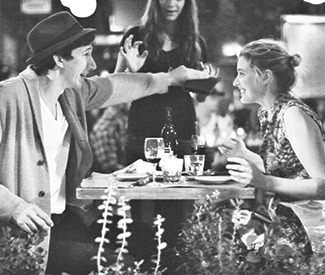
1. Inside Llewyn Davis (Joel and Ethan Coen, US/France)

2. Frances Ha (Noah Baumbach, US)

3. John Dies at the End (Don Coscarelli, US)

4. Pacific Rim (Guillermo del Toro, US)

5. Stories We Tell (Sarah Polley, Canada)

6. Blue Jasmine (Woody Allen, US)

7. The Punk Singer (Sini Anderson, US)

8. The World’s End (Edgar Wright, UK)

9. [tie] Evil Dead (Fede Alvarez, US) and You’re Next (Adam Wingard, US)

10. [tie] The Bling Ring (Sofia Coppola, US/UK/France/Germany/Japan) and Spring Breakers (Harmony Korine, US)

11. The Act of Killing (Joshua Oppenheimer, Denmark/Norway/UK)

Gap in the hot seat over horrifying animal rights video

An investigation conducted by People for the Ethical Treatment of Animals (PETA) has revealed flat-out cruelty in the practice of harvesting angora fur. Now PETA is targeting Gap, a San Francisco-based clothing retailer, with a call for it to ban the sale of angora products altogether.

On Dec. 16, PETA aired an online video chronicling the disturbing process by which the popular sweater material, angora, is harvested from rabbits kept in cages in Chinese angora farms. The disturbing video was accompanied by a petition calling on Gap to ban angora sales. With two days, the retailer had responded by suspending its orders for angora, but the animal rights organization was still calling for an outright ban.

Angora is a soft, relatively durable sweater material that’s less expensive than cashmere, and it is possible to harvest it without causing injury to animal, but the vast majority of suppliers do not use humane methods. Roughly 90 percent of the world’s angora comes from suppliers in China, according to PETA, where facilities exposed by an undercover PETA investigation use a violent method of harvesting the rabbit fur with no regard for the pain and suffering it causes.

PETA’s initial post on Monday contained a disturbing video chronicling the investigation and the methods used by third party farms to harvest angora. Two days later, Gap posted this Tweet:

“We appreciate that this issue has been raised, and we share the concerns expressed by our customers about the treatment of angora rabbits. Ensuring the fair and humane treatment of animals has been part of our brand’s history, and we’re committed to seeking to ensure that our policies and procedures are adhered to as products are created.
 
Over the last number of days, we’ve looked carefully at the issue, and Gap is immediately suspending orders for products made with angora. We require that vendors contracted to make our product adhere to our ethical sourcing requirements that include the humane treatment of animals. We understand the importance of this issue and will work with others to advocate for lasting improvements.”

Gap isn’t the only company to purchase angora from ethically questionable producers. Many companies used the material, but retailers like H&M — who announced a company-wide angora ban on Fri/20 — and Phillips-Van Huesen (owner of clothing companies Tommy Hilfiger and Calvin Klein, among others), pulled their angora products immediately after PETA showed them the video.

When PETA initially showed Gap the same video, however, it was slow to respond, prompting PETA to make Gap the focus of its media campaign. Now that Gap has agreed to suspend its angora purchases, PETA continues to pressure the company to impose an outright ban on the sale of these products.

The video, which is difficult to watch, shows the standard practice by which the angora farmers exposed by PETA acquire the fur. The rabbits are tied down, screaming, while the farmworkers painfully and forcibly remove the tiny animals’ fur. After the ostensibly unsanitary and violent process, the rabbits are literally tossed back into tiny, filthy cages looking more like meat than living creatures.

But even after the recent publicity, a depressing question remains: What is to happen to the rabbits still at those angora farms?

As things stand, Chinese law does very little to prevent cruelty at these factories. The farms supply 90 percent of the world’s angora, according to PETA, so even after the loss of major customers such as Gap, H&M, and Phillips-Van Huesen, they will likely continue operating.

“There are no laws protecting the animals on those farms, there are no penalties for abusing those animals,” said PETA spokesperson Ashley Byrne. “So really there isn’t some legal precedent in China for those farms to be shut down.”

The only way to combat angora fur farms, according to Byrne, is to not buy the products.

“The most effective way to stop the kind of cruelty that people can see in this angora video is to simply stop buying it,” she said, “and to stop supporting this industry. Whether a label says one percent angora or 100 percent angora,” said Byrne, “The price paid by the animal is too high.”

Sage Listings: Dec. 18-24, 2013

0

Stage listings are compiled by Guardian staff. Performance times may change; call venues to confirm. Reviewers are Robert Avila, Rita Felciano, and Nicole Gluckstern. Submit items for the listings at listings@sfbg.com.

THEATER

OPENING

Disney’s Beauty and the Beast Curran Theatre, 445 Geary, SF; www.shnsf.com. $60-160. Sat/21, 2 and 7:30pm; Sun/22, Dec 29, and Jan 5, noon and 5:30pm; Dec 23-28 and Dec 30-Jan 4, 2pm (also Dec 28 and Jan 3-4, 7:30pm).Through Jan 5. Disney’s version of the classic tale comes to the stage. Bring it, Mrs. Potts!

ONGOING

Amaluna Big Top at AT&T Park, Third Street at Terry A. Francois Blvd, SF; www.cirquedusoliel.com. $50-175. Check website for schedule, including special holiday showtimes. Through Jan 12. Cirque de Soleil is back in town, this time bringing its Tempest-inspired Amaluna to the big top set up outside AT&T Park. Touted for being a celebration of “women [sic] power,” it seems initially odd that the design elements are so focused on the male peacock feather — all greens and blues and graceful, with curving “fronds” rising up from the stage. Jungle sounds chirp in the background as a bevy of Amazonian women in bejeweled headdresses and a mischievous lizard-man circulate the room until the show starts with the lovely abstraction of a floating red cloud of translucent fabric dancing in a single beam of light. The flimsy plotline is forgettable, a coming-of-age and courtship tale between the island’s young princess, Miranda (Iuliia Mykhailova) and a shipwrecked young Romeo (Evgeny Kurkin), though the parallel courtship between the two comic figures of Jeeves (Nathalie Claude) and Deeda (Shereen Hickman) provides a bit of levity and a novel use for footballs. The most realized character is probably Cali (Victor Kee), the half-lizard, whose prehensile tail and neon body paint give him an otherworldly allure, but it’s the aerialist goddesses and fierce embodiments of the storm that are most memorable from an acrobatic point-of-view, and Lara Jacobs’ unique balancing act from a meditative one. (Gluckstern)

Avenue Q New Conservatory Theatre Center, 25 Van Ness, SF; www.nctcsf.org. $25-45. Wed-Sat, 8pm; Sun, 2pm. Through Jan 12. New Conservatory Theatre Center performs the Tony-winning comedy.

The Barbary Coast Revue Stud Bar, 399 Ninth St, SF; eventbrite.com/org/4730361353. $10-40. Wed/18, 9pm. Blake Wiers’ new “live history musical experience” features Mark Twain as a tour guide through San Francisco’s wild past.

The Book of Mormon Orpheum Theatre, 1192 Market, SF; www.shnsf.com. $60-120. Wed-Sat, 8pm (also Sat, 2pm); Sun, 1 and 6:30pm. Through Jan 19. When approaching the oeuvre of South Parkcreators Matt Stone and Trey Parker, it’s best to check your political correctness at the door. That’s certainly no less true of their 2011 Broadway musical The Book of Mormon, co-penned with Robert Lopez (of Avenue Q fame), despite the clean-scrubbed appearance of their fumbling albeit well-intentioned missionary protagonists. Sent to Uganda for two years, top mission pupil Elder Price (Nic Rouleau) and his clumsy but affable partner Elder Cunningham (A.J. Holmes) are faced with a village oppressed by a scenery-chewing warlord, a demoralized coterie of fellow missionaries who have yet to have a successful conversion, and their own fraught, odd-couple dynamic. Rouleau’s Price is an appropriate blend of smarm, charm, and secret self-doubt while Holmes excels in his portrayal of a perennial-loser-turned-prophet (his power ballad-esque solo in “Man Up” is one of the show’s best). Of their hosts, the wry Mafala (James Vincent Meredith) and his sweet but strong-willed daughter Nabulungi (Syesha Mercado) get the most stage time, but it’s the crude and caustic General (David Aron Damane) who grabs the most attention. The gleefully profane “Hasa Diga Eebowai,” a Forbidden Zone-style “Spooky Mormon Hell Dream”, and the deliriously blasphemous “Joseph Smith, American Moses,” round out the entertaining, and strangely informative, score. Though it’s (very) unlikely to convert you to the Church of Latter-Day Saints, there’s a good chance you’ll want to convert to the church of Parker and Stone, if you haven’t already. (Gluckstern)

A Christmas Carol Geary Theater, 415 Geary, SF; www.act-sf.org. $20-95. Wed/18-Sat/21, 7pm (also Sat/21, 2pm); Sun/22, 1 and 5:30pm; Mon/23, 2 and 7pm; Tue/24 and Dec 26-27, 1pm (also Dec 27, 5:30pm); Dec 28, 1pm. Through Dec 28. American Conservatory Theater mounts its annual production of the Dickens classic, with James Carpenter as Scrooge and Ken Ruta as Jacob Marley’s ghost.

Cinderella Buriel Clay Theater, African American Art and Culture Complex, 762 Fulton, SF; www.african-americanshakes.org. $12.50-50. Sat/21-Sun/22, 3pm (also Sat/21, 8pm). African-American Shakespeare Company presents this fairy-tale production for the holidays.

Crones for the Holidays: The Sequel Exit Theatre, 156 Eddy, SF; www.crackpotcrones.com. $20. Sat-Sun, 3pm (also Sat, 8pm). Through Dec 29. Vignettes, improv, songs, and more, written by and starring Terry Baum and Carolyn Myers.

Foodies! The Musical Shelton Theater, 533 Sutter, SF; www.foodiesthemusical.com. $32-34. Fri-Sat, 8pm. Open-ended. AWAT Productions presents Morris Bobrow’s musical comedy revue all about food.

The Golden Girls: The XMAS Episodes Victoria Theatre, 2961 16th, SF; www.trannyshack.com. $30. Thu/19-Sat/21, 8pm; Sun/22, 7pm. Plastic Christmas tree, 80s TV jingles, men in muumuus — it’s beginning to look a lot like Christmas. Two new (old) episodes from the classic television sitcom enliven this year’s staging of the seasonal favorite, starring drag luminaries Heklina, as Dorothy; Cookie Dough, as Sophia; Matthew Martin (who also directs), as Blanche; and Pollo Del Mar, as Rose. Decked to the halls in frighteningly festive outfits courtesy of costumers Landa Lakes and Van Hedwall, the ladies bring out the geriatric within, while proving over and over again that nobody ever really grows up anyway. Laurie Bushman, Manuel Caneri, Peter Griggs, and Jordan Wheeler round out the cast, along with a rotating roster of special guests (including opening night’s appearance by Donna Sashet). Yule laugh, Yule cry, mostly Yule laugh. (Avila)

It’s Christmas, Carole! Creativity Theater, 221 Fourth St, SF; www.itschristmascarole.com. $10-20. Thu/19-Fri/20, 7pm; Sat/21-Sun/22, 2 and 5pm. Michael Phillis’s broadly comic, all-ages take on A Christmas Carol proves a sweet, amusing, and admiringly well-acted 60-minute Christmas pudding in the hands of director Andrew Nance and his charmingly offbeat cast, which includes physical comedienne Sara Moore as the eponymous Christmas grouch. Playwright Phillis, with equally sharp timing and rubbery features, plays Carole’s coworker Bob, a young gay urbanite longing to go back home for Christmas and reconnect with his estranged, disapproving mother. Carole drives a hard bargain but eventually agrees to take over his workload for the day —namely Christmas day, a workday by any other measure for their terrifyingly mean old boss, Mr. Scrooge (Dave Garrett). Also working that day is the cloying goody-goody of the office, played with a hilarious excess of syrup by Dawn Meredith Smith, who doubles as the sassy Ghost of Christmas Breaks in the fitful imagination of slumbering Carole. There the Ghost of Christmas Bonuses (Rory Davis) also makes an appearance, and Carole of course makes a discovery about family, friends, and loved ones that turns even her boss’s bitchiness right around. (Avila)

The Jewelry Box: A Genuine Christmas Story The Marsh San Francisco, 1062 Valencia, SF; www.themarsh.org. $15-40. Fri, 8pm; Sat, 5pm. Through Dec 28. Brian Copeland performs the world premiere of his new, holiday-themed work, an Oakland-set autobiographical tale that’s a prequel to his popular Not a Genuine Black Man.

My Beautiful Launderette New Conservatory Theatre Center, 25 Van Ness, SF; www.nctcsf.org. $25-45. Wed/18-Sat.21, 8pm; Sun/22, 2pm. In this stage adaptation of the 1985 Hanif Kureishi-Stephen Frears film, SF newcomer Javi Harnly takes on the role of Omar, a British-Pakistani youth with an eye for business opportunity, while Robert Rushin portrays his former schoolmate and eventual lover Johnny, a working-class tough and erstwhile fascist whose navigation of Thatcher-era London is fraught with poverty and violence. While the play sticks to much of the original’s plot, the cast is reduced to a chamber septet, with the perhaps unintended consequence of creating an extra layer of isolation for Johnny, whose former “mates” remain offstage, leaving him to be defined almost solely by his relationships to Omar and Omar’s family. Director Andrew Nance’s pacing errs on the side of sedate, subduing the more passionate responses of many of the supporting characters: Omar’s restless cousin Tania (Radhika Rao); his widowed, alcoholic father (Ravi Bhatnagar); his mercurial entrepreneur uncle Nasser (Keith Stevenson); and Nasser’s kittenish mistress (Cat Luedtke). Only Daniel Redmond as the unrepentantly shady Salim gets to fully embody his character’s extremist views and actions, while the sweetly awkward chemistry between the two protagonists does produce a nice bit of heat, their refreshingly matter-of-fact relationship encompassing a full spectrum of emotion and circumstance. (Gluckstern)

The Oy of Sex Marsh San Francisco, 1062 Valencia, SF; www.themarsh.org. $20-100. Thu-Fri, 8pm; Sat, 8:30pm. Through Jan 18. Comedian Alicia Dattner performs her solo show, based on her stories from her own life and love addiction.

Storefront Church San Francisco Playhouse, 450 Post St, Second Flr, SF; www.sfplayhouse.org. $30-100. Tue-Thu, 7pm (no shows Dec 24-25 or Jan 1); Fri-Sat, 8pm (also Sat, 3pm); Sun, 2pm (also Sun/22, 7pm). Through Jan 11. Weighty themes come leavened by sharp comedy and engaging characters in this 2012 play from New York’s John Patrick Shanley (Doubt), now enjoying a strong and lively Bay Area premiere at SF Playhouse in director Joy Carlin’s well cast production. Ethan, a gregarious retired accountant and professed secular Jew (a hilarious and endearing Ray Reinhardt) tries to get some relief for his Puerto Rican wife, Jessie (a bubbly Gloria Weinstock), who is perilously behind on her loan payments. But it’s like getting the proverbial blood from a stone during his meeting with her humorless and immobile — indeed, partly paralyzed — loan officer (a quietly shattered Rod Gnapp). Ethan appeals to morality; loan officer Reed sticks to the rules of the system. Enter Donaldo (an admirably sure yet understated Gabriel Marin), the Bronx’s upstanding borough president and the son of Jessie’s old friend. Donaldo has much bigger business with the bank underway (a proposed mall deal that will bring jobs, if at the expense of local character) and at first begs off — until he learns his mother has co-signed the loan. Soon, Donaldo is visiting the source of Jessie’s money problems: a somber Pentecostal preacher and Katrina-refugee named Chester (a gently solemn Carl Lumbly) who has installed a traffic-less church in the storefront below her apartment but remains himself paralyzed by depression and uncertainty. Donaldo, himself a preacher’s son, and Chester soon engage in a fiery and captivating debate that turns on the contradictions between moral conviction and worldly compromise. From there on, a fractured congregation of sorts begins to form around the preacher and Donaldo, including the unctuous yet aloof CEO of the bank (played with bounding confidence by a fine Derek Fischer). It all leads to a rousingly funny and tender scene that makes good on the season’s usual lip service to fraternal feeling and communal values. (Avila)

Too Many Tamales: A Holiday Story for the Whole Family Marsh San Francisco, 1062 Valencia, SF; www.themarsh.org. $8-35. Opens Sat/21, 2 and 8pm. Runs Sun/22-Mon/23, Dec 27-30, and Jan 2-4, 2pm. Through Jan 4. Marsh Youth Theater and author Gary Soto collaborate on this high-energy holiday show — complete with puppets and Mexican music — based on Soto’s picture book.

BAY AREA

Edward Gant’s Amazing Feats of Loneliness Ashby Stage, 1901 Ashby, Berk; www.shotgunplayers.org. $20-35. Wed-Thu, 7pm; Fri-Sat, 8pm; Sun, 5pm. Through Jan 11. Shotgun Players performs Anthony Neilson’s comic romp set in “a sensual Edwardian world of top hats, fantastical puppets, and flash powder.”

Little Women Lucie Stern Theatre, 1305 Middlefield, Palo Alto; www.theatreworks.org. $19-79. Tue-Wed and Dec 30, 7:30pm (no shows Dec 24-25; Dec 31, show at 2pm only; no show Jan 1); Thu-Sat, 8pm (also Sat and Dec 26 and Jan 4, 2pm); Sun, 2 and 7pm. Through Jan 4. TheatreWorks performs the musical adaptation of the Louisa May Alcott tale.

Mame Hillbarn Theatre, 1285 East Hillsdale, Foster City; www.hillbarntheatre.org. $19-40. Thu/19-Sat/21, 8pm (also Sat/21, 2pm); Sun/22, 2pm. Hillbarn Theatre performs Jerry Herman’s classic musical.

The Pianist of Willesden Lane Berkeley Repertory Theatre, Thrust Theatre, 2015 Addison, Berk; www.berkeleyrep.org. $29-89. Tue and Thu-Sat, 8pm (also Sat, 2pm; no shows Tue/24 or Dec 31); Wed and Sun, 7pm (also Sun, 2pm; matinees only Sun/22 and Jan 5; no show Dec 25). Extended through Jan 5. Mona Golabek stars in this solo performance inspired by her mother, a Jewish pianist whose dreams and life were threatened by the Nazi regime.

PERFORMANCE/DANCE

“Broadway Bingo” Feinstein’s at the Nikko, Hotel Nikko, 222 Mason, SF; www.feinsteinssf.com. Wed, 7-9pm. Ongoing. Free. Countess Katya Smirnoff-Skyy and Joe Wicht host this Broadway-flavored night of games and performance.

“A Chanticleer Christmas” St. Ignatius, 650 Parker, SF; www.chanticleer.org. Sun/22, 8pm. $30-65. The Grammy-winning vocal ensemble performs profound and joyous seasonal tunes.

“Comedy Bottle with Tom Smith” Purple Onion at Kells, 530 Jackson, SF; www.purpleonionatkells.com. Fri/20-Sat/21, 7pm. $10. Headliner Smith performs with Matthew Groom and Ira Summer.

“Exquisite Corpse Theatre: Sci-Fi: Defenders of Intergalactic Donuts” Stage Werx Theatre, 446 Valencia, SF; www.stagewerx.org. Fri/20-Sat/21, 7pm. $23. Mikl-em, Stage Werx, and Foul Play present this combination party, writing game, and performance. Dress in sci-fi togs and assist the artists in writing the show.

“Fiesta Navidena” Peña Pachamama, 1630 Powell, SF; www.carolinalugo.com. Sat/21-Sun/22 and Dec 27-28, 6:15pm. $15-21. Carolina Lugo and Carolé Acuña’s Ballet Flamenco performs a holiday show.

“From the Bay to Bahia” Brava Theater Center, 2781 24th St, SF; www.locobloco.org. Sat/21, 8pm. $5-20. An evening inspired by Loco Bloco’s summer cultural exchange in Bahia, Brazil, with dance, spoken word, and musical performances.

“G. Scott Lacy’s Holiday Cabaret” Society Cabaret at Hotel Rex, 562 Sutter, SF; www.societycabaret.com. Fri/20-Sat/21, 8pm; Sun/22, 2pm. $20-40. A seasonal blend of music and song.

“Happy Birthday Jesus: The Alaska Christmas Show” Rebel, 1760 Market, SF; www.brownpapertickets.com. Wed/18-Fri/20, 7:30 and 10pm. $22.50. RuPaul’s Drag Race fan fave Alaska Thunderfuck performs her off-Broadway show.

“Hark, the Herald Angels Swing!” Davies Symphony Hall, 201 Van Ness, SF; www.cityboxoffice.com. Sun/22, 8pm. $18-65. The SF Girls Chorus and School, plus Alumnae Chorus, perform jazzy holiday songs arranged by Marcus Shelby.

“Have Yourself a Merry Little Christmas: An Evening with Connie Champagne as Judy Garland” Feinstein’s at the Nikko, Hotel Nikko, 222 Mason, SF; www.feinsteinssf.com. Wed/18, 8pm. $25-35 ($20 minimum food and beverage purchase). The acclaimed performer presents her annual holiday show.

“Hysterical Historical San Francisco, Holiday Edition” Shelton Theater, 533 Sutter, SF; www.sheltontheater.org. Sun, 7pm. Through Dec 29. $30-40. Comic Kurt Weitzman performs.

“Jackie Beat’s O Holy Hell!” Rebel, 1760 Market, SF; www.brownpapertickets.com. Sun/22, 7 and 9pm. $26. “Everyone’s favorite Grinch” returns to SF for her annual anti-holiday tribute.

“Kung Pao Kosher Comedy” New Asia Restaurant, 772 Pacific, SF; www.koshercomedy.com. Dec 24-26, 6pm (dinner show); 9:30pm (cocktail show). $44-64. Stand-up with Gary Gulman, Adrianne Tolsch, Samson Koletkar, and Lisa Geduldig.

“Mark Foehringer’s Nutcracker Sweets” Southside Theater, Fort Mason Center, Marina at Laguna, SF; www.brownpapertickets.com. Fri/20-Tue/24, 11am and 2pm (also Sat/21-Sun22, 4pm). $18-28. Contemporary ballet company Mark Foehringer Dance Project SF performs its fifth annual production of this Nutcracker-inspired work aimed at families with young children.

“Mittens and Mistletoe: A Winter Circus Cabaret” Dance Mission Theater, 3316 24th St, SF; www.sweetcanproductions.com. Fri/20-Sat/21, 8pm; Sun/22-Tue/24, 2pm (also Sun/22 and Tue/24, 4pm). $15-60. Light-hearted, circus-themed holiday variety show, with juggling, clowning, trapeze acts, and more.

“Okeanos Intimate” Aquarium of the Bay, Pier 39, SF; www.capacitor.org. Sat, 8pm. $20-30 (free aquarium ticket with show ticket). Extended through Dec 28. Choreographer Jodi Lomask and her company, Capacitor, revive 2012’s Okeanos — a cirque-dance piece exploring the wonder and fragility of our innate connection to the world’s oceans — in a special “intimate” version designed for the mid-size theater at Pier 39’s Aquarium of the Bay. The show, developed in collaboration with scientists and engineers, comes preceded by a short talk by a guest expert — for a recent Saturday performance it was a down-to-earth and truly fascinating local ecological history lesson by the Bay Institute’s Marc Holmes. In addition to its Cirque du Soleil-like blend of quasi-representational modern dance and circus acrobatics — powered by a synth-heavy blend of atmospheric pop music — Okeanos makes use of some stunning underwater photography and an intermittent narrative that includes testimonials from the likes of marine biologist and filmmaker Dr. Tierney Thys. The performers, including contortionists, also interact with some original physical properties hanging from the flies — a swirling vortex and a spherical shell — as they wrap and warp their bodies in a kind of metamorphic homage to the capacity and resiliency of evolution, the varied ingenuity of all life forms. If the movement vocabulary can seem limited at times, and too derivative, the show also feels a little cramped on the Aquarium Theater stage, whose proscenium arrangement does the piece few favors aesthetically. Nevertheless, the family-oriented Okeanos Intimate spurs a conversation with the ocean that is nothing if not urgent. (Avila)

Paula Poundstone Palace of Fine Arts, 3301 Lyon, SF; www.palaceoffinearts.org. Fri/20, 8pm. $35. The comedian and NPR personality performs.

“Point Break Live!” DNA Lounge, 373 11th St, SF; www.dnalounge.com. Jan 3, Feb 7, March 7, and April 4, 7:30 and 11pm. $25-50. Dude, Point Break Live! is like dropping into a monster wave, or holding up a bank, like, just a pure adrenaline rush, man. Ahem. Sorry, but I really can’t help but channel Keanu Reeves and his Johnny Utah character when thinking about the awesomely bad 1991 movie Point Break or its equally yummily cheesy stage adaptation. And if you do an even better Keanu impression than me — the trick is in the vacant stare and stoner drawl — then you can play his starring role amid a cast of solid actors, reading from cue cards from a hilarious production assistant in order to more closely approximate Keanu’s acting ability. This play is just so much fun, even better now at DNA Lounge than it was a couple years ago at CELLspace. But definitely buy the poncho pack and wear it, because the blood, spit, and surf spray really do make this a fully immersive experience. (Steven T. Jones)

“San Francisco Magic Parlor” Chancellor Hotel Union Square, 433 Powell, SF; www.sfmagicparlor.com. Thu-Sat, 8pm. Ongoing. $40. Magic vignettes with conjurer and storyteller Walt Anthony.

“Santa Claus is Coming Out” Eureka Theatre, 215 Jackson, SF; www.combinedartform.com. Thu/19-Fri/20, 8pm; Sat/21, 9:30pm; Sun/22, 5pm; Mon/23, 6pm; Tue/24, 3pm. $20-35. Jeffrey Solomon performs his solo play exploring “the secret romantic life of the holiday icon.”

“The Santaland Diaries” Eureka Theatre, 215 Jackson, SF; www.combinedartform.com. Sat/21, 7pm; Sun/22-Mon/23 and Dec 26-29, 8pm (also Sun/22 and Dec 29, 2pm); Mon/23, 8pm; Tue/24, 1pm. David Sinaiko performs David Sedaris’ tale of working as an elf, adapted to the stage by Joe Mantello.

“Shotz: Orwellian Consumer-mas” Tides Theare, 533 Sutter, SF; www.amoisnyc.org. Wed/18, 8pm. $10. AmiosSF presents five short plays relating to the theme of “Orwellian Consumer-mas.” Each is required to include the line “It’s free. Freee!”

“Sing You A Merry Christmas” Grace Cathedral, 1100 California, SF; www.gracecathedral.org. Sat/21, 11am. $5-25. A sing-along for younger children and their families

“Speechless Faux Holiday Christmas Event” Public Works, 161 Erie, SF; www.speechlesslive.com. Thu/19, 7:30pm. $20. Entertainers, entrepreneurs, and audience members present spontaneous PowerPoint presentations. In keeping with the season, this edition is formatted as a faux holiday party, complete with an ugly sweater contest.

“A Verry Merry Murder Mystery” Bayfront Theater, B350 Fort Mason Center, SF; www.improv.org. Fri/20-Sat/21, 8pm. $20. This concession to the holiday season has more red in it than green. The return of the popular improv show by Bay Area Theatre Sports (BATS) technically has Christmas in it: Along with the 1930s English manor house, it’s part of the setting for murder, as well as the sleuthing and shenanigans that must invariably ensue. Nothing else is certain, however. The audience provides the necessary ingredients to get this full-length completely improvised who-knows-who’ll-have-dunit up and running, including the murder weapon (a dirty sock, the night I went, fiendishly enough). The fine cast (which changes slightly each night) includes the highly imaginative, lightening quick Tim Orr along with fellow BATS veterans like William Hall (who did exceptional work in a Scottish brogue and imaginary kilt), Kasey Klemm, Jenny Rosen, and Regina Saisi; as well as relative newcomers like Ben Johnson and company guest Ethan Karson, both of whom are outstanding. The masterful Joshua Raoul Brody improvises the musical score. (Avila)

“XXmas: The Christmas Ballet, 2013 Edition” Yerba Buena Center for the Arts, Lam Research Theater, 700 Howard, SF; www.smuinballet.org. Wed/18-Sat/21, 8pm (also Sat/21, 2pm); Sun/22, 2 and 7pm; Tue/24, 2pm; Dec 26-28, 8pm (also Dec 26, 2pm). $24-64, Smuin Ballet’s annual holiday show boasts festive ballet, tap, and swing-dance numbers.

BAY AREA

“The Biggest Gift” Lesher Center for the Arts, Margaret Lesher Theatre, 1601 Civic, Walnut Creek; www.leshercenter.org. Thu/19, 11:30am; Fri/20, 9:30am, 11am, and 6:30pm; Sat/21, 10am, 11:30am, 1pm, and 4pm; Sun/22, 11am and 1pm. $14. Fantasy Forum Actors Ensemble presents a Christmas-themed, family-friendly musical.

“The Nutcracker” Paramount Theatre, 2025 Broadway, SF; www.ticketmaster.com. Sat/21-Sun/22, 2pm; Tue/24, 11am. $20-59.50. Oakland Ballet performs Graham Lustig’s version of the classic ballet, with music by the Oakland East Bay Symphony.

“Scrooge: The Haunting of Ebenezer” Ashby Stage, 1901 Ashby, Berk; www.shotgunplayers.org. Mon/23-Tue/24, 8pm. $15. Jeff Garrett plays all the Christmas Carol parts in this solo version of the classic tale.

“A Swell Noël” Aurora Theatre Company, 2081 Addison, Berk; www.auroratheatre.org. Wed/18-Sat/21, 7:30pm; Sun/22, 5pm. $25-32. Cabaret star Craig Jessup performs songs by Noël Coward, Jacques Brel, Stephen Sondheim, and other composers. *

National Park Service asks Presidio Trust to hit the breaks on museum proposals

2

The battle over the cultural fate of the otherwise outdoors-oriented Presidio could hit the pause button once again after a high-level letter sent to the Presidio Trust recommended the governing board put a hold on the already slow-moving selection process for a new museum to replace the Sports Basement.

The questions so far have been: Is the proper use of the land one that would allow wealthy filmmaker George Lucas the opportunity to house his art, or would the space make more sense as an interactive museum dedicated to the natural history of the Presidio? Now, this question is being raised: Should any new museums be opening on the Presidio’s quasi-parkland before a larger vision for the Presidio is created?

The Dec. 12 letter from Frank Dean, general superintendent of the Golden Gate National Recreation Area (GGNRA), recommended that the Trust wait for “several years” before deciding exactly which museum should occupy the choice piece of property on the city’s northwestern coast.

“We appreciate that the Trust Board has at least temporarily delayed reaching a decision on the future use of the Commissary site,” Dean wrote in the letter addressed to the Presidio Trust. “However, we must again express our strong recommendation, echoed by many others, that the Trust defer any decision for several years to allow the site to develop in a more comprehensive, thoughtful, integrated, and planned manner.”

Citing a lack of “programmatic and architectural fit,” the letter deemed all three proposals — The Presidio Exchange (PX), the Lucas Cultural Arts Museum, and The Bridge/Sustainability Institute — unfit for imminent development.

But while both the Presidio Exchange and The Bridge plans were referenced philosophically, Dean name-checked the Lucas Cultural Arts Museum with specificity.  

“From the information that has been presented to the public to date,” Dean wrote, “we believe the program of the proposed Lucas Cultural Arts Museum has no genuine or substantive connection to the themes or programs of Crissy Field or the Main Post, or to other Presidio-connected themes that extend far beyond the boundaries of the outpost. While the programs of the proposed museum seem interesting, the museum’s offerings could be located anywhere; therefore, the museum does not merit one of the most important sites in the entire Presidio.”

The finalists for the museum site at mid-Crissy Field answer questions about their proposals (including filmmaker George Lucas).

It is a sentiment held not just by the GGNRA. Supporters of the more synergistic Presidio Exchange plans think the delay in decision will only strengthen the position of both their plans and those of The Bridge/Sustainability.

“I agree with the Trust’s stance,” said Becky Evans, local chair of the Sierra Club. “The Lucas plan fulfilled none of the requirements except for the one about economic feasibility. It didn’t fit in with the park or the surrounding area.”

“The [Presidio Exchange] has done an excellent job, in terms of in a few months preparing their proposal. But there is some value, I think, in waiting to see what the new open space will look like when the tunnels are finished and the bluff is in place,” she said.

But before supporters of the PX declare victory, note that the letter sent to the Presidio Trust was just a recommendation, not a declaration. The Trust could theoretically buck the advice, hand the Sports Basement keys to George Lucas’ group, and then wipe its hands clean of the project; after all, Lucas has offered to foot the bill for his entire project.

“[The recommendation] is not something that automatically makes them hold the process up,” said Alexandra Picavet, spokesperson for the GGNRA. “It’s up to the Trust to assign what weight they would give our recommendation. They could decide not to use it all.”

But, according to GGNRA Director of Communications Howard Levitt, even if the recommendation is ignored, the delay could last indefinitely: Even after a proposed plan is accepted by the Presidio Trust, it would still have to undergo a “follow-up environmental impact statement, done by EPA, [pursuant to] the National Environmental Policy Act, and so we’ll continue to be engaged in this thing going forward.” So, even after a plan is approved by the Trust, the EPA could still hold up the process moving forward.

Those in favor of the proposed moratorium, however, seem to think that the Presidio Trust (who had not yet responded for comment at the time of publication)will agree with the initial recommendation.

“The Park Service’s main responsibility is to protect the resources of the park,” said Evans. “And they’ve been walking, I think, a very fine line trying to do that without coming out specifically and saying, ‘Don’t pick Mr. Lucas.’ I mean, obviously it’s not an appropriate choice.”

Who and what the appropriate choice for the old Commissary ends up being, however, is still up for debate.

For now, it’s a Sports Basement; the only true winner from the GGNRA’s most recent recommendation. At least for now, it may get to stay. 

Rep Clock: December 18 – 24, 2013

0

The Yerba Buena Center for the Arts’ “X: The History of a Film Rating” wraps up with Henry and June (1990).

PHOTO COURTESY OF UNIVERSAL

Schedules are for Wed/18-Tue/24 except where noted. Director and year are given when available. Double and triple features marked with a •. All times pm unless otherwise specified.

“ANOTHER HOLE IN THE HEAD FILM FESTIVAL” Balboa Theater, 3630 Balboa, SF; New People Cinema, 1746 Post, SF; www.sfindie.com. $12. Now in its 10th year, the festival highlights indie horror, sci-fi, and fantasy films, Wed-Thu.

ATA GALLERY 992 Valencia, SF; www.atasite.org. Free-$7. “Periwinkle Cinema: Voyeurs and Exhibitionists,” Wed, 8. “Shorts from the SF State Cinema Department (Fall 2013),” Thu, 7. “City College of SF Motion Picture Directing: Student Film Showcase,” Fri, 8. “Other Cinema:” “New Experimental Works,” Sat, 8:30.

BALBOA THEATRE 3630 Balboa, SF; cinemasf.com/balboa. $10. “Popcorn Palace:” It’s a Wonderful Life (Capra, 1946), Sat, 10am. Matinee for kids.

BERKELEY FELLOWSHIP OF UNITARIAN UNIVERSALISTS 1924 Cedar, Berk; www.bfuu.org. $5-10 donation. The World According to Monsanto (Robin, 2008), Thu, 7.

CASTRO 429 Castro, SF; (415) 621-6120, www.castrotheatre.com. $8.50-12. “Noir City Xmas 2013:” •Blast of Silence (Baron, 1961), and Christmas Eve (Marin, 1947), Wed, 7. With Blast of Silence director and star Allen Baron in person with his new book, Blast of Silence: A Memoir. •Gremlins (Danter, 1984), Thu, 7, and Lethal Weapon (Donner, 1987), Thu, 9. “Midnites for Maniacs: Horrific Holidays:” •Home for the Holidays (Foster, 1995), Fri, 7:15, and Love Actually (Curtis, 2003), Fri, 9:15. •Bullitt (Yates, 1968), Sat, 2:35, 7, and The Thomas Crown Affair (Jewison, 1968), Sat, 4:50, 9:15. It’s a Wonderful Life (Capra, 1946), Sun, 2, 5, 8. “San Francisco Gay Men’s Chorus: Shine,” with guest artists Matt Alber and Marina Harris, Tue, 5, 7, 9. Advance tickets ($25-35) at www.sfgmc.org.

CHRISTOPHER B. SMITH RAFAEL FILM CENTER 1118 Fourth St, San Rafael; (415) 454-1222, www.cafilm.org. $6.50-$10.75. The Armstrong Lie (Gibney, 2013), call for dates and times. Bettie Page Reveals All (Mori, 2012), call for dates and times. Blue is the Warmest Color (Kechiche, 2013), call for dates and times. The Great Beauty (Sorrentino, 2013), call for dates and times.

CLAY 2261 Fillmore, SF; www.landmarktheatres.com. $10. “Midnight Movies:” Die Hard (McTiernan, 1988), Fri-Sat, midnight.

PACIFIC FILM ARCHIVE 2575 Bancroft, Berk; (510) 642-5249, bampfa.berkeley.edu. $5.50-9.50. PFA closed until Jan 16.

RANDALL MUSEUM 155 Museum Way, SF; elephants.brownpapertickets.com. $10-20. “An Evening with Elephants:” Sri Lanka: Elephant Island (Colbeck, 2013), Sat, 6. Followed by a slideshow and lecture about Asian elephants. Proceeds benefit elephant research and conservation efforts by Trunks & Leaves Inc.

ROXIE 3117 and 3125 16th St, SF; (415) 863-1087, www.roxie.com. $6.50-11. Is the Man Who is Tall Happy? (Gondry, 2013), Wed, 7, 9. The Punk Singer (Anderson, 2013), Wed-Thu, 7:15, 9. “Piaf: Her Story, Her Songs,” with Raquel Bitton, Thu, 8:15. This event, $25-40. Lenny Cooke (Safdie and Safdie, 2013), Dec 20-26, call for times. White Reindeer (Clark, 2013), Dec 20-26, 9:15 (also Sat-Sun, 2:45).

TANNERY 708 Gilman, Berk; berkeleyundergroundfilms.blogspot.com. Donations accepted. “Berkeley Underground Film Society:” March of the Wooden Soldiers (Meins and Rogers, 1934), Sun, 7:30.

YERBA BUENA CENTER FOR THE ARTS 701 Mission, SF; www.ybca.org. $8-10. “X: The History of a Film Rating:” Henry and June (Kaufman, 1990), Thu, 7:30. “Films by Fassbinder:” In a Year with 13 Moons (1978), Sat, 7:30. *


Keep moving

1

arts@sfbg.com

YEAR IN DANCE This is not 12 Days of Christmas but 12 Months of Dancing. And while there were plenty of lords-a-leaping and ladies dancing (and even a few drummers drumming and pipers piping), there is nothing even remotely accumulative in this annual looking-back at the year that was. Chronology — and what stood out within a particular month because of the generating ideas — and their shape on the stage determined the (sometimes difficult) selection.

January Bebe Miller, a feminist post-modern choreographer, has been making work for over 25 years. So her multimedia A History (Jan. 25, Yerba Buena Center for the Arts), announced as a piece about “remembering remembering,” sounded just about right. It was and it wasn’t. The concept proved more intriguing than its realization, but watching the work attempt to give shape to complex ideas offered its own satisfaction.

February Modern dance repertory company Hubbard Street Dance Chicago teaming with Alonzo King LINES Ballet in the gorgeous Azimuth (Feb. 2, Cal Performances) seemed like one of the year’s unlikelier projects. Yet to watch Hubbard’s dancers take to LINES’ skewed approach to ballet with such ease — and seeing King rise to the challenge of choreographing for a large ensemble with utter confidence — was surprising and delightful.

March With the world premiere of Alexei Ratmansky’s From Foreign Lands (March 1, War Memorial Opera House) San Francisco Ballet acquired another treasure from possibly the most gifted ballet choreographer working today. In a series of beautifully distinct, picture-postcard scenes of refined dancing, the choreographer honored the roots of ballet in social dance. (Lands will return Feb. 18-March 1, during SFB’s upcoming season.)

April As an Indian American dancer, singer, musician, writer, and actor, Sheetal Gandhi has a lot of resources. She excellently drew on all of them for Bahu-Beti-Biwi (Daughter-in-Law, Daughter, Wife)(April 19, ODC Theater), her humorous and poignant portrait of the restrictions that still shape Indian women’s lives, both in this country and in India.

May The wild applause notwithstanding, it was such a relief to watch the end of Eifman Ballet of St. Petersburg’s overwrought Rodin (May 11, Cal Performances), based on the sculptor’s relationship with his pupil and lover Camille Claudel. You try to keep an open mind about an artist’s take on ideas, but sometimes it’s time to say “enough is enough, never again.”

June Though we also got versions by Yuri Possokhov and Bill T. Jones this year, Mark Morris and the Bad Ass Jazz Trio’s Spring, Spring, Spring (June 12, Cal Performances) was the most radical as well as most cogent reinterpretation of The Rite of Spring. Forgoing the original choregraphy and using the score’s four-hand version as musical inspiration generated a work of both ease and heft.

July Serendipity ruled. I happen to catch Pierre Lacotte’s approximation of what Parisian audiences might have seen in 1832 with La Sylphide (July 9, Palais Garnier) generally considered the first Romantic ballet. Excellently — of course — performed by the Paris Opera Ballet, this version looked like a distant cousin of the one we know, and offered a feast of classical dancing set to a score with hokey charm.

August ODC/Dance’s yearly Summer Sampler (Aug. 2-3, ODC Theater) is such a smart idea. As these superb dancers adapt themselves to their more intimate “home” theater and afford an opportunity to observe them up close, they newly reveal themselves as individuals and as a group. This year’s splendidly performed program showcased ODC’s most recent creation, the splendid Triangulating Euclid, Kimi Okada’s sparkling new Two If By Sea, and the company premiere of Kate Weare’s The Light Has Not the Arms to Carry Us.

September The San Francisco Dance Film Festival (Sept. 12-15, various venues) is growing up fast. This annual showcase of screen dance — the intricate partnering of two motion-driven arts — more than ever impressed with the range and quality of its lineup: shorts, documentaries and filmed versions of stage performances. Amy Dowling and Austin Forbord’s Well Contested Sites, filmed on Alcatraz with professional performers and former prisoners, carved itself into your brain as well as into your heart.

October Somehow artists manage to scratch enough support together to keep working (and eating, and living) in the Bay Area. So anniversaries still happen. But I can’t remember a recent one as joyous as Rhythms of Life: Down the Congo Line (Oct. 5, YBCA) for Dimensions Dance Theater’s 40th. To see a whole generation ready to build on what Deborah Vaughan has started was not the least of its gifts.

November In Joe Goode’s Annex, Jo Kreiter’s Flyaway Productions just may have found a home. The venue’s two-story ceilings and industrial look allowed Kreiter to add some discreet ladders, wires, and ropes as support structures for the aerial work she set on her six athletic women dancers. You can take the metaphor inside the piece any way you want, but Give A Woman A Lift (Nov. 8) soared.

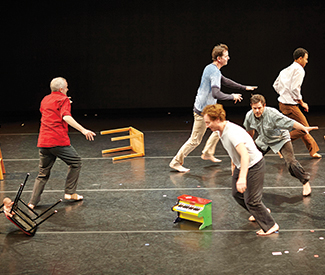
December Like it or not, parenthood is life-changing. Maybe that’s why, in Father On (Dec. 5, ODC Theater), Scott Wells’ five dancers — four of who are recent dads — looked not only sleep-deprived but also often frantic. The one non-dad, Rajendra Serber, was the ultimate outsider. Using game structures and sports imagery, Wells created a hilarious but also curiously affectionate piece about the challenges and confusions encountered by the male and his kid. The lesson on becoming a sensitive father left me laughing through tears. *


Personal archives: CAAM’s home-movie project Memories to Light

0

For as long as I can remember, my family has spent New Year’s Day at my aunt and uncle’s house in Campbell. As we had our fill of sushi and kamaboko, watched football, and, in more recent years, entertained my little cousins, my Uncle Hiro would walk around the house with his video camera, getting everyone on tape. He would focus in on my brother and me, narrating in Japanese so I could only catch our names and how old we were that year. It was just a thing Uncle Hiro did on New Years Day. I never thought of it as recording history.

But that’s exactly what home movies are – a largely untapped source of our histories from an intimate and personal perspective. Recognizing this, the Center for Asian American Media has developed Memories to Light, an initiative that collects, digitizes, and shares the home movies of Asian American families. Advances in digital media and discussions between CAAM executive director Stephen Gong and archivist and filmmaker Rick Prelinger gave way to the project, which has now gained over a dozen family collections and somewhere between 30 and 50 hours of footage.

“I think Asian-American communities are becoming more relevant and more engaged and more deeply embedded in the American story and making our presence felt,” said Gong. “It’s a good time for a lot of good stories.”

Given today’s technology, it’s never been a better time to share these stories recorded on early film. Memories to Light takes donated home movies, digitizes them, and returns the original copy and a digital copy to the family. That way, the original footage doesn’t just sit in an archive and collect dust. And all it costs is the family’s willingness to share their little slice of history.

“One of the tenants of this project is not to treat these like they’re copyrighted materials that we need to monetize,” Gong explained. “That it is with a new ethos of saying that like a participatory society and culture that we can have greater effect in the culture if we do our best to make this stuff as widely accessible as possible.”

By having such an open transaction with donators and leaving the task of preserving the original film in their hands, Gong can focus on gathering, editing, and presenting collected content. CAAM’s mission to show the richness and diversity of Asian Americans, and Memories to Light achieves that by showcasing real, everyday life as important history.

“For communities of people that don’t have a sort of rich, moving image history, who have been depicted in mainstream media in stereotyped ways, articulated by someone else to someone else’s ends and needs, there is something that is amazingly liberating just by saying, ‘Let’s go right to the material that people themselves decided to shoot,’” said Gong.

The footage collected spans from as early as the 1930s all the way up to the 1970s. Though this medium is usually considered more personal than educational, there is a lot to be learned by these moments captured by various families. Mark Decena of Kontent Films, who originally got involved with Memories to Light to produce a trailer for the project, unearthed his own family’s films and had them digitized. He did not expect the onslaught of emotions that came with viewing the footage, which he ended up editing together into a film called The War Inside.

The War Inside came about from the very implausible and ultimately ill-fated union of my Mom and Dad,” said Decena. “My mom is Japanese and my dad is Filipino. Not a common coupling, especially after Japan’s brutal imperialistic binge and World War II defeat. I always bemused that I was at war with myself by having such different racial and cultural mix.”

With a script he wrote in a day after viewing the footage, along with editing work by Blake Everheart and soundtrack by CAAM’s program manager Davin Agatep, Decena shared his film for the first time with an audience that included his entire family.

“Since it’s basically a story of a family breaking up, it was emotional for everyone,” he said. “In some ways, you could see it as an indictment of certain people, but it’s as much about the circumstances that brought them to make the choices they made.”

Decena’s film is just one form of presentation that has come out of this initiative. Another collection of footage, presented in September at the Asian Art Museum, was accompanied by live performances by DJ Deeandroid and Lady Fingaz. Given that much of this footage is silent, there are many creative options for screenings.
 
So when you head home for the holidays this year, ask your family about old home movies they might have hiding in a closet somewhere. Though videotapes like the ones my uncle recorded aren’t what Memories to Light is looking for, the project is currently accepting more 16mm, 8mm, and Super 8mm film to digitize and add to the collection.
 
Take a look at The War Inside on the Memories to Light website, as well as the Gee and Udo family collections, and perhaps you too will be inspired to dig into your own home archive for family history to share. Check out Memories to Light at the Japanese American Museum of San Jose on Dec. 18 and at CAAMFest in March 2014.
 
Memories to Light
Dec 18, 7pm, free
Japanese American Museum of San Jose
535 N Fifth St, San Jose
(408) 294-3138
www.jamsj.org

Proposal seeks to improve prospects for the formerly incarcerated

Questions concerning an individual’s criminal history have been banned from city agency employment applications in San Francisco since 2006. Now Sup. Jane Kim has proposed legislation to expand the reach of that policy into the private sector and affordable housing.

Introduced at the Board of Supervisors Tue/10, Kim’s legislation seeks to eliminate the bias of first impression that has long plagued the formerly incarcerated.

The Fair Chance ordinance builds upon existing city and state-level fair hiring policies, known as “ban the box” policies, already in place. It proposes to extend them to private businesses and affordable housing providers, as a way to remove “unnecessary barriers to stable housing and employment for individuals with conviction records,” according to a description of the legislation issued by Kim’s office.

“The most important thing to remember is that this is not a hiring mandate,” Kim explained in an interview. “We just want to create a process that’s based on merits.” She added, “We’ve also made it so you can only examine a persons arrest record for the last seven years in order to try to establish some sort of hiring standard.”

Existing “Ban the box” policies forbid employers in the public sector from asking prospective employees about prior criminal convictions in the early application process — essentially eliminating the polarizing “Have you ever been convicted of a crime?” check box from online and paper employment applications. Instead, it requires those that would request a background check to at least meet the person in question first. 

And it is a popular theme: “ban the box” policies in some form can be found in 10 states and more than 50 cities nationwide. Gov. Jerry Brown signed California’s version into law back in October, while the city of Richmond established one of the most progressive “ban the box” policies in America, joining Seattle and Philadelphia as major metropolitan areas to have extended the ban into the private sector.

“Our office has been working on this since January, and we’ve spent lots of time talking to other states and municipalities about what has worked for them,” Kim said.

Under San Francisco’s current “ban the box” policy, individuals with prior felony convictions are permitted to withhold the potentially damning information only if they are applying for a position with the city.

But under the Fair Chance Ordinance, which is co-sponsored by Sup. Malia Cohen, that practice would be extended to all jobseekers looking for private-sector work, at establishments with staffs larger than 20 people, as well as applicants for public housing.

The Fair Chance Ordinance wouldn’t place an outright ban on criminal inquiries, just require employers to hold off on background checks until after the interview, theoretically allowing recently integrated individuals an opportunity to contextualize their past indiscretions.

The idea behind the ban is simple. In the age of impersonal Internet applications, prospective employees are often quickly assessed in a binary manner, separating candidates into categories of hire-able or not the instant their applications are submitted.

And in an ultra-competitive job market, checking a box that condemns your past can condemn your future. There have been myriad reports about folks whose applications have been thrown out the moment that checked box is detected, but under Fair Chance, prospective employees would have the opportunity to get in front of their past.

And that’s the idea. “We’re just trying to help people get a foot in the door,” Kim said. “And we’re just trying to get folks to apply. A lot of [formerly incarcerated individuals] won’t even apply for jobs, because of the ‘box.’”

Rep Clock: December 11 – 17, 2013

0

Schedules are for Wed/11-Tue/17 except where noted. Director and year are given when available. Double and triple features marked with a •. All times pm unless otherwise specified.

“ANOTHER HOLE IN THE HEAD FILM FESTIVAL” Balboa Theater, 3630 Balboa, SF; New People Cinema, 1746 Post, SF; www.sfindie.com. $12. Now in its 10th year, the festival highlights indie horror, sci-fi, and fantasy films, through Dec 19.

ATA GALLERY 992 Valencia, SF; www.atasite.org. $6-10. The Book of Jane (Alli, 2013), Thu, 8. “Open States,” sound and music performances by Evan Caminiti, Danny Paul Grody, and Trevor Montgomery, plus films by Paul Clipson, Fri, 8. “Other Cinema:” Children of the Stars (Perrine, 2012), Sat, 8:30. “Small Press Traffic: Amanda Davidson and Jaime Cortez,” reading, Sun, 5.

BALBOA THEATRE 3630 Balboa, SF; cinemasf.com/balboa. $10. Silent Night, Deadly Night (Sellier, 1984), Sat, 10. “Popcorn Palace:” Elf (Favreau, 2003), Sat, 10am. Matinee for kids.

BINDLESTIFF STUDIO 185 Sixth St, SF; www.facinesf.com. $10-20. “FACINE bente: Filipino American Cine Festival,” 33 feature length films and short works from the Philippines and the Filipino Diaspora, Wed-Sat. Proceeds benefit Typhoon Haiyan relief operations in the Philippines.

CASTRO 429 Castro, SF; (415) 621-6120, www.castrotheatre.com. $8.50-12. Gravity (Cuarón, 2013), Wed, 2:30, 4:45, 7, 9:15. Mystical Traveler: The Life and Times of Dr. John-Roger (John-Roger and Garcia), Thu, 7:30. Free screening; visit website for related events. •Killer of Sheep (Burnett, 1977), Fri, 7:15, and Eraserhead (Lynch, 1976), Fri, 9. Mariinsky Theater’s The Nutcracker in 3D (2013), Sat, 1:30, 4. Children of Paradise (Carné, 1945), Sat, 7. •To Catch a Thief (Hitchcock, 1955), Sun, 2:25, 7, and Dial M for Murder (Hitchcock, 1954), Sun, 4:55, 9. “A Holiday Wurlitzer Extravaganza,” holiday organ concert to save and enhance the Castro’s Wurlitzer, Mon, 7:30. This event, $20.

CHRISTOPHER B. SMITH RAFAEL FILM CENTER 1118 Fourth St, San Rafael; (415) 454-1222, www.cafilm.org. $6.50-$10.75. The Armstrong Lie (Gibney, 2013), call for dates and times. Blue is the Warmest Color (Kechiche, 2013), call for dates and times. The Great Beauty (Sorrentino, 2013), call for dates and times. Walking the Camino: Six Ways to Santiago (Smith, 2013), call for dates and times. “Hollywood Home Movies,” Wed, 7. This event, $12. “A Century Ago: The Films of 1913,” Thu, 7. This event, $12. Bettie Page Reveals All (Mori, 2012), Dec 13-19, call for times. Mariinsky Theater’s The Nutcracker in 3D (2013), Sun, 1:30 and Dec 19, 7.

CLAY 2261 Fillmore, SF; www.landmarktheatres.com. $10. “Midnight Movies:” The Room (Wiseau, 2003), Sat, midnight.

EXPLORATORIUM 600 the Embarcadero, SF; www.sfcinematheque.org. $5-10. San Francisco Cinematheque presents: “Teeming and Tenuous/Fleeting and Alive: Film Performances by Alex MacKenzie,” Wed, 7.

PACIFIC FILM ARCHIVE 2575 Bancroft, Berk; (510) 642-5249, bampfa.berkeley.edu. $5.50-9.50. “The Resolution Starts Now: 4K Restorations from Sony Pictures:” Experiment in Terror (Edwards, 1962), Wed, 7; Obsession (De Palma, 1976), Fri, 7; Dr. Strangelove or: How I Learned to Stop Worrying and Love the Bomb (Kubrick, 1964), Fri, 9; On the Waterfront (Kazan, 1954), Sun, 3. “Love Is Colder Than Death: The Cinema of Rainer Werner Fassbinder:” Martha (1973), Thu, 7; Querelle (1982), Sat, 8:40; In a Year of 13 Moons (1978), Sun, 5:15. “Fassbinder’s Favorites:” Johnny Guitar (Ray, 1954), Sat, 6:30.

ROXIE 3117 and 3125 16th St, SF; (415) 863-1087, www.roxie.com. $6.50-11. At Berkeley (Wiseman, 2013), Wed-Thu, 6:45. The Punk Singer (Anderson, 2013), Wed-Thu, 7, 8:45. Ms. 45 (Ferrara, 1981), Fri-Sat, 11; Sun, 2; Mon, TBA.

YERBA BUENA CENTER FOR THE ARTS 701 Mission, SF; www.ybca.org. $8-10. “X: The History of a Film Rating:” Midnight Cowboy (Schlesinger, 1969), Thu, 7:30; Pink Flamingos (Waters, 1972), Sat, 7:30. *


Film Listings: December 11 – 17, 2013

0

Film listings are edited by Cheryl Eddy. Reviewers are Kimberly Chun, Dennis Harvey, Lynn Rapoport, Sam Stander, and Sara Maria Vizcarrondo. For rep house showtimes, see Rep Clock.

OPENING

The Hobbit: The Desolation of Smaug Peter Jackson’s sequel to last year’s An Unexpected Journey continues J.R.R. Tolkien’s epic story of hobbit Bilbo Baggins’ adventures. (2:36) Presidio.

Last Days on Mars An eight-member crew of a multinational expedition to Mars are just wrapping up their six-month mission when they discover sign of life — well, “bacterial cell division,” albeit of a virulent strain that seems hellbent on turning anyone who comes in contact with it into violent un-dead. Hence the visiting humans are soon battling for survival, including Liev Schreiber (hero), Romola Garai (sorta-love interest), Olivia Williams (mean girl), and Elias Koteas. Though well crafted, this first feature by Irish director Ruairi Robinson (adapted by Clive Dawson from Sydney J. Bounds’ 1975 short story) can’t help but be a letdown as its menace turns out to be nothing more than transformed humans in pasty “monster” makeup lurching around grabbing the panicked, still-living specimens. You’ve seen all this before, in forms both scarier and cheesier, but either way often more memorably handled than here. (1:38) Opera Plaza, Shattuck. (Harvey)

Saving Mr. Banks Having promised his daughters that he would make a movie of their beloved Mary Poppins books, Walt Disney (Tom Hanks) has laid polite siege to author P.L. Travers (Emma Thompson) for over 20 years. Now, in the early 1960s, she has finally consented to discuss the matter in Los Angeles — albeit with great reluctance, and only because royalty payments have dried up to the point where she might have to sell her London home. Bristling at being called “Pam” and everything else in this sunny SoCal and relentlessly cheery Mouse House environ, the acidic English spinster regards her creation as sacred. The least proposed changes earn her horrified dismissal, and the very notion of having Mary and company “prancing and chirping” out songs amid cartoon elements is taken as blasphemy. This clash of titans could have made for a barbed comedy with satirical elements, but god forbid this actual Disney production should get so cheeky. Instead, we get the formulaically dramatized tale of a shrew duly tamed by all-American enterprise, with flashbacks to the inevitable past traumas (involving Colin Farrell as a beloved but alcoholic ne’er-do-well father) that require healing of Travers’ wounded inner child by the magic of the Magic Kingdom. If you thought 2004’s Finding Neverland was contrived feel-good stuff, you’ll really choke on the spoons full of sugar force-fed here. (2:06) (Harvey)

Tyler Perry’s A Madea Christmas Writer-director-star Tyler Perry returns with his seventh Madea film. (1:45)

ONGOING

About Time Richard Curtis, the man behind 2003’s Love Actually, must be enjoying his days in England, rolling in large piles of money. Coinciding with the 10-year anniversary of that twee cinematic love fest comes Curtis’ latest ode to joy, About Time. The film begins in Cornwall at an idyllic stone beach house, as Tim (Domhnall Gleeson) describes his family members (Bill Nighy is dad; Richard Cordery is the crazy uncle) and their pleasures (tea on the beach, ping pong). Despite beachside bliss, Tim is lovelorn and ready to begin a career as a barrister (which feels as out of the blue as the coming first act break). Oh! And as it happens, the men in Tim’s family can travel back in time. There are no clear rules, though births and deaths are like no-trespass signs on the imaginary timeline. When he meets Mary (Rachel McAdams), he falls in love, but if he paves over his own evening by bouncing back and spending that night elsewhere, he loses the path he’s worn into the map and has to fix it. Again and again. Despite potential repetition, About Time moves smoothly, sweetly, slowly along, giving its audience time enough to feel for the characters, and then feel for the characters again, and then keep crying just because the ball’s already in motion. It’s the most nest-like catharsis any British film ever built. (2:03) SF Center. (Vizcarrondo)

The Armstrong Lie “This is a story about power, not doping,” a talking head points out in Alex Gibney’s latest doc, The Armstrong Lie. Gibney, an Oscar winner for 2007’s Taxi to the Dark Side, set out to make something more along the lines of The Armstrong Return, shadowing Lance Armstrong as he prepped for his 2009 Tour de France comeback. He envisioned crafting a “feel-good movie,” especially when Armstrong notched an impressive third-place finish — a feat intended to silence those performance-enhancing drug rumors once and for all. In the end, it only amplified the skepticism that loomed over his accomplishments. And as the evidence against Armstrong mounted, Gibney scrapped his original concept and went in a decidedly darker direction. Armstrong’s critics, interviewed for Lie, admit they spotted the acclaimed documentarian among Armstrong’s Tour de France entourage and feared he was “buying into the bullshit.” Among these voices are Armstrong’s former US Postal Service teammate, Frankie Andreu, and his wife, Betsy, who’d been excoriated by their former good friend and his supporters for speaking out against him. A feel-good movie, this is not. And ultimately, Gibney’s film probes deeper than Armstrong’s flaws; it’s careful to point out that drug use is widespread among professional cyclists, who are surrounded by an insular, high-stakes culture that encourages it. The sports world lives and dies by the next world record or superhuman achievement. Is it any wonder that elite athletes seek out that extra competitive edge? And that Armstrong, in fully-inflated ego mode, would believe he had the power to rearrange reality to keep his victories intact? (2:03) Smith Rafael. (Eddy)

Art Gods: An Oral History of the Tower Records Art Department Bay Area filmmaker Strephon Taylor (2012’s The Complete Bob Wilkins Creature Features) turns his lens on Tower Records circa its 1980s heyday, when the hard-partying bros of the store’s in-house art department crafted displays for the hottest new album releases. Taylor, himself a veteran of the crew, gathers its founding members to reminisce, including original store artist Steve Pollutro, who made eye-catching magic using everyday supplies (posters, foam board, X-Acto knives, spray paint, etc.) and spawned an art style that invaded record stores worldwide. An odd length at just over an hour, Art Gods could have been trimmed of some of its superfluous anecdotes (a story about Pollutro’s failed attempts to enter the UK to help Tower set up its London branch drags on forever) and presented as a more fine-tuned shorter doc — or made more substantial by widening its interview pool beyond nostalgic former artists. (1:12) Balboa. (Eddy)

At Berkeley The latest documentary from the great Frederick Wiseman runs 244 minutes — a time commitment intimidating enough to deter any casual viewer. But viewers intrigued by Wiseman’s long tradition of filming institutions (1968’s High School; 2011’s Crazy Horse) with fly-on-the-wall curiosity will want to carve out an afternoon for At Berkeley, as will those interested in 21st century educational issues, California’s financial crisis, and the care and maintenance of UC Berkeley’s free-spirited image, among other topics. The film divides its interests between classroom scenes and meetings between administrators, none of whom are identified by name. At first, this feels disorienting; most docs strive to hook the viewer with first-act exposition, but At Berkeley simply plunges in with a woman (a teacher?) regaling (a class?) with a myth about Berkeley’s origins that leads into a broader rumination on what the school represents. “A sense of imagination, of diversity,” she says. “An ideal.” Before long, it’s obvious that we don’t need to know the back stories of everyone who appears in the film. This portrait of UC Berkeley — as a complex place, not without unrest, but also not without spontaneous a capella performances — emerges with all of its subjects sharing equal footing, their experiences and points of view presented with equal interest. Filmgoers grasping for a throughline will pick up on the financial stress that permeates every corner of the school, and indeed, the unrest percolating throughout the film culimates in coverage of a late-2011 Occupy Cal demonstration, in which the main campus library is overtaken by protestors. Tellingly, Wiseman’s camera seeks out the most interesting angle, focusing not on the students, but on the bigwigs scrambling to respond behind the scenes. (4:04) Roxie. (Eddy)

The Best Man Holiday (2:00) Metreon.

Bettie Page Reveals All Mark Mori’s affectionate Bettie Page Reveals All is narrated in the form of a rambling, chuckle-punctuated interview with the late pin-up icon herself. (We never actually see her except in archival film and images.) Even die-hards who already know the story behind the legend — a rough childhood, several unsuccessful marriages, mental-health issues — will likely learn some new tidbits. (A friend recalls watching 2005’s unauthorized biopic The Notorious Bettie Page with its subject, who hollered her opinion — “Lies! Lies!” — throughout.) Associates like Hugh Hefner and Dita Von Teese drop by to praise Page’s talents and legacy, but there’s no greater proof of lasting glamour than Page’s famous photographs, which she clearly loved posing for, and never regretted, even after embracing Christianity later in life. (1:41) Opera Plaza. (Eddy)

Black Nativity You have to hand it to director-writer Kasi Lemmons (2001’s The Caveman’s Valentine) for even attempting an adaptation of Langston Hughes’ Black Nativity. The idea of recasting the original play’s straightforward hybrid of the nativity tale, gospel, and African folk traditions in contemporary Harlem as a spiffed-up urban street opera feels inspired, especially when the otherwise-familiar narrative is supercharged with emotion, thanks to Oakland-native music producer and co-composer Raphael Saadiq. The songs and their delivery make those moments when the cast members burst into song seem like the most natural thing in the world. The child rhapsodized about here is — wink, nudge — Langston (Jacob Latimore), who’s getting evicted along with his single mom, Naima (Jennifer Hudson). In an act of self-disgust, or grudging respect, she sends her feisty tween to stay with his estranged grandparents in NYC. Reverend Cornell (Forest Whitaker) and Aretha Cobbs (Angela Bassett) turn out to be proud pillars of their community, with deep connections to the Civil Rights movement, which Langston discovers when the stern Rev shows the boy his most prized possession: an engraved pocket watch given to him by Martin Luther King Jr. Alas, if Lemmons simply stuck to her present-day rework — and refrained from the self-consciously stagy Christmas dream sequences, which actually seem to hew closer to the original Black Nativity, break the momentum, and cue this operetta’s complete break with reality — this version would have fared much better than it does. Still, Black Nativity isn’t without its moments. Whitaker, playing against type and tasked with the heaviest acting effort, and particularly Bassett, who channels a fiery spirit via her upstanding matron to provide much-needed warmth, are mesmerizing, and though Mary J. Blige and Nas are unfortunately given little to do, Hudson pulls her weight, if not with acting, then with her sheer skill at conveying heartbreak amid the melismas. (1:33) Metreon, 1000 Van Ness. (Chun)

The Book Thief One of those novels that seems to have been categorized as “young adult” more for reasons of marketing than anything else, Markus Zusak’s international best seller gets an effective screen adaptation from director Brian Percival and scenarist Michael Petroni. Liesl (Sophie Nelisse) is an illiterate orphan — for all practical purposes, that is, given the likely fate of her left-leaning parents in a just-pre-World War II Nazi Germany — deposited by authorities on the doorstep of the middle-aged, childless Hubermanns in 1938. Rosa (Emily Watson) is a ceaseless nag and worrywart, even if her bark is worse than her bite; kindly housepainter Hans (Geoffrey Rush), who’s lost work by refusing to join “the Party,” makes a game of teacher Liesl how to read. Her subsequent fascination with books attracts the notice of the local Burgermeister’s wife (Barbara Auer), who under the nose of her stern husband lets the girl peruse tomes from her manse’s extensive library. But that secret is trivial compared to the Hubermanns’ hiding of Max Vandenburg (Ben Schnetzer), son of Jewish comrade who’d saved Hans’ life in the prior world war. When war breaks out anew, this harboring of a fugitive becomes even more dangerous, something Liesl can’t share even with her best friend Rudy (Nico Liersch). While some of the book’s subplots and secondary characters are sacrificed for the sake of expediency, the filmmakers have crafted a potent, intelligent drama whose judicious understatement extends to the subtlest (and first non-Spielberg) score John Williams has written in years. Rush, Watson, and newcomer Schnetzer are particularly good in the well-chosen cast. (2:11) Metreon, Shattuck, Sundance Kabuki. (Harvey)

Blue is the Warmest Color The stars (Adèle Exarchopoulos and Léa Seydoux) say the director was brutal. The director says he wishes the film had never been released (but he might make a sequel). The graphic novelist is uncomfortable with the explicit 10-minute sex scene. And most of the state of Idaho will have to wait to see the film on Netflix. The noise of recrimination, the lesser murmur of backpedaling, and a difficult-to-argue NC-17 rating could make it harder, as French director Abdellatif Kechiche has predicted, to find a calm, neutral zone in which to watch Blue is the Warmest Color, his Palme d’Or–winning adaptation (with co-writer Ghalya Lacroix) of Julie Maroh’s 2010 graphic novel Le Blue Est une Couleur Chaude. But once you’ve committed to the three-hour runtime, it’s not too difficult to tune out all the extra noise and focus on a film that trains its mesmerized gaze on a young woman’s transforming experience of first love. (2:59) Clay, Shattuck, Smith Rafael. (Rapoport)

Blue Jasmine The good news about Blue Jasmine isn’t that it’s set in San Francisco, but that it’s Woody Allen’s best movie in years. Although some familiar characteristics are duly present, it’s not quite like anything he’s done before, and carries its essentially dramatic weight more effectively than he’s managed in at least a couple decades. Not long ago Jasmine (a fearless Cate Blanchett) was the quintessential Manhattan hostess, but that glittering bubble has burst — exactly how revealed in flashbacks that spring surprises up to the script’s end. She crawls to the West Coast to “start over” in the sole place available where she won’t be mortified by the pity of erstwhile society friends. That would be the SF apartment of Ginger (Sally Hawkins), a fellow adoptive sister who was always looked down on by comparison to pretty, clever Jasmine. Theirs is an uneasy alliance — but Ginger’s too big-hearted to say no. It’s somewhat disappointing that Blue Jasmine doesn’t really do much with San Francisco. Really, the film could take place anywhere — although setting it in a non-picture-postcard SF does bolster the film’s unsettled, unpredictable air. Without being an outright villain, Jasmine is one of the least likable characters to carry a major US film since Noah Baumbach’s underrated Margot at the Wedding (2007); the general plot shell, moreover, is strongly redolent of A Streetcar Named Desire. But whatever inspiration Allen took from prior works, Blue Jasmine is still distinctively his own invention. It’s frequently funny in throwaway performance bits, yet disturbing, even devastating in cumulative impact. (1:38) Opera Plaza. (Harvey)

Captain Phillips In 2009, Captain Richard Phillips was taken hostage by Somali pirates who’d hijacked the Kenya-bound Maersk Alabama. His subsequent rescue by Navy SEALs came after a standoff that ended in the death of three pirates; a fourth, Abduwali Abdukhadir Muse, surrendered and is serving a hefty term in federal prison. A year later, Phillips penned a book about his ordeal, and Hollywood pounced. Tom Hanks is perfectly cast as Phillips, an everyman who runs a tight ship but displays an admirable ability to improvise under pressure — and, once rescued, finally allows that pressure to diffuse in a scene of memorably raw catharsis. Newcomer Barkhad Abdi, cast from an open call among Minneapolis’ large Somali community, plays Muse; his character development goes deep enough to emphasize that piracy is one of few grim career options for Somali youths. But the real star here is probably director Paul Greengrass, who adds this suspenseful high-seas tale to his slate of intelligent, doc-inspired thrillers (2006’s United 93, 2007’s The Bourne Ultimatum). Suffice to say fans of the reigning king of fast-paced, handheld-camera action will not be disappointed. (2:14) SF Center, Sundance Kabuki. (Eddy)

Dallas Buyers Club Dallas Buyers Club is the first all-US feature from Jean-Marc Vallée. He first made a splash in 2005 with C.R.A.Z.Y., which seemed an archetype of the flashy, coming-of-age themed debut feature. Vallée has evolved beyond flashiness, or maybe since C.R.A.Z.Y. he just hasn’t had a subject that seemed to call for it. Which is not to say Dallas is entirely sober — its characters partake from the gamut of altering substances, over-the-counter and otherwise. But this is a movie about AIDS, so the purely recreational good times must eventually crash to an end. Which they do pretty quickly. We first meet Ron Woodroof (Matthew McConaughey) in 1986, a Texas good ol’ boy endlessly chasing skirts and partying nonstop. Not feeling quite right, he visits a doctor, who informs him that he is HIV-positive. His response is “I ain’t no faggot, motherfucker” — and increased partying that he barely survives. Afterward, he pulls himself together enough to research his options, and bribes a hospital attendant into raiding its trial supply of AZT for him. But Ron also discovers the hard way what many first-generation AIDS patients did — that AZT is itself toxic. He ends up in a Mexican clinic run by a disgraced American physician (Griffin Dunne) who recommends a regime consisting mostly of vitamins and herbal treatments. Ron realizes a commercial opportunity, and finds a business partner in willowy cross-dresser Rayon (Jared Leto). When the authorities keep cracking down on their trade, savvy Ron takes a cue from gay activists in Manhattan and creates a law evading “buyers club” in which members pay monthly dues rather than paying directly for pharmaceutical goods. It’s a tale that the scenarists (Craig Borten and Melisa Wallack) and director steep in deep Texan atmospherics, and while it takes itself seriously when and where it ought, Dallas Buyers Club is a movie whose frequent, entertaining jauntiness is based in that most American value: get-rich-quick entrepreneurship. (1:58) California, Embarcadero, 1000 Van Ness, Piedmont, Sundance Kabuki. (Harvey)

Delivery Man Twenty years ago David Wozniak (Vince Vaughn) “put love in a cup” 600-plus times to finance a family trip to Italy. His mother was sick, his father couldn’t afford it, and with time running out, David embarked on a harebrained scheme to make (a lot of) “it” happen. The sperm bank that paid him $23K for his “seed” overused it, and 18 years later he has 533 kids, 143 of which are on a hunt to find their biological father, “Starbuck.” (This also the name of the 2011 Canadian comedy on which Delivery Man is based.) With a premise this quirky you’ll have a hard time finding something to hate, even if this is technically a film about runaway jizz. This heartwarming Thanksgiving release isn’t really appropriate for youngsters (unless you’re been trying to find a entrée to explain sperm banks) but the way Delivery Man deals with the seemingly limitless generosity contained in each of us is both touching and inspiring. Maybe David’s contribution to “Starbuck’s Kids” doesn’t obligate him to reveal his identity, but he’s desperately attached, and goes embarrassingly far outside his comfort zone to interact. The kids’ emotional stake in this is murky, but the way their search for identity finds a voice in tune with the current tech-confident yet socially-confused younger generation could make Delivery Man relevant to more generations than X or Y. (1:45) 1000 Van Ness, SF Center. (Vizcarrondo)

Ender’s Game Those entering Ender’s Game in search of homophobic threads or politically unsavory themes will likely be frustrated. After all, Orson Scott Card — once a board member of the National Organization for Marriage, and here serving as a producer intent on preserving the 1985 novel that netted him acclaim — has revisited what was initially a short story multiple times over the years, tweaking it to reflect a new political climate, to ready it for new expedient uses. Who knows — the times are a-changin’ fast enough, with the outcry of LGBT activists and the growing acceptance of gay military members, to hope that a gay character might enter the mix someday. Of course, sexuality of all sorts is kept firmly in check in the Ender‘s world. Earth has been invaded by an insect-like species called the Formics, and the planet unifies to serve up its best and brightest (and, it’s implied, most ruthless) young minds, sharpened on first-person-shooters and tactical games, to the cause of defeating the alien “other.” Andrew “Ender” Wiggin (Asa Butterfield) is the knowing hybrid of his sociopath brother Peter (Jimmy Pinchak) and compassionate sister Valentine (Abigail Breslin) — of the trinity, he’s “the One,” as Han Solo, I mean, Harrison Ford, cadet talent-spotter and trainer Colonel Graff, puts it. Ender impresses the leather off the hardened old war horse, though the Colonel’s psychologically more equipped cohort Major Anderson (Viola Davis) suspects there’s more going on within their chosen leader. Director-screenwriter Gavin Hood demonstrates his allegiance to Card’s vision, valorizing the discipline and teamwork instilled by military school with the grim purpose and dead serious pleasure one might take in studying a well-oiled machine, while Ender is sharpened and employed as a stunningly effective tool in a war he never truly conceived of. This game has a bit more in common with the recent Wii-meets-Rock ‘Em Sock ‘Em Godzillas of Pacific Rim than the winking, acidic satire of Starship Troopers (1997), echoing a drone-driven War on Terror that has a way of detaching even the most evolved fighter from the consequences of his or her actions. The question is how to undo, or rewrite, the damage done. (1:54) 1000 Van Ness, SF Center. (Chun)

Frozen (1:48) Four Star, Metreon, 1000 Van Ness, Presidio, Shattuck, Vogue.

Gravity “Life in space is impossible,” begins Gravity, the latest from Alfonso Cuarón (2006’s Children of Men). Egghead Dr. Ryan Stone (Sandra Bullock) is well aware of her precarious situation after a mangled satellite slams into her ship, then proceeds to demolition-derby everything (including the International Space Station) in its path. It’s not long before she’s utterly, terrifyingly alone, and forced to unearth near-superhuman reserves of physical and mental strength to survive. Bullock’s performance would be enough to recommend Gravity, but there’s more to praise, like the film’s tense pacing, spare-yet-layered script (Cuarón co-wrote with his son, Jonás), and spectacular 3D photography — not to mention George Clooney’s warm supporting turn as a career astronaut who loves country music almost as much as he loves telling stories about his misadventures. (1:31) Castro, Metreon, 1000 Van Ness. (Eddy)

The Great Beauty The latest from Paolo Sorrentino (2008’s Il Divo) arrives as a high-profile contender for the Best Foreign Language Film Oscar, already annointed a masterpiece in some quarters, and duly announcing itself as such in nearly every grandiose, aesthetically engorged moment. Yes, it seems to say, you are in the presence of this auteur’s masterpiece. But it’s somebody else’s, too. The problem isn’t just that Fellini got there first, but that there’s room for doubt whether Sorrentino’s homage actually builds on or simply imitates its model. La Dolce Vita (1960) and 8 1/2 (1963) are themselves swaying, jerry-built monuments, exhileratingly messy and debatably profound. But nothing quite like them had been seen before, and they did define a time of cultural upheaval — when traditional ways of life were being plowed under by a loud, moneyed, heedless modernity that for a while chose Rome as its global capital. Sorrentino announces his intention to out-Fellini Fellini in an opening sequence so strenuously flamboyant it’s like a never-ending pirouette performed by a prima dancer with a hernia. There’s statuary, a women’s choral ensemble, an on-screen audience applauding the director’s baffled muse Toni Servillo, standing in for Marcello Mastroianni — all this and more in manic tracking shots and frantic intercutting, as if sheer speed alone could supply contemporary relevancy. Eventually The Great Beauty calms down a bit, but still its reason for being remains vague behind the heavy curtain of “style.” (2:22) Opera Plaza, Shattuck, Smith Rafael. (Harvey)

Homefront It’s not clear if Jason Statham’s undercover DEA agent is retired, but after a major meth bust he loses his scraggly mop of hair and put-on accent to enter seclusion in a town “not far from Appalachia.” He’s taught his daughter well, but when she defends herself against a school bully, the family incurs the wrath of the local tweaker-tiger mom (Kate Bosworth). Tiger Mom’s brother is the local meth lord, Gator (James Franco). He’s in cahoots with the Sheriff (Clancy Brown) and aspires to the heights of the biker badass Agent Statham put away, so he causes trouble for Statham’s family. Winona Ryder, looking more like Cher’s kid than she did in 1990’s Mermaids, is the “meth-whore” who starts a bustling lab with her business-savvy BF, and while she’s hardly out-performing any of the cast, she’s definitely the film’s best character. This mess of wonky editing and absurd send-ups totally delivers on gags and explosions, and when Franco sees his future he looks at it like a CEO applying at Starbucks. His face says “What the hell happened?” but his mouth yells, regrettably, “Are you retarded?” (1:40) 1000 Van Ness, SF Center. (Vizcarrondo)

The Hunger Games: Catching Fire Before succumbing to the hot and heavy action inside the arena (intensely directed by Francis Lawrence) The Hunger Games: Catching Fire force-feeds you a world of heinous concept fashions that’d make Lady Gaga laugh. But that’s ok, because the second film about one girl’s epic struggle to change the world of Panem may be even more exciting than the first. Suzanne Collins’ YA novel The Hunger Games was an over-literal metaphor for junior high social survival and the glory of Catching Fire is that it depicts what comes after you reach the cool kids’ table. Katniss (Jennifer Lawrence) inspired so much hope among the 12 districts she now faces pressures from President Snow (a portentous Donald Sutherland) and the fanatical press of Capital City (Stanley Tucci with big teeth and Toby Jones with big hair). After she’s forced to fake a romance with Peeta (Josh Hutcherson), the two watch with horror as they’re faced with a new Hunger Game: for returning victors, many of whom are too old to run. Amanda Plummer and Jeffrey Wright are fun as brainy wackjobs and Jena Malone is hilariously Amazonian as a serial axe grinder still screaming like an eighth grader. Inside the arena, alliances and rivalries shift but the winner’s circle could survive to see another revolution; to save this city, they may have to burn it down. (2:26) Balboa, California, Marina, Metreon, 1000 Van Ness, Shattuck, Sundance Kabuki. (Vizcarrondo)

Last Vegas This buddy film may look like a Bucket List-Hangover hybrid, but it’s got a lot more Spring Breakers in it than you expect — who beats Vegas for most bikinis per capita? Four old friends reunite for a wedding in Vegas, where they drink, gamble, and are confused for legendary men. Morgan Freeman sneaks out of his son’s house to go. Kevin Kline’s wife gave him a hall pass to regain his lost sense of fun. Kline and Freeman trick Robert De Niro into going — he’s got a grudge against Michael Douglas, so why celebrate that jerk’s nuptials to a 30-year-old? The conflicts are mostly safe and insubstantial, but the in-joke here is that all of these acting legends are confused for legends by their accidentally obtained VIP host (Romany Malco). These guys have earned their stature, so what gives? When De Niro flings fists you shudder inside remembering Jake LaMotta. Kline’s velvety comic delivery is just as swaggery as it was during his 80s era collaborations with Lawrence Kasdan. Douglas is “not as charming as he thinks he is,” yet again, and voice-of-God Freeman faces a conflict specific to paternal protective urges. Yes, Last Vegas jokes about the ravages of age and prescribes tenacity for all that ails us, but I want a cast this great celebrated at least as obviously as The Expendables films. Confuse these guys for better? Show me who. (1:44) Metreon. (Vizcarrondo)

Nebraska Alexander Payne may be unique at this point in that he’s in a position of being able to make nothing but small, human, and humorous films with major-studio money on his own terms. It’s hazardous to make too much of a movie like Nebraska, because it is small — despite the wide Great Plains landscapes shot in a wide screen format — and shouldn’t be entered into with overinflated or otherwise wrong-headed expectations. Still, a certain gratitude is called for. Nebraska marks the first time Payne and his writing partner Jim Taylor weren’t involved in the script, and the first one since their 1996 Citizen Ruth that isn’t based on someone else’s novel. (Hitherto little-known Bob Nelson’s original screenplay apparently first came to Payne’s notice a decade ago, but getting put off in favor of other projects.) It could easily have been a novel, though, as the things it does very well (internal thought, sense of place, character nuance) and the things it doesn’t much bother with (plot, action, dialogue) are more in line with literary fiction than commercial cinema. Elderly Woody T. Grant (Bruce Dern) keeps being found grimly trudging through snow and whatnot on the outskirts of Billings, Mont., bound for Lincoln, Neb. Brain fuzzed by age and booze, he’s convinced he’s won a million dollars and needs to collect it him there, though eventually it’s clear that something bigger than reality — or senility, even — is compelling him to make this trek. Long-suffering younger son David (Will Forte) agrees to drive him in order to simply put the matter to rest. This fool’s mission acquires a whole extended family-full of other fools when father and son detour to the former’s podunk farming hometown. Nebraska has no moments so funny or dramatic they’d look outstanding in excerpt; low-key as they were, 2009’s Sideways and 2011’s The Descendants had bigger set pieces and narrative stakes. But like those movies, this one just ambles along until you realize you’re completely hooked, all positive emotional responses on full alert. (1:55) Albany, Embarcadero, Piedmont, Presidio. (Harvey)

Oldboy In 2003, South Korean director Park Chan-wook released a modern masterpiece of harsh, misanthropic revenge cinema with Oldboy, a twisty and visually stylish adaptation of a Japanese manga. Ten years later, Spike Lee and screenwriter Mark Protosevich have delivered a recombinatory remake of the Korean film. It’s neither satisfying nor particularly infuriating — it plays with the elements of Park’s intensely memorable movie, alluding to scenes and images without always exactly reproducing them, and it makes a valiant effort to restore suspense to a story whose gut-wrenching twist has been slightly softened by a decade. But it’s much less visually engaging, replacing Park’s sinister playfulness with a blander, more direct action palette. Josh Brolin’s Joe Doucett is brooding and brutal, but not as sickly compelling as Choi Min-sik’s wild-eyed Oh Dae-su; Elizabeth Olsen is emotionally powerful as his helper and lover; and Sharlto Copley offers a bizarre, rather gross caricature as the scheming antagonist. (2:00) 1000 Van Ness, SF Center. (Stander)

Out of the Furnace Scott Cooper is best-known for directing Jeff Bridges to a long-overdue Oscar in 2009 country-music yarn Crazy Heart. Perhaps that’s why his follow-up contains so many stars: Christian Bale, Casey Affleck, Forest Whitaker, Willem Dafoe, Sam Shepard, Zoe Saldana, and Woody Harrelson. That cast is the main draw for Out of the Furnace, a glum fable of dying American dreams co-written by Cooper and Brad Inglesby. Furnace retains Crazy Heart‘s melodramatic tendencies and good ol’ boy milieu, though this time we’re deep in Pennsylvania’s Rust Belt, which manages to be even more depressing than Crazy Horse‘s honky-tonks. Cue gray skies, repeated shots of train tracks and smoke stacks, an emo banjo score, and dialogue that casually mentions that “the mill,” the only source of income for miles around, is about to close. Probably the nicest guy in town is Bale’s character, arrested early on for causing a fatal car accident thanks to his inability to turn down a drink offered by the town heavy (Dafoe). Post-prison, he discovers that his girlfriend (Saldana) has taken up with another man, and that his money-troubled Iraq-vet brother (Affleck) has been entering high-stakes pit fights. Really, this can’t end well for anyone. Adding to Out of the Furnace‘s bleak take on modern masculinity is Harrelson, stealing all his scenes with ease as a psychotically violent redneck. Mickey Knox lives! (1:56) 1000 Van Ness, Presidio, Shattuck, SF Center, Sundance Kabuki. (Eddy)

Philomena Judi Dench gives this twist on a real-life scandal heart, soul, and a nuanced, everyday heft. Her ideal, ironic foil is Steve Coogan, playing an upper-crusty irreverent snob of an investigative journalist. Judging by her tidy exterior, Dench’s title character is a perfectly ordinary Irish working-class senior, but she’s haunted by the past, which comes tumbling out one day to her daughter: As an unwed teenager, she gave birth to a son at a convent. She was forced to work there, unpaid; as supposed penance, the baby was essentially sold to a rich American couple against her consent. Her yarn reaches disgraced reporter Martin Sixsmith (Coogan), who initially turns his nose up at the tale’s piddling “human interest” angle, but slowly gets drawn in by the unexpected twists and turns of the story — and likely the possibility of taking down some evil nuns — as well as seemingly naive Philomena herself, with her delight in trash culture, frank talk about sex, and simple desire to see her son and know that he thought, once in a while, of her. It turns out Philomena’s own sad narrative has as many improbable turnarounds as one of the cheesy romance novels she favors, and though this unexpected twosome’s quest for the truth is strenuously reworked to conform to the contours of buddy movie-road trip arc that we’re all too familiar with, director Stephen Frears’ warm, light-handed take on the gentle class struggles going on between the writer and his subject about who’s in control of the story makes up for Philomena‘s determined quest for mass appeal. (1:35) Albany, Embarcadero, Marina, 1000 Van Ness, Sundance Kabuki. (Chun)

The Punk Singer It was strange when Kathleen Hanna — riot grrrl activist, iconic Bikini Kill battle cry leader, electro-popping Le Tigre singer — went silent. Beat down by a mysterious illness, she seemingly tumbled into hardcore self-preservation mode, contributing her personal files of zines, show flyers, and lyrics to the “Riot Grrrl Collection” at New York University’s Fales Library. This archival material would prove key to Sini Anderson’s new documentary about Hanna, The Punk Singer. The film includes many lesser-seen clips from the early days of Bikini Kill, the band’s tours through Europe, and early moments with Hanna’s husband, Beastie Boy Adam Horovitz, and it uses archival footage and present-day interviews to color in Hanna’s childhood, the beginning of the riot grrrl movement, Le Tigre, and her post-Bikini Kill solo project, the Julie Ruin. The bulk of filming was done over the course of a year — and it was a momentous one: Halfway through, Hanna was diagnosed with late-stage neurological Lyme disease. The revelation spurred Anderson (who also has Lyme disease) to focus on the strength in Hanna’s vulnerability, and to depict how her subject chose to view her illness as motivation to return to music. Anderson’s interviews with Hanna are intimate and enlightening; the film also features commentary from Bikini Kill’s Tobi Vail, Billy Karren, and Kathi Wilcox (now of the Julie Ruin); Kim Gordon; Joan Jett; Carrie Brownstein and Corin Tucker; and teenage Rookie Magazine editor Tavi Gevinson. (1:56) Roxie. (Emily Savage)

Sweet Dreams When the all-female drum troupe at the center of Sweet Dreams performs — and we hear some of the players’ stories about their battles to emerge from the enormity of the Rwandan genocide — we fully understand why Oscar-winning editor Lisa Fruchtman and her brother, documentary director Rob Fruchtman, gravitated toward this story. Ingoma Nshya is rooted in a tradition that was once reserved for men, and is composed of the orphans, widows, wives, and offspring of both the victims and perpetrators of the genocide. Music seems to be one of the sole sources of creative expression and healing for them, until founder and theater director Kiki Katese convinces the hipster owners of Brooklyn’s Blue Marble Ice Cream to start a collective with the women to open the country’s first ice cream shop. The Fruchtmans touch on the horrors of the past but devote most of the drama to the quietly emotional as well as physically tangible issues of opening the store and actually going about making its soft-serve treats. With that focus, Sweet Dreams sometimes seems to overlook the obvious — the ever-lingering specter of violence and trauma, the unanswered questions of justice, and the women’s daily struggle to coexist — and those with a journalistic, or even musically ethnographic, mindset, will be frustrated by some of the absences, like the lack of information about the performances and music itself. That’s not to say Sweet Dreams‘ story isn’t worth telling — or relishing. (1:23) Opera Plaza, Shattuck. (Chun)

Thor: The Dark World Since any tentacle of Marvel’s Avengers universe now comes equipped with its own money-printing factory, it’s likely we’ll keep seeing sequels and spin-offs for approximately the next 100 years. With its by-the-numbers plot and “Yeah, seen that before” 3D effects, Thor: The Dark World is forced to rely heavily on the charisma of its leads — Chris Hemsworth as the titular hammer-swinger; Tom Hiddleston as his brooding brother Loki — to hold audience interest. Fortunately, these two (along with Anthony Hopkins, Natalie Portman, Idris Elba, and the rest of the supporting cast, most of whom return from the first film) appear to be having a blast under the direction of Alan Taylor, a TV veteran whose credits include multiple Game of Thrones eps. Not that any Avengers flick carries much heft, but especially here, jokey asides far outweigh any moments of actual drama (the plot, about an alien race led by Christopher Eccleston in “dark elf” drag intent on capturing an ancient weapon with the power to destroy all the realms, etc. etc., matters very little). Fanboys and -girls, this one’s for you … and only you. (2:00) Metreon. (Eddy)

12 Years a Slave Pop culture’s engagement with slavery has always been uneasy. Landmark 1977 miniseries Roots set ratings records, but the prestigious production capped off a decade that had seen some more questionable endeavors, including 1975 exploitation flick Mandingo — often cited by Quentin Tarantino as one of his favorite films; it was a clear influence on his 2012 revenge fantasy Django Unchained, which approached its subject matter in a manner that paid homage to the Westerns it riffed on: with guns blazing. By contrast, Steve McQueen’s 12 Years a Slave is nuanced and steeped in realism. Though it does contain scenes of violence (deliberately captured in long takes by regular McQueen collaborator Sean Bobbitt, whose cinematography is one of the film’s many stylistic achievements), the film emphasizes the horrors of “the peculiar institution” by repeatedly showing how accepted and ingrained it was. Slave is based on the true story of Solomon Northup, an African American man who was sold into slavery in 1841 and survived to pen a wrenching account of his experiences. He’s portrayed here by the powerful Chiwetel Ejiofor. Other standout performances come courtesy of McQueen favorite Michael Fassbender (as Epps, a plantation owner who exacerbates what’s clearly an unwell mind with copious amounts of booze) and newcomer Lupita Nyong’o, as a slave who attracts Epps’ cruel attentions. (2:14) California, Embarcadero, Four Star, 1000 Van Ness, Piedmont, Sundance Kabuki. (Eddy)

Walking the Camino: Six Ways to Santiago How dramatic can a walk be? Very, according to this documentary by Lydia B. Smith, which explores the centuries-old Camino de Santiago and follows a handful of travelers as they embark on the 500-mile journey on foot. Blisters and tendonitis, sparkling sun and heavy rain, weighty packs and roaring snorers, easy friendship and out-of-the-blue romance all occur on this well-traveled pilgrim’s path from Saint-Jean-Pied-de-Port to Santiago’s Santiago de Compostela, where St. James is said to be entombed. But the final destination plays only a small part in these travelers’ expedition, as they traverse astonishingly beautiful countryside and medieval villages, as well as the camino within, as one monk puts it. Director-producer Smith, who walked the life-changing route herself, follows, among others, American Annie, whose physical issues threaten to halt her pilgrimage; Portuguese Tomas, who initially picked the camino over kite surfing as a purely secular endurance activity; French Tatiana, who is devoutly Catholic and journeying with a young son and childlike, agnostic brother; and Brazilian Sam, who is trying to make her way toward healing after her job and relationship went south. At times, Smith seems too reverent when it comes to pushing her pilgrims — she’s clearly a booster of the process and the path — and though the dark nights of the soul are captured, she never attempts to penetrate the core of doubt or learn about those who strayed and gave up. Nature has a way of overcoming those reservations. But against the beauty of Northern Spain, the stories of those she follows are so inspiring, even skeptics will find it hard not to be drawn in. (1:24) Balboa, Smith Rafael. (Chun) *


Alerts: December 11 – 17, 2013

0

WEDNESDAY 11

No End In Sight: Artist talk and performance SOMArts Cultural Center, 934 Brannan, SF. www.somarts.org/noend. 7-9pm, free. Justin Hoover, curator of SOMArts exhibition All Good Things… will join featured artists in conversation on time-based art, hitting on themes like community engagement, the life cycle of a sculpture, and upcycling in contemporary art. The evening will include a reveal of Kristin Cammermeyer’s evolving sculptural installation, shown for the first time in full 360-degree fashion, and a performance by Jeremiah Barber, who will create a levitation that floats in the eyes of the audience, something like a gorgeously articulated sunspot.


League of Pissed Off Voters holiday party The Hot Spot, 1414 Market, SF.

tinyurl.com/pissedparty 6:30pm-8:30pm, free. Come have a few drinks with the League Gather round for a toast to 2013, a chat about what fun 2014 may bring, and a celebration of the league’s tenth anniversary!


THURSDAY 12


Ohlone short films New Nothing Cinema, 16 Sherman, SF. 8pm, free. This screening, part of the Incite/Insight Film Series, will feature a collection of short films on the return of Ohlone people to their ancestral lands — the peninsula where San Francisco now sits. You’ll hear the Ohlone’s own voices—in a sunrise healing ceremony at Yosemite Slough, and in asking San Francisco city supervisors for recognition at City Hall—as well as those evoked by the land and history. The story of the Ohlone will be brought right up to the present with a series of short films documenting the latest visits of the Costanoan Rumsen Carmel Ohlone as part of their 4-cycle effort of inclusion, and truth and reconciliation.

Eric Quezada PRESENTE! Mission Neighborhood Centers, Inc., 362 Capp, SF. 6-9pm, $5–$20 donation. center@politicaleducation.org. Friends of Eric Quezada and the Center for Political Education invite you to a community celebration of this beloved community activist’s life, on the occasion of his 48th birthday and the 15th anniversary of The Center for Political Education. Celebrate his contributions to SF-based struggles for social and economic justice, which continue to resonate. Featuring speakers, music and a left memorabilia auction, with light refreshments provided by Sun Rise Restaurant. All proceeds will benefit the Center for Political Education.

SUNDAY 15

A life in struggle: celebrating Elizabeth “Betita” Martinez Galeria de la Raza, SF 2pm, free. A celebration of the life and political activism of Elizabeth “Betita” Sutherland Martínez. On the occasion of Betita’s 88th birthday, Social Justice Journal is releasing a special issue featuring some of Betita’s unpublished works and more. The Dec. 15 celebration and fundraiser will feature readings by some of the contributors to the issue, alongside music, slideshows, and refreshments. Seating will be limited. RSVP at galeriadelaraza.org.

On displacement, journalism, and the Guardian’s fake Google-buser video

56

It’s been a whirlwind morning here in the Guardian newsroom. First our coverage of the surprise Google bus blockade and protest, along with a video that appeared to show a Google bus rider shouting at protesters, went viral (congratulations to getting onto our site now, it’s been hard to keep it up). Then we discovered the guy was actually protester Max Alper, who staged this intriguing bit of street theater on the spot, unbeknowst to protest organizers who had tipped us off to their event in advance.

As the editor of the Guardian, it’s tempting to second guess how we handled this incident, but I believe that we did everything right, with full transparency at every stage in the process. For better or worse, we live in an age of Internet immediacy, and sometimes stories unfold in unexpected ways right before readers’ eyes.

We were clear in our original post that we couldn’t confirm his identity as a Google employee, noting only that he had been on the bus and got off to confront the protesters. And as we pushed to confirm who he was and authenticate the video, we were the first to learn and report that he was actually a protester. We also got and ran the first interview with him. So we maintained a proper journalistic skepticism and diligence throughout the process.  

Besides, this is still a good and telling story about the current San Francisco moment. First of all, in the long and proud history of political theater in San Francisco, this is a great video. Sure, in retrospect, perhaps his comments were a little over the top, but they resonated because they seemed to represent a persistent attitude among some who want to let market forces determine who gets to live here.

“This is a city for the right people who can afford it, and if you can’t afford it, it’s time for you to leave,” Alper said, a comment that echoes posts regularly made on the Guardian website in reaction to our coverage of gentrification, eviction, and displacement issues.

As a protest tactic, I think this stunt is open to interpretation about whether it helps or hurts a housing rights movement that has caught populist fire in recent months, quickly altering this city’s political dynamics and making politicians scurry to address these issues.

But I think it does point to the need for San Franciscans to have a serious public conversation about who we are, what we value,  and where we’re headed, as we’re calling for our house editorial this week. And because print deadlines are immutable compared to the online world, I’d better turn my attention back to the paper now, thanks for reading.

In the last week before Oscar/Christmas season really roars to life … new movies!

1

This week, we feature a pair of excellent documentaries: Frederick Wiseman’s At Berkeley (review here) and The Punk Singer, about riot grrrl icon Kathleen Hanna (review and interview here). Read on for short takes on this week’s new releases!

Art Gods: An Oral History of the Tower Records Art Department Bay Area filmmaker Strephon Taylor (2012’s The Complete Bob Wilkins Creature Features) turns his lens on Tower Records circa its 1980s heyday, when the hard-partying bros of the store’s in-house art department crafted displays for the hottest new album releases. Taylor, himself a veteran of the crew, gathers its founding members to reminisce, including original store artist Steve Pollutro, who made eye-catching magic using everyday supplies (posters, foam board, X-Acto knives, spray paint, etc.) and spawned an art style that invaded record stores worldwide. An odd length at just over an hour, Art Gods could have been trimmed of some of its superfluous anecdotes (a story about Pollutro’s failed attempts to enter the UK to help Tower set up its London branch drags on forever) and presented as a more fine-tuned shorter doc — or made more substantial by widening its interview pool beyond nostalgic former artists. (1:12) Balboa. (Cheryl Eddy)

http://www.youtube.com/watch?v=shvYNVlHMm8

Bettie Page Reveals All Mark Mori’s affectionate Bettie Page Reveals All is narrated in the form of a rambling, chuckle-punctuated interview with the late pin-up icon herself. (We never actually see her except in archival film and images.) Even die-hards who already know the story behind the legend — a rough childhood, several unsuccessful marriages, mental-health issues — will likely learn some new tidbits. (A friend recalls watching 2005’s unauthorized biopic The Notorious Bettie Page with its subject, who hollered her opinion — “Lies! Lies!” — throughout.) Associates like Hugh Hefner and Dita Von Teese drop by to praise Page’s talents and legacy, but there’s no greater proof of lasting glamour than Page’s famous photographs, which she clearly loved posing for, and never regretted, even after embracing Christianity later in life. (1:41) (Cheryl Eddy)

http://www.youtube.com/watch?v=ClzRVlMhU2E

Out of the Furnace Scott Cooper is best-known for directing Jeff Bridges to a long-overdue Oscar in 2009 country-music yarn Crazy Heart. Perhaps that’s why his follow-up contains so many stars: Christian Bale, Casey Affleck, Forest Whitaker, Willem Dafoe, Sam Shepard, Zoe Saldana, and Woody Harrelson. That cast is the main draw for Out of the Furnace, a glum fable of dying American dreams co-written by Cooper and Brad Inglesby. Furnace retains Crazy Heart‘s melodramatic tendencies and good ol’ boy milieu, though this time we’re deep in Pennsylvania’s Rust Belt, which manages to be even more depressing than Crazy Horse‘s honky-tonks. Cue gray skies, repeated shots of train tracks and smoke stacks, an emo banjo score, and dialogue that casually mentions that “the mill,” the only source of income for miles around, is about to close. Probably the nicest guy in town is Bale’s character, arrested early on for causing a fatal car accident thanks to his inability to turn down a drink offered by the town heavy (Dafoe). Post-prison, he discovers that his girlfriend (Saldana) has taken up with another man, and that his money-troubled Iraq-vet brother (Affleck) has been entering high-stakes pit fights. Really, this can’t end well for anyone. Adding to Out of the Furnace‘s bleak take on modern masculinity is Harrelson, stealing all his scenes with ease as a psychotically violent redneck. Mickey Knox lives! (1:56) (Cheryl Eddy)

http://www.youtube.com/watch?v=YrGkVdL8xUA

Sweet Dreams When the all-female drum troupe at the center of Sweet Dreams performs — and we hear some of the players’ stories about their battles to emerge from the enormity of the Rwandan genocide — we fully understand why Oscar-winning editor Lisa Fruchtman and her brother, documentary director Rob Fruchtman, gravitated toward this story. Ingoma Nshya is rooted in a tradition that was once reserved for men, and is composed of the orphans, widows, wives, and offspring of both the victims and perpetrators of the genocide. Music seems to be one of the sole sources of creative expression and healing for them, until founder and theater director Kiki Katese convinces the hipster owners of Brooklyn’s Blue Marble Ice Cream to start a collective with the women to open the country’s first ice cream shop. The Fruchtmans touch on the horrors of the past but devote most of the drama to the quietly emotional as well as physically tangible issues of opening the store and actually going about making its soft-serve treats. With that focus, Sweet Dreams sometimes seems to overlook the obvious — the ever-lingering specter of violence and trauma, the unanswered questions of justice, and the women’s daily struggle to coexist — and those with a journalistic, or even musically ethnographic, mindset, will be frustrated by some of the absences, like the lack of information about the performances and music itself. That’s not to say Sweet Dreams‘ story isn’t worth telling — or relishing. (1:23) (Kimberly Chun)

http://www.youtube.com/watch?v=pJDxD_UE4ZQ

Walking the Camino: Six Ways to Santiago This documentary follows six modern-day pilgrims as they embark on a journey across Spain. (1:24) Balboa.

Rep Clock: December 4 – 10, 2013

0

Schedules are for Wed/4-Tue/10 except where noted. Director and year are given when available. Double and triple features marked with a •. All times pm unless otherwise specified.

ALBANY 1115 Solano, Albany; www.landmarktheatres.com. $7. “Family Series:” The Muppet Movie (Frawley, 1979), Sat-Sun, 10:30am.

“ANOTHER HOLE IN THE HEAD FILM FESTIVAL” Balboa Theater, 3630 Balboa, SF; New People Cinema, 1746 Post, SF; www.sfindie.com. $12. Now in its 10th year, the festival highlights indie horror, sci-fi, and fantasy films, through Dec 19.

ATA GALLERY 992 Valencia, SF; www.atasite.org. $4-10. “OpenScreening,” Thu, 8. For more info, contact programming@atasite.org. “Other Cinema,” animated works by Martha Coburn, Jeremy Rouke, Janie Geiser, and others, Sat, 8:30.

BALBOA THEATRE 3630 Balboa, SF; cinemasf.com/balboa. $10. Art Gods: An Oral History of the Tower Records Art Department (Taylor, 2013), Fri-Sat, 10. “Popcorn Palace:” The Polar Express (Zemeckis, 2005), Sat, 10am. Matinee for kids.

BERKELEY FELLOWSHIP OF UNITARIAN UNIVERSALISTS’ HALL 1924 Cedar, Berk; www.bfuu.org. $5-10. “Screening the Green:” The Story of Stuff (Fox, 2007), and The Story of Solutions (2013), Thu, 7.

BINDLESTIFF STUDIO 185 Sixth St, SF; www.facinesf.com. $10-20. “FACINE bente: Filipino American Cine Festival,” 33 feature length films and short works from the Philippines and the Filipino Diaspora, Dec 9-14. Proceeds benefit Typhoon Haiyan relief operations in the Philippines.

CASTRO 429 Castro, SF; (415) 621-6120, www.castrotheatre.com. $8.50-12. The Sound of Music (Wise, 1965), Wed-Thu and Sat-Sun, 7 (also Sat-Sun, 1pm). Presented sing-along style; tickets ($10-15) at www.ticketweb.com. “Good Vibrations Quickies: Erotic Short Film Competition,” Fri, 7 (pre-party); 8 (screening). These events, $10; visit www.brownpapertickets.com for advance tickets. I Am Divine (Schawarz, 2013), Mon, 7, 9. Gravity (Cuarón, 2013), Dec 10-11, 7, 9:15 (also Dec 11, 2:30, 4:45).

CHRISTOPHER B. SMITH RAFAEL FILM CENTER 1118 Fourth St, San Rafael; (415) 454-1222, www.cafilm.org. $6.50-$10.75. The Armstrong Lie (Gibney, 2013), call for dates and times. Blue is the Warmest Color (Kechiche, 2013), call for dates and times. The Great Beauty (Sorrentino, 2013), call for dates and times. Richard II, Royal Shakespeare Company production starring David Tennant, Thu, 7; Sun, 1. Walking the Camino: Six Ways to Santiago (Smith, 2013), Dec 6-12, call for times. Sweet Dreams (Fruchtman and Fruchtman, 2012), Sun, 7. Filmmakers Lisa and Rob Fruchtman in person; this event, $12.

CLAY 2261 Fillmore, SF; www.landmarktheatres.com. $10. “Midnight Movies:” Labyrinth (Henson, 1986), Fri-Sat, midnight.

DAVIES SYMPHONY HALL 201 Van Ness, SF; www.sfsymphony.org. $25-80. “A Symphonic Night at the Movies:” Singin’ in the Rain (Donen and Kelly, 1952), Fri-Sat, 7:30.

MECHANICS’ INSTITUTE 57 Post, SF; milibrary.org/events. $10. “CinemaLit Film Series: Dark Star: The Films of Barbara Stanwyck:” Remember the Night (Leisen, 1940), Fri, 6.

NEW PARKWAY 474 24th St, Oakl; www.thenewparkway.com. “Courtney Trouble’s Queer Porn Movie Party,” Thu, 7. This event, $10. “First Friday Shorts,” films by and about Bay Area Girls Rock Camp, Fri, 6. This event, free.

PACIFIC FILM ARCHIVE 2575 Bancroft, Berk; (510) 642-5249, bampfa.berkeley.edu. $5.50-9.50. “The Resolution Starts Now: 4K Restorations from Sony Pictures:” “Grover Crisp: The Resolution Starts Now,” followed by Bonjour Tristesse (Preminger, 1958), Thu, 7; Alamo Bay (Malle, 1985), Sat, 6:30; Taxi Driver (Scorsese, 1976), Sat, 9; The Arch (Tang, 1969), Sun, 3; Picnic (Logan, 1956), Sun, 5:15. “Love Is Colder Than Death: The Cinema of Rainer Werner Fassbinder:” Why Does Herr R. Run Amok? (Fengler and Fassbinder, 1969), Fri, 7; Despair (1977), Fri, 8:50.

ROXIE 3117 and 3125 16th St, SF; (415) 863-1087, www.roxie.com. $6.50-11. Is the Man Who Is Tall Happy? (Gondry, 2013), Wed, 7:15, 9:15; Thu, 9:15. A Journey to Planet Sanity (Freeman, 2012), Wed, 7. This event, $12. Muscle Shoals (Camalier, 2013), Wed-Thu, 9. “Frameline Encore:” Seventh-Gay Adventists (Akers and Eyer, 2012), Thu, 7. This event, free. •Amal’s Garden (Shihab, 2012), and My Father Looks Like Abdel Nasser (Kassem, 2012), Thu, 7. At Berkeley (Wiseman, 2013), Dec 6-12, 6:45 (also Sat-Sun, 2). The Punk Singer (Anderson, 2013), Dec 6-12, 7, 8:45.

SOCIAL STUDY 1795 Geary, SF; www.socialstudysf.com. Free. Impresa! (Woldu, 2013), Tue, 6:30.

TEMESCAL ART CENTER 511 48th St, Oakl; www.shapeshifterscinema.com. Free. Intertidal, performance-based work by media artist Alex MacKenzie, inspired by the tidal zones and marine life of Western Canada, Sun, 8.

YERBA BUENA CENTER FOR THE ARTS 701 Mission, SF; www.ybca.org. $8-10. “X: The History of a Film Rating:” Bad Timing: A Sensual Obsession (Roeg, 1980), Thu, 7:30. “Films by Fassbinder:” Querelle (1982), Sun, 2. *


Theater Listings: December 4 – 10, 2013

0

Stage listings are compiled by Guardian staff. Performance times may change; call venues to confirm. Reviewers are Robert Avila, Rita Felciano, and Nicole Gluckstern. Submit items for the listings at listings@sfbg.com.

THEATER

OPENING

Avenue Q New Conservatory Theatre Center, 25 Van Ness, SF; www.nctcsf.org. $25-45. Previews Fri/6-Sat/7 and Dec 13, 8pm; Sun/8, 2pm. Opens Dec 14, 8pm. Runs Wed-Sat, 8pm; Sun, 2pm. Through Jan 12. New Conservatory Theatre Center performs the Tony-winning comedy.

A Christmas Carol Geary Theater, 415 Geary, SF; www.act-sf.org. $20-95. Opens Fri/6, 7pm. Runs Wed-Sat, 7pm (no evening shows Dec 24, 26, or 28; also Sat/7, Dec 11, 14, 21, 23, 2pm; Dec 24 and 26-28, 1pm; Dec 27 evening show at 5:30pm); Sun, 5:30pm (also Sun/8, Dec 15, and 22, 1pm). Through Dec 28. American Conservatory Theater mounts its annual production of the Dickens classic, with James Carpenter as Scrooge and Ken Ruta as Jacob Marley’s ghost.

Cinderella Buriel Clay Theater, African American Art and Culture Complex, 762 Fulton, SF; www.african-americanskaes.org. $12.50-50. Opens Sat/7, 3pm. Runs Sat, 8pm (also Dec 21, 3pm); Sun, 3pm. Through Dec 22. African-American Shakespeare Company presents this fairy-tale production for the holidays.

The Golden Girls: The XMAS Episodes Victoria Theatre, 2961 16th, SF; www.trannyshack.com. $30. Opens Thu/5, 8pm. Runs Thu-Sat, 8pm; Sun, 7pm. Through Dec 22. Inspired by the classic sitcom, Miami’s feisty seniors (portrayed by Heklina, Cookie Dough, Matthew Martin, and Pollo Del Mar) return to spread holiday cheer and cheesecake.

BAY AREA

Edward Gant’s Amazing Feats of Loneliness Ashby Stage, 1901 Ashby, Berk; www.shotgunplayers.org. $20-35. Previews Thu/5 and Dec 11-12, 7pm; Fri/6-Sat/7, 8pm; Sun/8, 5pm. Opens Dec 13, 8pm. Runs Wed-Thu, 7pm; Fri-Sat, 8pm; Sun, 5pm. Through Jan 11. Shotgun Players performs Anthony Neilson’s comic romp set in “a sensual Edwardian world of top hats, fantastical puppets, and flash powder.”

Little Women Lucie Stern Theatre, 1305 Middlefield, Palo Alto; www.theatreworks.org. $19-79. Previews Wed/4-Fri/6, 8pm. Opens Sat/7, 2 and 8pm. Runs Tue-Wed and Dec 30, 7:30pm (no shows Dec 24-25; Dec 31, show at 2pm only; no show Jan 1); Thu-Sat, 8pm (also Sat and Dec 26 and Jan 4, 2pm); Sun, 2 and 7pm. Through Jan 4. TheatreWorks performs the musical adaptation of the Louisa May Alcott tale.

Mame Hillbarn Theatre, 1285 East Hillsdale, Foster City; www.hillbarntheatre.org. $19-40. Previews Thu/5, 8pm. Opens Fri/6, 8pm. Runs Thu-Sat, 8pm (also Dec 14 and 21, 2pm); Sun, 2pm. Through Dec 22. Hillbarn Theatre performs Jerry Herman’s classic musical.

ONGOING

Amaluna Big Top at AT&T Park, Third Street at Terry A. Francois Blvd, SF; www.cirquedusoliel.com. $50-175. Check website for schedule, including special holiday showtimes. Through Jan 12. Cirque de Soleil is back in town, this time bringing its Tempest-inspired Amaluna to the big top set up outside AT&T Park. Touted for being a celebration of “women [sic] power,” it seems initially odd that the design elements are so focused on the male peacock feather — all greens and blues and graceful, with curving “fronds” rising up from the stage. Jungle sounds chirp in the background as a bevy of Amazonian women in bejeweled headdresses and a mischievous lizard-man circulate the room until the show starts with the lovely abstraction of a floating red cloud of translucent fabric dancing in a single beam of light. The flimsy plotline is forgettable, a coming-of-age and courtship tale between the island’s young princess, Miranda (Iuliia Mykhailova) and a shipwrecked young Romeo (Evgeny Kurkin), though the parallel courtship between the two comic figures of Jeeves (Nathalie Claude) and Deeda (Shereen Hickman) provides a bit of levity and a novel use for footballs. The most realized character is probably Cali (Victor Kee), the half-lizard, whose prehensile tail and neon body paint give him an otherworldly allure, but it’s the aerialist goddesses and fierce embodiments of the storm that are most memorable from an acrobatic point-of-view, and Lara Jacobs’ unique balancing act from a meditative one. (Gluckstern)

Arlington Magic Theatre, Fort Mason Center, 2 Marina, Bldg D, Third Flr, SF; www.magictheatre.org. $20-60. Wed/4-Sat/7, 8pm (also Wed/4, 2:30pm); Sun/8, 2:30pm. Magic Theatre performs Victor Lodato and Polly Pen’s world-premiere musical.

The Barbary Coast Revue Stud Bar, 399 Ninth St, SF; eventbrite.com/org/4730361353. $10-40. Wed, 9pm. Through Dec 18. Blake Wiers’ new “live history musical experience” features Mark Twain as a tour guide through San Francisco’s wild past.

The Book of Mormon Orpheum Theatre, 1192 Market, SF; www.shnsf.com. $60-120. Wed-Sat, 8pm (also Sat, 2pm); Sun, 1 and 6:30pm. Through Jan 19. When approaching the oeuvre of South Park creators Matt Stone and Trey Parker, it’s best to check your political correctness at the door. That’s certainly no less true of their 2011 Broadway musical The Book of Mormon, co-penned with Robert Lopez (of Avenue Q fame), despite the clean-scrubbed appearance of their fumbling albeit well-intentioned missionary protagonists. Sent to Uganda for two years, top mission pupil Elder Price (Nic Rouleau) and his clumsy but affable partner Elder Cunningham (A.J. Holmes) are faced with a village oppressed by a scenery-chewing warlord, a demoralized coterie of fellow missionaries who have yet to have a successful conversion, and their own fraught, odd-couple dynamic. Rouleau’s Price is an appropriate blend of smarm, charm, and secret self-doubt while Holmes excels in his portrayal of a perennial-loser-turned-prophet (his power ballad-esque solo in “Man Up” is one of the show’s best). Of their hosts, the wry Mafala (James Vincent Meredith) and his sweet but strong-willed daughter Nabulungi (Syesha Mercado) get the most stage time, but it’s the crude and caustic General (David Aron Damane) who grabs the most attention. The gleefully profane “Hasa Diga Eebowai,” a Forbidden Zone-style “Spooky Mormon Hell Dream”, and the deliriously blasphemous “Joseph Smith, American Moses,” round out the entertaining, and strangely informative, score. Though it’s (very) unlikely to convert you to the Church of Latter-Day Saints, there’s a good chance you’ll want to convert to the church of Parker and Stone, if you haven’t already. (Gluckstern)

BoomerAging: From LSD to OMG Marsh San Francisco, 1062 Valencia, SF; www.themarsh.org. $15-50. Tue, 8pm. Extended through Dec 17. Will Durst’s hit solo show looks at baby boomers grappling with life in the 21st century.

Foodies! The Musical Shelton Theater, 533 Sutter, SF; www.foodiesthemusical.com. $32-34. Fri-Sat, 8pm. Open-ended. AWAT Productions presents Morris Bobrow’s musical comedy revue all about food.

The Gershwins’ Porgy and Bess Golden Gate Theatre, One Taylor, SF; www.shnsf.com. $60-210. Wed/4-Sat/7, 8pm (also Sat/7, 2pm); Sun/8, 2pm. The Tony-winning Broadway revival launches its national tour in San Francisco.

Hedwig and the Angry Inch Boxcar Theatre, 505 Natoma, SF; www.boxcartheatre.org. $27-43. Thu-Sat, 8pm. Open-ended. John Cameron Mitchell’s cult musical comes to life with director Nick A. Olivero’s ever-rotating cast.

Ideation Tides Theater, 533 Sutter, SF; www.sfplayhouse.org. $10-20. Fri/6-Sat/7, 8pm (also Sat/7, 3pm). Next up in the San Francisco Playhouse “Sandbox Series” is this dark comedy from Aaron Loeb.

The Jewelry Box: A Genuine Christmas Story The Marsh San Francisco, 1062 Valencia, SF; www.themarsh.org. $15-40. Fri, 8pm; Sat, 5pm. Through Dec 28. Brian Copeland performs the world premiere of his new, holiday-themed work, an Oakland-set autobiographical tale that’s a prequel to his popular Not a Genuine Black Man.

My Beautiful Launderette New Conservatory Theatre Center, 25 Van Ness, SF; www.nctcsf.org. $25-45. Wed-Sat, 8pm; Sun, 2pm. Through Dec 22. New Conservatory Theatre Center performs Andy Gram and Roger Parsley’s adaptation of Hanif Kureishi’s award-winning screenplay.

The Oy of Sex Marsh San Francisco, 1062 Valencia, SF; www.themarsh.org. $20-100. Thu-Fri, 8pm; Sat, 8:30pm. Through Jan 18. Comedian Alicia Dattner performs her solo show, based on her stories from her own life and love addiction.

Peter/Wendy Gough Street Playhouse, 1620 Gough, SF; www.custommade.org. $15-33. Thu-Sat, 8pm; Sun, 7pm. Through Dec 15. J.M. Barrie’s familiar and much-revisited children’s story, about a boy who refuses to grow up, has always had its darker aspects, including the violent streak in its hero, forever-child Peter (Sam Bertken). Unfortunately, any underlying social or psychological complexity in the story — originally published in 1902 in The Little White Bird — is of no consequence in adapter-director Jeremy Bloom’s relentlessly cheerful and quickly monotonous retelling. The production, which narrates and acts out the story in somewhat condensed form, says it’s designed for adults of all ages and children over 12, but it seems pitched to an audience much younger still. Custom Made Theater’s lackluster staging does little to make the time go faster. There’s a mischievous energy in Bertken’s Peter and a bright intelligence in Anya Kazimierski’s Tinker Bell that together produce the play’s only emotional heat, but it’s fleeting. As Wendy, Elissa Beth Stebbins is generally solid but too mild to elicit much sympathy for her unrequited affections for Peter. Clad exclusively in striped jammies, the uneven ensemble (which also includes Terry Bamberger, Jessica Rudholm, Kim Saunders, and Jeunee Simon in multiple roles) rarely encourages focus on the finer points of character and plot, which anyway come with a soporific dose of trifling detail amid generally awkward physical choreography. Indeed, any “happy thoughts” one walks in with would risk vanishing entirely, were it not that the cast harvests them immediately and writes them down for future reference on the stage floor. (Avila)

Snoopy!!! Eureka Theatre, 215 Jackson, SF; www.42ndstmoon.org. $25-75. Wed-Thu, 7pm; Fri, 8pm; Sat, 6pm (family/student matinee Sat/7, 1pm); Sun, 3pm. Through Dec 15. 42nd Street Moon performs the sequel to You’re a Good Man, Charlie Brown.

Urge For Going Z Below, 470 Florida, SF; www.goldenthread.org. $10-45. Thu/5-Sat/7, 8pm; Sun/8, 3pm. Jamila (Camila Betancourt Ascencio) is a bright student desperate to pass her college entrance examination — an unexceptional proposition in many places, but Jamila is a Palestinian raised in a Lebanese refugee camp. For her, even the right to take such an exam is in no way guaranteed and must be fought for. That Jamila’s struggles don’t end at the front door of her crowded home provides the basis for the drama in Mona Mansour’s 2011 play, Urge for Going, now receiving an uneven but sometimes moving West Coast premiere from Golden Thread (which last year produced The Letter, a short play co-written by Mansour, as part of its ReOrient Festival). Amid the makeshift walls, mismatched furniture, and exposed wiring of Kate Boyd’s evocative scenic design, Jamila lives with her austere father (Terry Lamb), a onetime literature scholar with a passion for Wordsworth; her supportive mother (Tara Blau); her father’s effusive loose-canon of a brother (Julian Lopez-Morillas); her mother’s brother (Munaf Alsafi); and her own big-hearted but haunted older brother (Wiley Naman Strasser), a once brilliant math student who suffered brain damage at the hands of a Lebanese soldier. But front and center is her father, whose barely cloaked disappointment and despair turn to recalcitrance and outright antagonism in the face of Jamila’s too-pointed desire to flee this hobbled world of exile for a wider world of possibilities. Directed by Evren Odcikin, the play’s sentimental naturalism (broken through at times by didactic direct address to the audience by the entire cast) makes what follows both too predictable and somewhat artificial. At the same time, Mansour carefully and revealingly couches her story in the political and existential limbo of multiple generations of Palestinian refugees in Lebanon, deprived for over half a century of basic rights amid cramped poverty and deprivation. (Avila)

BAY AREA

A Bright New Boise Aurora Theatre, 2081 Addison, Berk; www.auroratheatre.org. $32-50. Wed/4-Sat/7, 8pm; Sun/8, 2 and 7pm. Faith can be a touchy subject among true believers and skeptics alike, and as long as the topic of religion is avoided (as it often is) you might not even know that your bus driver is Buddhist, or your checkout clerk born again. In Samuel D. Hunter’s A Bright New Boise, now playing at Berkeley’s Aurora Theatre, the line blurs between public face and private faith, as mysterious stranger Will (Robert Parsons) rolls into Boise and takes up employment at the Hobby Lobby, ostensibly to reconnect to his long-lost, given-up-for-adoption son, Alex (Daniel Petzhold). But when Will is revealed to be a former member of a disgraced Evangelical sect from “up North,” his sudden reappearance in Alex’ life appears to be motivated not by a long-standing remorse, but by a recent unmooring. Under Tom Ross’ direction, the other characters — a foul-mouthed store manager (Gwen Loeb), a painfully shy stock clerk (Megan Trout), and a confrontational sales associate (Patrick Russell) — appear similarly unmoored, careening into each other like jittery, neurotic pinballs, with about as much consideration. Only Parsons’ Will appears calm and deliberate in his actions, until he startlingly demonstrates otherwise. It’s an abrupt end to both the play and Will’s charade of normalcy, and neither Hunter nor Ross seem to know how to build up to his eventual fall naturally, ultimately allowing him to be defined only by his fanaticism rather than his humanity. (Gluckstern)

Can You Dig It? Back Down East 14th — the 60s and Beyond Marsh Berkeley, 2120 Allston, Berk; www.themarsh.org. $15-50. Sat, 8:30pm; Sun, 7pm. Extended through Dec 15. Don Reed’s new show offers more stories from his colorful upbringing in East Oakland in the 1960s and ’70s. More hilarious and heartfelt depictions of his exceptional parents, independent siblings, and his mostly African American but ethnically mixed working-class community — punctuated with period pop, Motown, and funk classics, to which Reed shimmies and spins with effortless grace. And of course there’s more too of the expert physical comedy and charm that made long-running hits of Reed’s last two solo shows, East 14th and The Kipling Hotel (both launched, like this newest, at the Marsh). Can You Dig It? reaches, for the most part, into the “early” early years, Reed’s grammar-school days, before the events depicted in East 14th or Kipling Hotel came to pass. But in nearly two hours of material, not all of it of equal value or impact, there’s inevitably some overlap and indeed some recycling. Reed, who also directs the show, may start whittling it down as the run continues. But, as is, there are at least 20 unnecessary minutes diluting the overall impact of the piece, which is thin on plot already — much more a series of often very enjoyable vignettes and some painful but largely unexplored observations, wrapped up at the end in a sentimental moral that, while sincere, feels rushed and inadequate. (Avila)

Harvey Barn Theatre, 30 Sir Francis Drake, Ross; www.rossvalleyplayers.com. $10-22. Thu, 7:30pm; Fri-Sat, 8pm; Sun, 2pm. Through Dec 15. Ross Valley Players perform the Pulitzer-winning play by Mary Chase.

A Little Princess Julia Morgan Theater, 2640 College, Berk; www.berkeleyplayhouse.org. $17-60. Thu/5-Fri/6, 7pm; Sat/7, 1 and 6pm; Sun/8, noon and 5pm. Berkeley Playhouse opens its sixth season with Brian Crawley and Andrew Lippa’s musical adaptation of the Frances Hodgson Burnett story.

110 in the Shade Douglas Morrison Theatre, 22311 N. Third St, Hayward; www.dmtonline.org. $10-29. Thu/5-Sat/7, 8pm (also Sat/7, 2pm); Sun/8, 2pm. Douglas Morrison Theatre performs N. Richard Nash’s romantic musical, adapted from his classic play The Rainmaker.

The Pianist of Willesden Lane Berkeley Repertory Theatre, Thrust Theatre, 2015 Addison, Berk; www.berkeleyrep.org. $29-89. Tue and Thu-Sat, 8pm (also Thu/5 and Sat, 2pm; no shows Dec 24 or 31); Wed and Sun, 7pm (also Sun, 2pm; matinees only Dec 15, 22, and Jan 5; no show Dec 25). Extended through Jan 5. Mona Golabek stars in this solo performance inspired by her mother, a Jewish pianist whose dreams and life were threatened by the Nazi regime.

Troilus and Cressida La Val’s Subterranean, 1834 Euclid, Berk; www.impacttheatre.com. $10-25. Thu-Sat, 8pm; Sun, 7pm. Through Dec 15. One of Shakespeare’s more difficult and under-produced plays, Troilus and Cressida does wax in popularity during protracted times of war, so it’s about the right time for Impact Theatre to tackle it. Set during the seventh year of the Trojan War, the players are all either soldiers or spoils of war, and both morale and morals are at a low ebb. So-called heroes hide in their tents, the fair Helen (Julie Kuwabara) is a callow bawd, and everyone just wants the war to be over. Troilus (Eric Kerr), a Trojan, and Cressida (Sarah Coykendall), a Greek, meet-cute thanks to the machinations of the flamboyant Pandarus (Shawn J. West), only to be quickly separated by circumstances beyond their control, and thrust abruptly to the sidelines of their own tragedy, their eventual betrayal of each other lost within the greater treacheries of the battlefield. It’s a problematic script, not least of all because the only truly moral character is the very innocent, very mad Cassandra (Akemi Okamura), whose prophecies are written off as mere ravings, subtly mirrored by the nihilistic fool, Thersites (Miyaka Cochrane), who delivers his frontline ravings as prophecies. Director Melissa Hillman makes some bold choices, however, including casting Lauren Spencer as the level-headed Ulysses, and father-son team Jon Nagel and Jonah McClellan as Aeneas and Antenor, turning the walk-on role of a pawn into a tragic symbol of war’s all too-human cost. (Gluckstern)

PERFORMANCE/DANCE

“Broadway Bingo” Feinstein’s at the Nikko, Hotel Nikko, 222 Mason, SF; www.feinsteinssf.com. Wed, 7-9pm. Ongoing. Free. Countess Katya Smirnoff-Skyy and Joe Wicht host this Broadway-flavored night of games and performance.

“Buddy Club Children’s Shows” Randall Museum Theater, 199 Museum Wy, SF; www.thebuddyclub.com. Sun, 11am-noon. $8. “The Bubble Lady!” performs.

“Comedy Bottle with Kurtis Matthews” Purple Onion at Kells, 530 Jackson, SF; www.purpleonionatkells.com. Fri/6-Sat/7, 7pm. $15. Stand-up comedy.

“Comedy Returns to El Rio!” 3158 Mission, SF; www.brownpapertickets.com. Mon/9, 8pm. $7-20. Stand-up with Marga Gomez, Sammy Obeid, Bob McIntyre, Kevin Young, and Lisa Geduldig.

CounterPULSE 1310 Mission, SF; www.counterpulse.org. Wed/4, 8pm: Risa Jaroslow’s NYC and the Bay: Dancers and Dances from Then and There and Here and Now, free. Fri/6-Sat/7, 8pm: Keith Hennessy, Hana Lee Erdman, and Jassem Hindi’s ALMOST, Enemy in the Figure, and These children singing in stones, $15-20. Dec 12-15, 8pm: Mica Sigourney, John Foster Cartwright, and Maryam Rostami’s Nicole Kidman is Fucking Gorgeous, $20.

“Dolores: The Temporary Life of a 220-Year-Old Bionic Woman” Stage Werx Theater, 446 Valencia, SF; www.stagewerx.org. Dec 10-11, 7:30pm. $15-20. On a bare floor, physical theater maker Carolina Duncan, as her Colombian grandmother, pops opens her cranium like a steamer trunk and retrieves the scrapbook of a boundless life. Here memory and imagination exist in equal measures, as Duncan traces key moments and fleeting images from an arc of days defined by family, romance, and at least one titanic battle between an Amazonian dinosaur and a new secret-agent boyfriend. Combining mime, scattered dialogue, physical comedy, and a live soundscape, this loving and whimsical homage comes gracefully delivered and almost always vividly expressed. All the while, Duncan (a graduate of SF’s Clown Conservatory and James Donlon and Leonard Pitt’s Flying Actor Studio) exudes an infectious enthusiasm for her subject, who proves as alive in a passing but concrete image of first childhood steps as she does in her final outing, a prolonged spacewalk into the familiar and unknown. Note: review from an earlier run of this show. (Avila)

“Encuentro de Canto Popular” Brava Theater Center, 2781 24th St, SF; accionlatina.org/Encuentro2013. Sat/7, 7pm. $19. Music festival dedicated to the nuevo canción movement; this year’s theme, “Pasado y Futuro,” pays tribute to artists who have passed away, as well as artists on the rise.

“Fiesta Navidena” Peña Pachamama, 1630 Powell, SF; www.carolinalugo.com. Sat/7, Dec 15, 21-22, and 27-28, 6:15pm. $15-21. Carolina Lugo and Carolé Acuña’s Ballet Flamenco performs a holiday show.

“Get Your Life Unity Mini Ball” Dance Mission Theater, 3316 24th St, SF; www.dancemission.com. Sat/7, 7pm. $10. Dancing, vogueing, and other aspects of ballroom culture take the stage.

“Glide Annual Holiday Festival: Celebrate50” War Memorial Opera House, 301 Van Ness, SF; www.glide.org. Wed/4, 7pm. $65-250. Maya Angelou, Judith Hill, Tom Johnston, and other luminaries lead this evening honoring Janice Mirikitani and Rev. Cecil Williams’ 50 years at Tenderloin community beacon Glide.

“Hand to Mouth Comedy” Dark Room, 2263 Mission, SF; www.handtomouthcomedy.com. Fri/6, 10pm. $8. Comedians Kellan Erksine, Kelly Anneken, Jules Posner, and others join host Trevor Hill in presenting all-new material on one specific topic: “fantasy.”

“Hysterical Historical San Francisco, Holiday Edition” Shelton Theater, 533 Sutter, SF; www.sheltontheater.org. Sun, 7pm. Through Dec 29. $30-40. Comic Kurt Weitzman performs.

“I Eat People Like YOU For Breakfast!” Marsh, 1062 Valencia, SF; www.themarsh.org. Wed/4, 7:30pm. $10-15. Comedian Steven Alan Green performs his solo show inspired by Jerry Lewis.

“The Jewish Nutcracker” Theater at Children’s Creativity Museum, 221 Fourth St, SF; www.jewishnutcracker.com. Fri/6-Sun/8, 2pm (also Fri/6-Sat/7, 6:30pm). $18-32. The Hanukkah story is interpreted via authentic cultural dance from Spain, India, China, Russia, and more.

“Mark Foehringer’s Nutcracker Sweets” Southside Theater, Fort Mason Center, Marina at Laguna, SF; www.brownpapertickets.com. Sat/7-Sun/8, Dec 14-15, Dec 20-24, 11am and 2pm (also Dec 14-15 and Dec 21-22, 4pm). $18-28. Contemporary ballet company Mark Foehringer Dance Project SF performs its fifth annual production of this Nutcracker-inspired work aimed at families with young children.

“The Metrics of Intimacy” Garage, 715 Bryant, SF; www.brownpapertickets.com. Wed/4-Thu/5, 8pm. $10-20. Contemporary dance performers Hope Mohr and Christian Burns collaborate with visual designer David Szlasa.

“Mine” Joe Goode Annex, 401 Alabama, SF; www.rawdance.org. Fri/6-Sun/8 and Dec 11-15, 8pm. $21-25. RAWdance performs a world premiere by company founders Ryan T. Smith and Wendy Rein.

“Okeanos Intimate” Aquarium of the Bay, Pier 39, SF; www.capacitor.org. Sat, 8pm. $20-30 (free aquarium ticket with show ticket). Extended through Dec 28. Choreographer Jodi Lomask and her company, Capacitor, revive 2012’s Okeanos — a cirque-dance piece exploring the wonder and fragility of our innate connection to the world’s oceans — in a special “intimate” version designed for the mid-size theater at Pier 39’s Aquarium of the Bay. The show, developed in collaboration with scientists and engineers, comes preceded by a short talk by a guest expert — for a recent Saturday performance it was a down-to-earth and truly fascinating local ecological history lesson by the Bay Institute’s Marc Holmes. In addition to its Cirque du Soleil-like blend of quasi-representational modern dance and circus acrobatics — powered by a synth-heavy blend of atmospheric pop music — Okeanos makes use of some stunning underwater photography and an intermittent narrative that includes testimonials from the likes of marine biologist and filmmaker Dr. Tierney Thys. The performers, including contortionists, also interact with some original physical properties hanging from the flies — a swirling vortex and a spherical shell — as they wrap and warp their bodies in a kind of metamorphic homage to the capacity and resiliency of evolution, the varied ingenuity of all life forms. If the movement vocabulary can seem limited at times, and too derivative, the show also feels a little cramped on the Aquarium Theater stage, whose proscenium arrangement does the piece few favors aesthetically. Nevertheless, the family-oriented Okeanos Intimate spurs a conversation with the ocean that is nothing if not urgent. (Avila)

“One Man Band Extravaganza” Great Star Theater, 636 Jackson, SF; www.jordanbwilson.com. Sat/7, 8pm. $5. One-man bands, including Jordan B. Wilson, One Man Banjo, Shovelman, Slow Poisoner, and Cello Joe, perform.

“La Posarela” Brava Theater Center, 2781 24th St, SF; www.sfcmc.org. Sun/8, 1 and 5pm. $7. Community Music Center presents a Mexican Christmas musical tailored to the Mission.

“Point Break Live!” DNA Lounge, 373 11th St, SF; www.dnalounge.com. Fri/6 and Jan 3, Feb 7, March 7, and April 4, 7:30 and 11pm. $25-50. Dude, Point Break Live! is like dropping into a monster wave, or holding up a bank, like, just a pure adrenaline rush, man. Ahem. Sorry, but I really can’t help but channel Keanu Reeves and his Johnny Utah character when thinking about the awesomely bad 1991 movie Point Break or its equally yummily cheesy stage adaptation. And if you do an even better Keanu impression than me — the trick is in the vacant stare and stoner drawl — then you can play his starring role amid a cast of solid actors, reading from cue cards from a hilarious production assistant in order to more closely approximate Keanu’s acting ability. This play is just so much fun, even better now at DNA Lounge than it was a couple years ago at CELLspace. But definitely buy the poncho pack and wear it, because the blood, spit, and surf spray really do make this a fully immersive experience. (Steven T. Jones)

“A Renaissance Christmas” St. Gregory of Nyssa Episcopal, 500 De Haro, SF; www.baychoralguild.org. Sat/7, 8pm. $5-25. Bay Choral Guild performs “familiar and unusual” Advent, Christmas, and Epiphany music.

“San Francisco Magic Parlor” Chancellor Hotel Union Square, 433 Powell, SF; www.sfmagicparlor.com. Thu-Sat, 8pm. Ongoing. $40. Magic vignettes with conjurer and storyteller Walt Anthony.

“she’s near she’s now she’s nowhere” Margaret Jenkins’ Dance Lab, 301 Eighth St, Studio 200, SF; www.funschdance.org. Thu/5, 7pm. Free. Also Fri/6, 8pm and Sat/7, 2pm, free, Studio LP, ODC Theater, 3153 17th St, SF; and Sun/8, 3pm, Feintech Studio, ODC Dance Commons, 351 Shotwell, SF. Christy Funsch’s trio/quintet “reveals the impact of a mover on spaces by playing with her presence and absence from them.”

“Shine! Our Brightest Holiday Show Ever!” War Memorial Opera House, 301 Van Ness, SF; www.sfgmc.org. Fri/6, 8pm. $25-75. The San Francisco Gay Men’s Chorus performs season favorites and “outrageous surprises.”

“Soul+Mates” Z Space, 450 Florida, SF; www.zspace.org. Wed/4-Sat/7, 8pm (also Sat/7, 2pm). $22-25. Printz Dance Project presents the world premiere of an immersive dance performance, photography exhibit, and short film exploring the concept of soul mates.

“The Velveteen Rabbit” Yerba Buena Center for the Arts, Lam Research Theater, 700 Howard, SF; www.odcdance.org. Thu/5-Fri/6 and Dec 12-13, 11am; Sat/7 and Dec 15, 1 and 4pm; Sun/8 and Dec 15, 2pm. $20-75. ODC/Dance performs its popular holiday show, directed with fresh perspective this year by ODC founder Brenda Way.

“Zambomba Gitana!” Brava Theater Center, 2781 24th St, SF; www.bayareaflamenco.org. Fri/6, 8pm. $25-65. Also Sat/7, 8pm, $25-45, La Peña Cultural Center, 3105 Shattuck, Berk; and Sun/8, 6pm, $25-45, Kuumbwa Jazz Center, 320 Cedar, Santa Cruz. Traditional flamenco holiday celebration, with artists from Jerez de la Frontera, Spain.

BAY AREA

“Buddy Club Children’s Shows” JCC of the East Bay Theater, 1414 Walnut, Berk; www.thebuddyclub.com. Sun/8, 11am-noon. $8. Comedy improv with Kenn Adams Adventure Theater. Also Sun/8, 11am-12:30pm, $8, Kanbar Center for the Performing Arts Theater, 200 North San Pedro, San Rafael; www.thebuddyclub.com. The Juggling Genius, Daniel DaVinci, performs.

“Following the Wrong God Home” Osher Studio in the Arts Passage of Berkeley Central, 2055 Center, Berk; www.brownpapertickets.com. Sat/7 and Dec 16, 8pm; Sun/8, 5pm. $15-25. Company 212 presents a physical theater piece choreographed and directed by MaryBeth Cavanaugh that imagines six Shakespeare characters on alternate journeys beyond the plays they appear in.

“Noel, Noel” First Congregational Church, 2345 Channing, Berk; www.cityboxoffice.com. Fri/6, 8pm. $18-65. The San Francisco Girls Chorus performs “Carol of the Bells” and other holiday favorites.

“Oakland Interfaith Gospel Choir 28th Annual Holiday Concert” Paramount Theatre, 2025 Broadway, Oakl; www.oigc.com. Sat/7, 7:30pm. $12-42. The choir performs its popular annual concert, led by director Terrance Kelly and featuring guests Tuck and Patti, and Imani Ya Watume Liturgical Dance Company.

“Once Upon a Christmas” Lesher Center for the Arts, Hoffman Theatre, 1601 Civic, Walnut Creek; www.leshercenter.org. Fri/6-Sat/7, 7:30pm (Sat/7, 2pm). $20-25. Lareen Fender’s Ballet Joyeux performs.

“The Shout: Life’s True Stories” Grand Lake Coffee House, 440 Grand, Oakl; www.theshoutstorytelling.com. Mon/9, 7:30pm. $5-20. Live storytelling event featuring 10-minute true tales.

“XXmas: The Christmas Ballet, 2013 Edition” Mountain View Center for the Performing Arts, 500 Castro, Mtn View; www.smuinballet.org. Dec 11-14, 8pm (also Dec 14, 2pm); Dec 15, 2pm, $49-65. Also Dec 18-28, $24-64, Yerba Buena Center for the Arts, Lam Research Theater, 700 Howard, SF. Smuin Ballet’s annual holiday show boasts festive ballet, tap, and swing-dance numbers. *


 

Film Listings: December 4 – 10, 2013

0

Film listings are edited by Cheryl Eddy. Reviewers are Kimberly Chun, Dennis Harvey, Lynn Rapoport, Sam Stander, and Sara Maria Vizcarrondo. For rep house showtimes, see Rep Clock.

OPENING

Art Gods: An Oral History of the Tower Records Art Department Bay Area filmmaker Strephon Taylor (2012’s The Complete Bob Wilkins Creature Features) turns his lens on Tower Records circa its 1980s heyday, when the hard-partying bros of the store’s in-house art department crafted displays for the hottest new album releases. Taylor, himself a veteran of the crew, gathers its founding members to reminisce, including original store artist Steve Pollutro, who made eye-catching magic using everyday supplies (posters, foam board, X-Acto knives, spray paint, etc.) and spawned an art style that invaded record stores worldwide. An odd length at just over an hour, Art Gods could have been trimmed of some of its superfluous anecdotes (a story about Pollutro’s failed attempts to enter the UK to help Tower set up its London branch drags on forever) and presented as a more fine-tuned shorter doc — or made more substantial by widening its interview pool beyond nostalgic former artists. (1:12) Balboa. (Eddy)

At Berkeley See “School Gaze.” (4:04) Roxie.

Bettie Page Reveals All Mark Mori’s affectionate Bettie Page Reveals All is narrated in the form of a rambling, chuckle-punctuated interview with the late pin-up icon herself. (We never actually see her except in archival film and images.) Even die-hards who already know the story behind the legend — a rough childhood, several unsuccessful marriages, mental-health issues — will likely learn some new tidbits. (A friend recalls watching 2005’s unauthorized biopic The Notorious Bettie Page with its subject, who hollered her opinion — “Lies! Lies!” — throughout.) Associates like Hugh Hefner and Dita Von Teese drop by to praise Page’s talents and legacy, but there’s no greater proof of lasting glamour than Page’s famous photographs, which she clearly loved posing for, and never regretted, even after embracing Christianity later in life. (1:41) Shattuck. (Eddy)

Out of the Furnace Christian Bale, Casey Affleck, and Woody Harrelson star in this crime drama from Crazy Heart (2009) director Scott Cooper. (1:56) Shattuck.

The Punk Singer See “Riot Acts.” (1:56) Roxie.

Sweet Dreams When the all-female drum troupe at the center of Sweet Dreams performs — and we hear some of the players’ stories about their battles to emerge from the enormity of the Rwandan genocide — we fully understand why Oscar-winning editor Lisa Fruchtman and her brother, documentary director Rob Fruchtman, gravitated toward this story. Ingoma Nshya is rooted in a tradition that was once reserved for men, and is composed of the orphans, widows, wives, and offspring of both the victims and perpetrators of the genocide. Music seems to be one of the sole sources of creative expression and healing for them, until founder and theater director Kiki Katese convinces the hipster owners of Brooklyn’s Blue Marble Ice Cream to start a collective with the women to open the country’s first ice cream shop. The Fruchtmans touch on the horrors of the past but devote most of the drama to the quietly emotional as well as physically tangible issues of opening the store and actually going about making its soft-serve treats. With that focus, Sweet Dreams sometimes seems to overlook the obvious — the ever-lingering specter of violence and trauma, the unanswered questions of justice, and the women’s daily struggle to coexist — and those with a journalistic, or even musically ethnographic, mindset, will be frustrated by some of the absences, like the lack of information about the performances and music itself. That’s not to say Sweet Dreams‘ story isn’t worth telling — or relishing. (1:23) Shattuck, Smith Rafael. (Chun)

Walking the Camino: Six Ways to Santiago This documentary follows six modern-day pilgrims as they embark on a journey across Spain. (1:24) Balboa.

ONGOING

About Time Richard Curtis, the man behind 2003’s Love Actually, must be enjoying his days in England, rolling in large piles of money. Coinciding with the 10-year anniversary of that twee cinematic love fest comes Curtis’ latest ode to joy, About Time. The film begins in Cornwall at an idyllic stone beach house, as Tim (Domhnall Gleeson) describes his family members (Bill Nighy is dad; Richard Cordery is the crazy uncle) and their pleasures (tea on the beach, ping pong). Despite beachside bliss, Tim is lovelorn and ready to begin a career as a barrister (which feels as out of the blue as the coming first act break). Oh! And as it happens, the men in Tim’s family can travel back in time. There are no clear rules, though births and deaths are like no-trespass signs on the imaginary timeline. When he meets Mary (Rachel McAdams), he falls in love, but if he paves over his own evening by bouncing back and spending that night elsewhere, he loses the path he’s worn into the map and has to fix it. Again and again. Despite potential repetition, About Time moves smoothly, sweetly, slowly along, giving its audience time enough to feel for the characters, and then feel for the characters again, and then keep crying just because the ball’s already in motion. It’s the most nest-like catharsis any British film ever built. (2:03) SF Center. (Vizcarrondo)

All Is Lost As other reviewers have pointed out, All Is Lost‘s nearly dialogue-free script (OK, there is one really, really well-placed “Fuuuuuck!”) is about as far from J.C. Chandor’s Oscar-nominated script for 2011’s Margin Call as possible. Props to the filmmaker, then, for crafting as much pulse-pounding magic out of austerity as he did with that multi-character gabfest. Here, Robert Redford plays “Our Man,” a solo sailor whose race to survive begins along with the film, as his boat collides with a hunk of Indian Ocean detritus. Before long, he’s completely adrift, yet determined to outwit the forces of nature that seem intent on bringing him down. The 77-year-old Redford turns in a surprisingly physical performance that’s sure to be remembered as a late-career highlight. (1:46) Opera Plaza, SF Center. (Eddy)

The Armstrong Lie “This is a story about power, not doping,” a talking head points out in Alex Gibney’s latest doc, The Armstrong Lie. Gibney, an Oscar winner for 2007’s Taxi to the Dark Side, set out to make something more along the lines of The Armstrong Return, shadowing Lance Armstrong as he prepped for his 2009 Tour de France comeback. He envisioned crafting a “feel-good movie,” especially when Armstrong notched an impressive third-place finish — a feat intended to silence those performance-enhancing drug rumors once and for all. In the end, it only amplified the skepticism that loomed over his accomplishments. And as the evidence against Armstrong mounted, Gibney scrapped his original concept and went in a decidedly darker direction. Armstrong’s critics, interviewed for Lie, admit they spotted the acclaimed documentarian among Armstrong’s Tour de France entourage and feared he was “buying into the bullshit.” Among these voices are Armstrong’s former US Postal Service teammate, Frankie Andreu, and his wife, Betsy, who’d been excoriated by their former good friend and his supporters for speaking out against him. A feel-good movie, this is not. And ultimately, Gibney’s film probes deeper than Armstrong’s flaws; it’s careful to point out that drug use is widespread among professional cyclists, who are surrounded by an insular, high-stakes culture that encourages it. The sports world lives and dies by the next world record or superhuman achievement. Is it any wonder that elite athletes seek out that extra competitive edge? And that Armstrong, in fully-inflated ego mode, would believe he had the power to rearrange reality to keep his victories intact? (2:03) Smith Rafael. (Eddy)

The Best Man Holiday (2:00) Metreon.

Black Nativity You have to hand it to director-writer Kasi Lemmons (2001’s The Caveman’s Valentine) for even attempting an adaptation of Langston Hughes’ Black Nativity. The idea of recasting the original play’s straightforward hybrid of the nativity tale, gospel, and African folk traditions in contemporary Harlem as a spiffed-up urban street opera feels inspired, especially when the otherwise-familiar narrative is supercharged with emotion, thanks to Oakland-native music producer and co-composer Raphael Saadiq. The songs and their delivery make those moments when the cast members burst into song seem like the most natural thing in the world. The child rhapsodized about here is — wink, nudge — Langston (Jacob Latimore), who’s getting evicted along with his single mom, Naima (Jennifer Hudson). In an act of self-disgust, or grudging respect, she sends her feisty tween to stay with his estranged grandparents in NYC. Reverend Cornell (Forest Whitaker) and Aretha Cobbs (Angela Bassett) turn out to be proud pillars of their community, with deep connections to the Civil Rights movement, which Langston discovers when the stern Rev shows the boy his most prized possession: an engraved pocket watch given to him by Martin Luther King Jr. Alas, if Lemmons simply stuck to her present-day rework — and refrained from the self-consciously stagy Christmas dream sequences, which actually seem to hew closer to the original Black Nativity, break the momentum, and cue this operetta’s complete break with reality — this version would have fared much better than it does. Still, Black Nativity isn’t without its moments. Whitaker, playing against type and tasked with the heaviest acting effort, and particularly Bassett, who channels a fiery spirit via her upstanding matron to provide much-needed warmth, are mesmerizing, and though Mary J. Blige and Nas are unfortunately given little to do, Hudson pulls her weight, if not with acting, then with her sheer skill at conveying heartbreak amid the melismas. (1:33) Metreon, 1000 Van Ness. (Chun)

The Book Thief One of those novels that seems to have been categorized as “young adult” more for reasons of marketing than anything else, Markus Zusak’s international best seller gets an effective screen adaptation from director Brian Percival and scenarist Michael Petroni. Liesl (Sophie Nelisse) is an illiterate orphan — for all practical purposes, that is, given the likely fate of her left-leaning parents in a just-pre-World War II Nazi Germany — deposited by authorities on the doorstep of the middle-aged, childless Hubermanns in 1938. Rosa (Emily Watson) is a ceaseless nag and worrywart, even if her bark is worse than her bite; kindly housepainter Hans (Geoffrey Rush), who’s lost work by refusing to join “the Party,” makes a game of teacher Liesl how to read. Her subsequent fascination with books attracts the notice of the local Burgermeister’s wife (Barbara Auer), who under the nose of her stern husband lets the girl peruse tomes from her manse’s extensive library. But that secret is trivial compared to the Hubermanns’ hiding of Max Vandenburg (Ben Schnetzer), son of Jewish comrade who’d saved Hans’ life in the prior world war. When war breaks out anew, this harboring of a fugitive becomes even more dangerous, something Liesl can’t share even with her best friend Rudy (Nico Liersch). While some of the book’s subplots and secondary characters are sacrificed for the sake of expediency, the filmmakers have crafted a potent, intelligent drama whose judicious understatement extends to the subtlest (and first non-Spielberg) score John Williams has written in years. Rush, Watson, and newcomer Schnetzer are particularly good in the well-chosen cast. (2:11) Metreon, 1000 Van Ness, Sundance Kabuki. (Harvey)

Blue is the Warmest Color The stars (Adèle Exarchopoulos and Léa Seydoux) say the director was brutal. The director says he wishes the film had never been released (but he might make a sequel). The graphic novelist is uncomfortable with the explicit 10-minute sex scene. And most of the state of Idaho will have to wait to see the film on Netflix. The noise of recrimination, the lesser murmur of backpedaling, and a difficult-to-argue NC-17 rating could make it harder, as French director Abdellatif Kechiche has predicted, to find a calm, neutral zone in which to watch Blue is the Warmest Color, his Palme d’Or–winning adaptation (with co-writer Ghalya Lacroix) of Julie Maroh’s 2010 graphic novel Le Blue Est une Couleur Chaude. But once you’ve committed to the three-hour runtime, it’s not too difficult to tune out all the extra noise and focus on a film that trains its mesmerized gaze on a young woman’s transforming experience of first love. (2:59) Clay, Smith Rafael. (Rapoport)

Blue Jasmine The good news about Blue Jasmine isn’t that it’s set in San Francisco, but that it’s Woody Allen’s best movie in years. Although some familiar characteristics are duly present, it’s not quite like anything he’s done before, and carries its essentially dramatic weight more effectively than he’s managed in at least a couple decades. Not long ago Jasmine (a fearless Cate Blanchett) was the quintessential Manhattan hostess, but that glittering bubble has burst — exactly how revealed in flashbacks that spring surprises up to the script’s end. She crawls to the West Coast to “start over” in the sole place available where she won’t be mortified by the pity of erstwhile society friends. That would be the SF apartment of Ginger (Sally Hawkins), a fellow adoptive sister who was always looked down on by comparison to pretty, clever Jasmine. Theirs is an uneasy alliance — but Ginger’s too big-hearted to say no. It’s somewhat disappointing that Blue Jasmine doesn’t really do much with San Francisco. Really, the film could take place anywhere — although setting it in a non-picture-postcard SF does bolster the film’s unsettled, unpredictable air. Without being an outright villain, Jasmine is one of the least likable characters to carry a major US film since Noah Baumbach’s underrated Margot at the Wedding (2007); the general plot shell, moreover, is strongly redolent of A Streetcar Named Desire. But whatever inspiration Allen took from prior works, Blue Jasmine is still distinctively his own invention. It’s frequently funny in throwaway performance bits, yet disturbing, even devastating in cumulative impact. (1:38) Opera Plaza. (Harvey)

Captain Phillips In 2009, Captain Richard Phillips was taken hostage by Somali pirates who’d hijacked the Kenya-bound Maersk Alabama. His subsequent rescue by Navy SEALs came after a standoff that ended in the death of three pirates; a fourth, Abduwali Abdukhadir Muse, surrendered and is serving a hefty term in federal prison. A year later, Phillips penned a book about his ordeal, and Hollywood pounced. Tom Hanks is perfectly cast as Phillips, an everyman who runs a tight ship but displays an admirable ability to improvise under pressure — and, once rescued, finally allows that pressure to diffuse in a scene of memorably raw catharsis. Newcomer Barkhad Abdi, cast from an open call among Minneapolis’ large Somali community, plays Muse; his character development goes deep enough to emphasize that piracy is one of few grim career options for Somali youths. But the real star here is probably director Paul Greengrass, who adds this suspenseful high-seas tale to his slate of intelligent, doc-inspired thrillers (2006’s United 93, 2007’s The Bourne Ultimatum). Suffice to say fans of the reigning king of fast-paced, handheld-camera action will not be disappointed. (2:14) SF Center, Sundance Kabuki. (Eddy)

Cloudy With a Chance of Meatballs 2 (1:35) SF Center.

Dallas Buyers Club Dallas Buyers Club is the first all-US feature from Jean-Marc Vallée. He first made a splash in 2005 with C.R.A.Z.Y., which seemed an archetype of the flashy, coming-of-age themed debut feature. Vallée has evolved beyond flashiness, or maybe since C.R.A.Z.Y. he just hasn’t had a subject that seemed to call for it. Which is not to say Dallas is entirely sober — its characters partake from the gamut of altering substances, over-the-counter and otherwise. But this is a movie about AIDS, so the purely recreational good times must eventually crash to an end. Which they do pretty quickly. We first meet Ron Woodroof (Matthew McConaughey) in 1986, a Texas good ol’ boy endlessly chasing skirts and partying nonstop. Not feeling quite right, he visits a doctor, who informs him that he is HIV-positive. His response is “I ain’t no faggot, motherfucker” — and increased partying that he barely survives. Afterward, he pulls himself together enough to research his options, and bribes a hospital attendant into raiding its trial supply of AZT for him. But Ron also discovers the hard way what many first-generation AIDS patients did — that AZT is itself toxic. He ends up in a Mexican clinic run by a disgraced American physician (Griffin Dunne) who recommends a regime consisting mostly of vitamins and herbal treatments. Ron realizes a commercial opportunity, and finds a business partner in willowy cross-dresser Rayon (Jared Leto). When the authorities keep cracking down on their trade, savvy Ron takes a cue from gay activists in Manhattan and creates a law evading “buyers club” in which members pay monthly dues rather than paying directly for pharmaceutical goods. It’s a tale that the scenarists (Craig Borten and Melisa Wallack) and director steep in deep Texan atmospherics, and while it takes itself seriously when and where it ought, Dallas Buyers Club is a movie whose frequent, entertaining jauntiness is based in that most American value: get-rich-quick entrepreneurship. (1:58) Embarcadero, 1000 Van Ness, Sundance Kabuki. (Harvey)

Delivery Man Twenty years ago David Wozniak (Vince Vaughn) “put love in a cup” 600-plus times to finance a family trip to Italy. His mother was sick, his father couldn’t afford it, and with time running out, David embarked on a harebrained scheme to make (a lot of) “it” happen. The sperm bank that paid him $23K for his “seed” overused it, and 18 years later he has 533 kids, 143 of which are on a hunt to find their biological father, “Starbuck.” (This also the name of the 2011 Canadian comedy on which Delivery Man is based.) With a premise this quirky you’ll have a hard time finding something to hate, even if this is technically a film about runaway jizz. This heartwarming Thanksgiving release isn’t really appropriate for youngsters (unless you’re been trying to find a entrée to explain sperm banks) but the way Delivery Man deals with the seemingly limitless generosity contained in each of us is both touching and inspiring. Maybe David’s contribution to “Starbuck’s Kids” doesn’t obligate him to reveal his identity, but he’s desperately attached, and goes embarrassingly far outside his comfort zone to interact. The kids’ emotional stake in this is murky, but the way their search for identity finds a voice in tune with the current tech-confident yet socially-confused younger generation could make Delivery Man relevant to more generations than X or Y. (1:45) 1000 Van Ness, SF Center. (Vizcarrondo)

Ender’s Game Those entering Ender’s Game in search of homophobic threads or politically unsavory themes will likely be frustrated. After all, Orson Scott Card — once a board member of the National Organization for Marriage, and here serving as a producer intent on preserving the 1985 novel that netted him acclaim — has revisited what was initially a short story multiple times over the years, tweaking it to reflect a new political climate, to ready it for new expedient uses. Who knows — the times are a-changin’ fast enough, with the outcry of LGBT activists and the growing acceptance of gay military members, to hope that a gay character might enter the mix someday. Of course, sexuality of all sorts is kept firmly in check in the Ender‘s world. Earth has been invaded by an insect-like species called the Formics, and the planet unifies to serve up its best and brightest (and, it’s implied, most ruthless) young minds, sharpened on first-person-shooters and tactical games, to the cause of defeating the alien “other.” Andrew “Ender” Wiggin (Asa Butterfield) is the knowing hybrid of his sociopath brother Peter (Jimmy Pinchak) and compassionate sister Valentine (Abigail Breslin) — of the trinity, he’s “the One,” as Han Solo, I mean, Harrison Ford, cadet talent-spotter and trainer Colonel Graff, puts it. Ender impresses the leather off the hardened old war horse, though the Colonel’s psychologically more equipped cohort Major Anderson (Viola Davis) suspects there’s more going on within their chosen leader. Director-screenwriter Gavin Hood demonstrates his allegiance to Card’s vision, valorizing the discipline and teamwork instilled by military school with the grim purpose and dead serious pleasure one might take in studying a well-oiled machine, while Ender is sharpened and employed as a stunningly effective tool in a war he never truly conceived of. This game has a bit more in common with the recent Wii-meets-Rock ‘Em Sock ‘Em Godzillas of Pacific Rim than the winking, acidic satire of Starship Troopers (1997), echoing a drone-driven War on Terror that has a way of detaching even the most evolved fighter from the consequences of his or her actions. The question is how to undo, or rewrite, the damage done. (1:54) 1000 Van Ness, SF Center. (Chun)

Free Birds (1:31) Metreon.

Frozen (1:48) Metreon, 1000 Van Ness, Vogue.

Gravity “Life in space is impossible,” begins Gravity, the latest from Alfonso Cuarón (2006’s Children of Men). Egghead Dr. Ryan Stone (Sandra Bullock) is well aware of her precarious situation after a mangled satellite slams into her ship, then proceeds to demolition-derby everything (including the International Space Station) in its path. It’s not long before she’s utterly, terrifyingly alone, and forced to unearth near-superhuman reserves of physical and mental strength to survive. Bullock’s performance would be enough to recommend Gravity, but there’s more to praise, like the film’s tense pacing, spare-yet-layered script (Cuarón co-wrote with his son, Jonás), and spectacular 3D photography — not to mention George Clooney’s warm supporting turn as a career astronaut who loves country music almost as much as he loves telling stories about his misadventures. (1:31) Metreon. (Eddy)

The Great Beauty The latest from Paolo Sorrentino (2008’s Il Divo) arrives as a high-profile contender for the Best Foreign Language Film Oscar, already annointed a masterpiece in some quarters, and duly announcing itself as such in nearly every grandiose, aesthetically engorged moment. Yes, it seems to say, you are in the presence of this auteur’s masterpiece. But it’s somebody else’s, too. The problem isn’t just that Fellini got there first, but that there’s room for doubt whether Sorrentino’s homage actually builds on or simply imitates its model. La Dolce Vita (1960) and 8 1/2 (1963) are themselves swaying, jerry-built monuments, exhileratingly messy and debatably profound. But nothing quite like them had been seen before, and they did define a time of cultural upheaval — when traditional ways of life were being plowed under by a loud, moneyed, heedless modernity that for a while chose Rome as its global capital. Sorrentino announces his intention to out-Fellini Fellini in an opening sequence so strenuously flamboyant it’s like a never-ending pirouette performed by a prima dancer with a hernia. There’s statuary, a women’s choral ensemble, an on-screen audience applauding the director’s baffled muse Toni Servillo, standing in for Marcello Mastroianni — all this and more in manic tracking shots and frantic intercutting, as if sheer speed alone could supply contemporary relevancy. Eventually The Great Beauty calms down a bit, but still its reason for being remains vague behind the heavy curtain of “style.” (2:22) Opera Plaza, Smith Rafael. (Harvey)

Homefront It’s not clear if Jason Statham’s undercover DEA agent is retired, but after a major meth bust he loses his scraggly mop of hair and put-on accent to enter seclusion in a town “not far from Appalachia.” He’s taught his daughter well, but when she defends herself against a school bully, the family incurs the wrath of the local tweaker-tiger mom (Kate Bosworth). Tiger Mom’s brother is the local meth lord, Gator (James Franco). He’s in cahoots with the Sheriff (Clancy Brown) and aspires to the heights of the biker badass Agent Statham put away, so he causes trouble for Statham’s family. Winona Ryder, looking more like Cher’s kid than she did in 1990’s Mermaids, is the “meth-whore” who starts a bustling lab with her business-savvy BF, and while she’s hardly out-performing any of the cast, she’s definitely the film’s best character. This mess of wonky editing and absurd send-ups totally delivers on gags and explosions, and when Franco sees his future he looks at it like a CEO applying at Starbucks. His face says “What the hell happened?” but his mouth yells, regrettably, “Are you retarded?” (1:40) 1000 Van Ness, SF Center. (Vizcarrondo)

The Hunger Games: Catching Fire Before succumbing to the hot and heavy action inside the arena (intensely directed by Francis Lawrence) The Hunger Games: Catching Fire force-feeds you a world of heinous concept fashions that’d make Lady Gaga laugh. But that’s ok, because the second film about one girl’s epic struggle to change the world of Panem may be even more exciting than the first. Suzanne Collins’ YA novel The Hunger Games was an over-literal metaphor for junior high social survival and the glory of Catching Fire is that it depicts what comes after you reach the cool kids’ table. Katniss (Jennifer Lawrence) inspired so much hope among the 12 districts she now faces pressures from President Snow (a portentous Donald Sutherland) and the fanatical press of Capital City (Stanley Tucci with big teeth and Toby Jones with big hair). After she’s forced to fake a romance with Peeta (Josh Hutcherson), the two watch with horror as they’re faced with a new Hunger Game: for returning victors, many of whom are too old to run. Amanda Plummer and Jeffrey Wright are fun as brainy wackjobs and Jena Malone is hilariously Amazonian as a serial axe grinder still screaming like an eighth grader. Inside the arena, alliances and rivalries shift but the winner’s circle could survive to see another revolution; to save this city, they may have to burn it down. (2:26) Balboa, Metreon, 1000 Van Ness, Sundance Kabuki. (Vizcarrondo)

Is the Man Who is Tall Happy? “I’m a leetle nervous,” French-accented Michel Gondry admits as he begins interviewing linguist and activist Noam Chomsky. Their chats make up this doc, aptly dubbed “an animated conversation” as it’s brought to life by the director’s whimsical animated drawings. The rambling convo (sometimes a lively back-and-forth, sometimes just Chomsky’s gravely voice pondering a topic at length) winds from autobiographical material — Chomsky’s earliest memory (a stubborn-baby moment in which he absolutely refused to eat oatmeal); his childhood ambitions of being a taxidermist (“Don’t ask me why! I guess I liked the word?”) — to more philosophical and intellectual topics. Is the Man Who is Tall Happy? might seem an offbeat choice for Gondry, but does he ever make any other kind of choice? This is, after all, the filmmaker who has maintained an edgy reputation throughout his varied career, from highlights (Björk’s “Human Behavior” video; 2005’s Eternal Sunshine of the Spotless Mind) to head-scratchers (2011 Seth Rogen superhero comedy The Green Hornet). (1:28) Roxie. (Eddy)

Jackass Presents: Bad Grandpa (1:32) Metreon.

Last Vegas This buddy film may look like a Bucket List-Hangover hybrid, but it’s got a lot more Spring Breakers in it than you expect — who beats Vegas for most bikinis per capita? Four old friends reunite for a wedding in Vegas, where they drink, gamble, and are confused for legendary men. Morgan Freeman sneaks out of his son’s house to go. Kevin Kline’s wife gave him a hall pass to regain his lost sense of fun. Kline and Freeman trick Robert De Niro into going — he’s got a grudge against Michael Douglas, so why celebrate that jerk’s nuptials to a 30-year-old? The conflicts are mostly safe and insubstantial, but the in-joke here is that all of these acting legends are confused for legends by their accidentally obtained VIP host (Romany Malco). These guys have earned their stature, so what gives? When De Niro flings fists you shudder inside remembering Jake LaMotta. Kline’s velvety comic delivery is just as swaggery as it was during his 80s era collaborations with Lawrence Kasdan. Douglas is “not as charming as he thinks he is,” yet again, and voice-of-God Freeman faces a conflict specific to paternal protective urges. Yes, Last Vegas jokes about the ravages of age and prescribes tenacity for all that ails us, but I want a cast this great celebrated at least as obviously as The Expendables films. Confuse these guys for better? Show me who. (1:44) Metreon. (Vizcarrondo)

Nebraska Alexander Payne may be unique at this point in that he’s in a position of being able to make nothing but small, human, and humorous films with major-studio money on his own terms. It’s hazardous to make too much of a movie like Nebraska, because it is small — despite the wide Great Plains landscapes shot in a wide screen format — and shouldn’t be entered into with overinflated or otherwise wrong-headed expectations. Still, a certain gratitude is called for. Nebraska marks the first time Payne and his writing partner Jim Taylor weren’t involved in the script, and the first one since their 1996 Citizen Ruth that isn’t based on someone else’s novel. (Hitherto little-known Bob Nelson’s original screenplay apparently first came to Payne’s notice a decade ago, but getting put off in favor of other projects.) It could easily have been a novel, though, as the things it does very well (internal thought, sense of place, character nuance) and the things it doesn’t much bother with (plot, action, dialogue) are more in line with literary fiction than commercial cinema. Elderly Woody T. Grant (Bruce Dern) keeps being found grimly trudging through snow and whatnot on the outskirts of Billings, Mont., bound for Lincoln, Neb. Brain fuzzed by age and booze, he’s convinced he’s won a million dollars and needs to collect it him there, though eventually it’s clear that something bigger than reality — or senility, even — is compelling him to make this trek. Long-suffering younger son David (Will Forte) agrees to drive him in order to simply put the matter to rest. This fool’s mission acquires a whole extended family-full of other fools when father and son detour to the former’s podunk farming hometown. Nebraska has no moments so funny or dramatic they’d look outstanding in excerpt; low-key as they were, 2009’s Sideways and 2011’s The Descendants had bigger set pieces and narrative stakes. But like those movies, this one just ambles along until you realize you’re completely hooked, all positive emotional responses on full alert. (1:55) Embarcadero. (Harvey)

Oldboy In 2003, South Korean director Park Chan-wook released a modern masterpiece of harsh, misanthropic revenge cinema with Oldboy, a twisty and visually stylish adaptation of a Japanese manga. Ten years later, Spike Lee and screenwriter Mark Protosevich have delivered a recombinatory remake of the Korean film. It’s neither satisfying nor particularly infuriating — it plays with the elements of Park’s intensely memorable movie, alluding to scenes and images without always exactly reproducing them, and it makes a valiant effort to restore suspense to a story whose gut-wrenching twist has been slightly softened by a decade. But it’s much less visually engaging, replacing Park’s sinister playfulness with a blander, more direct action palette. Josh Brolin’s Joe Doucett is brooding and brutal, but not as sickly compelling as Choi Min-sik’s wild-eyed Oh Dae-su; Elizabeth Olsen is emotionally powerful as his helper and lover; and Sharlto Copley offers a bizarre, rather gross caricature as the scheming antagonist. (2:00) 1000 Van Ness, SF Center, Sundance Kabuki. (Stander)

Philomena Judi Dench gives this twist on a real-life scandal heart, soul, and a nuanced, everyday heft. Her ideal, ironic foil is Steve Coogan, playing an upper-crusty irreverent snob of an investigative journalist. Judging by her tidy exterior, Dench’s title character is a perfectly ordinary Irish working-class senior, but she’s haunted by the past, which comes tumbling out one day to her daughter: As an unwed teenager, she gave birth to a son at a convent. She was forced to work there, unpaid; as supposed penance, the baby was essentially sold to a rich American couple against her consent. Her yarn reaches disgraced reporter Martin Sixsmith (Coogan), who initially turns his nose up at the tale’s piddling “human interest” angle, but slowly gets drawn in by the unexpected twists and turns of the story — and likely the possibility of taking down some evil nuns — as well as seemingly naive Philomena herself, with her delight in trash culture, frank talk about sex, and simple desire to see her son and know that he thought, once in a while, of her. It turns out Philomena’s own sad narrative has as many improbable turnarounds as one of the cheesy romance novels she favors, and though this unexpected twosome’s quest for the truth is strenuously reworked to conform to the contours of buddy movie-road trip arc that we’re all too familiar with, director Stephen Frears’ warm, light-handed take on the gentle class struggles going on between the writer and his subject about who’s in control of the story makes up for Philomena‘s determined quest for mass appeal. (1:35) Embarcadero, 1000 Van Ness, Sundance Kabuki. (Chun)

Thor: The Dark World Since any tentacle of Marvel’s Avengers universe now comes equipped with its own money-printing factory, it’s likely we’ll keep seeing sequels and spin-offs for approximately the next 100 years. With its by-the-numbers plot and “Yeah, seen that before” 3D effects, Thor: The Dark World is forced to rely heavily on the charisma of its leads — Chris Hemsworth as the titular hammer-swinger; Tom Hiddleston as his brooding brother Loki — to hold audience interest. Fortunately, these two (along with Anthony Hopkins, Natalie Portman, Idris Elba, and the rest of the supporting cast, most of whom return from the first film) appear to be having a blast under the direction of Alan Taylor, a TV veteran whose credits include multiple Game of Thrones eps. Not that any Avengers flick carries much heft, but especially here, jokey asides far outweigh any moments of actual drama (the plot, about an alien race led by Christopher Eccleston in “dark elf” drag intent on capturing an ancient weapon with the power to destroy all the realms, etc. etc., matters very little). Fanboys and -girls, this one’s for you … and only you. (2:00) Metreon. (Eddy)

12 Years a Slave Pop culture’s engagement with slavery has always been uneasy. Landmark 1977 miniseries Roots set ratings records, but the prestigious production capped off a decade that had seen some more questionable endeavors, including 1975 exploitation flick Mandingo — often cited by Quentin Tarantino as one of his favorite films; it was a clear influence on his 2012 revenge fantasy Django Unchained, which approached its subject matter in a manner that paid homage to the Westerns it riffed on: with guns blazing. By contrast, Steve McQueen’s 12 Years a Slave is nuanced and steeped in realism. Though it does contain scenes of violence (deliberately captured in long takes by regular McQueen collaborator Sean Bobbitt, whose cinematography is one of the film’s many stylistic achievements), the film emphasizes the horrors of “the peculiar institution” by repeatedly showing how accepted and ingrained it was. Slave is based on the true story of Solomon Northup, an African American man who was sold into slavery in 1841 and survived to pen a wrenching account of his experiences. He’s portrayed here by the powerful Chiwetel Ejiofor. Other standout performances come courtesy of McQueen favorite Michael Fassbender (as Epps, a plantation owner who exacerbates what’s clearly an unwell mind with copious amounts of booze) and newcomer Lupita Nyong’o, as a slave who attracts Epps’ cruel attentions. (2:14) Embarcadero, 1000 Van Ness, Sundance Kabuki. (Eddy) *


Pros and cons(oles)

2

arts@sfbg.com

GAMER The next generation of game consoles is officially in stores and consumers demand to know — definitively — which is the superior console. Is it the PlayStation 4 or the Xbox One?

Unfortunately, the comparison isn’t that simple. Although both are sleek, state-of-the-art devices that play video games, we’re talking about two machines with different aims. Sony hopes the PS4 will lure back gamers that it disenfranchised with the expensive, non-intuitive and difficult-to-love PlayStation 3 by making things simple, fun, and focused on playing and sharing games. Microsoft is high on the success of the Xbox 360 and looking to dominate home media on all fronts, creating in the Xbox One an all-in-one device that allows you to control your TV, movies, and other digital downloads.

Strictly speaking, if you want to just play games and have an experience that is the same but prettier, Sony has your interests at heart. It’s the more powerful machine, current games look a bit better, and navigating the PS4 generally is an all-around smooth experience. Upon booting the system up, you’re greeted with soothing music and a fairly straightforward, simple interface. I was able to find all my games, apps, and settings within seconds, rather than minutes. The new DualShock 4 controller has a touch pad and a light bar for motion gaming (provided you have a PlayStation camera) and it performs these new functions with a minimum of hassle.

The most “next gen” aspect of the PS4 is the share button. A new button on the DualShock 4 is dedicated to sharing your experiences with friends, whether what’s being shared is video clips or actual streams of gameplay that can be viewed on another PlayStation, computer, or phone. Game streams and Let’s Plays have become their own genre on YouTube, and, by giving people that experience on day one (Xbox One’s streaming services are set to launch next year), Sony has a real upper hand on conquering the online gaming community that enjoys watching other people play games.

The PS4 is a machine that plays games, plain and simple, and right now the games it plays are only so-so. You’ve got a new Killzone, Shadow Fall; first-party beat ’em up Knack; and a few multi-platform — and cross-generationtitles that are likely to do well, but the must-have next-gen gaming experience just isn’t here yet.

The Xbox One is not nearly as intuitive as the PS4 and your first few hours with the machine will require patience and a bit of learning. Applications and settings are hidden in sub-menus and the revelatory Kinect voice commands are exhilarating when they work and aggravating when they inevitably do not. Growing pains were inevitable; Microsoft is attempting things that have never been done on a gaming machine before — like the ability to route your cable box into the Xbox One and change channels with your voice — and, if their history of iteration is to be trusted, it’s likely that the issues with organization and un-matched voice commands will melt away sooner rather than later.

Xbox’s launch games are favorable only in comparison with the PS4’s meager lineup. Forza Motorsport 5 is a wonderful showcase for what the Xbox One is capable of, and the best buy on either console so far, but the other exclusives are essentially limited to Dead Rising 3 and Ryse: Son of Rome, which are fun in spurts but offer nothing you haven’t hacked or slashed before.

Which leaves the question, what do you want from your “next-gen” console? If you’re in the market for a new device, you’re not wrong to expect improved graphics or increased resolution and frame rate. You want games to look better. And that’s at least partially there if you want it, but it doesn’t seem to be the current focus for either machine. Even on the PS4, the visual leap we’re seeing right now isn’t worth the $400 asking price, and the lower-spec’d Xbox One is tagged at a whopping $500 for a system bundled with Kinect.

In spite of all the internet furor spouted by gamers in the past few months about sub-standard resolution and graphics, perhaps Microsoft and Sony both realize the real coup is getting people who aren’t gamers to buy these consoles. In that area, Xbox One’s ambition to do more than play games is a risky pursuit, but one that could make all the difference for consumers who have only a passing interest in traditional gaming.

Time will tell which console resonates more with the public and some day financial reports aplenty will give us a definitive resolution on which console is more successful. But calling this a “console war” is more than a little sensational. Both the PlayStation 4 and the Xbox One currently offer incrementally better experiences than their previous-gen counterparts, and the world of popular consumer electronics has proven a little better is often just enough. *


Suspending judgment

40

joe@sfbg.com

The Guardian is publishing only the first names of minors and their relatives named in this story, to protect their privacy.

In San Francisco public schools students can be sent home for talking back to a teacher, wearing a hat indoors, or sporting sagging pants. These infractions sound like the daily life of a kid, but the state calls them “willful defiance,” a category of suspensions that are nebulous to define at best.

Like the old saying about pornography, teachers say they know it when they see it, but students and parents alike are now calling foul on the practice.

The suspensions are so abundant in the San Francisco Unified School District that a movement has risen up against it. Sending kids home not only is an ineffective punishment, opponents say, it also can lead youth into the criminal justice system.

Now San Francisco Board of Education Commissioner Matt Haney is proposing a resolution that would ban willful defiance suspensions in San Francisco schools altogether.

“There will still be situations where we need to send a student home, but willful defiance will not be one of those reasons,” he told the Guardian. “Change is hard, complicated, and messy. But we can no longer deal with discipline or interactions with our students in that sort of way.”

He plans to introduce the resolution at the Dec. 10 Board of Education meeting, and if it passes, he said full implementation may take until the next school year.

There’s a fight to ban willful defiance suspensions statewide as well, but so far it’s been stymied. Just last month, Gov. Jerry Brown vetoed Assembly Bill 420, a bill mirroring aspects of Haney’s proposal. Those advocating for such a ban say it’s an issue of racial justice.

San Francisco’s African American and Latino students together suffer 80 percent of willful defiance suspensions, according to SFUSD data. The nonprofit student group Coleman Advocates for Children and Youth decried this statistic as an injustice, supporting the ban.

The San Francisco Board of Education took tentative steps to reduce suspensions as a whole in 2010, voting to introduce a new disciplinary system called Restorative Practices district wide. It’s complex, but basically asks students to talk things out in what are called “restorative circles” that include everyone involved in an incident, like a fight.

It’s also about changing the culture around discipline. It encourages teachers and students to establish a rapport, turning around the way some schools have practiced authority for decades.

At the time, there was hope. Fast forward three years, and that hope has dwindled.

Early evidence shows that Restorative Practices work better than suspensions, and prevent behavioral problems down the road, too. But out of SFUSD’s more than 100 schools, less than half of them started to implement the new reform.

Few schools have fully integrated the change, officials told us. Haney’s resolution addresses this with a mandate: SFUSD must implement Restorative Practices throughout the San Francisco school district.

The program is important, proponents say, because the majority of the 55,000 students a year moving through San Francisco schools still face school discipline that can set them way back in school and later may lead to incarceration. And suspensions can be levied for the smallest of infractions.

Cupcakes and justice

Xochitl is a 15-year-old SFUSD sophomore with long brown hair. She watches the TV show Supernatural (Dean is cuter than Sam) and yearns to one day live with her relatives in Nicaragua. Years ago on her middle school playground, she once faced a hungry child’s ultimate temptation: Free cupcakes.

The baked goods sat in a box on the cement by the playground, unattended. The frosting sat un-licked, the wrappers unwrapped.

She and her friend looked around, searching for a possible pastry owner nearby. Runners circled around the track in the distance, but no one else was around. The cupcakes met a satisfying fate inside Xochitl’s belly. The next morning went decidedly downhill.

As she walked into school, the counselor told her to go home: she was suspended.

“The cupcakes belonged to this girl because it was her birthday,” Xochitl said, something she found out only once she was being punished. “They went straight to suspension, they didn’t even let me speak.”

Restorative practices would have sat her with the birthday girl to explain her mistake and apologize. Maybe she would’ve bought the girl new cupcakes. That wasn’t what happened.

Suspended, Xochitl spent the day at her grandparents’ house. Not every suspended student has a safe place to go. Some turn to the streets.

stats

In October a group of mostly black young students marched to the Board of Education to protest willful defiance suspensions. The group, 100 Percent College Prep Institute, formed in the ashes of violence.

“I drive a school bus for a living, and I had a boy on my bus who was not bad, but not good,” said 100 Percent College Prep Institute co-founder Jackie Cohen, speaking with the Guardian as she marched with her students. “When we got back from Christmas break, he wasn’t back on the bus. Turns out he decided to ‘live that life.’ Three days later, I found he was shot and killed.”

In some communities the jaws of crime and drugs are forever nipping at their children’s heels. A child inside school is safe. Suspensions throw the most vulnerable students into the wild.

“Preventing crime in San Francisco begins with keeping children in the classroom,” SFPD Chief Greg Suhr wrote in a letter to the SF Examiner last year. “Proactive policies, such as the ‘restorative practices’ implemented by the SFUSD, emphasize the importance of building positive relationships while holding kids accountable for their actions.”

Black students make up about 10 percent of SFUSD’s population, but they represented 46 percent of SFUSD’s total suspensions in 2012, according to SFUSD data. Latino students represented about 30 percent of suspensions.

The racial disparity of suspensions mirror the disparity of incarceration. A study by nonprofit group The Advancement Project found that in 2002, African American youths made up 16 percent of the juvenile population but were 43 percent of juvenile arrests.

Xochitl sees that with her own eyes every day.

“Some kids turn to the streets, you know. I’ve seen people younger than me go to jail,” Xochitl said. “I was on Instagram and saw a friend locked up. I knew that girl, she’s in my PE class.”

It’s one of our country’s many shameful open secrets. Nearly half of all adult men in the United States serving life sentences are African Americans, and one in six is Latino, according to data from the nonprofit group the Sentencing Project.

Fathers and sons, mothers and daughters, all trapped in a cycle of poverty to prisons that for some starts at school.

“As a school district, when that’s staring us in the face, we can’t not do something about it,” Haney said.

Sometimes it begins when students are still learning their ABC’s.

Bruises inside and out

Restorative Practices are implemented from kindergarten to high school.

“If [students] don’t have a sense of belonging… that’s going to prevent schools from addressing behavior,” Kerry Berkowitz, the district’s program administrator of Restorative Practices, told us. The seeds of mistrust are planted when students are young.

Desamuel could not yet spell the world “police” when he first met them.

He was five years old, and as kindergartners sometimes do, he threw a temper tantrum. In the school’s desperation to contain him, officials called the SFPD.

“The police only came one time,” Desamuel, now seven, told the Guardian. Sitting in his San Francisco home with his uncle Lionel, Desamuel sounded ashamed. “But I didn’t go to jail because they only put kids in jail for being bad, like kids taking guns to school.”

The memory angers Desamuel’s uncle, who feels restorative practices would have prevented the misunderstanding. His home is a testament to bridge building.

Lionel, his brothers and mother all pitch in to take care of Desamuel while the boy’s father makes what he calls “a transition.” The home is large by San Francisco standards. Drawings of Spiderman and Batman line the wall, equal in number only to the portraits of their family, most of whom live in the city. There’s a lot of care in Desamuel’s life. That hasn’t stopped his tantrums, though.

The family tried to get him therapy, psychological analysis, anything to help. But as any parent can tell you, sometimes a child just needs love.

Lionel struggled with the school’s administration, and asked them to try less punitive ways of handling his nephew. “I told them to just hug the boy. Their response was ‘it’s hard to hug someone swinging at you.'”

The last time Desamuel fought a student he was tackled to the ground by a school security guard. The now-second grader came home with a bruise on his face.

“When I was bad I hurted the children. I wasn’t supposed to get up, and couldn’t get up off the ground. He took me by the arms and legs,” Desamuel said.

The problem with outsize use of suspensions and punitive action, Berkowitz said, is that it breeds a fear of school that shouldn’t exist. Desamuel is no different.

“I got sent to the office and I had to go to the principal’s office and they talked about me being bad,” Desamuel said. “I think because I make too much trouble I have a lot of problems and they don’t want me to be there.”

Cat Reyes is a history teacher who is now a Restorative Practices coach at Mission High School. She said transformation in behavior is the whole point.

She told the Guardian about a student recorded a fight on film. The two fighting teenagers tried to let the incident go, but with the video online for all to see their pride came between them. If the school suspended the girl who recorded the fight there may never have been resolution. The wounds would fester.

But now the girl will join a restorative circle and explain her actions to those involved in the fight, and their parents. That’s far more daunting to kids than simply going home for a day, Reyes said. It doesn’t just stop at the talk though. “On one end she has to say sorry,” Reyes said. “But now she may go to the media center and create a [movie] about it on our closed circuit TV. The consequence fits the crime.”

As students talk out their differences enemies can become friends, she said. After all, the goal is to correct bad behavior and break destructive cycles. Yet less than half of the schools in SFUSD are employing Restorative Practices.

Slowly but surely

One of the biggest critiques of Restorative Practices is that it removes consequences. That’s the wrong way to look at it, Berkowitz said: “When people say consequences, they mean punishment. We want to work with students to find root causes.”

The numbers back her up: 2,700 SFUSD staff members have trained in Restorative Practices, according to data provided by the district. This consequently led to a strong reduction in suspensions, the district says, from more than 3,000 in 2009 to about 1,800 last year.

SFUSD recognized a good thing when it saw it, growing the Restorative Practices budget from $650,000 in 2009 to $900,000 in 2013.

But only about 25 schools started measurable implementation, Berkowitz said. She put it plainly, saying the program is in its infancy. “Are they ‘there’ yet?” she said. “No.”

“Our team is pretty maxed out,” she said. “To really bring this to scale and implement Restorative Practices, there’d need to be a lot of discussions around that.”

Asked how much she’d need to fully fund the program across all schools, she was evasive. Haney was more direct. When asked if his resolution tied funding to the mandate of implementing Restorative Practices district-wide, he admitted that a funding source hadn’t yet been identified.

“Mostly we hear there needs to be more: more support, more social workers, more people in schools to make this functional,” he said. “It’s a longer term challenge.”

That solution may emerge as the resolution goes through the approval process, but the program faces other problems besides funding.

Teachers have depended on suspensions as a tool for years. Money is one thing, but changing educators’ minds about discipline is another.

The “R” word

Martin Luther King Jr. fought for the integration of schools, but in a speech about Vietnam he said something that could apply to the SFUSD today.

“Life and history give eloquent testimony to the fact that conflicts are never resolved without trustful give and take on both sides,” the southern preacher said in one of his last speeches before his death.

There is one issue simmering under this entire debate, festering, unspoken. Why are black and Latino students suspended more than other groups? Is this system inherently racist?

It’s a tough question. Teachers are notoriously underpaid, overworked, under supported, and asked to enforce the newest policies at the drop of a hat. The teachers the Guardian spoke to all described a packed year filled with new methods to learn, all with a common purpose — a love of their profession and a love of their students.

“There’s a hesitancy to talk about race with this,” said Kevin Boggess, civic engagement leader for Coleman Advocates, the group leading the charge for the willful defiance ban.

Nevertheless the question of racism permeates the discussion. Xochitl felt persecuted as one of the few Latinas in a mostly Asian middle school.

In the case of Desamuel, the young black child who had the police called on him at age five, his uncle stressed the need for culturally aware teaching. Lionel said Desamuel was well-behaved when he had an authoritative, elderly black female teacher, but acted up in the hands of substitutes who weren’t black and whom he characterized as “young and new” to teaching. Then again, the principal who called the police to handle Desamuel was herself black.

Norm “Math” Mattox is a former James Lick Middle School math and science teacher, and he said from his perspective as an African American he’s seen the issues Haney’s resolution addresses clear as day.

“My sense is that teachers might be blowing the alarm a little bit too soon as far as their brown and black students are concerned, especially the boys. They don’t know how to manage them,” he said. In his experience, misbehaving children are sent out of the room too soon.

In the short term, suspensions are an expedient tool, but punishment without communication does long lasting damage. “The dynamic between teacher and student did not get resolved inside of the class,” he said.

One SFUSD school tackled the specter of racism head on. Mission High School is at the vanguard of what its principal calls “anti-racist teaching.”

Mission High has a higher African American student college placement rate than many SFUSD schools, a group that struggles to perform elsewhere. And as a designated “newcomer pathway” for new immigrants, the school has 40 percent English language learners.

Mission High’s principal, Eric Guthertz, is energized by the challenge. He revamped the way the school teaches to address race and ethnicity directly.

The geometry teachers use Bayview district planning data to illustrate mathematical lessons, and teachers look at grades by ethnicity and address disparities directly.

Guthertz credited Restorative Practices with lowering the school’s suspensions. SFUSD data shows Mission High’s steady suspension decline, with a 14 percent suspension rate in 2009, before the program started, and down to a 0.4 percent suspension rate by 2012.

missionprincipal

Mission High School Principal Eric Guthertz. Guardian photo by Brittany M. Powell

“We’ve deeply embraced Restorative Practices,” he said.

Next week San Francisco will see if the Board of Education will take the same leap Gutherz did. As he is quick to point out, shifting the culture at Mission High School took years.

The Guardian contacted members of the school board, but did not hear back from them before press time to see how they may vote.

Either way, it’s time for SFUSD to change its ways, Haney said. But no matter what side of the matter you fall on, he said, it’s important to remember one thing.

“Everyone involved in this conversation wants to do better by these students,” he said.

The San Francisco Board of Education will vote on the ban of willful defiance suspensions and full implementation of Restorative Practices at their Dec. 10 meeting.

Development must protect the arts

139

By Stephanie Weisman

OPINION Recently, the Bay Guardian ran an article critical of The Marsh theater’s position on the condo development proposed for 1050 Valencia St. (see “Street Fight: Driving us crazy,” 11/12). It incorrectly claimed that we oppose the project. Thank you, Guardian, for now giving us the opportunity to set the record straight.

The Marsh does not oppose a proposal to develop condominiums and commercial space next door to us at 1050 Valencia St. Rather, we are trying to get conditions attached to the project’s building permit — for both during and after construction — that reflect that this developer chose to build up against a world-renowned, community-based theater. We believe it is reasonable to expect the developer to be a good neighbor.

For almost 25 years, The Marsh has developed solo performances, presenting nearly 700 performances annually with 400 in our Mission location alone. We also offer solo performance workshops and year-round after-school classes and camps for youth where no child — toddler through teen — is turned away because of lack of money. We foster risk-taking and diverse artists from novices to those with worldwide acclaim, giving voice to the vital stories of our times.

The construction plans for 1050 Valencia directly affect our theater space and our ability to continue to host live performance. As currently designed, the plans for both construction and occupancy could mean noise that would drown out unamplified solo performance. The project will also reduce theater lighting and ventilation.

We’ve seen the history of new affluent residents in fancy SoMa live/work lofts who didn’t like living next to the loud music and milling crowds they chose to move near. These wealthy newcomers could afford to hire lawyers and fight expensive legal battles, and they successfully closed down entertainment venues that had defined SoMa for decades. We seek conditions to prevent this from happening to us.

We are requesting the large open deck adjacent to our building be moved behind a sound barrier. We are concerned that when residents have a party or open their windows with music blaring, the sound will disrupt our performances. This endangers our existence. We are also asking for conditions prohibiting the commercial space next to us from having live entertainment that would impact our performances.

Without specific legally enforceable conditions attached to the permits, we have no recourse if the developer or subsequent property owners lack good faith. To date, based on developer Mark Rutherford’s treatment of us, we have no reason to believe in his good faith. San Francisco’s development history shows that only legally enforceable conditions really protect the public interest over the “lifetime” of a building’s construction and use.

The Marsh is a metaphor for the current displacement of people and culture in the Mission District. Miraculously, we were able to purchase our building in 1996, a market low, with the support of our artists, patrons, board, and forward-looking foundation and nonprofit and commercial loan entities. Otherwise, The Marsh would not exist today. We would never have been able to afford today’s market-rate rent.

We are now a safe house for artists to develop their work at our space, for the children who take our affordable classes, and the audiences who attend our critically-acclaimed shows. But we are not indestructible. If protective conditions are not written into the building permit, and we end up with disrupted programs and performances, we will not survive artistically or financially.

Will The Marsh go the way of our neighbors? Will we be developed into a bunch of two-bedroom condos selling for $1.75-2.25 million, like the ones at 19th and Valencia? With maybe two below-market rate units set aside, as planned for 1050 Valencia, where “below market” could mean $1 million. But where will the artists go? Where will young aspiring performers go? The audiences?

Please join us and stand up for The Marsh at the Board of Appeals Hearing, City Hall, Dec. 11, 5pm.

Stephanie Weisman is the founder and artistic director of The Marsh


Alerts: December 4 – 10, 2013

0

WEDNESDAY 4

Fight Richmond evictions Richmond Recreation Center, 251 18th Ave, SF. 7pm, free. The San Francisco Alliance of Californians for Community Empowerment (ACCE), the Housing Rights Committee, and Senior & Disability Action will host this forum to discuss strategies to fix the city’s affordable housing crisis, particularly as it affects in the Richmond District. Sup. Eric Mar is expected to attend.


THURSDAY 5


Celebrate the Holidays! (With Less Stuff) Berkeley Fellowship of Unitarian Universalists Hall, 1924 Cedar, Berk. 7-10pm, $5-10 suggested donation. Join Transition Berkeley, Sticky Art Lab and Berkeley Fellowship of Unitarian Univeralists for a screening of Annie Leonard’s famous animated documentary, “The Story of Stuff,” about the environmental and social problems created by our excessive consumption patterns. The night will also feature a screening of “The Story of Solutions,” showcasing creative responses to these problems. The night will also feature talks by Allison Cook, from The Story of Stuff Project, and Rachel Knudson from Sticky Art Lab on University Avenue, who’ll speak about this innovative new center for art and creative reuse.


FRIDAY 6


Book reading on migrant journeys Modern Times, 2919 24th St, SF. 7pm, free. El Salvadoran journalist Óscar Martínez, winner of Mexico’s Fernando Benítez National Journalism Prize and the José Simeón Cañas Central American University Human Rights Prize, will appear at Modern Times bookstore for a reading from his new book, The Beast: Riding the Rails and Dodging Narcos on the Migrant Trail, published by Verso Books. The writer spent two years riding freight trains between Central America and the Southern US border, and documented accounts of a mass kidnapping and other harrowing stories.  

Meet CCSF’s new chancellor Saint Philip Church, 725 Diamond, SF. 7:30pm, free. The Noe Valley Democratic Club, San Francisco for Democracy, and the Upper Noe Neighbors will host the new Chancellor of City College of San Francisco, Dr. Arthur Tyler, for a conversation with community members. Join in to listen to his remarks and participate in a question and answer session. MONDAY 9  

Talk with Chelsea Manning’s lawyer Humanist Hall, 390 27th St., Oakl. www.couragetoresist.org 6:30-8:30pm, $5-10 suggested donation. David Coombs, the attorney of Chelsea Manning, formerly Private Bradley Manning of the US Army, will speak about Manning’s status following her sentencing in August 2013. The whistleblower, who published classified information about US military activity in Iraq and Afghanistan on the website WikiLeaks in 2010, leaked the largest set of classified documents in US history. Coombs will discuss what’s being done to support the prisoner of conscience since she was sentenced to 35 years in prison for her actions, which were charged as violations of the Espionage Act and other offenses.

Last stand at the Bulb

8

news@sfbg.com

As the squatter residents of Albany Bulb make one final push against being evicted from their home in a former landfill, the city of Albany is pushing forward with its plan to change the untamed space into a waterfront state park (see “Battle of the bulb,” Sept. 24).

The first signs of the transition came on Nov. 22, when a temporary shelter was set up for residents whose camps would be cleared. The shelter came after a disappointing week in court left the 50 to 60 residents of the Bulb without the stay-away order their advocates had sought, which they intended to use to keep the city and police at bay during the winter.

On Nov. 18, the residents and their attorneys received word that the stay-away order was denied by U.S. District Judge Charles Breyer. After the decision and an Albany City Council meeting later that evening, campers and area activists set up a permanent settlement against the eviction after marching through the streets of Albany.

Barricades made of rocks were set up at the Bulb to resist police getting into the camps. However, the rain that followed for a few nights inhibited their efforts, according to activists involved in the action. And the police, using a backhoe, destroyed the rock barricades. The city of Albany, according to a press release, is calling the transition “ACT” which includes, “Assistance to homeless, including housing-centered outreach, transitional services, support, and shelter; Cleanup and maintenance of the Bulb; and Transfer of the Bulb to McLaughlin Eastshore State Park.” “As part of the City Council’s Strategic Planning Process conducted in 2012, the City Council identified key goals for the City,” Albany City Clerk Nicole Almaguer wrote in an email to the Guardian. “One of which is to ‘Maximize Park and Open Space’ including developing a plan to transition the Bulb into Eastshore State Park, and to improve accessibility for general public use of all of the Albany Bulb as a waterfront park.” Almaguer stated that part of the plan included a temporary shelter and support services, which started this summer and is headed by Berkeley Food and Housing Project. The BFHP also provides case management for the Albany campers interested in securing housing outside of the Bulb.

While the city has provided a housing subsidy program to help Bulb residents with rent, a portion of it will also need to be covered by the tenant. Many of the Bulb residents are only supported through government programs such as SSI, and cannot afford housing costs.

In addition, most residents, and their attorney Osha Neumann, who is also a longtime contributor to art at the Bulb, say that the city does not have any affordable housing in which the residents can transition into. Managed by Operation Dignity, a nonprofit designed to help homeless veterans, the transitional shelter is set up by Golden Gate Fields racetrack near the entryway into the Bulb.

“I was out… talking to people and was overwhelmed by the fragility and vulnerability of many of them, as well as their strengths,” Neumann said of the residents in an email to the Guardian. “The portables are awful. You look at the Bulb and all the life and beauty that’s out there, and then you look at those anonymous utilitarian boxes, and really you expect it all to be stuffed into those containers? 22 men in one, eight women in the other? It’s all really appalling.” According to the shelter’s posted rules, the doors for the shelter open at 5:30pm and close at 8:30am. Showers may be taken 8:30-9:30pm, and breakfast is served 7-8am. The sexes are separated, and pets must stay in kennels outside of the shelter. There are also no “in and out privileges” and if a person doesn’t return by 8pm they are not admitted into the shelter. No one stayed in the shelter the first three nights it was available, according to city reports. Amber Lynn Whitson, a Bulb resident, said that access to the shelter is difficult for people, and doesn’t address the need for people with disabilities to access a bed during the day. “At least two individuals were turned away at the door to the shelter, due to their names not being on ‘the list’, she said in an email. “Both were told that they could stay in the shelter, despite their names not currently being on ‘the list,’ but only after getting ‘a voucher’ from BFHP.” The transitional shelter came to the residents’ lives after Breyer rejected the campers’ request for an injunction to block the eviction with a temporary restraining order. A lawsuit also filed by the residents against the eviction remains open, according to Neumann.

Based on information obtained in court documents, $570,000 was allocated to remove the Bulb residents, based on a Albany City Council decision made on Oct. 21, with $171,000 spent on the cleanup of the campsites and the remainder spent on the two portable trailers with bunk beds to serve as transitional housing for six months. As of now, the shelter’s efficacy to get the campers off the Bulb, as well as the residents’ efforts to resist the transition, remains unclear.


BULB ART TO BE CLEARED

The Albany Bulb, a wild shoreline space near Golden Gate Fields and a former landfill for BART construction and other industries, is well known for its art. Now that a transitional shelter looms over the entrance as part of the city’s plan to remove the residents from the Bulb, campers, activists, and artists came together this past weekend for a festival of resistance against the eviction.

The rubble and sculpture filled space will soon be transformed into part of the Eastshore State Park system. The event drew around 60 people, according to resident Amber Whitson. She led an art walk on Nov. 29, giving the history of the art at the Bulb and explaining why it’s important to preserve it as a cultural resource.

“Some things should remain sacred, and Sniff paintings are out on the Albany Bulb,” she said, referencing works by a group of Oakland-based artists.

Other prominent Bulb artists, such as Osha Neumann and Jason DeAntonis, who built massive sculptures made of found wood and parts along the shoreline, were on hand to speak about their contributions and the personal significance the Bulb holds for them.

While residents have come and gone throughout the years, the art has remained a constant draw. Graffiti artists practice their craft, and sculptors work undisturbed, using debris that is scattered around. Even some of the campers’ shelters, makeshift shanties of concrete, wood and tarp, could be considered artistic.

Once the transition of the Bulb from untamed outcrop to a state park of well-kept trails is further along, the city plans to remove most of the art currently installed there.

The campers and activists organized the art walk as part of a three-day festival of trainings, workshops, and music, to enjoy the space, but also to educate residents and others about how the space could be kept in its current state. “I know that organizing is continuing, and again, the shape it takes will depend on how the city goes about the planned evictions,” said Neumann in an email to the Guardian.

For now though, the art stands, in between garbage, rubble, trees and shrubs, a constant reminder that artists and Bulb dwellers are still around.