Hip-hop

No country

0

FILM “The male stereotype makes masculinity not just a fact of biology but something that must be proved and re-proved, a continual quest for an ever-receding Holy Grail,” wrote Marc Feigen Fasteau in The Male Machine, a 1975 Gloria Steinem-approved polemic (she wrote the introduction) that attempted to catalyze American men into joining their sisters in the women’s movement in reexamining and casting off traditional gender roles.

Masculinity of the variety rhapsodized by Ernest Hemingway and scrutinized by Fasteau is now something talked about in scare quotes (see Old Spice’s man on a horse) or presented as a relic of an earlier time à la Don Draper, even if magazines such as GQ routinely make it into a fetish object. Even a cursory scan of contemporary pop culture, from Drake’s broody makeover of hip-hop swagger to Will Arnett’s stay-at-home dad in Up All Night, shows that men today seemingly have more options, and consequently different sets of expectations, when it comes to being a man.

And yet, the ties that bind to that “ever-receding Holy Grail” still grip some men, causing fresh wounds and opening up old scars. It’s a struggle that runs through many of the remaining programs in Yerba Buena Center for the Arts’ ongoing series “Bros Before Hos: Masculinity and its Discontents,” a collection of leftfield representations of masculinity, often under duress.

The hitchhiking bisexual hustler at the center of Meat Rack (1968), a gritty piece of Gay Lib-era San Francisco film history, protests the loudest. Director Michael Thomas, who appears in person at the screening, has his boy-toy clanking his can against the prison bars of pop Freudian psychology as he works out his Mommy issues, turning tricks in Market Street cinemas (appropriate, given that Thomas owned the infamous Strand Theater and later founded its namesake, indie film distributor Strand Releasing). Although the film’s sexual politics are at times as confused as its protagonist’s, Meat Rack depicts with lysergic abandon the panic that can happen when the injunction to be a man is simply too much to bear.

That pressure is also touched on again and again by the various Finnish men Joonas Berghäll and Mika Hotakainen interviewed for their tender documentary Steam of Life (2011). Within the steam-filled confession booth of a sauna, men talk candidly and emotively about their lives, loves, and losses, their famous Scandinavian reserve seemingly melting away into streams of tears with each new puff of steam. “What are the options for boys?” a solider asks a bench-mate, reflecting on his inability to mourn. “Silence and drinking”

Steam of Life wears its nationalism, as well as its heart, on its sleeve, intercutting gorgeous long shots of the Finnish countryside between its in-the-buff interviews, and ending with a dedication, not merely to its subjects, but to, “all Finnish men.”

But the ballad of aging strongman Stanley Pleskun, a.k.a. Stanless Steel, as documented in Zachary Levy’s Strongman (2009), can be called uniquely American. Pleskun’ abilities are the stuff of classic tall tales — he can lift 10,000-pound trucks with his legs and hold aloft three adults with just one finger — even if his chaotic home life and uphill battle to keep his career going, sympathetically captured by Levy, is straight Arthur Miller. For all his might, Pleskun is at times painfully oblivious to his emotional shortcomings, making his quest for the ever-receding Holy Grail of fame and glory one of the rougher paths that “Bros Before Hos” traces. 

“BROS BEFORE HOS: MASCULINITY AND ITS DISCONTENTS”

Through Feb. 26

Yerba Buena Center for the Arts

701 Mission, SF

(415) 978-2787

www.ybca.org

Everlasting Noise

0

emilysavage@sfbg.com

NOISE POP Thao recalls hosting impromptu beer trivia with Mirah during their joint show a few years back, a festive moment she says is telling of Noise Pop. Cursive vocalist Tim Kasher retained playing one of the “most hungover shows imaginable” many years ago at Bottom of the Hill and it still being one of his favorite shows. Archers of Loaf bassist Matt Gentling has a fuzzy memory of playing the fest in 1997 with Spoon and Knapsack. Roddy Bottum and Jone Stebbins of Imperial Teen once declared themselves “King and Queen of Noise Pop” due to a tireless week creeping nearly every show.

Chances are, if you’ve been in a touring band at any point in the past two decades, or you’re a Bay Area music fan, you’ve got a Noise Pop memory or 20. My own? That incredible moment a couple years back when Yoko Ono and Sean Lennon were rejoined on the ornate Fox stage by Deerhoof, Petra Haden, Harper Simon, and a half dozen more for a stage-audience sing-along of “Give Peace a Chance.”

Longtime Noise Pop co-producer Jordan Kurland clearly has endless stories from the fest. Sitting casually in the bright, spacious Mission office of his own Zeitgeist Artist Management, he smiles as he quietly recounts his life within Noise Pop; Guided By Voices at Bimbo’s in 2002 playing an encore of the first eight songs off 1994’s Bee Thousand, taking duel legends Frank Black and John Doe out to breakfast the morning after their co-headlining show, watching Joanna Newsom — a soon to be star — play her third ever show opening for Cat Power.

He then begins methodically ticking off great shows of NP past: Flaming Lips, Grandaddy, Creeper Lagoon, Death Cab, Rodriguez (M. Ward’s early act) at Great American Music Hall, Two Gallants, Superchunk at Bimbo’s, Wolf Mother at Bottom of the Hill — Lars Ulrich happened to be in the crowd for that one. “When you look back at some of the bills, it’s pretty amazing — and the fact that people still come and appreciate it, it’s gratifying,” he understates. Later he mentions, “we’ve had some misses over the years too, stuff that just doesn’t connect.” But he’s too polite to indulge those.

The Noise Pop festival began in 1993, founded by Kevin Arnold who continues to this day, along with Kurland, to produce it. That first year, there were five bands playing one venue, one day. This year, there are 128 bands, playing 19 venues spread out over six days. Plus there’s the Noise Pop-Up pre-events, and the Thurs/16 pre-party with Class Actress, a Painted Palms DJ set, and Epicsauce DJs at the California Academy of Sciences.

“It’s changed so much,” Kurland says. “When Kevin started [Noise Pop], it was about celebrating a scene that really wasn’t well recognized, and most of the bands were like Hüsker Dü or Replacements, you know, noisey pop.” Now, he says, “it’s really just about independently-minded artists. It doesn’t mean that every band that plays the festival is on an independent label, it’s just a certain approach to the craft.”

He adds that they’ve expanded over the years to include electronic music, dance music, and underground hip-hop. “I feel like we’re all getting older — I know, weird. But our staff is immersed in the culture of this so we have a good sense of what people are listening to — I mean, we’re not going to start booking yacht rock.”

Kurland joined Arnold in 1998, the sixth year of Noise Pop. “At that point, Kevin had been saying for the past five years, ‘this is the last year,’ ‘this is the last Noise Pop, I can’t do it anymore.’ He had a day job in the technology industry, but I was working for another management company so it was easier to weave [booking bands] into the fabric of my day.”

The year Kurland joined, the Flaming Lips did the momentous boombox experiment (pre-Zireka) at Bimbo’s, and Modest Mouse played its first show at Great American Music Hall. In the years that followed, the organizers introduced the Noise Pop Film Festival, which screens music-enwrapped flicks, and have toyed with different music education forums. There was once Noise Pop Night School, this year, there’s Culture Club at Public Works, where you can learn how to bounce with Big Freedia, or all about art, animation, and film with Aaron Rose and Syd Garon. The fest, which began a small indie music creature, is now a many-headed culture beast.

This year is a significant year for Noise Pop, as Kurland is well aware. “You only get one 20th anniversary…so for this year it was a big effort to bring back bands that have played.” He and Arnold called up acts such as Flaming Lips, Archers of Loaf, Bob Mould, and Imperial Teen, all of which played early on.

There’s also Thao and John Vanderslice, locals who have both separately played Noise Pops past in different incarnations, and who this year will co-headline Bottom of the Hill. At that show Thao will be testing out five to six new songs, and says “depending on the reaction, they may or may not go on the new album.”

There is, however, one act that will be brand new to Noise Pop this year and yet, is still part of the tradition in a sense. Kurland has been trying to nab Built to Spill for the fest for the past 14 years, to no avail, though it did once play Treasure Island (also part of Noise Pop Industries). His annual reach-out for the act has become a tradition in its own right. “Every year it’s like a joke, I call them up, and it actually worked this year!”

That Built to Spill show at the Fillmore, however, is long sold out, as are many of the big names — Flaming Lips, Atlas Sound, Imperial Teen, even comparatively newer acts like Grimes. Though those who purchased badges will still have the opportunity to check them out, and there are dozens of other impressive lineups. “It’s definitely moving quicker this year,” Kurland says when the rate of sell-outs is pointed out. “I think there’s more attention on the festival.”

“It seems obvious, but I feel every year we get a little more established,” he adds. “I feel like not that long ago people who should know what Noise Pop is, didn’t.”

Noise Pop also inevitability brings a whole batch of artists wandering the city. Stebbins from Imperial Teen is hoping to catch Archers of Loaf at Great American Music Hall, Christie Front Drive at Cafe Du Nord, and Craig Finn at Bottom of the Hill, among other fellow artists. Interestingly, Kasher from Cursive also mentions those exact shows. Kurland, the eternal music fan, is also ready to haunt SF’s venues yet again. “I’m kind of stressed about some of the nights, I’m like, okay, Saturday night I’ve got Surfer Blood, but also Archers of Loaf…”

Time again to start marking those schedules, fanatics.

NOISE POP

Feb. 21-26

Various venues, SF

2012.noisepop.com


Our Weekly Picks: February 15-21

0

WEDNESDAY 15

The Asteroids Galaxy Tour

Do Danish hipsters listen to American funk music? Apparently the Asteroids Galaxy Tour is keen to show its repertoire goes beyond the catchy pop you’ve likely heard on an Apple iPod ad (“Around the Bend”) or a Heineken commercial (“The Golden Age”). Asteroids, the brainchild of vocalist Mette Lindberg and producer Lars Iversen, gained popularity with their nostalgia-inducing sound on 2009 release Fruit (Small Giants). Lindberg and Iversen push that retro-funkiness even further in newest release Out of Frequency (B.A.R. Music), employing more horns and electronic organ sounds to add some oomph to Lindberg’s sweet tones. It’s as if technicolor was suddenly brought into this high-definition world. (Kevin Lee)

With Vacationer

8 p.m., $10–$15

Independent

628 Divisadero, SF

(415) 771-1421

www.theindependentsf.com


THURSDAY 16

El pasado es un animal grotesco

Acclaimed Argentine director Mariano Pensotti found the roots of this play in a heap of random photographs salvaged from a defunct photo lab. The narrative impulse came from Balzac. The title he borrowed from an Of Montreal song. The result is an ingenious, giddy “mega fiction” that follows the tortuous careers of four 20somethings in Buenos Aires over a single decade, 1999 to 2009, with its intervening economic meltdown and a million other matters expected and unimagined — the detritus of an unwieldy but irresistible urge to meaning. Pensotti makes his San Francisco debut with this low-tech yet wildly ambitious theatrical production. (Robert Avila)

Thurs/16-Sat/18, 8pm, $20–$25

Yerba Buena Center for the Arts

701 Mission, SF

(415) 978-2787

www.ybca.org


BUMP Records on Mark Bradford

Jam the playlist on the website for the Bay Area Video Coalition’s BUMP Records youth-run label and you’ll get a sampling of catchy R&B and hip-hop songs, polished sound from young people who produce and perform their own work, learning about the importance of having a voice in society along the way. But they’re not just radio-ready, these kids. At this SF MOMA event of creative souls established and on-the-rise, BUMP artists will reinterpret hair stylist cum artist Mark Bradford’s character exploration of a Teddy Pendergrass-Pinnochio character, Pinnochio is on Fire. To warm up the crowd, artist Reneke Djikstra will talk about the spirit behind her luminous portrait work. (Caitlin Donohue)

6 p.m.-9:45 p.m., free with $18 museum admission

SF MOMA

151 Third St., SF

(415) 357-4000

www.sfmoma.org


FRIDAY 17

Hold Me Closer, Tiny Dionysus: A Greek Comedy Rock Epic

trixxie carr and Ben Randle put the libation in liberation with the return of their Great Recession–era musical about a lil grape-stained deity named Tiny Dionysus (carr) who, after getting booted off Mount Olympus, comes to San Francisco, where a group of unemployed artists call on him for help weathering the general storm. Randle directs playwright, faux queen, and chanteuse carr and a cast of five as classical Greek and classic rock converge, along with puppetry, drag, and original carr tunes, until no one is sure who is what is where is when — is why it’s so liberating. (Avila)

Fri/17-Sun/19, 8p.m., $20

CounterPULSE

1310 Mission, SF

(800) 838-3006

www.counterpulse.org


The FP

Ever since Snake Plissken played a sadistic life or death version of HORSE in 1996’s Escape from L.A., one question above all has been on the mind of serious filmmakers: what formerly non-threatening competition will inevitably become a bloodsport in our twisted future dystopia? With their directorial debut, The FP, the Trost Brothers have perhaps answered the question once and for all: Dance Dance Revolution (or at least something very similar to avoid trademark violations.) Make sure to strap on your most hardcore head band for the SF IndieFest’s 21+ DDR afterparty at 518 Valencia, where you can scout recruits for your video gang. The film opens theatrically March 16. (Ryan Prendiville)

7:15 p.m., $11

Roxie Theater

3117 16th St., SF

(415) 863-1087

www.roxie.com


Tanya Bello and Alyce Finwall

If Tanya Bello and Alyce Finwall have anything in common besides their friendship and a performance history on the East Coast, it’s fierceness and a take-no-prisoners approach to dance. When the petite Bello’s is on stage, it’s difficult to watch anybody else. If she brings anything like that kind of intensity to her new “Sol y Sombra” for her not even two-year-old Project B company, we should be in for a treat. In one of their early SF performances Finwall Dance Theater’s quartet of women in “Wide Time” just about bounced off the walls. Yet despite its wildness, the work also was tightly controlled. Turns out that Finwall has choreographed for over 10 years. In this program she will premiere the duet “Angel”. (Rita Felciano)

Fri/17-Sat/18, 8 p.m., $10–$20

The Garage

975 Howard, SF

www.975howard.com


Trainwreck Riders

Trainwreck Riders: a collision of country twang and good old rock’n’roll interspersed with hints of bluegrass and notes of garage punk. Their songs feel nostalgic, even upon first listen, and tend to focus on heartbreak. Yet they sing the blues in a way that makes you want to jam out instead of tear up. Yeah, these guys aren’t your run-of-the-mill indie act; but there is something quintessentially indie about them. Maybe it’s their preference for flannel. Or that Peter Frauenfelder’s voice bears a striking resemblance to Isaac Brock’s. Clearly, they’re from San Francisco. Ghost Yards, the band’s fourth full-length release, drops this spring. (Mia Sullivan)

With the Blank Tapes, and the Human Condition

9 p.m., $14

Independent

628 Divisadero, SF

(415) 771-1421

www.theindependentsf.com


SATURDAY 18

Bonobo

Bonobo, aka Britain’s Simon Green, has long reigned as one of the masters of the post-party, chillout tracks that deters drinking headaches in both lounge and living room. With his 2010 release Black Sands (Ninja Tune), Green opted for a more lush, jazzy, and spontaneous sound that edged slightly away from downtempo and toward the dancefloor. Ninja Tune has just released a remix CD of Black Sands that uses Green’s tracks and vocals from Andreya Triana as rich source material. Green could stick in a slow burning rework to begin the set, such as with Letherette’s sublime version of “All In Forms,” then turn up the energy a notch with a track like Machinedrum’s percussive-heavy production on “Eyesdown.” (Lee)

9 p.m.

Mezzanine

444 Jessie

(415) 625-8880

www.mezzaninesf.com


SUNDAY 19

Girl Walk // All Day and Cheryl Dance Party

Partly a 71-minute long music video centered around Girl Talk’s latest mashup album All Day, Girl Walk // All Day is also an ecstatic musical feature following young one dancer as she bursts out of the confines of ballet class and dances her way across New York City. Financed through Kickstarter and filmed largely on the sly in public and not so public (Bloomingdales) spaces, GW//AD involves over 100 dancers, and takes a fanciful poke at the tendency of people to ignore the exceptional, even when it breaks, two steps, or tumbles into their daily life. This screening — followed by a set from CHERYL (NY) — will be suitably projected over the dance floor. (Prendiville)

7 p.m. $10

Public Works

161 Erie, SF

(415) 932-0955

www.publicsf.com


Prime Cuts Film Festival Extravaganza!

The Scary Cow indie film co-op is one of those magical organizations that provide creative people with the network and resources to engage in collaborative creativity. The co-op’s mission is, simply, to cultivate a San Francisco film community equipped to make better films by connecting people who want to make films, and actually making them. (Genius?) Scary Cow has helped fund local films since 2007 and is celebrating its fifth anniversary with a screening of 13 shorts the co-op deems its “prime cuts.” Chosen shorts span the genres — from mockumentary to horror/comedy to sci-fi rock musical —and range from three to 24 minutes in length. (Sullivan)

4 p.m., $15–$40

Castro Theater

429 Castro, SF

(415) 621-6120

www.scarycow.com


MONDAY 20

Chucho Valdes and the Afro-Cuban Messengers

Perhaps the eminent Cuban pianist of his time, Jesus “Chucho” Valdes has spent four decades wowing audiences as performer, composer, and arranger. A co-founder of the legendary Latin American jazz-rock band Irakere, Valdes has won four Grammy awards, including one for his most recent album, Chucho’s Steps (Four Quarters). In Steps, Valdes pays homage to several renowned musicians, including John Coltrane, Cole Porter, George Gershwin and Joe Zawinul. His current band references Art Blakey and the Jazz Messengers, which produced driving, bebop sounds and served as a platform for younger jazz musicians to showcase their skills. (Lee)

7:30 p.m., $35–$75

Herbst Theatre

401 Van Ness, SF

(415) 621-6600

www.sfjazz.org


TUESDAY 21

Doug Stanhope

While his style of comedy has been called abrasive and caustic, Doug Stanhope simply tells it like it is on a variety of cultural and societal subjects, all with hilarious results. Since he won the San Francisco International Comedy Competition in 1995, he has earned a well deserved, wild reputation for his routines and shows, captured most recently on his live DVD/CD Oslo: Burning The Bridge To Nowhere (Roadrunner 2011). Last September Stanhope performed in a maximum security prison in Iceland, telling fans that if they committed a heinous enough crime to be sent there, they could see him for free — thankfully you’ve got an easier option tonight. (Sean McCourt)

8 p.m. $23.50

Cobb’s Comedy Club

915 Columbus, SF

(415) 928-4320

www.cobbscomedyclub.com


The Guardian listings deadline is two weeks prior to our Wednesday publication date. To submit an item for consideration, please include the title of the event, a brief description of the event, date and time, venue name, street address (listing cross streets only isn’t sufficient), city, telephone number readers can call for more information, telephone number for media, and admission costs. Send information to Listings, the Guardian Building, 135 Mississippi St., SF, CA 94107; fax to (415) 487-2506; or e-mail (paste press release into e-mail body — no text attachments, please) to listings@sfbg.com. Digital photos may be submitted in jpeg format; the image must be at least 240 dpi and four inches by six inches in size. We regret we cannot accept listings over the phone.

All the noise

0


SNOB THEATER

Noise Pop isn’t all studied, somber plucking, ethereal soundscapes, or morose, twisting in the night song lyrics; there are solid yucks to be had. Kata Rokkar and Noise Pop are presenting another installment of Snob Theater at the Noise Pop-Up Shop pre-main events. Hosted by comedian-music blogger Shawn Robbins, it’s a mashup of indie rockers and indie comics, a real giggle fest for the musically-inclined. Brendon Walsh (Comedy Central, Jimmy Kimmel), Dave Thomason (SF Sketchfest), Janine Brito (Laughter Against The Machine), and Chris Thayer (Bridgetown Comedy Festival) bring the comedy, rockers the Ferocious Few and Bobby Ebola and the Children MacNuggits bring the raucous tunage. (Emily Savage)

Feb. 17, 8 p.m., $10

Noise Pop-Up Shop

34 Page, SF

2012.noisepop.com


DIE ANTWOORD

The chances that this South African freak-hop duo will roll onstage with LED-tricked wheelchairs, wearing onesies that make flat-topped emcee Ninja and devil-pixie singer Yo-Landi Vi$$er look like plushies are not high — it already worked that look for the “Umshini Wam” video, accessorizing with a telescope-sized joint and firearms. No matter, this hot-ticket sell-out show will have a gonzo pack of hipsters twerking to the weird-ass lyrics like there’s no tomorrow. Die Antwoord, like most hip-hop these days, is plagued by questions of authenticity (it reps for South Africa’s working-class demographic that members may not actually hail from), but the performative aspect of its schtick makes it a cultural artifact regardless of where Ninja went to school. Hot tip for those that dig a long shot: keep one eye peeled for Celine Dion. Die Antwoord’s pegged her as their dream collaborator. Weirdos. (Caitlin Donohue)

Feb. 22, 7 p.m., sold out.

Regency Ballroom

1300 Van Ness, SF

2012.noisepop.com


HIT SO HARD: THE LIFE AND NEAR-DEATH STORY OF DRUMMER PATTY SCHEMEL

Along with Last Days Here, currently screening as part of the San Francisco Independent Film Festival, Hit So Hard is one of the most inspiring rock docs in recent memory. Patty Schemel was the drummer for Hole circa Live Through This, coolly keeping the beat amid Courtney Love’s frequent Lollapalooza-stage meltdowns after Kurt Cobain’s 1994 death. Offstage, however, she was neck-deep in substance abuse, weathering several rounds of rehab even after the fatal overdose of Hole bandmate Kristen Pfaff just months after Cobain (who appears here in Schemel’s own remarkable home video footage). P. David Ebersole’s film gathers insight from many key figures in Schemel’s life — including her mother, who has the exact voice of George Costanza’s mother on Seinfeld, and a garishly made-up, straight-talking Love — but most importantly, from Schemel herself, who is open and funny even when talking about the perils of drug addiction, of the heartbreak of being a gay teen in a small town, and the ultimate triumph of being a rock ‘n’ roll survivor. If you miss Hit So Hard at Noise Pop, it’ll be back around for a San Francisco theatrical run starting April 27. (Cheryl Eddy)

Feb. 22, 9 p.m., $10

Artists’ Television Access

992 Valencia, SF

2012.noisepop.com/film


GRIMES

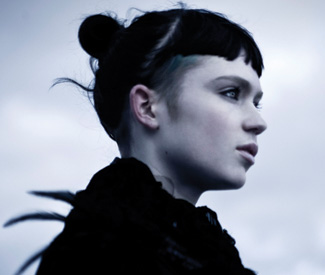
After listening to Grimes on heavy rotation for the past couple years I still find myself mesmerized by Claire Boucher’s voice. It leaps and falls, circles words in repetitive motions, ciphering their sonic texture and tone into a perpetual undoing of sound. Grimes consistently induces this siren effect, inhabiting that mysteriously seductive threshold somewhere between waking life and dream world. Its third full-length, Visions (Arbutus/4AD), is no different. It continues to draw resources from spectral pop wherever it can, from the processed rhythms underpinning a constellation of electronic dance genres, to the gushing melodies of New Age cassette tapes and 1990s R&B, and even disparate psychedelic folk from across the globe. What holds Grimes’s aesthetic together though is, simply put, mood: whirling awfully close to planetary rapture. (Caitlin Donohue)

Feb. 22, 8 p.m., $10, sold out

Grimes and oOoOO

With Born Gold, Yalls

Rickshaw Shop

155 Fell St., SF

2012.noisepop.com


THE BUDOS BAND

Few bands working within the new wave of funk revivalism during the past decade are as tight as The Budos Band. The Brooklyn-based outfit has released all three of their records, each simply self-titled and numbered, on Daptone Records, home to powerhouse soulstress, Sharon Jones. But The Budos Band has a bit more of a worldly spectrum than other Daptone releases firmly rooted in 1960s R&B. They take influence ultimately from the funk diaspora launched by James Brown: Fela Kuti’s afrobeat jams and the Latin soul of Fania, to the psychedelic ethio-jazz culled by Mulatu Astatke. The drums are deep in the pocket, wah-wah guitars get gritty, and the horn section hits hard, all with the frenetic urgency of a score straight out of a Melvin Van Peebles’ blaxpoitation flick. (Michael Krimper)

Feb. 23, 7:30 p.m., $20

With Allah-Las, Pickwick, Big Tree

Independent

628 Divisadero St., SF

2012.noisepop.com


JOLIE HOLLAND

This longtime San Franciscan (and seventh-generation Texan) may call the road her home — with brief pauses for righteous swimming holes — but we’ll always think of her as a perfectly impure product of the Bay’s musical bohemia, the latest in long line of city songsmiths succored on prog politics, cultural patchwork, and high times. Whether Holland’s warbling about her mind reeling, blood bleeding on “Black Stars,” that wicked good “Old Fashioned Morphine,” or real-world psychic vampires (referenced in the title of her latest long-player, Pint of Blood (Anti), she taps a deep vein of blues —one related to a familial history steeped in Texas swing and her own soulful explorations here and abroad. This waltz around, she alights in trio form, playing with Carey Lamprecht and Keith Cary. Long may she ramble and roam. (Kimberly Chun)

With Will Sprott of the Mumlers, Dreams, and Emily Jane White

Feb. 24, 7 p.m., $16.50–<\d>$18.50

Swedish American Hall

2174 Market, SF

2012.noisepop.com


MATTHEW DEAR

Matthew Dear has a talent for surprisingly rewarding detours. With Asa Breed (Ghostly) in 2007, he departed from the pure percussive bliss of minimal techno and house, which occupied the scope of his previous efforts, in favor of pop song structures and vocal stylings in the spirit of Brian Eno. My favorite winding road came with 2010’s Black City (Ghostly): a record prefaced by bubbly vocals and rhythms, whose lightness quickly disperses into an orgiastic sort of density typical of film noir’s crowded urban landscapes, and the lustful encounters they tend to prompt. Last month’s Headcage EP (Ghostly) marks the most recent tangent into drum patterns that glide and skitter, but if Matthew Dear’s past wanderings are any indication, it promises yet another fruitful pathway in the ever expanding multiverse of his sound production. (Michael Krimper)

Feb. 24, 8 p.m., $16

With Maus Haus, Exray’s, Tropicle Popsicle, DJ Mossmoss

Public Works

161 Erie St., SF

2012.noisepop.com


VERONICA FALLS

There are a lot of great bands returning to the Bay Area this year during Noise Pop, but one in particular hasn’t made it yet. Veronica Falls was originally scheduled for its debut SF performance at the Brick and Mortar Music Hall last September, when an issue with visas forced the UK quartet of indie pop morbid romantics to cancel at the last minute. At the time of the cancellation the group was also releasing its first self-titled LP on Slumberland Records, so on the plus side there’s been extra time for anyone awaiting Veronica Falls’s appearance to take in the music. It’s an album that delivers on the promise of early singles “Beachy Head” and “Found Love in a Graveyard” — a hauntingly retro British sound with layered vocals led by the bittersweet Roxanne Clifford, laid on top of the classic combination of jangled guitar rhythms and a punchy back beat. (Ryan Prendiville)

Feb. 24, 8 p.m., $14

With Bleached, Brilliant Colors, Lilac

Rickshaw Stop

155 Fell, SF

2012.noisepop.com


UPSIDE DOWN: THE CREATION RECORDS STORY

Danny O’Connor’s doc about legendary British indie label Creation Records is named both for the Jesus and Mary Chain single that helped launched the imprint — and the go-for-broke attitude shared by many of the freewheeling characters involved in its story. Most of them chime in to help tell the tale, including founder Alan McGee, a Scot whose thick accent is among many collected here that may make Americans long for subtitles. And, of course, what a tale — filled with colorful encounters, drugs, major-label wooing, drugs, “shockingly out of control” behavior, drugs, and all of the expected trappings of music-biz stardom. The soundtrack is filled with Creation’s many alt-rock, acid house, shoegaze, and Brit-pop success stories, including Primal Scream, My Bloody Valentine, Ride, Swervedriver, Teenage Fanclub, and Oasis. Where were you while they were gettin’ high? Director O’Connor appears in person for a Q&A after the screening. (Cheryl Eddy)

Feb. 25, 7 p.m., $10 Roxie Theater 3117 16th St., SF 2012.noisepop.com/film

Nite Trax: DJ Rekha brings the ‘Basement’ beats to Non Stop Bhangra

0

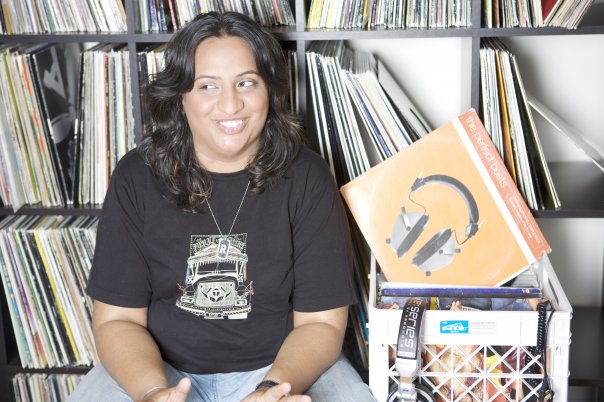
“I have been around the bhangra block,” says DJ Rekha, NYC’s ambassador for the highly danceable contemporary Punjabi (by way of London) sound, and founder of the popular, long-running Basement Bhangra party. “The biggest gig was definitely the White House. I have played all over the US and in Brazil, Sweden, New Zealand. I’ve done a bunch of music festivals and performed at cultural spaces including the Kennedy Center in DC.”

Talk about “world music” (even if that term has fallen from fashion). Rekha brings her Basement Bhangra spin — which includes a good bit of hip-hop and global bass influence — to our own beloved Non Stop Bhangra this Sat/11, joining the monthly party’s dholrhythms dance crew and DJ Jimmy Love for its reboot at Public Works, as I detailed in this week’s Super Ego nightlife column. In an email interview, Rekha wrote about bhangra’s changing scene, her favorite moments from the past 15 years at her club (Padma Lakshmi, anyone?), and her favorite bhangra bangers of the moment. 

http://www.youtube.com/watch?v=zgfMjwfs7H0

SFBG Can you share some of your favorite moments from Basement Bhangra?

DJ REKHA There have been a few.
1) I guess the first favorite moment is the first time I saw the line extend to the end of the block. We were always crowded, but by the following summer it was all the way down the street and not single file.
2) Having Wyclef stop by in the first few years of the night.
3) Dropping the Basement Bhangra anthem the first time.
4) Playing Panjabi MC’s Beware of the Boys after it was already hitting New York radio, having playing it there so much several years before.
5) Watching Ted Forstmann (RIP) crawl and look for his date Padma Lakshmi’s phone after she dropped it dancing
6) Getting a note to the booth saying I am Anil Kapoor (the game show host in Slumdog Millionaire) — and me dismissing it as a ploy to alter the bhangra musical direction of the night to Bollywood.

http://www.youtube.com/watch?v=DJztXj2GPfk

SFBG Have you been to San Francisco before, and if you have can you tell me if you think there are any differences between the bhangra scene here and in NYC?
   
DJ REKHA I have been to SF many times but I must sheepishly admit I have never been to a bhangra party there. But Non-Stop Bhangra is very well-known and regarded so I am super excited to be playing there Saturday.  My DJ experiences in SF have been awesome — most recently at the Asian Art Museum and for the 25th Anniversary of Trikone. In both cases I play a range of sounds. But SF is home to the best bhangra dance crew — Bhangra Empire — they’ve performed at the White House, professional sporting events. 

http://www.youtube.com/watch?v=WKWPzTF8-sw

SFBG Besides the fact that bhangra is infectious (I grew up partly in London and have loved it since the ’80s), do you think the influx of young Indian people moving to the US in the past couple decades has helped fuel bhangra’s popularity in clubs here?

DJ REKHA I think South Asian culture is more prevalent due to many factors —  Bollywood Dreams, Slumdog, globalization. Specifically for bhangra it’s the dance teams on the college scene that really help keep the music alive. Every major city in the US has some form of regular South Asian club night but only a few are actually focused musical on bhangra. Every major university has a bhangra team.  
 
SFBG What other types of music besides bhangra are you into — anything that might surprise some of your regulars?

DJ REKHA I love many styles of music.  Being from NY, I love hip-hop, but also dancehall, electronic, tropical bass. I am big Beatles and Prince fan.

SFBG What developments do you see happening within the bhangra sound?

DJ REKHA I think the latest thing we are seeing/hearing is Punjabi vocals with no actually bhangra music in the track. For example the song Amplifier by Imran Khan.  There is also a lot more over hip-hop stylings in the song in terms of vocals and not just beats.  The lines of what is a bhangra track vs something that is desi urban are being blurred.  Its never easy to keep a genre constrained.   Also in the last year or two as a reflection of dance music today there are a lot more faster tempoed songs.

SFBG Can you share your bhangra top 5 of the moment?

DJ REKHA My top 5 joint of the moment are:

>>”Tohar,” Garry Sandhu

>>”Electro Love Boliyan,” Ranbir S. and Bikram Singh


>>”Jatti,” Panjabi MC


>>”Jogi,” Jr. Dred


>>”Sadi Gal Hor Yah (feat. DCS),” PBN

Unintelligible genius: looking back at all four shows of the Reggidency

0

When Reggie Watts first came to my attention, through a series of appearances on Conan O’Brien’s show a few years back, I didn’t know where to place him. My first instinct was to lump him in with the trend in music – particularly indie rock –  around the looping pedal where solo artists including Owen Pallett and tUnE-YaRds could layer mic samples atop one another during a live performance to get a larger, simulated band sound.

In Watts’s case he seemed to be to be combining musical styles including beat boxing to a comedic effect that picked up a tradition that was part Michael Winslow’s SFX, and part Andy Kaufman and Steve Martin’s anti-humor. Still, Watts resists categorization and besides the opportunity for a good pun, SF Sketchfest’s Reggidency, a four night series of shows, was an excellent chance for Bay Area audiences to try and figure out what the hell the performer does.

To get a sense of just how different Watts is from everyone else in comedy, you don’t have to look much further than Garfunkel and Oates, the opening act at his Mezzanine show on Wednesday. Garfunkel and Oates’ Riki Lindhome and Kate Micucci – two banjo and guitar strumming women with an appealing cuteness that screams sitcom – specialize in musical comedy. And they do it well, in songs about bad handjobs, smug pregnant women, and bad/bold booty calls. Each bit from the riotously funny duo had a clear comedic concept and tight musical package.

That same night Reggie Watts played a lot of songs, I’d say a larger proportion even than the first night at Yoshi’s, the “Just the Music” night where – ironically – he got involved in more characters and monologues. But if you asked me what the songs performed at Mezzanine (a Massive Attack themed venue according to Reggie) were about, I honestly couldn’t tell you. Not because I wasn’t paying attention, but because his songs generally aren’t about anything. Sure they involve ideas, concepts, and word play, but it comes in a stream of conscious manner; the songs are less neat little objects as much as platforms for Reggie to riff on whatever he wanted.

http://www.youtube.com/watch?v=es3H0_IMLvo

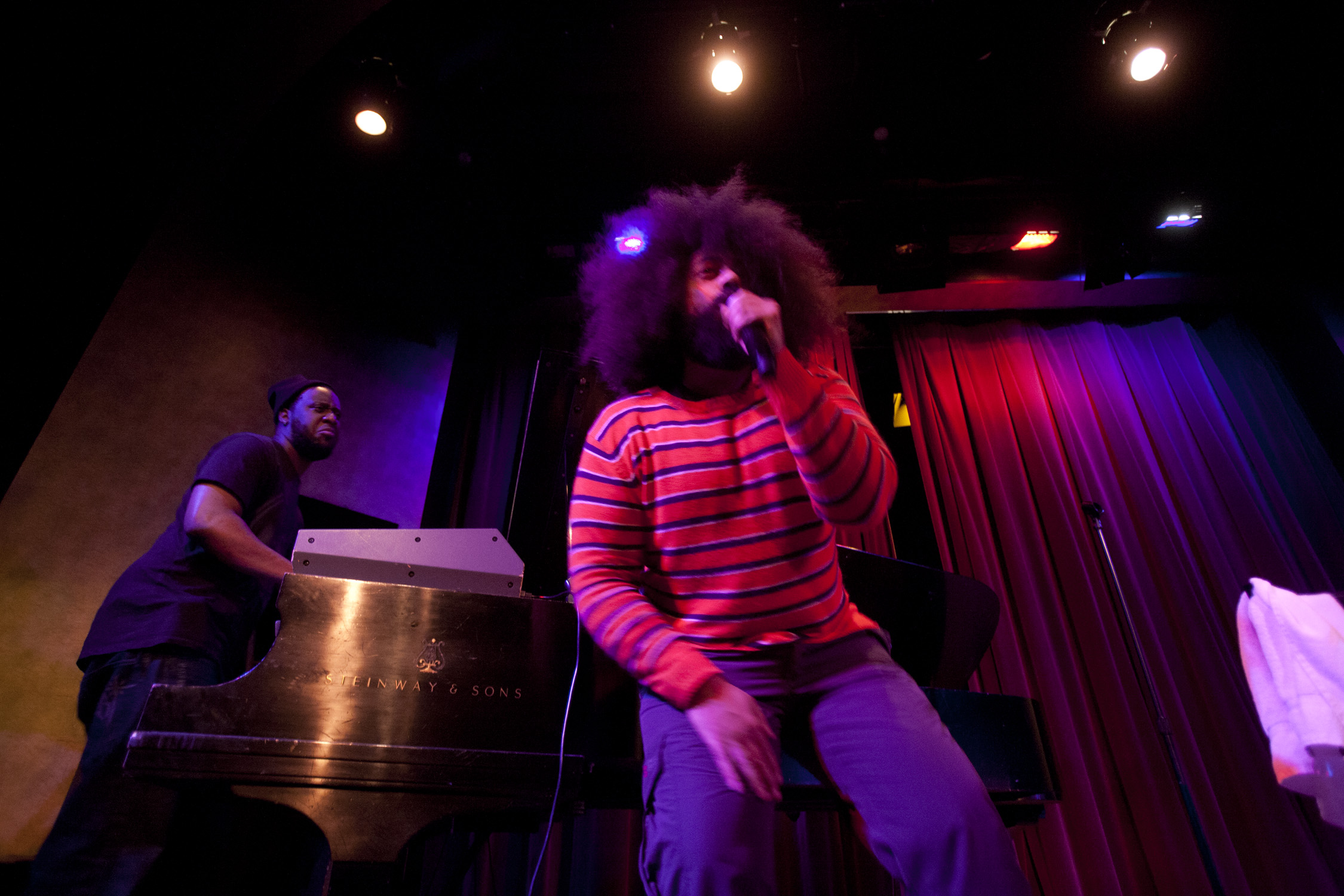
A night later, following a deadpan comedic introduction by Reggie that seemingly went over most of the Yoshi’s Oakland crowd Thursday night, jazz pianist Robert Glasper took the stage to open that show alone. Playing a large Steinway piano that dwarfed Watts’s Roland Fantom X7 keyboard, the music initially sounded completely different from what I’d heard from Watts the last two evenings, but as I listened I started to pick up what was going on, Glasper playing a foundation of deep bass notes, a gentle um-un-ah, while going to work over the top of it with playful flourishes. The effect was unique (when Glasper reached a certain intensity someone in the otherwise silent crowd ejaculated “Yes!” rather than exploded in laughter) but the method of improvisation, music or comedic, was the same.

Earlier that day, before the performance, while he was getting ready to drive around Berkeley to find a “Michelin joint” for lunch, Watts told me that he had never worked with Glasper before, and little preparation had been involved for the show. It was of little concern. “I’m not really too worried,“ Watts said. “He’s a jazz guy and has to mix improvisation anyways. He has a totally great ear. I think we’ll come up with something great, it should be fun.” That night Watts emerged on stage dressed in the same red striped sweater from two night before, but with a new gruff voice that was pure jazz man. “I have an original piece I’d like to perform for you tonight. I wrote it in ‘Nawlins in 2004. It’s called ‘Non-Equilibrium’ and it’s about the situation going on…in Kansas.”

During one of their early songs together, Glasper took a break from playing to lean back, place a on hand on the floor and a foot on the rim of the grand, posing for a photographer with an annoying flash. Watts on his own has no problem creating dialogues with alternating voices, but with Glasper he found a willing partner to joke with, whether a fake studio control room exchange, or hollowed between-song banter.

Their first song together, which started out as a gentle “Wind Beneath My Wings”-esque ballad and transformed into some gospel soul, had Watts busting out some of his singing chops. As he held one big cry while modulating the sound by shaking the microphone back and forth, it was clear how talented as a singer he is. (On top of previously being a member of numerous musical projects including the Wayne Horvitz 4 + 1 Ensemble and Maktub, Watts also released a fairly straight forward, funky electronic soul solo album, Simplified, in 2003, entirely distinct from his later comedic album Why Shit So Crazy? in 2010.) No joke, dude has pipes. The actual lyrics, when they are more than just sounds, are essentially cliches – maybe you’ll come back, the things we said – just allusions to a situation and no details. But the song itself sounds full.

http://www.youtube.com/watch?v=uK2De2eCebg&feature=related

“What do you want to do next?” Reggie asked after the song concluded. A dead-pan Glasper responded, “Something that has to do with…there’s a lot of stuff going on all over the world.” “Got it,” Reggie said quickly, starting up a steady bass beat. The track was mellow, but soon Watts was busting out every cheesy, cheap, and tinny pre-programmed effect on his comparatively tiny keyboard. Soon the two got into a karaoke jam session, covering Billy Joel’s “Piano Man” and Bonnie Raitt’s “I Can’t Make You Love Me.”

Watts doesn’t necessarily need accompaniment. This was clear on the last night of the Reggidency, when he was scheduled to improvise an original score for a silent film. In a characteristic screwball move, though, Watts selected not a pre-sound, Silent Era title, but a more modern film with the sound on mute, in this case Ridley Scott’s visually decadent, otherwise vacuous 1985 fantasy film Legend. With an actual silent film there are title cards for the story and the band just has to play the score, with this choice, Reggie was tasked with filling in all of the missing audio, including the introductory narration for the overly long post-Star Wars opening text (which he breathlessly sped up, deflating the gravitas), the original Tangerine Dream score, forest animal sounds, and the actors’ dialogue.

Watts replaced the husky voice of Mia Sara (Ferris Bueller’s girlfriend, Sloane – I don’t know why she wasn’t in that Super Bowl commercial either) with a ditzy whine and dubbed Tom Cruise as an appropriately doltish bumpkin, all while juggling original songs with descriptive lyrics like “the engine of reality is based out of conflict.” The whole thing was a technological and musical feat as much as a comedic one, although at times in part because of the venue’s sound system but also the number of layered elements, the audio was a bit muddled and Reggie’s voice hard to make out.

Even when he’s on a comedic roll, or when the sound is perfect, Watts can be hard to follow. Dana Carvey did a song once called “Chopping Broccoli,” a parody of pretentious musicians and their tendency to sound like they are just making up words to the songs as they go along. Whether he’s building a song atop a beat or doing a character, Watts seems to chop a lot of broccoli on stage, although the content frequently goes in less mundane, more psychedelic directions.

Watts introduced a song at the Mezzanine as “The Hall of Kings” and explicitly said it was about Egyptians taking credit for structures built before them (a topic of interest that he referenced previously as well – a rare instance in which he repeated something during the Reggidency.) When he started singing, however, it’s in a drawl, and the topic is roosters and TV. TV gets transformed into TB, tuberculosis, and soon, in his farmer voice, Reggie was singing about wanting to be next to potatoes.

By the time I figured out what the hell he was going on about, Watts went onto the next thing, musically shifted the quaint shuffle beat into slowed down hip-hop, added some wobble and made it dubstep. In the back of the room, where I seemed to be surrounded by increasingly distracted drunks and some rote club goers not interested in keeping up with the act, I started to feel strained, confused, wondering if I’m still tuned to the right reality. Almost on cue, Watts simplified things, as he hooked up an mp3 player, turned on Phoenix’s “If I Feel Ever Feel Better” and began dancing; it was a hilarious bit of purely physical comedy that was the exact opposite of the heady bit he was doing moments before.

http://www.youtube.com/watch?v=8wAQKyahAb4

I’d been wondering about the line between the inane and the insightful, and when I spoke to Watts between shows I ask if he’d consider being described as “unintelligible” as a compliment or an insult. “It’s totally complimentary,” Watts responds. “I like to mess around with the ideas, there are certain things you don’t have to hear clearly and sometimes a little concept here or there is nice for suggestion and then you can go on the nonsense trail again.”

It feels like Watts – who seems to have found a perfect niche in performing – is capable of doing anything on stage. For all the characters he does, and the range of subjects and styles he covers, Watts never appears mean, cynical, or harsh. (Someone before the last show on Friday even described him as lovable, a word not typically reserved for comedians.) Sometimes it’s a trick – a sort of cognitive short-circuit – as when he started the Mezzanine show by mouthing words but only audibly saying every third or fourth – but never a joke played at anyone else’s expense. Asked if there was any appeal to simply messing with people, Watts refused: “I don’t like to fuck around with people where I’m taking advantage of them. I want them to join in and try to provide opportunities for them to join in on the conceptualization.”

Making history: Joanne Griffith’s ‘Redefining Black Power’ project comes to the Bay

0

“Joanne [Griffith]’s work is centered on one theme: not to offer information as a point of journalistic fact, but to act as a conduit for debate and conversation, especially around issues relating to the African diaspora experience.” So writes Brian Shazor, director of the Pacifica Radio Archives, in the foreward to Griffith’s new book Redefining Black Power: Reflections on the State of Black America (City Lights Books, 206pp, $16.95). Griffith will be presenting her work, part of an interactive project to archive the state of African Americans in the United States in the Bay Area this week — starting tonight (Wed/8) at the Museum of the African Diaspora.

This shouldn’t have to be said, but in these times of reductive news media it does: Obama isn’t the only black voice that needs to be heard, during this Black History Month or any other month. Inspired by the archives of progressive African American voice kept by LA’s Pacifica Radio Archives, Griffith — a leading progressive voice herself, having reported on issues from around the African diaspora for the BBC and NPR — transcribes her interviews with leading thoughtmakers for the book, set up as a series of dialogues. Hear from political prisoner Ramona Africa why Obama is “the new crack,” journalist Linn Washington, Jr. on media matters, green jobs leader Van Jones on hybrid activism. The president is used as a theme of the book, but the interviews use him as a lens to look at issues that range far beyond the White House.

Griffith and the other minds behind Redefining Black Power want these interviews to serve as a jumping off point for other unheard voices. Head over to the book’s website and you’ll find directions on how to add your point of view to those of the better-known activists and professionals already immortalized in the Pacifica archives. You can go to one of Griffith’s upcoming readings (details below) for inspiration. Or better yet, read our recent email interview with her and then do that. 

SFBG: Explain where the interviews in the book came from. How did you become acquainted with the Pacifica Radio Archives. Why are they important for people to hear?

JG: The idea for the Redefining Black Power Project, of which the book is part, was born out of the historic audio held in the Pacifica Radio Archives; a national treasure trove of material charting America’s history from a progressive perspective dating back to 1949. Within the collection are key recordings from the civil rights, black power and black freedom movement, including Rosa Parks, Shirley Chisholm, Jesse Jackson, Malcolm X, James Baldwin, Lorraine Hansberry, Dr. Martin Luther King Jr., Bobby Seale, Elaine Brown, and so many others. But it was one recording of Fannie Lou Hamer addressing the 1964 Democratic National Convention that sparked the idea for Redefining Black Power. The director of the Pacifica Radio Archives, Brian DeShazor, heard the tape and wanted to find a permanent way to preserve and share the voices held in the archives with a wider audience, and what better way than through the written word. Brian approached City Lights Books with the idea, and this book is the result, drawing on the voices of history to link us to the election of Barack Obama, one of the most significant moments in the social and political history of the United States. Through this project, we hope to preserve the voices, opinions and perspectives of African-Americans in this so called ‘Age of Obama’ for historians to digest and explore in years to come. 

How did I get involved? As a complete audio nut, I always make a point of visiting local radio stations wherever I travel in the world. Back in 2007, I was in Los Angeles, called KPFK to arrange a visit and was introduced to the Pacifica Radio Archives. Speaking with Brian DeShazor, we came up with an idea to share the historic collection with a UK audience and I’ve been doing this every Sunday evening on BBC Radio 5 Live in the UK for over four years. Because of this work and the extensive list of people I have interviewed over the years, Brian invited me to do the interviews for the Redefining Black Power project. Through this book, we delve into the role of the activist from different perspectives; the legal system, the media, religion, the economy, green politics and emotional justice. All were recorded between September 2009 and August 2011. To be clear though, this book is not an anthology of black leaders speaking on the Obama presidency. This is simply a taster of opinions on the subject, but everyone is encouraged to participate with their thoughts and opinions at www.redefiningblackpower.com and come out to the many events we’re hosting throughout February, including here in the Bay Area at the Museum of African Diaspora from 7 p.m. on Wednesday Feb 8 and at Marcus Books in Oakland with guest panelists Hodari Davis from Youth Speaks and social justice activist Dereca Blackmon on Thursday Feb 9 from 6.30 p.m.

SFBG: Has there been an interview you’ve conducted in which your subject’s answers have deeply surprised you? 

JG: Every interview had its own surprise; from Ramona Africa describing President Obama as ‘the new crack’ and why she refused to vote, to economist Dr. Julianne Malveaux revealing the financially precarious situations many African Americans find themselves in; from high foreclosure rates and high unemployment to the low levels of accumulated wealth for black women. Very sobering statistics. Michelle Alexander, too, the author of The New Jim Crow: Mass Incarceration in the Age of Colorblindness really shocked me when she said that more African American men are currently incarcerated than were enslaved in 1850. 

However, it was Dr Vincent Harding, the man behind Dr. Martin Luther King Jr’s “Beyond Vietnam” speech that surprised me the most. A true veteran of the civil rights movement, he made the point that the election of President Obama was never the goal of the movement; instead he prefers to call the work “the movement for the expansion and deepening of democracy in America.” Put this way, it made me realize more than ever, that the work we do today is not in isolation, but part of a wider movement, stretching back all the way to slavery. And the work isn’t over. 

SFBG: Your introduction ends with a quote from Kanye and Jay-Z’s Watch the Throne album. What role, if any, does hip-hop play in the book?

JG: Hip-hop doesn’t play a role in this book, other than this quote, but it will feature heavily in the next volume of Redefining Black Power which will focus on the reflections of black entertainers, writers, poets and performers on this moment in US history.  

SFBG: What would be the best way the United States could spend Black History Month?

JG: Black history — regardless of whether it is the United States or the UK where I moved from or anywhere else — should be acknowledged daily; this is the only way for us to keep memories alive and never forget where transformative change, like the election of President Obama, comes from. 

Listening to recordings like those held in the Pacifica Radio Archives with our youth would be a great place to start. I spent a couple of days with a group of students in Detroit, sharing the archive material and getting them to discuss their thoughts on the recordings; Audre Laude, James Baldwin, Muhammad Ali, Nelson Mandela, and others. Every one of them said they wished they had heard these voices before. It gave them a context to their own lives that didn’t exist previously, while encouraging them to never give up; too many people have suffered for them to let less than favorable circumstances stop them now. 

SFBG: Who should read this book? How should it be used?

JG: Use it as a conversation starter to discuss issues in your own community. Parents, use it as a way to engage your children in history. Students, use it as a resource for papers on race and the Obama presidency. Most importantly, everyone, share your thoughts at www.redefiningblackpower.com. This book is not the end of the project; we’re only getting started. 

Joanne Griffith’s Redefining Black Power author readings:

Wed/8 7 p.m., free with $10 museum admission

Museum of the African Diaspora

685 Mission, SF

(415) 358-7252

www.moadsf.org


Thu/9 6:30-8 p.m., free

Marcus Books

3900 Martin Luther King Jr. Way, Oakl.

(510) 652-3244

www.marcusbookstores.com


Rep Clock

0

Schedules are for Wed/8-Tues/14 except where noted. Director and year are given when available. Double and triple features are marked with a •. All times p.m. unless otherwise specified.

ARTISTS’ TELEVISION ACCESS 992 Valencia, SF; www.atasite.org. $6-10. Dirty Looks presents: City of Lost Souls, Fri, 8. “Mindscapes,” short films, Sat, 8.

CALIFORNIA COLLEGE OF THE ARTS 1118 Eighth St, SF; www.dirtylooksnyc.org. Free. Dirty Looks presents: “Queer Conversations on Culture in the Arts,” with selections from the “Female Trouble” experimental shorts program and a conversation with Margaret Tedesco, Thurs, 7.

CASTRO 429 Castro, SF; (415) 621-6120, www.castrotheatre.com. $7.50-10. •Pickpocket (Bresson, 1959), Wed, 3:30, 7:15, and American Gigolo (Schrader, 1979), Wed, 4:55, 8:45. •Beauty and the Beast (Cocteau, 1946), Thurs, 3:05, 7, and No Such Thing (Hartley, 2001), Thurs, 4:55, 8:50. “Midnites for Maniacs: I’m Black and I’m Proud:” •I’m Gonna Git You Sucka (Wayans, 1988), Fri, 7:30; Pootie Tang (Louis CK, 2001), Fri, 9:30; CB4 (Davis, 1993), Fri, 11:30. French American International School presents: “I-Speak: Celebrating 50 Years of International Education,” Sat, 6:30. This event, $5-10; tickets at www.internationalsf.org. •Do The Right Thing (Lee, 1989), Sun, 2, 8, and Malcolm X (Lee, 1992), Sun, 4:15. “Love: Ali MacGraw:” Love Story (Hiller, 1970), Tues, 8. With pre-show gala performance and MacGraw in person; for tickets ($25-45), visit www.ticketfly.com.

ELMWOOD 10070 San Pablo, El Cerrito; www.rialtocinemas.com. Free. “Community Cinema:” More Than a Month: One Man’s Journey to End Black History Month (Tilghman, 2012), Wed, 7.

CHRISTOPHER B. SMITH RAFAEL FILM CENTER 1118 Fourth St, San Rafael; (415) 454-1222, www.cafilm.org. $6.75-10.25. “Rafael Film Club:” “Jan Wahl,” Thurs, 1. Pina (Wenders, 2011), call for dates and times. “Mostly British Film Festival:” Route Irish (Loach, 2010), Wed, 7; Albatross (MacCormick, 2011), Thurs, 7. “2012 Oscar Nominated Short Films,” narrative and documentary (separate admission), Feb 3-9, call for times.

LAMORINDA THEATRES Four Orinda Theatre Square, Orinda; www.caiff.org. $12-15. “California Independent Film Festival,” 11 features, plus docs, shorts, and educational seminars, Feb 10-16.

MECHANICS’ INSTITUTE 57 Post, SF; (415) 393-0100, rsvp@milibrary.org. $10. “CinemaLit Film Series: Hollywood Dames: Beauty and Brains:” Intermezzo (Ratoff, 1939), Fri, 6.

PACIFIC FILM ARCHIVE 2575 Bancroft, Berk; (510) 642-5249, bampfa.berkeley.edu. $5.50-9.50. “Documentary Voices:” The Green Wave (Ahadi, 2010), Wed, 7. “Seconds of Eternity: The Films of Gregory J. Markopoulos:” “Markopoulos: The Early Films (1940-49)” Thurs, 7; “Eros and Myth (1950-63),” Sat, 6:30. “Austere Perfectionism: The Films of Robert Bresson:” The Trial of Joan of Arc (1962), Fri, 7; Les dames du Bois du Boulogne (1945), Fri, 8:25; Lancelot of the Lake (1974), Sat, 8:30. “Screenagers: 14th Annual Bay Area High School Film and Video Festival,” Sat, 3. “Howard Hawks: The Measure of Man:” The Criminal Code (1931), Sun, 4:30; Bringing Up Baby (1938), Tues, 7. “African Film Festival 2012:” Viva Riva! (Munga, 2010), Sun, 6:30.

ROXIE 3117 and 3125 16th St, SF; (415) 863-1087, www.roxie.com. $6.50-10. Come Back, Africa (Rogosin, 1959/2012), Wed-Thurs, 6:45, 8:30. Drive (Winding Refn, 2011), Wed, 8:45. Into the Abyss (Herzog, 2011), Wed, 6:45. SF IndieFest, Feb 9-23. Visit www.sfindie.com for complete schedule.

SFFS | NEW PEOPLE CINEMA 1746 Post, SF; www.sffs.org. $10-11. Domain (Chiha, 2010), Wed-Thurs, 2, 4:30, 7, 9:30. Once Upon a Time in Anatolia (Ceylan, 2011), Feb 10-16, 2, 5:30, 8:30.

TWINSPACE CONTINUUM 2111 Mission, Third Flr, Ste 3, SF; www.blockreportradio.com. $15. “Human Rights and Hip-Hop Film Festival,” documentaries and shorts, Fri, 5; Sat, 6:30.

VOGUE 3290 Sacramento, SF; www.mostlybritish.org. $12.50. “Mostly British Film Festival:” Black Butterflies (van der Oest, 2011), Wed, 5; London Boulevard (Monahan, 2010), Wed, 7:15; The Great White Silence (Ponting, 1924), Wed, 9:30; A Passionate Woman (2010), Thurs, 5; Route Irish (Loach, 2010), Thurs, 7:30.

VORTEX ROOM 1082 Howard, SF; www.myspace.com/thevortexroom. $7 donation. “The Second Coming of the Vortex Room:” The Second Coming of Suzanne (Barry, 1974), and Marjoe (Kernochan and Smith, 1972), Thurs, 8.

YERBA BUENA CENTER FOR THE ARTS 701 Mission, SF; (415) 978-2787, www.ybca.org. $6-8. “Bros Before Hos:” The Killing of a Chinese Bookie (Cassavetes, 1976), Thurs, 7:30; “Female Trouble,” experimental shorts program presented by Dirty Looks curator Bradford Nordeen, Sun, 2.

The story of hip-hop

0

By Courtney Garcia

MUSIC From the start, Ice-T was a versatile chameleon, the product of an integrated culture, and a student of the marginalized.

Born in New Jersey, raised in the Crenshaw District of LA, he joined the Crips then pursued the army to pay his bills. His career was blazed in rap, though he once flipped the game to heavy metal. Multifaceted talent that he is, Ice would later grow even more famous on television.

It’s no surprise, then, that he now adds the title of director to his resume, with the debut of his first documentary, Something From Nothing: The Art of Rap, at this year’s Sundance Film Festival. The feature length endeavor is the pioneering artist’s tribute to the culture that bred him, beat him, and made him who he is; it’s a culture he feels is slowly slipping from his grasp. It’s a story as much about the traditions of hip-hop as it is a fervent call to action, told through the eyes of its maker and his impressive posse of friends.

The premise, nevertheless, is simple: this is the story of hip-hop. “It’s a lot of life lessons because you’re not only hearing about rap, but experiences and struggles,” explained Ice during a one-on-one breakfast interview at The Lift in Park City, Utah. He was present for the screenings, along with Grandmaster Caz and Chuck D, both of whom appear in the film.

Other notable feature players include Eminem, Dr. Dre, Kool Moe Dee, Kanye West, Royce da 5’9,” Common, Rakim, KRS-One, Bun B, and Snoop Dogg. “You’re hearing people who you thought woke up successful talk about how they thought about quitting, how they had to find their voice,” Ice said. “I wanted to catch these guys when they were vulnerable, to show they’re real people, and that success doesn’t come without some blows.”

Ice got into rap initially to avoid falling back into gang life, first experimenting with turntables while enlisted in the military. Musically, he made his name as an underground artist before signing with Warner Music/Sire Records, and eventually winning a Grammy for his song, “Back On the Block.” He would follow such success with a branch into acting, currently starring in the primetime series, Law & Order: Special Victims Unit. And while his schedule is more than demanding, he found time between shoots to direct this documentary, a film he believes had to be made to challenge the fallacious imagery of hip-hop in American culture.

“This movie is not about the money or the cars, it’s about the craft,” he says. “The only questions we get asked by the press were, you know, ‘Who are you having sex with?’ ‘How high do you get?’ ‘Who don’t you like?’ They don’t care about your work…I wanted people to see the hip-hop I know, not the hip-hop that’s been given out until now. You’re getting this image that’s not real.”

Something From Nothing begins on the streets of New York, and follows the beat to the sunny coast of Los Angeles. Interviewing the gamut of rap’s finest, Ice catches his friends at the record store, in the studio, on their patio and at the diner. They eat; they smoke; they talk hip-hop. Some, like Kanye, freestyle for the camera; others spit the rhymes they can’t get out of their heads.

In one of the more poignant scenes, Ice speaks with Eminem about his toil to commit to the trade amidst extreme discouragement, and the moment he realized it was his raison d’etre. Equally surreal, the filmmaker travels to Dr. Dre’s lavish estate in the Hollywood Hills, where the two converse about the late, Tupac Shakur.

Because the name ‘Ice-T’ signifies authority, the strength of this film is his access to the inside, exposing tales most people would never have a chance to hear. He hits on every shade of the genre, from gangster rap to native tongue, the poetics of Q-Tip to the in-your-face anarchy of Immortal Technique.

Introducing the film at Sundance, he described his impetus as a dissatisfaction with the current state of hip-hop, and an earnest aim to improve the situation.

Later, he elaborated. “To me, the most pinnacle moment in the movie was when Mos Def quoted Q-Tip saying ‘rap is not pop; rap never had pop ambitions.’ It’s a counterculture. Now it’s become pop, and how you gonna get mad at the kids? They want to eat; they want to make money; they want to live. If you ask me what my dream is, I would love to see a 19 year-old Public Enemy come out of nowhere; I would love to see the new 18 year-old Ice Cube just come kick in the door, and start telling motherfuckers, ‘Fuck the bling, this is what’s good. Let’s talk about Obama, let’s talk about Occupy Wall Street. Let’s go in.'”

He added, “It will never get radio play, but I believe if a young group of kids really nailed it, they could get a movement going. And it’s needed. I took Rage Against the Machine out as my opening act, so of course I want to see that. The terrain is wide open.”

It’s rare to catch Ice-T without his signature shades, and somehow it’s obvious he truly is the OG he claims. Yet his inner sincerity and passion show through in this project, an ode to the first platform to ever give him a voice. He sold the rights to film after the Sundance showings to The Indomina Group for worldwide distribution; a theatrical release is planned for summer.

“Music has that power to give people emotion, and that’s what’s lacking right now,” he reiterated. “They’re not using art form at full power. They’re just rubbing the surface of it.”

Making black herstory, every day

8

news@sfbg.com

Deconstructing the roots of

The black n gray suits

with hands in the Loot

That has buried the truth

About our black, brown and disabled youth

— excerpt from KKKourt by Tiny

OPINION On the first day of Black Herstory Minute (I mean, Month), I practiced black herstory, and walked through activism and breathed organizing and lived resistance by putting my body in the benches belonging to the criminal injustice system (a.k.a. the plantation) at 850 Bryant. I was there to support a struggle against injustice in the case of a young African warrior for truth, Fly Benzo, a.k.a. Debray Carpenter — student, son, media producer, organizer, and hip-hop artist who is facing a felony charge, jail sentence and $95,000 fine for nothing more than exercising his First Amendment right to free speech.

How many among you, overwhelmed with multiple Face-crack postings and a cacophony of tweets, might have missed the story of Fly, who spoke the truth about racism, police brutality and the unjust death of Kenneth Harding Jr. to a cop in a poor-people-of-color neighborhood, Bayview, which is under seize from the occupying army known as the police (or po’lice as we call them at POOR Magazine)?

As a woman criminalized and incarcerated for the sole act of being poor and houseless, the melanin-challenged daughter of a poor black single mother who spent all of her life in poverty and in struggle, I have witnessed first hand unequal justice against people of color and poor people. It’s a fact that remains, in 2012, still a very dire reality.

“They arrested me for exercising my Constitutional right to free speech,” said Benzo, 22.

Benzo’s revolution began when he was born to conscious African-descendant parents who, like many African descendant people in San Francisco, have been under the constant threat of removal, displacement, redlining, and ongoing police harassment for decades. He has been speaking out about injustices since he was a teen, starting with the fact that hardly any Bayview residents were hired to construct the multi-million-dollar T-Train that runs from downtown to Third Street — and the dramatic rise in the violent policing of the T-Train and the Muni bus lines that run through the poor communities of color in S.F.

But the beginning of Benzo’s current battle with the criminal injustice system began when he began to speak up about Harding, murdered by San Francisco police officers for not having a $2 dollar bus transfer. The judge might not admit the video that was taken at the scene of Benzo’s arrest, making his case all the more difficult to fight, and the truth all the more difficult to hear and see, which is where community support comes in.

A lot of people and organizers and politricksters talk about stopping the violence and how to “deal” with the inequities of racism and classism and violence on our youth of color. And yet when this brother spoke out, used his voice for nothing but truth and resistance about injustices he personally experiences everyday, who comes out to support him?

Practicing revolutionaries at POOR Magazine, the Idriss Stelly Foundation, The BayView Newspaper, Education not Incarceration, and United Playaz have been there, as well as his hard-working attorney, Severa Keith, and a few more. But we all need to be there, fighting for a very alive, very revolutionary, young truth-teller who is making black history, every day.

Tiny, a.k.a. Lisa Gray-Garcia, is an editor at POOR Magazine. Opening statements in the trial of Debray Carpenter are expected to begin Feb. 8 in Dept. 27.

Reggie Watts melts minds at SF Sketchfest’s Reggidency kickoff

3

“Welcome to [SF] Sketchfest,” Reggie Watts said, in what appeared to be his natural voice, “it’s going to be a big night for all of you guys.” The first night of his four-part “Reggidency” at the comedy festival was billed as being Just the Music but from before Watts took the stage at Yoshi’s SF – giving himself an introduction from behind the the curtain and then launching into a series of characters that wavered from pseudo-unintelligible to borderline familiar (Japanese? Jesse Jackson? Vallejo-ean?) – it was clear that label was Just a Guess.

To SF Sketchfest’s credit, it did mention that the series would be “unpredictable,” a label that gets applied to Watts’s work quite often. A week earlier at the same venue, I saw R&B singer Bilal perform with saxophonist Gary Bartz, and was struck by the vocalist’s ability to pull any sound out at any moment. You never quite knew what was going to come out of his mouth next, and when it came to comedy as well as music, the same seemed true with Watts. Whether beat boxing or mimicking Rihanna and Calvin Harris’s “We Found Love”, Watts did it with carefree, child-like playfulness, assuming that the kids were preternaturally versed in musical genres like house, soul, jazz scatting, grime, dub, and hip-hop.

The music came either with long, encyclopedic explanations of what the song was about – the sort you’d expect from an overzealous rock star – complete with huge contradictory elements, or ridiculous contextualization. One song was said to be appearing in the forthcoming video game Spore 3: Spored to Death, about “a microbe who lives in Williamsburg and really wants to be a detective,” while another was “originally for Tron: Legacy, but they ended up not using it because Daft Punk had it covered.”

As you might expect, the actual songs – consisting of keyboards and Watts’s mesmerizing vocally based looped beats – were their own punchline that had nothing to do with the set-up. One stand-out, a cautionary tale of sorts, about how “not every psychotropic substance is for everyone” was suitably trippy, with Watts creating layers of whiny back-up singers saying “oh yeah, I don’t feel so good” as he also dispensed common sense advice, such as “take a nap.” A soft love ballad pushed to the point of inaudibility warned of sentimental organ harvesting, while other tracks, almost entirely instrumental, showcased a technical skill that hid behind Watts’s bumbling physicality.

Most comedy can’t be condensed, and that’s extremely true of Watts’s output. Where other comedians struggle with transitions, he’s taken them out of the equation, as his characters – built as much upon vocabulary as tone and cadence – morph into one another with little more than a change in accent mid-sentence. (At one point Watts did an Oxfordshire boy doing a witch doing a bad “Kumar” – basically Indian Bill Cosby – and a little, probably unimportant piece of my mind broke.) During the space between songs – which was really the bulk of the show – he proved himself the king of the rambling narrative. If the show seemed short, it was only because of the near relentless pacing. No clear line between his music and comedy, the show was Just Reggie, which by itself is a lot to unpack.

The Reggidency continues
With Garfunkel & Oates
Feb/1, 8 p.m., $25
Mezzanine
444 Jessie, SF
www.mezzaninesf.com

Main Attrakionz

0

Why is Oakland’s Main Attrakionz (www.mainattrakionz.com) on the rise? It’s because everybody’s talking about it, and with good reason. Last year’s massive 808s & Dark Grapes II mixtape wowed the underground hip-hop world, and with every passing month the act — rapper-producer Squadda B and rapper Mondre M.A.N. — catches the attention of yet another publication, and yet another rising producer — there have been collaborations with A$AP Rocky, Clams Casino, Kool A.D. of Das Racist and Danny Brown, among others.

The cloud-rap duo got a write-up on the Guardian’s Noise blog in December in which writer Frances Capell effused, “Main Attrakionz is carving out its own place in hip-hop by pioneering a new sub-genre” and later, “a refreshing realness runs throughout Main Attrakionz’s lyrics.” In 2012 there will be solo mixtapes from both rappers, along with the collaborative effort Bossalini’s & Fooliyones. With all this skill and regard it’s easy to forget how young the crew really is, it got its start in high school — way back in 2007.

Description of sound: Really can’t describe it. All of our music sounds different.

What do you like most about the Bay Area music scene: The fact that only we know what they talking about.

What piece of music means the most to you and why: The beat to “Da Art of Storytellin” by Outkast featuring Slick Rick, produced by Mr. DJ. It just reminds me of my childhood staying up to watch Rap City countdown and the song was usually number one. Whenever I hear the beat, I think of the puppets in the video.

Favorite local eatery and dish: Buffet Fortuna in Downtown Oakland; chow fun noodles

Who would you most like to tour with: Lil Wayne; as far as performances go, he’s gotta be the top rapper who been performing 10+ years. I wanna learn how he stays ready and energetic for all these years.

Bangarang: DIY hip-hop collective Doomtree is back

0

There’s something undeniably envy-inducing about a music collective. Everyone lives their separate lives yet they have continuing influence on one another; they hover nearby for comfort and camaraderie, maintain a steadfast family, and encourage a breeding ground for creatives. The emcees, DJs, lyricists, and producers in the Twin Cities-based DIY hip-hop collective/label Doomtree seem to have that system down pat. Under their own monikers, they create praise-worthy individual records. Together, the group carves out quality time and records masterpieces.

“Every year we do an end of the year, label showcase at First Avenue which is kind of like our legacy club in Minneapolis” says sole female emcee Dessa (Maggie Wander) as the group van careens down the mountains in some “white, alien-looking terrain” a week into a tour that takes it to San Francisco this week. 

“We initially started doing that show as a test of our own draw. Over the years it’s morphed into this like, pagan celebration of the preceding year,” she adds. “It’s hours of music together, you can see how much time we’ve spent together as friends, and occasional roommates – living together in conversion vans and sharing hotel beds.”

Last November’s No Kings, the latest full-length from the seven-piece, is one of those rare accomplishments in the music world; it’s at once fun and earnest, boasts quality rhymes, good beats, and catchy hooks, and features a rotating Lazy Susan of frontpersons. No kings, no group leader. The record is obviously the work of a collective, a rather in tune one at that – most went to high school together, some have been friends since junior high.

Among the catchiest of the No Kings bunch is a little hip-hop track dubbed “Bangarang” – yes, also the name of a Skrillex song and EP but, no, it’s not remotely dubstep. Doomtree’s is tougher and amusing, with a hearty beat and quick-spitting flow. The lyrics mesh the funny with the thought-provoking – “all these rappers sounds the same/beats/sound the same/raps/sound the same.” and later, “I built more than a rap career/I’ve got my family here.” The band wisely chose to feature the song in a video based around a karaoke night, meaning the words scroll across the screen for the viewer as well. Oh, and that karaoke night is hosted by a sensually stripping Har Mar Superstar, the perfect star for such a video.

http://www.youtube.com/watch?v=E2dX_k6MvWM

“We thought it would be fun to showcase the personalities within Doomtree, and a goofier side to the performers,” says Dessa. “And we’ve been friends with that dude [Har Mar] for a really long time.” Har Mar is part of the sex-oozy Gayngs collective (also of Minneapolis), which runs in the same circles as Doomtree.

The idea for the video came about when producer-DJ Lazerbeak (Aaron Mader) was sitting at a bar with the producer who made the video and they agreed a karaoke video would be easy, and they could get Har Mar to run up on tables, singing and screaming. Then we get to the core of the reason for it: it’s cheap and looks great. “We’re an independent label, and we’re artists owned and operated, so keeping costs down is the name of the game!” Dessa says.

The obvious question, to me at least, was if the group itself enjoys the occasional karaoke night out. Does art imitate life? In this case, no. No, it doesn’t.  Dessa and Lazerbeak giggle when I pose the question. “We’ve never done it,” Dessa says. “A big no,” Lazerbeak laughs. Whatever guys.

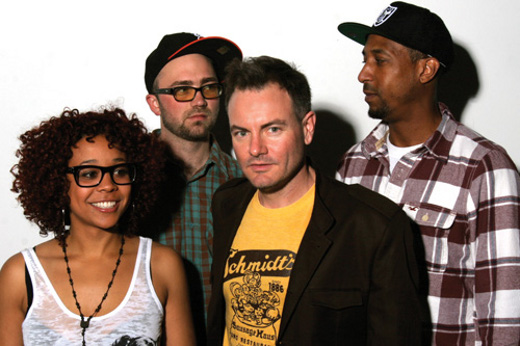
Doomtree

With 2Mex
Tues/31, 9 p.m., $16
Slim’s
333 11th St., SF
www.slimspresents.com

Shabazz Palaces get Amharic

0

Languorous bike-riding, age-old mother-daughter conflicts, technicolor flower-bursts, and a surprising glimpse into the Ethiopian community of (we suppose) Seattle, the hometown of cosmic hip-hop duo Shabazz Palaces make the video for their new single, “Are You … Can You … Were You? (Felt)” off last year’s awesome Black Up album a nice Monday start. They’ll be performing this Thu/2 at Yoshi’s SF. (10:30 p.m., $18-$22. 1330 Fillmore, SF. www.yoshis.com)  

Like the Oscars, only sluttier: the Guardian reports from the AVN Awards red carpet

10

All Guardian photos by Caitlin Donohue unless otherwise noted

“We gotta get 500 girls through here in two hours.” 

Pre porn star-strutting, the faces on the red carpet before the AVN Awards 2012 were grim. Vegas raged around us journalists, the Hard Rock Hotel – site of the awards ceremony, countless before-during-after-parties, and annual fan expo – awash in men trying to appear nonchalant and tired women in heels. We had many rivers to cross and many starlets to question before the awards ceremony would begin.

The Guardian team was stationed between Howard Stern’s ex-security guard (sample question from the gent, who was wildly popular with the more silicon-ed of the starlets who roamed the runway: “What is the strangest thing you’ve ever put in your asshole?”) and a dapper Frenchman from his country’s first porno channel XXL. 

We’d been chatting up porn stars for days (most significantly, Courtney Trouble’s queer porn posse and the lesbian beauties from Jincey Lumpkin’s Juicy Pink Box about the growth of queer adult films – read about those interviews in the Feb. 8 print edition) – but this was different, red carpet-different. 

For one thing, Dave Navarro was there, escorting two women in sequin thigh-high boots and highly customized steampunk-y ballgowns, both of their skirts’ significantly missing a front section. Robin Leach had ducked out on his anticipated appearance, but an under-done Chyna of WWF fame – also winner in the Best Celebrity Sex Tape category for Backdoor to Chyna – was there, as was a sloppy Dave Attell, manic in the hours leading up to his awards host gig. Creator of “Girls Gone Wild” Joe Francis lurked through en route to presenting a lifetime achievement award, longingly gazing in our direction for an interview that was not forthcoming. 

And of course those 500 porn stars (they weren’t all women), who lined up at the mouth of the red carpet area like so many shiny cattle. Popular looks for the evening included shattered mirror Gaga-inspired bodices, drop-back, crack-baring harem dresses. The self-proclaimed “Valley’s goldstar lesbian” Lily Cade and legendary sex goddess Nina Hartley were notable exceptions to the cleavage-baring carnival at hand — they wore suits. “I’m a fucking professional, so I’m going to dress like a professional,” Cade told us that day at the Expo as she gamely sold her all-girl titles from a booth unfortunately stationed next to a man hawking bargain basement adult DVDs.

Princess Donna found a last-minute date in Bobbi Starr (good choice, Starr took the honors for Female Performer of the Year), porn educatress-onscreen legend Nina Hartley gamely chatted ass acessories with Howard Stern’s buddy and waxed thoughtful on the current state of queer porn with the Guardian. We met porn stars excited about their budding hip-hop careers, porn stars excited about the new Fleshlight modeled after their various orifices, porn stars who were just plain excited. 

Our favorite line of red carpet questioning was as follows:

– What are you up for tonight?

– What was your favorite scene from last year?

– What do you think of the new condom regulations in LA? Is this going to dramatically affect the industry? Cue fallen smiles and synaptic struggles. For the record, talent was divided between the “I’m sexy and people are going to watch me regardless and the “get your laws off my genitals” camps – no one really thought the anti-AIDS measure was a positive thing.

And then it was the awards ceremony, we which will sum up like so.

BIG WINNERS

Portrait of a Call Girl – This drama is reportedly awesome if you like your porn with lots of crying in it. Kudos to lead Jessie Andrews, who was also the most calm actor that made her way across the red carpet. It won Best Feature, Best Director – Feature, and Andrews took Best Actress.

Asa Akira – The woman, thanks in large part to her work in Asa Akira is Insatiable 2, walked with no less than seven awards this year. Though her outburst after winning for Best All-Sex Release was memorable (“my ex boyfriend broke up with me over this movie, so fuck yeah!”), she is indelibly etched in my mind by her acceptance speech for Best Anal Scene, an honor she also took home in 2011. To whit: “Thank you to my asshole for putting up with all my shenanigans.” Akira’s partner for said award-winning anal shenanigans was named Nacho Vidal, which we will now be bestowing on my most swarthy future male child. Vidal was nominated twice in the Anal category – making him and Akira a powerhouse couple not to be denied. 

Good Vibrations – The SF-based chain walked with the Best Boutique award, and since it’s our Bay-Bay that makes us happy. (But does it still qualify as a boutique? Read our interview with the chain’s leaders last week and decide for yourself.)

Too Short — Perfomed a song to close out the show entitled “I Need a Porno Bitch.” He got them — about twenty game female actors swarmed the stage as he happily name-checked many of them in his lyrics. 


BIG LOSERS

Whoever was responsible for the Joint’s A/V and technical performance – Truly, everything that could have possibly gone wrong here, did. We’re talking no clips for the Best Actress nominees, people walking off into exits with no outlet onstage (okay, maybe that was the presenters’ fault). The ceremony’s fail screen – a static shot of a galaxy of stars – played so often we became accustomed to it, like a running joke you can’t get your friend to stop telling.

Two-time Female Performer of the Year Tori Black, who was arrested on charges of domestic battery along with her five-month-old son’s father at the Hard Rock in the wee hours of Friday morning. Black says she hadn’t drank in awhile (baby) and stirred up a scene after hitting the town Saturday night. Nothing to see here folks!

Anyone requiring more than four hours of sleep per night, or that enjoys daylight and monogamy.

For a full list of this year’s AVN winners, you should definitely, definitely go here because of winning titles like Mission Asspossible and Internal Damnation 4

Whatever happened to Baby Jaymes?

1

arts@sfbg.com

MUSIC One day in November 2004, my then-girlfriend returned to our Oakland apartment all excited. “I just heard this on KMEL,” she said. She handed me a CD, Baby Jaymes, Ghetto Retro (Underground Soul), while she unwrapped the included Ghetto Retro EP and cued up “Nice Girl.” “He sounds like Prince,” she enthused—we were Prince geeks—”but he’s from East Oakland!”

Something in the way the vocals were layered, the tasty guitar and bass details under aloof keyboards, and the idiosyncratic, non-pimp, non-player personality that disclosed itself seemed to justify the comparison, particularly as we moved on to the LP. The hidden track “Ev’ry Nuance,” for example, could be a Lovesexy outtake, even as its more lo-fi aesthetic seemed to allude knowingly to 1999-era bootlegs.

http://www.youtube.com/watch?v=YJrO8GoozIE

Comparisons to Prince would be made in nearly every review of Ghetto Retro, though the insistence was a little misleading. While Prince is definitely an influence, BJ — as he’s known — isn’t especially well-versed in the Purple One’s catalog. Some of the resemblance stems from the common influence of 1960s and ’70s soul; Motown, particularly Smokey Robinson, and Stax loom much larger for Baby Jaymes, and in many ways, the similarly pint-sized singer is the anti-Prince, possessing no conventional technical musical ability, depending on collaborators to translate the melodies and arrangements he hears in his head.

In 2007, I had the experience of watching him cajole a string trio from blank incomprehension into a soaring, unscripted overdub reminiscent of a Paul Riser classic. Yet I’ve also seen the comparatively simple matter of a guitar overdub founder for want of a common vocabulary.

“It’s all about energy to me,” BJ says, “but I can’t always articulate it in a way that musicians understand. But if I articulate it emotionally they might be like, yes! and we’re there. I used to knock myself out because I can’t play, but that’s part of my gift. I’ve gotten to the place where I’m ok with that.”

The other major difference is the difference between Minneapolis and East Oakland, for while Prince has profoundly influenced hip-hop, he’s never known what to do with it, whereas it’s second nature to BJ, hailing from the notorious Rollin’ 100s (99th and MacArthur, to be exact).

Much of Ghetto Retro is built on heavily manipulated samples, augmented with instruments, and though he’s the furthest thing from a thug — I’ve never heard him cuss, though I have heard him say “my goodness” and even “golly”—Baby Jaymes sounds entirely natural with Turf Talk on his 2008 single “The Bizness” or The Jacka on his new EP, Whatever Happened to Baby Jaymes?, released late last year on Hiero-imprint Clear Label Records.

THE SHIFT

The EP’s title, BJ admits, was the brainchild of Souls of Mischief and Hieroglyphics member and Clear Label head Tajai Massey, both punning off the Bette Davis film and nodding to the seven-year wait since Ghetto Retro. BJ initially resisted.

“I disappeared,” he admits. “But I don’t want people to think I wasn’t doing anything.”

“I was bummed out with the artist thing,” he continues. “People remember me — which is a good thing. But I couldn’t imagine life not having anonymity. To this day I can’t go anywhere in the Town without seeing at least one person that knows me. It can be overwhelming.”

BJ’s local profile, elevated by airplay on KMEL, national press from Fader and XLR8R, and even a 2005 GOLDIE, was complicated by the chronic difficulty of making money as a Bay Area urban artist. In the mid-’00s, besides longstanding major label distinterest, Bay Area independent artists suddenly saw their financial foundations crumble with the decline of CD sales.

“You have to preserve your mystique,” he says, “but you don’t have money to be that guy all the time. I might really be on the bus and you see me on the bus and it just kills my whole thing for you. So I decided I just wanted to make music, not make music to be famous.”

Instead BJ moved to L.A. to pursue licensing deals in movies and TV. Even before Ghetto Retro, he’d already tapped into Hollywood money, writing a song (“Without a Daddy” by Touché) that appears in Oliver Stone’s Any Given Sunday (1999). (His own version appears on Ghetto Retro as “Black Girl/White Girl.”) Since relocating, he’s racked up an oddball assortment of screen credits, from a few seconds of music in a Nicole Kidman vehicle (2007’s The Invasion) to production work on Fox’s intro to the 2008-09 NFC Championship broadcast (apparently Cleatus the Robot’s first foray into hip-hop).

More recently NCIS used a snippet “so small and incidental, you can barely hear it,” but this brings in incomparably more money than dropping a Bay Area hip-hop soul classic. Essentially BJ makes the bulk of his modest income off five song placements and would like to bring that number up to around 40 reliable ones, which he estimates would bring in a comfortable enough existence to fulfill his artistic ambitions.


THE PROVERBIAL RETURN

For, despite his earlier discomfort, Baby Jaymes’s artistic ambitions remain, and Tajai was able to induce him to sign to Clear Label to record a new album, for which the seven-song Whatever Happened is simply a calling card. Still, after so long a hiatus, the EP is a joy to hear. I’d wondered if BJ and long-time collaborator, producer Marc Garvey, would shy away from the sound they’d crafted in favor of something more obviously commercial, but instead they’ve dug deeper, returning to the samples-plus-hip-hop-drums core that makes Ghetto Retro feel so warm and timeless.

The single, “Heart & Soul,” captures the throbbing drama of a kind of vintage R&B that concerns matters of deeper import than Bentleys and Belvedere, serving by turns as a declaration of love and an artistic manifesto. Yet BJ also shows off a new swag with an inventive reimagining of 50 Cent’s “21 Questions” over a live band, co-produced by Ledisi mastermind Sundra Manning.

This more than anything else gives a foretaste of the album to come, judging from the unreleased tracks he played me, all of which featured live instrumentation. This is a far more expensive way to make a record, but he hopes to have complete and release it sometime in 2012.

“Honestly, if Tajai hadn’t said, ‘We should do a record, I’ll help you pay for it,’ I probably wouldn’t have been able to do it,” he says, clearly relishing the new material. “I do it for the love of music, nothing else.” *


On the Cheap Listings

0

Submit items for the listings at listings@sfbg.com. For further information on how to submit items for the listings, see Picks.

WEDNESDAY 25

Bring Me Men: Military Masculinity and the Benign Facade of American Empire author presentation University Press Books, 2430 Bancroft Way, Berk. (510) 548-0585, www.universitypressbooks.com. 6-7:30 p.m., free. Author Aaron Belkin explores the hyper-masculine construction of our armed forces, and the glaring contradictions that lie therein.

Ryan Boudinot’s Blueprints of the Afterlife reading Booksmith, 1644 Haight, SF. (415) 863-8688, www.booksmith.com. 7:30 p.m., free. The apocalypse is undeniably white-like-fire hot these days, what with it being about to happen in 11 months and all. Author Ryan Boudinot is happy to get your cognitive juices flowing on the matter – his new book Blueprints of the Afterlife takes place during the days when glaciers are ravaging the United States’ landscape and human beings’ nervous systems can be hacked.

THURSDAY 26

Author reading: James Martel on Walter Benjamin’s anti-sovereignty theories University Press Books, 2430 Bancroft Way, Berk. (510) 548-0585, www.universitypressbooks.com. 6-7:30 p.m., free. SF State associate professor of political science Martel has written a pair of books that look to dismantle the false choice we are presented between anarchy and sovereignty. His solution to these limited options: the divine game-changing forces presented in the works of German-Jewish intellectual Walter Benjamin.

“Picturing the Contemporary Arts in Ms. Magazine: A Chronological Journey” art exhibit Yerba Buena Center for the Arts, 701 Mission, SF. (415) 978-2700, www.ybca.org. Through Sun/29. Thu-Sat, noon-8 p.m.; Sun, noon-6 p.m. Since founding editor Gloria Steinham’s talk at Stanford University today is sold out, get your 40 years of Ms. Magazine fix at this free art exhibit, for which YBCA has bedecked its lobby with iconic images from the last four decades of the seminal feminist publication.

“Sex Work and Consent” conversation Center for Sex and Culture, 1349 Mission, SF. www.sexandculture.org. 8 p.m., $10 suggested, no one turned away for lack of funds. Sex workers and community leaders will gather round to discuss consent-rape culture in our society – and there will be a Good Vibrations swag raffle to boot.

Lily Renée, Escape Artist: From Holocaust Survivor to Comic Book Pioneer author presentation Cartoon Art Museum, 655 Mission, SF. (415) CAR-TOON, www.cartoonart.org. 7-9 p.m., free. Trina Robbins wrote (and drew) the book on Renée, a 14-year-old Austrian Jewish girl who fled the Nazis, only to become a dynamic member of the 1960s underground comic scene.

SATURDAY 28

“The Wisdom of Compassion: Teachings with Patrick Gaffney” Rigpa San Francisco Center, 111 New Montgomery, SF. (866) 200-5876, www.rigpabayarea.org. 10 a.m.-5 p.m., free-$50 sliding scale. Sogyal Rinpoche’s most senior student (co-editor of Rinpoche’s The Tibetan Book of Living and Dying) teaches on how to get meditation and compassion into your life in a meaningful way.

“All You Can Dance For $5” Alonzo King LINES dance marathon Alonzo King LINES Dance Center, 26 Seventh St., SF. (415) 863-3040 x221, www.linesballet.org. 1-5 p.m., $5. Never mind lapsed New Year’s resolutions: this afternoon-long event will get you sweating without all that silly gym-angst (or sign-up fees). The well-loved dance company is offering a sampling of its classes – from hip-hop and ballet, to modern and jazz.

Treasure Island Flea Market One Avenue of the Palms, Treasure Island. www.treasureislandflea.com. Also Sun/29. 10 a.m.- 5 p.m., free. Though it’s moved indoors until March, Treasure Island’s oasis of all things old and unique continues to be your go-to monthly spot for quirky home furnishings, bike, clothes, and all kinds of more.

Golden Gate Kennel Club Dog Show Cow Palace, 2600 Geneva, Daly City. www.goldengatekc.com. Also Sun/29. 8:30 a.m.-5 p.m., $12. A plethora of historic events fill the Cow Palace each year — the Grand National Rodeo, weed expos galore, Cirque Du Soliel – but few feature arenas full of fluffy yappers. This dog show is over 100 years old, but still has new tricks. Among the breeds that will be featured for the first time in 2012 are the Swedish valihund and the cane corso.

Good Vibrations Lakeshore Avenue opening party Good Vibrations, 3219 Lakeshore, Oakl. www.goodvibes.com. 6-9 p.m., free. If the born-in-SF sex toy brand’s continued world domination — and new Oakland store — isn’t enough cause for celebration, know that Kani Burress of Real Housewives of Atlanta will be in attendance today, hyping her toy line Bedroom Kandi.

SUNDAY 29

Oakland Museum of California’s Lunar New Year celebration Oakland Museum of California, 1000 Oak, Oakl. (510) 238-2200, www.museumca.org. Noon-4:30 p.m., free with $12 museum admission. Learn to pound mochi, take in Korean drumming and storytelling performances, and get educated on the meaning of Fred Korematsu Day through a presentation by the daughter of the civil rights activist who fled when the US government ordered all Japanese-Americans placed in internment camps during WWII. It’s all here at this event to celebrate the entering of (the year of) the dragon.

MONDAY 30

[SSEX BBOX] sexuality documentary premiere Center For Sex and Culture, 1349 Mission, SF. www.sexandculture.org. 7:30-10 p.m., free. Witness the culmination of this international film project’s world travels, in which its team talked about living and loving outside the box with sex educators, writers, and just plain old hotties. You’ll have the opportunity to meet the director and crew after the film’s screening.

Live Shots: The old-timey escapades of the Edwardian Ball

1

The Edwardian Ball, thrown by Rosin Coven and the Vau de Vire Society, never fails to amaze — and absinthe-addled though we were, we managed to take in all the sights, from petticoats a-plenty to splendid corsetry to handsome haberdashery from an era gone by.

Despite the fact that stunning vintage apparel has come to be expected, the Edward Gorey-inspired event — now in its 12th year — is anything but old hat.

Between the World’s Faire, the Vendor Bazaar, and the ball itself, organizers of the old-timey escapade had plenty to add: midway games, an artist lineup that included a neo-Victorian hip-hop time-traveler and his dancing gorilla, a carousel of bikes by Cyclicide, Gorey-themed puppetry, plus freakshow performers with tricks that were anything but same-old. Forget slipping doller bills into your sideshow gal’s panties, and think staple-gunning fivers to her tongue. Strictly period? Not exactly. But lots of fun — for the audience, at least.