Guns

You know I have to talk about guns now

31

My son is 13. He and a friend went to the movies the other afternoon, at the San Francisco Metreon. I was at work; I wasn’t a bit worried. They’re good kids, city kids, they travel around on Muni and BART, hang out with their friends after school … and what’s safer than a movie theater?

Jesus fucking Christ.

It’s apparently random, and the guy who killed at least 12 people in Colorado is probably crazy, and you can’t decide to keep your kids locked up in a bulletproof room all day just because a nutcase 2,000 miles away went crazy at a Batman show. People get killed riding bikes, too, and Michael rides everywhere.

But I’m not the only one who thinks that this massacre could have been prevented — or at least, the severity of it could have been prevented — if it wasn’t so easy to get high-powered assault-style weapons in this country. Here’s a press release from state Sen. Leland Yee:

My thoughts and prayers go out to the victims of this horrific tragedy and their families. These events are shocking to all of us and sadly remind us of the carnage that is possible when assault weapons get into the wrong hands. It is imperative that we take every step possible to eliminate the types of senseless killings witnessed in Aurora, Colorado. We must limit access to weapons that can carry massive rounds of bullets or that can be easily reloaded. SB 249 is a step in that direction and should be approved by the Legislature as soon as possible.

Here’s US Senator Dianne Feinstein (who knows a thing or two about gun violence):

Today is a time for grieving but my hope is the country will also reflect on the roots of gun violence that has again visited terror on an American community, claiming the lives of more innocents.

Here’s LA Times columnist Paul Whitefield:

We don’t need to disarm Americans.  But neither do we need to arm Americans with assault rifles.  We can respect the 2nd Amendment — and respect the right of young people to go to a theater without having to survive a fusillade normally reserved for the battlefield.

And here’s me:

Nobody needs a AK 47. Nobody needs to be able to carry around a weapon that has the kind of firepower that it takes to create this level of terror and carnage. And for those people who want to argue that an armed populace would prevent this kind of thing, imagine if half a dozen pistol-packing civilians started firing through smoke grenades at a guy wearing body armor in a crowded theater. You want the body count any higher?

This, my friend and trolls and gun lovers, is just insane.

UPDATE: Damn, those federal regulations make it hard for an honest citizen to buy a gun.

I have a Gander Mountain gift card in my wallet. Seriously. Wonder what I should do with it.


Film Listings

0

Film listings are edited by Cheryl Eddy. Reviewers are Kimberly Chun, Max Goldberg, Dennis Harvey, and Lynn Rapoport. For rep house showtimes, see Rep Clock.

OPENING

A Burning Hot Summer Two couples become entangled one hot Roman summer in Philippe Garrel’s New Wave-inspired drama. (1:35) SF Film Society Cinema.

The Dark Knight Rises Nolan, Bale, and the rest of the Gotham gang reunite for 2012’s most-anticipated superhero sequel. (2:44) Marina.

Dark Horse See "Do Not Disturb." (1:25) Embarcadero, SF Film Society Cinema, Shattuck, Smith Rafael.

Monty Python and the Holy Grail Back to taunt you a second (or hundredth) time, the 1975 comedy classic gets digitally remastered and boasts a new 12-minute short, "Terry Gilliam’s Lost Animations." (1:44) Lumiere.

Romantics Anonymous An awkward, bumbling Parisian chocolatier named Jean-Rene (Benoît Poelvoorde) falls for his gorgeous, equally awkward sales rep, Angélique (Isabelle Carré), while never missing an opportunity to say the wrong thing, surrender to shyness, or panic under pressure. It’s crucial for films involving such protracted awkwardness to give the audience something to cling to emotionally, but instead we’re handed a limp, formulaic story, sorely underdeveloped characters, and lazy writing in which the protagonists act uncharacteristically stupid/gullible/oblivious for the sake of plot-expedience. Amélie (2001) mined similar thematic territory, but its success lay in the depth of its characters; Romantics Anonymous is about little more than the idea of two hopeless romantics, and that’s simply not enough to hold interest. It’s beautifully scored, lovingly shot, and steeped in vintage French atmosphere — but that doesn’t compensate for sketchy characterization and weak, predictable storytelling. (1:20) Roxie. (Taylor Kaplan)

30 Beats A sweltering summer day or two in the city ushers in a series of youthful good-lookers, unencumbered and less than dressed, together in kind of NYC-based mini-La Ronde that I’m surprised Woody Allen hasn’t yet attempted. Fresh young thing Julie (Condola Rashad) is off to pop her cherry with lady’s man Adam (Justin Kirk of Weeds), who’s more accustomed to chasing than being chased. Unsettled, he consults with sorceress Erika (Jennifer Tilly), who plies him with sexual magic and then finds herself chasing down her booty-call bud, bike messenger Diego (Jason Day), who’s besotted with the physically and emotionally scarred Laura (Paz de la Huerta). What goes around comes around in director-writer Alexis Lloyd’s debut feature, but alas, not till it’s contorted and triangulated itself in at least one ridiculously solemn BDSM scene. Matters get trickier when romance begins to creep into these urban one-offs. Nonetheless, those with short attention spans who like their people-watching with a healthy splash of big-city hookups, might find this adult indie as refreshing as a romp with a beautiful stranger they’ve briefly locked eyes with. (1:28) Elmwood, Four Star. (Chun)

Trishna Ever difficult to pin down, director Michael Winterbottom continues his restless flipping between the light (2010’s The Trip), artily experimental (2004’s 9 Songs), pulpy (2010’s The Killer Inside Me), and the dead serious (2007’s A Mighty Heart). Trishna, loosely based on Thomas Hardy’s Tess of the d’Urbervilles and set in small-town and big-city modern-day India, lines up neatly on the bookshelf alongside Winterbottom’s other Hardy bodice-ripper, 1996’s Jude. By chance beautiful village girl Trishna (Freida Pinto) falls in with the handsome, thoroughly Westernized Jay (Riz Ahmed) and his laddish pals on holiday. A truck accident leaves her father unable to provide for their family, so she goes to work at the luxury hotel owned by Jay’s father and overseen by his privileged son. There she gently gives him language tips, accepts his offer to educate her in travel industry management, and enjoys his growing attentions, until one day when he rescues her from roving thugs only to seduce her. Though she flees to her family home and eventually has an abortion, Trishna still proves to be an innocent and consents to live in Mumbai with Jay, who is flirting with the film industry and increasingly effaces his trusting girlfriend as their sexual game-playing becomes increasingly complicated. The shadows of both Hardy and Bollywood flit around Trishna, and this cultural transplant nearly works — the hothouse erotic entanglement between its two principals almost but not quite convinces one that Trishna would be driven to desperate ends. Still, even as Trishna, like Tess, infuriates with her passivity, her story occasionally enthralls — the fruit of Pinto’s surprisingly brave, transparent performance. (1:53) Embarcadero, Shattuck. (Chun)

ONGOING

Abraham Lincoln: Vampire Hunter Are mash-ups really so 2001? Not according to the literary world, where writer Seth Graham-Smith has been doing brisk trade in gore-washing perfectly interesting historical figures and decent works of literature — a fan fiction-rooted strategy that now reeks of a kind of camp cynicism when it comes to a terminally distracted, screen-aholic generation. Still, I was strangely excited by the cinematic kitsch possibilities of Graham-Smith’s Lincoln alternative history-cum-fantasy, here in the hands of Timur Bekmambetov (2004’s Night Watch). Historians, prepare to fume — it helps if you let go of everything you know about reality: as Vampire Hunter opens, young Lincoln learns some harsh lessons about racial injustice, witnessing the effects of slavery and the mistreatment of his black friend Will. As a certain poetic turn would have it, slave owners here are invariably vampires or in cahoots with the undead, as is the wicked figure, Jack Barts (Marton Csokas), who beats both boys and sucks Lincoln’s father dry financially. In between studying to be a lawyer and courting Mary Todd (Mary Elizabeth Winstead), the adult Lincoln (Benjamin Walker) vows to take revenge on the man who caused the death of his mother and enters the tutelage of vampire hunter Henry (Dominic Cooper), who puts Abe’s mad skills with an ax to good use. Toss in a twist or two; more than few freehand, somewhat humorous rewrites of history (yes, we all wish we could have tweaked the facts to have a black man working by Lincoln’s side to abolish slavery); and Bekmambetov’s tendency to direct action with the freewheeling, spectacle-first audacity of a Hong Kong martial arts filmmaker (complete with at least one gaping continuity flaw) — and you have a somewhat amusing, one-joke, B-movie exercise that probably would have made a better short or Grindhouse-esque trailer than a full-length feature — something the makers of the upcoming Pride and Prejudice and Zombies should bear in mind. (1:45) 1000 Van Ness, SF Center. (Chun)

The Amazing Spider-Man A mere five years after Sam Raimi and Tobey Maguire’s Spider-Man 3 — forgettable on its own, sure, but 2002’s Spider-Man and especially 2004’s Spider-Man 2 still hold up — Marvel’s angsty web-slinger returns to the big screen, hoping to make its box-office mark before The Dark Knight Rises opens in a few weeks. Director Marc Webb (2009’s 500 Days of Summer) and likable stars Andrew Garfield (as the skateboard-toting hero) and Emma Stone (as his high-school squeeze) offer a competent reboot, but there’s no shaking the feeling that we’ve seen this movie before, with its familiar origin story and with-great-power themes. A little creativity, and I don’t mean in the special effects department, might’ve gone a long way to make moviegoers forget this Spidey do-over is, essentially, little more than a soulless cash grab. Not helping matters: the villain (Rhys Ifans as the Lizard) is a snooze. (2:18) Metreon, 1000 Van Ness, Presidio, Sundance Kabuki. (Eddy)

Ballplayer: Pelotero With upbeat music, slick editing, and narration by John Leguizamo, Ballplayer: Pelotero is an entertaining, enlightening investigation into exactly why the Dominican Republic produces so many baseball stars. Comparisons to acclaimed sports doc Hoop Dreams (1994) are apt, as filmmakers Ross Finkel, Trevor Martin, and Jonathan Paley travel to the DR to follow a pair of teenage baseball players dreaming of big-league stardom (and big-league paychecks). But the Hoop Dreams kids weren’t being confronted by the shady, sinister, bottom-line-obsessed recruiters working for Major League Baseball, which maintains a pee-wee farm system of sorts in the country to train young prospects — the best of whom are snapped up at the magic age of 16 for bargain-basement (relatively speaking) prices. And in this environment, questions about numbers reign supreme: how much with each kid be signed for? And, more intriguingly, is either youth lying about his true age? (1:12) SF Film Society Cinema. (Eddy)

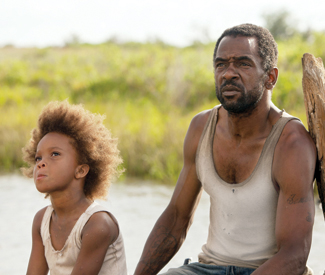
Beasts of the Southern Wild Six months after winning the Grand Jury Prize at Sundance (and a Cannes Camera d’Or), Beasts of the Southern Wild proves capable of enduring a second or third viewing with its originality and strangeness fully intact. Magical realism is a primarily literary device that isn’t attempted very often in U.S. cinema, and succeeds very rarely. But this intersection between Faulkner and fairy tale, a fable about — improbably — Hurricane Katrina, is mysterious and unruly and enchanting. Benh Zeitlin’s film is wildly cinematic from the outset, as voiceover narration from six-year-old Hushpuppy (Quvenzhané Wallis) offers simple commentary on her rather fantastical life. She abides in the Bathtub, an imaginary chunk of bayou country south of New Orleans whose residents live closer to nature, amid the detritus of civilization. Seemingly everything is some alchemical combination of scrap heap, flesh, and soil. But not all is well: when "the storm" floods the land, the holdouts are forced at federal gunpoint to evacuate. With its elements of magic, mythological exodus, and evolutionary biology, Beasts goes way out on a conceptual limb; you could argue it achieves many (if not more) of the same goals Terrence Malick’s 2011 The Tree of Life did at a fraction of that film’s cost and length. (1:31) Bridge, California, Embarcadero, Smith Rafael. (Harvey)

Bel Ami Judging from recent attempts to shake off the gloomy atmosphere and undead company of the Twilight franchise, Robert Pattinson enjoys a good period piece, but hasn’t quite worked out how to help make one. Last year’s Depression-era Water for Elephants was a tepid romance, and Declan Donnellan and Nick Ormerod’s belle epoque–set Bel Ami is an ungainly, oddly paced adaptation of the Guy de Maupassant novel of the same name. A down-and-out former soldier of peasant stock, Georges Duroy (Pattinson) — or "Bel Ami," as his female admirers call him — gains a brief entrée into the upper echelons of France’s fourth estate and parlays it into a more permanent set of social footholds, campaigning for the affections of a triumvirate of Parisian power wives (Christina Ricci, Uma Thurman, and Kristin Scott Thomas) as he makes his ascent. His route is confusing, though; the film pitches forward at an alarming pace, its scenes clumsily stacked together with little character development or context to smooth the way, and Pattinson’s performance doesn’t clarify much. Duroy shifts perplexingly between rapacious and soulful modes, eyeing the ladies with a vaguely carnivorous expression as he enters drawing rooms, dining rooms, and bedrooms, but leaving us with little sense of his true appetites or other motivations. (1:42) Smith Rafael. (Rapoport)

Bernie Jack Black plays the titular new assistant funeral director liked by everybody in small-town Carthage, Tex. He works especially hard to ingratiate himself with shrewish local widow Marjorie (Shirley MacLaine), but there are benefits — estranged from her own family, she not only accepts him as a friend (then companion, then servant, then as virtual "property"), but makes him her sole heir. Richard Linklater’s latest is based on a true-crime story, although in execution it’s as much a cheerful social satire as I Love You Philip Morris and The Informant! (both 2009), two other recent fact-based movies about likable felons. Black gets to sing (his character being a musical theater queen, among other things), while Linklater gets to affectionately mock a very different stratum of Lone Star State culture from the one he started out with in 1991’s Slacker. There’s a rich gallery of supporting characters, most played by little-known local actors or actual townspeople, with Matthew McConaughey’s vainglorious county prosecutor one delectable exception. Bernie is its director’s best in some time, not to mention a whole lot of fun. (1:39) SF Center, Shattuck, Opera Plaza, Smith Rafael. (Harvey)

The Best Exotic Marigold Hotel (1:42) Opera Plaza, Piedmont.

Beyond the Black Rainbow Sci-fi in feel and striking look even though it’s set in the past (1983, with a flashback to 1966), Canadian writer-director Cosmatos’ first feature defies any precise categorization — let alone attempts to make sense of its plot (such as there is). Arboria is a corporate "commune"-slash laboratory where customers are promised what everyone wants — happiness — even as "the world is in chaos." Just how that is achieved, via chemicals or whatnot, goes unexplained. In any case, the process certainly doesn’t seem to be working on Elena (Eva Allan), a near-catatonic young woman who seems to be the prisoner as much as the patient of sinister Dr. Nyle (Michael Rogers). The barely-there narrative is so enigmatic at Arboria that when the film finally breaks out into the external world and briefly becomes a slasher flick, you can only shrug — if it had suddenly become a musical, that would have been just as (il-)logical. Black Rainbow is sure to frustrate some viewers, but it is visually arresting, and some with a taste for ambiguous, metaphysical inner-space sci-fi à la Solaris (1972) have found it mesmerizing and profound. As they are wont to remind us, half of its original audience found 1968’s 2001: A Space Odyssey boring, pointless and walk out-worthy, too. (1:50) Roxie. (Harvey)

Bonsái (1:35) SF Film Society Cinema.

Brave Pixar’s latest is a surprisingly familiar fairy tale. Scottish princess Merida (voiced by Kelly Macdonald) would rather ride her horse and shoot arrows than become engaged, but it’s Aladdin-style law that she must marry the eldest son of one of three local clans. (Each boy is so exaggeratedly unappealing that her reluctance seems less tomboy rebellion than common sense.) Her mother (Emma Thompson) is displeased; when they quarrel, Merida decides to change her fate (Little Mermaid-style) by visiting the local spell-caster (a gentle, absent-minded soul that Ursula the Sea Witch would eat for brunch). Naturally, the spell goes awry, but only the youngest of movie viewers will fear that Merida and her mother won’t be able to make things right by the end. Girl power is great, but so are suspense and originality. How, exactly, is Brave different than a zillion other Disney movies about spunky princesses? Well, Merida’s fiery explosion of red curls, so detailed it must have had its own full-time team of animators working on it, is pretty fantastic. (1:33) 1000 Van Ness, SF Center, Shattuck, Sundance Kabuki. (Eddy)

Crazy Wisdom Not exactly your average Buddhist leader, Chogyam Trungpa was one part monk to two parts rock star. Recognized as a reincarnated master while still an infant, he left Tibet behind to flee Chinese government forces in 1960, eventually landing in the UK, where he founded its first Buddhist center. A decade later he’d move to the US, founding its first Buddhist university. Amidst all that achievement and enlightenment-spreading, however, he also found time to marry a 16-year-old upper-class Brit, have myriad affairs with students, partially paralyze himself driving a car into a shop front, frequently get drunk in public, and so forth — even though, incongruously, he frowned upon marijuana (and rock music). All this made sense in a tradition of Tibetan Buddhist "crazy wisdom" — or so his supporters would (and still) claim in his defense. Having left this life at age 48, his body exhausted by decades of hedonistic excess, he still has a powerful hold over diverse, multi-faith followers and acquaintances who recall his extraordinary spiritual-personal magnetism. Johanna Demetrakas’ entertaining documentary gathers up testimony from a gamut of them, including Ram Dass, Allen Ginsberg, Robert Thurman, and Anne Waldman. (1:26) Roxie. (Harvey)

Farewell, My Queen (Benoît Jacquot, France, 2012) Opening early on the morning of July 14, 1789, Farewell, My Queen depicts four days at the Palace of Versailles on the eve of the French Revolution, as witnessed by a young woman named Sidonie Laborde (Léa Seydoux) who serves as reader to Marie Antoinette (Diane Kruger). Sidonie displays a singular and romantic devotion to the queen, while the latter’s loyalties are split between a heedless amour propre and her grand passion for the Duchess de Polignac (Virginie Ledoyen). These domestic matters and other regal whims loom large in the tiny galaxy of the queen’s retinue, so that while elsewhere in the palace, in shadowy, candle-lit corridors, courtiers and their servants mingle to exchange news, rumor, panicky theories, and evacuation plans, in the queen’s quarters the task of embroidering a dahlia for a projected gown at times overshadows the storming of the Bastille and the much larger catastrophe on the horizon. (1:39) Albany, Embarcadero. (Rapoport)

Headhunters Despite being the most sought-after corporate headhunter in Oslo, Roger (Aksel Hennie) still doesn’t make enough money to placate his gorgeous wife; his raging Napoleon complex certainly doesn’t help matters. Crime is, as always, the only solution, so Roger’s been supplementing his income by stealthily relieving his rich, status-conscious clients of their most expensive artworks (with help from his slightly unhinged partner, who works for a home-security company). When Roger meets the dashing Clas Greve (Nikolaj Coster-Waldau of Game of Thrones) — a Danish exec with a sinister, mysterious military past, now looking to take over a top job in Norway — he’s more interested in a near-priceless painting rumored to be stashed in Greve’s apartment. The heist is on, but faster than you can say "MacGuffin," all hell breaks loose (in startlingly gory fashion), and the very charming Roger is using his considerable wits to stay alive. Based on a best-selling "Scandi-noir" novel, Headhunters is just as clever as it is suspenseful. See this version before Hollywood swoops in for the inevitable (rumored) remake. (1:40) Opera Plaza. (Eddy)

Ice Age: Continental Drift (1:27) Metreon, 1000 Van Ness, Presidio.

The Intouchables Cries of "racism" seem a bit out of hand when it comes to this likable albeit far-from-challenging French comedy loosely based on a real-life relationship between a wealthy white quadriplegic and his caretaker of color. The term "cliché" is more accurate. And where were these critics when 1989’s Driving Miss Daisy and 2011’s The Help — movies that seem designed to make nostalgic honkies feel good about those fraught relationships skewed to their advantage—were coming down the pike? (It also might be more interesting to look at how these films about race always hinge on economies in which whites must pay blacks to interact with/educate/enlighten them.) In any case, Omar Sy, portraying Senegalese immigrant Driss, threatens to upset all those pundits’ apple carts with his sheer life force, even when he’s shaking solo on the dance floor to sounds as effortlessly unprovocative, and old-school, as Earth, Wind, and Fire. In fact, everything about The Intouchables is as old school as 1982’s 48 Hrs., spinning off the still laugh-grabbing humor that comes with juxtaposing a hipper, more streetwise black guy with a hapless, moneyed chalky. The wheelchair-bound Philippe (Francois Cluzet) is more vulnerable than most, and he has a hard time getting along with any of his nurses, until he meets Driss, who only wants his signature for his social services papers. It’s not long before the cultured, classical music-loving Philippe’s defenses are broken down by Driss’ flip, somewhat honest take on the follies and pretensions of high culture — a bigger deal in France than in the new world, no doubt. Director-writer Olivier Nakache and Eric Toledano aren’t trying to innovate —they seem more set on crafting an effervescent blockbuster that out-blockbusters Hollywood — and the biggest compliment might be that the stateside remake is already rumored to be in the works. (1:52) Clay, Piedmont, Shattuck. (Chun)

Jiro Dreams of Sushi Celebrity-chef culture has surely reached some kind of zeitgeist, what with the omnipresence of Top Chef and other cooking-themed shows, and the headlines-making power of people like Paula Deen (diabetes) and Mario Batali (sued for ripping off his wait staff). Unconcerned with the trappings of fame — you’ll never see him driving a Guy Fieri-style garish sports car — is Jiro Ono, 85-year-old proprietor of Sukiyabashi Jiro, a tiny, world-renowned sushi restaurant tucked into Tokyo’s Ginza station. Jiro, a highly-disciplined perfectionist who believes in simple, yet flavorful food, has devoted his entire life to the pursuit of "deliciousness" — to the point of sushi invading his dreams, as the title of David Gelb’s reverential documentary suggests. But Jiro Dreams of Sushi goes deeper than food-prep porn (though, indeed, there’s plenty of that); it also examines the existential conflicts faced by Jiro’s two middle-aged sons. Both were strongly encouraged to enter the family business — and in the intervening years, have had to accept the soul-crushing fact that no matter how good their sushi is, it’ll never be seen as exceeding the creations of their legendary father. (1:21) Lumiere. (Eddy)

Katy Perry: Part of Me (1:57) Metreon, 1000 Van Ness.

Madagascar 3: Europe’s Most Wanted (1:33) Metreon, 1000 Van Ness.

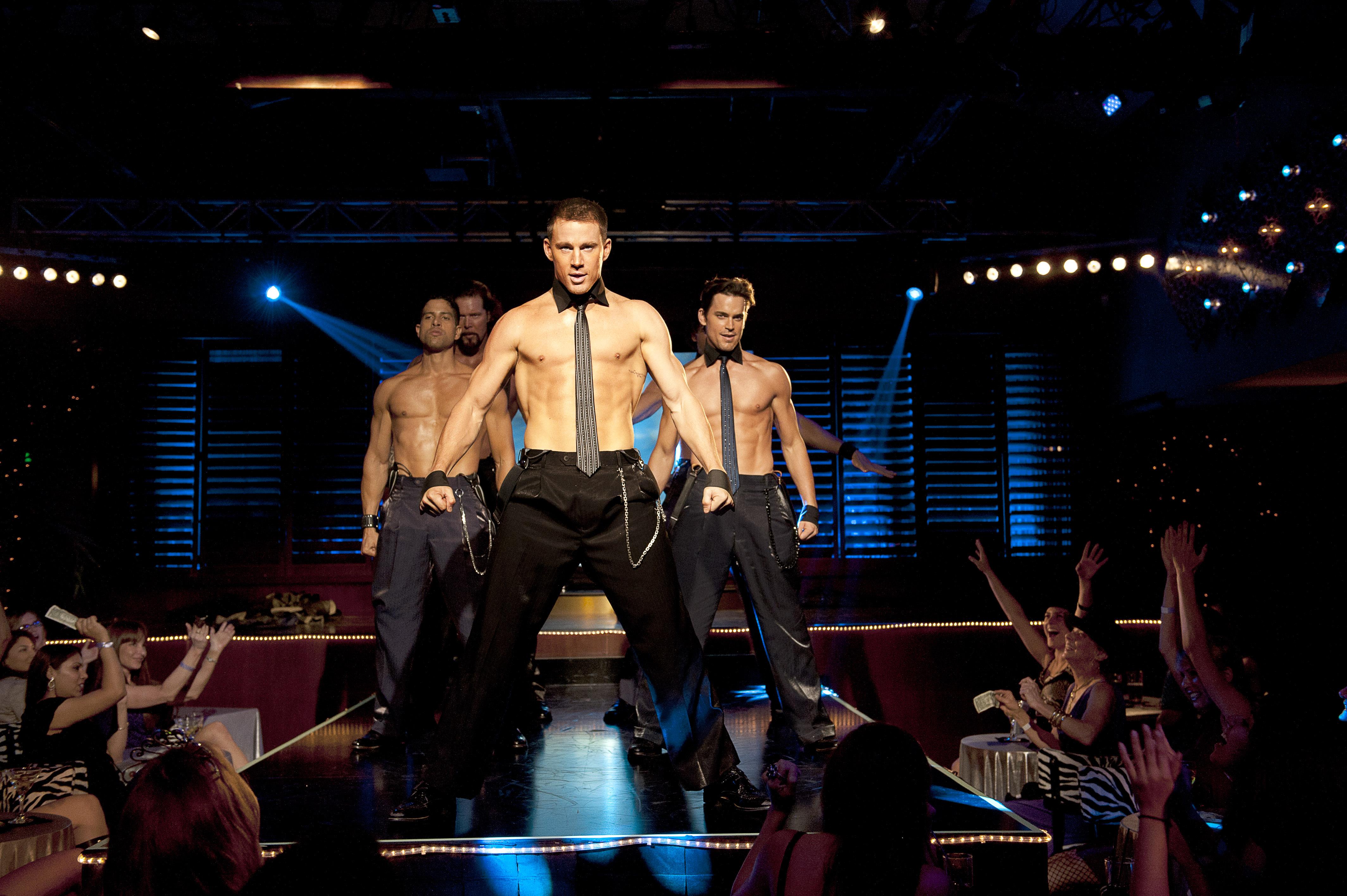
Magic Mike Director Steven Soderbergh pays homage to the 1970s with the opening shot of his male stripper opus: the boxy old Warner Bros. logo, which evokes the gritty, sexualized days of Burt Reynolds and Joe Namath posing in pantyhose. Was that really the last time women, en masse, were welcome to ogle to their heart’s content? That might be the case considering the outburst of applause when a nude Channing Tatum rises after a hard night in a threesome in Magic Mike‘s first five minutes. Ever the savvy film historian, Soderbergh toys with the conventions of the era, from the grimy quasi-redneck realism of vintage Reynolds movies to the hidebound framework of the period’s gay porn, almost for his own amusement, though the viewer might be initially confused about exactly what year they’re in. Veteran star stripper Mike (Tatum) is working construction, stripping to the approval of many raucous ladies and their stuffable dollar bills. He decides to take college-dropout blank-slate hottie Adam (Alex Pettyfer) under his wing and ropes him into the strip club, owned by Dallas (Matthew McConaughey, whose formidable abs look waxily preserved) and show him the ropes of stripping and having a good time, much to the disapproval of Adam’s more straight-laced sister Brooke (Cody Horn). Really, though, all Mike wants to do is become a furniture designer. Boasting Foreigner’s "Feels like the First Time" as its theme of sorts and spot-on, hot choreography by Alison Faulk (who’s worked with Madonna and Britney Spears), Magic Mike takes off and can’t help but please the crowd when it turns to the stage. Unfortunately the chemistry-free budding romance between Mike and Brooke sucks the air out of the proceedings every time it comes into view, which is way too often. (1:50) 1000 Van Ness, Presidio, Sundance Kabuki, SF Center. (Chun)

Marina Abramovic: The Artist is Present Matthew Akers’ sleek and telling doc explores the career and motivations of the legendary Serbian-born, New York-based performance artist on the occasion of 2010’s major retrospective and new work at the New York Museum of Modern Art. Abramovic, self-styled the "grandmother of performance art" at an eye-catching 63, steels herself with rare energy — and a determination to gain equal status for performance in the world of fine art — for an incredibly demanding new piece, The Artist Is Present, a quasi-mystical encounter between herself and individual museum patrons that takes the form of a three-month marathon of silent one-on-one gazing. Meanwhile, 30 young artists re-perform pieces from her influential career. Akers gains intimate access throughout, including Abramovic’s touching reunion with longtime love and artistic collaborator Ulay, while providing a steady pulse of suspense as the half-grueling, half-ecstatic performance gets underway. A natural charmer, Abramovic’s charismatic presence at MoMA is no act but rather a focused state in which audiences are drawn into — and in turn shape — powerful rhythms of consciousness and desire. (1:45) Roxie. (Robert Avila)

Marvel’s The Avengers The conflict — a mystical blue cube containing earth-shattering (literally) powers is stolen, with evil intent — isn’t the reason to see this long-hyped culmination of numerous prequels spotlighting its heroic characters. Nay, the joy here is the whole "getting’ the band back together!" vibe; director and co-writer Joss Whedon knows you’re just dying to see Captain America (Chris Evans) bicker with Iron Man (a scene-stealing Robert Downey Jr.); Thor (Chris Hemsworth) clash with bad-boy brother Loki (Tom Hiddleston); and the Hulk (Mark Ruffalo) get angry as often as possible. (Also part of the crew, but kinda mostly just there to look good in their tight outfits: Jeremy Renner’s Hawkeye and Scarlett Johansson’s Black Widow.) Then, of course, there’s Nick Fury (Samuel L. Jackson) running the whole Marvel-ous show, with one good eye and almost as many wry quips as Downey’s Tony Stark. Basically, The Avengers gives you everything you want (characters delivering trademark lines and traits), everything you expect (shit blowing up, humanity being saved, etc.), and even makes room for a few surprises. It doesn’t transcend the comic-book genre (like 2008’s The Dark Knight did), but honestly, it ain’t trying to. The Avengers wants only to entertain, and entertain it does. (2:23) Metreon. (Eddy)

Moonrise Kingdom Does Wes Anderson’s new film mark a live-action return to form after 2007’s disappointingly wan Darjeeling Limited? More or less. Does it tick all the Andersonian style and content boxes? Indubitably. In the most obvious deviation Anderson has taken with Moonrise, he gives us his first period piece, a romance set in 1965 on a fictional island off the New England coast. After a chance encounter at a church play, pre-teen Khaki Scout Sam (newcomer Jared Gilman) instantly falls for the raven-suited, sable-haired Suzy Bishop (Kara Hayward, ditto). The two become pen pals, and quickly bond over the shared misery of being misunderstood by both authority figures and fellow kids. The bespectacled Sam is an orphan, ostracized by his foster parents and scout troop (much to the dismay of its straight-arrow leader Edward Norton). Suzy despises her clueless attorney parents, played with gusto by Bill Murray and Frances McDormand in some of the film’s funniest and best scenes. When the two kids run off together, the whole thing begins to resemble a kind of tween version of Godard’s 1965 lovers-on the-lam fantasia Pierrot le Fou. But like most of Anderson’s stuff, it has a gauzy sentimentality more akin to Truffaut than Godard. Imagine if the sequence in 2001’s The Royal Tenenbaums where Margot and Richie run away to the Museum of Natural History had been given the feature treatment: it’s a simple yet inspired idea, and it becomes a charming little tale of the perils of growing up and selling out the fantasy. But it doesn’t feel remotely risky. It’s simply too damn tame. (1:37) California, Metreon, 1000 Van Ness, Piedmont, Presidio, Sundance Kabuki. (Michelle Devereaux)

Patang (The Kite) Loving memories tethered to a place (Ahmedabad, India), moment (the city’s kite festival, the largest of its kind in the country), and season (according to the Hindu calendar, the event coincides with the day that wind direction shifts) beautifully suffuse this first feature film by director and co-writer Prashant Bhargava. Certainly Patang (The Kite) is the story of a family: Delhi businessman Jayesh (Mukund Shukla) has returned with his freewheeling, movie-camera-toting daughter Priya (Sugandha Garg) to his majestically ramshackle family home, where he supports his mother, sister-in-law (Seema Biswas of 1994’s Bandit Queen), and nephew Chakku (Nawazuddin Siddiqui). He’s come to indulge his childhood love of kite flying and to introduce Priya to Ahmedabad’s old-world sights and ways. Entangled among the strands of story are past resentments —harbored by Chakku against his paternalistic uncle — and new hopes, particularly in the form of a budding romance between Priya and Bobby (Aakash Maherya), the son of the kite shop owner. Above all — and as much a presence as any other — is the city, with its fleeting pleasures and memorable faces, captured with vérité verve and sensuous lyricism on small HD cameras by Bhargava and director of photography Shanker Raman. Their imagery imprints on a viewer like an early memory, darting to mind like those many bright kites dancing buoyantly in the city sky. (1:32) Metreon. (Chun)

Peace, Love and Misunderstanding How is that even as a bona fide senior, Jane Fonda continues to embody this country’s ambivalence toward women? I suspect it’s a testament to her actorly prowess and sheer charisma that she’s played such a part in defining several eras’ archetypes — from sex kitten to counterculture-heavy Hanoi Jane to dressed-for-success feminist icon to aerobics queen to trophy wife. Here, among the talents in Bruce Beresford’s intergenerational chick-flick-gone-indie as a loud, proud, and larger-than-life hippie earth mama, she threatens to eclipse her paler, less colorful offspring, women like Catherine Keener and Elizabeth Olsen, who ordinarily shine brighter than those that surround them. It’s ostensibly the tale of high-powered lawyer Diane (Keener): her husband (Kyle MacLachlan) has asked for a divorce, so in a not-quite-explicable tailspin, she packs her kids, Zoe (Olsen) and Jake (Nat Wolff), into the car and heads to Woodstock to see her artist mom Grace (Fonda) for the first time in two decades. Grace is beyond overjoyed — dying to introduce the grandchildren to her protests, outdoor concerts, and own personal growhouse — while urbanite Diane and her kids find attractive, natch, diversions in the country, in the form of Jude (Jeffrey Dean Morgan), Cole (Chace Crawford), and Tara (Marissa O’Donnell). Yet there’s a lot of troubled water for the mother and daughter to cross, in order to truly come together. Despite some strong characterization and dialogue, Peace doesn’t quite fly — or make much sense at its close — due to the some patchy storytelling: the schematic rom-com arch fails to provide adequate scaffolding to support the required leaps of faith. But that’s not to deny the charm of the highly identifiable, generous-spirited Grace, a familiar Bay Area archetype if there ever was one, who Fonda charges with the joy and sadness of fallible parent who was making up the rules as she went along. (1:36) Smith Rafael. (Chun)

People Like Us The opening song — James Gang’s can’t-fail "Funk #49" — only partially announces where this earnest family drama is going. Haunted by a deceased music-producer patriarch, barely sketched-out tales of his misadventures, and a soundtrack of solid AOR, this film has mixed feelings about its boomer bloodlines, much like the recent Peace, Love and Misunderstanding: these boomer-ambivalent films are the inverse of celebratory sites like Dads Are the Original Hipsters. Commodity-bartering wheeler-dealer Sam (Chris Pine) is skating on the edges of legality — and wallowing in his own kind of Type-A prickishness — so when his music biz dad passes, he tries to lie his way out of flying back home to see his mother Lillian (Michelle Pfeiffer), with his decent law student girlfriend (Olivia Wilde). He doesn’t want to face the memories of his self-absorbed absentee-artist dad, but he also doesn’t want to deal with certain legal action back home, so when his father’s old lawyer friend drops a battered bag of cash on him, along with a note to give it to a young boy (Michael Hall D’Addario) and his mother Frankie (Elizabeth Banks), he’s beset with conflict. Should he take the money and run away from his troubles or uncover the mysterious loved ones his father left behind? Director and co-writer Alexa Kurtzman mostly wrote for TV before this, his debut feature, and in many ways People Like Us resembles the tidy, well-meaning dramas about responsibility and personal growth one might still find on, say, Lifetime. It’s also tough to swallow Banks, as gifted as she is as an actress, as an addiction-scarred, traumatized single mom in combat boots. At the same time People Like Us isn’t without its charms, drawing you into its small, specific dramas with real-as-TV touches and the faintest sexy whiff of rock ‘n’ roll. (1:55) SF Center. (Chun)

Pink Ribbons, Inc. This enraging yet very entertaining documentary by Canadian Léa Pool, who’s better known for her fiction features (1986’s Anne Trister, etc.), takes an excoriating look at "breast cancer culture" — in particular the huge industry of charitable events whose funds raised often do very little to fight the cease, and whose corporate sponsors in more than a few cases actually manufacture carcinogenic products. It’s called "cause marketing," the tactic of using alleged do gooderism to sell products to consumers who then feel good about themselves purchasing them. Even if said product and manufacturer is frequently doing less than jack-all to "fight for the cure." The entertainment value here is in seeing the ludicrous range to which this hucksterism has been applied, selling everything from lingerie and makeup to wine and guns; meanwhile the march, walk, and "fun run" for breast cancer has extended to activities as extreme (and pricey) as sky-diving.
Pool lets her experts and survivors critique misleading the official language of cancer, the vast sums raised that wind up funding very little prevention or cure research (as opposed to, say, lucrative new pharmaceuticals with only slight benefits), and the products shilled that themselves may well cause cancer. It’s a shocking picture of the dirt hidden behind "pink-washing," whose siren call nonetheless continues to draw thousands and thousands of exuberant women to events each year. They’re always so happy to be doing something for the sisterhood’s good — although you might be doing something better (if a little painful) by dragging friends inclined toward such deeds to see this film, and in the future question more closely just whether the charity they sweat for is actually all that charitable, or is instead selling "comforting lies." (1:38) Smith Rafael. (Harvey)

Prometheus Ridley Scott’s return to outer space — after an extended stay in Russell Crowe-landia — is most welcome. Some may complain Prometheus too closely resembles Scott’s Alien (1979), for which it serves as a prequel of sorts. Prometheus also resembles, among others, The Thing (1982), 2001: A Space Odyssey (1968), and Event Horizon (1997). But I love those movies (yes, even Event Horizon), and I am totally fine with the guy who made Alien borrowing from all of them and making the classiest, most gorgeous sci-fi B-movie in years. Sure, some of the science is wonky, and the themes of faith and creation can get a bit woo-woo, but Prometheus is deep-space discombobulation at its finest, with only a miscast Logan Marshall-Green (apparently, cocky dude-bros are still in effect at the turn of the next millennium) marring an otherwise killer cast: Noomi Rapace as a dreamy (yet awesomely tough) scientist; Idris Elba as Prometheus‘ wisecracking captain; Charlize Theron as the Weyland Corportation’s icy overseer; and Michael Fassbender, giving his finest performance to date as the ship’s Lawrence of Arabia-obsessed android. (2:03) Metreon, 1000 Van Ness, Sundance Kabuki. (Eddy)

Rock of Ages (2:03) SF Center.

Safety Not Guaranteed San Francisco-born director Colin Trevorrow’s narrative debut feature Safety Not Guaranteed, written by Derek Connolly, has an improbable setup: not that rural loner Kenneth (Mark Duplass) would place a personal ad for a time travel partner ("Must bring own weapons"), but that a Seattle alt-weekly magazine would pay expenses for a vainglorious staff reporter (Jake Johnson, hilarious) and two interns (Aubrey Plaza, Karan Soni) to stalk him for a fluff feature over the course of several days. The publishing budget allowing that today is true science-fiction. But never mind. Inserting herself "undercover" when a direct approach fails, Plaza’s slightly goth college grad finds she actually likes obsessive, paranoid weirdo Kenneth, and is intrigued by his seemingly insane but dead serious mission. For most of its length Safety falls safely into the category of off-center indie comedics, delivering various loopy and crass behavior with a practiced deadpan, providing just enough character depth to achieve eventual poignancy. Then it takes a major leap — one it would be criminal to spoil, but which turns an admirable little movie into something conceptually surprising, reckless, and rather exhilarating. (1:34) SF Center, Shattuck. (Harvey)

Savages If it’s true, as some say, that Oliver Stone had lost his way after 9/11 — when seemingly many of his worst fears (and conspiracy theories) came to pass — then perhaps this toothy noir marks his return: it definitely reads as his most emotionally present exercise in years. Not quite as nihilistic as 1994’s Natural Born Killers, yet much juicier than 2010’s Wall Street: Money Never Sleeps, this pulpy effort turns on a cultural clash between pleasure-seeking, honky Cali hedonists, who appear to believe in whatever feels good, and double-dealing Mexican mafia muscle, whose apparently ironclad moral code is also shifting like drifting SoCal sands. All are draped in the Stone’s favored vernacular of manly war games with a light veneer of Buddhistic higher-mindedness and, natch, at least one notable wig. Happy pot-growing nouveau-hippies Ben (Aaron Johnson), Chon (Taylor Kitsch), and O (Blake Lively) are living the good life beachside, cultivating plants coaxed from seeds hand-imported by seething Afghanistan war vet Chon and refined by botanist and business major Ben. Pretty, privileged sex toy O sleeps with both — she’s the key prize targeted by Baja drug mogul Elena (Salma Hayek) and her minions, the scary Lado (Benicio Del Toro) and the more well-heeled Alex (Demian Bichir), who want to get a piece of Ben and Chon’s high-THC product. The twists and turnarounds obviously tickle Stone, though don’t look much deeper than Savages‘ saturated, sun-swathed façade — the script based on Don Winslow’s novel shares the take-no-prisoners hardboiled bent of Jim Thompson while sidestepping the brainy, postmodernish light-hearted detachment of Quentin Tarantino’s "extreme" ’90s shenanigans. (1:57) Four Star, 1000 Van Ness, Presidio, SF Center. (Chun)

Snow White and the Huntsman It’s unclear why the zeitgeist has blessed us this year with two warring iterations of the Snow White fairy tale, one broadly comedic (April’s Mirror Mirror), one starkly emo. But it was only natural that Kristen Stewart would land in the latter rendering, breaking open the hearts of swamp beasts and swordsmen alike with the chaste glory of her mien. As Snow White flees the henchmen and hired killers dispatched by her seriously evil stepmother, Queen Ravenna (Charlize Theron), and traverses a blasted, virulent forest populated with hallucinogenic vapors and other life-threatening obstacles, Stewart need not act so much as radiate a dazzling benignity, weeping the tears of a martyr rather than a frightened young girl. (Unfortunately, when required to deliver a rallying declaration of war, she sounds as if she’s speaking in tongues after a heavy hit on the crack pipe.) It’s slightly uncomfortable to be asked, alongside a grieving, drunken huntsman (The Avengers’ Chris Hemsworth), a handful of dwarfs (including Ian McShane and Toby Jones), and the kingdom’s other suffering citizenry, to fall worshipfully in line behind such a creature. But first-time director Rupert Sanders’s film keeps pace with its lovely heroine visually, constructing a gorgeous world in which armies of black glass shatter on battlefields, white stags dissolve into hosts of butterflies, and a fairy sanctuary within the blighted kingdom is an eye-popping fantasia verging on the hysterical. Theron’s Ravenna, equipped in modernist fashion with a backstory for her sociopathic tendencies, is credible and captivating as an unhinged slayer of men, thief of youth, destroyer of kingdoms, and consumer of the hearts of tiny birds. (2:07) Metreon. (Rapoport)

Take this Waltz Confined to the hothouse months of a summer in Toronto, Take This Waltz is a steamy, sad takedown of (rather than a take on) the romantic comedy. That’s only because it’s very romantic and very funny, often at once, but otherwise the film has nothing in common with its generic sistren. It’s a feel-good movie for the cynics, directed by actor turned director Sarah Polley (2007’s Away From Her). Margot (Michelle Williams) is a writer married to Lou (Seth Rogen), who is sweet and caring and cooks chicken for a living. Both are in their late 20s, and they are obviously each others’ first loves. It is a love like that of children: idealistic and blooming, but they never have a serious conversation. Enter neighbor Daniel (Luke Kirby) — a conventionally sexier man than Lou, more swarthy and sweaty. Soon, Margot is conflicted and confused, torturing herself with some heavy emotional gymnastics and flip-flopping. Williams is always good at using her face to convey feeling. In one of two scenes of the film set on a Scrambler carnival ride, the entire arc of Margot registers on her facial gestures, from scared to elated to uncertain as the Buggles’ "Video Killed the Radio Star" surrounds her. Margot may be indecisive, but she is never docile about her desires. She does, inevitably, make a decision and there is eventual closure, unlike most everything else out there in the indie ether. (1:56) Lumiere, Shattuck, Smith Rafael. (Ryan Lattanzio)

Ted Ah, boys and their toys — and the imaginary friends that mirror back a forever-after land of perpetual Peter Pans. That’s the crux of the surprisingly smart, hilarious Ted, aimed at an audience comprising a wide range of classes, races, and cultures with its mix of South Park go-there yuks and rom-commie coming-of-age sentiment. Look at Ted as a pop-culture-obsessed nerd tweak on dream critter-spirit animal buddy efforts from Harvey (1950) to Donnie Darko (2001) to TV’s Wilfred. Of course, we all know that the really untamable creature here wobbles around on two legs, laden with big-time baggage about growing up and moving on from childhood loves. Young John doesn’t have many friends but he is fortunate enough to have his Christmas wish come true: his beloved new teddy bear, Ted (voice by director-writer Seth MacFarlane), begins to talk back and comes to life. With that miracle, too, comes Ted’s marginal existence as a D-list celebrity curiosity — still, he’s the loyal "Thunder Buddy" that’s always there for the now-grown John (Mark Wahlberg), ready with a bong and a broheim-y breed of empathy that involves too much TV, an obsession with bad B-movies, and mock fisticuffs, just the thing when storms move in and mundane reality rolls through. With his tendency to spew whatever profanity-laced thought comes into his head and his talents are a ladies’ bear, Ted is the id of a best friend that enables all of John’s most memorable, un-PC, Hangover-style shenanigans. Alas, John’s cool girlfriend Lori (Mila Kunis) threatens that tidy fantasy setup with her perfectly reasonable relationship demands. Juggling scary emotions and material that seems so specific that it can’t help but charm — you’ve got to love a shot-by-shot re-creation of a key Flash Gordon scene — MacFarlane sails over any resistance you, Lori, or your superego might harbor about this scenario with the ease of a man fully in touch with his inner Ted. (1:46) Four Star, Marina, Metreon, 1000 Van Ness, Shattuck, Sundance Kabuki. (Chun)

To Rome with Love Woody Allen’s film legacy is not like anybody else’s. At present, however, he suffers from a sense that he’s been too prolific for too long. It’s been nearly two decades since a new Woody Allen was any kind of "event," and the 19 features since Bullets Over Broadway (1994) have been hit and-miss. Still, there’s the hope that Allen is still capable of really surprising us — or that his audience might, as they did by somewhat inexplicably going nuts for 2011’s Midnight in Paris. It was Allen’s most popular film in eons, if not ever, probably helped by the fact that he wasn’t in it. Unfortunately, he’s up there again in the new To Rome With Love, familiar mannerisms not hiding the fact that Woody Allen the Nebbish has become just another Grumpy Old Man. There’s a doddering quality that isn’t intended, and is no longer within his control. But then To Rome With Love is a doddering picture — a postcard-pretty set of pictures with little more than "Have a nice day" scribbled on the back in script terms. Viewers expecting more of the travelogue pleasantness of Midnight in Paris may be forgiving, especially since it looks like a vacation, with Darius Khondji’s photography laying on the golden Italian light and making all the other colors confectionary as well. But if Paris at least had the kernel of a good idea, Rome has only several inexplicably bad ones; it’s a quartet of interwoven stories that have no substance, point, credibility, or even endearing wackiness. The shiny package can only distract so much from the fact that there’s absolutely nothing inside. (1:52) Embarcadero, 1000 Van Ness, Sundance Kabuki. (Harvey)

Tyler Perry’s Madea’s Witness Protection (1:54) Metreon.

Your Sister’s Sister The new movie from Lynn Shelton — who directed star and (fellow mumblecore director) Mark Duplass in her shaggily amusing Humpday (2009) — opens somberly, at a Seattle wake where his Jack makes his deceased brother’s friends uncomfortable by pointing out that the do-gooder guy they’d loved just the last couple years was a bully and jerk for many years before his reformation. This outburst prompts an offer from friend-slash-mutual-crush Iris (Emily Blunt) that he get his head together for a few days at her family’s empty vacation house on a nearby island. Arriving via ferry and bike, he is disconcerted to find someone already in residence — Iris’ sister Hannah (Rosemarie DeWitt), who’s grieving a loss of her own (she’s split with her girlfriend). Several tequila shots later, two Kinsey-scale opposites meet, which creates complications when Iris turns up the next day. A bit slight in immediate retrospect and contrived in its wrap-up, Shelton’s film is nonetheless insinuating, likable, and a little touching while you’re watching it. That’s largely thanks to the actors’ appeal — especially Duplass, who fills in a blunderingly lucky (and unlucky) character’s many blanks with lived-in understatement. (1:30) Opera Plaza. (Harvey)

Trust the police?

11

yael@sfbg.com

On July 16, 2011, Kenneth Harding Jr. lay bleeding on the ground. He was surrounded by San Francisco Police officers, who were in turn surrounded by neighbors and community members. The minutes ticked by and no ambulance arrived. After 28 minutes, Harding was dead at 19. The official story: after being stopped in a Muni fare check, Harding ran from police, drew a gun, and shot himself.

A year later, family members and community supporters maintain that the official story is a lie. A protest on his death’s anniversary this week shut down Muni service for an hour in his honor.

But protesters weren’t speaking of just Harding. Since he was killed by law enforcement officers, so were Charles Hill, Alan Blueford, and Derrick Gaines. All have led to varying degrees of protest that feed tensions between the cops and segments of the community.

Hill’s fatal shooting by a BART cop in San Francisco sparked last summer’s OpBART demonstrations, the energy from which flowed into early manifestations of the Bay Area’s Occupy movement, which was also marked by tense standoffs with cops that were followed by “fuck the police” marches throughout the Bay Area.

Despite such lingering tensions, Mayor Ed Lee recently suggested curbing gun violence by giving cops stop-and-frisk authority, a controversial idea that has been the subject of massive protest movements in New York City where what critics say is widespread racial profiling heightens tensions between police and communities of color.

Lee’s idea was widely criticized, triggering the Board of Supervisors to pass a resolution on July 10 criticizing the idea, urging Lee to abandon it, and saying it would destroy trust between the community and police.

There has always been tension in San Francisco between police and segments of the community, but a series of emotional, high-profile episodes and unsatisfying official responses over the last year has frayed that relationship even more than normal.


HARDING’S CASE

When Harding was killed, his mother Denika Chatman moved from Seattle to San Francisco. She wanted to convict the officers she believes murdered him. But the SFPD announced within weeks of the shooting that Harding had shot himself.

Now, Chatman and attorney John Burris have filed a federal lawsuit. “I know that it was murder,” she said. “I know his human rights had been violated.”

Chatman and other family members and friends maintain that when Harding was stopped while off-boarding the T train by SFPD officers and asked for proof of paying the $2 fair, he was unarmed. Harding ran, and those officers drew guns and shot him.

Police say that Harding had pulled out a gun as he ran and shot at police, prompting their return fire. They didn’t recover a gun at the scene, but after a weeklong “community effort,” police say a neighbor turned in a gun found at the scene.

The gun shot .38 caliber bullets, police reported—smaller than the .40 caliber bullets in a standard-issue SFPD weapon. The police crime lab then concluded Harding’s fatal wound was from a .38 caliber bullet, a finding confirmed later by the Office of the Medical Examiner.

A widely circulated video show’s Harding on the ground, bleeding to death, as police stand around him.

But as SFPD spokesperson Carlos Manfredi tells it, “The officers did not just stand around. Officers had just been involved in a violent confrontation, they were fearful for their lives…A hostile crowd began surrounding the officers.”

“It wasn’t until more officers arrived on scene to assist the primary officers and prevent them from being surrounded by a hostile crowd that could have potentially escalated the situation. Not to mention, the ambulance would not be able to enter a violent scene that could potentially put their lives at risk, until we feel it is safe,” he said. “Remember, the officers did not know if Harding was laying under the gun. Approaching an armed gunmen who was shooting at officers is extremely dangerous and life-threatening.”

But many say the police shouldn’t be afraid of the community it patrols. When Chatman moved to the Bay Area, she says, she found a community in Bayview-Hunters Point. She also found support in a movement against police violence, made up largely of grieving mothers.

When hundreds marched in San Francisco demanding that George Zimmerman be charged with murdering Trayvon Martin in Florida, Chatman joined other African American mothers in condemning police killings of their sons. Since Martin’s death, similar deaths have continued in the Bay Area.

Alan Blueford, 18, was killed May 6 in Oakland three weeks before he graduated high school. Derrrick Gaines was 15 when he was fatally shot June 5 in South San Francisco. Each case feeds anew the fears and resentments some communities feel toward the police.


POLICING THE COMMUNITY

Some Occupy reactions continued a tradition of a certain type of radical response to police: just get them out. For many, police are like foreign occupying forces in neighborhoods, afraid of locals they don’t understand and willing to shoot to kill in mildly threatening situations. Harding and Gaines were running away when they were shot; Blueford was allegedly wielding a screwdriver. In all these situations, shooting to wound likely would have sufficed for self-defense.

When asked how she would like to see police interact differently with Bayview-Hunters Point residents, Chatman didn’t see much potential. “Not at this point,” Chatman said. “There’s been too many murders. Things would have to change drastically. And the mayor trying to implement a stop and frisk? Kenny is a worst example of stop and frisk and racial profiling.”

Indeed, at the end of a tense year, Mayor Lee’s idea of adopting the stop-and-frisk tactics used in New York and Philadelphia has been met with intense dissent. Sup. Malia Cohen — whose District 10 includes Bayview-Hunters Point — and former Mayor Willie Brown, two of the mayor’s supporters, immediately came out against the idea.

“San Francisco should remain focused on community policing that values both law enforcement and building relationships with communities who live with gun violence. Anything less would undermine decades of hard work in building trust between local law enforcement and our neighborhoods,” she wrote in a San Francisco Chronicle op-ed.

Even the SFPD is wary of the idea.

“We are not passing stop and frisk,” Manfredi told the Guardian. “It’s not even an option on the table for the department. We’re using the same method we’ve been using this whole time: probable cause and reasonable suspicion.”


A TROUBLING PATTERN

The anniversary of Harding’s death comes a week after the Malcolm X Grassroots Movement released a highly circulated report that concluded an African American is killed by a police officer or someone “deputized to act in their name” every 40 hours.

“We call [the killings] ‘extrajudicial’,” the report notes, “because they happen without trial or any due process, against all international law and human rights conventions.” The report notes that only nine people have been charged in the 110 killings it looks at, and none convicted.

On paper, San Francisco isn’t having a particulary bad year. Manfredi said there have been “two officer-involved shootings and at least one was a fatality” so far in 2012. That’s compared to eight officer-involved shootings with three fatalities in 2011 and 14 officer-involved shootings with three fatalities in 2010.

But community perceptions and unease can linger for a long time when incidents don’t seem properly investigated or atoned for.

“It’s very alarming. Especially the rate that it’s happening at. And anybody is paying attention, they’re starting use all the same stories for all these young black teenage males that they’re murdering,” Chatman said.

Alan Blueford, 18, was killed by Oakland Police on May 6. He was confronted by police on suspicion of hiding a gun and ran away. Police first said he had drawn a gun and shot an officer as he ran; an investigation later revealed that the officer who was injured shot himself in the foot. There has been no evidence uncovered that Blueford had a gun.

A month later, Derrick Gaines, 15, was confronted by South San Francisco police, again for looking suspicious. Police say he ran away and drew a gun, and that they needed to fire in self-defense. At a community speak-out July 13, Gaines’ mother, Rachel Guido Red, said she had just received the coroner’s report. It’s conclusion? “Derrick was shot in the back.”

She related what she believes happened: “He was running. He was scared. He was tripped by the officer, and he didn’t have a chance to pick himself up because this man played judge, jury, and executioner.”

Over and over, police investigations clear the cops of wrongdoing, as an investigation of Hill’s shooting on a San Francisco BART platform recently did. Chatman said lawsuits like the one she filed are often the only way to seek justice.


DEMANDS FOR CHANGE

Chatman wants to see shoot-to-kill policies changed. “I would like to see a bill passed making these people responsible for murder,” she said. “And then maybe they’ll start going back to original ways, of maybe wounding somebody, firing a warning shot, or doing something to injure the person, instead of shooting to kill. Because now they all come with their guns drawn. How come every police man there has to shoot? Why do they all have to shoot? Why can’t one officer shoot, and just shoot to wound?”

Manfredi said the policy isn’t shoot-to-kill, but it isn’t shoot-to-wound either. Instead, it’s to aim for “center mass” (the torso area) and shoot until there is no longer a threat. “We never, ever had a shoot to kill policy,” he said. “We shoot to stop the threat. And once we assess the threat and realize there’s no longer a threat, then we stop.”

Sharen Hewitt, founder of the Community Leadership Academy and Emergency Response Project (CLAER) is also indignant about Harding’s murder. “I don’t think that I should pay for Kenneth Harding to be shot down in my streets because he didn’t have two dollars,” she said.

In her decade of work with CLAER, Hewitt has overseen many projects that improved conditions for families whose children were killed by police, from funding funerals for families who can’t pay to bury their dead to counseling for family members other than biological parents of murdered kids. CLAER also sends emergency responders to sites of murders.

“We thought it was important to deal with the immediacy of the homicide and provide support so we could mitigate the possibility of retaliation,” Hewitt said.

Hewitt also has ideas for how to increase trust in police. “They need to understand the nuances, so they see Johnny with the hoodie on and know, he’s a star quarterback. I’d like to see my cops, paid by my tax dollars, not going to Sonoma County to spend them. One day the officer might be out running and he’ll have a hood on, and he’ll understand the nuances of what people are going through,” Hewitt said. She also advocates for housing set-aside for police in every neighborhood, insuring that officers live in neighborhoods they patrol.

We asked Manfredi about this idea. “I’m a big proponent of having officers live in the community where they work, because then they can engage with the community,” he agreed. But, he said, “one of the major issues about San Francisco, the cost of living is extremely high. To buy a home out here, we’re talking in the millions of dollars. That’s just too expensive.”

He said that to make the idea work, the city would need to “implement some type of program or plan where they offer discounts for public officials so they can afford to live in the city.” He explained that even in less expensive areas like Bayview and Sunnydale, the cost of housing would be too high for police officers to raise a family.

The current entry-level salary for SFPD officers is $88,842 to $112,164. By comparison, the median household income in San Francisco is about $71,000. According to city-data.com, the median household income in Bayview is $47,147. In Sunnydale, Hewitt’s neighborhood, that figure is $33,641. “I would say, the police are part of the community,” Hewitt said. “And they must be held to community standards. What I’d like to do is make it part of common thought that they are perceived as community members.” She said the African American community has differing ideas on how to address police-related problem, but the tension is widely felt. “It’s not like the black community is monolithic,” she said, “although we are bearing the collective brunt.”

Morning Muni shutdown commemorates death of Kenneth Harding, Jr.

34

More than 50 protesters disrupted Muni service for about an hour this morning before peacefully leaving to march down Market, in commemoration of the death of Kenneth Harding, Jr., on July 16, 2011.

After gathering at 14th and Market, the group marched to the intersection of Duboce and Church, where Muni trains headed outbound exit the tunnel. Soon, at least four outbound trains and two inbound trains were backed up.

Buses replaced their service.

Some passengers were angered, while most took literature from protesters on their way to catch another train. A few joined in the picket line. Drivers, meanwhile, were mostly nonchalant. “I’m just enjoying the show,” said one driver.

“They shoot us down, we shut it down,” protesters chanted. They also mentioned the names of Raheim Brown Jr., Derrick Gaines, Oscar Grant, and other young African American Bay Area men killed by police.

As a police line closed in, one protester shouted at cops, “you are all complicit!” The group left the intersection around 7:30 without much confrontation with police.

Denika Chatman, Harding’s mother, has been organizing a movement demanding that the police who shot him be charged with murder since his death.

Harding, 19, was stopped by police last year as part of a ticket check while exiting the T train at third and Palou. He ran, and police shot at him. He fell and bled for about thirty minutes, while police surrounded him, before he was taken to a hospital.

Police say Harding pulled a gun out as he ran and shot at them, and that the fatal bullet in his neck was his own. They say that, since the bullet that killed him was from a .380-caliber handgun and police carry .40 caliber guns, Harding shot himself. No gun was found on Harding, but police acquired a gun a week after the shooting that they believe Harding used.

Police have pointed to a video which they say shows a man picking up the gun at the scene, while Harding’s family members and supporters say the object is a cell phone.

By no accounts did police know Harding’s identity before shooting.

Officers Richard Hastings and Matthew Lopez have recieved medals of valor for their handling of the incident.

Dorian Maxwell, a whistleblower former Muni driver who refused to operate his bus and made noise about unsafe conditions on Muni, attended the protest as well. He said Labor Black and Brown, one of the organizations who planned the protest, supported him after he risked his job.

“Your life is in danger if you’re riding the Muni,” Maxwell told the crowd, pointing out what he identified as partially flat tires on a nearby 22 Fillmore.

“We wanted to combine the brutality of the police with the workers getting victimized,” said protest organizer Charles Du Bois.

Chatman has also connected her demonstrations to the movement for free Muni tickets for youth.

“I wanted to organize a Muni shutdown, and it just started growing from there,” Chatman said. It was in honor of Kenny, and to unite the community as well. Because a lot of them witness these horrible murders and I wanted to do something to give back to a community that has supported me since this happened.”

After marching down Market stopping traffic every few blocks, the group ended with a speak-out in front of SFMTA headquarters. There were no arrests. A vigil is planned for 5pm at Third and Palou, in Mendell Plaza, the spot when Harding died. Supporters call the plaza Kenny’s Plaza in Harding’s honor.

Localized Appreesh: Sun Hop Fat

2

Localized Appreesh is our weekly thank-you column to the musicians that make the Bay. To be considered, contact emilysavage@sfbg.com.

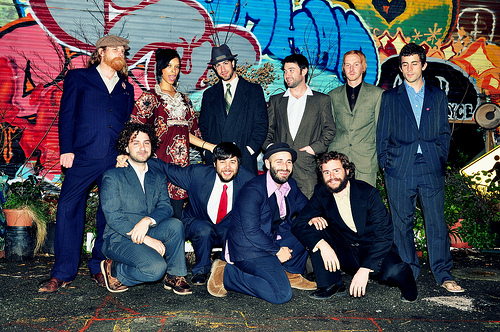
Sun Hop Fat is a local 12-piece inspired by the ecstatic late 1960s Swinging Addis period of Ethio-pop, which itself was at least partially inspired by James Brown. The modern band lays out that inspiration groundwork in each track, building off the legacy and adding its own grooves, coming off like a jazzy Ethio-pop orchestra.


Fronted by vocalist-flautist Krystal Nzoiwu and Bay Area native Daniel Silberstein, Sun Hop Fats’ silky flow, joyously booming brass, and funky rhythm section create naturally bopping underground jazz club atmospheres, and are said to inspire a live dance experience. One might assume a hindrance to on-stage movement given their sheer quantity, yet they do indeed incite the party promised.

The East Bay band brings that raucous party west this weekend for a headlining Slim’s show alongside some psychedelic soul bands traveling up the coast from Santa Cruz.

http://www.youtube.com/watch?v=PMBH8syvmwo

Year and location of origin:  2008 in the Belly of the Vulcan Lofts, Fruitvale.

Band name origin:  Taken from a market near our practice space. We liked the sound and the fact that we could buy gummies and live animals there.

Band motto: Put your faith in the Red Chair of Doom.

Description of sound in 10 words or less: Mulatu Astake inspired dark jazz and soul from Ethiopia’s Swinging Addis period.

Instrumentation: Horns: Krystal Nzoiwu (flute and vocals) Dan Sarna (trumpet) Scotty Maxx (trumpet) Nicholas Gyorkos (trombone), Ryan Morgan (trombone) Jeremy Greene (tenor sax). Rhythm section: Harrison Murphy (keys), Reese Bullen (drums) Jesse Toews (bass) Theo Winston (guitar) Daniel Silberstein (Percussion and vocals).

Most recent release: The Fernet Suite on Electric Sparkyland Records.

Best part about life as a Bay Area band: Great venues, great friends, strong dancers, good drinks.

Worst part about life as a Bay Area band: Public transportation system in the East Bay. No 24/7 BART trains.

First album ever purchased: Theo, Appetite for Destruction by Guns ‘N’ Roses;  Daniel:  3 Years, 5 Months & 2 Days in the Life Of… by Arrested Development.

Most recent album purchased/downloaded:  Theo: Queen “A Day at the Races,” waiting for the new Dirty Projectors album;  Daniel : Blue Mitchell “Booty” and Takamba.

Favorite local eatery and dish: Theo: The El Gordo taco truck on International Blvd. Al parstor tacos!; Daniel: Phnom Phen House, I have been eating BBQ chicken there since I was 10.

Sun Hop Fat
With Harry & the Hit Men, On the Spot Trio
Fri/13, 9pm, $13
Slim’s
333 11 St., SF
(415) 255-0333
www.slimspresents.com

Oakland councilperson responds to Harborside Health Center targeting by feds

19

Have you heard the news about our most Hollywood dispensary getting put on notice by the feds? Harborside Health Center staff, stars of everyone’s favorite marijuana reality show Weed Wars, arrived to work July 9 to a letter from US Attorney Melinda Haag.

She’s no one’s favorite pen pal in the medical cannabis industry these days. (xoxo) In the letter, she filed civil forfeiture actions against Harborside, despite the fact that unlike most of her office’s previous targets, the two Harborside dispensaries are not within 1,000 feet of a school or park. After the federal raid of educational institution Oaksterdam University in April it seems that now, all dispensaries are fair game for federal targeting. This could be curtains for patients’ safe and easy access to cannabis. 

Haag explained her office’s reasoning in a statement released yesterday.

This office has used its limited resources to address those marijuana dispensaries that operate close to schools, parks and playgrounds. As I have said in the past, this is a non-exclusive list of factors relevant to whether we should commence civil forfeiture actions against marijuana properties, and circumstances may require us to address other situations. 

I now find the need to consider actions regarding marijuana superstores such as Harborside. The larger the operation, the greater the likelihood that there will be abuse of the state’s medical marijuana laws, and marijuana in the hands of individuals who do not have a demonstrated medical need.

The filing of the civil forfeiture complaints against the two Harborside properties is part of our measured effort to address the proliferation of illegal marijuana businesses in the Northern District of California.

Basically, no rationale for targeting Harborside besides the fact that it’s a big operation (probably the largest in California.) The situation echoes the recent federal raid of cannabis educational institution Oaksterdam University. Harborside has struggled in the past with castigating audits by the IRS, which declared that the collective was unable to claim simple business expenses on its taxes. 

Oakland city councilperson Rebecca Kaplan recently released a statement in response. Here is the full text:

We are disappointed to learn that yet another licensed, legal and locally regulated medical cannabis facility has come under federal attack.

The last time that the federal government used its resources to go after a permitted facility with no history of crime or violence, there was a school shooting taking place across town while federal agents tagged and bagged medical marijuana plants.

We can’t let this happen again.

The Justice Department has said in the past that it wouldn’t target medical marijuana.

They went back on their word – starting to target medical cannabis facilities allowed under California law.  Then, the U.S. Attorney’s Office said they are specifically targeting cannabis facilities located within 1,000 feet of parks and schools.

Let’s be clear: Harborside Health Center is in compliance with our democratically-enacted laws – and is not near either a park or a school.

During the raid on Oaksterdam University, the federal government used cops – this time they’re using lawyers.

If federal prosecutors have extra time available, I ask – on behalf of my constituents all across the city – that they instead prosecute the illegal gun dealers who are the source of death and violence in Oakland.

Federal agents have worked successfully with local law enforcement this year to go after guns and violence – and we are deeply thankful and appreciative of that help.

That’s what we need more of.

If there are federal resources available, we need them directed against the violent perpetrators and co-conspirators of the senseless gun violence on our streets. 

Local news media reported recently that, on the day of the federal raid and the school shooting, local law enforcement said the federal raid against Oaksterdam University ‘drained the vast majority of [the department’s] west-end staffing thus resulting in several priority calls being stacked — something that might have [been] prevented.

Wasting resources going after legal, licensed and locally regulated medical marijuana facilities is not only inappropriate, but directly harms our ability to fight crime and respond to violence in our city.

We respectfully ask the Justice Department to devote any available resources to fight gun crime and stop the interstate flow of illegal guns into our city.

Thank you.

Guardian Voices: Stop and Frisk didn’t work last time

5

Mayor Lee’s musings before the Chronicle editorial board, in which he revealed his thoughts about instituting a “stop and frisk” policy in San Francisco, set off a very quick negative responses from two of his high-profile supporters in the African American community, Willie Brown and Supervisor Malia Cohen. But that’s only part of the surprise the mayor will face if he pursues this policy.

It wasn’t a real good week for Mayor Lee, who seemed to repeatedly trip himself up:

— In  the chat about stop and frisk;
— In the admission at a Board of  Supervisors hearing by Sutter/CPMC that the economic modeling of the hospital chain’s proposed  project so undermined key elements of the deal that Mayor Lee demanded that it be redone;
— And in his testimony before the Ethics Commission on the Mirkarimi case that brought specific charges of  perjury he has yet to answer.

But the stop and frisk was the most sobering of the three, for it shows a fundamental misunderstanding of the very nature of the city that he seeks to govern and an astounding insensitivity to its not-too-distant past.

The last time stop and frisk was implemented by the San Francisco Police Department was in 1974, at the height of the “Zebra” murders during which, over a six-month period from the end of 1973 to the beginning of 1974, 16 whites were murdered and another six wounded (one of whopm was a young Art Agnos) in shootings using a similar caliber hand gun. What made sensational headlines was the fact that the six survivors all agreed that the shooters were  black. 

Mayor Joe Alioto, facing a steep decline in tourist visits to the city and a drumbeat of headlines, surprised eferyone by announcing a stop and frisk policy aimed at young Black males. Within the first week some 500 stops were made. Not a single Zebra suspect was found.

The San Francisco NAACP and ACLU quickly filed suit in Federal Court where the policy was banned as being un-Constitutional racial profiling. The Zebra case was broken using the time tested technique of offering a reward for information. An informant stepped up, and in the summer of 1974, four men were arrested based upon his information. In 1976 the four men were convicted –and the stop and frisk policy had nothing to do with either their arrest or conviction.  Nothing remained of the failed policy for 38 years.

What did remain was a deep and bitter memory of stop and frisk in the San Francisco African-American community — a memory neither Willie Brown nor Malia Cohen forgot.

If the mayor really believes that stop and frisk will work in the face of deep seated community resentment, based on actual local historic experience – for his remarks were all about “getting the guns” off the street in African American neighborhoods — then he has a profound misunderstanding of the nature of San Francisco.

San Francisco is perhaps one of the two or three most humanly diverse cities in North America. There is a bewildering mix of humans in our city, which confronts any policy based upon appearances — such as stop and frisk — with complexities that often render its actual use on the street ineffective. Simply stated, people are not as they seem in San Francisco, and many San Franciscans prefer to live no other way. Good cops understand this and work hard to learn who is who on the street. That’s called community policing and it often works in San Francisco.  

But many times it doesn’t. Let me tell you a personal story.

During the school year, I try to pick up my two grandsons, Jalius and Jacob, every Tuesday. We spend some time together walking from their school, George Peabody, in the Inner Richmond, to the 33 Stanyan bus stop at Clement and Arguello for a bus ride back to the Haight-Ashbury. We walk and talk and then wait for the bus and talk some more.

A few months ago, we were waiting for the bus, the boys sitting on the bench, me standing and talking. I noticed a cop across the street doing a foot patrol, talking to merchants and customers. He kept looking at us. He was Chinese and my grandsons are half Chinese.  Finally, he walked over to us and with a polite smile asked me why was I talking to these children.

I had an idea that was why he came over so I was expecting the question. I smiled back to him and said, proudly, “these are my grandsons, Jalius and Jacob”.  He looked at me and then turned to the boys and said “is he?” They said “yes” and he looked back at me and said “just doing my job,”  and turned and walked away.

And what a tough job it is as people are often other than they look in San Francisco. Old white men are not always what they seem, and young black men are not always what they seem, no matter how low they ware their pants. Policies based upon things being exactly as they appear will be overwhelmed by the human reality of the City of St. Francis.

There is a connection between people in this physically compact city of ours that forms a foundation for a common political outlook when it comes to personal and group rights and freedoms. San Francisco is a center-left city on matters of civil and human rights. Local elections have shown time after time that on civil and human rights the usual political divisions between the various parts of San Francisco don’t obtain. Trying to push a center-right stop and frisk policy on San Francisco will politically isolate Ed Lee, making all other parts of his agenda that much more difficult to accomplish. And as a city we need to get some big things done, quickly. Let’s move on, together, and get them done.

Delta delight

1

arts@sfbg.com

FILM In the annual hothouse atmosphere of Sundance, even mediocre or bad new American narrative features are cocooned in an atmosphere of self-congratulation — at least until the reviews come out a few hours later. Movies that are actually pretty good invariably become “great” for the duration of the festival; with everyone searching for something to hyperventilate about, one need only light a birthday candle to set off a roman candle of hyperbole. Most of these movies come out a few months, waving their festival awards, only to look significantly diminished in the sober light of day (and decreased altitude). Suddenly they’re, well, just pretty good.

With the occasional exception, of course. Six months after winning the Grand Jury Prize at Sundance (and a Cannes Camera d’Or), Beasts of the Southern Wild proves capable of enduring a second or third viewing with its originality and strangeness fully intact. Magical realism is a primarily literary device that isn’t attempted very often in U.S. cinema, and succeeds very rarely. But this intersection between Faulkner and fairy tale, a fable about — improbably — Hurricane Katrina, is mysterious and unruly and enchanting, an imaginative leap of unusual ambition and accomplishment for a first feature.

Ostensibly based on a stage play — co-scenarist Lucy Alibar’s Juicy and Delicious, said to be a bluegrass musical — Benh Zeitlin’s film is wildly cinematic from the outset, as voiceover narration from six-year-old Hushpuppy (Quvenzhané Wallis) offers simple commentary on her rather fantastical life. She abides in the Bathtub, an imaginary chunk of bayou country south of New Orleans whose residents live closer to nature, amid the detritus of civilization. Seemingly everything is some alchemical combination of scrap heap, flesh, and soil. What might look like an unhygienic, frightening, child-abusive nightmare to any Social Services authority is to Hushpuppy a constant playground, and to her elders a sort of pagan-libertarian utopia.

http://www.youtube.com/watch?v=Wqt5m0OBkjE

Before the story has gotten properly started there’s a community celebration with fireworks, music, guns fired into the air, babies crawling everywhere — a celebration of nothing in particular, at least that we can tell. But as our heroine says, “The Bathtub has more holidays than the rest of the world.” It is clear that, for that and many other reasons, its citizens have no use for the rest of the world.

She lives with her father Wink (Dwight Henry) — albeit in separate ramshackle trailers on stilts — a fierce, erratic man with unknown demons who’s seldom outright unkind but acts less like a father than an Outward Bound coach, teaching his charge the tools to survive on her own. (In addition to slopping the livestock and pets, she can already make dinner for herself, lighting the stove with a blowtorch.) But one day he disappears, leaving Hushpuppy without human company beyond the memory of a long-absent mother she nonetheless frequently talks to. When Wink returns, it’s in a hospital gown and bracelet; whatever happened, he doesn’t want to discuss it.

Soon they have bigger things to worry about, anyway, as “the storm” is coming — prompting all but a few stubborn holdouts (well-fortified by alcohol) to evacuate the Bathtub. Wink and child aren’t going anywhere, waiting it out instead in a shack then floating to safety in their boat (a decapitated truck bed).

The area is fully flooded, however, and an illegal breach of a remaining levee drains it but can’t repair the devastation wrought on plants, animals, and homes. The holdouts are forced at federal gunpoint to evacuate at last, sequestered in a relief shelter-hospital whose sterility and order is as alien to them as the surface of Mars. Worse, this exile hastens the serious illness Wink was able to keep (mostly) at bay in the Bathtub — as the wary say, hospitals are where sick people go to die.

With its elements of magic (or at least the illustration of a child’s belief in such), mythological exodus, and evolutionary biology — Gina Montana’s Amazonian schoolmarm Miss Bathsheeba defines her eat-or-be-eaten perspective with “Everything is part of the buffet of the universe” — Beasts goes way out on a conceptual limb. Particularly for a low-budget movie with non-professional actors; you could argue it achieves many (if not more) of the same goals Terrence Malick’s 2011 The Tree of Life did at a fraction of that film’s cost and length. Its messiness is an organic virtue, with grainy imagery whose hand-held spastic camerawork (by Ben Richardson) is for once much more than a trendy stylistic choice; the instability feels in synch with Hushpuppy’s world, in vibrates with the slightest clue provided by glance, weather, or instinct.

The frenetic yet amorphous atmosphere might on a first viewing make you question whether there’s really much story beneath the busy aesthetic surface, but in fact for all its freely digressive air Beasts is pretty tightly constructed. (Nonetheless, you can imagine the editors scratching their heads initially over how this footage might possibly cut together, unless they were in on the project from the start.) Adding to that spectral, hyperreal effect is a score by Dan Zomer and Zeitlin that combines keening or plucked strings with the ethereal chime of a glockenspiel, at times sounding like a Sufjan Stevens instrumental.

There are moments of real enchantment, like an all-girls’ side trip to a floating bordello whose bosomy ladies surrender to their maternal instincts, or the recurrent glimpses that see Hushpuppy’s hog gradually morph into a thundering pack of tusked, primeval wild boars. (Toward the end especially, this latter effect underlines the notion that the film’s closest recent antecedent is Spike Jonze’s 2009 Where the Wind Things Are, another child’s feral fantasy.)

Through it all the pint-sized Wallis (who was just five when she was chosen from some 4000 auditioning kids) strides with astonishing alertness and confidence, a vulnerable minor one minute, as regally self-possessed as Pam Grier in Coffy (1973) the next.

It would almost be a shame if she did anything else — this performance would be best preserved as a mysterious lone bolt from the blue, just as the movie itself seems to capture unrepeatable lightning in a bottle.


BEASTS OF THE SOUTHERN WILD opens Fri/6 in San Francisco.

Stop ‘stop and frisk’

4

EDITORIAL If the San Francisco Police Department put up checkpoints and metal detectors all along lower Market Street and stopped and searched every person who walked by, they’d find some contraband. No question — a certain percentage of people on the city’s main downtown artery are carrying drugs or weapons. Some have warrants out. There would be multiple arrests and criminals taken off the streets.

And it’s hard to imagine that anyone would consider that a good idea.

So how about moving those checkpoints to the Mission and Bayview-Hunters Point? You might get even more weapons and drugs. And it would still be a profound violation of the civil liberties of every San Franciscan.

But what Mayor Ed Lee is now talking about — instituting some version of the notorious New York City “stop and frisk” law — isn’t much different. Under New York Mayor Michael Bloomberg, the police have been given the authority to search, without cause or a warrant, anyone who looks suspicious. The goal is to get guns off the street.

The result: The vast majority of people stopped are African American or Latino — and 88 percent are totally innocent.

It is, in other words, a huge waste of police resources as well as a systematic program or racial profiling and harassment.

Lee told the San Francisco’ Chronicle’s editorial board that he realized the problems with the New York system and wants a better model. And he said, correctly, that there are serious problems with gun violence, particularly in Bayview-Hunters Point. “I think we have to get to the guns,” Lee said. “I know we have to find a different way to get to these weapons, and I’m very willing to consider what other cities are doing.”

But San Francisco has spent huge amounts of time and resources trying (not always successfully) to build a community policing program that would increase trust between the police and communities of color — and any version of “stop and frisk” would instantly undermine that effort. It’s a terrible idea, and Lee should make it clear that he is dropping any discussion or consideration of it.

The mayor and his supporters insist that they’ll only pursue this approach if it can be done without profiling. But that’s almost impossible and it’s a fantasy to think the San Francisco cops, once empowered to stop anyone for any reason, would target white people the same way they do blacks and Latinos. There’s never been an example anywhere in the country where this kind of law was anything but a case study in racial profiling. Even Police Chief Greg Suhr sounds dubious.

The fact that Lee would even suggest this is a sign of how far he’s moved from his progressive roots. Moving even a step further toward this sort of wholesale civil-liberties violation would be a disaster for San Francisco.

Abs! Abs! Abs! And a few other new movies…

0

As a nation reacts with faux-surprise to the news of TomKat’s demise, one question remains: what movie to see this weekend to ease the faux-pain? You could ogle Magic Mike‘s ludicrously luscious abs (review below); guffaw in spite of yourself at Family Guy creator Seth MacFarlane’s big-screen leap, Ted; or suffer through Woody Allen’s latest, To Rome With Love (a big reason I won’t be seeing it: Dennis Harvey’s review).

You could get in line for The Amazing Spider-Man, which I have seen but am not allowed to whisper a word about until its opening Tuesday, July 3. Ahem.

Or, you could hit up the Roxie, which is opening both a strange nugget of sci-fi-ish weirdness and a Beat-gen classic (and while you’re there, pick up tickets for the theater’s July 6 kung-fu double feature). Also of note: Canadian Léa Pool’s eye-opening documentary about “breast cancer culture.” Reviews below.

OR, you could get a jump start on the holiday by watching the most patriotic movie of all time, probably screening on a basic cable channel as you read this. Welcome to Earth!

Magic Mike With conservatives continuing to hammer away at the reproductive rights that we all took for granted, just so they can reset the time machine for the Eisenhower age, it speaks volumes that red-blooded American women are so excited about this movie. Their desire-slash-gaze continues to be marginalized, while throwback pinups and chesty manscapers continue to shoot come-hither looks to the dudes, both straight and gay. That might be why director Steven Soderbergh harks directly to the then-new freedoms of the ‘70s with the opening shot of his male stripper opus: the boxy old Warner Bros. logo, which evokes the gritty, sexualized days of Burt Reynolds, Raquel Welch, and Joe Namath posing in pantyhose. Was that really the last time women, en masse, were welcome to ogle to their heart’s content, pre-AIDS, pre-teen abstinence? That might be the case considering the outburst of applause when a nude Channing Tatum rises after a hard night in a threesome, in Magic Mike’s first five minutes.

Ever the savvy film historian, Soderbergh toys with the conventions of the era, from the grimy quasi-redneck realism of Reynolds’ ‘70s movies to the hidebound framework of the period’s gay porn, almost for his own amusement, though the viewer might be initially confused about exactly what year they’re in. Veteran star stripper Mike (Tatum) is working construction, stripping to the approval of many raucous ladies and their stuffable dollar bills, and jumping in the sack with psych student Joanna (Olivia Munn). He decides to take college-dropout blank-slate hottie Adam (Alex Pettyfer) under his wing and ropes him into the strip club, owned by Dallas (Matthew McConaughey, whose formidable abs look waxily preserved) and show him the ropes of stripping and having a good time, much to the disapproval of Adam’s more straight-laced sister Brooke (Cody Horn, daughter of Warner Bros. president Alan Horn). Really, though, all Mike wants to do is become a furniture designer.

Boasting Foreigner’s “Feels like the First Time” as its theme of sorts and spot-on, hot choreography by Alison Faulk (who’s worked with Madonna and Britney Spears), Magic Mike takes off and can’t help but please the crowd when it turns to the stage, with Tatum and McConaughey filling out the none-too-challenging narrative and their sparsely sketched characters where they can. Unfortunately the dour, chemistry-free budding romance between Mike and Brooke sucks the air out of the proceedings every time it comes into view, which is way too often. The ladies in the audience will also be frustrated that this wasn’t, say, a male version of Frederick Wiseman’s, ahem, penetrating 2011 Crazy Horse and certainly less of the thrill ride they might have been promised. (1:50) (Kimberly Chun)

Beyond the Black Rainbow Sci-fi in feel and striking look even though it’s set in the past (1983, with a flashback to 1966), Canadian writer-director Cosmatos’ first feature defies any precise categorization — let alone attempts to make sense of its plot (such as there is). Arboria is a corporate “commune”-slash laboratory where customers are promised what everyone wants — happiness — even as “the world is in chaos.” Just how that is achieved, via chemicals or whatnot, goes unexplained. In any case, the process certainly doesn’t seem to be working on Elena (Eva Allan), a near-catatonic young woman who seems to be the prisoner as much as the patient of sinister Dr. Nyle (Michael Rogers). The barely-there narrative is so enigmatic at Arboria that when the film finally breaks out into the external world and briefly becomes a slasher flick, you can only shrug — if it had suddenly become a musical, that would have been just as (il-)logical. Black Rainbow is sure to frustrate some viewers, but it is visually arresting, and some with a taste for ambiguous, metaphysical inner-space sci-fi à la Solaris (1972) have found it mesmerizing and profound. As they are wont to remind us, half of its original audience found 1968’s 2001: A Space Odyssey boring, pointless and walk out-worthy, too. (1:50) Roxie. (Dennis Harvey)

http://www.youtube.com/watch?v=l5TDkXnycrk

The Connection The first re-release in a project to restore all of quintessential 1960s American independent director Shirley Clarke‘s features, this 1961 vérité-style drama was adapted from a controversial off-Broadway play by Jack Gelber. Set exclusively in a dingy Greenwich Village crash pad, it captures a little time in the lives of several junkies there — many off-duty jazz musicians — listlessly waiting for the return of their dealer, Cowboy. To mimic the stage version’s breaking of the fourth wall between actors and spectators, Clarke added the device of two fictive filmmakers who are trying to record this “shocking” junkie scene, yet grow frustrated at their subjects’ levels of cooperation and resistance. With actors often speaking directly to the camera, and all polished stage language and acting preserved, The Connection offers a curious, artificial realm that is nonetheless finally quite effective and striking. A prize-winner at Cannes, it nonetheless had a very hard time getting around the censors and into theaters back home. Hard-won achievement followed by frustration would be a frequent occurrence for the late Clarke, who would only complete one more feature (a documentary about Ornette Coleman) after 1964’s Cool World and 1967’s Portrait of Jason, before her 1997 demise. She was a pioneering female indie director — and her difficulty finding projects unfortunately also set a mold for many talented women to come. (1:50) Roxie. (Dennis Harvey)

Pink Ribbons, Inc. This enraging yet very entertaining documentary by Canadian Léa Pool, who’s better known for her fiction features (1986’s Anne Trister, etc.), takes an excoriating look at “breast cancer culture” — in particular the huge industry of charitable events whose funds raised often do very little to fight the cease, and whose corporate sponsors in more than a few cases actually manufacture carcinogenic products. It’s called “cause marketing,” the tactic of using alleged do gooderism to sell products to consumers who then feel good about themselves purchasing them. Even if said product and manufacturer is frequently doing less than jack-all to “fight for the cure.” The entertainment value here is in seeing the ludicrous range to which this hucksterism has been applied, selling everything from lingerie and makeup to wine and guns; meanwhile the march, walk, and “fun run” for breast cancer has extended to activities as extreme (and pricey) as sky-diving. Pool lets her experts and survivors critique misleading the official language of cancer, the vast sums raised that wind up funding very little prevention or cure research (as opposed to, say, lucrative new pharmaceuticals with only slight benefits), and the products shilled that themselves may well cause cancer. It’s a shocking picture of the dirt hidden behind “pink-washing,” whose siren call nonetheless continues to draw thousands and thousands of exuberant women to events each year. They’re always so happy to be doing something for the sisterhood’s good — although you might be doing something better (if a little painful) by dragging friends inclined toward such deeds to see this film, and in the future question more closely just whether the charity they sweat for is actually all that charitable, or is instead selling “comforting lies.” (1:38) (Dennis Harvey)

Film Listings

0

Film listings are edited by Cheryl Eddy. Reviewers are Kimberly Chun, Max Goldberg, Dennis Harvey, and Lynn Rapoport. For rep house showtimes, see Rep Clock.

OPENING

The Amazing Spider-Man Spidey returns in a post-Raimi reboot. (Opens Tue/3.) (2:18)

Beyond the Black Rainbow Sci-fi in feel and striking look even though it’s set in the past (1983, with a flashback to 1966), Canadian writer-director Cosmatos’ first feature defies any precise categorization — let alone attempts to make sense of its plot (such as there is). Arboria is a corporate “commune”-slash laboratory where customers are promised what everyone wants — happiness — even as “the world is in chaos.” Just how that is achieved, via chemicals or whatnot, goes unexplained. In any case, the process certainly doesn’t seem to be working on Elena (Eva Allan), a near-catatonic young woman who seems to be the prisoner as much as the patient of sinister Dr. Nyle (Michael Rogers). The barely-there narrative is so enigmatic at Arboria that when the film finally breaks out into the external world and briefly becomes a slasher flick, you can only shrug — if it had suddenly become a musical, that would have been just as (il-)logical. Black Rainbow is sure to frustrate some viewers, but it is visually arresting, and some with a taste for ambiguous, metaphysical inner-space sci-fi à la Solaris (1972) have found it mesmerizing and profound. As they are wont to remind us, half of its original audience found 1968’s 2001: A Space Odyssey boring, pointless and walk out-worthy, too. (1:50) Roxie. (Harvey)

The Connection The first re-release in a project to restore all of quintessential 1960s American independent director Shirley Clarke’s features, this 1961 vérité-style drama was adapted from a controversial off-Broadway play by Jack Gelber. Set exclusively in a dingy Greenwich Village crash pad, it captures a little time in the lives of several junkies there — many off-duty jazz musicians — listlessly waiting for the return of their dealer, Cowboy. To mimic the stage version’s breaking of the fourth wall between actors and spectators, Clarke added the device of two fictive filmmakers who are trying to record this “shocking” junkie scene, yet grow frustrated at their subjects’ levels of cooperation and resistance. With actors often speaking directly to the camera, and all polished stage language and acting preserved, The Connection offers a curious, artificial realm that is nonetheless finally quite effective and striking. A prize-winner at Cannes, it nonetheless had a very hard time getting around the censors and into theaters back home. Hard-won achievement followed by frustration would be a frequent occurrence for the late Clarke, who would only complete one more feature (a documentary about Ornette Coleman) after 1964’s Cool World and 1967’s Portrait of Jason, before her 1997 demise. She was a pioneering female indie director — and her difficulty finding projects unfortunately also set a mold for many talented women to come. (1:50) Roxie. (Harvey)

Corpo Celeste A 13-year-old girl comes of age in Italy’s deeply Catholic Calabrian region. (1:40) SF Film Society Cinema.

Magic Mike A movie about male strippers with an unlikely director (Steven Soderbergh) and a predictably abs-tastic cast: Channing Tatum, Matthew McConaughey, and Joe Manganiello. (1:50)

People Like Us The opening song — James Gang’s can’t-fail “Funk #49” — only partially announces where this earnest family drama is going. Haunted by a deceased music-producer patriarch, barely sketched-out tales of his misadventures, and a soundtrack of solid AOR, this film has mixed feelings about its boomer bloodlines, much like the recent Peace, Love and Misunderstanding: these boomer-ambivalent films are the inverse of celebratory sites like Dads Are the Original Hipsters. Commodity-bartering wheeler-dealer Sam (Chris Pine) is skating on the edges of legality — and wallowing in his own kind of Type-A prickishness — so when his music biz dad passes, he tries to lie his way out of flying back home to see his mother Lillian (Michelle Pfeiffer), with his decent law student girlfriend (Olivia Wilde). He doesn’t want to face the memories of his self-absorbed absentee-artist dad, but he also doesn’t want to deal with certain legal action back home, so when his father’s old lawyer friend drops a battered bag of cash on him, along with a note to give it to a young boy (Michael Hall D’Addario) and his mother Frankie (Elizabeth Banks), he’s beset with conflict. Should he take the money and run away from his troubles or uncover the mysterious loved ones his father left behind? Director and co-writer Alexa Kurtzman mostly wrote for TV before this, his debut feature, and in many ways People Like Us resembles the tidy, well-meaning dramas about responsibility and personal growth one might still find on, say, Lifetime. It’s also tough to swallow Banks, as gifted as she is as an actress, as an addiction-scarred, traumatized single mom in combat boots. At the same time People Like Us isn’t without its charms, drawing you into its small, specific dramas with real-as-TV touches and the faintest sexy whiff of rock ‘n’ roll. (1:55) Shattuck. (Chun)

Pink Ribbons, Inc. This enraging yet very entertaining documentary by Canadian Léa Pool, who’s better known for her fiction features (1986’s Anne Trister, etc.), takes an excoriating look at “breast cancer culture” — in particular the huge industry of charitable events whose funds raised often do very little to fight the cease, and whose corporate sponsors in more than a few cases actually manufacture carcinogenic products. It’s called “cause marketing,” the tactic of using alleged do gooderism to sell products to consumers who then feel good about themselves purchasing them. Even if said product and manufacturer is frequently doing less than jack-all to “fight for the cure.” The entertainment value here is in seeing the ludicrous range to which this hucksterism has been applied, selling everything from lingerie and makeup to wine and guns; meanwhile the march, walk, and “fun run” for breast cancer has extended to activities as extreme (and pricey) as sky-diving. Pool lets her experts and survivors critique misleading the official language of cancer, the vast sums raised that wind up funding very little prevention or cure research (as opposed to, say, lucrative new pharmaceuticals with only slight benefits), and the products shilled that themselves may well cause cancer. It’s a shocking picture of the dirt hidden behind “pink-washing,” whose siren call nonetheless continues to draw thousands and thousands of exuberant women to events each year. They’re always so happy to be doing something for the sisterhood’s good — although you might be doing something better (if a little painful) by dragging friends inclined toward such deeds to see this film, and in the future question more closely just whether the charity they sweat for is actually all that charitable, or is instead selling “comforting lies.” (1:38) Opera Plaza, Shattuck, Smith Rafael. (Harvey)

Ted Here’s that crass comedy about a talking teddy bear from Seth MacFarlane you didn’t ask for. (1:46) California.

To Rome with Love See “Midnight in Woodyland.” (1:52) Albany, Embarcadero.

Tyler Perry’s Madea’s Witness Protection Pretty sure Madea has made more movies than James Bond at this point. (1:54)

ONGOING

Abraham Lincoln: Vampire Hunter Are mash-ups really so 2001? Not according to the literary world, where writer Seth Graham-Smith has been doing brisk trade in gore-washing perfectly interesting historical figures and decent works of literature — a fan fiction-rooted strategy that now reeks of a kind of camp cynicism when it comes to a terminally distracted, screen-aholic generation. Still, I was strangely excited by the cinematic kitsch possibilities of Graham-Smith’s Lincoln alternative history-cum-fantasy, here in the hands of Timur Bekmambetov (2004’s Night Watch). Historians, prepare to fume — it helps if you let go of everything you know about reality: as Vampire Hunter opens, young Lincoln learns some harsh lessons about racial injustice, witnessing the effects of slavery and the mistreatment of his black friend Will. As a certain poetic turn would have it, slave owners here are invariably vampires or in cahoots with the undead, as is the wicked figure, Jack Barts (Marton Csokas), who beats both boys and sucks Lincoln’s father dry financially. In between studying to be a lawyer and courting Mary Todd (Mary Elizabeth Winstead), the adult Lincoln (Benjamin Walker) vows to take revenge on the man who caused the death of his mother and enters the tutelage of vampire hunter Henry (Dominic Cooper), who puts Abe’s mad skills with an ax to good use. Toss in a twist or two; more than few freehand, somewhat humorous rewrites of history (yes, we all wish we could have tweaked the facts to have a black man working by Lincoln’s side to abolish slavery); and Bekmambetov’s tendency to direct action with the freewheeling, spectacle-first audacity of a Hong Kong martial arts filmmaker (complete with at least one gaping continuity flaw) — and you have a somewhat amusing, one-joke, B-movie exercise that probably would have made a better short or Grindhouse-esque trailer than a full-length feature — something the makers of the upcoming Pride and Prejudice and Zombies should bear in mind. (1:45) 1000 Van Ness, SF Center, Sundance Kabuki. (Chun)

Bel Ami Judging from recent attempts to shake off the gloomy atmosphere and undead company of the Twilight franchise, Robert Pattinson enjoys a good period piece, but hasn’t quite worked out how to help make one. Last year’s Depression-era Water for Elephants was a tepid romance, and Declan Donnellan and Nick Ormerod’s belle epoque–set Bel Ami is an ungainly, oddly paced adaptation of the Guy de Maupassant novel of the same name. A down-and-out former soldier of peasant stock, Georges Duroy (Pattinson) — or “Bel Ami,” as his female admirers call him — gains a brief entrée into the upper echelons of France’s fourth estate and parlays it into a more permanent set of social footholds, campaigning for the affections of a triumvirate of Parisian power wives (Christina Ricci, Uma Thurman, and Kristin Scott Thomas) as he makes his ascent. His route is confusing, though; the film pitches forward at an alarming pace, its scenes clumsily stacked together with little character development or context to smooth the way, and Pattinson’s performance doesn’t clarify much. Duroy shifts perplexingly between rapacious and soulful modes, eyeing the ladies with a vaguely carnivorous expression as he enters drawing rooms, dining rooms, and bedrooms, but leaving us with little sense of his true appetites or other motivations. (1:42) Lumiere, Smith Rafael. (Rapoport)

Bernie Jack Black plays the titular new assistant funeral director liked by everybody in small-town Carthage, Tex. He works especially hard to ingratiate himself with shrewish local widow Marjorie (Shirley MacLaine), but there are benefits — estranged from her own family, she not only accepts him as a friend (then companion, then servant, then as virtual “property”), but makes him her sole heir. Richard Linklater’s latest is based on a true-crime story, although in execution it’s as much a cheerful social satire as I Love You Philip Morris and The Informant! (both 2009), two other recent fact-based movies about likable felons. Black gets to sing (his character being a musical theater queen, among other things), while Linklater gets to affectionately mock a very different stratum of Lone Star State culture from the one he started out with in 1991’s Slacker. There’s a rich gallery of supporting characters, most played by little-known local actors or actual townspeople, with Matthew McConaughey’s vainglorious county prosecutor one delectable exception. Bernie is its director’s best in some time, not to mention a whole lot of fun. (1:39) Balboa, Embarcadero, Shattuck, SF Center, Smith Rafael. (Harvey)

The Best Exotic Marigold Hotel (1:42) Albany, Piedmont, Sundance Kabuki.

Brave Pixar’s latest is a surprisingly familiar fairy tale. Scottish princess Merida (voiced by Kelly Macdonald) would rather ride her horse and shoot arrows than become engaged, but it’s Aladdin-style law that she must marry the eldest son of one of three local clans. (Each boy is so exaggeratedly unappealing that her reluctance seems less tomboy rebellion than common sense.) Her mother (Emma Thompson) is displeased; when they quarrel, Merida decides to change her fate (Little Mermaid-style) by visiting the local spell-caster (a gentle, absent-minded soul that Ursula the Sea Witch would eat for brunch). Naturally, the spell goes awry, but only the youngest of movie viewers will fear that Merida and her mother won’t be able to make things right by the end. Girl power is great, but so are suspense and originality. How, exactly, is Brave different than a zillion other Disney movies about spunky princesses? Well, Merida’s fiery explosion of red curls, so detailed it must have had its own full-time team of animators working on it, is pretty fantastic. (1:33) Balboa, 1000 Van Ness, Shattuck, Sundance Kabuki. (Eddy)

A Cat in Paris This year’s Best Animated Film nominees: big-budget entries Kung Fu Panda 2, Puss in Boots, and eventual winner Rango, plus Chico and Rita, which opened just before Oscar night, and French mega-dark-horse A Cat in Paris. Sure, Jean-Loup Felicioli and Alain Gagnol’s film failed to cash in on 2011’s Paris craze, but it’s still a charming if featherweight noir caper, being released stateside in an English version that features the voices of Marcia Gay Harden and Anjelica Huston. A streetwise kitty named Dino spends his days hanging with Zoey, a little girl who’s gone mute since the death of her father — a cop killed in the line of duty. Zoey’s mother (Harden), also a cop, is hellbent on catching the murderer, a notorious crook named Costa who runs his criminal empire with Reservoir Dogs-style imprecision. At night, Dino sneaks out and accompanies an affable burglar on his prowlings. When Zoey falls into Costa’s clutches, her mom, the thief, and (natch) the feisty feline join forces to rescue her, in a series of rooftop chase scenes that climax atop Notre Dame. At just over an hour, A Cat in Paris is sweetly old-fashioned and suitable for audiences of all ages, though staunch dog lovers may raise an objection or two. (1:07) Opera Plaza. (Eddy)

The Dictator As expected, The Dictator is, yet again, Sacha Baron Cohen doing his bumbling-foreigner shtick. Said character (here, a ruthless, spoiled North African dictator) travels to America and learns a heaping teaspoon of valuable lessons, which are then flung upon the audience — an audience which, by film’s end, has spent 80 minutes squealing at a no-holds-barred mix of disgusting gags, tasteless jokes, and schadenfreude. If you can’t forgive Cohen for carbon-copying his Borat (2006) formula, at least you can muster admiration for his ability to be an equal-opportunity offender (dinged: Arabs, Jews, African Americans, white Americans, women of all ethnicities, and green activists) — and for that last-act zinger of a speech. If The Dictator doesn’t quite reach Borat‘s hilarious heights, it’s still proudly repulsive, smart in spite of itself, and guaranteed to get a rise out of anyone who watches it. (1:23) Metreon, Shattuck. (Eddy)

Elena The opening, almost still image of breaking dawn amid bare trees — the twigs in the foreground almost imperceptibly developing definition and the sky gradually growing ever lighter and pinker in the corners of the frame — beautifully exemplifies the crux of this well-wrought, refined noir, which spins slowly on the streams of dog-eat-dog survival that rush beneath even the most moneyed echelons of Moscow. Sixtyish former nurse Elena (Nadezhda Markina) is still little more than a live-in caretaker for Vladimir (Andrey Smirnov), her affluent husband of almost 10 years. She sleeps in a separate bed in their modernist-chic condo and dutifully funnels money to her beloved layabout son and his family. Vladimir has less of a relationship with his rebellious bad-seed daughter (Yelena Lyadova), who may be too smart and hedonistic for her own good. When a certain unlikely reunion threatens Elena’s survival — and what she perceives as the survival of her own spawn — a kind of deadly dawn breaks over the seemingly obedient hausfrau, and she’s driven to desperate ends. Bathing his scenes in chilled blue light and velvety dark shadows, filmmaker Andrey Zvyagintsev (2003’s The Return) keeps a detached but close eye on the proceedings while displaying an uncanny talent for plucking the telling detail out of the wash of daily routine and coaxing magnetic performances from his cast. (1:49) Lumiere. (Chun)

Found Memories The literal Portuguese-to-English translation of this film’s title — “stories that exist only when remembered” — is clunky, but more poignantly accurate than Found Memories. At first, it’s not entirely clear if Brazilian Júlia Murat is making a narrative or a documentary. In an tiny, isolated community populated by elderly people, Madalena (Sonia Guedes) follows a schedule she’s kept for years, probably decades: making bread, attending church, doing chores, tending the cemetery gates, writing love letters to a long-absent partner (“Isn’t it strange that after all these years, I still find your things around the house?”), and grousing at the “annoying old man” who grinds the town’s coffee beans. One day, young photographer Rita (Lisa Fávero) drifts into the village, an exotic import from the outside, modern world. Slowly, despite their differences, the women become friends. That’s about it for plot, but as this deliberately-paced film reflects on aging, dying, and memories (particularly in the form of photographs), it offers atmospheric food for thought, and a few moments of droll humor. Note, however, that viewer patience is a requirement to reap its rewards. (1:38) SF Film Society Cinema. (Eddy)

Headhunters Despite being the most sought-after corporate headhunter in Oslo, Roger (Aksel Hennie) still doesn’t make enough money to placate his gorgeous wife; his raging Napoleon complex certainly doesn’t help matters. Crime is, as always, the only solution, so Roger’s been supplementing his income by stealthily relieving his rich, status-conscious clients of their most expensive artworks (with help from his slightly unhinged partner, who works for a home-security company). When Roger meets the dashing Clas Greve (Nikolaj Coster-Waldau of Game of Thrones) — a Danish exec with a sinister, mysterious military past, now looking to take over a top job in Norway — he’s more interested in a near-priceless painting rumored to be stashed in Greve’s apartment. The heist is on, but faster than you can say “MacGuffin,” all hell breaks loose (in startlingly gory fashion), and the very charming Roger is using his considerable wits to stay alive. Based on a best-selling “Scandi-noir” novel, Headhunters is just as clever as it is suspenseful. See this version before Hollywood swoops in for the inevitable (rumored) remake. (1:40) Lumiere. (Eddy)

The Hunger Games Katniss Everdeen (Jennifer Lawrence) is a teenager living in a totalitarian state whose 12 impoverished districts, as retribution for an earlier uprising, must pay tribute to the so-called Capitol every year, sacrificing one boy and one girl each to the Hunger Games. A battle royal set in a perilous arena and broadcast live to the Capitol as gripping diversion and to the districts as sadistic propaganda, the Hunger Games are, depending on your viewpoint, a “pageant of honor, courage, and sacrifice” or a brutal, pointless bloodbath involving children as young as 12. When her little sister’s name comes up in the annual lottery, Katniss volunteers to take her place and is joined by a boy named Peeta Mellark (Josh Hutcherson), with whom she shares an old, unspoken bond. Tasked with translating to the screen the first installment of Suzanne Collins’s rabidly admired trilogy, writer-director Gary Ross (2003’s Seabiscuit, 1998’s Pleasantville) telescopes the book’s drawn-out, dread-filled tale into a manageable two-plus-hour entertainment, making great (and horrifying) use of the original work’s action, but losing a good deal of the narrative detail and emotional force. Elizabeth Banks is comic and unrecognizable as Effie Trinket, the two tributes’ chaperone; Lenny Kravitz gives a blank, flattened reading as their stylist, Cinna; and Donald Sutherland is sufficiently creepy and bloodless as the country’s leader, President Snow. More exceptionally cast are Woody Harrelson as Katniss and Peeta’s surly, alcoholic mentor, Haymitch Abernathy, and Stanley Tucci as games emcee Caesar Flickerman, flashing a bank of gleaming teeth at each contestant as he probes their dire circumstances with the oily superficiality of a talk show host. (2:22) 1000 Van Ness. (Rapoport)

Hysteria Tanya Wexler’s period romantic comedy gleefully depicts the genesis of the world’s most popular sex toy out of the inchoate murk of Victorian quackishness. In this dulcet version of events, real-life vibrator inventor Mortimer Granville (Hugh Dancy) is a handsome young London doctor with such progressive convictions as a belief in the existence of germs. He is, however, a man of his times and thus swallows unblinking the umbrella diagnosis of women with symptoms like anxiety, frustration, and restlessness as victims of a plague-like uterine disorder known as hysteria. Landing a job in the high-end practice of Dr. Robert Dalrymple (Jonathan Pryce), whose clientele consists entirely of dissatisfied housewives seeking treatments of “medicinal massage” and subsequent “parosysm,” Granville becomes acquainted with Dalrymple’s two daughters, the decorous Emily (Felicity Jones) and the first-wave feminist Charlotte (Maggie Gyllenhaal). A subsequent bout of RSI offers empirical evidence for the adage about necessity being the mother of invention, with the ever-underused Rupert Everett playing Edmund St. John-Smythe, Granville’s aristocratic friend and partner in electrical engineering. (1:35) Opera Plaza. (Rapoport)

The Intouchables Cries of “racism” seem a bit out of hand when it comes to this likable albeit far-from-challenging French comedy loosely based on a real-life relationship between a wealthy white quadriplegic and his caretaker of color. The term “cliché” is more accurate. And where were these critics when 1989’s Driving Miss Daisy and 2011’s The Help — movies that seem designed to make nostalgic honkies feel good about those fraught relationships skewed to their advantage—were coming down the pike? (It also might be more interesting to look at how these films about race always hinge on economies in which whites must pay blacks to interact with/educate/enlighten them.) In any case, Omar Sy, portraying Senegalese immigrant Driss, threatens to upset all those pundits’ apple carts with his sheer life force, even when he’s shaking solo on the dance floor to sounds as effortlessly unprovocative, and old-school, as Earth, Wind, and Fire. In fact, everything about The Intouchables is as old school as 1982’s 48 Hrs., spinning off the still laugh-grabbing humor that comes with juxtaposing a hipper, more streetwise black guy with a hapless, moneyed chalky. The wheelchair-bound Philippe (Francois Cluzet) is more vulnerable than most, and he has a hard time getting along with any of his nurses, until he meets Driss, who only wants his signature for his social services papers. It’s not long before the cultured, classical music-loving Philippe’s defenses are broken down by Driss’ flip, somewhat honest take on the follies and pretensions of high culture — a bigger deal in France than in the new world, no doubt. Director-writer Olivier Nakache and Eric Toledano aren’t trying to innovate —they seem more set on crafting an effervescent blockbuster that out-blockbusters Hollywood — and the biggest compliment might be that the stateside remake is already rumored to be in the works. (1:52) Embarcadero. (Chun)

The Invisible War Kirby Dick’s searing documentary takes a look at the prevalence of rape within U.S. military ranks, a problem whose unbelievably high levels of occurrence would long ago have caused huge public outcry and imposed reform in any other institutional context. Yet because it’s the military — where certain codes of loyalty, machismo, and insularity dominate from the grunt level to the highest ranks — the issue has not only been effectively kept secret, but perpetrators almost never suffer any disciplinary measures, let alone jail time or dishonorable discharges. Meanwhile the women — some studies estimate 20% of all female personnel (and 1% of the men) suffer sexual assault from colleagues — are further traumatized by an atmosphere that creates ideal conditions for stalking, rape, and “blame the victim” aftermaths from superiors. (Indeed, for many the superior to whom they would have reported an attack was the one who attacked them.) Most end up quitting promising service careers (often pursued because of generations of family enlistment), dealing with the serious mental health consequences on their own. The subjects who’ve come forward on the issue here are inspiring in their bravery, and dedication to a patriotic cause and vocation that ultimately, bitterly betrayed them. Their stories are so engrossing that The Invisible War is as compulsively watchable as its topic and statistics are inherently appalling. (1:39) Metreon. (Harvey)

Jiro Dreams of Sushi Celebrity-chef culture has surely reached some kind of zeitgeist, what with the omnipresence of Top Chef and other cooking-themed shows, and the headlines-making power of people like Paula Deen (diabetes) and Mario Batali (sued for ripping off his wait staff). Unconcerned with the trappings of fame — you’ll never see him driving a Guy Fieri-style garish sports car — is Jiro Ono, 85-year-old proprietor of Sukiyabashi Jiro, a tiny, world-renowned sushi restaurant tucked into Tokyo’s Ginza station. Jiro, a highly-disciplined perfectionist who believes in simple, yet flavorful food, has devoted his entire life to the pursuit of “deliciousness” — to the point of sushi invading his dreams, as the title of David Gelb’s reverential documentary suggests. But Jiro Dreams of Sushi goes deeper than food-prep porn (though, indeed, there’s plenty of that); it also examines the existential conflicts faced by Jiro’s two middle-aged sons. Both were strongly encouraged to enter the family business — and in the intervening years, have had to accept the soul-crushing fact that no matter how good their sushi is, it’ll never be seen as exceeding the creations of their legendary father. (1:21) Bridge. (Eddy)

Madagascar 3: Europe’s Most Wanted (1:33) Metreon, 1000 Van Ness.

Marvel’s The Avengers The conflict — a mystical blue cube containing earth-shattering (literally) powers is stolen, with evil intent — isn’t the reason to see this long-hyped culmination of numerous prequels spotlighting its heroic characters. Nay, the joy here is the whole “getting’ the band back together!” vibe; director and co-writer Joss Whedon knows you’re just dying to see Captain America (Chris Evans) bicker with Iron Man (a scene-stealing Robert Downey Jr.); Thor (Chris Hemsworth) clash with bad-boy brother Loki (Tom Hiddleston); and the Hulk (Mark Ruffalo) get angry as often as possible. (Also part of the crew, but kinda mostly just there to look good in their tight outfits: Jeremy Renner’s Hawkeye and Scarlett Johansson’s Black Widow.) Then, of course, there’s Nick Fury (Samuel L. Jackson) running the whole Marvel-ous show, with one good eye and almost as many wry quips as Downey’s Tony Stark. Basically, The Avengers gives you everything you want (characters delivering trademark lines and traits), everything you expect (shit blowing up, humanity being saved, etc.), and even makes room for a few surprises. It doesn’t transcend the comic-book genre (like 2008’s The Dark Knight did), but honestly, it ain’t trying to. The Avengers wants only to entertain, and entertain it does. (2:23) Metreon, 1000 Van Ness. (Eddy)

Men in Black III Why not? It’s been ten years since Men in Black II (the one where Lara Flynn Boyle and Johnny Knoxville — remember them? — played the villains), Will Smith has barely aged, and he hasn’t made a full-on comedy since, what, 2005’s Hitch? Here, he does a variation on his always-agreeable exasperated-guy routine, clashing with his grim, gimlet-eyed partner Agent K (Tommy Lee Jones, and in a younger incarnation, a spot-on Josh Brolin) in a plot that involves a vicious alien named Boris (Flight of the Conchords’ Jermaine Clement), time travel, Andy Warhol, the moon (as both space-exploration destination and modern-day space-jail location), and lines that only Smith’s delivery can make funny (“This looks like it comes from planet damn.“) It’s cheerful (save a bit of melodrama at the end), crisply paced, and is neither a must-see masterpiece nor something you should mindfully sleep through if it pops up among your in-flight selections. Oh, and it’s in 3D. Well, why not? (1:42) 1000 Van Ness, SF Center, Shattuck. (Eddy)

Moonrise Kingdom Does Wes Anderson’s new film mark a live-action return to form after 2007’s disappointingly wan Darjeeling Limited? More or less. Does it tick all the Andersonian style and content boxes? Indubitably. In the most obvious deviation Anderson has taken with Moonrise, he gives us his first period piece, a romance set in 1965 on a fictional island off the New England coast. After a chance encounter at a church play, pre-teen Khaki Scout Sam (newcomer Jared Gilman) instantly falls for the raven-suited, sable-haired Suzy Bishop (Kara Hayward, ditto). The two become pen pals, and quickly bond over the shared misery of being misunderstood by both authority figures and fellow kids. The bespectacled Sam is an orphan, ostracized by his foster parents and scout troop (much to the dismay of its straight-arrow leader Edward Norton). Suzy despises her clueless attorney parents, played with gusto by Bill Murray and Frances McDormand in some of the film’s funniest and best scenes. When the two kids run off together, the whole thing begins to resemble a kind of tween version of Godard’s 1965 lovers-on the-lam fantasia Pierrot le Fou. But like most of Anderson’s stuff, it has a gauzy sentimentality more akin to Truffaut than Godard. Imagine if the sequence in 2001’s The Royal Tenenbaums where Margot and Richie run away to the Museum of Natural History had been given the feature treatment: it’s a simple yet inspired idea, and it becomes a charming little tale of the perils of growing up and selling out the fantasy. But it doesn’t feel remotely risky. It’s simply too damn tame. (1:37) California, Metreon, Piedmont, Sundance Kabuki, Vogue. (Michelle Devereaux)

Oslo, August 31st Heroin movies are rarely much fun, and Oslo is no exception, though here the stress lies not in grisly realism but visceral emotional honesty. Following an abortive, Virginia Woolf-esque suicide attempt during evening leave from his rehab center, recovering addict Anders visits Oslo for a job interview. He reconnects bittersweetly with an old friend, tries and fails to meet up with his sister, and eventually submerges himself in the nightlife that once fueled his self-destruction. Expressionistic editing conveys Anders’ sense of detachment and urge for release, with scenes and sounds intercut achronologically and striking sound design which homes in on stray conversations. A late intellectual milieu is signified throughout, quite humorously, by serious discussions of popular television dramas, presumably an update of similar concerns addressed in Pierre Drieu La Rochelle’s 1931 novel Le Feu follet, on which the film is based. (1:35) Opera Plaza, Smith Rafael. (Sam Stander)

Peace, Love and Misunderstanding How is that even as a bona fide senior, Jane Fonda continues to embody this country’s ambivalence toward women? I suspect it’s a testament to her actorly prowess and sheer charisma that she’s played such a part in defining several eras’ archetypes — from sex kitten to counterculture-heavy Hanoi Jane to dressed-for-success feminist icon to aerobics queen to trophy wife. Here, among the talents in Bruce Beresford’s intergenerational chick-flick-gone-indie as a loud, proud, and larger-than-life hippie earth mama, she threatens to eclipse her paler, less colorful offspring, women like Catherine Keener and Elizabeth Olsen, who ordinarily shine brighter than those that surround them. It’s ostensibly the tale of high-powered lawyer Diane (Keener): her husband (Kyle MacLachlan) has asked for a divorce, so in a not-quite-explicable tailspin, she packs her kids, Zoe (Olsen) and Jake (Nat Wolff), into the car and heads to Woodstock to see her artist mom Grace (Fonda) for the first time in two decades. Grace is beyond overjoyed — dying to introduce the grandchildren to her protests, outdoor concerts, and own personal growhouse — while urbanite Diane and her kids find attractive, natch, diversions in the country, in the form of Jude (Jeffrey Dean Morgan), Cole (Chace Crawford), and Tara (Marissa O’Donnell). Yet there’s a lot of troubled water for the mother and daughter to cross, in order to truly come together. Despite some strong characterization and dialogue, Peace doesn’t quite fly — or make much sense at its close — due to the some patchy storytelling: the schematic rom-com arch fails to provide adequate scaffolding to support the required leaps of faith. But that’s not to deny the charm of the highly identifiable, generous-spirited Grace, a familiar Bay Area archetype if there ever was one, who Fonda charges with the joy and sadness of fallible parent who was making up the rules as she went along. (1:36) Smith Rafael. (Chun)

Prometheus Ridley Scott’s return to outer space — after an extended stay in Russell Crowe-landia — is most welcome. Some may complain Prometheus too closely resembles Scott’s Alien (1979), for which it serves as a prequel of sorts. Prometheus also resembles, among others, The Thing (1982), 2001: A Space Odyssey (1968), and Event Horizon (1997). But I love those movies (yes, even Event Horizon), and I am totally fine with the guy who made Alien borrowing from all of them and making the classiest, most gorgeous sci-fi B-movie in years. Sure, some of the science is wonky, and the themes of faith and creation can get a bit woo-woo, but Prometheus is deep-space discombobulation at its finest, with only a miscast Logan Marshall-Green (apparently, cocky dude-bros are still in effect at the turn of the next millennium) marring an otherwise killer cast: Noomi Rapace as a dreamy (yet awesomely tough) scientist; Idris Elba as Prometheus‘ wisecracking captain; Charlize Theron as the Weyland Corportation’s icy overseer; and Michael Fassbender, giving his finest performance to date as the ship’s Lawrence of Arabia-obsessed android. (2:03) Metreon, 1000 Van Ness, Sundance Kabuki. (Eddy)

Rock of Ages (2:03) 1000 Van Ness, SF Center, Sundance Kabuki.

Safety Not Guaranteed San Francisco-born director Colin Trevorrow’s narrative debut feature Safety Not Guaranteed, written by Derek Connolly, has an improbable setup: not that rural loner Kenneth (Mark Duplass) would place a personal ad for a time travel partner (“Must bring own weapons”), but that a Seattle alt-weekly magazine would pay expenses for a vainglorious staff reporter (Jake Johnson, hilarious) and two interns (Aubrey Plaza, Karan Soni) to stalk him for a fluff feature over the course of several days. The publishing budget allowing that today is true science-fiction. But never mind. Inserting herself “undercover” when a direct approach fails, Plaza’s slightly goth college grad finds she actually likes obsessive, paranoid weirdo Kenneth, and is intrigued by his seemingly insane but dead serious mission. For most of its length Safety falls safely into the category of off-center indie comedics, delivering various loopy and crass behavior with a practiced deadpan, providing just enough character depth to achieve eventual poignancy. Then it takes a major leap — one it would be criminal to spoil, but which turns an admirable little movie into something conceptually surprising, reckless, and rather exhilarating. (1:34) Metreon, Shattuck. (Harvey)

Seeking a Friend for the End of the World A first directorial feature for Lorene Scafaria, who’d previously written Nick and Norah’s Infinite Playlist (2008) — another movie dubiously convinced that sharing its Desert Island Discs equals soulfulness — Seeking is an earnest stab at something different that isn’t different enough. Really, the film isn’t anything enough — funny, pointed, insightful, surprising, whatever. Lars von Trier’s Melancholia (2011), for all its faults, ended the world with a bang. This is the whimper version. An asteroid is heading smack toward Earth; we are fucked. News of this certainty prompts the wife of insurance company rep Dodge Peterson (Steve Carell) to walk out — suggesting that with just days left in our collective existence, she would rather spend that time with somebody, anybody, else. When vandals force Dodge to flee his apartment building, he teams up with “flaky, irresponsible” neighbor Penny (Keira Knightley) for a tepid road-trip dramedy. Carell’s usual nuanced underplaying has no context to play within — Dodge is a loser because he’s … what? Too nice? His character’s angst attributable to almost nothing, Carell has little to play here but the same put-upon nice guy he’s already done and done again. So he surrenders the movie to Knightley, who exercises rote “quirky girl” mannerisms to an obsessive-compulsive degree, her eyes alone overacting so hard it’s like they’re doing hot yoga on amphetamines. It’s an empty, showy performance whose neurotically artificial character one can only imagine a naturally reserved man like Dodge would flee from. That we’re supposed to believe otherwise stunts Scafaria’s parting exhale of pure girly romanticism — admirable for its wish-fulfillment sweetness, lamentable for the extent that good actors in two-dimensional roles can’t turn passionate language into emotion we believe in. (1:41) Metreon, 1000 Van Ness, Piedmont, Shattuck, Sundance Kabuki. (Harvey)

Snow White and the Huntsman It’s unclear why the zeitgeist has blessed us this year with two warring iterations of the Snow White fairy tale, one broadly comedic (April’s Mirror Mirror), one starkly emo. But it was only natural that Kristen Stewart would land in the latter rendering, breaking open the hearts of swamp beasts and swordsmen alike with the chaste glory of her mien. As Snow White flees the henchmen and hired killers dispatched by her seriously evil stepmother, Queen Ravenna (Charlize Theron), and traverses a blasted, virulent forest populated with hallucinogenic vapors and other life-threatening obstacles, Stewart need not act so much as radiate a dazzling benignity, weeping the tears of a martyr rather than a frightened young girl. (Unfortunately, when required to deliver a rallying declaration of war, she sounds as if she’s speaking in tongues after a heavy hit on the crack pipe.) It’s slightly uncomfortable to be asked, alongside a grieving, drunken huntsman (The Avengers’ Chris Hemsworth), a handful of dwarfs (including Ian McShane and Toby Jones), and the kingdom’s other suffering citizenry, to fall worshipfully in line behind such a creature. But first-time director Rupert Sanders’s film keeps pace with its lovely heroine visually, constructing a gorgeous world in which armies of black glass shatter on battlefields, white stags dissolve into hosts of butterflies, and a fairy sanctuary within the blighted kingdom is an eye-popping fantasia verging on the hysterical. Theron’s Ravenna, equipped in modernist fashion with a backstory for her sociopathic tendencies, is credible and captivating as an unhinged slayer of men, thief of youth, destroyer of kingdoms, and consumer of the hearts of tiny birds. (2:07) Metreon, 1000 Van Ness, Shattuck. (Rapoport)

That’s My Boy (1:55) SF Center.

Ultrasonic Is it madness to imagine a stylish new twist on the claustrophobic conspiracy thriller? Multi-hyphenate director, co-writer, and cinematographer (and musician and software engineer) Rohit Colin Rao manages just that with this head-turning indie feature film debut, while managing to translate a stark indie aesthetic encapsulated by Dischord and Touch and Go bands, lovers of Rust Belt warehouses and waffle houses, culture vultures who revere both Don DeLillo and Wisconsin Death Trip, and critics who lean too hard on the descriptor “angular.” Musician Simon York (Silas Gordon Brigham) is one denizen firmly placed in that cultural landscape, but the pressures of funding his combo’s album, coping with the diminishing returns of his music teacher livelihood, and anticipating the arrival of a baby with his wife, Ruth (Cate Buscher), seem to be piling on his murky brow. Simon begins to hear a hard-to-pin-down sound that no one else can detect, though Ruth’s eccentric and possibly certified conspiracy-theorist brother Jonas (Sam Repshas) is quick to affirm — and build on — his fears. Painting his handsome, stylized mise-en-scène in noiry blacks and wintry whites, Rohit positively revels in this post-punk jewel of a world he’s assembled, and it’s a compelling one even if it’s far from perfect and ultimately shies away from the deepest shadows. (1:30) Roxie. (Chun)

Your Sister’s Sister The new movie from Lynn Shelton — who directed star and (fellow mumblecore director) Mark Duplass in her shaggily amusing Humpday (2009) — opens somberly, at a Seattle wake where his Jack makes his deceased brother’s friends uncomfortable by pointing out that the do-gooder guy they’d loved just the last couple years was a bully and jerk for many years before his reformation. This outburst prompts an offer from friend-slash-mutual-crush Iris (Emily Blunt) that he get his head together for a few days at her family’s empty vacation house on a nearby island. Arriving via ferry and bike, he is disconcerted to find someone already in residence — Iris’ sister Hannah (Rosemarie DeWitt), who’s grieving a loss of her own (she’s split with her girlfriend). Several tequila shots later, two Kinsey-scale opposites meet, which creates complications when Iris turns up the next day. A bit slight in immediate retrospect and contrived in its wrap-up, Shelton’s film is nonetheless insinuating, likable, and a little touching while you’re watching it. That’s largely thanks to the actors’ appeal — especially Duplass, who fills in a blunderingly lucky (and unlucky) character’s many blanks with lived-in understatement. (1:30) Embarcadero, Shattuck, Sundance Kabuki. (Harvey)

Students, parents, teachers march in support of Lakeview sit-in

7

More than 100 gathered outside Oakland City Hall for a rally and march June 23 to celebrate the sit-in at Lakeview Elementary School. The school is one of five that the Oakland School Board voted to close last fall, in a move that would save the city $2 million per year. 

The school’s unofficial reopening was initiated by Lakeview parents, and since has been organized and led by Lakeview parents and teachers. Organizers have also run a People’s School for Public Education, with more than 20 elementary-age children enrolled. Classes ran for the past week from 9am to 3pm and include music, art, gardening, social justice, and PE. A daily picket and rally was held to support the sit-in and the Peoples School at 5pm.

Organizers may extend the people’s school for another week.

The children and students involved in the effort led the march yesterday, which left from City Hall around 1pm. Protesters marched to the school, where they held a community barbecue.

At an Oct. 26 Oakland School Board meeting, the board voted to close Lakeview, along with four other elementary schools, at the end of the school year. The Save Oakland Schools campaign has been working to stop these closures. Lakeview officially shut its doors at the end of this school year, but with the ongoing sit-in, organizers hope to keep it open as long as possible.

The city plans to use the school’s building for administrative offices.

Speakers at the rally included parents and teachers of Oakland elementary school teachers. 

On the march, demonstrators chanted “Whose schools? Our schools!” and “Education is a right! For our children we will fight!” In reaction to police at the kid-led march, some chanted “their kids! They’re cute! Get those guns up off your suit!”

“The Lakeview sit-in demands a stop to all school closure, or the resignation of Tony Smith, superintendent of the Oakland Unified School District. The Sit-In at Lakeview is held in solidarity with all parents and teachers struggling to demand quality public education across the country,” according to a press release.

The now week-long action is the result of collaboration between Occupy Oakland and its various offshoots and the parents and teachers of Lakeview, as parents and teachers lead the efforts.

Photo via Justin Beck

Alerts

0

yael@sfbg.com

THURSDAY 14

Solitary confinement at Pelican Bay, Audre Lourde Room, Women’s Building, 3548 18th St., SF; www.womensbuilding.org. 6:30pm, free. This panel discussion on the use of solitary confinement in the criminal justice system comes soon after a class action lawsuit challenging solitary confinement in California prisons. The Center for Constitutional Rights filed the lawsuit, Ruiz v. Brown, May 31 on behalf of prisoners at Pelican Bay State Prison. The plaintiffs have spent between 10 and 28 years in solitary confinement, generally spending at least 22 hours per day alone in windowless cells, and often denied letters, visits, any sunlight, or time spent outdoors. Many of the plaintiffs also participated in last year’s hunger strikes against inhumane conditions in prison, including solitary confinement. This lawsuit may be the crucial next step in their fight.

FRIDAY 15

India to Ireland, Sports Basement, 1590 Bryant, SF; www.indiatoireland.org. A brother and sister who rode bicylces12,000 km from India to Ireland are back with photos and stories. See what they saw and hear the tales at this fundraiser for Room to Read. The international nonprofit works “to promote literacy and gender equality in education by establishing libraries, constructing classrooms, publishing local-language children’s books, training educators and supporting girls’ education.”

SATURDAY 16

Art, culture and resistance, Redstone building, 2940 16th St., SF; www.norcalsocialism.org. 6pm, $5-10 suggested donation. What’s the music of today’s social justice movement? If it’s anyone, it’s The Coup, and frontman Boots Riley. Riley has written and performed powerful and revolutionary music for decades, from hip hop edutainment concerts that promoted efforts like the Women’s Economic Project Agenda and Copwatch to traveling guerilla hip hop concerts in protest of Prop 21 in 2000. Recently, he’s been organizing with Occupy Oakland. In July, he’ll be teaching a workshop at the Socialism 2012 conference in Chicago; the next month his book, Lyrics in Context, will be released. On Saturday he’ll discuss a tradition he helps to keep alive in Oakland: how art and resistance work together. Refreshments and mingling to follow.

Juneteenth festival, parade starts at African American Arts & Culture Complex, 762 Fulton St., SF; www.sfjuneteenth.org. Parade at 11am, festival runs through June 17. Start summer off right with the biggest Juneteenth festival on the West Coast. Juneteenth commemorates the announcement of the abolition of slavery and celebrates African American heritage, and this year will mark the 62nd annual Juneteenth in the Fillmore District. The two-day festival kicks off with a parade, followed by a family-friendly weekend complete with a classic car and motorcycle show, basketball games, fashion show, petting zoo, pony rides, live entertainment, community info booths and health fair, and more.

SUNDAY 17

African American veterans and the Civil Rights Movement, Niebyl-Proctor Marxist Library, 6501 Telegraph, Oakl; www.marxistlibr.org. 10:30am-12:30pm, free. Despite growing up in a United States that still had Jim Crow laws, African Americans fought in wars throughout the 20th century. When many of them returned and joined in civil rights and black liberation movements, however, they risked their lives once again. Perhaps best known is Medgar Evers, civil rights leader and World War II soldier who was assassinated by a Ku Klux Klan member in 1963. This event will explore the many veterans who joined civil rights struggles, their reasons for doing so, and how, in many cases, experiences in military service prompted involvement in the struggle back home. It will also feature a screening of the documentary Negroes With Guns, which follows the life of Army and Marine Corps veteran Robert F. Williams, who later took up arms against violent racist groups like the KKK as part of his work with the Black Armed Guard.

Pinoy rising

0

arts@sfbg.com

FILM Cinema has had a long and colorful history in the Philippines, with a first “golden age” of home-grown product in the 1950s, a turn toward exportable exploitation films in the ’60s, notable new-wave directors (like Lino Brocka) emerging in the ’70s, and so forth — sustaining one of the world’s most prolific film industries despite difficulties political and otherwise. At the turn of the millennium those wheels were wobbling and slowing, however, hard-hit by a combination of too many low-grade formula films, shrinking audiences, and stiffer competition from slick imported entertainments. The commercial sector stumbled on, but as a shadow of its robust former self.

But there’s something percolating beyond hard consonants on the archipelago these days, signs of a new DIY vigor coming from independent sectors juiced by the inexpensive accessibility of digital technology, undaunted (at least so far) by problems of exhibition and income-generating at home. It’s a sprawling, unpredictable, work-in-progress scene that some figure could well become the next “it” spot for cineaste types seeking one of those spontaneous combustions of fresh talent that arise occasionally where you least expect it — like Romania, to name one recent example.

One person who definitely thinks that’s the case is Joel Shepard, Yerba Buena Center for the Arts’ longtime Film/Video Curator. He’s traveled to the Philippines several times in recent years (once serving on the jury at CineManila), and has previously programmed a few prime examples of the country’s edgy new voices — particularly Brilliante Mendoza, whose notorious 2009 police-corruption grunge horror Kinatay (a.k.a. Butchered) was one of the most hotly divisive Cannes jury-prize winners in recent history. Now YBCA is presenting “New Filipino Cinema,” Shepard’s first “big fat snapshot” — hopefully to be continued on an annual basis — of a wildly diverse current filmic landscape, assembled in collaboration with Manila critic Philbert Ortiz Dy.

Shepard’s program notes call the Philippines “an extremely fascinating country…but the more I learned about the place and its people, the less I felt like I actually understood anything. The truth felt more and more slippery.” One might get a similar sensation watching the films in this expansive (nearly 30 titles, shorts included) sampler, in that they’re all over the map stylistically and thematically — from lyrical to gritty, satirical to anarchistic — suggesting no single defining “movement” or aesthetic to New Filipino Cinema.

Nor should they, since these movies reflect very different cultures, politics, and issues in regions hitherto underrepresented onscreen. After all, Manila isn’t the only place you can get your hands on a digital camera; and Tagalog is primary language for just one-third of all Filipinos.

The series opener has significant local ties: Loy Arcenas is a lauded stage set designer who’s worked frequently with our own American Conservatory Theater. Unavailable for preview, in description his feature directorial debut Niño (2011) sounds redolent of Luchino Visconti and The Garden of the Finzi-Continis (as well as, perhaps, 1975’s Grey Gardens) as it depicts a once grand family of Spanish émigrés living in decrepit splendor, diminished over generations by political inconvenience and a proud, fatal inability to adapt.

Their aristocratic pretensions are a far cry from the rowdier real life captured or depicted in other YBCA selections. A bizarre footnote to the United States’ complicated, incriminating relationship with the Philippines is documented in Monster Jiminez’s Kano: An American and His Harem (2010). Its subject is a Yankee Vietnam vet whose military pension allowed him to construct a sort of one-man imperialist paradise centered around his penis. Whether he was a gracious benefactor, a bullying rapist, or both is a puzzle only clouded further by contradictory input from former/current wives and mistresses (even while he’s in prison), stateside relatives who recall a childhood ideal to shape a sociopath, and the authorities who’ve lately kept him in prison.

War is ongoing, marriage an impractical hope in Arnel M. Mardoquio’s impressive Crossfire (2011), whose young lovers in southern region Mindanao must dodge government-vs.-rebel-vs.-bandit guns as well as a rural poverty sufficient to make our heroine vulnerable to being offered as a lender-debt payoff. Their plight is starkly contrasted with the spectacular scenery of countryside few tourists will ever hazard.

Its atmospheric opposite is Lawrence Fajardo’s Amok (2011), whose thousand threads of seemingly free-floating narrative depict life dedicatedly melting down all race, age, class, and economic divisions during a heat wave passage through one of Manila’s busiest intersections. What birth and development keeps apart gets nail-gunned together, however, once this string of naturalistic vignettes hits a plot device that delivers deus ex machina to all with no melodramatic restraint. Fate also lays heavy hand on the junior protagonists of Mes de Guzman’s At the Corner of Heaven and Earth (2011), a crude but honest neo-realist drama about four orphaned and runaway boys trying to eke out a marginal existence in Nueva Vizcaya.

Should this all sound pretty grim, be informed there’s lots of levity — albeit much of it gallows-humored — on the YBCA slate. Jade Castro’s exuberantly silly Remington and the Curse of the Zombadings (2011) finds the funny in homophobia as its crass young hero (a farcically deft Mart Escudero) is “cursed” by an angry queen he’d insulted to become gay himself; meanwhile somebody goes around their regional burg assassinating cross-dressers via ray-gun. Plus: zombies, and the proverbial kitchen sink. Also on the frivolous side is Antoinette Jadaone’s mockumentary Six Degrees of Separation from Lilia Cuntapay (2011), in which the titular veteran screen thespian struggles for recognition after decades playing bit parts and occasional showier ones, notably as witchy folkloric “aswang” attempting to suck the lifeblood from newborn babes. (See aswang-related coverage in this week’s Trash column, too.)

Yet those are but moderately playful New Filipino Cinema exercises compared to the determined off-map outrages practiced by Mondomanila (2011). This gonzo eruption of spermazoidal huzzah! by multimedia Manila punk underground mover Khavn de la Cruz seeks to leave no societal cavity unexplored, or unoffended. Opening with an infamous quote from Brokedown Palace (1999) star Claire Danes, who characterized Manila as a “ghastly and weird city … [with] no sewage system,” it delivers both fuck-you and fuck-me to that judgment via 75 minutes of mad under caste collage. There isn’t much plot. But there’s variably judged arson, pedophilia, yo-yo trick demonstrations, poultry abuse, upscale mall shopping, voyeuristic pornographia, Tagalog rap, rooftop drum soloing, and limbless-little-person salesmanship of duck eggs.

Further complicating your comprehension of a very complex scene, the YBCA series encompasses avant-garde shorts by veteran John Torres and newer experimentalists. There’s also a free afternoon Indie-Pino Music Fest Sat/9, and on June 17 there’s a postscript: Lav Diaz’s Florentina Hubaldo, CTE, the six-hour latest epic in a career whose patience-testing wide open cinematic spaces make Béla Tarr look like Michael Bay. 

“NEW FILIPINO CINEMA”

June 7-17, $8

Yerba Buena Center for the Arts

701 Mission, SF

www.ybca.org

Rep Clock May 23-29, 2012

0

Schedules are for Wed/23-Tue/29 except where noted. Director and year are given when available. Double and triple features are marked with a •. All times pm unless otherwise specified.

ARTISTS’ TELEVISION ACCESS 992 Valencia, SF; www.atasite.org. $6. “Other Cinema: New Experimental Works,” Sat, 8:30. “Colectivo Cinema Errante presents: Brazilian Voices of Cinema:” At Midnight I’ll Take Your Soul (Marins, 1964) with “Love from Mother Only” (Ramalho, 2003), Sun, 8.

BAY THEATER Aquarium of the Bay, Pier 39, Embarcadero at Beach, SF; www.aquariumofthebay.com. $10-20. “An Evening of Surfing Films,” hosted by Maverick’s surfer Grant Washburn, Thu, 6.

CASTRO 429 Castro, SF; (415) 621-6120, www.castrotheatre.com. $7.50-11. •Harold and Maude (Ashby, 1971), Wed, 3:05, 7, and Brewster McCloud (Altman, 1970), Wed, 4:55, 8:50. •Barfly (Schroeder, 1987), Thu, 7, and Road House (Harrington, 1989), Thu, 9. •Nightmare Alley (Goulding, 1947), Fri, 7, and The Warriors (Hill, 1979), Fri, 9:10. “Marx Brothers Mania:” •Monkey Business (1931), Sat, 2:30, 7:30; Horse Feathers (1932), Sat, 4, 8:50; and Animal Crackers (1930), Sat, 5:25. •Hugo (Scorsese, 2011), Mon-Tue, 7 (also Mon, 2:20), and The Adventures of Tintin (Spielberg, 2011), Mon-Tue, 9:25 (also Mon, 4:45).

CHRISTOPHER B. SMITH RAFAEL FILM CENTER 1118 Fourth St, San Rafael; (415) 454-1222, www.cafilm.org. $6.75-10.25. Bernie (Linklater, 2012), call for dates and times. Bully (Hirsch, 2012), call for dates and times. First Position (Kargman, 2011), call for dates and times. Marley (Macdonald, 2012), call for dates and times. Monsieur Lazhar (Falardeau, 2011), call for dates and times.

PACIFIC FILM ARCHIVE 2575 Bancroft, Berk; (510) 642-5249, bampfa.berkeley.edu. $5.50-9.50. No screenings scheduled; programming resumes June 8.

RICKSHAW STOP 155 Fell, SF; www.musicvideorace.com. $12. “Music Video Race,” featuring new videos and live music by local bands, Sat, 7:30.

ROXIE 3117 and 3125 16th St, SF; (415) 863-1087, www.roxie.com. $6.50-10. “I Wake Up Dreaming 2012: The French Have a Name for It!”: •He Walked By Night (Werker, 1948), Wed, 6:20, 9:45, and The Underworld Story (Endfield, 1950), Wed, 8; •Guns, Girls, and Gangsters (Cahn, 1959), Thu, 6:30, 9:45, and Inside Detroit (Sears, 1956), Thu, 8. Indie Game: The Movie (Pajot and Swirsky, 2012), May 18-24, 7, 9 (also Sat-Sun, 5). Keyhole (Maddin, 2012), May 25-31, 7:15, 9:15 (also Sat-Sun, 3:15, 5). “New Czech Film Films US Tour 2012:” Four Suns (Sláma, 2012), Tue, 6:30; Matchmaking Mayor (Hníková, 2011), Tue, 8:45.

SF FILM SOCIETY CINEMA 1746 Post, SF. $10-11. •Le Rayon Vert (Summer) (Rohmer, 1986), Wed-Thu, 2:15, 6:45, and Four Adventures of Reinette and Mirabelle (Rohmer, 1987), Wed-Thu, 4:30, 9. Once Upon a Time in Anatolia (Ceylan, 2011), May 25-31, 2, 5:30, 8:30.

TOP OF THE MARK InterContinental Mark Hopkins, One Nob Hill, SF; www.topofthemark.com. Free. “Summer Movie Nights:” Gone With the Wind: Part One (Fleming, 1939), Tue, 7:30. Wine tasting at 5:30.

YERBA BUENA CENTER FOR THE ARTS 701 Mission, SF; (415) 978-2787, www.ybca.org. $6-8. “War and Remembrance: The Films of Aleksei Guerman:” My Friend Ivan Lapshin (Guerman, 1984), Thu, 7:30; The Seventh Companion (Guerman and Aronov, 1967), Sat, 7:30; The Fall of Otrar (Amirkulov, 1991), Sun, 2.

The return of Willie Brownism to the sunshine task force

35

As an advocate for the passage of the  San Francisco sunshine ordinance and task force in the early 1990s, I felt obligated to take my first and only City Hall position and serve as a founding member of the task force. I served for l0 years and helped with many other good members to build the task force into a strong and respected agency  for helping citizens get access to records and meetings and hold city officials accountable for suppressing access.

The task force is the only place where citizens can file an access complaint without an attorney or a fee and force a city official, including the mayor, to come before the task force for questioning and a ruling on whether they had violated  sunshine laws, The task force lacked enforcement power, but it still annoyed of city officials, including Mayor Willie Brown.

In fact, Willie spent a good deal of time trying to kick me off the task force. He used one jolly  maneuver after another, even getting an agent to make a phony complaint against me for violating the ordinance with an email. (The complaint went nowhere.) I refused to budge and decided to stay on the task force until Willie left office—on the principle that that neither the mayor nor anybody else from City Hall could arbitrarily kick members off the task force. When Willie left office after two terms, I resigned with the hope that the Willie principle had been established.

The principle held, until last Thursday (May 17) when the board’s rules committee (Sup. Mark Farrell, Chair Jane Kim, and Sup. David Campos) brought Willie Brownism back to the task force with a vengeance. The committee moved to sabotage the task force by sacking or refusing to appoint four qualified candidates from three organizations who are mandated by the ordinance to choose representatives for the task force because of the organizations’ special open government  credentials. Their representatives served as experienced, knowledgeable members who were independent counters to nominees of supervisors who were often  promoting an anti-sunshine agenda. The committee asked the organizations to come up with more names. There was no explanation nor apology to the candidates nor to their organizations. It was a nasty slap at members and organizations that have served the task force well for years. And this arbitrary demand  will make  it virtually impossible for these organizations to come up with a “list of candidates” to run the supervisorial gauntlet.  Who wants to go before the supervisors on a list for a bout of public character assassination?

 Specifically, the committee:

+unanimously moved to sack the two incumbents (Allyson Washburn from the League of Women Voters) and Suzanne Manneh (California New Media.)  The League was mandated to name a representative because of its tradition and experience with good government and public access issues.  California New Media was mandated to name a member to insure there would always be a journalist of color on the task force.

+unanimously refused to seat two representatives from the Northern
California chapter of the Society of Professional Journalists, the sponsor of the ordinance with a long tradition in open government and First Amendment issues.  One SPJ  mandated  representative was for a journalist (Doug Comstock, editor of the West of Twin Peaks Observer, one of the best neighborhood papers in town and a former chair of the task force.) The second mandated seat was for an attorney (Ben Rosenfeld.)

+tried to knock out incumbent Bruce Wolfe on motion of Farrell, but Wolfe survived on a 2-l vote.   

+voted unanimously to approve David Pilpel, a former task force member who is known by observers for delaying meetings with is  bursts of lengthy nitpicking on almost every item.   He then usually votes against citizen complaints and for protecting  city officials on the basis of spotting   “onerous” burdens caused by the complaint

+voted unanimously for four new persons to the task force while sacking  and refusing to appoint able members with experience and expertise without a word of thanks. The four new members are “a “a bunch of neophytes,” according Rick Knee, outgoing SPJ member for 10 years.

Knee, a former task force chair surveying the carnage,  said that the committee’s actions stemmed “partly from a desire  by some supervisors to sabotage the task force and the ordinance itself, and partly from a vendetta by certain supervisors after the task force found several months ago that the board violated local and state open meeting laws when it railroaded some last minute changes to a contract on the Park Merced development project without allowing sufficient time for public service review and comment.” He noted that the developer “had slipped in a 14-page package of amendments at the llth hour”  to get board approval.

Knee said  that the rules committee is recommending sacking two incumbents and apparently hopes to sack two more. Farrell wanted to push out a fifth but was outvoted by Kim and Campos.  All five candidates, he said,  “have done excellent work, each brought a unique perspective and, while we had our share of disagreements among ourselves, all shared a passion for open government and for making sure that everyone who came before us got a fair hearing.”

Hanley Chan, an outgoing task force member,  backed up Knee’s point in an email. He  wrote that “I spoke with Sup. David Chiu and he told me that the rest of the supervisors will not appoint any incumbent, because we defied the city attorney’s opinion (the Park Merced  case). “”You should have made a right decision. I was told by the city attorney that it was legal, my aides explained it to the task force and you should have made a better judgment.'”  Chan said that the rules committee ouster move  was “retribution on how we voted that day.”  Chan said that “Bruce Wolfe and all the task force members made a wonderful argument and stuck to their guns.” The task force vote was a  unanimous 8-0 vote.The point: defy the supervisors and city attorney and the boys and girls in the back room and  get blasted off   the task force, bang, bang, bang, bang. 

The committee choreographed the move smoothly.  Farrell as the heavy  would make the move. Kim would agree and facilitate as chair. Campos would go along reluctantly. The deputy city attorney would be supine through the process  even though the supervisors were breaking precedent and misinterpreting the ordinance.  Sunshine candidates and advocates in the audience were furious and emails have been crackling back and forth ever since.

Campos later told me that he went along because he could see he didn’t have the votes. He said the organization’s candidates “were eminently qualified,” that they should have been appointed, and that he would fight for them. He said he would ask Kim’s office to set the issue for hearing at the next rules meeting or call for a special meeting. Kim did not return calls for comment.

I asked Campos what the organizations should do. “They should stand by their candidates,” he said.

I concur. The Society of Professional Journalists,  the League of Women Voters, and California New Media and their open government allies should stand by their candidates, lobby for them with the rules committee and the full board, and get out the word about this attempted coup in the most important court of all, the court of public opinion. Make this an election issue with all incumbents and candidates.  Let public officials know there are serious consequences to supporting Willie Brownism on the sunshine task force, the first and best local task force of its kind in the country if not the world.

The good news is that the rules committee has demonstrated, with its sneak attack,  the value of the task force for citizens and open government and why it is a San Francisco institution that needs to be saved and strengthened.  All of this  illustrates once again my  favorite axiom of mine. In San Francisco, the public is generally safe, except when the mayor is in his office and the supervisors are in session. b3


How dark was my alley

0

arts@sfbg.com

FILM The word that comes to mind when thinking of Elliot Lavine’s semiannual film noir programs at the Roxie is inexhaustible. With 30 films packed into 14 days, “I Wake up Dreaming” wisely takes a pass on questions of noir’s quintessence in favor of open-ended research into the mutations and paroxysms of mid-century malaise.

There’s no mistaking genuine masterpieces like The Big Combo (1955) and In a Lonely Place (1950), to say nothing of a still unfathomable crossover work like Detour (1945), but Lavine’s series conspires to induce the genre delirium that first inspired the French critics to call a noir a noir. In spite of the preponderance of dead ends and blind alleys, there’s always a trap door leading into the next movie. So this time around we get Shadow of Terror (1945) rather than Reign of Terror (1949), The Underworld Story (1950) instead of Underworld U.S.A. (1961), Killer’s Kiss (1955) instead of The Killers (versions 1946 or 1964) or Kubrick’s own follow-up The Killing (1956), Shoot to Kill (1947) instead of Born to Kill (1947). Chronologies matter less than interchangeability. You watch Lee Van Cleef’s icy professional in opening night’s The Big Combo (sparkling in a 35mm restoration by UCLA) return as a foaming killer in closing night’s Guns, Girls, and Gangsters (1959). His kind never has time to develop a character on the margins of these already marginal films, but with repetition comes iconography.

John Alton’s rhapsodic cinematography threads four of this year’s selections (The Big Combo; 1948’s Hollow Triumph; 1947’s The Pretender; 1944’s Storm Over Lisbon; and 1948’s He Walked By Night). In the famous finale of Joseph H. Lewis’ The Big Combo, which audaciously sets out to improve upon 1942’s Casablanca‘s even more famous conclusion on the tarmac, the plot seems to exist primarily for the lighting. Cops emerge out of the fog and Jean Wallace’s trophy girl freezes Richard Conte’s sociopath in a spotlight — as pure an effect as anything in F.W. Murnau and in this case providing a perfect echo of an earlier scene of killing as silence rather than light.

Nicholas Ray and Val Lewton protégé Mark Robson lead Saturday’s bill with message movies impugning society’s guilt for a young man’s sins. As with many of the era’s social problem pictures, miles of speechifying script and awkward narrative frames make Knock on Any Door (1949) and Edge of Doom (1950) tough going if still interesting in the particulars. Knock on Any Door is timid next to Ray’s subsequent study in juvenile delinquency, Rebel Without a Cause (1955), but there are premonitions of what’s to come in those moments when the director fully engages his actors’ bodies: when Humphrey Bogart’s world-wary defense lawyer hauls Nick “Pretty Boy” Romano (John Derek) into a back alley to reclaim a debt, for instance, and in the passage when Romano’s wife slumps against the stove after he blows for a robbery. You’re so focused on her balletic movement to the floor that you hardly notice that she’s reaching for the gas.

There’s a similar fascination to Farley Granger performance as a loose cannon in Edge of Doom, lashing out at a world that doesn’t forget about money even when you’re trying to bury your poor mother. As in Ray’s indelible They Live by Night (1949), Granger’s palpable insecurity makes him a key figure for the melancholy shading of noir anxiety.

Prolific director Edward L. Cahn’s Guns, Girls, and Gangsters is the kind of red meat B movie that manages some genuinely weird flourishes in spite of its undeniable limitations as a factory-line commodity. The Vegas heist plot is barely motivation for Mamie Van Doren’s curves, and the film itself blends right in with the roadside motels and cheap nightclubs. It’s a particularly egregious offender in the redundant voice-over category (“It was a moment of great tension for Wheeler”), but then Van Cleef shows up — fresh out of prison with Mamie on the mind. The sight of him lurking outside a motel window at night in his sunglasses is something to remember. Van Doren may be the “merchandise,” as her character says, but Van Cleef conjures noir’s actual libido: leering, desperate, and unpredictable.

The same cheap thrills that Cahn serves up with gusto come under close scrutiny in Stanley Kubrick’s Killer’s Kiss: here we find pulp as object d’art. Made when Kubrick was 27, the film emulates its Times Square setting in its barrage of perceptual jolts — like a Weegee photograph sprung to life. Plenty of noirs delineate capitalist degradations of the city, but rarely with a cleanness of line as the sequence in which Kubrick cuts between a man being prepped for the boxing ring and a woman making herself up for her nightshift as a dancing partner.

It’s all so much meat in Kubrick’s unsparing view, and one might add here that the rain of footsteps trailing down a New York canyon is more eloquent than any of the human dialogue (call it an anti-social problem picture). Kubrick acts as his own cinematographer, making great use of his chops as a magazine photographer to scavenge bitter ironies from street locations. His editing knocks things further lopsided, revealing only mirrors where you expect to find character. You know the hour is late watching Killer’s Kiss and The Big Combo, both of them released in 1955 and both advancing a self-conscious apotheosis of the style in the ruins of its bygone glamour — in a word, modernism. 


“I WAKE UP DREAMING: THE FRENCH HAVE A NAME FOR IT!”

May 11-24, $11

Roxie Theater

3117 16th St., SF

www.roxie.com

Black Power, then and now

17

“We’re not ever to be caught up in the intellectual masturbation of the question of Black Power. That’s a function of people who are advertisers that call themselves reporters.”

That’s how the radical student and civil rights leader Stokely Carmichael opened a speech about Black Power — a term he helped popularize — at UC Berkeley in 1966. But the ideas and concepts behind Black Power proved to be an enduring ones that are enjoying a resurgence today.

Angela Davis epitomized the Black Power movement to many observers. The author, scholar, and professor was a Black Panther Party member who then joined the Communist Party USA and brought a class analysis to issues of race, building on the movement that began in the ’60s for decades to come.

In recent months, as the Occupy Wall Street movement began to focus the country’s attention on economic and social inequities, Davis has spoken out regularly in support of the movement and drawn connections back to her early activism. She has embraced the “99 percent” paradigm, and the connections between various issues that Occupy activists have sought to highlight.

“Our demands for justice lead us toward demands for prison abolition. And our demands for prison abolition lead us to demands for free, quality education. And our demands for free quality healthcare, and housing, and an end to racism, an end to sexism, an end to homophobia,” Davis said March 1 in Oakland at a benefit for Occupy 4 Prisoners, a coalition of Occupy protesters and prison justice advocates.

Consciousness surrounding those connections can be largely attributed to efforts from Black Power organizers.

“When I listen to the way young people so easily talk about the connectedness of race, gender, and sexual issues, and I remember how we groped our way towards an understanding of those connections, it makes me really proud,” Davis said in a January interview with Independent Lens.

And as Davis said at the March 1 event: “One of the most exciting accomplishments of the Occupy movement has been to force us to engage in conversation, explicit conversation about capitalism, for the first time since the 1930s.”

The movement’s economic message also seemed useful to Kiilu Nyasha, a San Francisco-based journalist and former member of the New Haven Black Panther Party.

“Globalization has already happened. It’s not happening, it’s happened. One percent, internationally, owns and controls 80 percent of the world’s resources. People are dying all over the world of every complexion which you can think of” Nyahsa said March 14 at a panel discussion called Reboot the Rainbow.

The original Rainbow Coalition- the topic of the March 14 panel- included the Black Panther Party, the Puerto Rican Young Lords, and the poor white Young Patriots organization, and was committed to a Black Power concept: organize your own, fight together. Building coalition is more important now than ever.

“It’s not Black Power right now,” says Terry Collins, president of KPOO radio, a black-owned station long focused on community empowerment. “It’s people power. It’s power unto the people who are in need: all the people out there who are out of their homes, students who owe so much that they’re like indentured servants.”

Occupy the Hood is a national effort to encourage participation of people of color in Occupy Wall Street. In its mission statement the group writes, “It is imperative that the voice of people of color is heard at this moment!”

The focus of San Francisco’s Occupy the Hood chapter is “three-fold,” according to organizer Mesha Irizarry: “The cop-watching in neighborhoods that are criminalized, especially poor neighborhood of color. It’s freedom fighters against foreclosures. It’s also bank transfers.”

Occupy the Hood showed up March 16, when a group known as the Foreclosure Fighters- organized and supported Alliance of Californians for Community Empowerment, Homes Not Jails, and related groups—occupied their latest foreclosed home. “We’re liberating this house. We’re taking it out of the hands of the oppressor,” said Archbishop Franzo King of the African Orthodox Church.

“Jesus Christ was an uncompromising revolutionary. He spoke truth to power. Then they killed him for it,” added King in a nod to the radical religious leaders who have influenced liberation movements throughout the years.

Black Power was concerned with self-determination, with organizing within community. That legacy is still strong as San Francisco’s African American communities experience an out-migration and continuing police harassment and violence.

“Black sailors and black army personnel built the shipyard,” said Jameel Patterson, a founder of the Bayview-Hunters Point-based community organization Black Star Liner Incorporated. “Hunters Point, West Point, Harbor Road—they’re all military names. The soldiers stayed there with their families. The area has a rich African American legacy going back to the ’40s. Now it’s fading…we want to make sure that community’s still here 20 years from now.”

Patterson remembers being a child in the ’70s when, on the tail of an era brimming with black liberation efforts. “There were more community events,” he said, but now, “People don’t have connections with each other. That’s what we’re building.”

The group does regular events where they serve free home-cooked meals to residents, reminiscent of the Black Panther Party’s free breakfast program. “With every plate, you get information,” often Know Your Rights reminders for encounters with police, said Tracey Bell-Borden of Black Star Liner.

They have also spent countless hours in City Hall meetings advocating for their community and reporting back on city policies that affect it. “We occupy the Police Commission meeting,” said Bell-Borden.

Police are a central and tricky question for the Black Power movement of the ’60s, as well as organizing efforts today. Black Panther Party members spent years serving free breakfast to children, writing and selling newspapers, and even running election campaigns, but they are often remembered for carrying guns and efforts to “police the police.” So many leaders were arrested that energy that could have gone into feeding or education was often channeled into freeing prisoners.

“I was in the second chapter of the Black Panther Party,” Nyasha said at the March 14 event, “which basically existed to get the first chapter out of jail.”

Recent police crackdowns have fed indignation not just about policing protesters, but about the role police play in poor communities of color. “One thing Occupy has done is address the issue of policing in communities of color, to the extent that some aftermath of what we’re seeing at Occupy is shedding light on how police can sometimes treat people,” said Kimberley Thomas Rapp, executive director of the Lawyers’ Committee for Civil Rights of the Bay Area.

“In black neighborhoods, police should be community partners, not come in and exert more force than necessary. And at protests, they should be there to ensure safety, not just to arrest people unnecessarily or use excessive force,” Rapp said.

Police crackdowns on Occupy are the first exposure many white protesters of the younger generation have had to excessive police force, an issue that was central to the story of the Black Power. Sadly, for many black and other protesters of color, excessive police force is nothing new.

“It’s absolutely the case that police brutality shown towards many Occupy protesters has brought to the forefront the issue of police violence and led to an awakening among many white folks of the day to day reality of police violence that many people of color have lived with now for many years,” Michelle Alexander, author of The New Jim Crow, told the Guardian.

Enraged at police beatings (see “OPD spies on and beats protesters,” Feb. 14) both Occupy Oakland and Occupy San Francisco have held “fuck the police” marches. March 18, after a six-month commemoration celebration brought 3,000 to Zuccotti Park in New York City, followed by 200 arrests and rampant police violence, Occupy Wall Street protesters followed suit, holding their first anti-police brutality march.

Occupy Wall Street has reanimated concepts that burned through the ’60s, such as violence vs. nonviolence, the systemic causes of personal economic woes, and the peoples’ relationship to police. With the consciousness created by Black Power activists, today’s organizers have a foundation on which to build their own answers to these questions, across issues and generations.

National Occupy the Hood has called for action concerning Trayvon Martin, the unarmed black 17-year-old who was shot Feb. 26 and whose confessed killer has yet to be arrested. Taking up high-profile cases of injustice and working more closely with organizers to respond to the needs of local African American communities could bring more power and truth to the rage for justice currently galvanizing a new generation.

“It’s about black re-empowerment,” Archbishop King said. “It’s like the torch, the light of freedom and justice, has actually gone out. And we’re trying to relight that. That’s why I’m so excited about the Occupy movement; it ties into the Black Power struggle. And I think it’s waking up some of us old revolutionaries to stand up.”

In the SXSW green room

0

culture@sfbg.com

HERBWISE DIY pop star Lisa Dank doesn’t smoke marijuana to help with her art — smoking weed is her art. The Seattle singer-producer — known for her florid, handmade costumes and gonzo stage presence — crafts odes to cannabis (check out her aural fixation at www.soundcloud.com/lisa-dank), and has a day job at 4Evergreen Group, a patient network that supplies legal and educational resources to its members, as well as physician recommendations for medical marijuana.

Dank was headed down to South By Southwest to do shows at house parties and on the street with the aide of a PA system jacked into her car, but she managed to snag an artist wristband and also logged in hours in the green room chatting with performers about weed culture today. She’ll be publishing her findings in 4Evergreen Group’s new bi-monthly lifestyle magazine — but first, we got her to share her favorite snippets from South By.


TOP 11 MEDICAL MOMENTS FROM A POTSTAR AT SXSW

1. My Omicron hash oil vaporizer pen. Didn’t leave my side. Not even on the airplane. ‘Nuff said.

2. Austin loves pot. Especially at the Wells Fargo. Every time I went to withdraw cash, the point was brought up that I work in the medical marijuana industry. These boys couldn’t get enough! They sang the praise of medical pot (literally — shouting and fist-pumping.) They even brought out their camera-phones to show me the NORML cop car rolling around town.

3. MPP (Most Popular Piece): Quartz glass pieces are popular amongst locals and musicians for their affordability, cleanliness, and durability. Local glass pieces were a close second. Note: My all-star award goes to the editor of UC Berkeley’s student newspaper, who pulled out a gorgeous hand-blown, sandblasted Sherlock similar to the work of glass artist Snic. The editor had bought it at the smokeshop across the street from campus on Bancroft Way. We loaded bowl after bowl of Sour Diesel and Grape Ape six feet from Diplo in the VIP section of Speakeasy’s rooftop patio all Tuesday night, as Teki Latex and the Sound Pelligrino team did their thing.

4. Let’s just say Talib Kweli and his crew are fortunate that I have such a good weed connect in Texas.

5. Chali 2na smokes joints! Hemp extra-long! He had his own stash but took my number just in case. You can never have enough weed connects in Austin. He’s also a sweetheart because he let me use one of his papers.

6. Shiny Toy Guns does not smoke pot.

7. Bands on the run: Brick and Mortar (from New Jersey), Fox and the Law (Seattle), and The Sundresses (Cincinnati) stocked up on buds at home and drove slow all the way down to Austin.

8. Sub-pop recording artists Spoek Mathambo and Thee Satisfaction enjoyed the relief brought forth by the herb after a long walk and checking out Sub Pop’s great showcase at Red 7 on Friday night.

9. Strain trend: Sour Diesel. My guy had it. When he was out, the pedi-cab that I tried to buy from told me he had Sour Diesel too. Just hours later on the official SXSW artist’s deck-lounge at the Austin Convention Center, some locals pulled out two grams of S.D. to roll up in our blunt.

10. Underground future-super-producer Dubbel Dutch had a quandary for me: “I can’t smoke weed anymore! I used to smoke weed every day when I was younger, but now I take one hit and I’m done!”

I explained to him the brain schematics of cannabis, how we have cannabinoid receptors built into our brain but don’t produce cannabinoids endogenously. I hypothesized that his adult brain’s super-sensitivity to THC was due to his excess smoking during the formative years of his brain’s development. I told him he’d trained his brain to be extra-receptive to cannabinoids.

11. Smoking joints throughout my house party set. And for that I thank you, kids of Wilson House.

SXSW Music Day 3: Santigold, Hindi Zahra, Debo Band

0

My third day at South by Southwest kicked off with the big SPIN Magazine party at Stubb’s. Best Coast was wrapping up their set and everyone was eagerly anticipating headliner Santigold.

Santigold’s rhythm section entered the stage wearing Max Headroom-esque caps, then her backup singers came on in outfits that were a spin on matador chic, and finally she came on donning a crown. She’s been busy working on a new album for the past few years, so her high profile gigs at SXSW seem to be serving as a homecoming of sorts.

Jason Newman of Fuse went as far as to dub her the festival’s “prom queen”… hence the crown. While her big hits like L.E.S. Artistes sent the crowd into frenzied sing-a-longs, her new material was received almost as enthusiastically… boding well for her album release come April. 


Later that eve I got to chat with Venezuelan rockers La Vida Boheme before heading to the globalFEST showcase at Speakeasy. Each year globalFEST brings acts from all over the world to New York’s Webster Hall, and this year they’ve taken their act on the road for the first time. As I arrived Janka Nabay and the Bubu Gang were on stage leading the crowd through their high-BPM take on Sierra Leone’s bubu music. 


After the Bubu Gang’s set the globalFEST crowd awaited the Colombian sounds of Queens-based M.A.K.U SoundSystem, but technical issues plagued the venue. Nearly an hour later the band was finally able to get going. Most of the crowd stayed on and it seemed like delaying the gratification heightened their excitement.


I stopped in to see Glen Hansard who’s devoted fans were singing along with every word. Then walked back across to the Nacional Records showcase just in time to catch the beginning of Ritmo Machine‘s set. A collaboration between Chilean beatmaker Latin Bitman and Cypress Hill percussionist Eric Bobo, their set was a mix of impressive turntablism and percussion set to music that ranged from blaxploitation-era soundtracks to Tito Puente. 


After that it was back to globalFEST at Speakeasy where Chicha Libre were playing a psychedelic rendition of Guns of Brixton. From there it was off to see French-Moroccan chanteuse Hindi Zahra who had the crowd in the palm of her hand. 


My night ended with globalFEST’s final set by Boston’s Debo Band. Their take on Ethiopian pop music has garnered notice in the past year and they recently signed on with legendary indie rock label Sub Pop. I first caught the band a little over a year ago and since then their live act has grown by leaps and bounds. They’ve been working with producer Thomas “Tommy T” Gobena of Gogol Bordello and it seems they’ve learned a few things from the Gogol playbook… in terms of the energy and the ecstatic vibe they’re bringing to their performances. Keep an eye out for their release later this summer.


Dame good fun

0

arts@sfbg.com

FILM What with the internet, the paparazzi, Rupert Murdoch’s CIA-level spy techniques, and the general displacement of actual news by “celebrity news,” it’s pretty hard these days for a star of any sort to keep their debauchery private. Not like the good old days, when Hollywood carefully stage-managed publicity and only those who’d become a real liability risked having their peccadilloes exposed.

Such rare windfalls aside, the public were mostly restricted to watching beautiful people behave badly onscreen — a pastime that took a big blow once the censorious Production Code was instituted in 1934. Elliot Lavine’s latest Roxie retrospective of movies from that golden-shower period of post-silents, pre-Nannywood licentiousness — this time entitled “Hollywood Before the Code: Nasty-Ass Films for a Nasty-Ass World!” — provides plentiful early talkie titillation. Now that the bodies involved are long buried, we also know a few tales of their stars’ off-screen misadventures, too.

The week-long series of double bills sports its share of familiar titles, notably Howard Hawks’ terrific original Scarface (1934); Edgar G. Ulmer’s Karloff vs. Lugosi smackdown The Black Cat (1934); and the first, probably best version of H.G. Welles’ prescient biotech fable Island of Lost Souls (1932). There are women in prison (1931’s Ladies of the Big House), women in Faulkner (1933’s The Story of Temple Drake, a watered-down adaptation of W.F.’s then-notorious Sanctuary), women in everything else (1932’s Three On a Match, whose Depression-era Valley of the Dolls-esque trio includes a very young Bette Davis), and just plain Joan Blondell (1933’s Blondie Johnson).

http://www.youtube.com/watch?v=hzxnEDEY2Hs

It’s a few choice dames in lesser-remembered pictures that provide the biggest “nasty-ass” discoveries this go-round, however. March 4 offers a shocking double dose of pure white femininity finding themselves in, ahem, “Yellow Peril” — miscegenation being something Hollywood could only begin to embrace a few decades later. Frank Capra’s atypically erotic The Bitter Tea of General Yen, with Barbara Stanwyck alllllmost surrendering the white flag to a “charismatic Chinese warlord” (Swede Nils Asther, eyes narrowed), has become a minor classic since flopping in 1933.

No such luck for The Cheat (1931), a remake of Cecil B. DeMille’s 1915 shocker that was part of Paramount’s brief, failed attempt to make stage sensation Tallulah Bankhead a movie star. Her gambling-addicted socialite gets branded (literally) in lieu of repayment not by the original’s Far East businessman (dashing Sessue Hayakawa) but by a mere rich Caucasian perv with Sinophile pretensions (Irving Pichel). The big courtroom climax is a notable howler.

Bankhead remained a Broadway star and a popular “personality,” her throaty voice hinting at a semi-private life that included a great deal of bourbon, a fondness for unexpected nudity, and sexual appetites all along the Kinsey scale. After two decades off screen she arguably found her camp métier as a berserk Bible-clutching hag terrorizing Stefanie Powers in 1965’s Die! Die! My Darling.

Much less of a survivor was poor Clara Bow, who was beloved when she played the wild thing yet unduly punished when it turned out that role had relevance in real life. The quintessential flapper and “It Girl” (“it” meaning sex appeal) was never much of an actress, but an incandescent, live-wire screen presence.

Call Her Savage (1932) is a pre-Code jaw-dropper that was supposedly her personal favorite. Running an A-to-Z gamut of emotions (and hairstyles), her Texas heiress heroine Nasa “Dynamite” Springer is “never two minutes the same” — a nice way of saying she’s nuts. In 88 minutes she rides a horse like it’s something else, plays with her mastiff likewise, is near-raped by an estranged husband, turns streetwalker, causes a brawl in Greenwich Village café catering to “wild poets and anarchists,” gets in two catfights, hits the bottle, and finds peace upon discovering she’s a part Indian “half-breed,” which apparently explains all.

Emotionally unstable, due in part to a pretty horrific upbringing, Bow must have related. At the time she was enduring myriad problems, notably some embarrassing public revelations spilled by a blackmailing secretary. Savage would be her next-to-last film, after which she retired into a deep and troubled seclusion.

Heading thataway as well was Juanita Hansen, a silent star who’d gone down in flames a decade earlier thanks to a “Queen of Thrills” image that unfortunately she enacted a little too enthusiastically in real life. She quit cocaine, got hooked on morphine, quit that, and became an anti-drug crusader — but nothing re-ignited her career. Certainly not lone comeback vehicle Sensation Hunters, a 1933 Poverty Row exploiter in which she was fifth-billed as “Trixie Snell,” manager-slash-madam to a troupe of “Hot-Cha Girls” who kinda dance, kinda sing, but mostly roll customers at Panama City’s “Bull Ring Club.” It was a sad exit. Puffy and peroxided, Hansen is all too convincing as a woman with too many hard miles on her to go anywhere but further downhill.

Waaaay uptown — glittering Broadway via glossy Paramount — 1934’s Murder at the Vanities offered the last hurrah for pre-Code naughtiness. And what a hurrah: chorus girls in pasties and less (at one point they simply clutch boobs as if on a latter-day Vanity Fair cover); production numbers like “The Rape of the Rhapsody” (the “rape” being Duke Ellington’s “colored” jazz musicians and dancers invading a classical orchestra with something called “Ebony Rhapsody” — until a white gangster jokingly machine-guns them all down); plus sexual humor so blunt that Jack Oakie ends the film telling a giggly blonde “Come on, let’s do it,” meaning exactly what you think.

http://www.youtube.com/watch?v=xCoj855Vdo8

On the side of the angels — definitely for losers here — there are numerous horrible songs (excepting standard “Cocktails for Two”), gag-inducingly sweet romantic leads, and kitschy-great ideas like having stage impresario Earl Carroll’s patented “Most Beautiful Girls in the World” pose en masse as tropical waves and cosmetics products. Representing Satan and evening gown-wearing pot smokers everywhere is villainous Gertrude Michael, who infamously sings torch song “Sweet Marijuana.” Michael was an elegant stage and radio star whose own recreational taste leaned more toward cocktails for one. Indeed, she was fictionalized as the hard-drinking love object in one-time lover Paul Cain’s 1932 novel Fast One, an early classic of hard boiled American pulp.

Saving the sleaziest for last, the series will truly flabber your gast with its closer. Normally prim MGM found itself reviled in early 1932 with the fleeting release of Tod Browning’s Freaks (playing the Roxie March 3), a much-misunderstood, now celebrated fable starring actual circus sideshow performers. It was considered so grotesque and unsettling that Freaks was banned in many areas — Britain didn’t see it until 1963.

Yet there’s no evidence of any similar backlash to the infinitely scuzzier Kongo, unleashed by Metro a few months later. A remake of Browning’s 1928 Lon Chaney vehicle West of Zanzibar, it stars Walter Huston as wheelchair-bound “Deadlegs” Flint. He’s used cheap magic tricks to appoint himself fearsome white-man “god” amongst spear-carrying tribesmen in a “dunghill” African outpost, all part of an elaborate, insidious plan to wreak vengeance on the rival who stole his wife and health long ago.

What this revenge eventually encompasses reads like a list of nearly everything the Production Code would soon bar from the screen: depicted or suggested drug addiction, alcoholism, prostitution, rape, sadism, and a convent-bred ingénue (Virginia Bruce) recalling “hot hairy hands pawing and mauling” her unwilling virginal body. Not to mention human sacrifice and a unique substance abuse “cure” using leeches.

One can almost hear the censuring voice of Will Hays, the Code’s original enforcer, when one character tells Deadlegs “The swamp’s wholesome compared to you!” It would arguably be 40 years before MGM distributed another movie so flagrantly perverse — and even then the studio was so ashamed they put it (Paul Bartel’s 1972 Private Parts) out under a fake subsidiary’s auspices.


HOLLYWOOD BEFORE THE CODE: NASTY-ASS FILMS FOR A NASTY-ASS WORLD!

March 2-8, $11

Roxie Theater

3117 16th St., SF

www.roxie.com