Girls

All killer, no filler: new movies!

0

Deadites, dino-junkies, indie supporters, doc watchers, foreign-film fans, “Hey Girl” lovers … there’s a little something for all y’all this week. (If you’d prefer to avoid the multiplex, check out the Yerba Buena Center for the Arts’ Pen-ek Ratanaruang series and/or the San Francisco Cinematheque’s Crossroads fest.)

http://www.youtube.com/watch?v=pvDLWlxxcak

Evil Dead “Sacrilege!” you surely thought when hearing that Sam Raimi’s immortal 1983 classic was being remade. But as far as remakes go, this one from Uruguayan writer-director Fede Alvarez (who’d previously only made some acclaimed genre shorts) is pretty decent. Four youths gather at a former family cabin destination because a fifth (Jane Levy) has staged her own intervention — after a near-fatal OD, she needs her friends to help her go cold turkey. But as a prologue has already informed us, there is a history of witchcraft and demonic possession in this place. The discovery of something very nasty (and smelly) in the cellar, along with a book of demonic incantations that Lou Taylor Pucci is stupid enough to read aloud from, leads to … well, you know. The all-hell that breaks loose here is more sadistically squirm-inducing than the humorously over-the-top gore in Raimi’s original duo (elements of the sublime ’87 Evil Dead II are also deployed here), and the characters are taken much more seriously — without, however, becoming more interesting. Despite a number of déjà vu kamikaze tracking shots through the Michigan forest (though most of the film was actually shot in New Zealand), Raimi’s giddy high energy and black comedy are replaced here by a more earnest if admittedly mostly effective approach, with plenty of decent shocks. No one could replace Bruce Campbell, and perhaps it was wise not to even try. So: pretty good, gory, expertly crafted, very R-rated horror fun, even with too many “It’s not over yet!” false endings. But no one will be playing this version over and over and over again as they (and I) still do the ’80s films. (1:31) (Dennis Harvey)

http://www.youtube.com/watch?v=C5RhdCBvwic

Gimme the Loot Biggie Smalls’ track is just a smart starting point for this streetwise, hilarious debut feature by Adam Leon. Young graf artists Malcolm (Ty Hickson) and Sofia (Tashiana Washington) are hustling hard to get paid and fund a valiant effort to tag the Mets’ Home Run Apple to show up rival gang-bangers. The problem lies in raising the exorbitant fee their source demands, either by hook (selling pot to seductive, rich white girls) or crook (offloading cell phone contraband). The absurdity of the pair’s situation isn’t lost on anyone, especially Leon. But their passion to rise above (sorta) and yearning for expression gives the tale an emotional heft, and Gimme the Loot stays with you long after the taggers have moved onto fresh walls. (1:21) (Kimberly Chun)

Jurassic Park 3D “Life finds a way,” Jeff Goldblum’s leather-clad mathematician remarks, crystallizing the theme of this 1993 Spielberg classic, which at its core is more about human relationships than genetically manufactured terrors. Of course, it’s got plenty of those, and Jurassic Park doesn’t really need its (admittedly spiffy) 3D upgrade to remain a thoroughly entertaining thriller. The dinosaur effects — particularly the creepy Velociraptors and fan-fave T. rex — still dazzle. Only some early-90s computer references and Laura Dern’s mom jeans mark the film as dated. But a big-screen viewing of what’s become a cable TV staple allows for fresh appreciation of its less-iconic (but no less enjoyable) moments and performances: a pre-megafame Samuel L. Jackson as a weary systems tech; Bob Peck as the park’s skeptical, prodigiously thigh-muscled game warden. Try and forget the tepid sequels — including, dear gawd, 2014’s in-the-works fourth installment. This is all the Jurassic you will ever need. (2:07) (Cheryl Eddy)

The Place Beyond the Pines Powerful indie drama Blue Valentine (2010) marked director Derek Cianfrance as one worthy of attention, so it’s with no small amount of fanfare that this follow-up arrives. The Place Beyond the Pines‘ high profile is further enhanced by the presence of Bradley Cooper (currently enjoying a career ascension from Sexiest Man Alive to Oscar-nominated Serious Actor), cast opposite Valentine star Ryan Gosling, though they share just one scene. An overlong, occasionally contrived tale of three generations of fathers, father figures, and sons, Pines’ initial focus is Gosling’s stunt-motorcycle rider, a character that would feel more exciting if it wasn’t so reminiscent of Gosling’s turn in Drive (2011), albeit with a blonde dye job and tattoos that look like they were applied by the same guy who inked James Franco in Spring Breakers. Robbing banks seems a reasonable way to raise cash for his infant son, as well as a way for Pines to draw in another whole set of characters, in the form of a cop (Cooper) who’s also a new father, and who — as the story shifts ahead 15 years — builds a political career off the case. Of course, fate and the convenience of movie scripts dictate that the mens’ sons will meet, the past will haunt the present and fuck up the future, etc. etc. Ultimately, Pines is an ambitious film that suffers from both its sprawl and some predictable choices (did Ray Liotta really need to play yet another dirty cop?) Halfway through the movie I couldn’t help thinking what might’ve happened if Cianfrance had dared to swap the casting of the main roles; Gosling could’ve been a great ambitious cop-turned-powerful prick, and Cooper could’ve done interesting things with the Evel Knievel-goes-Point Break part. Just sayin’. (2:20) (Cheryl Eddy)

Reality Director Matteo Garrone’s Cannes Grand Prix winner couldn’t be more different from his 2008 Gomorrah, save one similarity: that film was about organized crime, and dark comedy Reality stars Aniello Arena, a former gangster who was allowed out of prison to shoot his scenes. All things considered, he’s rather winning as Neapolitan everyman Luciano, whose daily life slinging fish can’t compete with his big dreams of appearing on the Italian version of Big Brother. He makes it through the second round of auditions — and soon starts believing he’s being watched by casting agents considering whether to put him on the show. His level-headed wife (Loredane Simioli) suspects he’s being paranoid (as does the audience, before long), though he’s told “never give up!” by cheesy-sleazy Big Brother vet Enzo (Raffaele Ferrante), a character clearly designed to comment on reality TV’s own peculiar brand of insta-fame. Nobody who’s ever watched reality TV will be surprised at the film’s ultimate messages about the hollow rewards of that fame, but Arena’s powerful performance makes the journey worthwhile. (1:55) (Cheryl Eddy)

Renoir The gorgeous, sun-dappled French Riviera setting is the high point of this otherwise low-key drama about the temperamental women (Christa Theret) who was the final muse to elderly painter Auguste Renoir (Michel Bouquet), and who encouraged the filmmaking urges in his son, future cinema great Jean (Vincent Rottiers). Cinematographer Mark Ping Bin Lee (who’s worked with Hou Hsiao-hsein and Wong Kar Wai) lenses Renoir‘s leafy, ramshackle estate to maximize its resemblance to the paintings it helped inspire; though her character, Dédée, could kindly be described as “conniving,” Theret could not have been better physically cast, with tumbling red curls and pale skin she’s none too shy about showing off. Though the specter of World War I looms in the background, the biggest conflicts in Gilles Bourdos’ film are contained within the household, as Jean frets about his future, Dédée faces the reality of her precarious position in the household (which is staffed by aging models-turned-maids), and Auguste battles ill health by continuing to paint, though he’s in a wheelchair and must have his brushes taped to his hands. Though not much really happens, Renoir is a pleasant, easy-on-the-eyes experience. (1:51) (Cheryl Eddy)

The Revolutionary Optimists If the children, as someone once sang, are our future, the inspiring work done by youth activists living in the slums of Kolkata, India hints that there might be brighter days ahead for some of the poorest communities in the world. Under the guidance of Amlan Ganguly and his non-profit, Prayasam, kids whose daily struggles include lacking easy access to drinking water, having to work backbreaking long hours at the local brick field, and worrying that their parents will marry them off as soon as they turn 13, find hope via education and artistic expression. Sensitively directed over the span of several years by Nicole Newnham (who made the excellent 2006 doc The Rape of Europa) and Maren Grainger-Monsen, The Revolutionary Optimists shows stories of both success (12-year-old sparkplug Salim speaks before Parliament about bringing water to his neighborhood) and failure (16-year-old Priyanka is forced into an abusive marriage, ending her dreams of becoming a dance teacher). With harsh reality keeping its stories firmly grounded, the film — which is, of course, ultimately optimistic — offers a look at how the youngest members of a community can help effect real change. (1:23) (Cheryl Eddy)

Ennui and I

0

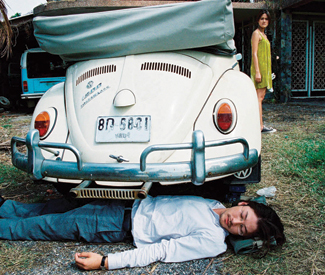
FILM Thai filmmaker Pen-ek Ratanaruang’s international breakthrough, Last Life in the Universe, came out 10 years ago, but its themes of isolation and loneliness still feel very much of the moment. Eternally cool Japanese star Tadanobu Asano plays librarian Kenji, whose Better Off Dead-style existential turmoil leads him to attempt suicide, or at least think long and hard about it, multiple times. His morbid fantasies are varied: hanging (with a note, “This is bliss,” later repurposed by his crass brother as scratch paper: “Gone jogging”); gunshot; bridge-jumping.

The latter brings him into contact with a pair of sisters, Nid and Noi (real-life siblings Laila and Sinitta Boonyasak); when Nid is suddenly killed in a car accident, Kenji and Noi form a cross-cultural attachment against the backdrop of the girls’ ramshackle Bangkok house — a riot of dirty dishes and slobbery that contrasts sharply with Kenji’s obsessively tidy apartment, though that space has been lately littered by two dead bodies, courtesy of some inconvenient yakuza-on-yakuza violence.

Working from a script by Thai writer Prabda Yoon, and benefiting from Christopher Doyle’s meticulous cinematography, Ratanaruang structures his film along a non-linear timeline, suggesting, as Doyle points out in Last Life‘s DVD commentary, the way the human mind jumps back and forth, mixing flashes of memories into perceptions of the present. It’s a film that will most benefit a viewer willing to pay close attention to its “implications, rather than explications, of ideas” (Doyle again), and certainly holds up under repeat viewings. Another added benefit of watching it again: appreciating the humor that Ratanaruang sneaks in on occasion, as when director Takashi Miike (whose Asano-starring 2001 Ichi the Killer is referenced early on), in a cameo as a gangster, tells a woman she has seaweed stuck in her teeth. (It’s all in the delivery.)

Director, writer, cinematographer, and star reunited in 2006 for the noirish Invisible Waves, which has its own moments of dark comedy, as Kyoji (Asano), a chef with underworld ties, murders his lover at the behest of her husband — his boss — before sailing on the world’s grimmest cruise ship from Macau to Phuket. Aboard, he meets a wistful single mother with the familiar name of Noi (Kang Hye-jung from 2003’s Oldboy); her baby’s named Nid. (Another connection to Last Life: a shady, karaoke-loving character who goes by Lizard, echoing a reptilian motif from that earlier film.)

Kyoji’s journey is complicated by his malfunctioning room, with its haywire shower head and temperamental front door. “I’m inside the room and I cannot get out,” the frustrated man explains over the phone to an unhelpful concierge. It’s clear long before he gets off the ship and begins fumbling around an unwelcoming Phuket, however, that the biggest trap Kyoji is caught in was set by his own dubious life choices. Not for nothing does someone dub him “the stupidest smart guy I ever met.”

Ratanaruang’s most recent film, 2011’s Headshot, makes its local debut as part of the Yerba Buena Center for the Arts’ “Thai Dreams: The Films of Pen-ek Ratanaruang.” Dubbed a “Buddhist neo-noir,” Headshot features a flashy poster and an even flashier tag line: “Bangkok’s most dangerous cop is about to have his world turned upside down.” This is meant literally; the film concerns cop-turned-assassin Tul (Nopporn Chaiyanam) who suffers an injury that inverts his eyesight. Thankfully, the film is shot right side up, for the most part — and in Ratanaruang’s hands, what could’ve been a cheap gimmick becomes an entry point into a surprisingly layered tale.

Ratanaruang will be at the YBCA in person — his first-ever visit to San Francisco — for screenings of Headshot (Thu/4) and 2009 ghost story Nymph (Sun/7), which both star Chaiyanam. The YBCA’s retrospective also includes Last Life and Invisible Waves, plus 2007’s Ploy, about an endangered marriage, and 1999’s loopy thriller 6ixtynin9. 

“THAI DREAMS: THE FILMS OF PEN-EK RATANARUANG”

April 4-21, $8–$10

Yerba Buena Center for the Arts

701 Mission, SF

ybca.org/thai-dreams-films-pen-ek-ratanaruang


Film listings

0

Film listings are edited by Cheryl Eddy. Reviewers are Kimberly Chun, Dennis Harvey, Lynn Rapoport, and Sara Maria Vizcarrondo. For rep house showtimes, see Rep Clock.

OPENING

Evil Dead Yep, they remade it. But before you grab your chainsaw in anger, know this: early buzz is actually pretty positive. (1:31)

Gimme the Loot Biggie Smalls’ track is just a smart starting point for this streetwise, hilarious debut feature by Adam Leon. Young graf artists Malcolm (Ty Hickson) and Sofia (Tashiana Washington) are hustling hard to get paid and fund a valiant effort to tag the Mets’ Home Run Apple to show up rival gang-bangers. The problem lies in raising the exorbitant fee their source demands, either by hook (selling pot to seductive, rich white girls) or crook (offloading cell phone contraband). The absurdity of the pair’s situation isn’t lost on anyone, especially Leon. But their passion to rise above (sorta) and yearning for expression gives the tale an emotional heft, and Gimme the Loot stays with you long after the taggers have moved onto fresh walls. (1:21) (Chun)

Jurassic Park 3D Because Velociraptors and Jeff Goldblum are even more awesome in 3D. (2:07)

The Place Beyond the Pines Powerful indie drama Blue Valentine (2010) marked director Derek Cianfrance as one worthy of attention, so it’s with no small amount of fanfare that this follow-up arrives. The Place Beyond the Pines‘ high profile is further enhanced by the presence of Bradley Cooper (currently enjoying a career ascension from Sexiest Man Alive to Oscar-nominated Serious Actor), cast opposite Valentine star Ryan Gosling, though they share just one scene. An overlong, occasionally contrived tale of three generations of fathers, father figures, and sons, Pines‘ initial focus is Gosling’s stunt-motorcycle rider, a character that would feel more exciting if it wasn’t so reminiscent of Gosling’s turn in Drive (2011), albeit with a blonde dye job and tattoos that look like they were applied by the same guy who inked James Franco in Spring Breakers. Robbing banks seems a reasonable way to raise cash for his infant son, as well as a way for Pines to draw in another whole set of characters, in the form of a cop (Cooper) who’s also a new father, and who — as the story shifts ahead 15 years — builds a political career off the case. Of course, fate and the convenience of movie scripts dictate that the mens’ sons will meet, the past will haunt the present and fuck up the future, etc. etc. Ultimately, Pines is an ambitious film that suffers from both its sprawl and some predictable choices (did Ray Liotta really need to play yet another dirty cop?) Halfway through the movie I couldn’t help thinking what might’ve happened if Cianfrance had dared to swap the casting of the main roles; Gosling could’ve been a great ambitious cop-turned-powerful prick, and Cooper could’ve done interesting things with the Evel Knievel-goes-Point Break part. Just sayin’. (2:20) (Eddy)

Reality Director Matteo Garrone’s Cannes Grand Prix winner couldn’t be more different from his 2008 Gomorrah, save one similarity: that film was about organized crime, and dark comedy Reality stars Aniello Arena, a former gangster who was allowed out of prison to shoot his scenes. All things considered, he’s rather winning as Neapolitan everyman Luciano, whose daily life slinging fish can’t compete with his big dreams of appearing on the Italian version of Big Brother. He makes it through the second round of auditions — and soon starts believing he’s being watched by casting agents considering whether to put him on the show. His level-headed wife (Loredane Simioli) suspects he’s being paranoid (as does the audience, before long), though he’s told "never give up!" by cheesy-sleazy Big Brother vet Enzo (Raffaele Ferrante), a character clearly designed to comment on reality TV’s own peculiar brand of insta-fame. Nobody who’s ever watched reality TV will be surprised at the film’s ultimate messages about the hollow rewards of that fame, but Arena’s powerful performance makes the journey worthwhile. (1:55) (Eddy)

Renoir The gorgeous, sun-dappled French Riviera setting is the high point of this otherwise low-key drama about the temperamental women (Christa Theret) who was the final muse to elderly painter Auguste Renoir (Michel Bouquet), and who encouraged the filmmaking urges in his son, future cinema great Jean (Vincent Rottiers). Cinematographer Mark Ping Bin Lee (who’s worked with Hou Hsiao-hsein and Wong Kar Wai) lenses Renoir’s leafy, ramshackle estate to maximize its resemblance to the paintings it helped inspire; though her character, Dédée, could kindly be described as "conniving," Theret could not have been better physically cast, with tumbling red curls and pale skin she’s none too shy about showing off. Though the specter of World War I looms in the background, the biggest conflicts in Gilles Bourdos’ film are contained within the household, as Jean frets about his future, Dédée faces the reality of her precarious position in the household (which is staffed by aging models-turned-maids), and Auguste battles ill health by continuing to paint, though he’s in a wheelchair and must have his brushes taped to his hands. Though not much really happens, Renoir is a pleasant, easy-on-the-eyes experience. (1:51) Clay. (Eddy)

The Revolutionary Optimists If the children, as someone once sang, are our future, the inspiring work done by youth activists living in the slums of Kolkata, India hints that there might be brighter days ahead for some of the poorest communities in the world. Under the guidance of Amlan Ganguly and his non-profit, Prayasam, kids whose daily struggles include lacking easy access to drinking water, having to work backbreaking long hours at the local brick field, and worrying that their parents will marry them off as soon as they turn 13, find hope via education and artistic expression. Sensitively directed over the span of several years by Nicole Newnham (who made the excellent 2006 doc The Rape of Europa) and Maren Grainger-Monsen, The Revolutionary Optimists shows stories of both success (12-year-old sparkplug Salim speaks before Parliament about bringing water to his neighborhood) and failure (16-year-old Priyanka is forced into an abusive marriage, ending her dreams of becoming a dance teacher). With harsh reality keeping its stories firmly grounded, the film — which is, of course, ultimately optimistic — offers a look at how the youngest members of a community can help effect real change. (1:23) (Eddy)

ONGOING

Admission Tina Fey exposes the irritating underbelly of the Ivy League application process as Princeton admissions officer Portia Nathan. When her school falls to number two in U.S. News and World Report‘s annual ranking, Portia and her colleagues are tasked by their boss (Wallace Shawn) with boosting application numbers to bring the university back into the lead. Alterna-school headmaster John Pressman (Paul Rudd) has one more applicant to add to the pile: a charmingly gawky autodidact named Jeremiah (Nat Wolff), who John is convinced is the child Portia gave up for adoption back when they were both students at Dartmouth. Stuck in a dreary 10-year relationship with an English professor (Michael Sheen) whose bedtime endearments consist of absentmindedly patting her on the head while reading aloud from The Canterbury Tales, and seeming less than thrilled with the prospect of another season of sifting through the files of legacies and overachievers, Portia is clearly ripe for some sort of purgative crisis. When it arrives, the results are fairly innocuous, if ethically questionable. Directed by Paul Weitz, the man responsible for bringing Little Fockers (2010) into the world, but About a Boy (2002) as well, Admission is sweet and sometimes funny but unmemorable, even with Lily Tomlin playing Portia’s surly, iconoclast mother. (1:50) 1000 Van Ness, SF Center, Sundance Kabuki. (Rapoport)

Amour Arriving in local theaters atop a tidal wave of critical hosannas, Amour now seeks to tempt popular acclaim — though actually liking this perfectly crafted, intensely depressing film (from Austrian director Michael Haneke) may be nigh impossible for most audience members. Eightysomething former music teachers Georges and Anne (the flawless Jean-Louis Trintignant and Emmanuelle Riva) are living out their days in their spacious Paris apartment, going to classical concerts and enjoying the comfort of their relationship. Early in the film, someone tries to break into their flat — and the rest of Amour unfolds with a series of invasions, with Anne’s declining health the most distressing, though there are also unwanted visits from the couple’s only daughter (an appropriately self-involved Isabelle Huppert), an inept nurse who disrespects Anne and curses out Georges, and even a rogue pigeon that wanders in more than once. As Anne fades into a hollow, twisted, babbling version of her former self, Georges also becomes hollow and twisted, taking care of her while grimly awaiting the inevitable. Of course, the movie’s called Amour, so there’s some tenderness involved. But if you seek heartwarming hope and last-act uplift, look anywhere but here. (2:07) New Parkway. (Eddy)

The Call (1:34) 1000 Van Ness, Shattuck, SF Center.

The Croods (1:38) Balboa, Metreon, 1000 Van Ness.

Emperor This ponderously old-fashioned historical drama focuses on the negotiations around Japan’s surrender after the bombings of Hiroshima and Nagasaki. While many on the Allied side want the nation’s "Supreme Commander" Emperor Hirohito to pay for war crimes with his life, experts like bilingual Gen. Bonners Fellers (Matthew Fox) argue that the transition to peace can be achieved not by punishing but using this "living god" to wean the population off its ideological fanaticism. Fellers must ultimately sway gruff General MacArthur (Tommy Lee Jones) to the wisdom of this approach, while personally preoccupied with finding the onetime exchange-student love (Kaori Momoi) denied him by cultural divisions and escalating war rhetoric. Covering (albeit from the U.S. side) more or less the same events as Aleksandr Sokurov’s 2005 The Sun, Peter Webber’s movie is very different from that flawed effort, but also a lot worse. The corny Romeo and Juliet romance, the simplistic approach to explaining Japan’s "ancient warrior tradition" and anything else (via dialogue routinely as flat as "Things in Japan are not black and white!"), plus Alex Heffes’ bombastic old-school orchestral score, are all as banal as can be. Even the reliable Jones offers little more than conventional crustiness — as opposed to the inspired kind he does in Lincoln. (1:46) Vogue. (Harvey)

From Up on Poppy Hill Hayao (dad, who co-wrote) and Goro (son, who directed) Miyazaki collaborate on this tale of two high-school kids — Umi, who does all the cooking at her grandmother’s boarding house, and Shun, a rabble-rouser who runs the school newspaper — in idyllic seaside Yokohama. Plans for the 1964 Olympics earmark a beloved historic clubhouse for demolition, and the budding couple unites behind the cause. The building offers a symbolic nod to Japanese history, while rehabbing it speaks to hopes for a brighter post-war future. But the past keeps interfering: conflict arises when Shun’s memories are triggered by a photo of Umi’s father, presumed lost at sea in the Korean War. There are no whimsical talking animals in this Studio Ghibli release, which investigates some darker-than-usual themes, though the animation is vivid and sparkling per usual. Hollywood types lending their voices to the English-language version include Jamie Lee Curtis, Christina Hendricks, Ron Howard, and Gilllian Anderson. (1:31) Sundance Kabuki. (Eddy)

GI Joe: Retaliation The plot exists to justify the action, but any fan of badass-ness will forgive the skimpy storyline for the outlandish badassery in GI Joe: Retaliation. Inspired by action figures and tying loosely to the first flick, Retaliation starts with a game of "secure the defector," followed by "raise the flag," but as soon as the stakes aren’t real, the Joes outright suck. They don’t have "neutral," which is maybe why a mission to rescue and revive the Joes as a force is the most ferocious fight that ever pit metal against plastic. The set pieces are stunning: a mostly silent sequence with Snake Eyes (Ray Park) and Jinx (Elodie Yung) on a mountainside will leave the audience gaping in its high speed wake, and a prison break featuring covert explosives is nonstop amazing. You’ll notice an emphasis on chain link fences and puddles (terra nostra for action figures) and set pieces conceived as if by kids who don’t have a concept of basic irrefutable truths like gravity. It’s just that kind of imagination and ardor and limitlessness that makes this Joe incredible, memorable, and a reason to crack out your toys again. (1:50) Metreon, 1000 Van Ness. (Vizcarrondo)

Ginger and Rosa It’s the 1960s, nuclear war is a real possibility, and nuclear-family war is an absolute certainty, at least in the London house occupied by Ginger (Elle Fanning), her emotionally wounded mother (Mad Men‘s Christina Hendricks), and her narcissistic-intellectual father (Alessandro Nivola). In this downbeat coming-of-age tale from Sally Potter (1992’s Orlando), Ginger’s teenage rebellion quickly morphs into angst when her BFF Rosa (Beautiful Creatures‘ Alice Englert) wedges her sexed-up neediness between Ginger’s parents. Hendricks (playing the accordion — just like Joan!) and Annette Bening (as an American activist who encourages Ginger’s political-protest leanings) are strong, but Fanning’s powerhouse performance is the main focus — though even she’s occasionally overshadowed by her artificially scarlet hair. For an interview with writer-director Potter, visit www.sfbg.com/pixel_vision. (1:30) Smith Rafael. (Eddy)

The Host (2:01) Metreon, 1000 Van Ness.

Identity Thief America is made up of asshole winners and nice guy losers — or at least that’s the thesis of Identity Thief, a comedy about a crying-clown credit card bandit (Melissa McCarthy) and the sweet sucker (Jason Bateman) she lures into her web of chaos. Bateman plays Sandy, a typical middle-class dude with a wife, two kids, and a third on the way. He’s always struggling to break even and just when it seems like his ship’s come in, Diana (McCarthy) jacks his identity — a crime that requires just five minutes in a dark room with Sandy’s social security number. Suddenly, his good name is contaminated with her prior arrests, drug-dealer entanglements, and mounting debt; it’s like the capitalist version of VD. But as the "kind of person who has no friends," Diana is as tragic as she is comic, providing McCarthy an acting opportunity no one saw coming when she was dispensing romantic advice on The Gilmore Girls. Director Seth Gordon (2011’s Horrible Bosses) treats this comedy like an action movie — as breakneck as slapstick gets — and he relies so heavily on discomfort humor that the film doesn’t just prompt laughs, it pokes you in the ribs until you laugh, man, LAUGH! While Identity Thief has a few complex moments about how defeating "sticking it to the man" can be (mostly because only middle men get hurt), it’s mostly as subtle as a pratfall and just as (un-)rewarding. (1:25) Metreon. (Vizcarrondo)

The Incredible Burt Wonderstone Steve Carell dips into the men-at-work comic genre so associated with Will Ferrell: he’s Burt Wonderstone, who starts out as a picked-on kid discovering his powers via a kit by Las Vegas magician Rance Holloway (Alan Arkin). The ensuing years have not been kind to Burt, a relatively decent guy struggling to shed the douchey buildup of ego, corn, and dated moves à la David Copperfield (ta-da, who magically appears), while working for benevolently threatening casino boss Doug Munny (James Gandolfini) with his childhood best friend Anton (Steve Buscemi, reviving the naifitude of The Big Lebowski‘s Donny) and side fox Jane (Olivia Wilde). The shot of adrenalin to the moribund heart of Burt and Anton’s act: Jim Carrey’s "Brain Rapist," who aims to ream his colleagues by cutting playing cards from his flesh and going to bed on fiery coals. How can the old-schoolers remain relevant? Hard work is key for Carell, who rolls out the straight-man sweetness that seem to make him a fit for romantic comedies — though his earnestness and need to be liked, as usual, err on the side of convention, while taking for granted the not-quite-there chemistry with, in this instance, Wilde. Fortunately whatever edge is lacking materializes whenever Carrey’s ridiculously ombré-tressed daredevil is on screen. Using his now-battered, still-malleable features to full effect, he’s a whole different ball of cheese, lampooning those who will go to any lengths — gouging, searing, and maiming — to entertain. (1:40) Metreon, Vogue. (Chun)

Jack the Giant Slayer (1:55) Metreon.

Mental Toni Collette is a batshit Mary Poppins in this side-splitting comedy about one family and Australia’s identity as the world’s Island of Misfit Toys. According to Shaz (Collette), she and her pit bull Ripper (pronounced "Reippah") came to the town of Dolphin Head to fulfill their destiny. It’s there philandering Mayor Moochmore (a brilliant Anthony LaPaglia) employs her informally as a "babysitter" (the film’s biggest plot hole). Moochmore’s a pathetic excuse for a dad but he needs someone to take care of his five daughters, since he’s finally pushed his wife into nervous-breakdown mode. Everything in Dolphin Head exists on a fulcrum: when Shaz takes the girls to climb a mountain one asks, "What’s the point of climbing to the top?", and Shaz answers, "Not being at the bottom." Mental is not a far cry from the director’s last big import, Muriel’s Wedding, the 1994 film that made Collette a star. Everyone’s nuts here, the message goes, but if we’re confident enough in ourselves, we can sway the rest into seeing how our insanity is better than theirs — or at least strong enough to withstand sharks, knife fights, and pit bulls. Good times, mate, good times. (1:56) Sundance Kabuki. (Vizcarrondo)

Olympus Has Fallen Overstuffed with slo-mo shots of the flag rippling (in breezes likely caused by all the hot air puffing up from the script), this gleefully ham-fisted tribute to America Fuck Yeah estimates the intelligence of its target audience thusly: an establishing shot clearly depicting both the Washington Monument and the US Capitol is tagged "Washington, DC." Wait, how can you tell? This wannabe Die Hard: The White House follows the one-man-army crusade of secret service agent Mike Banning (Gerard Butler), the last friendly left standing when the President (Aaron Eckhart) and assorted cabinet members are taken hostage by North Korean terrorists. The plot is to ridiculous to recap beyond that, though I will note that Morgan Freeman (as the Speaker of the House) gets to deliver the line "They’ve just opened the gates of hell!" — the high point in a performance that otherwise requires him to sit at a table and look concerned for two hours. With a few more over-the-top scenes or slightly more adventurous casting, Olympus Has Fallen could’ve ascended to action-camp heights. Alas, it’s mostly just mildly amusing, though all that caked-on patriotism is good for a smattering of heartier guffaws. (2:00) 1000 Van Ness, SF Center, Sundance Kabuki. (Eddy)

On the Road Walter Salles (2004’s The Motorcycle Diaries) engages Diaries screenwriter Jose Rivera to adapt Jack Kerouac’s Beat classic; it’s translated to the screen in a streamlined version, albeit one rife with parties, drugs, jazz, danger, reckless driving, sex, philosophical conversations, soul-searching, and "kicks" galore. Brit Sam Riley (2007’s Control) plays Kerouac stand-in Sal Paradise, observing (and scribbling down) his gritty adventures as they unfold. Most of those adventures come courtesy of charismatic, freewheeling Dean Moriarty (Garrett Hedlund of 2010’s Tron: Legacy), who blows in and out of Sal’s life (and a lot of other people’s lives, too, including wives played by Kristen Stewart and Kirsten Dunst). Beautifully shot, with careful attention to period detail and reverential treatment of the Beat ethos, the film is an admirable effort but a little too shapeless, maybe simply due to the peripatetic nature of its iconic source material, to be completely satisfying. Among the performances, erstwhile teen dream Stewart is an uninhibited standout. (2:03) Smith Rafael, Sundance Kabuki. (Eddy)

Oz: The Great and Powerful Providing a backstory for the man behind the curtain, director Sam Raimi gives us a prequel of sorts to 1939’s The Wizard of Oz. Herein we follow the adventures of a Depression-era Kansas circus magician named Oscar (James Franco) — Oz to his friends — as he cons, philanders, bickers with his behind-the-scenes assistant Frank (Zach Braff), and eventually sails away in a twister, bound for a Technicolor land of massively proportioned flora, talking fauna, and witches ranging from dazzlingly good to treacherously wicked. From one of them, Theodora (Mila Kunis), he learns that his arrival — in Oz, just to clarify — has set in motion the fulfillment of a prophecy: that a great wizard, also named Oz, will bring about the downfall of a malevolent witch (Rachel Weisz), saving the kingdom and its cheery, goodhearted inhabitants. Unfortunately for this deserving populace, Oz spent his last pre-twister moments with the Baum Bros. Circus (the name a tribute to L. Frank Baum, writer of the Oz children’s books) demonstrating a banged-up moral compass and an undependable streak and proclaiming that he would rather be a great man than a good man. Unfortunately for the rest of us, this theme is revisited ad nauseam as Oz and the oppressively beneficent witch Glinda (Michelle Williams) — whose magic appears to consist mainly of nice soft things like bubbles and fog — stand around debating whether he’s the right man for the task. When the fog clears, though, the view is undeniably pretty. While en route to and from the Emerald City, Oz and his companions — among them a non-evil flying monkey (voiced by Braff) and a rather adorable china doll (Joey King) — wander through a deliriously arresting, Fantasia-esque landscape whose intricate, inventive construction helps distract from the plodding, saccharine rhetoric and unappealing story line. (2:07) Balboa, 1000 Van Ness, SF Center, Sundance Kabuki. (Rapoport)

Quartet Every year there’s at least one: the adorable-old-cootfest, usually British, that proves harmless and reassuring and lightly tear/laughter producing enough to convince a certain demographic that it’s safe to go to the movies again. The last months have seen two, both starring Maggie Smith (who’s also queen of that audience’s home viewing via Downton Abbey). Last year’s The Best Exotic Marigold Hotel, in which Smith played a bitchy old spinster appalled to find herself in India, has already filled the slot. It was formulaic, cute, and sentimental, yes, but it also practiced more restraint than one expected. Now here’s Quartet, which is basically the same flower arrangement with quite a bit more dust on it. Smith plays a bitchy old spinster appalled to find herself forced into spending her twilight years at a home for the elderly. It’s not just any such home, however, but Beecham House, whose residents are retired professional musicians. Gingerly peeking out from her room after a few days’ retreat from public gaze, Smith’s Jean Horton — a famed English soprano — spies a roomful of codgers rolling their hips to Afropop in a dance class. "This is not a retirement home — this is a madhouse!" she pronounces. Oh, the shitty lines that lazy writers have long depended on Smith to make sparkle. Quartet is full of such bunk, adapted with loving fidelity, no doubt, from his own 1999 play by Ronald Harwood, who as a scenarist has done some good adaptations of other people’s work (2002’s The Pianist). But as a generator of original material for about a half-century, he’s mostly proven that it is possible to prosper that long while being in entirely the wrong half-century. Making his directorial debut: 75-year-old Dustin Hoffman, which ought to have yielded a more interesting final product. But with its workmanlike gloss and head-on take on the script’s very predictable beats, Quartet could as well have been directed by any BBC veteran of no particular distinction. (1:38) Smith Rafael. (Harvey)

The Sapphires The civil rights injustices suffered by these dream girls may be unique to Aboriginal Australians, but they’ll strike a chord with viewers throughout the world — at right about the same spot stoked by the sweet soul music of Motown. Co-written by Tony Briggs, the son of a singer in a real-life Aboriginal girl group, this unrepentant feel-gooder aims to make the lessons of history go down with the good humor and up-from-the-underdog triumph of films like The Full Monty (1997) — the crucial difference in this fun if flawed comedy-romance is that it tells the story of women of color, finding their voices and discovering, yes, their groove. It’s all in the family for these would-be soul sisters, or rather country cousins, bred on Merle Haggard and folk tunes: there’s the charmless and tough Gail (Deborah Mailman), the soulful single mom Julie (Jessica Mauboy, an Australian Idol runner-up), the flirty Cynthia (Miranda Tapsell), and the pale-skinned Kay (Shari Sebbens), the latter passing as white after being forcibly "assimilated" by the government. Their dream is to get off the farm, even if that means entertaining the troops in Vietnam, and the person to help them realize that checkered goal is dissolute piano player Dave (Chris O’Dowd). And O’Dowd is the breakout star to watch here — he adds an loose, erratic energy to an otherwise heavily worked story arc. So when romance sparks for all Sapphires — and the racial tension simmering beneath the sequins rumbles to the surface — the easy pleasures generated by O’Dowd and the music (despite head-scratching inclusions like 1970’s "Run Through the Jungle" in this 1968-set yarn), along with the gently handled lessons in identity politics learned, obliterate any lingering questions left sucking Saigon dust as the narrative plunges forward. They keep you hanging on. (1:38) SF Center. (Chun)

Side Effects Though on the surface Channing Tatum appears to be his current muse, Steven Soderbergh seems to have gotten his smart, topical groove back, the one that spurred him to kick off his feature filmmaking career with the on-point Sex, Lies, and Videotape (1989) and went missing with the fun, featherweight Ocean’s franchise. (Alas, he’s been making claims that Side Effects will be his last feature film.) Here, trendy designer antidepressants are the draw — mixed with the heady intoxicants of a murder mystery with a nice hard twist that would have intrigued either Hitchcock or Chabrol. As Side Effects opens, the waifish Emily Taylor (Rooney Mara), whose inside-trading hubby (Tatum) has just been released from prison, looks like a big-eyed little basket of nerves ready to combust — internally, it seems, when she drives her car into a wall. Therapist Jonathan Banks (Jude Law), who begins to treat her after her hospital stay, seems to care about her, but nevertheless reflexively prescribes the latest anti-anxiety med of the day, on the advice of her former doctor (Catherine Zeta-Jones). Where does his responsibility for Emily’s subsequent actions begin and end? Soderbergh and his very able cast fill out the issues admirably, with the urgency that was missing from the more clinical Contagion (2011) and the, ahem, meaty intelligence that was lacking in all but the more ingenious strip scenes of last year’s Magic Mike. (1:30) New Parkway, 1000 Van Ness, Shattuck. (Chun)

The Silence Maybe "fun" is a tasteless way to describe The Silence, which hinges on pederasty and child murder — though in the end this is more an intelligent pulp thriller than serious address of those issues, uneasily as it straddles both at times. In 1986 two men abduct an 11-year-old girl — one the initially excited, then horrified observer to the second’s murderous sexual assault. Twenty-three years later, another young girl disappears in the same place under disturbingly identical circumstances. This event gradually pulls together a large cast of characters, many initial strangers — including the original victim’s mother (Katrin Sass) and the just-retired detective (Burghart Klaubner) who failed to solve that crime; parents (Karoline Eichhorn, Roeland Wiesnekker) of the newly disappeared teen, who experience full-on mental meltdown; a solidly bourgeoise husband and father of two girls (Wotan Wilke Möhring), inordinately distressed by this repeat of history; and the erstwhile friend he hasn’t contacted in decades, an apartment-complex handyman with a secret life (Ulrich Thomsen). Part procedural, part psychological thriller, part small-town-community portrait, director-scenarist (from Jan Costin Wagner’s novel) Baran bo Odar’s The Silence is just juicy and artful enough to get away with occasional stylistic hyperbole. It’s a conflicted movie, albeit handled with such engrossing confidence that you might not notice the credibility gaps. At least until thinking it over later. Which, don’t. (1:59) (Harvey)

Silver Linings Playbook After guiding two actors to Best Supporting Oscars in 2010’s The Fighter, director David O. Russell returns (adapting his script from Matthew Quick’s novel) with another darkly comedic film about a complicated family that will probably earn some gold of its own. Though he’s obviously not ready to face the outside world, Pat (Bradley Cooper) checks out of the state institution he’s been court-ordered to spend eight months in after displaying some serious anger-management issues. He moves home with his football-obsessed father (Robert De Niro) and worrywart mother (Jacki Weaver of 2010’s Animal Kingdom), where he plunges into a plan to win back his estranged wife. Cooper plays Pat as a man vibrating with troubled energy — always in danger of flying into a rage, even as he pursues his forced-upbeat "silver linings" philosophy. But the movie belongs to Jennifer Lawrence, who proves the chops she showcased (pre-Hunger Games megafame) in 2010’s Winter’s Bone were no fluke. As the damaged-but-determined Tiffany, she’s the left-field element that jolts Pat out of his crazytown funk; she’s also the only reason Playbook‘s dance-competition subplot doesn’t feel eye-rollingly clichéd. The film’s not perfect, but Lawrence’s layered performance — emotional, demanding, bitchy, tough-yet-secretly-tender — damn near is. (2:01) Metreon, Sundance Kabuki. (Eddy)

Somebody Up There Likes Me A textbook illustration of what’s so frequently right and wrong with Amerindie comedies today, Bob Byington’s feature starts out near-brilliantly in a familiar, heightened Napoleon Dynamite-type milieu of ostensibly normal people as self-absorbed, socially hapless satellites revolving around an existential hole at the center in the universe. The three main ones meet working at a suburban steakhouse: Emotionally nerve-deadened youth Max (Keith Poulson), the even more crassly insensitive Sal (Nick Offerman), and contrastly nice but still weird Lyla (Teeth‘s estimable Jess Weixler). All is well until the film starts skipping ahead five years at a time, growing more smugly misanthropic and pointless as time and some drastic shifts in fortune do nothing to change (or deepen) the characters. Still, the performers are intermittently hilarious throughout. (1:24) Roxie. (Harvey)

Spring Breakers The idea of enfant terrible emeritus Harmony Korine — 1997’s Gummo, 2007’s Mister Lonely, 2009’s Trash Humpers — directing something so utterly common as a spring break movie is head-scratching enough, even moreso compounded by the casting of teen dreams Vanessa Hudgens, Selena Gomez, and Ashley Benson as bikini-clad girls gone wild. James Franco co-stars as drug dealer Alien, all platinum teeth and cornrows and shitty tattoos, who befriends the lasses after they’re busted by the fun police. "Are you being serious?" Gomez’s character asks Alien, soon after meeting him. "What do you think?" he grins back. Unschooled filmgoers who stumble into the theater to see their favorite starlets might be shocked by Breakers‘ hard-R hijinks. But Korine fans will understand that this neon-lit, Skrillex-scored tale of debauchery and dirty menace is not to be taken at face value. The subject matter, the cast, the Britney Spears songs, the deliberately lurid camerawork — all carefully-constructed elements in a film that takes not-taking-itself-seriously, very seriously indeed. Korine has said he prefers his films to make "perfect nonsense" instead of perfect sense. The sublime Spring Breakers makes perfect nonsense, and it also makes nonsense perfect. (1:34) 1000 Van Ness, SF Center, Sundance Kabuki. (Eddy)

Starbuck Starbuck has a great (if not entirely original) comedic concept it chooses to play seriocomedically — i.e., less for the laughs it seldom earns than for the heart-tugging it eventually pretty much does. An ingratiatingly rumpled Patrick Huard (a major Quebec star best known for the mega-hit Les Boys series and 2006’s Good Cop, Bad Cop) plays David, erstwhile stellar contributor to a Montreal sperm bank in his salad days. Now older but no wiser, he finds himself confronted by the reality of 533 biologically fathered, now-grown offspring who’ve filed a class action lawsuit to discover his identity even as he deals with mob debt and an exasperated, pregnant semi-ex-girlfriend (Julie LeBreton). This is one of those "loser manboy must semi-grow up fast amid crisis, finding family values en route" scenarios tailor-fit for Adam Sandler. That said, the overlong, stubbornly endearing Starbuck is so much less insufferable than anything Sandler has made since … um, ever? Halfway through, this agreeable movie gets clever — as David stumbles into a meeting of his prodigious anonymous progeny — and remains reasonably so to the satisfyingly hard-won happy ending. It’s still got moments of contrivance, editorial fat (too many montages, for one thing), and more climactic hugs than any self-respecting dramedy needs to get the redemptive point across. Yet it’s also got something few comedies of any national origin have today: a lovely, distinctive, bright yet non-cartoonish widescreen look. (1:48) Embarcadero. (Harvey)

Tyler Perry’s Temptation: Confessions of a Marriage Counselor (2:06) Metreon, 1000 Van Ness, Shattuck.

Warm Bodies A decade and a half of torrid, tormented vampire-human entanglements has left us accustomed to rooting for romances involving the undead and the still-alive. Some might argue, however, that no amount of pop-cultural prepping could be sufficient to get us behind a human-zombie love story for the ages. Is guzzling human blood really measurably less gross than making a meal of someone’s brains and other body parts? Somehow, yes. Recognizing this perceptual hurdle, writer-director Jonathan Levine (2011’s 50/50, 2008’s The Wackness) secures our sympathies at the outset of Warm Bodies by situating us inside the surprisingly active brain of the film’s zombie protagonist. Zombies, it turns out, have internal monologues. R (Nicholas Hoult) can only remember the first letter of his former name, but as he shambles and shuffles and slumps his way through the terminals of a postapocalyptic airport overrun by his fellow corpses (as they’re called by the film’s human population), he fills us in as best he can on the global catastrophe that’s occurred and his own ensuing existential crisis. By the time he meets not-so-cute with Julie (Teresa Palmer), a young woman whose father (John Malkovich) is commander-in-chief of the human survivors living in a walled-off city center, we’ve learned that he collects vinyl, that he has a zombie best friend, and that he doesn’t want to be like this. We may still be flinching at the thought of his and Julie’s first kiss, but we’re also kind of rooting for him. The plot gapes in places, where a tenuous logic gets trampled and gives way, but Levine’s script, adapted from a novel by Isaac Marion, is full of funny riffs on the zombie condition, which Hoult invests with a comic sweetness as his character staggers toward the land of the living. (1:37) Metreon. (Rapoport)

Wrong Poor Dolph Springer. His life’s already oozing downhill — he’s been unemployed for months and yet continues to show up at his old job, to the white-hot annoyance of his former co-workers — when his beloved dog, Paul, goes missing. His favorite backyard palm tree is suddenly a pine tree. His alarm clock flips from 7:59 to 7:60 every morning. Pretty much everyone he meets, from a pretty pizza-restaurant cashier to a traffic cop to the "top-level detective" who gets drawn into the search for Paul, behaves precisely the opposite of whatever normal would seem to be. What’s a lonely man living in a permanent state of mindfuck to do? Wrong is the latest surreal-absurdist-subversive comedy from writer-director-cinematographer-editor Quentin Dupieux, who rightly earned a cult following for 2010’s wickedly funny Rubber (about a tire that goes rogue after summoning Carrie-like powers of destruction). The French filmmaker — also known by his musical pseudonym, Mr. Oizo — attempts a slightly more conventional tale with Wrong; Rubber‘s Jack Plotnick stars as the hapless Dolph. Unfortunately, for all its deadpan weirdness, Wrong contains nothing so genius as that diabolical tire. (1:34) Roxie. (Eddy)

On the Cheap listings

0

Submit items for the listings at listings@sfbg.com. For further information on how to submit items for the listings, see Picks.

WEDNESDAY 3

The Great Debate: Should marijuana be legalized? Commonwealth Club, 595 Market, second floor, SF. www.commonwealthclub.org. 11:30am-1pm, $20. Tonight Kevin Sabet, a drug researcher who has served on the Clinton, Bush II, and Obama administrations, will debate Clint Werner, author of Marijuana Gateway to Health. The two will discuss the potential impact of marijuana on youth, driving laws, mental health, and medical industry.

THURSDAY 4

“The Art of Baseball” George Krevsky Gallery, 77 Geary No. 205, SF. www.georgekrevskygallery.com. Through May 25. Opening reception: 5:30-7:30pm. See America’s favorite pastime depicted by more than 40 artists from across the country in this exhibit at the George Krevsky Gallery’s 16th annual “Art of Baseball” exhibition. Head over tonight for the opening reception and come back May 2 for a night of poetry, literature, music, and short films inspired by the game.

Free rock wall climbing class Lombardi Sports, 1600 Jackson, SF. www.outdooradventureclub.com. 6-7:45pm, free. RSVP required. Take a break from your usual gym routine and give the 25-foot climbing wall at Lombardi Sports a go. The free class is put on by the Outdoor Adventure Club, which provides expert instruction and gear to new and seasoned climbers.

FRIDAY 5

“Hand to Mouth Comedy” The Dark Room Theater, 2263 Mission, SF. 10pm, $5–$8. A unique comedy show that asks comedians to write and perform all new material on a specific social, cultural, or political issue. This month’s topic: crime. Local comedians Bucky Sinister, Kevin Munroe, Clare O’Kane, and more will add a humorous spin to a felonious topic. The evening will also include a performance by bluegrass band The Creak and a burlesque routine by Rosey Booticelli.

SF Ballet School Rotunda Dance Series SF City Hall, 1 Dr. Carlton Goodlett, SF. Noon, free. Take a lunch break and peek into City Hall for a free lunchtime performance presented by the San Francisco Ballet trainee program. The event is part of the Rotunda Dance series, put on by the Dancers’ Group, an organization dedicated to helping artists produce work, build audiences, and connect with the community. World Arts West, which has supported and presented world dance artists throughout the San Francisco Bay Area for over three decades, also had a hand in the afternoon’s creation.

Guardian Presents: Another World deYoung Museum, 50 Hagiwara Tea Garden, SF. www.famsf.org. 5-9pm, free. Check out our ode to the peacemaking power of drag, in homage to the “Eye Level in Iraq” photography exhibit on display at the deYoung. Radical queens Lil’ Miss Hot Mess, Phatima and the League of Burnt Children, Miss Rahni, Rheal Tea, Mother Chucka, and more bring their fabulous freaky view of social change to the stage. Plus, a craft table and a panel discussion by the photogs whose work is on display in the museum.

SATURDAY 6

Yellowbike Project’s Upcycle Ball SOMArts Cultural Center, 934 Brannan, SF. www.sfyellowbike.org. 6pm-midnight, $10 door, presale available online. The second annual Upcycle Ball will rally cyclists from across the Bay Area to support local bicycle culture and nonprofit organizations. The evening will begin with a silent auction and workshops and finish out with a dance social with DJ Jays One.

Eileen Fisher Fashion Tips Macy’s, 170 O’Farrell, SF. www.macys.com/flowershow. As part of Macy’s annual flower show, fashion designer Eileen Fisher will be hosting a fashion show and behind-the-scenes event. Sip on refreshments and enjoy some snacks while you check out what’s in store for fall style.

SUNDAY 7

Fierce Fat Girls book signing Curvy Girl Lingerie, 1535 Meridian, San Jose. www.curvygirlinc.com. 2-4pm, $15. RSVP required. Plus-size lingerie company Curvy Girl celebrates the grand opening of its Willow Glen location with author of Hot and Heavy: Fierce Fat Girls on Life, Love, and Fashion Virgie Tovar. The author and sex educator will speak with guests while signing copies of her book.

Free hot dog day at Frankenart Mart Gallery Frankenart Mart Gallery, 515 Balboa, SF. www.frankenartmart.com. 1-6pm, free. Art and free food collide today as part of the quirky gallery’s monthly tradition. Check out some sweet interactive art projects currently on display at the 200 square foot gallery and chow down on either a beef or veggie dog.

MONDAY 8

The Shout: Life’s True Stories Grand Lake Coffee House, 440 Grand, Oakl. www.theshoutstorytelling.com. $5-20 donation accepted. The Shout is a monthly event where invited storytellers tell amazing but true 10-minute stories plucked from their daily lives. Audience members have the opportunity to put their name in a hat in hopes of being picked for a six-minute wild-card turn. Head over to the coffeehouse to hear stories about anything from a soft-core pore actress who stared in a sexy version of Don Quixote to a young man’s discovery that he was part of the witness protection program as a child.

TUESDAY 9

Lost Cat: A True Story of Love, Desperation, and GPS Technology Booksmith, 1644 Haight, SF. www.booksmith.com. 7:30pm, free. When author Caroline Paul and illustrator Wendy MacNaughton lost their kitty Tibia they thought she was gone for good. Five weeks later she came home. The two became curious as to where their cat was spending her days so they turned to technology. Join Paul and MacNaughton as they share their brief stint in the pet detective business.

Film Trivia Pub Quiz The New Parkway, 474 24th St., Oakl. www.thenewparkway.com. 7-9pm, free. Head over to New Parkway for a pub quiz that’s not actually in a pub but a movie theater. Test your knowledge of movie history, famous characters, and classic film titles. Those with the highest cinema IQ will win prizes like free beer and movie passes.


CAREERS AND ED: 5 fun classes

0

culture@sfbg.com

QUILTMAKING

Develop or improve your skills in sewing, patchwork, and quilting at this non-credit class at City College of San Francisco that students are welcome to join at any point in the semester, regardless of skill level. Beginning students will construct a sampler quilt, intermediate or advanced students will work on individually designed projects. Non-credit CCSF classes are tuition-free, but students are expected to bring the required materials, so email the instructor in advance to come prepared.

Saturdays, 9-11:50am, free. City College of San Francisco downtown campus, 88 Fourth St., SF. www.ccsf.edu

MEXICAN FOLK DANCE

Tradition is the name of the game at the Mission Cultural Center for Latino Art’s folkloric dance class taught by Zenon Barron, founder of Ballet Folklórico of San Francisco. Reflecting Hispanic customs, beliefs, and legends, Barron’s instruction serves up festive new moves with a historical twist.

Saturdays, 2-3:30pm, $10. 2868 Mission, Studio: E, SF. www.missionculturalcenter.org

MOSAIC 101

Is there a surface in your house that needs … something, and your Bedazzler gun is triggering untoward 1980s flashbacks? Try a medium that is slightly less time-sensitive. Oakland’s Institute of Mosaic Art has a host of courses in the tiled arts, and this weekend’s primer course is begging to jumpstart your grout-and-ceramic phase. Instructors teach you where to find your supplies in the real world, the basic physical properties of materials involved, and will instruct you in making your very own creation to take home.

Sat/6, 10am-4pm; Sun/7 10am-1pm (three-day option: April 10, 10am-1pm), $165. Institute of Mosaic Art, 3001 Chapman, Oakl. www.instituteofmosaicart.com

HATHA YOGA AT THE ASIAN ART MUSEUM

Grab a mat and bring the whole family to the Asian Art Museum for a free Hatha yoga class. Local yogi, Lorna Reed, will lead today’s practice, which teaches basic poses focusing on balance, flexibility, and strength. Reed adds a special artsy element to today’s class by incorporating positions inspired by sculptures in the museum. Your momma always called you statuesque — prove her right by inhaling deeply in this unique yoga primer.

Sun/7, 2-3pm, free. 200 Larkin, Samsung Hall, SF. www.asianart.org

FRENCH CINEMA SCREENING AND DISCUSSION

What better way to get to know the language of love than with free wine, popcorn, and a film? Designed to help non-French speakers discover the country’s cinema, the Alliance Française of San Francisco offers a weekly film screening followed by discussion. The theme for April is “Women Behind the Lens,” and the April 23 film pick 17 Filles follows a group of 17 high school girls who, after one of their number is impregnated, make a pact to follow suit.

Every Tuesday, 6:45pm, $5. Alliance Française, 1345 Bush, SF. alliance-francaise-sf.weebly.com.

Live Shots: Flume at the Rickshaw Stop

0

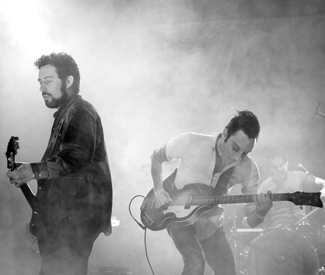
Every time I’ve been to Popscene in the last few years, and I mean every time, I see the same guy. Deep 30s, clean cut, and so meticulously well-dressed that it’s conspicuous. Particularly conspicuous when he’s gravitating around a pair of black lingerie wearing girls dancing like they can’t drink. But I guess that mix is fairly typical of Thursdays at the Rickshaw Stop, for the weekly event that always brings in a new crowd by being an 18+ dance party, while maintaining a certain following with the promise of seeing an emerging music act that “could be the next big thing.”

Or, as the case was with Australian electronic producer Flume on Thursday night, the next Porter Robinson. As in “OMG, can you believe he’s only 20?” and the additional hype that goes with it. The crowd was sold out and eager to hear him DJ, many in the audience probably choosing the show over more established popular EDM acts playing that night like Major Lazer at the Independent or the Skrillex/Diplo (he’s everywhere) event going on for the video game convention.

“Is everyone excited to see Flume?” Dexter Tortoriello of opener Houses asked, in the cliched end of set mic break, before making the astute observation, “If we were in Australia right now, we’d be seeing him in a stadium, but instead we’re at Rickshaw Stop.”  Flume – real name Harley Streten – had a sudden rise that included knocking One Direction off the top chart spot with his self-titled debut.

Sorry to say, despite Tortoriello’s excitement, Houses performance was strangely out of place. I caught what was at the time just a duo of Tortoriello and musical-romantic partner Megan Messina at Public Works in November and, while it had been pretty awkward in a shoegazing sort of way, they showed promise and an underlying energy waiting to get out, particularly with tracks like “Reds.”

Thursday they had the addition of a drummer and a guitarist, and Messina had a lot more to do and seemed less contained by nervousness, but strangely played new, more sonorous, thoughtful, and ultimately indistinct music. It was particularly noticeable as they made a consciously slow start coming off of a pop hip-hop track DJ Aaron Axelson played, causing someone to yell out “Drums!” at the end of their first song. “It feels cold up here,” a guy in a hoodie told his friends, which usually isn’t the case at the event.

Flume came on to the sounds of chopped vocals and faux-Afropop “More Than You Thought” from his album, and I made the conscious choice to not try to get back up front to try and get a picture. The real reason is I wimped out. The aesthetic reason is there are no satisfying photos of anyone in front of Macbooks. But the jealous reason is he’s young* and handsome, as the girls in front of me who have been in love with him for soooooooo long will point out, and doesn’t really need it.

On record, Flume is entirely listenable, a palatable mix of dub grooves, steady hip-hop beats, and jazzy, spacy tweaks that occasionally recall Flying Lotus, perfectly paired with pop vocals from a range of singers. His live show aims to be just as pleasing mixing in recognizable hits like Mos Def’s “Mathmatics” and Biggie’s “Juicy.” A little easy and a little bit too much cultural appropriation for my tastes, but it worked on the crowd.

 At one point – the climax of the set really – Flume followed a version of Major Lazer’s “Get Free” (complete with a trance build and dubstep breakdown) with two of his best songs, “Insane” and “On Top.” Featuring lovely, pitch shifted vocals by Moon Holiday and the line “the only risk is that you go insane,” “Insane” is the kind of euphoric  track  you can get lost in, and the best hints at the depths Flume could delve into in the future.

But the electro hip-hop of “On Top” is the current album’s best statement of where the 20 year old is now. “All that I want in my life is the chance to do my thing,” the chorus says, and it’s entirely aspirational, before the triumphant verses kick in. “The nights forever young, it’s us that gets old,” is basically saying YOLO, but comes off a little closer to “Carpe Diem.” Or whatever is Latin for “night.”

*As his suburban origin story goes, he learned to make music from software he found in a cereal box at an age when people like me were trying to figure out masturbation.

Foreign imports and American heroics: new movies!

1

Hollywood unfurls the latest adaptation of Stephenie Meyer’s ever-popular YA fiction (the mercifully vampire-less The Host), as well as Tyler Perry’s Temptation: Confessions of a Marriage Counselor, the multi-hyphenate mogul’s 5628th film. (One statement in the previous sentence is false.)

Plus: check out Dennis Harvey’s dual review of a pair of refreshingly low-key foreign imports, The Silence (from Germany) and Starbuck (from Canada, set in Quebec). There’s also an American-set movie from singular French director Quentin Dupieux, Wrong, opening at the Roxie; check out my review here.

More reviews, including a surprisingly positive take on toys-gone-wild sequel GI Joe: Retaliation, after the jump.

From Up on Poppy Hill Hayao (dad, who co-wrote) and Goro (son, who directed) Miyazaki collaborate on this tale of two high-school kids — Umi, who does all the cooking at her grandmother’s boarding house, and Shun, a rabble-rouser who runs the school newspaper — in idyllic seaside Yokohama. Plans for the 1964 Olympics earmark a beloved historic clubhouse for demolition, and the budding couple unites behind the cause. The building offers a symbolic nod to Japanese history, while rehabbing it speaks to hopes for a brighter post-war future. But the past keeps interfering: conflict arises when Shun’s memories are triggered by a photo of Umi’s father, presumed lost at sea in the Korean War. There are no whimsical talking animals in this Studio Ghibli release, which investigates some darker-than-usual themes, though the animation is vivid and sparkling per usual. Hollywood types lending their voices to the English-language version include Jamie Lee Curtis, Christina Hendricks, Ron Howard, and Gilllian Anderson. (1:31) (Cheryl Eddy)

http://www.youtube.com/watch?v=bedn8NjyirY

GI Joe: Retaliation The plot exists to justify the action, but any fan of badass-ness will forgive the skimpy storyline for the outlandish badassery in GI Joe: Retaliation. Inspired by action figures and tying loosely to the first flick, Retaliation starts with a game of “secure the defector,” followed by “raise the flag,” but as soon as the stakes aren’t real, the Joes outright suck. They don’t have “neutral,” which is maybe why a mission to rescue and revive the Joes as a force is the most ferocious fight that ever pit metal against plastic. The set pieces are stunning: a mostly silent sequence with Snake Eyes (Ray Park) and Jinx (Elodie Yung) on a mountainside will leave the audience gaping in its high speed wake, and a prison break featuring covert explosives is nonstop amazing. You’ll notice an emphasis on chain link fences and puddles (terra nostra for action figures) and set pieces conceived as if by kids who don’t have a concept of basic irrefutable truths like gravity. It’s just that kind of imagination and ardor and limitlessness that makes this Joe incredible, memorable, and a reason to crack out your toys again. (1:50) (Sara Maria Vizcarrondo)

http://www.youtube.com/watch?v=VnQPnXbj-RY

Mental Toni Collette is a batshit Mary Poppins in this side-splitting comedy about one family and Australia’s identity as the world’s Island of Misfit Toys. According to Shaz (Collette), she and her pit bull Ripper (pronounced “Reippah”) came to the town of Dolphin Head to fulfill their destiny. It’s there philandering Mayor Moochmore (a brilliant Anthony LaPaglia) employs her informally as a “babysitter” (the film’s biggest plot hole). Moochmore’s a pathetic excuse for a dad but he needs someone to take care of his five daughters, since he’s finally pushed his wife into nervous-breakdown mode. Everything in Dolphin Head exists on a fulcrum: when Shaz takes the girls to climb a mountain one asks, “What’s the point of climbing to the top?”, and Shaz answers, “Not being at the bottom.” Mental is not a far cry from the director’s last big import, Muriel’s Wedding, the 1994 film that made Collette a star. Everyone’s nuts here, the message goes, but if we’re confident enough in ourselves, we can sway the rest into seeing how our insanity is better than theirs — or at least strong enough to withstand sharks, knife fights, and pit bulls. Good times, mate, good times. (1:56) (Sara Maria Vizcarrondo)

The Sapphires The civil rights injustices suffered by these dream girls may be unique to Aboriginal Australians, but they’ll strike a chord with viewers throughout the world — at right about the same spot stoked by the sweet soul music of Motown. Co-written by Tony Briggs, the son of a singer in a real-life Aboriginal girl group, this unrepentant feel-gooder aims to make the lessons of history go down with the good humor and up-from-the-underdog triumph of films like The Full Monty (1997) — the crucial difference in this fun if flawed comedy-romance is that it tells the story of women of color, finding their voices and discovering, yes, their groove. It’s all in the family for these would-be soul sisters, or rather country cousins, bred on Merle Haggard and folk tunes: there’s the charmless and tough Gail (Deborah Mailman), the soulful single mom Julie (Jessica Mauboy, an Australian Idol runner-up), the flirty Cynthia (Miranda Tapsell), and the pale-skinned Kay (Shari Sebbens), the latter passing as white after being forcibly “assimilated” by the government. Their dream is to get off the farm, even if that means entertaining the troops in Vietnam, and the person to help them realize that checkered goal is dissolute piano player Dave (Chris O’Dowd). And O’Dowd is the breakout star to watch here — he adds an loose, erratic energy to an otherwise heavily worked story arc. So when romance sparks for all Sapphires — and the racial tension simmering beneath the sequins rumbles to the surface — the easy pleasures generated by O’Dowd and the music (despite head-scratching inclusions like 1970’s “Run Through the Jungle” in this 1968-set yarn), along with the gently handled lessons in identity politics learned, obliterate any lingering questions left sucking Saigon dust as the narrative plunges forward. They keep you hanging on. (1:38) (Kimberly Chun)

http://www.youtube.com/watch?v=F1l-88FcUVU

The Spanish Mirth: The Comedic Films of Luis Garcia Berlanga Noted for his dexterity in outwitting the vigilant censors of Franco’s regime while getting away with subversive themes, Berlanga’s long career outlasted the despot’s by several decades. His social satires are showcased in this Pacific Film Archive retrospective of seven features that run a gamut from parodies of Spanish cultural stereotypes (as when villagers hungry for postwar economic-incentive dough try to look like the essence of tourist-friendly quaintness in 1953’s Bienvenido, Mr. Marshall!) to literal gallows humor (1964’s The Executioner) and kinky black comedy (Michel Piccoli as a mild-mannered dentist carrying on an “affair” with a realistic sex doll in Tamano Natural, a.k.a. Life Size). Once Franco finally kicked the bucket, the frequently prize-winning filmmaker let loose with 1978’s anarchic La Escopeta Nacional, a.k.a. The National Shotgun, leaving no formerly sacred cow unmilked. He remained active until a few years before his 2010 death at age 89. The PFA series (running March 29-April 17) offers archival 35mm prints of these movies that remain esteemed at home but are relatively little-known today abroad. Pacific Film Archive. (Dennis Harvey)

Hot sexy events: Nerd boobs, Bill Gates’ condom quest, and the Sheagle = landed

0

Hey, dudes who don’t like condoms, has Bill Gates got your back or what? During the same month that the Pope Emeritus reincarnates as a wall of condoms, the tech bajillionaire has donated the change he found in his couch ($100,000) to the Global Health research foundation Bill and wife Melinda founded through their foundation to developing a rubber that feels better on penises.

Yes, we know, yet more money that focuses on male reproductive health. But for those who regularly find themselves in contact with penis-bearers, the promise of never hearing another “but I can’t feeeel it with the condom on,” will be a definite boon to that largest of sexual organs: our brain, which non-scientifically speaking, shrivels up and dies a little from so much whining in bed. (Also, penis bearers? Golf claps for science, but in the meantime you might benefit from not jerking it so damn hard. Try a Fleshlight.)

Chat about the politics of sex research, or forget about politics altogether, at this week’s sexy events:

Sheagle

A night presented by the female-identified kinksters of San Francisco, but open to attendees in the newly (more or less) re-opened space of this beloved leather bar. The monthly party will benefit a different female-identified organization — this month it’s the SF girls of Leather, who rad work you can read about in this Guardian cover story on their cute kink from a few years ago. 

Wed/27, 8pm-2am, free. Eagle, 298 12th St., SF. www.sf-eagle.com

“Bling My Vibe” awards ceremony 

When Good Vibrations contacted me about crafting an project from a vibrator for their March art contest I said: sure. And though every time I’ve been back to see it proudly installed in the Polk Street store’s gallery/education space there’s been a class going on, I have nothing but the utmost faith that the room full of Conehead vibes, vibrators fashioned into magical steeds, and Ninja Turtles vibes (HuffPo has a nice slideshow if you’re curious) is an uplifting experience. Today, the top crafters take home gift certificates so that they can continue to make sweet projects with Good Vibes gear.

Fri/29, 6-8pm, free. Good Vibrations, 1620 Polk, SF. www.goodvibes.com

Nerd Nite at the Lusty Lady

SF’s only co-op strip club welcomes sci-fi freaks tonight. Lusty dancer Pandora wrote us in an email that the Lusty theme nights are all about costumes: “Well, as much as you can costume and still be naked, which as it turns out is quite a bit. 😉 Sometimes music or activities like naked Twister, naked light saber battle. naked karaoke. Pretty much anything fun, and put naked in front of it.” Check out this video for more on why the peep shows and VIP booths here rock:

Fri/29, 8am-3pm. The Lusty Lady, 1033 Kearny, SF. www.lustylady.com

Spring Breakers 

“Why you acting ‘spicious?” The ATL twins, James Franco Gucci Mane, Vanessa Hudgens, blatant perversion of typical crime movie gender roles — Harmony Korine’s latest cult classic is the sexiest film of 2013 and you should see it before you get secondhand sick of the catchphrases. Which reminds me, “spring break 4eva.”

http://www.youtube.com/watch?v=rVvn9T6bqls

Various Bay Area theaters

Goodbye Gauley Mountain screening and dinner

Feminist porn pioneer Annie Sprinkle and partner Beth Stephens premiere the couple’s documentary on their ecosexual relationship with the Appalachian mountains and the crusade to stop destructive mining practices. Come early for the pre-screening vegan Appalachian dinner.

Trailer Goodbye Gauley Mtn: An Ecosexual Love Story from Elizabeth Stephens on Vimeo.

Sat/30, dinner 6:30pm, screening 7pm, $10-100. Center for Sex and Culture, 1349 Mission, SF. www.sexandculture.org

I survived the “Real World: San Francisco” marathon

0

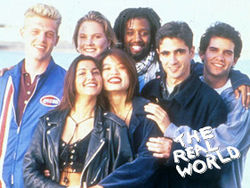
 The 28th season of The Real World premieres tonight, and the trailer features some crying bros and a lot of slapping in Portland, Ore. To remind us of the show’s less … well, shitty origins, MTV ran a “retro marathon” of its first three seasons last weekend.

Before the Teen Mom franchise, before Jersey Shore (and its ever-multiplying spin-offs), and before something called Buckwild that I don’t feel like researching, there were true stories of seven strangers picked to live in houses in New York and Los Angeles. And then in 1994, some strangers came to the wonderful city of San Francisco. The third season, last weekend’s grand finale, often gets credited with sparking the show’s popularity and indirectly launching the reality TV craze. It almost lives up to its reputation.

Usually, watching a reality television show after it’s finished airing presents a predicament; the knowledge that the cast has returned to the world outside the screen takes away the precept — flimsy as it is to begin with — that we are seeing reality unfold. Watching the San Francisco season is a different experience. The 19 years of distance, a huge cultural gap (OMG, no smartphones!), makes the show a historical document.

The Real World: San Francisco is a fascinating record of 20-something life in the mid-90s (OMG, no texting!). And because at that time, the channel dealt with issues besides teen pregnancy, it’s also a depiction of an earlier era of gay rights, of a different political climate, and of a time when an AIDS educator had to reassure his peers that they did not need to fear sharing a bathroom with someone HIV-positive.

Pedro Zamora, one of the first openly gay and HIV-positive men on TV, has been tasked with the responsibility of giving a face to history (the use of B-roll that supplements parts of his story, such as his emigration from Cuba, adds to the sense of his role in the show as documentary). Bill Clinton, who took up the cause of honoring Zamora, believed his stint on The Real World made giant strides in the effort to humanize the struggle with HIV/AIDS and that lends great historical weight to the show.

So, counter to the typical experience of re-watching reality TV, our awareness of events after San Francisco heightens the drama. Knowledge of Pedro’s death right after the season’s premier gives his plotline — for lack of a better term — an eery poignancy. On a happier note, Pam Ling and Judd Winick’s marriage in 2001 their season makes us look for clues in their innocent beginnings as friends during taping. The show becomes primary source material for their romance. Less pleasant is the tale of Puck (David Rainey), the roommate kicked out of the house, whose life after the show comes as no surprise at all. (Don’t worry, he got out of jail in time to film this interview before the marathon.)

How can any reality show claim to show an authentic view of history, though? It probably can’t, but It’s worth noting that The Real World‘s claim to be a social experiment had some legitimacy back then; people didn’t sign up for reality TV to achieve the same fame that they do today because the cult of the reality TV star had not yet exploded (in 1994, Kim Kardashian was still in the early stages of puberty). As a result, most of the cast was intelligent and had real goals that made them compelling and seemingly genuine. (We do, however, find a proto-reality TV star in Rachel Campos, the pretty girl who gave up dreams of academia when she met her husband on Road Rules: All Stars. For a while, she occasionally guest-hosted The View, and her Wikipedia page lists her occupation as “television personality.”)

Much of what makes The Real World: San Francisco entertaining nearly two decades later, though, are the things that make all ‘90s artifacts entertaining. It is a history of those fun outdated cultural signs that make “Buzzfeed Rewind” slide shows so heartwarming for millennials. Look at the low resolution! Note the light wash high-waisted jeans worn by men and women alike! Everyone’s rollerblading! Remember pagers?

And don’t worry, there are the requisite black-and-white confessionals, a comically suggestive musical score, and some drama, too — yelling, making out (and subsequent regret), and name-calling. But a word of warning for fans of Bad Girls Club and Tila Tequila: the name-calling doesn’t get much worse than “brat.”

Which brings me to a final point that, yes, the show mostly lives up to its reputation; The Real World: San Francisco is compelling as a historical record and nostalgia machine, but I have to admit that overall, I found it a little bland. The cast has a good time together, argues about house cleanliness over the dinner table, and learns from each other, but the fact that one of the few drunken escapades happens as a ladies’ night in floral pajamas made the whole day-to-day feel a little too charming.

It’s official: today’s television has ruined me. I don’t want to see interesting people with ambitious goals or downtrodden youth with the passion to make society more tolerant. I don’t want a document of reality at all, but an absurd heightening of it.

Even so, I think I’ll probably skip The Real World: Portland.

Oh, and if you want your own fix of retro reality, you can stream the complete San Francisco season here.

Alternative medicine

0

arts@sfbg.com

FILM No country exports mainstream films to the extensive success that the US does. To the frequent chagrin of local filmmakers and cultural watchdogs, Hollywood dominates many nations’ box offices, non-English-speaking ones included. Nor do we reciprocate much — there remains a wide separation between what are perceived as commercial entertainments and “art house” films, with foreign-language (or even just British) ones almost invariably limited to the latter category.

We’ve all rolled our eyes at otherwise sophisticated people moaning that they can’t be bothered with even the most accessible movie in another language because subtitles are too much trouble. As a result, ‘murricans seldom hazard big-screen exposure to anything but the most rarefied, prize-winning, serious, or conceptually novel features from other nations. While we feed them plenty of our mall flicks, their less-than-exceptional homegrown genre movies are considered to have little marketable value here. (Save as fodder for remakes, of course.)

So it’s a tiny bit unusual when one week brings openings of two movies unalike in every aspect save their being solid if unremarkable examples of mainstream hits abroad. French-Canadian comedy Starbuck and German crime thriller The Silence are both an uptick or two above “decent,” but they hardly sport the thematic-stylistic edginess or other qualities that usually win US distribution. They’re just kinda fun.

Maybe “fun” is a tasteless way to describe The Silence, which hinges on pederasty and child murder — though in the end this is more an intelligent pulp thriller than serious address of those issues, uneasily as it straddles both at times. In 1986 two men abduct an 11-year-old girl — one the initially excited, then horrified observer to the second’s murderous sexual assault. Twenty-three years later, another young girl disappears in the same place under disturbingly identical circumstances.

This event gradually pulls together a large cast of characters, many initial strangers — including the original victim’s mother (Katrin Sass) and the just-retired detective (Burghart Klaubner) who failed to solve that crime; parents (Karoline Eichhorn, Roeland Wiesnekker) of the newly disappeared teen, who experience full-on mental meltdown; a solidly bourgeoisie husband and father of two girls (Wotan Wilke Möhring), inordinately distressed by this repeat of history; and the erstwhile friend he hasn’t contacted in decades, an apartment-complex handyman with a secret life (Ulrich Thomsen).

Part procedural, part psychological thriller, part small-town-community portrait, director-scenarist (from Jan Costin Wagner’s novel) Baran bo Odar’s The Silence is just juicy and artful enough to get away with occasional stylistic hyperbole. Let alone having enough subplot intrigue and weirdo characterizations — Sebastian Blomberg’s spazzy grieving-widower police detective is a bit much, in the Anthony Perkins tradition — to float a miniseries. It’s a conflicted movie, albeit handled with such engrossing confidence that you might not notice the credibility gaps. At least until thinking it over later. Which, don’t.

There’s no complicated narrative brain-teasing in Starbuck, which has a great (if not entirely original) comedic concept it chooses to play seriocomedically — i.e., less for the laughs it seldom earns than for the heart-tugging it eventually pretty much does. An ingratiatingly rumpled Patrick Huard (a major Quebec star best known for the mega-hit Les Boys series and 2006’s Good Cop, Bad Cop) plays David, erstwhile stellar contributor to a Montreal sperm bank in his salad days. Now older but no wiser, he finds himself confronted by the reality of 533 biologically fathered, now-grown offspring who’ve filed a class action lawsuit to discover his identity even as he deals with mob debt and an exasperated, pregnant semi-ex-girlfriend (Julie LeBreton).

This is one of those “loser man-boy must semi-grow up fast amid crisis, finding family values en route” scenarios tailor-fit for Adam Sandler. That said, the overlong, stubbornly endearing Starbuck is so much less insufferable than anything Sandler has made since … um, ever? Halfway through, this agreeable movie gets clever — as David stumbles into a meeting of his prodigious anonymous progeny — and remains reasonably so to the satisfyingly hard-won happy ending.

It’s still got moments of contrivance, editorial fat (too many montages, for one thing), and more climactic hugs than any self-respecting dramedy needs to get the redemptive point across. Yet it’s also got something few comedies of any national origin have today: a lovely, distinctive, bright yet non-cartoonish wide screen look.

THE SILENCE opens Fri/29 in Bay Area theaters; STARBUCK opens Fri/29 in San Francisco.

Stage listings

0

Stage listings are compiled by Guardian staff. Performance times may change; call venues to confirm. Reviewers are Robert Avila, Rita Felciano, and Nicole Gluckstern. Submit items for the listings at listings@sfbg.com. For further information on how to submit items for the listings, see Picks.

THEATER

OPENING

The Bus New Conservatory Theatre Center, 25 Van Ness, SF; www.nctcsf.org. $32-45. Previews Wed/27-Fri/29, 8pm. Opens Sat/30, 8pm. Runs Wed-Sat, 8pm; Sun, 2pm. Through April 28. NCTC performs James Lantz’s tale of two young men whose meeting place for their secret relationship is a church bus.

The Happy Ones Magic Theatre, Fort Mason Center, Bldg D, Third Flr, SF; www.magictheatre.org. $22-62. Previews Wed/27-Sat/30, 8pm; Sun/31, 2:30pm; Tue/2, 7pm. Opens April 3, 8pm. Runs Wed-Sat, 8pm (also Sat, 2:30pm; no matinee April 20); Sun, 2:30pm; Tue, 7pm. Through April 21. An Orange County appliance store owner finds his life turned upside down in Julie Marie Myatt’s drama at Magic Theatre.

reasons to be pretty San Francisco Playhouse, 450 Post, Second Flr, SF; www.sfplayhouse.org. $30-100. Previews Wed/27-Fri/29, 8pm. Opens Sat/30, 8pm. Runs Tue-Thu, 7pm; Fri-Sat, 8pm (also Sat, 3pm). Through May 11. San Francisco Playhouse’s tenth season continues with Neil LaBute’s romantic drama.

Tinsel Tarts in a Hot Coma: The Next Cockettes Musical Hypnodrome, 575 10th St, SF; www.thrillpeddlers.com. $30-35. Previews Thu/28-Sat/30, 8pm. Opens April 4, 8pm. Runs Thu-Sat, 8pm. Through June 1. Thrillpeddlers’ sixth annual Theatre of the Ridiculous Revival presents a restored version of the Cockettes’ 1971 Art Deco-inspired musical extravaganza.

BAY AREA

The Whipping Man Marin Theatre Center, 397 Miller, Mill Valley; www.marintheatre.org. $36-57. Previews Thu/28-Sat/30, 8pm; Sun/31, 7pm. Opens Tue/2, 8pm. Runs Tue-Sat, 8pm (also April 6 and 20, 2pm; April 11, 1pm); Wed, 7:30pm; Sun, 2 and 7pm. Through April 21. Marin Theatre Company performs the Bay Area premiere of Matthew Lopez’s Civil War drama.

ONGOING

Assistance NOHspace, 2840 Mariposa, SF; www.opentabproductions.com. $20. Thu/28-Sat/30, 8pm. Over the past three years, things we’ve come to expect from plucky OpenTab Productions — whose annual offerings deal in aggressively contemporary themes such as media spin, business fraud, and job (in)security — include tight ensemble acting, minimal tech, and snappy direction, and in all these regards, Assistance does not disappoint. A crew of desperate office drones whose lives basically revolve around the abuse dished out by their unseen employer, Daniel Weisinger (who may or may not resemble playwright Leslye Headland’s old boss, Harvey Weinstein), hold down their airless fort, fielding calls at 11 p.m. and shirking responsibility whenever possible. Though Headland doesn’t do much to make her emotionally and professionally stunted characters palatable, the capable cast and director Ben Euphrat do manage to wring something resembling humanity out of them. From Nick (Tristan Rholl,) the frustrated slacker supervisor, to Nora (Melissa Keith), the-new-girl-turned-cynical-old-hand, to Justin (Nathan Tucker), the unctuous winner of the title of "last man standing," to Jenny (Michelle Drexler) a pragmatic yet annoyingly bubbly Brit, what stands out in each performance are the perfectly captured quirky nuances and barely-concealed neuroses of people caught in the process of losing their souls. Nothing about Assistance is likely to change your view of the business world, but if you’ve yet to experience the frenetic fun of an OpenTab show, it’s a perfect primer to the madness behind their method. (Gluckstern)

The Chairs Exit on Taylor, 277 Taylor, SF; www.cuttingball.com. $20-45. Thu, 7:30pm; Fri-Sat, 8pm (also Sat, 2pm); Sun, 5pm. Extended through April 7. In Rob Melrose’s new translation of Eugene Ionesco’s The Chairs, an elderly couple sit in the austere parlor of their lonely lighthouse, chortling over a spate of private wordplay and reminiscing of sprightlier times, until their initially frantic and disjointed dialogue settles into a smooth flow, well-polished by decades of endearments and gentle bickering. Possibly the last two survivors of a not entirely explained apocalypse, the isolated nonagenarians (magnificently played by David Sinaiko and Tamar Cohn) nevertheless make it known that important guests are expected to arrive at any moment in order to hear a hired orator (Derek Fischer) deliver the Old Man’s "message," which he has spent a lifetime honing. As the doorbell begins to ring, a jarring squall, and invisible guests and dozens of mismatched chairs begin to crowd their peaceable empire in claustrophobia-inducing numbers, their companionable seclusion is shattered for good. Director Annie Elias manages to coax both gravitas and decorum out of this little-produced, yet influential absurdist relic, imbuing her protagonists with a depth of character that belies their farcical circumstances, while Theodore J.H. Hulsker’s murmuring sound design of crashing waves, angry winds, and the strident doorbell could almost be another character in the play, so thoroughly does it set the tone in ways that Ionesco might not have approved of, but is all the better for. (Gluckstern)

The Couch Tides Theatre, 533 Sutter, Second Flr, SF; www.3girlstheatre.org. $30. Thu-Sat, 8pm; Sun/31, 4pm; April 7, 2pm. Extended through April 7. As the centerpiece of its second annual festival of plays in honor of Women’s History Month, 3Girls Theatre, devoted to Bay Area women playwrights, revives Lynne Kaufman’s fitful but enjoyable 1985 dramatic comedy about the inception of the famous sexual and psychiatric triangle between Carl Jung (Peter Ruocco), wife Emma Jung (Courtney Walsh), and his mistress and analysand Toni Wolff (Maggie Mason). In this, her first play, Kaufman (whose most recent play, Acid Test, explores the life of Ram Dass) folds in Carl’s critical 1912 break with mentor Sigmund Freud (Louis Parnell) for an action-packed day Chez Jung. (Also on the scene is the Jung’s precocious daughter Katherine, played by a sure and animated Hattie Rose Allen Bellino). Amy Glazer directs a solid cast who convincingly blends the farcical aspects of the dialogue with its meatier and more dramatic ones, as new ties and power dynamics are sometimes roughly, other times genteelly negotiated. The former is usually the stuff of high comedy, as when Freud goes apoplectic upon learning Jung is not necessarily the disciple and "son" he had thought him to be. And Jung’s (proto-) New Agey leanings only add fuel to the fire: When Carl turns to the I Ching to decide on the best course of action for his career going forward, Freud erupts, "You idiot! You’re playing tiddlywinks with the human race!" But it is ultimately the politics of love and the household that take center stage, with Walsh’s vulnerable yet ever dignified Emma emerging as, if not the greatest psychiatrist, perhaps the greatest strategist of them all. (Avila)

Eurydice Gough Street Playhouse, 1622 Gough, SF; www.custommade.org. $25-30. Thu-Sat, 8pm (no shows Thu/28-Fri/29); Sun, 7pm. Through April 14. Custom Made Theatre Co. performs Sarah Ruhl’s inventive take on the Orpheus and Eurydice myth, exploring the story through the heroine’s eyes.

Foodies! The Musical Shelton Theater, 533 Sutter, SF; www.foodiesthemusical.com. $30-34. Fri-Sat, 8pm. Open-ended. AWAT Productions presents Morris Bobrow’s musical comedy revue all about food.

God of Carnage Shelton Theater, 533 Sutter, SF; www.sheltontheater.org. $38. Thu/28-Sat/30, 8pm. Shelton Theater presents Yasmina Reza’s Tony-winning comedy about upper-middle-class parents clashing over an act of playground violence between their children.

Just One More Game Exit Theatre, 156 Eddy, SF; www.tripleshotprodutions.org. $25. Thu/28-Sat/30, 8pm. With the rise of the programmer as pop culture hero, it was probably inevitable that we’d start writing plays about them too. In local playwright Dan Wilson’s Just One More Game our programmer protagonist is Kent (Christopher DeJong) whose mission is to find love, and his co-player is Marjorie (Linda-Ruth Cardozo), who wields her own geek credentials like a Mortal Kombat wrath hammer. Where Wilson’s comedy excels is in the witty gamer banter that defines much of their attraction and commonality — references to Zork, Oregon Trail, Dungeons and Dragons, and The Secret of Monkey Island abound, while a series of meticulous video game animations (also Wilson’s) lend colorful counterpoint to the action on the stage. DeJong plays his role of emotionally-inhibited loner with a degree of laconic detachment that unfortunately eliminates all traces of chemistry between him and Cardozo, who is especially good at capturing the cheerfully aggressive awkward of a woman accustomed to being "one of the boys" because there was nothing about "the girls" she could relate to. Both the comedy and pace flag by the time the first NPCs (non-player characters) enter the room, broadly clichéd parents yammering for grandchildren and obnoxious college buddies armed with too many baby photos, who conspire to stunt the growth of Kent and Marjorie’s relationship and wind up stunting the growth of the play. If the quest for love is a game, as the title suggests, it’s one that could use a little more back-end development, and a much greater degree of playfulness. (Gluckstern)

Sex and the City: LIVE! Rebel, 1760 Market, SF; trannyshack.com/sexandthecity. $25. Wed, 7 and 9pm. Open-ended. It seems a no-brainer. Not just the HBO series itself — that’s definitely missing some gray matter — but putting it onstage as a drag show. Mais naturellement! Why was Sex and the City not conceived of as a drag show in the first place? Making the sordid not exactly palatable but somehow, I don’t know, friendlier (and the canned a little cannier), Velvet Rage Productions mounts two verbatim episodes from the widely adored cable show, with Trannyshack’s Heklina in a smashing portrayal of SJP’s Carrie; D’Arcy Drollinger stealing much of the show as ever-randy Samantha (already more or less a gay man trapped in a woman’s body); Lady Bear as an endearingly out-to-lunch Miranda; and ever assured, quick-witted Trixxie Carr as pent-up Charlotte. There’s also a solid and enjoyable supporting cast courtesy of Cookie Dough, Jordan Wheeler, and Leigh Crow (as Mr. Big). That’s some heavyweight talent trodding the straining boards of bar Rebel’s tiny stage. The show’s still two-dimensional, even in 3D, but noticeably bigger than your 50" plasma flat panel. (Avila)

Steve Seabrook: Better Than You Marsh San Francisco, 1062 Valencia, SF; www.themarsh.org. $15-50. Fri/29, 8pm; Sat/30, 8:30pm. Starting April 4, runs Thu, 8pm; Sat, 8:30pm. Extended through May 18.

Self-awareness, self-actualization, self-aggrandizement — for these things we turn to the professionals: the self-empowerment coaches, the self-help authors and motivational speakers. What’s the good of having a "self" unless someone shows you how to use it? Writer-performer Kurt Bodden’s Steve Seabrook wants to sell you on a better you, but his "Better Than You" weekend seminar (and tie-in book series, assorted CDs, and other paraphernalia) belies a certain divided loyalty in its own self-flattering title. The bitter fruit of the personal growth industry may sound overly ripe for the picking, but Bodden’s deftly executed "seminar" and its behind-the-scenes reveals, directed by Mark Kenward, explore the terrain with panache, cool wit, and shrewd characterization. As both writer and performer, Bodden keeps his Steve Seabrook just this side of overly sensational or maudlin, a believable figure, finally, whose all-too-ordinary life ends up something of a modest model of its own. (Avila)

The Voice: One Man’s Journey Into Sex Addition and Recovery Stage Werx Theater, 446 Valencia, SF; thevoice.brownpapertickets.com. $10-18. Fri-Sat, 8pm. Through April 6. Ticket sales for David Kleinberg’s autobiographical solo show benefit 12-step sex addiction recovery programs and other non-profits.

The Waiting Period Marsh San Francisco, 1062 Valencia, SF; www.themarsh.org. $25-50. Fri/29, 8pm; Sat/30, 5pm. Brian Copeland (comedian, TV and radio personality, and creator-performer of the long-running solo play Not a Genuine Black Man) returns to the Marsh with a new solo, this one based on more recent and messier events` in Copeland’s life. The play concerns an episode of severe depression in which he considered suicide, going so far as to purchase a handgun — the title coming from the legally mandatory 10-day period between purchasing and picking up the weapon, which leaves time for reflections and circumstances that ultimately prevent Copeland from pulling the trigger. A grim subject, but Copeland (with co-developer and director David Ford) ensures there’s plenty of humor as well as frank sentiment along the way. The actor peoples the opening scene in the gun store with a comically if somewhat stereotypically rugged representative of the Second Amendment, for instance, as well as an equally familiar "doood" dude at the service counter. Afterward, we follow Copeland, a just barely coping dad, home to the house recently abandoned by his wife, and through the ordinary routines that become unbearable to the clinically depressed. Copeland also recreates interviews he’s made with other survivors of suicidal depression. Telling someone about such things is vital to preventing their worst outcomes, says Copeland, and telling his own story is meant to encourage others. It’s a worthy aim but only a fitfully engaging piece, since as drama it remains thin, standing at perhaps too respectful a distance from the convoluted torment and alienation at its center. Note: review from an earlier run of the same production. (Avila)

BAY AREA

The Coast of Utopia: Voyage & Shipwreck Ashby Stage, 1901 Ashby, Berk; www.shotgunplayers.org. $20-35. Shipwreck previews Wed/27-Thu/28, 7pm; Fri/29, 8pm. Opens Sat/30, 8pm. Runs Wed-Thu, 7pm; Fri-Sat, 8pm; Sun, 5pm. Through May 5. Voyage previews Wed/27, 7pm. Opens April 3, 3pm. Runs April 13, 20, 27, and May 4, 3pm. Shotgun Players perform the first two parts of Tom Stoppard’s revolutionary trilogy.

Dostoevsky’s The Grand Inquisitor Berkeley City Club, 2315 Durant, Berk; www.centralworks.org. $15-28. Thu/28-Sat/30, 8pm; Sun/31, 5pm. Central Works performs Gary Graves’ adaptation of the story-within-a-story from The Brothers Karamazov.

Fallaci Berkeley Repertory Theatre, 2015 Addison, Berk; www.berkeleyrep.org. $29-89. Tue, Thu-Sat, 8pm (also Sat, 2pm); Wed and Sun, 7pm (also Sun, 2pm). Through April 21. Berkeley Rep performs Pulitzer-winning journalist Lawrence Wright’s new play about Italian journalist Oriana Fallaci.

The Mountaintop Lucie Stern Theatre, 1305 Middlefield, Palo Alto; www.theatreworks.org. $23-75. Wed/27, 7:30pm; Thu/28-Sat/30, 8pm (also Sat/30, 2pm); Sun/31, 2pm. Starting April 3, runs Wed-Thu, 11am (also Thu, 8pm); Sat, 8pm; Sun, 2pm. Through April 7. TheatreWorks performs Katori Hall’s play that re-imagines the events on the night before Dr. Martin Luther King, Jr.’s assassination.

The Real Americans Marsh Berkeley, 2120 Allston, Berk; www.themarsh.org. $25-50. Fri, 8pm; Sat, 5pm. Through April 6. Dan Hoyle shifts his popular show about small-town America to the Marsh’s Berkeley outpost.

PERFORMANCE/DANCE

BATS Improv Bayfront Theater, Fort Mason Center, Marina at Laguna, SF; www.improv.org. $20. "Theatresports," Fri/29, 8pm. "Double Feature," Sat/30, 8pm.

"Dream Queens Revue" Aunt Charlie’s Lounge, 133 Turk, SF; www.dreamqueensrevue.com. Wed/27, 9:30pm. Free (reservations suggested: dreamqueensrevue@gmail.com). Fab drag with Colette LeGrande, Diva LaFever, and more.

"Madame Ho" Commonwealth Club of San Francisco, 595 Market, Second Flr, SF; www.commonwealthclub.org. Mon/1, 6pm. Free. Magic Theatre’s 2013 Martha Heasley Cox Virgin Play Series concludes with this staged reading of Eugenie Chan’s Barbary Coast drama.

"Mission Position Live" Cinecave, 1034 Valencia, SF; www.missionpositionlive.com. Thu, 8pm. Ongoing. $10. Stand-up comedy with rotating performers.

"New Works by Artists in Residence" CounterPULSE, 1310 Mission, SF; www.counterpulse.org. Thu/28-Sun/31, 8pm. $20-30. With richien (Rowena Richie and Jennifer Chien) performing Twindependent, and Sense Object (Miriam Wolodarksi) performing Of Limb and Language.

"The News: Out of the Box with Bernadette Bohan of the Box Factory" SOMArts Cultural Center, 934 Brannan, SF; www.thenewsperformance.eventbrite.com. Tue/2, 7:30pm. $5. SOMArts wraps up its experimental performance series.

"A Night of Utopian Gestures" Yerba Buena Center for the Arts, 701 Mission, SF; www.ybca.org. Sat/30, 7-10pm. Free. Interactive celebration of exhibit "Without Reality There Is No Utopia," featuring Israeli artist Dana Yahalomi, Futurefarmers’ Michael Swaine, live music, and more.

"Picklewater Clown Cabaret Benefit for Judy Finelli" Stage Werx, 446 Valencia, SF; www.brownpapertickets.com. Mon/1, 8pm. $15. Clowning for a good cause: SF School for Circus Arts co-founder Finelli, who has multiple sclerosis.

"The Romaine Event Comedy Show: Eight Year Anniversary Show" Make-Out Room, 3225 22nd St, SF; www.pacoromane.com. Wed/27, 8-10pm. $10. Celebrate with Ngaio Bealum, Paco Romane, Kaseem Bentley, David Gborie, and Anna Serengina, plus music by DJ Specific.

"San Francisco Magic Parlor" Chancellor Hotel Union Square, 433 Powell, SF; www.sfmagicparlor.com. Thu-Sat, 8pm. Ongoing. $40. Magic vignettes with conjurer and storyteller Walt Anthony.

"The Secret History of Love" Dance Mission Theater, 3316 16th St, SF; www.seandorseydance.com. Thu/28-Sun/31, 8pm (also Sat/30-Sun/31, 4pm). $10-25. Sean Dorsey Dance makes a local stop on the company’s 20-city national tour with this performance inspired by Dorsey’s work on the National LGBT Elders Oral History Project.

"Sing-Along Jesus Christ Superstar" Victoria Theatre, 2961 16th St, SF; www.brownpapertickets.com. Fri/29, 7pm. $15-35. The Sisters of Perpetual Indulgence ring in the Sisters’ Annual Easter Weekend with this festive sing-along, plus the debut of the Chunky Jesus Contest.

BAY AREA

"The Divine Game" Ashby Stage, 1901 Ashby, Berk; www.shotgunplayers.org. Mon/1, April 15, and 29, 8pm. $20. First Person Singular and Shotgun Cabaret present this dramatic re-enactment of Nabokov teaching at Cornell in the 1950s.

Film listings

0

Film listings are edited by Cheryl Eddy. Reviewers are Kimberly Chun, Dennis Harvey, Lynn Rapoport, and Sara Maria Vizcarrondo. For rep house showtimes, see Rep Clock.

OPENING

From Up on Poppy Hill Hayao (dad, who co-wrote) and Goro (son, who directed) Miyazaki collaborate on this tale of two high-school kids — Umi, who does all the cooking at her grandmother’s boarding house, and Shun, a rabble-rouser who runs the school newspaper — in idyllic seaside Yokohama. Plans for the 1964 Olympics earmark a beloved historic clubhouse for demolition, and the budding couple unites behind the cause. The building offers a symbolic nod to Japanese history, while rehabbing it speaks to hopes for a brighter post-war future. But the past keeps interfering: conflict arises when Shun’s memories are triggered by a photo of Umi’s father, presumed lost at sea in the Korean War. There are no whimsical talking animals in this Studio Ghibli release, which investigates some darker-than-usual themes, though the animation is vivid and sparkling per usual. Hollywood types lending their voices to the English-language version include Jamie Lee Curtis, Christina Hendricks, Ron Howard, and Gilllian Anderson. (1:31) California, Embarcadero. (Eddy)

GI Joe: Retaliation Bruce Willis, Dwayne Johnson, and Channing Tatum star in this sequel to the 2009 toy-spawned action hit. (1:50) Marina.

The Host Twilight author Stephenie Meyer’s sci-fi novel gets the big-screen treatment, with a cast headed up by Saoirse Ronan (2011’s Hanna). (2:01) Presidio.

Mental Toni Collette is a batshit Mary Poppins in this side-splitting comedy about one family and Australia’s identity as the world’s Island of Misfit Toys. According to Shaz (Collette), she and her pit bull Ripper (pronounced “Reippah”) came to the town of Dolphin Head to fulfill their destiny. It’s there philandering Mayor Moochmore (a brilliant Anthony LaPaglia) employs her informally as a “babysitter” (the film’s biggest plot hole). Moochmore’s a pathetic excuse for a dad but he needs someone to take care of his five daughters, since he’s finally pushed his wife into nervous-breakdown mode. Everything in Dolphin Head exists on a fulcrum: when Shaz takes the girls to climb a mountain one asks, “What’s the point of climbing to the top?”, and Shaz answers, “Not being at the bottom.” Mental is not a far cry from the director’s last big import, Muriel’s Wedding, the 1994 film that made Collette a star. Everyone’s nuts here, the message goes, but if we’re confident enough in ourselves, we can sway the rest into seeing how our insanity is better than theirs — or at least strong enough to withstand sharks, knife fights, and pit bulls. Good times, mate, good times. (1:56) Sundance Kabuki. (Vizcarrondo)

The Sapphires The civil rights injustices suffered by these dream girls may be unique to Aboriginal Australians, but they’ll strike a chord with viewers throughout the world — at right about the same spot stoked by the sweet soul music of Motown. Co-written by Tony Briggs, the son of a singer in a real-life Aboriginal girl group, this unrepentant feel-gooder aims to make the lessons of history go down with the good humor and up-from-the-underdog triumph of films like The Full Monty (1997) — the crucial difference in this fun if flawed comedy-romance is that it tells the story of women of color, finding their voices and discovering, yes, their groove. It’s all in the family for these would-be soul sisters, or rather country cousins, bred on Merle Haggard and folk tunes: there’s the charmless and tough Gail (Deborah Mailman), the soulful single mom Julie (Jessica Mauboy, an Australian Idol runner-up), the flirty Cynthia (Miranda Tapsell), and the pale-skinned Kay (Shari Sebbens), the latter passing as white after being forcibly “assimilated” by the government. Their dream is to get off the farm, even if that means entertaining the troops in Vietnam, and the person to help them realize that checkered goal is dissolute piano player Dave (Chris O’Dowd). And O’Dowd is the breakout star to watch here — he adds an loose, erratic energy to an otherwise heavily worked story arc. So when romance sparks for all Sapphires — and the racial tension simmering beneath the sequins rumbles to the surface — the easy pleasures generated by O’Dowd and the music (despite head-scratching inclusions like 1970’s “Run Through the Jungle” in this 1968-set yarn), along with the gently handled lessons in identity politics learned, obliterate any lingering questions left sucking Saigon dust as the narrative plunges forward. They keep you hanging on. (1:38) (Chun)

The Silence See “Alternative Medicine.” (1:59) Opera Plaza, Shattuck.

The Spanish Mirth: The Comedic Films of Luis Garcia Berlanga Noted for his dexterity in outwitting the vigilant censors of Franco’s regime while getting away with subversive themes, Berlanga’s long career outlasted the despot’s by several decades. His social satires are showcased in this Pacific Film Archive retrospective of seven features that run a gamut from parodies of Spanish cultural stereotypes (as when villagers hungry for postwar economic-incentive dough try to look like the essence of tourist-friendly quaintness in 1953’s Bienvenido, Mr. Marshall!) to literal gallows humor (1964’s The Executioner) and kinky black comedy (Michel Piccoli as a mild-mannered dentist carrying on an “affair” with a realistic sex doll in Tamano Natural, a.k.a. Life Size). Once Franco finally kicked the bucket, the frequently prize-winning filmmaker let loose with 1978’s anarchic La Escopeta Nacional, a.k.a. The National Shotgun, leaving no formerly sacred cow unmilked. He remained active until a few years before his 2010 death at age 89. The PFA series (running March 29-April 17) offers archival 35mm prints of these movies that remain esteemed at home but are relatively little-known today abroad. Pacific Film Archive. (Harvey)

Starbuck See “Alternative Medicine.” (1:48) Embarcadero.

Tyler Perry’s Temptation: Confessions of a Marriage Counselor This is a PG-13 movie with the tag line “Seduction is the devil’s playground.” (2:06) Shattuck.

Wrong See “Mind-Doggling.” (1:34) Roxie.

ONGOING

Admission Tina Fey exposes the irritating underbelly of the Ivy League application process as Princeton admissions officer Portia Nathan. When her school falls to number two in U.S. News and World Report‘s annual ranking, Portia and her colleagues are tasked by their boss (Wallace Shawn) with boosting application numbers to bring the university back into the lead. Alterna-school headmaster John Pressman (Paul Rudd) has one more applicant to add to the pile: a charmingly gawky autodidact named Jeremiah (Nat Wolff), who John is convinced is the child Portia gave up for adoption back when they were both students at Dartmouth. Stuck in a dreary 10-year relationship with an English professor (Michael Sheen) whose bedtime endearments consist of absentmindedly patting her on the head while reading aloud from The Canterbury Tales, and seeming less than thrilled with the prospect of another season of sifting through the files of legacies and overachievers, Portia is clearly ripe for some sort of purgative crisis. When it arrives, the results are fairly innocuous, if ethically questionable. Directed by Paul Weitz, the man responsible for bringing Little Fockers (2010) into the world, but About a Boy (2002) as well, Admission is sweet and sometimes funny but unmemorable, even with Lily Tomlin playing Portia’s surly, iconoclast mother. (1:50) Marina, 1000 Van Ness, SF Center, Sundance Kabuki. (Rapoport)

Amour Arriving in local theaters atop a tidal wave of critical hosannas, Amour now seeks to tempt popular acclaim — though actually liking this perfectly crafted, intensely depressing film (from Austrian director Michael Haneke) may be nigh impossible for most audience members. Eightysomething former music teachers Georges and Anne (the flawless Jean-Louis Trintignant and Emmanuelle Riva) are living out their days in their spacious Paris apartment, going to classical concerts and enjoying the comfort of their relationship. Early in the film, someone tries to break into their flat — and the rest of Amour unfolds with a series of invasions, with Anne’s declining health the most distressing, though there are also unwanted visits from the couple’s only daughter (an appropriately self-involved Isabelle Huppert), an inept nurse who disrespects Anne and curses out Georges, and even a rogue pigeon that wanders in more than once. As Anne fades into a hollow, twisted, babbling version of her former self, Georges also becomes hollow and twisted, taking care of her while grimly awaiting the inevitable. Of course, the movie’s called Amour, so there’s some tenderness involved. But if you seek heartwarming hope and last-act uplift, look anywhere but here. (2:07) Four Star. (Eddy)

Barbara The titular figure (Nina Hoss) looks the very picture of blonde Teutonic ice princess when she arrives — exiled from better prospects by some unspecified, politically ill-advised conduct — in at a rural 1980 East German hospital far from East Berlin’s relative glamour. She’s a pill, too, stiffly formal in dealings with curious locals and fellow staff including the disarmingly rumpled, gently amorous chief physician Andre (Ronald Zehrfeld). Yet her stern prowess as a pediatric doctor is softened by atypically protective behavior toward teen Stella (Jasna Fritzi Bauer), a frequent escapee from prison-like juvenile care facilities. Barbara has secrets, however, and her juggling personal, ethical, and Stasi-fearing priorities will force some uncomfortable choices. It is evidently the moment for German writer-director Christian Petzold to get international recognition after nearly 20 years of equally fine, terse, revealing work in both big-screen and broadcast media (much with Hoss as his prime on-screen collaborator). This intelligent, dispassionate, eventually moving character study isn’t necessarily his best. But it is a compelling introduction. (1:45) Opera Plaza, Shattuck. (Harvey)

Birth Story: Ina May Gaskin and the Farm Midwives When Ina May Gaskin had her first child, the hospital doctor used forceps (against her wishes) and her baby was sequestered for 24 hours immediately after birth. “When they brought her to me, I thought she was someone else’s,” Gaskin recalls in Sara Lamm and Mary Wigmore’s documentary. Gaskin was understandably flummoxed that her first experience with the most natural act a female body can endure was as inhuman as the subject of an Eric Schlosser exposé. A few years later, she met Stephen Gaskin, a professor who became her second husband, and the man who’d go on to co-found the Farm, America’s largest intentional community, in 1971. On the Farm, women had children, and in those confines, far from the iron fist of insurance companies, Gaskin discovered midwifery as her calling. She recruited others, and dedicated herself to preserving an art that dwindles as the medical industry strives to treat women’s bodies like profit machines. Her message is intended for a larger audience than granola-eating moms-to-be: we’re losing touch with our bodies. Lamm and Wigmore bravely cram a handful of live births into the film; footage of a breech birth implies this doc could go on to be a useful teaching tool for others interested in midwifery. (1:33) New Parkway, Roxie. (Vizcarrondo)

The Call (1:34) 1000 Van Ness, Shattuck, SF Center.

The Croods (1:38) Balboa, Metreon, 1000 Van Ness, Presidio.

Dead Man Down Pee. Yew. This Dead Man reeks, though surveying the cast list and judging from the big honking success of director Niels Arden Oplev’s previous film, 2009’s The Girl With the Dragon Tattoo, one would hope the stench wouldn’t be quite so crippling. Crime boss (Terrence Howard) is running panic-stricken after a series of spooky mail-art threats — and it isn’t long before we realize why: his most handy henchman Victor (Colin Farrell) is the one out to destroy him after the death of his wife and daughter. The wrinkle in the plot is the moody, beautiful, and scarred French girl Beatrice (Noomi Rapace) who lives across the way from Victor’s apartment with her deaf mom (Isabelle Huppert) and has plans to extract her own kind of vengeance. Despite Rapace’s brooding performance (Oplev obviously hopes she’ll pull a Lisbeth Salander and miraculously hack this mess — unsure about whether it’s a shoot-’em-up revenge exercise or a Rear Window-ish misfit love story — into something worthwhile) and cameos by actors like Dominic Cooper and F. Murray Abraham, they can’t compensate for the weak writing and muddled direction, the fact that Victor conveniently dithers instead of putting an end to his victim’s (and our) agony, and that the entire mis-en-scene with its Czechs, Albanians, et al, which reads like a Central European blood feud played out in Grand Central Station — just a few components as to why Dead Man stinks. (1:50) Metreon, 1000 Van Ness. (Chun)

Emperor This ponderously old-fashioned historical drama focuses on the negotiations around Japan’s surrender after the bombings of Hiroshima and Nagasaki. While many on the Allied side want the nation’s “Supreme Commander” Emperor Hirohito to pay for war crimes with his life, experts like bilingual Gen. Bonners Fellers (Matthew Fox) argue that the transition to peace can be achieved not by punishing but using this “living god” to wean the population off its ideological fanaticism. Fellers must ultimately sway gruff General MacArthur (Tommy Lee Jones) to the wisdom of this approach, while personally preoccupied with finding the onetime exchange-student love (Kaori Momoi) denied him by cultural divisions and escalating war rhetoric. Covering (albeit from the U.S. side) more or less the same events as Aleksandr Sokurov’s 2005 The Sun, Peter Webber’s movie is very different from that flawed effort, but also a lot worse. The corny Romeo and Juliet romance, the simplistic approach to explaining Japan’s “ancient warrior tradition” and anything else (via dialogue routinely as flat as “Things in Japan are not black and white!”), plus Alex Heffes’ bombastic old-school orchestral score, are all as banal as can be. Even the reliable Jones offers little more than conventional crustiness — as opposed to the inspired kind he does in Lincoln. (1:46) Opera Plaza. (Harvey)

A Fierce Green Fire: The Battle for a Living Planet San Franciscan Mark Kitchell (1990’s Berkeley in the Sixties) directs this thorough, gracefully-edited history of the environmental movement, beginning with the earliest stirrings of the Audubon Society and Aldo Leopold. Pretty much every major cause and group gets the vintage-footage, contemporary-interview treatment: the Sierra Club, Earth Day, Silent Spring, Love Canal, the pursuit of alternative energy, Greenpeace, Chico Mendes and the Amazon rainforests, the greenhouse effect and climate change, the pursuit of sustainable living, and so on. But if its scope is perhaps overly broad, A Fierce Green Fire still offers a valuable overview of a movement that’s remained determined for decades, even as governments and corporations do their best to stomp it out. Celebrity narrators Robert Redford, Ashley Judd, and Meryl Streep add additional heft to the message, though the raw material condensed here would be powerful enough without them. (1:50) Smith Rafael. (Eddy)

The Gatekeepers Coming hard on the heels of The Law in These Parts, which gave a dispassionate forum to the lawmakers who’ve shaped — some might say in pretzel form — the military legal system that’s been applied by Israelis to Palestinians for decades, Dror Moreh’s documentary provides another key insiders’ viewpoint on that endless occupation. His interviewees are six former heads of the Shin Bet, Israel’s secret service. Their top-secret decisions shaped the nation’s attempts to control terrorist sects and attacks, as seen in a nearly half-century parade of news clips showing violence and negotiation on both sides. Unlike the subjects of Law, who spoke a cool, often evasive legalese to avoid any awkward ethical issues, these men are at times frankly — and surprisingly — doubtful about the wisdom of some individual decisions, let alone about the seemingly ever-receding prospect of a diplomatic peace. They even advocate for a two-state solution, an idea the government they served no longer seems seriously interested in advancing. The Gatekeepers is an important document that offers recent history examined head-on by the hitherto generally close-mouthed people who were in a prime position to direct its course. (1:37) Opera Plaza, Shattuck. (Harvey)

Ginger and Rosa It’s the 1960s, nuclear war is a real possibility, and nuclear-family war is an absolute certainty, at least in the London house occupied by Ginger (Elle Fanning), her emotionally wounded mother (Mad Men‘s Christina Hendricks), and her narcissistic-intellectual father (Alessandro Nivola). In this downbeat coming-of-age tale from Sally Potter (1992’s Orlando), Ginger’s teenage rebellion quickly morphs into angst when her BFF Rosa (Beautiful Creatures‘ Alice Englert) wedges her sexed-up neediness between Ginger’s parents. Hendricks (playing the accordion — just like Joan!) and Annette Bening (as an American activist who encourages Ginger’s political-protest leanings) are strong, but Fanning’s powerhouse performance is the main focus — though even she’s occasionally overshadowed by her artificially scarlet hair. For an interview with writer-director Potter, visit www.sfbg.com/pixel_vision. (1:30) Albany, Embarcadero, Smith Rafael. (Eddy)

A Good Day to Die Hard A Good Day to Die Hard did me wrong. How did I miss the signs? Badass daddy rescues son. Perps cover up ’80s era misdeeds. They’re in Russia&ldots;Die Hard has become Taken. All it needs is someone to kidnap Bonnie Bedelia or deflower Jai Courtney and the transformation will be complete. What’s more, A Good Day is so obviously made for export it’s almost not trying to court the American audience for which the franchise is a staple. In a desperate reach for brand loyalty director John Moore (2001’s Behind Enemy Lines) has loaded the film with slight allusions to McClane’s past adventures. The McClanes shoot the ceiling and litter the floor with glass. John escapes a helicopter by leaping into a skyscraper window from the outside. John’s ringtone plays “Ode to Joy.” The glib rejoinders are all there but they’re smeared by crap direction and odd pacing that gives ample time to military vehicles tumbling down the highway but absolutely no time for Bruce’s declarations of “I’m on VACATION!” Which may be just as well — it’s no “Yipee kay yay, motherfucker.” When Willis says that in A Good Day, all the love’s gone out of it. I guess every romance has to end. (1:37) Metreon. (Vizcarrondo)

Happy People: A Year in the Taiga The ever-intrepid Werner Herzog, with co-director Dmitry Vasyukov, pursues his fascination with extreme landscapes by chronicling a year deep within the Siberian Taiga. True to form, he doesn’t spend much time in the 300-inhabitant town nestled amid “endless wilderness,” accessible only by helicopter or boat (and only during the warmer seasons); instead, he seeks the most isolated environment possible, venturing into the frozen forest with fur trappers who augment their passed-down-over-generations job skills with the occasional modern assist (chainsaws and snowmobiles are key). Gorgeous cinematography and a curious, respectful tone elevate Happy People from mere ethnographic-film status, though that’s essentially what it is, as it records the men carving canoes, bear-proofing their cabins, interacting with their dogs, and generally being incredibly self-reliant amid some of the most rugged conditions imaginable. And since it’s Herzog, you know there’ll be a few gently bizarre moments, as when a politician’s summer campaign cruise brings a musical revue to town, or the director himself refers to “vodka — vicious as jet fuel” in his trademark droll voice over. (1:34) Roxie, Smith Rafael. (Eddy)

Identity Thief America is made up of asshole winners and nice guy losers — or at least that’s the thesis of Identity Thief, a comedy about a crying-clown credit card bandit (Melissa McCarthy) and the sweet sucker (Jason Bateman) she lures into her web of chaos. Bateman plays Sandy, a typical middle-class dude with a wife, two kids, and a third on the way. He’s always struggling to break even and just when it seems like his ship’s come in, Diana (McCarthy) jacks his identity — a crime that requires just five minutes in a dark room with Sandy’s social security number. Suddenly, his good name is contaminated with her prior arrests, drug-dealer entanglements, and mounting debt; it’s like the capitalist version of VD. But as the “kind of person who has no friends,” Diana is as tragic as she is comic, providing McCarthy an acting opportunity no one saw coming when she was dispensing romantic advice on The Gilmore Girls. Director Seth Gordon (2011’s Horrible Bosses) treats this comedy like an action movie — as breakneck as slapstick gets — and he relies so heavily on discomfort humor that the film doesn’t just prompt laughs, it pokes you in the ribs until you laugh, man, LAUGH! While Identity Thief has a few complex moments about how defeating “sticking it to the man” can be (mostly because only middle men get hurt), it’s mostly as subtle as a pratfall and just as (un-)rewarding. (1:25) Metreon. (Vizcarrondo)

The Incredible Burt Wonderstone Steve Carell dips into the men-at-work comic genre so associated with Will Ferrell: he’s Burt Wonderstone, who starts out as a picked-on kid discovering his powers via a kit by Las Vegas magician Rance Holloway (Alan Arkin). The ensuing years have not been kind to Burt, a relatively decent guy struggling to shed the douchey buildup of ego, corn, and dated moves à la David Copperfield (ta-da, who magically appears), while working for benevolently threatening casino boss Doug Munny (James Gandolfini) with his childhood best friend Anton (Steve Buscemi, reviving the naifitude of The Big Lebowski‘s Donny) and side fox Jane (Olivia Wilde). The shot of adrenalin to the moribund heart of Burt and Anton’s act: Jim Carrey’s “Brain Rapist,” who aims to ream his colleagues by cutting playing cards from his flesh and going to bed on fiery coals. How can the old-schoolers remain relevant? Hard work is key for Carell, who rolls out the straight-man sweetness that seem to make him a fit for romantic comedies — though his earnestness and need to be liked, as usual, err on the side of convention, while taking for granted the not-quite-there chemistry with, in this instance, Wilde. Fortunately whatever edge is lacking materializes whenever Carrey’s ridiculously ombré-tressed daredevil is on screen. Using his now-battered, still-malleable features to full effect, he’s a whole different ball of cheese, lampooning those who will go to any lengths — gouging, searing, and maiming — to entertain. (1:40) 1000 Van Ness, SF Center, Vogue. (Chun)

Jack the Giant Slayer (1:55) Metreon.

K-11 As her daughter’s middling On the Road adaptation cruises into theaters (see review, below), Jules Stewart’s directorial debut rolls out at the Roxie; it’s a high-camp-but-with-horrifying-rape-scenes drama set in a Los Angeles jail unit reserved for gay and transgender prisoners. The top bitch in the joint is Mousey (Kate del Castillo, one of several women-playing-men-playing-women), who struts around with Divine-style eyebrows, hurling threats (“You play with me, you get uglier“) through her heavily-lined lips. There’s also a sadistic guard with a Hitler haircut (D.B. Sweeney) who controls the prisoners’ much-needed drug supply; a massive bully (Tommy “What Bike?” Lister); a sinewy hustler (Kevin Smith pal Jason Mewes); and a baby-voiced innocent who calls herself Butterfly (Portia Doubleday). Into this lurid set-up stumbles Raymond (Goran Visnijc), who is straight, but is also coked-out and maybe a murderer, so perhaps that’s why he lands there — it’s never really clear. Nothing’s really clear here, not least how a movie that’s so unpleasant most of the time manages also to be puzzlingly entertaining some of the time. Props go to del Castillo, I suppose, for attacking her role with nothing less than Nomi Malone levels of commitment. (1:30) Roxie. (Eddy)

Life of Pi Several filmmakers including Alfonso Cuarón, Jean-Pierre Jeunet, and M. Night Shyamalan had a crack at Yann Martel’s “unfilmable” novel over the last decade, without success. That turns out to have been a very good thing, since Ang Lee and scenarist David Magee have made probably the best movie possible from the material — arguably even an improvement on it. Framed as the adult protagonist’s (Irrfan Khan) lengthy reminiscence to an interested writer (Rafe Spall) it chronicles his youthful experience accompanying his family and animals from their just shuttered zoo on a cargo ship voyage from India to Canada. But a storm capsizes the vessel, stranding teenaged Pi (Suraj Sharma) on a lifeboat with a mini menagerie — albeit one swiftly reduced by the food chain in action to one Richard Parker, a whimsically named Bengal tiger. This uneasy forced cohabitation between Hindu vegetarian and instinctual carnivore is an object lesson in survival as well as a fable about the existence of God, among other things. Shot in 3D, the movie has plenty of enchanted, original imagery, though its outstanding technical accomplishment may lie more in the application of CGI (rather than stereoscopic photography) to something reasonably intelligent for a change. First-time actor Sharma is a natural, while his costar gives the most remarkable performance by a wild animal this side of Joaquin Phoenix in The Master. It’s not a perfect film, but it’s a charmed, lovely experience. (2:00) Sundance Kabuki. (Harvey)

Lincoln Distinguished subject matter and an A+ production team (Steven Spielberg directing, Daniel Day-Lewis starring, Tony Kushner adapting Doris Kearns Goodwin, John Williams scoring every emotion juuust so) mean Lincoln delivers about what you’d expect: a compelling (if verbose), emotionally resonant (and somehow suspenseful) dramatization of President Lincoln’s push to get the 13th amendment passed before the start of his second term. America’s neck-deep in the Civil War, and Congress, though now without Southern representation, is profoundly divided on the issue of abolition. Spielberg recreates 1865 Washington as a vibrant, exciting place, albeit one filled with so many recognizable stars it’s almost distracting wondering who’ll pop up in the next scene: Jared Harris as Ulysses S. Grant! Joseph Gordon-Levitt as Robert Lincoln! Lena Dunham’s shirtless boyfriend on Girls (Adam Driver) as a soldier! Most notable among the huge cast are John Hawkes, Tim Blake Nelson, and a daffy James Spader as a trio of lobbyists; Sally Field as the troubled First Lady; and likely Oscar contenders Tommy Lee Jones (as winningly cranky Rep. Thaddeus Stevens) and Day-Lewis, who does a reliably great job of disappearing into his iconic role. (2:30) New Parkway. (Eddy)

No Long before the Arab Spring, a people’s revolution went down in Chile when a 1988 referendum toppled the country’s dictator, Augusto Pinochet, thanks in part to an ad exec who dared to sell the dream to his countrymen and women — using the relentlessly upbeat, cheesy language of a Pepsi Generation. In No‘s dramatization of this true story, ad man Rene Saavedra (Gael Garcia Bernal) is approached by the opposition to Pinochet’s regime to help them on their campaign to encourage Chile’s people to vote “no” to eight more years under the brutal strongman. Rene’s well-aware of the horrors of the dictatorship; not only are the disappeared common knowledge, his activist ex (Antonia Zegers) has been beaten and jailed with seeming regularity. Going up against his boss (Alfredo Castro), who’s overseeing the Pinochet campaign, Rene takes the brilliant tact in the opposition’s TV programs of selling hope — sound familiar? — promising “Chile, happiness is coming!” amid corny mimes, dancers, and the like. Director-producer Pablo Larrain turns out to be just as genius, shooting with a grainy U-matic ’80s video camera to match his footage with 1988 archival imagery, including the original TV spots, in this invigorating spiritual kin of both 2012’s Argo and 1997’s Wag the Dog. (1:50) Embarcadero, Piedmont, Shattuck. (Chun)

Olympus Has Fallen Overstuffed with slo-mo shots of the flag rippling (in breezes likely caused by all the hot air puffing up from the script), this gleefully ham-fisted tribute to America Fuck Yeah estimates the intelligence of its target audience thusly: an establishing shot clearly depicting both the Washington Monument and the US Capitol is tagged “Washington, DC.” Wait, how can you tell? This wannabe Die Hard: The White House follows the one-man-army crusade of secret service agent Mike Banning (Gerard Butler), the last friendly left standing when the President (Aaron Eckhart) and assorted cabinet members are taken hostage by North Korean terrorists. The plot is to ridiculous to recap beyond that, though I will note that Morgan Freeman (as the Speaker of the House) gets to deliver the line “They’ve just opened the gates of hell!” — the high point in a performance that otherwise requires him to sit at a table and look concerned for two hours. With a few more over-the-top scenes or slightly more adventurous casting, Olympus Has Fallen could’ve ascended to action-camp heights. Alas, it’s mostly just mildly amusing, though all that caked-on patriotism is good for a smattering of heartier guffaws. (2:00) 1000 Van Ness, Presidio, SF Center, Sundance Kabuki. (Eddy)

On the Road Walter Salles (2004’s The Motorcycle Diaries) engages Diaries screenwriter Jose Rivera to adapt Jack Kerouac’s Beat classic; it’s translated to the screen in a streamlined version, albeit one rife with parties, drugs, jazz, danger, reckless driving, sex, philosophical conversations, soul-searching, and “kicks” galore. Brit Sam Riley (2007’s Control) plays Kerouac stand-in Sal Paradise, observing (and scribbling down) his gritty adventures as they unfold. Most of those adventures come courtesy of charismatic, freewheeling Dean Moriarty (Garrett Hedlund of 2010’s Tron: Legacy), who blows in and out of Sal’s life (and a lot of other people’s lives, too, including wives played by Kristen Stewart and Kirsten Dunst). Beautifully shot, with careful attention to period detail and reverential treatment of the Beat ethos, the film is an admirable effort but a little too shapeless, maybe simply due to the peripatetic nature of its iconic source material, to be completely satisfying. Among the performances, erstwhile teen dream Stewart is an uninhibited standout. (2:03) Embarcadero, Shattuck, Smith Rafael, Sundance Kabuki. (Eddy)

Oz: The Great and Powerful Providing a backstory for the man behind the curtain, director Sam Raimi gives us a prequel of sorts to 1939’s The Wizard of Oz. Herein we follow the adventures of a Depression-era Kansas circus magician named Oscar (James Franco) — Oz to his friends — as he cons, philanders, bickers with his behind-the-scenes assistant Frank (Zach Braff), and eventually sails away in a twister, bound for a Technicolor land of massively proportioned flora, talking fauna, and witches ranging from dazzlingly good to treacherously wicked. From one of them, Theodora (Mila Kunis), he learns that his arrival — in Oz, just to clarify — has set in motion the fulfillment of a prophecy: that a great wizard, also named Oz, will bring about the downfall of a malevolent witch (Rachel Weisz), saving the kingdom and its cheery, goodhearted inhabitants. Unfortunately for this deserving populace, Oz spent his last pre-twister moments with the Baum Bros. Circus (the name a tribute to L. Frank Baum, writer of the Oz children’s books) demonstrating a banged-up moral compass and an undependable streak and proclaiming that he would rather be a great man than a good man. Unfortunately for the rest of us, this theme is revisited ad nauseam as Oz and the oppressively beneficent witch Glinda (Michelle Williams) — whose magic appears to consist mainly of nice soft things like bubbles and fog — stand around debating whether he’s the right man for the task. When the fog clears, though, the view is undeniably pretty. While en route to and from the Emerald City, Oz and his companions — among them a non-evil flying monkey (voiced by Braff) and a rather adorable china doll (Joey King) — wander through a deliriously arresting, Fantasia-esque landscape whose intricate, inventive construction helps distract from the plodding, saccharine rhetoric and unappealing story line. (2:07) Balboa, California, 1000 Van Ness, SF Center, Sundance Kabuki. (Rapoport)

Quartet Every year there’s at least one: the adorable-old-cootfest, usually British, that proves harmless and reassuring and lightly tear/laughter producing enough to convince a certain demographic that it’s safe to go to the movies again. The last months have seen two, both starring Maggie Smith (who’s also queen of that audience’s home viewing via Downton Abbey). Last year’s The Best Exotic Marigold Hotel, in which Smith played a bitchy old spinster appalled to find herself in India, has already filled the slot. It was formulaic, cute, and sentimental, yes, but it also practiced more restraint than one expected. Now here’s Quartet, which is basically the same flower arrangement with quite a bit more dust on it. Smith plays a bitchy old spinster appalled to find herself forced into spending her twilight years at a home for the elderly. It’s not just any such home, however, but Beecham House, whose residents are retired professional musicians. Gingerly peeking out from her room after a few days’ retreat from public gaze, Smith’s Jean Horton — a famed English soprano — spies a roomful of codgers rolling their hips to Afropop in a dance class. “This is not a retirement home — this is a madhouse!” she pronounces. Oh, the shitty lines that lazy writers have long depended on Smith to make sparkle. Quartet is full of such bunk, adapted with loving fidelity, no doubt, from his own 1999 play by Ronald Harwood, who as a scenarist has done some good adaptations of other people’s work (2002’s The Pianist). But as a generator of original material for about a half-century, he’s mostly proven that it is possible to prosper that long while being in entirely the wrong half-century. Making his directorial debut: 75-year-old Dustin Hoffman, which ought to have yielded a more interesting final product. But with its workmanlike gloss and head-on take on the script’s very predictable beats, Quartet could as well have been directed by any BBC veteran of no particular distinction. (1:38) Albany, Four Star, Clay, Smith Rafael. (Harvey)

Side Effects Though on the surface Channing Tatum appears to be his current muse, Steven Soderbergh seems to have gotten his smart, topical groove back, the one that spurred him to kick off his feature filmmaking career with the on-point Sex, Lies, and Videotape (1989) and went missing with the fun, featherweight Ocean’s franchise. (Alas, he’s been making claims that Side Effects will be his last feature film.) Here, trendy designer antidepressants are the draw — mixed with the heady intoxicants of a murder mystery with a nice hard twist that would have intrigued either Hitchcock or Chabrol. As Side Effects opens, the waifish Emily Taylor (Rooney Mara), whose inside-trading hubby (Tatum) has just been released from prison, looks like a big-eyed little basket of nerves ready to combust — internally, it seems, when she drives her car into a wall. Therapist Jonathan Banks (Jude Law), who begins to treat her after her hospital stay, seems to care about her, but nevertheless reflexively prescribes the latest anti-anxiety med of the day, on the advice of her former doctor (Catherine Zeta-Jones). Where does his responsibility for Emily’s subsequent actions begin and end? Soderbergh and his very able cast fill out the issues admirably, with the urgency that was missing from the more clinical Contagion (2011) and the, ahem, meaty intelligence that was lacking in all but the more ingenious strip scenes of last year’s Magic Mike. (1:30) Metreon, 1000 Van Ness, Shattuck. (Chun)

Silver Linings Playbook After guiding two actors to Best Supporting Oscars in 2010’s The Fighter, director David O. Russell returns (adapting his script from Matthew Quick’s novel) with another darkly comedic film about a complicated family that will probably earn some gold of its own. Though he’s obviously not ready to face the outside world, Pat (Bradley Cooper) checks out of the state institution he’s been court-ordered to spend eight months in after displaying some serious anger-management issues. He moves home with his football-obsessed father (Robert De Niro) and worrywart mother (Jacki Weaver of 2010’s Animal Kingdom), where he plunges into a plan to win back his estranged wife. Cooper plays Pat as a man vibrating with troubled energy — always in danger of flying into a rage, even as he pursues his forced-upbeat “silver linings” philosophy. But the movie belongs to Jennifer Lawrence, who proves the chops she showcased (pre-Hunger Games megafame) in 2010’s Winter’s Bone were no fluke. As the damaged-but-determined Tiffany, she’s the left-field element that jolts Pat out of his crazytown funk; she’s also the only reason Playbook‘s dance-competition subplot doesn’t feel eye-rollingly clichéd. The film’s not perfect, but Lawrence’s layered performance — emotional, demanding, bitchy, tough-yet-secretly-tender — damn near is. (2:01) Metreon, 1000 Van Ness, Piedmont, Presidio, Shattuck, Sundance Kabuki. (Eddy)

Somebody Up There Likes Me A textbook illustration of what’s so frequently right and wrong with Amerindie comedies today, Bob Byington’s feature starts out near-brilliantly in a familiar, heightened Napoleon Dynamite-type milieu of ostensibly normal people as self-absorbed, socially hapless satellites revolving around an existential hole at the center in the universe. The three main ones meet working at a suburban steakhouse: Emotionally nerve-deadened youth Max (Keith Poulson), the even more crassly insensitive Sal (Nick Offerman), and contrastly nice but still weird Lyla (Teeth‘s estimable Jess Weixler). All is well until the film starts skipping ahead five years at a time, growing more smugly misanthropic and pointless as time and some drastic shifts in fortune do nothing to change (or deepen) the characters. Still, the performers are intermittently hilarious throughout. (1:24) Roxie. (Harvey)

Spring Breakers The idea of enfant terrible emeritus Harmony Korine — 1997’s Gummo, 2007’s Mister Lonely, 2009’s Trash Humpers — directing something so utterly common as a spring break movie is head-scratching enough, even moreso compounded by the casting of teen dreams Vanessa Hudgens, Selena Gomez, and Ashley Benson as bikini-clad girls gone wild. James Franco co-stars as drug dealer Alien, all platinum teeth and cornrows and shitty tattoos, who befriends the lasses after they’re busted by the fun police. “Are you being serious?” Gomez’s character asks Alien, soon after meeting him. “What do you think?” he grins back. Unschooled filmgoers who stumble into the theater to see their favorite starlets might be shocked by Breakers‘ hard-R hijinks. But Korine fans will understand that this neon-lit, Skrillex-scored tale of debauchery and dirty menace is not to be taken at face value. The subject matter, the cast, the Britney Spears songs, the deliberately lurid camerawork — all carefully-constructed elements in a film that takes not-taking-itself-seriously, very seriously indeed. Korine has said he prefers his films to make “perfect nonsense” instead of perfect sense. The sublime Spring Breakers makes perfect nonsense, and it also makes nonsense perfect. (1:34) 1000 Van Ness, SF Center, Shattuck, Sundance Kabuki. (Eddy)

Stoker None of the characters in Park Chan-wook’s English-language debut, Stoker, devour a full plate of still-squirming octopus. (For that, see Park’s international breakthrough, 2003’s Oldboy; chances are the meal won’t be duplicated in the Spike Lee remake due later this year.) But that’s not to say Stoker — with its Hitchcockian script by Wentworth Miller — isn’t full of unsettling, cringe-inducing moments, as the titular family (Nicole Kidman as Evelyn, the dotty mom; Mia Wasikowska as India, the moody high-schooler) faces the sudden death of husband-father Richard (Dermot Mulroney, glimpsed in flashbacks) and the equally suddenly arrival of sleek, sinister Uncle Charles (Matthew Goode). Lensed with an eerie elegance and an exquisite attention to creepy details, this tale of dysfunctional ties that bind leads to a rather insane conclusion; whether that bugs you or not depends on how willing you are to surrender to its madness. (1:38) California, Metreon, Piedmont, Sundance Kabuki. (Eddy)

21 and Over (1:33) Metreon.

Warm Bodies A decade and a half of torrid, tormented vampire-human entanglements has left us accustomed to rooting for romances involving the undead and the still-alive. Some might argue, however, that no amount of pop-cultural prepping could be sufficient to get us behind a human-zombie love story for the ages. Is guzzling human blood really measurably less gross than making a meal of someone’s brains and other body parts? Somehow, yes. Recognizing this perceptual hurdle, writer-director Jonathan Levine (2011’s 50/50, 2008’s The Wackness) secures our sympathies at the outset of Warm Bodies by situating us inside the surprisingly active brain of the film’s zombie protagonist. Zombies, it turns out, have internal monologues. R (Nicholas Hoult) can only remember the first letter of his former name, but as he shambles and shuffles and slumps his way through the terminals of a postapocalyptic airport overrun by his fellow corpses (as they’re called by the film’s human population), he fills us in as best he can on the global catastrophe that’s occurred and his own ensuing existential crisis. By the time he meets not-so-cute with Julie (Teresa Palmer), a young woman whose father (John Malkovich) is commander-in-chief of the human survivors living in a walled-off city center, we’ve learned that he collects vinyl, that he has a zombie best friend, and that he doesn’t want to be like this. We may still be flinching at the thought of his and Julie’s first kiss, but we’re also kind of rooting for him. The plot gapes in places, where a tenuous logic gets trampled and gives way, but Levine’s script, adapted from a novel by Isaac Marion, is full of funny riffs on the zombie condition, which Hoult invests with a comic sweetness as his character staggers toward the land of the living. (1:37) Metreon, New Parkway. (Rapoport)

Zero Dark Thirty The extent to which torture was actually used in the hunt for Osama Bin Ladin may never be known, though popular opinion will surely be shaped by this film, as it’s produced with the same kind of “realness” that made Kathryn Bigelow’s previous film, the Oscar-winning The Hurt Locker (2008), so potent. Zero Dark Thirty incorporates torture early in its chronology — which begins in 2003, after a brief opening that captures the terror of September 11, 2001 using only 911 phone calls — but the practice is discarded after 2008, a sea-change year marked by the sight of Obama on TV insisting that “America does not torture.” (The “any more” goes unspoken.) Most of Zero Dark Thirty is set in Pakistan and/or “CIA black sites” in undisclosed locations; it’s a suspenseful procedural that manages to make well-documented events (the July 2005 London bombings; the September 2008 Islamabad Marriott Hotel bombing) seem shocking and unexpected. Even the raid on Bin Ladin’s HQ is nail-bitingly intense. The film immerses the viewer in the clandestine world, tossing out abbreviations (“KSM” for al-Qaeda bigwig Khalid Sheikh Mohammed) and jargon (“tradecraft”) without pausing for a breath. It is thrilling, emotional, engrossing — the smartest, most tightly-constructed action film of the year. At the center of it all: a character allegedly based on a real person whose actual identity is kept top-secret by necessity. She’s interpreted here in the form of a steely CIA operative named Maya, played to likely Oscar-winning perfection by Jessica Chastain. No matter the film’s divisive subject matter, there’s no denying that this is a powerful performance. “Washington says she’s a killer,” a character remarks after meeting this seemingly delicate creature, and he’s proven right long before Bin Ladin goes down. Some critics have argued that character is underdeveloped, but anyone who says that isn’t watching closely enough. Maya may not be given a traditional backstory, but there’s plenty of interior life there, and it comes through in quick, vulnerable flashes — leading up to the payoff of the film’s devastating final shot. (2:39) New Parkway. (Eddy)

Mr. Marina steals our hearts

7

I couldn’t get a goddamn one of my friends to go with me to the triumphant return of the Mr. Marina pageant, held for the first time this year at that mecca of San Francisco nightlife Ruby Skye. Fools! Luckily, one of them did volunteer their preppy friend Johnny, who picked me up in a Beamer, bought my drinks for the night, wore a seersucker blazer, and after the pageantry was done brought me to an after-party at Ottimista Enoteca where multiple Mr. Marina runners-up were in attendance.

It was basically the perfect evening and my favorite contestant won the damn thing. As he said in our exclusive dressing room interview shortly before recieving his trophy and ceremonial Mr. Marina sash, “you gotta come hang out with guys like us.”

These girls were awesome. They were really hot, were wearing customized Mr. Marina tees, and as far as I’m concerned, were the most memorable part of Jason De La Del Grande’s stab at the throne. 

Here’s Johnny, with our drinks from the open bar during the first hour doors were open at Ruby Skye. He’s launching his campaign for Mr. Marina 2014 and I think he’s an early frontrunner for the honor. By the way, those are the “94123” house cocktails made from Sprite and Skyy Infusions Moscato Grape, which as the Daily News will tell you, was inspired by the newfound popularity of moscato wines in the “urban community.”

But only one candidate had people carrying around cut-outs of their face on a stick and that was Ishmail “Ish” Simpson, who pretty much had already won the competition based on the viral video of him making Jay-Z SOMETHIGN. Simpson played football for Stanford, was the only person of color in the whole pageant, and is frankly adorable. Trigger warning: the following clip contains denigrating statements made towards the Mission.


Just some crowd style shots. That’s madras, for the Philistines among you. 

This is NOT a cravat, Johnny told me. It is an ascot. It’s wearer is Baldwin Cunningham, who started what is basically a dating website between people who want to be sponsored and companies like Pabst Blue Ribbon who want to sponsor people. Get you some. 

Did I mention Mr. Marina is all about fighting cancer? The pageant raised $91,000 for the Leukemia and Lymphoma Society, to be donated through a little booster club named Slap Cancer, a moniker that embodies the charming side of the Marina. The gentleman above is wearing a tuxedo Speedo for the swimwear segment of the evening, which was by far the best segment of the evening. 

In the photo above, Alex Schmitt betrays his brutal hotness with the worst talent segment I’d seen up to that point (having watched the rest of the competition, I have now seen much worse.) Mr. Marina expert Andrew Dalton’s sum-up of the contest has many of these other lowlights in his reportage on the evening. Check out Dalton’s missive on last year’s competition for a historical perspective on the event. 

Thank goodness for Ish. His performance of “99 Problems (But an Ish Ain’t One)” was not as good as his video, but as you can see from the dollar bills littering the stage at his feet, who cares. 

More talent segment atrocities. I was pleased, however, that this particular number rescued my perfect record of never going to a San Francisco pageant that did not include a drag queen. 

Shortly after I shot this, the blow-up dolls were made out with, cruelly flung away into the audience and “Ice, Ice Baby” began to play. Obviously.

After that I was so terrified Johnny and I fled to the dressing room, where I got to hear from these two gentleman about how they had bought the exact same pair of white slim-cut H&M jeans to sport in the evening’s final challenge: the impromptu question/Marinawear segment. 

Ish’s blazer apparently made my camera freak out but how goddamn adorable is he? I took this opportunity to sit down with him for a pre-victory one-on-one. He’s really good at interviews, and I found out he moved to the Marina four years ago and now works in tech in the South Bay. In an abridged version:

SFBG Why did you want to be Mr. Marina?

Ishmail Simpson I remember last year I was like, what are you people talking about? And then everyone started telling me I should run. I had all these friends be like ‘Ish, you should do it.’ I had no reason to say no — I mean if I said no that would have been lazy.

SFBG I never really get down to the Marina

IS You gotta come down! Hang with guys like us. (smiles. Swoon.)

SFBG What do you like about the Marina?

IS Number one, the people. We all like the same stuff. All the guys like sports. And the women!

SFBG Would you ever live in a different San Francisco neighborhood?

IS Of course I would. Do I want to? No.

SFBG I asked the people who are carrying your face around on sticks why you should win and they mentioned something about purple pants.

IS (laughs) I always wear colored pants! I probably have pants in a dozen colors. Purple, white, salmon. They must just be remembering the purple.

When Ish was subsequently asked, in his impromptu question spotlight, to finish the sentence “I know I’m in the Marina when…,” he responded: “I know I’m in the Marina when I hear ‘Ish!’ ‘Hey look everybody it’s Ish!” I doubt anyone in the audience doubted the sincerity of that statement. Fate = sealed.

These are all things that Mr. Marina wins but I guess for simplicity’s sake it leaves out:

Complimentary bottomless mimosas at Bin 38 Sunday Brunch for the year of his reign

A pair of Chubbies shorts for every season

Reservations for the back patio at Lightening Tavern with a $250 bar tab

An afterparty at HiFi with a $300 bar tab

$100 to Tacolicious, $100 to Brixton and $100 to Mas Sake

A Mr. Marina drink (shot + beer) of his choice on the menu at Brick Yard

12 months worth of Argoz argyle socks

$250 credit for Ski Tickets from Liftopia

$100 to Ace Wasabi + a round of sake bombs

Basically, when you win Mr. Marina, life becomes worth living. 

When Ish was sashed up (sorry no photos, my camera was hopped up on testosterone and moscato vodka by evening’s end), he thanked “every single man and woman who lives in the 94123,” and shook the judges’ hands. Yes, Mr. Marina 2012, the earnest woman from the Leukemia and Lymphoma Society, the former Dallas Cowboys cheerleader, and Ms California 2004 (fourth runner-up, please note, to Ms USA 2004.)


Afterwards, spirits were high. #MrMarina neon tanktops were donned, the photobooth got a workout, cancer was slapped.

I’ll leave you with this. ‘Til next year, Mr. Marina. I raise my Skyy moscato-and-Sprite to you. 

Our Weekly Picks: March 20-26, 2013

0

WEDNESDAY 20

Mr. Marina Competition

Why would you pay $50 for an hour of hosted Skyy vodka and Peronis? Why, when it’s preceding what may well be the most self-aware (we hope) SF bro moment of the year: the two-year-old Mr. Marina competition. The winner among 10 brah-ly contestants will become VIP at various Marina businesses for 2013 and will be proud that he slapped cancer, as goes the moniker for the Leukemia and Lymphoma Society booster club through which this event’s proceeds are donated to fighting disease. Swimwear competition, talent portion, and impromptu question fielded in stereotypically “Marina” outfits will help judges pick a dude-gem. (Caitlin Donohue)

7pm-11pm, $50

Ruby Skye

420 Mason, SF

mrmarina-fb.eventbrite.com

www.slapcancer.org


Chelsea Light Moving

Kim Gordon’s new band, Body/Head, was just here for a Noise pop show, so….let’s just get this out of the way: yes, Sonic Youth’s Thurston Moore is the guitarist-vocalist-songwriter behind Chelsea Light Moving. And no, Sonic Youth does not have plans to reunite. Chelsea Light Moving is now on its first official tour, in support of its self-titled debut album, which came out March 5 on Matador Records, and has the bloggers buzzing. The post-rock foursome, named for an actual moving company run by Philip Glass and Steve Reich, maintains Moore’s jagged guitar work and tendency towards the fuzz, but some tracks hold a quieter calm, and lean more toward pop than Sonic Youth ever did, which is an interesting departure. San Francisco’s harmonious post-punk trio Grass Widow opens. (Emily Savage)

With Grass Widow

8pm, $21

Great American Music Hall

859 O’Farrell, SF

www.slimspresents.com


THURSDAY 21

“Growing Pains: Business of Cannabis”

Where have the federal intervention of past years and the more recent steps forward in legalizing marijuana across the country left us in the fair city of San Francisco? At this talk, hear thoughts from long-haired news contributor to fellow SF Newspaper Company-owned publication SF Examiner, Chris Roberts, and ex-marijuana grower Heather Donahue who yes, also starred in the swervy shots of 1999’s Blair Witch Project. More relevant for the purpose of this blurb, Donahue wrote a book about her experience in small town NorCal weed country, and coupled with Roberts’ knowledge of Bay Area weed businesses, their thoughts should make interesting discussion. If you’ve already got a burning question for the duo, send it in advance of the event to growingpains@sfappeal.com. (Donohue)

6:30-7:30pm, free

RSVP recommended at info@ybcd.org

San Francisco Planning and Urban Research Association (SPUR)

645 Mission, SF

www.visityerbabuena.org


Shen Wei Dance Arts: “Undivided Divided”

The Opening Ceremonies of the 2008 Beijing Olympics presented stunning artistic spectacles (minus that whole unfortunate thing with the lip-syncing scandal), and Shen Wei, their choreographer, played a large role. The Ceremonies offers a good example of the artist’s work, which is known for its bridging of cultures and melding of the traditions of dance with innovative contemporary techniques. Shen Wei comes to YBCA with a long list of credentials — including a MacArthur Award and Guggenheim Fellowship — and a spectacular performance, “Undivided Divided,” that involves dancers moving in grids of different mediums such as sculpture and paint. (Laura Kerry)

Through March 24

8pm, $25

Yerba Buena Center for the Arts

701 Mission, SF

(415) 978-2700

www.ybca.org


Mohani

“Chillwave” or “chill-vibe” music. Are those terms en vogue or just plain nauseating? Whatever your opinion, there’s no escaping the fact that this Mashi Mashi Presents show will be an evening of electronic, dream-pop, and synth. When Mohani (Oakland’s own Donghoon Han) unleashes his own brand of K-Pop meets Joe Meek’s version of outer space, the soundscape will in fact leave you mellowed out. (This is his album release show.) Deliciously, atmospheric synth blips will rule this night featuring some truly emerging artists, while a good hook for the sake of song structure will not be forgotten. Keep your ears tuned in between acts as the DJ interweaves some carefully selected tracks to keep things moody. (Andre Torrez)

With Li Xi, THEMAYS, DJ Mashi Mashi

9pm, $7 Knockout

3223 Mission, SF

(415) 550-6994

www.theknockoutsf.com


FRIDAY 22

Murs

This ubiquitous LA-based rapper has eight solo albums out, one in the mix, and a hand in half a dozen side projects and collectives, often featuring in three or four different albums per year. Whether he’s going solo, rapping with Atmosphere’s Slug in their duo Felt, or getting indie-licious with Living Legends, Murs’ smart and surefooted rhymes stand out. He recently stirred up some controversy in the hip-hop community for featuring a gay kiss in one of his videos to highlight his support of marriage equality, a bold move both atypical of rappers and extremely fitting of Murs. He seems to have taken his own advice to heart when he raps on “Everything”, “Be original/Be different/Be the one to stand up and shock this system.” (Haley Zaremba)

With Prof, Fashawn, Black Cloud

9pm, $21

Slim’s

333 11th St, SF

(415) 255-0333

www.slimspresents.com


Ducktails

Ducktails produces summery rock. The band’s third album, The Flower Lane, released this past January, could span a lazy day at the beach; the low-key but bright album opener, “Ivy Covered House,” provides the soundtrack to a short drive with windows down, while the breezy love song, “Letter of Intent,” underscores the last embers of nighttime bonfire. The side project of Real Estate’s Matt Mondanile, what started as a solo act has developed into a tight band that performs upbeat pop songs to full audiences. Ducktails brings to these, along with a bit of premature summer, to the Chapel tonight. (Kerry)

With Mark McGuire

9pm, $15

Chapel

777 Valencia, SF

(415) 551-5157

www.thechapelsf.com


SATURDAY 23

The Specials

Let’s begin with pick-it-up, pick-it-up songs “A Message to You, Rudy,” and “Nite Klub,” and upbeat haunter “Ghost Town” — British two-tone legends the Specials released now-classic ska gems early in their career, beginning in ’79 with their self-titled debut. The band inched up through the early ’80s with followup, More Specials and more danceable two-tone tracks like anti-work anthem “Rat Race” and foggy “Stereotype/Stereotypes, Pt. 2.” Over the decades the band has broken up, gotten back together, gained and lost members, experience shiny revival popularity, and remained that of checkerboard legend. See the Specials live now, while you still have the joint strength to skank in the pit. (Savage)

With Little Hurricane, DJ Harry Duncan

Warfield

928 Market, SF

(415) 345-0900

www.thewarfieldtheatre.com


Christopher Owens

For most singer-songwriters who break big, life becomes a wild ride. For Christopher Owens, the critical and commercial success of his band Girls was just another event in a lifetime of crazy trips. He’s been, among other things, a cult member, a drug addict, a knife salesman, and a punk rocker. With such experiences, he has enough material for a lifetime of therapeutic songwriting. But Owens only seems to be able to write about one thing — love. While Girls tried their hardest to perfect the indie love song, Owens’ new solo album Lysandre tries harder. The record itself is one huge love story about a girl he met while on tour with Girls in France, and the duo’s subsequent rise and fall. The music and the lyrics are earnest, simple, and heart-achingly relatable. While the loss of Girls is a blow to the San Francisco music scene, one listen to Lysandre certainly eases the pain. (Zaremba)

8pm, $25

Palace of Fine Arts

3301 Lyon, SF

(415) 567-6642

www.apeconcerts.com


MONDAY 25

Half the Sky

Nicholas Kristof and Sheryl WuDunn’s best-selling book Half the Sky: Turning Oppression into Opportunity for Women Worldwide inspired many of its readers to become activists. Its message has been further shared thanks to a four-hour PBS documentary highlighting international women’s rights issues, with a little celebrity help from Diane Lane, Meg Ryan, Gabrielle Union, and others. In honor of Women’s History Month, the Guardian’s own Caitlin Donohue hosts an abridged screening of this important film, followed by what’s sure to be a lively discussion about San Francisco’s role in advancing women’s rights worldwide. (Cheryl Eddy)

7pm, free

Artists’ Television Access

992 Valencia, SF

www.atasite.org


Iceage

This band of young ruffians out of Copenhagen has had a whirlwind adolescence. After two albums and international acclaim, the gents in Iceage are still teenagers at 19-years-old. 2011’s New Brigade and this year’s You’re Nothing add up to one searing hour of punk rock fueled by the sort of unbridled, unfiltered fury that only coming of age can produce. Their particular sound mashes in elements of post-punk, hardcore, and industrial to create a delicious sonic mess. The group recently came under fire after a blogger posted a conspiracy theory-esque article about Iceage’s “chic racism.” Though the claims were unfounded and the research woefully incomplete, the allegations just won’t disappear. But hey, the rage and confusion stemming from this sort of injustice and abuse of modern forms of communication seems like a recipe for a great follow-up album. (Zaremba)

With Merchandise, Wet Hair, DJ Omar

8pm, $12

Rickshaw Stop

155 Fell, SF

(415) 861-2011

www.rickshawstop.com


TUESDAY 26

Caveman

It’s not just that Caveman’s music is dreamy, but it also shares qualities with dreams. The band’s first album, CoCo Beware (2011) simultaneously sounds close and ambiently distant. Caveman’s self-titled second album, released April 2, will build on these effects, which have produced compelling performances and earned the band impressive recognition in the past couple of years. With beautifully pure vocals and beats that are funkier than expected, the band plays folk-pop with a vividness of a daydream or the last images before waking. Get swept up in the momentum of Caveman’s reverie at the Independent. (Kerry)

With Pure Bathing Culture

8pm, $15

Independent

628 Divisadero, SF

(617) 771-1421

www.theindependentsf.com


The Guardian listings deadline is two weeks prior to our Wednesday publication date. To submit an item for consideration, please include the title of the event, a brief description of the event, date and time, venue name, street address (listing cross streets only isn’t sufficient), city, telephone number readers can call for more information, telephone number for media, and admission costs. Send information to Listings, the Guardian, 225 Bush, 17th Flr., SF, CA 94105; or e-mail (paste press release into e-mail body — no attachments, please) to listings@sfbg.com. Digital photos may be submitted in jpeg format; the image must be at least 240 dpi and four inches by six inches in size. We regret we cannot accept listings over the phone.

Stage listings

0

Stage listings are compiled by Guardian staff. Performance times may change; call venues to confirm. Reviewers are Robert Avila, Rita Felciano, and Nicole Gluckstern. Submit items for the listings at listings@sfbg.com. For further information on how to submit items for the listings, see Picks.

THEATER

OPENING

BAY AREA

The Coast of Utopia: Voyage & Shipwreck Ashby Stage, 1901 Ashby, Berk; www.shotgunplayers.org. $20-35. Shipwreck previews Fri/22-Sat/23 and March 29, 8pm; March 27-28, 7pm; Sun/24, 5pm. Opens March 30, 8pm. Runs Wed-Thu, 7pm; Fri-Sat, 8pm; Sun, 5pm. Through May 5. Voyage previews March 27, 7pm. Opens April 3, 3pm. Runs April 13, 20, 27, and May 4, 3pm. Shotgun Players perform the first two parts of Tom Stoppard’s revolutionary trilogy.

ONGOING

Assistance NOHspace, 2840 Mariposa, SF; www.opentabproductions.com. $20. Thu-Sat, 8pm; Sun, 6pm. Through March 30. Over the past three years, things we’ve come to expect from plucky OpenTab Productions — whose annual offerings deal in aggressively contemporary themes such as media spin, business fraud, and job (in)security — include tight ensemble acting, minimal tech, and snappy direction, and in all these regards, Assistance does not disappoint. A crew of desperate office drones whose lives basically revolve around the abuse dished out by their unseen employer, Daniel Weisinger (who may or may not resemble playwright Leslye Headland’s old boss, Harvey Weinstein), hold down their airless fort, fielding calls at 11 p.m. and shirking responsibility whenever possible. Though Headland doesn’t do much to make her emotionally and professionally stunted characters palatable, the capable cast and director Ben Euphrat do manage to wring something resembling humanity out of them. From Nick (Tristan Rholl,) the frustrated slacker supervisor, to Nora (Melissa Keith), the-new-girl-turned-cynical-old-hand, to Justin (Nathan Tucker), the unctuous winner of the title of "last man standing," to Jenny (Michelle Drexler) a pragmatic yet annoyingly bubbly Brit, what stands out in each performance are the perfectly captured quirky nuances and barely-concealed neuroses of people caught in the process of losing their souls. Nothing about Assistance is likely to change your view of the business world, but if you’ve yet to experience the frenetic fun of an OpenTab show, it’s a perfect primer to the madness behind their method. (Gluckstern)

The Chairs Exit on Taylor, 277 Taylor, SF; www.cuttingball.com. $20-45. Thu, 7:30pm; Fri-Sat, 8pm (also Sat, 2pm); Sun, 5pm. Extended through April 7. In Rob Melrose’s new translation of Eugene Ionesco’s The Chairs, an elderly couple sit in the austere parlor of their lonely lighthouse, chortling over a spate of private wordplay and reminiscing of sprightlier times, until their initially frantic and disjointed dialogue settles into a smooth flow, well-polished by decades of endearments and gentle bickering. Possibly the last two survivors of a not entirely explained apocalypse, the isolated nonagenarians (magnificently played by David Sinaiko and Tamar Cohn) nevertheless make it known that important guests are expected to arrive at any moment in order to hear a hired orator (Derek Fischer) deliver the Old Man’s "message," which he has spent a lifetime honing. As the doorbell begins to ring, a jarring squall, and invisible guests and dozens of mismatched chairs begin to crowd their peaceable empire in claustrophobia-inducing numbers, their companionable seclusion is shattered for good. Director Annie Elias manages to coax both gravitas and decorum out of this little-produced, yet influential absurdist relic, imbuing her protagonists with a depth of character that belies their farcical circumstances, while Theodore J.H. Hulsker’s murmuring sound design of crashing waves, angry winds, and the strident doorbell could almost be another character in the play, so thoroughly does it set the tone in ways that Ionesco might not have approved of, but is all the better for. (Gluckstern)

Dead Metaphor ACT’s Geary Theater, 415 Geary, SF; www.act-sf.org. $20-95. Wed/20-Sat/23, 8pm (also Sat/23, 2pm); Sun/24, 2 and 7pm. American Conservatory Theater performs George F. Walker’s dark comedy about postwar living.

Foodies! The Musical Shelton Theater, 533 Sutter, SF; www.foodiesthemusical.com. $30-34. Fri-Sat, 8pm. Open-ended. AWAT Productions presents Morris Bobrow’s musical comedy revue all about food.

The Great Big Also Z Space, 450 Florida, SF; www.zspace.org. $15-30. Thu/21-Sat/23, 8pm; Sun/24, 5pm. The Rift is coming, and when it does, you’ll have to decide for yourself, will you stay or will you go? But stay for what? Go where? These are just a couple of the big questions underlying Mugwumpin’s latest devised occurrence The Great Big Also, a tour de prophétie, on the conundrum that is survival. Split up from the outset, each audience member must undergo a sort of personal journey through the play, sequestered in a kind of labyrinth of inter-locking white walls (cunningly designed by Sean Riley) that lead equally nowhere, and subjected to the roving attentions of the eight ensemble members, who chatter amiably about their individual pasts and the history of their tenuous confederation — the New Settlers. Punctuated by bursts of exposition coming from above, and the cacophonous underpinnings of Theodore Hulsker’s dramatic sound design, their spirited discourse creates more questions than answers, and random snatches of eavesdropped-upon conversation gleaned from other rooms in the labyrinth only serves to muddle their objectives even more. As the tightly-knit, New Settler community becomes increasingly stretched and frayed, the physical walls of the set stretch too and eventually collapse, (once the audience is seated, somewhat more traditionally in a ring of folding chairs that encircle the wide parameter of the Z Space stage). Interesting resonances abound with FoolsFURY’s production of Doug Dorst’s futuristic Monster in the Dark and Banana Bag and Bodice’s neo-sci-fi melodrama The Sewers, yet Mugwumpin’s exploration of a possibly brave, possibly new world, manages to be both maddeningly cryptic and exuberantly profound all on its own. (Gluckstern)

God of Carnage Shelton Theater, 533 Sutter, SF; www.sheltontheater.org. $38. Thu-Sat, 8pm. Through March 30. Shelton Theater presents Yasmina Reza’s Tony-winning comedy about upper-middle-class parents clashing over an act of playground violence between their children.

Inevitable SF Playhouse, 533 Sutter, SF; www.sfplayhouse.org. $20. Thu/21-Sat/23, 8pm. SF Playhouse’s "Sandbox Series," enabling new and established playwrights to stage new works, kicks off its third season with Jordan Puckett’s drama about a woman trying to make sense of her life.

Just One More Game Exit Theatre, 156 Eddy, SF; www.tripleshotprodutions.org. $25. Thu-Sat, 8pm. Through March 30. With the rise of the programmer as pop culture hero, it was probably inevitable that we’d start writing plays about them too. In local playwright Dan Wilson’s Just One More Game our programmer protagonist is Kent (Christopher DeJong) whose mission is to find love, and his co-player is Marjorie (Linda-Ruth Cardozo), who wields her own geek credentials like a Mortal Kombat wrath hammer. Where Wilson’s comedy excels is in the witty gamer banter that defines much of their attraction and commonality — references to Zork, Oregon Trail, Dungeons and Dragons, and The Secret of Monkey Island abound, while a series of meticulous video game animations (also Wilson’s) lend colorful counterpoint to the action on the stage. DeJong plays his role of emotionally-inhibited loner with a degree of laconic detachment that unfortunately eliminates all traces of chemistry between him and Cardozo, who is especially good at capturing the cheerfully aggressive awkward of a woman accustomed to being "one of the boys" because there was nothing about "the girls" she could relate to. Both the comedy and pace flag by the time the first NPCs (non-player characters) enter the room, broadly clichéd parents yammering for grandchildren and obnoxious college buddies armed with too many baby photos, who conspire to stunt the growth of Kent and Marjorie’s relationship and wind up stunting the growth of the play. If the quest for love is a game, as the title suggests, it’s one that could use a little more back-end development, and a much greater degree of playfulness. (Gluckstern)

A Lady and a Woman Eureka Theatre, 215 Jackson, SF; www.therhino.org. $15-30. Wed/20-Sat/23, 8pm; Sun/24, 3pm. Life wasn’t easy in the South of the 1890s, particularly for single black women, but in Shirlene Holmes’ A Lady and a Woman the focus is emphatically on rising above circumstance. When itinerant hog-cutter Biddie Higgins (Dawn L. Troupe) swaggers into the village inn run by Miss Flora Devine (Velina Brown) and demands a room, sparks fly almost instantaneously, as the two pragmatic and independent women become drawn to the strength they see in the other. A healer and midwife as well as an innkeeper, Miss Flora has endured enough abuse at the hands of men in her life to make her grateful to be able to live without one around, while Biddie, the only daughter in a household of fourteen, has become accustomed to a life of manual labor and clandestine trysts with willing women, never sticking around one place long enough to run out of either, declaring "it’s been easier to live a hard life then a lie." Both Brown and Troupe embody their multi-dimensional characters with grace and backbone, never striking a false note as their tender courtship unfolds and they discover that the greatest strength of all is the ability to love freely. (Gluckstern)

The Lisbon Traviata New Conservatory Theatre Center, 25 Van Ness, SF; www.nctcsf.org. $25. Wed/20-Sat/23, 8pm; Sun/24, 2pm. New Conservatory Theatre Center performs Terrence McNally’s play, a mix of comedy and tragedy, about the relationship between two opera fanatics.

Sex and the City: LIVE! Rebel, 1760 Market, SF; trannyshack.com/sexandthecity. $25. Wed, 7 and 9pm. Open-ended. It seems a no-brainer. Not just the HBO series itself — that’s definitely missing some gray matter — but putting it onstage as a drag show. Mais naturellement! Why was Sex and the City not conceived of as a drag show in the first place? Making the sordid not exactly palatable but somehow, I don’t know, friendlier (and the canned a little cannier), Velvet Rage Productions mounts two verbatim episodes from the widely adored cable show, with Trannyshack’s Heklina in a smashing portrayal of SJP’s Carrie; D’Arcy Drollinger stealing much of the show as ever-randy Samantha (already more or less a gay man trapped in a woman’s body); Lady Bear as an endearingly out-to-lunch Miranda; and ever assured, quick-witted Trixxie Carr as pent-up Charlotte. There’s also a solid and enjoyable supporting cast courtesy of Cookie Dough, Jordan Wheeler, and Leigh Crow (as Mr. Big). That’s some heavyweight talent trodding the straining boards of bar Rebel’s tiny stage. The show’s still two-dimensional, even in 3D, but noticeably bigger than your 50" plasma flat panel. (Avila)

Steve Seabrook: Better Than You Marsh San Francisco, 1062 Valencia, SF; www.themarsh.org. $15-50. Fri, 8pm; Sat, 8:30pm, through March 30. Starting April 4, runs Thu, 8pm; Sat, 8:30pm. Extended through May 18.

Self-awareness, self-actualization, self-aggrandizement — for these things we turn to the professionals: the self-empowerment coaches, the self-help authors and motivational speakers. What’s the good of having a "self" unless someone shows you how to use it? Writer-performer Kurt Bodden’s Steve Seabrook wants to sell you on a better you, but his "Better Than You" weekend seminar (and tie-in book series, assorted CDs, and other paraphernalia) belies a certain divided loyalty in its own self-flattering title. The bitter fruit of the personal growth industry may sound overly ripe for the picking, but Bodden’s deftly executed "seminar" and its behind-the-scenes reveals, directed by Mark Kenward, explore the terrain with panache, cool wit, and shrewd characterization. As both writer and performer, Bodden keeps his Steve Seabrook just this side of overly sensational or maudlin, a believable figure, finally, whose all-too-ordinary life ends up something of a modest model of its own. (Avila)

The Voice: One Man’s Journey Into Sex Addition and Recovery Stage Werx Theater, 446 Valencia, SF; thevoice.brownpapertickets.com. $10-18. Fri-Sat, 8pm. Through April 6. Ticket sales for David Kleinberg’s autobiographical solo show benefit 12-step sex addiction recovery programs and other non-profits.

The Waiting Period Marsh San Francisco, 1062 Valencia, SF; www.themarsh.org. $25-50. Fri, 8pm; Sat, 5pm. Through March 30. Brian Copeland (comedian, TV and radio personality, and creator-performer of the long-running solo play Not a Genuine Black Man) returns to the Marsh with a new solo, this one based on more recent and messier events` in Copeland’s life. The play concerns an episode of severe depression in which he considered suicide, going so far as to purchase a handgun — the title coming from the legally mandatory 10-day period between purchasing and picking up the weapon, which leaves time for reflections and circumstances that ultimately prevent Copeland from pulling the trigger. A grim subject, but Copeland (with co-developer and director David Ford) ensures there’s plenty of humor as well as frank sentiment along the way. The actor peoples the opening scene in the gun store with a comically if somewhat stereotypically rugged representative of the Second Amendment, for instance, as well as an equally familiar "doood" dude at the service counter. Afterward, we follow Copeland, a just barely coping dad, home to the house recently abandoned by his wife, and through the ordinary routines that become unbearable to the clinically depressed. Copeland also recreates interviews he’s made with other survivors of suicidal depression. Telling someone about such things is vital to preventing their worst outcomes, says Copeland, and telling his own story is meant to encourage others. It’s a worthy aim but only a fitfully engaging piece, since as drama it remains thin, standing at perhaps too respectful a distance from the convoluted torment and alienation at its center. Note: review from an earlier run of the same production. (Avila)

BAY AREA

Dostoevsky’s The Grand Inquisitor Berkeley City Club, 2315 Durant, Berk; www.centralworks.org. $15-28. Thu-Sat, 8pm; Sun, 5pm. Through March 31. Central Works performs Gary Graves’ adaptation of the story-within-a-story from The Brothers Karamazov.

Fallaci Berkeley Repertory Theatre, 2015 Addison, Berk; www.berkeleyrep.org. $29-89. Tue, Thu-Sat, 8pm (also Sat, 2pm); Wed and Sun, 7pm (also Sun, 2pm). Through April 21. Berkeley Rep performs Pulitzer-winning journalist Lawrence Wright’s new play about Italian journalist Oriana Fallaci.

The Mountaintop Lucie Stern Theatre, 1305 Middlefield, Palo Alto; www.theatreworks.org. $23-75. Tue-Wed, 7:30pm; Thu-Sat, 8pm (also Sat, 2pm), through March 31. Starting April 3, runs Wed-Thu, 11am (also Thu, 8pm); Sat, 8pm; Sun, 2pm. Through April 7. TheatreWorks performs Katori Hall’s play that re-imagines the events on the night before Dr. Martin Luther King, Jr.’s assassination.

The Real Americans Marsh Berkeley, 2120 Allston, Berk; www.themarsh.org. $25-50. Fri, 8pm; Sat, 5pm. Through April 6. Dan Hoyle shifts his popular show about small-town America to the Marsh’s Berkeley outpost.

PERFORMANCE/DANCE

BATS Improv Bayfront Theater, Fort Mason Center, Marina at Laguna, SF; www.improv.org. $20. "Theatresports," Fri, 8pm. Through March 29. "Double Feature," Sat, 8pm. Through March 30.

"The Buddy Club Children’s Shows" Randall Museum Theater, 199 Museum Wy, SF; www.thebuddyclub.com. Sun/24, 11am-noon. $8 (under two years old, free). Comedy magician Robert Strong performs.

Caroline Lugo and Carolé Acuña’s Ballet Flamenco Peña Pachamama, 1630 Powell, SF; www.carolinalugo.com. Sun/24, 6:15pm. $15-19. Flamenco performance by the mother-daughter dance company, featuring live musicians.

"Mission Position Live" Cinecave, 1034 Valencia, SF; www.missionpositionlive.com. Thu, 8pm. Ongoing. $10. Stand-up comedy with rotating performers.

"New Works by Artists in Residence" CounterPULSE, 1310 Mission, SF; www.counterpulse.org. Thu-Sun, 8pm. Through March 31. $20-30. With richien (Rowena Richie and Jennifer Chien) performing Twindependent, and Sense Object (Miriam Wolodarksi) performing Of Limb and Language.

"Ninth Annual Conceptual Public Art Performance: Dance Anywhere" Various locations, SF; www.danceanywhere.org. Fri/22, noon. Free. This worldwide movement presents simultaneous performance art in over 45 countries; check the website for local events and to connect with other participants.

"ODC/Dance Downtown 2013" Yerba Buena Center for the Arts Theater, 700 Howard, SF; www.odcdance.org. Wed/20-Thu/21, 7:30pm; Fri/22-Sat/23, 8pm; Sun/24, 4pm. $20-75. The company celebrates its 42nd season with three world premieres from Brenda Way and KT Nelson.

"ODC Pilot 62: Kinetoscope…This Time With Pictures" ODC Theater, 3153 17th St, SF; www.odctheater.org. Fri/22-Sat/23, 8pm. $15. Rising dance film artists present dance films and live, multimedia performances.

"San Francisco Magic Parlor" Chancellor Hotel Union Square, 433 Powell, SF; www.sfmagicparlor.com. Thu-Sat, 8pm. Ongoing. $40. Magic vignettes with conjurer and storyteller Walt Anthony.

"Shen Wei Dance Arts: Undivided Divided" Yerba Buena Center for the Arts, 701 Mission, SF; www.ybca.org. Thu/21-Sat/23, 8pm (also Sat/23, 5pm); Sun/24, 2 and 5pm. $10-30. The choreographer for the 2008 Beijing Olympics opening ceremony, Shen Wei, also heads up China’s first contemporary dance company; this performance is an installation featuring 18 dancers and multimedia elements.

"Snow White and Her Merry Men" Davies Symphony Hall, 201 Van Ness, SF; www.sfgmc.org. Mon/25-Tue/26, 8pm. $15-75. The San Francisco Gay Men’s Chorus and Steve Silver’s Beach Blanket Babylon come together for this special joint concert.

"2013 Rhino Benefit Celebration" Eureka Theatre, 215 Jackson, SF; www.therhino.org. Sun/24, 7:30pm. $25. Theatre Rhinoceros celebrates 35 years of queer theater with this benefit bash, featuring Connie Champagne, Dave Dobrusky, Mike Finn, Casey Ley, Matthew Martin, and more.

Film listings

0

Film listings are edited by Cheryl Eddy. Reviewers are Kimberly Chun, Dennis Harvey, Lynn Rapoport, and Sara Maria Vizcarrondo. For rep house showtimes, see Rep Clock.

OPENING

Admission Paul Weitz directs Tina Fey in this comedy about a Princeton admissions officer who tracks down the son she gave up for adoption years before. (1:50) Marina.

The Croods DreamWorks’ latest animated tale is about prehistoric cave-people, with the requisite array of celebrity voices (Nicolas Cage, Emma Stone, Ryan Reynolds, etc.) (1:38) Balboa, Presidio.

Ginger and Rosa It’s the 1960s, nuclear war is a real possibility, and nuclear-family war is an absolute certainty, at least in the London house occupied by Ginger (Elle Fanning), her emotionally wounded mother (Mad Men‘s Christina Hendricks), and her narcissistic-intellectual father (Alessandro Nivola). In this downbeat coming-of-age tale from Sally Potter (1992’s Orlando), Ginger’s teenage rebellion quickly morphs into angst when her BFF Rosa (Beautiful Creatures‘ Alice Englert) wedges her sexed-up neediness between Ginger’s parents. Hendricks (playing the accordion — just like Joan!) and Annette Bening (as an American activist who encourages Ginger’s political-protest leanings) are strong, but Fanning’s powerhouse performance is the main focus — though even she’s occasionally overshadowed by her artificially scarlet hair. For an interview with writer-director Potter, visit www.sfbg.com/pixel_vision. (1:30) Albany, Embarcadero, Smith Rafael. (Eddy)

Hitler’s Children What’s in a name? A lot, when it’s Himmler, Goering, Hoess, or Goeth. Chanoch Ze’evi’s doc — comprised of interviews with direct descendants of high-ranking Nazis, all of whom condemn the actions of their relatives — unearths universally strong emotions and plenty of psychological baggage. Various coping mechanisms abound: Hermann Goering’s great-niece moved to rural New Mexico and casually remarks that both she and her brother voluntarily sterilized themselves, so there’d be "no more Goerings." Amon Goeth’s daughter recalls being kept in the dark about her father’s true role in the Holocaust — until she went to see Schindler’s List (1993), and realized he’d been a sadistic monster. The film’s most stirring sequence follows Rainer Hoess, look-alike grandson of Auschwitz commandant Rudolf, as he nervously journeys to the concentration camp-turned-museum for the first time. There, he encounters an elderly Auschwitz survivor who assures him, "You didn’t do it." But Hitler’s Children — which offers a unique, inspired angle on World War II — doesn’t allow itself a tidy last act. Hoess’ travel companion, a journalist who (like filmmaker Ze’evi) is a third-generation Holocaust survivor, remarks to the camera that he doesn’t believe there can be ever be closure to Hoess’ story, or by extension any of these stories — too much history, too much horror. (1:23) Yerba Buena Center for the Arts. (Eddy)

K-11 As her daughter’s middling On the Road adaptation cruises into theaters (see review, below), Jules Stewart’s directorial debut rolls out at the Roxie; it’s a high-camp-but-with-horrifying-rape-scenes drama set in a Los Angeles jail unit reserved for gay and transgender prisoners. The top bitch in the joint is Mousey (Kate del Castillo, one of several women-playing-men-playing-women), who struts around with Divine-style eyebrows, hurling threats ("You play with me, you get uglier") through her heavily-lined lips. There’s also a sadistic guard with a Hitler haircut (D.B. Sweeney) who controls the prisoners’ much-needed drug supply; a massive bully (Tommy "What Bike?" Lister); a sinewy hustler (Kevin Smith pal Jason Mewes); and a baby-voiced innocent who calls herself Butterfly (Portia Doubleday). Into this lurid set-up stumbles Raymond (Goran Visnijc), who is straight, but is also coked-out and maybe a murderer, so perhaps that’s why he lands there — it’s never really clear. Nothing’s really clear here, not least how a movie that’s so unpleasant most of the time manages also to be puzzlingly entertaining some of the time. Props go to del Castillo, I suppose, for attacking her role with nothing less than Nomi Malone levels of commitment. (1:30) Roxie. (Eddy)

The Manson Family See "The Devil’s Business." (1:35) Clay.

Olympus Has Fallen Gerard Butler, Morgan Freeman, and Aaron Eckhart (as the POTUS) star in this action thriller set amid White House intrigue. (2:00) Presidio.

On the Road Walter Salles (2004’s The Motorcycle Diaries) engages Diaries screenwriter Jose Rivera to adapt Jack Kerouac’s Beat classic; it’s translated to the screen in a streamlined version, albeit one rife with parties, drugs, jazz, danger, reckless driving, sex, philosophical conversations, soul-searching, and "kicks" galore. Brit Sam Riley (2007’s Control) plays Kerouac stand-in Sal Paradise, observing (and scribbling down) his gritty adventures as they unfold. Most of those adventures come courtesy of charismatic, freewheeling Dean Moriarty (Garrett Hedlund of 2010’s Tron: Legacy), who blows in and out of Sal’s life (and a lot of other people’s lives, too, including wives played by Kristen Stewart and Kirsten Dunst). Beautifully shot, with careful attention to period detail and reverential treatment of the Beat ethos, the film is an admirable effort but a little too shapeless, maybe simply due to the peripatetic nature of its iconic source material, to be completely satisfying. Among the performances, erstwhile teen dream Stewart is an uninhibited standout. (2:03) Embarcadero, Shattuck. (Eddy)

Somebody Up There Likes Me A textbook illustration of what’s so frequently right and wrong with Amerindie comedies today, Bob Byington’s feature starts out near-brilliantly in a familiar, heightened Napoleon Dynamite-type milieu of ostensibly normal people as self-absorbed, socially hapless satellites revolving around an existential hole at the center in the universe. The three main ones meet working at a suburban steakhouse: Emotionally nerve-deadened youth Max (Keith Poulson), the even more crassly insensitive Sal (Nick Offerman), and contrastly nice but still weird Lyla (Teeth‘s estimable Jess Weixler). All is well until the film starts skipping ahead five years at a time, growing more smugly misanthropic and pointless as time and some drastic shifts in fortune do nothing to change (or deepen) the characters. Still, the performers are intermittently hilarious throughout. (1:24) Roxie. (Harvey)

Spring Breakers See "The Devil’s Business." (1:34) Shattuck.

The We and the I See "Emotion in Motion." (1:43) Opera Plaza, Shattuck.

ONGOING

Amour Arriving in local theaters atop a tidal wave of critical hosannas, Amour now seeks to tempt popular acclaim — though actually liking this perfectly crafted, intensely depressing film (from Austrian director Michael Haneke) may be nigh impossible for most audience members. Eightysomething former music teachers Georges and Anne (the flawless Jean-Louis Trintignant and Emmanuelle Riva) are living out their days in their spacious Paris apartment, going to classical concerts and enjoying the comfort of their relationship. Early in the film, someone tries to break into their flat — and the rest of Amour unfolds with a series of invasions, with Anne’s declining health the most distressing, though there are also unwanted visits from the couple’s only daughter (an appropriately self-involved Isabelle Huppert), an inept nurse who disrespects Anne and curses out Georges, and even a rogue pigeon that wanders in more than once. As Anne fades into a hollow, twisted, babbling version of her former self, Georges also becomes hollow and twisted, taking care of her while grimly awaiting the inevitable. Of course, the movie’s called Amour, so there’s some tenderness involved. But if you seek heartwarming hope and last-act uplift, look anywhere but here. (2:07) Four Star, Smith Rafael. (Eddy)

Barbara The titular figure (Nina Hoss) looks the very picture of blonde Teutonic ice princess when she arrives — exiled from better prospects by some unspecified, politically ill-advised conduct — in at a rural 1980 East German hospital far from East Berlin’s relative glamour. She’s a pill, too, stiffly formal in dealings with curious locals and fellow staff including the disarmingly rumpled, gently amorous chief physician Andre (Ronald Zehrfeld). Yet her stern prowess as a pediatric doctor is softened by atypically protective behavior toward teen Stella (Jasna Fritzi Bauer), a frequent escapee from prison-like juvenile care facilities. Barbara has secrets, however, and her juggling personal, ethical, and Stasi-fearing priorities will force some uncomfortable choices. It is evidently the moment for German writer-director Christian Petzold to get international recognition after nearly 20 years of equally fine, terse, revealing work in both big-screen and broadcast media (much with Hoss as his prime on-screen collaborator). This intelligent, dispassionate, eventually moving character study isn’t necessarily his best. But it is a compelling introduction. (1:45) Opera Plaza, Shattuck. (Harvey)

Birth Story: Ina May Gaskin and the Farm Midwives When Ina May Gaskin had her first child, the hospital doctor used forceps (against her wishes) and her baby was sequestered for 24 hours immediately after birth. "When they brought her to me, I thought she was someone else’s," Gaskin recalls in Sara Lamm and Mary Wigmore’s documentary. Gaskin was understandably flummoxed that her first experience with the most natural act a female body can endure was as inhuman as the subject of an Eric Schlosser exposé. A few years later, she met Stephen Gaskin, a professor who became her second husband, and the man who’d go on to co-found the Farm, America’s largest intentional community, in 1971. On the Farm, women had children, and in those confines, far from the iron fist of insurance companies, Gaskin discovered midwifery as her calling. She recruited others, and dedicated herself to preserving an art that dwindles as the medical industry strives to treat women’s bodies like profit machines. Her message is intended for a larger audience than granola-eating moms-to-be: we’re losing touch with our bodies. Lamm and Wigmore bravely cram a handful of live births into the film; footage of a breech birth implies this doc could go on to be a useful teaching tool for others interested in midwifery. (1:33) New Parkway, Roxie. (Vizcarrondo)

The Call (1:34) 1000 Van Ness, Shattuck, SF Center.

Dead Man Down Pee. Yew. This Dead Man reeks, though surveying the cast list and judging from the big honking success of director Niels Arden Oplev’s previous film, 2009’s The Girl With the Dragon Tattoo, one would hope the stench wouldn’t be quite so crippling. Crime boss (Terrence Howard) is running panic-stricken after a series of spooky mail-art threats — and it isn’t long before we realize why: his most handy henchman Victor (Colin Farrell) is the one out to destroy him after the death of his wife and daughter. The wrinkle in the plot is the moody, beautiful, and scarred French girl Beatrice (Noomi Rapace) who lives across the way from Victor’s apartment with her deaf mom (Isabelle Huppert) and has plans to extract her own kind of vengeance. Despite Rapace’s brooding performance (Oplev obviously hopes she’ll pull a Lisbeth Salander and miraculously hack this mess — unsure about whether it’s a shoot-’em-up revenge exercise or a Rear Window-ish misfit love story — into something worthwhile) and cameos by actors like Dominic Cooper and F. Murray Abraham, they can’t compensate for the weak writing and muddled direction, the fact that Victor conveniently dithers instead of putting an end to his victim’s (and our) agony, and that the entire mis-en-scene with its Czechs, Albanians, et al, which reads like a Central European blood feud played out in Grand Central Station — just a few components as to why Dead Man stinks. (1:50) Metreon, 1000 Van Ness. (Chun)

Django Unchained Quentin Tarantino’s spaghetti western homage features a cameo by the original Django (Franco Nero, star of the 1966 film), and solid performances by a meticulously assembled cast, including Jamie Foxx as the titular former slave who becomes a badass bounty hunter under the tutelage of Dr. Schultz (Christoph Waltz). Waltz, who won an Oscar for playing the evil yet befuddlingly delightful Nazi Hans Landa in Tarantino’s 2009 Inglourious Basterds, is just as memorable (and here, you can feel good about liking him) as a quick-witted, quick-drawing wayward German dentist. There are no Nazis in Django, of course, but Tarantino’s taboo du jour (slavery) more than supplies motivation for the filmmaker’s favorite theme (revenge). Once Django joins forces with Schultz, the natural-born partners hatch a scheme to rescue Django’s still-enslaved wife, Broomhilda (Kerry Washington), whose German-language skills are as unlikely as they are convenient. Along the way (and it’s a long way; the movie runs 165 minutes), they encounter a cruel plantation owner (Leonardo DiCaprio), whose main passion is the offensive, shocking "sport" of "Mandingo fighting," and his right-hand man, played by Tarantino muse Samuel L. Jackson in a transcendently scandalous performance. And amid all the violence and racist language and Foxx vengeance-making, there are many moments of screaming hilarity, as when a character with the Old South 101 name of Big Daddy (Don Johnson) argues with the posse he’s rounded up over the proper construction of vigilante hoods. It’s a classic Tarantino moment: pausing the action so characters can blather on about something trivial before an epic scene of violence. Mr. Pink would approve. (2:45) Metreon. (Eddy)

Don’t Stop Believin’: Everyman’s Journey The director of 2003’s Imelda returns with this portrait of a way more sympathetic Filipino celebrity: Arnel Pineda, plucked from obscurity via YouTube after Journey’s Neil Schon spotted him singing with a Manila-based cover band. Don’t Stop Believin‘ follows Pineda, who openly admits past struggles with homelessness and addiction, from audition to 20,000-seat arena success as Journey’s charismatic new front man (he faces insta-success with an endearing combination of nervousness and fanboy thrill). He’s also up-front about feeling homesick, and the pressures that come with replacing one of the most famous voices in rock (Steve Perry doesn’t appear in the film, other than in vintage footage). Especially fun to see is how Pineda invigorates the rest of Journey; as the tour progresses, all involved — even the band’s veteran members, who’ve no doubt played "Open Arms" ten million times — radiate with excitement. (1:45) Sundance Kabuki. (Eddy)

Emperor This ponderously old-fashioned historical drama focuses on the negotiations around Japan’s surrender after the bombings of Hiroshima and Nagasaki. While many on the Allied side want the nation’s "Supreme Commander" Emperor Hirohito to pay for war crimes with his life, experts like bilingual Gen. Bonners Fellers (Matthew Fox) argue that the transition to peace can be achieved not by punishing but using this "living god" to wean the population off its ideological fanaticism. Fellers must ultimately sway gruff General MacArthur (Tommy Lee Jones) to the wisdom of this approach, while personally preoccupied with finding the onetime exchange-student love (Kaori Momoi) denied him by cultural divisions and escalating war rhetoric. Covering (albeit from the U.S. side) more or less the same events as Aleksandr Sokurov’s 2005 The Sun, Peter Webber’s movie is very different from that flawed effort, but also a lot worse. The corny Romeo and Juliet romance, the simplistic approach to explaining Japan’s "ancient warrior tradition" and anything else (via dialogue routinely as flat as "Things in Japan are not black and white!"), plus Alex Heffes’ bombastic old-school orchestral score, are all as banal as can be. Even the reliable Jones offers little more than conventional crustiness — as opposed to the inspired kind he does in Lincoln. (1:46) Embarcadero, Sundance Kabuki. (Harvey)

Escape from Planet Earth (1:35) Metreon.

A Fierce Green Fire: The Battle for a Living Planet San Franciscan Mark Kitchell (1990’s Berkeley in the Sixties) directs this thorough, gracefully-edited history of the environmental movement, beginning with the earliest stirrings of the Audubon Society and Aldo Leopold. Pretty much every major cause and group gets the vintage-footage, contemporary-interview treatment: the Sierra Club, Earth Day, Silent Spring, Love Canal, the pursuit of alternative energy, Greenpeace, Chico Mendes and the Amazon rainforests, the greenhouse effect and climate change, the pursuit of sustainable living, and so on. But if its scope is perhaps overly broad, A Fierce Green Fire still offers a valuable overview of a movement that’s remained determined for decades, even as governments and corporations do their best to stomp it out. Celebrity narrators Robert Redford, Ashley Judd, and Meryl Streep add additional heft to the message, though the raw material condensed here would be powerful enough without them. (1:50) Shattuck, Smith Rafael. (Eddy)

56 Up The world may be going to shit, but some things can be relied upon, like Michael Apted’s beloved series that’s traced the lives of 14 disparate Brits every seven years since original BBC documentary 7 Up in 1964. More happily still, this latest installment finds nearly all the participants shuffling toward the end of middle-age in more settled and contented form than ever before. There are exceptions: Jackie is surrounded by health and financial woes; special-needs librarian Lynn has been hit hard by the economic downturn; everybody’s favorite undiagnosed mental case, the formerly homeless Neil, is never going to fully comfortable in his own skin or in too close proximity to others. But for the most part, life is good. Back after 28 years is Peter, who’d quit being filmed when his anti-Thatcher comments provoked "malicious" responses, even if he’s returned mostly to promote his successful folk trio the Good Intentions. Particularly admirable and evidently fulfilling is the path that’s been taken by Symon, the only person of color here. Raised in government care, he and his wife have by now fostered 65 children — with near-infinite love and generosity, from all appearances. If you’re new to the Up series, you’ll be best off doing a Netflix retrospective as preparation for this chapter, starting with 28 Up. (2:24) Magick Lantern. (Harvey)

The Gatekeepers Coming hard on the heels of The Law in These Parts, which gave a dispassionate forum to the lawmakers who’ve shaped — some might say in pretzel form — the military legal system that’s been applied by Israelis to Palestinians for decades, Dror Moreh’s documentary provides another key insiders’ viewpoint on that endless occupation. His interviewees are six former heads of the Shin Bet, Israel’s secret service. Their top-secret decisions shaped the nation’s attempts to control terrorist sects and attacks, as seen in a nearly half-century parade of news clips showing violence and negotiation on both sides. Unlike the subjects of Law, who spoke a cool, often evasive legalese to avoid any awkward ethical issues, these men are at times frankly — and surprisingly — doubtful about the wisdom of some individual decisions, let alone about the seemingly ever-receding prospect of a diplomatic peace. They even advocate for a two-state solution, an idea the government they served no longer seems seriously interested in advancing. The Gatekeepers is an important document that offers recent history examined head-on by the hitherto generally close-mouthed people who were in a prime position to direct its course. (1:37) Embarcadero, Shattuck. (Harvey)

A Good Day to Die Hard A Good Day to Die Hard did me wrong. How did I miss the signs? Badass daddy rescues son. Perps cover up ’80s era misdeeds. They’re in Russia&ldots;Die Hard has become Taken. All it needs is someone to kidnap Bonnie Bedelia or deflower Jai Courtney and the transformation will be complete. What’s more, A Good Day is so obviously made for export it’s almost not trying to court the American audience for which the franchise is a staple. In a desperate reach for brand loyalty director John Moore (2001’s Behind Enemy Lines) has loaded the film with slight allusions to McClane’s past adventures. The McClanes shoot the ceiling and litter the floor with glass. John escapes a helicopter by leaping into a skyscraper window from the outside. John’s ringtone plays "Ode to Joy." The glib rejoinders are all there but they’re smeared by crap direction and odd pacing that gives ample time to military vehicles tumbling down the highway but absolutely no time for Bruce’s declarations of "I’m on VACATION!" Which may be just as well — it’s no "Yipee kay yay, motherfucker." When Willis says that in A Good Day, all the love’s gone out of it. I guess every romance has to end. (1:37) Metreon. (Vizcarrondo)

Happy People: A Year in the Taiga The ever-intrepid Werner Herzog, with co-director Dmitry Vasyukov, pursues his fascination with extreme landscapes by chronicling a year deep within the Siberian Taiga. True to form, he doesn’t spend much time in the 300-inhabitant town nestled amid "endless wilderness," accessible only by helicopter or boat (and only during the warmer seasons); instead, he seeks the most isolated environment possible, venturing into the frozen forest with fur trappers who augment their passed-down-over-generations job skills with the occasional modern assist (chainsaws and snowmobiles are key). Gorgeous cinematography and a curious, respectful tone elevate Happy People from mere ethnographic-film status, though that’s essentially what it is, as it records the men carving canoes, bear-proofing their cabins, interacting with their dogs, and generally being incredibly self-reliant amid some of the most rugged conditions imaginable. And since it’s Herzog, you know there’ll be a few gently bizarre moments, as when a politician’s summer campaign cruise brings a musical revue to town, or the director himself refers to "vodka — vicious as jet fuel" in his trademark droll voice over. (1:34) Magick Lantern, Roxie, Smith Rafael. (Eddy)

Identity Thief America is made up of asshole winners and nice guy losers — or at least that’s the thesis of Identity Thief, a comedy about a crying-clown credit card bandit (Melissa McCarthy) and the sweet sucker (Jason Bateman) she lures into her web of chaos. Bateman plays Sandy, a typical middle-class dude with a wife, two kids, and a third on the way. He’s always struggling to break even and just when it seems like his ship’s come in, Diana (McCarthy) jacks his identity — a crime that requires just five minutes in a dark room with Sandy’s social security number. Suddenly, his good name is contaminated with her prior arrests, drug-dealer entanglements, and mounting debt; it’s like the capitalist version of VD. But as the "kind of person who has no friends," Diana is as tragic as she is comic, providing McCarthy an acting opportunity no one saw coming when she was dispensing romantic advice on The Gilmore Girls. Director Seth Gordon (2011’s Horrible Bosses) treats this comedy like an action movie — as breakneck as slapstick gets — and he relies so heavily on discomfort humor that the film doesn’t just prompt laughs, it pokes you in the ribs until you laugh, man, LAUGH! While Identity Thief has a few complex moments about how defeating "sticking it to the man" can be (mostly because only middle men get hurt), it’s mostly as subtle as a pratfall and just as (un-)rewarding. (1:25) Metreon, 1000 Van Ness. (Vizcarrondo)

The Incredible Burt Wonderstone Steve Carell dips into the men-at-work comic genre so associated with Will Ferrell: he’s Burt Wonderstone, who starts out as a picked-on kid discovering his powers via a kit by Las Vegas magician Rance Holloway (Alan Arkin). The ensuing years have not been kind to Burt, a relatively decent guy struggling to shed the douchey buildup of ego, corn, and dated moves à la David Copperfield (ta-da, who magically appears), while working for benevolently threatening casino boss Doug Munny (James Gandolfini) with his childhood best friend Anton (Steve Buscemi, reviving the naifitude of The Big Lebowski‘s Donny) and side fox Jane (Olivia Wilde). The shot of adrenalin to the moribund heart of Burt and Anton’s act: Jim Carrey’s "Brain Rapist," who aims to ream his colleagues by cutting playing cards from his flesh and going to bed on fiery coals. How can the old-schoolers remain relevant? Hard work is key for Carell, who rolls out the straight-man sweetness that seem to make him a fit for romantic comedies — though his earnestness and need to be liked, as usual, err on the side of convention, while taking for granted the not-quite-there chemistry with, in this instance, Wilde. Fortunately whatever edge is lacking materializes whenever Carrey’s ridiculously ombré-tressed daredevil is on screen. Using his now-battered, still-malleable features to full effect, he’s a whole different ball of cheese, lampooning those who will go to any lengths — gouging, searing, and maiming — to entertain. (1:40) Marina, 1000 Van Ness, SF Center, Vogue. (Chun)

Jack the Giant Slayer (1:55) Metreon, 1000 Van Ness.

Life of Pi Several filmmakers including Alfonso Cuarón, Jean-Pierre Jeunet, and M. Night Shyamalan had a crack at Yann Martel’s "unfilmable" novel over the last decade, without success. That turns out to have been a very good thing, since Ang Lee and scenarist David Magee have made probably the best movie possible from the material — arguably even an improvement on it. Framed as the adult protagonist’s (Irrfan Khan) lengthy reminiscence to an interested writer (Rafe Spall) it chronicles his youthful experience accompanying his family and animals from their just shuttered zoo on a cargo ship voyage from India to Canada. But a storm capsizes the vessel, stranding teenaged Pi (Suraj Sharma) on a lifeboat with a mini menagerie — albeit one swiftly reduced by the food chain in action to one Richard Parker, a whimsically named Bengal tiger. This uneasy forced cohabitation between Hindu vegetarian and instinctual carnivore is an object lesson in survival as well as a fable about the existence of God, among other things. Shot in 3D, the movie has plenty of enchanted, original imagery, though its outstanding technical accomplishment may lie more in the application of CGI (rather than stereoscopic photography) to something reasonably intelligent for a change. First-time actor Sharma is a natural, while his costar gives the most remarkable performance by a wild animal this side of Joaquin Phoenix in The Master. It’s not a perfect film, but it’s a charmed, lovely experience. (2:00) 1000 Van Ness, SF Center, Sundance Kabuki. (Harvey)

Like Someone in Love A student apparently moonlighting as an escort, Akiko (Rin Takanashi) doesn’t seem to like her night job, and likes even less the fact that she’s forced into seeing a client while the doting, oblivious grandmother she’s been avoiding waits for her at the train station. But upon arriving at the apartment of the john, she finds sociology professor Takashi (Tadashi Okuno) courtly and distracted, uninterested in getting her in bed even when she climbs into it of her own volition. Their "date" extends into the next day, introducing him to the possessive, suspicious boyfriend she’s having problems with (Ryo Kase), who mistakes the prof for her grandfather. As with Abbas Kiarostami’s first feature to be shot outside his native Iran — the extraordinary European coproduction Certified Copy (2010) — this Japan set second lets its protagonists first play at being having different identities, then teases us with the notion that they are, in fact, those other people. It’s also another talk fest that might seem a little too nothing-happening, too idle-intellectual gamesmanship at a casual first glance, but could also grow increasingly fascinating and profound with repeat viewings. (1:49) Opera Plaza. (Harvey)

Lincoln Distinguished subject matter and an A+ production team (Steven Spielberg directing, Daniel Day-Lewis starring, Tony Kushner adapting Doris Kearns Goodwin, John Williams scoring every emotion juuust so) mean Lincoln delivers about what you’d expect: a compelling (if verbose), emotionally resonant (and somehow suspenseful) dramatization of President Lincoln’s push to get the 13th amendment passed before the start of his second term. America’s neck-deep in the Civil War, and Congress, though now without Southern representation, is profoundly divided on the issue of abolition. Spielberg recreates 1865 Washington as a vibrant, exciting place, albeit one filled with so many recognizable stars it’s almost distracting wondering who’ll pop up in the next scene: Jared Harris as Ulysses S. Grant! Joseph Gordon-Levitt as Robert Lincoln! Lena Dunham’s shirtless boyfriend on Girls (Adam Driver) as a soldier! Most notable among the huge cast are John Hawkes, Tim Blake Nelson, and a daffy James Spader as a trio of lobbyists; Sally Field as the troubled First Lady; and likely Oscar contenders Tommy Lee Jones (as winningly cranky Rep. Thaddeus Stevens) and Day-Lewis, who does a reliably great job of disappearing into his iconic role. (2:30) Metreon, New Parkway. (Eddy)

No Long before the Arab Spring, a people’s revolution went down in Chile when a 1988 referendum toppled the country’s dictator, Augusto Pinochet, thanks in part to an ad exec who dared to sell the dream to his countrymen and women — using the relentlessly upbeat, cheesy language of a Pepsi Generation. In No‘s dramatization of this true story, ad man Rene Saavedra (Gael Garcia Bernal) is approached by the opposition to Pinochet’s regime to help them on their campaign to encourage Chile’s people to vote "no" to eight more years under the brutal strongman. Rene’s well-aware of the horrors of the dictatorship; not only are the disappeared common knowledge, his activist ex (Antonia Zegers) has been beaten and jailed with seeming regularity. Going up against his boss (Alfredo Castro), who’s overseeing the Pinochet campaign, Rene takes the brilliant tact in the opposition’s TV programs of selling hope — sound familiar? — promising "Chile, happiness is coming!" amid corny mimes, dancers, and the like. Director-producer Pablo Larrain turns out to be just as genius, shooting with a grainy U-matic ’80s video camera to match his footage with 1988 archival imagery, including the original TV spots, in this invigorating spiritual kin of both 2012’s Argo and 1997’s Wag the Dog. (1:50) Embarcadero, Piedmont, Shattuck. (Chun)

Oz: The Great and Powerful Providing a backstory for the man behind the curtain, director Sam Raimi gives us a prequel of sorts to 1939’s The Wizard of Oz. Herein we follow the adventures of a Depression-era Kansas circus magician named Oscar (James Franco) — Oz to his friends — as he cons, philanders, bickers with his behind-the-scenes assistant Frank (Zach Braff), and eventually sails away in a twister, bound for a Technicolor land of massively proportioned flora, talking fauna, and witches ranging from dazzlingly good to treacherously wicked. From one of them, Theodora (Mila Kunis), he learns that his arrival — in Oz, just to clarify — has set in motion the fulfillment of a prophecy: that a great wizard, also named Oz, will bring about the downfall of a malevolent witch (Rachel Weisz), saving the kingdom and its cheery, goodhearted inhabitants. Unfortunately for this deserving populace, Oz spent his last pre-twister moments with the Baum Bros. Circus (the name a tribute to L. Frank Baum, writer of the Oz children’s books) demonstrating a banged-up moral compass and an undependable streak and proclaiming that he would rather be a great man than a good man. Unfortunately for the rest of us, this theme is revisited ad nauseam as Oz and the oppressively beneficent witch Glinda (Michelle Williams) — whose magic appears to consist mainly of nice soft things like bubbles and fog — stand around debating whether he’s the right man for the task. When the fog clears, though, the view is undeniably pretty. While en route to and from the Emerald City, Oz and his companions — among them a non-evil flying monkey (voiced by Braff) and a rather adorable china doll (Joey King) — wander through a deliriously arresting, Fantasia-esque landscape whose intricate, inventive construction helps distract from the plodding, saccharine rhetoric and unappealing story line. (2:07) Balboa, California, 1000 Van Ness, Presidio, SF Center, Sundance Kabuki. (Rapoport)

Quartet Every year there’s at least one: the adorable-old-cootfest, usually British, that proves harmless and reassuring and lightly tear/laughter producing enough to convince a certain demographic that it’s safe to go to the movies again. The last months have seen two, both starring Maggie Smith (who’s also queen of that audience’s home viewing via Downton Abbey). Last year’s The Best Exotic Marigold Hotel, in which Smith played a bitchy old spinster appalled to find herself in India, has already filled the slot. It was formulaic, cute, and sentimental, yes, but it also practiced more restraint than one expected. Now here’s Quartet, which is basically the same flower arrangement with quite a bit more dust on it. Smith plays a bitchy old spinster appalled to find herself forced into spending her twilight years at a home for the elderly. It’s not just any such home, however, but Beecham House, whose residents are retired professional musicians. Gingerly peeking out from her room after a few days’ retreat from public gaze, Smith’s Jean Horton — a famed English soprano — spies a roomful of codgers rolling their hips to Afropop in a dance class. "This is not a retirement home — this is a madhouse!" she pronounces. Oh, the shitty lines that lazy writers have long depended on Smith to make sparkle. Quartet is full of such bunk, adapted with loving fidelity, no doubt, from his own 1999 play by Ronald Harwood, who as a scenarist has done some good adaptations of other people’s work (2002’s The Pianist). But as a generator of original material for about a half-century, he’s mostly proven that it is possible to prosper that long while being in entirely the wrong half-century. Making his directorial debut: 75-year-old Dustin Hoffman, which ought to have yielded a more interesting final product. But with its workmanlike gloss and head-on take on the script’s very predictable beats, Quartet could as well have been directed by any BBC veteran of no particular distinction. (1:38) Albany, Four Star, Clay, Smith Rafael. (Harvey)

Side Effects Though on the surface Channing Tatum appears to be his current muse, Steven Soderbergh seems to have gotten his smart, topical groove back, the one that spurred him to kick off his feature filmmaking career with the on-point Sex, Lies, and Videotape (1989) and went missing with the fun, featherweight Ocean’s franchise. (Alas, he’s been making claims that Side Effects will be his last feature film.) Here, trendy designer antidepressants are the draw — mixed with the heady intoxicants of a murder mystery with a nice hard twist that would have intrigued either Hitchcock or Chabrol. As Side Effects opens, the waifish Emily Taylor (Rooney Mara), whose inside-trading hubby (Tatum) has just been released from prison, looks like a big-eyed little basket of nerves ready to combust — internally, it seems, when she drives her car into a wall. Therapist Jonathan Banks (Jude Law), who begins to treat her after her hospital stay, seems to care about her, but nevertheless reflexively prescribes the latest anti-anxiety med of the day, on the advice of her former doctor (Catherine Zeta-Jones). Where does his responsibility for Emily’s subsequent actions begin and end? Soderbergh and his very able cast fill out the issues admirably, with the urgency that was missing from the more clinical Contagion (2011) and the, ahem, meaty intelligence that was lacking in all but the more ingenious strip scenes of last year’s Magic Mike. (1:30) Metreon, 1000 Van Ness, Shattuck, Sundance Kabuki. (Chun)

Silver Linings Playbook After guiding two actors to Best Supporting Oscars in 2010’s The Fighter, director David O. Russell returns (adapting his script from Matthew Quick’s novel) with another darkly comedic film about a complicated family that will probably earn some gold of its own. Though he’s obviously not ready to face the outside world, Pat (Bradley Cooper) checks out of the state institution he’s been court-ordered to spend eight months in after displaying some serious anger-management issues. He moves home with his football-obsessed father (Robert De Niro) and worrywart mother (Jacki Weaver of 2010’s Animal Kingdom), where he plunges into a plan to win back his estranged wife. Cooper plays Pat as a man vibrating with troubled energy — always in danger of flying into a rage, even as he pursues his forced-upbeat "silver linings" philosophy. But the movie belongs to Jennifer Lawrence, who proves the chops she showcased (pre-Hunger Games megafame) in 2010’s Winter’s Bone were no fluke. As the damaged-but-determined Tiffany, she’s the left-field element that jolts Pat out of his crazytown funk; she’s also the only reason Playbook‘s dance-competition subplot doesn’t feel eye-rollingly clichéd. The film’s not perfect, but Lawrence’s layered performance — emotional, demanding, bitchy, tough-yet-secretly-tender — damn near is. (2:01) 1000 Van Ness, Piedmont, Presidio, SF Center, Shattuck, Sundance Kabuki. (Eddy)

Stoker None of the characters in Park Chan-wook’s English-language debut, Stoker, devour a full plate of still-squirming octopus. (For that, see Park’s international breakthrough, 2003’s Oldboy; chances are the meal won’t be duplicated in the Spike Lee remake due later this year.) But that’s not to say Stoker — with its Hitchcockian script by Wentworth Miller — isn’t full of unsettling, cringe-inducing moments, as the titular family (Nicole Kidman as Evelyn, the dotty mom; Mia Wasikowska as India, the moody high-schooler) faces the sudden death of husband-father Richard (Dermot Mulroney, glimpsed in flashbacks) and the equally suddenly arrival of sleek, sinister Uncle Charles (Matthew Goode). Lensed with an eerie elegance and an exquisite attention to creepy details, this tale of dysfunctional ties that bind leads to a rather insane conclusion; whether that bugs you or not depends on how willing you are to surrender to its madness. (1:38) California, Metreon, Piedmont. (Eddy)

21 and Over (1:33) Metreon, 1000 Van Ness.

Upside Down This sci-fi romance from Argentine-French director Juan Solanas is one of those movies that would look brilliant as a coffee-table photo book — nearly every shot is some striking mix of production design, CGI, color grading, and whatnot. Too bad, though, that it has to open its mouth and ruin everything. Jim Sturgess and Kirsten Dunst play star-crossed lovers who live on adjacent twin planets with their own opposing gravitational forces. Nonetheless, they somehow manage to groove on one another until the authorities — miscegenation between the prosperous residents of "Up Top" and the exploited peasants of "Down Below" being forbidden — interfere, resulting in a ten-year separation and one case of amnesia. But the course of true love cannot be stopped by evil energy conglomerates, at least in the movies. Sturgess’ breathless narration starts things off with "The universe…full of wonders!" and ends with "Our love would change the entire course of history," so you know Solanas has absolutely no cliché-detecting skills. He does have a great eye — but after a certain point, that isn’t enough to compensate for his awful dialogue, flat pacing, and disinterest in exploring any nuances of plot or character. Dunst is stuck playing a part that might as well simply be called the Girl; Sturgess is encouraged to overact, but his ham is prosciutto beside the thick-cut slabs of thespian pigmeat offered by Timothy Spall as the designated excruciating comic relief. If the fact that our lovers are called "Adam" and "Eden" doesn’t make you groan, you just might buy this ostentatiously gorgeous but gray-matter-challenged eye candy. If you think Tarsem is a genius and 1998’s What Dreams May Come one of the great movie romances, you will love, love, love Upside Down. (1:53) Opera Plaza. (Harvey)

War Witch They should give out second-place Oscars. Like, made of silver instead of gold. In that alternate-universe scenario, Canadian writer-director Kim Nguyen’s vivid, Democratic Republic of the Congo-shot drama might’ve picked up some hardware (beyond its many film-fest accolades) to go with its Best Foreign Language Film nomination. War Witch couldn’t stop the march of Amour, but it’s deeply moving in its own way — the story of Komona (played by first-time actor Rachel Mwanza), kidnapped from her village at 12 and forced to join the rebel army that roams the forests of her unnamed African country. Her first task: machine-gunning her own parents. Her ability to see ghosts (portrayed by actors in eerie body paint) elevates her to the status of "war witch," and she’s tasked with using her sixth sense to aid the rebel general’s attacks against the government army. But even this elevated position can’t quell the physical and spiritual unease of her situation; idyllic love with a fellow teenage soldier (Serge Kanyinda) proves all too brief, and as months pass, Komona remains haunted by her past. The end result is a brutal yet poetic film, elevated by Mwanza’s thoughtful performance. (1:30) Roxie. (Eddy)

Warm Bodies A decade and a half of torrid, tormented vampire-human entanglements has left us accustomed to rooting for romances involving the undead and the still-alive. Some might argue, however, that no amount of pop-cultural prepping could be sufficient to get us behind a human-zombie love story for the ages. Is guzzling human blood really measurably less gross than making a meal of someone’s brains and other body parts? Somehow, yes. Recognizing this perceptual hurdle, writer-director Jonathan Levine (2011’s 50/50, 2008’s The Wackness) secures our sympathies at the outset of Warm Bodies by situating us inside the surprisingly active brain of the film’s zombie protagonist. Zombies, it turns out, have internal monologues. R (Nicholas Hoult) can only remember the first letter of his former name, but as he shambles and shuffles and slumps his way through the terminals of a postapocalyptic airport overrun by his fellow corpses (as they’re called by the film’s human population), he fills us in as best he can on the global catastrophe that’s occurred and his own ensuing existential crisis. By the time he meets not-so-cute with Julie (Teresa Palmer), a young woman whose father (John Malkovich) is commander-in-chief of the human survivors living in a walled-off city center, we’ve learned that he collects vinyl, that he has a zombie best friend, and that he doesn’t want to be like this. We may still be flinching at the thought of his and Julie’s first kiss, but we’re also kind of rooting for him. The plot gapes in places, where a tenuous logic gets trampled and gives way, but Levine’s script, adapted from a novel by Isaac Marion, is full of funny riffs on the zombie condition, which Hoult invests with a comic sweetness as his character staggers toward the land of the living. (1:37) Metreon, New Parkway, 1000 Van Ness. (Rapoport)

Zero Dark Thirty The extent to which torture was actually used in the hunt for Osama Bin Ladin may never be known, though popular opinion will surely be shaped by this film, as it’s produced with the same kind of "realness" that made Kathryn Bigelow’s previous film, the Oscar-winning The Hurt Locker (2008), so potent. Zero Dark Thirty incorporates torture early in its chronology — which begins in 2003, after a brief opening that captures the terror of September 11, 2001 using only 911 phone calls — but the practice is discarded after 2008, a sea-change year marked by the sight of Obama on TV insisting that "America does not torture." (The "any more" goes unspoken.) Most of Zero Dark Thirty is set in Pakistan and/or "CIA black sites" in undisclosed locations; it’s a suspenseful procedural that manages to make well-documented events (the July 2005 London bombings; the September 2008 Islamabad Marriott Hotel bombing) seem shocking and unexpected. Even the raid on Bin Ladin’s HQ is nail-bitingly intense. The film immerses the viewer in the clandestine world, tossing out abbreviations ("KSM" for al-Qaeda bigwig Khalid Sheikh Mohammed) and jargon ("tradecraft") without pausing for a breath. It is thrilling, emotional, engrossing — the smartest, most tightly-constructed action film of the year. At the center of it all: a character allegedly based on a real person whose actual identity is kept top-secret by necessity. She’s interpreted here in the form of a steely CIA operative named Maya, played to likely Oscar-winning perfection by Jessica Chastain. No matter the film’s divisive subject matter, there’s no denying that this is a powerful performance. "Washington says she’s a killer," a character remarks after meeting this seemingly delicate creature, and he’s proven right long before Bin Ladin goes down. Some critics have argued that character is underdeveloped, but anyone who says that isn’t watching closely enough. Maya may not be given a traditional backstory, but there’s plenty of interior life there, and it comes through in quick, vulnerable flashes — leading up to the payoff of the film’s devastating final shot. (2:39) Metreon, 1000 Van Ness. (Eddy)


Emotions in motion

0

arts@sfbg.com

FILM Imagine being trapped, No Exit–style, on a city bus — let’s say Muni’s dreaded “Double Deuce” Fillmore for the sake of creative visualization — in the midst of a dozen or so out-of-control teenagers hell-bent on humiliating and terrorizing their peers and, if you have an obvious human frailty, you as well. Sound like fun? Well, Michel Gondry’s The We and the I puts you there (dramatically speaking, at least) and is often surprisingly just that. To paraphrase Sartre, “Hell is other people … on the bus,” but thankfully we get to take the trip from the safety of cushy theater seats and comfy couches.

Arguably minor Gondry (unlike 2011’s abominable The Green Hornet, whose failure can only be described as major), it’s a nice little palate cleanser in anticipation of his upcoming, much-publicized “return to form,” the Audrey Tautou–starring Mood Indigo, a film that looks to be as visually lush and romantic as The We and the I is stripped down.

Almost all of the film takes place on the aforementioned city bus as it crawls around the mean streets of New York City’s Bronx borough, ostensibly to take home kids (all played by nonprofessional actors, all minorities) after their last day of school. One or two of them do disembark early, but most seem stuck on a fossil-fueled existential journey of the damned. At about the 70-minute mark it’s hard not to wonder if the disgruntled bus driver isn’t just tooling around in circles past the same storefronts à la Joel Barish’s mind trips in Gondry’s Eternal Sunshine of the Spotless Mind (2004) — just exactly how big is the Bronx anyway? “Drop out, get your GED, join the army. I don’t give a fuck,” the driver tells a confused girl. It’s clear that the kids suffer from this kind of general adult apathy, but most bear it with a hard-edged bravado that belies their vulnerability.

That particularly applies to the trio of bullies at the back of the bus, who treat both the kids and the adults with equal-opportunity disdain. They smash an arty boy’s acoustic guitar, hurl insults while sneaking smokes, and even shame a middle-aged guy with a cleft palette. But most of their ire is saved for Teresa (Teresa Lynn), a slightly chubby, obviously troubled girl who shows up wearing a laughably bad blonde wig after being MIA from school for weeks. Teresa becomes the emotional heart of the story after it’s revealed her relationships with several kids on the bus are more complicated than initially thought.

Those kids include a drama-queen sexpot with apparent self-harming issues, a refreshingly upfront couple of gay teens, and a gaggle of giggling girls who toss around a water bra like a football. (The girls, tellingly, are just as aggressive as the boys.) Geek and bully alike connect regularly through the preferred teen method of communication: social media, specifically in the form of a YouTube video of a local doofus named Elijah repeatedly falling on his ass. Some joys are universal.

Visually, The We and the I marks a departure for Gondry. While his films always have a low-fi, arts-and-crafts vibe full of DIY quirk, this one generally eschews his love of handmade ephemera. (A major exception is the boom box rejiggered to resemble a tiny bus, which tools around to Young MC’s “Bust A Move” during the opening credits.) There is a touch of fast-motion and papier-mâché goofiness, but mostly the whole thing is done in a straightforward, verité style.

The tone, however, is pure Gondry: dopey-funny and sophisticatedly unsophisticated. You get the sense that, unlike his tony New York–loving counterparts Wes Anderson and Noah Baumbach, Gondry is a true populist. The We and the I is certainly nothing if not populist. But it’s also about the individual — specifically who we are inside and outside of an often-grueling social system. Despite some hiccups, like an unnecessarily dark third-act revelation, it’s more or less successful in illuminating the joys, cruelties, and uncertainties of life, which remain viscerally real after the sun sets and we finally get off the bus, vulnerable as ever in our solitude. 

THE WE AND THE I opens Fri/22 in Bay Area theaters.

The devil’s business

0

cheryl@sfbg.com

FILM Ten years after its release (and more than 15 years since Jim Van Bebber started working on it), the legendary cult film The Manson Family returns for special theatrical screenings in conjunction with a remastered Blu-ray release. Also on the bill: short film Gator Green, Van Bebber’s most recent project.

Personal circumstances have the Ohio native living in Florida these days. “I’m like, goddammit, I’m down here — I gotta make a movie! So that’s what I’m up to with Gator Green,” he drawls over the phone. “It’s about a Vietnam veteran who swindles his way into this alligator farm from the Seminole Indians in 1973, and abuses every right. It’s the worst portrait of America I can think of.”

Strong words coming from the guy who made The Manson Family, maybe the most gruesomely realistic study of the hippie cult, crafted with an eye for detail that speaks to true-crime scholarship of the highest order. His fascination with Charles Manson is a long-standing one, having begun in the late 1970s when the Helter Skelter miniseries aired.

“It was a big fuckin’ deal,” he remembers. He was still in elementary school at the time. “This is back in the day when you only had three channels. I was not allowed to watch the film, so I had to ask my friends on the playground, ‘What was that about?’ It kind of haunted me.”

Unlike Helter Skelter, which is based on the best-seller written by Manson prosecutor Vincent Bugliosi, Van Bebber’s film focuses on the months of drug-fueled delirium (“a crazy, psychotic rush to absolute zero”) prior to the Family’s crime spree.

“How can you touch Helter Skelter, which is basically a great depiction of the trial? I decided to do everything leading up to that. If you watched them together, it would be a great double feature — Manson 101.”

He began The Manson Family after finding underground success with 1988’s Deadbeat at Dawn, which he wrote, produced, directed, and starred in. (He has a similar stack of credits on Manson, too.) At the time, he’d recently seen Geraldo Rivera’s infamous jailhouse interview with a ranting, tongue-twisting Manson.

“I flipped out,” he chuckles. “I mean, are you kidding me?” Conveniently, he already had a friend who resembled Manson; the rest of the cast — many of whom appear fully nude and/or screaming, covered in blood, etc. — came from the theater department at Wright State University, where he was a student.

“I was very up-front with everybody. I was like, this is gonna be freaky,” he says. “We dove into it without the entire budget in place, and it became this ongoing thing. Thankfully we wrapped the photography within, like, four years. But then it was an eternal struggle to see it fully realized. I got plenty of offers, ‘Ok, let’s just slam this into the DVD market. But first, we gotta cut out this one scene …'”

Determined to stay true to his vision — dark and nightmarish though it was — Van Bebber held out until he met producers David Gregory and Carl Daft. “They got it done the right way. They’re warriors. And I’m pleased that it’s finding its Blu-ray home.”

Looking ahead, he hopes to expand Gator Green into a feature. “I’m just gonna keep going. I was born to make films, and that’s just what I do. Sometimes it takes me a long time, but it’s always worth it.”


PERMANENT VACATION

Another sordid tale from the Sunshine State beckons in Harmony Korine’s Spring Breakers. The idea of enfant terrible emeritus Korine — 1997’s Gummo, 2007’s Mister Lonely, 2009’s Trash Humpers — directing something so utterly common as a spring break movie is head-scratching enough, even more so compounded by the casting of teen dreams Vanessa Hudgens, Selena Gomez, and Ashley Benson as bikini-clad girls gone wild. James Franco co-stars as drug dealer Alien, all platinum teeth and cornrows and shitty tattoos, who befriends the lasses after they’re busted by the fun police.

“Are you being serious?” Gomez’s character asks Alien, soon after meeting him. “What do you think?” he grins back. Unschooled filmgoers who stumble into the theater to see their favorite starlets might be shocked by Breakers‘ hard-R hijinks. But Korine fans will understand that this neon-lit, Skrillex-scored tale of debauchery and dirty menace is not to be taken at face value. The subject matter, the casting, the Britney Spears songs, the deliberately lurid camerawork — all are carefully-constructed elements in a film that takes not-taking-itself-seriously, very seriously indeed. Korine has said he prefers his films to make “perfect nonsense” instead of perfect sense. Spring Breakers makes perfect nonsense, and it also makes nonsense perfect.

After a slo-mo opening sequence of generic partying stuffed with the three Bs (boobs, beer, beach), Spring Breakers shifts to a crummy town in Southern Nowheresville, home to bored college students Brit (Benson), Candy (Hudgens), Cotty (Rachel Korine, wife of the director), and Faith (Gomez). (Can you guess which one is the Christian?) The friends moan about the spring break they’re being denied due to lack of funds, until a plan to rob a fast-food restaurant emerges, and Spring Breakers’ prevailing visual motif — ski mask-wearing hot chicks with guns — is born. It’s one of the film’s many “jokes without a punch line” (another favorite Korine pursuit) that the girls’ college life already resembles one big party — they’re already kinda living spraaaannng braaakkke forevaa, as Alien is fond of saying.

That’s important, because there’s a reason spring break is typically just a one-week affair. For most, full-tilt crazy is only a safe state of being when there’s a clearly-defined endpoint. School begins again; as your liver starts to repair itself, you’re left with a peeling sunburn, stories to tell, maybe a questionable new tattoo. For these girls, spring break is elevated into a chance to “find ourselves, to find out who we are,” according to one of Faith’s dreamy voice-overs. For certain among the group, it’s a quest that leads to some very dark places. Is that a good idea? What do you think? But don’t think too hard, now: to quote Alien again, “Bikinis and big booties, y’all … that’s what life is about.”

THE MANSON FAMILY

Fri/22-Sat/23, midnight, $9-10

Clay Theater

2261 Fillmore, SF

www.landmarktheatres.com

SPRING BREAKERS opens Fri/22 in Bay Area theaters.

Acclaimed director Sally Potter on redheads, the 1960s, and ‘Ginger and Rosa’

0

It’s the 1960s, nuclear war is a real possibility, and nuclear-family war is an absolute certainty, at least in the London house occupied by Ginger (Elle Fanning), her emotionally wounded mother (Mad Men‘s Christina Hendricks), and her narcissistic-intellectual father (Alessandro Nivola).

In Ginger and Rosa, a downbeat coming-of-age tale from Sally Potter (1992’s Orlando), Ginger’s teenage rebellion quickly morphs into angst when her BFF Rosa (Beautiful Creatures‘ Alice Englert, daughter of Aussie director Jane Campion) wedges her sexed-up neediness between Ginger’s parents. Hendricks (playing the accordion — just like Joan!) and Annette Bening (as an American activist who encourages Ginger’s political-protest leanings) are strong, but Fanning’s powerhouse performance is the main focus — though even she’s occasionally overshadowed by her artificially scarlet hair.

Ahead of the film’s release Fri/22, I spoke with Potter about teen drama, redheads, and more.

San Francisco Bay Guardian Many, many films tell coming-of-age stories and tales of female friendship. What sets Ginger and Rosa apart from the rest?

http://www.youtube.com/watch?v=47yoVmZeff0

Sally Potter I think what makes it different is that it links the transition in the personal life of two girls with the transition in the world outside. A global crisis as well as a personal crisis. So it’s not really just about going through the baptism of fire of a learning experience. It’s really shatteringly transformative, as the girls try to grapple with the big questions as well as the smaller questions in their lives.

SFBG The film is set in the 1960s, another favorite era for filmmakers. How do you go about creating a period film that avoids the clichés viewers have come to expect?

SP Research. Research into memory, research photographically, research cinematically. I think clichés come from lack of knowledge. I can remember 1962 — I grew up in London, I was 12 at the time, but I remember the city, how it looked and how it felt. This milieu that the story takes place, this social setting if you like, is one that’s very rarely shown onscreen anyway: not much money, but cultured in a certain way. It’s a stark, bare aesthetic, with idealistic views about the world.

SFBG Are there autobiographical elements to the story, as there are with the setting?

SP There’s some. I mined in my own memory and observation of other peoples’ lives as I was growing up, to try and make sure that the story was authentic and as real as possible. But it’s a fictional story. I was on the “Ban the Bomb” marches as a young child and a very young teen, and I do remember the Cuban missile crisis very vividly — the feeling that the world might come to an end.

SFBG The film depends heavily on the casting of leads Elle Fanning and Alice Englert, neither of whom are actually British. Was that a challenge, and how do you guide two young actors (who’ve just met while working on the film) into portraying a lifelong friendship?

SP I had real rehearsal time. I think that’s the key to everything. It was a short shoot, five weeks. We were moving very rapidly through the story, though we did try to shoot [in order] as much as possible. But it totally depended on preparation time, where in the privacy of my studio we could really go deeply into the characters, their lives, and what they felt about each other but were not saying — in a way, exploring the silences between the words.

I did lots of preparing with both [actors], one-on-one and together, and Elle and Alice bonded very quickly through this deep and vigorous work we were doing together. And we had a lot of fun as well. There was a lot of laughter in between [scenes], and hugging, and so on. It was a very warm atmosphere in rehearsal and on the set.

SFBG I’m assuming you’re a Mad Men fan…

SP Of course!

SFBG It was nice to see Christina Hendricks playing a completely different kind of role here.

SP Absolutely. Showing a whole other part of her range, something that’s much more subtle, and much less depending on her appearance, although of course she always looks beautiful, but it’s not so much about the outside. It’s much more about the hidden world of the character that she’s grappling with.

SFBG I maybe shouldn’t follow that up with an appearance-related question, but as a redhead (and the daughter of a redhead) myself, I have to ask: why did you choose to have two redheaded characters, and what does red hair mean to you?

SP There’s a lot of reasons for having red hair in a film. One is that it photographs absolutely brilliantly, and sort of inflames literally all the colors around it. So if you have red hair against a blue sky or a gray wall, it does something amazing to the retina of the eye, to your experience of the color. Then, there’s the fact that redheads are a recessive gene, so it really is a minority. Some redheads, when they’re children, are teased for being red. But visually it already kind of sets somebody apart as being slightly different.

I have to say — there is an autobiographical element because I grew up a redhead myself, with a redheaded brother also. So I remember the feeling of what that meant, this sort of funny mixture of special but also teased for this standout red hair.

GINGER AND ROSA opens Fri/22 in Bay Area theaters.