Gentrification

Evictions and gentrification fuel widespread concern in the Mission

202

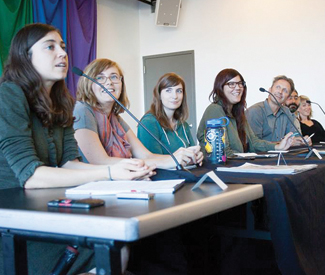
A mix of neighborhood merchants, community activists and a couple City Hall staffers met for a community forum Sept. 23 on Mission gentrification, voicing anger and frustration about rising displacement in the face of soaring rents.

Arranged by organizer Andy Blue, the forum was hosted by Rose Aguilar of Your Call Radio and held at the Eric Quezada Center for Culture and Politics on Valencia Street.

The recent controversy stemming from a bid by high-end retailer Jack Spade to move into a 16th Street storefront catalyzed the discussion, but many addressed the overarching transformation of a neighborhood that has been flooded with high-salaried residents who can afford to pay top dollar.

Gabriel Medina, policy manager of the Mission Economic Development Agency, said he’s troubled by the displacement of Latino-owned businesses. About 80 percent of Latino-owned businesses are passed onto proprietors’ children, he said, representing critical assets in a pricey city like San Francisco. “It’s getting cheaper to be able to start a business than to buy a house,” he pointed out.

Erick Arguello of Calle 24 (formerly the Lower 24th Street Merchants and Neighbors Association) said he’d seen a similar trend along his strip of the Mission, where some Latino-owned businesses have managed to hold strong since they bought their properties years ago.

Nevertheless, Arguello said, the pressure is on. “There’s been an onslaught of realtors and prospectors on 24th Street,” he said. “They ask about the neighbor next door: Do you know when their lease goes to?”

Nor are businesses the only ones impacted. “We’re seeing a lot of evictions of residents along the corridor,” he noted. “The majority of them are Latino families.”

Laura Guzman, executive director of the Mission Neighborhood Resource Center, decried a lack of funding for affordable housing and dedicated units for the homeless and impoverished.

She said many individuals living on the streets in the Mission lack options, leading them to pass the time in the BART plaza. “Support the people in the plaza. They’re human beings,” Guzman said.

Nick Pagoulatos, a legislative aid to Sup. Eric Mar who was previously involved with mid-90s anti-gentrification campaigns in the Mission, said he himself wasn’t sure if he would be able to remain in the city.

“I’m a partner to a woman who was born in the Mission,” he said, acknowledging the deep ties her family has to the neighborhood. “We know that when we lose our housing” – it is likely a question of when, not if, Pagoulatos said – “we’re not going to be able to stay in the Mission. And we’re probably not going to be able to stay in San Francisco.”

Some activist efforts have emerged. A direct action group called Eviction Free San Francisco has staged protests outside the doors of real-estate speculators. At the upcoming Dia de los Muertos 2013 celebration, curator Martina Ayala said at the meeting, “We are building altars to remember the life that we once enjoyed.” La Llorona, a Dia de los Muertos exhibit that will be held at the Mission Cultural Center for Latino Arts, is subtitled “weeping for the life and death of the Mission District.”

A similar transformation happened 10 years ago when the first dot-com boom flooded the Mission with deep-pocketed residents, Pagoulatos noted. Back then, “there was an organized reaction,” he said. “To be honest with you, we fought the good fight, we were at it for a long time and we didn’t win.”

This time around, “Our level of disgust for what’s been going on has been numbed,” he said. But he called for reaching out to engage unlikely allies, and for tapping into collective anger about displacement to bring about change.

“Get pissed, folks,” Pagoulatos said. “Anger is a good thing, especially in the face of injustice.”

Grown up stuff: themes of rejection and reclamation at Portland’s TBA Festival

0

Now in its 11th year, Portland, Ore.’s Time-Based Art Festival is fall’s major performance festival to the north (almost simultaneous with REDCAT’s Radar LA, the major festival to the south). Mounted annually by the Portland Institute for Contemporary Art (PICA), TBA has become something of a pilgrimage site for Bay Area artists and audiences, judging by the number of familiar faces onstage and off both this year and last.

PICA’s artistic director, Angela Mattox, has something to do with this. As the former performing arts programmer at Yerba Buena Center for the Arts, Mattox (now in her second year at PICA) retains strong ties to Bay Area artists. Other likely factors include the relative proximity and general cultural appeal of Portland (an increasing refuge to artists and others pushed out of San Francisco by gentrification), not to mention the scandalous lack of any Bay Area performance festival of comparable scope.

The first week’s worth of work sampled at TBA this year (the festival ran from September 12 to 22) included a wide-ranging and astute blend of local, national, and international work. Among the higher-profile events was an evening of haute-cabaret, featuring Meow Meow and Thomas M. Lauderdale (the latter of Portland’s Pink Martini) backed by the Oregon Symphony. Set in the rococo Arlene Schnitzer Concert Hall, it offered a crowd-pleasing balance of the high-class and ribald, a tightrope walk that Meow Meow (stage name of celebrated Australian actress and cabaret star Melissa Madden Gray) pulled off with consummate skill and unflappable, zany charm.

But the most impressive work featured far more modest production values. There was Still Standing You, for example, by Campo (i.e., Belgian artist-dancer Pieter Ampe and Portuguese artist-dancer Guilherme Garrido), a visceral and physically punishing duet exploring the fantasies, phantasms, and limits of masculinity and their own male heterosexual relationship, which enthralled a large audience for over an hour with little more than the clothes on, and subsequently off, their backs.

Ampe and Garrido, naked for most of the piece, square off in boyish and frankly hilarious postures of potency and aggression, brazenly manipulating each other’s genitals or folding their bodies into intimately abstract geometries. The latter moments, quiet and sure, were the most beautiful and thematically promising. But while the piece charms (especially through its teasing familiarity with the audience and the strength of the artists’ palpable bond), it ultimately remains a bit too comfortably within the gendered field it proposes to explore.

Two other standout pieces of a packed week both tackled time in the broadest and most intimate of senses. Nearly simultaneous with the 40th anniversary of September 11, 1973 — the date of the US-backed military coup that overthrew the country’s elected government and ushered in 17 years of bloody dictatorship under General Augusto Pinochet — TBA premiered Lola AriasThe Year I Was Born. Comprised of a motley cast of 11, mostly non-professional actors who were all children in the Pinochet era, this dynamic and rousing work of documentary theater (modeled on Arias’ earlier work with the children of the dictatorship in her native Argentina in the 1970s–80s) offers perspectives and opportunities that only time can bring — a generational assessment as family history and youthful rebellion.

On a protean set that makes choice use of the drab institutional furnishings of a public school class room, the performers conflate childhood memories (several of them as the children of families in exile) and the headlines of the day into an episodic narrative that frequently becomes a good-natured clash among peers of varying class and political backgrounds, half-invested and half-critical of their individual patrimonies and deeply skeptical of their collective one.

In its combination of distance and intimacy, and in its messy familial and social relationships, The Year I Was Born resists the grim binaries of the political crisis itself and its immediate aftermath, opening up a space for dialogue, humor, complexity, and conciliatory feeling, without the need for a simple moral or compromise. History rolls on, and the show — filled with laughter, surges of passion, and cool detachment — affirms both our agency and ambivalence about it all.

TBA also offered the world premiere of ADULT, a highly kinetic and wildly imaginative duet by well known San Francisco-based choreographers and performers Laura Arrington and Jesse Hewit. This complex, at times willfully obscure piece deserves a longer treatment elsewhere, but it was without doubt one of the more original and productively difficult, divisive pieces caught all week. Setting the audience in a corner of the cavernous Con Way warehouse (the hub of the festival this year) and looking outward into a vast, dimly lit and unadorned expanse, the first half of the piece plunges us into a viscerally dynamic exploration of fears around death and dying, only to turn things around in the second half — literally so, coaxing the audience with a tray of whiskey and breakfast cereals into helping reorder the seating to face a makeshift stage against the far wall.

The piece then proceeds in a gorgeously erratic and precise play with entropy and order, in which Arrington and Hewit alternately share space and cede ground to one another amid garish lighting and costumes and blurring lines in every direction — not least in the gendered dynamics of their intense, compassionate, and multifarious relationship. Through it all, a sideways glance at history and mortality (flagged at one point by canny evocation of W.H. Auden’s Musée des Beaux Arts) dissolves in halting, unexpected ways into a serene pause, a loving regard between two unstable bodies in ecstatic motion.

Community forum planned on Mission gentrification

111

The recent debate about high-end retailer Jack Spade seeking to open up shop in the former location of Adobe Books has placed concerns about gentrification in San Francisco’s Mission District to the front burner yet again.

To spark a dialogue about an appropriate community response to the changing fabric of the neighborhood, community activists have organized a discussion forum scheduled for Monday, Sept. 23.

As rents soar, countless longtime businesses and residents are being priced out of the Mission. From the event description:

“How do we, as a community, feel about this? What can we learn from each other as we consider how to confront the issues of a changing neighborhood and city? Coming from our many perspectives, are there matters that some, most, or all of us can agree upon? … What urgent and long-term actions can we take to support existing local businesses and maintain the diversity and unique character of the Mission District? These are just a few of the questions we may discuss at this meeting.”

The meeting will be hosted at the Center for Political Education on Valencia Street, and participants will represent a host of local businesses and community organizations including Calle 24 SF, Eviction Free San Francisco, Encantada Gallery, the Mission Neighborhood Resource Center, PODER, Shaping San Francisco and the Valencia Corridor Merchants Association.

The discussion will be moderated by Rose Aguilar, host of Your Call on KALW.

The event will be held at 522 Valencia on Monday, Sept. 23 at 6pm and is free to attend.

Is Art Torres helping PG&E, helping his son’s political career, or both?

54

As I’ve been reporting on how CleanPowerSF is being blocked by Mayor Ed Lee and his political appointees on the San Francisco Public Utilities Commission, one piece of the puzzle that I couldn’t quite figure out was why SFPUC President Art Torres took the position he did, offering little public explanation for his stance.

“His opposition to the rate vote was strange because he didn’t give clear reasons,” Eric Brooks, who has been led the grassroots campaign in support of CleanPowerSF, told us. Torres also hasn’t returned Guardian calls on the issue, and he refused a formal request from Sup. John Avalos to explain his position.

As a former state senator and longtime former chair of the California Democratic Party, Torres certainly has connections to Pacific Gas & Electric and the array of politicians that support it, include Willie Brown. But that just didn’t seem like enough for a senior statesman with a decent environmental record to sabotage San Francisco’s only plan for building renewable energy projects.

But some of my political sources have clued me into another possible motive, and it seems to make sense. Art Torres’ son is Joaquin Torres, who works in the Mayor’s Office and who Lee in February appointed to the Housing Commission, where Torres now serves as president.

And here’s the kicker: those sources also say that Joaquin Torres has already started running for the District 9 seat on the Board of Supervisors, which is now held by Sup. David Campos, who is running for Tom Ammiano’s seat in the California Assembly. And if Campos wins that race next year, Mayor Lee will get to fill it, possibly naming Torres to one of the most progressive seats in the city.

So dad gets to score political points with some powerful friends, and help launch his son’s political career in the process. These motives are beginning to add up.

Joaquin Torres is now deputy director of the San Francisco Office of Economic and Workforce Development, “where he leads Mayor Lee’s Invest In Neighborhoods Initiative to leverage City resources across city departments to maximize positive economic and social impact in low-moderate income neighborhoods and throughout San Francisco’s commercial corridors,” the Mayor’s Office wrote in February when Torres got appointed to the Housing Commission.

Sounds like the perfect job for someone being groomed for the Board of Supervisors, where he could have a serious impact on this city’s political dynamic, tipping policies in the neoliberal to moderate direction of expanding corporate welfare programs and speeding up gentrification.

Neither Torres has returned our calls, but I’ll update this post when and if they do. And while this is clearly just political speculation and conjecture, I have a feeling that I’m onto something here. So remember where you read it first.  

Forget the Willie Brown Bay Bridge

73

EDITORIAL As the California Legislature prepares to wrap up before fall recess, a resolution is working its way through the approval process to rename the western span of the Bay Bridge the “Willie L. Brown Jr. Bridge.”

Brown, who formerly served as mayor of San Francisco and speaker of the California Assembly, is known for boasting about his hobnobbing with the rich and famous in his San Francisco Chronicle column, “Willie’s World.” But to longtime progressive San Franciscans who spent decades trying to stem the tide of gentrification, he was the powerful figure that rolled out the welcome mat for high-end developers and corporate interests, whose interests in San Francisco revolved around profit alone.

As mayor, Brown presided over land-use policies that resulted in high-end developments at a time when evictions were rampant, a trend that rings familiar in today’s tech-saturated San Francisco. Once, when pressed on the idea that his approach was making the city increasingly unaffordable, Brown’s famous retort was: “If you don’t make $50,000 a year in San Francisco, then you shouldn’t live here.”

It’s not just Brown’s insensitivity to struggling tenants, deep ties to corporate interests and high-end real-estate developers, or continued behind-the-scenes influence in San Francisco politics that cause us to squirm when we think about the San Francisco-Oakland Bay Bridge bearing this politician’s name. There’s also the key question of whether Bay Area residents actually want to see this happen — and, given Brown’s historic role as a divisive figure, the idea that there is universal support for such an idea is laughable.

A legislative analysis presented to the Assembly Committee on Transportation a few weeks ago noted that lawmakers actually came up with ground rules for big decisions like whether a bridge ought to be named after someone, to “promote fairness.” The rules stipulate that such a proposal “must reflect a community consensus” — and guess what? Even Brown’s editors over at the Chronicle issued a June editorial opposing the idea.

Not only that, but proposals like this are only supposed to come from representatives of the district where the thing being renamed is located — yet this scheme came from Assemblymember Isadore Hall, a Democrat from Compton. But despite clear failure to adhere to these basic rules, only a single committee member voted against naming the bridge after Brown.

Interestingly enough, the bill even includes a request for Caltrans to determine the cost of posting signs commemorating Brown, which would evidently be funded by donations from unspecified private sources.

If the San Francisco-Oakland Bay Bridge is going to be named after anyone, we agree that the honor should be reserved for beloved 19th-century San Francisco eccentric Joshua Abraham Norton, the Scotsman who proclaimed himself Emperor of the United States in 1859 and printed his own currency.

So far, a Change.org petition calling on Gov. Jerry Brown to name it the Emperor Norton Bay Bridge has garnered 1,800 signatures. “He was a champion of racial and religious unity, an advocate for women’s suffrage [and] a defender of the people,” the petition notes. That sounds more like something motorists can be proud of when they drive back and forth across the bay.


A pair of Spades wins

8

A strong showing by small businesses and activists concerned about chain stores and gentrification in the Mission won over a 3-2 majority on the Board of Appeals on Aug. 21, but their appeal of a city ruling that Jack Spade isn’t a formula retail business was denied anyway because it needed four votes.

The Valencia Corridor Merchants’ Association challenged the Planning Department’s June decision to issue a building permit to Jack Spade, a men’s clothing chain moving into the old Adobe Bookstore location on 16th Street. Officials ruled that chain has fewer than 11 locations, so it wasn’t required to go through the conditional use hearing required of “formula retail” businesses.

Though it indeed has only 10 locations, Jack Spade “has a complete imbalance of power and resources, which is exactly what the formula retail legislation aimed to remedy in the first place,” Mission activist Kyle Smeallie told the Guardian. Jack Spade is owned by Fifth & Pacific (aka Liz Claiborne), which also owns the Kate Spade women’s clothing chain. “We’re going to make the case that, since it’s named Spade, it has benefitted from the association with Kate Spade,” Smeallie explained. “Legally, we have a case to say a Spade is Spade and they should be considered one and same.”

Local business owners fear that an influx of chain stores will drive up commercial rents in the Mission and force them out of business. “I’m strongly opposed because of its potential to destroy the culture of this area,” Michael Katz, owner of Katz Bagels across 16th Street from the site, told the Guardian. “If they start allowing chains to come, it will be one chain store after another.”

Activists say they’re considering their options and not yet ready to give up.

Spotlight shone on gentrification in West Oakland and SF

0

Two stories on the theme of gentrification and displacement — a topic we at the Bay Guardian have expended plenty of ink on — ran in major news outlets recently, showing how intense the Bay Area housing market pressure has become as it continues to be fueled by a rapid growth in high-salaried jobs in big tech.

Zeroing in on San Francisco, the Los Angeles Times turned an eye toward Mission District gentrification (“San Francisco split by Silicon Valley’s wealth,” Aug. 14) illustrating the growing divide with a succinct comment overheard on a Muni bus: “I don’t know why old people ride Muni. If I were old, I’d just take Uber.”

And a Wall Street Journal article (“Companies spruce up neighborhoods, putting gentrification in overdrive,” Aug. 13) provides an eye-opening account of how REO Homes LLC is seeking to accelerate the gentrification process by “beautifying” West Oakland, an historically African American neighborhood that is home to predominantly low-income and working-class residents.

Minutes from downtown San Francisco via BART, West Oakland is dotted with Victorians and was hit with a wave of foreclosure during the economic crash, destabilizing the lives of many families who lost their homes.

REO is an investment firm helped along by San Francisco billionaire Tom Steyer, a well-connected venture capitalist (he even hosted a Democratic Party fundraiser with President Barack Obama at his Pacific Heights mansion earlier this year).

As the Journal’s Robbie Whelan reports, REO has been shelling out top dollar to spruce up not just its holdings, but residences nearby its West Oakland properties. In a rarely seen form of hyper-gentrification, the company has been planting trees, sprucing up homes (for free) of neighbors who aren’t in the market to sell or rent, mending fences, and making other improvements — all in an effort to lure higher-income residents to the neighborhood.

Since 2008, the height of the real-estate market crash, REO has acquired more than 200 homes in Oakland, Whelan reports, mostly in West Oakland. “Most houses cost around $200,000,” he writes, “and [founder Neill Sullivan] said he invests as much $100,000 to fix each one up.”

Real-estate agents have been marketing the sometimes-rough neighborhood to house-hunters as an affordable, nearby alternative to astronomically expensive San Francisco. Now that many people who weren’t able to keep up with mortgage payments have been forced out by foreclosure, things are changing swiftly, as if by magic. Armed with cash, bankers are chasing away the blight and rolling out the welcome mat for up-and-comers who can’t swing that $3,000 one-bedroom in The City. All of which will likely result in further displacement of Oakland residents who are barely holding on as it is. As Oakland City Council member Desley Brooks told the Journal: “I’m not interested in finding housing for San Franciscans who can no longer afford San Francisco. I’m interested in helping people here in Oakland.”

West Oakland hyper gentrification in the WSJ

Two stories on the theme of gentrification and displacement – a topic we at the Guardian have expended plenty of ink on – ran in major news outlets recently, showing how intense the Bay Area housing market pressure has become as it continues to be fueled by a rapid growth in high-salaried jobs in big tech.

Zeroing in on San Francisco, the LA Times turned an eye toward Mission District gentrification, illustrating the growing divide with a succinct comment overheard on a Muni bus: “I don’t know why old people ride Muni. If I were old, I’d just take Uber.”

And a Wall Street Journal article provides an eye-opening account of how REO Homes LLC is literally seeking to accelerate the gentrification process by “beautifying” West Oakland, an historic Black neighborhood that is home to predominantly low-income and working-class residents. (Note: The article may be behind a paywall.)

Minutes from downtown San Francisco via BART, West Oakland is dotted with Victorians and was hit with a wave of foreclosure during the economic crash, destabilizing the lives of many families who lost their homes.

REO is an investment firm helped along by San Francisco billionaire Tom Steyer, a well-connected venture capitalist (he even hosted a Democratic Party fundraiser with President Barack Obama at his Pacific Heights mansion earlier this year).

As the Journal’s Robbie Whelan reports, REO has been shelling out top dollar to spruce up not just its holdings, but residences nearby its West Oakland properties. In a rarely seen form of hyper-gentrification, the company has been planting trees, sprucing up homes (for free) of neighbors who aren’t in the market to sell or rent, mending fences, and making other improvements – all in an effort to lure higher-income residents to the neighborhood.

Since 2008, the height of the real-estate market crash, REO has acquired more than 200 homes in Oakland, Whelan reports, mostly in West Oakland. “Most houses cost around $200,000,” he writes, “and [founder Neill Sullivan] said he invests as much $100,000 to fix each one up.”

Real-estate agents have been marketing the neighborhood – which is no stranger to violent crime – to house-hunters as an affordable, nearby alternative to astronomically expensive San Francisco. Now that many people who weren’t able to keep up with mortgage payments have been forced out by foreclosure (see: robocalls, bungled loan modifications, foreclosure abuses), things are changing swiftly, as if by magic. Armed with cash, bankers are chasing away the blight and rolling out the welcome mat for up-and-comers who can’t swing it for that $3,000 one-bedroom in the city.

All of which will likely result in further displacement of Oakland residents who are barely holding on as it is. As Oakland councilwoman Desley Brooks told the Journal: “I’m not interested in finding housing for San Franciscans who can no longer afford San Francisco. I’m interested in helping people here in Oakland.”

Shareable, smearable

25

After writing critically about problems in the business models of so-called “shareable economy” companies in last week’s issue — including our cover story on Airbnb and other companies that facilitate short-term home rentals (“Into thin air“) and a story on the rideshare company Lyft (“Driven to take risks“) — the topic continued to dominate the sfbg.com Politics blog, with fresh posts and lots of reader comments:

AIRBNB PILE-ON

The excellent bilingual newspaper El Tecolote covered some of the same ground we did in its Aug. 1 cover story, “Unregulated Rental Business Takes Over Housing,” focused on how Airbnb is contributing to gentrification and displacement in the Mission District.

Reporter Jackson Ly found a couple that turned a rent-controlled apartment on 24th St. into a $249 per month de facto hotel room, booking it for 24 nights in August and making $5,976 in just one month, on top of the $3,069 they’re making in August renting out the guest room in the apartment where they actually live for $99 per night.

“It’s cheating the people that pay taxes,” Maria, who lives in the unit below this couple’s investment apartment and is tired of the rotating stream of tourists in her building, told the newspaper.

I got ahold of El Tecolote Managing Editor Iñaki Fdez. de Retana, who said that housing issues like this one are extremely important to the Latino community that lives in the Mission, and he’s been surprised that Mayor Ed Lee has been unwilling to address the impacts of Airbnb and other tech community contributors to the problem.

“It is very important,” he told us, noting that visiting European tourists are changing the character of the neighborhood. “In particular on 24th Street, which was once seen as the heart of the Mission, it’s changing overnight and [Airbnb and other housing rental websites] is a big part of that.” (Steven T. Jones)


UBER UGLY CRASH

Uber’s policy on insuring its drivers will soon be taken for a test drive, as the company that runs the mobile app-based ride requesting service and a driver were served with a court summons last week from a woman severely injured after a crash near a San Francisco intersection.

Those insurance policies were said to meet brand new regulatory requirements on rideshare services introduced by the California Public Utilities Commission on July 30, which was meant to solve the longtime regulatory battle between rideshare services and local governments.

The plaintiff in the suit, Claire Farhbach, was a bystander, not a customer, and that unique twist in the injury suit has experts from the taxi industry waiting to see if Uber will step up to the plate to pay for Farhbach’s injuries, or if Uber will leave driver Djamol Gafurov on the hook for the bill.

Fahrbach was walking up Divisadero street near Hayes at quarter of midnight March 12 when Gafurov’s black town car, operating as a private taxi, collided with another car on Divisadero while turning left. One of the cars then collided with a fire hydrant, and in the words of the civil suit, “this impact caused the fire hydrant to be violently sheared from its base and propelled through the air a number of feet northbound…when the fire hydrant struck (Farhbach) with a tremendous amount of force.”

Gafurov’s private taxi was operating as a “partner” of Uber, which is how the company defines its relationship to the network of drivers on its website. No private taxis or drivers are considered to be employees of Uber, as the company has repeatedly maintained, claiming that the drivers, and their actions, are not its responsibility.

Uber spokesperson Andrew Noyes told us repeatedly that drivers are not employees of the rideshare company: “Our legal team took a look at the files you sent. This is not an ‘Uber’ driver, they’re not employed by us. They’re employed by their licensed and insured limousine company.” (Joe Fitzgerald)


MAKING CABS BETTER

For all the (justified) grumbling about the business models of ridesharing services like Lyft and Uber, the so-called ridesharing revolution may prove to be a catalyst for a taxi industry overhaul.

“We’re adding hundreds more taxis, and our board has approved regulations for each vehicle to provide real-time locational information,” San Francisco Municipal Transportation Agency spokesperson Paul Rose told us.

“One of our goals is to move forward with making the data available to our customers to hail a cab with an app,” Rose added, referencing a plan unveiled by the transit agency several weeks ago. Faced with stiff competition from random vehicles adorned with garish pink mustaches, the taxi industry is taking a stab at evolution, or at least imitation.

To be a cab driver right now, paying off the pricey medallion they must purchase in order to operate while oblivious new transplants rake in the cash without following the same set of rules, must be infuriating.

At the same time, let’s be honest here: There’s a reason people are ditching conventional cabs and climbing into cars with random strangers who may be beckoned with the tap of a smartphone. And it has nothing to do with passengers’ sentiments about government regulation or newly minted tech millionaires.

The taxi industry lags far behind the lightning-speed reality many Bay Area residents have come to inhabit, but if it weren’t for the competition, they might not have any incentive to change.

Rideshare services might be your quintessential rogue tech companies backed by nauseating sums of venture capital, but at the end of the day, people also want taxi service that does not suck. (Rebecca Bowe)

Jack Spade tries to sneak into a beloved Mission spot, triggering a community backlash

16

The Stop Jack Spade Coalition is throwing an impromptu fundraiser tonight (Wed/7) at the Make-Out Room to help support local business and oppose chain store blight in the Mission.

Jack Spade, an upscale men’s clothing chain owned by Liz Claiborne, has plans to set up shop at 3166 16th Street, once home to Adobe Bookstore. The community bookseller of 25 years moved south to 24th Street in June, having been ousted from the space by two consecutive rent hikes. The second time, Adobe General Manager Chris Rolls tells us, “the landlord rejected continuation of the lease, which was outrageously expensive and, for this neighborhood, a bit alarming.”

Opponents of the deal say the men’s clothing retailer signed a $12,000 per month agreement on the storefront shortly after Adobe failed to meet its landlord’s exorbitant demands. (Note: A Jack Spade representative contacted the Guardian after this story was published to say this figure was “exaggerated,” but would not disclose any other financial details.)

Jack Spade has gotten this far by failing to apply for a conditional use permit, a pesky little measure imposed by voters in 2006 to thwart corporations chomping at the bit to turn San Francisco neighborhoods into sanitized strip malls.

Turns out Jack Spade is a subsidiary of one such corporation, Liz Claiborne, a fact downplayed in the chain’s original application to the Planning Commission. Even a modest 10 storefronts nationwide, sadly, doesn’t confer small business cred on a menswear line owned by a company with a $2.88 billion market capitalization.

Conveniently, the Jack Spade label has just one too few stores to be formally defined as “formula retail” by Proposition G.  But the Valencia Corridor Merchants Association has been hot on the case, circulating a petition that Jack Spade play by the rules of other big businesses and submit to a public hearing anyway.

A similar effort was successful in preventing an American Apparel store from opening just up the street in 2009 and in slowing the insatiable gentrification that has steamrolled local culture in many other once-unique and affordable cities.

Tonight’s event will feature live music and stand up comedy.  Chicken John Rinaldi promises to host an auction and “talks about what we can do to stop this bullshit.” Doors open at 7pm and $5-$15 will be collected at the door, with proceeds to benefit the campaign for a public hearing next week.

Community-based journalists also raising Airbnb’s issues in SF

111

Mainstream media outlets in San Francisco may be slow to pick up on how Airbnb and other online home rental companies are violating local laws and dodging local taxes — the subject of our cover story this week — but both international and community-based journalists are paying attention to this growing problem.

The excellent bilingual newspaper El Tecolote covered some of the same ground we did in its cover story this week, “Unregulated Rental Business Takes Over Housing,” focused on how Airbnb is contributing to gentrification and displacement in the Mission District.

Reporter Jackson Ly found a couple that turned a rent-controlled apartment on 24th St. into a $249 per month de facto hotel room, booking it for 24 nights in August and making $5,976 in just one month, on top of the $3,069 they’re making in August renting out the guest room in the apartment where they actually live for $99 per night.

“It’s cheating the people that pay taxes,” Maria, who lives in the unit below this couple’s investment apartment and is tired of the rotating stream of tourists in her building, told the newspaper.

I got ahold of El Tecolote Managing Editor Iñaki Fdez. de Retana, who told me, “it seems like we’re on the same page,” noting the Guardian has also recently written about the prison hunger strike and some other issues that his paper has covered.

He said that housing issues like this one are extremely important to the Latino community that lives in the Mission, and he’s been surprised that Mayor Ed Lee has been unwilling to address the impacts of Airbnb and other tech community contributors to the problem.

“It is very important,” he told us, noting that visiting European tourists are changing the character of the neighborhood. “In particular on 24th Street, which was once seen as the heart of the Mission, it’s changing overnight and [Airbnb and other housing rental websites] is a big part of that.

Meanwhile, we’re still waiting for a substantive response from Airbnb to the issues that we and a handful of other journalists are raising. CEO Brian Chesky, who was an amateur competitive bodybuilder before founding Airbnb in 2008, would apparently rather flex his muscles than deal directly with the community where his company is based.

Plan Bay Area: better, but it still gentrifies

0

By Peter Cohen and Fernando Martí

Council of Community Housing Organizations

OPINION On July 18, the Metropolitan Transportation Commission (MTC) and the Association of Bay Area Governments (ABAG) adopted the region’s first so-called “sustainable communities strategy,” as required under new state environmental laws. Plan Bay Area will direct the largest share of the region’s growth to the region’s urban cores — two-thirds of the region’s overall housing production is directed to 15 specific cities.

The vision is what environmentalists refer to as “smart growth” — shrinking the footprint of the region’s future development as a more environmentally friendly and geographically efficient pattern to absorb ever-increasing population. San Francisco alone has a very tall order: Our city will absorb 25 percent of new urban development, which equates to 92,000 new housing units and a pace of housing construction averaging around 3,100 units annually (a rate that has been reached only twice over the last 50 years since the era of 1960s urban renewal development).

The question that framed debates through the three-year process in drafting and finally adopting the plan is how that amount of new growth can be “done right;” that is, without gentrifying working class and poor communities and ensuring that infrastructure, including affordable housing and transit service, will keep up with that pace of growth. Tim Redmond’s feature article in the June 4 issue of the Guardian (“Planning for displacement”) and a June 12 forum sponsored by the Guardian, CCHO, and UrbanIDEA very thoroughly laid out the issues and critiques of the Plan Bay Area draft that was released by MTC/ABAG earlier this spring.

With such fundamental flaws when the draft plan was released in April, how did the July 18 adopted final Plan Bay Area fare? First, there is no question this regional “smart growth” plan will make combating gentrification at ground-level harder. But second, the plan could have been worse if not for a tremendous final pushback by progressive advocates from San Francisco and throughout the region loosely united in a “Six Wins for Social Equity” coalition and the committed leadership of a small core of progressive regional leaders — including two of San Francisco’s representatives, David Campos (MTC) and Eric Mar (ABAG) — who championed some final amendments.

Those “wins” (in reality, concessions by MTC/ABAG) achieved in this final push include: adding a public process to develop priorities for the Bay Area’s $3.1 billion share of state cap and trade funding, such as to affordable housing and local transit operations; strengthening the $14 billion transportation block-grant funds program (“OBAG”) to link it directly to local cities’ affordable housing production and displacement-prevention policies; and adding a requirement for MTC to develop a comprehensive strategy to prioritize funding of local transit service and transit maintenance.

Though the details of those amendments are fairly squishy and do not alter the development trajectory of the plan, they are potentially valuable handholds to work with going forward as Plan Bay Area gets implemented (and updated in four years).

That said, San Francisco’s front line working class neighborhoods and communities of color still stand to take the brunt of potential negative impacts from this regional “smart growth” plan. Theoretically they could receive the potential benefits of public infrastructure investments and stimulated economic activity. But while the risks are real, the potential benefits are still illusory.

We must become more engaged if we are to move Plan Bay Area beyond policy statements and promises of future “best-practices” to make sure vulnerable people are not displaced from their neighborhoods in the tide of infill real estate development and are guaranteed a real share of the fruits from “equitable” smart growth.

Supporting unions helps all workers

0

EDITORIAL The San Francisco Bay Area has traditionally been very pro-labor, from the days when legendary longshoreman leader Harry Bridges led the San Francisco General Strike of 1934 to the modern era when labor unions have lent the muscle and money to myriad progressive reforms that San Francisco and California have proudly exported to the rest of the country.

But sadly, that sense of solidarity seems to be changing during these times of widespread economic anxiety, declining union membership, increasing urban gentrification, and a divide-and-conquer political climate created by both major parties. Too often, Bay Area residents are indifferent or even hostile to the plight of the working class.

We’ve seen it in the public reactions to the labor contract impasse and strikes at Bay Area Rapid Transit, whose unions staged a four-day strike that ended July 4 and which could resume again after a 30-day contract extension and cooling off period ends on Aug. 4. If the strike resumes — which seems likely at this point, disrupting commutes on a non-holiday workweek — the public’s anger and finger-pointing could be even worse than last time.

We heard similar resentments expressed in reaction to last week’s cover story (see “Striking Out,” July 24) about the stadium concession workers at San Francisco Giants’ games, who have been without a contract since 2010 and are even denied tip jars to supplement pay that is actually less than San Francisco’s minimum wage in many cases.

The common criticism is that these workers should just be glad to have a job, regardless of pay and benefits. And when it comes to the full-funded pensions of BART workers, critics rightfully point out that few of us enjoy that kind of retirement security.

But that criticism turns the real problem on its head. We all need far more retirement security than we have now, a reality that will hit hard in the coming years as the so-called “silver tsunami” breaks, leaving families and society to care for baby boomers who run out of retirement savings (which could happen quickly given that three-quarters of Americans aged 50-64 have less than $30,000 in retirement savings).

Bay Area residents should be supporting our brothers and sisters in organized labor, helping them so they can in turn help us, as SEIU Local 1021 and other unions are trying to do on the issue of retirement security for all (last year’s approval of SB1234 in California was a good start, but far more is needed).

When unions win good contracts, it generally increases wages and benefits in the region, even for non-union jobs (the opposite is also true, that wages stagnate when unions lose these fights), so it should be in our enlightened self-interest to support BART and Giants workers. Particularly during these times of economic uncertainty and woe, it’s important to overcome our resentments and stand in solidarity with our fellow workers — for their sake, for our own, and for the long-term best interests of our region and country.

Damaged goods

0

emilysavage@sfbg.com

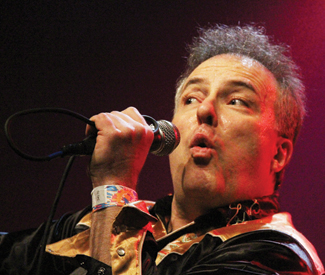
TOFU AND WHISKEY Jello Biafra could be your theatrical political science professor. The still-charismatic frontperson and song-composer has long spewed knowledge deep from the underbelly of political theater, from his influential early 1980s Bay Area punk band Dead Kennedys, and projects like the band Lard, through his nine dense spoken word albums, and up to his newest musical endeavor, louder than ever in his 50s, Jello Biafra and the Guantanamo School of Medicine.

That band, which also includes Victims Family guitarist Ralph Spight, plays the Uptown this weekend with D.I., the Divvys, and Gir-illa Biscuits — an excellent local Gorilla Biscuits tribute act (Fri/26, 9pm, $15. Uptown, 1928 Telegraph, Oakl. www.uptownnightclub.com.)

Given Biafra’s affinity for weaving news-worthy (though oft-overlooked) scandals into contextual lyrics, I have often wondered from where he gathered his news. “Why, the Bay Guardian, of course! Where would a local voter be without your fine rag?” Biafra tells me from his San Francisco home, while finishing up making a juice of apples and greens. Is he mocking me? “I just hope the new ownership and staff goes pedal to the metal to keep up the standard of muckraking and ethics. There’s so much corruption to dig up in this area.” No, his tone is just often sarcastic.

“Locally, we have you folks, among others. And then you know, the Nation, Progressive, Mother Jones, interesting things people send me in the mail, digitally or otherwise, putting two and two together — trying to write songs about stuff that no one else has. Or at least, not in the same way.”

He continues: “It’s just filling in the gaps with what’s interesting. I’m proud that no two of my music albums sound alike. Not even the Lard albums sound alike. From Dead Kennedys onward my mission as the main lyricist and composer of the damn tunes, I kind of stick to my punk core — whether I intend to or not, it’s just who and what I am —but widen the base of the pyramid to what you can do with that energy.”

Guantanamo School of Medicine’s White People and the Damage Done (Alternative Tentacles, 2013) is the group’s most recent album. A semi-concept album, Biafra says it’s about “grand theft austerity, and how unnecessary it is.”

He explains, “People have asked me…what I think is the biggest problem in the world today and they expect me to say something like ‘climate change’… or inequality, or war, or whatever. I say you know, there’s a worse one, it’s corruption. Because that is what’s blocking anything constructive from being done about all those other problems.”

The title track of White People and the Damage Done, a pounding, guitar-heavy, Dead Kennedys-esque song, explicitly points a finger toward attitudes of the higher-ups in the US and EU regarding countries run by people of color, and the need to step in and take control.

Anthemic single “Shock-U-Py!” has a chantable chorus, and moment-in-time impact. In it, Biafra howls “Wake up and smell the noise/We can’t take it any more/Corporate coup must go/We will Occupy/We will Shock-U-py.” The Occupy movement may have left the mainstream radar for now, but Biafra’s song commemorated the moment, much like he did in early career chants calling out yuppies and atrocities in places like Cambodia, in the early ’80s. His lyrics are typically both rooted in the present, and packed with historical references.

A fast-paced earlier released track (still with that Biafra-esque carnivalian breakdown), “Dot Com Holocaust,” recorded at the time of the The Audacity of Hype EP (AT, 2009), touched on problems more local to Biafra and this rag, of gentrification and a new class of tasteless techies coming in to the Bay. Dripping with satire, the song seemed to have touched a nerve when first released, and garnered scores of angry, faceless Internet comments.

“I had this funny feeling we weren’t done with the Dot Com Holocaust. Sure enough, now it’s more aggressive and obnoxious than ever. Dot Com Monte Carlo — that’s kind of what Willie Brown’s puppets are trying to turn this city into, yet again,” he says. “It has been really sad for me to see so many cool people and artists and service-workers and people of color just bulldozed out of this town to make room for more mini little yuppies who treat San Francisco as a suburb of Silly-clone Valley.” Yes, Biafra talks like he sings.

When we discuss newer bands, he notes many acts are fleeing SF for the East Bay, something bands across genre styles and influences have brought up with me during casual conversations and interviews.

“Now you don’t see people like me when I was 19, just moving out to San Francisco [from Boulder, Colo.], chasing a dream. There was a time when the vitality of the underground was maintained by entire bands moving here as a unit. Everybody from MDC and the Dicks to DRI and later, Zen Guerilla.”

But as an underground label owner (Alternative Tentacles) he knows times are tough for both bands and music fans, with a poisonous combination of the crashed economy and rampant file-sharing affecting all involved. “I wonder how many people save up money from their shitty jobs for years in order to make some really cool piece of music only to find that nobody actually gives anything back,” he says. “Maybe the solution for people who want to get their friends into really cool music, don’t just send them the whole album, pick some favorites and send them a little teaser package, a little file to inspire them to check out them more.”

For the complete Jello Biafra Q&A, see SFBG.com/Noise.


YASSOU BENEDICT

Counterpoint, there are still some bands and artist types heading way out west to San Francisco in these turbulent, high-priced times: Yassou Benedict. This band is not in the slightest akin to Biafra’s people, though it is a group of hopeful young dreamers.

The shoegazing dreampop four-piece formed at a small high school in Upstate New York. While most bands from the area would migrate south to New York City, Yassou Benedict made the “fairly random” decision to head to SF. “We all got into a Subaru Forrester with a Great Dane in the back and all our stuff in a trailer and drove across country,” says guitarist James Jackson, who traveled with singer-bassist Lilie Bytheway-Hoy, guitarist-keyboardist A.J. Krumholz, and drummer Patrick Aguirre.

Now in the Bay, they work as servers at Outerlands, a cook at Beauty Bagels and Wise Sons, a bartender at the Boxing Room, and a pizza-dealer at Lanesplitter Pizza and Pub.

But more importantly, the group of 20-somethings recently released its debut EP, In Fits in Dreams, a moody, complex, emotionally fraught record that leaves the listener itching for a full-length, and touches on themes of “anxiety, and wanting to be weightless, the desire to run through wide open spaces.” The album release party was actually a few weeks back, but you can catch the band this week at Milk Bar with Beautiful Machines, Hotel Eden, and NVO (Fri/26, 8:30pm, $10. Milk Bar, 1840 Haight, SF. www.milksf.com).

Led by Bytheway-Hoy’s dramatic, high-ranging vocals, and unconventional song structures (like shifting time signatures) In Fits in Dreams also features guest vocals by Hole’s Melissa Auf Der Maur on track “Cloisters.”

The subtle beats and rolling vocals of “Cloisters” feels like a doomed march toward the unknown, while closer “Last Cicada” ventures more into Radiohead In Rainbows territory (the band has been known to cover “Jigsaw Falling Into Place”). There’s also the church-like pop hymn of “Back Roads that Dead End,” which begins as an anxious vocal solo with faraway chimes, the beats and guitars slowing filtering in.

It’s surely been noted elsewhere on the blogosphere, but there’s something strangely seductive within Yassou Benedict, which I mention to Jackson. “I am not sure why that is. If we are making people feel, whether it is the desire to make love, or children or anything else, than we are succeeding. It is kind of strange though. Our music is fairly depressing. Now I’m just imaging people holding each other and crying while they listen. Lilie’s voice probably has a lot to do with that.” Bytheway-Hoy’s voice is indeed both haunting and captivating.

There’s also a cinematic quality to In Fits in Dreams, likely driven by that high emotional tug. Given the soundtrack capabilities, I asked Jackson what type of film would best be suited to Yassou Benedict and he picked a future Wes Anderson film, also noting that a dream opening slot would be an imaginary Radiohead show in an intimate venue (no arenas!).

While the record was recorded and produced back in Hudson, NY (with Steve Durand at Dioramaland Studios), the band is touring on it from its new homebase in the Bay.


 

“Eviction Free Summer” activists show up outside a landlord’s office to protest an eviction

On July 2, activists from “Eviction Free Summer,” formed to defend tenants facing eviction, gathered outside landlord Rick Holman’s South Park office building in San Francisco to protest an eviction he’d initiated against a Mission-based activist collective.

Organizer Fred Sherburn-Zimmer said it was one of many peaceful protests the housing activists plan to stage against property owners this summer. “We’re taking it to the landlord’s homes and offices,” Sherburn-Zimmer said. “They can’t pretend they’re not ruining people’s lives by displacing them.”

This past April, collective members from In The Works, an organization that rents space in what is often called the “17 Reasons” building, at 17th and Mission streets, received an eviction notice from Holman alleging illegal subletting.

Holman is a managing partner at Asher Investment Group, and from the perspective of Sherburn-Zimmer and other protesters, his move to evict the collective is helping to propel a trend of gentrification in the Mission. “We need this space, and if the whole neighborhood is high-end realty, then it’s not really helping the community,” Sherburn-Zimmer said.

The In The Works Collective bills itself as an anti-authoritarian, anti-capitalist arts and events collective, which regularly hosts skill-sharing workshops and other activism-oriented events. A collective member who introduced herself as Madeline said Holman has not been the most hospitable landlord.

“When he first came to talk to us, he said we had bad posture and body language,” she recounted. “The day after we got the three-day notice, the locks were changed.” 

When the Guardian reached Holman this past May seeking comment for a longer article about widespread evictions, he declined to comment on the matter but emphasized that he planned to keep the building as commercial office space rather than convert it into high-end condos, and said his other tenants had expressed no complaints.

Like many folks facing eviction from San Francisco rental properties, In The Works may be forced to find another space. Currently, Madeline says the collective is paying 72 cents a square foot for the 5,200 square foot place — and it’s highly unlikely that they’ll find a place in the Mission for a similar price. That’s why they welcomed support from the activists at Eviction-Free Summer.

“I totally respect them helping us out,” Madeline said. “It’s important that we stick together. Our place has always been big on solidarity and community building.” 

Eviction Free Summer hasn’t revealed what other landlords they might target, yet they plan to continue staging protests outside landlords’ homes and offices in coming months. “This is just the beginning of this direct action group,” Sherburn-Zimmer said. “We will do anything to prevent people from losing their homes and spaces.”

Wedding bells and Pride protests

0

rebecca@sfbg.com ; steve@sfbg.com

The city of San Francisco was a complete whirlwind from June 26 to June 30. First came the historic Supreme Court ruling that ended the ban on same-sex marriage in California and struck down the discriminatory Defense of Marriage Act. The historic decision, handed down just before the city’s Pride festivities got underway and as a rare heat wave gripped the city, unleashed widespread celebration June 26, culminating with a rally and dance party in the streets of the Castro.

The Supreme Court ruled that the Defense of Marriage Act, which denies federal recognition of same-sex marriage, “is unconstitutional as a deprivation of the equal liberty of persons that is protected by the Fifth Amendment.” According to the majority opinion, “DOMA’s principal effect is to identify a subset of state sanctioned marriages and make them unequal.”

Hollingsworth v. Perry, the Prop 8 case, was dismissed on standing due to the fact that the State of California refused to defend it in court. That meant the previous ruling invalidating Prop 8, by Judge Vaughan Walker and upheld by the Ninth Circuit Court, was upheld.

City Hall was totally packed at 7am when the Court convened, with hordes of journalists, gay and lesbian couples, and sign-wielding activists in the crowd. Cheers erupted when the decision was announced striking down DOMA. When the Prop 8 statement came down, the room went nuts.

“It feels good to have love triumph over ignorance,” said Mayor Ed Lee, who joined Lt. Gov. Gavin Newsom in escorting a fragile Phyllis Lyon down the stairway. When Lyon married the late Del Martin, they became the first same-sex couple to get legally married in California in 2004.

“San Francisco is not a city of dreamers, but a city of doers,” Newsom said. “Here we don’t just tolerate diversity, we celebrate our diversity.” He thanked City Attorney Dennis Herrera and others who’d contributed to the fight to for marriage equality. “It’s people with a true commitment to equality that brought us here.”

When Herrera took the podium, he turned to Newsom, and said, “Now you can say, ‘Whether you like it or not!'” — a joking reference to Newsom’s same-sex marriage rallying cry, which some blamed for boosting the anti-same-sex marriage cause. “We wouldn’t be here today if it wasn’t for Gavin Newsom’s leadership,” Herrera continued. “I remember in 2004 when people were saying it was too fast, too soon, too much.” Herrera also pledged to continue the fight that began here in City Hall more than nine years ago: “We will not rest until we have marriage equality throughout this country.”

Later that afternoon, clergy from a variety of faiths including Christianity, Judaism, Islam, Buddhism and the Church of Latter Day Saints gathered on the steps of Grace Cathedral on Nob Hill for a buoyant press conference to celebrate the court’s rulings.

“For 20 years I’ve been marrying gay and lesbian couples, because in the eyes of God, that love and commitment was real, even when it wasn’t in the eyes of the state,” said Rabbi Michael Lerner of the Beyt Tikkun Synagogue. “We as religious people have to apologize to the gay community,” he added, for religious texts that gave opponents of gay marriage ammunition to advance an agenda of discrimination.

He added that the take-home message of the long fight for marriage equality is, “don’t be ‘realistic.’ Thank God the gay community vigorously fought for the right to be married — because they were not ‘realistic,’ the reality changed. Do not limit your vision to what the politicians and the media tell you is possible.”

Mitch Mayne introduced himself as “an openly gay, active Mormon,” which is significant since the Mormon Church was a major funder of Prop 8. He called it “one of the most un-Christlike things we have ever done as a religion,” but noted that the sordid affair had brought on “a mighty change in heart from inside the Mormon community, with greater tolerance than ever before,” with many Mormons going out and marching in solidary with gay and lesbian couples, he said.

Then on June 28, earlier than expected, the County Clerk started issuing same-sex marriage licenses. Kris Perry and Sandy Stier, plaintiffs in the case against Prop. 8, became the first of dozens of happy couples to be married at City Hall that evening, and the marriages continued in the days that followed.

And as if that weren’t enough excitement, it all happened before the weekend, when Pride festivities got underway. This year featured not only the official Pride parade and myriad performances, but also an “Alternative to Pride Parade,” signifying that a radical Pride-questioning movement has been reawakened in San Francisco.

“Have you had enough with the poor political choices of some community leaders that claim to represent you? Are you over the over-corporatizing of SF Pride? Or just tired of the same old events that don’t reflect who you are, and how you want to celebrate your queer pride?” organizers wrote in a statement announcing the event.

The parade itself, meanwhile, also featured some dissenters. The third annual Bradley Manning Support Network contingent swelled in ranks this year, due to the political maelstrom touched off when the Pride Board rescinded Manning’s appointment as Grand Marshal.

The Bradley Manning Support Network contingent attracted more than 2,000 supporters who marched to show solidarity with the openly gay whistleblower, comprising the largest non-corporate contingent in the Parade. Former military strategist Daniel Ellsberg, who leaked secret government documents known as the Pentagon Papers to the press in 1971, donned a pink boa and rode alongside his wife, Patricia, in a pick-up truck labeled “Bradley Manning Grand Marshal.” Patricia told the Bay Guardian, “There is something about the energy and triumph of this beautiful event … Just as the gays have made a tremendous difference with marriage, we have to do the same with wars and aggression” in U.S. foreign policy.

Pride’s legal counsel, Brooke Oliver — who resigned over the Pride Board’s handling of the Manning debacle — marched along with the Bradley Manning contingent. Bevan Dufty, former SF Supervisor and now the mayor’s point person on homelessness, stepped down as a Grand Marshal, also because of the Pride Board’s actions, but didn’t march with the contingent.

Nor were the Bradley Manning supporters the only protest contingent to take part in the parade. A group seized the opportunity to make a political statement by marching with a faux Google bus, an action meant to call attention to gentrification and evictions in San Francisco. They rented a white coach and covered it with signs printed up in a similar font to Google’s corporate logo, proclaiming: “Gentrification & Eviction Technologies (GET) OUT: Integrated Displacement and Cultural Erasure.”

Some trailed the faux Google bus with an 8-foot banner depicting a blown-up version of an Ellis Act evictions map. Others donned red droplets stamped with “evicted” to signify Google map markers, while a few toted suitcases to represent tenants who’d been sent packing. However, their ranks were thin in comparison with the parade contingents surrounding them, which included crowds of workers representing eBay, DropBox, and, of course, Google — the largest corporate contingent in the parade.

“The organizers of this anti-gentrification and displacement contingent are not ‘proud’ that folks are being kicked out of this city that was once their refuge,” organizers of the faux Google bus contingent wrote in a press statement. “The 2013 SF Homeless Count and Survey shows that 29 percent of the city’s homeless population is ‘LGB and other.’ The Castro is experiencing the highest number of evictions in the city. Meanwhile, the SF Pride Parade is becoming as gentrified as SF. This group is calling on Pride to remember its roots.”


Anti-gentrification activists “GET OUT” with Pride

A group of activists used the Pride Parade to make a political statement by marching with a faux Google bus, an action meant to call attention to gentrification in San Francisco. They rented a white coach and covered it with signs printed up in a similar font to Google’s coroporate logo, proclaiming: “Gentrification & Eviction Technologies (GET) OUT: Integrated Displacement and Cultural Erasure.”

Some trailed the faux Google bus with an 8-foot banner depicting a blown-up version of an Ellis Act evictions map.

Others donned red droplets stamped with “evicted” to signify Google map markers, while a few toted suitcases to represent tenants who’d been sent packing.

However, their ranks were thin in comparison with the parade contingents surrounding them, which included crowds of workers representing eBay, DropBox, and, of course, Google.

A member of the small anti-gentrification contingent gazes in the direction of the Google contingent, where a crowd of tech workers is bursting with energy and carrying balloons.

A member of the anti-gentrification part of the march gazes in the direction of the Google contingent, where a huge crowd of tech workers was bursting with energy.


Google workers clad in identical tees wore colorful sunglasses, carried balloons and held a banner.

Activist Leslie Dreyer was one of six activists who put together the faux Google bus contingent. She used crowd-funding to raise roughly $2,000 for parade registry, bus rental, and custom-made decals.

“All of us have either been affected, or are in a position where we wouldn’t be able to afford to stay in the Bay Area if something were to happen to our housing situations,” Dreyer said. “There’s really no security to stay here.”

They selected the Google bus as a symbol because “we think the tech boom is directly responsible for creating a population of people who can actually afford these market-rate rents,” while also fueling real-estate speculation and giving rise to a deep-pocketed political lobby. “It’s not targeting tech workers individually,” Dreyer added.

Zeph Fishlyn, a sculptor and activist who earns a living as a tattoo artist, also helped launch the Pride Parade action. “My communities that I’m a part of – not just the queer community, but also artists and activists – are being forced out,” said Fishlyn, who suffered through two separate evictions in 2012. “I know 34 people who got evicted last year.”

Housing advocates are gearing up for a campaign targeting landlords that are infamous for gobbling up rental properties and serially evicting long-term San Francisco renters. Dubbed Eviction Free Summer, the campaign could get underway in coming weeks.

Activists handed out fliers encouraging people to join them by visiting heart-of-the-city.org.

HOT PINK LIST 2013: DRAG PHANTASMS

1

Hip-hop swagger meets goth-electro darkness, with the specters of legendary club disturber Leigh Bowery and e-art wunderkind Ryan Trecartin shimmering over the proceedings. But why stop there? Add in agitating performance art hijinks and a fundamental decontextualization of drag practices rooted in the shivery, negative emotions that the Internet pukes up on our screens. The new drag generation isn’t interested in conventional beauty or humor; instead it’s guided by hyperreal thrills, out-of-body chills, and post-Tumblr spills. SF’s most prominent phantasmagorian, boychild, is now hopping the globe as a fashion and video sensation, while seminal Dia Dear is blazing a performance “happening” trail in established venues, and godmother VivvyAnne ForeverMore is rising in art circles. Phantasmic supergroup Daddies Plastik and Persia produced sardonic anti-gentrification anthem “Google Google Apps Apps.” Spooky.

Phantasms: boychild, Daddies Plastik, Dick Van Dick, Rheal’Tea, Persia, Jem Jehova, VivvyAnne Forevermore, Julez Hale Mary, Amoania, Dia Dear, Craig Calderwood

Crapitalism

35

Happy Father’s Day! Be good to your dad (assuming he’s alive/you know who he is) and enjoy your kids (assuming you have any/know who they are).

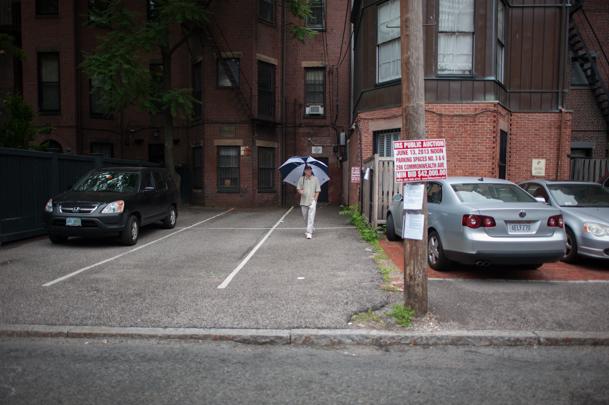
A remarkable story crossed my monitor this week. From back in the sacred Motherland of Massachusetts. Apparently, a pair of tandem parking spaces were auctioned off behind a toney Commonwealth Ave (Boston) condo for a whopping 560K–they’re shown in the photo. That’s over a half a million dollars in prime real estate yer gazing at.

Bid up from a sort of reasonable 42K and sold to a party that allegedly owns three spaces there already, this is the kind of story that makes one’s eyes glaze over in amazement. As primo as the location is, that tiny and stained bit of asphalt you’re looking at is not worth that price under any circumstances.

As that part of Boston is tightly zoned, it isn’t like it was bought to expand a brownstone. Nope, this is conspicuous consumption run completely amok or as a friend of mine back there put it, ”this could only have happened to people for whom money has no meaning”. (I suspect that the purchase was made as a “business expense” for a corporation, more to be revealed).

For 560 grand, you can still buy a modest home in Boston’s most desirable suburbs (all of which have better public schools than Boston and are cleaner and not plagued with unbearable traffic). And the property is but ten minutes on foot from downtown and the business district, cabs and car services are plentiful, therefore, why bother? As a possible long term investment? (Not a great idea as you will see).

This neighborhood, the Back Bay, was the first place I had my own digs. Adjusted for inflation, that apartment should go for about 420.00. It is now a million dollar and up condo and what was it? One gigantic room, likely the dining room of a three story home back in the 1800’s. And I still have friends in that neighborhood. Tellingly, all of them have been there at least 25 years and they could never afford it now.

By pricing all but the top of the top out of what once was an artist friendly neighborhood, the same neighborhood has the ripple effect of driving real estate values in adjacent neighborhoods past reason. Boston and San Francisco–joined at the hip by being the satellite cities to America’s twin powerhouses–are now unaffordable. 

A piece in the same paper that ran this story last year said it all. People aged 35-54 –which used to be an enormous demographic in Boston–no longer live there in large numbers. After university they just up and go because first jobs don’t pay enough to raise the scratch for a down payment. When a slab of concrete not even big enough to be a bedroom in a rooming house goes for 560K, it says that “what the market will bear” is not applicable.

This isn’t “free market capitalism”, it’s “crapitalism”. The laws of supply and demand have been so perverted by so few having so much, they almost don’t apply anymore. And my beautiful hometown–once a funky seaport with the best local music scene outside CB’s/Max’s–is now an overly exclusive playpen for folks that have brought back the Brahmin Age, only on ‘roids. Same as in SF—two small peninsulas whose essential character is being clobbered by venal plutocrats. Crapitalism couldn’t exist without tacit aid from the government–in SF, it’s in the form of tax breaks, in Boston, tax free academia is swallowing their city whole, reducing the amount of living units and artificially raising land value. That isn’t “supply and demand”.

The utlimate irony of this ridiculous transaction is that the Back Bay, like the Marina, is atop a landfill. The Charles River already overflows its banks and floods the basements of these expensive edifices more than it used to–so the parking spaces in question may be useless a fair amount of the time (of course, crapitalism being what it is, MA taxpayers will surely be stuck for the bill of seawalls and the like).

Bailouts, cronyism, loopholes–instead of an economic boom, we have Marie Antoinette style madness in our major cities. Pretty pitiful.


Guardian forum on Plan Bay Area draws big, engaged crowd

72

San Franciscans who want to help shape how this city grows — rather than just leaving it up to regional planners and market forces — packed a large conference room last night for a community forum presented by the Bay Guardian: “Whose Future? What Does the Regional ‘Plan Bay Area’ Really Mean for San Francisco?”

Moderated and organized by Guardian Editor/Publisher Tim Redmond, and co-sponsored by the Council of Community Housing Organizations (CCHO) and Urban Institute for Development and Economic Alternatives (UrbanIDEA), the session began with a overview of what’s now being planned for the San Francisco of 2040.

Gen Fujoika of the Chinatown Community Development Center said that Plan Bay Area, which is being jointly developed by the Association of Bay Area Governments and Metropolitan Transportation Commission (which will hold a hearing on the plan tomorrow, Fri/14, at 9:30am in Oakland), doesn’t pay for itself yet it will include strong incentives that will shape development in the region.

“It is in some sense a plan and I think we need to critique the hell out of that plan,” he said. “As we think of Plan Bay Area as a vision statement, we need to think about whether it’s our vision.”

As illustrated by the Plan Bay Area maps that the lined the walls of the LGBT Center conference room, the plan’s “priority development areas” that are slated for dense, streamlined development are also the same areas identified as “communities of concern” with vulnerable, low-income populations, making the plan a recipe for mass displacement.

Fujoika quoted a comment that Mayor Ed Lee made on Tuesday when asked by Sup. Eric Mar about the issue: “San Francisco has some of the toughest anti-displacements laws in the country.” While that may be true, Fujoika said that the plummeting numbers of African-Americans in the city and Plan Bay Area’s displacement projections for San Francisco show those laws simply aren’t up the challenge.

“If we have the toughest anti-displacement position in the country, then we are in some trouble,” he said, calculating that the affordable housing needed to prevent extreme gentrification in the city would total $6.8 billion, and that the affordable housing fund created by voters last year is only projected to raise $1.3 billion by 2030.

Fujoika said that he and the other panelists aren’t against growth and development, “but we are for equitable growth,” which would involve more community buy-in for the plan, more money for affordable housing and infrastructure needs, and more of the growth burden being shared by other Bay Area communities.

San Francisco Planning Commission Chair Cindy Wu cited growth projections for Chinatown as a good example of the problem, noting that is already a dense, complete neighborhood that would suffer from the greatly increased traffic that would be funneled through it and other negative impacts of unfettered growth.

“It’s not just growth for growth’s sake, it’s who gets to live there and who gets those jobs,” she said. Wu called for more community organizing around this and other development plans, citing as a good example the coalition-building that forced California Pacific Medical Center to agree to a multi-hospital project with far better community benefits than the deal it originally cut with the Mayor’s Office.

It was a point echoed by Maria Zamudio with Causa Justa, who said Plan Bay Area will worsen pressures that are already displacing the Mission District residents she works with, or forcing them to live in unsafe housing. “They’re going to push our families out of the city and maybe out of the region,” she said.

To combat the power that this plan and profit-minded property owners will exert over how San Francisco grows, San Francisco Labor Council President Mike Casey, head of UNITE-HERE Local 2, said that progressive San Franciscans will need to work cooperatively with organized labor, a relationship that has suffered during these tough economic times.

“Unfortunately, I think we’ve become alienated and marginalized from each other,” Casey said, calling on activists to not let differences over individual projects or issues interfere with solidarity over the larger, longer struggle for equity and justice.

“Not everyone agrees that a strong labor movement is the cornerstone of a more progressive vision,” Casey said, arguing that displacement of working class people from the city has a cascading effect in gentrifying the city. “The demographics of a city shape very much what the politics of protest look like.”

And those politics of protest will be more crucial than ever in resisting the demands that powerful capitalists will make on San Francisco in the coming years, a point that all seven panelists seemed to agree on.

Bob Allen of Urban Habitat said the planning research groups represented on the panel need to find ways to funnel more funding into grassroots organizing, both in San Francisco and regionally. Otherwise, we’ll see the “suburbanization of poverty,” with Plan Bay Area funneling the best jobs and most expensive housing into urban areas and leaving everyone else to fend for themselves in communities that don’t have the tenant protections and other hard-won social justice programs that San Franciscans have struggled for.

“Local control can be a way of saying ‘I don’t want black or brown people to live in my suburban community,” Allen said.

Ironically, Plan Bay Area is ostensibly driven by concerns over climate change and the argument that it’s better to concentrate development along transit corridors, which is why almost all of San Francisco and much of Oakland is proposed for development that would be given waivers from some California Environmental Quality Act scrutiny.

Yet the plan doesn’t fund the transit upgrades that would be needed to serve that growth or create restrictions on automobile use that might encourage more transit use. Instead, Fujoika said low-income people who actually use transit would be the diplaced in favor of wealthier residents who might not.

“Transit has become an amenity rather than a necessity,” Wu said.

The forum, which was attended by more than 130 people, included a lively discussion that involved dozens of audience members who offered their own views, ideas, and strategies for how to move forward. Among them was Brian Basinger of the AIDS Housing Alliance, who said that he is working with a coalition to reform the Ellis Act, which allows landlords to evict tenants from rent-controlled apartments.

“We could move this as early as January,” Basinger said of the reform legislation now being developed with allies in the Legislature, urging attendees to get involved.

After the audience discussion, the meeting closed with Peter Cohen of the CCHO summarizing the high points and getting people to sign up on lists that were circulated to be involved with next steps. And Rachel Brahinsky, a former Guardian staff writer who is now a professor at USF’s Leo T. McCarthy Center for Public Service and the Common Good, urged attendees to fight for San Francisco to remain inclusive and diverse: “San Francisco is the place it is because people have kept fighting.”

Everyone but Mayor Lee sees SF’s worsening “housing affordability crisis”

43

There was a clear theme that ran through yesterday’s Board of Supervisors meeting from beginning to end, something understood equally by renters, homeowners, and politicians from across the political spectrum: San Francisco has a crisis of housing affordability that is forcing people from the city.

And the only person who doesn’t seem to understand or care about that is the person with the most power to deal with the situation, Mayor Ed Lee, who opened the meeting by essentially dismissing both short- and long-term gentrification forces and claiming “our city has some of the toughest anti-displacement laws in the country.”

It was a claim that Lee made twice, first in response to a question by Sup. Eric Mar about Plan Bay Area and the massive displacement of current San Franciscans that it would create by 2040. And it was also how he answered a question by Sup. John Avalos about rents that are now skyrocketing beyond what most San Franciscans can afford.

I followed Mayor Lee back to his office, asking him to explain his claim, and he cited the city’s “elaborate” rent control laws and the Rent Board recently hiring new personnel as he briskly retreated toward his office. But surely he’s aware that displacement is already happening and getting worse, I told him, citing Rent Board figures showing that evictions are now at a 12-year high.

Lee looked at me dubiously and said, “I’ll have to check the figures on that.” I followed up today with Press Secretary Christine Falvey to ask whether Lee did check those figures — which show 1,757 evictions in the last year, up from 1,395 the previous, both numbers representing returns to the mass displacement of the last dot-com boom — and I’ll update this post if/when I hear back.

“It shows he’s out of touch with what’s happening in San Francisco,” Avalos told me in response to the mayor’s remarks.

Lee seemed to bristle at the suggestion that his aggressive economic development policies might have a downside that he’s going to have to deal with at some point. He touts the 44,000 jobs the city has added during his mayoral tenure, even deflecting criticism that he’s too focused on the technology industry by citing estimates that every tech job creates at least four other jobs (seemingly oblivious to the fact that most of these are low-wage service sector jobs, the very people who are being forced from the city).

“I’m just hoping you’re not blaming the 44,000 jobs we helped created,” Lee told Avalos, saying that he understands the concern about the rising cost of living, “but those are 44,000 people drawing a paycheck and taking care of their families.”

Yes, Mr. Mayor, but those paychecks are having an increasingly tough time paying for housing in San Francisco. That concern animated the condo conversion debate that took place later in the meeting, voiced by those focused on the lack of affordable homeownership opportunities and those focused on reducing the city’s rental stock to create those opportunities.

“I don’t think saying ‘it’s good that we have a growing economy’ is enough to address the issue,” Sup. David Campos said during the condo debate, referring to Lee’s earlier remarks.

Speaking near the end that discussion, Campos summarized the concerns expressed by both sides and sought to put the legislation into perspective: while important, the condo deal is a drop in the anti-displacement bucket. “We are only dealing with the issue of affordability in San Francisco on the margins,” he said, later adding, “I don’t think we’re doing enough to deal with the fundamental issue of who gets to live in San Francisco.”

The debate on the condo conversion began with its original author — Sup. Mark Farrell, who represents District 2, the wealthiest and most conservative in the city — explaining his desire to help middle class people who want to own homes remain in the San Francisco.

“This is the most affordable form of home ownership in San Francisco today,” Farrell said of tenancies-in-common, the fiscally and legally precarious middle step between an apartment and condominium. Later, he said, “We need more affordable homeownership opportunities and not less.”

Farrell argued that “this didn’t need to be a zero sum game,” but that’s exactly what the stock of rent-controlled apartments is in San Francisco, where only housing built before 1979 is protected from the market forces that can drive rents up to whatever a landlord demands.

“We have a fixed rent control stock. Every apartment that converts to a a condo is one less unit,” said Board President David Chiu, who worked with Sups. Jane Kim and Norman Yee and tenant group to amend Farrell’s legislation to help both renters and homeowners.  

“These units were once the homes of tenants who were displaced,” Kim said, objecting to the notion that one person’s apartment should be another person’s affordable homeownership opportunity and arguing that the city should be building more condos for first-time homebuyers instead of cannabalizing the homes of the nearly two-thirds of city residents who rent.

Like Chiu and Kim, Yee said that he wanted to help the TIC owners of today without simply clearing out of the backlog and letting the condo lottery continue unabated, which would green-light even more conversion of apartments. “We want to curb the speculation,” Yee said.

That idea that the city should help people who live in the city, without simply feeding the speculative investors who profiteer off of housing in San Francisco, was a strong theme among critics of condo conversion.

A pro-tenant crowd packed the Board Chambers. Although barred by board rules from addressing the condo legislation directly (that occurred at the committee level), one commenter said, “Giving any more power to the real estate market in San Francisco should be considered a crime.”

To help ward off real estate speculators once the annual condo conversion lottery resumes in 2024, the legisation also limited future conversions to buildings of less than four units, instead of the current cap of six units, a change that Farrell resisted.

“This is not an academic exercise anymore,” Farrell said of the condo conversion restrictions that were added to the legislation. “This will negatively impact thousands of TIC owners in the city.”

Farrell’s original co-sponsor, Sup. Scott Wiener, had a more pro-tenant point-of-view, objecting to the changes that Chiu inserted on more narrow grounds. In his comments, he noted how close the two sides were and how they share the same basic goal: preventing displacement of current city residents.  

“The one thing we can all agree with is we have a housing affordability crisis,” Wiener said, praising the city’s rent control and tenant protection laws, but adding, “TIC owners are also part of this city.”

The price of dealing with the rapid growth in the city — whether it comes to infrastructure or housing affordability — was also a point that Wiener made earlier in the meeting as the board approved the term sheet for a massive office and residential development project proposed at Pier 70.

“We are not doing what we need to do to support the public transportation needed for those projects,” Wiener said, also referring to other projects along the waterfront (the Warrior Arena at Pier 30 and the Giants/Anchor Steam project at Pier 46) and in the southeastern part of the city. “We don’t have the transit infrastructure to support our current population, let alone new growth.”

It’s about striking a balance, as Chiu said he did with the condo legislation, and not just a balance between renters and TIC owners. It’s about striking a balance between how to protect the San Francisco of today while planning for the San Francisco of tomorrow.

Yes, that means working with market rate housing developers, and it also means diverting some of their would-be profits into the city’s affordable housing fund and its infrastructure needs. Yes, it means private-sector job creation, but it also means more public sector jobs and providing a safety net for people without jobs or who work as artists or social workers or other professions that are being driven from the city. And it means beefing up our public housing and turning around the exodus of African-Americans, concerns raised at the meeting by Sup. Malia Cohen.

We at the Guardian last year looked at how Oakland has become cooler than San Francisco, largely because of the displacement from here. And now, even many people within the tech community have begun to decry the gentrifiction that is being driven by Mayor Lee’s narrow economic development vision.

“Plan Bay Area is an opportunity to think regionally and strategically about planned growth,” Lee said when addressing Mar’s question, sidestepping the direct answer that Mar sought on a set of specific proposals for mitigating some of the displacement planned for San Francisco and maintaining this city’s diversity.

Yes, we do have an opportunity to think strategically about the city we’re becoming and who gets to live in it, but only if we don’t think “jobs” is the answer to every question.

The Mission ‘douchebags’

88

Okay, you have to read this. When a 1990s tech-startup guy who admits he was part of the last generation of gentrification is now so fed up with the new arrival of high-paid techies that he’s ready to leave, it’s pretty serious.

Chris Tacy makes an excellent point: When you move into the Mission, you need to understand that there are already other people living there, some of whom have been there a long time, and that it isn’t just you’re rich-kids playground:

Be considerate. That little old hispanic lady at the bus stop? Help her onto the bus instead of loudly bitching about how she’s going to make you late to your meeting at The Creamery. Be respectful. This neighborhood was here before you and will be here after you leave. It’s not your trashcan, your toilet or your playground. Understand the history and the culture and the people and act in a manner that isn’t stupidly offensive. Be sensitive. The traditional residents of this neighborhood are not rich and never will be. Flaunting your wealth and your opportunities is a douche move.

A guy I knew in college came from a very wealthy family, and his parents set up a trust fund for him. But he wasn’t going to get a penny until he was 30, and most of it would come to him later in life. His dad’s rationale: People who have a lot of money in theirs 20s become assholes. They don’t have enough life experience to handle the sudden riches. Get a job, live like a normal person, find out what life is like.

That’s how riches used to happen — the great industrial fortunes of the previous American generations tended to come to people who had worked for a while first; there weren’t a lot of 20-something millionaires. I think that’s a big change in the current economy. Some people are just too young to be rich.

I know, I’m an old fart who is not rich and never will be. Sometimes I feel like a curmudgeon. But if you’re lucky enough to be rich in your 20s, show some respect.