Films

Boom boom

0

emilysavage@sfbg.com

TOFU AND WHISKEY Rye Rye went underground for a blip there. Discovered at 15 in a Baltimore club by Blaqstarr, then later introduced and signed to MIA’s Interscope imprint, N.E.E.T. Recordings, the burgeoning dancer, colorful fashion icon, and hip-hop artist seemed destined for immediate stardom. Then she got pregnant, and her debut album, originally slated for release in 2009, was delayed.

After a great many guest spots and collaborations, she came roaring back solo in 2012 with the release of that debut, Go! Pop! Bang!, and an acting gig in the film remake of 21 Jump Street. She popped up again in 2013 with her spring-released track “After Party” off casually impending mixtape RYEde or Die, and this June as a guest star on Asher Roth’s “Actin Up” (which later ended up also including Justin Bieber and Chris Brown).

She’ll be back in the Bay Area this week, after swinging through Oakland as the opener for Scissor Sisters last year at the Fox. This Hard French after party with Micahtron, however, should be a much more intimate, Rye Rye-centric event (Sat/3, 9pm, $20. Public Works, 161 Erie, SF. www.publicsf.com)

The 22-year-old’s style is bold and her voice positively bursts with energy and sonic Funfetti on tracks like the aforementioned frenzied dance single “After Party,” which includes call-backs to both MIA and Missy Elliott (whom she calls her main inspirations, in addition to Kanye West). She’s equally tough and confident on aggressively fun songs like Go! Pop! Bang!‘s “Dance.” And in the video for tender club hit “Boom Boom,” also off Go! Pop! Bang! — which samples the ’90s Vengaboys’ pop hit “Boom Boom Boom” — Rye Rye stars in a live action video game, showcasing both her dance skills and multihued lavender, sky blue, and pink bangs. Plus, she’s been known to tear up the dancefloor in person, at her own shows.

Yet on the phone, she’s quiet, coy, and talks in a girlish tone. Though she does mention several times that she’s a generally shy person, so this likely accounts for the tiny voice I hear whispering through the phone line from a hot day in Baltimore. She talks to me while watching cartoons with her young daughter, who she says likes her mom’s songs and already dances to them. “She knows it all,” Rye Rye says.

In talking about her own early days, as a teen going out with her older sister, Rye Rye says hip-hop was king, but there was some club music and R&B at the spots they’d hit up. At the time, she was in a group that used to dance all over Baltimore, which is what led to her making her own music. Fortuitously, her sister was friends with Blaqstarr, and she met him in a club then later rapped on his answering machine. “I saw him in the club that night, and he asked me to spit it for him and I was like, being shy so I told him no. But we started working in the studio together then eventually met MIA and Diplo.”

Those sessions led to her first mixtape, and eventually, Go! Pop! Bang! For RYEde or Die, she’s still in the midst of working on new tracks, but says she’s taking her time on this one because she’s not quite sure the direction she wants to go in just yet. “I’m deciding if I want to base it on things I deal with, you know? So I’m just still writing on it, trying to plan it out.”

In between writing new tracks and taking her daughter to the pool (her favorite spot this summer), Rye Rye says she’d also be open to more acting gigs, after enjoying her brief stint on the 21 Jump Street set. She got hooked up with the part when MIA told her the directors of the film were fans of her music and wanted her number, then pulled her in for an audition in LA with Jonah Hill, without a script. She and Jonah just riffed in front of casting directors, and she was picked for the role. The casual sentence that eventually ended up being her most memorable moment in the film? “Meanwhile you two were standing around, finger-popping each other’s assholes.” She says it dressed as a cheerleader with bleached bangs, putting emphasis on the word “popping,” and somehow manages to make the line sound cute.

Similar to how MIA’s “Paper Planes” later became synonymous with Pineapple Express — a track on which Rye Rye also contributed — the 21 Jump Street film theme was a bouncy electro-pop club banger by Rye Rye and Esthero.

Now, the rapper is courting meetings and looking ahead to some sporadic gigs until a proper tour at the end of the year, but says she isn’t too concerned about the future. “Everything for me is always just kind out of the blue,” she says. “You know I just go with the flow.”


WOOF

As first reported by the Bay Bridged, Different Fur Studio owner and engineer Patrick Brown and Robert Pera have come together to release a beat-heavy electro hip-hop album under the name WOOF. The record, Thrill of it All, is the debut LP from the duo, and was released a couple of weeks back on Bandcamp. It began as an instrumental record, then grew to include guest vocals handpicked by the duo from a broad reach of zeitgeist-y rappers and emcees including locals like Nanosaur, A-1, and Richie Cunning, along with Mykki Blanco, Mistah F.A.B., and Chicago MC Show You Suck. There’s also a Matrixxman remix of the song “Pretend,” which features Bird Call. woofbeats.bandcamp.com.


AL LOVER

Experimental electronic producer Al Lover has been quoted as saying “the psych music of today is what the producers of tomorrow will sample.” So the local music-maker recently cut out the middle man, and went straight to the source, creating his own tripped out electro-psych tracks. That meant collaborating with Tim Presley aka White Fence on this month’s seven-inch “Snake Hands,” released through the UK’s PNKSLM Records, which is Lover’s first ever solo vinyl release. (Note that White Fence also has a show coming up Aug. 7 at the Rickshaw Stop.) “Snake Hands” is a single from his forthcoming LP Space Magick. Consummate beat-fiend that he is, Lover also flipped the switch back the other way this summer and put up a collection of remixes, recorded over a one-year period. That includes trance-ready instrumental mixes of tracks by fellow (or former) locals like Nick Waterhouse, Fuzz, and Burnt Ones, along with a standout take on Grinderman’s “Bellringer Blues.” He’ll be showcasing a live beat set at Bottom of the Hill tonight. With Coo Coo Birds, Face Tat, Bubblegum Crises.

Wed/31, 9pm, $8. Bottom of the Hill, 1233 17th St., SF. www.bottomofthehill.com.


SPACE VACATION

You guys, Space Vacation is like SF’s own Spinal Tap, distilling the many aspects of theatrical heavy metal into an entertaining metal act you must see live. The group plays actual sing-along heavy metal (in the vein of Iron Maiden and Def Leppard) but also brings along show-enhancing efforts like smoke and lasers. The quartet plays the all-day, all-ages Summer Throwdown event at DNA Lounge this weekend with Son of a SuperCar, Systemic Decay, Look a Flying Pig, Dammit, Serville, and a handful more. Lean in and throw the devil horns during the daylight.

Sun/4, 4:30pm, $15. DNA, 375 11th St, SF. www.dnalounge.com.


LIGHTNING DUST, LOUISE BURNS, SPELLS

There seems to be an uptick in occult fascination lately, or am I just now really paying attention? This whole lineup — a free show through Wood Shoppe — has the witchy vibe, with Vancouver’s Lightning Dust and Louise Burns, and SF’s own Spells. Lightning Dust’s Amber Webber (of Black Mountain) and Josh Wells began as a whispery folk duo in 2007. However, their spooky third LP, June’s Fantasy (Jagjaguwar), is said to be inspired more by “skeletal synth pop, modern R&B beats, the films of John Carpenter and…absolute minimalism.” Louise Burns has that chilled ’80s darkwave thing down. And Spells, the newest project from songwriter Jennifer Marie, incorporates synth and vintage organs into eerie, lovely nightmarescapes (check locally appropriate “Fog”).

Tue/6, 8pm, free. Brick and Mortar Music Hall, 1710 Mission, SF. www.brickandmortarmusic.com.

Counterpoint: an appreciation of ‘The Lone Ranger’

11

Warning: slight spoilers ahead.

I will say it and I will say it loudly: Gore Verbinski’s The Lone Ranger is perhaps the most subversive Hollywood film since Paul Verhoeven’s still misunderstood sci-fi masterpiece, Starship Troopers (1997).

Not only does this sneaky, revisionist epic attempt to recontextualize the history of Western films, screenwriters Justin Haythe, Ted Elliott, and Terry Rossio — working directly from Zane Grey’s 1915 novel The Lone Star Ranger — have designed an ambitious journey through America’s tainted, tattered history. And like Starship Troopers, the combination of ruthless “all-American” violence, ironic historical references, and off-beat slapstick comedy give The Lone Ranger legs that audiences will get to uncover for decades to come. (Sadly it will have to happen after the film leaves US theaters this week.)
http://www.youtube.com/watch?v=Myl32ezlRSo

I watched this uniquely uncompromising popcorn-pleaser three times. By my second viewing, I caught even more references to old Westerns, ranging from the countless scenes set in John Ford’s Monument Valley to the ironic singing of the Christian hymn “Shall We Gather at the River” (as in Sam Peckinpah’s 1969 The Wild Bunch). But what surprised me even more than the homages to, say, the beginning of Sergio Leone’s Once Upon a Time in the West (1966), or the train-chase climax of Buster Keaton’s The General (1926), was the feeling that Verbinski and company were exploring not just the different styles from different decades, but the historical themes of those films.

Consider the nod to Frank Capra’s Mr. Smith Goes To Washington (1939): “Willet Creek” — the name of a corrupt government dam project in the Capra film — is hinted at as a conquest by the corrupt railroad boss played by Tom Wilkinson. Or, during a bank-robbing sequence that’s reminscent of Arthur Penn’s Bonnie & Clyde (1967), the scene suddenly freeze-frames, challenging the morality of the heroes by even having a character in the film stating his own confusion.

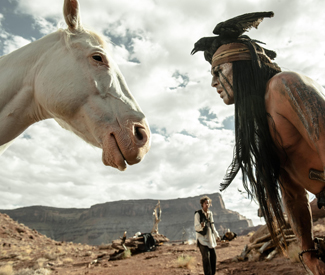
Another consistent theme throughout The Lone Ranger‘s big-budget spectacle is “nature is out of balance.”  A spirit horse drinks bottles of alcohol and chooses the “wrong” hero as its master, while innocent fluffy bunnies suddenly sprout fangs and launch attacks on scorpions. While these sudden shifts in tone may feel off-beat or random, I would argue that these screwball comedy moments are in fact motivated allegorical references to the traumatic events that coincided with the building of America’s cross-country railroad.  The film rebounds from an horrific event — as when a very bad dude cuts the heart out of a character we’re rooting for — by leaping right into the Buster Keaton-esque antics of Johnny Depp’s surreally wacked-out Tonto, which are inevitably played for dark comedy laughs.

Consider also the scene in which Tonto and the Lone Ranger (played stupendously stupid by the subtly subdued Armie Hammer) follow a horse, presumably returning to its wanted-outlaw master, through miles of empty desert. At a crucial juncture, the horse suddenly keels over. The cruelty is purposeful, even relentless — and what does Tonto do? He shuffles up to it, gives it a knock (literally, kicking a dead horse), and states to his partner, “He’s dead.”

Another example comes when Tonto and the Lone Ranger have been buried neck-deep in sand. Suddenly, a potential rescuer appears on the horizon. “The US Army! Finally, someone who’ll listen to reason!” our optimistic hero exclaims — only to barely avoid getting his skull hoof-clopped when the military men gallop right over them. The two feel like they are channelling Laurel and Hardy, or perhaps Jack and Wang from John Carpenter’s Big Trouble in Little China (1986).

The film’s unrelenting flair for layered irony regarding “How the West Was (Actually) Won” is solidified with its revisionist narrator in the form of an ancient Tonto, miraculously still alive in Depression-era San Francisco. The true complexity of The Lone Ranger is due to its frame story, in which Old Tonto spins his Wild West yarn for a wide-eyed youngster who represents the audience. Is he sharing truth, or are they all tall tales? Are Tonto’s truth-stretching stories in fact emblematic of how America chooses to interpret its own history?

Often, when the film cuts from the 1860s to 1933, Tonto slips items between the eras: a rock, an arrow, a bag of peanuts. This sort of inconsistency is quite purposeful in its awareness of how often American history is re-written by its storyteller — it’s also a bold attempt of this subversive masterpiece to undo as many of our history’s inaccuracies as possible.

Though a common criticism of The Lone Ranger was its nearly two and a half hour running time, I’m actually curious to know what Verbinski cut from the film. There’s a shocking amount of mindless bloodshed among the film’s innocent bystanders: Chinese railroad workers, American Indians, random townsfolk. This is perfectly punctuated when digging beneath the seemingly irrelevant prostitute played by Helena Bonham Carter (who is cleverly named Red Harrington.) Her ivory leg (which conceals a lascivious leg-gun) is yet another bloodied byproduct of the men who are blazing their train-of-terror across America. Ironically, the train is named The Constitution.

At one point Tonto wonders, “What does the white man kill for?” The Lone Ranger makes it clear: in this case, heartless slaughter is a necessary step in acquiring as much silver as possible. This “gold rush” allegory is perhaps even unpleasant to consider, and even more so to watch on the big screen for 149 minutes. (Remember, The Lone Ranger wasn’t exactly showered with glowing reviews.)

Which brings us to the final shot of this magnus opus of sorts. It arrives — in the fashion of other blockbuster-type movies these days — after the credits have started to roll. Tonto appears, all dressed up in a white-man’s suit and heading back into Monument Valley. This melancholic, even transcendental sequence delivers a different kind of message as opposed to hinting at what characters will appear in the sequel. (Given the film’s disastrous box-office take, Lone Ranger 2 seems nigh impossible, anyway.)

This meditative walk can be interpreted as history (represented by Tonto) slipping back into the past, or perhaps the truth leaving without anyone noticing. For me, it proved how intricately thoughtful The Lone Ranger truly is. Perhaps this film about two old-school heroes (who urge anyone who’d listen never take their own masks off) was a bit too modern for audiences in 2013. Hopefully, eventually, viewers will come to appreciate this inspired, unlikely, uncompromised, maniacal treasure.

Jesse Hawthorne Ficks runs MiDNiTES FOR MANiACS, a series devoted to celebrating dismissed, underrated, and overlooked films. He is also the Film History Coordinator at Academy of Art University.

For further reading, check out Cheryl Eddy’s Guardian review of The Lone Ranger here.

SF Jewish Film Festival, Hugh Jackman, killer whales, and more: new movies!

3

This week: the 33rd San Francisco Jewish Film Festival takes off with screenings all over the Bay Area; check out my take on some of the documentary selections here. Also, the harrowing documentary Blackfish opens, a film that will make you never want to visit SeaWorld again (with good reason). My interview with the film’s director, Gabriela Cowperthwaite, here.

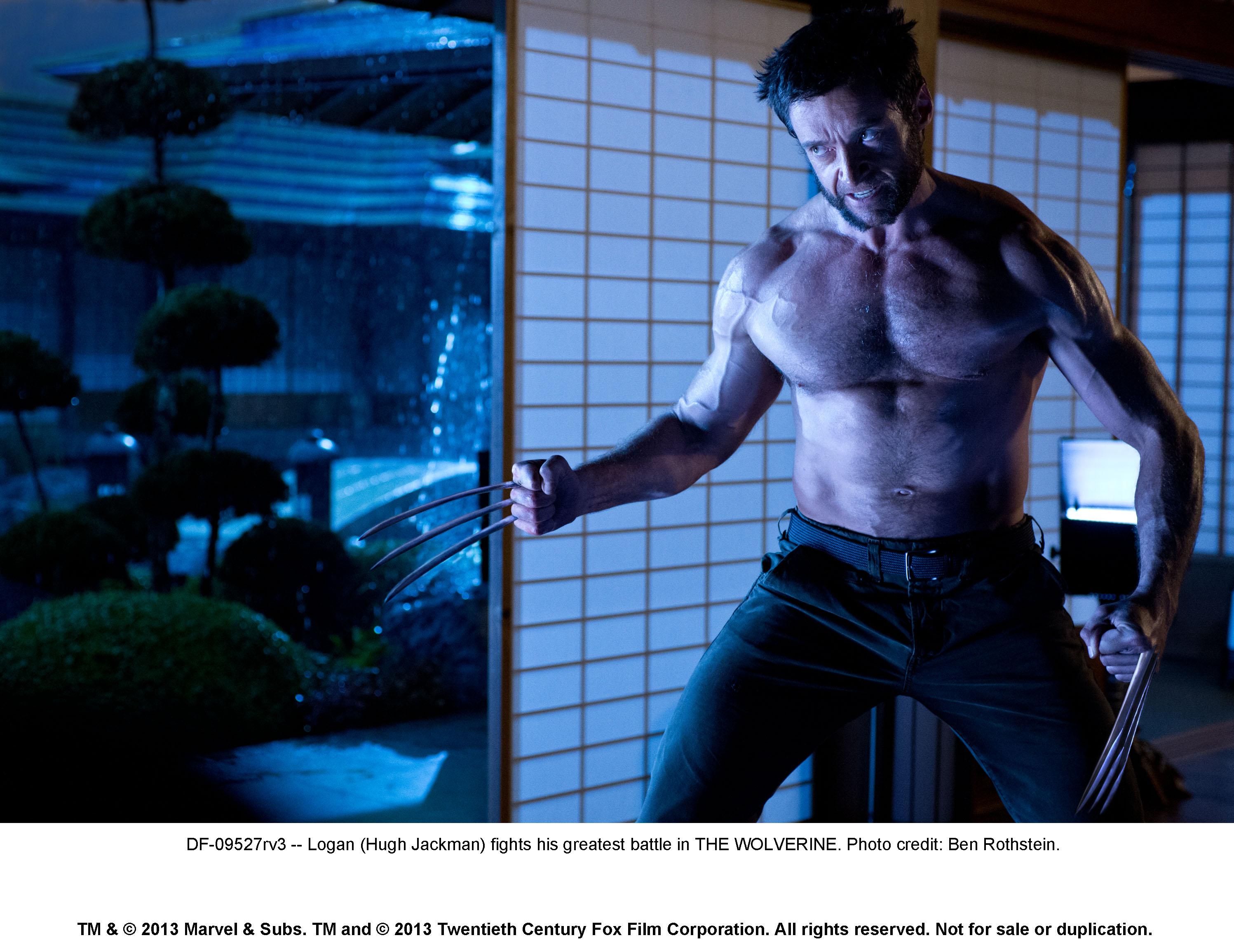
Elsewhere, Hollywood hopes you’re ready for yet more claw-bearing Hugh Jackman (in The Wolverine), Danish actor Mads Mikklesen shines as a falsely-accused man in The Hunt; indie darling Andrew Bujalski delivers what may be his finest film to date with Computer Chess; a majorly great/bad/quotable/mind-blowing cult film plays the Clay’s midnight series; and more. Read on for our short takes.

http://www.youtube.com/watch?v=vnoHSnJsy6Q

Computer Chess Mumblecore maestro Andrew Bujalski (2002’s Funny Ha Ha; 2005’s Mutual Appreciation) makes his first period picture, kinda, with this stubbornly, gloriously retro saga set at an early-1980s computer-chess tournament (with a few ventures into the freaky couples-therapy seminar being held at the same hotel). The technology is dated, both on and off-screen, as hulking machines with names like “Tsar 3.0” and “Logic Fortress” battle for nerdly supremacy as a cameraman, wielding the vintage cameras that were actually used to film the feature, observes. Tiny dramas highlighting the deeply human elements lurking amid all that computer code emerge along the way, and though the Poindexters (and the grainy cinematography) are authentically old-school, the humor is wry and awkwardly dry — very 21st century. Keep an eye out for indie icon Wiley Wiggins, last seen hiding from Ben Affleck’s hazing techniques in 1993’s Dazed and Confused, as a stressed-out programmer. (1:32) (Cheryl Eddy)

http://www.youtube.com/watch?v=qNHPB-dS1t0

Fame High This doc by Scott Hamilton Kennedy (2008’s The Garden) steps behind the doors of the LA County High School for the Arts, where teens toil in (and out of) the classroom to achieve their artistic dreams. There’s the jazz pianist with the overbearing stage dad; the sheltered ballerina whose Juilliard aspirations depend on her learning to loosen up on the dance floor; the sparkplug actress who hails from a theatrical family; and the harpist-singer whose mother moved with her from small-town Wisconsin to nurture her talents. As the year progresses, Fame High tracks each teen’s struggle to negotiate academics and arts, their relationships with their parents, budding romances, and rebellions both tentative and full-blown. In a culture in which insta-fame seems the norm, thanks to reality TV competitions and the internet, Fame High serves as a reminder that most show-biz careers are built on hard work and difficult lessons — with the added bonus of likeable, well-chosen subjects, all of whom happen to be easy to root for. (1:41) Elmwood. (Cheryl Eddy)

http://www.youtube.com/watch?v=ieLIOBkMgAQ

The Hunt Mads Mikkelsen has the kind of face that is at once strikingly handsome and unconventional enough to get him typecast in villain roles. Like so many great foreign-accented actors, he got his big international break playing a bad guy in a James Bond film — as groin-torturing gambler Le Chiffre in 2006 franchise reviver Casino Royale. Currently, he’s creeping TV viewers out as a young Dr. Lecter on Hannibal. His ability to evoke both sympathy and a suspicion of otherness are particularly well deployed in Thomas Vinterberg’s very Danish The Hunt, which won Mikkelsen the Best Actor prize at Cannes last year. He plays Lucas, a lifelong small-town resident recently divorced from his son’s mother, and who currently works at the local kindergarten. One day one of his charges says something to the principal that suggests Lucas has exposed himself to her. Once the child’s misguided “confession” is made, Lucas’ boss immediately assumes the worst. She announces her assumptions at a parent-teachers meeting even before police can begin their investigation. By the time they have, the viral paranoia and suggestive “questioning” of other potential victims has created a full-on, massive pederasty scandal with no basis in truth whatsoever. The Hunt is a valuable depiction of child-abuse panic, in which there’s a collective jumping to drastic conclusions about one subject where everyone is judged guilty before being proven innocent. Its emotional engine is Lucas’ horror at the speed and extremity with which he’s ostracized by his own community — and its willingness to believe the worst about him on anecdotal evidence. Engrossing, nuanced, and twisty right up to the fade-out, The Hunt deftly questions one of our era’s defining public hysterias. (1:45) (Dennis Harvey)

http://www.youtube.com/watch?v=S4uPcFRBJbM

Plimpton! Starring George Plimpton as Himself Tom Bean and Luke Poling’s Plimpton! Starring George Plimpton as Himself, an affectionate portrait of the longtime Paris Review editor and “professional collector of experiences” who wrote books, articles, and made TV specials about his delight in being “the universal amateur.” His endeavors included playing football with the Detroit Lions, hockey with the Boston Bruins, and the triangle with the New York Philharmonic, among even more unusual pursuits. Some called him a dilettante (to his face while he was alive, and in this doc, too), but most of the friends, colleagues, and family members here recall Plimpton — born to an upper-crust New York family, he was friends with the Kennedys and worshipped Hemingway — as an irrepressible adventurer who more or less tailored a journalism career around his talents and personality. (1:29) Roxie. (Cheryl Eddy)

http://www.youtube.com/watch?v=R6OoZNdAQuA

Samurai Cop Terrible movies deserve restoration too! Such is the case with this under-the-radar 1989 direct-to-video atrocity whose slowly accumulated cult audience now has a newly restored print to watch in apt contexts like the Clay’s midnight series. It’s a martial arts movie shot in the US by an Iranian director (Amir Shervan), with at least one porn star (Krista Lane of such classics as Fatal Erection, Days Gone Bi, Mammary Lane, and The Bitches of Westwood) in the cast. Shervan also wrote the script, and to say the dialogue is a tad ESL would be a very kind way of putting it. Low-end Miami Vice-like duo Joe (Matt Hannon) and Frank (Mark Frazer) are cops on the trail of Japanese gangsters led by Mr. Fugiyama (Gerard Okamura), with Robert Z’Dar (from 1988’s Manic Cop) as their main enforcer. Joe acts like the slimiest swingin’-dick stud on the fern bar scene, his spray-tanned, long-feathered-hair vanity just partially excused when he takes off his shirt to reveal Tarzan-worthy musculature. (Hitherto a film-crew carpenter, Hannon understandably never acted again.) Frank is, er, African American. (Black sidekicks never require much character definition in this sort of movie.) Between fight scenes that feature some of the most ludicrous martial-arts howls ever (personal favorite: “Wafu!”), we get numerous gratuitous soft core sex scenes that briefly provide a female full-frontal glimpse. Other highlights include the peppy aerobics-workout synth score, an outrageously swishy “comedy gay” Costa Rican waiter, and the opening credit “Hollywood Royal Pictures presents.” You will laugh, you will cry (from the pain). While Samurai Cop will no doubt be an experience to remember watched on the big screen with an unruly crowd, you might also want to check out its DVD extras, the most memorable of which is an interview with today’s Z’Dar — a huge, burly actor now incongruously hair-dyed, rouge-painted and otherwise completely weird-looking. (1:36) Clay. (Dennis Harvey)

http://www.youtube.com/watch?v=7UrOOoOXLV8

The To Do List Mistress of deadpan Aubrey Plaza stars in this raunchy comedy about a recent high-school grad determined to go all the way (and then some) before she ships off to college. (1:44)

http://www.youtube.com/watch?v=AWemNKXIou4

The Wolverine James Mangold’s contribution to the X-Men film franchise sidesteps the dizzy ambition of 2009’s X-Men Origins: Wolverine and 2011’s X-Men: First Class, opting instead for a sleek, mostly smart genre piece. This movie takes its basics from the 1982 Wolverine series by Chris Claremont and Frank Miller, a stark dramatic comic, but can’t avoid the convoluted, bad sci-fi plot devices endemic to the X-Men films. The titular mutant with the healing factor and adamantium-laced skeleton travels to Tokyo, to say farewell to a dying man who he rescued at the bombing of Nagasaki. But the dying man’s sinister oncologist has other plans, sapping Wolverine of his healing powers as he faces off against ruthless yakuza and scads of ninjas. The movie’s finest moments come when Mangold pays attention to context, taking superhero or Western movie clichés and revamping them for the modern Tokyo setting, such as a thrilling duel on top of a speeding bullet train. Another highlight: Rila Fukushima’s refreshing turn as badass bodyguard Yukio. Oh, and stay for the credits. (2:06) (Sam Stander)

Rep Clock: July 24 – 31, 2013

0

Schedules are for Wed/24-Tue/30 except where noted. Director and year are given when available. Double and triple features marked with a •. All times pm unless otherwise specified.

CASTRO 429 Castro, SF; (415) 621-6120, www.castrotheatre.com. $8.50-11. •Gloria (Cassavetes, 1980), Wed, 7, and Escape from New York (Carpenter, 1981), Wed, 5, 9:20. San Francisco Jewish Film Festival, July 25-Aug 1. See www.sfjff.org for program information.

CHRISTOPHER B. SMITH RAFAEL FILM CENTER 1118 Fourth St, San Rafael; (415) 454-1222, www.cafilm.org. $6.75-$10.25. The Hunt (Vinterberg, 2012), call for dates and times. The Look of Love (Winterbottom, 2013), call for dates and times. One Track Heart: The Story of Krishna Das (Frindel, 2012), call for dates and times. Rebels With a Cause (Kelly, 2012), call for dates and times. Storm Surfers 3D (McMillan and Nelius, 2012), call for dates and times. 20 Feet From Stardom (Neville, 2013), call for dates and times. Dial M for Murder (Hitchcock, 1954), Thu and Sun, 7 (also Sun, 4:15).

CLAY 2261 Fillmore, SF; www.landmarktheatres.com. $10. “Midnight Movies:” Samurai Cop (Sharvan, 1989), Fri, midnight; The Rocky Horror Picture Show (Sharman, 1975), Sat, midnight, with the Bawdy Caste performing live.

“FILM NIGHT IN THE PARK” This week: Creek Park, 400 Sir Francis Drake, San Anselmo; www.filmnight.org. Free (donations appreciated). Moonrise Kingdom (Anderson, 2012), Fri, 8; The Road to El Dorado (Bergeron, Finn, Paul, and Silverman, 2000), Sat, 8.

FIRST UNITARIAN UNIVERSALIST CHURCH 1187 Franklin, SF; www.laborfest.net. Donations accepted. FilmWorks United: International Working Class Film and Video Festival: Roadmap to Apartheid (Nogueira and Davidson, 2012), Thu, 7.

518 VALENCIA SF; www.laborfest.net. Donations accepted. FilmWorks United: International Working Class Film and Video Festival: •The Machinist (Majid and York, 2010), and Bhopali (Carlson, 2011), Fri, 7.

JACK LONDON SQUARE Market lawn, Harrison at Water, Oakl; www.jacklondonsquare.com. Free. Brave (Andrews, Chapman, and Purcell, 2012), Thu, sundown.

MISSION CULTURAL CENTER FOR LATINO ARTS 2868 Mission, SF; www.laborfest.net. Donations accepted. FilmWorks United: International Working Class Film and Video Festival: Dreamworks China (Facchin and Fraceschini, 2012), with “War in Paterson, the Strike that Changed the Labor Movement” (Seidel, 2010), and “A Witness to the Paterson Strike” (Golzio), Sun, 7:30.

NEW PARKWAY 474 24th St, Oakl; www.thenewparkway.com. $6. “SPECTRUMQueerMedia.com presents:” Strange Frame: Love and Sax (Hajim, 2012), Sun, 3.

NEW PEOPLE CINEMA 1746 Post, SF; www.jffsf.org. $13. “J-Pop Summit Festival: Japan Film Festival of San Francisco,” new films and anime from Japan, July 27-Aug 4.

NIMBY’S 8410 Amelia, Oakl; www.brainwashm.com. $10. Brainwash Drive-In/Bike-In/Walk-In Festival, Fri-Sat, 9 (music at 8). All shows broadcast in FM stereo.

NINTH STREET INDEPENDENT FILM CENTER 145 Ninth St, SF; detourdance.com/TDFF. $10-15 (two-day pass, $25). detour dance presents: “Tiny Dance Film Festival,” short dance films from around the globe, Fri-Sat, 8.

PACIFIC FILM ARCHIVE 2575 Bancroft, Berk; (510) 642-5249, bampfa.berkeley.edu. $5.50-9.50. “A Call to Action: The Films of Raoul Walsh:” They Died with Their Boots On (1942), Wed, 7; What Price Glory (1926), Sat, 6. “Tales of Love: The Enchanted World of Jacques Demy:” Lola (1961), Thu, 7; Bay of Angels (1962), Fri, 7; The Umbrellas of Cherbourg (1964), Sat, 8:30. “Dark Nights: Simenon and Cinema:” Monsieur Hire (Leconte, 1989), Fri, 8:45; The Bottom of the Bottle (Hathaway, 1956), Sun, 7. “Castles in the Sky: Masterful Anime from Studio Ghibli:” Princess Mononoke (Miyazaki, 1997), Sun, 4:30.

ROXIE 3117 and 3125 16th St, SF; (415) 863-1087, www.roxie.com. $6.50-11. A Band Called Death (Covino and Howlett, 2012), Thu, 7. Big Star: Nothing Can Hurt Me (DiNicola and Mori, 2012), Wed, 9; Thu, 9:15. An Oversimplification of Her Beauty (Nance, 2012), Wed-Thu, 7, 9:15. “This Must Be the Place: Post-Punk Tribes 1983-1990,” docs and oddities, Fri-Sun. Check website for full schedule. Plimpton! Starring George Plimpton As Himself (Bean and Poling, 2012), July 26-31, 6:45, 8:45.

YERBA BUENA CENTER FOR THE ARTS 701 Mission, SF; www.ybca.org. $8-10. Viola (Piñeiro, 2012), with “Muta” (Martel, 2011), Thu and Sat, 7:30; Sun, 2. *


The truth hurts

3

cheryl@sfbg.com

SAN FRANCISCO JEWISH FILM FESTIVAL The 33rd San Francisco Jewish Film Festival broadens its scope this year with a theme — “Life Through a Jew(ish) Lens” — that allows it to encompass a wide spectrum of films. Though plenty of SFJFF’s programs do specifically address Jewish religion and culture, some of the films I watched were only tangentially “Jew(ish)” — as in, they simply happened to be made by a Jewish filmmaker. For fans of quality programming, however, that’s a moot point: SFJFF 2013 is a solid if eclectic festival, with a typically strong showing of documentaries well worth seeking out.

Previously seen locally at the San Francisco International Film Festival, Martha Shane and Lana Wilson’s After Tiller is as timely as ever, with the advent of increasingly restrictive abortion legislation in states like Texas and North Carolina. This doc focuses on the four (yes, only four) doctors in America who are able to perform late-term abortions — all colleagues of Dr. George Tiller, assassinated in 2009 by a militant anti-abortionist.

The film highlights the struggles of what’s inherently a deeply difficult job; even without sign-toting (and possibly gun-toting) protestors lurking outside their offices, and ever-shifting laws dictating the legality of their practices, the situations the doctors confront on a daily basis are harrowing. We sit in as couples make the painful decision to abort babies with “horrific fetal abnormalities;” a rape victim feels guilt and relief after terminating a most unwanted pregnancy; a 16-year-old Catholic girl in no position to raise a child worries that her decision to abort will haunt her forever; and a European woman who decides she can’t handle another kid tries to buy her way into the procedure. The patients’ faces aren’t shown, but the doctors allow full access to their lives and emotions — heavy stuff.

Similarly devastating is Brave Miss World, Cecilia Peck’s portrait of Israeli activist Linor Abargil, who survived a violent rape just weeks before she won the Miss World pageant in 1998. As Linor travels around the world on her mission to help others heal from their own sexual assaults, it becomes clear that she still has some lingering issues of her own to deal with. Taking action — working tirelessly to keep her rapist in prison; making a painful return trip to Milan, where the attack happened — only brings a certain amount of closure. Her emotional fragility manifests itself in a newfound embrace of religion (much to the confusion of her largely secular family, fiancé, and gay best friend), which is somewhat at odds with Brave Miss World‘s female-empowerment message. Still, though it gets a bit documentary-as-therapy, Brave Miss World offers a compelling look at one woman’s determined quest to help others who’ve suffered similar traumas — urging them, through sheer force of personality, to speak out and become activists themselves.

More cinematic therapy is offered up by the structurally similar Here One Day and My Father and the Man in Black. In both of these first-person docs, the filmmaker remembers a parent who committed suicide, making extensive use (in both cases) of remarkably candid audio and written diaries that were left behind. In Here One Day, Kathy Leichter delves into her troubled mother’s manic depression as she cleans out the closets of the New York City apartment where she grew up — and where her own young family now resides. Even more fraught with meaning than her mother’s physical leftovers — a mix of both meaningful (her writings and recordings) and pack-ratty (a trash-scavenged Marie Antoinette bust, a Coca-Cola memorabilia collection) — is the window where she leapt to her death in 1995. Leichter’s father, longtime New York State Senator Franz Leichter, is among the family members who speak openly about the event.

Filmmaker Jonathan Holiff’s My Father and the Man in Black is no less personal, but it offers slightly broader appeal, weaving the tale of Holiff’s father, Saul Holiff, and his stint as Johnny Cash’s manager from 1960-73. Holiff’s association with Cash coincided with the musician’s At Folsom Prison triumph, but also with the height of his raging drug problem; the beleaguered Holiff spent much of his time doing damage control in the wake of cancelled (or should-have-been cancelled) concerts. Parenting wasn’t a high priority, the younger Holiff recalls, but once the filmmaker discovers his father’s memoir and memorabilia-stuffed storage locker, he’s able to piece together the man behind the anger (and the drinking problem). The film relies perhaps too heavily on re-enactments (that, in turn, are heavily inspired by 2005’s Walk the Line), but it offers a not-often-seen perspective on show biz’s darker aspects, as witnessed by a man tasked with managing a superstar whose addictions often threatened to overtake his talent.

Beyond parental angst, another favorite theme among SFJFF doc-makers is race. Paul Saltzman builds off an incident in his own life for The Last White Knight, an insightful but at-times difficult to watch film anchored by an interview with Delay De La Beckwith, aging racist. (His father, the late Byron De La Beckwith, was finally convicted in 1997 of killing civil rights leader Medgar Evers in 1963.) Saltzman and the younger Beckwith, who are around the same age, first met in 1965: one, an idealistic student who traveled to Mississippi to help register African American voters; the other, a proud KKK member who punched Saltzman in the face because he didn’t care much for meddling outsiders. Welcome to the South!

Using animation, interviews with other civil rights activists (including Harry Belafonte and Morgan Freeman — though the latter insists “I don’t talk race”), and personal reflections, The Last White Knight strives to explore the current state of race in America. At its heart, though, it’s about the two men who form a surprising friendship of sorts, despite their combative past. It’s unclear, after all these years, if Beckwith is truly a chuckling specter of evil (“Got what they deserved,” he drawls when asked about the 1964 murders of civil rights workers Andrew Goodman, James Chaney, and Michael Schwerner), or a simple-minded man who thinks nothing of saying “Obama is a direct descendent of the devil” — and, while smiling and chatting with a man he knows is Jewish, “Jews control all the money and the media.” Jaw-dropping doesn’t begin to cover it, but Saltzman remains admirably composed throughout.

Race also factors, inevitably, into The Trials of Muhammad Ali, Bill Siegel’s lively investigation of the boxing champ’s Nation of Islam conversion, name change, and refusal to fight in Vietnam. If you’ve seen an Ali doc before (or even the 2001 biopic), a lot of the footage and material will feel familiar. But Trials, which offers interviews with Louis Farrakhan and Ali’s former wife Khalilah, among others, does well to narrow its focus onto one specific — albeit complicated and controversial — aspect of Ali’s life.

http://www.youtube.com/watch?v=99HMxN94bEc

Contemporary civil rights struggles factor heavily in Dawn Porter’s Gideon’s Army (first screened here at DocFest), about a trio of public defenders struggling with daunting work loads (one women has 180 clients at a time) and a system seemingly rigged against low-income defendants, many of whom plead guilty, whether or not they actually are, because they simply have no other options. Like After Tiller, it’s a doc that offers a sobering, eye-opening look at a job you wouldn’t want — yet makes you glad that those who do it are such steadfast characters.

And if all that sounds too intense, take note of these two films: Mehrnaz Saeedvafa’s Jerry and Me, in which the filmmaker and teacher reflects on Hollywood’s influence on her pre-revolutionary Tehran youth (including her love of Jerry Lewis; if you’ve ever wanted to see clips of 1960’s Cinderfella dubbed in Persian, this is your chance); and Amy Winehouse: The Day She Came to Dingle, a made-for-Irish-TV concert film that spotlights the singer in 2006, before her slide into addiction derailed her career and ended her life. Here, her voice sounds stunning as she croons her hits in a tiny, 200-year-old church; she’s also sweetly jazzed to discuss her influences (dig her story of hearing Ray Charles for the first time) in an accompanying sit-down interview that reveals how endearing and intelligent she could be. *

SAN FRANCISCO JEWISH FILM FESTIVAL

July 25-Aug 12, most shows $12

Various venues in SF, Berk, Oakl, San Rafael, and Palo Alto

www.sfjff.org


Silent films, racing snails, haunted houses, and more in weekend movies!

2

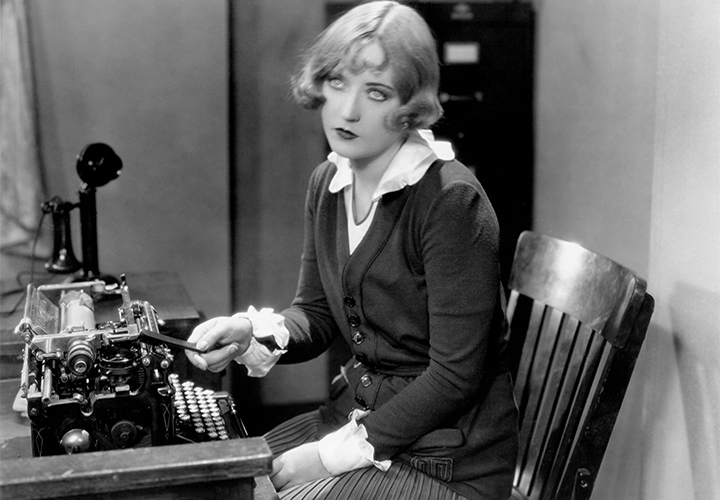
Those long, well-dressed lines wrapping around the Castro Theatre signal the advent of the annual San Francisco Silent Film Festival, now in its 18th year and popular as ever. Though the fest opened last night, programming continues through the weekend; check out my take on some of the films (including one of tonight’s selections, 1928 rom-com The Patsy) here.

Elsewhere, in first-run and rep theaters, it’s a robust week for openings. There’s something for nearly every age and appetite (plus a few recommendations on what to avoid) in the short reviews below.

Big Star: Nothing Can Hurt Me The ultimate pop-rock cult band’s history is chronicled in Drew DeNicola and Olivia Mori’s documentary. Alex Chilton sold four million copies of 1967 Box Tops single “The Letter,” recorded when he was 15 years old. After years of relentless touring, he quit that unit and returned home just as fellow Memphis native and teenage musical prodigy Chris Bell was looking to accentuate his own as-yet-unnamed band. Big Star’s 1973 debut LP #1 Record, like subsequent years’ follow-ups Radio City and Third/Sister Lovers, got great reviews — but won no commercial success whatsoever, in part due to distribution woes, record-company politics, and so forth. The troubled Bell struggled to get a toehold on a solo career, while barely-more-together Chilton changed his style drastically once invigorated by the punk invasion. At the least the latter lived long enough to see Big Star get salvaged by an ever-growing worshipful cult that includes many musicians heard from here, including Robyn Hitchcock, Matthew Sweet, and Tav Falco, plus members of the Posies, Flaming Lips, Teenage Fanclub, Yo La Tengo, R.E.M., Mitch Easter, the dB’s, and Meat Puppets. Unfortunately the spoken input from Chilton and Bell is mostly limited to audio (didn’t anyone actually film interviews back then?) Still, this semi-tragic story of musical brilliance, commercial failure, and belated “legendary” beknighting is compelling — not to mention a must for anyone interested in the annals of power pop. Now, would somebody please make documentaries about Emitt Rhodes, Game Theory, and SF’s own Oranger? (1:53) Roxie. (Dennis Harvey)

http://www.youtube.com/watch?v=Vjk2So3KvSQ

The Conjuring Irony can be so overrated. Paying tribute to those dead-serious ‘70s-era accounts of demonic possession — like 1973’s The Exorcist, which seemed all the scarier because it were based on supposedly real-life events — the sober Conjuring runs the risk of coming off as just more Catholic propaganda, as so many exorcism-is-the-cure creepers can be. But from the sound of the long-coming development of this project — producer Tony DeRosa-Grund had apparently been wanting to make the movie for more than a dozen years — 2004’s Saw and 2010’s Insidious director James Wan was merely applying the same careful dedication to this story’s unfolding as those that came before him, down to setting it in those groovy VW van-borne ‘70s that saw more families torn apart by politics and cultural change than those ever-symbolic demonic forces. This time, the narrative framework is built around the paranormal investigators, clairvoyant Lorraine Warren (Vera Farmiga) and demonologist Ed Warren (Patrick Wilson), rather than the victims: the sprawling Perron family, which includes five daughters all ripe for possession or haunting, it seems. The tale of two families opens with the Warrens hard at work on looking into creepy dolls and violent possessions, as Carolyn (Lili Taylor) and Roger Perron (Ron Livingston) move into a freezing old Victorian farmhouse. A very eerie basement is revealed, and hide-and-seek games become increasingly creepy, as Carolyn finds unexplained bruises on her body, one girl is tugged by the foot in the night, and another takes on a new invisible pal. The slow, scary build is the achievement here, with Wan admirably handling the flow of the scares, which go from no-budg effects and implied presences that rely on the viewer’s imagination, to turns of the screws that will have audiences jumping in their seats. Even better are the performances by The Conjuring’s dueling mothers, in the trenches of a genre that so often flirts with misogyny: each battling the specter of maternal filicide, Farmiga and Taylor infuse their parts with an empathetic warmth and wrenching intensity, turning this bewitched horror throwback into a kind of women’s story. (1:52) (Chun)

http://www.youtube.com/watch?v=expPMt-TX_k

Crystal Fairy Mysteriously given a tepid reception at Sundance this year, Chilean writer-director Sebastián Silva’s new film is — like his 2009 breakout The Maid — a wickedly funny portrait of repellent behavior that turns unexpectedly transcendent and emotionally generous in its last laps. Michael Cera plays a Yank youth living in Santiago for unspecified reasons, tolerated by flatmate Champa (José Miguel Silva) and his brothers even less explicably — as he’s selfish, neurotic, judgmental, hyper, hyper-annoying, and borderline-desperately in endless pursuit of mind-altering substances. At a party he meets a spacey New Age chick who calls herself Crystal Fairy (Gaby Hoffman). The next morning he’s horrified to discover he’d invited her on a road trip whose goal is to do drugs at an isolated ocean beach, but despite their own discomfort, Champa and company insist he honor his obligation. What ensues is near-plotless, yet always lively and eventually rather wonderful. If you have an allergy to Cera, beware — he plays a shallow (if possibly redeemable) American brat all too well here. But it would be a shame to miss a movie as spontaneous and surprising as this primarily English-language one, which underlines Silva’s stature as a talent likely well worth following for the long haul. (1:40) (Dennis Harvey)

http://www.youtube.com/watch?v=NqNgrsxcwiY

Girl Most Likely Even an above-average cast (Kristen Wiig, Annette Bening, Matt Dillon) can’t elevate this indie entry from Shari Springer Bergman and Robert Pulcini (2003’s American Splendor) above so many life-crisis comedies that have come before. Blame the script by Michelle Morgan (who also cameos), which never veers from the familiar, except when it dips into cliché. After she’s dumped by her suit-wearing boyfriend, failed playwright Imogene (Wiig) realizes her life is superficial and meaningless. Oopsies! A faux suicide attempt forces her to leave the cold sparkle of NYC for the neon glimmer of the Jersey shore, where her batty mother (Bening, in “tacky broad” mode) lives with her says-he’s-a-CIA-agent boyfriend (Dillon) and Imogene’s older brother (Christopher Fitzgerald), an Asperger’s-y sort obsessed with hermit crabs. Also in the mix — because in a movie like this, the adorably depressed lead can only heal with the help of a new romance — is Glee‘s Darren Criss; by the time you realize his character is a Backstreet Boys impersonator who also happens to be a fluent-in-French Yale grad with the patience and kindness to help a bitchy stranger work through her personal drama, you’re either gonna be OK with Girl Most Likely‘s embrace of the contrived, or you’ll have given up on it already. The takeaway is a fervent hope that the talented Wiig will write more of her own scripts in the future. (1:43) (Cheryl Eddy)

http://www.youtube.com/watch?v=JtdYdT17Vuk

The Look of Love Though his name means little in the US, in the UK Paul Raymond was as famous as Hugh Hefner. Realizing early on that sex does indeed sell, he (played by Steve Coogan) began sticking half-naked girls in 1950s club revues, then once the Sexual Revolution arrived, helped pull down a prudish country’s censorship barriers with a variety of cheesy, nudie stage comedies, “members-only” clubs, and girly mags. En route he abandoned a first wife (Anna Friel) for a bombshell actress-model (Tamsin Egerton), all the while continuing to play the field mightily. Nothing — lawsuits, police raids, public denunciations of his smutmongering — seemed to give him pause, save the eventually tragic flailing about of a daughter (Imogen Poots) who was perhaps the only person he ever loved in more than a physical sense. This fourth collaboration between director Michael Winterbottom and actor Coogan is one of those biopics about a driven cipher; if we never quite learn what made Raymond tick, that may be because he was simply an unreflective man satisfied with a rich (he was for a time Britain’s wealthiest citizen), shallow, hedonistic life. But all that surface excess is very entertainingly brought to life in a movie that’s largely an ode to the tackiest decor, fashions, and music of a heady three-decade period. (1:41) Smith Rafael. (Dennis Harvey)

Only God Forgives Julian (Ryan Gosling) and Billy (Tom Burke) are American brothers who run a Bangkok boxing club as a front for their real business of drug dealing. When the latter kills a young prostitute for kicks, then is killed himself, this instigates a chain reaction bloodbath of retribution slayings. Their primary orchestrators: police chief Chang (Vithaya Pansingarm), who always has a samurai-type sword beneath his shirt, pressed against his spine, and incongruously sings the most saccharine songs to his cop subordinates at karaoke; and Crystal (Kristin Scott Thomas, doing a sort of Kabuki Cruella de Vil), who flies in to avenge her son’s death. (When told he’d raped and slaughtered a 16-year-old girl, she shrugs “I’m sure he had his reasons.”) Notoriously loathed at Cannes, this second collaboration between director-scenarist Nicolas Winding Refn and star-producer Gosling certainly isn’t for those who found their 2011 Drive insufferably pretentious and mannered. But that movie was downright gritty realism compared to this insanely stylized action abstraction, which blares its influences from Walter Hill and Michael Mann to Suzuki and Argento. The last-named particularly resonates in Suspira-level useage of garishly extreme lighting effects, much crazy wallpaper, and a great score by Cliff Martinez that duly references Goblin (among others). The performances push iconic-toughguy (and toughmutha) minimalism toward a breaking point; the ultraviolence renders a term like “gratuitous” superfluous. But there’s a macabre wit to all this shameless cineaste self-indulgence, and even haters won’t be able to deny that virtually every shot is knockout gorgeous. Haters gonna hate in the short term, but God is guaranteed a future of fervent cult adoration. (1:30) (Dennis Harvey)

http://www.youtube.com/watch?v=COpJwAeuWHo

An Oversimplification of Her Beauty Terence Nance’s original, imaginative feature is a freeform cinematic essay slash unrequited-love letter. He and Namik Minter play fictionalized versions of themselves — two young, African American aspiring filmmakers in Manhattan, their relationship hovering uneasily between “just friends” and something more. To woo her toward the latter, he makes an hour-long film called How Would You Feel?, and the movie incorporates that as well as following what happens after he’s shown it to Minter. En route, there’s a great deal of animation (in many different styles), endless ruminative narration, and … not much plot. The ephemeral structure and general naval-gazing can get tiresome, but Beauty‘s risk-taking plusses outweigh its uneven qualities. (1:24) Roxie. (Dennis Harvey)

Red 2 Sequel to the 2010 action hit starring Bruce Willis about a squad of “retired, extremely dangerous” secret agents. (1:56)

http://www.youtube.com/watch?v=X07xNrVd7DU

R.I.P.D. Expect to see many reviews of R.I.P.D. calling the film “D.O.A.” — with good reason. This flatly unfunny buddy-cop movie hijacks elements from Ghost (1990), Ghostbusters (1984), and the Men in Black series, but even 2012’s lackluster third entry in the MIB franchise had more zest and originality than this sad piece of work. Ryan Reynolds plays Boston police officer Nick, recruited into the afterlife’s “Rest In Peace Department” after he’s gunned down by his crooked partner (Kevin Bacon). His new partner is Wild West casualty Roy, embodied by a scenery-chomping Jeff Bridges in an apparent parody of both his own turn in 2010’s True Grit and Sam Elliott’s in 1998’s The Big Lebowski. Tasked with preventing ghosts who appear to be human (known as “deados”) from assembling an ancient artifact that’ll empower a deado takeover, Nick and Roy zoom around town cloaked by new physical identities that only living humans can see. In a joke that gets old fast, Roy’s earthly form resembles a Victoria’s Secret supermodel, while Nick is stuck with “Chinese grandpa.” That the latter’s avatar is portrayed by James Hong — deliciously villainous as Lo Pan in 1986’s Big Trouble in Little China, a vastly superior supernatural action comedy — is one bright spot in what’s otherwise the cinematic equivalent of a shoulder shrug. (1:36) (Cheryl Eddy)

http://www.youtube.com/watch?v=Mv_Rl0CBPNs

Still Mine Canadian production Still Mine is based on the true story of Craig Morrison (James Cromwell), an elderly man whose decision to build a new house on his own land — using materials he’d harvested himself, and techniques taught to him by his shipwright father — doesn’t go over well with local bureaucrats, who point out he’s violating nearly every building code on the books. But Craig has a higher purpose than just challenging the system; he’s crafting the home for the comfort of his physically and mentally ailing wife of 61 years (Geneviève Bujold). It’s pretty clear from the opening courtroom scene how Still Mine will end; though it’s well-crafted — and boasts moving turns by Cromwell and Bujold — it ultimately can’t overcome its sentimental, TV-movie vibe. A heartfelt tale, nonetheless. (1:43) (Cheryl Eddy)

http://www.youtube.com/watch?v=ADuKkRTiCfI

Turbo It’s unclear whether the irony of coupling racing — long the purview of white southern NASCAR lovers — with an animated leap into “urban” South Central LA is lost on the makers of Turbo, but even if it is, they’re probably too busy dreaming of getting caught in the drift of Fast and Furious box office success to care much. After all, director David Soren, who came up with the original idea, digs into the main challenge — how does one make a snail’s life, before and after a certain magical makeover, at all visually compelling? — with a gusto that presumes that he’s fully aware of the delicious conundrums he’s set up for himself. Here, Theo (voiced by Ryan Reynolds) is your ordinary garden snail with big, big dreams — he wants to be a race car driver like ace Guy Gagne (Bill Hader). Those reveries threaten to distract him dangerously from his work at the plant, otherwise known as the tomato plant, in the garden where he and brother Chet (Paul Giamatti) live and toil. One day, however, Theo makes his way out of the garden and falls into the guts of a souped-up vehicle in the midst of a street race, gobbles a dose of nitrous oxide, and becomes a miraculous mini version of a high-powered race car. It takes a meeting with another dreamer, taco truck driver Tito (Michael Pena), for Theo, a.k.a. Turbo, to meet up with a crew of streetwise racing snails who overcome their physical limitations to get where they want to go (Samuel L. Jackson, Snoop Dogg, Maya Rudolph, Michael Bell). One viral video, several Snoop tracks, and one “Eye of the Tiger” remix later, the Indianapolis 500 is, amazingly, in Turbo’s headlights — though will Chet ever overcome his doubts and fears to get behind his bro? The hip-hop soundtrack, scrappy strip-mall setting, and voice cast go a long way to revving up and selling this Cinderella tall/small tale about the bottommost feeder in the food chain who dared to go big, and fast; chances are Turbo will cross over in more ways than one. (1:36) (Kimberly Chun)

http://www.youtube.com/watch?v=o2i6gJjzX2Y

V/H/S/2 This surprisingly terrific sequel to last year’s just-OK indie horror omnibus rachets up the tension and energy in each of its four segments, again connected by a thread involving creepy “home videos” found in a seemingly abandoned house. Adam Wingard and Simon Barrett’s Phase 1 Clinical Trials is a straightforwardly scary tale in which the former stars as a wealthy slacker who finds himself victim to predatory ghosts after surgery changes his physiological makeup. Reunited Blair Witch Project (1999) alumni Eduardo Sanchez and Gregg Hale’s A Ride in the Park reinvigorates zombie clichés with gleefully funny bad taste. The most ambitious narrative, Timo Tjahjanto and Gareth Huw’s Safe Haven, wades into a Jonestown type cult and takes it a few steps beyond mere mass suicide. Finally, Hobo With a Shotgun (2011) auteur Jason Eisener’s Slumber Party Alien Abduction delivers on that title and then some, as hearty-partying teens and their spying little brothers face something a whole lot more malevolent than each others’ payback pranks. The found-footage conceit never gets old in this diverse and imaginative feature. Plus, kudos to any horror sequel that actually improves upon the original. V/H/S/3? Bring it on. (1:36) Clay. (Dennis Harvey)

Brutal murder, wrenching trial: HBO’s must-see doc “The Cheshire Murders”

10

It was, people said, Connecticut’s version of the In Cold Blood murders. In July 2007, Jennifer Hawke-Petit and her two daughters, 11-year-old Michaela and 17-year-old Hayley, were murdered by a pair of strangers — Steven Hayes and Joshua Komisarjevsky, who’d picked the family at random — while patriarch William Petit lay bound and beaten in the basement of their suburban home. He survived; the women perished either at the hands of their attackers or in the fire the men set to cover their tracks.

Clearly, the bare facts of the case — which took place in Cheshire, Conn., a bedroom community near New York City — are horrific enough, without considering any of its other elements. But The Cheshire Murders, created for HBO’s Summer Documentary Series by married filmmaking team Kate Davis and David Heilbroner (2010’s Stonewall Uprising), reveals that the deaths may have been preventable if only police had intervened; a frantic bank teller dialed 911 after observing a frightened Jennifer Petit withdrawing a large sum of money for the waiting Hayes. Or, perhaps the family would have been spared if Komisarjevsky and Hayes, men with long rap sheets, had been more closely monitored by their parole officers and drug counselors — or had received better mental-health care during their respective troubled childhoods.

But all the “what if” scenarios in the world can’t restore three lives — or fill the void felt by those they left behind. Using revealing interviews that explore the many facets of the case, deft editing, and a sensitive yet questioning tone, The Cheshire Murders is a both thought-provoking and disturbing viewing experience. I spoke with Davis and Heilbroner ahead of the film’s Mon/22 HBO debut.

SF Bay Guardian A story like The Cheshire Murders, with its many lurid details, could come across as exploitation, but your film manages to avoid that.

David Heilbroner It would have been very easy to go down the “murder-tainment” path. Obviously, we didn’t go there.

SFBG The earliest interviews in the film seem to occur right after the crimes. How did you first hear about the murders, and how did you go about getting access to your subjects?

DH We heard about the murders, I think, like everybody else — in the papers the next day. We’ve been working with Sheila Nevins, who is the President of HBO Documentary Films, for over a decade, and she called us up. I used to be a prosecutor and I’ve written true crime, and she said, “You guys should go to Cheshire and take a look at what’s going on. There might be a movie — I don’t know, but go look.”

So Kate and I went, and what really got us hooked was that nothing about this case screwed together all that logically right from the beginning. It just was a mystery. It didn’t make sense. It was the wrong town: Cheshire, this stuff just doesn’t happen there. It was the wrong family: usually when you have a crime like this, it turns out one of them was dealing drugs after all. Like Breaking Bad or something, the guy’s actually cooking meth in the basement. But everyone in this family was wonderful. They were all just good, upright citizens. The didn’t bring this upon themselves at all.

And the perpetrators weren’t lifelong arsonists, or sexual predators, or people with vicious assaults in their records. They were petty burglars. And then, Mrs. Petit turns out to have been at the bank and alerted the police in a timely fashion, when the perpetrators were separated and the family was still alive. And yet, 35 minutes later, everybody’s dead.

So, it just was full of weird mysteries that got us immediately hooked on what happened, and why.

SFBG It seemed like you had pretty generous access to everyone (except the police, who refused to comment at all). Several family members on both sides give very open interviews. How forthcoming were they really, and how did you get access to them?

KD It was not easy. The town had virtually shut its doors because it was inundated by a tidal wave of media trucks and reporters. It’s a place where people like to keep to themselves, and privacy is considered a really important commodity. So they were shell-shocked and didn’t want to talk, by and large.

But we stuck around, because we had the latitude to do that with HBO’s support. And beyond that, it really took months for people to understand that this would be a story that really would take place over time, and that we would allow people to speak for themselves, and we weren’t trying to squeeze them into our version of the story. We also assured the people in the film that us filming them, before the trial particularly, wouldn’t affect the trial, because nobody would see the material until after both trials were done. But did it take a long time? Yes.

DH It took months. People were shell-shocked by the horror of the crime, and wary of being taken advantage of. They didn’t want their sound bites taken out of context, and they wanted to trust us. So we spent a long time talking to people about what exactly we were trying to do. They’re hard questions to answer when you’d love someone to open up and be part of your film, but you have to earn their trust.

Now that the film is done, we were able to show it to a few of the central characters in the film — I was actually shaking, I was so nervous showing it to them, because I really wanted them to like it and think we hadn’t abused their kindness — and I’m delighted to say that they all really liked the film, and really believe in it. That’s more gratifying than I can say.

SFBG Did you try to interview either of the killers?

DH We did try. Steven Hayes, shortly after his trial, fell apart mentally. He started writing crazy letters to these sort of death row groupies who are out there, and his letters were intercepted. He’d started taking credit for 17 rape-murder-abductions, none of which were true. He was just losing it, and saying all this crazy stuff, and his lawyer said, “You know, I just can’t have you interview him in this state. He’s a mess.” He was falling apart anyway; he was depressed, he was on meds during the trial, he was deeply suicidal.

As for Joshua Komisarjevsky, the prison authorities have not been kind to any reporting. They literally wouldn’t allow us to film any exteriors of the prison in which he was incarcerated, unless we were off the perimeter of the property. Eventually we hit a brick wall with them. And even if Steven had said yes, we probably wouldn’t have gotten in, ultimately. Not unlike what happened with the Cheshire police, we offered any number of compromises and suggestions, and the prison authorities flatly rebuffed all filming requests.

As for the Cheshire police, if you’ve seen the film, you know there is a terrible scandal about the way they treated the family [of Jennifer Hawke-Petit]. I went and had two meetings with the Chief of Police in Cheshire, and I said, “Our film’s going to come out, and it’s going to say X, Y, and Z, and it’s not very flattering to you. I bet you have good answers to this. Please be in our film. We will honor what you have to say and let you give your point of view, and rebut these allegations if you want to.” And they said no. They didn’t want to say anything.

I’m sorry to say, both the Cheshire police and the correctional authorities have lot of unanswered questions. [After his arrest,] Steven Hayes was able to squirrel away days and days of medication, even though he was on suicide watch, so how did that happen? So many mysteries in this case. It just kept getting weirder as the trial wore on.

SFBG The film’s revelation about the timeline of the crime — that the police could have, maybe, intervened while Jennifer Hawke-Petit was at the bank — was something that the mainstream media hadn’t really covered.

DH What was also missed was that they came up with a cover story. Right after the crime, both the state and the local police had this story about how, the minute they arrived at the crime scene, the house was already on fire and the perpetrators were running out of the building. And that was directly contradicted by their own records. It shows that they had a full complement of officers, about 16 of them, surrounding the house for about half an hour.

That was really troubling — this is a crime that took place in small-town America, with a local police force that everyone knows, and you’d think if anyone was going to stand up for me, and protect me, and tell me the truth about what happened, it would be those guys.

SFBG I appreciated how you included the Hartford Courant reporter in the film. It seemed like he encountered some of the same frustrations that you guys did.

DH Yeah. Colin Poitras. He was a model reporter, I thought, because he was very cool-headed, extremely dogged, just wanted the facts. He had to bring a lawsuit to even pry loose heavily redacted [case] documents. He was very gracious to let us into this real-time process of reporting on an ongoing event.

SFBG The film ends up making a pretty strong statement against the death penalty, although for reasons not normally mentioned in death-penalty debates: it was known from the beginning that the trial would be long and costly, and would make the crime’s most traumatic details public knowledge. Plus, the men were willing to plead guilty in exchange for life sentences, but emotions were so high that the quest for death sentences kind of took over. Did you start out making The Cheshire Murders with that theme in mind, or did it emerge while you were filming?

KD David, you have a legal background, so you may have been aware of the two-part stage of death penalty trials. But it was new to me. I went into the film really being quite open-minded. I was historically anti-death penalty, but with this case, I thought — particularly as a filmmaker — that I would learn more, and make a better film, and think more deeply about things if I could set aside my political beliefs and just watch the story unfold.

So if anything, I went into this thinking that this might steer me toward understanding why somebody would want the death penalty, and that I might end up more pro-death penalty than I was. But in watching the re-victimization of the family members on both sides, and what they had to go through — with these protracted displays of the worst evidence you can imagine — even the jurors suffered from PTSD and many of them had to undergo therapy after the trial.

This was all avoidable, had these guys been locked up for life. In the end, in the end, that’s what will happen, because the chances of them actually being put to death is slim to none.

DH There are any number of documentaries that have looked at the death penalty, and I’ve seen a lot of them. Most of them are about cases where guilt is ultimately in question. Maybe they didn’t do it, this was a miscarriage of justice and god forbid we execute somebody who didn’t do it. That’s the worst indictment of the death penalty.

This is the first case that’s the poster child for the death penalty, if you’re going to have a death penalty. These guys definitely did it. They admitted they did it. And what they did is just awful. There’s no conceivable good spin you can put on tying girls to their beds, dousing them with gasoline, and setting them on fire. It’s as bad as it gets.

Then, since guilt isn’t the question, and since the horribleness of the crime isn’t the question, it becomes, “What is the death penalty going to achieve, emotionally, in terms of society, in terms of finances?” It was a chance to document that and it had never been done before. I think it gives you a chance to really look the death penalty squarely in the eye and decide whether you believe in it, not when someone’s innocent, but when someone’s guilty.

KD And guilty of, arguably, one of the worst domestic crimes in US history.

SFBG Somebody in the movie mentions that it’s like a modern-day In Cold Blood.

DH It’s a comparison that gets made often, and with good reason. There’s an uncanny similarity between the crimes. A family of four in a nice rural home. Two perpetrators who barely know each other break in, in the hopes of stealing money, and by morning nearly everybody’s dead. And they’re eventually sentenced to death. The similarities were resonant in my mind as we were making the film.

SFBG Did you try to get a more formal interview with William Petit, or is what’s in the movie all he was willing to share one-on-one?

DH That was what he was willing to share, and that was more than he was willing to share with anybody but Oprah. He did do one sit-down interview with Oprah, although he refused to discuss the crime. To this day, he refuses to discuss the crime publicly. He doesn’t do interviews. We were close with his family and he agreed to talk with us on camera on a couple of occasions, and he was inundated with requests. I think he spent as much time fending off the media as he did being at the trial. He couldn’t walk down the street without this school of fish of cameras and mics following him, just hoping he might say something.

So to get the few intimate moments we got with him — it was hard to find him when he wasn’t surrounded. We were grateful. And I think it gives you a glimpse into his loneliness and his struggle with pain, anger, and frustration, which is completely understandable, given that he is a man who literally lost everything in his life overnight.

SFBG What are the advantages of working with a company like HBO, and making a film for cable rather than theatrical release?

KD First of all, it really reaches millions of people. The audience is built-in. And for such a national story, I think it was important for us to know that it would be seen if we were going to invest that kind of time. Theatrical documentaries are a wonderful way to see films, but the numbers of people who see them are much smaller.

Also, HBO is one of the few places in the world that has the appetite and the financial backing to support long-term stories like this. The fact that the film went on for years, and the trial took a long time, didn’t stop them from wanting to continue to make the film.

DH Having a place like HBO, which will give you a national audience and potentially an international platform, is really amazing. If your goal as a filmmaker is to get your take on a subject into the public zeitgeist, it’s a great way to go. And they’re wonderful to work with, I have to say. At least with Kate and me, they do not have a heavy editorial hand; they’re just helpful and I have always been really grateful to work with them.

THE CHESHIRE MURDERS airs Mon/22 on HBO.

Rep Clock: July 17 – 23, 2013

0

Schedules are for Wed/17-Tue/23 except where noted. Director and year are given when available. Double and triple features marked with a •. All times pm unless otherwise specified.

ARTISTS’ TELEVISION ACCESS 992 Valencia, SF; www.atasite.org. $6-9. “Periwinkle Cinema: Reality Check,” short films, Wed, 8. The Space Invaders: In Search of Lost Time (Von Ward, 2012), Fri, 8. “An Evening with Sublime Frequencies and filmmaker Hisham Mayet,” Sat, 8.

CASTRO 429 Castro, SF; (415) 621-6120, www.castrotheatre.com. $8.50-11. •Mystery Train (Jarmusch, 1989), Wed, 7, and Night on Earth (Jarmusch, 1991), Wed, 9:05. San Francisco Silent Film Festival: Prix de Beauté (Genina, 1930), Thu, 7; “Amazing Tales from the Archives,” Fri, 11am (free screening); The First Born (Mander, 1928), Fri, 2; Tokyo Chorus (Ozu, 1931), Fri, 4:30; The Patsy (Vidor, 1928), Fri, 7; The Golden Clown (Sandberg, 1926), Fri, 9:30; “Winsor McCay: His Life and Art,” presentation by John Canemaker, Sat, 10am; The Half-Breed (Dwan, 1916), Sat, noon; Legong: Dance of the Virgins (de la Falaise, 1935), Sat, 2:15; Gribiche (Feyder, 1926), Sat, 4; The House on Trubnaya Square (Barnet, 1928), Sat, 6:30; The Joyless Street (Pabst, 1925), Sat, 8:30; “The Kings of (Silent) Comedy,” Sun, 10am; The Outlaw and His Wife (Sjöström, 1918), Sun, 1; The Last Edition (Johnson, 1925), Sun, 3:30; The Weavers (Zelnik, 1927), Sun, 6; Safety Last! (Taylor and Newmeyer, 1923), Sun, 8:30. Tickets (most shows $15) and more info, including accompanists for each program, at www.silentfilm.org. The Great Gatsby (Luhrmann, 2013), Mon-Tue, 6, 9 (also Tue, noon, 3).

CHILDREN’S CREATIVITY MUSEUM 221 Fourth St, SF; www.artsanddialogue.org. Free (space is limited, so RSVP to info@ybcbd.org). “Arts and Dialogue presents the Yerba Buena Mini-Film Festival,” Thu, 6.

CHRISTOPHER B. SMITH RAFAEL FILM CENTER 1118 Fourth St, San Rafael; (415) 454-1222, www.cafilm.org. $6.75-$10.25. Augustine (Winocour, 2012), call for dates and times. Frances Ha (Baumbach, 2012), call for dates and times. One Track Heart: The Story of Krishna Das (Frindel, 2012), call for dates and times. Rebels With a Cause (Kelly, 2012), call for dates and times. Storm Surfers 3D (McMillan and Nelius, 2012), call for dates and times. 20 Feet From Stardom (Neville, 2013), call for dates and times. The Hunt (Vinterberg, 2012), July 19-25, call for times. The Oyster Princess (Lubitsch, 1919) with “Cops” (Cline and Keaton, 1922), Mon, 7:15. With live musical accompaniment; this event, $12.

CLAY 2261 Fillmore, SF; www.landmarktheatres.com. $10. “Midnight Movies:” V/H/S 2 (Various directors, 2013), Fri-Sat, midnight.

“FILM NIGHT IN THE PARK” This week: Creek Park, 400 Sir Francis Drake, San Anselmo; www.filmnight.org. Free (donations appreciated). The School of Rock (Linklater, 2003), Fri, 8; Brave (Andrews and Chapman, 2012), Sat, 8.

518 VALENCIA SF; www.laborfest.net. Donations accepted . International Working Class Film and Video Festival: •Strike (Eisenstein, 1925), and Even the Heavens Weep: The Mine Wars of West Virginia (McGuire, 1985), Thu, 7.

HUMANIST HALL 390 27th St, Oakl; www.humanisthall.org. $5. RiP!: A Remix Manifesto (Gaylor, 2008), Wed, 7:30.

NIMBY’S 8410 Amelia, Oakl; www.brainwashm.com. $10. Brainwash Drive-In/Bike-In/Walk-In Festival, Fri-Sat through July 27, 9 (music at 8). All shows broadcast in FM stereo.

PACIFIC FILM ARCHIVE 2575 Bancroft, Berk; (510) 642-5249, bampfa.berkeley.edu. $5.50-9.50. “Dark Nights: Simenon and Cinema:” The Man on the Eiffel Tower (Meredith, 1949), Wed, 7; La Marie du port (Carné, 1950), Fri, 7; The Brothers Rico (Karlson, 1957), Sat, 8:30. “A Call to Action: The Films of Raoul Walsh:” Objective Burma (1945), Thu, 7. “From the Archive: Treasures of Eastern European and Soviet Cinema:” And Give My Love to the Swallows (Jires, 1971), Fri, 8:45; The Maple and Juliana (Uher, 1972), Sat, 6:30. “Castles in the Sky: Masterful Anime from Studio Ghibli:” Spirited Away (Miyazaki, 2001), Sun, 4:30.

REDSTONE BUILDING 2940 16th St, SF; www.laborfest.net. Donations accepted. International Working Class Film and Video Festival: •Living As Brothers (Fraser, 2012), with “Newspeak” (Fero, 2011) and Mothers of Fukushima (Torii, 2013), Fri, 7.

ROXIE 3117 and 3125 16th St, SF; (415) 863-1087, www.roxie.com. $6.50-11. How to Make Money Selling Drugs (Cooke, 2013), Wed-Thu, 7, 9. An Oversimplification of Her Beauty (Nance, 2012), Fri-Sun, 9:15; July 22-25, 7. Big Star: Nothing Can Hurt Me (DiNicola and Mori, 2012), Fri-Sun, 6:45; July 22-25, 9. “Pictoclik Film Festival,” local film festival competition, Fri-Sat, 9. This event, $30-50.

YERBA BUENA CENTER FOR THE ARTS 701 Mission, SF; www.ybca.org. $8-10. Band of Sisters (Fishman, 2012), Thu-Sun, 6, 8 (also Fri, 4; Sat-Sun, 2, 4). *


Rep Clock

0

Schedules are for Wed/10-Tue/16 except where noted. Director and year are given when available. Double and triple features marked with a •. All times pm unless otherwise specified.

ARTISTS’ TELEVISION ACCESS 992 Valencia, SF; www.atasite.org. $5-6. “OpenScreening,” Thu, 8. For participation info, contact programming@atasite.org. “Re-Inventing the Reel,” artist-made works from Elements of Image Making, Fri, 8. “Your Skin is the Fourth Wall,” video and performance work, Sat, 8.

CASTRO 429 Castro, SF; (415) 621-6120, www.castrotheatre.com. $8.50-11. •The Night of the Hunter (Laughton, 1955), Thu, 7, and Cape Fear (Scorsese, 1991), Thu, 8:45. •The Exorcist (Friedkin, 1973), Fri, 7, and Suspiria (Argento, 1977), Fri, 9:30. The Craft (Fleming, 1996), Sat, 3, 8. With a “witch-tacular” performance starring Peaches Christ, Sharon Needles, Alaska Thunderfuck, and Honey Mahogany. This event, $30-80; more details at www.peacheschrist.com. “Ray Harryhausen Tribute:” The 7th Voyage of Sinbad (Juran, 1958), Sun, 3:05, 7, and Jason and the Argonauts (Chaffey, 1963), Sun, 1, 4:55, 8:45. Diana Vreeland: The Eye Has to Travel (Immordino Vreeland, 2011), Tue, 7, and Renoir (Bourdos, 2012), Tue, 8:45.

CHRISTOPHER B. SMITH RAFAEL FILM CENTER 1118 Fourth St, San Rafael; (415) 454-1222, www.cafilm.org. $6.75-$10.25. Augustine (Winocour, 2012), call for dates and times. Frances Ha (Baumbach, 2012), call for dates and times. Rebels With a Cause (Kelly, 2012), call for dates and times. 20 Feet From Stardom (Neville, 2013), call for dates and times. One Track Heart: The Story of Krishna Das (Frindel, 2012), July 12-18, call for times. Storm Surfers 3D (McMillan and Nelius, 2012), July 12-18, call for times.

CLAY 2261 Fillmore, SF; www.landmarktheatres.com. $10. “Midnight Movies:” The Room (Wiseau, 2003), Fri, midnight. Hosted by Sam Sharkey.

“FILM NIGHT IN THE PARK” This week: Creek Park, 400 Sir Francis Drake, San Anselmo; www.filmnight.org. Free (donations appreciated). Footloose, Fri, 8. Union Square, Geary at Powell, SF. Vicky Cristina Barcelona (Allen, 2008), Sat, 8.

518 VALENCIA SF; www.laborfest.net. Donations accepted . International Working Class Film and Video Festival: •Shift Change (Dwarkin and Young, 2012), and One Shot, One Kill (Fujimoto, 2009), Wed, 7. Also ILWU Local 34 Hall, 801 Second St, SF. •The Contis: The Struggle Continues (Clatot, 2010), and On the Art of Water (Luzi and Bellino, 2012), Fri, 7.

JACK LONDON SQUARE Market lawn, Harrison at Water, Oakl; www.jacklondonsquare.com. Free. Hitchcock (Gervasi, 2012), Thu, sundown.

PACIFIC FILM ARCHIVE 2575 Bancroft, Berk; (510) 642-5249, bampfa.berkeley.edu. $5.50-9.50. “A Call to Action: The Films of Raoul Walsh:” Regeneration (1915), Fri, 7; The Yellow Ticket (1931), Fri, 8:30; The Big Trail (1930), Sun, 6:30. “From the Archive: Treasures of Eastern European and Soviet Cinema:” Pastorale (Iosseliani, 1975), Wed, 7; Five Evenings (Mikhalkov, 1979), Sat, 6:30. “Dark Nights: Simenon and Cinema:” La tête d’un homme (Duvivier, 1933), Thu, 7; Stray Dog (Kurosawa, 1949), Sat, 8:30. “Castles in the Sky: Masterful Anime from Studio Ghibli:” Porco Rosso (Miyazaki, 1992), Sun, 4:30.

ROXIE 3117 and 3125 16th St, SF; (415) 863-1087, www.roxie.com. $6.50-11. A Band Called Death (Covino and Howlett, 2013), Wed-Thu, 7, 9. Maniac (Khalfoun, 2012), Wed-Thu, 7:15, 9:15. San Francisco Frozen Film Festival, indie films, Fri-Sat. More details at www.frozenfilmfestival.com. How to Make Money Selling Drugs (Cooke, 2013), July 12-18, 7, 9 (also Sat-Sun, 3, 5).

VOGUE 3290 Sacramento, SF; www.wordsondance.org. $20. “Words on Dance:” Maria Tallchief in Conversation with Evelyn Cisneros (1998), Mon, 7.

YERBA BUENA CENTER FOR THE ARTS 701 Mission, SF; www.ybca.org. $8-10. André Gregory: Before and After Dinner (Kleine, 2012), Thu and Sat, 7:30pm; Sun, 2.

Once upon a time in Oakland

1

cheryl@sfbg.com

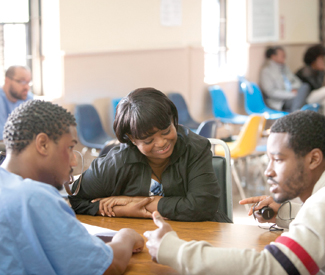
FILM By now you’ve heard of Fruitvale Station, the debut feature from Oakland-born filmmaker Ryan Coogler. With a cast that includes Academy Award winner Octavia Spencer and rising star Michael B. Jordan (The Wire, Friday Night Lights), the film premiered at the 2013 Sundance Film Festival, winning both the Audience Award and the Grand Jury Prize en route to being scooped up for distribition by the Weinstein Company. A few months later, Coogler, a USC film school grad who just turned 27, won Best First Film at Cannes.

Accolades are nice, especially when paired with a massive PR push from a studio known for bringing home little gold men. But particularly in the Bay Area, the true story behind Fruitvale Station eclipses even the most glowing pre-release hype. The film opens with real footage captured by cell phones the night 22-year-old Oscar Grant was shot in the back by BART police, a tragedy that inspired multiple protests and grabbed national headlines. With its grim ending already revealed, Fruitvale Station backtracks to chart Oscar’s final hours, with a deeper flashback or two fleshing out the troubled past he was trying to overcome.

http://www.youtube.com/watch?v=9yy1znso-fc

Mostly, though, Fruitvale Station is very much a day in the life, with Oscar (Jordan, in a nuanced performance) dropping off his girlfriend at work, picking up supplies for a birthday party, texting friends about New Year’s Eve plans, and deciding not to follow through on a drug sale. Inevitably, much of what transpires is weighted with extra meaning — Oscar’s mother (Spencer) advising him to “just take the train” to San Francisco that night; Oscar’s tender interactions with his young daughter; the death of a friendly stray dog, hit by a car as BART thunders overhead. It’s a powerful, stripped-down portrait that belies Coogler’s rookie-filmmaker status.

I spoke with Coogler the day after Fruitvale Station‘s emotional local premiere at Oakland’s Grand Lake Theater.

San Francisco Bay Guardian How was the screening at the Grand Lake?

Ryan Coogler It was intense! Pretty much everybody at the screening had a stake in the film and the story: being from the Bay Area, being there when [Grant’s death] happened, being a member of Oscar’s family, being an employee of BART or a law enforcement officer, being a member of my family, or being someone who opened up their home or business to our film. Everybody was there under one roof, you know? In many ways, we wanted our film to be something that brought people together — and that screening was a personification of that.

SFBG The film doesn’t make Oscar out to be a saint; rather, it shows that he was a real human who’d made some serious mistakes. Were you careful to portray him that way?

RC Absolutely. We set out to examine him through the lens of his relationships with the people who knew him best. I think that’s often what’s not looked at, in terms of tragedies that get politicized like this: people forget that this guy was a person who mattered to specific people — and he couldn’t make it home to those people. When you know somebody intimately, you know their good qualities and their faults. You know their flaws firsthand, and [their behavior] affects you firsthand. I think it would have been a mistake not to look at the things he was struggling with in his life.

SFBG You were born in 1986, the same year as Oscar, and you’re both from the East Bay. Were there other things that drew you to his story?

RC Those commonalities were a major factor. But young people like Oscar Grant’s lives are lost constantly over violence, and I was really interested in exploring why it happens, and why people shouldn’t be OK with it.

Oscar was the kind of person who is often marginalized, both in the media and in fiction films. I thought that giving his story this type of personal perspective could be eye-opening for people that wouldn’t get to know a character like him in their own lives. So that’s what really drew me to it — to add a perspective that might promote some healing and some growth.

SFBG What was the reaction when members of Oscar’s community found out you were making the film?

RC The Bay Area is culturally diverse, but it’s also diverse as far as opinions go. Obviously, there were people on both sides of the fence, since this was a complicated situation. Some people were glad the story was being told; others were like, “That story doesn’t deserve to be told.” There were also a lot of opinions between those two ends of the spectrum. But overwhelmingly, the community supported the film in many ways, especially when they found out the approach we were taking.

SFBG Did you ever consider making the BART cops full-fledged characters, or did you always plan to just focus on Oscar?

RC I decided from the beginning that Oscar would be the focal point of the story. That was the type of film that I wanted to make, and that was the one perspective that I felt wasn’t really heard — because he’s not around to speak anymore. In terms of filmmaking, it was really a creative choice. You have these types of films that follow one character around, and we really wanted to follow Oscar and see how other characters bump off of him. In the scope of his day, the cops were only involved for a very small amount of time.

SFBG BART itself is almost a character in the film. It’s something that non-locals might not pick up on, but Bay Area residents will be able to tell how carefully you chose your locations to include it in the background.

RC When I was researching the film, I noticed a lot of things that were always there, but that I hadn’t thought about before. In San Francisco, BART is underground. You don’t see or hear it when you’re walking around. In the East Bay, however, it’s always above you. Oscar’s from the East Bay, and I’m from the East Bay, so that’s how I know BART. It’s something that you can always hear in the distance — and it’s something that rushes over you. 


FRUITVALE STATION opens Fri/12 in Bay Area theaters.

Depp stinks but Death rules: new movies!

0

By now you’ve heard how much The Lone Ranger sucks (for more on that, my review here), so what else should you be spending your weekly movie-theater budget on? Well, the Roxie just opened a doc about Detroit band Death (Dennis Harvey breaks it down here), plus there’s a new Pedro Almodóvar joint, a coming-of-age summer flick starring Sam Rockwell and Steve Carell as cool and not-so-cool father figures, and (since one Carell movie ain’t enough) Despicable Me 2  — just the thing for the kidz who’ve already seen Monsters University.

Read on for our takes on these films, and more!
http://www.youtube.com/watch?v=irSSZumpYS4

Augustine When a 19-year-old Parisian kitchen maid (single-named French musician Soko) has a dramatic seizure during dinner service, she makes for Salpêtrière Hospital, where she becomes the superstar patient of Dr. Charcot (Vincent Lindon) — a real-life 19th century professor and neurologist who later mentored Sigmund Freud. There’s no “talking cure” at work here, though; Augustine’s medical treatment consists mostly of naked poking and prodding, as well as hypnosis-induced episodes of her increasingly sexualized “ovarian hysteria.” The tension builds as Charcot struggles against popular disdain for his methods (read aloud to him from newspapers by his coolly elegant wife), as well as his forbidden attraction to Augustine. Occupying the same moody, sensual milieu as David Cronenberg’s too-talky A Dangerous Method (2011), first-time feature writer-director Alice Winocour approaches her tale of misunderstood madness from a point of view that’s more emotionally-driven, with some subtle feminist undercurrents. Points deducted, though, for some obvious symbolism — like costuming Augustine in a brand-new red dress right after she starts her period for the first time. (1:42) (Cheryl Eddy)

http://www.youtube.com/watch?v=KtVEj86Vmzo

Deceptive Practice: The Mysteries and Mentors of Ricky Jay David Mamet fans will recognize Ricky Jay from multiple appearances in the director’s work; he’s also been in films like Boogie Nights and Tomorrow Never Dies (both 1997). But Jay’s true passion is stage magic, specifically card and other sleight-of-hand tricks, performed with a skill so dazzling that it’s tempting to believe he really does have supernatural powers. He’s also a witty, self-deprecating, and sometimes “irascible” (to quote a word used in Molly Bernstein and Alan Edelstein’s doc) character — and has a vast, ever-expanding interest in magic history. Using first-hand interviews, TV and stage-show clips, and some wonderful vintage footage, Deceptive Practice traces Jay’s career (he was a child prodigy in the 1950s, thanks to his supportive grandfather), pausing along the way to pay tribute to the men who influenced him and, in many cases, taught him their top-secret techniques. Throughout, Jay is seen demonstrating his own mind-bending tricks — as “simple” as changing a card’s suit, as elaborate as making it sail across the room and plunge like a knife into a watermelon rind — although never, of course, revealing how he does it. (1:28) (Cheryl Eddy)

Despicable Me 2 The laughs come quick and sweet now that Gru (Steve Carell) has abandoned his super-villainy to become a dad and “legitimate businessman” — though he still applies world-class gravitas to everyday events. (His daughter’s overproduced birthday party is a riot of medieval festoonage.) But like all the best reformed baddies, the Feds, or in this case the Anti-Villain League, recruit him to uncover the next international arch-nemesis. Now a spy, he gets a goofy but highly competent partner (Kristen Wiig) and a cupcake shop at the mall to facilitate sniffing out the criminal. This sequel surpasses the original in charm, cleverness, and general lovability, and it’s not just because they upped the number of minion-related gags, or because Wiig joined the cast; she ultimately gets the short end of the stick as the latecomer love-interest (her spy gadgets are also just so-so). However, Carell kills it as Gru 2 — his faux-Russian accent and awkward timing are more lived-in. Maybe the jokes are about more familiar stuff (like the niggling disappointments of family life) but they’re also sharper and more surprising. And though the minions seemed like one-trick ponies in the first film, those gibberish-talking jellybeans outdo themselves in the sequel’s climax. (1:38) (Sara Maria Vizcarrondo)

I’m So Excited I’m So Excited may be to Pedro Almodóvar what Hairspray (1988) was for director John Waters: a kind of low-intensity, high-fluff gateway drug for a filmmaker who’s otherwise an “acquired taste.” (Note: unlike Hairspray, this is not a family movie.) Almodóvar’s previous pictures were far more explicit about their obsessive thinking: mothers suffered (1999’s All About My Mother); sex was deadly (1990’s Tie Me Up! Tie Me Down!) and men were dishonorable (all of them). But in this drug and booze-addled flame-fest, Almodóvar takes one of his lesser themes (the joy of confinement) and transforms a flight from Madrid to Mexico into the funniest soap opera to ever feature cabaret and S&M talk. Early in the flight we learn the landing gear is shot; this means the flight’s dueling pilots have to find a place to host an emergency landing while Europe is on holiday. They anesthetize all of coach (um…metaphor, anyone?), leaving the rich to bellyache over their lost children, lost happiness, and stubborn virginity. Business class is full of drama queens so the flamboyantly gay attendants spike a cocktail with ecstasy (to make everyone get along) and an orgy ensues, complete with a seemingly victimless rape and multiple change-overs from hetero to homo. Almodóvar does have a knack for make-believe, but his biggest gift for fantasy happens in his stress-free transitions; oh, that coming out could be so liberating — but living in a Catholic country lousy with sexual disorientations, maybe the only place that can happen is at 30,000 feet. (1:35) (Sara Maria Vizcarrondo)

http://www.youtube.com/watch?v=NX9gUw3Kwb4

Kevin Hart: Let Me Explain The comedian (2012’s Think Like a Man) performs in this concert film, shot at Madison Square Garden during his 2012 stand-up tour. (1:15)

Maniac And it came to pass that William Lustig’s trashy classic Maniac (1980) was remade, with Elijah Wood assuming the role of twisted killer Frank, a role closely associated with its originator, the late, great cult actor Joe Spinell. Lustig is credited with a producing credit on this otherwise largely French effort, directed by Franck Khalfoun and co-written by Alejandre Aja and Grégory Levasseur — who also worked together on the 2006 remake of The Hills Have Eyes. Though it’s set in contemporary Los Angeles (complete with dating websites and cell phones), Maniac is shot to mimic the original film’s late-1970s New York (cabs, deserted subways, grimy streetscapes), with a synth-heavy score enhancing the retro vibe. Frank is still obsessed with mannequins, scalps, and his dead mother, with shades of both Psycho (1960) and The Silence of the Lambs (1991) filtering through. When Frank meets Anna (Nora Arnezeder), a beautiful French photographer whose preferred subject is mannequins, he grows ever more confused — and more violent. The entire movie is shot from Frank’s POV (we see Wood’s face only in mirrors and photographs), an off-putting gimmick that fails to add much in the way of suspense or scares. As for the gore, there’s nothing amid the CG enhancements that matches the work of special effects genius Tom Savini, whose memorable exploding-head scene plays just as repulsively effective in 2013 as it did in 1980. If you really wanna be freaked out by a movie maniac, skip this so-so do-over and spend some quality time with Spinell instead. (1:29) Roxie. (Cheryl Eddy)

http://www.youtube.com/watch?v=mK7AS_cITKI

The Way, Way Back Duncan (Liam James) is 14, and if you remember being that age you remember the awkwardness, the ambivalence, and the confusion that went along with it. Duncan’s mother (Toni Collette) takes him along for an “important summer” with her jerky boyfriend, Trent (Steve Carell) — and despite being the least important guy at the summer cottage, Duncan’s only marginally sympathetic. Most every actor surrounding him plays against type (Rob Corddry is an unfunny, whipped husband; Allison Janney is a drunk, desperate divorcee), and since the cast is a cattle call for anyone with indie cred, you’ll wonder why they’re grouped for such a dull movie. Writer-directors Nat Faxon and Jim Rash previously wrote the Oscar-winning screenplay for 2011’s The Descendants, but The Way, Way Back doesn’t match that film’s caliber of intelligent, dry wit. Cast members take turns resuscitating the movie, but only Sam Rockwell saves the day, at least during the scenes he’s in. Playing another lovable loser, Rockwell’s Owen dropped out of life and into a pattern of house painting and water-park management in the fashion of a conscientious objector. Owen is antithetical to Trent’s crappy example of manhood, and raises his water wing to let Duncan in. The short stint Duncan has working at Water Wizz is a blossoming that leads to a minor romance (with AnnaSophia Robb) and a major confrontation with Trent, some of which is affecting, but none of which will help you remember the movie after credits roll. (1:42) (Sara Maria Vizcarrondo)

Hi-yo, stinker

2

FILM Pop-culture historians who study 2005’s top movies will remember Mr. & Mrs. Smith, the so-so action flick that birthed Brangelina; Batman Begins, which ushered in a moodier flavor of superhero; and Tim Burton’s shrill Charlie and the Chocolate Factory.

That last title is of particular interest lately. Not only did Charlie provide grim confirmation that a post-Planet of the Apes (2001) Tim Burton had squandered whatever goodwill he’d built up a decade prior with films like Ed Wood (1994) and Edward Scissorhands (1990), it also telegraphed to the world that Johnny Depp — previously a highly intriguing actor, someone whose cool cred was never in question — was capable of sucking. Hard.

In the years since 2005, Depp hasn’t done much to stamp out those initial flickers of doubt. If anything, he’s fanned ’em into a bonfire. His involvement in the Pirates of the Caribbean franchise (which is plodding toward a fifth installment) has taken up most of his schedule, though he’s always willing to don a wacky wig whenever Burton needs him (2007’s Sweeney Todd; 2010’s Alice in Wonderland; 2012’s Dark Shadows). The rest of his post-2005 credits are a mixed bag, mostly best forgotten (ahem, 2010’s The Tourist), though one does stand out for positive reasons: 2011’s animated Rango, a cleverly-scripted tale that reunited Depp with Gore Verbinski, who helmed the first three Pirates movies.

The pair returns to Rango‘s Wild West milieu for The Lone Ranger; certainly there’ll be no Oscars handed out this time, though Razzies seem inevitable. The biggest strike against The Lone Ranger is one you’ll read about in every review: it’s just a teeny bit racist. The casting of the once and future Cap’n Sparrow — who apparently has a blank check at Disney to do any zany thing he wants — as a Native American given to “hey-ya” chants and dead-bird hats is very suspect. Some (white) people might be willing to give this a pass, because it’s always been part of Depp’s celebrity mythology that he’s part Indian. I mean, he totally has a Cherokee warrior inked on his bicep, just below “Wino Forever”!

Mmm-hmm. Let’s go to the source, shall we? Speaking of his heritage in a 2011 interview with Entertainment Weekly, Depp mustered the following: “I guess I have some Native American somewhere down the line. My great grandmother was quite a bit of Native American, she grew up Cherokee or maybe Creek Indian. Makes sense in terms of coming from Kentucky, which is rife with Cherokee and Creek.”

Sounds kinda sketchy, JD. The actor who played Tonto on TV may have been born Harold J. Smith (“Jay Silverheels” was his nom de screen), but he was also raised on Canada’s Six Nations reserve and was the son of a Mohawk tribal chief. So The Lone Ranger TV series, which ran from 1949 to 1957 — and had its share of racial-insensitivity and stereotype-perpetuating issues — was able to cast an actual indigenous person to play Tonto, but 2013’s The Lone Ranger, which elevates Tonto from sidekick to narrator and de facto main character, was not.

In fact, it’s not too far-fetched to assume that the casting of Depp (also credited as an executive producer) is the only reason this Lone Ranger exists. Clearly, he really wanted to play Tonto, and Depp has a way of making his performance the most important thing about whatever film he’s in. Were audiences really screaming out for The Lone Ranger, a rather literal big-screen take on a 1950s TV show with some heavily CG’d train chases added in? Could not $250 million, the film’s reported budget, have been better spent doing something … anything … else?

Obviously “redface” is nothing new in Hollywood. It was frequently deployed in the pre-PC era, as when a white actor played a heroic Native American figure — think Chuck Connors in 1962’s Geronimo. But shouldn’t we have transcended that by now? You’d never see blackface in a film unless it was being used to make a character look ridiculous (2008’s Tropic Thunder), or to make a satirical point, as with 2000’s Bamboozled. Somewhere, Kevin Costner is clutching his Oscars for 1990 post-Western Dances With Wolves — more or less cinema’s biggest mea culpa for all those “the only good Indian is a dead Indian” yarns of the John Wayne era — and weeping.

Tonto isn’t the only Native American character in The Lone Ranger. But the others (none of whom are given names, unless someone was called “set dressing” or “background actor” and I missed it) have a slightly sharper aura of authenticity than Depp, who spends the whole movie caked in either old-age make-up or campy face paint. They are mere plot devices, there to give contemporary audiences a reason to feel outraged when an evil railroad baron lays his tracks through their land and raids their silver mine. “Our time has passed,” an elderly Indian character tells the Lone Ranger (Armie Hammer, whose role literally consists of riding a horse and reacting to Depp’s scenery-chewing buffoonery). “We are already ghosts.”

But back up, kemo sabe. Racism may be The Lone Ranger‘s worst problem, but it’s not the film’s only problem. There’s also its bloated length (nearly three hours); its score, which dares to introduce an Ennio Morricone homage into a film Sergio Leone wouldn’t line his gatto‘s litter box with; its waste of some great character actors (Barry Pepper, William Fichtner); its assumption that having random characters ask the Lone Ranger “What’s with the mask?” over and over is the funniest joke ever; and its failure to follow through on its few inventive elements — that herd of Monty Python-inspired rabbits, for example.

And another thing: if the moral of The Lone Ranger — spelled out with all the delicate subtlety of a fiery train crash — is “greed is bad,” why did El Deppo sign onto this piece of crap in the first place? *


THE LONE RANGER opens Wed/3 in Bay Area theaters.

Stage Listings

0

Stage listings are compiled by Guardian staff. Performance times may change; call venues to confirm. Reviewers are Robert Avila, Rita Felciano, and Nicole Gluckstern. Submit items for the listings at listings@sfbg.com.

THEATER

OPENING

Chance: A Musical Play About Love, Risk, and Getting it Right Alcove Theater, 415 Mason, Fifth Flr, SF; www.thealcovetheater.com. $40-60. Previews Fri/5-Sat/6, 8pm. Opens Sun/7, 5pm. Runs Thu-Sat, 8pm (also Sat, 3pm); Sun, 5pm. Through July 28. New Musical Theater of San Francisco presents Richard Isen’s world premiere work inspired by the writings of Oscar Wilde.

Oil and Water This week: Dolores Park, 18th St and Dolores, SF; www.sfmt.org. Free. Thu/4, 2pm. Also Peacock Meadow, Golden Gate Park, SF; www.sfmt.org. Free. Sat/6, 2pm. Also Washington Square Park, Columbus at Union, SF; www.sfmt.org. Free. Sun/7, 2pm. Also Mitchell Park, South Field, 600 E. Meadow, Palo Alto; www.sfmt.org. Tue/9, 7pm. Free. At various NorCal venues through Sept. 2. The San Francisco Mime Troupe presents its 54th annual summer season; this year’s performance is comprised of two one-act musicals about corporations and the environment: Crude Intentions and Deal With the Devil.

ONGOING

Abigail’s Party San Francisco Playhouse, 450 Post, SF; www.sfplayhouse.org. $30-100. Wed/3-Thu/4, 7pm; Fri/5-Sat/6, 8pm (also Sat/6, 3pm). Although it’s tempting to compare Mike Leigh’s Abigail’s Party to Edward Albee’s rancorous Who’s Afraid of Virginia Woolf, Abigail‘s escalating nastiness skews emphatically British, giving it as much in common with televised exports such as Fawlty Towers and the Ricky Gervais version of The Office. As with these, the humor in Abigail’s Party is of the bleakest and cruelest kind, and there are moments when the five Americans onstage don’t quite convey the wit that lurks beneath the ire, but when they do the results are hysterical and uncomfortable in equal measure. Though the party we witness is not Abigail’s (she’s having a teenage house party next door, the music of which keeps throbbing through the walls of Bill English’s attractively-appointed set) the adults-only cocktail party is just as awkward as any high school mixer. Hosted by the fiercely self-absorbed Beverly (Susi Damilano) and her obnoxiously classist husband Laurence (Remi Sandri), the guest list includes the mousy Angela (Allison Jean White), her monosyllabic husband Tony (Patrick Kelley Jones), and Abigail’s ill-at-ease mum, Susan (Julia Brothers), who’s agreed to keep out of the house during her daughter’s wild soiree. The acting — as well as Brendan Aanes’ sound design, Jacqueline Scott’s props, and Tatjana Genser’s costuming — is pitch perfect, but unless you haven’t already been to enough bad parties, you might find it difficult to sit through this one. If you do, don’t be surprised if you find yourself secretly envying Laurence by the end of the play — at least he finds a way out. (Gluckstern)

Betrayal Phoenix Theatre, 414 Mason, Sixth Flr, SF; www.offbroadwaywest.org. $40. Thu-Sat, 8pm. Through July 20. Off Broadway West Theatre Company performs Harold Pinter’s out-of-sequence drama about an unfaithful married couple.

Can You Dig It? Back Down East 14th — the 60s and Beyond Marsh San Francisco, 1062 Valencia, SF; www.themarsh.org. $15-50. Sat, 8:30pm; Sun, 7pm. Through Aug 25. Solo performer Don Reed returns with a prequel to his autobiographical coming-of-age hits, East 14th and The Kipling Hotel.

Dark Play, or Stories for Boys Exit Theatre, 156 Eddy, SF; www.theexit.org. $5-20. Fri-Sat, 9pm. Through July 13. Do It Live! Productions offers a steadily engrossing production of this slippery play from Chicago playwright Carlos Murillo, wherein a less-then-trusty teenage narrator, Nick (a clever, tightly wound, darkly charming Will Hand), addicted to “making shit up,” recounts his fateful internet-baiting of a fellow teen upon whom he had become fixated. As the unwitting object of Nick’s desire, sweet guy Adam (Adam Magil) gets pulled into an online love affair with Rachel (Amy Nowak), his first love, and — as fate and Nick would have it — Nick’s sister. But Rachel exists only online. And her equally fantastical evil stepdad (Nathan Tucker) soon intercedes, throwing Nick and Adam closer together. All of this disembodied desire floating around the ether leads to a physical climax even Freud might find a bit much, but the way there proves increasingly tense and interesting — if also a little frustrating itself at times in some strained plot points and, especially, its overwrought psychopathologizing of homoerotic desire. (Erik LaDue’s awkward set design also takes a little getting over.) But despite various flaws, the story intrigues, thanks to the solid performances from director Logan Ellis’s sure cast. Tucker and Kelly Rauch are dependable throughout in a varied range of sharp and often hilarious supporting roles. Nowak’s take on the vital (albeit imaginary) teen heroine is refreshingly straightforward. And Hand, while slightly slower to catch fire, ends up a persuasively complex figure at the center of it all. (Avila)

Foodies! The Musical Shelton Theater, 533 Sutter, SF; www.foodiesthemusical.com. $30-34. Fri-Sat, 8pm. Open-ended. AWAT Productions presents Morris Bobrow’s musical comedy revue all about food.

God of Carnage Shelton Theater, 533 Sutter, SF; www.sheltontheater.com. $26-38. Thu-Sat, 8pm. Through Sept 7. Shelton Theater peforms Yasmina Reza’s award-winning play about class and parenting.

Hedwig and the Angry Inch Boxcar Theatre, 505 Natoma, SF; www.boxcartheatre.org. $27-43. Thu-Sat, 8pm. Open-ended. John Cameron Mitchell’s cult musical comes to life with director Nick A. Olivero’s ever-rotating cast.

In A Daughter’s Eyes Brava Theater Center, 2781 24th St, SF; www.brava.org. $15. Thu-Sat, 8pm; Sun, 3pm. Through July 14. Brava! For Women in the Arts and Black Artists Contemporary Cultural Experience presents the West Coast premiere of A. Zell Williams’ tale of two women: the daughter of a man on death row, and the daughter of the man he’s been convicted of killing.

Sex and the City: LIVE! Rebel, 1760 Market, SF; trannyshack.com/sexandthecity. $25. Wed, 7 and 9pm. Open-ended. It seems a no-brainer. Not just the HBO series itself — that’s definitely missing some gray matter — but putting it onstage as a drag show. Mais naturellement! Why was Sex and the City not conceived of as a drag show in the first place? Making the sordid not exactly palatable but somehow, I don’t know, friendlier (and the canned a little cannier), Velvet Rage Productions mounts two verbatim episodes from the widely adored cable show, with Trannyshack’s Heklina in a smashing portrayal of SJP’s Carrie; D’Arcy Drollinger stealing much of the show as ever-randy Samantha (already more or less a gay man trapped in a woman’s body); Lady Bear as an endearingly out-to-lunch Miranda; and ever assured, quick-witted Trixxie Carr as pent-up Charlotte. There’s also a solid and enjoyable supporting cast courtesy of Cookie Dough, Jordan Wheeler, and Leigh Crow (as Mr. Big). That’s some heavyweight talent trodding the straining boards of bar Rebel’s tiny stage. The show’s still two-dimensional, even in 3D, but noticeably bigger than your 50″ plasma flat panel. Update: new episodes began May 15. (Avila)

So You Can Hear Me Marsh San Francisco, 1062 Valencia, SF; www.themarsh.org. $15-50. Thu-Fri, 8pm; Sat, 5pm. Through July 20. A 23-year-old with no experience, just high spirits and big ideals, gets a job in the South Bronx teaching special ed classes and quickly finds herself in over her head. Safiya Martinez, herself a bright young woman from the projects, delivers this inspired accounting of her time not long ago in perhaps the most neglected sector of the public school system — a 60-minute solo play that makes up for its relatively slim plot with a set of deft, powerful, lovingly crafted characterizations. These complex portraits, alternately hysterical and startling, offer their own moving ruminations on a violent but also vibrant stratum of American society, deeply fractured by pervasive poverty and injustice and yet full of restive young personalities too easily dismissed, ignored, or crudely caricatured elsewhere. An effervescent, big-hearted, and very talented performer, Martinez’s own bounding personality and contagious passion for her former students (as complicated as that relationship was), makes this deeply felt tribute all the more memorable. (Avila)

Steve Seabrook: Better Than You Marsh San Francisco, 1062 Valencia, SF; www.themarsh.org. $15-50. Sat, 8:30pm. Extended through August 24. Self-awareness, self-actualization, self-aggrandizement — for these things we turn to the professionals: the self-empowerment coaches, the self-help authors and motivational speakers. What’s the good of having a “self” unless someone shows you how to use it? Writer-performer Kurt Bodden’s Steve Seabrook wants to sell you on a better you, but his “Better Than You” weekend seminar (and tie-in book series, assorted CDs, and other paraphernalia) belies a certain divided loyalty in its own self-flattering title. The bitter fruit of the personal growth industry may sound overly ripe for the picking, but Bodden’s deftly executed “seminar” and its behind-the-scenes reveals, directed by Mark Kenward, explore the terrain with panache, cool wit, and shrewd characterization. As both writer and performer, Bodden keeps his Steve Seabrook just this side of overly sensational or maudlin, a believable figure, finally, whose all-too-ordinary life ends up something of a modest model of its own. (Avila)

Tinsel Tarts in a Hot Coma: The Next Cockettes Musical Hypnodrome, 575 10th St, SF; www.thrillpeddlers.com. $30-35. Thu-Sat, 8pm. Extended through July 27. Thrillpeddlers and director Russell Blackwood continue their Theatre of the Ridiculous series with this 1971 musical from San Francisco’s famed glitter-bearded acid queens, the Cockettes, revamped with a slew of new musical material by original member Scrumbly Koldewyn, and a freshly re-minted book co-written by Koldewyn and “Sweet Pam” Tent — both of whom join the large rotating cast of Thrillpeddler favorites alongside a third original Cockette, Rumi Missabu (playing diner waitress Brenda Breakfast like a deliciously unhinged scramble of Lucille Ball and Bette Davis). This is Thrillpeddlers’ third Cockettes revival, a winning streak that started with Pearls Over Shanghai. While not quite as frisky or imaginative as the production of Pearls, it easily charms with its fine songs, nifty routines, exquisite costumes, steady flashes of wit, less consistent flashes of flesh, and de rigueur irreverence. The plot may not be very easy to follow, but then, except perhaps for the bubbly accounting of the notorious New York flop of the same show 42 years ago by Tent (as poisoned-pen gossip columnist Vedda Viper), it hardly matters. (Avila)

The World’s Funniest Bubble Show Marsh San Francisco, 1062 Valencia, SF; www.themarsh.org. $8-50. Sun, 11am. Through July 21. Louis “The Amazing Bubble Man” Pearl returns after a month-long hiatus with his popular, kid-friendly bubble show.

BAY AREA

Dear Elizabeth Berkeley Rep’s Roda Theatre, 2015 Addison, Berk; www.berkeleyrep.org. $24-77. Wed/3 and Sun/7, 2 and 7pm; Fri/5-Sat/6, 8pm (also Sat/6, 2pm). Berkeley Rep performs Sarah Ruhl’s play written in the form of letters between Elizabeth Bishop and Robert Lowell.

George Gershwin Alone Berkeley Repertory Theatre, Thrust Stage, 2025 Addison, Berk; www.berkeleyrep.org. $29-77. Wed/3 and Sun/7, 2 and 7pm; Fri/5-Sat/6, 8pm (also Sat/6, 2pm). Hershey Felder stars in his celebration of the music and life of composer George Gershwin.

Sea of Reeds Ashby Stage, 1901 Ashby, Berk; www.shotgunplayers.org. $20-35. Previews Wed/3-Thu/4, 8pm. Opens Fri/5, 8pm. Runs Wed-Thu, 7pm; Fri-Sat, 8pm; Sun, 5pm. Through Aug 18. Josh Kornbluth’s brand new comedy — it involves atheism, oboes, and the Book of Exodus — opens at Shotgun Players “before it goes on Torah.”

Superior Donuts Pear Avenue Theatre, 1220 Pear, Mtn View; www.thepear.org. $10-30. Wed/3 and Thu-Sat, 8pm (no show Thu/4); Sun, 2pm. Through July 14. Pear Avenue Theatre performs Tracy Letts’ comedy about the redemptive power of friendship.

This Is How It Goes Aurora Theatre, 2081 Addison, Berk; www.auroratheatre.org. $32-60. Tue and Sun, 7pm (also Sun, 2pm); Wed-Sat, 8pm. Extended through July 28. An awkward love triangle between former high school classmates gets the caustic Neil LaBute treatment in Aurora Theatre Company’s production of This is How it Goes. Not content to merely skewer the familiar battles between the sexes, LaBute further prods his captive audience with the big stick of race relations, and the often unacknowledged prejudices that lurk in the hearts of men. And women. There are no innocents in this play, though each character certainly has moments where they play upon audience sympathies, only to betray them a few inflammatory lines later. As the marriage between the successful yet self-conscious African American alpha male Cody (Aldo Billingslea) and his neurotically placating Caucasian wife Belinda (Carrie Paff) erodes, the mostly affable (and former fat kid) “Man” (Gabriel Marin) insinuates himself in the middle of their troubled relationship, obviously still carrying the torch for Belinda he did 15 years ago — as well as the same wary animosity an unpopular kid carries for the star of the track team, in this case, Cody. All three actors do a very good job of shape-shifting between their middle-class Jekyll and Hyde selves, assisted in part by Marin’s amiable asides, which don’t so much lull the audience as tease them with the idea that things are about to get better, when they can only get worse. (Gluckstern)

PERFORMANCE/DANCE

Caroline Lugo and Carolé Acuña’s Ballet Flamenco Peña Pachamama, 1630 Powell, SF; www.carolinalugo.com. July 13, 21, and 27, 6:15pm. $15-19. Flamenco performance by the mother-daughter dance company, featuring live musicians.

“Comedy Returns to El Rio” El Rio, 3158 Mission, SF; www.brownpapertickets.com. Mon/8, 8pm. $7-20. With Eve Meyer, Johan Miranda, Kate Willett, Sammy Obeid, and Lisa Geduldig.

“Mission Position Live” Cinecave, 1034 Valencia, SF; www.missionpositionlive.com. Thu, 8pm. Ongoing. $10. Stand-up comedy with rotating performers.

“Performance Making Showcase” Z Space, 450 Florida, SF; www.zspace.org. Sat/6, 7:30pm. Free. Work created by participants in the University of Chichester (UK)’s Performance Making Institute.

“Queer Rebels of the Harlem Renaissance” Performances: African American Art and Culture Complex, 762 Fulton, SF; www.queerrebels.com. Fri/5-Sat/6, 8pm. $15-20. Films: New Parkway, 474 24th St, Oakl; www.queerrebels.com. Sun/7, noon. $7-10. The National Queer Arts Festival presents this showcase of queer black performers, plus films by and about the same.

“Randy Roberts: Live!” Alcove Theater, 414 Mason, Ste 502, SF; www.thealcovetheater.com. July 9, 16, and 23, 9pm. $30. The famed female impersonator takes on Cher, Better Midler, and other stars.

Red Hots Burlesque El Rio, 3158 Mission, SF; www.redhotsburlesque.com. Wed, 7:30-9pm. Ongoing. $5-10. Come for the burlesque show, stay for OMG! Karaoke starting at 8pm (no cover for karaoke).

“San Francisco Magic Parlor” Chancellor Hotel Union Square, 433 Powell, SF; www.sfmagicparlor.com. Thu-Sat, 8pm. Ongoing. $40. Magic vignettes with conjurer and storyteller Walt Anthony.

“Union Square Live” Union Square, between Post, Geary, Powell, and Stockton, SF; www.unionsquarelive.org. Through Oct 9. Free. Music, dance, circus arts, film, and more; dates and times vary, so check website for the latest.

“Yerba Buena Gardens Festival” Yerba Buena Gardens, Mission between 3rd and 4th Sts, SF; www.ybgfestival.org. Through Oct 15. Free. This week: “Accordion Daze,” Sat, noon-3. *


Rep Clock

0

Schedules are for Wed/2-Tue/9 except where noted. Director and year are given when available. Double and triple features marked with a •. All times pm unless otherwise specified.

ARTISTS’ TELEVISION ACCESS 992 Valencia, SF; www.atasite.org. $6-10. Directing Dissent (Hamacher, 2013), Sat, 8.

CASTRO 429 Castro, SF; (415) 621-6120, www.castrotheatre.com. $8.50-13. •Jaws (Spielberg, 1975), Wed, 2:15, 7, and Rocky (Avildsen, 1976), Wed, 4:35, 9:25. •Josie and the Pussycats (Elfont and Kaplan, 2001), Fri, 7:30; Velvet Goldmine (Haynes, 1998), Fri, 9:30; Wild in the Streets (Shear, 1968), Fri, 11:59. “Scary Cow Independent Film Festival,” Sat, 3. This event, $10-25; visit www.scarycow.com for more details. “50th Anniversary Restoration:” Cleopatra (Mankiewicz, 1963), Sun, 2, 7.

CHRISTOPHER B. SMITH RAFAEL FILM CENTER 1118 Fourth St, San Rafael; (415) 454-1222, www.cafilm.org. $6.75-$10.25. Fill the Void (Burshtein, 2012), call for dates and times. Frances Ha (Baumbach, 2012), call for dates and times. Rebels With a Cause (Kelly, 2012), call for dates and times. 20 Feet From Stardom (Neville, 2013), call for dates and times. Augustine (Winocour, 2012), July 5-11, call for times.

CLAY 2261 Fillmore, SF; www.landmarktheatres.com. $10. “Midnight Movies:” Mr. Hush (Madison, 2011), Fri, midnight. Hosted by Miss Misery.

“FILM NIGHT IN THE PARK” This week: Creek Park, 400 Sir Francis Drake, San Anselmo; www.filmnight.org. Free (donations appreciated). Super 8 (Abrams, 2011), Fri, 8; Return of the Jedi (Marquand, 1983), Sat, 8.

NEW PARKWAY 474 24th St, Oakl; www.thenewparkway.com. Free. “First Friday Shorts,” featuring short films made by local youth, Fri, 6.

PACIFIC FILM ARCHIVE 2575 Bancroft, Berk; (510) 642-5249, bampfa.berkeley.edu. $5.50-9.50. “A Call to Action: The Films of Raoul Walsh:” Sailor’s Luck (1933), Fri, 7; Me and My Gal (1932), Fri, 8:40. “A Theater Near You:” Port of Shadows (Carné, 1938), Sat, 6:30; Kuroneko (Shindo, 1968), Sat, 8:30. “Castles in the Sky: Masterful Anime from Studio Ghibli:” Pom Poko (Takahata, 1994), Sun, 4:30.

ROXIE 3117 and 3125 16th St, SF; (415) 863-1087, www.roxie.com. $6.50-11. Hey Bartender! (Tirola, 2013), Wed-Thu, 7, 9:15. Ain’t In It For My Health: A Film About Levon Helm (Hatley, 2013), Wed, 7:15, 9:15. A Band Called Death (Covino and Howlett, 2013), July 5-11, 7, 9. Maniac (Khalfoun, 2012), July 5-11, 7:15, 9:15.

VICTORIA 2961 16th St, SF; teatrofrida.eventbrite.com/#. $12-35. “Fiestas Fridas:” •Frida: Naturaleza Viva (1984), and The Life and Death of Frida Kahlo as told to David and Karen Crommie (1966), Sat, 5. Followed by “Somos Frida,” a performance showcase. *


Buddy cops, a one-man army, a boozy doc, and more: new movies!

0

This week: two music docs, a buddy-cop movie starring Sandra Bullock and Melissa McCarthy, and America’s Sweetmeat Channing Tatum saves the White House and, ergo, the world. Plus, more! Read on for takes from our critics.

The Heat First things first: I hated Bridesmaids (2011). Even the BFF love fest between Maya Rudolph and Kristen Wiig couldn’t wash away the bad taste of another wolf pack in girl’s clothing. Dragging and dropping women into dude-ly storylines is at best wonky and at worst degrading, but The Heat finds an alternate route. Its women are unlikable; you don’t root for them, and you’re not hoping they become princesses because such horrifying awkwardness can only be redeemed by a prince. In Bridesmaids and Heat director Paul Feig’s universe, friendship saves the day. Sandra Bullock is Murtaugh to Melissa McCarthy’s Riggs, with tidy Bullock angling for a promotion and McCarthy driving a busted hoopty through Boston like she’s in Grand Theft Auto. Circumstances conspire to bring them together on a case, in one of many elements lifted from traditional buddy-cop storylines. But! The jokes are constant, pelting, and whiz by like so much gunfire. In one running gag, a low-rung villain’s worst insult is telling the women they look old — but neither character is bothered by it. It’s refreshing to see embarrassment humor, so beloved by chick flicks, get taken down a peg by female leads who don’t particularly care what anyone thinks of them. (1:57) (Sara Maria Vizcarrondo)

http://www.youtube.com/watch?v=3HUwmDqi2kA

Hey Bartender Hey, have you heard of this trendy thing called craft cocktails? Be warned, sophisticated San Francisco drinkers: Douglas Tirola’s upbeat documentary mentions our fair city in passing only a handful of times; instead, it concentrates on New York City’s relatively recent “cocktail revolution,” interviewing movers and (literal) shakers on the scene while giving a brief history of cocktails in America (again, with an emphasis on NYC). Hey Bartender‘s focal points are well-chosen studies in contrast: ex-Marine Scott — tattooed and scrupulously mustached — who’s working his way up the ranks at hipster lounge Employees Only; and middle-aged Steve, who runs a struggling blue-collar bar just outside the city and is slowly coming around to the idea of adding fancier drinks to his menu. Though dive-bar denizens may roll their eyes at some of Hey Bartender‘s more pretentious trappings (the movie doesn’t mention it, but drinks at Employees Only are in the $15-16 range), it does make the case that today’s superstar “mixologists” deserve just as much recognition as superstar restaurateurs. And the film has a point: can a Top Chef spinoff for bartenders be that far off? (1:32) Roxie. (Cheryl Eddy)

http://www.youtube.com/watch?v=rwDzRzqFaIE

Laurence Anyways Xavier Dolan’s latest is yet another gorgeously-designed love story; it fits perfectly alongside his extremely personal I Killed My Mother (2009) and the devastating Heartbeats (2010). Although some critics have suggested that this young director needs to hire an editor (Laurence Anyways clocks in at two hours and 48 minutes), I would argue that this epic, gender-bending love story needed to take its stylized time to achieve what most films never do: humanize a transgendered lead character. Melvil Poupaud (Raúl Ruiz’s favorite ingénue) is stunning as Laurence; as his longtime lover, Fred, Suzanne Clément performs with a guttural passion that should keep audiences glued to the screen. For those willing to accept a decade’s worth of hypnotic set and costume designs (the film spans 1989-1999); cryptic character development; a crew of campy castaways; and an electric, eclectic soundtrack (Depeche Mode, Celine Dion), Laurence Anyways is well worthy of its epic running time. Could this be the film that elevates Canada’s best-kept secret to being the leader of a post-gender film movement that’s just about to explode? (2:48) Metreon. (Jesse Hawthorne Ficks)

The Secret Disco Revolution Jamie Kaster’s Canadian documentary chronicles the rise and fall of the 70s booty shaking phenomenon — though what with the subsequent developments of house music, rave culture, et al., you might say disco never really went away. It’s got a goldmine of kitschy vintage clips, and plenty of enjoyable interviews with the scene’s erstwhile stars (Thelma Houston, “KC” Casey, etc.), producers, and observers. (The weirdest are scenes with the Village People, who today are staples on the corporate-party circuit and seem bizarrely eager to deny they were ever a subversively gay act.) Unfortunately, Kaster also burdens the film with sometimes overreaching arguments for disco’s sociopolitical radicalism, as mostly articulated by academic Alice Echols. And there’s a labored staged thread in which an arch narrator informs of us the behind-the-scenes mechanizations of three fictive “masterminds” (played by actors) who propagated disco to liberate gays, women and ethnic minorities. It’s a whimsical conceit that falls completely flat. As a result, there’s plenty of fun to be had here, but the conceptual missteps make this less than the definite disco doc it aims to be. (1:25) (Dennis Harvey)

20 Feet From Stardom Singing the praises of those otherwise neglected backup vocalists who put the soul into that Wall of Sound, brought heft to “Young Americans,” and lent real fury to “Gimme Shelter,” 20 Feet From Stardom is doing the rock ‘n’ roll true believer’s good work. Director Morgan Neville follows a handful of mainly female, mostly African American backing vocal legends, charts their skewed career trajectories as they rake in major credits and keep working long after one-hit wonders are forgotten (the Waters family) but fail to make their name known to the public (Merry Clayton), grasp Grammy approval yet somehow fail to follow through (Lisa Fischer), and keep narrowly missing the prize (Judith Hill) as label recording budgets shrivel and the tastes, technology, and the industry shift. Neville gives these industry pros and soulful survivors in a rocked-out, sample-heavy, DIY world their due on many levels, covering the low-coverage minis, Concert for Bangladesh high points, gossipy rumors, and sheer love for the blend that those intertwined voices achieve. One wishes the director had done more than simply touch in the backup successes out there, like Luther Vandross, and dug deeper to break down the reasons Fischer succumbed to the sophomore slump. But one can’t deny the passion in the voices he’s chosen to follow — and the righteous belief the Neville clearly has in his subjects, especially when, like Hill, they are ready to pick themselves up and carry on after being told they’re not “the Voice.” (1:30) (Kimberly Chun)

Unfinished Song A grumpy widower (Terrence Stamp) learns to enjoy life again by joining an unconventional choir group. Vanessa Redgrave, Gemma Arterton, and Christopher Eccleston round out the cast. (1:36)

http://www.youtube.com/watch?v=Wa5aasz5VXg

White House Down Ah, the mid-1990s: a time when two big-budget movies on the same subject were regularly released within months of each other (1997’s Volcano and Dante’s Peak; 1998’s Armageddon and Deep Impact). When a director named Roland Emmerich ascended into the blockbuster pantheon with Independence Day (1996), a film that’s best-remembered for that iconic shot of the White House exploding under alien death rays. The intervening years have seen Emmerich plunge ever-deeper into various flavors of disaster, and White House Down — which reignites that ’90s copycat-rivalry thing by riding the fumes of March’s Olympus Has Fallen — finds its boogeyman in domestic terrorism. It beings on a triumphant day for President James Sawyer (Jamie Foxx), who has just ordered all US troops removed from the Middle East — angering some high-up men in his administration, as well as some ex-military goons with axes of their own to grind. When the White House is compromised, a wannabe Secret Service agent (Channing Tatum), at the Prez’s house for a tour with his precocious daughter, shoulders one-man-army duties. Rockets are launched; there’s a high-speed limo chase across the White House lawn; we learn the truth about Marilyn and JFK; and thanks to evil genius Skip Tyler (Jimmi Simpson), “the greatest hack the world has ever seen” is about to unleash World War III. Yep, that’s right: 17 years after ID4‘s Jeff Goldblum broke into the alien mainframe, thereby saving the White House-less planet, Emmerich has decided that hackers are actually bad guys. It goes with White House Down‘s warning that the enemy is no longer an external threat, but something lurking right under your nose. Better start working out, America — and working on your one-liners. (2:17) (Cheryl Eddy)

Still beating

27

cheryl@sfbg.com

FILM/LIT A few weeks before our scheduled interview, Laura Albert mails me copies of 2000’s Sarah and 2001’s The Heart is Deceitful Above All Things. Inscribed on Heart‘s title page is a note: “Thanks for being available to revelation.” The volumes are signed “Yours, LA and JT” — the latter, of course, referring to JT LeRoy, the identity under which Albert penned both books.

That secret’s been out since late 2005, and has been dissected over and over. It even inspired a Law and Order episode. LeRoy, and his fantastically tragic back story (just out of his teens, he’d survived drugs, homelessness, and prostitution en route to becoming the lit world’s hottest wunderkind), were Albert’s creations. She was the true author behind the best-sellers listed above, plus 2004’s Harold’s End, dozens of magazine articles, an early script for Gus Van Sant’s Elephant (2003), and numerous other works. (Meanwhile, the androgynous “JT” that had been appearing in public was actually the half-sister of Albert’s then-partner; she wrote her own tell-all in 2008.) On Albert’s website, there are tabs marked “Who is Laura Albert?” and “Who is JT LeRoy?” Both link to Albert’s biography.

Years have passed since l’affaire LeRoy, and Albert has moved through the experience in her own way. (Her business card lists her as “literary outlaw.”) Later this summer, Sarah will be reissued as an ebook, with a fairy tale-inspired cover by artist Matt Pipes. Albert also is working on her memoirs (though she doesn’t like to use the word “memoirs”), and tells me there’s a documentary forthcoming from Jeff Feuerzeig, who made 2005’s critically-acclaimed The Devil and Daniel Johnston. This weekend, Asia Argento’s 2004 adaptation of The Heart is Deceitful Above All Things screens as part of the Clay Theatre’s midnight-movie series, with Albert and producer Chris Hanley in person, plus Argento via Skype.

Sitting in her San Francisco kitchen, Albert eyes my tape recorder and admits she’d rather focus on the film, not JT — though it’s a topic that inevitably arises. Argento, Albert says, encountered Heart the way many LeRoy readers did, via word-of-mouth recommendation.

“She read the book and she didn’t know anything about JT. At the same time, a small publisher was putting out the book [in Italy], and they wanted to bring JT over,” Albert recalls. “It was a weird coincidence. They were putting on an event, and they wanted to get someone to read. They had contacted Asia, and she already knew about the book, and she wanted not only to do this event, but to make the movie. It’s funny because I thought Sarah would be the first [to become a film], because it was already optioned by Gus [Van Sant]. But Asia moved really fast. We went over to meet her, and I had turned down a lot of people. My feeling was, it’s my baby and I’m giving it up for adoption, and I saw that this was someone I could give my baby to.”

Argento, the daughter of famed Italian horror director Dario Argento, is best-known stateside as an actor; previous to Heart, her directing experience was limited to short films and 2000’s flamboyant Scarlet Diva. Once she decided to helm the movie, her decision to star as the free-spirited, needy, sometimes-cruel single mother of the story’s young protagonist was an obvious choice.

“I had concerns about that, how much she would take on the role, how much it would become her. It’s ironic, because I had given myself over completely to Jeremy, to JT, to Jeremiah,” Albert says. She pauses. “Did you see that French film, about the guy who assumes different characters?”

Holy Motors?”

“Yeah! It really was transformative to me. There’s a scene where someone asks [the main character], ‘Why are you still doing this?’, and he makes reference to the act of giving yourself over completely. And that was it. I gave myself over completely. I did not break character. You know how, in that movie, he’ll do anything? He’ll kill someone! He’s in it. Most people don’t know what that’s like. And that was it. I will never apologize,” she says, firmly. “We’re talking about art. Nobody was harmed in this, really. I didn’t really scribble that far outside the lines. Everything was labeled ‘fiction.'”

At her mention of an apology, I have to ask: does she feel like people demanded one?

“People like to give themselves a lot of credit for how vanguard they are. I can’t tell you how many people I’ve had tell me, ‘Warhol would have loved it!’ — including people who were close with Warhol,” she says. “I think it revealed more about other people and what they could accommodate, and what they put on the work, than it does about me. If you have a personal relationship with JT, then that’s a conversation between you and me. I put my email [in the books], and I really did have a connection with the fans because I grew up in the punk scene, and I wasn’t into hero worship. The problem was — psychologically — I wasn’t able to do that. It wasn’t like [adopts goofy voice], ‘Gee, how do I burst forth onto the literary scene? I know! I’ll create a little boy!’ No. It wasn’t like that.”

As we talk, Albert makes references to her own troubled youth: surviving abuse, living in a group home, being institutionalized. Amid the tumult of her teenage life, she would “call hotlines — I don’t know what I would talk about, but it was the only time I could feel. I would give myself over to another being, and it was always a boy. So when I hear people say, ‘I’m gonna do what you did,’ it’s like, good luck. For me it was created the way an oyster creates a pearl: out of irritation and suffering. It was an attempt to try to heal something. And it actually worked, and it did so for a lot of other people. The amazing thing is, now I can be available to people.”

We’re delving more into her work (“I didn’t do anything new — writers have always been using combinations of pseudonyms and identities,” she points out) when the doorbell rings; it’s a Comcast technician here to see about Albert’s Internet connection. We move to her office, which features a wall collaged with photos and several filing cabinets full of archives — material she’s letting Feuerzeig use in his documentary.

But it’s not a room completely given over to the past. It’s also where Albert works on her new projects (besides her memoirs, she’s writing screenplays — building off her experiences working on Deadwood with David Milch), and stashes new mementos, including a program from a recent Brazilian rock opera entitled JT, A Punk Rock Fairy Tale.

Before I leave, she gives me a copy of a New York Times article from 2010 entitled “Life, In the Way of Art;” its subjects include Joaquin Phoenix, still smarting from the backlash after his faux breakdown in I’m Still Here. The director of that film, Casey Affleck, cites a line from a Picasso quote that Albert emails to me in full the day after we speak: “We all know that art is not truth. Art is a lie that makes us realize truth, at least the truth that is given us to understand. The artist must know the manner whereby to convince others of the truthfulness of his lies.”

She’s just as frank over email as she is in person. “It’s OK with me if someone doesn’t like my writing. But they shouldn’t try to tell me how I’m obliged to present my work,” she writes. “When I talk about my personal background, I’m not attempting to somehow bestow legitimacy to what I’ve written — anyone should be able to do what I did. My life history doesn’t matter and isn’t being offered as any kind of excuse.”

I think back to something she said in her kitchen — a simple, powerful summation of a story that will never not be complicated. “JT was my lifeboat. You loved him? Well, I loved him more.” 

THE HEART IS DECEITFUL ABOVE ALL THINGS

Fri/28, midnight, $10

Clay

2261 Fillmore, SF

www.landmarktheatres.com