


Frameline 38, the San Francisco International LGBT Film Festival starts June 19! We’re giving away two pairs of tickets to two shows. Enter to win tickets to Opening Night’s The Case Against 8 or Closing Night’s I Feel Like Disco by emailing rsvp@sfmediaco.com with your FIRST and LAST name along with the movie title in the subject line. Find more information about the festival here!
Film
Kevin Epps’ new film targets outsize black and latino student suspensions

A second grader recounts his school calling in the police to stop his tantrum. A young girl repeatedly suspended by her school lowers her head in sorrow. A community confronts a seemingly-violent teen who lost his way.
Kevin Epps’ 2002 film Straight Outta Hunters Point pulled viewers through the painful churn of poverty in a historically black San Francisco neighborhood. In his newest film, Solutions not Suspensions, Epps shows viewers one systemic cause of poverty: kids who are suspended and sent out onto the streets, instead of embraced by their communities when they falter.
These students aren’t only held back by each other, they’re held back by their schools. Studies show African American and Latino students are disproportionately suspended compared to other ethnic groups, a topic we wrote about in our cover story “Suspending Judgement, [12/13].”
That’s now changing, and Epps’ film chronicles the efforts of Coleman Advocates and other youth groups to push the San Francisco Unified School District to implement Restorative Practices, a new form of discipline focusing on community-building as opposed to punishment.
The stakes are high. Though some argue students need punishment, the film (and Coleman Advocates) argue this is counter-intuitive. Suspensions don’t heal wounds, don’t address behavior, and exacerbate the school to prisons pipeline.
“I’m a troublemaker, I have a police record,” one girl in the film says, talking about how her teachers and counselors no longer trust her. “They don’t care about me now.”
Restorative Practices are a new set of rules for handling conflict in SFUSD schools, calling for students and teachers in disagreements to enter into restorative circles to discuss their differences. One of the most powerful moments in Solutions not Suspensions puts you right in the middle of one teen’s restorative circle.
A teenager sits in a room surrounded by teachers and his community. To his left is his crying mother, to his right is a man leading the restorative circle.
“I need for you to fall back a little bit from that man role in taking the lead,” the man tells the teen. “Just be a young man. Enjoy this journey to being a man. One thing I know is you love that woman right there so much.”
He points to the teens’ crying mom.
“I know you carry a heavy load sometimes,” he says. “You worry about her, you worry about your family, and worrying about your family may be behind the decisions in life you made. But you’ve got a network of people. You’ve got to let us know about that load.”
“You’ve got to tell us. You’ve got to tell us.”
Epps told the Guardian that the teen had gotten into fights at school. He came from a broken home and his mother had troubles with substance abuse. The fight, Epps said, “was his cry for help.”
And that’s the power of restorative practices, he said, it gives students help instead of sending them to the streets.
“Instead of suspending him they took him to the side,” Epps said. “They said ‘let’s talk about this.'”
Epps said Solutions not Suspensions has direct ties to his seminal film, Straight Outta Hunters Point, and its sequel. The kids suspended from schools, he said, were the same kids living in poverty and getting caught up in “mischievious things” in his other films.
“It’s a direct connection,” he said.
Solutions not Suspensions premieres tonight at th San Francisco Public Library Main Branch, in the Latino room, at 6pm. Coleman Advocates will then host the film on their website for viewing, and announce a number of subsequent showings.
13TH SAN FRANCISCO DOCUMENTARY FESTIVAL

With over 40 feature films in the official selection, the 13th Annual San Francisco Documentary Film Festival (SF DocFest) once again showcases the best documentaries from around the globe and around the Bay.
Presented by SF IndieFest, the 13th Edition of the SF DocFest will include films, panels, and events. In addition to the Roxie and Brava Theatres in San Francisco, the festival will also include the Oakland School of the Arts’ Marion E. Greene Black Box Theater as their newest venue. For more information on films, parties and panels at the festival visit www.sfindie.com.
Enter to win a pair of tickets by emailing your FIRST and LAST name to rsvp@sfmediaco.com with the “DocFest” in the subject line.
Puff piece
arts@sfbg.com
FILM Sometimes a movie can only be called a gift — a gift intended for somebody other than the viewer. Clearly a film is a vanity project if its primary intent seems to flatter its maker. But what about when it’s a love letter from one rich, entitled celebrity to another? Then the vanity grows complicated, not least by the fact that we’re expected to pay for the privilege of watching one ass kiss another.
Anyone who blinked probably missed Super Duper Alice Cooper, which mostly did just one-night showings across the nation in April. That rockumentary was duly “authorized” but awfully entertaining, with the wit to tell its original shock-rocker’s tale entirely through archival footage plus a running oral history of latter-day interviews. Mike Myers’ directorial bow Supermensch: The Legend of Shep Gordon tells the same story for its first half hour — Gordon being the “Jewish kid from Long Island” who stumbled into being Cooper’s manager, shepherding (har) him to fame with an uncanny knack for promotional stunts and image-shaping.
He eventually provided those services and more to a highly eccentric roster of talents including Wonder Bread pop thrush Anne Murray, R&B vibrator Teddy Pendergrass, and (an end-scroll informs) King Sunny Ade, Ben Vereen, Raquel Welch, Michelle Shocked, Rick James, and Frankie Valli. He co-founded Alive Films, which produced and distributed an innovative slate of indie and foreign features. Discovering that the world’s greatest chefs were “treated like shit” (?!), he had the foresight to create the whole “celebrity chef racket” in which they have reality TV shows and hawk their own supermarket products, for which we presumably must be grateful.
In a respite from bedding and occasionally marrying other “tens,” he kept Sharon Stone off the dating market for two years, for which we should probably also be grateful. She introduced him to the Dalai Lama, of whom he says, “Every time His Holiness walks into a room I feel like I’ve taken the greatest shower of my life.” (Apparently, he feels spiritually cleansed.) Dropping more names than a telephone book in a shredder, Gordon shares amusing anecdotes about Cary Grant and Steve Jobs alike. He is a wellspring of generosity who supported an ex-girlfriend’s orphaned grandchildren and secured financial stability for an elderly Groucho Marx. Meeting Myers via Cooper on the set of 1992’s Wayne’s World, he subsequently housed the famously difficult comedian turned (here) documentarian for two months at his Maui compound when the erstwhile Austin Powers was going through a rough stretch.
“He’s the nicest man I’ve ever met, hands down,” Myers gushes onscreen, while some other famous person (Michael Douglas? I forget) calls Gordon “the nexus for everybody who means anything in the entire world.”
Supermensch is a professional funny guy’s documentary, which means it can’t help manipulating things (wacky klezmer soundtrack; campy re-enactments; celebrity testimonials from Tom Arnold, Sammy Hagar, and Sylvester Stallone) in ways that beg for approval. Gordon is no doubt a great host, a good cook, a consummate cocksman, and a social and business genius. But watching this movie is like paying to see a $5,000-per-plate benefit dinner via closed circuit TV — as if it were a humbling honor to witness famous people pat each other on the back.
It’s a given here that the tragedy of Gordon’s life is his not being able to foster a biological family of his own — no matter that he’d out-bachelored many a former lover who might have realized it. “I felt really lonely for him,” says one loyal personal assistant re: the moment he woke up from near fatal surgery (cue Radiohead track “Everything In Its Right Place”) and was disappointed her less-than-gorgeous self was at his bedside. The by-association narcissism Supermensch exudes is exceeded only by the depressingly low self-esteem of she who pities a man who hasn’t yet found his impossible feminine ideal. *
SUPERMENSCH: THE LEGEND OF SHEP GORDON opens Fri/13 in San Francisco.
Anxious art
arts@sfbg.com
FILM Poland had not been a major hub of film production in the early decades of the medium, and its industry stabilized without getting very interesting in the years after World War II, when a Soviet-backed Stalinist regime founded state-controlled Film Polski. This shotgun wedding of art and bureaucracy wasn’t ideally conducive to creative expression, however. By the mid-1950s younger filmmakers, many graduates from the recently founded National Film School in Lodz, agitated for more independence — which, surprisingly, they won.
The resulting United Groups of Film Production almost immediately began producing work that won international attention and came to be known as the “Polish Film School” of cinema. Then in the 1970s a second wave of distinctive talents arrived, their troubled and ambivalent movies coming to be known as the Cinema of Moral Anxiety movement. Presented by Martin Scorsese, the touring “Masterpieces of Polish Cinema” retrospective playing Berkeley’s Pacific Film Archive offers 13 features spanning three decades.
https://www.youtube.com/watch?v=3-CQj8n3Rek&feature=kp
The series kicks off this weekend with perhaps the most famous films by two polar (ahem) opposites of the school’s first wave: fantasist Wojciech Has and sober, socially conscious realist Andrzej Wajda. The latter sounded a new Polish cinema’s opening salvo with 1955’s A Generation, and is still at it 60 years later. Last year he continued his never-ending project of dramatizing 20th century Polish history with the biographical Walesa: Man of Hope (as yet unreleased in the US), and might yet be active when he hits 90 in 2016.
An honorary Oscar winner, Wajda has been the most imposing presence in Polish cinema for nearly his entire career, even if he’s not the nation’s most fabled cinematic son — that would be Roman Polanski, a sensibility as slippery as Wajda is solid (and sometimes stolid), as well as a director who fled to the West at his first opportunity. (Polanski made a rare return after the fall of Communism, acting the lead in Wajda’s atypical period comedy Zemsta in 2002.) The four features representing Wajda in the PFA series see his development from an edgy young voice to the master artisan of large-canvas, often polemical works on subjects of official import.
Ashes and Diamonds (1958) introduced the striking screen presence of Zbigniew Cybulski — one consciously modeled on the magnetic malcontents of James Dean, and Marlon Brando in 1953’s The Wild One — as one of two resistance fighters tasked with assassinating a Communist official just days after the end of World War II. While his partner copes with this now-pointless mission by going on an epic drunk, Cybulski’s Maciek expresses his ambivalence in distracted pursuit of a barmaid (Ewa Krzyzewska). His iconic death scene would influence many others, notably those in Godard’s Breathless and Truffaut’s Shoot the Piano Player (both 1960). The actor coped with his subsequent international stardom by doing everything to excess; there was grief but not much surprise among those who knew him when he died in a drunken fall at a train station in 1967, not yet 40 but looking much older.
He also has supporting roles in Jerzy Kawalerowicz’s 1959 slice-of-life demi-thriller Night Train, and in Wajda’s Innocent Sorcerers from the next year — both long journeys toward dawn, the second set in a jazz-soaked, raffishly disillusioned Warsaw where it’s “harder to catch a taxi than a girl.” The two other Wajda titles here are later epics: 1975’s The Promised Land, a long, lavish and shrill indictment of worker-exploitative Industrial Revolution capitalism; and 1981’s Man of Iron, dramatizing the rise of the Solidarity movement. Man won the Golden Palm at Cannes, but also angered Polish officials sufficiently to drive its director abroad for some years, making films in Germany and France.
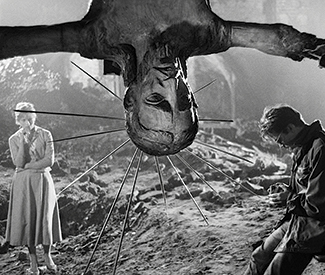
By contrast, political — or any — reality is infrequently found in the works of the late Has, whose best films are hothouse phantasmagorias rich in surreal imagery and dreamlike illogic. The PFA series kicks off with his 1964 The Saragossa Manuscript, perhaps that decade’s first “head” film, and duly named by Jerry Garcia as his favorite film. (The musician was involved in the PFA acquiring a print before his death.) Its picaresque maze of tall stories, with beautiful available women ornamenting most of them, remains a stoner’s delight. In a similar vein, Has’ The Hour-Glass Sanatorium a decade later is a triumph of Gothic jumble-sale production design, its own hapless hero pulled down a richly colored rabbit’s hole of dress-up role playing and various perversities at the titular institution.
A much more straightforward costume extravaganza is 1960’s Black Cross, aka Knights of the Teutonic Order, about the 15th century struggle between Poles and Christian invaders that led to the Battle of Grunwald. Its director Aleksander Ford was a major figure in establishing the post-war state film industry, yet not long after this expensive epic he was purged in a late-decade anti-Semitic campaign, and his unsuccessful attempts at a career overseas ended with suicide in 1980 Florida. A very different historical piece is Kawalerowicz’s 1961 Mother Joan of the Angels, a treatment of the same 17th century alleged convent demon infestation that inspired Ken Russell’s 1971 The Devils, and one that’s as quiet and stark as the latter film is hysterical.
The leading lights of the later Cinema of Moral Anxiety movement—which mostly eschewed such grand gestures and bizarre subjects for small, disquieting modern narratives — are represented in three films toward the series’ end. Krzysztof Zanussi’s 1976 Camouflage and 1980 The Constant Factor are terse, bitter portraits of institutional corruption. The late Krzysztof Kieslowski’s pre-Three Colors series breakout A Short Film About Killing (1987) is, if anything, bleaker: Drawn together by chance and then by tragedy, its protagonists live in a Warsaw where injustice is practically in the air — thanks to the oppressively tinted cinematography — and the climactic events of a murder and an execution have their existential pointlessness underlined by each being excruciatingly prolonged. *
MARTIN SCORSESE PRESENTS MASTERPIECES OF POLISH CINEMA
June 14-Aug 21, $5.50-$9.50
Pacific Film Archive
2575 Bancroft, Berk
Tropical impressions

cheryl@sfbg.com
FILM We’re neck-deep in local film festival season right now — which, yeah, is kind of 12 months out of the year around here, but the SF Silent Film and Green Film festivals just ended, DocFest is underway, and Frameline starts June 19 — but there are plenty of reasons to carve out time for Yerba Buena Center for the Arts’ outstanding New Filipino Cinema mini-fest this weekend.
A big one is opening-night selection How to Disappear Completely; director Raya Martin, a bright light in the Philippines’ burgeoning indie film scene, will appear in person at the screening. This is a good thing, since Disappear is a bit of a head-scratcher, but in a commendable way — part coming-of-age drama, part dreamy puzzle, part old-school exploitation flick (I can’t be the only viewer who sees Martin’s shot of someone pawing through a pot full of intestines and immediately thinks of Herschell Gordon Lewis). Martin told the Philippine Star that Disappear was partially inspired by 1980s American horror filmmakers like Wes Craven, and there are fragments of 1984’s Nightmare on Elm Street lurking in this tale of a troubled tomboy (Ness Roque) whose vibrations of high-tension fear conjure a sinister spirit only she can see. This, on top of threats both natural — her island home is dark and lush, with nature’s stormy menace permeating every frame — and domestic: “You think the road home is safe? No one will hear you when you scream,” snarls her mother, who has a bit of Carrie White’s Bible-thumping mama in her.
Mom’s not even the biggest issue, though — that’d be the girl’s drunk, leering father (Noni Buencamino, one of the country’s most acclaimed actors — along with his wife, Shamaine Buencamino, who plays his wife in Disappear), who lurches around with a loaded shotgun and spends all his money betting on cockfights. Aside from its more experimental sequences, which are set to a buzzing electronic soundtrack (and thankfully, no Radiohead), Disappear‘s deliberately loose narrative pivots around strained dinner-table conversations among this dangerously dysfunctional family. Most of the longer passages of dialogue take the form of recitations: Bible stories (Lot and his daughters get a thematically appropriate shout out); folklore (a surprisingly funny tale involving a royal chicken); and a school recital on Filipino history, in which the young heroine plays a gun and her classmates, portraying vengeful villagers, warn the parent-filled audience: “We are going to hunt you down!”
Disappear‘s title card appears a full hour in, or nearly at the end of this 79-minute tale; it’s a blazing beacon in a film otherwise dominated by water imagery. Things only get bleaker, more surreal, and more shockingly violent from there. “If you’re wondering why we’re making such a fuss about new Filipino cinema, this is a great place to start,” explain series co-programmers Joel Shepard and Philbert Ortiz Dy in their program notes.
A far sunnier view of youth in the Philippines emerges in Sigrid Andrea P. Bernardo’s Anita’s Last Cha-Cha, also about a tomboy, whose coming-of-age through first love begs the question why this film isn’t called Anita’s First Cha-Cha instead. Anita is 12 and not ready to embrace puberty, despite her widowed mother’s best efforts to dress her up like a princess for the community’s annual fertility festival. This all changes when she catches sight of long-limbed lovely Pilar, the former town beauty who’s returned after a stint studying physical therapy abroad. As Pilar sets up a massage practice in her house (not surprisingly, the local men line up for appointments), Anita begins spending all of her time daydreaming about the older woman.
Of course, her fantasy girlfriend — who has a tortured romantic past with Anita’s age-appropriate male cousin — is just that, and the two become allies as the story takes a melodramatic turn. Writer-director Bernardo will attend the screening in person to discuss her feature debut.
Probably the most high-profile entry in the YBCA series is Sean Ellis’ urban thriller Metro Manila, which won an Audience Award at the 2013 Sundance Film Festival, as well as the top prize at that year’s British Independent Film Awards. Ellis is a Brit, but Metro Manila is acted (splendidly) by an all-Filipino cast. After a meager harvest, naïve farmer Oscar (Jake Macapagal) convinces his wife, Mai (Althea Vega), to move with their small children to the big city in search of work. But the grimy metropolis proves a dangerous place, and what’s essentially a predictable tale of country-bumpkin-learns-a-hard-lesson-on-the-mean-streets is elevated by a ruthlessly desperate tone and a killer performance by John Arcilla (as Oscar’s shifty new co-worker). Even better: a couple of clever last-act twists that shake up the story’s seemingly inevitable arc.
These three films are just a surface glimpse of what New Filipino Cinema has in store. Closing night’s screening of Brillante Mendoza’s Thy Womb, starring veteran superstar Nora Aunor, is already sold out, but fret not: The film, the much-praised latest from the director of 2009’s controversial Kinatay, returns to the YBCA for its own engagement June 26-29. Also screening post-fest is Lav Diaz’s acclaimed Norte, The End of History (June 19-20), a 250-minute epic inspired by Crime and Punishment. *
NEW FILIPINO CINEMA
Wed/11-Sun/15, $8-$10
Yerba Buena Center for the Arts
701 Mission, SF
Film Listings: June 11-17, 2014
Film listings are edited by Cheryl Eddy. Reviewers are Kimberly Chun, Dennis Harvey, Lynn Rapoport, and Sara Maria Vizcarrondo. For rep house showtimes, see Rep Clock.
DOCFEST
The 13th San Francisco Documentary Film Festival runs through June 19 at the Brava Theater, 2781 York, SF; Roxie Theater, 3117 16th St, SF; and Oakland School of the Arts Theater, 530 19th St, Oakl. For tickets (most shows $12) and complete schedule, visit www.sfindie.com.
OPENING
Alone Yet Not Alone Remember that Christian historical drama that was Oscar-nominated for Best Song but then got kicked out of the running because of the songwriter’s sketchy campaign tactics? No? Well, here ’tis. (1:43)
Gore Vidal: The United States of Amnesia Nicholas Wrathall’s highly entertaining documentary pays tribute to one of the 20th century’s most brilliant, original, and cranky thinkers, with extensive input from the man himself before his death in 2012 at age 86. The emphasis here is less on Vidal’s life as a literary lion and often glittering celebrity social life than on his parallel career as a harsh scold of US social injustices and political corruption. (Needless to say, recent history only sharpened his tongue in that department, with George W. Bush dismissed as “a goddamn fool,” and earlier statements such as “This is a country of the rich, for the rich and by the rich” seeming more apt than ever.) He’s a wellspring of wisdoms both blunt and witty, sometimes surprising, as in his hindsight doubts about the virtues of JFK (a personal friend) as a president. We get plenty of colorful archival clips in which he’s seen verbally jousting with such famous foes as William F. Buckley and Norman Mailer, invariably reducing them to stammering fury while remaining exasperatingly unruffled. His “out” homosexuality and outré views on sexuality in general (at odds with an increasingly assimilationist gay community) kept him controversial even among many liberals, while conservatives were further irked by his rock-solid family connections to the ruling elite. In our era of scripted political rhetoric and pandering anti-intellectualism, it’s a joy merely to spend an hour and half in the company of someone so brilliantly articulate on seemingly any topic — but particularly on the perpetually self-mythologizing, money-worshipping state of our Union. (1:29) Opera Plaza, Shattuck. (Harvey)
How to Train Your Dragon 2 Sequel to the 2010 animated hit about Vikings and their dragon buddies, with voices by Jay Baruchel, Cate Blanchett, Gerard Butler, Djimon Honsou, America Ferrera, Kit Harington, Jonah Hill, and others. (1:42) Four Star, Presidio.
Obvious Child We first encounter the protagonist of writer-director Gillian Robespierre’s funny, original film — a Brooklyn-dwelling twentysomething named Donna (Jenny Slate), who works at a lefty secondhand bookstore and makes regular (if unpaid) appearances at a local comedy night — onstage mining such underdiscussed topics as the effects of vaginal discharge on your garden-variety pair of underwear. This proves a natural segue to other hefty nuggets of embarrassment gold concerning her love life, to the dismay of boyfriend Ryan (Paul Briganti), auditing from the back of the club. He pretty much deserves it, however, for what he’s about to do, which is break up with her in a nasty, well-populated unisex bathroom, taking time to repeatedly glance at the texts coming through on his phone from Donna’s good friend, with whom he’s sleeping. So when Donna, mid-drowning of sorrows, meets a nice-looking fellow named Max (Jake Lacy) at the bar, his post-fraternity-presidency aesthetic seems unlikely to deter her from a one-night stand. The ensuing trashed make-out dance-off in Max’s apartment to the Paul Simon song of the title is both comic and adorable. The fractured recap of the evening’s condom-free horizontal events that occurs inside Donna’s brain three weeks later, as she hunkers down with her best friend, Nellie (Gaby Hoffmann), in the bookstore’s bathroom after peeing on a stick, is equally hilarious — and unwanted-pregnancy jokes aren’t that easy to pull off. Robespierre’s treatment of this extended windup and of Donna’s decision to have an abortion is a witty, warmhearted retort to 2007’s Knocked Up, a couple generations’ worth of Hollywood rom-com writers, and an entertainment industry that continues to perform its sweaty contortions of storytelling in the gutless cause of avoiding the A-word. (1:15) Embarcadero. (Rapoport)
The Signal Sharing its title with a 2007 film — also a thriller about a mysterious transmission that wreaks havoc in the lives of its protagonists — this offbeat feature from co-writer and director William Eubank belies its creator’s deep affection for, and knowledge of, the sci-fi genre. Number one thing The Signal is not is predictable, but its twists feel organic even as the story takes one hairpin turn after another. MIT buddies Nic (Brenton Thwaites) and Jonah (Beau Knapp) are driving Nic’s girlfriend, Haley (Olivia Cooke), cross-country to California. Complicating the drama of the young couple’s imminent separation is Nic’s deteriorating physical condition (it’s never explained, but the former runner apparently has MS or some other neurological disease). The road trip turns dark when the trio (who also happen to be hackers) realize an Internet troll they’ve tangled with in the past is stalking them. After a brief detour into found-footage horror — fooled ya, Eubank seems to be saying; this ain’t that kind of movie at all! — the kids find themselves embroiled in ever-more-terrifying realities. To give away more would ruin the fun of being shocked for yourself, but think Twilight Zone meets Area 51 meets a certain futuristic trilogy starring Laurence Fishburne, who turns up here to play a very important role in Nic and company’s waking nightmare. (1:37) California. (Eddy)
Supermensch: The Legend of Shep Gordon See “Puff Piece.” (1:24) Embarcadero.
22 Jump Street Comedy cops Jonah Hill and Channing Tatum return for more undercover sleuthing in a slightly more age-appropriate milieu: college. (1:45) Marina, Shattuck.
ONGOING
The Amazing Spider-Man 2 The best thing about The Amazing Spider-Man 2 — the sequel to the 2012 reboot that nobody really wanted in the first place — is the achingly cute chemistry between real-life couple Andrew Garfield (Peter Parker/Spider-Man) and Emma Stone (Gwen Stacy, whose fate is no spoiler to anyone who is familiar with the Spider-Man canon). Can’t deny it; those two are adorbs. But since Spider-Man is supposed to be an action movie, not a romantic comedy, it spends most of its time setting up foes for the webslinger (Jamie Foxx as a nerd zapped into the power-mad Electro; Dane DeHaan as bratty rich kid Harry Osborn), as well as rehashing the mysterious deaths of Peter’s parents, and underlining for approximately the zillionth time the disconnect between the media’s perception of Spider-Man (he’s a menace! He interferes with police work!) and the ecstatic love the people of New York have for the guy — understandable, since he’s in the business of saving their butts on a regular basis. This isn’t a crappy movie by any means; it’s entertaining enough, and the 3D swooping-between-skyscrapers FX have gotten quite dazzling. But there’s still a heavy air of “This again?” that hangs over the whole thing. Doesn’t Marvel have enough dough from the Avengers movies to let Spidey take an extended vacation? (2:20) Metreon. (Eddy)
Belle The child of a British naval officer and a Caribbean slave, Belle (Gugu Mbatha-Raw) is deposited on the doorstep — well, the estate grounds — of her father’s relatives in 1769 England after her mother dies. Soon she’s entirely orphaned, which makes her a wealthy heiress and aristocratic title holder at the same time that she is something less than human in the eyes of her adopted society. For Belle is black (or more properly, mixed-race), and thus a useless curiosity at best as a well-bred noblewoman of the “wrong” racial makeup. Based on a murky actual historical chapter, Amma Asante’s film is that rare sumptuous costume drama which actually has something on its mind beyond romance and royalty. Not least among its pleasures are a fine supporting cast including Tom Wilkinson, Miranda Richardson, Penelope Wilton, and Emily Watson. (1:45) Embarcadero, Piedmont, Shattuck. (Harvey)
Blended (1:57) SF Center.
Captain America: The Winter Soldier Marvel’s most wholesome hero returns in this latest film in the Avengers series, and while it doesn’t deviate from the expected formula (it’s not a spoiler to say that yes, the world is saved yet again), it manages to incorporate a surprisingly timely plot about the dangers of government surveillance. Steve Rogers (Chris Evans), hunkiest 95-year-old ever, is still figuring out his place in the 21st century after his post-World War II deep freeze. Nick Fury (Samuel L. Jackson) has him running random rescue missions with the help of Black Widow (Scarlett Johansson), but SHIELD is working on a top-secret project that will allow it to predict crimes before they occur. It isn’t long before Cap’s distrust of the weapon — he may be old-fashioned, but he ain’t stupid — uncovers a sinister plot led by a familiar enemy, with Steve’s former BFF Bucky doing its bidding as the science-experiment-turned-assassin Winter Soldier (Sebastian Stan). Anthony Mackie, Robert Redford, and series regular Cobie Smulders are fine in supporting roles, and Johansson finally gets more to do than punch and pose, but the likable Evans ably carries the movie — he may not have the charisma of Robert Downey Jr., but he brings wit and depth to a role that would otherwise be defined mainly by biceps and CG-heavy fights. Oh, and you know the drill by now: superfans will want to stick around for two additional scenes tucked into the end credits. (2:16) Metreon. (Eddy)
Chef Not to take anything away from the superhero crew, but Chef feels like the closest thing to a labor of love from writer, director, and star Jon Favreau in many a day. As a director, he may have been making doughnuts — fun-filled and teeming with CGI eye candy, but doughnuts nevertheless — when it came to effects-driven blockbusters like 2008’s Iron Man, but this well-meaning play for the heart, by way of the stomach, shows you where Favreau’s head is really at. Chef revolves around Carl Casper (Favreau), a onetime food star, now reduced to serving up predictable crowd-pleasers at the behest of his restaurant’s overbearing owner (Dustin Huffman). It takes the barbs of an influential critic (Oliver Platt) — and an ensuing Twitter war — to set Carl off and send him away on his own, at the coaxing of his glam ex Inez (Sofia Vergara). Hooked up with a dilapidated food truck and former kitchen staffer Martin (John Leguizamo), and aided by ably Tweeting son Percy (Emjay Anthony), Carl ties his dreams — and lost passion — to the classic Cuban sandwich. The ensuing road trip from Miami to LA, and Carl’s journey toward self and a renewed relationship with his son, is a fun (if, in the end, a bit too speedily sketched) vault through the joys of eating your way through America’s new culinary heartland. Amid the volley of sign-of-the-times social-media swinging and cameos by the uncostumed Robert Downey Jr., Scarlett Johansson, and the like, Favreau’s main dish is that a family that eats, cooks, and runs a business together, stays together — child labor laws or no. (1:55) 1000 Van Ness, Metreon, Presidio, Sundance Kabuki. (Chun)
The Dance of Reality His unique vision recently re-introduced to audiences by unmaking-of documentary Jodorowsky’s Dune, cinematic fabulist Alejandro Jodorowsky is back with his first film in a quarter-century. This autobiographical fantasia shows all initial signs of being a welcome yet somewhat redundant retread of his cult-famed early work (1970’s El Topo, 1973’s The Holy Mountain), as Santa Sangre was in 1989. It starts with the filmmaker himself fulminating wisdoms about the spiritual emptiness of a money-centric world, then appearing as guardian angel to his child self (Jeremias Herskovits). Little Alejandro is raised by a bullying, hyper macho father (Brontis Jodorowsky) and warm, indulgent mother (soprano Pamela Flores, singing every line of dialogue) who naturally clash at every turn. Jodorowsky’s stunning eye for bizarre imagery (abetted by DP Jean-Marie Dreujou’s handsome compositions) hasn’t faded, so there are delights to be had even in what fans might consider an over-familiar parade of dwarfs, amputees, anti clerical burlesques (like a dress-up dog beauty contest at church), Chaplinesque circus sentimentality, and other simple if surreal illustrations of society’s eternal victims and overlords. At a certain point, however, the misdeeds of father Jaime force his self-exile. The film’s consequent picaresque allegory of epic suffering toward redemption becomes cheerfully goofy, its symbol-strewn path increasingly funny and sweet rather than burdened by import. A large part of that appeal is due to junior Jodorowsky Brontis, who demonstrates considerable farcical esprit while flashing more full-frontal nudity than Michael Fassbender and Ewan McGregor combined ever dreamed of obliging. Shot in the family’s native Chile on a purported crowd funded budget of $3 million — could Hollywood provide so much original spectacle for 30 times that amount?—The Dance of Reality finds its 84-year-old maker as frisky as a pony, one that provides an endearingly unpredictable ride. (2:10) California, Opera Plaza. (Harvey)
Edge of Tomorrow Is it OK to root for Tom Cruise again? (The Oprah thing was almost a decade ago, after all.) The entertaining Edge of Tomorrow, crisply directed by Bourne series vet Doug Liman, takes what’s most irritating about Cruise’s persona (he’s so goddamn earnest) and uses it to great advantage, casting him as military PR guru Cage — repping our armed forces on talk shows amid battles with alien invaders dubbed “Mimics” — whose oiliness masks the fact that he’s terrified of actual combat. When he’s forced to fight by a no-nonsense superior (Brendan Gleeson), he’s gruesomely killed, along with nearly every other human soldier. But wait! Thanks to a particularly close encounter with outer-space pixie dust, he awakens, unharmed, to re-live the day, over and over again (yep, shades of a certain Bill Murray comedy classic). Each “reset” offers Cage a chance to work his way closer to changing the course of the war in humanity’s favor, with key help from a badass (Emily Blunt) whose heroics on the battlefield have earned her the nickname “Full Metal Bitch.” Nothing groundbreaking here — but Edge of Tomorrow manages to make its satisfying plot as important as its 3D explosions, which means it automatically rises above what passes for popcorn fun these days. (1:53) Four Star, Metreon, 1000 Van Ness, Presidio, Sundance Kabuki. (Eddy)
Fading Gigolo Ah, the charm of a well-aged, seasoned perv &ldots; nope, we don’t dare touch the Woody Allen/Dylan Farrow abuse allegations — though those recent headlines flit around the edges of this generally benevolent, almost strangely innocuous charmer, written by and directed John Turturro, who also stars as the curiously blank-faced tabula rasa of a title character. The delights of Mrs. Robinsons have been rhapsodized on film, through the lens of worshipful younger men — less so, their male counterparts, as viewed by other hetero men. The danger of bromance surging into the homoerotic is likely too dire for most, yet somehow bookstore boss Murray (Allen) sees the mysterious, submerged sex appeal in his loyal employee Fioravante (Turturro) and taps him to get involved in a ménage à trois with a society dermatologist (Sharon Stone). The soft-spoken Fioravante turns out to be a smash in the sack with the doc, transforming the opportunistic Murray into a wildly successful pimp as his employee takes on the audacious Selima (Sofia Vergara) and the prim Jewish Orthodox widow Avigal (Vanessa Paradis). The latter character seems to have come straight from another place and time — much like this film, which turns Brooklyn into a something resembling a leaf-strewn European village and recalls odes to revolutionary sexuality in the ’60s. The movie’s lightly absurd comedy is embedded in the fact that Turturro writes himself into the role of the seducer, the pleaser, while wrapped in the skin of pleasant if everyday-looking Joe, although Paradis, a revelation as a deeply repressed devout mother slowly awakening to her body, points to more serious pleasures, lingering below the surface of all of us. (1:30) Opera Plaza. (Chun)
The Fault in Our Stars I confess: I’m no card-carrying, vlog-flogging Nerdfighter in author John Green’s teen-geek army. But one can admire the passion — and teary romanticism — of the writer, readers, and the breakthrough novel that started it all. Much has been made over the cinematic tweaks to the best-selling YA book, but those seem like small beefs: OK, male romantic lead Gus’s (Ansel Elgort) perhaps-understandable brattiness seems to have been toned down a touch, but we’ll all get the somewhat-subversive push and pull of Green’s love story centered on two cancer-stricken innocents. Sixteen-year-old Hazel (a radiant Shailene Woodley) has been battling cancer almost all her life, fighting back from the brink, and now making her way every day with an oxygen tank and her devoted parents (Laura Dern, Sam Trammel) by her side. Her mordant wit, skeptical attitude, and smarts attract Gus, a handsome teen with a prosthetic leg, at a cancer support group, and the two embark on what seems like the most normal thing in the world — sweet, sweet love — albeit cut with the poignancy of almost-certain doom. Would the girl who calls herself a grenade dare to care for someone she will likely hurt? That’s the real question on her mind when the two reach out to the solitary author (Willem Dafoe) of their favorite book, An Imperial Affliction. The journey the two make leaves them both open to more hurt than either ever imagined, and though a good part of Fault‘s denouement boils down to a major puddle cuddle — with solid performances by all, but particularly Dern and Woodley — even a cynic is likely to get a bit misty as the kids endure all the stages of loss. And learning. (2:05) Marina, 1000 Van Ness, SF Center, Sundance Kabuki. (Chun)
Fed Up Katie Couric narrates, produces, and brings celebrity heft to Stephanie Soechtig’s well-crafted expose on the alarmingly powerful food industry — specifically, revealing how “nutritional standards” put forth by the government over the past 30 years have actually caused the nation’s current obesity epidemic. Fed Up‘s straightforward combination of simple facts (80 percent of food items have added sugar); talking-head experts (Bill Clinton, UCSF’s Dr. Robert Lustig); historical fact-finding (including a segment that convincingly compares today’s food industry to the tobacco industry of yore); and profiles of dangerously overweight teens (all of whom are trying, and failing, to lose weight) adds up to a film that is poised to have An Inconvenient Truth-style impact on viewers — and will hopefully
open enough eyes to make waves beyond movie theaters. (1:32) California, Embarcadero. (Eddy)
Godzilla Bearing the weight of a 1998 American debut so stinky that devotees of the Japanese original dubbed it “GINO” (for “Godzilla in Name Only”), the King of the Monsters returns for a do-over that smells more like generic summer entertainment than anything else. We begin in 1999, when a pair of scientists (Ken Watanabe and Sally Hawkins) discover a giant skeleton of sorts in the Philippines — just as a deadly accident (or was it?) devastates a Japanese nuclear power plant. Fifteen years later, the scientists are still on the trail of Whatever That Was, while guilty power-plant survivor Bryan Cranston has become a greasy-haired conspiracy theorist, much to the annoyance of his San Francisco-based Navy officer son (Aaron Taylor-Johnson). The humans in Gareth Edwards’ film don’t actually matter much; aside from Cranston and to a much lesser extent Watanabe, none of the characters are interesting or memorable, and the plot — which has Big G lumbering after a pair of “Massive Unidentified Terrestrial Organisms” who decide to incubate their eggs in downtown SF — is also a low-stakes affair. (If you believe for a second that Taylor-Johnson’s doe-eyed wife and son won’t survive the monster attack, I have a busted-up Golden Gate Bridge to sell you.) But the monster design is plenty satisfying, and really, it’s just fine that Godzilla — who wrinkles his snout in annoyance at those pesky MUTOs — is this film’s one and only charismatic presence; dude’s going on a 70-year career at this point. (2:03) Metreon, 1000 Van Ness, Sundance Kabuki. (Eddy)
The Grand Budapest Hotel Is this the first Wes Anderson movie to feature a shootout? It’s definitely the first Anderson flick to include a severed head. That’s not to say The Grand Budapest Hotel, “inspired by” the works of Austrian novelist Stefan Zweig, represents too much of a shift for the director — his intricate approach to art direction is still very much in place, as are the deadpan line deliveries and a cast stuffed with Anderson regulars. But there’s a slightly more serious vibe here, a welcome change from 2012’s tooth-achingly twee Moonrise Kingdom. Thank Ralph Fiennes’ performance as liberally perfumed concierge extraordinaire M. Gustave, which mixes a shot of melancholy into the whimsy, and newcomer Tony Revolori as Zero, his loyal lobby boy, who provides gravitas despite only being a teenager. (Being played by F. Murray Abraham as an older adult probably helps in that department.) Hotel‘s early 20th century Europe setting proves an ideal canvas for Anderson’s love of detail — the titular creation rivals Stanley Kubrick’s rendering of the Overlook Hotel — and his supporting cast, as always, looks to be enjoying the hell out of being a part of Anderson’s universe, with Willem Dafoe, Jeff Goldblum, and Adrien Brody having particularly oversized fun. Is this the best Wes Anderson movie since 2001’s The Royal Tenenbaums? Yes. (1:40) California, 1000 Van Ness, Piedmont, Sundance Kabuki. (Eddy)
The Grand Seduction Canadian actor-director Don McKellar (1998’s Last Night) remakes 2003 Quebecois comedy Seducing Doctor Lewis, about a depressed community searching for the town doctor they’ll need before a factory will agree to set up shop and bring much-needed jobs to the area. Canada is still the setting here, with the harbor’s name — Tickle Head — telegraphing with zero subtlety that whimsy lies ahead. A series of events involving a Tickle Head-based TSA agent, a bag of cocaine, and a harried young doctor (Taylor Kitsch) trying to avoid jail time signals hope for the hamlet, and de facto town leader Murray (Brendan Gleeson) snaps into action. The seduction of “Dr. Paul,” who agrees to one month of service not knowing the town is desperate to keep him, is part Northern Exposure culture clash, part Jenga-like stack of lies, as the townspeople pretend to love cricket (Paul’s a fanatic) and act like his favorite lamb dish is the specialty at the local café. The wonderfully wry Gleeson is the best thing about this deeply predictable tale, which errs too often on the side of cute (little old ladies at the switchboard listening in on Paul’s phone-sex with his girlfriend!) rather than clever, as when an unsightly structure in the center of town is explained away with a fake “World Heritage House” plaque. Still, the scenery is lovely, and “cute” doesn’t necessarily mean “not entertaining.” (1:52) Albany, Embarcadero. (Eddy)
Ida The bomb drops within the first ten minutes: after being gently forced to reconnect with her only living relative before taking her vows, novice nun Anna (Agata Trzebuchowska) learns that her name is actually Ida, and that she’s Jewish. Her mother’s sister, Wanda (Agneta Kulesza) — a Communist Party judge haunted by a turbulent past she copes with via heavy drinking, among other vices — also crisply relays that Ida’s parents were killed during the Nazi occupation, and after some hesitation agrees to accompany the sheltered young woman to find out how they died, and where their bodies were buried. Drawing great depth from understated storytelling and gorgeous, black-and-white cinematography, Pawel Pawilowski’s well-crafted drama offers a bleak if realistic (and never melodramatic) look at 1960s Poland, with two polar-opposite characters coming to form a bond as their layers of painful loss rise to the surface. (1:20) Albany, Clay, Piedmont. (Eddy)
The Immigrant Ewa (Marion Cotilliard) is an orphaned Polish émigré who’s separated from her sickly sister at Ellis Island in 1921, and scheduled for deportation as an alleged “woman of low morals.” She’s rescued from that by Bruno (Joaquin Phoenix), though he’s not quite the agent of charity he seems — in fact, Ewa doesn’t realize she’s actually been recruited for a prostitution racket he thinly veils as a theatrical troupe. Still, she stays, believing she has no other viable path to freeing her sister from quarantine, she allows her own degradation for money’s sake. This latest collaboration between Phoenix and director-coscenarist James Gray is a handsome period piece that’s done skillfully and tastefully enough to downplay — but not quite hide — the fact that its moral melodrama might as well have been written (as well as set) nearly a century ago. Cotilliard is fine in her best English-language role to date, and Phoenix is compelling as usual; Jeremy Renner is somewhat miscast as a distant-third lead. But whether you find The Immigrant poignant or forced will depend on your tolerance for a script whose every turn is all too predictable. (2:00) Metreon, Piedmont. (Harvey)
The Lunchbox Ila (Nimrat Kaur) is a self-possessed housewife and a great cook, whose husband confuses her for another piece of furniture. She tries to arouse his affections with elaborate lunches she makes and sends through the city’s lunchbox delivery service. Like marriage in India, lunchbox delivery has a failure rate of zero, which is what makes aberrations seem like magical occurrences. So when widow Saajan (Irrfan Khan) receives her adoring food, he humbly receives the magical lunches like a revival of the senses. Once Ila realizes her lunchbox is feeding the wrong man she writes a note and Saajan replies — tersely, like a man who hasn’t held a conversation in a decade — and the impossible circumstances lend their exchanges a romance that challenges her emotional fidelity and his retreat from society. She confides her husband is cheating. He confides his sympathy for men of lower castes. It’s a May/December affair if it’s an affair at all — but the chemistry we expect the actors to have in the same room is what fuels our urge to see it; that’s a rare and haunting dynamic. Newcomer Kaur is perfect as Ila, a beauty unmarked by her rigorous distaff; her soft features and exhausted expression lend a richness to the troubles she can’t share with her similarly stoic mother (Lillete Dubey). Everyone is sacrificing something and poverty seeps into every crack, every life, without exception — their inner lives are their richness. (1:44) Shattuck. (Vizcarrondo)
Maleficent Fairytale revisionism is all the rage these days, what with the unending power of Disney princesses to latch into little girls everywhere and bring parental units (and their wallets) to their knees. Yet princesses almost seem beside the point in this villain’s-side-of-the-story tale — Maleficent (Angelina Jolie), the queen of the fairies in the magical moors, wronged by Stefan (Sharlto Copley), who saws off her wings in order to win a crown. Accompanied by her shape-shifting minion, crow Diaval (Sam Riley), Maleficent attends the christening of King Stefan’s first-born daughter, Aurora, hot on the heels of three clownish good fairies (Lesley Manville, Imelda Staunton, Juno Temple), and delivers a curse that will have this future Sleeping Beauty (Elle Fanning) prick her finger on a spindle and sink into a deathlike coma until her true love’s kiss. Will that critical smooch be delivered by Prince Bieber, er, Phillip (Brenton Thwaites)? Considering the potential for Disney’s trademark, heart-tugging enchantment to get magically tangled up in girl power, it’s tough to suck up the disappointment in the ooey-gooey, gummy-faced troll-doll aesthetics of the art direction and animation, as well as first-time director Robert Stromberg’s choppy, dashed-through storytelling. Part of the problem is that there’s almost zero threat here, despite its antihero’s devilish presence — is there ever any doubt that a healthy resolution will win out, even at the expense of blood ties? Best to find dangerous pleasures where one can — namely in the vivid Jolie, cheekbones honed to a razor edge, who spits biting remarks at her accursed charge, beneath Joan Crawford-esque eyebrows and horns crying out for club-kid Halloween treatments. (1:37) Metreon, 1000 Van Ness, Presidio, Shattuck, Sundance Kabuki. (Chun)
Million Dollar Arm Jon Hamm has it bad — that dark-around-the-edges Mad Men afterglow can’t help but follow him everywhere, even into the arms of Disney in this solid Cinderella-story baseball tale (possibly the best headlining gig he’s had outside SCDP). Hamm’s J.B. Bernstein would certainly have something to hash over with Don Draper: both are down-on-their-luck charmers with the cracks in their facades clearly showing, yet nonetheless intent on doing it their way. J.B. is striking out when it comes to recruiting talent for his new, rapidly sinking sports agency, when he comes up with a genius idea while he and fellow agent Aash (Aasif Mandvi) are watching random sports at the latter’s home: Why not tap into one of the world’s greatest unexploited baseball markets by staging a talent search for an Indian cricket player with Major League pitching potential? Canvassing the country with the help of sleepy scout Ray (Alan Arkin) and baseball-enthusiast translator Amit (Pitobash), J.B. finds his arms ultimately attached to village truck driver Dinesh (Madhur Mittal) and contorting track-and-field thrower Rinku (Suraj Sharma of 2012’s Life of Pi). But how to turn raw talent into professional careers in just months? And moreover, how can the would-be golden boys overcome cultural barriers that a fly ball couldn’t surmount? It’s a tryout for all concerned — including an MLB that’s still striving to expand its reach in Asia, and Hamm, who can be so good as Draper that he’s in increasing danger of being typecast. In the Disney mold, at least, his character achieves fairly happy results. (2:00) Metreon, 1000 Van Ness, Shattuck. (Chun)
A Million Ways to Die in the West One can’t help but feel … mixed about Seth MacFarlane. The funnyman will go there. Few can deny that. But whether he should be starring as a leading man in his own passion projects — even Quentin Tarantino has the sense not to do that — is still in question, even in light of the oft-hilarious A Million Ways to Die in the West. On screen, MacFarlane looks a wee bit too waxily vanilla — like he’s had too much work done or he’s the every-guy counterpart to Johnny Depp’s CGI-swathed Willy Wonka. The director and co-writer’s choice to put himself in front of the camera, rather than an animated or claymated Seth or Ted, is one of few trip-ups in this otherwise generally good-natured and merrily violent outing, lightly reminiscent of Blazing Saddles (1974) in its happy embrace of bad taste, bloody pratfalls, politically incorrect jabs, and scatological yuks, and its mission to mildly demythologize the glory days of the Wild West. MacFarlane’s whiney, geeky sheep herder Albert is a fish out of water in the dicey frontier: It’s too hot, it’s too dangerous, decent hygiene is unavailable, and gunfights are way too frequent, as he grouses to girlfriend Louise (Amanda Seyfried), best friend Edward (Giovanni Ribisi), and hooker buddy Ruth (Sarah Silverman). Still, he doesn’t know how good he has it when mustachioed nemesis Foy (Neil Patrick Harris) sweeps Louise off her feet and a feisty, gun-slinging gal (Charlize Theron) comes to town. MacFarlane’s gross-out jokes will win over the boys, his sentimental heart will get the girls — he just won’t entirely enthrall this reviewer until he comes up with a more original way of disclaiming/explicating his movie’s racial jokes than with the now-obligatory “don’t be racist” call-out at the start. (1:56) 1000 Van Ness, SF Center, Sundance Kabuki. (Chun)
Neighbors It’s a mystery why Neighbor‘s marketing teams are intent on creating some kind of social media battle between this comedy’s family and frat: The college boys are clearly outclassed when it comes to uninhibited physical comedy daring, thanks to Seth Rogen and Rose Byrne. They play young parents Kelly and Mac, who are still basking in their new craftsman home and settled state, trying to figure out sex in front — or is it behind? — baby, and how to get to the rave before bedtime, when a frat, led by oft-shirtless hottie Teddy (Zac Efron) and pal Pete (Dave Franco), moves into the house next door. How do you ask them to “keep it down” yet still be cool? The pretzels Mac and Kelly wrap themselves into, in order to still hang with the kids, are about as hilarious as the inevitable battles that break out over the hearts and minds of college administrators (Lisa Kudrow), pals (the hilarious Ike Barinholtz), and wannabe brothers like the loyal Assjuice (Craig Roberts). Still, despite some memorable gags, Neighbors feels like a bit of a squandered opportunity as one fidgets through many of the frat house scenes. Part of the problem is, why would Kelly, Mac, or anyone want to be in good with such an uninteresting group of Greeks? (1:37) Metreon, 1000 Van Ness, Shattuck, Sundance Kabuki. (Chun)
Night Moves Not to be confused with Arthur Penn’s same-named 1975 Gene Hackman thriller, Kelly Reichardt’s latest film nonetheless is also a memorably quiet, unsettling tale of conspiracy and paranoia. It takes us some time to understand what makes temporary allies of jittery Josh (Jesse Eisenberg), Portland, Ore.-style alterna-chick Dena (Dakota Fanning) and genial rural recluse Harmon (Peter Sarsgaard), beyond it being a mission of considerable danger and secrecy. When things don’t go exactly as planned, however, the three react very differently to the resulting fallout, becoming possibly greater threats to one another than the police or FBI personnel pursuing them. While still spare by mainstream standard, this is easily Reichardt’s most accessible work, carrying the observational strengths of 2010’s Meek’s Cutoff, 2008’s Wendy and Lucy, and 2006’s Old Joy over to a genuinely tense story that actually goes somewhere. (1:52) Metreon. (Harvey)
The Other Woman Cameron Diaz gets top billing — and the title role — in The Other Woman, but Leslie Mann is the real stealth weapon here: the other comedian who bravely dares to go into unseemly crazy-bitch, scatological-Bridesmaids territory, with shrill histrionics, whining, and shrieks hitting registers that threaten to make most men’s heads explode. Coming on like Lucille Ball on crystal, Mann teeters out in the limb in kitten heels — and your enjoyment of The Other Woman depends on whether you love that balancing act or loathe it. Diaz and Mann’s reluctant-then-mutual girl crush is at the heart of this proudly chick flick directed by Nick Cassavetes, who tends to beat his own indie path apart from his involvement in one of the biggest lady draws of all time, The Notebook (2004). The chick magnet and cause for so much chaos is Mark (Nikolaj Coster-Waldau), a sketchy entrepreneur who skims wife Kate’s (Mann) business ideas and toys with power-bitch lawyer Carly (Diaz), as well as his other other woman, perfect-10 Amber (Kate Upton). Coster-Waldau throws himself into the hysteria, as if it were the sole lifeline out of dour King’s Landing, but this is the Mann and Diaz Show, with a smarter-than-average screenplay by Melissa Stack and revenge served up like a self-righteous side dish at a Real Housewives buffet line. And just to show you how far we haven’t come, like those benighted housewives, those assembled aren’t so feminist that they won’t stoop to deliver a bitchy joke at the expense of Upton’s character. (1:49) Metreon. (Chun)
Palo Alto Adapted from the 2010 short story collection by James Franco, first-time director Gia Coppola’s depressive, aimless tale of disaffected youth tracks the ennuis and misadventures of a handful of Palo Alto teenagers: shy, inexperienced April (Emma Roberts), teetering on the edge of an affair with her soccer coach (Franco); naively promiscuous Emily (Zoe Levin); budding head case Fred (Nat Wolff); and his friend Teddy (Jack Kilmer, son of Val, who plays April’s out-to-lunch stepfather), who ambivalently participates in Fred’s mayhem while pining after April. Adult supervision is nearly Peanuts-level sparse — in other Peninsula households, helicopter parents may be fine-tuning the lives of their children down to the last extracurricular; here, the stoned, distracted elders who occasionally wander in front of the camera are more like flaky, absentee roommates. Meanwhile, their young charges fill the empty hours with copious amounts of alcohol consumption, random property destruction, and a round or two of social crucifixion. The protagonists and their cohorts form a fairly distasteful tableau of privileged, floundering adolescence, eliciting an emotional response in which uneasy concern occasionally overcomes bemused disgust. But the individual stories are virtually weightless, and the characters’ lack of investment in anything, even their own problems, makes it difficult to care too much about their fates. (1:38) Opera Plaza. (Rapoport)
Rigor Mortis Spooky Chinese folklore (hopping vampires) meets J-horror (female ghouls with long black hair) in this film — directed by Juno Mak, and produced by Grudge series helmer Takashi Shimizu — inspired by Hong Kong’s long-running Mr. Vampire comedy-horror movie series. Homage takes the form of casting, with several of Vampire‘s key players in attendance, rather than tone, since the supernatural goings-on in Rigor Mortis are more somber than slapstick. Washed-up film star Chin Siu-ho (playing an exaggerated version of himself) moves into a gloomy apartment building stuffed with both living and undead tenants; his own living room was the scene of a horrific crime, and anguished spirits still linger. Neighbors include a frustrated former vampire hunter; a traumatized woman and her white-haired imp of a son; a kindly seamstress who goes full-tilt ruthless in her quest to bring her deceased husband back to life; and an ailing shaman whose spell-casting causes more harm than good. Shot in tones so monochromatic the film sometimes appears black-and-white (with splashes of blood red, natch), Rigor Mortis unfortunately favors CG theatrics over genuine scares. That said, its deadpan, world-weary tone can be amusing, as when one old ghost-chaser exclaims to another, “You’re still messing around with that black magic shit?” (1:45) Metreon. (Eddy)
We Are the Best! Fifteen years after Show Me Love, Lukas Moodysson’s sweet tale of two girls in love in small-town Sweden, the writer-director returns to the subject of adorably poignant teen angst. Set in Stockholm in 1982, and adapted from a graphic novel by Moodysson’s wife, Coco Moodysson, We Are the Best! focuses on an even younger cohort: a trio of 13-year-old girls who form a punk band in the interest of fighting the power and irritating the crap out of their enemies. Best friends Bobo (Mira Barkhammar) and Klara (Mira Grosin) spend their time enduring the agonies of parental embarrassment and battling with schoolmates over personal aesthetics (blond and perky versus chopped and spiked), nukes, and whether punk’s dead or not. Wreaking vengeance on a group of churlish older boys by snaking their time slot in the local rec center’s practice space, they find themselves equipped with a wealth of fan enthusiasm, but no instruments of their own and scant functional knowledge of the ones available at the rec center. Undaunted, they recruit a reserved Christian classmate named Hedvig (Liv LeMoyne), whose objectionable belief system — which they vow to subvert for her own good — is offset by her prodigious musical talents. Anyone who was tormented by the indignities of high school PE class will appreciate the subject matter of the group’s first number (“Hate the Sport”). And while the film has a slightness to it and an unfinished quality, Moodysson’s heartfelt interest in the three girls’ triumphs and trials as both a band and a posse of friends suffuses the story with warmth and humor. (1:42) Shattuck, Smith Rafael. (Rapoport)
Words and Pictures Words and Pictures is about as bifurcated as its title, while spinning off a central beef that Hepburn and Tracey might have wrapped their madcap bickering ways around at one time. Which is more powerful: language or images, poetry or painting? The age-old debate starts to feel a little creaky by Words’ close, but you can see and hear why the conceit drew such acting thoroughbreds as Juliette Binoche and Clive Owen, playing two passionate, paint-hurling, bottle-foisting artistic types on either side of a divide overseen by Australian director Fred Schepisi (1987’s Roxanne). Owen’s Jack Marcus is an alcoholic, onetime lit-star of an English teacher whose creatively constipated bad boy routine is starting to wear thin when Binoche’s painter Dina Delsanto arrives at his prep school on the pretext of teaching an honors art class. In actuality, she’s taking time away from the NY art scene to figure out a new way to paint while grappling with rheumatoid arthritis. Sparks fly between the two hard-headed combatants, along with punches delivered by some smartly scripted sparring, as they get the students hot and bothered by their debate concerning words vs. pictures. The master-class lessons learned by watching Binoche work, jaw firmly set and intelligent eyes darting as she maps out her next composition, while Owen falls apart, Hemingway-style, are offset by a facile, cozy ending that feels test-audience driven. (1:51) Opera Plaza, Shattuck. (Chun)
X-Men: Days of Future Past Bryan Singer, director of the first two X-Men films (2000’s decent X-Men; 2002’s meh X2) returns to helm this latest franchise entry — the fourth sequel in a series that also includes two movies focusing on Hugh Jackman’s Wolverine. That fan-favorite character is front and center in both of Days of Future Past‘s time frames: the present, a bleak dystopia in which robot assassins have wiped out nearly every mutant (save Wolverine, Patrick Stewart’s Professor X, Ian McKellan’s Magneto, and a few others), and most humans along with them; and the past, a key moment in the polyester-laden 1970s in which mutant avenger Mystique (Jennifer Lawrence) inadvertently sets the disastrous future events in motion by killing robot designer Trask (Peter Dinklage). Wolverine time-travels to convince younger versions of the Professor (James McAvoy) and Magneto (Michael Fassbender) to put aside their Himalayan-sized differences to stop her. (Speaking of avengers, there’s a capital-A one here: Quicksilver, a character from both comic-book worlds; he’s portrayed here with giddy mischief by American Horror Story‘s Evan Peters, and is the film’s high point.) Yes, that’s a heady plot, and there are a zillion other characters, but Future Past manages, for the most part, to avoid feeling like an overloaded mess. It’s most entertaining in scenes that show off its characters’ superpowers — clearly, the CG artists had a blast working on this one — which are plentiful enough to make slogging through the ennui-laden moments of downtime worth it.(2:10) 1000 Van Ness, SF Center, Sundance Kabuki. (Eddy) *
The Selector June 11-17, 2014
WEDNESDAY 11
Luke Sweeney
“Miss Me?” Luke Sweeney asks in the lead track from his forthcoming album Adventure:Us, and in response I’d probably deny, avoid eye contact, but then demurely say, “Um…maybe a li’l bit.” Truth be told I’ve been quite won over by the album, maybe because of the apparent shared affectation for Mark Bolan’s swinging shuffle, George Harrison’s weepsy guitar, Jeff Tweedy’s pop twang, and a little bit of Question Mark and the Mysterians mysterious…something or other. Now Sweeney is returning to SF from a California tour with a homecoming show at Monarch (of all places.) Luke, please don’t leave us like that again. (Ryan Prendiville)
With Farallons, Tidelands
9pm, $5 – $8
Monarch
101 6th St, SF
(415) 284-9774
Guided By Voices
Guided By Voices’ Robert Pollard is one of the most insanely prolific songwriters in rock history. Since its inception in 1983 in Dayton, Ohio, Guided By Voices has released 22 studio albums, 17 EPs, and 39 singles. Each of these records contains around 20 songs, most hovering around the one-minute mark. Within these little vignettes of genius (read: insanity) Pollard explores surrealist narratives, charmingly compact and catchy melodies, and genuine emotional impact. 30 years into their career, GBV play hard, drink hard, and make much younger rockers look washed-up and tame. The band also rarely tours, so don’t miss tonight’s show. There’s no knowing what they’ll play, but it’s going to be a night to remember. (Haley Zaremba)
With Bobby Bare, Jr.
8pm, $38
Regency Ballroom
1300 Van Ness, SF
THURSDAY 12
San Francisco Black Film Festival
At a time when cultural landmarks like Marcus Books are being evicted from the historic Fillmore district, this festival, which celebrates African-American contributions to cinema, might strike a more poignant tone than ever before. Now in its 16th year, the three-day fest aims to present films that “reinforce positive images and dispel negative stereotypes” and connect Black filmmakers from around the Bay Area and beyond. This opening evening features the Life of King, starring Cuba Gooding Jr. as Eugene Brown, who turned his life around after 18 years in prison, funneling his passion for chess into a way to help inner-city youth in Washington, D.C. (Emma Silvers)
Through Sun/15
Prices and showtimes vary, see website for details
Jazz Heritage Center
1320 Fillmore, SF
FRIDAY 13
Alice Glass
Alice Glass is one of the most dynamic frontpeople in the music industry. Half of Toronto’s infamous electro-duo Crystal Castles, Glass’ clear, piercing voice and fiercely frenetic stage presence make her a stunning vocalist and onstage force of nature. Hard-partying and un-compromising, Glass is a born performer, commanding arenas and collecting a following of cult-like fans with ease. Since she ran away at 14 to join a punk squat, fronting an all-girl crust-punk band called Fetus Fatale, Glass has been making a name for herself as a skilled musician and magnetic personality. Combining punk and hardcore aesthetics with harshly catchy electronics, Glass’ music is a unique concoction that will make you dance your ass off. (Zaremba)
With Sad Andy, 28 Mansions, We Are Isis (side room)
10pm, $17.50
1015 Folsom, SF
(415) 431-1200
Hayes Carll & Bob Schneider
“The World’s Greatest Living Songwriters of All Time” is a pretty cocky name for a tour, but this team delivers. Both singer-songwriters from the state of Texas, Carll and Schneider are performing together for the first time in their careers. Carll, from just outside of Houston, has been lauded as a modern songwriting heavyweight among the likes of Townes Van Zandt, Guy Clark, and Ray Wylie Hubbard. Carl’s songs sound timeless, although his content speaks to a modern world. Bob Schneider has been making music in Austin for decades with various bands: Joe Rockhead, the Scabs, Ugly Americans. Schneider’s output reaches across pop, rock, folk, and country, while his uncensored songwriting has some labeling his music “adult alternative.” This is a show songwriters can’t miss.
8pm, $21
859 O’Farrell, SF
(415) 885-0750
#MyGreatCat Pop-Up Photo Gallery
You’d be lying if you said you’ve never been victim of the Internet black hole dedicated to cats. There’s no denying that the world wide web is the best thing to have happened to our pets. Take a look at the @Cats_of_Instagram account and you’ll find 1.4 million people who are just like you! From the silly to the cuddly to the serious, these fuzzy fellows have a wide range of adorable emotions, which is why @Cats_of_Instagram are hosting a pop-up photo gallery in the middle of Union Square for your viewing pleasure. “What’s so great about a cat” is the theme of the exhibition. Last month, Instagram users were encouraged to post photos and the hashtag #MyGreatCat for a chance to be part of the exhibit. Photos by teenage pet photographer Jessica Trinh will also be on display and the founders of @Cats_of_Instagram will be at the event too. Cat lovers unite for a heart-warming night that (you’ve been warned) may leave you melted into a pile of goo. (Laura B. Childs)
11am-7pm, free
Union Square, SF
SATURDAY 14
Queer Women of Color Film Festival
Now in its tenth year, the Queer Women of Color Film Festival kicks off Pride Month with 32 short films, all of which are captioned for the benefit of deaf and hearing-impaired audience members — a presentation choice that reflects the festival’s quest to empower (and entertain) its diverse community. Standout programs include the doc-heavy “Seeds of Resistance,” spotlighting themes of cultivation and community organizing; “Girl Power!,” with films celebrating the younger generation; and a panel discussion with queer cinema pioneers Cheryl Dunye and Madeleine Lim on “the art and transformative power of film.” (Cheryl Eddy)
Starts Fri/13, through Sun/15, free ($5-$10 suggested donation)
Brava Theater Center
2789 24th St, SF
Phuture
Commercially, the Roland TB-303 was discontinued in ’84. Should have been obsolete, but when a trio from Chicago got their hands on the bass synthesizer the next year, they discovered something else: the sound of the future. On Phuture’s seminal “Acid Tracks” the overdriven sound that gave birth to acid house is unmistakable. Perhaps feeling the impact of their legacy on music more than ever, original members DJ Pierre and Spanky (along with Lothario “Rio” Lee) are prepping a new album and performing together again, on a tour that brings them from a recent gig at the Sydney Opera House to Sunset’s annual picturesque bayside “electronic music picnic.” (Ryan Prendiville)
With Kyle Hall, Beautiful Swimmers, Awesome Tapes from Africa, J-Boogie, Galen, Solar, J-Bird
Noon-9:30pm, $20 – $30
Great Lawn, Treasure Island
SUNDAY 15
Buzz Osborne
Having earned a well-deserved reputation as one of the heaviest purveyors of down-tuned, sludgy rock as the leader of The Melvins, Buzz Osborne likely turned some heads when he announced he was putting out an acoustic album. That release, This Machine Kills Artists (Ipecac Recordings), which hit stores earlier this month, isn’t as much of a departure as one might think, however — songs like “Dark Brown Teeth” aren’t fluffy folk, they’re still vintage Osborne. When Nirvana thanked him at their Rock N Roll Hall of Fame induction, it was for good reason; he helped shape the sound that defined hard rock in the early ’90s, and he continues to do so today. (Sean McCourt)
8pm, $15
Great American Music Hall
859 O’Farrell, SF
(415) 885-0750
MONDAY 16
Tupac Birthday Celebration
Tupac Shakur lives on — in holograms, in our hearts, and tonight, at the Elbo Room. In honor of what would have been the late rapper’s 43rd birthday, the club is hosting a birthday party featuring the music of Tupac and other special guests, hosted by Bay Area rapper/activist/event producer Sellassie. Enjoy the moving and eloquent music Shakur left behind and celebrate the impact he still has on hip-hop and culture today. (Childs)
9pm, $5
Elbo Room
647 Valencia, SF
(415) 552-7788
TUESDAY 17
Yann Tiersen
Yann Tiersen wants you to know that he is more than just composer of film soundtracks. Perhaps best known for his musical score for the french film Amélie, the Breton musician’s passion lies in touring and recording studio albums. His music just happens to fit seamlessly into films. Though renowned in France for his studio albums, Tiersen remains mostly known as the guy who created the magical accordion and piano driven tunes that fuel Amélie’s imaginative adventures. However, tonight at the Regency Ballroom, Tiersen will play from his own albums, his most recent, “Ï” (aka Infinity) in particular. Those expecting a classical performance will be sorely disappointed. Heavily influenced by punk music, Tiersen’s minimalist tracks range from noisy to melancholic with his five-piece band. The musical influence of each of his nine album varies greatly, but his musical style simple and recognizable. With each album, he shows a new facet to his talent, proving that he is so much more than an orchestral composer. (Childs)
8pm, $25
Regency Ballroom
1290 Sutter, SF
(415) 673-5716
The Guardian listings deadline is two weeks prior to our Wednesday publication date. To submit an item for consideration, please include the title of the event, a brief description of the event, date and time, venue name, street address (listing cross streets only isn’t sufficient), city, telephone number readers can call for more information, telephone number for media, and admission costs. Send information to Listings, the Guardian, 225 Bush, 17th Flr., SF, CA 94105; or e-mail (paste press release into e-mail body — no attachments, please) to listings@sfbg.com. Digital photos may be submitted in jpeg format; the image must be at least 240 dpi and four inches by six inches in size. We regret we cannot accept listings over the phone.
Rep Clock June 11-17, 2014
Schedules are for Wed/11-Tue/17 except where noted. Director and year are given when available. Double and triple features marked with a •. All times pm unless otherwise specified.
ARTISTS’ TELEVISION ACCESS 992 Valencia, SF; www.atasite.org. $10-12. “Cine Mas:” Delusions of Grandeur (Almaraz and Ramos), Thu, 7:30.
BERKELEY FELLOWSHIP OF UNITARIAN UNIVERSALISTS 1924 Cedar, Berk; www.bfuu.org. $5-10. State of Siege (Costa-Gavras, 1972), Thu, 7.
BRAVA THEATER 2789 24th St, SF; www.qwocmap.org. Free ($5-10 suggested donation). Queer Women of Color Film Festival, four programs of short films (all screening with captions) under the theme “Re-Generation,” Fri-Sun.
CASTRO 429 Castro, SF; (415) 621-6120, www.castrotheatre.com. $8.50-11. The Wind Rises (Miyazaki, 2013), Wed, 7 (subtitled), 9:30 (dubbed). •Joe (Green, 2013), Thu, 7, and Red Rock West (Dahl, 1993), Thu, 9:15. “Midnites for Maniacs: Bloody Fangs Double Bill:” •Interview with the Vampire (Jordan, 1994), Fri, 7:20, and Vampire’s Kiss (Bierman, 1988), Fri, 9:45. This double bill, $12. Frozen (Buck and Lee, 2013), Sat-Sun, 1. Presented sing-along style; advance tickets ($10-16) at www.ticketweb.com. •Lost in America (Brooks, 1985), Sat, 7:15, and Something Wild (Demme, 1986), Sat, 5, 9. Othello (Welles, 1952), Sun, 5, 7, 9. •Under the Skin (Glazer, 2013), Tue, 7, and Trouble Every Day (Denis, 2001), Tue, 9:05.
CHRISTOPHER B. SMITH RAFAEL FILM CENTER 1118 Fourth St, San Rafael; (415) 454-1222, www.cafilm.org. $6.50-$10.75. We Are the Best! (Moodysson, 2013), Wed-Thu, call for times.
CLAY 2261 Fillmore, SF; www.landmarktheatres.com. $10. “Midnight Movies:” The Room (Wiseau, 2003), Sat, midnight.
COURTHOUSE SQUARE 2200 Broadway, Redwood City; www.redwoodcity.org. Free. Lee Daniels’ The Butler (Daniels, 2013), Thu, 8:45.
JACK LONDON FERRY LAWN Clay and Water, Oakl; www.jacklondonsquare.com. Free. “Waterfront Flicks:” Gravity (Cuaron, 2013), Thu, sundown.
PACIFIC FILM ARCHIVE 2575 Bancroft, Berk; (510) 642-5249, bampfa.berkeley.edu. $5.50-9.50. “A Theater Near You:” L’avventura (Antonioni, 1960), Fri, 7:30. “Martin Scorsese Presents Masterpieces of Polish Cinema:” Saragossa Manuscript (Has, 1964), Sat, 7; Ashes and Diamonds (Wajda, 1958), Sun, 6:30.
ROXIE 3117 and 3125 16th St, SF; (415) 863-1087, www.roxie.com. $6.50-11. San Francisco Documentary Film Festival, through June 19. Complete program details, including additional venues, and tickets (most shows $12) at www.sfindie.com.
“SAN FRANCISCO BLACK FILM FESTIVAL” Yoshi’s, 1330 Fillmore, SF; and Buriel Clay Theater, 762 Fulton, SF; www.sfbff.org. Check website for individual ticket prices; festival pass, $50. A celebration of African American cinema and the African cultural Diaspora, with a focus on both local and global filmmakers, Thu-Sat.
YERBA BUENA CENTER FOR THE ARTS 701 Mission, SF; www.ybca.org. $8-10. “New Filipino Cinema 2014:” How to Disappear Completely (Martin, 2013), Wed, 7:30 (reception, 6:30); Jungle Love (Sanchez, 2012), Thu, 4; Debosyon (Yapan, 2013), Thu, 6; Sana Dati (Tarog, 2013), Thu, 8; Iskalawags (Deligero, 2013), Fri, 2: Woman of the Ruins (Sicat, 2013), Fri, 2; The Bit Player (Jaturian, 2013), Fri, 7; Metro Manila (Ellis, 2013), Fri, 9:15; Oro, Plata, Mata: The Restored Version (Gallaga, 1982/2012), Sat, noon; “Basket Case: Short Films Over the Edge,” Sat, 4; Transit (Espia, 2013), Sat, 7; Anita’s Last Cha-Cha (Bernardo, 2013), Sat, 9:15; No End in Sight (Tabay, 2012), Sun, noon; Pascalina (Miras, 2012), Sun, 2; Rigodon (Matti, 2012), Sun, 4:30; Thy Womb (Mendoza, 2012), Sun, 7 (reception, 6). *
Get some: ‘This Is What I Want’ fest continues through June 21

This Is What I Want — the Bay Area’s fifth annual performance festival devoted to performing and investigating desire — seems to want it all this year, with no less than three weeks of far-flung programming. It all started last Sunday with TIWIW’s first-ever film festival, Left Eye/Right Eye, an evening of short subjects curated by San Francisco and Kansas artist Peter Max Lawrence. It continues this weekend with a performance installation and party at the Dollhouse (CounterPULSE’s new space at 80 Turk) for female-identified audience members (a category TIWIW organizers say they’re prepared to interpret liberally), followed by performances through the weekend for the all and sundry.
The impressive Dollhouse lineup of artists includes Mara Poliak and Maryanna Lachman (of the SALTA collective), Elizabeth Cooper, Minna Harri, Ronja Ver, Pearl Marill, Kat Yoas, Montreal’s VK Preston, and SF-based arts collective the Lost Season.
There are also workshops, symposia, and fringe events throughout the festival — including (for anyone in Bristol, England, this month) My Favorite Auntie by Bristol-based performance artist Tom Marshman. A bit closer to home is a community discussion and video-share investigating the relation between feminism and dance, hosted by Oakland’s SALTA collective at the Underground Yoga Parlour for Self Knowledge & Social Justice.
Find information on all TIWIW events here!
Cruise into the weekend (oh yes we did) with new flicks!
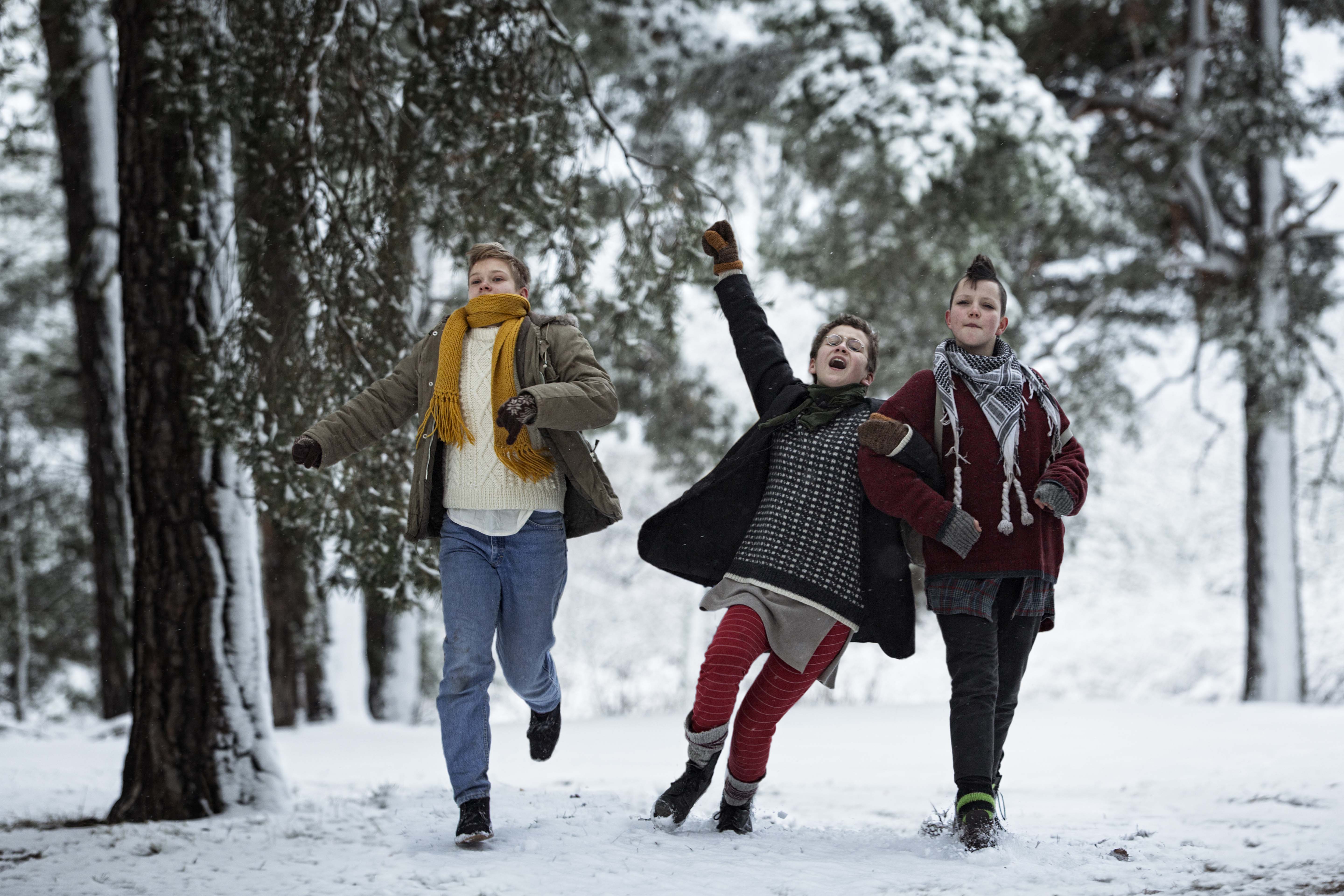
Dudes! The (lucky) 13th San Francisco Documentary Film Festival, aka DocFest to those in the know, is underway now, running through June 19 with all kinds of weird and wonderful docs. Check out Dennis Harvey’s recommendations here.
From the spangly tentacles of Hollywood, we’ve got Shailene “I Am Not the Poor Man’s Jennifer Lawrence” Woodley in a certified tearjerker, and Tom “Still a Big Enough Star to Avoid Being Cast in an Expendables Flick Just Yet” Cruise fighting aliens (and, surprisingly, his own ego). Plus: indie picks, including the latest from Kelly Reichardt and Lukas Moodysson. Read on for more.
Edge of Tomorrow Is it OK to root for Tom Cruise again? (The Oprah thing was almost a decade ago, after all.) The entertaining Edge of Tomorrow, crisply directed by Bourne series vet Doug Liman, takes what’s most irritating about Cruise’s persona (he’s so goddamn earnest) and uses it to great advantage, casting him as military PR guru Cage — repping our armed forces on talk shows amid battles with alien invaders dubbed “Mimics” — whose oiliness masks the fact that he’s terrified of actual combat. When he’s forced to fight by a no-nonsense superior (Brendan Gleeson), he’s gruesomely killed, along with nearly every other human soldier. But wait! Thanks to a particularly close encounter with outer-space pixie dust, he awakens, unharmed, to re-live the day, over and over again (yep, shades of a certain Bill Murray comedy classic). Each “reset” offers Cage a chance to work his way closer to changing the course of the war in humanity’s favor, with key help from a badass (Emily Blunt) whose heroics on the battlefield have earned her the nickname “Full Metal Bitch.” Nothing groundbreaking here — but Edge of Tomorrow manages to make its satisfying plot as important as its 3D explosions, which means it automatically rises above what passes for popcorn fun these days. (1:53) (Cheryl Eddy)
The Fault in Our Stars Shailene Woodley stars in this based-on-a-best-seller romance about two teens who meet at a cancer support group. (2:05)
Night Moves Not to be confused with Arthur Penn’s same-named 1975 Gene Hackman thriller, Kelly Reichardt’s latest film nonetheless is also a memorably quiet, unsettling tale of conspiracy and paranoia. It takes us some time to understand what makes temporary allies of jittery Josh (Jesse Eisenberg), Portland, Ore.-style alterna-chick Dena (Dakota Fanning) and genial rural recluse Harmon (Peter Sarsgaard), beyond it being a mission of considerable danger and secrecy. When things don’t go exactly as planned, however, the three react very differently to the resulting fallout, becoming possibly greater threats to one another than the police or FBI personnel pursuing them. While still spare by mainstream standard, this is easily Reichardt’s most accessible work, carrying the observational strengths of 2010’s Meek’s Cutoff, 2008’s Wendy and Lucy, and 2006’s Old Joy over to a genuinely tense story that actually goes somewhere. (1:52) (Dennis Harvey)
Rigor Mortis Spooky Chinese folklore (hopping vampires) meets J-horror (female ghouls with long black hair) in this film — directed by Juno Mak, and produced by Grudge series helmer Takashi Shimizu — inspired by Hong Kong’s long-running Mr. Vampire comedy-horror movie series. Homage takes the form of casting, with several of Vampire’s key players in attendance, rather than tone, since the supernatural goings-on in Rigor Mortis are more somber than slapstick. Washed-up film star Chin Siu-ho (playing an exaggerated version of himself) moves into a gloomy apartment building stuffed with both living and undead tenants; his own living room was the scene of a horrific crime, and anguished spirits still linger. Neighbors include a frustrated former vampire hunter; a traumatized woman and her white-haired imp of a son; a kindly seamstress who goes full-tilt ruthless in her quest to bring her deceased husband back to life; and an ailing shaman whose spell-casting causes more harm than good. Shot in tones so monochromatic the film sometimes appears black-and-white (with splashes of blood red, natch), Rigor Mortis unfortunately favors CG theatrics over genuine scares. That said, its deadpan, world-weary tone can be amusing, as when one old ghost-chaser exclaims to another, “You’re still messing around with that black magic shit?” (1:45) (Cheryl Eddy)
Test Writer-director Chris Mason Johnson sets his film at a particular moment in the early years of the AIDS epidemic — when the first HIV blood test became publicly available, in 1985 — within a milieu, the world of professional modern dance, that rarely makes an appearance in narrative films. Test’s protagonist, Frankie (Scott Marlowe), is a young understudy in a prestigious San Francisco company, and the camera follows him on daily rounds from a rodent-infested Castro apartment, where he lives with his closeted roommate, to the dance studio, where he marks the steps of the other performers and waits anxiously for an opportunity to get onstage. Larger anxieties are hovering, moving in. We get a rehearsal scene in which a female dancer recoils from her male partner’s embrace, lest his sweat contaminate her; conversations about the virus in changing rooms and at parties; a sexual encounter between Frankie and a stranger, after which he stares at the man as if he might be a mortal enemy; a later, aborted encounter in which the man sits up in bed, appalled and depressed, after Frankie hesitantly proffers a condom, remarking, “They say we should use these…” A neighbor watches Frankie examine himself for skin lesions. Rock Hudson dies. Frankie warily embarks on a friendship with a brash, handsome fellow dancer (Matthew Risch) who offers a counterpoint to his cerebral, watchful reserve. And throughout, the company rehearses and performs, in scenes that beautifully evoke the themes of the film, a quiet, thoughtful study of a person, and a community, trying to reorient and find footing amid a cataclysm. (1:29) Elmwood (director in person Sat/7, 7:15pm show), Presidio (director in person Fri/6, 8:30pm; Sat/7, 3:50pm; and Sun/8, 6:15pm shows). (Lynn Rapoport)
We Are the Best! Fifteen years after Show Me Love, Lukas Moodysson’s sweet tale of two girls in love in small-town Sweden, the writer-director returns to the subject of adorably poignant teen angst. Set in Stockholm in 1982, and adapted from a graphic novel by Moodysson’s wife, Coco Moodysson, We Are the Best! focuses on an even younger cohort: a trio of 13-year-old girls who form a punk band in the interest of fighting the power and irritating the crap out of their enemies. Best friends Bobo (Mira Barkhammar) and Klara (Mira Grosin) spend their time enduring the agonies of parental embarrassment and battling with schoolmates over personal aesthetics (blond and perky versus chopped and spiked), nukes, and whether punk’s dead or not. Wreaking vengeance on a group of churlish older boys by snaking their time slot in the local rec center’s practice space, they find themselves equipped with a wealth of fan enthusiasm, but no instruments of their own and scant functional knowledge of the ones available at the rec center. Undaunted, they recruit a reserved Christian classmate named Hedvig (Liv LeMoyne), whose objectionable belief system — which they vow to subvert for her own good — is offset by her prodigious musical talents. Anyone who was tormented by the indignities of high school PE class will appreciate the subject matter of the group’s first number (“Hate the Sport”). And while the film has a slightness to it and an unfinished quality, Moodysson’s heartfelt interest in the three girls’ triumphs and trials as both a band and a posse of friends suffuses the story with warmth and humor. (1:42) (Lynn Rapoport)
Win two tickets to Night of the Iguana at Paramount Theatre
Night of the Iguana is showing at Paramount Theatre on June 20.
Come see Defrocked Episcopal clergyman Dr. T. Lawrence Shannon (Richard Burton) leads a busload of middle-aged Baptist women on a tour of the Mexican coast. Driven to distraction by the hostility of the group’s leader (Grayson Hall) and the attentions of a seductive teenager (Sue Lyons), Reverend Shannon has an alcoholic breakdown and hijacks the group off of the scheduled tour through the Mexican jungle to a dilapidated hotel owned by an old friend’s wife (Ava Gardner). A budding relationship with an itinerant artist (Deborah Kerr) may be Shannon’s last hope of exorcising his demons of insanity and alcoholism. Shannon has literally reached the end of the road and now he has no choice but to come to terms with the failure and self-destruction haunting his life. Director John Huston’s riveting screen adaptation of Tennessee Williams’ play garnered the Oscar for Best Supporting Actress (Grayson Hall) and a Best Costume Design Oscar for Dorothy Jeakins.
Win tickets to the classic film by emailing your FIRST and LAST name to RSVP@sfmediaco.com.
The Damned on playing small venues, headgear that protects you from spit, and why they won’t stop ’til the Stones do
For nearly four decades now, legendary British rockers The Damned have been haunting stages around the world with their brand of gothic-inspired punk.
Since storming onto the London punk scene in 1976, the band has evolved and survived multiple line-up changes over the years, with the group now led by founding members Dave Vanian and Captain Sensible, who are keeping the original spirit of The Damned alive and well.
Today, Vanian’s punk-meets-rockabilly crooner vocals and Sensible’s wildly blistering guitar are backed up by the jackhammer rhythm section of drummer Pinch and bassist Stu West, along with keyboardist Monty Oxy Moron, who often looks like a possessed version of Beethoven, his hands flailing wildly about when not pounding the keys.
Bay Area fans are in for a treat this week as The Damned play two shows in Northern California ahead of their appearance at the Ink-N-Iron festival in Long Beach — and these are the only U.S. gigs on the books for the year.
“I love visiting San Francisco, it’s the most European city in North America and a vegetarian’s paradise. My home is in Brighton, the gay capital of the UK and a lot of the relaxed liberal attitude we have there is over here too,” says Captain Sensible, via email. “I like the way the Bay Area is a collection of villages all with their different vibe, but mainly it’s the smart, friendly people here that make a visit such fun.”
Looking back over almost 40 years of on and off history as a band, Sensible offers a candid assessment of what life has been like as a member of The Damned.
“I’m not one for regrets, we’ve had a splendid crack as a band. A lot of things that went pear shaped was our own stupid fault — and how we survived the mania of the 70s / 80s without anyone dropping dead I’ve no idea. But as you can imagine it was bloody good fun in a time when bands could pretty much do what ever they wanted in the studio without label types breathing down our necks; in fact, when they did turn up we always put on a little show for them, band splitting up, drummer climbing in a grand piano to add nonsensical avant-garde overdubs on a straightforward punk tune, food fights. They got the idea in the end and left us alone, and we actually made a few decent records despite all the chaos.”
The Damned were the first punk band from the UK to release a single — “New Rose” — and an album, Damned Damned Damned.
https://www.youtube.com/watch?v=rTfyUqVqX-0&feature=kp
They also broke ground as the first to cross the pond and tour the United States, a jaunt that saw them play the infamous Mabuhay Gardens in San Francisco back in 1977.
“It’s all a blur as you can imagine, but we met loads of young upstarts who told us they were getting their bands together. It was a great time, a clean slate if you like. And it felt good to give the jaded stadium rock stars of the time a kick up the arse.”
“I also remember American beer being universally appalling. In fact I would cram my suitcase with as much booze as possible, if you can believe that. Now, of course Californian craft beer is the cutting edge of brewing and we intend to visit a few breweries this trip.”
As for Sensible’s now-signature stage attire — a red beret and crazy sunglasses — it turns out it had nothing to do with trying to make a fashion statement: It was born from the environment that came to epitomize live shows in the early days of the punk movement.
“The truth is that at first I only wore a beret to stop the ‘gob’ (spit) getting in my hair. After Johnny Rotten and Rat Scabies had their famous spitting incident at a Pistols gig in ’76 it became part of the punk scene for a year or so. The problem was the hot stage lights baked the gob in your hair and it was almost impossible to remove the hard lumps afterwards, so I wore a beret and sunglasses to stop it getting into my eyes. That’s the true story, it wasn’t fashion — it was self preservation!”
Fans will be able to hear all sorts of first-hand accounts and behind the scenes stories in the near future when a documentary film about The Damned is released, made by Wes Orshoski, the filmmaker behind “Lemmy,” the award-winning portrait of the iconic Motorhead frontman.
“I took Wes to do an interview outside the former home of my parents — where I spent my school years — and no sooner was the camera rolling than a drug crazed mugger made a grab for it and a good old fashioned punch up ensued in which $50,000 worth of film equipment got completely trashed. Wes ended up being rushed to hospital. He probably needed a rabies antidote,” says Sensible.
“I should have mentioned to him that I was born and raised in the roughest part of South London — where one person’s posh movie gear is someone else’s years supply of crack cocaine.”
Despite difficulties such as that jarring incident, Sensible says that the rest of the project has been proceeding along well.
“He’s captured some very funny footage already as the Damned are quite a strange bunch these days. People think they know us, but I reckon there will be a few surprised faces when the film is released.”
One fact that casual fans of The Damned might not know is that Captain Sensible is a huge train buff — he’s driven steam engines in England, and even had a diesel locomotive named after him.
“There was a company that had a punk fan as boss and he named his locos after his heroes. John Peel, Joe Strummer — mine was originally going to be called Morrissey but it came to the guy’s attention that he made a point NEVER to travel by train. Whereas I do all the time, so I got it instead!”
Unfortunately, Cotswold Rail went out of business a few years ago, and when the engine was sold, a disgruntled employee that was owed money stole the nameplates.
“I’d maybe buy ‘em if he offered, gotta be worth a fiver, eh?” says Sensible.
While the Damned often perform at large music festivals around the world these days, Sensible still favors smaller shows, like the one the band will play at Slim’s on Wed/4.
“I prefer the club gigs, the closeness to the audience. And when I see bands, that’s also the environment I prefer. Festivals with screens and the musicians half a mile away on a distant stage is not great is it? The problem is that now we are a certain age, and there’s not likely to be another club tour as it’s a bit knackering.”
Although Sensible mentions that the members of The Damned aren’t exactly spring chickens anymore, he’s adamant that they have no intention of hanging it up anytime soon.
“The Damned ain’t going to quit while the Stones are still lurching on,” he says. “We’re not gonna be beat by a bunch of old Tories.”
https://www.youtube.com/watch?v=8m2JyiggwAU
The Damned, with Koffin Kats and Stellar Corpses
Wednesday, June 4
8pm, $30
Slim’s
333 11th St., SF
(415) 255-0333
www.slimspresents.com
Rolling along
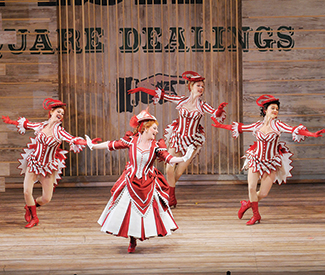
arts@sfbg.com
THEATER Jerome Kern and Oscar Hammerstein II’s groundbreaking 1927 musical, Show Boat, transformed one of Broadway’s major theatrical forms from a light and episodic operetta-style divertissement into a red-blooded American art form. Wedding spectacular entertainment (its producer was none other than super-showman Florenz Ziegfeld) with a full-fledged drama, Show Boat‘s expanded canvas came nearer the realm of classical opera, as all elements of the production, beginning with the music, orbited tightly around the story — which in addition to humor and hijinx sported complex characters and serious social content.
Since 1927, opera and musical theater have continued to grow closer at various points — most famously in the work of crossover composers like George Gershwin and Leonard Bernstein. San Francisco Opera’s co-production of Show Boat, the first time the company has essayed the legendary musical, turns out to be a wonderfully successful case in point: a crowd-pleasing hybrid of musical-theater style, sharply delineated drama, rousing choreography (from Michele Lynch), and full operatic glory (including an appropriately-sized orchestra and chorus). It’s a muscular production with a light step and buoyant spirit that shows off the best in a story that not only affirmed a common humanity among those up and down the ladder of social status, but also registered the injustice and violence of the American racial caste system in tones boldly progressive for the time.
Of course Show Boat, for all its socially and artistically progressive aspects, was still a product of the 1920s. And while it has been revived many times, the dialogue and other details have also undergone revisions to keep pace with social attitudes, conventions, and sensitivities, especially with regard to race. The SF Opera production under Maestro John DeMain follows DeMain and General Director David Gockley’s former collaboration on the historic 1982 revival for the Houston Grand Opera, which restored for the first time since 1927 significant sections of the original dialogue and score. The opera opens on a beautiful riverside quay awash with Technicolor hues (in perhaps indirect homage to the 1951 MGM film version), while the backside of the ship rises from the stage at the War Memorial Opera House like a delicate three-layer cake in the first of set designer Peter J. Davison and lighting designer Mark McCullough’s consistently atmospheric scenic environments.
Based on the 1926 novel by celebrated author and Algonquin wit Edna Ferber (who with frequent collaborator George S. Kaufman brought The Royal Family to Broadway the same week that the musical version of Show Boat set sail), the story spans the 1880s to the 1920s and revolves around the crew and passengers of the Cotton Blossom, a Mississippi show boat plying the river’s shoreline inhabitants with melodrama and comic fare. The boat’s operator is the warm-hearted Cap’n Andy Hawks (played by Broadway and local legend Bill Irwin in a memorable SF Opera debut) and his wife, the pants-wearing disciplinarian Parthy Ann (a comically fierce and ultimately redeeming Harriet Harris). Their innocent daughter and the story’s heroine, Magnolia (played with affecting pluck by a radiant Heidi Stober, the fine American soprano), falls for a rakish riverboat gambler named Gaylord Ravenal (baritone Michael Todd Simpson in a suave and graceful performance), whom she weds and follows to Chicago.
Magnolia and Gaylord’s doomed marriage, but enduring romance, makes up the central storyline, while a significant secondary plot involves the downward career of the talented actress and singer Julie La Verne (given a sultry and wrenching interpretation by soprano, and esteemed SF Opera regular, Patricia Racette). In an early scene, Julie’s husband, Steve (Patrick Cummings), fights with his wife’s spurned suitor (James Asher) and the latter takes revenge by tipping off the local sheriff (Kevin Blackton) to the illegality of their marriage under the state’s anti-miscegenation law. In this way we learn that Julie is of mixed-race ancestry. A bickering but loving African American couple among the Cotton Blossom‘s crewmembers, Queenie (the regal soprano Angela Renée Simpson) and Joe (bass Morris Robinson in a robust, beautifully measured performance), are also significant supporting characters. Indeed, the most of the show’s great songs are associated with these secondary characters, not least “Ol’ Man River” and “Can’t Help Lovin’ Dat Man.”
The show itself strikes a knowing stance with respect to narrative, making good fun of the stilted melodramas put on by Cap’n Andy while reveling in the backstage intrigue and the characters’ own double-playing onstage (a situation that nicely serves the woo-pitching in the number “Make Believe”). Even the fight that breaks out on the dock between Steve and Pete at the outset of the play gets co-opted by Cap’n Andy, who in a hasty bit of diplomacy tells the crowd it was just a preview of the night’s entertainment onboard. This covering is also an uncovering, however, since it hints at the complex relationship between the stories onstage and real life in all its messiness.
Of course, what “real life” the musical expresses is still very much idealized as well as stylized. But the SF Opera production proves there’s still a pulse to the 1927 narrative, and it’s as vital as the enduring score with which it’s intimately bound. With panache but also keen sensitivity, the show conveys Ferber’s original emphasis on the shared humanity of rich and poor, white and black, and the compassion a bird’s eye perspective on it all can breed. In Show Boat, absurd melodramas and life’s everyday triumphs and failures play out alongside each other as so many ripples on the surface of a deep and indifferent river — a dark and mysterious universe that, in the image of the show’s great recurring theme, just keeps rollin’ along. *
SHOW BOAT
Through July 2, $24-$379
War Memorial Opera House
301 Van Ness, SF
This Week’s Picks: June 4 – 10, 2014
WEDNESDAY 4
‘Mr. Irresistible’
Multifaceted showman and irrepressible art-dragster D’Arcy Drollinger, the brains and falsies behind such contemporary camp classics as Shit & Champagne and Sex and the City Live!, is poised to deliver on his biggest project since Project: Lohan, or even 2010’s cutting-edge Scalpel!: A sci-fi musical comedy about love and robots and office work entitled Mr. Irresistible. First produced in workshop form last year at New York’s La Mama E.T.C., the Aesop-inspired story of unpopular Eileen Morchinsky and her titular mechanical friend (purchased from a magazine ad and destined to turn her life right around) sails into the fairly exotic Alcazar Theatre for a limited run, aloft on a score by Christopher Winslow, book and lyrics by Drollinger, and some big-wig talent. (Robert Avila)
Through June 8, 8pm; Sun. 7pm only, $25
Alcatraz Theatre
650 Geary, SF
(415) 766-4588
The Damned
Remember, kid: Heroes get remembered, but legends never die. Yes, we’re talking about THE Damned. Formed in 1976, The Damned were the first punk band in the UK to release a single, a record, or tour the United States. They cut their teeth opening for bands like the Sex Pistols and T. Rex, and are still going strong. Not only were they punk rock pioneers, they also were some of the frontrunners of the goth scene in the ’80s, and now, nearly into their fourth decade, The Damned are still going strong. With an ever-changing lineup and an incredible repertoire of revolutionary tunes, these dudes are incredible at evolving and even better at performing. They’re not to be missed tonight at Slim’s. (Haley Zaremba)
With Koffin Kats, Stellar Corpses
9pm, $30
Slim’s
333 11th St, SF
(415) 225-0333
THURSDAY 5
XV: St. James Infirmary 15-Year Anniversary Party
Lost in the outpouring of accolades in the wake of the great Maya Angelou’s passing last week was her crucial time as a sex worker, which she chronicled, unashamed, in her 1974 book Gather Together in My Name. It’s indicative of the stigma sex workers still face when even the well-documented past of the nation’s literary godmother is scrubbed free of any reference. San Francisco’s own groundbreaking St. James Infirmary, the first occupational safety and health clinic for sex workers in the United States, deals with the damage of that stigma by offering non-judgmental medical and social services. The organization also knows how to celebrate: This huge party and fundraiser boasts one of the city’s best house DJs, David Harness, as well as porn-star-turned-DJ Ricky Sinz, movers and shakers from the international sex workers rights movement, sexy pole dancing, a Kink.com demonstration dungeon, and oodles more. The whole joint will be singin’ and swingin’ and getting’ merry like Christmas. (Marke B.)
9pm-3am, $20 ($40 includes free lapdance)
Temple
540 Howard, SF
Urban Air Market Summer Night Block Party
Urban Air Market’s newest addition to its community-enriched neighborhood events around the city begins tonight. Head on over to Fern Alley — a hidden walkway located between Polk and Larkin Streets — for this one-night affair. In partnership with the Lower Polk Art Walk, Urban Air Market is hosting a summer night block party of sustainable art, fashion, food, and live music at this unassuming Tenderloin location. While occasionally occupied by a small farmers’ market, tonight Fern Alley will be bustling with food trucks, henna tattooing, face painting, interactive fashion film installations, live bands, and countless booths from sustainable and local brands: Oaklandish, Synergy Organic Clothing, Indosole, and Skunkfunk USA to name a few. (Laura B. Childs)
6pm, free
Fern Alley (Fern St. between Polk and Larkin St.)
Nature For Sale
For the past few years, Bolivian-born artist Javier Rocabado has been producing stunning, icon-like portraits of famed gays like RuPaul, early AIDS activists, and local beauties. All these figures have been posed with gold halos against Rocabado’s signature dollar-bill background, glowing with symbolic meaning. (Rocabado paints only the backside of the dollar.) His new series turns to nature: Beautiful bird specimens, frogs, and weeping monkeys take on aspects of holy saints. “I want to point out the universally ridiculous thinking of ‘economics is first’ under Capitalism. Through this new series of paintings, I strive to create images of animals that allow the viewers to experience the false pride in human civilization to conquer nature and profit from it,” he says. Dark spirits of Chevron, BP, and other disaster-fueling multinationals hover at the borders of his exquisite new works, but their sheer gorgeousness radiates hope as well as guilt. (Marke B.)
Through July 1, opening party 8-11pm, free
Public Barber Salon
571 Geary, SF
FRIDAY 6
‘Test’
Test is not great, but it’s a beautiful, honest film that evokes the mid-’80s, when AIDS was ravaging San Francisco’s gay community, a time when a test had become available but no cure was in sight. The film follows a naïve young man’s coming of age (a splendid Scott Marlow of LEVY Dance) as a gay man and as dancer in a local modern dance company. The film excellently captures what it meant living at the edge of uncertainty, when nothing could be taken for granted and yet, despite of it all, everything seemed possible. Test includes extensive and fine dance sequences choreographed by the remarkable Sidra Bell. Fun to see was just how many other local dancers were involved in this small, but big-hearted movie. (Rita Felciano)
Opens June 6, times vary
Presidio Theater
2340 Chestnut, SF
(415) 776-2388
Rialto Cinemas Elmwood
2966 College, Berk.
(510) 433-9730
The Buzzcocks
It must be punk rock royalty week at Slim’s, because just two days after The Damned grace the SoMa stage the Buzzcocks are coming to town. Part of the Holy Trinity that also includes the Clash and the Sex Pistols, the Buzzcocks are a crucial piece of UK punk history. Bringing the world such killer tunes as “Ever Fallen in Love” and “What Do I Get,” challenging British radio with songs like “Orgasm Addict” and confronting the punk community with an open and serious examination of homosexuality, the Buzzcocks are a tireless and fearless force of nature. Plus, 38 years into their career, they’re still touring regularly and have a new record out this year. Is there anything more punk than refusing to succumb to gray hair or body fat? (Zaremba)
With Doug Gillard, Images
8pm, $35
Slim’s
333 11th St, SF
(415) 225-0333
SATURDAY 7
Les Claypool’s Duo De Twang
Les Claypool has an amazing eye for weirdness. His band Primus has made a decades-long career out of defying every possible genre classification, wearing monkey masks onstage, and naming their albums things like Pork Soda and Sailing the Seas of Cheese. Now Claypool is going the opposite direction, creating the most minimalist, deconstructed music possible, with one vocal, one bass, one guitar, and one makeshift percussion tool — but don’t worry, it’s still bizarre. In his Duo De Twang, which was originally organized as a one-off for Hardly Strictly Bluegrass, Claypool teams up with longtime buddy and collaborator Bryan Kehoe to play originals and tasty twang covers (including the Bee Gees and Alice in Chains). The show promises down-to-earth, intimate weirdness, plus seriously incredible musicianship. (Zaremba)
With Reformed Whores
9pm, $38
Great American Music Hall
859 O’Farrell, SF
(415) 885-0750
tUnE-yArDs
What a difference five years makes: Merrill Garbus moved to the Bay around that time, as word quickly spread about the undeniable force of her musical vision, one that draws from African, folk, and electro-acoustic quarters, and her visceral one-woman performances. Since her maiden tUnE-yArDs outing, BiRd-BrAiNs, she’s put out the album that every critic could agree on in 2011, whokill, which scored her the coveted top spot in that year’s Pazz and Jop poll. Her third full-length, Nikki Nack, takes tUnE-yArDs further, into Garbus’s fascination with Haitian artistic traditions, as she turned to the country’s boula drum to lay the groundwork for the recording’s intoxicating call and response. (Kimberly Chun)
With the Seshen
9pm, $26
The Fillmore
1805 Geary, SF
(415) 346-6000
SUNDAY 8
Silent Frisco Beats on Ocean Beach
Summertime throwdowns are the types of shows the brilliant Silent Frisco have made their niche — take a pristine outdoor environment, add groovin’ music and people, let fun ensue. “Scene Not Heard” as the Silent team puts it. The key to making these public shows possible is ditching speakers and substituting wireless headphones, removing complaint-inducing noise, and leaving the amusingly awesome sight of befuddled onlookers observing limbs gyrating to what appears to be silence. For this event, two channels allow movers and shakers to select from a rotation of California electronic music talent throughout the day. Fresh off touring with The Glitch Mob, Ana Sia will bring big, bouncy, driving bass, while Dutch grandmasters Kraak & Smaak headline with two hours of their lush, disco-tinged sound. (Kevin Lee)
With Kraak & Smaak, Ana Sia, Pumpkin, JLabs, Motion Potion, and more
11am, $20; kids and dogs free (all-ages show)
Ocean Beach Great Highway at Balboa Ave, SF
TUESDAY 10
Tom Robbins
“If Tibetan Peach Pie doesn’t read like a normal memoir, that may be because I haven’t exactly led what most normal people would consider a normal life,” forewarns writer Tom Robbins in the preface of his first nonfiction book. With that on readers’ minds, Robbins reflects on his colorful adventures, from an accident laden-youth in Depression-era North Carolina in which his mother dubbed him “Tommy Rotten,” to an established literary career in Washington state. Along the way, Robbins studies the weather in Korea, experiments with acid, embarks on international religious journeys, tangos with Hollywood, and discovers some love. Tibetan Peach Pie‘s 41 succinct tall tales crackle with a Robbins’ rare blend of warmth, wisdom, and wit. (Lee)
In conversation with Isabel Duffy
7:30pm, $27
Nourse Theatre
275 Hayes, SF
(415) 392-4400
The Guardian listings deadline is two weeks prior to our Wednesday publication date. To submit an item for consideration, please include the title of the event, a brief description of the event, date and time, venue name, street address (listing cross streets only isn’t sufficient), city, telephone number readers can call for more information, telephone number for media, and admission costs. Send information to Listings, the Guardian, 225 Bush, 17th Flr., SF, CA 94105; or e-mail (paste press release into e-mail body — no attachments, please) to listings@sfbg.com. Digital photos may be submitted in jpeg format; the image must be at least 240 dpi and four inches by six inches in size. We regret we cannot accept listings over the phone.
Rep Clock: June 4 – 10, 2014
Schedules are for Wed/4-Tue/10 except where noted. Director and year are given when available. Double and triple features marked with a •. All times pm unless otherwise specified.
CASTRO 429 Castro, SF; (415) 621-6120, www.castrotheatre.com. $8.50-11. Check website for program information.
CHRISTOPHER B. SMITH RAFAEL FILM CENTER 1118 Fourth St, San Rafael; (415) 454-1222, www.cafilm.org. $6.50-$10.75. We Are the Best! (Moodysson, 2013), June 6-12, call for times.
CLAY 2261 Fillmore, SF; www.landmarktheatres.com. $10. “Midnight Movies:” Mean Girls (Waters, 2004), Fri-Sat, midnight.
NEW PARKWAY 474 24th St, Oakl; www.thenewparkway.com. Free. “First Friday Shorts,” works by Youth Radio’s young artists, Fri, 6.
ROXIE 3117 and 3125 16th St, SF; (415) 863-1087, www.roxie.com. $6.50-11. San Francisco Green Film Festival, environmental films, events, panels, and special guests, Wed. Complete program details and tickets (most shows $15) at www.sfgreenfilmfest.org. San Francisco Documentary Film Festival, June 5-19. Complete program details, including additional venues, and tickets (most shows $12) at www.sfindie.com.
TEMESCAL ART CENTER 511 48th St, Oakl; www.shapeshifterscinema.com. Free. Shapeshifters Cinema presents: “The Light Art of Dennis Keefe and Glenn McKay,” Sun, 8.
YERBA BUENA CENTER FOR THE ARTS 701 Mission, SF; www.ybca.org. $8-10. “Astonishing Animation: The Films of Hayao Miyazaki and Studio Ghibli:” Spirited Away (Miyazaki, 2002), Thu, 7:30 and Sat, 7; Princess Mononoke (Miyazaki, 1997), Fri-Sat, 7:30; Pom Poko (Takahata, 1994), Sat, 1; Ponyo (Miyazaki, 2009), Sun, 1: From Up on Poppy Hill (Miyazaki, 2011), Sun, 3:30; Castle in the Sky (Miyazaki, 1986), Sun, 5:30. *
Film Listings: June 4 – 10, 2014
Film listings are edited by Cheryl Eddy. Reviewers are Kimberly Chun, Dennis Harvey, Lynn Rapoport, and Sara Maria Vizcarrondo. For rep house showtimes, see Rep Clock.
DOCFEST
The 13th San Francisco Documentary Film Festival runs June 5-19 at the Brava Theater, 2781 York, SF; Roxie Theater, 3117 16th St, SF; and Oakland School of the Arts Theater, 530 19th St, Oakl. For tickets (most shows $12) and complete schedule, visit www.sfindie.com. For commentary, see “Peculiar Thrills.”
OPENING
Edge of Tomorrow Tom Cruise and Emily Blunt star in this sci-fi thriller about an alien war being fought by soldiers caught in a seemingly endless time loop. (1:53) Four Star, Presidio.
The Fault in Our Stars Shailene Woodley stars in this based-on-a-best-seller romance about two teens who meet at a cancer support group. (2:05) Marina.
Night Moves Not to be confused with Arthur Penn’s same-named 1975 Gene Hackman thriller, Kelly Reichardt’s latest film nonetheless is also a memorably quiet, unsettling tale of conspiracy and paranoia. It takes us some time to understand what makes temporary allies of jittery Josh (Jesse Eisenberg), Portland, Ore.-style alterna-chick Dena (Dakota Fanning) and genial rural recluse Harmon (Peter Sarsgaard), beyond it being a mission of considerable danger and secrecy. When things don’t go exactly as planned, however, the three react very differently to the resulting fallout, becoming possibly greater threats to one another than the police or FBI personnel pursuing them. While still spare by mainstream standard, this is easily Reichardt’s most accessible work, carrying the observational strengths of 2010’s Meek’s Cutoff, 2008’s Wendy and Lucy, and 2006’s Old Joy over to a genuinely tense story that actually goes somewhere. (1:52) Metreon. (Harvey)
Rigor Mortis Spooky Chinese folklore (hopping vampires) meets J-horror (female ghouls with long black hair) in this film — directed by Juno Mak, and produced by Grudge series helmer Takashi Shimizu — inspired by Hong Kong’s long-running Mr. Vampire comedy-horror movie series. Homage takes the form of casting, with several of Vampire‘s key players in attendance, rather than tone, since the supernatural goings-on in Rigor Mortis are more somber than slapstick. Washed-up film star Chin Siu-ho (playing an exaggerated version of himself) moves into a gloomy apartment building stuffed with both living and undead tenants; his own living room was the scene of a horrific crime, and anguished spirits still linger. Neighbors include a frustrated former vampire hunter; a traumatized woman and her white-haired imp of a son; a kindly seamstress who goes full-tilt ruthless in her quest to bring her deceased husband back to life; and an ailing shaman whose spell-casting causes more harm than good. Shot in tones so monochromatic the film sometimes appears black-and-white (with splashes of blood red, natch), Rigor Mortis unfortunately favors CG theatrics over genuine scares. That said, its deadpan, world-weary tone can be amusing, as when one old ghost-chaser exclaims to another, “You’re still messing around with that black magic shit?” (1:45) Metreon. (Eddy)
Test Writer-director Chris Mason Johnson sets his film at a particular moment in the early years of the AIDS epidemic — when the first HIV blood test became publicly available, in 1985 — within a milieu, the world of professional modern dance, that rarely makes an appearance in narrative films. Test‘s protagonist, Frankie (Scott Marlowe), is a young understudy in a prestigious San Francisco company, and the camera follows him on daily rounds from a rodent-infested Castro apartment, where he lives with his closeted roommate, to the dance studio, where he marks the steps of the other performers and waits anxiously for an opportunity to get onstage. Larger anxieties are hovering, moving in. We get a rehearsal scene in which a female dancer recoils from her male partner’s embrace, lest his sweat contaminate her; conversations about the virus in changing rooms and at parties; a sexual encounter between Frankie and a stranger, after which he stares at the man as if he might be a mortal enemy; a later, aborted encounter in which the man sits up in bed, appalled and depressed, after Frankie hesitantly proffers a condom, remarking, “They say we should use these&ldots;” A neighbor watches Frankie examine himself for skin lesions. Rock Hudson dies. Frankie warily embarks on a friendship with a brash, handsome fellow dancer (Matthew Risch) who offers a counterpoint to his cerebral, watchful reserve. And throughout, the company rehearses and performs, in scenes that beautifully evoke the themes of the film, a quiet, thoughtful study of a person, and a community, trying to reorient and find footing amid a cataclysm. (1:29) Elmwood (director in person Sat/7, 7:15pm show), Presidio (director in person Fri/6, 8:30pm; Sat/7, 3:50pm; and Sun/8, 6:15pm shows). (Rapoport)
We Are the Best! Fifteen years after Show Me Love, Lukas Moodysson’s sweet tale of two girls in love in small-town Sweden, the writer-director returns to the subject of adorably poignant teen angst. Set in Stockholm in 1982, and adapted from a graphic novel by Moodysson’s wife, Coco Moodysson, We Are the Best! focuses on an even younger cohort: a trio of 13-year-old girls who form a punk band in the interest of fighting the power and irritating the crap out of their enemies. Best friends Bobo (Mira Barkhammar) and Klara (Mira Grosin) spend their time enduring the agonies of parental embarrassment and battling with schoolmates over personal aesthetics (blond and perky versus chopped and spiked), nukes, and whether punk’s dead or not. Wreaking vengeance on a group of churlish older boys by snaking their time slot in the local rec center’s practice space, they find themselves equipped with a wealth of fan enthusiasm, but no instruments of their own and scant functional knowledge of the ones available at the rec center. Undaunted, they recruit a reserved Christian classmate named Hedvig (Liv LeMoyne), whose objectionable belief system — which they vow to subvert for her own good — is offset by her prodigious musical talents. Anyone who was tormented by the indignities of high school PE class will appreciate the subject matter of the group’s first number (“Hate the Sport”). And while the film has a slightness to it and an unfinished quality, Moodysson’s heartfelt interest in the three girls’ triumphs and trials as both a band and a posse of friends suffuses the story with warmth and humor. (1:42) Embarcadero, Shattuck, Smith Rafael. (Rapoport)
ONGOING
Cold in July Though he’s best-known for his cut-above indie horror flicks (2010’s Stake Land; 2013’s We Are What We Are), Jim Mickle’s most accomplished film to date explores new turf for the writer-director: small-town noir. Cold in July, a thriller ranging across East Texas, circa 1989, is adapted from the novel by Joe R. Lansdale, who — buckle up, cultists — also penned the short story which spawned 2002’s Bubba Ho-Tep. That said, there are no supernatural elements afoot here; all darkness springs entirely from the coal-black hearts beating in its characters. Well, some of its characters, anyway; though Cold in July begins with a killing, the trigger hand is attached to mild-mannered Richard Dane (Dexter‘s Michael C. Hall, rocking a splendid mullet). The masked man he shot was breaking into his home; Richard was just protecting his family, and the crime is breezed over by the police. Unlike Viggo Mortensen’s secret gangster in 2005’s A History of Violence, a film which begins with a similar premise, Richard has zero past aggression to draw on; dude’s got a history of mildness — with a heretoforth untapped curiosity about the wilder side of life awakened by a sudden bloody act. The good guy/bad guy dynamic is twisted, tested, and taken to extremes as the story progresses; it’s the sort of film best viewed without much knowledge of its plot twists, which are numerous and cleverly plotted. Throughout, the film expertly works its 1980s setting as both homage to and embodiment of the era’s gritty thrillers; its synth-heavy score and the casting of Wyatt Russell (son of Kurt) add to the feeling that Cold in July was crafted after much time spent in the church of St. John Carpenter. Amen to that. (1:49) Opera Plaza. (Eddy)
The Dance of Reality His unique vision recently re-introduced to audiences by unmaking-of documentary Jodorowsky’s Dune, cinematic fabulist Alejandro Jodorowsky is back with his first film in a quarter-century. This autobiographical fantasia shows all initial signs of being a welcome yet somewhat redundant retread of his cult-famed early work (1970’s El Topo, 1973’s The Holy Mountain), as Santa Sangre was in 1989. It starts with the filmmaker himself fulminating wisdoms about the spiritual emptiness of a money-centric world, then appearing as guardian angel to his child self (Jeremias Herskovits). Little Alejandro is raised by a bullying, hyper macho father (Brontis Jodorowsky) and warm, indulgent mother (soprano Pamela Flores, singing every line of dialogue) who naturally clash at every turn. Jodorowsky’s stunning eye for bizarre imagery (abetted by DP Jean-Marie Dreujou’s handsome compositions) hasn’t faded, so there are delights to be had even in what fans might consider an over-familiar parade of dwarfs, amputees, anti clerical burlesques (like a dress-up dog beauty contest at church), Chaplinesque circus sentimentality, and other simple if surreal illustrations of society’s eternal victims and overlords. At a certain point, however, the misdeeds of father Jaime force his self-exile. The film’s consequent picaresque allegory of epic suffering toward redemption becomes cheerfully goofy, its symbol-strewn path increasingly funny and sweet rather than burdened by import. A large part of that appeal is due to junior Jodorowsky Brontis, who demonstrates considerable farcical esprit while flashing more full-frontal nudity than Michael Fassbender and Ewan McGregor combined ever dreamed of obliging. Shot in the family’s native Chile on a purported crowd funded budget of $3 million — could Hollywood provide so much original spectacle for 30 times that amount?—The Dance of Reality finds its 84-year-old maker as frisky as a pony, one that provides an endearingly unpredictable ride. (2:10) Opera Plaza, Shattuck. (Harvey)
The Grand Seduction Canadian actor-director Don McKellar (1998’s Last Night) remakes 2003 Quebecois comedy Seducing Doctor Lewis, about a depressed community searching for the town doctor they’ll need before a factory will agree to set up shop and bring much-needed jobs to the area. Canada is still the setting here, with the harbor’s name — Tickle Head — telegraphing with zero subtlety that whimsy lies ahead. A series of events involving a Tickle Head-based TSA agent, a bag of cocaine, and a harried young doctor (Taylor Kitsch) trying to avoid jail time signals hope for the hamlet, and de facto town leader Murray (Brendan Gleeson) snaps into action. The seduction of “Dr. Paul,” who agrees to one month of service not knowing the town is desperate to keep him, is part Northern Exposure culture clash, part Jenga-like stack of lies, as the townspeople pretend to love cricket (Paul’s a fanatic) and act like his favorite lamb dish is the specialty at the local café. The wonderfully wry Gleeson is the best thing about this deeply predictable tale, which errs too often on the side of cute (little old ladies at the switchboard listening in on Paul’s phone-sex with his girlfriend!) rather than clever, as when an unsightly structure in the center of town is explained away with a fake “World Heritage House” plaque. Still, the scenery is lovely, and “cute” doesn’t necessarily mean “not entertaining.” (1:52) Embarcadero. (Eddy)
Ida The bomb drops within the first ten minutes: after being gently forced to reconnect with her only living relative before taking her vows, novice nun Anna (Agata Trzebuchowska) learns that her name is actually Ida, and that she’s Jewish. Her mother’s sister, Wanda (Agneta Kulesza) — a Communist Party judge haunted by a turbulent past she copes with via heavy drinking, among other vices — also crisply relays that Ida’s parents were killed during the Nazi occupation, and after some hesitation agrees to accompany the sheltered young woman to find out how they died, and where their bodies were buried. Drawing great depth from understated storytelling and gorgeous, black-and-white cinematography, Pawel Pawilowski’s well-crafted drama offers a bleak if realistic (and never melodramatic) look at 1960s Poland, with two polar-opposite characters coming to form a bond as their layers of painful loss rise to the surface. (1:20) Clay. (Eddy)
The Immigrant Ewa (Marion Cotilliard) is an orphaned Polish émigré who’s separated from her sickly sister at Ellis Island in 1921, and scheduled for deportation as an alleged “woman of low morals.” She’s rescued from that by Bruno (Joaquin Phoenix), though he’s not quite the agent of charity he seems — in fact, Ewa doesn’t realize she’s actually been recruited for a prostitution racket he thinly veils as a theatrical troupe. Still, she stays, believing she has no other viable path to freeing her sister from quarantine, she allows her own degradation for money’s sake. This latest collaboration between Phoenix and director-coscenarist James Gray is a handsome period piece that’s done skillfully and tastefully enough to downplay — but not quite hide — the fact that its moral melodrama might as well have been written (as well as set) nearly a century ago. Cotilliard is fine in her best English-language role to date, and Phoenix is compelling as usual; Jeremy Renner is somewhat miscast as a distant-third lead. But whether you find The Immigrant poignant or forced will depend on your tolerance for a script whose every turn is all too predictable. (2:00) Metreon. (Harvey)
Maleficent Fairytale revisionism is all the rage these days, what with the unending power of Disney princesses to latch into little girls everywhere and bring parental units (and their wallets) to their knees. Yet princesses almost seem beside the point in this villain’s-side-of-the-story tale — Maleficent (Angelina Jolie), the queen of the fairies in the magical moors, wronged by Stefan (Sharlto Copley), who saws off her wings in order to win a crown. Accompanied by her shape-shifting minion, crow Diaval (Sam Riley), Maleficent attends the christening of King Stefan’s first-born daughter, Aurora, hot on the heels of three clownish good fairies (Lesley Manville, Imelda Staunton, Juno Temple), and delivers a curse that will have this future Sleeping Beauty (Elle Fanning) prick her finger on a spindle and sink into a deathlike coma until her true love’s kiss. Will that critical smooch be delivered by Prince Bieber, er, Phillip (Brenton Thwaites)? Considering the potential for Disney’s trademark, heart-tugging enchantment to get magically tangled up in girl power, it’s tough to suck up the disappointment in the ooey-gooey, gummy-faced troll-doll aesthetics of the art direction and animation, as well as first-time director Robert Stromberg’s choppy, dashed-through storytelling. Part of the problem is that there’s almost zero threat here, despite its antihero’s devilish presence — is there ever any doubt that a healthy resolution will win out, even at the expense of blood ties? Best to find dangerous pleasures where one can — namely in the vivid Jolie, cheekbones honed to a razor edge, who spits biting remarks at her accursed charge, beneath Joan Crawford-esque eyebrows and horns crying out for club-kid Halloween treatments. (1:37) Marina, Metreon, 1000 Van Ness, Shattuck, Sundance Kabuki, Vogue. (Chun) *
Vinegar and salt
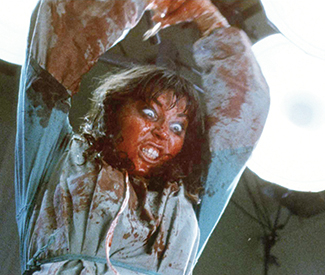
arts@sfbg.com
FILM The B-movie is alive and well in modern cinema, running the gamut from SyFy dreck like Sharknado (2013) to the populist (and Oscar-winning) entertainment of Quentin Tarantino. But there was a time when an even “lesser” kind of film thrived, something less commercial than the genre film or the indie. These were films experienced communally, in dark, dirty movie theaters, with like-minded cinema adventurers, as well as in the company of perverts, weirdos, and people looking for a cheap place to sleep. Yep, we’re talking about the grindhouse: grade-Z movies and X-rated films.
Vinegar Syndrome knows all about the grindhouse. As one of a small crop of emerging, genre-focused home video releasing companies, VS was born in 2012 when film collectors Joe Rubin and Ryan Emerson raised $10,000 via Kickstarter to restore and release a set of lost H.G. Lewis films. Rubin and Lewis used their profits to keep going, their mission to preserve a number of niche exploitation films that have been forgotten over time, including bizarro action and horror flicks and a good deal of what is basically ’70s and early ’80s porn.
Possessing a preservation spirit similar to that of the late Mike Vraney’s fanatical Something Weird Video, VS shares its Connecticut headquarters with film restoration lab OCN Digital Labs (also run by Rubin and Lewis) and has built its small cult following through delivering consistently high-quality releases of long-forgotten gems, all mastered in-house from original camera negatives. The year ahead bristles with promising releases from San Francisco luminary Alex deRenzy and gay icon Wakefield Poole, as well as a streaming service called Skinaflix, which promises rare erotica in full HD. VS also caters to horror fans, teasing a slew of titles that includes a 4k restoration of Troma’s groovy Graduation Day (1981), as part of a multi-title deal with the company.
Some of these films are tremendously amateur and that’s half the fun. For today’s burgeoning cinephile audience, it’s exciting to see films that give the finger to established tenets of scriptwriting and mise en scène. In many ways, the crazy-passionate filmmakers of the grindhouse circuit were closer to true auteurs than the filmmakers we see today, and they were thriving in a time when low budgets led to some truly inventive shortcuts. Below, some highlights (and/or lowlights, and I mean that in the best way possible).
THE TELEPHONE BOOK (1971)
Alice, a young New York City hippie, receives an obscene phone call and is so taken by the experience that she sets out to find the caller. Along the way she bumps into a number of colorful characters who would impede her quest, and the film culminates in a surreal series of scenes involving a man in a pig mask and hypersexual animation. Shot in black and white, and featuring a magnetic performance from Laugh-In performer Sarah Kennedy, writer-director Nelson Lyon’s film is a quirky and calculated trip into the New York underground.
GOOD LUCK, MISS WYCKOFF (1978)
In 1954 Kansas, Miss Wyckoff (Anne Heywood) is a teacher who discovers that her solitary lifestyle has resulted in early-onset menopause. Her psychiatrist (the ever-delightful Donald Pleasence) suggests she find a lover, and her attempts to embrace the unfamiliar landscape of her femininity result in disappointment, sexual assault, and a thoroughly unhealthy relationship with the school janitor. Based on the novel by William Inge (with a screenplay by Polly Platt, who also wrote that year’s Pretty Baby), it offers a fearless look at sexuality and racism in an era that rarely engaged such hotbed issues.
NIGHT TRAIN TO TERROR (1985)
Horror anthologies were big in the 1980s, but Night Train to Terror came about in an altogether unfamiliar fashion. Director Jay Schlossberg-Cohen took three feature-length films, chopped them down to about 20 minutes each, inserted claymation gore scenes and crude-looking monsters, and filmed a wrap-around story about God and the devil on a train with a New Wave dance band. All these poorly advised decisions came together to create a truly disorienting, hilarious throwback experience that would play well at your favorite bad movie night.
VIRGIN AND THE LOVER (1973)/ LUSTFUL FEELINGS (1978)
There’s no getting around it: a good portion of what VS releases comes from the era known colloquially as “porno chic.” These are full-on hardcore adult pictures, but the stigma of the X rating doesn’t indicate a lack of creativity. Often, the sex scenes were a commercial concession to gain financing. The fact that they attracted raincoaters and other negative attention was merely the price of doing business.
This double feature from notable adult filmmaker Kemal Horulu is a formidable starting point for someone unfamiliar with the genre. Virgin and the Lover is a lighthearted tale of a young man having difficulty with his strange feelings of love for a mannequin, and Lustful Feelings is the downbeat ordeal of a woman who enlists in the sex trade to pay off her drug dealing boyfriend’s debt to the mob. If you’re too young to have seen an adult film with a plot before, prepare to have your assumptions shattered.
A LABOR OF LOVE (1975)
For a deeper look at the adult film industry of the 1970s, A Labor of Love is a fly-on-the-wall documentary about Iranian filmmaker Henri Charr, who ran out of money while making his independent film The Last Affair. Desperate for funding, Charr agreed to shoot a number of adult scenes to increase the likelihood of a profit for his investors, and what follows is an account of a cast and crew with no background in the adult scene attempting to make a professional and meaningful adult film. The actors and crew are brutally honest in their unfamiliarity with the production’s new direction, and a number of the challenges that arise on set are a far cry from Hollywood’s usual horror stories. *
Peculiar thrills

arts@sfbg.com
FILM Documentaries are often the best section of any given film festival. But even die-hard fans admit to occasional Social Issue Fatigue — that feeling you get when you’ve just seen too many all-too-convincing portraits of real life injustices, reasons why the planet is dying, etc. “It was great — I’ll just go kill myself now” is a reaction few want to experience, you know, three times in one day. Yet it’s a typical plaint heard on queue at events like Toronto’s Hot Docs, let alone the touring United Nations Association Film Festival (a virtual global wrist-slitting orgy).
You’d be hard-pressed to have such a hard time at our own SF DocFest, however. For 13 years it’s managed to emphasize the entertaining and eccentric over grim reportage. To be sure, the latest edition, opening Thu/5 (with programs primarily at the Roxie and Oakland School for the Arts) has its share of films on topically important subject themes. Centerpiece presentation The Internet’s Own Boy: The Story of Aaron Swartz poignantly recalls the short history of the brilliant young programmer-activist whose fate is especially chilling given the potential imminent death of net neutrality. Of Kites and Borders examines the harsh lives of children in the Tijuana area; Goodbye Gauley Mountain has Bay Area “eco-sexuals” Annie Sprinkle and Beth Stephens uniquely protesting the mountaintop removal industry in the Appalachians. But among 2014 SF DocFest’s 40 or so features, only Ivory Tower — about the increasingly high cost of higher U.S. education — offers straight-up journalistic overview of an urgent social issue.
More typical of DocFest’s sensibility are its numerous portraits of peculiar individuals and even more peculiar obsessions. In the jobs-make-the-man department, there’s An Honest Liar, whose magician subject The Amazing Randi has made it his personal mission to expose those who’d use his profession’s tricks to defraud the vulnerable; The Engineer, profiling the sole criminologist working in gang crime-ridden El Salvador; Bronx Obama, in which one man’s uncanny resemblance to the POTUS sets him on a lucrative but discomfiting career of impersonation for (mostly) audiences of hooting conservatives; and Vessel, whose protagonist Dr. Rebecca Gomperts sails the world trying to make abortions available to women whose countries ban the procedure.
There are no less than three features about people trying to succeed among the professionally tough: Fake It So Real (the South’s independent pro wrestling circuit), Bending Steel (a Coney Island performing strongman) and Glena (struggling mother hopes to hit paydirt as a cage fighter).
On the obsessive side, Wicker Kittens examines the world of competitive jigsaw puzzling. Jingle Bell Rocks! examines the netherworld of serious Christmas-music aficionados; Vannin’ observes the 1970s customized-van culture still alive today. Magical Universe is Jeremy Workman’s very first-person account of his friendship with an elderly Maine widower who turns out to have secretly created epic quantities of bizarre Barbie-related art. Hairy Who and the Imagists recalls the somewhat less “outsider”-ish achievements of Chicago’s ’60s avant-garde art scene, while Amos Poe’s 1976 The Blank Generation, DocFest 13’s sole archival feature, flashes back to punk’s birth throes at CBGB’s.
Another legendary moment is remembered in Led Zeppelin Played Here, about an extremely early, ill-received 1969 Zep show at a Maryland youth center that few attended, but many claim to have. Portraits of artists expanding their forms in the present tense include Trash Dance (a choreographer collaborates with truckers and their big rigs) and When My Sorrow Died (theremin!).
Exerting a somewhat wacked fascination is the cast of We Always Lie to Strangers, which is somewhat spotty and unfocused as an overall picture of tourist mecca Branson, Mo. — Vegas for people who don’t sin — but intriguing as a study of showboy/girl types stuck in a milieu where gays remain closeted and Broadway-style divas need to keep that bitching hole shut 24/7. Further insight into your entertainment options is provided by Doc of the Dead (on zombiemania) and self-explanatory Video Games: The Movie.
One pastime nearly everyone pursues — looking for love — gets sobering treatment in Love Me, one of several recent documentaries probing the boom in Internet “mail order brides” from former Soviet nations. Its various middle-aged sad sacks pursuing much younger Eastern bombshells mostly find themselves simply ripped off for their troubles. Those looking for quicker, cheaper gratification may identify with Back Issues: The Hustler Magazine Story.
Of particular local interest is the premiere of Rick Prelinger’s No More Road Trips, culled from his collection of nearly 10,000 vintage home movies. A preview screening of First Friday offers a first peek at this forthcoming documentary about tragic violence at the monthly arts festival in Oakland last year. True Son follows 22-year-old Michael Tubbs’ attempt to win a City Council seat and reverse the fortunes of his beleaguered native Stockton. The “Don’t Call It Frisco!” program encompasses shorts about the Bay Bridge troll, a Santa Rosa animal “retirement home,” and a salute to South Bay hardcore veterans Sad Boy Sinister.
DocFest ends June 19 with that rare thing, a documentary about downbeat, hard-to-encapsulate material that’s won considerable attention simply because it’s so beautifully crafted and affecting. Andrew Droz Palermo and Tracy Droz Tragos’ Rich Hill focuses on three kids in worse-than-average circumstances in a generally depressed Missouri town of 1,400 souls. Harley is an alarmingly temperamental teen housed on thin ice with his grandmother while his mother sits in prison for reasons that explain a great deal about him. Potty-mouthed Appachey is a little hellion perpetually setting off his exasperated, multi-job-juggling single mother, living in near-squalor.
Still, both are at least superficially better off than Andrew, an almost painfully resilient and hopeful boy constantly uprooted by an obscurely damaged mother and a father who can’t hold a job to save his life. “We’re not trash, we’re good people,” he tells us early on, later rationalizing his continuing dire straits with “God must be busy with everyone else.” He’s the heartbreaking face of a hardworking, religious, white American underclass that is being betrayed into desperation by the politicians who claim to share its values.
DOCFEST 13
June 5-19
Check website for venues, times, and prices
Good green: Lessons from the 4th annual SF Green Film Festival
I can count on my two hands the days it’s rained in San Francisco this year. You’d have to be living in a cave to not know that our city is having its worst drought in decades.
For that reason, the theme of the fourth annual San Francisco Green Film Festival is “Water in the West.” The festival, which began on Thu/29, is pushing us to reevaluate our relationship with water. As our state is faced with its worst drought since 1977, it is imminent that we answer the question on everyone’s minds: What is the future of water in California?
With over 60 films coming from 21 countries, the SFGFF is tackling our complicated relationship with water. Like a river flowing through the week-long festival, six feature films address this issue in varying ways: DamNation, Watermark, Come Hell or High Water: The Battle for Turkey Creek, The Great Flood, Lost Rivers, and Chinatown.
Yesterday’s centerpiece film at the Roxie Theater, Watermark, explores humans’ relationship with water, traveling to countries far beyond what most of us have experienced. The film, directed by Canadian documentary filmmaker Jennifer Baichwal and landscape photographer Edward Burtynsky, superimposes breathtaking aerial perspectives of water scenes from around the world. Watermark travels to the National Ice Laboratory in Greenland, the disturbing and daunting Xiluodu Dam in China, a heavily-polluted leather tannery in Bangladesh, a pilgrimage of 30 million people bathing in the Ganges river, and a parched, cracked desert in Mexico where the Colorado River used to run wild, among many other beautiful sites.
The film exposes the manifold layers of our water consumption and offers awe-inspiring cinematography but leaves something to be desired. With no narrator and minimal context, the documentary shows rather than tells. It excels visually, but flounders thematically. We see how the world consumes water for farming, for energy, for spiritual and recreational purposes and most importantly for survival but what does it all mean?
The Green Film Festival finds answers with a handful of other films. On Saturday night, Come Hell or High Water: The Battle for Turkey Creek was awarded the Green Tenacity Award for capturing the inspiring community fight for environmental justice in Mississippi. Over the weekend, the festival hosted two shorts showcases, several workshops, various panel discussions and nightly feature films, including a special 40th anniversary screening of Chinatown.
The event’s opening ceremony last Thursday night was fittingly held at the Aquarium of the Bay. It’s difficult to process the imminence of climate change with the majestical bay at fingertips length. But the opening night’s feature film DamNation drove the point home. The award winning documentary weaves together the ecological, political, economical and psychological implications of river dams. Focusing on the Pacific Northwest, the 87-minute film tracks the “era of dam removal.”
With nature-drenched cinematography and a candid narrator — co-director Ben Knight who admits in the first five minutes to his embarrassingly minimal knowledge on rivers dams when he signed onto the film — DamNation offers an excellent introduction to how the removal of river dams restore watershed ecosystems, revive fish migrations, improve water quality and the lives of adjacent communities and cultures. “The great beauty about wild fish is we don’t have to do a damned thing for them except leave them the hell alone,” says one of the activists in the film. At the end of the night, DamNation took home a 3-D printed award for Best Feature Film. The festival came full circle with Sunday night’s showing of The Great Flood, a film-music collaboration about the Mississippi River Flood of 1927, a catastrophe that prompted the “era of dams.”
The first leg of the Green Film Festival offered a wide array of perspectives about the green movement. Water is the world’s most precious resource and it affects all environmental issues from food security, healthy kids, and livable cities. The festival continues on with daily panel discussions and films promoting social change. Wednesday night’s Lost Rivers is the final installation of the six-part “Water in the West” theme. “Do you know what is hiding beneath our cities?” the film asks. Lost Rivers retraces history in search for disappeared rivers around the world. The film not only offers insight on how and why most rivers in major cities have disappeared today but also answers the question of whether we will see these rivers again.
Activism is rooted in community. For the fourth year, the Green Film Festival is engaging with the community through discussion and film. The community support in San Francisco is heartening. From the filled theaters to the community organizations who’ve partnered with this event: Earthjustice, American Rivers, Save the Bay, Restore the Delta and many others.
Water is invaluable to our daily lives but we treat water as an inexhaustible resource. The films showcased this week prove that this is not the case. Climate change is imminent and we are at the root of it. We can make a difference through education, engagement, activism, and our vote. And if you’re too lazy to do any of that, why not watch a film?
MONDAY JUNE 2
Seeds of Time + panel discussion with Sandy McLeod, director; Cary Fowler, agriculturalist; Greg Dalton, Climate One
6pm, Roxie Theater
A Will for the Woods
8:30pm, Roxie Theater
TUESDAY JUNE 3
Free Screening: Thin Ice: The Inside Story of Climate Science
12pm, SF Public Library
Angel Azul + panel discussion with Marcy Cravat, director
6pm, Roxie Theater
Uranium Drive-In
8:15pm, Roxie Theater
WEDNESDAY JUNE 4
Lost Rivers
6pm, Roxie Theater
Wrenched: The Legacy of the Monkey Wrench Gang + discussion with Ariana Garfinkel, archivist; David J. Cross, Earth First! photographer; Karen Pickett, activist; and other guest activists from the film.
8pm, Roxie Theater
Closing Night Wrap Party
10pm, Slate Bar
Where evil grows
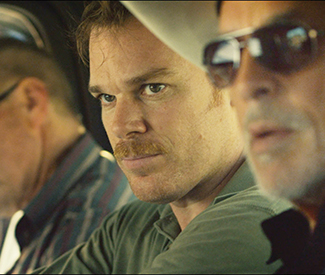
cheryl@sfbg.com
FILM For film fans, there’s a delight that comes from charting a talented director’s progress from obscurity to cult fame to “next-big-thing” status. I remember settling in to watch Jim Mickle’s 2010 breakout Stake Land (his first feature was 2006’s micro-budget creature feature Mulberry Street, which played multiple festivals on the genre circuit). I knew it was a vampire movie, a weary subject thanks to Twilight mania, but it soon became clear that Stake Land was not a by-the-numbers affair: Within the first five minutes, a crusty fang-slinger devours a human infant. “This is not a film to be fucked with,” I scribbled in my review, and filed away the name “Jim Mickle” for future consideration.
Last year, he returned with We Are What We Are, a remake of a Mexican chiller about cannibals fighting to keep their secret traditions alive despite pesky interference from the modern world. It was his third film with writing partner Nick Damici — also the lead in Mickle’s first two films, though he moved to a supporting role in We Are, which focused mostly on the teen sisters at its core. Set in rural upstate New York, We Are had its share of gore, but it also went deeper, teasing out a macabre and surprisingly detailed history of its flesh-eating family.
“To me, it’s more of a dark story about faith and religion,” he told me in an interview at the time. “I was much more interested in the girls’ story, and the story of a family trying to hold together after a tragic event.”
Now comes Mickle’s most accomplished film to date, and it’s even less overtly horror (though it contains a multitude of terrifying moments): Cold in July, a thriller ranging across East Texas, circa 1989. The script by Team Mickle-Damici is adapted from the novel by Joe R. Lansdale, who — buckle up, cultists — also penned the short story which spawned 2002’s Bubba Ho-Tep. That said, there are no supernatural elements afoot here; all darkness springs entirely from the coal-black hearts beating in its characters.
Well, some of its characters. Cold in July begins with a killing, but the trigger hand is attached to mild-mannered frame-store owner Richard Dane (Dexter‘s Michael C. Hall, rocking a splendid mullet). The masked man he shot was breaking into the Dane family home; Richard was just protecting his wife (Vinessa Shaw) and young son (Brogan Hall). That he accidentally, kinda, nailed the burglar — spraying brains everywhere, necessitating amusing later scenes of weary clean-up and furniture replacement — is breezed over by the police (including a cowboy-hatted Damici). “Sometimes, the good guy wins,” they assure him.
The good guy/bad guy dynamic is twisted, tested, and taken to extremes as Cold in July continues; it’s the sort of film best viewed without much knowledge of its plot twists, which are numerous and cleverly plotted. (Which is to say: You may read on, genre junkie, without fear of spoilers, because I don’t wanna ruin anyone’s viewing enjoyment.) The day after his run-in with vigilante justice, Richard realizes he’s the number one conversation topic in his small town, and his shiny local-hero status has attracted the attention of the dead robber’s father (Sam Shepard), just out of the clink and skilled in the art of Cape Fear-style menace.
What happens next is best left a surprise, though it does involve Don Johnson as a flamboyant, convertible-driving pig farmer; plenty more bloodshed; a meeting at a drive-in that just happens to be screening Night of the Living Dead (1968); and the line “You don’t wanna fuck with the Dixie Mafia.” Throughout, Cold in July expertly works its 1980s setting as both homage to and embodiment of the era’s gritty thrillers; its synth-heavy score and neo-noir lensing (by frequent Mickle collaborators Jeff Grace and Ryan Samul, respectively) and the casting of Wyatt Russell (son of Kurt; he was also in We Are What We Are) in a key role add to the feeling that Cold in July was crafted after much time spent in the church of St. John Carpenter. There’s humor, too, deployed with careful timing that doesn’t compromise the slow-burning tension that builds throughout — as when Richard celebrates some good news by headbanging to period-perfect power rock in his enormous, wood-paneled station wagon.
Most intriguingly, and for all its retro trappings, Cold in July offers a very modern exploration of masculinity via all of its leads, though Richard is obviously the embodiment of this theme. “I’ve been waiting for something big like this,” he says to his wife before slithering away on a secret road trip (she thinks he’s talking about landing an important new client). Unlike Viggo Mortensen’s secret gangster in 2005’s A History of Violence, which begins with a similar premise (family guy shoots someone in self-defense, opening a can of worms in the process), Richard has zero past aggression to draw on; dude’s got a history of mildness — with a heretoforth untapped curiosity about the wilder side of life awakened by a sudden bloody act. Once again, Mickle has delivered an unfuck-with-able film. Can’t wait to see what he does next. *
COLD IN JULY opens Fri/30 in Bay Area theaters.
Eternal beauty

arts@sfbg.com
FILM Hollywood in the 1920s was shameless about inventing fictitious back stories for its stars, especially those “exotics” exploited for their allegedly foreign-bred mystery and sexual magnetism. The enormous success of Rudolph Valentino — whose 1921 breakthrough feature The Four Horsemen of the Apocalypse opens this year’s San Francisco Silent Film Festival — sparked a particular craze for “Latin lover” types whose true ethnicity was often disguised. (One such heartthrob, Ricardo Cortez, was in fact Jewish New Yorker Jacob Krantz — and when word got out that he was no Spaniard, the studio “confessed” that he was “really” Viennese.)
Yet the era’s leading Latina actress required little such invention, because her biography already sounded like a studio press release. Dolores del Rio was born Maria Dolores Asúnsolo y López Negrete to a wealthy, well-connected Mexico City family of Spanish ancestry. Convent-educated, she married at age 16 a patron of the arts over twice her age, with whom she honeymooned in Europe for two years. Upon returning home, she attended a wedding at which her beauty caught the eye of Edwin Carewe — a Hollywood producer, director, agent, and manager who in all those capacities soon began making her a star. Her first hit was as the main girl fought over by ever-sparring BFF Marines in World War I comedy-adventure What Price Glory?, a 1926 smash.
Her exquisite three-quarter-moon face, framed by long jet-black hair, then graced a series of romances in which she played Russian peasants, tropical maidens, hot-blooded gypsies, Carmen (of operatic fame), and Ramona (1928) — the latter a gorgeous half-caste in old Spanish California. She’s yearned over by the genteel master of the ranchero (Roland Drew), but prefers virile Indian shepherd Alessandro (Ohioan Warner Baxter, shirtless but wearing plenty of shiny bronzer). This third screen version of a hugely popular 1884 novel was boosted at the box office by an original title song recorded by many (including trilling soprano del Rio herself), and featured in the 1928 film’s synchronized-sound version (which offered sound effects and music but no dialogue).
Ramona was assumed lost for decades until a Czech-market print was discovered recently, its restoration premiering in Los Angeles just two months ago. The 2014 SF Silent Film Festival is full of movies that belie their age in one way or another — yet this hunk of overripe hooey feels a thousand years old. It’s surely the worst film in the festival, what with its mean-crone stepmother (“If you marry without my consent, the jewels will go to the church!”), teetering pileup of melodramatic crises, and particularly howl-worthy happy ending. Nor has del Rio’s heavily gestural performance aged well, with nary a genuine note to be found in an emotional gamut that galumphs from cow-eyed innocence to amnesiac shock. Still, she’s gorgeous. Whether cast as prole or grande dame, her looks were so striking it was natural for del Rio to become a beauty icon, promoting cosmetics and fashion as “the perfect feminine figure” — a title she won in leading movie mag Photoplay’s 1933 poll of industry glamour experts.
Del Rio was very conscious of her image — and of her responsibility representing Mexican culture to the world. Unlike rival Lupe Velez, she preferred projecting a more languorous, refined persona than the stereotypically comic, tantrum-throwing “hot mama” Latina. She disliked skimpy costumes and risqué scenes (though one of her biggest hits would be 1932’s Bird of Paradise, a charming bauble of pure eye-candy in which her island princess and Joel McCrea’s sailor pitch woo wearing as little as possible). She turned down the female lead in 1934’s Viva Villa!, suspecting that film’s take on recent Mexican history would be controversial at home. (Indeed, it was banned there.)
Her public character was invariably elegant and dignified — never mind that sometimes her affairs preceded her divorces. One high-profile lover was 10-years-younger Orson Welles. He took her to Citizen Kane‘s 1941 premiere and starred her in 1943’s spy intrigue Journey Into Fear. But when their relationship flamed out, and Hollywood’s affection too had cooled, del Rio at last returned to Mexico. There, she soon established herself as the local film industry’s leading female star — exclusively playing suffering, virtuous heroines — winning a total of four Ariels (Mexico’s Oscar) and very rarely returning to English-language features. When she did, it was no longer as the hothouse object of desire, but as a sacrificing mother, notably to Elvis in Flaming Star (1960) and to Sal Mineo in Cheyenne Autumn (1964), both times playing Native Americans à la the half-Indian Ramona. Such semi-color blind casting and “proud matriarch” roles provided a logical last act to a career that was honorable and iconic — if seldom quite so impressive in, y’know, the acting department.
Ramona may survive primarily as a somewhat campy cultural artifact, but nearly everything else in this year’s Silent Fest remains outstanding artistically, including 1928 German heartbreaker Under the Lantern, and the same year’s fine British working-class drama Underground. There’s also 1923’s The Sign of Four, an excellent Sherlock Holmes adventure, so long as you can overlook some very dated race and class attitudes; atypical early works by Ozu (1933 gangster saga Dragnet Girl) and Dreyer (sprightly 1920 The Parson’s Widow); a goofy Soviet science fiction (1936’s Cosmic Voyage); mountain climbing documentary The Epic of Everest (1924); plus vehicles for Douglas Fairbanks, Buster Keaton, and pioneering French comedian Max Linder (1921’s Seven Years Bad Luck). *
SAN FRANCISCO SILENT FILM FESTIVAL
Thu/29-Sun/1, most shows $15-20
Castro Theatre
429 Castro, SF
Film Listings: May 28-June 3, 2014
Film listings are edited by Cheryl Eddy. Reviewers are Kimberly Chun, Dennis Harvey, Lynn Rapoport, and Sara Maria Vizcarrondo. For rep house showtimes, see Rep Clock. Due to the Memorial Day holiday, theater information was incomplete at presstime.
OPENING
Cold in July See “Where Evil Grows.” (1:49) Embarcadero.
The Dance of Reality His unique vision recently re-introduced to audiences by unmaking-of documentary Jodorowsky’s Dune, cinematic fabulist Alejandro Jodorowsky is back with his first film in a quarter-century. This autobiographical fantasia shows all initial signs of being a welcome yet somewhat redundant retread of his cult-famed early work (1970’s El Topo, 1973’s The Holy Mountain), as Santa Sangre was in 1989. It starts with the filmmaker himself fulminating wisdoms about the spiritual emptiness of a money-centric world, then appearing as guardian angel to his child self (Jeremias Herskovits). Little Alejandro is raised by a bullying, hyper macho father (Brontis Jodorowsky) and warm, indulgent mother (soprano Pamela Flores, singing every line of dialogue) who naturally clash at every turn. Jodorowsky’s stunning eye for bizarre imagery (abetted by DP Jean-Marie Dreujou’s handsome compositions) hasn’t faded, so there are delights to be had even in what fans might consider an over-familiar parade of dwarfs, amputees, anti clerical burlesques (like a dress-up dog beauty contest at church), Chaplinesque circus sentimentality, and other simple if surreal illustrations of society’s eternal victims and overlords. At a certain point, however, the misdeeds of father Jaime force his self-exile. The film’s consequent picaresque allegory of epic suffering toward redemption becomes cheerfully goofy, its symbol-strewn path increasingly funny and sweet rather than burdened by import. A large part of that appeal is due to junior Jodorowsky Brontis, who demonstrates considerable farcical esprit while flashing more full-frontal nudity than Michael Fassbender and Ewan McGregor combined ever dreamed of obliging. Shot in the family’s native Chile on a purported crowd funded budget of $3 million — could Hollywood provide so much original spectacle for 30 times that amount?—The Dance of Reality finds its 84-year-old maker as frisky as a pony, one that provides an endearingly unpredictable ride. (2:10) Opera Plaza, Shattuck. (Harvey)
The Grand Seduction Canadian actor-director Don McKellar (1998’s Last Night) remakes 2003 Quebecois comedy Seducing Doctor Lewis, about a depressed community searching for the town doctor they’ll need before a factory will agree to set up shop and bring much-needed jobs to the area. Canada is still the setting here, with the harbor’s name — Tickle Head — telegraphing with zero subtlety that whimsy lies ahead. A series of events involving a Tickle Head-based TSA agent, a bag of cocaine, and a harried young doctor (Taylor Kitsch) trying to avoid jail time signals hope for the hamlet, and de facto town leader Murray (Brendan Gleeson) snaps into action. The seduction of “Dr. Paul,” who agrees to one month of service not knowing the town is desperate to keep him, is part Northern Exposure culture clash, part Jenga-like stack of lies, as the townspeople pretend to love cricket (Paul’s a fanatic) and act like his favorite lamb dish is the specialty at the local café. The wonderfully wry Gleeson is the best thing about this deeply predictable tale, which errs too often on the side of cute (little old ladies at the switchboard listening in on Paul’s phone-sex with his girlfriend!) rather than clever, as when an unsightly structure in the center of town is explained away with a fake “World Heritage House” plaque. Still, the scenery is lovely, and “cute” doesn’t necessarily mean “not entertaining.” (1:52) Embarcadero. (Eddy)
Maleficent Angelina Jolie plays the iconic villain, with Elle Fanning as Sleeping Beauty, in this live-action Disney fantasy. (1:37) Shattuck.
A Million Ways to Die in the West Director and co-writer Seth MacFarlane also stars in this comedic Western, with Charlize Theron and Liam Neeson. (1:56)
ONGOING
Ai Weiwei: The Fake Case Less of an introduction to the dissident Chinese artist than Alison Klayman’s 2012 Ai Weiwei: Never Sorry, this doc from Andreas Johnsen is more of a fly-on-the-wall affair, following Ai in the months following his arrest and detention for “tax evasion.” The double-entendre title refers to Ai’s company (Fake Design) as well as the trumped-up case against him, clearly intended to punish him for challenging authority. Though he’s on house arrest, he’s allowed to visit art studios and take walks (under constant surveillance); though he’s technically not allowed to talk to foreign journalists, they are certainly eager to chat with him, and we see him cautiously working around that rule. At one point, a reporter asks him why he doesn’t simply move out of China and live somewhere with more freedom. His fiery reply — that he’d be “dead already” if he didn’t express himself — speaks volumes, and suggests that despite his weary appearance here, he’s more determined than ever before. Of related interest: his just-announced exhibit of works on imprisonment, @Large, scheduled to open Sept. 27 on Alcatraz. (1:29) (Eddy)
The Amazing Spider-Man 2 The best thing about The Amazing Spider-Man 2 — the sequel to the 2012 reboot that nobody really wanted in the first place — is the achingly cute chemistry between real-life couple Andrew Garfield (Peter Parker/Spider-Man) and Emma Stone (Gwen Stacy, whose fate is no spoiler to anyone who is familiar with the Spider-Man canon). Can’t deny it; those two are adorbs. But since Spider-Man is supposed to be an action movie, not a romantic comedy, it spends most of its time setting up foes for the webslinger (Jamie Foxx as a nerd zapped into the power-mad Electro; Dane DeHaan as bratty rich kid Harry Osborn), as well as rehashing the mysterious deaths of Peter’s parents, and underlining for approximately the zillionth time the disconnect between the media’s perception of Spider-Man (he’s a menace! He interferes with police work!) and the ecstatic love the people of New York have for the guy — understandable, since he’s in the business of saving their butts on a regular basis. This isn’t a crappy movie by any means; it’s entertaining enough, and the 3D swooping-between-skyscrapers FX have gotten quite dazzling. But there’s still a heavy air of “This again?” that hangs over the whole thing. Doesn’t Marvel have enough dough from the Avengers movies to let Spidey take an extended vacation? (2:20) (Eddy)
Belle The child of a British naval officer and a Caribbean slave, Belle (Gugu Mbatha-Raw) is deposited on the doorstep — well, the estate grounds — of her father’s relatives in 1769 England after her mother dies. Soon she’s entirely orphaned, which makes her a wealthy heiress and aristocratic title holder at the same time that she is something less than human in the eyes of her adopted society. For Belle is black (or more properly, mixed-race), and thus a useless curiosity at best as a well-bred noblewoman of the “wrong” racial makeup. Based on a murky actual historical chapter, Amma Asante’s film is that rare sumptuous costume drama which actually has something on its mind beyond romance and royalty. Not least among its pleasures are a fine supporting cast including Tom Wilkinson, Miranda Richardson, Penelope Wilton, and Emily Watson. (1:45) (Harvey)
Blended (1:57)
Breastmilk Our bodies, ourselves — and our babies and breastmilk — and the thick, rich membrane of biological and cultural complications latched to breastfeeding today all play into director-producer Dana Ben-Ari’s fascinating doc Breastmilk. Though the act of breastfeeding may sound like the most natural thing in the world, many parents encounter a thicket of challenges when choosing to do it, whether it’s due to low milk production or tongue-tied babies, not to mention the judgments and stresses that occur along the way. Showing everything from the intimate first moments of a newborn learning how to latch on to beautifully close-up images of breasts being pumped, Ben-Ari follows diverse crew of moms — privileged, blue-collar, same-sex, and bohemian — many before birth and post-breastfeeding, as well as academics and experts, while unpacking an enthralling set of issues like the guilt around using formula rather than breastmilk; the embarrassment of breastfeeding in public sans “hooter hider” for the male viewer; the insecurities women feel about milk production; the boundaries between maternity and sexuality; and the politics of women of color offering their breastmilk to privileged white adopters. Kudos, too, to Ben-Ari for gratifyingly going, even briefly, toward the idea of the “monstrous,” “leaky” female body; lactation porn; and the “phallic potential” of the breast. (1:31) Roxie. (Chun)
Captain America: The Winter Soldier Marvel’s most wholesome hero returns in this latest film in the Avengers series, and while it doesn’t deviate from the expected formula (it’s not a spoiler to say that yes, the world is saved yet again), it manages to incorporate a surprisingly timely plot about the dangers of government surveillance. Steve Rogers (Chris Evans), hunkiest 95-year-old ever, is still figuring out his place in the 21st century after his post-World War II deep freeze. Nick Fury (Samuel L. Jackson) has him running random rescue missions with the help of Black Widow (Scarlett Johansson), but SHIELD is working on a top-secret project that will allow it to predict crimes before they occur. It isn’t long before Cap’s distrust of the weapon — he may be old-fashioned, but he ain’t stupid — uncovers a sinister plot led by a familiar enemy, with Steve’s former BFF Bucky doing its bidding as the science-experiment-turned-assassin Winter Soldier (Sebastian Stan). Anthony Mackie, Robert Redford, and series regular Cobie Smulders are fine in supporting roles, and Johansson finally gets more to do than punch and pose, but the likable Evans ably carries the movie — he may not have the charisma of Robert Downey Jr., but he brings wit and depth to a role that would otherwise be defined mainly by biceps and CG-heavy fights. Oh, and you know the drill by now: superfans will want to stick around for two additional scenes tucked into the end credits. (2:16) (Eddy)
Chef Not to take anything away from the superhero crew, but Chef feels like the closest thing to a labor of love from writer, director, and star Jon Favreau in many a day. As a director, he may have been making doughnuts — fun-filled and teeming with CGI eye candy, but doughnuts nevertheless — when it came to effects-driven blockbusters like 2008’s Iron Man, but this well-meaning play for the heart, by way of the stomach, shows you where Favreau’s head is really at. Chef revolves around Carl Casper (Favreau), a onetime food star, now reduced to serving up predictable crowd-pleasers at the behest of his restaurant’s overbearing owner (Dustin Huffman). It takes the barbs of an influential critic (Oliver Platt) — and an ensuing Twitter war — to set Carl off and send him away on his own, at the coaxing of his glam ex Inez (Sofia Vergara). Hooked up with a dilapidated food truck and former kitchen staffer Martin (John Leguizamo), and aided by ably Tweeting son Percy (Emjay Anthony), Carl ties his dreams — and lost passion — to the classic Cuban sandwich. The ensuing road trip from Miami to LA, and Carl’s journey toward self and a renewed relationship with his son, is a fun (if, in the end, a bit too speedily sketched) vault through the joys of eating your way through America’s new culinary heartland. Amid the volley of sign-of-the-times social-media swinging and cameos by the uncostumed Robert Downey Jr., Scarlett Johansson, and the like, Favreau’s main dish is that a family that eats, cooks, and runs a business together, stays together — child labor laws or no. (1:55) (Chun)
Chinese Puzzle Chinese Puzzle is the airy kind of nothing American studios don’t seem capable of making any more: a relatively harmless, ingratiating hang with a rather varied cast of characters running afoul of one another in bottom-line benign ways (save a beating early on). The film concludes Cédric Klapisch’s trilogy, started in 2002’s study-abroad romp L’auberge Espagnole and continued in 2005’s early adulthood crisis Russian Dolls. The final film is just as weightless, and enjoyable to watch, as the preceding pair, and they form a kind of lazy man’s analog to Richard Linklater’s sublime Before films. This is a world of coincidence framed as realism — but if you go to the movies for a laugh, for a diversion, and for a quick getaway to a carefree daydream of what life might be for the shiftless and curiously monied (what’s work?), this might be the kind of date movie you want, maybe even need. (1:57) (Ryland Walker Knight)
Documented Jose Antonio Vargas’ grandparents — who raised him in Mountain View after he was smuggled into America at age 12 from the Philippines — expected him to grow up, blend in, and live a perfectly ordinary life in his new country. But Vargas was a smart kid who grew into an exceptionally intelligent young adult. He pursued a journalism career that earned him coveted reporting gigs for the Washington Post and CNN, among other outlets, as well as a Pulitzer Prize. He’s also gay, a fact that complicated his family’s hopes for a traditional wedding (and subsequent green card). In 2011, weary of guarding a secret he’d shared with only a few close friends, Vargas penned a powerful essay for the New York Times Magazine, revealing “My Life as an Undocumented Immigrant.” Documented, his film with co-director Ann Lupo, chronicles the months before and after Vargas “outed” himself. It’s a highly personal story, especially when the film crew travels to Manila to interview Vargas’ mother. Their geographical separation has become an emotional estrangement so complex she weeps when he refuses to add her on Facebook. But Documented also taps Vargas’ Define American media campaign to broaden its message, interviewing undocumented youths affected by the DREAM Act and sharing in their joy when the bill — providing permanent residency to young, educated immigrants of “good moral character” — finally goes into effect. Unfortunately for Vargas, he’s too old to benefit from the legislation, and though he feels relief at having come clean, he’s still unable to make any traction in his quest for citizenship. (At one point, he actually calls INS to see if anyone’s planning to clamp down, as if finally getting “caught” would be preferable to living in extended limbo.) The only closure of sorts comes when Vargas reconnects with his mother via Skype, but there’s an undercurrent of helplessness to their computer-screen reunion that makes Documented‘s themes feel especially raw and urgent. (1:29) Roxie. (Eddy)
The Double Simon (Jesse Eisenberg) is a lowly clerk who gets nothing but indifference and scorn both at work and in his pitiful private life. Things slip even more insidiously beyond his control with the arrival of James (Eisenberg again), his exact doppelgänger — though no one else seems to notice that — and a climber as ruthlessly efficient as Simon is hapless. Not only does he steal his look-alike’s ideas in a rapid rise to the top, he seems to take great pleasure in kicking Simon further downward. Applying a Kafkaesque gloss to Dostoyevsky’s novella, with stylistic hat-tips to the Coens and Terry Gilliam, Richard Ayoade’s second feature is very different from his prior Submarine (2010) in all ways but one: It, too, is both overwhelmed and rendered fascinating by an excess of high directorial “style” whose self-consciousness infuses every frame and puts quote marks around every emotion. As a result, The Double is a striking objet d’art you’ll either love or hate — or enjoy aesthetically while being annoyed by its sacrifice of depth for a showoff surface. (1:33) (Harvey)
Fading Gigolo Ah, the charm of a well-aged, seasoned perv &ldots; nope, we don’t dare touch the Woody Allen/Dylan Farrow abuse allegations — though those recent headlines flit around the edges of this generally benevolent, almost strangely innocuous charmer, written by and directed John Turturro, who also stars as the curiously blank-faced tabula rasa of a title character. The delights of Mrs. Robinsons have been rhapsodized on film, through the lens of worshipful younger men — less so, their male counterparts, as viewed by other hetero men. The danger of bromance surging into the homoerotic is likely too dire for most, yet somehow bookstore boss Murray (Allen) sees the mysterious, submerged sex appeal in his loyal employee Fioravante (Turturro) and taps him to get involved in a ménage à trois with a society dermatologist (Sharon Stone). The soft-spoken Fioravante turns out to be a smash in the sack with the doc, transforming the opportunistic Murray into a wildly successful pimp as his employee takes on the audacious Selima (Sofia Vergara) and the prim Jewish Orthodox widow Avigal (Vanessa Paradis). The latter character seems to have come straight from another place and time — much like this film, which turns Brooklyn into a something resembling a leaf-strewn European village and recalls odes to revolutionary sexuality in the ’60s. The movie’s lightly absurd comedy is embedded in the fact that Turturro writes himself into the role of the seducer, the pleaser, while wrapped in the skin of pleasant if everyday-looking Joe, although Paradis, a revelation as a deeply repressed devout mother slowly awakening to her body, points to more serious pleasures, lingering below the surface of all of us. (1:30) (Chun)
Fed Up Katie Couric narrates, produces, and brings celebrity heft to Stephanie Soechtig’s well-crafted expose on the alarmingly powerful food industry — specifically, revealing how “nutritional standards” put forth by the government over the past 30 years have actually caused the nation’s current obesity epidemic. Fed Up‘s straightforward combination of simple facts (80 percent of food items have added sugar); talking-head experts (Bill Clinton, UCSF’s Dr. Robert Lustig); historical fact-finding (including a segment that convincingly compares today’s food industry to the tobacco industry of yore); and profiles of dangerously overweight teens (all of whom are trying, and failing, to lose weight) adds up to a film that is poised to have An Inconvenient Truth-style impact on viewers — and will hopefully
open enough eyes to make waves beyond movie theaters. (1:32) (Eddy)
Finding Vivian Maier Much like In the Realms of the Unreal, the 2004 doc about Henry Darger, Finding Vivian Maier explores the lonely life of a gifted artist whose talents were discovered posthumously. In this case, however, the filmmaker — John Maloof, who co-directs with Charlie Siskel — is responsible for Maier’s rise to fame. A practiced flea-market hunter, he picked up a carton of negatives at a 2007 auction; they turned out to be striking examples of early street photography. He was so taken with the work (snapped by a woman so obscure she was un-Google-able) that he began posting images online. Unexpectedly, they became a viral sensation, and Maloof became determined to learn more about the camerawoman. Turns out Vivian Maier was a career nanny in the Chicago area, with plenty of former employers to share their memories. She was an intensely private person who some remembered as delightfully adventurous and others remembered as eccentric, mentally unstable, or even cruel; she was a hoarder who was distrustful of men, and she spoke with a maybe-fake French accent. And she was obsessed with taking photographs that she never showed to anyone; the hundreds of thousands now in Maloof’s collection (along with 8mm and 16mm films) offer the only insight into her creative mind. “She had a great eye, a sense of humor, and a sense of tragedy,” remarks acclaimed photographer Mary Ellen Mark. “But there’s a piece of the puzzle missing.” The film’s central question — why was Maier so secretive about her hobby? — may never be answered. But as the film also suggests, that mystery adds another layer of fascination to her keenly observed photos. (1:23) (Eddy)
The Galapagos Affair: Satan Came to Eden Extensive archival footage and home movies (plus one short, narrative film) enhance this absorbing doc from San Francisco-based Dayna Goldfine and Dan Geller (2005’s Ballets Russes). It tells the tale of a double murder that occurred in the early 1930s on Floreana — the most remote of the already scarcely-populated Galapagos Islands. A top-notch cast (Cate Blanchett, Diane Kruger, Connie Nielsen, Josh Radnour) gives voice to the letters and diary entries of the players in this stranger-than-fiction story, which involved an array of Europeans who’d moved away from civilization in search of utopian simplicity — most intriguingly, a maybe-fake Baroness and her two young lovers — and realized too late that paradise isn’t all it’s cracked up to be. Goldfine and Geller add further detail to the historic drama by visiting the present-day Galapagos, speaking with residents about the lingering mystery and offering a glimpse of what life on the isolated islands is like today. (2:00) (Eddy)
God’s Pocket The dreary directorial debut of Mad Men star (and occasional episode director) John Slattery begins with a funeral, and it’s not long before we realize the deceased, Leon (Caleb Landry Jones), will be grieved only by his mother (Christina Hendricks). Most of this bleak tale takes place in flashback — racist, jacked-up Leon’s workplace accident (actually a well-deserved blow to the head, wielded by a fellow laborer he’d been threatening) occurs while his boozy-schlub stepfather Mickey (Philip Seymour Hoffman, in one of his final roles) is boosting a refrigerated truck for use in his meat business. When his wife demands an investigation into Leon’s death, Mickey dutifully, if reluctantly, asks some of his ne’er-do-well associates to poke around; one thing leads to another, more blood is shed, and the stolen truck is repurposed for toting around a certain albatross of a human corpse. Set in 1978 and named for the fictional working-class Philly neighborhood that provides its backdrop, God’s Pocket (based on the novel by Pete Dexter, whose other adapted works include The Paperboy and Paris Trout) falls quite short of delivering narrative satisfaction; even its stellar cast (which also includes John Turturro, Eddie Marsan, and Richard Jenkins — the latter as a washed-up journalist who improbably seduces Hendricks’ character) can’t elevate characters that are thinly drawn and murkily motivated. (1:28) (Eddy)
Godzilla Bearing the weight of a 1998 American debut so stinky that devotees of the Japanese original dubbed it “GINO” (for “Godzilla in Name Only”), the King of the Monsters returns for a do-over that smells more like generic summer entertainment than anything else. We begin in 1999, when a pair of scientists (Ken Watanabe and Sally Hawkins) discover a giant skeleton of sorts in the Philippines — just as a deadly accident (or was it?) devastates a Japanese nuclear power plant. Fifteen years later, the scientists are still on the trail of Whatever That Was, while guilty power-plant survivor Bryan Cranston has become a greasy-haired conspiracy theorist, much to the annoyance of his San Francisco-based Navy officer son (Aaron Taylor-Johnson). The humans in Gareth Edwards’ film don’t actually matter much; aside from Cranston and to a much lesser extent Watanabe, none of the characters are interesting or memorable, and the plot — which has Big G lumbering after a pair of “Massive Unidentified Terrestrial Organisms” who decide to incubate their eggs in downtown SF — is also a low-stakes affair. (If you believe for a second that Taylor-Johnson’s doe-eyed wife and son won’t survive the monster attack, I have a busted-up Golden Gate Bridge to sell you.) But the monster design is plenty satisfying, and really, it’s just fine that Godzilla — who wrinkles his snout in annoyance at those pesky MUTOs — is this film’s one and only charismatic presence; dude’s going on a 70-year career at this point. (2:03) (Eddy)
The Grand Budapest Hotel Is this the first Wes Anderson movie to feature a shootout? It’s definitely the first Anderson flick to include a severed head. That’s not to say The Grand Budapest Hotel, “inspired by” the works of Austrian novelist Stefan Zweig, represents too much of a shift for the director — his intricate approach to art direction is still very much in place, as are the deadpan line deliveries and a cast stuffed with Anderson regulars. But there’s a slightly more serious vibe here, a welcome change from 2012’s tooth-achingly twee Moonrise Kingdom. Thank Ralph Fiennes’ performance as liberally perfumed concierge extraordinaire M. Gustave, which mixes a shot of melancholy into the whimsy, and newcomer Tony Revolori as Zero, his loyal lobby boy, who provides gravitas despite only being a teenager. (Being played by F. Murray Abraham as an older adult probably helps in that department.) Hotel‘s early 20th century Europe setting proves an ideal canvas for Anderson’s love of detail — the titular creation rivals Stanley Kubrick’s rendering of the Overlook Hotel — and his supporting cast, as always, looks to be enjoying the hell out of being a part of Anderson’s universe, with Willem Dafoe, Jeff Goldblum, and Adrien Brody having particularly oversized fun. Is this the best Wes Anderson movie since 2001’s The Royal Tenenbaums? Yes. (1:40) (Eddy)
Ida The bomb drops within the first ten minutes: after being gently forced to reconnect with her only living relative before taking her vows, novice nun Anna (Agata Trzebuchowska) learns that her name is actually Ida, and that she’s Jewish. Her mother’s sister, Wanda (Agneta Kulesza) — a Communist Party judge haunted by a turbulent past she copes with via heavy drinking, among other vices — also crisply relays that Ida’s parents were killed during the Nazi occupation, and after some hesitation agrees to accompany the sheltered young woman to find out how they died, and where their bodies were buried. Drawing great depth from understated storytelling and gorgeous, black-and-white cinematography, Pawel Pawilowski’s well-crafted drama offers a bleak if realistic (and never melodramatic) look at 1960s Poland, with two polar-opposite characters coming to form a bond as their layers of painful loss rise to the surface. (1:20) Smith Rafael. (Eddy)
Ilo Ilo Set in 1997 Singapore at the onset of the country’s recession, Ilo Ilo focuses on one family, who could be any family: father Teck (Chen Tianwen), who’s been let go from his sales position and is working various hourly jobs, hoping his wife doesn’t find out; pregnant Hwee Leng (a dynamic Yeo Yann Yann), a secretary who’s been the “bad cop” in the relationship so long she’s kind of grown into the role; and bratty Jiale (Koh Jia Ler), a 10-year-old terror who disobeys at home and gets into fights at school. Into this swirl of domestic tension comes Teresa (Angeli Bayani), a housekeeper-nanny who’s left her own family behind in the Philippines in search of a better way of life. It’s hell at first — “Auntie Terry” is no Mary Poppins, but she has the patience of a saint, putting up with Jiale’s antics and Hwee Leng’s ice-queen routine. Slowly, however, she builds a rapport with her young charge, but since Ilo Ilo is firmly interested in realism, there’s no quick fix to the problems that lie beneath the family strife, despite the kid’s obsession with lottery numbers. A remarkably assured debut film from 29-year-old director Anthony Chen, Ilo Ilo picked up the Camera D’Or at Cannes, in addition to multiple other fest prizes. The accolades are well-earned — rarely has a film so effectively and subtly captured the day-to-day frustrations of middle-class financial uncertainty. (1:40) (Eddy)
The Immigrant Ewa (Marion Cotilliard) is an orphaned Polish émigré who’s separated from her sickly sister at Ellis Island in 1921, and scheduled for deportation as an alleged “woman of low morals.” She’s rescued from that by Bruno (Joaquin Phoenix), though he’s not quite the agent of charity he seems — in fact, Ewa doesn’t realize she’s actually been recruited for a prostitution racket he thinly veils as a theatrical troupe. Still, she stays, believing she has no other viable path to freeing her sister from quarantine, she allows her own degradation for money’s sake. This latest collaboration between Phoenix and director-coscenarist James Gray is a handsome period piece that’s done skillfully and tastefully enough to downplay — but not quite hide — the fact that its moral melodrama might as well have been written (as well as set) nearly a century ago. Cotilliard is fine in her best English-language role to date, and Phoenix is compelling as usual; Jeremy Renner is somewhat miscast as a distant-third lead. But whether you find The Immigrant poignant or forced will depend on your tolerance for a script whose every turn is all too predictable. (2:00) (Harvey)
Locke This virtual solo show stars Tom Hardy as Ivan Locke, a 40-ish construction manager driving to London on the eve of “the biggest cement pour” ever attempted in Europe. But he’s driving away from that, to the shrill indignation of superiors who expect his reliable on-site supervision, and the increasingly drunken panic of the flunky (voice of Andrew Scott) he’s deputized to take his place. The reason for this unprecedented dereliction of responsibility is that Ivan is committed to another responsibility, to “take care of my fuckup.” As we gradually realize during his 85-minute drive, that means showing up for the premature birth of the baby he’s sired by a fragile, rather hysterical-sounding woman (Olivia Colman) in the brief sole detour from marital infidelity he’s ever taken. Doing so may well end his career, as well as his long-standing marriage to the mother of his sons. But our protagonist is determined at any cost not to become his own late father (with whom he has imaginary conversations), a wastrel who never made good on his obligations to family or anyone else. Shot repeatedly in real time with multiple cameras over 12 nights, then assembled from 16 full-length takes, Steven Knight’s Locke is a striking experiment that never quite escapes an air of theatrical stunt. In retrospect you realize most of its tension derives not from the core emotional crises, but from narrative red herrings — primarily our terror that anyone multitasking this recklessly behind the wheel is an accident waiting to happen. But the chameleonic Hardy, playing a rather square, middle-class, essentially humorless type unlike any he’s done before, makes this effortfully “decent” man so compelling you can’t look away. If there’s anything this actor can’t do, he hasn’t tried it yet. (1:35) (Harvey)
The Lunchbox Ila (Nimrat Kaur) is a self-possessed housewife and a great cook, whose husband confuses her for another piece of furniture. She tries to arouse his affections with elaborate lunches she makes and sends through the city’s lunchbox delivery service. Like marriage in India, lunchbox delivery has a failure rate of zero, which is what makes aberrations seem like magical occurrences. So when widow Saajan (Irrfan Khan) receives her adoring food, he humbly receives the magical lunches like a revival of the senses. Once Ila realizes her lunchbox is feeding the wrong man she writes a note and Saajan replies — tersely, like a man who hasn’t held a conversation in a decade — and the impossible circumstances lend their exchanges a romance that challenges her emotional fidelity and his retreat from society. She confides her husband is cheating. He confides his sympathy for men of lower castes. It’s a May/December affair if it’s an affair at all — but the chemistry we expect the actors to have in the same room is what fuels our urge to see it; that’s a rare and haunting dynamic. Newcomer Kaur is perfect as Ila, a beauty unmarked by her rigorous distaff; her soft features and exhausted expression lend a richness to the troubles she can’t share with her similarly stoic mother (Lillete Dubey). Everyone is sacrificing something and poverty seeps into every crack, every life, without exception — their inner lives are their richness. (1:44) (Vizcarrondo)
Million Dollar Arm Jon Hamm has it bad — that dark-around-the-edges Mad Men afterglow can’t help but follow him everywhere, even into the arms of Disney in this solid Cinderella-story baseball tale (possibly the best headlining gig he’s had outside SCDP). Hamm’s J.B. Bernstein would certainly have something to hash over with Don Draper: both are down-on-their-luck charmers with the cracks in their facades clearly showing, yet nonetheless intent on doing it their way. J.B. is striking out when it comes to recruiting talent for his new, rapidly sinking sports agency, when he comes up with a genius idea while he and fellow agent Aash (Aasif Mandvi) are watching random sports at the latter’s home: Why not tap into one of the world’s greatest unexploited baseball markets by staging a talent search for an Indian cricket player with Major League pitching potential? Canvassing the country with the help of sleepy scout Ray (Alan Arkin) and baseball-enthusiast translator Amit (Pitobash), J.B. finds his arms ultimately attached to village truck driver Dinesh (Madhur Mittal) and contorting track-and-field thrower Rinku (Suraj Sharma of 2012’s Life of Pi). But how to turn raw talent into professional careers in just months? And moreover, how can the would-be golden boys overcome cultural barriers that a fly ball couldn’t surmount? It’s a tryout for all concerned — including an MLB that’s still striving to expand its reach in Asia, and Hamm, who can be so good as Draper that he’s in increasing danger of being typecast. In the Disney mold, at least, his character achieves fairly happy results. (2:00) (Chun)
Neighbors It’s a mystery why Neighbor‘s marketing teams are intent on creating some kind of social media battle between this comedy’s family and frat: The college boys are clearly outclassed when it comes to uninhibited physical comedy daring, thanks to Seth Rogen and Rose Byrne. They play young parents Kelly and Mac, who are still basking in their new craftsman home and settled state, trying to figure out sex in front — or is it behind? — baby, and how to get to the rave before bedtime, when a frat, led by oft-shirtless hottie Teddy (Zac Efron) and pal Pete (Dave Franco), moves into the house next door. How do you ask them to “keep it down” yet still be cool? The pretzels Mac and Kelly wrap themselves into, in order to still hang with the kids, are about as hilarious as the inevitable battles that break out over the hearts and minds of college administrators (Lisa Kudrow), pals (the hilarious Ike Barinholtz), and wannabe brothers like the loyal Assjuice (Craig Roberts). Still, despite some memorable gags, Neighbors feels like a bit of a squandered opportunity as one fidgets through many of the frat house scenes. Part of the problem is, why would Kelly, Mac, or anyone want to be in good with such an uninteresting group of Greeks? (1:37) (Chun)
Only Lovers Left Alive Jim Jarmusch has subverted genre films before — you don’t have to dig deep to find fierce defenders of 1995 Western Dead Man — but his latest, Only Lovers Left Alive, is poised to be his biggest commercial hit to date. That’s not merely because it’s a vampire film, though this concession to trendiness will certainly work in its favor, as will the casting of high-profile Avengers (2012) star Tom Hiddleston. But this is still a Jarmusch vampire movie, and though it may be more accessible than some of the director’s more existential entries, it’s still wonderfully weird, witty, and — natch — drenched in cool. The opening credits deploy a gothic, blood red font across a night sky — a winking nod to the aesthetics of Hammer classics like Horror of Dracula (1958). Then, the camera begins to rotate, filming a record as it plays, and symbolizing the eternal life of the two figures who’ve entered the frame: gloomy Adam (Hiddleston, rocking a bedhead version of Loki’s dark ‘do), who lurks in a crumbling Detroit mansion, and exuberant Eve (Tilda Swinton, so pale she seems to glow), who dwells amid piles of books in Tangier. These two live apart, partially due to the hassle of traveling when one can’t be in the sun (red-eye flights are a must). Yet they remain entangled in spirit, a phenomenon referenced amid much talk of what Einstein called “spooky action at a distance,” and when at last they reunite, it’s glorious. Unlike those old Hammer films, there’s no stake-wielding Van Helsing type pursuing these creatures of the night; if there’s a villain, it’s actual and emotional vampire Ava (Mia Wasikowska), Eve’s bad-penny sibling, who swoops in for a most unwelcome visit. But Only Lovers Left Alive‘s biggest antagonist is simply the outside world, with its epidemics of dull minds and blood-borne diseases. The delight Jarmusch takes in tweaking the vampire mythos is just as enjoyable as his interest in exploring the agony, ecstasy, and uneventful lulls of immortality. (2:03) (Eddy)
The Other Woman Cameron Diaz gets top billing — and the title role — in The Other Woman, but Leslie Mann is the real stealth weapon here: the other comedian who bravely dares to go into unseemly crazy-bitch, scatological-Bridesmaids territory, with shrill histrionics, whining, and shrieks hitting registers that threaten to make most men’s heads explode. Coming on like Lucille Ball on crystal, Mann teeters out in the limb in kitten heels — and your enjoyment of The Other Woman depends on whether you love that balancing act or loathe it. Diaz and Mann’s reluctant-then-mutual girl crush is at the heart of this proudly chick flick directed by Nick Cassavetes, who tends to beat his own indie path apart from his involvement in one of the biggest lady draws of all time, The Notebook (2004). The chick magnet and cause for so much chaos is Mark (Nikolaj Coster-Waldau), a sketchy entrepreneur who skims wife Kate’s (Mann) business ideas and toys with power-bitch lawyer Carly (Diaz), as well as his other other woman, perfect-10 Amber (Kate Upton). Coster-Waldau throws himself into the hysteria, as if it were the sole lifeline out of dour King’s Landing, but this is the Mann and Diaz Show, with a smarter-than-average screenplay by Melissa Stack and revenge served up like a self-righteous side dish at a Real Housewives buffet line. And just to show you how far we haven’t come, like those benighted housewives, those assembled aren’t so feminist that they won’t stoop to deliver a bitchy joke at the expense of Upton’s character. (1:49) (Chun)
Palo Alto Adapted from the 2010 short story collection by James Franco, first-time director Gia Coppola’s depressive, aimless tale of disaffected youth tracks the ennuis and misadventures of a handful of Palo Alto teenagers: shy, inexperienced April (Emma Roberts), teetering on the edge of an affair with her soccer coach (Franco); naively promiscuous Emily (Zoe Levin); budding head case Fred (Nat Wolff); and his friend Teddy (Jack Kilmer, son of Val, who plays April’s out-to-lunch stepfather), who ambivalently participates in Fred’s mayhem while pining after April. Adult supervision is nearly Peanuts-level sparse — in other Peninsula households, helicopter parents may be fine-tuning the lives of their children down to the last extracurricular; here, the stoned, distracted elders who occasionally wander in front of the camera are more like flaky, absentee roommates. Meanwhile, their young charges fill the empty hours with copious amounts of alcohol consumption, random property destruction, and a round or two of social crucifixion. The protagonists and their cohorts form a fairly distasteful tableau of privileged, floundering adolescence, eliciting an emotional response in which uneasy concern occasionally overcomes bemused disgust. But the individual stories are virtually weightless, and the characters’ lack of investment in anything, even their own problems, makes it difficult to care too much about their fates. (1:38) (Rapoport)
Under the Skin At the moment, Scarlett Johansson is playing a superhero in the world’s top blockbuster. Her concurrent role in Jonathan Glazer’s Under the Skin — the tale of an alien who comes to earth to capture men, but goes rogue once her curiosity about the human world gets the better of her — could not be more different in story or scope. Her character’s camouflage (dark wig, thickly-applied lipstick) was carefully calibrated to make her unrecognizable, since Glazer (2000’s Sexy Beast) filmed the alien’s “pick-up” scenes — in which Johansson’s unnamed character cruises around Glasgow in a nondescript van, prowling for prey — using hidden cameras and real people who had no idea they were interacting with a movie star. The film takes liberties with its source material (Michel Farber’s novel), with “feeding” scenes that are far more abstract than as written in the book, allowing for one of the film’s most striking visual motifs. After the alien seduces a victim, he’s lured into what looks like a run-down house. The setting changes into a dark room that seems to represent an otherworldly void, with composer Mica Levi’s spine-tingling score exponentially enhancing the dread. What happens next? It’s never fully explained, but it doesn’t need to be. When the alien begins to mistakenly believe that her fleshy, temporary form is her own, she abandons her predatory quest — but her ill-advised exploration of humanity leads her into another dark place. A chilling, visceral climax caps one of the most innovative sci-fi movies in recent memory. (1:47) (Eddy)
Words and Pictures Words and Pictures is about as bifurcated as its title, while spinning off a central beef that Hepburn and Tracey might have wrapped their madcap bickering ways around at one time. Which is more powerful: language or images, poetry or painting? The age-old debate starts to feel a little creaky by Words’ close, but you can see and hear why the conceit drew such acting thoroughbreds as Juliette Binoche and Clive Owen, playing two passionate, paint-hurling, bottle-foisting artistic types on either side of a divide overseen by Australian director Fred Schepisi (1987’s Roxanne). Owen’s Jack Marcus is an alcoholic, onetime lit-star of an English teacher whose creatively constipated bad boy routine is starting to wear thin when Binoche’s painter Dina Delsanto arrives at his prep school on the pretext of teaching an honors art class. In actuality, she’s taking time away from the NY art scene to figure out a new way to paint while grappling with rheumatoid arthritis. Sparks fly between the two hard-headed combatants, along with punches delivered by some smartly scripted sparring, as they get the students hot and bothered by their debate concerning words vs. pictures. The master-class lessons learned by watching Binoche work, jaw firmly set and intelligent eyes darting as she maps out her next composition, while Owen falls apart, Hemingway-style, are offset by a facile, cozy ending that feels test-audience driven. (1:51) (Chun)
X-Men: Days of Future Past Bryan Singer, director of the first two X-Men films (2000’s decent X-Men; 2002’s meh X2) returns to helm this latest franchise entry — the fourth sequel in a series that also includes two movies focusing on Hugh Jackman’s Wolverine. That fan-favorite character is front and center in both of Days of Future Past‘s time frames: the present, a bleak dystopia in which robot assassins have wiped out nearly every mutant (save Wolverine, Patrick Stewart’s Professor X, Ian McKellan’s Magneto, and a few others), and most humans along with them; and the past, a key moment in the polyester-laden 1970s in which mutant avenger Mystique (Jennifer Lawrence) inadvertently sets the disastrous future events in motion by killing robot designer Trask (Peter Dinklage). Wolverine time-travels to convince younger versions of the Professor (James McAvoy) and Magneto (Michael Fassbender) to put aside their Himalayan-sized differences to stop her. (Speaking of avengers, there’s a capital-A one here: Quicksilver, a character from both comic-book worlds; he’s portrayed here with giddy mischief by American Horror Story‘s Evan Peters, and is the film’s high point.) Yes, that’s a heady plot, and there are a zillion other characters, but Future Past manages, for the most part, to avoid feeling like an overloaded mess. It’s most entertaining in scenes that show off its characters’ superpowers — clearly, the CG artists had a blast working on this one — which are plentiful enough to make slogging through the ennui-laden moments of downtime worth it.(2:10) (Eddy) *