Energy

Pop shop

0

arts@sfbg.com

DANCE For an event with a reputation for wall-shaking energy, the first program of the 15th Annual San Francisco International Hip Hop DanceFest turned out to be an oddly muted experience. The mix of acts — which in the past has always opened new perspectives on an art that has moved from the street onto the stage (and even reality TV) — simply wasn’t potent enough. Also, with only one company from abroad, the evening just barely warranted its claim of being “international.”

But even though the program disappointed as a totality, it did include individual acts of quality. In an aesthetic that so often emphasizes virtuosic use of the torso and the legs, Struggle for Pleasure — from a sextet of dancers of the London-based Far From the Norm Company — captivated because of its gentle and controlled employment of the arms. They snaked, embraced, and coiled into tendrils, perhaps embodying the human spirit, maybe with a sense of longing. Performed to violins, the choreography, much of it presented as a group endeavor, dipped the dancers into a hypnotic state in which they froze or tried to break open. One of them readied himself for a sprint that never happened. Another exploded into a whirlwind. Struggle felt subdued, dreamlike, and yet true.

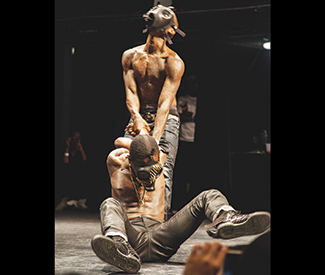
In their first appearance at this festival, New York’s Bones the Machine and DJ Aaron sent gasps through the audience with the decidedly uncommon Bonebreakkings. It was a truly astounding contortionist act in which they pretzled their arms into joint-crunching positions — accompanied by appropriate sound effects. Even though the act has been widely circulated thanks to America’s Got Talent, to see these two dancers live was a pleasure, though a somewhat chilly one.

Another excellent first-timer was the Embodiment Project, one of the Bay Area’s most fascinating hip-hop troupes, in part because of the way it collaborates with MoonCandy LiveHouse’s fine musicians who, once again, performed on stage. In the sinister Dare To Love, choreographer Nicole Klaymoon and Michelle “Mystique” Lukmani slithered in and out of d. Sabella Grimes’ slippery embrace, paying what looked like a heavy price. Grimes, a former member of Rennie Harris Puremovement, and an extraordinarily sinewy and seductive popper, finally snared himself vocalist Shamont Hussey. This was hot theater, over so fast you hardly knew what hit you.

Also fun to watch was the return of four members from FootworKINGz. These speed demons developed a virtuosic style of footwork, based on one that originated in Chicago as a response to house and juke music. In addition to delivering razor-sharp attacks at dizzying tempos, the quartet performed with wit and charm.

It is understandable that the fest wants to honor the Bay Area’s diverse hip-hop community, which offers training in dozens of local studios and schools. These are also places where many youngsters find a welcoming environment to develop skills and in which to express themselves, so there has always been place for them at the annual Hip Hop Fest. But this year’s selection short-changed the audience. Whatever the curating process, it needs to be improved. Openers Funk Beyond Control is one of the largest and most well-established Bay Area schools, but the group did not look as good as they had at previous festivals. The choreography looked tired and lacked care.

The premise for After Hours was intriguing enough. It took a popular dance trope — the doll that acquires life — and translated it into mannequins that take over a department store once it closes its doors. After opened with a sextet of women fighting over some hats on sale before being kicked out. Then the black-clad ensemble descended from its pedestal for elastic group dancing, some modestly intriguing solos, including the compulsory tot — here cast as the janitor. But the whole thing felt dutiful and uninspired. Also, not waiting for the traditional community bow at the end of the evening was disrespectful to fellow artists and the festival’s producer, Micaya.

Another first appearance, by the Great House of Dance, showcased a huge company from Sacramento. It was big but not great. Its group sequences seemed strung together willy-nilly, and went on for much too long. There was nothing that held this presentation together besides the good will by the performers — some who had real talent.

Illstyle & Peace Productions Ain’t No Party Like a Illstyle Party, sent individual performers into competent, sometimes athletically-impressive solos, but this was a thrown-together, clumsy, applause-milking endeavor, unworthy of a group that has done much better work. Why?

Also part of the festival were San Francisco’s well known and solidly performing SoulForce Dance Company, and Oakland’s spunky, in your face, all-women Mix’d Ingrdnts. *

Overstimulated

2

Environmentalists who oppose fracking in California are concerned about more than possible groundwater contamination or other hazards that could directly result from the fossil fuel drilling practice. They also want to save the planet.

The Monterey Shale, a massive underground geological formation spanning a large swath of California, contains approximately 15 billion barrels of hard-to-get oil that could technically be extracted in massive fracking operations, Kassie Siegel of the Center for Biological Diversity said during a Nov. 15 call with reporters.

All told, burning that quantity would eventually release six billion metric tons of carbon dioxide into the air. “That is a carbon bomb,” Siegel stated bluntly. Combined with methane that is released from the wells during the drilling operations, “a fracking boom in California could undo all the progress our state has made on greenhouse reductions,” she warned.

But for now, the debate on fracking in California is focused on newly drafted state regulations that would place controls on the practice for the first time. The proposed rules pertain to permitting and disclosure in the areas surrounding individual wells — yet they don’t contemplate the cumulative impact of fossil fuel combustion over time.

Fracking, formally known as hydraulic fracturing, is a technique used for extracting oil or natural gas. It involves injecting high-pressure fluids underground, often containing toxic chemicals, to break up bedrock in order to access the fossil fuel sources trapped within. The California Division of Oil, Gas, and Geothermal Resources (DOGGR) released a set of draft regulations Nov. 15 proposing new rules around what’s known as “well stimulation,” industry-speak for a type of drilling that includes fracking.

The new rules are slated to go into effect on Jan. 1, 2015. They’ll continue to be hashed out throughout next year, and DOGGR will accept public comment on the initial proposal until Jan. 14, 2014.

The regulations came about in response to Senate Bill 4, legislation enacted Sept. 30 after a statewide coalition of environmentalists launched a campaign to put a stop to fracking, which is already happening in some parts of California. Many groups within that coalition viewed the legislation as flawed, because it didn’t prohibit the practice outright.

“The only safe way forward for California is a halt to fracking in our state,” Siegel said.

Still, the draft regulations do seek to place new requirements on the oil and gas industry in an effort to protect public health where fracking occurs. According to DOGGR records, fracking is most common in Kern County.

“There are some good provisions in the regulations,” Bill Allayaud of the Environmental Working Group said in the briefing. “For the first time, all forms of well stimulation will require a permit from DOGGR. That’s a good thing.”

The rules will also require companies to conduct an analysis of groundwater and other wells nearby before proceeding with fracking operations, unlike before. The new regulations also establish a notification process to make nearby residents aware of new drilling operations.

Meanwhile, SB 4 calls for an environmental impact report and a study on the overall health and safety effects of fracking — but it’s unlikely that this study would result in a prohibition on the drilling practice, as environmentalists had initially called for.

“The Natural Resources Agency is currently developing the scope of the study and will begin the analysis in December 2013,” according to a fact sheet published by DOGGR.

“We don’t think we’ll be getting deep answers as to whether fracking and acidization and all forms of well stimulation are safe or not, for both protecting public health and the environment,” Allayaud said.

Meanwhile, he expressed concern that the public comment period for the initial set of proposed rules did not provide enough time for concerned Californians to respond, because people are being asked to weigh in over the course of the holiday season. The Environmental Working Group has requested an extension of that deadline, but it seems unlikely that DOGGR will grant one.

“The comment period was extended from the mandatory 45 days to 60 days for that reason,” California Department of Conservation Chief Deputy Director Jason Marshall said when asked whether the deadline extension would be granted in light of the holidays. “Additionally, we are anticipating an additional 45-day public comment period after the initial draft regulations are adjusted based on that initial public comment.”

Environmentalists also voiced the concern that while DOGGR plans to hold a series of public hearings on the proposed fracking regulations, none will be held in the Bay Area, despite its concentration of advocates who helped get the statewide opposition campaign off the ground.

“The law requires one public meeting, if requested. We are doing five, primarily in areas of the state where oil production is most common,” Marshall responded when asked why there weren’t any Bay Area meetings scheduled.

Asked whether any of the pending studies would take into account the six billion metric tons of CO2 that could potentially be released if the Monterey Shale were to be developed, Marshall seemed to suggest that the state was willing to go along with a regulated form of fracking even as it continues pursuing initiatives to curb greenhouse gas emissions.

“We still derive over 90 percent of our transportation fuels from hydrocarbons,” he wrote in an email. “With SB 4 and these regulations, California is acting now to ensure that extraction of those hydrocarbons happens in the safest way possible, even as we work to reduce our energy dependence on those hydrocarbons.”

Break on through

1

arts@sfbg.com

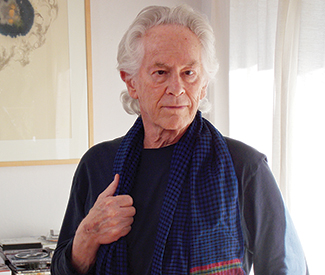
 I drive up into the East Oakland hills, past 19th century “Poet of the Sierras” Joaquin Miller’s odd little cabin, to visit Michael McClure. Based on his youthful good looks, you’d never guess he was a few days shy of 81, but the trail McClure has blazed through literary history testifies by length, stretching back to 1955 when — alongside Philip Lamantia, Philip Whalen, and Gary Snyder — he was the youngest participant in the famous Six Gallery reading at which Allen Ginsberg debuted “Howl.” It was a seminal moment in postwar American poetry. “We all put our toes to the line that night and broke out,” he says. “And we all went our own directions.”

Beginning with his first book of poems, Passage (1956), McClure would find himself going in many directions, writing novels, essays, journalism, and even Obie-award-winning plays like The Beard (1965). As a countercultural figure, he could roll with the times, reading at the Human Be-In in 1967 in Golden Gate Park; associating with high-profile rock acts like Bob Dylan, the Doors, and Janis Joplin (for whom he co-wrote the 1970 classic “Mercedes Benz”); and appearing in movies like Peter Fonda’s The Hired Hand (1971) and Martin Scorsese’s The Last Waltz (1975). In the mid-’80s, he even began performing with the Doors’ Ray Manzarek on piano, releasing such CDs as last year’s The Piano Poems (Oglio Records). And though I’ve come to discuss Ghost Tantras, his 1964 self-published book of “beast language” reissued this month by City Lights, we inevitably touch on the recently deceased keyboardist with whom McClure played over 200 gigs.

“Ray died at a very wonderful time,” McClure says. “He’s 74 and at the height of his powers. People say, ‘You must feel broken up about Ray,’ but I’m actually happy to know someone who stepped out in his own glory. The last time I saw him was [last] November. We had just done a performance at the Sweetwater in Mill Valley. That night Bobby Weir sat in. It was like the Doors and the Grateful Dead embraced.”


THE LANGUAGE OF THE BEAST

But Ghost Tantras predates most of these famous exploits. The origins of what McClure calls its “beast language” can be traced back to his early play The Feast, performed in 1960 at SF’s Batman Gallery.

“The walls had Jay DeFeos and Bruce Conners on them,” he recalls. “The actors were dressed in Indian blankets and torn white tissue paper beards, seated before a long table that carried black plums and white bread, black wine. Thirteen of them performed a Last Supper-like rite and spoke in beast language and English of the melding of opposites and the proportion of all beings, from the incredibly tiny to the cosmic.”

“Beast language” might be described as a roaring deformation of language into something less oriented toward signification and more toward the physicality of the body, poetry as “a muscular principle,” as he writes in the original introduction, rather than as a mimetic text conveying images and ideas. Take, for example, these lines from tantra 46: “NOWTH / DROON DOOOOOOOOR AGH ! / Nardroor yeyb now thowtak drahrr ooh me thet noh / large faint rain dreeps oopon the frale tha toor / glooing gaharr ayaiieooo.” Signification isn’t the prime motivation here, nor is it entirely absent, as snippets of sense emerge and dissolve amid a sea of syllables. Such moments almost suggest reading Chaucer or Finnegans Wake, texts in some distant version of our own tongue, but they just as quickly vanish into phrases that resist intelligibility (“gaharr ayaiieooo”).

Yet despite this resistance, the writing of Ghost Tantras was also bound up in visionary experience. McClure began Ghost Tantras in 1962 while working for the Institute for Personality Assessment and Research, for the University of California.

“My role with IPAR was to give psilocybin to artists and to film them in that timeless state of the high,” he says. “I was probably an ideal person because I had given up the use of psychedelic drugs myself. Already, after a lot of experimentation in psychedelics and several essays that had been published by City Lights in Meat Science Essays (1963), I wanted to write a deep exploration of these highs after reading Henri Michaux’s gorgeous Miserable Miracle (1956), which was his — I felt personally — inaccurate description of the mescaline high. That inspired me to want to write clearly about this experience. Meanwhile, I had begun practicing Kundalini yoga, which is a chakra-centric yoga, and I was beginning to have powerful experiences.”


“ART WITH NO EDGES”

This desire to convey visionary experience might seem at odds with Ghost Tantras‘s frequent resistance to signification, yet the apparent paradox might be resolved through Abstract Expressionism, which McClure insists was “one of my most profound sources, the art with no edges, the art with no limits.” Viewed thusly, Ghost Tantras aspires to the degree of autonomy accorded to nonrepresentational art by not referring to experience but rather offering it.

“Allen Ginsberg had introduced me to Mark Rothko, and I got Rothko’s phone number,” McClure recalls. “I had Ghost Tantras and I wanted to show them to him but in the meantime I lost his number, as you did in those days. I always thought Rothko would be the right person to see the fields of letters in Ghost Tantras, as you see in one of his field paintings. If you look at Ghost Tantras in a different way, you see that each one is a field, a work of visual substance. Or nonsubstance.”

“I knew I was tangoing with my own personal ridiculousness when I wrote these. I don’t mind that, because in my writing when it’s at its most intensely serious it’s also at its most comic. And I call to mind what I think are some of the most important poems of the 20th century, Federico García Lorca’s ‘Gacela of Unforeseen Love,’ which is among the most intense love poetry I’ve ever experienced. It’s also kinda comic. My own poetry, when I believe in it the most, also has an edge to it that is not serious, or it’s serious, all right, but real seriousness has an edge that breaks on through to the other side.”

“It was part of the massive and inspired creativity that was rushing around me,” he concludes. “That’s probably the best clue I can give to anyone who wants to understand the sources behind Ghost Tantras, as part of the huge energy that was amassing itself and pouring through California at the time.” *

MICHAEL MCCLURE

Nov 20, 7pm, free

City Lights Bookstore

261 Columbus Ave, SF

www.citylights.com


How San Francisco should really be helping the Philippines

49

There were a couple good stories in today’s San Francisco Chronicle related to concerns the Guardian and its readers have sounded in recent months: Mayoral appointees blocking CleanPowerSF against the will of the elected Board of Supervisors, and the massive scale of the proposed Warriors Arena, which is now getting slightly downsized.

It was getting a little lonely beating the drum over the anti-democratic actions of the Mayor Ed Lee and his minions to undermine the only plan San Francisco has to substantially decrease its greenhouse gas emissions and meet its own ambitious goals for addressing climate change. Glad to see the Chronicle turn up the heat, at least in its news section (unlike the neocon neanderthals that write the paper’s editorials).

While the mainstream media sometimes does good work, it usually fails to connect the dots, which is an important journalistic function. So if I would find fault with the otherwise solid and long overdue story by reporters Marisa Lagos and David R. Baker, it would be with its failure to note that CleanPowerSF is really the only plan for seriously addressing climate change, which is one of the biggest and most impactful challenges we face.

This morning on KQED’s Forum, while discussing the devastating typhoon that struck the Philippines — one of the strongest ever recorded — they did connect the dots between the severity of that storm and the warming oceans of the world, albeit in fairly detached and non-urgent way.

So please allow me to connect another dot.

“Our hearts go out to all of those who have suffered in the Philippines from possibly the world’s strongest storm. The people of the Philippines are in our thoughts and prayers today, and we will continue to support them in the days and months ahead as we learn the true impact caused by Typhoon Haiyan,” Mayor Lee said Friday in a prepared statement sent to the media. “San Francisco stands ready to aid in the rebuilding and recovery efforts. The work of rebuilding communities begins immediately, and San Francisco understands how important a sustained, vigorous recovery effort is. Our City stands ready with the Bay Area Filipino-American community to assist today and into the future to help in the rebuilding efforts in the Philippines.”

What he didn’t mention was climate change. While it’s great that San Franciscans stand ready to address the effects of this and other natural disasters — which all the global warming models show will become stronger and more frequent — why aren’t we willing to show more leadership in addressing the root cause of this problem?

Instead of collaborating with developers on ever more ambitious schemes to build expensive buildings on a waterfront that will already be challenged by rising seas, the Mayor’s Office should be channeling its energies into making San Francisco a role model for other 21st century cities to follow.

The real challenges that we and other cities around the world face now are how to address poverty, the energy and transportation needs of a growing population, and a planet in peril; instead, this Mayor’s Office is focused on poaching Oakland’s basketball team and building more housing for the 1 percent.

If Mayor Lee is serious about the sympathies he’s expressing for vulnerable populations in the developing world, then he and allies should do more than send care packages when they are devastated by the byproducts of the wasteful and overly consumptive economic policies that they are promoting.  

Live Shots: Wanda Jackson at the Chapel

0

“Well hello, San Fran!” shouted Wanda Jackson to an almost-full Chapel on Thursday night. “You already know I love you. You should know that by now.”

Jackson, still touring at age 76, looks to be about five feet tall — if you include her carefully teased hair. She needs help getting on and off the stage. She talks openly about her “senior moments.” And she’s an absolute rock star. Her age and petite stature seem merely to add to her massive stage presence. After finishing her rollicking first song, “Riot in Cell Block Number 9,” she beamed at the crowd, asking, “Isn’t it wonderful, the energy?”

Wonderful is exactly the word I would use to describe it. The audience responded to Jackson’s razor-sharp wit, fascinating anecdotes, and serious vocal chops (she can yodel!) with fever-pitch enthusiasm. After a 60-year career, Jackson has an incredible body of work under her belt, and the set list, which bounced around from era to era of her career, didn’t have a single low point. But people weren’t really there for the songs.

We were there for Wanda. The Queen of Rockabilly truly is royalty — just being in her presence is a joyful experience. Though she can’t hit all the high notes anymore, Jackson’s talent hasn’t faded a bit since her heyday in the 1950s and ‘60s. Her voice is still incredible, her stamina is inspiring, and her humbleness is astonishing. Few people could name-drop Elvis Presley and Jack White in the same sentence and seem all the more charming for it.

Jackson, who is inevitably paired with Elvis in any description of her life or music, didn’t shy away from the topic on stage as she often does in interviews. In what felt like a very intimate moment, the crowd was enraptured as they watched her reminisce about her old friend. “Elvis was a true gentleman,” she told us. “He truly was.” She spoke about how her father would only let her go out with Elvis, “nobody else.” He would take her out for lunches and matinees — whatever he could afford. “He was a poor boy then.” After waxing about her short-lived romance, Jackson transitioned into one of the night’s highlights — a soulful rendition of “Heartbreak Hotel.”

Most of the songs Jackson played were preceded by a mini history lesson — the year they were recorded, what she was up to at the time, who was involved. Speaking about her evolution from a country singer touring with her father to a rockabilly singer touring with Elvis (who encouraged her to play this “new music”) Jackson paused for clarity — “We call it rockabilly now, but it was actually rock and roll.”

Jackson is still rock and roll. She playfully threw water on her fans, splashing the monitors (“I could have been electrocuted…you too!”) and played through a setlist of almost 20 songs without stopping for breath. “Whatever!” she shouted in response to her jet lag. “Isn’t that what they say today? Whatever?” By the time the night ended with “Let’s Have a Party,” no song could have been more appropriate.

The horror

1

arts@sfbg.com

THEATER Just last night a cordial campfire conversation with a hobgoblin and a menorah tumbled precipitously from the obscenity of rents in the city to the cold hard facts of our existence on this planet. Halloween was not yet over, and the really scary stuff had already returned.

You don’t have to be a librarian to have gathered something of the unlikeness, the arbitrariness, the inconsequence of an individual life measured against the eons of time and the vastness of space — but let’s say you are a librarian. What would get under your skin more than this? Maybe one thing: the fact that in addition to the obvious indifference of the universe, existence comes with the seemingly unnecessary cruelty visited on us by our fellow human beings.

Maybe one more thing, too: a library book returned 113 years overdue.

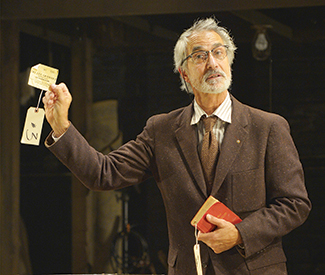
Both of these unpalatable situations gnaw at the bookish protagonist in Glen Berger’s 2001 play, Underneath the Lintel, currently enjoying a revival courtesy of American Conservatory Theater. Our protagonist, the play’s sole character, is a garrulous but faintly troubled librarian from Holland (played by an endearingly geeky David Strathairn, in trim graying beard and neat but comfy wool suit). In a makeshift lecture in an old rented theater, the librarian-turned-sleuth presents his remarkable findings concerning the possible reality behind an ancient myth. Along the way, we discover a gradual dovetailing of his own increasingly unmoored career and that of his subject: the fabled Wandering Jew, condemned to bear silent witness to history after a show of callousness before a desperate stranger at his door (who turned out to be Christ on the march to Golgotha, wouldn’t you know it).

The play — whose title refers to the upper portion of a doorway, the regretful place from which an ancient cobbler turned his back on his fellow man and our modern-day librarian dismissed the only woman he ever loved — works a tension between competing frameworks. Bounded by our little lives with their precious but small concerns, the play suggests, we too easily miss the bigger picture and stumble accordingly. But even when confronted with the worst of fate, the baleful immensity of history, or our own actions, we also carry on despite all the universe may throw at us.

Of course, the Geary stage is almost as vast as the aforementioned universe. Director Carey Perloff and her actor work hard to see this pocket-sized piece expand as much as possible to fill it. Strathairn’s fastidious and childlike librarian moves nervously, enthusiastically around the stage, scaling a tall freestanding ladder one moment, rummaging around a set of files the next, or stalking the second-tier storage area at the back of scenic designer Nina Ball’s atmospherically dingy, drippy, haze-filled bric-a-brac set.

The only time this nervous energy seems to go too far is in the final moment, when the librarian exits the stage in an awkward physical underscoring of a key line, wandering out who-knows-where. But Berger’s charming mystery, while ultimately affirming, has a haunted, melancholy streak running through it — a creeping pessimism at the edge of the firelight that is its most provoking aspect, and saves it from being purely sentimental.


ONCE UPON A WEEKNIGHT DREARY: ‘GRAND GUIGNOL’

The father of Paris’s Théâtre du Grand Guignol, French playwright Oscar Méténier (1859–1913), rests in pieces — or at least the pieces he left for the stage; naturalistic horror plays that were themselves full of body parts strewn hither and thither. Thither, in this case, has been renamed “the splatter zone” for playwright Carl Grose and director Mitchell Altieri’s macabre comedy homage to the legendary Parisian theater and genre (a specialty of local company Thrillpeddlers, whose own “Shocktoberfest” is also up and running not far away).

But though audiences in the first rows sit dutifully in plastic rain ponchos, the gore and the titillation and the laughs are surprisingly spare. Grand Guignol‘s opening night, moreover, was a rocky horror show, to say the least, plagued by delays, poor acoustics, slippery pacing, slightly inept execution (of executions, and other bloody deeds), and a storyline almost as mangled as the bodies it left in its wake. It has a game cast, however, and while variously successful at projecting their voices above the atmospheric sound design, its members deliver some nicely tailored performances under the circumstances, which are messy in ways intended and otherwise. *

UNDERNEATH THE LINTEL

Extended through Nov 23

Tue-Sat, 8pm (check website for matinees); Sun, 2pm, $20-150

Geary Theater

415 Geary, SF

www.act-sf.org

Alive, not well

0

[Update: La Luz was in a car accident during its tour and will no longer be playing these shows. The accident totaled the van, destroyed the gear, and band members suffered injuries. To donate, click here]

TOFU AND WHISKEY Sometimes the unexpected can rip you apart. It can gnaw at your insides, leave your stomach in knots, and twist your thoughts into a confused, messy blur. And sometimes, those rare unanticipated moments can inspire you anew. All the hurt and bewilderment and dark emotions reconfigure and morph into a project, such as an album.

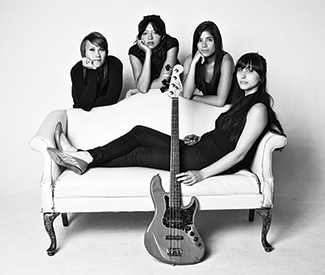
La Luz guitarist-vocalist Shana Cleveland felt this molten wave firsthand and the end result is a striking, blackened surf rock album with four-way doo-wop melodies and churling riffs smacking against the seawall. It’s the full-length debut from the Seattle all-lady quartet: It’s Alive (Hardly Art). The group tours to SF this week, opening up for of Montreal (Fri/8-Sat/9, 9pm, $21. Great American Music Hall, 859 O’Farrell, SF. www.slimspresents.com).

It’s Alive was built from death. “When something that dramatic happens, it could either crush you or give you a crazy energy,” Cleveland says. “For me it was like, after I came out of just being really depressed for awhile I was really inspired to….I don’t know exactly how to phrase it. It’s kind of a weird thing to talk about, I guess. It’s so heavy.”

That heavy moment took place May 30, 2012, when a deranged shooter burst into a Seattle café — Café Racer, where Cleveland and her friends routinely hung out — and killed five people. Around the corner from her house, it’s where she first met La Luz bassist Abby Blackwell. On that spring day last year, it’s where her friend Drew Keriakedes (otherwise known as “Shmootzi the Clod”), a vaudeville-style singing circus clown, died, slain in the rampage.

She describes him as always giving open, honest performances that made everyone fall in love with him — that performance style informed her own artistry. And the months after the shooting informed her songwriting. Though she also notes an intuition affected the record.

“It’s weird because a lot of the lyrics I wrote before the shooting happened and then a lot of them I wrote after. But then when I looked back…I kept seeing these weird premonitions. It just seems like the air was really heavy with this insane event and I was sort of channeling this crazy shit that was about to happen. This sounds kind of New Age-y. But when I looked back over the lyrics I was just like, ‘holy shit!’ I think I just felt something in the air.”

That gloom bled into It’s Alive, a record equally inspired by legendary surf guitarist Link Wray, who also lent a darker edge to the style.

“So it’s sort of a haunted album. It’s kind of cool that it’s coming out around Halloween, it seems fitting.”

It’s the band’s first real record, though before it played a single show, it recorded a demo tape called Damp Face. Both were recorded with the group’s friend Johnny Goss, who was living in a trailer park on the outskirts of town at the time. Goss, who “accumulated all this really cool old recording gear,” took a leisurely approach to It’s Alive, hanging out with La Luz and working together to add new vocal overdubs or extra fuzz.

Cleveland describes it as a highly collaborative process between Goss and the rest of La Luz — bassist Blackwell, drummer Marian Li Pino, and keyboardist Alice Sandahl — though she wrote the bulk of the lyrics before they started playing together. Once La Luz came together, the group altered the music and included everyone’s input.

But Cleveland is also comfortable making art on her own. In addition to La Luz, she’s also a poet (she actually majored in poetry at Columbia College in Chicago) and a visual artist, known for drawings and paintings of other bands and singers, often with big retro hairstyles or matching vintage suits.

“I found this record in a thrift store once and someone had done like, a ballpoint pen drawing of Buffalo Springfield. It was tucked inside of the record and I was really fascinated by it..and I kind of became obsessed with it. I’ve [always] been kind of obsessed with bands I guess, because my parents were both in bands too so it’s my whole life.”

Her dad plays in country and blues bands, her mom sings and plays blues harmonica. They met on tour, in fact — her dad was traveling with a band and stopped in her mom’s Colorado town, then she joined him on the road.

Cleveland grew up playing the instruments her parents — since divorced — had strewn around the house in Kalamazoo, Mich. She picked up guitar around 15 and began playing Veruca Salt songs.

After college, Cleveland headed west to LA but says she hated living in the San Fernando Valley. One day her mom brought her a copy of Seattle alt-weekly, The Stranger, and on a whim, she decided to move there.

“I packed up my Oldsmobile and moved. I don’t know if [The Stranger] knows that yet! I kind of want to tell them.”

Seattle became home and she has since ingrained herself in the local music scene, ticking off favorite Seattle acts like Rose Windows — “They’re doing this like, ’60s psych Jefferson Airplane kind of thing, they’re all really amazing players” — blues combo Lonesome Shack, and Pony Time.

For now, La Luz is touring on It’s Alive, and revving up for a first ever European jaunt in early 2014. While the songwriting began on a darker note, Cleveland is now seeing brightness in the future, at least when I pry out her band goals: “I really want to tour with Ty Segall. That’s just a dream of mine because I would like to see him play every night. I hope that happens. I really want to play with Shannon and the Clams too, because we’re all huge fans of theirs. And the Growwlers. We just played with them but I think it’d be fun to play more shows with them in the future too. They’re one of our favorite bands.”


SIX WEEKS RECORDS 20TH ANNIVERSARY

Two decades is a long lifeline for a DIY record label — especially one known for such short songs. Six Weeks Records, founded in ’92 by Athena Kautsch and Jeff Robinson, has distributed dozens of grimy grindcore, breakneck punk, and loud-as-hell hardcore albums from bands around the world. Clearly dedicated to the art of deafening music, the label also publishes the Short, Fast & Loud fanzine. This two-night anniversary fest features acts of the Six Weeks Records family including LA powerviolence legends Despise You, Tokyo’s Slight Slappers, NY’s Magrudergrind, Capitalist Casualties, Backslider, Coke Bust, P.L.F, and more.

Fri/8-Sat/9, 7pm, $17 each ($30 two-day pass). Oakland Metro, 630 Third St, Oakl. www.oaklandmetro.org.


MINOR ALPS

With Matthew Caws of Nada Surf and Juliana Hatfield of guest-starring-angel-on-My So-Called Life fame forming an intricate new pop band together — Minor Alps — it’s clear the ’90s resurgence beats on. The guitar-swelling, melodious new act, which just released debut LP Get There (Barsuk), plays the Independent Mon/11. And with it comes openers Churches, whom we previewed here at the Guardian before. The Nirvana-loving Bay Area band just released two new tracks: “Pretty in Black” and “Goths on the Boardwalk.” Says frontperson Caleb Nichols, “‘Goths on the Boardwalk’ is the culmination of my two years of living in Santa Cruz. It’s been weird — goths everywhere. [It’s] an ode to my love-hate with this place.” The angst continues.

Mon/11, 8pm, $20. Independent, 628 Divisadero, SF. www.theindependentsf.com.


CRASHFASTER

Local Nintendo-blasting electro rock group crashfaster released the track “Beacon,” the first single of its forthcoming sophomore LP, Further, this week. Like its earlier work, “Beacon” is a bouncy, nostalgic, digi-ride through ’80s video game culture, backed by motorcycle revving guitarwork and sound effects, in rock’n’roll chiptune style, which looks good for the rest of Further. Recorded at Different Fur Studios, that new full-length sees release Nov. 19 — but before that there’s a show at DNA Lounge. With Bit Shifter, Trash80, Unwoman.

Nov. 14, 9pm, $15. DNA Lounge, 375 11th St, SF. www.dnalounge.com.


Ultimate Towner Obstacle Course Race

0

The Ultimate Towner Obstacle Course Race is a benefit for Project Open Hand and  was built upon the desire to celebrate life and overcome obstacles, while supporting and promoting local business in Jackson Hole, Wyoming in 2012. The overwhelming response led the Grand Dynamics team to bring the benefit to other communities across the nation.

Ultimate Towner a 4 mile course with Fast and Fun classes and 25 obstacles!  Climbing over walls, crawling through mud, zig-zagging over wine barrels… it’s going to be AWESOME! Come run, walk, climb, or just come and be spectator and have a complimentary beer from Lagunitas. Sponsored by Grand Dynamics Interantional, The Sports Basement, Lagunitas Brewery, GU Energy, UpOut, Ghirardelli Chocolate, SF Fire Dept, and others.

Visit ultimatetowner.com for more info and to register. To save money, use Guardian40 code when registering.  
 
Saturday, November 2 at 8am (on-site registration begins) @ Treasure Island, SF

Psychic Dream: Oct. 30-Nov. 5, 2013

0

Oct. 30-Nov.5, 2013

Blame all of your communication problems on Mercury while you can; it’s Retrograde till the 10th
 
ARIES
March 21-April 19
Anxiety is like quicksand in the landscape of your awesomeness, Aries. If you feel overwhelmed by uncertainties this week, try to redirect your focus onto what you do know. Don’t strike out when you feel screwed up in the insides. The best way to learn about your habits of self-sabotage is to catch them in action.

­TAURUS
April 20-May 20
Enjoy the love and intimacy that you have in your life, Taurus. This week your ability to stay present with the good stuff is being tested, especially when it’s outside of your comfort zone. Don’t let your fear of change damn the flow of your life. Staying open and discerning for maximum security and joyfulness.

GEMINI
May 21-June 21
You know all about every corner of the problems that are on your mind; you’ve looked at your concerns from every angle already. Make peace with your troubles so you can finally say sayonara; see you never! to them. Don’t wallow, Twin Star, ‘cause wallowing is so 2011. Move on.

CANCER
June 22-July 22
You don’t need to know if what you’re doing is “right”, you only need to know if it’s right for you, Cancer. You’re trying to see things from other people’s perspectives, but that’s all wrong. Be honest with yourself about what you need based on where you are at, so even if you make a mistake, it’s an honest one you can learn from.

LEO
July 23-Aug. 22
It’s friendship time, Leo! Invest your formidable energy into your platonic relationships this week, and make sure you pick a few brains about what you’re doing while you’re at it. This is a great time to get feedback about how you’re handling your life from the folks that know and love you.

VIRGO
Aug. 23-Sept. 22
You may succeed or you may fail, but there’s no getting around risk this week, Virgo. If you’re doing something that means enough to you to go for it, then it’s worth some daring, too. Challenge yourself to focus on the potential instead of the dangers in front of you. Invest in the possibility!

LIBRA
Sept. 23-Oct. 22
You can’t turn to others for everything, Libra. Or rather, you can, but it doesn’t make you an especially strong or resourceful person. Despite your fears and uncertainties, this is an excellent week to stand up on your own two feet. Trust in your instincts and see where they take you, pal.

SCORPIO
Oct. 23-Nov. 21
You cannot control the world (oh! and how the world suffers for it!), but you can take ownership of your self. Take stock of your participation in matters with humility, Scorpio. The only way to create the life you want is to be the person you want to be, be damned any pettiness that tries to get in your way.

SAGITTARIUS
Nov. 22-Dec. 21
There are no victims or perpetrators, and you, Sir/Madame, are not a martyr. We are all people doing our best; even those who utterly suck are doing their best! Keep your ego out of dynamics this week, and keep your attention trained on accepting others where they’re at. Resist unnecessary power plays.

CAPRICORN
Dec. 22-Jan. 19
If you stop trying to project into the future or magically change the past you might get more headway in your present, dear Cappy. Your homework this week is to find the pleasure in everything you do, no matter how routine or annoying it may be. Change your attitude to see what else changes, pal.

AQUARIUS
Jan. 20-Feb. 18
Sometimes the strongest weapon at your disposal is TLC, Aquarius. This week you can fight, analyze or pontificate, but nothing will work as well as compassion. Practice seeing things through a lense of generosity and kindness, whether you’re looking at yourself, your allies, or your enemies.

PISCES
Feb. 19-March 20
Don’t add to the chaos in your life by being another Negative Nancy this week. If you don’t have something creative to add to the conversation you may need to take a time out until you do. Remember why you care and don’t let your fears stop you from going from participating wholeheartedly. Realign with what motivates you.
Want more in-depth, intuitive or astrological advice from Jessica? Schedule a one-one-one reading that can be done in person or by phone. Visit www.lovelanyadoo.com

In the year of worms

4

emilysavage@sfbg.com

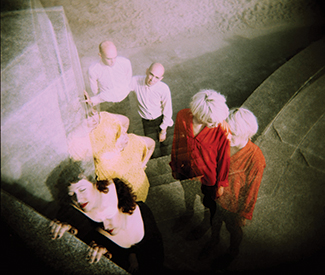
TOFU AND WHISKEY That voice. Those eerie, singular vocals that are somehow both alien and intimately familiar. They sound like electric Tesla coils wrapped in whipped silk. San Francisco’s Hannah Lew is most often heard harmonizing by three with her striking post-punk trio Grass Widow. With newer project Cold Beat, it’s her vocals alone above the needling guitars and anxious synths of a different band.

Lew has been writing songs as Cold Beat for some time, in between Grass Widow releases and tours, but this week she releases her first EP under the moniker: Worms/Year 5772, with songs inspired by the trauma of Lew’s father passing away a few years back. While Cold Beat is mainly a Lew production, she enlisted many local rock ‘n’ roll luminaries to both play on the album and back her up at shows.

The record’s sound is rounded out by guitarist Kyle King, drummer Lillian Maring, and Shannon and the Clams’ Cody Blanchard on guitar and synths. The live band features King, the Mallard’s Greer Mcgettrick on guitar, and Erase Errata’s Bianca Sparta on drums. That live version will celebrate the release of the EP with a show at the Night Light in Oakland Tue/5.(Cold Beat also plays Great American Music Hall on Nov. 14.) But before that, Lew spoke with the Bay Guardian about the origins of Worms/Year 5772, her DIY record label and music video projects, and the songs she played at her wedding last week:

SF Bay Guardian What inspired you to write new music as Cold Beat, outside of Grass Widow?

Hannah Lew I always write songs and sometimes they just didn’t totally feel like Grass Widow songs. I just kept collecting them and not really knowing if I should release them. As the tunes started accumulating I decided I should get a band together and figure out a way to share the songs. When Kyle King and I started playing — his energy really enabled the songs to come to fruition.

SFBG Can you tell me a bit about the songwriting process with Worms/Year 5772 and how the themes of “death, Internet surveillance, paranoia and science fiction” translated into the music?

HL “Worms” was written as a response to my grief about my father’s death in 2009. I couldn’t help but imagine worms eating his corpse — which was a very visceral image I couldn’t get out of my head…I think the horror of this was something I couldn’t really share with anyone, and in taking time to write more songs on my own I started realizing that it was good for me to have an outlet for some other concepts that were a bit more personal.

I always turn to science fiction when I am trying to understand or relate my feelings. It gives me a change to explore depths of doom and hope that I can more easily imagine not on this earth. In writing all the lyrics alone for Cold Beat there is a little more of me just in my own head which can be great and sometimes paranoid or depressed. I get really bad insomnia and many Cold Beat songs were demoed at 5 or 6am.

Grass Widow lyrics are always more of a conversation where as Cold Beat lyrics are more like an interior dialogue. It’s kind of like describing a dream to someone.

SFBG Does “Year 5772” refer to the Jewish calendar? Why did you make this connection?

HL My late father was a rabbi and I was raised very religious. I was writing Year 5772 about a dystopian post-apocalyptic dream I had that seemed to take place in some distant future and I started thinking about how the Jewish calendar is already in Year 5772 — actually a couple years later now since the song was written a few years ago — and how our concept of the future is based in what point in time we imagine ourselves in — but the concept of linear time is very relative.

I guess being Jewish is kind of futuristic and ancient simultaneously. I like the idea of collapsing time and writing a song that takes place in a landscape outside of time. I also like thinking about existing in many times simultaneously.

SFBG Did you find the solo songwriting process freeing or more complicated without the group’s input?

HL Some of the Cold Beat songs were written during the time Grass Widow was writing our last record — Internal Logic. Somehow they just seemed more personal and better spoken from one voice instead of related by three people. I think the complicated part for me was deciphering which songs were Cold Beat songs and which ones to give to Grass Widow.

Grass Widow is a great space where the three of us would relate and abstract our feelings and dreams together. But there were some things I was going through that I couldn’t synthesize with anyone else and just had to express on my own. I like having conversations about concepts with bandmates, but I also like working alone.

Luckily I can do both! I think it is important to be able to do things on your own so you know who you are and have something to offer a collaborative project. Just like in love.

SFBG You got married last weekend — what key songs were on your playlist? Are you willing to give up any other details?

HL It’s all kind of a blur. but it was so much fun! Some friends of ours put together a wedding band with Kyle King as the band leader. My husband (whoa!) and I put together a set list for the band to play of all our favorite dancing songs. I think the party really went crazy during the Dick Dale version of “Hava Nagila” and we got lifted up in chairs and everything, but also [the Flamin’ Groovies song] “Shake Some Action” was pretty epic too.

My friend Henson Flye made giant clamshells and Raven Mahon made a moon photo backdrop. We had a choir of friends sing “I’ll Be Your Mirror” while I walked down the aisle. It was really beautiful and a beautiful way for all our friends to express their love and friendship and show us support and for us to throw a fun party for everyone. We’re lucky to have a lot of love. Still buzzing from it!

SFBG As with Grass Widow (HLR), you’re putting Cold Beat out on your own label, Crime On The Moon. Can you tell me about the label, and why you’re sticking with DIY?

HL I really enjoy doing everything myself. HLR has been a great experience and we really took the time to make critical decisions about how we wanted to do business. I figured I could easily do it myself with Crime On The Moon since I had the experience of putting out the last few Grass Widow releases. One drawback is that when you put music out on a label you have an instant fan, publicist, and advocate — so when you’re on your own you have to manufacture your own confidence for what you are doing. But having good bandmates and support from your friends goes a long way!

SFBG You also make music videos — will you make any for Cold Beat? Are you working on any others currently?

HL Mike Stoltz, who made the Grass Widow “11 of Diamonds” video and collaborated with me on “Give Me Shapes,” is in the process of editing a Cold Beat video for “Worms.” So that will be out in the next couple of weeks! I am always updating my site (www.hannahlew.com) with new finished videos I make for other bands.

SFBG Anything else you want people to know about Cold Beat or about other upcoming projects?

HL Well I’m excited for our EP to be released November 5. We’ll have copies at our record release show at the Night Light in Oakland with Screature and Pure Bliss. Then we’ll be touring the West Coast to follow that.

I’m also releasing a seven-inch [that] Raven and I recorded with Jon Shade on drums under the name Bridge Collapse. We recorded with Kelley Stoltz and I’m looking forward to releasing those songs along with a compilation of SF bands writing songs as a response to the tech boom. So a lot of exciting Crime On The Moon projects ahead!

COLD BEAT

Tue/5, 9pm, $6

Night Light

311 Broadway, Oakl.

www.thenightlightoakland.com

California joins Oregon, Washington and British Columbia in climate action plan

Gov. Jerry Brown announced a regional agreement Oct. 28 with Oregon, Washington, and British Columbia to align policies for combating climate change.

“This is what is totally unique: We have a problem whose timescale is beyond anything we’ve ever dealt with,” Brown said as he gathered with Oregon Governor John Kitzhaber, Washington Governor Jay Inslee and British Columbia Premier Christy Clark (who joined remotely) to sign the agreement. “So, we have to take action before we see or experience all the problems we’re dealing with.”

In most political venues, “to actually utter the word ‘global warming’ is deviant and radical in 2013,” Brown said. “But you just watch … this will spread until we have a handle on the world’s greatest existential challenge.”

Called the Pacific Coast Action Plan on Climate and Energy, the pact commits all the jurisdictions to take a leadership role in national and international climate change policy by agreeing to emissions reduction targets; to transition the West Coast to cleaner modes of transportation such as high-speed rail; and to invest in clean energy and infrastructure through actions like streamlining permitting of renewable energy infrastructure and supporting integration of the region’s electricity grids.

Apart from this accord, Brown noted that “California has already signed a memorandum of understanding with several provinces in China,” concerning the need to work together on climate change, “and in fact with the national government itself.”

Meanwhile, a group of protesters gathered outside the Cisco-Meraki offices in Mission Bay, where the event was held, to oppose Brown’s unwillingness to support a statewide ban on fracking, an oil and gas extraction technique that environmentalists fear could contribute to groundwater contamination and increased greenhouse gas emissions.

“It’s starkly hypocritical for Governor Brown to be inking climate agreements while he’s at the same time green-lighting a massive expansion of fracking for dirty oil in California,” said protester Zack Malitz.

Asked to respond to the protesters’ concerns, Brown responded, “I signed legislation that will create the most comprehensive environmental analysis of fracking today,” referring to a bill that requires environmental review but has been criticized as flawed because it does not impose an outright ban.

“The big issue is the Monterey Shale,” he added, referring to an expansive underground oil reserve that environmentalists fear could be opened up to fracking, “and nobody is talking about doing anything there for an extended period of time, and not before the environmental document.”

Spinning a precise web

0

arts@sfbg.com

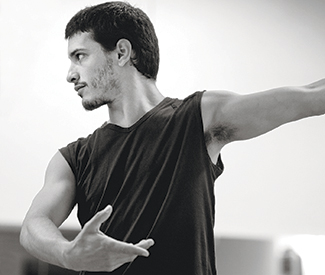
DANCE Israeli-born choreographer Idan Sharabi pays meticulous attention to detail, but serendipity still has a place in his creative process. His Spider on a Mirror receives its world premiere as part of Zhukov Dance Theatre’s sixth season at the SFJAZZ Center this weekend. The work will be paired with Enlight, the latest piece by company artistic director Yuri Zhukov.

Take the way Sharabi chooses his music. For the last couple of years, romantic music — think Chopin — has “often been in the back of my mind when starting a new work,” he explains in a post-rehearsal conversation at the Zhukov studio space on Folsom Street. That’s how late 19th-century Russian maverick Alexander Scriabin popped up for Spider. But then Sharabi went clubbing and happened to encounter Robin Thicke’s “Blurred Lines.” The pop hit had good beat, melodies, and it was fun. “Besides,” he says, “it was all over the place.” So that’s how a Russian wild man met MTV.

Serendipity of a less entertaining kind also kicked in when Sharabi came to work with Zhukov’s dancers. On his first trip to San Francisco, he stayed in Pacific Heights. On his return, living south of Market Street, he got a much grittier vision of the streets of SF. Sharabi drew on this eye-opening experience for Spider. “I am not talking about the difference between rich and poor, but about not having a roof over your head, where people’s skins acquire the gray color of the streets,” he explains.

Trained at Juilliard, where he won the Zaraspe Prize for Best Juilliard Choreographer of 2006, Sharabi has spent his working life in Europe as a freelance choreographer, and as a dancer and choreographer for Nederlands Dans Theater and Israel’s Batsheva Dance Company.

Working on refining Spider — he put the bones together during a four-week residency in June — Sharabi is solicitous of, and aware of, the dancers’ individuality. Yet the process is very detail-oriented. Flailing on the floor, Doug Baum at first looks like a bug fallen on its back. But then trembles and shakes seem to throw him into death throes, tearing his body apart. Sharabi encourages a differently angled knee and fingers that extend into a line. Nick Korkos works on a dropping-wrist gesture that, as the choreographer demonstrates, releases energy to travel up the arm and down the side of the body to pull the dancer to the ground. A limb-entangling duet for Christopher Bordenave and Jeremy Neches finally breaks apart — except, as Sharabi insists, they stay glued together through their big toes.

The exactitude with which Sharabi puts Spider together seems to infuse a sinewy strength into fractured choreography that can look convulsive — sometimes to the point where one becomes conscious of how tenuously these wildly shaking body parts are connected to the skeletal structure.

At the end of the afternoon, the dancers are thoroughly spent. Yet they clearly have what Sharabi always looks for: passion and curiosity. Those are the qualities, he says, that allow superbly trained dancers to go beyond their training and step into unknown territory.

In his own life, Sharabi has encountered and worked with three choreographers who have inspired him to pursue his own path with passion and curiosity. In Jirí Kylián, Czech-born founder of Nederlands Dans Theater, he saw what he calls a “tragic vision.”

“Kylián’s choreography is often quite dark, dealing with death,” he says. “And yet it’s always so elegant. He can take garbage or cans being squashed on the floor, and make them look elegant.” Smiling broadly, he adds, “I am actually a dark person myself,” something he attributes to having suffered a serious injury, and one that may have affected his own perspective on the dancing body. One of the distinguishing marks of his choreography is the extensive and imaginative use of the floor. He views it as more than just something to hit and bounce off; instead, it offers a way to embrace what contact with the earth can offer.

The work of Ohad Naharin, the artistic director of Batsheva Dance Company, remains an intriguing puzzle. With just a touch of embarrassment, Sharabi admits “I still don’t know whether I am supposed to try to understand his work or just go with the sensations.” But about the American-born but Europe-based William Forsythe, who has been rethinking ballet’s fundamental principle, Sharabi is clear: “It’s the math. I love his mind, the clarity of his complex and never compromising thinking.”

What about artists outside dance? Without hesitation Sharabi answers “Quentin Tarantino.” While he is comfortable with Tarantino’s sense of time and even his films’ violence, Sharabi reveres the details (always the details), the sheen, the completeness of the design, the wholeness of the vision, and the absolute control Tarantino exerts over his product. “It’s not the amount of blood that counts,” he says. “It’s the way the blood flows.” *

ZHUKOV DANCE THEATRE

Oct 29-30, 8pm, $25-$55

SFJazz Center

201 Franklin, SF

www.zhukovdance.org

On the line

31

rebecca@sfbg.com

Nobody knew exactly when the bus would leave. It was the afternoon of Oct. 17, and a group of about 60 immigrant rights activists were gathered in the shade of some tall trees in a park by the TransAmerica Pyramid in downtown San Francisco.

Many were young, Latino or Asian Pacific Islander, dressed in hooded sweatshirts, baseball caps, and slim-fitting jeans. They chatted and milled about, perhaps trying to ease a gnawing sense of anticipation over what was about to happen.

Half a block away and out of view, federal Immigration and Customs Enforcement officers were leading passengers onto a white bus, parked at the ICE building at 630 Sansome St., with a “Homeland Security” label inscribed on the front. All the passengers were ICE detainees; some were about to embark on long deportation journeys, while others were being sent to detention centers where they would remain in limbo until either being deported or exonerated.

Back at the park, organizer Jen Low was peering at her phone every 10 minutes. “They’re locking the bus!” she exclaimed after reading a text sent by someone on the lookout. That meant it was almost time to go. The activists started organizing themselves into two groups: Those willing to risk arrest, and those planning to rally in support.

The ones facing arrest were planning to engage in peaceful civil disobedience, by placing their bodies in front of the bus to prevent it from going anywhere. “About half of the people who will be blocking the bus are undocumented,” Low told the Guardian as they prepared to exit the park. “That’s why some of us are so on edge right now.”

They headed toward the ICE building en masse, slowly at first and then quickening their pace, some hastily peeling off top layers to reveal handmade T-shirts underneath proclaiming, “Not one more.” Others were already stationed at the bus, and as 10 protesters linked arms and settled onto the street in front of it, someone had already started up a chorus of “We Shall Not Be Moved.”


INTO ICE CUSTODY

They’d been inspired by a recent ICE bus blockade carried out by Arizona activists, organizer Jon Rodney said, and the civil disobedience was meant to send a message to President Barack Obama that it’s unfair to continue deporting undocumented people as long as a resolution on federal immigration reform remains stalled in Congress. Rodney’s organization, the California Immigrant Policy Center, has emphasized family unity as a guiding principle that should inform immigration reform efforts.

A variety of organizations had been involved in planning the action, including the California Immigrant Policy Center, Causa Justa/Just Cause, POWER (People Organized to Win Employment Rights), ASPIRE (Asian Students Promoting Immigrant Rights through Education), and the Asian Law Caucus.

Among the protesters was Dean Santos, a 23-year-old originally from the Philippines who had been brought to the US when he was 12. Not so long ago, he’d been transported out of San Francisco on a white deportation bus leaving from that very building. Faced with a trumped-up felony that was later downgraded to a misdemeanor, Santos was taken into federal custody in late 2010 because the initial serious charge triggered ICE involvement.

He was given the choice of voluntary deportation or indefinite detention while he fought his case. Santos chose the latter. He called his mother in San Bruno, where they lived, and apologized for what had happened.

Locked in a cramped cell in the San Francisco ICE building, he started to feel overcome with fear, but an elder man he was detained with offered comforting words. “He told me he had also decided to stay and fight, and he said he was doing it for the sake of his daughters,” Santos recalled.

That’s when it hit him that he wasn’t the only one whose life was potentially about to be upended due to deportation. The realization eventually fueled his activism, he said. He was inspired to participate in the undocumented youth movement to call for just and inclusive immigration reform, and he’d joined the ICE blockade as a member of ASPIRE and the Asian Pacific Islanders Undocumented Youth Group.


TWO MILLION DEPORTATIONS

In just a short time, the scene outside the ICE building had become zoo-like. Television news crews appeared, police cars raced up with lights flashing, and a few young ICE guards, sporting thick black vests and belts with holstered weapons, stood by the bus in wide defensive stances.

More than 100 supporters formed a procession and encircled the vehicle, waving signs and chanting as they went round and round. “Down, down with deportation! Up, up with liberation!” Some chants were in Spanish: “Obama, escucha, estamos en la lucha!” (Obama, listen, we’re in the struggle.)

Obama delivered comments that very day, as the federal government was reopening after being shut down by Congress, signaling that immigration reform was the next major agenda item.

“We should finish the job of fixing our broken immigration system,” the president said in a televised address from the Rose Garden. “There’s already a broad coalition across America that’s behind this effort — from business leaders to faith leaders to law enforcement. The Senate has already passed a bill with strong bipartisan support. Now the House should, too. It can and should get done by the end of this year.”

California has the largest immigrant population of any other state, with an estimated 2.8 million undocumented Californians. Advocates are calling for the creation of a path to citizenship that isn’t overly burdensome, and for immigration policy that doesn’t rely on detention and deportation as cornerstones of immigration enforcement.

“We were really hoping immigration reform would pass and reduce deportations,” Asian Law Caucus staff attorney Anoop Prasad told the Bay Guardian just before the protest got underway. Instead, “Obama is closing in on his two millionth deportation since becoming president,” he said, a higher number than those carried out under President George H.W. Bush when he’d been in office for the same duration.

Much of that steep increase has to do with technological capability and information sharing under Secure Communities (S-Comm), which has resulted in an estimated 90,000 deportations of undocumented people in California alone.

Prasad said he had reviewed the roster of detainees loaded onto the bus earlier that day. They’d been taken into ICE custody in various Northern California cities, including San Francisco, and they had origins in Russia, Mexico, Ethiopia, Vietnam, El Salvador, India, and other countries. Some had children, and a few were minors themselves.

“One guy has been here since he was 11 months old,” Prasad said. “Now he’s in his 40s.”

There are three immigration courts inside 630 Sansome. Undocumented detainees are transported there from ICE facilities in Richmond, Bakersfield, Sacramento, and Yuba County, often roused around 3am. They aren’t allowed any books or personal property when they’re locked up awaiting court appearances, Prasad said/

“In court,” he said, “a lot of times people have their legs and hands shackled.”

Sometimes the early-morning departures and daytime detentions can disrupt medication routines, he added. That’s a problem for people taking medication to combat mental illness — especially when they’re headed for anxiety-inducing appearances in court.


FALSE IMPRISONMENT, REAL CONSEQUENCES

Around 5:30pm at the ICE bus blockade, the SFPD closed off the intersection and told activists they would risk arrest if they didn’t move out of the way. The larger group of supporters squeezed onto the sidewalk, but those who had set out to perform civil disobedience stayed planted where they were.

It seemed the SFPD would arrest them at any time. A police officer crouched down and spoke with them in a conversational tone as they sat with their hands clasped. “I know what you guys are trying to do,” he said, adding that he wasn’t trying to stop them from speaking out about their cause. But he asked them to stand up and let the bus get on its way. They refused.

San Francisco has been a Sanctuary City since 1989, which means city employees are prohibited from helping Immigration and Customs Enforcement (ICE) with immigration investigations or arrests except in cases where it’s required by federal or state law, or a warrant.

If they were taken into custody by the SFPD and charged with misdemeanors, the activists had reason to believe they would be spared from deportation. Added protection for undocumented San Francisco residents will soon take effect under legislation recently approved by the San Francisco Board of Supervisors.

Authored by Sup. John Avalos, it prohibits local law enforcement from honoring ICE requests to hold detainees for an additional 48 hours, except in very narrow circumstances. Federal authorities issue those requests to allow enough time to take those undocumented individuals into custody — even if they lack probable cause showing that the person was involved in criminal activity. Their status is detected via S-Comm, an information-sharing program between federal agencies that links fingerprint databases.

But a debate had apparently started between the two agencies over whether the protesters were under SFPD’s jurisdiction, or ICE’s. Prasad said federal agents threatened the activists with charges of felony false imprisonment if they did not end their protest immediately. That charge essentially means holding someone against his or her will, but “they’re not blocking the door,” he pointed out. (Some armed ICE agents, meanwhile, did happen to be standing in front of the bus door.)

The prospect of facing federal felony charges carried potentially grave consequences. Just before the start of the protest, Santos described what his own ICE bus trip had been like. He’d boarded it with about 35 other passengers, mostly men. As they crossed the Bay Bridge, he felt a pit in his stomach as he looked back at the Ferry Building, wondering if he was going to be separated from his family for good.

Santos and the other detainees were transported to Oakland International Airport, brought through a special security area, and led onto a plane. The flight stopped in Bakersfield, Los Angeles, and San Bernardino, picking up more detainees at each location. Then the flight touched down in San Diego, where some were taken off the plane and sent across the border to Tijuana.

Santos’ journey ended at an ICE detention center in Florence, Ariz. He said there were 14 bunks in a room with a single toilet, which was not well maintained. He had no idea how long he was going to remain there, but it ultimately turned out to be two weeks.

Extended family on the East Coast helped his parents locate a lawyer in Arizona, and the lawyer helped him qualify for bail, which his parents posted. He was released, and finally returned to San Francisco after 16 hours on a Greyhound bus.

Eventually, the whole matter was dropped because he benefitted from prosecutorial discretion under Deferred Action for Childhood Arrivals, federal policy enacted in June 2012 directing ICE to give special consideration to individuals who immigrated illegally to the US as children.


STILL UNAFRAID

Protesters at the blockade were having an intense consultation with Prasad, the Asian Law Caucus attorney, as he explained what was potentially at stake. Heads together and eyes wide as they talked it out, they ultimately opted to hold firm.

“We will do whatever is necessary for our community!” Alex Aldana bellowed into a megaphone while the supporters cheered. The group erupted into wild chanting: “Undocumented, unafraid!”

Not long after that, all were brought to their feet and led away from the bus by men in uniforms — it was federal ICE officers who escorted them away, not SFPD officers.

They brought them past the crime tape and around the corner from where the bus was parked. Then they lined them up, wrote out tickets, and let them go. Prasad said he guessed that the agency was worried about the backlash it might receive had it gone through with taking them into custody and pressing charges. Energy was high as it dawned on the activists that they were getting Certificates of Release instead of handcuffs. Still in the line police had arranged them, they jumped up and down on the sidewalk, still chanting, while a federal officer filled out the forms and placed them into their hands. As evening fell, the bus passengers remained shackled in their seats, invisible to all but the driver. Once the activists had been cleared from the scene and the authorities regained control of the situation, the bus backed up and left.

BEST OF THE BAY 2013: LOCAL HEROES

0

Bruce Brugmann, Jean Dibble, and Tim Redmond

The San Francisco Bay Guardian — which has had a significant impact on the Bay Area’s cultural and political dynamics and dialogue over the last 47 years — was largely the creation of three people with complementary skills and perspectives, an amalgam that gave the Guardian its voice and longevity.

Although they are no longer involved with running the paper, we’re honoring their contribution and legacy with a form of recognition they created: a Local Hero Award in our Best of the Bay issue, an annual edition that has been adopted by almost every alt-weekly in the country.

Bruce Brugmann and Jean Dibble launched the Guardian in October 1966 after years of planning by the married couple, and they ran it as co-publishers until the paper’s sale to the San Francisco Newspaper Co. last year, with Dibble running the business side and Brugmann in charge of editorial and serving as its most public face.

“We were one of the few husband and wife newspaper teams, a real mom and pop operation,” Brugmann told us. “We couldn’t have done it without the two of us, we needed both of our skill sets.”

They met in 1956 at the University of Nebraska, where Brugmann studied journalism and served as editor of the Daily Nebraskan, starting his long career as journalistic rabble-rouser. Dibble studied business, which she would continue in graduate school at Harvard University’s Radcliffe College while Brugmann got a master’s in journalism at Columbia University.

As graduation neared, they started talking about forming a newspaper together, an idea that percolated while Brugmann served in the US Army, where he wrote for Stars and Stripes, and Dibble moved to San Francisco with their two kids to work in personnel and administrative positions.

After the Army, they settled in Wisconsin, where Brugmann worked as a reporter for the Milwaukee Journal before moving to the Bay Area to work on launching the Guardian while Brugmann supported the family working for the Redwood City Tribune.

“We came out here with the idea of doing it and we immediately started planning. Jean did the prospectus, a damn good prospectus,” Brugmann said.

The Guardian published sporadically in the beginning, but it tapped into a vibrant counterculture that was clashing with the establishment and began publishing important articles highlighting inequities in the Vietnam War draft and exposing local political scandals, including how Pacific Gas & Electric illegally acquired its energy monopoly.

“A lot of it was just keep your head down and keep going,” Dibble said. “We never talked about alternatives, it was just what we were going to do.” The Guardian covered the successful revolts against new freeways in the city and plans to build Manhattan-style skyscrapers, publishing the book The Ultimate Highrise in 1971. In the mid-’70s, the Guardian won a successful unfair competition lawsuit against the Chronicle and the Examiner over their joint operating agreement, allowing the paper to become a free newsweekly. “Eventually, things got better, and we got some large advertisers in the ’80s and they really helped kick us off,” Dibble said. That was also when Tim Redmond, a journalist and activist steeped in radical politics, started writing for the Guardian, going on to serve as the paper’s executive editor and guiding voice for more than 30 years. “Tim was always more radical than I was,” Brugmann said, giving Redmond credit for the Guardian’s groundbreaking coverage of tenant, environmental, and economic justice issues. “Every publisher needs an editor who was more radical than they are to push them.” The two journalists had a prolific partnership, mentoring a string of journalists who would go on to national acclaim, turning the Guardian into a model for alt-weeklies across the country, exposing myriad scandals and emerging arts and cultural trends, and helping to write and pass the nation’s strongest local Sunshine Ordinance. “We always wanted to make things better,” Brugmann said of what drove the Guardian. “Even the battles that we lost, we got major concessions. Yerba Buena is much better because of the stories we did at the time, same thing with Mission Bay…San Francisco is much better that we were here. And we’re really proud and we appreciate the work of the current Guardian staff in keeping the Guardian flame alive.”


LOCAL HEROES: Kate Kendell

The night Proposition 8 passed was one of the hardest of Kate Kendell’s life. She remembers it with startling detail — and she should, because she was one of the most prominent opponents of the measure to overturn marriage equality in California.

“I was hopeful right up until the end that Prop. 8 would be defeated,” she said, speaking slowly as she pulled her thoughts from what sounded like a dark place. “Our initial polling numbers said we’d probably lose, but I really hoped in the deepest heart of my heart that when people got in there that they’d punch their vote in favor of the person they knew.”

But as the voters of California showed in that 2008 election, sometimes the good guys lose.

Kendell, executive director of the National Center for Lesbian Rights, fought the good fight since she started there in 1994. The NCLR litigates, creates policy, and performs outreach for LGBT civil rights on a national level, with headquarters in San Francisco. After years of anticipation, she poured herself into the campaign against the proposition that would make her marriage illegal, and then the measure passed.

That night she hung her head in disbelief. She felt physically ill, and her mind roiled in grief equaled only by the death of one of her parents. “It felt like that,” she said.

Kendell and her wife, Sandy, went home without speaking a word, and when she got in the door she tried to pull it together. Steeling herself to face her family, Kendell walked out of the bathroom and burst into tears. Her son said simply “this just means we have to fight more.”

So she did, and we all won.

That led to the moment for which Kendell may be remembered for a long time to come. When Prop. 8 was overturned by the US Supreme Court this year, a flock of San Francisco politicians descended the steps inside the rotunda at City Hall. Kendell took to the podium and spoke to the nation.

“My name is Kate Kendell with the National Center for Lesbian Rights,” she said, “and fuck you, Prop. 8!” The crowd erupted into cheers.

She regrets saying it now, but history will likely forgive her for being human. For someone whose own marriage’s validity was threatened and who spent two decades fighting for equality, she earned a moment of embarrassing honesty.

Kendell’s infamous declaration may be how she’s known, but one of her key decisions behind the scenes shaped the LGBT equality movement as well. When then-Mayor Gavin Newsom’s administration wanted a couple to be the first in his round of renegade gay marriages in 2004, it was Kendell who suggested Del Martin and Phyllis Lyon.

The two were in a relationship since 1953, pioneers of LGBT activism in San Francisco. Kendell said it was only right that they were first to read their vows in the city they helped shape. “Were it not for their contributions, visibility, and courage in the ’50s and ’60s, we wouldn’t be in that room with Newsom contemplating marriage licenses,” she said. “I’m just happy they said yes. It was absolutely appropriate.” And it’s with that sense of history that she herself pioneers forward, pushing in states across the US what Harvey Milk fought for in California — workplace protections for the LGBT community. “In 38 states, you can be fired from your job or being lesbian, gay, bisexual, or transgender. That has to change,” she said. “When the next chapter of history is written, it will be about a nation that treats the LGBT community as equals.”


Theo Ellington

Last year, when San Francisco Mayor Ed Lee floated the idea of implementing stop-and-frisk, a practice that many civil rights advocates say amounts to racial profiling, Theo Ellington stepped up to create a Change.org petition to oppose the idea — and won.

The policy would have given San Francisco police officers the authority to stop and search any individual who “looks suspicious,” in an effort to get guns off the streets.

“I found it was basically a predatory policing practice that didn’t belong in a city like San Francisco,” Ellington told us. His petition garnered a little more than 2,300 signatures, “enough to show policymakers we were paying attention,” he guesses. Faced with mounting pressure and a community outcry, Lee ultimately abandoned the idea.

“That was a win, I think, for everyone fighting for what’s really a civil right,” the 25-year-old, native San Franciscan told us in a recent phone interview. “It’s not a black issue or a white issue,” but it did strike a nerve and provide Ellington with some momentum for coalition building.

Ellington was born and raised in San Francisco’s Bayview Hunters Point neighborhood, home to a significant portion of the city’s dwindling black population. The campaign against stop-and-frisk helped catalyze his still-evolving political organization, the Black Young Democrats of San Francisco, of which he is president.

Go to BYDSF’s website and you’re confronted with some startling statistics about the experience of black San Franciscans: In the last 20 years, the African American community has dwindled to only 6 percent of the city’s population; meanwhile, the high school dropout rate stands at 38 percent, the unemployment rate is 18 percent, and the level of poverty stands at a disheartening 20 percent.

To tackle these looming challenges, BYDSF now faces the hurdle of getting local elected officials to care. “Since then, we have been trying to build our membership and figure out where we fit in the political climate of SF,” Ellington says.

His group’s chief concerns include closing the achievement gap in San Francisco public schools, doing something about the escalating cost of housing, and finding better solutions for public transit. “There’s the housing need, obviously. It’s a need that working class folks in general are facing,” he said.

He’s pursing a master’s degree in urban affairs at the University of San Francisco, and says he’s taken it upon himself to learn everything he can about how cities operate. To that end, he often ponders vexing questions: “How do you figure out a way to give those same opportunities to everyone? How do you provide opportunities for all income levels?”

His successful opposition campaign to stop-and-frisk didn’t stop Mayor Lee from appointing him to the Commission on Community Investment and Infrastructure, which oversees the successor to the San Francisco Redevelopment Agency. A major project under that body’s purview is the Hunters Point Shipyard development, a massive undertaking led by construction firm Lennar Urban, practically in Ellington’s backyard. Having grown up in the neighborhood, he sees himself as being in a unique position to ensure that the developers are providing jobs for local residents as required under the agreement. “It allows me to speak to both sides — on the community level, and in City Hall,” he said. “There are certain social dynamics you won’t understand unless you have lived in the community.” Ultimately, Ellington says, his goal is to push local politicians to find ways of making San Francisco a place where people of all income levels can find their way. “There’s a lot more work to do,” he said. “I think San Francisco is at a real pivotal point, where we can choose to go in the right direction … or we can choose the opposite.”


LOCAL HEROES: Shanell Williams

Shanell Williams is a chameleon activist, spearheading the effort to save City College of San Francisco from many fronts.

When City College fought off a statewide initiative to save money by stigmatizing struggling students, she defended the school as an Occupy activist. With a banner raised high, she faced down the California Community College Board of Governors, shouting their wrongs aloud at a meeting attended by hundreds. The board was stunned but her fellow activists were not, because that’s who Williams is: an uncompromising defender of San Francisco.

Now, as City College faces a fight for its existence, Williams is defending it again, this time as a duly elected CCSF student trustee.

Williams is at the forefront of Save CCSF, an Occupy-inspired group publicly protesting the Accrediting Commission of Community and Junior Colleges, the body trying to shut down City College. San Francisco is holding its breath until next July to hear if the accrediting commission will close the city’s only community college — and Williams was one of the key organizers helping students’ voices rise up to decry the decision to close the school.

She has reason to fight hard, growing up watching her community ravaged by those in power who purported to do good. She is a black woman and San Francisco native raised in the Fillmore and the long history of redevelopment and its role in the flight of The City’s African American population shaped her ethos. To Williams, there are forces that care about money at the expense of communities and those forces need to be fought.

“How are we supporting people to have a decent quality of life?” she said, and that’s the way she’s approached saving her community since a young age.

In 2003, while in high school, Williams got a taste of politicking as a member of San Francisco’s Youth Commission, appointed by then-Mayor Willie Brown. “I think he’s a very interesting character with a lot of influence over the city,” she said, with just an edge of steel to her voice.

As a teenaged politician, she discovered the work of the Human Rights Commission and was inspired. While a student of Washington High School and then Wallenberg High, she had a tough home life and entered the foster care system, getting a firsthand look at how the state takes care of its youth.

It galvanized her, honed her, and made her yearn for change. “I just innately had a sense of wanting to see justice and fairness,” she said.

Energized, she joined the Center for Young Women’s Development, the Youth Treatment Education Court, Urban Services YMCA, the Youth Leadership Institute, and more. She joined so many organizations and taught so many youth and government officials that even she can’t remember all of them off the top of her head.

At one point, she even taught judges across the country about cultural competency. “We had this whole spoken word performance thing we did,” she said, laughing.

In 2010, as Williams took classes at City College, she waved the banner defending San Francisco’s community college students. She pushed for city-level minimum wage requirements for City College workers, who earned dollars less. She also pushed back against state requirements to cut off priority registrations to those who took too long in the community college system — because she’s been there herself.

“They need a few chances to get it right and become a good student,” she said. When the struggle to save City College is done, win or lose, Williams sees herself remaining an advocate for students for years to come. At 29 years old, she’s still a student herself, and she eagerly awaits the day she’ll transfer to Cal or Stanford as an Urban Studies major. It all comes back to defending her city. “We have to broaden the movement,” she said. “The enemy is not about color, it’s about wealth inequality. It’s not just about City College either. It’s about the austerity regime that doesn’t care about working class people and poor folks.”


San Franciscans for Healthcare, Jobs, and Justice

When the San Francisco Mayor’s Office cut a deal with Sutter Health and its California Pacific Medical Center affiliate for an ambitious rebuild of hospital facilities — which would shape healthcare services in San Francisco for years to come — community activists began to find serious flaws in the proposal.

So they organized and banded together into a coalition to challenge the powerful players pushing the plan, eventually helping to hash out a better agreement that would benefit all San Franciscans. Representing an alliance between labor and community advocates, the coalition was called San Franciscans for Healthcare, Jobs, and Justice.

When the whole affair began, it seemed as if the CPMC rebuild would incorporate a host of community benefits — but those promises evaporated after the healthcare provider walked away from the negotiating table, unhappy with the terms.

Then a second agreement, with much weaker public benefits, came out of a second round of talks between CPMC and the Mayor’s Office. But by then, so much had been given up that “we were stunned,” said Calvin Welch, who joined the coalition on behalf of the Council of Community Housing Organizations. “We met with [Mayor Ed Lee] and told him, this is absolutely unacceptable.”

But the mayor wasn’t willing to address their concerns at that time. When the deal failed to win approval after a series of hearings at the Board of Supervisors, however, “the unacceptable deal that the mayor created melted in the sun of full disclosure,” Welch said.

That plan would have allowed St. Luke’s Hospital, a critically important facility for low-income patients, to shrink to just 80 beds with no guarantee that it would stay open in the long run. CPMC’s commitment to providing charitable care to the uninsured was disappointingly low. And while the project was expected to create 1,500 permanent jobs in San Francisco, the deal only guaranteed that 5 percent of those positions would go to existing San Francisco residents.

Enter the movers and shakers with San Franciscans for Healthcare, Housing, Jobs, and Justice. The coalition took its place at the negotiating table, along with CPMC, a mediator, and an unlikely trio of supervisors that included Board President David Chiu and Sups. David Campos and Mark Farrell. Over several months, the coalition put in some serious time and energy to push for a more equitable outcome.

“We pushed so hard for a smaller Cathedral Hill [Hospital] and a larger St. Luke’s,” Welch said, describing their strategy to safeguard against the closure of St. Luke’s. They also pushed for CPMC to make a better funding contribution toward affordable housing, a stronger guarantee for hiring San Franciscans at the new medical center, and improvements to transit and pedestrian safety measures as conditions of the deal.

Under the terms that were ultimately approved, St. Luke’s will remain a full-service hospital, and CPMC will commit to providing services to 30,000 “charity care” patients and 5,400 Medi-Cal patients per year.

CPMC also agreed to contribute $36.5 million to the city’s affordable housing fund, and promised to pay $4.1 million to replace homes it displaces on Cathedral Hill. Under the revised deal, 30 percent of construction jobs and 40 percent of permanent entry-level positions in the new facilities would be promised to San Francisco residents.

One of the greatest victories of all, Welch said, was how well coalition members worked together. “This was the most straight-up equal collaboration with labor and community people, equally supporting one another, that I’ve ever been involved with,” Welch said. Even though they were motivated to participate by different sets of concerns, the two sides remained mutually supportive, Welch said. During the long, grueling hearings, “The nurses never left,” he noted in amazement. “The nurses stuck around for all the community stuff.”


Photos by Evan Ducharme

Thee Oh Sees, OBN III’s, and more shake up the Chapel

0

Once (three years ago) I broke my wrist at a Thee Oh Sees show, and despite the gnawing pain from my misshapen wrist, I stayed to watch the rest of the set.

You see, you just don’t leave a Thee Oh Sees show early. It is a band you experience, because it’s not that often that you get the chance to see a band that enjoys what it’s doing quite so much, and may just want to pull you into the hectic fun.

My most recent encounter with Thee Oh Sees was last Thursday at the Chapel; the band was kicking off its sold-out, three-night residency with spooky electronic act Fryborg, proto-punk worshippers OBN III‘s and precise psych-rock band the Blind Shake.

Fryborg started as people began to file in to the Mission venue. A one-man act, Fryborg tinkered away on various sound boards with his back turned to the audience. Haunting, Halloween-like imagery was projected on to a screen behind the stage while he did his best to conjure up beats for the better part of 30 minutes. It was either hit-or-miss with the audience (as is with most acts of Fryborg’s ilk), with people either nodding along to the music or hitting the bar.

Next up was OBN III’s. The Austin, Texas based band is Stooges worship in the best way possible. The five-person outfit created a wall of sound that enveloped the audience. It was loud, dirty, and leaning on the edge of proto-punk. The frontperson and namesake of the band, Orville Bateman Neeley III, took notes from Iggy Pop with a confrontational stage manner, and straight-up pissy demeanor. The band shredded through its set with great voracity, and the audience ate it up.

Then a trio of bald men graced the stage. One person from the audience thought it was a crew setting up for Thee Oh Sees. But alas, it was not! It was the Blind Shake, a Minneapolis-based group that serves up intricate psych rock for all ages. Though the Blind Shake airs on the noisy side, that doesn’t stop it from cranking out songs with intense, military-like precision. Also of note: the band released a full-length on Castle Face Records this fall, dubbed Key To a False Door, which is worth checking out.

Finally San Francisco locals, Thee Oh Sees graced the stage. If one gazed upon the crowd-goers surrounding the stage, he or she would find that the people in attendance were nothing short of starry-eyed as the band dutifully prepared for its performance.

Now, accurately describing what a Thee Oh Sees show is like describing colors to a person who has never seen before. (Though I digress.) While I have seen the group numerous times by this point, there is something that always brings me back. It’s likely the effort that the band puts into its sets, and the kinetic energy it exudes that’s nothing less than infectious.

While the Thee Oh Sees played a combination of old songs and new tracks off newest release, Floating Coffin (Castle Face Records, 2013), a good portion of the audience danced and pogoed with the best of them.

Theater Listings: October 9 – 15, 2013

0

Stage listings are compiled by Guardian staff. Performance times may change; call venues to confirm. Reviewers are Robert Avila, Rita Felciano, and Nicole Gluckstern. Submit items for the listings at listings@sfbg.com.

THEATER

OPENING

BooKKeepers: A True Fiction Southside Theatre, Fort Mason Center, Marina at Laguna, SF; www.generationtheatre.com. $20-35. Opens Thu/10, 8pm. Runs Thu-Sat, 8pm; Sun, 3pm. Through Oct 27. GenerationTheatre presents Roland David Valayre’s Kafka-inspired fantasy.

Dirty Little Showtunes New Conservatory Theatre Center, 25 Van Ness, SF; www.nctcsf.org. $25-45. Opens Fri/11, 8pm. Runs Wed-Sat, 8pm; Sun, 2pm. Through Nov 10. New Conservatory Theatre Center presents the return of Tom Orr’s bawdy Broadway parody.

First Stage Werx, 446 Valencia, SF; www.firsttheplay.com. $25-35. Opens Sat/12, 8pm. Runs Thu-Sat, 8pm; Sun, 2pm. Through Nov 3. Altair Productions, the Aluminous Collective, and PlayGround present the world premiere of Evelyn Jean Pine’s play, which imagines a 20-year-old Bill Gates’ experiences at a 1976 personal computer conference.

Gruesome Playground Injuries Tides Theatre, 533 Sutter, SF; www.tidestheatre.org. $20-40. Previews Thu/10, 8pm. Opens Fri/11, 8pm. Runs Wed-Sat, 8pm. Through Nov 9. Tides Theatre performs Rajiv Joseph’s drama about two people who first meet as eight-year-olds in the school nurse’s office.

Randy Roberts Live! Alcove Theatre, 414 Mason, SF; www.randyroberts.net. $40. Opens Thu/10, 9pm. Runs Thu-Sat, 9pm. Through Nov 2. The famed female impersonator performs. He will also perform a different show with jazz pianist Tammy L. Hall: Mon/14, Oct 21, and 28, 7pm, $20, Martuni’s, 4 Valencia, SF.

BAY AREA

I and You Marin Theatre Company, 397 Miller, Mill Valley; www.marintheatre.org. $37-58. Previews Thu/10-Sat/12, 8pm; Sun/13, 2pm. Opens Tue/15, 8pm. Runs Tue, Thu-Sat, 8pm (also Oct 19 and Nov 2, 2pm; Oct 24, 1pm); Wed, 7:30pm; Sun, 2 and 7pm. Through Nov 3. Lauren Gunderson’s world premiere explores how Walt Whitman’s words affect the lives of two teenagers.

Rich and Famous Dragon Theatre, 2120 Broadway, Redwood City; www.dragonproductions.net. $15-35. Previews Thu/10, 8pm. Opens Fri/11, 8pm. Runs Thu-Sat, 8pm; Sun, 2pm. Through Nov 3. Dragon Theatre performs John Guare’s surreal musical comedy.

strangers, babies Ashby Stage, 1901 Ashby, Berk; www.shotgunplayers.org. $20-35. Previews Oct 15-17, 8pm. Opens Oct 18, 8pm. Runs Wed-Thu, 7pm; Fri-Sat, 8pm; Sun, 5pm. Through Nov 17. Shotgun Players present Linda McLean’s drama about a woman confronting her past.

Warrior Class Mountain View Center for the Performing Arts, 500 Castro, Mtn View; www.theatreworks.org. $19-73. Previews Wed/9-Fri/11, 8pm. Opens Sat/12, 8pm. Runs Tue-Wed, 7:30pm; Thu-Sat, 8pm (also Sat, 2pm); Sun, 2 and 7pm. Through Nov 3. TheatreWorks performs Kenneth Lin’s incisive political drama.

ONGOING

Acid Test: The Many Incarnations of Ram Dass Marsh San Francisco, 1062 Valencia, SF; www.themarsh.org. $15-50. Fri/11, 8pm; Sat/12, 8:30pm. Playwright Lynne Kaufman invites you to take a trip with Richard Alpert, aka Ram Dass (Warren David Keith) — one of the bigwigs of the psychedelic revolution and (with his classic book, Be Here Now) contemporary Eastern-looking spirituality — as he recounts times high and low in this thoughtful, funny, and sometimes unexpected biographical rumination on the quest for truth and meaning in a seemingly random life. Directed by Joel Mullennix, the narrative begins with Ram Dass today, in his Hawaiian home and partly paralyzed from a stroke, but Keith (one of the Bay Area’s best stage actors, who is predictably sure and engagingly multilayered in the role) soon shakes off the stiff arm and strained speech and springs to his feet to continue the narrative as the ideal self perhaps only transcendental consciousness and theater allow. Nevertheless, Kaufman’s fun-loving and extroverted Alpert is no saint and no model of perfection, which is the refreshing truth explored in the play. He’s a seeker still, ever imperfect and trying for perfection, or at least the wisdom of acceptance. As the privileged queer child of a wealthy Jewish lawyer and industrialist, Alpert was both insider and outsider from the get-go, and that tension and ambiguity make for an interesting angle on his life, including the complexities of his relationships with a homophobic Leary, for instance, and his conservative but ultimately loving father. Perfection aside, the beauty in the subject and the play is the subtle, shrewd cherishing of what remains unfinished. Note: review from an earlier run of this show. (Avila)

Beautiful: The Carole King Musical Curran Theatre, 445 Geary, SF; www.shnsf.com. $55-210. Tue-Sat, 8pm (also Sat, Wed/9, and Oct 16, 2pm); Sun, 2 and 7:30pm (no evening show Sun/13 or Oct 20). Through Oct 20. Pre-Broadway premiere of the musical about the legendary songwriter.

Band Fags! New Conservatory Theatre Center, 25 Van Ness, SF; www.nctcsf.org. $25-45. Wed/9-Sat/12, 8pm; Sun/13, 2pm. New Conservatory Theatre Center performs the West Coast premiere of Frank Anthony Polito’s coming-of-age tale, set in 1980s Detroit.

BoomerAging: From LSD to OMG Marsh San Francisco, 1062 Valencia, SF; www.themarsh.org. $15-50. Tue, 8pm. Extended through Oct 29. Will Durst’s hit solo show looks at baby boomers grappling with life in the 21st century.

Buried Child Magic Theatre, Fort Mason Center, Bldg D, Third Flr, SF; www.magictheatre.org. $20-60. Wed/9-Sat/12, 8pm; Sun/13, 2:30. A rural family in slow free-fall finally sees the ground rushing up to meet it in Sam Shepard’s raucous, solemn, and spooky American gothic. The 1978 Pulitzer Prize-winner not only secured a place for Shepard in the upper echelons of American playwrights but helped remake the theatrical landscape when it first premiered, 35 years ago, at the Magic Theatre. The Magic’s current revival tends to show the ways in which the play has aged, however, rather than the ways in which it endures. Loretta Greco’s perfunctory direction inadvertently underscores what has since become formula in the resolutely surreal undercurrent beneath its surface naturalism. Meanwhile her cast —though it includes some normally dependable actors like Patrick Alparone, Rod Gnapp and James Wagner — never comes together as a cohesive ensemble, further distancing us from the still vital dynamism in the text (more of that was captured last year in Boxcar Theatre’s admittedly rocky but overall more persuasive production). Alparone (as long-lost son Vince) and Patrick Kelly Jones (as his belligerent one-legged brother Bradley) manage to infuse some momentary energy, but from the opening lines, delivered offstage by chattering matriarch Halie (Denise Balthrop Cassidy), the tension remains mostly slack, the acting haphazard, and the themes muted. (Avila)

Carrie: The Musical Victoria Theatre, 2961 16th St, SF; www.rayoflighttheatre.com. $25-36. Wed-Sat, 8pm (also Oct 26, 11:30pm; Nov 2, 2pm). Through Nov 2. Just in time to complement the Carrie film remake, Ray of Light Theatre performs the musical adaptation (initially a Broadway flop, then a re-tooled off-Broadway hit) of the Stephen King horror novel.

The Disappearance of Mary Rosemary Phoenix Theatre, 414 Mason, SF; secondwind.8m.com. $15-25. Thu-Sat, 8pm; Sun, 2pm. Through Oct 26. Script-wise, Second Wind Production’s J.M. Barrie adaptation The Disappearance of Mary Rosemary might well be the most unique ghost story of the season. But in contrast to their masterfully suspenseful The Woman in Black (staged in 2009), Disappearance falls to sustain that charged atmosphere of unease that defines the best terror tales. It begins promisingly enough in a purportedly haunted parlor being shown to a young soldier (Ryan Martin) by its taciturn caretaker (Juanita Wyles). After she leaves him alone in the room, lights flicker, his video camera spontaneously begins to play, and a mysterious light emerges from under a locked door, all evidence pointing to either a supernatural event, or to a PTSD-style mental breakdown. Cutting to the same parlor 29 years before, where domestic tranquility prevails, a lot of that initial tension gets lost, and even though the equally unexplainable events which ensue prove to be much bigger in actual scale, they don’t quite manage to scare so much as to puzzle. Of the performances, Gigi Benson’s matter-of-fact matriarch is by far the most nuanced, and her chemistry with her stage husband (Dave Sikula) is far more convincing than that of their daughter and son-in-law (Caroline Elizabeth Doyle and Brian Martin). Finally, a very unexpected twist turns this story of a young woman who never grows old into one who has grown perhaps too fast, uncomfortably invoking V.C. Andrews rather than J.M. Barrie, and not for the better. (Gluckstern)

Foodies! The Musical Shelton Theater, 533 Sutter, SF; www.foodiesthemusical.com. $32-34. Fri-Sat, 8pm. Open-ended. AWAT Productions presents Morris Bobrow’s musical comedy revue all about food.

Forbidden Fruit Garage, 715 Bryant, SF; www.brownpapertickets.com. $25. Fri-Sat and Mon, 8pm. Through Oct 28. Back Alley Theater and Footloose present the West Coast premiere of Jeff Bedillion’s stylized love story that takes on social and religious conformity.

Geezer Marsh San Francisco, 1062 Valencia, SF; www.themarsh.org. $25-50. Wed-Thu, 8pm; Sat, 5pm. Through Oct 26. Geoff Hoyle’s hit solo show, a comedic meditation on aging, returns to the Marsh.

Hedwig and the Angry Inch Boxcar Theatre, 505 Natoma, SF; www.boxcartheatre.org. $27-43. Thu-Sat, 8pm. Open-ended. John Cameron Mitchell’s cult musical comes to life with director Nick A. Olivero’s ever-rotating cast.

An Indian Summer Exit Theatre, 156 Eddy, SF; www.wehavemet.org. $20-40. Thu-Sat, 8pm. Through Oct 19. Multi Ethnic Theater performs Charles Johnson’s drama set in the 1980s Deep South.

It’s a Bird … It’s a Plane … It’s Superman Eureka Theatre, 215 Jackson, SF; www.42ndstmoon.org. $25-75. Wed-Thu, 7pm; Fri, 8pm; Sat, 6pm (also Sat/12, 1pm); Sun, 3pm. Through Oct 20. 42nd Street Moon kicks off its 21st season with this 1966 musical homage to the Man of Steel.

The Scion Marsh San Francisco, 1062 Valencia, SF; www.themarsh.org. $15-100. Fri, 8pm; Sat, 8:30pm. Through Oct 26. Popular solo performer Brian Copeland (Not a Genuine Black Man, The Waiting Period) performs a workshop production of his latest, “a tale of privilege, murder, and sausage.” The show has its official world premiere Jan. 9, 2014.

Sex and the City: LIVE! Rebel, 1760 Market, SF; trannyshack.com/sexandthecity. $25. Wed, 7 and 9pm. Open-ended. It seems a no-brainer. Not just the HBO series itself — that’s definitely missing some gray matter — but putting it onstage as a drag show. Mais naturellement! Why was Sex and the City not conceived of as a drag show in the first place? Making the sordid not exactly palatable but somehow, I don’t know, friendlier (and the canned a little cannier), Velvet Rage Productions mounts two verbatim episodes from the widely adored cable show, with Trannyshack’s Heklina in a smashing portrayal of SJP’s Carrie; D’Arcy Drollinger stealing much of the show as ever-randy Samantha (already more or less a gay man trapped in a woman’s body); Lady Bear as an endearingly out-to-lunch Miranda; and ever assured, quick-witted Trixxie Carr as pent-up Charlotte. There’s also a solid and enjoyable supporting cast courtesy of Cookie Dough, Jordan Wheeler, and Leigh Crow (as Mr. Big). That’s some heavyweight talent trodding the straining boards of bar Rebel’s tiny stage. The show’s still two-dimensional, even in 3D, but noticeably bigger than your 50″ plasma flat panel. (Avila)

“Shocktoberfest 14: Jack the Ripper” Hypnodrome, 575 10th St, SF; www.thrillpeddlers.com. $25-35. Thu-Sat and Oct 29-30, 8pm. Through Nov 23. Thrillpeddlers presents their 14th annual Grand Guignol show, “a evening of horror, madness, spanking, and song.”

The Taming Thick House, 1695 18th St, SF; www.crowdedfire.org. $10-35. Wed-Sat, 8pm (no show Wed/9). Through Oct 26. Crowded Fire Theater presents the world premiere of Lauren Gunderson’s modern farce.

The Voice: One Man’s Journey into Sex Addiction and Recovery EXIT Theatre, 156 Eddy, SF; www.theexit.org. $15-25. Fri-Sat, 8pm. Through Oct 26. David Kleinberg performs his autobiographical solo show.

The World’s Funniest Bubble Show Marsh San Francisco, 1062 Valencia, SF; www.themarsh.org. $8-11. Sun, 11am. Through Oct 27. Soapy, kid-friendly antics with Louis Pearl, aka “The Amazing Bubble Man.”

BAY AREA

Can You Dig It? Back Down East 14th — the 60s and Beyond Marsh Berkeley, 2120 Allston, Berk; www.themarsh.org. $15-50. Sat, 8:30pm; Sun, 7pm. Through Oct 27. Don Reed’s new show offers more stories from his colorful upbringing in East Oakland in the 1960s and ’70s. More hilarious and heartfelt depictions of his exceptional parents, independent siblings, and his mostly African American but ethnically mixed working-class community — punctuated with period pop, Motown, and funk classics, to which Reed shimmies and spins with effortless grace. And of course there’s more too of the expert physical comedy and charm that made long-running hits of Reed’s last two solo shows, East 14th and The Kipling Hotel (both launched, like this newest, at the Marsh). Can You Dig It? reaches, for the most part, into the “early” early years, Reed’s grammar-school days, before the events depicted in East 14th or Kipling Hotel came to pass. But in nearly two hours of material, not all of it of equal value or impact, there’s inevitably some overlap and indeed some recycling. Reed, who also directs the show, may start whittling it down as the run continues. But, as is, there are at least 20 unnecessary minutes diluting the overall impact of the piece, which is thin on plot already — much more a series of often very enjoyable vignettes and some painful but largely unexplored observations, wrapped up at the end in a sentimental moral that, while sincere, feels rushed and inadequate. (Avila)

Ella, the Musical Center REPertory Company, 1601 Civic, Walnut Creek; (925) 943-SHOW. $37-64. Wed/9, 7:30pm; Thu/10-Sat/12, 8pm (also Sat/12, 2:30pm). Yvette Cason portrays the legendary Ella Fitzgerald in this Center REP presentation.

Vanya and Sonia and Masha and Spike Roda Theatre, 2015 Addison, Berk; www.berkeleyrep.org. $35-89. Tue and Thu-Sat, 8pm (also Sat, 2pm); Wed, 7pm; Sun, 2 and 7pm. Extended through Oct 25. Berkeley Rep performs Christopher Durang’s comedy about a dysfunctional family in rural Pennsylvania.

A Winter’s Tale Bruns Amphitheater, 100 California Shakespeare Theater Way, Orinda; www.calshakes.org. $35-72. Tue-Thu, 7:30pm; Fri-Sat, 8pm (also Oct 19, 2pm); Sun, 4pm. Through Oct 20. Cal Shakes concludes its 2013 season with the Bard’s fairy tale, directed and choreographed by sister team Patricia and Paloma McGregor.

PERFORMANCE/DANCE

BATS Improv Bayfront Theater, B350 Fort Mason Center, SF; www.improv.org. $20. “Horror Super Scene,” Fri, 8. Through Oct 25. “Improvised Farce,” Sat, 8pm. Through Oct 26.

Bill T. Jones/Arnie Zane Dance Company CounterPULSE, 1310 Mission, SF; www.ybca.org. Wed/9, 8pm. $50. The company performs the world premiere of /Time: Study I. Yerba Buena Center for the Arts, Lam Research Theater, 700 Howard, SF; www.ybca.org. Fri/11-Sat/12, 8pm; Sun/13, 3pm. The company, with SITI Company, presents the West Coast premiere of A Rite.

“Broadway Bingo” Feinstein’s at the Nikko, Hotel Nikko, 222 Mason, SF; www.feinsteinssf.com. Wed, 7-9pm. Ongoing. Free. Countess Katya Smirnoff-Skyy and Joe Wicht host this Broadway-flavored night of games and performance.

Caroline Lugo and Carolé Acuña’s Ballet Flamenco Peña Pachamama, 1630 Powell, SF; www.carolinalugo.com. Sat/12, Oct 20, and 26, 6:15pm. $15-19. Flamenco performance by the mother-daughter dance company, featuring live musicians.

Margaret Cho Nob Hill Masonic Center, 1111 California, SF; www.livenation.com. Sat/12, 8pm. $41.50-74. The acclaimed comedian performs her new show, Mother.

“Comedy Returns to El Rio” El Rio, 3158 Mission, SF; www.brownpapertickets.com. Mon/14, 8pm. $7-20. With Jabari Davis, Eloisa Bravo, Stefani Silverman, Howard Stone, and Lisa Geduldig.

Dance Theatre of San Francisco ODC Theater, 3153 17th St, SF; www.odctheater.org. Fri/11-Sat/12, 8pm; Sun/13, 7pm. $25-27. The new contemporary dance company founded by Annabelle Henry presents “Debut,” with works by Erik Wagner, Sandrine Cassini, and others.

“The Kepler Story” Morrison Planetarium, California Academy of Sciences, 55 Music Concourse Dr, SF; www.calacademy.org. Sun, 6:30pm. Through Oct 27. $15. Cal Academy and Motion Institute team up to produce this “immersive performance work” about astronomer Johannes Kepler.

“Mission Position Live” Cinecave, 1034 Valencia, SF; www.missionpositionlive.com. Thu, 8pm. Ongoing. $10. Stand-up comedy with rotating performers.

“Mongrels and Objects” CounterPULSE, 1310 Mission, SF; www.counterpulse.org. Fri/11-Sat/12, 8pm; Sun/13, 7pm. $20-30. Headmistress — Amara Tabor-Smith and Sherwood Chen — presents solo and duo dance work.

“Mortified” DNA Lounge, 375 11th St, SF; www.getmortified.com. Fri/11, 7:30pm. $21. Also Sat/12, 7:30pm, $20. Uptown, 1928 Telegraph, Oakl. Embarrassing tales told by those who lived them as teenagers.

“MythBusters: Behind the Myths Tour” Orpheum Theatre, 1192 Market, SF; www.shnsf.com. Sat/12, 2 and 8pm. $45-95. Adam Savage and Jamie Hyneman bring their Discovery Channel show to the stage.

Davy Rothbart Jewish Community Center of San Francisco, 3200 California, SF; www.myheartisandidiotbook.com. Thu/10, 8pm. $12. The Found magazine editor and “This American Life” contributor shares his latest finds and reads from his new book, My Heart is an Idiot.

“San Francisco Magic Parlor” Chancellor Hotel Union Square, 433 Powell, SF; www.sfmagicparlor.com. Thu-Sat, 8pm. Ongoing. $40. Magic vignettes with conjurer and storyteller Walt Anthony.

Smuin Ballet Palace of Fine Arts Theatre, 3301 Lyon, SF; www.smuinballet.org. Thu/10-Sat/12, 8pm. $25-72. Smuin Ballet kicks off its 20th anniversary season with its “Xxtremes” fall program, including Jiri Kylian’s Return to a Strange Land and Amy Seiwert’s Dear Miss Cline.

BAY AREA

Paufve Dance Hillside Swedenborgian Community Church, 1422 Navallier, El Cerrito; www.brownpapertickets.com. Fri/11-Sat/12, 6pm. $15-20. Randee Paufve and company present Soil, a quintet of new and revised solo works.

“The Shout: Life’s True Stories” Grand Lake Coffee House, 440 Grand, Oakl; www.theshoutstorytelling.com. Mon/14, 7:30pm. $5-20. Amazing but true short storytelling. *


 

Legacy of rhythm

0

arts@sfbg.com

DANCE Has there ever been a celebration at Yerba Buena Center for the Arts quite as exuberant, layered, and embracing of a people, a period, and a place as Dimensions Dance Theater’s 40th anniversary show? Not as far as I know. Despite a timing hitch at the end, probably due to the exigencies of costume changes, Dimensions offered a one of a kind evening of glorious dancing. It was a long program — but then, why can’t some events keep going so that they spill deep into the night and the dreams beyond?

The three-hour show opened on a ceremonial note with thank-yous — not to deep-pocketed donors, but to the ancestors both dead and those present who have made Dimensions possible. Poet Marvin White was the griot who poured libations and repeatedly returned to reset the company’s focus on a trajectory of kindness, strength, and love, ending with a promise of a state of being in which earthly limitations will have fallen by the wayside.

Artistic director and Dimensions founder Deborah Vaughan’s vision for the program was both intimate and grand. In the first section, the dancers revisited excerpts of works in the company’s repertoire. If there is one theme that travels through Dimensions’ history, it’s dancing that embodies strength, courage, and joy. In the excerpts of Fly and Catalyst: One by One, the very diverse bodies of Dimensions’ women took to the air with silken buoyancy. Breaking out of unisons, their individuality was still carried by a common impetus. Even the trio of youngsters from the Dimensions youth program danced with that kind of personalized discipline. Young Micaiah Bell’s initial solo just about burned itself into my mind.

In the excerpt from Project Panther, Dimensions’ trio of male dancers (Erik Lee, Justin Sharlman, and Noah James III) proved themselves fierce warriors and fierce dancers in the way they dived over each other and hurled themselves through space. Lee’s exquisitely nuanced solo from Garth Fagan’s Yesterday/Yesternow made you want to see the whole work again — as was, actually, the case with many of the glances in this retrospective, which closed with spitfire ensemble takes on South African boot and can dances.

For the world premiere of Rhythms of Life: Down the Congo Line, Vaughan invited choreographers from the Republic of Congo, Cuba, and Brazil to set works drawn from their traditions on her remarkable dancers. The piece opened with the evening’s pied pipers, MJ’s Brass Boppers, who had led the initial procession into the theater. Latanya d. Tigner choreographed a witty, yet not ironic The Last Dance/St. Ann and Rampart, inspired by New Orleans funeral traditions. With the dancers in brilliant white, they shook their hands, bowed their torsos, and stepped in and out of line, making sure that they were noticed. They were mourning but also celebrating because they were not about to be overcome.

In Palo, the Cuban section, backed by strong singer Sulkary Valverde, dancers used poles as a practice of self-defense but also to demonstrate precision ensemble work. Lovely to see how Sharlman moved through the group and slowly replaced the “weapons” with hooked drumming sticks.

From Brazil, choreographer Isaura Oliveira showcased the Dimensions men in low-to-the-ground feats, that constant shift of weight and direction that we recognize from capoeira. Despite their being filled with an inherent sense of danger, these dances also mesmerize. Danilo Portugal deserved all the applause he got for his chanting and haunting birimbau playing.

I wish the lovely, sexy, and sassy couple dances — inherited from a colonial past though they were — could have been extended before leading into a skirt-swirling, intoxicating carnival. The section ended with a celebration of the end of colonialism with a lilting King (Sharlman) and Queen (Laura Elaine Ellis), and Tigner as an Elder who deposited a totemic doll on the altar.

The after-intermission Vulkana squarely threw the spotlight on the drum, without which African dance — whether in the Congo or in the Diaspora — would not exist. To have these different traditions come together proved both exhilarating and a little messy. Yet it was one of the evening’s highlights to have Kiazi Malonga in a friendly competition with tiny Congolese firecracker Hervé Makaya and his cohort Teber Milandou. They set not only the makuta drums but also costume parts flying.

Vukana also paid tribute to these brave Dimensions performers who, whether chanting in a sitting circle or swiveling their hips so that the energy rose up through the torso and sailed through the arms, looked at home. Whatever the specifics of the wide-ranging demands made on them, Dimensions looked as if born into them. *


Weekly Picks: October 2 – 8, 2013

0

Among the undead.

WEDNESDAY 10/2


“How to Survive the Zombie Apocalypse”

Who hasn’t thought about who they would want on their zombie apocalypse team, how they would escape the city, or where they would go if they got out? But that’s just the first 24 hours. What about some oh, 28 days later? What about 28 weeks? What about doing more than just surviving? The collection of workshops offered by Curiosity Atlas this fall could be the key to your happy post-apocalypse. Join Curiosity Atlas on opening night to preview such workshops as “Defending Against Multiple Attackers,” “MacGyver Night,” “DIY Herbal Apothecary,” “Aging and Collecting Beer,” “Apocalypse Baking,” and other essential skills for living the good life among the undead. The night will feature hands-on demonstrations, live performances, and human-friendly refreshments. (Nina Glasov)

7-10pm, $10

Verdi Club

2424 Mariposa, SF

www.curiosityatlas.com

THURDAY 10/3


The Drunken Botanist

For most drinkers, the word “booze” ignites cerebral images of fluorescently-lit bars and the night, however wild or relaxing, to follow. But for Amy Stewart, author of 2013 New York Times bestseller The Drunken Botanist (Algonquin Books), the sloppy story begins much earlier, as the plants involved evolve, grow, reproduce, ferment, and distill in the days, weeks, and even millennia leading up to liquor’s transformation. Amid overhanging vines and tropic air in the Conservatory of Flowers, Stewart will discuss these diverse herbs, flowers, fungi, and fruit that end up our cups, as well as global drinking practices, comical anecdotes, gardening tips, and some of her favorite razzed recipes. After grabbing cocktails mixed by Amanda Victoria of Lillet and Mark Stoddard of Hendrick’s Gin, don’t leave the event wasted — get your own signed copy of The Drunken Bontanist. (Kaylen Baker)

7pm, $35–$40

Conservatory of Flowers

100 John F Kennedy, SF

(415) 831-2090

www.conservatoryofflowers.org

THURDAY 10/3


Father John Misty

It’s easy for musicians to hide behind personas, but when Joshua Tillman (formerly of Fleet Foxes) stopped recording under his real name and released an album — last year’s Fear Fun — as Father John Misty, it was a moment of revelation. Contrary to the faux-sincerity that has made the revivalist strain of folk rock damn near unlistenable in the last few years, Misty embraces a vivid self-awareness that avoids the usual mix of solemn preciousness and vain humility, humorously detailing his own mushroom tripping genesis (“I’m Writing a Novel”) and possible legacy (“Now I’m Learning to Love the War”). This solo show, with support from comedian Kate Berlant, should showcase the real Father John Misty. (Ryan Prendiville)

9pm, $25–$30

Slim’s

333 11th St, SF

(415) 255-0333

www.slimspresents.com

FRIDAY 10/4


The Wicker Man

Just to get it out of the way: Yeah, the 40th anniversary “definitive new restoration” of British cult-horror classic The Wicker Man (1973) — we shall not speak of the 2006 bee-laden remake — owes its crisp clarity to digital projection. But if the not-on-actual-film tradeoff means seeing the movie uncut, as director Robin Hardy intended, perhaps it’s worth it. A stodgy, Jesus-loving Scottish cop (Edward Woodward) is in for the shock of his life when he travels to pagan stronghold Summerisle, with residents including Christopher Lee (as flamboyant Lord Summerisle) and sexy-dancin’ Britt Ekland. The eerie folk-song soundtrack, which will presumably sound better than ever, is reason enough to catch this DCP event. (Cheryl Eddy)

Through Sat/5, 7 and 9:30pm (also Sat/5, 4:30pm), $8.50–$11

Castro Theatre

429 Castro, SF

www.castrotheatre.com

SATURDAY 10/5


WestWave Festival

Balancing ingredients and flavors is a good way to plan a menu. It seems to work in dance as well. At least that’s what the five-member panel, which chose the artists to be commissioned for the second of this year’s West Wave programs, seems to have had in mind. All the choreographers are women but they bring a huge range of tastes to their practice. Moving here after 20 years in the other dance capital, modern dancer Anne-René Petrarca is creating a quartet about the power of female energy. Anandha Ray calls her fusion piece “tribal belly dance,” remembering its birthplace in India. Gorgeous Flamenco artist Holly Shaw is translating her passion into choreography that considers the figure of the outsider. And finally, ballet dancer Casey Lee Thorne is using the kinetic power of light in her contemporary vision of an old language. Bon appétit everyone. (Rita Felciano)

8pm, $15–$20

West Wave Dance Festival

ODC Dance Commons, Studio B

351 Shotwell, SF

www.westwavedance.org

SATURDAY 10/5


It’s a Bird… It’s a Plane… It’s Superman

42nd Street Moon kicks off its 2013-2014 season in celebration of 75 years of the Man of Steel. From the songwriters of Bye Bye Birdie and Annie comes the 1966 musical It’s a Bird… It’s a Plane… It’s Superman, opening this month at the Eureka Theatre. Starring Lucas Coleman as the man himself, Jen Brooks as Lois Lane, and Darlene Popovic as Dr. Agnes Sedgwick, the show follows Clark Kent/Superman as he juggles heroics and romance. With such lively tunes as “You’ve Got Possibilities” and “Pow! Bam! Zonk!” audiences are in for some riotous fun featuring one of the most prolific superheroes of all time. (Kirstie Haruta)

Through Oct. 20 (Wed-Thu, 7pm; Fri, 8pm; Sat, 6pm; Sun, 3pm), $21–$75

Eureka Theatre

215 Jackson, SF

(415) 255-8207

www.42ndstmoon.org

SATURDAY 10/5


Billy Bragg

British folk-punk rocker Billy Bragg’s debut album, Life’s A Riot With Spy Vs. Spy, came out 30 years ago. If anything, time has only strengthened his writing and resolve, as well as his social activism bent, as evidenced on the troubadour’s latest release, Tooth and Nail, on Essential Music. Fans have two chances to see Bragg this weekend in the city, one at the annual Hardly Strictly Bluegrass festival in Golden Gate Park — and for others who prefer to skip the crowds and dust, you can see him up close and personal tonight, appearing with his friend Jon Langford. (Sean McCourt)

9pm, $35

Great American Music Hall

859 O’Farrell, SF

(415) 885-0750

www.slimspresents.com

SUNDAY 10/6


“Bikes to Books”

You admired the artful, informative “Bikes to Books” map, created by Bay Guardian contributor Nicole Gluckstern and local-history buff Burrito Justice, in our Sept. 11 issue. Now comes the map’s official release party. Begin with a group bike tour that visits all 12 San Francisco streets named for notable artists and authors (Jacks London and Kerouac, Isadora Duncan, etc.) with local ties. And since City Lights founder Lawrence Ferlinghetti helped mastermind the street-naming project back in 1988, it’s fitting that the party portion of the day (complete with literary reading hosted by Evan Karp) takes place in Jack Kerouac Alley, just outside the famed bookstore. (Eddy)

Bike tour: 10:30am-2pm, free

Meet at Jack London (north side) and South Park, SF

Reading: 2-4pm, free

Jack Kerouac Alley (near Broadway and Columbus), SF

www.burritojustice.com

MONDAY 10/7


Iconic Hair Movie Night

When you think of memorable ‘dos in classic horror films, who else but Elsa Lanchester comes to mind? To honor her famous style, Morphic Salon is screening Bride of Frankenstein for free as part of its Iconic Hair Movie Nights series. Watch as Dr. Frankenstein, revealed to be alive by Mary Shelley, builds a bride for his first monstrous creation. And while you’re at it, perhaps you’ll be inspired to get a shock of white in your own hair to match the leading lady! RSVP for this event at info@morphicbeauty.com. (Haruta)

Free, 7 p.m.

Morphic Salon

660 Market, SF

(415) 789-6682

www.morphicbeauty.com

MONDAY 10/7


Tom Odell

Singer-songwriter Tom Odell tends to capture powerful if fleeting feelings of young love and wistfulness, yet with a cheerful energy. Perhaps thanks to bouncy piano chords and Odell’s robust vocals, the British singer’s performances manage to escape the deep, tormented-soul identity adapted by many young acoustic soloists. His 2013 debut album A Long Way Down reached No. 1 on the UK Official Chart earlier this year. And the musician hit an even higher note last month when he reimagined Elton John’s “Tiny Dancer” at the annual BRITs awards program to honor John as the first ever recipient of the BRITs’ Icon Award. This charming singer makes his way to the Chapel tonight, where he’ll share the stage with Australian Vance Joy. (Hillary Smith)

9pm, $15

Chapel

777 Valencia, SF

www.thechapelsf.com

TUESDAY 10/8


Fucked Up

Toronto-based hardcore punk outfit Fucked Up has made a career of being unapologetically over-the-top. Look no further than its borderline-corny name (how can it be the first punk band to come up with that one?), its insanely ambitious concept albums, and the unparalleled insanity of its live shows. Always on the verge of taking things too far, Fucked Up flirts with that fine line between insanity and brilliance, and occupies the space between with authority. No other band can create high-minded, multi-instrumental rock operas of this magnitude and get away with it (although Titus Andronicus is sure trying). As if its fervent, fearless creativity wasn’t cause enough to go see this band (co-headlining with Terror) also know that frontperson Damian Abraham is seriously the nicest dude in the entire world. (Haley Zaremba)

With Power Trip, Code Orange Kids

7pm, $16

Oakland Metro Operahouse

630 Third St, Oakl.

(510) 763-1146

www.oaklandmetro.org

TUESDAY 10/8


La Tigre e la Neve

Somehow, Italian screenwriter Vincenzo Cerami always succeeded in capturing beauty in his films, through the highs as well as the lowest lows of life. The third and final screening of the IIC’s series “A tribute to Vincenzo Cerami,” features actor Roberto Benigni in Cerami’s La Tigre e la Neve (2005) as Attilio de Giovanni, a besotted Italian poetry teacher. Though Giovanni’s children and students adore him, the woman of his heart, Vittoria, spurns him, leaving Italy with another poet for Iraq. When the second Gulf War erupts and Giovanni hears that Vittoria has been injured, he chases after in an attempt to bring Vittoria to safety. Expect hope, despair, laughs, and underlining it all, a sense of utter, expanding beauty. (Baker)

6:30pm, free

Italian Cultural Institute

814 Montgomery, SF

(415) 788-7142

iicsanfrancisco.esteri.it

TUESDAY 10/8


The Babies

The Babies have been pegged as a super-band of sorts from the start, with Cassie Ramone from Vivian Girls on guitar and Kevin Morby from Woods on bass. In their latest release, 2012’s Our House on the Hill, the Babies strive to break free from their lo-fi attachments in previous bands and experiment more with country, blues, and folk elements. The Babies aren’t a side project, as much as an entirely new entity with something different to offer. San Francisco’s Tony Molina, hardcore frontperson turned “punky” indie act also plays this show. His newest record, Dissed and Dismissed, released by Melters this year, is impressive. Loaded with undeniably catchy, fuzzy tunes, the album at times harkens back to an era when bands like Guided by Voices and Pavement were king. Get some drinks and get fuzzed out in more ways than one at the Hemlock Tavern tonight. (Erin Dage)

With Alex Bleeker and the Freaks

8:30pm, $8

Hemlock Tavern

1131 Polk, SF

(415) 923-0923

www.hemlocktavern.com

Theater Listings: October 2 – 8, 2013

0

Stage listings are compiled by Guardian staff. Performance times may change; call venues to confirm. Reviewers are Robert Avila, Rita Felciano, and Nicole Gluckstern. Submit items for the listings at listings@sfbg.com.

THEATER

OPENING

Carrie: The Musical Victoria Theatre, 2961 16th St, SF; www.rayoflighttheatre.com. $25-36. Opens Fri/4, 8pm. Runs Wed-Sat, 8pm (also Oct 26, 11:30pm; Nov 2, 2pm). Through Nov 2. Just in time to complement the Carrie film remake, Ray of Light Theatre performs the musical adaptation (initially a Broadway flop, then a re-tooled off-Broadway hit) of the Stephen King horror novel.

The Disappearance of Mary Rosemary Phoenix Theatre, 414 Mason, SF; secondwind.8m.com. $15-25. Opens Fri/4, 8pm. Runs Thu-Sat, 8pm; Sun, 2pm. Through Oct 26. Writer-director Ian Walker’s ghost story is adapted from J.M. Barrie’s Mary Rose.

Forbidden Fruit Garage, 715 Bryant, SF; www.brownpapertickets.com. $25. Previews Thu/3, 8pm. Opens Fri/4, 8pm. Runs Fri-Sat and Mon, 8pm. Through Oct 28. Back Alley Theater and Footloose present the West Coast premiere of Jeff Bedillion’s stylized love story that takes on social and religious conformity.

An Indian Summer Exit Theatre, 156 Eddy, SF; www.wehavemet.org. $20-40. Opens Fri/4, 8pm. Runs Thu-Sat, 8pm. Through Oct 19. Multi Ethnic Theater performs Charles Johnson’s drama set in the 1980s Deep South.

It’s a Bird … It’s a Plane … It’s Superman Eureka Theatre, 215 Jackson, SF; www.42ndstmoon.org. $25-75. Previews Wed/2-Thu/3, 7pm; Fri/4, 8pm. Opens Sat/5, 8pm. Runs Wed-Thu, 7pm; Fri, 8pm; Sat, 6pm (also Oct 12, 1pm); Sun, 3pm. Through Oct 20. 42nd Street Moon kicks off its 21st season with this 1966 musical homage to the Man of Steel.

The Scion Marsh San Francisco, 1062 Valencia, SF; www.themarsh.org. $15-100. Opens Fri/4, 8pm. Runs Fri, 8pm; Sat, 8:30pm. Through Oct 26. Popular solo performer Brian Copeland (Not a Genuine Black Man, The Waiting Period) performs a workshop production of his latest, “a tale of privilege, murder, and sausage.” The show has its official world premiere Jan. 9, 2014.

The Taming Thick House, 1695 18th St, SF; www.crowdedfire.org. $10-35. Previews Thu/3-Sat/5, 8pm. Opens Mon/7, 8pm. Runs Wed-Sat, 8pm (no show Oct 9). Through Oct 26. Crowded Fire Theater presents the world premiere of Lauren Gunderson’s modern farce.

The Voice: One Man’s Journey into Sex Addiction and Recovery EXIT Theatre, 156 Eddy, SF; www.theexit.org. $15-25. Opens Fri/4, 8pm. Runs Fri-Sat, 8pm. Through Oct 26. David Kleinberg performs his autobiographical solo show.

ONGOING

Acid Test: The Many Incarnations of Ram Dass Marsh San Francisco, 1062 Valencia, SF; www.themarsh.org. $15-50. Fri, 8pm; Sat, 8:30pm. Through Oct 12. Playwright Lynne Kaufman invites you to take a trip with Richard Alpert, aka Ram Dass (Warren David Keith) — one of the bigwigs of the psychedelic revolution and (with his classic book, Be Here Now) contemporary Eastern-looking spirituality — as he recounts times high and low in this thoughtful, funny, and sometimes unexpected biographical rumination on the quest for truth and meaning in a seemingly random life. Directed by Joel Mullennix, the narrative begins with Ram Dass today, in his Hawaiian home and partly paralyzed from a stroke, but Keith (one of the Bay Area’s best stage actors, who is predictably sure and engagingly multilayered in the role) soon shakes off the stiff arm and strained speech and springs to his feet to continue the narrative as the ideal self perhaps only transcendental consciousness and theater allow. Nevertheless, Kaufman’s fun-loving and extroverted Alpert is no saint and no model of perfection, which is the refreshing truth explored in the play. He’s a seeker still, ever imperfect and trying for perfection, or at least the wisdom of acceptance. As the privileged queer child of a wealthy Jewish lawyer and industrialist, Alpert was both insider and outsider from the get-go, and that tension and ambiguity make for an interesting angle on his life, including the complexities of his relationships with a homophobic Leary, for instance, and his conservative but ultimately loving father. Perfection aside, the beauty in the subject and the play is the subtle, shrewd cherishing of what remains unfinished. Note: review from an earlier run of this show. (Avila)

Beautiful: The Carole King Musical Curran Theatre, 445 Geary, SF; www.shnsf.com. $55-210. Tue-Sat, 8pm (also Sat and Oct 9 and 16, 2pm); Sun, 2 and 7:30pm (no evening show Oct 13 or 20). Through Oct 20. Pre-Broadway premiere of the musical about the legendary songwriter.

Band Fags! New Conservatory Theatre Center, 25 Van Ness, SF; www.nctcsf.org. $25-45. Wed-Sat, 8pm; Sun, 2pm. Through Oct 13. New Conservatory Theatre Center performs the West Coast premiere of Frank Anthony Polito’s coming-of-age tale, set in 1980s Detroit.

“Bay One Acts Festival” Tides Theatre, 533 Sutter, SF; www.bayoneacts.org. $20-40. Programs One and Two run in repertory Wed/2-Sat/5, 8pm. The 2013 BOA fest presents the world premieres of 13 short plays in partnership with 13 Bay Area theater companies.

BoomerAging: From LSD to OMG Marsh San Francisco, 1062 Valencia, SF; www.themarsh.org. $15-50. Tue, 8pm. Extended through Oct 29. Will Durst’s hit solo show looks at baby boomers grappling with life in the 21st century.

Buried Child Magic Theatre, Fort Mason Center, Bldg D, Third Flr, SF; www.magictheatre.org. $20-60. Tue, 7pm; Wed-Sat, 8pm (also Wed/2, 2:30pm); Sun, 2:30. Extended through Oct 13. A rural family in slow free-fall finally sees the ground rushing up to meet it in Sam Shepard’s raucous, solemn, and spooky American gothic. The 1978 Pulitzer Prize-winner not only secured a place for Shepard in the upper echelons of American playwrights but helped remake the theatrical landscape when it first premiered, 35 years ago, at the Magic Theatre. The Magic’s current revival tends to show the ways in which the play has aged, however, rather than the ways in which it endures. Loretta Greco’s perfunctory direction inadvertently underscores what has since become formula in the resolutely surreal undercurrent beneath its surface naturalism. Meanwhile her cast —though it includes some normally dependable actors like Patrick Alparone, Rod Gnapp and James Wagner — never comes together as a cohesive ensemble, further distancing us from the still vital dynamism in the text (more of that was captured last year in Boxcar Theatre’s admittedly rocky but overall more persuasive production). Alparone (as long-lost son Vince) and Patrick Kelly Jones (as his belligerent one-legged brother Bradley) manage to infuse some momentary energy, but from the opening lines, delivered offstage by chattering matriarch Halie (Denise Balthrop Cassidy), the tension remains mostly slack, the acting haphazard, and the themes muted. (Avila)

Foodies! The Musical Shelton Theater, 533 Sutter, SF; www.foodiesthemusical.com. $32-34. Fri-Sat, 8pm. Open-ended. AWAT Productions presents Morris Bobrow’s musical comedy revue all about food.

Geezer Marsh San Francisco, 1062 Valencia, SF; www.themarsh.org. $25-50. Wed-Thu, 8pm; Sat, 5pm. Through Oct 26. Geoff Hoyle’s hit solo show, a comedic meditation on aging, returns to the Marsh.

Hedwig and the Angry Inch Boxcar Theatre, 505 Natoma, SF; www.boxcartheatre.org. $27-43. Thu-Sat, 8pm. Open-ended. John Cameron Mitchell’s cult musical comes to life with director Nick A. Olivero’s ever-rotating cast.

Macbeth Fort Point, end of Marine Dr, Presidio of San Francisco, SF; www.weplayers.org. $30-60. Thu/3-Sun/6, 6pm. We Players perform the Shakespeare classic amid Fort Point’s Civil War-era fortress.

1776 ACT’s Geary Theater, 415 Geary, SF; www.act-sf.org. $20-160. Wed/2-Sat/5, 8pm (also Wed/2 and Sat/5, 2pm); Sun/6, 2pm. American Conservatory Theater performs the West Coast premiere of Frank Galati’s new staging of the patriotic musical.

Sex and the City: LIVE! Rebel, 1760 Market, SF; trannyshack.com/sexandthecity. $25. Wed, 7 and 9pm. Open-ended. It seems a no-brainer. Not just the HBO series itself — that’s definitely missing some gray matter — but putting it onstage as a drag show. Mais naturellement! Why was Sex and the City not conceived of as a drag show in the first place? Making the sordid not exactly palatable but somehow, I don’t know, friendlier (and the canned a little cannier), Velvet Rage Productions mounts two verbatim episodes from the widely adored cable show, with Trannyshack’s Heklina in a smashing portrayal of SJP’s Carrie; D’Arcy Drollinger stealing much of the show as ever-randy Samantha (already more or less a gay man trapped in a woman’s body); Lady Bear as an endearingly out-to-lunch Miranda; and ever assured, quick-witted Trixxie Carr as pent-up Charlotte. There’s also a solid and enjoyable supporting cast courtesy of Cookie Dough, Jordan Wheeler, and Leigh Crow (as Mr. Big). That’s some heavyweight talent trodding the straining boards of bar Rebel’s tiny stage. The show’s still two-dimensional, even in 3D, but noticeably bigger than your 50″ plasma flat panel. (Avila)

“Shocktoberfest 14: Jack the Ripper” Hypnodrome, 575 10th St, SF; www.thrillpeddlers.com. $25-35. Opens Thu/3, 8pm. Runs Thu-Sat and Oct 29-30, 8pm. Through Nov 23. Thrillpeddlers presents their 14th annual Grand Guignol show, “a evening of horror, madness, spanking, and song.”

To Sleep and Dream Z Below, 470 Florida, SF; www.therhino.org. $15-30. Wed/2-Sat/5, 8pm; Sun/6, 3pm. Theatre Rhinoceros performs writer-director John Fisher’s North Bay-set drama about the challenges of love.

The World’s Funniest Bubble Show Marsh San Francisco, 1062 Valencia, SF; www.themarsh.org. $8-11. Sun, 11am. Through Oct 27. Soapy, kid-friendly antics with Louis Pearl, aka “The Amazing Bubble Man.”

BAY AREA

After the Revolution Aurora Theatre, 2081 Addison, Berk; www.auroratheatre.org. $32-60. Wed/2-Sat/5, 8pm; Sun/6, 2 and 7pm. Emma (Jessica Bates) is a left-wing lawyer from a lefty Jewish family of Communist Party members and fellow travelers who heads an important defense fund for incarcerated Black Panther Mumia Abu-Jamal. When Emma learns that a book is coming out that pins her revered late grandfather (a CP martyr to McCarthyism for whom the fund is named) as a spy for Stalin, she collapses into an incapacitating personal crisis exacerbated by the revelation that her adored father (an expansive Rolf Saxon) already knew and kept the secret from her. The crisis leads to Emma’s severing ties with her father and, eventually, alienating her boyfriend (Adrian Anchondo) as the rest of the family do their best to negotiate the new dynamic, including her uncle Leo (Victor Talmadge), her rehab habitué of a sister (Sarah Mitchell), and her mother (Pamela Gaye Walker). Meanwhile, Emma faces the fraught temptation of a large donation to the fund by a wealthy old lefty (a fine Peter Kybart). Almost above the fray, by virtue of her unwavering devotion to the political legacy she shared with her husband, is Emma’s unreconstructed Stalinist of a grandmother, Vera (a jarringly affected Ellen Ratner in fakey-fakey old-lady makeup). Aurora Theater’s production of Amy Herzog’s After the Revolution offers another look at the celebrated American playwright whose Obie Award-winning 4000 Miles recently premiered at ACT. But just as the ACT production left one wondering what all the fuss was about, After the Revolution disappoints in its promise of exploring political commitment through the complexities of modern history and familial bonds. Instead, director Joy Carlin marshals a mostly strong cast to little effect against an unconvincing and strained dramatic narrative that seems oddly out of touch with today’s political currents. (Avila)

Can You Dig It? Back Down East 14th — the 60s and Beyond Marsh Berkeley, 2120 Allston, Berk; www.themarsh.org. $15-50. Sat, 8:30pm; Sun, 7pm. Through Oct 27. Don Reed’s new show offers more stories from his colorful upbringing in East Oakland in the 1960s and ’70s. More hilarious and heartfelt depictions of his exceptional parents, independent siblings, and his mostly African American but ethnically mixed working-class community — punctuated with period pop, Motown, and funk classics, to which Reed shimmies and spins with effortless grace. And of course there’s more too of the expert physical comedy and charm that made long-running hits of Reed’s last two solo shows, East 14th and The Kipling Hotel (both launched, like this newest, at the Marsh). Can You Dig It? reaches, for the most part, into the “early” early years, Reed’s grammar-school days, before the events depicted in East 14th or Kipling Hotel came to pass. But in nearly two hours of material, not all of it of equal value or impact, there’s inevitably some overlap and indeed some recycling. Reed, who also directs the show, may start whittling it down as the run continues. But, as is, there are at least 20 unnecessary minutes diluting the overall impact of the piece, which is thin on plot already — much more a series of often very enjoyable vignettes and some painful but largely unexplored observations, wrapped up at the end in a sentimental moral that, while sincere, feels rushed and inadequate. (Avila)

Ella, the Musical Center REPertory Company, 1601 Civic, Walnut Creek; (925) 943-SHOW. $37-64. Wed, 7:30pm; Thu-Sat, 8pm (also Oct 12, 2:30pm); Sun, 2:30pm. Through Oct 12. Yvette Cason portrays the legendary Ella Fitzgerald in this Center REP presentation.

The Tempest Pear Avenue Theatre, 1220 Pear, Mtn View; www.thepear.org. $10-35. Thu/3-Sat/5, 8pm; Sun/6, 2pm. Pear Avenue Theatre performs Shakespeare’s play in a new staging by director Jeanie K. Smith.

A Winter’s Tale Bruns Amphitheater, 100 California Shakespeare Theater Way, Orinda; www.calshakes.org. $35-72. Tue-Thu, 7:30pm; Fri-Sat, 8pm (also Oct 19, 2pm); Sun, 4pm. Through Oct 20. Cal Shakes concludes its 2013 season with the Bard’s fairy tale, directed and choreographed by sister team Patricia and Paloma McGregor.

PERFORMANCE/DANCE

“Bay Area Flamenco Festival” Brava Theater, 2781 24th St, SF; www.bayareaflamencofestival.com. Fri/4, 8pm. $25-65. Also Sat/5, 8pm, $30-75, Thrust Stage, Berkeley Repertory Theatre, 2025 Addison, Berk. Spain’s Gema Moneo performs gypsy flamenco dance.

Bill T. Jones/Arnie Zane Dance Company CounterPULSE, 1310 Mission, SF; www.ybca.org. Oct 8-9, 8pm. $50. The company performs the world premiere of /Time: Study I.

“Broadway Bingo” Feinstein’s at the Nikko, Hotel Nikko, 222 Mason, SF; www.feinsteinssf.com. Wed, 7-9pm. Ongoing. Free. Countess Katya Smirnoff-Skyy and Joe Wicht host this Broadway-flavored night of games and performance.

“Brutal Sound Effects Festival #76” Lab, 2948 16th St, SF; www.thelab.org. Fri/4, 7:30-10pm. $7-40. Performances by Blue Sabbath, Black Cheer, Magnetic Stripper, Dental Work, and more.

Caroline Lugo and Carolé Acuña’s Ballet Flamenco Peña Pachamama, 1630 Powell, SF; www.carolinalugo.com. Sun/6, Oct 12, 20, and 26, 6:15pm. $15-19. Flamenco performance by the mother-daughter dance company, featuring live musicians.

Dimensions Dance Theater Yerba Buena Center for the Arts, 701 Mission, SF; www.ybca.org. Sat/5, 8pm. $25-30. The company celebrates its 40th anniversary with highlights from past years, as well as the world premiere of Rhythms of Life: Down the Congo Line.

“First Annual @endHIV SF Drag Ball” BeatBox SF, 314 11th St, SF; www.endhiv.com. Sat/5, 7-10pm. $50. Drag competitions (including an “animal fashion” category, in keeping with the event theme: “The Animal Inside”) to raise money for testing a new AIDS vaccine.

“HeART of Market: Dance, Create, Connect” Mint Plaza, 2 Mint Plaza, SF; www.mintplazasf.org. Sat/5, noon-3pm. Free. Alonzo King LINES Dance Center presents a free, participatory, family-friendly performance.

“The Kepler Story” Morrison Planetarium, California Academy of Sciences, 55 Music Concourse Dr, SF; www.calacademy.org. Sun, 6:30pm. Through Oct 27. $15. Cal Academy and Motion Institute team up to produce this “immersive performance work” about astronomer Johannes Kepler.

“The King of Hearts is Off Again” Joe Goode Performance Annex, 401 Alabama, SF; www.sfiaf.org. Wed/2-Fri/4, 8pm. $18-25. Also Sat/5, 8pm, $18-25, University Theatre, CSU East Bay, 25800 Carlos Bee, Hayward. Poland’s Studium Teatralne performs the stage adaptation of Hannah Krall’s novel Chasing the King of Hearts, set in the Warsaw ghetto during World War II.

“Mission Position Live” Cinecave, 1034 Valencia, SF; www.missionpositionlive.com. Thu, 8pm. Ongoing. $10. Stand-up comedy with rotating performers.

“Rotunda Dance Series: Ballet Folklórico Costa de Oro” San Francisco City Hall, 1 Dr Carlton B Goodlett Pl, SF; www.dancersgroup.org. Fri/4, noon. Free. Traditional Mexican dances.

“San Francisco Magic Parlor” Chancellor Hotel Union Square, 433 Powell, SF; www.sfmagicparlor.com. Thu-Sat, 8pm. Ongoing. $40. Magic vignettes with conjurer and storyteller Walt Anthony.

Smuin Ballet Palace of Fine Arts Theatre, 3301 Lyon, SF; www.smuinballet.org. Fri/4-Sat/5 (also Sat/5, 2pm); Sun/6, 2pm; Oct 10-12, 8pm. $25-72. Smuin Ballet kicks off its 20th anniversary season with its “Xxtremes” fall program, including Jiri Kylian’s Return to a Strange Land and Amy Seiwert’s Dear Miss Cline.

“Union Square Live” Union Square, between Post, Geary, Powell, and Stockton, SF; www.unionsquarelive.org. Through Oct 9. Free. Music, dance, circus arts, film, and more; dates and times vary, so check website for the latest.

BAY AREA

“Angel Heart” Hertz Hall, UC Berkeley, Berk; calperfs.berkeley.edu. Sun/6, 5pm. $36. This family-friendly Cal Performances “musical storybook” is written by best-selling children’s author Cornelia Funke, with a score by Luna Pearl Woolf and narration by Malcolm McDowell.

Paufve Dance Hillside Swedenborgian Community Church, 1422 Navallier, El Cerrito; www.brownpapertickets.com. Fri-Sat and Oct 6, 6pm. Through Oct 12. $15-20. Randee Paufve and company present Soil, a quintet of new and revised solo works. *


Live Shots: Savages at the Independent

1

Walking into the Independent on Friday night, the first thing audience members saw were signs titled “A Note From Savages.” These postings read, “Our goal is to discover better ways of living and experiencing music. We believe that the use of phones to film and take pictures during a gig prevents all of us from totally immersing ourselves. Let’s make this evening special. Silence your phones.” It was just the first indication that this was going to be an exceptional night.

Just before Savages took the stage for the first of two sold-out shows, the energy in the room vibrated with a palpable hum, resonating above the droning ambient music pulsing from the speakers.

In nearly complete darkness, Savages quietly took their places on stage before launching into “I Am Here,” the killer second track off of their debut record Silence Yourself.

http://www.youtube.com/watch?v=FuIB8HEmnoY

Dressed in all black and barely lit by dim white lights, the four women of the London post-punk outfit bobbed and thrashed with a spectral intensity through the first three songs (also the first three songs off Silence Yourself) without saying a word or pausing for breath. Singer Jehnny Beth, howling like a deliciously demonic cross-pollination of Patti Smith and Nick Cave, dominated the stage in gold slingback stilettos, looking fiercely feminine bouncing around in a power stance.

The band’s performance style was stark and understated, but with a searing intensity that was breathtaking in its relentlessness. Beth spoke fewer than five times throughout the entire show, but the lack of filler just added to the force of the band’s immense presence. Savages have no weak links. Each woman is an incredible musician and performer. Even drummer Fay Milton, at the rear of the stage, demanded attention through her focused talent and tangible joy.

The audience stood in quiet reverence through the first half of the set, standing stationary and gaping with open mouths at the tour de force on stage. Finally, around the time that Savages played a cover of Suicide’s “Dream Baby Dream” people began to move around toward the front of the crowd, bouncing off of each other to the scorching rendition. Beth looked down upon the opening pit with glee, speaking for the first time in her thick French accent, “Here we are! I was waiting for you! Fucking awesome.”

Savages are a welcome reminder of the importance and potency of female bands. Just by virtue of their kicking-ass-and-taking-names existence, they stand for so much more. Rock and roll is still a boys’ club. There is a huge difference between bands that have a female singer or a female guitarist and bands that are fully female. Savages offer an empowering and much-needed message that women can rock, and not just in supporting roles.

Of course they are not the only women in rock, but seeing them dominating the stage and selling out performances is truly exciting. Just by being silently and consistently amazing at what they do, these four women are bringing a feminist lens to post-punk, and for that, my female-identifying compatriots and I are extremely grateful. Nothing is more affirming than seeing your own identity reflected in a sphere that it is usually shut out of.

“San Francisco, you deserve more” Beth wailed before bringing out an extra guitarist and a saxophone player. “We’re gonna play a song called ‘Fuckers.’ We’re gonna use it as a mantra. Some words do heal.” As the band began to churn out the opening chords, Beth continued, “these were words given to me by a friend. I’m gonna give it back to you and you’re gonna give it to a friend. Don’t let the fuckers get you down!”

After the final song, Silence Yourself sendoff “Marshal Dear,” the crowd was left speechless. The weight of the performance was a physical, tangible entity as people regrouped and began, reluctantly, to exit. Though starkly different than the crackling energy in the moments before the show, the moments after the show were just as dynamic, basking in the afterglow of an amazing performance and the discovery of an exceptional band.