Employment

Dick Meister: Jobless in wonderland

0

By Dick Meister

Dick Meister, former labor editor of the SF Chronicle and KQED-TV Newsroom, has covered labor and politics for more than a half-century. Contact him through his website, www.dickmeister.com, which includes more than 350 of his columns.

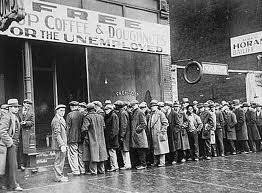
Finding a job is hard enough for the many millions of unemployed American workers. But, believe it or not, the fact that they are jobless keeps many employers from hiring them.

That’s right, being jobless keeps many workers from being hired for many of the jobs that are available.

It’s crazy, I know. But once they’re unemployed, many workers are destined to remain unemployed. Many employers are saying, in effect, that workers who are laid off by other employers, or who can’t get other employers to hire them, must automatically be considered bad workers who they don’t want to hire either.

Up to now, that bizarre practice has generally affected only workers who have been jobless for more than six months, but recent studies show it will soon affect a majority of all the unemployed. That would be particularly rough on women and minorities, whose unemployment rates and length of unemployment are much greater than those of other workers.

So precisely why do employers do it? The National Employment Law Project, which has conducted a major survey of the practices, says “the precise rationale is unknown, but with so many applicants for every job opening, screening out the unemployed is a convenient device for reducing the workload associated with the hiring process.”

Or it may be that “employers presume that workers who are currently employed are more likely to be good performers and have a stronger work ethic than those who are unemployed.” That, of course, “completely ignores the realities of the current labor market, in which millions have become unemployed through no fault of their own.”

As reprehensible and outrageously illogical as the practice of denying available jobs to the unemployed is, some employers don’t bother to hide their part in it. They openly say in ads seeking workers that the long-term unemployed need not apply or that the employer will only consider applicants who are currently employed.

The federal Economic Employment Opportunity Commission (EEOC) is investigating whether to charge such employers with discrimination, which they so very obviously are practicing.

What’s more, President Obama’s American Jobs Act and two companion bills pending in Congress would make it illegal for companies with 15 or more employees to turn down or fail to seek jobless workers to fill vacancies solely because the workers are unemployed.

New Jersey has enacted a state law similar to the proposed federal law, and moves are underway to enact similar laws in at least three other states – New York, Michigan and Illinois.

The federal and state bills cover employment agencies as well as employers and prohibit want ads that disqualify applicants because they are jobless. But what if the agencies and employers had legitimate reasons to find out why applicants lost their previous jobs? Or if they want to otherwise examine their employment history?

That would be perfectly legal. It would not be legal, however, to reject job applicants simply because they lost their last jobs. The EEOC would protect workers who complain of such blatant discrimination from retaliation.

The commission also could order employers to pay workers damages covering the pay and other compensation they lost because of the employer’s violation of the law and at least part of fees workers might pay to attorneys arguing their case.

Although organized labor generally seems satisfied with Obama’s American Jobs Act and its goal of creating two million new jobs, many in labor and elsewhere on the political left consider it an inadequate response to the nation’s massive unemployment problem.

But this much is clear: The act would ban one of the most outrageous practices ever perpetrated on American workers. You need a job because you’re unemployed? Sorry, says the boss, no job for you because you’re unemployed.

Have we fallen into Alice’s Wonderland?

Dick Meister, former labor editor of the SF Chronicle and KQED-TV Newsroom, has covered labor and politics for more than a half-century. Contact him through his website, www.dickmeister.com, which includes more than 350 of his columns.

Hyatt in the hot seat

0

Two housekeepers at the Hyatt Regency Santa Clara filed charges with the Equal Employment Opportunity Commission (EEOC) Nov. 18, alleging they were fired in retaliation after removing “sexually suggestive images” of themselves posted in a hotel work area.
 
The charges come just weeks after the San Francisco Hyatt at Fisherman’s Wharf was issued serious citations by the California Division of Occupational Safety and Health (CalOSHA), coupled with proposed fines totaling more than $20,000, for health and safety violations.
 
Martha and Lorena Reyes, who are sisters, were fired from the Hyatt Regency Santa Clara on Oct. 14, two weeks after Martha removed the images from a display board that had similar images of all the housekeeping staff members. “When I saw the images, I was embarrassed, ashamed, and humiliated,” Lorena Reyes’ EEOC complaint states. “My sister tore down the photo of me. When an employee told my sister to return the photos to the bulletin board, she refused.”
 
The images showed photographs of the Latina sisters’ faces tacked onto cartoon-like drawings of white women wearing bikinis. Hyatt Regency Santa Clara spokesperson Peter Hillan told us they were put up as part of an industrywide annual event, National Housekeeping Week, to celebrate housekeepers. The hotel selected a beach scene, he said, because “The theme was ‘riding the waves to success.’”
 
“We take it seriously any time that our associates indicate that they’ve been offended,” Hillan said, but stressed that “this morning was the first time we were made aware that there was offense taken.” Hillan could not say when management first became aware that Martha Reyes had removed the images, nor was he able to identify who was responsible for displaying them.
 
When the Reyes sisters were fired, they were told it was because they took lunch breaks that were longer than the allotted 30 minutes, Lorena Reyes explained. Yet she countered this by saying it’s common practice for housekeepers to rest for an additional 10 minutes during lunch breaks on days when heavy workloads make it infeasible to take one of the two 10-minute breaks they’re entitled to under state law.
 
“We haven’t come across anyone else who’s been fired for it,” said Adam Zapala, an attorney with the firm Davis, Cowell, and Bowe, who is representing the sisters. “So it raises the suspicion in our mind.”
 
Hillan, the Hyatt spokesperson, described the sisters’ assertions that they had been fired in retaliation as false. “To us, this is part of a larger issue with UNITE HERE,” the hotel workers’ union, “that we’ve seen a fairly consistent approach by UNITE HERE leadership to take out of context and make disingenuous claims on behalf of associates,” he said.
 
On Nov. 18, UNITE HERE Local 2 helped organize a picket against Hyatt Regency Santa Clara. The union has sought to unionize workers at that location.
 
Zapala noted that the pair of EEOC complaints were filed Nov. 18 to compel Hyatt to re-hire the sisters. However, the official complaints are also a first step toward a lawsuit in state or federal court.
 
Meanwhile, in San Francisco, CalOSHA issued two serious citations against the Hyatt Fisherman’s Wharf along with proposed fines of more than $20,000, alleging violations against health and safety codes protecting workers against repetitive motion injuries.
 
Pamela Vossenas, health and safety director for UNITE HERE, described housekeepers’ work as “a nonstop assembly line of repetitive motion. These citations allege that Hyatt failed to follow certain parts of that standard.”
 
Hyatt Fisherman’s Wharf hotel workers formally complained about repetitive motion injuries in Nov. 2010, and the citations are a result of a long-term investigation.
 
Workplace injuries resulting from repetitive motion can include back strain, shoulder strain, and carpal tunnel syndrome. “There are many ways the tasks could be done safer, but they’re not given the time, and they’re not given the tools,” Vossenas said.

Dania Duke, general manager at Hyatt Fisherman’s Whart, dismissed those concerns. “We strongly disagree with CalOSHA’s investigative process, and the end result which was handed down to us before their ergonomic study was completed,” she said. “We’re going to use every legal avenue available to appeal, and we feel that they’re driven by political motives, not facts.” 

She added that Hyatt provides long-handled dusters, surface-cleaning tools, and wet and dry swiffers for cleaning walls and floors, noting that their use is not mandatory. “Our associates have the tools the resources and the training they need to do the job,” she said. “We constantly strive to promote safety.”
 
According to a study published in the American Journal of Industrial Medicine examining a total of 50 hotel properties from five different hotel companies, Hyatt housekeepers had an injury rate that was higher than that of other housekeepers when compared by company.

Across the industry, one solution would be to give workers long-handled tools – like mops – for cleaning, Vossenas said. “The majority of hotels don’t give them mops — they give them rags to use,” she explained. “It’s 2011, and women housekeepers are still supposed to be on their hands and knees scrubbing the floor. Male custodians, janitors – who would ever think of giving them a rag to scrub the floor?” Yet Duke told the Guardian that this is not the case at Hyatt Fisherman’s Wharf.
 
There are four major Hyatts in the Bay Area. The Grand Hyatt, located at San Francisco’s Union Square, and the Hyatt Regency Embarcadero are both union hotels. The Hyatt Fisherman’s Wharf does not have a union, nor does the Hyatt Regency Santa Clara. All four are under boycott; at the unionized properties because workers have not had a contract since August of 2009, and at the non-unionized properties because attempts to unionize have been stymied, according to UNITE HERE.

Progressive group stands out as the lone Lee endorser

86

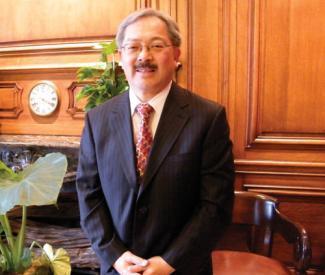
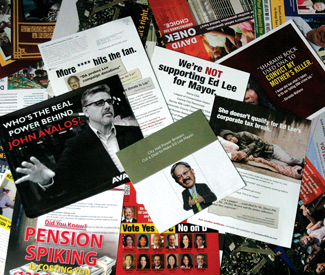
Mayor Ed Lee’s support by the wealthy power brokers and his checkered history with the Willie Brown administration has caused most progressive groups to shun him in this election, with one notable exception. San Francisco Rising Action Fund, a grassroots organization for working class people of color, gave Lee its second place endorsement, right after progressive favorite John Avalos. It’s the only slate that the two political opposites appear on together.

The San Francisco Democratic Party, Sierra Club, San Francisco Labor Council, the Bay Guardian, and other progressive groups have all issued endorsement slates that generally include Avalos, Dennis Herrera, and sometimes Leland Yee. But Lee has been almost entirely shut out on the left – except for a third place endorsement by the San Francisco Bicycle Coalition, which is generally left but mostly single issue – making SFRAF the rare exception.

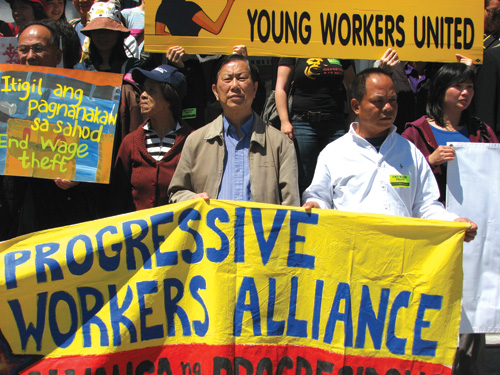
Alex Tom, one of the directors of SFRAF, clarified that its endorsement “ is not about Ed, but about the larger progressive movement.” Going against the endorsement grain, he said SFRAF consolidates the Asian, Latino, and Black communities— a strategy to compensate the divided nature in the political left.

“We need to step back in general and have a conversation with how people of color engage with politics and the progressive movement,” Tom told us.

Like many liberal groups, SFRAF is at the front lines of OccupySF and supports progressive bills like the Health Care Security Ordinance, which was the subject of Lee’s first veto this week, angering progressive groups who sought to close a loophole that lets businesses raid the health savings accounts of their employees.

But Tom points out that “there is an assumption in SF that to get progressive things passed you need to go to District 5, 6, and 9— you don’t go to the Southeast,” or other lower income neighborhoods. SFRAF is trying to reframe the broad spectrum of progressives, to “civically engage [voters of color and lower incomes] and [include them] in the electorate.”

Voters of color don’t engage in the same spaces that other progressive do. “We are not insiders, we are not even inside the progressive circle,” Tom says.

SFRAF’s Board of Directors includes Joel Aguilar, who recently left SF Day Labor Program; Chelsea Boilard with Coleman Advocates for Children and Youth; Antonio Diaz of People Organized to Demand Environmental and Economic Rights; Ariana Gil of Mujers Unidas y Activas; Adam Gold of Causa Justa: Alex Tom with the Chinese Progressive Association; and Steve Williams of People Organized to Win Employment Rights (POWER).

The Directors promote Ed Lee’s platforms on local hire, summer school, fight against wage-theft, and facilitating equitable budget process. Lee’s a viable candidate for a new type of progressive, says SFRAF, who doesn’t “agree with the insider game” in regards to Rose Pak and Willie Brown, Lee’s closest associates.

SFRAF doesn’t believe the company Lee keeps makes him untrustworthy. While many progressives see a politician’s connections as good indicators of their future actions and allegiances, SFRAF doesn’t seem to place much emphasis on this. Indeed, Lee seems to be an obstacle to much of the group’s agenda.

Take the SFRAF’s 10-point platform, which is diametrically opposed to many of Lee’s recent actions. In the matters of health care, SFRAF’s promotes, “policies that require employers to provide quality, affordable healthcare coverage to their employees and their families,” something that Lee’s recent veto seemed to weaken, letting businesses take about $50 million per year that city law required them to set aside for employee health care.

The next day, Lee faced the same groups he voted against— at a labor union rally— and explained his veto was an act of diligence to protect jobs. But the sponsor of the vetoed legislation, Sup. David Campos, said the veto was an setback for workers’ rights and consumer protection. “It’s a defining issue for us at City Hall,” Campos told us.

But Tom disagrees with progressive assessments that “pay to play” is a major force in City Hall politics, although to did say it is important to “acknowledge your power structure.” To SFRAF, the progressive sector cannot duplicate a city run by a few insiders— a fear SFBG expects to be a reality with Ed Lee as mayor. Instead, he says a progressive City Hall must bring a “multi-sectored” people into the decision-making process.

And he think Lee will be an ally in doing so.

Steven T. Jones contributed to this report.

The richest 1 percent get richer

7

If there was any doubt in the message being sounded from the streets these days — that the richest 1 percent has been taking a disproportionate and growing share of the nation’s wealth — a long-awaited new study issued yesterday by the Congressional Budget Office makes it crystal clear.

Not only has their share of the nation’s income doubled in the last 30 years, but the report found that concentration was accelerated by a tax structure that has become steadily less progressive, allowing the very rich to keep more of the wealth that the rest of the country so desperately needs.

And the reason the tax code has become far less redistributive is because wealthy special interests have been rewriting it in their favor, and being allowed to do so by politicians in both major parties whose elections and post-service employment the wealthy sponsor.

These same politicians and the mainstream media have been trying to cast the Occupy movement as dirty, disorganized, and incoherent, but it central message — which is now being chanted in cities across the country — couldn’t be more clear and compelling.

“We are the 99 percent!” they’re shouting, a simple truth that highlights the biggest problem that our country is facing: an unfair and unsustainable consolidation of wealth, the central problem that spawns the myriad other problems we face, from underfunded schools and public infrastructure to corruption in our financial and political systems to the economic hardships that most of us face.

Politicians like Mayor Ed Lee, the clear choice of the 1 percent in this mayor’s race, can talk all he wants about “jobs” and the imperative of enforcing minor municipal codes against OccupySF, which is expecting its third raid by the police as soon as tonight. But those are meaningless abstractions compared to the simple truth that is being so clearly articulated by young people in streets.

We’re not the problem, they are. We are many, they are few. We know the truth and we aren’t giving up. Power to the people!

Lesson plan

0

arts@sfbg.com

THEATER An elegant young woman in white gloves with a soothing voice (Meg Hurtado) breathes into a microphone some pre-flight instructions before beginning a narration of a journey “you” are taking. It’s accompanied by video footage (by Derek Phillips) of some European-looking city: a train station, a big electric clock, a rushing locomotive, the flow of strangers in a not-too-foreign land. No one cares you’re there, but you’re still uncomfortable, trying to stay calm and fit in. As she speaks, the small studio stage at the Exit Theatre flickers with a rush of bodies moving in near darkness.

Finally, from this mysterious disorientation, emerges a family of four: egomaniacal Major von Berg (a nicely volcanic Ryan Hayes), sly Mrs. Von Berg (a serenely confident Hurtado), morose teenage daughter Gussie (a withering but vulnerable Margery Fairchild in severe pigtails), and half-feral little Lippel (a wan puppet). They have a decidedly European mien about them, but from where or what century they hail exactly is hard to say. What is certain: you have arrived at your destination.

Dark Porch Theatre co–artistic director Martin Schwartz pens and directs this curious, half-elevated yet earthy, gently absurdist foray into the woods of East Prussia, a Twilight Zone of indeterminate time and place where a nervously deferential young man named Läuffer (Brandon Wiley) gains employment as a tutor for a deeply divided family headed by a hot-under-the-military-collar patriarch. Divided into a dozen discrete episodes over 90-minutes, Tutor: Enter the Exclave is fitfully inspired but at its best offers some excellent opportunities for the eight-year-old experimental theater company, now in residence at the Exit, which specializes in evoking the unsettling dream with humor, unusual staging, and a taste for the macabre.

Läuffer finds his two charges unimpressed and abusive. The puppet is particularly surly, slapping his tutor for fun and never saying anything more than “doo, doo, doo,” which has something fecal about it to be sure, but also harkens back to the German formal form of “you” (with maybe a little echo there of Sylvia Plath’s “Ach, du” in her papa-as-fascist poem, Daddy). Moreover, given the competing demands and threats thrust his way by the warring parents, his position in the household is hardly tenable. Still, he clings on for lack of anywhere else to go, until an unhealthy interest in 15-year-old Gussie culminates in general ruin and some grisly particulars.

Schwartz latches onto an intriguing aspect of this grim goodtime story — which he adapts from his own translation of Sturm und Drang–school writer J.M.R. Lenz’s 1774 play, Der Hofmeister — namely the theme flagged by the “exclave” in the title, which refers to an isolated region detached from the mainland but nevertheless a part of the same country. Attached yet apart proves an apt description of each character’s condition as well as of the family unit itself, which is seemingly lost in time. (The video mash-ups include modern-day footage of the Russian exclave of Kaliningrad, formerly East Prussia, the setting for the Lenz play.) Even the narrative is kept at arm’s length: Gussie, for instance, has a penchant for narrating out loud everything happening inside her head and around her as if it were a story. Moreover, at random intervals a light shift signals a break in the action, wherein the actors drop character and execute a short improvisational exercise. The quiet harmony on display in such Brechtian moments acts as a counterpoint to the hierarchical but inherently fractured world of the story.

The generational and authoritarian tension between the parents and the children, and the forbidden love it both produces and dooms, is a classic theme recalling Lenz’s contemporary Schiller’s Intrigue and Love or, a century later, Wedekind’s Spring Awakening. Gussie highlights it at the outset when she announces petulantly, “In all of our stories, discipline is the hero. In all of our stories discipline is broken and has its revenge.”

Damn if she isn’t right, too. Tutor‘s exploration of the exclave limns a mental landscape as much as anything else: an alienated chunk of real estate ruled by an authoritarian regime known variously as the Superego, or Daddy, or “doo.”


Tutor: Enter the Enclave

Through Oct. 22, $15-$25

Thurs.-Sat., 8 p.m.

Exit Studio

156 Eddy, SF

(415) 673-3847

www.darkporchtheatre.com

Alerts

0

steve@sfbg.com


MONDAY 3

CMAC mayoral forum

San Francisco Police crackdowns on nightclubs and private parties, with the tactic and sometimes overt support by then-Mayor Gavin Newsom, led to the creation of the California Music and Culture Association to advocate for the city’s nightlife (see “The new War on Fun,” 3/23/10). Now, CMAC is hosting a mayoral candidate forum to gauge how the next potential inhabitants of Room 200 feel about issues relevant to party-goers and -throwers. The event will be moderated by Priya David Clemens and will feature remarks by Lyrics Born and Sup. Scott Wiener and musical performances by Bob Mould and Zoe Keating.

6-9 p.m., free

The Fillmore

1805 Geary, SF

rsvp to sfmayoralcandidateforum.eventbrite.com


The state of labor

Wilma Liebman, former chair of the National Labor Relations Board, gives a talk entitled “The Battle for a Fair and Realistic National Labor Policy.” Liebman stepped down as chair last month — after 14 years serving on the board, the third longest serving member in its history — during one of the most turbulent years in the body’s history. The event, sponsored by SF State’s Labor and Employment Studies Program, is the first Gerald McKay Memorial Lecture.

6-8 p.m., free

SF State’s Downtown Campus

885 Market, 5th Floor, SF

817-4300

rsvp to jlogan@sfsu.edu


New Coffee Party

The Coffee Party, a consensus-seeking political group formed in reaction to the reactionary Tea Party, is in transition. The leaders of the former SF Coffee Party Group have now dubbed themselves The Bay Area Circle and they’ll meet to decide on a new name and direction for a group that seeks to bring together people of various views around a common agenda.

6:30-8 p.m., free

Cafe La Boheme

3318 24th St., SF

thebayareacircle@yahoo.com


TUESDAY 4

Organizing in radical times

Authors Amy Sonnie and James Tracy will discuss their new book, Hillbilly Nationalists, Urban Race Rebels and Black Power: Community Organizing in Radical Times (Melville House Publishing, 2011), in conversation with Roxanne Dunbar Ortiz. The books shows how the protest movements of the New Left in the ’60s spawned future organizing efforts that have been challenging right-wing networks over a range of important issues vital to the direction of the country. Afterward the talk, attendees will cross the street to the Buck Tavern for a beer bash benefiting the SF Community Land Trust and Jobs with Justice SF.

7 p.m., free

Green Arcade Books

1680 Market, SF

sonnieandtracybook.com

SFBG radio: Demanding full employment

30

Today Johnny talks about marching on Wall Street — to demand full employment or else. Check out the discussion after the jump.

FullEmploymentOrElse by endorsements2011

Banking on misfortune

11

news@sfbg.com

Unemployed San Franciscans are now receiving monthly benefit payments through a mandatory Bank of America debit card. While presented as a benefit to both recipients and the state, the initiative is the latest chapter in a long history of banks profiting off of the less fortunate.

In July, the California Employment Development Department (EDD) began distributing Bank of America debit cards to all California residents who receive unemployment benefits, “in what is one of the largest pre-paid card programs in the nation,” EDD spokesperson Dan Stephens tells the Guardian.

The cards, a result of a recent contract Bank of America won to implement the EDD’s new debit card system, replace the monthly unemployment check residents receive. The cards are also being used for disability insurance and paid family leave payments.

“We wanted a faster, safer, more convenient way for our customers to access their benefits,” Stephens says. But figuring out the new system takes time, usage fees can surface, and complaints have arisen.

“Now I have against my will been forced to become a B of A customer, which I don’t like,” says Cliff Liehe, a part time business teacher at City College who collects unemployment benefits during the summer. “I don’t want to do business with B of A. I hate them, and there’s a lot of staff members that feel the same way, throughout the state, not just City College.”

Liehe says that he dislikes B of A because it has a “corporate philosophy that I’ve disagreed with,” as well as, “terrible customer service and high fees.” Bank of America, the largest bank in the nation, angered the public by receiving a $20 billion federal bailout after buying Merrill Lynch in 2009, in the wake of the financial meltdown from which banks quickly recovered but the average American still hasn’t.

Money can be accessed on the debit card through purchases, unlimited ATM withdrawals, or transferred to a bank account. Liehe opted to have the money transferred to an account independent from B of A, but says he found the process challenging, and the information and instructions difficult to find.

Bank of America is not paying the EDD, but the new system will save the EDD approximately $4 million in initial savings due to decreased paper, printing, mailing, and check processing costs, Stephens tells the Guardian. He remains vague about the EDD’s plans for this money, but does make it clear that the agreement is a “no-cost contract” between parties.

However, Bank of America’s participation is far from charitable. “B of A is covering its costs through fees paid by banks and merchants who honor the cards. Interchange fees are received from businesses that use the ATM network,” Stephens says.

With 1.7 million Californians receiving unemployment benefits and using their cards at ATMs and retail establishments, Bank of America will be receiving a percentage off all this money spent, as well as gaining more than a million new customers, unless recipients have the know-how to have their money transferred to a different bank. This adds up to a substantial potential profit for America’s richest bank.

“We generally don’t comment on the profitability of individual programs or products, but we are pleased to be working with the EDD to provide more secure and convenient benefit payments to its constituents,” bank spokesperson Jefferson George told us.

What consumers don’t consider when using a credit or debit card to make purchases is that with each purchase, the merchant is paying a percentage back to the bank or other credit card processor. Here at the Guardian, for instance, we lose a significant percentage of our ad profits when advertisers pay with a credit card. With MasterCard and Visa, we lose 3.5 percent of the sales amount, and with American Express it’s 4.15 percent, on top of monthly processing fees.

“The issues with credit card charges in general is that it’s all about the small print,” says Hut Landon, Executive Director of Northern California Independent Booksellers Association. As with the Bank of America EDD card, unadvertised fees can occur through usage of debit and credit cards. On top of a base percentage, merchants must pay fees for rewards cards, mileage cards, and are sometimes charged for transactions, Landon explains. There is even a fee for manually entering credit card information instead of swiping it. The debit card fee is sometimes less, but merchants still could be suffering from the EDD’s new system.

“While this may be a good situation for Bank of America,” says Landon, “[for merchants] its definitely not a good deal.”

Joel Bleskacek, co-owner of Potrero Hill favorites Plow and Ruby Wine, tells the Guardian he pays between 1.5 percent and 3 percent for credit card transactions at his restaurant and wine store. That’s a significant amount of money lost with each transaction, money that goes directly to the banks or credit card processors. “For what we’re paying at the restaurant, I could hire a general manager to work if we only accepted cash,” Bleskacek says. But credit cards are more popular than cash at both his establishments. “A vast majority is credit card sales. People don’t seem to carry cash anymore. Same at the restaurant. An overwhelming majority of sales are through the credit card machine.” Credit card company’s earnings quickly add up. “Basically 2.5 to 3 percent of our entire economy is going to credit card companies…,” he says. “Somebody’s making some money.”

A new progressive agenda

56

Over the past three months, the Guardian has been hosting a series of forums on progressive issues for the mayor’s race. We’ve brought together a broad base of people from different communities and issue-based organizations all over town in an effort to draft a platform that would include a comprehensive progressive agenda for the next mayor. All told, more than 100 people participated.

It was, as far as we know, the first time anyone tried to do this — to come up with a mayoral platform not with a few people in a room but with a series of open forums designed for community participation.

The platform we’ve drafted isn’t perfect, and there are no doubt things that are left out. But our goal was to create a document that the voters could use to determine which candidates really deserve the progressive vote.

That’s a critical question, since nearly all of the top contenders are using the word “progressive” on a regular basis. They’re fighting for votes from the neighborhoods, the activists, the independent-minded people who share a vision for San Francisco that isn’t driven by big-business interests.

But those of us on what is broadly defined as the city’s left are looking for more than lip service and catchy phrases. We want to hear specifics; we want to know that the next mayor is serious about changing the direction of city policy.

The groups who endorsed this effort and helped plan the forums that led to this platform were the Harvey Milk LGBT Club, SEIU Local 1021, the San Francisco Tenants Union, the Human Services Network, the Community Congress 2010, the Council of Community Housing Organizations, San Francisco Rising, Jobs with Justice, and the Center for Political Education.

The panelists who led the discussions were: Shaw-san Liu, Calvin Welch, Fernando Marti, Gabriel Haaland, Brenda Barros, Debbi Lerman, Jenny Friedenbach, Sarah Shortt, Ted Gullicksen, Nick Pagoulatos, Sue Hestor, Sherilyn Adams, Angela Chan, David Campos, Mario Yedidia, Pecolio Mangio, Antonio Diaz, Alicia Garza, Aaron Peskin, Saul Bloom, and Tim Redmond.

We held five events looking at five broad policy areas — economy and jobs; land use, housing and tenants; budget and social services; immigration, education and youth; and environment, energy and climate change. Panelists and audience participants offered great ideas and the debates were lively.

The results are below — an outline of what the progressives in San Francisco want to see from their next mayor.


ECONOMY AND JOBS

Background: In the first decade of this century, San Francisco lost some 51,000 jobs, overwhelmingly in the private sector. When Gavin Newsom was sworn in as mayor in January 2004, unemployment was at 6.4 percent; when he left, in January 2011, it was at 9.5 percent — a 63 percent increase.

Clearly, part of the problem was the collapse of the national economy. But the failed Newsom Model only made things worse. His approach was based on the mistaken notion that if the city provided direct subsidies to private developers, new workers would flock to San Francisco. In fact, the fastest-growing sector of the local economy is the public sector, especially education and health care. Five of the 10 largest employers in San Francisco are public agencies.

Local economic development policy, which has been characterized by the destruction of the blue-collar sector in light industry and maritime uses (ironically, overwhelmingly privately owned) to free up land for new industries in business services and high tech sectors that have never actually appeared — or have been devastated by quickly repeating boom and bust cycle.

Instead of concentrating on our existing workforce and its incredible human capital, recent San Francisco mayors have sought to attract a new workforce.

The Mayor’s Office has, as a matter of policy, been destroying blue-collar jobs to promote residential development for people who work outside of the city.

There’s a huge disconnect between what many people earn and what they need. The minimum wage in San Francisco is $9.92, when the actual cost of living is closer to $20. Wage theft is far too common.

There is a lack of leadership, oversight and accountability in a number of city departments. For example, there is no officiating body or commission overseeing the work of the Office of Economic and Workforce Development. Similarly the Arts Commission, the chartered entity for overseeing cultural affairs, is responsible for less than 25 percent of the budget reserved for this purpose

There’s no accountability in the city to protect the most vulnerable people.

The city’s main business tax is highly regressive — it’s a flat tax on payroll but has so many exceptions and loopholes that only 8,500 businesses actually pay it, and many of the largest and richest outfits pay no city tax at all.


Agenda items:

1. Reform the Mayor’s Office of Economic and Workforce Development to create a department with workforce development as a primary objective. Work with the San Francisco Unified School District, City College and San Francisco State to create sustainable paths to training and employment.

2. Create a municipal bank that offers credit for locally developed small businesses instead of relying on tax breaks. As a first step, mandate that all city short-term funds and payroll accounts go only to banks or credit unions that will agree to devote a reasonable percentage of their local loan portfolios for small business loans.

3. Reform procurement to prioritize local ownership.

4. Link economic development of healthcare facilities to the economic development of surrounding communities.

5. Link overall approval of projects to a larger economic development policy that takes as its centerpiece the employment of current San Francisco residents.

6. Enforce city labor laws and fund the agency that enforces the laws.

7. Establish the Board of Supervisors as the policy board of a re-organized Redevelopment Agency and create community-based project area oversight committees.

8. Dramatically expand Muni in the southeast portion of the city and reconfigure routes to link neighborhoods without having to go through downtown. Put special emphasis on direct Muni routes to City College and San Francisco State.

9. Reform the payroll tax so all businesses share the burden and the largest pay their fair share.

10. Consolidate the city’s various arts entities into a single Department of Arts & Culture that includes as part of its mandate a clear directive to achieve maximum economic development through leveraging the city’s existing cultural assets and creative strengths and re-imagining San Francisco’s competitive position as a regional, national and international hub of creative thinking. Sponsor and promote signature arts programs and opportunities to attract and retain visitors who will generate maximum economic activity in the local economy; restore San Francisco’s community-based cultural economy by re-enacting the successful Neighborhood Arts Program; and leverage the current 1-2 percent for art fees on various on-site building projects to be directed towards non-construction-site arts activity.


LAND USE, HOUSING AND TENANTS

Background: Since the office market tanked, the big land-use issue has become market-rate housing. San Francisco is building housing for people who don’t live here — in significant part, for either very wealthy people who want a short-term pied a terre in the city or for commuters who work in Silicon Valley. The city’s own General Plan calls for 60 percent of all new housing to be below-market-rate — but the vast majority of the new housing that’s been constructed or is in the planning pipeline is high-end condos.

There’s no connection between the housing needs of city residents and the local workforce and the type of housing that’s being constructed. Family housing is in short supply and rental housing is being destroyed faster than it’s being built — a total of 21,000 rental units have been lost to condos and tenancies in common.

Public housing is getting demolished and rebuilt with 2500 fewer units. “Hotelization” is growing as housing units become transitory housing.

Planning has become an appendage of the Mayor’s Office of Economic Development, which has no commission, no public hearings and no community oversight.

Projects are getting approved with no connection to schools, transit or affordable housing.

There’s no monitoring of Ellis Act evictions.

Transit-oriented development is a big scam that doesn’t include equity or the needs of people who live in the areas slated for more development. Cities have incentives to create dense housing with no affordability. Communities of concern are right in the path of this “smart growth” — and there are no protections for the people who live there now.

Agenda items:

1. Re emphasize that the Planning Department is the lead land-use approval agency and that the Mayor’s Office of Economic and Workforce Development should not be used to short-circuit public participation in the process.

2. Enact a freeze on condo conversions and a freeze on the demolition of existing affordable rental housing.

3. Ban evictions if the use or occupation of the property will be for less than 30 days.

4. Index market-rate to affordable housing; slow down one when the other is too far ahead.

5. Disclose what level of permanent affordability is offered at each project.

6. Stabilize existing communities with community benefits agreements before new development is approved.


BUDGET AND SOCIAL SERVICES

Background: There have been profound cuts in the social safety net in San Francisco over the past decade. One third of the city’s shelter beds have been lost; six homeless centers have closed. Homeless mental health and substance abuse services have lost $32 million, and the health system has lost $33 million.

None of the budget proposals coming from the Mayor’s Office have even begun to address restoring the past cuts.

There’s not enough access to primary care for people in Healthy San Francisco.

Nonprofit contracts with the city are flat-funded, so there’s no room for increases in the cost of doing business.

The mayor has all the staff and the supervisors don’t have enough. The supervisors have the ability to add back budget items — but the mayor can then make unilateral cuts.

The wealthy in San Francisco have done very well under the Bush tax cuts and more than 14 billionaires live in this city. The gap between the rich and the poor, which is destroying the national economy, exists in San Francisco, too. But while city officials are taking a national lead on issues like the environment and civil rights, there is virtually no discussion at the policy level of using city policy to bring in revenue from those who can afford it and to equalize the wealth disparities right here in town.

Agenda items:

1. Establish as policy that San Francisco will step in where the state and federal government have left people behind — and that local taxation policy should reflect progressive values.

2. Make budget set-asides a budget floor rather than a percentage of the budget.

3. Examine what top city executives are paid.

4. Promote public power, public broadband and public cable as a way to bring the city millions of dollars.

5. Support progressive taxes that will bring in at least $250 million a year in permanent new revenue.

6. Change the City Charter to eliminate unilateral mid-year cuts by the mayor.

8. Pass a Charter amendment that: (a) Requires the development of a comprehensive long-term plan that sets the policies and strategies to guide the implementation of health and human services for San Francisco’s vulnerable residents over the next 10 years, and (b) creates a planning body with the responsibility and authority to develop the plan, monitor and evaluate its implementation, coordinate between policy makers and departments, and ensure that annual budgets are consistent with the plan.

9. Collect existing money better.

10. Enact a foreclosure transfer tax.


YOUTH, IMMIGRATION, AND EDUCATION

Background: In the past 10 years, San Francisco has lost 24,000 people ages 12-24. Among current youth, 5,800 live in poverty; 6,000 have no high school degree; 7,000 are not working or attending school; 1,200 are on adult probation.

A full 50 percent of public school students are not qualified for college studies. Too often, the outcome is dictated by race; school-to-prison is far too common.

Trust between immigrants and the police is a low point, particularly since former Mayor Gavin Newsom gutted the sanctuary ordinance in 2008 after anti-immigrant stories in the San Francisco Chronicle.

Some 70 percent of students depend on Muni, but the price of a youth pass just went from $10 to $21.

Agenda items:

1. Recognize that there’s a separate role for probation and immigration, and keep local law enforcement from joining or working with immigration enforcement.

2. Improve public transportation for education and prioritize free Muni for youth.

3. Create family-friendly affordable housing.

4. Restore the recreation direction for the Recreation and Parks Department.

5. Implement police training to treat youth with respect.

6. Don’t cut off benefits for youth who commit crimes.

7. Shift state re-alignment money from jails to education.


ENERGY, ENVIRONMENT AND CLIMATE CHANGE

Background: When it comes to land use, the laws on the books are pretty good. The General Plan is a good document. But those laws aren’t enforced. Big projects get changed by the project sponsor after they’re approved.

Land use is really about who will live here and who will vote. But on a policy level, it’s clear that the city doesn’t value the people who currently live here.

Climate change is going to affect San Francisco — people who live near toxic materials are at risk in floods and earthquakes.

San Francisco has a separate but unequal transportation system. Muni is designed to get people downtown, not around town — despite the fact that job growth isn’t happening downtown.

San Francisco has a deepwater port and could be the Silicon Valley of green shipping.

San Francisco has a remarkable opportunity to promote renewable energy, but that will never happen unless the city owns the distribution system.


Agenda items:

1. Promote the rebirth of heavy industry by turning the port into a center for green-shipping retrofits.

2. Public land should be for public benefit, and agencies that own or control that land should work with community-based planning efforts.

3. Planning should be for the community, not developers.

4. Energy efficiency programs should be targeted to disadvantaged communities.

5. Pay attention to the urban food revolution, encourage resident owned farmers markets. Use unused public land for local food and community gardens.

6. Provide complete information on what parts of the city are fill, and stop allowing development in areas that are going to be inundated with sea level rise.

7. Prioritize local distributed generation of electricity and public ownership of the power grid.

8. Change Clean Energy San Francisco from a purchasing pool system to a generating system.

Editor’s notes

0

tredmond@sfbg.com

I’ve been wondering for months now how all of the rich people who come into San Francisco for the America’s Cup are going to get around. The event plans call for the Embarcadero to be closed during the festivities, which means no cars. The F-line is nice, but slow — and even with new trains, has limited capacity. And I don’t expect to see a lot of the millionaire yachting types riding the bus with us commoners.

Walk? Yeah, from a couple of blocks away, but not from hotels South of Market or on Nob Hill or Union Square. Not in their $500 shoes. Cabs? The traffic will be unbearable.

So here’s an idea I’ve heard floating around: The city makes the project sponsor (that’s you, Larry) buy a fleet of several hundred pedicabs, bicycle-powered taxis. Then the city hires hundreds of unemployed teenagers to drive the visitors from their hotels to the waterfront, giving local youth a chance to earn some money off the cup events. Ban all forms of motorized transportation — no limos, no town cars.

Advantages: Zero carbon emissions. No traffic jams. Youth employment. Healthy exercise. And think about the chariot-race-and-bumper-cars action that will give the swells a thrill. It’s a winner for everyone.

I’ve also been thinking about how the abomination of a condo project at 8 Washington is going to affect the festivities — and it’s a concern. The city has published reports on both the luxury condo project and the cup, and the folks working on the two don’t seem to be talking.

For example, the 8 Washington developer wants to excavate 110,000 tons of soil for a massive parking garage, from a spot right on the edge of the Embarcadero, right while all the cup events are taking place. Where are the dump trucks (hundreds of them every week) going to go if the Embarcadero is closed? How will that construction add to the congestion mess?

I’m not a fan of 8 Washington anyway. It’s a project designed to create the most expensive condos ever built in San Francisco — which is just what the city needs. More second or third homes for very rich people who won’t live here more than a few weeks a year. Another project that will put the city further out of synch with its own General Plan goals for affordable housing.

And building these units for the rich will interfere with the entertainment for the rich that’s supposed to trickle down to the rest of us. I wish it were just funny.

Dick Meister: VIVA EL BOICOTTEO!

2

By Dick Meister

(Third part of a five part daily series)

Although the United Farm Workers initially relied solely on strikes in its drive to win union contracts for California’s farm workers, it soon switched to the much more effective weapon of the boycott.

Growers could easily replace strikers, and often did. But they couldn’t do much about customers – individuals and institutions – who heeded the UFW’s call to not buy any grapes, lettuce or wine from growers who continued to rebuff the UFW demands for union recognition.

The boycotts helped forge a potent coalition of clergymen, industrial unionists, young activists and civil rights advocates, liberal Democratic politicians, socially conscious shoppers and others. They also waved crimson banners, sang the farm workers’ songs, chanted their slogans and espoused non-violence, on city streets, outside supermarkets, in meeting halls, wherever they could. There were an estimated 17 million of them worldwide between 1968 and 1975, including 10 to 12 percent of all U.S. adults. Later boycotts drew less support but were nevertheless effective in winning new contracts.

John Giumarra Jr., a young lawyer who spoke for the grape growers who signed the first UFW contracts, declared that boycott pressures had been threatening to “destroy a number of farmers.” Lionel Steinberg, a major Coachella Valley grape grower who was the first to agree to a UFW contract, urged others to quickly reach an agreement, lest they continue losing millions of dollars in sales.

Steinberg told his fellow growers, “It is costing us more to produce and sell our grapes than we are getting paid for them. We are losing maybe 20 percent of our market. The boycott is illegal and immoral, but it also is a fact.”

The signing of the union contracts with grape growers in Delano signaled the inevitable. California’s farm workers were going to be organized, and the next target would be those in the nearby Salinas and Santa Maria valleys, which produced 70 percent of the nation’s iceberg lettuce and much of its other vegetables. It was called “America’s Salad Bowl,” a flat, fertile place where morning fog hung heavy over land carpeted green for miles.

Men and women hovered over the land, gripping hoes so short their handles scarcely protruded above their fast-moving hands as they stooped and cut, stooped and cut. Most worked under the supervision of men with the broad accents of Texas, Oklahoma and Arkansas who had wielded hoes for small independent growers before giant corporations bought up the land and hired them to manage their new holdings. These men were among the Dust Bowl Refugees of the 1930s who had made their own violently opposed demands for better working lives during the Great Depression.

Many of the former Dust Bowl Refugees were lured into urban employment when the depression ended, but those who remained as managers joined the farm corporations to oppose the demands of the Chicano and Filipino American farm workers who replaced the at the bottom of the economic totem pole.

The demands were for union recognition elections in which the UFW seemed a certain winner. But if they didn’t agree to elections, the growers faced the certain prospect of a boycott like that which had been so costly to grape growers.

There was, however, an alternative that the growers had overlooked until the inevitability of unionization arrived with the UFW demands. They might arrange to bypass elections and sign with another union that would demand less than the aggressive, unorthodox UFW and at the same time ease the sting of a boycott by enabling by enabling growers to point out that their workers were unionized.

The growers found their alternative in the Teamsters Union, which feared that UFW strikes and boycotts would endanger the flow of produce handled by truck drivers, cannery workers and other Teamster members. What’s more, Teamster officials were eager for representation rights that would allow them to control the field workers. The potential was immense: more than 30,000 farm workers in the two valleys alone. That would bring a lot of new money into the dues and pension funds used by leaders of the corruption-ridden Teamsters to gain power, influence and fat salaries for themselves.

Virtually all the 170 growers in the two valleys soon announced they had signed Teamster contracts, even though the Teamsters had no farm worker members. The growers and Teamsters hadn’t even agreed on specific contract terms. They were in so great a rush to head off the UFW, they merely signed agreements that the terms would be filled in later. The terms, however, would not be decided in consultation with the workers or their union. Terms were left solely to grower and Teamster representatives.

The workers were not even allowed to ratify the contracts, although they would be required to join the Teamsters and have union dues deducted from their paychecks. If they didn’t join the Teamsters, they’d be fired. Most workers got basic pay raises of 10 to 50 cents an hour in return for forced membership in the Teamsters and some minimal health and welfare benefits – but that was all.

Teamster recognition was a very small price for growers to pay in exchange for maintaining their ability to make decisions on pay and working conditions in isolation from the direct collective demands of their employees. Since the Teamsters’ main interest lay elsewhere, in transportation and food processing, growers also could expect that even the minimal terms of the contracts would not be fully enforced and that strikes and boycotts were hardly a possibility. But on the slim chance that the growers might still feel insecure, the contracts were written to stand for five years.

Chavez was outraged at the Teamsters’ “act of treason against the legitimate aspirations of farm workers.” He declared “all-out war against the Teamsters and the bosses ” and marched into Salinas with several hundred farm workers and an AFL-CIO contingent headed by Organizing Director Bill Kircher. Pickets went immediately to a farm where 250 workers had been fired for not joining the Teamsters. Hundreds of workers struck at other farms and the UFW began preparing for legal action and a nationwide lettuce boycott.

Growers got a court order against what was ruled an illegal jurisdictional dispute, but the pickets and boycotters kept marching nevertheless and Chavez began “a penitential fast against injustice.”

In less than two weeks, the Teamsters were asking for a treaty with the UFW. It was quickly reached. The Teamsters agreed to reallocate jurisdiction over field workers to the UFW and agreed that growers who had signed with the Teamsters could switch to the UFW without penalty.

But there was a catch. Growers who had signed Teamster contracts would not give them up. Finally, UFW members voted to strike. It was, at the start, the largest and most effective farm strike since the mid-1930s. More than 5000 workers left their jobs at nearly 150 farms, and produce shipments were cut from 200 carloads a day to 75 or less. Growers were losing an average of $500,000 a day.

Unlike the vineyard strike, this dispute was violent, with beatings suffered by UFW and Teamster partisans alike. Some of the turmoil was caused by officials of a Teamster cannery workers local who were charged with using $25,000 in union funds to hire some of the local’s burly members to “guard” fields from UFW organizers.

A judge ruled there could only be one informational picket at 22 of the Salinas Valley farms that made up the strikers’ main targets, none at the eight others. Nor would the UFW be allowed to call a boycott against any of the 170 growers who held Teamster contracts. The union nevertheless called a boycott. Officially, the strike continued, but the major effort was at food markets in 64 cities across the country, where UFW members and supporters urged shoppers to bypass lettuce from the struck growers.

A judge ordered Chavez arrested. He went to jail accompanied by more than 2000 UFW members and supporters, including Coretta King and Ethel Kennedy. They cheered Chavez’ parting advice to “boycott the hell out of them!” and then began a series of prayer vigils and other highly publicized demonstrations. After three weeks, Chavez was released, pending the outcome of a UFW appeal.

The boycott continued at an intensified pace throughout the early months of 1971 until a committee of Catholic bishops mediated a settlement between national Teamster and AFL-CIO leaders. But growers still refused to give up their Teamster contracts. They held them for a half-dozen years more, until the Teamsters, beaten badly in a series of union representation elections under California’s new farm worker bargaining law, finally abandoned as futile the fierce fight they had waged against the UFW for more than a decade.

Meanwhile, the boycott continued, as the UFW expanded its organizing efforts to Florida and Arizona. The UFW’s victory in California was truly spectacular. Imagine, one of the youngest and smallest unions in the country, representing the most oppressed of American workers, decisively beating the country’s largest and most powerful union.

It was the UFW’s incredible use of the boycott that did it,  the major non-violent weapon available to all who would seek justice from an oppressor.

Dick Meister, former labor editor of the SF Chronicle and KQED-TV Newsroom, has covered labor and politics for more than a half-century. Contact him through his website, www.dickmeister.com, which includes more than 350 of his columns.


Tonight: the last of five Guardian forums on the issues for the next mayor

0

Join us tonight for the fifth and final installment of the Guardian Forum: a series of panel discussions and participatory debates framing the progressive issues for the mayor’s race and beyond:
 
Forum Five: Environment, Energy and Climate Change
Tonight, August 25 at 5:30PM
Koret Auditorium, San Francisco Main Library, 100 Larkin St., SF
(Civic Center BART and MUNI 5, 19, 47, 49, or F Train)

Featuring:
Tim Redmond, San Francisco Bay Guardian
Antonio Diaz, People Organizing to Demand Environmental and Economic Rights
Alicia Garza, People Organized to Win Employment Rights
Aaron Peskin, former San Francisco supervisor
Saul Bloom, Arc Ecology
 
Cosponsors: Harvey Milk LGBT Democratic Club, San Francisco Tenants Union, SEIU Local 1021, San Francisco Rising, San Francisco Human Services Network, Council of Community Housing Organizations, Community Congress 2010, Center for Political Education, Jobs with Justice
 
All events are free. Sessions will include substantial time for audience participation and discussion. Please join us!
 
Save the Date
On September 21st, we’ll present our platform to the mayoral candidates and see which ones are willing to sign on.

Alerts

0

alerts@sfbg.com


THURSDAY 25

The Guardian Forum

This summer, the Bay Guardian — along with cosponsors that include SEIU 1021, the San Francisco Tenants Union, and the Harvey Milk LGBT Democratic Club — has held a series of public forums framing progressive issues for the mayor’s race and beyond. This fifth and final forum focuses on the Environment, Energy, and Climate Change and the panel is Guardian Executive Editor Tim Redmond, Antonio Diaz with People Organizing to Demand Environmental and Economic Rights, Alicia Garza with People Organized to Win Employment Right, former Supervisor Aaron Peskin, and Arc Ecology’s Saul Bloom.

5:30 p.m., free

Koret Auditorium, SF Main Library

100 Larkin, SF


FRIDAY 26

Torture and Yoo

The California Young Republican Federation hosts John Yoo as welcoming speaker for its first state convention. Yoo has had international complaints filed against him for his complicity in torture and other crimes against humanity at Abu Ghraib and Guantánamo Bay after writing legal memos justifying harsh interrogation techniques for the Bush White House. Yoo is a professor at UC Berkeley’s Boalt Hall School of Law. Anti-war protestors will gather at the doors to “welcome” convention attendees and protest Yoo.

6:30-8:00 p.m., free

Marine Memorial Club & Hotel

609 Sutter Street, SF

www.cyrf2011.com/


SATURDAY 27

Green Tea Party

The Tea Party Express national bus tour is kicking off in Napa, of all places. To counter the event, the Napa County Green Party is throwing a Green Tea Party with prominent progressive speakers, vegetarian cuisine, fun info booths, and iced green tea. The event will end with a march to the Napa Valley Expo Fairgrounds, where presidential candidates are expected to be speaking to Tea Party supporters. Participants are encouraged to wear green.

10:30 a.m., free

Veterans Memorial Park

Corner of Main and Third, Napa

napa@cagreens.org

(707) 257-7435


SUNDAY 28

Preserving the Harvest

The Ecology Center of San Francisco (ECOSF) is hosting a community workshop entitled “Preserving the Harvest: Canning and Drying,” along with a potluck and solar oven pizza making. Spend time with neighbors and friends while learning how to can fruits and tomatoes in the most energy efficient way. ECOSF’s mission is to promote cooperation, community, and respect for the environment, so bring a dish made from your garden to share.

11:00 a.m. – 5:00 p.m.

Near School of Arts athletic field

555 Portola, SF

www.eco-sf.org


Mail items for Alerts to the Guardian Building, 135 Mississippi St., SF, CA 94107; fax to (415) 437-3658; or e-mail alert@sfbg.com. Please include a contact telephone number. Items must be received at least one week prior to the publication date.

The Keynes vs. Hayek rematch

42

By Robert Skidelsky

Robert Skidelsky, a member of the British House of Lords, is Professor Emeritus of Political Economy at Warwick University.

LONDON – The Austrian economist Friedrich von Hayek, who died in 1992 at the age of 93, once remarked that to have the last word requires only outliving your opponents. His great good fortune was to outlive Keynes by almost 50 years, and thus to claim a posthumous victory over a rival who had savaged him intellectually while he was alive.

Hayek’s apotheosis came in the 1980’s, when British Prime Minister Margaret Thatcher took to quoting from The Road to Serfdom (1944), his classic attack on central planning. But in economics there are never any final verdicts. While Hayek’s defense of the market system against the gross inefficiency of central planning won increasing assent, Keynes’s view that market systems require continuous stabilization lingered on in finance ministries and central banks.

Both traditions, though, were eclipsed by the Chicago school of “rational expectations,” which has dominated mainstream economics for the last twenty-five years. With economic agents supposedly possessing perfect information about all possible contingencies, systemic crises could never happen except as a result of accidents and surprises beyond the reach of economic theory.

The global economic collapse of 2007-2008 discredited “rational expectations” economics (though its high priests have yet to recognize this) and brought both Keynes and Hayek back into posthumous contention. The issues have not changed much since their argument began in the Great Depression of the 1930’s. What causes market economies to collapse? What is the right response to a collapse? What is the best way to prevent future collapses?

For Hayek in the early 1930’s, and for Hayek’s followers today, the “crisis” results from over-investment relative to the supply of savings, made possible by excessive credit expansion. Banks lend at lower interest rates than genuine savers would have demanded, making all kinds of investment projects temporarily profitable.

But, because these investments do not reflect the real preferences of agents for future over current consumption, the savings necessary to complete them are not available. They can be kept going for a time by monetary injections from the central bank. But market participants eventually realize that there are not enough savings to complete all the investment projects. At that point, boom turns to bust.

Every artificial boom thus carries the seeds of its own destruction. Recovery consists of liquidating the misallocations, reducing consumption, and increasing saving.

Keynes (and Keynesians today) would think of the crisis as resulting from the opposite cause:  under-investment relative to the supply of saving – that is, too little consumption or aggregate demand to maintain a full-employment level of investment – which is bound to lead to a collapse of profit expectations.

Again, the situation can be kept going for a time by resorting to consumer-debt finance, but eventually consumers become over-leveraged and curtail their purchases. Indeed, the Keynesian and Hayekian explanations of the origins of the crisis are actually not very different, with over-indebtedness playing the key role in both accounts. But the conclusions to which the two theories point are very different.

Whereas for Hayek recovery requires the liquidation of excessive investments and an increase in consumer saving, for Keynes it consists in reducing the propensity to save and increasing consumption in order to sustain companies’ profit expectations. Hayek demands more austerity, Keynes more spending.

We have here a clue as to why Hayek lost his great battle with Keynes in the 1930’s. It was not just that the policy of liquidating excesses was politically catastrophic: in Germany, it brought Hitler to power. As Keynes pointed out, if everyone – households, firms, and governments – all started trying to increase their saving simultaneously, there would be no way to stop the economy from running down until people became too poor to save.

It was this flaw in Hayek’s reasoning that caused most economists to desert the Hayekian camp and embrace Keynesian “stimulus” policies. As the economist Lionel Robbins recalled:  “Confronted with the freezing deflation of those days, the idea that the prime essential was the writing down of mistaken investments and…fostering the disposition to save was…as unsuitable as denying blankets and stimulus to a drunk who has fallen into an icy pond, on the ground that his original trouble was overheating.”

Except to Hayekian fanatics, it seems obvious that the coordinated global stimulus of 2009 stopped the slide into another Great Depression. To be sure, the cost to many governments of rescuing their banks and keeping their economies afloat in the face of business collapse damaged or destroyed their creditworthiness. But it is increasingly recognized that public-sector austerity at a time of weak private-sector spending guarantees years of stagnation, if not further collapse.

So policy will have to change. Little can be hoped for in Europe; the real question is whether President Barack Obama has it in him to don the mantle of President Franklin Roosevelt.

To prevent further crises of equal severity in the future, Keynesians would argue for strengthening the tools of macroeconomic management. Hayekians have nothing sensible to contribute. It is far too late for one of their favorite remedies – abolition of central banks, supposedly the source of excessive credit creation. Even an economy without central banks will be subject to errors of optimism and pessimism. And an attitude of indifference to the fallout of these mistakes is bad politics and bad morals.

So, for all his distinction as a philosopher of freedom, Hayek deserved to lose his battle with Keynes in the 1930’s. He deserves to lose today’s rematch as well.

Robert Skidelsky, a member of the British House of Lords, is Professor Emeritus of Political Economy at Warwick University.

Copyright: Project Syndicate, 2011.

www.project-syndicate.org

Our Weekly Picks: August 17-23

0

WEDNESDAY 17

FILM

Better than Something

Before his death in 2008 at the age of 29, Jimmy Lee Lindsey Jr., a.k.a. Jay Reatard, released more material in ten years than most musicians dream of in a lifetime. He was at the peak of his career, and documentarians Alex Hammond and Ian Markiewicz were able to spend a week filming with Reatard just before he passed. The result is Better than Something, a feature length film about the life and death of Jay Reatard with footage culled from live performances, interviews, and the personal time the crew spent with him. Catch a glimpse into the mind of a man who rocked hard, lived fast, and, unfortunately, died young — the essential rock and roll fable. (Cooper Berkmoyer)

7:30 and 9:30 p.m., $10

Roxie Theater

3117 16th St., SF

(415) 863-1087

www.roxie.com


MUSIC

Diamond Head

Formed in 1976, U.K rockers Diamond Head would go on to become one of the leaders of a musical movement known as the “new wave of British heavy metal.” Diamond Head heavily influenced bands like Metallica, which covered Diamond Head tunes such as “Am I Evil” in its early days, and continue to do so today. Lead by founding member and guitarist Brian Tatler — who has been cited as a major influence by metal titans including Megadeth’s Dave Mustaine — the band’s current lineup is hitting the states for the very first time. In Europe, Diamond Head plays huge festivals; don’t miss this rare headbanger’s dream show. (Sean McCourt)

9 p.m., $15–$20

Elbo Room

647 Valencia, SF

(415) 552-7788

www.elbo.com


THURSDAY 18

COMEDY

SF Improv Festival

Making shit up. It’s become a serious job skill in the new non-economy, where bullshitting, winging it, and blind leaps have taken the place of an industrial base and steady employment. What I’m saying, I guess, is that you can totally rationalize going to the SF Improv Festival on economic grounds. But you don’t have to treat it like career day, even if it is a local and nationwide convention of expert improvisers where anything can happen. It’s must-see, or might-see, as is the case with New York’s famed Improv Everywhere, popping up in Union Square earlier this week. Founder Charlie Todd appears in conversation tonight as part of the festival. Improv festival highlights include group performances and workshops for careerists. Check the website for the complete program. (Robert Avila)

Through Aug. 27, most events $10–$25

Eureka Theater

215 Jackson, SF

www.sfimprovfestival.com


PERFORMANCE

Henson Alternative: Stuffed and Unstrung

Brian Henson started working with his dad Jim Henson when he was just a child. As fans know, he has gone on to be an incredibly talented artist in his own right, and has worked on a wide variety of well-known projects. His latest creation is the hilarious stage show Henson Alternative: Stuffed and Unstrung, which features a cast of 80 puppets and six puppeteers, and combines the imaginative world of puppetry with the mapcap world of improv comedy. In the adult-oriented show, audience members will offer story suggestions while the skilled puppeteers will bring the zany action to life on stage — with the amount of guaranteed laughs in store, even Statler and Waldorf would be impressed. (McCourt)

Thurs/18 and Aug. 25, 8 p.m.; Fri/19-Sat/20 and Aug. 26-27, 7 and 10:30 p.m., $30–$65

Curran Theatre

445 Geary, SF

1-888-746-1799

www.shnsf.com


MUSIC

EDAN

In Edan’s perfect world, hip-hop probably never would have evolved past the old-school beats and playful lyricism of late 1980s rappers like Big Daddy Kane and Slick Rick. A shaggy-haired, Berklee College of Music-trained white kid from the suburbs of Baltimore, Md. might seem like an odd choice to carry the retro torch in a world of auto-tune and over-polished production, but he pulls it off with impressive conviction, showcasing his quirky delivery and clever wordplay along the way. Beauty and the Beat, Edan’s 2005 LP, is an underground classic overflowing with 1960s rock and psychedelia-inspired beats, dusty funk grooves, eclectic samples, and the lighthearted sense of humor that has made him one of the more interesting personalities in alternative, vintage-minded hip-hop. (Landon Moblad)

With Cut Chemist and Mr. Lif

9 p.m., $20

Mezzanine

444 Jessie, SF

(415) 625-8880

www.mezzaninesf.com


MUSIC

James Pants

Skipping out on prom to go record shopping with Peanut Butter Wolf in his hometown of Austin, Tex. led James Pants to an internship at the idiosyncratic Stones Throw record label. Apparently, he learned a lot over there. Since his debut album Welcome (2008) — supposedly culled from 100 demos — initially pegged him as a DIY weirdo with a serious fetish for cheap 70s soul and cheaper 80s hip-hop, subsequent releases have been surprising in the best way. (2010’s New Tropical EP is a summer dance party essential.) His latest, a self-titled album, focuses on a creepy, 50s-style Twin Peaks pop rock sound, with anachronistic synths and krautrock beats thrown in according to Pants’ unpredictable logic. (Ryan Prendiville)\

9 p.m., free with RSVP

Clift Hotel

495 Geary, SF

www.morganshotelgroup.com/rsvp/clift-sessions.html


MUSIC

U.S. Bombs

U.S. Bombs have cultivated an incendiary reputation thanks to singer, legendary skateboarder, and all around “Master of Disaster,” Duane Peters. Combining sounds culled from old school influences like the Clash and mixing them with the raw adrenaline pumping attitude needed to attack a half pipe, the band’s lineup has gone through several variations, but no matter which members of punk rock royalty he has behind him, Peters is guaranteed to steal the spotlight and make for a show you won’t likely soon forget. (McCourt)

With Meat Sluts and Johnny Mapcap and the Distractions.

9 p.m., $10

Thee Parkside

1600 17th St., SF

(415) 252-1330

www.theeparkside.com


FRIDAY 19

MUSIC

RUN DMT

Things I learned this week: English muffins are better cooked on the stovetop, kites are fun, there are two acts with the name RUN DMT. One is from Baltimore, Md. plays psych rock, and is sometimes covered in maple syrup. The other is from Austin, Tex., DJs electronic, and has a good hand for dubstep or just plain bass heavy remixes across genres (having reworked Busta Rhymes, Butthole Surfers, and Cutty Ranks). It’s the second, producers Lemiwinks and Parson, that will be making their SF debut after a tour including sets at NY’s Camp Bisco and Portland, Ore.’s Fire in the Canyon festivals, so leave your waffles at home. (Prendiville)

With DJs BOGL vs DIALS

9 p.m., $10

Rickshaw Stop

155 Fell, SF

(415) 861-2011

www.rickshawstop.com


SATURDAY 20

FILM

Labyrinth

For those of us that grew up in the 1980s, it may be hard to believe, but it has now been 25 years since the beloved film Labyrinth was released. Although the movie’s human actors — including David Bowie and Jennifer Connelly — were great in their roles, to us kids back then, the real stars were the amazing puppets that were brought to life by the geniuses at the Jim Henson Company. At tonight’s screening and celebration, puppeteers Brian Henson, David Goelz, and Karen Prell will appear in conversation with Adam Savage of Mythbusters for a look behind the scenes at how they created creatures and characters such as “Hoggle,” “Didymus,” and “The Worm.”(McCourt)

5 p.m., $15

Castro Theatre

429 Castro, SF

www.sfsketchfest.com


MUSIC

Ray Manzarek and Robby Krieger

Last month may have marked the 40th anniversary of the death of Jim Morrison, but his band’s powerful music has lived on for both original fans and the multiple generations that have come since his passing. Celebrating that mythical force, Ray Manzarek and Robby Krieger of the Doors are on tour performing the group’s classic songs, giving audiences a taste of what it was like back at the Whisky A Go Go circa 1966. No one will ever be able to really fill the shoes (or leather pants) of the Lizard King, but guest vocalist Dave Brock does a great job singing alongside the original guitarist and keyboard player, keeping the Doors’ music and spirit alive and well in 2011. (McCourt)

9 p.m., $45

Regency Ballroom

1290 Sutter, SF

www.theregencyballroom.com


SUNDAY 21

MUSIC

“Daytime Realness”

“It’ll be the perfect way to spend a lazy gay Sunday,” says Hard French gadabout DJ Carnita of his and Heklina’s shiny new drag patio dance party. Daytime Realness’ second installation wants to sun-soak your soul in 30 years of backyard jams — yacht rock, early ’90s Top 40 hip-hop, disco, funk — brought to you by Vienetta Discotheque’s Stanley Frank, DJ BootieKlap, and DJ Rapid Fire. Did I mention drag? Hourly performances to keep your ass stationed in the El Rio backyard, served with a side of chicken ‘n’ waffles. “It’s really amazing seeing all these queens in full face in the middle afternoon. I mean, it’s a little jarring,” chirps Temprano. Step into the light, y’all. (Caitlin Donohue)

3-8 p.m., $6-8

El Rio

3158 Mission, SF

(415) 282-3325

www.elriosf.com


MUSIC

Apache “What can you say about a band with songs like “Fingerbanger” and “Faster Louder” that doesn’t speak for itself? Apache, from Oakland, likes rock ‘n’ roll. And fingerbanging, apparently. (Also, really, MS Word? Fingerbanging isn’t in your spell check repertoire?) Apache plays long hair-sporting, flared jean-wearing, sunglasses at night rock music that’s heavy enough to satisfy garage purists and snotty enough to keep it fun. Stripped down and straight-forward, Apache is a no-duh addition to Burger Record’s ever expanding empire and a credit to the East Bay’s reputation as one of the last frontiers for the “fuck you” punk attitude we’ve all come to know and love, even when it means getting kicked in the shins every now and then. (Berkmoyer)

With Daddy Long Legs and the Fever Machine

9 p.m., $6

Knockout

3223 Mission, SF

(415) 550-6994

www.theknockoutsf.com


TUESDAY 23

MUSIC

Steve Lake When word got round that Steve Lake, founding member of seminal anarcho-punk band Zounds, was still touring, the news left many a little surprised. I think we’ve gotten so accustomed to the idea of “growing old and settling down,” of the people we admire packing it in at 27 or fading away, that we’ve forgotten how vital a musician can be even as his youth dwindles. Zounds was one of the more inspired and intelligent bands of the early British punk scene, and Steve Lake was at its heart. Although his solo material sounds more like Billy Bragg than Crass or Omega Tribe, the man that wrote “Subvert” and “Dirty Squatters” is still going strong. (Berkmoyer)

With Tommy Strange

9 p.m., $7

Hemlock Tavern

1131 Polk, SF

(415) 923-0923

www.hemlocktavern.com


The Guardian listings deadline is two weeks prior to our Wednesday publication date. To submit an item for consideration, please include the title of the event, a brief description of the event, date and time, venue name, street address (listing cross streets only isn’t sufficient), city, telephone number readers can call for more information, telephone number for media, and admission costs. Send information to Listings, the Guardian Building, 135 Mississippi St., SF, CA 94107; fax to (415) 487-2506; or e-mail (paste press release into e-mail body — no text attachments, please) to listings@sfbg.com. Digital photos may be submitted in jpeg format; the image must be at least 240 dpi and four inches by six inches in size. We regret we cannot accept listings over the phone.

The post-labor world

8

The engineers at Intel are thinking about the future, and they’ve hired sci-fi writers to help them imagine what the next few generations of chips will need to do. We’re talking about cars that drive themselves and space stations with AI — and, of course, about a future where robots do most of the work:


In one of the stories in “The Tomorrow Project,” a couple dash from Paris to the south coast of France to provide an injured relative with a blood transfusion. They travel in a car that navigates and drives itself. Medical information is wirelessly beamed to the vehicle’s dashboard and into mobile-phone-like ear studs. In another story, robotic automation has rendered jobs a thing of the past, and one human ponders what to do with his free time.


What to do with your free time. Imagine that.


Got me thinking about Player Piano, the first Vonnegut novel (and the first one I read, back in high school). In Vonnegut’s world, there are rich, educated people who control the machines — and then there’s everyone else, poor and frustrated and marginalized because there’s no meaningful work to do.


Seem familiar? Sound a little tiny bit like our jobless recovery?


Let me suggest something radical, something that a few futuristic writers have discussed but that’s no longer part of our national political consciousness. We may soon be heading for an economic system that involves massive structural unemployment. There may not be a need for as many human beings to do as much labor, particularly manual labor, as there has been in all of the history of civilization. That’s not necessarily a bad thing — but it will require us as a society to be willing, at a certain level, to divorce labor from income.


In other words, we’ll have to accept that the productive wealth of society will have to be distributed in part on the basis of need, not just on work. I know that sounds awful Marxist, but it’s also the only way a post-labor world can actually work. It’s that or massive starvation and global warfare.


This stuff wasn’t all that crazy a generation ago. In 1973, with Nixon in the White House, Daniel Patrick Moynihan wrote “The Politics of a Guaranteed National Income,” and he wasn’t remotely a commie. But with the “end of welfare as we know it” and the Reagan-Bush II tax cuts and the worship of wealth that passes for civil discourse in the United States today, it seems hard to imagine how anyone can talk seriously about giving people money — for the long term, for life — even if they aren’t employed in compensated labor as we know it today.


The dystopian novels like “Player Piano” assume that there’s some inherent value in labor — that people who can’t find meaningful work that requires skill and pride and offers the rewards of craftsmanship — will become morose and depressed. That’s only true if you assume that work and pay are connected in a 2011-style model. There’s plenty of good work to do in the world; shit, I could put 200 people to work today, researching and writing articles and reports that would add to the base of civic knowledge and do at least some good for the world. I just can’t afford to pay them. There’s so much else that the world needs — work that can only be done by humans and that will enrich us all, but that has no “value” in the modern economic paradigm. That is, it’s good work — and nobody will pay anyone to do it.


I’ll give you a good example: San Francisco alone could probably use 500 full-time people to take care of seniors. I don’t mean people with medical training; I mean people who can cook and clean — and, more important, sit around and talk to lonely single seniors, give them company, make their lives more full. There’s absolutely no economic model for that work right now — the seniors who need it can’t afford to pay for it, there’s nowhere near enough government money (thank you, tax cuts) and no conceivable private-sector role. Good, meaningful work that needs to be done. Lots of qualified people around with no jobs. No functional way to pair them.


Now, you ask me, we raise taxes profoundly on the wealthy and big business and create government jobs to do all the work that needs to be done. Redistribute enough wealth and create enough public-sector employment and we’ll be able to keep modern capitalism going for a while longer.


But we also need to start thinking about the post-labor world, about whether we want people to “ponder what to do with their free time” (which isn’t such an awful thing) and then think about good uses for that free time (acknowleging that there will always be some freeloaders who get money and don’t do jack shit for anyone) — or whether we want large number of people to starve in the streets because there’s no paying work.


When robots do the labor, who gets the paycheck? If it’s the small class of people who own all the robots, we’re looking at a pretty damn ugly future.

Shelter from the storm

0

rebeccab@sfbg.com

Ms. Li has a petite build, but she’s physically strong. Hauling around dish bins and boxes of produce weighing 50 pounds was part of her daily routine when she worked shifts lasting 12 hours a day, six days a week, at a San Francisco Chinatown eatery that later made headlines for its poor labor standards.

Li, who did not share her full name for fear of retaliation, says things have improved slightly since the days she worked at King Tin Restaurant, which closed its doors abruptly in 2004 after workers who hadn’t seen paychecks in months filed an onslaught of complaints. At the time, her husband was unemployed and she was struggling to support her two teenagers on a single paycheck totaling $950 a month.

It took about five years before the San Francisco Office of Labor Standards Enforcement (OLSE), the City Attorney’s Office, and grassroots advocates with the Chinese Progressive Association (CPA) finally succeeded in forcing the restaurant’s previous owner to grant Li and other workers the back wages they were owed.

Now, she’s working 12 hour shifts, five days a week at a different restaurant, but says she still isn’t receiving minimum wage or overtime pay. Li aided in the efforts of the Progressive Workers Alliance (PWA) to urge members of the Board of Supervisors to pass the Wage Theft Prevention Ordinance, which aims to strengthen enforcement of local labor standards by empowering OLSE to take a more proactive role against employers who don’t pay workers what they’re owed.

As a kitchen worker at a high-end restaurant in downtown San Francisco, Li receives a monthly paycheck totaling a little more than $1,400 before taxes. Take-home pay is less, because the employer deducts for meals, a requirement that cannot be dodged even if employees bring their own food.

Li told the Guardian her coworkers are angry about the working conditions, but fear of job loss keeps them silent. “Some of my coworkers work so hard that they cry,” she said, speaking through a translator. “One worker was burned badly in the kitchen, and didn’t receive worker’s compensation or paid sick leave.” That person uses their own ointment to treat the burns, she added.

As she described her predicament at the CPA office in Chinatown, student volunteers were creating a banner to be displayed during a press event at City Hall. They arranged folded red and yellow petitions signed by workers in similar situations to spell out PWA, for Progressive Worker’s Alliance, to urge city officials to crack down on employers who violate local labor laws.

PWA has been meeting regularly since last year, but the organizations that are part of the advocacy group have been engaged in organizing low-wage workers for much longer. Over the course of more than three years, CPA interviewed hundreds of restaurant workers in Chinatown, and their surveys revealed that about half were not receiving San Francisco’s minimum wage, while about 75 percent weren’t being paid overtime when they worked more than 40 hours a week. Yet the problem of wage theft in San Francisco extends well beyond Chinatown.

PWA includes representatives from CPA, the Filipino Community Center, Young Workers United, People Organized to Win Employment Rights (POWER), the San Francisco Day Labor Program, and Pride at Work, among others. On August 2, workers and organizers with PWA burst into thunderous applause after the Board of Supervisors voted unanimously to pass the Wage Theft Prevention Ordinance on first reading. This represented a major victory.

“With the economic crisis, and the backlash against workers, we felt that as a small grassroots organization, we needed to have a more powerful voice and a specific space for worker issues to be brought to light,” CPA lead organizer Shaw San Liu said of the impetus behind PWA.

“You’re talking about workers who are pretty vulnerable — not knowing the laws, not speaking the language. People who need a job and cannot afford to lose it are vulnerable to exploitation,” Liu said.

While labor laws in San Francisco are uniquely strong, with mandatory paid sick leave and local minimum wage established at $9.92 per hour, “When it comes to implementation and enforcement, there’s still a lot left to be desired,” Liu said. As things stand, investigation of employer violations are predicated on worker complaints, and it can take years for a worker to get a hearing if they’re owed back wages.

The Wage Theft Prevention Ordinance doubles the fines for employers who retaliate against workers who file complaints. It allows OLSE investigators to issue immediate citations if they detect a problem in a workplace. When an employer comes under investigation, it requires them to post a notice informing workers that they have a right to cooperate with investigators — and imposes a fine for failing to post the notice. It also establishes a one-year timeline in which cases brought to OSLE’s attention must be resolved.

Under the new law, employers would also be required to provide contact information to their workers, an important change for day laborers who are sometimes taken to job sites where they perform manual labor, only to be dropped off later without payment and no way to get in touch with their temporary bosses.

“You have raised awareness about the crisis of wage theft,” OLSE director Donna Levitt told workers at an Aug. 2 rally outside City Hall. “And we have made it clear that wage theft will not be tolerated in our city.”

The ordinance was spearheaded by Sups. David Campos and Eric Mar, with Sups. Jane Kim, John Avalos, Ross Mirkarimi, and Board President David Chiu signing on as co-sponsors. Members of PWA met with supervisors to win their support, and even succeeded in bringing on board the influential Golden Gate Restaurant Association.

“The fact is that even though we have minimum wage laws in place, those laws are still being violated not only throughout the country, but here in San Francisco,” Campos told the Guardian. “Wage theft is a crime, and we need to make sure that there is adequate enforcement — and that requires a change in the law so that we provide [OLSE] more tools and more power to make sure that the rights of workers are protected.”

Victoria Aquino, 66, spent several years working 16-hour hours without minimum wage or overtime pay as the sole live-in caregiver for six disabled patients at a San Francisco care center. Her duties included feeding patients, bathing them, changing diapers, and cleaning.

“The patients would knock to wake me up and ask me for cigarettes or food in the middle of the night,” she recounted, “and I wasn’t paid for that.” She first complained to OLSE after one of the patients physically attacked her, leaving her black and blue with a permanently injured finger, and later sought the help of the Filipino Community Center to file a claim demanding back wages. It took months, but her employer eventually settled, agreeing to pay $60,000 in back wages and reduce her shifts to eight hours a day.

Aquino said she became involved with the Filipino Community Center because “there are a lot of caregivers still suffering, and more than I suffered — especially those who don’t know the laws. I sympathize for them. It hurts me when I hear some caregivers who are no longer supposed to work. They’re past their 70s, and they’re still working.”