Election

What’s happening tonight

8

According to the SF Department of Elections, the first results — including just the absentees received before Election Day — will be posted here at about 8:45. That will include a preliminary ranked-choice voting run, which won’t be conclusive but will give people a sense of where the races are headed.

We’ll be posting regular updates on this blog through the evening, trying to make sense of the numbers and reporting from the various Election Night events. Join us for the latest news and analysis.

I’d guess by the time the polls close in California it will be pretty clear what’s happening on the national level.


Miami First Amendment attorney: election suppression is “unbelievably awful”

0

Thomas R. Julin, one of the top First Amendment attorneys in the country, emailed me this afternoon about the election suppression situation in Miami. Julin, an attorney with the firm of Hunton & Williams in Miami, reported that “the election situation here has been just unbelievably awful.”

“I spent three-and-a-half hours on line on Saturday at an early voting office. One of my partners was in line five-and-a-half hours today for regular voting.  And I just got a message from my wife that she is still one-and-a-half hours from the voting booth now, having been there most of the day. The outrage at the GOP for orchestrating this vote suppression is everywhere. The three primary tools that have been effective were the reduction in early voting days, the elimination of early voting on the Sunday before the election, and flooding the ballot with extremely lengthy constitutional amendments, none of which had any merit, but that slowed every voting line to a crawl.”

Cartoonist Louis Dunn puts things in perspective.

Vote early and often

1

The most expensive, ugliest, longest and most money-dominated election in my memory is finally winding down, and unless something really weird happens, Obama’s going to win another term. It’s likely the Democrats will control the Senate and the GOP will retain a narrow edge in the house, meaning four more years of gridlock (and possibly the end of Rep. Nancy Pelosi’s career).

But the real message will be the role of big money — not just ordinary big money, but billionaire money — in California and San Francisco elections.

The state ballot has become a billionaire playground, with four of the ten initiatives created, written, put on the ballot and funded by stinking rich individuals who have their own personal and political agendas. In San Francisco, billionaires Ron Conway and Thomas Coates are trying to buy the District 5 election. An Arizona group linked to the Koch brothers is trying to shut down Prop. 30 (and leave the state in fiscal disaster).

And I’ve never seen as much real-estate money go into one supervisorial district.

We know both presidential campaigns are billion-dollar operations, and a lot of the same bad money is going into each of them. But on the local level, it’s a very different situation. There’s a concerted campaign here to drive progressives out of local office and install people more friendly to landlords and developers — at a time when the city’s going to be facing the greatest displacement pressure since the first dot-com boom. You don’t see the Association of Realtors putting hundreds of thousands of dollars into local races very often; there’s an opportunity here and they see it and they want to weaken tenant protections so they can make more money.

One of the best arguments in favor of district elections is that money doesn’t necessarily buy electoral success. In a district with roughly 30,000 voters, it’s possible to practice old-fashioned grassroots retail politics, to win by knocking on doors and going to house parties and meeting people. It’s not all about TV ads. And if that holds up with this election, Sup. Eric Mar — with a far superior field operation — will survive the blistering assault he’s under in District 1. If David Lee — who has taken the Mitt Romney approach and refused to speak to reporters (they might ask him a question or two about his inaccurate campaign dirt) — wins, it will be the greatest blow to democracy in San Francisco that we’ve seen in years.

On the other hand, if the D1 voters reject all that money and sleaze and Mar wins — and if the District 5 voters reject the billionaire money and someone other than London Breed wins — San Francisco will be sending a profound message: We don’t want your dirty money here, and our votes are not for sale.

Polls are open until 8. Vote early and often.

City Editor Steven T. Jones on where to get rowdy, dramatic, and/or historically significant for Election 2012

0

Sure you voted (you voted, right?), but do you know where your election night party is? After as many years as he’s been in the field, City Editor Steven T. Jones has some tips on where to see the most election-cycle hoo-hah. Don’t forget to check out our complete list of tonight’s parties, from the League of Pissed Off Voters always-raucus ruckus at El Rio to historic death penalty referendum Yes on Prop. 34’s get-together at Jillian’s. 

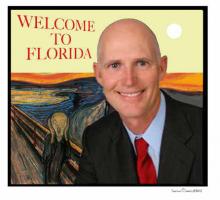
Extra! Extra! Gov. Rick Scott welcomes you to the State of Florida on election suppression day

1

And so, thanks to Republican Governor Rick Scott and his Republican allies, the lines of voters were once again impossibly long at Florida voting places and many voters started chanting dramatically on national television, “Let us vote, let us vote, let us vote.” It was a chant that rang throughout many battleground states where Republicans had the power to reduce early voting and implement other policies designed to keep the lines long and to make it as difficult as possible for prospective Democrats to exercise their constitutional right to vote. 

Guardian cartoonist Louis Dunn sizes up the situation. And I ask the Impertinent Question: Are Florida and other such places becoming third world countrIes? This kind of voter suppression and repression is an update of the old poll tax policy used in the South for generations to keep blacks from voting–and used eight years ago to put Bush into office over Gore, who won by more than 500,000 votes.  It has no place anywhere in the U.S. in 2012. The first thing Obama and the Democrats need to do is to move to investigate, prosecute, and criminalize this behavior.

Obama, let me predict, is going to win and he needs to aggressively assert himself and his presidency at the outset. This is a good place to start. b3

P.S. Thomas R.Julin, a noted Miami First Amendment attorney,  told me this afternoon that the election suppression in Miami  is “unbelievably awful.” http://www.sfbg.com/bruce/2012/11/06/miami-first-amendment-attorney-election-suppression-unbelievably-awful  B3


So-called DV group doing PG&E’s dirty work

34

Any pretense that the group called San Francisco Women for for Responsibility and an Accountable Supervisor is anything more than a downtown sham vanished with the arrival in District 5 mailboxes Nov. 3 of a mailer attacking Sup. Christina Olague for supporting public power.

The mailer uses pictures of Olague and Julian Davis — and that alone is a not-so-subtle attack on Olague. Davis has lost all credibility in the race, thanks to a string of allegations that he groped women.

It then goes after the two for “support [ing] a $20 million taxpayer giveaway to Big Oil.” The utterly misleading line is based on Olague’s vote to support Clean Power SF, a community choice aggregation program that has the support of public power advocates all over California.

Olague’s not supporting Shell Oil; she just realized, as did a supermajority of the board (including both left stalwarts David Campos and John Avalos and the far more conservative Scott Wiener) that the program makes sense for San Francisco and will lead in the long term to much greater energy self-reliance. The only ones putting out the Shell Oil line are PG&E and its house union, IBEW Local 1245.

Oh, and now a group that supposedly advocates for domestic violence victims.

This is a disgrace, an embarassment to the district and the city. Ron Conway and Thomas Coates are attacking Olague because they’re afraid she’ll vote against their development and landlord interests, not because they care about domestic violence.

This election matters, a lot. It’s clear where the big-money interests are; I hope D5 residents reject this attempt to buy the election.


True facts: there are at least 15 movies opening this week

0

Pack up the leftover Halloween candy and head to the movies this weekend — what better way to escape election-related craziness and/or rest your liver after all that LET’S GO GIANTS damage you just did?

Your options are pretty spectacular, as well: intriguing Israeli doc The Flat, in which a Jewish filmmaker learns his grandparents counted a Nazi couple among their social circle (my interview with director Arnon Goldfinger here); bonkers 1987 rock ‘n’ roll taekwondo spectacular Miami Connection (Dennis Harvey’s take on this newly discovered instant cult classic here)

Plus, RZA’s The Man With The Iron Fists, an homage to chopsocky classics (with, I’m assuming, a much better soundtrack); Denzel Washington playing an airline pilot whose secret drinking problem comes to light only after he prevents a plane from crash landing in Flight; and Deep Dark Canyon, a NorCal-set thriller by former locals Silver Tree and Abe Levy starring Ted Levine.

And that’s not even the end of it! Read on for video game characters run amok, two found-footage horror flicks, a musically-inclined Pacific Film Archive program, tributes to Tony Bennett (speaking of the Giants) and Monty Python’s Graham Chapman, and, I kid you not … even more.

Amber Alert An audition tape for The Amazing Race quickly turns into an epic chase in this low-budget “found footage” drama. Arizona BFFs Nate (Chris Hill) and Sam (Summer Bellessa, wife of director Kerry Bellessa) — and Sam’s teenage brother, shaky-cam operator Caleb (Caleb Thompson) — notice they’re driving behind the very Honda that’s being sought by an Amber Alert. “Following at a safe distance,” as advised when they call the cops, leads to high-decibel arguments about how to handle the situation — and for the next hour-plus, the viewer is trapped in a car with two people communicating only in nails-on-chalkboard tones. Amber Alert‘s nonstop bickerfest is so tiresome that it’s actually a relief when the child molester character starts taking an active role in the story. Not a good sign. (1:20) (Cheryl Eddy)

http://www.youtube.com/watch?v=ctkkn1qSYKw

The Bay Top-quality (i.e., realistically repulsive) special effects highlight this otherwise unremarkable disaster movie that’s yet another “found footage” concoction, albeit maybe the first one from an Oscar-winning director. But it’s been a long time since 1988’s Rain Man, and the Baltimore-adjacent setting is the only Barry Levinson signature you’ll find here. Instead, parasites-gnaw-apart-a-coastal-town drama The Bay — positioned as a collection of suppressed material coming to light on “Govleaks.org” — is a relentlessly familiar affair, further hampered by a narrator (Kether Donohue) with a supremely grating voice. Rising star Christopher Denham (Argo) has a small part as an oceanographer whose warnings about the impending waterborne catastrophe are brushed aside by a mayor who is (spoiler alert!) more concerned with tourist dollars than safety. (1:25) (Cheryl Eddy)

“Don’t Shoot the Player Piano: The Music of Conlon Nancarrow” The late Texarkana-born composer’s birth centenary is celebrated in this two-part (Fri/2 and Sun/4) program of films examining his unique contribution to 20th century music. Frustrated early on by the inability of standard musicians to play his incredibly complicated scores, he turned to composing for player pianos, with their greatly heightened capacity for producing density of notes and rhythms. A member of the American Communist Party, he returned from fighting fascists in the Spanish Civil War to discover the U.S. government had revoked the passports of many citizens with similar political convictions. As a result, in 1940 he moved to Mexico, where he remained until his death 57 years later — his reputation remaining an underground musicologists’ secret until the early 1980s, in large part due to his disinterest in fame and dislike of crowds (he’d always avoided any gathering of over five people). But in his last years he became much more widely known, thanks in large part to fans like fellow composer Gyorgy Ligeti, who in one documentary here calls him “the most important composer of our time,” comparing him to Beethoven and saying “his work is completely, totally different from [his contemporaries].” Among the movies screening are Uli Aumuller and Hanne Kaisik’s 1993 German Music for 1,000 Fingers, in which the reclusive, elderly subject allows us into his studio to explain his (still somewhat inexplicable) methodologies. The brand-new, hour-long Conlon Nancarrow: Virtuoso of the Player Piano offers a posthumous appreciation of his life, music and influence. It’s a first film from James Greeson, a professor of music at the University of Arkansas who knew the man himself. Also featured are several international shorts that provide interpretive visual complements to Nancarrow pieces. His widow and daughter, as well as kinetic sculptor Trimpin and composer-former KPFA music director Charles Amirkhanian will appear at both PFA programs. Pacific Film Archive. (Dennis Harvey)

http://www.youtube.com/watch?v=vXFOYmsYCTA

A Late Quartet Philip Seymour Hoffman is fed up playing second fiddle — literally. He stars in this grown-up soap opera about the internal dramas of a world-class string quartet. While the group is preparing for its 25th season, the eldest member (Christopher Walken) is diagnosed with early stage Parkinson’s. As he’s the base note in the quartet, his retirement challenges the group’s future, not just his own. Hoffman’s second violinist sees the transition as an opportunity to challenge the first violin (Mark Ivanir) for an occasional Alpha role. When his wife, the quartet’s viola player (Catherine Keener), disagrees, it’s a slight (“You think I’m not good enough?”) and a betrayal because prior to their marriage, viola and first violin would ”duet” if you get my meaning. This becomes a grody aside when Hoffman and Keener’s violin prodigy daughter (Imogen Poots) falls for her mother’s old beau and Hoffman challenges their marriage with a flamenco dancer. These quiet people finds ways to use some loud instruments (a flamenco dancer, really?) and the music as well as the views of Manhattan create a deeply settled feeling of comfort in the cold —insulation can be a dangerous thing. When we see (real world) cellist Nina Lee play, and her full body interacts with a drama as big as vaudeville, we see what tension was left out of the playing and forced into the incestuous “family” conflicts. In A Late Quartet, pleasures are great and atmosphere, heavy. You couldn’t find a better advertisement for this symphonic season; I wanted to buy tickets immediately. And also vowed to stay away from musicians. (1:45) (Sara Vizcarrondo)

A Liar’s Autobiography: The Untrue Story of Monty Python’s Graham Chapman Blessed with recordings made by Monty Python member Graham Chapman (King Arthur in 1975’s Monty Python and the Holy Grail; Brian in 1979’s Life of Brian) before his death in 1989 from cancer, filmmakers Bill Jones, Jeff Simpson, and Ben Timlett recruited 14 different animation studios to piece together Chapman’s darkly humorous (and often just plain dark) life story. He was gay, he was an alcoholic, he co-wrote (with John Cleese) the legendary “Dead Parrot Sketch.” A Liar’s Autobiography starts slowly — even with fellow Monty Python members Cleese, Terry Jones, Terry Gilliam, and Michael Palin lending their voices, much of the bone-dry humor falls disappointingly flat. “This is not a Monty Python film,” the filmmakers insist, and viewers hoping for such will be disappointed. Stick with it, though, and the film eventually finds its footing as an offbeat biopic, with the pick-a-mix animation gimmick at its most effective when illustrating Chapman’s booze-fueled hallucinations. In addition to opening theatrically, the film also debuts Fri/2 on premium cable channel Epix. (1:22) (Cheryl Eddy)

http://www.youtube.com/watch?v=SIIMFHcC1Fc

The Loneliest Planet Travel broadens, they say — and has a way of foregrounding anxiety and desire. So the little tells take on a larger, much more loaded significance in The Loneliest Planet when contextualized by the devastatingly beautiful Caucasus Mountains in Georgia. In this film by Russian American director and video artist Julia Loktev, adventuring, engaged Westerners Nica (an ethereal Hani Furstenberg) and Alex (Gael García Bernal) hire a local guide and war veteran (Bidzina Gujabidze) to lead them on a camping trip through the wilderness. They’re globe-trotting blithe spirits, throwing themselves into new languages and new experiences, though the harsh, hazardous, and glorious Georgian peaks and crevasses have a way of making them seem even smaller while magnifying their weaknesses and naiveté. One small, critical stumble on their journey is all it takes for the pair to question their relationship, their roles, and the solid ground of their love. Working with minimal dialogue (and no handlebar subtitles) from a Tom Bissell short story, Loktev shows a deliberate hand and thoughtful eye in her use of the space, as well as her way of allowing the silences to speak louder than dialogue: she turns the outdoor expanses into a quietly awe-inspiring, albeit frightening mirror for the distances between, and emptiness within, her wanderers, uncertain about how to quite find their way home. (1:53) (Kimberly Chun)

The Other Son The plot of ABC Family’s Switched at Birth gets a politically-minded makeover in Lorraine Lévy’s The Other Son, in which the mixed-up teens represent both sides of the Israel-Palestine conflict. When mop-topped wannabe rocker Joseph (Jules Sitruk) dutifully signs up for Israeli military duty, the required blood test reveals he’s not the biological son of his parents. Understandably freaked out, his French-Israeli mother (Emmanuelle Devos) finds out that a hospital error during a Gulf War-era evacuation meant she and husband Alon (Pascal Elbé) went home with the wrong infant — and their child, aspiring doctor Yacine (Medhi Dehbi), was raised instead by a Palestinian couple (Areen Omari, Khalifia Natour). It’s a highly-charged situation on many levels (“Am I still Jewish?”, a tearful Joseph asks; “Have fun with the occupying forces?”, Yacine’s bitter brother inquires after his family visits Joseph in Tel Aviv), and potential for melodrama is sky-high. Fortunately, director and co-writer Levy handles the subject with admirable sensitivity, and the film is further buoyed by strong performances. (1:53) (Cheryl Eddy)

http://www.youtube.com/watch?v=OCD00LLZmys

A Simple Life When elderly Ah Tao (Deanie Ip), the housekeeper who’s served his family for decades, has a stroke, producer Roger (Andy Lau) pays for her to enter a nursing home. No longer tasked with caring for Roger, Ah Tao faces life in the cramped, often depressing facility with resigned calm, making friends with other residents (some of whom are played by nonprofessional actors) and enjoying Roger’s frequent visits. Based on Roger Lee’s story (inspired by his own life), Ann Hui’s film is well-served by its performances; Ip picked up multiple Best Actress awards for her role, Lau is reliably solid, and Anthony Wong pops up as the nursing home’s eye patch-wearing owner. Wong’s over-the-top cameo doesn’t quite fit in with the movie’s otherwise low-key vibe, but he’s a welcome distraction in a film that can be too quiet at times — a situation not helped by its washed-out palette of gray, beige, and more gray. (1:58) (Cheryl Eddy)

http://www.youtube.com/watch?v=87E6N7ToCxs

Wreck-It Ralph Wreck-It Ralph cribs directly from the Toy Story series: when the lights go off in the arcade, video game characters gather to eat, drink, and endure existential crises. John C. Reilly is likable and idiosyncratic as Ralph, the hulking, ham-fisted villain of a game called Fix-It-Felix. Fed up with being the bad guy, Ralph sneaks into gritty combat sim Hero’s Duty under the nose of Sergeant Calhoun (Jane Lynch), a blond space marine who mixes Mass Effect‘s Commander Shepard with a PG-rated R. Lee Ermey. Things go quickly awry, and soon Ralph is marooned in cart-racing candyland Sugar Rush, helping Vanellope Von Schweetz (a manic Sarah Silverman), with Calhoun and opposite number Felix (Jack McBrayer) hot on his heels. Though often aggressively childish, the humor will amuse kids, parents, and occasionally gamers, and the Disney-approved message about acceptance is moving without being maudlin. The animation, limber enough to portray 30 years of changing video game graphics, deserves special praise. (1:34) (Ben Richardson)

http://www.youtube.com/watch?v=bLxP8snjdGc

The Zen of Bennett Landing somewhere between a glorified album making-of and a more depthed exploration, this documentary about famed crooner Tony of “I Left My Heart in San Francisco” fame shows him recording last year’s all-standards Duets II disc. His vocal collaborators are an eclectic — to say the least — mix of mostly much younger artists including Norah Jones, John Mayer, Carrie Underwood, Willie Nelson, and Andrea Bocelli. Some pairings are clearly a matter of commerce over chemistry, while others surprise — Lady Gaga is better than you might expect, while Aretha Franklin is certainly worse. Most touching as well as disturbing is his session with the late Amy Winehouse, whose nervous, possibly hopped-up appearance occasions his most gentlemanly behavior, as well as genuine admiration for her talent. (Others on the record, including Mariah Carey and k.d. lang, do not appear here.) Unjoo Moon’s rather mannered direction includes little displays of temperament from the octogenarian star, and glimpses of his family life (which extends well into his work life, since they all seem to be on the payroll), but just enough to tease — not enough to provide actual insight. Still, fans will find this less than-definitive portrait quite satisfying enough on its own limited terms. (1:24) (Dennis Harvey)

The billionaire attack on D5

155

The attack on Sup. Christina Olague, funded by a couple of right-wing billionaires, is in full swing in District 5, with mailers, robocalls, a social-media buy and even TV ads. It’s a disgraceful effort to buy an election in the final week, a flood of sleaze that’s outrageous even by modern political standards.

On the surface, the PAC called San Francisco Women for Responsibility and an Accountable Supervisor is talking about domestic violence. One mailer features a woman whose daughter was killed by an abuser saying she is “appaled” that Sheriff Ross Mirkarimi still has his job — and that Olague voted not to throw him out. A 60-second TV ad features Ivory Madison, the Mirkarimi neighbor whose video was the centerpiece of the campaign to oust the sheriff.

But the PAC is entirely funded by Ron Conway, his wife Gayle, and Thomas Coates. Conway hasn’t been a leading voice on domestic violence issues, and neither has Coates — they are business people who are primarily interested in making money. In the case of Conway, he’s someone who has publicly announced that he wants to “take San Francisco back” from progressives and install more big-business-friendly politicians at City Hall. Coates is a real-estate investor who has spent a lot of time and money fighting to limit tenant-protection laws.

Why are these two so interested in the D5 race? Well, in an email, Conway told me that “the Committee that my wife Gayle and other women, including longtime anti-domestic violence advocates, have formed and that I and others support exists solely to oppose Christina Olague because she put her own politics ahead of women and the victims and survivors of domestic abuse.”

But it’s eminently clear that there’s a larger agenda here, that the wealthy donors are using the domestic violence issue to get rid of a supervisor who they see as not sufficiently friendly to their economic interests. And there’s probably a bit of payback involved: Olague defied the mayor with her Mirkarimi vote — and while a lot of observers still say this was all a setup to demonstrate her independence in time for the election, Conway, one of the mayor’s closest allies and advisors, clearly didn’t get that message.

Coates lives in Los Angeles. Conway lives in Pacific Heights. Neither of them has any connection the D5 — except for their desire to get rid of Olague. They’ve taken a real, serious issue — domestic violence — and used it to their own political advantage.

We haven’t endorsed Olague, but we know a shady scam when we see one, and that’s exactly what this is. The voters of District 5 should reject this kind of outside-influence politics and not let a couple of billionaires decide the future of their the city.

Record-breaking spending floods District 1 with political propaganda

19

District 1 supervisorial candidate David Lee and independent expenditure campaigns supporting him have spent nearly $800,000 – shattering previous spending records for a district election – bombarding Richmond District voters with a barrage of mailers and other media pushing a variety of claims and criticisms about incumbent Sup. Eric Mar that sometimes stretch credulity and relevance.

But is it working? Or is the avalanche of arguments – much of it funded by “big money from Realtors, Landlords, and Downtown Special Interests,” as a recent Mar mailer correctly notes – feeding speculation that Lee would do the bidding of these powerful players on the Board of Supervisors?

Mar campaign manager Nicole Derse thinks that’s the case, arguing the Lee campaign would have leaked internal polls to the media if they were favorable, and it wouldn’t be escalating its attacks on so many fronts hoping for traction, such as yesterday’s press conference hitting Mar on the issue of neighborhood schools.

“They’re pretty desperate at this point and throwing anything out there that they can,” Derse told us, later adding, “I feel good, but we really have to keep the fire up.”

Mar and the independent groups supporting him, mostly supported by the San Francisco Labor Council, have together spent about $400,000. Most of the mailers have been positive, but many have highlighted Lee’s political inexperience and his connections to big-money interests, raising questions about his claims to support tenants and rent control.

Lee campaign manager Thomas Li, who has been unwilling to answer our questions throughout the campaign, did take down some Guardian questions this time and said he’d get us answers, but we haven’t heard back. On the issue of why the Realtors and other groups who seek to weaken tenant protections were supporting Lee, Li simply said, “Our position has been steadfast on protecting rent control and strengthening tenant protections.”

The Lee campaign has repeated that on several mailers – possibly indicating it is worried about that issue and the perception that Lee’s election would give landlords another vote on the board, as tenant and other progressive groups have argued – but most of its mailers recently have attacked Mar on a few issues where they must believe he is vulnerable, even when they distort his record.

Several mailers have noted Mar’s support for a city budget that included funding for a third board aide for each of the 11 supervisors – a budget the board unanimously approved – as well as his support for public campaign financing, despite the fact that Lee’s campaign has taken more than $150,000 in public financing in this election, 30 percent more than Mar’s. They have also criticized Mar for supporting the 8 Washington high-end condo project, even though Lee also voted for the project as a member of the Recreation and Parks Commission.

As this Ethics Commission graphic shows, Lee has been by far the biggest recipient of independent expenditures in this election cycle, with hundreds of thousands of dollars coming from the downtown-funded Alliance for Jobs and Sustainable Growth and the Realtor-created Citizens for Responsible Growth.

Mar and his allies have hit back with mailers noting that most of the funding for the Chinese American Voter Education Project, Lee’s main political and communications vehicle in recent years, has simply gone to pay his $90,000-plus annual salary, which he didn’t fully report on financial disclosure forms required of city commissioners. They have also hit Lee for his support for the Recreation and Parks Department’s closure of recreation centers and other cuts while he “consistently supported privatization of our parks.”

At this point, it’s hard to know how this flood of information and back-and-forth attacks will influence District 1 voters, but we’re now days away from finding out.

Romney has lost. Unless ….

41

Polls aren’t perfect, but a lot of polls that come to the same conclusion are rarely wrong, at least not by much, and all the polling data suggests that in the critical swing states, Mitt Romney is SOL. Sure, the GOP camp is keeping up hope, but everyone knows that the odds are heavily in favor of the re-election of Barack Obama. In the spring of 2010, I bet on the Giants winning the World Series at 20-1 (nice payoff, that one), but I wouldn’t even take those odds on Romney today.

And since Hurricane Sandy has left Ohio and Pennsylvania relatively intact (no massive poll closures for lack of electrict power), and the voter-suppression laws have been put on hold by the courts, there’s really nothing game-changing available to Romney’s gang of crooks — except this.

I’m with the Wonkette folks — I don’t typically buy into the voting-machines-are-rigged-by-secret-Bain-operatives kinds of theories. But we all know the 2000 election was stolen, and I’m pretty sure that Willie Brown and his appointed elections chief, Tammy Haygood, did something fishy (maybe very fishy, judging by ballot boxes floating in the Bay) to prevent a public-power measure from passing in 2001. And we know that the voter ID laws were carefully designed to keep African Americans, Latinos, seniors and students away from the polls this fall. And we know that Romney’s backers are among the most powerful and secretive people in the world; if there really were groups like the Bilderbergs and the Masons running the world, Romney wouldn’t be allowed in the back rooms (too dumb) but his big-money allies would be there.

Could it be possible that somebody in Romneyland is going to try to pull a modern-day version of the hanging-chad caper?

We’d be fools not to think it’s on the agenda. Doesn’t mean they can pull it off (and seriously, if the president of the United States doesn’t have people who can monitor and put a check on this shit, then he doesn’t deserve the title). But if some of those swing states suddenly go all Florida, 2000 on us and start showing up red on the electoral map, it won’t be because of Obama’s college transcripts.

So go ahead, trolls, tell me how nuts I am. You’re probably right; everything’s going to be Just Fine.

Olague attacks led by billionaires and a consultant/commissioner with undisclosed income

72

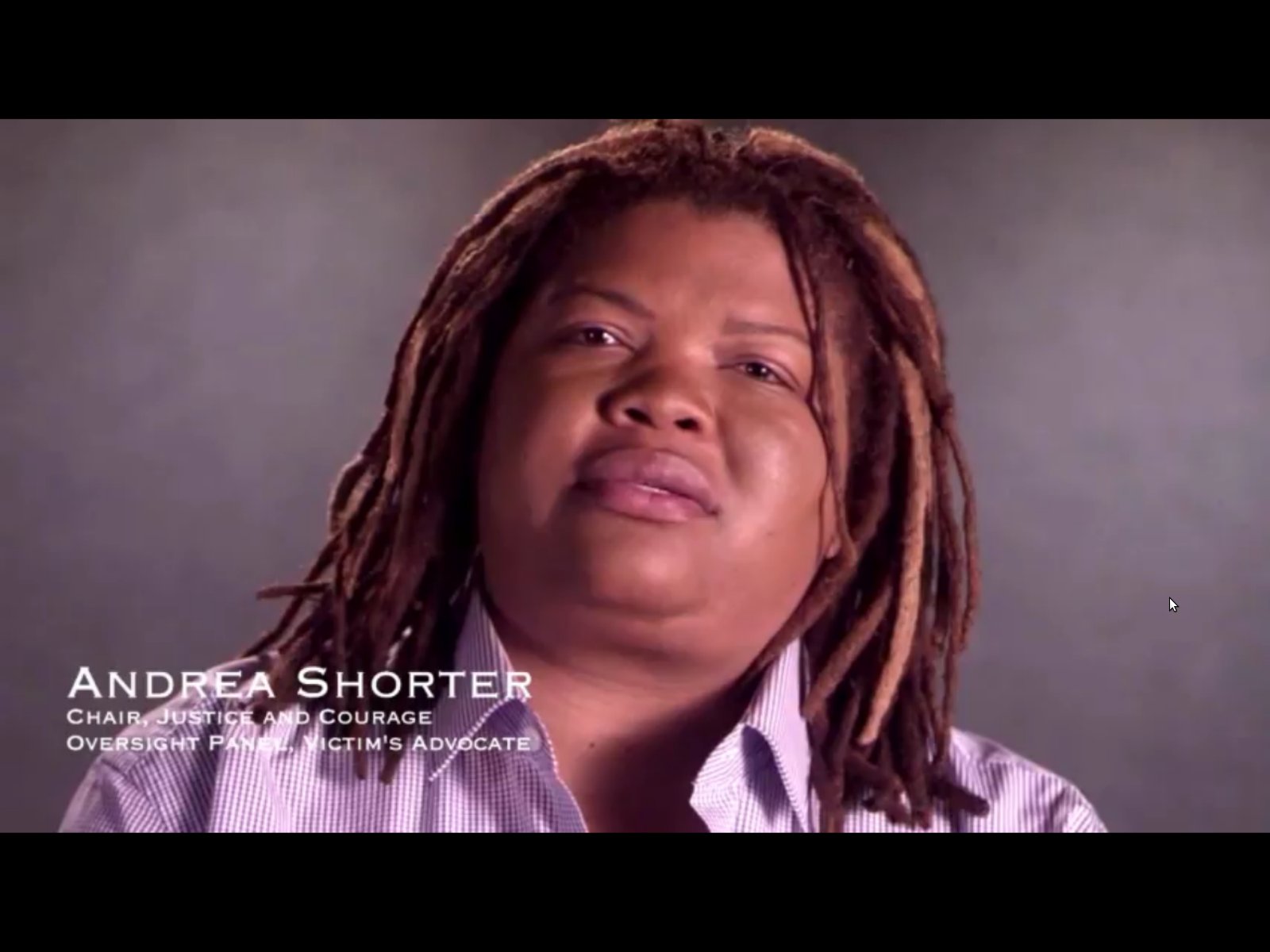
Understanding how political activists are being paid is important to understanding what their motivations are. For example, is Andrea Shorter – a mayor-appointed former president of the Commission on the Status of Women – leading the campaigns against Sup. Christina Olague and Sheriff Ross Mirkarimi out of concern for domestic violence, or is it because of their progressive political stands, such as supporting rent control and opposing corporate tax breaks?

As a city commissioner who is required under state law to report her income on annual financial disclosure forms to the city, the public should be able to know who is paying this self-identified “political consultant.” But we can’t, because for each of the last five years, Shorter has claimed under penalty of perjury on Form 700 to have no reportable income, which means less than $500 from any source – an unlikely claim that was the source of complaints filed today with the Ethics Commission and Fair Political Practices Commission.

Shorter led efforts to have her commission support Mayor Ed Lee’s failed effort to remove Mirkarimi from office for official misconduct, and now she’s become one of the main public faces leading an independent expenditure campaign called San Francisco Women for Accountability and a Responsible Supervisor Opposing Christina Olague 2012, funded with more than $100,000 by Lee’s right-wing financial supporters: venture capitalist Ron Conway and Thomas Coates (and his wife), who has also funded statewide efforts to make rent control illegal.

Neither Shorter nor Conway responded to our requests for comment, but tenant advocates and Olague supporters are pushing back with an 11:30am rally at City Hall tomorrow (Thurs/1). Organizers are calling on activists “to beat back the attacks on rent control and workers by billionaires Ron Conway and the Coates family. The 1 Percent Club, Coates and Conway want San Francisco to be a playground for the rich. Take a stand to say that these opportunists CANNOT buy elections!”

The Ethics Commission complaint against Shorter was filed this morning by sunshine activist Bob Planthold, who also filed a similar complaint a couple weeks ago against District 1 supervisorial candidate David Lee, who also appears to have grossly understated his income of the same financial disclosure form during his service on the Recreation and Parks Commission.

“There’s been too little attention by mayor after mayor after mayor in that the people they appoint are allowed to be sloppy, negligent, unresponsive, and under-responsive to these financial disclosure requirements,” Planthold told us.

Although the Ethics Commission doesn’t confirm or deny receiving complaints or launching investigations, Planthold said Ethics investigators have already notified him that they were investigating the Lee complaint, and he expects similar action against Shorter. “Ethics is pursuing my complaint against David Lee. It’s not one of the many that they decided to ignore,” Planthold said.

The FPPC complaint against Shorter is being filed by former Board of Supervisors President Aaron Peskin, who told us, “The complaint speaks for itself.”

Although Shorter claims no income on public forms, the political consulting firm Atlas Leadership Strategies lists Shorter as the CEO of Political Leadership Coaching, which works with political candidates and causes. Atlas also represents PJ Johnston, who was press secretary for then-Mayor Willie Brown and now represents a host of powerful corporate clients.

“Her brand of discreet, highly confidential, political coaching works to equip leaders with tools to exercise more effective, impactful, innovative and – where possible – transformative leadership,” was one way Atlas describes Shorter.

Is she working in a discreet and confidential way to elect moderate London Breed to one of the city’s most progressive districts? Is she being paid for that work by Conway or anyone else? Is she doing the bidding of Mayor Lee and his allies in hopes of greater rewards?

Or should voters just take at face value her claim to really be standing up for “accountability” from public officials? Is this really about the statement Shorter makes in the video prominently displayed on the sfwomenforaccountability.com website: “Christina Olague has lost the trust of victims’ advocates. She has set our cause back. I’m profoundly disappointed in her and I can’t support her anymore.”?

With less than a week until the election, voters can only speculate.

West Memphis free

0

arts@sfbg.com

LIT When Damien Echols stepped out of the Craighead County courtroom on August 19, 2011 a free man, he’d spent more than half of his life on death row, for a crime he insists he didn’t commit — the gruesome murders of three young boys. His trial and quest for exoneration, along with co-defendant Jason Baldwin and a third accused, Jesse Misskelley Jr., are well documented in the Paradise Lost documentaries directed by Joe Berlinger and Bruce Sinofsky, and the subject of a fourth documentary, West of Memphis, due out in December. But for a more microscopically focused, day-to-day accounting of growing up behind prison walls, Echols’ book Life After Death (Blue Rider Press, 392 pp., $26.95) delivers a highly personal account of living under a sentence of death.

The timing of the book’s release could not be better for Californians, who are facing the opportunity to overturn the death penalty in the upcoming November election by voting yes on Proposition 34. For the undecided, reading about death row from the perspective of one who lived on it may offer one of the most compelling arguments against maintaining it. Echols’ book offers a vision of life on death row as bleak as it is banal: the glacial grind of the appeals process, the dehumanizing effects of institutionalization on both the incarcerated and the incarcerating, and the unsettling reality that there have been numerous factually innocent people sent to death row for sentences that have little to do with deterrence, and much with revenge. (More information on wrongful convictions can be found via organizations such as the Innocence Project, the Death Penalty Information Center, and Amnesty International.)

Even when you strip away Echols’ penchant for overwrought hyperbole (“I cannot explain it, the way everything in my soul gibbers and shrieks for some sort of closure”), he effectively paints a portrait of an isolated sovereign state characterized by rote adherence to pointless, administrative ritual. The primary focus of Echols and his fellow inmates seems to be staving off boredom and breakdown, chronic death row maladies on which Echols provides plenty of detail. Echols learns to sit zazen, increasing his ability to silently mediate from 15 minutes to five-hour stretches. He watches television — looking forward every year to each Charlie Brown holiday special and baseball season — and offers tips on cooking chili over a light bulb plus novel uses for magazine cologne samples. In fact, at certain points his discourse (written mostly while Echols was still in jail) reads a bit like a “Hello Muddah” letter from summer camp rather than a hardcore exposé of the prison system.

Since he was sent to death row while still a teenager, Echols’ essays and letters are frequently tinged with lingering shades of adolescent angst, and confined as he was to an effectively solitary existence, he can’t help but to come off sounding somewhat self-absorbed (“I look at the people who have done horrible things to me … and I know they would never have been able to rise above the things that I have”). When not writing about prison life, he writes about his poverty-stricken childhood and his side of the criminal case that catapulted him to an uncomfortable celebrity, vacillating between emotional extremes. In one paragraph he fondly describes the way his father could make him laugh, in another he describes being “disgusted” by his “childishness.” His mother, sister, and step-father are all singled out for similar treatment, and he even takes a swipe at onetime best friend Jason Baldwin, for hesitating over the deal that allowed the West Memphis Three to walk out of prison in 2011 with time served — but not with exoneration.

But Echols the person is more than just Echols the condemned, and Echols the writer is more than a one-note diva. Strewn throughout his narrative are wryly humorous observations, such as his glowing description of a sumptuous breakfast at the mental institution where he was temporarily confined as a youth (“The insane do not count carbs”), and his tongue-in-cheek recounting of his teenage attempts to find a summer job (“I was growing desperate because potential employers didn’t seem to value the exceptional intellectual giant who was presenting himself to them”). His glowing tributes to his wife and defending angel Lorri Davis are touching and truthful, and his penchant for poetic phrasing is transcendent when it hits its mark.

“I’ve seen ghosts in the lines of a woman’s face and heard them in the jangling of keys,” Echols writes urgently. “Sometimes I even mistake myself for one.” Fortunately for his audience his writing, at least, tethers him unequivocally to the corporeal world — a man after all, not a shade. *


Man for the moment?

25

steve@sfbg.com

This year’s supervisorial race in District 5 — representing the Haight, Panhandle, and Western Addition, some of the most reliably progressive precincts in the city — has been frustrating for local leftists. But as the long and turbulent campaign enters its final week, some are speculating that John Rizzo, whose politics are solid and campaign lackluster, could be well-positioned to capitalize on this strange political moment.

Appointed incumbent Sup. Christina Olague has been a disappointment to some of her longtime progressive allies, although she’s now enjoying a resurgence of support on the left in the wake of her vote to reinstate Sheriff Ross Mirkarimi. Now two allies of the mayor — tech titan Ron Conway and landlord Thomas Coates — are funding a $120,000 last-minute attack on Olague.

The campaign of one-time left favorite Julian Davis lost most of its progressive supporters following his recent mishandling of accusations of bad behavior toward women (see “Julian Davis should drop out,” 10/16).

The biggest fear among progressive leaders is that London Breed, a well-funded moderate candidate being strongly supported by real estate and other powerful interests, will win the race and tip the Board of Supervisors to the right. The final leg of the campaign could be nasty battle between Breed and Olague and their supporters, who tend to see it as a two-person race at this point.

But in a divisive political climate fed by the Mirkarimi and Davis scandals and the unprecedented flood of hundreds of thousands of dollars in real estate and tech money, it’s hard to say what D5 voters will do, particularly given the unpredictably of how they will use ranked-choice voting to sort through this mess.

Running just behind these three tarnished and targeted candidates in terms of money and endorsements are Rizzo and small business person Thea Selby, who described their candidacies as “the grown-ups in the room, so there’s an opportunity there and I’m hopeful.”

Selby hasn’t held elective office and doesn’t have same name-recognition and progressive history as Rizzo, although she has one of the Guardian’s endorsements. It probably didn’t help win progressive confidence when the downtown-backed Alliance for Jobs and Sustainable Growth recently did an independent expenditure on behalf of both Selby and Breed.

And then there’s Rizzo, who has been like the tortoise in this race, quietly spending his days on the streets meeting voters. Between fundraising and public financing, Rizzo collected about $65,000 as of Oct. 20 (compared to Breed’s nearly $250,000), but he’s been smart and frugal with it and has almost $20,000 in the bank for the final stretch, more than either Olague or Davis.

But perhaps more important than money or retail politics, if indeed D5 voters continue their strongly progressive voting trends, are two key facts: Rizzo is the most clear and consistent longtime progressive activist in the race — and he’s a nice, dependable guy who lacks the oversized ego of many of this city’s leaders.

“I see consistency there and a lack of drama,” Assembly member Tom Ammiano, an early Rizzo endorser, told us. “He’s looking not like a flip-flopper, not like he owes anyone, and he doesn’t have a storied past.”


PROGRESSIVE HISTORY

Rizzo, who was born in New York City 54 years ago, is downright boring by San Francisco standards, particularly given his long history in a local progressive movement known for producing fiery warriors like Chris Daly, shrewd strategists like Aaron Peskin, colorful commenters like Ammiano, bohemian thinkers like Matt Gonzalez, and flawed idealists like Ross Mirkarimi.

Rizzo is a soft-spoken family man who has lived in the same building on Waller Street in the Haight-Ashbury for the last 27 years. Originally, he and Christine, his wife of 25 years, rented their apartment in a tenancy-in-common building before they bought it in the early 1990s, although he’s quick to add, “In all the years we’ve owned it, we never applied for condoship.”

He supports the city’s limits on condo conversions as important to protecting working-class housing, although he said, “The focus should be on building new affordable housing.” That’s an issue Rizzo has worked on since joining the Sierra Club’s San Francisco Bay Chapter more than 20 years ago, an early advocate for broadening the chapter’s view of environmentalism.

He’s a Muni rider who hasn’t owned a car since 1987.

Michelle Myers, director of the Sierra Club’s San Francisco Bay Chapter, said Rizzo brings a wealth of experience, established relationships, and shrewd judgment to his role as the group’s political chair. “We really rely on John’s ability to weigh what is politically feasible, not just what’s ideal in our minds,” she told us.

Yet that political realism shouldn’t be confused for a lack of willingness to fight for big, important goals. Rizzo has been an advocate for public power in San Francisco for many years, strategizing with then-Sup. Ammiano in 2001 to implement a community choice aggregation program, efforts that led to this year’s historic passage of the CleanPowerSF program (with a key vote of support by Olague) over the objections of Mayor Lee and some business leaders.

“CleanPowerSF was carried by John Rizzo, who has been working on that issue for 10 years,” Myers said.

Rizzo is a technology writer, working for prospering computer magazines in the 1990s “until they all went away with the dot.com bubble,” as well as books (his 14th book, Mountain Lion Server for Dummies, comes out soon).

He sees the “positives and the negatives” of the last tech boom and this one, focusing on solving problems like the Google and Genetech buses blocking traffic or Muni bus stops. “On the one hand, these people aren’t driving, but on the other hand, they’re unregulated and using our bus stops,” he said. “We need to find some solution to accommodate them. Charge them for it, but accommodate them.”

That’s typical of how Rizzo approaches issues, wanting to work with people to find solutions. As president of the City College of San Francisco Board of Trustees, Rizzo suffered the bad timing of the district having its accreditation threatened just as his supervisorial race was getting underway, but he’s steadily worked through the administrative problems that predated his tenure, starting with the criminal antics of former Chancellor Phil Day and continuing with “a management structure still in place, and it had calcified.”

Despite being on the campaign trail, Rizzo called the trustees together six times in August to deal with the accreditation problems. “We now have a plan that shows all the things the district needs to do to keep it afloat. City College is back on track.”


WEAKNESS BECOMES STRENGTH

Eileen Hansen — a longtime progressive activist, former D8 supervisorial candidate, and former Ethics Commissioner — gave her early endorsement to Rizzo, who never really seemed to catch fire. “There hasn’t been a lot of flash and I would love for there to be more energy,” she admitted.

So, like many progressive leaders, she later offered her endorsement to Davis, believing he had the energy needed to win the race. But after Davis’ problems, Hansen withdrew that endorsement and sees Rizzo as the antidote to its problems.

“We are in such a mess in D5, and I’m hoping they will say, ‘enough already, let’s find someone who’s just good on the issues, and that’s John,” Hansen said. “As a progressive, if you look at his stands over many years, I’d be hard-pressed to find an issue I don’t agree with him on. He’s a consistent, strong progressive voice, someone you can count on who’s not aligned with some power base.”

Other prominent progressive leaders agree.

“What some people may have viewed as his weak point may end up being his strength,” said former Board President Aaron Peskin, who endorsed Rizzo after the problems surfaced with Davis. “A calm, steady, cool, collected, dispassionate progressive may actually be the right thing for this moment.”

Sup. Malia Cohen, a likable candidate who rose from fourth place on election night to win a heated District 10 supervisorial race two years ago, is a testament to how ranked-choice voting opens up lots of new possibilities.

“Ranked choice voting defies conventional wisdom,” Peskin said. “There may be Julian Davis supporters and Christina Olague supporters and London Breed supporters who all place John Rizzo as their second.”

In fact, during our endorsement interviews and in a number of debates and campaign events, nearly every candidate in the race mentioned Rizzo as a good second choice.

Yet Rizzo doesn’t mince words when he talks about the need for reconstitute the progressive movement after the deceptions and big-money interests that brought Mayor Lee and “his fake age of civility” to power. Lee promised not to seek a full term “and he broke the deal,” Rizzo said. “And it was a public deal he broke, not some backroom deal.” 

That betrayal and the money-driven politics that Lee ushered in, combined with the divisive political climate that Lee’s long effort to remove Mirkarimi from office created, has deeply damaged the city’s political system. “I think the climate is very bad It’s bad for progressives, and just bad for politics because it’s turning voters off,” Rizzo said.

He wants to find ways to empower average San Franciscans and get them engaged with helping shape the city’s future.

“We need a new strategy. We need to regroup and think about things long and hard. I think it’s not working here. We’re doing the same things and it’s not working out. The money is winning.” He doesn’t think the answers lie in continued conflict, or with any individual politicians “because people are flawed, everyone is,” Rizzo said.

Yet Rizzo’s main flaw in the rough-and-tumble world of political campaigns may be that he’s too nice, too reluctant to toot his horn or beat his chest. “That kind of style is not me. That aggressive person is not who I am,” Rizzo said. “But I think voters like that. Voters do want someone who is going to focus on policy and not themselves.”

Labor money fighting Prop. 32

0

Modern California politics can be tug of war between corporate interests and the public interest. On one side is a gang of the biggest, toughest, strongest kids on the playground. On the other side is everyone else.

The labor movement isn’t always on the side of the disenfranchised — the prison guards union, for example, has long used its clout to push for greater incarceration levels, costing the taxpayers hundreds of millions and destroying lives in the process.

But overall, with the huge expense that’s now involved in running a political campaign in this state, labor — using the combined money of millions of dues-paying members — is often the only force that can stand up to the big-business bullies.

“The working class doesn’t have enough institutions through which to makes its voice heard,” says Nelson Lichtenstein, Director of the Center for the Study of Work, Labor and Democracy at UC Santa Barbara.

That’s why some of the richest and most powerful corporate interests in the country are trying, once again, to cut labor money out of politics — and why the battle over Proposition 32 is so critical for the state’s future.

And, ironically, the fight over an initiative whose backers say it’s aimed at limiting campaign spending by special interests has become one of the most expensive ballot battles in state history.

BILLIONAIRE’S BANQUET

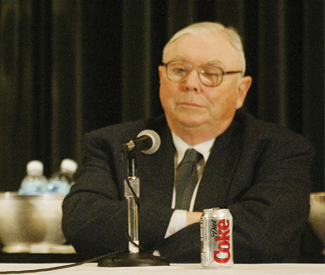
Prop. 32, to put it bluntly, is backed by a handful of rich people. Billionaire Republican Charles Munger, hedge fund manager William Oberndorf, and investment manager Jerrold Perenchio have between them put up nearly $24 million to get the measure on the ballot and pass it.

The Yes on 32 campaign talks about limiting both corporate and union spending. Again, in a biting irony, backers capitalized on the public’s concern with Citizen’s United, which gave corporations the same constitutional rights as people and enabled them to spend unlimited amounts of money on political campaigns.

But the measure really only affects one side. Corporations don’t use paycheck deductions to collect political money — and partnership, limited liability companies and many other entities could give as they wish. So, of course, could rich individuals, like the ones behind Prop. 32.

“All we’re doing is exposing the truth,” says Eric Heins, Vice President of the California Teachers Union, which has thrown more than $20 million dollars to block 32. The truth, he says, is that it will exempt corporations while limiting the voice of unions. “All you really need to do is just follow the money and follow who is exempted from it. We’re not doing anything other than telling it like it is.”

Labor’s efforts seem to be working. A September 21 survey by UC Berkeley and the Field Poll showed that just 38 percent of voters favored the measure while 44 percent opposed it. Another late September poll from USC and the Los Angeles Times showed similar results. The latest numbers from the Public Policy Institute of California show labor’s efforts have made more gains with just days before the election.

“The No on 32 campaign has been working overtime,” says Chris Daly, political director for the Service Employees International Union local 1021. “I think in the beginning the feeling was 32 started with a lead and as we educated voters about what it really is, support evaporated.”

Part of the labor effort has been to remind voters that they have seen this kind of proposition before. In 1998 it was called the “Paycheck Protection” initiative that aimed to establish new requirements with regard to payroll deductions for political activity. It was defeated at the polls. A 2005 measure aimed to do the same thing, but after a hard fought campaign and millions of dollars spent, it too was blocked.

Unions have also reached out to young people. “Voters 18 to 35 are a key demographic,” says Daly. “They tend to be much more progressive voters and more concerned about corporate power.”

For years the anti-union movement has argued that payroll deductions for political use without consent from employees is unethical and corrupt. They’re also one of the few ways working people can compete with wealthy corporate donors in politics and are necessary to keep the playing field somewhat balanced.

So while the corporate world is contributing money to silence one side of the debate, the other is using money to keep its voice alive. According to Maplight — a nonpartisan research group that tracks money in politics — spending on 32 has surpassed $100 million, with supporters spending roughly $45 million and the opposition $58 million.

THE FINAL PUSH

And there’s still a significant amount of money to be spent before November 6. The campaign finance database on Secretary of State Debra Bowen’s official website breaks down the 18 committees formed to support or oppose the measure. Of the five pro-32 committees, three have a combined $7 million dollars left to spend on their agenda while eight of the 13 opposition committees have roughly $9.7 million left.

The labor folks argue that their big money is different than big corporate money. “When we put money into a campaign its money that’s been cobbled together from a lot of people,” says Heins. “There’s a big difference with CTA putting in money as opposed to Munger putting in a check of $20 million that he won’t even miss.”

In addition to direct support from wealthy individuals like Munger, Prop. 32 has received money from a number of political action committees that aren’t required to disclose their donors. So while it’s pretty clear who the teachers union is and what its members want, its hard for voters to know the agenda of The American Future Fund — a PAC that’s donated $4 million raised from anonymous sources.

AFF has close ties to right-wing billionaires Charles and David Koch — but their names aren’t anywhere on any disclosure forms. “The ability to hide behind large PACS is corrosive and I think everybody knows it,” says Barbara O’Connor, Emeritus Professor of Communications at California State University, Sacramento.

The campaign financing behind Prop 32 is symptomatic of what’s happening across the country in the world the US Supreme Court has created with its Citizens United decision. At the national level, the Obama and Romney campaigns combined will have spent more than $1 billion by Election Day. While the President’s campaign has spent more money, Romney’s camp has benefited from enormous amounts of outside cash from super PACS, erasing Obama’s edge.

Could this be a new normal for election spending and campaigning?

O’Connor says change will likely come sooner than later. But as Prop. 32 demonstrates, that change will be tricky. What would happen if 32 passed? Would other states follow? Would one-sided campaign laws be the next frontier in reform?

“Discourse has gotten more bipolar,” says O’Connor, noting the change in the political atmosphere since Citizens United became law.

What everyone wants to know is whether or not this is the new normal for elections. “I think people on both sides are seeing the impact and skewing of citizen voting and once the fury calms down it will change. You’re going to see a big shift in how we campaign after this election.”

The sleazy money typhoon

106

CORRECTION: This article has been updated to correct inaccurate information.


The flood of money into the San Francisco elections over the past month is mind-boggling. We’ve never seen this level of independent-expenditure attacks in district elections. We’ve never seen an out-of-nowhere conservative candidate with no political experience at all spend half a million of his own money to buy a San Francisco Assembly seat. It could be a very ugly Nov. 6.

The most dramatic entry in the last-minute sewer-money contest is the political action committee just formed to attack Sup. Christina Olague over her vote to retain Sheriff Ross Mirkarimi. San Francisco Women for Responsibility and Accountable Supervisor exists only to oppose Olague; Ron Conway, a close ally Mayor Ed Lee, has thrown $20,000 into the group, and his wife Gayle put up $49,000. Linda Voight, who is married to real-estate industry mogul and rent-control foe Thomas Coates, put up another $49,000. That more than $100,000 coming in during the last 10 days of a campaign and it’s an unprecedented amount of negative money for a district race.

The idea that a tech titan and a big landlord would use the Mirkarimi vote in a hit-campaign is disturbing to a lot of people, particularly Ted Gullicksen, who runs the San Francisco Tenants Union:

Conway’s committee attacks Christina Olague for supporting Ross Mirkarimi.  But really he is just using the issue of domestic violence as a tool to unseat a political opponent.  By doing so, he is cheapening the issue of domestic violence to further his crass political agenda of repealing rent control.

(Conway, in an Oct. 30 note, says he does not oppose San Francisco’s rent control laws. Coates has put significant money into anti-rent-control efforts.)

It’s also, apparently, payback from two of the mayor’s money guys — and it makes a screwy election even stranger. Particularly since none of the other prominent candidates in D5 are out there going after Olague on her vote and most of them probably would have voted the same way.

Conventional wisdom is that attacking Olague helps London Breed, who is the candidate the landlords have chosen (and spent $40,000 on). But nobody knows exactly what will happen when all the ranked-choice ballots are counted. John Rizzo has largely weathered the story of attacks from all sides and will be #2 on a lot of ballots. I think Julian Davis is finished, and more of his supporters will go to Rizzo or Olague than to Breed.

Still, it’s entirely possible that the most progressive district in the city will be represented by someone who is likely to be more aligned with the moderates and conservatives than with the left.

Then there’s Michael Breyer, who has now put more than $500,000 of his own money into the Assembly race against Assessor Phil Ting. Breyer’s never done anything in local politics; he claims to talk about old-fashioned San Francisco values and hypes his family members from past generations who have been active in the community, but he grew up on the East Coast and moved here in 2002. But with that kind of money, the more conservative candidate has been able to bring the race close to even.

And if he can use his own fortune to top Ting — who’s been a decent Assessor and has long ties to the community — it’s going to be a bad moment for San Francisco politics.


Realtors and tech spending big to flip the Board of Supervisors

93

Wealthy interests aligned with Mayor Ed Lee, the real estate industry, big tech companies, and other downtown groups are spending unprecedented sums of money in this election trying to flip the balance of power on the Board of Supervisors, with most of it going to support supervisorial candidates David Lee in D1 and, to a lesser degree, London Breed in D5.

The latest campaign finance statements, which were due yesterday, show Lee benefiting from more than $250,000 in “independent expenditures” from just two groups: the Alliance for Jobs and Sustainable Growth PAC, which got its biggest support from tech titans Mark Benioff and Ron Conway; and the Coalition for Responsible Growth, funded by the San Francisco Association of Realtors.

Lee’s campaign has also directly spent another nearly $250,000 on its race to unseat incumbent Sup. Eric Mar – bringing total expenditures on his behalf to more than $500,000, an unheard-of amount for a district election. Mar has spent $136,000 and has $24,100 in the bank, and he is benefiting from another $125,000 that San Francisco Labor Council unions have raised on his behalf.

Breed has benefited from more than $40,000 in spending on her behalf by the two groups. Her campaign is also leading the fundraising field in her district, spending about $150,000 so far and sitting on more than $93,000 in the bank for a strong final push.

Incumbent D5 Sup. Christina Olague has done well in fundraising, but the reports seem to indicate that her campaign hasn’t managed its resources well and could be in trouble in the final leg. She has just $13,369 in the bank and nearly $70,000 in unpaid campaign debts, mostly to her controversial consultant Enrique Pearce’s firm.

Slow-and-steady D5 candidates John Rizzo and Thea Selby seem to have enough in the bank ($20,000 and $33,000 respectively) for a decent final push, while Selby also got a $10,000 boost from the the Alliance, which could be a mixed blessing in that progressive district. Julian Davis still has more than $18,000 in the bank, defying the progressive groups and politicians who have pulled their endorsements and pledging to finish strong.

In District 7, both FX Crowley and Michael Garcia have posted huge fundraising numbers, each spending around $22,000 this year, but Crowley has the fiscal edge going into the final stretch with $84,443 in the bank compared to Garcia’s less than $34,000. But progressive favorite Norman Yee is right in the thick of the race as well, spending $130,000 this year and having more than $63,000 in the bank.

The following is a detailed look at the numbers (we didn’t do Districts 3, 9, and 11, where the incumbents aren’t facing serious or well-funded challenges) for the biggest races:


Independent Expenditures


Alliance for Jobs and Sustainable Growth PAC

The downtown-oriented group is run by notorious campaign attorney Jim Sutton. It has raised $447,500 this year, including $225,000 in this reporting period (Oct. 1 to Oct. 20).

It has spent $107,808 this period and $342,248 this reporting period. It has $243,599 in the bank and $105,334 in outstanding debt.

Donors include: Salesforce CEO Mark Benioff ($100,000), venture capitalist Ron Conway ($35,000), San Francisco Police Officers Association ($25,000), Healthplus Share Services out of Walnut Creek ($20,000), Committee on Jobs ($47,500), and Operating Engineers Local 3 ($10,000)

The Alliance has spent $143,763 this year, including $16,921 in this reporting period, supporting D1 supervisorial candidate David Lee and attacking his opponent Eric Mar; and $10,205 each in support of D5 candidates Thea Selby and London Breed.


Coalition for Sensible Growth (with major funding by the SF Association of Realtors)

Raised nothing this reporting period but $225,000 this year.

Spent $75,636 this period and $287,569 this year. Has $170,744 in the bank and $152,000 in outstand debts.

It has spent $101,267 supporting D1 candidate David Lee, $26,405 support of David Chiu in D3, $2,739 each supporting FX Crowley and Michael Garcia in D7, $12,837 opposing Norman Yee in D7, $29,357 backing London Breed in D5, and $20,615 promoting Prop. C (the Housing Trust Fund).

The San Francisco Labor Council Labor & Neighbor PAC has raised $84,563 for its various member unions and spent $93,539 this year on general get-out-the-vote efforts.

The Labor Council also supports three Teachers, Nurses and Neighbors groups supporting Eric Mar in D1 (raising $125,000 and spending $85,437), FX Crowley in D7 (raising $50,000 and spending $40,581), and Christina Olague in D5 (raising $15,000 and spending $15,231)


Supervisorial Races:

District 1

Eric Mar

Raised $18,270 this period, $135,923 this year, and got no public finances this period.

He has spend $61,499 this period, $187,409 this year, and has $24,180 in the bank with no debt.

Donors include: Sup. David Chiu ($250), board aides Judson True ($100) and Jeremy Pollock ($100), redevelopment attorney James Morales ($200), developer Jack Hu ($500), engineer Arash Guity ($500), community organizer James Tracy ($200), Lisa Feldstein ($250), Marc Salomon ($125), Petra DeJesus ($300), and Gabriel Haaland ($200).

David Lee

Raised $4,174 this period, $140,305 this year, and no public financing matches this period.

He has spent $245,647 this year and $55,838 this period. He has $5,871 in debts and $26,892 in the bank.

Donors include the building trades union ($500), property manager Andrew Hugh Smith ($500), Wells Fargo manager Alfred Pedrozo ($200), and SPO Advisory Corp. partner William Oberndorf ($500).

District 5

John Rizzo

Raised $5,304 this period (10/1-10/20), $29,860 this year, and $14,248 in public financing

He has $19,813 in the bank

Donors are mostly progressive and environmental activists: attorney Paul Melbostad $500), Hene Kelly ($100), Bernie Choden ($100), Dennis Antenore ($500), Clean Water Action’s Jennifer Clary ($150), Matt Dorsey ($150), Arthur Feinstein ($350), Jane Morrison ($200), and Aaron Peskin ($150).


Julian Davis

Raised $8,383 this period, $38,953 YTD, and got $16,860 in public financing in this period (and $29,510 in the 7/1-9/30 period).

He has $67,530 in YTD expenses, $18,293 in the bank, and $500 in debts.

Some donors: Aaron Peskin ($500), John Dunbar ($500), Heather Box ($100), Jim Siegel ($250), Jeremy Pollock ($200), BayView publisher Willie Ratcliff ($174), and Burning Man board member Marian Goodell ($400). Peskin and Dunbar both say they made those donations early in the campaign, before Davis was accused of groping a woman and lost most of his progressive endorsements.


London Breed

Raised $15,959 this period, $128,009 YTD, got $95,664 in public financing this period.

Total YTD expenditures of $150,596 and has $93,093 in the bank

Donors include: Susie Buell ($500), CCSF Board member Natalie Berg ($250), Miguel Bustos ($500), PG&E spokesperson and DCCC Chair Mary Jung ($250), SF Chamber of Commerce Vice President Jim Lazarus ($100), Realtor Matthew Lombard ($500), real estate investor Susan Lowenberg ($500), Municipal Executives Association of SF ($500), Carmen Policy ($500), SF Apartment Association ($500), SF’s building trades PAC ($500), and Sam Singer ($500).


Christina Olague

Raised $7,339 this period, $123,474 YTD, and got $39,770 in public financing this period.

Has spent $54,558 this period, $199,419 this year, has $13,367 in the bank, and has $69,312 in outstanding debt.

Donors include: former Mayor Art Agnos ($500), California Nurses Association PAC ($500), a NUHW political committee ($500), the operating engineers ($500) and electrical workers ($500) union locals, Tenants Together attorney Dean Preston ($100), The Green Cross owner Kevin Reed ($500), SEIU-UHW PAC ($500), Alex Tourk ($500), United Educators of SF ($500), and United Taxicab Workers ($200).

Some expenses include controversial political consultant Enrique Pearce’s Left Coast Communications ($15,000), which documents show is still owed another $62,899 for literature, consulting, and postage.


Thea Selby

Raised $5,645 this period, $45,651 YTD, and got $6,540 in public financing this period.

Spent $29,402 this period, $67,300 this year, and has $33,519 in the bank.

Donors include:

David Chiu board aide Judson True ($100), One Kings Lane VP Jim Liefer ($500), SF Chamber’s Jim Lazarus ($100), Harrington’s Bar owner Michael Harrington ($200), and Arthur Swanson of Lightner Property Group ($400).


District 7


Norman Yee

Raised $8,270 this period and $85,460 this year and received $65,000 in public financing.

Spent $15,651 this period, $130,005 this year, and has $63,410 in the bank and no debt.

Donors include: Realtor John Whitehurst ($500), Bank of America manager Patti Law ($500), KJ Woods Construction VP Marie Woods ($500), and Iron Work Contractors owner Florence Kong ($500).


FX Crowley

Raised $5,350 this period, $163,108 this year, and another $25,155 through public financing.

He spent $76,528 this period, $218,441 this year, and has $84,443 in the bank and $7,291 in unpaid debt.

Donors include: Alliance for Jobs & Sustainable Growth attorney Vince Courtney ($250), Thomas Creedon ($300) and Mariann Costello ($250) of Scoma’s Restaurant, stagehands Richard Blakely ($100) and Thomas Cleary ($150), Municipal Executives Association of SF ($500), IBEW Local 1245 ($500), and SF Medical Society PAC ($350)


Michael Garcia

Raised $8,429 this period, $121,123 this year, and $18,140 through public financing.

He spent $45,484 this period, $222,580 this year, and has $33,936 in the bank.

Donors include: Coalition for Responsible Growth flak Zohreh Eftekhari ($500), contractor Brendan Fox ($500), consultant Sam Lauter of BMWL ($500), Stephanie Lauter ($500), consultant Sam Riordan ($500), and William Oberndorf ($500)


The Clear and Present Danger to Prop. 30 (and all of us)

36

This is suddenly getting serious, very serious. A secretive super PCA out of Arizona, where all bad things seem to originate, just put $11 million into a No on 30/Yes on 32 operation, and while it’s likely not enough to pass 32, which is trailing pretty far behind in the polls — and might actually benefit from news that a group allegedly pushing for campaign transparency is living off shadowy money, the money’s already hurting 30.

Let us remember: If Prop. 30 goes down, the state goes off a fiscal cliff. Schools get his with cuts so brutal that the school year my have to be cut by a couple of weeks or more. The University of California and California State University systems will cease to function in anything remotely resembling their current state, which is already a disaster. Cities and counties will get hit, social services will suffer, more parks will close — it’s almost too awful to think about.

I didn’t write Prop. 30; I would have left out the sales tax and hiked the rate even more on the wealthiest. But it’s a compromise deal, and it’s not only good for the state it’s absolutely essential. And the Big Boys out of the state of Joe Arpaio are trying to undermine it.

Add that in to Molly Munger’s unconscionable efforts to take down Prop. 30 (at this point, it seems like nothing but sour grapes since her Prop. 38 is clearly going to lose) and you have a recipe for disaster.

Look, we all know Obama’s going to win California, and some of us don’t have a contested supervisorial election. But there’s lots of stuff on the local ballot that matters — and if Prop. 30 goes down, nothing else is going to matter because (unless by some miracle the Dems get a two-thirds majority in both houses and can pass other taxes) this state’s going down the tubes.

So go vote Yes on 30. Vote yes on 38, too, if you want, although a lot of people are mad enough at Munger to vote no. But 30 is the one that matters. Vote early and often.


Dick Meister: Missing a vital election issue!

2

By Dick Meister 

Dick Meister, former labor editor of the SF Chronicle and KQED-TV Newsroom has covered labor and politics for more than a half-century. Contact him through his website, www.dickmeister.com, which includes more than 350 of his columns.


Repeal the Taft-Hartley Act!  That’s a cry working people and their unions very much need to hear, but have not heard in this year’s election campaigning.

It’s hardly surprising that Republican candidates are silent, since repeal would be a great boost to labor. But if only for that reason, President Obama and other pro-labor Democrats should demand immediate repeal.

The law was passed in 1947 in response to a wave of strikes that were called just after World War II by workers attempting to make up for pay lost because of wage controls during the war. President Truman vetoed Taft-Hartley, but Congress overrode the veto to enact what unions of the time denounced as “the slave-labor bill.”

Taft-Hartley drastically amended the National Labor Relations Act (NLRA), which was enacted during the Great Depression to encourage unionization. It reversed the NLRA’s intent by authorizing employers to take a wide variety of anti-union actions.

Most significantly, employers were granted the legal right to intervene in union organizing campaigns. Rather then remaining neutral as before, employers are allowed to wage anti-union campaigns that include requiring workers to listen to their arguments against unionization during working hours, often at mandatory meetings.

Taft-Hartley seriously limits workers’ ability to act in solidarity with others by prohibiting workers from waging sympathy strikes – secondary boycotts – in support of striking members of other unions.

Another key provision outlaws the closed shop, which required workers seeking jobs with unionized employers to join the union representing the workers before they could be hired. The law does allow the union shop, which requires workers to join the union after being hired, but allows states to enact so-called right-to-work laws that ban the union shop.

Twenty-two states, including Texas, the country’s second largest, have such laws. They greatly weaken unions by allowing workers to reap the benefits that unions get in negotiating contracts with unionized employers, but without having to help pay the unions’ costs by joining the unions and paying dues.

Taft-Hartley denies union rights to workers designated by employers as “supervisors,” a category of workers that has been growing steadily. What’s more, employers can fire supervisors who nevertheless try to unionize.

Employers also can use a wide assortment of devices to delay for months, sometimes for years, negotiating contracts with unions that win representation elections.  They also have the right to call for new elections to take away the union rights of election winners.

Unions calling strikes with potentially great national impact face the prospect of the federal government moving in to require an 80-day cooling off period while mediators try to bring about a settlement.

There’s more, none of it designed to further the basic civil right of unionization, but rather to hinder it. Repealing Taft-Hartley obviously should have been a prime issue throughout the 2012 election campaign.

Dick Meister, former labor editor of the SF Chronicle and KQED-TV Newsroom has covered labor and politics for more than a half-century. Contact him through his website, www.dickmeister.com, which includes more than 350 of his columns.