Education

Let it learn

1

culture@sfbg.com

CAREERS AND ED Be not dazzled by the big show across the pond into forgetting your studies! Regardless of how assured and gosh-darn perfect the Olympians may seem, few of us will ever find our dream job by cutting another tenth of a second off our 100-meter dash, or adding another five pounds onto our barbell (egads! Didn’t you people check that Korean weightlifter’s horrific elbow dislocation last week? Low weight, high reps out there, please.) But there are ample ways to improve your lot in life, by attending a class or two or enrolling at one of our fine educational institutions. We’ve compiled some amazing options within your grasp here. Grasp… poor, poor Sa Jae-hyouk.

EXTRACURRICULARS

INTRODUCTION TO ACCORDION

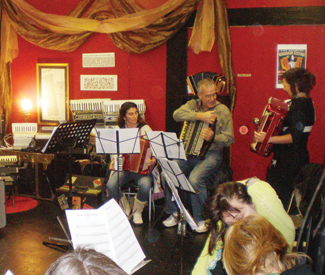
Saturdays at the Accordion Apocalypse repair shop offer a shot in SoMa at learning to tickle the ivories on sweet, sweet squeezebox. For only $20, staff teach accordion-playing hopefuls about the inner workings of the instrument. It’s said you’ll even emerge from your day of instruction knowing how to wheeze an entire song. Lessons happen once a week and hey, how convenient! If you really take to the accordion, fine specimens are available for purchase mere feet from your classroom.

Saturdays, 4pm. $20. Accordion Apocalypse, 255 10th St, SF. www.accordianapocalypse.com

CAMP WAKEUPOBAMA

You don’t have to be a stoner to be upset about the way the federal government has been shutting down our cannabis dispensaries and raiding marijuana trade schools here in the Bay Area. And you don’t have to be a stoner to not know, like, what the hell to do about it. Enter patient advocacy group Americans For Safe Access, who is teaching you how to stand up for medical marijuana with its free Camp WakeUpObama program. Earn online merit badges for calling your elected officials, making protest art projects — even coordinating pot-themed street theater with the help of ASA’s exhaustive website’s educational resources.

www.americansforsafeaccess.org/campwakeupobama

STUDIO SCULPTURE

Maybe you don’t want to go back to college, but you are down to take a college class. It happens, and San Francisco State’s extended learning department gets it. Register for an Open University course for this kind of real class, real life confluence. For example, its Studio Sculpture course. It’s a rare opportunity to get a in-depth studio sculpting experience without all the boring prerequisites. That doesn’t mean you won’t get ample lessons in theoretical background. You didn’t think your trip back to college will be all clay and play, did you?

Tuesdays and Thursdays Aug. 27-Dec. 17, 9:10-11:55am. $960. SFSU Fine Arts Building, 1600 Holloway, SF. www.sfsu.edu

WE BE SUSHI WORKSHOP

Sharpen your hamachi-making skills at this City College of San Francisco two-session course on the best in raw fish prep. We Be Sushi owner Andy Tonozuka opened his first sushi shop in 1987, so he should be able to impart all you need to know, from rolls to sashimi. Best of all: the lessons take place in Tonozuka’s classic Mission District eatery. You can’t get more San Francisco sushi-authentic than that — and we’ll bet you your class fee covers at least a free sample or two.

Sundays, Sept. 26-Oct. 6, 10am-1pm. $65-80. We Be Sushi, 538 Valencia, SF. www.ccsf.edu

SURVIVAL TOOL MAKING

From camp-happy urbanites to professional explorers, Bay Area citizens can take their wilderness savvy to the next level with Adventure Out, one of NorCal’s ultimate resources on all things wild. With the organization’s flintknapping and stone tools course, students will be introduced and trained in stone technology, which sound like an oxymoron, but actually entails exacting processes like spalling, percussion, and pressure flaking. Apocalypse now!

Sep. 29-30, 10am, $250. Adventure Out, Santa Cruz. www.adventureout.com

DEGREE PROGRAMS

DRAMA THERAPY

A concentration within the school’s counseling psychology degree, this is one of the nation’s only master’s in drama therapy. The program is intended for those who’d like to make their living implementing Erik Erikson’s psychological prescription to “play it out.” Courses focus on broadening self-understanding and activating dormant aspects of the human psyche.

California Institute of Integral Studies, 1453 Mission, SF. (415) 575-1600, www.ciis.edu

BROADCAST JOURNALISM

If you can’t beat ’em, join ’em. After all, if our media sources aren’t covering the news to your liking, it may be high time you became a newscaster. This program teaches students the appropriate research, writing, and reporting skills for careers in media forms including radio, television, cable, syndicated, Internet, and satellite news organizations.

Community College of San Francisco, 50 Phelan, SF. (415) 239-3285, www.ccsf.edu

PRODUCT DESIGN AND DEVELOPMENT

For every consumer consuming, there must be an industry creating. San Francisco State keeps this basic fact of capitalism on the books by offering a degree that is as much kooky inventor as it is savvy economist. Process, people, and product provide the basis for this bachelor’s degree in industrial design with a concentration in product design and development. Students will learn product design through researching technology, material, aesthetics, and the nuances of that ever-present invisible hand.

San Francisco State University, 1600 Holloway, SF. (415) 338-1111, www.sfsu.edu

DIETETICS

Body-conscious, food-obsessed Californians can thank their stars that some of the state’s brightest students are equally as nutrition-oriented, and driven to make moves in the world of healthy eating. UC Berkeley’s College of Natural Resource undergraduate degree in dietetics focuses on disease prevention through understanding metabolic regulation, genetics, and the biological and chemical sciences of nutritional studies. Graduates from the program are generally expected to gun for a future in food production, clinical settings, or community and governmental leadership.

UC Berkeley, 318 Sproul Hall No. 5900, Berk. (510) 642-7405, www.berkeley.edu

Creating activist scholars

13

yael@sfbg.com

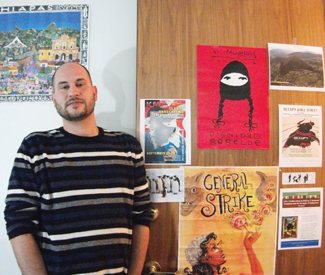
This semester, the California Institute for Integral Studies (CIIS) will start a new Anthropology Department featuring teachers who are grassroots organizers with decades of experience, including Boots Riley, Roxane Dunbar-Ortiz, Sasha Lilley, and Chris Carlsson.

The program’s goal is to create “activist scholars,” to get students into communities outside the institution, and to use their research and intellectual opportunities at the school to move social justice projects forward. And the man who organized it all is an unrepentant anarchist.

“The most distinguishing character of anarchism for me is prefigurative politics — creating the new within the shell of the old,” Adrej Grubacic, the new department head, told us.

His classes come at a time when anarchism is being more widely discussed in the US than it has been for generations. Non-hierarchical general assemblies and consensus-based “direct democracy,” long practiced in anarchist and other leftist circles, swept across the country along with the Occupy movement last year.

Anarchists have been associated in the public eye with everything from spirit-fingered affirmations to the masked, black-clad protesters smashing bank windows and scrawling anti-corporate messages on walls. But Grubacic says it’s more than that.

As anarchism exploded into practice in Occupy’s tent cities, it was also experiencing a renaissance in the ivory tower. The North American Anarchist Studies Network was founded in November 2009, and since has brought together a growing number of professors who want to explore and teach anarchism through annual conferences.

Big names such as Yale Anthropology Professor James Scott have declared themselves anarchists. In a country where the study of economics is usually code for the study of capitalism, professors longing to talk alternatives are coming forward in droves.

It’s more than a little ironic that, within an ideology focused on a lack of hierarchy, it can be hard for those on the street to connect with those in the lecture halls. So how can the academic-types truly support The People?

From Zapatista schools in Mexico to universities run by the Landless Worker’s Movement in Brazil to popular universities throughout Canada and Europe, people all over the world have developed institutions based on anarchist and Marxist principles.

Now, in San Francisco, Grubacic is hoping to do the same.

A historian who was an anarchist by age 13, Grubacic grew up in socialist Yugoslavia, a country engulfed in brutal civil war by the time he reached his 20s.

“I was raised a Yugoslav,” Grubacic says. “So I was raised to be a citizen of a country that doesn’t exist anymore.”

He was teaching history at the University of Belgrade, but his political beliefs became a problem.

“The political cultures and political groups in power were either Serbian nationalists or these hyper-capitalists,” Grubacic told me. “And going after them, because I was publishing and I was doing a lot of things, was—let’s say, not a smart career choice.”

It was with input from his mentor, famed leftist writer and academic Noam Chomsky, that Grubacic left the crumbling Balkan state for his own safety. After a frustrating stint at University of San Francisco, he found CIIS.

“This is the first place where I think that I was hired because I was an anarchist, or I am an anarchist. It’s kind of funny,” Grubacic says.

Founded in 1968, CIIS grew out of the California Institute of Asian Studies, and has quietly taught holistic approaches to psychology and integrative approaches to psychology, spirituality and the humanities since then . Today 60 percent of CIIS students are studying clinical or counseling psychology. The Anthropology and Social Change program is part of the School of Consciousness and Transformation.

“It’s the only department like it in the United States,” Grubacic says. “This is going to be one of the few places where anarchism is going to be studied.”

“So anarchist social theory, anarchist education, anarchist ideas in general. We are going to study them, seriously, because they need to be recognized seriously. It’s a beautiful history, it’s a beautiful tradition,” he says. “How important it is, I think, is revealed, by the recent rediscovery or reinvention of anarchism at Occupy. So I think that it’s more relevant than ever to create a space where anarchism will be studied.”

A CIIS education doesn’t come cheap. Two years in the masters program costs at least $35,000, and to earn a PhD will cost more than $60,000. Scholarships and financial aid are available, but Grubacic called the question of access to this program “a huge question.”

“It’s troubled me from the very beginning,” he says. “We are creating an experiment. It’s a social justice, community-based program in a private school.”

He hopes, however, that students will learn applicable skills in the program. Classes on radio, film, and writing, Grubacic says, will give students practical skills. “They will be able to continue, either as academics and go to get their PhDs, or to join the non-governmental sector, to work with NGOs, to work with community groups, to work with labor groups.”

Not the most lucrative professions, perhaps, but likely the chosen fields for many Anthropology and Social Change students.

Grubacic calls creating a program based on teaching grassroots and subversive knowledge in an elite institution “a paradox,” and one he’s not alone in. Grubacic got advice on the issue, he said, from Anibal Quihano, a Peruvian scholar known for his theories on colonial power who now teaches sociology at the Binghamton University in New York.

In fact, Grubacic practically convened a conference of post-colonial and anarchist scholars to help develop Anthropology and Social Change. Grubacic sent the program’s description around to everyone from his buddy Chomsky to Immanuel Wallerstein to World Social Forum organizer Boaventura de Sousa Santos. He got advice, too, from organizers at the Popular University of Quebec and the Popular University of Social Movements, a school in São Paulo, Brazil run by the landless workers’ movement there.

“The deciding thing about our own methodology was that we would like to listen, both to the voices coming from the past, so people who are doing similar things before us, and to people who are doing similar things right now,” Grubacic said. “We also went — and this is the third form, let’s say, of listening — to the people in the community.”

He reached out to contacts and friends of professors in the university, as well as hanging out in gathering places and striking up conversations with those who showed up. He told one story of doing this covert outreach in the Tenderloin National Forest, the botanical garden and neighborhood spot just 10 blocks from CIIS’s building on Mission and 11th streets.

“Some people were completely uninterested and thought, what’s the purpose? Who are you, with this weird accent? Go home,” Grubacic laughed. Some, though, were more receptive, including a woman who said the program could help with those fighting against San Francisco’s problem of environmental racism.

“This person told me that she thinks activists can come to a particular community, do an ethnography, do research, and then present that research to people in the city, and show the people who have power in the city to make decisions why such behavior is unjust,” Grubacic said.

In the end, that is essentially how the program will work. Students will partner with local organizations, neighborhood groups, or other affiliated people working on social justice goals, doing research to help further their goals.

“The document they’re going to produce after two years of activist research is going to be written for that community,” Grubacic said. “We are the second readers. We are less important in the process. What they do has to be useful to the community. They have to be passionate about working with that community group. And they have to produce something that’s going to be useful to what that community group does.”

In addition to classes and research projects, students will participate in “convivias,” one of the most unique aspects of the program. People from the public, scholars, and others with special knowledge will hammer out ideas with students in week-long “political laboratories.” Revolutionary art will be practiced in a convivia called “Atelier of Insurrectionary Imagination.” And Grubacic and his students will turn a certain vacant part of the CIIS building into an “Emergency Library,” a place for books as well as what the program description calls “scholars on call, responding to the emergent needs of the communities in struggle, who might be in need of legal advice, activist companionship, scholarly input, or a media suggestion.” The convivias have corresponding student work-study positions — yes, there will be a paid Emergency Librarian.

CIIS spokesperson James Martin said Grubacic brings a lot to the school: “The thing I’m really excited about is that we’re engaging the local community. We live in San Francisco for a reason. This is one of the places in the world where all these intellectuals come together who have the passion to try and change things.”

Despite the paradoxes and problems that come when the elite meets the grassroots, Grubacic has high hopes. “We need to redefine what it means to be an intellectual who works within academia,” he said. “And the only way to do this is to become a part of a larger social movement’s formation, that is aimed at changing society. We cannot offer much. But we can offer something.”

Faces of City College

4

GOING BACK TO SCHOOL: BOUCHRA SIMMONS

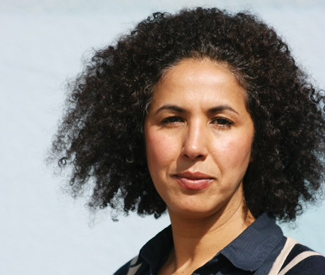
The first thing you notice about Bouchra Simmons is her hair. Her black curls are bold and larger than life, much like Simmons herself.

Simmons moved to the United States from Morocco in 2008. A single mother of a nine-year-old daughter, Simmons is taking English as Second Language classes as well as business classes and working towards a certificate in management at City College.

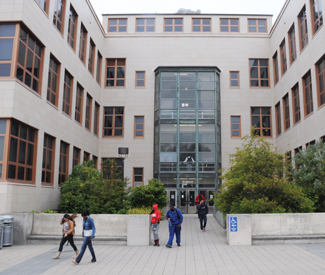
Somehow, she also found time to become Associated Students President at the Downtown Campus. That campus is one of several that the college is now looking at to consolidate. While the analysis isn’t complete, the school might move students out of the valuable downtown property to lease it, which may generate $4-5 million a year for the school.

And the ESL classes which Simmons takes could face cuts, too.

Like many other students, she relies on Muni to get around, even to drop her daughter off at childcare and the Downtown Campus is easier for her to commute to than other campuses around the city.

“We students are not lazy, we have goals, we’re craving education,” Simmons said. She is going to work with one of the college’s new accreditation workgroups and plans on emphasizing the need for the downtown campus in particular.

Her dream is to be able to earn a living wage to support her family. “I’m a single mom, and going back to school empowers me,” Simmons said. (Fitzgerald)


FRESH OUT OF HIGH SCHOOL: ROSA MORALES

When asked to describe her life, Rosa Morales, 18, said, “I was born, I loved the Jonas Brothers, and then I died.”

An SF native who just graduated from the Ruth Asawa School of the Arts, she is passionate about making films. Her work focuses on social issues, often touching on the lives of Latino housekeepers or how toys affect young girls’ body image.

Morales has many achievements, but her math grades weren’t among them. At 18 years old, Morales decided to go to City College, a place she says will allow her to learn basic math skills at her own pace.

“If I were not able to go to community college, I wouldn’t go to school,” Morales said.

She smiles, flashing her braces, as she says that she has registered and gotten all the classes she needed for the semester, including math. Other students her age aren’t as lucky.

Classes at California’s overburdened and underfunded community colleges are becoming harder to get into, including at CCSF. Students like Morales may soon get priority, so they can get the classes they need to transfer to a four-year university on time.

“All of [my counselors] say that I can’t transfer in two years, but I hope I can do it,” she said.

When asked how she feels about the loss of ESL classes and non-credit courses, Morales said that the issue affects more than just her. Out of the 10 extended family members she lives with, five of them (including herself) are enrolled at City College, all for different reasons.

“My uncle takes night English classes,” she said. Morales’ uncle is a housekeeper, and being unable to speak English makes it a lot easier for employers to accuse him of stealing money, and more likely for him not to get hired at all, she said.

“I know that knowing them, they’d give them up for me if they had to. But I know that from a selfish point of view, of course I want classes to be allotted to people like me… I don’t know what I’d do without those classes,” Morales said. But, she added, ” I can’t genuinely say, ‘Give them to me,” without there being a tug in my heart.” (Fitzgerald)

FROM STUDENT TO INSTRUCTOR: GALINA GERASIMOVA

City College doesn’t just churn out degrees. It creates opportunities. For Galina Gerasimova, that opportunity led to a great job with the school.

A part-time instructor at the college for about eight years now, Gerasimova moved to San Francisco from the Ukraine in 1997 and immediately began taking ESL classes at the school. With a teenage son to take care of and not a lot of money to survive on, she not only mastered English but was also inspired by the warmth and dedication of her instructors.

As a recent immigrant, “you’re scared, you’re frustrated, you don’t really know what to expect,” Gerasimova said, explaining that ESL teachers are often the first people English learners really interact with after moving to the United States. “(They) helped me a lot … and of course that actually influenced my decision to become an instructor at City College.”

By 2000, she became an instructional aid, all the while pursuing an Associate’s Degree in computer sciences. She then transferred to San Francisco State University and earned a degree in Human Physiology — a subject that complemented her previous studies in biology, chemistry and physics in the Ukraine, where she worked with war veterans.

Gerasimova remembers how easy it was to enroll in all the classes she needed at CCSF and she laments the steady deterioration of public education in California.

“It just became more intense over the past year,” she said, “and I see how that impacts City College and our services.” (Bloomberg)

Quick facts about City College of San Francisco

1

• CCSF has 10 main campuses: Ocean (Ingleside), Mission, Civic Center, Chinatown, Southeast (Bayview), Evans, Noe Valley, John Adams (on Masonic), Fort Mason, and Downtown.

• CCSF also has single class “instructional sites” littered throughout San Francisco in various office spaces, spare SFUSD classrooms, and other locations. The exact number of these sites isn’t known by the college, but they are estimated at more than 100.

• CCSF’s English as Second Language (ESL) Department serves around 20,000 students annually, compared to an English Department that serves around 7,000.

• Non-credit courses at City College are tuition-free, as mandated by the state, although some charge nominal fees. Credit courses at CCSF are $46 a unit. A semester of full classes (12 units) costs less than a single course at San Francisco State University.

• The neighborhood campuses primarily provide non-credit classes including ESL, certificate training, and enrichment courses. Ocean Campus in Ingleside provides the bulk of credit courses, which are used to attain associates degrees or transfer to a four-year university.

• Tracking exactly how much each campus costs the school is difficult, according to school officials. Faculty and staff serve multiple campuses frequently, and many services aren’t tracked on a campus basis, making campus consolidation or closure something that will take time to evaluate.

• The state funds community colleges based on enrollment, a process known as “apportionment.” The enrollment time is measured in Full Time Equivalent Students (FTES), a measure of instructional time in hours.

• CCSF has been absorbing about $24 million a year in costs to non-credit courses when the state reduced the amount of apportionment it allotted to schools for non-credit courses. The school did not want to reduce classes in light of state cuts, and began paying for them out of pocket.

• Credit classes receive higher rates of apportionment than non-credit classes.

• In order to make up for the unique nature of its campus sites, the state offsets low apportionment at CCSF with money called a “foundational grant.” Essentially, the school receives anywhere from $500,000 to $1.5 million a year for specific campus locations. 

Saving City College

43

news@sfbg.com

CAREERS AND ED City College of San Francisco (CCSF) is fighting for its life, and that struggle has turned old enemies into new allies. Suddenly, past differences seem less important than the need to work together, bringing a new sense of unity and purpose to the troubled community college.

In June the school was sanctioned and ordered to “show cause” from the Accrediting Commission of Community and Junior Colleges, putting it on the brink of losing its accreditation — certification necessary for the college’s degrees to be worth anything and for the school to secure federal aid (see “City College fights back,” July 17).

Twelve workgroups comprised of faculty, staff, administrators, students, and college board members are working feverishly to prove by October that the school is making major progress. Otherwise, it could face dire consequences.

While few people with any education or political background believe the school will actually close, there are serious consequences if its accreditation is revoked. A special trustee assigned by the state chancellor’s office could assume the powers of the college’s board or the school could be merged with another community college district.

The only college in California to ever suffer both of those fates was Compton Community College in 2006. Though the two colleges serve wildly different communities, many speak of their fates in the same breath. Its shadow hangs over City College like a ghost of what is to come.

WORKING TOGETHER

The newfound sense of common purpose was displayed on Aug. 1 in CCSF conference rooms, where once-battling special interest groups and employees gathered to tackle problems that have plagued the school for years.

The feuds aren’t just of interest to political geeks and college insiders. Infighting and a dysfunctional governance structure had stalled the school from tackling urgent issues, according to the accrediting commission.

“During interviews, criticism regarding the efficiency of the institutional governance process was revealed. The criticism centered on the length of time to reach a recommendation. It was also noted that there may be misunderstanding regarding the role of a recommending body versus a decision-making body,” according to the commission’s report.

That snippet of the 66-page critical report represents years of strife at the school, not only among the school’s elected trustees but also between the board and other college groups on issues ranging from placement testing to school site closures.

The 12 newly formed workgroups — constituted by the Chancellor’s Office and comprised mostly of faculty, administrators, and trustees — met to discuss issues and make recommendations to the system’s decision-making authorities: the Chancellor’s Office and Board of Trustees. One of the workgroups is in charge of evaluating that very decision-making system, with 14 people from different college constituencies hashing out a new style of democracy for the school.

At their first meeting, the members brought in stacks of papers to hand out — research on best practices and policies in college governments around the state and the nation. This particular workgroup discussed how an ideal student government should run, and how to enact those changes at City College.

The workgroups are brainstorming sessions, and each one has a different task ahead of it, including how to measure student learning, leveraging technology to streamline the school, facilities planning, and fiscal planning. Each workgroup acts independently, although some themes and members overlap.

The Board of Trustees is scheduled to meet and report on the progress of the workgroups on August 14 — the day before fall semester classes begin.

A final, preliminary report based on the findings of the dozen workgroups is expected to be completed before the accrediting commission’s October 15 deadline. With everything on the table, from staff layoffs to campus closures, CCSF is an anxious institution facing an uncertain future.

THE GHOST OF COMPTON’S PAST

In Compton, faculty and staff lived in constant fear of losing their jobs between 2002 and 2006, while the school was at risk of losing accreditation. Its path offers some lessons for CCSF.

“From three or four years prior to the accreditation being revoked, every March everybody got a pink slip and then you found out, you know, whether or not you actually had a job to come back to the next year,” Ann Garten, the community relations director of El Camino Community College District, told the Guardian in a phone interview.

El Camino swooped in to save Compton from total closure when its accreditation was revoked in 2006. The fate of employees at City College is a mystery for now, but based on Compton’s experience, part-time faculty are most at risk.

During spring semester, City College had nearly 1,700 instructors, approximately half of which were part-timers, according to college payroll documents. The school’s faculty are represented by the American Federation of Teachers Local 2121.

Classified workers — those who perform services such as administrative support, technology services, and grounds maintenance — could also be at risk. Their numbers exceeded 800 during the last fiscal year, according to the school’s assistant director of research, Steve Spurling.

They are represented by the Service Employees International Union Local 1021, a large and active union that also represents most city workers. In recent years, both unions have already taken pay cuts and freezes on raises and accepted furlough days to help plug the college’s fiscal holes.

If a special trustee were to take over, these workers would become even more vulnerable. But even without a special trustee, will there be layoffs?

Though there is no definitive answer yet, “everything needs to be on the table,” Trustee Steve Ngo told us. Yet most indications are that part-timers are at the most risk.

“I’m not convinced [full time faculty] pay cuts are what is called for. Our part time is the highest paid in the country,” CCSF Chancellor Pamila Fisher told the Associated Student Presidents, made up of elected leaders from CCSF’s eight main campuses. “We pay them health care. That’s unheard of” and could be re-evaluated, she said.

Yet it’s also possible that more creative and aggressive fundraising could save the part-timers and other college functions. Alisa Messer, president of AFT local 2121, said statewide categorical funds exist expressly to help fund part time faculty health care costs, she said, although not all colleges follow through.

“AFT 2121 has been a leader in this state, and in fact in the nation, on increasing parity for part-time/contingent faculty,” Messer said. “We will not allow this crisis to be an excuse to roll back significant progress that has been made on the rights of our most vulnerable faculty.”

The commission’s June report dinged the school for spending higher than average levels on salaries and benefits, 92 percent of their funds to be exact, while other community colleges in the Bay Area have figures in the low to mid 80s.

Yet many of CCSF’s defenders say that comparison isn’t fair or accurate, noting San Francisco’s higher cost of living and the fact that the district provides health coverage to part-time faculty, which most other community colleges in the state do not provide.

SERVING STUDENTS

As the college unites, many conflicts that remain boil down to the question of open access. CCSF currently operates with what it sees as a true community college ethos, where the varied needs of a diverse student population are balanced.

Recent high school graduates preparing for transfer mingle with adult students continuing their education, while English as Second Language (ESL) learners work towards proficiency and others seek new technical skills or transition to a new career.

Many students also take so-called “personal enrichment” courses — one time classes in the arts or languages, for example — that state government has de-prioritized as the budget hole has gotten deeper.

“I think we have to spend money better,” Ngo said, concerning “non-credit” courses, which are primarily classes for adult learners. He pointed to the fact that ESL classes are a full semester long, despite a unique “hop in, hop out” structure to the lessons, which gives students flexibility in their attendance over the course of the semester.

Reducing the number of weeks in a semester that those classes meet could be one possible strategy for saving money, he said. He emphasized that the college needs to work with hard data, and that calculations from what could be saved by such moves aren’t finished.

The number of campuses within the district is also being re-evaluated. “Yes, one of things we’re looking at is whether we should have nine sites. Centers may be combined. We don’t know if that will pay out yet,” Chancellor Fisher told the student presidents, referring to complex funding formulas that could actually prevent CCSF from saving money by closing campuses.

Fisher said officials are researching the possibility of combining campuses in close proximity, which drew a mixed reaction from the presidents. Bouchra Simmons, the Downtown Campus student president, said that combining the Civic Center and Downtown campuses would be disastrous.

“[Downtown Campus] is already pushed to capacity in terms of class size,” Simmons said. And the reverse, moving Downtown Campus students into Civic Center, would make it difficult for her to drop her daughter off at child care and still be able to make it to school on time.

Emanuel Andreas, Southeast Campus president, disagreed when it came to his constituents. “We understand what is happening, and everything needs to be on the table,” he said.

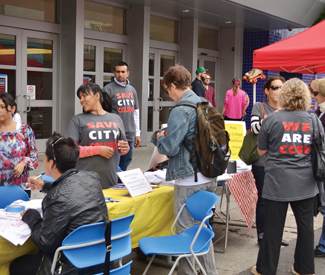
The threat of campus closures and a reduction in non-credit classes are all part of the attack on open access, as some students have said. To combat that, they’ve formed a new student group aimed at educating the city about what they stand to lose.

Project Unity is comprised of Occupy CCSF students, former student trustee Jeffrey Fang, student body President Shanell Williams, and other students, led by the newly elected student Trustee William Walker. They’ve rallied for their school at City Hall, where Supervisors Eric Mar and John Avalos have sponsored a resolution to support City College.

Project Unity met at the Mission Campus shortly after supporting the resolution, and started to plan a grassroots campaign to educate the city and its residents about open access.

Bob Gorringe, a member of Occupy San Francisco, was on hand to help the fledgling group strategize. “[Trustee] Anita Grier came out to the Occupy action council, and she was very open,” Gorringe told the group on July 31, referring to the longtime board member who is not exactly known for her radical tendencies.

Students taking such a vested interest in their college should come as no surprise, considering what happened to Compton before it folded into El Camino.

Although Compton never actually closed, it hemorrhaged students as public fears of the college closing grew larger, and the student body dropped to around 2,000 when El Camino took over, Garten told the Guardian.

Some students went elsewhere, but many appear to have just abandoned the education system.

“We looked at two or three colleges around Compton and none of us had a significant increase in students from the Compton district” enrolling, Garten said.

In other words, it looked like many disillusioned students had simply dropped out, something that nobody wants to see in San Francisco.

MOVING FORWARD

Just over two months remain for CCSF and its supporters to hash out a preliminary plan. Aiding them is a team of experts that will create a detailed report on everything related to the college’s financial woes — possibly the most critical problem area.

The Fiscal Crisis and Management Assistance Team, or FCMAT, explained their process to the college on August 3.

Without revealing any specific details, Michelle Plumbtree, the chief management analyst of FCMAT, warned an audience of a couple dozen interested people that its report would seem negative, but only because that’s exactly what the report is supposed to be: a critical review of problem areas.

“You guys are doing incredible things…But that’s not what we talk about [in our reports],” Plumbtree said.

Mike Hill, another FCMAT team member, succinctly layed out the biggest obstacles to City College’s fiscal future. “This is not a one year problem…We’re looking at three years. What makes that complicated is the governor’s tax, and the parcel tax,” Hill said, referring to Prop. 30 and the San Francisco ballot measure City College sponsored. “There are four scenarios… It’s not predictable.” Prop. 30, the tax measure placed on the ballot by Governor Jerry Brown, wouldn’t raise new revenue for community colleges. If it passes, they simply break even, staving off more drastic cuts. But the parcel tax offers more hope for CCSF, if city voters approve it. It would free up $14 million in revenue for this fiscal year, restoring some of what was lost and prevent the deep cuts and scaled back mission that the school’s support most fear.

Alerts

0

WEDNESDAY 8

Speak up: stop and frisk Southeast Community Complex, 1800 Oakdale, SF; Stop and frisk — the controversial, pretty much definitely Fourth Amendment-violating policy that police in New York cling to despite protest and that Mayor Ed Lee recently proposed implementing in San Francisco — just won’t go away, despite opposition from pretty much everyone. This panel discussion and opportunity to debate issues relating to the proposed stop and frisk policy. The event is presented by the Osiris Coalition and filmmaker Kevin Epps.

First District 5 debate of the season Park Branch Library, 1833 Page, SF; District 5 is in the center of San Francisco, and much of the excitement of November’s city elections will center on its race for supervisor. A wide range of candidates will vie for the coveted spot that Ross Mirkarimi left to become sheriff. All of the candidates have promised to show up to this first debate in the hotly contested race. The debate is presented by District 5 Democratic Club, the District 5 Neighborhood Action Committee, and the Wigg Party.

THURSDAY 9

Occupy the Bay Berkeley Fellowship of Unitarian Universalists’ Hall, 1924 Cedar, Berk; www.bfuu.org. 7pm, $5-10 suggested donation. Filmmakers Name Name and Namey Namey have been documenting Occupy in the Bay Area since the fall. Come reminisce, learn, and be inspired by their film at its premier. You made this history happen, celebrate it, baby!

SATURDAY 11

Black Riders Liberation Party La Peña Cultural Center, 10pm, $5-10. The Black Riders Liberation Party considers itself the new generation of the Black Panther Party, organizing similar programs to stop police violence and gang violence and feed communities. This Saturday, the Party parties. Come celebrate the Black Riders and meet organizers, bring a canned food donation for a discount.

Pistahan Yerba Buena Gardens, Mission and Third St., SF; www.pistahan.net. 11am, free. This giant annual Filipino celebration goes all weekend. Start off the weekend with a parade from Beale and Market streets to Yerba Buena Gardens, where the festival of music, food, performance and education begins.

Foreclosure victory block party 376 Bradford, SF; www.occupybernal.org. 10am, free. Shortly after we named Ross Rhodes a Local Hero (Best of the Bay 2012) for his work protecting his home and those of his Bernal Heights neighbors from unjust foreclosure, he received a loan modification agreement. Come celebrate with Ross and others from Occupy Bernal with a block party at his house. There will be educational presentations about banks’ predatory role in the foreclosure crisis and efforts to fight back in the morning, followed by general partying.

SUNDAY 12

Lessons from Vermont Eric Quezada Center, 518 Valenica, SF; www.collectiveliberation.org. 3-5pm, free. Yes, we have the Affordable Care Act, but it leaves much to be desired, unless you’re in Vermont. There, Governor Peter Shumlin signed universal healthcare into law in May 2011. But of course, Shumlin didn’t do this alone. Come hear a presentation from some of the organizers who won this victory, all the way from the Vermont Workers’ Center.

MONDAY 13

Undocumented and unafraid Asian Law Caucus, 55 Columbus, SF; www.asianlawcaucus.org. 12-1:30pm, free. The Asian Pacific Islander undocumented student group ASPIRE will lead this talk on the immigration rights struggle. The last talk in the Asian Law Caucus-led summer brown bag series is especially timely as undocumented youth work on figuring out if and how they might benefit from President Obama’s policy directive giving limited amnesty to undocumented college students, and what it means for family and friends, especially those already in ICE custody. This talk on the issues youth without legal status face and how to keep building towards the DREAM Act, which would offer broader protections that Obama’s policy.

TUESDAY 14

Milk Club District 5 debate Eric Quezada Center, 518 Valencia, SF; www.milkclub.org. 7-8:30 p.m., free. A District 5 supervisors race debate hosted by the Harvey Milk Democratic Club. Milk Club President Glendon Hyde, aka Anna Conda, says candidates will cover drug policy, public space, sex worker rights, the housing crisis, queer seniors’ issues, and much more. As an extra special bonus, the debate will be hosted by transgender performer Ben McCoy and the Guardian Managing Editor Marke Bieschke.

Activists win legal victory just as the circus comes to town

52

Animal welfare advocates and other critics of Ringling Bros. and Barnum & Bailey Circus just won an important free speech court victory against the city of Oakland just as they prepare to protest the circus starting its annual run there tomorrow.

The grassroots group Humanity Through Education announced that it has reached a $500,000 settlement with Oakland to a lawsuit that plaintiffs Pat Cuviello and Deniz Bolbol filed following their 2004 and 2005 arrests while trying to document abuses of elephants by circus employees.

The settlement includes an injunction allowing the activists to freely videotape the circus operations and to distribute literature critical of circus practices, which they will exercise starting tomorrow (Wed/8) at 6:30pm outside Oakland Arena, where Ringling Bros. begins a five-day run.

“Pictures of Ringling Bros. Circus training of baby elephants will be on display and behind-the-scenes video of Ringling elephant handlers beating the animals will be shown on a large screen. The Ringling elephant handlers videotaped beating the elephants are the same handlers working the elephants in Oakland this week,” the group said in a press statement.

To read more about how Ringling Bros. treats its elephants and its critics, read our 8/12/08 cover story “Dirty Secrets Under the Big Top.”

The City College mission

6

By Alisa Messer

OPINION City College is a beacon for all San Franciscans, from immigrants and displaced workers to cash-strapped families seeking educational opportunities for their children. The largest community and junior college in America with more than 90,000 students, City College touches everyone in San Francisco.

Not long after pundits mocked Mitt Romney for encouraging Americans to get “as much education as they can afford,” City College of San Francisco was threatened with the loss of its accreditation — in large part because the school is going broke.

City College has faced been five straight years of drastic cuts in state funding — literally tens of millions of dollars. The result is over-flowing classes, employee furloughs, pay cuts, and givebacks, and shutting the doors on far to many students who are unable to get the classes they need.

CCSF has held on by its fingernails, seeking ways to continue to serve a broad range of student needs and maintain educational access during these challenging budgetary times.

But canceled summer sessions amount to tremendous hardships for students, and garage sales and other fundraising in the private sector cannot replace $40 million in lost state funds. So all of the college’s employees — from tutors to librarians to custodians and engineers and IT staff and biology professors to deans — have given back.

The accrediting commission isn’t taking aim at the quality of education City College provides. Instead, the report focuses on severe budget problems caused mostly by state cuts, and then makes some criticisms about political infighting and weak leadership in the school’s top ranks.

The crisis at City College is at the heart of a larger debate in America about access to opportunity. Education remains the most significant factor in social mobility, and we maintain domestic tranquility because most of our citizens embrace the idea they can improve their lot in life with education.

City College is living proof that the theory works — but it requires money, people, and a commitment to a broader mission. City College isn’t just San Francisco’s biggest school, it’s also the city’s largest provider of English-as-a-second-language (ESL) courses and its largest job training and placement agency. City College’s partnerships with San Francisco’s restaurant and hospitality sector and other industries are national models.

City College is using universal access to education as a powerful engine of economic recovery. While many suburban junior colleges focus on helping high school graduates make the transition to four-year colleges and universities, City College is also teaching immigrants English, helping welfare recipients transition to work, training those in recovery to help their peers through drug and alcohol counseling, and boosting the skills of unemployed and under-employed blue collar workers so they can win increasingly knowledge-intensive jobs.

CCSF’s leaders must craft a plan to balance the school’s budget and save its accreditation, and we will. We will find new revenue sources, including passing a parcel tax this November. We will maintain accessibility, educational quality, and our mission as a Community College, serving the entire San Francisco community with an essential and irreplaceable focus on low-income and underrepresented students for whom CCSF is the only option.

Perhaps we can even come out of this crisis with a college that is more affordable, accessible, high quality, democratic, and equal than ever.

Alisa Messer is an English teacher at City College and president of AFT 2121, which represents counselors, librarians, and instructors.

Dick Meister: Good news–and bad–about jobs

2

By Dick Meister

Dick Meister, former labor editor of the SF Chronicle and KQED-TV Newsroom, has covered labor and politics for more than a half century. Contact him through his website, www.dickmeister.com

It’s of course good news that unemployment among workers in private industry has been steadily declining. But that comes along with the bad news that unemployment among public employees has been growing – and with it a decline in vital government services.

A recent  report in the New York Times has made that very clear.  Reporters Shaila Dewan and Motoko Rich noted that government payrolls grew in the early part of the recovery from the Great Recession in 2009, mainly because of federal stimulus measures. But they said that since then, “the public sector has shrunk by 706,000 jobs.  The losses appeared to be tapering off earlier this year, but have accelerated for the last three months, creating the single biggest drag on the recovery in many areas.”

Albeit slowly, the economy generally has been improving, with state tax revenues expected to go beyond pre-recession levels by next year.  Yet the Times’ reported that “governors and legislatures are keeping a tight rein on spending, whether to refill depleted rainy day funds or because of political inclination.”

Holding tight won’t be easy, with the costs of health care, social services, education and employee pensions steadily rising, and property taxes and other tax revenues steadily shrinking.  More than a dozen states have tried to do it by trimming their aid to local governments. And that will undoubtedly lead to more public worker layoffs, more unemployment and more reductions in important public services.

Local governments already have been making budget cuts that far outweigh the slight economic relief that’s come with a recent growth in state and federal jobs.  It’s certain to worsen, since more than 25 percent of municipalities are planning layoffs this year. 

President Obama has proposed easing the financial plight of states and their employees by providing $30 billion more for teachers, police officers and firefighters.  Such aid is essential if public services – and the compensation of those who provide them – are to be maintained at a significant yet reasonable level.

Predictably, the  conservatives who don’t really care for government are in a snit over Obama’s proposal.  The Times quoted Michael D. Tanner, a senior fellow at the Cato Institute, as complaining that the additional public sector jobs  “must be paid for with more debt and taxes borne by the private sector.”

Now, isn’t that a revelation! Imagine that, people taxing themselves and hiring people to provide services they and everyone else needs if they are to live a decent life, if they are to find meaningful work.

We need more, not less government, and we can provide it by employing for reasonable compensation many of the millions of Americans now suffering from unemployment. We need to open more government jobs for them so they may help provide essential services.

The lack of sufficient public workers, as the Times said, “can mean longer response times to fires, larger class sizes, and in some cases lawsuits when short-staffed agencies are unable to provide the required services.”

The Times quoted Mike Whited, president of the firefighters union local in Muncie, Ind., who said the area which could be reached within eight minutes after an alarm was sounded was cut in half.

The Times said, “Mr. Whited chafed at portrayals of public workers as overpaid or greedy, saying his union and others had made concessions, including paying more for their health insurance and forfeiting raises. I think a lot of people don’t understand what we do. They’re looking for somebody to blame, and I think they’re being led the wrong way.”

One of the hardest hit cities, Trenton, New Jersey, has laid off fully one-third of its police force, hundreds of school district workers and at least 150 other public employees, and now faces loss of 60 more firefighters.

More than half the job losses in local governments have come in education.  Thousands of teachers have been laid off throughout the country, and thousands more are being threatened with layoffs.

 Many teachers have agreed to help ease their school districts financial problems by taking unpaid “furlough days” or agreeing to less pay and benefits than they had sought or had been granted in contract negotiations.

The widespread teacher layoffs have nevertheless continued. In Cleveland, for instance, more than 500 teachers were laid off this spring because  of a claimed $66 million budget shortfall. That came after two years of cutbacks and $25 million in concessions, teachers union leader David Quolke told the Times’ reporters.

One consequence: Some classes will have more than 40 students, a serious hardship on students and teachers alike.

Relatively large teacher layoffs and cuts in public jobs and services generally have hit every state hard, including the largest, wealthiest and most influential states.  In California, for example, Gov. Jerry Brown is threatening to eliminate 15,000 state jobs.

The Times said Pennsylvania “has shed 5,400 government jobs this year, and many school districts and social service agencies are contemplating more layoffs.”

Yes, it will take higher taxes and more public debt in Pennsylvania, California and everywhere else to combat the severe economic problems that have left millions of Americans without the jobs  and public services they so badly need.

Dick Meister, former labor editor of the SF Chronicle and KQED-TV Newsroom, has covered labor and politics for more than a half century. Contact him through his website, www.dickmeister.com

15th annual United Nations Association Film Festiva

0

The United Nations Association Film Festival was originally conceived to celebrate the 50th anniversary of the signing of the Universal Declaration of Human Rights. The 15th annual UNAFF will be held from October 18-28, 2012 in Palo Alto, Stanford University, East Palo Alto and San Francisco. The theme for this year is Human Dignity.

UNAFF celebrates the power of films dealing with human rights, environmental themes, women’s issues, population, homelessness, racism, children, health, universal education, war and peace. In the past fifteen years, UNAFF has attracted a broad audience from the San Francisco Bay Area with regards to ethnicity—many finding the screenings to be a rare chance to see the state of human rights and culture in their own native countries. UNAFF promotes education, awareness and social change through images, dialogue and action. 

October 18-28 @ Palo Alto, East Palo Alto, San Francisco and Stanford University

For more information click here.

Best of the Bay 2012: BEST MARIACHISTAS

1

Those of you who are familiar with such things will know one rarely sees a female mariachi musician. Rarely, but not never: introducing Mariachi Feminil Orgullo Mexicano. The 10-person troupe boasts full string, brass, and rhythm sections, and every member is a woman. Feminine force like this — wrapped in electric blue, floor-length skirted uniforms edged in stunning silver trim — isn’t something you see every day at your favorite restaurante. Established in 2007, the education-minded troupe was the first XX-chromosomed group of its kind in the Bay Area. Since then, it’s been winning over audiences with its plaintive, powerful renditions of Mexican classics and new favorites.

www.mariarchifom.com

Best of the Bay 2012: Local Heroes

9

2012 Local Heroes

Alex Tom and Shaw San Liu

Alex Tom and Shaw San Liu — the executive director and lead organizer for the Chinese Progressive Association, which celebrates its 40th anniversary on Aug. 4 — have laid the groundwork for a progressive resurgence in San Francisco by organizing Chinese immigrants and actively building close and mutually supportive relationships with working-class allies throughout the city.

The two have been involved in just about every recent effort to counter the pro-corporate neoliberalism that has come to dominate City Hall these days. They have seized space with Occupy San Francisco and they have supported labor unions and helped to create the Progressive Workers Alliance. They have fought foreclosures and pushed for affordable housing reforms, and they have protected vulnerable immigrant workers from wage theft by unscrupulous employers.

“Shaw San and Alex are incredibly talented organizers and movement builders who are managing to do the nearly impossible,” said N’Tanya Lee, who worked closely with the pair as the director of Coleman Advocates for Children and Youth. “They have built an authentic base of working-class Chinese immigrants who are interested in fighting for change in their community, and are creating a grassroots organization at the forefront of building multi-racial alliances to combat the divide-and-conquer strategies that are confronting us.”

Liu, who joined CPA six years ago, said she’s always inspired to see the old photographs on the walls of CPA’s office, and to read the history of CPA’s organizing and advocacy on behalf of working people. She said the organization has always understood the need to forge alliances with labor unions and other progressive interests.

“The organization itself has been, since its inception, playing a critical role in bridging the needs of Chinese interests with other communities,” Liu said. “I’ve always seen my role as bridge building.”

Today — with stagnant real wages, a deteriorating social safety net, and growing power by corporations that enjoy unprecedented political clout thanks to Citizens United and other court rulings — the need to organize people across cultural lines is more important than ever, even if that begins by addressing the individual needs of each community.

“Always at our core, it’s about empowering our folks to be able to voice their own struggles and visions,” Liu said.

Working to build that capacity within the Chinese immigrant community is hard and important work, Liu said, but it’s equally important to connect with the struggles of working class people from other communities, uniting to effectively counter the political dominance of employers and property owners.

Lui framed the struggle as: “How do we build unity and not have that be lip service?”

Tom and Liu have demonstrated that they know how to do just that, despite the diversity of sometimes-conflicting interests on the left and in a working class squeezed by recession and feelings of economic uncertainty.

“The issue that will unify people is good jobs that are accessible to everyone,” Liu said.

Yet she also said that working class organizing is needed to counter the simplistic “jobs” rhetoric coming from City Hall, which politicians are using to advocate for tax cuts to big corporations.

“More and more, it exposes itself as a total lie,” Liu said of the argument that the city should be facilitating private sector job creation with business tax cuts. “So much points to the fact that the US economic system doesn’t benefit everyone … When we talk about jobs, we talk about what kinds of jobs we want and for whom.”


2012 Local Heroes

Stardust and Ross Rhodes

Ross Rhodes and Stardust, like all of the people involved in Occupy Bernal, are neighbors. But until Stardust helped found the group — a local take on Occupy focused on stopping unjust foreclosures and evictions — they didn’t know each other.

Now they do, and if it wasn’t for Occupy Bernal, Rhodes is sure he would no longer have the house that his parents bought in 1964.

A former college football star, Rhodes injured his knees and back playing. He lives on disability payments, volunteering at the 100 Percent College Prep Club, and bringing home-cooked meals to seniors in his area. He also coached kids in the Junior 49ers program until it became too hard on his injuries.

Stardust, an ESL teacher and oboe player in the Bay Area Rainbow Symphony and the SF Lesbian/Gay Freedom Band, has been working for LGBT rights, women’s rights, and online civil rights for years. When Occupy took off, he gravitated toward the neighborhood fights against foreclosures.

Like people all over the US, Rhodes and his wife were fooled several years ago by a pick-a-payment loan plan. At the time, World Savings was peddling the deals through neighborhoods, promising potential borrowers that they could send their kids to college, buy a car, take vacations — and modify their loans after a year.

But when Rhodes started to apply for loan modifications, he was denied. He kept receiving letters asking for more information, often the same information he had already given — a common story that led to part of the Homeowners Bill of Rights that will guarantee a single point of contact from the bank. He was stumped when he was told he needed more income — the bank said it wouldn’t accept payments that were more than 30 percent of a borrower’s income, and Rhodes was getting a fixed disability check.

He found another income source as a homecare provider, but after all the time that the bank wouldn’t accept his payments, Rhodes was marked as someone who wasn’t making payments, and was tracked for foreclosure.

Meanwhile, Occupy Bernal was working on more than 100 similar cases in its neighborhood. The organizers hadn’t quite convinced Mayor Ed Lee to help at that point, but Rep. Pelosi’s staffers were on their side, getting banks to prioritize the cases of those working with Occupy Bernal. They worked with other community groups like Alliance of Californians for Community Empowerment (ACCE) to do physical occupations of homes. But for those who had received a notice of default and a notice of sale — two steps in the foreclosure process that precede the auction of a property — Stardust was there with another tactic.

He spearheaded Occupy the Auctions. He shows up at City Hall at 1:30 every day and tries to disrupt foreclosure auctions. He’s been there continuously since April 27, 2012, and has stopped dozens of home sales. When fighting the eviction of a neighbor, he is sometimes backed by more than 100 people. But many days it’s just Stardust.

Now, Rhodes is in a loan modification process. Rather than conflicting and confusing machine-generated paper work, he gets regular calls about the status of his modification from a point person in Wells Fargo’s executive complaint office. He testified in Sacramento in favor of the Homeowners Bill of Rights, which passed July 2. He’s also become an Occupy Bernal organizer on top of his other volunteer pursuits.

Stardust battles mega-banks and the city’s wealthiest in his work. But he says the biggest challenge is helping people to get over the shame they feel when they realize they are facing foreclosure. “It’s not their fault,” he says. “It’s the system.”

Friends of Ethics

In the summer of 2011, at the behest of the Ethics Commission, the Board of Supervisors put on the ballot a measure that would have loosened some of the rules for campaign consultant reporting, and would have allowed further changes in the city’s landmark ethics laws without a vote of the people. It had unanimous support on the board — and frankly, technical changes in campaign laws are not the kind of sexy stuff that gets the public angry.

But a small group, led in part by five former ethics commissioners, took on the task of defeating the measure. The activists also took on the challenge of defeating Prop. E, which would have allowed the supervisors to amend future measures passed by the voters.

Despite being outspent by tens of thousands of dollars, Friends of Ethics — a small grassroots operation — prevailed. Both measures were defeated (32 percent to 67 percent in the case of Prop. E, the worst loss of all the local measures on the ballot).

The group is great at forming coalitions: in the case of the No on E and F campaign, Friends of Ethics reached out to some 30 organizations that formally joined in opposing the measures after hearing presentations.

The members of FOE are a fractious group of organizers and shit-disturbers who don’t always get along or agree on other issues. But they’ve come together to do something nobody else does: make protecting and expanding political reform laws a front-line priority.

And the battle goes on. Not long after the November 2011 election, Supervisor Scott Wiener introduced legislation that would have led to less disclosure of political contributions before an election, and would have made it easier to conceal who was making contributions and paying for campaign mailers. The Wiener bill would weaken campaign contribution limit, giving the wealthiest donors greater power in elections.

When the amendments were heard at a well-attended Rules Committee in June (with plenty of public comment from Friends of Ethics), the supervisors sent the amendments back to the Ethics Commission to be rewritten.

The next step for the Friends of Ethics is to work with interested supervisors to push for changes to the city’s campaign laws that will actually benefit the public, such as increased transparency in election contributions and expanded campaign restrictions for those receiving contracts and other benefits from the city.

In an era defined by the US Supreme Court’s Citizens United case and a nationwide assault on fair elections, it’s critical work.

Friends of Ethics can be reached at sfethicsfriend@gmail.com

2012 Local Heroes

The Occupy movement

When Adbusters magazine called for people to show up on September 17, 2011, in New York City to protest the way Wall Street was holding the country hostage, no one could have predicted what would emerge.

It was the start of a movement, and San Francisco heeded the call. About 100 people gathered in the city’s Financial District. They started camping. And the effort exploded.

In the first few weeks, camps sprung up across the country. In Chicago and Los Angeles, in Bethel, Alaska and Tuscaloosa, Alabama, people were drawn together. But, unlike most protests, they stayed together. Night after night.

Along the way, a certain prevailing narrative from outside observers never quite got it right. First the camps were dismissed as nothing but bratty college students and hippies. Then they were called dirty and filled with homeless people. (Occupy challenged the whole idea of a monolithic homeless population. Once they had a home in the Occupy tent cities, homeless people were just — shocker — people.)

By December, when most of the campers had been kicked out, the narrative shifted. Occupy was resting, hibernating, many declared. Some snickered at the fair-weather activists who would only come out in the sunshine.

But in the Bay Area, at least, that hibernation story was simply false. On December 12, Occupy Oakland brought out thousands for its second port shutdown, in solidarity with port workers. On January 20, downtown banks were forced to close for the day and people in the streets celebrated Occupy San Francisco’s shutdown of the financial district. A week later, 400 were arrested when thousands tried to turn a vacant Oakland building into a community center. This was no hibernation.

Actions in some way inspired or fueled by Occupy have continued into the spring and summer. On March 1, Occupy, with a focus on student debt and accessible education, formed the 99 Mile March. Dozens marched from the Bay Area to Sacramento to join thousands of students and supporters in calling for an end to cuts to education; hundreds then occupied the Capitol building. On April 22, Occupy, with a focus on food justice, formed the Gill Tract Occupy the Farm action. Hundreds took a UC Berkeley-stewarded tract of land slated for a baseball diamond and a Whole Foods and planted it, turning it into a farm with rows of crops, a kids space, and a permaculture garden. On June 15, Occupy formed the Lakeview sit-in and Peoples School for Public Education, which taught day camp to children and refused to leave a beloved Oakland elementary school, one of five slated for closure.

Police eventually won the many-months battle with most Occupy groups in the Bay Area. The camps are mostly gone, though a tenacious group keeps its 24-hour protest in front of the Federal Reserve.

But because of Occupy — and its accompanying burst in resistance, creativity, and the belief that we really can, and must, come together to do something — dozens of Bay Area residents remain in homes that were facing foreclosure. Hundreds of people who felt forgotten and abandoned have found community. Thousands have been inspired to start their own projects and work with others.

When Adbusters called Occupy Wall Street to action, it was under the banner of “democracy not corporatocracy.” That ain’t an easy project. But it has already made the world a better and more hopeful place. 

Best of the Bay 2012: BEST SUPERFRIENDS

0

BEST SUPERFRIENDS

The “It Gets Better” campaign may get all a lot of press when it comes to encouraging queer teens to hang in there in the face of bullying and fear, and not succumb to depression. But there’s an amazing organization that, for the past 14 years, has been working to empower teens to make it better right now. (It even recently launched the Make It Better Project to directly involve teens in making schools safer for LGBTQ peers.) The Gay Straight Alliance Network started in San Francisco and has grown into a hugely popular global entity, uniting queer and questioning teens and straight allies in the fight against homophobia through classroom interaction and school activities. Last year’s Northern California GSA youth conference trained hundreds of young activists to help teachers comply with California’s new FAIR Education act, which requires schools to include factual information about gay people in existing social studies lessons. These brave kids don’t want to wait to move toward acceptance.

www.gsanetwork.org

Best of the Bay 2012: BEST FOUND IN TRANSLATION

0

BEST FOUND IN TRANSLATION

Though that old cautionary tale of the Chevy Nova selling badly in Spanish-speaking countries (Get it? No va?) is apocryphal, there is still plenty of research each year dedicated to the economic impacts associated with poor or culturally-insensitive translation. But who is watching out for the less tangible art of translation of, well, art — and its potential for cultural cross-pollination? In fact, that would be the Center for the Art of Translation. The non-profit organization won’t help your company make overseas business deals, but it will help broaden our cultural understanding through outreach, education, and public events. By helping to support translators, giving children tools for literacy and critical thinking, and hosting public talks, the Center makes our world a little smaller and a whole lot richer.

582 Market, SF. (415) 512-8824, www.catranslation.org

Best of the Bay 2012 Readers Poll: City Living

2

BEST OF THE BAY 2012: READERS POLL

City Living


BEST STREET FAIR

Folsom Street Fair

www.folsomstreetfair.com


BEST HOTEL

Phoenix Hotel

601 Eddy, SF. (415) 776-1380, www.jdvhotels.com/phoenix


BEST TOURIST ATTRACTION

Golden Gate Bridge


BEST TOUR

Discovery Street Tours

www.discoverystreettours.com


BEST EVENT OR VENUE FOR KIDS

Exploratorium

3601 Lyon, SF.  (415) 397-5673, www.exploratorium.edu


BEST STARTUP COMPANY

BeatsMe

www.beatsme.fm


BEST OVERALL WEBSITE

FunCheap SF

www.funcheapsf.com


BEST NEWS WEBSITE

SF Gate

www.sfgate.com


BEST STYLE WEBSITE

Refinery 29

www.refinery29.com


BEST SEX WEBSITE

Kink.com

www.kink.com


BEST POLITICIAN

John Avalos


BEST POLITICIAN YOU LOVE TO HATE

Willie Brown


BEST NONPROFIT ORGANIZATION

Rocket Dog Rescue

www.rocketdogrescue.org


BEST ADULT EDUCATION

The Writing Salon

Various locations, www.writingsalons.com


BEST TV NEWSCASTER

Dana King of CBS


BEST LOCALLY PRODUCED TV SHOW

Check Please! Bay Area

www.blogs.kqed.org/checkplease


BEST RADIO STATION

KQED 

www.kqed.org


BEST RADIO DJ OR SHOW

Sarah and Vinnie of 97.3 Alice

www.radioalice.cbslocal.com/show/sarah-and-vinnie


BEST TATTOO PARLOR

Black and Blue Tattoo

381 Guerrero, SF. (415) 626-0770, www.blackandbluetattoo.com


BEST TATTOO ARTIST

Phillip Milic

(510) 834-2769, www.oldcrowtattoo.com


BEST LOCAL ANIMAL RESCUE

SF SPCA

www.sfspca.org


BEST DOG-WALKING SERVICE

Dog Tales Walking & Sitting Service

(415) 948-3840, www.dogtalesunleashed.com


BEST PET GROOMER

Bow Wow Meow

2150 Polk Street, SF. (415) 440-2845, www.bowwowmeow.net


BEST VETERINARIAN

Mission Pet Hospital

720 Valencia, SF. (415) 552-1969, www.missionpet.com


BEST DENTIST

Jennifer Creelman of Creelman Famer DDS

2191 Market, SF. (415) 255-0400, www.cfdds.com


BEST DOCTOR

Carl Bricca of Mercy Doctors Medical Group

1 Shrader, No. 640, SF. (415) 752-0100, www.mercydoctorsmedicalgroup.com


BEST PLUMBER

Ace Plumbing and Rooter

945 Taraval, No. 201, SF. (415) 824-6333, www.aceplumbingandrooter.com


BEST ELECTRICIAN

Ike’s Electric

3546 19th St., SF. (415) 861-6417, www.ikeselectric.com


BEST MOVING SERVICE

Delancey Street Moving and Trucking

600 Embarcadero, SF. (415) 512-5110, www.delanceystreetfoundation.org


BEST CLEANING SERVICE

Dirty Donnie’s Green Cleaning Services

(415) 505-7261, www.dirtydonniesgreenclean.com


BEST ALTERNATIVE HEALING

Jaden Rose Holistic Bodywork

(415) 939-7795, www.jadenroseholisticbodywork.com


BEST THERAPIST (TIE)

Nicolle Zapien

870 Market, SF. (415) 835-2195, www.nicollegottfriedzapien.com


Cameron Yarbrough of Couples Counseling San Francisco

383 Rhode Island, No. 201, SF. (415) 935-4249, www.cameronyarbrough.org


BEST CAR MECHANICS

Pat’s Garage

1090 26th St., SF. (415) 647-4500, www.patsgarage.com


BEST MOTORCYCLE REPAIR

Scuderia West

69 Duboce, SF. (415) 621-7223, www.scuderiawest.com


BEST BICYCLE REPAIR

Valencia Cyclery

1077 Valencia, SF. (415) 550-6601, www.valenciacyclery.com


BEST SHOE REPAIR (TIE)

Frank’s Shoe Repair

1619 Polk, SF. (415) 775-1694


Anthony’s Shoe Repair

340 Kearny, SF. (415) 781-1338


BEST TAILOR

Al’s Attire

1314 Grant, SF. (415) 693-9900, www.alsattire.com


BEST LAUNDROMAT

BrainWash

1122 Folsom, SF. (415) 431-9274, www.brainwash.com


BEST SALON

Carmichael Salon and Color Bar

166 Geary, SF. (415) 409-2353, www.carmichaelsalon.com


BEST HAIRSTYLIST

Rebekah Nummer of Carmichael Salon and Color Bar

166 Geary, SF. (415) 409-2353, www.rebekahnummer.com


BEST MASSAGE

Project Zen

325 Bay, SF. (415) 500-4777, www.projectzenmassage.com


BEST DAY SPA

Kabuki Springs and Spa

1750 Geary, SF. (415) 922-6000, www.kabukisprings.com


BEST GYM

Club One Fitness Centers

Various Bay Area locations, www.clubone.com


BEST PERSONAL TRAINER

Ace Morgan Fitness

(510) 459-8202, www.acemorganfitness.com


BEST YOGA STUDIO

Monkey Yoga Shala

3215 Lakeshore, Oakl. (510) 595-1330, www.monkeyyoga.com


BEST YOGA INSTRUCTOR

Tim Thompson of Monkey Yoga Shala

3215 Lakeshore, Oakl. (510) 595-1330, www.monkeyyoga.com


BEST AMATEUR SPORTS TEAM

Bay Area Derby Girls

www.bayareaderbygirls.com


BEST PUBLIC SPORTS FACILITY

AT&T Park

24 Willie Mays Plaza, SF. (415) 972-1800


BEST BEACH

Baker Beach


BEST PUBLIC PARK

Golden Gate Park

www.sfrecpark.org


BEST NATURE SPOT FOR PEOPLE WITH DISABILITIES

Golden Gate Park

www.sfrecpark.org


BEST CAMPGROUND

Angel Island

(415) 435-5390, www.angelisland.org


BEST CAMP FOR KIDS

Steve and Kate’s Camp

28 Liberty Ship, Sausalito. (415) 887-957, www.steveandkatescamp.com


BEST PARK FOR DOGS

Fort Funston


BEST SKATE SPOT

Golden Gate Park


BEST SURF SPOT

Ocean Beach


BEST PLACE TO WATCH THE SUNSET

Ocean Beach

Getting into a pickle: Canning beans and beets at La Cocina

0

I’m a sucker for pickled things, probably because I grew up in a house where my dad always had a pot of kimchee fermenting on the counter or a bottle of homemade pineapple vinegar, getting perfectly bubbly on top of the fridge. Preserving food also feels very nostalgic for the times when our great-grandparents would can the summer’s bounty so we could eat peaches and tomatoes through the winter. So you can imagine how excited I was to take my dad with me to La Cocina for a pickling party with Emiliana Puyane of Jarred SF Brine, to brush up on our fermentation implementation.

There were three pickles on the to-do list for the evening: garlic-and-dill pickled green beans, oven-roasted golden beets and shallots, and the one that I was most excited to try (and still am — we have to wait a week or more before we can pop the lids), cinnamon-and-thyme pickled peaches. Emiliana led us through the process, from the sanitation of the jars to making a perfectly-balanced brine. There was a lot of peeling, chopping, and de-stemming to be done. Everyone helped, including my dad, who helped blanch peaches over a steaming pot.

After two hours we jarred our creations and indulged in the most delicious Nepalese dinner, prepared by Bini’s Kitchen. Crazy-good rice, wonderful eggplant, everything made with spices that Bini herself mixes, a homemade touch which yielded bright and fresh flavor in her dishes.

I’d also just like to say how much I love La Cocina. I’ve been to a couple of their cooking classes and they are such great events, bringing together a lovely group of people for a night of cooking. La Cocina’s director Caleb Zigas always gives the warmest welcome. As an entrepreneur myself, I know how much work goes into starting a business, and I think it’s wonderful that La Cocina gives blossoming chefs the tools, space and skills they need to get their business up and running. If you want to try some of these amazing eats, don’t miss the SF Street Food Festival, which starts August 18. 


To be a poster artist during Occupy: Chuck Sperry on psychedelic art, social change, and port shutdowns

0

With Occupy’s first anniversary sneaking up on us, has enough time past since its inception to reflect on its urban encampments and frightening conflicts with law enforcement in a rational, reasonable manner? Maybe rational is the wrong word — I’m sure many would agree that the movement’s major contributiont to date was a general firing up of the 99 percent, even of those 99 percenters who would sooner have ridden a bike to work than sit in on GA meeting in Oscar Grant Plaza. Through leaving its agenda undefined, Occupy allowed us all to paint our own hopes and dreams for the world onto it like a piece of drawing paper. 

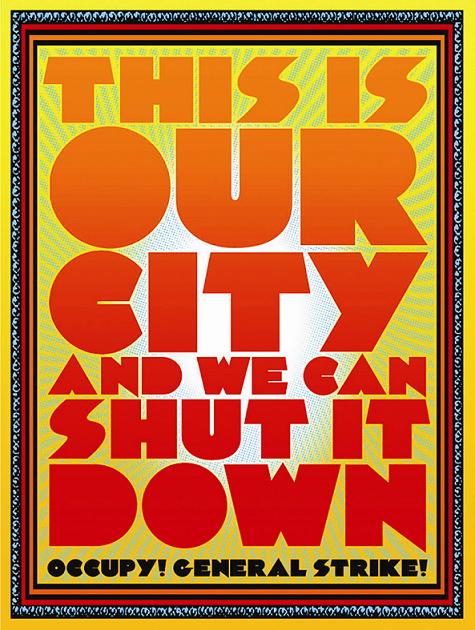
For some more literally than others. This month, an exhibit opened at Yerba Buena Center for the Arts that accumulates the work of 25 Bay Area artists who spun their Occupy dreams into poster form. Chuck Sperry is perhaps one of the most well-known name of the bunch. Sperry’s lived in the Bay since 1989, and recently came home early from a camping trip to answer our questions about his relationship with Occupy, the way he distributed his “This Is Our City And We Can Shut It Down” prints on the day of the Oakland port shutdown, and general “what does art mean” token asks. 

SFBG: At what moment did you realize that Occupy was an important event? How did you first hear about it? 

CS: Through the beginning of 2011, I was creating an installation for the San Francisco Museum of Modern Art curated by Renee de Cossio, with artists Chris Shaw and Ron Donovan. Each artist would install work in one of three artists’ gallery windows on the side of the SFMOMA on Minna Street. The proposal for the installation was to bring the aesthetic of San Francisco’s poster traditions to painting, and to realize these in monumental form. I wanted this piece to reflect San Francisco’s poster history beginning in the freedom of speech movement through the 1960’s, and to also reflect the psychedelic tradition that gave birth to the rock poster.

While I was working on an 11-foot by nine-foot acrylic painting, I was following the progress of the Arab Spring movements, Tahrir Square, and the gathering Occupy Wall Street movement that was spreading across America. I decided to use my reaction to these events as inspiration for an iconographic painting titled, “Saint Everyone.” I wanted to express the opening mind, and spreading enlightened humanism, the decentralization of power — or awakening sense of people power — to the piece. I used vibrating, reactive colors to paint a figure holding an opening lotus (symbol of enlightenment), against a background of op-art circles, which communicate decentralization — that the background has many centers — like the movement which has no leaders.

“Saint Everyone” was installed at the SFMOMA in June 2011. So I was getting with it by then.

As Occupy Oakland was forming by the fall of 2011, my artist friend Jon-Paul Bail of Political Gridlock was printing his iconographic “Hella Occupy Oakland” posters on Frank Ogawa Plaza (re-named Oscar Grant Plaza) from the point when people were first gathering there. When I say printing, Jon-Paul Bail was printing live, right there, with a table set up in the open, printing and handing people freshly-made posters. In a few short weeks he had printed hundreds, if not, thousands of posters which were being handed out to people there. He was joined there on Oscar Grant Plaza by Melanie Cervantes and Jesus Barraza of Dignidad Rebelde, who created more iconographic posters for the Occupy movement.

SFBG: What led to your decision to make art inspired by Occupy? Was it a different process than your other creative projects?

CS: In September I was in an art show, LA VS. WAR, with Bail, Barraza, and Cervantes, (among others) and we discussed making posters for the November 2 Occupy action to close the Port of Oakland. Fellow artist Chris Shaw — who was involved in the SFMOMA Window Gallery Installation — offered to pay for the production of any Occupy posters through the printing account of rock band Moonalice who was in solidarity with Occupy. 

I created “This Is Our City, And We Can Shut It Down.” I usually work with images and take a lot of time to work my art into a design. In this case, the message was so overriding and important that I felt it was my job as an artist to stay out of the way, and let the words and message do their job. So in this way it was different. I used color theories learned in studying the long San Francisco tradition of psychedelic poster art, the use of hot colors against cold colors to make the words read from a half mile away — haha! I wanted a strong, radical message, used with bold nurturing colors that convey a positive emotion. It would not be a typical political poster.  

SFBG: How do you want your Occupy poster to be used?

CS: Chris Shaw and I discussed printing our posters on heavy paper stock, and printing on both sides to double the exposure we could give people to our message. You could use this poster as a placard, hold it up over your head. It would make quite an impression and be useful to the action. I stood at Oscar Grant Plaza next to the street and passed out nearly 1000 posters in 45 minutes to the front of the march, so when television camares picked up the action at the Port of Oakland, the front of the march was a sea of my poster with the message, “This Is Our City, And We Can Shut It Down.” No one directed us to make these posters. No one asked. We just did it. And passed them out.

SFBG: What’s been some of your favorite protest art throughout history?

CS: I am very inspired by Emory Douglas‘ art in the Black Panther Party newspaper. I’ve had the honor to work with Mr. Douglas to reprint some of his iconic images. I also am very fond of the French Situationist posters of May 1968, and had the good fortune to print a poster, while I was visiting Paris to make a poster show about five years ago, on the very same press that produced these memorable images. When my artist friend told me that Guy Debord had worked with artists on this very same press, I laughed and dropped to my knees and just could not believe it.

Sperry at Occupy

I invited Jon-Paul Bail to collaborate in teaching a class at the Free University of San Francisco, as I’m organizing the art department of that cooperatively-organized free school. We told the story of making posters for the Occupy movement and created a poster for the Occupy Education action last spring. I think the ideas coming together from the Occupy protests will move through society in a very healthy and transformative way. There’s no way to stop people once they have been awakened to their potential. 

SFBG: What is the role of art in social protest?

CS: Art can reach many people in many walks of life. I was invited by San Francisco’s Varnish fine art gallery to exhibit at SCOPE / Miami in conjunction with Art Basel Miami art fair. Even in the context of the fine art world I felt it was important to express the social revolution that was taking place through the Occupy movement, and created a piece titled, “Mind Spring,” which expressed some of the same ideas I put in my SFMOMA painting and my Occupy poster. In “Mind Spring”, I created an icon of the worldwide Occupy movement and it’s antecedent in the Arab Spring. The figure wreathed in blooming spring flowers is a representation of the surprising enlightened humanism, the opening mind, the broadened socio-political possibilities which has swept the world in 2011.

I’ve had many discussions about the role of political art over the years. Two solutions to this problem constantly come to mind, first, “content over style” — that content is more important than style. Your message is the most important element in creating art of social protest. Second, that “the personal is political”, your own experience is so very often shared by others all over the world. When you make a piece of art in social protest, and just tell your story from your own perspective, and you do not hold back, you will be describing a situation that is shared by others half a world away. It’s uncanny, but our local problems are very similar to everyone else’s globally. So get in there and try to change what you can from where you are. Many hands make light work.  

“Occupy Bay Area”

Through Oct. 14

Yerba Buena Center for the Arts

701 Mission, SF

(415) 978-ARTS

www.ybca.org

City College fights back

19

news@sfbg.com

When your options are bad, terrible, and unthinkable, how do you choose which way to go? And should that decision be graded on a curve that takes into account the dire fiscal circumstances facing most public colleges in California these days?

City College of San Francisco (CCSF), which serves more than 90,000 students a year, last year did what some consider unthinkable: laying off administrators and leaving a reserve fund at dangerously low levels in order to save classes and stave off faculty layoffs. The current $187 million operating budget has a reserve of only $2.2 million, or just over 1 percent compared to the state-recommended 5 percent.

Such decisions may cost the college its accreditation and threaten its very existence, but they also represent legitimate differences over what role educational institutions should play in their communities.

In June, the college came under fire for administrative and financial mismanagement by the Accrediting Commission for Community and Junior Colleges, a private organization that evaluates K-12 schools and higher education institutions every six years.

Although the commission applauded the school for its commitment to students, it placed the school under its most severe sanction before accreditation is terminated: “show cause.”

It identified eight problem areas that the college has failed to address since 2006, which include measuring student learning outcomes, attaining financial solvency, and revising the college’s mission statement to reflect current fiscal realities.

“The team finds that the current, ongoing funding for San Francisco City College appears insufficient to fully fund the mission of the college as it is currently conceived,” the commission wrote in its June report. “The team advises the college to assure the mission of the college is obtainable based on accurate short-term and long-term funding assumptions.”

Essentially, the commission is recommending a refocusing of the school’s mission to prioritize college transfer classes. The report went on to say that too many people making decisions through a highly decentralized governance system slowed down or halted altogether the college’s ability to make cuts where it needed to — or where the state and commission thought cuts should be made.

These competing visions of how community colleges should continue to exist have driven a wedge between local college officials and state-level decision makers — a clash made clear through City College’s accreditation woes.

“It’s not that City College isn’t doing a good job, it’s that these are emerging trends we have,” former Student Trustee Jeffrey Fang said. “In the long run, it might actually improve City College. The bad part is that it came at a time when we are so strapped and mired neck deep in political games.”

Those games have starved funding for public education statewide, in the process redefining the role of community colleges.

“City College has a very ambitious mission. Part of that mission is that it’s a true community college,” CCSF spokesperson Larry Kamer said. “Now, decisions are being made de facto by the budget and we need to re-evaluate that mission.”


PUTTING THE “COMMUNITY” IN COLLEGE

Adult education used to be integrated into K-12 districts. But over the years, two-year “junior” colleges took over that responsibility, transforming them into today’s “community” colleges.

The newly minted community colleges began serving thousands of immigrants learning English, job seekers needing new skills, and elderly citizens looking to continue their education. But when California’s budget crisis hit a critical point, that all began to change.

Three years ago, the California Legislature said when the community colleges cut courses, they shouldn’t cut courses involving transfer, career technical education, and basic skills, State Community College Chancellor Jack Scott said in a phone interview.

Scott is responsible for overseeing all 112 community colleges in California, a quarter of all community colleges in the country. He’s on the cusp of retirement, and the end of his tenure has been marked with the changing mission of the colleges he oversees.

“I want it clearly understood that I personally want to see the community colleges offer all the classes it wants to,” he said. “But with scarcity, you have to prioritize. If you offer the same classes you did before, you’ll go bankrupt. Something has to give.”

The state agreed and asked community colleges to prioritize enrollment, with a focus on recent high school graduates who plan to transfer to a university in two years and anyone else seeking a degree or certificate.

If community colleges can’t afford to offer classes sought by their broader communities, and K-12 schools are ill-equipped to plug back into that task, does the notion of continuing adult education just fade away?

David Plank, executive director of policy analysis for California Education, a Stanford University-based research center, says it just may: “I don’t think that responsibility will be reimposed on K-12 districts because it was always seen as a sort of add-on supplementary responsibility.”


BUDGET WOES TRICKLE DOWN

California’s Master Plan for Higher Education — which mandates that community colleges provide classes for everyone — only worked as long as there was money to fund it. But Plank says that money has been steadily shrinking since 1978 when voters passed Proposition 13, which capped property tax increases and raised the voting threshold for the Legislature to increase other taxes.

As funding from Sacramento has been slashed by more than $500 million in the past year alone, California’s 112 community colleges have turned away more than 300,000 students trying to enter the system. If Governor Jerry Brown’s tax proposal wins in November, community college funding will stay at about the same level, but if it fails, the system will see further cuts of more than $340 million.

“The system now is breaking down,” Plank said. “We’ve finally reached a point where the state’s share is too small to hold things together. We see tuition going up at very rapid rates and a substantial deterioration both in access and affordability.”

In flush times, community colleges could serve everyone — rich and poor, those seeking new skills and others working toward a new degree. Now, the community college system faces two choices if it’s unable to find new sources of revenue: continue on the path of deep cuts, or change its priorities altogether.

City College Board member Steve Ngo cites new statistics that show enrollment in English as Second Language (ESL) classes are trending down, a sign that those classes should be cut first. “The community should lead. If the demand is down, you’re not serving your community,” he said.

Yet others say community colleges should strive to serve everyone who needs them.

“Some [classes] are really valued by our Pacific Islander population, but their enrollment may not be as high. Should those classes go away? I don’t think so. It’s something I feel like the whole college community needs to come to grips with” CCSF math instructor Hal Hunstman said.

City College ESL instructor Susan Lopez said her classes have been cut about 29 percent over a decade, which she considers drastic.

“Despite that large and somewhat intentional reduction, we still serve 20,000 annually throughout the city. By comparison with our very large ESL Department, the English Department serves only 7,000,” Lopez said. “How could we abandon those who are most educationally needy and often desperately poor in favor of those who are less needy?

“We need to step up adult education across the board,” she said. “The problem is all the pressure to do less and to fund less of this type of education.”


SMOTHERED ON ALL SIDES

The accreditation commission is an independent body, but it’s been pressured too.

“In the current climate of increased accountability, our regional accrediting associations find that tight spot to be more like a vice,” a commission newsletter said in 2006. “On one side are forces at the national level ready to throw out regional accreditation in favor of a federal approach; while at the local level, they are faced with institutions resistant to rapid change and increased scrutiny.”

In the past year, private entities ponied up thousands of dollars to help usher in a new numbers-based approach to education. In 2011, a 20-member body comprised of public and private representatives was charged with evaluating the community college system.

Called the California Community College Student Success Task Force, its creation was mandated by the state, but to many people it reeked of privatization.

Several private organizations funded the task force’s work, including the Lumina Foundation, an educational research and grant-making institution with ties to the American Legislative Exchange Council (ALEC), a controversial lobbying group for private interests that authored the Stand Your Ground gun law.

By fall 2011, students, faculty, and administrators across the state began to question the task force’s methods and recommendations, which initially included proposals to cut many non-credit and enrichment courses, restrict financial aid, prioritize transfer students, and cap the number of units one person could take.

Under the veil of increasing so-called “student success,” the task force was asking schools to prioritize limited funds and change their missions to once again become “junior” colleges — a fate that City College has refused to accept.

City College’s Board of Trustees passed a resolution in November 2011 opposing the task force, nearly unanimously, with Ngo the sole dissenting vote. Then-Chancellor Don Griffin warned that the task force’s agenda was a transparent attack on open access that would disproportionately affect poor people and people of color, imploring the board to reject its recommendations.

“They’re talking about taking over the vehicle of community colleges and turning it into something else,” Griffin said. “We have to take a hard stand because everybody around the state is watching City College of San Francisco.”

Students and faculty at City College joined the fight. They spoke out at Board of Governors meetings in Sacramento. They wrote letters, emails, and scathing editorials. The school’s student-run school newspaper, The Guardsman, led a statewide campaign opposing the task force.

Despite the public’s concerns, the California Community Colleges Board of Governors adopted the task force’s final report in January.

“As wonderful as open admissions is, if it’s a false promise to an objective, it fails,” Peter MacDougall, Board of Governors member and task force chair, said at the January meeting.

“Our objective is to have that promise realized, that’s what the recommendations are intended to achieve.”

Ultimately, the initiative succeeded, shifting priority enrollment to students who are freshly in the college system. The Task Force report is now Senate Bill 1456, sponsored by Sen. Alan Lowenthal and commonly known as the Student Success Act of 2012.


AHEAD OF THE PACK

As everyone waits with crossed fingers hoping for a favorable outcome at the ballot in November, City College officials are fighting keep the school open.

“Do we alter our mission slightly, or fundamentally? It’s not clear yet what we’re going to do,” Ngo said.

The trustees have until October to present the commission with a plan and then until March to prove they can achieve it. In the meantime, the commission requires that preparations be made for potential closure, which Interim Chancellor Pamila Fisher and other CCSF officials say won’t happen.

Only two other community colleges received a “show cause” order this year: College of the Redwoods and Cuesta College. Yet as of January, 25 percent of California’s community colleges are under sanctions, according to the accreditation commission documents.

Federal funding hinges on the certification and other educational institutions, such as the University of California and the California State University systems, only accept transfer credits from other accredited institutions.

Everyone seems to agree that City College is too big to fail — with more than 90,000 students, it’s the largest community college in the nation — but how it will look and operate in the future remains unknown.

City College already cut dozens of classes this year — including many with students already enrolled after the spring semester began. But City College isn’t alone in its plight.

Santa Monica Community College caused an uproar earlier this year when it proposed charging more for popular classes. As of July 1, classes cost $46 per unit but under Santa Monica’s proposal students would pay $180 per unit for courses in high demand.

When students protested this two-tiered payment system in April, police pepper-sprayed them, just five months after UC Davis students received the same brutal treatment for holding a non-violent Occupy-style action against their own tuition hikes.

“What we see is a move towards privatization, in the sense that we are now expecting students to pay a larger share of the cost,” Plank said. “Over certainly the last 40 years, California has been steadily disinvesting in post secondary education.” Whether tuition increases at the CSUs and UCs in the near future depends on whether voters approve Brown’s tax proposal this November. City College’s financial future hinges not only on the governor’s tax proposal, but a local parcel tax initiative as well. City College needs both to pass in November just to break even. “A lot of San Francisco’s workforce is educated at City College,” City College board member Chris Jackson said, adding that for poor and working class people, it’s the only affordable option. In addition, as veterans return from foreign conflicts, ex-offenders are released from prison and enrollment capped at the state universities, Jackson said, “We need local investment in City College.”

Guardian Voices: My San Francisco

29

I’ve spent the last 12 years learning to love and sometimes hate San Francisco, and I’ve made it my home. A few months after my 31st birthday, I drove out here from the midwest to contribute to social change in a place where I could be Black, LGBT, and a community organizer – and not be forced to have my dyke identity matter quite so much. (More on that history somewhere else…) While doing grassroots community work in this city, I found love, made life-long friends, started a family and developed an incredible multi-ethnic community that has deeply enriched my life. Over the years, we’ve shared moments of tragedy and the sweetness of victory, and all of it together has defined a “San Francisco experience” quite different from what I expected. And quite different from what the tour guides sell.

Over these years, I developed an analysis of the political, economic and cultural life of this incredibly contradictory city. I’ve come to understand the structural roots of gentrification, the nature of corporate elite rule in a supposedly progressive town, and the challenges white activists face dealing with the complexities of politics in a “majority minority” city. But most of all, it’s the people in my particular San Francisco who I’ve come to love, and I’m now carrying all of their stories with me as I move in new directions. 

My San Francisco is the people rarely quoted in the local media and most often mentioned only in the context of one social problem or another. They are the mostly poor and working-class families of color I’ve been learning from all these years, people whose daily suffering goes mostly unnoticed, whose political leadership is rarely respected, and whose view of San Francisco is rarely taken into account. This is the San Francisco largely off the political and geographic map, where neither tour buses nor politicians tend to go.

My San Francisco has been in the southeast quarter, the Frisco where people work hard and do whatever is necessary to feed their families, have loud family BBQs in the park, and rock their Giants gear as much and as often as possible. The folks getting evicted, foreclosed on, and displaced by being priced out. They are Black and Latino folks who’ve joined grassroots organizations — mostly women — who make incredible daily sacrifices to change the world. They are volunteer community organizers, who might go to school or take care of other people’s children during the day, and organize for change one meeting at a time, at night. They face the threat of deportations, police harassment, and stressful low-wage work. When they join a membership-based organization, they get a community with shared values and support, but they don’t get money, status or personal power. The Frisco families I know and love don’t identify as “moderate” or “progressive,” but they know that rich people don’t have the right to rule the world, that public education and decent housing should be basic human rights, and that it makes no sense, in the middle of such deep unemployment, to raise bus fares and make it more expensive to take the bus to work. They have compassion, common-sense, critical thinking, and courage. They should be running the city.

The grassroots leaders, activists and organizers who’ve become such an intimate part of my life and whose stories now make up “my San Francisco” don’t align nicely with most dominant ideas about this place. They are not cool, cosmopolitan and carefree. But neither are they simply victims of downtown’s political power. Their leadership is the only hope for this city that I have.

It’s the young Black women with heartbreaking stories of brothers and cousins lost through gun violence, and with less public but equally horrifying private horrors of sexual violence and abuse that have traumatized them to their core.  But they are proud to be born and raised in this city and are leading community meetings, developing campaign strategies, educating their peers about Prop. 13 and their right to quality education. I have their tears, their youthful giggles, and their dreams for the future, all here in my head. 

I have the stories of undocumented Latina immigrant women, who too suffered sexual abuse when crossing the border, but now here in the US take incredible risks and do practically everything in their power to ensure their children have a better life than their own. I have the sound of their laughter together, often in Spanish —  of  these mamas, as they make plans to call 100 people for the next meeting, and the shaking in their voice when they rise to speak out in public against the racism they witness in our public schools. These women in my San Francisco have knocked on thousands of doors, talked to tens of thousands of people about the pressing issues of our times. But they are ignored on the streets of our city and in the halls of power, invisible to so many middle class, often white, professionals and activists who just don’t know, understand, or appreciate this ‘other’ San Francisco.

I love this San Francisco, and my hope is that this column can lift up these stories in coming weeks and months. San Francisco will never, ever, become the city of our dreams until the people doing the hard, often invisible work of grassroots organizing in the communities most impacted by city’s contradictions, play a more central role in defining the city’s politics. There is new leadership emerging in communities of color, and the future of San Francisco lies in their power.

Saving City College

18

By Chris Jackson

Although a recent accreditation report levels a long list of criticisms of City College, some of them legitimate issues that need to be addressed, the real problem is the state’s defunding of public education and its disinvestment in our community-college system.

There’s no question that everyone is going to work to keep City College open and serving our communities.

City College of San Francisco serves more than 90,000 students each year, trains (and retrains) our workforce, teaches English to our immigrant populations, fosters lifelong learning, and provides affordable, accessible pathways into all of higher education’s opportunities. But five years of drastic cuts in state funding has resulted in shrinking programs and overflowing classes; skyrocketing costs to students and families; employee furloughs, pay cuts, and givebacks; shutting the doors on far too many students who are unable to get the classes they need; and an increasing sense that community college education and its mission are wholly threatened for our city’s diverse students.

Overall, if you read the Accrediting Commission for Community and Junior College’s report, the commission is asking City College to shrink its mission of providing a high quality, affordable education to all who come to its doors. The ACCJC wants City College to step away from its San Francisco value of “chopping from the top” — cutting administration instead of teachers.

Let’s be clear, the buck stops with the elected Board of Trustees. We as a board are going to work together with the entire City College family to save the college and its accreditation and look at and resolve all of the issues brought up in the accreditation report.

With that said, it’s important to understand that California’s institutions of higher education have taken huge cuts during our historic recession and subsequent unemployment — a time when more and more people have come to use our educational resources to help in their quest to find jobs.

Over the past four years, the state has cut more than $1 billion from the community college system. That includes a $17 million cut to City College last year — and this year, we’ve worked to close an additional $14 million budget deficit. Last year, more than 10,000 students were unable to attend City College due to lack classes.

While students are scrambling for classroom seats, the commission is arguing that City College has too few administrators. But we’re proud of the fact that every available dollar continues to go to saving City College classes and student access.

City College has spent the last year planning to place a parcel tax on this November’s ballot — to raise funds specifically to address many of the problems cited in the report. If the City College parcel tax and Governor Brown’s tax both pass, City College will have the money to restore many of the classes, services and liabilities that we’ve been unable to address.

As the largest community college in California, our mission and values are to serve all that come to the doors of City College, and let this be clear to our communities: We will never shrink away from that mission.

Chris Jackson is a member of the San Francisco Community College Board of Trustees


Guardian Voices: A place for rage

23

Just a few weeks ago, my partner came home from work in South San Francisco to tell me some horrifying news. A cop had killed a boy she knew, a Black eighth grader named Derrick Gaines. We looked at each other in the way we do when there is too much to say, our eyes wet, our hearts racing, our rage too big for words. We held our son extra tight that night.

Ayoka went to the funeral last Thursday, and was finally able to shed a few of what felt like a mountain of tears inside of her. She supported family and friends who were overwhelmed with grief, and listened to people’s efforts to make sense of this madness. But for anyone who can see the humanity of this young Black man, there is no way for his murder to make any damn sense at all.

I don’t know and I don’t care if Derrick was what the news calls “a good kid” or a “troubled kid,” a “gangbanger” or a straight-A student. What I do know, what matters to my heavy heart, and what is at the source of my rage, is that Derrick was a human being, that he was a kid, that a cop killed him needlessly and that he will most likely get away with it. There will be no apologies, no accountability, no recognition that the cop had many other options than to shoot and kill. And the absence of all this will be another silent attack on our psyche, an unstated affirmation of Black inferiority, of the lesser value of Black lives.

Derrick’s tragic murder has captured less attention than that of Trayvon Martin, but they both have weighed especially heavily on my heart. Both young, Black and male, they were supposedly “looking suspicious” in a non-Black neighborhood. Both Derrick and Trayvon were teenagers minding their business. Neither was in the midst of committing a crime – which would not in any case justify their murder but does draw attention to the degree to which their Blackness itself was apparently the crime being committed.

Both Derrick and Trayvon are dead, no one is safer, and Derrick’s four-year-old brother is left to struggle with the reality that his big brother will never be coming home again. I’ve been to more than my fair share of police accountability protests. But today, on this 4th of July, something is rising up in me that is new. It has to do with the place for rage.

Anybody Black in America has a strategy, conscious or not, for dealing with rage. Some of us are lucky and stumble upon socially productive paths – we serve, we organize for change, we become leaders in our church. Others are less lucky and make choices that lead to violence and self-destruction. Some of us stay permanently in a place of rage, and become one kind of crazy or another.

I confess to having been, for all these years, a fairly reasonable sister, reticent to fully voice my heartbreak, pain and rage about the state of my people. But I’m reconsidering this path.

The moment clearly calls for a new way. We may have a Black president, but these are dark times. It’s Trayvon and Derrick. It’s the Supreme Court’s racist ruling on SB1070, allowing the blatant racial profiling of the “papers please” provision to move forward. All the talk about government agents stopping black and brown people in the street takes me back to slave times, when we needed papers to leave the plantation, when white men were paid to hunt for fugitive slaves, and why my great great great grandfather took his family to Canada after the passage of the Fugitive Slave Act of 1850. It was time to protect his family and leave the madness of the United States of America.

The Black Community faces Depression-level unemployment, a resurgence racist Right and a level of state violence in our everyday lives that is largely invisible to most non-Black people. We have the greatest number of Black people incarcerated of any time in American history; there are more Black men under the control of the criminal justice system today than there were in slavery in 1850. In supposedly progressive San Francisco, Mayor Lee is openly considering New York’s notoriously racist “stop and frisk” policing policy. And even without such a draconian measure, the data already tell us that the majority of Black boys in San Francisco have been stopped, harassed, or arrested by the local cops by the time they become adults.

In the face of what can only be considered extreme conditions, extreme violence and extreme disenfranchisement amongst my people, I confess that I have failed to take the extraordinary measures that are plainly necessary.

See, the thing is, I had good home training and was socialized to be a nice Black girl. I can code-switch and communicate with nearly anyone with a passion that generally gains respect. Even when in the midst of political battle I don’t scream and holler, and have allowed any number of white people to do and say racist things and get away unharmed. Like so many of us, I try to be a Black person with dignity, without losing my shit. As Michael Jackson would say, I’m a lover not a fighter. This strategy has helped me gain social status, an elite education, and some middle class comforts of American life.

So what to do with this rage? What’s the path beyond reasonableness that does not lead to self-destruction? On this 4th of July, I’m remembering our freedom fighters Frederick Douglass and Harriet Tubman, and asking them for wisdom. In my own way and in these times, I want to walk with faith and fearlessness as they did, and not be afraid to put my body on the line for freedom. What sacrifices will we all need to make? What creature comforts or career plans will we need to put aside? What will it take to build a movement that lifts up the value of Black life and our place in a better, more just society?

In Michelle Alexander’s stunning book The New Jim Crow, she makes a clear case that since we won the formal battle against Jim Crow in the 1960s, “We have not ended racial caste in America; we have merely redesigned it.” This contemporary, supposedly colorblind, system of mass incarceration and social control of Black people makes our work more complicated, our moral outrage less understandable and our courage ever more necessary.

Let’s build a movement for racial justice, honor our rage, and find a way to be the Frederick Douglass’ and Harriet Tubmans of the 21st century that these times require.

To support Derrick Gaines’ family, donations can be made at any Wells Fargo to the ‘Derrick Gaines Memorial Fund’ account #: 1636477653.

You can check out Michelle Alexander’s work on the New Jim Crow here. And stay tuned for community organizing against attempts to bring “Stop and Frisk” to SF.

The People’s School

0

yael@sfbg.com

Oakland elementary schools that were packed with kids until a few weeks ago are now closed for the summer — and five are closed for good. In October the school board voted to close them in a move that would save about $2 million per year.

But many Oakland Unified School District (OUSD) residents are not pleased. At the Oct. 26 meeting where the vote was cast, 500 protested. Concerned parents and teachers have been petitioning and meeting with school board members and Superintendent Tony Smith for months, trying to reverse the decision.

“No one wants to close schools, but the OUSD made this difficult decision because it’s in the best long-term interest of students,” reads a June 22 press release.

Resistance to that decision now continues at one school that was supposed to close June 18. To the dismay of the district, it remains open. Lakeview Elementary is the site of a sit-in and free school, orchestrated by parents and teachers.

“Lakeview has strengths,” the June 22 press release goes on to say. “It has shown improved academic performance in recent years and, boasts a strong sense of community and close alignment with its afterschool programs.” But low rankings in attendance and test scores overshadowed those strengths in the decision to close the school.

Yet it seems that “strong sense of community” seems to be more powerful than the school board thought.

SENSE OF COMMUNITY

Joel Velasquez, a parent of three and PTA member who has had children at Lakeview for 10 years, didn’t think it would come to this.

“I’ve watched everything that went on as a parent here for 10 years,” Velasquez said. When the school was threatened, “I probably spent 20 hours a week meeting, talking, emailing, researching, sending, forwarding — I mean, this is something that has been ongoing.”

“I met with Tony Smith for an hour,” Velasquez said. “I sat with board members.”

But as the end of the school year approached, he was growing more desperate, so he ended up making an announcement: “On the last day of school, I’m not going to leave. And I hope that people join me.”

They did. Lakeview’s building is slated to be turned into administrative offices, and that process was scheduled to begin two weeks ago.

Now, the school that should be filling up with district employees’ office supplies still has children running around its grounds. Organizers opened the People’s School for Public Education, and classes, taught by an army of credentialed teachers and qualified volunteers, run from 9am to 3pm, Monday through Friday.

At a June 27 visit, I toured the school and sat in during a Social Justice class. In the People’s School’s organic garden, a smiling gardening teacher had to stop an overzealous six-year-old from drowning the kale. “They love watering!” he shrugged. Another child, still mesmerized 30 minutes after the official end of music class, improvised on the djembe along with the drumming teacher. From a balcony, a volunteer called to him: “There’s ice cream!” he looked up, considered, and then kept drumming.

The group of kids has grown since the school opened June 15, as parents hear about the summer school and come see it for themselves. The Lakeview sit-in is unlike other recent occupations in the careful vetting process each visitor gets. After all, protecting the kids and their education is the most important goal of the project. But during school hours, parents are permitted to come inside and stay with their children as long as they want, seeing what the school is like.

Still, getting parents to send their children to a summer camp that isn’t technically legal isn’t always easy. “I think our society, not just parents, are really reluctant to do something like this,” Velasquez said. “But I see it as a positive service to the community. We’re using the building for what it’s intended to be used for.”

Julia Fernandez, a high school math teacher, got involved with the effort to save the schools through the Occupy Oakland Education Committee, and her two children, ages 2 and 4, are enrolled in the summer school.

As a nine-year resident of Oakland, Fernandez says, the cuts affect her and her family. She’s taking part in the demonstration partly “for my own kids,” Fernandez said. She said the cuts “affect the school where my kids would go. It’s likely that it’s going to be closed or turned into a charter school.”

“But the thing that motivates me the most is all these attacks that are happening against people,” Fernandez said. She guessed that it was adversity of many kinds, not just school closures, that motivated many parents to join the protest and send their kids to the People’s School.

“People are really upset about all the attacks that are being done on regular working class people. People are losing their homes, they’re getting laid off, and now their schools are closing. It just seems like all these services, all these rights people should have, are being taken away”

MORE THAN MONEY

Organizers emphasize that the money saved seems paltry, just $2 million for five functioning schools.

“Think about it, this is not very much,” Velasquez said. “And they’re wasting almost $4 million to do these transitions to close the schools. They’re spending more than the savings.”

OUSD spokesperson Troy Flint confirmed that the savings will be “in the $2 million range,” and that the total cost of the transition is about $3.7 million.

These expenses include about $117,000 one-time moving related costs and about $200,000 in staffing, including paying a transition director.

They also include $95,000 in transportation costs, which may not be one-time expenditures; they may “as needed for an additional year or more,” Flint said in an email.

Meanwhile, about 1,000 students will be displaced by the move. Many will move to Grass Valley and Burckhalter, and these school’s capacities will be expanded with portable classrooms.

“The promise that we made to students was that we would guarantee students at the closing school a place at a school that was higher performing than the one we were leaving. We were able to live up to that promise,” Flint said.

However, there was a problem: “Most of the schools that perform in the top tier are already subscribed to capacity, so we had to expand the capacity using portables.”

Will these high performing schools remain high-performing as an influx of new students show up at their doors in the fall? After all, Oakland has many more elementary schools than comparable districts, a result of the small schools movement, a policy adopted in 2000 that led to the closure of some larger schools, which were replaced by smaller ones. According to a study conducted by Brown University’s Annenburg Institute for Education Reform, Oakland small schools are “safer, calmer, and more welcoming to families” than the schools they replaced.

But as private donations from those excited about small schools, notably the Bill and Melinda Gates Foundation, run out — along with federal and state money — Oakland may be reverting to larger institutions.

And as the OUSD sees it, that may not be a bad thing.

“To build toward the day when every OUSD school is a high-quality school, we need to concentrate our time, attention and resources in a manageable number of sites instead of spreading ourselves too thin,” he said in an email. “Quality over quantity is the goal when we can’t do both and the current financial environment prevents us from properly caring for 101 schools.

THE NEIGHBORHOOD PROBLEM

One of the reasons for the stated school closure is that it ranked in “the bottom quarter of elementary schools in terms of the number of children living within a half-mile of the school or within the attendance area” and the “lowest percentage of neighborhood students attending the school (30 percent).”

The school is also 99 percent children of color.

As Oakland Tribune education reporter Katy Murphy has written, about half of students in Oakland attend schools outside their district. As a statement from the group Decolonize Oakland points out, “We have to question why the families of black and brown students who live outside of Adams Point have chosen Lakeview.”

Maybe it’s that strong sense of community? All of the other schools slated for closure are also in the flatlands and serve mostly African American and Latino students.

Root, formerly Occupy the Hood Oakland, has played a big part in the organizing. So has Education for the 99 Percent, Occupy Oakland’s education working group, and other Occupy Oakland volunteers.

“A lot of people from Occupy have been extremely supportive and we wouldn’t be able to do this action without that support,” Velasquez said. “For example, the food, they have come every single day to feed, not just breakfast, lunch and dinner, but snacks and drinks.”

The sit-in has also received support from labor groups. A letter signed by more than 50 teachers’ union leaders and local school employees declares, “An injury to one is an injury to all. Let’s seize this opportunity to fight alongside parents, students, and community. We will mobilize our members to support this struggle.”

LEADERSHIP?

The demonstration has not, however, received support from the city of Oakland. Officers from the OUSD Police Service has visited the school several times (and Velasquez says they have done so without warning, despite agreeing to call first to avoid scaring children). Oakland police have been on site as well, and the protesters have received warnings to leave.

“I still remain hopeful that the protesters will see that the most forward-looking resolution to the standoff is to disperse peacefully and to concentrate their efforts on improving the school district for the year 2012/2013 and beyond,” Flint told me. “Right now we still believe that if there’s a relatively prompt resolution to the standoff, we’ll be able to meet our targets to get the facilities ready.”

“It’s not clear why they’re doing this sit-in in Oakland, an overwhelmingly Democratic district where Republicans can’t get elected,” Flint said. “The fundamental problem with this issue is all the Republicans have taken a no taxes pledge.”

Velasquez agrees. “It’s criminal what the state of California is doing right now,” he said. “But we’re focusing our attention on Tony Smith and the board because they’re accepting these conditions, and they shouldn’t…So if they feel that way, why are they not doing something about it, instead of accepting the conditions, and hurting the families and the students? Most importantly the kids.” Flint said the board would be willing to work with the group, but that the sit-in is pointless. “I don’t view this current action as something that is providing us any additional leverage,” he said, though he noted that his office had not attempted to use the sit-in to pressure the state. “We’ve coordinated people across the state, sending in postcards and petitions,” he explained. But when asked what worked best, he said nothing has. “I can’t name a time we’ve been successful,” he said, “because I don’t think we’ve been successful.” As budget cuts sweep the country many governments are feeling this kind of defeatism. The Peoples School for Public Education may not last forever. But they’ve taught 30 kids for free for more than two weeks now, and despite limited time and resources, show no sign of stopping.