Crime

Music Listings

0

Since club life is unpredictable, it’s a good idea to call ahead or check the venue’s website to confirm bookings and hours. Prices are listed when provided to us. Visit www.sfbg.com/venue-guide for venue information. Submit items for the listings at listings@sfbg.com. For further information on how to submit items for the listings, see Picks.

WEDNESDAY 1

ROCK/BLUES/HIP-HOP

Bleached, DIIV, Lenz Rickshaw Stop. 8pm, $12.

Keith Crossan Blues Showcase with Mark Hummel Biscuits and Blues. 8 and 10pm, $15.

Hood Internet, Tanya Morgan, Psalm One Independent. 9pm, $14.

Lucy Michelle and the Velvet Lapelles, Audiofauna, Morgan Manifacier Bottom of the Hill. 9pm, $10.

Matt Murphy Johnny Foley’s. 9pm, free.

Mynabirds, Deep Time Cafe Du Nord. 9:30pm, $12.

Pierced Arrows, Husbands, Trainwreck Riders Elbo Room. 9pm, $12.

Sights, Southeast Engine, Slow Moving Lions of the Vegetable World Hemlock Tavern. 9pm, $8.

Skins & Needles, Ren the Vinyl Archeologist Brick and Mortar Music Hall. 9pm, $5-$7.

Smoker’s Club feat. Juicy J, Smoke Dza, Joey Bada$$, Fat Trel, Richie Cunning Regency Ballroom. 8pm, $25.

Starskate, Great Apes, All Eyes West, Broadcaster, Bad Liar Thee Parkside. 8pm, $8.

JAZZ/NEW MUSIC

Cat’s Corner with Nathan Dias Savanna Jazz. 9pm, $10.

Cosmo AlleyCats Le Colonial, 20 Cosmo Place, SF; www.lecolonialsf.com. 7-10pm.

Dink Dink Dink, Gaucho, Eric Garland’s Jazz Session Amnesia. 7pm, free.

Eldar Yoshi’s SF. 8pm, $20.

Ricardo Scales Top of the Mark, 999 California, SF; www.topofthemark.com. 6:30pm, $5.

"SF Underground Music Fest" 50 Mason Social House, SF; (415) 433-5050. 8pm, $5. With Tom Luce, Annie Bacon and Her Oshen, Jay Trainer, Felson.

FOLK/WORLD/COUNTRY

"Cha-Ching" Boom Boom Room. 8pm, $5. Salsa, cumbia, Cuban funk.

DANCE CLUBS

Booty Call Q-Bar, 456 Castro, SF; www.bootycallwednesdays.com. 9pm. Juanita MORE! and Joshua J host this dance party.

Coo-Yah! Som., 2925 16th St, SF; (415) 558-8521. 10pm, free. DJs Daneekah and Green B spin reggae and dancehall with weekly guests.

Hardcore Humpday Happy Hour RKRL, 52 Sixth St, SF; (415) 658-5506. 6pm, $3.

Mary Go Round Lookout, 3600 16th St, SF; www.lookoutsf.com. 10pm, $5. Drag with Suppositori Spelling, Mercedez Munro, and Ginger Snap.

Megatallica Fiddler’s Green, 1333 Columbus, SF; www.megatallica.com. 7pm, free. Heavy metal hangout.

MOM vs Stax: Battle Roya Public Works. 10pm, $3. With E da Boss, Hubcap Jones, Gordo Cabeza, Timoteo Gigante, and more.

THURSDAY 2

ROCK/BLUES/HIP-HOP

Alo, Midi Matilda, Jeff Campbell Brick and Mortar Music Hall. 4pm, free.

Alt-J, Wildcat! Wildcat!, Erika Springs Rickshaw Stop. 9pm, $12-$14.

Buraka Som Sistema Independent. 9pm, $20.

CandleSpot Collective, Dregs One, Projekt SEER, Understudies Crew Slim’s. 8:30pm, $8.

Commissure, Adventure Playground Casa Sanchez, 2778 24th St., SF; commissure.bandcamp.com. 7pm, $5.

Albert Cummings Biscuits and Blues. 8 and 10pm, $16.

John Lawton Trio Johnny Foley’s. 9pm, free.

Kegels, Worth Taking, Y Axes, Talky Tina Thee Parkside. 9pm, $6.

Lenz, Uzi Rash, City Deluxe Hemlock Tavern. 9pm, $6.

Misisipi Mike and the Midnight Gamblers, Patsychords, Vandellas Amnesia. 9pm, $10.

Sleeping People, Minot, Devfits Bottom of the Hill. 9pm, $10.

Squarepusher, DJ Eric Sharp Regency Ballroom. 8pm, $30.

Tears for Fears, Carina Round Masonic Center, 111 California, SF; www.masonicauditorium.com. 7:30pm, $39.50-$65.

JAZZ/NEW MUSIC

Ottmar Liebert & Luna Negra Yoshi’s SF. 8pm, $28; 10pm, $22.

Ned Boyton Trio Bottle Cap, 1707 Powell, SF; www.bottlecapsf.com. 7-10pm.

FOLK/WORLD/COUNTRY

Twang! Honky Tonk Fiddler’s Green, 1330 Columbus, SF; www.twanghonkytonk.com. 5pm. Live country music, dancing, and giveaways.

DANCE CLUBS

Afrolicious Elbo Room. 9:30pm, $5-$7. DJ-host Pleasuremaker spin sAfrobeat, Tropicália, electro, samba, and funk.

Get Low Som., 2925 16th St, SF; (415) 558-8521. 10pm, free. Jerry Nice and Ant-1 spin Hip-Hop, ’80s and Soul with weekly guests.

Icee Hot with John Talabot, Bobby Browser Public Works. 9pm, $5-$10.

Supersonic Lookout, 3600 16th St., SF; www.lookoutsf.com. 9pm. Global beats paired with food from around the world by Tasty. Resident DJs Jaybee, B-Haul, amd Diagnosis.

Thursdays at the Cat Club Cat Club. 9pm, $6 (free before 9:30pm). Two dance floors bumpin’ with the best of 80s mainstream and underground with DJ’s Damon, Steve Washington, Dangerous Dan, and guests.

Tropicana Madrone Art Bar. 9pm, free. Salsa, cumbia, reggaeton, and more with DJs Don Bustamante, Apocolypto, Sr. Saen, Santero, and Mr. E.

FRIDAY 3

ROCK/BLUES/HIP-HOP

Birds & Batteries, Radiation City, Trails and Ways Rickshaw Stop. 9pm, $10-$12.

"Bizarre Ride II: Pharcyde (live)" 1015 Folsom, SF; www.1015.com. 10pm, $20. Low End Theory.

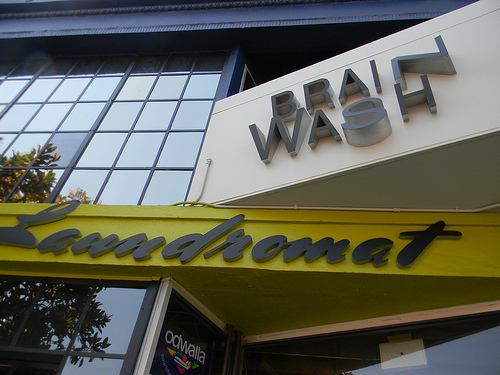
Bottle Kids, Dead Blue, Poeina Suddarth Brainwash Cafe, 1122 Folsom, SF; www.brainwash.com. 9pm, free.

Congress Grant and Green Saloon. 9pm.

Delta Wires Biscuits and Blues. 8 and 10pm, $20.

Dirtybird, Kill Frenzy, Claude Van Stroke Mezzanine. 9pm, $5-$20.

"Flashbangboom" Slim’s. 8pm, $20. With Chris James & the Showdowns, BC3, Pubic Heroinne, Parmisans.

Judgement Day, Giant Squad, Sun That Never Sets Bottom of the Hill. 10pm, $10.

Glen Meadmore and the Kuntry Band, Whoa Nellies, Andrew Roberts Thee Parkside. 9pm, $10.

Night Birds, Sharp Objects, Ruleta Rusa, Bad Coyotes Hemlock Tavern. 9pm, $7.

Persephone’s Bees, Bart Davenport, Dreamdate Cafe Du Nord. 9:30pm, $12.

Soul Asylum Independent. 9pm, $20.

X-Static Johnny Foley’s. 9pm, free.

Woods, Peaking Lights, Wet Illustrated Great American Music Hall. 9pm, $16.

Zej & Calen Amnesia. 6:30pm, $7-$10.

JAZZ/NEW MUSIC

Audium 1616 Bush, SF; www.audium.org. 8:30pm, $20. Theater of sound-sculptured space.

Terry Disely Bottle Cap, 1707 Powell, SF; www.bottlecapsf.com. 7-10pm.

Ottmar Liebert & Luna Negra Yoshi’s SF. 8pm, $30; 10pm, $25.

Namaskar Red Poppy Art House. 9pm, $15-$20.

Unconscious World Intersection for the Arts, 925 Mission, SF; www.projectsoundwave.com. Soundwave (5). 8pm, $12-$25.

FOLK/WORLD/COUNTRY

Baxtolo Drom Amnesia. 9pm, $7-$10.

Brazilian Music Festival Brick and Mortar Music Hall. 9pm, $15-$20. With Brener Monducci, Tambores do Brazil, Sotaque, Baiano, Tony Santos.

Giacomo Fiore, Agnew/McAllister Duo Unitarian Universalist Society of San Francisco Chapel, 1187 Franklin, SF; www.giacomofiore.com. 7:30pm, $15.

Taste Fridays 650 Indiana, SF; www.tastefridays.com. 8pm, $18. Salsa and bachata dance lessons, live music.

Taylor-Ramirez, Los Terciados Plough and Stars. 9pm, $6.

DANCE CLUBS

As You Like It with Scuba, Oliver Deustchmann, Epcot, Mossmoss Public Works. 9pm, $10-$20.

Braza! Som., 2925 16th St, SF; (415) 558-8521. 10pm, $5-$10. DJs Sabo, Kento, Elan spin Brazilian, Batucada, Samba.

Duniya Dancehall Bissap, 3372 19th St, SF; (415) 826 9287. 10pm, $10. With live performances by Duniya Drum and Dance Co. and music by Wontanara Revolution. DJ Juan Data spins bhangra, bollywood, dancehall, African, and more.

Joe Lookout, 3600 16th St.,SF; www.lookoutsf.com. 9pm. Eight rotating DJs, shirt-off drink specials.

Neon Vinyl Summer Edition Public Works Loft. 10pm, $5-$10.

Old School JAMZ El Rio. 9pm. Fruit Stand DJs spinning old school funk, hip-hop, and R&B.

120 Minutes Elbo Room. 10pm, $7-$10. With Mykki Blanco, Physical Therapy, and residents DJs S4NtA MU3rTE, Planet Death, and Nako.

Paris to Dakar Little Baobab, 3388 19th St, SF; (415) 643-3558. 10pm, $5. Afro and world music with rotating DJs including Stepwise, Steve, Claude, Santero, and Elembe.

SATURDAY 4

ROCK/BLUES/HIP-HOP

Back Pages Johnny Foley’s. 9pm, free.

Jay Brannan, Chris Pureka Great American Music Hall. 9pm, $16.

"Drive Tour" with College, Anaroaak, Electric Youth Rickshaw Stop. 9pm, $15-$17.

Drizzoletto, Lily Taylor, Karina Denike, Wild Reeds Amnesia. 8pm, $7-$10.

English Beat, Champions INC. Bimbo’s. 8pm, $25.

Extra Action Marching Band, Itchy-O Marching Band Brick and Mortar Music Hall. 9pm, $15-$20.

Fake Blood, Light Year, Nisus Mezzanine. 9pm, $12.50-$20.

Fracas, Blown to Bits, Guantanamo Dogpile El Rio. 10pm, $7-$100 donation. Benefit for Nikki Davis.

Hukaholix, Hate Crime Thee Parkside. 3pm, free.

Jinx Jones Riptide. 9:30pm, free.

MOFO Party Band Biscuits and Blues. 8 and 10pm, $20.

Murder By Death, Lia Rose, Ha Ha Tonka Bottom of the Hill. 9pm, $17.

New Diplomat, Hundred Days, Koll Moi, Ownership Slim’s. 8:30pm, $13.

Pleasure Kills, Sweet Pups, Ballantynes Hemlock Tavern. 9:30pm, $7.

Polish Ambassador Yoshi’s SF Lounge. 10:30pm, $20.

Yassou Benedict, Halfbreed Lovers, Cigarettes After Sex, Ghost Town Jenny Thee Parkside. 9pm, $7.

JAZZ/NEW MUSIC

Audium 1616 Bush, SF; www.audium.org. 8:30pm, $20. Theater of sound-sculptured space.

Ottmar Liebert & Luna Negra Yoshi’s SF. 8pm, $30; 10pm, $25.

FOLK/WORLD/COUNTRY

Go Van Gough Red Poppy Art House. 6:45. Part of Mission Arts & Performance Project.

"Rockabilly Jukebox" Plough and Stars. 9:30pm, $8-$10. With Blue Diamond Fillups, Whiskey Pills Fiasco.

DANCE CLUBS

Bootie SF: Faroff DNA Lounge. 9pm, $10-$15.

Cockfight Underground SF, 424 Haight, SF; (415) 864-7386. 9pm, $7. Rowdy dance night for gay boys .

Foundation Som., 2925 16th St, SF; (415) 558-8521. 10pm, $5-$10. DJs Shortkut, Apollo, Mr. E, Fran Boogie spin Hip-Hop, Dancehall, Funk, Salsa.

Haceteria Deco Lounge, 510 Larkin, SF; www.decosf.com. 9pm; free before 11pm, $5 after. With Magic Touch, Nihar, Tristes Tropiques, Smac, and Jason P.

Paris to Dakar Little Baobab, 3388 19th St, SF; (415) 643-3558. 10pm, $5. Afro and world music with rotating DJs including Stepwise, Steve, Claude, Santero, and Elembe.

Saturday Night Soul Party Elbo Room. 10pm, $5-$10.

Two Crews, One Cup: Number Two Public Works. 9pm, $10-$20. Benefit for Haiti with DingDong, Ernie Trevino, JoeJoe, Jess Stockton, and more.

Vinyl Boom Boom Room. 8pm, $15. DJ K-Os spins old school soul, Latin, and funk.

SUNDAY 5

ROCK/BLUES/HIP-HOP

Lynn Drury, Gal Holiday and the Honky Tonk Revue Brick and Mortar Music Hall. 9pm, $5-$8.

Nathan James and the Rhythm Scratchers Biscuits and Blues. 7 and 9pm, $15.

John Lawton Trio Johnny Foley’s. 9pm, free.

Kally Price Old Blues and Jazz Band Amnesia. 8pm, $5.

Murder By Death, Lia Rose, Ha Ha Tonka Bottom of the Hill. 9pm, $17.

Ozomatli, SMOD Sigmund Stern Grove, 19th Avenue and Sloat Boulevard, SF; www.sterngrove.org. 2pm, free.

Radio Moscow, Dirty Streets, Coo Coo Birds Cafe Du Nord. 8:30pm, $12.

7Horse Red Devil Lounge.

Sierra Leon’s Refugee All Stars, Black Nature Band, Naia Kate Independent. 8pm, $20.

Slow Motion Cowboys, Tater Famine Knockout. 5pm, $6.

That Ghost, Ed Schrader’s Music Beat, Bloom Thee Parkside. 8pm, $7.

Wild Kindness, Former Friends of Young Americans, Casual Dolphins Hemlock Tavern. 9pm, $6.

JAZZ/NEW MUSIC

Niyaz Yoshi’s SF. 7pm, $28.

FOLK/WORLD/COUNTRY

Miwi Gemini, Jean-Marie, Dusty DiMercurio, Poor Sweet Creatures Hotel Utah. 8pm.

Dana Lyn, Kyle Sanna Red Poppy Art House. 8:30pm, $10.

Peter Rowan Jerry Garcia Amphitheater, 45 John F. Shelly, SF; (415) 272-1397. 11am, free.

Twang Sunday Thee Parkside. 4pm, free. With Country Casanovas.

DANCE CLUBS

Dub Mission Elbo Room. 9pm, $6. Dub, dubstep, and dancehall with DJ Sep, Vinnie Esparza, and J. Boogie.

Jock Lookout, 3600 16th St, SF; www.lookoutsf.com. 3pm, $2. Raise money for LGBT sports teams while enjoying DJs and drink specials.

La Pachanga Blue Macaw, 2565 Mission, SF; www.thebluemacawsf.com. 6pm, $10. Salsa dance party with live Afro-Cuban salsa bands.

MONDAY 6

ROCK/BLUES/HIP-HOP

Cool Ghouls, Brother Pacific, Black Cobra Vipers Brick and Mortar Music Hall. 8pm, $4-$7.

Damir Johnny Foley’s. 9pm, free.

Belle Monroe and Her Brewglass Boys Amnesia. 9pm, free.

Sutekh Hexen, Hallow, Rain and Endless Fall, Rigis Elbo Room. 9pm, $7.

JAZZ/NEW MUSIC

Bossa Nova Tunnel Top, 601 Bush, SF; (415) 722-6620. 8-11:30pm, free. Live acoustic Bossa Nova.

DANCE CLUBS

Death Guild DNA Lounge. 9:30pm, $3-5. Gothic, industrial, and synthpop with Joe Radio, Decay, and Melting Girl.

Krazy Mondays Beauty Bar, 2299 Mission, SF; www.thebeautybar.com. 10pm, free. Hip-hop and other stuff.

M.O.M. Madrone Art Bar. 6pm, free. DJs Timoteo Gigante, Gordo Cabeza, and Chris Phlek playing all Motown every Monday.

Vibes’N’Stuff El Amigo Bar, 3355 Mission, SF; (415) 852-0092. 10pm, free. Conscious jazz and hip-hop from 1960s-early ’90s with DJs Luce Lucy, Vinnie Esparza, and more.

TUESDAY 7

ROCK/BLUES/HIP-HOP

Ash Reiter, Great Elk Amnesia. 9:15pm, $7.

Cosmonauts, Gap Dream Hemlock Tavern. 9pm, $7.

Fang Island, Zechs Marquise Great American Music Hall. 8pm, $15.

Foxygen, NO, Dylan Shearer Brick and Mortar Music Hall. 9pm, free.

Gaza, Eagle Twin, Monuments, Collapse Thee Parkside. 8pm, $10.

Jesus and the Rabbis Boom Boom Room. 8pm, $5.

Guitar Shorty Biscuits and Blues. 8 and 10pm, $20.

Slick Idiot, Mona Mur & En Esch, Promonium Jesters, Loveless Love Elbo Room. 8pm, $10.

Stan Erhart Band Johnny Foley’s. 9pm, free.

War Trash, Meth Sores, Midnite Brain, Gaskill Knockout. 9:30pm, $6.

JAZZ/NEW MUSIC

Etienne Charles Yoshi’s SF. 8pm, $14.

Frederick Hodges Pier 23, Embarcadero at Filbert, SF; (415) 362-5125. 5-8pm.

"Unplugged" 50 Mason Social House, SF; (415) 433-5050. 7pm, free. With Kyle Castellani, FastLayne, Growing Room, Midnight Radio, and more.

DANCE CLUBS

Eclectic Company Skylark, 9pm, free. DJs Tones and Jaybee spin old school hip hop, bass, dub, glitch, and electro.

Post-Dubstep Tuesdays Som., 2925 16th St, SF; (415) 558-8521.10pm, free. DJs Dnae Beats, Epcot, Footwerks spin UK Funky, Bass Music.
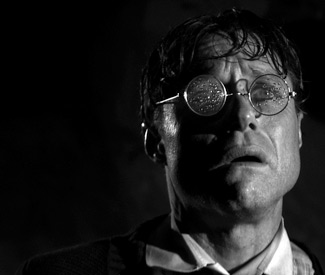
Film Listings

0

Film listings are edited by Cheryl Eddy. Reviewers are Kimberly Chun, Max Goldberg, Dennis Harvey, and Lynn Rapoport. For rep house showtimes, see Rep Clock.

OPENING

The Babymakers The Babymakers would be better titled The Anxiety-Wracked Sperminators. Longtime couple Audrey (Olivia Munn) and Tommy (Paul Schneider) have it all — good looks, smart mouths, crazy-cute chemistry — except the requisite rug rats. Despite Tommy’s trepidation, they try and try and try, only to discover, after much tortuous testing of the neurotic would-be baby daddy, that the man has been shooting sleepy and unmotivated seed. Fortunately, Tommy sold a batch of the still-vital stuff to a local sperm bank in order to buy Audrey’s ring five years ago. So swallowing the shame of purchasing nuptial bling with said whack-off money, Tommy and his gang (Kevin Heffernan, Wood Harris, and Nat Faxon) enlist the help of Indian mobster Ron Jon (director Jay Chandrasekhar, channeling Alfred Molina in Boogie Nights) embark on likely the first sperm bank break-in in cinematic history. With Chandrasekhar (2005’s The Dukes of Hazzard) in the director’s seat, the overall effect is that of a slightly ham-fisted indie striving for sitcom-like appeal — its easy laughs fall slightly short of cheap-date status, and the narrative contortions The Babymakers undergoes to achieve its tidy wrap-up undercut the revelry. Too bad for its attractive leads: the bright and beautiful Munn has been languishing in second-banana parts for too long, and the woefully neglected Schneider has a talent for bringing an angry edge-slash-intensity to every role. (1:38) (Chun)

Bill W. Even longtime AA members are unlikely to know half the organizational history revealed in this straightforward, chronological, fast-moving portrait of its late founder. Bill Wilson was a bright, personable aspiring businessman whose career was nonetheless perpetually upset by addiction to the alcohol that eased his social awkwardness but brought its own worse troubles. During one mid-1930s sanitarium visit, attempting to dry out, he experienced a spiritual awakening. From that moment slowly grew the idea of Alcoholics Anonymous, which he shaped with the help of several other recovering drunks, and saw become a national movement after a 1941 Saturday Evening Post article introduced it to the general public. Wilson had always hoped the "leaderless" organization would soon find its own feet and leave him to build a separate, sober new career. But gaining that distance was difficult; attempts to find other "cures" for his recurrent depression (including LSD therapy) laid him open to internal AA criticism; and he was never comfortable on the pedestal that grateful members insisted he stay on as the organization’s founder. Admittedly, he appointed himself its primary public spokesman, which rendered his own hopes for privacy somewhat self-canceling — though fortunately it also provides this documentary with plenty of extant lecture and interview material. He was a complicated man whose complicated life often butted against the role of savior, despite his endless dedication and generosity toward others in need. That thread of conflict makes for a movie that’s compelling beyond the light it sheds on an institution as impactful on individual lives and society as any other to emerge from 20th-century America. (1:43) Elmwood, Roxie. (Harvey)

Crazy and Thief Former S.F. resident Cory McAbee of the Billy Nayer Show, as well as cult film faves The American Astronaut (2001) and Stingray Sam (2009), returns for one night only in this multimedia event under the umbrella of his new enterprise "Captain Ahab’s Motorcycle Club." The Vogue Theatre event will offer music and conversation after a screening of McAbee’s latest. Crazy and Thief stars his children, two-year-old Johnny and slightly senior Willa, in a 52-minute adventure that has them following a "star map" all by themselves around Brooklyn, then journeying out to the country via train. En route they improvise nonsense songs, cross paths with strange adults suspicious and helpful, ride a Mickey Mouse hobby horse, and so forth. A color effort that’s sort of an elaborate home movie compared to the director’s fancifully comic, black and white prior films, it nonetheless gets pretty far on the cuteness of toddlers and a soundtrack of original songs that find McAbee rocking like a five-year-old might — something that’s also pretty cute. (:52) Vogue. (Harvey)

The Devil, Probably This seldom-revived 1977 feature from late French master Robert Bresson was his penultimate as well as most explicitly political work. Newspaper clips at the start betray where these 95 minutes will be heading: they introduce Parisian Charles (Antoine Monnier) as a casualty, a suicide at age 20. The reasons for that act are probed in the succeeding flashback, as we observe his last days drifting between friends and lovers, quitting student activist groups, and generally expressing his disillusionment with everything from politics to religion to human interaction. Then 70, Bresson expresses his own disenchantment in solidarity with the youthful characters by including documentary shots of pollution, clubbed baby seals, A-bomb explosions, and other dire signs of "an Earth that is ever more populated and ever less habitable." That essential message makes The Devil, Probably more relevant than ever, but unfortunately it’s also one of the filmmaker’s driest, most didactic exercises. There are a few odd, almost farcical moments (as when the constant pondering of man’s fate extends to a spontaneous philosophical debate between passengers on a public bus), but the characters are too obviously mouthpieces with no inner lives of their own. In particular, Charles remains an unengaging blank in Monnier’s performance, which is all too faithful to the director’s usual call for "automatic," uninflected line readings from his nonprofessional cast. Nothing Bresson did is without interest, but here his detached technique drains nearly all emotional impact from a film ostensibly about profound despair. (1:35) SF Film Society Cinema. (Harvey)

Diary of a Wimpy Kid: Dog Days The titular hero (Zachary Gordon) returns in the third family comedy adapted from Jeff Kinney’s YA novels. (1:34) Presidio.

Girlfriend Boyfriend The onscreen title of this Taiwanese import is Gf*Bf, but don’t let the text-speak fool you: the bulk of the film is set in the 1980s and 90s, long before smart phones were around to complicate relationships. And the trio at the heart of Girlfriend Boyfriend is complicated enough as it is: sassy Mabel (Gwei Lun-Mei) openly pines for brooding Liam (Joseph Chang), who secretly pines for rebellious Aaron (Rhydian Vaughan), who chases Mabel until she gives in; as things often go in stories like this, nobody gets the happy ending they desire. Set against the backdrop of Taiwan’s student movement, this vibrant drama believably tracks its leads as they mature from impulsive youths to bitter adults who never let go of their deep bond — despite all the misery it causes, and a last-act turn into melodrama that’s hinted at by the film’s frame story featuring an older Liam and a pair of, um, sassy and rebellious twin girls he’s been raising as his own. (1:45) Metreon. (Eddy)

The Imposter See "Foolin’." (1:39) Lumiere, Shattuck.

Killer Joe See "The Friedkin Connection." (1:43) Embarcadero.

Klown A spinoff from a long-running Danish TV show, with the same director (Mikkel Nørgaard) and co-writer/stars, this bad-taste comedy might duly prove hard to beat as "the funniest movie of the year" (a claim its advertising already boasts). Socially hapless Frank (Frank Hvam) discovers his live-in girlfriend Mia (Mia Lyhne) is pregnant, but she quite reasonably worries "you don’t have enough potential as a father." To prove otherwise, he basically kidnaps 12-year-old nephew Bo (Marcuz Jess Petersen) and drags him along on a canoe trip with best friend Casper (Casper Christensen). Trouble is, Casper has already proclaimed this trip will be a "Tour de Pussy," in which they — or at least he — will seize any and every opportunity to cheat on their unknowing spouses. Ergo, there’s an almost immediate clash between awkward attempts at quasi-parental bonding and activities most unsuited for juvenile eyes. Accusations of rape and pedophilia, some bad advice involving "pearl necklaces," an upscale one-night-only bordello, reckless child endangerment, encouragement of teenage drinking, the consequences of tactical "man flirting," and much more ensue. Make no mistake, Klown one-ups the Judd Apatow school of raunch (at least for the moment), but it’s good-natured enough to avoid any aura of crass Adam Sandler-type bottom-feeding. It’s also frequently, blissfully, very, very funny. (1:28) Roxie. (Harvey)

Searching for Sugar Man See "The Comeback King." (1:25) Embarcadero.

Total Recall Frankly, the 1990 Verhoeven-Schwarzenegger version didn’t need remaking, but Len Wiseman (of Underworld series fame) and star Colin Farrell are here with a new take on Philip K. Dick’s short story "We Can Remember It For You Wholesale" anyway. (1:58) California, Presidio.

ONGOING

Abraham Lincoln: Vampire Hunter Are mash-ups really so 2001? Not according to the literary world, where writer Seth Graham-Smith has been doing brisk trade in gore-washing perfectly interesting historical figures and decent works of literature — a fan fiction-rooted strategy that now reeks of a kind of camp cynicism when it comes to a terminally distracted, screen-aholic generation. Still, I was strangely excited by the cinematic kitsch possibilities of Graham-Smith’s Lincoln alternative history-cum-fantasy, here in the hands of Timur Bekmambetov (2004’s Night Watch). Historians, prepare to fume — it helps if you let go of everything you know about reality: as Vampire Hunter opens, young Lincoln learns some harsh lessons about racial injustice, witnessing the effects of slavery and the mistreatment of his black friend Will. As a certain poetic turn would have it, slave owners here are invariably vampires or in cahoots with the undead, as is the wicked figure, Jack Barts (Marton Csokas), who beats both boys and sucks Lincoln’s father dry financially. In between studying to be a lawyer and courting Mary Todd (Mary Elizabeth Winstead), the adult Lincoln (Benjamin Walker) vows to take revenge on the man who caused the death of his mother and enters the tutelage of vampire hunter Henry (Dominic Cooper), who puts Abe’s mad skills with an ax to good use. Toss in a twist or two; more than few freehand, somewhat humorous rewrites of history (yes, we all wish we could have tweaked the facts to have a black man working by Lincoln’s side to abolish slavery); and Bekmambetov’s tendency to direct action with the freewheeling, spectacle-first audacity of a Hong Kong martial arts filmmaker (complete with at least one gaping continuity flaw) — and you have a somewhat amusing, one-joke, B-movie exercise that probably would have made a better short or Grindhouse-esque trailer than a full-length feature — something the makers of the upcoming Pride and Prejudice and Zombies should bear in mind. (1:45) SF Center. (Chun)

Ai Weiwei: Never Sorry Unstoppable force meets immovable object — and indeed gets stopped — in Alison Klayman’s documentary about China’s most famous contemporary artist. A larger than life figure, Ai Weiwei’s bohemian rebel persona was honed during a long (1981-93) stint in the U.S., where he fit right into Manhattan’s avant-garde and gallery scenes. Returning to China when his father’s health went south, he continued to push the envelope with projects in various media, including architecture — he’s best known today for the 2008 Beijing Olympics’ "Bird’s Nest" stadium design. But despite the official approval implicit in such high-profile gigs, his incessant, obdurate criticism of China’s political repressive politics and censorship — a massive installation exposing the government-suppressed names of children killed by collapsing, poorly-built schools during the 2008 Sichuan earthquake being one prominent example — has tread dangerous ground. This scattershot but nonetheless absorbing portrait stretches its view to encompass the point at which the subject’s luck ran out: when the film was already in post-production, he was arrested, then held for two months without official charge before he was accused of alleged tax evasion. (He is now free, albeit barred from leaving China, and "suspected" of additional crimes including pornography and bigamy.) (1:31) Lumiere, Shattuck, Sundance Kabuki. (Harvey)

The Amazing Spider-Man A mere five years after Sam Raimi and Tobey Maguire’s Spider-Man 3 — forgettable on its own, sure, but 2002’s Spider-Man and especially 2004’s Spider-Man 2 still hold up — Marvel’s angsty web-slinger returns to the big screen, hoping to make its box-office mark before The Dark Knight Rises opens in a few weeks. Director Marc Webb (2009’s 500 Days of Summer) and likable stars Andrew Garfield (as the skateboard-toting hero) and Emma Stone (as his high-school squeeze) offer a competent reboot, but there’s no shaking the feeling that we’ve seen this movie before, with its familiar origin story and with-great-power themes. A little creativity, and I don’t mean in the special effects department, might’ve gone a long way to make moviegoers forget this Spidey do-over is, essentially, little more than a soulless cash grab. Not helping matters: the villain (Rhys Ifans as the Lizard) is a snooze. (2:18) Metreon, 1000 Van Ness. (Eddy)

Beasts of the Southern Wild Six months after winning the Grand Jury Prize at Sundance (and a Cannes Camera d’Or), Beasts of the Southern Wild proves capable of enduring a second or third viewing with its originality and strangeness fully intact. Magical realism is a primarily literary device that isn’t attempted very often in U.S. cinema, and succeeds very rarely. But this intersection between Faulkner and fairy tale, a fable about — improbably — Hurricane Katrina, is mysterious and unruly and enchanting. Benh Zeitlin’s film is wildly cinematic from the outset, as voiceover narration from six-year-old Hushpuppy (Quvenzhané Wallis) offers simple commentary on her rather fantastical life. She abides in the Bathtub, an imaginary chunk of bayou country south of New Orleans whose residents live closer to nature, amid the detritus of civilization. Seemingly everything is some alchemical combination of scrap heap, flesh, and soil. But not all is well: when "the storm" floods the land, the holdouts are forced at federal gunpoint to evacuate. With its elements of magic, mythological exodus, and evolutionary biology, Beasts goes way out on a conceptual limb; you could argue it achieves many (if not more) of the same goals Terrence Malick’s 2011 The Tree of Life did at a fraction of that film’s cost and length. (1:31) Bridge, California, Embarcadero, Smith Rafael. (Harvey)

Bernie Jack Black plays the titular new assistant funeral director liked by everybody in small-town Carthage, Tex. He works especially hard to ingratiate himself with shrewish local widow Marjorie (Shirley MacLaine), but there are benefits — estranged from her own family, she not only accepts him as a friend (then companion, then servant, then as virtual "property"), but makes him her sole heir. Richard Linklater’s latest is based on a true-crime story, although in execution it’s as much a cheerful social satire as I Love You Philip Morris and The Informant! (both 2009), two other recent fact-based movies about likable felons. Black gets to sing (his character being a musical theater queen, among other things), while Linklater gets to affectionately mock a very different stratum of Lone Star State culture from the one he started out with in 1991’s Slacker. There’s a rich gallery of supporting characters, most played by little-known local actors or actual townspeople, with Matthew McConaughey’s vainglorious county prosecutor one delectable exception. Bernie is its director’s best in some time, not to mention a whole lot of fun. (1:39) Opera Plaza, Shattuck, Smith Rafael. (Harvey)

The Best Exotic Marigold Hotel (1:42) Opera Plaza, Shattuck.

Brave Pixar’s latest is a surprisingly familiar fairy tale. Scottish princess Merida (voiced by Kelly Macdonald) would rather ride her horse and shoot arrows than become engaged, but it’s Aladdin-style law that she must marry the eldest son of one of three local clans. (Each boy is so exaggeratedly unappealing that her reluctance seems less tomboy rebellion than common sense.) Her mother (Emma Thompson) is displeased; when they quarrel, Merida decides to change her fate (Little Mermaid-style) by visiting the local spell-caster (a gentle, absent-minded soul that Ursula the Sea Witch would eat for brunch). Naturally, the spell goes awry, but only the youngest of movie viewers will fear that Merida and her mother won’t be able to make things right by the end. Girl power is great, but so are suspense and originality. How, exactly, is Brave different than a zillion other Disney movies about spunky princesses? Well, Merida’s fiery explosion of red curls, so detailed it must have had its own full-time team of animators working on it, is pretty fantastic. (1:33) 1000 Van Ness, SF Center, Shattuck. (Eddy)

Dark Horse You can look at filmmaker Todd Solondz’s work and find it brilliant, savage, and challenging; or show-offy, contrived, and fraudulent. The circles of interpersonal (especially familial) hell he describes are simultaneously brutal, banal, and baroque. But what probably distresses people most is that they’re also funny — raising the issue of whether he trivializes trauma for the sake of cheap shock-value yuks, or if black comedy is just another valid way of facing the unbearable. Dark Horse is disturbing because it’s such a slight, inconsequential, even soft movie by his standards; this time, the sharp edges seem glibly cynical, and the sum ordinary enough to no longer seem unmistakably his. Abe (Jordan Gelber) is an obnoxious jerk of about 35 who still lives with his parents (Mia Farrow, Christopher Walken) and works at dad’s office, likely because no one else would employ him. But Abe doesn’t exactly see himself as a loser. He resents and blames others for being winners, which is different — he sees the inequality as their fault. Dark Horse is less of an ensemble piece than most of Solondz’s films, and in hinging on Abe, it diminishes his usual ambivalence toward flawed humanity. Abe has no redemptive qualities — he’s just an annoyance, one whose mental health issues aren’t clarified enough to induce sympathy. (1:25) Smith Rafael. (Harvey)

The Dark Knight Rises Early reviews that called out The Dark Knight Rises‘ flaws were greeted with the kind of vicious rage that only anonymous internet commentators can dish out. And maybe this is yet another critic-proof movie, albeit not one based on a best-selling YA book series. Of course, it is based on a comic book, though Christopher Nolan’s sophisticated filmmaking and Christian Bale’s tortured lead performance tend to make that easy to forget. In this third and "final" installment in Nolan’s trilogy, Bruce Wayne has gone into seclusion, skulking around his mansion and bemoaning his broken body and shattered reputation. He’s lured back into the Batcave after a series of unfortunate events, during which The Dark Knight Rises takes some jabs at contemporary class warfare (with problematic mixed results), introduces a villain with pecs of steel and an at-times distractingly muffled voice (Tom Hardy), and unveils a potentially dangerous device that produces sustainable energy (paging Tony Stark). Make no mistake: this is an exciting, appropriately moody conclusion to a superior superhero series, with some nice turns by supporting players Gary Oldman and Joseph Gordon-Levitt. But in trying to cram in so many characters and plot threads and themes (so many prisons in this thing, literal and figural), The Dark Knight Rises is ultimately done in by its sprawl. Without a focal point — like Heath Ledger’s menacing, iconic Joker in 2008’s The Dark Knight — the stakes aren’t as high, and the end result feels more like a superior summer blockbuster than one for the ages. (2:44) Balboa, Marina, Metreon, 1000 Van Ness, Sundance Kabuki. (Eddy)

Farewell, My Queen (Benoît Jacquot, France, 2012) Opening early on the morning of July 14, 1789, Farewell, My Queen depicts four days at the Palace of Versailles on the eve of the French Revolution, as witnessed by a young woman named Sidonie Laborde (Léa Seydoux) who serves as reader to Marie Antoinette (Diane Kruger). Sidonie displays a singular and romantic devotion to the queen, while the latter’s loyalties are split between a heedless amour propre and her grand passion for the Duchess de Polignac (Virginie Ledoyen). These domestic matters and other regal whims loom large in the tiny galaxy of the queen’s retinue, so that while elsewhere in the palace, in shadowy, candle-lit corridors, courtiers and their servants mingle to exchange news, rumor, panicky theories, and evacuation plans, in the queen’s quarters the task of embroidering a dahlia for a projected gown at times overshadows the storming of the Bastille and the much larger catastrophe on the horizon. (1:39) Albany, Embarcadero, Piedmont. (Rapoport)

Ice Age: Continental Drift (1:27) Metreon, 1000 Van Ness.

The Intouchables Cries of "racism" seem a bit out of hand when it comes to this likable albeit far-from-challenging French comedy loosely based on a real-life relationship between a wealthy white quadriplegic and his caretaker of color. The term "cliché" is more accurate. And where were these critics when 1989’s Driving Miss Daisy and 2011’s The Help — movies that seem designed to make nostalgic honkies feel good about those fraught relationships skewed to their advantage—were coming down the pike? (It also might be more interesting to look at how these films about race always hinge on economies in which whites must pay blacks to interact with/educate/enlighten them.) In any case, Omar Sy, portraying Senegalese immigrant Driss, threatens to upset all those pundits’ apple carts with his sheer life force, even when he’s shaking solo on the dance floor to sounds as effortlessly unprovocative, and old-school, as Earth, Wind, and Fire. In fact, everything about The Intouchables is as old school as 1982’s 48 Hrs., spinning off the still laugh-grabbing humor that comes with juxtaposing a hipper, more streetwise black guy with a hapless, moneyed chalky. The wheelchair-bound Philippe (Francois Cluzet) is more vulnerable than most, and he has a hard time getting along with any of his nurses, until he meets Driss, who only wants his signature for his social services papers. It’s not long before the cultured, classical music-loving Philippe’s defenses are broken down by Driss’ flip, somewhat honest take on the follies and pretensions of high culture — a bigger deal in France than in the new world, no doubt. Director-writer Olivier Nakache and Eric Toledano aren’t trying to innovate —they seem more set on crafting an effervescent blockbuster that out-blockbusters Hollywood — and the biggest compliment might be that the stateside remake is already rumored to be in the works. (1:52) Clay, Piedmont, Shattuck. (Chun)

Jiro Dreams of Sushi Celebrity-chef culture has surely reached some kind of zeitgeist, what with the omnipresence of Top Chef and other cooking-themed shows, and the headlines-making power of people like Paula Deen (diabetes) and Mario Batali (sued for ripping off his wait staff). Unconcerned with the trappings of fame — you’ll never see him driving a Guy Fieri-style garish sports car — is Jiro Ono, 85-year-old proprietor of Sukiyabashi Jiro, a tiny, world-renowned sushi restaurant tucked into Tokyo’s Ginza station. Jiro, a highly-disciplined perfectionist who believes in simple, yet flavorful food, has devoted his entire life to the pursuit of "deliciousness" — to the point of sushi invading his dreams, as the title of David Gelb’s reverential documentary suggests. But Jiro Dreams of Sushi goes deeper than food-prep porn (though, indeed, there’s plenty of that); it also examines the existential conflicts faced by Jiro’s two middle-aged sons. Both were strongly encouraged to enter the family business — and in the intervening years, have had to accept the soul-crushing fact that no matter how good their sushi is, it’ll never be seen as exceeding the creations of their legendary father. (1:21) Four Star, Opera Plaza. (Eddy)

Madagascar 3: Europe’s Most Wanted (1:33) SF Center.

Magic Mike Director Steven Soderbergh pays homage to the 1970s with the opening shot of his male stripper opus: the boxy old Warner Bros. logo, which evokes the gritty, sexualized days of Burt Reynolds and Joe Namath posing in pantyhose. Was that really the last time women, en masse, were welcome to ogle to their heart’s content? That might be the case considering the outburst of applause when a nude Channing Tatum rises after a hard night in a threesome in Magic Mike‘s first five minutes. Ever the savvy film historian, Soderbergh toys with the conventions of the era, from the grimy quasi-redneck realism of vintage Reynolds movies to the hidebound framework of the period’s gay porn, almost for his own amusement, though the viewer might be initially confused about exactly what year they’re in. Veteran star stripper Mike (Tatum) is working construction, stripping to the approval of many raucous ladies and their stuffable dollar bills. He decides to take college-dropout blank-slate hottie Adam (Alex Pettyfer) under his wing and ropes him into the strip club, owned by Dallas (Matthew McConaughey, whose formidable abs look waxily preserved) and show him the ropes of stripping and having a good time, much to the disapproval of Adam’s more straight-laced sister Brooke (Cody Horn). Really, though, all Mike wants to do is become a furniture designer. Boasting Foreigner’s "Feels like the First Time" as its theme of sorts and spot-on, hot choreography by Alison Faulk (who’s worked with Madonna and Britney Spears), Magic Mike takes off and can’t help but please the crowd when it turns to the stage. Unfortunately the chemistry-free budding romance between Mike and Brooke sucks the air out of the proceedings every time it comes into view, which is way too often. (1:50) 1000 Van Ness, SF Center, Sundance Kabuki. (Chun)

Moonrise Kingdom Does Wes Anderson’s new film mark a live-action return to form after 2007’s disappointingly wan Darjeeling Limited? More or less. Does it tick all the Andersonian style and content boxes? Indubitably. In the most obvious deviation Anderson has taken with Moonrise, he gives us his first period piece, a romance set in 1965 on a fictional island off the New England coast. After a chance encounter at a church play, pre-teen Khaki Scout Sam (newcomer Jared Gilman) instantly falls for the raven-suited, sable-haired Suzy Bishop (Kara Hayward, ditto). The two become pen pals, and quickly bond over the shared misery of being misunderstood by both authority figures and fellow kids. The bespectacled Sam is an orphan, ostracized by his foster parents and scout troop (much to the dismay of its straight-arrow leader Edward Norton). Suzy despises her clueless attorney parents, played with gusto by Bill Murray and Frances McDormand in some of the film’s funniest and best scenes. When the two kids run off together, the whole thing begins to resemble a kind of tween version of Godard’s 1965 lovers-on the-lam fantasia Pierrot le Fou. But like most of Anderson’s stuff, it has a gauzy sentimentality more akin to Truffaut than Godard. Imagine if the sequence in 2001’s The Royal Tenenbaums where Margot and Richie run away to the Museum of Natural History had been given the feature treatment: it’s a simple yet inspired idea, and it becomes a charming little tale of the perils of growing up and selling out the fantasy. But it doesn’t feel remotely risky. It’s simply too damn tame. (1:37) Balboa, California, Metreon, 1000 Van Ness, Piedmont, Presidio, SF Center. (Michelle Devereaux)

Prometheus Ridley Scott’s return to outer space — after an extended stay in Russell Crowe-landia — is most welcome. Some may complain Prometheus too closely resembles Scott’s Alien (1979), for which it serves as a prequel of sorts. Prometheus also resembles, among others, The Thing (1982), 2001: A Space Odyssey (1968), and Event Horizon (1997). But I love those movies (yes, even Event Horizon), and I am totally fine with the guy who made Alien borrowing from all of them and making the classiest, most gorgeous sci-fi B-movie in years. Sure, some of the science is wonky, and the themes of faith and creation can get a bit woo-woo, but Prometheus is deep-space discombobulation at its finest, with only a miscast Logan Marshall-Green (apparently, cocky dude-bros are still in effect at the turn of the next millennium) marring an otherwise killer cast: Noomi Rapace as a dreamy (yet awesomely tough) scientist; Idris Elba as Prometheus‘ wisecracking captain; Charlize Theron as the Weyland Corportation’s icy overseer; and Michael Fassbender, giving his finest performance to date as the ship’s Lawrence of Arabia-obsessed android. (2:03) Metreon. (Eddy)

The Queen of Versailles Lauren Greenfield’s obscenely entertaining The Queen of Versailles takes a long, turbulent look at the lifestyles lived by David and Jackie Siegel. He is the 70-something undisputed king of timeshares; she is his 40-something (third) wife, a former beauty queen with the requisite blonde locks and major rack, both probably not entirely Mother Nature-made. He’s so compulsive that he’s never saved, instead plowing every buck back into the business. When the recession hits, that means this billionaire is — in ready-cash as opposed to paper terms — suddenly sorta kinda broke, just as an enormous Las Vegas project is opening and the family’s stupefyingly large new "home" (yep, modeled after Versailles) is mid-construction. Plugs must be pulled, corners cut. Never having had to, the Siegels discover (once most of the servants have been let go) they have no idea how to run a household. Worse, they discover that in adversity they have a very hard time pulling together — in particular, David is revealed as a remote, cold, obsessively all-business person who has no use for getting or giving "emotional support;" not even for being a husband or father, much. What ultimately makes Queen poignantly more than a reality-TV style peek at the garishly wealthy is that Jackie, despite her incredibly vulgar veneer (she’s like a Jennifer Coolidge character, forever squeezed into loud animal prints), is at heart just a nice girl from hicksville who really, really wants to make this family work. (1:40) Embarcadero, Shattuck, Smith Rafael. (Harvey)

Romantics Anonymous An awkward, bumbling Parisian chocolatier named Jean-Rene (Benoît Poelvoorde) falls for his gorgeous, equally awkward sales rep, Angélique (Isabelle Carré), while never missing an opportunity to say the wrong thing, surrender to shyness, or panic under pressure. It’s crucial for films involving such protracted awkwardness to give the audience something to cling to emotionally, but instead we’re handed a limp, formulaic story, sorely underdeveloped characters, and lazy writing in which the protagonists act uncharacteristically stupid/gullible/oblivious for the sake of plot-expedience. Amélie (2001) mined similar thematic territory, but its success lay in the depth of its characters; Romantics Anonymous is about little more than the idea of two hopeless romantics, and that’s simply not enough to hold interest. It’s beautifully scored, lovingly shot, and steeped in vintage French atmosphere — but that doesn’t compensate for sketchy characterization and weak, predictable storytelling. (1:20) Roxie. (Taylor Kaplan)

Ruby Sparks Meta has rarely skewed as appealingly as with this indie rom-com spinning off a writerly version of the Pygmalion and Galatea tale, as penned by the object-of-desire herself: Zoe Kazan. Little Miss Sunshine (2006) directors Jonathan Dayton and Valerie Faris helm this heady fantasy about a crumpled, geeky novelist, Calvin (Paul Dano), who’s suffering from the sophomore slump — he can’t seem to break his rock-solid writers block and pen a follow-up to his hit debut. He’s a victim of his own success, especially when he finally begins to write, about a dream girl, a fun-loving, redheaded artist named Ruby (scriptwriter Kazan), who one day actually materializes. When he types that she speaks nothing but French, out comes a stream of the so-called language of diplomacy. Calvin soon discovers the limits and dangers of creation — say, the hazards of tweaking a manifestation when she doesn’t do what you desire, and the question of what to do when one’s baby Frankenstein grows bored and restless in the narrow circle of her creator’s imagination. Kazan — and Dayton and Faris — go to the absurd, even frightening, limits of the age-old Pygmalion conceit, giving it a feminist charge, while helped along by a cornucopia of colorful cameos by actors like Annette Bening and Antonio Banderas as Calvin’s boho mom and her furniture-building boyfriend. Dano is as adorably befuddled as ever and adds the crucial texture of every-guy reality, though ultimately this is Kazan’s show, whether she’s testing the boundaries of a genuinely codependent relationship or tugging at the puppeteer’s strings. (1:44) Metreon, Shattuck, Sundance Kabuki. (Chun)

Sacrifice Power-mad General Tu’an (Wang Xueqi) engineers the slaughter of the entire Zhao clan — including the newborn son who’s the last of the line. But the baby’s been swapped with the child of the doctor, Cheng Ying (Ge You), who delivered him, and the deception train pretty much goes off the rails after that. Suffice to say the Zhao heir survives while Cheng Ying’s wife and infant do not, and Tu’an is none the wiser. Revenge seems the only logical move, so Cheng Ying patiently waits years for the boy to grow up and learn martial arts from Tu’an, plotting that he’ll reveal the truth when the (kinda bratty) child becomes capable of killing his beloved "godfather" — a.k.a. the guy who massacred his family (and the family of his adoptive father). If that sounds complicated, know that this epic from Chen Kaige (1993’s Farewell My Concubine) has over two hours to get through all those plot mechanics. Also, it’s gorgeously shot, mixing the classy trappings of a big-budget historical melodrama with thunderous battles and scenes of brutal violence. (2:10) Four Star, SF Film Society Cinema. (Eddy)

Safety Not Guaranteed San Francisco-born director Colin Trevorrow’s narrative debut feature Safety Not Guaranteed, written by Derek Connolly, has an improbable setup: not that rural loner Kenneth (Mark Duplass) would place a personal ad for a time travel partner ("Must bring own weapons"), but that a Seattle alt-weekly magazine would pay expenses for a vainglorious staff reporter (Jake Johnson, hilarious) and two interns (Aubrey Plaza, Karan Soni) to stalk him for a fluff feature over the course of several days. The publishing budget allowing that today is true science-fiction. But never mind. Inserting herself "undercover" when a direct approach fails, Plaza’s slightly goth college grad finds she actually likes obsessive, paranoid weirdo Kenneth, and is intrigued by his seemingly insane but dead serious mission. For most of its length Safety falls safely into the category of off-center indie comedics, delivering various loopy and crass behavior with a practiced deadpan, providing just enough character depth to achieve eventual poignancy. Then it takes a major leap — one it would be criminal to spoil, but which turns an admirable little movie into something conceptually surprising, reckless, and rather exhilarating. (1:34) SF Center, Shattuck. (Harvey)

Savages If it’s true, as some say, that Oliver Stone had lost his way after 9/11 — when seemingly many of his worst fears (and conspiracy theories) came to pass — then perhaps this toothy noir marks his return: it definitely reads as his most emotionally present exercise in years. Not quite as nihilistic as 1994’s Natural Born Killers, yet much juicier than 2010’s Wall Street: Money Never Sleeps, this pulpy effort turns on a cultural clash between pleasure-seeking, honky Cali hedonists, who appear to believe in whatever feels good, and double-dealing Mexican mafia muscle, whose apparently ironclad moral code is also shifting like drifting SoCal sands. All are draped in the Stone’s favored vernacular of manly war games with a light veneer of Buddhistic higher-mindedness and, natch, at least one notable wig. Happy pot-growing nouveau-hippies Ben (Aaron Johnson), Chon (Taylor Kitsch), and O (Blake Lively) are living the good life beachside, cultivating plants coaxed from seeds hand-imported by seething Afghanistan war vet Chon and refined by botanist and business major Ben. Pretty, privileged sex toy O sleeps with both — she’s the key prize targeted by Baja drug mogul Elena (Salma Hayek) and her minions, the scary Lado (Benicio Del Toro) and the more well-heeled Alex (Demian Bichir), who want to get a piece of Ben and Chon’s high-THC product. The twists and turnarounds obviously tickle Stone, though don’t look much deeper than Savages‘ saturated, sun-swathed façade — the script based on Don Winslow’s novel shares the take-no-prisoners hardboiled bent of Jim Thompson while sidestepping the brainy, postmodernish light-hearted detachment of Quentin Tarantino’s "extreme" ’90s shenanigans. (1:57) 1000 Van Ness, SF Center. (Chun)

Shit Year Santa Cruz artist Cam Archer’s 2006 debut feature Wild Tigers I Have Known was a texturally gorgeous but content-lite exercise that often seemed like an extended audition for the role of Next Gus Van Sant. (The real one was, in fact, its executive producer.) This sophomore effort strikes pretty much the same (im-) balance. Colleen West (Ellen Barkin) is a famous, now middle-aged actress who decides to retire — why, we don’t know, particularly since she only seems more brittle, dissatisfied, and hollow upon retreating to an isolated home in a woodsy area. (She doesn’t even seem to like nature.) There, she tolerates a sorta-friendship with an irritatingly chirpy neighbor (Melora Walters), endures a visit by the irritatingly uncomplicated, stable brother she was never close to (Rick Einstein), and recalls an unfulfilling affair with her much younger co-star in a play (Luke Grimes). She also imagines (?) appointments with a terse interrogator (Theresa Randle) offering some sort of futuristic experience-simulation service in an eerie all-white environ. While one questions whether there actually was one, per se, Archer’s fragmentary script alternates these flashbacks, surreal interludes, and present-tense expressions of existential ennui ("I’m surrounded by a world of nothing," Colleen moans) into pretty formations. The film’s B&W photography (by Aaron Platt), editing, production design, musical choices, etc. are all impeccably mannered. But our protagonist’s bored self-absorbsion and self-pity, lacking any backgrounding psychology, is ultimately as vacuous a dead-end as it is when Vincent Gallo is baring his soul. Having a bitchy, platinum-haired Barkin do the job for Archer makes the effect a little campier, but no more resonant. That said, this movie would probably seem brilliant if watched on quaaludes. (1:35) Roxie. (Harvey)

Step Up Revolution The Step Up franchise makes a play for the Occupy brand, setting up its fourth installment’s Miami street crew, the Mob, as the warrior dance champions of the 99 percent — here represented by a vibrant lower-income neighborhood slated for redevelopment. Embodying the one percent is a hotel-chain mogul named Bill Anderson (Peter Gallagher), armed with a wrecking ball and sowing the seeds of a soulless luxury monoculture. Our hero, Mob leader Sean (Ryan Guzman), and heroine, Anderson progeny and aspiring professional dancer Emily (Kathryn McCormick), meet beachside; engage in a sandy, awkward interlude of grinding possibly meant to showcase their dance skills; and proceed to spark a romance and a revolution that feel equally fake (brace yourself for the climactic corporate tie-in). The Mob’s periodic choreographed invasions of the city’s public and private spaces are the movie’s sole source of oxygen. The dialogue, variously mumbled and slurred and possibly read off cue cards, drifts aimlessly from tepid to trite as the protagonists attempt to demonstrate sexual chemistry by breathily trading off phrases like "What we do is dangerous!" and "Enough with performance art — it’s time to make protest art!" Occasionally you may remember that you have 3D glasses on your face and wonder why, but the larger philosophical question (if one may speak of philosophy in relation to the dance-movie genre) concerns the Step Up films’ embrace of postproduction sleights of hand that distance viewers from whatever astonishing feats of physicality are actually being achieved in front of the camera. (1:20) 1000 Van Ness, SF Center, Shattuck. (Rapoport)

Take this Waltz Confined to the hothouse months of a summer in Toronto, Take This Waltz is a steamy, sad takedown of (rather than a take on) the romantic comedy. That’s only because it’s very romantic and very funny, often at once, but otherwise the film has nothing in common with its generic sistren. It’s a feel-good movie for the cynics, directed by actor turned director Sarah Polley (2007’s Away From Her). Margot (Michelle Williams) is a writer married to Lou (Seth Rogen), who is sweet and caring and cooks chicken for a living. Both are in their late 20s, and they are obviously each others’ first loves. It is a love like that of children: idealistic and blooming, but they never have a serious conversation. Enter neighbor Daniel (Luke Kirby) — a conventionally sexier man than Lou, more swarthy and sweaty. Soon, Margot is conflicted and confused, torturing herself with some heavy emotional gymnastics and flip-flopping. Williams is always good at using her face to convey feeling. In one of two scenes of the film set on a Scrambler carnival ride, the entire arc of Margot registers on her facial gestures, from scared to elated to uncertain as the Buggles’ "Video Killed the Radio Star" surrounds her. Margot may be indecisive, but she is never docile about her desires. She does, inevitably, make a decision and there is eventual closure, unlike most everything else out there in the indie ether. (1:56) Opera Plaza, Smith Rafael. (Ryan Lattanzio)

Ted Ah, boys and their toys — and the imaginary friends that mirror back a forever-after land of perpetual Peter Pans. That’s the crux of the surprisingly smart, hilarious Ted, aimed at an audience comprising a wide range of classes, races, and cultures with its mix of South Park go-there yuks and rom-commie coming-of-age sentiment. Look at Ted as a pop-culture-obsessed nerd tweak on dream critter-spirit animal buddy efforts from Harvey (1950) to Donnie Darko (2001) to TV’s Wilfred. Of course, we all know that the really untamable creature here wobbles around on two legs, laden with big-time baggage about growing up and moving on from childhood loves. Young John doesn’t have many friends but he is fortunate enough to have his Christmas wish come true: his beloved new teddy bear, Ted (voice by director-writer Seth MacFarlane), begins to talk back and comes to life. With that miracle, too, comes Ted’s marginal existence as a D-list celebrity curiosity — still, he’s the loyal "Thunder Buddy" that’s always there for the now-grown John (Mark Wahlberg), ready with a bong and a broheim-y breed of empathy that involves too much TV, an obsession with bad B-movies, and mock fisticuffs, just the thing when storms move in and mundane reality rolls through. With his tendency to spew whatever profanity-laced thought comes into his head and his talents are a ladies’ bear, Ted is the id of a best friend that enables all of John’s most memorable, un-PC, Hangover-style shenanigans. Alas, John’s cool girlfriend Lori (Mila Kunis) threatens that tidy fantasy setup with her perfectly reasonable relationship demands. Juggling scary emotions and material that seems so specific that it can’t help but charm — you’ve got to love a shot-by-shot re-creation of a key Flash Gordon scene — MacFarlane sails over any resistance you, Lori, or your superego might harbor about this scenario with the ease of a man fully in touch with his inner Ted. (1:46) Metreon, 1000 Van Ness, Shattuck, Sundance Kabuki. (Chun)

To Rome with Love Woody Allen’s film legacy is not like anybody else’s. At present, however, he suffers from a sense that he’s been too prolific for too long. It’s been nearly two decades since a new Woody Allen was any kind of "event," and the 19 features since Bullets Over Broadway (1994) have been hit and-miss. Still, there’s the hope that Allen is still capable of really surprising us — or that his audience might, as they did by somewhat inexplicably going nuts for 2011’s Midnight in Paris. It was Allen’s most popular film in eons, if not ever, probably helped by the fact that he wasn’t in it. Unfortunately, he’s up there again in the new To Rome With Love, familiar mannerisms not hiding the fact that Woody Allen the Nebbish has become just another Grumpy Old Man. There’s a doddering quality that isn’t intended, and is no longer within his control. But then To Rome With Love is a doddering picture — a postcard-pretty set of pictures with little more than "Have a nice day" scribbled on the back in script terms. Viewers expecting more of the travelogue pleasantness of Midnight in Paris may be forgiving, especially since it looks like a vacation, with Darius Khondji’s photography laying on the golden Italian light and making all the other colors confectionary as well. But if Paris at least had the kernel of a good idea, Rome has only several inexplicably bad ones; it’s a quartet of interwoven stories that have no substance, point, credibility, or even endearing wackiness. The shiny package can only distract so much from the fact that there’s absolutely nothing inside. (1:52) Albany, Lumiere, Marina, Sundance Kabuki. (Harvey)

The Watch Directed by Lonely Island member Akiva Schaffer (famed for Saturday Night Live‘s popular digital shorts, including "Dick in a Box"), The Watch is, appropriately enough, probably the most dick-focused alien-invasion movie of all time. When a security guard is mangled to death at Costco, store manager and uber-suburbanite Evan (Ben Stiller, doing a damn good Steve Carell impersonation) organizes a posse to keep an eye on the neighborhood — despite the fact that the other members (Vince Vaughn as the overprotective dad with the bitchin’ man cave; Jonah Hill as the creepy wannabe cop; and British comedian Richard Ayoade as the sweet pervert) would much rather drink beers and bro down. Much bumbling ensues, along with a thrown-together plot about unfriendly E.T.s. The Watch offers some laughs (yes, dick jokes are occasionally funny) but overall feels like a pretty minor effort considering its big-name cast. (1:38) Four Star, 1000 Van Ness, Presidio, SF Center. (Eddy)

The Well-Diggers Daughter Daniel Auteuil owes a debt of gratitude to Marcel Pagnol, courtesy of his breakthrough roles in the 1980s remakes of the writer and filmmaker’s Jean de Florette and Manon of the Spring. He returns the favor with his debut directorial work, reworking the 1940s film and crafting a loving, old-school tribute to Pagnol. The world is poised on the edge of World War I; Auteuil plays salt-of-the-earth Pascal Amoretti. The poor widower does the town’s dirty work (oh, the dangerous symbolism of hole-digging) and cares for his six daughters — his favorite, the eldest and the most beautiful, Patricia (Astrid Berges-Frisbey), has caught the eye of his assistant, Felipe (Kad Merad). The happy home — and tidy arrangement — is shattered, however, when Patricia meets an inconveniently dashing pilot Jacques Mazel (Nicolas Duvauchelle), who sweeps her away, in the worst way possible for a girl of her day. "You’ve sinned, and I thought you were an angel," says the stunned father when he hears his beloved offspring is pregnant. "Angels don’t live on earth," she responds. "I’m like any other girl." Faced with the inevitable, Auteuil and company shine a sweet but, importantly, not saccharine light — one that’s as golden warm as the celebrated sunshine of rural Provence — on the proceedings. And equipped with Pagnol’s eloquent prose, as channeled through his love of the working folk, he restores this tale’s gently throwback emotional power, making it moving once more for an audience worlds away. (1:45) Opera Plaza, Shattuck. (Chun)

Foolin’

0

cheryl@sfbg.com

FILM A family tragedy, an international thriller, a Southern-fried mystery, and a true story: The Imposter is all of these things. This unique documentary reveals the tale of Frédéric Bourdin, dubbed “the Chameleon” for his epic false-identity habit. His ballsiest accomplishment was also his most heinous con: though his usual tactic was to invent a persona out of thin air, in 1997, he claimed to be Nicholas Barclay, a real San Antonio teen missing since 1994. Amazingly, the impersonation worked for a time, though Bourdin (early 20s, brown-eyed, speaks English with a French accent) hardly resembled Nicholas (who would have been 16, and had blue eyes).

Using interviews — with Nicholas’ shell-shocked family, government types who unwittingly aided the charade, and Bourdin himself — and ingenious re-enactments that borrow more from crime dramas than America’s Most Wanted, director Bart Layton weaves a multi-layered chronicle of one man’s unbelievable deception. I spoke with Layton and producer Dimitri Doganis on their recent visit to San Francisco.

San Francisco Bay Guardian How did you find out about Frédéric Bourdin, and at what point did you decide to make his story into a movie?

Bart Layton I read about him in a magazine in Spain. It didn’t talk about the Texas incident, but he had this reputation in France; he had traveled the length and breadth of Europe pretending to be an orphan or a damaged child.

That was immediately fascinating. And then I found information about this episode, where he’d stolen the identity of a missing child who looked nothing like him. As a documentary maker, to happen upon a story as extraordinary as that is quite unusual. We wanted to understand more about the kind of person who would be capable of going through with a con or a crime like that, and then obviously the kind of family that would be capable of falling victim to it.

Dimitri Doganis You could only tell the story as a documentary, because if you were to tell it as a scripted narrative film, [the audience] would just say, “There’s no way this could have happened.”

SFBG Bourdin seems to enjoy the attention of being filmed — but was it difficult getting access to Nicholas’ family?

BL They were certainly more hesitant. Also, for someone who’s not very trustworthy, [Bourdin is] not very trusting. I think that was one of the key things: realizing that when you engage with him, when you spend time with him, you are quickly on the receiving end of his manipulation. It’s part of what he does, and what he’s done to everyone.

That felt, to me, like a very crucial part of what this story was gonna be about. He is this very devious person, but how could anyone fail to know their own child? I think you have to allow the audience to experience him directly [and be] on the receiving end of the con man. He makes eye contact with you, and you willingly engage with his story.

So that felt like the starting point to what was going to be a very different kind of documentary. It wasn’t going to be an investigation into a factual series of events — it was going to be [more of an] emotional investigation.

The second part of that is talking to the family. They felt that they had had experiences in the media which were incredibly negative — but once they understood that we didn’t have a hidden agenda, they wanted to tell their side of the story. I think they’re really pleased they did.

SFBG Why did you decide to use re-enactments blended into the interviews?

BL In telling a past-tense story, particularly one as vivid as this — if you haven’t got masses of archives, like Capturing the Friedmans (2003) or Man on Wire (2008), you’re limited in what you can do with photographs or animation. Here, you’re experiencing a number of quite accomplished storytellers telling you this very extraordinary story, and I think that inevitably produces quite a visual experience. I wanted to recreate that movie that plays in your head when someone tells you a very compelling but very subjective story.

SFBG With a title like The Imposter, the audience knows the truth about Bourdin from the start — but the film is also able to suggest how his victims might have been fooled.

DD Over the course of the film, you spend a reasonable amount of time with this person who is lots of different things. He’s engaging. He pulls you in. He makes you complicit in this thing that he’s trying to achieve. And you kind of almost root for him, even though he’s trying to do something which seems not only wrong but impossible.

As the film goes on, you understand that he’s also a victim in some ways. He comes from this damaged place, and he’s looking for love and looking for a family. But he also does things which are inexcusable, and at points, I think, looks like a psychopath. When we were talking about making the film, someone asked whether it was the right thing to do, to give this guy a stage from which to hold forth. Here he is, a con man, a convicted felon, and he’s done terrible things to various people.

In a way it felt like allowing him that time wasn’t about being fair to him. It was actually about being fair to the family, or everyone who’s been conned. Because until you actually realize how charming and persuasive he can be, then you have no context for judging all of these people who were taken in by it, whether it’s family members, the FBI, or the American government.

BL Interacting with him is quite complex. It’s not just, “You’re creepy and weird,” it’s “You’re creepy, but now you’re kind of sympathetic. I feel like I need to look after you a little bit. Now I’m falling for your story and beginning to understand your logic.” Those are things we felt the audience needed to have some experience of directly.

DD The audience gets to go on this crazy journey — which is not dissimilar to the journey that we went on as filmmakers — and also follow the journeys that all of these individuals go on as their lives are impacted by these events. I hope the film presents a series of surprises that almost defy credibility — and are only redeemed by the fact that they’re true.


THE IMPOSTER opens Fri/3 in Bay Area theaters.

Love to Lovecraft

1

TRASH The movies had barely begun when adaptations of Edgar Allan Poe stories began appearing onscreen. However, that author’s closest inheritor, H.P. Lovecraft, sparked no interest from the medium until a good quarter century after he died in 1937 at age 46, a death as premature following a life by all accounts as miserable as his predecessor’s. Were his macabre tales too lowbrow (having been published in pulp-fiction magazines like Weird Tales) or just too grisly for film treatment until literary respectability and audience tolerance for graphic horror caught up with them?

That initial neglect has been more than made up for, especially in very recent years: according to one source there have been over 70 Lovecraft derived features and shorts since 2000 alone. Most of these have been very free with their source material; many are pretty bad in the usual way of cheap horror knockoffs. But Lovecraft’s bizarre ideas survive updating fairly well (if not his racism, which the movies seldom touch), and there have been interesting spins like the gay-angled Cthulhu (2007), U.S. indie Pickman’s Muse (2010), Alien (1979) writer Dan O’Bannon’s Shatterbrain (1992), multinational omnibus Necronomicon: Book of the Dead (1993), or John Carpenter’s relatively big-budget In the Mouth of Madness (1994).

The Roxie hosts a Lovecraft double bill Thu/2, offering up two of what are considered the all-time best adaptations to date. Points for extra faithfulness go to the filmmakers of The Whisperer in Darkness, which plays first (and also screens Fri/3 at the Rafael Film Center). But then you might expect special attention to fidelity from the H.P. Lovecraft Historical Society, which produced it last year. You might not expect that attention to extend as far as not only keeping the original short story’s 1930 origin as its setting, but making the film in the style of a black and white early “talkie.” (The Society’s prior film venture, the sub-feature-length The Call of Cthulhu, was based on a tale written in 1926 — so that 2005 enterprise, which plays alongside Whisperer Fri/3 in Marin, is a silent film.)

Tangentially related to the Cthulhu mythology that defined the author’s last decade of activity, Whisperer in Darkness articulates his favored theme: that mankind and its emphasis on scientific logic are pitifully ill-equipped to fathom the otherworldly forces truly shape our hapless destiny. Professional skeptic and professor of folklore Albert Wilmarth is drawn by a late colleague’s strange notes and a farmer’s desperate letters to rural Vermont, where locals believe “monsters” have been abducting their kin since settler days. Many a strange thing occurs before Wilmarth realizes the truth about a “strange colony” in the nearby hills and the alarming cult-like control it exerts over human followers.

Blackly humorous, slow-moving in the cinematic style of another era (things don’t really pick up until after an hour has passed), detailed in its aping of “Golden Age” Hollywood tropes, Whisperer is pulp sci-fi horror of an amusingly camp stripe. Despite content a tad grislier than any 1930s film would have allowed, it’s not far from the thrilling serials that entertained kids at matinees back then.

Striking a very different tone is Stuart Gordon’s From Beyond (1986), the second Roxie feature. The sleeper success of Gordon’s feature debut Re-Animator the prior year had occasioned this second loose Lovecraft adaptation, which would be far from his last — there would follow Castle Freak (1995), Dagon (2001) and a 2005 Masters of Horror episode. All are good, but Beyond is especially, deliciously berserk.

At the outset research assistant Crawford Tillinghast (Jeffrey Combs) has finally, semi-accidentally made Dr. Pretorius’ “Resonator” machine work — but its stimulation of the pineal gland opens a portal between this world and the next that is addicting and dangerous, with results that see the doc dead and Tillinghast committed to a prison psych ward. The latter is sprung, however, by Dr. McMichaels (Barbara Crampton), who returns him to the scene of the crime (accompanied by Ken Foree’s cynical cop) to find out what really happened. Unfortunately, the Resonator soon appears able to turn itself on, literally and figuratively — experiencing one endless “orgasm of the mind,” pervy Pretorius re-materializes again in grotesque form, as eager to mingle pleasure and pain with his unwilling visitors as Hellraiser‘s (1987) considerably less horn dogging Pinhead.

Luridly lit in shades of hot pink and turquoise, From Beyond doubtless would have shocked Lovecraft himself (who was from all evidence vehemently disinterested in sexual matters) with its MPAA-challenging mix of icky lasciviousness and ickier mutational gore. It’s one of those rare films that starts out near climax and just keeps building toward ever greater plateaus of tasteless glee. *

“WEIRD CINEMA: AN H.P. LOVECRAFT DOUBLE FEATURE”

From Beyond, Thu/2, 7pm; The Whisperer in Darkness, Thu/2, 9:15pm, $6.50-$10

Roxie Theater

3117 16th St, SF

www.roxie.com

“AN EVENING WITH H.P. LOVECRAFT”

The Call of Cthulhu and The Whisperer in Darkness

Fri/3, 7pm, $6.75-$10.25

Christopher B. Smith Rafael Film Center

1118 Fourth St, San Rafael

www.cafilm.org

Film Listings

0

Film listings are edited by Cheryl Eddy. Reviewers are Kimberly Chun, Max Goldberg, Dennis Harvey, and Lynn Rapoport. For rep house showtimes, see Rep Clock. Due to early deadlines for the Best of the Bay issue, theater information was not available at presstime.

OPENING

Ai Weiwei: Never Sorry Unstoppable force meets immovable object — and indeed gets stopped — in Alison Klayman’s documentary about China’s most famous contemporary artist. A larger than life figure, Ai Weiwei’s bohemian rebel persona was honed during a long (1981-93) stint in the U.S., where he fit right into Manhattan’s avant-garde and gallery scenes. Returning to China when his father’s health went south, he continued to push the envelope with projects in various media, including architecture — he’s best known today for the 2008 Beijing Olympics’ “Bird’s Nest” stadium design. But despite the official approval implicit in such high-profile gigs, his incessant, obdurate criticism of China’s political repressive politics and censorship — a massive installation exposing the government-suppressed names of children killed by collapsing, poorly-built schools during the 2008 Sichuan earthquake being one prominent example — has tread dangerous ground. This scattershot but nonetheless absorbing portrait stretches its view to encompass the point at which the subject’s luck ran out: when the film was already in post-production, he was arrested, then held for two months without official charge before he was accused of alleged tax evasion. (He is now free, albeit barred from leaving China, and “suspected” of additional crimes including pornography and bigamy.) (1:31) (Harvey) The Queen of Versailles Lauren Greenfield’s obscenely entertaining The Queen of Versailles takes a long, turbulent look at the lifestyles lived by David and Jackie Siegel. He is the 70-something undisputed king of timeshares; she is his 40-something (third) wife, a former beauty queen with the requisite blonde locks and major rack, both probably not entirely Mother Nature-made. He’s so compulsive that he’s never saved, instead plowing every buck back into the business. When the recession hits, that means this billionaire is — in ready-cash as opposed to paper terms — suddenly sorta kinda broke, just as an enormous Las Vegas project is opening and the family’s stupefyingly large new “home” (yep, modeled after Versailles) is mid-construction. Plugs must be pulled, corners cut. Never having had to, the Siegels discover (once most of the servants have been let go) they have no idea how to run a household. Worse, they discover that in adversity they have a very hard time pulling together — in particular, David is revealed as a remote, cold, obsessively all-business person who has no use for getting or giving “emotional support;” not even for being a husband or father, much. What ultimately makes Queen poignantly more than a reality-TV style peek at the garishly wealthy is that Jackie, despite her incredibly vulgar veneer (she’s like a Jennifer Coolidge character, forever squeezed into loud animal prints), is at heart just a nice girl from hicksville who really, really wants to make this family work. (1:40) Smith Rafael. (Harvey)

Red Lights Skeptics and budding myth busters, get ready. Maybe. Director-writer Rodrigo Cortés blends the stuff of thrillers and horror in this slippery take on psychics and their debunkers. Psychologist Margaret Matheson (Sigourney Weaver) and her weirdly loyal assistant Tom (Cillian Murphy) investigate paranormal phenomena — faith healers, trance mediums, ghost hunters, and psychics — in order to peer behind the curtain and expose all Ozs great and small. Spoon-bending blind ESP master Simon Silver (Robert De Niro) is their biggest prize: he’s come out of retirement after the death of his most dogged critic. Has Silver learned to kill with his mind? And can we expect a brain-blowing finale on the same level as The Fury (1978)? Despite all the high-powered acting talent in the room, Red Lights never quite convinces us of the urgency of its mission — it’s hard to swallow that the debunking of paranormal phenomenon rates as international news in an online-driven 24/7 multiniched news cycle — and feels like a curious ’70s throwback with its Three Days of the Condor-style investigative nail-biter arc, while supplying little of the visceral, camp showman panache of a De Palma. (1:53) (1:53) (Chun)

Ruby Sparks Meta has rarely skewed as appealingly as with this indie rom-com spinning off a writerly version of the Pygmalion and Galatea tale, as penned by the object-of-desire herself: Zoe Kazan. Little Miss Sunshine (2006) directors Jonathan Dayton and Valerie Faris helm this heady fantasy about a crumpled, geeky novelist, Calvin (Paul Dano), who’s suffering from the sophomore slump — he can’t seem to break his rock-solid writers block and pen a follow-up to his hit debut. He’s a victim of his own success, especially when he finally begins to write, about a dream girl, a fun-loving, redheaded artist named Ruby (scriptwriter Kazan), who one day actually materializes. When he types that she speaks nothing but French, out comes a stream of the so-called language of diplomacy. Calvin soon discovers the limits and dangers of creation — say, the hazards of tweaking a manifestation when she doesn’t do what you desire, and the question of what to do when one’s baby Frankenstein grows bored and restless in the narrow circle of her creator’s imagination. Kazan — and Dayton and Faris — go to the absurd, even frightening, limits of the age-old Pygmalion conceit, giving it a feminist charge, while helped along by a cornucopia of colorful cameos by actors like Annette Bening and Antonio Banderas as Calvin’s Big Sur-dwelling boho mom and her furniture-building boyfriend. Dano is as adorably befuddled as ever and adds the crucial texture of every-guy reality, though ultimately this is Kazan’s show, whether she’s testing the boundaries of a genuinely codependent relationship or tugging at the puppeteer’s strings. (1:44) (Chun)

Sacrifice Power-mad General Tu’an (Wang Xueqi) engineers the slaughter of the entire Zhao clan — including the newborn son who’s the last of the line. But the baby’s been swapped with the child of the doctor, Cheng Ying (Ge You), who delivered him, and the deception train pretty much goes off the rails after that. Suffice to say the Zhao heir survives while Cheng Ying’s wife and infant do not, and Tu’an is none the wiser. Revenge seems the only logical move, so Cheng Ying patiently waits years for the boy to grow up and learn martial arts from Tu’an, plotting that he’ll reveal the truth when the (kinda bratty) child becomes capable of killing his beloved “godfather” — a.k.a. the guy who massacred his family (and the family of his adoptive father). If that sounds complicated, know that this epic from Chen Kaige (1993’s Farewell My Concubine) has over two hours to get through all those plot mechanics. Also, it’s gorgeously shot, mixing the classy trappings of a big-budget historical melodrama with thunderous battles and scenes of brutal violence. (2:10) SF Film Society Cinema. (Eddy)

Shit Year Santa Cruz artist Cam Archer’s 2006 debut feature Wild Tigers I Have Known was a texturally gorgeous but content-lite exercise that often seemed like an extended audition for the role of Next Gus Van Sant. (The real one was, in fact, its executive producer.) This sophomore effort strikes pretty much the same (im-) balance. Colleen West (Ellen Barkin) is a famous, now middle-aged actress who decides to retire — why, we don’t know, particularly since she only seems more brittle, dissatisfied, and hollow upon retreating to an isolated home in a woodsy area. (She doesn’t even seem to like nature.) There, she tolerates a sorta-friendship with an irritatingly chirpy neighbor (Melora Walters), endures a visit by the irritatingly uncomplicated, stable brother she was never close to (Rick Einstein), and recalls an unfulfilling affair with her much younger co-star in a play (Luke Grimes). She also imagines (?) appointments with a terse interrogator (Theresa Randle) offering some sort of futuristic experience-simulation service in an eerie all-white environ. While one questions whether there actually was one, per se, Archer’s fragmentary script alternates these flashbacks, surreal interludes, and present-tense expressions of existential ennui (“I’m surrounded by a world of nothing,” Colleen moans) into pretty formations. The film’s B&W photography (by Aaron Platt), editing, production design, musical choices, etc. are all impeccably mannered. But our protagonist’s bored self-absorbsion and self-pity, lacking any backgrounding psychology, is ultimately as vacuous a dead-end as it is when Vincent Gallo is baring his soul. Having a bitchy, platinum-haired Barkin do the job for Archer makes the effect a little campier, but no more resonant. That said, this movie would probably seem brilliant if watched on quaaludes. (1:35) Roxie. (Harvey)

Step Up Revolution It’s Occupy meets The Goonies (1985) — with better moves than the “Truffle Shuffle” — when the dancin’ Step Up kids take on an evil developer who threatens their ‘hood. (1:20)

The Watch Suburban dudes (including Ben Stiller, Vince Vaughn, and Jonah Hill) band together when aliens make an unscheduled visit. (1:38)

The Well-Diggers Daughter Daniel Auteuil owes a debt of gratitude to Marcel Pagnol, courtesy of his breakthrough roles in the 1980s remakes of the writer and filmmaker’s Jean de Florette and Manon of the Spring. He returns the favor with his debut directorial work, reworking the 1940s film and crafting a loving, old-school tribute to Pagnol. The world is poised on the edge of World War I; Auteuil plays salt-of-the-earth Pascal Amoretti. The poor widower does the town’s dirty work (oh, the dangerous symbolism of hole-digging) and cares for his six daughters — his favorite, the eldest and the most beautiful, Patricia (Astrid Berges-Frisbey), has caught the eye of his assistant, Felipe (Kad Merad). The happy home — and tidy arrangement — is shattered, however, when Patricia meets an inconveniently dashing pilot Jacques Mazel (Nicolas Duvauchelle), who sweeps her away, in the worst way possible for a girl of her day. “You’ve sinned, and I thought you were an angel,” says the stunned father when he hears his beloved offspring is pregnant. “Angels don’t live on earth,” she responds. “I’m like any other girl.” Faced with the inevitable, Auteuil and company shine a sweet but, importantly, not saccharine light — one that’s as golden warm as the celebrated sunshine of rural Provence — on the proceedings. And equipped with Pagnol’s eloquent prose, as channeled through his love of the working folk, he restores this tale’s gently throwback emotional power, making it moving once more for an audience worlds away. (1:45) (Chun)

ONGOING

Abraham Lincoln: Vampire Hunter Are mash-ups really so 2001? Not according to the literary world, where writer Seth Graham-Smith has been doing brisk trade in gore-washing perfectly interesting historical figures and decent works of literature — a fan fiction-rooted strategy that now reeks of a kind of camp cynicism when it comes to a terminally distracted, screen-aholic generation. Still, I was strangely excited by the cinematic kitsch possibilities of Graham-Smith’s Lincoln alternative history-cum-fantasy, here in the hands of Timur Bekmambetov (2004’s Night Watch). Historians, prepare to fume — it helps if you let go of everything you know about reality: as Vampire Hunter opens, young Lincoln learns some harsh lessons about racial injustice, witnessing the effects of slavery and the mistreatment of his black friend Will. As a certain poetic turn would have it, slave owners here are invariably vampires or in cahoots with the undead, as is the wicked figure, Jack Barts (Marton Csokas), who beats both boys and sucks Lincoln’s father dry financially. In between studying to be a lawyer and courting Mary Todd (Mary Elizabeth Winstead), the adult Lincoln (Benjamin Walker) vows to take revenge on the man who caused the death of his mother and enters the tutelage of vampire hunter Henry (Dominic Cooper), who puts Abe’s mad skills with an ax to good use. Toss in a twist or two; more than few freehand, somewhat humorous rewrites of history (yes, we all wish we could have tweaked the facts to have a black man working by Lincoln’s side to abolish slavery); and Bekmambetov’s tendency to direct action with the freewheeling, spectacle-first audacity of a Hong Kong martial arts filmmaker (complete with at least one gaping continuity flaw) — and you have a somewhat amusing, one-joke, B-movie exercise that probably would have made a better short or Grindhouse-esque trailer than a full-length feature — something the makers of the upcoming Pride and Prejudice and Zombies should bear in mind. (1:45) (Chun)

The Amazing Spider-Man A mere five years after Sam Raimi and Tobey Maguire’s Spider-Man 3 — forgettable on its own, sure, but 2002’s Spider-Man and especially 2004’s Spider-Man 2 still hold up — Marvel’s angsty web-slinger returns to the big screen, hoping to make its box-office mark before The Dark Knight Rises opens in a few weeks. Director Marc Webb (2009’s 500 Days of Summer) and likable stars Andrew Garfield (as the skateboard-toting hero) and Emma Stone (as his high-school squeeze) offer a competent reboot, but there’s no shaking the feeling that we’ve seen this movie before, with its familiar origin story and with-great-power themes. A little creativity, and I don’t mean in the special effects department, might’ve gone a long way to make moviegoers forget this Spidey do-over is, essentially, little more than a soulless cash grab. Not helping matters: the villain (Rhys Ifans as the Lizard) is a snooze. (2:18) (Eddy)

Beasts of the Southern Wild Six months after winning the Grand Jury Prize at Sundance (and a Cannes Camera d’Or), Beasts of the Southern Wild proves capable of enduring a second or third viewing with its originality and strangeness fully intact. Magical realism is a primarily literary device that isn’t attempted very often in U.S. cinema, and succeeds very rarely. But this intersection between Faulkner and fairy tale, a fable about — improbably — Hurricane Katrina, is mysterious and unruly and enchanting. Benh Zeitlin’s film is wildly cinematic from the outset, as voiceover narration from six-year-old Hushpuppy (Quvenzhané Wallis) offers simple commentary on her rather fantastical life. She abides in the Bathtub, an imaginary chunk of bayou country south of New Orleans whose residents live closer to nature, amid the detritus of civilization. Seemingly everything is some alchemical combination of scrap heap, flesh, and soil. But not all is well: when “the storm” floods the land, the holdouts are forced at federal gunpoint to evacuate. With its elements of magic, mythological exodus, and evolutionary biology, Beasts goes way out on a conceptual limb; you could argue it achieves many (if not more) of the same goals Terrence Malick’s 2011 The Tree of Life did at a fraction of that film’s cost and length. (1:31) Smith Rafael. (Harvey)

Bernie Jack Black plays the titular new assistant funeral director liked by everybody in small-town Carthage, Tex. He works especially hard to ingratiate himself with shrewish local widow Marjorie (Shirley MacLaine), but there are benefits — estranged from her own family, she not only accepts him as a friend (then companion, then servant, then as virtual “property”), but makes him her sole heir. Richard Linklater’s latest is based on a true-crime story, although in execution it’s as much a cheerful social satire as I Love You Philip Morris and The Informant! (both 2009), two other recent fact-based movies about likable felons. Black gets to sing (his character being a musical theater queen, among other things), while Linklater gets to affectionately mock a very different stratum of Lone Star State culture from the one he started out with in 1991’s Slacker. There’s a rich gallery of supporting characters, most played by little-known local actors or actual townspeople, with Matthew McConaughey’s vainglorious county prosecutor one delectable exception. Bernie is its director’s best in some time, not to mention a whole lot of fun. (1:39) Smith Rafael. (Harvey)

The Best Exotic Marigold Hotel (1:42)

Brave Pixar’s latest is a surprisingly familiar fairy tale. Scottish princess Merida (voiced by Kelly Macdonald) would rather ride her horse and shoot arrows than become engaged, but it’s Aladdin-style law that she must marry the eldest son of one of three local clans. (Each boy is so exaggeratedly unappealing that her reluctance seems less tomboy rebellion than common sense.) Her mother (Emma Thompson) is displeased; when they quarrel, Merida decides to change her fate (Little Mermaid-style) by visiting the local spell-caster (a gentle, absent-minded soul that Ursula the Sea Witch would eat for brunch). Naturally, the spell goes awry, but only the youngest of movie viewers will fear that Merida and her mother won’t be able to make things right by the end. Girl power is great, but so are suspense and originality. How, exactly, is Brave different than a zillion other Disney movies about spunky princesses? Well, Merida’s fiery explosion of red curls, so detailed it must have had its own full-time team of animators working on it, is pretty fantastic. (1:33) (Eddy)

A Burning Hot Summer (1:35) SF Film Society Cinema.

Dark Horse You can look at filmmaker Todd Solondz’s work and find it brilliant, savage, and challenging; or show-offy, contrived, and fraudulent. The circles of interpersonal (especially familial) hell he describes are simultaneously brutal, banal, and baroque. But what probably distresses people most is that they’re also funny — raising the issue of whether he trivializes trauma for the sake of cheap shock-value yuks, or if black comedy is just another valid way of facing the unbearable. Dark Horse is disturbing because it’s such a slight, inconsequential, even soft movie by his standards; this time, the sharp edges seem glibly cynical, and the sum ordinary enough to no longer seem unmistakably his. Abe (Jordan Gelber) is an obnoxious jerk of about 35 who still lives with his parents (Mia Farrow, Christopher Walken) and works at dad’s office, likely because no one else would employ him. But Abe doesn’t exactly see himself as a loser. He resents and blames others for being winners, which is different — he sees the inequality as their fault. Dark Horse is less of an ensemble piece than most of Solondz’s films, and in hinging on Abe, it diminishes his usual ambivalence toward flawed humanity. Abe has no redemptive qualities — he’s just an annoyance, one whose mental health issues aren’t clarified enough to induce sympathy. (1:25) Smith Rafael. (Harvey)

The Dark Knight Rises Early reviews that called out The Dark Knight Rises‘ flaws were greeted with the kind of vicious rage that only anonymous internet commentators can dish out. And maybe this is yet another critic-proof movie, albeit not one based on a best-selling YA book series. Of course, it is based on a comic book, though Christopher Nolan’s sophisticated filmmaking and Christian Bale’s tortured lead performance tend to make that easy to forget. In this third and “final” installment in Nolan’s trilogy, Bruce Wayne has gone into seclusion, skulking around his mansion and bemoaning his broken body and shattered reputation. He’s lured back into the Batcave after a series of unfortunate events, during which The Dark Knight Rises takes some jabs at contemporary class warfare (with problematic mixed results), introduces a villain with pecs of steel and an at-times distractingly muffled voice (Tom Hardy), and unveils a potentially dangerous device that produces sustainable energy (paging Tony Stark). Make no mistake: this is an exciting, appropriately moody conclusion to a superior superhero series, with some nice turns by supporting players Gary Oldman and Joseph Gordon-Levitt. But in trying to cram in so many characters and plot threads and themes (so many prisons in this thing, literal and figural), The Dark Knight Rises is ultimately done in by its sprawl. Without a focal point — like Heath Ledger’s menacing, iconic Joker in 2008’s The Dark Knight — the stakes aren’t as high, and the end result feels more like a superior summer blockbuster than one for the ages. (2:44) (Eddy)

Farewell, My Queen (Benoît Jacquot, France, 2012) Opening early on the morning of July 14, 1789, Farewell, My Queen depicts four days at the Palace of Versailles on the eve of the French Revolution, as witnessed by a young woman named Sidonie Laborde (Léa Seydoux) who serves as reader to Marie Antoinette (Diane Kruger). Sidonie displays a singular and romantic devotion to the queen, while the latter’s loyalties are split between a heedless amour propre and her grand passion for the Duchess de Polignac (Virginie Ledoyen). These domestic matters and other regal whims loom large in the tiny galaxy of the queen’s retinue, so that while elsewhere in the palace, in shadowy, candle-lit corridors, courtiers and their servants mingle to exchange news, rumor, panicky theories, and evacuation plans, in the queen’s quarters the task of embroidering a dahlia for a projected gown at times overshadows the storming of the Bastille and the much larger catastrophe on the horizon. (1:39) (Rapoport)

Headhunters Despite being the most sought-after corporate headhunter in Oslo, Roger (Aksel Hennie) still doesn’t make enough money to placate his gorgeous wife; his raging Napoleon complex certainly doesn’t help matters. Crime is, as always, the only solution, so Roger’s been supplementing his income by stealthily relieving his rich, status-conscious clients of their most expensive artworks (with help from his slightly unhinged partner, who works for a home-security company). When Roger meets the dashing Clas Greve (Nikolaj Coster-Waldau of Game of Thrones) — a Danish exec with a sinister, mysterious military past, now looking to take over a top job in Norway — he’s more interested in a near-priceless painting rumored to be stashed in Greve’s apartment. The heist is on, but faster than you can say “MacGuffin,” all hell breaks loose (in startlingly gory fashion), and the very charming Roger is using his considerable wits to stay alive. Based on a best-selling “Scandi-noir” novel, Headhunters is just as clever as it is suspenseful. See this version before Hollywood swoops in for the inevitable (rumored) remake. (1:40) (Eddy)

Ice Age: Continental Drift (1:27)

The Intouchables Cries of “racism” seem a bit out of hand when it comes to this likable albeit far-from-challenging French comedy loosely based on a real-life relationship between a wealthy white quadriplegic and his caretaker of color. The term “cliché” is more accurate. And where were these critics when 1989’s Driving Miss Daisy and 2011’s The Help — movies that seem designed to make nostalgic honkies feel good about those fraught relationships skewed to their advantage—were coming down the pike? (It also might be more interesting to look at how these films about race always hinge on economies in which whites must pay blacks to interact with/educate/enlighten them.) In any case, Omar Sy, portraying Senegalese immigrant Driss, threatens to upset all those pundits’ apple carts with his sheer life force, even when he’s shaking solo on the dance floor to sounds as effortlessly unprovocative, and old-school, as Earth, Wind, and Fire. In fact, everything about The Intouchables is as old school as 1982’s 48 Hrs., spinning off the still laugh-grabbing humor that comes with juxtaposing a hipper, more streetwise black guy with a hapless, moneyed chalky. The wheelchair-bound Philippe (Francois Cluzet) is more vulnerable than most, and he has a hard time getting along with any of his nurses, until he meets Driss, who only wants his signature for his social services papers. It’s not long before the cultured, classical music-loving Philippe’s defenses are broken down by Driss’ flip, somewhat honest take on the follies and pretensions of high culture — a bigger deal in France than in the new world, no doubt. Director-writer Olivier Nakache and Eric Toledano aren’t trying to innovate —they seem more set on crafting an effervescent blockbuster that out-blockbusters Hollywood — and the biggest compliment might be that the stateside remake is already rumored to be in the works. (1:52) (Chun)

Jiro Dreams of Sushi Celebrity-chef culture has surely reached some kind of zeitgeist, what with the omnipresence of Top Chef and other cooking-themed shows, and the headlines-making power of people like Paula Deen (diabetes) and Mario Batali (sued for ripping off his wait staff). Unconcerned with the trappings of fame — you’ll never see him driving a Guy Fieri-style garish sports car — is Jiro Ono, 85-year-old proprietor of Sukiyabashi Jiro, a tiny, world-renowned sushi restaurant tucked into Tokyo’s Ginza station. Jiro, a highly-disciplined perfectionist who believes in simple, yet flavorful food, has devoted his entire life to the pursuit of “deliciousness” — to the point of sushi invading his dreams, as the title of David Gelb’s reverential documentary suggests. But Jiro Dreams of Sushi goes deeper than food-prep porn (though, indeed, there’s plenty of that); it also examines the existential conflicts faced by Jiro’s two middle-aged sons. Both were strongly encouraged to enter the family business — and in the intervening years, have had to accept the soul-crushing fact that no matter how good their sushi is, it’ll never be seen as exceeding the creations of their legendary father. (1:21) (Eddy)

Katy Perry: Part of Me (1:57)

Madagascar 3: Europe’s Most Wanted (1:33)

Magic Mike Director Steven Soderbergh pays homage to the 1970s with the opening shot of his male stripper opus: the boxy old Warner Bros. logo, which evokes the gritty, sexualized days of Burt Reynolds and Joe Namath posing in pantyhose. Was that really the last time women, en masse, were welcome to ogle to their heart’s content? That might be the case considering the outburst of applause when a nude Channing Tatum rises after a hard night in a threesome in Magic Mike‘s first five minutes. Ever the savvy film historian, Soderbergh toys with the conventions of the era, from the grimy quasi-redneck realism of vintage Reynolds movies to the hidebound framework of the period’s gay porn, almost for his own amusement, though the viewer might be initially confused about exactly what year they’re in. Veteran star stripper Mike (Tatum) is working construction, stripping to the approval of many raucous ladies and their stuffable dollar bills. He decides to take college-dropout blank-slate hottie Adam (Alex Pettyfer) under his wing and ropes him into the strip club, owned by Dallas (Matthew McConaughey, whose formidable abs look waxily preserved) and show him the ropes of stripping and having a good time, much to the disapproval of Adam’s more straight-laced sister Brooke (Cody Horn). Really, though, all Mike wants to do is become a furniture designer. Boasting Foreigner’s “Feels like the First Time” as its theme of sorts and spot-on, hot choreography by Alison Faulk (who’s worked with Madonna and Britney Spears), Magic Mike takes off and can’t help but please the crowd when it turns to the stage. Unfortunately the chemistry-free budding romance between Mike and Brooke sucks the air out of the proceedings every time it comes into view, which is way too often. (1:50) (Chun)

Marvel’s The Avengers The conflict — a mystical blue cube containing earth-shattering (literally) powers is stolen, with evil intent — isn’t the reason to see this long-hyped culmination of numerous prequels spotlighting its heroic characters. Nay, the joy here is the whole “getting’ the band back together!” vibe; director and co-writer Joss Whedon knows you’re just dying to see Captain America (Chris Evans) bicker with Iron Man (a scene-stealing Robert Downey Jr.); Thor (Chris Hemsworth) clash with bad-boy brother Loki (Tom Hiddleston); and the Hulk (Mark Ruffalo) get angry as often as possible. (Also part of the crew, but kinda mostly just there to look good in their tight outfits: Jeremy Renner’s Hawkeye and Scarlett Johansson’s Black Widow.) Then, of course, there’s Nick Fury (Samuel L. Jackson) running the whole Marvel-ous show, with one good eye and almost as many wry quips as Downey’s Tony Stark. Basically, The Avengers gives you everything you want (characters delivering trademark lines and traits), everything you expect (shit blowing up, humanity being saved, etc.), and even makes room for a few surprises. It doesn’t transcend the comic-book genre (like 2008’s The Dark Knight did), but honestly, it ain’t trying to. The Avengers wants only to entertain, and entertain it does. (2:23) (Eddy)

Moonrise Kingdom Does Wes Anderson’s new film mark a live-action return to form after 2007’s disappointingly wan Darjeeling Limited? More or less. Does it tick all the Andersonian style and content boxes? Indubitably. In the most obvious deviation Anderson has taken with Moonrise, he gives us his first period piece, a romance set in 1965 on a fictional island off the New England coast. After a chance encounter at a church play, pre-teen Khaki Scout Sam (newcomer Jared Gilman) instantly falls for the raven-suited, sable-haired Suzy Bishop (Kara Hayward, ditto). The two become pen pals, and quickly bond over the shared misery of being misunderstood by both authority figures and fellow kids. The bespectacled Sam is an orphan, ostracized by his foster parents and scout troop (much to the dismay of its straight-arrow leader Edward Norton). Suzy despises her clueless attorney parents, played with gusto by Bill Murray and Frances McDormand in some of the film’s funniest and best scenes. When the two kids run off together, the whole thing begins to resemble a kind of tween version of Godard’s 1965 lovers-on the-lam fantasia Pierrot le Fou. But like most of Anderson’s stuff, it has a gauzy sentimentality more akin to Truffaut than Godard. Imagine if the sequence in 2001’s The Royal Tenenbaums where Margot and Richie run away to the Museum of Natural History had been given the feature treatment: it’s a simple yet inspired idea, and it becomes a charming little tale of the perils of growing up and selling out the fantasy. But it doesn’t feel remotely risky. It’s simply too damn tame. (1:37) (Michelle Devereaux)

Patang (The Kite) Loving memories tethered to a place (Ahmedabad, India), moment (the city’s kite festival, the largest of its kind in the country), and season (according to the Hindu calendar, the event coincides with the day that wind direction shifts) beautifully suffuse this first feature film by director and co-writer Prashant Bhargava. Certainly Patang (The Kite) is the story of a family: Delhi businessman Jayesh (Mukund Shukla) has returned with his freewheeling, movie-camera-toting daughter Priya (Sugandha Garg) to his majestically ramshackle family home, where he supports his mother, sister-in-law (Seema Biswas of 1994’s Bandit Queen), and nephew Chakku (Nawazuddin Siddiqui). He’s come to indulge his childhood love of kite flying and to introduce Priya to Ahmedabad’s old-world sights and ways. Entangled among the strands of story are past resentments —harbored by Chakku against his paternalistic uncle — and new hopes, particularly in the form of a budding romance between Priya and Bobby (Aakash Maherya), the son of the kite shop owner. Above all — and as much a presence as any other — is the city, with its fleeting pleasures and memorable faces, captured with vérité verve and sensuous lyricism on small HD cameras by Bhargava and director of photography Shanker Raman. Their imagery imprints on a viewer like an early memory, darting to mind like those many bright kites dancing buoyantly in the city sky. (1:32) (Chun)

People Like Us The opening song — James Gang’s can’t-fail “Funk #49” — only partially announces where this earnest family drama is going. Haunted by a deceased music-producer patriarch, barely sketched-out tales of his misadventures, and a soundtrack of solid AOR, this film has mixed feelings about its boomer bloodlines, much like the recent Peace, Love and Misunderstanding: these boomer-ambivalent films are the inverse of celebratory sites like Dads Are the Original Hipsters. Commodity-bartering wheeler-dealer Sam (Chris Pine) is skating on the edges of legality — and wallowing in his own kind of Type-A prickishness — so when his music biz dad passes, he tries to lie his way out of flying back home to see his mother Lillian (Michelle Pfeiffer), with his decent law student girlfriend (Olivia Wilde). He doesn’t want to face the memories of his self-absorbed absentee-artist dad, but he also doesn’t want to deal with certain legal action back home, so when his father’s old lawyer friend drops a battered bag of cash on him, along with a note to give it to a young boy (Michael Hall D’Addario) and his mother Frankie (Elizabeth Banks), he’s beset with conflict. Should he take the money and run away from his troubles or uncover the mysterious loved ones his father left behind? Director and co-writer Alexa Kurtzman mostly wrote for TV before this, his debut feature, and in many ways People Like Us resembles the tidy, well-meaning dramas about responsibility and personal growth one might still find on, say, Lifetime. It’s also tough to swallow Banks, as gifted as she is as an actress, as an addiction-scarred, traumatized single mom in combat boots. At the same time People Like Us isn’t without its charms, drawing you into its small, specific dramas with real-as-TV touches and the faintest sexy whiff of rock ‘n’ roll. (1:55) (Chun)

Prometheus Ridley Scott’s return to outer space — after an extended stay in Russell Crowe-landia — is most welcome. Some may complain Prometheus too closely resembles Scott’s Alien (1979), for which it serves as a prequel of sorts. Prometheus also resembles, among others, The Thing (1982), 2001: A Space Odyssey (1968), and Event Horizon (1997). But I love those movies (yes, even Event Horizon), and I am totally fine with the guy who made Alien borrowing from all of them and making the classiest, most gorgeous sci-fi B-movie in years. Sure, some of the science is wonky, and the themes of faith and creation can get a bit woo-woo, but Prometheus is deep-space discombobulation at its finest, with only a miscast Logan Marshall-Green (apparently, cocky dude-bros are still in effect at the turn of the next millennium) marring an otherwise killer cast: Noomi Rapace as a dreamy (yet awesomely tough) scientist; Idris Elba as Prometheus‘ wisecracking captain; Charlize Theron as the Weyland Corportation’s icy overseer; and Michael Fassbender, giving his finest performance to date as the ship’s Lawrence of Arabia-obsessed android. (2:03) (Eddy)

Rock of Ages (2:03)

Romantics Anonymous An awkward, bumbling Parisian chocolatier named Jean-Rene (Benoît Poelvoorde) falls for his gorgeous, equally awkward sales rep, Angélique (Isabelle Carré), while never missing an opportunity to say the wrong thing, surrender to shyness, or panic under pressure. It’s crucial for films involving such protracted awkwardness to give the audience something to cling to emotionally, but instead we’re handed a limp, formulaic story, sorely underdeveloped characters, and lazy writing in which the protagonists act uncharacteristically stupid/gullible/oblivious for the sake of plot-expedience. Amélie (2001) mined similar thematic territory, but its success lay in the depth of its characters; Romantics Anonymous is about little more than the idea of two hopeless romantics, and that’s simply not enough to hold interest. It’s beautifully scored, lovingly shot, and steeped in vintage French atmosphere — but that doesn’t compensate for sketchy characterization and weak, predictable storytelling. (1:20) Roxie. (Taylor Kaplan) Safety Not Guaranteed San Francisco-born director Colin Trevorrow’s narrative debut feature Safety Not Guaranteed, written by Derek Connolly, has an improbable setup: not that rural loner Kenneth (Mark Duplass) would place a personal ad for a time travel partner (“Must bring own weapons”), but that a Seattle alt-weekly magazine would pay expenses for a vainglorious staff reporter (Jake Johnson, hilarious) and two interns (Aubrey Plaza, Karan Soni) to stalk him for a fluff feature over the course of several days. The publishing budget allowing that today is true science-fiction. But never mind. Inserting herself “undercover” when a direct approach fails, Plaza’s slightly goth college grad finds she actually likes obsessive, paranoid weirdo Kenneth, and is intrigued by his seemingly insane but dead serious mission. For most of its length Safety falls safely into the category of off-center indie comedics, delivering various loopy and crass behavior with a practiced deadpan, providing just enough character depth to achieve eventual poignancy. Then it takes a major leap — one it would be criminal to spoil, but which turns an admirable little movie into something conceptually surprising, reckless, and rather exhilarating. (1:34) (Harvey)

Savages If it’s true, as some say, that Oliver Stone had lost his way after 9/11 — when seemingly many of his worst fears (and conspiracy theories) came to pass — then perhaps this toothy noir marks his return: it definitely reads as his most emotionally present exercise in years. Not quite as nihilistic as 1994’s Natural Born Killers, yet much juicier than 2010’s Wall Street: Money Never Sleeps, this pulpy effort turns on a cultural clash between pleasure-seeking, honky Cali hedonists, who appear to believe in whatever feels good, and double-dealing Mexican mafia muscle, whose apparently ironclad moral code is also shifting like drifting SoCal sands. All are draped in the Stone’s favored vernacular of manly war games with a light veneer of Buddhistic higher-mindedness and, natch, at least one notable wig. Happy pot-growing nouveau-hippies Ben (Aaron Johnson), Chon (Taylor Kitsch), and O (Blake Lively) are living the good life beachside, cultivating plants coaxed from seeds hand-imported by seething Afghanistan war vet Chon and refined by botanist and business major Ben. Pretty, privileged sex toy O sleeps with both — she’s the key prize targeted by Baja drug mogul Elena (Salma Hayek) and her minions, the scary Lado (Benicio Del Toro) and the more well-heeled Alex (Demian Bichir), who want to get a piece of Ben and Chon’s high-THC product. The twists and turnarounds obviously tickle Stone, though don’t look much deeper than Savages‘ saturated, sun-swathed façade — the script based on Don Winslow’s novel shares the take-no-prisoners hardboiled bent of Jim Thompson while sidestepping the brainy, postmodernish light-hearted detachment of Quentin Tarantino’s “extreme” ’90s shenanigans. (1:57) (Chun)

Take this Waltz Confined to the hothouse months of a summer in Toronto, Take This Waltz is a steamy, sad takedown of (rather than a take on) the romantic comedy. That’s only because it’s very romantic and very funny, often at once, but otherwise the film has nothing in common with its generic sistren. It’s a feel-good movie for the cynics, directed by actor turned director Sarah Polley (2007’s Away From Her). Margot (Michelle Williams) is a writer married to Lou (Seth Rogen), who is sweet and caring and cooks chicken for a living. Both are in their late 20s, and they are obviously each others’ first loves. It is a love like that of children: idealistic and blooming, but they never have a serious conversation. Enter neighbor Daniel (Luke Kirby) — a conventionally sexier man than Lou, more swarthy and sweaty. Soon, Margot is conflicted and confused, torturing herself with some heavy emotional gymnastics and flip-flopping. Williams is always good at using her face to convey feeling. In one of two scenes of the film set on a Scrambler carnival ride, the entire arc of Margot registers on her facial gestures, from scared to elated to uncertain as the Buggles’ “Video Killed the Radio Star” surrounds her. Margot may be indecisive, but she is never docile about her desires. She does, inevitably, make a decision and there is eventual closure, unlike most everything else out there in the indie ether. (1:56) Smith Rafael. (Ryan Lattanzio)

Ted Ah, boys and their toys — and the imaginary friends that mirror back a forever-after land of perpetual Peter Pans. That’s the crux of the surprisingly smart, hilarious Ted, aimed at an audience comprising a wide range of classes, races, and cultures with its mix of South Park go-there yuks and rom-commie coming-of-age sentiment. Look at Ted as a pop-culture-obsessed nerd tweak on dream critter-spirit animal buddy efforts from Harvey (1950) to Donnie Darko (2001) to TV’s Wilfred. Of course, we all know that the really untamable creature here wobbles around on two legs, laden with big-time baggage about growing up and moving on from childhood loves. Young John doesn’t have many friends but he is fortunate enough to have his Christmas wish come true: his beloved new teddy bear, Ted (voice by director-writer Seth MacFarlane), begins to talk back and comes to life. With that miracle, too, comes Ted’s marginal existence as a D-list celebrity curiosity — still, he’s the loyal “Thunder Buddy” that’s always there for the now-grown John (Mark Wahlberg), ready with a bong and a broheim-y breed of empathy that involves too much TV, an obsession with bad B-movies, and mock fisticuffs, just the thing when storms move in and mundane reality rolls through. With his tendency to spew whatever profanity-laced thought comes into his head and his talents are a ladies’ bear, Ted is the id of a best friend that enables all of John’s most memorable, un-PC, Hangover-style shenanigans. Alas, John’s cool girlfriend Lori (Mila Kunis) threatens that tidy fantasy setup with her perfectly reasonable relationship demands. Juggling scary emotions and material that seems so specific that it can’t help but charm — you’ve got to love a shot-by-shot re-creation of a key Flash Gordon scene — MacFarlane sails over any resistance you, Lori, or your superego might harbor about this scenario with the ease of a man fully in touch with his inner Ted. (1:46) (Chun)

30 Beats A sweltering summer day or two in the city ushers in a series of youthful good-lookers, unencumbered and less than dressed, together in kind of NYC-based mini-La Ronde that I’m surprised Woody Allen hasn’t yet attempted. Fresh young thing Julie (Condola Rashad) is off to pop her cherry with lady’s man Adam (Justin Kirk of Weeds), who’s more accustomed to chasing than being chased. Unsettled, he consults with sorceress Erika (Jennifer Tilly), who plies him with sexual magic and then finds herself chasing down her booty-call bud, bike messenger Diego (Jason Day), who’s besotted with the physically and emotionally scarred Laura (Paz de la Huerta). What goes around comes around in director-writer Alexis Lloyd’s debut feature, but alas, not till it’s contorted and triangulated itself in at least one ridiculously solemn BDSM scene. Matters get trickier when romance begins to creep into these urban one-offs. Nonetheless, those with short attention spans who like their people-watching with a healthy splash of big-city hookups, might find this adult indie as refreshing as a romp with a beautiful stranger they’ve briefly locked eyes with. (1:28) (Chun)

To Rome with Love Woody Allen’s film legacy is not like anybody else’s. At present, however, he suffers from a sense that he’s been too prolific for too long. It’s been nearly two decades since a new Woody Allen was any kind of “event,” and the 19 features since Bullets Over Broadway (1994) have been hit and-miss. Still, there’s the hope that Allen is still capable of really surprising us — or that his audience might, as they did by somewhat inexplicably going nuts for 2011’s Midnight in Paris. It was Allen’s most popular film in eons, if not ever, probably helped by the fact that he wasn’t in it. Unfortunately, he’s up there again in the new To Rome With Love, familiar mannerisms not hiding the fact that Woody Allen the Nebbish has become just another Grumpy Old Man. There’s a doddering quality that isn’t intended, and is no longer within his control. But then To Rome With Love is a doddering picture — a postcard-pretty set of pictures with little more than “Have a nice day” scribbled on the back in script terms. Viewers expecting more of the travelogue pleasantness of Midnight in Paris may be forgiving, especially since it looks like a vacation, with Darius Khondji’s photography laying on the golden Italian light and making all the other colors confectionary as well. But if Paris at least had the kernel of a good idea, Rome has only several inexplicably bad ones; it’s a quartet of interwoven stories that have no substance, point, credibility, or even endearing wackiness. The shiny package can only distract so much from the fact that there’s absolutely nothing inside. (1:52) (Harvey)

Trishna Ever difficult to pin down, director Michael Winterbottom continues his restless flipping between the light (2010’s The Trip), artily experimental (2004’s 9 Songs), pulpy (2010’s The Killer Inside Me), and the dead serious (2007’s A Mighty Heart). Trishna, loosely based on Thomas Hardy’s Tess of the d’Urbervilles and set in small-town and big-city modern-day India, lines up neatly on the bookshelf alongside Winterbottom’s other Hardy bodice-ripper, 1996’s Jude. By chance beautiful village girl Trishna (Freida Pinto) falls in with the handsome, thoroughly Westernized Jay (Riz Ahmed) and his laddish pals on holiday. A truck accident leaves her father unable to provide for their family, so she goes to work at the luxury hotel owned by Jay’s father and overseen by his privileged son. There she gently gives him language tips, accepts his offer to educate her in travel industry management, and enjoys his growing attentions, until one day when he rescues her from roving thugs only to seduce her. Though she flees to her family home and eventually has an abortion, Trishna still proves to be an innocent and consents to live in Mumbai with Jay, who is flirting with the film industry and increasingly effaces his trusting girlfriend as their sexual game-playing becomes increasingly complicated. The shadows of both Hardy and Bollywood flit around Trishna, and this cultural transplant nearly works — the hothouse erotic entanglement between its two principals almost but not quite convinces one that Trishna would be driven to desperate ends. Still, even as Trishna, like Tess, infuriates with her passivity, her story occasionally enthralls — the fruit of Pinto’s surprisingly brave, transparent performance. (1:53) (Chun)

Tyler Perry’s Madea’s Witness Protection (1:54)

Your Sister’s Sister The new movie from Lynn Shelton — who directed star and (fellow mumblecore director) Mark Duplass in her shaggily amusing Humpday (2009) — opens somberly, at a Seattle wake where his Jack makes his deceased brother’s friends uncomfortable by pointing out that the do-gooder guy they’d loved just the last couple years was a bully and jerk for many years before his reformation. This outburst prompts an offer from friend-slash-mutual-crush Iris (Emily Blunt) that he get his head together for a few days at her family’s empty vacation house on a nearby island. Arriving via ferry and bike, he is disconcerted to find someone already in residence — Iris’ sister Hannah (Rosemarie DeWitt), who’s grieving a loss of her own (she’s split with her girlfriend). Several tequila shots later, two Kinsey-scale opposites meet, which creates complications when Iris turns up the next day. A bit slight in immediate retrospect and contrived in its wrap-up, Shelton’s film is nonetheless insinuating, likable, and a little touching while you’re watching it. That’s largely thanks to the actors’ appeal — especially Duplass, who fills in a blunderingly lucky (and unlucky) character’s many blanks with lived-in understatement. (1:30) (Harvey) *


Burning Man challenged as La Contessa arson trial begins

5

Burners aren’t too worried about an appeal that’s been filed challenging federal permits that will allow more than 60,000 people to attend Burning Man this year, but some of them are more hopeful that a trial starting next week in Reno will finally get some justice in the 2006 arson attack that destroyed the iconic art car La Contessa.

Members of San Francisco’s colorful Extra Action Marching Band and other creators of La Contessa – an authentic-looking Spanish galleon built around a bus, which appeared to sail across the Black Rock Desert – have rented a house in Reno where they’re preparing for a trial set to begin on Monday.

As we reported in a Guardian cover story shortly after the incident, Nevada landowner Mike Stewart – who had a history of conflicts with Burning Man – torched and removed La Contessa, which was being stored with permission on a property that he purchased near Gerlach, Nev., without first trying to contact its owners. The massive vehicle was too large to legally drive on the highway and its builders say they would have relocated it if they were contacted, as state law requires before destroying abandoned vehicles.

This trial has been years in coming. Plaintiffs Simon Cheffins and Greg Jones – the main designers of La Contessa – originally filed a federal lawsuit under the Visual Artists Right Act, which makes it a crime to destroy sculptures or other works of art, but a judge ruled that La Contessa didn’t qualify because it was a vehicle and therefore “applied art.”

The case is now a simple “conversion claim” in state court, alleging Stewart acted in a malicious and negligent manner, but the trial is expected to last more than two weeks as a parade of Bay Area burners involved with the project paint a picture of the long and difficult process used to create the artwork and its iconic role in Burning Man history.

Meanwhile, the appeal of Burning Man’s permits was filed last week by Christopher Brooks, who uses the Black Rock Desert for wind sailing and alleges that Burning Man is impacting the playa’s surface by creating sand dunes. Black Rock City LLC, the SF-based company that stages Burning Man, denies the charge and says the detailed environmental assessment recently approved by the Bureau of Land Management (BLM) found no significant cumulative impacts created by the event.

“We’re not too concerned about it,” BRC spokesperson Megan Miller said of the appeal. “We work hard to minimize our impact on the desert.”

Regardless, the appeal won’t have an impact of this year’s event, which begins Aug. 26. The appeal will be heard by the Interior Board of Land Appeals, which is so backlogged that it still hasn’t heard BRC’s appeal of BLM’s decision to place Burning Man on probation for exceeding last year’s population cap of 50,000 on two days, which BRC filed late last year.

As Miller said, “We’re right on track for a great year.”


Guardian City Editor Steven T. Jones is the author of The Tribes of Burning Man: How an Experimental City in the Desert is Shaping the New American Counterculture, which includes the story of La Contessa’s life and death.

Eliana Lopez is a victim, but of whom?

237

It’s been an eventful visit to San Francisco this week for Venezuelan actress Eliana Lopez, who spent the last two evenings on the witness stand testifying before the Ethics Commission as it considers removing her husband, Sheriff Ross Mirkarimi, from office for official misconduct for grabbing her arm on Dec. 31. And then today in court, she helped persuade Judge Garrett Wong to lift the stay-away order that has barred the couple from having any contact with each other since January, allowing this battle-weary couple to finally share an much-needed embrace.

Lopez didn’t want any of this – not the police and prosecutors going after her husband and getting an order to keep her family apart, not Mayor Ed Lee suspending Mirkarimi and taking away the salary the family needed now more than ever (compounding his failure to ask Lopez what really happened by refusing to allow the city to pay for her plane fare back from Venezuela, where she’s been staying with family and looking for acting jobs, to testify in his proceedings), not the hypocritical statements of concern that she’s been victimized, made by people who she considers to be the real abusers of her and her family.

Her perspective on this whole sordid affair became crystal clear while spending more than three hours on the stand being grilled by Deputy City Attorney Peter Keith and the commissioners, where she said that she’s never been scared of Mirkarimi but that San Francisco has become a scary place to her after being betrayed and victimized by the people entrusted to help her.

“At this point, I think he’s safer in Venezuela than San Francisco,” Lopez said of her three-year-old son when Keith condescendingly asked about how he’s doing in her home country. Keith’s belittling tone toward this supposed crime victim prompted Mirkarimi attorney Shepherd Kopp to tell reporters, “The questioning of Ms. Lopez, so far, I think is just offensive.”

Clearly, some of Lopez’s decisions helped create this mess. She said on the stand that she regrets telling her neighbors Callie Williams and Ivory Madison what happened on Dec. 31, even if she believes they should have kept her confidence as they promised. And there are good legal reasons why domestic violence victims shouldn’t be able to stop the prosecutions of their abusers, who they may still be scared to offend.

But none of that excuses the complete disregard for Lopez, her perspective, and her interests that has been shown by San Francisco’s law enforcement, political, and domestic violence advocacy communities – a point that Mirkarimi supporters have repeatedly made throughout the proceedings, emphasizing that they believe and support Lopez.

“I didn’t expect that my lawyer could call the police on her own,” Lopez said of Madison, whom she said had represented herself as a legal adviser who was helping her create evidence for a child custody case if her marital problems ended in divorce. “I thought that was my decision.”

Once Madison took a more aggressive posture in urging Lopez to go the police, including “calling Ross’s political enemies” to help her bring him down, Lopez testified, “I realized that I couldn’t trust her.” But it was too late. As soon as Lopez clearly said that she didn’t want police involvement, that was when Madison called them.

“I told her, ‘you don’t have my permission to do this. I trusted you,’” Lopez said she told Madison after being told the police were on the way, sending Lopez into a panic. “When I left Ivory Madison’s house, I was so shaking I couldn’t find my car…I was feeling betrayed and I was so angry.”

Toward the end of her testimony, she said, “After Ivory Madison called the police, I felt betrayed, I felt like I had betrayed Ross.”

Anyone who knows Lopez or watched her on the stand understands that this is a strong woman who is used to taking care of herself, not a shattered domestic violence victim incapable of acting on her own behalf.

“I said we have to think, Ross, we have to do something,” Lopez testified, explaining her reaction to the police involvement and her text message to “use your power” to do something, which Mirkarimi replied to by saying there was nothing he could do at that point, despite unproven accusations that he tried to dissuade witnesses and thwart the investigation. “It was me who was pushing him.”

Even after the controversy went public and threatened his career, Lopez said it her who told him not to resign and to fight for his job. “I told him, ‘you won the election, stay strong, we can win this,” she testified.

Nobody wants to minimize domestic violence, but let’s keep some perspective on what happened here. Lee may or may not really believe that Mirkarimi “beats his wife,” as he told reporters in justifying his overreaction, but the evidence that has emerged doesn’t dispute the consistent contention by Mirkarimi and Lopez that he grabbed her arm one time, for one moment, and that was the full extend of the abuse.

“I bruise really easily,” Lopez testified. “Just Theo playing with me, I get bruised.”

Some people do. And while that doesn’t excuse what Mirkarimi did – getting physical with a partner is never okay, as he said on the stand, accepting his fate – it does indicate that perhaps Mirkarimi’s critics have lost their perspective, sense of proportion, and realization that domestic violence laws are supposed to be about helping and protecting the victim.

Does anyone even want to try to make an argument that’s what’s happened in this case?

Killing of suspect with box cutter may have been legal. But was it necessary?

12

Police officers have dangerous jobs, and when confronted with subjects who may threaten their lives, they have to think fast under stress. When a subject has something classified as a “deadly weapon,” police are justified by law in shooting to stop the threat.

As SFPD spokesperson Carlos Manfredi explained to me for an article in this week’s paper, the official policy isn’t “shoot to kill.” But subjects are often killed, since officers are trained at the police academy to aim for the body’s center mass and to shoot until any threat to their life is neutralized.

It seems many tools and common items can fall under the “deadly weapon” category. The SFPD’s third fatal officer-involved shooting this year occurred July 18 when Pralith Pralourng apparently lunged at an officer. His deadly weapon? A box cutter.
 
In January 2011, Raheim Brown Jr. was shot by Oakland School Police. He was allegedly wielding a screw driver. Last July, Charles Hill was shot by BART police. He was drunk, lying on the ground, and hurled a pocketknife at police, missing them by 10 feet.

When used just right, a box cutter, a screwdriver, or a pocket knife can certainly be deadly weapons. But when a subject is exhibiting likely mental disability, drunk and lying on the ground, or 20 years old and in a car, isn’t there any other type of combat police could use to neutralize the threat?

At a press conference today Police Chief Greg Suhr said that police do take defensive tactical training, which trains officers in using less than lethal weapons. But the July 18 situation warranted the use of lethal weapons, Suhr said.

“The officer was facing a life or death situation. She had to do what she could to protect herself.,” Suhr said.

Suhr explained that the officer had been on the force 20 years, during which time she had received multiple trainings in crisis intervention training, which he called the “most progressive in the country.”

That training deals with psychology and teaches how to deescalate situations in which a subject is a “danger to himself,” Suhr said. But, since the subject had already allegedly attacked a co-worker, the the officer’s life was considered in danger.

Meanwhile, Occupy San Francisco activists who still protest and sleep outside the Federal Reserve on Market Street attained video and audio of people who claim to be witnesses who contradict the police story. One says that “he was on his back, then [paramedics from] the ambulance turned him facing downwards…they but a bag over his body and his head. Next thing, when everybody started looking at they got nervous and they started acting like they were doing CPR even though the guy was gone. It took the ambulance 20 minutes to get there.”

In a video that has been viewed more than 17,000 times on youtube, another man who claims to be a witness says “they had him in cuffs, and they shot him.” In another video shot by the same man, Robert Benson, another man says “he was in handcuffs and they shot him twice in the chest…I saw it.”

The Bay Guardian has not been able to confirm these accounts.

Pralourng’s death was likely legal. He could likely have injured an officer with the six-inch box cutter he carried, although it may have been difficult to kill her. But his crime did not merit the death penalty, and he now joins the ranks of Hill, Brown and others who’s small blades and screwdriver were considered weapons deadly enough to justify their deaths by the SFPD, BART Police, Oakland School Police respectively. It’s hard not to ask—did Pralourng have to die?

Stage Listings

0

Stage listings are compiled by Guardian staff. Performance times may change; call venues to confirm. Reviewers are Robert Avila, Rita Felciano, and Nicole Gluckstern. Submit items for the listings at listings@sfbg.com. For further information on how to submit items for the listings, see Picks.

THEATER

OPENING

“Bay Area Playwrights Festival” Thick House, 1695 18th St, SF; www.playwrightsfoundation.org. $15. Opens Fri/20, 8pm. Various showtimes and dates. Through July 29. The 35th annual festival presents six new plays: Grounded by George Brant; Ideation by Aaron Loeb; Brahmani by Aditi Brennan Kapli; Samsara by Lauren Yee; The Hundred Flowers Project by Christopher Chen; and Tea Party by Gordon Dahlquist.

BAY AREA

A Midsummer Night’s Dream Forest Meadows Amphitheater, 890 Belle, Dominican University of California, San Rafael; www.marinshakespeare.org. $20-35. Previews Fri/20 and Sun/22, 8pm. Opens July 28, 8pm. Runs July 29, Aug 12, Sept 2, 16, 23, and 30, 4pm; Aug 3, 5, 12, 18, 24, 26, Sept 7, 9, 15, 28-29, 8pm. Through Sept 30. Marin Shakespeare Company performs the Bard’s classic, transported to the shores of Hawaii.

Noises Off Live Oak Theatre, 1301 Shattuck, Berk; www.aeofberkeley.org. $15. Opens Fri/20, 8pm. Runs Fri- Sat, 8pm; Aug 12, 2pm. Through Aug 18. Actors Ensemble of Berkeley performs Michael Frayn’s backstage comedy.

ONGOING

Absolutely San Francisco Alcove Theater, 414 Mason, Ste 502, SF; www.thealcovetheater.com. $32-50. Thu-Sat, 8pm. Through Aug 18. A multi-character solo show about the characters of San Francisco.

Duck Lake The Jewish Theater, 470 Florida, SF; www.duck-lake.com. $17-35. Fri-Sat, 8pm. Through July 28. By terns gross and engrossing, PianoFight’s Duck Lake — written and produced by associated sketch comedy locals Mission Control — proves a gangling but irresistible flight, a ballet-horror-comedy-musical with fair helpings of each. By the shore of the eponymous watery resort with a mysterious past as an animal testing site, a perennially “up-and-coming” theater director named Barry Canteloupe (poised and sassy Raymond Hobbs) marshals a pair of prosthetic teats and other trust-building paraphernalia in a cultish effort to bring off yet another reimagining of Swan Lake. His cast and crew include a rebounding TV starlet (a sure and winsome Leah Shesky), a lazy leading man (delightfully dude-ish Duncan Wold), a supremely confident and just god-awful tragedian (a duly expansive Alex Boyd), and a gleeful misfit of a tech guy (an innocently inappropriate, very funny Joseph Scheppers). When the thespians come beak-to-beak with a handsome local gang leader (a nicely multifaceted Sean Conroy) and his rowdy band of sun-addled jet-skiers (the awesome posse of Daniel Burke, David Burke, and Meredith Terry), a star-crossed college reunion ensues between the tattooed tough and the hapless production’s white swan. Meanwhile, “scary fucked-up super ducks” go on a killing rampage under tutelage of some cave-bound weirdo (an imposing, web-footed Rob Ready), leading to love, mayhem, and shameless appropriation of timeless musical numbers. It’s all supported by four tutu’d mallards (the po-faced, limber ensemble of Christy Crowley, Caitlin Hafer, Anne Jones, and Emma Rose Shelton) and flocks of murderous fellow fowl (courtesy of Crowley’s fine puppet design). And don’t worry about the convoluted plot, all will be niftily explained by an old codger of a groundskeeper (a hilariously persuasive Evan Winchester). If the action gets attenuated at times across two-plus hours, a beguilingly agile cast and robust concept more than compensate for the loosey-goosey. (Avila)

5 Lesbians Eating a Quiche Phoenix Theatre, 414 Mason, SF; www.tidestheatre.org. $20-38. Thu/19-Sat/21, 8pm (also Sat/21, 10pm). Tides Theatre performs Evan Linder and Andrew Hobgood’s comedy about five women forced into a bomb shelter during a mid-breakfast nuke attack.

Fwd: Life Gone Viral Marsh San Francisco, 1062 Valencia, SF; (415) 282-3055, www.themarsh.org. $20-50. Sat/21, 8:30pm; Sun/22, 7pm. The internet becomes comic fodder for creator-performers Charlie Varon and Jeri Lynn Cohen, and creator-director David Ford.

Marat/Sade Brava Theatre, 2781 24th St, SF; (415) 863-0611, www.ticketfly.com. $20-38. Wed-Sat, 8pm; Sun, 7pm (also Sun/22, 1:30pm). Through July 29. Marc Huestis and Thrillpeddlers present Peter Weiss’ macabre Tony-winner.

The Scottsboro Boys American Conservatory Theater, 415 Geary, SF; www.act-sf.org. $20-95. Wed/18-Sat/21, 8pm (also Wed/18 and Sat/21, 2pm); Sun/22, 2pm. American Conservatory Theater presents the Kander and Ebb musical about nine African American men falsely accused of a crime they didn’t commit in the pre-civil rights movement South.

Sweeney Todd: The Demon Barber of Fleet Street Eureka Theatre, 215 Jackson, SF; www.rayoflighttheatre.com. $25-36. Thu-Sat, 8pm (also Sat, 2pm); Sun, 2pm. Through Aug 11. Halloween comes early this year thanks to Ray of Light Theatre’s production of Sweeney Todd and all its attendant horrors. Set in bleakest, Industrial Revolution-era London, this Sondheim musical pushes the titular Todd to enact a brutal vengeance on a world he perceives as having stolen the best of life from him, namely his family and his freedom. No fey, gothic vampire, ROLT’s Sweeney Todd (played by Adam Scott Campbell) is both physically and psychically imposing, built like a blacksmith and twice as dark. Pushed over the line between misanthropic and murderous, Sweeney Todd methodically plots his revenge on the hated Judge Turpin (portrayed with surprising sympathy by Ken Brill) while the comfortably comical purveyor of pies, Mrs. Lovett (Miss Sheldra), dreams of a sunnier future. Mrs. Lovett’s no-nonsense, wisecracking ways aside, there are few laughs to be had in this slow-burning dirge to the worst in mankind, and as the body count rises, it is made abundantly clear that all hope of redemption is also but a fantasy. Contributing to the dark mood are Maya Linke’s imposing, industrial set, Cathie Anderson’s ghostly green and hellfire amber lighting, and a spare chamber ensemble of six able musicians conducted by Sean Forte. (Gluckstern)

Vital Signs Marsh San Francisco, 1062 Valencia, SF; (415) 282-3055, www.themarsh.org. $15-50. Sat, 8:30pm. Extended through Aug 25. The Marsh San Francisco presents Alison Whittaker’s behind-the-scenes look at nursing in America.

Waiting… Larkspur Hotel Union Square, 525 Sutter, SF; www.brownpapertickets.com. $49-75. Thu-Sat, 8pm; Sun, 2pm. Through Aug 5. Comedy set behind the scenes at a San Francisco restaurant.

The Waiting Period MainStage, Marsh San Francisco, 1062 Valencia, SF; (415) 282-3055, www.themarsh.org. $15-50. Fri, 8pm; Sat, 5pm. Extended through August 4. Brian Copeland (comedian, TV and radio personality, and creator-performer of the long-running solo play Not a Genuine Black Man) returns to the Marsh with a new solo, this one based on more recent and messier events in Copeland’s life. The play concerns an episode of severe depression in which he considered suicide, going so far as to purchase a handgun — the title coming from the legally mandatory 10-day period between purchasing and picking up the weapon, which leaves time for reflections and circumstances that ultimately prevent Copeland from pulling the trigger. A grim subject, but Copeland (with co-developer and director David Ford) ensures there’s plenty of humor as well as frank sentiment along the way. The actor peoples the opening scene in the gun store with a comically if somewhat stereotypically rugged representative of the Second Amendment, for instance, as well as an equally familiar “doood” dude at the service counter. Afterward, we follow Copeland, a just barely coping dad, home to the house recently abandoned by his wife, and through the ordinary routines that become unbearable to the clinically depressed. Copeland also recreates interviews he’s made with other survivors of suicidal depression. Telling someone about such things is vital to preventing their worst outcomes, says Copeland, and telling his own story is meant to encourage others. It’s a worthy aim but only a fitfully engaging piece, since as drama it remains thin, standing at perhaps too respectful a distance from the convoluted torment and alienation at its center. (Avila)

BAY AREA

Bloody Bloody Andrew Jackson The Stage, 490 S. First St, San Jose; www.thestage.org. $25-$50. Wed-Thu, 7:30pm; Fri-Sat, 8pm; Sun, 2pm. Through July 29. An overrated president and rock musical at once, the 2010 Broadway hit by Alex Timbers (book) and Michael Friedman (music, lyrics) takes its first Bay Area bow in San Jose Stage’s ho-hum production, directed by Rick Singleton. In this proudly irreverent but rarely very witty take on mob-democracy and the pack of jackals that are our illustrious political forefathers, a vicious and ambitious cornpone Jackson (David Colston Corris, subbing for Jonathan Rhys Williams) takes his Indian-hating ways to the top of the political establishment on a wave of backwoods resentments and Tea Party-style populism. Present-day parallels should run deep here, but the play is so shallow in its humor that it feels one-note for the most part, while its South Park-like insouciance has an unintentional way of making jokes about the Trail of Tears feel “too soon.” This American Idiocy and the 13 accompanying musical numbers are gamely if not always smoothly essayed by cast and band alike (under musical direction by Allison F. Rich), but dumb satire lines up with a generally unappealing score, straining after saucy eloquence while sounding derivative of the emo fare served up by the likes of Spring Awakening and that lot. A tack away from sheer vulgarity and buffoonery toward moralizing history lesson comes late in the hour and its guilty pretention — along with earlier gratuitous, vaguely uncomprehending references to Susan Sontag and Michel Foucault — only makes matters worse. (Avila)

For the Greater Good, Or The Last Election This week: Mosswood Park, MacArthur between Webster and Broadway, Oakl; www.sfmt.org. Free (donations accepted). Sat/21, 2pm. Various venues through Sept. 8. “Don’t they understand that without us they don’t have anything?” asks Gideon Bloodgood (Ed Holmes), investment banker at the top of the San Francisco Mime Troupe’s vivisection of the “real” American Dream, For the Greater Good, Or the Last Election. But surely the hero of a Mime Troupe show cannot possibly be a billionaire? Well, sort of. Though Bloodgood enriches himself dishonestly with precarious investments and outright theft in this Occupy-era melodrama, he actually does occasionally spare a sentiment for Mom and apple pie, or anyway his daughter Alida (Lisa Hori-Garcia) and cookies baked by the unsuspecting victim of his ill-gotten gains, the Widow Fairweather (Keiko Shimosato Carreiro) — now living at the last Occupy encampment standing in the city. Alida, however, displays no compunction in throwing aside his affection and her prospective seat in Congress, running off to join the occupiers for reasons that truthfully appear about as politically motivated as her father’s parasitic avarice, leaving him to join forces instead with the most unlikely of allies — the impeccable, ingenuous Lucy Fairweather (Velina Brown), heiress to a stolen legacy, and staunch patriot. Based loosely on 19th century play The Poor of New York, The Last Election attempts to turn a presumptive ode to the free market into its swan song with good-humored, if predictable, results. (Gluckstern)

King John Forest Meadows Amphitheater, 890 Belle, Dominican University of California, San Rafael; www.marinshakespeare.org. $20-35. Opens Fri/13, 8pm. Runs Sat/21, July 27, 29, Aug 4, 10-12, 8pm; Sun/22 and Aug 5, 4pm. Marin Shakespeare Company kicks off its 2012 outdoor summer festival season with this history play.

The Kipling Hotel: True Misadventures of the Electric Pink ’80s Marsh Berkeley, 2120 Allston, Berk; (415) 282-3055, www.themarsh.org. $20-50. Sat, 8:30pm; Sun, 7pm. Extended through Aug 26. This new autobiographical solo show by Don Reed, writer-performer of the fine and long-running East 14th, is another slice of the artist’s journey from 1970s Oakland ghetto to comedy-circuit respectability — here via a partial debate-scholarship to UCLA. The titular Los Angeles residency hotel was where Reed lived and worked for a time in the 1980s while attending university. It’s also a rich mine of memory and material for this physically protean and charismatic comic actor, who sails through two acts of often hilarious, sometimes touching vignettes loosely structured around his time on the hotel’s young wait staff, which catered to the needs of elderly patrons who might need conversation as much as breakfast. On opening night, the episodic narrative seemed to pass through several endings before settling on one whose tidy moral was delivered with too heavy a hand, but if the piece runs a little long, it’s only the last 20 minutes that noticeably meanders. And even with some awkward bumps along the way, it’s never a dull thing watching Reed work. (Avila)

Ma Rainey’s Black Bottom Sister Thea Bowman Memorial Theater, 920 Peralta, Oakl; www.lowerbottomplayaz.com. $10-25. Fri/20-Sat/21, 7pm; Sun/22, 2pm. Lower Bottom Playaz perform August Wilson’s music-industry expose.

The Marvelous Wonderettes Fox Theatre, 2215 Broadway, Redwood City; www.broadwaybythebay.org. $20-48. Thu-Sat, 8pm (also Sat, 2pm); Sun, 2pm. Through July 29. Broadway By the Bay performs Roger Bean’s retro musical, featuring classic tunes of the 1950s and ’60s.

Roald Dahl’s Willy Wonka and the Chocolate Factory Julia Morgan Theatre, 2640 College, Berk; www.berkeleyplayhouse.org. $17-35. Thu, Sat, and July 25, 7pm (also Sat, 2pm); Sun, noon and 5pm. Through Aug 19. Berkeley Playhouse performs a musical based on the candy-filled book, with songs from the 1971 movie adaptation.

Salomania Aurora Theatre, 2081 Addison, Berk; www.auroratheatre.org. $30-55. Wed/18-Sat/21, 8pm; Sun/22, 2 and 7pm. The libel trial of a politically opportunistic newspaper publisher (Mark Andrew Phillips) and the private life of a famous dancer of the London stage — San Franciscan Maud Allan (a striking Madeline H.D. Brown) — become the scandalous headline-grabber of the day, as World War I rages on in some forgotten external world. In Aurora’s impressive world premiere by playwright-director Mark Jackson, the real-life story of Allan, celebrated for her risqué interpretation of Oscar Wilde’s Salomé, soon gets conflated with the infamous trial (20 years earlier) of Wilde himself (a shrewdly understated Kevin Clarke). But is this case just a media-stoked distraction, or is there a deeper connection between the disciplining of “sexual deviance” and the ordered disorder of the nation state? Jackson’s sharp if sprawling ensemble-driven exploration brings up plenty of tantalizing suggestions, while reveling in the complexly intermingling themes of sex, nationalism, militarism, women’s rights, and the webs spun by media and politics. A group of trench-bound soldiers (the admirable ensemble of Clarke, Alex Moggridge, Anthony Nemirovsky, Phillips, Marilee Talkington, and Liam Vincent) provide one comedy-lined avenue into a system whose own excesses are manifest in the insane carnage of war — yet an insanity only possible in a world policed by illusions, distractions and the fear of unsettled and unsettling “deviants” of all kinds. In its cracked-mirror portraiture of an era, the play echoes a social and political turmoil that has never really subsided. (Avila)

Truffaldino Says No Ashby Stage, 1901 Ashby, Berk; www.shotgunplayers.org. $18-25. Wed/18-Thu/19, 7pm; Fri/20-Sat/21, 8pm; Sun/22, 5pm. For centuries, stock characters have insidiously demonstrated to the working classes the futility of striving against type or station with broadly comedic pratfalls, doomed to play out their already-written destinies with no hope for a change in script. Truffaldino (William Thomas Hodges) is one such pitiable character. Longing for his airheaded mistress, Isabella (Ally Johnson), playing second fiddle to his father, the iconic Commedia dell’Arte fool Arlecchino (Stephen Buescher), Truffaldino becomes increasingly dissatisfied with the monotony of the “old world” and strikes out for the new one — eventually washing up in Venice Beach. Despite their dayglo California veneer and sitcom-appropriate shenanigans, the new world characters he meets quickly come to resemble the stock commedia characters Truffaldino has left behind, and he finds himself similarly trapped in their incessantly recurring cycle — pining predictably for valley girl waitress, Debbie (Johnson again). What thankfully cannot be predicted is how Truffaldino manages to rewrite his destiny after all while reconciling his two worlds in a raucous comedy of errors anchored by the solid physical comedy of its stellar cast, particularly that of Stephen Buescher as both Arlecchino and Hal, who bounces, prances, tumbles, and falls down the stairs with the kind of rubber-jointed dexterity that should come with a “kids, don’t try this at home” warning label. (Gluckstern)

Upright Grand TheatreWorks at Lucie Stern Theatre, 1305 Middlefield, Palo Alto; www.theatreworks.org. $24-73. Tue-Wed, 7:30pm; Thu-Sat, 8pm (also Sat, 2pm); Sun, 7pm. Through Aug 10. TheatreWorks launches its 43rd season with the world premiere of Laura Schellhardt’s play about a musical father and daughter.

PERFORMANCE/DANCE

“Ballroom With a Twist” Marines’ Memorial Theatre, 609 Sutter, Second Flr, SF; www.marinesmemorialtheatre.com. $49-79. Thu-Sat, 8pm (also Sat, 2pm); Sun, 2 and 6pm. Through July 29. Dancing With the Stars pros and contestants from American Idol and So You Think You Can Dance perform pumped-up ballroom dance and music.

BATS Improv Bayfront Theater, B350 Fort Mason Center, SF; www.improv.org. Fri, 8pm, through July 27: “Naked” Theatresports, $17. Sat, 8pm, through July 28: “Spontaneous Broadway,” $20.

“Elect to Laugh” Studio Theater, Marsh San Francisco, 1062 Valencia, SF; (415) 282-3055, www.themarsh.org. Tue, 8pm. Through Nov 6. $15-50. Veteran political comedian Will Durst emphasizes he’s watching the news and keeping track of the presidential race “so you don’t have to.” No kidding, it sounds like brutal work for anyone other than a professional comedian — for whom alone it must be Willy Wonka’s edible Eden of delicious material. Durst deserves thanks for ingesting this material and converting it into funny, but between the ingesting and out-jesting there’s the risk of turning too palatable what amounts to a deeply offensive excuse for a democratic process, as we once again hurtle and are herded toward another election-year November, with its attendant massive anticlimax and hangover already so close you can touch them. Durst knows his politics and comedy backwards and forwards, and the evolving show, which pops up at the Marsh every Tuesday in the run-up to election night, offers consistent laughs born on his breezy, infectious delivery. One just wishes there were some alternative political universe that also made itself known alongside the deft two-party sportscasting. (Avila)

“Expiration Date: Still Good” Jewish Theater, 470 Florida, SF; www.pianofight.com. Thu/19, 8pm. $20. PianoFight’s female-driven comedy group ForePlays performs fan-fave sketches.

“Fauxgirls! San Francisco’s Favorite Drag Revue” Infusion Lounge, 124 Ellis, SF; www.fauxgirls.com. Thu/19, 7pm. Free. With Victoria Secret, Alexandria, Chanel, Maria Garzi, and more.

“Fishnet Follies” Rrazz Room, Hotel Nikko, 222 Mason, SF; www.fishnetfollies.com. Fri/20, 10:30pm. $20-45. Classic burlesque revue with Vienna La Rouge, Jessabelle Thunder, Cici Stiletto, and more.

“Folded Into a Tempest” Noh Space, 2840 Mariposa, SF; www.shashahigby.com. Fri-Sat, 8pm. Through July 28. $18-25. Sha Sha Higby performs an exploration of life, death, and rebirth using her unique sculptural costumes and puppetry.

Keith Lowell Jensen San Francisco Punch Line, 444 Battery, SF; www.punchlinecomedyclub.com. Wed/18, 8pm. $15. The comedian performs and tapes a new CD for Stand Up! Records.

“The Jersey Devil” SF Mime Troupe, 855 Treat, SF; www.acmfund.org. Thu/19-Fri/20, 8pm. Free (donations accepted). Berserker Residents present a sideshow-inspired performance exploring the myth of the Jersey Devil.

“Jillarious Tuesdays” Tommy T’s Showroom, 1000 Van Ness, SF; www.jillarious.com. Tue, 7:30. Ongoing. $20. Weekly comedy show with Jill Bourque, Kevin Camia, Justin Lucas, and special guests.

“Majestic Musical Review Featuring Her Rebel Highness” Harlot, 46 Minna, SF; www.herrebelhighness.com. Sun, 5pm. Through Aug 12. $25-65. Cocktails and hors d’oeuvres, performers in Baroque-chic gowns, music, and more.

“Mixed Relief” Lorraine Hansberry Theatre, 450 Post, SF; www.actorsequity.org. Mon/23, 7:30pm. $5-10. Part of LaborFest 2012, this staged reading of a play about women writers of the WPA is promoted by the Actors’ Equity Association and benefits the Actors Fund.

“Postcard from Morocco” Cowell Theatre, Fort Mason Center, Marina at Laguna, SF; www.sfopera.com. Thu/19, 8pm; Sun/21, 2pm. $40-60. Young-artist training group Merola Opera Program presents Dominick Argento’s dreamy masterpiece.

“Soundwave ((5)) Humanities: The Future Bionic” Lab, 2948 16th St, SF; www.projectsoundwave.com. Sat/21, 8pm. $12-25. Multimedia and interactive performances by Jay Kreimer, Diana Burgoyne, and the Cellar Ensemble. 


Film Listings

0

Film listings are edited by Cheryl Eddy. Reviewers are Kimberly Chun, Max Goldberg, Dennis Harvey, and Lynn Rapoport. For rep house showtimes, see Rep Clock.

OPENING

A Burning Hot Summer Two couples become entangled one hot Roman summer in Philippe Garrel’s New Wave-inspired drama. (1:35) SF Film Society Cinema.

The Dark Knight Rises Nolan, Bale, and the rest of the Gotham gang reunite for 2012’s most-anticipated superhero sequel. (2:44) Marina.

Dark Horse See "Do Not Disturb." (1:25) Embarcadero, SF Film Society Cinema, Shattuck, Smith Rafael.

Monty Python and the Holy Grail Back to taunt you a second (or hundredth) time, the 1975 comedy classic gets digitally remastered and boasts a new 12-minute short, "Terry Gilliam’s Lost Animations." (1:44) Lumiere.

Romantics Anonymous An awkward, bumbling Parisian chocolatier named Jean-Rene (Benoît Poelvoorde) falls for his gorgeous, equally awkward sales rep, Angélique (Isabelle Carré), while never missing an opportunity to say the wrong thing, surrender to shyness, or panic under pressure. It’s crucial for films involving such protracted awkwardness to give the audience something to cling to emotionally, but instead we’re handed a limp, formulaic story, sorely underdeveloped characters, and lazy writing in which the protagonists act uncharacteristically stupid/gullible/oblivious for the sake of plot-expedience. Amélie (2001) mined similar thematic territory, but its success lay in the depth of its characters; Romantics Anonymous is about little more than the idea of two hopeless romantics, and that’s simply not enough to hold interest. It’s beautifully scored, lovingly shot, and steeped in vintage French atmosphere — but that doesn’t compensate for sketchy characterization and weak, predictable storytelling. (1:20) Roxie. (Taylor Kaplan)

30 Beats A sweltering summer day or two in the city ushers in a series of youthful good-lookers, unencumbered and less than dressed, together in kind of NYC-based mini-La Ronde that I’m surprised Woody Allen hasn’t yet attempted. Fresh young thing Julie (Condola Rashad) is off to pop her cherry with lady’s man Adam (Justin Kirk of Weeds), who’s more accustomed to chasing than being chased. Unsettled, he consults with sorceress Erika (Jennifer Tilly), who plies him with sexual magic and then finds herself chasing down her booty-call bud, bike messenger Diego (Jason Day), who’s besotted with the physically and emotionally scarred Laura (Paz de la Huerta). What goes around comes around in director-writer Alexis Lloyd’s debut feature, but alas, not till it’s contorted and triangulated itself in at least one ridiculously solemn BDSM scene. Matters get trickier when romance begins to creep into these urban one-offs. Nonetheless, those with short attention spans who like their people-watching with a healthy splash of big-city hookups, might find this adult indie as refreshing as a romp with a beautiful stranger they’ve briefly locked eyes with. (1:28) Elmwood, Four Star. (Chun)

Trishna Ever difficult to pin down, director Michael Winterbottom continues his restless flipping between the light (2010’s The Trip), artily experimental (2004’s 9 Songs), pulpy (2010’s The Killer Inside Me), and the dead serious (2007’s A Mighty Heart). Trishna, loosely based on Thomas Hardy’s Tess of the d’Urbervilles and set in small-town and big-city modern-day India, lines up neatly on the bookshelf alongside Winterbottom’s other Hardy bodice-ripper, 1996’s Jude. By chance beautiful village girl Trishna (Freida Pinto) falls in with the handsome, thoroughly Westernized Jay (Riz Ahmed) and his laddish pals on holiday. A truck accident leaves her father unable to provide for their family, so she goes to work at the luxury hotel owned by Jay’s father and overseen by his privileged son. There she gently gives him language tips, accepts his offer to educate her in travel industry management, and enjoys his growing attentions, until one day when he rescues her from roving thugs only to seduce her. Though she flees to her family home and eventually has an abortion, Trishna still proves to be an innocent and consents to live in Mumbai with Jay, who is flirting with the film industry and increasingly effaces his trusting girlfriend as their sexual game-playing becomes increasingly complicated. The shadows of both Hardy and Bollywood flit around Trishna, and this cultural transplant nearly works — the hothouse erotic entanglement between its two principals almost but not quite convinces one that Trishna would be driven to desperate ends. Still, even as Trishna, like Tess, infuriates with her passivity, her story occasionally enthralls — the fruit of Pinto’s surprisingly brave, transparent performance. (1:53) Embarcadero, Shattuck. (Chun)

ONGOING

Abraham Lincoln: Vampire Hunter Are mash-ups really so 2001? Not according to the literary world, where writer Seth Graham-Smith has been doing brisk trade in gore-washing perfectly interesting historical figures and decent works of literature — a fan fiction-rooted strategy that now reeks of a kind of camp cynicism when it comes to a terminally distracted, screen-aholic generation. Still, I was strangely excited by the cinematic kitsch possibilities of Graham-Smith’s Lincoln alternative history-cum-fantasy, here in the hands of Timur Bekmambetov (2004’s Night Watch). Historians, prepare to fume — it helps if you let go of everything you know about reality: as Vampire Hunter opens, young Lincoln learns some harsh lessons about racial injustice, witnessing the effects of slavery and the mistreatment of his black friend Will. As a certain poetic turn would have it, slave owners here are invariably vampires or in cahoots with the undead, as is the wicked figure, Jack Barts (Marton Csokas), who beats both boys and sucks Lincoln’s father dry financially. In between studying to be a lawyer and courting Mary Todd (Mary Elizabeth Winstead), the adult Lincoln (Benjamin Walker) vows to take revenge on the man who caused the death of his mother and enters the tutelage of vampire hunter Henry (Dominic Cooper), who puts Abe’s mad skills with an ax to good use. Toss in a twist or two; more than few freehand, somewhat humorous rewrites of history (yes, we all wish we could have tweaked the facts to have a black man working by Lincoln’s side to abolish slavery); and Bekmambetov’s tendency to direct action with the freewheeling, spectacle-first audacity of a Hong Kong martial arts filmmaker (complete with at least one gaping continuity flaw) — and you have a somewhat amusing, one-joke, B-movie exercise that probably would have made a better short or Grindhouse-esque trailer than a full-length feature — something the makers of the upcoming Pride and Prejudice and Zombies should bear in mind. (1:45) 1000 Van Ness, SF Center. (Chun)

The Amazing Spider-Man A mere five years after Sam Raimi and Tobey Maguire’s Spider-Man 3 — forgettable on its own, sure, but 2002’s Spider-Man and especially 2004’s Spider-Man 2 still hold up — Marvel’s angsty web-slinger returns to the big screen, hoping to make its box-office mark before The Dark Knight Rises opens in a few weeks. Director Marc Webb (2009’s 500 Days of Summer) and likable stars Andrew Garfield (as the skateboard-toting hero) and Emma Stone (as his high-school squeeze) offer a competent reboot, but there’s no shaking the feeling that we’ve seen this movie before, with its familiar origin story and with-great-power themes. A little creativity, and I don’t mean in the special effects department, might’ve gone a long way to make moviegoers forget this Spidey do-over is, essentially, little more than a soulless cash grab. Not helping matters: the villain (Rhys Ifans as the Lizard) is a snooze. (2:18) Metreon, 1000 Van Ness, Presidio, Sundance Kabuki. (Eddy)

Ballplayer: Pelotero With upbeat music, slick editing, and narration by John Leguizamo, Ballplayer: Pelotero is an entertaining, enlightening investigation into exactly why the Dominican Republic produces so many baseball stars. Comparisons to acclaimed sports doc Hoop Dreams (1994) are apt, as filmmakers Ross Finkel, Trevor Martin, and Jonathan Paley travel to the DR to follow a pair of teenage baseball players dreaming of big-league stardom (and big-league paychecks). But the Hoop Dreams kids weren’t being confronted by the shady, sinister, bottom-line-obsessed recruiters working for Major League Baseball, which maintains a pee-wee farm system of sorts in the country to train young prospects — the best of whom are snapped up at the magic age of 16 for bargain-basement (relatively speaking) prices. And in this environment, questions about numbers reign supreme: how much with each kid be signed for? And, more intriguingly, is either youth lying about his true age? (1:12) SF Film Society Cinema. (Eddy)

Beasts of the Southern Wild Six months after winning the Grand Jury Prize at Sundance (and a Cannes Camera d’Or), Beasts of the Southern Wild proves capable of enduring a second or third viewing with its originality and strangeness fully intact. Magical realism is a primarily literary device that isn’t attempted very often in U.S. cinema, and succeeds very rarely. But this intersection between Faulkner and fairy tale, a fable about — improbably — Hurricane Katrina, is mysterious and unruly and enchanting. Benh Zeitlin’s film is wildly cinematic from the outset, as voiceover narration from six-year-old Hushpuppy (Quvenzhané Wallis) offers simple commentary on her rather fantastical life. She abides in the Bathtub, an imaginary chunk of bayou country south of New Orleans whose residents live closer to nature, amid the detritus of civilization. Seemingly everything is some alchemical combination of scrap heap, flesh, and soil. But not all is well: when "the storm" floods the land, the holdouts are forced at federal gunpoint to evacuate. With its elements of magic, mythological exodus, and evolutionary biology, Beasts goes way out on a conceptual limb; you could argue it achieves many (if not more) of the same goals Terrence Malick’s 2011 The Tree of Life did at a fraction of that film’s cost and length. (1:31) Bridge, California, Embarcadero, Smith Rafael. (Harvey)

Bel Ami Judging from recent attempts to shake off the gloomy atmosphere and undead company of the Twilight franchise, Robert Pattinson enjoys a good period piece, but hasn’t quite worked out how to help make one. Last year’s Depression-era Water for Elephants was a tepid romance, and Declan Donnellan and Nick Ormerod’s belle epoque–set Bel Ami is an ungainly, oddly paced adaptation of the Guy de Maupassant novel of the same name. A down-and-out former soldier of peasant stock, Georges Duroy (Pattinson) — or "Bel Ami," as his female admirers call him — gains a brief entrée into the upper echelons of France’s fourth estate and parlays it into a more permanent set of social footholds, campaigning for the affections of a triumvirate of Parisian power wives (Christina Ricci, Uma Thurman, and Kristin Scott Thomas) as he makes his ascent. His route is confusing, though; the film pitches forward at an alarming pace, its scenes clumsily stacked together with little character development or context to smooth the way, and Pattinson’s performance doesn’t clarify much. Duroy shifts perplexingly between rapacious and soulful modes, eyeing the ladies with a vaguely carnivorous expression as he enters drawing rooms, dining rooms, and bedrooms, but leaving us with little sense of his true appetites or other motivations. (1:42) Smith Rafael. (Rapoport)

Bernie Jack Black plays the titular new assistant funeral director liked by everybody in small-town Carthage, Tex. He works especially hard to ingratiate himself with shrewish local widow Marjorie (Shirley MacLaine), but there are benefits — estranged from her own family, she not only accepts him as a friend (then companion, then servant, then as virtual "property"), but makes him her sole heir. Richard Linklater’s latest is based on a true-crime story, although in execution it’s as much a cheerful social satire as I Love You Philip Morris and The Informant! (both 2009), two other recent fact-based movies about likable felons. Black gets to sing (his character being a musical theater queen, among other things), while Linklater gets to affectionately mock a very different stratum of Lone Star State culture from the one he started out with in 1991’s Slacker. There’s a rich gallery of supporting characters, most played by little-known local actors or actual townspeople, with Matthew McConaughey’s vainglorious county prosecutor one delectable exception. Bernie is its director’s best in some time, not to mention a whole lot of fun. (1:39) SF Center, Shattuck, Opera Plaza, Smith Rafael. (Harvey)

The Best Exotic Marigold Hotel (1:42) Opera Plaza, Piedmont.

Beyond the Black Rainbow Sci-fi in feel and striking look even though it’s set in the past (1983, with a flashback to 1966), Canadian writer-director Cosmatos’ first feature defies any precise categorization — let alone attempts to make sense of its plot (such as there is). Arboria is a corporate "commune"-slash laboratory where customers are promised what everyone wants — happiness — even as "the world is in chaos." Just how that is achieved, via chemicals or whatnot, goes unexplained. In any case, the process certainly doesn’t seem to be working on Elena (Eva Allan), a near-catatonic young woman who seems to be the prisoner as much as the patient of sinister Dr. Nyle (Michael Rogers). The barely-there narrative is so enigmatic at Arboria that when the film finally breaks out into the external world and briefly becomes a slasher flick, you can only shrug — if it had suddenly become a musical, that would have been just as (il-)logical. Black Rainbow is sure to frustrate some viewers, but it is visually arresting, and some with a taste for ambiguous, metaphysical inner-space sci-fi à la Solaris (1972) have found it mesmerizing and profound. As they are wont to remind us, half of its original audience found 1968’s 2001: A Space Odyssey boring, pointless and walk out-worthy, too. (1:50) Roxie. (Harvey)

Bonsái (1:35) SF Film Society Cinema.

Brave Pixar’s latest is a surprisingly familiar fairy tale. Scottish princess Merida (voiced by Kelly Macdonald) would rather ride her horse and shoot arrows than become engaged, but it’s Aladdin-style law that she must marry the eldest son of one of three local clans. (Each boy is so exaggeratedly unappealing that her reluctance seems less tomboy rebellion than common sense.) Her mother (Emma Thompson) is displeased; when they quarrel, Merida decides to change her fate (Little Mermaid-style) by visiting the local spell-caster (a gentle, absent-minded soul that Ursula the Sea Witch would eat for brunch). Naturally, the spell goes awry, but only the youngest of movie viewers will fear that Merida and her mother won’t be able to make things right by the end. Girl power is great, but so are suspense and originality. How, exactly, is Brave different than a zillion other Disney movies about spunky princesses? Well, Merida’s fiery explosion of red curls, so detailed it must have had its own full-time team of animators working on it, is pretty fantastic. (1:33) 1000 Van Ness, SF Center, Shattuck, Sundance Kabuki. (Eddy)

Crazy Wisdom Not exactly your average Buddhist leader, Chogyam Trungpa was one part monk to two parts rock star. Recognized as a reincarnated master while still an infant, he left Tibet behind to flee Chinese government forces in 1960, eventually landing in the UK, where he founded its first Buddhist center. A decade later he’d move to the US, founding its first Buddhist university. Amidst all that achievement and enlightenment-spreading, however, he also found time to marry a 16-year-old upper-class Brit, have myriad affairs with students, partially paralyze himself driving a car into a shop front, frequently get drunk in public, and so forth — even though, incongruously, he frowned upon marijuana (and rock music). All this made sense in a tradition of Tibetan Buddhist "crazy wisdom" — or so his supporters would (and still) claim in his defense. Having left this life at age 48, his body exhausted by decades of hedonistic excess, he still has a powerful hold over diverse, multi-faith followers and acquaintances who recall his extraordinary spiritual-personal magnetism. Johanna Demetrakas’ entertaining documentary gathers up testimony from a gamut of them, including Ram Dass, Allen Ginsberg, Robert Thurman, and Anne Waldman. (1:26) Roxie. (Harvey)

Farewell, My Queen (Benoît Jacquot, France, 2012) Opening early on the morning of July 14, 1789, Farewell, My Queen depicts four days at the Palace of Versailles on the eve of the French Revolution, as witnessed by a young woman named Sidonie Laborde (Léa Seydoux) who serves as reader to Marie Antoinette (Diane Kruger). Sidonie displays a singular and romantic devotion to the queen, while the latter’s loyalties are split between a heedless amour propre and her grand passion for the Duchess de Polignac (Virginie Ledoyen). These domestic matters and other regal whims loom large in the tiny galaxy of the queen’s retinue, so that while elsewhere in the palace, in shadowy, candle-lit corridors, courtiers and their servants mingle to exchange news, rumor, panicky theories, and evacuation plans, in the queen’s quarters the task of embroidering a dahlia for a projected gown at times overshadows the storming of the Bastille and the much larger catastrophe on the horizon. (1:39) Albany, Embarcadero. (Rapoport)

Headhunters Despite being the most sought-after corporate headhunter in Oslo, Roger (Aksel Hennie) still doesn’t make enough money to placate his gorgeous wife; his raging Napoleon complex certainly doesn’t help matters. Crime is, as always, the only solution, so Roger’s been supplementing his income by stealthily relieving his rich, status-conscious clients of their most expensive artworks (with help from his slightly unhinged partner, who works for a home-security company). When Roger meets the dashing Clas Greve (Nikolaj Coster-Waldau of Game of Thrones) — a Danish exec with a sinister, mysterious military past, now looking to take over a top job in Norway — he’s more interested in a near-priceless painting rumored to be stashed in Greve’s apartment. The heist is on, but faster than you can say "MacGuffin," all hell breaks loose (in startlingly gory fashion), and the very charming Roger is using his considerable wits to stay alive. Based on a best-selling "Scandi-noir" novel, Headhunters is just as clever as it is suspenseful. See this version before Hollywood swoops in for the inevitable (rumored) remake. (1:40) Opera Plaza. (Eddy)

Ice Age: Continental Drift (1:27) Metreon, 1000 Van Ness, Presidio.

The Intouchables Cries of "racism" seem a bit out of hand when it comes to this likable albeit far-from-challenging French comedy loosely based on a real-life relationship between a wealthy white quadriplegic and his caretaker of color. The term "cliché" is more accurate. And where were these critics when 1989’s Driving Miss Daisy and 2011’s The Help — movies that seem designed to make nostalgic honkies feel good about those fraught relationships skewed to their advantage—were coming down the pike? (It also might be more interesting to look at how these films about race always hinge on economies in which whites must pay blacks to interact with/educate/enlighten them.) In any case, Omar Sy, portraying Senegalese immigrant Driss, threatens to upset all those pundits’ apple carts with his sheer life force, even when he’s shaking solo on the dance floor to sounds as effortlessly unprovocative, and old-school, as Earth, Wind, and Fire. In fact, everything about The Intouchables is as old school as 1982’s 48 Hrs., spinning off the still laugh-grabbing humor that comes with juxtaposing a hipper, more streetwise black guy with a hapless, moneyed chalky. The wheelchair-bound Philippe (Francois Cluzet) is more vulnerable than most, and he has a hard time getting along with any of his nurses, until he meets Driss, who only wants his signature for his social services papers. It’s not long before the cultured, classical music-loving Philippe’s defenses are broken down by Driss’ flip, somewhat honest take on the follies and pretensions of high culture — a bigger deal in France than in the new world, no doubt. Director-writer Olivier Nakache and Eric Toledano aren’t trying to innovate —they seem more set on crafting an effervescent blockbuster that out-blockbusters Hollywood — and the biggest compliment might be that the stateside remake is already rumored to be in the works. (1:52) Clay, Piedmont, Shattuck. (Chun)

Jiro Dreams of Sushi Celebrity-chef culture has surely reached some kind of zeitgeist, what with the omnipresence of Top Chef and other cooking-themed shows, and the headlines-making power of people like Paula Deen (diabetes) and Mario Batali (sued for ripping off his wait staff). Unconcerned with the trappings of fame — you’ll never see him driving a Guy Fieri-style garish sports car — is Jiro Ono, 85-year-old proprietor of Sukiyabashi Jiro, a tiny, world-renowned sushi restaurant tucked into Tokyo’s Ginza station. Jiro, a highly-disciplined perfectionist who believes in simple, yet flavorful food, has devoted his entire life to the pursuit of "deliciousness" — to the point of sushi invading his dreams, as the title of David Gelb’s reverential documentary suggests. But Jiro Dreams of Sushi goes deeper than food-prep porn (though, indeed, there’s plenty of that); it also examines the existential conflicts faced by Jiro’s two middle-aged sons. Both were strongly encouraged to enter the family business — and in the intervening years, have had to accept the soul-crushing fact that no matter how good their sushi is, it’ll never be seen as exceeding the creations of their legendary father. (1:21) Lumiere. (Eddy)

Katy Perry: Part of Me (1:57) Metreon, 1000 Van Ness.

Madagascar 3: Europe’s Most Wanted (1:33) Metreon, 1000 Van Ness.

Magic Mike Director Steven Soderbergh pays homage to the 1970s with the opening shot of his male stripper opus: the boxy old Warner Bros. logo, which evokes the gritty, sexualized days of Burt Reynolds and Joe Namath posing in pantyhose. Was that really the last time women, en masse, were welcome to ogle to their heart’s content? That might be the case considering the outburst of applause when a nude Channing Tatum rises after a hard night in a threesome in Magic Mike‘s first five minutes. Ever the savvy film historian, Soderbergh toys with the conventions of the era, from the grimy quasi-redneck realism of vintage Reynolds movies to the hidebound framework of the period’s gay porn, almost for his own amusement, though the viewer might be initially confused about exactly what year they’re in. Veteran star stripper Mike (Tatum) is working construction, stripping to the approval of many raucous ladies and their stuffable dollar bills. He decides to take college-dropout blank-slate hottie Adam (Alex Pettyfer) under his wing and ropes him into the strip club, owned by Dallas (Matthew McConaughey, whose formidable abs look waxily preserved) and show him the ropes of stripping and having a good time, much to the disapproval of Adam’s more straight-laced sister Brooke (Cody Horn). Really, though, all Mike wants to do is become a furniture designer. Boasting Foreigner’s "Feels like the First Time" as its theme of sorts and spot-on, hot choreography by Alison Faulk (who’s worked with Madonna and Britney Spears), Magic Mike takes off and can’t help but please the crowd when it turns to the stage. Unfortunately the chemistry-free budding romance between Mike and Brooke sucks the air out of the proceedings every time it comes into view, which is way too often. (1:50) 1000 Van Ness, Presidio, Sundance Kabuki, SF Center. (Chun)

Marina Abramovic: The Artist is Present Matthew Akers’ sleek and telling doc explores the career and motivations of the legendary Serbian-born, New York-based performance artist on the occasion of 2010’s major retrospective and new work at the New York Museum of Modern Art. Abramovic, self-styled the "grandmother of performance art" at an eye-catching 63, steels herself with rare energy — and a determination to gain equal status for performance in the world of fine art — for an incredibly demanding new piece, The Artist Is Present, a quasi-mystical encounter between herself and individual museum patrons that takes the form of a three-month marathon of silent one-on-one gazing. Meanwhile, 30 young artists re-perform pieces from her influential career. Akers gains intimate access throughout, including Abramovic’s touching reunion with longtime love and artistic collaborator Ulay, while providing a steady pulse of suspense as the half-grueling, half-ecstatic performance gets underway. A natural charmer, Abramovic’s charismatic presence at MoMA is no act but rather a focused state in which audiences are drawn into — and in turn shape — powerful rhythms of consciousness and desire. (1:45) Roxie. (Robert Avila)

Marvel’s The Avengers The conflict — a mystical blue cube containing earth-shattering (literally) powers is stolen, with evil intent — isn’t the reason to see this long-hyped culmination of numerous prequels spotlighting its heroic characters. Nay, the joy here is the whole "getting’ the band back together!" vibe; director and co-writer Joss Whedon knows you’re just dying to see Captain America (Chris Evans) bicker with Iron Man (a scene-stealing Robert Downey Jr.); Thor (Chris Hemsworth) clash with bad-boy brother Loki (Tom Hiddleston); and the Hulk (Mark Ruffalo) get angry as often as possible. (Also part of the crew, but kinda mostly just there to look good in their tight outfits: Jeremy Renner’s Hawkeye and Scarlett Johansson’s Black Widow.) Then, of course, there’s Nick Fury (Samuel L. Jackson) running the whole Marvel-ous show, with one good eye and almost as many wry quips as Downey’s Tony Stark. Basically, The Avengers gives you everything you want (characters delivering trademark lines and traits), everything you expect (shit blowing up, humanity being saved, etc.), and even makes room for a few surprises. It doesn’t transcend the comic-book genre (like 2008’s The Dark Knight did), but honestly, it ain’t trying to. The Avengers wants only to entertain, and entertain it does. (2:23) Metreon. (Eddy)

Moonrise Kingdom Does Wes Anderson’s new film mark a live-action return to form after 2007’s disappointingly wan Darjeeling Limited? More or less. Does it tick all the Andersonian style and content boxes? Indubitably. In the most obvious deviation Anderson has taken with Moonrise, he gives us his first period piece, a romance set in 1965 on a fictional island off the New England coast. After a chance encounter at a church play, pre-teen Khaki Scout Sam (newcomer Jared Gilman) instantly falls for the raven-suited, sable-haired Suzy Bishop (Kara Hayward, ditto). The two become pen pals, and quickly bond over the shared misery of being misunderstood by both authority figures and fellow kids. The bespectacled Sam is an orphan, ostracized by his foster parents and scout troop (much to the dismay of its straight-arrow leader Edward Norton). Suzy despises her clueless attorney parents, played with gusto by Bill Murray and Frances McDormand in some of the film’s funniest and best scenes. When the two kids run off together, the whole thing begins to resemble a kind of tween version of Godard’s 1965 lovers-on the-lam fantasia Pierrot le Fou. But like most of Anderson’s stuff, it has a gauzy sentimentality more akin to Truffaut than Godard. Imagine if the sequence in 2001’s The Royal Tenenbaums where Margot and Richie run away to the Museum of Natural History had been given the feature treatment: it’s a simple yet inspired idea, and it becomes a charming little tale of the perils of growing up and selling out the fantasy. But it doesn’t feel remotely risky. It’s simply too damn tame. (1:37) California, Metreon, 1000 Van Ness, Piedmont, Presidio, Sundance Kabuki. (Michelle Devereaux)

Patang (The Kite) Loving memories tethered to a place (Ahmedabad, India), moment (the city’s kite festival, the largest of its kind in the country), and season (according to the Hindu calendar, the event coincides with the day that wind direction shifts) beautifully suffuse this first feature film by director and co-writer Prashant Bhargava. Certainly Patang (The Kite) is the story of a family: Delhi businessman Jayesh (Mukund Shukla) has returned with his freewheeling, movie-camera-toting daughter Priya (Sugandha Garg) to his majestically ramshackle family home, where he supports his mother, sister-in-law (Seema Biswas of 1994’s Bandit Queen), and nephew Chakku (Nawazuddin Siddiqui). He’s come to indulge his childhood love of kite flying and to introduce Priya to Ahmedabad’s old-world sights and ways. Entangled among the strands of story are past resentments —harbored by Chakku against his paternalistic uncle — and new hopes, particularly in the form of a budding romance between Priya and Bobby (Aakash Maherya), the son of the kite shop owner. Above all — and as much a presence as any other — is the city, with its fleeting pleasures and memorable faces, captured with vérité verve and sensuous lyricism on small HD cameras by Bhargava and director of photography Shanker Raman. Their imagery imprints on a viewer like an early memory, darting to mind like those many bright kites dancing buoyantly in the city sky. (1:32) Metreon. (Chun)

Peace, Love and Misunderstanding How is that even as a bona fide senior, Jane Fonda continues to embody this country’s ambivalence toward women? I suspect it’s a testament to her actorly prowess and sheer charisma that she’s played such a part in defining several eras’ archetypes — from sex kitten to counterculture-heavy Hanoi Jane to dressed-for-success feminist icon to aerobics queen to trophy wife. Here, among the talents in Bruce Beresford’s intergenerational chick-flick-gone-indie as a loud, proud, and larger-than-life hippie earth mama, she threatens to eclipse her paler, less colorful offspring, women like Catherine Keener and Elizabeth Olsen, who ordinarily shine brighter than those that surround them. It’s ostensibly the tale of high-powered lawyer Diane (Keener): her husband (Kyle MacLachlan) has asked for a divorce, so in a not-quite-explicable tailspin, she packs her kids, Zoe (Olsen) and Jake (Nat Wolff), into the car and heads to Woodstock to see her artist mom Grace (Fonda) for the first time in two decades. Grace is beyond overjoyed — dying to introduce the grandchildren to her protests, outdoor concerts, and own personal growhouse — while urbanite Diane and her kids find attractive, natch, diversions in the country, in the form of Jude (Jeffrey Dean Morgan), Cole (Chace Crawford), and Tara (Marissa O’Donnell). Yet there’s a lot of troubled water for the mother and daughter to cross, in order to truly come together. Despite some strong characterization and dialogue, Peace doesn’t quite fly — or make much sense at its close — due to the some patchy storytelling: the schematic rom-com arch fails to provide adequate scaffolding to support the required leaps of faith. But that’s not to deny the charm of the highly identifiable, generous-spirited Grace, a familiar Bay Area archetype if there ever was one, who Fonda charges with the joy and sadness of fallible parent who was making up the rules as she went along. (1:36) Smith Rafael. (Chun)

People Like Us The opening song — James Gang’s can’t-fail "Funk #49" — only partially announces where this earnest family drama is going. Haunted by a deceased music-producer patriarch, barely sketched-out tales of his misadventures, and a soundtrack of solid AOR, this film has mixed feelings about its boomer bloodlines, much like the recent Peace, Love and Misunderstanding: these boomer-ambivalent films are the inverse of celebratory sites like Dads Are the Original Hipsters. Commodity-bartering wheeler-dealer Sam (Chris Pine) is skating on the edges of legality — and wallowing in his own kind of Type-A prickishness — so when his music biz dad passes, he tries to lie his way out of flying back home to see his mother Lillian (Michelle Pfeiffer), with his decent law student girlfriend (Olivia Wilde). He doesn’t want to face the memories of his self-absorbed absentee-artist dad, but he also doesn’t want to deal with certain legal action back home, so when his father’s old lawyer friend drops a battered bag of cash on him, along with a note to give it to a young boy (Michael Hall D’Addario) and his mother Frankie (Elizabeth Banks), he’s beset with conflict. Should he take the money and run away from his troubles or uncover the mysterious loved ones his father left behind? Director and co-writer Alexa Kurtzman mostly wrote for TV before this, his debut feature, and in many ways People Like Us resembles the tidy, well-meaning dramas about responsibility and personal growth one might still find on, say, Lifetime. It’s also tough to swallow Banks, as gifted as she is as an actress, as an addiction-scarred, traumatized single mom in combat boots. At the same time People Like Us isn’t without its charms, drawing you into its small, specific dramas with real-as-TV touches and the faintest sexy whiff of rock ‘n’ roll. (1:55) SF Center. (Chun)

Pink Ribbons, Inc. This enraging yet very entertaining documentary by Canadian Léa Pool, who’s better known for her fiction features (1986’s Anne Trister, etc.), takes an excoriating look at "breast cancer culture" — in particular the huge industry of charitable events whose funds raised often do very little to fight the cease, and whose corporate sponsors in more than a few cases actually manufacture carcinogenic products. It’s called "cause marketing," the tactic of using alleged do gooderism to sell products to consumers who then feel good about themselves purchasing them. Even if said product and manufacturer is frequently doing less than jack-all to "fight for the cure." The entertainment value here is in seeing the ludicrous range to which this hucksterism has been applied, selling everything from lingerie and makeup to wine and guns; meanwhile the march, walk, and "fun run" for breast cancer has extended to activities as extreme (and pricey) as sky-diving.
Pool lets her experts and survivors critique misleading the official language of cancer, the vast sums raised that wind up funding very little prevention or cure research (as opposed to, say, lucrative new pharmaceuticals with only slight benefits), and the products shilled that themselves may well cause cancer. It’s a shocking picture of the dirt hidden behind "pink-washing," whose siren call nonetheless continues to draw thousands and thousands of exuberant women to events each year. They’re always so happy to be doing something for the sisterhood’s good — although you might be doing something better (if a little painful) by dragging friends inclined toward such deeds to see this film, and in the future question more closely just whether the charity they sweat for is actually all that charitable, or is instead selling "comforting lies." (1:38) Smith Rafael. (Harvey)

Prometheus Ridley Scott’s return to outer space — after an extended stay in Russell Crowe-landia — is most welcome. Some may complain Prometheus too closely resembles Scott’s Alien (1979), for which it serves as a prequel of sorts. Prometheus also resembles, among others, The Thing (1982), 2001: A Space Odyssey (1968), and Event Horizon (1997). But I love those movies (yes, even Event Horizon), and I am totally fine with the guy who made Alien borrowing from all of them and making the classiest, most gorgeous sci-fi B-movie in years. Sure, some of the science is wonky, and the themes of faith and creation can get a bit woo-woo, but Prometheus is deep-space discombobulation at its finest, with only a miscast Logan Marshall-Green (apparently, cocky dude-bros are still in effect at the turn of the next millennium) marring an otherwise killer cast: Noomi Rapace as a dreamy (yet awesomely tough) scientist; Idris Elba as Prometheus‘ wisecracking captain; Charlize Theron as the Weyland Corportation’s icy overseer; and Michael Fassbender, giving his finest performance to date as the ship’s Lawrence of Arabia-obsessed android. (2:03) Metreon, 1000 Van Ness, Sundance Kabuki. (Eddy)

Rock of Ages (2:03) SF Center.

Safety Not Guaranteed San Francisco-born director Colin Trevorrow’s narrative debut feature Safety Not Guaranteed, written by Derek Connolly, has an improbable setup: not that rural loner Kenneth (Mark Duplass) would place a personal ad for a time travel partner ("Must bring own weapons"), but that a Seattle alt-weekly magazine would pay expenses for a vainglorious staff reporter (Jake Johnson, hilarious) and two interns (Aubrey Plaza, Karan Soni) to stalk him for a fluff feature over the course of several days. The publishing budget allowing that today is true science-fiction. But never mind. Inserting herself "undercover" when a direct approach fails, Plaza’s slightly goth college grad finds she actually likes obsessive, paranoid weirdo Kenneth, and is intrigued by his seemingly insane but dead serious mission. For most of its length Safety falls safely into the category of off-center indie comedics, delivering various loopy and crass behavior with a practiced deadpan, providing just enough character depth to achieve eventual poignancy. Then it takes a major leap — one it would be criminal to spoil, but which turns an admirable little movie into something conceptually surprising, reckless, and rather exhilarating. (1:34) SF Center, Shattuck. (Harvey)

Savages If it’s true, as some say, that Oliver Stone had lost his way after 9/11 — when seemingly many of his worst fears (and conspiracy theories) came to pass — then perhaps this toothy noir marks his return: it definitely reads as his most emotionally present exercise in years. Not quite as nihilistic as 1994’s Natural Born Killers, yet much juicier than 2010’s Wall Street: Money Never Sleeps, this pulpy effort turns on a cultural clash between pleasure-seeking, honky Cali hedonists, who appear to believe in whatever feels good, and double-dealing Mexican mafia muscle, whose apparently ironclad moral code is also shifting like drifting SoCal sands. All are draped in the Stone’s favored vernacular of manly war games with a light veneer of Buddhistic higher-mindedness and, natch, at least one notable wig. Happy pot-growing nouveau-hippies Ben (Aaron Johnson), Chon (Taylor Kitsch), and O (Blake Lively) are living the good life beachside, cultivating plants coaxed from seeds hand-imported by seething Afghanistan war vet Chon and refined by botanist and business major Ben. Pretty, privileged sex toy O sleeps with both — she’s the key prize targeted by Baja drug mogul Elena (Salma Hayek) and her minions, the scary Lado (Benicio Del Toro) and the more well-heeled Alex (Demian Bichir), who want to get a piece of Ben and Chon’s high-THC product. The twists and turnarounds obviously tickle Stone, though don’t look much deeper than Savages‘ saturated, sun-swathed façade — the script based on Don Winslow’s novel shares the take-no-prisoners hardboiled bent of Jim Thompson while sidestepping the brainy, postmodernish light-hearted detachment of Quentin Tarantino’s "extreme" ’90s shenanigans. (1:57) Four Star, 1000 Van Ness, Presidio, SF Center. (Chun)

Snow White and the Huntsman It’s unclear why the zeitgeist has blessed us this year with two warring iterations of the Snow White fairy tale, one broadly comedic (April’s Mirror Mirror), one starkly emo. But it was only natural that Kristen Stewart would land in the latter rendering, breaking open the hearts of swamp beasts and swordsmen alike with the chaste glory of her mien. As Snow White flees the henchmen and hired killers dispatched by her seriously evil stepmother, Queen Ravenna (Charlize Theron), and traverses a blasted, virulent forest populated with hallucinogenic vapors and other life-threatening obstacles, Stewart need not act so much as radiate a dazzling benignity, weeping the tears of a martyr rather than a frightened young girl. (Unfortunately, when required to deliver a rallying declaration of war, she sounds as if she’s speaking in tongues after a heavy hit on the crack pipe.) It’s slightly uncomfortable to be asked, alongside a grieving, drunken huntsman (The Avengers’ Chris Hemsworth), a handful of dwarfs (including Ian McShane and Toby Jones), and the kingdom’s other suffering citizenry, to fall worshipfully in line behind such a creature. But first-time director Rupert Sanders’s film keeps pace with its lovely heroine visually, constructing a gorgeous world in which armies of black glass shatter on battlefields, white stags dissolve into hosts of butterflies, and a fairy sanctuary within the blighted kingdom is an eye-popping fantasia verging on the hysterical. Theron’s Ravenna, equipped in modernist fashion with a backstory for her sociopathic tendencies, is credible and captivating as an unhinged slayer of men, thief of youth, destroyer of kingdoms, and consumer of the hearts of tiny birds. (2:07) Metreon. (Rapoport)

Take this Waltz Confined to the hothouse months of a summer in Toronto, Take This Waltz is a steamy, sad takedown of (rather than a take on) the romantic comedy. That’s only because it’s very romantic and very funny, often at once, but otherwise the film has nothing in common with its generic sistren. It’s a feel-good movie for the cynics, directed by actor turned director Sarah Polley (2007’s Away From Her). Margot (Michelle Williams) is a writer married to Lou (Seth Rogen), who is sweet and caring and cooks chicken for a living. Both are in their late 20s, and they are obviously each others’ first loves. It is a love like that of children: idealistic and blooming, but they never have a serious conversation. Enter neighbor Daniel (Luke Kirby) — a conventionally sexier man than Lou, more swarthy and sweaty. Soon, Margot is conflicted and confused, torturing herself with some heavy emotional gymnastics and flip-flopping. Williams is always good at using her face to convey feeling. In one of two scenes of the film set on a Scrambler carnival ride, the entire arc of Margot registers on her facial gestures, from scared to elated to uncertain as the Buggles’ "Video Killed the Radio Star" surrounds her. Margot may be indecisive, but she is never docile about her desires. She does, inevitably, make a decision and there is eventual closure, unlike most everything else out there in the indie ether. (1:56) Lumiere, Shattuck, Smith Rafael. (Ryan Lattanzio)

Ted Ah, boys and their toys — and the imaginary friends that mirror back a forever-after land of perpetual Peter Pans. That’s the crux of the surprisingly smart, hilarious Ted, aimed at an audience comprising a wide range of classes, races, and cultures with its mix of South Park go-there yuks and rom-commie coming-of-age sentiment. Look at Ted as a pop-culture-obsessed nerd tweak on dream critter-spirit animal buddy efforts from Harvey (1950) to Donnie Darko (2001) to TV’s Wilfred. Of course, we all know that the really untamable creature here wobbles around on two legs, laden with big-time baggage about growing up and moving on from childhood loves. Young John doesn’t have many friends but he is fortunate enough to have his Christmas wish come true: his beloved new teddy bear, Ted (voice by director-writer Seth MacFarlane), begins to talk back and comes to life. With that miracle, too, comes Ted’s marginal existence as a D-list celebrity curiosity — still, he’s the loyal "Thunder Buddy" that’s always there for the now-grown John (Mark Wahlberg), ready with a bong and a broheim-y breed of empathy that involves too much TV, an obsession with bad B-movies, and mock fisticuffs, just the thing when storms move in and mundane reality rolls through. With his tendency to spew whatever profanity-laced thought comes into his head and his talents are a ladies’ bear, Ted is the id of a best friend that enables all of John’s most memorable, un-PC, Hangover-style shenanigans. Alas, John’s cool girlfriend Lori (Mila Kunis) threatens that tidy fantasy setup with her perfectly reasonable relationship demands. Juggling scary emotions and material that seems so specific that it can’t help but charm — you’ve got to love a shot-by-shot re-creation of a key Flash Gordon scene — MacFarlane sails over any resistance you, Lori, or your superego might harbor about this scenario with the ease of a man fully in touch with his inner Ted. (1:46) Four Star, Marina, Metreon, 1000 Van Ness, Shattuck, Sundance Kabuki. (Chun)

To Rome with Love Woody Allen’s film legacy is not like anybody else’s. At present, however, he suffers from a sense that he’s been too prolific for too long. It’s been nearly two decades since a new Woody Allen was any kind of "event," and the 19 features since Bullets Over Broadway (1994) have been hit and-miss. Still, there’s the hope that Allen is still capable of really surprising us — or that his audience might, as they did by somewhat inexplicably going nuts for 2011’s Midnight in Paris. It was Allen’s most popular film in eons, if not ever, probably helped by the fact that he wasn’t in it. Unfortunately, he’s up there again in the new To Rome With Love, familiar mannerisms not hiding the fact that Woody Allen the Nebbish has become just another Grumpy Old Man. There’s a doddering quality that isn’t intended, and is no longer within his control. But then To Rome With Love is a doddering picture — a postcard-pretty set of pictures with little more than "Have a nice day" scribbled on the back in script terms. Viewers expecting more of the travelogue pleasantness of Midnight in Paris may be forgiving, especially since it looks like a vacation, with Darius Khondji’s photography laying on the golden Italian light and making all the other colors confectionary as well. But if Paris at least had the kernel of a good idea, Rome has only several inexplicably bad ones; it’s a quartet of interwoven stories that have no substance, point, credibility, or even endearing wackiness. The shiny package can only distract so much from the fact that there’s absolutely nothing inside. (1:52) Embarcadero, 1000 Van Ness, Sundance Kabuki. (Harvey)

Tyler Perry’s Madea’s Witness Protection (1:54) Metreon.

Your Sister’s Sister The new movie from Lynn Shelton — who directed star and (fellow mumblecore director) Mark Duplass in her shaggily amusing Humpday (2009) — opens somberly, at a Seattle wake where his Jack makes his deceased brother’s friends uncomfortable by pointing out that the do-gooder guy they’d loved just the last couple years was a bully and jerk for many years before his reformation. This outburst prompts an offer from friend-slash-mutual-crush Iris (Emily Blunt) that he get his head together for a few days at her family’s empty vacation house on a nearby island. Arriving via ferry and bike, he is disconcerted to find someone already in residence — Iris’ sister Hannah (Rosemarie DeWitt), who’s grieving a loss of her own (she’s split with her girlfriend). Several tequila shots later, two Kinsey-scale opposites meet, which creates complications when Iris turns up the next day. A bit slight in immediate retrospect and contrived in its wrap-up, Shelton’s film is nonetheless insinuating, likable, and a little touching while you’re watching it. That’s largely thanks to the actors’ appeal — especially Duplass, who fills in a blunderingly lucky (and unlucky) character’s many blanks with lived-in understatement. (1:30) Opera Plaza. (Harvey)

Trust the police?

11

yael@sfbg.com

On July 16, 2011, Kenneth Harding Jr. lay bleeding on the ground. He was surrounded by San Francisco Police officers, who were in turn surrounded by neighbors and community members. The minutes ticked by and no ambulance arrived. After 28 minutes, Harding was dead at 19. The official story: after being stopped in a Muni fare check, Harding ran from police, drew a gun, and shot himself.

A year later, family members and community supporters maintain that the official story is a lie. A protest on his death’s anniversary this week shut down Muni service for an hour in his honor.

But protesters weren’t speaking of just Harding. Since he was killed by law enforcement officers, so were Charles Hill, Alan Blueford, and Derrick Gaines. All have led to varying degrees of protest that feed tensions between the cops and segments of the community.

Hill’s fatal shooting by a BART cop in San Francisco sparked last summer’s OpBART demonstrations, the energy from which flowed into early manifestations of the Bay Area’s Occupy movement, which was also marked by tense standoffs with cops that were followed by “fuck the police” marches throughout the Bay Area.

Despite such lingering tensions, Mayor Ed Lee recently suggested curbing gun violence by giving cops stop-and-frisk authority, a controversial idea that has been the subject of massive protest movements in New York City where what critics say is widespread racial profiling heightens tensions between police and communities of color.

Lee’s idea was widely criticized, triggering the Board of Supervisors to pass a resolution on July 10 criticizing the idea, urging Lee to abandon it, and saying it would destroy trust between the community and police.

There has always been tension in San Francisco between police and segments of the community, but a series of emotional, high-profile episodes and unsatisfying official responses over the last year has frayed that relationship even more than normal.


HARDING’S CASE

When Harding was killed, his mother Denika Chatman moved from Seattle to San Francisco. She wanted to convict the officers she believes murdered him. But the SFPD announced within weeks of the shooting that Harding had shot himself.

Now, Chatman and attorney John Burris have filed a federal lawsuit. “I know that it was murder,” she said. “I know his human rights had been violated.”

Chatman and other family members and friends maintain that when Harding was stopped while off-boarding the T train by SFPD officers and asked for proof of paying the $2 fair, he was unarmed. Harding ran, and those officers drew guns and shot him.

Police say that Harding had pulled out a gun as he ran and shot at police, prompting their return fire. They didn’t recover a gun at the scene, but after a weeklong “community effort,” police say a neighbor turned in a gun found at the scene.

The gun shot .38 caliber bullets, police reported—smaller than the .40 caliber bullets in a standard-issue SFPD weapon. The police crime lab then concluded Harding’s fatal wound was from a .38 caliber bullet, a finding confirmed later by the Office of the Medical Examiner.

A widely circulated video show’s Harding on the ground, bleeding to death, as police stand around him.

But as SFPD spokesperson Carlos Manfredi tells it, “The officers did not just stand around. Officers had just been involved in a violent confrontation, they were fearful for their lives…A hostile crowd began surrounding the officers.”

“It wasn’t until more officers arrived on scene to assist the primary officers and prevent them from being surrounded by a hostile crowd that could have potentially escalated the situation. Not to mention, the ambulance would not be able to enter a violent scene that could potentially put their lives at risk, until we feel it is safe,” he said. “Remember, the officers did not know if Harding was laying under the gun. Approaching an armed gunmen who was shooting at officers is extremely dangerous and life-threatening.”

But many say the police shouldn’t be afraid of the community it patrols. When Chatman moved to the Bay Area, she says, she found a community in Bayview-Hunters Point. She also found support in a movement against police violence, made up largely of grieving mothers.

When hundreds marched in San Francisco demanding that George Zimmerman be charged with murdering Trayvon Martin in Florida, Chatman joined other African American mothers in condemning police killings of their sons. Since Martin’s death, similar deaths have continued in the Bay Area.

Alan Blueford, 18, was killed May 6 in Oakland three weeks before he graduated high school. Derrrick Gaines was 15 when he was fatally shot June 5 in South San Francisco. Each case feeds anew the fears and resentments some communities feel toward the police.


POLICING THE COMMUNITY

Some Occupy reactions continued a tradition of a certain type of radical response to police: just get them out. For many, police are like foreign occupying forces in neighborhoods, afraid of locals they don’t understand and willing to shoot to kill in mildly threatening situations. Harding and Gaines were running away when they were shot; Blueford was allegedly wielding a screwdriver. In all these situations, shooting to wound likely would have sufficed for self-defense.

When asked how she would like to see police interact differently with Bayview-Hunters Point residents, Chatman didn’t see much potential. “Not at this point,” Chatman said. “There’s been too many murders. Things would have to change drastically. And the mayor trying to implement a stop and frisk? Kenny is a worst example of stop and frisk and racial profiling.”

Indeed, at the end of a tense year, Mayor Lee’s idea of adopting the stop-and-frisk tactics used in New York and Philadelphia has been met with intense dissent. Sup. Malia Cohen — whose District 10 includes Bayview-Hunters Point — and former Mayor Willie Brown, two of the mayor’s supporters, immediately came out against the idea.

“San Francisco should remain focused on community policing that values both law enforcement and building relationships with communities who live with gun violence. Anything less would undermine decades of hard work in building trust between local law enforcement and our neighborhoods,” she wrote in a San Francisco Chronicle op-ed.

Even the SFPD is wary of the idea.

“We are not passing stop and frisk,” Manfredi told the Guardian. “It’s not even an option on the table for the department. We’re using the same method we’ve been using this whole time: probable cause and reasonable suspicion.”


A TROUBLING PATTERN

The anniversary of Harding’s death comes a week after the Malcolm X Grassroots Movement released a highly circulated report that concluded an African American is killed by a police officer or someone “deputized to act in their name” every 40 hours.

“We call [the killings] ‘extrajudicial’,” the report notes, “because they happen without trial or any due process, against all international law and human rights conventions.” The report notes that only nine people have been charged in the 110 killings it looks at, and none convicted.

On paper, San Francisco isn’t having a particulary bad year. Manfredi said there have been “two officer-involved shootings and at least one was a fatality” so far in 2012. That’s compared to eight officer-involved shootings with three fatalities in 2011 and 14 officer-involved shootings with three fatalities in 2010.

But community perceptions and unease can linger for a long time when incidents don’t seem properly investigated or atoned for.

“It’s very alarming. Especially the rate that it’s happening at. And anybody is paying attention, they’re starting use all the same stories for all these young black teenage males that they’re murdering,” Chatman said.

Alan Blueford, 18, was killed by Oakland Police on May 6. He was confronted by police on suspicion of hiding a gun and ran away. Police first said he had drawn a gun and shot an officer as he ran; an investigation later revealed that the officer who was injured shot himself in the foot. There has been no evidence uncovered that Blueford had a gun.

A month later, Derrick Gaines, 15, was confronted by South San Francisco police, again for looking suspicious. Police say he ran away and drew a gun, and that they needed to fire in self-defense. At a community speak-out July 13, Gaines’ mother, Rachel Guido Red, said she had just received the coroner’s report. It’s conclusion? “Derrick was shot in the back.”

She related what she believes happened: “He was running. He was scared. He was tripped by the officer, and he didn’t have a chance to pick himself up because this man played judge, jury, and executioner.”

Over and over, police investigations clear the cops of wrongdoing, as an investigation of Hill’s shooting on a San Francisco BART platform recently did. Chatman said lawsuits like the one she filed are often the only way to seek justice.


DEMANDS FOR CHANGE

Chatman wants to see shoot-to-kill policies changed. “I would like to see a bill passed making these people responsible for murder,” she said. “And then maybe they’ll start going back to original ways, of maybe wounding somebody, firing a warning shot, or doing something to injure the person, instead of shooting to kill. Because now they all come with their guns drawn. How come every police man there has to shoot? Why do they all have to shoot? Why can’t one officer shoot, and just shoot to wound?”

Manfredi said the policy isn’t shoot-to-kill, but it isn’t shoot-to-wound either. Instead, it’s to aim for “center mass” (the torso area) and shoot until there is no longer a threat. “We never, ever had a shoot to kill policy,” he said. “We shoot to stop the threat. And once we assess the threat and realize there’s no longer a threat, then we stop.”

Sharen Hewitt, founder of the Community Leadership Academy and Emergency Response Project (CLAER) is also indignant about Harding’s murder. “I don’t think that I should pay for Kenneth Harding to be shot down in my streets because he didn’t have two dollars,” she said.

In her decade of work with CLAER, Hewitt has overseen many projects that improved conditions for families whose children were killed by police, from funding funerals for families who can’t pay to bury their dead to counseling for family members other than biological parents of murdered kids. CLAER also sends emergency responders to sites of murders.

“We thought it was important to deal with the immediacy of the homicide and provide support so we could mitigate the possibility of retaliation,” Hewitt said.

Hewitt also has ideas for how to increase trust in police. “They need to understand the nuances, so they see Johnny with the hoodie on and know, he’s a star quarterback. I’d like to see my cops, paid by my tax dollars, not going to Sonoma County to spend them. One day the officer might be out running and he’ll have a hood on, and he’ll understand the nuances of what people are going through,” Hewitt said. She also advocates for housing set-aside for police in every neighborhood, insuring that officers live in neighborhoods they patrol.

We asked Manfredi about this idea. “I’m a big proponent of having officers live in the community where they work, because then they can engage with the community,” he agreed. But, he said, “one of the major issues about San Francisco, the cost of living is extremely high. To buy a home out here, we’re talking in the millions of dollars. That’s just too expensive.”

He said that to make the idea work, the city would need to “implement some type of program or plan where they offer discounts for public officials so they can afford to live in the city.” He explained that even in less expensive areas like Bayview and Sunnydale, the cost of housing would be too high for police officers to raise a family.

The current entry-level salary for SFPD officers is $88,842 to $112,164. By comparison, the median household income in San Francisco is about $71,000. According to city-data.com, the median household income in Bayview is $47,147. In Sunnydale, Hewitt’s neighborhood, that figure is $33,641. “I would say, the police are part of the community,” Hewitt said. “And they must be held to community standards. What I’d like to do is make it part of common thought that they are perceived as community members.” She said the African American community has differing ideas on how to address police-related problem, but the tension is widely felt. “It’s not like the black community is monolithic,” she said, “although we are bearing the collective brunt.”

Oakland councilperson responds to Harborside Health Center targeting by feds

19

Have you heard the news about our most Hollywood dispensary getting put on notice by the feds? Harborside Health Center staff, stars of everyone’s favorite marijuana reality show Weed Wars, arrived to work July 9 to a letter from US Attorney Melinda Haag.

She’s no one’s favorite pen pal in the medical cannabis industry these days. (xoxo) In the letter, she filed civil forfeiture actions against Harborside, despite the fact that unlike most of her office’s previous targets, the two Harborside dispensaries are not within 1,000 feet of a school or park. After the federal raid of educational institution Oaksterdam University in April it seems that now, all dispensaries are fair game for federal targeting. This could be curtains for patients’ safe and easy access to cannabis. 

Haag explained her office’s reasoning in a statement released yesterday.

This office has used its limited resources to address those marijuana dispensaries that operate close to schools, parks and playgrounds. As I have said in the past, this is a non-exclusive list of factors relevant to whether we should commence civil forfeiture actions against marijuana properties, and circumstances may require us to address other situations. 

I now find the need to consider actions regarding marijuana superstores such as Harborside. The larger the operation, the greater the likelihood that there will be abuse of the state’s medical marijuana laws, and marijuana in the hands of individuals who do not have a demonstrated medical need.

The filing of the civil forfeiture complaints against the two Harborside properties is part of our measured effort to address the proliferation of illegal marijuana businesses in the Northern District of California.

Basically, no rationale for targeting Harborside besides the fact that it’s a big operation (probably the largest in California.) The situation echoes the recent federal raid of cannabis educational institution Oaksterdam University. Harborside has struggled in the past with castigating audits by the IRS, which declared that the collective was unable to claim simple business expenses on its taxes. 

Oakland city councilperson Rebecca Kaplan recently released a statement in response. Here is the full text:

We are disappointed to learn that yet another licensed, legal and locally regulated medical cannabis facility has come under federal attack.

The last time that the federal government used its resources to go after a permitted facility with no history of crime or violence, there was a school shooting taking place across town while federal agents tagged and bagged medical marijuana plants.

We can’t let this happen again.

The Justice Department has said in the past that it wouldn’t target medical marijuana.

They went back on their word – starting to target medical cannabis facilities allowed under California law.  Then, the U.S. Attorney’s Office said they are specifically targeting cannabis facilities located within 1,000 feet of parks and schools.

Let’s be clear: Harborside Health Center is in compliance with our democratically-enacted laws – and is not near either a park or a school.

During the raid on Oaksterdam University, the federal government used cops – this time they’re using lawyers.

If federal prosecutors have extra time available, I ask – on behalf of my constituents all across the city – that they instead prosecute the illegal gun dealers who are the source of death and violence in Oakland.

Federal agents have worked successfully with local law enforcement this year to go after guns and violence – and we are deeply thankful and appreciative of that help.

That’s what we need more of.

If there are federal resources available, we need them directed against the violent perpetrators and co-conspirators of the senseless gun violence on our streets. 

Local news media reported recently that, on the day of the federal raid and the school shooting, local law enforcement said the federal raid against Oaksterdam University ‘drained the vast majority of [the department’s] west-end staffing thus resulting in several priority calls being stacked — something that might have [been] prevented.

Wasting resources going after legal, licensed and locally regulated medical marijuana facilities is not only inappropriate, but directly harms our ability to fight crime and respond to violence in our city.

We respectfully ask the Justice Department to devote any available resources to fight gun crime and stop the interstate flow of illegal guns into our city.

Thank you.

7 ways to revive your sunburned brain this week

0

Dead set on frying your brain in this sunshine? Fine. Just hit up one of your city’s affordable cultural happenings afterwards and your gray matter will have no choice but to call it a draw. 

Epicenter reading series 

Sip on some of Cafe Tosca’s famous non-coffee cappuccino (brandy and hot chocolate, what could be better?) and listen to three members of the contemporary literati. Along with San Francisco-native Josh Mohr, the program will include Joe Meno reading from Office Girl, his new fiction work of artistic detachment and big city love, plus Nathan Larson’s The Nervous System, a novel depicting a terrorist-induced dystopia in the walls of the New York Public Library, starring a protagonist dubbed Dewey Decimal.

Thu/12 7pm, free

Cafe Tosca

242 Columbus Ave., SF

www.citylights.com

True Stories Lounge

Have your mind blown (pardon the pun) with Salon’s sex writer Tracy Clark-Flory at the True Stories Lounge. The reading series offers the unique opportunity to turn out your Friday night pre-game with a winning combination of cocktails and creative non-fiction, featuring writers from various genres recounting poignant childhood memoir, true crime, and sex follies.

Fri/13, 7pm, $10

Make Out Room

3225 22nd, SF

(415) 647-2888

www.makeoutroom.com

“Myth” 

An art reception wrought magical and mystical is this “Myth,” a group art exhibit exploring menaing in various types of folklore — everything from Greek myth to religious icons. Exhibiting artists will be in attendance at the opening reception, so you can ask them for the (assuredly fascinating) tales behind the images over drinks and and DJ. 

Sat/14, 6pm, free

Modern Eden Gallery

403 Francisco, SF

(415) 956-3303

www.moderneden.com

“Sin and Redemption” 

Have a perfectly sinful Saturday afternoon with what may be the SFMOMA Fort Mason annex’s most tantalizing exhibition yet. Artists will create pieces that play with themes of sin and redemption via pointed sculpture installations, interactive confessionals, and more. It’s sure to be an afternoon of contemplation and question amid the stunning Bay views.

Sat/14, opening reception 1pm-3pm, free

SFMOMA Artists Gallery 

Fort Mason, SF. 

(415) 441-4777

www.sfmoma.org

Chuck Palahniuk 

Brave hordes of dark literature lovers to hear none other than this legendary author of trangressional (OK, downright disturbing) fiction. Palahniuk, author of Fight Club and other contemporary literature treasures like “Guts” and Choke will discuss the “remix” of his 1999 novel Invisible Monsters. Already a story of plastic surgery, drugs, tragic hope, and other delights, the book is now equipped with an edgy new design and even edgier new material.  

Mon/16, 6pm, $20-$40

Castro Theatre 

429 Castro, SF

(415) 621-6120

www.castrotheatre.com

LitSlam 

Competitive literary lunacy takes the stage at Lit Slam on selected Monday nights in the Mission. A variety show by nature that involves spoken word poetry, workshops, and friendly (maybe) competition, the event is also a brilliant move towards guerrilla publication. Audience members (like you) choose the winners of the slam, who will go on to be published in the organization’s annual literary journal. Get there early if you’re gunning to perform. Stage fright? Lit Slam picks four audience members at random to act as judges for the competition, that’s a little more behind the scenes. 

Mon/16, 8pm, free

Viracocha

998 Valencia, SF

www.viracochasf.com

Stage Listings

0

Performance times may change; call venues to confirm. Reviewers are Robert Avila, Rita Felciano, and Nicole Gluckstern. Submit items for the listings at listings@sfbg.com. For further information on how to submit items for the listings, see Picks.

THEATER

OPENING

Marat/Sade Brava Theatre, 2781 24th St, SF; (415) 863-0611, www.ticketfly.com. $20-38. Previews Wed/11-Thu/12, 8pm. Opens Fri/13, 8pm. Runs Wed-Sat, 8pm; Sun, 7pm (also July 22, 1:30pm). Through July 29. Marc Huestis and Thrillpeddlers present Peter Weiss’ macabre Tony-winner.

Sweeney Todd: The Demon Barber of Fleet Street Eureka Theatre, 215 Jackson, SF; www.rayoflighttheatre.com. $25-36. Opens Thu/12, 8pm. Runs Thu-Sat, 8pm (also Sat, 2pm); Sun, 2pm. Through Aug 11. Ray of Light Theatre performs Stephen Sondheim’s sexy, sinister musical.

BAY AREA

Ma Rainey’s Black Bottom Sister Thea Bowman Memorial Theater, 920 Peralta, Oakl; www.lowerbottomplayaz.com. $10-25. Opens Fri/13, 7pm. Runs Fri-Sat, 7pm; Sun, 2pm. Through July 22. Lower Bottom Playaz perform August Wilson’s music-industry expose.

The Marvelous Wonderettes Fox Theatre, 2215 Broadway, Redwood City; www.broadwaybythebay.org. $20-48. Opens Thu/12, 8pm. Runs Thu-Sat, 8pm (also July 21 and 28, 2pm); Sun, 2pm. Through July 29. Broadway By the Bay performs Roger Bean’s retro musical, featuring classic tunes of the 1950s and ’60s.

Roald Dahl’s Willy Wonka and the Chocolate Factory Julia Morgan Theatre, 2640 College, Berk; www.berkeleyplayhouse.org. $17-35. Previews Sat/14, 2pm. Opens Sat/14, 7pm. Runs Thu, Sat, and July 25, 7pm (also Sat, 2pm); Sun, noon and 5pm. Through Aug 19. Berkeley Playhouse performs a musical based on the candy-filled book, with songs from the 1971 movie adaptation.

Upright Grand TheatreWorks at Lucie Stern Theatre, 1305 Middlefield, Palo Alto; www.theatreworks.org. $24-73. Previews Wed/11-Fri/13, 8pm. Opens Sat/14, 8pm. Runs Tue-Wed, 7:30pm; Thu-Sat, 8pm (also Sat, 2pm); Sun, 7pm. Through Aug 10. TheatreWorks launches its 43rd season with the world premiere of Laura Schellhardt’s play about a musical father and daughter.

ONGOING

Absolutely San Francisco Alcove Theater, 414 Mason, Ste 502, SF; www.thealcovetheater.com. $32-50. Thu-Sat, 8pm. Through Aug 18. A multi-character solo show about the characters of San Francisco.

Duck Lake The Jewish Theater, 470 Florida, SF; www.duck-lake.com. $17-35. Fri-Sat, 8pm. Through July 28. By terns gross and engrossing, PianoFight’s Duck Lake — written and produced by associated sketch comedy locals Mission Control — proves a gangling but irresistible flight, a ballet-horror-comedy-musical with fair helpings of each. By the shore of the eponymous watery resort with a mysterious past as an animal testing site, a perennially “up-and-coming” theater director named Barry Canteloupe (poised and sassy Raymond Hobbs) marshals a pair of prosthetic teats and other trust-building paraphernalia in a cultish effort to bring off yet another reimagining of Swan Lake. His cast and crew include a rebounding TV starlet (a sure and winsome Leah Shesky), a lazy leading man (delightfully dude-ish Duncan Wold), a supremely confident and just god-awful tragedian (a duly expansive Alex Boyd), and a gleeful misfit of a tech guy (an innocently inappropriate, very funny Joseph Scheppers). When the thespians come beak-to-beak with a handsome local gang leader (a nicely multifaceted Sean Conroy) and his rowdy band of sun-addled jet-skiers (the awesome posse of Daniel Burke, David Burke, and Meredith Terry), a star-crossed college reunion ensues between the tattooed tough and the hapless production’s white swan. Meanwhile, “scary fucked-up super ducks” go on a killing rampage under tutelage of some cave-bound weirdo (an imposing, web-footed Rob Ready), leading to love, mayhem, and shameless appropriation of timeless musical numbers. It’s all supported by four tutu’d mallards (the po-faced, limber ensemble of Christy Crowley, Caitlin Hafer, Anne Jones, and Emma Rose Shelton) and flocks of murderous fellow fowl (courtesy of Crowley’s fine puppet design). And don’t worry about the convoluted plot, all will be niftily explained by an old codger of a groundskeeper (a hilariously persuasive Evan Winchester). If the action gets attenuated at times across two-plus hours, a beguilingly agile cast and robust concept more than compensate for the loosey-goosey. (Avila)

5 Lesbians Eating a Quiche Phoenix Theatre, 414 Mason, SF; www.tidestheatre.org. $20-38. Thu-Sat, 8pm (also Sat, 10pm). Through July 21. Tides Theatre performs Evan Linder and Andrew Hobgood’s comedy about five women forced into a bomb shelter during a mid-breakfast nuke attack.

Fwd: Life Gone Viral Marsh San Francisco, 1062 Valencia, SF; (415) 282-3055, www.themarsh.org. $20-50. Sat, 8:30pm; Sun, 7pm (Sun/15, show at 7:30pm). Extended through July 22. The internet becomes comic fodder for creator-performers Charlie Varon and Jeri Lynn Cohen, and creator-director David Ford.

Jip: His Story Marsh San Francisco, MainStage, 1062 Valencia, SF; www.themarsh.org. $8-50. Thu/12-Fri/13, 7:30pm; Sat/14, 2pm; Sun/15, 3pm. Marsh Youth Theater remounts its 2005 musical production of Katherine Paterson’s historical novel.

Proof NOHspace, 2840 Mariposa, SF; www.proofsf.com. Wed/11-Sat/14, 8pm. $28. Expression Productions performs David Auburn’s Pulitzer-winning play about a mathematician and his daughter.

“Risk Is This…The Cutting Ball New Experimental Plays Festival” Exit on Taylor, 277 Taylor, SF; (415) 525-1205, www.cuttingball.com. Free ($20 donation for reserved seating; $50 donation for five-play reserved seating pass). Fri/13-Sat/14, 8pm. Cutting Ball’s annual fest of experimental plays features two new works and five new translations in staged readings.

The Scottsboro Boys American Conservatory Theater, 415 Geary, SF; www.act-sf.org. $20-95. Tue-Sat, 8pm (also Wed and Sat, 2pm). Extended through July 22. American Conservatory Theater presents the Kander and Ebb musical about nine African American men falsely accused of a crime they didn’t commit in the pre-civil rights movement South.

Vital Signs Marsh San Francisco, 1062 Valencia, SF; (415) 282-3055, www.themarsh.org. $15-50. Sat, 8:30pm. Through July 21. The Marsh San Francisco presents Alison Whittaker’s behind-the-scenes look at nursing in America.

Waiting… Larkspur Hotel Union Square, 525 Sutter, SF; www.brownpapertickets.com. $49-75. Thu-Sat, 8pm; Sun, 2pm. Through Aug 5. Comedy set behind the scenes at a San Francisco restaurant.

The Waiting Period MainStage, Marsh San Francisco, 1062 Valencia, SF; (415) 282-3055, www.themarsh.org. $15-50. Fri, 8pm; Sat, 5pm. Extended through August 4. Brian Copeland (comedian, TV and radio personality, and creator-performer of the long-running solo play Not a Genuine Black Man) returns to the Marsh with a new solo, this one based on more recent and messier events in Copeland’s life. The play concerns an episode of severe depression in which he considered suicide, going so far as to purchase a handgun — the title coming from the legally mandatory 10-day period between purchasing and picking up the weapon, which leaves time for reflections and circumstances that ultimately prevent Copeland from pulling the trigger. A grim subject, but Copeland (with co-developer and director David Ford) ensures there’s plenty of humor as well as frank sentiment along the way. The actor peoples the opening scene in the gun store with a comically if somewhat stereotypically rugged representative of the Second Amendment, for instance, as well as an equally familiar “doood” dude at the service counter. Afterward, we follow Copeland, a just barely coping dad, home to the house recently abandoned by his wife, and through the ordinary routines that become unbearable to the clinically depressed. Copeland also recreates interviews he’s made with other survivors of suicidal depression. Telling someone about such things is vital to preventing their worst outcomes, says Copeland, and telling his own story is meant to encourage others. It’s a worthy aim but only a fitfully engaging piece, since as drama it remains thin, standing at perhaps too respectful a distance from the convoluted torment and alienation at its center. (Avila)

BAY AREA

Bloody Bloody Andrew Jackson The Stage, 490 S. First St, San Jose; www.thestage.org. $25-$50. Wed-Thu, 7:30pm; Fri-Sat, 8pm; Sun, 2pm. Through July 29. An overrated president and rock musical at once, the 2010 Broadway hit by Alex Timbers (book) and Michael Friedman (music, lyrics) takes its first Bay Area bow in San Jose Stage’s ho-hum production, directed by Rick Singleton. In this proudly irreverent but rarely very witty take on mob-democracy and the pack of jackals that are our illustrious political forefathers, a vicious and ambitious cornpone Jackson (David Colston Corris, subbing for Jonathan Rhys Williams) takes his Indian-hating ways to the top of the political establishment on a wave of backwoods resentments and Tea Party-style populism. Present-day parallels should run deep here, but the play is so shallow in its humor that it feels one-note for the most part, while its South Park-like insouciance has an unintentional way of making jokes about the Trail of Tears feel “too soon.” This American Idiocy and the 13 accompanying musical numbers are gamely if not always smoothly essayed by cast and band alike (under musical direction by Allison F. Rich), but dumb satire lines up with a generally unappealing score, straining after saucy eloquence while sounding derivative of the emo fare served up by the likes of Spring Awakening and that lot. A tack away from sheer vulgarity and buffoonery toward moralizing history lesson comes late in the hour and its guilty pretention — along with earlier gratuitous, vaguely uncomprehending references to Susan Sontag and Michel Foucault — only makes matters worse. (Avila)

Emotional Creature Berkeley Repertory Theatre, Roda Theatre, 2025 Addison, Berk; www.berkeleyrep.org. $14.50-73. Wed/11 and Sun/15, 7pm (also Sun/15, 2pm); Thu/12 and Sat/14, 8pm (also Sat/14, 2pm). It’s not easy being a girl, and Eve Ensler’s newest play Emotional Creature leaves no scenario unexplored: from high school shaming rituals to ritual clitorectomies. If that sounds like a jarring juxtaposition, you’d be right. It’s difficult theatrically to transition seamlessly from a deeply affecting monologue about being a teenage sex slave in the Democratic Republic of Congo to a cute song about wearing miniskirts, and it’s equally difficult for the audience to change emotional gears rapidly enough to be able to adequately absorb the impact of each individual segment. Instead, the play comes off as an earnest but awkward Girl Scout Jamboree variety show — attempting to address as wide a variety of social ills as possible (from teen suicide to industrial pollution) — despite the strong and savvy acting chops of the six performers. In contrast to Ensler’s most popular work, The Vagina Monologues, which effectively “humanized” a part of the body by giving it something highly personal to say, Emotional Creature weirdly depersonalizes its girls by putting lines in their mouths (“I’m not the life you never lived”) that clearly come from an adult perspective. And as for those girls who don’t particularly identify as “emotional creatures” at all? For them, there are no words. (Gluckstern)

For the Greater Good, Or The Last Election This week: Cedar Rose Park, 1300 Rose, Berk; www.sfmt.org. Free (donations accepted). Sat/14-Sun/15, 2pm. Various venues through Sept. 8. SF Mime Troupe launches its annual political musical (this year’s theme: one percenters behaving badly); the show travels around NorCal parks and other venues throughout the summer.

King John Forest Meadows Amphitheater, 890 Belle, Dominican University of California, San Rafael; www.marinshakespeare.org. $20-35. Opens Fri/13, 8pm. Runs Sun/15, July 21, 27, 29, Aug 4, 10-12, 8pm; July 22 and Aug 5, 4pm. Marin Shakespeare Company kicks off its 2012 outdoor summer festival season with this history play.

The Kipling Hotel: True Misadventures of the Electric Pink ’80s New venue: Marsh Berkeley, 2120 Allston, Berk; (415) 282-3055, www.themarsh.org. $20-50. Sat/14, 8:30pm; Sun/15, 7pm. This new autobiographical solo show by Don Reed, writer-performer of the fine and long-running East 14th, is another slice of the artist’s journey from 1970s Oakland ghetto to comedy-circuit respectability — here via a partial debate-scholarship to UCLA. The titular Los Angeles residency hotel was where Reed lived and worked for a time in the 1980s while attending university. It’s also a rich mine of memory and material for this physically protean and charismatic comic actor, who sails through two acts of often hilarious, sometimes touching vignettes loosely structured around his time on the hotel’s young wait staff, which catered to the needs of elderly patrons who might need conversation as much as breakfast. On opening night, the episodic narrative seemed to pass through several endings before settling on one whose tidy moral was delivered with too heavy a hand, but if the piece runs a little long, it’s only the last 20 minutes that noticeably meanders. And even with some awkward bumps along the way, it’s never a dull thing watching Reed work. (Avila)

Salomania Aurora Theatre, 2081 Addison, Berk; www.auroratheatre.org. $30-55. Tue, 7pm; Wed-Sat, 8pm; Sun, 2 and 7pm. Through July 22. The libel trial of a politically opportunistic newspaper publisher (Mark Andrew Phillips) and the private life of a famous dancer of the London stage — San Franciscan Maud Allan (a striking Madeline H.D. Brown) — become the scandalous headline-grabber of the day, as World War I rages on in some forgotten external world. In Aurora’s impressive world premiere by playwright-director Mark Jackson, the real-life story of Allan, celebrated for her risqué interpretation of Oscar Wilde’s Salomé, soon gets conflated with the infamous trial (20 years earlier) of Wilde himself (a shrewdly understated Kevin Clarke). But is this case just a media-stoked distraction, or is there a deeper connection between the disciplining of “sexual deviance” and the ordered disorder of the nation state? Jackson’s sharp if sprawling ensemble-driven exploration brings up plenty of tantalizing suggestions, while reveling in the complexly intermingling themes of sex, nationalism, militarism, women’s rights, and the webs spun by media and politics. A group of trench-bound soldiers (the admirable ensemble of Clarke, Alex Moggridge, Anthony Nemirovsky, Phillips, Marilee Talkington, and Liam Vincent) provide one comedy-lined avenue into a system whose own excesses are manifest in the insane carnage of war — yet an insanity only possible in a world policed by illusions, distractions and the fear of unsettled and unsettling “deviants” of all kinds. In its cracked-mirror portraiture of an era, the play echoes a social and political turmoil that has never really subsided. (Avila)

Truffaldino Says No Ashby Stage, 1901 Ashby, Berk; www.shotgunplayers.org. $18-25. Wed-Thu, 7pm; Fri-Sat, 8pm; Sun, 5pm. Through July 22. For centuries, stock characters have insidiously demonstrated to the working classes the futility of striving against type or station with broadly comedic pratfalls, doomed to play out their already-written destinies with no hope for a change in script. Truffaldino (William Thomas Hodges) is one such pitiable character. Longing for his airheaded mistress, Isabella (Ally Johnson), playing second fiddle to his father, the iconic Commedia dell’Arte fool Arlecchino (Stephen Buescher), Truffaldino becomes increasingly dissatisfied with the monotony of the “old world” and strikes out for the new one — eventually washing up in Venice Beach. Despite their dayglo California veneer and sitcom-appropriate shenanigans, the new world characters he meets quickly come to resemble the stock commedia characters Truffaldino has left behind, and he finds himself similarly trapped in their incessantly recurring cycle — pining predictably for valley girl waitress, Debbie (Johnson again). What thankfully cannot be predicted is how Truffaldino manages to rewrite his destiny after all while reconciling his two worlds in a raucous comedy of errors anchored by the solid physical comedy of its stellar cast, particularly that of Stephen Buescher as both Arlecchino and Hal, who bounces, prances, tumbles, and falls down the stairs with the kind of rubber-jointed dexterity that should come with a “kids, don’t try this at home” warning label. (Gluckstern)

PERFORMANCE/DANCE

“Ballroom With a Twist” Marines’ Memorial Theatre, 609 Sutter, Second Flr, SF; www.marinesmemorialtheatre.com. $49-79. Thu-Sat, 8pm (also Sat, 2pm); Sun, 2 and 6pm. Through July 29. Dancing With the Stars pros and contestants from American Idol and So You Think You Can Dance perform pumped-up ballroom dance and music.

BATS Improv Bayfront Theater, B350 Fort Mason Center, SF; www.improv.org. Fri, 8pm, through July 27: “Naked” Theatresports, $17. Sat, 8pm, through July 28: “Spontaneous Broadway,” $20.

“Elect to Laugh” Studio Theater, Marsh San Francisco, 1062 Valencia, SF; (415) 282-3055, www.themarsh.org. Tue, 8pm. Through Nov 6. $15-50. Veteran political comedian Will Durst emphasizes he’s watching the news and keeping track of the presidential race “so you don’t have to.” No kidding, it sounds like brutal work for anyone other than a professional comedian — for whom alone it must be Willy Wonka’s edible Eden of delicious material. Durst deserves thanks for ingesting this material and converting it into funny, but between the ingesting and out-jesting there’s the risk of turning too palatable what amounts to a deeply offensive excuse for a democratic process, as we once again hurtle and are herded toward another election-year November, with its attendant massive anticlimax and hangover already so close you can touch them. Durst knows his politics and comedy backwards and forwards, and the evolving show, which pops up at the Marsh every Tuesday in the run-up to election night, offers consistent laughs born on his breezy, infectious delivery. One just wishes there were some alternative political universe that also made itself known alongside the deft two-party sportscasting. (Avila)

“Expiration Date: Still Good” Jewish Theater, 470 Florida, SF; www.pianofight.com. Thu, 8pm. Through July 19. $20. PianoFight’s female-driven comedy group ForePlays performs fan-fave sketches.

“The Front Row: Live at the Dark Room!” Dark Room, 2263 Mission, SF; www.thefrontrow4.com. Sat/14, 8:30pm. $8. The all-girl sketch comedy troupe performs.

Keith Lowell Jensen San Francisco Punch Line, 444 Battery, SF; www.punchlinecomedyclub.com. July 17-18, 8pm. $15. The comedian performs and tapes a new CD for Stand Up! Records.

“Jillarious Tuesdays” Tommy T’s Showroom, 1000 Van Ness, SF; www.jillarious.com. Tue, 7:30. Ongoing. $20. Weekly comedy show with Jill Bourque, Kevin Camia, Justin Lucas, and special guests.

“Majestic Musical Review Featuring Her Rebel Highness” Harlot, 46 Minna, SF; www.herrebelhighness.com. Sun, 5pm. Through Aug 12. $25-65. Cocktails and hors d’oeuvres, performers in Baroque-chic gowns, music, and more.

“Mediate presents Soundwave ((5)) Humanities: Human Bionic” Lab, 2948 16th St, SF; www.projectsoundwave.com. Sat/14, 8pm. $12-25. Multimedia and interactive performances by Joe Cantrell, Kadet Kuhne, and Les Struck + Sonsherée Giles.

“Mediate presents Soundwave ((5)) Humanities: Sonicplace Exhibition” Intersection for the Arts, SF Chronicle Building, 925 Mission, SF; www.projectsoundwave.com. Opening night event Fri/16, 6-10pm, free. Exhibit runs Tue-Sat, noon-6pm. Through Sept 28. Innovative sound installations and exhibits presented by UC Santa Cruz’s OpenLab/Mechatronics Group.

“Stripping Down to Story” Garage, 715 Bryant, SF; www.brownpapertickets.com. Fri/13-Sat/14, 8pm. $10-20. Comedian and performance artist Jovelyn Richards performs her solo show.


Meanwhile, in Uruguay

1

caitlin@sfbg.com

HERBWISE Happy Independence Day hangover (yes, still)! I’ll leave aside all discussion regarding the wisdom of the mid-week holiday and head straight into the fact that I spent the evening of the Third of July very, very sadly.

It was for this reason: after work I tore over to my beloved neighborhood dispensary Shambhala Healing Center (www.shambhalasf.com), arriving ten minutes before closing time. It was closed. Peeved, I called in to lightly berate them for shuttering early.

But this was no early start to the staff’s holiday. Just hours after I posted last week’s Herbwise about the Vapor Room going kaput, I found out Shambhala’s brick and mortar location had shut its doors for the last time on June 30.

Now this should not have come as a surprise. I spent time with an indignant Shambhala founder Al Shawa in his dank-smelling dispensary backroom this spring, discussing the letter that US Attorney Melinda Haag sent to his landlord, proclaiming that his storefront was inappropriately close to a playground, and that this landlord faced decades of jail time if he wasn’t evicted (“Shambhala Healing Center next on the federal chopping block,” 3/5/12).

I should have been paying closer attention to Shawa’s predicament, especially since I buy my sativa from him. At least Shambhala will continue to deliver, a move that the last place I used to buy weed from in the Mission, Medithrive, also resorted to when it was forced to close in November. (For the Herbwise column on that mess see “For the kids?” 12/13/11)

For me, the Third of July was a moment when this to-do between the federal government and these local businesses (and more importantly, the patients that depend on cannabis to function) punched me in the gut. My plans for THC consumption over Independence Day had been foiled by the feds, and all at once the sheer idiocy of this whole cannabis crackdown was almost too much to bear. Work on real problems! Go!

(By the way, SF Chronicle columnists Philip Matier and Andrew Ross have it on good authority that Obama is coming back to town on July 23 for his seventh Bay Area fundraising trip this year, who is down for a protest?)

So this week, I’m giving it up for South America. Big ups to Uruguayan president Jose Mujica for proposing a plan to legalize marijuana so that adults could walk into government-run stores and buy weed. He presented it as an anti-crime measure, suggesting that the hundreds of millions of dollars spent on pot by consumers could be better funneled in the government’s pocket than those of illegal drug dealers.

President Mujica is blessed with one of his continent’s most stable countries — plus it’s tiny, at 3.3 million inhabitants — so his plan could prove more manageable to implement than elsewhere in South America. But he’s not the only leader south of Panama to call bullshit on this War on Drugs. This spring at the Summit of the Americas in Cartagena, Colombia, that country’s President Juan Manuel Santos called for an “in-depth discussion” on the War on Drugs’ utility, preferably one “without any biases or dogmas.” He suggested, as many have, that Prohibition has never worked before, and might not be working now.

Our president was there too. “Legalization is not the answer,” said Barack Obama to a conference full of Latin American leaders. Of those who remain focused on this issue, President Obama counseled perspective. He said that this kind of debate seemed “caught in a time warp, going back to the 1950s and gunboat diplomacy, and Yanquis, and the Cold War, and this, and that, and the other. That’s not the world we live in today.”

Anyways, I’m sure that when he gets here — July 23! — he’ll be looking for our opinion on the ways of the world. ¡Hasta pronto!


What if the mayor lied?

16

EDITORIAL The case Mayor Ed Lee is presenting to the Ethics Commission is no longer about whether Sheriff Ross Mirkarmi injured his wife, Eliana Lopez, or whether his actions were atrocious and unacceptable. Those facts are not in dispute — although Mirkarimi pled guilty to a less-serious misdemeanor, he has not denied that he grabbed Lopez’s arm and squeezed hard enough to leave a bruise. Even his strongest defenders aren’t condoning that or dismissing the seriousness of this incident of domestic violence.

Much of the evidence Lee has presented goes to different issues — for example, the allegation (so far, without any proof) that Mirkarimi sought to dissuade witnesses from coming forward .

And formally, the question Lee is raising is a larger one: Did Mirkarimi’s action rise to the level of official misconduct — or, in the words of Lee’s testimony, did his conduct “fall below the standard of decency, good faith, and right action that is impliedly required of all public officials?”

Now Lee is facing that same question. It’s something the commission needs to address — not only because it goes to the heart of this particular case but because the public has a right to know if the mayor of San Francisco lied under oath on the witness stand.

In fact, now that two credible witnesses — one a city commissioner, the other a former supervisor — have made public statements that indicate Lee was dishonest in his testimony, the District Attorney’s Office should open an investigation. Perjury is a felony crime — and while it’s hard to prove, there are critical facts that are missing. The only witnesses who have direct (non hearsay) corroboration have been unwilling to discuss the matter in detail, and only the DA and Ethics have the ability to issue subpoenas and ask them the key questions under oath.

Lee testified that he hadn’t discussed the case or his deliberations over filing charges with any member of the Board of Supervisors. But Building Inspection Commission member Debra Walker told reporters that her friend and ally, Sup. Christina Olague, had recounted having a conversation with the mayor on that topic right before the charges were filed. Olague denies that, but has declined further comment.

Then Lee testified that he never offered, or authorized anyone in his office to offer, a job to Mirkarimi in exchange for his resignation. Former Sup. Aaron Peskin says Lee ally Walter Wong approached him and asked him to convey exactly such an offer to the sheriff on behalf of the mayor. Peskin recalls the exact date, time and place of his meeting with Wong, and he mentioned the offer to Guardian reporters long before this trial began. Wong has declined to speak to reporters.

So at the very least, there are grounds for the commission members to allow Mirkarimi’s lawyers to question Olague and Wong — and if either of them contradicts the mayor’s sworn statement, it would raise serious doubts about Lee’s credibility. And that’s central to the official misconduct case: Mirkarimi’s lawyers argue that the sheriff was never given due process and that the mayor never tried to learn Mirkarimi’s side of the story. The mayor says Mirkarimi refused to tell that story. The commission vote could hinge on that dispute — and if Lee lied about other parts of his testimony, it would be fair to question everything he said. And if Lee can’t hold himself to the standards of decency and good faith, the voters need to know that.

And whatever the outcome, it’s clearly time for the supervisors to look at the City Charter section on official misconduct. Because the current law allows the mayor to suspend and charge any elected official in the city, entirely on his or her own discretion — but there’s no way (short of a recall election) to charge, impeach, suspend or remove the mayor. It’s an imbalance that gives the chief executive extraordinary powers with little accountability. That’s not good government.

Oakland families protest Oakland School Police killings and school closures

2

The Oakland School Police Department was the target of a protest today, as more than 100 marched to the department’s headquarters. The small department is devoted to patrolling and policing Oakland public schools. 

The protest group converged at the Oakland Police Department headquarters at 7th and Broadway, and several family members of young people killed by police officers spoke. 

Superintendent of the Oakland Unified School District Tony Smith sent Oakland School Police officers to shut down a sit-in and free school at Lakeview Elementary school July 3. Protesters say officer Barhin Bhatt, who issued the dispersal order at the Lakeview sit-in, should not be working in the schools; he is one of two Oakland School police involved in the killing 20-year-old student Raheim Brown last year.

“They’re no better than anyone else who’s out on the street, killing people,” Brown’s mother, Lori Davis, said at the rally. 

Brown was in a car with a friend, Tamisha Stewart, when he was shot to death. He was shot in the head and chest. Stewart, the only civilian witness, was beaten and jailed for a week.

Police say the car was stolen and that Brown tried to stab one of the officers with a screwdriver. 

Stewart recounted her experiences at the rally. “Seeing my friend get killed for no reason, and calling for help and me not being able to do anything. Being beaten, eyes swollen shut, for no reason. I’m living with the memory every day,” she said. “We need more people to come and stand with us, because we can’t do it alone.  We have single parents, mothers without children, fathers, brothers without their brothers and sisters.”

Brown’s young son and his mother were also present at the protest.

“Of course people make mistakes. And Raheim made mistakes, ” another protester, Jabari Shaw, said through a megaphone. “But what happened to him was police terrorism. What happened to him was murder.”

The group marched to the Oakland School Police headquarters at the former Cole Middle School in West Oakland. On the march, protesters chanted “justice for Raheim Brown” and carried banners that read “jail killer cops” and “stop school closures.”

At the Oakland School Police department headquarters, the group continued to rally. One protester, Jeremy Miller, expressed anger that Cole Middle School had been closed and the building turned into a police station. Earlier this month, the school district closed five elementary schools in order to save about $2 million.

“They don’t have enough money to keep schools open, but they have the money to police our schools,” Miller said. “We know that our children are safer with no police in their schools.”

Another speaker noted that Cole Middle School had an innovative restorative justice program in place, an alternative to zero-tolerance policies. The program cut down on suspensions by 87 percent.

“I feel like the police shutting down a school that had a model restorative justice program is a slap in our faces,”  she said. “This was such a wonderful program, and it could have been copied and duplicated and modeled all across our city”

Sgt. Bhatt was appointed interim chief of the Oakland School Police Department in August after the previous chief Pete Sarna resigned. Sarna had been accused of making racially disparaging remarks about other police officers while drunk after a golf tournament.

Bhatt has been acquitted of wrongdoing by Alameda County prosecutors. But now Brown’s death, as well as Sarna’s racist remarks, are the subject of a federal grand jury investigation of the Oakland School Police Department. The department received a letter from the FBI May 17 announcing that they as well would be looking into the police force.

“I’m so grateful that the federal grand jury got involved,” Davis said at the rally. She told of dealing with the Oakland Police Department the morning after her son’s death. 

“I called down to OPD to find out what happened,” Davis said. “They gave me the runaround. They didn’t want to tell me. And then when they finally did say something, they said that the police killed my son. I was in shock. And they said, oh no, it’s not OPD, it’s not us. It was the school police. That’s not our department, we’re two separate divisions.”  

Davis said that she had been denied victim compensation and other services usually offered to families of crime victims since her son’s death had been caused by a police officer. A community effort was launched to raise funds for Brown’s burial. But Davis hopes that the government will bring her family some justice.

“I’m praying that the federal grand jury,” along with, Davis said, her attorney John Burris, “will get justice for little Raheim.”

If Mayor Lee lied

219

What’s going to happen to Mayor Ed Lee?

That’s the big question after a series of news reports have suggested that the mayor was less-than truthful under oath in his statements to the Ethics Commission. If he actually lied on the stand, that would be considered perjury, which is a felony.

But the reality is that the mayor’s not going to jail. First of all the District Attorney’s Office would have to investigate and file charges — and does anyone really think this DA, George Gascon, is going to subpoena Walter Wong and demand that he talk under oath about his interactions with Lee (who is a close friend)? I think Gascon ought to do it; there’s clear evidence that a crime may have been committed, and the public has a right to know about it, but I suspect that will never happen.
And even if the DA pushed, and Wong told the truth, and the truth contradicted the mayor, would a jury believe Wong over Lee?

It’s really hard to prove perjury. Maybe one of Lee’s staffers talked to Wong and the mayor wasn’t directly involved. Maybe the recollections of the two men have faded in the past few months. Maybe the mayor’s defense would be able to throw up enough chaff that nobody in the courtroom could figure it out.

So it’s not going to be about a criminal case against the mayor. But the revelations of what’s gone down here go far beyond any possible perjury indictment.

For starters, Ross Mirkarimi’s lawyers have every right and responsibility to demand that the Ethics Commission members hear from Debra Walker, Walter Wong, and — I would argue — every member of the Board of Supervisors. Here’s why:

The crux of Mirkarimi’s legal case at Ethics is that the mayor had no grounds to remove him from office — and that Lee never gave Mirkarimi due process or a chance to explain himself. The way the suspended sheriff tells it, the mayor never asked for an explanation of what happened that New Year’s Eve, never tried to talk to Eliana Lopez — never, in short, did any investigation into the incident before deciding the file misconduct charges (except for talking to Ivory Madison).

The way the mayor tells it, Mirkarimi refused to provide an explanation.

That distinction is critical, and the only basis for deciding what happened is for the judges — the commissioners — to use their best information and judgment about who’s telling the truth.

In other words, the mayor’s credibility is central to the entire case.

So if there’s any evidence that Lee lied about his discussions with Walter Wong or about whether he talked to any supervisors, then the commissioners would have the responsibility to consider that when evaluating the rest of his testimony. If you can’t believe everything he said, can you believe anything he said?

Some commissioners may argue that it’s not their business to determine if the mayor perjured himself, and on one level, that’s true — Ed Lee isn’t on trial here. But his credibility either makes or breaks the case. So the panel needs to hear from witnesses who can address that question.

Then there’s the much larger, more disturbing possibility that the mayor sought to influence (or might have been in a position to influence) members of the Board of Supervisors, who will be sitting as the final judges of Mirkarimi’s fate.

There’s a reason that the City Attorney’s Office has advised board members not to talk about the case. They’re sitting in a judicial role, and they can’t legally fulfill that obligation if there’s any indication they’ve already made up their minds. And if the mayor has talked to any of them — and there’s any indication at all that anything he said could be seen as seeking to influence their votes — well, in a courtroom you’d call that jury tampering. It’s a little different in a political forum, but still: Any supervisor who had a conversation with the mayor will be under pressure to recuse himself or herself — and every recusal helps Mirkarimi.

It doesn’t matter how many supervisors are in the room, in the country, recused or otherwise unable to vote — the mayor still needs nine to remove the sheriff. Three recusals and the whole thing collapses.

That’s why all of this is so fascinating and potentially explosive.

Oh,and by the way: When Lee set this process in motion, he should have known that he’d be testifying under oath and that anything he said or did might come out. You’d think he’d have been a little better prepared. 

So what’s going to happen to Ed Lee? Legally, nothing. But he may have done serious damage to his own case.

Guardian Voices: A place for rage

23

Just a few weeks ago, my partner came home from work in South San Francisco to tell me some horrifying news. A cop had killed a boy she knew, a Black eighth grader named Derrick Gaines. We looked at each other in the way we do when there is too much to say, our eyes wet, our hearts racing, our rage too big for words. We held our son extra tight that night.

Ayoka went to the funeral last Thursday, and was finally able to shed a few of what felt like a mountain of tears inside of her. She supported family and friends who were overwhelmed with grief, and listened to people’s efforts to make sense of this madness. But for anyone who can see the humanity of this young Black man, there is no way for his murder to make any damn sense at all.

I don’t know and I don’t care if Derrick was what the news calls “a good kid” or a “troubled kid,” a “gangbanger” or a straight-A student. What I do know, what matters to my heavy heart, and what is at the source of my rage, is that Derrick was a human being, that he was a kid, that a cop killed him needlessly and that he will most likely get away with it. There will be no apologies, no accountability, no recognition that the cop had many other options than to shoot and kill. And the absence of all this will be another silent attack on our psyche, an unstated affirmation of Black inferiority, of the lesser value of Black lives.

Derrick’s tragic murder has captured less attention than that of Trayvon Martin, but they both have weighed especially heavily on my heart. Both young, Black and male, they were supposedly “looking suspicious” in a non-Black neighborhood. Both Derrick and Trayvon were teenagers minding their business. Neither was in the midst of committing a crime – which would not in any case justify their murder but does draw attention to the degree to which their Blackness itself was apparently the crime being committed.

Both Derrick and Trayvon are dead, no one is safer, and Derrick’s four-year-old brother is left to struggle with the reality that his big brother will never be coming home again. I’ve been to more than my fair share of police accountability protests. But today, on this 4th of July, something is rising up in me that is new. It has to do with the place for rage.

Anybody Black in America has a strategy, conscious or not, for dealing with rage. Some of us are lucky and stumble upon socially productive paths – we serve, we organize for change, we become leaders in our church. Others are less lucky and make choices that lead to violence and self-destruction. Some of us stay permanently in a place of rage, and become one kind of crazy or another.

I confess to having been, for all these years, a fairly reasonable sister, reticent to fully voice my heartbreak, pain and rage about the state of my people. But I’m reconsidering this path.

The moment clearly calls for a new way. We may have a Black president, but these are dark times. It’s Trayvon and Derrick. It’s the Supreme Court’s racist ruling on SB1070, allowing the blatant racial profiling of the “papers please” provision to move forward. All the talk about government agents stopping black and brown people in the street takes me back to slave times, when we needed papers to leave the plantation, when white men were paid to hunt for fugitive slaves, and why my great great great grandfather took his family to Canada after the passage of the Fugitive Slave Act of 1850. It was time to protect his family and leave the madness of the United States of America.

The Black Community faces Depression-level unemployment, a resurgence racist Right and a level of state violence in our everyday lives that is largely invisible to most non-Black people. We have the greatest number of Black people incarcerated of any time in American history; there are more Black men under the control of the criminal justice system today than there were in slavery in 1850. In supposedly progressive San Francisco, Mayor Lee is openly considering New York’s notoriously racist “stop and frisk” policing policy. And even without such a draconian measure, the data already tell us that the majority of Black boys in San Francisco have been stopped, harassed, or arrested by the local cops by the time they become adults.

In the face of what can only be considered extreme conditions, extreme violence and extreme disenfranchisement amongst my people, I confess that I have failed to take the extraordinary measures that are plainly necessary.

See, the thing is, I had good home training and was socialized to be a nice Black girl. I can code-switch and communicate with nearly anyone with a passion that generally gains respect. Even when in the midst of political battle I don’t scream and holler, and have allowed any number of white people to do and say racist things and get away unharmed. Like so many of us, I try to be a Black person with dignity, without losing my shit. As Michael Jackson would say, I’m a lover not a fighter. This strategy has helped me gain social status, an elite education, and some middle class comforts of American life.

So what to do with this rage? What’s the path beyond reasonableness that does not lead to self-destruction? On this 4th of July, I’m remembering our freedom fighters Frederick Douglass and Harriet Tubman, and asking them for wisdom. In my own way and in these times, I want to walk with faith and fearlessness as they did, and not be afraid to put my body on the line for freedom. What sacrifices will we all need to make? What creature comforts or career plans will we need to put aside? What will it take to build a movement that lifts up the value of Black life and our place in a better, more just society?

In Michelle Alexander’s stunning book The New Jim Crow, she makes a clear case that since we won the formal battle against Jim Crow in the 1960s, “We have not ended racial caste in America; we have merely redesigned it.” This contemporary, supposedly colorblind, system of mass incarceration and social control of Black people makes our work more complicated, our moral outrage less understandable and our courage ever more necessary.

Let’s build a movement for racial justice, honor our rage, and find a way to be the Frederick Douglass’ and Harriet Tubmans of the 21st century that these times require.

To support Derrick Gaines’ family, donations can be made at any Wells Fargo to the ‘Derrick Gaines Memorial Fund’ account #: 1636477653.

You can check out Michelle Alexander’s work on the New Jim Crow here. And stay tuned for community organizing against attempts to bring “Stop and Frisk” to SF.

Stage Listings

0

Stage listings are compiled by Guardian staff. Performance times may change; call venues to confirm. Reviewers are Robert Avila, Rita Felciano, and Nicole Gluckstern. Submit items for the listings at listings@sfbg.com. For further information on how to submit items for the listings, see Picks.

THEATER

OPENING

Duck Lake The Jewish Theater, 470 Florida, SF; www.duck-lake.com. $17-35. Opens Fri/6, 8pm. Runs Fri-Sat, 8pm. Through July 28. PianoFight’s resident sketch comedy group, Mission CTRL, performs its new "ballet-horror-comedy."

For the Greater Good, Or The Last Election This week: Dolores Park, 18th St at Dolores, SF; www.sfmt.org. Free (donations accepted). Opens Wed/4, 2pm. Runs Sat/7-Sun/8, 2pm. Various venues through Sept. 8. SF Mime Troupe launches its annual political musical (this year’s theme: one percenters behaving badly); the show travels around NorCal parks and other venues throughout the summer.

BAY AREA

King John Forest Meadows Amphitheater, 890 Belle, Dominican University of California, San Rafael; www.marinshakespeare.org. $20-35. Previews Fri/6-Sun/8, 8pm. Opens July 13, 8pm. Runs July 15, 21, 27, 29, Aug 4, 10-12, 8pm; July 22 and Aug 5, 4pm. Marin Shakespeare Company kicks off its 2012 outdoor summer festival season with this history play.

ONGOING

Absolutely San Francisco Alcove Theater, 414 Mason, Ste 502, SF; www.thealcovetheater.com. $32-50. Thu-Sat, 8pm (no show Fri/6). Through Aug 18. A multi-character solo show about the characters of San Francisco.

5 Lesbians Eating a Quiche Phoenix Theatre, 414 Mason, SF; www.tidestheatre.org. $20-38. Thu-Sat, 8pm (also Sat, 10pm). Through July 21. Tides Theatre performs Evan Linder and Andrew Hobgood’s comedy about five women forced into a bomb shelter during a mid-breakfast nuke attack.

Fwd: Life Gone Viral Marsh San Francisco, 1062 Valencia, SF; (415) 282-3055, www.themarsh.org. $20-50. Sat, 8:30pm; Sun, 7pm (July 15, show at 7:30pm). Extended through July 22. The internet becomes comic fodder for creator-performers Charlie Varon and Jeri Lynn Cohen, and creator-director David Ford.

Hedwig and the Angry Inch Boxcar Playhouse, 505 Natoma, SF; www.boxcartheatre.org. $25. Wed/4-Thu/5, 8pm; Fri/6-Sat/7, 7 and 9:30pm; Sun/8, 5pm. Boxcar Theatre performs John Cameron Mitchell’s musical about a transgendered glam rocker.

Jip: His Story Marsh San Francisco, MainStage, 1062 Valencia, SF; www.themarsh.org. $8-50. Thu-Fri, 7:30pm; Sat, 2pm; Sun, 3pm. Through July 15. Marsh Youth Theater remounts its 2005 musical production of Katherine Paterson’s historical novel.

The Magic Flute War Memorial Opera House, 301 Van Ness, SF; www.sfopera.com. $31-340. Fri/6, 8pm; Sun/8, 2pm. San Francisco Opera adds some unexpected vitality to its new star-studded production of one of the world’s most popular operas, Mozart’s whimsical but philosophical tale of a romance and (Mason-inspired) spiritual evolution. Prince Tamino (poised tenor Alek Shrader) and sidekick Papageno (fine baritone Nathan Gunn in a blithe comedic performance) are on a quest to rescue from sorcerer Sarastro (imposing bass Kristinn Sigmundsson) the lovely Pamina (appealing soprano Heidi Stober), daughter of the Queen of the Night (the rousingly virtuosic Russian soprano Albina Shagimuratova). The battle royal between the Queen and Sarastro is one between darkness and light, but the emphasis of this joyful production is rightly on the latter, even as Tamino and Papageno’s journey takes them through the ritual rite of passage in Sarastro’s order, the Temple of Light. Visual artist Jun Kaneko (responsible for the giant ceramic heads on view outside the War Memorial Opera House until November) marshals a brightly extensive color palette and some state-of-the-art 3D software to create a mise-en-scène out of parallel planes of patterned line and color. These enveloping and fascinating geometric flights of fancy — animated by a drawn, human touch and organic trickles and blushes of color throughout — come complimented by wildly playful costumes, including a host of wonderfully oddball brightly painted birds, that make for some pleasantly cackling entrances. David Gockley’s English-language translation of the libretto, meanwhile, adds a zesty colloquial freshness whose tinge of irony contributes to an intellectual roominess that matches the aesthetic one, both together offering some necessary reflective space to the contemporary audience vis-à-vis the certainties of this Enlightenment fairytale. (Avila)

Proof NOHspace, 2840 Mariposa, SF; www.proofsf.com. Wed-Sat, 8pm. Through July 14. $28. Expression Productions performs David Auburn’s Pulitzer-winning play about a mathematician and his daughter.

"Risk Is This…The Cutting Ball New Experimental Plays Festival" Exit on Taylor, 277 Taylor, SF; (415) 525-1205, www.cuttingball.com. Free ($20 donation for reserved seating; $50 donation for five-play reserved seating pass). Fri-Sat, 8pm. Through July 14. Cutting Ball’s annual fest of experimental plays features two new works and five new translations in staged readings.

The Scottsboro Boys American Conservatory Theater, 415 Geary, SF; www.act-sf.org. $20-95. Tue-Sat, 8pm (also Wed and Sat, 2pm; no matinee Wed/4); Sun/8, 7pm. Extended through July 22. American Conservatory Theater presents the Kander and Ebb musical about nine African American men falsely accused of a crime they didn’t commit in the pre-civil rights movement South.

Vital Signs Marsh San Francisco, 1062 Valencia, SF; (415) 282-3055, www.themarsh.org. $15-50. Sat, 8:30pm. Through July 21. The Marsh San Francisco presents Alison Whittaker’s behind-the-scenes look at nursing in America.

Waiting… Larkspur Hotel Union Square, 525 Sutter, SF; www.brownpapertickets.com. $69-75. Thu-Sat, 8pm; Sun, 2pm. Through Aug 5. Comedy set behind the scenes at a San Francisco restaurant.

The Waiting Period MainStage, Marsh San Francisco, 1062 Valencia, SF; (415) 282-3055, www.themarsh.org. $15-50. Fri, 8pm; Sat, 5pm. Extended through August 4. Brian Copeland (comedian, TV and radio personality, and creator-performer of the long-running solo play Not a Genuine Black Man) returns to the Marsh with a new solo, this one based on more recent and messier events in Copeland’s life. The play concerns an episode of severe depression in which he considered suicide, going so far as to purchase a handgun — the title coming from the legally mandatory 10-day period between purchasing and picking up the weapon, which leaves time for reflections and circumstances that ultimately prevent Copeland from pulling the trigger. A grim subject, but Copeland (with co-developer and director David Ford) ensures there’s plenty of humor as well as frank sentiment along the way. The actor peoples the opening scene in the gun store with a comically if somewhat stereotypically rugged representative of the Second Amendment, for instance, as well as an equally familiar "doood" dude at the service counter. Afterward, we follow Copeland, a just barely coping dad, home to the house recently abandoned by his wife, and through the ordinary routines that become unbearable to the clinically depressed. Copeland also recreates interviews he’s made with other survivors of suicidal depression. Telling someone about such things is vital to preventing their worst outcomes, says Copeland, and telling his own story is meant to encourage others. It’s a worthy aim but only a fitfully engaging piece, since as drama it remains thin, standing at perhaps too respectful a distance from the convoluted torment and alienation at its center. (Avila)

BAY AREA

Emotional Creature Berkeley Repertory Theatre, Roda Theatre, 2025 Addison, Berk; www.berkeleyrep.org. $14.50-73. Tue and Thu-Sat, 8pm (also Sat, 2pm; no show July 13); Wed, 7pm (no show Wed/4); Sun, 2 and 7pm. Through July 15. It’s not easy being a girl, and Eve Ensler’s newest play Emotional Creature leaves no scenario unexplored: from high school shaming rituals to ritual clitorectomies. If that sounds like a jarring juxtaposition, you’d be right. It’s difficult theatrically to transition seamlessly from a deeply affecting monologue about being a teenage sex slave in the Democratic Republic of Congo to a cute song about wearing miniskirts, and it’s equally difficult for the audience to change emotional gears rapidly enough to be able to adequately absorb the impact of each individual segment. Instead, the play comes off as an earnest but awkward Girl Scout Jamboree variety show — attempting to address as wide a variety of social ills as possible (from teen suicide to industrial pollution) — despite the strong and savvy acting chops of the six performers. In contrast to Ensler’s most popular work, The Vagina Monologues, which effectively "humanized" a part of the body by giving it something highly personal to say, Emotional Creature weirdly depersonalizes its girls by putting lines in their mouths ("I’m not the life you never lived") that clearly come from an adult perspective. And as for those girls who don’t particularly identify as "emotional creatures" at all? For them, there are no words. (Gluckstern)

The Kipling Hotel: True Misadventures of the Electric Pink ’80s New venue: Marsh Berkeley, 2120 Allston, Berk; (415) 282-3055, www.themarsh.org. $20-50. Sat, 8:30pm; Sun, 7pm. Extended through July 15. This new autobiographical solo show by Don Reed, writer-performer of the fine and long-running East 14th, is another slice of the artist’s journey from 1970s Oakland ghetto to comedy-circuit respectability — here via a partial debate-scholarship to UCLA. The titular Los Angeles residency hotel was where Reed lived and worked for a time in the 1980s while attending university. It’s also a rich mine of memory and material for this physically protean and charismatic comic actor, who sails through two acts of often hilarious, sometimes touching vignettes loosely structured around his time on the hotel’s young wait staff, which catered to the needs of elderly patrons who might need conversation as much as breakfast. On opening night, the episodic narrative seemed to pass through several endings before settling on one whose tidy moral was delivered with too heavy a hand, but if the piece runs a little long, it’s only the last 20 minutes that noticeably meanders. And even with some awkward bumps along the way, it’s never a dull thing watching Reed work. (Avila)

Salomania Aurora Theatre, 2081 Addison, Berk; www.auroratheatre.org. $30-55. Tue, 7pm; Wed-Sat, 8pm; Sun, 2 and 7pm. Through July 22. The libel trial of a politically opportunistic newspaper publisher (Mark Andrew Phillips) and the private life of a famous dancer of the London stage — San Franciscan Maud Allan (a striking Madeline H.D. Brown) — become the scandalous headline-grabber of the day, as World War I rages on in some forgotten external world. In Aurora’s impressive world premiere by playwright-director Mark Jackson, the real-life story of Allan, celebrated for her risqué interpretation of Oscar Wilde’s Salomé, soon gets conflated with the infamous trial (20 years earlier) of Wilde himself (a shrewdly understated Kevin Clarke). But is this case just a media-stoked distraction, or is there a deeper connection between the disciplining of "sexual deviance" and the ordered disorder of the nation state? Jackson’s sharp if sprawling ensemble-driven exploration brings up plenty of tantalizing suggestions, while reveling in the complexly intermingling themes of sex, nationalism, militarism, women’s rights, and the webs spun by media and politics. A group of trench-bound soldiers (the admirable ensemble of Clarke, Alex Moggridge, Anthony Nemirovsky, Phillips, Marilee Talkington, and Liam Vincent) provide one comedy-lined avenue into a system whose own excesses are manifest in the insane carnage of war — yet an insanity only possible in a world policed by illusions, distractions and the fear of unsettled and unsettling "deviants" of all kinds. In its cracked-mirror portraiture of an era, the play echoes a social and political turmoil that has never really subsided. (Avila)

PERFORMANCE/DANCE

"Channels: An Evening of Cross-Disciplinary Performance" Shotwell Studios, 3252-A 19th St, SF; www.ftloose.org. Fri/6-Sun/7, 8pm. $10-20. Dancers Daria Kaufman, Bianca Brzezinski, and musician-composer Richard Warp perform Arti Ulate, a dance-theater piece; Brzezinski also performs a solo, Non-self.

"Comedy Bodega" Esta Noche Nightclub, 3079 16th St, SF; www.comedybodega.com. Thu/5, 8pm. Free (one drink minimum). Weekly free stand-up show. This week: Yayne Abeba, David Hawkins, Anna Seregina, Veronica Porras, Baruch P. Hernandez, and George Chen.

"Comedy Returns to El Rio" El Rio, 3158 Mission, SF; www.brownpapertickets.com. Mon/9, 8pm. $7-20. With Joe Klocek, Josh Healey, Regina Stoops, Johan Miranda, Shanti Charan, and Lisa Geduldig.

"Elect to Laugh" Studio Theater, Marsh San Francisco, 1062 Valencia, SF; (415) 282-3055, www.themarsh.org. Tue, 8pm. Through Nov 6. $15-50. Will Durst and friends perform in this weekly political humor show that focuses on the upcoming presidential election.

"The Eric Andre Show" Rickshaw Stop, 155 Fell, SF; www.rickshawstop.com. Mon/9, 8pm. $10. Adult Swim-spawned, SF Sketchfest-presented faux-cable access variety show with musical guests and "real and fake celebrity appearances," hosted by actor Eric André.

"The Fag Hag Comedy Show" Deco Lounge, 510 Larkin, SF; www.brownpapertickets.com. Sun/8, 8pm. $10. Charlie Ballard hosts this stand-up comedy extravaganza, with headliner Glamis Rory and more.

"A Funny Night for Comedy" Actors Theatre of San Francisco, 855 Bush, SF; www.natashamuse.com. Sun/8, 7pm. $10. Natasha Muse and Ryan Cronin host stand-up comedians, including headliner Jason Wheeler, at their monthly talk show.

"Jillarious Tuesdays" Tommy T’s Showroom, 1000 Van Ness, SF; www.jillarious.com. Tue, 7:30. Ongoing. $20. Weekly comedy show with Jill Bourque, Kevin Camia, Justin Lucas, and special guests.

Carolina Lugo and Carolé Acuña’s Café Flamenco Peña Pachamama, 1630 Powell, SF; www.carolinalugo.com. Sun/8, 6:15pm. $15-19. Mother-daughter flamenco dance and music company.

"Majestic Musical Review Featuring Her Rebel Highness" Harlot, 46 Minna, SF; www.herrebelhighness.com. Sun, 5pm. Through Aug 12. $25-65. Cocktails and hors d’oeuvres, performers in Baroque-chic gowns, music, and more.

"Schwabacher Summer Concert" Herbst Theatre, 401 Van Ness, SF; www.sfopera.com. Thu/5, 7:30pm. $25-40. The young talent of the Merola Opera Program performs scenes from works by Bizet, Stravinsky, and more.

Under oath

19

steve@sfbg.com

Mayor Ed Lee and suspended Sheriff Ross Mirkarimi each took some lumps on June 29 as they were cross-examined by opposing attorneys in front the Ethics Commission, which is conducting the official misconduct case that Lee brought against Mirkarimi over a Dec. 31 domestic violence incident. But the hearings proved unexpectedly dramatic when the room was suddenly cleared for an undisclosed security threat — following testimony by Lee that a city commissioner alleges included perjury.

The incident raises a number of issues that officials hadn’t yet answered by Guardian press time. Was the security threat real? If so, why wasn’t the room or the rest of City Hall properly secured after the mayor was whisked away? If not, who ordered the room cleared and why?

Undersheriff Paul Miyamoto, who ran against Mirkarimi last year, told the Guardian that the San Francisco Police Department notified his office that a caller claimed to have planted bombs outside of City Hall and on the Golden Gate Bridge. Deputies conducted a search and found nothing, and his office didn’t order the recess of the hearing. “We did not evacuate anyone,” he told us.

Speculation about the incident was heightened during the break when Debra Walker, a Mirkarimi supporter and longtime member of the city’s Building Inspection Commission, told the Guardian that Lee committed perjury when he denied speaking with any members of the Board of Supervisors before filing official misconduct charges. Lee was responding to a direct and pointed question from Mirkarimi attorney Shepherd Kopp — one that that Lee’s attorneys had unsuccessfully objected to.

Specifically, Walker said that her longtime friend and political ally Sup. Christina Olague — who Lee appointed to serve the last year of Mirkarimi’s term for the District 5 seat — had told her repeatedly that Lee had asked her advice before filing the charges against Mirkarimi, and that Olague’s advice was that Lee should ask for Mirkarimi’s resignation but drop the matter if he refused.

That allegation, which was first reported on the Guardian’s Politics blog shortly after the commission went into recess (Olague had not yet returned a call from the Guardian asking whether she had spoken to Lee about Mirkarimi), prompted reporters to confront Olague in the hallway outside her supervisorial office, where she tersely denied the allegation and then took refuge behind closed doors.

When the reporters lingered and persisted, waiting for a more complete answer, Olague finally emerged, reiterated her denial, refused to speculate about why her friend Walker would make that claim, and said, “We’re not allowed to discuss this matter with anyone before it comes to the board…I may have to recuse myself from voting on this.”

It was unclear why she thought recusal might be necessary, but if she does disqualify herself from voting on Mirkarimi’s removal later this summer after Ethics completes its investigation and makes its recommendations to the board, that would hurt Lee’s effort to get the nine votes needed to remove Mirkarimi.

When the Ethics Commission hearing resumed after a couple hours, Lee was again placed in a position of denying specific factual allegations that others have made, again raising the possibility that he committed perjury in his sworn testimony, which could expose him to felony criminal charges while undercutting his moral authority to remove Mirkarimi over the single misdemeanor count of false imprisonment that he pleaded guilty to in March.

The second instance was when Kopp asked Lee, “Did you ever extend any offer through third parties that you would find him another job if he resigned?”

“I don’t recall offering Sheriff Mirkarimi any job,” Lee replied.

Kopp specifically asked whether that job offer had been extended on Lee’s behalf by permit expediter Walter Wong or by San Francisco Democratic Party Chair Aaron Peskin, to which Lee replied, “Absolutely not.”

Mirkarimi supporters have told the Guardian that Peskin had made that offer, which Mirkarimi refused, shortly before the party chair publicly called for Mirkarimi’s resignation. The outgoing message on Peskin’s cell phone said he was unavailable and wouldn’t be checking his messages until July 5. Mirkarimi’s attorneys said they’re still figuring out how to respond to the developments and had no comment, but Walker said she’s willing to testify under oath.

But the dramas underscore the treacherous grounds opened up by these unprecedented proceedings, the first involving the Ethics Commission and the broadened definition of official misconduct placed into the City Charter in 1996. As baseball great Barry Bonds and former President Bill Clinton learned, being forced to testify under oath about sensitive topics can be a tough trap to negotiate.


MIRKARIMI TESTIMONY

Deputy City Attorney Peter Keith also seemed to be trying to spring that perjury trap on Mirkarimi as he took the stand on the morning of June 29 following an hour on the stand at the previous night’s hearing. Keith reminded Mirkarimi that he was advised not to discuss his testimony with anyone and asked, “Who have you spoken to since last night?”

“My attorneys,” Mirkarimi answered.

“What did you say to them?” Keith asked, drawing objections about attorney-client privilege that Commission Chair Benedict Hur sustained.

“Did you stop for coffee?” Keith then asked, seemingly concerned that Mirkarimi may have discussed his testimony with someone at the coffee shop that morning, which Mirkarimi denied. Keith let the allegation go but maintained an accusatory, hectoring tone throughout the next three hours that he had Mirkarimi on the stand, two more hours than he had told the commission he would need.

Much of the time was spent trying to establish support for the allegation that Mirkarimi had dissuaded witnesses and sought to thwart the police investigation, which was triggered by a call from Ivory Madison, a neighbor to whom Mirkarimi’s wife, Eliana Lopez, had confided. But the testimony yielded little more than the city’s unsupported inference that Mirkarimi must have directed Lopez and his campaign manager, Linnette Peralta Haynes, to contact Madison after she had called the police and urged her to stop cooperating with them.

Mirkarimi has maintained that he did nothing to dissuade Madison or anyone from talking to police, and that he wasn’t aware of the investigation or that Madison had made a videotape of Lopez showing a bruise on her arm until hours after the police were involved. He even sent a text to Lopez saying there was nothing he could do, as he noted.

“It was after 4pm on January 4 when I first learned of any of this,” Mirkarimi testified, later adding, “I was very clear to her in saying you can’t unring the bell, we have to follow through with this.”

Yet Lee and the deputy city attorneys who are representing him also maintain that they needn’t prove witness dissuasion or other allegations they have made, and that the Dec. 31 incident and Mirkarimi’s guilty plea to a single misdemeanor count of false imprisonment are enough to constitute official misconduct and warrant his removal, an interpretation that Mirkarimi’s attorneys dispute.

Keith sought to hammer home how Mirkarimi should have admitted to and publicly atoned for his crime right away rather than telling reporters it was a “private family matters” (which Mirkarimi admitted was a mistake) or fighting the charges by trying to discredit Madison publicly, an allegation he denies.

After unsuccessfully trying to get Mirkarimi to admit to directing efforts to question Madison’s credibility in local media accounts, Keith asked, “Did you ever direct anyone not to attack Ivory Madison?”

“I never directed anyone to attack or not attack,” Mirkarimi replied.

Keith also clarified that Mirkarimi denies the allegation Madison made that the physical abuse on Dec. 31 went beyond grabbing Lopez’s arm once in the car, as the couple has maintained. “It’s your testimony there was no punching, pulling, or grabbing in the house?” Keith asked, which Mirkarimi confirmed.

Yet Keith said that given the totality of what happened, Mirkarimi should have known he couldn’t continue on as sheriff. “Under those circumstances, wouldn’t resigning be the honorable thing to do?” Keith said, to which Mirkarimi replied that it’s a hard question and that he’s doing what he thinks is right.

Faced with friendlier questions from his own attorney, David Waggoner, Mirkarimi apologized for his actions, saying “I feel horrible and ashamed,” but that he was “sad and scared” to have his family torn apart against their will. He also said that he believes he can still be effective as sheriff because “what makes San Francisco special is our forward-thinking approach to criminal justice.”

Longtime Sheriff Michael Hennessey — who endorsed Mirkarimi and continues to support him — established a variety of programs emphasizing redemption and rehabilitation, hiring former convicts into top jobs in the department to emphasize a belief in restorative justice that Mirkarimi ran a campaign promising to continue.

“Never in my wildest dreams did I think I would be an example of what this redemption process looks like,” Mirkarimi said, choking back tears.

But Keith had the last word before Mirkarimi left the stand, belittling the idea that Mirkarimi offers an example to follow by noting how much probation time and court-ordered counseling he still has to undergo and asking, “The process of redemption doesn’t happen overnight, right?”


LEE ON THE STAND

Under questioning by Kopp, Mayor Lee admitted that he doesn’t have a written policy on what constitutes official misconduct, that his decisions are made on “a case by case basis,” and that he’s not sure whether conviction of a crime would always constitute official misconduct “because I’ve never confronted this before.”

“Were you aware that many members of the Sheriff Department have criminal convictions?” Kopp asked. Lee said he was not aware. Asked whether he was aware that Sheriff Hennessey had hired a convicted murderer into a top command staff position (see “The unlikely sheriff,” 12/21/11), Lee said he wasn’t.

Lee’s insistence that Mirkarimi’s crime makes him unable to deal effectively with other officials was also attacked by Kopp, who asked, “Isn’t it true that people get elected who have disagreements with other city officials?” He pointed out that City Attorney Dennis Herrera had nasty conflicts with Lee when they ran against each other for mayor last year, but that they’re working well together now.

Kopp also drilled into Lee about his decision to bring official misconduct charges before conducting an investigation or speaking with any witnesses besides Madison — an answer Lee blurted out just as city attorneys objected to the question. Much of Madison’s written testimony has been rejected by the commission as prejudicial hearsay evidence (see “Mayor vs. Mirkarimi,” July 27).

But the public’s perception of this case, if not it’s outcome, could turn on whether Lee is holding Mirkarimi to standards that he himself — as someone appointed mayor on a later-broken promise not to run for a full term — couldn’t meet. It was what Kopp seemed to be driving at before the bomb scare.

“You have asserted in your written charges that Sheriff Mirkarimi’s conduct fell below the standard of decency, good faith, and right action that is impliedly required of all public officials, correct?” Kopp asked.

“Yes,” Lee replied.

“We expect certain things of our elected officials, right?” Kopp asked.

After a long pause, in which Lee appeared to be thinking through his answer, he replied, “That’s generally true, yes.”

“And when the charter speaks of official misconduct, it doesn’t say we expect a certain standard for the sheriff, a different standard for the mayor, a different standard for the DA, a separate standard for the assessor, it just speaks in general terms about official misconduct for public officials, right?” Kopp asked.

Kaiser objected to the question on three counts, sustained on the grounds that it calls for a legal conclusion.

“Do you yourself believe there’s a separate standard for sheriff than for other elected officials?” Kopp asked, and this time the city’s objection was overruled and Lee replied, “It should be the same standard.”

“And would you agree with me that one of the things that is expected of elected officials is for them to be honest and forthright when dealing not only with their constituents, but with other elected officials?” Kopp asked, his final question before Chair Benedict Hur announced that the hearing would be suspended and the room would need to be cleared.

After the hearing reconvened, Kopp drew parallels to other city officials who remained on job after scandals, including former Mayor Gavin Newsom (who had an affair with a subordinate who was married to his campaign manager), former Sheriff Dick Hongisto (who was jailed for refusing to carry out a court’s eviction order), and current Fire Chief Joanne Hayes White (whose husband reported that she hit him in the head with a pint glass).

Asked about the latter case, Lee responded, “I don’t know all the circumstances around that and I don’t believe I was mayor at the time.”


Resisting the police state: Berkeley activists demand local control

17

Editor’s Note: This article supplements this week’s cover story on FBI surveillance

By Sasha Hippard

As the federal government battles presumed threats to national security in this post-9/11 world, once-important distinctions between local and national police agencies have been blurred. But as local officers get drawn into federal counterterrorism operations and immigration crackdowns, and as their departments beef up with tanks and other military hardware, citizens and civil libertarians are pushing back on the creeping police state.

In the last year, San Francisco, Portland, Ore., and other cities have set limits on the participation by local officers in FBI’s surveillance operations of law-abiding citizens. San Jose has refused to honor federal immigration holds, creating a model for other sanctuary cities. And in Berkeley, citizens and politicians have taken a deliberate approach to limit their police department’s cooperation with the feds on several fronts.

“I don’t think most people understand just how dramatically the balance between government power and individual liberties has shifted in the last 10 years,” says Shahid Buttar, executive director of the Bill of Rights Defense Committee, a Washington DC-based nonprofit that has worked with Berkeley, San Francisco, and other cities on the issue.

Local activist group Coalition for a Safe Berkeley, the city’s Peace and Justice Commission, and the ACLU of Northern California have asked the Berkeley City Council to bring police practices in line with local values and state constitutional standards.

They held a special town hall meeting on June 9 to discuss ways to limit the Berkeley Police Department’s cooperation with the larger police state, the latest step in a methodical political process that began last year (see “Policing the police,” 12/12/11).

Concerned citizens were joined by representatives from the Northern California Regional Intelligence Center (NCRIC), Berkeley Police Department, and the Berkeley Police Review Commission. The workshop highlighted how federal partnerships with local law enforcement take the power from the hands of the city and place it under the control of the federal government.

Activists urged the city to terminate its relationship with the NCRIC, a so-called “fusion center” that culls information gathered by local, state, and federal agencies in ways they believe violates the right to privacy that is enshrined in the California Constitution, at least until limits on the gathering and use of that information can be clearly established.

Like all fusion centers, NICRIC’s primary goal is to promote information-sharing between state and local government and various federal agencies such as the FBI, CIA, and Department of Homeland Security. Of particular concern are reports NICRIC issues about people who have caught the attention of authorities for one reason or another.

Suspicious Activity Reports, or SARs, serve as the primary source of information gathering for fusion centers, which ask law enforcement agents and civilians to report activity based on whether or not it would “rouse suspicion in a reasonable person.” NCRIC’s Mike Sean listed off a number of possible report-worthy actions that ranged from cyber attacks and theft to photographing a building and “questioning personnel beyond a level of curiosity.” SARs rely on the vague “reasonable suspicion standard” to determine whether or not there is criminal intent behind activities.

Buttar said many citizens assume that the federal police state excesses of old — such as the FBI’s notorious COINTELPRO program, which spied on and sabotaged people who were critical of the government — are no longer happening. But with technology making it easier to gather ever-more information about private citizens, “there’s even more reason to be concerned by this government surveillance now.”

State and local privacy protections, as well as court rulings interpreting them, generally require an “articulable criminal predicate” — or reasonable suspicion that the target is doing something illegal — before police agencies can conduct surveillance on people. 

But SARs flood local authorities with potentially false reports of criminal activity, opening the door to racial profiling and unwarranted surveillance and potentially pitting groups of citizens against one another, with implications that can last for years.

“What happens if my neighbor who really doesn’t like me makes a report and it makes it to the level of filing?” Berkeley City Council member Linda Maio asked at the meeting,  “How does that effect my future interactions with law enforcement?”

Civil libertarians say the answers to those questions are as unsettling as they are unclear, deliberately so, despite efforts to seek a fuller understanding on how the police state gathers and processes information.

“[The ACLU] has concerns about the plethora of information gathered by NICRIC” Julia Mass, an ACLU staff attorney, said at the hearing. She said police should be looking at reports of “reasonable suspicion of criminal activity, not reasonable suspicion of suspicious activity.”

The counterterrorism tactics taken on by local police forces are not limited to policy change. In Berkeley, a grant of $200,000 by the Department of Homeland Security’s Urban Areas Security Initiative (UASI) allowed the Berkeley Police Department to purchase a military-grade armored vehicle. This purchase went unnoticed by the City Council.

Berkeley Cop Watch, an all-volunteer organization that monitors police action, only discovered information about the purchase through a public records request. The police department’s request for the grant was a one-time cash request and therefore not presented to the council for approval.

While Police Chief Michael Meehan insisted the vehicle has “only defensive not offensive capabilities,” there is no difference between the tank in Berkeley and the tanks used by the military except that the weapons have been removed. As one audience member proclaimed during the meeting: “If they’ve got it, they’ll use it.”

The police chief went on to say that the decision to buy this vehicle was based on the “need to protect our officers” and an agreement between the city police and UC Berkeley Police Department has been made to store the tank on a campus with a history of clashes between police and peaceful protesters.

The purchase of the tank raises concerns not only about the increasing militarization of local police forces, but the lack of transparency in regards to agreements between federal agencies and local law enforcement. Sharon Adams of the Coalition for a Safe Berkeley said she feels “a level of betrayal that the police were doing this the whole time and we only found out through Cop Watch.”

The coalition seeks to terminate the relationship between Berkeley Police Department and UASI, which also funds NICRIC fusion centers. The increasingly close relationship between local police and federal agencies has had a particularly significant impact on immigration reform.

Through the Secure Communities database the federal government uses to track and hold detainees in local jails across the country, the Immigration and Customs Enforcement (ICE) essentially coopts local police to act as federal immigration agents.   works with local police authorities to target and detain suspected undocumented immigrants. The Department of Homeland Security has recently made ICE a requirement for all jurisdictions in the nation, but the increase in non-crime related deportations that have occurred have caused many communities in the Bay Area to resist the partnership.

In response, Assembly memeber Tom Ammiano has been pushing for the approval of the state-wide TRUST Act, which would allow communities to op-out of Secure Communities, undoing what Mass calls “the lynch pin between local law enforcement and federal immigration officials.”

The city is not reimbursed for the holding fees by the federal government and it unfairly targets individuals who are not be involved in any criminal activity. While the Coalition and ACLU recommend the Berkeley Police Department not enforce civil immigration detainers under any circumstances, the Police Review Commission suggests instead that enforcement would only occur where an arrestee has been charged with a serious or violent felony offense in the last five years.

Although the work session was intended to present Council members with enough information to vote on various motions of revision to the Berkeley Police Department’s mutual aid memoranda of understanding with federal agencies, no decisions were made during the later City Council meeting. All proposals will be revisited in September.

Music Listings

0

Since club life is unpredictable, it’s a good idea to call ahead or check the venue’s website to confirm bookings and hours. Prices are listed when provided to us. Visit www.sfbg.com/venue-guide for venue information. Submit items for the listings at listings@sfbg.com. For further information on how to submit items for the listings, see Picks.

WEDNESDAY 27

ROCK/BLUES/HIP-HOP

Adios Amigo, Dreamdate, Garrett Pierce Rickshaw Stop. 8pm, $10.

Civil War Rust, Air Show Disaster, Why I Hate Bottom of the Hill. 9pm, $8.

Keith Crossan Invitational Pro Blues Jam Biscuits and Blues. 8 and 10pm, $15.

Trini Lopez Rrazz Room. 8pm, $40-$45.

Jason Marion vs. Lee Huff Johnny Foley’s Dueling Pianos. 9:30pm.

Terry Savastano Johnny Foley’s. 9pm, free.

Symbolick Jews, Konichiwa Baby, Impersonations Hemlock Tavern. 9pm, $6.

Tanlines, Aaron Axelsen, Miles the DJ Brick and Mortar Music Hall. 9pm, $10.53.

JAZZ/NEW MUSIC

Cat’s Corner with Nathan Dias Savanna Jazz. 9pm, $10.

Cosmo AlleyCats Le Colonial, 20 Cosmo Place, SF; www.lecolonialsf.com. 7-10pm.

Dink Dink Dink, Gaucho, Michael Abraham Amnesia. 7pm, free.

Ricardo Scales Top of the Mark, 999 California, SF; www.topofthemark.com. 6:30pm, $5.

FOLK/WORLD/COUNTRY

Nachito Herrera Trio Yoshi’s. 8pm, $20.

DANCE CLUBS

Booty Call Q-Bar, 456 Castro, SF; www.bootycallwednesdays.com. 9pm. Juanita MORE! and Joshua J host this dance party.

Coo-Yah! Som., 2925 16th St, SF; (415) 558-8521. 10pm, free. DJs Daneekah and Green B spin reggae and dancehall with weekly guests.

Full-Step! Tunnel Top. 10pm, free. Hip-hop, reggae, soul, and funk with DJs Kung Fu Chris and Bizzi Wonda.

Mary Go Round Lookout, 3600 16th St, SF; www.lookoutsf.com. 10pm, $5. Drag with Suppositori Spelling, Mercedez Munro, and Ginger Snap.

Megatallica Fiddler’s Green, 1333 Columbus, SF; www.megatallica.com. 7pm, free. Heavy metal hangout.

Shutter Elbo Room. 10pm, $5. With DJs Nako, Omar, and Justin.

Southern Fried Soul Knockout. 9:30pm, $3. With Selectors Medium Rare, Psychy Mikey spinning barbecue greasy soul.

THURSDAY 28

ROCK/BLUES/HIP-HOP

Anthem Johnny Foley’s. 9pm, free.

AVICII, Chuckle, Cazzette Bill Graham Civic Auditorium. 8pm, $49.50.

Harper Blynn, Madi Diaz Cafe Du Nord. 8pm, $10.

Butch Whacks & the Glass Packs Bimbo’s. 8pm, $45.

Shane Dwight Biscuits and Blues. 8 and 10pm, $16.

Fake Your Own Death, Glass Trains, Le Panique Hemlock Tavern. 8:30pm, $6.

High and Tight, Flexx Bronco, Lonely Kings, Parachute on Fire Thee Parkside. 9pm, $7.

Lee Huff vs. Jason Marion Johnny Foley’s Dueling Pianos. 9:30pm.

Japonize Elephants Amnesia. 9pm, $7-$10.

J Boog, Katchafire, Irie Dole, Hot Rain Mezzanine. 9pm $35.

Trini Lopez Rrazz Room. 8pm, $40-$45.

Magic Trick California Academy of Sciences, 55 Music Concourse, SF; www.calacademy.org. 6pm, $10-$12.

Russian Circles, An So I Watch You From Afar, Deafheaven Great American Music Hall. 8pm, $14.

Sister Sparrow & the Dirty Birds Boom Boom Room. 8pm, $15.

Terry Malts, Rat Columns, Synthetic ID Bottom of the Hill. 9pm, $10.

JAZZ/NEW MUSIC

Chuchito Valdes Latin Jazz Band Yoshi’s. 8pm, $18; 10pm, $12.

Stompy Jones Top of the Mark, 999 California, SF; www.topofthemark.com. 7:30pm, $10.

Ned Boynton Trio Bottle Cap, 1707 Powell, SF; www.bottlecapsf.com. 7-10pm.

FOLK/WORLD/COUNTRY

Twang! Honky Tonk Fiddler’s Green, 1330 Columbus, SF; www.twanghonkytonk.com. 5pm. Live country music, dancing, and giveaways.

DANCE CLUBS

Afrolicious Elbo Room. 9:30pm, $5-$7. With DJ/host Senor Oz and guests DJ Oneman, B Sears & Coolhands.

Andy Rourke (DJ set) Rickshaw Stop. 10pm, $12. Popscene vs the Smiths.

Afrolicious Elbo Room. 9:30pm, $5. DJs Pleasuremaker and Señor Oz spin Afrobeat, Tropicália, electro, samba, and funk.

Get Low Som., 2925 16th St, SF; (415) 558-8521. 10pm, free. Jerry Nice and Ant-1 spin Hip-Hop, ’80s and Soul with weekly guests.

Ritual Dubstep Thursdays Temple Nightclub, 540 Howard, SF; www.templesf.com. 10pm, $5. Dubstep with alternating DJs.

Thursdays at the Cat Club Cat Club. 9pm, $6 (free before 9:30pm). Two dance floors bumpin’ with the best of 80s mainstream and underground with DJ’s Damon, Steve Washington, Dangerous Dan, and guests.

Tropicana Madrone Art Bar. 9pm, free. Salsa, cumbia, reggaeton, and more with DJs Don Bustamante, Apocolypto, Sr. Saen, Santero, and Mr. E.

FRIDAY 29

ROCK/BLUES/HIP-HOP

Baby Dee, Carletta Sue Kay Brick and Mortar Music Hall. 8pm, $12-$15.

Back Pages Johnny Foley’s. 9pm, free.

Blues Brothers Review Yoshi’s. 8pm, $30; 10pm, $25.

Bpos Showdown, 10 Sixth St, SF; www.showdownsf.com. 9pm, free.

Butch Whacks & the Glass Packs Bimbo’s. 8pm, $50.

Delta Rae, Victoria George, Helena Independent. 9pm, $12.

El-P, Killer Mike, Mr. Muthafuckin’ eXquire, Despot Regency Ballroom. 8pm, $25.

Ian Franklin & Infinite Frequency Rockit Room. 9:30pm, $5.

Noah Griffin Union Room at Biscuits and Blues. 7:30pm, $10.

Growlers, Extra Classic, Cosmonauts Rickshaw Stop. 8:30pm, $13-$15.

Guido, Jason Marion, Lee Huff Johnny Foley’s Dueling Pianos. 9pm.

Paula Harris Biscuits and Blues. 8 and 10pm, $20.

Austin Hastings, Stellar J, Mischa Pollack Brainwash Cafe, 1122 Folsom, SF; www.brainwash.com. 8pm.

Trini Lopez Rrazz Room. 8pm, $40-$45.

Laura Marling Grace Cathedral, 1100 California, SF; www.lauramarling.com. 9pm, $39.50.

Moggs, Sons of Huns, Porch Hemlock Tavern. 9:30pm, $7.

Mrs. Magician, Mantles, Kids on a Crime Spree Bottom of the Hill. 10pm, $12.

Rad Cloud, Assateague, Sean Flinn and the Royal We, Sparrow’s Gate Amnesia. 9pm, $7-$10.

Chris Sprague & His 18 Wheelers, Mitch Polzak and 10-4, Kit & the Branded Men Cafe Du Nord. 9pm, $10-$12.

Justin Townes Earle, Tristen Great American Music Hall. 9pm, $21.

JAZZ/NEW MUSIC

Audium 1616 Bush, SF; www.audium.org. 8:30pm, $20. Theater of sound-sculptured space.

Black Market Jazz Orchestra Top of the Mark, 999 California, SF; www.topofthemark.com. 9pm, $10.

Terry Disely Bottle Cap, 1707 Powell, SF; www.bottlecapsf.com. 5:30-8:30pm, free.

FOLK/WORLD/COUNTRY

El Sonido Callejero, Santos De Los Angeles Slim’s. 8pm, $13-$15.

Taste Fridays 650 Indiana, SF; www.tastefridays.com. 8pm, $18. Salsa and bachata dance lessons, live music.

DANCE CLUBS

Bloke Salutes Roxy Music Truck. 8pm, free. With DJ Bobby Please.

DJ What’s His Fuck Riptide Tavern, 3639 Taraval, SF; www.riptidesf.com. 9pm, free.

Joe Lookout, 3600 16th St.,SF; www.lookoutsf.com. 9pm. Eight rotating DJs, shirt-off drink specials.

Old School JAMZ El Rio. 9pm. Fruit Stand DJs spinning old school funk, hip-hop, and R&B.

Paris to Dakar Little Baobab, 3388 19th St, SF; (415) 643-3558. 10pm, $5. Afro and world music with rotating DJs including Stepwise, Steve, Claude, Santero, and Elembe.

Pledge: Fraternal Lookout. 9pm, $3-$13. Benefiting LGBT and nonprofit organizations. Bottomless kegger cups and paddling booth with DJ Christopher B and DJ Brian Maier.

Sandwell District Showcase Public Works. 9pm, $15. With Function, Silent Servant, RRose, and more.

Sweater Funk Elbo Room. 10pm, $10. With DJs Jon Guillermo, Selecter DJKirk, Sabrina, Chun-Tech, special guests Mark Grusane and Mike Cole, and more.

Teenage Dance Craze Knockout. 10pm, $5. DJs Russell Quan, Okie Oran, and dX the Funky Granpaw spin surf, soul, garage, and more.

SATURDAY 30

ROCK/BLUES/HIP-HOP

Alaric, La Corde, Crimson Scarlet, DJ Brown Amy El Rio. 10pm, $7.

Ben Benkert, Caldecott, Lifted Roots, Speed Goat Slim’s. 9pm, $14.

Big Tree, City Tribe, Yesway Rickshaw Stop. 8pm, $10.

Blisses B, Green Door Hemlock Tavern. 6pm, $5.

Blues Brothers Review Yoshi’s. 8pm, $35; 10pm, $30.

Butch Whacks & the Glass Packs Bimbo’s. 8pm, $50.

Glitter Wizard, Shrine, Hot Lunch Hemlock Tavern. 9:30pm, $8.

Growlers, Extra Classic, Summer Twins Independent. 9pm, $15.

He’s My Brother She’s My Sister, Assemble Head in Sunburst Sound, Strange Vine Cafe Du Nord. 9:30pm, $10.

Kafana Balkan, Brass Menazeri, Fishtank Ensemble Great American Music Hall. 9pm, $15.

Trini Lopez Rrazz Room. 8pm, $40-$45.

Major Powers & the Lo-Fi Symphony, Billy Cramer & Share the Land, Prairiedog Amnesia. 9pm, $8-$10.

New Monsoon, Tim Carbone Brick and Mortar Music Hall. 9pm, $12-$15.

Northerlies, Raven Marcus, Slow Motion Cowboys Amnesia. 5:30pm, $8-$10.

Quintron & Miss Pussycat, Dent May, Shannon and the Clams Elbo Room. 9:30pm, $12.

Royal Deuces, Jinx Jones & the King Tones, Miss Lonely Hearts Knockout. 10pm, $6.

Earl Thomas & the Blues Ambassadors Biscuits and Blues. 8 and 10pm, $22.

Thundercult, Vir, Lotus Moons Thee Parkside. 9pm, $5.

Top Secret Band Johnny Foley’s. 9pm, free.

Trainwreck Riders Riptide Tavern, 3639 Taraval, SF; www.riptidesf.com. 9:30pm, free.

Via Coma, I The Mighty, Atlas Bottom of the Hill. 9pm, $10.

Voco, Minot Thee Parkside. 3pm, free.

Greg Zema, Lee Huff, Jason Marion Johnny Foley’s Dueling Pianos. 9:30pm.

JAZZ/NEW MUSIC

Audium 1616 Bush, SF; www.audium.org. 8:30pm, $20. Theater of sound-sculptured space.

Elliot Simpson Unitarian Universalist Society of San Francisco, 1187 Franklin, SF; www.tangentguitarseries.com. 7:30pm, $15.

Two Grands One Heart: Lynn Yew Evers and Margie Balter Salle Pianos, 1632 C Market, SF; www.lynnyewevers.com. 7-9pm.

FOLK/WORLD/COUNTRY

Craig Ventresco & Meredith Axelrod Atlas Cafe, 3049 20th St, SF; www.atlascafe.net. 4-6pm, free.

DANCE CLUBS

Icee Hot: Robert Hood Public Works Loft. 10pm, $10.

Paris to Dakar Little Baobab, 3388 19th St, SF; (415) 643-3558. 10pm, $5. Afro and world music with rotating DJs including Stepwise, Steve, Claude, Santero, and Elembe.

Woogie Nights with Alex Rose, Alexi Delano, Sammy Bliss, Sex Pixels Public Works. 9pm.

SUNDAY 1

ROCK/BLUES/HIP-HOP

Apparitions, Rat Columns, Bad Backs Hemlock Tavern. 9pm, $6.

Con Brio, Dia, Steer the Stars Cafe Du Nord. 9pm, $10.

Delicate Steve, Yalls, Al Lover Brick and Mortar Music Hall. 8:30pm, $8-$10.

Dream Theater, Crimson Projekct Warfield. 8pm, $52-$65.

Kally Price Old Blues and Jazz Band Amnesia. 8pm, $5.

Trini Lopez Rrazz Room. 5pm, $40-$45.

Lower Dens, No Joy, Ellie Beziat Independent. 8pm, $15.

Terry Savastano Johnny Foley’s. 9pm, free.

Vastum, Whitehorse, Laudanum Elbo Room. 4pm, $6.

JAZZ/NEW MUSIC

Dwaine Spurlin Band Bliss Bar, 4026 24 St, SF; www.blissbar.com. 4:30-7:30pm, $10.

Preservation Hall Jazz Band, Stone Foxes Sigmund Stern Grove, 19th Avenue and Sloat Boulevard, SF; www.sterngrove.com. 2pm, free.

FOLK/WORLD/COUNTRY

Twang Sunday Thee Parkside. 4pm, free. With Lone Star Retrobates.

DANCE CLUBS

Dub Mission Elbo Room. 9pm, $6. Dub, roots, and classic dancehall with DJ Sep, Maneesh the Twister, DJ Shockman.

Jock Lookout, 3600 16th St, SF; www.lookoutsf.com. 3pm, $2. Raise money for LGBT sports teams while enjoying DJs and drink specials.

La Pachanga Blue Macaw, 2565 Mission, SF; www.thebluemacawsf.com. 6pm, $10. Salsa dance party with live Afro-Cuban salsa bands.

MONDAY 2

ROCK/BLUES/HIP-HOP

Bass Drum of Death, DZ Deathrays, Warm Soda Bottom of the Hill. 9pm, $10.

Damir Johnny Foley’s. 9pm, free.

French Cassettes, Butcher Brown, West Wingz Elbo Room. 9pm, $5.

Theo Katzman, Joey Dosik Cafe Du Nord. 8pm, $10.

Mates of State, Stepkids Independent. 8pm, $18.

JAZZ/NEW MUSIC

Bossa Nova Tunnel Top, 601 Bush, SF; (415) 722-6620. 8-11:30pm, free. Live acoustic Bossa Nova.

FOLK/WORLD/COUNTRY

Vieux Farka Toure Yoshi’s. 8pm, $22.

DANCE CLUBS

Death Guild DNA Lounge. 9:30pm, $3-5. Gothic, industrial, and synthpop with Joe Radio, Decay, and Melting Girl.

Krazy Mondays Beauty Bar, 2299 Mission, SF; www.thebeautybar.com. 10pm, free. Hip-hop and other stuff.

M.O.M. Madrone Art Bar. 6pm, free. DJs Timoteo Gigante, Gordo Cabeza, and Chris Phlek playing all Motown every Monday.

Vibes’N’Stuff El Amigo Bar, 3355 Mission, SF; (415) 852-0092. 10pm, free. Conscious jazz and hip-hop from 1960s-early ’90s with DJs Luce Lucy, Vinnie Esparza, and more.

TUESDAY 3

ROCK/BLUES/HIP-HOP

Driftless Pony Club Cafe Du Nord. 8pm, $10.

Family Folk Expolision Amnesia. 9:15pm, free.

Colleen Green, White Fang, Pamela Brick and Mortar Music Hall. 9pm, free.

“Hip Hop, Hope, and Harmony” Elbo Room. 9pm, $10. SF AIDS Walk benefit with Junior Toots, Zamico, DJ Lady Ryan.

Libyans, Adults, Face the Rail Hemlock Tavern. 9pm, $7.

Sad Ladders El Rio. 8pm, $5.

Valient Thorr, Holy Grail, Royal Thunder, Kickass Bottom of the Hill. 8:30pm, $12.

Young Empire, Humans, Rio Rio Thee Parkside. 8pm, $10.

JAZZ/NEW MUSIC

Gaucho Bottle Cap, 1707 Powell, SF; www.bottlecapsf.com. 7-10pm.

DANCE CLUBS

Eclectic Company Skylark, 9pm, free. DJs Tones and Jaybee spin old school hip hop, bass, dub, glitch, and electro.

Post-Dubstep Tuesdays Som., 2925 16th St, SF; (415) 558-8521.10pm, free. DJs Dnae Beats, Epcot, Footwerks spin UK Funky, Bass Music.