Crime

Hong Kong Cinema

0

The San Francisco Film Society presents the second annual Hong Kong Cinema. This year’s series expands to nine films for Bay Area audiences in a variety of genres including crime thrillers, family dramas and over-the-top romances, and features HK superstars Andy Lau, Tony Leung and Louis Koo. Among the highlights are opening night’s Love in the Buff, actor-director Derek Yee’s The Great Magician, and LGBT drama Love Me Not, with the director in person!

Also included in this year’s Hong Kong Cinema is a cinematic retrospective commemorating the 15th anniversary of the establishment of the Hong Kong Special Administrative Region!  Reel back to the years shortly before and after this historic event with Peter Chan’s classic Comrades, Almost a Love Story, Patrick Yau’s thriller The Longest Nite and Fruit Chan’s indie film Made in Hong Kong.

For the full program and tickets, visit this link.

Friday, September 21 thru Sunday, September 23 @ New People Cinema,1746 Post, Japantown, SF

Heads Up: 7 must-see concerts this week

0

The long-predictable MTV Music Video Awards aired last week, and I’d venture a guess that many of you didn’t tune in, and perhaps an even greater number didn’t know it was on. For those who missed it, you didn’t miss much, just a lot of vanilla pop stars and one awesome Frank Ocean.

For every big name, shiny-toothed act, there are hundreds better – and weirder – under the radar. Imagine if the award show was packed with acts like Chelsea Wolfe (this week at the Rickshaw Stop), legendary punk band the Zeros (at Brick and Mortar Hall), or Oakland’s Metal Mother (at the Rock Make Festival), instead of Taylor Swift, One Direction, Demi Lovato and their ilk. Speaking of the latter, how is “Best Video With a Message” an actual category these days?

There are always the exceptions at events like these, the Rihannas, if you will. Still, things would certainly be more entertaining if Burnt Ones were on the screen, or YACHT, or Los Straitjackets. Lucky you, all those mentioned (save for Rihanna) will be here, playing live shows around the Bay in the foreseeable future.

Here are your must-see Bay Area concerts this week/end:

YACHT
Headliner Hot Chip is certainly worth seeing at some point in your life, but opener YACHT is what made this whole show package a must-see. The shiny retro-futurist duo behind perennially underrated art project YACHT (formerly the solo project of Jona Bechtolt) can be summed up in the following Youtube comment, “they make strange, interesting music. I guess that’s why I admire them so much.” Truth.
With Hot Chip
Tue/11, 8pm, $35
Fox Theater
1807 Telegraph, Oakl.
(510) 302-2250
www.thefoxoakland.com
http://www.youtube.com/watch?v=vHNtMWKqMeg

Chelsea Wolfe
Breathy, textured vocalist Chelsea Wolfe – in particular black-gossamer-swaddled Chelsea Wolfe in the video for “Mer” off groundbreaking Apokalypsis –  is basically that scene in The Craft when the four high school goth-witches gather on the beach to call manon and wake to a sandy funeral for endless sea creatures.
With Crypts, Dia Dear, DJ S4NtA-MU3rTE
Wed/12, 9pm, $12
Rickshaw Stop
155 Fell, SF
(415) 861-2011
www.rickshawstop.com
http://www.youtube.com/watch?v=sjSkktZL7zk

Nommo Ogo
“The Bay Area is overloaded with ambient electronic acts inviting you to lose yourself in their Pink Floyd-on-codeine haze, but Nommo Ogo’s attention to detail sets it apart from the pack. Balancing old-school, Cluster-meets-Zelda synth tones with live guitars, field recordings, jittery percussion, and the occasional buried vocal track, its records are unusually dynamic, and compositionally advanced, for “ambient” fare.  — Taylor Kaplan
With Candle Labra, Secret Sidewalk
Thu/13, 9pm, $10
Bottom of the Hill
1233 17th St., SF
(415) 621-4455
www.bottomofthehill.com
https://www.youtube.com/watch?v=ine2G-YU2Ok

The Zeros
So many bands have claimed it, but the Zeroes truly were early pioneers at the forefront of a burgeoning movement; the LA born Chicano punk band was in an elite league in the late 1970s with the likes of the Plugz and few others. Looking at their snarling baby faces – “Don’t Push Me Around” (!) – on warped tape from all those years ago, it’s hard to believe they’ll be at Brick and Mortar Music Hall this weekend, in the flesh.
Fri/14, 9pm, $14
With Wimps, Midnite Snaxxx
Brick and Mortar Music Hall
1710 Mission, SF
(415) 371-1631
www.brickandmortarmusic.com
http://www.youtube.com/watch?v=bdeGc04sKio
http://www.youtube.com/watch?v=ZrgVDwHXGYo

Earlimart
LA’s thoughtful Earlimart is back after a four-year recording gap with new album System Preferences. The arresting indie band (which sounds something like deceased friend Elliot Smith meets tourmates Grandaddy), you’ll recall, is made up of boy-girl duo Aaron Espinoza and Ariana Murray. System Preferences sees release this month on Espinoza’s own Ship Records.
Fri/14, 9pm, $15
Independent
628 Divisadero,SF
(415) 771-1421
www.theindependentsf.com
https://www.youtube.com/watch?v=9sIiwwYu39s

Rock Make Street Festival
I say it every year – the Rock Make Street Festival is annually the best bang for your buck. Your buck being nominal ($3 to $5 donation!), and the bang provided by local up-and-comers from the ever-widening net of indie rock. Led again by co-organizer Tartufi, this year’s bang-up lineup includes John Vanderslice, Exray’s, Burnt Ones, Metal Mother, Will Sprott (the dreamy, crystal-throated vocalist of the Mumlers), Yalls, Oakland’s Twin Steps (members of Religous Girls), Permanent Collection, Kids on a Crime Spree, and DRMS. Now in its fifth year, the street fest continues to shine as a beaming beacon of hope for good clean fun on the asphalt.
Sat/15, noon-7pm, $3-$5 donation
Treat and 18th Street, SF
www.rockmake.com
http://www.youtube.com/watch?v=AyUpLM4sE04

Los Straitjackets
“Nashville, Tenn.’s Los Straitjackets have been pairing genuine musicianship with over-the-top gimmick for more than 20 years and 11 studio albums. True, quality songwriting and matching costumes sounds oxymoronic, but Los Straitjackets defy common sense. The foursome plays instrumental, surf-inspired rock music, with an extensive list of covers, including “Deck the Halls” and “Smells Like Teen Spirit,” but their original material is where the band shines.”– Haley Zaremba
With Daddy-O Grande, Big Sandy and His Fly-Rite Boys
Sat/15, 9pm, $20
Great American Music Hall
859 O’Farrell, SF
(415) 885-0750
www.slimspresents.com
https://www.youtube.com/watch?v=Ls9-smAgSRI

Slutwalk’s tomorrow! Whatcha not wearing?

1

It’s only a year old, but the international Slutwalk movement — born in Canada when a police officer affirmed that rape could be avoided if women could “avoid dressing like sluts” during a panel on crime prevention — has enraged the sexphobic, galvanized many feminists, and inspired thousands to yes, walk the streets. Tomorrow (Sat/8), the fun comes to Dolores Park.

Sick of the noise? Canadian organizers sure were — and their response to the officer’s comments led them to don fishnets, cake on the makeup, basically kit themselves out in whatever they were feeling that day, and take to the streets to show that women, and everyone else for that matter, should be able to wear anything they feel like without fear of being violated. 

The guest speakers at SF’s second Slut Walk tomorrow include Good Vibrations staff sexologist Carol Queen, queer activist Tommi Avicolli Mecca (who called out Pride on its lameness as a radical event this summer in the Guardian), and state assemblyperson Sally Leiber. You can catch the organized rally from 11am-noon, though there will be sluts all over Dolo from 9am-1pm. 

Slutwalk

Sat/8 9am-1pm

Dolores Park

19th St. and Dolores, SF

www.slutwalksfbay.org


Pop thrills

0

tredmond@sfbg.com

LIT So much trash lit, so little summer left. It hasn’t been the greatest of years for beach and backyard reading (seriously, more trash than lit), but we struggle on. Some selections:

THE AFFAIR

By Lee Child

Delacourte Press

405 pp, hardcover $28

Jack Reacher is one of the best action characters of our time, up there with Spenser and Travis McGee.

Child came up with a winner, a former military cop who wanders the world like Kwai Chang Caine, doing good work, sometimes reluctantly, with superior fighting skills that make him a true badass.

The Affair is sort of a prequel, and takes us back to Reacher’s army days. It’s absolutely formulaic, completely predictable, just like all the other Reacher books — but so well executed that it’s still a beautifully guilty pleasure.

There’s a murder that puts Reacher in danger, a gang of thugs who get their butts kicked, a hot woman in law enforcement with whom Reacher has what we all know will be a short-lived affair … and plenty of sharp dialogue the keeps the pages turning.

With all the pablum out there, it was nice to sit down and read the work of a master who is still in his prime.

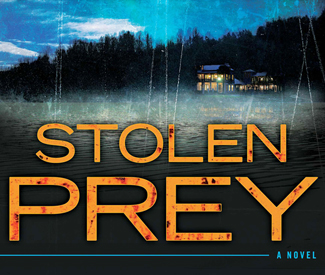
STOLEN PREY

By John Sandford

G.P. Putnam’s Sons

402 pp, hardcover $27.95

Put this one up there with The Affair. If you love Lucas Davenport and his world of twisted murder shit in and around the Twin Cities, then Stolen Prey works fine.

Mexican drug gangs seem to be the Most Evil Fuckers In The World this summer, and in Stolen Prey, they’re particularly horrible, doing a stomach-turning murder that takes place in a nice upper-middle class town. The dead family appears to have no ties to any type of criminal activity — but ah, there is much more here.

Again, nothing radically new (except a suprising ending involving Davenport’s adopted daughter, Letty, who apparently has some of the step-old-man in her), but a fine read for a sunny afternoon.

THE LITIGATORS

By John Grisham

Dell Paperback

488 pp, paper $9.99

Grishman practically invented the modern lawyer novel, and most of his protagonists are brilliant (if tormented) legal advocates who fight valiantly against corporate crime.

It was getting old.

This time around, there’s plenty of evil corporation (big pharma) — but the lawyers are bumbling idiots, worthless ambulance chasers who’ve stumbled into something they’re mind-bendingly unqualified to handle. Drunk lawyers, dumb lawyers, lawyers behaving badly … it’s a grand and glorious testament to the noble profession. And it moves right along.

DON’T BLINK

By James Patterson and Howard Roughan

Hachette

365 pp, paper $9.99

Patterson has written so many books I don’t think even he can keep track. The Alex Cross series is among the modern classics in crime lit. His current M.O.: Find co-writers who can do some of the heavy lifting while he polishes. At least, that’s how much of his stuff reads. And this one, sad to say, is a snooze.

Even in his collaborations, Patterson normally manages to keep things lively. The plots are good, the characters decent, and there’s no shortage of action. He’s into seriously depraved, psychotic villains and seriously evil enemies. Never a dull moment — mostly.

But Don’t Blink bored me. It’s about a reporter (good) who sees a mob killing (cool) and then gets in trouble (predictable). The protag is decent and believable, but the plot goes on and on and gets nowhere. Blink.

LET THE DEVIL SLEEP

By John Verdon

Crown

449 pp, hardcover $25

Verdon’s series hero, retired cop Dave Gurney, continues to live in his gruesome Green Acres in upstate New York, where his wife wants a quiet country life and he keeps tangling with psychokillers. I really liked the first two, Think of a Number and Shut Your Eyes Tight, and this one’s fine, although not as stone-cold sick-ass wacked-out crazy as the past two.

Here, Gurney looks into a cold case and everyone thinks he’s crazy except that the killer, who supposedly isn’t around, keeps doing things like shooting deadly hunting arrows into his garden. Between the murderer and the pain of his tormented marriage, there’s enough to keep you turning the pages. But it’s at best a B-plus.

ROBERT B. PARKER’S LULLABY

By Ace Atkins

G.P. Putnam’s Sons

320pp, hardcover $26.95

All of the knockoffs suck. Tom Clancy’s Ops Center? Worthless. The Jason Bourne sequels? Robert Ludlum’s ghost is puking. You don’t do that shit; it doesn’t work. And another writer trying to take on the Late Great Robert B. Parker and Spenser? Not a prayer. Give it up.

Except that Ace Atkins actually makes it work. And he does it not by becoming Parker but by staying true to the characters and developing just enough of his own voice that it’s not just a weak parody. You’ve got Spenser and Hawk and Vinnie and Susan Silverman and a 14-year-old terrified girl who hired the detective for a box of donuts and leads him into a fierce FBI-Boston mob frameup gig that sparkles like Parker of old.

For real. I’m amazed.

PR problems

0

caitlin@sfbg.com

HERBWISE Though I’ll admit the waves of federally-mandated dispensary closures that have washed over the Bay in recent months make it hard to keep in mind, I can’t shake the feeling that the key to legalization is not burning effigies of US Attorney Melinda Haag and harassing Barack Obama when he comes to town. Though those things can be fun.

These nonsensical days of the government blocking our access to cannabis will only stop when regular old citizens realize that the War on Drugs is not making them any safer.

Which is why I’m talking to Kristina Barnes about her porch rowdies. The mother of two, who is a project manager for an energy conservation company, moved to the Mission a year and a half ago. Along some of her neighbors and an agent from the Mission Miracle Mile Business Improvement District, Barnes wrote a letter in protest of property owner Gus Murad’s plan to put a weed dispensary into part of the Mission Street building that until recently housed his restaurant Medjool.

The letters were sent to the city’s Planning Commission, but also to Haag, causing East Bay Express reporter David Downs to call Barnes and her crew “snitches,” and “clueless, craven, money-hungry carpetbaggers,” whose primary goal was to gentrify the Mission. One of the letters, he reported, even used what I like to call “the g-word,” as a positive term, calling into question the protesters’ basic grasp of SF’s social climate.

Fine, I chortled a little at the snitches part.

But I live really close to Morado Collective’s proposed site. It troubled me that my neighbors thought that “this shop will invite loads more undesirable people to our neighborhood,” as Barnes’ letter put it.

The perception of the pot clubs as a dangerous, disruptive place is sadly, common — Haag has used it as justification for her crusade, even though a UCLA study published in the July issue of the Journal of Studies on Alcohol and Drugs found zero evidence that dispensaries raise crime rates.

I needed to know where the negative image was coming from. So I called Barnes up to find out why she didn’t want high-quality nuggets near her family.

Turns out, Barnes does not support medical marijuana. “There’s a lot of misleading legality about it,” she said. “If I were to guess, 80 percent of the people [who frequent dispensaries] have no reason to be there.” In other neighborhoods, she told me, she’s seen people exit clubs and give joints to friends.

She thinks the Morado Collective will adversely affect her block. “My primary concern is that it’s really selfish,” she told me. “We moved into a neighborhood that has the promise of getting a little cleaner and better.” More saliently, she was concerned that her porch would look like an attractive place to smoke that newly-purchased bud. People use it as a smoke spot already, she said.

Of course, there was no reason to base this conversation on conjecture. Until it was shuttered by the feds earlier this summer, Shambhala Healing Center welcomed patients at 2441 Mission — across the street from the Morado Collective’s future home. (The dispensary is now delivery-only.) Had Barnes’ porch been inundated by Shambhala’s patrons? Had such disruptions diminished in the months since the club closed its doors?

Actually, she was unaware that she’d been living around the corner from a dispensary since she moved to the neighborhood. Granted, Shambhala looked like a yoga studio from the outside. “I can’t believe I didn’t know the other one was there,” Barnes said. It was unclear if this fact was enough to affect her views on disruptive dispensaries, but one hopes it was food for thought.


ALSO, LOGIC PROBLEMS

While researching this column, I also spoke with Philip Lesser of the MMMBID, who told me his neighborhood group was firmly in favor of medical marijuana, likening pot clubs to medical centers. But, he said, the Morado Collective’s spot between fancy restaurants Foreign Cinema and Lolinda “just doesn’t seem like the appropriate place to have a doctor’s office.”

What would be appropriate? “I’m thinking that anything that could better promote the arts and entertainment,” he ventured, adding that Alamo Draft House is set to open a five-screen movie theater in another Murad property across the street.

But — what makes you want to go to the movies more than weed?


Film Listings

0

Film listings are edited by Cheryl Eddy. Reviewers are Kimberly Chun, Dennis Harvey, and Lynn Rapoport. For rep house showtimes, see Rep Clock. Due to the Labor Day holiday, theater information was incomplete at presstime.

OPENING

Bachelorette See "Goodbye to Romance." (1:34)

Chicken With Plums Steeped in whimsy — and a longing for love, beauty, and home — this latest effort from brilliant Persian-French cartoonist-filmmaker Marjane Satrapi and director Vincent Paronnaud flaunts the odd contours of its eccentric narrative, enchants with its imaginative tangents, sprawls like an unincapsulated life, and then takes off on aching, campy romantic reverie—a magical realistic vision of one Iranian artist’s doomed trajectory. Master violinist Nasser Ali Khan (Mathieu Amalric) is seeking the ineffable — a replacement for his destroyed instrument — and otherwise he’s determined to die. We trace the mystery of his passing, backward, with wanders through the life of his family and loved one along the way in this playful, bittersweet feast. Despite Amalric’s glazed-eyed mugging, which almost spoils the dish, Satrapi’s wonderfully arch yet lyrical visual sensibility and resonant characters — embodied by Maria de Medeiros, Jamel Debbouze, Golshifteh Farahani, and Isabella Rossellini, among others — satisfy, serving up so much more than chicken with plums. (1:31) (Chun)

The Inbetweeners Horny teens on holiday — what could go wrong? Based on the British sitcom, not the recent MTV remake. (1:37).

Kumaré See "False Idol." (1:24) Roxie.

Samsara Samsara is the latest sumptuous, wordless offering from director Ron Fricke, who helped develop this style of dialogue- and context-free travelogue with Koyaanisqatsi (1982) and Baraka (1992). Spanning five years and shooting on 70mm film to capture glimmers of life in 25 countries on five continents, Samsara, which spins off the Sanskrit word for the "ever-turning wheel of life," is nothing if not good-looking, aspiring to be a kind of visual symphony boosted by music by the Dead Can Dance’s Lisa Gerrard and composers Michael Stearns and Marcello De Francisci. Images of natural beauty, baptisms, and an African woman and her babe give way to the madness of modern civilization — from jam-packed subways to the horrors of mechanized factory farming to a bizarre montage of go-go dancers, sex dolls, trash, toxic discarded technology, guns, and at least one gun-shaped coffin. After such dread, the opening and closing scenes of Buddhist spirituality seem almost like afterthoughts. The unmistakable overriding message is: humanity, you dazzle in all your glorious and inglorious dimensions — even at your most inhumane. Sullying this hand wringing, selective meditation is Fricke’s reliance on easy stereotypes: the predictable connections the filmmaker makes between Africa and an innocent, earthy naturalism, and Asia and a vaguely threatening, mechanistic efficiency, come off as facile and naive, while his sonic overlay of robot sounds over, for instance, an Asian woman blinking her eyes comes off as simply offensive. At such points, Fricke’s global leap-frogging begins to eclipse the beauty of his images and foregrounds his own biases. (1:39) (Chun)

The Words A writer (Bradley Cooper) faces the consequences of passing off the work of another man (Jeremy Irons) as his own. (1:36)

ONGOING

Ai Weiwei: Never Sorry Unstoppable force meets immovable object — and indeed gets stopped — in Alison Klayman’s documentary about China’s most famous contemporary artist. A larger than life figure, Ai Weiwei’s bohemian rebel persona was honed during a long (1981-93) stint in the U.S., where he fit right into Manhattan’s avant-garde and gallery scenes. Returning to China when his father’s health went south, he continued to push the envelope with projects in various media, including architecture — he’s best known today for the 2008 Beijing Olympics’ "Bird’s Nest" stadium design. But despite the official approval implicit in such high-profile gigs, his incessant, obdurate criticism of China’s political repressive politics and censorship — a massive installation exposing the government-suppressed names of children killed by collapsing, poorly-built schools during the 2008 Sichuan earthquake being one prominent example — has tread dangerous ground. This scattershot but nonetheless absorbing portrait stretches its view to encompass the point at which the subject’s luck ran out: when the film was already in post-production, he was arrested, then held for two months without official charge before he was accused of alleged tax evasion. (He is now free, albeit barred from leaving China, and "suspected" of additional crimes including pornography and bigamy.) (1:31) Smith Rafael. (Harvey)

The Amazing Spider-Man A mere five years after Sam Raimi and Tobey Maguire’s Spider-Man 3 — forgettable on its own, sure, but 2002’s Spider-Man and especially 2004’s Spider-Man 2 still hold up — Marvel’s angsty web-slinger returns to the big screen, hoping to make its box-office mark before The Dark Knight Rises opens in a few weeks. Director Marc Webb (2009’s 500 Days of Summer) and likable stars Andrew Garfield (as the skateboard-toting hero) and Emma Stone (as his high-school squeeze) offer a competent reboot, but there’s no shaking the feeling that we’ve seen this movie before, with its familiar origin story and with-great-power themes. A little creativity, and I don’t mean in the special effects department, might’ve gone a long way to make moviegoers forget this Spidey do-over is, essentially, little more than a soulless cash grab. Not helping matters: the villain (Rhys Ifans as the Lizard) is a snooze. (2:18) (Eddy)

The Ambassador Mads Brügger’s Danish documentary might be considered a cross between Borat (2006) and Jackass — its subject impersonates a fictional character to interact with real people in a series of reckless stunts that could conceivably be fatal. But the journalist-filmmaker-protagonist is up to something considerably more serious, and dangerous, than showing Americans doing stupid pet tricks. He buys a (fake) international diplomatic credential from a European broker, then uses his status as an alleged ambassador representing Liberia to set up a gray-market trade smuggling blood diamonds under the thin cover of building a never-to-be matchstick factory in the Central African Republic. What surprises is not so much how corrupt officials make that possible at every step, but how confoundedly easy it is — even if Brügger might well be in mortal peril from time to time. Clearly, leeching money out of Africa into First World hands is everyday big business, with few questions asked and no risk of having to share the spoils with those invisible ordinary citizens whose toil (in, for instance, diamond mines) makes it all possible. All the above is filmed by hidden cameras, offering damning proof of
a trade many know about but few will actually admit exists. This amusing, appalling expose is "controversial," of course — the Liberian government and that purveyor of instant diplo-cred have already threatened legal action against Brügger for his "ethical violations" posing as someone he’s not to reveal their own very real ethical violations. Which underlines that truly corrupted people seldom have any sense of humor, or irony. (1:37) Roxie. (Harvey)

The Apparition Does this horror flick stand a ghost of a chance against its predecessors? So many bodies, so many mysteriously slammed doors, so many girl ghouls — they all surface in this obviously low-budget cash-in on the coattails of the Paranormal Activity franchise. Look to the signs: the slow build of zero-CGI/bucks tension-building devices like flung-open doors that are supposed to be locked, scarily grainy, nausea-inducing handheld video footage and spastic editing, and screams in pitch blackness—with a dash of everything from 1979’s Phantasm to Fulci to J-Horror. Prefaced by the story of psychics’ attempts to rouse a spirit, then a flashback to a group of college students’ try at recreating the séance by magnifying their brainwaves, The Apparition opens on the cute, perfectly made-up, and way-too-glamorous-for-suburbia Kelly (Ashley Greene) and her boyfriend Ben (Sebastian Stan), who have just moved into a new faceless development in the middle of nowhere, into a house her family has bought as an investment. Turns out they aren’t the only ones playing house, as the building’s alarm is continually bypassed, mysterious mold appears, and the neighbor’s adorable pup whimpers at thin air and obligingly dies in their laundry room. Matters go from bad to worst, as some invisible force does in Kelly’s cactus, messes up her closet, and blows the lights — all of which also sounds like the antics of a lousy roommate. Add in choppy, continuity-destroying editing; throwaway dialogue; music that sounds like it came from Kelly’s favorite store, Costco; overt appropriations like a slithery, long-haired ghoul girl that slimes her way out of a cardboard box; and that important, indelibly spooky image that comes far too late to count — and you’ll find yourself rooting for the fiend to put these kids out of their misery. (1:22) (Chun)

The Awakening In 1921 England Florence Cathcart (Rebecca Hall) is a best-selling author who specializes in exposing the legions of phony spiritualists exploiting a nation still grieving for its World War I dead. She’s rather rudely summoned to a country boys’ boarding school by gruff instructor Robert (Dominic West), who would be delighted if she could disprove the presence of a ghost there — preferably before it frightens more of his young charges to death. Borrowing tropes from the playbooks of recent Spanish and Japanese horror flicks, Nick Murphy’s period thriller is handsome and atmospheric, but disappointing in a familiar way — the buildup is effective enough, but it all unravels in pat logic and rote "Boo!" scares when the anticlimactic payoff finally arrives. The one interesting fillip is Florence’s elaborate, antiquated, meticulously detailed arsenal of equipment and ruses designed to measure (or debunk) possibly supernatural phenomena. (1:47) (Harvey)

Beasts of the Southern Wild Six months after winning the Grand Jury Prize at Sundance (and a Cannes Camera d’Or), Beasts of the Southern Wild proves capable of enduring a second or third viewing with its originality and strangeness fully intact. Magical realism is a primarily literary device that isn’t attempted very often in U.S. cinema, and succeeds very rarely. But this intersection between Faulkner and fairy tale, a fable about — improbably — Hurricane Katrina, is mysterious and unruly and enchanting. Benh Zeitlin’s film is wildly cinematic from the outset, as voiceover narration from six-year-old Hushpuppy (Quvenzhané Wallis) offers simple commentary on her rather fantastical life. She abides in the Bathtub, an imaginary chunk of bayou country south of New Orleans whose residents live closer to nature, amid the detritus of civilization. Seemingly everything is some alchemical combination of scrap heap, flesh, and soil. But not all is well: when "the storm" floods the land, the holdouts are forced at federal gunpoint to evacuate. With its elements of magic, mythological exodus, and evolutionary biology, Beasts goes way out on a conceptual limb; you could argue it achieves many (if not more) of the same goals Terrence Malick’s 2011 The Tree of Life did at a fraction of that film’s cost and length. (1:31) Smith Rafael. (Harvey)

The Bourne Legacy Settle down, Matt Damon fans — the original Bourne appears in The Bourne Legacy only in dialogue ("Jason Bourne is in New York!") and photograph form. Stepping in as lead badass is Jeremy Renner, whose twin powers of strength and intelligence come courtesy of an experimental-drug program overseen by sinister government types (including Edward Norton in an utterly generic role) and administered by lab workers doing it "for the science!," according to Dr. Rachel Weisz. Legacy‘s timeline roughly matches up with the last Damon film, The Bourne Ultimatum, which came out five years ago and is referenced here like we’re supposed to be on a first-name basis with its long-forgotten plot twists. Anyway, thanks to ol’ Jason and a few other factors involving Albert Finney and YouTube, the drug program is shut down, and all guinea-pig agents and high-security-clearance doctors are offed. Except guess which two, who manage to flee across the globe to get more WMDs for Renner’s DNA. Essentially one long chase scene, The Bourne Legacy spends way too much of its time either in Norton’s "crisis suite," watching characters bark orders and stare at computer screens, or trying to explain the genetic tinkering that’s made Renner a super-duper-superspy. Remember when Damon killed that guy with a rolled-up magazine in 2004’s The Bourne Supremacy? Absolutely nothing so rad in this imagination-free enterprise. (2:15) (Eddy)

Brave Pixar’s latest is a surprisingly familiar fairy tale. Scottish princess Merida (voiced by Kelly Macdonald) would rather ride her horse and shoot arrows than become engaged, but it’s Aladdin-style law that she must marry the eldest son of one of three local clans. (Each boy is so exaggeratedly unappealing that her reluctance seems less tomboy rebellion than common sense.) Her mother (Emma Thompson) is displeased; when they quarrel, Merida decides to change her fate (Little Mermaid-style) by visiting the local spell-caster (a gentle, absent-minded soul that Ursula the Sea Witch would eat for brunch). Naturally, the spell goes awry, but only the youngest of movie viewers will fear that Merida and her mother won’t be able to make things right by the end. Girl power is great, but so are suspense and originality. How, exactly, is Brave different than a zillion other Disney movies about spunky princesses? Well, Merida’s fiery explosion of red curls, so detailed it must have had its own full-time team of animators working on it, is pretty fantastic. (1:33) (Eddy)

The Bullet Vanishes Veteran Hong Kong actor Lau Ching-wan stars as a Sherlock Holmes type in 1930s Shanghai, bumped up from prison-guard detail to homicide detective by top brass impressed with his talent, if not his unusual methods. Good timing, since there’s been a series of killings at the local munitions factory, an operation run by a Scooby Doo-ish villain — in cahoots with corrupt cops — who’s prone to snappy hats and checkered overcoats. Adding to the mystery: a tragic back story involving Russian roulette and blood-written graffiti promising "The phantom bullets will kill you all!" Helping solve the crimes is Nicholas Tse as "the fastest gun in Tiancheng," no slouch of an investigator himself; together, the sleuths compile evidence and recreate scenes of murders, including one that seemingly transpired in a locked room with only one exit. The Bullet Vanishes contains more plot twists, slightly fewer steampunk flourishes, and way less slo-mo fist action than Guy Ritchie’s recent attempts at Holmes; though it’s no masterpiece, it’s a fun enough whodunit, with a reliably great and quirky performance from Lau. (2:00) (Eddy)

The Campaign (1:25)

Celeste and Jesse Forever Married your best friend, realized you love but can’t be in love with each other, and don’t want to let all those great in-jokes wither away? Such is the premise of Celeste and Jesse Forever, the latest in what a recent wave of meaty, girl-centric comedies penned by actresses — here Rashida Jones working with real-life ex Will McCormack; there, Zoe Kazan (Ruby Sparks), Zoe Lister Jones (Lola Versus), and Lena Dunham (Girls) — who have gone the DIY route and whipped up their own juicy roles. There’s no mistaking theirs for your average big-screen rom-com: they dare to wallow harder, skew smarter, and in the case of Celeste, tackle the thorny, tough-to-resolve relationship dilemma that stubbornly refuses to conform to your copy-and-paste story arc. Nor do their female protagonists come off as uniformly likable: in this case, Celeste (Jones) is a bit of an aspiring LA powerbitch. Her Achilles heel is artist Jesse (Andy Samberg), the slacker high school sweetheart she wed and separated from because he doesn’t share her goals (e.g., he doesn’t have a car or a job). Yet the two continue to spend all their waking hours together and share an undeniable rapport, extending from Jesse’s encampment in her backyard apartment to their jokey simulated coitus featuring phallic-shaped lip balm. Throwing a wrench in the works: the fact that they’re still kind of in love with each other, which all their pals, like Jesse’s pot-dealer bud Skillz (McCormack), can clearly see. It’s an shaggy, everyday breakup yarn, writ glamorous by its appealing leads, that we too rarely witness, and barring the at-times nausea-inducing shaky-cam under the direction of Lee Toland Krieger, it’s rendered compelling and at times very funny — there’s no neat and tidy way to say good-bye, and Jones and McCormack do their best to capture but not encapsulate the severance and inevitable healing process. It also helps that the chemistry practically vibrates between the boyish if somewhat one-note Samberg and the soulful Jones, who fully, intelligently rises to the occasion, bringing on the heartbreak. (1:31) (Chun)

Compliance No film at this year’s Sundance Film Festival encountered as much controversy as Craig Zobel’s Compliance. At the first public screening, an all-out shouting match erupted, with an audience member yelling "Sundance can do better!" You can’t buy that kind of publicity. Every screening that followed was jam-packed with people hoping to experience the most shocking film at Sundance, and the film did not disappoint. (Beware: every review I have happened upon has unnecessarily spoiled major plots in the film, which is based on true events.) What is so impressive about Zobel’s film is how it builds up a sense of ever-impending terror. In fact, I would go as far as to say that the film steps into Psycho (1960) terrain, as it boldly aims to confront a society filled with people who are trained to follow rules without questioning them. Magnolia Pictures, which previously collaborated with Zobel on his debut film Great World of Sound (which premiered at Sundance in 2007), picked up the film for theatrical release; if you dare to check it out, prepare to be traumatized as well as intellectualized. You’ll be screaming about one of the most audacious movies of 2012 — and that’s exactly why the film is so brilliant. For an interview with Zobel, visit www.sfbg.com/pixel_vision. (1:30) (Jesse Hawthorne Ficks)

Cosmopolis With end times nigh and the 99 percent battering the gates of the establishment, it’s little wonder David Cronenberg’s rendition of the Don DeLillo novel might rotate, with the stately rhythm of a royal funeral and deliciously tongue-in-cheek humor, around one of the most famed vampire heartthrobs at the cineplex. Sadly, a recent paparazzi scandal threatens to eclipse this latest, enjoyably blighted installment in the NYC urban nightmare genre. Robert Pattinson’s billionaire asset manager Eric Packer takes meetings with his new wife Elise (Sarah Gadon) and staffers like his monetary theorist Vija (Samantha Morton) in his moving office: a white, leather-bound stretch limo that materializes like a sleek, imposing extension of his pale frame. Seriously disassociated from reality on multiple levels, Eric is a 28-year-old boy in a bubble, speaking of himself in third person and willing to spend all day making his way across town to get a haircut at his father’s old barbershop, even though his head of security (Kevin Durand) warns him that at least one "credible threat" has designs on his life. The passing of his favorite Sufi rapper (K’Naan), a possible Rothko for sale, a mad pie-thrower, and an asymmetrical prostate all threaten to capsize those, as it turns out, not-so-humble plans. Warning: the brainier members of Team Edward might plan on finding their minds blown by this thoughtful and mordantly humorous meditation on this country’s cult of money, while Cronenberg watchers will be gratified to pluck out his recurring themes, here dealt with a lighter hand than usual. At this date, rather than telegraphing how one might feel about a scene by way of, say, music, the director is increasingly comfortable with the ambiguity — and the uneasy, pleasing mix of sneaking repulsion and gimlet-eyed humor, of these scenes and their language. Thus the autoerotic-car fetishism of Crash (1996) and hallucinatory culture grazing of Naked Lunch (1991) — and that fascination with how a body intersects sexually or otherwise with a machine or "other" — seems completely natural here. Or perhaps it’s a measure of how much Cronenberg’s preoccupations and cinematic language have made themselves at home in the vernacular. (1:49) (Chun)

The Dark Knight Rises Early reviews that called out The Dark Knight Rises‘ flaws were greeted with the kind of vicious rage that only anonymous internet commentators can dish out. And maybe this is yet another critic-proof movie, albeit not one based on a best-selling YA book series. Of course, it is based on a comic book, though Christopher Nolan’s sophisticated filmmaking and Christian Bale’s tortured lead performance tend to make that easy to forget. In this third and "final" installment in Nolan’s trilogy, Bruce Wayne has gone into seclusion, skulking around his mansion and bemoaning his broken body and shattered reputation. He’s lured back into the Batcave after a series of unfortunate events, during which The Dark Knight Rises takes some jabs at contemporary class warfare (with problematic mixed results), introduces a villain with pecs of steel and an at-times distractingly muffled voice (Tom Hardy), and unveils a potentially dangerous device that produces sustainable energy (paging Tony Stark). Make no mistake: this is an exciting, appropriately moody conclusion to a superior superhero series, with some nice turns by supporting players Gary Oldman and Joseph Gordon-Levitt. But in trying to cram in so many characters and plot threads and themes (so many prisons in this thing, literal and figural), The Dark Knight Rises is ultimately done in by its sprawl. Without a focal point — like Heath Ledger’s menacing, iconic Joker in 2008’s The Dark Knight — the stakes aren’t as high, and the end result feels more like a superior summer blockbuster than one for the ages. (2:44) (Eddy)

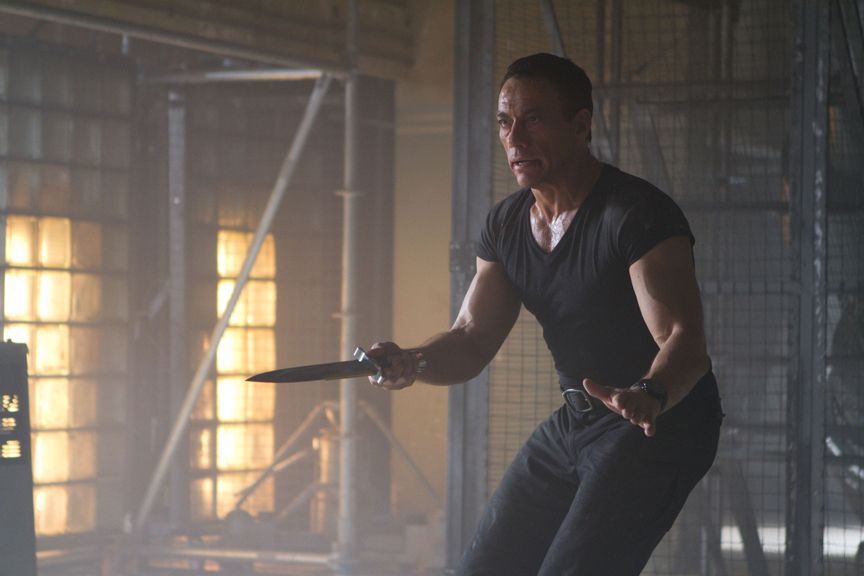
The Expendables 2 (1:43)

Farewell, My Queen (Benoît Jacquot, France, 2012) Opening early on the morning of July 14, 1789, Farewell, My Queen depicts four days at the Palace of Versailles on the eve of the French Revolution, as witnessed by a young woman named Sidonie Laborde (Léa Seydoux) who serves as reader to Marie Antoinette (Diane Kruger). Sidonie displays a singular and romantic devotion to the queen, while the latter’s loyalties are split between a heedless amour propre and her grand passion for the Duchess de Polignac (Virginie Ledoyen). These domestic matters and other regal whims loom large in the tiny galaxy of the queen’s retinue, so that while elsewhere in the palace, in shadowy, candle-lit corridors, courtiers and their servants mingle to exchange news, rumor, panicky theories, and evacuation plans, in the queen’s quarters the task of embroidering a dahlia for a projected gown at times overshadows the storming of the Bastille and the much larger catastrophe on the horizon. (1:39) (Rapoport)

Flying Swords of Dragon Gate The wuxia film is as integral to China’s cinema as the Western is to America’s — though the tradition of the "martial hero" in literature and other art forms dates back well before Clint Eastwood ever donned a serape. Still, the two genres have some notable similarities, a fact acknowledged by Tsui Hark’s Flying Swords of Dragon Gate, which adopts "the good, the bad, and the ugly" as a tagline in the splashy trailer for its American release. Hardcore fans of flying swordsmen and their ilk will recognize the (ill-) fated locale of the title, previously seen in the 1962 King Hu classic Dragon Gate Inn and the 1992 Tsui-produced New Dragon Gate Inn. Flying Swords is less remake, more continuation, and it’s also the first time the dusty desert way station has been rendered in 3D IMAX. Tsui, whose trademark mix of martial arts and special FX wizardry goes back to 1983’s Zu Warriors from the Magic Mountain, is a prolific filmmaker who’s worked often with Flying Swords star Jet Li. Li plays Zhao Huai’an, crusading fly in the ointment of powerful eunuchs who’ve injected mass corruption into Ming Dynasty-era China. Chief among them is Eunuch Yu (Chen Kun), a preening, eyeliner’d villain intent on capturing both Zhao and a pregnant maid (Mavis Fan) who’s escaped from palace clutches. The cast expands to include a taciturn woman in disguise (Zhou Xun, as butched up here as her Painted Skin: The Resurrection co-star Chen is camp-ified) and multiple ne’er-do-wells, all of whom descend upon Dragon Gate Inn as a massive sandstorm looms on the horizon. Alliances form (and are betrayed), schemes are launched (and botched), and the fight scenes — acrobatic and dynamic, with airborne tables, snapping chains, razor-sharp wires, and clashing swords — are mind- and eardrum-blowing. (2:01) (Eddy)

For a Good Time, Call&ldots; Suffering the modern-day dilemmas of elapsed rent control and boyfriend douchebaggery, sworn enemies Katie (Ari Graynor) and Lauren (Lauren Miller) find themselves shacking up in Katie’s highly covetable Manhattan apartment, brought together on a stale cloud of resentment by mutual bestie Jesse (Justin Long, gamely delivering a believable version of your standard-issue young hipster NYC gay boy). The domestic glacier begins to melt somewhere around the time that Lauren discovers Katie is working a phone-sex hotline from her bedroom; equipped with a good head for business, she offers to help her go freelance for a cut of the proceeds. Major profitability ensues, as does a friendship evoking the pair bonding at the center of your garden-variety romantic comedy, as Katie trains Lauren to be a phone-sex operator and the two share everything from pinkie swears and matching pink touch-tone phones to intimate secrets and the occasional hotline threesome. Directed by Jamie Travis and adapted from a screenplay by Miller and Katie Anne Naylon, the film is a welcome response to the bromance genre, and with any luck it may also introduce linguistic felicities like "phone-banging" and "let’s get this fuckshow started" into the larger culture. The raunchy telephonic interludes include cameos by Kevin Smith and Seth Rogen (Miller’s husband) as customers calling from such unfurtive locations as a public bathroom stall and the front seat of a taxicab. But the two roomies supply plenty of dirty as Katie, an abashed wearer of velour and denim pantsuits, helps the more restrained Lauren discover the joys of setting free her inner potty mouth. (1:25) (Rapoport)

Hermano As a child, Julio (Eliu Armas) discovered foundling Daniel (Fernando Moreno) abandoned in a dumpster; taken in by the former’s mom (Marcela Giron), the two boys are raised as brothers. They’re close as can be, even if Julio is physically slight, shy, and straight-arrow, while strapping Daniel is a born leader and survivor quite willing to cross the legal line when it serves his purposes. One area in which they’re of the same mind is the soccer field, where both (especially Daniel) are talented players with hopes of going pro. But that seems a remote dream in their violence-ridden slum. Marcel Rasquin’s Venezuelan sports-crime drama is built on some hoary clichés — the "good" brother/"bad" brother dynamic, the tragedy that sparks revenge that sparks more tragedy, etc. — but is so unpretentious, energetic, sincere. and well-cast that skeptical resistance is futile. It’s a modest movie, but a true, satisfying pleasure. (1:37) (Harvey)

Hit and Run Annie (Kristen Bell) has a Stanford doctorate but is treading in the academic backwaters until the prospect is raised of an ideal department-heading position at UCLA. She’s thrilled, but also conflicted, because live-in beau Charlie (Dax Shepard) is in the Federal Witness Protection program, and can’t leave the nowhere burg he lives in incognito — particularly for Los Angeles — without risking serious personal harm. However, for love he decides he’ll risk everything so she can take the job. Unfortunately, this fast attracts the attention of various people very much interested in halting this exodus, for various reasons: notably Charlie’s inept U.S. Marshall "protector" (Tom Arnold), Annie’s psycho ex (Smallville’s Michael Rosenbaum), and a guy with an even more serious grudge against Charlie (Bradley Cooper in a dreadlock wig). A whole lot of wacky chases and stunt driving ensues. The second feature Shepard’s co-directed (with David Palmer) and written, this aims for a cross between 1970s drive-in demolition derbies (1977’s Smokey and the Bandit, 1974’s Dirty Mary, Crazy Larry, etc.) and envelope-pushing comedy thrillers like 1993’s True Romance. There’s a lot of comic talent here, including some notable cameos, yet Hit and Run is one of those cases where the material is almost there, but not quite. It moves breezily enough but some of the characters are more annoying than funny; the dialogue is an awkward mix of bad taste and PC debates about bad taste; and some ideas that aim to be hilarious and subversive (naked old people, a long discussion about jailhouse rape) just sit there, painfully. Which makes this only the second-best Dax Shepard movie with incarceration rape jokes, after 2006’s Let’s Go to Prison. (1:38) (Harvey)

Hope Springs Heading into her 32nd year of matrimony with aggressively oblivious Arnold (Tommy Lee Jones), desperate housewife Kay (Meryl Streep) sets aside her entrenched passivity in a last-ditch effort to put flesh back on the skeleton of a marriage. Stumbling upon the guidance of one Dr. Bernard Feld (Steve Carell) in the self-help section of a bookstore, Kay (barely) convinces Arnold to accompany her to a weeklong session at Feld’s Center for Intensive Couples Counseling, in Hope Springs, Maine. The scenes from a marriage leading up to their departure, as well as the incremental advances and crippling setbacks of their therapeutic sojourn, are poignant and distressing and possibly familiar. Some slow drift, long ago set in motion, though we don’t know by what, has settled them in concrete in their separate routines — and bedrooms. It’s the kind of thing that, if it were happening in real life — say, to you — might make you weep. But somehow, through the magic of cinema and the uncomfortable power of witnessing frankly depicted failures of intimacy, we laugh. This is by no means a wackiness-ensues sort of sexual comedy, though. Director David Frankel (2006’s The Devil Wears Prada and, unfortunately, 2008’s Marley & Me) and Jones and Streep, through the finely detailed particularities of their performances, won’t let it be, while Carell resists playing the therapeutic scenes for more than the gentlest pulses of humor. More often, his empathetic silences and carefully timed queries provide a place for these two unhappy, inarticulate, isolated people to fall and fumble and eventually make contact. (1:40) (Rapoport)

The Imposter A family tragedy, an international thriller, a Southern-fried mystery, and a true story: The Imposter is all of these things. This unique documentary reveals the tale of Frédéric Bourdin, dubbed "the Chameleon" for his epic false-identity habit. His ballsiest accomplishment was also his most heinous con: in 1997, he claimed to be Nicholas Barclay, a San Antonio teen missing since 1994. Amazingly, the impersonation worked for a time, though Bourdin (early 20s, brown-eyed, speaks English with a French accent) hardly resembled Nicholas (who would have been 16, and had blue eyes). Using interviews — with Nicholas’ shell-shocked family, government types who unwittingly aided the charade, and Bourdin himself — and ingenious re-enactments that borrow more from crime dramas than America’s Most Wanted, director Bart Layton weaves a multi-layered chronicle of one man’s unbelievable deception. (1:39) (Eddy)

The Intouchables Cries of "racism" seem a bit out of hand when it comes to this likable albeit far-from-challenging French comedy loosely based on a real-life relationship between a wealthy white quadriplegic and his caretaker of color. The term "cliché" is more accurate. And where were these critics when 1989’s Driving Miss Daisy and 2011’s The Help — movies that seem designed to make nostalgic honkies feel good about those fraught relationships skewed to their advantage—were coming down the pike? (It also might be more interesting to look at how these films about race always hinge on economies in which whites must pay blacks to interact with/educate/enlighten them.) In any case, Omar Sy, portraying Senegalese immigrant Driss, threatens to upset all those pundits’ apple carts with his sheer life force, even when he’s shaking solo on the dance floor to sounds as effortlessly unprovocative, and old-school, as Earth, Wind, and Fire. In fact, everything about The Intouchables is as old school as 1982’s 48 Hrs., spinning off the still laugh-grabbing humor that comes with juxtaposing a hipper, more streetwise black guy with a hapless, moneyed chalky. The wheelchair-bound Philippe (Francois Cluzet) is more vulnerable than most, and he has a hard time getting along with any of his nurses, until he meets Driss, who only wants his signature for his social services papers. It’s not long before the cultured, classical music-loving Philippe’s defenses are broken down by Driss’ flip, somewhat honest take on the follies and pretensions of high culture — a bigger deal in France than in the new world, no doubt. Director-writer Olivier Nakache and Eric Toledano aren’t trying to innovate —they seem more set on crafting an effervescent blockbuster that out-blockbusters Hollywood — and the biggest compliment might be that the stateside remake is already rumored to be in the works. (1:52) (Chun)

Killer Joe William Friedkin made two enormously popular movies that have defined his career (1971’s The French Connection and 1973’s The Exorcist), but his resumé also contains an array of lesser films that are both hit-and-miss in critical and popular appeal. Most have their defenders. After a couple biggish action movies, it seemed a step down for him to be doing Bug in 2006; though it had its limits as a psychological quasi-horror, you could feel the cracking recognition of like minds between cast, director, and playwright Tracy Letts. Letts and Friedkin are back in Killer Joe, which was a significant off-Broadway success in 1998. In the short, violent, and bracing film version, Friedkin gets the ghoulish jet-black-comedic tone just right, and his actors let themselves get pushed way out on a limb to their great benefit — including Matthew McConaughey, playing the title character, who’s hired by the Smith clan of Texas to bump off a troublesome family member. Needless to say, almost nothing goes as planned, escalating mayhem to new heights of trailer-trash Grand Guignol. Things get fugly to the point where Killer Joe becomes one of those movies whose various abuses are shocking enough to court charges of gratuitous violence and misogyny; unlike the 2010 Killer Inside Me, for instance, it can’t really be justified as a commentary upon those very entertainment staples. (Letts is highly skilled, but those looking for a message here will have to think one up for themselves.) Still, Friedkin and his cast do such good work that Killer Joe‘s grimly humorous satisfaction in its worst possible scenarios seems quite enough. (1:43) (Harvey)

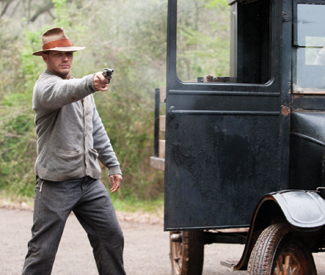
Lawless Lawless has got to be the most pretentiously humorless movie ever made about moonshiners — a criminal subset whose adventures onscreen have almost always been rambunctious and breezy, even when violent. Not here, bub. Adapting Matt Bondurant’s fact-inspired novel The Wettest County in the World about his family’s very colorful times a couple generations back, director John Hillcoat and scenarist (as well as, natch, composer) Nick Cave have made one of those films in which the characters are presented to you as if already immortalized on Mount Rushmore — monumental, legendary, a bit stony. They’ve got a crackling story about war between hillbilly booze suppliers and corrupt lawmen during Prohibition, and while the results aren’t dull (they’re too bloody for that, anyway), they’d be a whole lot better if the entire enterprise didn’t take itself so gosh darned seriously. The Bondurant brothers of Franklin County, Va. are considered "legends" when we meet them in 1931, having defied all and sundry as well as survived a few bullets: mack-truck-built Forrest (Tom Hardy); eldest Howard (Jason Clarke), who tipples and smiles a lot; and "runt of the litter" Jack (Shia LeBeouf), who has a chip on his shoulder. The local law looks the other way so long as their palms are greased, but the Feds send sneering Special Deputy Charlie Rakes (Guy Pearce), it’s an eye for an eye for an eye, etc. The revenge-laden action in Lawless is engaging, but the filmmakers are trying so hard to make it all resonant and folkloric and meta-cinematic, any fun you have is in spite of their efforts. (1:55) (Harvey)

Little White Lies In the wake of a serious accident that puts magnetic Ludo (Jean Dujardin, just briefly seen) in the hospital, his circle of closest friends go without him on their annual vacation at a beachfront summer home, courtesy of well-off restaurateur Max (Francois Cluzet) and wife Vero (Valerie Bonneton). But this year they’ve all got a lot of drama going on. Marie (Marion Cotillard) is suffering the uncomfortable consequences of all the lovers (male and female) she’s run out on when "commitment" reared its head. Similarly, the roving eye of actor Eric (Gilles Lellouche) threatens the stable relationship he’s finally sorta settled on. Hapless boy-man Antoine (Laurent Lafitte) obsesses over the longtime girlfriend who’s dumping him. And Vincent (Benoit Magimel) endangers his marriage to Isabelle (Pascale Arbillot) by privately proclaiming more-than-platonic love for best friend Max — whose discomfort manifests itself in hostile behaviors that threaten to ruin everyone’s stay. Actor Guillaume Canet’s third film as writer-director (following the 2006 hit thriller Tell No One) has been compared, even by himself, to 1983’s The Big Chill. But while that slick, somewhat glib seriocomedy’s characters had 1960s activist pasts and faded ideals to square with encroaching midlife, this slicker, glibber ensemble piece is about people who’ve never shared much more than good times and mutual self-absorption. Though Canet has worked with most of these actors before, and developed Lies in collaboration with them, the thinly amusing, often contrived results hardly tax anyone’s resources. (Nor are they equal-opportunity: star attraction Cotillard aside, he barely seems interested in the women here.) It takes two and a half hours for this overblown fluff to arrive at a group-hug freeze frame (ugh), aiming for emotional heft it still hasn’t earned. (2:34) Smith Rafael. (Harvey)

Moonrise Kingdom Does Wes Anderson’s new film mark a live-action return to form after 2007’s disappointingly wan Darjeeling Limited? More or less. Does it tick all the Andersonian style and content boxes? Indubitably. In the most obvious deviation Anderson has taken with Moonrise, he gives us his first period piece, a romance set in 1965 on a fictional island off the New England coast. After a chance encounter at a church play, pre-teen Khaki Scout Sam (newcomer Jared Gilman) instantly falls for the raven-suited, sable-haired Suzy Bishop (Kara Hayward, ditto). The two become pen pals, and quickly bond over the shared misery of being misunderstood by both authority figures and fellow kids. The bespectacled Sam is an orphan, ostracized by his foster parents and scout troop (much to the dismay of its straight-arrow leader Edward Norton). Suzy despises her clueless attorney parents, played with gusto by Bill Murray and Frances McDormand in some of the film’s funniest and best scenes. When the two kids run off together, the whole thing begins to resemble a kind of tween version of Godard’s 1965 lovers-on the-lam fantasia Pierrot le Fou. But like most of Anderson’s stuff, it has a gauzy sentimentality more akin to Truffaut than Godard. Imagine if the sequence in 2001’s The Royal Tenenbaums where Margot and Richie run away to the Museum of Natural History had been given the feature treatment: it’s a simple yet inspired idea, and it becomes a charming little tale of the perils of growing up and selling out the fantasy. But it doesn’t feel remotely risky. It’s simply too damn tame. (1:37) (Michelle Devereaux)

The Odd Life of Timothy Green (2:05)

The Oogieloves in the Big Balloon Adventure (1:28)

ParaNorman (1:32)

The Possession (1:31)

Premium Rush "Fixed gear. Steel frame. No brakes. Can’t stop … don’t want to." Thus goes the gear breakdown and personal philosophy of New York City bike messenger Wilee (Joseph Gordon-Levitt), an aggro rider who uses his law school-refined brain to make split-second decisions regarding which way to dart through Midtown traffic. Though bike messengers had a pop culture moment in the 1990s, Premium Rush is set in the present day, with one of Wilee’s numerous voice-overs explaining the job’s continued importance even in the digital era. One such example: a certain envelope he’s tasked with ferrying across the city, given to him by the troubled roommate (Jamie Chung) of the pretty fellow messenger (Dania Ramirez) he’s romantically pursuing. The contents of the envelope, and the teeth-gnashingly evil-cop-with-a-gambling-problem (Michael Shannon, adding some weird flair to what’s essentially a stock villain) who would dearly love to get his mitts on it, are less crucial to Premium Rush than the film’s many, many chase scenes featuring Wilee outwitting all comers with his two-wheeled Frogger moves. Silly fun from director David Koepp (2008’s Ghost Town), but not essential unless you’re a fixie fanatic or a JGL completist. (1:31) (Eddy)

The Queen of Versailles Lauren Greenfield’s obscenely entertaining The Queen of Versailles takes a long, turbulent look at the lifestyles lived by David and Jackie Siegel. He is the 70-something undisputed king of timeshares; she is his 40-something (third) wife, a former beauty queen with the requisite blonde locks and major rack, both probably not entirely Mother Nature-made. He’s so compulsive that he’s never saved, instead plowing every buck back into the business. When the recession hits, that means this billionaire is — in ready-cash as opposed to paper terms — suddenly sorta kinda broke, just as an enormous Las Vegas project is opening and the family’s stupefyingly large new "home" (yep, modeled after Versailles) is mid-construction. Plugs must be pulled, corners cut. Never having had to, the Siegels discover (once most of the servants have been let go) they have no idea how to run a household. Worse, they discover that in adversity they have a very hard time pulling together — in particular, David is revealed as a remote, cold, obsessively all-business person who has no use for getting or giving "emotional support;" not even for being a husband or father, much. What ultimately makes Queen poignantly more than a reality-TV style peek at the garishly wealthy is that Jackie, despite her incredibly vulgar veneer (she’s like a Jennifer Coolidge character, forever squeezed into loud animal prints), is at heart just a nice girl from hicksville who really, really wants to make this family work. (1:40) Smith Rafael. (Harvey)

Red Hook Summer It seems like lifetimes ago that Michelle and Barack found each other beneath the flicker of filmmaker Spike Lee’s Do the Right Thing (1989), so the director-cowriter’s cameo in his now-graying, still-pizza-delivering Mookie guise, in this hot, bothered return to Brooklyn, reverberates with meaning. Less polemical and now complicated by an acute, confused love and loathing for certain places and faces, Red Hook Summer takes a different tact — the Red Hook projects rather than the streets of Bedford-Stuyvesant — and narrows its focus on Flik Royale (Jules Brown), the reluctant young visitor to the humble home of his grandfather, Da Good Bishop Enoch Rouse (Clarke Peters from Treme and The Wire). A true child of his time and place, the introverted, rebellious Atlanta kid would rather hide behind his favorite screen, a.k.a. the iPad that he’s using to document his world, than engage with reality, even when it’s raging in his face by way of his grandfather’s fiery sermons or threats from the glowering rapper Box (Nate Parker). Only a charismatic girl his age, Chazz Morningstar (Toni Lysaith), seems to get through, despite the Bishop’s passionate efforts to bond with the boy. Alas, Lee himself doesn’t seem to quite get his youthful protagonist — one who’s predisposed to turn inward rather than turn a politicized lens outward — and instead casts about restlessly to the detriment of this supposed coming-of-age narrative. No shock that somehow Red Hook Summer gets caught in the undertow of the magnetic Peters, who will turn heads with his take on a tormented believer, eager to forgive and equally hopeful for forgiveness. (2:01) (Chun)

Robot and Frank Imagine the all-too-placid deadpan of Hal from 2001: A Space Odyssey (1968) coming out of a home-healthcare worker, and you get just part of the appeal of this very likable comedy debut with a nonrobotic pulse directed by Jake Schreier. Sometime in the indeterminate near future, former jewel thief and second-story man Frank (Frank Langella) can be found quietly deteriorating in his isolated home, increasingly forgettable and unable to care for himself and assemble a decent bowl of Cap’n Crunch (though he can still steal fancy soaps from the village boutique). In an effort to cover his own busy rear, Frank’s distracted son (James Marsden) buys him a highly efficient robotic stand-in (voiced by Peter Sarsgaard), much to his father’s grim resistance ("That thing is going to murder me in my sleep") and the dismay of crunchy sibling Madison (Liv Tyler). The robot, however, is smarter than it looks, as it bargains with Frank to eat better, get healthier, and generally reanimate: it’s willing to learn to pick locks, participate in a robbery, and even plan a jewel heist, provided, say, Frank agrees to a low-sodium diet. Frank flourishes, like the garden the robot nurtures in a vain attempt to interest his human charge, and even goes on a date with his librarian crush (Susan Sarandon), though can the self-indulgent idyll last forever? A tale about aging as much as it is about rediscovery, Robot tells an old story, but one that’s wise beyond its years and willing to dress itself up in some of the smooth, sleek surfaces of an iGeneration. (1:30) (Chun)

Ruby Sparks Meta has rarely skewed as appealingly as with this indie rom-com spinning off a writerly version of the Pygmalion and Galatea tale, as penned by the object-of-desire herself: Zoe Kazan. Little Miss Sunshine (2006) directors Jonathan Dayton and Valerie Faris helm this heady fantasy about a crumpled, geeky novelist, Calvin (Paul Dano), who’s suffering from the sophomore slump — he can’t seem to break his rock-solid writers block and pen a follow-up to his hit debut. He’s a victim of his own success, especially when he finally begins to write, about a dream girl, a fun-loving, redheaded artist named Ruby (scriptwriter Kazan), who one day actually materializes. When he types that she speaks nothing but French, out comes a stream of the so-called language of diplomacy. Calvin soon discovers the limits and dangers of creation — say, the hazards of tweaking a manifestation when she doesn’t do what you desire, and the question of what to do when one’s baby Frankenstein grows bored and restless in the narrow circle of her creator’s imagination. Kazan — and Dayton and Faris — go to the absurd, even frightening, limits of the age-old Pygmalion conceit, giving it a feminist charge, while helped along by a cornucopia of colorful cameos by actors like Annette Bening and Antonio Banderas as Calvin’s boho mom and her furniture-building boyfriend. Dano is as adorably befuddled as ever and adds the crucial texture of every-guy reality, though ultimately this is Kazan’s show, whether she’s testing the boundaries of a genuinely codependent relationship or tugging at the puppeteer’s strings. (1:44) (Chun)

Searching for Sugar Man The tale of the lost, and increasingly found, artist known as Rodriguez seems to have it all: the mystery and drama of myth, beginning with the singer-songwriter’s stunning 1970 debut, Cold Fact, a neglected folk rock-psychedelic masterwork. (The record never sold in the states, but somehow became a beloved, canonical LP in South Africa.) The story goes on to parse the cold, hard facts of vanished hopes and unpaid royalties, all too familiar in pop tragedies. In Searching for Sugar Man, Swedish documentarian Malik Bendjelloul lays out the ballad of Rodriguez as a rock’n’roll detective story, with two South African music lovers in hot pursuit of the elusive musician — long-rumored to have died onstage by either self-immolation or gunshot, and whose music spoke to a generation of white activists struggling to overturn apartheid. By the time Rodriguez himself enters the narrative, the film has taken on a fairy-tale trajectory; the end result speaks volumes about the power and longevity of great songwriting. (1:25) (Chun)

Sleepwalk with Me Every year lots of movies get made by actors and comedians who want to showcase themselves, usually writing and often directing in addition to starring. Most of these are pretty bad, and after a couple of festival appearances disappear, unremembered by anyone save the credit card companies that vastly benefited from its creation. Mike Birbiglia’s first feature is an exception — maybe not an entirely surprising one (since it’s based on his highly praised Off-Broadway solo show and best-seller), but still odds-bucking. Particularly as it’s an autobiographical feeling story about an aspiring stand-up comic (Mike as Matt) who unfortunately doesn’t seem to have much natural talent in that direction, but nonetheless obsessively perseveres. This pursuit of seemingly fore destined failure might be causing his sleep disorder, or it might be a means of avoiding taking the martial next step with long-term girlfriend (Lauren Ambrose, making something special out of a conventional reactive role) everyone else agrees is the best thing in his life. Yep, it’s another commitment-phobic man-boy/funny guy who regularly talks to the camera, trying to find himself while quirky friends and family stand around like trampoline spotters watching a determined clod. If all of these sounds derivative and indulgent, well, it ought to. But Sleepwalk turns a host of familiar, hardly foolproof ideas into astute, deftly performed, consistently amusing comedy with just enough seriousness for ballast. Additional points for "I zinged him" being the unlikely most gut-busting line here. (1:30) (Harvey)

Sparkle What started as a vehicle for American Idol‘s Jordin Sparks will now forever be known as Whitney Houston’s Last Movie, with the fallen superstar playing a mother of three embittered by her experiences in the music biz. Her voice is hoarse, her face is puffy, and her big singing moment ("His Eye Is on the Sparrow" in a church scene) is poorly lip-synced — but dammit, she’s Whitney Houston, and she has more soul than everything else in Sparkle combined and squared. The tale of an aspiring girl group in late-60s Detroit, Sparkle‘s other notable points include flawless period outfits, hair, and make-up (especially the eyeliner), but the rest of the film is a pretty blah mix of melodrama and clichés: the sexpot older sister (Carmen Ejogo) marries the abusive guy and immediately starts snorting coke; the squeaky-clean youngest (Sparks, sweet but boring) is one of those only-in-the-movie songwriters who crafts intricate pop masterpieces from her diary scribblings. As far as Idol success stories go, Dreamgirls (2006) this ain’t; Houston fans would do better to revisit The Bodyguard (1992) and remember the diva in her prime. (1:56) (Eddy)

Ted Ah, boys and their toys — and the imaginary friends that mirror back a forever-after land of perpetual Peter Pans. That’s the crux of the surprisingly smart, hilarious Ted, aimed at an audience comprising a wide range of classes, races, and cultures with its mix of South Park go-there yuks and rom-commie coming-of-age sentiment. Look at Ted as a pop-culture-obsessed nerd tweak on dream critter-spirit animal buddy efforts from Harvey (1950) to Donnie Darko (2001) to TV’s Wilfred. Of course, we all know that the really untamable creature here wobbles around on two legs, laden with big-time baggage about growing up and moving on from childhood loves. Young John doesn’t have many friends but he is fortunate enough to have his Christmas wish come true: his beloved new teddy bear, Ted (voice by director-writer Seth MacFarlane), begins to talk back and comes to life. With that miracle, too, comes Ted’s marginal existence as a D-list celebrity curiosity — still, he’s the loyal "Thunder Buddy" that’s always there for the now-grown John (Mark Wahlberg), ready with a bong and a broheim-y breed of empathy that involves too much TV, an obsession with bad B-movies, and mock fisticuffs, just the thing when storms move in and mundane reality rolls through. With his tendency to spew whatever profanity-laced thought comes into his head and his talents are a ladies’ bear, Ted is the id of a best friend that enables all of John’s most memorable, un-PC, Hangover-style shenanigans. Alas, John’s cool girlfriend Lori (Mila Kunis) threatens that tidy fantasy setup with her perfectly reasonable relationship demands. Juggling scary emotions and material that seems so specific that it can’t help but charm — you’ve got to love a shot-by-shot re-creation of a key Flash Gordon scene — MacFarlane sails over any resistance you, Lori, or your superego might harbor about this scenario with the ease of a man fully in touch with his inner Ted. (1:46) (Chun)

To Rome with Love Woody Allen’s film legacy is not like anybody else’s. At present, however, he suffers from a sense that he’s been too prolific for too long. It’s been nearly two decades since a new Woody Allen was any kind of "event," and the 19 features since Bullets Over Broadway (1994) have been hit and-miss. Still, there’s the hope that Allen is still capable of really surprising us — or that his audience might, as they did by somewhat inexplicably going nuts for 2011’s Midnight in Paris. It was Allen’s most popular film in eons, if not ever, probably helped by the fact that he wasn’t in it. Unfortunately, he’s up there again in the new To Rome With Love, familiar mannerisms not hiding the fact that Woody Allen the Nebbish has become just another Grumpy Old Man. There’s a doddering quality that isn’t intended, and is no longer within his control. But then To Rome With Love is a doddering picture — a postcard-pretty set of pictures with little more than "Have a nice day" scribbled on the back in script terms. Viewers expecting more of the travelogue pleasantness of Midnight in Paris may be forgiving, especially since it looks like a vacation, with Darius Khondji’s photography laying on the golden Italian light and making all the other colors confectionary as well. But if Paris at least had the kernel of a good idea, Rome has only several inexplicably bad ones; it’s a quartet of interwoven stories that have no substance, point, credibility, or even endearing wackiness. The shiny package can only distract so much from the fact that there’s absolutely nothing inside. (1:52) (Harvey)

Total Recall Already the source material for Paul Verhoeven’s campy, quotable 1990 film (starring the campy, quotable Arnold Schwarzenegger), Philip K. Dick’s short story gets a Hollywood do-over, with meh results. The story, anyway, is a fine nugget of sci-fi paranoia: to escape his unsatisfying life, Quaid (Colin Farrell) visits a company capable of implanting exciting memories into his brain. When he chooses the "secret agent" option, it’s soon revealed he actually does have secret agent-type memories, suppressed via brain-fuckery by sinister government forces (led by Bryan Cranston) keeping him in the dark about his true identity. Shit immediately gets crazy, with high-flying chases and secret codes and fight scenes all over the place. The woman Quaid thinks is his wife (Kate Beckinsale) is actually a slithery killer; the woman he’s been seeing in his dreams (Jessica Biel) turns out to be his comrade in a secret rebel movement. Len Wiseman (writer and sometimes director of the Underworld films) lenses futuristic urban grime with a certain sleek panache, and Farrell is appealing enough to make highly generic hero Quaid someone worth rooting for — until the movie ends, and the entire enterprise (save perhaps the tri-boobed hooker, a holdover from the original) becomes instantly forgettable, no amnesia trickery required. (1:58) (Eddy)

2 Days in New York Messy, attention-hungry, random, sweet, pathetic, and even adorable — such is the latest dispatch from Julie Delpy, here with her follow-up to 2007’s 2 Days in Paris. It’s also further proof that the rom-com as a genre can yet be saved by women who start with the autobiographical and spin off from there. Now separated from 2 Days in Paris‘s Jake and raising their son, artist Marion is happily cohabiting with boyfriend Mingus (Chris Rock), a radio host and sometime colleague at the Village Voice, and his daughter, while juggling her big, bouncing bundle of neuroses. Exacerbating her issues: a visit by her father Jeannot (Delpy’s real father Albert Delpy), who eschews baths and tries to smuggle an unseemly selection of sausages and cheeses into the country; her provocative sister Rose (Alexia Landeau), who’s given to nipple slips in yoga class and Marion and Mingus’ apartment; and Rose’s boyfriend Manu (Alexandre Nahon), who’s trouble all around. The gang’s in NYC for Marion’s one-woman show, in which she hopes to auction off her soul to the highest, and hopefully most benevolent, bidder. Rock, of course, brings the wisecracks to this charming, shambolic urban chamber comedy, as well as, surprisingly, a dose of gravitas, as Marion’s aggrieved squeeze — he’s uncertain whether these home invaders are intentionally racist, cultural clueless, or simply bonkers but he’s far too polite to blurt out those familiar Rock truths. The key, however, is Delpy — part Woody Allen, if the Woodman were a maturing, ever-metamorphosing French beauty — and part unique creature of her own making, given to questioning her identity, ideas of life and death, and the existence of the soul. 2 Days in New York is just a sliver of life, but buoyed by Delpy’s thoughtful, lightly madcap spirit. You’re drawn in, wanting to see what happens next after the days are done. (1:31) Smith Rafael. (Chun)


Heavy drinking

0

arts@sfbg.com

FILM The much-abused Malvolio in Twelfth Night is far from a great man, but he makes the definitive statement about greatness: that some are born with it, some achieve it, etc. Option number three, however, doesn’t really work for movies. No film has ever successfully had greatness thrust upon it, at least not by its maker. Yet every year there are a handful that seem to be handing themselves golden statuettes in every self-consciously majestic frame.

This often happens in the organized-crime-epic genre, where The Godfather (1972) cuts a grandiose figure many are inclined to imitate. Generally speaking, the more strenuous the aspiration, the more strained the results. In recent years Gangs of New York (2002), Road to Perdition (2002), and American Gangster (2007) have gone for the gold and come up tinsel. These aren’t bad movies, exactly, but they commit the sin of behaving as if their sprawl were iconic and tragic rather than derivative and overblown. Everyone should always set out to make the best art (or entertainment) they can; deciding from the get-go that you’ll cough up a classic, however, tends to backfire.

Now there’s Lawless, which has got to be the most pretentiously humorless movie ever made about moonshiners — a criminal subset whose adventures onscreen have almost always been rambunctious and breezy, even when violent. Not here, bub. Adapting Matt Bondurant’s fact-inspired novel The Wettest County in the World about his family’s very colorful times a couple generations back, director John Hillcoat and scenarist (as well as, natch, composer) Nick Cave have made one of those films in which the characters are presented to you as if already immortalized on Mount Rushmore — monumental, legendary, a bit stony. They’ve got a crackling story about war between hillbilly booze suppliers and corrupt lawmen during Prohibition, and while the results aren’t dull (they’re too bloody for that, anyway), they’d be a whole lot better if the entire enterprise didn’t take itself so gosh darned seriously.

Yes, the Bondurant brothers of Franklin County, Va. are considered “legends” when we meet them in 1931, having defied all and sundry as well as survived a few bullets. Mack-truck-built Forrest (Tom Hardy), in particular, is rumored to be “indestructible,” and has fists that create a Dolby sonic boom whenever they hit an unfortunate face. Eldest Howard (Jason Clarke) just tipples, follows orders, and smiles a lot. “Runt of the litter” Jack (Shia LeBeouf), however, has a chip on his shoulder, and between his whining, impulsiveness, and bad judgment, you know he’s going to cause everyone a lot of grief trying to prove himself. He is to stoic, all-seeing Forrest what Casey Affleck’s “coward” wannabe was to Brad Pitt’s fabled bandit in 2007’s The Assassination of Jesse James by the Coward Robert Ford — another cinematic wade into American outlaw mythology by Australians, albeit one infinitely better than Lawless.

The local law looks the other way so long as their palms are greased. But things change when the Feds send Special Deputy Charlie Rakes (Guy Pearce), a sneering, effete sadist demonstrating how you can get away with a despicable gay stereotype today so long as you include a scene where he’s with a woman (whom he’s abused). Needless to say, it’s an eye for an eye for an eye, etc. from that point on.

Hillcoat and Cave have collaborated a long time, on music videos as well as the 1988 prison cult flick Ghosts … of the Civil Dead and 2005 Australian Western The Proposition. That last was pretentious too — in exactly the way of one of Cave’s glowering psuedo-traditional death ballads — but summoned up the necessary shocks and weight to pretty well pull off its own prairie Guignol classicism. Since then Hillcoat directed (and Cave scored) 2009’s The Road, a Cormac McCarthy adaptation that was probably bound to fall short, and did, though not for want of trying.

The revenge-laden action in Lawless is engaging in a way The Road couldn’t be, though the filmmakers are trying so hard to make it all resonant and folkloric and meta-cinematic, any fun you have is in spite of their efforts. Among the big cast, only Hardy manages to inject some humor — he makes Forrest’s taciturn inarticulacy a joke about strong-and-silent machismo — and Pearce is ingeniously horrible. But everyone else seems to be playing stock figures lifted from better movies, especially (and predictably) the women. Mia Wasikowska plays an absurdity (the sheltered product of a religious sect who’s nonetheless all worldly badinage when courted by LeBeouf’s Jack), while Jessica Chastain’s Chicago b-girl refugee is costumed and lit so she’s like Jean Harlow in a Dorothea Lange photo, a laughable incongruity.

Needless to say, the rural Depression era is in other ways so exquisitely realized you can never quite believe it for a moment, from the location choices to the soundtrack Cave has laden with original songs with names like “Fire and Brimstone.” The latter create a sort of tasteful-downer equivalent to the O Brother, Where Art Thou? (2000) album (using some of its contributors). It’s pretty, but still an imitation of authenticity. Lawless proves you can’t curate blood and thunder.


LAWLESS opens Wed/29 in Bay Area theaters.

Film Listings

0

Film listings are edited by Cheryl Eddy. Reviewers are Kimberly Chun, Dennis Harvey, and Lynn Rapoport. For rep house showtimes, see Rep Clock.

OPENING

The Ambassador Mads Brügger’s Danish documentary might be considered a cross between Borat (2006) and Jackass — its subject impersonates a fictional character to interact with real people in a series of reckless stunts that could conceivably be fatal. But the journalist-filmmaker-protagonist is up to something considerably more serious, and dangerous, than showing Americans doing stupid pet tricks. He buys a (fake) international diplomatic credential from a European broker, then uses his status as an alleged ambassador representing Liberia to set up a gray-market trade smuggling blood diamonds under the thin cover of building a never-to-be matchstick factory in the Central African Republic. What surprises is not so much how corrupt officials make that possible at every step, but how confoundedly easy it is — even if Brügger might well be in mortal peril from time to time. Clearly, leeching money out of Africa into First World hands is everyday big business, with few questions asked and no risk of having to share the spoils with those invisible ordinary citizens whose toil (in, for instance, diamond mines) makes it all possible. All the above is filmed by hidden cameras, offering damning proof of a trade many know about but few will actually admit exists. This amusing, appalling expose is “controversial,” of course — the Liberian government and that purveyor of instant diplo-cred have already threatened legal action against Brügger for his “ethical violations” posing as someone he’s not to reveal their own very real ethical violations. Which underlines that truly corrupted people seldom have any sense of humor, or irony. (1:37) Roxie. (Harvey)

The Bullet Vanishes Veteran Hong Kong actor Lau Ching-wan stars as a Sherlock Holmes type in 1930s Shanghai, bumped up from prison-guard detail to homicide detective by top brass impressed with his talent, if not his unusual methods. Good timing, since there’s been a series of killings at the local munitions factory, an operation run by a Scooby Doo-ish villain — in cahoots with corrupt cops — who’s prone to snappy hats and checkered overcoats. Adding to the mystery: a tragic back story involving Russian roulette and blood-written graffiti promising “The phantom bullets will kill you all!” Helping solve the crimes is Nicholas Tse as “the fastest gun in Tiancheng,” no slouch of an investigator himself; together, the sleuths compile evidence and recreate scenes of murders, including one that seemingly transpired in a locked room with only one exit. The Bullet Vanishes contains more plot twists, slightly fewer steampunk flourishes, and way less slo-mo fist action than Guy Ritchie’s recent attempts at Holmes; though it’s no masterpiece, it’s a fun enough whodunit, with a reliably great and quirky performance from Lau. (2:00) Metreon. (Eddy)

Flying Swords of Dragon Gate See “Live By the Sword.” (2:01) Bay Street 16 Emeryville, Mercado 20 Santa Clara.

For a Good Time, Call&ldots; Suffering the modern-day dilemmas of elapsed rent control and boyfriend douchebaggery, sworn enemies Katie (Ari Graynor) and Lauren (Lauren Miller) find themselves shacking up in Katie’s highly covetable Manhattan apartment, brought together on a stale cloud of resentment by mutual bestie Jesse (Justin Long, gamely delivering a believable version of your standard-issue young hipster NYC gay boy). The domestic glacier begins to melt somewhere around the time that Lauren discovers Katie is working a phone-sex hotline from her bedroom; equipped with a good head for business, she offers to help her go freelance for a cut of the proceeds. Major profitability ensues, as does a friendship evoking the pair bonding at the center of your garden-variety romantic comedy, as Katie trains Lauren to be a phone-sex operator and the two share everything from pinkie swears and matching pink touch-tone phones to intimate secrets and the occasional hotline threesome. Directed by Jamie Travis and adapted from a screenplay by Miller and Katie Anne Naylon, the film is a welcome response to the bromance genre, and with any luck it may also introduce linguistic felicities like “phone-banging” and “let’s get this fuckshow started” into the larger culture. The raunchy telephonic interludes include cameos by Kevin Smith and Seth Rogen (Miller’s husband) as customers calling from such unfurtive locations as a public bathroom stall and the front seat of a taxicab. But the two roomies supply plenty of dirty as Katie, an abashed wearer of velour and denim pantsuits, helps the more restrained Lauren discover the joys of setting free her inner potty mouth. (1:25) (Rapoport)

Lawless See “Heavy Drinking.” (1:55) California, Four Star, Marina, Vogue.

Little White Lies In the wake of a serious accident that puts magnetic Ludo (Jean Dujardin, just briefly seen) in the hospital, his circle of closest friends go without him on their annual vacation at a beachfront summer home, courtesy of well-off restaurateur Max (Francois Cluzet) and wife Vero (Valerie Bonneton). But this year they’ve all got a lot of drama going on. Marie (Marion Cotillard) is suffering the uncomfortable consequences of all the lovers (male and female) she’s run out on when “commitment” reared its head. Similarly, the roving eye of actor Eric (Gilles Lellouche) threatens the stable relationship he’s finally sorta settled on. Hapless boy-man Antoine (Laurent Lafitte) obsesses over the longtime girlfriend who’s dumping him. And Vincent (Benoit Magimel) endangers his marriage to Isabelle (Pascale Arbillot) by privately proclaiming more-than-platonic love for best friend Max — whose discomfort manifests itself in hostile behaviors that threaten to ruin everyone’s stay. Actor Guillaume Canet’s third film as writer-director (following the 2006 hit thriller Tell No One) has been compared, even by himself, to 1983’s The Big Chill. But while that slick, somewhat glib seriocomedy’s characters had 1960s activist pasts and faded ideals to square with encroaching midlife, this slicker, glibber ensemble piece is about people who’ve never shared much more than good times and mutual self-absorption. Though Canet has worked with most of these actors before, and developed Lies in collaboration with them, the thinly amusing, often contrived results hardly tax anyone’s resources. (Nor are they equal-opportunity: star attraction Cotillard aside, he barely seems interested in the women here.) It takes two and a half hours for this overblown fluff to arrive at a group-hug freeze frame (ugh), aiming for emotional heft it still hasn’t earned. (2:34) Albany, Bridge, Smith Rafael. (Harvey)

The Oogieloves in the Big Balloon Adventure Strictly for kids and parents, this comedy starring costumed characters encourages audience members to sing and dance along with the action. (1:28)

The Possession What kind of an asshole sells an antique box filled with supernatural evil to a child at a yard sale? Ticked-off father Jeffrey Dean Morgan would like to have a word with you. (1:31) Shattuck.

Red Hook Summer It seems like lifetimes ago that Michelle and Barack found each other beneath the flicker of filmmaker Spike Lee’s Do the Right Thing (1989), so the director-cowriter’s cameo in his now-graying, still-pizza-delivering Mookie guise, in this hot, bothered return to Brooklyn, reverberates with meaning. Less polemical and now complicated by an acute, confused love and loathing for certain places and faces, Red Hook Summer takes a different tact — the Red Hook projects rather than the streets of Bedford-Stuyvesant — and narrows its focus on Flik Royale (Jules Brown), the reluctant young visitor to the humble home of his grandfather, Da Good Bishop Enoch Rouse (Clarke Peters from Treme and The Wire). A true child of his time and place, the introverted, rebellious Atlanta kid would rather hide behind his favorite screen, a.k.a. the iPad that he’s using to document his world, than engage with reality, even when it’s raging in his face by way of his grandfather’s fiery sermons or threats from the glowering rapper Box (Nate Parker). Only a charismatic girl his age, Chazz Morningstar (Toni Lysaith), seems to get through, despite the Bishop’s passionate efforts to bond with the boy. Alas, Lee himself doesn’t seem to quite get his youthful protagonist — one who’s predisposed to turn inward rather than turn a politicized lens outward — and instead casts about restlessly to the detriment of this supposed coming-of-age narrative. No shock that somehow Red Hook Summer gets caught in the undertow of the magnetic Peters, who will turn heads with his take on a tormented believer, eager to forgive and equally hopeful for forgiveness. (2:01) Metreon, Shattuck. (Chun)

Sleepwalk with Me Every year lots of movies get made by actors and comedians who want to showcase themselves, usually writing and often directing in addition to starring. Most of these are pretty bad, and after a couple of festival appearances disappear, unremembered by anyone save the credit card companies that vastly benefited from its creation. Mike Birbiglia’s first feature is an exception — maybe not an entirely surprising one (since it’s based on his highly praised Off-Broadway solo show and best-seller), but still odds-bucking. Particularly as it’s an autobiographical feeling story about an aspiring stand-up comic (Mike as Matt) who unfortunately doesn’t seem to have much natural talent in that direction, but nonetheless obsessively perseveres. This pursuit of seemingly fore destined failure might be causing his sleep disorder, or it might be a means of avoiding taking the martial next step with long-term girlfriend (Lauren Ambrose, making something special out of a conventional reactive role) everyone else agrees is the best thing in his life. Yep, it’s another commitment-phobic man-boy/funny guy who regularly talks to the camera, trying to find himself while quirky friends and family stand around like trampoline spotters watching a determined clod. If all of these sounds derivative and indulgent, well, it ought to. But Sleepwalk turns a host of familiar, hardly foolproof ideas into astute, deftly performed, consistently amusing comedy with just enough seriousness for ballast. Additional points for “I zinged him” being the unlikely most gut-busting line here. (1:30) Embarcadero, Shattuck. (Harvey)

ONGOING

Ai Weiwei: Never Sorry Unstoppable force meets immovable object — and indeed gets stopped — in Alison Klayman’s documentary about China’s most famous contemporary artist. A larger than life figure, Ai Weiwei’s bohemian rebel persona was honed during a long (1981-93) stint in the U.S., where he fit right into Manhattan’s avant-garde and gallery scenes. Returning to China when his father’s health went south, he continued to push the envelope with projects in various media, including architecture — he’s best known today for the 2008 Beijing Olympics’ “Bird’s Nest” stadium design. But despite the official approval implicit in such high-profile gigs, his incessant, obdurate criticism of China’s political repressive politics and censorship — a massive installation exposing the government-suppressed names of children killed by collapsing, poorly-built schools during the 2008 Sichuan earthquake being one prominent example — has tread dangerous ground. This scattershot but nonetheless absorbing portrait stretches its view to encompass the point at which the subject’s luck ran out: when the film was already in post-production, he was arrested, then held for two months without official charge before he was accused of alleged tax evasion. (He is now free, albeit barred from leaving China, and “suspected” of additional crimes including pornography and bigamy.) (1:31) Smith Rafael. (Harvey)

Alps Yorgos Lanthimos is well on his way to a reputation for sick yet oddly charming high-concept spectacles. Here, a group calling themselves Alps offers substitution services for the recently bereaved — that’s right, they’ll play your dead loved one to fill that hole in your life. Pitch-black comic moments abound, and the sensibility that made 2009’s Dogtooth so thrilling is distinctly present here, if not quite as fresh. Beyond the absurd logline, the plot is rather more conventional: things get out of hand when Alps member Anna (Aggeliki Papoulia, the eldest daughter from Dogtooth) gets too invested in one of her assignments, and the power structure of Alps turns on her. If Alps is not exactly a revelation, it’s still a promising entry in a quickly blossoming auteur’s body of work. (1:33) Roxie. (Sam Stander)

The Amazing Spider-Man A mere five years after Sam Raimi and Tobey Maguire’s Spider-Man 3 — forgettable on its own, sure, but 2002’s Spider-Man and especially 2004’s Spider-Man 2 still hold up — Marvel’s angsty web-slinger returns to the big screen, hoping to make its box-office mark before The Dark Knight Rises opens in a few weeks. Director Marc Webb (2009’s 500 Days of Summer) and likable stars Andrew Garfield (as the skateboard-toting hero) and Emma Stone (as his high-school squeeze) offer a competent reboot, but there’s no shaking the feeling that we’ve seen this movie before, with its familiar origin story and with-great-power themes. A little creativity, and I don’t mean in the special effects department, might’ve gone a long way to make moviegoers forget this Spidey do-over is, essentially, little more than a soulless cash grab. Not helping matters: the villain (Rhys Ifans as the Lizard) is a snooze. (2:18) Metreon. (Eddy)

The Apparition Does this horror flick stand a ghost of a chance against its predecessors? So many bodies, so many mysteriously slammed doors, so many girl ghouls — they all surface in this obviously low-budget cash-in on the coattails of the Paranormal Activity franchise. Look to the signs: the slow build of zero-CGI/bucks tension-building devices like flung-open doors that are supposed to be locked, scarily grainy, nausea-inducing handheld video footage and spastic editing, and screams in pitch blackness—with a dash of everything from 1979’s Phantasm to Fulci to J-Horror. Prefaced by the story of psychics’ attempts to rouse a spirit, then a flashback to a group of college students’ try at recreating the séance by magnifying their brainwaves, The Apparition opens on the cute, perfectly made-up, and way-too-glamorous-for-suburbia Kelly (Ashley Greene) and her boyfriend Ben (Sebastian Stan), who have just moved into a new faceless development in the middle of nowhere, into a house her family has bought as an investment. Turns out they aren’t the only ones playing house, as the building’s alarm is continually bypassed, mysterious mold appears, and the neighbor’s adorable pup whimpers at thin air and obligingly dies in their laundry room. Matters go from bad to worst, as some invisible force does in Kelly’s cactus, messes up her closet, and blows the lights — all of which also sounds like the antics of a lousy roommate. Add in choppy, continuity-destroying editing; throwaway dialogue; music that sounds like it came from Kelly’s favorite store, Costco; overt appropriations like a slithery, long-haired ghoul girl that slimes her way out of a cardboard box; and that important, indelibly spooky image that comes far too late to count — and you’ll find yourself rooting for the fiend to put these kids out of their misery. (1:22) Metreon, 1000 Van Ness. (Chun)

The Awakening In 1921 England Florence Cathcart (Rebecca Hall) is a best-selling author who specializes in exposing the legions of phony spiritualists exploiting a nation still grieving for its World War I dead. She’s rather rudely summoned to a country boys’ boarding school by gruff instructor Robert (Dominic West), who would be delighted if she could disprove the presence of a ghost there — preferably before it frightens more of his young charges to death. Borrowing tropes from the playbooks of recent Spanish and Japanese horror flicks, Nick Murphy’s period thriller is handsome and atmospheric, but disappointing in a familiar way — the buildup is effective enough, but it all unravels in pat logic and rote “Boo!” scares when the anticlimactic payoff finally arrives. The one interesting fillip is Florence’s elaborate, antiquated, meticulously detailed arsenal of equipment and ruses designed to measure (or debunk) possibly supernatural phenomena. (1:47) Sundance Kabuki. (Harvey)

Beasts of the Southern Wild Six months after winning the Grand Jury Prize at Sundance (and a Cannes Camera d’Or), Beasts of the Southern Wild proves capable of enduring a second or third viewing with its originality and strangeness fully intact. Magical realism is a primarily literary device that isn’t attempted very often in U.S. cinema, and succeeds very rarely. But this intersection between Faulkner and fairy tale, a fable about — improbably — Hurricane Katrina, is mysterious and unruly and enchanting. Benh Zeitlin’s film is wildly cinematic from the outset, as voiceover narration from six-year-old Hushpuppy (Quvenzhané Wallis) offers simple commentary on her rather fantastical life. She abides in the Bathtub, an imaginary chunk of bayou country south of New Orleans whose residents live closer to nature, amid the detritus of civilization. Seemingly everything is some alchemical combination of scrap heap, flesh, and soil. But not all is well: when “the storm” floods the land, the holdouts are forced at federal gunpoint to evacuate. With its elements of magic, mythological exodus, and evolutionary biology, Beasts goes way out on a conceptual limb; you could argue it achieves many (if not more) of the same goals Terrence Malick’s 2011 The Tree of Life did at a fraction of that film’s cost and length. (1:31) California, Embarcadero, Presidio, Smith Rafael. (Harvey)

The Bourne Legacy Settle down, Matt Damon fans — the original Bourne appears in The Bourne Legacy only in dialogue (“Jason Bourne is in New York!”) and photograph form. Stepping in as lead badass is Jeremy Renner, whose twin powers of strength and intelligence come courtesy of an experimental-drug program overseen by sinister government types (including Edward Norton in an utterly generic role) and administered by lab workers doing it “for the science!,” according to Dr. Rachel Weisz. Legacy‘s timeline roughly matches up with the last Damon film, The Bourne Ultimatum, which came out five years ago and is referenced here like we’re supposed to be on a first-name basis with its long-forgotten plot twists. Anyway, thanks to ol’ Jason and a few other factors involving Albert Finney and YouTube, the drug program is shut down, and all guinea-pig agents and high-security-clearance doctors are offed. Except guess which two, who manage to flee across the globe to get more WMDs for Renner’s DNA. Essentially one long chase scene, The Bourne Legacy spends way too much of its time either in Norton’s “crisis suite,” watching characters bark orders and stare at computer screens, or trying to explain the genetic tinkering that’s made Renner a super-duper-superspy. Remember when Damon killed that guy with a rolled-up magazine in 2004’s The Bourne Supremacy? Absolutely nothing so rad in this imagination-free enterprise. (2:15) 1000 Van Ness, Presidio, SF Center, Sundance Kabuki. (Eddy)

Brave Pixar’s latest is a surprisingly familiar fairy tale. Scottish princess Merida (voiced by Kelly Macdonald) would rather ride her horse and shoot arrows than become engaged, but it’s Aladdin-style law that she must marry the eldest son of one of three local clans. (Each boy is so exaggeratedly unappealing that her reluctance seems less tomboy rebellion than common sense.) Her mother (Emma Thompson) is displeased; when they quarrel, Merida decides to change her fate (Little Mermaid-style) by visiting the local spell-caster (a gentle, absent-minded soul that Ursula the Sea Witch would eat for brunch). Naturally, the spell goes awry, but only the youngest of movie viewers will fear that Merida and her mother won’t be able to make things right by the end. Girl power is great, but so are suspense and originality. How, exactly, is Brave different than a zillion other Disney movies about spunky princesses? Well, Merida’s fiery explosion of red curls, so detailed it must have had its own full-time team of animators working on it, is pretty fantastic. (1:33) Shattuck. (Eddy)

The Campaign (1:25) California, 1000 Van Ness, Presidio, SF Center.

Celeste and Jesse Forever Married your best friend, realized you love but can’t be in love with each other, and don’t want to let all those great in-jokes wither away? Such is the premise of Celeste and Jesse Forever, the latest in what a recent wave of meaty, girl-centric comedies penned by actresses — here Rashida Jones working with real-life ex Will McCormack; there, Zoe Kazan (Ruby Sparks), Zoe Lister Jones (Lola Versus), and Lena Dunham (Girls) — who have gone the DIY route and whipped up their own juicy roles. There’s no mistaking theirs for your average big-screen rom-com: they dare to wallow harder, skew smarter, and in the case of Celeste, tackle the thorny, tough-to-resolve relationship dilemma that stubbornly refuses to conform to your copy-and-paste story arc. Nor do their female protagonists come off as uniformly likable: in this case, Celeste (Jones) is a bit of an aspiring LA powerbitch. Her Achilles heel is artist Jesse (Andy Samberg), the slacker high school sweetheart she wed and separated from because he doesn’t share her goals (e.g., he doesn’t have a car or a job). Yet the two continue to spend all their waking hours together and share an undeniable rapport, extending from Jesse’s encampment in her backyard apartment to their jokey simulated coitus featuring phallic-shaped lip balm. Throwing a wrench in the works: the fact that they’re still kind of in love with each other, which all their pals, like Jesse’s pot-dealer bud Skillz (McCormack), can clearly see. It’s an shaggy, everyday breakup yarn, writ glamorous by its appealing leads, that we too rarely witness, and barring the at-times nausea-inducing shaky-cam under the direction of Lee Toland Krieger, it’s rendered compelling and at times very funny — there’s no neat and tidy way to say good-bye, and Jones and McCormack do their best to capture but not encapsulate the severance and inevitable healing process. It also helps that the chemistry practically vibrates between the boyish if somewhat one-note Samberg and the soulful Jones, who fully, intelligently rises to the occasion, bringing on the heartbreak. (1:31) Balboa, Marina, Metreon, Shattuck, Sundance Kabuki. (Chun)

Compliance No film at this year’s Sundance Film Festival encountered as much controversy as Craig Zobel’s Compliance. At the first public screening, an all-out shouting match erupted, with an audience member yelling “Sundance can do better!” You can’t buy that kind of publicity. Every screening that followed was jam-packed with people hoping to experience the most shocking film at Sundance, and the film did not disappoint. (Beware: every review I have happened upon has unnecessarily spoiled major plots in the film, which is based on true events.) What is so impressive about Zobel’s film is how it builds up a sense of ever-impending terror. In fact, I would go as far as to say that the film steps into Psycho (1960) terrain, as it boldly aims to confront a society filled with people who are trained to follow rules without questioning them. Magnolia Pictures, which previously collaborated with Zobel on his debut film Great World of Sound (which premiered at Sundance in 2007), picked up the film for theatrical release; if you dare to check it out, prepare to be traumatized as well as intellectualized. You’ll be screaming about one of the most audacious movies of 2012 — and that’s exactly why the film is so brilliant. For an interview with Zobel, visit www.sfbg.com/pixel_vision. (1:30) Lumiere. (Jesse Hawthorne Ficks)

Cosmopolis With end times nigh and the 99 percent battering the gates of the establishment, it’s little wonder David Cronenberg’s rendition of the Don DeLillo novel might rotate, with the stately rhythm of a royal funeral and deliciously tongue-in-cheek humor, around one of the most famed vampire heartthrobs at the cineplex. Sadly, a recent paparazzi scandal threatens to eclipse this latest, enjoyably blighted installment in the NYC urban nightmare genre. Robert Pattinson’s billionaire asset manager Eric Packer takes meetings with his new wife Elise (Sarah Gadon) and staffers like his monetary theorist Vija (Samantha Morton) in his moving office: a white, leather-bound stretch limo that materializes like a sleek, imposing extension of his pale frame. Seriously disassociated from reality on multiple levels, Eric is a 28-year-old boy in a bubble, speaking of himself in third person and willing to spend all day making his way across town to get a haircut at his father’s old barbershop, even though his head of security (Kevin Durand) warns him that at least one “credible threat” has designs on his life. The passing of his favorite Sufi rapper (K’Naan), a possible Rothko for sale, a mad pie-thrower, and an asymmetrical prostate all threaten to capsize those, as it turns out, not-so-humble plans. Warning: the brainier members of Team Edward might plan on finding their minds blown by this thoughtful and mordantly humorous meditation on this country’s cult of money, while Cronenberg watchers will be gratified to pluck out his recurring themes, here dealt with a lighter hand than usual. At this date, rather than telegraphing how one might feel about a scene by way of, say, music, the director is increasingly comfortable with the ambiguity — and the uneasy, pleasing mix of sneaking repulsion and gimlet-eyed humor, of these scenes and their language. Thus the autoerotic-car fetishism of Crash (1996) and hallucinatory culture grazing of Naked Lunch (1991) — and that fascination with how a body intersects sexually or otherwise with a machine or “other” — seems completely natural here. Or perhaps it’s a measure of how much Cronenberg’s preoccupations and cinematic language have made themselves at home in the vernacular. (1:49) Embarcadero, Shattuck. (Chun)

The Dark Knight Rises Early reviews that called out The Dark Knight Rises‘ flaws were greeted with the kind of vicious rage that only anonymous internet commentators can dish out. And maybe this is yet another critic-proof movie, albeit not one based on a best-selling YA book series. Of course, it is based on a comic book, though Christopher Nolan’s sophisticated filmmaking and Christian Bale’s tortured lead performance tend to make that easy to forget. In this third and “final” installment in Nolan’s trilogy, Bruce Wayne has gone into seclusion, skulking around his mansion and bemoaning his broken body and shattered reputation. He’s lured back into the Batcave after a series of unfortunate events, during which The Dark Knight Rises takes some jabs at contemporary class warfare (with problematic mixed results), introduces a villain with pecs of steel and an at-times distractingly muffled voice (Tom Hardy), and unveils a potentially dangerous device that produces sustainable energy (paging Tony Stark). Make no mistake: this is an exciting, appropriately moody conclusion to a superior superhero series, with some nice turns by supporting players Gary Oldman and Joseph Gordon-Levitt. But in trying to cram in so many characters and plot threads and themes (so many prisons in this thing, literal and figural), The Dark Knight Rises is ultimately done in by its sprawl. Without a focal point — like Heath Ledger’s menacing, iconic Joker in 2008’s The Dark Knight — the stakes aren’t as high, and the end result feels more like a superior summer blockbuster than one for the ages. (2:44) Metreon, 1000 Van Ness, Sundance Kabuki. (Eddy)

The Expendables 2 (1:43) Metreon, 1000 Van Ness.

Farewell, My Queen (Benoît Jacquot, France, 2012) Opening early on the morning of July 14, 1789, Farewell, My Queen depicts four days at the Palace of Versailles on the eve of the French Revolution, as witnessed by a young woman named Sidonie Laborde (Léa Seydoux) who serves as reader to Marie Antoinette (Diane Kruger). Sidonie displays a singular and romantic devotion to the queen, while the latter’s loyalties are split between a heedless amour propre and her grand passion for the Duchess de Polignac (Virginie Ledoyen). These domestic matters and other regal whims loom large in the tiny galaxy of the queen’s retinue, so that while elsewhere in the palace, in shadowy, candle-lit corridors, courtiers and their servants mingle to exchange news, rumor, panicky theories, and evacuation plans, in the queen’s quarters the task of embroidering a dahlia for a projected gown at times overshadows the storming of the Bastille and the much larger catastrophe on the horizon. (1:39) Opera Plaza, Shattuck. (Rapoport)

Hermano As a child, Julio (Eliu Armas) discovered foundling Daniel (Fernando Moreno) abandoned in a dumpster; taken in by the former’s mom (Marcela Giron), the two boys are raised as brothers. They’re close as can be, even if Julio is physically slight, shy, and straight-arrow, while strapping Daniel is a born leader and survivor quite willing to cross the legal line when it serves his purposes. One area in which they’re of the same mind is the soccer field, where both (especially Daniel) are talented players with hopes of going pro. But that seems a remote dream in their violence-ridden slum. Marcel Rasquin’s Venezuelan sports-crime drama is built on some hoary clichés — the “good” brother/”bad” brother dynamic, the tragedy that sparks revenge that sparks more tragedy, etc. — but is so unpretentious, energetic, sincere. and well-cast that skeptical resistance is futile. It’s a modest movie, but a true, satisfying pleasure. (1:37) Metreon. (Harvey)

Hit and Run Annie (Kristen Bell) has a Stanford doctorate but is treading in the academic backwaters until the prospect is raised of an ideal department-heading position at UCLA. She’s thrilled, but also conflicted, because live-in beau Charlie (Dax Shepard) is in the Federal Witness Protection program, and can’t leave the nowhere burg he lives in incognito — particularly for Los Angeles — without risking serious personal harm. However, for love he decides he’ll risk everything so she can take the job. Unfortunately, this fast attracts the attention of various people very much interested in halting this exodus, for various reasons: notably Charlie’s inept U.S. Marshall “protector” (Tom Arnold), Annie’s psycho ex (Smallville’s Michael Rosenbaum), and a guy with an even more serious grudge against Charlie (Bradley Cooper in a dreadlock wig). A whole lot of wacky chases and stunt driving ensues. The second feature Shepard’s co-directed (with David Palmer) and written, this aims for a cross between 1970s drive-in demolition derbies (1977’s Smokey and the Bandit, 1974’s Dirty Mary, Crazy Larry, etc.) and envelope-pushing comedy thrillers like 1993’s True Romance. There’s a lot of comic talent here, including some notable cameos, yet Hit and Run is one of those cases where the material is almost there, but not quite. It moves breezily enough but some of the characters are more annoying than funny; the dialogue is an awkward mix of bad taste and PC debates about bad taste; and some ideas that aim to be hilarious and subversive (naked old people, a long discussion about jailhouse rape) just sit there, painfully. Which makes this only the second-best Dax Shepard movie with incarceration rape jokes, after 2006’s Let’s Go to Prison. (1:38) Metreon, 1000 Van Ness. (Harvey)

Hope Springs Heading into her 32nd year of matrimony with aggressively oblivious Arnold (Tommy Lee Jones), desperate housewife Kay (Meryl Streep) sets aside her entrenched passivity in a last-ditch effort to put flesh back on the skeleton of a marriage. Stumbling upon the guidance of one Dr. Bernard Feld (Steve Carell) in the self-help section of a bookstore, Kay (barely) convinces Arnold to accompany her to a weeklong session at Feld’s Center for Intensive Couples Counseling, in Hope Springs, Maine. The scenes from a marriage leading up to their departure, as well as the incremental advances and crippling setbacks of their therapeutic sojourn, are poignant and distressing and possibly familiar. Some slow drift, long ago set in motion, though we don’t know by what, has settled them in concrete in their separate routines — and bedrooms. It’s the kind of thing that, if it were happening in real life — say, to you — might make you weep. But somehow, through the magic of cinema and the uncomfortable power of witnessing frankly depicted failures of intimacy, we laugh. This is by no means a wackiness-ensues sort of sexual comedy, though. Director David Frankel (2006’s The Devil Wears Prada and, unfortunately, 2008’s Marley & Me) and Jones and Streep, through the finely detailed particularities of their performances, won’t let it be, while Carell resists playing the therapeutic scenes for more than the gentlest pulses of humor. More often, his empathetic silences and carefully timed queries provide a place for these two unhappy, inarticulate, isolated people to fall and fumble and eventually make contact. (1:40) 1000 Van Ness, Piedmont, Presidio, SF Center, Shattuck, Sundance Kabuki. (Rapoport)

Ice Age: Continental Drift (1:27) Metreon.

The Imposter A family tragedy, an international thriller, a Southern-fried mystery, and a true story: The Imposter is all of these things. This unique documentary reveals the tale of Frédéric Bourdin, dubbed “the Chameleon” for his epic false-identity habit. His ballsiest accomplishment was also his most heinous con: in 1997, he claimed to be Nicholas Barclay, a San Antonio teen missing since 1994. Amazingly, the impersonation worked for a time, though Bourdin (early 20s, brown-eyed, speaks English with a French accent) hardly resembled Nicholas (who would have been 16, and had blue eyes). Using interviews — with Nicholas’ shell-shocked family, government types who unwittingly aided the charade, and Bourdin himself — and ingenious re-enactments that borrow more from crime dramas than America’s Most Wanted, director Bart Layton weaves a multi-layered chronicle of one man’s unbelievable deception. (1:39) Lumiere. (Eddy)

The Intouchables Cries of “racism” seem a bit out of hand when it comes to this likable albeit far-from-challenging French comedy loosely based on a real-life relationship between a wealthy white quadriplegic and his caretaker of color. The term “cliché” is more accurate. And where were these critics when 1989’s Driving Miss Daisy and 2011’s The Help — movies that seem designed to make nostalgic honkies feel good about those fraught relationships skewed to their advantage—were coming down the pike? (It also might be more interesting to look at how these films about race always hinge on economies in which whites must pay blacks to interact with/educate/enlighten them.) In any case, Omar Sy, portraying Senegalese immigrant Driss, threatens to upset all those pundits’ apple carts with his sheer life force, even when he’s shaking solo on the dance floor to sounds as effortlessly unprovocative, and old-school, as Earth, Wind, and Fire. In fact, everything about The Intouchables is as old school as 1982’s 48 Hrs., spinning off the still laugh-grabbing humor that comes with juxtaposing a hipper, more streetwise black guy with a hapless, moneyed chalky. The wheelchair-bound Philippe (Francois Cluzet) is more vulnerable than most, and he has a hard time getting along with any of his nurses, until he meets Driss, who only wants his signature for his social services papers. It’s not long before the cultured, classical music-loving Philippe’s defenses are broken down by Driss’ flip, somewhat honest take on the follies and pretensions of high culture — a bigger deal in France than in the new world, no doubt. Director-writer Olivier Nakache and Eric Toledano aren’t trying to innovate —they seem more set on crafting an effervescent blockbuster that out-blockbusters Hollywood — and the biggest compliment might be that the stateside remake is already rumored to be in the works. (1:52) Lumiere. (Chun)

Killer Joe William Friedkin made two enormously popular movies that have defined his career (1971’s The French Connection and 1973’s The Exorcist), but his resumé also contains an array of lesser films that are both hit-and-miss in critical and popular appeal. Most have their defenders. After a couple biggish action movies, it seemed a step down for him to be doing Bug in 2006; though it had its limits as a psychological quasi-horror, you could feel the cracking recognition of like minds between cast, director, and playwright Tracy Letts. Letts and Friedkin are back in Killer Joe, which was a significant off-Broadway success in 1998. In the short, violent, and bracing film version, Friedkin gets the ghoulish jet-black-comedic tone just right, and his actors let themselves get pushed way out on a limb to their great benefit — including Matthew McConaughey, playing the title character, who’s hired by the Smith clan of Texas to bump off a troublesome family member. Needless to say, almost nothing goes as planned, escalating mayhem to new heights of trailer-trash Grand Guignol. Things get fugly to the point where Killer Joe becomes one of those movies whose various abuses are shocking enough to court charges of gratuitous violence and misogyny; unlike the 2010 Killer Inside Me, for instance, it can’t really be justified as a commentary upon those very entertainment staples. (Letts is highly skilled, but those looking for a message here will have to think one up for themselves.) Still, Friedkin and his cast do such good work that Killer Joe‘s grimly humorous satisfaction in its worst possible scenarios seems quite enough. (1:43) Opera Plaza, Shattuck, Sundance Kabuki. (Harvey)

Moonrise Kingdom Does Wes Anderson’s new film mark a live-action return to form after 2007’s disappointingly wan Darjeeling Limited? More or less. Does it tick all the Andersonian style and content boxes? Indubitably. In the most obvious deviation Anderson has taken with Moonrise, he gives us his first period piece, a romance set in 1965 on a fictional island off the New England coast. After a chance encounter at a church play, pre-teen Khaki Scout Sam (newcomer Jared Gilman) instantly falls for the raven-suited, sable-haired Suzy Bishop (Kara Hayward, ditto). The two become pen pals, and quickly bond over the shared misery of being misunderstood by both authority figures and fellow kids. The bespectacled Sam is an orphan, ostracized by his foster parents and scout troop (much to the dismay of its straight-arrow leader Edward Norton). Suzy despises her clueless attorney parents, played with gusto by Bill Murray and Frances McDormand in some of the film’s funniest and best scenes. When the two kids run off together, the whole thing begins to resemble a kind of tween version of Godard’s 1965 lovers-on the-lam fantasia Pierrot le Fou. But like most of Anderson’s stuff, it has a gauzy sentimentality more akin to Truffaut than Godard. Imagine if the sequence in 2001’s The Royal Tenenbaums where Margot and Richie run away to the Museum of Natural History had been given the feature treatment: it’s a simple yet inspired idea, and it becomes a charming little tale of the perils of growing up and selling out the fantasy. But it doesn’t feel remotely risky. It’s simply too damn tame. (1:37) Four Star, Piedmont, SF Center, Shattuck, Sundance Kabuki. (Michelle Devereaux)

The Odd Life of Timothy Green (2:05) 1000 Van Ness, SF Center.

ParaNorman (1:32) Balboa, Metreon, 1000 Van Ness.

Premium Rush “Fixed gear. Steel frame. No brakes. Can’t stop … don’t want to.” Thus goes the gear breakdown and personal philosophy of New York City bike messenger Wilee (Joseph Gordon-Levitt), an aggro rider who uses his law school-refined brain to make split-second decisions regarding which way to dart through Midtown traffic. Though bike messengers had a pop culture moment in the 1990s, Premium Rush is set in the present day, with one of Wilee’s numerous voice-overs explaining the job’s continued importance even in the digital era. One such example: a certain envelope he’s tasked with ferrying across the city, given to him by the troubled roommate (Jamie Chung) of the pretty fellow messenger (Dania Ramirez) he’s romantically pursuing. The contents of the envelope, and the teeth-gnashingly evil-cop-with-a-gambling-problem (Michael Shannon, adding some weird flair to what’s essentially a stock villain) who would dearly love to get his mitts on it, are less crucial to Premium Rush than the film’s many, many chase scenes featuring Wilee outwitting all comers with his two-wheeled Frogger moves. Silly fun from director David Koepp (2008’s Ghost Town), but not essential unless you’re a fixie fanatic or a JGL completist. (1:31) Metreon, 1000 Van Ness. (Eddy)

The Queen of Versailles Lauren Greenfield’s obscenely entertaining The Queen of Versailles takes a long, turbulent look at the lifestyles lived by David and Jackie Siegel. He is the 70-something undisputed king of timeshares; she is his 40-something (third) wife, a former beauty queen with the requisite blonde locks and major rack, both probably not entirely Mother Nature-made. He’s so compulsive that he’s never saved, instead plowing every buck back into the business. When the recession hits, that means this billionaire is — in ready-cash as opposed to paper terms — suddenly sorta kinda broke, just as an enormous Las Vegas project is opening and the family’s stupefyingly large new “home” (yep, modeled after Versailles) is mid-construction. Plugs must be pulled, corners cut. Never having had to, the Siegels discover (once most of the servants have been let go) they have no idea how to run a household. Worse, they discover that in adversity they have a very hard time pulling together — in particular, David is revealed as a remote, cold, obsessively all-business person who has no use for getting or giving “emotional support;” not even for being a husband or father, much. What ultimately makes Queen poignantly more than a reality-TV style peek at the garishly wealthy is that Jackie, despite her incredibly vulgar veneer (she’s like a Jennifer Coolidge character, forever squeezed into loud animal prints), is at heart just a nice girl from hicksville who really, really wants to make this family work. (1:40) Opera Plaza, Smith Rafael. (Harvey)

Robot and Frank Imagine the all-too-placid deadpan of Hal from 2001: A Space Odyssey (1968) coming out of a home-healthcare worker, and you get just part of the appeal of this very likable comedy debut with a nonrobotic pulse directed by Jake Schreier. Sometime in the indeterminate near future, former jewel thief and second-story man Frank (Frank Langella) can be found quietly deteriorating in his isolated home, increasingly forgettable and unable to care for himself and assemble a decent bowl of Cap’n Crunch (though he can still steal fancy soaps from the village boutique). In an effort to cover his own busy rear, Frank’s distracted son (James Marsden) buys him a highly efficient robotic stand-in (voiced by Peter Sarsgaard), much to his father’s grim resistance (“That thing is going to murder me in my sleep”) and the dismay of crunchy sibling Madison (Liv Tyler). The robot, however, is smarter than it looks, as it bargains with Frank to eat better, get healthier, and generally reanimate: it’s willing to learn to pick locks, participate in a robbery, and even plan a jewel heist, provided, say, Frank agrees to a low-sodium diet. Frank flourishes, like the garden the robot nurtures in a vain attempt to interest his human charge, and even goes on a date with his librarian crush (Susan Sarandon), though can the self-indulgent idyll last forever? A tale about aging as much as it is about rediscovery, Robot tells an old story, but one that’s wise beyond its years and willing to dress itself up in some of the smooth, sleek surfaces of an iGeneration. (1:30) Albany, Embarcadero, Piedmont, Sundance Kabuki. (Chun)

Ruby Sparks Meta has rarely skewed as appealingly as with this indie rom-com spinning off a writerly version of the Pygmalion and Galatea tale, as penned by the object-of-desire herself: Zoe Kazan. Little Miss Sunshine (2006) directors Jonathan Dayton and Valerie Faris helm this heady fantasy about a crumpled, geeky novelist, Calvin (Paul Dano), who’s suffering from the sophomore slump — he can’t seem to break his rock-solid writers block and pen a follow-up to his hit debut. He’s a victim of his own success, especially when he finally begins to write, about a dream girl, a fun-loving, redheaded artist named Ruby (scriptwriter Kazan), who one day actually materializes. When he types that she speaks nothing but French, out comes a stream of the so-called language of diplomacy. Calvin soon discovers the limits and dangers of creation — say, the hazards of tweaking a manifestation when she doesn’t do what you desire, and the question of what to do when one’s baby Frankenstein grows bored and restless in the narrow circle of her creator’s imagination. Kazan — and Dayton and Faris — go to the absurd, even frightening, limits of the age-old Pygmalion conceit, giving it a feminist charge, while helped along by a cornucopia of colorful cameos by actors like Annette Bening and Antonio Banderas as Calvin’s boho mom and her furniture-building boyfriend. Dano is as adorably befuddled as ever and adds the crucial texture of every-guy reality, though ultimately this is Kazan’s show, whether she’s testing the boundaries of a genuinely codependent relationship or tugging at the puppeteer’s strings. (1:44) Four Star, Piedmont. (Chun)

Searching for Sugar Man The tale of the lost, and increasingly found, artist known as Rodriguez seems to have it all: the mystery and drama of myth, beginning with the singer-songwriter’s stunning 1970 debut, Cold Fact, a neglected folk rock-psychedelic masterwork. (The record never sold in the states, but somehow became a beloved, canonical LP in South Africa.) The story goes on to parse the cold, hard facts of vanished hopes and unpaid royalties, all too familiar in pop tragedies. In Searching for Sugar Man, Swedish documentarian Malik Bendjelloul lays out the ballad of Rodriguez as a rock’n’roll detective story, with two South African music lovers in hot pursuit of the elusive musician — long-rumored to have died onstage by either self-immolation or gunshot, and whose music spoke to a generation of white activists struggling to overturn apartheid. By the time Rodriguez himself enters the narrative, the film has taken on a fairy-tale trajectory; the end result speaks volumes about the power and longevity of great songwriting. (1:25) Clay. (Chun)

Sparkle What started as a vehicle for American Idol‘s Jordin Sparks will now forever be known as Whitney Houston’s Last Movie, with the fallen superstar playing a mother of three embittered by her experiences in the music biz. Her voice is hoarse, her face is puffy, and her big singing moment (“His Eye Is on the Sparrow” in a church scene) is poorly lip-synced — but dammit, she’s Whitney Houston, and she has more soul than everything else in Sparkle combined and squared. The tale of an aspiring girl group in late-60s Detroit, Sparkle‘s other notable points include flawless period outfits, hair, and make-up (especially the eyeliner), but the rest of the film is a pretty blah mix of melodrama and clichés: the sexpot older sister (Carmen Ejogo) marries the abusive guy and immediately starts snorting coke; the squeaky-clean youngest (Sparks, sweet but boring) is one of those only-in-the-movie songwriters who crafts intricate pop masterpieces from her diary scribblings. As far as Idol success stories go, Dreamgirls (2006) this ain’t; Houston fans would do better to revisit The Bodyguard (1992) and remember the diva in her prime. (1:56) Metreon, 1000 Van Ness. (Eddy)

Ted Ah, boys and their toys — and the imaginary friends that mirror back a forever-after land of perpetual Peter Pans. That’s the crux of the surprisingly smart, hilarious Ted, aimed at an audience comprising a wide range of classes, races, and cultures with its mix of South Park go-there yuks and rom-commie coming-of-age sentiment. Look at Ted as a pop-culture-obsessed nerd tweak on dream critter-spirit animal buddy efforts from Harvey (1950) to Donnie Darko (2001) to TV’s Wilfred. Of course, we all know that the really untamable creature here wobbles around on two legs, laden with big-time baggage about growing up and moving on from childhood loves. Young John doesn’t have many friends but he is fortunate enough to have his Christmas wish come true: his beloved new teddy bear, Ted (voice by director-writer Seth MacFarlane), begins to talk back and comes to life. With that miracle, too, comes Ted’s marginal existence as a D-list celebrity curiosity — still, he’s the loyal “Thunder Buddy” that’s always there for the now-grown John (Mark Wahlberg), ready with a bong and a broheim-y breed of empathy that involves too much TV, an obsession with bad B-movies, and mock fisticuffs, just the thing when storms move in and mundane reality rolls through. With his tendency to spew whatever profanity-laced thought comes into his head and his talents are a ladies’ bear, Ted is the id of a best friend that enables all of John’s most memorable, un-PC, Hangover-style shenanigans. Alas, John’s cool girlfriend Lori (Mila Kunis) threatens that tidy fantasy setup with her perfectly reasonable relationship demands. Juggling scary emotions and material that seems so specific that it can’t help but charm — you’ve got to love a shot-by-shot re-creation of a key Flash Gordon scene — MacFarlane sails over any resistance you, Lori, or your superego might harbor about this scenario with the ease of a man fully in touch with his inner Ted. (1:46) Metreon. (Chun)

To Rome with Love Woody Allen’s film legacy is not like anybody else’s. At present, however, he suffers from a sense that he’s been too prolific for too long. It’s been nearly two decades since a new Woody Allen was any kind of “event,” and the 19 features since Bullets Over Broadway (1994) have been hit and-miss. Still, there’s the hope that Allen is still capable of really surprising us — or that his audience might, as they did by somewhat inexplicably going nuts for 2011’s Midnight in Paris. It was Allen’s most popular film in eons, if not ever, probably helped by the fact that he wasn’t in it. Unfortunately, he’s up there again in the new To Rome With Love, familiar mannerisms not hiding the fact that Woody Allen the Nebbish has become just another Grumpy Old Man. There’s a doddering quality that isn’t intended, and is no longer within his control. But then To Rome With Love is a doddering picture — a postcard-pretty set of pictures with little more than “Have a nice day” scribbled on the back in script terms. Viewers expecting more of the travelogue pleasantness of Midnight in Paris may be forgiving, especially since it looks like a vacation, with Darius Khondji’s photography laying on the golden Italian light and making all the other colors confectionary as well. But if Paris at least had the kernel of a good idea, Rome has only several inexplicably bad ones; it’s a quartet of interwoven stories that have no substance, point, credibility, or even endearing wackiness. The shiny package can only distract so much from the fact that there’s absolutely nothing inside. (1:52) SF Center, Shattuck, Sundance Kabuki. (Harvey)

Total Recall Already the source material for Paul Verhoeven’s campy, quotable 1990 film (starring the campy, quotable Arnold Schwarzenegger), Philip K. Dick’s short story gets a Hollywood do-over, with meh results. The story, anyway, is a fine nugget of sci-fi paranoia: to escape his unsatisfying life, Quaid (Colin Farrell) visits a company capable of implanting exciting memories into his brain. When he chooses the “secret agent” option, it’s soon revealed he actually does have secret agent-type memories, suppressed via brain-fuckery by sinister government forces (led by Bryan Cranston) keeping him in the dark about his true identity. Shit immediately gets crazy, with high-flying chases and secret codes and fight scenes all over the place. The woman Quaid thinks is his wife (Kate Beckinsale) is actually a slithery killer; the woman he’s been seeing in his dreams (Jessica Biel) turns out to be his comrade in a secret rebel movement. Len Wiseman (writer and sometimes director of the Underworld films) lenses futuristic urban grime with a certain sleek panache, and Farrell is appealing enough to make highly generic hero Quaid someone worth rooting for — until the movie ends, and the entire enterprise (save perhaps the tri-boobed hooker, a holdover from the original) becomes instantly forgettable, no amnesia trickery required. (1:58) Metreon, 1000 Van Ness. (Eddy)

2 Days in New York Messy, attention-hungry, random, sweet, pathetic, and even adorable — such is the latest dispatch from Julie Delpy, here with her follow-up to 2007’s 2 Days in Paris. It’s also further proof that the rom-com as a genre can yet be saved by women who start with the autobiographical and spin off from there. Now separated from 2 Days in Paris‘s Jake and raising their son, artist Marion is happily cohabiting with boyfriend Mingus (Chris Rock), a radio host and sometime colleague at the Village Voice, and his daughter, while juggling her big, bouncing bundle of neuroses. Exacerbating her issues: a visit by her father Jeannot (Delpy’s real father Albert Delpy), who eschews baths and tries to smuggle an unseemly selection of sausages and cheeses into the country; her provocative sister Rose (Alexia Landeau), who’s given to nipple slips in yoga class and Marion and Mingus’ apartment; and Rose’s boyfriend Manu (Alexandre Nahon), who’s trouble all around. The gang’s in NYC for Marion’s one-woman show, in which she hopes to auction off her soul to the highest, and hopefully most benevolent, bidder. Rock, of course, brings the wisecracks to this charming, shambolic urban chamber comedy, as well as, surprisingly, a dose of gravitas, as Marion’s aggrieved squeeze — he’s uncertain whether these home invaders are intentionally racist, cultural clueless, or simply bonkers but he’s far too polite to blurt out those familiar Rock truths. The key, however, is Delpy — part Woody Allen, if the Woodman were a maturing, ever-metamorphosing French beauty — and part unique creature of her own making, given to questioning her identity, ideas of life and death, and the existence of the soul. 2 Days in New York is just a sliver of life, but buoyed by Delpy’s thoughtful, lightly madcap spirit. You’re drawn in, wanting to see what happens next after the days are done. (1:31) Embarcadero, Shattuck, Smith Rafael. (Chun)

Feeding a movement

0

yael@sfbg.com

Keith McHenry was in Tampa, feeding fed-up (and hungry) Republican National Convention protesters, when we spoke by phone. Next he’ll head to Charlotte to do the same for those protesting the Democrats, and then to New York for Occupy Wall Street’s anniversary on Sept. 17.

Everywhere he goes, he’ll feed the masses home-cooked vegetarian meals. But unlike the other protesters, McHenry helped invent the system that gets them fed. He helped to found Food Not Bombs, the organization that salvages food that would otherwise be thrown out, cooks it up, and serves free, tasty meals in public squares throughout the world.

McHenry served the first meal in Boston Common in 1980, then moved to San Francisco a few years later, bringing the movement with him. Now, there are 500 chapters in the United States and hundreds more throughout the world.

“We provided food for 100 days at the Orange Revolution in the Ukraine,” McHenry recalls. “We fed a two-year occupation in Sarajevo. We provided food at Camp Casey,” Cindy Sheehan’s anti-war stakeout at then-President George W. Bush’s ranch.

The FNB approach to hunger is pretty simple: There’s enough food to go around, it’s just not distributed right. So activists find ways to distribute food that would otherwise be thrown out. San Francisco FNB gets donations of extra, unsold food from places like Rainbow Grocery and Other Avenues food co-op.

It was started by anti-nuclear activists, thus the “Not Bombs” part. But there’s more to their analysis than a cry for peace. As the group states, “For over 30 years the movement has worked to end hunger and has supported actions to stop the globalization of the economy, restrictions to the movements of people, end exploitation and the destruction of the earth and its beings.”

A typical Food Not Bombs operation features a table with a vegetarian or vegan meal, maybe some produce, and anti-war and other leftist literature and banners. In 1988, this is what was on the table when the San Francisco Police Department cracked down on Food Not Bombs, arresting dozens for serving food at the entrance to Golden Gate Park at Haight and Stanyan.

“We had our sign such that when you walked in at the corner of Haight you would see the words Food Not Bombs for a block and a half,” McHenry recalls. “What was good about that was you had tourists, and local business people, and local workers, and you had the people in the Golden Gate Park, all coming together to eat at that place. It was really perfect.”

FNB still serves there on Saturdays, but that perfection was disrupted by a high profile series of arrests in 1988, then again a few weeks ago, when Parkwide, the Recreation and Parks Department’s new bike rental program, set up in their old spot.

Food Not Bombs still runs into conflicts with police and courts. Last year, McHenry was one of 24 arrested in Orlando, Florida, spending 19 days in jail after protesting an ordinance making it a crime to feed the homeless in the city’s downtown.

Last week, FNB held its world gathering at Occupy Tampa’s tent city, serving daily breakfast and dinner while planning the future of the movement. Occupy Tampa has only grown in recent weeks as it hosts people in town to protest the RNC. Sharing food and shelter, making art, and protesting politicians doing the bidding of greedy corporations is McHenry’s vision made reality — and one he got to see bloom last fall with the birth of Occupy.

As McHenry tells it, he and others from Food Not Bombs have been part of a decade-long buildup to the “occupy” tactics that erupted into the world in 2011. “I was promoting the idea of occupation ever since a meeting that was held in 2003 after Cancun,” he said. Protests at the World Trade Organization meeting in Cancun were part of a growing trend of disrupting international conventions in which political and business leaders make agreements that further exploitation and neo-liberalism. But McHenry says that more was needed.

“There was a group of us that got together and said these one-off events, like summits, were just becoming more disempowering rather than successful,” he said.

After years of calling for occupations, the notion clicked last fall. “We had seen the Arab Spring, so that made it that much easier to imagine the occupation concept. And the Spanish occupations were just then happening.”

“That’s a common thing,” McHenry said. “People try all these different ways of organizing and then all at the same time, the same thing will start to click. And there’s no real way to say, ‘oh, it started here, it started there, this person started it.'”

When Occupy encampments sprang up, Food Not Bombs was behind many of the kitchens and food sharing efforts — it even had a guide to building a tent city kitchen at foodnotbombs.net/occupy_supplies.

“In the beginning of some of the first occupations like Chicago, DC, Wall Street, we made peanut butter and jelly sandwiches, because we didn’t know if we would get busted,” McHenry said. “We ended up behind the scenes helping provide free meals to the occupations.”

McHenry said he hopes the spirit of occupying grows again. “It’s so important,” he said. “It would be great if we could regroup and retake public space.”


Homeless camp raided

41

California Highway Patrol police, San Francisco police, Cal Trans workers, Department of Public Works, and workers from the mayor’s Homeless Outreach Team descended today on an encampment on Fourth and King.

Yesterday, 40-50 people lived on the sidewalk and under the freeway overpass next to the Caltrain tracks. The encampment had tents, mobile units, and other makeshift housing. One group of residents had a large tent with a well-maintained garden in the front yard.

Another, a woman who several residents said suffered from mental illness, had built a home out of metal that looked like parts of carts, wood, sheets and mattresses. After about four hours this morning, most other residents were moved out of the camp, but she remained, moving and packing suitcases. After Homeless Outreach Team members, police, workers, and humanitarian volunteers approached her, she took a single suitcase and walked to the sidewalk, then sat and watched as her other suitcases, mattresses, and the structures that constituted her house were thrown into a garbage truck.

The eviction began around 8am. Some residents said they were told they could take with them only what they could carry or, if they had something wheeled like a shopping or bike cart, what they could push. Others said they hadn’t been told one way or another what they could take, just that they had to get out.
 
The items in the dump trucks, said CHP Officer Sarah Wrathall, is “the stuff they said they don’t want.” Wrathall said people were given the chance to keep whatever they wanted to, and that items they wanted to keep but could not carry would be stored and tagged for retrieval later.

Jamie Crisco, a resident of the camp who was moving out, said that this was an unusual eviction. “There isn’t usually this dog and pony show,” said Crisco. A large amount of media was present at the eviction.

“Usually they will tell people to get out, and people will start packing. And in the process the workers will come and start taking stuff and throwing it away,” said Crisco, a veteran who had been living in a small trailer for a year.

“I don’t understand that,” added Crisco. “You’re creating a criminal element when you do that. You’re putting people in a position where they have to steal to acquire what just got taken from them.”

According to John Gallagher, an organizer with the Coalition on Homelessness who did outreach at the encampment before it was evicted, trash was pushed safely to the side and the camp was clean and peaceful before this morning’s “clean up.”

“We’re respectful, we’re quiet. Honestly, we keep this area cleaner than they ever could dream to,” agreed one person who was staying in the camp.

Wrathall described a very different situation, saying that the area under the overpass had amassed trash, waste and rats.

She said that the eviction was based on complaints from neighbors and other residents.

“People have a right to complain if they can’t walk down the sidewalk to get to Caltrain,” said Wrathall. She said that some people feared the dogs that lived in the camp.

She said illegal lodging and trespassing was reason enough to evict the camp’s residents. “It doesn’t have to be any other kind of crime.”

No citations were issued this morning.

Camp resident Margaret Stallings said that the camp was very peaceful and neighbors walked on the sidewalk and parked their cars in the adjacent parking lots without issues.

“This is a dead end street,” she said. The area under the freeway is out of the way of most city life and, according to Stallings, “Some people have been underneath there for eight years.”

In an outreach report written based on Gallagher’s observations, he stated that “This camp is so peaceful that I saw more that four people on their way to work walk unafraid right down the middle of camp.”

Patrice Perkins, who had been living in the camp for two and a half months, said that the encampment’s location was relatively tucked away. He expressed frustration that many of the residents will be pushed out towards other parts of SoMa and downtown.

“We found a place where you’re not in public. We’re not bothering anybody here,” he said. He pointed out the no parking signs along the street.

“See, no parking. It’s not being used.”

His neighbor in the camp, James Belcher, said that the eviction was causing him to miss two classes at Laney College. “I missed Civil War History this morning, and I’ll miss math at 10:30,” he said. Belcher said he has been studying for a few solid semesters and earning good  grades while looking for work, but struggling, based in part on issues associated with being a disabled veteran.

“It’s difficult for me to study in this little tent and stay in school,” he said.

One resident, who said she provided first aid at the camp, shared disinfectant wipes with a DPW worker when he expressed a need for them.

One of the city’s stated concerns with the camp was the presence of children, and in Gallagher’s outreach statement he said at least two children lived in the camp. None were present this morning, and Wrathall said that in her previous visits to the camp, she hadn’t seen any.

“I’ve never seen kids here, but if I did, I would take them to CPS [Child Protective Services]. Of if they’re older, 16 or 17, I would connect them to services like Huckleberry House. I would never walk away from someone who is 18 or under in the encampment. Its not safe,” she said.
 
“Homelessness is not a crime. People are afraid for the public to see their children because they will be taken away from them. And for what, the crime of being poor?” said Gallagher.

The Homeless Outreach Team secured rooms for several of the people who were evicted, including Stallings and Crisco.

“They’re housing me. I’ve been waiting on the VA list for housing for four and a half years,” said Crisco. “I’m a combat vet. I used to be a business owner. But life does things to you. Ends up putting you in places you didn’t plan on being.”

Crisco said he was happy to accept the room, but frustrated in general with the way the homeless are pushed around.

“I’m only human. I can only take so much pushing and prodding,” he said. “Sometimes, someone’s going to snap. And they’ll say, it’s the drugs. They never say, maybe it’s us. Maybe its what we’re doing to them.”

“My shoe is bigger than this car!” New (and new-ish) movies

0

Of the several films I looked at this week, two must be mentioned up top: The Master and The Expendables 2. These films are notable not just because I spent my own hard-earned dollahs for entry (usually I see stuff for free, being a critic and whatnot), but also because I loved them both, despite one being a bound-for-Oscars effort by one of America’s most exciting filmmakers, and the other being a silly showcase for America’s most beloved aging action heroes. Only one, however, contained a scene with Arnold Schwarzenegger riding in a teeny Smart Car. Your guess which.

Mark your calendar using my guide to fall film happenings in the Bay Area and beyond in this week’s Guardian; and don’t miss Jesse Hawthorne Ficks’ interview with Compliance director Craig Zobel. Jesse’s Compliance review is below the jump, along with more short takes on other films opening (and rep events happening) this week. This week also heralds a pair of horror movies (and, well, Halloween candy has started making appearances in Walgreens aisles…): The Apparition (review below) and Sinister (not screened for critics).

http://www.youtube.com/watch?v=Hj2lR6Yp-gY

Alps Yorgos Lanthimos is well on his way to a reputation for sick yet oddly charming high-concept spectacles. Here, a group calling themselves Alps offers substitution services for the recently bereaved — that’s right, they’ll play your dead loved one to fill that hole in your life. Pitch-black comic moments abound, and the sensibility that made 2009’s Dogtooth so thrilling is distinctly present here, if not quite as fresh. Beyond the absurd logline, the plot is rather more conventional: things get out of hand when Alps member Anna (Aggeliki Papoulia, the eldest daughter from Dogtooth) gets too invested in one of her assignments, and the power structure of Alps turns on her. If Alps is not exactly a revelation, it’s still a promising entry in a quickly blossoming auteur’s body of work. (1:33) Roxie. (Sam Stander)

The Apparition Does this horror flick stand a ghost of a chance against its predecessors? So many bodies, so many mysteriously slammed doors, so many girl ghouls — they all surface in this obviously low-budget cash-in on the coattails of the Paranormal Activity franchise. Look to the signs: the slow build of zero-CGI/bucks tension-building devices like flung-open doors that are supposed to be locked, scarily grainy, nausea-inducing handheld video footage and spastic editing, and screams in pitch blackness—with a dash of everything from 1979’s Phantasm to Fulci to J-Horror. Prefaced by the story of psychics’ attempts to rouse a spirit, then a flashback to a group of college students’ try at recreating the séance by magnifying their brainwaves, The Apparition opens on the cute, perfectly made-up, and way-too-glamorous-for-suburbia Kelly (Ashley Greene) and her boyfriend Ben (Sebastian Stan), who have just moved into a new faceless development in the middle of nowhere, into a house her family has bought as an investment. Turns out they aren’t the only ones playing house, as the building’s alarm is continually bypassed, mysterious mold appears, and the neighbor’s adorable pup whimpers at thin air and obligingly dies in their laundry room. Matters go from bad to worst, as some invisible force does in Kelly’s cactus, messes up her closet, and blows the lights — all of which also sounds like the antics of a lousy roommate. Add in choppy, continuity-destroying editing; throwaway dialogue; music that sounds like it came from Kelly’s favorite store, Costco; overt appropriations like a slithery, long-haired ghoul girl that slimes her way out of a cardboard box; and that important, indelibly spooky image that comes far too late to count — and you’ll find yourself rooting for the fiend to put these kids out of their misery. (1:22) (Kimberly Chun)

http://www.youtube.com/watch?v=WdONydDX44I

Compliance No film at this year’s Sundance Film Festival encountered as much controversy as Craig Zobel’s Compliance. At the first public screening, an all-out shouting match erupted, with an audience member yelling “Sundance can do better!” You can’t buy that kind of publicity. Every screening (public and press) that followed was jam-packed with people hoping to experience the most shocking film at Sundance, and the film does not disappoint. (Beware: every review I have happened upon has unnecessarily spoiled major plots in the film, which is based on true events.) What is so impressive about Zobel’s film is how it builds up a sense of ever-impending terror. In fact, I would go as far as to say that the film steps into Psycho (1960) terrain, specifically in the final act of the film. Compliance aims to confront a society filled with people who are trained to follow rules without questioning them. Magnolia Pictures, which previously collaborated with Zobel on his debut film Great World of Sound (which premiered at Sundance in 2007), picked up the film for theatrical release; if you dare to check it out, prepare to be traumatized. You’ll be screaming about one of the most audacious movies of 2012 — and that’s exactly why the film is so brilliant. (1:30) (Jesse Hawthorne Ficks)

Cosmopolis With end times nigh and the 99 percent battering the gates of the establishment, it’s little wonder David Cronenberg’s rendition of the Don DeLillo novel might rotate, with the stately rhythm of a royal funeral and deliciously tongue-in-cheek humor, around one of the most famed vampire heartthrobs at the cineplex. Sadly, a recent paparazzi scandal threatens to eclipse this latest, enjoyably blighted installment in the NYC urban nightmare genre. Robert Pattinson’s billionaire asset manager Eric Packer takes meetings with his new wife Elise (Sarah Gadon) and staffers like his monetary theorist Vija (Samantha Morton) in his moving office: a white, leather-bound stretch limo that materializes like a sleek, imposing extension of his pale frame. Seriously disassociated from reality on multiple levels, Eric is a 28-year-old boy in a bubble, speaking of himself in third person and willing to spend all day making his way across town to get a haircut at his father’s old barbershop, even though his head of security (Kevin Durand) warns him that at least one “credible threat” has designs on his life. The passing of his favorite Sufi rapper (K’Naan), a possible Rothko for sale, a mad pie-thrower, and an asymmetrical prostate all threaten to capsize those, as it turns out, not-so-humble plans. Warning: the brainier members of Team Edward might plan on finding their minds blown by this thoughtful and mordantly humorous meditation on this country’s cult of money, while Cronenberg watchers will be gratified to pluck out his recurring themes, here dealt with a lighter hand than usual. At this date, rather than telegraphing how one might feel about a scene by way of, say, music, the director is increasingly comfortable with the ambiguity — and the uneasy, pleasing mix of sneaking repulsion and gimlet-eyed humor, of these scenes and their language. Thus the autoerotic-car fetishism of Crash (1996) and hallucinatory culture grazing of Naked Lunch (1991) — and that fascination with how a body intersects sexually or otherwise with a machine or “other” — seems completely natural here. Or perhaps it’s a measure of how much Cronenberg’s preoccupations and cinematic language have made themselves at home in the vernacular. (1:49) (Kimberly Chun)

http://www.youtube.com/watch?v=UwNMGdWyjcc

“Global Threats Film Series” The San Francisco Film Society’s “Global Threats” series continues with a double dose of stuff that’ll kill ya. Though separated by six decades, both features are remarkably similar for their matter-of-fact, location-shot, non-pulp treatment of a prime (if infrequently used) thriller topic: the desperate attempts by health officials to contain a deadly virus before it spreads to the whole population. While in some quarters it was criticized for being too docu-drama-esque and not “thriller” enough, Steven Soderbergh’s Contagion last year was admirably cool-headed in its depiction of various global, national, and local authorities (played by an all-star cast) frantically coping with an outbreak of something that yuppie slut Gwyneth Paltrow brought home from a business trip. A year before A Streetcar Named Desire (which was, contrastingly, almost entirely shot on studio soundstages), Elia Kazan ventured to the real New Orleans for Panic in the Streets (1950), in which another traveler imports an actual plague to the Big Easy. US Public Health Service physician Richard Widmark is tasked with tracking down the rapidly growing number of the infected, which is complicated by the fact that several of them (including Jack Palance and Zero Mostel) are criminal-underground types naturally averse to cooperating with the cops or any other governmental representative. If Contagion irked some for being a little too nuts-and-bolts procedural, the brilliantly black-and-white-shot Panic excited audiences and critics at the time for its unusual realism. That extends to the warmly credible marital relationship between workaholic Widmark (very appealing in one of his few nice-guy leads) and neglected but understanding spouse Barbara Bel Geddes. SF Film Society Cinema. (Dennis Harvey)

Hermano As a child, Julio (Eliu Armas) discovered foundling Daniel (Fernando Moreno) abandoned in a dumpster; taken in by the former’s mom (Marcela Giron), the two boys are raised as brothers. They’re close as can be, even if Julio is physically slight, shy, and straight-arrow, while strapping Daniel is a born leader and survivor quite willing to cross the legal line when it serves his purposes. One area in which they’re of the same mind is the soccer field, where both (especially Daniel) are talented players with hopes of going pro. But that seems a remote dream in their violence-ridden slum. Marcel Rasquin’s Venezuelan sports-crime drama is built on some hoary clichés — the “good” brother/”bad” brother dynamic, the tragedy that sparks revenge that sparks more tragedy, etc. — but is so unpretentious, energetic, sincere. and well-cast that skeptical resistance is futile. It’s a modest movie, but a true, satisfying pleasure. (1:37) (Dennis Harvey)

http://www.youtube.com/watch?v=6nZlXB5okeo

Hit and Run Annie (Kristen Bell) has a Stanford doctorate but is treading in the academic backwaters until the prospect is raised of an ideal department-heading position at UCLA. She’s thrilled, but also conflicted, because live-in beau Charlie (Dax Shepard) is in the Federal Witness Protection program, and can’t leave the nowhere burg he lives in incognito — particularly for Los Angeles — without risking serious personal harm. However, for love he decides he’ll risk everything so she can take the job. Unfortunately, this fast attracts the attention of various people very much interested in halting this exodus, for various reasons: notably Charlie’s inept U.S. Marshall “protector” (Tom Arnold), Annie’s psycho ex (Smallville‘s Michael Rosenbaum), and a guy with an even more serious grudge against Charlie (Bradley Cooper in a dreadlock wig). A whole lot of wacky chases and stunt driving ensues. The second feature Shepard’s co-directed (with David Palmer) and written, this aims for a cross between 1970s drive-in demolition derbies (1977’s Smokey and the Bandit, 1974’s Dirty Mary, Crazy Larry, etc.) and envelope-pushing comedy thrillers like 1993’s True Romance. There’s a lot of comic talent here, including some notable cameos, yet Hit and Run is one of those cases where the material is almost there, but not quite. It moves breezily enough but some of the characters are more annoying than funny; the dialogue is an awkward mix of bad taste and PC debates about bad taste; and some ideas that aim to be hilarious and subversive (naked old people, a long discussion about jailhouse rape) just sit there, painfully. Which makes this only the second-best Dax Shepard movie with incarceration rape jokes, after 2006’s Let’s Go to Prison. (1:38) (Dennis Harvey)

http://www.youtube.com/watch?v=Pn6ie1zCkZU

Premium Rush “Fixed gear. Steel frame. No brakes. Can’t stop … don’t want to.” Thus goes the gear breakdown and personal philosophy of New York City bike messenger Wilee (Joseph Gordon-Levitt), an aggro rider who uses his law school-refined brain to make split-second decisions regarding which way to dart through Midtown traffic. Though bike messengers had a pop culture moment in the 1990s, Premium Rush is set in the present day, with one of Wilee’s numerous voice-overs explaining the job’s continued importance even in the digital era. One such example: a certain envelope he’s tasked with ferrying across the city, given to him by the troubled roommate (Jamie Chung) of the pretty fellow messenger (Dania Ramirez) he’s romantically pursuing. The contents of the envelope, and the teeth-gnashingly evil-cop-with-a-gambling-problem (Michael Shannon, adding some weird flair to what’s essentially a stock villain) who would dearly love to get his mitts on it, are less crucial to Premium Rush than the film’s many, many chase scenes featuring Wilee outwitting all comers with his two-wheeled Frogger moves. Silly fun from director David Koepp (2008’s Ghost Town), but not essential unless you’re a fixie fanatic or a JGL completist. (1:31) (Cheryl Eddy)

http://www.youtube.com/watch?v=EiFqT5-6JQg

Robot and Frank Imagine the all-too-placid deadpan of Hal from 2001: A Space Odyssey (1968) coming out of a home-healthcare worker, and you get just part of the appeal of this very likable comedy debut with a nonrobotic pulse directed by Jake Schreier. Sometime in the indeterminate near future, former jewel thief and second-story man Frank (Frank Langella) can be found quietly deteriorating in his isolated home, increasingly forgettable and unable to care for himself and assemble a decent bowl of Cap’n Crunch (though he can still steal fancy soaps from the village boutique). In an effort to cover his own busy rear, Frank’s distracted son (James Marsden) buys him a highly efficient robotic stand-in (voiced by Peter Sarsgaard), much to his father’s grim resistance (“That thing is going to murder me in my sleep”) and the dismay of crunchy sibling Madison (Liv Tyler). The robot, however, is smarter than it looks, as it bargains with Frank to eat better, get healthier, and generally reanimate: it’s willing to learn to pick locks, participate in a robbery, and even plan a jewel heist, provided, say, Frank agrees to a low-sodium diet. Frank flourishes, like the garden the robot nurtures in a vain attempt to interest his human charge, and even goes on a date with his librarian crush (Susan Sarandon), though can the self-indulgent idyll last forever? A tale about aging as much as it is about rediscovery, Robot tells an old story, but one that’s wise beyond its years and willing to dress itself up in some of the smooth, sleek surfaces of an iGeneration. (1:30) (Kimberly Chun)

http://www.youtube.com/watch?v=d3CaXSIgi4o

$upercapitalist Greed is good … fodder for cinematic drama these days as all assembled struggle to get out from under the Great Recession and look to immerse themselves in the boardroom battlefields of films like 2011’s Margin Call. Spinning off his time working for CNN in Hong Kong in the halcyon mid-’00s, lead actor, writer, and producer Derek Ting stars as a bright, eager-to-please hedge fund trader from New York, transplanted in the wild, wild East, and forced to learn a lesson about unchecked, profit-driven gamesmanship. In Hong Kong, Conner (Ting) only looks as Chinese as the rest — otherwise he’s American through and through. Unlike, say, the old-fashioned family-run corporation he’s assigned to take down, Conner is estranged from his family and has few loyalties, apart from Quentin (Darren E. Scott), the fellow trader who shows him the ropes and gets him hooked on hand-tailored suits, flash cars, and attractive arm candy, and Natalie (Kathy Uyen), a publicist who’s as brainy as she is beautiful. Unfortunately the game Conner’s playing has real costs for the people around him — and he finds himself questioning his loyalties. Ting and director Simon Yin have the makings of a compelling thriller — nothing is more tempting than a peep behind the curtain of a closed world like Chinese big business — and though the overall narrative pulls you in, they get tripped up on the details, namely easy clichés like $upercapitalist’s pampered, playboy son of a business dynasty, or the rote devices like the middle-class family rigged to reveal that Conner does indeed have a soul. Much like their hero, Ting and company take a bit for granted, from the viewer’s patience with tired Hollywood conventions to the very system — capitalist, supercapitalist, or socialist market economy — that supports them. (1:36) (Kimberly Chun)

Film Listings

0

Film listings are edited by Cheryl Eddy. Reviewers are Kimberly Chun, Max Goldberg, Dennis Harvey, and Lynn Rapoport. For rep house showtimes, see Rep Clock.

OPENING

Alps Yorgos Lanthimos is well on his way to a reputation for sick yet oddly charming high-concept spectacles. Here, a group calling themselves Alps offers substitution services for the recently bereaved — that’s right, they’ll play your dead loved one to fill that hole in your life. Pitch-black comic moments abound, and the sensibility that made 2009’s Dogtooth so thrilling is distinctly present here, if not quite as fresh. Beyond the absurd logline, the plot is rather more conventional: things get out of hand when Alps member Anna (Aggeliki Papoulia, the eldest daughter from Dogtooth) gets too invested in one of her assignments, and the power structure of Alps turns on her. If Alps is not exactly a revelation, it’s still a promising entry in a quickly blossoming auteur’s body of work. (1:33) Roxie. (Sam Stander)

The Apparition A couple with a ghost problem (Ashley Greene and Sebastian Stan) hire Slytherin’s own Tom Felton to help clean house. (1:22)

Compliance No film at this year’s Sundance Film Festival encountered as much controversy as Craig Zobel’s Compliance. At the first public screening, an all-out shouting match erupted, with an audience member yelling "Sundance can do better!" You can’t buy that kind of publicity. Every screening (public and press) that followed was jam-packed with people hoping to experience the most shocking film at Sundance, and the film does not disappoint. (Beware: every review I have happened upon has unnecessarily spoiled major plots in the film, which is based on true events.) What is so impressive about Zobel’s film is how it builds up a sense of ever-impending terror. In fact, I would go as far as to say that the film steps into Psycho (1960) terrain, specifically in the final act of the film. Compliance aims to confront a society filled with people who are trained to follow rules without questioning them. Magnolia Pictures, which previously collaborated with Zobel on his debut film Great World of Sound (which premiered at Sundance in 2007), picked up the film for theatrical release; if you dare to check it out, prepare to be traumatized. You’ll be screaming about one of the most audacious movies of 2012 — and that’s exactly why the film is so brilliant. For an interview with Zobel, visit www.sfbg.com/pixel_vision. (1:30) Bridge, Shattuck. (Jesse Hawthorne Ficks)

Cosmopolis David Cronenberg directs Robert Pattinson in this Don DeLillo adaptation. (1:49) Embarcadero, Shattuck.

"Global Threats Film Series" The San Francisco Film Society’s "Global Threats" series continues with a double dose of stuff that’ll kill ya. Though separated by six decades, both features are remarkably similar for their matter-of-fact, location-shot, non-pulp treatment of a prime (if infrequently used) thriller topic: the desperate attempts by health officials to contain a deadly virus before it spreads to the whole population. While in some quarters it was criticized for being too docu-drama-esque and not "thriller" enough, Steven Soderbergh’s Contagion last year was admirably cool-headed in its depiction of various global, national, and local authorities (played by an all-star cast) frantically coping with an outbreak of something that yuppie slut Gwyneth Paltrow brought home from a business trip. A year before A Streetcar Named Desire (which was, contrastingly, almost entirely shot on studio soundstages), Elia Kazan ventured to the real New Orleans for Panic in the Streets (1950), in which another traveler imports an actual plague to the Big Easy. US Public Health Service physician Richard Widmark is tasked with tracking down the rapidly growing number of the infected, which is complicated by the fact that several of them (including Jack Palance and Zero Mostel) are criminal-underground types naturally averse to cooperating with the cops or any other governmental representative. If Contagion irked some for being a little too nuts-and-bolts procedural, the brilliantly black-and-white-shot Panic excited audiences and critics at the time for its unusual realism. That extends to the warmly credible marital relationship between workaholic Widmark (very appealing in one of his few nice-guy leads) and neglected but understanding spouse Barbara Bel Geddes. SF Film Society Cinema. (Harvey)
Hermano As a child, Julio (Eliu Armas) discovered foundling Daniel (Fernando Moreno) abandoned in a dumpster; taken in by the former’s mom (Marcela Giron), the two boys are raised as brothers. They’re close as can be, even if Julio is physically slight, shy, and straight-arrow, while strapping Daniel is a born leader and survivor quite willing to cross the legal line when it serves his purposes. One area in which they’re of the same mind is the soccer field, where both (especially Daniel) are talented players with hopes of going pro. But that seems a remote dream in their violence-ridden slum. Marcel Rasquin’s Venezuelan sports-crime drama is built on some hoary clichés — the "good" brother/"bad" brother dynamic, the tragedy that sparks revenge that sparks more tragedy, etc. — but is so unpretentious, energetic, sincere. and well-cast that skeptical resistance is futile. It’s a modest movie, but a true, satisfying pleasure. (1:37) Metreon. (Harvey)

Hit and Run Annie (Kristen Bell) has a Stanford doctorate but is treading in the academic backwaters until the prospect is raised of an ideal department-heading position at UCLA. She’s thrilled, but also conflicted, because live-in beau Charlie (Dax Shepard) is in the Federal Witness Protection program, and can’t leave the nowhere burg he lives in incognito — particularly for Los Angeles — without risking serious personal harm. However, for love he decides he’ll risk everything so she can take the job. Unfortunately, this fast attracts the attention of various people very much interested in halting this exodus, for various reasons: notably Charlie’s inept U.S. Marshall "protector" (Tom Arnold), Annie’s psycho ex (Smallville’s Michael Rosenbaum), and a guy with an even more serious grudge against Charlie (Bradley Cooper in a dreadlock wig). A whole lot of wacky chases and stunt driving ensues. The second feature Shepard’s co-directed (with David Palmer) and written, this aims for a cross between 1970s drive-in demolition derbies (1977’s Smokey and the Bandit, 1974’s Dirty Mary, Crazy Larry, etc.) and envelope-pushing comedy thrillers like 1993’s True Romance. There’s a lot of comic talent here, including some notable cameos, yet Hit and Run is one of those cases where the material is almost there, but not quite. It moves breezily enough but some of the characters are more annoying than funny; the dialogue is an awkward mix of bad taste and PC debates about bad taste; and some ideas that aim to be hilarious and subversive (naked old people, a long discussion about jailhouse rape) just sit there, painfully. Which makes this only the second-best Dax Shepard movie with incarceration rape jokes, after 2006’s Let’s Go to Prison. (1:38) (Harvey)

Premium Rush Joseph Gordon-Levitt stars as a New York City bike messenger who accidently runs (cycles?) afoul of some dirty cops. (1:31)

Robot and Frank Imagine the all-too-placid deadpan of Hal from 2001: A Space Odyssey (1968) coming out of a home-healthcare worker, and you get just part of the appeal of this very likable comedy debut with a nonrobotic pulse directed by Jake Schreier. Sometime in the indeterminate near future, former jewel thief and second-story man Frank (Frank Langella) can be found quietly deteriorating in his isolated home, increasingly forgettable and unable to care for himself and assemble a decent bowl of Cap’n Crunch (though he can still steal fancy soaps from the village boutique). In an effort to cover his own busy rear, Frank’s distracted son (James Marsden) buys him a highly efficient robotic stand-in (voiced by Peter Sarsgaard), much to his father’s grim resistance ("That thing is going to murder me in my sleep") and the dismay of crunchy sibling Madison (Liv Tyler). The robot, however, is smarter than it looks, as it bargains with Frank to eat better, get healthier, and generally reanimate: it’s willing to learn to pick locks, participate in a robbery, and even plan a jewel heist, provided, say, Frank agrees to a low-sodium diet. Frank flourishes, like the garden the robot nurtures in a vain attempt to interest his human charge, and even goes on a date with his librarian crush (Susan Sarandon), though can the self-indulgent idyll last forever? A tale about aging as much as it is about rediscovery, Robot tells an old story, but one that’s wise beyond its years and willing to dress itself up in some of the smooth, sleek surfaces of an iGeneration. (1:30) Albany, Embarcadero, Piedmont. (Chun)

Sinister A true-crime writer (Ethan Hawke) encounters a demon who looks an awful lot like a refugee from Norway’s 1990 black metal scene. (1:50)

$upercapitalist Greed is good … fodder for cinematic drama these days as all assembled struggle to get out from under the Great Recession and look to immerse themselves in the boardroom battlefields of films like 2011’s Margin Call. Spinning off his time working for CNN in Hong Kong in the halcyon mid-’00s, lead actor, writer, and producer Derek Ting stars as a bright, eager-to-please hedge fund trader from New York, transplanted in the wild, wild East, and forced to learn a lesson about unchecked, profit-driven gamesmanship. In Hong Kong, Conner (Ting) only looks as Chinese as the rest — otherwise he’s American through and through. Unlike, say, the old-fashioned family-run corporation he’s assigned to take down, Conner is estranged from his family and has few loyalties, apart from Quentin (Darren E. Scott), the fellow trader who shows him the ropes and gets him hooked on hand-tailored suits, flash cars, and attractive arm candy, and Natalie (Kathy Uyen), a publicist who’s as brainy as she is beautiful. Unfortunately the game Conner’s playing has real costs for the people around him — and he finds himself questioning his loyalties. Ting and director Simon Yin have the makings of a compelling thriller — nothing is more tempting than a peep behind the curtain of a closed world like Chinese big business — and though the overall narrative pulls you in, they get tripped up on the details, namely easy clichés like $upercapitalist‘s pampered, playboy son of a business dynasty, or the rote devices like the middle-class family rigged to reveal that Conner does indeed have a soul. Much like their hero, Ting and company take a bit for granted, from the viewer’s patience with tired Hollywood conventions to the very system — capitalist, supercapitalist, or socialist market economy — that supports them. (1:36) Opera Plaza. (Chun)

ONGOING

Ai Weiwei: Never Sorry Unstoppable force meets immovable object — and indeed gets stopped — in Alison Klayman’s documentary about China’s most famous contemporary artist. A larger than life figure, Ai Weiwei’s bohemian rebel persona was honed during a long (1981-93) stint in the U.S., where he fit right into Manhattan’s avant-garde and gallery scenes. Returning to China when his father’s health went south, he continued to push the envelope with projects in various media, including architecture — he’s best known today for the 2008 Beijing Olympics’ "Bird’s Nest" stadium design. But despite the official approval implicit in such high-profile gigs, his incessant, obdurate criticism of China’s political repressive politics and censorship — a massive installation exposing the government-suppressed names of children killed by collapsing, poorly-built schools during the 2008 Sichuan earthquake being one prominent example — has tread dangerous ground. This scattershot but nonetheless absorbing portrait stretches its view to encompass the point at which the subject’s luck ran out: when the film was already in post-production, he was arrested, then held for two months without official charge before he was accused of alleged tax evasion. (He is now free, albeit barred from leaving China, and "suspected" of additional crimes including pornography and bigamy.) (1:31) Shattuck, Smith Rafael. (Harvey)

The Amazing Spider-Man A mere five years after Sam Raimi and Tobey Maguire’s Spider-Man 3 — forgettable on its own, sure, but 2002’s Spider-Man and especially 2004’s Spider-Man 2 still hold up — Marvel’s angsty web-slinger returns to the big screen, hoping to make its box-office mark before The Dark Knight Rises opens in a few weeks. Director Marc Webb (2009’s 500 Days of Summer) and likable stars Andrew Garfield (as the skateboard-toting hero) and Emma Stone (as his high-school squeeze) offer a competent reboot, but there’s no shaking the feeling that we’ve seen this movie before, with its familiar origin story and with-great-power themes. A little creativity, and I don’t mean in the special effects department, might’ve gone a long way to make moviegoers forget this Spidey do-over is, essentially, little more than a soulless cash grab. Not helping matters: the villain (Rhys Ifans as the Lizard) is a snooze. (2:18) Metreon. (Eddy)

The Awakening In 1921 England Florence Cathcart (Rebecca Hall) is a best-selling author who specializes in exposing the legions of phony spiritualists exploiting a nation still grieving for its World War I dead. She’s rather rudely summoned to a country boys’ boarding school by gruff instructor Robert (Dominic West), who would be delighted if she could disprove the presence of a ghost there — preferably before it frightens more of his young charges to death. Borrowing tropes from the playbooks of recent Spanish and Japanese horror flicks, Nick Murphy’s period thriller is handsome and atmospheric, but disappointing in a familiar way — the buildup is effective enough, but it all unravels in pat logic and rote "Boo!" scares when the anticlimactic payoff finally arrives. The one interesting fillip is Florence’s elaborate, antiquated, meticulously detailed arsenal of equipment and ruses designed to measure (or debunk) possibly supernatural phenomena. (1:47) Sundance Kabuki. (Harvey)

Beasts of the Southern Wild Six months after winning the Grand Jury Prize at Sundance (and a Cannes Camera d’Or), Beasts of the Southern Wild proves capable of enduring a second or third viewing with its originality and strangeness fully intact. Magical realism is a primarily literary device that isn’t attempted very often in U.S. cinema, and succeeds very rarely. But this intersection between Faulkner and fairy tale, a fable about — improbably — Hurricane Katrina, is mysterious and unruly and enchanting. Benh Zeitlin’s film is wildly cinematic from the outset, as voiceover narration from six-year-old Hushpuppy (Quvenzhané Wallis) offers simple commentary on her rather fantastical life. She abides in the Bathtub, an imaginary chunk of bayou country south of New Orleans whose residents live closer to nature, amid the detritus of civilization. Seemingly everything is some alchemical combination of scrap heap, flesh, and soil. But not all is well: when "the storm" floods the land, the holdouts are forced at federal gunpoint to evacuate. With its elements of magic, mythological exodus, and evolutionary biology, Beasts goes way out on a conceptual limb; you could argue it achieves many (if not more) of the same goals Terrence Malick’s 2011 The Tree of Life did at a fraction of that film’s cost and length. (1:31) California, Embarcadero, Smith Rafael. (Harvey)

Beloved There is a touch of Busby Berkeley to the first five or so minutes of Christophe Honoré’s Beloved — a fetishy, mid-’60s-set montage in which a series of enviably dressed Parisian women stride purposefully in and out of a shoe shop, trying on an endless array of covetable pumps. As for the rest, it’s a less delightful tale of two women, a mother and a daughter, and the unfathomable yet oft-repeated choices they make in their affairs of the heart. It helps very little that the mother is played by Ludivine Sagnier and then Catherine Deneuve — whose handsome Czech lover (Rasha Bukvic) is somewhat unkindly but perhaps deservedly transformed by the years into Milos Forman — or that the daughter, as an adult, is played by Deneuve’s real-life daughter, Chiara Mastroianni. And it helps even less that the film is a musical, wherein one character or another occasionally takes the opportunity, during a moment of inexplicable emotional duress, to burst into song and let poorly written pop lyrics muddy the waters even further. The men are sexist cads, or children, or both, and if they’re none of those, they’re gay. The women find these attributes to be charming and irresistible. None of it feels like a romance for the ages, but nonetheless the movie arcs through four interminable decades. When tragedy strikes, it’s almost a relief, until we realize that life goes on and so will the film. (2:15) Opera Plaza. (Rapoport)

Bernie Jack Black plays the titular new assistant funeral director liked by everybody in small-town Carthage, Tex. He works especially hard to ingratiate himself with shrewish local widow Marjorie (Shirley MacLaine), but there are benefits — estranged from her own family, she not only accepts him as a friend (then companion, then servant, then as virtual "property"), but makes him her sole heir. Richard Linklater’s latest is based on a true-crime story, although in execution it’s as much a cheerful social satire as I Love You Philip Morris and The Informant! (both 2009), two other recent fact-based movies about likable felons. Black gets to sing (his character being a musical theater queen, among other things), while Linklater gets to affectionately mock a very different stratum of Lone Star State culture from the one he started out with in 1991’s Slacker. There’s a rich gallery of supporting characters, most played by little-known local actors or actual townspeople, with Matthew McConaughey’s vainglorious county prosecutor one delectable exception. Bernie is its director’s best in some time, not to mention a whole lot of fun. (1:39) Smith Rafael. (Harvey)

The Bourne Legacy Settle down, Matt Damon fans — the original Bourne appears in The Bourne Legacy only in dialogue ("Jason Bourne is in New York!") and photograph form. Stepping in as lead badass is Jeremy Renner, whose twin powers of strength and intelligence come courtesy of an experimental-drug program overseen by sinister government types (including Edward Norton in an utterly generic role) and administered by lab workers doing it "for the science!," according to Dr. Rachel Weisz. Legacy‘s timeline roughly matches up with the last Damon film, The Bourne Ultimatum, which came out five years ago and is referenced here like we’re supposed to be on a first-name basis with its long-forgotten plot twists. Anyway, thanks to ol’ Jason and a few other factors involving Albert Finney and YouTube, the drug program is shut down, and all guinea-pig agents and high-security-clearance doctors are offed. Except guess which two, who manage to flee across the globe to get more WMDs for Renner’s DNA. Essentially one long chase scene, The Bourne Legacy spends way too much of its time either in Norton’s "crisis suite," watching characters bark orders and stare at computer screens, or trying to explain the genetic tinkering that’s made Renner a super-duper-superspy. Remember when Damon killed that guy with a rolled-up magazine in 2004’s The Bourne Supremacy? Absolutely nothing so rad in this imagination-free enterprise. (2:15) Balboa, 1000 Van Ness, Presidio, SF Center, Sundance Kabuki. (Eddy)

Brave Pixar’s latest is a surprisingly familiar fairy tale. Scottish princess Merida (voiced by Kelly Macdonald) would rather ride her horse and shoot arrows than become engaged, but it’s Aladdin-style law that she must marry the eldest son of one of three local clans. (Each boy is so exaggeratedly unappealing that her reluctance seems less tomboy rebellion than common sense.) Her mother (Emma Thompson) is displeased; when they quarrel, Merida decides to change her fate (Little Mermaid-style) by visiting the local spell-caster (a gentle, absent-minded soul that Ursula the Sea Witch would eat for brunch). Naturally, the spell goes awry, but only the youngest of movie viewers will fear that Merida and her mother won’t be able to make things right by the end. Girl power is great, but so are suspense and originality. How, exactly, is Brave different than a zillion other Disney movies about spunky princesses? Well, Merida’s fiery explosion of red curls, so detailed it must have had its own full-time team of animators working on it, is pretty fantastic. (1:33) 1000 Van Ness, Shattuck. (Eddy)

The Campaign (1:25) California, 1000 Van Ness, Presidio, SF Center, Vogue.

Celeste and Jesse Forever Married your best friend, realized you love but can’t be in love with each other, and don’t want to let all those great in-jokes wither away? Such is the premise of Celeste and Jesse Forever, the latest in what a recent wave of meaty, girl-centric comedies penned by actresses — here Rashida Jones working with real-life ex Will McCormack; there, Zoe Kazan (Ruby Sparks), Zoe Lister Jones (Lola Versus), and Lena Dunham (Girls) — who have gone the DIY route and whipped up their own juicy roles. There’s no mistaking theirs for your average big-screen rom-com: they dare to wallow harder, skew smarter, and in the case of Celeste, tackle the thorny, tough-to-resolve relationship dilemma that stubbornly refuses to conform to your copy-and-paste story arc. Nor do their female protagonists come off as uniformly likable: in this case, Celeste (Jones) is a bit of an aspiring LA powerbitch. Her Achilles heel is artist Jesse (Andy Samberg), the slacker high school sweetheart she wed and separated from because he doesn’t share her goals (e.g., he doesn’t have a car or a job). Yet the two continue to spend all their waking hours together and share an undeniable rapport, extending from Jesse’s encampment in her backyard apartment to their jokey simulated coitus featuring phallic-shaped lip balm. Throwing a wrench in the works: the fact that they’re still kind of in love with each other, which all their pals, like Jesse’s pot-dealer bud Skillz (McCormack), can clearly see. It’s an shaggy, everyday breakup yarn, writ glamorous by its appealing leads, that we too rarely witness, and barring the at-times nausea-inducing shaky-cam under the direction of Lee Toland Krieger, it’s rendered compelling and at times very funny — there’s no neat and tidy way to say good-bye, and Jones and McCormack do their best to capture but not encapsulate the severance and inevitable healing process. It also helps that the chemistry practically vibrates between the boyish if somewhat one-note Samberg and the soulful Jones, who fully, intelligently rises to the occasion, bringing on the heartbreak. (1:31) Metreon, Shattuck, Sundance Kabuki. (Chun)

The Dark Knight Rises Early reviews that called out The Dark Knight Rises‘ flaws were greeted with the kind of vicious rage that only anonymous internet commentators can dish out. And maybe this is yet another critic-proof movie, albeit not one based on a best-selling YA book series. Of course, it is based on a comic book, though Christopher Nolan’s sophisticated filmmaking and Christian Bale’s tortured lead performance tend to make that easy to forget. In this third and "final" installment in Nolan’s trilogy, Bruce Wayne has gone into seclusion, skulking around his mansion and bemoaning his broken body and shattered reputation. He’s lured back into the Batcave after a series of unfortunate events, during which The Dark Knight Rises takes some jabs at contemporary class warfare (with problematic mixed results), introduces a villain with pecs of steel and an at-times distractingly muffled voice (Tom Hardy), and unveils a potentially dangerous device that produces sustainable energy (paging Tony Stark). Make no mistake: this is an exciting, appropriately moody conclusion to a superior superhero series, with some nice turns by supporting players Gary Oldman and Joseph Gordon-Levitt. But in trying to cram in so many characters and plot threads and themes (so many prisons in this thing, literal and figural), The Dark Knight Rises is ultimately done in by its sprawl. Without a focal point — like Heath Ledger’s menacing, iconic Joker in 2008’s The Dark Knight — the stakes aren’t as high, and the end result feels more like a superior summer blockbuster than one for the ages. (2:44) Metreon, 1000 Van Ness, Sundance Kabuki. (Eddy)

Diary of a Wimpy Kid: Dog Days (1:34) Metreon.

The Expendables 2 (1:43) Metreon, 1000 Van Ness.

Farewell, My Queen (Benoît Jacquot, France, 2012) Opening early on the morning of July 14, 1789, Farewell, My Queen depicts four days at the Palace of Versailles on the eve of the French Revolution, as witnessed by a young woman named Sidonie Laborde (Léa Seydoux) who serves as reader to Marie Antoinette (Diane Kruger). Sidonie displays a singular and romantic devotion to the queen, while the latter’s loyalties are split between a heedless amour propre and her grand passion for the Duchess de Polignac (Virginie Ledoyen). These domestic matters and other regal whims loom large in the tiny galaxy of the queen’s retinue, so that while elsewhere in the palace, in shadowy, candle-lit corridors, courtiers and their servants mingle to exchange news, rumor, panicky theories, and evacuation plans, in the queen’s quarters the task of embroidering a dahlia for a projected gown at times overshadows the storming of the Bastille and the much larger catastrophe on the horizon. (1:39) Albany, Opera Plaza. (Rapoport)

Hope Springs Heading into her 32nd year of matrimony with aggressively oblivious Arnold (Tommy Lee Jones), desperate housewife Kay (Meryl Streep) sets aside her entrenched passivity in a last-ditch effort to put flesh back on the skeleton of a marriage. Stumbling upon the guidance of one Dr. Bernard Feld (Steve Carell) in the self-help section of a bookstore, Kay (barely) convinces Arnold to accompany her to a weeklong session at Feld’s Center for Intensive Couples Counseling, in Hope Springs, Maine. The scenes from a marriage leading up to their departure, as well as the incremental advances and crippling setbacks of their therapeutic sojourn, are poignant and distressing and possibly familiar. Some slow drift, long ago set in motion, though we don’t know by what, has settled them in concrete in their separate routines — and bedrooms. It’s the kind of thing that, if it were happening in real life — say, to you — might make you weep. But somehow, through the magic of cinema and the uncomfortable power of witnessing frankly depicted failures of intimacy, we laugh. This is by no means a wackiness-ensues sort of sexual comedy, though. Director David Frankel (2006’s The Devil Wears Prada and, unfortunately, 2008’s Marley & Me) and Jones and Streep, through the finely detailed particularities of their performances, won’t let it be, while Carell resists playing the therapeutic scenes for more than the gentlest pulses of humor. More often, his empathetic silences and carefully timed queries provide a place for these two unhappy, inarticulate, isolated people to fall and fumble and eventually make contact. (1:40) Four Star, Marina, 1000 Van Ness, Piedmont, SF Center, Shattuck, Sundance Kabuki. (Rapoport)

Ice Age: Continental Drift (1:27) Metreon.

The Imposter A family tragedy, an international thriller, a Southern-fried mystery, and a true story: The Imposter is all of these things. This unique documentary reveals the tale of Frédéric Bourdin, dubbed "the Chameleon" for his epic false-identity habit. His ballsiest accomplishment was also his most heinous con: in 1997, he claimed to be Nicholas Barclay, a San Antonio teen missing since 1994. Amazingly, the impersonation worked for a time, though Bourdin (early 20s, brown-eyed, speaks English with a French accent) hardly resembled Nicholas (who would have been 16, and had blue eyes). Using interviews — with Nicholas’ shell-shocked family, government types who unwittingly aided the charade, and Bourdin himself — and ingenious re-enactments that borrow more from crime dramas than America’s Most Wanted, director Bart Layton weaves a multi-layered chronicle of one man’s unbelievable deception. (1:39) Lumiere, Shattuck. (Eddy)

The Intouchables Cries of "racism" seem a bit out of hand when it comes to this likable albeit far-from-challenging French comedy loosely based on a real-life relationship between a wealthy white quadriplegic and his caretaker of color. The term "cliché" is more accurate. And where were these critics when 1989’s Driving Miss Daisy and 2011’s The Help — movies that seem designed to make nostalgic honkies feel good about those fraught relationships skewed to their advantage—were coming down the pike? (It also might be more interesting to look at how these films about race always hinge on economies in which whites must pay blacks to interact with/educate/enlighten them.) In any case, Omar Sy, portraying Senegalese immigrant Driss, threatens to upset all those pundits’ apple carts with his sheer life force, even when he’s shaking solo on the dance floor to sounds as effortlessly unprovocative, and old-school, as Earth, Wind, and Fire. In fact, everything about The Intouchables is as old school as 1982’s 48 Hrs., spinning off the still laugh-grabbing humor that comes with juxtaposing a hipper, more streetwise black guy with a hapless, moneyed chalky. The wheelchair-bound Philippe (Francois Cluzet) is more vulnerable than most, and he has a hard time getting along with any of his nurses, until he meets Driss, who only wants his signature for his social services papers. It’s not long before the cultured, classical music-loving Philippe’s defenses are broken down by Driss’ flip, somewhat honest take on the follies and pretensions of high culture — a bigger deal in France than in the new world, no doubt. Director-writer Olivier Nakache and Eric Toledano aren’t trying to innovate —they seem more set on crafting an effervescent blockbuster that out-blockbusters Hollywood — and the biggest compliment might be that the stateside remake is already rumored to be in the works. (1:52) Clay. (Chun)

Jiro Dreams of Sushi Celebrity-chef culture has surely reached some kind of zeitgeist, what with the omnipresence of Top Chef and other cooking-themed shows, and the headlines-making power of people like Paula Deen (diabetes) and Mario Batali (sued for ripping off his wait staff). Unconcerned with the trappings of fame — you’ll never see him driving a Guy Fieri-style garish sports car — is Jiro Ono, 85-year-old proprietor of Sukiyabashi Jiro, a tiny, world-renowned sushi restaurant tucked into Tokyo’s Ginza station. Jiro, a highly-disciplined perfectionist who believes in simple, yet flavorful food, has devoted his entire life to the pursuit of "deliciousness" — to the point of sushi invading his dreams, as the title of David Gelb’s reverential documentary suggests. But Jiro Dreams of Sushi goes deeper than food-prep porn (though, indeed, there’s plenty of that); it also examines the existential conflicts faced by Jiro’s two middle-aged sons. Both were strongly encouraged to enter the family business — and in the intervening years, have had to accept the soul-crushing fact that no matter how good their sushi is, it’ll never be seen as exceeding the creations of their legendary father. (1:21) Four Star. (Eddy)

Killer Joe William Friedkin made two enormously popular movies that have defined his career (1971’s The French Connection and 1973’s The Exorcist), but his resumé also contains an array of lesser films that are both hit-and-miss in critical and popular appeal. Most have their defenders. After a couple biggish action movies, it seemed a step down for him to be doing Bug in 2006; though it had its limits as a psychological quasi-horror, you could feel the cracking recognition of like minds between cast, director, and playwright Tracy Letts. Letts and Friedkin are back in Killer Joe, which was a significant off-Broadway success in 1998. In the short, violent, and bracing film version, Friedkin gets the ghoulish jet-black-comedic tone just right, and his actors let themselves get pushed way out on a limb to their great benefit — including Matthew McConaughey, playing the title character, who’s hired by the Smith clan of Texas to bump off a troublesome family member. Needless to say, almost nothing goes as planned, escalating mayhem to new heights of trailer-trash Grand Guignol. Things get fugly to the point where Killer Joe becomes one of those movies whose various abuses are shocking enough to court charges of gratuitous violence and misogyny; unlike the 2010 Killer Inside Me, for instance, it can’t really be justified as a commentary upon those very entertainment staples. (Letts is highly skilled, but those looking for a message here will have to think one up for themselves.) Still, Friedkin and his cast do such good work that Killer Joe‘s grimly humorous satisfaction in its worst possible scenarios seems quite enough. (1:43) Lumiere, Shattuck, Sundance Kabuki. (Harvey)

Love in the City By 1953 Italian cinema had begun to export bombshells (Silvana Mangano from 1949’s Bitter Rice, then Sophia Loren and Gina Lollobrigida); soon would come the sword and sandal epics and international coproductions that would make Rome a crazy hive of commercial filmmaking. Neorealism was on its way out, but as a brand it still had familiarity and a certain market appeal. Ergo a "second generation" of directors were introduced via Love in the City (1953), a recently restored six-part omnibus feature opening for a week at the San Francisco Film Society Cinema. It isn’t a great film so much as a great curio, and a crystal ball forecasting where the local industry would be head for the next 20 years or more. Little of that was immediately apparent, but just months later Federico Fellini (the sole director here who’d already made several well-received features) would cause a sensation with La Strada (1954). The others, including Michelangelo Antonioni, would eventually follow with breakthroughs of their own. The two surviving today are still active — in fact Francesco Maselli and Carlo Lizzani just contriburted to a new omnibus feature last year. (1:45) SF Film Society Cinema. (Harvey)

Moonrise Kingdom Does Wes Anderson’s new film mark a live-action return to form after 2007’s disappointingly wan Darjeeling Limited? More or less. Does it tick all the Andersonian style and content boxes? Indubitably. In the most obvious deviation Anderson has taken with Moonrise, he gives us his first period piece, a romance set in 1965 on a fictional island off the New England coast. After a chance encounter at a church play, pre-teen Khaki Scout Sam (newcomer Jared Gilman) instantly falls for the raven-suited, sable-haired Suzy Bishop (Kara Hayward, ditto). The two become pen pals, and quickly bond over the shared misery of being misunderstood by both authority figures and fellow kids. The bespectacled Sam is an orphan, ostracized by his foster parents and scout troop (much to the dismay of its straight-arrow leader Edward Norton). Suzy despises her clueless attorney parents, played with gusto by Bill Murray and Frances McDormand in some of the film’s funniest and best scenes. When the two kids run off together, the whole thing begins to resemble a kind of tween version of Godard’s 1965 lovers-on the-lam fantasia Pierrot le Fou. But like most of Anderson’s stuff, it has a gauzy sentimentality more akin to Truffaut than Godard. Imagine if the sequence in 2001’s The Royal Tenenbaums where Margot and Richie run away to the Museum of Natural History had been given the feature treatment: it’s a simple yet inspired idea, and it becomes a charming little tale of the perils of growing up and selling out the fantasy. But it doesn’t feel remotely risky. It’s simply too damn tame. (1:37) Four Star, Metreon, 1000 Van Ness, Piedmont, Shattuck, Sundance Kabuki. (Michelle Devereaux)

The Odd Life of Timothy Green (2:05) 1000 Van Ness, Presidio, SF Center.

Painted Skin: The Resurrection A sort-of sequel to 2008’s Painted Skin (which one need not have seen to enjoy Resurrection), this lavish fantasy stars two of China’s most glamorous leading ladies and follows the adventures of fox demon Xiaowei (Xun Zhou), who can become human only if someone voluntarily offers up his or her heart (as in, the actual blood-pumping muscle). Though she’s been rampaging cross-country trying to find a suitable man-donor, she spots a likelier candidate in Princess Jing (Vicki Zhao), who wears a delicate gold mask to conceal her scarred face. Jing has fled her royal duties to confront her true love, General Huo (Chen Kun), who is a generally nice guy and most excellent archer, but not a huge fan of the messed-up face. But wait! Supernaturally pretty Xiaowei has just the solution, and it definitely involves swapping bodies (and all-important internal organs). But Huo is secondary here. Less a love story than the tale of a toxic friendship, Resurrection adds levity with a subplot about a demon hunter (William Feng) who falls for Xiaowei’s bird-demon sidekick (Mini Yang), and has plenty of over-the-top flair, with abundantly obvious CG and Kris Phillips’ campy performance as an evil wizard. It was a huge hit in China but will probably only reach a small audience here, so don’t miss your chance. (2:11) Metreon. (Eddy)

ParaNorman (1:32) Balboa, Metreon, 1000 Van Ness, Presidio.

The Queen of Versailles Lauren Greenfield’s obscenely entertaining The Queen of Versailles takes a long, turbulent look at the lifestyles lived by David and Jackie Siegel. He is the 70-something undisputed king of timeshares; she is his 40-something (third) wife, a former beauty queen with the requisite blonde locks and major rack, both probably not entirely Mother Nature-made. He’s so compulsive that he’s never saved, instead plowing every buck back into the business. When the recession hits, that means this billionaire is — in ready-cash as opposed to paper terms — suddenly sorta kinda broke, just as an enormous Las Vegas project is opening and the family’s stupefyingly large new "home" (yep, modeled after Versailles) is mid-construction. Plugs must be pulled, corners cut. Never having had to, the Siegels discover (once most of the servants have been let go) they have no idea how to run a household. Worse, they discover that in adversity they have a very hard time pulling together — in particular, David is revealed as a remote, cold, obsessively all-business person who has no use for getting or giving "emotional support;" not even for being a husband or father, much. What ultimately makes Queen poignantly more than a reality-TV style peek at the garishly wealthy is that Jackie, despite her incredibly vulgar veneer (she’s like a Jennifer Coolidge character, forever squeezed into loud animal prints), is at heart just a nice girl from hicksville who really, really wants to make this family work. (1:40) Lumiere, Smith Rafael. (Harvey)

Ruby Sparks Meta has rarely skewed as appealingly as with this indie rom-com spinning off a writerly version of the Pygmalion and Galatea tale, as penned by the object-of-desire herself: Zoe Kazan. Little Miss Sunshine (2006) directors Jonathan Dayton and Valerie Faris helm this heady fantasy about a crumpled, geeky novelist, Calvin (Paul Dano), who’s suffering from the sophomore slump — he can’t seem to break his rock-solid writers block and pen a follow-up to his hit debut. He’s a victim of his own success, especially when he finally begins to write, about a dream girl, a fun-loving, redheaded artist named Ruby (scriptwriter Kazan), who one day actually materializes. When he types that she speaks nothing but French, out comes a stream of the so-called language of diplomacy. Calvin soon discovers the limits and dangers of creation — say, the hazards of tweaking a manifestation when she doesn’t do what you desire, and the question of what to do when one’s baby Frankenstein grows bored and restless in the narrow circle of her creator’s imagination. Kazan — and Dayton and Faris — go to the absurd, even frightening, limits of the age-old Pygmalion conceit, giving it a feminist charge, while helped along by a cornucopia of colorful cameos by actors like Annette Bening and Antonio Banderas as Calvin’s boho mom and her furniture-building boyfriend. Dano is as adorably befuddled as ever and adds the crucial texture of every-guy reality, though ultimately this is Kazan’s show, whether she’s testing the boundaries of a genuinely codependent relationship or tugging at the puppeteer’s strings. (1:44) California, Four Star, Piedmont. (Chun)

Searching for Sugar Man The tale of the lost, and increasingly found, artist known as Rodriguez seems to have it all: the mystery and drama of myth, beginning with the singer-songwriter’s stunning 1970 debut, Cold Fact, a neglected folk rock-psychedelic masterwork. (The record never sold in the states, but somehow became a beloved, canonical LP in South Africa.) The story goes on to parse the cold, hard facts of vanished hopes and unpaid royalties, all too familiar in pop tragedies. In Searching for Sugar Man, Swedish documentarian Malik Bendjelloul lays out the ballad of Rodriguez as a rock’n’roll detective story, with two South African music lovers in hot pursuit of the elusive musician — long-rumored to have died onstage by either self-immolation or gunshot, and whose music spoke to a generation of white activists struggling to overturn apartheid. By the time Rodriguez himself enters the narrative, the film has taken on a fairy-tale trajectory; the end result speaks volumes about the power and longevity of great songwriting. (1:25) Embarcadero. (Chun)

Sparkle What started as a vehicle for American Idol‘s Jordin Sparks will now forever be known as Whitney Houston’s Last Movie, with the fallen superstar playing a mother of three embittered by her experiences in the music biz. Her voice is hoarse, her face is puffy, and her big singing moment ("His Eye Is on the Sparrow" in a church scene) is poorly lip-synced — but dammit, she’s Whitney Houston, and she has more soul than everything else in Sparkle combined and squared. The tale of an aspiring girl group in late-60s Detroit, Sparkle‘s other notable points include flawless period outfits, hair, and make-up (especially the eyeliner), but the rest of the film is a pretty blah mix of melodrama and clichés: the sexpot older sister (Carmen Ejogo) marries the abusive guy and immediately starts snorting coke; the squeaky-clean youngest (Sparks, sweet but boring) is one of those only-in-the-movie songwriters who crafts intricate pop masterpieces from her diary scribblings. As far as Idol success stories go, Dreamgirls (2006) this ain’t; Houston fans would do better to revisit The Bodyguard (1992) and remember the diva in her prime. (1:56) Marina, Metreon, 1000 Van Ness. (Eddy)

Ted Ah, boys and their toys — and the imaginary friends that mirror back a forever-after land of perpetual Peter Pans. That’s the crux of the surprisingly smart, hilarious Ted, aimed at an audience comprising a wide range of classes, races, and cultures with its mix of South Park go-there yuks and rom-commie coming-of-age sentiment. Look at Ted as a pop-culture-obsessed nerd tweak on dream critter-spirit animal buddy efforts from Harvey (1950) to Donnie Darko (2001) to TV’s Wilfred. Of course, we all know that the really untamable creature here wobbles around on two legs, laden with big-time baggage about growing up and moving on from childhood loves. Young John doesn’t have many friends but he is fortunate enough to have his Christmas wish come true: his beloved new teddy bear, Ted (voice by director-writer Seth MacFarlane), begins to talk back and comes to life. With that miracle, too, comes Ted’s marginal existence as a D-list celebrity curiosity — still, he’s the loyal "Thunder Buddy" that’s always there for the now-grown John (Mark Wahlberg), ready with a bong and a broheim-y breed of empathy that involves too much TV, an obsession with bad B-movies, and mock fisticuffs, just the thing when storms move in and mundane reality rolls through. With his tendency to spew whatever profanity-laced thought comes into his head and his talents are a ladies’ bear, Ted is the id of a best friend that enables all of John’s most memorable, un-PC, Hangover-style shenanigans. Alas, John’s cool girlfriend Lori (Mila Kunis) threatens that tidy fantasy setup with her perfectly reasonable relationship demands. Juggling scary emotions and material that seems so specific that it can’t help but charm — you’ve got to love a shot-by-shot re-creation of a key Flash Gordon scene — MacFarlane sails over any resistance you, Lori, or your superego might harbor about this scenario with the ease of a man fully in touch with his inner Ted. (1:46) Metreon. (Chun)

To Rome with Love Woody Allen’s film legacy is not like anybody else’s. At present, however, he suffers from a sense that he’s been too prolific for too long. It’s been nearly two decades since a new Woody Allen was any kind of "event," and the 19 features since Bullets Over Broadway (1994) have been hit and-miss. Still, there’s the hope that Allen is still capable of really surprising us — or that his audience might, as they did by somewhat inexplicably going nuts for 2011’s Midnight in Paris. It was Allen’s most popular film in eons, if not ever, probably helped by the fact that he wasn’t in it. Unfortunately, he’s up there again in the new To Rome With Love, familiar mannerisms not hiding the fact that Woody Allen the Nebbish has become just another Grumpy Old Man. There’s a doddering quality that isn’t intended, and is no longer within his control. But then To Rome With Love is a doddering picture — a postcard-pretty set of pictures with little more than "Have a nice day" scribbled on the back in script terms. Viewers expecting more of the travelogue pleasantness of Midnight in Paris may be forgiving, especially since it looks like a vacation, with Darius Khondji’s photography laying on the golden Italian light and making all the other colors confectionary as well. But if Paris at least had the kernel of a good idea, Rome has only several inexplicably bad ones; it’s a quartet of interwoven stories that have no substance, point, credibility, or even endearing wackiness. The shiny package can only distract so much from the fact that there’s absolutely nothing inside. (1:52) Opera Plaza, Shattuck, Sundance Kabuki. (Harvey)

Total Recall Already the source material for Paul Verhoeven’s campy, quotable 1990 film (starring the campy, quotable Arnold Schwarzenegger), Philip K. Dick’s short story gets a Hollywood do-over, with meh results. The story, anyway, is a fine nugget of sci-fi paranoia: to escape his unsatisfying life, Quaid (Colin Farrell) visits a company capable of implanting exciting memories into his brain. When he chooses the "secret agent" option, it’s soon revealed he actually does have secret agent-type memories, suppressed via brain-fuckery by sinister government forces (led by Bryan Cranston) keeping him in the dark about his true identity. Shit immediately gets crazy, with high-flying chases and secret codes and fight scenes all over the place. The woman Quaid thinks is his wife (Kate Beckinsale) is actually a slithery killer; the woman he’s been seeing in his dreams (Jessica Biel) turns out to be his comrade in a secret rebel movement. Len Wiseman (writer and sometimes director of the Underworld films) lenses futuristic urban grime with a certain sleek panache, and Farrell is appealing enough to make highly generic hero Quaid someone worth rooting for — until the movie ends, and the entire enterprise (save perhaps the tri-boobed hooker, a holdover from the original) becomes instantly forgettable, no amnesia trickery required. (1:58) California, Metreon, 1000 Van Ness. (Eddy)

2 Days in New York Messy, attention-hungry, random, sweet, pathetic, and even adorable — such is the latest dispatch from Julie Delpy, here with her follow-up to 2007’s 2 Days in Paris. It’s also further proof that the rom-com as a genre can yet be saved by women who start with the autobiographical and spin off from there. Now separated from 2 Days in Paris‘s Jake and raising their son, artist Marion is happily cohabiting with boyfriend Mingus (Chris Rock), a radio host and sometime colleague at the Village Voice, and his daughter, while juggling her big, bouncing bundle of neuroses. Exacerbating her issues: a visit by her father Jeannot (Delpy’s real father Albert Delpy), who eschews baths and tries to smuggle an unseemly selection of sausages and cheeses into the country; her provocative sister Rose (Alexia Landeau), who’s given to nipple slips in yoga class and Marion and Mingus’ apartment; and Rose’s boyfriend Manu (Alexandre Nahon), who’s trouble all around. The gang’s in NYC for Marion’s one-woman show, in which she hopes to auction off her soul to the highest, and hopefully most benevolent, bidder. Rock, of course, brings the wisecracks to this charming, shambolic urban chamber comedy, as well as, surprisingly, a dose of gravitas, as Marion’s aggrieved squeeze — he’s uncertain whether these home invaders are intentionally racist, cultural clueless, or simply bonkers but he’s far too polite to blurt out those familiar Rock truths. The key, however, is Delpy — part Woody Allen, if the Woodman were a maturing, ever-metamorphosing French beauty — and part unique creature of her own making, given to questioning her identity, ideas of life and death, and the existence of the soul. 2 Days in New York is just a sliver of life, but buoyed by Delpy’s thoughtful, lightly madcap spirit. You’re drawn in, wanting to see what happens next after the days are done. (1:31) Embarcadero, Shattuck, Smith Rafael. (Chun)

Full circle

52

steve@sfbg.com

When Mayor Ed Lee suspended Sheriff Ross Mirkarimi in March, he publicly took the position that it was an act of official misconduct when Mirkarimi grabbed his wife’s arm during a Dec. 31 argument, subsequently pleaded guilty to false imprisonment, and was placed on probation for three years.

Lee and his allies said that under those conditions, Mirkarimi could no longer effectively function as the city’s top elected law enforcement officer and that his actions clearly violated the City Charter’s ban on "conduct that falls below the standard of decency, good faith and right action impliedly required of all public officers."

The City Attorney’s Office, through deputies Peter Keith and Sherri Kaiser, has maintained that position throughout the investigation and Ethics Commission proceedings over the last five months. On August 16, on a 4-1 vote, the commission agreed and recommend the Board of Supervisors find its former colleague guilty of official misconduct, which would almost certainly result in his removal from office.

But that simple set of facts and interpretations belies the ugly spectacle that Lee and the City Attorney’s Office actually decided to create — at great cost to taxpayers, Mirkarimi’s reputation, and the public’s faith in the proceedings — over the last five months.

Instead of sticking by their initial position, Lee and his attorneys decided to pile on a long list of other official misconduct charges: dissuading witnesses to his crime, impeding a police investigation, abusing his authority in several ways, engaging in a pattern of abuse of women, refusing to cooperate with a city investigation, lying to officers in a scheme to keep a gun, and other charges.

Almost all of those accusations were included in the original written charges that Lee filed on March 21 — before the city had actually begun its investigation to learn whether there was any evidence to support them. Keith and Kaiser continued to make all those accusations right up until the end.

When the Ethics Commission finally deliberated on August 16, going through each of the main factual allegations against Mirkarimi, one by one, it unanimously agreed that there wasn’t enough evidence to support any of those other charges, even using the "preponderance of evidence" standard that is lower than the "beyond reasonable doubt" standard used in criminal cases.

So in the end, the case against Mirkarimi ended at the same place where it began: with the question of whether pleading guilty to a misdemeanor act of domestic violence warrants the removal of an elected official. But the implications and repercussions of what has transpired over these last five months could be felt for many years, in ways that it’s impossible to predict today.

WHAT IS OFFICIAL MISCONDUCT?


With very few legal precedents to guide them, the commissioners spent most of the nine-hour hearing on Aug. 16 wrestling with how to interpret the city’s untested new official misconduct language, how directly the wrongful behavior must relate to the office, and whether broadly interpreting those two issues gives too much power to the mayor.

Underlying that discussion is the question of whether the statute and the city’s interpretation of it will eventually be struck down as unconstitutionally vague by the courts, which Mirkarimi will likely turn to if the board removes him from office. But the commission pointedly refused to enter that debate, with Commissioner Jamienne Studley saying, "I don’t think determining constitutionality is what I signed on for as a commissioner."

Chair Benedict Hur, the sole dissenter in recommending a finding of official misconduct, expressed far more concern about the precedent they were setting than with the fate of Mirkarimi, whose actions he strongly condemned as "clearly wrongful and unlawful."

"There has to be a direct relationship of the behavior to the office held," Hur said. "If we don’t find a nexus, we are opening this provision up to abuse down the road."

Commissioner Paul Renne led the charge in interpreting misconduct in the broadest possible way, arguing it didn’t even have to be related to his official duties. "There’s nothing in that clause that says the misconduct has to relate to the office," Renne said.

But Hur called that a "dangerous precedent," saying he has "grave concerns" about how such a broad interpretation could be applied in the future. "I have a lot of concerns about where you draw the line if you don’t relate it to official duties," he said.

For example, could members of the Board of Supervisors be removed after getting arrested at demonstrations — as has happened many times before in connections with labor and other disputes — or even for using colorful language with constituents or colleagues that might violate a future mayor’s "standard of decency?"

Mirkarimi attorney Shepherd Kopp said there’s a good reason why recall is the preferred means of removing an elected officials accused of wrongdoing, calling the charter "an imperfect document" that can’t cover all circumstances — indeed, it doesn’t allow for the removal of mayors, even those who commit serious crimes — noting that "this is a rarely brought proceeding and it can have the effect of contravening the will of the electorate."

"These proceedings," Kopp said, "are far too susceptible to the vagaries of politics."

THE PILE-ON


Lee’s decision to overcharge Mirkarimi could be a costly one. The City Attorney’s Office won’t release expenses associated with ongoing legal actions like this one, but most indications are that it will run into the millions of dollars, perhaps many millions depending on how Mirkarimi fares in the courts if he is removed and challenges the city’s actions.

According to the City Attorney’s Office, the official misconduct proceedings against former Sup. Ed Jew in 2007 cost the city $381,505 in legal fees, but that was a relatively short and simple proceeding, with just one Ethics Commission hearing and couple of state court appearances before the case was settled.

By contrast, the case against Mirkarimi has already entailed five months of detailed exchanges between the two sides’ attorneys, covering a wide array of legal issues, and months-long investigations of matters only tangentially related to the core charge. The city has paid out money for expert witness. Mayor Lee cast a wide net to catch the fish that he had already hooked before setting out to sea.

Even if the Jew case had played out to completion, it would likely have cost just a fraction of what Mirkarimi’s will, for a simple reason: Mayor Lee acted quickly and brought a broad array of charges before investigating them. Then-Mayor Gavin Newsom investigated whether Jew really lived in the city and then brought just that narrow charge.

The simple residency question was enough to warrant Jew’s removal, and Newsom didn’t even need to get into the far more serious corruption charges related to Jew being caught with $80,000 in marked bills as part of an FBI extortion sting, for which Jew is still serving a five-year term in federal prison.

Lee has refused to justify his decision to pile on the charges and introduce defamatory declarations unsupported by direct evidence, such as the long declaration of key witness Ivory Madison, most of which was stricken from the record after Commissioner Paul Renne called it "clearly hearsay, clearly having the intention of poisoning the well" and said "a first-year lawyer should know that much of it is inadmissible and it should not have been given to us."

Even though Keith apologized to Renne and the commission, Lee and his lawyers continued to defend much of that declaration and use it as the basis for many of their most incredible accusations.

"You received a great deal of evidence, most of it from the mayor and most of it unchallenged," Keith said in his closing statement, glossing over the multitude of challenges and the fact that most evidence doesn’t support the city’s charges.

Mayoral Press Secretary Christine Falvey wouldn’t address a list of Guardian questions about overcharging the case and continuing to rely on discredited evidence. Instead, the Mayor’s Office stands by this Aug. 16 prepared statement: "I am pleased that the members of the Ethics Commission, following a careful review of the evidence, and in the face of a sustained campaign to distract and misdirect them from the facts, agreed with me that Ross Mirkarimi’s actions constitute official misconduct and fall below the ethical conduct we expect of the sheriff."

City Attorney’s Office spokesperson Matt Dorsey said his office also stands by the process: "We respect Ethics Commissioners’ differing opinions about the remaining counts. But nothing about the commission’s conclusions would cause us to pursue these charges of official misconduct differently if we had to do it over again."

But Mirkarimi’s team says it is Lee who has repeatedly sought to distract and misdirect the public, whether through unsubstantiated claims in his charging documents or Lee’s public statements that Mirkarimi "beats his wife" and other comments that blow a single arm-grab out of proportion.

"What the commission has effectively done is agreed with us that’s the only issue," Mirkarimi attorney David Waggoner told reporters after the hearing, noting that he had offered to stipulate to those facts from the beginning and avoid a prosecution that his closing brief deemed "a dog and pony show." Mirkarimi also told reporters that "the piling on of these charges has weighted us down" and complicated his defense. He added, "I leave this process concerned that the will of the voters is being undermined."

THE PRICE OF OVERKILL


Perhaps it was understandable for the city to use over-the-top tactics on Mirkarimi, who has certainly been weakened by proceedings that generated reams of fodder to be used against him in future elections if he survives the board’s removal vote. But the tactic also seems to have hardened the stance of Mirkarimi’s supporters and fed their conviction that this was a politically motivated prosecution and misuse of public resources.

During more than three hours of public testimony on Aug. 16, with each speaker strictly limited to less than two minutes each, speakers overwhelmingly favored Mirkarimi and condemned the city case as overkill.

"Some of the things done in this case, and the levels this has gone to, is outrageous," said Brenda Barros, who works in the city’s public health clinic and said these resources could be better applied to help the "seriously abused women" she works with. Barros called the city’s case "a political witch hunt."

"I think Mayor Lee has overstepped his boundaries and I think you should find that as well," said Pedro Fernandez, a private investigator and former San Francisco Police officer.

David Elliott Lewis, a member of the city’s Mental Health Board, noted that the Sheriff’s Department has no civilian oversight, making the role of an elected sheriff who is progressive and independent of the city’s good-old-boy police culture all the more important. "Those who claim otherwise are really politically motivated," he said.

One issue left unresolved by the Ethics Commission is whether Mirkarimi should be removed even though the case against him was substantially whittled down. In fact, several commissioners indicated during the hearing that they thought the findings and punishment were separate issues.

"Do you agree that it is a two-step process we have to deal with?" Renne asked Keith, referring to the official misconduct finding and whether Lee abused his discretion by removing Mirkarimi.

"There is a determination of, are the consequences appropriate to the wrongful action," Keith replied.

But later, when attorney Scott Emblidge — who is volunteering his legal services to both the Ethics Commission and Board of Supervisors on this case — offered his interpretation that the charter language requires removal of officials found to have committed official misconduct, the commission accepted that and opted not to consider recommending a lesser punishment to the Board of Supervisors.

Mirkarimi’s team objected to the commission’s rewriting of new charges based on its evidentiary findings, and things got so confusing by the end that the commission decided to meet one more time in early September to finalize its recommendation.

So the case probably won’t get to the board until mid-September. Nine votes are required to remove Mirkarimi and the charter requires the board act within 30 days, meaning that final vote will be just a few weeks before the Nov. 6 election, timing that will only increase perceptions that politics will largely determine its outcome.

What will Jerry do?

14

A few good bills have emerged from the madness of the end of the Legislative session in Sacramento — including measures by Assemblymember Tom Ammiano and Sen. Leland Yee — and now we have to wait for the governor, who isn’t thinking much beyond Prop. 30.

Jerry’s always odd and unpredictable, but this year, I’m told, he’s focused almost entirely on getting his tax measure approved. He’s told everyone in the state how much everything will suck if we don’t vote Yes, and he’s made it something of a referendum on his leadership. If it goes down, he’s facing almost unthinkable cuts to education and public services — cuts that will make him hugely unpopular. When class sizes go up and UC rejects qualified students and cops get laid off, the voters won’t blame themselves for rejecting Prop. 30; they’ll blame the guv. And Jerry knows it.

So he’s gone all in on this one — and he’s viewing everything he does, including every bill he might sign, through that lens.

Which leaves some very worth legislation up in the air — or rather, since it’s Jerry Brown, up in the ozone.

Ammiano managed to win approval for a measure that would allow the news media to interview inmates in state prisons — something that the California Department of Corrections and Rehabilitation has blocked since 1996. Right now, the only way reporters get access to the inside of prisons is on special tours that CDCR sets up — and the jailers get to decide which “random” inmates can talk to the press. It’s pretty basic — In San Francisco, the Sheriff’s Department allows reporters to talk to any prisoner who consents to an interview, and nothing bad has happened. We spend so many billions of dollars on prisons, and we know so little about where it goes. Even the prison guard’s union (Jerry’s BFFs) supports this. Jerry? Who knows.

Another Ammiano bill, AB 889, would require that domestic workers (people who do child care, housecleaning etc.) get basic labor rights, including lunch breaks and overtime. Seems like a no-brainer (and no, it doesn’t apply to your casual high-school babysitter). Lots of support, and it’s hard to see what this has to do with tax policy, but nobody’s sure about the guv.

And everyone’s really unsure what will happen with Sen. Leland Yee’s latest attempt to give juveniles who are sentenced to life without parole at least some opportunity to get out of prison before they die. SB 9 is pretty moderate — it states that a person convicted of a crime as a youth who has already served 15 (FIFTEEN) years can petition a court to reduce the sentence to 25 (TWENTY FIVE) years. Nobody’s getting out without serving some long, hard time, but since someone who is an accessory to murder at 15 almost certainly doesn’t have the brain development of an adult, and no other industrialized nation in the world allows LWOP for anyone under 18, and since there are only 300 people in the who state prison system who would be eligible for sentence changes under this law, I can’t imagine anyone opposing it. Seriously, Jerry. Can you veto something like this? The Jesuits would go batty.


Film Listings

0

Film listings are edited by Cheryl Eddy. Reviewers are Kimberly Chun, Max Goldberg, Dennis Harvey, and Lynn Rapoport. For rep house showtimes, see Rep Clock.

OPENING

The Awakening In 1921 England Florence Cathcart (Rebecca Hall) is a best-selling author who specializes in exposing the legions of phony spiritualists exploiting a nation still grieving for its World War I dead. She’s rather rudely summoned to a country boys’ boarding school by gruff instructor Robert (Dominic West), who would be delighted if she could disprove the presence of a ghost there — preferably before it frightens more of his young charges to death. Borrowing tropes from the playbooks of recent Spanish and Japanese horror flicks, Nick Murphy’s period thriller is handsome and atmospheric, but disappointing in a familiar way — the buildup is effective enough, but it all unravels in pat logic and rote "Boo!" scares when the anticlimactic payoff finally arrives. The one interesting fillip is Florence’s elaborate, antiquated, meticulously detailed arsenal of equipment and ruses designed to measure (or debunk) possibly supernatural phenomena. (1:47) Embarcadero, Shattuck. (Harvey)

Beloved There is a touch of Busby Berkeley to the first five or so minutes of Christophe Honoré’s Beloved — a fetishy, mid-’60s-set montage in which a series of enviably dressed Parisian women stride purposefully in and out of a shoe shop, trying on an endless array of covetable pumps. As for the rest, it’s a less delightful tale of two women, a mother and a daughter, and the unfathomable yet oft-repeated choices they make in their affairs of the heart. It helps very little that the mother is played by Ludivine Sagnier and then Catherine Deneuve — whose handsome Czech lover (Rasha Bukvic) is somewhat unkindly but perhaps deservedly transformed by the years into Milos Forman — or that the daughter, as an adult, is played by Deneuve’s real-life daughter, Chiara Mastroianni. And it helps even less that the film is a musical, wherein one character or another occasionally takes the opportunity, during a moment of inexplicable emotional duress, to burst into song and let poorly written pop lyrics muddy the waters even further. The men are sexist cads, or children, or both, and if they’re none of those, they’re gay. The women find these attributes to be charming and irresistible. None of it feels like a romance for the ages, but nonetheless the movie arcs through four interminable decades. When tragedy strikes, it’s almost a relief, until we realize that life goes on and so will the film. (2:15) Lumiere, Shattuck. (Rapoport)

The Expendables 2 Pretty much every aging action hero in the universe (except Steven Seagal) appears in this plot-lite but explosion-heavy sequel. (1:43)

Hara-Kiri: Death of a Samurai See "The Trouble with Demons." (2:08) Four Star.

Love in the City See "Mid-Century Modern." (1:45) SF Film Society Cinema.

The Odd Life of Timothy Green A childless couple (Jennifer Garner, Joel Edgerton) adopt a boy after he mysteriously appears in their garden. (2:05) Presidio.

Painted Skin: The Resurrection See "The Trouble with Demons." (2:11) Metreon.

ParaNorman A boy who can speak to the dead saves his small town from a ghoul invasion in this spooky, 3D stop-motion animated film. (1:32) Balboa, Presidio.

Sparkle A 1960s Motown girl group faces the perils of stardom in this musical drama, featuring Whitney Houston in her last screen appearance. (1:56) Marina.

2 Days in New York Messy, attention-hungry, random, sweet, pathetic, and even adorable — such is the latest dispatch from Julie Delpy, here with her follow-up to 2007’s 2 Days in Paris. It’s also further proof that the rom-com as a genre can yet be saved by women who start with the autobiographical and spin off from there. Now separated from 2 Days in Paris‘s Jake and raising their son, artist Marion is happily cohabiting with boyfriend Mingus (Chris Rock), a radio host and sometime colleague at the Village Voice, and his daughter, while juggling her big, bouncing bundle of neuroses. Exacerbating her issues: a visit by her father Jeannot (Delpy’s real father Albert Delpy), who eschews baths and tries to smuggle an unseemly selection of sausages and cheeses into the country; her provocative sister Rose (Alexia Landeau), who’s given to nipple slips in yoga class and Marion and Mingus’ apartment; and Rose’s boyfriend Manu (Alexandre Nahon), who’s trouble all around. The gang’s in NYC for Marion’s one-woman show, in which she hopes to auction off her soul to the highest, and hopefully most benevolent, bidder. Rock, of course, brings the wisecracks to this charming, shambolic urban chamber comedy, as well as, surprisingly, a dose of gravitas, as Marion’s aggrieved squeeze — he’s uncertain whether these home invaders are intentionally racist, cultural clueless, or simply bonkers but he’s far too polite to blurt out those familiar Rock truths. The key, however, is Delpy — part Woody Allen, if the Woodman were a maturing, ever-metamorphosing French beauty — and part unique creature of her own making, given to questioning her identity, ideas of life and death, and the existence of the soul. 2 Days in New York is just a sliver of life, but buoyed by Delpy’s thoughtful, lightly madcap spirit. You’re drawn in, wanting to see what happens next after the days are done. (1:31) Embarcadero, Shattuck, Smith Rafael. (Chun)

ONGOING

Ai Weiwei: Never Sorry Unstoppable force meets immovable object — and indeed gets stopped — in Alison Klayman’s documentary about China’s most famous contemporary artist. A larger than life figure, Ai Weiwei’s bohemian rebel persona was honed during a long (1981-93) stint in the U.S., where he fit right into Manhattan’s avant-garde and gallery scenes. Returning to China when his father’s health went south, he continued to push the envelope with projects in various media, including architecture — he’s best known today for the 2008 Beijing Olympics’ "Bird’s Nest" stadium design. But despite the official approval implicit in such high-profile gigs, his incessant, obdurate criticism of China’s political repressive politics and censorship — a massive installation exposing the government-suppressed names of children killed by collapsing, poorly-built schools during the 2008 Sichuan earthquake being one prominent example — has tread dangerous ground. This scattershot but nonetheless absorbing portrait stretches its view to encompass the point at which the subject’s luck ran out: when the film was already in post-production, he was arrested, then held for two months without official charge before he was accused of alleged tax evasion. (He is now free, albeit barred from leaving China, and "suspected" of additional crimes including pornography and bigamy.) (1:31) Shattuck, Smith Rafael. (Harvey)

The Amazing Spider-Man A mere five years after Sam Raimi and Tobey Maguire’s Spider-Man 3 — forgettable on its own, sure, but 2002’s Spider-Man and especially 2004’s Spider-Man 2 still hold up — Marvel’s angsty web-slinger returns to the big screen, hoping to make its box-office mark before The Dark Knight Rises opens in a few weeks. Director Marc Webb (2009’s 500 Days of Summer) and likable stars Andrew Garfield (as the skateboard-toting hero) and Emma Stone (as his high-school squeeze) offer a competent reboot, but there’s no shaking the feeling that we’ve seen this movie before, with its familiar origin story and with-great-power themes. A little creativity, and I don’t mean in the special effects department, might’ve gone a long way to make moviegoers forget this Spidey do-over is, essentially, little more than a soulless cash grab. Not helping matters: the villain (Rhys Ifans as the Lizard) is a snooze. (2:18) Metreon, 1000 Van Ness. (Eddy)

Beasts of the Southern Wild Six months after winning the Grand Jury Prize at Sundance (and a Cannes Camera d’Or), Beasts of the Southern Wild proves capable of enduring a second or third viewing with its originality and strangeness fully intact. Magical realism is a primarily literary device that isn’t attempted very often in U.S. cinema, and succeeds very rarely. But this intersection between Faulkner and fairy tale, a fable about — improbably — Hurricane Katrina, is mysterious and unruly and enchanting. Benh Zeitlin’s film is wildly cinematic from the outset, as voiceover narration from six-year-old Hushpuppy (Quvenzhané Wallis) offers simple commentary on her rather fantastical life. She abides in the Bathtub, an imaginary chunk of bayou country south of New Orleans whose residents live closer to nature, amid the detritus of civilization. Seemingly everything is some alchemical combination of scrap heap, flesh, and soil. But not all is well: when "the storm" floods the land, the holdouts are forced at federal gunpoint to evacuate. With its elements of magic, mythological exodus, and evolutionary biology, Beasts goes way out on a conceptual limb; you could argue it achieves many (if not more) of the same goals Terrence Malick’s 2011 The Tree of Life did at a fraction of that film’s cost and length. (1:31) Bridge, California, Embarcadero, Smith Rafael. (Harvey)

Bernie Jack Black plays the titular new assistant funeral director liked by everybody in small-town Carthage, Tex. He works especially hard to ingratiate himself with shrewish local widow Marjorie (Shirley MacLaine), but there are benefits — estranged from her own family, she not only accepts him as a friend (then companion, then servant, then as virtual "property"), but makes him her sole heir. Richard Linklater’s latest is based on a true-crime story, although in execution it’s as much a cheerful social satire as I Love You Philip Morris and The Informant! (both 2009), two other recent fact-based movies about likable felons. Black gets to sing (his character being a musical theater queen, among other things), while Linklater gets to affectionately mock a very different stratum of Lone Star State culture from the one he started out with in 1991’s Slacker. There’s a rich gallery of supporting characters, most played by little-known local actors or actual townspeople, with Matthew McConaughey’s vainglorious county prosecutor one delectable exception. Bernie is its director’s best in some time, not to mention a whole lot of fun. (1:39) Opera Plaza, Smith Rafael. (Harvey)

Bill W. Even longtime AA members are unlikely to know half the organizational history revealed in this straightforward, chronological, fast-moving portrait of its late founder. Bill Wilson was a bright, personable aspiring businessman whose career was nonetheless perpetually upset by addiction to the alcohol that eased his social awkwardness but brought its own worse troubles. During one mid-1930s sanitarium visit, attempting to dry out, he experienced a spiritual awakening. From that moment slowly grew the idea of Alcoholics Anonymous, which he shaped with the help of several other recovering drunks, and saw become a national movement after a 1941 Saturday Evening Post article introduced it to the general public. Wilson had always hoped the "leaderless" organization would soon find its own feet and leave him to build a separate, sober new career. But gaining that distance was difficult; attempts to find other "cures" for his recurrent depression (including LSD therapy) laid him open to internal AA criticism; and he was never comfortable on the pedestal that grateful members insisted he stay on as the organization’s founder. Admittedly, he appointed himself its primary public spokesman, which rendered his own hopes for privacy somewhat self-canceling — though fortunately it also provides this documentary with plenty of extant lecture and interview material. He was a complicated man whose complicated life often butted against the role of savior, despite his endless dedication and generosity toward others in need. That thread of conflict makes for a movie that’s compelling beyond the light it sheds on an institution as impactful on individual lives and society as any other to emerge from 20th-century America. (1:43) Roxie. (Harvey)

The Bourne Legacy Settle down, Matt Damon fans — the original Bourne appears in The Bourne Legacy only in dialogue ("Jason Bourne is in New York!") and photograph form. Stepping in as lead badass is Jeremy Renner, whose twin powers of strength and intelligence come courtesy of an experimental-drug program overseen by sinister government types (including Edward Norton in an utterly generic role) and administered by lab workers doing it "for the science!," according to Dr. Rachel Weisz. Legacy‘s timeline roughly matches up with the last Damon film, The Bourne Ultimatum, which came out five years ago and is referenced here like we’re supposed to be on a first-name basis with its long-forgotten plot twists. Anyway, thanks to ol’ Jason and a few other factors involving Albert Finney and YouTube, the drug program is shut down, and all guinea-pig agents and high-security-clearance doctors are offed. Except guess which two, who manage to flee across the globe to get more WMDs for Renner’s DNA. Essentially one long chase scene, The Bourne Legacy spends way too much of its time either in Norton’s "crisis suite," watching characters bark orders and stare at computer screens, or trying to explain the genetic tinkering that’s made Renner a super-duper-superspy. Remember when Damon killed that guy with a rolled-up magazine in 2004’s The Bourne Supremacy? Absolutely nothing so rad in this imagination-free enterprise. (2:15) Balboa, 1000 Van Ness, Presidio, SF Center, Sundance Kabuki. (Eddy)

Brave Pixar’s latest is a surprisingly familiar fairy tale. Scottish princess Merida (voiced by Kelly Macdonald) would rather ride her horse and shoot arrows than become engaged, but it’s Aladdin-style law that she must marry the eldest son of one of three local clans. (Each boy is so exaggeratedly unappealing that her reluctance seems less tomboy rebellion than common sense.) Her mother (Emma Thompson) is displeased; when they quarrel, Merida decides to change her fate (Little Mermaid-style) by visiting the local spell-caster (a gentle, absent-minded soul that Ursula the Sea Witch would eat for brunch). Naturally, the spell goes awry, but only the youngest of movie viewers will fear that Merida and her mother won’t be able to make things right by the end. Girl power is great, but so are suspense and originality. How, exactly, is Brave different than a zillion other Disney movies about spunky princesses? Well, Merida’s fiery explosion of red curls, so detailed it must have had its own full-time team of animators working on it, is pretty fantastic. (1:33) 1000 Van Ness, SF Center, Shattuck. (Eddy)

The Campaign (1:25) California, 1000 Van Ness, Presidio, SF Center, Vogue.

Celeste and Jesse Forever Married your best friend, realized you love but can’t be in love with each other, and don’t want to let all those great in-jokes wither away? Such is the premise of Celeste and Jesse Forever, the latest in what a recent wave of meaty, girl-centric comedies penned by actresses — here Rashida Jones working with real-life ex Will McCormack; there, Zoe Kazan (Ruby Sparks), Zoe Lister Jones (Lola Versus), and Lena Dunham (Girls) — who have gone the DIY route and whipped up their own juicy roles. There’s no mistaking theirs for your average big-screen rom-com: they dare to wallow harder, skew smarter, and in the case of Celeste, tackle the thorny, tough-to-resolve relationship dilemma that stubbornly refuses to conform to your copy-and-paste story arc. Nor do their female protagonists come off as uniformly likable: in this case, Celeste (Jones) is a bit of an aspiring LA powerbitch. Her Achilles heel is artist Jesse (Andy Samberg), the slacker high school sweetheart she wed and separated from because he doesn’t share her goals (e.g., he doesn’t have a car or a job). Yet the two continue to spend all their waking hours together and share an undeniable rapport, extending from Jesse’s encampment in her backyard apartment to their jokey simulated coitus featuring phallic-shaped lip balm. Throwing a wrench in the works: the fact that they’re still kind of in love with each other, which all their pals, like Jesse’s pot-dealer bud Skillz (McCormack), can clearly see. It’s an shaggy, everyday breakup yarn, writ glamorous by its appealing leads, that we too rarely witness, and barring the at-times nausea-inducing shaky-cam under the direction of Lee Toland Krieger, it’s rendered compelling and at times very funny — there’s no neat and tidy way to say good-bye, and Jones and McCormack do their best to capture but not encapsulate the severance and inevitable healing process. It also helps that the chemistry practically vibrates between the boyish if somewhat one-note Samberg and the soulful Jones, who fully, intelligently rises to the occasion, bringing on the heartbreak. (1:31) Metreon, Shattuck, Sundance Kabuki. (Chun)

Dark Horse You can look at filmmaker Todd Solondz’s work and find it brilliant, savage, and challenging; or show-offy, contrived, and fraudulent. The circles of interpersonal (especially familial) hell he describes are simultaneously brutal, banal, and baroque. But what probably distresses people most is that they’re also funny — raising the issue of whether he trivializes trauma for the sake of cheap shock-value yuks, or if black comedy is just another valid way of facing the unbearable. Dark Horse is disturbing because it’s such a slight, inconsequential, even soft movie by his standards; this time, the sharp edges seem glibly cynical, and the sum ordinary enough to no longer seem unmistakably his. Abe (Jordan Gelber) is an obnoxious jerk of about 35 who still lives with his parents (Mia Farrow, Christopher Walken) and works at dad’s office, likely because no one else would employ him. But Abe doesn’t exactly see himself as a loser. He resents and blames others for being winners, which is different — he sees the inequality as their fault. Dark Horse is less of an ensemble piece than most of Solondz’s films, and in hinging on Abe, it diminishes his usual ambivalence toward flawed humanity. Abe has no redemptive qualities — he’s just an annoyance, one whose mental health issues aren’t clarified enough to induce sympathy. (1:25) Smith Rafael. (Harvey)

The Dark Knight Rises Early reviews that called out The Dark Knight Rises‘ flaws were greeted with the kind of vicious rage that only anonymous internet commentators can dish out. And maybe this is yet another critic-proof movie, albeit not one based on a best-selling YA book series. Of course, it is based on a comic book, though Christopher Nolan’s sophisticated filmmaking and Christian Bale’s tortured lead performance tend to make that easy to forget. In this third and "final" installment in Nolan’s trilogy, Bruce Wayne has gone into seclusion, skulking around his mansion and bemoaning his broken body and shattered reputation. He’s lured back into the Batcave after a series of unfortunate events, during which The Dark Knight Rises takes some jabs at contemporary class warfare (with problematic mixed results), introduces a villain with pecs of steel and an at-times distractingly muffled voice (Tom Hardy), and unveils a potentially dangerous device that produces sustainable energy (paging Tony Stark). Make no mistake: this is an exciting, appropriately moody conclusion to a superior superhero series, with some nice turns by supporting players Gary Oldman and Joseph Gordon-Levitt. But in trying to cram in so many characters and plot threads and themes (so many prisons in this thing, literal and figural), The Dark Knight Rises is ultimately done in by its sprawl. Without a focal point — like Heath Ledger’s menacing, iconic Joker in 2008’s The Dark Knight — the stakes aren’t as high, and the end result feels more like a superior summer blockbuster than one for the ages. (2:44) Metreon, 1000 Van Ness, Sundance Kabuki. (Eddy)

Diary of a Wimpy Kid: Dog Days (1:34) Metreon, 1000 Van Ness.

Easy Money A title like that is bound to disprove itself, and it doesn’t take long to figure out that the only payday the lead characters are going to get in this hit 2010 Swedish thriller (from Jens Lapidus’ novel) is the kind measured in bloody catastrophe. Chilean Jorge (Matias Padin Varela), just escaped from prison, returns to Stockholm seeking one last big drug deal before he splits for good; JW (Joel Kinnaman from AMC series The Killing) is a economics student-slash-cabbie desperate for the serious cash needed to support his double life as a pseudo-swell running with the city’s rich young turks. At first reluctantly thrown together, they become friends working for JW’s taxi boss — or to be more specific, for that boss’ cocaine smuggling side business. Their competitors are a Serbian gang whose veteran enforcer Mrado (Dragomir Mrsic) is put in the awkward position of caring for his eight-year-old daughter (by a drug addicted ex-wife) just as "war" heats up between the two factions. But then everyone here has loved ones they want to protect from an escalating cycle of attacks and reprisals from which none are immune. Duly presented here by Martin Scorsese, Daniel Espinosa’s film has the hurtling pace, engrossing characters and complicated (sometimes confusing) plot mechanics of some good movies by that guy, like Casino (1995) or The Departed (2006). Wildly original it’s not, but this crackling good genre entertainment that make you cautiously look forward to its sequel — which is just about to open in Sweden. (1:59) Opera Plaza. (Harvey)

Farewell, My Queen (Benoît Jacquot, France, 2012) Opening early on the morning of July 14, 1789, Farewell, My Queen depicts four days at the Palace of Versailles on the eve of the French Revolution, as witnessed by a young woman named Sidonie Laborde (Léa Seydoux) who serves as reader to Marie Antoinette (Diane Kruger). Sidonie displays a singular and romantic devotion to the queen, while the latter’s loyalties are split between a heedless amour propre and her grand passion for the Duchess de Polignac (Virginie Ledoyen). These domestic matters and other regal whims loom large in the tiny galaxy of the queen’s retinue, so that while elsewhere in the palace, in shadowy, candle-lit corridors, courtiers and their servants mingle to exchange news, rumor, panicky theories, and evacuation plans, in the queen’s quarters the task of embroidering a dahlia for a projected gown at times overshadows the storming of the Bastille and the much larger catastrophe on the horizon. (1:39) Albany, Opera Plaza. (Rapoport)

Girlfriend Boyfriend The onscreen title of this Taiwanese import is Gf*Bf, but don’t let the text-speak fool you: the bulk of the film is set in the 1980s and 90s, long before smart phones were around to complicate relationships. And the trio at the heart of Girlfriend Boyfriend is complicated enough as it is: sassy Mabel (Gwei Lun-Mei) openly pines for brooding Liam (Joseph Chang), who secretly pines for rebellious Aaron (Rhydian Vaughan), who chases Mabel until she gives in; as things often go in stories like this, nobody gets the happy ending they desire. Set against the backdrop of Taiwan’s student movement, this vibrant drama believably tracks its leads as they mature from impulsive youths to bitter adults who never let go of their deep bond — despite all the misery it causes, and a last-act turn into melodrama that’s hinted at by the film’s frame story featuring an older Liam and a pair of, um, sassy and rebellious twin girls he’s been raising as his own. (1:45) Metreon. (Eddy)

Hope Springs Heading into her 32nd year of matrimony with aggressively oblivious Arnold (Tommy Lee Jones), desperate housewife Kay (Meryl Streep) sets aside her entrenched passivity in a last-ditch effort to put flesh back on the skeleton of a marriage. Stumbling upon the guidance of one Dr. Bernard Feld (Steve Carell) in the self-help section of a bookstore, Kay (barely) convinces Arnold to accompany her to a weeklong session at Feld’s Center for Intensive Couples Counseling, in Hope Springs, Maine. The scenes from a marriage leading up to their departure, as well as the incremental advances and crippling setbacks of their therapeutic sojourn, are poignant and distressing and possibly familiar. Some slow drift, long ago set in motion, though we don’t know by what, has settled them in concrete in their separate routines — and bedrooms. It’s the kind of thing that, if it were happening in real life — say, to you — might make you weep. But somehow, through the magic of cinema and the uncomfortable power of witnessing frankly depicted failures of intimacy, we laugh. This is by no means a wackiness-ensues sort of sexual comedy, though. Director David Frankel (2006’s The Devil Wears Prada and, unfortunately, 2008’s Marley & Me) and Jones and Streep, through the finely detailed particularities of their performances, won’t let it be, while Carell resists playing the therapeutic scenes for more than the gentlest pulses of humor. More often, his empathetic silences and carefully timed queries provide a place for these two unhappy, inarticulate, isolated people to fall and fumble and eventually make contact. (1:40) Four Star, Marina, 1000 Van Ness, Piedmont, SF Center, Shattuck, Sundance Kabuki. (Rapoport)

Ice Age: Continental Drift (1:27) Metreon.

The Imposter A family tragedy, an international thriller, a Southern-fried mystery, and a true story: The Imposter is all of these things. This unique documentary reveals the tale of Frédéric Bourdin, dubbed "the Chameleon" for his epic false-identity habit. His ballsiest accomplishment was also his most heinous con: in 1997, he claimed to be Nicholas Barclay, a San Antonio teen missing since 1994. Amazingly, the impersonation worked for a time, though Bourdin (early 20s, brown-eyed, speaks English with a French accent) hardly resembled Nicholas (who would have been 16, and had blue eyes). Using interviews — with Nicholas’ shell-shocked family, government types who unwittingly aided the charade, and Bourdin himself — and ingenious re-enactments that borrow more from crime dramas than America’s Most Wanted, director Bart Layton weaves a multi-layered chronicle of one man’s unbelievable deception. (1:39) Lumiere, Shattuck. (Eddy)

The Intouchables Cries of "racism" seem a bit out of hand when it comes to this likable albeit far-from-challenging French comedy loosely based on a real-life relationship between a wealthy white quadriplegic and his caretaker of color. The term "cliché" is more accurate. And where were these critics when 1989’s Driving Miss Daisy and 2011’s The Help — movies that seem designed to make nostalgic honkies feel good about those fraught relationships skewed to their advantage—were coming down the pike? (It also might be more interesting to look at how these films about race always hinge on economies in which whites must pay blacks to interact with/educate/enlighten them.) In any case, Omar Sy, portraying Senegalese immigrant Driss, threatens to upset all those pundits’ apple carts with his sheer life force, even when he’s shaking solo on the dance floor to sounds as effortlessly unprovocative, and old-school, as Earth, Wind, and Fire. In fact, everything about The Intouchables is as old school as 1982’s 48 Hrs., spinning off the still laugh-grabbing humor that comes with juxtaposing a hipper, more streetwise black guy with a hapless, moneyed chalky. The wheelchair-bound Philippe (Francois Cluzet) is more vulnerable than most, and he has a hard time getting along with any of his nurses, until he meets Driss, who only wants his signature for his social services papers. It’s not long before the cultured, classical music-loving Philippe’s defenses are broken down by Driss’ flip, somewhat honest take on the follies and pretensions of high culture — a bigger deal in France than in the new world, no doubt. Director-writer Olivier Nakache and Eric Toledano aren’t trying to innovate —they seem more set on crafting an effervescent blockbuster that out-blockbusters Hollywood — and the biggest compliment might be that the stateside remake is already rumored to be in the works. (1:52) Clay. (Chun)

Jiro Dreams of Sushi Celebrity-chef culture has surely reached some kind of zeitgeist, what with the omnipresence of Top Chef and other cooking-themed shows, and the headlines-making power of people like Paula Deen (diabetes) and Mario Batali (sued for ripping off his wait staff). Unconcerned with the trappings of fame — you’ll never see him driving a Guy Fieri-style garish sports car — is Jiro Ono, 85-year-old proprietor of Sukiyabashi Jiro, a tiny, world-renowned sushi restaurant tucked into Tokyo’s Ginza station. Jiro, a highly-disciplined perfectionist who believes in simple, yet flavorful food, has devoted his entire life to the pursuit of "deliciousness" — to the point of sushi invading his dreams, as the title of David Gelb’s reverential documentary suggests. But Jiro Dreams of Sushi goes deeper than food-prep porn (though, indeed, there’s plenty of that); it also examines the existential conflicts faced by Jiro’s two middle-aged sons. Both were strongly encouraged to enter the family business — and in the intervening years, have had to accept the soul-crushing fact that no matter how good their sushi is, it’ll never be seen as exceeding the creations of their legendary father. (1:21) Four Star. (Eddy)

Killer Joe William Friedkin made two enormously popular movies that have defined his career (1971’s The French Connection and 1973’s The Exorcist), but his resumé also contains an array of lesser films that are both hit-and-miss in critical and popular appeal. Most have their defenders. After a couple biggish action movies, it seemed a step down for him to be doing Bug in 2006; though it had its limits as a psychological quasi-horror, you could feel the cracking recognition of like minds between cast, director, and playwright Tracy Letts. Letts and Friedkin are back in Killer Joe, which was a significant off-Broadway success in 1998. In the short, violent, and bracing film version, Friedkin gets the ghoulish jet-black-comedic tone just right, and his actors let themselves get pushed way out on a limb to their great benefit — including Matthew McConaughey, playing the title character, who’s hired by the Smith clan of Texas to bump off a troublesome family member. Needless to say, almost nothing goes as planned, escalating mayhem to new heights of trailer-trash Grand Guignol. Things get fugly to the point where Killer Joe becomes one of those movies whose various abuses are shocking enough to court charges of gratuitous violence and misogyny; unlike the 2010 Killer Inside Me, for instance, it can’t really be justified as a commentary upon those very entertainment staples. (Letts is highly skilled, but those looking for a message here will have to think one up for themselves.) Still, Friedkin and his cast do such good work that Killer Joe‘s grimly humorous satisfaction in its worst possible scenarios seems quite enough. (1:43) Embarcadero, Shattuck. (Harvey)

Klown A spinoff from a long-running Danish TV show, with the same director (Mikkel Nørgaard) and co-writer/stars, this bad-taste comedy might duly prove hard to beat as "the funniest movie of the year" (a claim its advertising already boasts). Socially hapless Frank (Frank Hvam) discovers his live-in girlfriend Mia (Mia Lyhne) is pregnant, but she quite reasonably worries "you don’t have enough potential as a father." To prove otherwise, he basically kidnaps 12-year-old nephew Bo (Marcuz Jess Petersen) and drags him along on a canoe trip with best friend Casper (Casper Christensen). Trouble is, Casper has already proclaimed this trip will be a "Tour de Pussy," in which they — or at least he — will seize any and every opportunity to cheat on their unknowing spouses. Ergo, there’s an almost immediate clash between awkward attempts at quasi-parental bonding and activities most unsuited for juvenile eyes. Accusations of rape and pedophilia, some bad advice involving "pearl necklaces," an upscale one-night-only bordello, reckless child endangerment, encouragement of teenage drinking, the consequences of tactical "man flirting," and much more ensue. Make no mistake, Klown one-ups the Judd Apatow school of raunch (at least for the moment), but it’s good-natured enough to avoid any aura of crass Adam Sandler-type bottom-feeding. It’s also frequently, blissfully, very, very funny. (1:28) Roxie. (Harvey)

Magic Mike Director Steven Soderbergh pays homage to the 1970s with the opening shot of his male stripper opus: the boxy old Warner Bros. logo, which evokes the gritty, sexualized days of Burt Reynolds and Joe Namath posing in pantyhose. Was that really the last time women, en masse, were welcome to ogle to their heart’s content? That might be the case considering the outburst of applause when a nude Channing Tatum rises after a hard night in a threesome in Magic Mike‘s first five minutes. Ever the savvy film historian, Soderbergh toys with the conventions of the era, from the grimy quasi-redneck realism of vintage Reynolds movies to the hidebound framework of the period’s gay porn, almost for his own amusement, though the viewer might be initially confused about exactly what year they’re in. Veteran star stripper Mike (Tatum) is working construction, stripping to the approval of many raucous ladies and their stuffable dollar bills. He decides to take college-dropout blank-slate hottie Adam (Alex Pettyfer) under his wing and ropes him into the strip club, owned by Dallas (Matthew McConaughey, whose formidable abs look waxily preserved) and show him the ropes of stripping and having a good time, much to the disapproval of Adam’s more straight-laced sister Brooke (Cody Horn). Really, though, all Mike wants to do is become a furniture designer. Boasting Foreigner’s "Feels like the First Time" as its theme of sorts and spot-on, hot choreography by Alison Faulk (who’s worked with Madonna and Britney Spears), Magic Mike takes off and can’t help but please the crowd when it turns to the stage. Unfortunately the chemistry-free budding romance between Mike and Brooke sucks the air out of the proceedings every time it comes into view, which is way too often. (1:50) Metreon. (Chun)

Moonrise Kingdom Does Wes Anderson’s new film mark a live-action return to form after 2007’s disappointingly wan Darjeeling Limited? More or less. Does it tick all the Andersonian style and content boxes? Indubitably. In the most obvious deviation Anderson has taken with Moonrise, he gives us his first period piece, a romance set in 1965 on a fictional island off the New England coast. After a chance encounter at a church play, pre-teen Khaki Scout Sam (newcomer Jared Gilman) instantly falls for the raven-suited, sable-haired Suzy Bishop (Kara Hayward, ditto). The two become pen pals, and quickly bond over the shared misery of being misunderstood by both authority figures and fellow kids. The bespectacled Sam is an orphan, ostracized by his foster parents and scout troop (much to the dismay of its straight-arrow leader Edward Norton). Suzy despises her clueless attorney parents, played with gusto by Bill Murray and Frances McDormand in some of the film’s funniest and best scenes. When the two kids run off together, the whole thing begins to resemble a kind of tween version of Godard’s 1965 lovers-on the-lam fantasia Pierrot le Fou. But like most of Anderson’s stuff, it has a gauzy sentimentality more akin to Truffaut than Godard. Imagine if the sequence in 2001’s The Royal Tenenbaums where Margot and Richie run away to the Museum of Natural History had been given the feature treatment: it’s a simple yet inspired idea, and it becomes a charming little tale of the perils of growing up and selling out the fantasy. But it doesn’t feel remotely risky. It’s simply too damn tame. (1:37) Four Star, Metreon, 1000 Van Ness, Piedmont, Shattuck, Sundance Kabuki. (Michelle Devereaux)

Moth Diaries The Moth Diaries, Rachel Klein’s 2002 novel turned into Mary Harron’s film, is the director’s most mainstream-friendly effort, being less edgy and grown-up than American Psycho (2000), I Shot Andy Warhol (1996), or even The Notorious Bettie Page (2005). It’s the start of a new academic year at an upscale girls’ boarding school. Becca (Sarah Bolger from The Tudors) is particularly happy to be reunited with best friend Lucie (Sarah Gadon), as the former is still psychologically fragile in the wake of her well-known poet father’s suicide. But a wedge is driven between them by the arrival of Ernessa (Lily Cole), a tall, English-accented student with a face like a creepy porcelain doll. She "colonizes" Lucie, who at first guiltily hides her infatuation from Becca, then (along with everyone else) accuses her of simple jealousy. But Becca notices things others don’t, or dismiss: how Ernessa never seems to eat, how she can’t abide water, the sickly sweet smell emanating from her room and her odd disappearances into the luxury-hotel-turned-school’s off limits basement. Klein’s book, which had our heroine looking back on this episode from middle age, insisted on ambiguity: we’re never sure whether Ernessa really is a supernatural predator, or if all this is just a hysterical fantasy. Adapted by Harron as scenarist, the movie eliminates that frame and leaves little room for doubt that there be vampires here. The film’s weakness is that it still tries to play it both ways, as troubled coming-of-age portrait and Gothic horror, with the result that the two elements end up seeming equally half-realized. (1:22) SF Film Society Cinema. (Harvey)

Nitro Circus the Movie 3D (1:28) Metreon.

The Queen of Versailles Lauren Greenfield’s obscenely entertaining The Queen of Versailles takes a long, turbulent look at the lifestyles lived by David and Jackie Siegel. He is the 70-something undisputed king of timeshares; she is his 40-something (third) wife, a former beauty queen with the requisite blonde locks and major rack, both probably not entirely Mother Nature-made. He’s so compulsive that he’s never saved, instead plowing every buck back into the business. When the recession hits, that means this billionaire is — in ready-cash as opposed to paper terms — suddenly sorta kinda broke, just as an enormous Las Vegas project is opening and the family’s stupefyingly large new "home" (yep, modeled after Versailles) is mid-construction. Plugs must be pulled, corners cut. Never having had to, the Siegels discover (once most of the servants have been let go) they have no idea how to run a household. Worse, they discover that in adversity they have a very hard time pulling together — in particular, David is revealed as a remote, cold, obsessively all-business person who has no use for getting or giving "emotional support;" not even for being a husband or father, much. What ultimately makes Queen poignantly more than a reality-TV style peek at the garishly wealthy is that Jackie, despite her incredibly vulgar veneer (she’s like a Jennifer Coolidge character, forever squeezed into loud animal prints), is at heart just a nice girl from hicksville who really, really wants to make this family work. (1:40) Lumiere, Smith Rafael. (Harvey)

Ruby Sparks Meta has rarely skewed as appealingly as with this indie rom-com spinning off a writerly version of the Pygmalion and Galatea tale, as penned by the object-of-desire herself: Zoe Kazan. Little Miss Sunshine (2006) directors Jonathan Dayton and Valerie Faris helm this heady fantasy about a crumpled, geeky novelist, Calvin (Paul Dano), who’s suffering from the sophomore slump — he can’t seem to break his rock-solid writers block and pen a follow-up to his hit debut. He’s a victim of his own success, especially when he finally begins to write, about a dream girl, a fun-loving, redheaded artist named Ruby (scriptwriter Kazan), who one day actually materializes. When he types that she speaks nothing but French, out comes a stream of the so-called language of diplomacy. Calvin soon discovers the limits and dangers of creation — say, the hazards of tweaking a manifestation when she doesn’t do what you desire, and the question of what to do when one’s baby Frankenstein grows bored and restless in the narrow circle of her creator’s imagination. Kazan — and Dayton and Faris — go to the absurd, even frightening, limits of the age-old Pygmalion conceit, giving it a feminist charge, while helped along by a cornucopia of colorful cameos by actors like Annette Bening and Antonio Banderas as Calvin’s boho mom and her furniture-building boyfriend. Dano is as adorably befuddled as ever and adds the crucial texture of every-guy reality, though ultimately this is Kazan’s show, whether she’s testing the boundaries of a genuinely codependent relationship or tugging at the puppeteer’s strings. (1:44) Metreon, Piedmont, Shattuck, Sundance Kabuki. (Chun)

Searching for Sugar Man The tale of the lost, and increasingly found, artist known as Rodriguez seems to have it all: the mystery and drama of myth, beginning with the singer-songwriter’s stunning 1970 debut, Cold Fact, a neglected folk rock-psychedelic masterwork. (The record never sold in the states, but somehow became a beloved, canonical LP in South Africa.) The story goes on to parse the cold, hard facts of vanished hopes and unpaid royalties, all too familiar in pop tragedies. In Searching for Sugar Man, Swedish documentarian Malik Bendjelloul lays out the ballad of Rodriguez as a rock’n’roll detective story, with two South African music lovers in hot pursuit of the elusive musician — long-rumored to have died onstage by either self-immolation or gunshot, and whose music spoke to a generation of white activists struggling to overturn apartheid. By the time Rodriguez himself enters the narrative, the film has taken on a fairy-tale trajectory; the end result speaks volumes about the power and longevity of great songwriting. (1:25) Embarcadero. (Chun)

Step Up Revolution The Step Up franchise makes a play for the Occupy brand, setting up its fourth installment’s Miami street crew, the Mob, as the warrior dance champions of the 99 percent — here represented by a vibrant lower-income neighborhood slated for redevelopment. Embodying the one percent is a hotel-chain mogul named Bill Anderson (Peter Gallagher), armed with a wrecking ball and sowing the seeds of a soulless luxury monoculture. Our hero, Mob leader Sean (Ryan Guzman), and heroine, Anderson progeny and aspiring professional dancer Emily (Kathryn McCormick), meet beachside; engage in a sandy, awkward interlude of grinding possibly meant to showcase their dance skills; and proceed to spark a romance and a revolution that feel equally fake (brace yourself for the climactic corporate tie-in). The Mob’s periodic choreographed invasions of the city’s public and private spaces are the movie’s sole source of oxygen. The dialogue, variously mumbled and slurred and possibly read off cue cards, drifts aimlessly from tepid to trite as the protagonists attempt to demonstrate sexual chemistry by breathily trading off phrases like "What we do is dangerous!" and "Enough with performance art — it’s time to make protest art!" Occasionally you may remember that you have 3D glasses on your face and wonder why, but the larger philosophical question (if one may speak of philosophy in relation to the dance-movie genre) concerns the Step Up films’ embrace of postproduction sleights of hand that distance viewers from whatever astonishing feats of physicality are actually being achieved in front of the camera. (1:20) SF Center. (Rapoport)

Ted Ah, boys and their toys — and the imaginary friends that mirror back a forever-after land of perpetual Peter Pans. That’s the crux of the surprisingly smart, hilarious Ted, aimed at an audience comprising a wide range of classes, races, and cultures with its mix of South Park go-there yuks and rom-commie coming-of-age sentiment. Look at Ted as a pop-culture-obsessed nerd tweak on dream critter-spirit animal buddy efforts from Harvey (1950) to Donnie Darko (2001) to TV’s Wilfred. Of course, we all know that the really untamable creature here wobbles around on two legs, laden with big-time baggage about growing up and moving on from childhood loves. Young John doesn’t have many friends but he is fortunate enough to have his Christmas wish come true: his beloved new teddy bear, Ted (voice by director-writer Seth MacFarlane), begins to talk back and comes to life. With that miracle, too, comes Ted’s marginal existence as a D-list celebrity curiosity — still, he’s the loyal "Thunder Buddy" that’s always there for the now-grown John (Mark Wahlberg), ready with a bong and a broheim-y breed of empathy that involves too much TV, an obsession with bad B-movies, and mock fisticuffs, just the thing when storms move in and mundane reality rolls through. With his tendency to spew whatever profanity-laced thought comes into his head and his talents are a ladies’ bear, Ted is the id of a best friend that enables all of John’s most memorable, un-PC, Hangover-style shenanigans. Alas, John’s cool girlfriend Lori (Mila Kunis) threatens that tidy fantasy setup with her perfectly reasonable relationship demands. Juggling scary emotions and material that seems so specific that it can’t help but charm — you’ve got to love a shot-by-shot re-creation of a key Flash Gordon scene — MacFarlane sails over any resistance you, Lori, or your superego might harbor about this scenario with the ease of a man fully in touch with his inner Ted. (1:46) Metreon, 1000 Van Ness. (Chun)

To Rome with Love Woody Allen’s film legacy is not like anybody else’s. At present, however, he suffers from a sense that he’s been too prolific for too long. It’s been nearly two decades since a new Woody Allen was any kind of "event," and the 19 features since Bullets Over Broadway (1994) have been hit and-miss. Still, there’s the hope that Allen is still capable of really surprising us — or that his audience might, as they did by somewhat inexplicably going nuts for 2011’s Midnight in Paris. It was Allen’s most popular film in eons, if not ever, probably helped by the fact that he wasn’t in it. Unfortunately, he’s up there again in the new To Rome With Love, familiar mannerisms not hiding the fact that Woody Allen the Nebbish has become just another Grumpy Old Man. There’s a doddering quality that isn’t intended, and is no longer within his control. But then To Rome With Love is a doddering picture — a postcard-pretty set of pictures with little more than "Have a nice day" scribbled on the back in script terms. Viewers expecting more of the travelogue pleasantness of Midnight in Paris may be forgiving, especially since it looks like a vacation, with Darius Khondji’s photography laying on the golden Italian light and making all the other colors confectionary as well. But if Paris at least had the kernel of a good idea, Rome has only several inexplicably bad ones; it’s a quartet of interwoven stories that have no substance, point, credibility, or even endearing wackiness. The shiny package can only distract so much from the fact that there’s absolutely nothing inside. (1:52) Albany, Opera Plaza, Sundance Kabuki. (Harvey)

Total Recall Already the source material for Paul Verhoeven’s campy, quotable 1990 film (starring the campy, quotable Arnold Schwarzenegger), Philip K. Dick’s short story gets a Hollywood do-over, with meh results. The story, anyway, is a fine nugget of sci-fi paranoia: to escape his unsatisfying life, Quaid (Colin Farrell) visits a company capable of implanting exciting memories into his brain. When he chooses the "secret agent" option, it’s soon revealed he actually does have secret agent-type memories, suppressed via brain-fuckery by sinister government forces (led by Bryan Cranston) keeping him in the dark about his true identity. Shit immediately gets crazy, with high-flying chases and secret codes and fight scenes all over the place. The woman Quaid thinks is his wife (Kate Beckinsale) is actually a slithery killer; the woman he’s been seeing in his dreams (Jessica Biel) turns out to be his comrade in a secret rebel movement. Len Wiseman (writer and sometimes director of the Underworld films) lenses futuristic urban grime with a certain sleek panache, and Farrell is appealing enough to make highly generic hero Quaid someone worth rooting for — until the movie ends, and the entire enterprise (save perhaps the tri-boobed hooker, a holdover from the original) becomes instantly forgettable, no amnesia trickery required. (1:58) California, Metreon, 1000 Van Ness. (Eddy)

Unforgiveable The distinguishing characteristic of André Téchiné’s movies is the speed and force with which life changes people and their relationships with one another, even as the director’s presentation is so matter-of-fact that no single moment betrays the enormity of changes endured. Unforgiveable‘s Francis (the estimable André Dussollier) is the French author of best-selling crime novels who’s decided to recharge his batteries by living in Venice for a year. He’s struck by the brisk attractiveness of Judith (Carole Bouquet), the estate agent he consults to find a rental; 18 months later they’re contentedly married, and hosting two daughters of his by a prior marriage. When the eldest (Mélanie Thierry) disappears, Francis hires a private detective (Adriana Asti), who was once ex-model Judith’s paramour and, like Francis, has a problem child in the recently prison-sprung Jérémie (Mauro Conte). The paternal quest that’s become an obsession oddly fosters a bond between Francis and this mercurial delinquent, even as it erodes the happiness he’s won in autumnal life with Judith. Unforgivable is based on a novel by Philippe Djian, but feels very much of a piece with films whose stories Téchiné originated with or without collaborators. It hurtles forward with a casual intensity that’s uniquely his own, sometimes surprising or even shocking us, but never inflating incidents to the point of melodrama. It isn’t among the director’s most memorable creations, but it’s satisfying to spend two hours with someone who thinks like an adult, and treats the audience as one. (1:52) Opera Plaza. (Harvey)

The Watch Directed by Lonely Island member Akiva Schaffer (famed for Saturday Night Live‘s popular digital shorts, including "Dick in a Box"), The Watch is, appropriately enough, probably the most dick-focused alien-invasion movie of all time. When a security guard is mangled to death at Costco, store manager and uber-suburbanite Evan (Ben Stiller, doing a damn good Steve Carell impersonation) organizes a posse to keep an eye on the neighborhood — despite the fact that the other members (Vince Vaughn as the overprotective dad with the bitchin’ man cave; Jonah Hill as the creepy wannabe cop; and British comedian Richard Ayoade as the sweet pervert) would much rather drink beers and bro down. Much bumbling ensues, along with a thrown-together plot about unfriendly E.T.s. The Watch offers some laughs (yes, dick jokes are occasionally funny) but overall feels like a pretty minor effort considering its big-name cast. (1:38) 1000 Van Ness, SF Center. (Eddy) *

Why?

44

steve@sfbg.com

Just a couple years ago, it seemed like the golden age of marijuana in San Francisco, the birthplace of the movement to legalize medical pot and a national leader in creating an effective regulatory framework to govern an industry that had become a legitimate, respected member of the business community.

More than two dozen patient cooperatives jumped through a variety of bureaucratic hoops to become licensed dispensaries, most of them opening storefront businesses that were often the most attractive, clean, and secure retail outlets on their blocks, sometimes in gritty stretches of SoMa, the Tenderloin, or the Mission.

“Pretty much everyone involved agrees that San Francisco’s system for distributing marijuana to those with a doctor’s recommendation for it is working well: the patients, growers, dispensary operators, doctors, politicians, police, and regulators with the planning and public health departments,” I wrote in “Marijuana goes mainstream” (1/28/10).

Since then, San Francisco’s medical marijuana industry has only become more established and professional, complying with new city regulations (such as changing how edibles are packaged to avoid tempting children), paying taxes and fees — and making very few waves. According to city officials, there have been almost no complaints from anyone about the dispensaries — and in San Francisco, people complain about everything.

But in the last six months, the full force of the federal government has brought the hammer down hard on this budding business sector, forcing the closure of eight brick-and-mortar dispensaries and instilling paranoia and insecurity in those that remain.

In just the past few weeks, two of the city’s oldest and most respected dispensaries –- HopeNet and the Vapor Room -– were forced to close their doors.

There’s been little rhyme or reason to which clubs get those dreaded letters warning operators and landlords to shut it down or be subject to asset forfeiture and prison time — and the officials involved have refused to explain their actions, except with moralistic anti-drug statements or unsupported accusations.

“These are people who played by the rules and paid their taxes, and now they’re being punished for it,” said Assembly member Tom Ammiano, a leader in creating a state regulatory framework to govern the distribution of medical marijuana, which California voters legalized in 1996. “This is pure thuggery. They are ignoring due process out of blind prejudice and ambition.”

Ammiano met with Melinda Haag, the US Attorney for the Northern District of California, who has coordinated the local crackdown from her 11th floor office in the Federal Building near City Hall, shortly after she announced her intentions to go after medical marijuana. He said she was like a throwback to a less enlightened era.

“In talking to Haag, not only is she a bit of a bully, but she’s totally uneducated about the issue,” Ammiano told us. When she told him that her office has received many complaints about the dispensaries, he asked to see them -– even making a formal Freedom of Information Act document request –- but she has yet to produce them. “Her duplicity is very moralistic, it’s like going back 100 years.”

Neither Haag nor anyone from the White House or Justice Department would grant an interview to the Guardian to discuss the reasons for and implications of the crackdown, or to answer the list of written questions her office asked us to submit. Instead, Haag gave the Guardian this statement and refused to respond to our follow-up questions:

“Although all marijuana stores are illegal under federal law, I decided to use our limited resources to address those that are in close proximity to schools, parks and playgrounds and operations so large that they constitute marijuana superstores. I hope that those who believe marijuana stores should be left to operate without restriction can step back for a moment and understand that not everyone shares their point of view, and that my office has received many phone calls, letters and emails from people who are deeply troubled by the tremendous growth of the marijuana industry in California and its influence on their communities.”

But in San Francisco, where more than 80 percent of residents consistently support medical marijuana in polls and at the ballot box, most people don’t share Haag’s point of view. And city officials contest many of her claims, from saying the dispensaries are “left to operate without restriction” to her implication that they promote crime or endanger children to the haphazard way she has targeted dispensaries to the characterization that many people are “deeply troubled by the tremendous growth of the marijuana industry.”

In fact, to talk to city officials, virtually nothing Haag says is true.

“We’re not getting nuisance complaints [about the dispensaries],” Dr. Rajiv Bhatia, the city’s medical director who oversees regulation of the dispensaries by the Department of Public Health, told the Guardian. “We’ve had very few complaints over the years and good cooperation with the storefront part of the regulations.”

Almost across the board, city officials and club operators praise one another and the cooperative relationship they’ve established over the last four years. Some of San Francisco’s biggest dispensaries have somehow avoided Haag’s wrath, but their once-open operators are now afraid to speak publicly, warily checking the mailbox each day. A thriving industry eager to pay its taxes and submit to regulation is being driven back underground, with all the uncertainty and hazards that creates.

“The question everyone is asking: Why here, why now, why these businesses? Nobody knows the answer,” Bhatia said. “We’re left to speculate and guess about motives.”

MULTI-AGENCY ATTACK

The federal crackdown has been stunning in both its speed and breadth, with various federal agencies coordinating their attacks. The IRS is auditing the biggest clubs and denying write-offs for routine business expenses, the DEA is threatening asset forfeiture efforts, and Haag and the DOJ are threatening prison time and court injunctions.

Underlying all of that is President Barack Obama, who pledged not to use federal resources to go after those in compliance with state law in the 17 states where medical marijuana is legal. Then, last year, Attorney General Eric Holder suddenly announced a new policy: “It will not be a priority to use federal resources to prosecute patients with serious illnesses or their caregivers who are complying with state laws on medical marijuana, but we will not tolerate drug traffickers who hide behind claims of compliance with state law to mask activities that are clearly illegal.”

When we sought an explanation and clarification from the White House Communications Office about why well-established medical marijuana collectives carefully operating under California law were suddenly deemed “drug traffickers” that wouldn’t be tolerated, they refused to answer and referred us to a statement Obama made to Rolling Stone magazine.

“What I specifically said was that we were not going to prioritize prosecutions of persons who are using medical marijuana. I never made a commitment that somehow we were going to give carte blanche to large-scale producers and operators of marijuana -— and the reason is, because it’s against federal law. I can’t nullify congressional law,” Obama told the magazine.

That simplistic explanation – which conveniently ignores how people are supposed to get this medicine – has infuriated local growers and patients. It’s particularly galling for those who supported Obama and took him at his word in the last election, and who don’t understand why he is suddenly escalating the federal war on drugs, ignoring local laws and values, and re-criminalizing their communities.

FUNERAL PROCESSION

Hundreds of medical marijuana supporters gathered on Aug. 1 for a New Orleans-style funeral procession at the Lower Haight intersection near where Vapor Room had operated -– without incident and with praise as a model business from three successive district supervisors –- from 2004 until the previous day.

The mood was festive and defiant on that sunny afternoon, where advocates from both sides of the bay gathered to express solidarity with the closed clubs and resolve to battle through the recent setbacks.

“I’m feeling the fight,” Steve DeAngelo, star of the reality television show Weed Wars and head of Oakland’s Harborside Health Center, which received Haag’s shut-down-or-else letter last month, told the Guardian. “I don’t think we can allow taking a few hits to break our spirit….We started this struggle to win it and we’re not going to stop until we do.”

Local politicians and business leaders also came to offer their support.

“As president of the Lower Haight Merchants Association, I’m upset that Vapor Room had to shut down,” Thea Selby, who is also running for the District 5 supervisorial seat, told us. “The Vapor Room did a lot of good for this neighborhood and was a great business.”

Marchers, most clad in black, carried “Cannabis is Medicine: Let States Regulate” and other signs -– as well as a makeshift coffin and massive puppet depicting a scowling Haag -– and danced down the middle of the street as Brass Mafia horns belted out lively jazz tunes. By the time the procession reached Haag’s office at the Federal Building, a chill fog had darkened the skies and the mood.

DeAngelo took the bullhorn first and called out Obama directly: “Either you were lying, sir, or your employees are out of step with your policies.” Steph Sherer, executive director of the DC-based Americans for Safe Access, told the crowd, “We need to tell Obama to lose Haag or lose California.”

Ammiano and the other mostly Democratic Party politicians who spoke tried to avoid putting Obama directly into the crosshairs of the angry activists, although he did say those executing this crackdown “are harming Obama’s chances of winning.” He also urged activists to put the pressure on politicians in Sacramento and Washington DC: “We need to be a voice in reshaping what’s happened in these last few months.”

Ammiano said the crackdown “empowers the cartels and the people who use violence,” contrasting that with San Francisco’s civilized approach to regulating marijuana.

“We in San Francisco have been a model for how to regulate this industry and we have been successful. We are not going to let the federal government interfere with our rights in this city,” Sup. David Campos told the crowd.

Cathy Smith, the founder of HopeNet, who was still reeling from watching her club gutted and shuttered the day before, also sounded an angry and defiant tone, urging supporters to make their voices heard by Haag and others.

“Everybody that’s here needs to go up to this evil woman’s office tomorrow and tell them what we think,” Smith said.

The general feeling was that if the feds can target model clubs like HopeNet and Vapor Room –- which had deep community roots and generous compassionate care programs for low-income patients -– then all clubs are in danger.

“I’m very upset that we’re losing two great medical marijuana dispensaries where patients could medicate on site,” said David Goldman, a local ASA activist and member of the city’s Medical Cannabis Task Force, noting how important that is for patients who live in apartments that ban smoking.

HopeNet and Vapor Room were some of the only dispensaries in town where smoking was allowed on site, because they were more than 1,000 feet from schools, playgrounds, or day care facilities, the city’s standard. Bhatia said that’s a very strict standard in a city as dense as San Francisco, which is why only four clubs ever met it.

Yet the feds saw things differently, ostensibly targeting HopeNet because a small private school opened two blocks away last year, and the Vapor Room because the feds didn’t use the city’s standard of being more than 1,000 feet from the playground at Duboce Park, instead deciding the dispensary was a community menace because it was a little under 1,000 feet from that dog-friendly park’s nearest patch of grass.

LAST DAYS

Vapor Room founder Martin Olive was a bundle of complicated emotions on the club’s last day in business (it will still operates as delivery-only, just like HopeNet, Medithrive, and a few other shuttered clubs have done). Initially, he didn’t want to talk to us: “I’m trying to keep a lower profile because it’s scary out there now.”

But he slowly opened up and tried to describe the feeling of watching his proudest accomplishment so rapidly undone by the one-two punch of a letter from the merchant services company cutting off credit card access (just like every dispensary in the city, returning pot sales to a cash-only status) followed days later by Haag’s shut-down letter.

“It’s complicated emotions that I’m feeling -– let down, confused. At the end of the day, I don’t understand why this is happening,” Olive said. “It’s a community tragedy, it really is.”

Vapor Room was a welcoming gathering place for its members and a supporter of a variety of community events and causes.

“I’ve always treated this as if it were just a nice coffee house. I’m not an outlaw,” Olive said. “I almost forgot I was breaking federal law. It was so normal, so legitimate.”

In fact, some club owners say their establishments helped clean up rough streets. “We took care of the entire block. Before us, it was all dealers, so there’s a safety issue,” HopeNet’s Smith told me as the once-welcoming club on 9th Street near Howard was reduced to bare walls.

Patients were also feeling the pain, including a 48-year-old ex-con who said he was paroled two years ago after serving 25 years in prison for attempted murder. “I have anger issues, big time. The only thing that keeps me calm and quiet and not blowing up is medical marijuana,” he told us, seething, before praising HopeNet’s “homelike environment” and supportive community. “It’s important to sit and relax in an environment that is comfortable and safe. All this is doing is pushing us into the streets.”

DRIVEN UNDERGROUND

Before going through his latest official misconduct battles and fighting to return to his job as the elected sheriff, Ross Mirkarimi was the District 5 supervisor who sponsored the creation of the city’s medical marijuana regulatory system, the product of a long and arduous legislative process.

“We developed the system out of stark necessity because neither local government nor state government gave a roadmap to the dispensaries,” Mirkarimi said. “Prop. 215 legalized medical marijuana, but there were no rules around it.”

After an intensely collaborative process that lasted more than a year, the city in 2005 adopted a process for licensing dispensaries that balanced the needs of this nascent industry with concerns by police, patients, disability rights activists, neighborhood groups, and health officials. Mirkarimi said that maybe it’s time for city officials to consider an idea he floated a few years ago of having the city itself directly distribute medical marijuana through General Hospital.

“I still think that’s a good idea, particularly if the feds are going to force medical marijuana dispensaries back into the dark ages.” For all his praise of the city’s dispensaries, Dr. Bhatia will admit that the industry still needed better oversight -– dealing with issues such as standards for growing and transporting cannabis, fiscal transparency, and potency and dosage standards –- but the federal crackdown has scuttled his efforts to expand the city’s regulatory system.

“This DEA action stops us from making progress on the regulation of clubs that we need to make,” Bhatia said. “There are lots of issues, but we had just finished getting the clubs into their housing.” Now the industry is being driven back underground.

Ironically, Haag and other federal officials have accused dispensary operators of profiteering, which they’ll certainly be more free to do now that local officials have lost their leverage to begin regulating the finances of the supposedly nonprofit patient collectives that officially operate each dispensary.

“That was one of the areas that we never developed the tools or capacity to look at,” said Bhatia, who proposed more transparent record-keeping by dispensaries last year, only to have the operators express concern about how the feds might use that information, which turned out to be an understandable fear.

The cost of the death penalty

4

OPINION As a retired police officer, I believe deeply in safety and justice. As a father and a person who has devoted more than 30 years to working with young people, I know what our kids need to become positive members of our communities. I’ve seen the positive changes that come from resources, attention and education. I’ve seen it as a precinct service officer in East Harlem, New York, as a police officer and lieutenant in the Oakland Unified School District.

I can no longer stand by while we tell young people that we care about them while simultaneously undermining their future and safety with poor use of our resources. I can’t stay silent as we talk about tough times and budget cuts, but spend billions on death row inmates who will actually die in prison of illness or old age instead of execution. It’s not right, and it’s not effective.

California’s death penalty is suffocating our resources. A June 2011 study by former death-penalty prosecutor and federal judge Arthur L. Alarcón and law professor Paula Mitchell found that California has spent $4 billion dollars on the death penalty since 1978 and that death-penalty trials are 20 times more expensive than trials seeking a sentence of life in prison without the possibility of parole.

That money is wasted, because the system is so dysfunctional that those death row inmates actually end up serving the equivalent of life without the possibility of parole anyway. California is on track to spend $1 billion dollars in the next five years on the death penalty — all of this while risking the execution of an innocent person.

These irresponsible budget choices are undermining the safety of California families. Despite a horrific unsolved murder rate of 46 percent, we fire homicide investigators and take police off the streets. Even though a shocking 56 percent of reported rapes go unsolved, rape kits all over the state remain untested on shelves because of lack of funding. Budget cuts for crime labs and police mean evidence that can help find and convict criminals is sitting on a shelf while we waste millions on a death row that is broken beyond repair.

We also undermine crime prevention by firing teachers and taking away violence intervention programs — two things I know for sure keep kids out of a life of crime.

Proposition 34 will help us put our priorities into action by replacing the death penalty with life in prison without the possibility of parole. That will save California $130 million dollars a year. Prop. 34 would redirect a portion of those savings for three years to solve open murder and rape cases. By solving more cases and bringing more criminals to justice, we can keep our families and communities safer and hold these people accountable for what they have done.

Murderers deserve tough punishment. But I can tell you from my career as a police officer — lifetime incarceration in prison with no chance of parole is real punishment.

There is no fixing the death penalty, but Prop. 34 will help us fix the funding for our priorities. That is justice that works for young people, and for all of us.

Steve Fajardo is a former police officer.


Forum tonight cancelled after Mayor’s ‘no stop and frisk’ announcement

30

A community forum to discuss stop and frisk tonight has been cancelled, in the wake of Mayor Lee’s announcement yesterday that he would not be implementing the controversial policy.

“We will not be implementing the stop and frisk program, or variations of that, in San Francisco,” Lee said at a press conference yesterday that was well-attended by neighbors, faith leaders and other interested parties.

Before the announcement, a forum was planned tonight for a panel discussion about stop and frisk at the CCSF Southeast campus. It was organized by filmmaker Kevin Epps, known for Straight Outta Hunter’s Point and Straight Outta Hunter’s Point 2, and the Osiris Coalition.

“There’s still a problem,” Epps said. “But as far as what they had planned on doing, the mayor actually backed off of implementing any part of that.”

Instead of stop and frisk, Lee said, the police will use “interrupt, prevent and organize” (IPO). The program involves keeping tighter tabs and the city’s 200 parolees as well as formerly incarcerated people in general, using computer data to track and send police to high crime areas, and working with community groups to “liaison” between police and residents.

Many hope that the conversation continues, however. “Ed Lee needs to meet with some of the younger people in this community about how to stop this violence,” said Jameel Patterson, organizer with the Bayview-based Black Star Liner Coalition. 

Film Listings

0

Film listings are edited by Cheryl Eddy. Reviewers are Kimberly Chun, Max Goldberg, Dennis Harvey, and Lynn Rapoport. For rep house showtimes, see Rep Clock.

OPENING

The Bourne Legacy Jeremy Renner steps into Matt Damon’s super-spy shoes to play a Jason Bourne-esque international man of ass-kicking mystery. (2:15) Balboa. Presidio.

The Campaign A smug incumbent (Will Ferrell) and a naïve newcomer (Zach Galifianakis) battle over a North Carolina congressional seat. (1:25) Presidio, California, Vogue.

Celeste and Jesse Forever Indie dramedy about a couple (Andy Samberg and co-writer Rashida Jones) who try to stay friends despite their impending divorce. (1:31) Metreon, Sundance Kabuki.

Easy Money A title like that is bound to disprove itself, and it doesn’t take long to figure out that the only payday the lead characters are going to get in this hit 2010 Swedish thriller (from Jens Lapidus’ novel) is the kind measured in bloody catastrophe. Chilean Jorge (Matias Padin Varela), just escaped from prison, returns to Stockholm seeking one last big drug deal before he splits for good; JW (Joel Kinnaman from AMC series The Killing) is a economics student-slash-cabbie desperate for the serious cash needed to support his double life as a pseudo-swell running with the city’s rich young turks. At first reluctantly thrown together, they become friends working for JW’s taxi boss — or to be more specific, for that boss’ cocaine smuggling side business. Their competitors are a Serbian gang whose veteran enforcer Mrado (Dragomir Mrsic) is put in the awkward position of caring for his eight-year-old daughter (by a drug addicted ex-wife) just as “war” heats up between the two factions. But then everyone here has loved ones they want to protect from an escalating cycle of attacks and reprisals from which none are immune. Duly presented here by Martin Scorsese, Daniel Espinosa’s film has the hurtling pace, engrossing characters and complicated (sometimes confusing) plot mechanics of some good movies by that guy, like Casino (1995) or The Departed (2006). Wildly original it’s not, but this crackling good genre entertainment that make you cautiously look forward to its sequel — which is just about to open in Sweden. (1:59) Lumiere, Shattuck. (Harvey)

Hope Springs A married couple (Meryl Streep, Tommy Lee Jones) turn to a counselor (Steve Carell) to help salvage their relationship. (1:40) Four Star, Marina, Piedmont, Shattuck.

Moth Diaries See “Fangs, But No Fangs.” (1:22) SF Film Society Cinema.

Nitro Circus the Movie 3D The daredevil “action sports collective” hits the big screen with ridiculous stunts aimed at delighting Jackass and X Games fans. (1:28)

Nuit #1 Montreal director-writer Anne Émond bares more than her actor’s beautiful bodies: she’s eager to uncover their tenderized souls: hurt, unsavory, vulnerable, terrified, nihilistic, compulsive, and desperate. Nikolai (Dimitri Stroroge) and Clara (Catherine de Lean) are just two kids on the crowded dance floor, jumping up and down in slow motion to the tune of a torch song; before long, they’re in Nikolai’s shabby apartment, tearing off their clothes and making love as if their lives depended on it. But when Nikolai, laid out on his mattress on the floor like a grunge Jesus with a bad haircut, catches Clara sneaking out without saying good-bye, he sits her down for an earful of his reality. She returns the favor, revealing an unexpected double life, and the two embark on a psycho-tango that takes all night. It can seem like a long one to those impatient with the young, beautiful, and possibly damned’s doubts and self-flagellation, though Émond’s artful, coolly empathetic eye takes the proceedings to a higher level. She’s attempting to craft a simultaneously romantic and raw-boned song of self for a generation. (1:31) Elmwood, Lumiere. (Chun)

360 A massive ensemble sprinkled with big-name stars, a sprawling yet interconnected story, and locations as far-flung as Phoenix and Bratislava: 360 is not achieving anything new with its structure (see also: 2011’s Contagion, 2006’s Babel, and so on). And some pieces of its sectioned-off narrative are less successful than others, as with the exploits of a posh, unfaithful duo played by Rachel Weisz (re-teaming with her Constant Gardener director Fernando Meirelles) and Jude Law. Fortunately, screenwriter Peter Morgan (2006’s The Queen) finds some drama (and a lot of melancholy) in less-familiar relationship scenarios. An airport interlude that interweaves a grieving father (Anthony Hopkins), a newly single Brazilian (Maria Flor), and a maybe-rehabilitated sex offender (Ben Foster) is riveting, as are the unexpectedly sweet and sour endpoints of tales spiraling off a Russian couple (Dinara Drukarova, Vladimir Vdovichenkov) who’ve drifted apart. (1:51) Opera Plaza, Shattuck. (Eddy)

Unforgiveable See “When in Venice.” (1:52) Opera Plaza, Shattuck.

ONGOING

Ai Weiwei: Never Sorry Unstoppable force meets immovable object — and indeed gets stopped — in Alison Klayman’s documentary about China’s most famous contemporary artist. A larger than life figure, Ai Weiwei’s bohemian rebel persona was honed during a long (1981-93) stint in the U.S., where he fit right into Manhattan’s avant-garde and gallery scenes. Returning to China when his father’s health went south, he continued to push the envelope with projects in various media, including architecture — he’s best known today for the 2008 Beijing Olympics’ “Bird’s Nest” stadium design. But despite the official approval implicit in such high-profile gigs, his incessant, obdurate criticism of China’s political repressive politics and censorship — a massive installation exposing the government-suppressed names of children killed by collapsing, poorly-built schools during the 2008 Sichuan earthquake being one prominent example — has tread dangerous ground. This scattershot but nonetheless absorbing portrait stretches its view to encompass the point at which the subject’s luck ran out: when the film was already in post-production, he was arrested, then held for two months without official charge before he was accused of alleged tax evasion. (He is now free, albeit barred from leaving China, and “suspected” of additional crimes including pornography and bigamy.) (1:31) Lumiere, Shattuck, Smith Rafael, Sundance Kabuki. (Harvey)

The Amazing Spider-Man A mere five years after Sam Raimi and Tobey Maguire’s Spider-Man 3 — forgettable on its own, sure, but 2002’s Spider-Man and especially 2004’s Spider-Man 2 still hold up — Marvel’s angsty web-slinger returns to the big screen, hoping to make its box-office mark before The Dark Knight Rises opens in a few weeks. Director Marc Webb (2009’s 500 Days of Summer) and likable stars Andrew Garfield (as the skateboard-toting hero) and Emma Stone (as his high-school squeeze) offer a competent reboot, but there’s no shaking the feeling that we’ve seen this movie before, with its familiar origin story and with-great-power themes. A little creativity, and I don’t mean in the special effects department, might’ve gone a long way to make moviegoers forget this Spidey do-over is, essentially, little more than a soulless cash grab. Not helping matters: the villain (Rhys Ifans as the Lizard) is a snooze. (2:18) Metreon, 1000 Van Ness. (Eddy)

Beasts of the Southern Wild Six months after winning the Grand Jury Prize at Sundance (and a Cannes Camera d’Or), Beasts of the Southern Wild proves capable of enduring a second or third viewing with its originality and strangeness fully intact. Magical realism is a primarily literary device that isn’t attempted very often in U.S. cinema, and succeeds very rarely. But this intersection between Faulkner and fairy tale, a fable about — improbably — Hurricane Katrina, is mysterious and unruly and enchanting. Benh Zeitlin’s film is wildly cinematic from the outset, as voiceover narration from six-year-old Hushpuppy (Quvenzhané Wallis) offers simple commentary on her rather fantastical life. She abides in the Bathtub, an imaginary chunk of bayou country south of New Orleans whose residents live closer to nature, amid the detritus of civilization. Seemingly everything is some alchemical combination of scrap heap, flesh, and soil. But not all is well: when “the storm” floods the land, the holdouts are forced at federal gunpoint to evacuate. With its elements of magic, mythological exodus, and evolutionary biology, Beasts goes way out on a conceptual limb; you could argue it achieves many (if not more) of the same goals Terrence Malick’s 2011 The Tree of Life did at a fraction of that film’s cost and length. (1:31) Bridge, California, Embarcadero, Smith Rafael. (Harvey)

Bernie Jack Black plays the titular new assistant funeral director liked by everybody in small-town Carthage, Tex. He works especially hard to ingratiate himself with shrewish local widow Marjorie (Shirley MacLaine), but there are benefits — estranged from her own family, she not only accepts him as a friend (then companion, then servant, then as virtual “property”), but makes him her sole heir. Richard Linklater’s latest is based on a true-crime story, although in execution it’s as much a cheerful social satire as I Love You Philip Morris and The Informant! (both 2009), two other recent fact-based movies about likable felons. Black gets to sing (his character being a musical theater queen, among other things), while Linklater gets to affectionately mock a very different stratum of Lone Star State culture from the one he started out with in 1991’s Slacker. There’s a rich gallery of supporting characters, most played by little-known local actors or actual townspeople, with Matthew McConaughey’s vainglorious county prosecutor one delectable exception. Bernie is its director’s best in some time, not to mention a whole lot of fun. (1:39) Opera Plaza, Smith Rafael. (Harvey)

Bill W. Even longtime AA members are unlikely to know half the organizational history revealed in this straightforward, chronological, fast-moving portrait of its late founder. Bill Wilson was a bright, personable aspiring businessman whose career was nonetheless perpetually upset by addiction to the alcohol that eased his social awkwardness but brought its own worse troubles. During one mid-1930s sanitarium visit, attempting to dry out, he experienced a spiritual awakening. From that moment slowly grew the idea of Alcoholics Anonymous, which he shaped with the help of several other recovering drunks, and saw become a national movement after a 1941 Saturday Evening Post article introduced it to the general public. Wilson had always hoped the “leaderless” organization would soon find its own feet and leave him to build a separate, sober new career. But gaining that distance was difficult; attempts to find other “cures” for his recurrent depression (including LSD therapy) laid him open to internal AA criticism; and he was never comfortable on the pedestal that grateful members insisted he stay on as the organization’s founder. Admittedly, he appointed himself its primary public spokesman, which rendered his own hopes for privacy somewhat self-canceling — though fortunately it also provides this documentary with plenty of extant lecture and interview material. He was a complicated man whose complicated life often butted against the role of savior, despite his endless dedication and generosity toward others in need. That thread of conflict makes for a movie that’s compelling beyond the light it sheds on an institution as impactful on individual lives and society as any other to emerge from 20th-century America. (1:43) Roxie. (Harvey)

Brave Pixar’s latest is a surprisingly familiar fairy tale. Scottish princess Merida (voiced by Kelly Macdonald) would rather ride her horse and shoot arrows than become engaged, but it’s Aladdin-style law that she must marry the eldest son of one of three local clans. (Each boy is so exaggeratedly unappealing that her reluctance seems less tomboy rebellion than common sense.) Her mother (Emma Thompson) is displeased; when they quarrel, Merida decides to change her fate (Little Mermaid-style) by visiting the local spell-caster (a gentle, absent-minded soul that Ursula the Sea Witch would eat for brunch). Naturally, the spell goes awry, but only the youngest of movie viewers will fear that Merida and her mother won’t be able to make things right by the end. Girl power is great, but so are suspense and originality. How, exactly, is Brave different than a zillion other Disney movies about spunky princesses? Well, Merida’s fiery explosion of red curls, so detailed it must have had its own full-time team of animators working on it, is pretty fantastic. (1:33) 1000 Van Ness, SF Center, Shattuck. (Eddy)

Dark Horse You can look at filmmaker Todd Solondz’s work and find it brilliant, savage, and challenging; or show-offy, contrived, and fraudulent. The circles of interpersonal (especially familial) hell he describes are simultaneously brutal, banal, and baroque. But what probably distresses people most is that they’re also funny — raising the issue of whether he trivializes trauma for the sake of cheap shock-value yuks, or if black comedy is just another valid way of facing the unbearable. Dark Horse is disturbing because it’s such a slight, inconsequential, even soft movie by his standards; this time, the sharp edges seem glibly cynical, and the sum ordinary enough to no longer seem unmistakably his. Abe (Jordan Gelber) is an obnoxious jerk of about 35 who still lives with his parents (Mia Farrow, Christopher Walken) and works at dad’s office, likely because no one else would employ him. But Abe doesn’t exactly see himself as a loser. He resents and blames others for being winners, which is different — he sees the inequality as their fault. Dark Horse is less of an ensemble piece than most of Solondz’s films, and in hinging on Abe, it diminishes his usual ambivalence toward flawed humanity. Abe has no redemptive qualities — he’s just an annoyance, one whose mental health issues aren’t clarified enough to induce sympathy. (1:25) Smith Rafael. (Harvey)

The Dark Knight Rises Early reviews that called out The Dark Knight Rises‘ flaws were greeted with the kind of vicious rage that only anonymous internet commentators can dish out. And maybe this is yet another critic-proof movie, albeit not one based on a best-selling YA book series. Of course, it is based on a comic book, though Christopher Nolan’s sophisticated filmmaking and Christian Bale’s tortured lead performance tend to make that easy to forget. In this third and “final” installment in Nolan’s trilogy, Bruce Wayne has gone into seclusion, skulking around his mansion and bemoaning his broken body and shattered reputation. He’s lured back into the Batcave after a series of unfortunate events, during which The Dark Knight Rises takes some jabs at contemporary class warfare (with problematic mixed results), introduces a villain with pecs of steel and an at-times distractingly muffled voice (Tom Hardy), and unveils a potentially dangerous device that produces sustainable energy (paging Tony Stark). Make no mistake: this is an exciting, appropriately moody conclusion to a superior superhero series, with some nice turns by supporting players Gary Oldman and Joseph Gordon-Levitt. But in trying to cram in so many characters and plot threads and themes (so many prisons in this thing, literal and figural), The Dark Knight Rises is ultimately done in by its sprawl. Without a focal point — like Heath Ledger’s menacing, iconic Joker in 2008’s The Dark Knight — the stakes aren’t as high, and the end result feels more like a superior summer blockbuster than one for the ages. (2:44) Balboa, Marina, Metreon, 1000 Van Ness, Sundance Kabuki. (Eddy)

The Devil, Probably This seldom-revived 1977 feature from late French master Robert Bresson was his penultimate as well as most explicitly political work. Newspaper clips at the start betray where these 95 minutes will be heading: they introduce Parisian Charles (Antoine Monnier) as a casualty, a suicide at age 20. The reasons for that act are probed in the succeeding flashback, as we observe his last days drifting between friends and lovers, quitting student activist groups, and generally expressing his disillusionment with everything from politics to religion to human interaction. Then 70, Bresson expresses his own disenchantment in solidarity with the youthful characters by including documentary shots of pollution, clubbed baby seals, A-bomb explosions, and other dire signs of “an Earth that is ever more populated and ever less habitable.” That essential message makes The Devil, Probably more relevant than ever, but unfortunately it’s also one of the filmmaker’s driest, most didactic exercises. There are a few odd, almost farcical moments (as when the constant pondering of man’s fate extends to a spontaneous philosophical debate between passengers on a public bus), but the characters are too obviously mouthpieces with no inner lives of their own. In particular, Charles remains an unengaging blank in Monnier’s performance, which is all too faithful to the director’s usual call for “automatic,” uninflected line readings from his nonprofessional cast. Nothing Bresson did is without interest, but here his detached technique drains nearly all emotional impact from a film ostensibly about profound despair. (1:35) SF Film Society Cinema. (Harvey)

Diary of a Wimpy Kid: Dog Days (1:34) Metreon, 1000 Van Ness, Presidio.

Farewell, My Queen (Benoît Jacquot, France, 2012) Opening early on the morning of July 14, 1789, Farewell, My Queen depicts four days at the Palace of Versailles on the eve of the French Revolution, as witnessed by a young woman named Sidonie Laborde (Léa Seydoux) who serves as reader to Marie Antoinette (Diane Kruger). Sidonie displays a singular and romantic devotion to the queen, while the latter’s loyalties are split between a heedless amour propre and her grand passion for the Duchess de Polignac (Virginie Ledoyen). These domestic matters and other regal whims loom large in the tiny galaxy of the queen’s retinue, so that while elsewhere in the palace, in shadowy, candle-lit corridors, courtiers and their servants mingle to exchange news, rumor, panicky theories, and evacuation plans, in the queen’s quarters the task of embroidering a dahlia for a projected gown at times overshadows the storming of the Bastille and the much larger catastrophe on the horizon. (1:39) Albany, Embarcadero, Piedmont. (Rapoport)

Girlfriend Boyfriend The onscreen title of this Taiwanese import is Gf*Bf, but don’t let the text-speak fool you: the bulk of the film is set in the 1980s and 90s, long before smart phones were around to complicate relationships. And the trio at the heart of Girlfriend Boyfriend is complicated enough as it is: sassy Mabel (Gwei Lun-Mei) openly pines for brooding Liam (Joseph Chang), who secretly pines for rebellious Aaron (Rhydian Vaughan), who chases Mabel until she gives in; as things often go in stories like this, nobody gets the happy ending they desire. Set against the backdrop of Taiwan’s student movement, this vibrant drama believably tracks its leads as they mature from impulsive youths to bitter adults who never let go of their deep bond — despite all the misery it causes, and a last-act turn into melodrama that’s hinted at by the film’s frame story featuring an older Liam and a pair of, um, sassy and rebellious twin girls he’s been raising as his own. (1:45) Metreon. (Eddy)

Ice Age: Continental Drift (1:27) Metreon, 1000 Van Ness.

The Imposter A family tragedy, an international thriller, a Southern-fried mystery, and a true story: The Imposter is all of these things. This unique documentary reveals the tale of Frédéric Bourdin, dubbed “the Chameleon” for his epic false-identity habit. His ballsiest accomplishment was also his most heinous con: in 1997, he claimed to be Nicholas Barclay, a San Antonio teen missing since 1994. Amazingly, the impersonation worked for a time, though Bourdin (early 20s, brown-eyed, speaks English with a French accent) hardly resembled Nicholas (who would have been 16, and had blue eyes). Using interviews — with Nicholas’ shell-shocked family, government types who unwittingly aided the charade, and Bourdin himself — and ingenious re-enactments that borrow more from crime dramas than America’s Most Wanted, director Bart Layton weaves a multi-layered chronicle of one man’s unbelievable deception. (1:39) Lumiere, Shattuck. (Eddy)

The Intouchables Cries of “racism” seem a bit out of hand when it comes to this likable albeit far-from-challenging French comedy loosely based on a real-life relationship between a wealthy white quadriplegic and his caretaker of color. The term “cliché” is more accurate. And where were these critics when 1989’s Driving Miss Daisy and 2011’s The Help — movies that seem designed to make nostalgic honkies feel good about those fraught relationships skewed to their advantage—were coming down the pike? (It also might be more interesting to look at how these films about race always hinge on economies in which whites must pay blacks to interact with/educate/enlighten them.) In any case, Omar Sy, portraying Senegalese immigrant Driss, threatens to upset all those pundits’ apple carts with his sheer life force, even when he’s shaking solo on the dance floor to sounds as effortlessly unprovocative, and old-school, as Earth, Wind, and Fire. In fact, everything about The Intouchables is as old school as 1982’s 48 Hrs., spinning off the still laugh-grabbing humor that comes with juxtaposing a hipper, more streetwise black guy with a hapless, moneyed chalky. The wheelchair-bound Philippe (Francois Cluzet) is more vulnerable than most, and he has a hard time getting along with any of his nurses, until he meets Driss, who only wants his signature for his social services papers. It’s not long before the cultured, classical music-loving Philippe’s defenses are broken down by Driss’ flip, somewhat honest take on the follies and pretensions of high culture — a bigger deal in France than in the new world, no doubt. Director-writer Olivier Nakache and Eric Toledano aren’t trying to innovate —they seem more set on crafting an effervescent blockbuster that out-blockbusters Hollywood — and the biggest compliment might be that the stateside remake is already rumored to be in the works. (1:52) Clay. (Chun)

Jiro Dreams of Sushi Celebrity-chef culture has surely reached some kind of zeitgeist, what with the omnipresence of Top Chef and other cooking-themed shows, and the headlines-making power of people like Paula Deen (diabetes) and Mario Batali (sued for ripping off his wait staff). Unconcerned with the trappings of fame — you’ll never see him driving a Guy Fieri-style garish sports car — is Jiro Ono, 85-year-old proprietor of Sukiyabashi Jiro, a tiny, world-renowned sushi restaurant tucked into Tokyo’s Ginza station. Jiro, a highly-disciplined perfectionist who believes in simple, yet flavorful food, has devoted his entire life to the pursuit of “deliciousness” — to the point of sushi invading his dreams, as the title of David Gelb’s reverential documentary suggests. But Jiro Dreams of Sushi goes deeper than food-prep porn (though, indeed, there’s plenty of that); it also examines the existential conflicts faced by Jiro’s two middle-aged sons. Both were strongly encouraged to enter the family business — and in the intervening years, have had to accept the soul-crushing fact that no matter how good their sushi is, it’ll never be seen as exceeding the creations of their legendary father. (1:21) Four Star. (Eddy)

Killer Joe William Friedkin made two enormously popular movies that have defined his career (1971’s The French Connection and 1973’s The Exorcist), but his resumé also contains an array of lesser films that are both hit-and-miss in critical and popular appeal. Most have their defenders. After a couple biggish action movies, it seemed a step down for him to be doing Bug in 2006; though it had its limits as a psychological quasi-horror, you could feel the cracking recognition of like minds between cast, director, and playwright Tracy Letts. Letts and Friedkin are back in Killer Joe, which was a significant off-Broadway success in 1998. In the short, violent, and bracing film version, Friedkin gets the ghoulish jet-black-comedic tone just right, and his actors let themselves get pushed way out on a limb to their great benefit — including Matthew McConaughey, playing the title character, who’s hired by the Smith clan of Texas to bump off a troublesome family member. Needless to say, almost nothing goes as planned, escalating mayhem to new heights of trailer-trash Grand Guignol. Things get fugly to the point where Killer Joe becomes one of those movies whose various abuses are shocking enough to court charges of gratuitous violence and misogyny; unlike the 2010 Killer Inside Me, for instance, it can’t really be justified as a commentary upon those very entertainment staples. (Letts is highly skilled, but those looking for a message here will have to think one up for themselves.) Still, Friedkin and his cast do such good work that Killer Joe‘s grimly humorous satisfaction in its worst possible scenarios seems quite enough. (1:43) Embarcadero. (Harvey)

Klown A spinoff from a long-running Danish TV show, with the same director (Mikkel Nørgaard) and co-writer/stars, this bad-taste comedy might duly prove hard to beat as “the funniest movie of the year” (a claim its advertising already boasts). Socially hapless Frank (Frank Hvam) discovers his live-in girlfriend Mia (Mia Lyhne) is pregnant, but she quite reasonably worries “you don’t have enough potential as a father.” To prove otherwise, he basically kidnaps 12-year-old nephew Bo (Marcuz Jess Petersen) and drags him along on a canoe trip with best friend Casper (Casper Christensen). Trouble is, Casper has already proclaimed this trip will be a “Tour de Pussy,” in which they — or at least he — will seize any and every opportunity to cheat on their unknowing spouses. Ergo, there’s an almost immediate clash between awkward attempts at quasi-parental bonding and activities most unsuited for juvenile eyes. Accusations of rape and pedophilia, some bad advice involving “pearl necklaces,” an upscale one-night-only bordello, reckless child endangerment, encouragement of teenage drinking, the consequences of tactical “man flirting,” and much more ensue. Make no mistake, Klown one-ups the Judd Apatow school of raunch (at least for the moment), but it’s good-natured enough to avoid any aura of crass Adam Sandler-type bottom-feeding. It’s also frequently, blissfully, very, very funny. (1:28) Roxie. (Harvey)

Magic Mike Director Steven Soderbergh pays homage to the 1970s with the opening shot of his male stripper opus: the boxy old Warner Bros. logo, which evokes the gritty, sexualized days of Burt Reynolds and Joe Namath posing in pantyhose. Was that really the last time women, en masse, were welcome to ogle to their heart’s content? That might be the case considering the outburst of applause when a nude Channing Tatum rises after a hard night in a threesome in Magic Mike‘s first five minutes. Ever the savvy film historian, Soderbergh toys with the conventions of the era, from the grimy quasi-redneck realism of vintage Reynolds movies to the hidebound framework of the period’s gay porn, almost for his own amusement, though the viewer might be initially confused about exactly what year they’re in. Veteran star stripper Mike (Tatum) is working construction, stripping to the approval of many raucous ladies and their stuffable dollar bills. He decides to take college-dropout blank-slate hottie Adam (Alex Pettyfer) under his wing and ropes him into the strip club, owned by Dallas (Matthew McConaughey, whose formidable abs look waxily preserved) and show him the ropes of stripping and having a good time, much to the disapproval of Adam’s more straight-laced sister Brooke (Cody Horn). Really, though, all Mike wants to do is become a furniture designer. Boasting Foreigner’s “Feels like the First Time” as its theme of sorts and spot-on, hot choreography by Alison Faulk (who’s worked with Madonna and Britney Spears), Magic Mike takes off and can’t help but please the crowd when it turns to the stage. Unfortunately the chemistry-free budding romance between Mike and Brooke sucks the air out of the proceedings every time it comes into view, which is way too often. (1:50) SF Center, Sundance Kabuki. (Chun)

Moonrise Kingdom Does Wes Anderson’s new film mark a live-action return to form after 2007’s disappointingly wan Darjeeling Limited? More or less. Does it tick all the Andersonian style and content boxes? Indubitably. In the most obvious deviation Anderson has taken with Moonrise, he gives us his first period piece, a romance set in 1965 on a fictional island off the New England coast. After a chance encounter at a church play, pre-teen Khaki Scout Sam (newcomer Jared Gilman) instantly falls for the raven-suited, sable-haired Suzy Bishop (Kara Hayward, ditto). The two become pen pals, and quickly bond over the shared misery of being misunderstood by both authority figures and fellow kids. The bespectacled Sam is an orphan, ostracized by his foster parents and scout troop (much to the dismay of its straight-arrow leader Edward Norton). Suzy despises her clueless attorney parents, played with gusto by Bill Murray and Frances McDormand in some of the film’s funniest and best scenes. When the two kids run off together, the whole thing begins to resemble a kind of tween version of Godard’s 1965 lovers-on the-lam fantasia Pierrot le Fou. But like most of Anderson’s stuff, it has a gauzy sentimentality more akin to Truffaut than Godard. Imagine if the sequence in 2001’s The Royal Tenenbaums where Margot and Richie run away to the Museum of Natural History had been given the feature treatment: it’s a simple yet inspired idea, and it becomes a charming little tale of the perils of growing up and selling out the fantasy. But it doesn’t feel remotely risky. It’s simply too damn tame. (1:37) California, Four Star, Metreon, 1000 Van Ness, Piedmont, Shattuck, Sundance Kabuki. (Michelle Devereaux)

Prometheus Ridley Scott’s return to outer space — after an extended stay in Russell Crowe-landia — is most welcome. Some may complain Prometheus too closely resembles Scott’s Alien (1979), for which it serves as a prequel of sorts. Prometheus also resembles, among others, The Thing (1982), 2001: A Space Odyssey (1968), and Event Horizon (1997). But I love those movies (yes, even Event Horizon), and I am totally fine with the guy who made Alien borrowing from all of them and making the classiest, most gorgeous sci-fi B-movie in years. Sure, some of the science is wonky, and the themes of faith and creation can get a bit woo-woo, but Prometheus is deep-space discombobulation at its finest, with only a miscast Logan Marshall-Green (apparently, cocky dude-bros are still in effect at the turn of the next millennium) marring an otherwise killer cast: Noomi Rapace as a dreamy (yet awesomely tough) scientist; Idris Elba as Prometheus‘ wisecracking captain; Charlize Theron as the Weyland Corportation’s icy overseer; and Michael Fassbender, giving his finest performance to date as the ship’s Lawrence of Arabia-obsessed android. (2:03) Metreon. (Eddy)

The Queen of Versailles Lauren Greenfield’s obscenely entertaining The Queen of Versailles takes a long, turbulent look at the lifestyles lived by David and Jackie Siegel. He is the 70-something undisputed king of timeshares; she is his 40-something (third) wife, a former beauty queen with the requisite blonde locks and major rack, both probably not entirely Mother Nature-made. He’s so compulsive that he’s never saved, instead plowing every buck back into the business. When the recession hits, that means this billionaire is — in ready-cash as opposed to paper terms — suddenly sorta kinda broke, just as an enormous Las Vegas project is opening and the family’s stupefyingly large new “home” (yep, modeled after Versailles) is mid-construction. Plugs must be pulled, corners cut. Never having had to, the Siegels discover (once most of the servants have been let go) they have no idea how to run a household. Worse, they discover that in adversity they have a very hard time pulling together — in particular, David is revealed as a remote, cold, obsessively all-business person who has no use for getting or giving “emotional support;” not even for being a husband or father, much. What ultimately makes Queen poignantly more than a reality-TV style peek at the garishly wealthy is that Jackie, despite her incredibly vulgar veneer (she’s like a Jennifer Coolidge character, forever squeezed into loud animal prints), is at heart just a nice girl from hicksville who really, really wants to make this family work. (1:40) Embarcadero, Shattuck, Smith Rafael. (Harvey)

Red Lights Skeptics and budding myth busters, get ready. Maybe. Director-writer Rodrigo Cortés blends the stuff of thrillers and horror in this slippery take on psychics and their debunkers. Psychologist Margaret Matheson (Sigourney Weaver) and her weirdly loyal assistant Tom (Cillian Murphy) investigate paranormal phenomena — faith healers, trance mediums, ghost hunters, and psychics — in order to peer behind the curtain and expose all Ozs great and small. Spoon-bending blind ESP master Simon Silver (Robert De Niro) is their biggest prize: he’s come out of retirement after the death of his most dogged critic. Has Silver learned to kill with his mind? And can we expect a brain-blowing finale on the same level as The Fury (1978)? Despite all the high-powered acting talent in the room, Red Lights never quite convinces us of the urgency of its mission — it’s hard to swallow that the debunking of paranormal phenomenon rates as international news in an online-driven 24/7 multiniched news cycle — and feels like a curious ’70s throwback with its Three Days of the Condor-style investigative nail-biter arc, while supplying little of the visceral, camp showman panache of a De Palma. (1:53) (1:53) Metreon. (Chun)

Ruby Sparks Meta has rarely skewed as appealingly as with this indie rom-com spinning off a writerly version of the Pygmalion and Galatea tale, as penned by the object-of-desire herself: Zoe Kazan. Little Miss Sunshine (2006) directors Jonathan Dayton and Valerie Faris helm this heady fantasy about a crumpled, geeky novelist, Calvin (Paul Dano), who’s suffering from the sophomore slump — he can’t seem to break his rock-solid writers block and pen a follow-up to his hit debut. He’s a victim of his own success, especially when he finally begins to write, about a dream girl, a fun-loving, redheaded artist named Ruby (scriptwriter Kazan), who one day actually materializes. When he types that she speaks nothing but French, out comes a stream of the so-called language of diplomacy. Calvin soon discovers the limits and dangers of creation — say, the hazards of tweaking a manifestation when she doesn’t do what you desire, and the question of what to do when one’s baby Frankenstein grows bored and restless in the narrow circle of her creator’s imagination. Kazan — and Dayton and Faris — go to the absurd, even frightening, limits of the age-old Pygmalion conceit, giving it a feminist charge, while helped along by a cornucopia of colorful cameos by actors like Annette Bening and Antonio Banderas as Calvin’s boho mom and her furniture-building boyfriend. Dano is as adorably befuddled as ever and adds the crucial texture of every-guy reality, though ultimately this is Kazan’s show, whether she’s testing the boundaries of a genuinely codependent relationship or tugging at the puppeteer’s strings. (1:44) Metreon, Piedmont, Shattuck, Sundance Kabuki. (Chun)

Safety Not Guaranteed San Francisco-born director Colin Trevorrow’s narrative debut feature Safety Not Guaranteed, written by Derek Connolly, has an improbable setup: not that rural loner Kenneth (Mark Duplass) would place a personal ad for a time travel partner (“Must bring own weapons”), but that a Seattle alt-weekly magazine would pay expenses for a vainglorious staff reporter (Jake Johnson, hilarious) and two interns (Aubrey Plaza, Karan Soni) to stalk him for a fluff feature over the course of several days. The publishing budget allowing that today is true science-fiction. But never mind. Inserting herself “undercover” when a direct approach fails, Plaza’s slightly goth college grad finds she actually likes obsessive, paranoid weirdo Kenneth, and is intrigued by his seemingly insane but dead serious mission. For most of its length Safety falls safely into the category of off-center indie comedics, delivering various loopy and crass behavior with a practiced deadpan, providing just enough character depth to achieve eventual poignancy. Then it takes a major leap — one it would be criminal to spoil, but which turns an admirable little movie into something conceptually surprising, reckless, and rather exhilarating. (1:34) SF Center. (Harvey)

Savages If it’s true, as some say, that Oliver Stone had lost his way after 9/11 — when seemingly many of his worst fears (and conspiracy theories) came to pass — then perhaps this toothy noir marks his return: it definitely reads as his most emotionally present exercise in years. Not quite as nihilistic as 1994’s Natural Born Killers, yet much juicier than 2010’s Wall Street: Money Never Sleeps, this pulpy effort turns on a cultural clash between pleasure-seeking, honky Cali hedonists, who appear to believe in whatever feels good, and double-dealing Mexican mafia muscle, whose apparently ironclad moral code is also shifting like drifting SoCal sands. All are draped in the Stone’s favored vernacular of manly war games with a light veneer of Buddhistic higher-mindedness and, natch, at least one notable wig. Happy pot-growing nouveau-hippies Ben (Aaron Johnson), Chon (Taylor Kitsch), and O (Blake Lively) are living the good life beachside, cultivating plants coaxed from seeds hand-imported by seething Afghanistan war vet Chon and refined by botanist and business major Ben. Pretty, privileged sex toy O sleeps with both — she’s the key prize targeted by Baja drug mogul Elena (Salma Hayek) and her minions, the scary Lado (Benicio Del Toro) and the more well-heeled Alex (Demian Bichir), who want to get a piece of Ben and Chon’s high-THC product. The twists and turnarounds obviously tickle Stone, though don’t look much deeper than Savages‘ saturated, sun-swathed façade — the script based on Don Winslow’s novel shares the take-no-prisoners hardboiled bent of Jim Thompson while sidestepping the brainy, postmodernish light-hearted detachment of Quentin Tarantino’s “extreme” ’90s shenanigans. (1:57) SF Center. (Chun)

Searching for Sugar Man The tale of the lost, and increasingly found, artist known as Rodriguez seems to have it all: the mystery and drama of myth, beginning with the singer-songwriter’s stunning 1970 debut, Cold Fact, a neglected folk rock-psychedelic masterwork. (The record never sold in the states, but somehow became a beloved, canonical LP in South Africa.) The story goes on to parse the cold, hard facts of vanished hopes and unpaid royalties, all too familiar in pop tragedies. In Searching for Sugar Man, Swedish documentarian Malik Bendjelloul lays out the ballad of Rodriguez as a rock’n’roll detective story, with two South African music lovers in hot pursuit of the elusive musician — long-rumored to have died onstage by either self-immolation or gunshot, and whose music spoke to a generation of white activists struggling to overturn apartheid. By the time Rodriguez himself enters the narrative, the film has taken on a fairy-tale trajectory; the end result speaks volumes about the power and longevity of great songwriting. (1:25) Embarcadero. (Chun)

Step Up Revolution The Step Up franchise makes a play for the Occupy brand, setting up its fourth installment’s Miami street crew, the Mob, as the warrior dance champions of the 99 percent — here represented by a vibrant lower-income neighborhood slated for redevelopment. Embodying the one percent is a hotel-chain mogul named Bill Anderson (Peter Gallagher), armed with a wrecking ball and sowing the seeds of a soulless luxury monoculture. Our hero, Mob leader Sean (Ryan Guzman), and heroine, Anderson progeny and aspiring professional dancer Emily (Kathryn McCormick), meet beachside; engage in a sandy, awkward interlude of grinding possibly meant to showcase their dance skills; and proceed to spark a romance and a revolution that feel equally fake (brace yourself for the climactic corporate tie-in). The Mob’s periodic choreographed invasions of the city’s public and private spaces are the movie’s sole source of oxygen. The dialogue, variously mumbled and slurred and possibly read off cue cards, drifts aimlessly from tepid to trite as the protagonists attempt to demonstrate sexual chemistry by breathily trading off phrases like “What we do is dangerous!” and “Enough with performance art — it’s time to make protest art!” Occasionally you may remember that you have 3D glasses on your face and wonder why, but the larger philosophical question (if one may speak of philosophy in relation to the dance-movie genre) concerns the Step Up films’ embrace of postproduction sleights of hand that distance viewers from whatever astonishing feats of physicality are actually being achieved in front of the camera. (1:20) 1000 Van Ness, SF Center. (Rapoport)

Ted Ah, boys and their toys — and the imaginary friends that mirror back a forever-after land of perpetual Peter Pans. That’s the crux of the surprisingly smart, hilarious Ted, aimed at an audience comprising a wide range of classes, races, and cultures with its mix of South Park go-there yuks and rom-commie coming-of-age sentiment. Look at Ted as a pop-culture-obsessed nerd tweak on dream critter-spirit animal buddy efforts from Harvey (1950) to Donnie Darko (2001) to TV’s Wilfred. Of course, we all know that the really untamable creature here wobbles around on two legs, laden with big-time baggage about growing up and moving on from childhood loves. Young John doesn’t have many friends but he is fortunate enough to have his Christmas wish come true: his beloved new teddy bear, Ted (voice by director-writer Seth MacFarlane), begins to talk back and comes to life. With that miracle, too, comes Ted’s marginal existence as a D-list celebrity curiosity — still, he’s the loyal “Thunder Buddy” that’s always there for the now-grown John (Mark Wahlberg), ready with a bong and a broheim-y breed of empathy that involves too much TV, an obsession with bad B-movies, and mock fisticuffs, just the thing when storms move in and mundane reality rolls through. With his tendency to spew whatever profanity-laced thought comes into his head and his talents are a ladies’ bear, Ted is the id of a best friend that enables all of John’s most memorable, un-PC, Hangover-style shenanigans. Alas, John’s cool girlfriend Lori (Mila Kunis) threatens that tidy fantasy setup with her perfectly reasonable relationship demands. Juggling scary emotions and material that seems so specific that it can’t help but charm — you’ve got to love a shot-by-shot re-creation of a key Flash Gordon scene — MacFarlane sails over any resistance you, Lori, or your superego might harbor about this scenario with the ease of a man fully in touch with his inner Ted. (1:46) Metreon, 1000 Van Ness, Sundance Kabuki. (Chun)

To Rome with Love Woody Allen’s film legacy is not like anybody else’s. At present, however, he suffers from a sense that he’s been too prolific for too long. It’s been nearly two decades since a new Woody Allen was any kind of “event,” and the 19 features since Bullets Over Broadway (1994) have been hit and-miss. Still, there’s the hope that Allen is still capable of really surprising us — or that his audience might, as they did by somewhat inexplicably going nuts for 2011’s Midnight in Paris. It was Allen’s most popular film in eons, if not ever, probably helped by the fact that he wasn’t in it. Unfortunately, he’s up there again in the new To Rome With Love, familiar mannerisms not hiding the fact that Woody Allen the Nebbish has become just another Grumpy Old Man. There’s a doddering quality that isn’t intended, and is no longer within his control. But then To Rome With Love is a doddering picture — a postcard-pretty set of pictures with little more than “Have a nice day” scribbled on the back in script terms. Viewers expecting more of the travelogue pleasantness of Midnight in Paris may be forgiving, especially since it looks like a vacation, with Darius Khondji’s photography laying on the golden Italian light and making all the other colors confectionary as well. But if Paris at least had the kernel of a good idea, Rome has only several inexplicably bad ones; it’s a quartet of interwoven stories that have no substance, point, credibility, or even endearing wackiness. The shiny package can only distract so much from the fact that there’s absolutely nothing inside. (1:52) Albany, Opera Plaza, Sundance Kabuki. (Harvey)

Total Recall Already the source material for Paul Verhoeven’s campy, quotable 1990 film (starring the campy, quotable Arnold Schwarzenegger), Philip K. Dick’s short story gets a Hollywood do-over, with meh results. The story, anyway, is a fine nugget of sci-fi paranoia: to escape his unsatisfying life, Quaid (Colin Farrell) visits a company capable of implanting exciting memories into his brain. When he chooses the “secret agent” option, it’s soon revealed he actually does have secret agent-type memories, suppressed via brain-fuckery by sinister government forces (led by Bryan Cranston) keeping him in the dark about his true identity. Shit immediately gets crazy, with high-flying chases and secret codes and fight scenes all over the place. The woman Quaid thinks is his wife (Kate Beckinsale) is actually a slithery killer; the woman he’s been seeing in his dreams (Jessica Biel) turns out to be his comrade in a secret rebel movement. Len Wiseman (writer and sometimes director of the Underworld films) lenses futuristic urban grime with a certain sleek panache, and Farrell is appealing enough to make highly generic hero Quaid someone worth rooting for — until the movie ends, and the entire enterprise (save perhaps the tri-boobed hooker, a holdover from the original) becomes instantly forgettable, no amnesia trickery required. (1:58) California, Metreon, 1000 Van Ness, Presidio. (Eddy)

The Watch Directed by Lonely Island member Akiva Schaffer (famed for Saturday Night Live‘s popular digital shorts, including “Dick in a Box”), The Watch is, appropriately enough, probably the most dick-focused alien-invasion movie of all time. When a security guard is mangled to death at Costco, store manager and uber-suburbanite Evan (Ben Stiller, doing a damn good Steve Carell impersonation) organizes a posse to keep an eye on the neighborhood — despite the fact that the other members (Vince Vaughn as the overprotective dad with the bitchin’ man cave; Jonah Hill as the creepy wannabe cop; and British comedian Richard Ayoade as the sweet pervert) would much rather drink beers and bro down. Much bumbling ensues, along with a thrown-together plot about unfriendly E.T.s. The Watch offers some laughs (yes, dick jokes are occasionally funny) but overall feels like a pretty minor effort considering its big-name cast. (1:38) 1000 Van Ness, SF Center. (Eddy)

The Well-Diggers Daughter Daniel Auteuil owes a debt of gratitude to Marcel Pagnol, courtesy of his breakthrough roles in the 1980s remakes of the writer and filmmaker’s Jean de Florette and Manon of the Spring. He returns the favor with his debut directorial work, reworking the 1940s film and crafting a loving, old-school tribute to Pagnol. The world is poised on the edge of World War I; Auteuil plays salt-of-the-earth Pascal Amoretti. The poor widower does the town’s dirty work (oh, the dangerous symbolism of hole-digging) and cares for his six daughters — his favorite, the eldest and the most beautiful, Patricia (Astrid Berges-Frisbey), has caught the eye of his assistant, Felipe (Kad Merad). The happy home — and tidy arrangement — is shattered, however, when Patricia meets an inconveniently dashing pilot Jacques Mazel (Nicolas Duvauchelle), who sweeps her away, in the worst way possible for a girl of her day. “You’ve sinned, and I thought you were an angel,” says the stunned father when he hears his beloved offspring is pregnant. “Angels don’t live on earth,” she responds. “I’m like any other girl.” Faced with the inevitable, Auteuil and company shine a sweet but, importantly, not saccharine light — one that’s as golden warm as the celebrated sunshine of rural Provence — on the proceedings. And equipped with Pagnol’s eloquent prose, as channeled through his love of the working folk, he restores this tale’s gently throwback emotional power, making it moving once more for an audience worlds away. (1:45) Opera Plaza, Shattuck. (Chun)


When in Venice

1

arts@sfbg.com

FILM The distinguishing characteristic of André Téchiné’s movies is the speed and force with which life changes people and their relationships with one another, even as the director’s presentation is so matter-of-fact that no single moment betrays the enormity of changes endured. He’s put out a film every year or two since the mid-1970s, and like a prolific, reliable literary novelist, his efforts are always admirably crafted even when they’re not particularly inspired. When they are inspired, as in Wild Reeds (1994) or My Favorite Season (1993), they’re superb — yet not all that different from the rest, just a bit better.

His latest, Unforgivable, is only quite good, but then one might as well be grateful he’s still this interested and deft at age 69. Francis (the estimable André Dussollier) is the French author of best-selling crime novels who’s decided to recharge his batteries by living in Venice for a year. He’s struck by the brisk attractiveness of Judith (Carole Bouquet), the estate agent he consults to find a rental; she finds his brazen come-on more annoying than amusing, let alone tempting.

Yet 18 months later they’re contentedly married, and hosting two daughters of his by a prior marriage. The eldest, Alice (Mélanie Thierry), clearly takes her mother’s side in a lingering grudge match she’s doing her best to keep alive; when she disappears, probably with a ne’er-do-well local aristocratic boyfriend, there is puzzlement but also a certain relief. That turns to real worry for Francis, however, as days go by and no one at all seems to know Alice’s whereabouts — not even the husband she’s possibly abandoned. Has she eloped with her lover? Or drowned, having last been seen swimming?

Advised on all sides to relax and wait for her to turn up, Francis instead hires a private detective in the form of Anna Maria (Adriana Asti), who was once ex-model Judith’s paramour and, like Francis, has a problem child in the recently prison-sprung, extremely prickly-tempered Jérémie (Mauro Conte). The paternal quest that’s become an obsession oddly fosters a bond between Francis and this mercurial delinquent, even as it erodes the happiness he’s won in autumnal life with Judith.

Unforgivable is based on a novel by Philippe Djian, but feels very much of a piece with films whose stories Téchiné originated with or without collaborators. It hurtles forward with a casual intensity that’s uniquely his own, sometimes surprising or even shocking us, but never inflating incidents to the point of melodrama. It offers a morally complex universe without judgment — Téchiné may be a gay filmmaker, but it’s typical of his unpredictability that the most horrific action here is taken by two minor characters as payback for a homophobic incident. Unforgivable isn’t among the director’s most memorable creations, but particularly in the midst of the usual summertime pap, it’s satisfying to spend two hours with someone who thinks like an adult, and treats the audience as one.


UNFORGIVABLE opens Fri/10 in Bay Area theaters.

Guardian editorial: The real Mirkarimi question

67

EDITORIAL After more than five months of legal and political wrangling, after criminal prosecution and a guilty plea, misconduct charges that are costing both sides hundreds of thousands of dollars, and lengthy hearings at the Ethics Commission, the case against Ross Mirkarimi comes down to a simple question: Do you believe Eliana?

Because if you believe Eliana Lopez, and, tangentially, Linette Peralta Haynes, and take the testimony the two women have given under oath as credible, then the entire prosecution turns into something between a misguided disaster and a mean-spirited political vendetta.

That’s what the Ethics Commission and the Board of Supervisors need to consider as they decide Mirkarimi’s fate.

The way Lopez tells the story, Mirkarimi was never a wife-beater (as Mayor Ed Lee insisted). He didn’t have a history of physical violence or abuse. He grabbed her arm during an argument, and left a bruise. Inexcusable, for certain, but not necessarily a sign of serious assault — Lopez testified that she bruises so easily that just playing around with her three-year-old son can leave marks on her.

Lopez says that she made the infamous video purely as a tool to keep around in case the couple divorced and Mirkarimi attempted to use his status as a US citizen, whose son was born in the US, to gain custody of the child. She thought at the time that her neighbor, Ivory Madison, was a lawyer who would keep the video confidential. She testified that she never wanted to go to the police — and never felt afraid of or threatened by Mirkarimi.

She and Haynes also testified very clearly that Mirkarimi never even came close to trying to discourage witnesses from coming forward, to dissuade anyone from telling the truth to the authorities or in any way to try to interfere with a police investigation. That’s consistent with all of the phone and text records.

The sheriff pleaded guilty to misdemeanor false imprisonment, and that alone, the mayor argues, should be grounds to kick him out of office. But let’s remember: It’s common to plead to a crime you didn’t commit in order to avoid a trial on a more serious charge. Nobody really thinks Mirkarimi imprisoned his wife. The plea was the result of a deal that allowed him to keep his right to carry a handgun (necessary for his job) and to prevent all of this nastiness from coming out at a domestic violence trial at which a guilty verdict would have ended his career. (Although given Lopez’s dramatic testimony, it seems likely to us he might well have been acquitted.)

The primary witness on the mayor’s side is Ivory Madison, the couple’s neighbor, whose 22-page written statement was so full of hearsay and irrelevant information that the Ethics Commission tossed nearly all of it out.

Is it possible for someone who copped to a misdemeanor to remain in an office of public trust? Former Sheriff Mike Hennessey, who was a big fan of rehabilitation, thinks so — and it seems a stretch to say that Mirkarimi’s guilty plea, in and of itself, is grounds for removal.

No: The only way the commissioners and the board can reasonably call this official misconduct, and credibly determine that the sheriff is unfit for his job, is to dismiss the Lopez testimony and accept Madison’s competing narrative — one based on second-hand stories never subjected to cross-examination.

Lopez has an interest in her husband keeping his job (although she’s probably better off financially living in Venezuela and making movies). But it would have been hard for the two of them to conspire on her version of the story; Mirkarimi has been forbidden by court order from talking to his wife since February. And they have consistently given very similar accounts of the events.

If the commissioners and the supervisors agree with us — and we found Lopez the most believable witness to come forward in the entire affair — then there’s only one way to vote. And that’s to dismiss the official misconduct charge and restore Ross Mirkarimi to office.

Survivor recounts life of rape and abuse by Your Black Muslim Bakery leader

8

Editor’s Note: This story is part of the Chauncey Bailey Project, a collaboration of Bay Area media outlets (including the Guardian) to investigate Bailey’s murder by members of Your Black Muslim Bakery.

By Louise Rafkin, Center for Investigative Reporting

 In 2002, five years before journalist Chauncey Bailey was murdered by members of Your Black Muslim Bakery, a woman identified only as Jane Doe 1 stepped forward to report decades of sexual abuse, welfare fraud and violence by the bakery’s leader, Yusuf Bey Sr.

She was prepared to hand over to Oakland police DNA from three of her children evidence that Bey had impregnated her, the first time when she was 12 years old.

Given the history of violence by members of Your Black Muslim Bakery, this was a risky move. But the woman was fueled by a mother’s anger. Her daughter, then 18, alerted her that Bey was trying to abuse her – his own daughter.

Now a devout Christian, Jane Doe 1 has decided she no longer wants to be the nameless whistle-blower. Her name is Kowana Banks and, in her first public interview, she said she made the decision to come forward to help other children trapped in similar situations. She hopes to publish a book about her experiences.

“Abused people go one of two ways: Either they are going to self-destruct or they’re going to make a difference,” said Banks, 44. “I’m going to make a difference.”

The violent saga of Your Black Muslim Bakery is fading into Oakland history, but wounds remain among Bey’s victims and family members today marks the fifth anniversary of the murder of Bailey, the Oakland Post editor who had been investigating the bakery’s finances.

The facts behind Banks’ story have been outlined in court proceedings and depositions, but her decision to come forward allows her to detail her unique insider’s perspective as a victim and survivor.

Today, Banks is an optimistic, composed woman who has moved on as best she can. One of her three children by Bey, Yusuf V, 25, is in San Quentin State Prison for his part in the 2007 kidnapping of two Oakland women, one who was tortured, a crime related to the bakery’s demise. The other two are doing well.

Banks considers the three to be the “blessing out of what happened to me.”

Married for 18 years to a man she met after leaving the bakery, Banks says the bitterness and anger that grew from her childhood abuse dissolved when she fell in love. The couple have two children together.

“But it’s difficult to look back and know I was just a child then and that no one cared,” she said.

Throughout her childhood at the bakery, Banks said she felt abandoned by the social welfare system, invisible even to those at local hospitals where she – and many other underage girls at the bakery compound – gave birth to multiple children while still children themselves.

She delivered the first of three children by Bey at Alta Bates Hospital in Berkeley at 13. A social worker questioned Banks about the paternity of her son, she said, but under the watchful eye of one of Bey’s “wives,” Banks kept silent. Later, she said she told a child protection worker that she was working long hours and not going to school.

“She told me she would check into it, and I never saw her again,” Banks said.

Bey, a self-appointed minister who gave himself the title of “Dr.,” was formerly a hairdresser. He opened Your Black Muslim Bakery in the late 1970s, espousing black self-reliance and his own interpretation of Islam, which included racist attacks on whites. Nevertheless, in his more than 30 years in North Oakland, Bey gained the support of local business leaders, clergy and politicians eager to align with the underclass.

In 2003, Bey died before facing trial, setting off the struggle for power and control that escalated into mayhem and multiple murders. Banks said she saw the violence coming.

“You cut off the head,” Banks said, “and the body will go crazy.”

Molestations began at age 8

Banks, who was born in the East Bay, said her father was a drug addict who met Bey’s followers while doing jail time for drug-related crimes. Banks can’t remember her mother, who she said abandoned her as a toddler, along with a younger brother and older sister.

In 1976, Banks’ father brought the children to live at the bakery compound, where he’d gotten a job. A hive of single-family homes, retail storefronts and apartments clustered on the corner of San Pablo Avenue and 59th Street in North Oakland, the compound housed bakery workers and Bey’s sprawling family of children and women he called his wives.

One Sunday night in 1976, Bey invited Banks to spend the night in his apartment, telling her she could play with his baby daughter. Banks was nervous and thought it strange to spend time with Bey, then 41. But her older sister had spent the night there and returned toting candy and new clothes. She said that night marked the first time Bey molested her. She was 8.

Bey told her to tell no one, she said. If she did, she would be killed.

“But he didn’t stop with me,” she said. “He told me he’d murder my whole family, everyone.”

Banks believes her father did not know about the incident, but the family moved away soon after that first molestation. They lived in Hayward for a while, and later, Banks’ father left her and her siblings with a grandmother near Monterey.

In 1978, after another arrest, her father brought them back to the bakery and left them with Bey.

Not long after, Banks said, Bey came into her bedroom above the bakery while she was sleeping, and raped her. She was 10 and remembers wearing one-piece pink zip-up pajamas. After the assault, she sought help from Nora Bey, then 23, one of the minister’s many “wives.” Banks’ father had surrendered his paternal rights so Yusuf Bey could receive welfare for their care; the court appointed Nora Bey, later known as Esperanza Johnson, as their legal guardian.

“ ‘I need you to help me because he’s trying to do things to me,’ ” Banks recalls telling Nora Bey. “And her comment was, ‘Oh, girl, he’s not going to do anything to you that he hasn’t done to anyone else.’ ”

Living in various bakery-owned homes, Banks was kept out of public school. She was smart, though, and soon became an integral part of the bakery, which sold pies and sandwiches from its San Pablo Avenue storefront. She learned bookkeeping and taught basic math and reading at the bakery’s school. Her life was regimented; she baked from 4 to 8 a.m., taught in the bakery’s combined school and day care until 6 p.m., and then wrapped bakery products until 10 p.m.

It was not until several years later that Banks even received a wage, just $25 per week.

At the time, Banks remembers not understanding why those living in the compound all were so isolated from outsiders, why they were punished for sneaking out once to see a movie, “The Wiz.”

“But as an adult, I understand now,” she said, “because he had secrets, and he didn’t want those secrets to get out.”

Learning Bey’s doctrine

In the bakery’s school, Yusuf Bey’s doctrine was drilled into the children. Girls were taught to cover their heads; everyone was addressed as “brother” or “sister.” Bey preached the superiority of men over women and of blacks over whites. Whites, he said, were “the devil” and responsible for all the world’s problems.

“The men were the ceiling, and women were the floor,” Banks said, quoting Bey.

She, however, was hardly subservient, growing into a feisty and hardheaded young woman, often chastised for speaking out against unfair treatment.

“I was known for saying whatever was on my brain,” Banks said.

Once when Banks complained about the long hours of work, she said she was forced to get up even earlier. When one of the other women found Bey with Banks in his bedroom late at night, the woman’s questions were silenced with a beating. Banks was then given a beating herself.

Banks said Bey tried to turn others against her and, because her mother was white, called her “nobody but the devil.”

But he continued to rape her repeatedly. At 13, she gave birth to the first of the three children she would have with Bey.

All the while, Banks said, Bey received – and kept for himself – welfare payments and food stamps intended for Banks, her siblings, others and eventually the children born as a result of the rapes. Bey was said to have more than 40 children and called up to 100 women his wives.

The atmosphere of fear was total, Banks said. In 1986, a young man, Peter Kaufman, who’d spoken out about having seen Bey rape a boy in the bakery’s bathroom, turned up dead on a nearby side street, shot in the head. Beatings – for both women and men in the bakery community – were commonplace.

Bey, Banks said, was a persuasive man who used intimidation, violence and a flashy lifestyle to control his mostly down-and-out followers, many of whom were parolees. There were cameras in the bakery and microphones in every room to monitor conversations. Among the women, the abuse was ubiquitous and unspoken. It was some time before Banks realized that Bey was molesting her sister, too.

Banks said she was instructed by Nora Bey not to identify him as the father of her children on their birth certificates. And Banks wasn’t allowed to choose names for her kids. Particularly painful to Banks was that her second son was named Yusuf by Nora Bey.

Banks said she had nowhere to turn. She blames racism, fear and a hands-off attitude for the lack of oversight by welfare officials and police.

“They were fed Brother Bey’s line that he was doing a lot for the black community,” she said. “No one wanted to intervene.”

Escape from bakery life

For years, Banks dreamed of leaving. But under the constant threat of violence, she waited. She planned to leave at 18, but was again pregnant. In 1988, then 20, she became romantically interested in a man her own age she met at the bakery. Bey caught wind of this and held a meeting at which he directed his other women to teach Banks a lesson by beating her.

Warned of her impending punishment, Banks made her escape that night, Aug. 28, 1988. A cousin on her father’s side agreed to pick her up. As she was collecting her children, Bey confronted her and threw her belongings at her.

“I picked up as much as I could that he threw at me and packed it into the car,” said Banks, laughing at the memory. “I don’t think he realized he was helping me.”

At first, she “felt so free” in a world outside the bakery, but soon she began to live in fear that Bey would send someone to harm her.

“My fear was a stranger that I didn’t even know would walk up to me and do something, because of course they had pictures of me,” she said.

Moving forward with her life was difficult, and keeping hold of the children she had with Bey ultimately proved too much of a challenge. Banks found work at restaurants as a server, but money was always tight. Bey wouldn’t pay child support, and the welfare she received never seemed to be enough.

“I was just a child when my kids were born,” she said. “It would be different if today I was having children, or even 20 years ago.”

Soon, Bey, exerting his power, sent for the kids, and they returned to the bakery. The boys spent most of their childhood there. Banks said her daughter, despite spending some time at the bakery and with foster families, mainly grew up with her.

At the bakery, Bey tried to turn her kids against her, Banks said, telling them she wanted them only for their welfare checks. While still a child, her oldest asked why she didn’t live with them at the bakery, like the parents of the other kids. Banks explained to him that “it wasn’t a good place” for her.

“I felt it was a better environment for men than it was for women,” she said, noting that at the time, she assumed Bey would not molest his own children.

In 1989, she met her husband through an acquaintance. The couple had their two children in the ’90s.

More than a decade passed. Banks took community college classes, found work in restaurants, earned her GED diploma and occasionally visited her boys at the bakery. There was constant intimidation; she feared retribution for leaving and was always looking over her shoulder.

Concern for daughter prompts action

Banks never told her kids about her abuse. It was hard to watch her boys be lured in by Bey’s flashy lifestyle – a Mercedes or Cadillac was always parked curbside – but Banks held out hope that she had been right, that it really was a better place for boys than it was for girls.

In June 2002, her 18-year-old daughter, who was working at the bakery but living elsewhere, told Banks a story that suggested Bey had tried to molest her. Banks was devastated, unable to even ask her daughter for details.

“I prayed, asking God who was going to stop him,” said Banks, then 34. “And then, suddenly, I knew it was me.”

With DNA testing available, she could prove Bey’s paternity. It offered the proof she had always hoped to find. In an angry phone conversation with Bey, she told him her plan.

“You, sir, are a rapist and a child molester, and let me tell you what I’m going to do to you,” she recalls saying. “First, I’m going to go to the police, and I’m going to press charges against you, and then, when I’m done, I’m going to sue you and I’m going to take all your money. And then I won’t have to ask you to help your children, my children, with anything else, because I’m going to have all your money.”

Bey, she said, told her she’d soon be “floating in a river.”

To show Bey her determination, she called him again from a phone at the Oakland Police Department. “He knew from that day forth that it was over for him,” she said.

Three months later, Bey was taken into police custody. With DNA test results in hand, Banks pressed felony criminal charges of rape and assault. Bey posted bail, but died in the hospital a year later before facing the criminal trial.

Banks was disappointed that Bey never faced a trial but took pleasure in knowing that he had at least faced the charges.

“He lived a long life of getting away with it,” she said. “By the grace of Jesus, I know he’s boiling in hell.”

Another Jane Doe revealed

Along with two other women, Banks also filed a civil suit, alleging that Alameda County did nothing to protect them. The county eventually settled with Banks and the two other Jane Does, admitting no liability.

Another of the Jane Does in the suits, a former foster child who worked at the bakery between 1994 and 1996 and was raped by Bey, also has decided to publicly identify herself for the first time.

Malikha Hardy said she reported her abuse on three occasions to a county social worker, to a guidance counselor at juvenile hall and, in 1996, to the Oakland police. No one followed up until seven years later, she said, when an Oakland detective working on Banks’ case turned up at her door.

“The people feared Bey,” Hardy, now 32, said in a recent phone interview. “He had people who would do anything for him.”

To protect the two women, California Watch is not providing information about their current whereabouts or employment. During multiple interviews for this story, a family therapist was present to provide support.

Having wrestled with low self-worth, nightmares, and other aftereffects of childhood trauma, Banks is writing a book about her life with the therapist’s help. She credits her conversion to Christianity with making it possible for her to smile again.

“I’m resilient, and I’m positive,” Banks said. “I say, ‘If people are preying on you, God has chosen you.’ ”

Banks remains in contact with her son Yusuf V, who is imprisoned at San Quentin and serving a 10-year sentence as part of a plea agreement in the kidnapping incident.

“I’m trying to reform my son’s way of thinking,” Banks said. “Him sitting in one spot is the best time for me to do it, because his mind is open.”

During a recent visit to the former bakery compound, Banks said she thinks the reign of terror is now over. Many of the buildings have been sold or renovated; little is left to indicate what went on, outside or inside. The old bakery is a beauty supply store. The former school is a martial arts studio.

As Banks walked through memorable rooms and haunted hallways, she recounted stories both benign and horrific.

“I’ve seen stuff here,” she said, “that will scare me for the rest of my life.

This story was edited by Robert Salladay and Amy Pyle and copy edited by Nikki Frick and Christine Lee.


This story was produced by the independent, nonprofit Center for Investigative Reporting in collaboration with the Chauncey Bailey Project. For more, visit www.cironline.org and www.chaunceybaileyproject.org. Rafkin can be contacted at Louise.Rafkin@gmail.com.