Classical

Extra points

0

emilysavage@sfbg.com

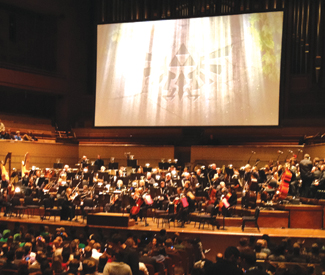
MUSIC If the triumphant theme to 1986-released video game The Legend of Zelda sends a knowing shiver down your spine; if you’ve ever spent hours obsessively clicking homemade remixes and covers of the soundtrack on Youtube (oh hey Deadmau5); there’s finally a highbrow spot for you among the upper crust: “The Legend of Zelda™: Symphony of the Goddesses Tour” is making its exultant, geeked out way to Davies Symphony Hall this week.

It features two hours of the theme from that first game — originally created by legendary Nintendo composer Koji Kondo — and themes from subsequent games in the Zelda franchise, up through 2011’s Skyward Sword for Wii, in a complete four-movement symphony, orchestrated and arranged by Chad Seiter.

Back to lowbrow YouTube for a moment. This comment on Zelda perfectly sums it up: “There is only ONE tune,? ONE game that unites all other gamers together and defines who we are. Here we have the pinnacle version of that tune.” Hyperbolic? Certainly, but you get the point. People freak out about the music of Zelda.

The inspiration for this momentous high-low culture mashup sprang from the 25th anniversary of the Zelda franchise and a longtime gamer/producer. Jason Michael Paul had been producing video game-inspired concerts since the early Aughts, including “Dear Friends — Music from Final Fantasy” in 2004, and “Play! A Video Game Symphony” in 2006.

Nintendo, for its part, was planning some unique releases to coincide with both the anniversary and the Skyward Sword release — anniversary concerts and a symphonic CD.

Music director Seiter took the short motifs and expanded the themes for the orchestra. Throughout the symphony, video projections of Princess Zelda and Link flash behind the classical musicians, matching up with key orchestral moments and providing the full live Zelda experience. Fans should be jumping in their seats.

“THE LEGEND OF ZELDA™: SYMPHONY OF THE GODDESSES TOUR”

Weds/28, 8 p.m., $45–$125

Davies Symphony Hall

201 Van Ness , SF

www.zelda-symphony.com

www.sfwmpac.org

Our Weekly Picks: March 21-27

0

WEDNESDAY 21

Al Pacino

Iconic actor Al Pacino brings his new experimental documentary Wilde Salome to the city tonight for its U.S. debut screening, with a red carpet celebration and a variety of special guests including Jean-Paul Gaultier, Dita Von Teese, and more. Pacino has described the film, a look into legendary writer Oscar Wilde’s works and influence, as his most personal project ever, and he will also be on hand tonight for the gala screening that benefits the GLBT Historical Society, and commemorates the 130th anniversary of the legendary writer’s visit to San Francisco. (Sean McCourt)

6 p.m., $25

Castro Theatre

429 Castro, SF

(415) 777-5455

Glbthistory.org/WildeSalome


of Montreal

A part conspiratorial, part confessional Kevin Barnes lies at the heart of Paralytic Stalks, the latest release from the of Montreal mastermind and his rotating ensemble of collaborators. Paralytic is complex and genre-bending like most of the of Montreal repertoire. In Paralytic‘s first half, Barnes croons moody lyrics transposed on psychedelic pop melodies not unlike 2007’s Hissing Fauna, Are You The Destroyer? Paralytic‘s second half challenges listeners with Barnes’ violent tones jumbled with harrowing electronic-classical interludes. (Kevin Lee)

With Deerhoof, Kishi Bashi

8 p.m., $21

Slim’s

333 11th St., SF

(415) 255-0333

www.slimspresents.com

Also Thurs/22, 8 p.m., $22

Fillmore

1805 Geary, SF

(415) 346-6000

www.thefillmore.com


Bonaparte

An electro rock’n’roll circus led by an inspired madman, Berlin’s Bonaparte has campaigned through Europe, Russia, and Australian, but is just now taking aim at the U.S. via SXSW. A rotating collective of musicians, designers, dancers, and freaks (performing in wildly excessive costumes), Bonaparte combines a trash punk energy with a theatricality that borders on the surreal. The ringleader, Tobias Jundt, is a sharp lyricist hiding behind dada non sequiturs and unbridled hedonism. (Witness the apt “gloryhole to the universe” line on “Computer in Love.”) Remember: when they ask “Are you ready to party with the Bonaparte?” — it’s a rhetorical question. (Ryan Prendiville)

With 2 Men Will Move You, Stay Gold DJs Rapid Fire and Pink Lightning

9 p.m., $10

Public Works

161 Erie, SF

(415) 932-0955

www.publicsf.com


THURSDAY 22

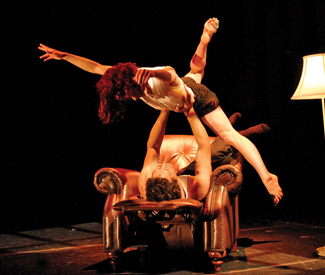
indifference and MASTERWORK

Outsiders and insiders at once, Lisa Townsend and Mica Sigourney culminate their CounterPULSE winter residencies with indifference and MASTERWORK. Experimental choreographer Townsend leaps off from Camus and the idea of free will in a dance-theater piece investigating the conflict between society and the solitary action, or not, of the stranger. Sigourney offers MASTERWORK, a concept demanding the all-caps title, an experiment in hubris promising “the most important performance of our generation and time.” Maybe. But if you’ve seen any of Sigourney’s work (recently in Laura Arrington’s “Wag,” or more recently with a bottle of bourbon, two glasses, and some sheets of paper at a crowded reading in the SomARTS men’s room) —or drag persona VivvyAnne ForeverMORE! and the envelope-pushing drag queen confab-cabaret “Work MORE!” — you’ll be there just to make sure. (Robert Avila)

Thurs/22-Sun/25, 8 p.m., $20

CounterPULSE

1310 Mission, SF

(415) 626-2060 www.counterpulse.org


“Hope Mohr Dance: Fifth Annual Home Season”

Christy Funsch recently choreographed an intriguing evening of solos for Bay Area dancers. One of its delights was watching Hope Mohr — exquisite, focused and powerful — take to the stage. In the last few years Mohr has focused her energy on creating work for her own company, but she clearly is still a mesmerizing performer. During her Fifth Annual Home Season, she is premiering “Reluctant Light” for her troupe, but she will also dance her 2011 solo “Plainsong”, inspired by the myth of Penelope and first seen at last year’s San Francisco International Dance Festival. As is her want, Mohr has invited an out of town company whose work she feels complements her own to share this evening. They are the Dušan Týnek Dance Theatre from New York. (Rita Felciano)

Thurs/22-Sat/24, 8 p.m., $20–$25

Z Space

450 Florida, SF

(800) 838-3006

www.zspace.org


FRIDAY 23

The Brightness of the Day . . .

Peter Whitehead makes instruments out of the things you’ve got in your kitchen, toolbox, and garbage bin — and makes them sound fucking rad. Brightness of the Day . . . will feature his experimental instruments, including his spoon harp, ektar, and buzzing bass lyre, alongside his textile paintings and collages. Whitehead’s visual art and musical endeavors parallel each other: his art illustrates music’s patterns and variation, and he conceptualizes music visually. Whitehead has exhibited his instruments in various museums and galleries in the past, but this is the first time he’ll be bringing together the various aspects of his visual art, music, and instrument building for an exhibit. (Mia Sullivan)

6 p.m., free

60Six

66 Elgin Park, SF

(415) 621-8377

www.gallery60six.com


Saviours

When Saviours first broke into the Bay Area metal and punk scenes, their unrepentant Thin Lizzy worship, filtered through a nasty hardcore sensibility, was as refreshing as a cold Hamm’s on a hot Tuesday afternoon. Like their recently-disbanded peers, Annihilation Time, Saviours dig deep into the record vault of the great hoary cannon of metal’s early days, reemerging with forgotten treasures like the weedeley-weedeley twin-guitar lead, and lyrics about getting epically baked. The band plans to get loud at a familiar San Francisco haunt, the Elbo Room, this Friday. (Tony Papanikolas)

With Holy Grail, Hazard’s Cure

9:30 p.m., $10–$13

Elbo Room

647 Valencia, SF

(415) 552-7788

www.elbo.com


Yuksek

Someone repeatedly tapping a note on a natural sounding piano. A bunch of finger snaps. An additional R&B riff on the keys. A man singing…Fitz and the Tantrums?…with an accent. Who is this? Metronomy? French accent. Phoenix? An electro snare/kick. MGMT? Background children’s vocals. Justice? Errrrr. Times up. We could play another song, or the full album, but it probably wouldn’t help. With Living on the Edge of Time, an album inspired by life as a lonely electronic musician on the road, French producer Yuksek expanded his sound — heading into a lighter, melodic though dance-oriented pop territory — as well as his band, which kicks off its US tour here. (Prendiville)

With Tenderlions, Realboy, DJ Aaron Axelsen

9 p.m., $15

Mezzanine

444 Jessie, SF

(415) 625-8880

www.mezzaninesf.com


SATURDAY 24

Napoleon

Fans of silent film and early cinema are in for an incredibly special treat this week and next when the San Francisco Silent Film Festival presents a series of screenings featuring Abel Gance’s legendary 1927 masterpiece Napoleon. Lauded for its use of then-groundbreaking and innovative techniques, the epic five-and-a-half hour biography of the French ruler has been painstakingly restored over the past several years, and will be shown accompanied by a live musical score performed by the Oakland East Bay Symphony. Don’t miss the opportunity to see this amazing event in the Bay Area’s own movie palace, the Paramount Theatre — these performances will not be staged anywhere else in the world. (McCourt)

Sat/24-Sun/25, March 31, April 1

1:30 p.m., $40–$120

Paramount Theatre

2025 Broadway, Oakl.

www.silentfilm.org


Thee Oh Sees

As prolific as they are prodigiously loud, San Francisco favorites Thee Oh Sees have cultivated over the course of ten albums (and a shitload of EPs, singles, etc.) a familiar wilderness, equal parts Black Flag and Their Satanic Majesties Request. This shouldn’t mask how unpredictable the band can sound — like the vaguely grotesque, multicolored nightmare aesthetic of the band’s instantly recognizable fliers and album covers, Thee Oh Sees couldn’t be any less concerned with weirding out our delicate sensibilities. (Papanikolas)

With White Mystery, Coathangers, Guantanamo Baywatch, Cyclops

9 p.m., $10

Thee Parkside

1600 17th St., SF

(415) 252-1330

www.theeparkside.com


The Magnetic Fields

The Magnetic Fields are known for their sardonic, poetic, and, at times, absolutely hilarious songs that tend to focus on loneliness, sexual identity, unrequited love, and other love-related mishaps. Lead singer-songwriter Stephin Merritt has been releasing albums with the Magnetic Fields for more than two decades. Their new album, Love at the Bottom of the Sea, marks the indie pop group’s return to a synthy sound, which they were all about in the ’90s, but veered from in their past three albums (Realism, Distortion, and I). Love at the Bottom of the Sea delves into sexual taboos with catchy tracks like “God Wants Us to Wait” and “Andrew in Drag.” (Sullivan)

8 p.m., $35

Fox Theater

1807 Telegraph, Oakl.

(510) 548-3010

www.thefoxoakland.com


TUESDAY 27

Kendrick Lamar

Best of lists, while good for selling issues or getting views, are guaranteed to start arguments. So it’s no surprise that when XXL released its 2012 Freshmen Issue, crowning emerging hip-hop artists, there was fallout: A$AP Rocky opted out, readers cried foul over selections, and firebrand Azaelia Banks put Iggy Azalea on blast (starting a beef which, given their names, was inevitable.) Time will sort it out, though, as it has with 2011 inductee Kendrick Lamar, who a year later has made the grade, and is now teasing a follow-up to his stellar Section.80. (Although I’m still trying to understand his “I climax where you begin” line on “Rigamortis.”) (Ryan Prendiville) With Hopsin 8 p.m., $30-$50 Regency Ballroom 1300 Van Ness, SF (800) 745-3000 www.theregencyballroom.com


Mr. Gnome

Fuzzy Cleveland drums-and-guitar duo Mr. Gnome has been named some variant on the “band to watch” so many times now, it’s best you lift your chin and pay attention. Maybe, you’ll also be scratching that chin, because the band — sugary singer-guitarist Nicole Barille and thwacking drummer-pianist Sam Meister — doesn’t quite sound like anything else. It’s an eye-popping hybrid. And its aesthetic of natural psychedelia in hazy orange and yellow hues with Donny Darko-esque imaginary belies the dark, hard rocking core. Not that they don’t have fun with their music, there are spacey shots of wailing guitars and the occasional high vocal peeps (“Bit of Tongue”), it’s just far more realized a sound than one might expect based on the superficial. Listening yet? (Emily Savage)

With Electric Shepherd & Outlaw, Plastic Villians

8 p.m., $8

Thee Parkside

1600 17th St., SF

(415) 252-1330

www.theeparkside.com


The Guardian listings deadline is two weeks prior to our Wednesday publication date. To submit an item for consideration, please include the title of the event, a brief description of the event, date and time, venue name, street address (listing cross streets only isn’t sufficient), city, telephone number readers can call for more information, telephone number for media, and admission costs. Send information to Listings, the Guardian Building, 135 Mississippi St., SF, CA 94107; fax to (415) 487-2506; or e-mail (paste press release into e-mail body — no text attachments, please) to listings@sfbg.com. Digital photos may be submitted in jpeg format; the image must be at least 240 dpi and four inches by six inches in size. We regret we cannot accept listings over the phone.

Nite Trax: American Mavericks fest brings big organ, Bach phantasm, fruit smoothie

0

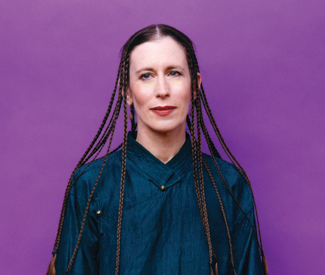
“The best form of government … is no government at all!” announced singer Meredith Monk in the second program of the SF Symphony’s rollicking American Mavericks festival at Davies Hall on Sat., March 10, her trademark braided pigtails and Shuffling Elf gait in full effect. And while I could hear the pleated pants of several libertarians around me surely being wetted (and a few liberal feathers ruffling in the back), this was no mere Ron Paul back-pat, though it was delivered with all the empty bluster we’ve come to expect from the current campaign season. 

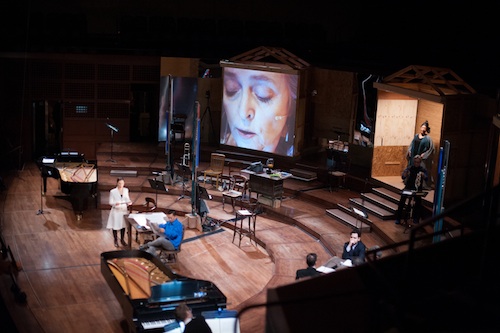
We were in the midst of an astonishing presentation of John Cage’s epic, random Song Books from 1970, after all — revered experimental vocalist Joan La Barbara had delivered a beribboned gift of apples or cranberries to an arbitrary audience member, magnificent diva Jessye Norman (in a stunning Issey Miyake gown) had joined in a boisterous card game and typed a letter on a mic’d typewriter, and conductor Michael Tilson Thomas had chopped up various fruits and veggies and Cuisinarted them into an orange-y beverage for the pianist. Cage, our 20th Century channeler of chance, would never allow such an inflexible utterance to stand unchallenged.

Meredith Monk, Jessye Norman, and MTT with Symphony members performing John Cage.

Sure enough, the phrase began to dissolve in Monk’s mouth as she repeated it, leaning from the stage like a satiric demagogue: “The b-best f-f-f-form of-f-f-f g-g-g …. ,” and adding “And we shall have it, when we are ready for it!” All the while, three large black flags were being hoisted on neon polls, unfurling into the wind from three fans, ghastly pennants at a flourescent funeral. No, we were not just in the land (our land) of anti-government sloganeering, mouthed by Tea Partiers, Occupiers, and hedge fund profiteers alike. With Monk as our guide, we were slipping through the black flags of anarchy into a gaudier lawlessness, that of death. And like pure music death, of course, shall have no dominion

Jessye Norman and MTT

We’ll probably not see such a lavish, loving tribute to Cage’s aleatory masterwork for a long time. The randomness-conjuring Song Books are governed, in a somewhat oxymoronic twist, by a large set of instructions — “Leave the stage by going up (flying) or by going down through a trap door. Return in the same way wearing an animal’s head,” for example — and forego traditional musical notation and expression for doodlings, drawings, charts, projections, lighting effects, electronic improvisation, bird calls, horn squonks, chess games, and a plethora of intersecting stage actions. (That’s not to say there weren’t gorgeous passages of melody — one especially near the end, a meandering duet with electronics in which Norman sang in a wistful voice about, I think, purple finches.)

That all this potential chaos not only didn’t come off as pretentious avant-gardism but actually formed something deeply touching, hilarious, human, and even quaint was a triumph for director Yuval Sharon and his cast and crew. Only one dude stormed out — perhaps to towel his pleats.  

Joan La Barbara, Meredith Monk, Jessye Norman, and MTT 

Bracingly, the American Mavericks festival — MTT’s tribute to the barbaric yawp of the American musical spirit — has retained most of the wonder, if not all of the risk, of its first installment a dozen years ago. 

Things had kicked off in splendid form on Thu., March 8, with program one — I saw the repeat performance that Friday — including an exciting and lush presentation of quintessential American composer Aaron Copland’s “Orchestral Variations” from 1967, which delivered both ethereal, avant-garde jaggedness (the piece is composed of 20 variations on a four-note “cell,” in an atonal manner) and occasional glimpses of Copland’s generous, down-home spirit (this was the composer of “Appalachian Spring” and “Rodeo,” after all).

It also gave us a bit of dish. 

In researching “Orchestral Variations,” I’d run into some trouble — I kept finding more evidence of Copland’s “Piano Variations” from 1930, a work deemed so stark and forbidding that no professional pianist would debut it. (So Copland, in a nifty show of self-confidence, played the premiere himself, to many critics’ disdain.) Here’s a version by pianist Marc-Andre Hamelin:

But what of the piano work’s expansive, full-bodied and spirited transcription for orchestra? It turns out that MTT himself had, in a visit to Copland’s home decades ago, suggested the piece be transformed from a single piano piece to an orchestral work, in order to reach more people on a different scale. “He turned to me, raised an eyebrow, and said, ‘Yes, yes, that all sounds nice — but who’s going to do all that work?'” MTT told the audience during the introduction. Then the big reveal: “And I said, ‘Well, with your permission …’ So — here’s a little thing that we do.”

Insider-y! It was a rare treat of a rare performance of a rare masterwork, from one of the major players involved.

It was also the perfect lead-in to the next piece on the program, Lou Harrison’s “Concerto for Organ with Percussion Orchestra” from 1972, in an absolutely transcendent rendition from Paul Jacobs on the enormous Davies Hall organ, with an ensemble of super-agile Symphony percussionists playing everything from Chinese crash cymbals and huge muted prayer gongs to celesta, rasp, and glockenspiel. 

Organist Paul Jacobs and the SF Symphony’s percussion orchestra performing Lou Harrison.

Previously I had a slight aversion to Harrison — while I appreciate him as an out-and-proud gay man in the 1960s (he has a kind of Burl Ives meets Harry Hay aura in queer iconography), I sometimes felt his musical project suffered from the same knee-jerk Orientalism that turns me off of a lot of famous Bay Area poets, mystics, artists, and composers who attempt “East meets West.” Hairy legs jutting from a silk kimono, shudder.   

My prejudices were quickly dispatched when the sprightly Jacobs immediately began coaxing the most amazingly powerful sounds from the organ, using a block-muffle tool to play whole ranges of keys at once in various rapid-fire combinations and agglomerations, accompanied by the percussionists’ clanging, hypnotically abstract tattoos. Movements ranged from crepuscular tootling to sci-fi bombast as Harrison ushered us into a kind of hallucinatory meditation full of bright oranges and shooting blues, neither East nor West but a cosmic recombinant being of both. I want to rediscover this formidable magician. Here’s a taste from another recording, although I found Jacobs’ playing to be even more spirited:

Harrisons counterpart on program two was Henry Cowell, the great popularizer of tone clusters (think of playing a whole bunch of clashing yet somehow wondrous-sounding notes at once) — Cowell’s “Piano Concerto of 1928, performed by Jeremy Denk with the orchestra, was a sensation to almost equal the Cage before it. You would never have thought odd cacophany could achieve such nuance. It sounded like a foray into negative beauty. Denk was using his entire forearms on the piano most of the time, with the symphony meeting him at a level of intense energy and empathy, and yet there were moments of quiet, complex reflection and runs of exhilirating virtuosity that matched the height of the redwoods in Henry Cowell state park (no relation, except metaphorically). Am I gushing? I am gushing. More Cowell everywhere, please. And as for the multi-talented Denk, check out his recent, revealing, and witty essay and podcast from the New Yorker.

Jeremy Denk performing Henry Cowell. 

Preceding Cowell on program two was Lukas Foss’ fantastic 1967 Phorion, given a perfectly out-there rendition by the Symphony, which feeds ragtag bits of the famed solo violin prelude to Bach’s “Partita in E” (phorion is Greek for borrow or steal) through a phtasmagorical wood-chipper of various twists and inversions that spews forth everything from droopy jazz-surrealism to hard-driving, proto-techno minimalism. It’s a monument of sampling avant la lettre, sure to prick up any iPod-shufflers ears. 

There were two slight fizzles on both nights, to my ear. Program one concluded with Charles Ives’ “A Conchord Symphony reconfigured, perhaps more accurately “massaged,” from other Ives works, (including his brilliant “Concord Sonata,” from around 1916) by comtemporary Canadian composer Henry Brandt. The piece — craggy, magniloquent, full of profound philosophical and unfettered musical ideas — is partly meant to invoke New England and its literary heroes, and in recordings is an excellent rush of jigging melody lines and bracing moods. Goatish, devoted, unabashedly intellectual, Ives is the spiritual godfather of American musical mavericks (and Mavericks), and MTT is one of his great champions. So I expected much. Here’s the Symphony’s recorded version:

But after the first two luminous movements the orchestra sounded a bit ragged (understandable in the face of the huge Mavericks project), the work lost some shape, and we ended up getting more a series of declarative statements than a metaphysical journey through the East Coast of the mind. (The great game of “Concord” is to see how many times Ives references those famous mortal knocks that open Beethoven’s Fifth Symphony, which is kinda fun.) At the end we’re supposed to be soul-hiking under the wheeling stars with Thoreau, but it felt more like soaking in a hot tub with the Sidewalk Guru from “Doonesbury” and a glass of good champagne.             

Carl Ruggles’ “Sun-treader of 1926-31 concluded program two, and tapped into a strident strain of deliberative machismo and sci-fi nerdiness that brought to mind none other than Newt Gingrich, of all people. Cosmic bombast is the aim of this 13-minute brass-churning blast, a fanfare to Big Idea perserverance. It came off as dude music in the extreme, which may have perked up some of the unwilling husbands in the house, but after all that came before seemed a wee bit threadbare in its unrelenting bravado. Still, it cut a bold, bronze shape in the quivering air. 


From bhangra to Brazilian horns: Celebrate International Women’s Day at Yoshi’s

0

International Women’s Day has been around to raise consciousness and support women’s rights since the early 1900s, and this year the party happens Thu/8. Tomorrow morning, people across the Bay Area will be rising up to join women-led demonstrations like Women Occupy and Rally Against Sex Discrimination and Sex Harassment to show our support for the XX-chromosoned all around the world. But after the daytime marches and the protests, Yoshi’s San Francisco Jazz Club invites us all to end the night at International Women’s Day’s official after party — an evening of notable speakers and intimate performances benefiting two upcoming events, Earth Day and Peace Day.

March 8 has become established as the annual date to globally recognize gender issues and celebrate feminism. The United Nations’ official 2012 theme for the day is “Empower Rural Women — End Hunger and Poverty,” and tomorrow night’s celebration at Yoshi’s should evoke that message — seasoned in local context and jazzy flavor. 

Patricia Maginnis, a long-loved activist and cartoonist, is one of the most esteemed feminist pioneers whose work helped the fight for safe, accessible abortions. She helped establish the Association to Repeal Abortion Law in California in 1966, and helped 12,000 women find abortions outside the country by 1969. Maginnis continues to make active contributions to spreading awareness of women’s rights, and will be speaking at Yoshi’s about the latest feminist issues concerning contraception and cosmetic safety. 

Big Brother and the Holding Company headlines tomorrow night’s stunning bill of SF-based musicians. It was Janis Joplin’s original band, and its experimental and raw sounds played a significant role in establishing San Francisco’s psychedelic music scene. 

Non Stop Bhangra, a monthly bhangra dance night in San Francisco that blends traditional Punjab folk and dance music — will also be bringing the party to Yoshi’s. The diverse line up will also feature Brazilian horn-driven funk band, Mondo Loko, sexy and soulful genre-bender Valerie Orth, soul-rock musician and former classical opera singer Pamela Parker, the soulful melodies of the harmonic powerhouse Lesley Grant, and the versatile, exotic vocals of Ziva.  

International Women’s Day Celebration

Thu/8 8 p.m., free for lounge-only; $35 for main stage access 

Yoshi’s San Francisco Jazz Club

1330 Fillmore, SF 

(415) 655-5600

www.yoshis.com


Against the grain

0

marke@sfbg.com

MUSIC It began as a burbling “Eeep!” It was June 7, 2000; we were in Davies Symphony Hall, in the middle of the second movement of Charles Ives’ super-intense Symphony No. 4 from 1910-1916. Yet despite the whirling maelstrom of that work — imagine three Fourth of Julys at once, in which a vast orchestra overlaps itself with marching band themes, spirituals, dance hall ditties, and children’s songs — I could still make out curious sounds coming from the audience behind me. Soon onlookers were shouting out nonsense; one down our row jumped up from his seat. For my part, I felt my shoulders twitch involuntarily, and my partner let out a loud hee-haw guffaw. The memory-triggering dissonance, expertly transmitted through conductor Michael Tilson Thomas, was having a spazzifying physical effect, making us active participants in Ives’ chaotic Main Street Parade.

http://www.youtube.com/watch?v=iYvWwI6YRsE

San Francisco has never lacked for excellent performances of works still often classified as “contemporary classical,” despite many being a century old. But the first American Mavericks festival, more than a decade ago, did much to elevate San Francisco’s status in the cultural world at large. We were at the very edge of the tech bubble, a maverick cultural achievement of its own, of course. Yet not much bold, native art had risen in response to all that “future now” attention and money. The much-hyped Mission School visual art movement was in its infancy, and concerned more with hermetic understatement than Bay reppin’ (a nice answer, in its way, to Web 1.0 bombast). Native dance music forms like turntablism and dirty breaks were being superseded by bland lounge house, hyphy was only hatching, Green Day was over, and literature hadn’t yet been Eggered and Chaboned.

The SF Symphony is justly famed for its impeccably polished sound and MTT’s cheeky programs pairing classical comfort food with spunky aperitifs. But American Mavericks was pretty damned ballsy for a major symphony — almost a month’s worth of edgy, attention-grabbing, well-funded gems from 20th century composers like Ruth Crawford Seeger, George Antheil, Meredith Monk, Duke Ellington, Steve Reich, Frank Zappa, Lukas Foss, and a dozen more. There was a plethora of symphonic reconfigurations and unique instrumentations: an extra brass section blared from the basement for the Ives symphony; audience members brought their own instruments to play along with Terry Riley’s ecstatic “In C.” At a very materialistic moment, American Mavericks illuminated the wild-eared, transcendentalist spirit of native music while showing the world that SF still had a huge, unfettered freak flag to fly.

American Mavericks is back Thu/8-Sun/18, this time spreading its wings to include Symphony stops in Chicago, Ann Arbor, and Carnegie Hall. And while some have bemoaned fewer and somewhat less ambitious performances on the whole (we’re in a recession, after all), there are plenty of pieces to jump up and shout about.

Ives returns, this time with astonishing masterpiece A Concord Symphony — I always hear crisp leaves crunch beneath my mental feet when this is played. Profoundly quirky enchantress Meredith Monk is back as well: in a coup of idiosyncrasy, she’ll be singing John Cage’s Song Books with magnificent diva Jessye Norman and experimental champion Joan La Barbara. Later, Hometown hero John Adams will premiere a new work, Absolute Jest, as will local techno-influenced composer Mason Bates, with “Mass Transmission.” There’s loads more packed into a mere 10 days, including pieces from Oakland instrument-inventor Harry Partch, San Francisco Tape Music Center founder Morton Subotnick, and Bay Area indigenous music devotee Lou Harrison.

Will it have the same cultural impact? Here we are back in an overconfident tech bubble — and once again our total cultural output seems a bit, well, blah. An irony of the social media onslaught is that all this personal expression seems to be quashing true individuality. So we’re having a materialist and conformist moment. A good dose of musical eccentricity from old school visionaries/crazies who turned their backs on the rat race might just do us a world of good. Here’s to more “Eeeps!” among the bleeps.

AMERCAN MAVERICKS FESTIVAL

Thu/8-Sun/18, various prices and times

Davies Symphony Hall

201 Van Ness, SF.

(415) 864-6000

www.americanmavericks.org


Green Film Fest shorts: The Global Catch

0

Chins up, enviros — this week there’s a slew of movies showing that prove that you’re not alone in fighting the good fight. The Green Film Festival takes over Japantown’s San Francisco Film Society Cinema now through Wed/7, and includes looks at exciting new forms of activism, as well as the film work from intrepid whistleblowers the earth over. Drop through for tidings on the fight for our planet around the world — documentaries, expert panel presentations, and short films. And be sure to check out the rest of Ali Lane’s reviews of Green Fest flicks.

Sushi: The Global Catch

The opening of this film shows Tokyo chef Mamoru Sugiyama carefully placing gorgeous transparent and artistically sliced pieces of nigiri atop perfectly formed mounds of vinegar rice, in his Michelin-starred restaurant kitchen. If you’re the kind of person who loves sushi, this scene makes your mouth water. It’s such a cruel tease. The film proceeds to tell you all the reasons why your San Franciscan appetite for sushi, so geographically remote from the land of its creation, is actually a very destructive thing.

The construction of sushi, in classical Japanese style, is a precise and elegant process, that this film does a beautiful job of exploring. It takes aspiring chefs two years of apprenticeship just to learn how to properly prepare the rice. But sushi is now being mass-produced all over the world, to feed a growing international taste for this once esoteric Japanese delicacy. Elegance and precision have fallen by the wayside, in favor of quantity and expediency. As with most such trade-offs, the environment is suffering for it. Of course the story revolves around money – as the demand has exploded, Bluefin Tuna has become a piscine gold for fisherman.   At legendary Tsukiji fish market in Tokyo, tuna can be auctioned for as much as $1200 per pound. Tuna has been so overfished that at this point, some propose to put it on the endangered species list.

This is a story of global food trends, an intimate cultural portrait of a revered Japanese tradition, and a conservationist’s field guide to seafood. The message is clear: don’t eat more than the earth can comfortably provide. But if, after watching, you still can’t help but crave a bite of sushi, head over to Tataki, San Francisco’s first sustainable sushi bar, profiled in the film and located in Pacific Heights.

Screening followed by panel: “Sushi, Sustainability, and the Fate of Fish”

Sat/3 1:00 p.m., $12

SF Film Society Cinema

1746 Post, SF.

(415) 742-1394

www.sfgreenfilmfest.org


EMA deals with a tough crowd at Rickshaw Stop

0

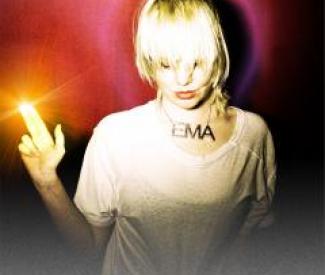
No one likes to be shushed. The most intense shushing I ever endured was at the Independent, during an Owen Pallett show. I was talking to a friend as the lights went down, when the woman standing in front of me turned around, stuck her finger closer to my mouth than hers, and said “shush.” Maybe it was because Pallett is associated with Arcade Fire and plays violin – two things that demand musical respect, right? – but considering that the dude hadn’t even picked up his instrument yet, and we were standing back under the balcony, I thought the least this stranger could do was let a guy finish his thought. That said, I would have preferred all the preempting, anal shushers in the world to the shitheads at the EMA show last night.

The girl to my right, perched on a speaker with her feet on the stage, who kept hitting on guys under the guise of insisting on telling them that what they were about to see, seeing, saw, was “the most amazing thing ever.” Adoration and high praise that did not stop her from constantly asking to borrow camera phones to record videos, until the point that they demanded them back. (“Can I just email myself the video?” ”Uh, sure.” “OK. How do I do that?”).

Nor did it stop this super-fan, who works in advertising (of course) from shouting nonstop requests for “Hearts on Fire,” which EMA’s Erika M. Anderson found as perplexing as I did. “Do you mean ‘Soul on Fire’?” Anderson asked. “No, Hearts on Fire!” “Uh, I don’t know that one.” This, combined with a bro calling out “Reptar! Reptar!*” nonstop, caused Anderson to reply, “I think you guys have the wrong night.” When the brave Popscene cameraman tried to shush (in this case deservedly, right near the front of stage and throughout the whole performance) said bro’s nonstop yammer, his response was, “I’m sorry, man.” [Pause for a beat]. “Except that I’m not.”

Now EMA doesn’t exactly demand respect, and isn’t dainty.** (Quote: “I’m a lady on stage, so I want to spit and burp.”) She does have a violin player, who did open the set with that relatively austere instrument, although here less a classical influence than an experiment in electric noise, like ringing feedback. But considering that so much of her album from last year, Past Life Martyred Saints – an experiment in lo-fi versus hi-fi – involves contrasting quiet, soft moments with loud, harsh ones (particularly on songs “The Grey Ship” and “Marked”) EMA does occasionally seem to suggest that you might want to shut the fuck up. Anderson is originally from South Dakota, and I don’t usually interpret the line “fuck California” in a straightforward, hostile manner, but when she got to it at the end of her set, it was a sentiment I was ready to get behind. No one likes to be shushed, but some people deserve it.

Setlist:
-Stand
-The Grey Ship
-Anteroom
-Marked
-Butterfly
-Angelo
-Milkman
-Soul on Fire
-Red Star
-California

*Reptar was the band that was supposed to open the night, but whose van broke down en route from L.A., leaving the crowd at Popscene stranded with the DJ and likely drinking extra while waiting for something to entertain them on stage.

**I wish you could see her red, “hipster haircut” (compliments of Portland, where “the dream of 2003 is alive”) or her extra large Looney Tunes Taz t-shirt, but camera fail.

The organ, the laptop, and ‘Digital Loom’

0

The SF Symphony’s awesome-looking American Mavericks festival — which will present a “wild side” of contemporary and modernist classical works not often heard on a Davies Hall scale (Meredith Monk! Jessye Norman singing John Cage!) — kicks off next week with a host of edgy aural goodies. 

And this Sun/4, in a kind of pre-fest wallop, Quebecoise organist Isabelle Demers will take advantage of the enormous Davies pipes to play a number of neat pieces, including one by SF’s electronic-adventurous Mason Bates, entitled “Digital Loom,” (hear a sample here). “Digital Loom,” from 2009, embodies Bates’ signature fusion of techno-ambient effects, often laptop generated, with symphonic elements to create something not quite Sci-Fi, not quite rave, not quite Stravinsky at his most cosmic-colorful, but all quite cool.

http://www.youtube.com/watch?v=bin545LXrRY

The Symphony has featured Bates before, you could spot him with his laptop in the midst of the players on one particular brain-tickling, multi-media occasion, generating drum patterns and swoops and swooshes for his major piece “The B-Sides” in 209. He also DJs around town as DJ Masonic, and hosts his occasional dancefloor-meets-classical party with young conductor Benjamin Schwarz, Mercury Soul.

It will be a total treat to hear the super-dextrous Demers take on “Digital Loom” on a Sunday afternoon (partly to see how she actually performs it), in the midst of an ambitious program that also includes Bach, Prokofiev, Henry Martin, and Rachel Laurin. Organ and electronica fanatics unite!

ORGAN RECITAL WITH ISABELLE DEMERS

Sun/4, 3 p.m., $20-$30

Davies Symphony Hall

201 Van Ness, SF

www.sfsymphony.org

Complete event details here

Dame good fun

0

arts@sfbg.com

FILM What with the internet, the paparazzi, Rupert Murdoch’s CIA-level spy techniques, and the general displacement of actual news by “celebrity news,” it’s pretty hard these days for a star of any sort to keep their debauchery private. Not like the good old days, when Hollywood carefully stage-managed publicity and only those who’d become a real liability risked having their peccadilloes exposed.

Such rare windfalls aside, the public were mostly restricted to watching beautiful people behave badly onscreen — a pastime that took a big blow once the censorious Production Code was instituted in 1934. Elliot Lavine’s latest Roxie retrospective of movies from that golden-shower period of post-silents, pre-Nannywood licentiousness — this time entitled “Hollywood Before the Code: Nasty-Ass Films for a Nasty-Ass World!” — provides plentiful early talkie titillation. Now that the bodies involved are long buried, we also know a few tales of their stars’ off-screen misadventures, too.

The week-long series of double bills sports its share of familiar titles, notably Howard Hawks’ terrific original Scarface (1934); Edgar G. Ulmer’s Karloff vs. Lugosi smackdown The Black Cat (1934); and the first, probably best version of H.G. Welles’ prescient biotech fable Island of Lost Souls (1932). There are women in prison (1931’s Ladies of the Big House), women in Faulkner (1933’s The Story of Temple Drake, a watered-down adaptation of W.F.’s then-notorious Sanctuary), women in everything else (1932’s Three On a Match, whose Depression-era Valley of the Dolls-esque trio includes a very young Bette Davis), and just plain Joan Blondell (1933’s Blondie Johnson).

http://www.youtube.com/watch?v=hzxnEDEY2Hs

It’s a few choice dames in lesser-remembered pictures that provide the biggest “nasty-ass” discoveries this go-round, however. March 4 offers a shocking double dose of pure white femininity finding themselves in, ahem, “Yellow Peril” — miscegenation being something Hollywood could only begin to embrace a few decades later. Frank Capra’s atypically erotic The Bitter Tea of General Yen, with Barbara Stanwyck alllllmost surrendering the white flag to a “charismatic Chinese warlord” (Swede Nils Asther, eyes narrowed), has become a minor classic since flopping in 1933.

No such luck for The Cheat (1931), a remake of Cecil B. DeMille’s 1915 shocker that was part of Paramount’s brief, failed attempt to make stage sensation Tallulah Bankhead a movie star. Her gambling-addicted socialite gets branded (literally) in lieu of repayment not by the original’s Far East businessman (dashing Sessue Hayakawa) but by a mere rich Caucasian perv with Sinophile pretensions (Irving Pichel). The big courtroom climax is a notable howler.

Bankhead remained a Broadway star and a popular “personality,” her throaty voice hinting at a semi-private life that included a great deal of bourbon, a fondness for unexpected nudity, and sexual appetites all along the Kinsey scale. After two decades off screen she arguably found her camp métier as a berserk Bible-clutching hag terrorizing Stefanie Powers in 1965’s Die! Die! My Darling.

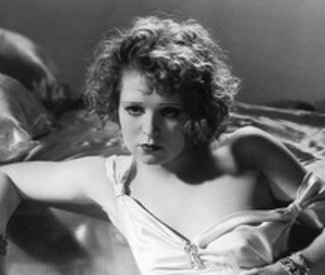
Much less of a survivor was poor Clara Bow, who was beloved when she played the wild thing yet unduly punished when it turned out that role had relevance in real life. The quintessential flapper and “It Girl” (“it” meaning sex appeal) was never much of an actress, but an incandescent, live-wire screen presence.

Call Her Savage (1932) is a pre-Code jaw-dropper that was supposedly her personal favorite. Running an A-to-Z gamut of emotions (and hairstyles), her Texas heiress heroine Nasa “Dynamite” Springer is “never two minutes the same” — a nice way of saying she’s nuts. In 88 minutes she rides a horse like it’s something else, plays with her mastiff likewise, is near-raped by an estranged husband, turns streetwalker, causes a brawl in Greenwich Village café catering to “wild poets and anarchists,” gets in two catfights, hits the bottle, and finds peace upon discovering she’s a part Indian “half-breed,” which apparently explains all.

Emotionally unstable, due in part to a pretty horrific upbringing, Bow must have related. At the time she was enduring myriad problems, notably some embarrassing public revelations spilled by a blackmailing secretary. Savage would be her next-to-last film, after which she retired into a deep and troubled seclusion.

Heading thataway as well was Juanita Hansen, a silent star who’d gone down in flames a decade earlier thanks to a “Queen of Thrills” image that unfortunately she enacted a little too enthusiastically in real life. She quit cocaine, got hooked on morphine, quit that, and became an anti-drug crusader — but nothing re-ignited her career. Certainly not lone comeback vehicle Sensation Hunters, a 1933 Poverty Row exploiter in which she was fifth-billed as “Trixie Snell,” manager-slash-madam to a troupe of “Hot-Cha Girls” who kinda dance, kinda sing, but mostly roll customers at Panama City’s “Bull Ring Club.” It was a sad exit. Puffy and peroxided, Hansen is all too convincing as a woman with too many hard miles on her to go anywhere but further downhill.

Waaaay uptown — glittering Broadway via glossy Paramount — 1934’s Murder at the Vanities offered the last hurrah for pre-Code naughtiness. And what a hurrah: chorus girls in pasties and less (at one point they simply clutch boobs as if on a latter-day Vanity Fair cover); production numbers like “The Rape of the Rhapsody” (the “rape” being Duke Ellington’s “colored” jazz musicians and dancers invading a classical orchestra with something called “Ebony Rhapsody” — until a white gangster jokingly machine-guns them all down); plus sexual humor so blunt that Jack Oakie ends the film telling a giggly blonde “Come on, let’s do it,” meaning exactly what you think.

http://www.youtube.com/watch?v=xCoj855Vdo8

On the side of the angels — definitely for losers here — there are numerous horrible songs (excepting standard “Cocktails for Two”), gag-inducingly sweet romantic leads, and kitschy-great ideas like having stage impresario Earl Carroll’s patented “Most Beautiful Girls in the World” pose en masse as tropical waves and cosmetics products. Representing Satan and evening gown-wearing pot smokers everywhere is villainous Gertrude Michael, who infamously sings torch song “Sweet Marijuana.” Michael was an elegant stage and radio star whose own recreational taste leaned more toward cocktails for one. Indeed, she was fictionalized as the hard-drinking love object in one-time lover Paul Cain’s 1932 novel Fast One, an early classic of hard boiled American pulp.

Saving the sleaziest for last, the series will truly flabber your gast with its closer. Normally prim MGM found itself reviled in early 1932 with the fleeting release of Tod Browning’s Freaks (playing the Roxie March 3), a much-misunderstood, now celebrated fable starring actual circus sideshow performers. It was considered so grotesque and unsettling that Freaks was banned in many areas — Britain didn’t see it until 1963.

Yet there’s no evidence of any similar backlash to the infinitely scuzzier Kongo, unleashed by Metro a few months later. A remake of Browning’s 1928 Lon Chaney vehicle West of Zanzibar, it stars Walter Huston as wheelchair-bound “Deadlegs” Flint. He’s used cheap magic tricks to appoint himself fearsome white-man “god” amongst spear-carrying tribesmen in a “dunghill” African outpost, all part of an elaborate, insidious plan to wreak vengeance on the rival who stole his wife and health long ago.

What this revenge eventually encompasses reads like a list of nearly everything the Production Code would soon bar from the screen: depicted or suggested drug addiction, alcoholism, prostitution, rape, sadism, and a convent-bred ingénue (Virginia Bruce) recalling “hot hairy hands pawing and mauling” her unwilling virginal body. Not to mention human sacrifice and a unique substance abuse “cure” using leeches.

One can almost hear the censuring voice of Will Hays, the Code’s original enforcer, when one character tells Deadlegs “The swamp’s wholesome compared to you!” It would arguably be 40 years before MGM distributed another movie so flagrantly perverse — and even then the studio was so ashamed they put it (Paul Bartel’s 1972 Private Parts) out under a fake subsidiary’s auspices.


HOLLYWOOD BEFORE THE CODE: NASTY-ASS FILMS FOR A NASTY-ASS WORLD!

March 2-8, $11

Roxie Theater

3117 16th St., SF

www.roxie.com

Our Weekly Picks: February 29-March 6

0

WEDNESDAY 29

Jacques Lu Cont

Stuart Price is a mixmaster of mystery. The British producer-DJ goes by many aliases, including Paper Faces, Thin White Duke, Jacques Lu Cont, and Les Rythmes Digitales. How could a Brit use French pseudonyms? Well, after you’ve won three Grammy Awards and worked with an entire spectrum of musicians ranging from Madonna to Miike Snow, from the Killers to Kylie Minogue, from Seal to the Scissor Sisters, then you’re off the hook for that faux pas. Price, the son of two classically trained pianists, developed his version of French electro house after hearing the sounds of the Human League. Expect Price and his trusty synthesizers to give guilty-pleasure makeovers to familiar songs and vocals (Kevin Lee).

With Robb Green

10 p.m., $5

Vessel

85 Campton, SF

(415) 433-8585

www.vesselsf.com


Nellie McKay in “I Want To Live!”

From the get-go, Nellie McKay has bucked against the typical musical confines: releasing her first album in 2004 as a double CD when it might have fit in one, calling it Get Away From Me in a jab at Norah Jones and to avoid being lumped in as just another female jazz singer. One listen to her actual music then and since, a maddening blend of pop, calypso, hip-hop, rock, reggae and (yes) vocal jazz, with maddening humor and reassuring warmth, assured that one label would simply never work. “I Want To Live!” showcases all McKay’s uncaged skill as performer as she reinvents the story of San Quentin death row inmate Barbara Graham as noir cabaret. (Ryan Prendiville)

8 p.m., $30

Rrazz Room

222 Mason, SF

(415) 394-1189

www.therrazzroom.com


THURSDAY 1

It Came From Hangar 18 book party

Two men, one brand-new sci-fi epic: It Came From Hangar 18 touches down from Planet Pulp this week at the Forbidden Island Tiki Lounge, which is actually one of the book’s settings, and serves a mighty tasty array of exotic cocktails to boot. Written by noted B-movie film programmer and author Will Viharo (A Mermaid Drowns in the Midnight Lounge) and software-engineer-with-a-dark-side Scott Fulks, Hangar 18 is self-described as “the most action-packed, erotic science fiction epic since the Bible — but with even more sex and violence!” Also: vampires, mobsters, and (I’m guessing) umbrella drinks galore. The release party features live surf music by retro-futurists Tomorrowmen. Whatever you do, keep watching the skies! (Cheryl Eddy)

7 p.m., free

Forbidden Island Tiki Lounge

1304 Lincoln, Alameda

(510) 749-0332

www.forbiddenislandalameda.com


RED BULL Thre3STYLE DJ COMPETITION

Every year, Red Bull pops in to provide a swell showcase of our current nightlife scene, inviting a variety of local disc jocks to compete for the chance to advance to national and international levels — and possibly win an enormous golden calf that squirts endless supplies of energy drink from its nipples. KIDDING. I’m sure they win something, but the real reward is ours, watching fine hometown talent display some flexibility on the decks. (The “Thre3style” part means competitors must include three different genres of music in their 15-minute sets.) This year’s amped qualifiers are KingMost, Zita, Theory, Just, Miles Medina, and John Beaver, as well as Seattle winner Four Color Zack and Portland winner Playtime. If last year’s wonderfully diverse crowd and hyper energy are anything to go by, this will be the party.

9 p.m. (show at 9:30 p.m.), $12, 18+

Ruby Skye

420 Mason, SF.

(415) 693-0777

www.redbullusa.com/thre3style


Zola Jesus

Russian-American Nika Roza Danilova grew up in Wisconsin, which is pretty much as close to Russia, climate-wise, as you’re going to get in the continental U.S. In the bitter cold of the Midwest, young Danilova sang opera before transitioning into rock, nabbing a keyboard here and a drum machine there. A few EPs, studio albums, and a critically acclaimed LP later, Danilova’s Zola Jesus is preaching to the masses, belting and wailing while electronic glitch samples and piano chords crash against each other. Most recent release Conatus (Sacred Bones Records) is something akin to industrial sprinkled with a pinch of classical, culled together by Danilova’s haunting, resonant voice. (Lee)

With Wymond Miles of the Fresh & Onlys, Talk Normal

9 p.m., $21

Great American Music Hall

859 O’Farrell, SF

(415) 885-0750

www.slimspresents.com


FRIDAY 2

O’ Brother

A brutally captivating four-piece out of Atlanta, O’ Brother combines industrial, screaming metal, and the hard edge of Southern rock. A barrage of guitars —grounded by drummer Michael Martens, with shifting vocals by Tanner Merritt —results in a sound that’s syrupy and sludgy one moment, airy the next. Released in late 2011, O’ Brother’s first full length album, Garden Window, recalls the drive of Queens of the Stone Age, the atmosphere of Sigur Ros, and the march of Tool, without being too heavily indebted to any one part. (Prendiville)

With Junius, Happy Body Slow Brain

9 p.m., $12

Bottom of the Hill

1233 17th St., SF

(415) 621-4455

www.bottomofthehill.com


Prizehog

Don’t let the lack of a bassist fool you — Prizehog gets heavy. The San Francisco trio deploys a keyboard alongside large-gauge drums and down-tuned guitar to create music that veers effortlessly between tectonic post-rock, thundering doom blues, and Hawkwind-style, spaceship-launch psychedelia. Patience and an open mind are two necessary virtues; they’ll prepare you for the band’s shuddering builds, non-traditional arrangements, and sudden stylistic shifts. Concertgoers looking for a potent dose of local, experimental volume should look to get high on the ‘Hog. (Ben Richardson)

With Bobb Saggeth, Hell Ship

9 p.m., $8

Thee Parkside

1600 17th St., SF

(415)-252-1330

www.theeparkside.com


Ty Segall

Ty Segall has managed to produce ecstatic, psychedelic lo-fi garage punk rock that retains the catchiest elements of rock’n’roll — seductive drumbeats, wailing guitars, and arresting lyrics — really quickly. Last year he released full-length album Goodbye Bread, along with three EPs. This spring he’s touring with Tim Presley of White Fence to promote their collaborative LP, Hair, out April 28. Hair features Segall’s brand of bright and fuzzy electric doo-wop and Lucy-in-the-Sky-with-Diamonds-inspired melodic distortion. Segall rocked the Great American Music Hall last year with his curly blonde head-banging antics and returns this week to shake it out some more. (Mia Sullivan)

With White Fence, Mikal Cronin, the Feeling of Love

8:30 p.m., $15

Great American Music Hall

859 O’Farrell, SF

(415) 885-0750

www.gamh.com


SATURDAY 3

Bad Weather California

Let’s start a new religion. Let’s start a cult. Let’s go to bed. Let’s get high. Let’s get fucked up. Let’s start a band. Let’s get a van. Let’s make some music. Whatever its problems may be, Denver-based freaked out rocker band Bad Weather California offers a lot of simple solutions, without falling into the typical pratfalls of musical contrivance. It’s a rebellious rock streak without being punk, hippy utopian idealism without being a jam band, spiritual fervor without preachy religiosity. The Akron/Family label-mates have a sunny optimism in the face of bad shit and a sound that might have you going along. Maybe even that cult part. (Ryan Prendiville)

With He’s My Brother She’s My Sister

9 p.m., $8–$11

Brick and Mortar Music Hall

1710 Mission, SF

(415) 800-8782

www.brickandmortarmusic.com


SUNDAY 4

“Balboa Birthday Bash”

Hey, jazz baby: between 2011 hits The Artist, Hugo, and Midnight in Paris, the 1920s are the cinematic decade du jour. What better way to re-live the flapper era than at a movie theater that’s been around since 1926? Cheer the Balboa’s 86th birthday — yep, it’s older than the Oscars — at a fiesta co-presented by the San Francisco Silent Film Festival. On tap are a screening of Harold Lloyd classic Safety Last! (1923) on 35mm with piano accompaniment by Frederick Hodges; a screening of shorts by Georges Méliès (a.k.a. Ben Kingsley’s character in Hugo); a live vaudeville show; an illustrated lecture by author and Safety Last! expert John Bengtson; birthday cake; and more. As they said in the ’20s (or at least, they always say in movies set in the ’20s), it’ll be the cat’s pajamas. (Eddy)

7 p.m., $7.50–$10

Balboa Theatre

3630 Balboa, SF

(415) 221-8184

www.balboamovies.com


MONDAY 5

The Driftwood Singers

Listening to the Driftwood Singers makes you feel like you’re ambling down a dusty country road toward something that might not exist anymore. This lo-fi folk duo of Pearl Charles and Kris Hutson writes foreboding, bluesy love ballads laden with longing nostalgia. Charles’ warm, milky vocals blend seamlessly with Hutson’s slightly twangy voice as Charles picks her autoharp and Hutson strums his guitar (or mandolin/banjo, depending on the number). This pair hails from LA (no, really) and recorded their debut EP, Look!, with a Sony Walkman. Their upcoming seven-inch, out March 27, was recorded a bit more expertly, but channels the same raw honesty. (Sullivan)

With Birdhouse, Lauren Shera, and Infantree

8:30 p.m., $12

Café Du Nord

2170 Market, SF

(415) 861-5016

www.cafedunord.com


TUESDAY 6

Mia Doi Todd

Los Angeles singer-songwriter Mia Doi Todd’s latest offering, Cosmic Ocean Ship (City Zen Records), was inspired by journeys into Cuba, Brazil, France, Mexico, and India. Her lilting, reflective vocals relay tones of nostalgia, affection, and optimism. Opening track “Paraty” refers to a Brazilian coastal town and brings in some lighthearted samba, while “Under the Sun” sees Todd turn tropical island chanteuse; her romantic crooning bringing to mind a couple taking a post-luau stroll on the beach. The take-away message might best be encapsulated by Cosmic‘s last track, a touching cover of Chilean Folk artist Violeta Parra’s “Gracias a la vida.” (Lee)

With Bells

8 p.m., $16–$26

Yoshi’s

1330 Fillmore

(415) 655-5600

www.yoshis.com


Romeo and Juliet

Romeo and Juliet is the only 20th century ballet that can give a run to the 19th century biggies Nutcracker and Swan Lake. No matter who choreographs, it will find an audience. Fortunately, you have to be really good to keep control of the subject matter’s complexity, not to speak of an audience’s expectation about a beloved story and, of course, the music. Helgi Tómasson has the chops. His 1994 version is gorgeous, sumptuously choreographed and designed. The depth of the company is such that it has any number of first-rate dancers to fill the roles, not just the major ones of the lovers, but minor characters — the villain and the best friend, the gypsy girls and the rejected suitor. (Rita Felciano)

Through March 11, 8 p.m., $36–$285

War Memorial Opera House

301 Van Ness, SF

(415) 865-2000

www.sfballet.org


The Guardian listings deadline is two weeks prior to our Wednesday publication date. To submit an item for consideration, please include the title of the event, a brief description of the event, date and time, venue name, street address (listing cross streets only isn’t sufficient), city, telephone number readers can call for more information, telephone number for media, and admission costs. Send information to Listings, the Guardian Building, 135 Mississippi St., SF, CA 94107; fax to (415) 487-2506; or e-mail (paste press release into e-mail body — no text attachments, please) to listings@sfbg.com. Digital photos may be submitted in jpeg format; the image must be at least 240 dpi and four inches by six inches in size. We regret we cannot accept listings over the phone.

Our Weekly Picks: February 15-21

0

WEDNESDAY 15

The Asteroids Galaxy Tour

Do Danish hipsters listen to American funk music? Apparently the Asteroids Galaxy Tour is keen to show its repertoire goes beyond the catchy pop you’ve likely heard on an Apple iPod ad (“Around the Bend”) or a Heineken commercial (“The Golden Age”). Asteroids, the brainchild of vocalist Mette Lindberg and producer Lars Iversen, gained popularity with their nostalgia-inducing sound on 2009 release Fruit (Small Giants). Lindberg and Iversen push that retro-funkiness even further in newest release Out of Frequency (B.A.R. Music), employing more horns and electronic organ sounds to add some oomph to Lindberg’s sweet tones. It’s as if technicolor was suddenly brought into this high-definition world. (Kevin Lee)

With Vacationer

8 p.m., $10–$15

Independent

628 Divisadero, SF

(415) 771-1421

www.theindependentsf.com


THURSDAY 16

El pasado es un animal grotesco

Acclaimed Argentine director Mariano Pensotti found the roots of this play in a heap of random photographs salvaged from a defunct photo lab. The narrative impulse came from Balzac. The title he borrowed from an Of Montreal song. The result is an ingenious, giddy “mega fiction” that follows the tortuous careers of four 20somethings in Buenos Aires over a single decade, 1999 to 2009, with its intervening economic meltdown and a million other matters expected and unimagined — the detritus of an unwieldy but irresistible urge to meaning. Pensotti makes his San Francisco debut with this low-tech yet wildly ambitious theatrical production. (Robert Avila)

Thurs/16-Sat/18, 8pm, $20–$25

Yerba Buena Center for the Arts

701 Mission, SF

(415) 978-2787

www.ybca.org


BUMP Records on Mark Bradford

Jam the playlist on the website for the Bay Area Video Coalition’s BUMP Records youth-run label and you’ll get a sampling of catchy R&B and hip-hop songs, polished sound from young people who produce and perform their own work, learning about the importance of having a voice in society along the way. But they’re not just radio-ready, these kids. At this SF MOMA event of creative souls established and on-the-rise, BUMP artists will reinterpret hair stylist cum artist Mark Bradford’s character exploration of a Teddy Pendergrass-Pinnochio character, Pinnochio is on Fire. To warm up the crowd, artist Reneke Djikstra will talk about the spirit behind her luminous portrait work. (Caitlin Donohue)

6 p.m.-9:45 p.m., free with $18 museum admission

SF MOMA

151 Third St., SF

(415) 357-4000

www.sfmoma.org


FRIDAY 17

Hold Me Closer, Tiny Dionysus: A Greek Comedy Rock Epic

trixxie carr and Ben Randle put the libation in liberation with the return of their Great Recession–era musical about a lil grape-stained deity named Tiny Dionysus (carr) who, after getting booted off Mount Olympus, comes to San Francisco, where a group of unemployed artists call on him for help weathering the general storm. Randle directs playwright, faux queen, and chanteuse carr and a cast of five as classical Greek and classic rock converge, along with puppetry, drag, and original carr tunes, until no one is sure who is what is where is when — is why it’s so liberating. (Avila)

Fri/17-Sun/19, 8p.m., $20

CounterPULSE

1310 Mission, SF

(800) 838-3006

www.counterpulse.org


The FP

Ever since Snake Plissken played a sadistic life or death version of HORSE in 1996’s Escape from L.A., one question above all has been on the mind of serious filmmakers: what formerly non-threatening competition will inevitably become a bloodsport in our twisted future dystopia? With their directorial debut, The FP, the Trost Brothers have perhaps answered the question once and for all: Dance Dance Revolution (or at least something very similar to avoid trademark violations.) Make sure to strap on your most hardcore head band for the SF IndieFest’s 21+ DDR afterparty at 518 Valencia, where you can scout recruits for your video gang. The film opens theatrically March 16. (Ryan Prendiville)

7:15 p.m., $11

Roxie Theater

3117 16th St., SF

(415) 863-1087

www.roxie.com


Tanya Bello and Alyce Finwall

If Tanya Bello and Alyce Finwall have anything in common besides their friendship and a performance history on the East Coast, it’s fierceness and a take-no-prisoners approach to dance. When the petite Bello’s is on stage, it’s difficult to watch anybody else. If she brings anything like that kind of intensity to her new “Sol y Sombra” for her not even two-year-old Project B company, we should be in for a treat. In one of their early SF performances Finwall Dance Theater’s quartet of women in “Wide Time” just about bounced off the walls. Yet despite its wildness, the work also was tightly controlled. Turns out that Finwall has choreographed for over 10 years. In this program she will premiere the duet “Angel”. (Rita Felciano)

Fri/17-Sat/18, 8 p.m., $10–$20

The Garage

975 Howard, SF

www.975howard.com


Trainwreck Riders

Trainwreck Riders: a collision of country twang and good old rock’n’roll interspersed with hints of bluegrass and notes of garage punk. Their songs feel nostalgic, even upon first listen, and tend to focus on heartbreak. Yet they sing the blues in a way that makes you want to jam out instead of tear up. Yeah, these guys aren’t your run-of-the-mill indie act; but there is something quintessentially indie about them. Maybe it’s their preference for flannel. Or that Peter Frauenfelder’s voice bears a striking resemblance to Isaac Brock’s. Clearly, they’re from San Francisco. Ghost Yards, the band’s fourth full-length release, drops this spring. (Mia Sullivan)

With the Blank Tapes, and the Human Condition

9 p.m., $14

Independent

628 Divisadero, SF

(415) 771-1421

www.theindependentsf.com


SATURDAY 18

Bonobo

Bonobo, aka Britain’s Simon Green, has long reigned as one of the masters of the post-party, chillout tracks that deters drinking headaches in both lounge and living room. With his 2010 release Black Sands (Ninja Tune), Green opted for a more lush, jazzy, and spontaneous sound that edged slightly away from downtempo and toward the dancefloor. Ninja Tune has just released a remix CD of Black Sands that uses Green’s tracks and vocals from Andreya Triana as rich source material. Green could stick in a slow burning rework to begin the set, such as with Letherette’s sublime version of “All In Forms,” then turn up the energy a notch with a track like Machinedrum’s percussive-heavy production on “Eyesdown.” (Lee)

9 p.m.

Mezzanine

444 Jessie

(415) 625-8880

www.mezzaninesf.com


SUNDAY 19

Girl Walk // All Day and Cheryl Dance Party

Partly a 71-minute long music video centered around Girl Talk’s latest mashup album All Day, Girl Walk // All Day is also an ecstatic musical feature following young one dancer as she bursts out of the confines of ballet class and dances her way across New York City. Financed through Kickstarter and filmed largely on the sly in public and not so public (Bloomingdales) spaces, GW//AD involves over 100 dancers, and takes a fanciful poke at the tendency of people to ignore the exceptional, even when it breaks, two steps, or tumbles into their daily life. This screening — followed by a set from CHERYL (NY) — will be suitably projected over the dance floor. (Prendiville)

7 p.m. $10

Public Works

161 Erie, SF

(415) 932-0955

www.publicsf.com


Prime Cuts Film Festival Extravaganza!

The Scary Cow indie film co-op is one of those magical organizations that provide creative people with the network and resources to engage in collaborative creativity. The co-op’s mission is, simply, to cultivate a San Francisco film community equipped to make better films by connecting people who want to make films, and actually making them. (Genius?) Scary Cow has helped fund local films since 2007 and is celebrating its fifth anniversary with a screening of 13 shorts the co-op deems its “prime cuts.” Chosen shorts span the genres — from mockumentary to horror/comedy to sci-fi rock musical —and range from three to 24 minutes in length. (Sullivan)

4 p.m., $15–$40

Castro Theater

429 Castro, SF

(415) 621-6120

www.scarycow.com


MONDAY 20

Chucho Valdes and the Afro-Cuban Messengers

Perhaps the eminent Cuban pianist of his time, Jesus “Chucho” Valdes has spent four decades wowing audiences as performer, composer, and arranger. A co-founder of the legendary Latin American jazz-rock band Irakere, Valdes has won four Grammy awards, including one for his most recent album, Chucho’s Steps (Four Quarters). In Steps, Valdes pays homage to several renowned musicians, including John Coltrane, Cole Porter, George Gershwin and Joe Zawinul. His current band references Art Blakey and the Jazz Messengers, which produced driving, bebop sounds and served as a platform for younger jazz musicians to showcase their skills. (Lee)

7:30 p.m., $35–$75

Herbst Theatre

401 Van Ness, SF

(415) 621-6600

www.sfjazz.org


TUESDAY 21

Doug Stanhope

While his style of comedy has been called abrasive and caustic, Doug Stanhope simply tells it like it is on a variety of cultural and societal subjects, all with hilarious results. Since he won the San Francisco International Comedy Competition in 1995, he has earned a well deserved, wild reputation for his routines and shows, captured most recently on his live DVD/CD Oslo: Burning The Bridge To Nowhere (Roadrunner 2011). Last September Stanhope performed in a maximum security prison in Iceland, telling fans that if they committed a heinous enough crime to be sent there, they could see him for free — thankfully you’ve got an easier option tonight. (Sean McCourt)

8 p.m. $23.50

Cobb’s Comedy Club

915 Columbus, SF

(415) 928-4320

www.cobbscomedyclub.com


The Guardian listings deadline is two weeks prior to our Wednesday publication date. To submit an item for consideration, please include the title of the event, a brief description of the event, date and time, venue name, street address (listing cross streets only isn’t sufficient), city, telephone number readers can call for more information, telephone number for media, and admission costs. Send information to Listings, the Guardian Building, 135 Mississippi St., SF, CA 94107; fax to (415) 487-2506; or e-mail (paste press release into e-mail body — no text attachments, please) to listings@sfbg.com. Digital photos may be submitted in jpeg format; the image must be at least 240 dpi and four inches by six inches in size. We regret we cannot accept listings over the phone.

Eternal return

2

arts@sfbg.com

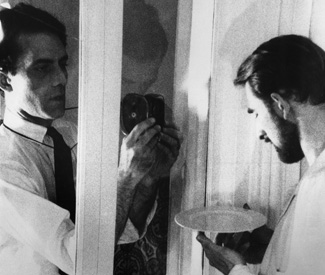
FILM Gregory Markopoulos was born in Toledo, Ohio, but his Greek heritage lights the way in critical appraisals of his refined and elusive body of work. Many of the films featured in the Pacific Film Archive’s “Seconds of Eternity” series are imagined on the stage of Greek myth. After leaving New York in 1967 with his partner Robert Beavers, an outstanding filmmaker in his own right, Markopoulos drew still closer to his ancestral home. He died in 1992, but Beavers, who will be on hand at the PFA to shepherd the films, has preserved the work for the Temenos, a unique archive and biennial outdoor screening cycle located near Lyssaraia, Markopoulos’s father’s home. This June brings another such event.

Markopoulos’s films have themselves long achieved mythic stature. He was a colossal figure during the heroic phase of the American avant-garde and then left it behind. Dissatisfied with exhibition standards, he withdrew his prints from circulation (the Temenos screenings represents the idealistic rejoinder). Remarkably, he requested that critic P. Adams Sitney excise a full chapter on his works from Visionary Film, generally considered the central critical survey of the American avant-garde. So Markopoulos went to almost unthinkable lengths to maintain the primacy of his early films (he continued making new ones, as well). Any opportunity to watch these ravishing films close to home is unusual.

Markopoulos once remarked that “locations and beautiful faces have been the backbone of my work,” and one sees that to an archetypal degree in Psyche (1947), the first film of his Du Sang, de la volupté et de la mort trilogy, made when he was still a teenage student at USC living across the hall from Curtis Harrington. Inspired by a Pierre Louÿs novella, the film replaces spoken language with dynamic color and framing. We begin with a man and woman crossing each other on a leafy Angeleno street: a few steps further and they turn back to consider what they’ve just passed. All that follows might be transpire within this instant: a languid fantasia hatched within a fugitive moment of lost time. Markopoulos frames the couple in deep focus two-shots, grazing shoulders and lips and tumbling toward dreams.

An evident poverty of means only concentrates the film’s withdrawal into a private world of frustrated beauty (across town Kenneth Anger was fashioning his more explicitly Dionysian Fireworks). The dive into inexpressible desire reaches a peak when Ralph Vaughn Williams’ “Serenade” suddenly drops out and the image snaps to a silent interlude of natural splendor bordering on abstraction — sea grass gorgeously superimposed upon the sea. This image gives magnificent form to the phrase “out of the blue” and overflows the frame in such a way as to shake loose the film’s more studied visual effects.

Markopoulos would later articulate in written form (“Towards a New Narrative Form in Motion Pictures”) what he set out to accomplish beginning with Psyche: “The film maker gradually convinces the spectator not only to see and to hear, but to participate in what is being created on the screen, on both the narrative and introspective levels. The magnificent landscapes of emotions, with colors brighter than the film viewer has ever been concerned with, begin to exist. The transient impact of meetings, handshakes, kisses, and the hours apart from these contacts becomes revealed in all its astounding simplicity.”

http://www.youtube.com/watch?v=w59mrfKQRdQ

That “astounding simplicity” is readily apparent in A Christmas Carol (1940), a compressed bildungsroman evoking a richly embroidered fabric of memory with only a few spare images (mother setting the table, father looking up over his newspaper, figures dancing on a nearby rooftop). Twice a Man (1963) reveals the full extent of Markopoulos’ dream of a new narrative language. A psychologically fraught interpolation of the myth of Hippolytus and Phaedra (son seduced by mother and liberated from suicidal thoughts by a healer-artist), the film surfaces an internal state of emergency in a persistently emergent form.

Most remarkable is the densely interleaved editing by which Markopoulos folds multiple registers of time, color, and theme. Though often likened to other seminal works of the American avant-garde (especially Stan Brakhage’s Dog Star Man, 1961-64), Twice a Man‘s fractal form also recalls contemporaneous French films like Alain Resnais’s Muriel (1963) — though if anything Markopoulos’s cutting seems more evolved for its thoroughgoing commitment to simultaneity. Beginning with a ferry ride into blue New York, suggestive of any number of mythic crossings, there is an ever-sharpening concordance of different blocks of imagery. The protagonist’s central struggle to get out from under his mother and be reborn as his own person takes root in these syntactical somersaults. Indeed, this is where the modernist character of Markopoulos’s work shines through: a classical story embodied in the radical address of the senses. (You don’t need a neurologist to know that your brain gets a tune-up watching this film). Less successful is the cut-up spoken address that Phaedra delivers to her son, with which Markopoulos seems a little too assured of his genius. The haranguing pure speech dampens an otherwise brilliant film with a faintly misogynistic mist.

Though Markopoulos delved still deeper into myth with his Illiac Passion (1964-1967), he also gravitated towards more focused portraits of people and places in these years. San Francisco Cinematheque will screen Galaxie (1966), his anthology of New York people, in May. Meanwhile, the PFA sneaks in Ming Green (1966) before the epic Illiac Passion. The silent film gathers up images of the New York home Markopoulos was soon to leave as if for a bouquet. Edited in camera with great fluency, Ming Green revises the still life for cinema: the apartment’s objects sit in repose, vibrating with the articulation of color and residue of memory. Flourishing superimpositions put on a terrific show without abandoning the refined air of quietude. It’s unlikely that you’ll see a more exquisite short roll of film this year.

SECONDS OF ETERNITY: THE FILMS OF GREGORY J. MARKOPOULOS

Feb. 9-16, $5.50-$9.50

Pacific Film Archive

2575 Bancroft, Berk.

(510) 642-5249

bampfa.berkeley.edu

Our Weekly Picks: February 1-7

0

WEDNESDAY 1

Kapowski

Oakland-based indie pop quartet Kapowski is celebrating the release of its debut album, Boy Detective, with a party at Rickshaw Stop. With influences including George Gershwin, the Velvet Underground, and David Bowie, it’s no wonder Kapowski’s sound seems very much its own unique creation — sort of a dreamy, eerie, dissonant electric piano-driven march. While Thursday marks the release of the band’s debut album, Kapowski’s vibe has been slow cooking since front man and group visionary Jesse Rimler began collaborating with bassist Jon Gondo during middle school. (Mia Sullivan)

With Mwahaha and Bells

8 p.m., $10

Rickshaw Stop

155 Fell, SF

(415) 861-2011

www.rickshawstop.com


THURSDAY 2

Mostly British Film Festival

February is traditionally an uber-boring month for cinemaniacs — but fret not, local film fans: you need not resort to queuing up at the megaplex to weep at Channing Tatum’s romantic troubles. Not only is IndieFest looming (opening night is Feb. 9), but the Mostly British Film Festival — co-presented by the San Francisco Neighborhood Theater Foundation and the California Film Institute — kicks off tonight, with 28 new and vintage films from the U.K. (duh), Ireland, Australia, and South Africa. Highlights include Ken Loach’s latest, political thriller Route Irish; a complete screening of Michael Apted’s “Up” documentary series; and swinging London time capsule Performance (1970). (Cheryl Eddy)

Through Feb. 9, $12.50

Vogue Theatre

3290 Sacramento, SF

Christopher B. Smith Rafael Film Center

1118 Fourth St., San Rafael

www.mostlybritish.org


moe.

There’s nothing quite like seeing a jam show. They tend to involve hours of emphatic lyric shouting, sensual hip swinging, and persistent head nodding. The air smells more like pot than oxygen, lulling you into a stupor that causes you to forget you’ve been expressively swaying to the same song for thirty minutes. While lesser known than Phish and its omnipotent predecessor, the Grateful Dead, moe. has developed a similarly fanatical fan base by producing fun, danceable jams, perfecting the art of improvisation, and consistently engaging audiences at live venues. moe.’s been at it since 1989 and shows no signs of subsiding into irrelevance. Not to be missed. (Sullivan)

Thurs/2-Fri/3, 9 p.m., $30

Independent

628 Divisadero, SF

(415) 771-1421

www.theindependentsf.com


“Elegy”

A beatific child, arms outstretched, rides a polar bear through a snowy landscape. A baby rhinoceros ascends through a pink cloudscape, glowing halo floating above its wrinkly gray ears. A brown-robed Saint Francis gazes upon a bleeding fawn — but, wait a second, what’s that falling space junk in the background? And how’d that toy robot get in there? Menlo Park native David Michael Smith’s drawings and paintings “hearken back in style to elegant Renaissance Madonnas and saints, while simultaneously borrowing images from contemporary pop culture,” according to Dana DeKalb’s essay in the catalogue for “Elegy,” his new solo exhibition. The drawings and paintings, many situated in elaborate frames constructed by the artist, have an effect that’s as calming as it is unsettling. (Eddy)

Through March 17

Reception tonight, 5:30 p.m.-7:30 p.m., free

Scott Richards Contemporary Art

251 Post, Ste. 425, SF

(415) 788-5588

www.srcart.com


Dengue Fever

During a trip to Cambodia in the 1990s, Zac Holtzman became enamored with ’60s Cambodian pop and set out to create a sound that integrated the genre’s powerful female vocals with the psychedelic surf sound of the American ’60s. Enter Dengue Fever — a six-piece rock band whose Cambodian female vocalist, Chhom Nimol, sings in Khmer and English (sometimes in the same song, often wearing something sparkly), while Holtzman puts down a dazed, surf riff reminiscent of “Wipe Out” with his double-necked guitar chapei. Dengue Fever is set to shake the Great American Music Hall on Thursday and Slim’s Friday, to the delight of Bay Area indie pop fusion enthusiasts. (Sullivan)

With Secret Chiefs 3

8:30 p.m., $20–<\d>$44.95

Great American Music Hall

859 O’Farrell, SF

(415) 885-0750

www.gamh.com


FRIDAY 3

“WTF with Marc Maron”

Part comedy discussion and part no holds barred interview program, Marc Maron’s WTF podcast has emerged as can’t miss listening for anyone curious about the thought processes of modern comedians and performers. The stripped-down feel and anything goes attitude of the show has led to some incredibly personal moments — Todd Glass coming out on a recent episode immediately comes to mind — that are respectfully ushered along by Maron’s neurotic but attentive and no bullshit personality. In a special live taping of the show, he’ll be chatting with a handful of eclectic guests that includes political satirist Will Durst, Arden Myrin (Chelsea Lately), and original Saturday Night Live cast member, Laraine Newman. (Landon Moblad)

10:30 p.m., $25

Cobb’s Comedy Club

915 Columbus, SF

(415) 928-4320

www.cobbscomedyclub.com


SATURDAY 4

“Between Me and the Other World”

Dissecting wounds in under-reported aspects of American history has allowed Joanna Haigood to create some of the Bay Area’s most remarkable dance theater works. So there is every reason to look forward to her newest endeavor, “Between Me and the Other World,” which examines W.E.B. Du Bois’ concept of “double-consciousness,” as analyzed in his The Souls of Black Folk. Using the “veil” as a metaphor, Du Bois eloquently explained the fractured state of being imposed on people who are not allowed to be themselves. Written in 1903, his observations have stood the test of time. For “Between” Haigood, in addition to her own dancers, has enlisted first-rate collaborators in Antony Brown for the music and David Slzasa for the design. This is a work in progress showing and includes a post-performance discussion. (Rita Felciano)

2 p.m., free

ODC Theater

3153 17th St., SF

(415) 822-6744

www.zaccho.org


Bob Odenkirk with The Birthday Boys in “Seven-Man Sweater”

Bob Odenkirk (Mr. Show) joins up-and-coming Upright Citizens Brigade troupe The Birthday Boys for two Saturday night performances of “Seven-Man Sweater.” Gaining steam over the past couple years with videos for Funny or Die and writing jobs for the MTV Movie Awards, The Birthday Boys create comedy that successfully blends smart satire and pop culture send-ups. The Los Angeles-based troupe’s style should mesh well with Odenkirk — a legend of the sketch form — in this sure to be hilarious mix of live performance and video shorts. (Moblad)

8 p.m. and 10:30 p.m., $20

Eureka Theatre

215 Jackson, SF

(415) 788-7469

www.sfsketchfest.com


Exodus

In the 1980s, thrash reaffirmed the faster-is-better trajectory of heavy metal that was already developing in the mechanistic speed and rhythm of acts like Judas Priest, replacing the big, rounded tones and psychedelic aftertaste of the ’70s with piston-like riffs and angular dual-guitar leads. Thrash, the supremely-aggro next step in this sequence, exists today as something of a brief and punctual link in the great, forbidding chain of heavy metal, but one whose dogged endurance (see: Slayer) guarantees it a permanent appeal. The show brings together fellow Bay Area thrash legends Possessed, Heathen and Forbidden in a memorial for Paul Baloff, the late vocalist of Exodus, who died 10 years ago. (Tony Papnikolas)

With Mad at Sam, Angerhead, Mudface, Hysteria, Hell Fire, and the Venting Machine

6 p.m., $30

Oakland Metro

630 Third St., Oakl.

(510) 763-1146

www.oaklandmetro.org


SUNDAY 5

Apocalypse Cakes Reading + Eating”

The world is ending soon. Why not eat as much dessert as possible before the inevitable? And why not get into the end-times spirit by whipping up one of Shannon O’Malley’s concoctions from Apocalypse Cakes: Recipes for the End? O’Malley’s book (an offshoot of her tasty and notorious blog) has all the recipes you’ll need to celebrate doomsday, as long as you have a sense of humor: Black Deforestation Cake, Impending Meteorite Rock Candy Cake, Whore of Babylon Fruit Tart, Shifting Poles Pineapple Upside-Down Cake, and, yes, 2012 Mayan Chocolate Cupcakes. Swing by Omnivore Books for a reading and tasting — the countdown is on, so calories totally don’t count. Right? (Eddy)

3 p.m., free

Omnivore Books

3885a Cesar Chavez, SF

www.apocalypsecakes.com


MONDAY 6

Thee Silver Mt Zion

You know how the creation of epic classical music appears to be on the edge of madness, at least, the way it’s depicted in Amadeus (1984)? All ferocious scribblings, and sore hands from tearing furiously into instruments with the passion of a particular set of notes pumping through the veins for hours, days, months. Bloody hands arise, ‘I’ve got it!’ This is how I picture Thee Silver Mt. Zion working. A modern, Canadian, post-punk version of that. Perhaps it’s because of the frequent title reworkings that suggests hyper attention to detail: A Silver Mt. Zion, The Silver Mt. Zion Memorial Orchestra & Tra-La-La Band, Thee Silver Mt. Zion Memorial Orchestra and Tra-La-La Band with Choir and Thee Silver Mountain Reveries. As part of the Godspeed You! Black Emperor collective, the Montreal-based band gained notoriety for its likewise stunning arrangements, droning movements, improvisational jazz style, and punk ethos. With name changes, lineup shifts, and sound tweaks over the past decade, it’s a wonder they’ve yet to collapse. (Emily Savage)

With Matina Roberts

Great American Music Hall

859 O’Farrell, SF

(415) 885-0750

www.gamh.com


TUESDAY 7

Leni Stern and the Masters of African Percussion

When German-born guitarist Leni Stern traveled to Mali in 2005, she met master musician Bassekou Kouyate, and became entranced with the local percussion instruments and style — later releasing albums such as 2007’s Africa and 2010’s Sa Belle Belle Ba, incorporating the West African sound. A lifelong musician (she won Gibson’s Female Jazz Guitarist of the Year award for five consecutive years) and traveler, she was inspired, to the say the least. At Yoshi’s, she’ll play guitar, n’goni ba, and jeli n’goni, alongside Kofo on talking drum, Alioune Faye on djembe, and Mamadou on bass and additional percussion. (Savage)

8pm, $16.

Yoshi’s

1330 Fillmore, SF

(415) 655-5600

www.yoshis.com


The Guardian listings deadline is two weeks prior to our Wednesday publication date. To submit an item for consideration, please include the title of the event, a brief description of the event, date and time, venue name, street address (listing cross streets only isn’t sufficient), city, telephone number readers can call for more information, telephone number for media, and admission costs. Send information to Listings, the Guardian Building, 135 Mississippi St., SF, CA 94107; fax to (415) 487-2506; or e-mail (paste press release into e-mail body — no text attachments, please) to listings@sfbg.com. Digital photos may be submitted in jpeg format; the image must be at least 240 dpi and four inches by six inches in size. We regret we cannot accept listings over the phone.

Metal Mother

0

Like some sort of neon, acid-drenched wood nymph, Metal Mother’s (metalmother.bandcamp.com) Tara Tati wanders through the leafy, NSFW video for the haunting art-pop “Shake” off last year’s Bonfire Diaries and into the mind’s eye. In 2012, there will be a first trip to SXSW, more videos (yay!), a few remixes, and, fingers crossed, another full length out toward the end of this year. And as the shimmering Tati says, she’ll “Continue dismantling the mundane and mediocre thought systems that are ruling the planet.”

Tati and her band, which came together shortly after the release of Bonfire proved most theatrical of the Guardian photoshoot, with glittering headpieces and flexible posing. In setting up the right headspace for a photo Tati at one point explained, “I imagine we’re on a wind-torn beach in Scotland.” Appropriate given the band’s atmospheric sound. Before embarking on tour, Metal Mother will play Disco Volante on March 3 (347 14 St., Oakl. www.discovolanteoakland.com)

Description of sound: Post-apocalyptic-art-wave.

What do you like most about the Bay Area music scene: Oakland (where I live) has the feeling of being a fairly insulated city, and I think because it feels like we’re off the mainstream radar a bit, in combination with the massive artist population, there’s more support here for being ‘experimental’ and trying new things, than there is for being traditional. There’s this intense camaraderie, like it’s all for one and one for all, yet at the same time, there’s a crazy bullshit filter that really keeps us all in our most authentically creative place.

What piece of music means the most to you and why: The piece that’s recently gotten the most consistent play on my iPod is Sufjan Stevens’ latest album, Age of Adz. I’ve realized that most music that has lasting power for me usually has some symphonic, classical element to it, and he really nailed it with this album. Its masterfully produced; the arrangements are shockingly complex yet have this unyielding elegance that still gets me all emotional. To me, it’s a perfect blend of sweetness, humility, passion, and absurdity; there’s never a dull moment!

Favorite local eatery and dish: Tacubaya in Berkeley, all the vegetarian dishes are amazing. My favorite is probably the ‘seasonal vegetable’ tamales.

Who would you most like to tour with: It’s a tie between Sufjan Stevens and Bjork.

Public TV, for sale

2

OPINION The San Mateo Community College District Board of Trustees has announced the upcoming sale of its independent public television station, KCSM-TV. Some potential new owners are cause for alarm.

A January 10th walk-though for potential bidders was attended by the Christian broadcasting giant Daystar Television. The fastest-growing faith-based network in the country, Daystar’s mission is to reach souls with the good news of Jesus Christ as one of a “new breed of televangelists.”

While the prospect of San Mateo Community College bringing Daystar to the Peninsula is the most dramatic possible outcome of the district’s decision to sell, some of the other bidders present challenges as well.

Public Media Company, controlled by radio brokers Public Radio Capital and much in the news for its role in the still-contested sale of KUSF’s radio license to the formerly commercial station KDFC, also toured the station on Jan. 10.

Public Media Company/Public Radio Capital is based in Boulder, Colorado. The intertwined family of limited liability companies has been buying up college radio stations at fire-sale prices all over the country and folding them into tight National Public Radio classical or jazz-only formats. Independent musicians have expressed alarm at the loss of accessible college radio outlets, and the San Francisco Board of Supervisors denounced the loss of KUSF to San Francisco’s cultural fabric in a 2011 resolution.

Other possible bidders included the mysterious Locust Point Networks, a website without a definition beyond “an early stage telecommunications company,” and Cheifet Productions, which produced programming on Silicon Valley for the PBS Nightly Business Report. Also in the potential market are Independent Public Media, a satellite TV service created by one of the founders of Free Speech TV, and KAXT, a South-Bay based family of foreign-language stations founded by a former KGO reporter.

In the Bay Area, public broadcasting is dominated by the vast KQED, which owns television and radio stations from Sacramento to Salinas to San Jose. KQED has long been criticized for a paucity of local programming and news, and a fondness for cooking shows.

The absorption of independent outlets into the KQED structure promises more standardization and less variety for peninsula residents.

The district claims the sale of the educational, noncommercial TV license is a necessity because operating an independent public television station is not compatible with the core mission of educating students. But the district will continue to operate the radio station Jazz 91 radio station.

District officials also said that the TV station was losing money. But a financial statement posted with bid materials seemed to include many shared radio/TV expenses.

The district trustees meet Jan. 25 at 6:00 p.m. at the College of San Mateo, 3401 College of San Mateo Drive. They should be told in no uncertain terms that a sale to a Christian broadcaster is unacceptable — and that that any sale must protect the public interest in localism, independence, and a diversity of points of view. 

Tracy Rosenberg is the executive director of Media Alliance, a Bay Area nonprofit that advocates for democratic communications. www.media-alliance.org


We want the airwaves

12

MUSIC It was written in an email exchange more than two months before 90.3 FM, better known as KUSF, was abruptly taken off the air. “We expect there will be a vocal minority that will be unhappy with the sale.” That cold-corporate speak delivered plainly from one of the involved entities was an ominous and understated prediction.

One year has passed since Jan. 18, 2011, when the station eventually was silenced in a shrouded and complex deal involving conglomerates, brokers, and non-disclosure agreements. However, the University of San Francisco’s attempt to sell the station’s broadcast license to Public Radio Capital and the University of Southern California’s Classical Public Radio Network (CPRN) for $3.75 million is not a done deal.

The Federal Communications Commission (FCC) has yet to approve the sale that has thus far been thwarted by a collective of volunteers who secured legal counsel in order to preserve over 33 years of independent, community radio and to resume broadcasting at the 90.3 frequency.

According to attorney Peter Franck, co-counsel for Friends of KUSF, a hearing would be the next step in the flurry of legal action if all goes well in the effort to save the station. He’s optimistic that the chances are greater with every day that passes that the sale will be denied and is confident the FCC is taking the situation seriously.

“I think it’s a very important case and the trend of college stations disappearing isn’t good. It’s about keeping the airwaves public,” he said.

CPRN initially said the move to acquire the frequency was out of a genuine desire to preserve classical music. But according to the group Save KUSF, Entercom — one of the top five largest radio broadcasting companies in the U.S., is a for-profit entity that was instrumental in orchestrating the deal. Classical and formerly commercial programming, previously heard on KDFC 102.1, took over 90.3 while the ubiquitous sounds of classic rock (KFOX) began emanating from 102.1 and Entercom’s studios.

Dorothy Kidd, a media studies professor at USF, who has adamantly opposed the sale because the university kept faculty and students in the dark, speculated that Entercom is footing the bill to keep KDFC afloat, presumably losing hundreds of thousands of dollars.

The much larger issue of media consolidation of course goes beyond KUSF. Tracy Rosenberg from Oakland-based Media Alliance noted that colleges and universities are selling their non-commercial educational licenses for millions of dollars.

WRVU (Vanderbilt University, Nashville) and KTRU (Rice University, Houston) are going through similar struggles with corporate radio lusting after their licenses. But on a positive note, Rosenberg said smaller, independent stations are banding together and that a coalition has emerged from this issue. “San Francisco is not the same city or as culturally vital without KUSF,” she said.

The absence of the station immediately sparked the ire of the community who felt deceived by USF. The man in the middle of it all who claimed responsibility for the decision and took some heat for it was USF President Father Stephen A. Privett. A day after the deal was made public; he held an uncomfortable public meeting on campus. There he repeated that KUSF would continue in an “online only” format. In addition, a promise was made that a “teaching lab” would be put in place for students. Though he couldn’t guarantee the full $3.75 million in would-be revenue was going to the department.

After talking to faculty, students, and alumni it became clear that no such media lab for students was in place. “The online station is not up and running and most likely will not be until the legal battle is over,” said Chad Heimann, a graduate from the Media Studies Department who was also a KUSF volunteer. He added that he thinks USF doesn’t want to invest in the online station until they know that the station will be sold.

“As far as I know, students are not getting an equivalent educational experience. The new digital studio has not been set up,” Professor Kidd concurred. She called any lab offers “rhetoric” on the school’s part, and that the money has been held up, while USF spends on legal fees. According to Friends of KUSF lawyers, CPRN and USF are using FCC lawyers in Washington for their joint response to legal action.

With costly litigation involved in the pending decision, there are claims that CPRN and USF didn’t comply with FCC law and that KUSF’s studios were dismantled prematurely in May. Additionally, questions have been raised about the operating agreement between the potential buyer and seller and the legality of their fundraising practices.

When the FCC asked for copies of emails from the University’s President regarding the sale, they were told Father Privett deletes his emails. “The IT department keeps backup copies. Their claim that they’re gone is ridiculous,” Franck said.

Father Privett could not be reached for comment as he was in Africa on business, but according to USF’s media relations department, they, along with CPRN, maintain commitment to the transaction and await FCC action, hoping the matter is resolved in the near future.

The legalese may leave you asking, where have all the DJs gone? “One of the issues moving forward is going beyond a grass-roots effort,” said Friends of KUSF treasurer Damin Esper. They did reach the milestone of fundraising $50,000 by November, mostly by holding benefits, like their upcoming DJ night at Bender’s.

Last spring KUSF- in- Exile emerged as a web stream coming out of the Bayview District’s Light Rail Studios with assistance from WFMU. With roughly 80 volunteers, and a music library being re-built from scratch, they remain committed to the cause, protesting in front of Entercom and playing local music, cultural and independent programming in a nonprofit, commercial-free format, all in the name of community.

Andre Torrez is a longtime volunteer and DJ with KUSF and now KUSF-in-Exile.


SAVE KUSF BENEFIT

Fri/20, 9 p.m., $5–$10 donation

Bender’s Bar and Grill

806 S. Van Ness, SF

(415) 824-1800

www.savekusf.org

SF Sketchfest presents An Evening with Ann Magnuson: The Drawing Room Apocalypse

0

Because the Mayan calendar promises that the world shall end in late 2012, Ann Magnuson has decided to celebrate early. And, like Cher and Streisand before her, she shall begin the first of many ‘farewell’ tours to prepare for the aforementioned Apocalypse.

But because she wants to go out with neither a bang nor a whimper, she has chosen the route of Gentility, partly because of age but mostly because, in an increasingly vulgar world, it’s the most radical thing to do. A mashing up of ‘end of the world’ songs, appropriately themed spoken word stories and bona-fide poetry will be presented as a contemporary twist on the “Victorian Drawing Room Entertainment”.

With original songs by Ann Magnuson and Kristian Hoffman including material from the albums Pretty Songs & Ugly Stories, The Luv Show as well as golden nuggets from Ms. Magnuson’s former psycho-sexual-psychedelic alt-cult band, Bongwater.

Ms. Magnuson’s drawing room guests may also hear new variations on songs written by Jacques Brel, Kurt Weill, Bessie Smith, David Bowie, Skeeter Davis and the Doors (in a special Tribute to Occupy Oakland).

In keeping with Victorian Drawing Room tradition, Ms. Magnuson shall recite poetry both classical (by Percy Bysshe Shelley) and contemporary (by California’s own bard, The Lizard King himself, Jim Morrison) and premiere a new original spoken word piece.

With musical director Mr. Kristian Hoffman on grande pianoforte and Mr. Joseph Berardi demonstrating a variety of exotic primitive percussive instruments from cultures occidental, oriental, and accidental.

Celebrate the beginning of the end in true Victorian style.

To purchase tickets, follow this link.

Tuesday, January 24 & Wednesday, January 25 at 8pm @Yoshi’s Oakland, 510 Embarcadero West, Jack London Square, Oak. | $25 | Recommended for mature audiences


Check out this amazing video of a 1997 performance where Magnussun channels Kate Bush:


The reluctant soloist

0

MUSIC Michael Beach is not the conventional — or, cliché — singer-songwriter. Granted, he writes stripped down folk rock, but he’s not locked in the style. He can swallow the comparisons to Nick Drake or Mason Jennings, but he hasn’t modeled himself after those (or any other) singer-songwriters really. “I think that I would get bored if that’s all I listened to,” he says. It explains why there’s more to his bare bones sound — the dude simply doesn’t fit the mold.

“It’s not like I sit at home and read Greek mythology,” Beach tells me over the phone. Yet, in answer to a question about his newest record, Mountains + Valleys, released on Spectacular Commodity/Twin Lake Records, he evokes narratives and characters from biblical text and classical myths.

“You take something,” he explains, “a character from a myth, a religious tradition, or a historical figure and that symbolizes an idea. And then you manipulate those ideas by explaining it through the characters.”

“So you make it your own in other words,” I counter.

“I mean I’m certainly not under the impression that nothing like this has ever been done before.”

Beach is quick to pass on credit to others, whether it’s his predecessors or the musicians who’ve lent him a hand in the studio. It makes you think he’s still vaguely uncomfortable as a solo artist. First and foremost, Beach is the guitarist and lead singer of Electric Jellyfish, a rock band based out of Melbourne, Australia. Beach, who’s from Merced, attended La Trobe University in the suburbs of Melbourne and formed the band with Peter Warden and Adam Camilleri roughly seven years back.

It was when Electric Jellyfish took a short break that Beach started recording on his own. “I didn’t want to be idle, so I recorded an album.” It was as simple as that — Blood Courses was released in 2008. However, two years later, Beach’s visa expired. He was forced back to the states and made his home in San Francisco.

Now the members of Jellyfish take turns touring their respective countries. They have a forthcoming seven-inch entitled Trouble Coming Down, and are on the bill to play Austin, Texas’ SXSW in March. In the meantime, Beach is left to his own devices.

Mountains + Valleys shares similarities with Beach’s previous album, but with some notable differences. “[Blood Courses] was really, really sparse and brittle; purposefully one guitar track and one vocal track. I wanted to stretch my legs a little bit and incorporate some other instruments for a whole band sound. But I still wanted to keep things sparse and basic.”

Mountains + Valleys is sparse. However, as the title indicates, it ascends in dramatic directions too. Beach may hold back at times, but he can yank those chains off and embrace a devil-may-care attitude. It’s painstaking calculation as much as pure impulse. If Beach is fairly abstruse with his words, he’s clearly vulnerable in his vocal delivery. If “So Said the Birds” has elements you might ascribe to folk, “Straight Spines” gushes with enough drive to call straight indie-rock.

Interspersed throughout the album are brief instrumentals that vary from the electric rock collage of “Central San Joaquin” to the more subtle and dissonant “Shasta.” Beach says the inspiration for the instrumentals was Chris Smith’s Bad Orchestra, which wasn’t widely released outside of Australia.

“I think [the instrumentals] made me less one-dimensional, less like ‘I’m a guy who writes songs and strums my guitar.’ There’s more than one way of conveying meaning in music.”

MICHAEL BEACH

Wed/21

With Brian Smith, and the Same

9 p.m., $6

Hemlock Tavern

1131 Polk, SF

(415) 596-7777

www.hemlocktavern.com


Top flight

0

arts@sfbg.com

YEAR IN DANCE If you are a trend spotter, you will have noticed two changes within the local dance ecology that probably will influence how we see dance in the foreseeable future.

First, not only have dancers been foregoing the proscenium theater — after all, there aren’t that many around here — but they’ve also been sidestepping theaters altogether. They find spaces in museums, bars, parks, and streets, even former newspaper offices. Or they perform in studios which become informal community gatherings where audiences, in addition to seeing work, get a sense of participating in something being created. Dancers’ Group and CounterPULSE’s “2nd Sundays,” the RAWDance’s “CONCEPT Series,” and Kunst-Stoff Arts are among the most prominent examples of this.

The second change relates to funding. No need to spell out how dire the financial picture has become for big organizations that have infrastructures to support. But for the small and medium-sized companies, it’s been just about catastrophic. So how to get the cash to put on a show or take advantage of a touring opportunity? In the commercial world it’s called “direct marketing.” Dancers are nothing if not entrepreneurial. They are taking to the internet, asking for small donations and keeping people informed about the progress of the “campaign.”

Trying to rethink the past 12 months of dance viewing is mind-boggling; coming up with a “best-of list” is no less so. Take the following ten as one observer’s bouquet to all the dancers who have enriched our lives in 2011. They are listed chronologically by the date of when they were seen.

In its third program (Feb. 24, War Memorial Opera House), San Francisco Ballet showcased the classical language as infinitely pliable and capable of contemporary expressiveness. Yet Yuri Possokhov and William Forsythe could not have done it more differently. Possokhov’s 2010 small-scaled Classical Symphony — three couples and a corps of eight — seduced with its speed, wit, and exuberance. Forsythe’s 1984 tour de force Artifact Suite challenged a huge ensemble with gale-force attacks, imploding unisons, and ever-changing designs. In this context even Helgi Tomasson’s 1993 Nanna’s Lied looked decent.

Spanning 55 years of work, the Merce Cunningham Company (Feb. 3, Cal Performances/Zellerbach Hall) bid its farewell with three pieces that beautifully showcased the late choreographer’s extraordinary range. Antic Meet (1958) showed him young and clever; in the lyrical Pond Way (1998) we saw Cunningham’s affinity for the natural world, and in Sounddance (1975) the backdrop swallowed his dancers one by one. It was a good-bye from artist who had the guts to pull the curtain on himself.

Zaccho Dance Theatre‘s The Monkey and the Devil (April 17, Novellus Theater) didn’t pull any punches about the persistence of racism. A tough show to watch, it was low on “entertainment” values but chock-full of convincingly painful confrontations in which two couples, one white, one black, mirrored each others’ anguish and anger.

In 1979, audiences were taken aback by Lucinda ChildsDance (April 28, San Francisco Performances/Novellus Theater) which incorporated a film by Sol LeWitt and a score by Philip Glass. Its rigor, aesthetic purity, and pedestrian vocabulary alienated many. Yet Dance is a gorgeous piece of choreographic architecture. How fun it was to watch, in 2011, dancers doing the exact same steps so differently as those caught on the film more than 30 years ago.

The Polish Teatr Zar‘s stunningly original and impeccably realized The Gospels of Childhood Triptych, (May 25, St. Gregory’s Episcopal Church and Potrero Hill Neighborhood House) is one of the reasons that the San Francisco International Arts Festival has to exist. With its ritualistic pacing and its fusion of music, movement, and language (“Zar” means “funeral song”), Gospels attempted to suggest something approaching the divine and the restrictions of the self.

Pooling resources is today’s mantra. But few go to the depth of intellectual and emotional sharing that Janice Garrett and Charles Moulton do. They co-choreographed the exhilarating The Experience of Flight in Dreams (June 9, ODC Theater) and came up with a soloists-ensemble format rarely seen in modern dance. To have such a unified and well-realized perspective from such different artists was thrilling.

Science, or writers such Maxine Hong Kingston or Gary Snyder, often inspire Kathryn Roszak‘s work. The reprise of the fine Pensive Spring (Sept. 25, Hertz Hall, UC Berkeley), based on the works by Emily Dickinson, proved to be a thoroughly intelligent and finely crafted dance theater piece that illuminated a great creative mind through music, dance, and language.

AXIS Dance Company (Oct. 7, Malonga Casquelourd Theater) commissioned the Australian choreographer Marc Brew to give the company its first story-ballet. Taking a bow to dance history and soap operas, Brew’s slyly voyeuristic Full of Words moved through knotted entanglements with insight, humor, and compassion. It was a fine vehicle for the company and should be around for a long time.

José Limón is a giant of early modern dance, yet few practitioners have ever seen his work live. So for tiny San Jose’s sjDANCEco (Oct. 15, California Theatre, San Jose) to attempt Missa Brevis, a major Limon choreography, just about amounted to hubris. But former Limón dancer and sjDANCEco’s artistic director, Gary Masters, scoured the community and trained the dancers — some of them college and high school students — in the requisite combination of strength and restraint. The performance of this jewel of modernism became a minor miracle.

Finally, Deborah Slater and Julie Hébert‘s Night Falls (Oct. 21, ODC Theater) looked at the process of aging from a “three ages of man” perspective, except that this was a woman’s life crisis. Most intriguing was the way language and dance — much of it gestural — bounced off each other, creating the vibrant environment in which the performers could fully extend themselves.