California

Events: June 25 – July 1, 2014

0

Listings are compiled by Guardian staff. Submit items for the listings at listings@sfbg.com. For further information on how to submit items for the listings, see Selector.

WEDNESDAY 25

Damien Echols and Lorri Davis Book Passage, 1 Ferry Bldg, SF; www.bookpassage.com. 6pm, free. The husband-and-wife authors discuss Yours for Eternity, a collection of letters they exchanged while Echols, a member of the West Memphis Three who was freed in 2011, was imprisoned on Arkansas’ Death Row.

Joyce Goldstein Mechanics’ Institute, 57 Post, Rm 406, SF; www.milibrary.org. 6pm, $15. The chef and cookbook author discusses Inside the California Food Revolution: Thirty Years That Changed Our Culinary Consciousness.

THURSDAY 26

Joshua Weil City Lights Bookstore, 261 Columbus, SF; www.citylights.com. 7pm, free. The author reads from The Great Glass Sea.

FRIDAY 27

Ken LaZebnik University Press Books, 2430 Bancroft, Berk; http://universitypressbooks.indiebound.com. 6pm, free. The veteran film and TV writer shares his new book of essays, Hollywood Digs: An Archaeology of Shadows.

“MarinScapes Fine Art Exhibit and Sale” Historic Escalle Winery, 771 Magnolia, Larkspur; www.buckelew.org/marinscapes. Today, 5:30-8pm; Sat/28-Sun/29, noon-6pm. $15. Buckelew Programs (including Family Service Agency of Marin and Helen Vine Recovery Center) benefits from this showcase of work by 30 artists and photographers whose work is inspired by Marin County. Author Anne Lamott gives a talk Sat/28, 12:30pm.

“Pancakes and Booze Art Show” 111 Minna Gallery, 111 Minna, SF; www.pancakesandbooze.com. 8pm-2am, $5. Also Sat/28. Over 100 emerging artists showcase their wares at this party, which also features live body painting, live music, live art battles, and an all-you-can-eat pancake bar.

SATURDAY 28

Jennifer Coburn and Cindy Arora Book Passage, 1 Ferry Bldg, SF; www.bookpassage.com. 4pm, free. The authors discuss We’ll Always Have Paris and Heartbreak Cake.

“Hand to Mouth/Words Spoken Out #67” Rebound Bookstore, 1611 Fourth St, San Rafael; www.reboundbookstore.com. 4-6pm, donation requested. Poet Gerald Nicosia reads with special guests.

Art Peterson Book Passage, 1 Ferry Bldg, SF; www.bookpassage.com. 2pm, free. The author discusses his San Francisco tale, Why Is That Bridge Orange?

El Tecolote benefit Cesar’s Latin Palace, 826 26th St, SF; www.accionlatina.org. 9pm-2am, $10. Raise money for Mission district bilingual newspaper El Tecolote at this dance party, featuring music by Cesar’s Latin All-Stars and Bahia Son.

SUNDAY 29

“Reimagining Progress: The Power of Word” David Brower Center, Goldman Theater, 2150 Allston, Berk; www.browercenter.org. 5:30pm, free. Fourteen acclaimed poets, including Patricia Smith and Josh Healey, read works addressing “environmental health, social justice, and the notion of progress.”

“We Shape Our City” Old Mint, 88 Fifth St, SF; www.sfhistory.org. 1-4pm, $5-10. Ongoing every Sunday. The San Francisco Museum and Historical Society hosts docent-led tours of the historic landmark, as well as showcasing a number of exhibits, including photographic explorations of various SF neighborhoods and the new “We Shape Our City,” dedicated to local innovators.

MONDAY 30

Bill Hillman and Tim Kinsella Books Inc., 601 Van Ness, SF; www.booksinc.net. 7pm, free. The authors read from The Old Neighborhood and Let Go and Go on and on.

TUESDAY 1

LaborFest Art Show ILWU Local 34 Hall, 801 Second St, SF; www.laborfest.net. Today through July 12, (4-6pm weekdays; noon-4pm, Sat-Sun). Free. LaborFest honors the 100th year commemoration of the Ludlow mining strike in Colorado with this art exhibit themed around “Extraction.” Artists include Philippe Barmoud, Sherri Craven, Mike Conner, Peter Hudson, and others. *


Film Listings: June 25 – July 1, 2014

0

Film listings are edited by Cheryl Eddy. Reviewers are Kimberly Chun, Dennis Harvey, Lynn Rapoport, and Sara Maria Vizcarrondo. For rep house showtimes, see Rep Clock. For complete film listings, see www.sfbg.com.

FRAMELINE

Frameline 38, the San Francisco International LGBT Film Festival, runs through June 29 at the Castro Theatre, 429 Castro, SF; Roxie Theater, 3117 16th St, SF; Victoria Theatre, 2961 16th St, SF; and Rialto Cinemas Elmwood, 2966 College, Berk. For tickets (most shows $10-15) and schedule, visit www.frameline.org.

OPENING

Breathing Earth: Susumu Shingu’s Dream Japanese artist Susumu Shingu has built his career through his concerted engagement with the natural world. The wise and eternally smiling 75-year-old creates angular and often gargantuan mobiles that harness the power of wind and water to gyrate in ever-changing directions. In Breathing Earth, German director Thomas Riedelsheimer crafts a deliberately paced rumination on Shingu’s life philosophy that, while devoid of the frenetic facts, figures, and trite biographical rehashes that punctuate hyper-informative pop-docs, uses a beautifully simplistic narrative arc to illuminates Shingu’s attempt to create a hilly, open-air collection of windmills. The sculptor’s impassioned narration and charming conversations with potential landlords and investors (who usually entirely miss the point of his mission to raise environmental consciousness through aesthetic beauty) make Shingu impossible not to fall in love with — he is laid-back, funny, and astonishingly youthful. Riedelsheimer’s camera is similarly relaxed, gliding sumptuously over the green and wild landscapes on which Shingu installs his works. Despite his meditative tempo, Riedelsheimer manages to explore a remarkably wide scope; Shingu’s late-life marriage to a fellow sculptor, his appeals to both Japanese and German schoolchildren to care for the earth and help to avoid environmental disasters, and his intricate technical processes all receive intimate and inspiring sections. (1:37) Roxie, Smith Rafael. (David Kurlander)

Citizen Koch After quietly influencing conservative ideology, legislation, and elections for decades, the billionaire industrialist Koch brothers have found themselves becoming high-profile figures — much to their dismay, no doubt. The relative invisibility they hitherto enjoyed greatly abetted their impact in myriad arenas of public policy and “popular” conservative movements. Look behind any number of recent red-vs.-blue flashpoint issues and you can find their fingerprints: Notably state-level union busting; “smaller government” (i.e. incredible shrinking social services); seeding allegedly grassroots organizations like the Tea Party; furthering the Corporations = People thing (see: Citizens United); and generally helping the rich like themselves get richer while fostering working-class outrage at everybody else. This documentary by Trouble the Water (2008) co-directors Carl Deal and Tia Lessen touches on all those matters, while also focusing on Wisconsin as a test laboratory for the brothers’ Machiavellian think-tank maneuvers, following a Louisiana GOP candidate on the campaign trail (one he’s marginalized on for opposing corporate influence peddling), and more. Any one of these topics could support a feature of their own (and most already have). Citizen Koch‘s problem is that it tries to encompass too much of its subjects’ long reach, while (despite the title) leaving those subjects themselves underexplored. (It also suffers from being a movie completed at least 18 months ago, a lifetime in current US political terms.) For the reasonably well-informed this documentary will cover a lot of familiar ground—which is not to say that ground isn’t still interesting, or that the added human interest elements don’t compel. But the film covers so much ground it ends up feeling overstuffed and unfocused. (1:26) Opera Plaza, Shattuck. (Harvey)

Coherence See “Vortex Room.” (1:29) Presidio.

Korengal This companion piece to 2010’s Oscar-nominated Restrepo — one of the best docs about modern-day warfare to date, offering unfiltered access to an Army platoon stationed in Afghanistan’s Korengal Valley — uses previously unseen footage shot during the year filmmakers Sebastian Junger and Tim Hetherington spent shadowing their subjects. Korengal is structured as a more introspective work, with musings on what it feels like to be a soldier in the Korengal, surrounded by rough (yet strikingly beautiful) terrain populated by farmers who may or may not be Taliban sympathizers, not to mention unpredictable, heavily armed opponents referred to simply as “the enemy.” Interviews reveal sadness, boredom, a deep sense of brotherhood, and the frustrating feeling of going from “100 miles an hour to a dead halt” after the surreal exhilaration of a firefight. Korengal also functions as a tribute to Hetherington, who was killed in 2011 while on assignment in Libya. Not only does his death add a layer of poignant subtext, it also suggests why Junger felt moved to revisit this story. That said, though Korengal‘s footage is several years old, its themes remain distressingly timely. (1:24) Opera Plaza, Shattuck. (Eddy)

Snowpiercer Eighteen years after an attempt to reverse global warming has gone wildly awry — freezing all life into extinction — the only known survivors are on a one-of-a-kind perpetual-motion train that circles the Earth annually, has its own self-contained ecosystem, and can smash through whatever ice buildup has blocked its tracks since the last go-round. It’s also a microcosm of civilization’s worst class-economic-racial patterns over history, with the much-abused “tail” passengers living in squalor under the thumb of brutal military police. Unseen at the train’s front is its mysterious inventor, Wilford, whose minions enforce “Eternal Order Prescribed by the Sacred Engine.” Curtis (Chris Evans) is default leader of the proletariat’s latest revolt, in which they attempt to force their way forward though the prison section (where they free Song Kang-ho and Go Ah-sung as the train’s original lock designer and his psychic daughter) on to the wonders of the first class compartments, and beyond. This first (mostly) English-language feature by South Korean Bong Joon-ho (2006’s The Host, 2009’s Mother), based on a 1982 French graphic novel, starts out as a sort of locomotive, claustrophobic Mad Max (1979) variation. But it gets wilder and more satirical as it goes along, goosed by Tilda Swinton’s grotesquely comic Minister Mason, and Alison Pill as a teacher propagandist in a particularly hilarious set piece. In case the metaphor hasn’t already hit you on the head, one character explains “The train is the world, we the humanity.” But Snowpiercer‘s sociopolitical critique is as effective as it is blunt, because Bong handles everything here — visceral action, absurdist humor, narrative left-turns, neatly etched character archetypes, et al. — with style, confidence, and wit. Some of the FX may not be quite as seamless as it would have been in a $200 million Hollywood studio production, and fanboys will no doubt nitpick like nitwits at various “credibility gaps.” (As if this movie ever asks to be taken literally.) But by current, or any, sci-fi action blockbuster standards, this is a giddily unpredictable, risk-taking joy. (2:07) (Harvey)

Third Person A screenwriter, Paul Haggis, pens a script in which a novelist (Liam Neeson) sits alone in a smoke-filled hotel room in Paris struggling over a manuscript about a novelist who can only feel emotions through his characters. What that psychic state would actually look like remains unclear — when the woman (Olivia Wilde) he’s left his wife (Kim Basinger) for shows up, their playful, painful, fraught interactions reveal a man with above-average emotional reserves. Meanwhile, in another hotel in another city, Rome, a sleazy fashion industry spy (Adrien Brody) finds his life turned sideways by a seemingly chance encounter in a bar with a beautiful Romanian woman (Moran Atias) in dire need of money. And in a third hotel, in Manhattan, a young woman (Mila Kunis) cleans up the suites she used to stay in when she was married to a renowned painter (James Franco), with whom she has a son she may or may not have harmed in some terrible way. The film broadly hints at connections between these three sets of lives — in each, the loss or endangerment of a child produces an unrelenting ripple effect; speaking of which, objects unnaturally submerged in water present an ominous visual motif. If the movie poster doesn’t give the game away as you’re walking into the theater, the signposts erected by Haggis ensure that you won’t be in the dark for long. Learning how these characters relate to one another, however, puts considerable drag on the fabric of the plot, exposing the threadbare places, and where Haggis offers his tortured characters redemption, it comes at the cost of good storytelling. (2:17) Shattuck. (Rapoport)

Transformers: Age of Extinction Mark Wahlberg and the Dinobots star in the latest installment of Michael Bay’s action sci-fi series. (2:30) Presidio.

Under the Electric Sky Hey, raver! This 3D concert film enables you to experience the Electric Daisy Carnival without punching any holes in your brain. (1:25)

Violette Taking on another “difficult” woman artist after the excellent 2008 Séraphine (about the folk-art painter), Martin Provost here portrays the unhappy life of Violette Leduc (Emmanuelle Devos), whose fiction and autobiographical writings eventually made her a significant figure in postwar French literature. We first meet her waiting out the war with gay author Maurice Sachs (Olivier Py), one of many unrequited loves, then surviving via the black market trade before she’s “discovered” by such groundbreaking, already-established talents as Jean Genet (Jacques Bonnaffé) and Simone de Beauvoir (Sandrine Kiberlain). It is the latter, a loyal supporter who nonetheless retains a chilly emotional distance, who becomes bisexual Violette’s principal obsession over the coming 20 years or so. Devos does her best to portray “a neurotic crazy washed-up old bag” with an “ugly mug” — hardly! — who is perpetually broke, depressed, and awkward, thanks no doubt in part to her mean witch of a mother (Catherine Hiegel). “Screaming and sobbing won’t get you anywhere,” Simone at one point tells her, and indeed Leduc is a bit of a pill. For the most part lacking the visual splendors of Séraphine (this character’s environs weren’t so pastoral), Violette is finely acted and crafted but, like its heroine, hard to love. (2:18) Albany, Embarcadero. (Harvey)

ONGOING

Belle The child of a British naval officer and a Caribbean slave, Belle (Gugu Mbatha-Raw) is deposited on the doorstep — well, the estate grounds — of her father’s relatives in 1769 England after her mother dies. Soon she’s entirely orphaned, which makes her a wealthy heiress and aristocratic title holder at the same time that she is something less than human in the eyes of her adopted society. For Belle is black (or more properly, mixed-race), and thus a useless curiosity at best as a well-bred noblewoman of the “wrong” racial makeup. Based on a murky actual historical chapter, Amma Asante’s film is that rare sumptuous costume drama which actually has something on its mind beyond romance and royalty. Not least among its pleasures are a fine supporting cast including Tom Wilkinson, Miranda Richardson, Penelope Wilton, and Emily Watson. (1:45) Embarcadero, Piedmont, Shattuck. (Harvey)

A Coffee in Berlin How do you say “mumblecore” in German? Jan Ole Gerster’s debut feature has certain arty pretensions — it’s shot in black-and-white, and scored with peppy jazz — but it’s more or less a rambling day in the life of law school dropout Niko (Tom Schilling). It happens to be the very day Niko’s golf-loving father decides to stop funding his shiftless son’s slacker lifestyle, though that crisis (which, you know, Lena Dunham built an entire HBO comedy around) receives nearly equal heft as a cutesy ongoing gimmick that sees Niko incapable of getting a cup of coffee anywhere in Berlin. Hipster ennui can be compelling if it has some underlying energy and purpose (see: 2013’s Frances Ha, to which this film has been compared), but A Coffee in Berlin comes up short on both. That said, it does offer an intriguing portrayal of Berlin — a city whose modern-chic façade barely contains the history that haunts it — and some of its supporting characters, particularly Friederike Kempter as a former schoolmate of Niko’s who has outgrown him emotionally by about one thousand percent, provide pleasant enough distractions. (1:28) Opera Plaza, Shattuck. (Eddy)

The Fault in Our Stars I confess: I’m no card-carrying, vlog-flogging Nerdfighter in author John Green’s teen-geek army. But one can admire the passion — and teary romanticism — of the writer, readers, and the breakthrough novel that started it all. Much has been made over the cinematic tweaks to the best-selling YA book, but those seem like small beefs: OK, male romantic lead Gus’s (Ansel Elgort) perhaps-understandable brattiness seems to have been toned down a touch, but we’ll all get the somewhat-subversive push and pull of Green’s love story centered on two cancer-stricken innocents. Sixteen-year-old Hazel (a radiant Shailene Woodley) has been battling cancer almost all her life, fighting back from the brink, and now making her way every day with an oxygen tank and her devoted parents (Laura Dern, Sam Trammel) by her side. Her mordant wit, skeptical attitude, and smarts attract Gus, a handsome teen with a prosthetic leg, at a cancer support group, and the two embark on what seems like the most normal thing in the world — sweet, sweet love — albeit cut with the poignancy of almost-certain doom. Would the girl who calls herself a grenade dare to care for someone she will likely hurt? That’s the real question on her mind when the two reach out to the solitary author (Willem Dafoe) of their favorite book, An Imperial Affliction. The journey the two make leaves them both open to more hurt than either ever imagined, and though a good part of Fault‘s denouement boils down to a major puddle cuddle — with solid performances by all, but particularly Dern and Woodley — even a cynic is likely to get a bit misty as the kids endure all the stages of loss. And learning. (2:05) Balboa, 1000 Van Ness, Presidio, SF Center. (Chun)

Gore Vidal: The United States of Amnesia Nicholas Wrathall’s highly entertaining documentary pays tribute to one of the 20th century’s most brilliant, original, and cranky thinkers, with extensive input from the man himself before his death in 2012 at age 86. The emphasis here is less on Vidal’s life as a literary lion and often glittering celebrity social life than on his parallel career as a harsh scold of US social injustices and political corruption. (Needless to say, recent history only sharpened his tongue in that department, with George W. Bush dismissed as “a goddamn fool,” and earlier statements such as “This is a country of the rich, for the rich and by the rich” seeming more apt than ever.) He’s a wellspring of wisdoms both blunt and witty, sometimes surprising, as in his hindsight doubts about the virtues of JFK (a personal friend) as a president. We get plenty of colorful archival clips in which he’s seen verbally jousting with such famous foes as William F. Buckley and Norman Mailer, invariably reducing them to stammering fury while remaining exasperatingly unruffled. His “out” homosexuality and outré views on sexuality in general (at odds with an increasingly assimilationist gay community) kept him controversial even among many liberals, while conservatives were further irked by his rock-solid family connections to the ruling elite. In our era of scripted political rhetoric and pandering anti-intellectualism, it’s a joy merely to spend an hour and half in the company of someone so brilliantly articulate on seemingly any topic — but particularly on the perpetually self-mythologizing, money-worshipping state of our Union. (1:29) Opera Plaza. (Harvey)

The Grand Seduction Canadian actor-director Don McKellar (1998’s Last Night) remakes 2003 Quebecois comedy Seducing Doctor Lewis, about a depressed community searching for the town doctor they’ll need before a factory will agree to set up shop and bring much-needed jobs to the area. Canada is still the setting here, with the harbor’s name — Tickle Head — telegraphing with zero subtlety that whimsy lies ahead. A series of events involving a Tickle Head-based TSA agent, a bag of cocaine, and a harried young doctor (Taylor Kitsch) trying to avoid jail time signals hope for the hamlet, and de facto town leader Murray (Brendan Gleeson) snaps into action. The seduction of “Dr. Paul,” who agrees to one month of service not knowing the town is desperate to keep him, is part Northern Exposure culture clash, part Jenga-like stack of lies, as the townspeople pretend to love cricket (Paul’s a fanatic) and act like his favorite lamb dish is the specialty at the local café. The wonderfully wry Gleeson is the best thing about this deeply predictable tale, which errs too often on the side of cute (little old ladies at the switchboard listening in on Paul’s phone-sex with his girlfriend!) rather than clever, as when an unsightly structure in the center of town is explained away with a fake “World Heritage House” plaque. Still, the scenery is lovely, and “cute” doesn’t necessarily mean “not entertaining.” (1:52) Albany, Embarcadero. (Eddy)

Ida The bomb drops within the first ten minutes: after being gently forced to reconnect with her only living relative before taking her vows, novice nun Anna (Agata Trzebuchowska) learns that her name is actually Ida, and that she’s Jewish. Her mother’s sister, Wanda (Agneta Kulesza) — a Communist Party judge haunted by a turbulent past she copes with via heavy drinking, among other vices — also crisply relays that Ida’s parents were killed during the Nazi occupation, and after some hesitation agrees to accompany the sheltered young woman to find out how they died, and where their bodies were buried. Drawing great depth from understated storytelling and gorgeous, black-and-white cinematography, Pawel Pawilowski’s well-crafted drama offers a bleak if realistic (and never melodramatic) look at 1960s Poland, with two polar-opposite characters coming to form a bond as their layers of painful loss rise to the surface. (1:20) Albany, Clay, Piedmont. (Eddy)

Ivory Tower The latest “issue doc” to come down the pipeline is this very timely and incisive look at the cost of higher education from director Andrew Rossi (2011’s Page One: Inside the New York Times). Rossi is a Yale and Harvard Law grad, and he begins his film in the hallowed halls of the latter to frame the question: In the era of skyrocketing tuition, and with the student loan debt hovering at a trillion bucks, is college still worth it? The answer is left open-ended, though with the very strong suggestion that nontraditional education (including community colleges, online learning, and the Silicon Valley-spawned “uncollege” movement) is certainly something worth exploring, particularly for the non-wealthy. Along the way, we do see some positive tales (a kid from the mean streets of Cleveland gets a full-ride scholarship to Harvard; students at rural Deep Springs College follow philosophy discussions with farm work; African American women at Spelman College thrive in an empowering environment), but there’s a fair amount of cynicism here, too, with a hard look at how certain state schools are wooing deep-pocketed out-of-staters with fancy athletic stadiums, luxurious amenities, and a willingness to embrace, however unofficially, their hard-partying reputations. Segments following a student protest at New York’s Cooper Union, a formerly free school forced to consider collecting tuition after a string of financial troubles, echo Frederick Wiseman’s epic At Berkeley (2013), a thematically similar if stylistically very different work. (1:37) California. (Eddy)

Jersey Boys The musical that turned the back story of Frankie Valli and the Four Seasons — the 1960s hit making machines behind upbeat doo-wop ditties like “Sherry,” “Big Girls Don’t Cry,” “Walk Like a Man,” and a zillion more; you will recognize all of them — into Broadway gold ascends to the big screen thanks to director Clint Eastwood, a seemingly odd choice until you consider Eastwood’s own well-documented love of music. Jersey Boys weaves a predictable tale of show biz dreams realized and then nearly dashed, with a gangster element that allows for some Goodfellas-lite action (a pre-fame Joe Pesci is a character here; he was actually from the same ‘hood, and was instrumental in the group’s formation). With songs recorded live on-set, à la 2012’s Les Misérables, there’s some spark to the musical numbers, but Eastwood’s direction is more solid than spontaneous, with zero surprises (even the big finale, clearly an attempt at a fizzy, feel-good farewell, seems familiar). Still, the cast — including Tony winner John Lloyd Young as Valli, and Christopher Walken as a sympathetic mobster — is likable, with Young in particular turning in a textured performance that speaks to his years of experience with the role. For an interview with cast members Young, Michael Lomenda (who plays original Four Season Nick Massi), and Erich Bergen (as Bob Gaudio, the member who wrote most of the group’s hits), visit www.sfbg.com/pixel_vision. (2:14) Four Star, Marina, 1000 Van Ness, SF Center, Shattuck, Sundance Kabuki, Vogue. (Eddy)

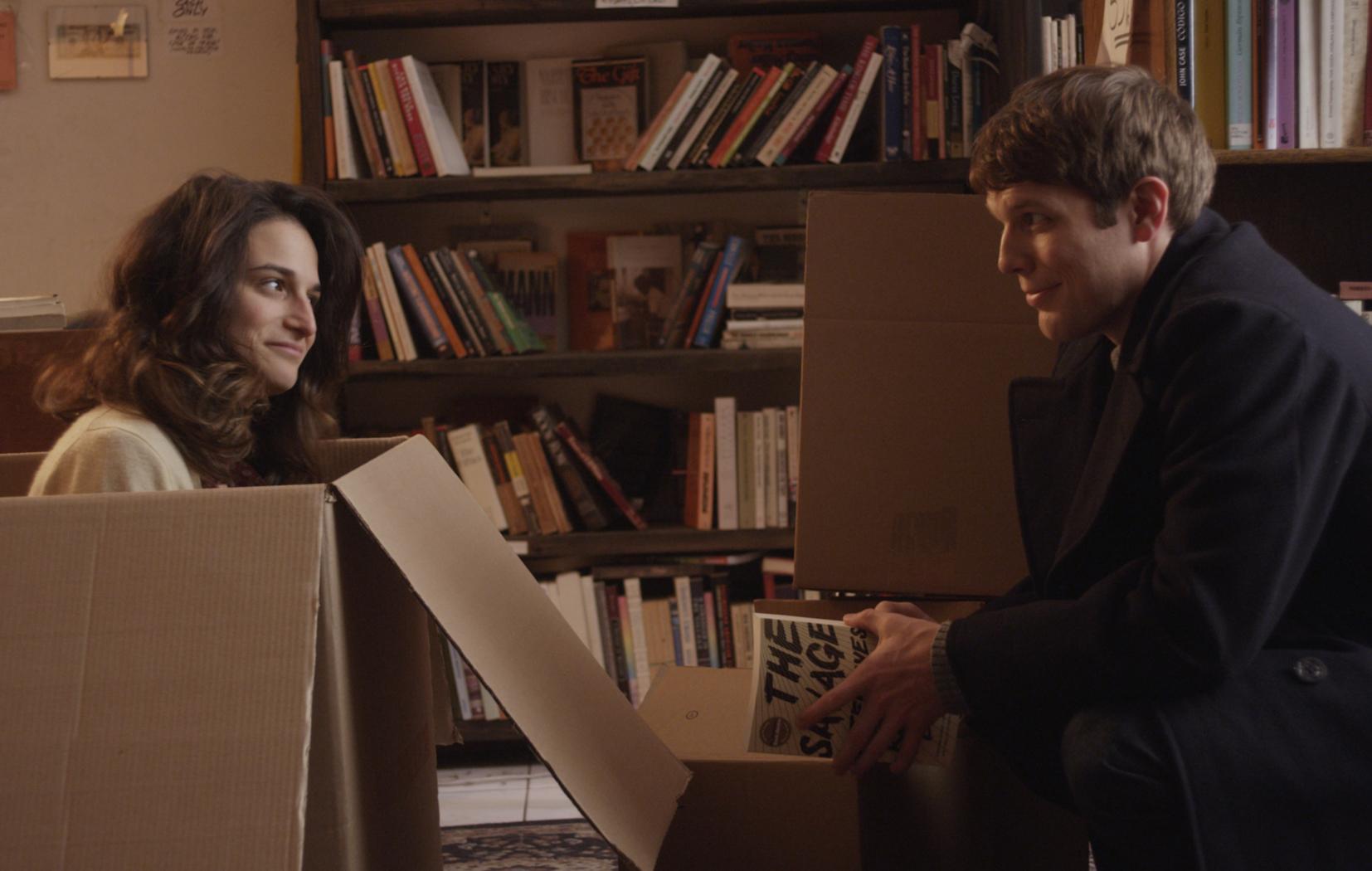
Obvious Child We first encounter the protagonist of writer-director Gillian Robespierre’s funny, original film — a Brooklyn-dwelling twentysomething named Donna (Jenny Slate), who works at a lefty secondhand bookstore and makes regular (if unpaid) appearances at a local comedy night — onstage mining such underdiscussed topics as the effects of vaginal discharge on your garden-variety pair of underwear. This proves a natural segue to other hefty nuggets of embarrassment gold concerning her love life, to the dismay of boyfriend Ryan (Paul Briganti), auditing from the back of the club. He pretty much deserves it, however, for what he’s about to do, which is break up with her in a nasty, well-populated unisex bathroom, taking time to repeatedly glance at the texts coming through on his phone from Donna’s good friend, with whom he’s sleeping. So when Donna, mid-drowning of sorrows, meets a nice-looking fellow named Max (Jake Lacy) at the bar, his post-fraternity-presidency aesthetic seems unlikely to deter her from a one-night stand. The ensuing trashed make-out dance-off in Max’s apartment to the Paul Simon song of the title is both comic and adorable. The fractured recap of the evening’s condom-free horizontal events that occurs inside Donna’s brain three weeks later, as she hunkers down with her best friend, Nellie (Gaby Hoffmann), in the bookstore’s bathroom after peeing on a stick, is equally hilarious — and unwanted-pregnancy jokes aren’t that easy to pull off. Robespierre’s treatment of this extended windup and of Donna’s decision to have an abortion is a witty, warmhearted retort to 2007’s Knocked Up, a couple generations’ worth of Hollywood rom-com writers, and an entertainment industry that continues to perform its sweaty contortions of storytelling in the gutless cause of avoiding the A-word. (1:15) California, Embarcadero, Piedmont, Sundance Kabuki. (Rapoport)

Ping Pong Summer Eighties teen flicks of the My Bodyguard (1980), smart-dweebs-beat-the-bullies ilk are paid homage in Michael Tully’s deadpan satire, which is closer in spirit to the Comedy of Lameness school whose patron saint is Napoleon Dynamite. Radley (Marcello Conte) is an average teen so excited to be spending the summer of 1985 in Ocean City, Md. with his family that he renames himself “Rad Miracle.” He acquires a new best friend in Teddy (Myles Massey), who as the whitest black kid imaginable might make even Rad look cool by comparison. However, they are both dismayed to discover the local center for video gaming and everything else they like is ruled by bigger, older, cuter, and snottier douchebag Lyle Ace (Joseph McCaughtry) and his sidekick. Only kicking Lyle’s ass at ping pong — with some help from a local weirdo (a miscast Susan Sarandon, apparently here because she’s an off screen ping pong enthusiast) — can save Rad’s wounded dignity, and the summer in general. A big step up from Tully’s odd but pointless prior Septien (2011), this has all the right stuff (including a soundtrack packed with the likes of the Fat Boys, Mary Jane Girls, New Edition, Whodini, and Night Ranger) to hilariously parody the era’s inanities. But it’s just mildly amusing — a droll attitude with lots of period detail but not much bite. (1:32) Roxie. (Harvey)

The Rover Future days have never seemed quite so bleak as they are depicted in the wild, wild Aussie west of The Rover — rendered by Animal Kingdom (2010) director David Michod, who co-wrote The Rover with Joel Edgerton. Let’s just say we’re probably not going to see any primo Burner ensembles inspired by this post-apocalyptic yarn: Michod ventures to a plausible future only a decade out, after a global economic collapse, and breaks down the brooding road trip to its hard-boiled bones, setting it in a beauteous, lawless, and unceasingly violent outback. A heist gone wrong leads a small gang of robbers to steal the car belonging to monosyllabic, ruthless mystery man Eric (Guy Pearce). The latter wants his boxy little sedan back, badly, and, in the cat and mouse game that ensues, seems willing to die for the trouble. Meanwhile, one of the gang of thieves — the slow, dreamy Rey (Robert Pattinson), who has been left to die of a gunshot wound in the dirt — turns out to be more of a survivor than anyone imagined when he tracks down the tracker hunting for his brother and cohorts. Michod seems most interested in examining and turning over the ties that bind, in a mean time, an eminently absurdist moment, when everything else has fallen away in the face of sheer survival. Cineastes, however, will appreciate the elemental, existential pleasures of this dog-eat-dog Down Under out-Western, not the least of which include the performances. Pearce’s rework of the Man With No Name exudes intention in the very forward thrust of his stance, and Pattinson breaks his cool — and the confines of typecasting — as a blubbering, babbling, thin-skinned man-child. Clad in the mystic expanses of the South Australia desert, which tip a hat to John Ford Westerns as well as scorched-earth-of-the-mind movies such as El Topo (1970) and Paris, Texas (1984), The Rover is taken to the level of tone poem by the shuddering, moaning cellos of Antony Partos’s impressive, atonal electroacoustic score. (1:42) Metreon, Shattuck. (Chun)

The Signal Sharing its title with a 2007 film — also a thriller about a mysterious transmission that wreaks havoc in the lives of its protagonists — this offbeat feature from co-writer and director William Eubank belies its creator’s deep affection for, and knowledge of, the sci-fi genre. Number one thing The Signal is not is predictable, but its twists feel organic even as the story takes one hairpin turn after another. MIT buddies Nic (Brenton Thwaites) and Jonah (Beau Knapp) are driving Nic’s girlfriend, Haley (Olivia Cooke), cross-country to California. Complicating the drama of the young couple’s imminent separation is Nic’s deteriorating physical condition (it’s never explained, but the former runner apparently has MS or some other neurological disease). The road trip turns dark when the trio (who also happen to be hackers) realize an Internet troll they’ve tangled with in the past is stalking them. After a brief detour into found-footage horror — fooled ya, Eubank seems to be saying; this ain’t that kind of movie at all! — the kids find themselves embroiled in ever-more-terrifying realities. To give away more would ruin the fun of being shocked for yourself, but think Twilight Zone meets Area 51 meets a certain futuristic trilogy starring Laurence Fishburne, who turns up here to play a very important role in Nic and company’s waking nightmare. (1:37) Metreon. (Eddy) *


Events: June 25 – July 1, 2014

0

Listings are compiled by Guardian staff. Submit items for the listings at listings@sfbg.com. For further information on how to submit items for the listings, see Selector.

WEDNESDAY 25

Damien Echols and Lorri Davis Book Passage, 1 Ferry Bldg, SF; www.bookpassage.com. 6pm, free. The husband-and-wife authors discuss Yours for Eternity, a collection of letters they exchanged while Echols, a member of the West Memphis Three who was freed in 2011, was imprisoned on Arkansas’ Death Row.

Joyce Goldstein Mechanics’ Institute, 57 Post, Rm 406, SF; www.milibrary.org. 6pm, $15. The chef and cookbook author discusses Inside the California Food Revolution: Thirty Years That Changed Our Culinary Consciousness.

THURSDAY 26

Joshua Weil City Lights Bookstore, 261 Columbus, SF; www.citylights.com. 7pm, free. The author reads from The Great Glass Sea.

FRIDAY 27

Ken LaZebnik University Press Books, 2430 Bancroft, Berk; http://universitypressbooks.indiebound.com. 6pm, free. The veteran film and TV writer shares his new book of essays, Hollywood Digs: An Archaeology of Shadows.

“MarinScapes Fine Art Exhibit and Sale” Historic Escalle Winery, 771 Magnolia, Larkspur; www.buckelew.org/marinscapes. Today, 5:30-8pm; Sat/28-Sun/29, noon-6pm. $15. Buckelew Programs (including Family Service Agency of Marin and Helen Vine Recovery Center) benefits from this showcase of work by 30 artists and photographers whose work is inspired by Marin County. Author Anne Lamott gives a talk Sat/28, 12:30pm.

“Pancakes and Booze Art Show” 111 Minna Gallery, 111 Minna, SF; www.pancakesandbooze.com. 8pm-2am, $5. Also Sat/28. Over 100 emerging artists showcase their wares at this party, which also features live body painting, live music, live art battles, and an all-you-can-eat pancake bar.

SATURDAY 28

Jennifer Coburn and Cindy Arora Book Passage, 1 Ferry Bldg, SF; www.bookpassage.com. 4pm, free. The authors discuss We’ll Always Have Paris and Heartbreak Cake.

“Hand to Mouth/Words Spoken Out #67” Rebound Bookstore, 1611 Fourth St, San Rafael; www.reboundbookstore.com. 4-6pm, donation requested. Poet Gerald Nicosia reads with special guests.

Art Peterson Book Passage, 1 Ferry Bldg, SF; www.bookpassage.com. 2pm, free. The author discusses his San Francisco tale, Why Is That Bridge Orange?

El Tecolote benefit Cesar’s Latin Palace, 826 26th St, SF; www.accionlatina.org. 9pm-2am, $10. Raise money for Mission district bilingual newspaper El Tecolote at this dance party, featuring music by Cesar’s Latin All-Stars and Bahia Son.

SUNDAY 29

“Reimagining Progress: The Power of Word” David Brower Center, Goldman Theater, 2150 Allston, Berk; www.browercenter.org. 5:30pm, free. Fourteen acclaimed poets, including Patricia Smith and Josh Healey, read works addressing “environmental health, social justice, and the notion of progress.”

“We Shape Our City” Old Mint, 88 Fifth St, SF; www.sfhistory.org. 1-4pm, $5-10. Ongoing every Sunday. The San Francisco Museum and Historical Society hosts docent-led tours of the historic landmark, as well as showcasing a number of exhibits, including photographic explorations of various SF neighborhoods and the new “We Shape Our City,” dedicated to local innovators.

MONDAY 30

Bill Hillman and Tim Kinsella Books Inc., 601 Van Ness, SF; www.booksinc.net. 7pm, free. The authors read from The Old Neighborhood and Let Go and Go on and on.

TUESDAY 1

LaborFest Art Show ILWU Local 34 Hall, 801 Second St, SF; www.laborfest.net. Today through July 12, (4-6pm weekdays; noon-4pm, Sat-Sun). Free. LaborFest honors the 100th year commemoration of the Ludlow mining strike in Colorado with this art exhibit themed around “Extraction.” Artists include Philippe Barmoud, Sherri Craven, Mike Conner, Peter Hudson, and others. *


Pride and prejudice

7

joe@sfbg.com

As Pride celebrations across the country unfurl their rainbow flags this month, teacher tenure in California suffered a stunning blow from a Los Angeles Superior Court, undermining protections that have shielded the LGBT community from discrimination.

Although the decision will likely be appealed, Judge Rolf M. Treu’s ruling galvanized teachers unions and evoked memories of conservative attacks on gay teachers in the 1970s, including the unsuccessful Briggs Initiative that was a rallying point for then-Sup. Harvey Milk and a new generation of LGBT political leaders.

“To jeopardize any of the protections we have now, it’s a thinly veiled attempt to demoralize teachers, and it’s an attack on public education,” Assemblymember Tom Ammiano, the San Francisco Democrat who began his political career as an openly gay teacher campaigning against the Briggs Initiative, told the Guardian.

LGBT rights and teacher tenure may seem to have little in common, but a peek at the movers and shakers in the LGBT and teachers’ rights movements show an interconnected relationship of protections and the players who fight for them. Loss of tenure can threaten the protection of minority groups, academic freedom, and unpopular political speech, despite employment rights gained in recent years.

“We’ve beaten back that thinking,” Ammiano said, “but it’s still lurking.”

In California, K-12 teachers are shielded by legal protections often referred to commonly as tenure. Permanent status is the backbone of these protections, offering an arbitration process for teachers who administrators intend to fire. Also struck down by the judge was the First In, First Out law, which protects veteran teachers from layoffs by letting go of recent hires first.

In his ruling, Treu said these policies created an environment where students were burdened by ineffective teachers who were difficult to fire, disproportionately detracting from minority students’ education quality in the most troubled schools.

“The evidence is compelling,” the judge wrote in his ruling, “indeed, it shocks the conscience.”

Many education advocates vehemently disagreed with that ruling, and the veracity of the evidence will be further weighed in upcoming appeals. But along the way to pursuing equality for students, the equality of teachers may find itself eroded by an unlikely new hero of the LGBT movement: A conservative attorney who fought against marriage discrimination, but also litigated against the legacy of an LGBT legend.


HERO OF MARRIAGE EQUALITY

The morning last year when the US Supreme Court ruled to overturn California’s ban on same-sex marriage, Proposition 8, San Franciscans gathered inside City Hall by the grand staircase. Men held men, women held women, and families held the their children tight.

When the court’s decision finally hit the news, the outcry of happiness and surprise at City Hall was deafening. The expressions on the faces of those there was that of joy with many understandably streaked by tears. Attorney Theodore Olson helped litigate against Prop. 8 and won, and as he fought for gay rights, his face was often streaked with tears as well, LGBT rights activist Cleve Jones told us.

“There was a part of that trial when the plaintiffs Kris Perry and Sandy Stier described their love for each other,” Jones said. “I was sitting with their family in [US District Court Judge] Vaughn Walker’s court. When we broke, Ted Olson went to embrace them and there were tears on his face.”

But Olson is not a poster child for most politics considered the realm of liberals and Democrats. Olson and fellow Prop. 8 litigator Attorney David Boies were on opposing sides of the Bush v. Gore case that Olson won, handing George W. Bush the presidency in 2000. Olson was then appointed solicitor general of the United States, often leading conservative causes.


Olson and Boies will talk about their new book Redeeming the Dream: The Case for Marriage Equality at the LGBT center on June 25 (joined by Supervisor Scott Wiener), but Olson gave us a glimmer of those motivations.

Olson, a Los Altos native who attended UC Berkeley School of Law, told the Guardian in a phone interview that his stand on gay rights was based on conservative principles: “I think of conservatives as including people who are libertarians and respect individual liberty.”


A trailer for “The Case Against 8,” which features Ted Olson heavily.

He said the right to marry the person of one’s choosing should be an individual right that government has no business banning. That belief in individual liberty is at the core of his political principles. “It affects me in absolutely the deepest personal way,” he told us.

Whatever his ideological motivations, Olson became a hero in the LGBT community. But this year, he was one of the attorneys who convinced Judge Treu of the evils of teacher tenure. In the trial, Olson claimed one Oakland teacher was harming elementary students’ educational outcomes: “The principal couldn’t remove that teacher. These stories are so awful, sometimes you feel people are exaggerating.”

Yet the problems afflicting Oakland schools and its children, the unions argued, are not due to teacher tenure. In a city with high violence rates, students’ broken homes, low teacher pay, and difficult working conditions, critics say Olson oversimplified and misrepresented a complex problem.

“We all know there are problems in our schools,” Jones, who works with unions, told us. “But there’s never of course discussion about poverty, or students growing up in single families, or class sizes.”

These were all arguments the union made against Olson, unsuccessfully. The decision to remove protections for teachers may send ripples into other states and spur increased attacks on teacher protections.

And unlike California, which has strong anti-discrimination protections, that campaign may allow teachers of other states to be fired or dismissed for coming out of the closet, an issue that helped elevate Harvey Milk into such an iconic leader.


ECHOES OF BRIGGS

Jones and Ammiano fought alongside Milk against Proposition 6 in 1978, known as the Briggs Initiative, which would have made it illegal for openly gay people to teach. Then-Sen. John Briggs and his allies associated gay teachers with child molesters and frequently said they may influence children to become gay.

“I was born of heterosexual parents, taught by heterosexual teachers in a fiercely heterosexual society,” Milk said in a speech at the time. “Then why am I homosexual if I’m affected by role models? I should’ve been a heterosexual. And no offense meant, but if teachers are going to affect you as role models, there’d be a lot of nuns running around the streets today.”

This fight may be history, but Ammiano said such biases are still with us today, such as with how some see the transgender community. “We’re holding people at bay around LGB issues, but the T part now is the crossroads for the right wing [activists] who are rolling back protections,” he said.

Only 30 US states offer employment protections for sexual orientation, and some of those only cover government employees, according to a study by Center for American Progress. Only 23 states protect against firing for gender identity.

Vulnerable teachers lacking protections granted by tenure or equal employment laws are still being fired in California and across the country. In April, a transgender Texas substitute teacher was fired for making children “uncomfortable,” according to news reports. In Glendora, California, a teacher was fired from a religious private school after a photo of he and his husband kissing on their wedding day made the local newspaper.

This month, President Barack Obama announced an Executive Order mandating federal contractors enact policies protecting workers from dismissal due to sexual orientation or gender identity. Many speculate this was announced to press Congress to pass the Employment Non-Discrimination Act, which would protect private employees from discrimination based on gender or sexual orientation.

briggs

“This is only round one,” stated Senator John Briggs to the press about the defeat of Proposition 6, Nov. 7, 1978, at a Costa Mesa hotel. Proposition 6, called the Briggs Initiative, prohibits gay teachers from working in California public schools. AP file photo by Doug Pizac

But ENDA has stalled for years, despite the best efforts of advocacy groups nationwide. And as the country awaits equality, many teachers’ last hope against unlawful dismissal is tenure. In fact, tenure laws were first drafted after the Red Scare and Sen. Joseph McCarthy’s witch-hunt for communists, California Federation of Teachers spokesperson Fred Glass told us.

Yet Olson recoils at linking LGBT rights to teacher protections. “I support wholly protections for people for who they are, for heaven’s sakes,” he told us, mentioning that Milk “was very much an inspiration and very important to us.”

And Jones still thinks of Olson as a hero, saying that life and politics are complex.

“Irony abounds,” Jones said. “I don’t square it. You can’t square it. It’s there. But my respect for Ted Olson is based on his very genuine support for our community on the issue of marriage. For LGBT people to win equalit,y it’s important there’s a national consensus, it can’t just be from the left. Ted Olson was incredibly important with that effort and will be remembered generations for now. You don’t have to like everything about Ted Olson or President Obama to acknowledge they had a profound effect.”

Alerts: June 25 – July 1, 2014

0

THURSDAY 26


Climate Forum: Confronting Oil, Coal and Gas, Direct Action Movements at the Point of Extraction

The Eric Quezada Center for Culture and Politics, 518 Valencia, SF. tinyurl.com/oilcoalforum. 6:45pm, donation requested. The oil and natural gas extraction process known as hydraulic fracturing (“fracking”) has become one of the most pressing issues in the Bay Area and California. It is a major cause of water and air pollution and is highly resource-intensive. Nevertheless there is low awareness about its harmful effects, and state policies still allow its proliferation. This panel will discuss fracking and other hazardous resource extraction processes in the U.S. and educate participants in the first steps for taking action.


Plastic Paradise: Film and discussion

Ecology Center, 2530 San Pablo, Berk. (510) 548-2220, tinyurl.com/plasticfreejuly. 7-9pm, free. Plastic Paradise is a new documentary about the Great Pacific Garbage Patch. This event helps prepare for Plastic-Free July—an annual event originating in Australia—that aims to educate the public about how much plastic we use, and explains how we can eliminate as much as possible from our lives. The film screening will be followed with a discussion led by Beth Terry, author of Plastic-Free: How I Kicked the Plastic Habit and How You Can Too. Sponsored by Green Sangha, the City of Berkley, and My Plastic-Free Life.

FRIDAY 27


Trans March youth and elder brunch

Dolores Park, 19th and Dolores, SF. tinyurl.com/transmarchbrunch. 12-3pm, free. Right before the Trans March, this brunch gives LGBTQ youth and elders the opportunity to learn from each other. There will be food, games, icebreakers, an art station, face painting and more. The sober event is designed for self-identified LGBTQ people, ages 24 and under. Hosted by LYRIC, OpenHouse and Trans March.

Sunday 29


Meeting: Syria — Eyewitness Report

Niebyl-Proctor Marxist Library, 6501 Telegraph Ave, Oakl. http://tinyurl.com/pjkvv5f 10:30-12:30pm, free. Rick Sterling, a founding member of the Syria Solidarity Movement, spent two weeks in Syria as part of a peace and reconciliation delegation, and he returns to discuss the conflict there and why it matters to progressives in the United States. For a firsthand account of the hostilities in the region—at no cost—be sure to stop by the Niebyl-Proctor library early to ensure you get a seat.


Trying to have hope

44

OPINION I get it, as Harvey Milk famously said: “You gotta give them hope.” But how do you do that when the LGBT community you love so much is being priced and evicted out of the city?

When immigrants, people of color, artists, the poor and working-class, people with AIDS, seniors, persons with disabilities, and so many others are being pushed out — like you, Harvey, were forced out of your camera store and apartment on Castro Street when your rent was tripled. Just before an assassin’s bullet took you from us, you were preparing an anti-speculation tax to deal with the rising rents and displacement caused by speculators and real estate investors.

We tried to curb their dirty work via a state bill limiting use of the Ellis Act, but Democrats buckled in to pressure from the real estate industry that owns them. Shame on Democratic House Speaker Toni Atkins from San Diego, an out lesbian, whose inaction on the bill helped kill it.

Our only hope is the anti-speculation tax on the November ballot. Brian Basinger of the AIDS Housing Alliance is calling it the Harvey Milk Anti-Speculation Tax.

The stakes are high right now. Our housing crisis is destroying our community. According to the Anti-Eviction Mapping Project, which tracks displacement throughout the city, District 8 (which includes the Castro) has the highest rate of Ellis Act and Owner Move-In evictions, almost 2,000 units emptied since 1997. That doesn’t include buyouts and threats of evictions, de facto evictions that have pushed out many more, most of them tenants with AIDS. Far too many people with AIDS are homeless in a city that used to be called the “model of caring.”

The motive for these evictions is obvious. A two-bedroom across the street from my Castro apartment rents for $4,200. An apartment above the new Whole Foods at Sanchez and Market can cost you as much as $8,000. A month! I don’t want to upset you, Harvey, so I won’t tell you how high commercial rents are, and how poorly neighborhood businesses are faring these days.

The economic disparity has never been greater. Two Williams Institute studies show that our community is as poor as, and in some instances poorer than, other communities. In our city’s latest homeless count, 29 percent of respondents identified as LGBT and an additional 3 percent as transgender. Other reports say that 40 percent of the city’s homeless youth are queer.

Forget Altoona, that homeless queer kid in the Haight or Castro needs a sense of hope. We have a sit/lie law similar to the one you opposed that prevents these kids from getting subsidized housing if they have an unpaid citation. They sleep in the park because they’re not safe in the shelters. Sadly, Human Rights Campaign and Equality California have never made them — or the poor — a priority.

Cranes and rainbow flags may be all the rage in Upper Market these days, but what’s being built will not be affordable to homeless, poor, or working class (even some middle-class) people. The Castro has only one affordable housing project in the pipeline: 110 units for LGBT seniors at 55 Laguna. Our D8 supervisor and City Hall have let us down big time.

Harvey, I want to think that 10 years from now, our community will still have the Castro as a refuge. I want to believe that poverty, homelessness, and hunger will be greatly reduced. That we can stop the evictions. That we can give young people a piece of the dream. That we can provide seniors a secure place to spend their final days. That we can have elected officials who truly represent us, as you did.

I really want to have hope.

Tommi Avicolli Mecca, a longtime queer and housing rights activist (and an organizer of the first Philadelphia Pride march in 1972), is a grand marshal of this year’s Pride Parade.

Jury finds Recology cheated in waste diversion bonus program

A jury has determined that Recology, San Francisco’s garbage collection contractor, was not honest with the city when it collected a bonus payment of $1.36 million for successfully diverting waste from the landfill.

Brought by a former employee, the lawsuit claims that Recology misrepresented the amount of diverted waste in order to qualify for the bonus money. This is especially significant because San Francisco is recognized nationwide as a leader in its quest to send zero waste to the landfill as an environmental goal.

Jurors deliberated for more than a week before issuing their determination, and ultimately found on June 17 that the waste management company had made a false claim and therefore must pay the city $1.36 million to compensate for the amount it improperly received.

The False Claims Act, the California law under which the suit was filed, provides that violators can be made to pay three times the amount collected under false pretenses, with interest tacked on to boot. That means Recology could ultimately wind up paying out an amount closer to $5.5 million.

Under an incentive program set up by the city, Recology may reap additional bonus profits above what it normally earns from the business of collecting and processing San Francisco customers’ trash if it effectively meets targets for keeping the trash out of the landfill, the most environmentally harmful waste disposal method. Under the program structure, Recology may withdraw this extra money from an account it maintains, containing funds derived from rates paid by garbage customers, if it meets the city’s established waste diversion targets.

The lawsuit, filed in 2010, claims Recology used several schemes to manipulate waste diversion records when it submitted records the San Francisco Department of the Environment in 2008, in order to be granted permission to withdraw the bonus money. The suit claimed this happened in three other years, too, but the jury only ruled against Recology for this one year.

The primary way this occurred, according to attorney David Anton, involved misclassifying demolition and construction waste. Under state law, ground up raw construction material that is labeled as “fines” can legally be used to cover up the top of a landfill – in order to prevent pests, fires, and odors, for example. When construction waste is ground up and used this way, it counts as “alternative daily cover” – like a layer of frosting on a giant cake of garbage – and strangely enough, the state allows waste disposal companies to count that frosting as “diverted waste” even though it’s actually part of the landfill.

The lawsuit claimed that Recology tried to count a great many tons of its construction and demolition waste as “fines” when in reality it should have been labeled just plain garbage, because the tons of stuff that they were shipping to the Solano County landfill wasn’t being processed to a fine enough grade to comply with state requirements for what constitutes “fines.”

The difference between “fines” and regular old construction and demolition waste is that for the latter, the company would have had to pay a fee to dispose of it – and would have had to count it as waste sent to the landfill, rather than waste diverted from the landfill. Had it been counted as plain old garbage, Recology would have missed its diversion targets in 2008, thus losing out on the $1.36 million bonus payment.

“The construction material that they were sending – they were telling SF was qualified to be used for this beneficial purpose at the landfill,” said Anton, “when in fact, the county and the state had said it was not qualified for it, it can’t be used that way, and it can’t be accounted that way.” He added, “Recology kept this completely secret from San Francisco.”

Recology spokesperson Eric Potashner told us the company plans to appeal this finding, because the violation Recology received in regard to the “fines” was only the start of a lengthy process. “The local enforcement agency in Solano County had questions about that material,” he said, noting that Recology went through a formal process of challenging an inspector’s assessment of the material. He said that at the end of the day Recology was never issued a cease-and-desist, nor was it made to revise company records to count it as anything other than “alternative daily cover.”

Another problem uncovered in the trial, Anton said, had to do with Recology misrepresenting tons of garbage generated in San Francisco as having originated in a different county, so that it could be counted outside the parameters of the waste diversion program. Potashner called that “an oversight” that had since been corrected, and added that it would not amount to enough to “move the needle” on hitting the diversion goals.

Finally, Anton noted, it came out in the course of the trial that somewhere between 10 and 20 percent of what residential customers chuck into their green compost bins actually winds up in the landfill at the end of the day.

Where happens to the stuff that goes in the green bin? “What we found out in this trial,” Anton said, “is that it’s sent to a place where they can compost it, but this place doesn’t necessarily make it into compost. Recology owns the composting place. And the composting place happens to be at a landfill. And it happens to be the law that a landfill has to cover the garbage that it gets every day. It’s got to cover it with dirt – six inches of dirt. Every day. A lot of landfills buy dirt to cover it – but the state allows you to … take mulch or green waste, if it’s chopped up fine, and cover a landfill with it. Well, Recology decided that they made more money and did better if they took a bunch of your green bin material, and put it on their landfill, rather than buying dirt.” As a result, he said, some of that green-bin waste “gets put in a landfill every night.”

Which really isn’t what most people would expect would happen after they’ve chucked some yard clippings into a compost bin.

When San Francisco set up the green-bin composting program, Anton said, a specific policy was created against this sort of practice. Nevertheless, “San Francisco knew that the company was doing that,” he said, and permitted it despite the formal policy because “they wanted to help out the company.”

Potashner said it is perfectly legitimate under state law for green waste to be used as alternative daily cover. “The Department of the Environment watches this, and knows we’re doing this,” Potashner said.

All of which underscores a point that Anton said he found to be somewhat confusing, or perhaps telling: “It was a very strange thing,” he said, “to be pursuing this lawsuit, trying to get money to the city, and the city’s representatives are saying, ‘we don’t want it.’”

He said he found it odd that a representitive from the San Francisco Department of the Environment, which oversees the city’s Zero Waste program, even made a statement in the course of the trial suggesting that he hoped the suit wasn’t successful.

Anton guessed that the city remained on the sidelines of this case because its “relationships with Recology are so close and tight.”

The Department of the Environment did not return the Bay Guardian’s request for comment.

Amour Vert brings its eco-friendly designs to Hayes Valley

0

“Paris Chic, Cali Cool.” That’s the tagline behind the eco-friendly clothing brand Amour Vert. Usually, the people who refer to California as “Cali” are non-natives. The term implies a certain unfamiliarity with the golden state and a desire to be more ~CaLiFoRnIaN~. Yet, the slogan is fitting. Founded out of a need for clothing that doesn’t sacrifice style for sustainability, Amour Vert’s garments are created by a French designer and made within a 20 mile radius.

Until now, the Palo Alto-based brand was only available in department stores and small boutiques but Amour Vert opens its first retail store today. Nestled in the heart of Hayes Valley, at 437 Hayes, the boutique neighbors the french confectioner Chantal Guillon Macarons and clothing store Steven Alan.

Across the street is Alternative Apparel, a company with a similar commitment to sustainable fashion. But owner Linda Balti maintains that Amour Vert is very different from its neighbor. In an equally sustainable way, Alternative Apparel outsources its garments to socially-responsible factories in Peru, Vietnam, Indonesia, China and other countries around the world. Amour Vert keeps everything local, from its design studio in the Dogpatch, to the exceptional garment factories in the Bay Area, to its beautiful living wall in the Hayes Valley store.

French-German couple Balti and Christoph Frehsee conceptualized Amour Vert after reading a Newsweek article a couple years ago that named the fashion industry as the second polluter in the world.

“I was in the middle of writing a paper for my master’s,” Frehsee said at the store’s opening reception last night. (He studied environmental resources at Stanford.) Balti began researching sustainable alternatives but found that they were either unflattering (think hippie hemp dresses) or expensive, such as John Patrick and Stella McCartney. 

The Parisian designer wanted simple and elegant options to fill her wardrobe at an affordable cost, she says. At the opening reception, Balti wore an Amour Vert sleeveless green palm leaf printed jumpsuit and crisp white hightop sneakers, the epitome of French elegance. With ruffled straps and a cinched waist, the Crystal Jumpsuit is a highlight of the summer collection. This easy and feminine silhouette made of washable silk is indicative of the brand’s casual luxury. Using the finest materials available in the Bay, each garment is handmade from bamboo, silk, organic cotton, recycled polyester, linen, or wood pulp.

Amour Vert’s “Plant a T(r)ee” collection is probably its most impressive. Continuing their dedication to a cleaner environment, Balti and Frehsee have created a small line of garments made from wood pulp, where with each T-shirt purchase (ranging from $75-$135), American Forests will plant a tree in the United States. “It’s our way of directly giving back to the environment what we take from it,” said Balti. So far, they’ve planted 15,000 trees.

In the store, vibrant green and coral pieces with palm tree prints line the walls. Simple, neutral basics are also available. The “Plant a T(r)ee” is mostly comprised of marinières—the quintessentially French navy and white striped boating shirts. With muses such as Charlotte Gainsbourg and Clémence Poésy, the brand maintains a prominently French style. But the Cali vibe is not lost. A lace crop top hangs in the corner embracing the West Coast flair.

The focal point of the store however is a heart-shaped living wall — a nod to Amour Vert’s French name, which translates to “green love.” Designed by SF native, model, and philanthropist Lily Kwong, the installation is composed of small potted plants (for sale for $20) that create a big green heart in the back of the store. The local support continues with two “Made in California” chairs produced by Russell Pritchard, owner of the interior design store Zonal down the street, and board member of the Hayes Valley Neighborhood Association.

“Everyone has been very welcoming,” Frehsee said. At last night’s reception, Kwong made an appearance, and delicious snacks by Chantal Guillon Macarons and the Melt food truck were on hand for hungry partygoers. There was also Amour Vert’s signature photo booth, where a tree will be planted for every photo taken. 

The decision to open a store in Hayes Valley was very natural, Balti said. After several pop-ups in the area, the couple decided to open a permanent location in the neighborhood. The store is a lab project to them, says Frehsee — the couple got their beginnings in science, they met at a defense trade show in Abu Dhabi.

“The store is our opportunity to interact with our customers on a personal level and hear what they love most about Amour Vert,” Frehsee said. “We’re looking forward to having that direct dialogue with them.”

Boom asks “What’s the matter with San Francisco?” and offers insightful answers

68

“What’s the matter with San Francisco?” asks the Summer 2014 issue of the Boom: A Journal of California, a quarterly magazine produced by the University of California Press, tapping an amazing array of writers to explore the struggle for the soul of San Francisco that has captured such widespread media attention in the last year.

The question on its cover, which all of the articles in this beautifully produced 114-page magazine explore from varying perspectives, is a nod to Thomas Frank’s insightful 2004 book, What’s the matter with Kansas? And the answer in both cases, argue writers Eve Bachrach and Jon Christensen in their cover story article, is the people.

“Specifically, the people who act time and again against their own interests, people who adhere to a narrow political line, whether it’s antipopulist in the nineteenth century or antiprogressive in the twentieth. By focusing on one set of values, this analysis asserts, the people don’t notice what they’re really losing until it’s too late — and San Francisco is no different,” they write.

At this important moment in time, San Francisco is fighting to retain the last significant remnants of the cultural and economic diversity that have made this such a world-class city, with today’s hyper-gentrification building off of previous waves of displacement to change the city in fundamental ways.

Sure, this struggle between capital and community has been part of San Francisco since its founding, a dynamic that animates our civic life and feeds important political movements that trickle out across the country. And local writer/historian Chris Carlsson has a great article documenting those movements, from the Freeway Revolt of the 1960s to the pro-tenant and anti-displacement activism around the last dot.com boom.

“Read one way, this short history demonstrates the relentless power of money in defining who is a San Franciscan and who can stay and who must go. But read another way, this history shows that there is historic precedent for optimism that the worst consequences of today’s creative destruction of the city can be averted if we know and use our history,” Carlsson wrote.  

But in a Q&A interview with author Rebecca Solnit, both celebrates that dynamic and explains why things are different this time: “You can image San Francisco as full of dynamic struggle that’s been pretty evenly matched between the opposing sides since the Gold Rush. There have always been idealists and populists and people who believe in mutual aid in the City of San Francisco. And there have also been ruthless businessmen and greedy people: the ‘come in and get everything and be accountable to nobody and hoard your pile of glittering stuff’ mentality has been here since the city was founded. But it has not been so powerful that it has rubbed out the other side.

“Now, however, it feel like Silicon Valley is turning San Francisco into its bedroom community. There’s so much money and so much power and so little ability to resist that it is pushing out huge numbers of people directly, but it is also re-creating San Francisco as a place that is so damn expensive that nobody but people who make huge amounts of money will be able to live here.”

After building off of previous gains, the capitalists of today, those who refuse to even acknowledge the political landscape and dynamics that have been developed over generations, seem to be moving in for the kill, armed with more powerful weapons of accumulation and displacement than their predecessors had or were willing to deploy.

“So what’s the matter with San Francisco? It’s becoming a bedroom community for Silicon Valley, while Silicon Valley becomes a global power center for information control run by a bunch of crazy libertarian megalomaniacs. And a lot of what’s made San Francisco really generative for the environmental movement and a lot of other movements gets squeezed out. And it feels like the place is being killed in some way,” Solnit said.

Yet the issue pointedly avoids falling into us-vs.-them traps or trite demonization of techies, ultimately seeking to provide a more nuanced look at the city’s current cultural and economic clashes than the various East Coast publications have brought to the task. And the best of it is “The Death of the City? Reports of San Francisco’s demise have been greatly exaggerated.”

Written by Rachel Brahinsky, a former Bay Guardian staff writer who is now a professor at the University of San Francisco, the article echoes other concerns about the threats and challenges facing San Francisco, but she finds a potential “seed of the solution” in the city’s current zeitgeist.

For one thing, she challenges the convenient blaming of “techies” for the problems facing San Francisco, noting that some of the city’s best progressive organizing has been done by those with skills and/or jobs in the technology sector, often by people who despise the corporate managers and investors who run the industry as much as outsiders do.

“The problem isn’t tech, but corporate tech,” she writes.

Brahinsky also urges readers to broaden their lenses to consider San Francisco as part of the broader Bay Area, which now much confront the growing challenges of rising economic inequality and gentrification as a region, using the clashes here as a catalyst to finally pursue what she calls “ethical urbanism.”

“What is to be done? There is no lone policy shift that will salve these corporate tech wounds. There are many good solutions under debate now; with continued pressure they may become law in the same way that rent control moved from impossible to mainstream in 1978,” she writes.

The prescription she then offers includes fostering greater community engagement, developing regional policies that promote “community development without displacement,” not blaming techies for the sins of landlords, finding ways to increase the density of development without displacing or sapping vital public services, using open source tech tools to increase awareness and broaden the progressive movement, and “you need to fight like hell for the kind of city you want.”

Finally, in closing, she writes, “The San Francisco region’s most potent dreams are made of the kinds of struggles that refuse the sweeping change brought by the economistic forces of urbanism. What we witnessed in the winter of 2014 was a reawakening of this side of ‘San Francisco,’ a part of the city as mythic and real as the Gold Rush. The ongoing cacophony of protests, corporate tech-activist happy hours, housing lectures and forums, and the ballast of anti-eviction committees brought together by two months of tenants conventions are all signs of this legacy regathering steam. What happens next?” 

Party Radar: Hardkiss Brothers celebrate 1991, “Flowers Blooming”

0

It’s a tribute to the resiliency of SF’s classic Hardkiss Brothers — and the soul of the SF house music scene — that, after the devastating loss of musical brother Scott last year, Gavin and Robbie Hardkiss have bounced back with an exuberant tribute to the roots of their legendary collective, new album 1991.

This Fri/20 at Public Works (9pm-3am, $10. 161 Erie, SF), they’ll be bringing the Hardkiss family together to celebrate the release of exuberant floor-stomping single “Flowers Blooming” — a rework of lovely 1980 Change track “Glow of Love.” Free download below!

Besides calling to mind the joyful-disco, Luther Vandross-fronted original — oh man, how I love me some Young and Gay American Luther — plus the Inner City “Big Fun” sound of the late ’80s, and the glowing “Flowers in Your Hair” SF Summer of Love aesthetic, “Flowers Blooming” also slips into a luminous legacy of flora-based raveytime anthems. 1991 indeed.

Anyway, I’m high. Here’s what the brothers themselveshave to say about the track, which boasts a slew of remixes and inclusion in this cool flashback “Megamixx”:

“In the latest single off the album, ‘Flowers Blooming/Glow of Love,’ Hardkiss take Change’s 1980 classic ‘Glow of Love’ out for a driving musical journey. First stopping in ’90s Detroit before putting the top down and heading straight for the California sunshine. The result is sun-drenched track that is both irresistible and feel good- a must have addition to any summer playlist. Featuring vocals by Robbie Hardkiss, there’s enough on the new Hardkiss album to satisfy any dancefloor intent on rising up in celebration.” 


Free Sunday meters challenge rejected, SFMTA board’s independence questioned

92

The San Francisco Board of Supervisors voted to reject an environmental appeal of the decision to repeal paying for parking meters on Sundays, which was voted on by the San Francisco Municipal Transportation Agency in April as part of the agency’s annual budget approval.

It was a hotly contested decision, as competing interest groups fought for their slice of Muni’s funding. SFMTA Chairman Tom Nolan told us at the time, “As long as I’ve been on the SFMTA board I’ve never felt more pressure.”

This week’s appeal to the Board of Supervisors focused on one aspect of the overall SFMTA budget: the repeal of paid Sunday meters. 

“I appreciate there is frustration,” SFMTA Director Ed Reiskin said to the board. That was an understatement.

The Sunday meters benefit many, the appeal’s filers contended: Less cars circled around looking for parking (because more drivers could actually find spots) meant reduced congestion and safer streets for bicyclists and pedestrians. It’s a sign of the strength of the argument that the appeal was filed by transit advocacy group Livable City (whose executive director is BART board member Tom Radulovich) and Mario Tanev, a very bright policy wonk over at the San Francisco Transit Riders Union. 

The SFMTA’s own data proves the Sunday meters were good for the city,” Cynthia Crews of the League of Pissed Off Voters said to the board. “We need to stop playing chicken with public safety.”

But despite the environmental benefits of paid meters, the appeal was rejected. The reasons are buried in political gobbledygook, but untangling the complex story reveals the mayor’s power, and his missteps. 

Firstly, the environmental appeal wasn’t exactly aimed at the meters themselves, but at the SFMTA budget as a whole. That’s because the SFMTA board didn’t vote to repeal Sunday meters directly, but stuffed it into their approved budget, which is exempt from California Environmental Quality Act review. It was like serving up a distasteful Sunday meter fruitcake with the Muni budget holiday meal: You’d better eat the whole dinner, or else you’re not eating at all. 

Budgets are statutorily exempt from environmental review (otherwise there’d be an EIR with every major financial decision). So the Sunday meters were approved through a politically tactical move, shielded by the environmental exemption cloak of the budget.

This meant the environmental appeal yesterday targeted not just the meters, but it could effectively challenge the entire SFMTA’s right to environmental review exception for its budgets, supervisors said. They also warned such a challenge may set a precedent for other budgets from other agencies to not be exempt from environmental review, an onerous burden. That was too big of a pill for the board to swallow, which is likely why only two supervisors voted against granting the SFMTA the CEQA exemption: John Avalos and Eric Mar. 

Yet most of the political maneuvering wasn’t from the board, but from Mayor Ed Lee, a problem Supervisor David Campos used this review hearing to highlight. Even if you do or don’t want to see Sunday meter parking, irrespective of the issue,” Campos said, “I think the way this matter was handled by the SFMTA, respectfully, is not something anyone should be happy with.”

He continued: “Let’s be clear: The reason why the SFMTA budget included an item that did not provide for funding from Sunday meters is because the mayor wanted it that way. We have a budget system that is essentially run by decisions made in the Mayor’s Office.”

We posed this idea in our story “Politics over Policy” [4/22], contending that because the SFMTA is appointed by the mayor (meaning, he picks and chooses who is on the board), the board members are therefore politically beholden to the mayor. 

Campos drove this point home at the meeting: “I think there’s something to be said when the appointment of one official (on the SFMTA board) is entirely dependent on [the mayor], who can disagree or agree with the decisions you made.”

The night before our last story went to print, SFMTA Board Chariman Tom Nolan told us that was in fact exactly what happened on the Sunday meter issue. The SFMTA board, whose directors vote on resolutions every week, received a phone call from the mayor asking for a specific vote. And he got it.

Ed Resikin, myself, and a few others in a conference call [with the Mayor’s Office],” Nolan said. He told us the central message of the call was this: The mayor wanted to put a vehicle license fee increase on the city’s November ballot. In order to do that, the mayor contended, car drivers needed to feel like they weren’t being nickled and dimed. Paid Sunday meters had to go. 

That was where they advanced the idea that the mayor wanted to do that,” Nolan told us. “That call was right before the mayor’s State of the City message.”

Nolan is an affable, straightforward person. The budget the SFMTA passed came on the heels of a fiery meeting, filled to the gills with activists from the senior and persons with disabilties communities. They asked for free Muni for those same groups, which would cost less money than the Sunday meters would bring in — many at the meeting said the meters could pay for the free Muni service. The need is dire, as some seniors said they regularly made the choice between groceries and a Muni pass.

Nolan sounded deeply effected by their stories.

“Muni is for everybody, especially those who need it most,” he said. “The testimony was very heartbreaking. It’s expensive to live in this city.” 

But in the end, he told us, the mayor felt it was best to kibosh the Sunday meters, which deprived the SFMTA of funding to make Muni free for qualified seniors. We asked Nolan if the mayor had outsized influence on the SFMTA board.

“I think people are aware that we are quasi-independent,” he said. “We are clearly part of the city family. I can assure you that this happens very seldom that we get this pressure from the Mayor’s Office. He’s a very open-minded guy, really, and he has a high tolerance for ambiguity, which I like.”

“But,” you don’t turn him down, he said, because, “he’s the mayor.”

SFMTA Board Director Cheryl Brinkman supported paid Sunday meters. But when justifying her vote to repeal them, she told the packed board meeting the “best political minds” in the Mayor’s Office said it was the right thing to do in order to pass the VLF increase ballot measure.

But in a move that outraged Sup. Scott Wiener and many others, just this month Lee dropped the VLF ballot measure altogether for this year, eventually agreeing to support its placement on the November 2016 ballot.

So to pave the way for success at the ballot box the board rejected free Muni for seniors and lost over $10 million in Muni funding. And in the end, the mayor threw all the justification for his compromises out the window.

Best political minds, indeed. 

A high price

0

cheryl@sfbg.com

LIT Andy Hall was five years old in 1967, a kid living at the base of Denali, North America’s tallest peak. His father, a National Park Service veteran, took a job overseeing Mount McKinley National Park (as it was then called) just months before a climbing party known as the Wilcox Expedition encountered a freak storm near the summit. Seven of its 12 members died in one of the mountain’s most enduring tragedies.

Hall, who grew up to be the editor and publisher of Alaska magazine, was always haunted by the incident, which he chronicles in Denali’s Howl: The Deadliest Climbing Disaster on America’s Wildest Peak (Dutton, 252pp., $27.95). These days, he lives north of Anchorage in the small community of Chugiak. I called him up to discuss his book, a page-turner that’s as much about memory as it is about mountaineering.

SF Bay Guardian Why did you decide to write a book about the Wilcox Expedition?

Andy Hall I’d been working at a magazine for about 16 years, and I started feeling like I needed a change. I’d been close to this thing because my dad had been the park superintendent, and I’d run into a lot of people who’d been involved in it one way or another. I saw how it affected them still. I thought, “Well, I’ve got a great story sitting right here in my lap.”

At the time I started [writing the book], my dad had died five years prior. Some of the guys who’d been involved were getting up there in age. I thought, if I’m gonna do this, I gotta do it now. There were times I regretted not sitting down and having a formal interview with my dad about it, but I had talked with him enough that I knew what happened, and I knew there was a lot more material I could dig into.

SFBG Beyond the folks in your community, how did you track down your sources?

AH Some of the key players I did already know. But the ones that I really wanted to find were more difficult. For example, I wanted to find Gary Hansen, who’d managed the Alaska Rescue Group, the civilian rescue organization [that had attempted to help the climbers]. He left Alaska in the early 1970s, but I knew he was an architect, and I’d heard he’d gone to California. I’m not a detective, but I just thought: Look for someone who’s licensed in both Alaska and California. He got on the line after I called his office and said, “You found me!” Once I connected with him, he made even more recommendations, and it went on from there.

SFBG How did you extract the truth from the various stories you were being told?

AH Memory was definitely a big player. [Survivors] Joe Wilcox and Howard Snyder had both written books; I read both, and there were conflicts. If I could investigate [discrepancies] in person, I would. Then, there were original letters, documents, and journals, and I read what everybody wrote, but I would go beyond that. In the National Park archives, there were longhand accounts that had been written immediately after the incident.

In my dad’s desk, I found a reel-to-reel tape that had interviews with the would-be rescuers from the Mountaineering Club of Alaska. It was their firsthand account of finding artifacts [from the Wilcox Expedition], and then finding [the first three] bodies. So I had these early-as-possible accounts, and I would compare them to what was written later. Some people maintained a pretty solid account of what happened throughout, while others were less consistent.

In the case of Joe Wilcox, I think he wanted to make sure that people didn’t think the men on his team were incompetent. I don’t think he needed to do that, but I think he really wanted them to be portrayed in a positive light.

SFBG Building off that last thought, Denali’s Howl opens with a section listing each man’s climbing credentials. They weren’t inexperienced by any means. Did clashes within the group lead to their downfall?

AH One of the things I wanted to do with the book was contextualize the climb in the day, in the environment. In the 1960s, climbing was something you did as a group. This wasn’t a guided climb. Joe was the organizer, and he did try to lead, but he wasn’t the guide. Today, a hired guide could look at you and say, “You’re getting the early stages of altitude sickness,” and send you back down the mountain. He’s in charge, and you have no choice.

In this incident, it was a bunch of guys, essentially peers, some of whom had more experience than others, but they were climbing together. There were conflicts, but I don’t think there were any more than in successful climbs — and I don’t think they were the deciding element of the tragedy.

SFBG The book really shows how mountaineering has changed.

AH Denali National Park is now a major destination. There are more climbing rangers on the mountain at this moment, probably, than in the entire park in ’67. Back then, there were an average of about 20 people climbing the mountain in a given year. Today, a couple of thousand summit each year. It’s an industry now. There are satellite phones, [high-tech] weather reports, and a high-altitude helicopter standing by ready to respond. In 1967, these guys went up in what Joe called “the age of self-reliance” — they knew they were up there on their own. *

ANDY HALL

Thu/19, 7pm, free

Book Passage

51 Tamal Vista, Corte Madera

www.bookpassage.com


Reel pride

0

The Case Against 8 (Ben Cotner and Ryan White, US) This documentary follows the successful fight to have Proposition 8 overturned as unconstitutional and restore legality to gay marriage in California. There’s way too much time spent on the couples chosen as plaintiffs, a Berkeley lesbian pair and two Los Angeles male partners — we get it, they’re nice people — and the decisions to disallow broadcast of the eventual court proceedings means we get laborious recitations of what people have already said on record. Frameline has shown so many documentaries about gay marriage already that festival regulars may find this one covers too much familiar ground at excessive length. (It also doesn’t bother giving much screentime to the anti-gay forces, which might have livened things up a bit.) Still, it’s a duly inspirational tale, with real entertainment value whenever the focus turns to the case’s very unlikely chief lawyers: mild-mannered Ted Olson and boisterous David Boies, the latter a longtime leading conservative attorney who’d argued the other side against Olson in the Bush v. Gore presidential election decision. Nonetheless, he’s all for marriage equality, and these otherwise widely separated figures are great fun to watch as they work, taking considerable pleasure in each other’s company. Thu/19, 7pm, Castro. (Dennis Harvey)

Bad Hair (Mariana Rondón, Venezuela, US) Living in a Caracas tenement, Marta (Samantha Castillo) has no husband, no romance in her life, and now no job after she’s fired from a security company. She turns her frustrations on the older of her two fatherless children, 10-year-old Junior (Samuel Lange Zambrano), whose insistence on straightening his hair like the people he sees on TV strikes her as incipiently gay — and that is something she is not willing to tolerate. Mariana Rondón’s prize-winning feature is a small, subtle drama about the poisoning effects of economic pressure and homophobia within the family unit. It’s also quietly devastating about something you don’t often see in movies: The real-world truth that, sometimes, deep down, parents really don’t love their children. Sat/21, 1:30pm, Roxie. (Harvey)

Floating Skyscrapers (Tomasz Wasilewski, Poland, 2013) Competitive swimmer Kuba (Mateusz Banasiuk) has moved girlfriend Sylwia (Marta Nieradkiewicz) into the Warsaw apartment he shares with his possessive divorced mother (Katarzyna Herman), but the two women don’t get along and Kuba doesn’t seem very committed to the relationship anyway. So Sylwia immediately worries her days are numbered when Kuba — who already indulges in the occasional furtive public gay sex — shows unusual interest in out Michal (Bartosz Gelner). As the two young men grow closer, it becomes clear that this is something neither of the women in Kuba’s life will stand for. Tomasz Wasilewski’s Polish drama has a crisp widescreen look and a minimalist air, with little dialogue articulating emotions the characters are wrestling with. Though its protagonist isn’t particularly likable, the film’s simultaneous confidence and ambivalence lends its eventually depressing progress real punch. Sat/21, 9:30pm, Victoria; June 26, 9:30pm, Roxie. (Harvey)

I Am Happiness On Earth (Julián Hernández, Mexico, 2013) When young dancer Octavio is picked up by well-known filmmaker Emiliano, he’s instantly smitten — not realizing yet that the latter is the kind of serial seducer allergic to fidelity. Rich, famous, and gorgeous, he can have anyone he wants, and he does. That’s about it for story in Julián Hernández’s latest, which features some of his characteristically lush camerawork and poetical romanticism. But it’s one of his weaker efforts, basically turning into one sex scene after another with even less attention to character and plot development than usual. This sexy, aesthetically sensual eye candy sports the odd enchanting moment, as when two men after a quickie are suddenly transfixed by the TV and begin singing a pop ballad along with it, to each other. But Hernández (2006’s Broken Sky, 2003’s A Thousand Peace Clouds Encircle the Sky) is a highly talented filmmaker who here seems to be running out of ideas. Sat/21, 9:30pm, Castro. (Harvey)

The Foxy Merkins (Madeleine Olnek, US, 2013) Writer-director Madeleine Olnek of Codependent Lesbian Space Alien Seeks Same (2011) hits a bit of a sophomore slump with this similarly loopy but less inspired absurdist comedy. Lisa Haas returns as Margaret, a sad-sack new arrival to Manhattan who — apparently like most holders of Women’s Studies degrees — ends up homeless and prostituting herself to a large available client base of better bankrolled lesbians. She gets schooled in the ways of the street and kink-for-pay by veteran Jo (Jackie Monahan), who’s a good business partner if also a somewhat unreliable ally. After a hilarious first half hour or so, the movie runs out of steam but keeps plodding on to diminishing returns, despite scattered moments when Olnek and cast hit the comedic bull’s-eye. She’s got a unique sensibility, at once deadpan and utterly nonsensical, but it’s fragile enough to need a stronger narrative structure to sustain than it gets here to sustain feature length. Sun/22, 9:15pm, Castro. (Harvey)

Winter Journey (Sergei Taramaev and Luba Lvova, Russia, 2013) This stylish Russian drama depicts the paths-crossing and eventual unlikely friendship of two extremely different young men in Moscow. Keanu-looking Eric (Aleksey Frandetti) is a bratty, lieder-singing voice student who escapes pressures at home and school by getting drunk and hanging out with a circle of older gay artistic types. Lyokha (Evgeniy Tkachuk) is homeless and unstable, inclined toward picking fights and stealing stuff. Their not-quite-romance — a bit like a below-zero My Own Private Idaho (1991) with lots of Schubert — isn’t particularly credible, but it’s directed with confident panache by Sergei Taramaev and Luba Lvova, to ultimately quite poignant effect. Mon/23, 9:15pm, Victoria. (Harvey)

Violette (Martin Provost, France, 2013) Taking on another “difficult” woman artist after the excellent 2008 Séraphine (about the folk-art painter), Martin Provost here portrays the unhappy life of Violette Leduc (Emmanuelle Devos), whose fiction and autobiographical writings eventually made her a significant figure in postwar French literature. We first meet her waiting out the war with gay author Maurice Sachs (Olivier Py), one of many unrequited loves, then surviving via the black market trade before she’s “discovered” by such groundbreaking, already-established talents as Jean Genet (Jacques Bonnaffé) and Simone de Beauvoir (Sandrine Kiberlain). It is the latter, a loyal supporter who nonetheless retains a chilly emotional distance, who becomes bisexual Violette’s principal obsession over the coming 20 years or so. Devos does her best to portray “a neurotic crazy washed-up old bag” with an “ugly mug” — hardly! — who is perpetually broke, depressed, and awkward, thanks no doubt in part to her mean witch of a mother (Catherine Hiegel). “Screaming and sobbing won’t get you anywhere,” Simone at one point tells her, and indeed Leduc is a bit of a pill. For the most part lacking the visual splendors of Séraphine (this character’s environs weren’t so pastoral), Violette is finely acted and crafted but, like its heroine, hard to love. Note: Frameline is also showing Violette Leduc: In Pursuit of Love, a documentary on the same subject. Mon/23, 9:15pm, Castro. (Harvey)

To Be Takei (Jennifer Kroot, US) The erstwhile and forever Mr. Sulu’s surprisingly high public profile these days no doubt sparked this documentary portrait by SF’s own Jennifer Kroot (2009’s It Came From Kuchar). But she gives it dramatic heft by highlighting the subject’s formative years in World War II Japanese-American internment camps, and finds plenty of verite humor in the everyday byplay between fairly recently “out” gay celebrity George and his longtime life and business partner Brad Altman — the detail-oriented, pessimistic worrywart to his eternally upbeat (if sometimes tactlessly critical) star personality. We get glimpses of them in the fan nerdsphere, on The Howard Stern Show, at Takei’s frequent speaking engagements (on internment and gay rights), and in his latter-day acting career both as perpetual TV guest and a performer in a hopefully Broadway-bound new musical (about internment). Then of course there’s the Star Trek universe, with all surviving major participants heard from, including ebullient Nichelle Nichols, sad-sack Walter Koenig, thoughtfully distanced Leonard Nimoy, and natch, the Shat (who acts like a total asshat, dismissing Takei as somebody he sorta kinda knew professionally 50 years ago.) We also hear from younger Asian American actors who view the subject as a role model, even if some of his actual roles weren’t so trailblazing (like a couple “funny Chinaman” parts in Jerry Lewis movies, and in John Wayne’s 1968 pro-Vietnam War film The Green Berets). Even if you’ve tired of Takei’s ubiquity online and onscreen, this campy but fond tribute is great fun. Tue/24, 6:30pm, Castro. (Harvey)

Back on Board: Greg Louganis (Cheryl Furjanic, US) For most Americans, the words “famous diver” conjure up only one name: Greg Louganis, the charismatic, record-breaking Olympian who dominated the sport in the 1980s. But as Cheryl Furjanic’s doc reveals, athletic perfection did not spell easy livin’ for Louganis. Though he hid the fact that he was gay (and HIV positive) from the public for years, his sexuality was an open secret in the diving world, and likely cost him lucrative endorsement deals. Louganis’ tale is not being shared for the first time (see also: the best-selling autobiography, which became a made-for-TV biopic), but Furjanic goes in deep, revealing Louganis’ considerable financial woes even as he finally finds personal happiness — and recharges his sports career when he’s asked to mentor 2012 Olympians. He’s clearly a good-hearted guy, and it’s hard not to root for him, particularly when we’re treated to so much footage of “the consummate diver” in his prime. He made it look easy, when clearly (in so many ways) it was not. June 25, 4pm, Castro. (Cheryl Eddy)

Regarding Susan Sontag (Nancy Kates, US) This excellent documentary by Nancy D. Kates (2003’s Brother Outsider: The Life of Bayard Rustin) places more emphasis on the subject’s life — particularly her lesbian relationships — than on the ideas expressed in her work as a novelist, essayist, filmmaker, and cultural theorist. But it’s still a fine overview of a fascinating, often divisive figure. Extremely precocious (she began college at 15), she abandoned an early marriage for freedom in late 1950s Paris, then became a charismatic cultural theorist at the center of all 60s avant-gardisms. Her lovers included playwright Maria Irene Fornes, painter Jasper Johns, choreographer Lucinda Childs, and finally photographer Annie Liebovitz. A terrific diversity of archival footage and contemporary interviewees contribute to this portrait of a very complicated, difficult (both personally and as an artist/intellect) woman perpetually “interested in everything.” June 25, 7pm, Victoria; June 26, 7pm, Elmwood. (Harvey)

Lady Valor: The Kristin Beck Story (Sandrine Orabona and Mark Herzog, US) “I don’t do anything halfway,” admits Kristin Beck, a 20-year, highly-decorated veteran of the Navy SEALs. During her time in the military, she was known as Christopher — and she admits now, as a trans woman “trying to be the real person that I always knew I was, and always wished I could be,” that her willingness to embrace danger was a coping mechanism as she struggled to realize her true identity. In this moving, well-crafted doc, we follow along as Kristin travels to visit with family (some more accepting than others, and some, like her aging dad, making a heartfelt effort even as they stumble over pronouns and still call her “Chris”) and former Navy colleagues and fellow veterans, many of whom have put aside their initial confusion and embrace Kristin as she is. And who is she? A badass who survived multiple tours of Iraq and Afghanistan, with a wry sense of humor and an easygoing, thoughtful personality, Beck is also an inspiration — an American hero on multiple levels. June 27, 1:30pm, Castro. (Eddy)

Appropriate Behavior (Desiree Akhavan, US) First seen packing her belongings under the malevolent eye of her newly ex–girlfriend, then walking unabashedly down the street with a harness and dildo in hand, Brooklyn-dwelling twentysomething Shirin (played by writer-director Desiree Akhavan) doesn’t seem like a person who has trouble owning her sexuality. And indeed, in the parts of her life that don’t require interacting with her close-knit Iranian American family, Shirin is an out, and outspoken, bisexual. Brash, witty, self-involved, and professionally unmoored, she has a streak of poor impulse control that leads her into situations variously hilarious, awkward, painful, and disastrous. Through a series of flashbacks, Akhavan walks us back through the medium highs and major lows of Shirin’s defunct relationship, while tracking her floundering present-day attempts to wobble back to standing. Akhavan’s first feature, Appropriate Behavior has a comic looseness that occasionally verges on shapelessness, but the stray bits are entertaining too. June 27, 7pm, Castro. (Lynn Rapoport)

Of Girls and Horses (Monika Treut, Germany) A semi-delinquent teenager named Alex (Ceci Chuh) is sent away to work on a horse farm as a sort of last-ditch effort to shift her onto a more salutary path. Under the care of thirtysomething Nina (Vanida Karun), who is taking time apart from urban life in Hamburg, where her girlfriend lives, Alex comes to fall under the quiet spell of the horses, and when another young girl, Kathy (Alissa Wilms), shows up to vacation at the farm with her horse, Alex falls for her as well. Director Monika Treut (1999’s Gendernauts) favors long, lyrical shots of horses grazing or gazing soulfully into the lens, of Nina and Kathy cantering over flat green expanses of countryside, and of Alex forking hay into the stalls. A few small dramas take place, but Of Girls and Horses is more of a sketch than a story, and whether it holds your interest may depend on how many Marguerite Henry horse stories you consumed in your youth. June 27, 9:15pm, Roxie. (Rapoport)

Futuro Beach (Karim Ainouz, Brazil) When two German men globe-trotting on their motorcycles go for a dip off the Brazilian coast, they’re pulled under by the current — only Konrad (Clemens Schick) is saved by local lifeguard Donato (Wagner Moura), his companion lost. The two men console one another with sex. Then in the first of several disorienting jumps forward in time here, suddenly Donato has moved to Europe in order to continue their relationship, leaving his old life (including a dependent mother and younger brother) behind. There are further narrative leaps ahead — director Karim Ainouz (2002’s Madame Satã) is all about bold gestures here, but his visual and sonic assertiveness don’t necessarily fill the blanks in narrative and character development. The resulting exercise in style will leave you either dazzled or emotionally untouched. June 27, 9:30pm, Castro. (Harvey)

Cupcakes (Eytan Fox, Israel, 2013) After a run of politically tinged features, Eytan Fox (2002’s Yossi & Jagger, 2004’s Walk on Water) goes the Almodóvar-lite route with this flyweight comedy about a Eurovision-style song contest. Gay Ofer (Ofer Shechter) and various girlfriends who all live in the same Tel Aviv apartment building decide to enter the Universong competition, becoming Israel’s official entry with improbable ease despite never having performed publicly before. Their mild travails (fighting the creative inference of professional handlers, Ofer’s attempts to drag his boyfriend out of the closet) fill time pleasantly enough before the inevitable triumphant telecast climax. This candy-colored fluff, its mainstreamed camp sensibility predictably reflected in corny vintage hits (“Love Will Keep Us Together,” “You Light Up My Life”), is aptly named — it’s as colorful, easily digested, and about as nutritious as a tray of cupcakes. June 28, 8:30pm, Castro. (Harvey)

I Feel Like Disco (Axel Ranisch, Germany, 2013) When housewife Monika (Christina Grobe) suffers a stroke and falls into a coma she may never come out of, her chubby teenage son Flori (Frithjof Gawenda) and junior high swim coach husband Hanno (Heiko Pinkowski) are forced to depend on each other without mom as a buffer. Things tentatively look up when Flori develops an unlikely friendship — and possibly something more — with dad’s star diver, Romanian émigré Radu (Robert Alexander Baer). Axel Ranisch’s gentle seriocomedy doesn’t make much of an impression for a while, springing few surprises (despite occasional deadpan fantasy sequences) along its moderately amusing path. But as father and son struggle to rise to the occasion of their shared crisis, we grow to like them more — and likewise this ultimately quite disarming feature. June 29, 7pm, Castro. (Harvey) *

Frameline 38, the San Francisco International LGBT Film Festival, runs June 19-29 at the Castro Theatre, 429 Castro, SF; Roxie Theater, 3117 16th St, SF; Victoria Theatre, 2961 16th St, SF; and Rialto Cinemas Elmwood, 2966 College, Berk. For tickets (most shows $10-15) and schedule, visit www.frameline.org. For even more Frameline 38 short takes, visit www.sfbg.com.

Alerts: June 18 – 24, 2014

0

WEDNESDAY 18


Glenn Greenwald: Snowden, the NSA and the US Surveillance State

The Nourse Theatre, 275 Hayes, SF. (773) 583-7884 tinyurl.com/glengreenwald. 7-9pm, $6. Greenwald, who received the Pulitzer Prize for Public Service along with his UK Guardian colleagues, will recount his Hong Kong meeting with Edward Snowden, discuss new information on the National Security Agency’s abuse of power and examine the bigger picture implications of the NSA’s surveillance. Greenwald will also be signing his new book, No Place to Hide: Edward Snowden, the NSA, and the U.S. Surveillance State. This event is sponsored by Haymarket Books, The Center for Economic Research and Social Change, Metropolitan Books, The Tow Center for Digital Journalism at Columbia Journalism School and KPFA.


Film and Discussion: DamNation

The David Brower Center, 2150 Allston, Berk. (510) 809-0900 tinyurl.com/damfilm. 7pm, $10 advance, $12 at door. Award-winning film DamNation explores America’s pride in large dams and the ways that we rely on rivers. The film looks at the effects of dams on fish and landscapes, as well as the values that come along with dams. Guests include Matt Stoecker, DamNation Producer/Underwater Photographer, Jason Rainey, Executive Director of International Rivers, and Steve Rothert, California Regional Director of American Rivers.

THURSDAY 19


Labor in the Food System

120 Kearny No. 3100, SF. (510) 654-4400 tinyurl.com/foodsys. 6-8:45, free. This panel will explore all levels of food production, from farm to government, and will have speakers from the various levels. They will discuss wages, food distribution, food processing and more. The panel is put on by Food First, which aims to end hunger-inducing injustices. Speakers include James Cochran, Gail Wadsworth, Margaret Reeves and Paul Ramirez.


Do Good Lab’s International Development Trivia Night

Soda Popinski’s, 1548 California, SF. tinyurl.com/oslg7d5 6-9pm, $15 per individual or $60 per team. Trivia is fun, but doing it for a cause with five other friends is even better. On Thursday, Do Good Lab will hold its International Development Trivia Night in collaboration with FUNDAESPRO, a women’s empowerment organization based in Guatemala City. For $60—$10 per person—teams can compete to raise money for the organization, which provides childcare for working mothers and literacy education to women. Better yet, all tips to the bar (staffed by with special guest bartenders) will go toward FUNDAESPRO’s childcare and education centers.

Dangerous delays

1

rebecca@sfbg.com

Since we at the Bay Guardian published a story flagging Pacific Gas & Electric Co.’s odd behavior of stonewalling a developer who had basic questions about a high-pressure gas pipeline running beneath his Bernal Heights building lot (see “Bernal blows up,” May 20), we’ve heard from others concerned about the company’s practices regarding safety.

PG&E has undertaken a massive pipeline improvement project to correct the underlying problems that led to a disastrous 2010 natural gas explosion in San Bruno, which destroyed a neighborhood, killed eight people, and injured 58 others.

But the repairs have been complicated by a number of factors, including inaccuracies in records that provide a foundation for the whole undertaking. Meanwhile, a fascinating document obtained by the Bay Guardian raises troubling questions about whether state regulators are taking seriously PG&E’s shortcomings in this endeavor.

Established in 1905, PG&E is California’s largest utility company. It wields tremendous political influence, particularly in San Francisco, where it’s headquartered. But the utility giant has been in hot water lately. It was indicted by federal authorities on charges of criminal negligence earlier this year in connection with the San Bruno explosion, and may soon face additional charges in a superseding indictment, the company noted in a recent regulatory filing.

PG&E’s safety upgrade project, known as the Pipeline Safety Enhancement Plan, was launched to address the underlying problems that led to the unanticipated pipeline rupture and explosion in San Bruno. That disaster brought the powerful utility under intense scrutiny, exposing a deeper pattern of negligence and sloppy record-keeping. The PSEP was rolled out as a corrective measure, in response to regulatory demands.


SHIFTING TARGETS

The detailed PSEP outlined how the utility would go about strength testing, replacing, and retrofitting its vast network of natural gas transmission pipelines, which comprise 6,750 miles traversing the utility’s Northern California service territory. The hefty document was submitted for CPUC approval in 2011.

However, things haven’t gone exactly as planned. Phase I of this plan was supposed to have been completed by the end of 2014 — but that’s now behind schedule, and some of the original targets have been revised.

The Bay Guardian attempted to contact both PG&E and the CPUC for this story, but did not receive responses. However, regulatory filings reveal quite a lot about the company’s progress.

A comparison of the work PG&E proposed to complete in 2011, versus what it reported having completed as of March 31, 2014, demonstrates how the massive safety upgrade project has shifted over time.

In a document submitted to the CPUC on May 22, PG&E reported that it had completed 541 miles of strength testing, as compared with 780 miles of strength testing originally proposed to be completed by the end of 2014. PG&E said it had replaced 105 miles of pipeline, as compared with the 186 miles of pipeline replacement it initially said would be done by the end of the year. It also reported installing 141 automated valves — but in 2011, PG&E told regulators that by the end of Phase I, “228 gas shut-off valves will be replaced, automated, and upgraded to enable PG&E to remotely or automatically shut off the flow of gas in the event of a pipe rupture.”

In hefty technical documents, PG&E provides reasons for why some of the targets have shifted, often the result of new information coming to light. In a June 6 CPUC filing, PG&E noted that nine scheduled pipeline replacement projects included in Phase I likely would not be completed by the end of the year, as originally planned.

This formal acknowledgement of a delay seems to substantiate the account of a Guardian source familiar with the pipeline safety upgrade work, who asked not to be identified. Work crews hired by PG&E contractors and subcontractors to perform the safety upgrades have found themselves in a holding pattern of waiting to be called out to job sites, our source said, despite the extensive planned work.

The utility typically sends work crews out to perform maintenance work during spring and summer months, so it can be wrapped up in time for winter, when there’s higher demand for gas heating.

The cost of these upgrades is shared between PG&E shareholders and revenues collected from utility customers.


PROBLEMS REVEALED

A major obstacle to the goal of improving safety has yet to be resolved: PG&E’s pipeline records still aren’t in order, despite a major push to iron out data in the wake of San Bruno.

Since these records are the foundation for making safety upgrade decisions, these informational gaps threaten to undermine the project. The implications of this glaring problem are outlined in a CPUC document obtained by the Bay Guardian which was circulated on an internal “service list,” but not made publicly available.

First, some background: In October 2013, PG&E submitted an update to its PSEP plan to the CPUC, which included reporting on its effort to collect and analyze pipeline records. The regulatory agency’s Safety and Enforcement Division conducted an audit of this reported progress.

The audit, which made headlines when it was released in April, commended PG&E for its work but also noted, “PG&E does not have traceable, verifiable, and complete records for every pipeline component in its transmission system.” The audit also found errors in the work papers submitted by the company to back up its claims. Nevertheless, the Safety and Enforcement Division concluded, “no imminent safety concerns arose” from the findings.

But this proclamation isn’t the final word on the matter. The Office of Ratepayer Advocates is a small division within the CPUC, which functions as a watchdog looking out for the interests of utility customers. Its comments on the audit tell quite a different story, raising questions about why the enforcement division didn’t seem to place much weight on its own findings.

In its comments, reflected in the document that was circulated internally, the ORA sharply questioned the Safety and Enforcement Division’s overarching conclusion. It should “reflect the actual findings of the audit,” the ORA wrote, recommending that the Safety Division “define what is meant by … ‘no imminent safety concerns.’

“In common language,” the ORA went on, “this would be interpreted to mean there is no situation that puts the public in immediate risk of death or serious physical harm. If that is the meaning, please confirm. If not, please clarify the meaning.”

The ORA goes on to note that such a statement is “contradicted by findings within the body of the report,” and that “it is difficult to understand how the SED Report could reach this conclusion.”

The Safety Division’s audit “documents errors that ORA would define as safety risks,” the ORA notes, such as the discovery of a pipeline that has a maximum operating pressure nearly 20 percent higher than it should be, based on the pipeline feature data, or the discovery that PG&E had been “inappropriately operating a pipeline with a reduced margin of safety.”

PG&E responded to the Safety Division’s audit, and “they view their report as final,” noted ORA spokesperson Nathaniel Skinner. As far as addressing the problems uncovered in the audit, “It’s unclear to us what the next step is for the Safety and Enforcement Division.”

Tenants can fight evictions and win

4


By Tyler Macmillan


OPINION Every year, around 3,500 formal eviction lawsuits are filed against residential tenants in San Francisco Superior Court. Contrary to popular belief, the eviction lawsuit — known as an “unlawful detainer” — is one of the fastest moving cases in the entire civil system. While we’ve all heard anecdotes about how it can take years to remove San Francisco tenants from their homes, tenants sued for eviction experience civil litigation at warp speed.

More than a third of those sued for eviction miss the five-day window the law provides to file a response with the court. In 2013, 1,294 of the tenant households that were sued for eviction in the city missed that deadline to respond. The strong tenant protections found in San Francisco’s Rent Ordinance and California law don’t mean much to those who miss their five-day deadline: Sheriff’s deputies clear the property just a few weeks after the case is filed if you don’t respond. So much for due process.

Securing tenants due process rights in San Francisco has been our job at the Eviction Defense Collaborative (EDC) since 1996. At our drop-in legal clinic, our team of attorneys and volunteers assist over 94 percent of all tenants who respond to their eviction lawsuit in San Francisco each year. Although our office is open Monday through Friday to help tenants respond to the lawsuit on time, nine out of 10 tenants sued for eviction represent themselves for the duration of their case. Over 90 percent of landlords can afford to hire expert, aggressive attorneys to evict their tenants — very few tenants can afford to hire a private attorney to defend their homes.

Unsurprisingly, tenants agree to move out in most eviction lawsuits — around four out of five tenants sued for eviction will settle the case with an agreement to leave their homes. And who could blame them? The choice of conducting a jury trial against a licensed attorney is not an appealing — or realistic — choice for a self-represented tenant. Without an attorney to stand up and fight for your rights at trial, those rights remain the empty, meaningless promises of the pay-to-play American legal system.

Of course, tenants who get represented by attorneys can win eviction cases — exactly the reason we started our Trial Project at EDC last year. Since the Trial Project launched, EDC staff attorneys have represented a small percentage of tenants facing the prospect of a jury trial on their own. Through the hard work of EDC staff attorneys (who on average earn less than $50,000 a year), the Trial Project enjoyed another jury trial victory in May. While very few eviction cases reach a verdict, this was EDC’s third trial victory in the past year.

This particular jury verdict saved the home of a Spanish-speaking couple who has lived in the Mission District for the past 19 years. They have young children who attend the local public schools and attend church in the neighborhood. This family has limited income and would certainly have had to leave of San Francisco if it was evicted, uprooting the children and leaving behind its community.

The landlord had accused the family of not paying the rent — even though the family had repeatedly tried to pay. The jury agreed with the tenant, finding that the conditions on the property were so bad that the landlord wasn’t entitled to the rent being demanded. The jury actually followed the law, and reduced the tenants’ rent.

The heroes in this case are the tenants — their courage in standing up for their home and their civil rights is inspiring, and should be a lesson to tenants across the city. We need tenants in San Francisco to push back against this current wave of displacement and we’re here to help.

Tyler Macmillan is a tenants’ rights attorney and the executive director of the Eviction Defense Collaborative, a nonprofit legal services clinic in the Tenderloin. Any tenant sued for eviction can drop into EDC at 995 Market St., #1200 (at Sixth Street) Mon-Fri, 9:30-11:30am and 1-3pm.

Supervisors consider affordable housing half-step

86

While the Board of Supervisors today considers placing a measure on the fall ballot that would slow market rate housing projects when affordable housing development drops below 30 percent of total production, it is also slated to quietly approve another item showing San Franciscans actually need more than double that amount of housing.

The 30 percent ballot measure by Sup. Jane Kim is covered by the San Francisco Chronicle this morning, an article that includes Chicken Little quotes from developers and their biggest cheerleaders, who fear the sky will fall if the current flood of luxury housing development is slowed even a little bit.

But those fears are unlikely to materialize given that Kim seems to have steadily weakened her measure since its introduction last month, responding to allies who deceptively warn of a “housing civil war.” The measure doesn’t create the moratorium that many affordable housing advocates have called for, simply a bit more paperwork for developers, and even then it exempts projects with less than 25 units and those bigger developers who file applications by the end of this year.

That sort of tepid approach to building the housing that current San Franciscans actually need belies the official city policy of seeking to build more than 60 percent of new housing for those earning 120 percent of the area median income or below, as spelled out in the Housing Element of the city’s General Plan.

Ironically, the board is scheduled to re-adopt the 2009 version of that plan today. Its approval of that plan in June 2011 was challenged in court by neighborhood groups, and in December the court ruled that the city needed to shore up its analysis of alternatives to comply with the California Environmental Quality Act. That work is now done, so the board today will repeal its 2011 action and re-approve the 2009 Housing Element.

The changes weren’t terribly significant — and besides, the city seems to essentially ignore its Housing Element anyway, even though cities and counties are required by state law to complete them and build their fair share of the affordable housing needed in their region. In rare cases, cities and counties can be fined by the state for not doing so, as was the case with Folsom many years ago when it built only market rate housing.

“Plan for the full range of housing needs in the City and County of San Francisco, especially affordable housing,” reads Policy 1.1 of the Housing Element.

Later in the plan, it spells out just how much housing that should be in San Francisco, based on the Regional Housing Needs Assessment done by the Association of Bay Area Governments: “A total of about 18,880 units, or 61 percent of the RHNA target, must be affordable to households making 120 percent of the area media income (AMI) of less.”

So the supervisors probably shouldn’t stretch too far in patting themselves on the back for a loophole-ridden half-step toward meeting its affordable housing obligations, although we’re happy to see at least some progress in the right direction. 

State regulators issue stern warning to rideshare companies

About a month ago, we wrote about how San Francisco International Airport Director John Martin was cracking down on rideshare drivers ferrying passengers to the airport.

In a formal letter, Martin enlisted the help of the California Public Utilities Commission to assist with enforcement actions against Uber, Lyft, and other so-called “transportation network providers,” whose drivers were found to be taking passengers to the airport despite a state decision requiring them to obtain permits from airport administrators to do so.

The permits haven’t yet been obtained because the TNCs took issue with SFO’s proposed pilot program, and subsequently refused to fill out the permit applications and send them in.

It appears CPUC President Michael Peevey took Martin’s plea for help seriously. In a letter dated June 10, Peevey called on TNCs to cease airport operations until they had secured permits from airport authorities. The letter warns that if the companies do not comply and are found to be in violation of the state’s decision governing TNCs, “the CPUC may revoke your permit to operate.”

Here’s the letter, which references operations in other California cities as well.

CPUC Letter to Logan Green of Lyft by Rebecca Bowe

If you even have time to make it to the movies between World Cup matches…

0

…read on for our takes on the new flicks of the week. Pssst: lots of good stuff still to come at DocFest, too!

Alone Yet Not Alone Remember that Christian historical drama that was Oscar-nominated for Best Song but then got kicked out of the running because of the songwriter’s sketchy campaign tactics? No? Well, here ’tis. (1:43)

https://www.youtube.com/watch?v=INW6i6K1NmQ&feature=kp

Gore Vidal: The United States of Amnesia Nicholas Wrathall’s highly entertaining documentary pays tribute to one of the 20th century’s most brilliant, original, and cranky thinkers, with extensive input from the man himself before his death in 2012 at age 86. The emphasis here is less on Vidal’s life as a literary lion and often glittering celebrity social life than on his parallel career as a harsh scold of US social injustices and political corruption. (Needless to say, recent history only sharpened his tongue in that department, with George W. Bush dismissed as “a goddam fool,” and earlier statements such as “This is a country of the rich, for the rich and by the rich” seeming more apt than ever.) He’s a wellspring of wisdoms both blunt and witty, sometimes surprising, as in his hindsight doubts about the virtues of JFK (a personal friend) as a president. We get plenty of colorful archival clips in which he’s seen verbally jousting with such famous foes as William F. Buckley and Norman Mailer, invariablyreducing them to stammering fury while remaining exasperatingly unruffled. His “out” homosexuality and outré views on sexuality in general (at odds with an increasingly assimilationist gay community) kept him controversial even among many liberals, while conservatives were further irked by his rock-solid family connections to the ruling elite. In our era of scripted political rhetoric and pandering anti-intellectualism, it’s a joy merely to spend an hour and half in the company of someone so brilliantly articulate on seemingly any topic — but particularly on the perpetually self-mythologizing, money-worshipping state of our Union. (1:29) (Dennis Harvey)

How to Train Your Dragon 2 Sequel to the 2010 animated hit about Vikings and their dragon buddies, with voices by Jay Baruchel, Cate Blanchett, Gerard Butler, Djimon Honsou, America Ferrera, Kit Harington, Jonah Hill, and others. (1:42) 

Obvious Child We first encounter the protagonist of writer-director Gillian Robespierre’s funny, original film — a Brooklyn-dwelling twentysomething named Donna (Jenny Slate), who works at a lefty secondhand bookstore and makes regular (if unpaid) appearances at a local comedy night — onstage mining such underdiscussed topics as the effects of vaginal discharge on your garden-variety pair of underwear. This proves a natural segue to other hefty nuggets of embarrassment gold concerning her love life, to the dismay of boyfriend Ryan (Paul Briganti), auditing from the back of the club. He pretty much deserves it, however, for what he’s about to do, which is break up with her in a nasty, well-populated unisex bathroom, taking time to repeatedly glance at the texts coming through on his phone from Donna’s good friend, with whom he’s sleeping. So when Donna, mid-drowning of sorrows, meets a nice-looking fellow named Max (Jake Lacy) at the bar, his post-fraternity-presidency aesthetic seems unlikely to deter her from a one-night stand. The ensuing trashed make-out dance-off in Max’s apartment to the Paul Simon song of the title is both comic and adorable. The fractured recap of the evening’s condom-free horizontal events that occurs inside Donna’s brain three weeks later, as she hunkers down with her best friend, Nellie (Gaby Hoffmann), in the bookstore’s bathroom after peeing on a stick, is equally hilarious — and unwanted-pregnancy jokes aren’t that easy to pull off. Robespierre’s treatment of this extended windup and of Donna’s decision to have an abortion is a witty, warmhearted retort to 2007’s Knocked Up, a couple generations’ worth of Hollywood rom-com writers, and an entertainment industry that continues to perform its sweaty contortions of storytelling in the gutless cause of avoiding the A-word. (1:15) (Lynn Rapoport)

The Signal Sharing its title with a 2007 film — also a thriller about a mysterious transmission that wreaks havoc in the lives of its protagonists — this offbeat feature from co-writer and director William Eubank belies its creator’s deep affection for, and knowledge of, the sci-fi genre. Number one thing The Signal is not is predictable, but its twists feel organic even as the story takes one hairpin turn after another. MIT buddies Nic (Brenton Thwaites) and Jonah (Beau Knapp) are driving Nic’s girlfriend, Haley (Olivia Cooke), cross-country to California. Complicating the drama of the young couple’s imminent separation is Nic’s deteriorating physical condition (it’s never explained, but the former runner apparently has MS or some other neurological disease). The road trip turns dark when the trio (who also happen to be hackers) realize an Internet troll they’ve tangled with in the past is stalking them. After a brief detour into found-footage horror — fooled ya, Eubank seems to be saying; this ain’t that kind of movie at all! — the kids find themselves embroiled in ever-more-terrifying realities. To give away more would ruin the fun of being shocked for yourself, but think Twilight Zone meets Area 51 meets a certain futuristic trilogy starring Laurence Fishburne, who turns up here to play a very important role in Nic and company’s waking nightmare. (1:37) (Cheryl Eddy)

Supermensch: The Legend of Shep Gordon See “Puff Piece.” (1:24) 

https://www.youtube.com/watch?v=qm8UaNdq24c&feature=kp

22 Jump Street In this TV-inspired sequel, “Previously on 21 Jump Street…” is all the backstory we get. 22 wastes no time sending Officers Schmidt (Jonah Hill) and Jenko (Channing Tatum) back to school to solve another case. A few details have changed (they’re in college now, where the drug of choice is “Why Phy”), but the situation is self-consciously boilerplate, which lets the filmmakers cast (ironic) judgment on sequels — and imply the TV show was redundant. College proves hilarious, from the rundown of dorm room essentials to Schmidt’s walk of shame, and the touchstones are sharp and embarrassing. An extended fight between Schmidt and a girl (Jillian Bell, fabulous) twists gender issues and sexual assault into gloriously absurd politics. Best of all is a fairly understated joke in front of the Benjamin Hill School of Film Studies. I laughed as much at 22 as I did at 21, but 22 spends so much time calling out its number-two status that it almost becomes performance art. (1:45) (Sara Maria Vizcarrondo)

City College’s accreditors bow to pressure, amend rules to save CCSF

18

Keep City College of San Francisco open, or else.

That’s the message local and federal officials have drilled into City College’s accreditors in recent weeks. Representatives Nancy Pelosi and Jackie Speier; Assemblymembers Tom Ammiano and Phil Ting; and the state’s community college government have all publicly pressured the Accrediting Commission for Community and Junior Colleges to give City College an extension to prove its worth.

Finally bowing to pressure, the ACCJC may soon chang their own rules to save City College.

Today the ACCJC announced changes in its policy exclusively for colleges with terminated accreditation, granting a chance for such colleges to request a new “accreditation restoration status.”

“This is new for the ACCJC, but I don’t know if its new for other institutions,” Dave Hyams, a spokesperson for the ACCJC told us. But this new policy may offer new hope for City College.

In 2012 the ACCJC told City College its accreditation would be terminated, putting the school in the fight of its life. A loss of accreditation would mean its degrees are worthless, and the school would lose government funding. Notably, the school has not lost its accreditation yet.

The ACCJC’s policy change is not yet final, as the agency is allowing two weeks for the public to weigh in. The changes will be finalized on June 25, the commission said.

If the policy is adopted though, it means City College would be able to apply for a lifeline.

“If this policy is adopted as expected,” the ACCJC wrote in their statement to the press, “CCSF would have the opportunity to take steps to be designated as being in restoration status.”

Hyams denied the decision has anything to do with the very recent, and very public, emails from Nancy Pelosi and other politicians to demanding the ACCJC give City College more time.

“The ACCJC was looking for a way to balance the impact of termination on students,” he said, “with the needs for the college to meet basic standards.”

The college would need to file its application for restoration status by July 2014, City College’s originally announced accreditation termination date. This may all be moot, however, as City Attorney Dennis Herrera filed for an injunction to stall the college’s closure until the conclusion of the city’s lawsuit against the ACCJC. Legal proceedings are expected to begin in October.

Sara Eisenberg, the deputy city attorney leading the case against the ACCJC, told us this doesn’t affect the case at all.

Our lawsuit is about the ACCJC’s bad acts, which go to the heart of the fairness and accuracy of the accreditation evaluation process,” she told the Guardian. “These violations of law, policy and fundamental fairness require that the ACCJC’s past decisions concerning City College be vacated and that City College be reevaluated on a clean slate using a fair process.”

Interestingly, the announcement of restoration status by the ACCJC contains a caveat: they will not extend CCSF’s appeal unless the US Department of Education gives them the go-ahead. Hyams said the ACCJC developed this plan while consulting the USDOE, so it may be a slam dunk.

Need some context on the City College fight? Check out the video above for a basic overview.

“The commission and the department had very recent meetings that have been constructive and productive, they’re fully aware of this proposal,” he told us.

One of those meetings was not so peaceful, however, as over 200 City College supporters rallied outside the ACCJC’s semi-annual meeting in Sacramento, demanding the organization rescind its decision to revoke the college’s accreditation. The protest was led by the California Federation of Teachers, the local AFT 2121 and attended by teachers and students alike.

Tim Killikelly, the president of the AFT 2121 had questions about the new policy.

“I’m not sure how this restoration status is different than what appeals already existed,” he said. “The students need to be sure about their academic future, and this doesn’t do that. The students need to breathe a sigh of relief.”

He’s referring to the college’s recent drop in enrollment. At its height City College had over 100,000 students enrolled. But, due in part to its accreditation struggles and (some have said) the economy’s mild upswing, the enrollment has recently dropped to under 80,000 students. 

Killikelly laid much of the blame for that enrollment drop at the feet of the ACCJC. “They should’ve sent a team to verify we’re in compliance,” he said. Instead of this middling compromise, if the ACCJC had instead granted full accreditation Killikelly thinks confidence in the college could be restored.

City College Trustee Rafael Mandelman was also cautious about the decision.

“Its good news,”  he said, but, “the powers that be have rallied and persuaded the ACCJC that they cannot shut City College down now. The ACCJC are not pulling their claws out of the college. We will continue this terrible dance unless the City Attorney wins his lawsuit.”

The college may already have bounced back. California Community College Chancellor Brice Harris and City College Chancellor Arthur Tyler have publicly stated the school is 95 percent done addressing all of the concerns the ACCJC wanted to see fixed.

Mandelman contends the ACCJC’s move to terminate City College’s accreditation did more harm than good. “This whole process has been incredibly and unnecessarily disruptive on City College,” he said. “It’s a horrendous way to reform an institution.”

It should be noted that City College is still open, and remains accredited. For a look at the new policy from the ACCJC, click here.