California

Suspended state

0

news@sfbg.com

In May, a rip appeared in the social safety net that catches many of the people whose careers have been derailed by the continuing economic crisis when Californians lost eligibility for federal relief money under the Fed-Ed portion of the federal unemployment insurance extension program.

The news of the funding loss came to program recipients in a letter from the California Employment Development Department (EDD). According to data obtained from the EDD by the Bay Guardian, 1,994 San Franciscans were among the more than 92,000 people statewide who were cut from the unemployment roles earlier then expected, as the maximum length of benefits was reduced suddenly from 99 weeks to 79 weeks.

A nuance in the legislation that regulates state-by-state eligibly for Fed-Ed caused California’s early exit from the program, while individuals in other states with lower unemployment rates and stronger employment prospects remain eligible for longer coverage. New York state, with an unemployment rate of 8.5 percent, 2.4 points lower then California’s rate, continues to receive Fed-Ed funding.

Ironically, that’s because the recession has lingered longer here than elsewhere, and unemployed Californians are now being punished for being stuck for so long in such a slow economy.

“In order for a state to qualify for the Fed-Ed extension program you have to have a high unemployment rate and certainty California does have a high unemployment rate,” EDD Deputy Director Loree Levy told us. “It is just not 10 percent higher than what it has been over the last three years, and that is a requirement of the program. So the good news is that California’s economy is improving. It is unfortunate news for a lot of the long-term unemployed individuals who will now be doing without these extension benefits.”

In San Francisco, the economy is definitely improving. The Bureau of Labor Statistics (BLS) reports that the San Francisco metropolitan area, which includes San Francisco and San Mateo counties, saw the second highest 12-month rise in employment nationally, creating more than 25,000 jobs, a 2.7 percent leap in employment. This big jump, the second highest nationally, reduced the city’s unemployment rate to 7 percent in April, leaving San Francisco a rare rose in a sea of briars.

But that’s little consolation to people in industries that have yet to recover, from construction to education to other government jobs.

While the city’s economy has been buoyed by tourism, technology, and a segment of pre-existing affluence that has weathered the economic crisis, the statewide the picture is much different. The state’s “improving economy” left more than two million Californians unemployed in May, 10.9 percent the state’s workforce.

When statewide unemployment ticked up slightly in April, the state’s three-month average registered as 8 percent higher than the three-year average, missing by a statistical sliver the federal program’s threshold 10 percent increase. This triggered the BLC, which tracks unemployment across the nation, to notify the California EDD that funding of the Fed-Ed program would cease.

The trouble with this metric as a benchmark for benefits dispersion is when discouraged workers self identify as having stopped looking for a job, they are no longer included in the unemployment figures used by the BLS to determine Fed-Ed eligibility. If a fraction of these workers had identified themselves as seeking work, the Fed-Ed relief would have continued to flow into California.

If the state edges back across that threshold in the coming months, Fed-Ed money will flow into the state again, but those recently cut from the unemployment roles who did not exhaust their Fed-Ed eligibility time will not qualify to be re-added to the program.

The program’s loss could have a significant impact on the state’s economy going forward.

“In the three years since Fed-Ed was passed, more than 912,00 people in California have relied on the benefits,” Levy says. “That has brought $5 billion of federal funds into the ailing state economy. It has had a tremendous impact on the economy and when you add in a multiplying effect from money spent out there from these benefits on local businesses, it can be almost a $10 billion effect on the economy.”

As the economic crisis drags on, federal stimulus and relief programs that were planned with a short downturn in mind dry up, a political climate of austerity in government spending has taken its place. Individuals caught in the fallout of the economic crisis increasingly find themselves with nowhere to turn.

Only one out of three unemployed workers statewide currently receive any unemployment benefits, and before the end of Fed-Ed, a staggering 700,000 people who had been receiving benefits during the economic crisis exhausted the previous maximum 99 weeks without finding work.

“What happens when we require people to go out and get jobs when there are no jobs? That’s a nightmare. People are being cut off with no place to turn,” Princeton professor of economics Paul Krugman said at the Commonwealth Club of San Francisco last month. “Benefits that are emergency benefits should not depend on some arbitrary timeline for the individual but for the duration of the emergency. If we have a flood, you don’t say ‘We are only going to help flood victims for three days.’ We help them until the flood recedes.”

Of those Californians who still do receive an unemployment check, over half have been out of work for more than six months, the period at which normal state funding ends and federally emergency extension programs take over. The remaining federal unemployment extension program enacted during the economic crisis — the Emergency Unemployment Compensation program — is set to phase out on Dec. 23 of this year. That is bad news for Californians locked out of the labor market who have exhausted the normal six months of state funded benefits.

Responding to the release of May’s week jobs report, House Minority Leader Nancy Pelosi (D-SF) said the report, “Makes clear that we have more work to do to restore security and opportunity for the middle class. The time is now for Republicans to join us in moving forward on behalf of the middle class.”

Without the renewal by Congress of federal unemployment extension deep in the presidential election cycle, another larger surge in people booted from the unemployment roles will be locked in competition for the state’s paltry offering of new job creation — a punishing musical chairs game with real life stakes.

Summer ale-manac

0

culture@sfbg.com

SUMMER DRINKS When Anchor Steam began its renaissance back in the early ‘80s, California went all in on the craft beer movement, and hasn’t looked back since. Three decades later, this renewed approach to brewing has not only radically pushed boundaries, but redefined the role of beer in our social fabric.

In the right setting, a quality brew can carry the dignity of a fine wine; but don’t let today’s rampant, beer-geek elitism fool you. It’s still a populist beverage if ever there was one. Looking for a refreshing, approachable ale or lager to nurse on a hot day in Dolores Park? Fear not: our nation’s maverick microbrewers have your back. So, before you go throwing those Coronas in the cooler, take a minute to reassess your options.

For six years now, SoMa’s City Beer Store has curated one of the most exhaustive selections of any bottle shop in town. Owner and buyer Craig Wathen had the following brews to recommend over the coming summer months, which you can snag either in bottles his store (1168 Folsom, SF. www.citybeerstore.com).


SESSION BEERS

Alpha Session (Drake’s; San Leandro, CA)

Table Beer (Stillwater; Baltimore, MD)

Kent Lake Kölsch (Iron Springs; Fairfax, CA)

Highly drinkable and low in alcohol, these session beers are ideal for a leisurely day of drinking in the sunshine. An ideal replacement for macro-lagers like Bud and PBR, they pack a serious hop-punch, while avoiding the heavy malt backbone of most aggressively hopped beers. Stillwater’s Table Beer is fermented with a wild yeast strain, imparting the tart funkiness of Belgian sour ales, while Iron Springs’ Kent Lake Kölsch, a riff on the crisp, clean German style, was awarded the bronze medal for Best Blonde or Golden Ale at the 2011 Great American Beer Festival in Houston.


SOUR BEERS

Gueuze Tilquin (Belgium)

Sanctification (Russian River; Santa Rosa, CA)

Berliner Weisse (High Water; Chico, CA)

Oro de Calabaza (Jolly Pumpkin; Dexter, MI)

Cited for their fruity tartness, barnyard funkiness, and vinegary acidity, Belgian-derived sour beers are among the most complex in the world. Fermented with wild yeasts, and oftentimes aged in barrels, these brews are risky and expensive to make, and usually produced in small quantities. While sours remain a niche product, you owe it to your palate to try one; the four listed above are relatively light-bodied, golden in color (as opposed to certain red and brown sours), and totally satisfying on a hot day.


INDIA PALE ALES

Summer Yulesmith (Alesmith; San Diego, CA)

Simtra Triple IPA (Knee Deep; Lincoln, CA)

Constantly evolving and developing, aggressively hopped IPAs are the bread and butter of California craft brewing. Knee Deep’s Simtra Triple IPA is an extreme example of the style: taking inspiration from Russian River’s Pliny the Younger, it contains three times the hops of a standard IPA, resulting in an onslaught of bitterness. Alesmith’s Summer Yulesmith, a seasonal double-IPA, is similarly assertive; check out the fireworks on its label, and consider picking up a few bottles for your Fourth of July bash.


S’MORE STOUT?!

Campfire Stout (High Water; Chico, CA)

A heavy, roasty, dark beer can be a great indulgence on a summer night, and High Water Brewing offers a great novelty with its Campfire Stout: s’mores in beer form. Brewed with graham crackers, chocolate malt, and toasted marshmallow flavor. Before you begin that rousing round of “Kumbaya,” pop one of these.

OTHER SF BEER SPOTS WORTH CONSIDERING:

Ales Unlimited 2398 Webster, SF. (www.alesunlimited.com)

Healthy Spirits 2299 15th St., SF. (www.healthy-spirits.blogspot.com)

La Trappe 800 Greenwich, SF. (www.latrappecafe.com)

Rosamunde Sausage Grill 2832 Mission, SF. (www.rosamundesausagegrill.com)

Toronado 547 Haight, SF. (www.toronado.com)

Suppenküche 525 Laguna, SF. (Hayes Valley, www.suppenkuche.com)

Beer Revolution 464 Third St., Oakl. (www.beer-revolution.com)


What $40 million buys

5

OPINION I am a diehard and devoted follower of the round-ball. Basketball. If the game did not exist, I wouldn’t spend a minute — hot or cold — planted in front of telly, save the half hour my kids and I watch the new Regular Show. I have no idea who wins the beauty contests or who is villain or hero on reality TV, couldn’t ID you the hit sitcom star of today, don’t know and don’t care.

For this reason, I am intimately aware of the massive anti-Prop 29 campaign waged by the tobacco companies (their target audience is male and of a certain age).

Prop. 29 narrowly lost last Tuesday, almost entirely due to the $40 million plus poured into its defeat from out of state interests, specifically RJ Reynolds.

Without that money, Prop. 29 passes easily, a no-brainer. A dollar-a-pack tax to raise $735 million a year for cancer research, with the secondary effect of smoking reduction (the costlier cigarettes are, the more likely one will quit — also, despite the misinformation, a raised tax on cigarettes doesn’t lead to bootlegging, as is Internet myth).

But at least a half dozen times per NBA playoff game, a grave looking woman in a medical outfit came on the air to warn us of the incipient dangers of this horrible idea — a new bureaucracy, new taxes (well, duh), money going out of state — relentless repetition of talking points ramrodded down the throats of the viewer.

I am told that Lance Armstrong made a pro-29 spot. Never saw it and now, I never will.

In most instances, I would have opposed Prop. 29 myself. I dislike sin taxes. I dislike the idea that one person’s poison is more pernicious than another when less than 15 percent of our state smokes and a much higher percentage is overweight. But the pounding of the tobacco industry — a far more diabolical and lethal group of parasites than even the lowliest dope dealer (but legal, of course and subsidized by the taxpayer) planted enough doubt in the minds of semi-interested sports fans to send a well-meaning and job creating piece of legislation onto the shoals of defeat.

This event, coupled with the Koch family’s purchase of the Wisconsin recall, signals the possible death knell for American democracy. The fact that money is speech and corporations are people has been codified into law doesn’t change the reality that said sentiment is gibberish intended to consolidate a permanent plutocrat class that, on any whim, can simply bury their opposition in an avalanche of half truths and outright lies.

If you own the megaphone, the transmitter, and the mouth, we are not equal — if you are heard and I am not, no one ever hears my side. And that’s where we’re going.

The saddest moment in all of this was taking a trip to a liquor store the other day with my kids to get some sodas and hearing the owner’s justification for supporting No on 29 — “this will wipe me out.” When I pointed out that maybe soon he could sell marijuana in the place of cigarettes when it becomes legal, he turned pale and exclaimed “I don’t want that shit in here”.

Marlboro’s and Jack Daniels, ok. The chronic, no.

And that’s the mindset in America’s most progressive state. I wasn’t made for these times at all.

Johnny Angel Wendell is a talk show host at KTLK-AM1150 and KFI-AM640 in Los Angeles and an American roots musician

Hospital standoff

2

steve@sfbg.com

The controversial and long-awaited proposal by California Pacific Medical Center (CPMC) to build a 550-bed luxury hospital atop Cathedral Hill and to rebuild St. Luke’s Hospital has finally arrived at the Board of Supervisors — where it appears to have little support.

So far, not one supervisor has stepped up to sponsor the deal, and board members say it will have to undergo major changes to meet the city’s needs. “There are still a lot of questions that remain,” Sup. David Campos told us, citing labor, housing, community benefits, and a long list of other issues that he doesn’t believe CPMC has adequately addressed. “It tells me there’s still more work to be done.”

CPMC, which is Sacramento-based nonprofit corporation Sutter Health’s most lucrative affiliate, has been pushing the project for almost a decade. Its advocates have subtly used a state seismic safety deadline for rebuilding St. Luke’s — a hospital relied on by low-income residents of the Mission District and beyond — as leverage to build the massive Cathedral Hill Hospital it envisions as the Mayo Clinic of the West Coast.

But the project’s draft environmental impact report shows the Cathedral Hill Hospital would have huge negative impacts on the city’s transportation system and exacerbate its affordable housing crisis. And CPMC has been in a pitched battle with its labor unions over its refusal to guarantee the new jobs will go to current employees or local residents and be unionized. There are also concerns with the market power CPMC will gain from the project, how that will affect health care costs paid by the city and its residents, and with the company’s appallingly low charity care rates compared to other health care providers (see “Lack of charity,” 12/13/11).

CPMC had refused to budge in negotiations with the Mayor’s Office under two mayors, for which Mayor Ed Lee publicly criticized the company’s intransigence last year. But under pressure from the business community and local trade unions who support the project, Lee cut a deal with CPMC in March.

That development agreement for the $2.5 billion project calls for CPMC to pay $33 million for public transit and roadway improvements, $20 million to endow community clinics and other social services, and $62 million for affordable housing programs, nearly half of which would go toward helping its employees buy existing homes.

While those numbers seem large, community and labor leaders from San Franciscans for Healthcare, Housing, Jobs and Justice (SFHHJJ), which formed in opposition to the project, say they don’t cover anywhere near the project’s full impacts. And given that CPMC made about $180 million in profit last year in San Francisco alone — money that subsidizes the rest of Sutter’s operations — they say the company can and should do better.

“This is about standing up to corporate blackmail,” SFHHJJ member Steve Woo, a community organizer with the Tenderloin Neighborhood Development Corporation, told us.


PIVOTAL PROJECT

CPMC is perhaps the most high-profile project the board will consider this year, one that will impact the city for years, so the political and economic stakes are high.

The Planning Commission voted 5-1 on April 26 to approve the deal and its environmental impact report, citing the project’s economic benefits and the looming deadline for rebuilding St. Luke’s. The Board of Supervisors was scheduled to consider the appeal of that decision on June 12 (after Guardian press time), but activists say supervisors planned to continue the item until July 17.

In the meantime, the board’s Land Use Committee has scheduled a series of hearings on different aspects of the project, starting June 15 with a project overview and presentation on the jobs issue, continuing June 25 with a hearing on its impacts to the health care system. Traffic and neighborhood impacts would be heard the next week, and then housing after that.

Calvin Welch, a progressive activist and nonprofit affordable housing developer, said the project’s EIR makes clear just how paltry CPMC’s proposed mitigation measures are. It indicates that the project’s 3,000 new workers will create a demand for at least 1,400 new two-bedroom housing units. Even accepting that estimate — which Welch says is low given that many employees have families and won’t simply be bunking with one another — the $26 million being provided for new housing construction would only create about 90 affordable studio apartments.

“We’re going to end up, if we want to house that workforce, subsidizing CPMC,” Welch told us.

Compounding that shortcoming is the fact that the Cathedral Hill Hospital is being built in a special use district that city officials established for the Van Ness corridor — where there is a severe need for more housing, particularly affordable units. The SUD calls for developers to build three square feet of residential for every square foot of non-residential development.

“That would require building 3 million square feet of residential housing with this project,” Welch said. “We don’t think $26 million meets the housing requirement for this project, let alone what was envisioned by this [Van Ness corridor] plan.”

SFHHJJ is calling for CPMC to provide at least $73 million for affordable housing, with no more than 20 percent of that going to the company’s first-time homebuyer assistance program. That assistance program does nothing to add to the city’s housing stock and critics call it a valuable employee perk that will only increase the demand for existing housing — and thus drive up prices.

But the business community is strongly backing the deal, and the trade unions are expected to turn out hordes of construction workers at the hearing to make this an issue of jobs — rather than a corporation paying for its impacts to the community.

“After a decade of discussion, debate and compromise, the city’s departments, commissions, labor, business and community groups all agree on CPMC,” San Francisco Chamber of Commerce President Steve Falk wrote in a June 8 e-mail blast entitled “Message to the Board of Supervisors: Don’t Stand in the Way of Progress.”

“The fate of our city’s healthcare infrastructure now lies solely with the Board of Supervisors,” the Chamber says. “When it comes time to vote, let’s insist they make the right choice.”

Yet it’s simply inaccurate to say that labor and community groups support the deal, and both are expected to be well-represented at the hearings.


CARE FOR WHOM?

Economic justice issues related to health care access and costs are another potential pitfall for this project. SFJJHH activists note that no supervisors have signed on to sponsor the project yet — which is unusual for something this big — and that even the board’s most conservative supervisors have raised concerns that the city’s health care costs aren’t adequately contained by the deal.

“There’s a significant amount of dissatisfaction with the deal, even among conservatives,” SFJJHH member Paul Kumar, a spokesperson for the National Union of Healthcare Workers, told the Guardian.

On the progressive side, a big concern is that CPMC is proposing to rebuild the 220-bed St. Luke’s with only 80 beds, which activists say is not enough. And even then, CPMC is only agreeing to operate that hospital for 20 years, or even less time if Sutter’s fortunes turn around and the hospital giant begins losing money.

CPMC Director of Communications Kathryn Graham, responding by email to questions and issues raised by the Guardian, wrote generally and positively about CPMC and the project without addressing the specific concerns about whether housing, transportation, and other mitigation payments are too low.

On the jobs issue, she wrote, “Our project will create 1,500 union construction jobs immediately—and preserves and protects the 6,200 health care professional jobs that exist today at the hospitals. Currently, nearly 50 percent of our current employees live in San Francisco. During the construction phase of this project, we are committed to hire at least 30 percent of workers from San Francisco. We will create 500 permanent new jobs in just the next five years—200 are guaranteed to be local hires from underserved San Francisco neighborhoods. We don’t know where you got the ridiculous idea that our employees must reapply for jobs at our new hospitals. That is incorrect.”

Yet CPMC has resisted requests by the California Nurses Association and other unions to be recognized at the new facility or to agree to card-check neutrality that would make it easier to unionize. And union representatives say CPMC has offered few assurances about staffing, pay, seniority, and other labor issues.

As one CNA official told us, “If they aren’t going to guarantee jobs to the existing employees, those are jobs lost to the city.”

“We’re giving Sutter a franchise over San Francisco’s health care system for 30 to 40 years, so we should ensure there are basic worker and community protections,” Kumar said.

Welch and other activists say they believe CPMC is prepared to offer much more than it has agreed to so far, and they’re calling on the supervisors to be tougher negotiators than the Mayor’s Office was, including being willing to vote down the project and start over if it comes down to that.

“They make too much money in this city to just leave town,” Welch said of CPMC’s implied threat to pull out of San Francisco and shutter St. Luke’s. “It’s bullshit.”

Who to drink

2

virginia@sfbg.com

SUMMER DRINKS Incas at Heaven’s Dog with a side of Stax? A Cherry Bounce at Comstock Saloon with some Booker T and the M.G.’s? How about just a nice, perfectly made sazerac? Whether through years of bartending or expertise in classic cocktails and spot-on service, the five respected mixers below have long encapsulated what has made San Francisco a leader in the cocktail renaissance of the past decade-plus. To get a (summer) taste of their different styles and recommendations, we asked them to fill out a questionnaire delving into their personalities and cocktail prowess. The responses showed that the past is more present than ever as a delicious, tipsy inspiration in finer Bay bars.


ERIK ELLESTAD

Savoy Stomp, Heaven’s Dog

Erik Ellestad first landed on the cocktail map in 2006 with his blog, Savoy Stomp (www.savoystomp.com) — during his off hours as a tech engineer he began working his way through the classic Savoy Cocktail Book, one recipe at a time. This led to monthly gathering and demonstration Savoy Cocktail Book Nights at revered Upper Haight cocktail hotspot the Alembic since 2008, and bartending at chic SoMa Chinese restaurant Heaven’s Dog since its opening in January 2009. He’s an expert on classic recipes; his technically-minded side informs his precision and sense of balance.

SFBG Where did you grow up, and how did that influence your bartending style and taste?

Erik Ellestad I’m from a small town near Madison, WI. Other than developing my taste for beer, cheese, and Old Fashioned cocktails, I don’t think growing up in Wisconsin particularly affected my bartending. However, the 10 years I spent as a line and prep cook while living in Madison definitely affected both the way I approach cocktails and how I prioritize tasks while bartending.

SFBG What’s your area of expertise or obsession?

EE Pre-Prohibition American beverages. Almost all my real favorite cocktails go back to the 19th and early 20th centuries, or before.

SFBG What do you drink most during off hours?

EE To be honest, now that I’ve nearly finished the Savoy Cocktail Book Project, I’ve been taking a bit of a break from drinking cocktails. You’ll most often find me drinking esoteric beers or interesting wines.

SFBG What cocktail is exciting you lately?

EE I try to learn a new cocktail or perfect an old one every week just so I can have an answer to the inevitable cocktail nerd question, “What have you been working on lately?” This week I was inspired by Leopold’s Navy Strength Gin to perfect the Inca cocktail:

3/4 oz Leopold’s Navy Strength Gin

3/4 oz Dolin Dry Vermouth

3/4 oz Carpano Antica Italian Vermouth

3/4 oz Manzanilla Sherry

1 tsp Small Hand Foods Orgeat

1 dash Orange Bitters

Add ice and stir until well chilled. Strain into a small cocktail glass and garnish with an orange twist.

SFBG Favorite off-hours food or drink hangouts? 

EE I live in Bernal Heights, so the places I get to most often are in the neighborhood: Gialina for pizza, Papalote for burritos, Front Porch for soulful American food, and Ichi Sushi, for, well, awesome sushi. If my wife and I are splurging, we’ll go out to Bar Tartine, Bar Jules, or Commonwealth. Other than the bars I work in, Rock Bar, Royal Cuckoo, Glen Park Station, St. Mary’s Pub, and Wild Side West are the bars I’m most likely to be found in.

SFBG Your bartending playlist? 

EE The core of my playlist at Heaven’s Dog is the box set of Stax-Volt Soul singles from 1959 through 1968.


JEFF LYON

Range

Jeff Lyon has been tending for about 16 years, the last five being at Range in the Mission, where he’s currently the restaurant’s bar manager. Besides a keen love and knowledge of whiskey and tequila, he’s well-versed in music and sets an utterly comfortable tone at his bar with his dry, sly sense of humor.

SFBG Where did you grow up, and how did that influence your bartending style and taste? 

Jeff Lyon I was born in Long Beach, CA, but bumped around CA until I was 20, then moved to Minneapolis to become a rock star with my brother. In order to fund our impending international success (ahem), we waited tables, but I noticed bartenders had way more fun than waiters. So I watched what they did and asked a lot of questions. Eventually I lied and told my boss I knew what I was doing, and they let me behind the bar. Minneapolis influenced my bartending style in that I picked up a strong work ethic. It wasn’t about “mixology” — it was about being nice, working clean and fast, having fun.

SFBG What’s your area of expertise or obsession?

JL I’m a whiskey guy and Bourbon is my favorite, but right now I’m really excited about the wine-based world of vermouth, sherry, and Madeira. I wouldn’t call it an area of expertise, but I find the variety and subtlety of this stuff endlessly fascinating. Who needs crazy tinctures, bitters, and infusions when you can simply pour a Barolo Chinato over a big chunk of ice? Done!

SFBG What do you drink most during off hours?

JL I drink more beer and wine than anything else.

SFBG What cocktail is exciting you lately?

JL I’m proud of a cocktail I do called Dante that’s inspired by the sazerac’s “whiskey, sugar, bitters and a rinse” structure. I stir up Angel’s Envy bourbon, Perucchi Blanc vermouth, and Rothman and Winters Pear Orchard liqueur to provide sweetness, and Peychaud’s to balance it out. Standing in for the absinthe is a generous rinse of St. George Spirits pear eau de vie.

SFBG Current favorite off-hours hangouts for food or drink?

JL More often than not, I go to dive bars. I do my share of cocktail R&D right in my neighborhood — Wo Hing and Locanda are rockin’ it. Beretta is always great. Outside the neighborhood I love the usual suspects: 15 Romolo, Alembic, Bar Agricole, Comstock. The great thing is that there are so many bars raising the standards, even dive-y bars are making better drinks.

SFBG Your bartending playlist?

JL If I could have a night full of Bill Withers, Django Reinhardt, and Thelonious Monk, balanced with Nirvana, The Beatles, and Led Zeppelin, I could smile through just about anything.


AURORA SIEGEL

Hotsy Totsy, Dogwood

A true veteran of cocktailia, Aurora Siegel has been tending bar for the better part of 17 years. Having worked as a GM and beyond, she deeply understands service and the full restaurant-bar experience. Years at North Beach classic Rose Pistola honed her skills in numerous aspects of management and bar service, and she’s quite the cook herself (she makes a mean kimchi). You’ll currently find her rocking the East Bay at Albany’s Hotsy Totsy and Oakland’s Dogwood.

SFBG Where did you grow up, and how did that influence your bartending style and taste?

Aurora Siegel I grew up in Hawaii where hospitality is key and a cold refreshing drink while caressed by a light breeze makes all feel right with the world. That background influenced my style on many levels, hospitality being the most important. I believe if you don’t truly like serving people you shouldn’t because it always shows. I happen to love it. The drinks I tend to create are often light and refreshing: four dimensional, not eight; balanced but not too complicated; drinks you can make in under a minute — with a smile, of course. So you can sit back and say all is right with the world, even without the tropical breeze!

SFBG What’s your area of expertise or obsession?

AS My obsession is balance. Balance of sight, smell and of course taste. I’m often making ingredients to help me meld balance with speed such as my own home-brewed ginger beer, tonic base, and falernum.

SFBG What do you drink most during off hours? 

AS Pisco sours: I just love ’em! Or a good sazerac, negroni, or Old Fashioned. I like trying new drinks but a well-made classic will almost always win out in the end.

SFBG What cocktail is exciting you lately?

AS Robert Hess’ Trident [with sherry, Cynar, aquavit, peach bitters]! I think it’s one of those drinks that will go down in history.

SFBG Current favorite off-hours hangouts for food or drink?

AS Three of my favorite spots are Comstock for the whole package: good late night bites, great drinks, and real bartenders! Madrone on Divisadero: nice staff, good drinks, and unique music. Or Tony Nik’s in North Beach, where the staff are true pros and drinks are good, too.

SFBG Your bartending playlist?

AS Anything from the ’80s just gets my hips shaking, but I must say we have one of the most diverse and fun playlist at the Totsy. I’m almost always feeling the groove there!


JONNY RAGLIN

Comstock Saloon

A bartender for the past 16 years, Jonny Raglin is an English lit major with a sense of style that includes several evolutions of mustache. He started tending in SF over a decade ago at Stars, then B44, then the early days at Absinthe with Jeff Hollinger, with whom he eventually opened Comstock Saloon in 2010, a haven for classic cocktails in a historic Barbary Coast space with live jazz (and the occasional Gold Rush tune) and honky tonk and classic country vinyl Sundays.

SFBG Where did you grow up, and how did that influence your bartending style and taste?

Jonny Raglin I’m from Oklahoma. It certainly does influence my style of bartending. I’m cavalier, self-taught, hard-working, hard-headed, whiskey-slinging, whiskey-drinking, a lover not a fighter — except when fighting — and the fastest hand in the West!

SFBG What’s your area of expertise or obsession?

JR My obsession is the 9/10ths of bartending that has nothing to do with “mixology.” That is what I try every day to improve upon. Not to say I’ve given up on the drink itself, but I am certainly concerned with what Leary called “set and setting,” i.e. a perfect cocktail can only be had in perfect company.

SFBG What do you drink most during off hours?

JR Margaritas with my wife. I typically order dry martinis at any given bar since its REALLY hard to fuck up cold gin.

SFBG What cocktail is exciting you lately?

JR I’m really digging making cocktails from who I consider to be the two queens of the cocktail in New York: Julie Reiner and Audrey Saunders. I feel like they have a firm grasp of not only the classic cocktail but also the modern palate. I find myself in the Savoy Cocktail Book for inspiration as I have for the past five years or so. And people sure like the Cherry Bounce at Comstock which is a recipe I came up with (made from the juice of house-made brandied cherries).

SFBG Favorite off-hours food or drink hangouts?

JR To me the best place to eat and drink in SF is Cotogna. God bless the Tusks [Michael and Lindsay] for their little trattoria a block from us at Comstock!

SFBG Your bartending playlist?

JR When Booker T. and the M.G.’s comes on, I’m the fastest bartender on the planet. On Friday lunch at Comstock, we play Buddy Holly radio on Pandora. It’s a bit of a sock hop with bow ties and suspenders, giving away lunch, selling booze… and fun!


STEVEN LILES

Smugglers Cove

Tending bar since 1997, Steven Liles dons a Hawaiian shirt and mixes it up tiki-style to exotica tunes at the Cove, after having spent years crafting cocktails at fine dining spots like Boulevard and Fifth Floor. Besides his stylin’ wardrobe and hats, Liles has his own 1930s home bar, an extensive music collection (start asking him about ’60s soul), and is well-versed on classic recipes and spirits distillation.

SFBG Where did you grow up, and how did that influence your bartending style and taste?

Steven Liles I was born in Compton, California, but mainly grew up in Lancaster, in the Mojave Desert. So my style is dry, like my humor. Growing up in California with all of its diversity has developed a sense that I should explore the different facets of my career as much as possible. I am defined by the desire to expand the definition of myself.

SFBG What’s your area of expertise or obsession?

SL I’ve never been the type to focus on one particular thing as a bartender. I prefer a more rounded approach. Working at a rum-centric bar is fun and fascinating, but I also pay attention to other spirits and styles of tending bar. I love pisco, gin, Calvados, and so many other amazing spirits with amazing stories.

SFBG What do you drink most during off hours?

SL It varies. My go-to cocktails are the martini and negroni. I love a glass of champagne — or a bottle. With so many great cocktail bars, I always try out new ideas that bartenders are creating. It’s a lot of fun.

SFBG What cocktail is exciting you lately?

SL With 75 drinks on the menu at The Cove, I can’t help but be excited: it is a great challenge. I love making new drinks but that’s not really a big focus of mine. I have a regular, Paul Cramer, that I make original creations for all the time. I don’t bother writing anything down. I find that fun, to just go off he cuff, in a care-free way.

SFBG Favorite off-hours food or drink hangouts?

SL I love Maven, Comstock Saloon, AQ, Heaven’s Dog, Jasper’s, Wo Hing, Bar Agricole. There are so many more.

SFBG Your bartending playlist?

SL Sam Cooke’s “Good Times” is a great bar song to me: “We are going to stay here ’til we soothe our souls, if it takes all night long.” That’s perfect.

Subscribe to Virgina’s twice-monthly newsletter the Perfect Spot, www.theperfectspotsf.com


Alerts

0

yael@sfbg.com

THURSDAY 14

Solitary confinement at Pelican Bay, Audre Lourde Room, Women’s Building, 3548 18th St., SF; www.womensbuilding.org. 6:30pm, free. This panel discussion on the use of solitary confinement in the criminal justice system comes soon after a class action lawsuit challenging solitary confinement in California prisons. The Center for Constitutional Rights filed the lawsuit, Ruiz v. Brown, May 31 on behalf of prisoners at Pelican Bay State Prison. The plaintiffs have spent between 10 and 28 years in solitary confinement, generally spending at least 22 hours per day alone in windowless cells, and often denied letters, visits, any sunlight, or time spent outdoors. Many of the plaintiffs also participated in last year’s hunger strikes against inhumane conditions in prison, including solitary confinement. This lawsuit may be the crucial next step in their fight.

FRIDAY 15

India to Ireland, Sports Basement, 1590 Bryant, SF; www.indiatoireland.org. A brother and sister who rode bicylces12,000 km from India to Ireland are back with photos and stories. See what they saw and hear the tales at this fundraiser for Room to Read. The international nonprofit works “to promote literacy and gender equality in education by establishing libraries, constructing classrooms, publishing local-language children’s books, training educators and supporting girls’ education.”

SATURDAY 16

Art, culture and resistance, Redstone building, 2940 16th St., SF; www.norcalsocialism.org. 6pm, $5-10 suggested donation. What’s the music of today’s social justice movement? If it’s anyone, it’s The Coup, and frontman Boots Riley. Riley has written and performed powerful and revolutionary music for decades, from hip hop edutainment concerts that promoted efforts like the Women’s Economic Project Agenda and Copwatch to traveling guerilla hip hop concerts in protest of Prop 21 in 2000. Recently, he’s been organizing with Occupy Oakland. In July, he’ll be teaching a workshop at the Socialism 2012 conference in Chicago; the next month his book, Lyrics in Context, will be released. On Saturday he’ll discuss a tradition he helps to keep alive in Oakland: how art and resistance work together. Refreshments and mingling to follow.

Juneteenth festival, parade starts at African American Arts & Culture Complex, 762 Fulton St., SF; www.sfjuneteenth.org. Parade at 11am, festival runs through June 17. Start summer off right with the biggest Juneteenth festival on the West Coast. Juneteenth commemorates the announcement of the abolition of slavery and celebrates African American heritage, and this year will mark the 62nd annual Juneteenth in the Fillmore District. The two-day festival kicks off with a parade, followed by a family-friendly weekend complete with a classic car and motorcycle show, basketball games, fashion show, petting zoo, pony rides, live entertainment, community info booths and health fair, and more.

SUNDAY 17

African American veterans and the Civil Rights Movement, Niebyl-Proctor Marxist Library, 6501 Telegraph, Oakl; www.marxistlibr.org. 10:30am-12:30pm, free. Despite growing up in a United States that still had Jim Crow laws, African Americans fought in wars throughout the 20th century. When many of them returned and joined in civil rights and black liberation movements, however, they risked their lives once again. Perhaps best known is Medgar Evers, civil rights leader and World War II soldier who was assassinated by a Ku Klux Klan member in 1963. This event will explore the many veterans who joined civil rights struggles, their reasons for doing so, and how, in many cases, experiences in military service prompted involvement in the struggle back home. It will also feature a screening of the documentary Negroes With Guns, which follows the life of Army and Marine Corps veteran Robert F. Williams, who later took up arms against violent racist groups like the KKK as part of his work with the Black Armed Guard.

Sutter’s CPMC deal isn’t healthy

28

At 10am on Friday, June 15, at the main chambers of the Board of Supervisors, the first of a series of public hearings will be held on specific aspects of the  development agreement governing the $1.9 billion Sutter Health/California Pacific Medical Center proposal to expand and centralize the giant health-care outfit’s health center by building a new 555 bed hospital at Geary and Van Ness. The deal involves demolishing the existing 220-bed hospital at St. Luke’s at Mission and Cesar Chavez and rebuilding a new 80-bed facility, expanding the Ralph K. Davies hospital at Duboce and Noe and closing down the old Children’s Hospital in Laurel Heights.

The hearing will be the first before the Board of Supervisors. Thus far, the project has been before only the executive branch: the Planning Commission and the mayor. After a brief introduction on the overall project the hearing will focus on the issue of jobs.

This is the largest project to be negotiated by the Lee administration — and although the mayor introduced it to the board in May, not one supervisor has yet joined him to sponsor the legislation. That’s an an odd situation given the importance of the project – and the fact that Mayor Lee can usually count on an automatic four votes from the conservative faction of the board. But not this time.

The hearing was requested by a coalition of more than 60 community, neighborhood, labor, and environmental organizations — San Franciscans for Healthcare, Housing, Jobs and Justice (SFHHJJ) — which has been closely following the project for the last two years.  Members of the coalition have already appealed the project’s environmental impact report, passed last month by the Planning Commission, and SFHHJJ has developed a series of amendments to the agreement that it has been pressing on the Board of Supervisors.  Board President David Chiu agreed to set a series of hearings on the project before it voted on, along with the determination of the appeal of the EIR, in  late July.  SGHHJJ hopes to use the hearings to get across the serious shortcoming of the agreement.  In addition, depending upon the appeal of the EIR,  a law suit may well be filed by some members of the Coalition.

In short, what starts next Friday is a big deal.

Not only is it a big deal in the development war that is at the heart of San Francisco politics, but it also is a big deal given what may well be done by the Supreme Court in deciding the constitutionality of all or part of the Affordable Health Care Act. If Obama’s health reform is struck down by the court, in all or in part, which seems almost certain, Sutter/CPMC’s plan will most definitely take on even more importance for the future of health care and its costs in San Francisco.

Sutter currently controls about a third of the market for health care in San Francisco.  With the construction of this project, it will control about 40 percent — a portion most knowledgable observers feel will give it market dominance  and an ability to actually set health care costs in San Francisco. Sutter’s business model — as shown in Berkeley when it took over Alta Bates and elsewhere in the state – demonstrates that  with a dominate market position, it jacks up prices.

As the San Francisco Chronicle noted in 2010: “…Sutter Health Co. has market power that commands prices 40 to 70 percent higher than its rivals per typical procedure — and pacts with insurers that keep those prices secret”.

A US Supreme Court that weakens or strikes down health care reform will simply re-establish the status-quo ante, a situation in which Sutter will thrive.

And that’s why the board’s conservative members are not supporting Mayor Lee’s deal: it simply does not protect the city — itself a major health care consumer for both its workforce and Healthy San Francisco — from Sutter’s history of turning market power into high health care charges.

SFHHJJ want the development agreement amended to place a cap on the costs charged to the city, allowing Sutter no more than 115 percent of the average charged  by  San Francisco’s other private, nonprofit hospitals.  It also wants Sutter/CPMC low charity care payments pegged at an average of what other nonprofit hospitals contribute, and it is calling for rebuilding St. Luke’s in San Francisco medically underserved south east to 180 beds, not the sure-to-fail size of 80 beds.

But there’s even more to deplore about the proposed deal.

In housing, although the EIR showed that a demand would be created for some 1,500 new two-bedroom homes, Sutter/CPMC agreed to only provide funds to build about 90 such homes. Such a massive shortfall will boost housing prices all other San Franciscans will pay.

The project’s impact on public transit at the Geary / Van Ness intersection will be large and ongoing. More than 20,000 new car trips will be generated at that intersection by the new hospital. Plans for a Bus Rapid Transit raised roadway for the 38 Geary — the most used bus line in the city — will have to be altered at an unknown price since the project calls for all auto traffic to enter the site on the Geary Avenue side.

Again, San Francisco taxpayers will be on the hook to pay for these new costs.

But it is the jobs aspect of the deal that is the most distressing. Sutter/CPMC has a long history of labor disputes with its workforce. Last year it replaced nurses who took a day off to protest their working conditions, and a replacement nurse hired by Sutter accidentally killed a patient. Sutter/CPMC refuses to agree to hire all of its 6,000 current employees for the new facilities. It’s requiring them all to apply as new workers, losing all of their seniority, with a real prospect that many currently employed San Francisco residents will lose their jobs once the new facility opens. All that Sutter/CPMC has agreed to do is hire 50 residents a year for four years – 200 new local jobs, total.

The  June 15 hearing will focus on the jobs issue and public comment is sure to be hot on this laughable “commitment” agreed to by the “jobs” administration.

Calvin Welch is a longtime community organizer living in San Francisco. He currently teachs a course in the development history of San Francisco at San Francisco State University and the University of San Francisco.

Sure cure for election burnout? Watch this video of activist kids summer camp

12

So what if the most popular adjective to describe this week’s election was “adorable”? By all accounts, we have a generation on the up with the vigor and verve to right all the atrocities ours has committed in regards to social justice, sustainable food systems, fossil fuel dependence, etc. At least, such is the impression given by the promo video sent to us by Youth Empowered Action Camps, a project started by activist Nora Kramer in the hopes of providing a safe, fun place for kids to find their cause. Wanna see hope, encapsulated? Keep going for the video and more info on raddest summer camp ever.

Last year, we interviewed Kramer about her motivation for starting the YEA camps, which will take place this summer in Portland, Northern California and — new for 2012! — New Jersey. Said Kramer:

Sometimes kids who care or speak up about environmental or other issues are made fun of or criticized and get discouraged. I feel like our world is facing so many challenges, and we need to bring youth together with like-minded peers and adults to support them in taking action so they can bring about the world they want to see. If there can be successful summer camps for kids who like volleyball or theater or play the violin, why not for youth who want to make the world a better place?

YEA kids get to hang out with other conscientious young ones (ages 12 to 17), snack on delicious vegan foods, and develop action plans to take into the school year. What kind of action plans, you ask? Past campers have created anti-bullying and recycling programs in their schools, held birthday fundraisers for Planned Parenthood — even started a bakery that sells animal product-free wedding cakes

Scholarships are available for low-income youth. Spaces are still open for summer 2012, so grab the nearest rad teenager and sign them up.

Youth Empowered Action Camp (Northern California)

July 21-28, $950

Venture Retreat Center

Pescadero, Calif.

www.yeacamp.org

A range of rage at Obama visit

0

Hundreds gathered in the financial district today as President Obama came through San Francisco for a brief visit, consisting of a high-priced fundraising lunch and no public events. A mostly silent crowd waited patiently to watch the president’s motorcade drive by this afternoon, first at 1 Market St and then at 456 California, before he went off to SFO. On the crowd’s sidelines, handfuls of dissenters from various groups held signs and spoke up with a diverse range of reasons for protesting the president.

On Market, the motorcade went past the Occupy SF campsite at 101 Market St, where a dozen protesters had gathered. Their signs and chants focused on the National Defense Authorization Act. Sections 1021 and 1022 of the act, which the president signed Dec. 31 2011, have been interpreted as allowing for indefinite detention of terrorism suspects in the United States without charge or trial.

National groups Code Pink and World Can’t Wait brought attention to what they called Obama’s war crimes. 

“Code Pink is asking Obama to kill the kill list,” said Nancy Mancias, an organizer with the womens’ peace organization, referring to a list of terror suspects targeted for US attacks that Obama personally oversees. “We want more transparency in the CIA drone program, and victim compensation to the families of those who have been killed in drone strikes.”

World Can’t Wait demonstrators emphasized that Guantanamo Bay detention facility is still open and housing almost 200 prisoners, despite President Obama signing an executive order to close it days after taking office.

For demonstrators from the Center for Biological Diversity and Greenpeace, it’s imperative that the president stop oil drilling in the Arctic.

“There are a couple small permits they still need to get, but Shell is ready to drill in the Arctic in July,” said Miyoko Sakashita, an attorney at the Center for Biological Diversity. 

Sakashita said that drilling there could be dangerous for residents of the region, as well as polar bears, walruses and seals. 

“The conditions are terrible for drilling,” said Sakashita, citing low visibility and icy terrain. “If they can’t stop an oil spill in the gulf of Mexico, how will they stop it in the Arctic?” 

If these conditons do indeed lead to a disastrous oil spill, Greenpeace volunteers will be there first hand to witness it, as the group plans to send vessels of their own to monitor the operations.

Tea party protesters and Ron Paul supporters also came out to see the president. 

“It’s an issue of competence,” said Charles Cagnon, a protester who held a sign calling President Obama a “bad hire.”

“A president is our employee, not a king.”

But Cognan wasn’t too pleased with the competition either. 

“I was a Ron Paul kind of guy,” he said, “but I’ll take Romney. He’s level-headed and competent, and he likes arithmetic.”

“Obama doesn’t like arithmetic,” he continued, as evidenced, according to Cagnon, by the senate rejection of Obama’s budget May 16.

“Bush was terrible,” Cagnon added. “Romney is uninspiring.”

Cagnon and his group sported “Nobama” gear, Code Pink protesters came with signature pink clothing and signs, and a Greenpeace volunteer was dressed as “Frostpaw the polar bear.” Focused for the day on a common enemy of sorts, no conflicts arose between the divergent protest groups. For his part, Cagnon added that despite his right leanings, he loves KPFA radio, and that he believes the tea party has a distrust of government in common with Occupy.

“I’m just glad there’s people out there dissenting,” he said. “We need people like that.”

It’s the money, stupid

10

If you want to know what American politics looks like in a post-Citizens United world, check out the June 5 elections.

It’s not that this specific court case played a role in all of the key races — the tobacco industry could have spent $47 million to defeat a cigarette tax with or without Citizens United — but around the country, you saw the role that big money played in literally altering the political landscape.

Take Wisconsin. The national news media twist on this will call it a test of Obama’s field campaign and a referendum on labor, but it was really all about money. Walker and his big-biz allies raised $30 million, a lot of it through barely-regulated super PACs, and outspent Tom Barrett by more than 7-1.

In California, Prop. 29, which would have put a $1 tax on each pack of cigarettes to pay for cancer research, was way ahead in the polls, and I was pretty sure it was going to win handily — how can you vote against a tax on a product that kills people to fund a cure for the disease it causes? Prop. 29 had a 30-point lead a couple of months ago.

Then came the blitz — $47 million in TV ads, funded by a couple of big tobacco companies. The ads were classics of the type — misdirection and confusion aimed at getting people to vote No. And it worked: Prop. 29 is going down to a narrow defeat.

In San Francisco, Prop A, with little money and not much of a campaign, never had a serious chance. But the flood of Recology money made sure it never got even 25 percent of the vote (although if you asked people, outside of the campaign, whether the garbage contract should be put out to bid, most of them would say yes).

I think Recology money had an impact on the Democratic County Central Commitee, too; Recology paid for a lot of slate cards that promoted a lot of more moderate candidates. The company also paid for progressive slate cards (the Milk Club etc.), and I haven’t counted them all, but in the end, slate cards matter in the DCCC and they may have made the difference.

The local election was so low-turnout that it’s hard to draw any serious conclusions from it. But overall, money carried the day June 5 — and that’s a scary message.


Welcome back to SF President Obama! Now, say Supevisors, give us our marijuana

4

Not that it’s ever a good idea, but avoid driving downtown today like the plague — President Obama’s in town! And, (as reported by SFGate), SF supervisors want him to take a stance on pot. Sup. Christina Olague has penned a letter co-signed by Sups. David Campos, and Scott Weiner that is a solid finger-wag at the current federal administrations actions against the medical marijuana industry. Here’s the meat of it:


We believe strongly in addressing medical cannabis as a public health issue, and we will strive to fully implement state law by protecting not only our patients, but our property owners and dispensary operators as well. We want to work with President Obama on a public health solution for medical cannabis at the federal level, once he wins a second term. In the meantime, the Department of Justice must respect our laws and honor the President’s commitment on this issue. Honoring this commitment can start by taking no further action against the nine landlords of City-permitted facilities here in San Francisco.


Those “nine landlords” refer to the property owners of the five SF cannabis dispensaries that have already closed, and the additional four that are set to close this month. The federal government has sent threatening letters to dispensary landlords that posit extensive jail time and civil forfeiture for those landlords that continue to allow federally-illegal drug trafficking on their property. 

Kudos to the new Sup. Olague for taking a stand. Of course, the letter’s premise is that the Sups. are staunch supporters of Obama’s re-election, they’re just asking him to improve on this particular issue. It begs the question: why would he make capitulations to win support that is already in pocket?

Tickets are sold out for his lunch at the Julia Morgan Ballroom (465 California, between Montgomery and Sansome Streets), although his campaign website encourages you to get on the waiting list — be careful, general admission tickets start at $5,000. The President’s only other scheduled stop, says SFGate, is at a “small roundtable” at One Market Plaza. 

Afterwards, the President will head south to Los Angeles to attend the annual fundraising gala for the LGBT Leadership Council, where he will no doubt be greeted affectionately for his “I support gay marriage”isms of last month. 

Tobacco money showing its power

1

The tobacco companies spent very, very heavily in Southern California to defeat Prop. 29, and as more results come in, it’s clear that the tens of millions of dollars worth of misleading TV ads had an impact. The numbers are now very, very close. With 15 percent of the vote in, it’s 50.3 Yes, 49.7 No. Still mostly conservative areas; LA and San Francisco aren’t in the mix yet, and only half of Sacramento’s been counted. Still: This is way, way closer than I thought it would be.

Time’s on his side

1

arts@sfbg.com

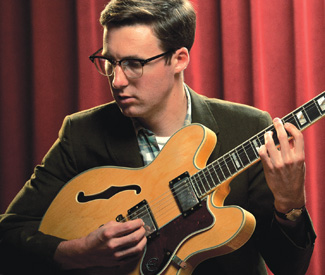
MUSIC Nick Waterhouse no longer calls San Francisco home, but the city’s fingerprints are all over Time’s All Gone, his effortlessly fun, debut LP. The retro-minded songwriter-producer crafts perfect little tributes to the punchy 1950s R&B sounds he’s been drawn to since he was a kid, all steeped with an endearing reverence for old-school record culture and recording techniques.

“We cut as live as possible, so a lot of the record is eight people in one room playing at the same time,” he explains. “Everybody’s gotta feel it together, and if they don’t, you really don’t have a song, in my opinion.”

As a Southern California kid growing up in the Costa Mesa area, Waterhouse approached his music listening from a studious angle, soaking up the Van Morrison and John Lee Hooker records of his parents, along with the Descendents and Sonic Youth albums he found. The well-rounded sonic diet can be heard within the frayed edges and garage rock appeal that Time’s All Gone has in spades.

“I listened to everything I could because I wanted to gain as much experience as possible,” he says. “I was the kid staying up for hours with the radio under the covers.”

By 18, Waterhouse had moved to San Francisco and quickly jumped headfirst into the DJ scene, spinning and building a network of like-minded cohorts at the Knockout’s Oldies Night and Saturday Night Soul Party at the Elbo Room, which brought him in touch with folks like Ty Segall and Mikal Cronin. No connection, however, would become as important to him as his relationship with Rooky Ricardo’s, the Dick Vivian-owned oldies-R&B-soul-centric gem of a record store in the Lower Haight.

“Rooky Ricardo’s informed a lot of how I developed as a person, and it’s all in the spirit of the place,” he says. “It’s got that clubhouse feel.”

http://www.youtube.com/watch?v=mJruQmdlU10

Waterhouse recorded the saxophone-propelled blast of “Some Place” in the summer of 2010, an undertaking that he says was fueled more by a desire to sell vinyl copies to friends and fellow Rooky’s shoppers than to start a full-fledged music project.

“I really had no interest in it at the time,” he explains. “I figured I’d just keep making these 45s for fun and no one would even know who I was.”

After some nagging by friends to put something together for live shows, however, he caved and began recruiting players for the beginnings of what is now the Tarots, his perfectly complementary backing band. Together with Waterhouse’s guitar playing and expressive croon, the group uses horns, piano, drums, and female backing vocals to pay tribute to soulful R&B without ever falling victim to hollow mimicry or self-conscious irony. This is warm music made by passionate people with only the purest of intentions.

When it came time to record an LP, Waterhouse did what anyone who’s heard his music might expect and found an all analog studio in Costa Mesa called the Distillery to work out of. With the use of vintage gear, old ribbon mics, and classic recording techniques, he says that Time’s All Gone was constructed entirely with vinyl in mind.

“I can’t lie and pretend that as somebody born in the late-1980s I haven’t had moments of discovery because of digital music,” he says. And while yes, he has found music digitally over the years, he doesn’t have any vivid, concrete memories of those discoveries, the way he does with physical records. “I can still remember what listening station at Rooky’s I was at when I first heard a record, or what weird flea market I found something at. Having something tangible in front of you helps you associate.”

Waterhouse recently moved back to Southern California due to his quickly escalating, hectic tour schedule, but the plan has always been to officially release his album in San Francisco. In a beautiful bout of planning, Wednesday night’s show will not only mark the release of Time’s All Gone, but will also serve as a celebration for the 25th anniversary of the day Rooky Ricardo’s first opened its doors. Expect the dance party to start early and run late, as Waterhouse has enlisted the help of some of his favorite local DJs to spin before and after his set.

“In my mind, my album was born out of Rooky’s and out of a specific period of time in San Francisco more than anything else,” he says. “So this is my party for all the people and things that really mattered to me there.”

NICK WATERHOUSE

With DJs Carnita, Primo, Matt B, Lucky

Wed/6, 8pm, $12 sold out

Verdi Club

2424 Mariposa, SF (415) 861-9199

www.verdiclub.net


Revival signs

1

emilysavage@sfbg.com

MUSIC A few musicians with slick hair and black-frame glasses are seen setting up their equipment in Chicago’s Hi-Style Studio: amps, a mustard Telecaster, glittering gold drums, a huge stand-up bass, and vintage condenser microphones. What year is this?

The drum hits crack and the bass strings ripple with heavy plucks. The finger-snapping beat is unavoidable, almost cloying in its blitheness. Potent vocals reminiscent of Little Richard suddenly overpower it all. It’s Broken Arrow, Oklahoma’s JD McPherson — singing so hard a craggy vein in his otherwise smooth forehead bulges — in the video for the single that has brought him this far: “North Side Gal.”

It’s due to be inescapable this summer. “The Chicago Cubs have actually been playing that song at the stadium during games,” McPherson says during a phone call from his car, where the singer-songwriter-occasional vegetarian is waiting on an order of red pepper tofu. “It’s really exciting. There’s really no other team I’d rather have that song associated with. It’s the ultimate old ballpark, underdog team.”

Like contemporaries Nick Waterhouse (who, coincidentally, is also playing San Francisco this week, and un-coincidentally is also profiled in this issue) and Nick Curran and the Lowlifes, McPherson is tackling the invigorating rock’n’roll power and bluesy vocals of early R&B and 1950s rock, exploring retro record-making processes,while nonchalantly dressing the part.

It’s another revival, likely to sell well across the mainstream in the Heartland, but also appeal to the underground listeners throughout rockabilly pockets. Though this is beyond classic rockabilly’s precise replications of the past, past kitsch and overwhelming aesthetics. These band leaders with undeniable guitar skills and a very modern drive have something that can only be described, apologetically, as star power. Out of the smoky clubs and into the mind’s eye.

And while rockin’ McPherson may have the sound, the side-parted hair, and the analog recording process back-story like the others in this current resurgence, his own background is fairly different; if the more soulful California boy Waterhouse is Rat Pack wool suits, McPherson is dusty rolled denim.

McPherson was raised on a cattle farm in Buffalo Valley, Southeast Oklahoma — dutifully feeding the cows before school — but later fell into a nearby punk scene, and met his wife (and mother to his two young daughters) at a new wave-goth club night in Tulsa; wearing a Smiths shirt herself, she approached him to say,”You look like a Smiths fan.” She’s now his biggest supporter, sitting patiently while he runs by new guitar parts or song lyrics. She’s also the original “North Side Gal.”

But before all that, before his interest in punk and new-wave, before the wife and kids, and long before the release of his modern reinterpretation of early rock’n’roll record, Signs and Signifiers, he was just a 13-year-old kid in the Midwest learning to play the guitar.

His much older brothers showed him their ’70s-era Lynyrd Skynyrd, Allman Brothers, and Jimi Hendrix records. He grew obsessed with Led Zeppelin then Van Halen, and later, Nirvana, which led to searches for punk origins records by the Stooges and the Ramones. As a late teen, he discovered early rock’n’roll, the backbeat to all those spinning vinyl dreams.

“I found the Decca recordings of Buddy Holly, and that sort of seemed to marry the exuberance of the Ramones, with the country Arcadian aesthetic that I was growing up around. It made sense…and it got me.”

His teenage punk band began interjecting Buddy Holly’s “Rocking Around with Ollie Vee” into their sets; the sound had a pervasive pull, and he fell backwards, deeper into the roots of rock’n’roll — Screamin’ Jay Hawkins, blues artists his Alabama-born dad loved such as Muddy Waters and John Lee Hooker, and early jazz musicians.

He looked to Little Richard in particular, to whom he has garnered favorable comparisons (see the beginning of this story). Because of his style, and, perhaps, his skin color, he’s also seen comparisons to Elvis. “I love Elvis, I mean, I lo-ove Elvis,” he stretches out the “of” sound in the word “love” with an endearingly twangy accent. “I don’t know if there’s a huge musical similarity between us and Elvis, maybe instrumentation-wise, but we’re way more Specialty Records than Sun Records.”

“Little Richard is my favorite recording artist,” he continues, “[I’m] way more interested in Elvis’ black counterparts and predecessors. I do love rockabilly, but we don’t interject a lot of hillbilly sounds into our rhythm and blues the way Elvis did.”

In the ’90s Midwest, pop-country was taking over the airwaves, Billy Ray Cyrus and the like — it’s what all McPherson’s high school classmates were popping in the tape decks. It wasn’t for him. Perhaps this is why he shies away from any hillbilly sounds, those that can lead to psychobilly when mixed with the punk roots. Not that he disparages rockabilly.

“There’s a subculture of all these bands that have no intention of doing anything other than just really faithfully reproducing these sounds, there’s a lot more rockabilly and Western swing bands doing that thing, [yet] these are folks that are putting out quality music.”

But in those scenes and beyond he saw a shortage of the more straight-forward rock’n’roll he loved. That’s why he and musical partner Jimmy Sutton (the gray fox thumping those stand-up bass strings in the “North Side Gal” video) decided to make the DIY, all-analog Signs and Signfiers album in the first place. “So our record basically was almost like an art project, like ‘let’s just make this record and do what we always wanted to do.'”

The drummer on the album was Alex Hall, who doubled as the engineer. Now he’s still “in the family,” often playing keyboards with the band; drummer Jason Smay is on the current tour. During the recording process, McPherson and Sutton would run through a song then Hall would head into the control booth to mix. He’d set the levels, start the tape, run in, then get behind the drums. “That was kind of the magic of it, it was essentially mixed as we recorded it. Real fast, instant gratification. It’s the best way to record.”

Like contemporary Waterhouse noted, McPherson of course has his own connections with modern technology and has used digital recording processes in the past, but he prefers the analog way, to extract that authentic sound. “I’ve seen the amazing things you can do in a digital environment, but there’s some special thing to getting a band live in the studio and recording an actual performance. And then you know, the equipment sounds amazing too.”

While the record was originally released in 2010 on Sutton’s tiny Hi-Style label, the “North Side Gal” single and album have really started picking up this year. With the homemade video as the ultimate calling card, Rounder Records signed the band and rereleased the album this spring. The video has gained half a million views as of press time, and the band’s television debut is tonight on Conan. Despite all that, they’re still relatively unknown in the US, but McPherson and his band have a huge following in the UK — they regularly play sold-out shows and festivals, and have daily rotation on BBC Radio.

During the recording process, and up until the end of the 2011 school year, McPherson was still employed in a local Broken Arrow middle school as a computer and arts teacher (he went to college for fine arts). When he was laid off last summer he says he told the band, “well, I’m getting a paycheck through the summer, so let’s tour and try to make some money while I look for another job.” They’ve been touring consistently ever since.

Perhaps this batch of ’50s-inspired rockers and analog R&B crooners will move beyond the past, and into the future musical pantheon, gaining elusive mainstream success. Or maybe they’ll remain lovable underdogs. Only time will tell. For your McPherson fix now, you could always take in a Cubs game. Check back at the end of summer ’12.

JD MCPHERSON

With Toshio Hirano

Thu/7, 8pm, $21

Great American Music Hall

859 O’Farrell, SF

(415) 885-0750

www.slimspresents.com


The circus begins

199

steve@sfbg.com

Mayor Ed Lee and his attorneys are presenting a voluminous yet largely speculative case against suspended Sheriff Ross Mirkarimi in their effort to remove him for official misconduct, broadening the case far beyond their most damning core accusation -– that Mirkarimi dissuaded witnesses from telling police that he bruised his wife’s arm during an argument on Dec. 31. And so far, there’s no evidence to support that key allegation.

In fact, Mirkarimi and his attorneys insist there was no effort to dissuade witnesses, one of many unsupported aspects to a case they say should never have been filed without stronger evidence. And they say the mayor’s team is now compensating for the weakness of its case by piling on irrelevant accusations and witnesses in an effort that amounts to character assassination.

There are even signs that the city is nervous about its case. Knowledgeable sources told the Guardian that the City Attorney’s Office last week offered to settle the case with Mirkarimi, offering a substantial financial settlement if he would agree to resign, an offer that Mirkarimi rejected.

It was one of a series of rapidly unfolding developments that also included a raucous Ethics Commission hearing, the disclosure of phone records by Mirkarimi’s side, a new list of charges, and the city’s release of the video Mirkarimi’s wife, Eliana Lopez, made with neighbor Ivory Madison, documenting the bruise in case of a child custody battle over their son.

Lopez has maintained that Mirkarimi never abused her and that she’s been hurt most by the efforts to prosecute him and remove him from office.

“I hope they realize after reflection that what they have done is irreparable and perpetually damaging to me and my family,” Lopez said in a statement condemning the city’s release of a video that she fears will remain online for her children and grandchildren to see.

Yet all indications are this spectacle is only going to grow more sordid, divisive, and sensational as it moves forward — belying the statement Lee made last week as he introduced his annual budget: “As many of you know, I’m a person who does not like a whole lot of drama.”

SIMPLE OR COMPLEX?

The May 29 Ethics Commission hearing to begin setting standards and procedures for the official misconduct proceedings against Mirkarimi illustrated two sharply divergent views on when elected officials should be removed from office. It also displayed the increasingly bitter acrimony and resentments on each side, emotions only likely to grow more pronounced as the hearings drag on for months against the backdrop of election season.

Both sides would like to see the decision as a simple one. Lee and his team of attorneys and investigators say Mirkarimi’s bruising of his wife’s arm and his unwillingness to cooperate with their investigation of what followed make him unfit for office. Mirkarimi and his lawyers admit his crime, but they say that’s unrelated to his official duties and that the rest of Lee’s charges against him are speculative and untrue.

Yet there’s nothing simple about this official misconduct case — or with the implications of how each side is trying to counter the others’ central claims. So despite the stated desires of some Ethics commissioners to narrow the scope of their inquiry and limit the number of witnesses, San Franciscans appear to be in for a long, dramatic, and divisive spectacle, with Mirkarimi’s fate decided by the Board of Supervisors just a month or so before the five supervisors who have been his closest ideological allies face reelection. Nine of 11 votes are required to remove an official.

The Mayor’s Office wants to call the most witnesses and present an elaborate (and expensive) case that includes a number of outside experts on law enforcement and domestic violence, painting a portrait of Mirkarimi as a serious wife-batterer whose past and future actions can be divined from that malevolent distinction, making him obviously unable to continue as San Francisco’s chief law enforcement officer.

“The extent of the abuse was far greater than what Mr. Mirkarimi has testified to,” claimed Deputy City Attorney Peter Keith, going on to say “there were attempts to control what she ate,” an apparent reference to Mirkarimi’s decision not to take Lopez to a restaurant for lunch on Dec. 31 because they were having a heated argument. He also repeatedly referred to Mirkarimi as a batterer and said “batterers behave in a certain way.”

Mirkarimi attorney Shepard Kopp calls that portrayal exaggerated and unfair, ridiculing the Mayor’s Office claims that its domestic violence expert, attorney Nancy Lemon, can predict Mirkarimi’s behavior based on grabbing his wife’s arm once: “Apparently she’s some kind of clairvoyant in addition to being an expert,” Kopp told the commission as he unsuccessfully sought Lemon’s removal from the witness list.

Ethics Commission Chair Benedict Hur took the lead role in trying to limit the witness list, focusing on stripping it of the various law enforcement experts who plan to describe how different agencies might react to dealing with Mirkarimi. “What I don’t understand is how his ability to do his job relates to whether he committed official misconduct,” Hur said.

Mirkarimi’s team says its case could be very simple, with only Lee and Mirkarimi called as live witnesses — but the attorneys reserved the right to offer testimony to counter false or damaging claims made by the Mayor’s Office.

Hur tried to limit the case to just witnesses and arguments that relate to Mirkarimi’s actions, but he was outvoted by those who wanted to let the city argue how those actions would affect perceptions of Mirkarimi by the many people that a sheriff must interact with.

In the end, the commissioners agreed to trim the eight expert witnesses sought by the mayor down to three and to cut its 17 proposed fact witnesses down to 12, calling 15 total witnesses. Mirkarimi’s team will call 10 witnesses, down from an initial 17. All witnesses will submit written declarations and then be subjected to live cross-examination if any of their testimony is disputed.

EVIDENCE AND SPECULATION

The speculative and prejudicial nature of some of the city’s case was attacked at the hearing by Mirkarimi’s attorneys and the large crowd that came to support him.

Commissioner Paul Renne asked the Mayor’s Office attorneys why they hadn’t summarized the expected testimony of their expert witnesses and “How are any of those opinions relevant to the issues in this case?”

“I have not had time to work with the witnesses to see what their opinions are,” replied Deputy City Attorney Sherry Kaiser, prompting Kopp to incredulously note, “The mayor is preparing the expert witnesses without knowing what their testimony will be. How can I respond to that?”

The issues of bias and conflicts of interest also came up surrounding what sources should be called as witnesses. Mirkarimi’s team wanted longtime Sheriff Michael Hennessey, Mirkarimi’s predecessor, while the Mayor’s Office pushed for Acting Sheriff Vicki Hennessy to convey how the Sheriff’s Department should function.

“Vicki Hennessy was a political appoint of Mayor Lee,” Waggoner objected, although the commission decided to use that appointee.

On several critical procedural questions, the commission sided with the Mayor’s Office, ruling that the commission decision needn’t be unanimous, that guilt could be established based on a preponderance of the evidence rather than beyond a reasonable doubt, and that normal rules of evidence won’t apply, with some hearsay evidence allowed on a case-by-case basis.

The pro-mayor decisions angered the roughly 200 Mirkarimi supporters who packed the commission hearing and an overflow room, many bearing blue “We stand with Ross” stickers and flyers, which had “Respect Eliana” on the flip side. There were only a couple of Mirkarimi critics at the hearing wearing white “I support Casa de las Madres” stickers, referring to the domestic violence group that has been calling for Mirkarimi’s removal since shortly after the incident went public.

Mirkarimi got a rousing welcome from the crowd when he arrived at the hearing, his voice choking up and eyes welling with tears as he said, “I cannot tell you, on behalf of me and my family, how grateful we are.”

The crowd was boisterous during the proceedings, loudly reacting to some claims by the deputy city attorneys and offering comments such as “Ed Lee is the one you should put on trial,” with Hur finally recessing the hearing after an hour and having deputies warn audience members that they would be removed for speaking out.

Renne, a career litigator and the District Attorney’s Office appointee to the commission, raised the most doubts about both the standard of guilt and rules of evidence being lower than in criminal proceedings, telling his colleagues, “I have some reservations.”

PHONE LOGS

Mirkarimi’s team also released to the Chronicle and the Guardian redacted phone records from Mirkarimi, Lopez, and Linnette Peralta Haynes — a family friend and social worker who served as Mirkarimi’s last campaign manager. The city has sought to portray Haynes, who has not been cooperating with the investigation, as a conduit to Mirkarimi’s efforts to dissuade Lopez and Madison from going to the police on Jan. 4.

Mirkarimi previously told the Guardian that he was unaware that Lopez had told Madison about the abuse incident or that they had made a video of her injury until several hours after Madison had called the police and they had come to the house to talk to Lopez, during which time Mirkarimi was in a series of meetings at City Hall.

The phone records seem to support that claim. They show that Lopez and Haynes — who is close to Lopez and recently went to Venezuela to visit her — exchanged a series of telephone calls on Jan. 4 starting at 11am. Their longest conversation, nearly 40 minutes, occurred at 11:18am.

Neither woman could be reached to describe the substance of that call. At 12:24pm, Lopez sent Madison — with whom she had been communicating by phone and text over the previous couple days — a text message indicating that she didn’t want Madison to report the incident to police, but that she would instead go to her doctor to document the injury.

A minute later, Madison called the police to report that Lopez had been abused by Mirkarimi.

Starting an hour later, the records show, Haynes and Lopez called each other but didn’t connect until 3:31, when they had a nearly 14-minute phone conversation, presumably discussing the fact that police had visited the house, with Lopez reportedly giving the phone to Madison at one point so Haynes could talk to her.

Yet the phone records indicate that neither Lopez nor Haynes tried to reach Mirkarimi until after that conversation, despite the city’s claims that Mirkarimi “or his agents” used his power to dissuade witnesses, most notably Lopez and Madison. The first attempt to reach Mirkarimi was at 3:46pm when Haynes called him twice but didn’t connect. Lopez then sent Mirkarimi a text message at 3:53pm asking “Where are you and where is the car,” but she got not reply. She texted him again at 4:18pm to say “Call me. It’s an emergency.”

Lopez made one last appeal to Madison in a 4:18pm phone conservation that lasted four minutes and 27 seconds and then she finally reached Mirkarimi by phone at 4:23pm. Mirkarimi and attorney David Waggoner say this is the first time that he became aware that Lopez had talked to neighbors and that the police had been called. Their conversation lasted a little more than five minutes.

Mirkarimi called Haynes at 5:12pm and they spoke for seven minutes. At 5:51pm, an increasingly panicked Lopez sent a text to Mirkarimi saying, “You have to call [Sheriff Michael] Hennessey and stop this before something happen. Ivory is giving the investigators everything. Use your power.” To which Mirkarimi responded 10 minutes later, “I cannot. And neither can he. You have to reject Madison’s actions. We both do. I cannot involve new people.”

NEW CHARGES

On June 1, the city released an amended list of charges against Mirkarimi that was intended to be a more specific list of accusations, as Waggoner requested during the May 29 Ethics Commission hearing. In it, the city asserts that the charter language essentially gives the city two avenues by which to remove officials, defining distinct “wrongful behavior” and “required conduct” clauses. Violation of either, they contend, is enough to remove an official.

“Official misconduct means any wrongful behavior by a public officer in relation to the duties of his or her office, willful in its character, including any failure, refusal or neglect of an officer to perform any duty enjoined on him or her by law…,” begins the charter language. This “wrongful behavior” section has long been in the charter, referring to specific actions by public officials to neglect their duties.

The second “required conduct” clause of this sentence — which was created in 1996, never vetted by the courts, and which Mirkarimi’s attorneys say is unconstitutionally vague — continues, “…or conduct that falls below the standard of decency, good faith and right action impliedly required of all public officers and including any violation of a specific conflict of interest or governmental ethics law.”

In trying to indict Mirkarimi for actions before he was sworn in as sheriff, the city attempts to argue that his official duties really began with his election, claiming that in this interim period he “had the duty and the power in his official capacity as Sheriff-Elect to work with the Sheriff’s Department and its officials to prepare himself to assume the full duties of Sheriff.” And if that’s not enough, the city argues that he was chair of the Board of Supervisors Public Safety Committee during that same Nov. 8-Jan. 8 time period, further subjecting his actions to official misconduct scrutiny.

The “wrongful actions” charges against Mirkarimi were listed in the document as domestic violence, abuse of office, impeding a police investigation, and “crime, conviction, and sentence,” while the “breach of required conduct” charges were listed simply as his sheriff and supervisorial roles.

The document then attempts to paint an expansive portrait of the Sheriff’s official duties, going beyond the narrow construction of the charter to include the general law enforcement duties listed in state law, interactions with various government and nonprofit groups, administrative responsibilities as a city department head, and passing mentions in the California Family Code that police officers “must enforce emergency protective orders in domestic violence cases.”

Yet the promise that the rest of the document would detail Mirkarimi’s wrongful actions with greater specificity than the previous list of official charges doesn’t seem to be met by this document, which repeats the same narrative of actions that Waggoner had criticized for vagueness.

For example, on the pivotal charge that he dissuaded witnesses and impeded the police investigation, the new charges say that during the period from Dec. 31-Jan. 4, “Sheriff Mirkarimi participated in and condoned efforts to dissuade witnesses from reporting this incident to police and/or cooperating with police investigators,” without describing any specific witnesses or actions that he took.

And by the mayor’s team’s own admissions, the prosecutors don’t know what Mirkarimi did to dissuade witnesses, which they hope to learn through future testimony.

The closest the new document comes to directly tying Mirkarimi’s actions to the official misconduct language is with Mirkarimi’s plea to a misdemeanor false imprisonment charge: “False imprisonment of a spouse is a crime of domestic violence. The California Penal Code considers spousal abuse to be a ‘crime against public decency and good morals.'”

Mirkarimi disagrees with that interpretation, noting that he and his attorneys specifically considered whether pleading to false imprisonment -– a general charge with many possible meanings -– would violate the city’s official misconduct provisions, and he told the Guardian that he was assured by his attorneys it didn’t. Mirkarimi told us he would not have entered the plea and would have instead fought the charges in court if he thought it would disqualify him from serving as sheriff.

Waggoner told us that “The Mayor’s Amended Charges are further evidence that this entire ordeal is a political hatchet job reminiscent of a Soviet show trial. Far from being a careful analysis of any actual evidence, the new charges are vague, redundant, and conflate the offices of Sheriff and Supervisor.”

But ultimately, the case against Mirkarimi is a political one, not a legal case subjected to the normal standards of evidence and procedure. And whether Mirkarimi keeps his job will be a decision made by politicians based on a variety of factors, some of which have little relation to whatever happened on Dec. 31 and Jan. 4.

What’s next: the Ethics Commission will meet on June 19 to rule on more of the outstanding issues in the case and begin hearing testimony. To review the long list of documents from the case, visit www.sfethics.org.

Turnout light in SF; eyes on Wisconsin

0

My usual limited polling sample — my precinct in Bernal Heights — suggests what everyone pretty much knew: Turnout in San Francisco will be very low. Control of the local Democratic Party, and its endorsements, will be determined by a small fraction of the eligible voters.

On the national front, since the presidential primaries are long over and California has long been irrelevant, everyone’s looking at Wisconsin, where the battle to recall Gov. Scott Walker will have national implications. Walker’s trying to survive by blaming public employees for the state’s economic woes; since he ended collective bargaining, he said today, the state budget is running a surplus and property taxes are down.

If by some chance he’s thrown out of office — and it doesn’t look good right now — labor will have one of its greatest victories in years. If he becomes the first governor in US history to survive a recall, he’ll portray it as a confirmation that the public supports his attack on unions. The right-wing types have poured millions into this race — and if they get their way, a lot of labor folks are going to be asking why President Obama (who will be in San Francisco to raise money at Clint Reilly’s office building June 6) didn’t make an appearance in Wisconsin.

Labor came in big for the president in 2008, and this one is hugely important — and the White House has been entirely missing in action. And he may have to answer for it if Walker survives and GOP governors across the country take up the call and attack public-sector unions as the start of a larger attack on organized labor.

In California, I don’t care how much money the tobacco companies spent — Prop. 29, the cigarette tax, is going to win. And I think the term-limits measure squeaks through, too. Locally, we all know that Prop. A will lose under a barrage of Recology money; I hope Prop. B survives the strange last-minute money blitz.

We may not know for days how the Democratic County Central Committee races are shaking out. If it’s close, and control of the panel hangs on a couple of tight races, the absentee votes that get counted over the next few days will make the difference.

We’ll be posting updates all evening.

Namu Gaji

0

virginia@sfbg.com

APPETITE Although Asian outpost Namu Gaji is brand new, the presence of Namu restaurant itself and owners the Lee brothers — Dennis, David and Daniel — has been felt in San Francisco for years. Since 2006, the Lees have been weaving Korean, Japanese, and other Asian cuisines with California spirit in the original, now shuttered Richmond restaurant and eventually Namu’s Ferry Building farmers market stand on Tuesdays and Saturdays. In early April, the brothers opened their Mission incarnation, Namu Gaji.

Its kitchen is in direct view of the small dining room, as Dennis Lee and Chef de Cuisine Michael Kim (Craft Los Angeles, SPQR) cook at a grill fired with bincho-tan, a low smoke, Japanese charcoal. The Lee brothers’ aunt, direct from Korea, will oversee a house fermenting program, bringing with her bacteria strains from the family’s Korean village. The chefs do the usual sourcing from local farms but, in an unusual slant, have commissioned farmer Kristyn Leach to grow exclusively for them on a one-acre plot at Baia Nicchia Farm in Sunol, where she’s raising rare Korean chiles and herbs — quite a treat.

I already miss the chic, spare Richmond dining room compared to the cramped Mission space, despite its striking communal table and tree branch sculpture weaving dramatically from the ceiling. Granted, the Dolores Park location is prime real estate, particularly when it comes to daytime takeout, perfect for picnicking in the park, possibly my favorite way to enjoy Namu Gaji. But the Mission is saturated with hip dining destinations in a way the Richmond, one of our great underrated neighborhoods, is not. This was an understandably strategic move, but the new space gets progressively warmer and noisier as an evening evolves. For those who don’t enjoy yelling through dinner, I’d suggest dining early, although do note the actual dinner menu doesn’t start until 6pm.

In multiple early visits, truly unique dishes flow from the kitchen. The menu is grouped in categories like raw, broth, salad, crispy, grill, and comfort, with a handful of key choices under each heading. The “raw” section is pricey ($18), but raw King salmon, topped with pickled red onion, a dollop of whipped yuzu cream, and shiso (Japanese herb from the mint family) is generously portioned, bright sashimi. Uni sure is fantastic fried — what isn’t? — as tempura ($14) alongside fried shiso leaf, lemon zest, and market veggies, which on a recent visit were fava beans and a yellow onion. Grilled octopus ($14) is a tad bland compared to other grilled octopus dishes around town, though pleasingly plated with English peas, spring onion, fried garlic, and that fabulously pungent Korean chili paste, gochujang.

It gets exciting with an off-menu special of buckwheat gnocchi, pan seared in black garlic gastrique, with English peas and pea shoots (can you tell peas are in season?) This non-traditional gnocchi is earthy, lively, playful. “Fish parts” ($18) arrive on a wood slab, generously portioned and artfully arranged, more hearty than fussy. The fish parts change, but one night I dined on impeccable wild salmon belly and spine, with caramelized, crispy-sweet skin. Its partner requires a more adventurous palate: ahi tuna roe, cured and grilled. A dining companion bluntly called this large hunk of meat what it was: a giant egg sac. If you didn’t know, however, you’d think the pink, meaty fish a more savory, funky cut of salmon. Either way, I was delighted to be served something I’d never had before.

One evening after a 90-minute dinner, I waited nearly 30 minutes after all dishes had been served (and eaten) for a dessert which my sweet, adept server kept informing us was about to arrive. Though next time I’ll skip dessert under those conditions, I was pleased with shaved ice ($8), or shave ice as it’s known in Hawaii, which you can order doused in Four Barrel coffee and cocoa crumbles. My top choice is in coconut cream with coconut crumble and strawberries. The ice is creamy soft, feathery… and quickly devoured.

The brothers’ Korean heritage shines best in their street food-style dishes, available at the Ferry Building Farmers Market as well as during the day at Namu Gaji, ideal taken across the street to Dolores Park. Their beloved nori “tacos” ($3) and okonomiyaki ($10 lunch, $16 dinner) still delight, while BBQ belly and Korean BBQ-style marinated chicken thigh ($10) are packed into pan de mie bun layered with Swiss cheese, soy glazed onions, pickled daikon, aioli, Dijon mustard — a buttery, fatty pleasure of a sandwich. Gamja fries ($10), essentially organic fried potatoes piled with short ribs, kimchee relish, gochujang, kewpie mayo, and green onions, are the fast food of your dreams. KFC ($12) is a quarter of a Marin Sun Farms chicken tossed in sweet and tangy sauce with dashi gravy. Each of these heartwarmers not only satiate but illuminate best why the Lee brothers have become an SF staple.

NAMU GAJI

499 Dolores, SF

(415) 431-6268

www.namusf.com

Subscribe to Virgina’s twice-monthly newsletter, The Perfect Spot: www.theperfectspotsf.com


Stage Listings

0

Stage listings are compiled by Guardian staff. Performance times may change; call venues to confirm. Reviewers are Robert Avila, Rita Felciano, and Nicole Gluckstern. Submit items for the listings at listings@sfbg.com. For further information on how to submit items for the listings, see Picks.

THEATER

OPENING

Aftermath Stagewerx, 446 Valencia, SF; www.brownpapertickets.com. $25. Previews Thu/7, 8pm. Opens Fri/8, 8pm. Runs Thu-Sat, 8pm. Through June 30. Theatre, Period presents Jessica Blank and Erik Jenson’s docu-drama, based on interviews with Iraqi civilians forced to flee after the US military’s arrival in 2003.

Lips Together, Teeth Apart New Conservatory Theatre Center, 25 Van Ness, SF; www.nctcsf.org. $25-45. Previews Wed/6-Fri/8, 8pm. Opens Sat/9, 8pm. Runs Wed-Sat, 8pm; Sun, 2pm. Through July 1. New Conservatory Theatre Center performs Terrence McNally’s play about two straight couples spending July 4 amid Fire Island’s gay community.

Reunion SF Playhouse, Stage Two, 533 Sutter, SF; (415) 677-9596, www.sfplayhouse.org. $20. Previews Wed/6-Thu/7, 7pm; Fri/8, 8pm. Opens Sat/9, 8pm. Runs Wed-Thu, 7pm; Fri-Sat, 8pm. Through June 30. SF Playhouse presents a world premiere drama by local playwright Kenn Rabin.

“Risk Is This…The Cutting Ball New Experimental Plays Festival” Exit on Taylor, 277 Taylor, SF; (415) 525-1205, www.cuttingball.com. Free ($20 donation for reserved seating; $50 donation for five-play reserved seating pass). Opens Fri/8, 8pm. Runs Fri-Sat, 8pm. Through July 14. Cutting Ball’s annual fest of experimental plays features two new works and five new translations in staged readings.

Vital Signs Marsh San Francisco, 1062 Valencia, SF; (415) 282-3055, www.themarsh.org. $15-50. Previews Fri/8 and June 15, 8pm; Sat/9, 8:30pm. Opens June 16, 8:30pm. Runs Sat, 8:30pm; June 22, 8pm. Through July 21. The Marsh San Francisco presents Alison Whittaker’s behind-the-scenes look at nursing in America.

BAY AREA

Wheelhouse TheatreWorks at the Mountain View Center for the Performing Arts, 500 Castro, Mtn View; (650) 463-1960, www.theatreworks.org. $19-69. Previews Wed/6-Fri/8, 8pm. Opens Sat/9, 8pm. Runs Tue-Wed, 7:30pm; Thu-Sat, 8pm (also Sat, 2); Sun, 2 and 7pm. Through July 1. TheatreWorks’ 60th world premiere is a musical created by and starring pop-rock trio GrooveLily.

ONGOING

A Behanding in Spokane SF Playhouse, 533 Sutter, SF; www.sfplayhouse.org. $20-70. Tue-Thu, 7pm; Fri-Sat, 8pm (also Sat, 3pm). Through June 30. If Garth Ennis had been asked to write a comic book about a one-handed sociopath with a dark obsession, he might well have written something similar to Martin McDonagh’s A Behanding in Spokane. And admittedly, approached from that angle, a lot of the script’s dramatic flaws are more easily forgiven. There’s not a whole lot of subtle context or languid metaphor to be found in McDonagh’s criminal caper about the little-known “hand-dealing” trade, but as in Ennis’ best known work, Preacher, the pretty girl (Melissa Quine) is the smartest one in the room; the sociopath (Rod Gnapp) is interested in enacting as vicious a revenge on all humanity while spewing as many blatantly offensive invectives as possible; the boyfriend (Daveed Diggs) has some arrested development issues to work out; and the receptionist (Alex Hurt) takes the caricature of man-child to a whole new level. In fact, while all four actors deliver rock-solid performances of their mostly unsympathetic characters, it’s Hurt’s that impresses most. His spooky intensity and goofily tone-deaf determination plays like a combination of Adam Sandler and Arno Frisch, and if there’s a real sociopath in the room, the evidence suggests it’s probably him. Ultimately though the piece relies too heavily on hollow one-liners to remain interesting — a 20-minute farce stretched to 90 minutes — and quite unlike an Ennis comic, it does not leave one wanting more. (Gluckstern)

The Full Monty Eureka Theatre, 215 Jackson, SF; www.roltheatre.com. $25-36. Thu-Sat, 8pm (also Sat, 2pm); Sun, 2pm. Through June 30. In desperate times, how far would you go to turn a buck? The central premise of the 1997 movie and its namesake musical comedy The Full Monty, the answer to this question is right in the title, which limits the suspense, but amps up the expectations. Set not in Sheffield, England as in the movie, but the similarly economically challenged climate of Buffalo, New York circa the late nineties, the comical romp follows a group of unemployed steel workers who decide, rather optimistically, that spending one night as exotic dancers will solve their immediate financial woes. Banish all notions of a Hot Chocolate sing-along; the soundtrack of the stage musical has little in common with its cinematic predecessor, but there are a couple of toe-tappers, particularly the songs writ for the ladies: a belter’s anthem for their spry but elderly accompanist Jeanette (Cami Thompson), a snarky commentary on male beauty, “The Goods,” for the ensemble. On opening night, Ray of Light’s production ran about 15 minutes long after a late start, and the tempo seemed sluggish in parts, but once it hits its stride, The Full Monty should provide a welcome antidote to the ongoing, we’re-still-in-a-recession blues, red leather g-strings and all. (Gluckstern) Fwd: Life Gone Viral Marsh San Francisco, 1062 Valencia, SF; (415) 282-3055, www.themarsh.org. $20-50. Thu/7, 8pm; Sat/9, 8:30pm; Sun/10, 7pm. The internet becomes comic fodder for creator-performers Charlie Varon and Jeri Lynn Cohen, and creator-director David Ford.

100 Saints You Should Know Thick House, 1695 18th St, SF; www.therhino.org. $10-30. Wed-Thu, 7:30pm; Fri-Sat, 8pm; Sun, 3pm. Through June 17. Theatre Rhinoceros performs Kate Fodor’s comedy-drama about family love, homosexuality, and adolescence.

Othello Phoenix Theatre, 414 Mason, SF; www.brownpapertickets.com. $15-18. Thu/7-Sat/9, 8pm. Ninjaz of Drama performs Shakespeare’s classic in a contemporary setting.

Slipping New Conservatory Theatre Center, 25 Van Ness, SF; www.nctcsf.org. $25-45. Wed-Sat, 8pm; Sun, 2pm. Through July 1. New Conservatory Theatre Center performs Daniel Talbott’s drama about a gay teen who finds new hope after a traumatic breakup.

Tenderloin Exit on Taylor, 277 Taylor, SF; (415) 525-1205, www.cuttingball.com. $10-50. Extended run: June 14 and 21, 7:30pm; June 15-16 and 22-23, 8pm (also June 16 and 23, 2pm); June 18 and 24, 5pm. Annie Elias and Cutting Ball Theater artists present a world premiere “documentary theater” piece looking at the people and places in the Cutting Ball Theater’s own ‘hood.

The Waiting Period MainStage, Marsh San Francisco, 1062 Valencia, SF; (415) 282-3055, www.themarsh.org. $15-50. Fri, 8pm; Sat, 5pm. Extended through July 7. Brian Copeland (comedian, TV and radio personality, and creator-performer of the long-running solo play Not a Genuine Black Man) returns to the Marsh with a new solo, this one based on more recent and messier events in Copeland’s life. The play concerns an episode of severe depression in which he considered suicide, going so far as to purchase a handgun — the title coming from the legally mandatory 10-day period between purchasing and picking up the weapon, which leaves time for reflections and circumstances that ultimately prevent Copeland from pulling the trigger. A grim subject, but Copeland (with co-developer and director David Ford) ensures there’s plenty of humor as well as frank sentiment along the way. The actor peoples the opening scene in the gun store with a comically if somewhat stereotypically rugged representative of the Second Amendment, for instance, as well as an equally familiar “doood” dude at the service counter. Afterward, we follow Copeland, a just barely coping dad, home to the house recently abandoned by his wife, and through the ordinary routines that become unbearable to the clinically depressed. Copeland also recreates interviews he’s made with other survivors of suicidal depression. Telling someone about such things is vital to preventing their worst outcomes, says Copeland, and telling his own story is meant to encourage others. It’s a worthy aim but only a fitfully engaging piece, since as drama it remains thin, standing at perhaps too respectful a distance from the convoluted torment and alienation at its center. (Avila)

BAY AREA

Black n Blue Boys/Broken Men Berkeley Repertory Theatre, Thrust Stage, 2025 Addison, Berk; www.berkeleyrep.org. $14.50-73. Tue, Thu-Sat, 8pm (also Sat, 2pm); Wed and Sun, 7pm (also Sun, 7pm). Through June 24. Berkeley Rep presents a world premiere from writer-performer Dael Orlandersmith (a Pulitzer finalist for 2002’s Yellowman).

Crevice La Val’s Subterranean, 1834 Euclid, Berk; www.impacttheatre.com. $10-20. Thu/7-Sat/9, 8pm. Just in case you were feeling panicked about the persistently recessed state of the economy and what might be your own less than ideal place in it, the Impact Theatre and Playground co-presentation of Lauren Yee’s Crevice might help to put your woes into perspective. That’s because slacker sibs Liz (Marissa Keltie) and Rob (Timothy Redmond) are only slightly exaggerated representatives of Generation Next whose penchant for making lackluster life choices has sentenced them to an indefinite prison term of couch-surfing and Teen Mom marathons in their childhood home. Naturally, they desire change, but it’s not until their mother (Laura Jane Bailey) starts having a hot fling with a younger man that things do. In an egregious breach of the TMI line, it appears that Mom’s orgasms open a “crevice” into an alternate reality that Rob and Liz subsequently fall into. Thus removed from the entropy of their former reality they begin testing the parameters of their new one, quickly coming to the realization that sometimes the alternatives to what you already have are even worse. Getting home again is a convoluted, not fully mapped-out process, but in the interim, their navigation of their erstwhile wonderland offers most of the play’s best lines as well as the uncomfortably effective transformation of Reggie D. White from Liz’s nerdish best buddy to multi-lingual Mafia killer and casual sadist. (Gluckstern)

God of Carnage Marin Theatre Company, 397 Miller, Mill Valley; www.marintheatre.org. $34-55. Tue and Thu-Sat, 8pm (also June 16, 2pm); Wed, 7:30pm; Sun, 2 and 7pm. Through June 17. Marin Theatre Company performs Yasmina Reza’s Tony-winning comedy about two sets of parents who meet after their children get into a schoolyard fight.

The Great Divide Ashby Stage, 1901 Ashby, Berk; www.shotgunplayers.org. $20-30. Wed-Thu, 7pm; Fri-Sat, 8pm; Sun, 5pm. Through June 24. Shotgun Players performs Adamn Chanzit’s drama about the hot topic of fracking, inspired by Ibsen’s An Enemy of the People.

Not Getting Any Younger Marsh Berkeley, 2120 Allston, Berk; (415) 282-3055, www.themarsh.org. $15-50. Fri, 8pm; Sat, 5pm. Extended through June 30. Marga Gomez is back at the Marsh, a couple of too-brief decades after inaugurating the theater’s new stage with her first solo show — an apt setting, in other words, for the writer-performer’s latest monologue, a reflection on the inevitable process of aging for a Latina lesbian comedian and artist who still hangs at Starbucks and can’t be trusted with the details of her own Wikipedia entry. If the thought of someone as perennially irreverent, insouciant, and appealingly immature as Gomez makes you depressed, the show is, strangely enough, the best antidote. Note: review from the show’s 2011 run at the Marsh San Francisco. (Avila)

The Odyssey Angel Island; (415) 547-0189, www.weplayers.org. $40-76 (some tickets include ferry passage). Sat-Sun, 10:30am-4pm (does not include travel time to island). Through July 1. We Players present Ava Roy’s adaptation of Homer’s epic poem: an all-day adventure set throughout the nature and buildings of Angel Island State Park.

The Tempest Bruns Amphitheater, 100 California Shakespeare Theater Way, Orinda; (510) 809-3290, www.calshakes.org. $35-71. Tue-Thu, 7:30pm; Fri-Sat, 8pm (also June 23, 2pm); Sun, 4pm. Through June 25. California Shakespeare Theater opens its season with this dance-filled interpretation of the Bard’s classic tale.

The World’s Funniest Bubble Show Marsh Berkeley, TheaterStage, 2120 Allston, Berk; (415) 826-5750, www.themarsh.org. $8-50. Fri, 6pm; Sun/10, June 16, 24, and 30, 11am. Through June 30. Louis “The Amazing Bubble Man” Pearl returns with this kid-friendly, bubble-tastic comedy.

PERFORMANCE/DANCE

American Foundation for Equal Rights benefit Bayfront Theater, Fort Mason Center, Marina at Laguna, SF; www.brownpapertickets.com. Mon/11, 8pm. $25-50. BATS Improv and Tom Bruett of marriageequalityplays.com present short plays by local playwrights, plus an improvised short play, on the theme of marriage equality.

“Beef Cake Comedy Show” Deco Lounge, 510 Larkin, SF; www.decosf.com. Sun/10, 8pm. $10. Comedy music group Saw Dem Eyes headlines this night of “straight guys telling jokes with their shirts off.”

“The BY Series” ODC Theater, 3153 17th St, SF; www.odcdance.org. Thu-Sat, 8pm; Sun, 2pm. Through June 17. $25. Robert Moses’ Kin Dance Company presents work by guest choreographers Molissa Fenley, Ramon Ramos Alayo, and Sidra Bell, plus the world premiere of Moses’ Scrubbing the Dog.

“Elect to Laugh” Studio Theater, Marsh San Francisco, 1062 Valencia, SF; (415) 282-3055, www.themarsh.org. Tue, 8pm. Ongoing through Nov 6. $15-50. Will Durst and friends perform in this weekly political humor show that focuses on the upcoming presidential election.

“Elementary, My Dear Watson, It Was Crack” Purple Onion, 140 Columbus, SF; (415) 956-1653. Thu/7, 9pm. $20. Comedian Will Franken performs his latest one-man sketch comedy show.

“A Funny Night for Comedy” Actors Theatre of San Francisco, 855 Bush, SF; www.natashamuse.com. Sun/10, 7pm. $10. Natasha Muse and Ryan Cronin host a comedy talk show, followed by “A Funny Night for Improv” at 9pm.

“Feel the Power of the Dork Side” Exit Theatre, 156 Eddy, SF; www.brownpapertickets.com. Fri/8-Sat/9, 8pm. $15. Engineering professor by day, stand-up comedian by night: Dr. Pete Ludovice performs his solo show.

“Get In Front” Herbst Theater, 401 Van Ness, SF; www.getinfront.org. Wed/6, 7pm. $35-250. A benefit for Cancer Prevention Institute of California, this event features performances by principal dancers from San Francisco Ballet, Alonzo King LINES Ballet, ODC/Dance, and more.

“House of Matter” Dance Mission Theater, 3316 24th St, SF; www.brownpapertickets.com. Fri/8-Sat/9, 8pm; Sun/10, 7pm. $15-25. Nicole Klaymoon’s Embodiment Project presents its latest installment of urban dance theater.

“Idina Menzel: Barefoot at the Symphony” Davies Symphony Hall, 201 Van Ness, SF; (415) 864-6000. Thu/7, 8pm. $69.50-125. The Tony winner performs a show of Broadway and modern pop songs.

“Kunst-Stoff Arts/Fest 2012” Kunst-Stoff Arts, One Grove, SF; kunststoffartsfest2012.eventbrite.com. Thu/7-Sat/9 (Program One) and June 14-16 (Program Three), 8:30pm; Tue/12, 8pm (Program Two). $15. Program one: Dance Elixir and Kunst-Stoff Dance Company; program two: Silvia Girardi performing multimedia theater work All I Wanted to Say; program three: Bruno Augusto and Meisha Bosma.

“Performance Night at the Strand” Strand Theater, 1127 Market, SF; maryarmentroutdancetheater.com. Fri/8, 8:15pm. Free (donations accepted). Mary Armentrout Dance Theater, Oakland’s Milkbar, and Paz de la Calzada present an evening of site-specific performances and installations inspired by de la Calzada’s mural on the shuttered Strand Theater.

“R16 North American B-Boy Championships” Palace of Fine Arts Theater, 3301 Lyon, SF; www.r16usa.com. Sat/9, 2-6pm. $10-25. Come check out dancers popping, locking, and otherwise vying to represent North America at the Supreme World Championship finals in South Korea.

San Francisco Ethnic Dance Festival de Young Museum, 50 Hagiwara Tea Garden, Golden Gate Park, SF; www.worldartswest.org. Sat/9, 2pm. $15. Artist dialogue with “American Tribal Style Belly Dance” creator Carolena Nericcio, followed by a performance by FatChanceBellyDance. Also Sun/10, 2pm, Asian Art Museum, 200 Larkin, SF; www.worldartswest.org. Sun/10, 2pm. Free with museum admission ($7-12). Shamanic dance performace by Korean dance master Il Hyun Kim.

“Sex and the City: Live!” Rebel, 1760 Market, SF; www.brownpapertickets.com. Tue, 7 and 9pm. Through June 26. $25. Heklina, D’Arcy Drollinger, Lady Bear, Trixxie Carr play the fab four in this drag-tastic homage to the HBO series.

“Talkies” Artists’ Television Access, 992 Valencia, SF; www.atasite.org. Fri/8, 8pm. $6. Stand-up comedy and short comedic films hosted by Anna Seregina and George Chen.

“Voca People” Marines’ Memorial Theatre, 609 Sutter, Second Flr, SF; www.marinesmemorialtheatre.com. Tue-Fri, 8pm; Sat, 6:30 and 9:30pm; Sun, 3 and 6pm. Through June 17. $49-75. A capella from outer space.

“X” Garage, 715 Bryant, SF; www.brownpapertickets.com. Wed/6-Thu/7, 8pm. $10-20. Australian performer Sunny Drake presents his new show in conjunction with the National Queer Arts Festival.

BAY AREA

“Jazz Hams” Odell Johnson Performing Arts Center, Laney College, 900 Fallon, Oakl; www.brownpapertickets.com. Sat/9, 8pm; Sun/10, 1pm. $10. The plus-sized performers of Big Moves present a new, full-scale production featuring an array of dance styles.