Beer

The procrastinator’s Treasure Island Music Festival to-do list

0

From snatching that perfect pair of tolerably uncomfortable shoes to sourcing stamina-inducing party favors, pre-music festival preparations are key.

Unfortunately I’m a procrastinator to the highest degree  — a gal who thrives on the thrill of a deadline and thereby ends up highly caffeinated on Saturday morning, buzzing between projects: weaving flower crowns with foliage from the backyard, trying on all my bras in search of the one that will best cozy my flask, baking sugary snacks that minimize long line-induced irritation, taking shots, doing lunges, and yelping with excitement.

I am also a big fan of the to-do list. And since the Treasure Island Music Festival is a personal favorite fully laced with woozy, mushy memories, I’m getting a few-day head start on this year’s to-do list to make sure the fest goes swimmingly. (Treasure Island Music Festival takes place this Sat/19-Sun/20. www.treasureislandfestival.com.)

My Treasure Island To-Do List

1. Cool it — I ain’t makin’ no schedule.

Treasure Island is the perfect babysitter for indecisive music-lovers. I’m gonna shuffle between stages, passing beer tents and high-fiving neighbors, co-workers, and awkward exes along the way. I’m confident in my ability to mosey into just the right kind of trouble.

http://www.youtube.com/watch?v=MPaA4HVISLo

2. Valet that bike — make someone else worry about parking.

No lock means I can save the room in the mini backpack for a burrito (aka tallboy wrapped in a tortilla).

3. Booze on the way — duh.

Whisky pulls during the 15-minute bus ride make for happy islanders.  

4. Sail away — time to flirt starboard side.

People have boats. Companies are chartering boats. All I’m saying is that there are boat rides to be had. There’s also rumor that one of said vessels will have the boys of Lord Huron on deck. Time to swoon in my stripes.

5. Show up early — fashionably late isn’t fashionable.

I always foolishly take my damn time and land on the island mid-afternoon, sorta sour and wishing I had just packed a bag brunch and picnicked on the grass. Quit pretending like there are better things to do — it’s an island, with music, and sunshine. Done.

6. Pack smart — not light.

Is that sandwich too heavy? Is that trail mix hurting my back? No it’s not because it’s in my belly and I’m happy. The food on site provides a nice array of local fare, but there’s no rule against brining some of your own treats, too.

http://www.youtube.com/watch?v=AIjVpRAXK18

7. Convince the HAIM sisters to be my bffs — get crafty.

I sincerely think we’d make great friends. We could braid each other’s long locks, listen to records while drinking milkshakes, and swap leather jackets. The plan: make friendship bracelets these girls can’t refuse. Camp DIY will have all the supplies and badass crafter, Kelly Malone of Workshop SF will be on island to make sure things are just as charming as they are rock and roll.
 
8. Track down the balloon chain guy. Just because.

http://www.youtube.com/watch?v=_zCoCa6b6cU

9. Be sunset ready — no bathroom line or trinket shopping during the ball drop.

The sun will set at approximately 6:25 both evenings, meaning I’ll be feeling some sky love during Major Lazer’s set Saturday and James Blake come Sunday. Take a puff and make a thoughtful toast to that beautiful Bay called home.

10. Make-out on the 60-foot Century Ferris Wheel — no excuses.

11. Watch Nelson Loskamp cut people’s hair…from afar.

He tapes you down, covers your eyes and mouth, and sonically hacks at your hair with sound-wired scissors. I don’t understand what this means but I’m terrified and beyond curious.
 
12. Throw down — then stretch.

“When a fire starts to burn, right? And starts to spread? She gonna bring that attitude to halt…”

http://www.youtube.com/watch?v=e9saLEZlKEU

13. Get weird with strangers — we’re all smashed together anyway.  

A few dirty lyrics, pulsing bass, and silky voices — acts like Antwon and Little Dragon could encourage a few folks to get fresh. I’ll be sure to provide encouragement.

http://www.youtube.com/watch?v=6QS10B4k_9g

14. Be observant — and/or some light stalking.

Where or where will the Atoms For Peace crew be hanging out post show? How about Animal Collective? Beck? I probably wouldn’t be able to speak if I find them, but I’m not ashamed to drool in their presence.

15. Solid prep — Monday is for recovery.

Start that fake cough on Friday in order to avoid all work, responsibilities, and obligations come Monday. Sleigh Bells is sure to have me wrecked and amped for hooky. 

http://www.youtube.com/watch?v=Cr-ahiFDkts

Hardly Strictly Bluegrass: A rookie recap

1

By Kaylen Baker

“This,” said a friend, turning and surveying a backlit crowd, bopping and blazing under an unlikely October sun, “is the real San Francisco.”

I’m new to this city, and its croaking cables, faddish food trends, steep hills, all-aboard attitude, and free bluegrass festival have captivated me.
   
I was stuck in the largest forested mob I’d ever seen, between the nubby hills that form Hellman’s Hollow. To my left a drunk woman shouted into her cell on the shoulders of a drunk man, to my right a bare-chested beer-bellied man flapped his arms above his head,  and ahead, the String Cheese Incident spread a bluesy beach jam over this valley of ears.

Back up to day one of Hardly Strictly Bluegrass.

The air smelled rich, sweet; Napa was burning, wafting blue oak and pine smoke into the ripe pungency of weed and optimism and sunscreen. I joined friends at the Banjo stage, where they had set up beach chairs and a folding cooler-come-table. Plastic wine glasses were drained and refilled.

Seldom Scene stood 15 feet away. Dudley Connell rounded off “Muddy Waters” with a long sustained “Eeeeeeeeeeeeeeeee!” just as a skein of geese zigzagged overhead.

http://www.youtube.com/watch?v=Nk9vhhGyRyo

“This is really good bluegrass,” someone near me said, as the 42-year-old band began “Darling Corey.” Melding guitar, mandolin, banjo, bass, and dobro, the musicians read each others’ minds. “It’s like soul music from the mountains,” someone else said. “It’s very spiritual.”

Lou Reid had a voice slipperier than a slide on a string. “Pretty woman have gone to my head,” he sang. I could hear a river in the strings, and I felt a vastness, a simple kind of longing. There’s something curiously curing about hearing lovesick, lonely bluegrass — strictly bluegrass — in an open field.

Hardly came later, at the Arrow stage. Father John Misty’s soulful, sexy voice sprawled out over a younger crowd. The artist (formerly known as Fleet Foxes’ J.Tillman) sat alone with his guitar, legs crossed, sandal-footed, behind a giant cut-out iPhone. Words from a new song — “policy and families, the golden era of TV”— made the crowd laugh.

As Tillman sang, a kid ran onstage, tackled shortly by security. “Yeah!” Tillman said, “I support your freedom.” Let loose, the kid made yet another ill-fated run. Still playing, Tillman called, “Let’s all settle down, it’s just acoustic guitar.”

Despite the laughs, something cutting emerged below Tillman’s smooth, ironic voice. He was a dark joker, righteously pissed when the crowd missed jokes, too busy snapping Instagram photos on real iPhones. 

The most ironic part about Tillman wasn’t his commentary on our disengaged generation, but that by not singing about his broken heart or yellow bird (see Conor Oberst over at the Rooster stage), he became even more of an emotional presence onstage.

Finishing a song with absolutely no ado, Tillman added, “Thank you, good night,” and walked away.

By late afternoon the heat rolled away and the smell of caramel corn drifted through the moist grass. I grabbed an under-spiced falafel and people-watched — bearded, feathered, tattooed, uninhibited, high, dripping youth, as well as T-shirted, dancing, drinking, laid-back old timers. They drifted towards stages where hidden musicians tuned up for the night’s last show.

Bonnie Raitt’s voice magnetized the dense crowd, and I only managed to jot “soft, lovely, and worn, like an old velvet dress,” before I was pulled in myself. Listening to “I Can’t Make You Love Me,” I had to assume there would be something seriously wrong with the world if someone didn’t love this graceful, wise redhead.

http://www.youtube.com/watch?v=qpnZCcRafkc

I missed Saturday’s concert due to work; Sunday was madness. I descended the hills into a writhing mass of bodies. Somewhere east, a deep twang grew out of the Devil Makes Three, who made a hell of a lot of moody noise playing “Graveyard.”

Giant noodles, flags, pineapples, aliens, and a unicorn bobbed above a crowd so thick that people climbed trees to see above a dirty breeze. Along the way I lost my friends and met up with new ones. By the time Pete Bernhard belted “Black Irish,” I couldn’t agree more: “I don’t want this night to ever turn into day.”

By evening, every band become a mush of wailing fiddles.

Last up, the String Cheese Incident (SCI). The psychedelic, peppy mood swings didn’t really do enough for me, when suddenly, a song started up unlike anything I’d ever heard, tribal and springy and sobbing. It was “BollyMunster.” Michael Kang’s western violin swerved and ducked between epic eastern Bollywood electronics. It sounded like it was coming from our own primeval selves.

As the sunset turned majestic, SCI pronounced Hardly Strictly “one of the most beautiful places we’ve ever played.” I agreed, and then I was dancing, because “Rosie” had a beat that made me jump and holler.


Film Listings: October 9 – 15, 2013

0

Film listings are edited by Cheryl Eddy. Reviewers are Kimberly Chun, Dennis Harvey, Lynn Rapoport, Sam Stander, and Sara Maria Vizcarrondo. For rep house showtimes, see Rep Clock.

OPENING

A.C.O.D. When happy-go-lucky Trey (Clark Duke) announces rather suddenly that he’s getting married, cranky older bro Carter (Adam Scott), the Adult Child of Divorce of the title, is tasked with making peace between his parents (Richard Jenkins and Catherine O’Hara). Trouble is, they haaaate each other (Jenkins: “If I ever see that woman, I’m gonna kick her in the balls”) — or so Carter thinks, until he discovers (to his horror) that there’s long-dormant passion lurking beneath all the insults. He also discovers that he was part of a book about kids of divorce written by a nutty PhD (Jane Lynch), and is drawn into her follow-up project — through which he meets fellow A.C.O.D Michelle (Jessica Alba, trying way too hard as a bad girl), a foil to his level-headed girlfriend (Mary Elizabeth Winstead). As the life he’s carefully constructed crumbles around him, Carter has to figure out what really matters, blah blah. Stu Zicherman’s comedy (co-scripted with Ben Karlin; both men are TV veterans) breaks no new ground in the dysfunctional-family genre — but it does boast a cast jammed with likable actors, nimble enough to sprinkle their characters’ sitcom-y conflicts with funny moments. Amy Poehler — Scott’s Parks and Recreation boo — is a particular highlight as Carter’s rich-bitch stepmother, aka “the Cuntessa.” (1:27) Metreon. (Eddy)

American Jerusalem: Jews and the Making of San Francisco Documentary about the Jewish experience in San Francisco. (:57) Vogue.

Captain Phillips See “Survival Mode.” (2:14) Four Star, Marina.

Escape From Tomorrow See “Exile on Main St. USA.” (1:43) Roxie.

Machete Kills Danny Trejo returns as the non-texting antihero in the sequel to Robert Rodriguez’s 2010 flick based on one of the fake trailers in 2007’s Grindhouse. (1:47)

Mother of George Fashion photographer and music video director Andrew Dosunmu’s second feature opens with one of the most rapturous set pieces in recent cinematic memory: a wedding ceremony and banquet in Brooklyn’s Nigerian expat community so sensuously rich it washes over the viewer like a scented bath. Afterward, restaurateur Adoydele (Isaach De Bankole) and his younger immigrant bride Adenike (Danai Gurira) live in a connubial bliss increasingly compromised by the pressure on her to bear children. When that doesn’t happen, it could be either party’s biological “fault;” but tradition and an imperious mother-in-law (Bukky Ajayi) place blame firmly on Adenike’s shoulders, till the latter considers a desperate, secret solution to the problem. Like Dosunmu and his cinematographer Bradford Young’s 2011 prior feature Restless City, this follow-up is so aesthetically transfixing (not least its Afropop soundtrack) you can easily forgive its lack of equally powerful narrative impact. Someday they’ll make a movie that works on both levels — but meanwhile, Mother of George is gorgeous enough to reward simply as an object of sumptuous beauty. (1:47) Opera Plaza, Shattuck. (Harvey)

Muscle Shoals Hard on the heels of Dave Grohl’s Sound City comes another documentary about a legendary American recording studio. Located in the titular podunk Northern Alabama burg, Fame Studio drew an extraordinary lineup of musicians and producers to make fabled hits from the early 1960s through the early ’80s. Among them: Percy Sledge’s “When a Man Loves a Woman,” a slew of peak era Aretha Franklin smashes, the Rolling Stones’ “Brown Sugar,” and those cornerstones of Southern rock, Lynyrd Skynyrd’s “Freebird” and “Sweet Home Alabama.” Tales of how particular tracks came about are entertaining, especially when related by the still-lively likes of Etta James, Wilson Pickett, and Keith Richards. (Richards is a hoot, while surprisingly Mick Jagger doesn’t have much to say.) Director Greg Camalier’s feature can be too worshipful and digressive at times, and he’s skittish about probing fallouts between Fame’s founder Rick Hall and some long-term collaborators (notably the local in-house session musicians known as the Swampers who were themselves a big lure for many artists, and who left Fame to start their own successful studio). Still, there’s enough fascinating material here — also including a lot of archival footage — that any music fan whose memory or interest stretches back a few decades will find much to enjoy. (1:51) Opera Plaza, Shattuck. (Harvey)

Romeo and Juliet Every director sees the star-crossed lovers differently: Zefferelli’s approach was sensuous, while Luhrmann’s was hip. Carlo Carlei, director of the British-Swiss-Italian production hitting theaters this week, is so hamstrung by the soapy mechanics of the Twilight series and the firmament of high school productions he fails to add much vision — what he does instead is pander to tweens as much as possible. Which means tweens might like it. Hailee Steinfeld makes Juliet’s foolishness seem like the behavior of a highly functional teenager, while Douglas Booth’s chiseled Romeo can’t help resembling a cheerful Robert Pattinson. Juliet’s maid has never been more memorable than Leslie Mansfield and Paul Giamatti is occasionally not self-consciously Paul Giamatti as the cunning friar. Yet the syrupy score is miserably persistent, and the sword fights are abundant and laughable. Tybalt (Gossip Girl‘s Ed Westwick) leads a group that walks in slo-mo, hats flopping behind them. Carlei wrong-headedly stages the double suicide to resemble Michelangelo’s Pietà, but Romeo and Juliet aren’t martyr for our fantasies, they’re the Adam and Eve of young love. Cinematic adaptations should remind you they’re original, but this Romeo and Juliet simply doesn’t know how. (1:58) Shattuck. (Vizcarrondo)

The Summit See “Survival Mode.” (1:39)

ONGOING

Baggage Claim Robin Thicke may be having the year of a lifetime, but spouse Paula Patton is clearly making a bid to leap those “Blurred Lines” between second banana-dom and Jennifer Aniston-esque leading lady fame with this buppie chick flick. How competitive is the game? Patton has a sporting chance: she’s certainly easy on the eyes and ordinarily a welcome warm and sensual presence as arm candy or best girlfriend — too bad her bid to beat the crowd with Baggage Claim feels way too blurry and busy to study for very long. The camera turns to Patton only to find a hot, slightly charming mess of mussed hair, frenetic movement, and much earnest emoting. I know the mode is single-lady desperation, but you’re trying too hard, Paula. At least the earnestness kind of works — semi-translating in Baggage Claim as a bumbling ineptitude that offsets Patton’s too-polished-and-perfect-to-be-real beauty. After all, we’re asked to believe that Patton’s flight attendant Montana can’t find a good man, no matter how hard she tries. That’s the first stretch of imagination, made more implausible by pals Sam (Adam Brody) and Janine (singer-songwriter Jill Scott), who decide to try to fix her up with her old high-flying frequent-flier beaus in the quest to find a mate in time for her — humiliation incoming — younger sister’s wedding. Among the suitors are suave hotelier Quinton (Djimon Hounsou), Republican candidate Langston (Taye Diggs), and hip-hop mogul Damon (Trey Songz), though everyone realizes early on that she just can’t notice the old bestie (Derek Luke) lodged right beneath her well-tilted nose. Coming to the conclusion that any sane single gal would at the end of this exercise, Patton does her darnedest to pour on the quirk and charm — and that in itself is as endearing as watching any beautiful woman bend over backwards, tumbling as she goes, to win an audience over. The strenuous effort, however, seems wasted when one considers the flimsy material, played for little more than feather-light amusement by director-writer David E. Talbert. (1:33) Metreon, 1000 Van Ness. (Chun)

Battle of the Year Nothing burns Americans more than getting beat at their own culture game. Hence the premise of this 3D dance movie named after the international b-boy competition that regularly shuts out US teams. Diddy-like hip-hop kingpin Dante (Laz Alonso) is feeling the softness of the market, never mind that the trend cycles have spun the other way — we gotta win the b-boy crown back from the Koreans and Russians! So he enlists his old friend and now-down-and-out coach Jason (Lost‘s Josh Holloway) to assemble a winning crew from ragtag talents pulled from across the country, among them the strutting Rooster (Chris Brown). How does one put together a real team from this loose gathering of testosterone-saturated, ever-battling egos? Korean American director Benson Lee twirls off his own documentary Planet B Boy with this fictitious exercise that begs this question: why aren’t there more 3D dance movies? Probably because, much like porn, everything surrounding the money shots usually feels like filler. Leave aside the forced drama of bad news unbearables like Brown and his frenemies — the moments when Battle really lives up to the hype are when the movie’s many hyperathletic, gravity-defying b-boys like Ivan “Flipz” Velez, Jon “Do Knock” Cruz, and David “Kid” Shreibman show off their moves. (1:49) SF Center. (Chun)

Blue Jasmine The good news about Blue Jasmine isn’t that it’s set in San Francisco, but that it’s Woody Allen’s best movie in years. Although some familiar characteristics are duly present, it’s not quite like anything he’s done before, and carries its essentially dramatic weight more effectively than he’s managed in at least a couple decades. Not long ago Jasmine (a fearless Cate Blanchett) was the quintessential Manhattan hostess, but that glittering bubble has burst — exactly how revealed in flashbacks that spring surprises up to the script’s end. She crawls to the West Coast to “start over” in the sole place available where she won’t be mortified by the pity of erstwhile society friends. That would be the SF apartment of Ginger (Sally Hawkins), a fellow adoptive sister who was always looked down on by comparison to pretty, clever Jasmine. Theirs is an uneasy alliance — but Ginger’s too big-hearted to say no. It’s somewhat disappointing that Blue Jasmine doesn’t really do much with San Francisco. Really, the film could take place anywhere — although setting it in a non-picture-postcard SF does bolster the film’s unsettled, unpredictable air. Without being an outright villain, Jasmine is one of the least likable characters to carry a major US film since Noah Baumbach’s underrated Margot at the Wedding (2007); the general plot shell, moreover, is strongly redolent of A Streetcar Named Desire. But whatever inspiration Allen took from prior works, Blue Jasmine is still distinctively his own invention. It’s frequently funny in throwaway performance bits, yet disturbing, even devastating in cumulative impact. (1:38) Clay, Metreon. (Harvey)

Cloudy With a Chance of Meatballs 2 (1:35) Balboa, Metreon, 1000 Van Ness, Presidio.

Don Jon Shouldering the duties of writer, director, and star for the comedy Don Jon, Joseph Gordon-Levitt has also picked up a broad Jersey accent, the physique of a gym rat, and a grammar of meathead posturing — verbal, physical, and at times metaphysical. His character, Jon, is the reigning kingpin in a triad of nightclubbing douchebags who pass their evenings assessing their cocktail-sipping opposite numbers via a well-worn one-to-10 rating system. Sadly for pretty much everyone involved, Jon’s rote attempts to bed the high-scorers are spectacularly successful — the title refers to his prowess in the art of the random hookup — that is, until he meets an alluring “dime” named Barbara (Scarlett Johansson), who institutes a waiting period so foreign to Jon that it comes to feel a bit like that thing called love. Amid the well-earned laughs, there are several repulsive-looking flies in the ointment, but the most conspicuous is Jon’s stealthy addiction to Internet porn, which he watches at all hours of the day, but with a particularly ritualistic regularity after each night’s IRL conquest has fallen asleep. These circumstances entail a fair amount of screen time with Jon’s O face and, eventually, after a season of growth — during which he befriends an older woman named Esther (Julianne Moore) and learns about the existence of arty retro Swedish porn — his “Ohhh&ldots;” face. Driven by deft, tight editing, Don Jon comically and capably sketches a web of bad habits, and Gordon-Levitt steers us through a transformation without straining our capacity to recognize the character we met at the outset — which makes the clumsy over-enunciations that mar the ending all the more jarring. (1:30) Four Star, Marina, 1000 Van Ness, SF Center, Sundance Kabuki. (Rapoport)

Elysium By the year 2154, the one percent will all have left Earth’s polluted surface for Elysium, a luxurious space station where everyone has access to high-tech machines that can heal any wound or illness in a matter of seconds. Among the grimy masses in burned-out Los Angeles, where everyone speaks a mixture of Spanish and English, factory worker Max (Matt Damon) is trying to put his car-thief past behind him — and maybe pursue something with the childhood sweetheart (Alice Braga) he’s recently reconnected with. Meanwhile, up on Elysium, icy Secretary of Defense Delacourt (Jodie Foster, speaking in French and Old Hollywood-accented English) rages against immigration, even planning a government takeover to prevent any more “illegals” from slipping aboard. Naturally, the fates of Max and Delacourt will soon intertwine, with “brain to brain data transfers,” bionic exo-skeletons, futuristic guns, life-or-death needs for Elysium’s medical miracles, and some colorful interference by a sword-wielding creeper of a sleeper agent (Sharlto Copley) along the way. In his first feature since 2009’s apartheid-themed District 9, South African writer-director Neill Blomkamp once again turns to obvious allegory to guide his plot. If Elysium‘s message is a bit heavy-handed, it’s well-intentioned, and doesn’t take away from impressive visuals (mercifully rendered in 2D) or Damon’s committed performance. (2:00) Metreon. (Eddy)

Enough Said Eva (Julia Louis-Dreyfus) is a divorced LA masseuse who sees naked bodies all day but has become pretty wary of wanting any in her bed at night. She reluctantly changes her mind upon meeting the also-divorced Albert (James Gandolfini), a television archivist who, also like her, is about to see his only child off to college. He’s no Adonis, but their relationship develops rapidly — the only speed bumps being provided by the many nit-picking advisors Eva has in her orbit, which exacerbate her natural tendency toward glass-half-empty neurosis. This latest and least feature from writer-director Nicole Holofcener is a sitcom-y thing of the type that expects us to find characters all the more adorable the more abrasive and self-centered they are. That goes for Louis-Dreyfus’ annoying heroine as well as such wasted talents as Toni Colette as her kvetching best friend and Catherine Keener as a new client turned new pal so bitchy it makes no sense Eva would desire her company. The only nice person here is Albert, whom the late Gandolfini makes a charming, low-key teddy bear in an atypical turn. The revelation of an unexpected past tie between his figure and Keener’s puts Eva in an ethically disastrous position she handles dismally. In fact, while it’s certainly not Holofcener’s intention, Eva’s behavior becomes so indefensible that Enough Said commits rom-com suicide: The longer it goes on, the more fervently you hope its leads will not end up together. (1:33) Presidio, SF Center, Sundance Kabuki. (Harvey)

The Family It’s hard to begrudge an acting monolith like Robert De Niro from cashing out in his golden years and essentially going gently into that good night amid a volley of mild yuks. And when his mobster-in-witness-protection Giovanni Manzoni takes a film-club stage in his Normandy hideout to hold forth on the veracity of Goodfellas (1990), you yearn to be right there in the fictional audience, watching De Niro’s Brooklyn gangster take on his cinematic past. That’s the most memorable moment of this comedy about an organized criminal on the lam with his violent, conniving family unit. Director-cowriter Luc Besson aims to lightly demonstrate that you can extract a family from the mob but you can’t expunge the mob from the family. There’s a $20 million bounty on Giovanni’s head, and it’s up to his keeper Stansfield (Tommy Lee Jones) to keep him and his kin quiet and undercover. But the latter has his hands full with Gio penning his memoirs, wife Maggie (Michelle Pfeiffer) blowing up the local supermarket, daughter Belle (Dianna Agron, wrapped in bows like a soft-focus fantasy nymphet) given to punishing schoolyard transgressors with severe beatings, and son Warren (John D’Leo) working all the angles in class. Besson plays the Manzoni family’s violence for chuckles, while painting the mob family’s mayhem with more ominous colors, making for a tonal clash that’s as jarring as some of his edits. The pleasure here comes with watching the actors at play: much like his character, De Niro is on the run from his career-making albeit punishing past, though if he keeps finding refuge in subpar fare, one wonders if his “meh” fellas will eventually outweigh the Goodfellas. (1:51) SF Center. (Chun)

Gravity “Life in space is impossible,” begins Gravity, the latest from Alfonso Cuarón (2006’s Children of Men). Egghead Dr. Ryan Stone (Sandra Bullock) is well aware of her precarious situation after a mangled satellite slams into her ship, then proceeds to demolition-derby everything (including the International Space Station) in its path. It’s not long before she’s utterly, terrifyingly alone, and forced to unearth near-superhuman reserves of physical and mental strength to survive. Bullock’s performance would be enough to recommend Gravity, but there’s more to praise, like the film’s tense pacing, spare-yet-layered script (Cuarón co-wrote with his son, Jonás), and spectacular 3D photography — not to mention George Clooney’s warm supporting turn as a career astronaut who loves country music almost as much as he loves telling stories about his misadventures. (1:31) Balboa, Metreon, 1000 Van Ness, Presidio, Sundance Kabuki. (Eddy)

Inequality for All Jacob Kornbluth’s Inequality for All is the latest and certainly not the last documentary to explore why the American Dream is increasingly out of touch with everyday reality, and how the definition of “middle class” somehow morphed from “comfortable” to “struggling, endangered, and hanging by a thread.” This lively overview has an ace up its sleeve in the form of the director’s friend, collaborator, and principal interviewee Robert Reich — the former Clinton-era Secretary of Labor, prolific author, political pundit, and UC Berkeley Professor of Public Policy. Whether he’s holding forth on TV, going one-on-one with Kornbluth’s camera, talking to disgruntled working class laborers, or engaging students in his Wealth and Poverty class, Inequality is basically a resourcefully illustrated Reich lecture — as the press notes put it, “an Inconvenient Truth for the economy.” Fortunately, the diminutive Reich is a natural comedian as well as a superbly cogent communicator, turning yet another summary of how the system has fucked almost everybody (excluding the one percent) into the one you might most want to recommend to the bewildered folks back home. He’s sugar on the pill, making it easier to swallow so much horrible news. (1:25) California, Metreon. (Harvey)

Insidious: Chapter 2 The bloodshot, terribly inflamed font of the opening title gives away director James Wan and co-writer and Saw series cohort Leigh Whannell’s intentions: welcome to their little love letter to Italian horror. The way an actor, carefully lit with ruby-red gels, is foregrounded amid jade greens and cobalt blues, the ghastly clown makeup, the silent movie glory of a gorgeous face frozen in terror, the fixation with 1981’s The Beyond — lovers of spaghetti shock will appreciate even a light application of these aspects, even if many others will be disappointed by this sequel riding a wee bit too closely on its financially successful predecessor’s coattails. Attempting to pick up exactly where 2011’s Insidious left off, Chapter 2 opens with a flashback to the childhood of demonically possessed Josh Lambert (Patrick Wilson), put into a trance by the young paranormal investigator Elise. Flash-forward to Elise’s corpse and the first of many terrified looks from Josh’s spouse Renai (Rose Byrne). She knows Josh killed Elise, but she can’t face reality — so instead she gets to face the forces of supernatural fantasy. Meanwhile Josh is busy forcing a fairy tale of normalcy down the rest of his family’s throats — all the while evoking a smooth-browed, unhinged caretaker of the Overlook Hotel. Subverting that fiction are son Dalton (Ty Simpkins), who’s fielding messages from the dead, and Josh’s mother Lorraine (Barbara Hershey), who sees apparitions in her creepy Victorian and looks for help in Elise’s old cohort Carl (Steve Coulter) and comic-relief ghost busters Specs (Whannell) and Tucker (Angus Sampson). Sure, there are a host of scares to be had, particularly those of the don’t-look-over-your-shoulder variety, but tribute or no, the derivativeness of the devices is dissatisfying. Those seeking wickedly imaginative death-dealing machinations, or even major shivers, will curse the feel-good PG-13 denouement. (1:30) Metreon, 1000 Van Ness. (Chun)

The Institute In 2008, mysterious flyers began popping up around San Francisco that touted esoteric inventions such as “Poliwater” and the “Vital-Orbit Human Force Field” and included a phone number for the curiously-monikered Jejuene Institute. On the other side of the phone line, a recording would direct callers to a Financial District office building where they would undergo a mysterious induction process, embarking on an epic, multi-stage, years-long alternate reality game, designed primarily to reveal the magic in the mundane. In Spencer McCall’s documentary The Institute, viewers are introduced to the game in much the same way as prospective inductees, with few clues as to what lies in store ahead. A handful of seemingly random interviewees offer a play-by-play recap of their own experiences exploring rival game entities the Jejune Institute and Elsewhere Public Works Agency — while video footage of them dancing in the streets, warding off ninjas, befriending Sasquatches, spelunking sewers, and haunting iconic Bay Area edifices gives the viewer a taste of the wonders that lay in store for the intrepid few (out of 10,000 inductees) who made it all the way to the end of the storyline. Frustratingly, however, at least for this former inductee, McCall’s documentary focuses on fleshing out the fictions of the game, barely scratching the surface of what must surely be an even more intriguing set of facts. How did a group of scrappy East Bay artists manage to commandeer an office in the Financial District for so long in the first place? Who were the artists behind the art? And where am I supposed to cash in these wooden “hobo coins” now? (1:32) New Parkway, Roxie. (Gluckstern)

Lee Daniels’ The Butler (1:53) 1000 Van Ness.

Metallica: Through the Never The 3D IMAX concert film is lurching toward cliché status, but at least Metallica: Through the Never has more bite to it than, say, this summer’s One Direction: This is Us. Director Nimród Antal (2010’s Predators) weaves live footage of the Bay Area thrash veterans ripping through hits (“Enter Sandman,” “For Whom the Bell Tolls,” etc.) into a narrative (kinda) about one of the band’s roadies (The Place Beyond the Pines‘ Dane DeHaan). Sent on a simple errand, the hoodie-wearing hesher finds himself caught in a nightmarish urban landscape of fire, hanging bodies, masked horsemen, and crumbling buildings — more or less, the dude’s trapped in a heavy metal video, and not one blessed with particularly original imagery. The end result is aimed more at diehards than casual fans — and, R-rated violence aside, there’s nothing here that tops the darkest moments of highly personal 2004 documentary Metallica: Some Kind of Monster. (1:32) Metreon, 1000 Van Ness. (Eddy)

Parkland Timed to tie in with the 50th anniversary of the JFK assassination, writer-director Peter Landesman’s sprawling ensemble drama takes that tragedy as its starting point and spirals outward, highlighting ordinary folks who were caught up in the drama’s aftermath by virtue of their jobs or circumstance. There’s a lot going on here, with a huge cast of mostly-recognizable faces (Billy Bob Thornton as Secret Service Agent Forest Sorrells; Paul Giamatti as amateur filmmaker Abraham Zapruder; Ron Livingston as an FBI agent; hey, there’s Oscar winner Marcia Gay Harden in two scenes as a stern nurse!), but the events depicted are so familiar that the plot never becomes confusing. Landesman — who favors scenes of breakneck-paced action punctuated by solemn moments of emotion — might’ve done better to narrow his focus a bit, perhaps keeping just to the law-enforcement characters or to Lee Harvey Oswald’s family (James Badge Dale plays his shell-shocked brother, while Jackie Weaver hams it up as his eccentric mother). But paired with 2006’s Bobby, Parkland — named for the hospital where both JFK and Oswald died — named for the hospital where both JFK and Oswald died — could make for an interesting, speculative-history double-feature for Camelot buffs. That said, Oliver Stone fans take note: Parkland is strictly Team Lone Gunman. (1:33) 1000 Van Ness. (Eddy)

Prisoners It’s a telling sign of this TV-besotted times that the so-called best-reviewed film of the season so far resembles a cable mystery in line with The Killing and its ilk — in the way that it takes its time while keeping it taut, attempts to stretch out beyond the perimeters of the police procedural, and throws in the types of envelope-pushing twists that keep easily distractible viewers coming back. At two and a half hours plus, Prisoners feels like a hybrid, more often seen on a small screen that has borrowed liberally from cinema since David Lynch made the Twin Peaks crossing, than the large, as it brings together an art-house attention to detail with the sprawl and topicality of a serial. Incendies director Denis Villeneuve carefully loads the deck with symbolism from the start, opening with a shot of a deer guilelessly approaching a clearing and picking at scrubby growth in the cold ground, as the camera pulls back on two hunters: the Catholic, gun-toting Keller (Hugh Jackman) and his son (Dylan Minnette), intent on gathering a Thanksgiving offering. Keller and his fragile wife Grace (Maria Bello) are coming together with another family — headed up by the slightly more yuppified Franklin (Terence Howard) and his wife Nancy (Viola Davis) — for Thanksgiving in what seems like a middle-class East Coast suburb. The peace is shattered when the families’ young daughters suddenly disappear; the only clues are the mysterious RV that rumbles slowly through the quiet neighborhood and ominous closeups from a predator’s perspective. Police detective Loki (Jake Gyllenhaal) is drawn into the mystery when the RV is tracked down, along with its confused driver Alex (Paul Dano). That’s no consolation to the families, each grieving in their own way, with Keller perpetually enraged and Franklin seemingly on the brink of tears. When Alex’s aunt (an unrecognizable Melissa Leo) comes forward with information about her nephew, Keller decides to take matters into his own hands in ways that question the use of force during interrogation and the very definition of imprisonment. Noteworthy performances by Jackman, Gyllenhaal, and Dano highlight this elegant, wrenching thriller — while Villeneuve’s generally simple, smart choices might make the audience question not only certain characters’ morality but perhaps their own. (2:33) 1000 Van Ness, SF Center, Shattuck, Sundance Kabuki. (Chun)

Runner Runner Launching his tale with a ripped-from-the-headlines montage of news reports and concerned-anchor sound bites, director Brad Furman (2011’s The Lincoln Lawyer) attempts to argue his online-gambling action thriller’s topicality, but not even Anderson Cooper can make a persuasive case for Runner Runner‘s cultural relevance. Justin Timberlake plays Richie Furst, a post-2008 Wall Street casualty turned Princeton master’s candidate, who is putting himself through his finance program via the morally threadbare freelance gig of introducing his fellow students to Internet gambling. Perhaps in the service of supplying our unsympathetic protagonist with a psychological root, we are given a knocked-together scene reuniting Richie with his estranged gambling addict dad (John Heard). By the time we’ve digested this, plus the image of Justin Timberlake in the guise of a grad student with a TAship, Richie has blown through all his savings and, in a bewildering turn of events, made his way into the orbit of Ben Affleck’s Ivan Block, a shady online-gambling mogul taking shelter from an FBI investigation in Costa Rica, along with his lovely adjutant, Rebecca (Gemma Arterton). Richie’s rise through the ranks of Ivan’s dodgy empire is somewhat mysterious, partly a function of the plot and partly a function of the plot being piecemeal and incoherent. The dialogue and the deliveries are also unconvincing, possibly because we’re dealing with a pack of con artists and possibly because the players were dumbfounded by the script, which is clotted with lines we’ve heard before, from other brash FBI agents, other sketchily drawn temptresses, other derelict, regretful fathers, and other unscrupulous kingpins. (1:31) Metreon, 1000 Van Ness, Presidio, Sundance Kabuki. (Rapoport)

Rush Ron Howard’s Formula One thriller Rush is a gripping bit of car porn, decked out with 1970s period details and goofily liberated camera moves to make sure you never forget how much happens under (and around, and on top of) the hood of these beastly vehicles. Real life drivers James Hunt and Niki Lauda (played by Chris Hemsworth and Daniel Brühl, respectively) had a wicked rivalry through the ’70s; these characters are so oppositional you’d think Shane Black wrote them. Lauda’s an impersonal, methodical pro, while Hunt’s an aggressive, undisciplined playboy — but he’s so popular he can sway a group of racers to risk their lives on a rainy track, even as Lauda objects. It’s a lovely sight: all the testosterone in the world packed into a room bound by windows, egos threatening to bust the glass with the rumble of their voices. I’m no fan of Ron Howard, but maybe the thrill of Grand Theft Auto is in Rush like a spirit animal. (The moments of rush are the greatest; when Lauda’s lady friend asks him to drive fast, he does, and it’s glorious.) Hunt says that “being a pro kills the sport” — but Howard, an overly schmaltzy director with no gift for logic and too much reliance on suspension of disbelief, doesn’t heed that warning. The laughable voiceovers that bookend the film threaten to sink some great stuff, but the magic of the track is vibrant, dangerous, and teeming with greatness. (2:03) 1000 Van Ness, SF Center, Shattuck, Sundance Kabuki. (Vizcarrondo)

Short Term 12 A favorite at multiple 2013 festivals (particularly SXSW, where it won multiple awards), Short Term 12 proves worthy of the hype, offering a gripping look at twentysomethings (led by Brie Larson, in a moving yet unshowy performance) who work with at-risk teens housed in a foster-care facility, where they’re cared for by a system that doesn’t always act with their best interests in mind. Though she’s a master of conflict resolution and tough love when it comes to her young chargers, Grace (Larson) hasn’t overcome her deeply troubled past, to the frustration of her devoted boyfriend and co-worker (John Gallagher, Jr.). The crazy everyday drama — kids mouthing off, attempting escape, etc. — is manageable enough, but two cases cut deep: Marcus (Keith Stanfield), an aspiring musician who grows increasingly anxious as his 18th birthday, when he’ll age out of foster care, approaches; and 16-year-old Jayden (Kaitlyn Dever), whose sullen attitude masks a dark home life that echoes Grace’s own experiences. Expanding his acclaimed 2008 short of the same name, writer-director Destin Daniel Cretton’s wrenchingly realistic tale achieves levels of emotional honesty not often captured by narrative cinema. He joins Fruitvale Station director Ryan Coogler as one of the year’s most exciting indie discoveries. (1:36) Roxie. (Eddy)

Wadjda Hijabs, headmistresses, and errant fathers fall away before the will and wherewithal of the 11-year-old title character of Wadjda, the first feature by a female Saudi Arabian filmmaker. Director Haifaa al-Mansour’s own story — which included filming on the streets of Riyadh from the isolation of a van because she couldn’t work publicly with the men in the crew — is the stuff of drama, and it follows that her movie lays out, in the neorealist style of 1948’s The Bicycle Thief, the obstacles to freedom set in the path of women and girls in Saudi Arabia, in terms that cross cultural, geographic, and religious boundaries. The fresh star setting the course is Wadjda (first-time actor Waad Mohammed), a smart, irrepressibly feisty girl practically bursting out of her purple high-tops and intent on racing her young neighborhood friend Abudullah (Abdullrahman Algohani) on a bike. So many things stand in her way: the high price of bicycles and the belief that girls will jeopardize their virginity if they ride them; her distracted mother (Reem Abdullah) who’s worried that Wadjda’s father will take a new wife who can bear him a son; and a harsh, elegant headmistress (Ahd) intent on knuckling down on girlish rebellion. So Wadjda embarks on studying for a Qu’ran recital competition to win money for her bike and in the process learns a matter or two about discipline — and the bigger picture. Director al-Mansour teaches us a few things about her world as well — and reminds us of the indomitable spirit of girls — with this inspiring peek behind an ordinarily veiled world. (1:37) Opera Plaza, Shattuck. (Chun)

We Are What We Are The title of Jim Mickle’s latest film sums up the attitude of the Parker family: We Are What We Are. We eat people. Our human-flesh cravings go back generations. Over the years, our dietary habits have become our religion. And that’s just the way it is — until teen sisters Iris (Ambyr Childers) and Rose (Julia Garner) start to have some doubts. As We Are (a remake of Mexican director Jorge Michel Grau’s 2010 film) begins, the girls’ mother has suddenly died amid a punishing rainstorm — and their grief-stricken Dad (Bill Sage) has become awfully twitchy. As the local police, a suspicious doctor (Michael Parks), and a curious neighbor (Kelly McGillis) begin to poke into their business, the Parkers prep for “Lambs Day,” a feast that most definitely involves whoever is chained up in the basement. Though not all of the dots connect in the Parkers’ elaborate backstory (how do Mom and Dad have an obscure variation on mad-cow disease if they’re only eating man-meat once a year?), We Are still offers a refreshing change from indie horror’s most recent common denominators — no found-footage tricks here. The last-act dinner scene is required viewing for any self-respecting cannibal-flick connoisseur. (1:45) California, SF Center. (Eddy)

When Comedy Went to School This scattershot documentary by Ron Frank and Mevlut Akkaya is about two big subjects — the Catskill Mountains resorts that launched a couple generations of beloved Jewish entertainers, and mid-to-late 20th century Jewish comedians in general. There’s a lot of overlap between them, but the directors (and writer Lawrence Richards) can’t seem to find any organizing focus, so their film wanders all over the place, from the roles of resort social directors and busboys to clips from History of the World Part I (1981) and Fiddler on the Roof (1971) to the entirely irrelevant likes of Larry King. That said, there’s entertaining vintage performance footage (of Totie Fields, Woody Allen, etc.) and interview input from the still-kicking likes of Sid Ceasar, Jackie Mason, Mort Sahl, Jerry Stiller, and Jerry Lewis. For some this will be a welcome if not particularly well crafted nostalgic wallow. For others, though, the pandering tone set by one Lisa Dawn Miller’s (wife of Sandy Hackett, who’s son of Buddy) cringe-worthy opening rendition of “Make ‘Em Laugh” — to say nothing of her “Send in the Clowns” at the close — will sum up the pedestrian mindset that makes this doc a missed opportunity. (1:23) Opera Plaza, Shattuck. (Harvey)

The World’s End The final film in Edgar Wright’s “Blood and Ice Cream Trilogy” finally arrives, and the TL:DR version is that while it’s not as good as 2004’s sublime zombie rom-com Shaun of the Dead, it’s better than 2007’s cops vs. serial killers yarn Hot Fuzz. That said, it’s still funnier than anything else in theaters lately. Simon Pegg returns to star and co-write (with Wright); this time, the script’s sinister bugaboo is an invasion of body snatchers — though (as usual) the conflict is really about the perils of refusing to actually become an adult, the even-greater perils of becoming a boring adult, and the importance of male friendships. Pegg plays rumpled fuck-up Gary, determined to reunite with the best friends he’s long since alienated for one more crack at their hometown’s “alcoholic mile,” a pub crawl that ends at the titular beer joint. The easy chemistry between Pegg and the rest of the cast (Nick Frost, Paddy Considine, Martin Freeman, and Eddie Marsan) elevates what’s essentially a predictable “one crazy night” tale, with a killer soundtrack of 1990s tunes, slang you’ll adopt for your own posse (“Let’s Boo-Boo!”), and enough hilarious fight scenes to challenge This is the End to a bro-down of apocalyptic proportions. (1:49) Metreon. (Eddy) *


Keep choppin’

0

arts@sfbg.com

CULTURE It’s 6:35pm in Hunters Point and Poll Brown is about to be late to a documentary about himself. The puckish man from South End, Essex, and a small crew of bikers are scrambling to fix a snapped throttle cable. This is a way of life for them: always under the gun, always fixing things, always a little behind. Like a rag-tag task force, they rip a cable out of one bike and marry it to another. There’s not enough time.

At 7pm, after a hairy ride up the 101, lane-splitting between Google buses on Van Ness, Poll is inside the Opera Plaza Cinema for the premiere of Dirtbag.

“We had a bet — just between four buddies,” Brown says in the film, with his gravelly English accent. “It got to be who could build a custom motorcycle for the least money.”

And thus was born the Dirtbag Challenge, which marks its 10th year this Sunday with more rock music, BBQ, and custom motorcycles doing burnouts than is healthy for any person’s ears, lungs, cholesterol, or psyche. The rules have changed a bit since 2003, but here’s the way they currently stand: 1) build a motorcycle in one month; 2) spend less than $1,000; 3) no Harley-Davidsons; 4) the bike must complete a 60- to 100-mile ride.

The restrictions are designed to bring out the creativity and ingenuity of the builders. The first few years without the 100-mile ride rule attracted several very artistic bikes — some more sculpture than road-ready. (One year, a bike with a partially wooden frame went home in splinters.) As for the no-Harley rule, “the quintessential chopper will always be a Harley-Davidson,” explains Poll. “No matter how bad, if a Harley shows up, it still might win.”

Director Paolo Asuncion’s doc chronicles the 2009 Dirtbag Challenge. “When we started, we were going to do ‘This is about the industry’,” he says. He went so far as to interview bike-building royalty like Arlen Ness. “But by the end of filming, all those high-dollar guys didn’t really belong to the story we were trying to tell.”

Overall, the film is a fun look at a unique subculture of motorcycling. By its end, you get a sense that the Dirtbag is more than just a biker build-off — it’s an idea with a spirit behind it. Asuncion drives the point home with the final word of the film, which was met with roars of approval from the crowd: “This documentary was edited in under a month. And making this entire film cost under a thousand dollars.”

After the screening, Brown says, “I’m blown away. It’s interesting to watch something you’ve created have such a positive influence on so many people.”

Pinky McQueen, longtime organizer of the event, has one honest critique. “I realize the movie was spotlighting the builders in particular, but as far as the [Dirtbag Challenge] party goes, there are so many people who selflessly put in countless hours for free to make sure the event [goes] off without a hitch.”

A few days later, one such volunteer, Emily Wakeman, says, “The movie inspired me to just go with our skill set.” With 16 days to go until this year’s event, she and her friends have a running bike and are getting ready to mount a brake light in an old, mud-filled trombone — donated from the Great Guerneville Flood of ’86.

“We’ve spent more money on beer than we have on parts,” confesses fellow builder Shannon Jones.

In Bayview, master fabricator Turk is exactly $521 into his Yamaha-powered, side-car equipped dragster bike. He enjoys the educational side of the Dirtbag Challenge. “It shows that if you want to build a motorcycle, you can,” he says. “If you don’t know how, you can get help.”

Jason Pate is working against the clock in Fremont. Having spent around $800, he has a running bike constructed from no less than six different motorcycles. His son, Jason Pate II, says Brown was here yesterday and showed him how to clean out carburetors. Meanwhile, San Jose resident Alex “Koska” Verbisky — originally from Moldova — is at exactly $1,000. His 1969 Honda CB450 has a wacky new set of handlebars made from Suzuki shock parts and a Volkswagen camshaft.

Up in Orland, Casey Anderson, a professional chopper builder featured in the film, is about $580 into his build, converting a 1979 Honda touring bike to look like a 1928 BMW R62. Thirty minutes south through walnut and olive orchards, in Willows, Kyle Cannon’s son Michael is building a bike for credit in shop class with his pals Joseph and Jake Martin. And down the road, Josh Stine is overcoming his muscular dystrophy, building a bike he hopes he will sell to supplement his Social Security check.

It’s inspiring — a quality that’s fitting for a volunteer-run event that promotes creativity, self-expression, and self-reliance, and encourages learning and community. Participants build strange, mutant vehicles. And it all started as a small gathering of friends near the waters of San Francisco. Sound like any other event you know?

“At first begrudgingly and now gratefully, I accept comparisons to Burning Man,” says Brown.

Of course, that doesn’t mean he likes it. The biggest difference between the Burn and the Dirtbag is that there’s simply no way to throw money at the Dirtbag. Ten years in, the event is still free and no one is getting paid. Brown even recently sold his van to finance a cross-country motorcycle trip.

“If I did want to make this a money-making enterprise, the potential is there,” says Brown toward the end of the film. “[But] I’m not sure if I’m ever gonna actually do that, because that might remove the soul from it.” *

DIRTBAG CHALLENGE

Sun/13, 2pm, free

End of Quesada St, SF

www.dirtbagchallenge.comwww.rattlerproductions.com

Weekly Picks: October 2 – 8, 2013

0

Among the undead.

WEDNESDAY 10/2


“How to Survive the Zombie Apocalypse”

Who hasn’t thought about who they would want on their zombie apocalypse team, how they would escape the city, or where they would go if they got out? But that’s just the first 24 hours. What about some oh, 28 days later? What about 28 weeks? What about doing more than just surviving? The collection of workshops offered by Curiosity Atlas this fall could be the key to your happy post-apocalypse. Join Curiosity Atlas on opening night to preview such workshops as “Defending Against Multiple Attackers,” “MacGyver Night,” “DIY Herbal Apothecary,” “Aging and Collecting Beer,” “Apocalypse Baking,” and other essential skills for living the good life among the undead. The night will feature hands-on demonstrations, live performances, and human-friendly refreshments. (Nina Glasov)

7-10pm, $10

Verdi Club

2424 Mariposa, SF

www.curiosityatlas.com

THURDAY 10/3


The Drunken Botanist

For most drinkers, the word “booze” ignites cerebral images of fluorescently-lit bars and the night, however wild or relaxing, to follow. But for Amy Stewart, author of 2013 New York Times bestseller The Drunken Botanist (Algonquin Books), the sloppy story begins much earlier, as the plants involved evolve, grow, reproduce, ferment, and distill in the days, weeks, and even millennia leading up to liquor’s transformation. Amid overhanging vines and tropic air in the Conservatory of Flowers, Stewart will discuss these diverse herbs, flowers, fungi, and fruit that end up our cups, as well as global drinking practices, comical anecdotes, gardening tips, and some of her favorite razzed recipes. After grabbing cocktails mixed by Amanda Victoria of Lillet and Mark Stoddard of Hendrick’s Gin, don’t leave the event wasted — get your own signed copy of The Drunken Bontanist. (Kaylen Baker)

7pm, $35–$40

Conservatory of Flowers

100 John F Kennedy, SF

(415) 831-2090

www.conservatoryofflowers.org

THURDAY 10/3


Father John Misty

It’s easy for musicians to hide behind personas, but when Joshua Tillman (formerly of Fleet Foxes) stopped recording under his real name and released an album — last year’s Fear Fun — as Father John Misty, it was a moment of revelation. Contrary to the faux-sincerity that has made the revivalist strain of folk rock damn near unlistenable in the last few years, Misty embraces a vivid self-awareness that avoids the usual mix of solemn preciousness and vain humility, humorously detailing his own mushroom tripping genesis (“I’m Writing a Novel”) and possible legacy (“Now I’m Learning to Love the War”). This solo show, with support from comedian Kate Berlant, should showcase the real Father John Misty. (Ryan Prendiville)

9pm, $25–$30

Slim’s

333 11th St, SF

(415) 255-0333

www.slimspresents.com

FRIDAY 10/4


The Wicker Man

Just to get it out of the way: Yeah, the 40th anniversary “definitive new restoration” of British cult-horror classic The Wicker Man (1973) — we shall not speak of the 2006 bee-laden remake — owes its crisp clarity to digital projection. But if the not-on-actual-film tradeoff means seeing the movie uncut, as director Robin Hardy intended, perhaps it’s worth it. A stodgy, Jesus-loving Scottish cop (Edward Woodward) is in for the shock of his life when he travels to pagan stronghold Summerisle, with residents including Christopher Lee (as flamboyant Lord Summerisle) and sexy-dancin’ Britt Ekland. The eerie folk-song soundtrack, which will presumably sound better than ever, is reason enough to catch this DCP event. (Cheryl Eddy)

Through Sat/5, 7 and 9:30pm (also Sat/5, 4:30pm), $8.50–$11

Castro Theatre

429 Castro, SF

www.castrotheatre.com

SATURDAY 10/5


WestWave Festival

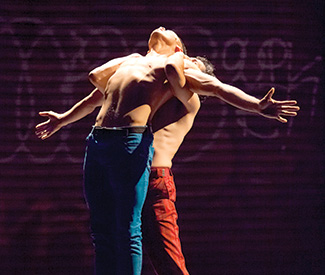
Balancing ingredients and flavors is a good way to plan a menu. It seems to work in dance as well. At least that’s what the five-member panel, which chose the artists to be commissioned for the second of this year’s West Wave programs, seems to have had in mind. All the choreographers are women but they bring a huge range of tastes to their practice. Moving here after 20 years in the other dance capital, modern dancer Anne-René Petrarca is creating a quartet about the power of female energy. Anandha Ray calls her fusion piece “tribal belly dance,” remembering its birthplace in India. Gorgeous Flamenco artist Holly Shaw is translating her passion into choreography that considers the figure of the outsider. And finally, ballet dancer Casey Lee Thorne is using the kinetic power of light in her contemporary vision of an old language. Bon appétit everyone. (Rita Felciano)

8pm, $15–$20

West Wave Dance Festival

ODC Dance Commons, Studio B

351 Shotwell, SF

www.westwavedance.org

SATURDAY 10/5


It’s a Bird… It’s a Plane… It’s Superman

42nd Street Moon kicks off its 2013-2014 season in celebration of 75 years of the Man of Steel. From the songwriters of Bye Bye Birdie and Annie comes the 1966 musical It’s a Bird… It’s a Plane… It’s Superman, opening this month at the Eureka Theatre. Starring Lucas Coleman as the man himself, Jen Brooks as Lois Lane, and Darlene Popovic as Dr. Agnes Sedgwick, the show follows Clark Kent/Superman as he juggles heroics and romance. With such lively tunes as “You’ve Got Possibilities” and “Pow! Bam! Zonk!” audiences are in for some riotous fun featuring one of the most prolific superheroes of all time. (Kirstie Haruta)

Through Oct. 20 (Wed-Thu, 7pm; Fri, 8pm; Sat, 6pm; Sun, 3pm), $21–$75

Eureka Theatre

215 Jackson, SF

(415) 255-8207

www.42ndstmoon.org

SATURDAY 10/5


Billy Bragg

British folk-punk rocker Billy Bragg’s debut album, Life’s A Riot With Spy Vs. Spy, came out 30 years ago. If anything, time has only strengthened his writing and resolve, as well as his social activism bent, as evidenced on the troubadour’s latest release, Tooth and Nail, on Essential Music. Fans have two chances to see Bragg this weekend in the city, one at the annual Hardly Strictly Bluegrass festival in Golden Gate Park — and for others who prefer to skip the crowds and dust, you can see him up close and personal tonight, appearing with his friend Jon Langford. (Sean McCourt)

9pm, $35

Great American Music Hall

859 O’Farrell, SF

(415) 885-0750

www.slimspresents.com

SUNDAY 10/6


“Bikes to Books”

You admired the artful, informative “Bikes to Books” map, created by Bay Guardian contributor Nicole Gluckstern and local-history buff Burrito Justice, in our Sept. 11 issue. Now comes the map’s official release party. Begin with a group bike tour that visits all 12 San Francisco streets named for notable artists and authors (Jacks London and Kerouac, Isadora Duncan, etc.) with local ties. And since City Lights founder Lawrence Ferlinghetti helped mastermind the street-naming project back in 1988, it’s fitting that the party portion of the day (complete with literary reading hosted by Evan Karp) takes place in Jack Kerouac Alley, just outside the famed bookstore. (Eddy)

Bike tour: 10:30am-2pm, free

Meet at Jack London (north side) and South Park, SF

Reading: 2-4pm, free

Jack Kerouac Alley (near Broadway and Columbus), SF

www.burritojustice.com

MONDAY 10/7


Iconic Hair Movie Night

When you think of memorable ‘dos in classic horror films, who else but Elsa Lanchester comes to mind? To honor her famous style, Morphic Salon is screening Bride of Frankenstein for free as part of its Iconic Hair Movie Nights series. Watch as Dr. Frankenstein, revealed to be alive by Mary Shelley, builds a bride for his first monstrous creation. And while you’re at it, perhaps you’ll be inspired to get a shock of white in your own hair to match the leading lady! RSVP for this event at info@morphicbeauty.com. (Haruta)

Free, 7 p.m.

Morphic Salon

660 Market, SF

(415) 789-6682

www.morphicbeauty.com

MONDAY 10/7


Tom Odell

Singer-songwriter Tom Odell tends to capture powerful if fleeting feelings of young love and wistfulness, yet with a cheerful energy. Perhaps thanks to bouncy piano chords and Odell’s robust vocals, the British singer’s performances manage to escape the deep, tormented-soul identity adapted by many young acoustic soloists. His 2013 debut album A Long Way Down reached No. 1 on the UK Official Chart earlier this year. And the musician hit an even higher note last month when he reimagined Elton John’s “Tiny Dancer” at the annual BRITs awards program to honor John as the first ever recipient of the BRITs’ Icon Award. This charming singer makes his way to the Chapel tonight, where he’ll share the stage with Australian Vance Joy. (Hillary Smith)

9pm, $15

Chapel

777 Valencia, SF

www.thechapelsf.com

TUESDAY 10/8


Fucked Up

Toronto-based hardcore punk outfit Fucked Up has made a career of being unapologetically over-the-top. Look no further than its borderline-corny name (how can it be the first punk band to come up with that one?), its insanely ambitious concept albums, and the unparalleled insanity of its live shows. Always on the verge of taking things too far, Fucked Up flirts with that fine line between insanity and brilliance, and occupies the space between with authority. No other band can create high-minded, multi-instrumental rock operas of this magnitude and get away with it (although Titus Andronicus is sure trying). As if its fervent, fearless creativity wasn’t cause enough to go see this band (co-headlining with Terror) also know that frontperson Damian Abraham is seriously the nicest dude in the entire world. (Haley Zaremba)

With Power Trip, Code Orange Kids

7pm, $16

Oakland Metro Operahouse

630 Third St, Oakl.

(510) 763-1146

www.oaklandmetro.org

TUESDAY 10/8


La Tigre e la Neve

Somehow, Italian screenwriter Vincenzo Cerami always succeeded in capturing beauty in his films, through the highs as well as the lowest lows of life. The third and final screening of the IIC’s series “A tribute to Vincenzo Cerami,” features actor Roberto Benigni in Cerami’s La Tigre e la Neve (2005) as Attilio de Giovanni, a besotted Italian poetry teacher. Though Giovanni’s children and students adore him, the woman of his heart, Vittoria, spurns him, leaving Italy with another poet for Iraq. When the second Gulf War erupts and Giovanni hears that Vittoria has been injured, he chases after in an attempt to bring Vittoria to safety. Expect hope, despair, laughs, and underlining it all, a sense of utter, expanding beauty. (Baker)

6:30pm, free

Italian Cultural Institute

814 Montgomery, SF

(415) 788-7142

iicsanfrancisco.esteri.it

TUESDAY 10/8


The Babies

The Babies have been pegged as a super-band of sorts from the start, with Cassie Ramone from Vivian Girls on guitar and Kevin Morby from Woods on bass. In their latest release, 2012’s Our House on the Hill, the Babies strive to break free from their lo-fi attachments in previous bands and experiment more with country, blues, and folk elements. The Babies aren’t a side project, as much as an entirely new entity with something different to offer. San Francisco’s Tony Molina, hardcore frontperson turned “punky” indie act also plays this show. His newest record, Dissed and Dismissed, released by Melters this year, is impressive. Loaded with undeniably catchy, fuzzy tunes, the album at times harkens back to an era when bands like Guided by Voices and Pavement were king. Get some drinks and get fuzzed out in more ways than one at the Hemlock Tavern tonight. (Erin Dage)

With Alex Bleeker and the Freaks

8:30pm, $8

Hemlock Tavern

1131 Polk, SF

(415) 923-0923

www.hemlocktavern.com

Film Listings: October 2 – 8, 2013

0

Film listings are edited by Cheryl Eddy. Reviewers are Kimberly Chun, Dennis Harvey, Lynn Rapoport, Sam Stander, and Sara Maria Vizcarrondo. For rep house showtimes, see Rep Clock.

MILL VALLEY FILM FESTIVAL

The 36th Mill Valley Film Festival runs Oct. 3-13 (most shows $12.50-$14). Major venues are the Christopher B. Smith Rafael Film Center, 1118 Fourth St, San Rafael; Cinéarts@Sequoia, 25 Throckmorton, Mill Valley; Lark Theater, 549 Magnolia, Larkspur; and 142 Throckmorton Theater, 142 Throckmorton, Mill Valley. Complete schedule at www.mvff.com; for commentary, see “Go North, Film Fan.”

OPENING

Blind Detective Johnnie To’s latest makes its local debut as part of the San Francisco Film Society’s “Hong Kong Cinema” series, hot on the heels of his Drug War, which had a theatrical run earlier this year. Blind Detective shares Drug War‘s crime theme and moody palette, but it also has — whimsy alert! — an accordion-inflected score. The cute quotient is further upped by Andy Lau and Sammi Cheng, who’ve been frequently paired in To’s lighter fare (perhaps most memorably in 2001’s Love on a Diet, which attired its attractive stars in fat suits). Lau plays a former cop who left the force after losing his vision, yet continues to solve crimes (in pursuit of reward money) using, among other unorthodox methods, his superior sense of smell. Cheng plays a scrappy policewoman who admires his investigative skills and asks him to track down a long-lost childhood friend. He agrees, but not before slyly tricking her into helping him pursue lucrative paydays on unrelated cases. Lau’s wannabe-Sherlock antics and Cheng’s lovelorn flailings wear thin after two-plus hours, but Blind Detective still manages to entertain despite its odd blend of broad comedy and serial-killer thrills. (2:10) Vogue. (Eddy)

Gravity “Life in space is impossible,” begins Gravity, the latest from Alfonso Cuarón (2006’s Children of Men). Egghead Dr. Ryan Stone (Sandra Bullock) is well aware of her precarious situation after a mangled satellite slams into her ship, then proceeds to demolition-derby everything (including the International Space Station) in its path. It’s not long before she’s utterly, terrifyingly alone, and forced to unearth near-superhuman reserves of physical and mental strength to survive. Bullock’s performance would be enough to recommend Gravity, but there’s more to praise, like the film’s tense pacing, spare-yet-layered script (Cuarón co-wrote with his son, Jonás), and spectacular 3D photography — not to mention George Clooney’s warm supporting turn as a career astronaut who loves country music almost as much as he loves telling stories about his misadventures. (1:31) Balboa, Cerrito, Presidio. (Eddy)

The Institute In 2008, mysterious flyers began popping up around San Francisco that touted esoteric inventions such as “Poliwater” and the “Vital-Orbit Human Force Field” and included a phone number for the curiously-monikered Jejuene Institute. On the other side of the phone line, a recording would direct callers to a Financial District office building where they would undergo a mysterious induction process, embarking on an epic, multi-stage, years-long alternate reality game, designed primarily to reveal the magic in the mundane. In Spencer McCall’s documentary The Institute, viewers are introduced to the game in much the same way as prospective inductees, with few clues as to what lies in store ahead. A handful of seemingly random interviewees offer a play-by-play recap of their own experiences exploring rival game entities the Jejune Institute and Elsewhere Public Works Agency — while video footage of them dancing in the streets, warding off ninjas, befriending Sasquatches, spelunking sewers, and haunting iconic Bay Area edifices gives the viewer a taste of the wonders that lay in store for the intrepid few (out of 10,000 inductees) who made it all the way to the end of the storyline. Frustratingly, however, at least for this former inductee, McCall’s documentary focuses on fleshing out the fictions of the game, barely scratching the surface of what must surely be an even more intriguing set of facts. How did a group of scrappy East Bay artists manage to commandeer an office in the Financial District for so long in the first place? Who were the artists behind the art? And where am I supposed to cash in these wooden “hobo coins” now? (1:32) New Parkway, Roxie. (Gluckstern)

Parkland Timed to tie in with the 50th anniversary of the JFK assassination, writer-director Peter Landesman’s sprawling ensemble drama takes that tragedy as its starting point and spirals outward, highlighting ordinary folks who were caught up in the drama’s aftermath by virtue of their jobs or circumstance. There’s a lot going on here, with a huge cast of mostly-recognizable faces (Billy Bob Thornton as Secret Service Agent Forest Sorrells; Paul Giamatti as amateur filmmaker Abraham Zapruder; Ron Livingston as an FBI agent; hey, there’s Oscar winner Marcia Gay Harden in two scenes as a stern nurse!), but the events depicted are so familiar that the plot never becomes confusing. Landesman — who favors scenes of breakneck-paced action punctuated by solemn moments of emotion — might’ve done better to narrow his focus a bit, perhaps keeping just to the law-enforcement characters or to Lee Harvey Oswald’s family (James Badge Dale plays his shell-shocked brother, while Jackie Weaver hams it up as his eccentric mother). But paired with 2006’s Bobby, Parkland — named for the hospital where both JFK and Oswald died — named for the hospital where both JFK and Oswald died — could make for an interesting, speculative-history double-feature for Camelot buffs. That said, Oliver Stone fans take note: Parkland is strictly Team Lone Gunman. (1:33) Elmwood, 1000 Van Ness. (Eddy)

Runner Runner Justin Timberlake is a gambler who runs afoul of con man Ben Affleck in this action drama from Brad Furman (2011’s The Lincoln Lawyer). (1:31) Elmwood, Presidio.

We Are What We Are See “Eat Your Meat.” (1:45) California.

When Comedy Went to School This scattershot documentary by Ron Frank and Mevlut Akkaya is about two big subjects — the Catskill Mountains resorts that launched a couple generations of beloved Jewish entertainers, and mid-to-late 20th century Jewish comedians in general. There’s a lot of overlap between them, but the directors (and writer Lawrence Richards) can’t seem to find any organizing focus, so their film wanders all over the place, from the roles of resort social directors and busboys to clips from History of the World Part I (1981) and Fiddler on the Roof (1971) to the entirely irrelevant likes of Larry King. That said, there’s entertaining vintage performance footage (of Totie Fields, Woody Allen, etc.) and interview input from the still-kicking likes of Sid Ceasar, Jackie Mason, Mort Sahl, Jerry Stiller, and Jerry Lewis. For some this will be a welcome if not particularly well crafted nostalgic wallow. For others, though, the pandering tone set by one Lisa Dawn Miller’s (wife of Sandy Hackett, who’s son of Buddy) cringe-worthy opening rendition of “Make ‘Em Laugh” — to say nothing of her “Send in the Clowns” at the close — will sum up the pedestrian mindset that makes this doc a missed opportunity. (1:23) Opera Plaza, Shattuck. (Harvey)

ONGOING

Baggage Claim Robin Thicke may be having the year of a lifetime, but spouse Paula Patton is clearly making a bid to leap those “Blurred Lines” between second banana-dom and Jennifer Aniston-esque leading lady fame with this buppie chick flick. How competitive is the game? Patton has a sporting chance: she’s certainly easy on the eyes and ordinarily a welcome warm and sensual presence as arm candy or best girlfriend — too bad her bid to beat the crowd with Baggage Claim feels way too blurry and busy to study for very long. The camera turns to Patton only to find a hot, slightly charming mess of mussed hair, frenetic movement, and much earnest emoting. I know the mode is single-lady desperation, but you’re trying too hard, Paula. At least the earnestness kind of works — semi-translating in Baggage Claim as a bumbling ineptitude that offsets Patton’s too-polished-and-perfect-to-be-real beauty. After all, we’re asked to believe that Patton’s flight attendant Montana can’t find a good man, no matter how hard she tries. That’s the first stretch of imagination, made more implausible by pals Sam (Adam Brody) and Janine (singer-songwriter Jill Scott), who decide to try to fix her up with her old high-flying frequent-flier beaus in the quest to find a mate in time for her — humiliation incoming — younger sister’s wedding. Among the suitors are suave hotelier Quinton (Djimon Hounsou), Republican candidate Langston (Taye Diggs), and hip-hop mogul Damon (Trey Songz), though everyone realizes early on that she just can’t notice the old bestie (Derek Luke) lodged right beneath her well-tilted nose. Coming to the conclusion that any sane single gal would at the end of this exercise, Patton does her darnedest to pour on the quirk and charm — and that in itself is as endearing as watching any beautiful woman bend over backwards, tumbling as she goes, to win an audience over. The strenuous effort, however, seems wasted when one considers the flimsy material, played for little more than feather-light amusement by director-writer David E. Talbert. (1:33) Metreon, 1000 Van Ness. (Chun)

Battle of the Year Nothing burns Americans more than getting beat at their own culture game. Hence the premise of this 3D dance movie named after the international b-boy competition that regularly shuts out US teams. Diddy-like hip-hop kingpin Dante (Laz Alonso) is feeling the softness of the market, never mind that the trend cycles have spun the other way — we gotta win the b-boy crown back from the Koreans and Russians! So he enlists his old friend and now-down-and-out coach Jason (Lost‘s Josh Holloway) to assemble a winning crew from ragtag talents pulled from across the country, among them the strutting Rooster (Chris Brown). How does one put together a real team from this loose gathering of testosterone-saturated, ever-battling egos? Korean American director Benson Lee twirls off his own documentary Planet B Boy with this fictitious exercise that begs this question: why aren’t there more 3D dance movies? Probably because, much like porn, everything surrounding the money shots usually feels like filler. Leave aside the forced drama of bad news unbearables like Brown and his frenemies — the moments when Battle really lives up to the hype are when the movie’s many hyperathletic, gravity-defying b-boys like Ivan “Flipz” Velez, Jon “Do Knock” Cruz, and David “Kid” Shreibman show off their moves. (1:49) 1000 Van Ness, SF Center. (Chun)

Blue Jasmine The good news about Blue Jasmine isn’t that it’s set in San Francisco, but that it’s Woody Allen’s best movie in years. Although some familiar characteristics are duly present, it’s not quite like anything he’s done before, and carries its essentially dramatic weight more effectively than he’s managed in at least a couple decades. Not long ago Jasmine (a fearless Cate Blanchett) was the quintessential Manhattan hostess, but that glittering bubble has burst — exactly how revealed in flashbacks that spring surprises up to the script’s end. She crawls to the West Coast to “start over” in the sole place available where she won’t be mortified by the pity of erstwhile society friends. That would be the SF apartment of Ginger (Sally Hawkins), a fellow adoptive sister who was always looked down on by comparison to pretty, clever Jasmine. Theirs is an uneasy alliance — but Ginger’s too big-hearted to say no. It’s somewhat disappointing that Blue Jasmine doesn’t really do much with San Francisco. Really, the film could take place anywhere — although setting it in a non-picture-postcard SF does bolster the film’s unsettled, unpredictable air. Without being an outright villain, Jasmine is one of the least likable characters to carry a major US film since Noah Baumbach’s underrated Margot at the Wedding (2007); the general plot shell, moreover, is strongly redolent of A Streetcar Named Desire. But whatever inspiration Allen took from prior works, Blue Jasmine is still distinctively his own invention. It’s frequently funny in throwaway performance bits, yet disturbing, even devastating in cumulative impact. (1:38) Clay, Metreon, 1000 Van Ness. (Harvey)

Cloudy With a Chance of Meatballs 2 (1:35) Balboa, Cerrito, Elmwood, Metreon, 1000 Van Ness, Presidio.

Don Jon Shouldering the duties of writer, director, and star for the comedy Don Jon, Joseph Gordon-Levitt has also picked up a broad Jersey accent, the physique of a gym rat, and a grammar of meathead posturing — verbal, physical, and at times metaphysical. His character, Jon, is the reigning kingpin in a triad of nightclubbing douchebags who pass their evenings assessing their cocktail-sipping opposite numbers via a well-worn one-to-10 rating system. Sadly for pretty much everyone involved, Jon’s rote attempts to bed the high-scorers are spectacularly successful — the title refers to his prowess in the art of the random hookup — that is, until he meets an alluring “dime” named Barbara (Scarlett Johansson), who institutes a waiting period so foreign to Jon that it comes to feel a bit like that thing called love. Amid the well-earned laughs, there are several repulsive-looking flies in the ointment, but the most conspicuous is Jon’s stealthy addiction to Internet porn, which he watches at all hours of the day, but with a particularly ritualistic regularity after each night’s IRL conquest has fallen asleep. These circumstances entail a fair amount of screen time with Jon’s O face and, eventually, after a season of growth — during which he befriends an older woman named Esther (Julianne Moore) and learns about the existence of arty retro Swedish porn — his “Ohhh&ldots;” face. Driven by deft, tight editing, Don Jon comically and capably sketches a web of bad habits, and Gordon-Levitt steers us through a transformation without straining our capacity to recognize the character we met at the outset — which makes the clumsy over-enunciations that mar the ending all the more jarring. (1:30) Four Star, Marina, 1000 Van Ness, SF Center, Sundance Kabuki. (Rapoport)

Elysium By the year 2154, the one percent will all have left Earth’s polluted surface for Elysium, a luxurious space station where everyone has access to high-tech machines that can heal any wound or illness in a matter of seconds. Among the grimy masses in burned-out Los Angeles, where everyone speaks a mixture of Spanish and English, factory worker Max (Matt Damon) is trying to put his car-thief past behind him — and maybe pursue something with the childhood sweetheart (Alice Braga) he’s recently reconnected with. Meanwhile, up on Elysium, icy Secretary of Defense Delacourt (Jodie Foster, speaking in French and Old Hollywood-accented English) rages against immigration, even planning a government takeover to prevent any more “illegals” from slipping aboard. Naturally, the fates of Max and Delacourt will soon intertwine, with “brain to brain data transfers,” bionic exo-skeletons, futuristic guns, life-or-death needs for Elysium’s medical miracles, and some colorful interference by a sword-wielding creeper of a sleeper agent (Sharlto Copley) along the way. In his first feature since 2009’s apartheid-themed District 9, South African writer-director Neill Blomkamp once again turns to obvious allegory to guide his plot. If Elysium‘s message is a bit heavy-handed, it’s well-intentioned, and doesn’t take away from impressive visuals (mercifully rendered in 2D) or Damon’s committed performance. (2:00) Metreon, 1000 Van Ness. (Eddy)

Enough Said Eva (Julia Louis-Dreyfus) is a divorced LA masseuse who sees naked bodies all day but has become pretty wary of wanting any in her bed at night. She reluctantly changes her mind upon meeting the also-divorced Albert (James Gandolfini), a television archivist who, also like her, is about to see his only child off to college. He’s no Adonis, but their relationship develops rapidly — the only speed bumps being provided by the many nit-picking advisors Eva has in her orbit, which exacerbate her natural tendency toward glass-half-empty neurosis. This latest and least feature from writer-director Nicole Holofcener is a sitcom-y thing of the type that expects us to find characters all the more adorable the more abrasive and self-centered they are. That goes for Louis-Dreyfus’ annoying heroine as well as such wasted talents as Toni Colette as her kvetching best friend and Catherine Keener as a new client turned new pal so bitchy it makes no sense Eva would desire her company. The only nice person here is Albert, whom the late Gandolfini makes a charming, low-key teddy bear in an atypical turn. The revelation of an unexpected past tie between his figure and Keener’s puts Eva in an ethically disastrous position she handles dismally. In fact, while it’s certainly not Holofcener’s intention, Eva’s behavior becomes so indefensible that Enough Said commits rom-com suicide: The longer it goes on, the more fervently you hope its leads will not end up together. (1:33) 1000 Van Ness, SF Center. (Harvey)

The Family It’s hard to begrudge an acting monolith like Robert De Niro from cashing out in his golden years and essentially going gently into that good night amid a volley of mild yuks. And when his mobster-in-witness-protection Giovanni Manzoni takes a film-club stage in his Normandy hideout to hold forth on the veracity of Goodfellas (1990), you yearn to be right there in the fictional audience, watching De Niro’s Brooklyn gangster take on his cinematic past. That’s the most memorable moment of this comedy about an organized criminal on the lam with his violent, conniving family unit. Director-cowriter Luc Besson aims to lightly demonstrate that you can extract a family from the mob but you can’t expunge the mob from the family. There’s a $20 million bounty on Giovanni’s head, and it’s up to his keeper Stansfield (Tommy Lee Jones) to keep him and his kin quiet and undercover. But the latter has his hands full with Gio penning his memoirs, wife Maggie (Michelle Pfeiffer) blowing up the local supermarket, daughter Belle (Dianna Agron, wrapped in bows like a soft-focus fantasy nymphet) given to punishing schoolyard transgressors with severe beatings, and son Warren (John D’Leo) working all the angles in class. Besson plays the Manzoni family’s violence for chuckles, while painting the mob family’s mayhem with more ominous colors, making for a tonal clash that’s as jarring as some of his edits. The pleasure here comes with watching the actors at play: much like his character, De Niro is on the run from his career-making albeit punishing past, though if he keeps finding refuge in subpar fare, one wonders if his “meh” fellas will eventually outweigh the Goodfellas. (1:51) Metreon, 1000 Van Ness, Sundance Kabuki. (Chun)

In a World… (1:33) Presidio, Sundance Kabuki.

Inequality for All Jacob Kornbluth’s Inequality for All is the latest and certainly not the last documentary to explore why the American Dream is increasingly out of touch with everyday reality, and how the definition of “middle class” somehow morphed from “comfortable” to “struggling, endangered, and hanging by a thread.” This lively overview has an ace up its sleeve in the form of the director’s friend, collaborator, and principal interviewee Robert Reich — the former Clinton-era Secretary of Labor, prolific author, political pundit, and UC Berkeley Professor of Public Policy. Whether he’s holding forth on TV, going one-on-one with Kornbluth’s camera, talking to disgruntled working class laborers, or engaging students in his Wealth and Poverty class, Inequality is basically a resourcefully illustrated Reich lecture — as the press notes put it, “an Inconvenient Truth for the economy.” Fortunately, the diminutive Reich is a natural comedian as well as a superbly cogent communicator, turning yet another summary of how the system has fucked almost everybody (excluding the one percent) into the one you might most want to recommend to the bewildered folks back home. He’s sugar on the pill, making it easier to swallow so much horrible news. (1:25) California, Metreon. (Harvey)

Insidious: Chapter 2 The bloodshot, terribly inflamed font of the opening title gives away director James Wan and co-writer and Saw series cohort Leigh Whannell’s intentions: welcome to their little love letter to Italian horror. The way an actor, carefully lit with ruby-red gels, is foregrounded amid jade greens and cobalt blues, the ghastly clown makeup, the silent movie glory of a gorgeous face frozen in terror, the fixation with 1981’s The Beyond — lovers of spaghetti shock will appreciate even a light application of these aspects, even if many others will be disappointed by this sequel riding a wee bit too closely on its financially successful predecessor’s coattails. Attempting to pick up exactly where 2011’s Insidious left off, Chapter 2 opens with a flashback to the childhood of demonically possessed Josh Lambert (Patrick Wilson), put into a trance by the young paranormal investigator Elise. Flash-forward to Elise’s corpse and the first of many terrified looks from Josh’s spouse Renai (Rose Byrne). She knows Josh killed Elise, but she can’t face reality — so instead she gets to face the forces of supernatural fantasy. Meanwhile Josh is busy forcing a fairy tale of normalcy down the rest of his family’s throats — all the while evoking a smooth-browed, unhinged caretaker of the Overlook Hotel. Subverting that fiction are son Dalton (Ty Simpkins), who’s fielding messages from the dead, and Josh’s mother Lorraine (Barbara Hershey), who sees apparitions in her creepy Victorian and looks for help in Elise’s old cohort Carl (Steve Coulter) and comic-relief ghost busters Specs (Whannell) and Tucker (Angus Sampson). Sure, there are a host of scares to be had, particularly those of the don’t-look-over-your-shoulder variety, but tribute or no, the derivativeness of the devices is dissatisfying. Those seeking wickedly imaginative death-dealing machinations, or even major shivers, will curse the feel-good PG-13 denouement. (1:30) Metreon, 1000 Van Ness. (Chun)

Instructions Not Included (1:55) Metreon.

Inuk Though the Greenlandic-language Inuk takes its name from its troubled Inuit protagonist, ice is arguably its central character. And the lyrical sweep and striking beauty of the icy expanses in Uummannaq Bay and Nuuk, Greenland, threaten to upstage the adventure story at Inuk‘s heart. Seeking refuge from his alcoholic mother and her abusive friends and escaping into hip-hop, the teenage Inuk (Gaaba Petersen) has been found battered and sleeping his car far too often, so he’s taken to a in the north by teacher and foster care worker Aviaaja (Rebekka Jorgensen) to learn about the old ways of hunters and an ancient wisdom that is melting away with the polar icecap. A journey by dogsled with local hunters turns into a rite of passage when bear hunter Ikuma (Ole Jørgen Hammeken) takes Inuk under his damaged wing and attempts to reconnect him to his heritage. “The ice is no place for attitude,” he declares, as Inuk makes foolish choices, kills his first seal, and learns the hard way about survival north of the Arctic Circle. You can practically feel the freezing cold seeping off the frames of this gorgeous-looking film — a tribute to director Mike Magidson and his crew’s skills, even when the overt snow-blinding symbolism blots out clarity and threatens to swallow up Inuk. (1:30) Roxie. (Chun)

Lee Daniels’ The Butler (1:53) 1000 Van Ness, SF Center, Sundance Kabuki, Vogue.

Metallica: Through the Never The 3D IMAX concert film is lurching toward cliché status, but at least Metallica: Through the Never has more bite to it than, say, this summer’s One Direction: This is Us. Director Nimród Antal (2010’s Predators) weaves live footage of the Bay Area thrash veterans ripping through hits (“Enter Sandman,” “For Whom the Bell Tolls,” etc.) into a narrative (kinda) about one of the band’s roadies (The Place Beyond the Pines‘ Dane DeHaan). Sent on a simple errand, the hoodie-wearing hesher finds himself caught in a nightmarish urban landscape of fire, hanging bodies, masked horsemen, and crumbling buildings — more or less, the dude’s trapped in a heavy metal video, and not one blessed with particularly original imagery. The end result is aimed more at diehards than casual fans — and, R-rated violence aside, there’s nothing here that tops the darkest moments of highly personal 2004 documentary Metallica: Some Kind of Monster. (1:32) Metreon, 1000 Van Ness. (Eddy)

Morning (1:30) Metreon.

Museum Hours Feature documentaries Benjamin Smoke (2000) and Instrument (2003) are probably Jem Cohen’s best-known works, but this prolific filmmaker — an inspired choice for SFIFF’s Golden Gate Persistence of Vision Award, honoring “a filmmaker whose main body of work is outside the realm of narrative feature filmmaking” — has a remarkably diverse resumé of shorts, music videos, and at least one previous narrative film (albeit one with experimental elements), 2004’s Chain. Cohen appears in person to discuss his work and present his latest film, Museum Hours, about a guard at Vienna’s Kunsthistorisches Museum (“the big old one,” the man calls it) who befriends a Montreal woman visiting her comatose cousin. It’s a deceptively simple story that expands into a deeply felt, gorgeously shot rumination on friendship, loneliness, travel, art history and appreciation, and finding the beauty in the details of everyday life. (1:46) Opera Plaza. (Eddy)

On the Job Filipino director Erik Matti’s gritty crime thriller has such a clever hook that Hollywood is already circling it for a remake. No shock there. It is surprising, however, that On the Job is based on true events, in which prisoners were temporarily sprung to work as hired guns for well-connected politicos. (Kinda genius, if you think about it.) The big-screen version has veteran inmate Tang (Joel Torre) dreading his imminent parole; he’d rather have the steady income from his grisly gig than be unable to provide for his wife and daughter. As he counts down to his release, he trains volatile Daniel (Gerald Anderson) to take his place. Poking around on the other side of the law are world-weary local cop Acosta (Joey Marquez) and hotshot federal agent Francis (Piolo Pascual), who reluctantly team up when a hit cuts close to home for both of them. The case is particularly stressful for Francis, whose well-connected father-in-law turns out to be wallowing in corruption. Taut, thrilling, atmospheric, and graphic, On the Job makes up for an occasionally confusing storyline by offering bang-up (literally) entertainment from start to finish. Groovy score, too. (2:00) Metreon. (Eddy)

Planes Dane Cook voices a crop duster determined to prove he can do more than he was built for in Planes, the first Disney spin-off from a Pixar property. (Prior to the film’s title we see “From The World of Cars,” an indicator the film is an extension of a known universe — but also not quite from it.) And indeed, Planes resembles one of Pixar’s straight-to-DVD releases as it struggles for liftoff. Dreaming of speed, Dusty Crophopper (Cook) trains for the Wings Around the World race with his fuel-truck friend, Chug (Brad Garrett). A legacy playing Brewster McCloud and Wilbur Wright makes Stacy Keach a pitchy choice for Skipper, Dusty’s reluctant ex-military mentor. Charming cast choices buoy Planes somewhat, but those actors are feathers in a cap that hardly supports them — you watch the film fully aware of its toy potential: the race is a geography game; the planes are hobby sets; the cars will wind up. The story, about overcoming limitations, is in step with high-value parables Pixar proffers, though it feels shallower than usual. Perhaps toys are all Disney wants — although when Ishani (a sultry Priyanka Chopra) regrets an integrity-compromising choice she made in the race, and her pink cockpit lowers its eyes, you can feel Pixar leaning in. (1:32) 1000 Van Ness. (Vizcarrondo)

Populaire Perhaps if it weren’t set in the 1950s, this would be the fluorescent-lit story of a soul-sucking data entry job and the office drone who supplements it with a moonlighting gig. But it is the ’50s — a cheery, upbeat version of the era — and director Régis Roinsard’s Populaire reflects its shiny glamour onto the transformation of small-town girl Rose Pamphyle (Déborah François) from an incompetent but feisty secretary with mad hunting-and-pecking skills into a celebrated and adored speed-typing champion. Her daffy boss, Louis Échard (Romain Duris), is a handsome young insurance salesman who bullies her (very charmingly) into competing against a vast secretarial pool in a series of hectic, nail-biting tourneys, which treat typing as a sporting event for perhaps the first time in cinematic history. (See also: scenes of Rose cranking up her physical endurance with daily jogs and cross-training at the piano.) The glamour slips a touch when Populaire starts to delve into psychological motivations to rationalize some of Louis’s more caddish maneuvers. But meanwhile, back in the arena, bets are made, words-per-minute stats are quoted by screaming, tearful fans in the bleachers, hearts are won and bruised, a jazz band performs that classic tune “Les Secrétaires Cha Cha Cha,” and we find ourselves rooting passionately for Rose to best the reigning champ’s 512(!)-wpm record. (1:51) Smith Rafael. (Rapoport)

Prisoners It’s a telling sign of this TV-besotted times that the so-called best-reviewed film of the season so far resembles a cable mystery in line with The Killing and its ilk — in the way that it takes its time while keeping it taut, attempts to stretch out beyond the perimeters of the police procedural, and throws in the types of envelope-pushing twists that keep easily distractible viewers coming back. At two and a half hours plus, Prisoners feels like a hybrid, more often seen on a small screen that has borrowed liberally from cinema since David Lynch made the Twin Peaks crossing, than the large, as it brings together an art-house attention to detail with the sprawl and topicality of a serial. Incendies director Denis Villeneuve carefully loads the deck with symbolism from the start, opening with a shot of a deer guilelessly approaching a clearing and picking at scrubby growth in the cold ground, as the camera pulls back on two hunters: the Catholic, gun-toting Keller (Hugh Jackman) and his son (Dylan Minnette), intent on gathering a Thanksgiving offering. Keller and his fragile wife Grace (Maria Bello) are coming together with another family — headed up by the slightly more yuppified Franklin (Terence Howard) and his wife Nancy (Viola Davis) — for Thanksgiving in what seems like a middle-class East Coast suburb. The peace is shattered when the families’ young daughters suddenly disappear; the only clues are the mysterious RV that rumbles slowly through the quiet neighborhood and ominous closeups from a predator’s perspective. Police detective Loki (Jake Gyllenhaal) is drawn into the mystery when the RV is tracked down, along with its confused driver Alex (Paul Dano). That’s no consolation to the families, each grieving in their own way, with Keller perpetually enraged and Franklin seemingly on the brink of tears. When Alex’s aunt (an unrecognizable Melissa Leo) comes forward with information about her nephew, Keller decides to take matters into his own hands in ways that question the use of force during interrogation and the very definition of imprisonment. Noteworthy performances by Jackman, Gyllenhaal, and Dano highlight this elegant, wrenching thriller — while Villeneuve’s generally simple, smart choices might make the audience question not only certain characters’ morality but perhaps their own. (2:33) Four Star, Marina, 1000 Van Ness, SF Center, Sundance Kabuki. (Chun)

Riddick This is David Twohy’s third flick starring Vin Diesel as the titular misunderstood supercriminal. Aesthetically, it’s probably the most interesting of the lot, with a stylistic weirdness that evokes ’70s Eurocomix in the best way — a pleasing backdrop to what is essentially Diesel playing out the latest in a series of Dungeons & Dragons scenarios where he offers his wisecracking sci-fi take on Conan. Gone are the scares and stakes of Pitch Black (2000) or the cheeseball epic scale of The Chronicles of Riddick (2004); this is a no-nonsense action movie built on the premise that Riddick just can’t catch a break. He’s on the run again, targeted by two bands of ruthless mercenaries, on a planet threatened by an oncoming storm rather than Pitch Black‘s planet-wide night. One unfortunate element leaves a bitter taste: the lone female character in the movie, Dahl (Katee Sackhoff), is an underdeveloped cliché “Strong Female Character,” a violent, macho lesbian caricature who is the object of vile sexual aggression (sometimes played for laughs) from several other characters, including Riddick. (1:59) Metreon. (Stander)

Rush Ron Howard’s Formula One thriller Rush is a gripping bit of car porn, decked out with 1970s period details and goofily liberated camera moves to make sure you never forget how much happens under (and around, and on top of) the hood of these beastly vehicles. Real life drivers James Hunt and Niki Lauda (played by Chris Hemsworth and Daniel Brühl, respectively) had a wicked rivalry through the ’70s; these characters are so oppositional you’d think Shane Black wrote them. Lauda’s an impersonal, methodical pro, while Hunt’s an aggressive, undisciplined playboy — but he’s so popular he can sway a group of racers to risk their lives on a rainy track, even as Lauda objects. It’s a lovely sight: all the testosterone in the world packed into a room bound by windows, egos threatening to bust the glass with the rumble of their voices. I’m no fan of Ron Howard, but maybe the thrill of Grand Theft Auto is in Rush like a spirit animal. (The moments of rush are the greatest; when Lauda’s lady friend asks him to drive fast, he does, and it’s glorious.) Hunt says that “being a pro kills the sport” — but Howard, an overly schmaltzy director with no gift for logic and too much reliance on suspension of disbelief, doesn’t heed that warning. The laughable voiceovers that bookend the film threaten to sink some great stuff, but the magic of the track is vibrant, dangerous, and teeming with greatness. (2:03) 1000 Van Ness, SF Center, Sundance Kabuki. (Vizcarrondo)

Short Term 12 A favorite at multiple 2013 festivals (particularly SXSW, where it won multiple awards), Short Term 12 proves worthy of the hype, offering a gripping look at twentysomethings (led by Brie Larson, in a moving yet unshowy performance) who work with at-risk teens housed in a foster-care facility, where they’re cared for by a system that doesn’t always act with their best interests in mind. Though she’s a master of conflict resolution and tough love when it comes to her young chargers, Grace (Larson) hasn’t overcome her deeply troubled past, to the frustration of her devoted boyfriend and co-worker (John Gallagher, Jr.). The crazy everyday drama — kids mouthing off, attempting escape, etc. — is manageable enough, but two cases cut deep: Marcus (Keith Stanfield), an aspiring musician who grows increasingly anxious as his 18th birthday, when he’ll age out of foster care, approaches; and 16-year-old Jayden (Kaitlyn Dever), whose sullen attitude masks a dark home life that echoes Grace’s own experiences. Expanding his acclaimed 2008 short of the same name, writer-director Destin Daniel Cretton’s wrenchingly realistic tale achieves levels of emotional honesty not often captured by narrative cinema. He joins Fruitvale Station director Ryan Coogler as one of the year’s most exciting indie discoveries. (1:36) Opera Plaza, Roxie. (Eddy)

Thanks for Sharing (1:52) Metreon, Sundance Kabuki.

20 Feet From Stardom Singing the praises of those otherwise neglected backup vocalists who put the soul into that Wall of Sound, brought heft to “Young Americans,” and lent real fury to “Gimme Shelter,” 20 Feet From Stardom is doing the rock ‘n’ roll true believer’s good work. Director Morgan Neville follows a handful of mainly female, mostly African American backing vocal legends, charts their skewed career trajectories as they rake in major credits and keep working long after one-hit wonders are forgotten (the Waters family) but fail to make their name known to the public (Merry Clayton), grasp Grammy approval yet somehow fail to follow through (Lisa Fischer), and keep narrowly missing the prize (Judith Hill) as label recording budgets shrivel and the tastes, technology, and the industry shift. Neville gives these industry pros and soulful survivors in a rocked-out, sample-heavy, DIY world their due on many levels, covering the low-coverage minis, Concert for Bangladesh high points, gossipy rumors, and sheer love for the blend that those intertwined voices achieve. One wishes the director had done more than simply touch in the backup successes out there, like Luther Vandross, and dug deeper to break down the reasons Fischer succumbed to the sophomore slump. But one can’t deny the passion in the voices he’s chosen to follow — and the righteous belief the Neville clearly has in his subjects, especially when, like Hill, they are ready to pick themselves up and carry on after being told they’re not “the Voice.” (1:30) Smith Rafael. (Chun)

Wadjda Hijabs, headmistresses, and errant fathers fall away before the will and wherewithal of the 11-year-old title character of Wadjda, the first feature by a female Saudi Arabian filmmaker. Director Haifaa al-Mansour’s own story — which included filming on the streets of Riyadh from the isolation of a van because she couldn’t work publicly with the men in the crew — is the stuff of drama, and it follows that her movie lays out, in the neorealist style of 1948’s The Bicycle Thief, the obstacles to freedom set in the path of women and girls in Saudi Arabia, in terms that cross cultural, geographic, and religious boundaries. The fresh star setting the course is Wadjda (first-time actor Waad Mohammed), a smart, irrepressibly feisty girl practically bursting out of her purple high-tops and intent on racing her young neighborhood friend Abudullah (Abdullrahman Algohani) on a bike. So many things stand in her way: the high price of bicycles and the belief that girls will jeopardize their virginity if they ride them; her distracted mother (Reem Abdullah) who’s worried that Wadjda’s father will take a new wife who can bear him a son; and a harsh, elegant headmistress (Ahd) intent on knuckling down on girlish rebellion. So Wadjda embarks on studying for a Qu’ran recital competition to win money for her bike and in the process learns a matter or two about discipline — and the bigger picture. Director al-Mansour teaches us a few things about her world as well — and reminds us of the indomitable spirit of girls — with this inspiring peek behind an ordinarily veiled world. (1:37) Opera Plaza. (Chun)

We’re the Millers After weekly doses on the flat-screen of Family Guy, Modern Family, and the like, it’s about time movieland’s family comedies got a little shot of subversion — the aim, it seems, of We’re the Millers. Scruffy dealer David (Jason Sudeikis) is shambling along — just a little wistful that he didn’t grow up and climb into the Suburban with the wife, two kids, and the steady 9-to-5 because he’s a bit lonely, much like the latchkey nerd Kenny (Will Poulter) who lives in his apartment building, and neighboring stripper Rose (Jennifer Aniston), who bites his head off at the mailbox. When David tries to be upstanding and help out crust punk runaway Casey (Emma Roberts), who’s getting roughed up for her iPhone, he instead falls prey to the robbers and sinks into a world of deep doo-doo with former college bud, and supplier of bud, Brad (Ed Helms). The only solution: play drug mule and transport a “smidge and a half” of weed across the Mexican-US border. David’s supposed cover: do the smuggling in an RV with a hired crew of randoms: Kenny, Casey, and Rose&sdquo; all posing as an ordinary family unit, the Millers. Yes, it’s that much of a stretch, but the smart-ass script is good for a few chortles, and the cast is game to go there with the incest, blow job, and wife-swapping jokes. Of course, no one ever states the obvious fact, all too apparent for Bay Area denizens, undermining the premise of We’re the Millers: who says dealers and strippers can’t be parents, decent or otherwise? We may not be the Millers, but we all know families aren’t what they used to be, if they ever really managed to hit those Leave It to Beaver standards. Fingers crossed for the cineplex — maybe movies are finally catching on. (1:49) Metreon. (Chun)

The World’s End The final film in Edgar Wright’s “Blood and Ice Cream Trilogy” finally arrives, and the TL:DR version is that while it’s not as good as 2004’s sublime zombie rom-com Shaun of the Dead, it’s better than 2007’s cops vs. serial killers yarn Hot Fuzz. That said, it’s still funnier than anything else in theaters lately. Simon Pegg returns to star and co-write (with Wright); this time, the script’s sinister bugaboo is an invasion of body snatchers — though (as usual) the conflict is really about the perils of refusing to actually become an adult, the even-greater perils of becoming a boring adult, and the importance of male friendships. Pegg plays rumpled fuck-up Gary, determined to reunite with the best friends he’s long since alienated for one more crack at their hometown’s “alcoholic mile,” a pub crawl that ends at the titular beer joint. The easy chemistry between Pegg and the rest of the cast (Nick Frost, Paddy Considine, Martin Freeman, and Eddie Marsan) elevates what’s essentially a predictable “one crazy night” tale, with a killer soundtrack of 1990s tunes, slang you’ll adopt for your own posse (“Let’s Boo-Boo!”), and enough hilarious fight scenes to challenge This is the End to a bro-down of apocalyptic proportions. (1:49) Metreon, 1000 Van Ness. (Eddy) *


Quiet powerful

1

arts@sfbg.com

DANCE Considering its name — Hush — it should have come as no surprise that Joe Goode’s latest look at the ultimate loneliness that infects us all, whether imposed or self-inflicted, is a very quiet piece. Being hushed is something we learn as babies, at the family table, in school, and at the movies. But more seriously, it becomes an essential tool for survival for those who may be perceived as “different.”

At barely an hour, Hush is another variation on a theme that has threaded itself through Goode’s works since the beginning. Unfortunately, unless you are a romantic or naïve, being on the outside happens to be a quintessential human condition. Goode approaches it from the particular perspective of a gay man. It’s his genius that he manages to frequently mine that driving concern for new and convincing theatrical expressions — a quality that distinguishes art from advocacy.

Hush feels like chamber music. It’s condensed, tight, and weaves a spell like a spider’s web. The tone is subdued, and there’s a film noir quality to Erik Flatmo’s set, with its half-empty bar. You can practically smell stale beer. Foley artist Sudhu Tewari’s brilliant sound effects suffuse this environment with a hyper-real vibe — somewhere between a comic strip and the proverbial nails on a chalkboard board.

While Goode doesn’t perform himself, you can hear him in the language for his characters, which is drawn from interviews with him (a practice he already used in last year’s When We Fall Apart). His own voice comes through most explicitly in Hush’s songs, some of whose lyrics were printed in the program. I do wish we had been given access to all of them.

But Hush can also feel like a musical in which dance stays subsidiary to other theatrical aspects. At its strongest, it takes over in ways that words cannot.

The piece focuses on two characters, portrayed by Melecio Estrella as a “sissy boy,” and Damara Vita Ganley, as a woman whose “body got touched on places I didn’t want to.” Neither of these creations accept victimhood. They refuse to be hushed. Both performers are accomplished actor-dancers who were a joy to watch every second they were on stage, and they happen to also be the company’s best singers. At first Estrella is hardly able to get a sound out in the bar’s open mic, but he learns quickly. Finally, he stands up to his bullying tormentors and spits out a lengthy scholarly disquisition on sexuality and asexuality that sounded like it was straight out of an academic paper. I have no idea whether this was science or imagination, but Estrella was magnificent in a feat of rhetoric that could not be ignored and ultimately empowered him.

Putting a rape scene on stage is probably the most daring thing Goode has done. I dreaded the prospect. On her way home — the road she follows looks like something out of The Wizard of Oz — Ganley drops her purse, stops to pick up a flower (a sentimental touch), and is attacked by three hooded individuals. In the choreography, performed in silence if I remember correctly, she gets lifted, pulled, yanked, and stretched for a considerable amount of time. In the end she picks up her purse and walks home, her heels clacking in the night. Later on, the laconic give-and-takes between her and Andrew Ward, who tries to help, beautifully suggests a relationship based on mutual respect.

Elsewhere, a gorgeous duet between Estrella and Felipe Barrueto-Cabello called up an increasingly passionate love affair. It started out with almost accidental touches and withdrawals — Barrueto-Cabello is a master of reticence — but gradually built into a tempestuous encounter when, the men having stripped off their undershirts, you couldn’t quite tell any more who was who.

If I have one regret about Hush is that the stories of the other characters were not more developed: Jessica Swanson as the driven career woman, Ward’s sympathetic bartender-listener, Alexander Zendzian’s vegetable lover, and Barrueto-Cabello’s moonstruck lover. The scene between the careerist Swanson and the pickle-making Zendzian — thank you, sound designer Tewari — sparkled with humor, but it just was too cartoonish to become emotionally resonant.

Hush ends with a rousing, operatic finale, a song-and-dance number in which the cast proclaimed its determination to be silenced no longer. No question that’s a welcome thought — but given the complexities of the issues involved, it also felt a little too much like Broadway. *

HUSH

Thu/3-Fri/4, 8pm; Sat/5, 7 and 9pm, $15-$70

Z Space

450 Florida, SF

www.joegoode.org


Goodbye to a homebrewing legend: RIP Griz

4

For many Bay Area homebrewers, Richmond neighborhood shop San Francisco Brewcraft is the main brewing hub. It’s where newbies pick up their kits and learn to brew, and seasoned veterans return for more tips, recipes, and grains.

And the stern but friendly, no bullshit leader of that guild was Griz (aka Greg Miller), a homebrewing expert and beloved teacher. Griz, who long suffered from diabetes and last year was diagnosed with cancer, passed away in his sleep last Monday, Sept. 23.

He’s survived by his wife Barbara and his dog, Louie, along with the employees and friends of Brewcraft.

Fellow Brewcraft employee Andre Sanchez tells me, “People have been coming through [the store], it’s been a huge outpouring of condolences for Griz.”

Griz took over Brewcraft in the late ‘90s and has taught the free homebrewing class there ever since, until he got too sick to come in. “He’s taught not only amateur homebrewers who now have become semi-pro to pro brewers throughout the entire Bay Area, but this whole craft brewing explosion that happened in the mid-2000s, we felt it here in the shop of course and Griz was a big part of teaching a lot of the brewers that came through.”

Sanchez notes that the San Francisco Brewers Guild will be making special beers in honor of Griz — using old-school recipes — but the details are in the works as of press time.

And local homebrewers have also been coming in to Brewcraft with Griz’s old recipes in hand, to gather the materials to brew their own batches in honor of the legend.

The San Francisco Homebrewers Guild posted a tribute to Griz, whom they describe as a brewer-philosopher, and also included some of his best quotes (below):

“He left us not only with many great memories, but with loads of fantastic quotes about how you shouldn’t be ‘anal retentive’ when you brew (a little funnier than the old ‘don’t worry, relax, have a homebrew’ quote, if you ask me), ‘you can’t brew a lager,’ and how it was good and comforting to be connected to a craft that mankind had been undertaking for thousands of years, ‘but turn off your goddamn cell phone before you start because it’s a creative artistic endeavor…where you can iron yourself out.’”

Griz’s coworkers are working on plans for a celebration of his life. Bay Guardian readers will note a reference to Griz and Brewcraft in recent Beer & Wine cover story, “We Built a Monster Kegerator.”

Brewcraft is located at 1555 Clement, SF. For more information visit www.sfbrewcraft.com.

For a taste of what Griz was like, see the video below:

http://www.youtube.com/watch?v=UkAJU5USlWg

Film Listings: September 25 – October 2, 2013

0

Film listings are edited by Cheryl Eddy. Reviewers are Kimberly Chun, Dennis Harvey, Lynn Rapoport, Sam Stander, and Sara Maria Vizcarrondo. For rep house showtimes, see Rep Clock.

OPENING

Baggage Claim A flight attendant (Paula Patton) searches high in the sky for Mr. Right in this comedy from writer-director David E. Talbert. (1:33)

Cloudy With a Chance of Meatballs 2 The sequel to the 2009 animated hit based on the children’s best-seller promises the introduction of “mutant food beasts,” including “tacodiles” and “shrimpanzees.” (1:35) Presidio.

Don Jon Shouldering the duties of writer, director, and star for the comedy Don Jon, Joseph Gordon-Levitt has also picked up a broad Jersey accent, the physique of a gym rat, and a grammar of meathead posturing — verbal, physical, and at times metaphysical. His character, Jon, is the reigning kingpin in a triad of nightclubbing douchebags who pass their evenings assessing their cocktail-sipping opposite numbers via a well-worn one-to-10 rating system. Sadly for pretty much everyone involved, Jon’s rote attempts to bed the high-scorers are spectacularly successful — the title refers to his prowess in the art of the random hookup — that is, until he meets an alluring “dime” named Barbara (Scarlett Johansson), who institutes a waiting period so foreign to Jon that it comes to feel a bit like that thing called love. Amid the well-earned laughs, there are several repulsive-looking flies in the ointment, but the most conspicuous is Jon’s stealthy addiction to Internet porn, which he watches at all hours of the day, but with a particularly ritualistic regularity after each night’s IRL conquest has fallen asleep. These circumstances entail a fair amount of screen time with Jon’s O face and, eventually, after a season of growth — during which he befriends an older woman named Esther (Julianne Moore) and learns about the existence of arty retro Swedish porn — his “Ohhh … ” face. Driven by deft, tight editing, Don Jon comically and capably sketches a web of bad habits, and Gordon-Levitt steers us through a transformation without straining our capacity to recognize the character we met at the outset — which makes the clumsy over-enunciations that mar the ending all the more jarring. (1:30) Four Star, Marina. (Rapoport)

Enough Said Eva (Julia Louis-Dreyfus) is a divorced LA masseuse who sees naked bodies all day but has become pretty wary of wanting any in her bed at night. She reluctantly changes her mind upon meeting the also-divorced Albert (James Gandolfini), a television archivist who, also like her, is about to see his only child off to college. He’s no Adonis, but their relationship develops rapidly — the only speed bumps being provided by the many nit-picking advisors Eva has in her orbit, which exacerbate her natural tendency toward glass-half-empty neurosis. This latest and least feature from writer-director Nicole Holofcener is a sitcom-y thing of the type that expects us to find characters all the more adorable the more abrasive and self-centered they are. That goes for Louis-Dreyfus’ annoying heroine as well as such wasted talents as Toni Colette as her kvetching best friend and Catherine Keener as a new client turned new pal so bitchy it makes no sense Eva would desire her company. The only nice person here is Albert, whom the late Gandolfini makes a charming, low-key teddy bear in an atypical turn. The revelation of an unexpected past tie between his figure and Keener’s puts Eva in an ethically disastrous position she handles dismally. In fact, while it’s certainly not Holofcener’s intention, Eva’s behavior becomes so indefensible that Enough Said commits rom-com suicide: The longer it goes on, the more fervently you hope its leads will not end up together. (1:33) (Harvey)

Haute Cuisine French drama about a restaurant owner (Catherine Frot) who becomes the personal chef to president François Mitterrand. (1:35) Opera Plaza..

Inequality for All See “The Great Divide.” (1:25) California, Metreon.

Inuk Though the Greenlandic-language Inuk takes its name from its troubled Inuit protagonist, ice is arguably its central character. And the lyrical sweep and striking beauty of the icy expanses in Uummannaq Bay and Nuuk, Greenland, threaten to upstage the adventure story at Inuk‘s heart. Seeking refuge from his alcoholic mother and her abusive friends and escaping into hip-hop, the teenage Inuk (Gaaba Petersen) has been found battered and sleeping his car far too often, so he’s taken to a in the north by teacher and foster care worker Aviaaja (Rebekka Jorgensen) to learn about the old ways of hunters and an ancient wisdom that is melting away with the polar icecap. A journey by dogsled with local hunters turns into a rite of passage when bear hunter Ikuma (Ole Jørgen Hammeken) takes Inuk under his damaged wing and attempts to reconnect him to his heritage. “The ice is no place for attitude,” he declares, as Inuk makes foolish choices, kills his first seal, and learns the hard way about survival north of the Arctic Circle. You can practically feel the freezing cold seeping off the frames of this gorgeous-looking film — a tribute to director Mike Magidson and his crew’s skills, even when the overt snow-blinding symbolism blots out clarity and threatens to swallow up Inuk. (1:30) Roxie. (Chun)

Metallica: Through the Never See “Hit the Lights.” (1:32)

“Millie Perkins in the Exploitation Cinema of Matt Cimber” Millie Perkins was a successful 20-year-old model with no acting experience when she made her film debut in 1959’s The Diary of Anne Frank, playing the title role. But her mainstream Hollywood career almost immediately foundered and soon she was playing much less angelic roles in B-movies — among them several subsequently cult-worshipped Monte Hellman films and the 1968 AIP counterculture-nightmare hit Wild in the Streets. In the mid-1970s she made two back-to-back movies for Italian exploitation maestro Matt Cimber (aka Thomas Vitale Ottaviano), who a decade earlier had briefly been married to Jayne Mansfield. The Film on Film Foundation is screening rare 35mm prints of both in this one-night tribute bill. The better known of the duo, The Witch Who Came From the Sea (1976), is a bizarre psychochiller in which Perkins gets one hell of a role as SoCal cocktail waitress Molly, who seems normal enough (if a tad taciturn) but is prone to irrational rages, blackouts, drinking binges, indiscriminate pill-popping, and … murder, though we (and she) aren’t always sure whether her crimes are real or delusional. While Witch has gained some critical appreciation in recent years, the prior year’s Lady Cocoa (also released, even more improbably, as Pop Goes the Weasel) remains obscure — a late addition to the early ’70s blaxploitation craze with “First Lady of Las Vegas” Lola Falana in a non-singing role as a tough jailbird who gets a 24-hour pass to testify against her evil thug ex-boyfriend — or at least try to, if his goons (including NFL Hall of Famer “Mean” Joe Greene) don’t snuff her first. Perkins has a supporting role as one half of an alleged honeymooning couple who aren’t quite as harmless as they seem. Perhaps overwhelmed by the challenge of topping these two films, Perkins was inactive for several years afterward, then found herself welcomed back to Hollywood via numerous roles in TV movies and big-screen ones, plus recurring roles on primetime soap Knot’s Landing and the 1990 miniseries Elvis (as the King’s mom). Roxie. (Harvey)

On the Job Filipino director Erik Matti’s gritty crime thriller has such a clever hook that Hollywood is already circling it for a remake. No shock there. It is surprising, however, that On the Job is based on true events, in which prisoners were temporarily sprung to work as hired guns for well-connected politicos. (Kinda genius, if you think about it.) The big-screen version has veteran inmate Tang (Joel Torre) dreading his imminent parole; he’d rather have the steady income from his grisly gig than be unable to provide for his wife and daughter. As he counts down to his release, he trains volatile Daniel (Gerald Anderson) to take his place. Poking around on the other side of the law are world-weary local cop Acosta (Joey Marquez) and hotshot federal agent Francis (Piolo Pascual), who reluctantly team up when a hit cuts close to home for both of them. The case is particularly stressful for Francis, whose well-connected father-in-law turns out to be wallowing in corruption. Taut, thrilling, atmospheric, and graphic, On the Job makes up for an occasionally confusing storyline by offering bang-up (literally) entertainment from start to finish. Groovy score, too. (2:00) Metreon. (Eddy)

Out in the Dark Meeting in a Tel Aviv gay bar, Nimr (Nicholas Jacob) and Roy (Michael Aloni) are instantly smitten with each other, though there’s much dividing them. Roy is a Jewish lawyer working at his father’s high-end firm, while the former is a Palestinian graduate psychology student who’s lucky just to get a temporary travel pass so he can take one prestigious course at an Israeli university. Even this small liberty brings him trouble, as his increasingly fanatical older brother considers any contact with Israelis borderline traitorous to their homeland and to conservative Muslim values. Needless to say, Nimr is not “out” to his family — and even though Roy is, his parents’ “tolerance” proves superficial at best. The men’s relationship soon runs into considerable, even life-imperiling difficulty from various political, cultural, religious and personal conflicts. Director and co-writer Michael Mayer’s first feature isn’t the first screen love story between star-crossed Israelis and Palestinians (or even the first gay one). It can be a bit clumsy and melodramatic, but nonetheless there’s enough chemistry between the leads and earnest urgency behind the issues addressed to make this a fairly powerful story about different kinds of oppression. (1:36) Elmwood. (Harvey)

Rush Ron Howard’s Formula One thriller Rush is a gripping bit of car porn, decked out with 1970s period details and goofily liberated camera moves to make sure you never forget how much happens under (and around, and on top of) the hood of these beastly vehicles. Real life drivers James Hunt and Niki Lauda (played by Chris Hemsworth and Daniel Brühl, respectively) had a wicked rivalry through the ’70s; these characters are so oppositional you’d think Shane Black wrote them. Lauda’s an impersonal, methodical pro, while Hunt’s an aggressive, undisciplined playboy — but he’s so popular he can sway a group of racers to risk their lives on a rainy track, even as Lauda objects. It’s a lovely sight: all the testosterone in the world packed into a room bound by windows, egos threatening to bust the glass with the rumble of their voices. I’m no fan of Ron Howard, but maybe the thrill of Grand Theft Auto is in Rush like a spirit animal. (The moments of rush are the greatest; when Lauda’s lady friend asks him to drive fast, he does, and it’s glorious.) Hunt says that “being a pro kills the sport” — but Howard, an overly schmaltzy director with no gift for logic and too much reliance on suspension of disbelief, doesn’t heed that warning. The laughable voiceovers that bookend the film threaten to sink some great stuff, but the magic of the track is vibrant, dangerous, and teeming with greatness. (2:03) (Vizcarrondo)

ONGOING

Battle of the Year Nothing burns Americans more than getting beat at their own culture game. Hence the premise of this 3D dance movie named after the international b-boy competition that regularly shuts out US teams. Diddy-like hip-hop kingpin Dante (Laz Alonso) is feeling the softness of the market, never mind that the trend cycles have spun the other way — we gotta win the b-boy crown back from the Koreans and Russians! So he enlists his old friend and now-down-and-out coach Jason (Lost‘s Josh Holloway) to assemble a winning crew from ragtag talents pulled from across the country, among them the strutting Rooster (Chris Brown). How does one put together a real team from this loose gathering of testosterone-saturated, ever-battling egos? Korean American director Benson Lee twirls off his own documentary Planet B Boy with this fictitious exercise that begs this question: why aren’t there more 3D dance movies? Probably because, much like porn, everything surrounding the money shots usually feels like filler. Leave aside the forced drama of bad news unbearables like Brown and his frenemies — the moments when Battle really lives up to the hype are when the movie’s many hyperathletic, gravity-defying b-boys like Ivan “Flipz” Velez, Jon “Do Knock” Cruz, and David “Kid” Shreibman show off their moves. (1:49) 1000 Van Ness, SF Center. (Chun)

Blue Caprice On Oct. 24, 2002, a man and a teenager were arrested upon being found sleeping in their car at a Maryland rest stop. That ended the three-week reign of terror known as the Beltway sniper attacks, in which 13 people were shot (10 fatally) in a wide area surrounding Washington, DC. When facts started coming to light, what seemed most striking about these attacks were their utter randomness, as well as the curious relationship between the two shooters: 41-year-old John Allen Muhammad and 17-year-old Lee Boyd Malvo, who’d met three years earlier in Antigua. Malvo, who was sorely in need of guidance and a guardian, was taken back to the US by his new protector, and was too grateful, gullible, or intimidated to question his intentions. Alexandre Moors’ first feature offers an unsettling if ambiguous take on a case that still leaves a lot of questions unanswered. We see Lee (Tequan Richmond) accept whatever strange wisdom Muhammad (Isaiah Washington of Grey’s Anatomy) has to offer — becoming an outlet for John’s bottomless, often scarifying anger, and his need to create someone as emotionally disconnected from other humans as himself. The shootings themselves are dealt with very discreetly; Moors and scenarist Ronnie Porto aim to conjure an atmosphere of isolation and indoctrination where we’re nearly as blindsided as Lee. While its deliberate omissions and psychological gaps are somewhat frustrating, Blue Caprice does cast a spell — aided considerably by Brian O’Carroll’s artful photography (no shaky-cam here) and a fine, unpredictable original score by Sarah Neufeld and Colin Stetson. (1:34) Roxie. (Harvey)

Blue Jasmine The good news about Blue Jasmine isn’t that it’s set in San Francisco, but that it’s Woody Allen’s best movie in years. Although some familiar characteristics are duly present, it’s not quite like anything he’s done before, and carries its essentially dramatic weight more effectively than he’s managed in at least a couple decades. Not long ago Jasmine (a fearless Cate Blanchett) was the quintessential Manhattan hostess, but that glittering bubble has burst — exactly how revealed in flashbacks that spring surprises up to the script’s end. She crawls to the West Coast to “start over” in the sole place available where she won’t be mortified by the pity of erstwhile society friends. That would be the SF apartment of Ginger (Sally Hawkins), a fellow adoptive sister who was always looked down on by comparison to pretty, clever Jasmine. Theirs is an uneasy alliance — but Ginger’s too big-hearted to say no. It’s somewhat disappointing that Blue Jasmine doesn’t really do much with San Francisco. Really, the film could take place anywhere — although setting it in a non-picture-postcard SF does bolster the film’s unsettled, unpredictable air. Without being an outright villain, Jasmine is one of the least likable characters to carry a major US film since Noah Baumbach’s underrated Margot at the Wedding (2007); the general plot shell, moreover, is strongly redolent of A Streetcar Named Desire. But whatever inspiration Allen took from prior works, Blue Jasmine is still distinctively his own invention. It’s frequently funny in throwaway performance bits, yet disturbing, even devastating in cumulative impact. (1:38) Balboa, Clay, Metreon, 1000 Van Ness. (Harvey)

C.O.G. The first feature adapted from David Sedaris’ writing, Kyle Patrick Alvarez’s film captures his acerbic autobiographical comedy while eventually revealing the misfit pain hidden behind that wit. Tightly wound David (Jonathan Groff), on the run from problematic family relations and his sexual identity, takes the bus from East Coast grad school to rural Oregon — his uninhibited fellow passengers providing the first of many mortifications here en route. Having decided that seasonal work as an apple picker will somehow be liberating, he’s viewed with suspicion by mostly Mexican co-workers and his crabby boss (Dean Stockwell). More fateful kinda-sorta friendships are forged with a sexy forklift operator (Corey Stoll) and a born-again war vet (Denis O’Hare). Under the latter’s volatile tutelage, David briefly becomes a C.O.G. — meaning “child of God.” Balancing the caustic, absurd, and bittersweet, gradually making us care about an amusingly dislikable, prickly protagonist, this is a refreshingly offbeat narrative that pulls off a lot of tricky, ambivalent mood shifts. (1:37) Elmwood, Smith Rafael, Sundance Kabuki. (Harvey)

Elysium By the year 2154, the one percent will all have left Earth’s polluted surface for Elysium, a luxurious space station where everyone has access to high-tech machines that can heal any wound or illness in a matter of seconds. Among the grimy masses in burned-out Los Angeles, where everyone speaks a mixture of Spanish and English, factory worker Max (Matt Damon) is trying to put his car-thief past behind him — and maybe pursue something with the childhood sweetheart (Alice Braga) he’s recently reconnected with. Meanwhile, up on Elysium, icy Secretary of Defense Delacourt (Jodie Foster, speaking in French and Old Hollywood-accented English) rages against immigration, even planning a government takeover to prevent any more “illegals” from slipping aboard. Naturally, the fates of Max and Delacourt will soon intertwine, with “brain to brain data transfers,” bionic exo-skeletons, futuristic guns, life-or-death needs for Elysium’s medical miracles, and some colorful interference by a sword-wielding creeper of a sleeper agent (Sharlto Copley) along the way. In his first feature since 2009’s apartheid-themed District 9, South African writer-director Neill Blomkamp once again turns to obvious allegory to guide his plot. If Elysium‘s message is a bit heavy-handed, it’s well-intentioned, and doesn’t take away from impressive visuals (mercifully rendered in 2D) or Damon’s committed performance. (2:00) Metreon, 1000 Van Ness, Sundance Kabuki. (Eddy)

The Family It’s hard to begrudge an acting monolith like Robert De Niro from cashing out in his golden years and essentially going gently into that good night amid a volley of mild yuks. And when his mobster-in-witness-protection Giovanni Manzoni takes a film-club stage in his Normandy hideout to hold forth on the veracity of Goodfellas (1990), you yearn to be right there in the fictional audience, watching De Niro’s Brooklyn gangster take on his cinematic past. That’s the most memorable moment of this comedy about an organized criminal on the lam with his violent, conniving family unit. Director-cowriter Luc Besson aims to lightly demonstrate that you can extract a family from the mob but you can’t expunge the mob from the family. There’s a $20 million bounty on Giovanni’s head, and it’s up to his keeper Stansfield (Tommy Lee Jones) to keep him and his kin quiet and undercover. But the latter has his hands full with Gio penning his memoirs, wife Maggie (Michelle Pfeiffer) blowing up the local supermarket, daughter Belle (Dianna Agron, wrapped in bows like a soft-focus fantasy nymphet) given to punishing schoolyard transgressors with severe beatings, and son Warren (John D’Leo) working all the angles in class. Besson plays the Manzoni family’s violence for chuckles, while painting the mob family’s mayhem with more ominous colors, making for a tonal clash that’s as jarring as some of his edits. The pleasure here comes with watching the actors at play: much like his character, De Niro is on the run from his career-making albeit punishing past, though if he keeps finding refuge in subpar fare, one wonders if his “meh” fellas will eventually outweigh the Goodfellas. (1:51) Metreon, 1000 Van Ness, Sundance Kabuki, Vogue. (Chun)

The Grandmaster The Grandmaster is dramatic auteur Wong Kar-Wai’s take on the life of kung-fu legend Ip Man — famously Bruce Lee’s teacher, and already the subject of a series of Donnie Yen actioners. This episodic treatment is punctuated by great fights and great tragedies, depicting Ip’s life and the Second Sino-Japanese War in broad strokes of martial arts tradition and personal conviction. Wong’s angsty, hyper stylized visuals lend an unusual focus to the Yuen Woo-Ping-choreographed fight scenes, but a listless lack of narrative momentum prevents the dramatic segments from being truly engaging. Abrupt editing in this shorter American cut suggests some connective tissue may be missing from certain sequences. Tony Leung’s performance is quietly powerful, but also a familiar caricature from other Wong films; this time, instead of a frustrated writer, he is a frustrated martial artist. Ziyi Zhang’s turn as the driven, devastated child of the Northern Chinese Grandmaster provides a worthy counterpoint. Another Wong cliché: the two end up sadly reminiscing in dark bars, far from the rhythm and poetry of their martial pursuits. (1:48) Metreon. (Stander)

In a World… (1:33) Balboa, Sundance Kabuki.

Insidious: Chapter 2 The bloodshot, terribly inflamed font of the opening title gives away director James Wan and co-writer and Saw series cohort Leigh Whannell’s intentions: welcome to their little love letter to Italian horror. The way an actor, carefully lit with ruby-red gels, is foregrounded amid jade greens and cobalt blues, the ghastly clown makeup, the silent movie glory of a gorgeous face frozen in terror, the fixation with 1981’s The Beyond — lovers of spaghetti shock will appreciate even a light application of these aspects, even if many others will be disappointed by this sequel riding a wee bit too closely on its financially successful predecessor’s coattails. Attempting to pick up exactly where 2011’s Insidious left off, Chapter 2 opens with a flashback to the childhood of demonically possessed Josh Lambert (Patrick Wilson), put into a trance by the young paranormal investigator Elise. Flash-forward to Elise’s corpse and the first of many terrified looks from Josh’s spouse Renai (Rose Byrne). She knows Josh killed Elise, but she can’t face reality — so instead she gets to face the forces of supernatural fantasy. Meanwhile Josh is busy forcing a fairy tale of normalcy down the rest of his family’s throats — all the while evoking a smooth-browed, unhinged caretaker of the Overlook Hotel. Subverting that fiction are son Dalton (Ty Simpkins), who’s fielding messages from the dead, and Josh’s mother Lorraine (Barbara Hershey), who sees apparitions in her creepy Victorian and looks for help in Elise’s old cohort Carl (Steve Coulter) and comic-relief ghost busters Specs (Whannell) and Tucker (Angus Sampson). Sure, there are a host of scares to be had, particularly those of the don’t-look-over-your-shoulder variety, but tribute or no, the derivativeness of the devices is dissatisfying. Those seeking wickedly imaginative death-dealing machinations, or even major shivers, will curse the feel-good PG-13 denouement. (1:30) Metreon, 1000 Van Ness. (Chun)

Instructions Not Included (1:55) Metreon.

Lee Daniels’ The Butler (1:53) 1000 Van Ness, Presidio, SF Center, Sundance Kabuki.

Mademoiselle C Fabien Constant’s portrait of French fashion editor-professional muse-stylish person Carine Roitfeld may be unabashedly fawning, but it does offer the rest of us slobs a peek into the glamorous life. The film begins as Roitfeld leaves her job at Vogue Paris; there’s passing mention of her subsequent feud with Condé Nast as she readies her own luxury magazine start-up, CR Fashion Book, but the only conflicts the film lingers on are 1) when a model cancels last-minute and 2) when Roitfeld goes double over budget on her first issue. (Looking at the lavish photo shoots in action, with big-name photogs and supermodels aplenty, it’s not hard to see why.) Mostly, though this is a fun ride-along with Roitfeld in action: hanging with “Karl” (Lagerfeld) and “Tom” (Ford); swooning over her first grandchild; sneaking a little cell phone footage inside the Met Ball; allowing celebs like Sarah Jessica Parker and designer Joseph Altuzarra to suck up to her, etc. There’s also a funny moment when her art-dealer son, Vladimir, recalls that he was never allowed to wear sweatpants as a kid — and her daughter, fashion-person Julia, remembers her mother’s horror when she dared to wear Doc Martens. (1:30) Sundance Kabuki. (Eddy)

Museum Hours Feature documentaries Benjamin Smoke (2000) and Instrument (2003) are probably Jem Cohen’s best-known works, but this prolific filmmaker — an inspired choice for SFIFF’s Golden Gate Persistence of Vision Award, honoring “a filmmaker whose main body of work is outside the realm of narrative feature filmmaking” — has a remarkably diverse resumé of shorts, music videos, and at least one previous narrative film (albeit one with experimental elements), 2004’s Chain. Cohen appears in person to discuss his work and present his latest film, Museum Hours, about a guard at Vienna’s Kunsthistorisches Museum (“the big old one,” the man calls it) who befriends a Montreal woman visiting her comatose cousin. It’s a deceptively simple story that expands into a deeply felt, gorgeously shot rumination on friendship, loneliness, travel, art history and appreciation, and finding the beauty in the details of everyday life. (1:46) Opera Plaza. (Eddy)

One Direction: This is Us Take them home? The girls shrieking at the opening minutes of One Direction: This Is Us are certainly raring to — though by the closing credits, they might feel as let down as a Zayn Malik fanatic who was convinced that he was definitely future husband material. Purporting to show us the real 1D, in 3D, no less, This Is Us instead vacillates like a boy band in search of critical credibility, playing at an “authorized” look behind the scenes while really preferring the safety of choreographed onstage moves by the self-confessed worst dancers in pop. So we get endless shots of Malik, Niall Horan, Liam Payne, Harry Styles, and Louis Tomlinson horsing around, hiding in trash bins, punking the road crew, jetting around the world, and accepting the adulation of innumerable screaming girls outside — interspersed with concert footage of the lads pouring their all into the poised and polished pop that has made them the greatest success story to come out of The X Factor. Too bad the music — including “What Makes You Beautiful” and “Live While We’re Young” — will bore anyone who’s not already a fan, while the 1D members’ well-filtered, featureless, and thoroughly innocuous on-screen personalities do little to dispel those yawns. Director Morgan Spurlock (2004’s Super Size Me) adds just a dollop of his own personality, in the way he fixates on the tearful fan response: he trots out an expert to talk about the chemical reaction coursing through the excitable listener’s system, and uses bits of animation to slightly puff up the boy’s live show. But generally as a co-producer, along with 1D mastermind Simon Cowell, Spurlock goes along with the pop whitewashing, sidestepping the touchy, newsy paths this biopic could have sallied down — for instance, Malik’s thoughts on being the only Muslim member of the biggest boy band in the world — and instead doing his best undermine that also-oh-so-hyped 3D format and make One Direction as tidily one dimensional as possible. (1:32) Metreon, 1000 Van Ness. (Chun)

My Lucky Star Aspiring cartoonist Sophie (Ziyi Zhang) puts her romantic fantasies into her artwork — the bright spot in an otherwise dull life working in a Beijing call center and being hassled about her perma-single status by her mother and catty friends. As luck would have it, Sophie wins a trip to Singapore right when dreamy secret agent David (Leehom Wang) is dispatched there to recover the stolen “Lucky Star Diamond;” it doesn’t take long before our klutzy goofball stumbles into exactly the kind of adventure she’s been dreaming about. Romancing the Stone (1984) this ain’t, but Zhang, so often cast in brooding parts, is adorable, and occasional animated sequences add further enhancement to the silly James Bond/Charlie’s Angels-lite action. (1:53) SF Center. (Eddy)

Planes Dane Cook voices a crop duster determined to prove he can do more than he was built for in Planes, the first Disney spin-off from a Pixar property. (Prior to the film’s title we see “From The World of Cars,” an indicator the film is an extension of a known universe — but also not quite from it.) And indeed, Planes resembles one of Pixar’s straight-to-DVD releases as it struggles for liftoff. Dreaming of speed, Dusty Crophopper (Cook) trains for the Wings Around the World race with his fuel-truck friend, Chug (Brad Garrett). A legacy playing Brewster McCloud and Wilbur Wright makes Stacy Keach a pitchy choice for Skipper, Dusty’s reluctant ex-military mentor. Charming cast choices buoy Planes somewhat, but those actors are feathers in a cap that hardly supports them — you watch the film fully aware of its toy potential: the race is a geography game; the planes are hobby sets; the cars will wind up. The story, about overcoming limitations, is in step with high-value parables Pixar proffers, though it feels shallower than usual. Perhaps toys are all Disney wants — although when Ishani (a sultry Priyanka Chopra) regrets an integrity-compromising choice she made in the race, and her pink cockpit lowers its eyes, you can feel Pixar leaning in. (1:32) 1000 Van Ness. (Vizcarrondo)

Populaire Perhaps if it weren’t set in the 1950s, this would be the fluorescent-lit story of a soul-sucking data entry job and the office drone who supplements it with a moonlighting gig. But it is the ’50s — a cheery, upbeat version of the era — and director Régis Roinsard’s Populaire reflects its shiny glamour onto the transformation of small-town girl Rose Pamphyle (Déborah François) from an incompetent but feisty secretary with mad hunting-and-pecking skills into a celebrated and adored speed-typing champion. Her daffy boss, Louis Échard (Romain Duris), is a handsome young insurance salesman who bullies her (very charmingly) into competing against a vast secretarial pool in a series of hectic, nail-biting tourneys, which treat typing as a sporting event for perhaps the first time in cinematic history. (See also: scenes of Rose cranking up her physical endurance with daily jogs and cross-training at the piano.) The glamour slips a touch when Populaire starts to delve into psychological motivations to rationalize some of Louis’s more caddish maneuvers. But meanwhile, back in the arena, bets are made, words-per-minute stats are quoted by screaming, tearful fans in the bleachers, hearts are won and bruised, a jazz band performs that classic tune “Les Secrétaires Cha Cha Cha,” and we find ourselves rooting passionately for Rose to best the reigning champ’s 512(!)-wpm record. (1:51) Smith Rafael. (Rapoport)

Prisoners It’s a telling sign of this TV-besotted times that the so-called best-reviewed film of the season so far resembles a cable mystery in line with The Killing and its ilk — in the way that it takes its time while keeping it taut, attempts to stretch out beyond the perimeters of the police procedural, and throws in the types of envelope-pushing twists that keep easily distractible viewers coming back. At two and a half hours plus, Prisoners feels like a hybrid, more often seen on a small screen that has borrowed liberally from cinema since David Lynch made the Twin Peaks crossing, than the large, as it brings together an art-house attention to detail with the sprawl and topicality of a serial. Incendies director Denis Villeneuve carefully loads the deck with symbolism from the start, opening with a shot of a deer guilelessly approaching a clearing and picking at scrubby growth in the cold ground, as the camera pulls back on two hunters: the Catholic, gun-toting Keller (Hugh Jackman) and his son (Dylan Minnette), intent on gathering a Thanksgiving offering. Keller and his fragile wife Grace (Maria Bello) are coming together with another family — headed up by the slightly more yuppified Franklin (Terence Howard) and his wife Nancy (Viola Davis) — for Thanksgiving in what seems like a middle-class East Coast suburb. The peace is shattered when the families’ young daughters suddenly disappear; the only clues are the mysterious RV that rumbles slowly through the quiet neighborhood and ominous closeups from a predator’s perspective. Police detective Loki (Jake Gyllenhaal) is drawn into the mystery when the RV is tracked down, along with its confused driver Alex (Paul Dano). That’s no consolation to the families, each grieving in their own way, with Keller perpetually enraged and Franklin seemingly on the brink of tears. When Alex’s aunt (an unrecognizable Melissa Leo) comes forward with information about her nephew, Keller decides to take matters into his own hands in ways that question the use of force during interrogation and the very definition of imprisonment. Noteworthy performances by Jackman, Gyllenhaal, and Dano highlight this elegant, wrenching thriller — while Villeneuve’s generally simple, smart choices might make the audience question not only certain characters’ morality but perhaps their own. (2:33) Four Star, Marina, 1000 Van Ness, SF Center, Sundance Kabuki. (Chun)

Riddick This is David Twohy’s third flick starring Vin Diesel as the titular misunderstood supercriminal. Aesthetically, it’s probably the most interesting of the lot, with a stylistic weirdness that evokes ’70s Eurocomix in the best way — a pleasing backdrop to what is essentially Diesel playing out the latest in a series of Dungeons & Dragons scenarios where he offers his wisecracking sci-fi take on Conan. Gone are the scares and stakes of Pitch Black (2000) or the cheeseball epic scale of The Chronicles of Riddick (2004); this is a no-nonsense action movie built on the premise that Riddick just can’t catch a break. He’s on the run again, targeted by two bands of ruthless mercenaries, on a planet threatened by an oncoming storm rather than Pitch Black‘s planet-wide night. One unfortunate element leaves a bitter taste: the lone female character in the movie, Dahl (Katee Sackhoff), is an underdeveloped cliché “Strong Female Character,” a violent, macho lesbian caricature who is the object of vile sexual aggression (sometimes played for laughs) from several other characters, including Riddick. (1:59) Metreon, 1000 Van Ness. (Stander)

Salinger Thank Franny and Zooey that J.D. Salinger checked out before he had to check in. At the close of Shane Salerno’s doc, when we’re informed that the privacy-loving scribbler kicked off to Bananafish land in 2010 at the age of 91, anyone who cared a whit for the Catcher in the Rye author will breathe a wee sigh of relief. What would Salinger have made of the self-promotion today’s authors are obliged to undertake, let alone our share-all social-networking culture? Savages (2012) screenwriter Salerno certainly wouldn’t win any grudging respect from the author for this overwrought, OTT documentary that seems desperate to make a case for its maker’s fascination with the writer. That’s not to say there’s no intriguing information imparted: apart from serving up rare images and footage of Salinger during World War II, the filmmaker also offers supposedly verified details on the stories and novels Salinger was working on over the years in Cornish, NH. The writer’s readers will be happy to learn about these books waiting in the wings — once they wade through stale reenactments that recall mediocre basic cable TV, a sound design that hammers home each revelation with iron-door-slamming cheese, a heavy reliance on an echo chamber of select talking heads, and the numbingly repetitive use of the few images culled from Salinger’s youthful photo sessions. All at hand are milked for maximum, heavy-handed drama — while leaving the viewer puzzling over omissions like the mysterious first wife with “Nazi affiliations” and connections between Catcher to high-profile 1980s shootings that are made, then dropped; curious about the silence of Salinger’s family; and acutely feeling the absence of the much-hyped or derided actual text. (2:00) Metreon, Presidio. (Chun)

Short Term 12 A favorite at multiple 2013 festivals (particularly SXSW, where it won multiple awards), Short Term 12 proves worthy of the hype, offering a gripping look at twentysomethings (led by Brie Larson, in a moving yet unshowy performance) who work with at-risk teens housed in a foster-care facility, where they’re cared for by a system that doesn’t always act with their best interests in mind. Though she’s a master of conflict resolution and tough love when it comes to her young chargers, Grace (Larson) hasn’t overcome her deeply troubled past, to the frustration of her devoted boyfriend and co-worker (John Gallagher, Jr.). The crazy everyday drama — kids mouthing off, attempting escape, etc. — is manageable enough, but two cases cut deep: Marcus (Keith Stanfield), an aspiring musician who grows increasingly anxious as his 18th birthday, when he’ll age out of foster care, approaches; and 16-year-old Jayden (Kaitlyn Dever), whose sullen attitude masks a dark home life that echoes Grace’s own experiences. Expanding his acclaimed 2008 short of the same name, writer-director Destin Daniel Cretton’s wrenchingly realistic tale achieves levels of emotional honesty not often captured by narrative cinema. He joins Fruitvale Station director Ryan Coogler as one of the year’s most exciting indie discoveries. (1:36) SF Center. (Eddy)

The Spectacular Now The title suggests a dreamy, fireworks-inflected celebration of life lived in the present tense, but in this depiction of a stalled-out high school senior’s last months of school, director James Ponsoldt (2012’s Smashed) opts for a more guarded, uneasy treatment. Charming, likable, underachieving, and bright enough to frustrate the adults in his corner, Sutter (Miles Teller, 2012’s Project X) has long since managed to turn aimlessness into a philosophical practice, having chosen the path of least resistance and alcohol-fueled unaccountability. His mother (Jennifer Jason Leigh), raising him solo since the departure of a father (Kyle Chandler) whose memories have acquired — for Sutter, at least — a blurry halo effect, describes him as full of both love and possible greatness, but he settles for the blessings of social fluidity and being an adept at the acquisition of beer for fellow underage drinkers. When he meets and becomes romantically involved with Aimee (Shailene Woodley), a sweet, unpolished classmate at the far reaches of his school’s social spectrum, it’s unclear whether the impact of their relationship will push him, or her, or both into a new trajectory, and the film tracks their progress with a watchful, solicitous eye. Adapted for the screen by Scott Neustadter and Michael H. Weber (2009’s 500 Days of Summer) from a novel by Tim Tharp, The Spectacular Now gives the quirky pop cuteness of Summer a wide berth, steering straight into the heart of awkward adolescent striving and mishap. (1:35) Presidio, SF Center, Sundance Kabuki. (Rapoport)

Thanks for Sharing (1:52) Metreon, Sundance Kabuki.

This Is the End It’s a typical day in Los Angeles for Seth Rogen as This Is the End begins. Playing a version of himself, the comedian picks up pal and frequent co-star Jay Baruchel at the airport. Since Jay hates LA, Seth welcomes him with weed and candy, but all good vibes fizzle when Rogen suggests hitting up a party at James Franco’s new mansion. Wait, ugh, Franco? And Jonah Hill will be there? Nooo! Jay ain’t happy, but the revelry — chockablock with every Judd Apatow-blessed star in Hollywood, plus a few random inclusions (Rihanna?) — is great fun for the audience. And likewise for the actors: world, meet Michael Cera, naughty coke fiend. But stranger things are afoot in This Is the End. First, there’s a giant earthquake and a strange blue light that sucks passers-by into the sky. Then a fiery pit yawns in front of Casa Franco, gobbling up just about everyone in the cast who isn’t on the poster. Dudes! Is this the worst party ever — or the apocalypse? The film — co-written and directed by Rogen and longtime collaborator Evan Goldberg — relies heavily on Christian imagery to illustrate the endtimes; the fact that both men and much of their cast is Jewish, and therefore marked as doomed by Bible-thumpers, is part of the joke. But of course, This Is the End has a lot more to it than religious commentary; there’s also copious drug use, masturbation gags, urine-drinking, bromance, insult comedy, and all of the uber-meta in-jokes fans of its stars will appreciate. (1:46) Metreon, 1000 Van Ness. (Eddy)

20 Feet From Stardom Singing the praises of those otherwise neglected backup vocalists who put the soul into that Wall of Sound, brought heft to “Young Americans,” and lent real fury to “Gimme Shelter,” 20 Feet From Stardom is doing the rock ‘n’ roll true believer’s good work. Director Morgan Neville follows a handful of mainly female, mostly African American backing vocal legends, charts their skewed career trajectories as they rake in major credits and keep working long after one-hit wonders are forgotten (the Waters family) but fail to make their name known to the public (Merry Clayton), grasp Grammy approval yet somehow fail to follow through (Lisa Fischer), and keep narrowly missing the prize (Judith Hill) as label recording budgets shrivel and the tastes, technology, and the industry shift. Neville gives these industry pros and soulful survivors in a rocked-out, sample-heavy, DIY world their due on many levels, covering the low-coverage minis, Concert for Bangladesh high points, gossipy rumors, and sheer love for the blend that those intertwined voices achieve. One wishes the director had done more than simply touch in the backup successes out there, like Luther Vandross, and dug deeper to break down the reasons Fischer succumbed to the sophomore slump. But one can’t deny the passion in the voices he’s chosen to follow — and the righteous belief the Neville clearly has in his subjects, especially when, like Hill, they are ready to pick themselves up and carry on after being told they’re not “the Voice.” (1:30) Smith Rafael. (Chun)

Wadjda Hijabs, headmistresses, and errant fathers fall away before the will and wherewithal of the 11-year-old title character of Wadjda, the first feature by a female Saudi Arabian filmmaker. Director Haifaa al-Mansour’s own story — which included filming on the streets of Riyadh from the isolation of a van because she couldn’t work publicly with the men in the crew — is the stuff of drama, and it follows that her movie lays out, in the neorealist style of 1948’s The Bicycle Thief, the obstacles to freedom set in the path of women and girls in Saudi Arabia, in terms that cross cultural, geographic, and religious boundaries. The fresh star setting the course is Wadjda (first-time actor Waad Mohammed), a smart, irrepressibly feisty girl practically bursting out of her purple high-tops and intent on racing her young neighborhood friend Abudullah (Abdullrahman Algohani) on a bike. So many things stand in her way: the high price of bicycles and the belief that girls will jeopardize their virginity if they ride them; her distracted mother (Reem Abdullah) who’s worried that Wadjda’s father will take a new wife who can bear him a son; and a harsh, elegant headmistress (Ahd) intent on knuckling down on girlish rebellion. So Wadjda embarks on studying for a Qu’ran recital competition to win money for her bike and in the process learns a matter or two about discipline — and the bigger picture. Director al-Mansour teaches us a few things about her world as well — and reminds us of the indomitable spirit of girls — with this inspiring peek behind an ordinarily veiled world. (1:37) Opera Plaza. (Chun)

We’re the Millers After weekly doses on the flat-screen of Family Guy, Modern Family, and the like, it’s about time movieland’s family comedies got a little shot of subversion — the aim, it seems, of We’re the Millers. Scruffy dealer David (Jason Sudeikis) is shambling along — just a little wistful that he didn’t grow up and climb into the Suburban with the wife, two kids, and the steady 9-to-5 because he’s a bit lonely, much like the latchkey nerd Kenny (Will Poulter) who lives in his apartment building, and neighboring stripper Rose (Jennifer Aniston), who bites his head off at the mailbox. When David tries to be upstanding and help out crust punk runaway Casey (Emma Roberts), who’s getting roughed up for her iPhone, he instead falls prey to the robbers and sinks into a world of deep doo-doo with former college bud, and supplier of bud, Brad (Ed Helms). The only solution: play drug mule and transport a “smidge and a half” of weed across the Mexican-US border. David’s supposed cover: do the smuggling in an RV with a hired crew of randoms: Kenny, Casey, and Rose&sdquo; all posing as an ordinary family unit, the Millers. Yes, it’s that much of a stretch, but the smart-ass script is good for a few chortles, and the cast is game to go there with the incest, blow job, and wife-swapping jokes. Of course, no one ever states the obvious fact, all too apparent for Bay Area denizens, undermining the premise of We’re the Millers: who says dealers and strippers can’t be parents, decent or otherwise? We may not be the Millers, but we all know families aren’t what they used to be, if they ever really managed to hit those Leave It to Beaver standards. Fingers crossed for the cineplex — maybe movies are finally catching on. (1:49) Metreon, 1000 Van Ness. (Chun)

The World’s End The final film in Edgar Wright’s “Blood and Ice Cream Trilogy” finally arrives, and the TL:DR version is that while it’s not as good as 2004’s sublime zombie rom-com Shaun of the Dead, it’s better than 2007’s cops vs. serial killers yarn Hot Fuzz. That said, it’s still funnier than anything else in theaters lately. Simon Pegg returns to star and co-write (with Wright); this time, the script’s sinister bugaboo is an invasion of body snatchers — though (as usual) the conflict is really about the perils of refusing to actually become an adult, the even-greater perils of becoming a boring adult, and the importance of male friendships. Pegg plays rumpled fuck-up Gary, determined to reunite with the best friends he’s long since alienated for one more crack at their hometown’s “alcoholic mile,” a pub crawl that ends at the titular beer joint. The easy chemistry between Pegg and the rest of the cast (Nick Frost, Paddy Considine, Martin Freeman, and Eddie Marsan) elevates what’s essentially a predictable “one crazy night” tale, with a killer soundtrack of 1990s tunes, slang you’ll adopt for your own posse (“Let’s Boo-Boo!”), and enough hilarious fight scenes to challenge This is the End to a bro-down of apocalyptic proportions. (1:49) Metreon, 1000 Van Ness. (Eddy) *


Mexican summer

1

arts@sfbg.com

MUSIC There was no reason for me to be awake at 7:31am, since I’d flown into Mexico City the day before. Losing two hours of sleep from the time change left me dazed. Exactly 10 minutes later my hotel room started to shake. I sat up, alarmed, and assessed the commotion I heard in the hallway before I realized I was experiencing a 6.2 earthquake from the fifth floor. I clicked on the TV and saw structured evacuations of buildings that could have easily been near me. I wondered if I should be doing the same, but the shaking stopped. It was like my welcoming jolt — “Get ready, you’re with us now. You do what we do.”

I’d trekked to this monster of a city before, but only spent three days last time. I loved it on a touristy level and knew I wanted more, so I planned a return this summer. Coincidentally, SF’s Alcoholocaust Presents (which books punk shows) had Los Headaches and Los Vincent Black Shadows slated for some Bay Area appearances shortly before my trip, as part of both Mexico City bands’ West Coast summer tour. Intrigued, I spent two consecutive nights at the Hemlock Tavern checking out the bands, which were bouncing off the walls with energy (even when the musicians weren’t playing). Bob Log III and the Okmoniks headlined to a hot and crowded club the second night.

I bought Los Headaches’ CD, Never Ending Hunger, the night before from Twist!, the bassist [Ed. note: All last names are omitted to protect the band members from immigration]. At the time I didn’t realize he’s really not a member of the band (I figured they had interchangeable members since he is in Los Vincent Black Shadows) and that US Immigration, some weed in a guitar case, and those pesky work visas had marred the tour plans of two Headaches; granting them deportations and a five-year ban on US entry. Alcoholocaust would put me in touch with Twist! He’d be my point of contact for a week of strangers showing me kindness, sharing music, and letting me in on parts of the city I may have not otherwise seen.


“IT’S LIKE JEEEZ

“Ever had Mezcal?” Twist! asked. I’d been off the sauce for nine months, but before I arrived an itinerary email suggested plans to infiltrate an invite-only VICE party (where the Growlers played), record shopping (my request), seeing some venues where local bands play or a house show (ultimately my goal), and the problematic hint of grabbing some beers.

We ate a salmon and caper pizza and I was introduced to chimichurri at a restaurant in the trendy Condesa neighborhood. His wife and 5-month-old joined, along with Carlos (one of the deported Headaches). Everyone but me had a beer. “Yes,” I answered. “What about pulque?” he retorted. The concoction of fermented agave sap evaded me on my previous trip. In the spirit of trying new things and rather than be a slave to any rules about substance (yet cautious not to be enslaved by the bottle), I decided the next day to alleviate my anxiety and imbibed.

“It’s like Jeeez” Fosi said, joking about the drink’s suspect consistency in a thick accent. (They told me they don’t normally speak English, but since my Spanish is limited they made an exception). He’s the other deported Headache, a guitarist who faced tough questioning and an invasive search from immigration officers who threatened him with up to 20 years in jail if he didn’t adequately cooperate. One mango, one pistachio: down the hatch. Both were delicious and I had no regrets, body buzz and all.

Hell bent on finding an in to the VICE party, a barrage of texts and phone calls flew across the table. Pepe (Twist!’s brother and Los Headaches’ drummer) met us at the bar. I envisioned the lost home video mentioned of the two brothers taking turns throwing themselves into a drum set, honing their Nirvana impersonations as kids.

Their conversations lapsed into Spanish as another stressful development arose when a band showcase they organized at the last minute for Friday night was suddenly jeopardized by greed (the person who was going to lend the art space was now asking $300. It wasn’t clear to me if that meant pesos or US dollars). For a moment my stomach sank and I thought there might be a shakedown, but a house was secured. They’d throw a party, free of charge.

Despite the free hors d’oeuvres and Dos Equis we stumbled upon at a Volcom party for a new shoe line, it probably paled compared to any exclusive party. I passed on the Growlers (a few of the band members snuck in) since Friday’s showcase would be the main event.


“THIS IS ALL FOR YOU, MAN”

Nico called my name to join him for a walk to the liquor store. Bleached-blond with shades, there’s no way he’s not in a band. He plays guitar and sings (they all sing) and was the final Headache I met in Mexico City. He described the common response from girls when they ask what he does and he tells them he plays rock’n’roll: they’re not interested. I said freelance music writing doesn’t pay well either. “We are losers,” he joked.

They don’t often get paid to play, but the determination to simply do what they love with their lives seemed to be the core of their existence. The showcase came together in a series of sweaty, passionate, punk-rock performances. Grandma Boys, Suca Suca, and Los Reverse demonstrated spirited, supportive roles for the aforementioned bands.

“This is for you. This is all for you, man,” Twist! said, almost staring through me with intensity. Party mode had climaxed, but the profundity of what transpired didn’t sink in until later. The day before I left, Fosi asked, “Did you get what you came for?” I told him “And then some.” Humbled, lucid, and feeling alive, I left fulfilled. My reward is that I remember everything.


San Francisco Homebrewers Guild Q&A: A mashing good time

0

For this week’s cover story, I profiled one particular homebrewer — my husband — on his quest to DIY kegerator glory. But there’s more to this story — hundreds more, in fact. And the homebrewers of San Francisco congregate in the virtual San Francisco Homebrewers Guild (cute motto: “A mashing good time!). I chatted with the friendly and knowledgeable Kevin Inglin, who is the group’s VP (Chris Cohen is the group founder and president) about rising membership, local homebrewing trends, and helping people brew better beer:

SF Bay Guardian
How many active members are there in the San Francisco Homebrewers Guild?

Kevin Inglin We have about 140 dues-paying members in the SFHG ($45 annual membership gets them into monthly meetings for free — $5 for non-members — and allows them to enter our quarterly competitions for free, attend members-only events, and gets them discounts at local homebrew supply shops).

Our emailing list and Meetup group numbers are nearing 500. We have more than 130 people who are regularly “active” on our Meetup page (meaning they access the page for information at least bi-weekly), and we usually have 40-80 members who attend our monthly meetings and events.

SFBG How long has the group/guild been active? It combined with another group late last year, correct?

KI That’s correct. The current formation of the SFHG is really a combination of two groups. In October 2012 I took over as organizer of a Meetup group (of which I had been a member for about a year) called the SF Homebrew Club, which had formed online in December 2010. Chris Cohen started the SFHG in February 2012 and had held a couple of events throughout 2012. Upon taking over the Meetup group, I was pondering what type of homebrew club I thought we needed to be what my role would be as organizer and I came across what Chris was doing with SFHG.

I thought we had a lot of similar goals with regard to uniting and promoting the homebrewing community in the city, so I reached out to him and very quickly thereafter cross-promoted the November 2012 “SFHG Presidential Honey Ale Competition” — an event he already had in the works — to members of the Meetup group. In December of that same year, Chris then cross-promoted a Meetup group event — a North Bay Craft Brewery Tour I had been working on – to the members of the SFHG.

After those two very successful joint endeavors, we made it official in January 2013 when we merged the two groups, changed the Meetup group name to SFHG to ensure common branding, began having our regular monthly meetings, and proceeded to carry out numerous events throughout the year. We haven’t looked back since!

SFBG Any common homebrewing trends you’ve noticed among the group lately? Any ongoing trends or common issues that always arise among members?

KI I think the common trend in the homebrewing community is that every homebrewer at one time or another secretly desires to “go pro” — if they say they haven’t after someone has told them “that’s really great beer!” they’re probably lying!

Joking aside, I think the trend among homebrewers is creativity and reviving often “forgotten” styles or bringing a new twist to old classics. This creativity inevitably then emerges in the craft brewing scene as many craft brewers do indeed have homebrewing roots. People new to homebrewing then see what is happening in the craft brewing world and work to replicate those beers, so it’s somewhat of a circuitous path, but the two communities (homebrewing and craft brewing) tend to feed off one another.

In the past several years, we’ve seen the craft beer scene follow the homebrewing lead of running through big, high-alcohol “extreme” beers (e.g., big stouts and barleywines), and who can make the hoppiest IPA known to man. Now we see sour beers trending quite a bit in the craft brewing industry, which is at least in part due, in my opinion, to a trend of homebrewers seeking to make these challenging and very tasty beers for the past several years.

Our club is about to embark on a sour beer project with GigaYeast, a local, up-and-coming yeast provider that is gaining an increased market presence – we’re very excited about helping them gather data to tweak their sour yeasts and agents they’ll ultimately bring to market for use by other home and craft brewers.

SFBG Are most members brewing all-grain or extract? What is the experience level of most of the members?

KI We really run the gamut. We have several brewers who have been at it for a decade or more and a large group of people new to the hobby. With that mix of experience level, we have a corresponding mix of brewers who are all-grain and those using extracts. Being in an urban environment, some of our brewers are challenged with space and continue to use extracts for this reason, others have found ways to move to all-grain, but do so on a much smaller scale (1 to 3 gallon batches) than is most-often found in the hobby, where brewing 5 gallons at a time is the most common volume.

SFBG Have you noticed any uptick in membership in the past six months-few years?

KI Absolutely! Before we merged the SF Homebrew Club with SFHG, there were 287 members in the Meetup group, of which, just more than 30 were “active” members regularly using the site to gather and share information. We now have more than 460 members in the Meetup group, of which more than 130 are regularly “active” so that has definitely been very positive and consistent growth for the group over the past 11 months.

With the merger of the Meetup group into the SFHG proper, we’ve also seen a significant increase in paid memberships for SFHG (nearly double from last year), which has been essentially to the vitality of the group and allowing us to host so many events for members in the past year.

SFBG When did you personally start homebrewing?

KI I started in 1996 with an equipment and ingredient kit I bought from a display set up in the corner of a German bar. I had no group or resources to really tell me what to do, so I just read what I could and went for it. Those first batches weren’t too great, but I’d like to think now after all these years I’m able to produce beers a bit more palatable!

SFBG Anything else you would like to add about yourself or the group?

KI Running the SFHG has been a truly rewarding experience – it’s always great to help someone “get it” and see their joy when they make a beer far better than they ever thought they could based on information and tips they gathered from other club members. Having struggled somewhat on my own when I got started, it’s very enjoyable to help others avoid that isolation and be able to improve their brewing much more quickly based on the help and advice from others. That’s really the crux of our existence — help people brew better beer!

As for me personally, as an Army officer, I’ve moved around quite a bit over the years and homebrewed in Tennessee, Alabama (not realizing it wasn’t legal there at the time – thankfully it is now!), Hawaii, Virginia, Texas, Germany, and of course here in California.

It’s been a very enjoyable hobby and now that I’m set to retire from the Army in 2014, my wife and I have indeed decided to venture into the ranks of the professionals and open our own Nano Brewery here in the city. I’ll be attending a professional brewing course next year to augment my homebrewing experience and we’re in the throws of getting the business off the ground in the coming months. Wish us luck!

Film Listings: September 18 – 24, 2013

0

Film listings are edited by Cheryl Eddy. Reviewers are Kimberly Chun, Dennis Harvey, Lynn Rapoport, Sam Stander, and Sara Maria Vizcarrondo. For rep house showtimes, see Rep Clock.

OPENING

Battle of the Year That’s “battle” as in “dance battle.” And yes, it’s in 3D. (1:49)

Blue Caprice See “Highway to Hell.” (1:34) Roxie.

C.O.G. The first feature adapted from David Sedaris’ writing, Kyle Patrick Alvarez’s film captures his acerbic autobiographical comedy while eventually revealing the misfit pain hidden behind that wit. Tightly wound David (Jonathan Groff), on the run from problematic family relations and his sexual identity, takes the bus from East Coast grad school to rural Oregon — his uninhibited fellow passengers providing the first of many mortifications here en route. Having decided that seasonal work as an apple picker will somehow be liberating, he’s viewed with suspicion by mostly Mexican co-workers and his crabby boss (Dean Stockwell). More fateful kinda-sorta friendships are forged with a sexy forklift operator (Corey Stoll) and a born-again war vet (Denis O’Hare). Under the latter’s volatile tutelage, David briefly becomes a C.O.G. — meaning “child of God.” Balancing the caustic, absurd, and bittersweet, gradually making us care about an amusingly dislikable, prickly protagonist, this is a refreshingly offbeat narrative that pulls off a lot of tricky, ambivalent mood shifts. (1:37) Elmwood, Smith Rafael, Sundance Kabuki. (Harvey)

Herb and Dorothy 50X50 Building upon her 2008 doc Herb and Dorothy, Megumi Sasaki revisits elderly Manhattan couple Herb and Dorothy Vogel, art-world legends for amassing a jaw-dropping collection of contemporary art despite holding modest jobs and living an otherwise low-key lifestyle. (Out of necessity, they favored smaller works on paper — and whatever they bought had to fit into their one-bedroom apartment.) Remarkably, in 1992, they donated the majority of their highly valuable collection to the National Gallery of Art, but it was so vast that most of it was put into storage rather than displayed. Sasaki’s camera picks back up with the couple (Herb now in a wheelchair, with Dorothy doing most of the talking) as they work with the National Gallery to select 50 museums nationwide, each of which will receive 50 pieces of the collection. Though the film chats with some of the Vogels’ favorite artists (Richard Tuttle, notably, was initially angered by the idea of the collection being broken up), its most compelling segments are those that focus on Vogel exhibitions in relatively far-flung places, Hawaii and North Dakota included. Of particular interest: scenes in which museums without modern-art traditions help skeptical patrons engage with the art — a towering challenge since much of it appears to be of the deceptively simple, “I-could-have-done-that” variety. (1:25) Elmwood, Roxie. (Eddy)

Ip Man: The Final Fight Yep, it’s yet another take on kung-fu icon Ip Man, whose real-life legacy as Wing Chun’s greatest ambassador (tl;dr, he taught Bruce Lee) has translated into pop-culture stardom, most recently with Donnie Yen’s Ip Man series and Wong Kar-wai’s still-in-theaters The Grandmaster. Final Fight is directed by the prolific Herman Yau, and though it lacks the slickness of Ip Man or the high-art trappings of The Grandmaster, it does have one heavy weapon: Hong Kong superstar Anthony Wong. A less-charismatic actor might get lost in Yau’s hectic take on Ip’s later years; it’s chockablock with plot threads (union strikes, police corruption, health woes, romantic drama, brawls with rival martial-arts schools, scar-faced gangsters …) that battle for supremacy. But that’s not a problem for Wong, who calmly rises above the chaos, infusing even corny one-liners (“You can’t buy kung fu like a bowl of rice!”) with gravitas. (1:42) (Eddy)

Mademoiselle C Fabien Constant’s portrait of French fashion editor-professional muse-stylish person Carine Roitfeld may be unabashedly fawning, but it does offer the rest of us slobs a peek into the glamorous life. The film begins as Roitfeld leaves her job at Vogue Paris; there’s passing mention of her subsequent feud with Condé Nast as she readies her own luxury magazine start-up, CR Fashion Book, but the only conflicts the film lingers on are 1) when a model cancels last-minute and 2) when Roitfeld goes double over budget on her first issue. (Looking at the lavish photo shoots in action, with big-name photogs and supermodels aplenty, it’s not hard to see why.) Mostly, though this is a fun ride-along with Roitfeld in action: hanging with “Karl” (Lagerfeld) and “Tom” (Ford); swooning over her first grandchild; sneaking a little cell phone footage inside the Met Ball; allowing celebs like Sarah Jessica Parker and designer Joseph Altuzarra to suck up to her, etc. There’s also a funny moment when her art-dealer son, Vladimir, recalls that he was never allowed to wear sweatpants as a kid — and her daughter, fashion-person Julia, remembers her mother’s horror when she dared to wear Doc Martens. (1:30) Sundance Kabuki. (Eddy)

Museum Hours See “The Observer.” (1:46) Opera Plaza.

My Lucky Star Aspiring cartoonist Sophie (Ziyi Zhang) puts her romantic fantasies into her artwork — the bright spot in an otherwise dull life working in a Beijing call center and being hassled about her perma-single status by her mother and catty friends. As luck would have it, Sophie wins a trip to Singapore right when dreamy secret agent David (Leehom Wang) is dispatched there to recover the stolen “Lucky Star Diamond;” it doesn’t take long before our klutzy goofball stumbles into exactly the kind of adventure she’s been dreaming about. Romancing the Stone (1984) this ain’t, but Zhang, so often cast in brooding parts, is adorable, and occasional animated sequences add further enhancement to the silly James Bond/Charlie’s Angels-lite action. (1:53) (Eddy)

Prisoners Canadian director Denis Villeneuve (2010’s Incendies) guides a big-name cast through this thriller about a father (Hugh Jackman) frantically searching for his missing daughter with the help of a cop (Jake Gyllenhaal). (2:33) Four Star, Marina.

Salinger Documentary about the reclusive author of Catcher in the Rye. (2:00) Presidio.

Thanks for Sharing Mark Ruffalo, Gwyneth Paltrow, and Tim Robbins star in this comedy about sex addicts from the co-writer of 2010’s The Kids Are All Right. (1:52)

Wadjda The first-ever feature directed by a female Saudi Arabian follows a young Saudi girl who dreams of buying a bicycle. (1:37) Opera Plaza.

You Will Be My Son Set at a Bordeaux vineyard that’s been in the same family for generations, Gilles Legrand’s drama hides delightfully trashy drama beneath its highbrow exterior. Patriarch Paul de Marseul (Niels Arestrup of 2009’s A Prophet) treats his only son, Martin (Lorànt Deutsch) with utter contempt — think the relationship between Tywin and Tyrion Lannister on Game of Thrones, only with even more petty digs and insults. Still hopeful that he’ll inherit the estate someday, despite Papa Jackass’ loud proclamations about his “lack of palate,” Martin sees his future prospects crumble when dapper Philippe (Nicolas Bridet) blows into town, having left his California gig as “Coppola’s head winemaker” to care for his dying father, Paul’s longtime second-in-command François (Patrick Chesnais). Things go from terrible to utterly shitty when Paul decides Philippe is the answer to his prayers (see: title). Melodrama is the only recourse here, and the film’s over-the-top last act delivers some gasp-inducing (or guffaw-inducing, your choice) twists. Heading up a classy cast, Arestrup manages to make what could’ve been a one-note character into a villain with seemingly endless layers, each more vile than the last. (1:41) Opera Plaza. (Eddy)

ONGOING

Adore This glossy soap opera from director Anne Fontaine (2009’s Coco Before Chanel) and scenarist Christopher Hampton, adapted from a Doris Lessing novella, has had its title changed from Two Mothers — perhaps because under that name it was pretty much the most howled-at movie at Sundance this year. Lil (Naomi Watts) and Roz (Robin Wright) are lifelong best friends whose hunky surfer sons Ian (Xavier Samuel) and Tom (James Frecheville) are likewise best mates. Widow Lil runs a gallery and Roz has a husband (Ben Mendelsohn), but mostly the two women seem to lay around sipping wine on the decks of their adjacent oceanfront homes in Western Australia’s Perth, watching their sinewy offspring frolic in the waves. This upscale-lifestyle-magazine vision of having it all — complete with middle-aged female protagonists who look spectacularly youthful without any apparent effort — finds trouble in paradise when the ladies realize that something, in fact, is missing. That something turns out to be each other’s sons, in their beds. After very little hand-wringing this is accepted as the way things are meant to be — a MILF fantasy viewed through the distaff eyes — despite some trouble down the road. This outlandish basic concept might have worked for Lessing, but Fontaine’s solemn, gauzily romantic take only slightly muffles its inherent absurdity. (Imagine how creepy this ersatz women-finding-fulfillment-at-midlife saga would be if it were two older men boning each others’ daughters.) Lord knows it isn’t often that mainstream movies (this hardly plays as “art house”) focus on women over 40, and the actors give it their all. But you’ll wish they’d given it to a better vehicle instead. (1:50) Sundance Kabuki. (Harvey)

Afternoon Delight It takes about five seconds to suss that Kathryn Hahn is going to give a spectacular performance in Jill Soloway’s charming seriocomedy. Figuring to re-ignite husband Jeff’s (Josh Radnor) flagging libido by taking them both to a strip club, Rachel (Hahn) decides to take on as a home- and moral-improvement project big-haired, barely-adult stripper McKenna (Juno Temple). When the latter’s car slash-home is towed, bored Silver Lake housewife and mother Rachel invites the street child into their home. Eventually she’s restless enough to start accompanying McKenna on the latter’s professional “dates.” Afternoon Delight is a better movie than you’d expect — not so much a typical raunchy comedy as a depthed dramedy with a raunchy hook. It’s a notable representation of no-shame sex workerdom. It’s also funny, cute, and eventually very touching. Especially memorable: a ladies’ round-table discussion about abortion that drifts every which way. (1:42) Sundance Kabuki. (Harvey)

Blue Jasmine The good news about Blue Jasmine isn’t that it’s set in San Francisco, but that it’s Woody Allen’s best movie in years. Although some familiar characteristics are duly present, it’s not quite like anything he’s done before, and carries its essentially dramatic weight more effectively than he’s managed in at least a couple decades. Not long ago Jasmine (a fearless Cate Blanchett) was the quintessential Manhattan hostess, but that glittering bubble has burst — exactly how revealed in flashbacks that spring surprises up to the script’s end. She crawls to the West Coast to “start over” in the sole place available where she won’t be mortified by the pity of erstwhile society friends. That would be the SF apartment of Ginger (Sally Hawkins), a fellow adoptive sister who was always looked down on by comparison to pretty, clever Jasmine. Theirs is an uneasy alliance — but Ginger’s too big-hearted to say no. It’s somewhat disappointing that Blue Jasmine doesn’t really do much with San Francisco. Really, the film could take place anywhere — although setting it in a non-picture-postcard SF does bolster the film’s unsettled, unpredictable air. Without being an outright villain, Jasmine is one of the least likable characters to carry a major US film since Noah Baumbach’s underrated Margot at the Wedding (2007); the general plot shell, moreover, is strongly redolent of A Streetcar Named Desire. But whatever inspiration Allen took from prior works, Blue Jasmine is still distinctively his own invention. It’s frequently funny in throwaway performance bits, yet disturbing, even devastating in cumulative impact. (1:38) Balboa, Clay, Metreon, 1000 Van Ness. (Harvey)

Closed Circuit (1:36) 1000 Van Ness, SF Center, Sundance Kabuki.

Elysium By the year 2154, the one percent will all have left Earth’s polluted surface for Elysium, a luxurious space station where everyone has access to high-tech machines that can heal any wound or illness in a matter of seconds. Among the grimy masses in burned-out Los Angeles, where everyone speaks a mixture of Spanish and English, factory worker Max (Matt Damon) is trying to put his car-thief past behind him — and maybe pursue something with the childhood sweetheart (Alice Braga) he’s recently reconnected with. Meanwhile, up on Elysium, icy Secretary of Defense Delacourt (Jodie Foster, speaking in French and Old Hollywood-accented English) rages against immigration, even planning a government takeover to prevent any more “illegals” from slipping aboard. Naturally, the fates of Max and Delacourt will soon intertwine, with “brain to brain data transfers,” bionic exo-skeletons, futuristic guns, life-or-death needs for Elysium’s medical miracles, and some colorful interference by a sword-wielding creeper of a sleeper agent (Sharlto Copley) along the way. In his first feature since 2009’s apartheid-themed District 9, South African writer-director Neill Blomkamp once again turns to obvious allegory to guide his plot. If Elysium‘s message is a bit heavy-handed, it’s well-intentioned, and doesn’t take away from impressive visuals (mercifully rendered in 2D) or Damon’s committed performance. (2:00) Metreon, 1000 Van Ness, Sundance Kabuki. (Eddy)

The Family It’s hard to begrudge an acting monolith like Robert De Niro from cashing out in his golden years and essentially going gently into that good night amid a volley of mild yuks. And when his mobster-in-witness-protection Giovanni Manzoni takes a film-club stage in his Normandy hideout to hold forth on the veracity of Goodfellas (1990), you yearn to be right there in the fictional audience, watching De Niro’s Brooklyn gangster take on his cinematic past. That’s the most memorable moment of this comedy about an organized criminal on the lam with his violent, conniving family unit. Director-cowriter Luc Besson aims to lightly demonstrate that you can extract a family from the mob but you can’t expunge the mob from the family. There’s a $20 million bounty on Giovanni’s head, and it’s up to his keeper Stansfield (Tommy Lee Jones) to keep him and his kin quiet and undercover. But the latter has his hands full with Gio penning his memoirs, wife Maggie (Michelle Pfeiffer) blowing up the local supermarket, daughter Belle (Dianna Agron, wrapped in bows like a soft-focus fantasy nymphet) given to punishing schoolyard transgressors with severe beatings, and son Warren (John D’Leo) working all the angles in class. Besson plays the Manzoni family’s violence for chuckles, while painting the mob family’s mayhem with more ominous colors, making for a tonal clash that’s as jarring as some of his edits. The pleasure here comes with watching the actors at play: much like his character, De Niro is on the run from his career-making albeit punishing past, though if he keeps finding refuge in subpar fare, one wonders if his “meh” fellas will eventually outweigh the Goodfellas. (1:51) Metreon, 1000 Van Ness, Presidio, Sundance Kabuki, Vogue. (Chun)

Fruitvale Station By now you’ve heard of Fruitvale Station, the debut feature from Oakland-born filmmaker Ryan Coogler. With a cast that includes Academy Award winner Octavia Spencer and rising star Michael B. Jordan (The Wire, Friday Night Lights), the film premiered at the 2013 Sundance Film Festival, winning both the Audience Award and the Grand Jury Prize en route to being scooped up for distribition by the Weinstein Company. A few months later, Coogler, a USC film school grad who just turned 27, won Best First Film at Cannes. Accolades are nice, especially when paired with a massive PR push from a studio known for bringing home little gold men. But particularly in the Bay Area, the true story behind Fruitvale Station eclipses even the most glowing pre-release hype. The film opens with real footage captured by cell phones the night 22-year-old Oscar Grant was shot in the back by BART police, a tragedy that inspired multiple protests and grabbed national headlines. With its grim ending already revealed, Fruitvale Station backtracks to chart Oscar’s final hours, with a deeper flashback or two fleshing out the troubled past he was trying to overcome. Mostly, though, Fruitvale Station is very much a day in the life, with Oscar (Jordan, in a nuanced performance) dropping off his girlfriend at work, picking up supplies for a birthday party, texting friends about New Year’s Eve plans, and deciding not to follow through on a drug sale. Inevitably, much of what transpires is weighted with extra meaning — Oscar’s mother (Spencer) advising him to “just take the train” to San Francisco that night; Oscar’s tender interactions with his young daughter; the death of a friendly stray dog, hit by a car as BART thunders overhead. It’s a powerful, stripped-down portrait that belies Coogler’s rookie-filmmaker status. (1:24) Four Star. (Eddy)

Getaway (1:29) SF Center.

The Grandmaster The Grandmaster is dramatic auteur Wong Kar-Wai’s take on the life of kung-fu legend Ip Man — famously Bruce Lee’s teacher, and already the subject of a series of Donnie Yen actioners. This episodic treatment is punctuated by great fights and great tragedies, depicting Ip’s life and the Second Sino-Japanese War in broad strokes of martial arts tradition and personal conviction. Wong’s angsty, hyper stylized visuals lend an unusual focus to the Yuen Woo-Ping-choreographed fight scenes, but a listless lack of narrative momentum prevents the dramatic segments from being truly engaging. Abrupt editing in this shorter American cut suggests some connective tissue may be missing from certain sequences. Tony Leung’s performance is quietly powerful, but also a familiar caricature from other Wong films; this time, instead of a frustrated writer, he is a frustrated martial artist. Ziyi Zhang’s turn as the driven, devastated child of the Northern Chinese Grandmaster provides a worthy counterpoint. Another Wong cliché: the two end up sadly reminiscing in dark bars, far from the rhythm and poetry of their martial pursuits. (1:48) Four Star, Metreon, 1000 Van Ness, Sundance Kabuki. (Stander)

In a World… (1:33) Sundance Kabuki.

Insidious: Chapter 2 The bloodshot, terribly inflamed font of the opening title gives away director James Wan and co-writer and Saw series cohort Leigh Whannell’s intentions: welcome to their little love letter to Italian horror. The way an actor, carefully lit with ruby-red gels, is foregrounded amid jade greens and cobalt blues, the ghastly clown makeup, the silent movie glory of a gorgeous face frozen in terror, the fixation with 1981’s The Beyond — lovers of spaghetti shock will appreciate even a light application of these aspects, even if many others will be disappointed by this sequel riding a wee bit too closely on its financially successful predecessor’s coattails. Attempting to pick up exactly where 2011’s Insidious left off, Chapter 2 opens with a flashback to the childhood of demonically possessed Josh Lambert (Patrick Wilson), put into a trance by the young paranormal investigator Elise. Flash-forward to Elise’s corpse and the first of many terrified looks from Josh’s spouse Renai (Rose Byrne). She knows Josh killed Elise, but she can’t face reality — so instead she gets to face the forces of supernatural fantasy. Meanwhile Josh is busy forcing a fairy tale of normalcy down the rest of his family’s throats — all the while evoking a smooth-browed, unhinged caretaker of the Overlook Hotel. Subverting that fiction are son Dalton (Ty Simpkins), who’s fielding messages from the dead, and Josh’s mother Lorraine (Barbara Hershey), who sees apparitions in her creepy Victorian and looks for help in Elise’s old cohort Carl (Steve Coulter) and comic-relief ghost busters Specs (Whannell) and Tucker (Angus Sampson). Sure, there are a host of scares to be had, particularly those of the don’t-look-over-your-shoulder variety, but tribute or no, the derivativeness of the devices is dissatisfying. Those seeking wickedly imaginative death-dealing machinations, or even major shivers, will curse the feel-good PG-13 denouement. (1:30) Metreon, 1000 Van Ness. (Chun)

Instructions Not Included (1:55) Metreon.

Kick-Ass 2 Even an ass-kicking subversive take on superherodom runs the risk of getting its rump tested, toasted, roasted — and found wanting. Too bad the exhilaratingly smarty-pants, somewhat mean-spirited Kick-Ass (2010), the brighter spot in a year of superhero-questioning flicks (see also: Super), has gotten sucker-punched in all the most predictable ways in its latest incarnation. Dave, aka Kick-Ass (Aaron Taylor-Johnson), and Mindy, otherwise known as Hit-Girl (Chloë Grace Moretz), are only half-heartedly attempting to live normal lives: they’re training on the sly, mostly because Mindy’s new guardian, Detective Marcus Williams (Morris Chestnut), is determined to restore her childhood. Little does he realize that Mindy only comes alive when she pretends she’s battling ninjas at cheerleader tryouts — or is giving her skills a workout by unhanding, literally and gleefully, a robber. Kick-Ass is a little unnerved by her semi-psychotic enthusiasm for crushing bad guys, but he’s crushing, too, on Mindy, until Marcus catches her in the Hit-Girl act and grounds her in real life, where she has to deal with some really nasty characters: the most popular girls in school. So Kick-Ass hooks up with a motley team of would-be heroes inspired by his example, led Colonel Stars and Stripes (an almost unrecognizable Jim Carrey), while old frenemy Chris, aka Red Mist (Christopher Mintz-Plasse) begins to find his real calling — as a supervillain he dubs the Motherfucker — and starts to assemble his own gang of baddies. Unlike the first movie, which passed the whip-smart wisecracks around equally, Mintz-Plasse and enabler-bodyguard Javier (John Leguizamo) get most of the choice lines here. Otherwise, the vigilante action gets pretty grimly routine, in a roof-battling, punch-’em-up kind of way. A romance seems to be budding between our two young superfriends, but let’s skip part three — I’d rather read about it in the funny pages. (1:43) SF Center. (Chun)

Lee Daniels’ The Butler (1:53) Marina, 1000 Van Ness, SF Center, Sundance Kabuki.

The Mortal Instruments: City of Bones Adapted from the first volume of Cassandra Clare’s bestselling YA urban fantasy series, The Mortal Instruments: City of Bones follows young Clary Fray (Lily Collins) through her mother’s disappearance, the traumatic discovery of her supernatural heritage, and her induction into the violent demon-slaying world of Shadowhunters. This franchise-launching venture is unlikely to win any new converts with its flimsy acting, stilted humor, and clichéd action. It will probably also disappoint diehard fans, since it plays fast and loose with the mythology and plot of the novel, with crucial details and logical progressions left by the wayside for no clear reason. It’s never particularly awful — except for a few plot twists that fall wincingly, hilariously flat — but it’s hard to care about the perfectly coiffed, emotionally clueless protagonists. Fantastic character actors Jared Harris, Lena Headey, and Jonathan Rhys Meyers are all dismally underused, though at least Harris gets to exercise a bit of his vaguely irksome British charm. (2:00) SF Center. (Stander)

One Direction: This is Us Take them home? The girls shrieking at the opening minutes of One Direction: This Is Us are certainly raring to — though by the closing credits, they might feel as let down as a Zayn Malik fanatic who was convinced that he was definitely future husband material. Purporting to show us the real 1D, in 3D, no less, This Is Us instead vacillates like a boy band in search of critical credibility, playing at an “authorized” look behind the scenes while really preferring the safety of choreographed onstage moves by the self-confessed worst dancers in pop. So we get endless shots of Malik, Niall Horan, Liam Payne, Harry Styles, and Louis Tomlinson horsing around, hiding in trash bins, punking the road crew, jetting around the world, and accepting the adulation of innumerable screaming girls outside — interspersed with concert footage of the lads pouring their all into the poised and polished pop that has made them the greatest success story to come out of The X Factor. Too bad the music — including “What Makes You Beautiful” and “Live While We’re Young” — will bore anyone who’s not already a fan, while the 1D members’ well-filtered, featureless, and thoroughly innocuous on-screen personalities do little to dispel those yawns. Director Morgan Spurlock (2004’s Super Size Me) adds just a dollop of his own personality, in the way he fixates on the tearful fan response: he trots out an expert to talk about the chemical reaction coursing through the excitable listener’s system, and uses bits of animation to slightly puff up the boy’s live show. But generally as a co-producer, along with 1D mastermind Simon Cowell, Spurlock goes along with the pop whitewashing, sidestepping the touchy, newsy paths this biopic could have sallied down — for instance, Malik’s thoughts on being the only Muslim member of the biggest boy band in the world — and instead doing his best undermine that also-oh-so-hyped 3D format and make One Direction as tidily one dimensional as possible. (1:32) 1000 Van Ness. (Chun)

Our Nixon Cobbled together from previously unseen footage shot by some of Richard Nixon’s closest aides — the destined-for-infamy trio of H.R. Haldeman, John Ehrlichman, and Dwight Chapin — Penny Lane’s doc, which also uses Oval Office recordings and additional archival material (not to mention the best-ever use of Tracey Ullman’s 1983 pop confection “They Don’t Know”), offers a new perspective on Tricky Dick and White House life during his tumultuous reign. But while Our Nixon brings fresh perspective to notable moments like Nixon’s visit to China and Tricia Nixon’s lavish wedding, and peeks behind the public façade to reveal the “real” Nixon (hardly a spoiler: he’s shown to be bigoted and behind the times), the POTUS is just one of many figures in this inventive collage. The home movies themselves are the real stars here, filled with unguarded moments and shot for no reason other than personal documentation; as a result, and even taking Lane’s editing choices into account, Our Nixon feels thrillingly authentic. (1:25) Roxie. (Eddy)

Passion The notion of Brian De Palma directing a remake of Alain Corneau’s 2010 hit Love Crime suggested camp guilty pleasure at the very least. The original film was a clever if implausible psychological thriller in which a corporate boss (Kristin Scott Thomas) and junior-executive protegee (Ludivine Sagnier) come to fatal comeuppance blows over a particularly cruel abuse of power in the name of love. It was a stereotypical girlfight par excellance, dressed up via reasonably smart treatment. You’d expect De Palma to ramp up the lurid and tawdry-violent aspects to delightfully tasteless degrees — but what’s most depressing about Passion is that the life has gone out even from his love of violence and sexploitation. It’s a tepid movie, and not even a stylish one. In contrast to Scott Thomas’ formidible strength through-negativity, Rachel McAdams’ villain is just another yuppie princess with a snit fit in store. Sagnier might well be the Gallic answer to Chloe Sevigny, yet her waxy inexpressiveness is still better than another horribly awkward English language performance (see: last year’s Prometheus) by Swedish star Noomi Rapace. Passion (which notably took a full year to secure any US release after a festival debut) commits a sin that De Palma has seldom attained: it is just dull. It promises titillation, yet real people and real sex are so plastic and cartooned here they seem the last call of an old-school playboy horndog who can’t get it up anymore. (1:42) Smith Rafael. (Harvey)

Planes Dane Cook voices a crop duster determined to prove he can do more than he was built for in Planes, the first Disney spin-off from a Pixar property. (Prior to the film’s title we see “From The World of Cars,” an indicator the film is an extension of a known universe — but also not quite from it.) And indeed, Planes resembles one of Pixar’s straight-to-DVD releases as it struggles for liftoff. Dreaming of speed, Dusty Crophopper (Cook) trains for the Wings Around the World race with his fuel-truck friend, Chug (Brad Garrett). A legacy playing Brewster McCloud and Wilbur Wright makes Stacy Keach a pitchy choice for Skipper, Dusty’s reluctant ex-military mentor. Charming cast choices buoy Planes somewhat, but those actors are feathers in a cap that hardly supports them — you watch the film fully aware of its toy potential: the race is a geography game; the planes are hobby sets; the cars will wind up. The story, about overcoming limitations, is in step with high-value parables Pixar proffers, though it feels shallower than usual. Perhaps toys are all Disney wants — although when Ishani (a sultry Priyanka Chopra) regrets an integrity-compromising choice she made in the race, and her pink cockpit lowers its eyes, you can feel Pixar leaning in. (1:32) Metreon, 1000 Van Ness. (Vizcarrondo)

Populaire Perhaps if it weren’t set in the 1950s, this would be the fluorescent-lit story of a soul-sucking data entry job and the office drone who supplements it with a moonlighting gig. But it is the ’50s — a cheery, upbeat version of the era — and director Régis Roinsard’s Populaire reflects its shiny glamour onto the transformation of small-town girl Rose Pamphyle (Déborah François) from an incompetent but feisty secretary with mad hunting-and-pecking skills into a celebrated and adored speed-typing champion. Her daffy boss, Louis Échard (Romain Duris), is a handsome young insurance salesman who bullies her (very charmingly) into competing against a vast secretarial pool in a series of hectic, nail-biting tourneys, which treat typing as a sporting event for perhaps the first time in cinematic history. (See also: scenes of Rose cranking up her physical endurance with daily jogs and cross-training at the piano.) The glamour slips a touch when Populaire starts to delve into psychological motivations to rationalize some of Louis’s more caddish maneuvers. But meanwhile, back in the arena, bets are made, words-per-minute stats are quoted by screaming, tearful fans in the bleachers, hearts are won and bruised, a jazz band performs that classic tune “Les Secrétaires Cha Cha Cha,” and we find ourselves rooting passionately for Rose to best the reigning champ’s 512(!)-wpm record. (1:51) Smith Rafael. (Rapoport)

Riddick This is David Twohy’s third flick starring Vin Diesel as the titular misunderstood supercriminal. Aesthetically, it’s probably the most interesting of the lot, with a stylistic weirdness that evokes ’70s Eurocomix in the best way — a pleasing backdrop to what is essentially Diesel playing out the latest in a series of Dungeons & Dragons scenarios where he offers his wisecracking sci-fi take on Conan. Gone are the scares and stakes of Pitch Black (2000) or the cheeseball epic scale of The Chronicles of Riddick (2004); this is a no-nonsense action movie built on the premise that Riddick just can’t catch a break. He’s on the run again, targeted by two bands of ruthless mercenaries, on a planet threatened by an oncoming storm rather than Pitch Black‘s planet-wide night. One unfortunate element leaves a bitter taste: the lone female character in the movie, Dahl (Katee Sackhoff), is an underdeveloped cliché “Strong Female Character,” a violent, macho lesbian caricature who is the object of vile sexual aggression (sometimes played for laughs) from several other characters, including Riddick. (1:59) Metreon, 1000 Van Ness. (Stander)

Short Term 12 A favorite at multiple 2013 festivals (particularly SXSW, where it won multiple awards), Short Term 12 proves worthy of the hype, offering a gripping look at twentysomethings (led by Brie Larson, in a moving yet unshowy performance) who work with at-risk teens housed in a foster-care facility, where they’re cared for by a system that doesn’t always act with their best interests in mind. Though she’s a master of conflict resolution and tough love when it comes to her young chargers, Grace (Larson) hasn’t overcome her deeply troubled past, to the frustration of her devoted boyfriend and co-worker (John Gallagher, Jr.). The crazy everyday drama — kids mouthing off, attempting escape, etc. — is manageable enough, but two cases cut deep: Marcus (Keith Stanfield), an aspiring musician who grows increasingly anxious as his 18th birthday, when he’ll age out of foster care, approaches; and 16-year-old Jayden (Kaitlyn Dever), whose sullen attitude masks a dark home life that echoes Grace’s own experiences. Expanding his acclaimed 2008 short of the same name, writer-director Destin Daniel Cretton’s wrenchingly realistic tale achieves levels of emotional honesty not often captured by narrative cinema. He joins Fruitvale Station director Ryan Coogler as one of the year’s most exciting indie discoveries. (1:36) SF Center. (Eddy)

The Spectacular Now The title suggests a dreamy, fireworks-inflected celebration of life lived in the present tense, but in this depiction of a stalled-out high school senior’s last months of school, director James Ponsoldt (2012’s Smashed) opts for a more guarded, uneasy treatment. Charming, likable, underachieving, and bright enough to frustrate the adults in his corner, Sutter (Miles Teller, 2012’s Project X) has long since managed to turn aimlessness into a philosophical practice, having chosen the path of least resistance and alcohol-fueled unaccountability. His mother (Jennifer Jason Leigh), raising him solo since the departure of a father (Kyle Chandler) whose memories have acquired — for Sutter, at least — a blurry halo effect, describes him as full of both love and possible greatness, but he settles for the blessings of social fluidity and being an adept at the acquisition of beer for fellow underage drinkers. When he meets and becomes romantically involved with Aimee (Shailene Woodley), a sweet, unpolished classmate at the far reaches of his school’s social spectrum, it’s unclear whether the impact of their relationship will push him, or her, or both into a new trajectory, and the film tracks their progress with a watchful, solicitous eye. Adapted for the screen by Scott Neustadter and Michael H. Weber (2009’s 500 Days of Summer) from a novel by Tim Tharp, The Spectacular Now gives the quirky pop cuteness of Summer a wide berth, steering straight into the heart of awkward adolescent striving and mishap. (1:35) Balboa, Presidio, SF Center, Sundance Kabuki. (Rapoport)

This Is the End It’s a typical day in Los Angeles for Seth Rogen as This Is the End begins. Playing a version of himself, the comedian picks up pal and frequent co-star Jay Baruchel at the airport. Since Jay hates LA, Seth welcomes him with weed and candy, but all good vibes fizzle when Rogen suggests hitting up a party at James Franco’s new mansion. Wait, ugh, Franco? And Jonah Hill will be there? Nooo! Jay ain’t happy, but the revelry — chockablock with every Judd Apatow-blessed star in Hollywood, plus a few random inclusions (Rihanna?) — is great fun for the audience. And likewise for the actors: world, meet Michael Cera, naughty coke fiend. But stranger things are afoot in This Is the End. First, there’s a giant earthquake and a strange blue light that sucks passers-by into the sky. Then a fiery pit yawns in front of Casa Franco, gobbling up just about everyone in the cast who isn’t on the poster. Dudes! Is this the worst party ever — or the apocalypse? The film — co-written and directed by Rogen and longtime collaborator Evan Goldberg — relies heavily on Christian imagery to illustrate the endtimes; the fact that both men and much of their cast is Jewish, and therefore marked as doomed by Bible-thumpers, is part of the joke. But of course, This Is the End has a lot more to it than religious commentary; there’s also copious drug use, masturbation gags, urine-drinking, bromance, insult comedy, and all of the uber-meta in-jokes fans of its stars will appreciate. (1:46) Metreon, 1000 Van Ness, Presidio. (Eddy)

20 Feet From Stardom Singing the praises of those otherwise neglected backup vocalists who put the soul into that Wall of Sound, brought heft to “Young Americans,” and lent real fury to “Gimme Shelter,” 20 Feet From Stardom is doing the rock ‘n’ roll true believer’s good work. Director Morgan Neville follows a handful of mainly female, mostly African American backing vocal legends, charts their skewed career trajectories as they rake in major credits and keep working long after one-hit wonders are forgotten (the Waters family) but fail to make their name known to the public (Merry Clayton), grasp Grammy approval yet somehow fail to follow through (Lisa Fischer), and keep narrowly missing the prize (Judith Hill) as label recording budgets shrivel and the tastes, technology, and the industry shift. Neville gives these industry pros and soulful survivors in a rocked-out, sample-heavy, DIY world their due on many levels, covering the low-coverage minis, Concert for Bangladesh high points, gossipy rumors, and sheer love for the blend that those intertwined voices achieve. One wishes the director had done more than simply touch in the backup successes out there, like Luther Vandross, and dug deeper to break down the reasons Fischer succumbed to the sophomore slump. But one can’t deny the passion in the voices he’s chosen to follow — and the righteous belief the Neville clearly has in his subjects, especially when, like Hill, they are ready to pick themselves up and carry on after being told they’re not “the Voice.” (1:30) Smith Rafael. (Chun)

We’re the Millers After weekly doses on the flat-screen of Family Guy, Modern Family, and the like, it’s about time movieland’s family comedies got a little shot of subversion — the aim, it seems, of We’re the Millers. Scruffy dealer David (Jason Sudeikis) is shambling along — just a little wistful that he didn’t grow up and climb into the Suburban with the wife, two kids, and the steady 9-to-5 because he’s a bit lonely, much like the latchkey nerd Kenny (Will Poulter) who lives in his apartment building, and neighboring stripper Rose (Jennifer Aniston), who bites his head off at the mailbox. When David tries to be upstanding and help out crust punk runaway Casey (Emma Roberts), who’s getting roughed up for her iPhone, he instead falls prey to the robbers and sinks into a world of deep doo-doo with former college bud, and supplier of bud, Brad (Ed Helms). The only solution: play drug mule and transport a “smidge and a half” of weed across the Mexican-US border. David’s supposed cover: do the smuggling in an RV with a hired crew of randoms: Kenny, Casey, and Rose&sdquo; all posing as an ordinary family unit, the Millers. Yes, it’s that much of a stretch, but the smart-ass script is good for a few chortles, and the cast is game to go there with the incest, blow job, and wife-swapping jokes. Of course, no one ever states the obvious fact, all too apparent for Bay Area denizens, undermining the premise of We’re the Millers: who says dealers and strippers can’t be parents, decent or otherwise? We may not be the Millers, but we all know families aren’t what they used to be, if they ever really managed to hit those Leave It to Beaver standards. Fingers crossed for the cineplex — maybe movies are finally catching on. (1:49) 1000 Van Ness. (Chun)

The Wolverine James Mangold’s contribution to the X-Men film franchise sidesteps the dizzy ambition of 2009’s X-Men Origins: Wolverine and 2011’s X-Men: First Class, opting instead for a sleek, mostly smart genre piece. This movie takes its basics from the 1982 Wolverine series by Chris Claremont and Frank Miller, a stark dramatic comic, but can’t avoid the convoluted, bad sci-fi plot devices endemic to the X-Men films. The titular mutant with the healing factor and adamantium-laced skeleton travels to Tokyo, to say farewell to a dying man who he rescued at the bombing of Nagasaki. But the dying man’s sinister oncologist has other plans, sapping Wolverine of his healing powers as he faces off against ruthless yakuza and scads of ninjas. The movie’s finest moments come when Mangold pays attention to context, taking superhero or Western movie clichés and revamping them for the modern Tokyo setting, such as a thrilling duel on top of a speeding bullet train. Another highlight: Rila Fukushima’s refreshing turn as badass bodyguard Yukio. Oh, and stay for the credits. (2:06) Metreon. (Stander)

The World’s End The final film in Edgar Wright’s “Blood and Ice Cream Trilogy” finally arrives, and the TL:DR version is that while it’s not as good as 2004’s sublime zombie rom-com Shaun of the Dead, it’s better than 2007’s cops vs. serial killers yarn Hot Fuzz. That said, it’s still funnier than anything else in theaters lately. Simon Pegg returns to star and co-write (with Wright); this time, the script’s sinister bugaboo is an invasion of body snatchers — though (as usual) the conflict is really about the perils of refusing to actually become an adult, the even-greater perils of becoming a boring adult, and the importance of male friendships. Pegg plays rumpled fuck-up Gary, determined to reunite with the best friends he’s long since alienated for one more crack at their hometown’s “alcoholic mile,” a pub crawl that ends at the titular beer joint. The easy chemistry between Pegg and the rest of the cast (Nick Frost, Paddy Considine, Martin Freeman, and Eddie Marsan) elevates what’s essentially a predictable “one crazy night” tale, with a killer soundtrack of 1990s tunes, slang you’ll adopt for your own posse (“Let’s Boo-Boo!”), and enough hilarious fight scenes to challenge This is the End to a bro-down of apocalyptic proportions. (1:49) Metreon, 1000 Van Ness, Presidio. (Eddy)

You’re Next The hit of the 2011 Toronto Film Festival’s midnight section — and one that’s taken its sweet time getting to theaters — indie horror specialist (2010’s A Horrible Way to Die, 2007’s Pop Skull, 2012’s V/H/S) Adam Wingard’s feature isn’t really much more than a gussied-up slasher. But it’s got vigor, and violence, to spare. An already uncomfortable anniversary reunion for the wealthy Davison clan plus their children’s spouses gets a lot more so when dinner is interrupted by an arrow that sails through a window, right into someone’s flesh. Immediately a full on siege commences, with family members reacting with various degrees of panic, selfishness. and ingenuity, while an unknown number of animal-masked assailants prowl outside (and sometimes inside). Clearly fun for its all-star cast and crew of mumblecore-indie horror staples, yet preferring gallows’ humor to wink-wink camp, it’s a (very) bloody good ride. (1:36) SF Center. (Harvey) *


On the Cheap: September 18 -24, 2013

0

On the Cheap listings are compiled by Guardian staff. Submit items for the listings at listings@sfbg.com. For further information on how to submit items for the listings, see Selector.

WEDNESDAY 18

Robert Boswell Booksmith, 1644 Haight, SF; www.booksmith.com. 7:30pm, free. The author reads from Tumbledown, his first new novel in 10 years.

Tom Kizzia Books Inc., 301 Castro, Mtn. View; www.booksinc.net. 7pm, free. Also Thu/19, 7pm, free, Book Passage, 51 Tamal Vista, Corte Madera; www.bookpassage.com. The Alaska-based author reads from true-crime frontier thriller Pilgrim’s Wilderness.

Antoine Laurain Book Passage, 1 Ferry Bldg, SF; www.bookpassage.com. 6pm, free. The Paris-born author reads from his French bestseller The President’s Hat, a fable set during the Mitterrand years.

Radar Reading Series SF Public Library, 100 Larkin, SF; www.radarproductions.org. 6pm, free. Michelle Tea hosts this series highlighting independent and underground writers and artists. This month: Imogene Binnie, Kevin Simmonds, Wendy C. Ortiz, and Katie Haegele.

THURSDAY 19

“ConVerge” Yerba Buena Center for the Arts, 701 Mission, SF; www.ybca.org. 4-8pm, free. This month’s program features Chris Treggiari and Peter Foucalt’s Mobile Arts Platform project — “an interactive, neighborhood-generated social sculpture” — and its Mobile Screen Print Cart, which explores the history of community posters and enables the creation of new ones.

Molly Haskell Booksmith, 1644 Haight, SF; www.booksmith.com. 7:30pm, free. The film critic discusses her new memoir, My Brother My Sister, which chronicles her younger brother’s transformation into a woman.

“Sights and Sounds of Bayview” Bayview Opera House, 4705 Third St, SF; www.sfartscommission.org. 5:30-9pm (program starts at 7pm), free. This live radio event features multi-media storytelling and music by Bayview residents and workers. Come early for a concert by Pat Wilder and Serious Business and to enjoy the monthly 3rd on Third neighborhood arts party.

“We Heart the Tamale Lady” Knockout, 3223 Mission, SF; indiegogo.com/projects/viva-la-tamale-lady. 9pm, $5-15 sliding scale. Help Virginia Ramos, aka the Tamale Lady, get into the brick-and-mortar biz at this fundraiser, featuring tamales (duh) and live music by Grandma’s Boyfriend, Scraper, Windham Flat, and Quite Polite.

FRIDAY 20

“Bill T. Jones/Arnie Zane Dance Company 30th Anniversary Exhibition” Yerba Buena Center for the Arts, 701 Mission, SF; www.ybca.org. Gallery hours Thu-Sat, noon-8pm, $8-10. Through Nov 3. Alongside a performance series featuring the dance company, YBCA hosts a survey exhibition compiling the sets, props, moving images, and other elements contributed over three decades by visual artists and designers (including Keith Haring, Huck Snyder, and Bjorn Amelan).

Hazel Reading Series 1564mrkt, 1564 Market, SF; www.hazelreadingseries.org. 7pm, $5 suggested donation. Local women writers read “daring and experimental” work.

Sukkot Shabbat Celebration Jewish Community Center of San Francisco, 3200 California, SF; www.jccsf.org. 4:30pm, free. As part of the JCCSF’s weeklong Sukkot celebration, “Outside In,” the organization hosts a free, all-are-welcome holiday Shabbat celebration in its atrium. Visit the web site for related events.

SATURDAY 21

Sarah Clark Cartoon Art Museum, 655 Mission, SF; www.cartoonart.org. 1-3pm, free. The museum’s current cartoonist-in-residence shows and discusses her work, including current project Season Ticket Diaries, based on her experiences as an Oakland A’s fan this season.

“An Evening of Poetry and Prose” San Francisco Buddhist Center, 37 Bartlett, SF; www.sfbuddhistcenter.org. 8pm, $5-30 suggested donation. Bay Area writers Pia Chatterjee, Genny Lim, Kenneth Wong, and Nellie Wong read to benefit Jai Bhim International, a group that provides English lessons and empowerment workshops for Indian youths of all economic backgrounds.

Friends of Duboce Park 16th annual tag sale Duboce Park, Duboce between Steiner and Scott, SF; www.friendsofdubocepark.org. 9am-2pm, free. Support Friends of Duboce Park, which funds improvements to the park — and pick up some sweet bargains! — at this popular annual neighborhood sale.

Mill Valley Fall Arts Festival #57 Old Mill Park, 325 Throckmorton, Mill Valley; www.mvfaf.org. 10am-5pm, $5-10. Also Sun/22. Over 140 artists from around the country showcase their works amid redwood trees. Plus: live music and children’s entertainment.

New Belgium’s Tour de Fat Lindley Meadow, Golden Gate Park, SF; sfbike.org/?fat. 10am-5pm, free. This annual “ballyhoo of bikes and beer” features a bike parade and a bike rodeo, live performances, fire-jumping bike acts, and more. Beer-sale proceeds benefit the San Francisco Bicycle Coalition.

SUNDAY 22

Grady Hendrix and Amanda Cohen Omnivore Books on Food, 3885a Cesar Chavez, SF; www.omnivorebooks.com. 3-4pm, free. The authors present Dirt Candy: A Cookbook, filled with vegetarian recipes from Cohen’s NYC restaurant, creatively illustrated like a graphic novel by artist Ryan Dunlavey. Added bonus: Cohen will be serving Dirt Candy’s famous “Portobello mousse.” *


Put ’em in the glass

0

marke@sfbg.com

BEER + WINE You may be a growler geek, a craft connoisseur, an export expert, a noble hops know-it-all … but are you a real Beer Nerd? A new Trivial Pursuit-like game from local publishing powerhouse Chronicle Books (www.chroniclebooks.com) tests your brew knowledge — “brewledge”? — as you advance around a colorful board. But here’s the delicious twist: players can land on “blind taste test” squares and really show their hops IQ. It’s a drinking game where drinking can actually help you win. Truly, we live in an age of wonders.


BRING IT, MAKE IT, RIDE IT

Yes, yes, small-batch urban wineries are still all the rage, but how does one distinguish itself in the great grape landscape? Well, if you’re the folks behind Tank 18 (1345 Howard, SF. www.tank18.com), you make your own wine, yes, but you also open up your beautiful, rustic-modern space for big events and parties (including a cheeky, sexy one during Folsom Street Fair) with a full bar. You also hit a sweet green spot with a BYOB-like event every third Saturday called “Sustainable Bottling” — patrons bring in rinsed-out bottles of wine they’ve already enjoyed at home to exchange for discounted, full Tank 18 bottles. Starting at $7.99 per bottle, that’s an upcycle we’ll gladly uncork.

Then there’s the Dogpatch WineWorks (2455 Third St, SF. www.dogpatchwineworks.com), which opened last year in a huge 15,000-square-foot space, and follows in the footsteps of Potrero Hill fave Crushpad by inviting people to come make their own wine. Budding vintners get to choose their own vineyard and varietal adventure, and the Dogpatch experts guide everyone through the process in a casual environment. This is the kind of team-building corporate exercise we’d like to see replace trust falls and retreats.

Oh, and did you know that you can take a bike tour of SF’s urban wine scene and learn some of the awesome century-old history of local grape cultivation? Gears and Grapes (www.gearsandgrapes.com) offers a breezy $99 day-ride through the city’s hotspots, stopping for tastings along the way. “Over 100 wineries flourished in the places that new tech start-ups now thrive,” G&G informs us. Can we have those wineries back, please?


SPEAKEASY SMOKIN’

Speakeasy (1195 Evans, SF. www.goodbeer.com) just celebrated its sweet 16 with a huge block party in the Bayview outside its brewery. But if you missed it, never fear. You can visit Speakeasy’s lovely Tap Room (Tue-Thu, 3-8pm; Fri-Sat, 1-9pm; Sun, 1-6pm) for some primo tastes, possibly including some of the new brews debuted at the block party (Bourbon Barrel-Aged Scarface Imperial Stout, 2009 Old Godfather Barleywine). Here’s an extra tip — Sundays they invite some of the city’s yummiest BBQ in to soak up some of those suds. Upcoming Smokin’ Sundays feature Memphis Minnie’s on Oct. 13 and Baby Blues BBQ on Nov. 10.


OH YEAH, THAT THING

Just like the October appearance of seasonal craft beer favorites — Anchor Brewing’s deep, rich Big Leaf Maple, 21st Amendment’s nicely spiced Fireside Chat, and, on a broader scale, Shock Top’s Pumpkin Wheat — so we must tighten our lederhosen in preparation for Oktoberfest by the Bay (Sept. 20-22, Pier 48, SF. www.oktoberfestbythebay.com). In addition to the hordes of revelers, you can catch entertainment from the Chico Bavarian Band accompanied by traditional dancing from the Nature Friends Schuhplattler (despite the name, not a nude oompah-pah association, alas). Plus, of course, a million steins of Spaten bier. Expect an overload of dirndls. *


Frankenkeg

0

emilysavage@sfbg.com

BEER + WINE It seemed to just appear one day, lurking around the corner of the kitchen entryway. It was huge, buzzing, rectangular, and nearly five feet tall. Its glossy belly gurgled with homemade California Common brown ale, a slightly off concoction, similar to a typical Anchor Steam beer, that nevertheless tasted quite fresh, and spewed forth from the newly attached tap.

And that’s when I learned to love the scrappy new project in my kitchen: the Frankenkeg. It’s a bulky, DIY kegerator pieced together by my husband, Marcus, over the past few months, after a homebrewing obsession that began a little over three years ago. And although it’s a work in progress, it’s a real beauty in the way you’ll always love the rescued dog you taught new tricks. Plus, with three taps, it churns out a pretty constant stream of the good stuff.

The whole homebrewing thing started off far more inauspiciously, after a few friends in the East Bay and Outer Richmond area began their own homebrew experiments.

“I just always thought it was too difficult, but once I saw [my friends] doing it, I was like, ‘okay, I can do this,'” says Marcus, a GIS specialist for an environmental nonprofit in the East Bay. “And you know, I always need a hobby, and this one involves making stuff. You get to make something and watch it grow.”

He began where many budding homebrewers in the Bay Area start: Brewcraft, a devoted homebrew shop in the Richmond district, led by brewmaster Gregory William Miller the Thirdstein, aka Griz. Griz, who also teaches free classes at the shop, was once quoted on KAWL as saying, “I learned how to brew out of the back of a Field and Stream magazine.” From my limited interactions with him at Brewcraft, it’s clear he knows a whole lot about the craft of beer.

Marcus learned through Griz’s store and also by going to San Francisco Homebrewers Guild events, like a recent one at Cervecería de Mateveza at 18th and Church, where the brewers crafted a Dulce de Leche imperial stout. The San Francisco Homebrewers Guild is a combination of two groups that merged in January 2013, in which there are 140 dues-paying members and nearly 500 in the Meetup group. The founder and president is Chris Cohen. Group VP Kevin Inglin says the experience level in the group is wide-ranging, “We have several brewers who have been at it for a decade or more and a large group of people new to the hobby.” Inglin, an Army officer who is working to open his own nano brewery with his wife in the city, started homebrewing in 1996 with an ingredient kit he bought from a display set up in the corner of a German bar, while living in the South. He’s since homebrewed in Tennessee, Alabama, Hawaii, Virginia, Texas, Germany, and California.

Marcus first picked up his kit from Brewcraft, which included a big glass fermenting jug. His initial recipes, cooked up on our stove in a huge boiling pot, were all from Griz. He’s since learned to switch up ingredients to form his own concoctions by listening to podcasts like The Jamil Show, and visiting websites including Home Brew Talk, the Homebrewers Association Forum, and the homebrewing subreddit.

And Marcus enters his beers onto online recipe toolkit, Brewtoad. The site helps keep a batch within the style and tells you how it will taste with all the ingredients because, “to me it’s a little bit abstract: you throw all this stuff in there; I know this thing will do that, but I don’t know how much of each. So it will tell you, if you add this much crystal 40 — a grain that adds color and sugars — this is what the final color will be, and if it’s within the style you’re trying to make.”

In the past few years, Marcus has made batches of Imperial stout, IPA, cider, black ale, and a hibiscus saison inspired by Pacific Brewing Laboratory, which we sipped at Outside Lands.

The kegerator idea came in when he realized he was spending entire evenings cleaning out old bottles, only to use the same bottles for the next batch of homebrews, usually enjoyed in our own apartment with friends, or at the park.

He started with the smallest piece of the equation, hence why I was so surprised by the final, monstrous outcome. At first, it was just the miniature gift box-sized temperature controller, which he got the idea for off a homebrew forum. The STC1000 is the part he got off Amazon.com, which is just the switch and the temperature probe. He attached that to a plastic project box, which he got at a hardware store.

Gathering up parts for the eventual kegerator, he found a deal online for four Cornelius (Corny) kegs on a homebrewing site. His kegs have the pinlock type of closure, and were originally used as syrup containers by the Coca-Cola company, likely at a fast food restaurant.

Next came the beast itself: the chest freezer, which would eventually hold the Corny kegs, a 20-pound CO2 tank, and that little temperature box attached to the outside, controlling the temp of the beer fermenting inside.

He picked up the chest freezer from another hobbyist on Craigslist, who lived in Oakley, near Antioch. The man raised pitbulls for show, had a garage full of fishing lures, and also raised pigeons — which explained why there was bird shit all over the chest freezer at first. It’s since been vigorously scrubbed down and lacquered with appliance paint then spray painted white.

On a sweltering weekend afternoon a few months back, our friends in Oakland helped us build a wood collar, which sits between the lid and the body of the chest freezer to give it extra height. It makes it roomier for the Corny Kegs and that oversized CO2 tank — which will likely fill around 20 to 30 kegs before it needs to be refilled. They also helped drill holes to attach the taps, because how else are we going to transform our apartment into a brewlab?

The beast was trucked to our third-story walkup and dragged into the kitchen with the help of those same friends. And now it sits, all seven cubic feet of it, chilling and cleansing two brand new batches of homebrew.

We cooked up both in the past week, one a pale ale and one an IPA. I used “we” liberally here, as I’m more of a sous chef, holding up pots and stirring when needed. The pale ale is a typical West Coast ale, in which we used Chinook bittering hops and cascade, and newer hop Amarillo, which “supposedly has a pineapple flavor.”

The IPA also includes a lot of Amarillo, along with simcoe for bittering, and citra at the end. The husband fears the IPA might be a bit too bitter for most palates, hence the more balanced pale ale, which will be ready to spill forth from the first tap come next month. The IPA might take slightly longer, as fermentation processes vary, and can take anywhere from a few days to months.

And to answer your question: yes, you’re all invited to the next tasting party.

For more information on the San Francisco Homebrewers Guild, see our Q&A.


Girls like us

0

TOFU AND WHISKEY Before Le Tigre but after the demise of Bikini Kill, Kathleen Hanna created a mystical lo-fi electropop solo project called Julie Ruin. It was a difficult time for the riot grrrl icon; having recently flown the Pacific Northwest coop for Brooklyn, she let the ache out in song.

More than 15 years after that record and a whirlwind of life changes later (Le Tigre hiatus, Beastie Boy husband), Hanna and a newly assembled band of cohorts — Kathi Wilcox, Kenny Mellman, Carmine Covelli, Sara Landeau — reformed that project as the Julie Ruin. The Julie Ruin released its first group full-length, Run Fast, last week on Dischord.

A dancey new wave record bursting with head-bopping beats, lightning bolt electric guitars, and empowering lyrics, it’s set to be another chant-along feminist anthem album. But it’s a small miracle Run Fast was even made. Before she returned to music, Hanna was laid up with a then-mysterious illness for half a decade and this was her first effort back.

In the midst of a massive media blitz, including a live appearance on Late Night with Jimmy Fallon last week, Hanna and I discussed the Julie Ruin’s new record, struggles with neurological Lyme disease, why Photoshop is better than beer, and her young spirit sister, Tavi Gevinson, feminist teen editor of Rookie Magazine:

SF Bay Guardian Why did you decide to return to an earlier project, but with an entirely new band?

Kathleen Hanna I guess because I was starting from a similar place. I was coming up with loops and melodies and instead of just working on them myself, I brought them to the band and expanded on them. When I listen back to the Julie Ruin solo record, I hear kind of demos more than a fully finished record — which I think is great, and I’m proud of that record — but I was like “what if I start with the same idea but it was totally fleshed out?” So musically that was a big part of the project from me.

Also a big part of the project for me was starting from the same emotional place, of, you know, I was leaving Bikini Kill when I did the Julie Ruin solo project and that was a really big change in my life. And then I’m having this other really big change in my life, which is that I haven’t really made music for [nearly] 10 years. And instead of isolating and making this very private thing in my apartment by myself and feeling like I had to go it all alone, I reached out to my friends and said, “Hey, will you help me?” And luckily they said yes.

SFBG What was it like picking up instruments and working on music again after such a long hiatus?

KH It was great [and] it was weird! It was immediate chemistry with my bandmates. It felt like I was getting back to my old self.

I’d been sick for many years and my illness and kind of taken me out of things. I started doing a lot of archival stuff behind the scenes, but I hadn’t played music. It’s funny that I chose to do it when I was really, really sick but part of the reason was I needed some kind of hope to go on. And I didn’t know if we would record or tour or any of that. I just told them, “I want to play music, do you guys want to meet once a week and see how that goes?”

But a lot of times we couldn’t even meet, because I’d be sick. So it was a very slow process. But when I felt well enough to get to rehearsal I would forget I was sick, I would forget any pain I was in, I would forget I was fatigued. It would all come back to me. It was really important in my recovery process because you become all about the illness, especially an illness like Lyme disease, where there’s so much work you have to do to stay well or to get well, constant pills and IVs and specialist appointments.

I saw footage of Bikini Kill in the movie The Punk Singer that was being made about me, and I felt like I was light years away from that. I could barely walk up the stairs. And then I would write a song with my new band and feel like, “I still am that person.”

SFBG Did battling this disease directly inform any of the tracks on Run Fast?

KH I have a form of Lyme disease that affects my brain, neurological Lyme disease, so during a lot of the record I was having a hard time with language, so I would often say the wrong word. So when I was writing lyrics, I sort of just let that go, I didn’t try to go back, it was so much more stream-of-consciousness than I’ve [ever done]. I was like, why does it have to be a total narrative for every song? Why can’t it be abstract?

There are parts of the record where I just go “blah blah blah!” I would go back and fix that when I was feeling better but people would say to put it back in. It sounds alive, it sounds like you. I let that go.

SFBG How collaborative was the songwriting process for the album?

KH In the very beginning when we were writing I would bring in little loops I had made with me singing over it. And I’d be like, “oh, I really like this melody for a verse.” And then they would be like, let’s have that be the starting point. They really wrote all the music and I wrote the lyrics except for [keyboardist] Kenny [Mellman]’s song, “South Coast Plaza.”

SFBG Where did the album art [of a hot pink stuffed creature] come from, and what is it referencing?

KH That cover was made by artist Allyson Mitchell. I went to an art show and saw some of her pieces…[The creature on the cover] is a “familiar” — you know how a witch has a “familiar?” It’s from a large project called Ladies Sasquatch, of these huge, 10-foot-tall lesbian sasquatches and then each of them has a familiar, like a tiny doll, that goes with it, and that’s what’s on the cover.

SFBG It brought up to me the importance of album covers. People don’t seem to care about cover art as much anymore, but it is something that has always come up in your back catalogue. [Ed. note — I resisted the urge here to tell her I have one of her album covers tattooed on my upper arm]

KH If I haven’t made the actual album cover myself…I’ve been very instrumental. I made all the Bikini Kill covers beside the very last one. I did all the drawings and graphics for the zines. I’ve always been really involved. They’re really important to me because I started as a visual artist, and I’m addicted to Photoshop. Like, instead of going to a bar and drinking beer, I sit at home with Photoshop. If I would’ve had Photoshop in the ’90s, I would have been a total crazy person.

But I think it’s really important to set the tone of the record. There’s something really fun and upbeat about [Run Fast] but then there’s something really sinister lurking behind it, maybe it’s my illness, the fact that Kenny writes a really happy-sounding song about euthanasia, “Party City” is about me confronting death, so it really made sense that we picked this kind of adorable yet creepy character for the cover of the record.

SFBG How did you meet teenage editor Tavi Gevinson, and later end up playing a party for her online magazine, Rookie?

KH I sent her this sweater that someone made for me that said “Feminist” on it. It shrank and I was like, “I don’t know anybody tiny enough to fit in this!” I heard about her before Rookie — I sent it to her and she wore it in stuff [for her previous blog, Style Rookie]. So it was this mutual admiration society. People were giving her shit at the time so I reached out to her. You know, she’s a kid. And she’s doing this amazing work. I just think it’s so important that young people take over culture and create their own. She’s really smart and she really wants to be inclusive.

Playing [Rookie’s] party was like a dream come true. It was kind of our first show and it was only for like, 100 kids at this weird outdoor area in a mall. It was one of the weirdest first shows a band can have.

THE JULIE RUIN

With La Sera

Tue/17, 8pm, $18

Slim’s

333 11th St, SF

www.slimspresents.com


Film Listings

0

Film listings are edited by Cheryl Eddy. Reviewers are Kimberly Chun, Dennis Harvey, Lynn Rapoport, Sam Stander, and Sara Maria Vizcarrondo. For rep house showtimes, see Rep Clock.

OPENING

And While We Were Here This second collaboration between writer-director Kat Coiro and actor Kate Bosworth is a far cry from 2011’s oops-a-baby comedy Life Happens — owing, perhaps, to that film’s co-writer and co-star, Krysten Ritter. There’s no snarky, raunchy Ritter-ness in And While We Were Here, a drama about a brittle woman named Jane (Bosworth) whose marriage to a workaholic viola player (Iddo Goldberg) is more polite than passionate; their relationship has baggage that he’d prefer not to work through, despite the expanding tension between them. On a trip to Naples, Jane meets a free-spirited 19-year-old (Jamie Blackley) who sparks her interest; before long, it’s groove-reclaiming time. Alas, sun-dappled scenery can’t offset a familiar story — with themes heavily underlined by a subplot that has Jane listening to tapes of her grandmother (richly voiced by Claire Bloom) reminiscing about love and loss during wartime. Jane’s too self-centered to be particularly likable (to her husband, mid-argument: “You’re not curious about me!”), but Here deserves some backhanded props for gender-bending a tired plot device. Ready or not, the manic pixie dream boy has arrived. (1:23) Presidio. (Eddy)

The Family Luc Besson directs mob-comedy veterans Robert De Niro and Michelle Pfeiffer in this tale of a mafia family bumbling their way through their new, witness-protection-program lives. (1:51) Presidio, Shattuck, Vogue.

Insidious: Chapter 2 Hot off this summer’s The Conjuring, horror director James Wan turns in a sequel to his 2011 hit, also about a family with big-time paranormal problems. (1:30) California.

Our Nixon Cobbled together from previously unseen footage shot by some of Richard Nixon’s closest aides — the destined-for-infamy trio of H.R. Haldeman, John Ehrlichman, and Dwight Chapin — Penny Lane’s doc, which also uses Oval Office recordings and additional archival material (not to mention the best-ever use of Tracey Ullman’s 1983 pop confection “They Don’t Know”), offers a new perspective on Tricky Dick and White House life during his tumultuous reign. But while Our Nixon brings fresh perspective to notable moments like Nixon’s visit to China and Tricia Nixon’s lavish wedding, and peeks behind the public façade to reveal the “real” Nixon (hardly a spoiler: he’s shown to be bigoted and behind the times), the POTUS is just one of many figures in this inventive collage. The home movies themselves are the real stars here, filled with unguarded moments and shot for no reason other than personal documentation; as a result, and even taking Lane’s editing choices into account, Our Nixon feels thrillingly authentic. (1:25) Roxie. (Eddy)

Populaire Perhaps if it weren’t set in the 1950s, this would be the fluorescent-lit story of a soul-sucking data entry job and the office drone who supplements it with a moonlighting gig. But it is the ’50s — a cheery, upbeat version of the era — and director Régis Roinsard’s Populaire reflects its shiny glamour onto the transformation of small-town girl Rose Pamphyle (Déborah François) from an incompetent but feisty secretary with mad hunting-and-pecking skills into a celebrated and adored speed-typing champion. Her daffy boss, Louis Échard (Romain Duris), is a handsome young insurance salesman who bullies her (very charmingly) into competing against a vast secretarial pool in a series of hectic, nail-biting tourneys, which treat typing as a sporting event for perhaps the first time in cinematic history. (See also: scenes of Rose cranking up her physical endurance with daily jogs and cross-training at the piano.) The glamour slips a touch when Populaire starts to delve into psychological motivations to rationalize some of Louis’s more caddish maneuvers. But meanwhile, back in the arena, bets are made, words-per-minute stats are quoted by screaming, tearful fans in the bleachers, hearts are won and bruised, a jazz band performs that classic tune “Les Secrétaires Cha Cha Cha,” and we find ourselves rooting passionately for Rose to best the reigning champ’s 512(!)-wpm record. (1:51) Opera Plaza, Shattuck. (Rapoport)

ONGOING

Adore This glossy soap opera from director Anne Fontaine (2009’s Coco Before Chanel) and scenarist Christopher Hampton, adapted from a Doris Lessing novella, has had its title changed from Two Mothers — perhaps because under that name it was pretty much the most howled-at movie at Sundance this year. Lil (Naomi Watts) and Roz (Robin Wright) are lifelong best friends whose hunky surfer sons Ian (Xavier Samuel) and Tom (James Frecheville) are likewise best mates. Widow Lil runs a gallery and Roz has a husband (Ben Mendelsohn), but mostly the two women seem to lay around sipping wine on the decks of their adjacent oceanfront homes in Western Australia’s Perth, watching their sinewy offspring frolic in the waves. This upscale-lifestyle-magazine vision of having it all — complete with middle-aged female protagonists who look spectacularly youthful without any apparent effort — finds trouble in paradise when the ladies realize that something, in fact, is missing. That something turns out to be each other’s sons, in their beds. After very little hand-wringing this is accepted as the way things are meant to be — a MILF fantasy viewed through the distaff eyes — despite some trouble down the road. This outlandish basic concept might have worked for Lessing, but Fontaine’s solemn, gauzily romantic take only slightly muffles its inherent absurdity. (Imagine how creepy this ersatz women-finding-fulfillment-at-midlife saga would be if it were two older men boning each others’ daughters.) Lord knows it isn’t often that mainstream movies (this hardly plays as “art house”) focus on women over 40, and the actors give it their all. But you’ll wish they’d given it to a better vehicle instead. (1:50) Sundance Kabuki. (Harvey)

Afternoon Delight It takes about five seconds to suss that Kathryn Hahn is going to give a spectacular performance in Jill Soloway’s charming seriocomedy. Figuring to re-ignite husband Jeff’s (Josh Radnor) flagging libido by taking them both to a strip club, Rachel (Hahn) decides to take on as a home- and moral-improvement project big-haired, barely-adult stripper McKenna (Juno Temple). When the latter’s car slash-home is towed, bored Silver Lake housewife and mother Rachel invites the street child into their home. Eventually she’s restless enough to start accompanying McKenna on the latter’s professional “dates.” Afternoon Delight is a better movie than you’d expect — not so much a typical raunchy comedy as a depthed dramedy with a raunchy hook. It’s a notable representation of no-shame sex workerdom. It’s also funny, cute, and eventually very touching. Especially memorable: a ladies’ round-table discussion about abortion that drifts every which way. (1:42) Albany, Sundance Kabuki. (Harvey)

Ain’t Them Bodies Saints “This was in Texas,” reads the hand-lettered opening of Ain’t Them Bodies Saints. It’s a fittingly homespun beginning to a film that pays painstaking homage to bygone-era cinema. After its Sundance Film Festival premiere, writer-director David Lowery’s first high-profile release earned frequent comparisons to 1970s works by Robert Altman and Terrence Malick. That’s no accident; Saints openly feasts upon the decade’s intimate, sun-burnished neo-Westerns. Though Saints earned praise on the film-fest circuit for its craftsmanship, its big-name cast — Casey Affleck and Rooney Mara as lovers separated by his jail stint; Keith Carradine as a shopkeeper with a dark past; Ben Foster as a cop who pines for Mara’s character — is likely what will pique mainstream interest. But will pre-release hype translate to a Beasts of the Southern Wild-style breakthrough? Saints‘ storytelling keeps to a very deliberate pace, a quality owing to Lowery’s background as a film editor (most notable credit: Upstream Color), and Saints‘ dipped-in-amber, outlaw-chic mise-en-scène — 10-gallon hat tips to cinematographer Bradford Young, production designer Jade Healy, and composer Daniel Hart — is overtly antique-y. But its actors, particularly Affleck and Carradine, ground what could’ve been an overly constructed objet d’cinema in subtle, deep emotions. (1:45) Smith Rafael. (Eddy)

Austenland Jane (Keri Russell) is a Jane Austen fanatic who finds real-life modern romance highly lacking as compared to the fictive Regency Era variety — though having a life-sized cutout of Colin Firth as Mr. Darcy in her bedroom surely didn’t help recent relationships. After yet another breakup, she decides to live her fantasy by flying to England to vacation at the titular theme park-fantasy role play establishment, where guests and staff meticulously act out Austen-like scenarios of well-dressed upper class leisure and chaste courtship. Upon arriving, however, Jane discovers she’s very much a second-class citizen here, not having been able to afford the “platinum premium” package purchased by fellow guests. Thus cast by imperious proprietor Mrs. Wattlesbrook (Jane Seymour) as the unmarriageable “poor relation,” she gets more flirtatious vibes from the actor cast as sexy stable boy (Bret McKenzie) than the one playing a quasi-Darcy (JJ Feild), at least initially. Adapting Shannon Hale’s novel, Jerusha Hess (making her directorial bow after several collaborations with husband Jared Hess, of 2004’s Napoleon Dynamite) has delightfully kitsch set and costume designs and a generally sweet-natured tone somewhat let down by the very broad, uninspired humor. Even wonderful Jennifer Coolidge can’t much elevate the routine writing as a cheerfully vulgar Yank visitor. The rich potential to cleverly satirize all things Austen is missed. Still, the actors are charming and the progress lively enough to make Austenland harmless if flyweight fun. (1:37) Shattuck. (Harvey)

Blackfish The 911 call placed from SeaWorld Orlando on February 24, 2010 imparted a uniquely horrific emergency: “A whale has eaten one of the trainers.” That revelation opens Gabriela Cowperthwaite’s Blackfish, a powerful doc that offers a compelling argument against keeping orcas in captivity, much less making them do choreographed tricks in front of tourists at Shamu Stadium. Whale experts, former SeaWorld employees, and civilian eyewitnesses step forward to illuminate an industry that seemingly places a higher value on profits than it does on safety — skewed priorities that made headlines after veteran trainer Dawn Brancheau was killed by Tilikum, a massive bull who’d been involved in two prior deaths. Though SeaWorld refused to speak with Cowperthwaite on camera, they recently released a statement calling Blackfish “shamefully dishonest, deliberately misleading, and scientifically inaccurate” — read the filmmaker’s response to SeaWorld’s criticisms at film blog Indiewire, or better yet, see this important, eye-opening film yourself and draw your own conclusions. (1:30) Opera Plaza. (Eddy)

Blue Jasmine The good news about Blue Jasmine isn’t that it’s set in San Francisco, but that it’s Woody Allen’s best movie in years. Although some familiar characteristics are duly present, it’s not quite like anything he’s done before, and carries its essentially dramatic weight more effectively than he’s managed in at least a couple decades. Not long ago Jasmine (a fearless Cate Blanchett) was the quintessential Manhattan hostess, but that glittering bubble has burst — exactly how revealed in flashbacks that spring surprises up to the script’s end. She crawls to the West Coast to “start over” in the sole place available where she won’t be mortified by the pity of erstwhile society friends. That would be the SF apartment of Ginger (Sally Hawkins), a fellow adoptive sister who was always looked down on by comparison to pretty, clever Jasmine. Theirs is an uneasy alliance — but Ginger’s too big-hearted to say no. It’s somewhat disappointing that Blue Jasmine doesn’t really do much with San Francisco. Really, the film could take place anywhere — although setting it in a non-picture-postcard SF does bolster the film’s unsettled, unpredictable air. Without being an outright villain, Jasmine is one of the least likable characters to carry a major US film since Noah Baumbach’s underrated Margot at the Wedding (2007); the general plot shell, moreover, is strongly redolent of A Streetcar Named Desire. But whatever inspiration Allen took from prior works, Blue Jasmine is still distinctively his own invention. It’s frequently funny in throwaway performance bits, yet disturbing, even devastating in cumulative impact. (1:38) Albany, Balboa, Clay, Metreon, Piedmont, 1000 Van Ness. (Harvey)

Closed Circuit (1:36) 1000 Van Ness, Piedmont, SF Center, Shattuck, Sundance Kabuki.

Cutie and the Boxer Ushio “Gyu-Chan” Shinohara was a somewhat notorious artist in Japan’s fertile avant-garde scene of the 1960s. In 1969, he decided he needed a bigger stage, so he moved to New York. An early 1970s TV documentary excerpted here calls him perhaps “the most famous of the poor and struggling artists in the city,” noting that while his often outsized work gets a lot of attention, people seldom actually want to buy it. This is a situation that, we soon learn, hasn’t altered much since. Gyu-Chan was 41 when he met wife Noriko, a 19-year-old art student also from Japan. She was swept up in the “purity” of his art and lifestyle; within six months she was pregnant with their only child, Alex (also a talented visual artist). In hindsight, she flatly tells us “I should have married a guy who made a secure living and took responsibility for what he did.” We first meet the protagonists of Zachary Heinzerling’s doc on Gyu-Chan’s 80th birthday. It’s hardly a conventionally comfortable old age — in a tone so weary it can hardly be classified as nagging, Noriko reminds him that they’re late with the rent on their fairly large yet cluttered Brooklyn apartment-studio. It’s a classic dysfunctional-yet-still maintaining marital dynamic: the easygoing, charming, eternal bad boy herded about as successfully as a cat on a leash by the long-suffering wife. Meanwhile Noriko, who one senses has long resented living under the shadow of this larger-than-life figure, feels she’s finally escaped his influence in her own work. A quiet, almost meditative portrait of messy lives, Cutie and the Boxer doesn’t really answer the question of why these two remained together despite all (her) dissatisfaction. But you get the feeling Noriko, while hardly an emotional open book, loves her burdensome, unruly spouse more than she’d admit. Or at least she’s accepted the “struggle” of life with him as her own goading raison d’être. You know the saying: life is short, art is long. (1:22) Smith Rafael. (Harvey)

Elysium By the year 2154, the one percent will all have left Earth’s polluted surface for Elysium, a luxurious space station where everyone has access to high-tech machines that can heal any wound or illness in a matter of seconds. Among the grimy masses in burned-out Los Angeles, where everyone speaks a mixture of Spanish and English, factory worker Max (Matt Damon) is trying to put his car-thief past behind him — and maybe pursue something with the childhood sweetheart (Alice Braga) he’s recently reconnected with. Meanwhile, up on Elysium, icy Secretary of Defense Delacourt (Jodie Foster, speaking in French and Old Hollywood-accented English) rages against immigration, even planning a government takeover to prevent any more “illegals” from slipping aboard. Naturally, the fates of Max and Delacourt will soon intertwine, with “brain to brain data transfers,” bionic exo-skeletons, futuristic guns, life-or-death needs for Elysium’s medical miracles, and some colorful interference by a sword-wielding creeper of a sleeper agent (Sharlto Copley) along the way. In his first feature since 2009’s apartheid-themed District 9, South African writer-director Neill Blomkamp once again turns to obvious allegory to guide his plot. If Elysium‘s message is a bit heavy-handed, it’s well-intentioned, and doesn’t take away from impressive visuals (mercifully rendered in 2D) or Damon’s committed performance. (2:00) Metreon, 1000 Van Ness, Sundance Kabuki. (Eddy)

Fruitvale Station By now you’ve heard of Fruitvale Station, the debut feature from Oakland-born filmmaker Ryan Coogler. With a cast that includes Academy Award winner Octavia Spencer and rising star Michael B. Jordan (The Wire, Friday Night Lights), the film premiered at the 2013 Sundance Film Festival, winning both the Audience Award and the Grand Jury Prize en route to being scooped up for distribition by the Weinstein Company. A few months later, Coogler, a USC film school grad who just turned 27, won Best First Film at Cannes. Accolades are nice, especially when paired with a massive PR push from a studio known for bringing home little gold men. But particularly in the Bay Area, the true story behind Fruitvale Station eclipses even the most glowing pre-release hype. The film opens with real footage captured by cell phones the night 22-year-old Oscar Grant was shot in the back by BART police, a tragedy that inspired multiple protests and grabbed national headlines. With its grim ending already revealed, Fruitvale Station backtracks to chart Oscar’s final hours, with a deeper flashback or two fleshing out the troubled past he was trying to overcome. Mostly, though, Fruitvale Station is very much a day in the life, with Oscar (Jordan, in a nuanced performance) dropping off his girlfriend at work, picking up supplies for a birthday party, texting friends about New Year’s Eve plans, and deciding not to follow through on a drug sale. Inevitably, much of what transpires is weighted with extra meaning — Oscar’s mother (Spencer) advising him to “just take the train” to San Francisco that night; Oscar’s tender interactions with his young daughter; the death of a friendly stray dog, hit by a car as BART thunders overhead. It’s a powerful, stripped-down portrait that belies Coogler’s rookie-filmmaker status. (1:24) Four Star, Metreon, Shattuck. (Eddy)

Getaway (1:29) 1000 Van Ness, SF Center.

The Grandmaster The Grandmaster is dramatic auteur Wong Kar-Wai’s take on the life of kung-fu legend Ip Man — famously Bruce Lee’s teacher, and already the subject of a series of Donnie Yen actioners. This episodic treatment is punctuated by great fights and great tragedies, depicting Ip’s life and the Second Sino-Japanese War in broad strokes of martial arts tradition and personal conviction. Wong’s angsty, hyper stylized visuals lend an unusual focus to the Yuen Woo-Ping-choreographed fight scenes, but a listless lack of narrative momentum prevents the dramatic segments from being truly engaging. Abrupt editing in this shorter American cut suggests some connective tissue may be missing from certain sequences. Tony Leung’s performance is quietly powerful, but also a familiar caricature from other Wong films; this time, instead of a frustrated writer, he is a frustrated martial artist. Ziyi Zhang’s turn as the driven, devastated child of the Northern Chinese Grandmaster provides a worthy counterpoint. Another Wong cliché: the two end up sadly reminiscing in dark bars, far from the rhythm and poetry of their martial pursuits. (1:48) Four Star, Metreon, 1000 Van Ness, Sundance Kabuki. (Stander)

I Give It a Year This glossy feature writing-directing debut from longtime Sacha Baron Cohen collaborator Dan Mazer has been called the best British comedy in some time — but it turns out that statement must’ve been made by people who think the Hangover movies are what comedy should be like world-wide. Rose Byrne and Rafe Spall play mismatched newlyweds (she’s stiff-upper-lippy advertising executive, he’s a manboy prankster novelist) who worry their marriage won’t last, in part because everyone tells them so — including such authorities as her bitchy sister (Minnie Driver), his obnoxious best friend (Stephen Merchant), and their incredibly crass marriage counselor (Olivia Colman). Also, they’re each being distracted by more suitable partners: she by a suave visiting American CEO (Simon Baker), he by the ex-girlfriend he never formally broke up with (Anna Faris). This is one of those movies in which you’re supposed to root for a couple who in fact really don’t belong together, and most supporting characters are supposed to be funny because they’re hateful or rude. There’s plenty of the usual strained sexual humor, plus the now-de rigueur turn toward earnest schmaltz, and the inevitable soundtrack stuffed with innocuous covers of golden oldies. Some wince-inducing moments aside, it all goes down painlessly enough — and Mazer deserves major props for straying from convention at the end. Still, one hopes the future of British comedy isn’t more movies that might just as well have starred Vince Vaughn and Jennifer Aniston. (1:37) Opera Plaza. (Harvey)

In a World… (1:33) Shattuck, Sundance Kabuki.

Instructions Not Included (1:55) Metreon.

Kick-Ass 2 Even an ass-kicking subversive take on superherodom runs the risk of getting its rump tested, toasted, roasted — and found wanting. Too bad the exhilaratingly smarty-pants, somewhat mean-spirited Kick-Ass (2010), the brighter spot in a year of superhero-questioning flicks (see also: Super), has gotten sucker-punched in all the most predictable ways in its latest incarnation. Dave, aka Kick-Ass (Aaron Taylor-Johnson), and Mindy, otherwise known as Hit-Girl (Chloë Grace Moretz), are only half-heartedly attempting to live normal lives: they’re training on the sly, mostly because Mindy’s new guardian, Detective Marcus Williams (Morris Chestnut), is determined to restore her childhood. Little does he realize that Mindy only comes alive when she pretends she’s battling ninjas at cheerleader tryouts — or is giving her skills a workout by unhanding, literally and gleefully, a robber. Kick-Ass is a little unnerved by her semi-psychotic enthusiasm for crushing bad guys, but he’s crushing, too, on Mindy, until Marcus catches her in the Hit-Girl act and grounds her in real life, where she has to deal with some really nasty characters: the most popular girls in school. So Kick-Ass hooks up with a motley team of would-be heroes inspired by his example, led Colonel Stars and Stripes (an almost unrecognizable Jim Carrey), while old frenemy Chris, aka Red Mist (Christopher Mintz-Plasse) begins to find his real calling — as a supervillain he dubs the Motherfucker — and starts to assemble his own gang of baddies. Unlike the first movie, which passed the whip-smart wisecracks around equally, Mintz-Plasse and enabler-bodyguard Javier (John Leguizamo) get most of the choice lines here. Otherwise, the vigilante action gets pretty grimly routine, in a roof-battling, punch-’em-up kind of way. A romance seems to be budding between our two young superfriends, but let’s skip part three — I’d rather read about it in the funny pages. (1:43) 1000 Van Ness, SF Center. (Chun)

Lee Daniels’ The Butler (1:53) Marina, 1000 Van Ness, Opera Plaza, Piedmont, SF Center, Sundance Kabuki.

The Mortal Instruments: City of Bones Adapted from the first volume of Cassandra Clare’s bestselling YA urban fantasy series, The Mortal Instruments: City of Bones follows young Clary Fray (Lily Collins) through her mother’s disappearance, the traumatic discovery of her supernatural heritage, and her induction into the violent demon-slaying world of Shadowhunters. This franchise-launching venture is unlikely to win any new converts with its flimsy acting, stilted humor, and clichéd action. It will probably also disappoint diehard fans, since it plays fast and loose with the mythology and plot of the novel, with crucial details and logical progressions left by the wayside for no clear reason. It’s never particularly awful — except for a few plot twists that fall wincingly, hilariously flat — but it’s hard to care about the perfectly coiffed, emotionally clueless protagonists. Fantastic character actors Jared Harris, Lena Headey, and Jonathan Rhys Meyers are all dismally underused, though at least Harris gets to exercise a bit of his vaguely irksome British charm. (2:00) SF Center. (Stander)

One Direction: This is Us Take them home? The girls shrieking at the opening minutes of One Direction: This Is Us are certainly raring to — though by the closing credits, they might feel as let down as a Zayn Malik fanatic who was convinced that he was definitely future husband material. Purporting to show us the real 1D, in 3D, no less, This Is Us instead vacillates like a boy band in search of critical credibility, playing at an “authorized” look behind the scenes while really preferring the safety of choreographed onstage moves by the self-confessed worst dancers in pop. So we get endless shots of Malik, Niall Horan, Liam Payne, Harry Styles, and Louis Tomlinson horsing around, hiding in trash bins, punking the road crew, jetting around the world, and accepting the adulation of innumerable screaming girls outside — interspersed with concert footage of the lads pouring their all into the poised and polished pop that has made them the greatest success story to come out of The X Factor. Too bad the music — including “What Makes You Beautiful” and “Live While We’re Young” — will bore anyone who’s not already a fan, while the 1D members’ well-filtered, featureless, and thoroughly innocuous on-screen personalities do little to dispel those yawns. Director Morgan Spurlock (2004’s Super Size Me) adds just a dollop of his own personality, in the way he fixates on the tearful fan response: he trots out an expert to talk about the chemical reaction coursing through the excitable listener’s system, and uses bits of animation to slightly puff up the boy’s live show. But generally as a co-producer, along with 1D mastermind Simon Cowell, Spurlock goes along with the pop whitewashing, sidestepping the touchy, newsy paths this biopic could have sallied down — for instance, Malik’s thoughts on being the only Muslim member of the biggest boy band in the world — and instead doing his best undermine that also-oh-so-hyped 3D format and make One Direction as tidily one dimensional as possible. (1:32) Metreon, 1000 Van Ness. (Chun)

Pacific Rim The fine print insists this film’s title is actually Warner Bros. Pictures and Legendary Pictures Pacific Rim (no apostrophe, guys?), but that fussy studio demand flies in the face of Pacific Rim‘s pursuit of pure, dumb fun. One is tempted to picture director/co-writer Guillermo del Toro plotting out the battle scenes using action figures — Godzillas vs. Transformers is more or less what’s at play here, and play is the operative word. Sure, the end of the world seems certain, thanks to an invading race of giant “Kaiju” who’ve started to adapt to Earth’s decades-long countermeasures (giant robot suits, piloted by duos whose minds are psychically linked), but there’s far too much goofy glee here for any real panic to accumulate. Charlie Hunnam is agreeable as the wounded hunk who’s humankind’s best hope for salvation, partnered with a rookie (Rinko Kikuchi) who’s eager, for her own reasons, to kick monster butt. Unoriginal yet key supporting roles are filled by Idris Elba (solemn, ass-kicking commander); Charlie Day (goofy science type); and Ron Perlman (flashy-dressing, black-market-dealing Kaiju expert). Pacific Rim may not transcend action-movie clichés or break much new ground (drinking game idea: gulp every time there’s an obvious reference or homage, be it to Toho or Bruckheimer), but damn if it doesn’t pair perfectly with popcorn. (2:11) Metreon. (Eddy)

Passion The notion of Brian De Palma directing a remake of Alain Corneau’s 2010 hit Love Crime suggested camp guilty pleasure at the very least. The original film was a clever if implausible psychological thriller in which a corporate boss (Kristin Scott Thomas) and junior-executive protegee (Ludivine Sagnier) come to fatal comeuppance blows over a particularly cruel abuse of power in the name of love. It was a stereotypical girlfight par excellance, dressed up via reasonably smart treatment. You’d expect De Palma to ramp up the lurid and tawdry-violent aspects to delightfully tasteless degrees — but what’s most depressing about Passion is that the life has gone out even from his love of violence and sexploitation. It’s a tepid movie, and not even a stylish one. In contrast to Scott Thomas’ formidible strength through-negativity, Rachel McAdams’ villain is just another yuppie princess with a snit fit in store. Sagnier might well be the Gallic answer to Chloe Sevigny, yet her waxy inexpressiveness is still better than another horribly awkward English language performance (see: last year’s Prometheus) by Swedish star Noomi Rapace. Passion (which notably took a full year to secure any US release after a festival debut) commits a sin that De Palma has seldom attained: it is just dull. It promises titillation, yet real people and real sex are so plastic and cartooned here they seem the last call of an old-school playboy horndog who can’t get it up anymore. (1:42) Smith Rafael. (Harvey)

Planes Dane Cook voices a crop duster determined to prove he can do more than he was built for in Planes, the first Disney spin-off from a Pixar property. (Prior to the film’s title we see “From The World of Cars,” an indicator the film is an extension of a known universe — but also not quite from it.) And indeed, Planes resembles one of Pixar’s straight-to-DVD releases as it struggles for liftoff. Dreaming of speed, Dusty Crophopper (Cook) trains for the Wings Around the World race with his fuel-truck friend, Chug (Brad Garrett). A legacy playing Brewster McCloud and Wilbur Wright makes Stacy Keach a pitchy choice for Skipper, Dusty’s reluctant ex-military mentor. Charming cast choices buoy Planes somewhat, but those actors are feathers in a cap that hardly supports them — you watch the film fully aware of its toy potential: the race is a geography game; the planes are hobby sets; the cars will wind up. The story, about overcoming limitations, is in step with high-value parables Pixar proffers, though it feels shallower than usual. Perhaps toys are all Disney wants — although when Ishani (a sultry Priyanka Chopra) regrets an integrity-compromising choice she made in the race, and her pink cockpit lowers its eyes, you can feel Pixar leaning in. (1:32) Metreon, 1000 Van Ness. (Vizcarrondo)

Riddick This is David Twohy’s third flick starring Vin Diesel as the titular misunderstood supercriminal. Aesthetically, it’s probably the most interesting of the lot, with a stylistic weirdness that evokes ’70s Eurocomix in the best way — a pleasing backdrop to what is essentially Diesel playing out the latest in a series of Dungeons & Dragons scenarios where he offers his wisecracking sci-fi take on Conan. Gone are the scares and stakes of Pitch Black (2000) or the cheeseball epic scale of The Chronicles of Riddick (2004); this is a no-nonsense action movie built on the premise that Riddick just can’t catch a break. He’s on the run again, targeted by two bands of ruthless mercenaries, on a planet threatened by an oncoming storm rather than Pitch Black‘s planet-wide night. One unfortunate element leaves a bitter taste: the lone female character in the movie, Dahl (Katee Sackhoff), is an underdeveloped cliché “Strong Female Character,” a violent, macho lesbian caricature who is the object of vile sexual aggression (sometimes played for laughs) from several other characters, including Riddick. (1:59) Metreon, 1000 Van Ness. (Stander)

Short Term 12 A favorite at multiple 2013 festivals (particularly SXSW, where it won multiple awards), Short Term 12 proves worthy of the hype, offering a gripping look at twentysomethings (led by Brie Larson, in a moving yet unshowy performance) who work with at-risk teens housed in a foster-care facility, where they’re cared for by a system that doesn’t always act with their best interests in mind. Though she’s a master of conflict resolution and tough love when it comes to her young chargers, Grace (Larson) hasn’t overcome her deeply troubled past, to the frustration of her devoted boyfriend and co-worker (John Gallagher, Jr.). The crazy everyday drama — kids mouthing off, attempting escape, etc. — is manageable enough, but two cases cut deep: Marcus (Keith Stanfield), an aspiring musician who grows increasingly anxious as his 18th birthday, when he’ll age out of foster care, approaches; and 16-year-old Jayden (Kaitlyn Dever), whose sullen attitude masks a dark home life that echoes Grace’s own experiences. Expanding his acclaimed 2008 short of the same name, writer-director Destin Daniel Cretton’s wrenchingly realistic tale achieves levels of emotional honesty not often captured by narrative cinema. He joins Fruitvale Station director Ryan Coogler as one of the year’s most exciting indie discoveries. (1:36) California, SF Center. (Eddy)

The Spectacular Now The title suggests a dreamy, fireworks-inflected celebration of life lived in the present tense, but in this depiction of a stalled-out high school senior’s last months of school, director James Ponsoldt (2012’s Smashed) opts for a more guarded, uneasy treatment. Charming, likable, underachieving, and bright enough to frustrate the adults in his corner, Sutter (Miles Teller, 2012’s Project X) has long since managed to turn aimlessness into a philosophical practice, having chosen the path of least resistance and alcohol-fueled unaccountability. His mother (Jennifer Jason Leigh), raising him solo since the departure of a father (Kyle Chandler) whose memories have acquired — for Sutter, at least — a blurry halo effect, describes him as full of both love and possible greatness, but he settles for the blessings of social fluidity and being an adept at the acquisition of beer for fellow underage drinkers. When he meets and becomes romantically involved with Aimee (Shailene Woodley), a sweet, unpolished classmate at the far reaches of his school’s social spectrum, it’s unclear whether the impact of their relationship will push him, or her, or both into a new trajectory, and the film tracks their progress with a watchful, solicitous eye. Adapted for the screen by Scott Neustadter and Michael H. Weber (2009’s 500 Days of Summer) from a novel by Tim Tharp, The Spectacular Now gives the quirky pop cuteness of Summer a wide berth, steering straight into the heart of awkward adolescent striving and mishap. (1:35) Balboa, Marina, SF Center, Shattuck, Sundance Kabuki. (Rapoport)

This Is the End It’s a typical day in Los Angeles for Seth Rogen as This Is the End begins. Playing a version of himself, the comedian picks up pal and frequent co-star Jay Baruchel at the airport. Since Jay hates LA, Seth welcomes him with weed and candy, but all good vibes fizzle when Rogen suggests hitting up a party at James Franco’s new mansion. Wait, ugh, Franco? And Jonah Hill will be there? Nooo! Jay ain’t happy, but the revelry — chockablock with every Judd Apatow-blessed star in Hollywood, plus a few random inclusions (Rihanna?) — is great fun for the audience. And likewise for the actors: world, meet Michael Cera, naughty coke fiend. But stranger things are afoot in This Is the End. First, there’s a giant earthquake and a strange blue light that sucks passers-by into the sky. Then a fiery pit yawns in front of Casa Franco, gobbling up just about everyone in the cast who isn’t on the poster. Dudes! Is this the worst party ever — or the apocalypse? The film — co-written and directed by Rogen and longtime collaborator Evan Goldberg — relies heavily on Christian imagery to illustrate the endtimes; the fact that both men and much of their cast is Jewish, and therefore marked as doomed by Bible-thumpers, is part of the joke. But of course, This Is the End has a lot more to it than religious commentary; there’s also copious drug use, masturbation gags, urine-drinking, bromance, insult comedy, and all of the uber-meta in-jokes fans of its stars will appreciate. (1:46) Metreon, 1000 Van Ness, Presidio, Shattuck. (Eddy)

20 Feet From Stardom Singing the praises of those otherwise neglected backup vocalists who put the soul into that Wall of Sound, brought heft to “Young Americans,” and lent real fury to “Gimme Shelter,” 20 Feet From Stardom is doing the rock ‘n’ roll true believer’s good work. Director Morgan Neville follows a handful of mainly female, mostly African American backing vocal legends, charts their skewed career trajectories as they rake in major credits and keep working long after one-hit wonders are forgotten (the Waters family) but fail to make their name known to the public (Merry Clayton), grasp Grammy approval yet somehow fail to follow through (Lisa Fischer), and keep narrowly missing the prize (Judith Hill) as label recording budgets shrivel and the tastes, technology, and the industry shift. Neville gives these industry pros and soulful survivors in a rocked-out, sample-heavy, DIY world their due on many levels, covering the low-coverage minis, Concert for Bangladesh high points, gossipy rumors, and sheer love for the blend that those intertwined voices achieve. One wishes the director had done more than simply touch in the backup successes out there, like Luther Vandross, and dug deeper to break down the reasons Fischer succumbed to the sophomore slump. But one can’t deny the passion in the voices he’s chosen to follow — and the righteous belief the Neville clearly has in his subjects, especially when, like Hill, they are ready to pick themselves up and carry on after being told they’re not “the Voice.” (1:30) Shattuck, Smith Rafael. (Chun)

The Way, Way Back Duncan (Liam James) is 14, and if you remember being that age you remember the awkwardness, the ambivalence, and the confusion that went along with it. Duncan’s mother (Toni Collette) takes him along for an “important summer” with her jerky boyfriend, Trent (Steve Carell) — and despite being the least important guy at the summer cottage, Duncan’s only marginally sympathetic. Most every actor surrounding him plays against type (Rob Corddry is an unfunny, whipped husband; Allison Janney is a drunk, desperate divorcee), and since the cast is a cattle call for anyone with indie cred, you’ll wonder why they’re grouped for such a dull movie. Writer-directors Nat Faxon and Jim Rash previously wrote the Oscar-winning screenplay for 2011’s The Descendants, but The Way, Way Back doesn’t match that film’s caliber of intelligent, dry wit. Cast members take turns resuscitating the movie, but only Sam Rockwell saves the day, at least during the scenes he’s in. Playing another lovable loser, Rockwell’s Owen dropped out of life and into a pattern of house painting and water-park management in the fashion of a conscientious objector. Owen is antithetical to Trent’s crappy example of manhood, and raises his water wing to let Duncan in. The short stint Duncan has working at Water Wizz is a blossoming that leads to a minor romance (with AnnaSophia Robb) and a major confrontation with Trent, some of which is affecting, but none of which will help you remember the movie after credits roll. (1:42) California, Four Star, Presidio. (Vizcarrondo)

We’re the Millers After weekly doses on the flat-screen of Family Guy, Modern Family, and the like, it’s about time movieland’s family comedies got a little shot of subversion — the aim, it seems, of We’re the Millers. Scruffy dealer David (Jason Sudeikis) is shambling along — just a little wistful that he didn’t grow up and climb into the Suburban with the wife, two kids, and the steady 9-to-5 because he’s a bit lonely, much like the latchkey nerd Kenny (Will Poulter) who lives in his apartment building, and neighboring stripper Rose (Jennifer Aniston), who bites his head off at the mailbox. When David tries to be upstanding and help out crust punk runaway Casey (Emma Roberts), who’s getting roughed up for her iPhone, he instead falls prey to the robbers and sinks into a world of deep doo-doo with former college bud, and supplier of bud, Brad (Ed Helms). The only solution: play drug mule and transport a “smidge and a half” of weed across the Mexican-US border. David’s supposed cover: do the smuggling in an RV with a hired crew of randoms: Kenny, Casey, and Rose&sdquo; all posing as an ordinary family unit, the Millers. Yes, it’s that much of a stretch, but the smart-ass script is good for a few chortles, and the cast is game to go there with the incest, blow job, and wife-swapping jokes. Of course, no one ever states the obvious fact, all too apparent for Bay Area denizens, undermining the premise of We’re the Millers: who says dealers and strippers can’t be parents, decent or otherwise? We may not be the Millers, but we all know families aren’t what they used to be, if they ever really managed to hit those Leave It to Beaver standards. Fingers crossed for the cineplex — maybe movies are finally catching on. (1:49) Metreon, 1000 Van Ness, Presidio, Shattuck. (Chun)

The Wolverine James Mangold’s contribution to the X-Men film franchise sidesteps the dizzy ambition of 2009’s X-Men Origins: Wolverine and 2011’s X-Men: First Class, opting instead for a sleek, mostly smart genre piece. This movie takes its basics from the 1982 Wolverine series by Chris Claremont and Frank Miller, a stark dramatic comic, but can’t avoid the convoluted, bad sci-fi plot devices endemic to the X-Men films. The titular mutant with the healing factor and adamantium-laced skeleton travels to Tokyo, to say farewell to a dying man who he rescued at the bombing of Nagasaki. But the dying man’s sinister oncologist has other plans, sapping Wolverine of his healing powers as he faces off against ruthless yakuza and scads of ninjas. The movie’s finest moments come when Mangold pays attention to context, taking superhero or Western movie clichés and revamping them for the modern Tokyo setting, such as a thrilling duel on top of a speeding bullet train. Another highlight: Rila Fukushima’s refreshing turn as badass bodyguard Yukio. Oh, and stay for the credits. (2:06) Metreon. (Stander)

The World’s End The final film in Edgar Wright’s “Blood and Ice Cream Trilogy” finally arrives, and the TL:DR version is that while it’s not as good as 2004’s sublime zombie rom-com Shaun of the Dead, it’s better than 2007’s cops vs. serial killers yarn Hot Fuzz. That said, it’s still funnier than anything else in theaters lately. Simon Pegg returns to star and co-write (with Wright); this time, the script’s sinister bugaboo is an invasion of body snatchers — though (as usual) the conflict is really about the perils of refusing to actually become an adult, the even-greater perils of becoming a boring adult, and the importance of male friendships. Pegg plays rumpled fuck-up Gary, determined to reunite with the best friends he’s long since alienated for one more crack at their hometown’s “alcoholic mile,” a pub crawl that ends at the titular beer joint. The easy chemistry between Pegg and the rest of the cast (Nick Frost, Paddy Considine, Martin Freeman, and Eddie Marsan) elevates what’s essentially a predictable “one crazy night” tale, with a killer soundtrack of 1990s tunes, slang you’ll adopt for your own posse (“Let’s Boo-Boo!”), and enough hilarious fight scenes to challenge This is the End to a bro-down of apocalyptic proportions. (1:49) Metreon, 1000 Van Ness, Presidio. (Eddy)

You’re Next The hit of the 2011 Toronto Film Festival’s midnight section — and one that’s taken its sweet time getting to theaters — indie horror specialist (2010’s A Horrible Way to Die, 2007’s Pop Skull, 2012’s V/H/S) Adam Wingard’s feature isn’t really much more than a gussied-up slasher. But it’s got vigor, and violence, to spare. An already uncomfortable anniversary reunion for the wealthy Davison clan plus their children’s spouses gets a lot more so when dinner is interrupted by an arrow that sails through a window, right into someone’s flesh. Immediately a full on siege commences, with family members reacting with various degrees of panic, selfishness. and ingenuity, while an unknown number of animal-masked assailants prowl outside (and sometimes inside). Clearly fun for its all-star cast and crew of mumblecore-indie horror staples, yet preferring gallows’ humor to wink-wink camp, it’s a (very) bloody good ride. (1:36) Metreon, 1000 Van Ness. (Harvey) *


Art 111

2

arts@sfbg.com

NIGHTLIFE In 1993, before SOMA officially became one of San Francisco’s big art districts, 111 Minna Gallery opened for business on a quiet downtown backstreet. Eiming Jung, a young entrepreneurial student of rhetoric, had ambitious plans, “I had an idea for a rather unconventional gallery,” recalls Jung on the eve of 111 Minna’s 20th anniversary, “I wanted to support local artists but I also wanted to create an environment for the broader art community.”

The original gallery space had a bar serving wine and beer and a monthly schedule of exhibitions which attracted curious scenesters. By night, the gallery transformed into a much needed venue for the underground music scene, with raucous parties that fostered some of SF’s biggest talents. It was a crossover concept that breathed new life into San Francisco’s art agenda, perfect for showcasing more “urban” styles like those of soon-to-be-famous spray paint artists Doze Green and Chor Boogie, and members of the Mission School.

The expense of running an art gallery was daunting but Jung was innovative and diversified further, offering the space for one-off events: film screenings, award ceremonies, book signings, product launches, and even weddings.

In 2000, the next-door retail unit became available and Jung took the plunge, tripling the size of the gallery. The new space was renovated to include a fully licensed bar and a luxurious expanse of pristine white walls. Looking in through the gallery’s large shop windows on Second Street, passersby see the high-ceilinged gallery awash with natural light, patrons comfortably viewing the art, having meetings or working on their laptops while enjoying the gallery’s latest offering: Fourbarrel coffee and Josie of the Mill’s scrumptious hot toast.

“We thrive on creativity and work hard to create new possibilities for the space,” says Michelle Delaney, the gallery’s longtime manager, of 111’s latest rep as a laidback idea incubator for the downtown tech and business crowd.

A close collaboration with Last Gasp, the lauded local publishers of graphic art and comics, has been especially rewarding, bringing recognition and exposure to artforms marginalized in more conventional galleries. Legends were made here: During the first dot.com boom, the Wednesday night mixer, Qoöl, was the essential meeting-place for newcomers who networked and partied from happy hour until closing. Pumping underground techno tunes and attracting scrappy art world figures helped save the place from any dot-com tackiness.

The quintessential 111 Minna event is Sketch Tuesdays, a monthly happening since 2006: Artists come and make art in the gallery, finished pieces are pinned to a board and priced affordably from $5 to $30. Passing by tables cluttered with paints, inks, and brushes on a recent evening, one could hear experimental jazz from the turntablist mingle with the sociable clink of glasses and hum of conversation. On the board a little pen and ink study’s price tag read, “Yours for a whiskey on the rocks.” Perfectly cheeky, and epitomizing 111 Minna’s unpretentious ethos.

111 MINNA 20TH ANNIVERSARY SHOW AND PARTY with DJ Toph One and Hyper D Fri/6, 5pm-late, free. 111 Minna, SF. www.111minnagallery.com


On the Cheap: September 4 -10, 2013

0

On the Cheap listings are compiled by Guardian staff. Submit items for the listings at listings@sfbg.com. For further information on how to submit items for the listings, see Selector.

WEDNESDAY 4

“The Neuroscience of Magic” SoMa StrEat Food Park, 428 11th St, SF; www.askascientistsf.com. 7pm, free. Buy yourself some tasty food-truck vittles, then settle in for Ask a Scientist’s lecture and demonstration with the brain-expanding duo of neuroscientist Adam Gazzaley and magician Robert Strong.

Mark Brennan Rosenberg Books Inc., 601 Van Ness, SF; www.booksinc.net. 7pm, free. The Single Life blogger shares his new memoir, Eating My Feelings: Tales of Overeating, Underperforming, and Coping with My Crazy Family.

THURSDAY 5

Michael Shea Book Passage, 1 Ferry Bldg, SF; www.bookpassage.com. 6pm, free. The author reads from his apocalyptic, Hollywood-tinged thriller Assault on Sunrise.

FRIDAY 6

“Word/Play” Booksmith, 1644 Haight, SF; www.booksmith.com. 7pm, $10 (includes drinks). Two teams of writers (including Eric Berkowitz and Sarah Griff) do battle in “made-up games of literary ridiculata.”

SATURDAY 7

“Bone Brewfest and Street Fair” Pyramid Alehouse, 901 Gilman, Berk; bonebrewfest2013.eventbrite.com. Noon-4pm, free (beer-tasting tickets, $30). Pyramid Alehouse and 107.7 the Bone team up for this street fair featuring live music (Van Halen tribute band Hot for Teacher and Led Zeppelin tribute band Custard Pie), food trucks, beer tastings, and more.

Crucible Fall Open House Crucible, 1260 7th St, Oakl; www.thecrucible.org. Noon-5pm, free. The industrial-arts space’s seasonal open house is themed “Tools to Table,” so you know what that means: fire meets food! In addition to the obligatory food trucks, look for flame workers crafting chopstick rests and swizzle sticks, “kinetic cocktail machines,” handmade dinnerware sets, an auction for a totally unique “Crucible Picnic Basket,” and more.

Bruce Neuburger Book Passage, 1 Ferry Bldg, SF; www.bookpassage.com. 1pm, free. The author reads from his memoir and labor-movement commentary Lettuce Wars: Ten Years of Work and Struggle in the Fields of California.

“Urban Gardens and Heavy Metal: Keeping Lead off the Menu” Spiral Gardens, 2850 Sacramento, Berk; www.ecologycenter.org. 10am-noon, free. The Ecology Center hosts this lecture and demo on avoiding lead exposure for urban gardeners with Daniel Miller, executive director of Spiral Gardens Community Food Security Project.

SUNDAY 8

Theron Humphrey Booksmith, 1644 Haight, SF; www.booksmith.com. 2pm, free. The author of Maddie On Things: A Super Serious Project About Dogs and Physics presents a talk and slide show with the help of his Internet-famous dog, Maddie — who’ll be “pawtographing” copies of Humphrey’s book.

“KUSF’s Rock ‘N’ Swap Record Fair” McLaren Hall, University of San Francisco, 2130 Fulton, SF; www.kusf.org. 10am-3pm, $3 (USF students get in free; “early bird shopping special,” 6-10am, $10). Calling all collectors: this long-running event features vendors with rare vinyl, CDs, DVDs, posters, books, and more. You need it all!

“Sunday Streets” Western Addition, SF; www.sundaystreetssf.com. 11am-4pm, free. Portions of Fulton, Fillmore, Grove, and other nearby streets close down for this sprawling block party; there’ll be live music, an REI rock climbing wall, a “re-imagine Fulton Street” project, a “History of Wrestling” exhibit, pet activities, and more.

MONDAY 9

Lucy Corin Booksmith, 1644 Haight, SF; www.booksmith.com. 7:30pm, free. The author reads from One Hundred Apocalypses and Other Apocalypses, her latest collection of short stories.

TUESDAY 10

David Bacon Books Inc., 601 Van Ness, SF; www.booksinc.net. 7pm, free. The journalist and photographer discusses The Right to Stay Home, his new book about how economic politics and free trade agreements have affected Mexican immigrants.

Mitchell S. Jackson Book Passage, 1 Ferry Bldg, SF; www.bookpassage.com. 6pm, free. The African American author, who grew up in one of America’s whitest cities (Portland, Ore.), reads from his autobiographical novel, The Residue Years.

Laurie R. King Books Inc., 3515 California, SF; www.booksinc.net. 7pm, free. The New York Times best-selling author reads from her new thriller, The Bones of Paris.

“Poetry Tuesday” Jessie Square, Yerba Buena Gardens, 4th St at Mission, SF; www.ybgfestival.org. 12:30-1:30pm, free. The senior wordsmiths known as the TODCO Poets read works on romance, family, aging, politics, and more. *


Film Listings: September 4 – 10, 2013

0

Film listings are edited by Cheryl Eddy. Reviewers are Kimberly Chun, Dennis Harvey, Lynn Rapoport, Sam Stander, and Sara Maria Vizcarrondo. For rep house showtimes, see Rep Clock. Due to early Labor Day deadlines, theater information was incomplete at presstime.

OPENING

Adore This glossy soap opera from director Anne Fontaine (2009’s Coco Before Chanel) and scenarist Christopher Hampton, adapted from a Doris Lessing novella, has had its title changed from Two Mothers — perhaps because under that name it was pretty much the most howled-at movie at Sundance this year. Lil (Naomi Watts) and Roz (Robin Wright) are lifelong best friends whose hunky surfer sons Ian (Xavier Samuel) and Tom (James Frecheville) are likewise best mates. Widow Lil runs a gallery and Roz has a husband (Ben Mendelsohn), but mostly the two women seem to lay around sipping wine on the decks of their adjacent oceanfront homes in Western Australia’s Perth, watching their sinewy offspring frolic in the waves. This upscale-lifestyle-magazine vision of having it all — complete with middle-aged female protagonists who look spectacularly youthful without any apparent effort — finds trouble in paradise when the ladies realize that something, in fact, is missing. That something turns out to be each other’s sons, in their beds. After very little hand-wringing this is accepted as the way things are meant to be — a MILF fantasy viewed through the distaff eyes — despite some trouble down the road. This outlandish basic concept might have worked for Lessing, but Fontaine’s solemn, gauzily romantic take only slightly muffles its inherent absurdity. (Imagine how creepy this ersatz women-finding-fulfillment-at-midlife saga would be if it were two older men boning each others’ daughters.) Lord knows it isn’t often that mainstream movies (this hardly plays as “art house”) focus on women over 40, and the actors give it their all. But you’ll wish they’d given it to a better vehicle instead. (1:50) (Harvey)

Afternoon Delight It takes about five seconds to suss that Kathryn Hahn is going to give a spectacular performance in Jill Soloway’s charming seriocomedy. Figuring to re-ignite husband Jeff’s (Josh Radnor) flagging libido by taking them both to a strip club, Rachel (Hahn) decides to take on as a home- and moral-improvement project big-haired, barely-adult stripper McKenna (Juno Temple). When the latter’s car slash-home is towed, bored Silver Lake housewife and mother Rachel invites the street child into their home. Eventually she’s restless enough to start accompanying McKenna on the latter’s professional “dates.” Afternoon Delight is a better movie than you’d expect — not so much a typical raunchy comedy as a depthed dramedy with a raunchy hook. It’s a notable representation of no-shame sex workerdom. It’s also funny, cute, and eventually very touching. Especially memorable: a ladies’ round-table discussion about abortion that drifts every which way. (1:42) Shattuck. (Harvey)

Far Out Isn’t Far Enough: The Tomi Ungerer Story Fairy tales really do come true — even when they’re as strange as the one lived by Hans Christian Andersen Award-winning illustrator, writer, and activist Tomi Ungerer. As a child, he was torn between Nazi Germany and occupied France, growing up in the Alsace region; as an artist, Ungerer possesses a creative fire fueled by the trauma of war and a bisected identity — his native Strasbourg, as he paints it with archetypal vivid colors, “is the sphincter of France. When France has indigestion, we’re the first to feel it.” In keeping with that free spirit, director Brad Bernstein playfully, beautifully captures Ungerer’s early years, from the artist’s preteen renderings of Nazi horrors, to his formative artistic inspirations, to the outpouring that followed during NYC’s golden age of illustration. In Big Apple, children’s classics like Crictor (1958), Adelaide (1959), and The Three Robbers (1961) inspired colleagues like Maurice Sendak (here in one of his last interviews) and Jules Feiffer. No niche branding and self-censorship for Ungerer, who happily fed the mid-century’s appetite for his drawings; imbued his kids tales with absurdity, fear, and his lifelong fascination with death; and created powerful anti-war posters and iconic illustrations reflecting the struggles of the ’60s (and very adult “Fornicon” erotica as well). The latter finally ushered in a kind of closing chapter to Ungerer’s American success story, when word spread that the “kidso” favorite also did porno and his children’s books were blacklisted from libraries. Bernstein generally hastens through the decades of “exile” that followed — staying so far from some of Ungerer’s personal particulars that we never even get the name of his wife (or is it wives?) — but the time he takes to give the viewer a sense of the witty, quirk-riddled artist’s personality keeps a viewer riveted. (1:38) Opera Plaza, Shattuck. (Chun)

The Flu As a shipping crate stuffed with illegal immigrants creeps into a ritzy Seoul suburb, one poor soul within stifles a cough; before long, everyone’s dead — save a crusty-eyed youth who’s apparently resistant to the disease yet still capable of kick-starting a devastating epidemic. Can the headstrong doctor (Soo Ae) save her sassy tot (Park Min-ha) from certain, blood-spewing death? Will the cocky EMT (Jang Hyuk) be able to help her, and win her heart in the process? Will the muckety-mucks in power get their shit together in time to prevent mass panic and a global outbreak? Zzzzz. Save some gnarly third-act visuals (you won’t believe what the government does with the bodies of the afflicted), this disaster movie from writer-director Kim Sung-su fails to innovate on the template laid down by films like 2011’s Contagion or 1995’s Outbreak. Also, for all the gory drama, the central storyline (re: the sick kid and the nascent couple) is completely devoid of tension, trudging for two hours toward the most predictable ending imaginable. (2:00) (Eddy)

I Give It a Year This glossy feature writing-directing debut from longtime Sacha Baron Cohen collaborator Dan Mazer has been called the best British comedy in some time — but it turns out that statement must’ve been made by people who think the Hangover movies are what comedy should be like world-wide. Rose Byrne and Rafe Spall play mismatched newlyweds (she’s stiff-upper-lippy advertising executive, he’s a manboy prankster novelist) who worry their marriage won’t last, in part because everyone tells them so — including such authorities as her bitchy sister (Minnie Driver), his obnoxious best friend (Stephen Merchant), and their incredibly crass marriage counselor (Olivia Colman). Also, they’re each being distracted by more suitable partners: she by a suave visiting American CEO (Simon Baker), he by the ex-girlfriend he never formally broke up with (Anna Faris). This is one of those movies in which you’re supposed to root for a couple who in fact really don’t belong together, and most supporting characters are supposed to be funny because they’re hateful or rude. There’s plenty of the usual strained sexual humor, plus the now-de rigueur turn toward earnest schmaltz, and the inevitable soundtrack stuffed with innocuous covers of golden oldies. Some wince-inducing moments aside, it all goes down painlessly enough — and Mazer deserves major props for straying from convention at the end. Still, one hopes the future of British comedy isn’t more movies that might just as well have starred Vince Vaughn and Jennifer Aniston. (1:37) Opera Plaza, Shattuck. (Harvey)

Passion See “Blah Lust.” (1:42) Castro, Smith Rafael.

Riddick This time around, the escaped con with exceptional night vision (Vin Diesel) battles aliens and the lingering stink of 2004’s The Chronicles of Riddick. (1:59)

Spark: A Burning Man Story A few months after kicking off DocFest — and mere days after the flames of Burning Man ’13 were extinguished — doc Spark: A Burning Man Story opens for a theatrical run. With surprisingly open access to Burning Man’s inner-circle organizers, San Francisco filmmakers Steve Brown and Jessie Deeter chronicle the organization’s tumultuous 2012 season, a time when the group was forced to confront concerns both practical (a stressful ticket-sale snafu) and philosophical (why are they selling tickets in the first place?) Spark doesn’t shy away from showing the less-graceful aspects of Burning Man’s exponential growth and transformation, but at its core it’s a fairly starry-eyed celebration of the event’s allure, reinforced by subplots that focus on artists who view “the playa” as their muse. (1:30) (Eddy)

ONGOING

Ain’t Them Bodies Saints “This was in Texas,” reads the hand-lettered opening of Ain’t Them Bodies Saints. It’s a fittingly homespun beginning to a film that pays painstaking homage to bygone-era cinema. After its Sundance Film Festival premiere, writer-director David Lowery’s first high-profile release earned frequent comparisons to 1970s works by Robert Altman and Terrence Malick. That’s no accident; Saints openly feasts upon the decade’s intimate, sun-burnished neo-Westerns. Though Saints earned praise on the film-fest circuit for its craftsmanship, its big-name cast — Casey Affleck and Rooney Mara as lovers separated by his jail stint; Keith Carradine as a shopkeeper with a dark past; Ben Foster as a cop who pines for Mara’s character — is likely what will pique mainstream interest. But will pre-release hype translate to a Beasts of the Southern Wild-style breakthrough? Saints‘ storytelling keeps to a very deliberate pace, a quality owing to Lowery’s background as a film editor (most notable credit: Upstream Color), and Saints‘ dipped-in-amber, outlaw-chic mise-en-scène — 10-gallon hat tips to cinematographer Bradford Young, production designer Jade Healy, and composer Daniel Hart — is overtly antique-y. But its actors, particularly Affleck and Carradine, ground what could’ve been an overly constructed objet d’cinema in subtle, deep emotions. (1:45) Smith Rafael. (Eddy)

Austenland Jane (Keri Russell) is a Jane Austen fanatic who finds real-life modern romance highly lacking as compared to the fictive Regency Era variety — though having a life-sized cutout of Colin Firth as Mr. Darcy in her bedroom surely didn’t help recent relationships. After yet another breakup, she decides to live her fantasy by flying to England to vacation at the titular theme park-fantasy role play establishment, where guests and staff meticulously act out Austen-like scenarios of well-dressed upper class leisure and chaste courtship. Upon arriving, however, Jane discovers she’s very much a second-class citizen here, not having been able to afford the “platinum premium” package purchased by fellow guests. Thus cast by imperious proprietor Mrs. Wattlesbrook (Jane Seymour) as the unmarriageable “poor relation,” she gets more flirtatious vibes from the actor cast as sexy stable boy (Bret McKenzie) than the one playing a quasi-Darcy (JJ Feild), at least initially. Adapting Shannon Hale’s novel, Jerusha Hess (making her directorial bow after several collaborations with husband Jared Hess, of 2004’s Napoleon Dynamite) has delightfully kitsch set and costume designs and a generally sweet-natured tone somewhat let down by the very broad, uninspired humor. Even wonderful Jennifer Coolidge can’t much elevate the routine writing as a cheerfully vulgar Yank visitor. The rich potential to cleverly satirize all things Austen is missed. Still, the actors are charming and the progress lively enough to make Austenland harmless if flyweight fun. (1:37) Sundance Kabuki. (Harvey)

Blue Jasmine The good news about Blue Jasmine isn’t that it’s set in San Francisco, but that it’s Woody Allen’s best movie in years. Although some familiar characteristics are duly present, it’s not quite like anything he’s done before, and carries its essentially dramatic weight more effectively than he’s managed in at least a couple decades. Not long ago Jasmine (a fearless Cate Blanchett) was the quintessential Manhattan hostess, but that glittering bubble has burst — exactly how revealed in flashbacks that spring surprises up to the script’s end. She crawls to the West Coast to “start over” in the sole place available where she won’t be mortified by the pity of erstwhile society friends. That would be the SF apartment of Ginger (Sally Hawkins), a fellow adoptive sister who was always looked down on by comparison to pretty, clever Jasmine. Theirs is an uneasy alliance — but Ginger’s too big-hearted to say no. It’s somewhat disappointing that Blue Jasmine doesn’t really do much with San Francisco. Really, the film could take place anywhere — although setting it in a non-picture-postcard SF does bolster the film’s unsettled, unpredictable air. Without being an outright villain, Jasmine is one of the least likable characters to carry a major US film since Noah Baumbach’s underrated Margot at the Wedding (2007); the general plot shell, moreover, is strongly redolent of A Streetcar Named Desire. But whatever inspiration Allen took from prior works, Blue Jasmine is still distinctively his own invention. It’s frequently funny in throwaway performance bits, yet disturbing, even devastating in cumulative impact. (1:38) Metreon, 1000 Van Ness. (Harvey)

Closed Circuit (1:36) 1000 Van Ness, SF Center, Sundance Kabuki.

Cutie and the Boxer Ushio “Gyu-Chan” Shinohara was a somewhat notorious artist in Japan’s fertile avant-garde scene of the 1960s. In 1969, he decided he needed a bigger stage, so he moved to New York. An early 1970s TV documentary excerpted here calls him perhaps “the most famous of the poor and struggling artists in the city,” noting that while his often outsized work gets a lot of attention, people seldom actually want to buy it. This is a situation that, we soon learn, hasn’t altered much since. Gyu-Chan was 41 when he met wife Noriko, a 19-year-old art student also from Japan. She was swept up in the “purity” of his art and lifestyle; within six months she was pregnant with their only child, Alex (also a talented visual artist). In hindsight, she flatly tells us “I should have married a guy who made a secure living and took responsibility for what he did.” We first meet the protagonists of Zachary Heinzerling’s doc on Gyu-Chan’s 80th birthday. It’s hardly a conventionally comfortable old age — in a tone so weary it can hardly be classified as nagging, Noriko reminds him that they’re late with the rent on their fairly large yet cluttered Brooklyn apartment-studio. It’s a classic dysfunctional-yet-still maintaining marital dynamic: the easygoing, charming, eternal bad boy herded about as successfully as a cat on a leash by the long-suffering wife. Meanwhile Noriko, who one senses has long resented living under the shadow of this larger-than-life figure, feels she’s finally escaped his influence in her own work. A quiet, almost meditative portrait of messy lives, Cutie and the Boxer doesn’t really answer the question of why these two remained together despite all (her) dissatisfaction. But you get the feeling Noriko, while hardly an emotional open book, loves her burdensome, unruly spouse more than she’d admit. Or at least she’s accepted the “struggle” of life with him as her own goading raison d’être. You know the saying: life is short, art is long. (1:22) Opera Plaza. (Harvey)

Drinking Buddies Mumblecore grows up in this latest from actor-writer-director Joe Swanberg (currently starring in You’re Next), about brewery co-workers Kate (Olivia Wilde) and Luke (Jake Johnson), BFFs who’d obviously be the perfect couple if they weren’t already hooked up with significant others. At least, they are at the start of Drinking Buddies; the tension between them grows ever-more loaded when the messy, chaotic Kate is dumped by older boyfriend Chris (Ron Livingston) — a pairing we know is bound to fail when we spot him chiding her for neglecting to use a coaster. Luke’s long-term coupling with the slightly younger but way-more-mature Jill (Anna Kendrick) is more complicated; all signs indicate how lucky he is to have her. But the fact that they can only meander around marriage talk indicates that Luke isn’t ready to settle down — and though Jill may not realize it, Luke’s feelings for Kate are a big reason why. Working from a script outline but largely improvising all dialogue, Swanberg’s actors rise to the challenge, conveying the intricate shades of modern relationships. Their characters aren’t always likable, but they’re always believable. Also, fair warning: this movie will make you want to drink many, many beers. (1:30) Roxie. (Eddy)

Elysium By the year 2154, the one percent will all have left Earth’s polluted surface for Elysium, a luxurious space station where everyone has access to high-tech machines that can heal any wound or illness in a matter of seconds. Among the grimy masses in burned-out Los Angeles, where everyone speaks a mixture of Spanish and English, factory worker Max (Matt Damon) is trying to put his car-thief past behind him — and maybe pursue something with the childhood sweetheart (Alice Braga) he’s recently reconnected with. Meanwhile, up on Elysium, icy Secretary of Defense Delacourt (Jodie Foster, speaking in French and Old Hollywood-accented English) rages against immigration, even planning a government takeover to prevent any more “illegals” from slipping aboard. Naturally, the fates of Max and Delacourt will soon intertwine, with “brain to brain data transfers,” bionic exo-skeletons, futuristic guns, life-or-death needs for Elysium’s medical miracles, and some colorful interference by a sword-wielding creeper of a sleeper agent (Sharlto Copley) along the way. In his first feature since 2009’s apartheid-themed District 9, South African writer-director Neill Blomkamp once again turns to obvious allegory to guide his plot. If Elysium‘s message is a bit heavy-handed, it’s well-intentioned, and doesn’t take away from impressive visuals (mercifully rendered in 2D) or Damon’s committed performance. (2:00) Metreon, 1000 Van Ness, Sundance Kabuki. (Eddy)

Fruitvale Station By now you’ve heard of Fruitvale Station, the debut feature from Oakland-born filmmaker Ryan Coogler. With a cast that includes Academy Award winner Octavia Spencer and rising star Michael B. Jordan (The Wire, Friday Night Lights), the film premiered at the 2013 Sundance Film Festival, winning both the Audience Award and the Grand Jury Prize en route to being scooped up for distribition by the Weinstein Company. A few months later, Coogler, a USC film school grad who just turned 27, won Best First Film at Cannes. Accolades are nice, especially when paired with a massive PR push from a studio known for bringing home little gold men. But particularly in the Bay Area, the true story behind Fruitvale Station eclipses even the most glowing pre-release hype. The film opens with real footage captured by cell phones the night 22-year-old Oscar Grant was shot in the back by BART police, a tragedy that inspired multiple protests and grabbed national headlines. With its grim ending already revealed, Fruitvale Station backtracks to chart Oscar’s final hours, with a deeper flashback or two fleshing out the troubled past he was trying to overcome. Mostly, though, Fruitvale Station is very much a day in the life, with Oscar (Jordan, in a nuanced performance) dropping off his girlfriend at work, picking up supplies for a birthday party, texting friends about New Year’s Eve plans, and deciding not to follow through on a drug sale. Inevitably, much of what transpires is weighted with extra meaning — Oscar’s mother (Spencer) advising him to “just take the train” to San Francisco that night; Oscar’s tender interactions with his young daughter; the death of a friendly stray dog, hit by a car as BART thunders overhead. It’s a powerful, stripped-down portrait that belies Coogler’s rookie-filmmaker status. (1:24) Metreon. (Eddy)

Getaway (1:29) 1000 Van Ness, SF Center.

The Grandmaster The Grandmaster is dramatic auteur Wong Kar-Wai’s take on the life of kung-fu legend Ip Man — famously Bruce Lee’s teacher, and already the subject of a series of Donnie Yen actioners. This episodic treatment is punctuated by great fights and great tragedies, depicting Ip’s life and the Second Sino-Japanese War in broad strokes of martial arts tradition and personal conviction. Wong’s angsty, hyper stylized visuals lend an unusual focus to the Yuen Woo-Ping-choreographed fight scenes, but a listless lack of narrative momentum prevents the dramatic segments from being truly engaging. Abrupt editing in this shorter American cut suggests some connective tissue may be missing from certain sequences. Tony Leung’s performance is quietly powerful, but also a familiar caricature from other Wong films; this time, instead of a frustrated writer, he is a frustrated martial artist. Ziyi Zhang’s turn as the driven, devastated child of the Northern Chinese Grandmaster provides a worthy counterpoint. Another Wong cliché: the two end up sadly reminiscing in dark bars, far from the rhythm and poetry of their martial pursuits. (1:48) Metreon, 1000 Van Ness, Sundance Kabuki. (Stander)

Instructions Not Included (1:55) Metreon.

Jobs With the upcoming Aaron Sorkin adaptation of Walter Isaacson’s biography nipping at its heels, Jobs feels like a quickie — true to Silicon Valley form, someone realized that the first to ship can end up defining the market. But as this independent biopic goes for each easy cliché and facile cinematic device, you can practically hear Steve Jobs himself spinning in the ether somewhere. Ashton Kutcher as Jobs lectures us over and over again about the virtues of quality product, but little seemed to have penetrated director Joshua Michael Stern as he distracts with a schmaltzy score (he should have stuck to Bob Dylan, Joe Walsh, and era-defining AOR), and relies on corny slow-motion to dramatize the passing of a circuit board. The fact that Kutcher might be the best thing here — he clearly throws himself into impersonating the Apple icon, from his intense, upward-glancing glare to his hand gestures — says a bit about the film itself, as it coasts on its self-made man-captain of enterprise narrative arc. Dispensing with much about the man Jobs became outside of Apple, apart from a few nods to his unsavory neglect of friends and offspring, and simply never acknowledging his work at, say, Pixar, Jobs, in the end, comes off as a lengthy infomercial for the Cupertino heavyweight. (2:02) 1000 Van Ness, SF Center, Sundance Kabuki. (Chun)

Kick-Ass 2 Even an ass-kicking subversive take on superherodom runs the risk of getting its rump tested, toasted, roasted — and found wanting. Too bad the exhilaratingly smarty-pants, somewhat mean-spirited Kick-Ass (2010), the brighter spot in a year of superhero-questioning flicks (see also: Super), has gotten sucker-punched in all the most predictable ways in its latest incarnation. Dave, aka Kick-Ass (Aaron Taylor-Johnson), and Mindy, otherwise known as Hit-Girl (Chloë Grace Moretz), are only half-heartedly attempting to live normal lives: they’re training on the sly, mostly because Mindy’s new guardian, Detective Marcus Williams (Morris Chestnut), is determined to restore her childhood. Little does he realize that Mindy only comes alive when she pretends she’s battling ninjas at cheerleader tryouts — or is giving her skills a workout by unhanding, literally and gleefully, a robber. Kick-Ass is a little unnerved by her semi-psychotic enthusiasm for crushing bad guys, but he’s crushing, too, on Mindy, until Marcus catches her in the Hit-Girl act and grounds her in real life, where she has to deal with some really nasty characters: the most popular girls in school. So Kick-Ass hooks up with a motley team of would-be heroes inspired by his example, led Colonel Stars and Stripes (an almost unrecognizable Jim Carrey), while old frenemy Chris, aka Red Mist (Christopher Mintz-Plasse) begins to find his real calling — as a supervillain he dubs the Motherfucker — and starts to assemble his own gang of baddies. Unlike the first movie, which passed the whip-smart wisecracks around equally, Mintz-Plasse and enabler-bodyguard Javier (John Leguizamo) get most of the choice lines here. Otherwise, the vigilante action gets pretty grimly routine, in a roof-battling, punch-’em-up kind of way. A romance seems to be budding between our two young superfriends, but let’s skip part three — I’d rather read about it in the funny pages. (1:43) 1000 Van Ness, SF Center. (Chun)

Lee Daniels’ The Butler (1:53) 1000 Van Ness, SF Center, Sundance Kabuki.

Long Distance Revolutionary: A Journey with Mumia Abu-Jamal Or, almost everything you ever wanted to know about the guy who inspired all those “Free Mumia” rallies, though Abu-Jamal’s status as a cause célèbre has become somewhat less urgent since his death sentence — for killing a Philadelphia police officer in 1981 — was commuted to life without parole in 2012. Stephen Vittoria’s doc assembles an array of heavy hitters (Alice Walker, Giancarlo Esposito, Cornel West, Angela Davis, Emory Douglas) to discuss Abu-Jamal’s life, from his childhood in Philly’s housing projects, to his teenage political awakening with the Black Panthers, to his career as a popular radio journalist — aided equally by his passion for reporting and his mellifluous voice. Now, of course, he’s best-known for the influential, eloquent books he’s penned since his 1982 incarceration, and for the worldwide activists who’re either convinced of his innocence or believe he didn’t receive a fair trial (or both). All worthy of further investigation, but Long Distance Revolutionary is overlong, fawning, and relentlessly one-sided — ultimately, a tiresome combination. (2:00) Roxie. (Eddy)

The Mortal Instruments: City of Bones Adapted from the first volume of Cassandra Clare’s bestselling YA urban fantasy series, The Mortal Instruments: City of Bones follows young Clary Fray (Lily Collins) through her mother’s disappearance, the traumatic discovery of her supernatural heritage, and her induction into the violent demon-slaying world of Shadowhunters. This franchise-launching venture is unlikely to win any new converts with its flimsy acting, stilted humor, and clichéd action. It will probably also disappoint diehard fans, since it plays fast and loose with the mythology and plot of the novel, with crucial details and logical progressions left by the wayside for no clear reason. It’s never particularly awful — except for a few plot twists that fall wincingly, hilariously flat — but it’s hard to care about the perfectly coiffed, emotionally clueless protagonists. Fantastic character actors Jared Harris, Lena Headey, and Jonathan Rhys Meyers are all dismally underused, though at least Harris gets to exercise a bit of his vaguely irksome British charm. (2:00) 1000 Van Ness, SF Center. (Stander)

One Direction: This is Us Take them home? The girls shrieking at the opening minutes of One Direction: This Is Us are certainly raring to — though by the closing credits, they might feel as let down as a Zayn Malik fanatic who was convinced that he was definitely future husband material. Purporting to show us the real 1D, in 3D, no less, This Is Us instead vacillates like a boy band in search of critical credibility, playing at an “authorized” look behind the scenes while really preferring the safety of choreographed onstage moves by the self-confessed worst dancers in pop. So we get endless shots of Malik, Niall Horan, Liam Payne, Harry Styles, and Louis Tomlinson horsing around, hiding in trash bins, punking the road crew, jetting around the world, and accepting the adulation of innumerable screaming girls outside — interspersed with concert footage of the lads pouring their all into the poised and polished pop that has made them the greatest success story to come out of The X Factor. Too bad the music — including “What Makes You Beautiful” and “Live While We’re Young” — will bore anyone who’s not already a fan, while the 1D members’ well-filtered, featureless, and thoroughly innocuous on-screen personalities do little to dispel those yawns. Director Morgan Spurlock (2004’s Super Size Me) adds just a dollop of his own personality, in the way he fixates on the tearful fan response: he trots out an expert to talk about the chemical reaction coursing through the excitable listener’s system, and uses bits of animation to slightly puff up the boy’s live show. But generally as a co-producer, along with 1D mastermind Simon Cowell, Spurlock goes along with the pop whitewashing, sidestepping the touchy, newsy paths this biopic could have sallied down — for instance, Malik’s thoughts on being the only Muslim member of the biggest boy band in the world — and instead doing his best undermine that also-oh-so-hyped 3D format and make One Direction as tidily one dimensional as possible. (1:32) Metreon, 1000 Van Ness. (Chun)

Pacific Rim The fine print insists this film’s title is actually Warner Bros. Pictures and Legendary Pictures Pacific Rim (no apostrophe, guys?), but that fussy studio demand flies in the face of Pacific Rim‘s pursuit of pure, dumb fun. One is tempted to picture director/co-writer Guillermo del Toro plotting out the battle scenes using action figures — Godzillas vs. Transformers is more or less what’s at play here, and play is the operative word. Sure, the end of the world seems certain, thanks to an invading race of giant “Kaiju” who’ve started to adapt to Earth’s decades-long countermeasures (giant robot suits, piloted by duos whose minds are psychically linked), but there’s far too much goofy glee here for any real panic to accumulate. Charlie Hunnam is agreeable as the wounded hunk who’s humankind’s best hope for salvation, partnered with a rookie (Rinko Kikuchi) who’s eager, for her own reasons, to kick monster butt. Unoriginal yet key supporting roles are filled by Idris Elba (solemn, ass-kicking commander); Charlie Day (goofy science type); and Ron Perlman (flashy-dressing, black-market-dealing Kaiju expert). Pacific Rim may not transcend action-movie clichés or break much new ground (drinking game idea: gulp every time there’s an obvious reference or homage, be it to Toho or Bruckheimer), but damn if it doesn’t pair perfectly with popcorn. (2:11) Metreon. (Eddy)

The Patience Stone “You’re the one that’s wounded, yet I’m the one that’s suffering,” complains the good Afghan wife of Patience Stone in this theatrical yet charged adaptation of Atiq Rahimi’s best-selling novel, directed by the Kabul native himself. As The Patience Stone opens, a beautiful, nameless young woman (Golshifteh Farahani) is fighting to not only keep alive her comatose husband, a onetime Jihadist with a bullet lodged in his neck, but also simply survive on her own with little money and two small daughters and a war going off all around her. In a surprising turn, her once-heedless husband becomes her solace — her silent confidante and her so-called patience stone — as she talks about her fears, secrets, memories, and desires, the latter sparked by a meeting with a young soldier. Despite the mostly stagy treatment of the action, mainly isolated to a single room or house (although the guerilla-shot scenes on Kabul streets are rife with a feeling of real jeopardy), The Patience Stone achieves lift-off, thanks to the power of a once-silenced woman’s story and a heart-rending performance by Farahani, once a star and now banned in her native Iran. (1:42) Opera Plaza. (Chun)

Planes Dane Cook voices a crop duster determined to prove he can do more than he was built for in Planes, the first Disney spin-off from a Pixar property. (Prior to the film’s title we see “From The World of Cars,” an indicator the film is an extension of a known universe — but also not quite from it.) And indeed, Planes resembles one of Pixar’s straight-to-DVD releases as it struggles for liftoff. Dreaming of speed, Dusty Crophopper (Cook) trains for the Wings Around the World race with his fuel-truck friend, Chug (Brad Garrett). A legacy playing Brewster McCloud and Wilbur Wright makes Stacy Keach a pitchy choice for Skipper, Dusty’s reluctant ex-military mentor. Charming cast choices buoy Planes somewhat, but those actors are feathers in a cap that hardly supports them — you watch the film fully aware of its toy potential: the race is a geography game; the planes are hobby sets; the cars will wind up. The story, about overcoming limitations, is in step with high-value parables Pixar proffers, though it feels shallower than usual. Perhaps toys are all Disney wants — although when Ishani (a sultry Priyanka Chopra) regrets an integrity-compromising choice she made in the race, and her pink cockpit lowers its eyes, you can feel Pixar leaning in. (1:32) Metreon, 1000 Van Ness. (Vizcarrondo)

Short Term 12 A favorite at multiple 2013 festivals (particularly SXSW, where it won multiple awards), Short Term 12 proves worthy of the hype, offering a gripping look at twentysomethings (led by Brie Larson, in a moving yet unshowy performance) who work with at-risk teens housed in a foster-care facility, where they’re cared for by a system that doesn’t always act with their best interests in mind. Though she’s a master of conflict resolution and tough love when it comes to her young chargers, Grace (Larson) hasn’t overcome her deeply troubled past, to the frustration of her devoted boyfriend and co-worker (John Gallagher, Jr.). The crazy everyday drama — kids mouthing off, attempting escape, etc. — is manageable enough, but two cases cut deep: Marcus (Keith Stanfield), an aspiring musician who grows increasingly anxious as his 18th birthday, when he’ll age out of foster care, approaches; and 16-year-old Jayden (Kaitlyn Dever), whose sullen attitude masks a dark home life that echoes Grace’s own experiences. Expanding his acclaimed 2008 short of the same name, writer-director Destin Daniel Cretton’s wrenchingly realistic tale achieves levels of emotional honesty not often captured by narrative cinema. He joins Fruitvale Station director Ryan Coogler as one of the year’s most exciting indie discoveries. (1:36) Metreon. (Eddy)

The Spectacular Now The title suggests a dreamy, fireworks-inflected celebration of life lived in the present tense, but in this depiction of a stalled-out high school senior’s last months of school, director James Ponsoldt (2012’s Smashed) opts for a more guarded, uneasy treatment. Charming, likable, underachieving, and bright enough to frustrate the adults in his corner, Sutter (Miles Teller, 2012’s Project X) has long since managed to turn aimlessness into a philosophical practice, having chosen the path of least resistance and alcohol-fueled unaccountability. His mother (Jennifer Jason Leigh), raising him solo since the departure of a father (Kyle Chandler) whose memories have acquired — for Sutter, at least — a blurry halo effect, describes him as full of both love and possible greatness, but he settles for the blessings of social fluidity and being an adept at the acquisition of beer for fellow underage drinkers. When he meets and becomes romantically involved with Aimee (Shailene Woodley), a sweet, unpolished classmate at the far reaches of his school’s social spectrum, it’s unclear whether the impact of their relationship will push him, or her, or both into a new trajectory, and the film tracks their progress with a watchful, solicitous eye. Adapted for the screen by Scott Neustadter and Michael H. Weber (2009’s 500 Days of Summer) from a novel by Tim Tharp, The Spectacular Now gives the quirky pop cuteness of Summer a wide berth, steering straight into the heart of awkward adolescent striving and mishap. (1:35) SF Center, Sundance Kabuki. (Rapoport)

20 Feet From Stardom Singing the praises of those otherwise neglected backup vocalists who put the soul into that Wall of Sound, brought heft to “Young Americans,” and lent real fury to “Gimme Shelter,” 20 Feet From Stardom is doing the rock ‘n’ roll true believer’s good work. Director Morgan Neville follows a handful of mainly female, mostly African American backing vocal legends, charts their skewed career trajectories as they rake in major credits and keep working long after one-hit wonders are forgotten (the Waters family) but fail to make their name known to the public (Merry Clayton), grasp Grammy approval yet somehow fail to follow through (Lisa Fischer), and keep narrowly missing the prize (Judith Hill) as label recording budgets shrivel and the tastes, technology, and the industry shift. Neville gives these industry pros and soulful survivors in a rocked-out, sample-heavy, DIY world their due on many levels, covering the low-coverage minis, Concert for Bangladesh high points, gossipy rumors, and sheer love for the blend that those intertwined voices achieve. One wishes the director had done more than simply touch in the backup successes out there, like Luther Vandross, and dug deeper to break down the reasons Fischer succumbed to the sophomore slump. But one can’t deny the passion in the voices he’s chosen to follow — and the righteous belief the Neville clearly has in his subjects, especially when, like Hill, they are ready to pick themselves up and carry on after being told they’re not “the Voice.” (1:30) Smith Rafael. (Chun)

The Way, Way Back Duncan (Liam James) is 14, and if you remember being that age you remember the awkwardness, the ambivalence, and the confusion that went along with it. Duncan’s mother (Toni Collette) takes him along for an “important summer” with her jerky boyfriend, Trent (Steve Carell) — and despite being the least important guy at the summer cottage, Duncan’s only marginally sympathetic. Most every actor surrounding him plays against type (Rob Corddry is an unfunny, whipped husband; Allison Janney is a drunk, desperate divorcee), and since the cast is a cattle call for anyone with indie cred, you’ll wonder why they’re grouped for such a dull movie. Writer-directors Nat Faxon and Jim Rash previously wrote the Oscar-winning screenplay for 2011’s The Descendants, but The Way, Way Back doesn’t match that film’s caliber of intelligent, dry wit. Cast members take turns resuscitating the movie, but only Sam Rockwell saves the day, at least during the scenes he’s in. Playing another lovable loser, Rockwell’s Owen dropped out of life and into a pattern of house painting and water-park management in the fashion of a conscientious objector. Owen is antithetical to Trent’s crappy example of manhood, and raises his water wing to let Duncan in. The short stint Duncan has working at Water Wizz is a blossoming that leads to a minor romance (with AnnaSophia Robb) and a major confrontation with Trent, some of which is affecting, but none of which will help you remember the movie after credits roll. (1:42) Metreon. (Vizcarrondo)

We’re the Millers After weekly doses on the flat-screen of Family Guy, Modern Family, and the like, it’s about time movieland’s family comedies got a little shot of subversion — the aim, it seems, of We’re the Millers. Scruffy dealer David (Jason Sudeikis) is shambling along — just a little wistful that he didn’t grow up and climb into the Suburban with the wife, two kids, and the steady 9-to-5 because he’s a bit lonely, much like the latchkey nerd Kenny (Will Poulter) who lives in his apartment building, and neighboring stripper Rose (Jennifer Aniston), who bites his head off at the mailbox. When David tries to be upstanding and help out crust punk runaway Casey (Emma Roberts), who’s getting roughed up for her iPhone, he instead falls prey to the robbers and sinks into a world of deep doo-doo with former college bud, and supplier of bud, Brad (Ed Helms). The only solution: play drug mule and transport a “smidge and a half” of weed across the Mexican-US border. David’s supposed cover: do the smuggling in an RV with a hired crew of randoms: Kenny, Casey, and Rose&sdquo; all posing as an ordinary family unit, the Millers. Yes, it’s that much of a stretch, but the smart-ass script is good for a few chortles, and the cast is game to go there with the incest, blow job, and wife-swapping jokes. Of course, no one ever states the obvious fact, all too apparent for Bay Area denizens, undermining the premise of We’re the Millers: who says dealers and strippers can’t be parents, decent or otherwise? We may not be the Millers, but we all know families aren’t what they used to be, if they ever really managed to hit those Leave It to Beaver standards. Fingers crossed for the cineplex — maybe movies are finally catching on. (1:49) Metreon, 1000 Van Ness. (Chun)

The Wolverine James Mangold’s contribution to the X-Men film franchise sidesteps the dizzy ambition of 2009’s X-Men Origins: Wolverine and 2011’s X-Men: First Class, opting instead for a sleek, mostly smart genre piece. This movie takes its basics from the 1982 Wolverine series by Chris Claremont and Frank Miller, a stark dramatic comic, but can’t avoid the convoluted, bad sci-fi plot devices endemic to the X-Men films. The titular mutant with the healing factor and adamantium-laced skeleton travels to Tokyo, to say farewell to a dying man who he rescued at the bombing of Nagasaki. But the dying man’s sinister oncologist has other plans, sapping Wolverine of his healing powers as he faces off against ruthless yakuza and scads of ninjas. The movie’s finest moments come when Mangold pays attention to context, taking superhero or Western movie clichés and revamping them for the modern Tokyo setting, such as a thrilling duel on top of a speeding bullet train. Another highlight: Rila Fukushima’s refreshing turn as badass bodyguard Yukio. Oh, and stay for the credits. (2:06) Metreon, 1000 Van Ness. (Stander)

The World’s End The final film in Edgar Wright’s “Blood and Ice Cream Trilogy” finally arrives, and the TL:DR version is that while it’s not as good as 2004’s sublime zombie rom-com Shaun of the Dead, it’s better than 2007’s cops vs. serial killers yarn Hot Fuzz. That said, it’s still funnier than anything else in theaters lately. Simon Pegg returns to star and co-write (with Wright); this time, the script’s sinister bugaboo is an invasion of body snatchers — though (as usual) the conflict is really about the perils of refusing to actually become an adult, the even-greater perils of becoming a boring adult, and the importance of male friendships. Pegg plays rumpled fuck-up Gary, determined to reunite with the best friends he’s long since alienated for one more crack at their hometown’s “alcoholic mile,” a pub crawl that ends at the titular beer joint. The easy chemistry between Pegg and the rest of the cast (Nick Frost, Paddy Considine, Martin Freeman, and Eddie Marsan) elevates what’s essentially a predictable “one crazy night” tale, with a killer soundtrack of 1990s tunes, slang you’ll adopt for your own posse (“Let’s Boo-Boo!”), and enough hilarious fight scenes to challenge This is the End to a bro-down of apocalyptic proportions. (1:49) Metreon, 1000 Van Ness. (Eddy)

You’re Next The hit of the 2011 Toronto Film Festival’s midnight section — and one that’s taken its sweet time getting to theaters — indie horror specialist (2010’s A Horrible Way to Die, 2007’s Pop Skull, 2012’s V/H/S) Adam Wingard’s feature isn’t really much more than a gussied-up slasher. But it’s got vigor, and violence, to spare. An already uncomfortable anniversary reunion for the wealthy Davison clan plus their children’s spouses gets a lot more so when dinner is interrupted by an arrow that sails through a window, right into someone’s flesh. Immediately a full on siege commences, with family members reacting with various degrees of panic, selfishness. and ingenuity, while an unknown number of animal-masked assailants prowl outside (and sometimes inside). Clearly fun for its all-star cast and crew of mumblecore-indie horror staples, yet preferring gallows’ humor to wink-wink camp, it’s a (very) bloody good ride. (1:36) Metreon, 1000 Van Ness. (Harvey) *


Extra! Extra! Calling all Nebraska Cornhuskers!

12

How to watch the Nebraska vs. Wyoming game at 5 p.m today on 403 cable and at the Final Final bar  in SF (Saturday, Aug. 31, 2013). Plus: Some inside Nebraska football.

Well, today, first game day at the University of Nebraska/Lincoln, I got out my red Nebraska cap and my white sweat socks with a red trim and the former Jean Dibble got out her red Nebraska sweater.   

Today is the opening game of the season for the Nebraska Cornhuskers and we planned to watch the game. We faithfully watched every game last year and we planned to do so again this year. Jean and I are both graduates of the University of Nebraska. I was editor for a semester in the spring of 1956  of the Daily Nebraskan (known affectionately in my day as the Rag) and we plan to return in October for a grand reunion of the Rag staffs through the years.  Our grandson Nicholas Perez of Santa Barbara is a sophomore mechanical engineering student and has season tickets. And so we became even more faithful fans.

Normally, the opening game is a breeze for the Cornhuskers, but the opening game of the 1955 season, when I was the sports editor of the Rag, was a classic Nebraska loss in a state where NU football losses aren’t tolerated. Nebraska played terribly and lost, 6-0, to the University of Hawaii at Memorial Stadium in a game so humiliating that the Cornhuskers never got closer than Hawaii’s 13-yard line.

Immediately, the Nebraska press and the sports writers across the state  erupted virtually in unison and started pounding on  Bill Glassford, the coach, and kept piling  on with increasing ferocity  for the rest of the season.  

The most virulent were the local sports editors, Dick Becker of the Lincoln Journal and Don Bryant of the Lincoln Star, operating with the power and safety of a joint operating agreement (JOA). (The JOA monopoly  was soon to be declared illegal with President Kennedy’s famous federal antitrust case against the JOA papers in Tucson, Arizona. The U.S. Supreme Court ruled  that the JOA was a  prima facie violation of antitrust law because it pooled profits, fixed prices, and shared markets. The JOA publishers, including the Lee chain that owned the morning  Star and the Seacrest family that then owned the afternoon Journal, lobbied Congress and President Nixon to legalize retroactively  JOAs with special interest legislation.)

I called Becker and Bryant  the Bobbsey Twins of the Journal-Star, countered them whack for whack and defended Glassford with facts and gusto .After all, he was a solid coach with a decent  5-5 season, won second place in the tough Big Seven conference and went on to play in the Orange Bowl.  I was surprised to find that I was about the only sports writer in the state to support Glassford.

Sadly, this was Glassford’s last season and  the end of his coaching career. However, a couple of coaches later, along came Bob Devaney and Tom Osborne and national champsionships and five decades of sold out crowds in Memorial Stadium. Later, I felt that I had been the precursor to Wes “Scoop” Nisker, a Nebraska native from Norfolk, and his famous motto he laid out as a newsman on KSAN radio in San Francsico during the during the dark days of Nixon and Vietnam. “If you don’t like the news,” Scoop would say, “go out and make some of your own.” Perhaps, I later mused,  this unlikely game in this unlikely place was the unlikely start of my career in fighting for the underdog and promoting  alternative journalism.with the Bay Guardian.

But I digress. Updating my research from last year, this is how to watch today’s game.

Nebraska is now a member of the Big Ten conference and so its games are shown on the Big Ten Network (BTN, cable station 403 in San Francisco.) Today’s game will be broadcast at 7 p.m. Nebraska time, 5 p.m. California time.

And then there’s the Nebraska bar in San Francisco, aptly called Final Final, the lively neighborhood sports bar at 2990 Baker Street, across from the Presidio. The bar is real Nebraska. It is owned by Arnie Prien, who comes from Lyons, Nebraska, and graduated from the university in 1964.  He has been running Final Final for the past 36 years and loyally broadcasts Nebraska football games every Saturday on his premier giant screen.

The NU faithful, he told me,  come from all over the Bay Area to see the games and enjoy Husker camaraderie.   (I have always been leery of the alleged Herb Caen rule: never check the item, you might lose it.) So I called Final Final this morning to check. The game, I am happy to report, is on the big screen today at 5 p.m and the suggestion is to come an hour or so early for a seat and first shot at the free pop corn and inexpensive beer.  

Final Final got its name from the days when the soldiers got their final drink before heading back to their barracks at the Presidio after a night on the town. This is most ironic, since the Lincolnites of my era suffered under strict drinking laws,  which meant that one could not get a hard drink nor cocktail in a public bar but only in the sanctuary of the private University Club in the Stuart Building. And then only if one kept a bottle in a private locker.

There is no place like Nebraska. Especially in San Francisco. Go Big Red. b3

Final Final. 2990 Baker St.  San Francisco 94123. 415-931-7800. Nebraska vs. Wyoming, 5 p.m.

P.S. The NU alumni site lists three other “watch sites” in the Bay Area.  Jack’s Brewing Company in Fremont. Legends and Heroes in Concord. And Knuckles Sports Bar in Monterey.

(Bruce B. Brugmann, who signs his blogs and emails b3,  writes and edits the bruce blog on the Bay Guardian website at sfbg.com. He is the editor at large of the Bay Guardian and the former editor and co-founder and co-publisher with his wife Jean Dibble, l966-2013. He can be reached at bruce@sfbg.com.)