Advice

The Guardian is dead, long live the Guardian

8

EDITORIAL First of all, we at the Bay Guardian want to thank our community for its support since the abrupt departure of our beloved leader, longtime Guardian Editor Tim Redmond, on June 13. It was a shock to us and the larger community, and the outpouring of concern and support is a testament to the important role the Redmond and the Guardian have played in San Francisco.

We’ve all been wondering where we go from here, vacillating between emotional extremes. So we want to take this opportunity to start a conversation with our readers in the hopes that our next steps can be constructive and deliberate, hopefully leading to a renewal of an important media institution that has sadly been in a period of decline for far too long. Moments of crisis can also be important opportunities, and it is our intention for that to be the case here.

It is ironic that the seeds of Redmond’s departure were sown on June 12, just as he was leaving to moderate an inspiring community forum on Plan Bay Area and the future of San Francisco, which he organized. Owner Todd Vogt and newly named Guardian Publisher Stephen Buel were there as well, and they share the view of longtime Guardian staffers that the energy in that room represented an important moment of potential progressive resurgence that shows the Guardian is more vital and relevant than ever.

Yet Vogt and Buel also believe that the Guardian isn’t resonating with either our readers or advertisers like we should, and those of us who remain want to achieve that resonance once again. We believe in the mission of the Guardian, to raise hell and be forum for progressive change in San Francisco, and we want to reinvigorate that mission with the new generation of Guardianistas who now find ourselves at the helm of this venerable old publication.

So we want to hear from you, our readers and advertisers, about what you want from the Guardian. We want you to help us formulate the plan for achieving greater journalistic relevance and economic sustainability. This is the transition point where the Guardian charts its future or fades into the past.

We have enormous respect for the people who made the Guardian what it is, particularly Redmond, Bruce Brugmann, and Jean Dibble — and we appreciate our new owners’ efforts to keep the Guardian going. But we’re also ready to help formulate a new progressive vision for the Bay Area and to find new ways of speaking to residents who may not have been engaged with the Guardian or the movements that it has chronicled and advocated, without neglecting those who have stuck with us over the years.

In the coming weeks, we plan to announce another community forum focused on the future of journalism and the progressive movement in San Francisco, and to provide other avenues for you to get involved and shape the new Guardian. Come offer constructive advice — or tell us whatever you’re feeling now, whatever ideas you have: we want to hear them.

Let’s make a plan and have you hold us to it, and in turn, we ask for your support. The Guardian is dead, long live the Guardian.

Father’s day

0

arts@sfbg.com

LIT In late-1980s San Francisco, Steve Abbott hosted a gay writer’s workshop at his small apartment at the fabled corner of Haight and Ashbury. One fleeting but reliable occurrence was an appearance by Alysia, the daughter he’d raised since his wife died in a car accident years earlier.

Each week, the teenager stormed about just long enough so we could feel her wrath before slamming the bedroom door. It was funny, but also understandable: at that age, who wants their personal space regularly invaded by strangers? Let alone gay male adults, reinforcing your separation from the heterosexual family norm?

Steve was a significant presence in SF’s literary scene for nearly two decades, publishing his own adventuresome small-press books in various idioms (poems, essays, fiction). He edited small magazines including the influential Poetry Flash; was first to promote such edgy “postmodernist” voices as Kathy Acker and Dennis Cooper; and was an idiosyncratic cultural commentator for local weeklies (including the Bay Guardian). He was unfailingly generous with other fledgling writers, myself included.

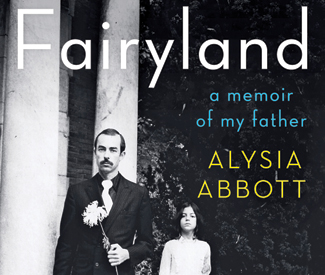
He barely kept the rent paid via rote day jobs, while raising a child alone — an awkward match to the carefree gay community he joined upon moving to SF (and coming out) in 1974. As Alysia Abbott writes in her acclaimed new release Fairyland: A Memoir of My Father (W.W. Norton and Company, 352pp., $25.95), there were no role models then for gay single parents. Their very close but turbulent relationship amplified the clash between her often-peevish parental needs and his belated self-discovery in a sexual-artistic bohemia. They found balance as she found her own identity upon leaving for college. But then the AIDS epidemic swept both up in its devastation.

Abbott, now living in Boston with a husband and two children, answered questions in advance of two local appearances this week.

San Francisco Bay Guardian You had an unconventional childhood with an unconventional parent. Has that influenced your own parenting?

Alysia Abbott My father was raised in a strict Catholic household where family members rarely showed affection. He kept his feelings bottled up. By the time he had me, he wanted a completely different family experience, transparent and open. He often shared his romantic and professional woes, sometimes seeking my advice.

I absorbed a lot of my dad’s worry, and sometimes found myself in situations where I had to be more adult than I was ready to be. I want to be my true self with my children. But I also want to protect their innocence to some degree.

SFBG You’re frank about having been an “obnoxious” unhappy teenager. Are there things you or your father could have done differently? Was it a phase you just had to work through?

AA We were trying to create a life with a lot of setbacks, sharing a cramped one-bedroom in the Haight with little money or family help. My father was lonely, and trying to get sober just when I discovered drugs and alternative culture. We did our best under the circumstances. But as often as we clashed, there was a lot of love. This was a period we needed to go through.

SFBG Your father identified so strongly as a writer, but Fairyland doesn’t address how you became one yourself.

AA I’d always wanted to be a writer, or an artist. But after watching him struggle financially, I pursued steady-paycheck work in cushy corporate structures (which I now hate). I also didn’t know if I had his native talent, or could be as intellectually rigorous and pure. I always had our story to tell, but worried I wasn’t worthy of it. The idea of writing Fairyland and having it not meet my own expectations was unbearable. Now I realize perfectionism is the enemy of creativity. To succeed, you have to be willing to fail.

SFBG When Steve was facing mortality, he wrote that you’d probably better appreciate his writing after he’d passed on. What do you think about his literary legacy now?

AA I’m embarrassed to admit I really didn’t read my father’s books until ten years after he died. During his lifetime, the work’s weirdness, its attraction to transgressive figures and ideas threatened me. I accused him of not being a “real writer” because no one had heard of him and he didn’t make any “real money.” What a terrible thing for a daughter to say!

Researching for Fairyland, I came to respect his contributions and integrity. All the writers I know today have to be such master self-promoters. My father was almost embarrassingly naïve in this regard. That may be why few people know his work today. But he was so devoted to writing, and supporting writers that impressed him, even if that effort did nothing for his own career.

I now really love several of his poems and books, especially Lives of the Poets — but some still make me uncomfortable. I’m not sure if it’s because they aren’t good, or still too “out there” for me.

SFBG After so many years, how do you feel about returning to SF? Many of your father’s creative generation are dead. It’s a much yuppie-er burg.

AA San Francisco is very different from the city I knew in 1974, or even 1994. I’ve worried that those who remember the old San Francisco, or appreciate its history, are dwindling — they’ve died or been forced out by Ellis laws. But new residents are attracted by the city’s beauty just as we were. And though much better-heeled, these tech workers and professional types are also trying to reinvent culture, if with much greater odds of profit — and interest in profit.

ALYSIA ABBOTT

Wed/19, 7pm, free

City Lights Books

261 Columbus, SF

www.citylights.com


Thu/20, 6:30pm, free

San Francisco Public Library

100 Larkin, SF

www.sfpl.org

Film listings

0

Film listings are edited by Cheryl Eddy. Reviewers are Kimberly Chun, Dennis Harvey, Lynn Rapoport, and Sara Maria Vizcarrondo. For rep house showtimes, see Rep Clock.

OPENING

Becoming Traviata Philippe Béziat’s backstage doc offers an absorbing look at a particularly innovative production of Verdi’s La Traviata, directed by Jean-François Sivadier and starring the luminous Natalie Dessay (currently appearing in SF Opera’s production of Tales of Hoffman). Béziat eschews narration or interviews; instead, his camera simply tracks artists at work, moving from rehearsal room to stage as Sivadier and Dessay (along with her co-stars) block scenes, make suggestions, practice gestures, and engage in the hit-and-miss experimentation that defines the creative process. The film is edited so that La Traviata progresses chronologically, with the earliest scenes unfolding on a spartan set (Dessay’s practice attire: yoga clothes), and the tragic climax taking place onstage, with an orchestra in the pit and sparkly make-up in full effect. Dessay will appear in person at San Francisco screenings Sat/15 at 7pm and Sun/16 at 2pm. (1:53) Opera Plaza, Shattuck, Smith Rafael. (Eddy)

Dirty Wars Subtitled "the world is a battlefield," this doc follows author and Nation magazine writer Jeremy Scahill as he probes the disturbing underbelly of America’s ongoing counterterrorism campaign. After he gets wind of a deadly nighttime raid on a home in rural Afghanistan, Scahill does his best to investigate what really happened, though what he hears from eyewitnesses doesn’t line up with the military explanation — and nobody from the official side of things cares to discuss it any further, thank you very much. With its talk of cover-ups and covert military units, and interviewees who appear in silhouette with their voices disguised, Dirty Wars plays like a thriller until Osama bin Laden’s death shifts certain (but not all) elements of the story Scahill’s chasing into the mainstream-news spotlight. The journalist makes valid points about how an utter lack of accountability or regard for consequences (that will reverberate for generations to come) means the "war on terror" will never end, but Dirty Wars suffers a bit from too much voice-over. Even the film’s gorgeous cinematography — director Rick Rowley won a prize for it at Sundance earlier this year — can’t alleviate the sensation that Dirty Wars is mostly an illustrated-lecture version of Scahill’s source-material book. Still, it’s a compelling lecture. (1:26) Embarcadero, Shattuck. (Eddy)

The Guillotines Why yes, that is Jimmy Wang Yu, director and star of 1976 cult classic Master of the Flying Guillotine, in a small but pivotal role commanding a team of assassins who specialize in dispatching heads with airborne versions of you-know-which weapon. Unfortunately, this latest from Andrew Lau (best-known stateside for 2002’s Infernal Affairs, remade into Martin Scorsese’s 2006 Oscar-winner The Departed) doesn’t have nearly as much fun as it should; dudes be chopping heads off in a flurry of CG’d-up steampunky whirlygigs, but The Guillotines‘ tone is possibly even more deadly, as in deadly serious. When a rebellious prophet-folk hero known as Wolf (Xiaoming Huang) runs afoul of the Emperor’s top-secret Guillotine brotherhood, led in the field by Leng (Ethan Juan), the squad travels in disguise to a rural, smallpox-afflicted village to track him down. Along for the journey is the Emperor’s top operative, ruthless Agent Du (Shawn Yue), a boyhood friend of Leng’s. Leng and Du share a dark secret: the Guillotines have been deemed expendable — yep, in the Stallone sense — and the Emperor has decided to kill them off and replace them with armies toting guns and cannons in the name of progress. Lau is no stranger to tales of men grappling with betrayals, misplaced loyalties, and hidden personal agendas — and as historical martial-arts fantasies go, The Guillotines has higher production values than most, with sweeping, luscious photography. Too bad all the action scenes are punctuated by episodes of moody brooding — replete with slo-mo gazing off into the distance, dramatically falling tears, solemn heart-to-hearts, swelling strings, and the occasional howl of anguish. (1:53) Presidio. (Eddy)

Man of Steel As beloved as he is, Superman is a tough superhero to crack — or otherwise bend into anything resembling a modern character. Director Zack Snyder and writer David S. Goyer, working with producer Christopher Nolan on the initial story, do their best to nuance this reboot, which focuses primarily on Supe’s alien origins and takes its zoom-happy space battles from Battlestar Galactica. The story begins with Kal-El’s birth on a Krypton that’s rapidly going into the shitter: the exploited planet is about to explode and wayward General Zod (Michael Shannon) is staging a coup, killing Kal-El’s father, Jor-El (Russell Crowe), the Kryptonians’ lead scientist, and being conveniently put on ice in order to battle yet another day. That day comes as Kal-El, now a 20-something earthling named Clark Kent (Henry Cavill) — resigned to his status as an outsider, a role dreamed up by his protective adoptive dad (Kevin Costner) — has turned into a bit of a (dharma) bum, looking like a buff Jack Kerouac, working Deadliest Catch-style rigs, and rescuing people along the way to finding himself. Spunky Lois Lane (Amy Adams) is the key to his, erm, coming-out party, necessitated by a certain special someone looking to reboot the Kryptonian race on earth. The greatest danger here lies in the fact that all the leached-of-color quasi-sepia tone action can turn into a bit of a Kryptonian-US Army demolition derby, making for a mess of rubble and tricky-to-parse fight sequences that, of course, will satisfy the fanboys and -girls, but will likely glaze the eyes of many others. Nevertheless, the effort Snyder and crew pack into this lengthy artifact — with its chronology-scrambling flashbacks and multiple platforms for Shannon, Diane Lane, Christopher Meloni, Laurence Fishburne, and the like — pays off on the level of sheer scale, adding up to what feels like the best Superman on film or TV to date — though that bar seems pretty easy to leap over in a single bound. (2:23) Balboa, Marina. (Chun)

Pandora’s Promise Filmmaker Robert Stone has traveled far from his first film, 1988’s Oscar-nominated anti-nuke Radio Bikini, to today, with the release of Pandora’s Promise, a detailed and guaranteed-to-be-controversial examination of nuclear power and the environmentalists who have transitioned from fervently anti- to pro-nuclear. Interviewing activists and authors like Stewart Brand, Gwyneth Cravens, Mark Lynas, and Michael Shellenberger, among others, Stone eloquently visualizes all angles of their discussion with media, industrial, and newly shot footage, starting with a visit to the largest nuclear disaster of recent years, Fukushima, which he visits with the hazmat-suited environmental activist and journalist Lynas and continuing to Chernobyl and its current denizens. Couching the debate in cultural and political context going back to World War II, Stone builds a case for nuclear energy as a viable method to provide clean, safe power for planet in the throes of climate change that will nonetheless need double or triple the current amount of energy by 2050, as billions in the developing world emerge from poverty. In a practical sense, as The Death of Environmentalism author Shellenberger asserts, "The idea that we’re going to replace oil and coal with solar and wind and nothing else is a hallucinatory delusion." Stone and his subjects put together an enticing argument to turn to nuclear as a way forward from coal, made compelling by the idea that designs for safer alternative reactors that produce less waste are out there. (1:27) Embarcadero, Shattuck. (Chun)

This Is the End See "Hell Boys." (1:46) Four Star, Presidio, Shattuck.

ONGOING

After Earth In around a century, we’ll board penitentiary-style ships and evacuate Earth for a sexier planet. Let’s call it a middle-aged migration — we all saw this coming. It’ll be dour, and we’ll feel temporary guilt for all the trees we leveled, bombs we dropped, and oil refineries we taped for 1960s industrial films. Like any body post-divorce, our planet will develop defenses against its ex — us humans — so when Will Smith and son Jaden crash land on the crater it’s toxic to them, full of glorious beasts and free as the Amazon (because it was partly filmed there). Critically wounded General Raige (Will) has to direct physically incredible Kitai (Jaden) through the future’s most dangerous Ironman triathalon. It’s more than a Hollywood king guiding his prince through a life-or-death career obstacle course, it’s a too-aggressive metaphor for adolescence — something real-world Jaden may forfeit to work with dad. Call that the tragedy beneath After Earth: it makes you wonder why the family didn’t make a movie more like 1994’s The Lion King — they had to know that was an option. Director M. Night Shyamalan again courts the Last Airbender (2010) crowd with crazy CG fights and affecting father-son dynamics, but for once, Shyamalan is basically a hired gun here. The story comes straight from Papa Smith, and one gets the feeling the movie exists primarily to elevate Jaden’s rising star. (1:40) 1000 Van Ness, SF Center, Sundance Kabuki. (Vizcarrondo)

Before Midnight Proving (again) that not all sequels are autonomic responses to a marketplace that rewards the overfamiliar, director Richard Linklater and his cowriters Julie Delpy and Ethan Hawke reconnect with the characters Céline and Jesse, whom we first encountered nearly 20 years ago on a train and trailed around Vienna for a night in Before Sunrise, then met again nine years later in Before Sunset. It’s been nine more years since we left them alone in a Paris apartment, Céline adorably dancing to Nina Simone and telling Jesse he’s going to miss his plane. And it looks like he did. The third film finds the two together, yes, and vacationing in Greece’s southern Peloponnese, where the expansive, meandering pace of their interactions — the only mode we’ve ever seen them in — is presented as an unaccustomed luxury amid a span of busy years filled with complications professional and personal. Over the course of a day and an evening, alone together and among friends, the two reveal both the quotidian intimacies of a shared life and the cracks and elisions in their love story. (1:48) Embarcadero, Piedmont, Shattuck, Sundance Kabuki. (Rapoport)

The East In Zal Batmanglij and Brit Marling’s powerful second film collaboration (Batmanglij directs, and the pair co-wrote the screenplay, as in 2011’s Sound of My Voice), Marling plays Sarah, an intelligence agent working for a private firm whose client list consists mainly of havoc-wreaking multinationals. Sarah, presented as quietly ambitious and conservative, is tasked by the firm’s director (Patricia Clarkson) with infiltrating the East, an off-the-grid activist collective whose members, including Benji (Alexander Skarsgård), Izzy (Ellen Page), and Doc (Toby Kebbell), bring an eye-for-an-eye sensibility to their YouTube-publicized "jams." Targeting an oil company responsible for a BP-style catastrophe, they engineer their own spill in the gated-community habitat of the company’s CEO, posting a video that juxtaposes grisly images of oil-coated shorebirds and the unsettling sight of gallons of crude seeping through the air-conditioning vents of a tidy McMansion. A newspaper headline offers a facile framework for understanding their activities, posing the alternatives as "Pranksters or Eco-Terrorists?" But as Sarah examines the gut-wrenching consequences of so-called white-collar crime and immerses herself in the day-to-day practices of the group, drawn in particular to the charismatic Benji, the film raises more complex questions. Much of its rhetorical force flows from Izzy, whom Page invests with a raw, anguished outrage, drawing our sympathies toward the group and its mission of laying bare what should be unbearable. (1:56) California, Embarcadero, Piedmont, Sundance Kabuki. (Rapoport)

Elemental Even those suffering from environmental-doc fatigue (a very real condition, particularly in the eco-obsessed Bay Area) will find much to praise about Elemental, co-directed by Gayatri Roshan and NorCal native Emmanuel Vaughan-Lee (who also co-composed the film’s score). This elegantly shot and edited film approaches the issues via three "eco-warriors," who despite working on different causes on various corners of the planet encounter similar roadblocks, and display like-minded determination, along the way: Rajendra Singh, on a mission to heal India’s heavily polluted Ganges River; Jay Harman, whose ingenious inventions are based on "nature’s blueprints"; and Eriel Deranger, who fights for her indigenous Canadian community in the face of Big Oil. Deranger cuts a particularly inspiring figure: a young, tattooed mother who juggles protests, her moody tween (while prepping for a new baby), and the more bureaucratic aspects of being a professional activist — from defending her grassroots methods when questioned by her skeptical employer, to deflecting a drunk, patronizing Robert F. Kennedy Jr. at a big-ticket fundraiser — with a calm, steely sense of purpose. (1:33) Smith Rafael. (Eddy)

Epic (1:42) Metreon, 1000 Van Ness, Presidio.

Fast and Furious 6 Forget the fast (that’s understood by now, anyway) — part six in this popcorny series is heavy on the "furious," with constant near-death stunts that zoom past irrational and slam into batshit crazy. Agent Hobbs (Dwayne Johnson) lures the gang out of sunny retirement to bust a fast driver with a knack for strategy and an eye on world domination. Sure, Ludacris jokes their London locale doesn’t mean they’re in a Bond movie, but give cold-blooded Luke Evans some time and he’ll work his way up to antagonizing 007. Shaw (Evans) is smaller than our hero Toretto (Vin Diesel), but he’s convincing, throwing his King’s English at a man whose murky dialect is always delivered with a devilish baritone. If Shaw’s code is all business, Toretto’s is all family: that’s what holds together this cast, cobbled from five Fast and Furious installments shot all over the world. Hottie Gal Gadot (playing Sung Kang’s love interest) reassures Han (Kang) mid-crisis: "This is what we are." It’s not for nothing the gang’s main weapon is a harpoon gun that, once shot, leaves an umbilicus from the shooter to whatever’s in the crosshairs. That’s Torreto for you. Meanwhile, the villain’s weapon is a car with a spatula-like front end, that flips cars like pancakes. The climactic battle on a cargo plane has to give a face time to every member of the eight-person team, so naturally they shot it on the world’s longest runway. Of course the parade features less car porn than previous editions but it’s got a wider reach now — it’s officially international intrigue, not just fun for gearheads. For my money, it’s some of the best action in theaters today. Stick around for the inevitable sequel-suggesting coda during the credits. (2:10) Metreon, 1000 Van Ness. (Vizcarrondo)

Fill the Void Respectfully rendered and beautifully shot in warm hues, Fill the Void admirably fills the absence on many screens of stories from what might be considered a closed world: the Orthodox Hasidic community in Israel, where a complex web of family ties, duty, and obligation entangles pretty, accordion-playing Shira (Hada Yaron). An obedient daughter, she’s about to agree to an arranged marriage to a young suitor when her much-loved sister (Renana Raz) dies in childbirth. When Shira’s mother (Irit Sheleg) learns the widower Yochay (Yiftach Klein) might marry a woman abroad and take her only grandchild far away, she starts to make noises about fixing Shira up with her son-in-law. The journey the two must take, in possibly going from in-laws to newlyweds, is one that’s simultaneously infuriating, understandable, and touching, made all the more intimate given director Rama Burshtein’s preference for searching close-ups. Her affinity for the Orthodox world is obvious with each loving shot, ultimately infusing her debut feature with a beating heart of humanity. (1:30) Albany, Clay, Smith Rafael. (Chun)

Frances Ha Noah Baumbach isn’t exactly known for romance and bright-eyed optimism. Co-writing 2009’s Fantastic Mr. Fox with director Wes Anderson is maybe the closest to "whimsy" as he’s ever come; his own features (2010’s Greenberg, 2007’s Margot at the Wedding, 2005’s The Squid and the Whale, 1997’s Mr. Jealousy, and 1995’s Kicking and Screaming) tend to veer into grumpier, more intellectual realms. You might say his films are an acquired taste. But haters beware. Frances Ha — the black-and-white tale of a New York City hipster (Baumbach’s real-life squeeze, Greta Gerwig, who co-write the script with him) blundering her way into adulthood — is probably the least Baumbach-ian Baumbach movie ever. Owing stylistic debts to both vintage Woody Allen and the French New Wave, Frances Ha relies heavily on Gerwig’s adorable-disaster title character to propel its plot, which is little more than a timeline of Frances’ neverending micro-adventures: pursuing her nascent modern-dance career, bouncing from address to address, taking an impromptu trip to Paris, visiting her parents (portrayed by the Sacramento-raised Gerwig’s real-life parents), "breaking up" with her best friend. It’s so charming, poignant, and quotable ("Don’t treat me like a three-hour brunch friend!") that even those who claim to be allergic to Baumbach just might find themselves succumbing to it. (1:26) Embarcadero, Piedmont, Shattuck, Smith Rafael, Sundance Kabuki. (Eddy)

The Great Gatsby Every bit as flashy and in-your-face as you’d expect the combo of "Baz Luhrmann," "Jazz Age," and "3D" to be, this misguided interpretation of F. Scott Fitzgerald’s classic tale is, at least, overstuffed with visual delights. For that reason only, all the fashion-mag fawning over leading lady Carey Mulligan’s gowns and diamonds, and the opulent production design that surrounds them, seems warranted. And in scenes where spectacle is appropriate — Gatsby’s legendary parties; Tom Buchanan’s wild New York romp with his mistress — Luhrmann delivers in spades. The trade-off is that the subtler aspects of Fitzgerald’s novel are either pushed to the side or shouted from the rooftops. Leonardo DiCaprio, last seen cutting loose in last year’s Django Unchained, makes for a stiff, fumbling Gatsby, laying on the "Old Sports" as thickly as his pancake make-up. There’s nothing here so startlingly memorable as the actor and director’s 1996 prior collaboration, Romeo + Juliet — a more successful (if still lavish and self-consciously audacious) take on an oft-adapted, much-beloved literary work. (2:22) California, 1000 Van Ness, Presidio, SF Center, Sundance Kabuki. (Eddy)

The Hangover Part III Even the friendliest little blackout bacchanal can get tiresome the third time around. The poster depicting Bradley Cooper, Ed Helms, and Zach Galifianakis — stern in suits and ties — says it all: it’s grim men’s business, the care and maintenance of this Hangover franchise, this orgy of good times gone bad. Once a bad-taste love letter to male-bonding, Hangover Part III is ready for a chance, primed to sever some of those misbegotten ties. This time around, the unlikely troika — with the always dispensable normal-dude figurehead Doug (Justin Bartha) in tow — are captured by random sketchy figure Marshall (John Goodman, whose every utterance of the offensive "Chinaman" should bring back Big Lebowski warm-and-fuzzies). He holds Doug hostage in exchange for the amoral, cockfighting, coke-wallowing, whore-hiring, leather-wearing Leslie Chow (Ken Jeong), who stole his gold, and it turns out Alan (Galifianakis) might be his only chum. Jeong, who continues to bring the hammy glee, is still the best thing here, even as the conscience-free instigator; he’s the dark counterpart to tweaked man-child Alan, who meets cute with mean-ass pawn-star soulmate Cassie (Melissa McCarthy). Meanwhile, Cooper and Helms look on, puzzled, no doubt pondering the prestige projects on their plates and wondering what they’re still doing here. (1:40) 1000 Van Ness, SF Center, Shattuck. (Chun)

The Internship The dirty little secret of the new economy continues to be the gerbil cycle of free/cheap labor labeled "internships" that propels so many companies — be they corporate or indie, digital or print media. But gee, who’s going to see an intern comedy titled The Exploitation, besides me and my local union rep? Instead, spinning off a Vince Vaughn story idea and a co-writing credit, The Internship looks at that now-mandatory time-suck for so many college students through the filter of two older, not-quite-wiser salesmen Billy (Vaughn) and Nick (Owen Wilson) hoping to make that working guy’s quantum leap from watch sales to Google’s Mountain View campus, which director Shawn Levy casts as a bright and shiny workers wonderland with its free spring rolls and lattes, bikes, and napping pods. Departing from reality: the debugging/coding/game-playing/app-making competition that forces Billy and Nick to bond with their team of castoffs (Dylan O’Brien, Tiya Sircar, Tobit Raphael), led by noob manager Lyle (Josh Brener), in order to win a full-time job. Part of the key, naturally, turns out to be a Swingers-like visit to a strip club, to release those deeply repressed nerd sexualities — nothing like a little retrograde sexism to bring a group together. Still, the moment is offset by the generally genial, upbeat attitude brought to The Internship by its lead actors: Nick and Billy may be flubs at physics and clueless when it comes to geek culture, but most working stiffs who have suffered the slings and arrows of layoffs and dream of stable employment can probably get behind the all-American ideals of self-reinvention and optimism about the future peddled in The Internship, which easily slips in alongside The Great Gatsby among this year’s Great Recession narratives. Blink too fast and you might miss the microcameo by Google co-founder Sergey Brin. (1:59) Four Star, Marina, Metreon, 1000 Van Ness, Vogue. (Chun)

Iron Man 3 Neither a sinister terrorist dubbed "the Mandarin" (Ben Kingsley) nor a spray-tanned mad scientist (Guy Pearce) are as formidable an enemy to Tony Stark (Robert Downey, Jr.) as Tony Stark himself, the mega-rich playboy last seen in 2012’s Avengers donning his Iron Man suit and thwarting alien destruction. It’s been rough since his big New York minute; he’s been suffering panic attacks and burying himself in his workshop, shutting out his live-in love (Gwyneth Paltrow) in favor of tinkering on an ever-expanding array of manned and un-manned supersuits. But duty, and personal growth, beckon when the above-mentioned villains start behaving very badly. With some help (but not much) from Don Cheadle’s War Machine — now known as "Iron Patriot" thanks to a much-mocked PR campaign — Stark does his saving-the-world routine again. If the plot fails to hit many fresh beats (a few delicious twists aside), the 3D special effects are suitably dazzling, the direction (by series newcomer Shane Black) is appropriately snappy, and Downey, Jr. again makes Stark one of the most charismatic superheros to ever grace the big screen. For now, at least, the continuing Avengers spin-off extravaganza seems justified. (2:06) Metreon, 1000 Van Ness. (Eddy)

Kings of Summer Ah, the easy-to-pluck, easy-to-love low-hanging fruit of summer — and a coming of age. Who can blame director Jordan Vogt-Roberts and writer Chris Galletta, both TV vets, for thinking that a juicy, molasses-thick application of hee-hee-larious TV comedy actors to a Stand by Me-like boyish bildungsroman could only make matters that much more fun? When it comes to this wannabe-feral Frankenteen love child of Terrence Malick and Parks and Recreation, you certainly don’t want to fault them for original thinking, though you can understand why they keep lurching back to familiar, reliably entertaining turf, especially when it comes in the form of Nick Offerman of the aforementioned P&R, who gets to twist his Victorian doll features into new frustrated shapes alongside real-life spouse Megan Mullally. Joe (Nick Robinson) is tired of his single dad (Offerman) stepping on his emerging game, so he runs off with neurotic wrestling pal Patrick (Gabriel Basso) and stereotypically "weirdo foreign" kid Biaggio (Moises Arias) to a patch of woods. There, from scrap, they build a cool-looking house that resembles a Carmel boho shack and attempt to live off the land, which means mostly buying chicken from a Boston Market across a freeway. Pipes are pummeled, swimming holes are swum, a pathetically wispy mustachio is cultivated — read: real burly stuff, until the rising tide of testosterone threatens to poison the woodland well. Vogt-Roberts certainly captures the humid sensuality and ripe potential of a Midwestern summer — though some of the details, like the supposedly wild rabbit that looks like it came straight from Petco, look a bit canned — and who can gripe when, say, Portlandia‘s Kumail Nanjiani materializes to deliver monster wontons? You just accept it, though the effect of bouncing back and forth between the somewhat serious world of young men and the surprisingly playful world of adults, both equally unreal, grows jarring. Kings of Summer isn’t quite the stuff of genius that marketing would have you believe, but it might give the "weirdo foreign" art house crowd and TV comedy addicts something they can both stand by. (1:33) Shattuck, Sundance Kabuki. (Chun)

Kon-Tiki In 1947 Norwegian explorer and anthropologist Thor Heyderdahl arranged an expedition on a homemade raft across the Pacific, recreating what he believed was a route by which South Americans traveled to Polynesia in pre-Columbian times. (Although this theory is now disputed.) The six-man crew (plus parrot) survived numerous perils to complete their 101-day, 4300-mile journey intact — winning enormous global attention, particularly through Heyderdahl’s subsequent book and documentary feature. Co-directors Joachim Roenning and Espen Sandberg’s dramatization is a big, impressive physical adventure most arresting for its handsome use of numerous far-flung locations. Where it’s less successful is in stirring much emotional involvement, with the character dynamics underwhelming despite a decent cast led by Pal Sverr Hagen as Thor (who, incredibly, was pretty much a non-swimmer). Nonetheless, this new Kon-Tiki offers all the pleasures of armchair travel, letting you vicariously experience a high-risk voyage few could ever hope (or want) to make in real life. (1:58) Opera Plaza. (Harvey)

Midnight’s Children Deepa Mehta (2005’s Water) directs and co-adapts with Salman Rushdie the author’s Booker Prize-winning 1981 novel, which mixes history (India’s 1947 independence, and the subsequent division of India and Pakistan) with magical elements — suggested from its fairy-tale-esque first lines: "I was born in the city of Bombay, once upon a time." This droll voice-over (read by Rushdie) comes courtesy of Saleem Sinai, born to a poor street musician and his wife (who dies in childbirth; dad is actually an advantage-taking Brit played by Charles "Tywin Lannister" Dance) but switched (for vaguely revolutionary reasons) with Shiva, born at the same moment to rich parents who unknowingly raise the wrong son. Rich or poor, it seems all children born at the instant of India’s independence have shared psychic powers; over the years, they gather for "meetings" whenever Saleem summons them. And that’s just the 45 minutes or so of story. Though gorgeously shot, Midnight’s Children suffers from page-to-screen-itis; the source material is complex in both plot and theme, and it’s doubtful any film — even one as long as this — could translate its nuances and more fanciful elements ("I can smell feelings!," Saleem insists) into a consistently compelling narrative. Last-act sentimentality doesn’t help, though it’s consistent with the fairy-tale vibe, I suppose. (2:20) Smith Rafael. (Eddy)

Much Ado About Nothing Joss Whedon (last year’s The Avengers) shifts focus for a minute to stage an adaptation of the Shakespeare comedy, drawing his players from 15 years’ worth of awesome fantasy/horror/sci-fi TV and film projects. When the Spanish prince Don Pedro (Reed Diamond) pays a post-battle visit to the home of Leonato (Clark Gregg) with his officers Claudio (Fran Kranz) and Benedick (Alexis Denisof), Claudio falls for Leonato’s daughter, Hero (Jillian Morgese), while Benedick falls to verbal blows with Hero’s cousin Beatrice (Amy Acker). Preserving the original language of the play while setting his production in the age of the iPhone and the random hookup, Whedon makes clever, inventive use of the juxtaposition, teasing out fresh sources of visual comedy as well as bringing forward the play’s oddities and darker elements. These shadows fall on Beatrice and Benedick, whose sparring — before they succumb to a playfully devious setup at the hands of their friends — has an ugly, resentful heat to it, as well as on Hero and Claudio, whose filmy romance is unsettlingly easy for their enemies, the malevolent Don John (Sean Maher) and his cohorts, to sabotage. Some of Acker and Denisof’s broader clowning doesn’t offer enough comic payoff for the hammy energy expenditure, but Nathan Fillion, heading up local law enforcement as the constable Dogberry, delivers a gleeful depiction of blundering idiocy, and the film as a whole has a warm, approachable humor while lightly exposing "all’s well that ends well"’s wacky, dysfunctional side. (1:49) Albany, SF Center. (Rapoport)

Mud (2:18) Balboa, Opera Plaza, Shattuck.

Now You See Me Cheese can be a tough factor to quantify, but you get close to the levels Now You See Me strives for when you picture the hopelessly goofy, tragically coiffed Doug Henning lisping, "It’s magic!" somewhere between Bob "Happy Little Tree" Ross and a rainbow sprinkled with Care Bears. Now You See Me, however, is much less likely to be dusted off and adored by a Bronies-style cult. Four seemingly savvy street and stage magicians (Jesse Eisenberg, Woody Harrelson, Isla Fisher, and Dave Franco) are brought together by tarot card invite by a mysterious host. What follows is a series of corny performances by the crew, now dubbed the Four Horseman, that are linked to a series of Robin Hood-like, or not, thefts. Nipping at their heels are a loudly flustered FBI agent (Mark Ruffalo, working an overcooked Columbo impression), a waifish Interpol detective (Mélanie Laurent, as if slouching through a Sorbonne semester), and a professional debunker (Morgan Freeman, maintaining amusement). In the course of the investigation, the Horsemen’s way-too-elaborate and far-from-apocalyptic illusions are taken apart and at least one vigorously theatrical fight scene takes place — all of which sounds more riveting than what actually transpires under the action-by-the-book watch of director Louis Leterrier, who never succeeds in making the smug, besuited puppets, I mean Horsemen, who strut around like they’re in Ocean’s Eighteen 4D, anything remotely resembling cool. Or even characters we might give a magical rabbit’s ass about. For all its seemingly knowing pokes at the truth behind the curtain, Now You See Me lacks much of the smarts and wit of loving deconstructionists like Penn and Teller —glimmers of which can only be made out in the smirk of Harrelson and the knowing twinkle of Freeman — or even the tacky machismo of Criss Angel, as well as a will to get to a truth behind the mystery. Or is the mystery behind the truth? (1:56) California, 1000 Van Ness, Presidio, SF Center, Sundance Kabuki. (Chun)

Oblivion Spoiler alert: the great alien invasion of 2017 does absolutely zilch to eliminate, or at least ameliorate, the problem of sci-fi movie plot holes. However, puny humans willing to shut down the logic-demanding portions of their brains just might enjoy Oblivion, which is set 60 years after that fateful date and imagines that Earth has been rendered uninhabitable by said invasion. Tom Cruise plays Jack, a repairman who zips down from his sterile housing pod (shared with comely companion Andrea Riseborough) to keep a fleet of drones — dispatched to guard the planet’s remaining resources from alien squatters — in working order. But Something is Not Quite Right; Jack’s been having nostalgia-drenched memories of a bustling, pre-war New York City, and the déjà vu gets worse when a beautiful astronaut (Olga Kurylenko) literally crash-lands into his life. After an inaugural gig helming 2010’s stinky Tron: Legacy, director Joseph Kosinski shows promise, if not perfection, bringing his original tale to the screen. (He does, however, borrow heavily from 1968’s 2001: A Space Odyssey, 1996’s Independence Day, and 2008’s Wall-E, among others.) Still, Oblivion boasts sleek production design, a certain creative flair, and some surprisingly effective plot twists — though also, alas, an overlong running time. (2:05) Metreon. (Eddy)

1 Mile Above When his brother dies suddenly, sheltered Taiwanese student Shuhao takes possession of the older boy’s "riding diaries," determined to complete his sibling’s dream of biking to the highest point in Tibet. It’d be a perilous journey even for an experienced cyclist — but Shuhao’s got gutsy determination that (almost) makes up for his wobbly wheels. Fortunately, nearly everyone he meets en route to Lhasa is a kind-hearted soul, including a food-obsessed fellow traveler who doles out advice on how to avoid government checkpoints, prevent "crotch trouble" (from all that riding), and woo women, among other topics. (The cruel weather, steep inclines, and hostile wild dogs he faces, however, aren’t as welcoming.) Jiayi Du’s based-on-true-events drama doesn’t innovate much on similar adventure tales — spoiler alert: it’s the journey, not the destination, that counts — but it admirably avoids melodrama for the most part, and the gorgeous location photography is something to behold. (1:29) Metreon. (Eddy)

The Purge Writer-director James DeMonaco founds his dystopian-near-future tale on the possibly suspect premise that the United States could achieve one percent unemployment, heavily reduced crime rates, and a virtually carb-free society if only it were to sanction an annual night of national mayhem unconstrained by statutory law — up to and including those discouraging the act of homicide. Set in 2022, The Purge visits the household of home security salesman James Sandin (Ethan Hawke), wife Mary (Lena Headey), and their children, Charlie (Max Burkholder) and Zoey (Adelaide Kane), as the annual festivities are about to begin, and the film keeps us trapped in the house with them for the next 12 hours of bloodletting sans emergency services. While they show zero interest in adding to the carnage, James and Mary seem to be largely on board with what a news commentator describes as "a lawful outlet for American rage," not giving too much credence to detractors’ observations that the purge is a de facto culling of the underclass. Clearly, though, the whole family is about to learn a valuable lesson. It comes when Charlie, in an act of baseline humanity, draws the ire of a gang of purgers running around in bathrobes, prep school jackets, and creepy masks, led by a gleaming-eyed alpha-sociopath whom DeMonaco (whose other screenplay credits include 2005’s Assault on Precinct 13 remake) tasks with wielding the film’s blunt-object message alongside his semi-automatic weaponry. (1:25) Metreon, 1000 Van Ness, Shattuck. (Rapoport)

Rebels with a Cause The huge string of parklands that have made Marin County a jewel of preserved California coastline might easily have become wall-to-wall development — just like the Peninsula — if not for the stubborn conservationists whose efforts are profiled in Nancy Kelly’s documentary. From Congressman Clem Miller — who died in a plane crash just after his Point Reyes National Seashore bill became a reality — to housewife Amy Meyer, who began championing the Golden Gate National Recreation Area because she "needed a project" to keep busy once her kids entered school, they’re testaments to the ability of citizen activism to arrest the seemingly unstoppable forces of money, power and political influence. Theirs is a hidden history of the Bay Area, and of what didn’t come to pass — numerous marinas, subdivisions, and other developments that would have made San Francisco and its surrounds into another Los Angeles. (1:12) Smith Rafael. (Harvey)

Renoir The gorgeous, sun-dappled French Riviera setting is the high point of this otherwise low-key drama about the temperamental women (Christa Theret) who was the final muse to elderly painter Auguste Renoir (Michel Bouquet), and who encouraged the filmmaking urges in his son, future cinema great Jean (Vincent Rottiers). Cinematographer Mark Ping Bin Lee (who’s worked with Hou Hsiao-hsein and Wong Kar Wai) lenses Renoir’s leafy, ramshackle estate to maximize its resemblance to the paintings it helped inspire; though her character, Dédée, could kindly be described as "conniving," Theret could not have been better physically cast, with tumbling red curls and pale skin she’s none too shy about showing off. Though the specter of World War I looms in the background, the biggest conflicts in Gilles Bourdos’ film are contained within the household, as Jean frets about his future, Dédée faces the reality of her precarious position in the household (which is staffed by aging models-turned-maids), and Auguste battles ill health by continuing to paint, though he’s in a wheelchair and must have his brushes taped to his hands. Though not much really happens, Renoir is a pleasant, easy-on-the-eyes experience. (1:51) Smith Rafael. (Eddy)

Shadow Dancer Watching the emotions flicker across the exquisitely smooth, pale plane of Andrea Riseborough’s face is one of the central pleasures of Shadow Dancer. Likely the surest step Madonna made in making 2011’s W.E. was choosing the actress as her Wallis Simpson — her features fall together with the sweet symmetry of a, well, Madonna, and even when words, or the script, fail her, the play of thoughts and feelings rippling across her brow can fill out a movie’s, or a character’s, failings admirably. The otherwise graceful, good-looking Shadow Dancer fumbles over a few in the course of resurrecting the Troubles tearing apart Belfast in the 1990s. After feeling responsible for the death of a younger brother who got caught in the crossfire, Collette (Riseborough) finds herself a single mom in league with the IRA. Caught after a scuttled bombing, the petite would-be terrorist is turned by Mac (Clive Owen) to become an informant for the MI5, though after getting quickly dragged into an attempted assassination, Collette appears to be way over her head and must be pulled out — something Mac’s boss (Gillian Anderson) won’t allow. Director James Marsh (2008’s Man on Wire) brings a keen attention to the machinations and tested loyalties among both the MI5 and IRA, an interest evident in his Red Riding: In the Year of Our Lord 1980 (2009), and even imbues otherwise blanked-out, non-picturesque sites like hotel suites and gray coastal walks with a stark beauty. Unfortunately the funereal pacing and gaps in plotting, however eased by the focus on Riseborough’s responses, send the mind into the shadows. (1:44) Opera Plaza. (Chun)

Star Trek Into Darkness Do you remember 1982? There are more than a few echoes of Star Trek II: The Wrath of Khan in J. J. Abrams’ second film retooling the classic sci-fi property’s characters and adventures. Darkness retains the 2009 cast, including standouts Zachary Quinto as Spock and Simon Pegg as comic-relief Scotty, and brings in Benedict "Sherlock" Cumberbatch to play the villain (I think you can guess which one). The plot mostly pinballs between revenge and preventing/circumventing the destruction of the USS Enterprise, with added post-9/11, post-Dark Knight (2008) terrorism connotations that are de rigueur for all superhero or fantasy-type blockbusters these days. But Darkness isn’t totally, uh, dark: there’s quite a bit of fan service at work here (speak Klingon? You’re in luck). Abrams knows what audiences want, and he’s more than happy to give it to ’em, sometimes opening up massive plot holes in the process — but never veering from his own Prime Directive: providing an enjoyable ride. (2:07) Metreon, 1000 Van Ness, Sundance Kabuki. (Eddy)

Stories We Tell Actor and director Sarah Polley (2011’s Take This Waltz) turns the camera on herself and her family for this poignant, moving, inventive, and expectation-upending blend of documentary and narrative. Her father, actor Michael Polley, provides the narration; our first hint that this film will take an unconventional form comes when we see Sarah directing Michael’s performance in a recording-studio booth, asking him to repeat certain phrases for emphasis. On one level, Stories We Tell is about Sarah’s own history, as she sets out to explore longstanding family rumors that Michael is not her biological father. The missing piece: her mother, actress Diane Polley (who died of cancer just days after Sarah’s 11th birthday), a vivacious character remembered by Sarah’s siblings and those who knew and loved her. Stories We Tell‘s deeper meaning emerges as the film becomes ever more meta, retooling the audience’s understanding of what they’re seeing via convincingly doc-like reenactments. To say more would lessen the power of Stories We Tell‘s multi-layered revelations. Just know that this is an impressively unique film — about family, memories, love, and (obviously) storytelling — and offers further proof of Polley’s tremendous talent. (1:48) Smith Rafael. (Eddy)

Violet and Daisy The 1990s revival has already infiltrated fashion and music; Violet and Daisy, the directorial debut of Oscar-winning Precious (2009) screenwriter Geoffrey Fletcher, suggests that cinema may be next. Unfortunately, not enough time has passed since the first wave of Pulp Fiction (1994) knockoffs to make the genre feel particularly interesting again. And yet here comes a pair of assassins dressed as nuns, cracking long-winded jokes before unloading on their targets with guns they’ve concealed in pizza boxes … as an AM radio hit ("Angel of the Morning") swells in the background, and Danny Trejo stops by for a cameo. At least this Tarantino-lite exploration of crime and daddy issues has an appealing cast; besides Trejo, Alexis Bledel (sporting Mia Wallace bangs) and Saoirse Ronan play the jailbait titular killers, and James Gandolfini pops in as a sad-sack who manages to evade their bullets because, like, he’s nice and stuff. Despite their efforts, the over-stylized Violet and Daisy comes off like a plate of leftovers reheated too long after the fact. (1:28) Metreon. (Eddy)

What Maisie Knew In Scott McGehee and David Siegel’s adaptation of the 1897 Henry James novel, the story of a little girl caught between warring, self-involved parents is transported forward to modern-day New York City, with Julianne Moore and Steve Coogan as the ill-suited pair responsible, in theory, for the care and upbringing of the title character, played by Onata Aprile. Moore’s Susanna is a rock singer making a slow, halting descent from some apex of stardom, as we gather from the snide comments of her partner in dysfunctionality, Beale (Coogan). As their relationship implodes and they move on to custody battle tactics, each takes on a new, inappropriate companion — Beale marrying in haste Maisie’s pretty young nanny, Margo (Joanna Vanderham), and Susanna just as precipitously latching on to a handsome bartender named Lincoln (True Blood‘s Alexander Skarsgård). The film mostly tracks the chaotic action — Susanna’s strung-out tantrums, both parents’ impulsive entrances and exits, Margo and Lincoln’s ambivalent acceptance of responsibility — from Maisie’s silent vantage, as details large and small convey, at least to us, the deficits of her caretakers, who shield her from none of the emotional shrapnel flying through the air and rarely bother to present an appropriate, comprehensible explanation. Yet Maisie understands plenty — though longtime writing-and-directing team McGehee and Siegel (2001’s The Deep End, 2005’s Bee Season, 2008’s Uncertainty) have taken pains in their script and their casting to present Maisie as a lovely, watchful child, not the precocious creep often favored in the picture shows. So we watch too, with a grinding anxiety, as she’s passed from hand to hand, forced to draw her own unvoiced conclusions. (1:38) Opera Plaza. (Rapoport)


True tales, Shakespeare, interns, and more: new movies (plus DocFest)!

0

The 12th San Francisco Documentary Film Festival kicked off last night with a screening of Spark: A Burning Man Story (even if you missed the opening event, you can check out Steven T. Jones’ story about the film and changes underway at the Burning Man organization here). It continues through June 23 at venues in San Francisco (mostly the Roxie), Palo Alto, and Oakland; check out my article on the fest here and DocFest’s official website for a full slate of films and ticket information.

Also in this week’s paper: Dennis Harvey’s round-up of “The Vortex Phenomena,” the SOMA venue‘s monthlong series of conspiracy-theory films of the 1970s (Bermuda Triangle! Fog monsters! Yeti!)

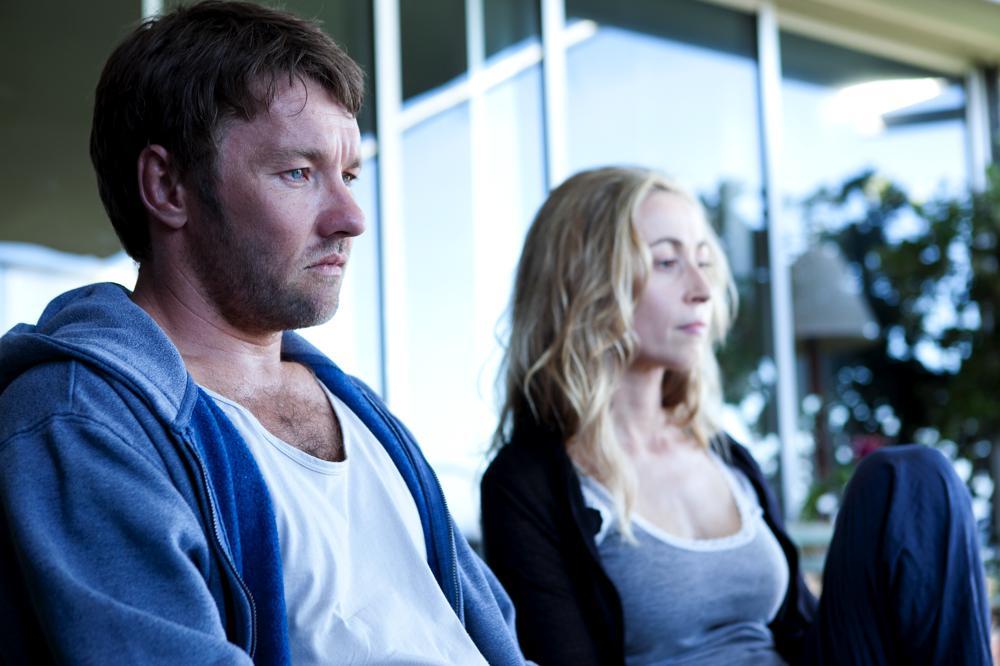
And of course, we got all your first-run intel right here. This week’s feast includes the reteaming of tight bros from way back Owen Wilson and Vince Vaughn, playing Google noobs in The Internship; Joss Whedon’s detour from superheroes to Shakespeare, Much Ado About Nothing; and Wish You Were Here, an Aussie thriller about a vacation gone awry starring a very good (and very freaked-out) Joel Edgerton. Plus more, all after the jump.

http://www.youtube.com/watch?v=LJaeMEHVbYE

The East In Zal Batmanglij and Brit Marling’s powerful second film collaboration (Batmanglij directs, and the pair co-wrote the screenplay, as in 2011’s Sound of My Voice), Marling plays Sarah, an intelligence agent working for a private firm whose client list consists mainly of havoc-wreaking multinationals. Sarah, presented as quietly ambitious and conservative, is tasked by the firm’s director (Patricia Clarkson) with infiltrating the East, an off-the-grid activist collective whose members, including Benji (Alexander Skarsgård), Izzy (Ellen Page), and Doc (Toby Kebbell), bring an eye-for-an-eye sensibility to their YouTube-publicized “jams.” Targeting an oil company responsible for a BP-style catastrophe, they engineer their own spill in the gated-community habitat of the company’s CEO, posting a video that juxtaposes grisly images of oil-coated shorebirds and the unsettling sight of gallons of crude seeping through the air-conditioning vents of a tidy McMansion. A newspaper headline offers a facile framework for understanding their activities, posing the alternatives as “Pranksters or Eco-Terrorists?” But as Sarah examines the gut-wrenching consequences of so-called white-collar crime and immerses herself in the day-to-day practices of the group, drawn in particular to the charismatic Benji, the film raises more complex questions. Much of its rhetorical force flows from Izzy, whom Page invests with a raw, anguished outrage, drawing our sympathies toward the group and its mission of laying bare what should be unbearable. (1:56) (Lynn Rapoport)

Fill the Void Respectfully rendered and beautifully shot in warm hues, Fill the Void admirably fills the absence on many screens of stories from what might be considered a closed world: the Orthodox Hasidic community in Israel, where a complex web of family ties, duty, and obligation entangles pretty, accordion-playing Shira (Hada Yaron). An obedient daughter, she’s about to agree to an arranged marriage to a young suitor when her much-loved sister (Renana Raz) dies in childbirth. When Shira’s mother (Irit Sheleg) learns the widower Yochay (Yiftach Klein) might marry a woman abroad and take her only grandchild far away, she starts to make noises about fixing Shira up with her son-in-law. The journey the two must take, in possibly going from in-laws to newlyweds, is one that’s simultaneously infuriating, understandable, and touching, made all the more intimate given director Rama Burshtein’s preference for searching close-ups. Her affinity for the Orthodox world is obvious with each loving shot, ultimately infusing her debut feature with a beating heart of humanity. (1:30) (Kimberly Chun)

http://www.youtube.com/watch?v=bVIipDZCPCU

The Internship The dirty little secret of the new economy continues to be the gerbil cycle of free/cheap labor labeled “internships” that propels so many companies — be they corporate or indie, digital or print media. But gee, who’s going to see an intern comedy titled The Exploitation, besides me and my local union rep? Instead, spinning off a Vince Vaughn story idea and a co-writing credit, The Internship looks at that now-mandatory time-suck for so many college students through the filter of two older, not-quite-wiser salesmen Billy (Vaughn) and Nick (Owen Wilson) hoping to make that working guy’s quantum leap from watch sales to Google’s Mountain View campus, which director Shawn Levy casts as a bright and shiny workers wonderland with its free spring rolls and lattes, bikes, and napping pods. Departing from reality: the debugging/coding/game-playing/app-making competition that forces Billy and Nick to bond with their team of castoffs (Dylan O’Brien, Tiya Sircar, Tobit Raphael), led by noob manager Lyle (Josh Brener), in order to win a full-time job. Part of the key, naturally, turns out to be a Swingers-like visit to a strip club, to release those deeply repressed nerd sexualities — nothing like a little retrograde sexism to bring a group together. Still, the moment is offset by the generally genial, upbeat attitude brought to The Internship by its lead actors: Nick and Billy may be flubs at physics and clueless when it comes to geek culture, but most working stiffs who have suffered the slings and arrows of layoffs and dream of stable employment can probably get behind the all-American ideals of self-reinvention and optimism about the future peddled in The Internship, which easily slips in alongside The Great Gatsby among this year’s Great Recession narratives. Blink too fast and you might miss the microcameo by Google co-founder Sergey Brin. (1:59) (Kimberly Chun)

The Kings of Summer Ah, the easy-to-pluck, easy-to-love low-hanging fruit of summer — and a coming of age. Who can blame director Jordan Vogt-Roberts and writer Chris Galletta, both TV vets, for thinking that a juicy, molasses-thick application of hee-hee-larious TV comedy actors to a Stand by Me-like boyish bildungsroman could only make matters that much more fun? When it comes to this wannabe-feral Frankenteen love child of Terrence Malick and Parks and Recreation, you certainly don’t want to fault them for original thinking, though you can understand why they keep lurching back to familiar, reliably entertaining turf, especially when it comes in the form of Nick Offerman of the aforementioned P&R, who gets to twist his Victorian doll features into new frustrated shapes alongside real-life spouse Megan Mullally. Joe (Nick Robinson) is tired of his single dad (Offerman) stepping on his emerging game, so he runs off with neurotic wrestling pal Patrick (Gabriel Basso) and stereotypically “weirdo foreign” kid Biaggio (Moises Arias) to a patch of woods. There, from scrap, they build a cool-looking house that resembles a Carmel boho shack and attempt to live off the land, which means mostly buying chicken from a Boston Market across a freeway. Pipes are pummeled, swimming holes are swum, a pathetically wispy mustachio is cultivated — read: real burly stuff, until the rising tide of testosterone threatens to poison the woodland well. Vogt-Roberts certainly captures the humid sensuality and ripe potential of a Midwestern summer — though some of the details, like the supposedly wild rabbit that looks like it came straight from Petco, look a bit canned — and who can gripe when, say, Portlandia’s Kumail Nanjiani materializes to deliver monster wontons? You just accept it, though the effect of bouncing back and forth between the somewhat serious world of young men and the surprisingly playful world of adults, both equally unreal, grows jarring. The Kings of Summer isn’t quite the stuff of genius that marketing would have you believe, but it might give the “weirdo foreign” art house crowd and TV comedy addicts something they can both stand by. (1:33) (Kimberly Chun)

http://www.youtube.com/watch?v=jk5kkLNPg8g

Much Ado About Nothing Joss Whedon (last year’s The Avengers) shifts focus for a minute to stage an adaptation of the Shakespeare comedy, drawing his players from 15 years’ worth of awesome fantasy/horror/sci-fi TV and film projects. When the Spanish prince Don Pedro (Reed Diamond) pays a post-battle visit to the home of Leonato (Clark Gregg) with his officers Claudio (Fran Kranz) and Benedick (Alexis Denisof), Claudio falls for Leonato’s daughter, Hero (Jillian Morgese), while Benedick falls to verbal blows with Hero’s cousin Beatrice (Amy Acker). Preserving the original language of the play while setting his production in the age of the iPhone and the random hookup, Whedon makes clever, inventive use of the juxtaposition, teasing out fresh sources of visual comedy as well as bringing forward the play’s oddities and darker elements. These shadows fall on Beatrice and Benedick, whose sparring — before they succumb to a playfully devious setup at the hands of their friends — has an ugly, resentful heat to it, as well as on Hero and Claudio, whose filmy romance is unsettlingly easy for their enemies, the malevolent Don John (Sean Maher) and his cohorts, to sabotage. Some of Acker and Denisof’s broader clowning doesn’t offer enough comic payoff for the hammy energy expenditure, but Nathan Fillion, heading up local law enforcement as the constable Dogberry, delivers a gleeful depiction of blundering idiocy, and the film as a whole has a warm, approachable humor while lightly exposing “all’s well that ends well”’s wacky, dysfunctional side. (1:49) (Lynn Rapoport)

http://www.youtube.com/watch?v=ZUyg78gSZ_A

1 Mile Above When his brother dies suddenly, sheltered Taiwanese student Shuhao takes possession of the older boy’s “riding diaries,” determined to complete his sibling’s dream of biking to the highest point in Tibet. It’d be a perilous journey even for an experienced cyclist — but Shuhao’s got gutsy determination that (almost) makes up for his wobbly wheels. Fortunately, nearly everyone he meets en route to Lhasa is a kind-hearted soul, including a food-obsessed fellow traveler who doles out advice on how to avoid government checkpoints, prevent “crotch trouble” (from all that riding), and woo women, among other topics. (The cruel weather, steep inclines, and hostile wild dogs he faces, however, aren’t as welcoming.) Jiayi Du’s based-on-true-events drama doesn’t innovate much on similar adventure tales — spoiler alert: it’s the journey, not the destination, that counts — but it admirably avoids melodrama for the most part, and the gorgeous location photography is something to behold. (1:29) Metreon. (Cheryl Eddy)

http://www.youtube.com/watch?v=A2bVeqhzuSs

The Purge Writer-director James DeMonaco founds his dystopian-near-future tale on the possibly suspect premise that the United States could achieve one percent unemployment, heavily reduced crime rates, and a virtually carb-free society if only it were to sanction an annual night of national mayhem unconstrained by statutory law — up to and including those discouraging the act of homicide. Set in 2022, The Purge visits the household of home security salesman James Sandin (Ethan Hawke), wife Mary (Lena Headey), and their children, Charlie (Max Burkholder) and Zoey (Adelaide Kane), as the annual festivities are about to begin, and the film keeps us trapped in the house with them for the next 12 hours of bloodletting sans emergency services. While they show zero interest in adding to the carnage, James and Mary seem to be largely on board with what a news commentator describes as “a lawful outlet for American rage,” not giving too much credence to detractors’ observations that the purge is a de facto culling of the underclass. Clearly, though, the whole family is about to learn a valuable lesson. It comes when Charlie, in an act of baseline humanity, draws the ire of a gang of purgers running around in bathrobes, prep school jackets, and creepy masks, led by a gleaming-eyed alpha-sociopath whom DeMonaco (whose other screenplay credits include 2005’s Assault on Precinct 13 remake) tasks with wielding the film’s blunt-object message alongside his semi-automatic weaponry. (1:25) Shattuck. (Lynn Rapoport)

http://www.youtube.com/watch?v=JMsH4kLoWCg

Shadow Dancer Watching the emotions flicker across the exquisitely smooth, pale plane of Andrea Riseborough’s face is one of the central pleasures of Shadow Dancer. Likely the surest step Madonna made in making 2011’s W.E. was choosing the actress as her Wallis Simpson — her features fall together with the sweet symmetry of a, well, Madonna, and even when words, or the script, fail her, the play of thoughts and feelings rippling across her brow can fill out a movie’s, or a character’s, failings admirably. The otherwise graceful, good-looking Shadow Dancer fumbles over a few in the course of resurrecting the Troubles tearing apart Belfast in the 1990s. After feeling responsible for the death of a younger brother who got caught in the crossfire, Collette (Riseborough) finds herself a single mom in league with the IRA. Caught after a scuttled bombing, the petite would-be terrorist is turned by Mac (Clive Owen) to become an informant for the MI5, though after getting quickly dragged into an attempted assassination, Collette appears to be way over her head and must be pulled out — something Mac’s boss (Gillian Anderson) won’t allow. Director James Marsh (2008’s Man on Wire) brings a keen attention to the machinations and tested loyalties among both the MI5 and IRA, an interest evident in his Red Riding: In the Year of Our Lord 1980 (2009), and even imbues otherwise blanked-out, non-picturesque sites like hotel suites and gray coastal walks with a stark beauty. Unfortunately the funereal pacing and gaps in plotting, however eased by the focus on Riseborough’s responses, send the mind into the shadows. (1:44) (Kimberly Chun)

http://www.youtube.com/watch?v=0zdQ_UL5vwg

Violet and Daisy The 1990s revival has already infiltrated fashion and music; Violet and Daisy, the directorial debut of Oscar-winning Precious (2009) screenwriter Geoffrey Fletcher, suggests that cinema may be next. Unfortunately, not enough time has passed since the first wave of Pulp Fiction (1994) knockoffs to make the genre feel particularly interesting again. And yet here comes a pair of assassins dressed as nuns, cracking long-winded jokes before unloading on their targets with guns they’ve concealed in pizza boxes … as an AM radio hit (“Angel of the Morning”) swells in the background, and Danny Trejo stops by for a cameo. At least this Tarantino-lite exploration of crime and daddy issues has an appealing cast; besides Trejo, Alexis Bledel (sporting Mia Wallace bangs) and Saoirse Ronan play the jailbait titular killers, and James Gandolfini pops in as a sad-sack who manages to evade their bullets because, like, he’s nice and stuff. Despite their efforts, the over-stylized Violet and Daisy comes off like a plate of leftovers reheated too long after the fact. (1:28) (Cheryl Eddy)

Wish You Were Here One of few bright spots in The Great Gatsby, Joel Edgerton returns in this Aussie import that doesn’t need to set off 3D glitter bombs to win over its audience — that’s the power of a well-acted, well-written thriller. Under the opening credits we witness married Sydney couple Dave and Alice (Edgerton and Felicity Price, who co-wrote the script with her husband, director Kieran Darcy-Smith), along with Alice’s sister Steph (Warm Bodies’ Teresa Palmer) and new beau Jeremy (Antony Starr), having a blast on their Southeast Asian escape: sampling exotic food, dancing all night, spotting an elephant wandering the streets … oh, and guzzling drinks and gobbling drugs. Next scene: Dave and Alice returning home to their two young children, tension in the air, vacation bliss completely erased. It seems Jeremy is missing, somewhere in remote Cambodia — and that’s not the only lingering fallout from this journey gone terribly awry. Flashbacks mix with present-day scenes, including the police inquiry into Jeremy’s disappearance, to flesh out what happened; the end result is a suspenseful, surprising, precisely-assembled tale that only reveals what it needs to as the minutes tick by. (1:33) (Cheryl Eddy)

First lady of fajas

0

caitlin@sfbg.com

STREET SEEN Never in my time writing this style column has a clothing seller interrupted our interview to deal with an inquiry about legal advice or natural medicine.

But then, very few of the stores and designers I’ve featured have served as crucial a function in its community as the small enterprise run by Martina Lopez de Perez, who sells traditional huipils and fajas to her community of indigenous Guatemalan Maya Mam refugees out of her family’s home in Fruitvale.

Lopez de Perez’s husband, Felix Perez Mendoza, is the president of the thousands-strong East Bay community of indigenous Guatemalans, who were forced to flee the highlands of their historically conflict-wracked country during the dirty war that peaked in violence during the 1980s and officially came to a close in 1996.

Their small living room in a Fruitvale duplex is set up for business: a desk with neatly-stacked reams of paperwork, well-worn couch seating, a map of the United States, and smiling family photographs hung on the walls. A long glass case holds the traditional garb Maya Mam wear to religious events — or in everyday life as Lopez de Perez does, she tells me, when it’s not as ridiculously hot as it is on the afternoon I visit.

The first couple of Oakland’s Maya Mam

“I feel great wearing these clothes — it’s my traje,” Lopez de Perez tells me in fluent Spanish (though many Maya Mam speak only their indigenous language, she received formal schooling in Todos Santos, the town from which she and her husband hail).

She shows me the components of a traje típica(traditional outfit) — the round-brimmed sombrero with woven hat band, the square-cut huipil blouse, and corte, a solid floor-length wrap skirt, both made of a thick cotton and secured by an intricately embroidered faja, or belt around the waist. For men, she stocks striped button-downs, cut from a thick cloth and accented with patterned collars. The embroidery is magic, the colors vivid, but the pieces are a far cry from trend items.

Lopez de Perez imports the materials and finished hats from indigenous seamstresses in Todos Santos. “It’s a source of work, both here and there,” says Perez Mendoza, who encourages non-Maya Mam to contact them for a private shopping appointment if they’re interested in buying a summer blouse to support their indigenous community members. (Attention coffee nerds: Perez Mendoza is also looking for Bay Area roasters interested in purchasing the organic coffee beans grown by Maya Mam in their homeland.)

It’s with these traditional outfits that Lopez de Perez and her fellow Maya Mam represent a culture from which they have been separated from by tragic circumstance. Though Efrain Rios Montt, the dictator who murdered thousands of indigenous people throughout the country’s civil war, was sentenced to 80 years in prison last month, his head of military intelligence Otto Pérez Molina is the country’s current leader. My hosts’ daughters and son still live in Guatemala City, where they study at one of the capital’s universities.

In the past, Lopez de Perez says, Oakland’s Maya Mam were too afraid of being targeted by immigration police to wear the outfits proclaiming their heritage. Nowadays, thanks to the battles they and other immigrant groups have waged, they can wear their huipils wherever they like.

Which is not to say that she doesn’t need a little bit of convincing to be my Street Seen model on the unseasonably hot day we visit. But — with the added pleas of the friends who have stopped by the house that day — she eventually ties on her faja. She has to strut, I tell her. After all, she is Oakland’s Maya Mam Michelle Obama.

To set up an appointment to shop Maya Mam style, call (510) 472-6660

Film listings

0

Film listings are edited by Cheryl Eddy. Reviewers are Kimberly Chun, Dennis Harvey, Lynn Rapoport, and Sara Maria Vizcarrondo. For rep house showtimes, see Rep Clock.

DOCFEST

The 12th San Francisco Documentary Film Festival runs June 6-23 at venues including the Roxie, 3117 16th St, SF; Balboa, 3630 Balboa, SF; Aquarius, 430 Emerson, Palo Alto; and New Parkway, 474 24th St, Oakl. For tickets (most shows $11; opening night $20; passes, $25-$160), additional venue information, and schedule, visit www.sfindie.com. For commentary, see “Realness.”

OPENING

The East In Zal Batmanglij and Brit Marling’s powerful second film collaboration (Batmanglij directs, and the pair co-wrote the screenplay, as in 2011’s Sound of My Voice), Marling plays Sarah, an intelligence agent working for a private firm whose client list consists mainly of havoc-wreaking multinationals. Sarah, presented as quietly ambitious and conservative, is tasked by the firm’s director (Patricia Clarkson) with infiltrating the East, an off-the-grid activist collective whose members, including Benji (Alexander Skarsgård), Izzy (Ellen Page), and Doc (Toby Kebbell), bring an eye-for-an-eye sensibility to their YouTube-publicized “jams.” Targeting an oil company responsible for a BP-style catastrophe, they engineer their own spill in the gated-community habitat of the company’s CEO, posting a video that juxtaposes grisly images of oil-coated shorebirds and the unsettling sight of gallons of crude seeping through the air-conditioning vents of a tidy McMansion. A newspaper headline offers a facile framework for understanding their activities, posing the alternatives as “Pranksters or Eco-Terrorists?” But as Sarah examines the gut-wrenching consequences of so-called white-collar crime and immerses herself in the day-to-day practices of the group, drawn in particular to the charismatic Benji, the film raises more complex questions. Much of its rhetorical force flows from Izzy, whom Page invests with a raw, anguished outrage, drawing our sympathies toward the group and its mission of laying bare what should be unbearable. (1:56) California, Embarcadero. (Rapoport)

Fill the Void Respectfully rendered and beautifully shot in warm hues, Fill the Void admirably fills the absence on many screens of stories from what might be considered a closed world: the Orthodox Hasidic community in Israel, where a complex web of family ties, duty, and obligation entangles pretty, accordion-playing Shira (Hada Yaron). An obedient daughter, she’s about to agree to an arranged marriage to a young suitor when her much-loved sister (Renana Raz) dies in childbirth. When Shira’s mother (Irit Sheleg) learns the widower Yochay (Yiftach Klein) might marry a woman abroad and take her only grandchild far away, she starts to make noises about fixing Shira up with her son-in-law. The journey the two must take, in possibly going from in-laws to newlyweds, is one that’s simultaneously infuriating, understandable, and touching, made all the more intimate given director Rama Burshtein’s preference for searching close-ups. Her affinity for the Orthodox world is obvious with each loving shot, ultimately infusing her debut feature with a beating heart of humanity. (1:30) Albany, Clay, Smith Rafael. (Chun)

The Internship Owen Wilson and Vince Vaughn weasel their way into being Google’s oldest interns. Yes, but will they ride the GBUS to MTV? (1:59) Four Star, Marina.

Kings of Summer Ah, the easy-to-pluck, easy-to-love low-hanging fruit of summer — and a coming of age. Who can blame director Jordan Vogt-Roberts and writer Chris Galletta, both TV vets, for thinking that a juicy, molasses-thick application of hee-hee-larious TV comedy actors to a Stand by Me-like boyish bildungsroman could only make matters that much more fun? When it comes to this wannabe-feral Frankenteen love child of Terrence Malick and Parks and Recreation, you certainly don’t want to fault them for original thinking, though you can understand why they keep lurching back to familiar, reliably entertaining turf, especially when it comes in the form of Nick Offerman of the aforementioned P&R, who gets to twist his Victorian doll features into new frustrated shapes alongside real-life spouse Megan Mullally. Joe (Nick Robinson) is tired of his single dad (Offerman) stepping on his emerging game, so he runs off with neurotic wrestling pal Patrick (Gabriel Basso) and stereotypically “weirdo foreign” kid Biaggio (Moises Arias) to a patch of woods. There, from scrap, they build a cool-looking house that resembles a Carmel boho shack and attempt to live off the land, which means mostly buying chicken from a Boston Market across a freeway. Pipes are pummeled, swimming holes are swum, a pathetically wispy mustachio is cultivated — read: real burly stuff, until the rising tide of testosterone threatens to poison the woodland well. Vogt-Roberts certainly captures the humid sensuality and ripe potential of a Midwestern summer — though some of the details, like the supposedly wild rabbit that looks like it came straight from Petco, look a bit canned — and who can gripe when, say, Portlandia‘s Kumail Nanjiani materializes to deliver monster wontons? You just accept it, though the effect of bouncing back and forth between the somewhat serious world of young men and the surprisingly playful world of adults, both equally unreal, grows jarring. Kings of Summer isn’t quite the stuff of genius that marketing would have you believe, but it might give the “weirdo foreign” art house crowd and TV comedy addicts something they can both stand by. (1:33) (Chun)

Much Ado About Nothing Joss Whedon (last year’s The Avengers) shifts focus for a minute to stage an adaptation of the Shakespeare comedy, drawing his players from 15 years’ worth of awesome fantasy/horror/sci-fi TV and film projects. When the Spanish prince Don Pedro (Reed Diamond) pays a post-battle visit to the home of Leonato (Clark Gregg) with his officers Claudio (Fran Kranz) and Benedick (Alexis Denisof), Claudio falls for Leonato’s daughter, Hero (Jillian Morgese), while Benedick falls to verbal blows with Hero’s cousin Beatrice (Amy Acker). Preserving the original language of the play while setting his production in the age of the iPhone and the random hookup, Whedon makes clever, inventive use of the juxtaposition, teasing out fresh sources of visual comedy as well as bringing forward the play’s oddities and darker elements. These shadows fall on Beatrice and Benedick, whose sparring — before they succumb to a playfully devious setup at the hands of their friends — has an ugly, resentful heat to it, as well as on Hero and Claudio, whose filmy romance is unsettlingly easy for their enemies, the malevolent Don John (Sean Maher) and his cohorts, to sabotage. Some of Acker and Denisof’s broader clowning doesn’t offer enough comic payoff for the hammy energy expenditure, but Nathan Fillion, heading up local law enforcement as the constable Dogberry, delivers a gleeful depiction of blundering idiocy, and the film as a whole has a warm, approachable humor while lightly exposing “all’s well that ends well”‘s wacky, dysfunctional side. (1:49) (Rapoport)

1 Mile Above When his brother dies suddenly, sheltered Taiwanese student Shuhao takes possession of the older boy’s “riding diaries,” determined to complete his sibling’s dream of biking to the highest point in Tibet. It’d be a perilous journey even for an experienced cyclist — but Shuhao’s got gutsy determination that (almost) makes up for his wobbly wheels. Fortunately, nearly everyone he meets en route to Lhasa is a kind-hearted soul, including a food-obsessed fellow traveler who doles out advice on how to avoid government checkpoints, prevent “crotch trouble” (from all that riding), and woo women, among other topics. (The cruel weather, steep inclines, and hostile wild dogs he faces, however, aren’t as welcoming.) Jiayi Du’s based-on-true-events drama doesn’t innovate much on similar adventure tales — spoiler alert: it’s the journey, not the destination, that counts — but it admirably avoids melodrama for the most part, and the gorgeous location photography is something to behold. (1:29) Metreon. (Eddy)

The Purge Ethan Hawke and Lena Headey star in this sci-fi thriller that imagines the United States has curbed its crime rate by allowing one completely lawless 12-hour period each year. Brilliant plan! What could possibly go wrong? (1:25) Shattuck. Shadow Dancer Watching the emotions flicker across the exquisitely smooth, pale plane of Andrea Riseborough’s face is one of the central pleasures of Shadow Dancer. Likely the surest step Madonna made in making 2011’s W.E. was choosing the actress as her Wallis Simpson — her features fall together with the sweet symmetry of a, well, Madonna, and even when words, or the script, fail her, the play of thoughts and feelings rippling across her brow can fill out a movie’s, or a character’s, failings admirably. The otherwise graceful, good-looking Shadow Dancer fumbles over a few in the course of resurrecting the Troubles tearing apart Belfast in the 1990s. After feeling responsible for the death of a younger brother who got caught in the crossfire, Collette (Riseborough) finds herself a single mom in league with the IRA. Caught after a scuttled bombing, the petite would-be terrorist is turned by Mac (Clive Owen) to become an informant for the MI5, though after getting quickly dragged into an attempted assassination, Collette appears to be way over her head and must be pulled out — something Mac’s boss (Gillian Anderson) won’t allow. Director James Marsh (2008’s Man on Wire) brings a keen attention to the machinations and tested loyalties among both the MI5 and IRA, an interest evident in his Red Riding: In the Year of Our Lord 1980 (2009), and even imbues otherwise blanked-out, non-picturesque sites like hotel suites and gray coastal walks with a stark beauty. Unfortunately the funereal pacing and gaps in plotting, however eased by the focus on Riseborough’s responses, send the mind into the shadows. (1:44) Embarcadero. (Chun)

Violet and Daisy The 1990s revival has already infiltrated fashion and music; Violet and Daisy, the directorial debut of Oscar-winning Precious (2009) screenwriter Geoffrey Fletcher, suggests that cinema may be next. Unfortunately, not enough time has passed since the first wave of Pulp Fiction (1994) knockoffs to make the genre feel particularly interesting again. And yet here comes a pair of assassins dressed as nuns, cracking long-winded jokes before unloading on their targets with guns they’ve concealed in pizza boxes … as an AM radio hit (“Angel of the Morning”) swells in the background, and Danny Trejo stops by for a cameo. At least this Tarantino-lite exploration of crime and daddy issues has an appealing cast; besides Trejo, Alexis Bledel (sporting Mia Wallace bangs) and Saoirse Ronan play the jailbait titular killers, and James Gandolfini pops in as a sad-sack who manages to evade their bullets because, like, he’s nice and stuff. Despite their efforts, the over-stylized Violet and Daisy comes off like a plate of leftovers reheated too long after the fact. (1:28) (Eddy)

Wish You Were Here One of few bright spots in The Great Gatsby, Joel Edgerton returns in this Aussie import that doesn’t need to set off 3D glitter bombs to win over its audience — that’s the power of a well-acted, well-written thriller. Under the opening credits we witness married Sydney couple Dave and Alice (Edgerton and Felicity Price, who co-wrote the script with her husband, director Kieran Darcy-Smith), along with Alice’s sister Steph (Warm Bodies‘ Teresa Palmer) and new beau Jeremy (Antony Starr), having a blast on their Southeast Asian escape: sampling exotic food, dancing all night, spotting an elephant wandering the streets … oh, and guzzling drinks and gobbling drugs. Next scene: Dave and Alice returning home to their two young children, tension in the air, vacation bliss completely erased. It seems Jeremy is missing, somewhere in remote Cambodia — and that’s not the only lingering fallout from this journey gone terribly awry. Flashbacks mix with present-day scenes, including the police inquiry into Jeremy’s disappearance, to flesh out what happened; the end result is a suspenseful, surprising, precisely-assembled tale that only reveals what it needs to as the minutes tick by. (1:33) Opera Plaza, Shattuck. (Eddy)

ONGOING

After Earth In around a century, we’ll board penitentiary-style ships and evacuate Earth for a sexier planet. Let’s call it a middle-aged migration — we all saw this coming. It’ll be dour, and we’ll feel temporary guilt for all the trees we leveled, bombs we dropped, and oil refineries we taped for 1960s industrial films. Like any body post-divorce, our planet will develop defenses against its ex — us humans — so when Will Smith and son Jaden crash land on the crater it’s toxic to them, full of glorious beasts and free as the Amazon (because it was partly filmed there). Critically wounded General Raige (Will) has to direct physically incredible Kitai (Jaden) through the future’s most dangerous Ironman triathalon. It’s more than a Hollywood king guiding his prince through a life-or-death career obstacle course, it’s a too-aggressive metaphor for adolescence — something real-world Jaden may forfeit to work with dad. Call that the tragedy beneath After Earth: it makes you wonder why the family didn’t make a movie more like 1994’s The Lion King — they had to know that was an option. Director M. Night Shyamalan again courts the Last Airbender (2010) crowd with crazy CG fights and affecting father-son dynamics, but for once, Shyamalan is basically a hired gun here. The story comes straight from Papa Smith, and one gets the feeling the movie exists primarily to elevate Jaden’s rising star. (1:40) Four Star, 1000 Van Ness, Presidio, SF Center, Sundance Kabuki. (Vizcarrondo)

Before Midnight Proving (again) that not all sequels are autonomic responses to a marketplace that rewards the overfamiliar, director Richard Linklater and his cowriters Julie Delpy and Ethan Hawke reconnect with the characters Céline and Jesse, whom we first encountered nearly 20 years ago on a train and trailed around Vienna for a night in Before Sunrise, then met again nine years later in Before Sunset. It’s been nine more years since we left them alone in a Paris apartment, Céline adorably dancing to Nina Simone and telling Jesse he’s going to miss his plane. And it looks like he did. The third film finds the two together, yes, and vacationing in Greece’s southern Peloponnese, where the expansive, meandering pace of their interactions — the only mode we’ve ever seen them in — is presented as an unaccustomed luxury amid a span of busy years filled with complications professional and personal. Over the course of a day and an evening, alone together and among friends, the two reveal both the quotidian intimacies of a shared life and the cracks and elisions in their love story. (1:48) Embarcadero, Piedmont, Shattuck, Sundance Kabuki. (Rapoport)

Elemental Even those suffering from environmental-doc fatigue (a very real condition, particularly in the eco-obsessed Bay Area) will find much to praise about Elemental, co-directed by Gayatri Roshan and NorCal native Emmanuel Vaughan-Lee (who also co-composed the film’s score). This elegantly shot and edited film approaches the issues via three “eco-warriors,” who despite working on different causes on various corners of the planet encounter similar roadblocks, and display like-minded determination, along the way: Rajendra Singh, on a mission to heal India’s heavily polluted Ganges River; Jay Harman, whose ingenious inventions are based on “nature’s blueprints”; and Eriel Deranger, who fights for her indigenous Canadian community in the face of Big Oil. Deranger cuts a particularly inspiring figure: a young, tattooed mother who juggles protests, her moody tween (while prepping for a new baby), and the more bureaucratic aspects of being a professional activist — from defending her grassroots methods when questioned by her skeptical employer, to deflecting a drunk, patronizing Robert F. Kennedy Jr. at a big-ticket fundraiser — with a calm, steely sense of purpose. (1:33) Smith Rafael. (Eddy)

Epic (1:42) Metreo, 1000 Van Ness, Presidio.

Fast and Furious 6 Forget the fast (that’s understood by now, anyway) — part six in this popcorny series is heavy on the “furious,” with constant near-death stunts that zoom past irrational and slam into batshit crazy. Agent Hobbs (Dwayne Johnson) lures the gang out of sunny retirement to bust a fast driver with a knack for strategy and an eye on world domination. Sure, Ludacris jokes their London locale doesn’t mean they’re in a Bond movie, but give cold-blooded Luke Evans some time and he’ll work his way up to antagonizing 007. Shaw (Evans) is smaller than our hero Toretto (Vin Diesel), but he’s convincing, throwing his King’s English at a man whose murky dialect is always delivered with a devilish baritone. If Shaw’s code is all business, Toretto’s is all family: that’s what holds together this cast, cobbled from five Fast and Furious installments shot all over the world. Hottie Gal Gadot (playing Sung Kang’s love interest) reassures Han (Kang) mid-crisis: “This is what we are.” It’s not for nothing the gang’s main weapon is a harpoon gun that, once shot, leaves an umbilicus from the shooter to whatever’s in the crosshairs. That’s Torreto for you. Meanwhile, the villain’s weapon is a car with a spatula-like front end, that flips cars like pancakes. The climactic battle on a cargo plane has to give a face time to every member of the eight-person team, so naturally they shot it on the world’s longest runway. Of course the parade features less car porn than previous editions but it’s got a wider reach now — it’s officially international intrigue, not just fun for gearheads. For my money, it’s some of the best action in theaters today. Stick around for the inevitable sequel-suggesting coda during the credits. (2:10) Metreon, 1000 Van Ness. (Vizcarrondo)

Frances Ha Noah Baumbach isn’t exactly known for romance and bright-eyed optimism. Co-writing 2009’s Fantastic Mr. Fox with director Wes Anderson is maybe the closest to “whimsy” as he’s ever come; his own features (2010’s Greenberg, 2007’s Margot at the Wedding, 2005’s The Squid and the Whale, 1997’s Mr. Jealousy, and 1995’s Kicking and Screaming) tend to veer into grumpier, more intellectual realms. You might say his films are an acquired taste. But haters beware. Frances Ha — the black-and-white tale of a New York City hipster (Baumbach’s real-life squeeze, Greta Gerwig, who co-write the script with him) blundering her way into adulthood — is probably the least Baumbach-ian Baumbach movie ever. Owing stylistic debts to both vintage Woody Allen and the French New Wave, Frances Ha relies heavily on Gerwig’s adorable-disaster title character to propel its plot, which is little more than a timeline of Frances’ neverending micro-adventures: pursuing her nascent modern-dance career, bouncing from address to address, taking an impromptu trip to Paris, visiting her parents (portrayed by the Sacramento-raised Gerwig’s real-life parents), “breaking up” with her best friend. It’s so charming, poignant, and quotable (“Don’t treat me like a three-hour brunch friend!”) that even those who claim to be allergic to Baumbach just might find themselves succumbing to it. (1:26) Embarcadero, Piedmont, Shattuck, Smith Rafael, Sundance Kabuki. (Eddy)

The Great Gatsby Every bit as flashy and in-your-face as you’d expect the combo of “Baz Luhrmann,” “Jazz Age,” and “3D” to be, this misguided interpretation of F. Scott Fitzgerald’s classic tale is, at least, overstuffed with visual delights. For that reason only, all the fashion-mag fawning over leading lady Carey Mulligan’s gowns and diamonds, and the opulent production design that surrounds them, seems warranted. And in scenes where spectacle is appropriate — Gatsby’s legendary parties; Tom Buchanan’s wild New York romp with his mistress — Luhrmann delivers in spades. The trade-off is that the subtler aspects of Fitzgerald’s novel are either pushed to the side or shouted from the rooftops. Leonardo DiCaprio, last seen cutting loose in last year’s Django Unchained, makes for a stiff, fumbling Gatsby, laying on the “Old Sports” as thickly as his pancake make-up. There’s nothing here so startlingly memorable as the actor and director’s 1996 prior collaboration, Romeo + Juliet — a more successful (if still lavish and self-consciously audacious) take on an oft-adapted, much-beloved literary work. (2:22) California, Marina, 1000 Van Ness, SF Center, Sundance Kabuki. (Eddy)

The Hangover Part III Even the friendliest little blackout bacchanal can get tiresome the third time around. The poster depicting Bradley Cooper, Ed Helms, and Zach Galifianakis — stern in suits and ties — says it all: it’s grim men’s business, the care and maintenance of this Hangover franchise, this orgy of good times gone bad. Once a bad-taste love letter to male-bonding, Hangover Part III is ready for a chance, primed to sever some of those misbegotten ties. This time around, the unlikely troika — with the always dispensable normal-dude figurehead Doug (Justin Bartha) in tow — are captured by random sketchy figure Marshall (John Goodman, whose every utterance of the offensive “Chinaman” should bring back Big Lebowski warm-and-fuzzies). He holds Doug hostage in exchange for the amoral, cockfighting, coke-wallowing, whore-hiring, leather-wearing Leslie Chow (Ken Jeong), who stole his gold, and it turns out Alan (Galifianakis) might be his only chum. Jeong, who continues to bring the hammy glee, is still the best thing here, even as the conscience-free instigator; he’s the dark counterpart to tweaked man-child Alan, who meets cute with mean-ass pawn-star soulmate Cassie (Melissa McCarthy). Meanwhile, Cooper and Helms look on, puzzled, no doubt pondering the prestige projects on their plates and wondering what they’re still doing here. (1:40) 1000 Van Ness, SF Center, Shattuck, Sundance Kabuki. (Chun)

The Iceman Methody-y changeling Michael Shannon is pretty much the whole show in The Iceman, about a real-life hitman who purportedly killed over 100 people during his career. Despite some scarily violent moments, however, Ariel Vromen’s film doesn’t show much of that body count — he’s more interested in the double life Richard Kuklinski (Shannon) leads as a cold-blooded killer whose profession remains entirely unknown for years to his wife, daughters, and friends. The waitress he marries, Deborah (Winona Ryder), isn’t exactly a brainiac. But surely there’s some willful denial in the way she accepts his every excuse and fake profession, starting with “dubbing Disney movies” when he actually dupes prints of pornos. It’s in that capacity that he first meets Roy Demeo (Ray Liotta), a volatile Newark mobster who, impressed by Kuklinski’s blasé demeanor at gunpoint, correctly surmises this guy would make a fine contract killer. When he has a falling out with Demeo, Kuklinski “freelances” his skill to collaborate with fellow hitman Mr. Freezy (Chris Evans), so named because he drives an ice-cream truck — and puts his victims on ice for easier disposal. For the sake of a basic contrast defined by its ad line — “Loving husband. Devoted father. Ruthless killer.” — The Iceman simplifies Kuklinski’s saga, making him less of a monster. The movie only briefly suggests Kuklinski’s abused childhood, and it omits entirely other intriguing aspects of the real-life story. But Shannon creates a convincing whole character whose contradictions don’t seem so to him — or to us. (1:46) Opera Plaza. (Harvey)

In the House In François Ozon’s first feature since the whimsical 2010 Potiche, he returns somewhat to the playful suspense intrigue of 2003’s Swimming Pool, albeit with a very different tone and context. Fabrice Luchini plays a high school French literature teacher disillusioned by his students’ ever-shrinking articulacy. But he is intrigued by one boy’s surprisingly rich description of his stealth invasion into a classmate’s envied “perfect” family — with lusty interest directed at the “middle class curves” of the mother (Emmanuelle Seigner). As the boy Claude’s writings continue in their possibly fictive, possibly stalker-ish provocations, his teacher grows increasingly unsure whether he’s dealing with a precocious bourgeoisie satirist or a literate budding sociopath — and ambivalent about his (and spouse Kristin Scott Thomas’ stressed gallery-curator’s) growing addiction to these artfully lurid possible exposé s of people he knows. And it escalates from there. Ozon is an expert filmmaker in nimble if not absolute peak form here, no doubt considerably helped by Juan Mayorga’s source play. It’s a smart mainstream entertainment that, had it been Hollywood feature, would doubtless be proclaimed brilliant for its clever tricks and turns. (1:45) Roxie. (Harvey)

Iron Man 3 Neither a sinister terrorist dubbed “the Mandarin” (Ben Kingsley) nor a spray-tanned mad scientist (Guy Pearce) are as formidable an enemy to Tony Stark (Robert Downey, Jr.) as Tony Stark himself, the mega-rich playboy last seen in 2012’s Avengers donning his Iron Man suit and thwarting alien destruction. It’s been rough since his big New York minute; he’s been suffering panic attacks and burying himself in his workshop, shutting out his live-in love (Gwyneth Paltrow) in favor of tinkering on an ever-expanding array of manned and un-manned supersuits. But duty, and personal growth, beckon when the above-mentioned villains start behaving very badly. With some help (but not much) from Don Cheadle’s War Machine — now known as “Iron Patriot” thanks to a much-mocked PR campaign — Stark does his saving-the-world routine again. If the plot fails to hit many fresh beats (a few delicious twists aside), the 3D special effects are suitably dazzling, the direction (by series newcomer Shane Black) is appropriately snappy, and Downey, Jr. again makes Stark one of the most charismatic superheros to ever grace the big screen. For now, at least, the continuing Avengers spin-off extravaganza seems justified. (2:06) Metreon, 1000 Van Ness, Sundance Kabuki. (Eddy)

Kon-Tiki In 1947 Norwegian explorer and anthropologist Thor Heyderdahl arranged an expedition on a homemade raft across the Pacific, recreating what he believed was a route by which South Americans traveled to Polynesia in pre-Columbian times. (Although this theory is now disputed.) The six-man crew (plus parrot) survived numerous perils to complete their 101-day, 4300-mile journey intact — winning enormous global attention, particularly through Heyderdahl’s subsequent book and documentary feature. Co-directors Joachim Roenning and Espen Sandberg’s dramatization is a big, impressive physical adventure most arresting for its handsome use of numerous far-flung locations. Where it’s less successful is in stirring much emotional involvement, with the character dynamics underwhelming despite a decent cast led by Pal Sverr Hagen as Thor (who, incredibly, was pretty much a non-swimmer). Nonetheless, this new Kon-Tiki offers all the pleasures of armchair travel, letting you vicariously experience a high-risk voyage few could ever hope (or want) to make in real life. (1:58) Opera Plaza, Shattuck. (Harvey)

Midnight’s Children Deepa Mehta (2005’s Water) directs and co-adapts with Salman Rushdie the author’s Booker Prize-winning 1981 novel, which mixes history (India’s 1947 independence, and the subsequent division of India and Pakistan) with magical elements — suggested from its fairy-tale-esque first lines: “I was born in the city of Bombay, once upon a time.” This droll voice-over (read by Rushdie) comes courtesy of Saleem Sinai, born to a poor street musician and his wife (who dies in childbirth; dad is actually an advantage-taking Brit played by Charles “Tywin Lannister” Dance) but switched (for vaguely revolutionary reasons) with Shiva, born at the same moment to rich parents who unknowingly raise the wrong son. Rich or poor, it seems all children born at the instant of India’s independence have shared psychic powers; over the years, they gather for “meetings” whenever Saleem summons them. And that’s just the 45 minutes or so of story. Though gorgeously shot, Midnight’s Children suffers from page-to-screen-itis; the source material is complex in both plot and theme, and it’s doubtful any film — even one as long as this — could translate its nuances and more fanciful elements (“I can smell feelings!,” Saleem insists) into a consistently compelling narrative. Last-act sentimentality doesn’t help, though it’s consistent with the fairy-tale vibe, I suppose. (2:20) Smith Rafael. (Eddy)

Mud (2:18) Piedmont.

Now You See Me Cheese can be a tough factor to quantify, but you get close to the levels Now You See Me strives for when you picture the hopelessly goofy, tragically coiffed Doug Henning lisping, “It’s magic!” somewhere between Bob “Happy Little Tree” Ross and a rainbow sprinkled with Care Bears. Now You See Me, however, is much less likely to be dusted off and adored by a Bronies-style cult. Four seemingly savvy street and stage magicians (Jesse Eisenberg, Woody Harrelson, Isla Fisher, and Dave Franco) are brought together by tarot card invite by a mysterious host. What follows is a series of corny performances by the crew, now dubbed the Four Horseman, that are linked to a series of Robin Hood-like, or not, thefts. Nipping at their heels are a loudly flustered FBI agent (Mark Ruffalo, working an overcooked Columbo impression), a waifish Interpol detective (Mélanie Laurent, as if slouching through a Sorbonne semester), and a professional debunker (Morgan Freeman, maintaining amusement). In the course of the investigation, the Horsemen’s way-too-elaborate and far-from-apocalyptic illusions are taken apart and at least one vigorously theatrical fight scene takes place — all of which sounds more riveting than what actually transpires under the action-by-the-book watch of director Louis Leterrier, who never succeeds in making the smug, besuited puppets, I mean Horsemen, who strut around like they’re in Ocean’s Eighteen 4D, anything remotely resembling cool. Or even characters we might give a magical rabbit’s ass about. For all its seemingly knowing pokes at the truth behind the curtain, Now You See Me lacks much of the smarts and wit of loving deconstructionists like Penn and Teller —glimmers of which can only be made out in the smirk of Harrelson and the knowing twinkle of Freeman — or even the tacky machismo of Criss Angel, as well as a will to get to a truth behind the mystery. Or is the mystery behind the truth? (1:56) California, 1000 Van Ness, Presidio, SF Center, Sundance Kabuki. (Chun)

Oblivion Spoiler alert: the great alien invasion of 2017 does absolutely zilch to eliminate, or at least ameliorate, the problem of sci-fi movie plot holes. However, puny humans willing to shut down the logic-demanding portions of their brains just might enjoy Oblivion, which is set 60 years after that fateful date and imagines that Earth has been rendered uninhabitable by said invasion. Tom Cruise plays Jack, a repairman who zips down from his sterile housing pod (shared with comely companion Andrea Riseborough) to keep a fleet of drones — dispatched to guard the planet’s remaining resources from alien squatters — in working order. But Something is Not Quite Right; Jack’s been having nostalgia-drenched memories of a bustling, pre-war New York City, and the déjà vu gets worse when a beautiful astronaut (Olga Kurylenko) literally crash-lands into his life. After an inaugural gig helming 2010’s stinky Tron: Legacy, director Joseph Kosinski shows promise, if not perfection, bringing his original tale to the screen. (He does, however, borrow heavily from 1968’s 2001: A Space Odyssey, 1996’s Independence Day, and 2008’s Wall-E, among others.) Still, Oblivion boasts sleek production design, a certain creative flair, and some surprisingly effective plot twists — though also, alas, an overlong running time. (2:05) Metreon. (Eddy)

Rebels with a Cause The huge string of parklands that have made Marin County a jewel of preserved California coastline might easily have become wall-to-wall development — just like the Peninsula — if not for the stubborn conservationists whose efforts are profiled in Nancy Kelly’s documentary. From Congressman Clem Miller — who died in a plane crash just after his Point Reyes National Seashore bill became a reality — to housewife Amy Meyer, who began championing the Golden Gate National Recreation Area because she “needed a project” to keep busy once her kids entered school, they’re testaments to the ability of citizen activism to arrest the seemingly unstoppable forces of money, power and political influence. Theirs is a hidden history of the Bay Area, and of what didn’t come to pass — numerous marinas, subdivisions, and other developments that would have made San Francisco and its surrounds into another Los Angeles. (1:12) Roxie. (Harvey)

Renoir The gorgeous, sun-dappled French Riviera setting is the high point of this otherwise low-key drama about the temperamental women (Christa Theret) who was the final muse to elderly painter Auguste Renoir (Michel Bouquet), and who encouraged the filmmaking urges in his son, future cinema great Jean (Vincent Rottiers). Cinematographer Mark Ping Bin Lee (who’s worked with Hou Hsiao-hsein and Wong Kar Wai) lenses Renoir’s leafy, ramshackle estate to maximize its resemblance to the paintings it helped inspire; though her character, Dédée, could kindly be described as “conniving,” Theret could not have been better physically cast, with tumbling red curls and pale skin she’s none too shy about showing off. Though the specter of World War I looms in the background, the biggest conflicts in Gilles Bourdos’ film are contained within the household, as Jean frets about his future, Dédée faces the reality of her precarious position in the household (which is staffed by aging models-turned-maids), and Auguste battles ill health by continuing to paint, though he’s in a wheelchair and must have his brushes taped to his hands. Though not much really happens, Renoir is a pleasant, easy-on-the-eyes experience. (1:51) Smith Rafael. (Eddy)

Scatter My Ashes at Bergdorf’s This glossy love letter to posh New York City department store Bergdorf Goodman — a place so expensive that shopping there is “an aspirational dream” for the grubby masses, according to one interviewee — would offend with its slobbering take on consumerism if it wasn’t so damn entertaining. The doc’s narrative of sorts is propelled by the small army assembled to create the store’s famed holiday windows; we watch as lavish scenes of upholstered polar bears and sea creatures covered in glittering mosaics (flanking, natch, couture gowns) take shape over the months leading up to the Christmas rush. Along the way, a cavalcade of top designers (Michael Kors, Vera Wang, Giorgio Armani, Jason Wu, Karl Lagerfeld) reminisce on how the store has impacted their respective careers, and longtime employees share anecdotes, the best of which is probably the tale of how John Lennon and Yoko Ono saved the season by buying over 70 fur coats one magical Christmas Eve. Though lip service is paid to the current economic downturn (the Madoff scandal precipitated a startling dropoff in personal-shopper clients), Scatter My Ashes is mostly just superficial fun. What do you expect from a store whose best-selling shoe is sparkly, teeteringly tall, and costs $6,000? (1:33) Opera Plaza. (Eddy)

Star Trek Into Darkness Do you remember 1982? There are more than a few echoes of Star Trek II: The Wrath of Khan in J. J. Abrams’ second film retooling the classic sci-fi property’s characters and adventures. Darkness retains the 2009 cast, including standouts Zachary Quinto as Spock and Simon Pegg as comic-relief Scotty, and brings in Benedict “Sherlock” Cumberbatch to play the villain (I think you can guess which one). The plot mostly pinballs between revenge and preventing/circumventing the destruction of the USS Enterprise, with added post-9/11, post-Dark Knight (2008) terrorism connotations that are de rigueur for all superhero or fantasy-type blockbusters these days. But Darkness isn’t totally, uh, dark: there’s quite a bit of fan service at work here (speak Klingon? You’re in luck). Abrams knows what audiences want, and he’s more than happy to give it to ’em, sometimes opening up massive plot holes in the process — but never veering from his own Prime Directive: providing an enjoyable ride. (2:07) Metreon, 1000 Van Ness, Presidio, Sundance Kabuki. (Eddy)

Stories We Tell Actor and director Sarah Polley (2011’s Take This Waltz) turns the camera on herself and her family for this poignant, moving, inventive, and expectation-upending blend of documentary and narrative. Her father, actor Michael Polley, provides the narration; our first hint that this film will take an unconventional form comes when we see Sarah directing Michael’s performance in a recording-studio booth, asking him to repeat certain phrases for emphasis. On one level, Stories We Tell is about Sarah’s own history, as she sets out to explore longstanding family rumors that Michael is not her biological father. The missing piece: her mother, actress Diane Polley (who died of cancer just days after Sarah’s 11th birthday), a vivacious character remembered by Sarah’s siblings and those who knew and loved her. Stories We Tell‘s deeper meaning emerges as the film becomes ever more meta, retooling the audience’s understanding of what they’re seeing via convincingly doc-like reenactments. To say more would lessen the power of Stories We Tell‘s multi-layered revelations. Just know that this is an impressively unique film — about family, memories, love, and (obviously) storytelling — and offers further proof of Polley’s tremendous talent. (1:48) Shattuck, Smith Rafael. (Eddy)

What Maisie Knew In Scott McGehee and David Siegel’s adaptation of the 1897 Henry James novel, the story of a little girl caught between warring, self-involved parents is transported forward to modern-day New York City, with Julianne Moore and Steve Coogan as the ill-suited pair responsible, in theory, for the care and upbringing of the title character, played by Onata Aprile. Moore’s Susanna is a rock singer making a slow, halting descent from some apex of stardom, as we gather from the snide comments of her partner in dysfunctionality, Beale (Coogan). As their relationship implodes and they move on to custody battle tactics, each takes on a new, inappropriate companion — Beale marrying in haste Maisie’s pretty young nanny, Margo (Joanna Vanderham), and Susanna just as precipitously latching on to a handsome bartender named Lincoln (True Blood‘s Alexander Skarsgård). The film mostly tracks the chaotic action — Susanna’s strung-out tantrums, both parents’ impulsive entrances and exits, Margo and Lincoln’s ambivalent acceptance of responsibility — from Maisie’s silent vantage, as details large and small convey, at least to us, the deficits of her caretakers, who shield her from none of the emotional shrapnel flying through the air and rarely bother to present an appropriate, comprehensible explanation. Yet Maisie understands plenty — though longtime writing-and-directing team McGehee and Siegel (2001’s The Deep End, 2005’s Bee Season, 2008’s Uncertainty) have taken pains in their script and their casting to present Maisie as a lovely, watchful child, not the precocious creep often favored in the picture shows. So we watch too, with a grinding anxiety, as she’s passed from hand to hand, forced to draw her own unvoiced conclusions. (1:38) Albany, Opera Plaza. (Rapoport) *


Solomon: Our twisted politics of grief

1

By Norman Solomon
Norman Solomon is co-founder of RootsAction.org and founding director of the Institute for Public Accuracy. His books include “War Made Easy: How Presidents and Pundits Keep Spinning Us to Death” and “Made Love, Got War: Close Encounters with America’s Warfare State.”

Darwin observed that conscience is what most distinguishes humans from other animals. If so, grief isn’t far behind. Realms of anguish are deeply personal — yet prone to expropriation for public use, especially in this era of media hyper-spin. Narratives often thresh personal sorrow into political hay. More than ever, with grief marketed as a civic commodity, the personal is the politicized.

The politicizing of grief exploded in the wake of 9/11. When so much pain, rage and fear set the U.S. cauldron to boil, national leaders promised their alchemy would bring unalloyed security. The fool’s gold standard included degrading civil liberties and pursuing a global war effort that promised to be ceaseless. From the political outset, some of the dead and bereaved were vastly important, others insignificant. Such routine assumptions have remained implicit and intact.

The “war on terror” was built on two tiers of grief. Momentous and meaningless. Ours and theirs. The domestic politics of grief settled in for a very long haul, while perpetual war required the leaders of both major parties to keep affirming and reinforcing the two tiers of grief.

For individuals, actual grief is intimate, often ineffable. Maybe no one can help much, but expressions of caring and condolences can matter. So, too, can indifference. Or worse. The first years of the 21st century normalized U.S. warfare in countries where civilians kept dying and American callousness seemed to harden. From the USA, a pattern froze and showed no signs of thawing; denials continued to be reflexive, while expressions of regret were perfunctory or nonexistent

Drones became a key weapon — and symbol — of the U.S. war trajectory. With a belated nod to American public opinion early in the century’s second decade, Washington’s interest in withdrawing troops from Afghanistan did not reflect official eagerness to stop killing there or elsewhere. It did reflect eagerness to bring U.S. warfare more into line with the latest contours of domestic politics. The allure of remote-control devices like drones — integral to modern “counterterrorism” ideas at the Pentagon and CIA — has been enmeshed in the politics of grief. So much better theirs than ours.

Many people in the United States don’t agree with a foreign policy that glories in use of drones, cruise missiles and the like, but such disagreement is in a distinct minority. (A New York Times/CBS poll in late April 2013 found Americans favoring U.S. overseas drone strikes by 70 to 20 percent.) With the “war on terror” a longtime fact of political life, even skeptics or unbelievers are often tethered to some concept of pragmatism that largely privatizes misgivings. In the context of political engagement — when a person’s internal condition is much less important than outward behavior — notions of realism are apt to encourage a willing suspension of disbelief. As a practical matter, we easily absorb the dominant U.S. politics of grief, further making it our politics of grief.

The amazing technology of “unmanned aerial vehicles” glided forward as a satellite-guided deus ex machina to help lift Uncle Sam out of a tight geopolitical spot — exerting awesome airpower in Afghanistan and beyond while slowing the arrival of flag-draped coffins back home. More airborne killing and less boot prints on the ground meant fewer U.S. casualties. All the better to limit future grief, as much as possible, to those who are not us.

However facile or ephemeral the tributes may be at times, American casualties of war and their grieving families receive some public affirmation from government officials and news media. The suffering had real meaning. They mattered and matter. That’s our grief. But at the other end of American weaponry, their grief is a world of difference.

In U.S. politics, American sorrow is profoundly important and revs up many rhetorical engines; the contrast with sorrow caused by the American military could hardly be greater. What is not ignored or dismissed as mere propaganda is just another unfortunate instance of good intentions gone awry. No harm intended, no foul. Yet consider these words from a Pakistani photographer, Noor Behram, describing the aftermath of a U.S. drone attack: “There are just pieces of flesh lying around after a strike. You can’t find bodies. So the locals pick up the flesh and curse America. They say that America is killing us inside our own country, inside our own homes, and only because we are Muslims.

A memorable moment in the film Lincoln comes when the president says, “Things which are equal to the same thing are equal to each other” — in 1865, a daring leap for a white American assessing race. Truly applying the same Euclidean theorem to grief would be just as daring now in U.S. politics. Let’s face it: in the American political culture of our day, all grief is not created equal. Not even close.

We might say ’twas ever thus: countries and ethnic groups mourn their own while yawning or even rejoicing at the agonies of some “others.” And when grief weighs in on the U.S. political scale, the heaviness of our kind makes any other secondary at best. No wonder presidents have always been wary of red-white-and-blue coffins at Andrews Air Force Base. No wonder “Bring our troops home” is such an evergreen slogan of antiwar activism. If the only grief that matters much is American, then just getting Americans out of harm’s way is the ticket. The demand — like empathy for the war-torn grief of Americans — is vital. And grievously incomplete.

The world’s only superpower has been operating with vast impunity to strike targets and, in effect, summarily execute. (President Obama’s big speech on May 23 reasserted that prerogative; as the ACLU’s president Anthony Romero pointed out, Obama “still claims broad authority to carry out targeted killings far from any battlefield, and there is still insufficient transparency.”)  For American politics and mass media — perennially infatuated with the Pentagon’s latest tech advances in military capacities — such enormous power to smite presumptive evildoers has fed into a condition of jingo-narcissism. Some of its manifestations could be viewed as sociopathic: unwilling or unable to acknowledge, or evidently care much about, the pain of others.

Or the terror of others, if we are causing it. In the American political lexicon, terror — the keynote word for justifying the U.S. state of warfare so far in this century — is a supreme epithet, taken as ours to confer and to withhold. Meanwhile, by definition, it goes without saying, our leaders of the “war on terror” do not terrorize. Yet consider these words from New York Times reporter David Rohde, recalling his captivity by the Taliban in 2009 in tribal areas of Pakistan: “The drones were terrifying. From the ground, it is impossible to determine who or what they are tracking as they circle overhead. The buzz of a distant propeller is a constant reminder of imminent death.”

As part of tacit job descriptions, the U.S. network anchor or the president is highly selective in displayed compassion for the grieving. It won’t do to be seen with watery eyes when the Pentagon has done the killing (“friendly fire” a notable exception). No rulebook need be published, no red lines openly promulgated; the gist remains powerfully inherent and understood. If well acculturated, we don’t need to ask for whom the bell tolls; we will be informed in due course. John Donne, meet Orwell and Pavlov.

The U.S. Constitution — if not international law or some tenacious kind of idealism — could prevent presidential “kill lists” from trumping due process. But, as Amy Davidson wrote in a New Yorker online column last year, the operative approach is: “it’s due process if the president thinks about it.” Stephen Colbert summed up: “The Founders weren’t picky. Trial by jury, trial by fire, rock-paper-scissors — who cares?” After all, “Due process just means there’s a process that you do.” Satire from Colbert has been far more candid than oratory from President Obama, whose May 23 speech claimed a commitment to “due process” and declared: “I’ve insisted on strong oversight of all lethal action.”

Bypassing due process and shrugging off the human consequences go hand in hand. At the same time, it can be reassuring when the commander in chief speaks so well. But Obama’s lengthy speech at the National Defense University laid out a global picture with a big missing piece: grief due to U.S. military attacks. The only mention was a fleeting understatement (“for the families of those civilians, no words or legal construct can justify their loss”), instantly followed by a focus on burdens of top perpetrators: “For me, and those in my chain of command, these deaths will haunt us as long as we live…” As usual, the grief of the USA’s victims was quickly reframed in terms of American dilemmas, essential goodness and standing in the world. So, while Obama’s speech called for “addressing the underlying grievances and conflicts that feed extremism, from North Africa to South Asia,” some crucial grievances stoking the conflicts were off the table from the outset; grief and rage caused by U.S. warfare remained out of the picture.

Transcendent and truly illuminating grief is to be found elsewhere, close to home. “The greatest country in the world” presumes to shoulder the greatest grief, with more access to profundities of death. No wailing and weeping at the scene of a drone strike, scarcely reported by U.S. media anyway, can hold a candle. For American grief to be only as weighty as any other just won’t do. We’re number one! A national narrative of emotional supremacy.

Our politics of grief, bouncing off the walls of U.S. media echo chambers, are apt to seem natural and immutable while fueling much of the domestic political rhetoric that drives U.S. foreign policy. The story goes that we’re sinned against yet not sinning, engaged in self-protection, paying to defend ourselves. Consider the Google tallies for two phrases. “U.S. defense budget”: nearly 4,000,000. “U.S. military budget”: less than 100,000.

But for those in communities grieving the loss of people struck down by the USA’s “Defense Department,” the outlook is inverted. To be killed is bad enough. But to be killed with impunity? To be killed by a machine, from the sky, a missile fired by persons unseen who do not see who they’re killing from hundreds or thousands of miles away? To be left to mourn for loved ones killed in this way?

When, from our vantage point, the grief of “others” lacks major verisimilitude, their resentment and rage appear irrational. Heaven forbid that such emotions could give rise to deadly violence approaching the level of our own. People who are uneducated and unclear on the American concept sometimes fail to appreciate that our perception is to be enforced as hegemonic reality. By a kind of fiat we can elevate with fervent validation some — some — others’ grief. As for the rest, the gradations of importance of their grief, and the legitimacy of their resort to violence, are to be determined by our judicious assessment; for further information, contact the State Department.

There may be no worse feeling of human powerlessness than inability to prevent the death of a loved one. The unmatched power of bereavement forces people to cope with a basic kind of human algebra: love + death = grief. Whether felt as a sudden ghastly deluge or as a long series of sleeper waves with awful undertows, real grief can turn upbeat memories into mournful ones; remembering becomes a source of anguish, so that, as Joan Didion wrote, “Memories are what you no longer want to remember.” Ultimately, intimately, the human conditions of loss often move people to places scarcely mapped by standard news coverage or political rhetoric.

Imagine living in a village in Pakistan or Afghanistan or Yemen. From the sky, death has been visited on neighbors, and drones keep hovering. (As now-former Times reporter Rohde pointed out: “Drones fire missiles that travel faster than the speed of sound. A drone’s victim never hears the missile that kills him.”) Overhead are drones named Reaper, shooting missiles named Hellfire. Have the heavens been grabbed by people who think their instruments of death are godly?

“When scientific power outruns moral power,” Martin Luther King Jr. said, “we end up with guided missiles and misguided men.” For America, drones and other highest-tech weapons are a superb technological means of off-loading moral culpability from public agendas; on the surface, little muss, less fuss.

Disembodied killing offers plenty of pluses in U.S. politics, especially when wars become protracted. From Vietnam to Afghanistan, the reduction of troop levels has cut the number of American deaths (easing the grief that “counts”) in tandem with more bombardment from the air (causing the “other” grief). Today’s domestic politics of grief are akin to what emerged after mid-1969, when President Nixon initiated a steady withdrawal of U.S. troops from South Vietnam. During the three years that followed, Nixon reduced the number of soldiers in Vietnam by nearly half a million, to 69,000. During the same three years, the U.S. government dropped 3.5 million tons of bombs on Vietnam — more than all the bombing in the previous five years.

Then, as now, the official scenario had U.S. troops thinning on the ground, native troops taking up more of the combat burden, and the Pentagon helpfully bombing from the sky as only Americans could “know how.” Independent journalist I. F. Stone astutely identified the paradigm in 1970, when the White House struggled with fading public support for the war. The revamped policy, Stone wrote, was “imperialism by proxy,” aiming to buy “low-wage soldier-power,” an approach that “will be seen in Asia as a rich white man’s idea of fighting a war: we handle the elite airpower while coolies do the killing on the ground.” Stone would have swiftly recognized the pattern in President Obama’s upbeat statement on May 23 that “we will work with the Afghan government to train security forces and sustain a counterterrorism force.”

The number of U.S. ground troops in Afghanistan was down by one-third, to 66,000, at the start of this year, when Obama announced plans to gradually withdraw the remaining troops over a period of two years. High-tech warfare would pick up the slack. The outgoing Defense Secretary, Leon Panetta, told a news conference that a key mission in Afghanistan, persisting after 2014, would be “counterterrorism,” a buzzword for heavy reliance on airpower like drones and cruise missiles. Such weapons would give others grief.

A top “national security” adviser to the president, John Brennan, said as much in an April 2012 speech. “As we have seen,” he noted, “deploying large armies abroad won’t always be our best offense. Countries typically don’t want foreign soldiers in their cities and towns.” The disadvantages of “large, intrusive military deployments” were many. “In comparison, there is the precision of targeted strikes.”

But such “precision” is imperfect enough to be an other’s calamity. Likewise, the extreme relativity of “agony.” At his Senate confirmation hearing to become CIA director in February 2013, Brennan spoke of “the agony we go through” in deciding which individuals to target with drones. Perhaps to square some circles of cognitive dissonance, those who inflict major violence often seem moved to underscore their own psychological pain, their own mental wounds. (As if to say, This hurts me as much as it hurts them; maybe even more, given my far more acute moral sensitivities.) When the focus is on the agony of the perpetrators, there may be less room left to consider the grief of their victims.

Shifting the burden of protracted war easily meshes with a zero-sum geopolitical game. Official enthusiasm for air strikes has correlated with assurances that Americans would be facing much less grief than allied others. So, near the end of 2012, the USA Today front page reported that “the number of U.S. deaths in Afghanistan is on track to decline sharply this year, reflecting the drawdown in U.S. forces” — while the death toll for Afghan government forces had climbed to ten times the U.S. level. These developments were recounted as progress all the way around.

As top officials in Washington move to lighten the political load of American grief, their cost-benefit analyses find major strategic value in actions that inflict more grief on others. Political respects must be paid. Elites in the war corps and the press corps do not have infinite tolerance for American deaths, and the Pentagon’s latest technology for remote killing is a perpetual favorite. In the long run, however, what goes around tends to come around.

Advice offered by scholar Eqbal Ahmad before 9/11 bears repeating and pondering: “A superpower cannot promote terror in one place and reasonably expect to discourage terrorism in another place. It won’t work in this shrunken world.”
After the “war on terror” gained momentum, Martin Luther King III spoke at a commemoration of his father’s birth and said: “When will the war end? We all have to be concerned about terrorism, but you will never end terrorism by terrorizing others.” That was more than nine years ago.

Norman Solomon is co-founder of RootsAction.org and founding director of the Institute for Public Accuracy. His books include “War Made Easy: How Presidents and Pundits Keep Spinning Us to Death” and “Made Love, Got War: Close Encounters with America’s Warfare State.”

(The Bruce blog is written and edited by Bruce B. Brugmann, editor at large of The San  Francisco Bay Guardian, and editor and co-founder and co-publisher of the Guardian with his wife Jean Dibble (1966-2012). He can be contacted at Bruce@sfbg.com. b3

Gopi and the Yoglers

0

culture@sfbg.com

ON THE OM FRONT  Seven years ago, Gopi Kallayil, currently the Chief Evangelist for Google+ (there is indeed such a position), started a program at the Mountain View Google office called Yoglers: members go beyond merely practicing yoga in the office to participating more fully in its potential. It’s kind of like Google+ circles for yogis, where employees become teachers rather than just lunchtime practitioners. I recently spoke with Gopi, a force of nature himself who speaks often on such topics as “Envisioning the Conscious Corporation” and once engineered an online hangout with Desmond Tutu and the Dalai Lama, about this program and his life’s passion: merging business and technology with mindfulness practices like yoga and meditation.

SFBG OK, so what exactly is a “Yogler”?

Gopi Kallayil There are communities of Googlers that self-organize themselves into doing different things. For instance, there is a group for LGBT Googlers (and their straight allies) called Gayglers, a group for Jewish Googlers called Jewglers, and a group for Carpooling Googlers called Carpoolglers. Self-organizing yoga practitioners are called Yoglers.

SFBG Is this different than the corporate yoga program at Google?

GK Yes. Google does a lot of things to keep employees fit and healthy—there are gyms in many offices, and we have group exercise programs that include yoga instruction with contracted yoga teachers to lead these classes. But the Yoglers classes are led only by people who work for Google. They could be product managers or engineers, but they will take a break periodically and not just take a yoga class, but actually teach a yoga class.

SFBG Are Yogler instructors trained yoga teachers or just yoga enthusiasts?

GK They are trained teachers. People who work here are intensely intense about the things that they do. They are very passionate about all aspects of their lives.

SFBG How did you first become involved with yoga?

GK I grew up in India, and became a yoga teacher as a teenager. I was taught yoga by Swami Vishnudevananda, who is one of the people who first brought yoga to America. He taught it as a path to self-realization, but also as a practice that brings joy, peace, and happiness to the world. He wanted us to go and teach it to other people. Since then, I’ve always taught, and I’ve always taught for free.

SFBG What inspired you to start Yoglers?

GK When I joined Google, one of my colleagues here encouraged me to teach a yoga class. So I started teaching a class in a conference room to one student and called it Yoglers. It was a way I could bring yoga to my community at work and pass on this great tradition that I was blessed to have received. Word of mouth spread and years later it’s become a big movement across Google offices worldwide. I had no idea that something I started with one student would evolve to this level.

SFBG Do you think the location of the Mountain View office helped to launch Yoglers?

GK Without question, something like this could happen more easily in the Bay Area. This is a very awakened, conscious place. People are curious about these traditions and don’t look at them suspiciously. People have studied yoga here, they welcome it.

SFBG Why is it important to bring yoga into the workplace in society today?

GK It’s not just today. It has always been important. It was important 50 years ago, 100 years ago, as long as there have been human beings. Yoga and meditation help to create a higher quality, more conscious human being. And any organization—whether it’s a corporation or educational institution—is staffed and run by human beings. If we incorporate these practices into our working life, we get along with each other better, make better products, and make choices that will better serve our customers.

SFBG It’s great that tech companies are embracing yoga, but isn’t technology part of what’s making us scattered and stressed?

GK: Technology, if not used properly and consciously, has the capability to completely distract us and make us unproductive and frenzied. But it’s no different than many other innovations. It’s like fire. Ever since we’ve discovered it and known how to harness it, we’ve found it exceptionally useful. You can cook your food with it, you can melt and blow glass with it. But if you misuse it, you can burn yourself or raze an entire city to the ground. I only check email certain times a day — I’m not constantly looking at it. Technology is a powerful tool. But whether you use the tool to be productive or destructive is up to you.

SFBG How does yoga help people in stressful work environments stay focused and calm?

GK When you practice yoga, you’re asked to bring your complete, 100 percent awareness to your body and your breath. If you practice regularly, it makes you more aware and conscious, and you make choices driven by that. The quality of your interactions improves. You stop checking your email when someone is talking to you. At Google, we’re building amazing technologies like self-driving cars, Google Glass, and Google+. And yet, the most important technology that every human being has access to is right within us: our body, our mind, our consciousness.

SFBG Any advice on how people can start a yoga or meditation program at work?

GK It’s simple. Go book a conference room. Sit, close your eyes, start meditating. Put up a sign that says, “Random acts of meditation.” It doesn’t matter if only one person shows. If you just sit there for 60 seconds and watch your breath, you have just started a meditation program. You don’t need a budget or resources. Someone just needs to step forward and do it.


Psychic Dream Astrology: May 8-14, 2013

0

ARIES

March 21-April 19

In order to progress to the level you want to be at you’re going to need to let go of control, Aries. Taking action is great, but doing it without attachment to what happens next is awesome. You don’t always know what’s best, so leave room for your life to surprise you this week.

TAURUS

April 20-May 20

Your relationships are super important and you need to be treating them that way. The only means to achieving balance in your life is to make choices that support it. Carve out time for the people you care about this week, even if that means mending fences or being a supportive cast member instead of the lead.

GEMINI

May 21-June 21

How many times has something awful happened to you that later turned out to be the best possible thing? This week you need to deal head-on with whatever disappointments are plaguing you because they may turnout to be great assets at the end of the day. Don’t shy away from responsibility, Twin Star.

CANCER

June 22-July 22

Shutting down or forcing your will on others will not yield the kind of results that you’ll be pleased with. Dare to be optimistic, to put yourself and your desires out there, Moonchild. The trick is to stay present and kind even if you receive opposition to your plans. Know what is too much versus not enough this week.

LEO

July 23-Aug. 22

The only way to have clear emotional boundaries is to be vulnerable enough to know the difference between what you are scared of versus what feels inauthentic for you. Your relationships are in a state of flux and you need to be honest with yourself about how you need them to change, Leo. Realness trumps security this week.

VIRGO

Aug. 23-Sept. 22

As you grow and change you will have the opportunity to take the sure path, or the path less traveled. This week you should not choose based on what seems easier, Virgo, instead go for what best matches your needs. Your own history is the best teacher about what is realistic for you to ask of yourself.

LIBRA

Sept. 23-Oct. 22

You always have a choice, no matter how stuck you feel. You may not be able to control your surroundings or circumstances, but you can shape how you choose to deal with them. You are on high alert to not get caught up in a reactive cycle that makes you feel overwhelmed and trapped. Look for unlocked doors.

SCORPIO

Oct. 23-Nov. 21

If you don’t adhere to the conditions you know you need to feel secure and sane then you’ll be the only one who suffers, Scorpio. Instead of blaming things on your self, try taking the lead on project Clean Up Your Life. This week you should correct the ways you have overstepped your own limits.

SAGITTARIUS

Nov. 22-Dec. 21

Your sign is known for enjoying meteoric bursts and instant gratification, so this week’s advice may annoy you. Your greatest rewards will be won with some good old fashion elbow grease and patience. Set your sights on attainable goals and commit your time and energy to achieving them. Might be boring, but it’ll work.

CAPRICORN

Dec. 22-Jan. 19

Taking responsibility for your self is not the same as taking control. Resist all impulses to micromanage this week. Look for the habits and dynamics in your life that are keeping you in a rut. You may need to subtract before you add, but you do not need to stay stuck! Embrace the changes you long for, Capricorn.

AQUARIUS

Jan. 20-Feb. 18

The frustration that you’re feeling is real, Aquarius, and the best way to cope with it is with an open mind. Instead of indulging in anxiety riddled narratives, try dropping the story you’re fixated on and try to calm down. Clarity doesn’t come from fearfulness. Be interested in your situation instead of scared of it.

PISCES

Feb. 19-March 20

It can be unclear what it means to "be yourself"; we are constantly changing and what’s true for you this month may be not be true the next. Don’t look for concrete answers this week, just practice being more self-referential. Either be willing to bend or you’ll break, Pisces.

Jessica Lanyadoo has been a Psychic Dreamer for 18 years. Check out her website at www.lovelanyadoo.com to contact her for an astrology or intuitive reading

Debt peons, unite!

49

rebecca@sfbg.com

David Graeber is renowned among occupiers and idealists as an intellectual founder, or anti-leader as it were, of the Occupy Wall Street encampment that sprung up in Zucotti Park in the fall of 2011. He’s an organizer, an anarchist, a professor of anthropology and sociology at Goldsmiths University of London, a former instructor at Yale, and the author of several books, including Debt: The First 5,000 Years, a tome tracing the concept of debt back to the roots of Western civilization.

His latest book, The Democracy Project: A History, a Crisis, a Movement (Spiegel & Grau, 2013), chronicles the rise of Occupy, a leaderless economic justice movement Graeber unapologetically characterizes as a success. In honor of International Workers Day, May 1, the Bay Guardian caught up with him over coffee to talk about economic pressures facing today’s workers, particularly the young and marginalized.

Turns out, it’s not a pretty picture out there — but at least Graeber, who has a propensity to collapse into giggles between full throttle ruminations on the absurdity of global economic policy, has a sense of humor about it.

Below are some excerpts.

San Francisco Bay Guardian: Looking at the Occupy movement, the mainstream narrative seems to be that it was a short-lived, failed experiment and now it’s over. But in your book, you ask the question ‘why did it work?’

David Graeber: Let’s put it this way. When was the last time that the issue of social class was put at the center of American politics? Probably the 1930s. Social movements have been desperately trying to do this for 50, 60, 70 years and gotten nowhere. We managed to do it in three months. Um, that’s pretty impressive. … And I’m pretty sure that if it weren’t for us, we’d have a President Romney right now. That whole 47 percent thing? It would not have resonated had it not been for the 99 percent thing.

SFBG: Why do you think the idea of wealth inequality, of all issues, resonated so much?

DG: I think because there’s a basic change in the way capitalism works in America. It’s been going for some time, but it just became unmistakably apparent after 2008. People talk about the “financialization” of capitalism, and it sounds very abstract. Casino capitalism, speculation, they’re playing these games, they’re making money appear out of thin air, which is not entirely untrue. … It’s based on getting everybody into debt. The profits of Wall Street are — they now say a very small percentage is actually based on commerce — it’s now based on finance. But what does ‘based on finance’ actually mean? It means they go into your bank account and take your money.

I’ve been trying to figure out just what percentage of the average American’s income is simply extracted every month by the finance sector. …You count mortgages, you count credit card debt, loan debt, all the fees and penalties that you don’t notice… all that stuff put together comes to about 20 percent at least, and probably higher. For example, families that are in their early 30s, it’s often 40 percent. … I saw a poll the other day that said, for the first time since they’ve been taking statistics, a majority of Americans don’t consider themselves middle class. … And I think the reason for this is because it really never was an economic category. It has to do with how you feel you relate to basic institutions. What middle class first and foremost means is, if you see a policeman, do you feel safer, or do you feel less safe? … Then there’s more going on. For the first time, we found that there is incredible solidarity between students and workers, which have traditionally not been friends — go back to the 60s and it’s hard-hats beating up hippies. Now, the transit workers in New York are suing the police over taking their buses to arrest us [occupiers].

SFBG: How would you reflect on the economic condition that workers are facing, compared with how things were historically over the last several decades?

DG: It’s atrocious. One thing that’s happened is there’s been this disconnect between productivity and wages. This is kind of the deal they struck at the end of World War II in most of the North Atlantic countries: It used to be that you work harder, you produce more, you get a share of the profits. And that was worked out through mass unionization, it was worked out through negotiations, and it was tacit somewhat, but you know, it was understood.

Since the ’70s, that deal is off. So, productivity goes up, wages stay flat. So that’s why they say all profits have now gone to one percent of the population. So workers are working harder and harder, more and more hours, under more and more stress. …It’s all the more difficult because of education, because now it’s gotten to the point where if you don’t have a college degree, your chance of having any benefits at work is basically nil. If you want to have health care, you need to go to college. At the same time, if you want to go to college, you need to pay student loans. So you’re double damned. … You have all these people who are sort of trapped: I’d like to finish, I’m still going, I’ll take night classes — for five or ten years, while you have a working class job. So the line between the students and the proletariat blurs, and this is one of the reasons why the student loan issue actually spoke to people in unions.

And there’s also a shift in the type of work. Did you ever see the “We are the 99 percent” tumblr page? It was all these people talking about their jobs… their debts and difficult medical problems…. One of the things that fascinated me about that was that like 80 percent of the people on that page were women. …They were all doing something where the work was clearly to the benefit of someone else. And I think that those are the people who are the most screwed right now, ironically. The more obviously your work benefits other human beings, the less you’re paid.

SFBG: Going back to this idea of debt — your book [Debt: The First 5,000 Years] looks at debt through the ages of human history. I’m curious to hear your thoughts on debt as it relates to personal freedom.

DG: That’s one of the most pernicious things about the current debt regime in America. Being young is supposed to be a place where you can let your imagination run free and explore your sense of possibility. That’s what college used to be. In a sense, those students who are just out of college, I always call them post-students, they’re the kind of people who are activists, the kind of people who are thinking okay I’ll start a band, maybe I’ll be an artist. That’s where everything comes out of in a generation, where everything new and exciting emerges. What could be more stupid than taking all those people and turning them into debt peons? … I think of it like horror movies — what is it that’s so scary about monsters? It’s that they turn you into them, right? Vampires, werewolves. But you don’t get to be like the really cool super count vampire, you get to be a pathetic minion vampire, where you’re in debt for the rest of eternity, as a flunkie. In a way, that’s what’s scary about debt. It forces you to think like a capitalist, you have to think about money and profit all the time. But it’s even worse, because you’re a capitalist with no capital. It like totally destroys your ability to think of anything but money, and you don’t even have any money.

SFBG: Another thing we’re seeing increasingly is austerity measures and public sector spending cuts. What’s the root cause of these rollbacks, and what do you see as the most appropriate response from economic justice activists?

DG: I am in the peculiar situation at the moment that some members of the ruling class actually talk to me and even ask for my advice. Which, you know they’re in trouble if they’re talking to me, right? Part of the reason for that is that these guys are on a completely self-destructive course. I live in the UK most of the time. They’re going into a triple debt recession because of these austerity programs. Now what are you going to make of it? It has nothing to do with economics.

SFBG: So why is it happening?

DG: It’s moral. It’s political, and moral. Neoliberalism is not basically an economic ideology. It’s about politics … Always prioritize the political advantage over the economic advantage. Breaking unions, getting rid of job security, making people work more and more hours — that’s not economically efficient … So what does it do? Well, it’s the best thing you could possibly do if you want to depoliticize workers … The classic justifications for capitalism are harder and harder to maintain. … So what excuse do they have left? They can say, well, it’s the only thing that’s possible. Basically all they can do is hammer away at our imagination. The only alternative is this, or North Korea. And the amazing thing is that the only war they’ve won, is the war against the imagination.


ABC shows more concern about expanding police video surveillance than Mayor Lee

15

The SFPD has quietly expanded its reach and authority to obtain video surveillance from in and around bars, clubs, and markets through a condition it has begun recommending on new liquor licenses, as I reported in today’s issue, effectively bypassing controls on city-operated surveillance cameras established through extensive public hearings in 2005.

But the Mayor’s Office doesn’t seem concerned about the new trend, echoing SFPD’s point that it is the California Department of Alcoholic Beverage Control that decides whether to heed the SFPD’s request to include the video surveillance condition. “There is no new policy. SFPD makes recommendations as far as I know, not requirements,” Mayoral Press Secretary Christine Falvey wrote to me in an email responses to our questions.

Certainly, everyone from bar owners to the ACLU to Sups. Scott Wiener and David Campos – who have called a hearing on the policy for later this month – consider it a new policy, or at least one that the public has just learned of after it was adopted internally right after the idea was shot down in public hearings in 2011.

ABC spokesperson John Carr had told me the department “routinely denied requests for conditions by SFPD per section 23800(e) of the Californian Business and Professions Code, occasionally these denials include the surveillance condition,” but he wasn’t able to provide me any examples of that happening by press time.

But today, he was able to find one. On Oct. 3, 2012, ABC rejected the SFPD’s request for video surveillance at Bush Market at 820 Bush on a quiet residential block of Nob Hill, noting that state law requires such requests be supported by “substantial evidence” that problems exist at the site that would be mitigated by the condition.

“I regret to inform you that the Department is unable to impose conditions pursuant to your request because no evidence was provided to establish that a problem exists at the premises or in it immediate vicinity,” ABC District Administrator Justin Gebb wrote in what was essentially a form letter.

Carr shared an identical letter that the ABC sent to the SFPD denying some of its requested conditions for another liquor license transfer on Feb. 12, this one for the Space 550 event venue at 550 Barneveld Ave. But in that case, the ABC decided to support the SFPD’s request for video surveillance “that is able to view the inside and outside of the premises” and which must be given to the cops “upon demand.”

As I wrote in this week’s paper, the ACLU considers that kind of extrajudicial expansion of the SFPD’s ability to require and obtain video surveillance to be unconstitutional, and we furnished a copy of the article and the issues it raised to try to get a more substantial comment from the Mayor’s Office, which seems to be less concerned with the civil rights of San Franciscans than the bureaucrats in Sacramento are.

“Balancing public safety with vibrant cultural and nightlife activities is a concern of mayor. He expects the Police Department to work in partnership with the neighborhood and its businesses to lawfully collect evidence that can help keep the public safe and neighborhoods active,” Falvey wrote.

So I had a few follow-up questions, for which I’m still awaiting answers, and I’ll update this post if and when I get them: “The ACLU’s position is that this is not a lawful way to collect evidence, and that it violates the state constitution’s privacy protections and the rules San Francisco established in 2005 regulating when and how the SFPD may request and use video surveillance. Does the mayor reject those concerns and has he sought any legal advice to support his position? In the absence of any judicial review, shouldn’t the city have some guidelines and policies governing this expansion of SFPD’s video surveillance authority? Does the mayor believe the 2005 guidelines should no longer apply? And does the mayor agree with Sups. Wiener and Campos that it would be appropriate to have a public hearing on this issue, particularly given the strong public opposition to requiring expanded video surveillance by bars two years ago?”

Film listings

0

Film listings are edited by Cheryl Eddy. Reviewers are Kimberly Chun, Dennis Harvey, Lynn Rapoport, and Sara Maria Vizcarrondo. For rep house showtimes, see Rep Clock.

OPENING

The Company You Keep In this political thriller, a young journalist (Shia LaBeouf) pursues a scoop that uncovers the secret identity of a Weather Underground activist (Robert Redford, who also directs). (2:05) Albany.

Disconnect Ensemble drama about the darker effects of technology starring Jason Bateman, Hope Davis, Andrea Riseborough, and Alexander Skarsgard. (1:55)

42 Biopic about baseball great and civil rights hero Jackie Robinson (played by TV actor Chadwick Boseman); also stars Harrison Ford and John C. McGinley. (2:08) Marina, Vogue.

The Mafu Cage and The Witch Who Came from the Sea Don’t miss this Roxie double-bill of two neglected but fascinating 1970s psychological horrors about craaaaaazy women. Karen Arthur’s 1978 The Mafu Cage has Lee Grant and Carol Kane are sisters who were raised by an eccentric anthropologist father in Africa. Grant, the older, "normal" one, is now a professional astronomer who resists romantic overtures from her nice coworker (James Olson) because she has a "secret" life — care taking the wildly unstable Kane, who never leaves their house and appears to have been warped beyond salvage by their bizarre childhood. She keeps pet apes, acts like them, and in occasional rages kills them. When Grant goes away for a few days, all hell breaks loose as Kane goes "savage" — and unfortunately, she finds a human quarry to put in the ape cage. The performances are terrific (Kane is electrifying here), the situation farfetched yet very credibly drawn, and the whole atmosphere both suspenseful and strangely poignant. Italian director Matt Cimber’s 1976 Witch — a bizarre, disorienting psycho chiller-cum-suspense-drama — was little-seen when it first came out, and has been very hard to find since. Millie Perkins (of 1959’s The Diary of Anne Frank and Monte Hellman’s cult classics) plays Molly, a cocktail waitress in a Santa Monica dive bar who lives with her two young nephews and sad-sack welfare-mother sister. No one seems to be paying attention, but Molly is going quite insane, apparently the result of childhood molestation by the father she claims was "lost at sea" (the truth, we discover, is a lot more sordid). Prone to irrational rages, blackouts, drinking binges, and indiscriminate pill-popping, plus the occasional homicide, Molly has increasing trouble separating fantasy from reality … and so do we, since the movie deploys distortive sound/visuals and unclear time progression to convey her slippery sanity. With its very thorny protagonist and depressing view of LA’s "fringe" life, Witch is moody, creepy, and unique. Roxie. (Harvey)

My Brother the Devil Though its script hits some unsurprising beats, Sally El Hosaini’s drama is buoyed by authentic performances and a strong command of its setting: diverse London ‘hood Hackney, where sons of Egyptian immigrants Rashid (James Floyd) and Mo (Fady Elsayed) stumble toward maturity. After his best friend is killed in a gang fight, older "bruv" Rashid turns away from a life of crime, but dropping his tough-guy façade forces him to explore feelings he’s been desperately trying to deny, especially after he meets photographer Sayyid (Saïd Taghmaoui). The only thing he knows for certain is that he doesn’t want his little brother to start running with the drug-dealing crew he’s lately abandoned. The less-worldly Mo, already dealing with a tidal wave of typical teenage emotions, idolizes his brother — until he finds out Rashid’s secret, and reacts … badly, and the various conflicts careen toward a suspenseful, dread-filled, life-lessons-learned conclusion. Added bonus to this well-crafted film: sleek, vibrant lensing, which earned My Brother the Devil a cinematography prize at Sundance 2012. (1:51) Opera Plaza, Shattuck. (Eddy)

No Place on Earth "Every cave I enter has a secret," muses caver Chris Nicola in his clipped New York accent at the start of No Place on Earth. An interest in his family’s Eastern Orthodox roots brought him to the Ukraine soon after the Soviet Union dissolved; while exploring one of the country’s lengthy gypsum caves, he literally stumbled over what he calls "living history:" artifacts (shoes, buttons) that suggested people had been living in the caves in the not-too-distant past. Naturally curious, Nicola investigated further, eventually learning that two families of Ukrainian Jews (including young children) hid in the caves for 18 months during World War II. Using tasteful re-enactments and interviews with surviving members of the families, as well as narration taken from memoirs, director Janet Tobias reconstructs an incredible tale of human resilience and persistence; there are moments of terror, literally hiding behind rocks to escape roaming German soldiers, and moments of joy, as when a holiday snowfall enables precious outdoor playtime. Incredibly, the film ends with now-elderly survivors — one of whom lived just seven miles from Nicola in NYC — returning to "say thank-you to the cave," as one woman puts it, with awed and grateful grandchildren in tow. (1:24) Elmwood, Embarcadero. (Eddy)

Scary Movie 5 Not to be confused with A Haunted House, which came out earlier this year and also spoofed the Paranormal Activity series — but did not feature cameos by Charlie Sheen and Lindsay Lohan. (1:35)

To the Wonder See "Rambling Man." (1:53) California, Embarcadero.

Trance Where did Danny Boyle drop his noir? Somewhere along the way from Shallow Grave (1994) to Slumdog Millionaire (2008)? Finding the thread he misplaced among the obfuscating reflections of London’s corporate-contempo architecture, Boyle strives to put his own character-centered spin on the genre in this collaboration with Grave and Trainspotting (1996) screenwriter John Hodge, though the final product feels distinctly off, despite its Hitchcockian aspirations toward a sort of modern-day Spellbound (1945). Untrustworthy narrator Simon (James McAvoy) is an auctioneer for a Sotheby’s-like house, tasked with protecting the multimillion-dollar artworks on the block, within reason. Then the splashily elaborate theft of Goya’s Witches’ Flight painting goes down on Simon’s watch, and for his trouble, the complicit staffer is concussed by heist leader Franck (Vincent Cassel). Where did those slippery witches fly to? Simon, mixed up with the thieves due to his gambling debts, cries amnesia — the truth appears to be locked in the opaque layers of his jostled brain, and it’s up to hypnotherapist Elizabeth (Rosario Dawson) to uncover the Goya’s resting place. Is she trying to help Simon extricate himself from his impossible situation, seduce Franck, or simply help herself? Boyle tries to transmit the mutable mind games on screen, via the lighting, glass, and watery reflections that are supposed to translate as sleek sophistication. But devices like speedy, back-and-forth edits and off-and-on fourth-wall-battering instances as when Simon locks eyes with the audience, read as dated and cheesy as a banking commercial. The seriously miscast actors also fail to sell Trance on various levels — believability, likeability, etc. — as the very unmesmerized viewer falls into a light coma and the movie twirls, flaming, into the ludicrous. (1:44) Piedmont, Shattuck. (Chun)

Upstream Color See "Stop Making Sense." (1:35) Elmwood, Roxie.

ONGOING

Admission Tina Fey exposes the irritating underbelly of the Ivy League application process as Princeton admissions officer Portia Nathan. When her school falls to number two in U.S. News and World Report‘s annual ranking, Portia and her colleagues are tasked by their boss (Wallace Shawn) with boosting application numbers to bring the university back into the lead. Alterna-school headmaster John Pressman (Paul Rudd) has one more applicant to add to the pile: a charmingly gawky autodidact named Jeremiah (Nat Wolff), who John is convinced is the child Portia gave up for adoption back when they were both students at Dartmouth. Stuck in a dreary 10-year relationship with an English professor (Michael Sheen) whose bedtime endearments consist of absentmindedly patting her on the head while reading aloud from The Canterbury Tales, and seeming less than thrilled with the prospect of another season of sifting through the files of legacies and overachievers, Portia is clearly ripe for some sort of purgative crisis. When it arrives, the results are fairly innocuous, if ethically questionable. Directed by Paul Weitz, the man responsible for bringing Little Fockers (2010) into the world, but About a Boy (2002) as well, Admission is sweet and sometimes funny but unmemorable, even with Lily Tomlin playing Portia’s surly, iconoclast mother. (1:50) Presidio, SF Center, Sundance Kabuki. (Rapoport)

The Call (1:34) SF Center.

The Croods (1:38) Metreon, 1000 Van Ness, Presidio.

Evil Dead "Sacrilege!" you surely thought when hearing that Sam Raimi’s immortal 1983 classic was being remade. But as far as remakes go, this one from Uruguayan writer-director Fede Alvarez (who’d previously only made some acclaimed genre shorts) is pretty decent. Four youths gather at a former family cabin destination because a fifth (Jane Levy) has staged her own intervention — after a near-fatal OD, she needs her friends to help her go cold turkey. But as a prologue has already informed us, there is a history of witchcraft and demonic possession in this place. The discovery of something very nasty (and smelly) in the cellar, along with a book of demonic incantations that Lou Taylor Pucci is stupid enough to read aloud from, leads to … well, you know. The all-hell that breaks loose here is more sadistically squirm-inducing than the humorously over-the-top gore in Raimi’s original duo (elements of the sublime ’87 Evil Dead II are also deployed here), and the characters are taken much more seriously — without, however, becoming more interesting. Despite a number of déjà vu kamikaze tracking shots through the Michigan forest (though most of the film was actually shot in New Zealand), Raimi’s giddy high energy and black comedy are replaced here by a more earnest if admittedly mostly effective approach, with plenty of decent shocks. No one could replace Bruce Campbell, and perhaps it was wise not to even try. So: pretty good, gory, expertly crafted, very R-rated horror fun, even with too many "It’s not over yet!" false endings. But no one will be playing this version over and over and over again as they (and I) still do the ’80s films. (1:31) Balboa, Metreon, 1000 Van Ness. (Harvey)

From Up on Poppy Hill Hayao (dad, who co-wrote) and Goro (son, who directed) Miyazaki collaborate on this tale of two high-school kids — Umi, who does all the cooking at her grandmother’s boarding house, and Shun, a rabble-rouser who runs the school newspaper — in idyllic seaside Yokohama. Plans for the 1964 Olympics earmark a beloved historic clubhouse for demolition, and the budding couple unites behind the cause. The building offers a symbolic nod to Japanese history, while rehabbing it speaks to hopes for a brighter post-war future. But the past keeps interfering: conflict arises when Shun’s memories are triggered by a photo of Umi’s father, presumed lost at sea in the Korean War. There are no whimsical talking animals in this Studio Ghibli release, which investigates some darker-than-usual themes, though the animation is vivid and sparkling per usual. Hollywood types lending their voices to the English-language version include Jamie Lee Curtis, Christina Hendricks, Ron Howard, and Gilllian Anderson. (1:31) Embarcadero, Shattuck, Sundance Kabuki. (Eddy)

GI Joe: Retaliation The plot exists to justify the action, but any fan of badass-ness will forgive the skimpy storyline for the outlandish badassery in GI Joe: Retaliation. Inspired by action figures and tying loosely to the first flick, Retaliation starts with a game of "secure the defector," followed by "raise the flag," but as soon as the stakes aren’t real, the Joes outright suck. They don’t have "neutral," which is maybe why a mission to rescue and revive the Joes as a force is the most ferocious fight that ever pit metal against plastic. The set pieces are stunning: a mostly silent sequence with Snake Eyes (Ray Park) and Jinx (Elodie Yung) on a mountainside will leave the audience gaping in its high speed wake, and a prison break featuring covert explosives is nonstop amazing. You’ll notice an emphasis on chain link fences and puddles (terra nostra for action figures) and set pieces conceived as if by kids who don’t have a concept of basic irrefutable truths like gravity. It’s just that kind of imagination and ardor and limitlessness that makes this Joe incredible, memorable, and a reason to crack out your toys again. (1:50) Metreon, 1000 Van Ness. (Vizcarrondo)

Ginger and Rosa It’s the 1960s, nuclear war is a real possibility, and nuclear-family war is an absolute certainty, at least in the London house occupied by Ginger (Elle Fanning), her emotionally wounded mother (Mad Men‘s Christina Hendricks), and her narcissistic-intellectual father (Alessandro Nivola). In this downbeat coming-of-age tale from Sally Potter (1992’s Orlando), Ginger’s teenage rebellion quickly morphs into angst when her BFF Rosa (Beautiful Creatures‘ Alice Englert) wedges her sexed-up neediness between Ginger’s parents. Hendricks (playing the accordion — just like Joan!) and Annette Bening (as an American activist who encourages Ginger’s political-protest leanings) are strong, but Fanning’s powerhouse performance is the main focus — though even she’s occasionally overshadowed by her artificially scarlet hair. For an interview with writer-director Potter, visit www.sfbg.com/pixel_vision. (1:30) Smith Rafael. (Eddy)

The Host (2:01) Metreon, 1000 Van Ness.

The Incredible Burt Wonderstone Steve Carell dips into the men-at-work comic genre so associated with Will Ferrell: he’s Burt Wonderstone, who starts out as a picked-on kid discovering his powers via a kit by Las Vegas magician Rance Holloway (Alan Arkin). The ensuing years have not been kind to Burt, a relatively decent guy struggling to shed the douchey buildup of ego, corn, and dated moves à la David Copperfield (ta-da, who magically appears), while working for benevolently threatening casino boss Doug Munny (James Gandolfini) with his childhood best friend Anton (Steve Buscemi, reviving the naifitude of The Big Lebowski‘s Donny) and side fox Jane (Olivia Wilde). The shot of adrenalin to the moribund heart of Burt and Anton’s act: Jim Carrey’s "Brain Rapist," who aims to ream his colleagues by cutting playing cards from his flesh and going to bed on fiery coals. How can the old-schoolers remain relevant? Hard work is key for Carell, who rolls out the straight-man sweetness that seem to make him a fit for romantic comedies — though his earnestness and need to be liked, as usual, err on the side of convention, while taking for granted the not-quite-there chemistry with, in this instance, Wilde. Fortunately whatever edge is lacking materializes whenever Carrey’s ridiculously ombré-tressed daredevil is on screen. Using his now-battered, still-malleable features to full effect, he’s a whole different ball of cheese, lampooning those who will go to any lengths — gouging, searing, and maiming — to entertain. (1:40) Metreon. (Chun)

Jack the Giant Slayer (1:55) Metreon.

Jurassic Park 3D "Life finds a way," Jeff Goldblum’s leather-clad mathematician remarks, crystallizing the theme of this 1993 Spielberg classic, which at its core is more about human relationships than genetically manufactured terrors. Of course, it’s got plenty of those, and Jurassic Park doesn’t really need its (admittedly spiffy) 3D upgrade to remain a thoroughly entertaining thriller. The dinosaur effects — particularly the creepy Velociraptors and fan-fave T. rex — still dazzle. Only some early-90s computer references and Laura Dern’s mom jeans mark the film as dated. But a big-screen viewing of what’s become a cable TV staple allows for fresh appreciation of its less-iconic (but no less enjoyable) moments and performances: a pre-megafame Samuel L. Jackson as a weary systems tech; Bob Peck as the park’s skeptical, prodigiously thigh-muscled game warden. Try and forget the tepid sequels — including, dear gawd, 2014’s in-the-works fourth installment. This is all the Jurassic you will ever need. (2:07) 1000 Van Ness, Presidio, SF Center, Shattuck. (Eddy)

No Long before the Arab Spring, a people’s revolution went down in Chile when a 1988 referendum toppled the country’s dictator, Augusto Pinochet, thanks in part to an ad exec who dared to sell the dream to his countrymen and women — using the relentlessly upbeat, cheesy language of a Pepsi Generation. In No‘s dramatization of this true story, ad man Rene Saavedra (Gael Garcia Bernal) is approached by the opposition to Pinochet’s regime to help them on their campaign to encourage Chile’s people to vote "no" to eight more years under the brutal strongman. Rene’s well-aware of the horrors of the dictatorship; not only are the disappeared common knowledge, his activist ex (Antonia Zegers) has been beaten and jailed with seeming regularity. Going up against his boss (Alfredo Castro), who’s overseeing the Pinochet campaign, Rene takes the brilliant tact in the opposition’s TV programs of selling hope — sound familiar? — promising "Chile, happiness is coming!" amid corny mimes, dancers, and the like. Director-producer Pablo Larrain turns out to be just as genius, shooting with a grainy U-matic ’80s video camera to match his footage with 1988 archival imagery, including the original TV spots, in this invigorating spiritual kin of both 2012’s Argo and 1997’s Wag the Dog. (1:50) Opera Plaza, Shattuck. (Chun)

Olympus Has Fallen Overstuffed with slo-mo shots of the flag rippling (in breezes likely caused by all the hot air puffing up from the script), this gleefully ham-fisted tribute to America Fuck Yeah estimates the intelligence of its target audience thusly: an establishing shot clearly depicting both the Washington Monument and the US Capitol is tagged "Washington, DC." Wait, how can you tell? This wannabe Die Hard: The White House follows the one-man-army crusade of secret service agent Mike Banning (Gerard Butler), the last friendly left standing when the President (Aaron Eckhart) and assorted cabinet members are taken hostage by North Korean terrorists. The plot is to ridiculous to recap beyond that, though I will note that Morgan Freeman (as the Speaker of the House) gets to deliver the line "They’ve just opened the gates of hell!" — the high point in a performance that otherwise requires him to sit at a table and look concerned for two hours. With a few more over-the-top scenes or slightly more adventurous casting, Olympus Has Fallen could’ve ascended to action-camp heights. Alas, it’s mostly just mildly amusing, though all that caked-on patriotism is good for a smattering of heartier guffaws. (2:00) Four Star, 1000 Van Ness, SF Center, Sundance Kabuki. (Eddy)

On the Road Walter Salles (2004’s The Motorcycle Diaries) engages Diaries screenwriter Jose Rivera to adapt Jack Kerouac’s Beat classic; it’s translated to the screen in a streamlined version, albeit one rife with parties, drugs, jazz, danger, reckless driving, sex, philosophical conversations, soul-searching, and "kicks" galore. Brit Sam Riley (2007’s Control) plays Kerouac stand-in Sal Paradise, observing (and scribbling down) his gritty adventures as they unfold. Most of those adventures come courtesy of charismatic, freewheeling Dean Moriarty (Garrett Hedlund of 2010’s Tron: Legacy), who blows in and out of Sal’s life (and a lot of other people’s lives, too, including wives played by Kristen Stewart and Kirsten Dunst). Beautifully shot, with careful attention to period detail and reverential treatment of the Beat ethos, the film is an admirable effort but a little too shapeless, maybe simply due to the peripatetic nature of its iconic source material, to be completely satisfying. Among the performances, erstwhile teen dream Stewart is an uninhibited standout. (2:03) Shattuck, Smith Rafael. (Eddy)

Oz: The Great and Powerful Providing a backstory for the man behind the curtain, director Sam Raimi gives us a prequel of sorts to 1939’s The Wizard of Oz. Herein we follow the adventures of a Depression-era Kansas circus magician named Oscar (James Franco) — Oz to his friends — as he cons, philanders, bickers with his behind-the-scenes assistant Frank (Zach Braff), and eventually sails away in a twister, bound for a Technicolor land of massively proportioned flora, talking fauna, and witches ranging from dazzlingly good to treacherously wicked. From one of them, Theodora (Mila Kunis), he learns that his arrival — in Oz, just to clarify — has set in motion the fulfillment of a prophecy: that a great wizard, also named Oz, will bring about the downfall of a malevolent witch (Rachel Weisz), saving the kingdom and its cheery, goodhearted inhabitants. Unfortunately for this deserving populace, Oz spent his last pre-twister moments with the Baum Bros. Circus (the name a tribute to L. Frank Baum, writer of the Oz children’s books) demonstrating a banged-up moral compass and an undependable streak and proclaiming that he would rather be a great man than a good man. Unfortunately for the rest of us, this theme is revisited ad nauseam as Oz and the oppressively beneficent witch Glinda (Michelle Williams) — whose magic appears to consist mainly of nice soft things like bubbles and fog — stand around debating whether he’s the right man for the task. When the fog clears, though, the view is undeniably pretty. While en route to and from the Emerald City, Oz and his companions — among them a non-evil flying monkey (voiced by Braff) and a rather adorable china doll (Joey King) — wander through a deliriously arresting, Fantasia-esque landscape whose intricate, inventive construction helps distract from the plodding, saccharine rhetoric and unappealing story line. (2:07) 1000 Van Ness, SF Center, Shattuck, Sundance Kabuki. (Rapoport)

The Place Beyond the Pines Powerful indie drama Blue Valentine (2010) marked director Derek Cianfrance as one worthy of attention, so it’s with no small amount of fanfare that this follow-up arrives. The Place Beyond the Pines‘ high profile is further enhanced by the presence of Bradley Cooper (currently enjoying a career ascension from Sexiest Man Alive to Oscar-nominated Serious Actor), cast opposite Valentine star Ryan Gosling, though they share just one scene. An overlong, occasionally contrived tale of three generations of fathers, father figures, and sons, Pines‘ initial focus is Gosling’s stunt-motorcycle rider, a character that would feel more exciting if it wasn’t so reminiscent of Gosling’s turn in Drive (2011), albeit with a blonde dye job and tattoos that look like they were applied by the same guy who inked James Franco in Spring Breakers. Robbing banks seems a reasonable way to raise cash for his infant son, as well as a way for Pines to draw in another whole set of characters, in the form of a cop (Cooper) who’s also a new father, and who — as the story shifts ahead 15 years — builds a political career off the case. Of course, fate and the convenience of movie scripts dictate that the mens’ sons will meet, the past will haunt the present and fuck up the future, etc. etc. Ultimately, Pines is an ambitious film that suffers from both its sprawl and some predictable choices (did Ray Liotta really need to play yet another dirty cop?) Halfway through the movie I couldn’t help thinking what might’ve happened if Cianfrance had dared to swap the casting of the main roles; Gosling could’ve been a great ambitious cop-turned-powerful prick, and Cooper could’ve done interesting things with the Evel Knievel-goes-Point Break part. Just sayin’. (2:20) California, Embarcadero, Piedmont, Sundance Kabuki. (Eddy)

Quartet Every year there’s at least one: the adorable-old-cootfest, usually British, that proves harmless and reassuring and lightly tear/laughter producing enough to convince a certain demographic that it’s safe to go to the movies again. The last months have seen two, both starring Maggie Smith (who’s also queen of that audience’s home viewing via Downton Abbey). Last year’s The Best Exotic Marigold Hotel, in which Smith played a bitchy old spinster appalled to find herself in India, has already filled the slot. It was formulaic, cute, and sentimental, yes, but it also practiced more restraint than one expected. Now here’s Quartet, which is basically the same flower arrangement with quite a bit more dust on it. Smith plays a bitchy old spinster appalled to find herself forced into spending her twilight years at a home for the elderly. It’s not just any such home, however, but Beecham House, whose residents are retired professional musicians. Gingerly peeking out from her room after a few days’ retreat from public gaze, Smith’s Jean Horton — a famed English soprano — spies a roomful of codgers rolling their hips to Afropop in a dance class. "This is not a retirement home — this is a madhouse!" she pronounces. Oh, the shitty lines that lazy writers have long depended on Smith to make sparkle. Quartet is full of such bunk, adapted with loving fidelity, no doubt, from his own 1999 play by Ronald Harwood, who as a scenarist has done some good adaptations of other people’s work (2002’s The Pianist). But as a generator of original material for about a half-century, he’s mostly proven that it is possible to prosper that long while being in entirely the wrong half-century. Making his directorial debut: 75-year-old Dustin Hoffman, which ought to have yielded a more interesting final product. But with its workmanlike gloss and head-on take on the script’s very predictable beats, Quartet could as well have been directed by any BBC veteran of no particular distinction. (1:38) Opera Plaza, Shattuck, Smith Rafael. (Harvey)

Reality Director Matteo Garrone’s Cannes Grand Prix winner couldn’t be more different from his 2008 Gomorrah, save one similarity: that film was about organized crime, and dark comedy Reality stars Aniello Arena, a former gangster who was allowed out of prison to shoot his scenes. All things considered, he’s rather winning as Neapolitan everyman Luciano, whose daily life slinging fish can’t compete with his big dreams of appearing on the Italian version of Big Brother. He makes it through the second round of auditions — and soon starts believing he’s being watched by casting agents considering whether to put him on the show. His level-headed wife (Loredane Simioli) suspects he’s being paranoid (as does the audience, before long), though he’s told "never give up!" by cheesy-sleazy Big Brother vet Enzo (Raffaele Ferrante), a character clearly designed to comment on reality TV’s own peculiar brand of insta-fame. Nobody who’s ever watched reality TV will be surprised at the film’s ultimate messages about the hollow rewards of that fame, but Arena’s powerful performance makes the journey worthwhile. (1:55) Sundance Kabuki. (Eddy)

Renoir The gorgeous, sun-dappled French Riviera setting is the high point of this otherwise low-key drama about the temperamental women (Christa Theret) who was the final muse to elderly painter Auguste Renoir (Michel Bouquet), and who encouraged the filmmaking urges in his son, future cinema great Jean (Vincent Rottiers). Cinematographer Mark Ping Bin Lee (who’s worked with Hou Hsiao-hsein and Wong Kar Wai) lenses Renoir’s leafy, ramshackle estate to maximize its resemblance to the paintings it helped inspire; though her character, Dédée, could kindly be described as "conniving," Theret could not have been better physically cast, with tumbling red curls and pale skin she’s none too shy about showing off. Though the specter of World War I looms in the background, the biggest conflicts in Gilles Bourdos’ film are contained within the household, as Jean frets about his future, Dédée faces the reality of her precarious position in the household (which is staffed by aging models-turned-maids), and Auguste battles ill health by continuing to paint, though he’s in a wheelchair and must have his brushes taped to his hands. Though not much really happens, Renoir is a pleasant, easy-on-the-eyes experience. (1:51) Clay, Shattuck, Smith Rafael. (Eddy)

The Revolutionary Optimists If the children, as someone once sang, are our future, the inspiring work done by youth activists living in the slums of Kolkata, India hints that there might be brighter days ahead for some of the poorest communities in the world. Under the guidance of Amlan Ganguly and his non-profit, Prayasam, kids whose daily struggles include lacking easy access to drinking water, having to work backbreaking long hours at the local brick field, and worrying that their parents will marry them off as soon as they turn 13, find hope via education and artistic expression. Sensitively directed over the span of several years by Nicole Newnham (who made the excellent 2006 doc The Rape of Europa) and Maren Grainger-Monsen, The Revolutionary Optimists shows stories of both success (12-year-old sparkplug Salim speaks before Parliament about bringing water to his neighborhood) and failure (16-year-old Priyanka is forced into an abusive marriage, ending her dreams of becoming a dance teacher). With harsh reality keeping its stories firmly grounded, the film — which is, of course, ultimately optimistic — offers a look at how the youngest members of a community can help effect real change. (1:23) Marina. (Eddy)

The Sapphires The civil rights injustices suffered by these dream girls may be unique to Aboriginal Australians, but they’ll strike a chord with viewers throughout the world — at right about the same spot stoked by the sweet soul music of Motown. Co-written by Tony Briggs, the son of a singer in a real-life Aboriginal girl group, this unrepentant feel-gooder aims to make the lessons of history go down with the good humor and up-from-the-underdog triumph of films like The Full Monty (1997) — the crucial difference in this fun if flawed comedy-romance is that it tells the story of women of color, finding their voices and discovering, yes, their groove. It’s all in the family for these would-be soul sisters, or rather country cousins, bred on Merle Haggard and folk tunes: there’s the charmless and tough Gail (Deborah Mailman), the soulful single mom Julie (Jessica Mauboy, an Australian Idol runner-up), the flirty Cynthia (Miranda Tapsell), and the pale-skinned Kay (Shari Sebbens), the latter passing as white after being forcibly "assimilated" by the government. Their dream is to get off the farm, even if that means entertaining the troops in Vietnam, and the person to help them realize that checkered goal is dissolute piano player Dave (Chris O’Dowd). And O’Dowd is the breakout star to watch here — he adds an loose, erratic energy to an otherwise heavily worked story arc. So when romance sparks for all Sapphires — and the racial tension simmering beneath the sequins rumbles to the surface — the easy pleasures generated by O’Dowd and the music (despite head-scratching inclusions like 1970’s "Run Through the Jungle" in this 1968-set yarn), along with the gently handled lessons in identity politics learned, obliterate any lingering questions left sucking Saigon dust as the narrative plunges forward. They keep you hanging on. (1:38) Albany, Piedmont, SF Center. (Chun)

Side Effects Though on the surface Channing Tatum appears to be his current muse, Steven Soderbergh seems to have gotten his smart, topical groove back, the one that spurred him to kick off his feature filmmaking career with the on-point Sex, Lies, and Videotape (1989) and went missing with the fun, featherweight Ocean’s franchise. (Alas, he’s been making claims that Side Effects will be his last feature film.) Here, trendy designer antidepressants are the draw — mixed with the heady intoxicants of a murder mystery with a nice hard twist that would have intrigued either Hitchcock or Chabrol. As Side Effects opens, the waifish Emily Taylor (Rooney Mara), whose inside-trading hubby (Tatum) has just been released from prison, looks like a big-eyed little basket of nerves ready to combust — internally, it seems, when she drives her car into a wall. Therapist Jonathan Banks (Jude Law), who begins to treat her after her hospital stay, seems to care about her, but nevertheless reflexively prescribes the latest anti-anxiety med of the day, on the advice of her former doctor (Catherine Zeta-Jones). Where does his responsibility for Emily’s subsequent actions begin and end? Soderbergh and his very able cast fill out the issues admirably, with the urgency that was missing from the more clinical Contagion (2011) and the, ahem, meaty intelligence that was lacking in all but the more ingenious strip scenes of last year’s Magic Mike. (1:30) 1000 Van Ness. (Chun)

The Silence Maybe "fun" is a tasteless way to describe The Silence, which hinges on pederasty and child murder — though in the end this is more an intelligent pulp thriller than serious address of those issues, uneasily as it straddles both at times. In 1986 two men abduct an 11-year-old girl — one the initially excited, then horrified observer to the second’s murderous sexual assault. Twenty-three years later, another young girl disappears in the same place under disturbingly identical circumstances. This event gradually pulls together a large cast of characters, many initial strangers — including the original victim’s mother (Katrin Sass) and the just-retired detective (Burghart Klaubner) who failed to solve that crime; parents (Karoline Eichhorn, Roeland Wiesnekker) of the newly disappeared teen, who experience full-on mental meltdown; a solidly bourgeoise husband and father of two girls (Wotan Wilke Möhring), inordinately distressed by this repeat of history; and the erstwhile friend he hasn’t contacted in decades, an apartment-complex handyman with a secret life (Ulrich Thomsen). Part procedural, part psychological thriller, part small-town-community portrait, director-scenarist (from Jan Costin Wagner’s novel) Baran bo Odar’s The Silence is just juicy and artful enough to get away with occasional stylistic hyperbole. It’s a conflicted movie, albeit handled with such engrossing confidence that you might not notice the credibility gaps. At least until thinking it over later. Which, don’t. (1:59) Opera Plaza. (Harvey)

Silver Linings Playbook After guiding two actors to Best Supporting Oscars in 2010’s The Fighter, director David O. Russell returns (adapting his script from Matthew Quick’s novel) with another darkly comedic film about a complicated family that will probably earn some gold of its own. Though he’s obviously not ready to face the outside world, Pat (Bradley Cooper) checks out of the state institution he’s been court-ordered to spend eight months in after displaying some serious anger-management issues. He moves home with his football-obsessed father (Robert De Niro) and worrywart mother (Jacki Weaver of 2010’s Animal Kingdom), where he plunges into a plan to win back his estranged wife. Cooper plays Pat as a man vibrating with troubled energy — always in danger of flying into a rage, even as he pursues his forced-upbeat "silver linings" philosophy. But the movie belongs to Jennifer Lawrence, who proves the chops she showcased (pre-Hunger Games megafame) in 2010’s Winter’s Bone were no fluke. As the damaged-but-determined Tiffany, she’s the left-field element that jolts Pat out of his crazytown funk; she’s also the only reason Playbook‘s dance-competition subplot doesn’t feel eye-rollingly clichéd. The film’s not perfect, but Lawrence’s layered performance — emotional, demanding, bitchy, tough-yet-secretly-tender — damn near is. (2:01) Metreon, Presidio, Sundance Kabuki. (Eddy)

Spring Breakers The idea of enfant terrible emeritus Harmony Korine — 1997’s Gummo, 2007’s Mister Lonely, 2009’s Trash Humpers — directing something so utterly common as a spring break movie is head-scratching enough, even moreso compounded by the casting of teen dreams Vanessa Hudgens, Selena Gomez, and Ashley Benson as bikini-clad girls gone wild. James Franco co-stars as drug dealer Alien, all platinum teeth and cornrows and shitty tattoos, who befriends the lasses after they’re busted by the fun police. "Are you being serious?" Gomez’s character asks Alien, soon after meeting him. "What do you think?" he grins back. Unschooled filmgoers who stumble into the theater to see their favorite starlets might be shocked by Breakers‘ hard-R hijinks. But Korine fans will understand that this neon-lit, Skrillex-scored tale of debauchery and dirty menace is not to be taken at face value. The subject matter, the cast, the Britney Spears songs, the deliberately lurid camerawork — all carefully-constructed elements in a film that takes not-taking-itself-seriously, very seriously indeed. Korine has said he prefers his films to make "perfect nonsense" instead of perfect sense. The sublime Spring Breakers makes perfect nonsense, and it also makes nonsense perfect. (1:34) 1000 Van Ness, SF Center, Shattuck, Sundance Kabuki. (Eddy)

Starbuck Starbuck has a great (if not entirely original) comedic concept it chooses to play seriocomedically — i.e., less for the laughs it seldom earns than for the heart-tugging it eventually pretty much does. An ingratiatingly rumpled Patrick Huard (a major Quebec star best known for the mega-hit Les Boys series and 2006’s Good Cop, Bad Cop) plays David, erstwhile stellar contributor to a Montreal sperm bank in his salad days. Now older but no wiser, he finds himself confronted by the reality of 533 biologically fathered, now-grown offspring who’ve filed a class action lawsuit to discover his identity even as he deals with mob debt and an exasperated, pregnant semi-ex-girlfriend (Julie LeBreton). This is one of those "loser manboy must semi-grow up fast amid crisis, finding family values en route" scenarios tailor-fit for Adam Sandler. That said, the overlong, stubbornly endearing Starbuck is so much less insufferable than anything Sandler has made since … um, ever? Halfway through, this agreeable movie gets clever — as David stumbles into a meeting of his prodigious anonymous progeny — and remains reasonably so to the satisfyingly hard-won happy ending. It’s still got moments of contrivance, editorial fat (too many montages, for one thing), and more climactic hugs than any self-respecting dramedy needs to get the redemptive point across. Yet it’s also got something few comedies of any national origin have today: a lovely, distinctive, bright yet non-cartoonish widescreen look. (1:48) Opera Plaza. (Harvey)

Tyler Perry’s Temptation: Confessions of a Marriage Counselor (2:06) 1000 Van Ness, Shattuck.

Warm Bodies A decade and a half of torrid, tormented vampire-human entanglements has left us accustomed to rooting for romances involving the undead and the still-alive. Some might argue, however, that no amount of pop-cultural prepping could be sufficient to get us behind a human-zombie love story for the ages. Is guzzling human blood really measurably less gross than making a meal of someone’s brains and other body parts? Somehow, yes. Recognizing this perceptual hurdle, writer-director Jonathan Levine (2011’s 50/50, 2008’s The Wackness) secures our sympathies at the outset of Warm Bodies by situating us inside the surprisingly active brain of the film’s zombie protagonist. Zombies, it turns out, have internal monologues. R (Nicholas Hoult) can only remember the first letter of his former name, but as he shambles and shuffles and slumps his way through the terminals of a postapocalyptic airport overrun by his fellow corpses (as they’re called by the film’s human population), he fills us in as best he can on the global catastrophe that’s occurred and his own ensuing existential crisis. By the time he meets not-so-cute with Julie (Teresa Palmer), a young woman whose father (John Malkovich) is commander-in-chief of the human survivors living in a walled-off city center, we’ve learned that he collects vinyl, that he has a zombie best friend, and that he doesn’t want to be like this. We may still be flinching at the thought of his and Julie’s first kiss, but we’re also kind of rooting for him. The plot gapes in places, where a tenuous logic gets trampled and gives way, but Levine’s script, adapted from a novel by Isaac Marion, is full of funny riffs on the zombie condition, which Hoult invests with a comic sweetness as his character staggers toward the land of the living. (1:37) Metreon. (Rapoport)

Spring breakers

0

culture@sfbg.com

DRINK San Francisco: the best bars, mixologists, and produce — not to mention drinkers — in the country. And once the weather warms up (fingers crossed), can a bloom of excellent fruity cocktails be far behind? In honor of the lengthening sunlight, here’s a full day’s selection of spring drinks picks.


DAYTIME JAM: RICKHOUSE

This bustling bar nestled in the FiDi — and brought to us by the contemporary speakeasy minds behind Bourbon and Branch and Tradition (see below) — gets a lot of attention. In fact, I couldn’t stop hearing about its cocktails (most $10–$12) made with fresh fruit and local produce. And when I stepped inside early one sunny afternoon, I wasn’t disappointed. The bar was stocked with vibrantly colored jars of berries, citrus, and mint leaves. Joined by a friend, I quickly dived in.

Our first round of drinks consisted of the Kentucky Buck and the Paloma, a Mexican classic. The Buck, served with soda, is a combination of Bourbon infused with organic strawberries, fresh lemon juice, ginger beer, and bitters. It’s a smooth drink that still packs a punch, so don’t be deceived. The Paloma, a fizzy mix of tequila and grapefruit soda (in Mexico, usually Jarritos or Fresca; here housemade, of course), could be considered a more refreshing version of a margarita. True to the meaning of its name (“dove”), it’s light and floaty.

(Perhaps inspired by our fruit journey, our friendly bartender next treated us to his own invention, consisting of strawberries, cinnamon, and whiskey. It wasn’t named or even perfected yet — but when it’s on the house, I’ll gladly take it.)

Next round: the Pleasant Evening and my personal favorite, the Berry Bramble. With sparkling wine, crème de cassis, peach bitters, and grapefruit juice, plus a beautiful lemon twist garnish, The Pleasant Evening is also perfect for a warm and boozy afternoon. But the Berry Bramble topped my spring-quest list. Crushed berries and gin with crushed ice yields an invigorating but not overly sweet cocktail, uncloyingly fun, tropical without all the cheesiness.

246 Kearny, SF. (415) 398-2827, www.rickhousebar.com


HAPPY AND HALF-OFF: NIHON WHISKEY LOUNGE

I’d been dying to go to lovely Mission outpost Nihon for its expansive, Japanese-leaning whiskey collection — and its selection of half-off happy hour drinks (many of them $6) provided the perfect opportunity. When I looked at the impressive cocktail menu, I knew I wasn’t ordering anything neat.

I asked our waitress for her recommendation for a nice springtime cocktail and she came back with the California Love, a pretty bourbon cocktail with orange juice, yellow chartreuse liquor, and orange oil. The citrus snaps the bourbon to life, but the drink is a bit too strong for early afternoons: you’ll want to sip this one after work while watching the sun set through Nihon’s windows. (Warning: it does get a bit crowded). If you want my advice, though, grab the Luxury Mojito instead. Topping off silver rum, nigori sake, mint, lime, and sugar with a dash of champagne turns this summer favorite into a bubbly springtime joy.

1779 Folsom, SF. (415) 552-4400


FLY BY NIGHT: TRADITION

With its emphasis on presenting a global selection of cocktail favorites, there isn’t really a season you shouldn’t drink at Tenderloin hotspot Tradition. But I have a great cocktail for you to try during a cool spring night: the Paper Plane ($10). Made with bourbon, Aperol, bittersweet Amaro Nonino, and fresh lemon juice, its zing will launch you skyward. (The drink isn’t on the regular walk-in menu, but appears on the extended menu offered with table reservations, so call ahead.) A variation with honey, adding a level of smoothness, is also amazing. Before you know it, you’ve downed several of this babies, and left any lingering winter blues far behind.

441 Jones, SF. (415) 474-2284, www.tradbar.com


Film listings

0

Film listings are edited by Cheryl Eddy. Reviewers are Kimberly Chun, Dennis Harvey, Lynn Rapoport, and Sara Maria Vizcarrondo. For rep house showtimes, see Rep Clock.

OPENING

Evil Dead Yep, they remade it. But before you grab your chainsaw in anger, know this: early buzz is actually pretty positive. (1:31)

Gimme the Loot Biggie Smalls’ track is just a smart starting point for this streetwise, hilarious debut feature by Adam Leon. Young graf artists Malcolm (Ty Hickson) and Sofia (Tashiana Washington) are hustling hard to get paid and fund a valiant effort to tag the Mets’ Home Run Apple to show up rival gang-bangers. The problem lies in raising the exorbitant fee their source demands, either by hook (selling pot to seductive, rich white girls) or crook (offloading cell phone contraband). The absurdity of the pair’s situation isn’t lost on anyone, especially Leon. But their passion to rise above (sorta) and yearning for expression gives the tale an emotional heft, and Gimme the Loot stays with you long after the taggers have moved onto fresh walls. (1:21) (Chun)

Jurassic Park 3D Because Velociraptors and Jeff Goldblum are even more awesome in 3D. (2:07)

The Place Beyond the Pines Powerful indie drama Blue Valentine (2010) marked director Derek Cianfrance as one worthy of attention, so it’s with no small amount of fanfare that this follow-up arrives. The Place Beyond the Pines‘ high profile is further enhanced by the presence of Bradley Cooper (currently enjoying a career ascension from Sexiest Man Alive to Oscar-nominated Serious Actor), cast opposite Valentine star Ryan Gosling, though they share just one scene. An overlong, occasionally contrived tale of three generations of fathers, father figures, and sons, Pines‘ initial focus is Gosling’s stunt-motorcycle rider, a character that would feel more exciting if it wasn’t so reminiscent of Gosling’s turn in Drive (2011), albeit with a blonde dye job and tattoos that look like they were applied by the same guy who inked James Franco in Spring Breakers. Robbing banks seems a reasonable way to raise cash for his infant son, as well as a way for Pines to draw in another whole set of characters, in the form of a cop (Cooper) who’s also a new father, and who — as the story shifts ahead 15 years — builds a political career off the case. Of course, fate and the convenience of movie scripts dictate that the mens’ sons will meet, the past will haunt the present and fuck up the future, etc. etc. Ultimately, Pines is an ambitious film that suffers from both its sprawl and some predictable choices (did Ray Liotta really need to play yet another dirty cop?) Halfway through the movie I couldn’t help thinking what might’ve happened if Cianfrance had dared to swap the casting of the main roles; Gosling could’ve been a great ambitious cop-turned-powerful prick, and Cooper could’ve done interesting things with the Evel Knievel-goes-Point Break part. Just sayin’. (2:20) (Eddy)

Reality Director Matteo Garrone’s Cannes Grand Prix winner couldn’t be more different from his 2008 Gomorrah, save one similarity: that film was about organized crime, and dark comedy Reality stars Aniello Arena, a former gangster who was allowed out of prison to shoot his scenes. All things considered, he’s rather winning as Neapolitan everyman Luciano, whose daily life slinging fish can’t compete with his big dreams of appearing on the Italian version of Big Brother. He makes it through the second round of auditions — and soon starts believing he’s being watched by casting agents considering whether to put him on the show. His level-headed wife (Loredane Simioli) suspects he’s being paranoid (as does the audience, before long), though he’s told "never give up!" by cheesy-sleazy Big Brother vet Enzo (Raffaele Ferrante), a character clearly designed to comment on reality TV’s own peculiar brand of insta-fame. Nobody who’s ever watched reality TV will be surprised at the film’s ultimate messages about the hollow rewards of that fame, but Arena’s powerful performance makes the journey worthwhile. (1:55) (Eddy)

Renoir The gorgeous, sun-dappled French Riviera setting is the high point of this otherwise low-key drama about the temperamental women (Christa Theret) who was the final muse to elderly painter Auguste Renoir (Michel Bouquet), and who encouraged the filmmaking urges in his son, future cinema great Jean (Vincent Rottiers). Cinematographer Mark Ping Bin Lee (who’s worked with Hou Hsiao-hsein and Wong Kar Wai) lenses Renoir’s leafy, ramshackle estate to maximize its resemblance to the paintings it helped inspire; though her character, Dédée, could kindly be described as "conniving," Theret could not have been better physically cast, with tumbling red curls and pale skin she’s none too shy about showing off. Though the specter of World War I looms in the background, the biggest conflicts in Gilles Bourdos’ film are contained within the household, as Jean frets about his future, Dédée faces the reality of her precarious position in the household (which is staffed by aging models-turned-maids), and Auguste battles ill health by continuing to paint, though he’s in a wheelchair and must have his brushes taped to his hands. Though not much really happens, Renoir is a pleasant, easy-on-the-eyes experience. (1:51) Clay. (Eddy)

The Revolutionary Optimists If the children, as someone once sang, are our future, the inspiring work done by youth activists living in the slums of Kolkata, India hints that there might be brighter days ahead for some of the poorest communities in the world. Under the guidance of Amlan Ganguly and his non-profit, Prayasam, kids whose daily struggles include lacking easy access to drinking water, having to work backbreaking long hours at the local brick field, and worrying that their parents will marry them off as soon as they turn 13, find hope via education and artistic expression. Sensitively directed over the span of several years by Nicole Newnham (who made the excellent 2006 doc The Rape of Europa) and Maren Grainger-Monsen, The Revolutionary Optimists shows stories of both success (12-year-old sparkplug Salim speaks before Parliament about bringing water to his neighborhood) and failure (16-year-old Priyanka is forced into an abusive marriage, ending her dreams of becoming a dance teacher). With harsh reality keeping its stories firmly grounded, the film — which is, of course, ultimately optimistic — offers a look at how the youngest members of a community can help effect real change. (1:23) (Eddy)

ONGOING

Admission Tina Fey exposes the irritating underbelly of the Ivy League application process as Princeton admissions officer Portia Nathan. When her school falls to number two in U.S. News and World Report‘s annual ranking, Portia and her colleagues are tasked by their boss (Wallace Shawn) with boosting application numbers to bring the university back into the lead. Alterna-school headmaster John Pressman (Paul Rudd) has one more applicant to add to the pile: a charmingly gawky autodidact named Jeremiah (Nat Wolff), who John is convinced is the child Portia gave up for adoption back when they were both students at Dartmouth. Stuck in a dreary 10-year relationship with an English professor (Michael Sheen) whose bedtime endearments consist of absentmindedly patting her on the head while reading aloud from The Canterbury Tales, and seeming less than thrilled with the prospect of another season of sifting through the files of legacies and overachievers, Portia is clearly ripe for some sort of purgative crisis. When it arrives, the results are fairly innocuous, if ethically questionable. Directed by Paul Weitz, the man responsible for bringing Little Fockers (2010) into the world, but About a Boy (2002) as well, Admission is sweet and sometimes funny but unmemorable, even with Lily Tomlin playing Portia’s surly, iconoclast mother. (1:50) 1000 Van Ness, SF Center, Sundance Kabuki. (Rapoport)

Amour Arriving in local theaters atop a tidal wave of critical hosannas, Amour now seeks to tempt popular acclaim — though actually liking this perfectly crafted, intensely depressing film (from Austrian director Michael Haneke) may be nigh impossible for most audience members. Eightysomething former music teachers Georges and Anne (the flawless Jean-Louis Trintignant and Emmanuelle Riva) are living out their days in their spacious Paris apartment, going to classical concerts and enjoying the comfort of their relationship. Early in the film, someone tries to break into their flat — and the rest of Amour unfolds with a series of invasions, with Anne’s declining health the most distressing, though there are also unwanted visits from the couple’s only daughter (an appropriately self-involved Isabelle Huppert), an inept nurse who disrespects Anne and curses out Georges, and even a rogue pigeon that wanders in more than once. As Anne fades into a hollow, twisted, babbling version of her former self, Georges also becomes hollow and twisted, taking care of her while grimly awaiting the inevitable. Of course, the movie’s called Amour, so there’s some tenderness involved. But if you seek heartwarming hope and last-act uplift, look anywhere but here. (2:07) New Parkway. (Eddy)

The Call (1:34) 1000 Van Ness, Shattuck, SF Center.

The Croods (1:38) Balboa, Metreon, 1000 Van Ness.

Emperor This ponderously old-fashioned historical drama focuses on the negotiations around Japan’s surrender after the bombings of Hiroshima and Nagasaki. While many on the Allied side want the nation’s "Supreme Commander" Emperor Hirohito to pay for war crimes with his life, experts like bilingual Gen. Bonners Fellers (Matthew Fox) argue that the transition to peace can be achieved not by punishing but using this "living god" to wean the population off its ideological fanaticism. Fellers must ultimately sway gruff General MacArthur (Tommy Lee Jones) to the wisdom of this approach, while personally preoccupied with finding the onetime exchange-student love (Kaori Momoi) denied him by cultural divisions and escalating war rhetoric. Covering (albeit from the U.S. side) more or less the same events as Aleksandr Sokurov’s 2005 The Sun, Peter Webber’s movie is very different from that flawed effort, but also a lot worse. The corny Romeo and Juliet romance, the simplistic approach to explaining Japan’s "ancient warrior tradition" and anything else (via dialogue routinely as flat as "Things in Japan are not black and white!"), plus Alex Heffes’ bombastic old-school orchestral score, are all as banal as can be. Even the reliable Jones offers little more than conventional crustiness — as opposed to the inspired kind he does in Lincoln. (1:46) Vogue. (Harvey)

From Up on Poppy Hill Hayao (dad, who co-wrote) and Goro (son, who directed) Miyazaki collaborate on this tale of two high-school kids — Umi, who does all the cooking at her grandmother’s boarding house, and Shun, a rabble-rouser who runs the school newspaper — in idyllic seaside Yokohama. Plans for the 1964 Olympics earmark a beloved historic clubhouse for demolition, and the budding couple unites behind the cause. The building offers a symbolic nod to Japanese history, while rehabbing it speaks to hopes for a brighter post-war future. But the past keeps interfering: conflict arises when Shun’s memories are triggered by a photo of Umi’s father, presumed lost at sea in the Korean War. There are no whimsical talking animals in this Studio Ghibli release, which investigates some darker-than-usual themes, though the animation is vivid and sparkling per usual. Hollywood types lending their voices to the English-language version include Jamie Lee Curtis, Christina Hendricks, Ron Howard, and Gilllian Anderson. (1:31) Sundance Kabuki. (Eddy)

GI Joe: Retaliation The plot exists to justify the action, but any fan of badass-ness will forgive the skimpy storyline for the outlandish badassery in GI Joe: Retaliation. Inspired by action figures and tying loosely to the first flick, Retaliation starts with a game of "secure the defector," followed by "raise the flag," but as soon as the stakes aren’t real, the Joes outright suck. They don’t have "neutral," which is maybe why a mission to rescue and revive the Joes as a force is the most ferocious fight that ever pit metal against plastic. The set pieces are stunning: a mostly silent sequence with Snake Eyes (Ray Park) and Jinx (Elodie Yung) on a mountainside will leave the audience gaping in its high speed wake, and a prison break featuring covert explosives is nonstop amazing. You’ll notice an emphasis on chain link fences and puddles (terra nostra for action figures) and set pieces conceived as if by kids who don’t have a concept of basic irrefutable truths like gravity. It’s just that kind of imagination and ardor and limitlessness that makes this Joe incredible, memorable, and a reason to crack out your toys again. (1:50) Metreon, 1000 Van Ness. (Vizcarrondo)

Ginger and Rosa It’s the 1960s, nuclear war is a real possibility, and nuclear-family war is an absolute certainty, at least in the London house occupied by Ginger (Elle Fanning), her emotionally wounded mother (Mad Men‘s Christina Hendricks), and her narcissistic-intellectual father (Alessandro Nivola). In this downbeat coming-of-age tale from Sally Potter (1992’s Orlando), Ginger’s teenage rebellion quickly morphs into angst when her BFF Rosa (Beautiful Creatures‘ Alice Englert) wedges her sexed-up neediness between Ginger’s parents. Hendricks (playing the accordion — just like Joan!) and Annette Bening (as an American activist who encourages Ginger’s political-protest leanings) are strong, but Fanning’s powerhouse performance is the main focus — though even she’s occasionally overshadowed by her artificially scarlet hair. For an interview with writer-director Potter, visit www.sfbg.com/pixel_vision. (1:30) Smith Rafael. (Eddy)

The Host (2:01) Metreon, 1000 Van Ness.

Identity Thief America is made up of asshole winners and nice guy losers — or at least that’s the thesis of Identity Thief, a comedy about a crying-clown credit card bandit (Melissa McCarthy) and the sweet sucker (Jason Bateman) she lures into her web of chaos. Bateman plays Sandy, a typical middle-class dude with a wife, two kids, and a third on the way. He’s always struggling to break even and just when it seems like his ship’s come in, Diana (McCarthy) jacks his identity — a crime that requires just five minutes in a dark room with Sandy’s social security number. Suddenly, his good name is contaminated with her prior arrests, drug-dealer entanglements, and mounting debt; it’s like the capitalist version of VD. But as the "kind of person who has no friends," Diana is as tragic as she is comic, providing McCarthy an acting opportunity no one saw coming when she was dispensing romantic advice on The Gilmore Girls. Director Seth Gordon (2011’s Horrible Bosses) treats this comedy like an action movie — as breakneck as slapstick gets — and he relies so heavily on discomfort humor that the film doesn’t just prompt laughs, it pokes you in the ribs until you laugh, man, LAUGH! While Identity Thief has a few complex moments about how defeating "sticking it to the man" can be (mostly because only middle men get hurt), it’s mostly as subtle as a pratfall and just as (un-)rewarding. (1:25) Metreon. (Vizcarrondo)

The Incredible Burt Wonderstone Steve Carell dips into the men-at-work comic genre so associated with Will Ferrell: he’s Burt Wonderstone, who starts out as a picked-on kid discovering his powers via a kit by Las Vegas magician Rance Holloway (Alan Arkin). The ensuing years have not been kind to Burt, a relatively decent guy struggling to shed the douchey buildup of ego, corn, and dated moves à la David Copperfield (ta-da, who magically appears), while working for benevolently threatening casino boss Doug Munny (James Gandolfini) with his childhood best friend Anton (Steve Buscemi, reviving the naifitude of The Big Lebowski‘s Donny) and side fox Jane (Olivia Wilde). The shot of adrenalin to the moribund heart of Burt and Anton’s act: Jim Carrey’s "Brain Rapist," who aims to ream his colleagues by cutting playing cards from his flesh and going to bed on fiery coals. How can the old-schoolers remain relevant? Hard work is key for Carell, who rolls out the straight-man sweetness that seem to make him a fit for romantic comedies — though his earnestness and need to be liked, as usual, err on the side of convention, while taking for granted the not-quite-there chemistry with, in this instance, Wilde. Fortunately whatever edge is lacking materializes whenever Carrey’s ridiculously ombré-tressed daredevil is on screen. Using his now-battered, still-malleable features to full effect, he’s a whole different ball of cheese, lampooning those who will go to any lengths — gouging, searing, and maiming — to entertain. (1:40) Metreon, Vogue. (Chun)

Jack the Giant Slayer (1:55) Metreon.

Mental Toni Collette is a batshit Mary Poppins in this side-splitting comedy about one family and Australia’s identity as the world’s Island of Misfit Toys. According to Shaz (Collette), she and her pit bull Ripper (pronounced "Reippah") came to the town of Dolphin Head to fulfill their destiny. It’s there philandering Mayor Moochmore (a brilliant Anthony LaPaglia) employs her informally as a "babysitter" (the film’s biggest plot hole). Moochmore’s a pathetic excuse for a dad but he needs someone to take care of his five daughters, since he’s finally pushed his wife into nervous-breakdown mode. Everything in Dolphin Head exists on a fulcrum: when Shaz takes the girls to climb a mountain one asks, "What’s the point of climbing to the top?", and Shaz answers, "Not being at the bottom." Mental is not a far cry from the director’s last big import, Muriel’s Wedding, the 1994 film that made Collette a star. Everyone’s nuts here, the message goes, but if we’re confident enough in ourselves, we can sway the rest into seeing how our insanity is better than theirs — or at least strong enough to withstand sharks, knife fights, and pit bulls. Good times, mate, good times. (1:56) Sundance Kabuki. (Vizcarrondo)

Olympus Has Fallen Overstuffed with slo-mo shots of the flag rippling (in breezes likely caused by all the hot air puffing up from the script), this gleefully ham-fisted tribute to America Fuck Yeah estimates the intelligence of its target audience thusly: an establishing shot clearly depicting both the Washington Monument and the US Capitol is tagged "Washington, DC." Wait, how can you tell? This wannabe Die Hard: The White House follows the one-man-army crusade of secret service agent Mike Banning (Gerard Butler), the last friendly left standing when the President (Aaron Eckhart) and assorted cabinet members are taken hostage by North Korean terrorists. The plot is to ridiculous to recap beyond that, though I will note that Morgan Freeman (as the Speaker of the House) gets to deliver the line "They’ve just opened the gates of hell!" — the high point in a performance that otherwise requires him to sit at a table and look concerned for two hours. With a few more over-the-top scenes or slightly more adventurous casting, Olympus Has Fallen could’ve ascended to action-camp heights. Alas, it’s mostly just mildly amusing, though all that caked-on patriotism is good for a smattering of heartier guffaws. (2:00) 1000 Van Ness, SF Center, Sundance Kabuki. (Eddy)

On the Road Walter Salles (2004’s The Motorcycle Diaries) engages Diaries screenwriter Jose Rivera to adapt Jack Kerouac’s Beat classic; it’s translated to the screen in a streamlined version, albeit one rife with parties, drugs, jazz, danger, reckless driving, sex, philosophical conversations, soul-searching, and "kicks" galore. Brit Sam Riley (2007’s Control) plays Kerouac stand-in Sal Paradise, observing (and scribbling down) his gritty adventures as they unfold. Most of those adventures come courtesy of charismatic, freewheeling Dean Moriarty (Garrett Hedlund of 2010’s Tron: Legacy), who blows in and out of Sal’s life (and a lot of other people’s lives, too, including wives played by Kristen Stewart and Kirsten Dunst). Beautifully shot, with careful attention to period detail and reverential treatment of the Beat ethos, the film is an admirable effort but a little too shapeless, maybe simply due to the peripatetic nature of its iconic source material, to be completely satisfying. Among the performances, erstwhile teen dream Stewart is an uninhibited standout. (2:03) Smith Rafael, Sundance Kabuki. (Eddy)

Oz: The Great and Powerful Providing a backstory for the man behind the curtain, director Sam Raimi gives us a prequel of sorts to 1939’s The Wizard of Oz. Herein we follow the adventures of a Depression-era Kansas circus magician named Oscar (James Franco) — Oz to his friends — as he cons, philanders, bickers with his behind-the-scenes assistant Frank (Zach Braff), and eventually sails away in a twister, bound for a Technicolor land of massively proportioned flora, talking fauna, and witches ranging from dazzlingly good to treacherously wicked. From one of them, Theodora (Mila Kunis), he learns that his arrival — in Oz, just to clarify — has set in motion the fulfillment of a prophecy: that a great wizard, also named Oz, will bring about the downfall of a malevolent witch (Rachel Weisz), saving the kingdom and its cheery, goodhearted inhabitants. Unfortunately for this deserving populace, Oz spent his last pre-twister moments with the Baum Bros. Circus (the name a tribute to L. Frank Baum, writer of the Oz children’s books) demonstrating a banged-up moral compass and an undependable streak and proclaiming that he would rather be a great man than a good man. Unfortunately for the rest of us, this theme is revisited ad nauseam as Oz and the oppressively beneficent witch Glinda (Michelle Williams) — whose magic appears to consist mainly of nice soft things like bubbles and fog — stand around debating whether he’s the right man for the task. When the fog clears, though, the view is undeniably pretty. While en route to and from the Emerald City, Oz and his companions — among them a non-evil flying monkey (voiced by Braff) and a rather adorable china doll (Joey King) — wander through a deliriously arresting, Fantasia-esque landscape whose intricate, inventive construction helps distract from the plodding, saccharine rhetoric and unappealing story line. (2:07) Balboa, 1000 Van Ness, SF Center, Sundance Kabuki. (Rapoport)

Quartet Every year there’s at least one: the adorable-old-cootfest, usually British, that proves harmless and reassuring and lightly tear/laughter producing enough to convince a certain demographic that it’s safe to go to the movies again. The last months have seen two, both starring Maggie Smith (who’s also queen of that audience’s home viewing via Downton Abbey). Last year’s The Best Exotic Marigold Hotel, in which Smith played a bitchy old spinster appalled to find herself in India, has already filled the slot. It was formulaic, cute, and sentimental, yes, but it also practiced more restraint than one expected. Now here’s Quartet, which is basically the same flower arrangement with quite a bit more dust on it. Smith plays a bitchy old spinster appalled to find herself forced into spending her twilight years at a home for the elderly. It’s not just any such home, however, but Beecham House, whose residents are retired professional musicians. Gingerly peeking out from her room after a few days’ retreat from public gaze, Smith’s Jean Horton — a famed English soprano — spies a roomful of codgers rolling their hips to Afropop in a dance class. "This is not a retirement home — this is a madhouse!" she pronounces. Oh, the shitty lines that lazy writers have long depended on Smith to make sparkle. Quartet is full of such bunk, adapted with loving fidelity, no doubt, from his own 1999 play by Ronald Harwood, who as a scenarist has done some good adaptations of other people’s work (2002’s The Pianist). But as a generator of original material for about a half-century, he’s mostly proven that it is possible to prosper that long while being in entirely the wrong half-century. Making his directorial debut: 75-year-old Dustin Hoffman, which ought to have yielded a more interesting final product. But with its workmanlike gloss and head-on take on the script’s very predictable beats, Quartet could as well have been directed by any BBC veteran of no particular distinction. (1:38) Smith Rafael. (Harvey)

The Sapphires The civil rights injustices suffered by these dream girls may be unique to Aboriginal Australians, but they’ll strike a chord with viewers throughout the world — at right about the same spot stoked by the sweet soul music of Motown. Co-written by Tony Briggs, the son of a singer in a real-life Aboriginal girl group, this unrepentant feel-gooder aims to make the lessons of history go down with the good humor and up-from-the-underdog triumph of films like The Full Monty (1997) — the crucial difference in this fun if flawed comedy-romance is that it tells the story of women of color, finding their voices and discovering, yes, their groove. It’s all in the family for these would-be soul sisters, or rather country cousins, bred on Merle Haggard and folk tunes: there’s the charmless and tough Gail (Deborah Mailman), the soulful single mom Julie (Jessica Mauboy, an Australian Idol runner-up), the flirty Cynthia (Miranda Tapsell), and the pale-skinned Kay (Shari Sebbens), the latter passing as white after being forcibly "assimilated" by the government. Their dream is to get off the farm, even if that means entertaining the troops in Vietnam, and the person to help them realize that checkered goal is dissolute piano player Dave (Chris O’Dowd). And O’Dowd is the breakout star to watch here — he adds an loose, erratic energy to an otherwise heavily worked story arc. So when romance sparks for all Sapphires — and the racial tension simmering beneath the sequins rumbles to the surface — the easy pleasures generated by O’Dowd and the music (despite head-scratching inclusions like 1970’s "Run Through the Jungle" in this 1968-set yarn), along with the gently handled lessons in identity politics learned, obliterate any lingering questions left sucking Saigon dust as the narrative plunges forward. They keep you hanging on. (1:38) SF Center. (Chun)

Side Effects Though on the surface Channing Tatum appears to be his current muse, Steven Soderbergh seems to have gotten his smart, topical groove back, the one that spurred him to kick off his feature filmmaking career with the on-point Sex, Lies, and Videotape (1989) and went missing with the fun, featherweight Ocean’s franchise. (Alas, he’s been making claims that Side Effects will be his last feature film.) Here, trendy designer antidepressants are the draw — mixed with the heady intoxicants of a murder mystery with a nice hard twist that would have intrigued either Hitchcock or Chabrol. As Side Effects opens, the waifish Emily Taylor (Rooney Mara), whose inside-trading hubby (Tatum) has just been released from prison, looks like a big-eyed little basket of nerves ready to combust — internally, it seems, when she drives her car into a wall. Therapist Jonathan Banks (Jude Law), who begins to treat her after her hospital stay, seems to care about her, but nevertheless reflexively prescribes the latest anti-anxiety med of the day, on the advice of her former doctor (Catherine Zeta-Jones). Where does his responsibility for Emily’s subsequent actions begin and end? Soderbergh and his very able cast fill out the issues admirably, with the urgency that was missing from the more clinical Contagion (2011) and the, ahem, meaty intelligence that was lacking in all but the more ingenious strip scenes of last year’s Magic Mike. (1:30) New Parkway, 1000 Van Ness, Shattuck. (Chun)

The Silence Maybe "fun" is a tasteless way to describe The Silence, which hinges on pederasty and child murder — though in the end this is more an intelligent pulp thriller than serious address of those issues, uneasily as it straddles both at times. In 1986 two men abduct an 11-year-old girl — one the initially excited, then horrified observer to the second’s murderous sexual assault. Twenty-three years later, another young girl disappears in the same place under disturbingly identical circumstances. This event gradually pulls together a large cast of characters, many initial strangers — including the original victim’s mother (Katrin Sass) and the just-retired detective (Burghart Klaubner) who failed to solve that crime; parents (Karoline Eichhorn, Roeland Wiesnekker) of the newly disappeared teen, who experience full-on mental meltdown; a solidly bourgeoise husband and father of two girls (Wotan Wilke Möhring), inordinately distressed by this repeat of history; and the erstwhile friend he hasn’t contacted in decades, an apartment-complex handyman with a secret life (Ulrich Thomsen). Part procedural, part psychological thriller, part small-town-community portrait, director-scenarist (from Jan Costin Wagner’s novel) Baran bo Odar’s The Silence is just juicy and artful enough to get away with occasional stylistic hyperbole. It’s a conflicted movie, albeit handled with such engrossing confidence that you might not notice the credibility gaps. At least until thinking it over later. Which, don’t. (1:59) (Harvey)

Silver Linings Playbook After guiding two actors to Best Supporting Oscars in 2010’s The Fighter, director David O. Russell returns (adapting his script from Matthew Quick’s novel) with another darkly comedic film about a complicated family that will probably earn some gold of its own. Though he’s obviously not ready to face the outside world, Pat (Bradley Cooper) checks out of the state institution he’s been court-ordered to spend eight months in after displaying some serious anger-management issues. He moves home with his football-obsessed father (Robert De Niro) and worrywart mother (Jacki Weaver of 2010’s Animal Kingdom), where he plunges into a plan to win back his estranged wife. Cooper plays Pat as a man vibrating with troubled energy — always in danger of flying into a rage, even as he pursues his forced-upbeat "silver linings" philosophy. But the movie belongs to Jennifer Lawrence, who proves the chops she showcased (pre-Hunger Games megafame) in 2010’s Winter’s Bone were no fluke. As the damaged-but-determined Tiffany, she’s the left-field element that jolts Pat out of his crazytown funk; she’s also the only reason Playbook‘s dance-competition subplot doesn’t feel eye-rollingly clichéd. The film’s not perfect, but Lawrence’s layered performance — emotional, demanding, bitchy, tough-yet-secretly-tender — damn near is. (2:01) Metreon, Sundance Kabuki. (Eddy)

Somebody Up There Likes Me A textbook illustration of what’s so frequently right and wrong with Amerindie comedies today, Bob Byington’s feature starts out near-brilliantly in a familiar, heightened Napoleon Dynamite-type milieu of ostensibly normal people as self-absorbed, socially hapless satellites revolving around an existential hole at the center in the universe. The three main ones meet working at a suburban steakhouse: Emotionally nerve-deadened youth Max (Keith Poulson), the even more crassly insensitive Sal (Nick Offerman), and contrastly nice but still weird Lyla (Teeth‘s estimable Jess Weixler). All is well until the film starts skipping ahead five years at a time, growing more smugly misanthropic and pointless as time and some drastic shifts in fortune do nothing to change (or deepen) the characters. Still, the performers are intermittently hilarious throughout. (1:24) Roxie. (Harvey)

Spring Breakers The idea of enfant terrible emeritus Harmony Korine — 1997’s Gummo, 2007’s Mister Lonely, 2009’s Trash Humpers — directing something so utterly common as a spring break movie is head-scratching enough, even moreso compounded by the casting of teen dreams Vanessa Hudgens, Selena Gomez, and Ashley Benson as bikini-clad girls gone wild. James Franco co-stars as drug dealer Alien, all platinum teeth and cornrows and shitty tattoos, who befriends the lasses after they’re busted by the fun police. "Are you being serious?" Gomez’s character asks Alien, soon after meeting him. "What do you think?" he grins back. Unschooled filmgoers who stumble into the theater to see their favorite starlets might be shocked by Breakers‘ hard-R hijinks. But Korine fans will understand that this neon-lit, Skrillex-scored tale of debauchery and dirty menace is not to be taken at face value. The subject matter, the cast, the Britney Spears songs, the deliberately lurid camerawork — all carefully-constructed elements in a film that takes not-taking-itself-seriously, very seriously indeed. Korine has said he prefers his films to make "perfect nonsense" instead of perfect sense. The sublime Spring Breakers makes perfect nonsense, and it also makes nonsense perfect. (1:34) 1000 Van Ness, SF Center, Sundance Kabuki. (Eddy)

Starbuck Starbuck has a great (if not entirely original) comedic concept it chooses to play seriocomedically — i.e., less for the laughs it seldom earns than for the heart-tugging it eventually pretty much does. An ingratiatingly rumpled Patrick Huard (a major Quebec star best known for the mega-hit Les Boys series and 2006’s Good Cop, Bad Cop) plays David, erstwhile stellar contributor to a Montreal sperm bank in his salad days. Now older but no wiser, he finds himself confronted by the reality of 533 biologically fathered, now-grown offspring who’ve filed a class action lawsuit to discover his identity even as he deals with mob debt and an exasperated, pregnant semi-ex-girlfriend (Julie LeBreton). This is one of those "loser manboy must semi-grow up fast amid crisis, finding family values en route" scenarios tailor-fit for Adam Sandler. That said, the overlong, stubbornly endearing Starbuck is so much less insufferable than anything Sandler has made since … um, ever? Halfway through, this agreeable movie gets clever — as David stumbles into a meeting of his prodigious anonymous progeny — and remains reasonably so to the satisfyingly hard-won happy ending. It’s still got moments of contrivance, editorial fat (too many montages, for one thing), and more climactic hugs than any self-respecting dramedy needs to get the redemptive point across. Yet it’s also got something few comedies of any national origin have today: a lovely, distinctive, bright yet non-cartoonish widescreen look. (1:48) Embarcadero. (Harvey)

Tyler Perry’s Temptation: Confessions of a Marriage Counselor (2:06) Metreon, 1000 Van Ness, Shattuck.

Warm Bodies A decade and a half of torrid, tormented vampire-human entanglements has left us accustomed to rooting for romances involving the undead and the still-alive. Some might argue, however, that no amount of pop-cultural prepping could be sufficient to get us behind a human-zombie love story for the ages. Is guzzling human blood really measurably less gross than making a meal of someone’s brains and other body parts? Somehow, yes. Recognizing this perceptual hurdle, writer-director Jonathan Levine (2011’s 50/50, 2008’s The Wackness) secures our sympathies at the outset of Warm Bodies by situating us inside the surprisingly active brain of the film’s zombie protagonist. Zombies, it turns out, have internal monologues. R (Nicholas Hoult) can only remember the first letter of his former name, but as he shambles and shuffles and slumps his way through the terminals of a postapocalyptic airport overrun by his fellow corpses (as they’re called by the film’s human population), he fills us in as best he can on the global catastrophe that’s occurred and his own ensuing existential crisis. By the time he meets not-so-cute with Julie (Teresa Palmer), a young woman whose father (John Malkovich) is commander-in-chief of the human survivors living in a walled-off city center, we’ve learned that he collects vinyl, that he has a zombie best friend, and that he doesn’t want to be like this. We may still be flinching at the thought of his and Julie’s first kiss, but we’re also kind of rooting for him. The plot gapes in places, where a tenuous logic gets trampled and gives way, but Levine’s script, adapted from a novel by Isaac Marion, is full of funny riffs on the zombie condition, which Hoult invests with a comic sweetness as his character staggers toward the land of the living. (1:37) Metreon. (Rapoport)

Wrong Poor Dolph Springer. His life’s already oozing downhill — he’s been unemployed for months and yet continues to show up at his old job, to the white-hot annoyance of his former co-workers — when his beloved dog, Paul, goes missing. His favorite backyard palm tree is suddenly a pine tree. His alarm clock flips from 7:59 to 7:60 every morning. Pretty much everyone he meets, from a pretty pizza-restaurant cashier to a traffic cop to the "top-level detective" who gets drawn into the search for Paul, behaves precisely the opposite of whatever normal would seem to be. What’s a lonely man living in a permanent state of mindfuck to do? Wrong is the latest surreal-absurdist-subversive comedy from writer-director-cinematographer-editor Quentin Dupieux, who rightly earned a cult following for 2010’s wickedly funny Rubber (about a tire that goes rogue after summoning Carrie-like powers of destruction). The French filmmaker — also known by his musical pseudonym, Mr. Oizo — attempts a slightly more conventional tale with Wrong; Rubber‘s Jack Plotnick stars as the hapless Dolph. Unfortunately, for all its deadpan weirdness, Wrong contains nothing so genius as that diabolical tire. (1:34) Roxie. (Eddy)

CAREERS AND ED: Top 10 careers

0

CAREERS AND ED “Looking into the future is difficult” says Larry Bliss, the director of academic advising and career education at California State University’s East Bay campus. “Ten years ago, would we have been very supportive of a student who said that she wanted to make a career out of designing web pages for businesses? I think not. But today, that’s a pretty handsomely paid job.”

The best advice Bliss tells the Guardian he can offer to college students is to pick a major they like and think about the transferable skills that each course of study will impart.

According to the Bureau of Labor’s predictions, not all of the US job markets with the largest projected growth (outside of the medical field) require a significant academic resume. If you’re after high salary jobs, stay in school — the nursing, technical consulting, and computer system jobs predicted to see salary increases all require a little more educational incubation. 

INDUSTRIES WITH LARGEST PREDICTED GROWTH

All figures in parentheses reflect predicted growth through 2020

1. Personal care aides (70.5%)/home care aides (69.4%)

2. Medical secretaries (41.3%)

3. Medical assistants (30.9%)

4. Retail sales (26%)

5. Physicians and surgeons (24.4%)

6. Receptionists and information clerks (23.7%)

7. Construction (21.3%)

8. Landscaper/groundskeeper (20.9%)

9. Heavy truck driver (206%)

10. Childcare workers (20.4%)

11. Accountants, bookkeepers, auditors (15.7%)

JOBS WITH MOST SALARY GROWTH PREDICTED

1. Home health care aide (61%)

2. Management, scientific, technical consultants (4.7%)

3. Child Daycare Services (2.6%)

4. Nursing and residential care (2.4%)

5. Computer systems design (3.9%)

6. Construction (2.9%)

7. Architectural engineering (2.5%)


DA’s office makeover may have skirted the rules

In a San Francisco Chronicle article published March 31, District Attorney George Gascon was quoted as saying he would not “even bother to defend” his decision to accept payments and in-kind donations for office furniture, valued at $26,445, from a roster of influential donors.

Although San Francisco’s top law enforcement official minimized the issue when questioned by reporters, it appears the DA may not have followed a number of state disclosure regulations when he accepted and reported the donation, which consists of a new glass-top desk and other trimmings to spruce up his executive office and the DA’s victim services lounge.

And the Guardian has learned that a formal complaint will be filed with the California Fair Political Practices Commission, a government accountability agency, alleging violations.

Charles Marsteller, a public ethics advocate and former co-coordinator of San Francisco Common Cause, sent the Guardian a copy of a complaint he intends to file with the FPPC, charging that Gascon either failed to properly disclose political contributions, or violated a gift limit imposed by state law.

“The District Attorney appears to be actively disregarding the applicable state law regarding the furniture payments,” a statement attached to Marsteller’s complaint notes.

Thirteen well-connected donors contributed payments toward the office set, with billionaire angel investor Ron Conway outspending the rest with a monetary contribution just shy of $10,000.

Other contributors, who gave between $1,000 and $2,000, included the Nibbi Brothers Contractors, who have worked on public housing renovations and other residential housing projects within San Francisco; Victor Makras, a member of the San Francisco Employees Retirement System board; Pius Lee, who previously served on the Police Commission; Charlotte Schultz, who holds the position of San Francisco’s Chief of Protocol, and Ryan Brooks, who formerly served on the city’s Public Utilities Commission.

The kind of disclosure form Gascon filed to report the new furniture, known as a behested payment report, is filed in cases where an elected official solicits a donation to a nonprofit entity or a government agency, and successfully secures a payment exceeding $5,000. In the case of governmental agencies, behested payments benefit a department as a whole, rather than any particular individual.

The fact that the donation was reported on a behested payment report, rather than a gift disclosure form, suggests that the new office furniture arrived only after Gascon requested it specifically, to benefit the DA office as a whole. But Marsteller’s complaint charges: “Since the furniture payments at issue were made for the benefit of Gascon’s own use, they would not constitute a behested payment that must be reported on Form 803.”

The complaint goes on to state that payments for Gascon’s furniture should either be counted as “contributions” or “gifts,” but not “behested payments.”

According to a memo prepared by the San Francisco City Attorney in 2008, department heads must obtain Board approval before accepting donations made to public agencies.

“Generally, the Board of Supervisors must approve, by resolution, any gift with a value greater than $10,000 before a City agency or department accepts such a gift,” according to a 2008 memo drafted by San Francisco Deputy City Attorney Jon Givner. The total value of the new office furniture is $26,445, but the funding was divided up among numerous donors, with payments submitted over the course of several months. Conway contributed $9,999 – exactly one dollar under the $10,000 disclosure threshold.

However, Gascon did not solicit Board approval before accepting the furniture payments. Instead, he submitted a resolution and memo to the Clerk of the Board on March 19, to be introduced at the April 2 Board meeting, seeking retroactive approval.

“Apparently, Gascon decided that he should seek to sanitize any violation of San Francisco’s Charter provision regarding acceptance of gifts by requesting retroactive approval,” Marsteller’s complaint suggests.

Reached on his cell phone and asked to comment for this story, Gascon told the Guardian that he was unable to answer questions at that time because a family member was undergoing surgery.

The 2008 memo from the City Attorney also states that city agencies “must report gifts worth more than $100 on the department’s website.” Visitors to the DA’s website will find a section on the “About” page, titled “Supporters of the San Francisco District Attorney’s Office,” which links to a PDF disclosing the donors’ names and individual gift amounts. However, a search on the Wayback Machine, a historical webpage snapshot service provided by the Internet Archive, shows that as of March 12, that disclosure section had not yet been created.

It’s possible that it was created as a result of questions raised. Larry Bush, who maintains a government watchdog news site called CitiReport, told the Guardian he began raising questions about the gift in March. Marsteller’s complaint is endorsed by Friends of Ethics, an ad hoc government accountability group that has also been scrutinizing the furniture payments.

Reached by phone, City Attorney spokesperson Matt Dorsey said he was unable to offer an official comment on the matter. “I wouldn’t be able to comment on, or even acknowledge whether, we gave advice or were asked for advice,” Dorsey told the Guardian.

Scholarship fund for poor college reject

17

The Bay Guardian Family Foundation has announced a special scholarship fundraising program to help Suzy Lee Weiss attend the college of her dreams.

Weiss, who slacked off four four years in High School watching The Real Housewives, revealed her plight in the Wall Street Journal, announcing that the elite schools of the US lied to her.

Colleges tell you, “Just be yourself.” That is great advice, as long as yourself has nine extracurriculars, six leadership positions, three varsity sports, killer SAT scores and two moms. Then by all means, be yourself! If you work at a local pizza shop and are the slowest person on the cross-country team, consider taking your business elsewhere.

The remarkable young woman, who in the course of fewer than 700 words manages to be homophobic, racist, and mean to her parents, has a Wall Street Journal career waiting for her — if she can just find a way to slide through a good college. Generations of American leaders have done it — and all they had that she lacks is a famous family and money.

We can’t fix her horrible family problems — her lack of a Tiger Mom, her parents falling asleep before she got home from whatever killer parties she was going to why her peers were studying late in the library and practicing classical piano — but somebody needs to give the kid some money.

Actually, there isn’t a Guardian Family Foundation, now that I think of it. Anyone want to help?

Film listings

0

Film listings are edited by Cheryl Eddy. Reviewers are Kimberly Chun, Dennis Harvey, Lynn Rapoport, and Sara Maria Vizcarrondo. For rep house showtimes, see Rep Clock.

OPENING

From Up on Poppy Hill Hayao (dad, who co-wrote) and Goro (son, who directed) Miyazaki collaborate on this tale of two high-school kids — Umi, who does all the cooking at her grandmother’s boarding house, and Shun, a rabble-rouser who runs the school newspaper — in idyllic seaside Yokohama. Plans for the 1964 Olympics earmark a beloved historic clubhouse for demolition, and the budding couple unites behind the cause. The building offers a symbolic nod to Japanese history, while rehabbing it speaks to hopes for a brighter post-war future. But the past keeps interfering: conflict arises when Shun’s memories are triggered by a photo of Umi’s father, presumed lost at sea in the Korean War. There are no whimsical talking animals in this Studio Ghibli release, which investigates some darker-than-usual themes, though the animation is vivid and sparkling per usual. Hollywood types lending their voices to the English-language version include Jamie Lee Curtis, Christina Hendricks, Ron Howard, and Gilllian Anderson. (1:31) California, Embarcadero. (Eddy)

GI Joe: Retaliation Bruce Willis, Dwayne Johnson, and Channing Tatum star in this sequel to the 2009 toy-spawned action hit. (1:50) Marina.

The Host Twilight author Stephenie Meyer’s sci-fi novel gets the big-screen treatment, with a cast headed up by Saoirse Ronan (2011’s Hanna). (2:01) Presidio.

Mental Toni Collette is a batshit Mary Poppins in this side-splitting comedy about one family and Australia’s identity as the world’s Island of Misfit Toys. According to Shaz (Collette), she and her pit bull Ripper (pronounced “Reippah”) came to the town of Dolphin Head to fulfill their destiny. It’s there philandering Mayor Moochmore (a brilliant Anthony LaPaglia) employs her informally as a “babysitter” (the film’s biggest plot hole). Moochmore’s a pathetic excuse for a dad but he needs someone to take care of his five daughters, since he’s finally pushed his wife into nervous-breakdown mode. Everything in Dolphin Head exists on a fulcrum: when Shaz takes the girls to climb a mountain one asks, “What’s the point of climbing to the top?”, and Shaz answers, “Not being at the bottom.” Mental is not a far cry from the director’s last big import, Muriel’s Wedding, the 1994 film that made Collette a star. Everyone’s nuts here, the message goes, but if we’re confident enough in ourselves, we can sway the rest into seeing how our insanity is better than theirs — or at least strong enough to withstand sharks, knife fights, and pit bulls. Good times, mate, good times. (1:56) Sundance Kabuki. (Vizcarrondo)

The Sapphires The civil rights injustices suffered by these dream girls may be unique to Aboriginal Australians, but they’ll strike a chord with viewers throughout the world — at right about the same spot stoked by the sweet soul music of Motown. Co-written by Tony Briggs, the son of a singer in a real-life Aboriginal girl group, this unrepentant feel-gooder aims to make the lessons of history go down with the good humor and up-from-the-underdog triumph of films like The Full Monty (1997) — the crucial difference in this fun if flawed comedy-romance is that it tells the story of women of color, finding their voices and discovering, yes, their groove. It’s all in the family for these would-be soul sisters, or rather country cousins, bred on Merle Haggard and folk tunes: there’s the charmless and tough Gail (Deborah Mailman), the soulful single mom Julie (Jessica Mauboy, an Australian Idol runner-up), the flirty Cynthia (Miranda Tapsell), and the pale-skinned Kay (Shari Sebbens), the latter passing as white after being forcibly “assimilated” by the government. Their dream is to get off the farm, even if that means entertaining the troops in Vietnam, and the person to help them realize that checkered goal is dissolute piano player Dave (Chris O’Dowd). And O’Dowd is the breakout star to watch here — he adds an loose, erratic energy to an otherwise heavily worked story arc. So when romance sparks for all Sapphires — and the racial tension simmering beneath the sequins rumbles to the surface — the easy pleasures generated by O’Dowd and the music (despite head-scratching inclusions like 1970’s “Run Through the Jungle” in this 1968-set yarn), along with the gently handled lessons in identity politics learned, obliterate any lingering questions left sucking Saigon dust as the narrative plunges forward. They keep you hanging on. (1:38) (Chun)

The Silence See “Alternative Medicine.” (1:59) Opera Plaza, Shattuck.

The Spanish Mirth: The Comedic Films of Luis Garcia Berlanga Noted for his dexterity in outwitting the vigilant censors of Franco’s regime while getting away with subversive themes, Berlanga’s long career outlasted the despot’s by several decades. His social satires are showcased in this Pacific Film Archive retrospective of seven features that run a gamut from parodies of Spanish cultural stereotypes (as when villagers hungry for postwar economic-incentive dough try to look like the essence of tourist-friendly quaintness in 1953’s Bienvenido, Mr. Marshall!) to literal gallows humor (1964’s The Executioner) and kinky black comedy (Michel Piccoli as a mild-mannered dentist carrying on an “affair” with a realistic sex doll in Tamano Natural, a.k.a. Life Size). Once Franco finally kicked the bucket, the frequently prize-winning filmmaker let loose with 1978’s anarchic La Escopeta Nacional, a.k.a. The National Shotgun, leaving no formerly sacred cow unmilked. He remained active until a few years before his 2010 death at age 89. The PFA series (running March 29-April 17) offers archival 35mm prints of these movies that remain esteemed at home but are relatively little-known today abroad. Pacific Film Archive. (Harvey)

Starbuck See “Alternative Medicine.” (1:48) Embarcadero.

Tyler Perry’s Temptation: Confessions of a Marriage Counselor This is a PG-13 movie with the tag line “Seduction is the devil’s playground.” (2:06) Shattuck.

Wrong See “Mind-Doggling.” (1:34) Roxie.

ONGOING

Admission Tina Fey exposes the irritating underbelly of the Ivy League application process as Princeton admissions officer Portia Nathan. When her school falls to number two in U.S. News and World Report‘s annual ranking, Portia and her colleagues are tasked by their boss (Wallace Shawn) with boosting application numbers to bring the university back into the lead. Alterna-school headmaster John Pressman (Paul Rudd) has one more applicant to add to the pile: a charmingly gawky autodidact named Jeremiah (Nat Wolff), who John is convinced is the child Portia gave up for adoption back when they were both students at Dartmouth. Stuck in a dreary 10-year relationship with an English professor (Michael Sheen) whose bedtime endearments consist of absentmindedly patting her on the head while reading aloud from The Canterbury Tales, and seeming less than thrilled with the prospect of another season of sifting through the files of legacies and overachievers, Portia is clearly ripe for some sort of purgative crisis. When it arrives, the results are fairly innocuous, if ethically questionable. Directed by Paul Weitz, the man responsible for bringing Little Fockers (2010) into the world, but About a Boy (2002) as well, Admission is sweet and sometimes funny but unmemorable, even with Lily Tomlin playing Portia’s surly, iconoclast mother. (1:50) Marina, 1000 Van Ness, SF Center, Sundance Kabuki. (Rapoport)

Amour Arriving in local theaters atop a tidal wave of critical hosannas, Amour now seeks to tempt popular acclaim — though actually liking this perfectly crafted, intensely depressing film (from Austrian director Michael Haneke) may be nigh impossible for most audience members. Eightysomething former music teachers Georges and Anne (the flawless Jean-Louis Trintignant and Emmanuelle Riva) are living out their days in their spacious Paris apartment, going to classical concerts and enjoying the comfort of their relationship. Early in the film, someone tries to break into their flat — and the rest of Amour unfolds with a series of invasions, with Anne’s declining health the most distressing, though there are also unwanted visits from the couple’s only daughter (an appropriately self-involved Isabelle Huppert), an inept nurse who disrespects Anne and curses out Georges, and even a rogue pigeon that wanders in more than once. As Anne fades into a hollow, twisted, babbling version of her former self, Georges also becomes hollow and twisted, taking care of her while grimly awaiting the inevitable. Of course, the movie’s called Amour, so there’s some tenderness involved. But if you seek heartwarming hope and last-act uplift, look anywhere but here. (2:07) Four Star. (Eddy)

Barbara The titular figure (Nina Hoss) looks the very picture of blonde Teutonic ice princess when she arrives — exiled from better prospects by some unspecified, politically ill-advised conduct — in at a rural 1980 East German hospital far from East Berlin’s relative glamour. She’s a pill, too, stiffly formal in dealings with curious locals and fellow staff including the disarmingly rumpled, gently amorous chief physician Andre (Ronald Zehrfeld). Yet her stern prowess as a pediatric doctor is softened by atypically protective behavior toward teen Stella (Jasna Fritzi Bauer), a frequent escapee from prison-like juvenile care facilities. Barbara has secrets, however, and her juggling personal, ethical, and Stasi-fearing priorities will force some uncomfortable choices. It is evidently the moment for German writer-director Christian Petzold to get international recognition after nearly 20 years of equally fine, terse, revealing work in both big-screen and broadcast media (much with Hoss as his prime on-screen collaborator). This intelligent, dispassionate, eventually moving character study isn’t necessarily his best. But it is a compelling introduction. (1:45) Opera Plaza, Shattuck. (Harvey)

Birth Story: Ina May Gaskin and the Farm Midwives When Ina May Gaskin had her first child, the hospital doctor used forceps (against her wishes) and her baby was sequestered for 24 hours immediately after birth. “When they brought her to me, I thought she was someone else’s,” Gaskin recalls in Sara Lamm and Mary Wigmore’s documentary. Gaskin was understandably flummoxed that her first experience with the most natural act a female body can endure was as inhuman as the subject of an Eric Schlosser exposé. A few years later, she met Stephen Gaskin, a professor who became her second husband, and the man who’d go on to co-found the Farm, America’s largest intentional community, in 1971. On the Farm, women had children, and in those confines, far from the iron fist of insurance companies, Gaskin discovered midwifery as her calling. She recruited others, and dedicated herself to preserving an art that dwindles as the medical industry strives to treat women’s bodies like profit machines. Her message is intended for a larger audience than granola-eating moms-to-be: we’re losing touch with our bodies. Lamm and Wigmore bravely cram a handful of live births into the film; footage of a breech birth implies this doc could go on to be a useful teaching tool for others interested in midwifery. (1:33) New Parkway, Roxie. (Vizcarrondo)

The Call (1:34) 1000 Van Ness, Shattuck, SF Center.

The Croods (1:38) Balboa, Metreon, 1000 Van Ness, Presidio.

Dead Man Down Pee. Yew. This Dead Man reeks, though surveying the cast list and judging from the big honking success of director Niels Arden Oplev’s previous film, 2009’s The Girl With the Dragon Tattoo, one would hope the stench wouldn’t be quite so crippling. Crime boss (Terrence Howard) is running panic-stricken after a series of spooky mail-art threats — and it isn’t long before we realize why: his most handy henchman Victor (Colin Farrell) is the one out to destroy him after the death of his wife and daughter. The wrinkle in the plot is the moody, beautiful, and scarred French girl Beatrice (Noomi Rapace) who lives across the way from Victor’s apartment with her deaf mom (Isabelle Huppert) and has plans to extract her own kind of vengeance. Despite Rapace’s brooding performance (Oplev obviously hopes she’ll pull a Lisbeth Salander and miraculously hack this mess — unsure about whether it’s a shoot-’em-up revenge exercise or a Rear Window-ish misfit love story — into something worthwhile) and cameos by actors like Dominic Cooper and F. Murray Abraham, they can’t compensate for the weak writing and muddled direction, the fact that Victor conveniently dithers instead of putting an end to his victim’s (and our) agony, and that the entire mis-en-scene with its Czechs, Albanians, et al, which reads like a Central European blood feud played out in Grand Central Station — just a few components as to why Dead Man stinks. (1:50) Metreon, 1000 Van Ness. (Chun)

Emperor This ponderously old-fashioned historical drama focuses on the negotiations around Japan’s surrender after the bombings of Hiroshima and Nagasaki. While many on the Allied side want the nation’s “Supreme Commander” Emperor Hirohito to pay for war crimes with his life, experts like bilingual Gen. Bonners Fellers (Matthew Fox) argue that the transition to peace can be achieved not by punishing but using this “living god” to wean the population off its ideological fanaticism. Fellers must ultimately sway gruff General MacArthur (Tommy Lee Jones) to the wisdom of this approach, while personally preoccupied with finding the onetime exchange-student love (Kaori Momoi) denied him by cultural divisions and escalating war rhetoric. Covering (albeit from the U.S. side) more or less the same events as Aleksandr Sokurov’s 2005 The Sun, Peter Webber’s movie is very different from that flawed effort, but also a lot worse. The corny Romeo and Juliet romance, the simplistic approach to explaining Japan’s “ancient warrior tradition” and anything else (via dialogue routinely as flat as “Things in Japan are not black and white!”), plus Alex Heffes’ bombastic old-school orchestral score, are all as banal as can be. Even the reliable Jones offers little more than conventional crustiness — as opposed to the inspired kind he does in Lincoln. (1:46) Opera Plaza. (Harvey)

A Fierce Green Fire: The Battle for a Living Planet San Franciscan Mark Kitchell (1990’s Berkeley in the Sixties) directs this thorough, gracefully-edited history of the environmental movement, beginning with the earliest stirrings of the Audubon Society and Aldo Leopold. Pretty much every major cause and group gets the vintage-footage, contemporary-interview treatment: the Sierra Club, Earth Day, Silent Spring, Love Canal, the pursuit of alternative energy, Greenpeace, Chico Mendes and the Amazon rainforests, the greenhouse effect and climate change, the pursuit of sustainable living, and so on. But if its scope is perhaps overly broad, A Fierce Green Fire still offers a valuable overview of a movement that’s remained determined for decades, even as governments and corporations do their best to stomp it out. Celebrity narrators Robert Redford, Ashley Judd, and Meryl Streep add additional heft to the message, though the raw material condensed here would be powerful enough without them. (1:50) Smith Rafael. (Eddy)

The Gatekeepers Coming hard on the heels of The Law in These Parts, which gave a dispassionate forum to the lawmakers who’ve shaped — some might say in pretzel form — the military legal system that’s been applied by Israelis to Palestinians for decades, Dror Moreh’s documentary provides another key insiders’ viewpoint on that endless occupation. His interviewees are six former heads of the Shin Bet, Israel’s secret service. Their top-secret decisions shaped the nation’s attempts to control terrorist sects and attacks, as seen in a nearly half-century parade of news clips showing violence and negotiation on both sides. Unlike the subjects of Law, who spoke a cool, often evasive legalese to avoid any awkward ethical issues, these men are at times frankly — and surprisingly — doubtful about the wisdom of some individual decisions, let alone about the seemingly ever-receding prospect of a diplomatic peace. They even advocate for a two-state solution, an idea the government they served no longer seems seriously interested in advancing. The Gatekeepers is an important document that offers recent history examined head-on by the hitherto generally close-mouthed people who were in a prime position to direct its course. (1:37) Opera Plaza, Shattuck. (Harvey)

Ginger and Rosa It’s the 1960s, nuclear war is a real possibility, and nuclear-family war is an absolute certainty, at least in the London house occupied by Ginger (Elle Fanning), her emotionally wounded mother (Mad Men‘s Christina Hendricks), and her narcissistic-intellectual father (Alessandro Nivola). In this downbeat coming-of-age tale from Sally Potter (1992’s Orlando), Ginger’s teenage rebellion quickly morphs into angst when her BFF Rosa (Beautiful Creatures‘ Alice Englert) wedges her sexed-up neediness between Ginger’s parents. Hendricks (playing the accordion — just like Joan!) and Annette Bening (as an American activist who encourages Ginger’s political-protest leanings) are strong, but Fanning’s powerhouse performance is the main focus — though even she’s occasionally overshadowed by her artificially scarlet hair. For an interview with writer-director Potter, visit www.sfbg.com/pixel_vision. (1:30) Albany, Embarcadero, Smith Rafael. (Eddy)

A Good Day to Die Hard A Good Day to Die Hard did me wrong. How did I miss the signs? Badass daddy rescues son. Perps cover up ’80s era misdeeds. They’re in Russia&ldots;Die Hard has become Taken. All it needs is someone to kidnap Bonnie Bedelia or deflower Jai Courtney and the transformation will be complete. What’s more, A Good Day is so obviously made for export it’s almost not trying to court the American audience for which the franchise is a staple. In a desperate reach for brand loyalty director John Moore (2001’s Behind Enemy Lines) has loaded the film with slight allusions to McClane’s past adventures. The McClanes shoot the ceiling and litter the floor with glass. John escapes a helicopter by leaping into a skyscraper window from the outside. John’s ringtone plays “Ode to Joy.” The glib rejoinders are all there but they’re smeared by crap direction and odd pacing that gives ample time to military vehicles tumbling down the highway but absolutely no time for Bruce’s declarations of “I’m on VACATION!” Which may be just as well — it’s no “Yipee kay yay, motherfucker.” When Willis says that in A Good Day, all the love’s gone out of it. I guess every romance has to end. (1:37) Metreon. (Vizcarrondo)

Happy People: A Year in the Taiga The ever-intrepid Werner Herzog, with co-director Dmitry Vasyukov, pursues his fascination with extreme landscapes by chronicling a year deep within the Siberian Taiga. True to form, he doesn’t spend much time in the 300-inhabitant town nestled amid “endless wilderness,” accessible only by helicopter or boat (and only during the warmer seasons); instead, he seeks the most isolated environment possible, venturing into the frozen forest with fur trappers who augment their passed-down-over-generations job skills with the occasional modern assist (chainsaws and snowmobiles are key). Gorgeous cinematography and a curious, respectful tone elevate Happy People from mere ethnographic-film status, though that’s essentially what it is, as it records the men carving canoes, bear-proofing their cabins, interacting with their dogs, and generally being incredibly self-reliant amid some of the most rugged conditions imaginable. And since it’s Herzog, you know there’ll be a few gently bizarre moments, as when a politician’s summer campaign cruise brings a musical revue to town, or the director himself refers to “vodka — vicious as jet fuel” in his trademark droll voice over. (1:34) Roxie, Smith Rafael. (Eddy)

Identity Thief America is made up of asshole winners and nice guy losers — or at least that’s the thesis of Identity Thief, a comedy about a crying-clown credit card bandit (Melissa McCarthy) and the sweet sucker (Jason Bateman) she lures into her web of chaos. Bateman plays Sandy, a typical middle-class dude with a wife, two kids, and a third on the way. He’s always struggling to break even and just when it seems like his ship’s come in, Diana (McCarthy) jacks his identity — a crime that requires just five minutes in a dark room with Sandy’s social security number. Suddenly, his good name is contaminated with her prior arrests, drug-dealer entanglements, and mounting debt; it’s like the capitalist version of VD. But as the “kind of person who has no friends,” Diana is as tragic as she is comic, providing McCarthy an acting opportunity no one saw coming when she was dispensing romantic advice on The Gilmore Girls. Director Seth Gordon (2011’s Horrible Bosses) treats this comedy like an action movie — as breakneck as slapstick gets — and he relies so heavily on discomfort humor that the film doesn’t just prompt laughs, it pokes you in the ribs until you laugh, man, LAUGH! While Identity Thief has a few complex moments about how defeating “sticking it to the man” can be (mostly because only middle men get hurt), it’s mostly as subtle as a pratfall and just as (un-)rewarding. (1:25) Metreon. (Vizcarrondo)

The Incredible Burt Wonderstone Steve Carell dips into the men-at-work comic genre so associated with Will Ferrell: he’s Burt Wonderstone, who starts out as a picked-on kid discovering his powers via a kit by Las Vegas magician Rance Holloway (Alan Arkin). The ensuing years have not been kind to Burt, a relatively decent guy struggling to shed the douchey buildup of ego, corn, and dated moves à la David Copperfield (ta-da, who magically appears), while working for benevolently threatening casino boss Doug Munny (James Gandolfini) with his childhood best friend Anton (Steve Buscemi, reviving the naifitude of The Big Lebowski‘s Donny) and side fox Jane (Olivia Wilde). The shot of adrenalin to the moribund heart of Burt and Anton’s act: Jim Carrey’s “Brain Rapist,” who aims to ream his colleagues by cutting playing cards from his flesh and going to bed on fiery coals. How can the old-schoolers remain relevant? Hard work is key for Carell, who rolls out the straight-man sweetness that seem to make him a fit for romantic comedies — though his earnestness and need to be liked, as usual, err on the side of convention, while taking for granted the not-quite-there chemistry with, in this instance, Wilde. Fortunately whatever edge is lacking materializes whenever Carrey’s ridiculously ombré-tressed daredevil is on screen. Using his now-battered, still-malleable features to full effect, he’s a whole different ball of cheese, lampooning those who will go to any lengths — gouging, searing, and maiming — to entertain. (1:40) 1000 Van Ness, SF Center, Vogue. (Chun)

Jack the Giant Slayer (1:55) Metreon.

K-11 As her daughter’s middling On the Road adaptation cruises into theaters (see review, below), Jules Stewart’s directorial debut rolls out at the Roxie; it’s a high-camp-but-with-horrifying-rape-scenes drama set in a Los Angeles jail unit reserved for gay and transgender prisoners. The top bitch in the joint is Mousey (Kate del Castillo, one of several women-playing-men-playing-women), who struts around with Divine-style eyebrows, hurling threats (“You play with me, you get uglier“) through her heavily-lined lips. There’s also a sadistic guard with a Hitler haircut (D.B. Sweeney) who controls the prisoners’ much-needed drug supply; a massive bully (Tommy “What Bike?” Lister); a sinewy hustler (Kevin Smith pal Jason Mewes); and a baby-voiced innocent who calls herself Butterfly (Portia Doubleday). Into this lurid set-up stumbles Raymond (Goran Visnijc), who is straight, but is also coked-out and maybe a murderer, so perhaps that’s why he lands there — it’s never really clear. Nothing’s really clear here, not least how a movie that’s so unpleasant most of the time manages also to be puzzlingly entertaining some of the time. Props go to del Castillo, I suppose, for attacking her role with nothing less than Nomi Malone levels of commitment. (1:30) Roxie. (Eddy)

Life of Pi Several filmmakers including Alfonso Cuarón, Jean-Pierre Jeunet, and M. Night Shyamalan had a crack at Yann Martel’s “unfilmable” novel over the last decade, without success. That turns out to have been a very good thing, since Ang Lee and scenarist David Magee have made probably the best movie possible from the material — arguably even an improvement on it. Framed as the adult protagonist’s (Irrfan Khan) lengthy reminiscence to an interested writer (Rafe Spall) it chronicles his youthful experience accompanying his family and animals from their just shuttered zoo on a cargo ship voyage from India to Canada. But a storm capsizes the vessel, stranding teenaged Pi (Suraj Sharma) on a lifeboat with a mini menagerie — albeit one swiftly reduced by the food chain in action to one Richard Parker, a whimsically named Bengal tiger. This uneasy forced cohabitation between Hindu vegetarian and instinctual carnivore is an object lesson in survival as well as a fable about the existence of God, among other things. Shot in 3D, the movie has plenty of enchanted, original imagery, though its outstanding technical accomplishment may lie more in the application of CGI (rather than stereoscopic photography) to something reasonably intelligent for a change. First-time actor Sharma is a natural, while his costar gives the most remarkable performance by a wild animal this side of Joaquin Phoenix in The Master. It’s not a perfect film, but it’s a charmed, lovely experience. (2:00) Sundance Kabuki. (Harvey)

Lincoln Distinguished subject matter and an A+ production team (Steven Spielberg directing, Daniel Day-Lewis starring, Tony Kushner adapting Doris Kearns Goodwin, John Williams scoring every emotion juuust so) mean Lincoln delivers about what you’d expect: a compelling (if verbose), emotionally resonant (and somehow suspenseful) dramatization of President Lincoln’s push to get the 13th amendment passed before the start of his second term. America’s neck-deep in the Civil War, and Congress, though now without Southern representation, is profoundly divided on the issue of abolition. Spielberg recreates 1865 Washington as a vibrant, exciting place, albeit one filled with so many recognizable stars it’s almost distracting wondering who’ll pop up in the next scene: Jared Harris as Ulysses S. Grant! Joseph Gordon-Levitt as Robert Lincoln! Lena Dunham’s shirtless boyfriend on Girls (Adam Driver) as a soldier! Most notable among the huge cast are John Hawkes, Tim Blake Nelson, and a daffy James Spader as a trio of lobbyists; Sally Field as the troubled First Lady; and likely Oscar contenders Tommy Lee Jones (as winningly cranky Rep. Thaddeus Stevens) and Day-Lewis, who does a reliably great job of disappearing into his iconic role. (2:30) New Parkway. (Eddy)

No Long before the Arab Spring, a people’s revolution went down in Chile when a 1988 referendum toppled the country’s dictator, Augusto Pinochet, thanks in part to an ad exec who dared to sell the dream to his countrymen and women — using the relentlessly upbeat, cheesy language of a Pepsi Generation. In No‘s dramatization of this true story, ad man Rene Saavedra (Gael Garcia Bernal) is approached by the opposition to Pinochet’s regime to help them on their campaign to encourage Chile’s people to vote “no” to eight more years under the brutal strongman. Rene’s well-aware of the horrors of the dictatorship; not only are the disappeared common knowledge, his activist ex (Antonia Zegers) has been beaten and jailed with seeming regularity. Going up against his boss (Alfredo Castro), who’s overseeing the Pinochet campaign, Rene takes the brilliant tact in the opposition’s TV programs of selling hope — sound familiar? — promising “Chile, happiness is coming!” amid corny mimes, dancers, and the like. Director-producer Pablo Larrain turns out to be just as genius, shooting with a grainy U-matic ’80s video camera to match his footage with 1988 archival imagery, including the original TV spots, in this invigorating spiritual kin of both 2012’s Argo and 1997’s Wag the Dog. (1:50) Embarcadero, Piedmont, Shattuck. (Chun)

Olympus Has Fallen Overstuffed with slo-mo shots of the flag rippling (in breezes likely caused by all the hot air puffing up from the script), this gleefully ham-fisted tribute to America Fuck Yeah estimates the intelligence of its target audience thusly: an establishing shot clearly depicting both the Washington Monument and the US Capitol is tagged “Washington, DC.” Wait, how can you tell? This wannabe Die Hard: The White House follows the one-man-army crusade of secret service agent Mike Banning (Gerard Butler), the last friendly left standing when the President (Aaron Eckhart) and assorted cabinet members are taken hostage by North Korean terrorists. The plot is to ridiculous to recap beyond that, though I will note that Morgan Freeman (as the Speaker of the House) gets to deliver the line “They’ve just opened the gates of hell!” — the high point in a performance that otherwise requires him to sit at a table and look concerned for two hours. With a few more over-the-top scenes or slightly more adventurous casting, Olympus Has Fallen could’ve ascended to action-camp heights. Alas, it’s mostly just mildly amusing, though all that caked-on patriotism is good for a smattering of heartier guffaws. (2:00) 1000 Van Ness, Presidio, SF Center, Sundance Kabuki. (Eddy)

On the Road Walter Salles (2004’s The Motorcycle Diaries) engages Diaries screenwriter Jose Rivera to adapt Jack Kerouac’s Beat classic; it’s translated to the screen in a streamlined version, albeit one rife with parties, drugs, jazz, danger, reckless driving, sex, philosophical conversations, soul-searching, and “kicks” galore. Brit Sam Riley (2007’s Control) plays Kerouac stand-in Sal Paradise, observing (and scribbling down) his gritty adventures as they unfold. Most of those adventures come courtesy of charismatic, freewheeling Dean Moriarty (Garrett Hedlund of 2010’s Tron: Legacy), who blows in and out of Sal’s life (and a lot of other people’s lives, too, including wives played by Kristen Stewart and Kirsten Dunst). Beautifully shot, with careful attention to period detail and reverential treatment of the Beat ethos, the film is an admirable effort but a little too shapeless, maybe simply due to the peripatetic nature of its iconic source material, to be completely satisfying. Among the performances, erstwhile teen dream Stewart is an uninhibited standout. (2:03) Embarcadero, Shattuck, Smith Rafael, Sundance Kabuki. (Eddy)

Oz: The Great and Powerful Providing a backstory for the man behind the curtain, director Sam Raimi gives us a prequel of sorts to 1939’s The Wizard of Oz. Herein we follow the adventures of a Depression-era Kansas circus magician named Oscar (James Franco) — Oz to his friends — as he cons, philanders, bickers with his behind-the-scenes assistant Frank (Zach Braff), and eventually sails away in a twister, bound for a Technicolor land of massively proportioned flora, talking fauna, and witches ranging from dazzlingly good to treacherously wicked. From one of them, Theodora (Mila Kunis), he learns that his arrival — in Oz, just to clarify — has set in motion the fulfillment of a prophecy: that a great wizard, also named Oz, will bring about the downfall of a malevolent witch (Rachel Weisz), saving the kingdom and its cheery, goodhearted inhabitants. Unfortunately for this deserving populace, Oz spent his last pre-twister moments with the Baum Bros. Circus (the name a tribute to L. Frank Baum, writer of the Oz children’s books) demonstrating a banged-up moral compass and an undependable streak and proclaiming that he would rather be a great man than a good man. Unfortunately for the rest of us, this theme is revisited ad nauseam as Oz and the oppressively beneficent witch Glinda (Michelle Williams) — whose magic appears to consist mainly of nice soft things like bubbles and fog — stand around debating whether he’s the right man for the task. When the fog clears, though, the view is undeniably pretty. While en route to and from the Emerald City, Oz and his companions — among them a non-evil flying monkey (voiced by Braff) and a rather adorable china doll (Joey King) — wander through a deliriously arresting, Fantasia-esque landscape whose intricate, inventive construction helps distract from the plodding, saccharine rhetoric and unappealing story line. (2:07) Balboa, California, 1000 Van Ness, SF Center, Sundance Kabuki. (Rapoport)

Quartet Every year there’s at least one: the adorable-old-cootfest, usually British, that proves harmless and reassuring and lightly tear/laughter producing enough to convince a certain demographic that it’s safe to go to the movies again. The last months have seen two, both starring Maggie Smith (who’s also queen of that audience’s home viewing via Downton Abbey). Last year’s The Best Exotic Marigold Hotel, in which Smith played a bitchy old spinster appalled to find herself in India, has already filled the slot. It was formulaic, cute, and sentimental, yes, but it also practiced more restraint than one expected. Now here’s Quartet, which is basically the same flower arrangement with quite a bit more dust on it. Smith plays a bitchy old spinster appalled to find herself forced into spending her twilight years at a home for the elderly. It’s not just any such home, however, but Beecham House, whose residents are retired professional musicians. Gingerly peeking out from her room after a few days’ retreat from public gaze, Smith’s Jean Horton — a famed English soprano — spies a roomful of codgers rolling their hips to Afropop in a dance class. “This is not a retirement home — this is a madhouse!” she pronounces. Oh, the shitty lines that lazy writers have long depended on Smith to make sparkle. Quartet is full of such bunk, adapted with loving fidelity, no doubt, from his own 1999 play by Ronald Harwood, who as a scenarist has done some good adaptations of other people’s work (2002’s The Pianist). But as a generator of original material for about a half-century, he’s mostly proven that it is possible to prosper that long while being in entirely the wrong half-century. Making his directorial debut: 75-year-old Dustin Hoffman, which ought to have yielded a more interesting final product. But with its workmanlike gloss and head-on take on the script’s very predictable beats, Quartet could as well have been directed by any BBC veteran of no particular distinction. (1:38) Albany, Four Star, Clay, Smith Rafael. (Harvey)

Side Effects Though on the surface Channing Tatum appears to be his current muse, Steven Soderbergh seems to have gotten his smart, topical groove back, the one that spurred him to kick off his feature filmmaking career with the on-point Sex, Lies, and Videotape (1989) and went missing with the fun, featherweight Ocean’s franchise. (Alas, he’s been making claims that Side Effects will be his last feature film.) Here, trendy designer antidepressants are the draw — mixed with the heady intoxicants of a murder mystery with a nice hard twist that would have intrigued either Hitchcock or Chabrol. As Side Effects opens, the waifish Emily Taylor (Rooney Mara), whose inside-trading hubby (Tatum) has just been released from prison, looks like a big-eyed little basket of nerves ready to combust — internally, it seems, when she drives her car into a wall. Therapist Jonathan Banks (Jude Law), who begins to treat her after her hospital stay, seems to care about her, but nevertheless reflexively prescribes the latest anti-anxiety med of the day, on the advice of her former doctor (Catherine Zeta-Jones). Where does his responsibility for Emily’s subsequent actions begin and end? Soderbergh and his very able cast fill out the issues admirably, with the urgency that was missing from the more clinical Contagion (2011) and the, ahem, meaty intelligence that was lacking in all but the more ingenious strip scenes of last year’s Magic Mike. (1:30) Metreon, 1000 Van Ness, Shattuck. (Chun)

Silver Linings Playbook After guiding two actors to Best Supporting Oscars in 2010’s The Fighter, director David O. Russell returns (adapting his script from Matthew Quick’s novel) with another darkly comedic film about a complicated family that will probably earn some gold of its own. Though he’s obviously not ready to face the outside world, Pat (Bradley Cooper) checks out of the state institution he’s been court-ordered to spend eight months in after displaying some serious anger-management issues. He moves home with his football-obsessed father (Robert De Niro) and worrywart mother (Jacki Weaver of 2010’s Animal Kingdom), where he plunges into a plan to win back his estranged wife. Cooper plays Pat as a man vibrating with troubled energy — always in danger of flying into a rage, even as he pursues his forced-upbeat “silver linings” philosophy. But the movie belongs to Jennifer Lawrence, who proves the chops she showcased (pre-Hunger Games megafame) in 2010’s Winter’s Bone were no fluke. As the damaged-but-determined Tiffany, she’s the left-field element that jolts Pat out of his crazytown funk; she’s also the only reason Playbook‘s dance-competition subplot doesn’t feel eye-rollingly clichéd. The film’s not perfect, but Lawrence’s layered performance — emotional, demanding, bitchy, tough-yet-secretly-tender — damn near is. (2:01) Metreon, 1000 Van Ness, Piedmont, Presidio, Shattuck, Sundance Kabuki. (Eddy)

Somebody Up There Likes Me A textbook illustration of what’s so frequently right and wrong with Amerindie comedies today, Bob Byington’s feature starts out near-brilliantly in a familiar, heightened Napoleon Dynamite-type milieu of ostensibly normal people as self-absorbed, socially hapless satellites revolving around an existential hole at the center in the universe. The three main ones meet working at a suburban steakhouse: Emotionally nerve-deadened youth Max (Keith Poulson), the even more crassly insensitive Sal (Nick Offerman), and contrastly nice but still weird Lyla (Teeth‘s estimable Jess Weixler). All is well until the film starts skipping ahead five years at a time, growing more smugly misanthropic and pointless as time and some drastic shifts in fortune do nothing to change (or deepen) the characters. Still, the performers are intermittently hilarious throughout. (1:24) Roxie. (Harvey)

Spring Breakers The idea of enfant terrible emeritus Harmony Korine — 1997’s Gummo, 2007’s Mister Lonely, 2009’s Trash Humpers — directing something so utterly common as a spring break movie is head-scratching enough, even moreso compounded by the casting of teen dreams Vanessa Hudgens, Selena Gomez, and Ashley Benson as bikini-clad girls gone wild. James Franco co-stars as drug dealer Alien, all platinum teeth and cornrows and shitty tattoos, who befriends the lasses after they’re busted by the fun police. “Are you being serious?” Gomez’s character asks Alien, soon after meeting him. “What do you think?” he grins back. Unschooled filmgoers who stumble into the theater to see their favorite starlets might be shocked by Breakers‘ hard-R hijinks. But Korine fans will understand that this neon-lit, Skrillex-scored tale of debauchery and dirty menace is not to be taken at face value. The subject matter, the cast, the Britney Spears songs, the deliberately lurid camerawork — all carefully-constructed elements in a film that takes not-taking-itself-seriously, very seriously indeed. Korine has said he prefers his films to make “perfect nonsense” instead of perfect sense. The sublime Spring Breakers makes perfect nonsense, and it also makes nonsense perfect. (1:34) 1000 Van Ness, SF Center, Shattuck, Sundance Kabuki. (Eddy)

Stoker None of the characters in Park Chan-wook’s English-language debut, Stoker, devour a full plate of still-squirming octopus. (For that, see Park’s international breakthrough, 2003’s Oldboy; chances are the meal won’t be duplicated in the Spike Lee remake due later this year.) But that’s not to say Stoker — with its Hitchcockian script by Wentworth Miller — isn’t full of unsettling, cringe-inducing moments, as the titular family (Nicole Kidman as Evelyn, the dotty mom; Mia Wasikowska as India, the moody high-schooler) faces the sudden death of husband-father Richard (Dermot Mulroney, glimpsed in flashbacks) and the equally suddenly arrival of sleek, sinister Uncle Charles (Matthew Goode). Lensed with an eerie elegance and an exquisite attention to creepy details, this tale of dysfunctional ties that bind leads to a rather insane conclusion; whether that bugs you or not depends on how willing you are to surrender to its madness. (1:38) California, Metreon, Piedmont, Sundance Kabuki. (Eddy)

21 and Over (1:33) Metreon.

Warm Bodies A decade and a half of torrid, tormented vampire-human entanglements has left us accustomed to rooting for romances involving the undead and the still-alive. Some might argue, however, that no amount of pop-cultural prepping could be sufficient to get us behind a human-zombie love story for the ages. Is guzzling human blood really measurably less gross than making a meal of someone’s brains and other body parts? Somehow, yes. Recognizing this perceptual hurdle, writer-director Jonathan Levine (2011’s 50/50, 2008’s The Wackness) secures our sympathies at the outset of Warm Bodies by situating us inside the surprisingly active brain of the film’s zombie protagonist. Zombies, it turns out, have internal monologues. R (Nicholas Hoult) can only remember the first letter of his former name, but as he shambles and shuffles and slumps his way through the terminals of a postapocalyptic airport overrun by his fellow corpses (as they’re called by the film’s human population), he fills us in as best he can on the global catastrophe that’s occurred and his own ensuing existential crisis. By the time he meets not-so-cute with Julie (Teresa Palmer), a young woman whose father (John Malkovich) is commander-in-chief of the human survivors living in a walled-off city center, we’ve learned that he collects vinyl, that he has a zombie best friend, and that he doesn’t want to be like this. We may still be flinching at the thought of his and Julie’s first kiss, but we’re also kind of rooting for him. The plot gapes in places, where a tenuous logic gets trampled and gives way, but Levine’s script, adapted from a novel by Isaac Marion, is full of funny riffs on the zombie condition, which Hoult invests with a comic sweetness as his character staggers toward the land of the living. (1:37) Metreon, New Parkway. (Rapoport)

Zero Dark Thirty The extent to which torture was actually used in the hunt for Osama Bin Ladin may never be known, though popular opinion will surely be shaped by this film, as it’s produced with the same kind of “realness” that made Kathryn Bigelow’s previous film, the Oscar-winning The Hurt Locker (2008), so potent. Zero Dark Thirty incorporates torture early in its chronology — which begins in 2003, after a brief opening that captures the terror of September 11, 2001 using only 911 phone calls — but the practice is discarded after 2008, a sea-change year marked by the sight of Obama on TV insisting that “America does not torture.” (The “any more” goes unspoken.) Most of Zero Dark Thirty is set in Pakistan and/or “CIA black sites” in undisclosed locations; it’s a suspenseful procedural that manages to make well-documented events (the July 2005 London bombings; the September 2008 Islamabad Marriott Hotel bombing) seem shocking and unexpected. Even the raid on Bin Ladin’s HQ is nail-bitingly intense. The film immerses the viewer in the clandestine world, tossing out abbreviations (“KSM” for al-Qaeda bigwig Khalid Sheikh Mohammed) and jargon (“tradecraft”) without pausing for a breath. It is thrilling, emotional, engrossing — the smartest, most tightly-constructed action film of the year. At the center of it all: a character allegedly based on a real person whose actual identity is kept top-secret by necessity. She’s interpreted here in the form of a steely CIA operative named Maya, played to likely Oscar-winning perfection by Jessica Chastain. No matter the film’s divisive subject matter, there’s no denying that this is a powerful performance. “Washington says she’s a killer,” a character remarks after meeting this seemingly delicate creature, and he’s proven right long before Bin Ladin goes down. Some critics have argued that character is underdeveloped, but anyone who says that isn’t watching closely enough. Maya may not be given a traditional backstory, but there’s plenty of interior life there, and it comes through in quick, vulnerable flashes — leading up to the payoff of the film’s devastating final shot. (2:39) New Parkway. (Eddy)

FEAST: Adventures in crabbing

1

brooke@bayguardian.com

FEAST I’ll admit, the prospect of DIY crabbing during our Bodega Bay camping trip was enough to give me pause. But the thought of a pot full of freshly caught crabs cooking over a campfire was enough to kick off a quest to add “amateur crabber” to my resume.

Taking a cue from our stomachs, my camping crew did some research. We needed advice and supplies, and a single trip to the Outer Richmond yielded both.

The owners of Gus’ Discount Fishing Tackle were happy to help some flailing first-time crabber, and outfitted my group with a circular crabbing net, rope, bait bag, and crab measuring gauge. Since we were venturing outside the city for our quarry, we opted to buy bait closer to our crabbing site (the better to avoid a fish-scented car.) Upon our arrival in Bodega Bay, we headed to Diekmann’s Bay Store for frozen mackerel and squid (for the crabs) and deli sandwiches (for the humans.)

Well armed, we made our way to the rock jetty that stretches past the harbor in Bodega Bay’s Doran Park. We picked out a sunny, unoccupied stretch of rock, chopped up some mackerel — the bloodier the better, we were advised, since crabs hunt with their noses — zip-tied our bait bag to the bottom of the net, and tossed it into the bay. Then we got busy chatting, snacking, and getting tips from other crabbers. (One entrepreneurial crab hunter suggested using a barely-open can of cat food as bait, but we stuck with the mackerel and squid to preserve the natural order of things.)

Every 20 minutes or so, we pulled our net in to see if it had snagged any crustacean treasures. We didn’t have much luck snagging specimens that met California Department of Fish and Wildlife size requirements — 5.75 inches for Dungeness (in season until June 30th), four inches for rock and red crabs (in season yearround.) We successfully netted one beefy Dungeness and one rock crab.

One of our neighbors (not the cat food guy) was a little more lucky, and managed to pull in what seemed like buckets of crabs. We begged for tips, but he was using the same trap and same bait that we were. We decided that staking out a good spot on the jetty was everything when it came to crabbing, and noted that many of our more-experienced peers took a more mobile approach to the hunt.

And then: seals. When the other crabbers saw them, they began to pack up and leave. We thought they were cute.

Pro crabbing tip: seals are not cute. If they arrive while your net is submerged, they are most likely after your bait and you are done crabbing for the day. If you stick around, you’d better be OK with your bait cage being dismantled by their nimble maws or losing your bait bag entirely. Or both.

When one of the seals was beelined for our net, we moved to the opposite side of the jetty, but to no avail. Five minutes later, it resurfaced, bait bag in mouth. To the excitement of a pack of squawking seagulls, the seal ripped it open and devoured its contents — the last of our bait.

Bait bag decimated, dreams of crab feast crushed, we headed home with the two crabbies we’d managed to catch.

They were delicious.


GUS’ DISCOUNT FISHING TACKLE

3710 Balboa, SF

(415) 752-6197

www.gusdiscounttackle.com


DIEKMANN’S BAY STORE

1275 Highway 1, Bodega Bay

(707) 875-3517

www.diekmannsbaystore.com


DORAN PARK

201 Doran Beach Road, Bodega Bay

Day use: open 7am to sunset; $7 per vehicle

Campsite: check-in 2pm, check-out 12pm; $26–$32 per campsite

(707) 875-3540


Mike Shine’s “Flotsam’s Harvest” at White Walls

2

By Molly Champlain

A promise that all our ailments will disappear and our wildest dreams will come true … for a small price. Or for the price of your soul? Dr. Flotsam and his self-described “crew of carny bastards,” sprung from the wild mind of San Francisco artist Mike Shine, ask us the worth of that exchange. The question is scattered through the paintings, performance, and graphic novel of his show, “Flotsam’s Harvest,” up now through April 6 at White Walls.

According to the show’s press release:

“‘Flotsam’s Harvest’ will be a sweeping installation of street art, paintings, films, a medicine show performance and the launching of Shine’s graphic novella. Each aspect of the show will provide different coded tips and hints, offered to help viewers solve the dark ‘World Riddle’ posed by Friedrich Nietzsche in his book, Thus Spake Zarathustra.”

Intrigued? The opening at White Walls Sat/16 had enough stimulation to dissolve even the hardest anti-consumerist into clapping, grinning, and Irish drinking-song singing. But the mystical “Hell Brew” the medicine show promoted wasn’t for sale. Whether it was ploy to sell the art or vice versa is still up for debate.

Shine’s devilish paintings of animals and figures fuse illustration and graffiti styles. Their rustic colors are blockish and thickly lined like cartoons, while the dripping paint, stray marks, collaged tickets, and spray paint give an urban art feel. These hip but simple paintings are enhanced by frames carved with animal figures and hung on walls painted with radiating text that’s as inscrutable as gang tags. Similar murals are also painted around in the city with Banksy-esque portraits of the “carny bastards.” But despite how cool they are, the artworks were not the selling point for me.

Shine’s opening night performance (similar to those he has done at Outside Lands and SFMOMA), was equally as rich and cryptic. It began in some form of Gaelic or Old English with subtitles on cards and continued with Dr. Flotsam selling his mystical tonic in a thick, comical accent. We all knew the audience volunteer selected to test the brew was a plant (in the form of YouTube dance star takesomecrime): he hobbled on stage but was “cured” after swigging from Dr. Flotsam’s flask, and began shuffling to electro swing by Skewiff.

This wildly entertaining evening can’t be isolated as the meat of what Shine has made either, but it began to make sense of what was going on. The sense of irony was ripe when Dr. Flotsam noted that the government doesn’t permit medicine shows because they “lie to you.” (This sense of danger in the promise was deepened in his disclaimer that you can have your widest dreams come true, if you’re willing to part with your soul.)

A similar theme emerges in the accompanying graphic novel, in which Dr. Flotsam intervenes in the lives of people who have notably impacted history, like the caveman who made fire, Jesus, or the inventor of penicillin. But each one pays a heavy price for the advice they receive. The conflation of good and bad creates a wild sense of anarchy which gives reason for, and holds the key to, the intense and scattered information Shine draws upon for his work.

In a culture where added dimension in art and immersive stimulation in film are often confused with creative quality, Shine has created a show which uses both to convey his meaning. But after the whole experience puzzling out the riddle, I was left wanting. The entertaining trail of information ended in a simple answer, but opened up a number of new questions: was it about merging the body and soul by processing his art in order to gain a stronger sense of identity? Or about how commodities are sold with flair and gusto, but in their mass production fail to truly appeal to the individual? Or is Shine just trying to fuck with people? Maybe you should take a look at the riddle and figure it out for yourself.

Mike Shine, “Flotsam’s Harvest”

Through April 6

White Walls Gallery

886 Geary, SF

www.whitewallssf.com

Willie Brown and Ammiano’s pot bill

35

Assemblymember Tom Ammiano’s new medical marijuana bill seems pretty straightforward. Almost everyone in the medpot biz thinks there ought to be some sort of statewide regulations for a growing industry that operates in a mish-mash of local jurisdictions with no overall rules. If nothing else, consumer-protection policies ought to be in place. And, of course, the more the dispensaries accept, and follow, reasonable regs, the easier it is to win the mainstream political support necessary to get the feds off all of our backs and ultimately follow Colorado and Washington.

All good, right?

So Ammiano, who has been on this issue for years, is proposing that the state’s Department of Alcoholic Beverage Control — which for all its problems has experience regulating mind-altering substances — draft and oversee medpot rules.

But the industry that makes a lot of money off the legalization of medicinal weed is famously fractured — and the politics of Sacramento are often nasty. Add in former San Francisco Mayor Willie Brown — who has his fingers in all sorts of business opportunities these days — and the story turns downright weird.
Ammiano’s been talking about Califonria and pot for years. He proposed legalization before the other states did, but frankly, this current state Legislature’s never going to have that kind of courage.

But he continues on with the effort. Last year, he tried to put pot under the Department of Consumer Affairs, which clearly didn’t want it; his bill died in the state Senate.

Normally, when new regulations are proposed for an industry, the Legislature holds what’s called a Sunrise Hearing, to bring all the stakeholders into a room and talk about what issues ought to be addressed. So Ammiano a few months back asked for a hearing in the Senate Business, Professions, and Economic Development Committee. No problem, said the chair, Curren Price, a Los Angeles Democrat.

But in February, five days before the hearing was set, Curran called the whole thing off. Turns out that the Governor’s Office and the Attorney General’s Office wanted no part of it, so it was hard to round up the essential players. Also, Curran was running for an open LA City Council seat and probably didn’t want the publicity. As Ammiano said at the time, “What’s up with marijuana? You can’t even have a hearing?”

Even without a hearing, he’s moving a new bill, AB 473, which would create under ABC a Division of Medical Cannabis Regulation and Enforcement. The bill is modeled on a successful effort in Colorado that has kept the feds at bay. Washington is also putting marijuana regulation under its liquor control authority.
“We’ve had not one federal intervention,” in Colorado, Matt Cook, a consultant who help write the rules in that state, said.

But just as Ammiano was preparing to line up support for his measure, another bill mysteriously appeared, in the state Senate. A “spot bill” with no actual content, the measure was set as a medical marijuana regulation placeholder. The authors: Senate President Darrell Steinberg and San Francisco’s Mark Leno.

Now: Leno’s been a big supporter of medical pot for years — but the bill wasn’t his idea. “Darrell told me he was going to do something about marijuana regulations, and he asked me if I would join him,” Leno told us.

What Leno didn’t know: Steinberg had been approached and asked to carry a bill by Willie Brown. Brown contacted the Senate president, sources tell us, and said that Ammiano was the wrong person to carry pot legislation.

Why? Who knows. Brown wouldn’t return my calls. But I can tell you with absolute certainty that Brown has been looking for ways to discredit Ammiano since 1999, when the then-supervisor challenged the mayor’s re-election in a legendary write-in campaign that galvanized the city’s left and created the momentum for the complete rejection of Brown’s politics and endorsed candidates a year later, in the first district elections.

And yes: Willie Brown carries a grudge. So it’s possible that he would go out of his way to make sure that Ammiano didn’t get credit for leading the way on what will evenutally be a huge sea chance in how California handles pot.

Now: This sort of thing isn’t viewed very highly in the hallowed halls of the state Leg, where people take their bills — and their history on issues — very seriously. Ammiano was furious, and talked to Steinberg, who (properly) apologized for stepping on his toes. Leno told us he had no intention of undermining his San Francisco colleague, that he had immense respect for Ammiano and all of his efforts, and that he wouldn’t move forward with any bill that didn’t have Ammiano’s input and support.

But it raises the question: Why is Brown even involved in medical marijuana? The only answer I can come up with is that he’s making money off it. Not as a dispensary owner or a grower, but as, in effect, a lobbyist.

When I heard Brown was messing around with the industry, I called Steve DeAngelo, who runs Harborside Health Center, the $22 million a year dispensary in Oakland. DeAngelo’s a promient leader on medical marijuana issues, and has built a respected business that pays taxes to Oakland, provides quality product, and is in many ways a model for what a dispensary should look like.

We talked for a while about Ammiano’s bill, and DeAngelo said he wants to be sure there’s community consensus. “The most important thing is that whatever passes addresses the issues and has broad supoprt in the industry,” he said. He agreed that regulation is needed, but stopped short of endorsing Ammiano’s bill, saying “there still needs to be further discussion.”

Then I asked him if he knew why Brown was talking to the state Senate president, and he told me:

“Willie Brown has been a political advisor to Harborside.”

I asked him if Harborside was paying Brown for his advice. He refused to say.

Okay then. But Brown doesn’t have much of a history of working on this issue pro bono, and is not known for serving as a “political advisor” (or doing much of anything else in the way of work) for free.

What does Brown think about the Ammiano bill? “He thinks,” DeAngelo said, “that it’s important it have a broad base of support.”

Willie Brown is not popular with the voters of California. His history of questionable (at best) ethics was among the reasons the voters approved terms limits for the Legislature. Hardly anyone on the left trusts him. A medical marijuana regulatory bill that has his fingerprints isn’t going to do much for “consensus” or “broad-based support.”

So maybe the best thing Brown could do for his client is stay the hell out of Sacramento.