Activism

Sure cure for election burnout? Watch this video of activist kids summer camp

12

So what if the most popular adjective to describe this week’s election was “adorable”? By all accounts, we have a generation on the up with the vigor and verve to right all the atrocities ours has committed in regards to social justice, sustainable food systems, fossil fuel dependence, etc. At least, such is the impression given by the promo video sent to us by Youth Empowered Action Camps, a project started by activist Nora Kramer in the hopes of providing a safe, fun place for kids to find their cause. Wanna see hope, encapsulated? Keep going for the video and more info on raddest summer camp ever.

Last year, we interviewed Kramer about her motivation for starting the YEA camps, which will take place this summer in Portland, Northern California and — new for 2012! — New Jersey. Said Kramer:

Sometimes kids who care or speak up about environmental or other issues are made fun of or criticized and get discouraged. I feel like our world is facing so many challenges, and we need to bring youth together with like-minded peers and adults to support them in taking action so they can bring about the world they want to see. If there can be successful summer camps for kids who like volleyball or theater or play the violin, why not for youth who want to make the world a better place?

YEA kids get to hang out with other conscientious young ones (ages 12 to 17), snack on delicious vegan foods, and develop action plans to take into the school year. What kind of action plans, you ask? Past campers have created anti-bullying and recycling programs in their schools, held birthday fundraisers for Planned Parenthood — even started a bakery that sells animal product-free wedding cakes

Scholarships are available for low-income youth. Spaces are still open for summer 2012, so grab the nearest rad teenager and sign them up.

Youth Empowered Action Camp (Northern California)

July 21-28, $950

Venture Retreat Center

Pescadero, Calif.

www.yeacamp.org

State of debate

yael@sfbg.com

On May 24, a panel of three Jewish activists and authors from the Bay Area will discuss the historical figures and ancestors that inspire their work today. The event was originally scheduled to take place at the Jewish Community Library, operated by the Bureau of Jewish Education (BJE), which is largely supported by the Jewish Community Federation (JCF, or “the Federation”).

Leaders at the BJE canceled the event in January after discussions about its content with organizers of the panel, who then found another venue: Congregation Sha’ar Zahav. That seemed like a harmless turn of events that has nothing to do with the Israeli-Palestinian conflict, at least not directly.

But with the current state of discourse in the Bay Area’s Jewish community, just beneath the surface are complex dynamics that raise issues of censorship, bonds forged by religion, whether certain criticisms of Israel should be off-limits, and a battle for the hearts of minds of Jews in the diaspora.

Anti-war activist Rae Abileah has found herself at the middle of this battle. She is on the panel to discuss her great uncle Joseph Abileah, an Israeli pacifist who was charged and tried in 1949 after he refused to join the army as part of Israel’s mandatory military service.

Abileah is a member of Code Pink who is outspoken about her opposition to the Israeli occupation in Palestine. The panel is meant to discuss decades-old work, not the current state of affairs domestically or in Israel, but Abileah’s inclusion made it too political for some.

In March, the panelists — which also include Julie Gilgoff and Elaine Elinson — and event organizer Diana Scott wrote an open letter to the Jewish Community Library saying, “We find it particularly troubling that an act of censorship has occurred at the Library — an institution that it supposed to be a symbol of open thought in learning in the Jewish Community.”

David Waksberg, the director of the BJE who was instrumental in the decision-making process, said it was nothing of the sort. “We had very honest, productive, and respectful discussions about why the program wasn’t for us,” he told me.

The letter concludes: “We seek to make clear that Federation policies, designed to foster the appearance of Jewish solidarity by shutting down the vital exchange of ideas in the Jewish community, are divisive and intolerable. They are also ultimately ineffective in suppressing dissent, and, paradoxically, undermine the values and mission of some of our most cherished Jewish institutions.”

“The Jewish Community Federation didn’t tell us whether or not to do this program,” Waksberg insists. “They didn’t pressure us one way or another.”

The open letter also discusses funding guidelines, adopted in 2010 by the Federation. The guidelines restrict funding for events that “endorse the BDS (boycott-divestment-sanctions) movement or positions that undermine the legitimacy of the State of Israel.”


DELEGITIMIZING ISRAEL?

The guidelines have meaning beyond these specific circumstances. They represent a conflict in what counts as diversity of opinion, what counts as dissent, and the incredibly loaded concept of “delegitimizing Israel.”

The guidelines were a response to a controversial 2009 screening of Rachel, a documentary on the life of Rachel Corrie, a 24-year-old who was killed when she stood in front of a bulldozer on its way to level a Palestinian home. The film was screened at the San Francisco Jewish Film Festival followed by speaker Cindy Corrie, Rachel’s mother. The film-going crowd yelled and booed, and the Federation threatened to quit funding the festival.

The next year was declared by some Jewish leaders to be the Year of Civil Discourse. The Jewish Community Relations Council (JCRC), the self-described “central public affairs arm of the organized Bay Area Jewish Community,” organized a year of programming and discussion, with an aim to “elevate the level of discourse in the Jewish community when discussing Israel.” The J Weekly, the magazine of the Jewish Bay Area, reported that “[organizers] agree that the Year of Civil Discourse was a success,” though these organizers acknowledged their work was far from over.

Indeed, the controversies rage on. Two months before the Year of Civil Discourse officially ended Dec. 13, the Museum of Children’s Art in Oakland canceled an exhibit, “A Child’s View from Gaza”, that would have showcased drawings by Palestinian children, after pressure from Jewish organizations.

The director of the JCRC, Doug Kahn, became a spokesperson against the exhibit, butting up against groups like the Middle East Children’s Alliance and Bend the Arc (formerly Progressive Jewish Alliance). In March, an event that would have featured author and journalist Peter Beinart lost support after the JCC of the East Bay learned that one of the event’s moderators was on the board of Bend the Arc. Add this panel to the mix, and the six months since the Year of Civil Discourse ended have proven how taboo topics like BDS and Israeli violence in Palestine remain volatile.

BDS in particular has emerged as an untouchable issue. The campaign is a result of a 2005 Palestinian call for boycott and divestment from Israeli companies, and economic sanctions on Israel. BDSmovement.net, which provides news and background information regarding BDS efforts, lists three goals to the protest: “Ending [Israel’s] occupation and colonization of all Arab lands and dismantling the Wall; recognizing the fundamental rights of the Arab-Palestinian citizens of Israel to full equality; and respecting, protecting and promoting the rights of Palestinian refugees to return to their homes and properties as stipulated in UN resolution 194.”

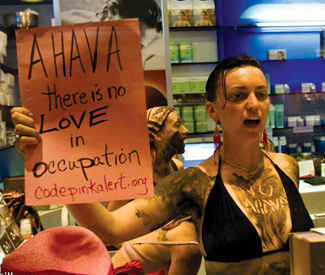
The campaign has seen effects worldwide. Abileah has organized to promote BDS, in particular working to get Bay Area stores to stop carrying Ahava, skin-care products made in what she calls an illegal Israeli settlement in Palestine.

The BDS campaign is “a tried and true nonviolent tactic to get the Israeli government to uphold international law,” Abileah told me. “We decided to be in solidarity.”

But some Jewish leaders feel BDS goes too far.

“The term delegitimizing Israel refers to the intent to eliminate the Jewish and democratic State of Israel by portraying it as an illegitimate nation,” Kahn wrote in an email. “The boycott/divestment/sanctions movement’s leadership has made clear that this is their ultimate agenda and one of the movement’s explicit objectives would achieve that aim resulting in a dire threat to nearly half of the world’s Jewish population that lives in Israel.”

BDS is mentioned several times in the Federation funding guidelines, and stands out as the only specific example of what it means to “undermine the legitimacy of the state of Israel.”


ISOLATE THE EXTREMISTS

But organizations like the Federation and the JCRC aren’t the only ones interested in the path that Israel-Palestine discourse among Bay Area Jews takes. The Reut Institute, a think tank based in Tel Aviv, “has been committed to responding to the assault on Israel’s legitimacy since 2008,” according to the introduction to its 2011 report: “San Francisco as a Delegitimization Hub.”

The report ranks San Francisco and London among the “few global hubs of delegitimization.” It also warns of the dangers of San Francisco in particular as top-delegitimizing city, noting “the role of the San Francisco Bay Area as a generator and driver of broader trends, or as a hub of social experiments…What won’t pass in San Francisco won’t pass anywhere else, and what happens in San Francisco doesn’t stay in San Francisco.'”

San Francisco gets this attention from Reut because of dissent within its Jewish community, which the institute calls globally unparalleled. “While in London delegitimization is being promoted primarily by groups that are not part of the Jewish community…an increasing number of Jews in the San Francisco Bay Area have become ‘agnostic’ towards Israel, and are fueling the delegitimization campaign.”

The report’s authors, Reut’s “national security team,” do not spend much time explaining what “delegitimizing Israel” means. When it does, BDS again stands out as one of the only concrete examples. According to the report, in the Bay Area “the number of individuals who are willing to stand up for Israel is declining while others have been fueling the delegitimization campaign, many times unintentionally, by engaging in acts of delegitimization — namely, actions or campaigns framed by their initiators as a reaction to a specific Israeli policy, which in practice aim to undermine Israel’s political and moral foundations. Examples include support for the BDS movement and the 2010 Gaza Flotilla,” a protest in which ships full of supporters and cargo tried to make it to Palestinian land in violation of an Israeli embargo.

The report labels those looking to delegitimize Israel “extremists.” It warns, however, that those questioning Israel’s policies, when rebuked by its “tradition defenders,” may be swayed into trusting the extremists. It therefore advocates a “broad tent approach,” advising that Jews in the Bay Area initiate a “community-wide deliberation” with an “aim to…drive a wedge between the extremists and those who principally support the legitimacy of Israel’s existence regardless of policy agreements.”

It’s important, according to the report, to make sure that supporters of BDS are seen as “extremists.” The “broad tent” is supposed to contain all Jews, with a diversity of opinions — except those supporting BDS and other acts of “delegitimization.” In light of this goal, the report praises the Federation’s funding guidelines and the Year of Civil Discourse.

“Through the funding guidelines drafted by a JCRC-JCF Working Group…the San Francisco Bay Area has set the standard nationally as the first American Jewish community to develop guidelines delineating red lines that go hand-in-hand with the broad tent approach,” Reut reports. “Additionally, we regard the Year of Civil Discourse…led by the JCRC, as important best practices that could be emulated in other places.”


ORTHODOXY

The Bay Area’s left-leaning Jewish organizations may be influential, but under such a hot spotlight, they tread carefully. Congregation Sha’ar Zahav is one such organization. Last year, the synagogue surveyed its members to test opinions on Israel.

“In general, the survey shows that we have a liberal left-leaning congregation,” said Terry Fletcher, a member of Sha’ar Zahav who now heads a committee created to follow up on the survey results. “People tend to blame, shall we say, both sides of the conflict, both Israelis and Palestinians, somewhat equally.”

Fletcher’s committee has organized events and discussions in the wake of the survey since January. “One idea was that we would start with something non-controversial,” Fletcher told me. “But we couldn’t think of anything that everyone on the committee considers non-controversial.”

The programming has featured discussions on evolving relationships with Israel and questioned their nuances. But Fletcher says they haven’t been able to venture into BDS territory.

“I would love it if we could get to a place where we could actually address that,” Fletcher reflected. “And we would want to do it from a balanced perspective. But it’s such an emotional issue.”

There are practical concerns as well. According to Fletcher, the Federation gives a small amount of funding for scholarships for Sha’ar Zahav’s religious school. The money that funded Fletcher’s committee’s programming came from Sha’ar Zahav’s general fund, when there was enough of it. She says that the committee is now operating without a budget due to tight finances. Even so, if the committee’s programming were to breech the Federation’s funding guidelines, it might put the program in jeopardy.

“To me, that’s what’s so problematic about these guidelines,” Fletcher said. “The guidelines are saying, if you want money from us, we have restrictions on what your organization can do. Even though our programming is not funded by the Federation, because it funds something completely unrelated, it could get cut.”

Fletcher also questions that paradigm of “delegitimizing Israel.”

“I think this is a term that people who defend Israel use to label people who criticize Israel in a certain way,” she said. “Many of us would answer that it’s Israel’s own policies that are delegitimizing Israel in the eyes of the world. I don’t find it a useful term.”

Sha’ar Zahav will be hosting the Reclaiming Jewish Activism panel. Davey Shlasko, a member of the congregation who helped facilitate the new arrangement, thinks the concern about Abileah’s associations were misplaced.

“I think it is unfortunate that the predicted objection to Rae’s other work was enough of a concern to cancel an event that is actually about drawing inspiration from our ancestors,” Shlasko told me via email.

But it’s in looking back at history that the panel acquires so much meaning. “It is safe to say that living in the United States, Jews have never been more empowered, safe, and connected to the community they live in,” mused one source, who wished to remain anonymous. “It is inevitable that with such success, the need to band together changed. The group identity changes. Sometimes it’s that fight, that need to rally together, that keeps the group intact.”

For Abileah, “the event will be Jewish activists talking about our ancestors.” She’s upset about the event’s cancellation, but not surprised.

“For a lot of Jewish people it can be challenging to speak out against this issue because you don’t know where your friends stand on this, or your synagogue or even your family,” she said. “There are a lot of people who we say are PEP: progressive except Palestine. My family and community have been supportive, but I’ve gotten hate mail and threats of violence.”

“It sounds like these Jewish institutions that are censoring have so much power, like they’re the mainstream Jewish voice. But I think the majority of Jewish Americans want a resolution to the conflict and are opposed to the occupation,” she said.

And how does she think Joseph Abileah would react to this situation? “I’d like to think that he would be shocked and hurt by it,” she said. “It’s sad to see so much fracture in the Jewish community over this issue.”


‘Reclaiming Jewish Activism’: easier said than done

0

This article has been updated

A panel in which three local activists will talk about how their Jewish ancestors inform their present-day work seemed harmless enough. But in the Bay Area’s friction-prone Jewish community, its cancellation has led the organizers to write a letter in protest and accusations that one of the area’s biggest funders of Jewish events, the Jewish Community Federation (JCF), is participating in McCarthy-style censorship.

The panelists- Julie Gilgoff, Elaine Ellinson, and Rae Abileah- are all authors and activists. Bend the Arc (formerly the Progressive Jewish Alliance) and the Workmens Circle organized the event. They planned to hold the panel in the Jewish Library, run by the Bureau of Jewish Education (BJE), which funds most of its grants and programming through the JCF.

In late January, the Library cancelled the panel. It will now be held at Congregation Sha’ar Zahav.In an open letter to the Library, the event organizers write, “six decades after McCarthyism’s assault on progressives and their values, we reassert that censorship by association is dangerous and unconscionable.”

David Waksberg, CEO of the Bureau of Jewish Education, said that the BJE didn’t want to suppress the event all together. “In the end we decided not to do it with the understanding that they would be going forward at another location,” he said.

“I don’t know how it’s censorship when you agree, you guys go have your meeting, just don’t have it at my place. How is that censorship? No one’s telling them they can’t speak,” Waksberg said.

“The program involves two authors who have written about activism domestically,” Waksberg explained, “and another individual who has been involved with BDS related to Israel.”

BDS-  the boycott, divestment and sanctions campaign that activists throughout the world have used as a protest against the Israeli occupation in Palestine- is at the center of the conflict, right beside Rae Abileah.

Abileah will take part in the panel to discuss her great uncle, Joseph Abileah, an influential Israeli peace activist and war resister in the 1940s. 

“I grew up in the Bay Area Jewish community,” Abileah told us. “I was part of the Diller Teen Fellowship,” a program BJE puts on, “where we had Jewish gatherings, trainings and meetings.”

She’s also outspoken in her opposition to Israeli occupation in Palestine.

Abileah works for CODEPINK Women for Peace and Jewish Voice for Peace. She has travelled to Gaza CODEPINK in 2009 for a Gaza Freedom March with participants worldwide. She has also organized BDS campaigns.

“In 2005 the Palestinian civil society called for BDS as tried and true nonviolent tactic to get the Israeli government to uphold international law. We decided to be in solidarity,” said Abileah. She has since organized to spread a boycott of Ahava products, “Dead Sea beauty products made in an illegal settlement in the West Bank.”

According to Abileah, “several stores in the Bay Area have stopped carrying it.”

Abileah says she is proud to support nonviolent forms of protest like BDS and hunger striking, noting the lengthy hunger strike undertaken by Palestinian prisoners that ended just yesterday.

The hunger strike was successful. Israel agreed to prisoners’ demands to end solitary confinement (for 19 prisoners), allow more family visits, and to free some of those held in “administrative detention,” or imprisonment without trial, although the demand to end administrative detention was not met.

BDS has had successes worldwide as well. And it has become a controversial issue in the Bay Area.

Waksberg said, “we were concerned this would be an event that would have a lot of people yelling at each other.” This would not be unprecedented.

The ongoing rift is possibly best exemplified by the controversy surrounding the 2009 screening at the SF Jewish Film Festival of Rachel, a documentary about the life of 24-year-old Rachel Corrie. Corrie was killed in 2003 when, as part of a campaign to stop Israeli settlements, she stood in front of a bulldozer on its way to demolish a Palestinian family’s home.

The showing of the film, as well as the festival board’s decision to invite Corrie’s mother to speak after the film, sparked outrage. A portion of the audience booed and hissed at supportive references to the Israeli government.

Largely in response to that event, the JFC rewrote its funding guidelines in 2010. The guidelines outline a policy of not funding organizations that promote violence, attempt to “proselytize Jews away from Judaism” or work on “undermining the legitimacy of Israel.”

The idea of fighting for or against “Israel’s legitimacy” is invoked often but is vague- what exactly does it mean to oppose Israel’s “legitimacy” or “right to exist”? In In the guidelines, one thing seems to clearly do so: BDS campaigns.

In the guidelines’ section on “potentially controversial Israel-related programming,” the types of programs “not consistent with JCF’s policy” has three bullet points, all singling out support for BDS as unacceptable. The programs that are inconsistent are ones where the “overall experience” “endorse or prominently promote the BDS movement,”  “Individual programs that endorse the BDS movement or positions that undermine the legitimacy of the State of Israel,” and co-sponsoring public programs featuring supporters of BDS.

The open letter states that “The Federation’s 2010 revised funding guidelines, which prohibit grant recipients from associating with organizations and individuals who oppose its strong support for Israel, apparently triggered the cancellation.”

Wakberg says that these guidelines didn’t play a role in the BJE’s decision to drop the Reclaiming Jewish Activism panel.

“The JCF didn’t tell us whether or not to do this. This was our decision about what we thought was right for the library,” he said.

“There was going to be an event,” Waksberg said, “and there is going to be an event.”

Yes, the event will go on. But so, it seems, will tensions in the Bay Area’s Jewish community.

Alerts

0

WEDNESDAY 16

Occupy the Auction, City Hall steps, 1 Dr Carlton B Goodlett Pl, SF; www.occupytheauctions.org. 1:45pm, free. This event may not be a once-in-a-lifetime opportunity — organizers at Occupy the Auction have been showing up the City Hall every single weekday since April 27 — but its definitely worth checking out. Occupy the Auction works with people facing unjust evictions from their property, including homeowners that have been fraudulently foreclosed on and renters facing eviction because of their landlords mortgage issues. Talk about focused and effective: this campaign stops the majority of home auctions it targets.

THURSDAY 17

Beautiful Trouble & Organizing Cools, Planet Sub-mission, 2183 Mission, SF; www.tinyurl.com/pmpress. 7pm, free. This is a book launch for two books at once. Beautiful Trouble is part history and part manual for activism, art, and creative protest. Organizing Cools the Planet is a pamphlet on environmental organizing that has won praise with the likes of Vandana Shiva and Noam Chomsky. Celebrate the books and rock out to the Brass Liberation Orchestra at this event. There will also apparently be super special surprise happenings.

FRIDAY 18

Decolonized Yoga, 16th and Mission BART Station Plaza, SF. 5-7pm, free. The Occupy movement in San Francisco is tumultuous and ever-changing, but the yogis and radicals who host decolonized yoga have maintained a calm and consistent outdoor free yoga practice for months now. If you’ve ever wanted to do yoga for free with talented teachers and guides, and you don’t mind doing so on colorful rugs laid out next to the BART steps, decolonized yoga could be the best way for you to decompress Friday evening.

SATURDAY 19

Malcolm X Jazz Arts Festival, San Antonio Park, 1701 East 19th St, Oak; www.eastsideartsalliance.com. Free. Fun for the whole family at a truly grassroots festival by and for East Oakland. The annual festival honors Malcolm X on his birthday and features an impressive lineup of local musicians, dancers and performers and community activists, along with a childrens section and food stands.

SUNDAY 21

Straight Outta Hunters Point 2, Bayview Opera House, 4705 Third St, SF; www.tinyurl.com/kevinepps. 2-5pm, free. The film, a sequel to 2003’s Straight Outta Hunters Point, once again showcases filmmaker Kevin Epps’ ability to capture the mood and story of the neighborhood he grew up in. The film screened in theaters in February, but now Epps partners with the SF Arts Commission for a screening at the Opera House. As Epps said in a press release: “As a filmmaker and activist, this is the most important screening of all, premiering the film in the neighborhood where it all started.” The event will also showcase local organizations such as the San Francisco Black Film Festival and will be catered by Old Skool Café.

Eco-sexual hike, Redwood Park, 7867 Redwood Rd, Oak; www.tinyurl.com/sprinklemarks. 1pm, $25. Annie Sprinkle has helped shape San Francisco’s sex activist and cultural world for years. Now an advocate of eco-sexuality, Sprinkle will host Kim Marks, owner of a new all-green sex shop in Portland for an eco-sexual hike right here in SF. Explore the redwoods and your sexuality with this eco-sexy hike.

Long Haul oral history project: The Rodney King riots, Long Haul infoshop, 3124 Shattuck, Berk; www.thelonghaul.org. 7:30-9pm, free. The Long Haul provides a center for anarchist and radical media and organizing in the Bay Area, and produces the famous Slingshot newsletter. They also have an oral history series on the third Sunday of every month, discussing Bay Area events “with people who were there recalling what happened and how lessons we might have learned then could apply to the struggle now. This Sunday, the focus is on the Rodney King riots in the Bay Area, where 1400 were arrested and a 9pm citywide curfew declared all the way back in 1992.

Love on wheels

2

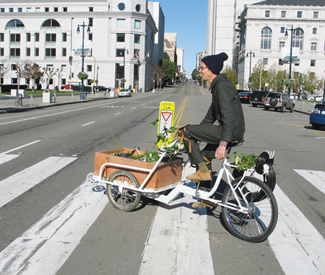
In honor of our annual bike issue, we wanted to highlight a few of the free-wheeling people that polished our spokes this year. Keep on pumpin’!

KAREN WEINER AND BRETT THURBER, NEW WHEEL

On a family-oriented strip of Cortland Avenue perched halfway up the precipitous heights of Bernal Hill, husband-wife team Karen Weiner and Brett Thurber have invested their all in an enterprise some would deem experimental: the first electric bike shop in San Francisco.

Photo by Mirissa Neff

“San Francisco is really the perfect place for these bikes,” said Thurber when we went on a test ride with him and Weiner around the city. Iron-thighed fixie fans notwithstanding, he’s right — there are some neighborhoods in this city where the average bear will only be able to bring a bike if he or she pushes it up the final blocks of incline. For older bikers, the e-bikes (as they are lovingly dubbed by their adherents) make it possible to zip around town, car and fancy-free. Plus, they are disturbingly fun — when else can you cruise up Twin Peaks and still be breathing easy when you reach that panoramic view?

Other stores around town do sell certain models of e-bikes, but Thurber and Weiner’s new New Wheel is the first place to specialize in them. It stocks European and Canadian-made models in addition to retrofitting kits so that normie bikes can be tricked out with motors capable of doubling one’s pedaling power.

Thurber says business has been steadily growing, and that he’s noticed that the electric bike is not a purchase taken lightly by consumers — often times a customer will come by the store six or seven times before taking that heady ride into pedal power (perhaps indicative of the bikes’ spendy pricetags.)

“People are really making this mindful shift instead of listening to us be like ‘just do it,'” says the man who hopes to be SF’s e-bike proselytizer. (Caitlin Donohue)

New Wheel, 420 Cortland, SF. (415) 524-7362, www.newwheel.net


PAUL JORDAN’S BIKE CAVALRY

Twenty years ago, Critical Mass began demonstrating the power and potential of mass bike rides to make a political statement by seizing space from cars and confounding the authorities. Almost 10 years ago, anti-war cyclists in San Francisco borrowed Critical Mass tactics to interfere with business as usual on daily Bikes Not Bombs rides that also proved effective and hard to police. Today, as the tides of protest again rise with the Occupy Wall Street and related movements, Paul Jordan and other founders of the new collective SF Bike Cavalry ( sfbikecavalry.org) are reviving and expanding the concept.

Photo by Tim Daw

“It’s all kinda new, definitely more of a buzzword at this point,” Jordan, a 38-year-old painting contractor, said when we caught up with him and his cycling comrades during last week’s May Day marches. “But the idea is to use bicycles for activism.”

As they demonstrated on May Day, even a dozen or so cyclists can send loud messages to passersby or nimbly create opportunities for marchers to safely seize the streets, all while riding more-or-less legally. And they can use whimsy — silly costumes, funny signs, big smiles, blowing bubbles — to defuse any tensions.

“It’s hard to be mad when you’re stuck in traffic if you see bubbles,” Jordan said as he reloaded the bubble machine on the back of his bike. “I see bubbles as a very good activist tool.”

The Cavalry is a fairly new venture, which Jordan first displayed for big Jan. 20 protests, but he sees it as something with enormous potential: “We want to figure out how to grow this bigger.” (Steven T. Jones)

SAM KROYER AND RENITA TAYLOR, ROLL SF

Sometimes it seems like the Mission has as many bike shops as taquerias, but the neighborhoods east of Potrero lacks the same double-wheelin’ bounty. Sam Kroyer and Renita Taylor met in their Bernal Heights neighborhood, where Kroyer used to run a repair shop out of his garage. Taylor is an avid biker, and the two decided to meld their respective strengths — Kroyer’s mechanical prowess and Taylor’s business know-how — and create a service-oriented shop near Potrero Hill for every type of rider.

Photo by Mirissa Neff

“We’re really trying to make it for everybody, from entry-level commuter bikers to bikers with really crazy exotic $20,000+ bikes,” Kroyer says. Kroyer has 25 year of experience as a bike mechanic, and Taylor is a sharp businesswoman who spent several years working in the entertainment industry.

Roll SF seems like an outpost in an area not known, for now, as a cycling nexus, but its atmosphere is friendly and accessible. A long wooden table runs through the center of the shop, welcoming guests to sit down and stay awhile — to use the shop’s free wi-fi while they wait, watch and ask questions, or eat dinner. Kroyer provides you with his utmost attention and quickly diagnoses your bike. If it’s a fast fix, he’ll handle it promptly with the grace cultivated by years spent engaging with a multifaceted machine. “We’re trying to make sure you come away with a great experience — that you feel like you’ve really gotten something taken care of properly,” Kroyer says. (Mia Sullivan)

275 Rhode Island, SF. (415) 701-ROLL, www.rollsanfrancisco.com


SONS OF SCIENCE

Are you on a motherfucking bike? Tell me you’re reading this on a motherfucking bike, doing the Tour de Fuck You. Sing with me, “No greenhouse gas! A tiny carbon footprint up your ass!” Then launch into the wickedest bike horn solo ever.

You know what I’m talking about. “Motherfucking Bike” by Sons of Science (sonsofscience.bandcamp.com), the profane viral hymn to SF peddlin’ that’s closing in on a million YouTube views and has been Tweeted liberally by the likes of Russell Crowe and Juliette Lewis. Sure it plays on every fixie hipster stereotype you can image — it’s the “Shit San Franciscans Say” for mutton-chopped, skinny-pantsed, non-fat latte-quaffing riders — but it’s pretty damn funny. (And catchy. It is maniacally catchy. So be warned.)

Sons of Science are a freewheeling trio: Ward Evans and John Benson, who direct for Sausage Films (www.sausagefilms.com), and Hector Perez, a.k.a. Horn Solo. “We’ve known each other for years and just recently decided to collaborate for fun, and it clicked. It was a great excuse to do a video. For this track we were also very lucky to feature Tim Brooks, formerly of the Young Offenders, who plays the ‘Angry Commuter’. He brought a pantsload of energy and genuine cyclist cred,” Evan told me. Also featured: the guys from that delicious new MASH shop (www.mashsf.com) near Duboce Park.

When asked about his own motherfucking bike heroes, Evans replied, “A guy named Joff Summerfield rode a penny farthing around the globe. He’d be right up there.” (Marke B.)


Our Weekly Picks April 25-May 1

0

WEDNESDAY 25

>> Norm Talley

It’s been a good decade since the Detroit Beatdown sound was unleashed on the world via an eponymous triple-disc release on the UK’s Third Ear Records, which collected the works of several integral Motor City dance music producers. In truth, the Beatdown sound wasn’t so much a cohesive style — although it did reflect the spinetingling synthesis of Detroit’s hypnotic, unhurried house sound with the Zen-like disco-funk loopiness that was earning Moodymann and Theo Parrish rabid followers at the time — than a foray into bumpin’ erotic grooviness, no matter the tempo or sample source. An uptick in Beatdown sound reverence has lead to recent tours by many of the original players, including Norm Talley, who will bring almost 30 years worth of decks magic to the incredibly welcoming Housepitality weekly party. (Marke B.)

9pm, $5 before 11pm, $10 after

Icon

1192 Folsom, SF

(415) 626-4800

www.housepitalitySF.com


>> Eric Erlandson

As the guitarist for Hole, Eric Erlandson was at the center of alternative rock explosion of the early ’90s, a member of one of the most popular bands of the time, and a friend and confidant to one of the scene’s most influential players, Nirvana’s Kurt Cobain. With the 18th anniversaries of both the suicide of Cobain and the release of Hole’s hit record Live Through This passing this month, Erlandson has just released his first book, Letters To Kurt (Akashic Books) a touching and enlightening collection of prose poems addressed to his departed friend. He’ll read from the book and do an acoustic performance tonight. (Sean McCourt)

7:30pm, free

Moe’s Books

2476 Telegraph, Berk.

(510) 849-2087

www.moesbooks.com


In conversation with Andi Mudd

Thu/26, 7pm, free

City Lights

261 Columbus, SF

(415) 362-8193

www.citylights.com


>> “A Change of the World: In Memory of Adrienne Rich”

The iconic contemporary poet — how many of those have we got left, friend? — passed away at her home in Santa Cruz last month. But Adrienne Rich’s legacy of strong-willed, powerfully voiced feminism, radical lesbian activism, perfectly illuminated quotidian details, and, hopefully, incredible control of poetic form, is set to be carried on for generations, beginning with this huge tribute at the SF Main Library from notable Bay Area wordsmiths. Join Elana Dykewomon, Aaron Shurin (whose latest volume, Citizen, is a stunner), Jewelle Gomez, Justin Chin, Kevin Killian, Toni Mirosevich, and oodles more as they resurrect Rich’s voice and offer their own oblations on the rough altar of her inspiring genius. OMG she would hate that I got all over-dramatic with the language back there. (Marke B.)

6pm, free

Hormel Gay and Lesbian Center at the SF Main Library

100 Larkin, SF

www.sfpl.org


>> “John Waters in Conversation”

Oh hell yes. Sometimes San Francisco resident John Waters (if you’ve spotted him on Muni, I am sooo jealous) visits California College of the Arts to screen 2004 sex-com A Dirty Shame, which features a typically eclectic cast (including Waters regulars Mink Stole and Patricia Hearst, and Selma Blair’s memorable, uh, udders). The “Pope of Trash” (he’s also an author, occasional actor, hilarious solo performer, and photographer) hangs out after to chat about his filmmaking career — and the fact that this killer event is free (part of CCA’s Cinema Visionaries program and Design and Craft Lecture Series) is just icing on the poo. Er, cake. (Cheryl Eddy)

7-9pm, free

Timken Lecture Hall

California College of Arts

1111 Eighth St., SF

(415) 703-9563

www.cca.edu


THURSDAY 26

>> “Bloomsbury/It’s Not Real”

In the early part of the 20th century and for a short period only, the London neighborhood of Bloomsbury became a center of civilized thought. In their salons its members argued about poetry, painting, and history. They passionately believed in Art and embraced total freedom — artistic, sexual, personal. Some of them became famous; others dropped by the wayside. Yet in retrospect, Bloomsbury looks like a small Shangri-la. Or was it? Jenny McAllister has been popping the balloons of pretense for close to 20 years, creating dance theater pieces that are as witty as they are humorous. In “Bloomsbury Group/It’s Not Real” she and her 13th Floor Dance Theater introduces us to some of those peculiar characters that called Bloomsbury home. (Rita Felciano)

Thu/26-Sun/29, 8pm, $18–$23

ODC Theater

3153 17th St., SF

(415) 863-9834

www.odctheater.org


>> The Touré-Raichel Collective

Israeli pianist Idan Raichel and Malian guitarist Vieux Farka Touré forged a friendship after crossing paths at a Germany airport in 2008. The Israeli pop star, known for culling from many worldly influences, had been a fan of Vieux’s father, legendary guitarist Ali Farka Touré. Raichel beckoned the younger Touré to visit him in Tel Aviv for a jam session. Their serendipitous collaboration resulted in The Tel Aviv Session, an acoustic, improvisational masterwork. Throughout Tel Aviv, Touré sets the stage with dramatic strumming and guitar-picking, while Raichel engages with his own meticulous, twinkling ripostes. The duo’s casual chemistry facilitates a rare and absolutely mesmerizing interplay fused together by impeccable technique. (Kevin Lee)

8pm, $25–$85 Herbst Theatre 401 Van Ness, SF (415) 392-4400

www.cityboxoffice.com


>> Trippple Nippples

Poised to make a splash at SXSW this year with its hyperkinetic live show, Tokyo’s Trippple Nippples unfortunately had to cancel due to visa complications. The band is now making up for lost time with a string of West Coast shows that includes a Thursday stop at Thee Parkside. A mix of psychedelic performance art, electronics. and in-your-face noise rock, the group has caused a stir in Japan, in addition to finding endorsements from American artists such as Pharrell, who recently championed it in Vice’s mini-documentary, Tokyo Rising. Check out the Dan Deacon-esque slice of kaleidoscopic electropop “LSD” for a taste. (Landon Moblad)

With Ass Baboons of Venus and Ghost Town Refugees

9pm, $10

Thee Parkside

1600 17th St., SF

(415) 252-1330

www.theeparkside.com


>> Afrolicious Five-Year Anniversary

Give it up for unstoppable, adorable DJ brothers Señor Oz and Pleasuremaker, a.k.a. Oz and Joey McGuire. A half-decade ago, when the idea of mixing as many global dance music styles into one party as possible was still pretty radical, the bros’ Afrolicious party went one better with live instrumentation (often courtesy of Joey’s band, Pleasuremaker, which drops a new full-length later this year), remarkable guest stars, and a fantasy Latin funk sheen. Best of all, Afrolicious pumped a welcoming, soulful, old-school smiley vibe — free of the slightly sour, scene-y sting of other such endeavors. Afrolicious anniversary parties burst apart at the seams with guest-star goodies and span two wild nights. This one is no exception, with resident percussionists Qique and Diamond, Brazilian drum troupe Fogo Na Roupa, DJs New Life and Sergio, and more. (Marke B.)

Thu/26-Fri/27, 9:30pm, $10

Elbo Room

647 Valencia, SF

(415) 552-7788

www.elbo.com


FRIDAY 27

>> “First Breath — Last Breath”

Bad Unkl Sista, participators in arts-party mega-fare (like Maker Faire, for instance), take over Z Space this weekend for the world premiere of a new performance work, “First Breath — Last Breath,” directed, choreographed, and costumed by founder and artistic director Anastazia Louise, a Butoh-trained dancer and dance teacher who honed her skills in the “wearable art” costuming department as a core member of the Carpetbag Brigade from 2000 to 2009. A sensory-stimulating meditation on life and death, the piece promises an apt element of the unscripted in its hybrid spectacle of dance, Butoh, aerial work, couture, percussive scenic design, film, and music. (Robert Avila)

Fri/27, 8pm; Sat/28, 2 and 8pm, $35

Z Space

450 Florida, SF

(415) 209-5569

www.badunklsista.com


SATURDAY 28

>> Jim Gaffigan

Comedian and actor Jim Gaffigan could pontificate on any subject, but his delightful treatises on bacon bits, Cinnabons, and other dubious delectables rank as fan favorites. “I’ve never eaten a Hot Pocket and been like, ‘I’m glad I ate that,'” he opines during a popular sermon on the sloppy snack. Followers gravitate toward his languid style and natural inclination to poke fun at his own comedy, especially through whiny, one-line asides he whispers as an aghast faux audience member. New 75-minute stand-up routine “Mr. Universe” is available for $5 as an online stream, $1 of which will go toward The Bob Woodruff Foundation in support of veterans and their families. (Lee)

Sat/28, 7:30 and 10pm; Sun/29, 7pm, $39.75–$49.75 Warfield 982 Market, SF (415) 567-2060 www.thewarfieldtheatre.com


>> “Dear Howard, I Love You But I’m Leaving You For Bryant”

You know how friends get your help moving with a little beer and a few laughs? Artists go all out in this regard. This joint fundraiser between the Garage and THEOFFCENTER benefits the new home for the Garage at 715 Bryant. The current Garage space at 975 Howard was literally that in 2007 when Joe Landini moved in and converted it into his “safehouse” for local artists, an ambitious low-rent breeding ground for dance, theater, and performance. The name stays but the venue changes to a more accommodating space nearby. In celebration, the Garage plays, parades, parties, and moves this Saturday in cunningly pragmatic programming that starts at 975 Howard and ends, via “procession,” with a bash at the new digs. (Avila)

The Garage

6pm, performance

975 Howard, SF

8pm, procession

8:30pm, party

715 Bryant, SF

www.715bryant.org


MONDAY 30

>> Marshall Crenshaw

Singer-songwriter-guitarist extraordinaire Marshall Crenshaw has been writing and making records for more than 30 years now, first gaining mainstream exposure with his 1981 hit “Someday, Someway.” In 1987, he portrayed Buddy Holly in the film La Bamba, playing an excellent cover of Holly’s then-obscure outtake “Crying, Waiting, Hoping,” virtually turning the song into his own, one which remains a staple in his live shows to today. The past few years have seen Crenshaw nominated for a Golden Globe for Best Original Song for the title track he wrote for the movie Walk Hard: The Dewey Cox Story, and the release of the album Jaggedland—don’t miss your chance to see him at this unique solo performance. (McCourt)

8pm, $18

Yoshi’s

1330 Fillmore, SF

(415) 655-5600

www.yoshis.com


TUESDAY 1

>> Treat Social Club

On a blustery evening in March, organizers Finn Kelly and Adam Theis invited their friends to converge inside a hangar-like space in the Mission for Treat Social Club’s inaugural event. No one knew quite what to expect but once inside revelers found themselves swaying to Realistic Orchestra’s moody silent film score, awed by fabulous visuals, and mesmerized by the aerial choreography Amanda Boggs. It was an auspicious start for the monthly series and with performances by tap dancer Tyler Knowlin, and an aerial piece that will be influenced by crowd participation, the second edition promises to be just as tantalizing as the first. (Mirissa Neff)

7:30pm, $10-20

Go Game Headquarters

400 Treat (Suite F), SF

www.treatsocialclub.com


The Guardian listings deadline is two weeks prior to our Wednesday publication date. To submit an item for consideration, please include the title of the event, a brief description of the event, date and time, venue name, street address (listing cross streets only isn’t sufficient), city, telephone number readers can call for more information, telephone number for media, and admission costs. Send information to Listings, the Guardian Building, 135 Mississippi St., SF, CA 94107; fax to (415) 487-2506; or e-mail (paste press release into e-mail body — no text attachments, please) to listings@sfbg.com. Digital photos may be submitted in jpeg format; the image must be at least 240 dpi and four inches by six inches in size. We regret we cannot accept listings over the phone.

Truth or consequences

0

arts@sfbg.com

SFIFF It’s possible to have an almost perfect Sundance Film Festival viewing experience if you hew to one simple rule: only go to the documentaries. Sure, see some of the dramatic entries too, after the 40th person has told you such-and-such title is great. But you can rarely go far wrong with the documentaries. Sundance has its pick of the annual crème de la crème in that genre (among U.S. if not necessarily international films).

As pretty much a “best of other festivals” festival taking place in late spring — thus perfectly situated to grab the best docs not just from Sundance, but also Berlin, Rotterdam, South by Southwest and elsewhere — the San Francisco International Film Festival can potentially offer the crème de la crème de la crème. Thank god documentaries, unlike that imaginary dairy substance, are not high in saturated fat or cholesterol. You can consume them for SFIFF’s entire span and remain your slim, lovely self, mentally refreshed by enormous quantities of new information ingested the fun and easy way.

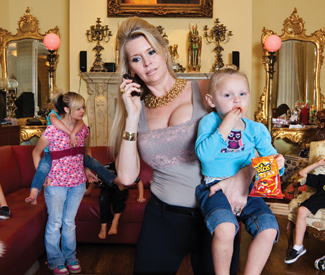
Actually, a portrait of conspicuous consumption in its most corpulent form was among Sundance’s opening night films this January, and will duly boggle your mind at SFIFF. Lauren Greenfield’s obscenely entertaining The Queen of Versailles takes a long, turbulent look at the lifestyles lived by David and Jackie Siegel. He is the 70-something undisputed king of timeshares; she is his 40-something (third) wife, a former beauty queen with the requisite blonde locks and major rack, both probably not entirely Mother Nature-made. He’s so compulsive that he’s never saved, instead plowing every buck back into the business.

When the recession hits, that means this billionaire is — in ready-cash as opposed to paper terms — suddenly sorta kinda broke, just as an enormous Las Vegas project is opening and the family’s stupefyingly large new “home” (yep, modeled after Versailles) is mid-construction. Plugs must be pulled, corners cut. Never having had to, the Siegels discover (once most of the servants have been let go) they have no idea how to run a household. Worse, they discover that in adversity they have a very hard time pulling together — in particular, David is revealed as a remote, cold, obsessively all-business person who has no use for getting or giving “emotional support;” not even for being a husband or father, much.

http://www.youtube.com/watch?v=DM43Wyulc7w

What ultimately makes Queen poignantly more than a reality-TV style peek at the garishly wealthy is that Jackie, despite her incredibly vulgar veneer (she’s like a Jennifer Coolidge character, forever squeezed into loud animal prints), is at heart just a nice girl from hicksville who really, really wants to make this family work.

Other docs pipelined from Sundance to SF include acclaimed ones about dissident Chinese artist Ai Weiwei (Ai Weiwei: Never Sorry), Ethel (as in Kennedy), pervasive rape in the U.S. military (The Invisible War), and the Israeli military legal system that governs civilian Palestinians under occupation (The Law in These Parts). Of particular local interest is David France’s excellent How to Survive a Plague, about how ACT UP virtually forced the medical and pharmacological establishments into speeded-up drug trials and development that drastically reduced the AIDS epidemic’s U.S. fatalities within a decade. Don’t expect much about SF activism, though — like so many gay docs on national issues, this one barely sets foot outside Manhattan.

Of actual local origin are several SFIFF nonfiction highlights, not least festival closing nighter Don’t Stop Believin’: Everyman’s Journey, Ramona Diaz’s film about the incredible journey of Filipino superfan Arnel Pineda, from fronting a Journey cover band to fronting the actual Bay Area outfit itself as its latest lead vocalist. There’s also Micha X. Peled’s last globalization trilogy entry Bitter Seeds, focusing on hitherto self-sufficient farmers in India increasingly driven toward bankrupting debt (and widespread suicides) by costly biotech “advances;” Peter Nicks’ The Waiting Room, which sits us right there at Highland Hospital in Oakland, illustrating the heroically coping status quo and desperate need for improvement in a microcosm of U.S. healthcare; and Jamie Meltzer’s world premiere Informant. The latter’s subject is activist-turned-FBI snitch Brandon Darby, whose testimony got two anarchists imprisoned — and who fully participated in this portrait, even its re-enactments of his protest-group infiltration. Darby is expected to attend the festival; given this town’s political leanings, he might want to wear a raincoat.

Speaking of audiences hurling things — abuse, at the least — Caveh Zahedi (plus his lawyer) was evidently met with a shitstorm after the SXSW premiere of The Sheik and I. You, too, may feel the spasmodic urge to throttle him during this latest naughty-boy’s own adventure, in which he accepts a commission to make work for a biennial perversely themed around “art as subversive act” in the far-from-liberal United Arab Emirates. Professed fans, the curators had duly seen his prior work; surely they knew they were inviting trouble in these circumstances?

Nonetheless, they play perfectly into his hands, expressing dismay and barely masked fear as Zahedi faux-naively proceeds to do everything he shouldn’t. That includes ridiculing Islam and the host sheik, stereotyping Arabs in general, putting everyone (including himself and his two-year-old son) in potential danger, all the while claiming his aim is “a critique of imperialism.” Is he really the very model of the privileged Western artist, railing about artistic freedom while ignorant that sometimes, some places, some things (like blasphemy, and prison) must take precedent? Or is the whole act just a deliberate provocation (hardly his first), albeit one with disturbingly dire potential consequences? Alternately very funny and completely infuriating, The Sheik and I is one movie you might want to attend just for the Q&A afterward. Odds are, it’s gonna get ugly. 

www.sffs.org


Hot sexy events: April 13-19

0

Kink.com is getting its star turn in the mainstream media – everyone’s favorite historic-building-cum-porn-palace served as the shooting locaiton for the movie that Stephen Elliott and Kink star Lorelei Lee penned, Cherry (trailer here). The flick, which makes its San Francisco debut at the SF International Film Festival (April 24, 27, 28) stars James Franco and Heather Graham, who plays a female director at a porn company.

It isn’t Kink in the movie, exactly — it’s not a BDSM company, for one. And I met up with Lee at Thieves Tavern this week and she told me that despite the vocation of Cherry‘s protagonist, she didn’t consider it a movie based in sex-positive activism.

“You can really destroy a movie by making it too political,” said the NYU student and star of multiple Kink sites, over a glass of red wine. Lee says she and co-writer Elliott wanted to write a story with a happy ending (er, spoiler alert.) “I think it’s a complicated story that doesn’t try to sell you on anything.” Of course, showing happy, functioning sex workers should be considered activism in and of itself these days.

Theirs isn’t the only project that uses the Armory as a backdrop for for an upcoming non-NSFW film. Filmmaker Simone Jude has been shooting a documentary on the lives of Kink’s women – Lee, Isis Love, and Princess Donna primarily — for the last four years. The trailer looks fucking awesome, and Jude needs your Kickstarting help funding the final editing process. 

The three women portrayed are total badasses, and it’d be great if this film could recieve the same kind of exposure that Cherry, which picked up IFC as its distributor and is being slated for a limited-city release, is enjoying. With all the sex-negative politicking going on these days, we could use some more high profile looks at women who refuse to let conservative social norms guide their views of fucking. People need to be exposed to that kind of stuff. Or at least, as Lee told me “I hope that they leave the theater feeling like they’ve watched a movie about real people.”

And now for your week in sex events.

“A Taste for Brown Sugar: The History of Black Women in American Pornography”

Rad lecture alert: University of California Santa Barbara professor Mireille Miller-Young will be giving a talk about her much-needed manuscript examining the history of black women in porn this afternoon. Miller-Young’s work tends to focus on race, gender, and sexuality as it appears in sex work and popular culture and she is also currently collaborating with sex-positive author Tristan Taormino and others on The Feminist Porn Book: The Politics of Producing Pleasure. 

Fri/13 4-7 p.m., free

California College of the Arts

1111 Eighth St., Room GC7, SF

(415) 703-9500

www.cca.edu

Writers With Drinks with Rachel Kramer Bussel and Curvy Girls

Rachel Kramer Bussel is the editor of Curvy Girls: Erotica For Women, which I recently had the pleasure of reading and is real hot. The stories are all about voluptuous women getting it on – in restaurant kitchens with the head chef, with the house sittee’s relative, with the guy that sold them those hot boots. The erotica follows curves like a racecar, and is a phenomenal piece of work for anyone who is looking for a re-up on body image – no matter what their measurements. Tonight, Bussel is reading at the much-loved Writers With Drinks event, so expect to get nicely liquored and hear her talk about sexy, body-positive couplings. 

Sat/14 7:30 p.m., $5-$10 sliding scale

The Make-Out Room

3225 22nd St., SF

www.writerswithdrinks.com

“A Taste of Rope”

The perfect opportunity to sample wines from around the globe while training your obedient submissive, this Femina Potens event has an value-added feature: different models from rope companies Maui Kink, Twisted Monk, Bind Me, Lover’s Knot, and Jugoya will be on hand, and wrist, and ankle, and ribs so that you can see the difference that quality and texture can make in your play. There’s limited space available here, so you should get on this quick-like.

Sat/14 9-10:30 p.m., $40-99 per couple

Location disclosed upon purchase

www.feminapotens.org

Bawdy Storytelling: Master and Servant

The pervy storytelling series goes on a power trip, with six kinky souls going on the record about their BDSM power play good-times. 

Thu/19 7-10:30 p.m., $12-$15

The Uptown 

1928 Telegraph, Oakl.

www.bawdystorytelling.com

Heads Up: 6 must-see concerts this week

0

In the days leading up to veritable sweaty behemoth Coachella, many national acts are cooling their jets, taking breathers, stretching their hamstrings before the big back-to-back weekend shows.

Those in the Bay Area smart enough to avoid that desert feather clusterfuck are to be rewarded this week with some mighty fine local and touring acts; musicians preferring to opt out of the chaos (or those that are simply stopping by on their way to the fest).

In that latter mix – bands dropping in before plopping down in the desert sun – a few ’90s big sellers and underground giants of the same era are indeed here this week, but their shows are, naturally, already long sold-out or too damn near it to call (Jeff Mangum, Mazzy Star, Radiohead, fIREHOSE). But if you already have tickets, mazel tov!

With that, I present your must-see (and might actually have the chance to catch) Bay Area concerts this week/end:

Emily Jane White

The gloomy finger-picking folk songstress just returned from a tour with fellow local Jolie Holland (the two kicked it off during Noise Pop with an enchanting night at the Swedish American); and she’ll likely play new tunes of her equally enchanting new release, Ode To Sentience, out June 12 on Antenna Farm.
With Foxtails Brigade, Paula Frazer
Wed/11, 9:30pm, $10
Cafe Du Nord
2170 Market, SF
(415) 861-5016
www.cafedunord.com
http://www.youtube.com/watch?v=G-fJcO52LFw

Sepultura
Playing a pummeling, hardcore-influenced mix of thrash and death metal, Sepultura put Brazil on the metal map with a run of vaunted albums that culminated in 1996’s sublime Roots. (Ben Richardson)
With Havok
Wed/11, 7:30 p.m., $25
DNA Lounge
375 11th St., SF
415-626-2532
www.dnalounge.com
http://www.youtube.com/watch?v=2oRsw1wuhaA

Trust, with Blood Orange
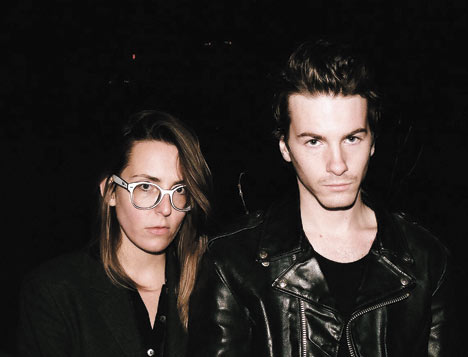
Buoyed by rolling dark wave synth, pulsating ’80s beats, and danceable rhythm, Trust’s debut full-length, TRST, is both beautiful and eerie – much like the music of Toronto contemporary Austra (which shares member Maya Postepski). The band opens for that soulful burst of flavor, Blood Orange (aka Lightspeed Champion, aka Dev Hynes).
Thu/12, 9:30pm, $12
Rickshaw Stop
155 Fell, SF
(415) 861-2011
www.rickshawstop.com
Trust
http://www.youtube.com/watch?v=8tc1xj7Nblc
Blood Orange
http://www.youtube.com/watch?v=18ew9nwn1HY

Festival of Resistance
Psychedelic farmageddon witchcraft act Future Twin (also a featured On the Rise band), Apogee Sound Club, Black Swans, and the Rabbles play this daytime benefit for the 99 Cent Print Committee – a group of writers, musicians, and artists who support activism through print. While a good cause, it’s also your last chance to see Future Twin for the next few months as it’s about to embark on a national tour.
Sat/14, 3-8pm, $5-$10
El Rio
3158 Mission, SF
(415) 282-3325
www.elriosf.com
http://www.youtube.com/watch?v=NFH4Ehi74d0

Art Beat Bazaar
Presented by the nonprofit Art Beat Foundation, it’s a pop-up indie craft mart set to the twist-worthy ’60s beat of Francophone Brooklyn-based pop act Les Sans Culottes (“Allo Allo”), and local all-girl garage rock band Female Trouble.
Sun/15, 3-7pm, free
Starry Plough
3101 Shattuck, Berk.
(510) 841-2082
www.starryploughpub.com
http://www.youtube.com/watch?v=4fb5uxIWPfg

Ximena Sariñana
Sariñana is a sweetly-piped, Mexican singer-songwriter who bounces between exuberant youthful pop and crisp jazz standards. She made a handful of those requisite SXSW who-to-know-now lists in various pop culture publications this year – and for good reason.
Sun/15, 8:30pm, $18
New Parish
579 18th St., Oakl.
(510) 444-7474
www.thenewparish.com

Who bombed Judi Bari?

5

THE GREEN ISSUE Darryl Cherney is determined. “I have a mission in life,” he says. “And that is to find out who bombed Judi Bari.” This week, a judge may have gotten him closer to that goal, ordering evidence in the case be sent to a lab for forensic testing.

Cherney was in the car with Bari, a fellow environmental activist from Earth First, when a pipe bomb wrapped with nails exploded, maiming Bari and leaving Cherney with serious injuries.

It was 1990, and the two were in Oakland on their way to speak about the upcoming Redwood Summer, three months of picketing, tree-sitting, and otherwise blocking the clear-cutting of the California redwoods.

The Redwood Summer went on, but not before Bari and Cherney were arrested: The Oakland Police Department said they had constructed the bomb themselves and were transporting it in the back seat.

Before Bari and Cherney went to trial, it became clear that the bomb had been under the front seat (Exhibit A: Bari’s shattered pelvis and the unscathed backseat), and that there was absolutely no evidence Bari or Cherney had known it was there, and the charges were dropped. But the true culprit was never found.

In 2002, Cherney sued the FBI for attempting to frame him and Bari (who died of breast cancer in 1997), and won. But he’s still set on testing the remaining evidence for DNA.

“We rely on the government to examine physical evidence in a violent criminal case, and when they fail to do that, we have to react,” Ben Rosenfeld, Cherney’s attorney, told the Guardian.

“It should be an open attempted-murder investigation.”

But the authorities not only weren’t investigating, they were seeking to destroy the evidence, something Cherney and his lawyers have been fighting. On April 2, they scored an important victory when U.S. District Court Judge Claudia Wilkens issued an order preserving the material and allowing its transfer to a Hayward forensic lab for testing.

In August 2010, government lawyers had unceremoniously announced that they planned to destroy the case’s remaining evidence, which includes remnants of this bomb and another one that partially exploded in Cloverdale two weeks earlier, as well as a hand-lettered sign that was near the Cloverdale bomb. The Cloverdale bomb and the bomb that exploded in Bari’s car were constructed similarly, and no one has been convicted of either attack. Because they contain unintentionally intact evidence, partially exploded bombs are “considered to be the Holy Grail in bombing investigations. That slightly exploded bomb in Cloverdale is key to solving the case,” said Cherney. Lawyers for Cherney responded with a motion calling instead for testing of the evidence; the government opposed the motion.

But at a Sept. 8, 2010 hearing, Magistrate Judge James Larson ordered the FBI to turn the evidence over to an independent analyst for testing.

Again, the feds opposed the order, and asked for a de novo review of the case, essentially asking that the court go over all previous briefings once again. The motion seemed like a stalling tactic, and it worked; the motion was pending in court for a year.

Recently, it was brought back up again, when the plaintiff’s motioned to move forward with testing the evidence. They suggested a lab in Hayward, Forensic Analytics Laboratories, and Wilkens agreed on April 2.

Bari’s case came out at the start of what became a large-scale FBI crackdown on environmental justice movements in the 1990s and throughout the 2000s. Activists protesting companies that they thought were harmful towards animals and the earth became a special target of the FBI in what became known as the “Green Scare.”

The era was characterized by crackdowns on the Earth Liberation Front and the Animal Liberation Front, although it also affected groups like Food Not Bombs and Earth First.

“The case was an early forerunner of what we call the Green Scare cases, where the government sets out to make examples of people it perceives as leaders to try to chill activism in the environmental movement,” said Rosenfeld. “It was quite a scary season for environmental activists.”

The Green Scare did a lot to quell environmental activism, and some who were arrested at its peak remain in prison. But it didn’t stop many — including Bari and Cherney — from continuing their work.

“Both Judi and I continued right out of jail. Actually, in jail the police wrote in their police report that I was trying to convert them to environmentalism,” laughed Cherney.

“I participated in Redwood Summer and the Headwater Forest Campaign right through 1999 and continued through 2003. And now I’m making a movie about it.”

The movie, Who Bombed Judi Bari? has been doing well since it had its world premiere at the SF Green Film Festival March 2.

The film’s reception is “definitely very gratifying,” says Mary Liz Thomson, the film’s director, who “spent a lot of time editing it living in a cabin on [Cherney’s] land up in the woods, using solar power.”

Now she’s touring California with sold-out screenings, as well as some free screenings, including a well-attended March 26 screening at Occupy Oakland.

Thomson says she has gotten positive feedback from occupiers and others currently working in social movements.

“We’re just at the beginning of our launch and people are saying that it’s really relevant right now. The timing was great”

Indeed, laws that build on the Green Scare have been rapidly passed in recent months, targeting other political groups.

Controversy flared after President Obama signed the National Defense Authorization Act, which allows the U.S. to detain suspects without charge. Attorney General Eric Holder claimed that the government can kill its own citizens abroad without trial. And on Feb. 27, The House of Representatives voted in favor of HR 347, the so-called “Anti-Occupy Bill.”

Who Bombed Judi Bari? is an important history lesson for those faced with these new challenges. And Cherney may finally be on track to finding out the answer to the title’s question.

We and Mr. Jones

1

caitlin@sfbg.com

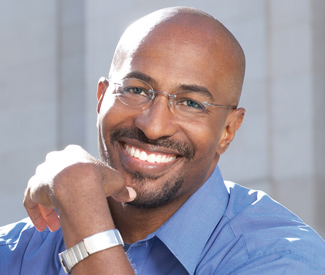
THE GREEN ISSUE No one can accuse Van Jones of being a one trick pony. In the early days of his activist career he monitored police violence in the Bay Area, and from there gradually widened the frame of his activist efforts. Jones formed the Ella Baker Center for Human Rights in Oakland in 1996, then became a green jobs pioneer, promoting environmentally-friendly work in low income communities — a revolutionary tactic that eventually landed him a short-lived adviser position within President Obama’s Council on Environmental Quality.

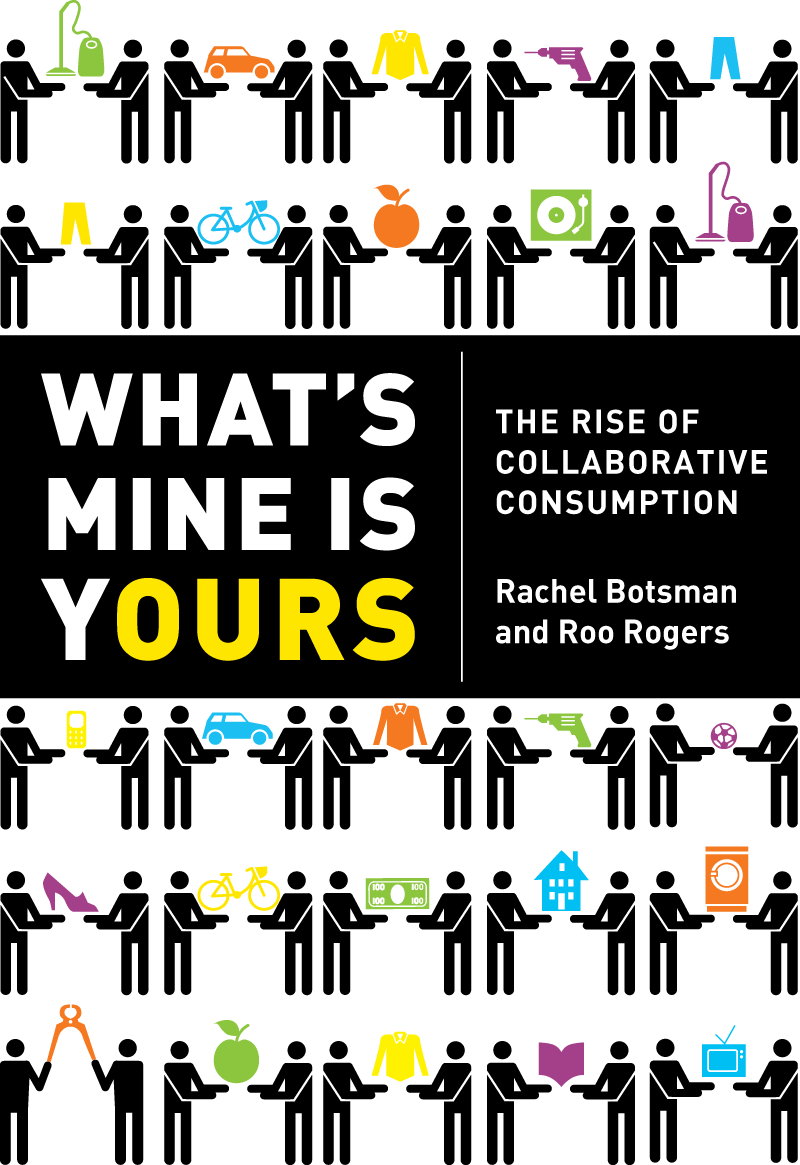
In his new book Rebuild the Dream (Nation Books, 278pp, $25.99) Jones has expanded his talking points to include the ways in which the financial sector has let us down, how Obama only did what we forced him to do (we gotta yell louder, Jones says), and how we can help fix the economy by focusing on “collaborative consumption.” Call it holistic activism. He’s launched a national junket to talk Rebuild that will bring him to the Commonwealth Club on April 16.

It is perhaps this kind of nuanced approach that scared the bejeezus out of the conservative demagogues whose smear campaign convinced Jones to resign from his White House post in 2009. Leave it to Glenn Beck to shame someone for saying he wanted “a whole new system” (as Jones proclaimed in a speech at a youth climate change conference.) The conservative media accused Jones of a communist past — which was accurate enough — and of signing a 9/11 truther petition that said that George Bush had prior knowledge of the World Trade Center attacks. He was innocent of this last point, the organization in question admitted months later, to a deafening media silence.

But Jones hasn’t retracted his call for a new system. In fact, in the pages of Rebuild the Dream he seems to step into a post-resignation hybrid role, in which he is no longer an outsider activist, but still has no formal role in Washington, D.C. Accordingly, he seems less fired up by the actions of national politicians as the agenda-pushing energy of the Tea Party and Occupy movements, which his new book spends entire chapters analyzing and critiquing. Even certain innovative businesses get a shout-out.

“You have Kiva, Kickstarter, Airbnb, and Zip Car already beginning to point to a future economy where more people are sharing fewer things,” Jones told the Guardian in a phone interview last week. “That’s good for people and the planet. You are also are saving money and you’re relying on people and relationships rather than dollars, you’re refinancing your social capital.”

He calls this economic ethos “collaborative consumption,” and it’s a heady idea for proponents of self-sustaining communities. Building a new economy on this business model, however, will take some tweaking that’s not covered in Rebuild — the city-level debate on whether SF Airbnb users should be subject to the city’s 14 percent hotel tax is one current-day example of how things can get complicated.

Rebuild offers a fairly honest critique of Obama’s successes and failures during the president’s first year in office. Nonetheless, the timing of the book, with it’s underlying message that we need to stay engaged in the political system to achieve real change, seems somewhat cagily timed. Is Rebuild the Dream part of Obama’s re-election campaign?

“The answer is no,” Jones is quick to reply. “We’re a non-partisan organization, we don’t endorse political candidates.”

But the election year publication is no coincidence: he wants all candidates to start talking about fixing the institutional reasons behind inequality.

“The two factors once used to pull people out of poverty were home ownership and education,” he says. “Those have now become the two factors by which people are being pulled into poverty because of the underwater mortgage problem and the fact that kids are coming away from college with massive debt and no ability to get a job. We think that these are issues that the politicians need to be forced to respond to and rethink.”

VAN JONES

April 17, 7pm, $20

Commonwealth Club

595 Market, second floor, SF.

(415) 597-6700

www.commonwealthclub.org


Our Weekly Picks: March 28-April 3

0

WEDNESDAY 28

“How to Drink Like a Locavore” Rents in the Mission and Noe Valley rose 10 percent in the last six months? Sea changes are afoot in this city (as always). But let’s make lemonade with the lemons of increasing preciousness — the monied have certainly provided a market for the Bay’s burgeoning local liquor scene. Community service for having snapped up the rental market? Today, for $25 anyone can sample pours from more than six distilleries in the tony climes of the Commonwealth Club — the ambrosial offerings of St. George’s Spirits, Anchor, and Distillery No. 209 included. Oh, and there’ll be an expert panel of hoochmakers to educate on what you’re sipping. Ask them if they need a roommate. (Caitlin Donohue)

6:30 p.m., $7–<\d>$25

595 Market, SF

(415) 597-6700

www.commonwealthclub.org


Sea of Bees

To call Julie Baenziger’s brand of sweet, haunting, exasperated vocals unique is an understatement. The Sea of Bees leader hails from California’s Central Valley and creates dreamy, blissful folk rock with a small group of co-conspirators. Sea of Bees’ debut album, Songs for the Ravens (2010), received critical acclaim and carries a fair bit of angst (with subtlety, mind you). Its forthcoming LP, Orangefarben, out this spring, includes “Gnomes,” a dynamic, surreal track released last summer on EP. Baenziger’s songs focus on love, sadness, hope, and intimacy, and her soulful style and live candor will draw you in.(Mia Sullivan)

With Radiation City, the Loom

8 p.m., $10

Rickshaw Stop

155 Fell, SF

(415) 861-2011

www.rickshawstop.com


THURSDAY 29

The Ferocious Few

Oh the Ferocious Few, how do we love thee, let me count the ways. That with just a guitar and drum kit you are nonetheless able to create a rock’n’roll ruckus any five-piece combo would be lucky to emulate (one). That Francisco Fernandez’s vocals, a honeyed firewater blaze, haunt every BART-station-street-corner-park-bench you’ve ever played (two). That every lyric you’ve penned about love lost slices right through the heart and straight for the jugular (three).That despite the massive setback of getting your gear stolen (since recovered), you still made it to SXSW with aplomb to spare (four). That you’re headlining a gig, indoors for a change, just before we went into major FF withdrawal (five). There are more reasons, but we’re out of word count. Just go. (Nicole Gluckstern)

With Zodiac Death Valley, B. Hamilton

8 p.m., $14

Great American Music Hall

859 O’Farrell, SF

(415) 885-0750

www.slimspresents.com


FRIDAY 30

“Dance Anywhere”

The world is in the toilet, and at times it feels like a giant cosmic hand is just about to flush us all. But a glimmer of hope for humanity lurks amid events like “Dance Anywhere,” which advises even the two-left-footed among us to pause and bust a joyful move in as part of a coordinated, global public art movement. Check the event’s website to line up your time zone (in San Francisco, it’s noon), and limber up for your solo macarena — or find your way to a free professional performance. Bay Area participants include Anne Bluethenthal Dance (at SFMOMA), Raisa Simpson and Push Dance Co. (at the Oakland Museum of California), and Alyce Finwall Dance Theatre (on 343 Sansome’s rooftop deck). In the words of Footloose: dance your ass off! (Eddy)

Noon, free

Various locations

www.danceanywhere.org


Kevin Brownlow

“The visual resources of the cinema have never been stretched further than in Napoléon vu par Abel Gance.” — that’s what Academy-honored film historian Kevin Brownlow had to say about the 1927 epic in his silent film tome The Parade’s Gone By… Now, his decades of restoration work on the film are culminating with screenings at the Paramount Theater in Oakland (the remaining two are Sat/31 and Sun/1; visit www.silentfilm.org for info). Brownlow will appear at UC Berkeley’s Pacific Film Archive to present “Abel Gance’s Napoléon, A Restoration Project Spanning a Lifetime,” a discussion of his work, sure to be an invaluable companion to the movie itself, which will feature scenes from the film and live piano accompaniment from Judith Rosenberg. (Sam Stander)

Book signing and reception, 5:30 p.m.; on Napoleon, 7:00 p.m., $5.50–<\d>$9.50

Pacific Film Archive

2575 Bancroft Way, Berk.

(510) 642-1412

bampfa.berkeley.edu


“Computer Face: A Show by Kirk Read”

Make way Wolf Blitzer, writer-performer-instigator Kirk Read, following the campaign trail as a sex worker like Mother Courage hauling her wares after the armies of Europe, offers his own take on the Republican primaries — among so much else — in his latest performance piece, now up through this weekend at the Garage. Read’s theater work is often grouped, not unreasonably, under performance art, queer cabaret, and such, but he has a quality that feels sui generis and shouldn’t be missed. Exuding a charming combination of practical, everyday groundedness and unmoored fancy, Read is a pure artist, and Rick Santorum’s hot wet nightmare. (Robert Avila)

Through Sat/31, $10–$20

Garage

975 Howard, SF

(415) 518-1517

www.975howard.com


Galactic

For those who aren’t really into jam, think of Galactic as an incarnate of Phish with brass instead of wah; but really, if you have a soul and like fun, you should probably acquaint yourself with Galactic, as it represents jazz-funk jam at its finest. The group’s live shows have been known to induce expressive dance as well as impressive marijuana intake. The pulsing and ecstatic Carnivale Electricos, which came out this past Mardi Gras, is an ode to carnivale in New Orleans (the band’s home city) and Brazil, where people take the responsibility of engaging in lustful debauchery on this crazy night quite seriously. (Sullivan)

With Soul Rebels Brass Band, Corey Henry

Fri/30-Sat/31, 9 p.m., $41.50

Fillmore

1805 Geary, SF

(415) 346-6000

www.thefillmore.com


Filastine

Could there be anything more emblematic of the “global economy” — its giddy consumerism, its nomadic promise, its horrid displacement — than the lowly shopping cart? Audio-visual percussionist Filastine makes the shopping cart central to his transnational electro bass music project, zinging, plucking, and kicking its ribs to turn a metaphor into a dance party of resistance. His amazing latest video, “Colony Collapse,” was filmed at several sites of ecological disaster, pairing with the sites’ residents to make a fractured song of despair and hope. His live stage show, this appearance opening for Bay Area electro-jazz-hop collective Beats Antique, couples virtuoso live drumming and electronic grooves with a visual spectacle that holds crowds spellbound, a neat complement to the mobile dance parties and sonic activism he’s renowned for leading, from Tokyo to Barcelona. (Marke B.)

With Beats Antique, the Loyd Family Players

8 p.m., $25

Fox Theater

1807 Telegraph, Oakl.

(510) 548-3010

www.thefoxoakland.com


SATURDAY 31

Pilot 60

ODC’s Pilot Program is giving young choreographers a leg up, so to speak. Having an idea about making a dance is easy. Shaping it so that it makes sense to the choreographer as well as to an audience is tough. Being in the same boat with others, however, helps. Just ask the dozens of choreographers who over the years (this is Pilot’s 60th incarnation) have gone through this well structured, proven way to nudge budding professionals to the spotlight. Alison Williams, Samantha Giron, Milissa Payne Bradley, David Schleiffers, Lisa Fagan and Claudia Anata Hubiak will be presenting works this time around. (Rita Felciano)

Sat/31-Sun/1, 8 p.m., $12

ODC Dance Commons, Studio B

351 Shotwell, SF

(415) 863-9834

www.odctheater.org


SUNDAY 1

“Memorabilia from the Ira and Leonore Gershwin Trust”

Know your Gershwins: Ira was the older brother (born 1896), but he outlived George (born 1898) by nearly 50 years. Together, they were a songwriting dream team ruling Broadway and American popular song — but even after George’s death, Ira continued writing lyrics for the stage and screen. He died in 1983; his widow, Leonore, died in 1991 after devoting her later years to preserving the legacy of the talented brothers. Fans won’t want to miss the exhibition of items from the Ira and Leonore Gershwin Trust (sheet music, concert posters, family photos, awards), as well as related events, including a talk by Ira’s nephew Mike Strunsky (Mon/2) and performances of The Man That Got Away: Ira After George (April 13-15). (Eddy)

Through June 15

Gallery hours Mon.-Thurs., 7 a.m.-10 p.m.; Fri.-Sun., 7 a.m.-8 p.m., free

Jewish Community Center of San Francisco

Katz Snyder Gallery

3200 California, SF

www.jccsf.org


“April Fools With Miss Coco Peru”

Tempting as it might be to play a trick on some poor fool today, firing the opening shot in a prank war is risky — payback is, after all, a notorious bitch. Instead of getting your April Fool’s Day guffaws at the expense at someone else, why not show your appreciation for a razor-sharp and unfailingly glamorous comedian? Miss Coco Peru, star of screens big (1999’s Trick) and small (“Wee Britain”-era Arrested Development) — and, of course, of stage (Ugly Coco) — performs her latest, There Comes a Time, a no-holds-barred monologue reflecting on her colorful life in the spotlight. Earlier in the day, Miss Peru will be on hand for a short Q&A after a screening of 2003’s Girls Will Be Girls, a campy cult comedy (tantalizingly described as “every novel Jacqueline Susann’s ever written”) with a sequel due out this year. (Eddy)

Screening, noon, $10

Performance, 7 and 9:30 p.m., $29.95

Victoria Theatre

2961 16th St., SF

(415) 863-0611

www.ticketfly.com


Chain & the Gang

You’re either with Ian Svenonius or you’re against him. The shamanic leader of Nation of Ulysses, Make-Up, and Weird War (all quality on their own, according to me) inspires fervor, mirrored weirdness, and the occasional eye-roll (hey, I’ve seen it). His most recent project Chain & the Gang (touring now in support new LP, In Cool Blood ) doesn’t get any less quirked, so if you’re not in line with Svenonius, you won’t find it as thrilling as the rest of us. With a muffled scream here, a tambourine shake there, and a buzzing chainsaw guitar slicing through it all, Chain & the Gang is a testament to Svenonius’s continuity, and his ongoing ability to scrap genres, culling the best bits of the past — Southern blues, working man shuffles, post-punk, and mod — for his own future perfect. (Emily Savage)

With Neonates, the Smell

9 p.m., $9–$12

Brick and Mortar Music Hall

1710 Mission, SF

(415) 800-8782

www.brickandmortarmusic.com


TUESDAY 3

Field Report

Chris Porterfield used to be a member of the now-defunct Wisconsin-based act DeYarmond Edison with Justin Vernon (Bon Iver) and the men of Megafaun (Brad Cook, Phil Cook, Joe Westerlund). He also made music under the Conrad Plymouth moniker for a while but recently debuted his new project, Field Report, at SXSW — a lush and poetic picture of longing, nostalgia, and hope. The retrospection and emotionality wrapped into Porterfield’s folksy, bluesy Americana is easily relatable and will make you want to melt into his world. Field Report’s debut album, which was recorded in Vernon’s studio and produced by Paul Koderie, is due out in July. (Sullivan)

With Megafaun

9 p.m., $12

Cafe Du Nord

2170 Market, SF

(415) 861-5016

www.cafedunord.com


The Guardian listings deadline is two weeks prior to our Wednesday publication date. To submit an item for consideration, please include the title of the event, a brief description of the event, date and time, venue name, street address (listing cross streets only isn’t sufficient), city, telephone number readers can call for more information, telephone number for media, and admission costs. Send information to Listings, the Guardian Building, 135 Mississippi St., SF, CA 94107; fax to (415) 487-2506; or e-mail (paste press release into e-mail body — no text attachments, please) to listings@sfbg.com. Digital photos may be submitted in jpeg format; the image must be at least 240 dpi and four inches by six inches in size. We regret we cannot accept listings over the phone.

On the Cheap Listings

0

On the Cheap listings are compiled by Soojin Chang. Submit items for the listings at listings@sfbg.com. For further information on how to submit items for the listings, see Picks.

WEDNESDAY 28

"Chaos and Catastrophe: Worst Days of Our Lives" humor reading series Intersection for the Arts, 925 Mission, SF. (415) 626-2787, www.litupwriters.com. 7:30 p.m., $5. As terrible and awful as life may get sometimes, it’s better to laugh about things than spiral into never-ending pits of misery. The performers at humor storytelling series LitUp Writers celebrate the fact that self-deprecation is so much entertaining than self-pity.

"Sex, Race, and Class: The Perspectives of Winning" Selma James activism tour CounterPULSE, 1310 Mission, SF. (415) 626-4114, www.counterpulse.org. 7:30 p.m., free. In the early 1980s, Selma James was one of the leading activists who fought to make the world recognize the value of unwaged women workers. Her efforts encouraged helped convince the government start tracking unwaged work in national statistics. Her newest book includes a selection of writings that track social struggles from 1952 to 2011.

"The Attack on Women" discussion North Berkeley Senior Center, 1901 Hearst, Berk. (510) 548-9696, www.berkeleygraypanthers.mysite.com. 1:30 p.m., free. Dr. Carole Joffe of UC San Francisco’s Bixby Center for Reproductive Health has notes from the field regarding the battle being waged on reproductive rights.

THURSDAY 29

Emerging Writer’s Festival University of San Francisco, Marasachi Room in Fromm Hall, 2130 Fulton, SF. (415) 422-4298, www.usfca.edu. Panel discussion noon-2 p.m.; author readings 7:30 p.m., free. Being a writer often means not having a concrete career plan and pursuing the art relentlessly nonetheless, even with the high chance that you may end up living in a box. This is all kinds of scary, so look to the festival’s five emerging writers who are currently establishing themselves in the literary world for inspiration and pointers.

FRIDAY 30

"Where in the world is Jeju Island?" symposium Redwood Gardens, 2951 Derby, Berk. (510) 549-2210. 6:30 p.m., bring a dish to share. Jeju-do is South Korea’s largest island. The province has a rough political history that is almost never heard of, and because of its geographic isolation, retains a colorful and distinctive culture. Recent visitor to the island Ann Wright will share her experiences and examine the island’s transnational concerns during this potluck dinner presentation.

SATURDAY 31

Bay Area Anarchist Book Fair San Francisco County Fair Building, 1199 Ninth Ave., SF. (415) 431-8355, www.sfbookfair.wordpress.com. Through Sun/1. Fair hours Sat. 10 a.m.- 6 p.m.; Sun. 11 a.m.- 5 p.m., free. This book fair is not just a normal book fair, more a mix of a theoretical summit and a big, happy, radical family reunion. By no means must you be an anarchist to enjoy the impressive lineup of publishers and distributors, plus panel discussions with activists, philosophers, and authors.

"The Clubman’s All-British Weekend" motorcycle show Santa Clara County Fairgrounds, 344 Tully, San Jose. (408) 494-3247, www.classic-british-motorcycles.com. 8 a.m.-4 p.m., $5. This all-volunteer motorcycle show is proud to present 150 pre-war and post-war classics, customized choppers, military machines, and contemporary British racers, all in pristine condition.

Wag Hotels Easter egg hunt Wag Hotels, 25 14th St., SF. (415) 876-0700, www.waghotels.com. 11 a.m.- 1 p.m., $20 per family. If children had a dog’s sense of smell, egg hunts would end so much quicker. To test Fido’s keen olfactory skills, Wag Hotels is hiding 1000 eggs filled with yummy treats, and five eggs with especially awesome prizes. Easter attire is encouraged for pets (and you too).

"Reflections 2012" charity art exhibition The Cannery, Suite 111, 2801 Leavenworth, SF. (415) 772-0918, www.northbeachcitizens.org. Through April 26. 10 a.m.-5 p.m., free. Artists utilize a mirror (maximum size three by four feet) in their creative expression of the meaning of self-reflection and transformation. All works of art sold in this exhibition will benefit North Beach Citizens, a community program that assists San Francisco’s homeless in attaining a mailing address, library card, clothing, and food resources.

April Fool’s Day at Playland-Not-At-The-Beach Playland-Not-at-the-Beach, 10979 San Pablo, El Cerrito. (510) 592-3002, www.playland-not-at-the-beach.org. Through April 1. 10 a.m.-5 p.m., $15 for general admission; $10 for children and seniors. There is no better place to celebrate the day of tricks than an amusement park full of magic shows, haunted houses, and clowns. Playland is built entirely by volunteers and houses over 20 interactive exhibits of fun.

"In the Aftermath of Prospect.1 and Hurricane Katrina" artist conversation Yerba Buena Center for the Arts, 701 Mission, SF. (415) 978-2787, free with gallery admission; $7 regular; $5 students, seniors, teachers. "Mithra" is an ark that was originally created as a contemporary art exhibition for Prospect New Orleans, that Katrina-ravaged city’s town-wide art festival. Join artist Mark Bradford as he reflects on the status of cultural regeneration in the post-disaster city.

SUNDAY 1

"Careers in Animation" panel discussion San Francisco State University, August Coppola Theatre, Fine Arts Building Room 101, 1600 Holloway, SF. (415) 338-1629, www.sfsu.edu. 1 p.m., free. Professional writers, animators, and directors working in stop-motion, 2D, and 3D animation are coming to share their Technicolor knowledge on how to cue up your career.

MONDAY 2

"The Comatose, the Cadaver, and the Chimera" lecture Banatao Auditorium, 310 Sutardja Dai Hall, UC Berkeley. (510) 495-3505, bcnm.berkeley.edu. 7:30 p.m.-9 p.m., free. Stelarc is an Australian performance artist who blends experimental theatre, new music, and dance with medical instruments, prosthetics, robotics, and virtual reality systems. Come hear him speak of the cadavers of the future, and other esoteric artistic matters.

National Poetry Month poem sharing The Booksmith, 1644 Haight, SF. (415) 863-8688, www.booksmith.com. 7:30 p.m., free. Your favorite poem is your favorite poem because of the meaning that you have attached to the words. Share a poem that plucks at your heartstrings in your own style and hear others as they bring a whole new light to their favorite works.

TUESDAY 3

Jay Rubin and J. Philip Gabriel discuss the art of translation and collaboration 111 Minna Gallery, 111 Minna, SF. (415) 974-1719, www.111minnagallery.com. 12:30 p.m.- 1:30 p.m., free. So much of world literature could have never have reached their audience without the efforts of highly talented translators. Join Jay Rubin and J. Philip Gabriel for lunch as they discuss the decades-long translation collaboration they’ve enjoyed with Haruki Murakami.

Open sketchbook workshop Actual Cafe, 6334 San Pablo, Oakl. (510) 653-8386, www.actualcafe.com. 5 p.m.-8 p.m., free. Bring your sketchbook and come draw alongside local working artists in a bohemian atmosphere of artistic creation and expression.

"Kasher in the Rye" author discussion Jewish Community Center of San Francisco, 3200 California, SF. (415) 292-1233, www.jccsf.org/arts. 7 p.m., $10-15. Moshe Kasher was raised by deaf parents in Oakland and was one of the only Jewish kids at his school. He started obsessing over hip-hop, then drugs and gangs, and luckily for us, now directs his energy in finding brilliant humor in those unique beginnings.

Black Power, then and now

17

“We’re not ever to be caught up in the intellectual masturbation of the question of Black Power. That’s a function of people who are advertisers that call themselves reporters.”

That’s how the radical student and civil rights leader Stokely Carmichael opened a speech about Black Power — a term he helped popularize — at UC Berkeley in 1966. But the ideas and concepts behind Black Power proved to be an enduring ones that are enjoying a resurgence today.

Angela Davis epitomized the Black Power movement to many observers. The author, scholar, and professor was a Black Panther Party member who then joined the Communist Party USA and brought a class analysis to issues of race, building on the movement that began in the ’60s for decades to come.

In recent months, as the Occupy Wall Street movement began to focus the country’s attention on economic and social inequities, Davis has spoken out regularly in support of the movement and drawn connections back to her early activism. She has embraced the “99 percent” paradigm, and the connections between various issues that Occupy activists have sought to highlight.

“Our demands for justice lead us toward demands for prison abolition. And our demands for prison abolition lead us to demands for free, quality education. And our demands for free quality healthcare, and housing, and an end to racism, an end to sexism, an end to homophobia,” Davis said March 1 in Oakland at a benefit for Occupy 4 Prisoners, a coalition of Occupy protesters and prison justice advocates.

Consciousness surrounding those connections can be largely attributed to efforts from Black Power organizers.

“When I listen to the way young people so easily talk about the connectedness of race, gender, and sexual issues, and I remember how we groped our way towards an understanding of those connections, it makes me really proud,” Davis said in a January interview with Independent Lens.

And as Davis said at the March 1 event: “One of the most exciting accomplishments of the Occupy movement has been to force us to engage in conversation, explicit conversation about capitalism, for the first time since the 1930s.”

The movement’s economic message also seemed useful to Kiilu Nyasha, a San Francisco-based journalist and former member of the New Haven Black Panther Party.

“Globalization has already happened. It’s not happening, it’s happened. One percent, internationally, owns and controls 80 percent of the world’s resources. People are dying all over the world of every complexion which you can think of” Nyahsa said March 14 at a panel discussion called Reboot the Rainbow.

The original Rainbow Coalition- the topic of the March 14 panel- included the Black Panther Party, the Puerto Rican Young Lords, and the poor white Young Patriots organization, and was committed to a Black Power concept: organize your own, fight together. Building coalition is more important now than ever.

“It’s not Black Power right now,” says Terry Collins, president of KPOO radio, a black-owned station long focused on community empowerment. “It’s people power. It’s power unto the people who are in need: all the people out there who are out of their homes, students who owe so much that they’re like indentured servants.”

Occupy the Hood is a national effort to encourage participation of people of color in Occupy Wall Street. In its mission statement the group writes, “It is imperative that the voice of people of color is heard at this moment!”

The focus of San Francisco’s Occupy the Hood chapter is “three-fold,” according to organizer Mesha Irizarry: “The cop-watching in neighborhoods that are criminalized, especially poor neighborhood of color. It’s freedom fighters against foreclosures. It’s also bank transfers.”

Occupy the Hood showed up March 16, when a group known as the Foreclosure Fighters- organized and supported Alliance of Californians for Community Empowerment, Homes Not Jails, and related groups—occupied their latest foreclosed home. “We’re liberating this house. We’re taking it out of the hands of the oppressor,” said Archbishop Franzo King of the African Orthodox Church.

“Jesus Christ was an uncompromising revolutionary. He spoke truth to power. Then they killed him for it,” added King in a nod to the radical religious leaders who have influenced liberation movements throughout the years.

Black Power was concerned with self-determination, with organizing within community. That legacy is still strong as San Francisco’s African American communities experience an out-migration and continuing police harassment and violence.

“Black sailors and black army personnel built the shipyard,” said Jameel Patterson, a founder of the Bayview-Hunters Point-based community organization Black Star Liner Incorporated. “Hunters Point, West Point, Harbor Road—they’re all military names. The soldiers stayed there with their families. The area has a rich African American legacy going back to the ’40s. Now it’s fading…we want to make sure that community’s still here 20 years from now.”

Patterson remembers being a child in the ’70s when, on the tail of an era brimming with black liberation efforts. “There were more community events,” he said, but now, “People don’t have connections with each other. That’s what we’re building.”

The group does regular events where they serve free home-cooked meals to residents, reminiscent of the Black Panther Party’s free breakfast program. “With every plate, you get information,” often Know Your Rights reminders for encounters with police, said Tracey Bell-Borden of Black Star Liner.

They have also spent countless hours in City Hall meetings advocating for their community and reporting back on city policies that affect it. “We occupy the Police Commission meeting,” said Bell-Borden.

Police are a central and tricky question for the Black Power movement of the ’60s, as well as organizing efforts today. Black Panther Party members spent years serving free breakfast to children, writing and selling newspapers, and even running election campaigns, but they are often remembered for carrying guns and efforts to “police the police.” So many leaders were arrested that energy that could have gone into feeding or education was often channeled into freeing prisoners.

“I was in the second chapter of the Black Panther Party,” Nyasha said at the March 14 event, “which basically existed to get the first chapter out of jail.”

Recent police crackdowns have fed indignation not just about policing protesters, but about the role police play in poor communities of color. “One thing Occupy has done is address the issue of policing in communities of color, to the extent that some aftermath of what we’re seeing at Occupy is shedding light on how police can sometimes treat people,” said Kimberley Thomas Rapp, executive director of the Lawyers’ Committee for Civil Rights of the Bay Area.

“In black neighborhoods, police should be community partners, not come in and exert more force than necessary. And at protests, they should be there to ensure safety, not just to arrest people unnecessarily or use excessive force,” Rapp said.

Police crackdowns on Occupy are the first exposure many white protesters of the younger generation have had to excessive police force, an issue that was central to the story of the Black Power. Sadly, for many black and other protesters of color, excessive police force is nothing new.

“It’s absolutely the case that police brutality shown towards many Occupy protesters has brought to the forefront the issue of police violence and led to an awakening among many white folks of the day to day reality of police violence that many people of color have lived with now for many years,” Michelle Alexander, author of The New Jim Crow, told the Guardian.

Enraged at police beatings (see “OPD spies on and beats protesters,” Feb. 14) both Occupy Oakland and Occupy San Francisco have held “fuck the police” marches. March 18, after a six-month commemoration celebration brought 3,000 to Zuccotti Park in New York City, followed by 200 arrests and rampant police violence, Occupy Wall Street protesters followed suit, holding their first anti-police brutality march.

Occupy Wall Street has reanimated concepts that burned through the ’60s, such as violence vs. nonviolence, the systemic causes of personal economic woes, and the peoples’ relationship to police. With the consciousness created by Black Power activists, today’s organizers have a foundation on which to build their own answers to these questions, across issues and generations.

National Occupy the Hood has called for action concerning Trayvon Martin, the unarmed black 17-year-old who was shot Feb. 26 and whose confessed killer has yet to be arrested. Taking up high-profile cases of injustice and working more closely with organizers to respond to the needs of local African American communities could bring more power and truth to the rage for justice currently galvanizing a new generation.

“It’s about black re-empowerment,” Archbishop King said. “It’s like the torch, the light of freedom and justice, has actually gone out. And we’re trying to relight that. That’s why I’m so excited about the Occupy movement; it ties into the Black Power struggle. And I think it’s waking up some of us old revolutionaries to stand up.”

On the Cheap Listings

0

On the Cheap listings are compiled by Soojin Chang. Submit items for the listings at listings@sfbg.com. For further information on how to submit items for the listings, see Picks.

WEDNESDAY 7

San Francisco Green Film Festival closing night film and party San Francisco Film Society Cinema, 1746 Post, SF. (415) 742-1394, www.sfgreenfilmfest.org. 5:30 p.m., $12 per film. Whether you’ve had the chance to check out the second annual Green Film Fest’s activist-making movie screenings, make sure to check out its final night celebrating sustainable living and the fight to save our environment. The closing film Just Do It is a tale of modern-day outlaws and illegal activism in England.

THURSDAY 8

International Women’s Day March sign-making party New Valencia Hall, 747 Polk, SF. (415) 864-1278, www.radicalwomen.org. 7 p.m., $7.50 suggested donation for dinner. Sisters United Front is having a rally on March 10 to oppose budget cuts that have hit poor women the hardest. In anticipation of the march, Radical Women is hosting this evening of food and sign-making.

FRIDAY 9

Make Do! recycling exhibit and fashion show K Gallery at Rhythmix Cultural Works, 2513 Blanding, Alameda. (510) 865-5060, www.rhythmix.org. 6 p.m.-9 p.m., free. Recycling is not only something that happens when sorting out your garbage, but is also when finding creative ways to create functional treasures out of seemingly useless trash. The opening night of Make Do! will feature vintage vendors, delicious treats, and an upcycle-oriented fashion show.

SF Beer Olympics Impala Bar and Ultra Lounge, 501 Broadway, SF. (415) 982-5299, www.impalasf.com. 8:30 p.m., free to play; $10 to drink. Are you a lover of beer games with friends who hate them? Come make a mess with like-minded individuals who are more than ready to ditch the overpriced cocktails for a duel over brew.

Avant-garde sound and visual night with Edmund Campion Berkeley Art Museum and Pacific Film Archive, Gallery B, 2626 Bancroft, Berk. (510) 642-0808, www.bampfa.berkeley.edu. 7 p.m., $7. Edmund Campion is a pioneer of computer-enhanced performance practice and is the special guest for this week’s BAM/PFA Friday Late Night event. He promises to deliver a truly tripped-out experience through a mix of video projections, a choir scattered throughout Gallery B, and his unique take on electronic tunes.

SATURDAY 10

Lawrence Ferlinghetti’s Out of Chaos opening reception Kala Gallery, 2990 San Pablo, Berk. (510) 841-7000, www.kala.org. 4 p.m.-6 p.m., free. The friend and publisher of many Beat writers, Ferlinghetti drew from his well of experiences when working on his poetry and art. Come meet the one-time poet laureate of San Francisco as he launches Out of Chaos, a portfolio that showcases his original artwork and poetry.

“Sweeping of Giants” abstract ink artwork opening reception Old Crow Tattoo and Gallery, 362 Grand, Oakl. (510) 834-2769, www.oldcrowtattoo.com. Through April 9. 8 p.m., free. There are always samples of previously inked designs in the albums and on the walls of tattoo shops, but they’re usually small renderings or unsatisfying snapshots. Come see how visually orgasmic it is when detail-attentive ink artists really let loose in a surrealist painting, design-oriented composition, or a geometric field of color.

World Naked Bike Ride San Francisco edition Northeast corner of Justin Herman Plaza, 1 Market, SF. www.sfbikeride.org. 11 a.m.-4 p.m., free. Take a naked stance against our society’s global dependency on oil cartels in this mobile protest. Feel the liberating breeze as you ride as bare as you please through San Francisco’s favorite spots. Fingers are crossed for outstanding weather.

“Reflecting on his Politics, Music, Fighting Capitalism, and Cancer” jazz performance and panel discussion Multicultural Community Center in the Associated Student Union Center Building at UC Berkeley, Bancroft and Telegraph, Berkeley. (510) 548-2350, www.asiabookcenter.com. 2 p.m., free. Fred Ho is a saxophonist and social activist who underwent intense surgery and chemotherapy and came out of the battle with a new understanding of what “true healing” means. Join Ho as he discusses health, sustainability, raw foodism, and of course, indulges us with a little jazz.

Kiteboarding party and benefit event Rickshaw Stop, 155 Fell, SF. (415) 861-2011, www.rickshawstop.com. 6 p.m.-9 p.m., $10 donation. San Francisco is kind of the perfect place for kiteboarding because of the ever-present wind and the beautiful scenery. Help keep our city beautiful by supporting nonprofit Baykeeper’s work in preventing pollution in the Bay Area — you might even win some cool kite gear in the process.

SUNDAY 11

“Lazy Sunday Shopping Day”: Opening weekend of Chronicle Books at the Metreon Chronicle Books, 165 4th St., SF. (415) 369-6271, www.chroniclebooks.com. 10:30 a.m., free. Sunday should be for strolling and snacking, and Chronicle Books is honoring this sacred ritual with coffee and Top Pot doughnuts at its shop opening in downtown’s Metreon.

MONDAY 12

Bargain Basement Concert Night Bottom of the Hill, 1233 17th St., SF. (415) 621-4455, www.bottomofthehill.com. 8:30 p.m., free. The weekend might have drained your pockets but there’s not reason you can still dance. Local bands and DJs totally understand — they are hosting a cover-free night of surprisingly eclectic music. Think how delicious your moves will feel when you’re rocking them to Arms and Legs, Jackal Fleece, Surf Shit, and Junkdrawer sans financial damage.

Green Film Fest shorts: Just Do It

0

Activist ire need a jump start? The Green Film Festival takes over Japantown’s San Francisco Film Society Cinema now through Wed/7. Go for tidings on the fight for our planet around the world — documentaries, expert panel presentations, and short films will be taking place. Check out Ali Lane’s previous reviews from the festival here.

Just Do It

In this intimate peek inside the world of “Environmental Direct Action,” viewers will marvel at the organization and cooperation displayed by the film’s English subjects. Occupy Oakland could really learn a thing or two from these self-proclaimed “domestic extremists,” champions against climate change, who the filmmakers followed for a year. The film starts off in the lead-up to “Climate Camp,” a literal camp-out of protesters in a secret location on a hill above London. From here, the protesters plan an “action.” Their actions seem pretty harmless and whimsical: gluing their hands together and invading the trade floor of RBS to sing songs; putting up posters at the entrance of a bank that says “Undergoing Ethical Renovation”; handcuffing themselves to the front gate of an MP’s home in order to publicly berate his policies. But these protests work. They get the news media to cover topics that were previously ignored.

The subjects of this film are mainly photogenic young people, with a few seasoned veterans as well, like . Some are Cambridge educated. All are uniformly anti-capitalist, as they believe capitalism inevitably leads to exploitation of the environment. They designate spokespeople, meticulously map out their “actions,” and memorize the legal consequences and potential charges faced, making sure to minimize any criminal property damage along the way. Before going out on an action, they write the phone number of their organization’s legal counsel on their forearms. What they’re doing is certainly risky, disobedient, and outside the margins of normal behavior, but the viewer gets the sense that these people have their act together and aren’t much of a threat to civil society.

This is a very sympathetic portrait of a movement, and it’s clear where director Emily James’s heart is. Her subjects’ enthusiasm for the cause, and for activism in general, is infectious. By the end it’s hard not to feel like a lazy bum as one subject intones, “Anyone out there thinking, ‘I wanna do more,’ just do it!” Indeed, this film doesn’t just give an impetus, but also a blueprint for how such things can be done.

The lingering question I had while watching the film, however, remained unanswered: where did these people get their money, for camp tents, and massive amounts of food, and buses, and superglue, and d-locks, and ladders: everything that it takes to protest, and live full-time as a protestor. Where do those funds come from? Perhaps this is a question to ask the filmmakers at the closing night party.

Green Film Festival closing night film and party

Wed/7 7:30 p.m., $12 for film, $15 for film and party

SF Film Society Cinema

1746 Post, SF

(415) 742-1394

www.sfgreenfilmfest.org


Green Film Fest shorts: The Global Catch

0

Chins up, enviros — this week there’s a slew of movies showing that prove that you’re not alone in fighting the good fight. The Green Film Festival takes over Japantown’s San Francisco Film Society Cinema now through Wed/7, and includes looks at exciting new forms of activism, as well as the film work from intrepid whistleblowers the earth over. Drop through for tidings on the fight for our planet around the world — documentaries, expert panel presentations, and short films. And be sure to check out the rest of Ali Lane’s reviews of Green Fest flicks.

Sushi: The Global Catch

The opening of this film shows Tokyo chef Mamoru Sugiyama carefully placing gorgeous transparent and artistically sliced pieces of nigiri atop perfectly formed mounds of vinegar rice, in his Michelin-starred restaurant kitchen. If you’re the kind of person who loves sushi, this scene makes your mouth water. It’s such a cruel tease. The film proceeds to tell you all the reasons why your San Franciscan appetite for sushi, so geographically remote from the land of its creation, is actually a very destructive thing.

The construction of sushi, in classical Japanese style, is a precise and elegant process, that this film does a beautiful job of exploring. It takes aspiring chefs two years of apprenticeship just to learn how to properly prepare the rice. But sushi is now being mass-produced all over the world, to feed a growing international taste for this once esoteric Japanese delicacy. Elegance and precision have fallen by the wayside, in favor of quantity and expediency. As with most such trade-offs, the environment is suffering for it. Of course the story revolves around money – as the demand has exploded, Bluefin Tuna has become a piscine gold for fisherman.   At legendary Tsukiji fish market in Tokyo, tuna can be auctioned for as much as $1200 per pound. Tuna has been so overfished that at this point, some propose to put it on the endangered species list.

This is a story of global food trends, an intimate cultural portrait of a revered Japanese tradition, and a conservationist’s field guide to seafood. The message is clear: don’t eat more than the earth can comfortably provide. But if, after watching, you still can’t help but crave a bite of sushi, head over to Tataki, San Francisco’s first sustainable sushi bar, profiled in the film and located in Pacific Heights.

Screening followed by panel: “Sushi, Sustainability, and the Fate of Fish”

Sat/3 1:00 p.m., $12

SF Film Society Cinema

1746 Post, SF.

(415) 742-1394

www.sfgreenfilmfest.org


Agrarian visions

0

By Cynthia Salaysay

arts@sfbg.com

VISUAL ART Artists are makers, though rarely of history. But Fernando García-Dory and Amy Franceschini, two internationally recognized artists, seem to have a gift for it. “Perhaps,” García-Dory says, “when you start with a long perspective on history, you start to make history as well.”

At the David Brower Center’s Hazel Wolf Gallery, their joint show “Land, Use” presents work that is whimsical and futuristic, yet rooted in traditional agricultural values. It’s like Disney’s Tomorrowland — but on an urban farm, where wheelbarrows are pedal-powered. Or on the rolling green pastures of Spain, where sheep wear GPS transmitters around their necks.

Franceschini is one of San Francisco’s own. Her Victory Garden project in 2007 caught the fancy of SF City Hall, with pieces like Trike — a part-cycle, part-wheelbarrow, designed to contain all the supplies necessary to build a small garden. Soon the city began encouraging its residents to grow food, as it did in World War II. City Hall was decked out in raised garden beds, and residents throughout the city began their own vegetable patches.

García-Dory, from Madrid, has worked extensively with the dwindling Basque shepherds of the Pyrenees, where they have lived for centuries. His images and films portray white-haired men stacking golden cheese in ancient caves, or facing the wind, shearing one of their grim-faced flock.

The images come from the Shepherds School he created, and from his World Gathering of Nomadic Peoples (2005), in which shepherds and goatherds around the world came together to talk about their way of life, which has become so rarified in these modern times.

García-Dory’s work, in part, uses new technology to protect mobile pastoralism, as it’s called. His piece Bionic Sheep sits in the foyer of the gallery. The device emits ultrasound waves to repel wolves, as shepherds in Spain are no longer allowed to kill them to protect their flock. It also has a GPS so shepherds can keep track of their flock without being chained to the pasture. “They can stay at the bar, and have another beer,” Dory explains.

Adds Franceschini, “The role of art for us is, in part, utility. It has this negative connotation in the art world, but I think for us it’s important for the work we’re doing to be useful.”

Their first collaboration, Shepherd’s Wagon, a Blueprint, is “like the blueprint for a molecule that was sent on the Voyager shuttle to Jupiter,” says García-Dory. “It’s a way of saying, ‘Here, it’s a model, and it can be reproduced.'”

A canopy reaches out over the gallery, mimicking the awning of a shepherd’s wagon, where they sleep. Wooden chairs and a communal table fold down from the wall. As part of the installation, Franceschini and García-Dory invited young farmers, shepherds, and naturalists to sit together beneath their fragile roof. The forum’s purpose: to discuss how to balance the environmental concerns of naturalists with those of farmers and pastoralists, and forge a new network for social activism.

The gallery still holds some of the collective energy of the group. Remnants of their brainstorm litter the gallery like leaves blown over a sidewalk — a chaos of hopeful thoughts and ideas. Phrases like “We all need to come back to understanding the Farm Bill,” and “Let’s Shadow Each Other Voluntary Exchange Program” hang from the walls.

“Promoting a gathering as we did, it’s a way for us to be close to the people and have the direct communication that very often we lack in our lives,” says García-Dory.

“I haven’t been involved in food politics and land use in the last two years in the Bay Area,” Franceschini says. “For me, it’s a check in. Here’s all the people I’ve met from the Victory Gardens, here’s people I’d like Fernando to meet.”

Although the Bay Area is a hotbed of environmentalism and the slow food movement, awareness of pastoralism is low. “Dory’s reminding us of the history of the Basque sheepherders and the culture that brought shepherding to the American West,” says Brittany Cole Bush of Star Creek Ranch.

In the East Bay hills, Basque and Peruvian shepherds, along with young shepherds like Bush, use sheep and goats to reduce fire hazard, target invasive plants, and encourage native grasses to grow. “These animals are helping to revitalize the lands, and at the same time they’re producing a local grass-fed product that can be taken to market,” explains Bush.

Adds García-Dory, “Maybe sheep are the new celebrity, or should be.”

The Blueprint isn’t finished yet. “The people [at the gathering] said they would like to keep meeting and working, and that was really very encouraging for us,” says García-Dory. “We hope that the heritage of small farmers and shepherds can be a point of anchor for a new movement.”

Such a hope, though ambitious, seems realistic, given their past work. García-Dory’s World Gathering of Nomadic Peoples created an international, politically active community of shepherds that continues to work together. His Shepherds School has graduated 100 people. And Franceschini’s Victory Gardens live on — 10 of the gardens planted from the original 18 still exist. The city of San Francisco, which discovered through the project that people needed to learn how to grow food again, continues to fund educational programs like Hayes Valley Farm.

Although their pieces have created a lasting impact, Franceschini insists that much of that impact is due to the people around her. “An important part of what Fernando and I do is using the community around you to organize and activate ideas. That’s a message I’m always trying to tell my students. Your friends and your closest colleagues are your allies. I think sometimes you don’t see the potential in front of your nose.”

Other pieces on display include Franceschini’s This is Not a Trojan Horse, as well as short films and other artifacts documenting the Victory Garden, Shepherds School, and World Gathering.

LAND/USE

Through May 9

Hazel Wolf Gallery

David Brower Center

2150 Allston, Berk.

(510) 809-0900

www.browercenter.org