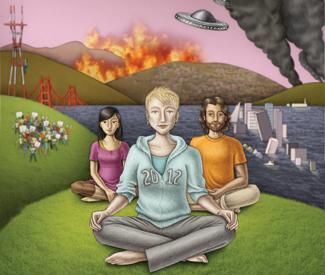
2012

Psychic Dream Astrology: A look ahead to your 2012

0

ARIES

March 21-April 19

This week: It’s wicked hard to be patient, especially when you just know that your way is the best way. This week you need staying power if you want to avoid creating needless drama. Use your awesome sense of humor and playfulness to diffuse the difficult stuff, including your perpetual restlessness.

2013: Happy New Year, Aries! The ego is a tricky thing, and while many of us associate it with over-confidence, it more often balloons out of fear and insecurity. This year your relationships will be the most important stuff, not only because they can be a great source of happiness, but also because they hold up such an accurate mirror. Choose to be true to yourself and those you love instead of succumbing to defensive reactiveness in 2013.

TAURUS

April 20-May 20

This week: You’re stuck in a tough spot but there’s no anchor to tether yourself — outside of yourself. That doesn’t mean you can’t trust or lean on others, but you need to stand by you above all else, Taurus. Let go of what you assume you’re supposed to do or be and just figure out what’s right for you.

2013: Happy New Year, Taurus! Who do you want to be, and how will your life be different if you actually become that dream self? 2013 is a challenge for you to grow into a truer version of your self. Your fears of change, rejection and good old-fashioned failure will do their best to thwart you, but don’t let them, pal. You are capable. It will require sustained dedication and follow-through to outgrow your old posturing, but it’s worth it. Embrace growth.

GEMINI

May 21-June 21

This week: Just because you’re ambiguous doesn’t mean you’re on the wrong track, Gemini. You need to trust in your instincts this week, and that means you’ve gotta be emotionally present enough to perceive them! Take care of the basics so that you don’t bring your insecurities from the place of bad-vibes fantasy to reality.

2013: Happy New Year, Twin Star! Its 2013 and you know you need change, but you don’t know how to do it, or even what the best direction is. Don’t worry too much over the details; contemplate what your life would feel like if you were more happy with it, what might you be doing differently? Keep your eyes open for opportunities that will allow your life to feel as you want it to, even if the path is dramatically different than you would have thought.

CANCER

June 22-July 22

This week: The problem with being scared of things going wrong is that those thoughts and feelings motivate you to look for evidence of your fears coming true. This week you should resist the impulse to look for what you least want, Moonchild. Put your formidable energy into calming your insides instead.

2013: Happy New Year, Moonchild! Your 2013 theme centers on your center. Get to lovin’ yourself, even if that means making peace with some uncomfortable truths about who you’ve been. You cannot successfully participate in life based on fantasies of who you are. So get real. It’s only by knowing yourself that you can create change that sticks. Show yourself compassion and experience the kind of self-acceptance that’s infectious.

LEO

July 23-Aug. 22

This week: It’s important that you reflect on your needs enough so that when le merde hits the fan you are still armed with enough self-knowledge to react in the best ways possible. Tend to yourself as a way to support your relationships this week; give freely and practice receiving the gifts presented to you, Leo.

2013: Happy New Year, Leo! This upcoming year the fates want you to go deeper that you’ve gone before into your mental wellness. Uncertainties can have a crippling effect on your self-esteem and mess with your sense of purpose if you let them. How you mentally and emotionally manage the unknowable will have a defining effect on your year. Success will come though your striving to better understand and support the good, the bad and the ugly within.

VIRGO

Aug. 23-Sept. 22

This week: There’s too much going on, and it feels super-overwhelming. This week your best tool is love, your greatest insights will be inspired by compassion, and the only way to go is to assume the best of others (and yourself.) Unify, don’t divide as a way to come to a better understanding of your situation.

2013: Happy New Year, Virgo! 2013 is going to change you, there’s no two ways about it. If you believed that life wants you to be happy, and that there is an abundance of what you need, how would you regard things differently? Strike up the courage to believe in the potential of your own happiness and success. Dare to grow when you would rather shrink and hide. Take heart and stand tall; it’s better to risk and fail this year than to not try at all.

LIBRA

Sept. 23-Oct. 22

This week: The best risks to take are around being your self. Authentically try for the stuff you want and invest in the goodness of your future in creative ways this week. Don’t take on anything new, focus on working with what you’ve got. Finish what you’ve started and repurpose instead of throw stuff out. You’re on your way, Libra.

2013: Happy New Year, Libra! This year it’s time to get free from being a people pleaser, and to saying yes when you mean maybe or no. Treat yourself to some radical honesty. Don’t assume that it’s your job to protect everyone’s feelings, or that you even know what they are. Let your relationships thrive in the space between where you are authentic as opposed to easy, and let others be themselves, too. It’ll be worth it, even if it seriously changes things.

SCORPIO

Oct. 23-Nov. 21

This week: Don’t think about it, just do it, Scorpio! You are on the verge of a big transition and you’ve processed as much with the well-oiled machine of your mind that is helpful. Now’s the time to go through the steps of opening up to something new, and letting go of what has been proven to not work.

2013: Happy New Year, Scorpio! Saturn is sitting in your sign all of 2013 and that means heavy lessons and serious introspection all year long for you. Remember that action always speaks louder than suffering! Once you see a thing clearly you can change it or decide to change yourself to accommodate it. This year is one of seeking, and for best results you should let what you most value motivate your actions. Stay focused on your goals and pro-active in achieving them.

SAGITTARIUS

Nov. 22-Dec. 21

This week: You can’t have it all at once all the time, Sagittarius. This week will test your ability to manage your thinking. If you jump to worst-case scenarios you’ll be stressed and get freaked out by how few options you see. Practice trusting in the abundance of your days. Even if it’s not here right now, there’s plenty of time for it to come.

2013: Happy New Year, Sagittarius! They say, “Forgiveness is letting go of all hope of a better past.” This year you need to forgive yourself for all the crap you did or didn’t do, and to offer the same compassion to others. None of us are perfect, and you should strive to accept the mistakes that have made you who you are today. Don’t confuse enabling with kindness or idealizing with generosity in 2013.

CAPRICORN

Dec. 22-Jan. 19

This week: You shouldn’t have to know who’s gonna win in order to play the game, Capricorn. This week, try to approach life with a strong sense of humor, a willingness to play fairly with others and your ambitions clear in your mind. You can have what you want but not without a lighter heart and flexible attitude.

2013: Happy New Year, Cappy! In this upcoming year you need to stop trying to figure things out. Look for creative solutions for what lies in front of you instead of trying make things fit into your agenda. The problems you face in 2013 will require your willingness to dare to stand up and be yourself, even when that feels risky. Treat yourself like a BFF instead of a frenemy when the going gets complicated.

AQUARIUS

Jan. 20-Feb. 18

This week: Be careful Aquarius, ’cause you might just get what you’re going for. Do you actually want what you’re working so hard to get? Will it make you happy and improve your life? Things are about to change and your job is to create a world that you want to be in, instead of just pursing one in which you “win”.

2013: Happy New Year, Aquarius! Look forward to cultivating some patience this year. Let 2013 be the time that you thoughtfully consider all of your options and make the best choices possible. If that’s not your mindset you may find yourself impatiently overdoing things and wrecking havoc in your life. Think like an economist and make cost-effective choices this year.

PISCES

Feb. 19-March 20

This week: Be in touch with what you feel to aid in laying the foundation for happiness to flow in your life. This week you might have to make extra effort to check in with yourself so that you aren’t being a yes man. Going with the flow is awesome, but you need to have a way to slow things down or change course, too.

2013: Happy New Year, Pisces! It’s the year of the hug, the year of family and love and connection. That also means that it’s time for you to open yourself up to intimacy, which is hard and super rewarding work. Practice the fine art of receiving in 2013. True generosity is not just about being giving; it can only be attained when you are able to receive what others are offering you. Be open to experiencing new and deeper forms of vulnerability.

Jessica Lanyadoo has been a Psychic Dreamer for 18 years. Check out her website at www.lovelanyadoo.com to contact her for an astrology or intuitive reading.

Our Weekly Picks

0

WEDNESDAY 26

San Francisco Kwanzaa Celebration

The celebration of Nguzo Saba (“The Seven Principles”) was created by Dr. Maulana Karenga in 1966 as a way for the African American community to reaffirm its values. Accordingly, concepts that we all should live by are the focus of each day’s worth of Kwanzaa events at City Hall this year. Today’s candle-lighting, feast, and live entertainment pay homage to unity — in the days following, self determination, collective responsibility, cooperative economics, purpose, creativity, and faith will be the program’s focus. (Caitlin Donohue)

Events through Jan. 1

Unity celebration: noon, free

City Hall

1 Dr. Carlton B. Goodlett Place, SF

www.kwanzaasanfrancisco.com


THURSDAY 27

Sepalcure

In 2011, producers Machinedrum (a.k.a. Travis Stewart) and Braille (a.k.a. Praveen Sharma) teamed up for the self-titled Sepalcure, a genre cross-stepping album that brought together past and present sounds of house, garage, and dubstep. Take standout track “Pencil Pimp,” where solemn keys progress with gospel moans that share space against hyped “heys” and light, energizing percussive beats. It’s an evocative emotional balance that puts them in league with contemporaries Tomas Barfod and Shlohmo — the latter providing support for this show, which will feature live visuals created by designer Sougwen Chung (a.k.a. Sharma’s girlfriend) for the 2011 MUTEK festival in Mexico City. (Ryan Prendiville)

9pm, $25 Independent 628 Divisadero, SF (415) 771-1421 www.theindependentsf.com


FRIDAY 28

We are Legion: The Story of the Hacktivists

When Israel threatened to shut down all Internet communication into and out of Gaza, Anonymous responded by taking down Israeli sites and providing instructional “care packages” for the case of outages. When Westboro Baptist Church announced plans to protest Connecticut’s legalization of gay marriage at vigils for the Sandy Hook Elementary School victims, Anonymous responded by shutting down the church’s site, godhatesfags.com, and the releasing names and information of church leaders. The group is relatively new but has had a huge impact with over a hundred raids in the last few years. This is the Story of the Hacktivists. The film’s director, Brian Knappenberger, interviews members of the online community in order to spark conversations about tactics, motives, and whether these illegal activities are the work of vigilantes, power-trippers, or just what we needed. (Molly Champlin)

7pm, $10

Roxie

3117 16th St., SF

(415) 863-1087

www.roxie.com


Cherub

Do we need another electro-pop, falsetto-laden act to follow the likes of Passion Pit and MGMT? Listening to Cherub, the answer is a resounding, “absolutely.” For one thing, this band is a bit sexier than the others (aspiring towards that pan-sexual prowess of Prince.) The duo — made up of Jason Huber and Jordan Kelley — is from Nashville, Tenn., but a respect for mac’n’cheese as a vegetable is about as far as their Southern roots extend. There’s no twang found here. Huber and Kelley’s layered, upbeat guitar, vocals, and synth meld in an energetic show that will demand you dance. (Champlin)

With Battlehooch and Rappers

9:30pm, $12

Bottom of the Hill

1233 17th St., SF (415) 626-4455

www.bottomofthehill.com


X

Legendary Los Angeles punk act X has always distinguished itself from other bands of its time and genre, with the rock solid drumming of DJ Bonebrake, the guitar virtuosity of Billy Zoom, and the poetic lyrics and intimate vocal interplay of John Doe and Exene Cervenka. Currently celebrating its 35th anniversary — which is hard to believe, considering X’s material sounds as fresh as ever, and it sounds better than ever live — the iconic group is traveling up the West Coast on a mini “X-mas 2012” tour where fans are sure to hear all of their favorite tunes, as well as a couple of revved-up holiday favorites thrown in for good measure. (Sean McCourt)

Also Sat/29, 9pm, $32

Slim’s

333 11th St., SF

(415) 255-0333

www.slimspresents.com


Wintersalt 2012

It took us a few head-scratching minutes to get the pun on sommersault (I think we get it?), but the two-night Wintersalt festival is sure to bring a little tumble of sunshine into our nightlives. Headliners include that tropical beat-appropriating genius, Diplo; our own atmospheric vinyl cut-up legend DJ Shadow, fresh from infamously getting booted off the decks at Miami douche palace the Mansion for being “too future”; a wee hip-hop rainbow of local adored MCs — Lyrics Born and Lateef, K.Flay, and Goldenchyld. Oh yes, there will also be EDM of the pop monster kind from Zedd and Dillon Francis — ensuring that at least the first night of this 18+ event will be flooded with fun-loving, neon-Raybanned, un-shirted younger brothers and sisters. Travis Barker and Mixmaster Mike will also be there, pumping the retro-’90s live drum-turntable alchemy they’re experts at. (Marke B.)

Also Sat/29

7pm-2am, $50-$160

Fort Mason Festival Pavillion

Marina Blvd, SF

www.wintersaltsf.com


SATURDAY 29

Lee Burridge

On “Lost in a Moment,” the 2012 track by Matthew Dekay and Lee Burridge, a snake-charming synth befitting of Vangelis winds around a hazy, beguiling vocalist who seems thoroughly entranced by the beat. The result is hypnotically effective and typical of Burridge, a much loved globe-trotting DJ who has created a dedicated following by transforming sets into moments to remember. Just Youtube his rapturous sunrise performances atop Robot Heart, or ask anyone who caught the last time he came through Public Works, and reportedly kept things going until 5am. (Prendiville)

With Rooz, Bo, Ben Seagren, Atish, and Brian Bejarano

9:30pm, $18–$25

Public Works

161 Erie, SF

(415) 932-0955

www.publicsf.com


SUNDAY 30

PRIMUS

Got plans for New Year’s Eve? Want to go Sailing The Seas Of Cheese? Do you plan on serving up some Frizzle Fry? Imbibing some Pork Soda? Any way you look at it, the two club shows this week by musical boundary-busting Bay Area rock favorites Primus are a rare treat for local fans to see the band up close and personal. You can party with Les Claypool and company on Sunday night, or ring in the New Year with them on Monday, either way, you’re guaranteed quite a night as these special “Frankenstein’s Masquerade” shows are part of Primus’ new 3D Tour, complete with stereoscopic visuals and quad surround sound. (McCourt)

Also Mon/31, 9pm, $47.50–$75

Warfield

982 Market St., SF

www.thewarfieldtheater.com


MONDAY 31

Sea of Dreams NYE 2013: LunaSea

The biggest pain about NYE is coordinating all your friends, not to mention their inseparable dates. The annual SOD event is a big tent experience, with wide-ranging musical choices and live, body-warping spectacles to please just about everyone. (Okay, maybe not your roommate’s boyfriend — he should just stay home.) Best of all, it’s broken up into distinct areas to prevent the oppressing, cramped feel of a “massive.” Check out the headliners, with the added bonus of having both Opulent Temple and Dirtybird DJs under one roof. (Prendiville)

With Gogol Bordello, Shpongle’s Quixotic Masquerade, The Glitch Mob (DJ set), Trentemoller (DJ Set), Diego’s Umbrella, Pumpkin, Robert Delong, and more 8pm-4am, $79–$145 SF Concourse Exhibition Center 635 8th St., SF www.seaofdreamsnye.com


Remones

Dec. 31 generally cost a lot of money. It’s just this weird, ingrained fact of the day that with the slow, chilly shifting of years comes the jacking up of prices. Hey, here’s an additional $20–$40 tacked on for a glass of bubbly! Sure, some of those crazy pricey shows are probably worth it — the big-name bands, the packed lineups with sparklers, dancers, and holiday accoutrement. But if you’re just in it for the basic, primal fun of fun, here’s a show that’s totally free: the Remones, a Ramones cover band (duh) playing the Riptide. Because really, all you want to do on NYE is gather with friends in a warm, Bay Area environment, drink copious amounts of liquor, and watch live, sing-along punk songs. Hey ho, let’s go. (Emily Savage)

9:30pm, free

Riptide

3639 Taraval, SF (415) 681-8433

www.riptidesf.com


The New Parish: The People NYE Ball

The People Party was started in 2007 by a group of artists who thought that the East Bay was being overlooked by Bay Area taste-makers (wow, how time flies). Though Oakland has been saturated in attention in the last few years, the event still stands out in the area’s nightlife scene. The multidimensional dance party attracts a creative group of people. It’s a chance for local artists to show their work in a fun environment, and from samples of organic tea to dripping, bright acrylic paint, there is plenty to see. Headlining to celebrate the end of the year will be poet, DJ, and producer, Rich Medina, livening up the evening with his unique connections between spoken word, hip-hop, afrobeat, and jazz. (Champlin)

New Parish

9pm, $20

579 18th St., Oakl.

(510) 444-7474

www.thenewparish.com


TUESDAY 1


No Way Back New Years Day Disco

There’s a few places to head if you went all night long and want to keep going all day strong. But to start the year off with a certain fresh feeling (and avoid an entire crowd of socket-eyed, gurning zombies), head over to Monarch. With No Ways Back’s reputation of infallible parties and quality music — in this case including Brooklyn’s Justin Vandervolgen (responsible for a double set on Beats in Space earlier this year) and local disco veteran James Glass — there are likely to be a fair number of people skipping the night altogether, and setting their clocks and krups for this one. (Prendiville) With Justin Vandervolgen, Sunny Side Up, Solar, Conor, 40 Thieves, and James Glass 6am, $15–$20 Monarch 101 Sixth St., SF (415) 284-9774 www.monarchsf.com


The Guardian listings deadline is two weeks prior to our Wednesday publication date. To submit an item for consideration, please include the title of the event, a brief description of the event, date and time, venue name, street address (listing cross streets only isn’t sufficient), city, telephone number readers can call for more information, telephone number for media, and admission costs. Send information to Listings, the Guardian, 225 Bush, 17th Flr., SF, CA 94105; or e-mail (paste press release into e-mail body — no attachments, please) to listings@sfbg.com. Digital photos may be submitted in jpeg format; the image must be at least 240 dpi and four inches by six inches in size. We regret we cannot accept listings over the phone.

Film Listings and Reviews

0

Film listings are edited by Cheryl Eddy. Reviewers are Kimberly Chun, Dennis Harvey, Lynn Rapoport, and Sara Maria Vizcarrondo. For rep house showtimes, see Rep Clock. Due to the Christmas holiday, theater information was incomplete at presstime.

OPENING

My Worst Nightmare First seen locally in the San Francisco Film Society’s 2012 “French Cinema Now” series, My Worst Nightmare follows icy art curator Agathe (Isabelle Huppert) as her airless, tightly-controlled world begins to crumble — thanks in no small part to an exuberantly uncouth, down-on-his-luck Belgian contractor named Patrick (Benoît Poelvoorde). (His obnoxious, freewheeling presence in Agathe’s precision-mapped orbit gives rise to the film’s title.) Director and co-writer Anne Fontaine (2009’s Coco Before Chanel) injects plenty of offbeat, occasionally raunchy humor into what could’ve been a predictable personal-liberation tale — the sight of classy dame Huppert driving through a bikini car wash, for instance. (1:43) Smith Rafael. (Eddy)

Not Fade Away How to explain why the Beatles have been tossed so many cinematic bon mots and not the Stones? The group’s relatively short lifespan — and even the tragic, unexpectedly dramatic passing of John Lennon — seem to have all played into the band’s nostalgia-marinated legend, while the Stones’ profitable tour rotation and shocking physical resilience have lessened their romantic charge. So it reads as a counterintuitive, and a bit random, that Sopranos creator David Chase would open his first feature film with a black and white re-creation of the Mick Jagger and Keith Richards meet-up, before switching to the ’60s coming-of-age of New Jersey teen geek Douglas (John Magaro), trapped in an oppressively whiny nuclear family headed up by his Pep Boy grouch of a dad (James Gandolfini) — at least until rock ‘n’ roll saves his soul and he starts beating the skins. Graduating to better-than-average singer after his band’s frontman Eugene (Boardwalk Empire‘s Jack Huston) inhales a joint, Douglas not only finds his voice, but also wins over dream girl Grace (Bella Heathcote). Sure, Not Fade Away is about sex, drugs, and rock ‘n’ roll — and much attention is dutifully squandered on basement shows, band practice, and politics, and posturing with wacky new haircuts and funny cigarettes, thanks to Chase’s own background in garage bands and executive producer, music supervisor, and true believer Steve Van Zandt’s considerable passion. Yet despite the amount screen time devoted to rock’s rites, those familiar gestures never rise above the clichéd, and Not Fade Away only finds its authentic emotional footing when Gandolfini’s imposing yet trapped patriarch and the rest of Douglas’s beaten-down yet still kicking family enters the picture — they’re the force that refuses to fade away, even after they disappear in the rear view. (1:52) (Chun)

Promised Land Gus Van Sant’s fracking fable — co-written by stars Matt Damon and John Krasinski, from a story by Dave Eggers — offers a didactic lesson in environmental politics, capped off by the earth-shattering revelation that billion-dollar corporations are sleazy and evil. You don’t say! Formulated like a Capra movie, Promised Land follows company man Steve Butler (Matt Damon) as he and sales partner Sue (Frances McDormand) travel to a small Pennsylvania town to convince its (they hope) gullible residents to allow drilling on their land. But things don’t go as smoothly as hoped, when the pair faces opposition from a science teacher with a brainiac past (Hal Holbrook), and an irritatingly upbeat green activist (Krasinski) breezes into town to further monkey-wrench their scheme. That Damon is such a likeable actor actually works against him here; his character arc from soulless salesman to emotional-creature-with-a-conscience couldn’t be more predictable or obvious. McDormand’s wonderfully biting supporting performance is the best (and only) reason to see this ponderous, faux-folksy tale, which targets an audience that likely already shares its point of view. (1:46) (Eddy)

We Are Legion: The Story of the Hacktivists Documentary about the radical online community known as Anonymous — famed for their activist attacks on big business, corrupt governments, criminals, and other deserving targets. (1:33) Roxie.

ONGOING

Anna Karenina Joe Wright broke out of British TV with the 9,000th filmed Pride and Prejudice (2005), unnecessary but quite good. Too bad it immediately went to his head. His increasing showiness as director enlivened the silly teenage-superspy avenger fantasy Hanna (2011), but it started to get in the way of Atonement (2007), a fine book didn’t need camera gymnastics to make a great movie. Now it’s completely sunk a certified literary masterpiece still waiting for a worthy film adaptation. Keira Knightley plays the titular 19th century St. Petersburg aristocrat whose staid, happy-enough existence as a doting mother and dutiful wife (to deglammed Jude Law’s honorable but neglectful Karenin) is upended when she enters a mutually passionate affair with dashing military officer Count Vronsky (Aaron Taylor-Johnson, miscast). Scandal and tragedy ensue. There’s nothing wrong with the screenplay, by Tom Stoppard no less. What’s wrong is Wright’s bright idea of staging the whole shebang as if it were indeed staged — a theatrical production in which nearly everything (even a crucial horse race) takes place on a proscenium stage, in the auditorium, or “backstage” among riggings. Whenever we move into a “real” location, the director makes sure that transition draws attention to its own cleverness as possible. What, you might ask, is the point? That the public social mores and society Anna lives in are a sort of “acting”? Like wow. Add to that another brittle, mannered performance by Wright’s muse Knightley, and there’s no hope of involvement here, let alone empathy — in love with its empty (but very prettily designed) layers of artifice, this movie ends up suffocating all emotion in gilded horseshit. The reversed-fortune romance between Levin (Domhall Gleeson) and Kitty (Alicia Vikander) does work quite well — though since Tolstoy called his novel Anna Karenina, it’s a pretty bad sign when the subsidiary storyline ends up vastly more engaging than hers. (2:10) (Harvey)

Any Day Now In 1970s West Hollywood, flamboyant drag queen Rudy (Alan Cumming) and closeted, newly divorced lawyer Paul (Garret Dillahunt) meet and become an unlikely but loving couple. Their opposites-attract bond strengthens when they become de facto parents to Marco (Isaac Leyva), a teen with Down syndrome left adrift when his party-girl mother (Jamie Anne Allman) is arrested. Domestic bliss — school for Marco with a caring special-education teacher (Kelli Williams); a fledgling singing career for Rudy (so: lots of crooning, for Cumming superfans) — is threatened by rampant homophobia, so Rudy and Paul must conceal their true relationship from Paul’s overbearing boss and the other parents at Marco’s school. When the secret gets out, the fact that Marco is being well cared-for matters not to the law; he’s immediately shunted into a foster home while Paul and Rudy battle the court for custody. Actor-turned-director and co-writer Travis Fine (2010’s The Space Between) guides a veteran cast through this based-on-true-events tale, with sensitive performances and realistic characterizations balancing out the story’s broader strokes. (1:43) Smith Rafael. (Eddy)

Argo If you didn’t know the particulars of the 1979 Iranian Revolution, you won’t be an expert after Argo, but the film does a good job of capturing America’s fearful reaction to the events that followed it — particularly the hostage crisis at the US embassy in Tehran. Argo zeroes in on the fate of six embassy staffers who managed to escape the building and flee to the home of the sympathetic Canadian ambassador (Victor Garber). Back in Washington, short-tempered CIA agents (including a top-notch Bryan Cranston) cast about for ways to rescue them. Enter Tony Mendez (Ben Affleck, who also directs), exfil specialist and father to a youngster wrapped up in the era’s sci-fi craze. While watching 1973’s Battle for the Planet of the Apes, Tony comes up with what Cranston’s character calls “the best bad idea we have:” the CIA will fund a phony Canadian movie production (corny, intergalactic, and titled Argo) and pretend the six are part of the crew, visiting Iran for a few days on a location shoot. Tony will sneak in, deliver the necessary fake-ID documents, and escort them out. Neither his superiors, nor the six in hiding, have much faith in the idea. (“Is this the part where we say, ‘It’s so crazy it just might work?'” someone asks, beating the cliché to the punch.) Argo never lets you forget that lives are at stake; every painstakingly forged form, every bluff past a checkpoint official increases the anxiety (to the point of being laid on a bit thick by the end). But though Affleck builds the needed suspense with gusto, Argo comes alive in its Hollywood scenes. As the show-biz veterans who mull over Tony’s plan with a mix of Tinseltown cynicism and patiotic duty, John Goodman and Alan Arkin practically burst with in-joke brio. I could have watched an entire movie just about those two. (2:00) (Eddy)

The Central Park Five Acclaimed documentarian Ken Burns takes on the 1989 rape case that shocked and divided a New York City already overwhelmed by racially-charged violence. The initial crime was horrible enough — a female jogger was brutally assaulted in Central Park — but what happened after was also awful: cops and prosecutors, none of whom agreed to appear in the film, swooped in on a group of African American and Latino teenagers who had been making mischief in the vicinity (NYC’s hysterical media dubbed the acts “wilding,” a term that became forever associated with the event). Just 14 to 16 years old, the boys were questioned for hours and intimidated into giving false, damning confessions. Already guilty in the court of public opinion, the accused were convicted in trials — only to see their convictions vacated years after they’d served their time, when the real assailant was finally identified. Using archival news footage (in one clip, Gov. Mario Cuomo calls the crime “the ultimate shriek of alarm that says none of us are safe”) and contemporary, emotional interviews with the Five, Burns crafts a fascinating study of a crime that ran away with itself, in an environment that encouraged it, leaving lives beyond just the jogger’s devastated in the process. (1:59) Roxie. (Eddy)

Chasing Ice Even wild-eyed neocons might reconsider their declarations that global warming is a hoax after seeing the work of photographer James Balog, whose images of shrinking glaciers offer startling proof that our planet is indeed being ravaged by climate change (and it’s getting exponentially worse). Jeff Orlowski’s doc follows Balog and his Extreme Ice Survey team as they brave cruel elements in Iceland, Greenland, and Alaska, using time-lapse cameras to record glacier activity, some of it quite dramatic, over months and years. Balog is an affable subject, doggedly pursuing his work even after multiple knee surgeries make him a less-than-agile hiker, but it’s the photographs — as hauntingly beautiful as they are alarming — that make Chasing Ice so powerful. Could’ve done without Scarlett Johansson crooning over the end credits, though. (1:15) (Eddy)

Cirque du Soleil: Worlds Away (1:31)

Citadel Irish import Citadel begins with terror: a young pregnant woman, on the verge of moving out of her soon-to-be-condemned high-rise, is attacked — while her husband, Tommy (Aneurin Barnard), looks on helplessly — by a pack of hoodie-wearing youths who inject her with a mysterious substance. Though the baby lives, the woman dies, and Tommy becomes a haunted, paranoid husk of a man. Not that you can really blame him; the housing project he lives in is nearly deserted, and those hoodie-wearing gangs seem to be increasing (and are increasingly interested in his infant daughter). After an ominous build-up, the darkly disturbing Citadel can’t quite keep the momentum going, though James Cosmo (Game of Thrones fans will recognize him even out of his Night’s Watch blacks) offers an amusingly over-the-top performance as a foul-mouthed priest. (1:24) Roxie. (Eddy)

Cloud Atlas Cramming the six busy storylines of David Mitchell’s wildly ambitious novel into just three hours — the average reader might have thought at least 12 would be required — this impressive adaptation directed (in separate parts) by Tom Twyker (1998’s Run Lola Run) and Matrix siblings Lana and Andy Wachowski has a whole lot of narrative to get through, stretching around the globe and over centuries. In the mid 19th century, Jim Sturgess’ sickly American notory endures a long sea voyage as reluctant protector of a runaway-slave stowaway from the Chatham Islands (David Gyasi). In 1931 Belgium, a talented but criminally minded British musician (Ben Whishaw) wheedles his way into the household of a famous but long-inactive composer (Jim Broadbent). A chance encounter sets 1970s San Francisco journalist Luisa (Halle Berry) on the path of a massive cover-up conspiracy, swiftly putting her life in danger. Circa now, a reprobate London publisher’s (Broadbent) huge windfall turns into bad luck that gets even worse when he seeks help from his brother (Hugh Grant). In the not-so-distant future, a disposable “fabricant” server to the “consumer” classes (Doona Bae) finds herself plucked from her cog-like life for a rebellious higher purpose. Finally, in an indeterminately distant future after “the Fall,” an island tribesman (Tom Hanks) forms a highly ambivalent relationship toward a visitor (Berry) from a more advanced but dying civilization. Mitchell’s book was divided into huge novella-sized blocks, with each thread split in two; the film wastes very little time establishing its individual stories before beginning to rapidly intercut between them. That may result in a sense of information (and eventually action) overload, particularly for non-readers, even as it clarifies the connective tissues running throughout. Compression robs some episodes of the cumulative impact they had on the page; the starry multicasting (which in addition to the above mentioned finds many uses for Hugo Weaving, Keith David, James D’Arcy, and Susan Sarandon) can be a distraction; and there’s too much uplift forced on the six tales’ summation. Simply put, not everything here works; like the very different Watchmen, this is a rather brilliant “impossible adaptation” screenplay (by the directors) than nonetheless can’t help but be a bit too much. But so much does work — in alternating currents of satire, melodrama, pulp thriller, dystopian sci-fi, adventure, and so on — that Cloud Atlas must be forgiven for being imperfect. If it were perfect, it couldn’t possibly sprawl as imaginatively and challengingly as it does, and as mainstream movies very seldom do. (2:52) (Harvey)

The Collection As soon as you behold the neon sign “Hotel Argento” shining over the grim warehouse-cum-evil dead trap, you know exactly what you’re in for — a wink, and even a little bit of a horror superfan’s giggle. In other words, to tweak that killer Roach Motel tagline: kids check in, but they don’t check out. No need to see 2009’s The Collector — the previous movie by director-cowriter Marcus Dunstan and writer Patrick Melton (winners of the third season of Project Greenlight, now with the screenplays for multiple Saw films beneath their collective belt) — the giallo fanboy and gorehound hallmarks are there for all to enjoy: tarantulas (straight from 1981’s The Beyond), a factory kitted out as an elaborate murder machine, and end credits that capture characters’ last moments. Plus, plenty of fast-paced shocks and seemingly endless splatter, with a heavy sprinkle of wince-inducing compound fractures. The Collection ups the first film’s ante, as gamine Elena (Emma Fitzpatrick) is lured to go dancing with her pals. Their underground party turns out to be way beyond the fringe, as the killer mows down the dance floor, literally, and gives the phrase “teen crush” a bloody new spin. Stumbling on The Collector‘s antihero thief Arkin (Josh Stewart) locked in a box, Elena releases him but can’t prevent her own capture, so killer-bodyguard Lucello (Oz‘s Lee Tergesen) snatches Arkin from the hospital and forces him to lead his team of toughs through a not-so-funhouse teeming with booby traps as well as victims-turned-insidious-weapons. All of which almost convinces you of nutty-nutball genius of the masked, dilated-pupiled Collector (here stuntman Randall Archer), who takes trendy taxidermy to icky extremes — even when his mechanism is threatened by a way smart last girl and a lock picker who’s adept at cracking building codes. Despite Dunstan’s obvious devotion to horror-movie landmarks, The Collection doesn’t turn out to be particularly original: rather, it attempts to stand on the shoulders — and arms and dismembered body parts — of others, in hopes of finding its place on a nonexistent drive-in bill. (1:23) (Chun)

Deadfall Thriller Deadfall, set amid a howling blizzard, has an all-star cast: Eric Bana and Olivia Wilde play a creepy-close brother-sister team who crash their getaway car after a successful casino heist; Sons of Anarchy‘s Charlie Hunnam plays a vengeful boxer just out of the slammer (with nervous parents played by Kris Kristofferson and Sissy Spacek); and Treat Williams and Kate Mara are an antagonistic father-daughter team of cops chasing after most of the above. Bana’s glowering performance is the high point of this noir-Western, though if the snowy landscape were a character, it’d be the most important part of the ensemble. (1:35) (Eddy)

Django Unchained Quentin Tarantino’s spaghetti western homage features a cameo by the original Django (Franco Nero, star of the 1966 film), and solid performances by a meticulously assembled cast, including Jamie Foxx as the titular former slave who becomes a badass bounty hunter under the tutelage of Dr. Schultz (Christoph Waltz). Waltz, who won an Oscar for playing the evil yet befuddlingly delightful Nazi Hans Landa in Tarantino’s 2009 Inglourious Basterds, is just as memorable (and here, you can feel good about liking him) as a quick-witted, quick-drawing wayward German dentist. There are no Nazis in Django, of course, but Tarantino’s taboo du jour (slavery) more than supplies motivation for the filmmaker’s favorite theme (revenge). Once Django joins forces with Schultz, the natural-born partners hatch a scheme to rescue Django’s still-enslaved wife, Broomhilda (Kerry Washington), whose German-language skills are as unlikely as they are convenient. Along the way (and it’s a long way; the movie runs 165 minutes), they encounter a cruel plantation owner (Leonardo DiCaprio), whose main passion is the offensive, shocking “sport” of “Mandingo fighting,” and his right-hand man, played by Tarantino muse Samuel L. Jackson in a transcendently scandalous performance. And amid all the violence and racist language and Foxx vengeance-making, there are many moments of screaming hilarity, as when a character with the Old South 101 name of Big Daddy (Don Johnson) argues with the posse he’s rounded up over the proper construction of vigilante hoods. It’s a classic Tarantino moment: pausing the action so characters can blather on about something trivial before an epic scene of violence. Mr. Pink would approve. (2:45) (Eddy)

Flight To twist the words of one troubled balladeer, he believes he can fly, he believes he can touch the sky. Unfortunately for Denzel Washington’s Whip Whitaker, another less savory connotation applies: his semi-sketchy airline captain is sailing on the overconfidence that comes with billowing clouds of blow. Beware the quickie TV spot — and Washington’s heroic stance in the poster — that plays this as a quasi-action flick: Flight is really about a man’s efforts to escape responsibility and his flight from facing his own addiction. It also sees Washington once again doing what he does so well: wrestling with the demons of a charismatic yet deeply flawed protagonist. We come upon Whip as he’s rousing himself from yet another bender, balancing himself out with a couple lines with a gorgeous, enabling flight attendant by his side. It’s a checks-and-balances routine we’re led to believe is business as usual, as he slides confidently into the cockpit, gives the passengers a good scare by charging through turbulence, and proceeds to doze off. The plane, however, goes into fail mode and forces the pilot to improvise brilliantly and kick into hero mode, though he can’t fly from his cover, which is slowly blown despite the ministrations of kindred addict Nicole (Kelly Reilly) and dealer Harling (John Goodman at his most ebullient) and the defensive moves of his pilots union cohort (Bruce Greenwood) and the airline’s lawyer (Don Cheadle). How can Whip fly out of the particular jam called his life? Working with what he’s given, Washington summons reserves of humanity, though he’s ultimately failed by John Gatins’ sanctimonious, recovery-by-the-numbers script and the tendency of seasoned director Robert Zemeckis to blithely skip over the personal history and background details that would have more completely filled out our picture of Whip. We’re left grasping for the highs, waiting for the instances that Harling sails into view and Whip tumbles off the wagon. (2:18) (Chun)

The Guilt Trip (1:35)

Hitchcock On the heels of last year’s My Week With Marilyn comes another biopic about an instantly recognizable celebrity viewed through the lens of a specific film shoot. Here, we have Anthony Hopkins (padded and prosthetic’d) playing the Master of Suspense, mulling over which project to pursue after the success of 1959’s North by Northwest. Even if you’re not a Hitch buff, it’s clear from the first scene that Psycho, based on Robert Bloch’s true crime-inspired pulpy thriller, is looming. We open on “Ed Gein’s Farmhouse, 1944;” Gein (Michael Wincott) is seen in his yard, his various heinous crimes — murder, grave-robbing, body-part hoarding, human-skin-mask crafting, etc. — as yet undiscovered. Hitchcock, portrayed by the guy who also played the Gein-inspired Hannibal Lecter, steps into the frame with that familiar droll greeting: “Guhhd eevvveeeening.” And we’re off, following the veteran director as he muses “What if somebody really good made a horror picture?” Though his wife and collaborator, Alma (Helen Mirren), cautions him against doing something simply because everyone tells him not to, he plows ahead; the filmmaking scenes are peppered with behind-the-scenes moments detailed in Stephen Rebello’s Alfred Hitchcock and the Making of Psycho, the source material for John J. McLaughlin’s script. But as the film’s tagline — “Behind every Psycho is a great woman” — suggests, the relationship between Alma and Hitch is, stubbornly, Hitchcock‘s main focus. While Mirren is effective (and I’m all for seeing a lady who works hard behind the scenes get recognition), the Hitch-at-home subplot exists only to shoehorn more conflict into a tale that’s got plenty already. Elsewhere, however, Hitchcock director Sacha Gervasi — making his narrative debut after hit 2008 doc Anvil: The Story of Anvil — shows stylistic flair, working Hitchcock references into the mise-en-scène. (1:32) (Eddy)

The Hobbit: An Unexpected Journey Make no mistake: the Lord of the Rings trilogy represented an incredible filmmaking achievement, with well-deserved Oscars handed down after the third installment in 2003. If director Peter Jackson wanted to go one more round with J.R.R. Tolkien’s beloved characters for a Hobbit movie, who was gonna stop him? Not so fast. This return to Middle-earth (in 3D this time) represents not one but three films — which would be self-indulgent enough even if part one didn’t unspool at just under three hours, and even if Jackson hadn’t decided to shoot at 48 frames per second. (I can’t even begin to explain what that means from a technical standpoint, but suffice to say there’s a certain amount of cinematic lushness lost when everything is rendered in insanely crystal-clear hi-def.) Journey begins as Bilbo Baggins (a game, funny Martin Freeman) reluctantly joins Gandalf (a weary-seeming Ian McKellan) and a gang of dwarves on their quest to reclaim their stolen homeland and treasure, batting Orcs, goblins, Gollum (Andy Serkis), and other beasties along the way. Fan-pandering happens (with characters like Cate Blanchett’s icy Galadriel popping in to remind you how much you loved LOTR), and the story moves at a brisk enough pace, but Journey never transcends what came before — or in the chronology of the story, what comes after. I’m not quite ready to declare this Jackson’s Phantom Menace (1999), but it’s not an unfair comparison to make, either. (2:50) (Eddy)

Hyde Park on Hudson Weeks after the release of Lincoln, Hyde Park on Hudson arrives with a lighthearted (-ish) take on Franklin D. Roosevelt’s 1939 meeting with King George VI (of stuttering fame) and Queen Elizabeth at FDR’s rural New York estate. Casting Bill Murray as FDR is Hyde Park‘s main attraction, though Olivia Williams makes for a surprisingly effective Eleanor. But the thrust of the film concerns FDR’s relationship with his cousin, Daisy — played by Laura Linney, who’s relegated to a series of dowdy outfits, pouting reaction shots, and far too many voice-overs. The affair has zero heat, and the film is disappointingly shallow — how many times can one be urged to giggle at someone saying “Hot dogs!” in an English accent? — not to mention a waste of a perfectly fine Bill Murray performance. As that sideburned Democrat bellows in Lincoln, “Howwww dare you!” (1:35) (Eddy)

The Impossible Spanish director Juan Antonio Bayona (2007’s The Orphanage) directs The Impossible, a relatively modestly-budgeted take on the 2004 Indian Ocean tsunami, based on the real story of a Spanish family who experienced the disaster. Here, the family (Naomi Watts, Ewan McGregor, three young sons) is British, on a Christmas vacation from dad’s high-stress job in Japan. Beachy bliss is soon ruined by that terrible series of waves; they hit early in the film, and Bayona offers a devastatingly realistic depiction of what being caught in a tsunami must feel like: roaring, debris-filled water threatening death by drowning, impalement, or skull-crushing. And then, the anguish of surfacing, alive but injured, stranded, and miles from the nearest doctor, not knowing if your family members have perished. Without giving anything away (no more than the film’s suggestive title, anyway), once the survivors are established (and the film’s strongest performer, Watts, is relegated to hospital-bed scenes) The Impossible finds its way inevitably to melodrama, and triumph-of-the-human-spirit theatrics. As the family’s oldest son, 16-year-old Tom Holland is effective as a kid who reacts exactly right to crisis, morphing from sulky teen to thoughtful hero — but the film is too narrowly focused on its tourist characters, with native Thais mostly relegated to background action. It’s a disconnect that’s not quite offensive, but is still off-putting. (1:54) (Eddy)

Jack Reacher (2:10)

Killing Them Softly Lowest-level criminal fuckwits Frankie (Scoot McNairy) and Russell (Ben Mendelsohn) are hired to rob a mob gambling den, a task which miraculously they fail to blow. Nevertheless, the repercussions are swift and harsh, as a middleman suit (Richard Jenkins) to the unseen bosses brings in one hitman (Brad Pitt), who brings in another (James Gandolfini) to figure out who the thieves are and administer extreme justice. Based on a 1970s novel by George V. Higgins, this latest collaboration by Pitt and director-scenarist Andrew Dominik would appear superficially to be a surer commercial bet after the box-office failure of their last, 2007’s The Assassination of Jesse James By the Coward Robert Ford — one of the great films of the last decade. But if you’re looking for action thrills or even Guy Ritchie-style swaggering mantalk (though there is some of that), you’ll be disappointed to find Killing more in the abstracted crime drama arena of Drive (2011) or The American (2010), landing somewhere between the riveting former and the arid latter. This meticulously crafted tale is never less than compelling in imaginative direction and expert performance, but it still carries a certain unshakable air of so-what. Some may be turned off by just how vividly unpleasant Mendelsohn’s junkie and Gandolfini’s alchie are. Others will shrug at the wisdom of re-setting this story in the fall of 2008, with financial-infrastructure collapse and the hollow promise of President-elect Obama’s “Change” providing ironical background noise. It’s all a little too little, too soon. (1:37) (Harvey)

A Late Quartet Philip Seymour Hoffman is fed up playing second fiddle — literally. He stars in this grown-up soap opera about the internal dramas of a world-class string quartet. While the group is preparing for its 25th season, the eldest member (Christopher Walken) is diagnosed with early stage Parkinson’s. As he’s the base note in the quartet, his retirement challenges the group’s future, not just his own. Hoffman’s second violinist sees the transition as an opportunity to challenge the first violin (Mark Ivanir) for an occasional Alpha role. When his wife, the quartet’s viola player (Catherine Keener), disagrees, it’s a slight (“You think I’m not good enough?”) and a betrayal because prior to their marriage, viola and first violin would “duet” if you get my meaning. This becomes a grody aside when Hoffman and Keener’s violin prodigy daughter (Imogen Poots) falls for her mother’s old beau and Hoffman challenges their marriage with a flamenco dancer. These quiet people finds ways to use some loud instruments (a flamenco dancer, really?) and the music as well as the views of Manhattan create a deeply settled feeling of comfort in the cold —insulation can be a dangerous thing. When we see (real world) cellist Nina Lee play, and her full body interacts with a drama as big as vaudeville, we see what tension was left out of the playing and forced into the incestuous “family” conflicts. In A Late Quartet, pleasures are great and atmosphere, heavy. You couldn’t find a better advertisement for this symphonic season; I wanted to buy tickets immediately. And also vowed to stay away from musicians. (1:45) Smith Rafael. (Vizcarrondo)

Life of Pi Several filmmakers including Alfonso Cuarón, Jean-Pierre Jeunet, and M. Night Shyamalan had a crack at Yann Martel’s “unfilmable” novel over the last decade, without success. That turns out to have been a very good thing, since Ang Lee and scenarist David Magee have made probably the best movie possible from the material — arguably even an improvement on it. Framed as the adult protagonist’s (Irrfan Khan) lengthy reminiscence to an interested writer (Rafe Spall) it chronicles his youthful experience accompanying his family and animals from their just shuttered zoo on a cargo ship voyage from India to Canada. But a storm capsizes the vessel, stranding teenaged Pi (Suraj Sharma) on a lifeboat with a mini menagerie — albeit one swiftly reduced by the food chain in action to one Richard Parker, a whimsically named Bengal tiger. This uneasy forced cohabitation between Hindu vegetarian and instinctual carnivore is an object lesson in survival as well as a fable about the existence of God, among other things. Shot in 3D, the movie has plenty of enchanted, original imagery, though its outstanding technical accomplishment may lie more in the application of CGI (rather than stereoscopic photography) to something reasonably intelligent for a change. First-time actor Sharma is a natural, while his costar gives the most remarkable performance by a wild animal this side of Joaquin Phoenix in The Master. It’s not a perfect film, but it’s a charmed, lovely experience. (2:00) (Harvey)

Lincoln Distinguished subject matter and an A+ production team (Steven Spielberg directing, Daniel Day-Lewis starring, Tony Kushner adapting Doris Kearns Goodwin, John Williams scoring every emotion juuust so) mean Lincoln delivers about what you’d expect: a compelling (if verbose), emotionally resonant (and somehow suspenseful) dramatization of President Lincoln’s push to get the 13th amendment passed before the start of his second term. America’s neck-deep in the Civil War, and Congress, though now without Southern representation, is profoundly divided on the issue of abolition. Spielberg recreates 1865 Washington as a vibrant, exciting place, albeit one filled with so many recognizable stars it’s almost distracting wondering who’ll pop up in the next scene: Jared Harris as Ulysses S. Grant! Joseph Gordon-Levitt as Robert Lincoln! Lena Dunham’s shirtless boyfriend on Girls (Adam Driver) as a soldier! Most notable among the huge cast are John Hawkes, Tim Blake Nelson, and a daffy James Spader as a trio of lobbyists; Sally Field as the troubled First Lady; and likely Oscar contenders Tommy Lee Jones (as winningly cranky Rep. Thaddeus Stevens) and Day-Lewis, who does a reliably great job of disappearing into his iconic role. (2:30) (Eddy)

The Master Paul Thomas Anderson’s much-hyped likely Best Picture contender lives up: it’s easily the best film of 2012 so far. Philip Seymour Hoffman stars as Lancaster Dodd, the L. Ron Hubbard-ish head of a Scientology-esque movement. “The Cause” attracts Freddie Quell (Joaquin Phoenix, in a welcome return from the faux-deep end), less for its pseudo-religious psychobabble and bizarre personal-growth exercises, and more because it supplies the aimless, alcoholic veteran — a drifter in every sense of the word — with a sense of community he yearns for, yet resists submitting to. As with There Will Be Blood (2007), Anderson focuses on the tension between the two main characters: an older, established figure and his upstart challenger. But there’s less cut-and-dried antagonism here; while their relationship is complex, and it does lead to dark, troubled places, there are also moments of levity and weird hilarity — which might have something to do with Freddie’s paint-thinner moonshine. (2:17) (Eddy)

The Matchmaker In 2006, amid ongoing conflict with Lebanon, an Israeli novelist learns he’s received an unexpected inheritance from a man he knew in 1968, the summer before he turned 16. Most of Avi Nesher’s The Matchmaker takes place during those golden months in Haifa, when young Arik (Tuval Shafir) — lover of Dashiell Hammett, son of Holocaust survivors — takes a job working for a charismatic but vaguely shady matchmaker (comedian Adir Miller, who won the Israeli equivalent of a Best Actor Oscar), following potential clients to assure their quest for love is on the level. His exciting new gig whisks the budding writer out of middle-class monotony and introduces him to a wealth of colorful “Low Rent district” types; he also nurses a raging crush on his best friend’s free-spirited American cousin. Mostly a gently nostalgic tale, The Matchmaker also offers an unusual take on the Holocaust, viewing it from two decades later and using its looming memory to shape the characters who experienced it firsthand — as well as members of the younger generation, like Arik, who pages through The House of Dolls to learn more, even as he refers to the concentration camp where his father was held as simply “there.” (1:52) (Eddy)

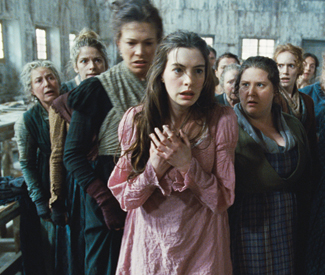
Les Misérables There is a not-insignificant portion of the population who already knows all the words to all the songs of this musical-theater warhorse, around since the 1980s and honored here with a lavish production by Tom Hooper (2010’s The King’s Speech). As other reviews have pointed out, this version only tangentially concerns Victor Hugo’s French Revolution tale; its true raison d’être is swooning over the sight of its big-name cast crooning those famous tunes. Vocals were recorded live on-set, with microphones digitally removed in post-production — but despite this technical achievement, there’s a certain inorganic quality to the proceedings. Like The King’s Speech, the whole affair feels spliced together in the Oscar-creation lab. The hardworking Hugh Jackman deserves the nomination he’ll inevitably get; jury’s still out on Anne Hathaway’s blubbery, “I cut my hair for real, I am so brave!” performance. (2:37) (Eddy)

Monsters, Inc. 3D (1:35)

The New Jerusalem (1:34) Roxie.

Parental Guidance (1:36)

The Perks of Being a Wallflower Move over, Diary of a Wimpy Kid series — there’s a new shrinking-violet social outcast in town. These days, life might not suck quite so hard for 90-pound weaklings in every age category, what with so many films and TV shows exposing, and sometimes even celebrating, the many miseries of childhood and adolescence for all to see. In this case, Perks author Stephen Chbosky takes on the directorial duties — both a good and bad thing, much like the teen years. Smart, shy Charlie is starting high school with a host of issues: he’s painfully awkward and very alone in the brutal throng, his only friend just committed suicide, and his only simpatico family member was killed in a car accident. Charlie’s English teacher Mr. Andersen (Paul Rudd) appears to be his only connection, until the freshman strikes up a conversation with feline, charismatic, shop-class jester Patrick (Ezra Miller) and his magnetic, music- and fun-loving stepsister Sam (Emma Watson). Who needs the popular kids? The witty duo head up their gang of coolly uncool outcasts their own, the Wallflowers (not to be confused with the deeply uncool Jakob Dylan combo), and with them, Charlie appears to have found his tribe. Only a few small secrets put a damper on matters: Patrick happens to be gay and involved with football player Brad (Johnny Simmons), who’s saddled with a violently conservative father, and Charlie is in love with the already-hooked-up Sam and is frightened that his fragile equilibrium will be destroyed when his new besties graduate and slip out of his life. Displaying empathy and a devotion to emotional truth, Chbosky takes good care of his characters, preserving the complexity and ungainly quirks of their not-so-cartoonish suburbia, though his limitations as a director come to the fore in the murkiness and choppily handled climax that reveals how damaged Charlie truly is. (1:43) (Chun)

Playing For Keeps Not a keeper: the marketing imagery that makes Gerard Butler look like an insufferable creep with bad hair. Dennis Quaid, seen in a small pic toward the base of the Playing For Keeps poster, gets that thankless role instead in this family-oriented rom-com, which is better than some while still being capable of eliciting very audible yawns from an audience supposedly primed for cutesy hijinks. Butler is George Dryer, a onetime pro soccer star now on the decline yet desperately seeking his next opening — a career as a sportscaster. To get there he has to run a networking gauntlet called coaching children’s soccer, which he gets roped into by ex Stacie (Jessica Biel) and spawn Lewis (Noah Lomax). The ankle biters are the least of his problems: more challenging are hot ‘n’ horny soccer moms like TV sports vet Denise (Catherine Zeta-Jones), cry-face Barn (Judy Greer), and desperate trophy housewife Patti (Uma Thurman), who’s saddled with all-American a-hole Carl (Dennis Quaid). The charisma-oozing George has to practically fight them off, while somehow shooting for that family-first goal. With its sex farce tendencies, rom-com DNA, and vaguely sour attitude toward hard-up moms, hot or not, I’m not sure who Playing For Keeps is really making a play for — perhaps married ladies looking for date-night possibilities and some shirtless Butler action? Projecting believability even under the most plausibility-taxing circumstances, Butler manages, as always, to be the best thing in the movie, though it seems like less of an achievement when his projects tend toward mediocrity. (1:46) (Chun)

Rise of the Guardians There’s nothing so camp as “Heat Miser” from The Year Without a Santa Claus (1974) in Rise of the Guardians,, but there’s plenty here to charm all ages. The mystery at its center: we open on Jack Frost (voiced by Chris Pine) being born, pulled from the depths of a frozen pond by the Man on the Moon and destined to spread ice and cold everywhere he goes, invisible to all living creatures. It’s an individualistic yet lonely lot for Jack, who’s styled as an impish snowboarder in a hoodie and armed with an icy scepter, until the Guardians — spirits like North/Santa Claus (Alec Baldwin), the Tooth Fairy (Isla Fisher), and the Easter Bunny (Hugh Jackman) — call on him to join them. Pitch the Boogeyman (Jude Law) is threatening to snuff out all children’s hopes and dreams with fears and nightmares, and it’s up to the Guardians must keep belief in magic alive. But what’s in it for Jack, except the most important thing: namely who is he and what is his origin story? Director Peter Ramsey keeps those fragile dreams aloft with scenes awash with motion and animation that evokes the chubby figures and cozy warm tones of ’70s European storybooks. And though Pine verges on blandness with his vocal performance, Baldwin, Jackman, and Fisher winningly deliver the jokes. (1:38) (Chun)

A Royal Affair At age 15 in 1766, British princess Caroline (Alicia Vikander) travels abroad to a new life — as queen to the new ruler of Denmark, her cousin. Attractive and accomplished, she is judged a great success by everyone but her husband. King Christian (Mikkel Boe Følsgaard) is just a teenager himself, albeit one whose mental illness makes him behave alternately like a debauched libertine, a rude two year-old, a sulky-rebellious adolescent, and a plain old abusive spouse. Once her principal official duty is fulfilled — bearing a male heir — the two do their best to avoid each other. But on a tour of Europe Christian meets German doctor Johann Friedrich Struenesse (Mads Mikkelsen), a true man of the Enlightenment who not only has advanced notions about calming the monarch’s “eccentricities,” but proves a tolerant and agreeable royal companion. Lured back to Denmark as the King’s personal physician, he soon infects the cultured Queen with the fervor of his progressive ideas, while the two find themselves mutually attracted on less intellectual levels as well. When they start manipulating their unstable but malleable ruler to push much-needed public reforms through in the still basically feudal nation, they begin acquiring powerful enemies. This very handsome-looking history lesson highlights a chapter relatively little-known here, and finds in it an interesting juncture in the eternal battle between masters and servants, the piously self-interested and the secular humanists. At the same time, Nikolaj Arcel’s impressively mounted and acted film is also somewhat pedestrian and overlong. It’s a quality costume drama, but not a great one. (2:17) (Harvey)

Rust and Bone Unlike her Dark Knight Rises co-star Anne Hathaway, Rust and Bone star Marion Cotillard never seems like she’s trying too hard to be sexy, or edgy, or whatever (plus, she already has an Oscar, so the pressure’s off). Here, she’s a whale trainer at a SeaWorld-type park who loses her legs in an accident, which complicates (but ultimately strengthens) her relationship with Ali (Belgian actor Matthias Schoenaerts, so tremendous in 2011’s Bullhead), a single dad trying to make a name for himself as a boxer. Jacques Audiard’s follow-up to 2009’s A Prophet gets a bit overwrought by its last act, but there’s an emotional authenticity in the performances that makes even a ridiculous twist (like, the kind that’ll make you exclaim “Are you fucking kidding me?”) feel almost well-earned. (2:00) (Eddy)

The Sessions Polio has long since paralyzed the body of Berkeley poet Mark O’Brien (John Hawkes) from the neck down. Of course his mind is free to roam — but it often roams south of the personal equator, where he hasn’t had the same opportunities as able-bodied people. Thus he enlists the services of Cheryl (Helen Hunt), a professional sex surrogate, to lose his virginity at last. Based on the real-life figures’ experiences, this drama by Australian polio survivor Ben Lewin was a big hit at Sundance this year (then titled The Surrogate), and it’s not hard to see why: this is one of those rare inspirational feel-good stories that doesn’t pander and earns its tears with honest emotional toil. Hawkes is always arresting, but Hunt hasn’t been this good in a long time, and William H. Macy is pure pleasure as a sympathetic priest put in numerous awkward positions with the Lord by Mark’s very down-to-earth questions and confessions. (1:35) (Harvey)

Silver Linings Playbook After guiding two actors to Best Supporting Oscars in 2010’s The Fighter, director David O. Russell returns (adapting his script from Matthew Quick’s novel) with another darkly comedic film about a complicated family that will probably earn some gold of its own. Though he’s obviously not ready to face the outside world, Pat (Bradley Cooper) checks out of the state institution he’s been court-ordered to spend eight months in after displaying some serious anger-management issues. He moves home with his football-obsessed father (Robert De Niro) and worrywart mother (Jacki Weaver of 2010’s Animal Kingdom), where he plunges into a plan to win back his estranged wife. Cooper plays Pat as a man vibrating with troubled energy — always in danger of flying into a rage, even as he pursues his forced-upbeat “silver linings” philosophy. But the movie belongs to Jennifer Lawrence, who proves the chops she showcased (pre-Hunger Games megafame) in 2010’s Winter’s Bone were no fluke. As the damaged-but-determined Tiffany, she’s the left-field element that jolts Pat out of his crazytown funk; she’s also the only reason Playbook‘s dance-competition subplot doesn’t feel eye-rollingly clichéd. The film’s not perfect, but Lawrence’s layered performance — emotional, demanding, bitchy, tough-yet-secretly-tender — damn near is. (2:01) (Eddy)

Skyfall Top marks to Adele, who delivers a magnificent title song to cap off Skyfall‘s thrilling pre-credits chase scene. Unfortunate, then, that the film that follows squanders its initial promise. After a bomb attack on MI6, the clock is running out for Bond (Daniel Craig) and M (Judi Dench), accused of Cold War irrelevancy in a 21st century full of malevolent, stateless computer hackers. The audience, too, will yearn for a return to simpler times; dialogue about “firewalls” and “obfuscated code” never fails to sound faintly ridiculous, despite the efforts Ben Whishaw as the youthful new head of Q branch. Javier Bardem is creative and creepy as keyboard-tapping villain Raoul Silva, but would have done better with a megalomaniac scheme to take over the world. Instead, a small-potatoes revenge plot limps to a dull conclusion in the middle of nowhere. Skyfall never decides whether it prefers action, bon mots, and in-jokes to ponderous mythologizing and ripped-from-the-headlines speechifying — the result is a unsatisfying, uneven mixture. (2:23) (Ben Richardson)

This is 40 A spin-off of sorts from 2007’s Knocked Up, Judd Apatow’s This is 40 continues the story of two characters nobody cared about from that earlier film: Debbie (Leslie Mann, Apatow’s wife) and Pete (Paul Rudd), plus their two kids (played by Mann and Apatow’s kids). Pete and Debbie have accumulated all the trappings of comfortable Los Angeles livin’: luxury cars, a huge house, a private personal trainer, the means to throw catered parties and take weekend trips to fancy hotels (and to whimsically decide to go gluten-free), and more Apple products than have ever before been shoehorned into a single film. But! This was crap they got used to having before Pete’s record label went into the shitter, and Debbie’s dress-shop employee (Charlene Yi, another Knocked Up returnee who is one of two people of color in the film; the other is an Indian doctor who exists so Pete can mock his accent) started stealing thousands from the register. How will this couple and their whiny offspring deal with their financial reality? By arguing! About bullshit! In every scene! For nearly two and a half hours! By the time Melissa McCarthy, as a fellow parent, shows up to command the film’s only satisfying scene — ripping Pete and Debbie a new one, which they sorely deserve — you’re torn between cheering for her and wishing she’d never appeared. Seeing McCarthy go at it is a reminder that most comedies don’t make you feel like stabbing yourself in the face. I’m honestly perplexed as to who this movie’s audience is supposed to be. Self-loathing yuppies? Masochists? Apatow’s immediate family, most of whom are already in the film? (2:14) (Eddy)

The Twilight Saga: Breaking Dawn – Part 2 The final installment of the Twilight franchise picks up shortly after the medical-emergency vampirization of last year’s Breaking Dawn – Part 1, giving newly undead Bella Swan (Kristen Stewart) just enough time to freshen up after nearly being torn asunder during labor by her hybrid spawn, Renesmee. In a just world, Bella and soul mate Edward Cullen (Robert Pattinson) would get more of a honeymoon period, given how badly Part 1‘s actual honeymoon turned out. Alas, there’s just enough time for some soft-focus vampire-on-vampire action (a letdown after all the talk of rowdy undead sex), some catamount hunting, some werewolf posturing, a reunion with Jacob (Taylor Lautner), and a few seconds of Cullen family bonding, and then those creepy Volturi are back, convinced that the Cullens have committed a vampire capital crime and ready to exact penance. Director Bill Condon (1998’s Gods and Monsters, 2004’s Kinsey) knows what the Twi-hards want and methodically doles it out, but the overall effect is less sweeping action and shivery romance and more “I have bugs crawling on me — and yet I’m bored.” Some of that isn’t his fault — he bears no responsibility for naming Renesmee, for instance, to say nothing of a January-May subplot that we’re asked to wrap our brains around. But the film maintains such a loose emotional grip, shifting clumsily and robotically from comic interludes to unintentionally comic interludes to soaring-music love scenes to attempted pathos to a snowy battlefield where the only moment of any dramatic value occurs. Weighed down by the responsibility of bringing The Twilight Saga to a close, it limps weakly to its anticlimax, leaving one almost — but not quite — wishing for one more installment, a chance for a more stirring farewell. (1:55) (Rapoport)

Wreck-It Ralph Wreck-It Ralph cribs directly from the Toy Story series: when the lights go off in the arcade, video game characters gather to eat, drink, and endure existential crises. John C. Reilly is likable and idiosyncratic as Ralph, the hulking, ham-fisted villain of a game called Fix-It-Felix. Fed up with being the bad guy, Ralph sneaks into gritty combat sim Hero’s Duty under the nose of Sergeant Calhoun (Jane Lynch), a blond space marine who mixes Mass Effect‘s Commander Shepard with a PG-rated R. Lee Ermey. Things go quickly awry, and soon Ralph is marooned in cart-racing candyland Sugar Rush, helping Vanellope Von Schweetz (a manic Sarah Silverman), with Calhoun and opposite number Felix (Jack McBrayer) hot on his heels. Though often aggressively childish, the humor will amuse kids, parents, and occasionally gamers, and the Disney-approved message about acceptance is moving without being maudlin. The animation, limber enough to portray 30 years of changing video game graphics, deserves special praise. (1:34) (Ben Richardson) *


 

Haley Zaremba’s Top 10 Concerts of 2012

0

For our annual Year in Music issue, I asked local musicians, rappers, producers, and music writers to sound off on the year’s best songs, album releases, shows – pretty much anything they wanted, music-wise. For the next few days, I’ll be posting them up individually on the Noise blog. You can also check the full list here.

Haley Zaremba, Guardian
Top 10 Concerts of 2012

1. El Ten Eleven at the New Parish
http://www.youtube.com/watch?v=ltdqEoyjnz0

2. Good Old War at Slim’s

3. Girls at Bimbo’s
http://www.youtube.com/watch?v=JxHZ63dr0aI

4. St. Vincent and Tune-Yards at The Fox
https://www.youtube.com/watch?v=Et2IOb5HpaA

5. Bomb the Music Industry! at Bottom of the Hill

6. Fucked Up at Slim’s

7. Amanda Palmer and the Grand Theft Orchestra at the Fillmore
https://www.youtube.com/watch?v=4AyAmSBQscI

8. Ariel Pink at Bimbo’s

9. Conor Oberst at the Fillmore
http://www.youtube.com/watch?v=fzUhb_QI6kA

10. Titus Andronicus at the Great American Music Hall

Honoring Edward Kennedy for defying and defeating political censorship in WWII

2

The campaign to award a posthumous Pulitzer Prize to Edward Kennedy, the Associated Press reporter who defied political censorship to break the story of the German surrender on May 7, 1945, was given a historic boost at the 135th annual meeting of the California Press Association on Dec. 7, 2012 at the Marines Memorial Building in San Francisco.

See the video of the Cal Press panel on Kennedy after the jump.

Honoring Edward Kennedy from The Intermountain News on Vimeo.

Video Credit: Craig Harrington, publisher of the Intermountain News in Burney

The association unanimously approved the first ever resolution by a news organization in support of Kennedy and it hosted the first ever panel discussion on Kennedy. Cal Press, as it is affectionately known in the newspaper business, is the oldest press organization west of the Mississippi and one of the oldest in the country. It was founded in 1876 at the Palace Hotel in San Francisco.

The resolution noted what happened to Kennedy after he broke the 36-hour embargo on the story. “Whereas the story made page one in nearly every newspaper, it angered General Dwight Eisenhower, the supreme allied commander, and all the other newsmen Kennedy had scooped. The military lifted his war correspondent’s credential, he was threatened with court martial and was fired by the Associated Press.”

The resolution explained that “unbeknownst to the reporters at the time, that suppression was the result of an agreement between U.S. President Harry Truman and British Prime Minister Winston Churchill to allow Russian Premier Joseph Stalin to hold a second surrender ceremony in Berlin.”

Kennedy broke the embargo, Cal Press explained, after “he learned that news of the German surrender was being broadcast to Germany from a radio station in Flensburg, Germany. He contacted military censors and said that since the story was being reported in Germany, the security of Allied troops was no longer an issue and he intended to defy censorship and report the news, which he proceeded to do by using a military phone line thereby registering the biggest scoop of the entire war.”

The resolution noted that Kennedy’s story is now the subject of two major efforts to “rectify the journalistic injustice by awarding him a Pulitzer Prize posthumously.” The resolution was written by Jim Ewert, general counsel of the California Newspaper Publishers Association.

One effort is a campaign launched from Modoc County by Ray A. March, editor of the Modoc Independent News monthly newspaper, to win a posthumous Pulitzer Prize for Kennedy’s hard news international reporting. March worked for Kennedy as a reporter on the Monterey Peninsula Herald a half century ago. Kennedy was the editor and associate publisher of the Herald until his death at age 58 in November 1963 when he was struck by a car while a pedestrian in Monterey.

The Kennedy campaign, the resolution stated, “is supported by 54 noteworthy professional reporters, editors, and photographers, that include San Francisco Chronicle editor Ward Bushee, Pulitzer-prize winning photographers Kim Komenich and Sal Veder, San Francisco Chronicle Science editor David Perlman, former San Francisco Bay Guardian owner Bruce Brugmann, former AP legal reporter Bob Egelko and Frank McCulloch, former senior editor at the Los Angeles Times and the Sacramento Bee, and Eric Brazil,  a retired Examiner and Chronicle reporter, who co-chairs the effort with March.”

The panel gave life and substance to the resolution. Brugmann introduced Bushee as the moderator, who read the eloquent Pulitzer nominating letter from McCulloch. Bushee introduced March, and Perlman, 93, who was a reporter for the old New York Herald-Tribune shortly after World War II,  and Julia Kennedy Cochran, Kennedy’s daughter who discovered her father’s unpublished memoir among his belongings after his death. She got the manuscript published as a major book by Louisiana State University Press. It is titled “Ed Kennedy’s War: V-E Day, Censorship, and the Associated Press.”

The LSU Press and Tom Curley, former AP president and CEO, entered the book in the Pulitzer competition on the basis of its literary qualities. Curley had issued a formal apology in 2011, saying that AP’s repudiation of Kennedy “was a terrible day for the AP. It was handled in the worst possible way…Kennedy did everything right.” In a later interview, he elaborated, “Once the war is over, you can’t hold back information like that. The world needed to know.”

Sixty seven years after Kennedy defied and defeated political censorship, the Cal Press sent its resolution to the Pulitzer board as a formal part of the Kennedy nomination. It said that Cal Press “honors Edward Kennedy for his distinguished example of reporting on international affairs and his courage in the face of potential personal and professional hardship to share with the world one of the most important events of the 20th century.”

 Cal Press concluded that it “applauds and endorses the efforts of Ray A. March, Eric Brazil, and the 54 noteworthy journalists and calls upon the Pulitzer Prize Board and Columbia University to recognize Edward Kennedy for journalistic excellence and posthumously award him with a Pulitzer prize for his groundbreaking coverage of the end of WWII in Europe.”

The 135th meeting of the California Press Association was an historic occasion with an historic pronouncement to right an historic wrong in American history. We’ll keep you posted.  B3


Emily Savage’s Top 10 Albums and Shows of 2012

37

For our annual Year in Music issue, I asked local musicians, rappers, producers, and music writers to sound off on the year’s best songs, album releases, shows – pretty much anything they wanted, music-wise. For the next few days, I’ll be posting them up individually on the Noise blog. You can also check the full list here.

So, I (Emily Savage, Guardian music editor) included my top albums list in my Ty Segall cover story (also a part of the Year in Music issue). For easier access, here’s that list below, along with my “Top Live Shows That Created The Most Post Memories in 2012” list. Whew, what a year:

Emily Savage, Guardian

New Albums I Listened to Endlessly in 2012
1. Grass Widow, Internal Logic (HLR)
2. Cloud Nothings, Attack on Memory (Carpark)
https://www.youtube.com/watch?v=6X1URP5eg6I
3. Ty Segall, Slaughterhouse (In the Red)
4. Dum Dum Girls, End of Daze EP (Sub Pop)
https://www.youtube.com/watch?v=q3f9ZiH6Euw
5. Frankie Rose, Interstellar (Slumberland)
6. Godspeed You! Black Emperor, Alleluja! Don’t Bend! Ascend! (Constellation)
https://www.youtube.com/watch?v=IEsdiiYkhT8
7. The Fresh and Onlys, Long Slow Dance (Mexican Summer)
8. THEESatisfaction, awE naturalE (Sub Pop)
https://www.youtube.com/watch?v=qGWFBt_IPOg
9. Terry Malts, Killing Time (Slumberland)
10. Guantanamo Baywatch, Chest Crawl (Dirtnap Records)


Live Shows that Created the Most Posi Memories in 2012
1. Feb. 14: Black Cobra, Walken, Yob at New Parish
https://www.youtube.com/watch?v=33TPqjurEsE
2. Feb. 23: Budos Band and Allah-Lahs at the Independent
3. March 30: Hot Snakes at Bottom of the Hill
https://www.youtube.com/watch?v=VOj3sW6Tm38
4. April 10: Jeff Mangum at the Fox Theater
5. July 21: Fresh and Onlys and La Sera at Phono Del Sol Music Fest
6. July 28: Total Trash BBQ Weekend at the Continental Club
7. Aug. 11: Metallica at Outside Lands
https://www.youtube.com/watch?v=hjfpBPItgoM
8. Aug. 31: Eyehategod at Oakland Metro
9. Oct. 9: Saint Vitus at the Independent
10. Oct. 27: Coachwhips and Traditional Fools at Verdi Club
 

Waiting for the end of the world (2)

19

TULUM — So rather than taking the 2:45pm bus today from Tulum to Chichen Itza for the Synthesis 2012 Festival and tomorrow’s end of the Mayan Long Count calendar as planned, my sweetie’s bout with some bad ceviche has delayed us by a day.
And frankly, I can’t say that I’m disappointed as I hear the stories flowing back from the festival. The universe does indeed seem to give us what we need.

The promised shuttles from here and other Yucatan cities have been “wonky” at best, says my festival contact. Performers and others promised rooms by the festival say they’ve been given away. Even the sound system for the festival’s DJs, bands, and speakers was turned around by locals threatening violence, the performers say they were told yesterday.

(The festival’s Candice Holdorf told me: “Apparently another sound system was found locally so festival is proceeding as planned.”)

“If it’s a mess, we’ll come back here and make the best of it,” Jeff Scroggins, a musician with Minneapolis-based Earthshake World Rhythm Ensemble (whose drums don’t need amps), told me as he related the lowdown while waiting for a private shuttle they arranged.

He wants to be in Chichen Itza for the big day, but he says he’s perfectly happy to just come back to Tulum if they aren’t feeling the Synthesis scene. “We’ve been staying on the beach all week and just manifesting gigs. We’ll be fine.”

So will I. There’s either the wonky morning shuttle, or our afternoon tickets on the luxurious Ado bus to Chichen Itza. Or there are various festivals in Tulum, Playa del Carmen, and other Yucatan spots celebrating the Mayan moment, winter solstice, and galactic alignment.

Whatever it happens, I plan to just be present for this moment and let energies of the universe take me where they will.

Louis Dunn comments on the shootings in Newtown

62

“Pupils were all shot multiple times with a semiautomatic, officials say.”  New York Times Sunday edition (December 16, 2012).  Guardian artist Louis Dunn comments. Click on the artwork to view the full-size image.

Was it a great year?

149

At noon Dec. 19, a group of about 50 housing activists led by the Housing Rights Committee gathered at 18th and Castro, next to the giant Shopping Season Tree, to discuss the wave of evictions tenants are facing at the end of 2012. Tommi Avicolli Mecca held up a list of 26 buildings that are currently being clear of tenants under the Ellis Act, a state law that allows landlords to evict all their tenants and sell the property as a single-family home or tenancies in common. With him was a long line of tenants who are facing holiday homelessness thanks to landlord greed.

“There are too many tenants being evicted to fit in front of the tree,” he said.

We heard story after story: A man living with AIDS facing the loss of his home after 17 years. A family being forced out after 18 years. Seniors, kids, disabled people … all of them almost certainly displaced from San Francisco.

“San Francisco is becoming a city of the rich, and we are being pushed aside,” said Lisa Thornton, who works at Rainbow Grocery and is losing her home.

“This,” Mecca said, “is an epidemic of evictions.”

And we all know why: As the second tech boom roars in to San Francisco, high-paid young workers are able to afford to buy TICs or single-family homes, and long-term rent-control-protected tenants simply can’t compete. It’s not a pretty pciture.

So I almost barfed when I say Randy Shaw’s glowing paen to Mayor Ed Lee. “San Francisco had one of its greatest years in 2012, as the city’s job growth and vibrancy outpaced nearly everywhere else,” he wrote.

Oh, gee, he says, there are some problems:

Few want San Francisco to become a city where only the rich and subsidized poor can live. But these same fears were felt in the 1980’s. When I was moving to San Francisco in 1979, the lines for vacant apartments were just as long and the competition for vacant units as fierce as what we read about in 2012. We couldn’t believe we had to pay $375 for a Mission one bedroom apartment, a rate that is less than half the cost of an SRO room without private bathroom today. San Francisco has long been an expensive city that keeps getting pricier.

So what — because we were worried about displacement in the 1980s means we shouldn’t be worried today? Those worries were real — gentrification of San Francisco neighborhoods has been rampant for decades. It’s changed the city, for the worse.

In the 1980s, Shaw was part of a broad coalition that fought to get rent control laws and eviction protections and limits on condo conversions. Now he’s acting as if none of that was worth the fight, as if protecting affordable housing wasn’t, and isn’t, the most critical issue in the city today.

A great year? Fantastic vibrancy and job growth? Not if you’re one of the growing numbers of people who are losing their homes to Ed Lee’s vision of economic development.


Waiting for the end of the world (1)

31

TULUM, MEXICO — The Yucatan is filled with Americans and Europeans who have come for the Dec. 21 end of the Mayan Long Count calendar and/or the end of 2012 next week, and those looking to spend time in paradise before the end have come to Tulum.

Boca Paila Road runs along about 10 miles of pristine Carribean beaches, lined with lodging ranging from camping  and small affordable cabañas (our thatched roof spot at Pico Beach, booked through Airbnb, is amazing) to expensive luxury hotels, all nestled into verdant tropical foliage.

On south end is the biosphere and biggest cenotes (little lagoons with underwater caves), and on the north is the main Mayan temple and archaeological site in the area, a well-preserved coastal fortress crawling with visitors.

Bay Area residents are well-represented on the beaches of Tulum, and most that we’ve talked to a headed to the Synthesis 2012 Festival in Chichen Itza today or tomorrow. I’m still not sure what to expect from the scene there, but I’m excited to find out to report back tomorrow when the festival begins.

Preaching that the end is near

0

Rev. Billy Talen started off as a trickster, a performance artist, and a political activist appropriating the role of the evangelical preacher (a la Jerry Farwell or Jimmy Swaggert). He was the pastor of the Church of Stop Shopping, standing in front of the Disney Store in Times Square railing against the evils of sweatshops and consumerism.

That was more than 10 years ago, and Talen, his choir, and his flock have grown and evolved since then, although they retained their core tactic of invading the citadels of commerce to engage in performance art and civil disobedience. They renamed themselves the Church of Life After Shopping, wrote books and made a movie called What Would Jesus Buy?, and then became the Church of Earthalujah five years ago when their focus switched to climate change and environmental justice issues.

Along the way, their issues and concerns became more dire, the threats they were addressing elevated to matters of survival rather than social justice. So with the Dec. 21, 2012 date approaching, Talen returned to Times Square — this time fitting right in with its doomsday preachers — and wrote a new book called The End of the World, which he’ll release in Times Square on that auspicious date.

“I’ll be back with a science-based Armageddon,” Talen told me. “Now I’m looping all the way around the tracks back to Times Square where I started. But Hurricane Sandy makes this not so tongue-in-cheek.”

When Hurricane Sandy slammed into New York City and the surrounding coastline with the rare strength of superstorm that climatologists say will be more common in our warming world, Talen said it was a wake-up call for those insulated by that urban environment.

“New York doesn’t have climate, we have culture,” Talen said, but Sandy changed that perspective and brought the reality of climate change home, right into the heart of capitalism. “The idea that nature is beyond the city limits, that may be over now.”

Talen said there’s “ecosystem collapse going on everyday. Earth is a total ecosystem and Earth has a tipping point, just like local ecosystems have tipping points.” His latest book leans heavily on the research of Barnosky and his team, which Talen said dovetails perfectly with the Mayan prophecies and the hopes that the galactic alignment will spark a shift in global consciousness that wakes us up to pressing problems that demand immediate action.

“It allows us to have a stage for the question, a frame for the question. We have to ask very basic questions about our survival,” Talen said. “We have this uncanny mythic, prophetic calendar, this 5,000-year calendar ending and beginning. And we have the scientists saying the same thing, so where does that leave you?” 

Psychic Dream Astrology: December 19-25, 2012

0

ARIES

March 21-April 19

As cheesy as it sounds, love eases the path you’re on. It’s the healing salve that soothes all wounds. The power of kindness and compassion will trump your troubles if you yield to it. Try to accept folks for where they’re at and show them the same generosity that you’d want. Don’t take differences as an affront this week.

TAURUS

April 20-May 20

There’s no hope if you try to go it all alone, you need others to support you and keep you in line when need be. Lay a foundation that you can build success upon, Taurus. Watch out for ways that you alienate others this week and develop a better gauge of how much sharing you can do in a healthy way.

GEMINI

May 21-June 21

Compassion and nurturance are the best tools at your disposal this week, Twin Star. The heart wants what it wants! Strive to satisfy your emotional needs as long as you can do so without betraying any promises you’ve made to yourself or anyone else. Love yourself in equal parts to how you love others.

CANCER

June 22-July 22

People are wonderful and will sometimes give you presents. This holiday week of (forced) cheer you can’t avoid them, but you may find yourself wanting to. Don’t say "no" to people, say "yes" to yourself! Give what you can and nothing more, Cancer. Take time for yourself so you can truly show up for others.

LEO

July 23-Aug. 22

Stay in the present this week. You can’t know all the answers, and that sucks when you are on a quest to decide what to bet your heart on. You don’t know what the future will hold, but you can commit to staying on track for the time being. Keep steady on your chosen course and let the future reveal itself.

VIRGO

Aug. 23-Sept. 22

Don’t you wish that life could be smooth sailing this week? Sadly it’s not, and you may need to take inspiration from this seafaring advice — when you get motion sickness, never focus on something too close to you; pick a far away point and focus your vision on that. It’ll help you to tolerate turbulent waters.

LIBRA

Sept. 23-Oct. 22

Worry and fear can inspire "practical" thinking, but not the healthiest choices. This week you should avoid the temptation to justify your actions with the reasoning of your scarcity issues, Libra. Things are not perfect and goodness is not guaranteed, but you should still go for gold with all your heart.

SCORPIO

Oct. 23-Nov. 21

A life lived in freedom is a pleasure to live. Don’t abuse your liberties, Scorpio! Become free from compulsions and self-destructive ways this week. Yield your autonomy so as to make you healthy and happy instead of comfortable yet stuck. It’ll take a lot of work, but it’s wholly worth it.

SAGITTARIUS

Nov. 22-Dec. 21

If you don’t take responsibility for what you need how do you ever hope to get it and hold on to it? Be accountable for setting limits and clearing up miscommunications with others this week. Things might need to get complicated for a while if you are going to accommodate your needs in concert with others’.

CAPRICORN

Dec. 22-Jan. 19

You don’t know what’s ahead, and it may be better or worse than where you’re at now, but it sure as anything won’t be the same. This week you are meant to pour your very best in the things you are sure of; the folks you love, the savings account you need for your future and the goodness of your health.

AQUARIUS

Jan. 20-Feb. 18

All your worries are valid, Aquarius. The danger is that you will focus on the question "what is right?" instead of "what is right for me?" Strive to choose what you believe in instead of what you think you’re supposed tso that you don’t find yourself resenting your actions that were inspired by fear or obligation.

PISCES

Feb. 19-March 20

It’s hard to accept the differences between you and the people you love. When you’re used to being in agreement with someone it’s hella confusing to all of a sudden not get where they’re coming from. This week you need to trust in the love that binds you and not get disheartened by the details.

Jessica Lanyadoo has been a Psychic Dreamer for 18 years. Check out her website at www.lovelanyadoo.com to contact her for an astrology or intuitive reading.

Film Listings

0

Film listings are edited by Cheryl Eddy. Reviewers are Kimberly Chun, Dennis Harvey, Lynn Rapoport, and Sara Maria Vizcarrondo. For rep house showtimes, see Rep Clock.

OPENING

Cirque du Soleil: Worlds Away The fanciful, high-flying circus troupe hits the big screen in 3D. (1:31)

Citadel See “Holiday Movie Massacre.” (1:24) Roxie.

Deadfall See “Holiday Movie Massacre.” (1:35) Opera Plaza.

Django Unchained See “Holiday Movie Massacre.” (2:45) Four Star, Presidio.

Five and Six Hundred and Sixty-Six The Vortex’s apocalyptic December continues with two offbeat end-of-the-world dramas, one obscure and the other really, really, really obscure. Five (1951) was one of the few features written and directed by Arch Oboler, whose next (1952’s Bwana Devil) would have the (sole) distinction of kicking off that decade’s short-lived 3D craze. This black and white tale is less historically important but a lot more interesting thematically and otherwise. The title refers to the number of survivors whose paths cross after nuclear war presumably wipes out the rest of humanity (they’d each happened to be in lead encased surroundings when it the bomb hit). Beardo Michael (William Phipps) says good riddance: “I’m glad it’s dead, cheap honkytonk of a world.” However, his attitude turns around once pregnant Rosanne (Susan Douglas Rubes) shows up, then others. Unfortunately, their modest attempts to restart civilization are threatened by the fact that arrival number five (James Anderson) has a German accent and a Nazi attitude to go with it. Sans FX, this psychodrama uses sci-fi to ask some basic questions about existence and humanity; it may not be wildly sophisticated, but it’s surprisingly void of cliché and progressive in ideas (notably racial ones, as the villain’s most loathsome quality is his attitude toward Charles Lampkin’s genial African American ex-soldier). Five is one of the first and also best of its era’s many films about man’s potential self-destruction. Co-feature Six Hundred and Sixty-Six, by contrast, is pretty torturous — an endless talkfest among male staffers (and one female-voiced master computer) in a government installation deep underground that they can’t leave when total war extinguishes all life on the surface above. As they slowly suffocate to death, there is much debate about Biblical prophecies and Satan (who regrettably does not put in an appearance). While the combination of sci-fi suspense and religious proselytizing might sound irresistible, this extremely rare production from the “Evangelical Christian Research Foundation” is perhaps the dullest of all early ’70s dystopian indies. Vortex Room. (Harvey)

The Guilt Trip Seth Rogen and Barbra Streisand play a mother and son driving across the country. (1:35) Marina, Presidio.

The Impossible See “Holiday Movie Massacre.” (1:54)

Jack Reacher Tom Cruise: kickin’ ass, taking names, doing Tom Cruise things. (2:10)

Les Misérables See “Holiday Movie Massacre.” (2:37) Balboa, Marina.

Monsters, Inc. 3D Pixar’s 2001 hit about good-natured monsters returns in 3D form. (1:35)

The New Jerusalem Will Oldham stars as an Evangelical Christian in Rick Alverson’s drama. (1:34) Roxie.

Parental Guidance Billy Crystal and Bette Midler star as babysitting grandparents in this family comedy. (1:36)

Rust and Bone See “Holiday Movie Massacre.” (2:00) Embarcadero.

This is 40 See “Holiday Movie Massacre.” (2:14) Four Star, Marina.

ONGOING

Anna Karenina Joe Wright broke out of British TV with the 9,000th filmed Pride and Prejudice (2005), unnecessary but quite good. Too bad it immediately went to his head. His increasing showiness as director enlivened the silly teenage-superspy avenger fantasy Hanna (2011), but it started to get in the way of Atonement (2007), a fine book didn’t need camera gymnastics to make a great movie. Now it’s completely sunk a certified literary masterpiece still waiting for a worthy film adaptation. Keira Knightley plays the titular 19th century St. Petersburg aristocrat whose staid, happy-enough existence as a doting mother and dutiful wife (to deglammed Jude Law’s honorable but neglectful Karenin) is upended when she enters a mutually passionate affair with dashing military officer Count Vronsky (Aaron Taylor-Johnson, miscast). Scandal and tragedy ensue. There’s nothing wrong with the screenplay, by Tom Stoppard no less. What’s wrong is Wright’s bright idea of staging the whole shebang as if it were indeed staged — a theatrical production in which nearly everything (even a crucial horse race) takes place on a proscenium stage, in the auditorium, or “backstage” among riggings. Whenever we move into a “real” location, the director makes sure that transition draws attention to its own cleverness as possible. What, you might ask, is the point? That the public social mores and society Anna lives in are a sort of “acting”? Like wow. Add to that another brittle, mannered performance by Wright’s muse Knightley, and there’s no hope of involvement here, let alone empathy — in love with its empty (but very prettily designed) layers of artifice, this movie ends up suffocating all emotion in gilded horseshit. The reversed-fortune romance between Levin (Domhall Gleeson) and Kitty (Alicia Vikander) does work quite well — though since Tolstoy called his novel Anna Karenina, it’s a pretty bad sign when the subsidiary storyline ends up vastly more engaging than hers. (2:10) Albany, Metreon, Piedmont, Sundance Kabuki. (Harvey)

Any Day Now In 1970s West Hollywood, flamboyant drag queen Rudy (Alan Cumming) and closeted, newly divorced lawyer Paul (Garret Dillahunt) meet and become an unlikely but loving couple. Their opposites-attract bond strengthens when they become de facto parents to Marco (Isaac Leyva), a teen with Down syndrome left adrift when his party-girl mother (Jamie Anne Allman) is arrested. Domestic bliss — school for Marco with a caring special-education teacher (Kelli Williams); a fledgling singing career for Rudy (so: lots of crooning, for Cumming superfans) — is threatened by rampant homophobia, so Rudy and Paul must conceal their true relationship from Paul’s overbearing boss and the other parents at Marco’s school. When the secret gets out, the fact that Marco is being well cared-for matters not to the law; he’s immediately shunted into a foster home while Paul and Rudy battle the court for custody. Actor-turned-director and co-writer Travis Fine (2010’s The Space Between) guides a veteran cast through this based-on-true-events tale, with sensitive performances and realistic characterizations balancing out the story’s broader strokes. (1:43) Embarcadero, Shattuck, Smith Rafael. (Eddy)

Argo If you didn’t know the particulars of the 1979 Iranian Revolution, you won’t be an expert after Argo, but the film does a good job of capturing America’s fearful reaction to the events that followed it — particularly the hostage crisis at the US embassy in Tehran. Argo zeroes in on the fate of six embassy staffers who managed to escape the building and flee to the home of the sympathetic Canadian ambassador (Victor Garber). Back in Washington, short-tempered CIA agents (including a top-notch Bryan Cranston) cast about for ways to rescue them. Enter Tony Mendez (Ben Affleck, who also directs), exfil specialist and father to a youngster wrapped up in the era’s sci-fi craze. While watching 1973’s Battle for the Planet of the Apes, Tony comes up with what Cranston’s character calls “the best bad idea we have:” the CIA will fund a phony Canadian movie production (corny, intergalactic, and titled Argo) and pretend the six are part of the crew, visiting Iran for a few days on a location shoot. Tony will sneak in, deliver the necessary fake-ID documents, and escort them out. Neither his superiors, nor the six in hiding, have much faith in the idea. (“Is this the part where we say, ‘It’s so crazy it just might work?'” someone asks, beating the cliché to the punch.) Argo never lets you forget that lives are at stake; every painstakingly forged form, every bluff past a checkpoint official increases the anxiety (to the point of being laid on a bit thick by the end). But though Affleck builds the needed suspense with gusto, Argo comes alive in its Hollywood scenes. As the show-biz veterans who mull over Tony’s plan with a mix of Tinseltown cynicism and patiotic duty, John Goodman and Alan Arkin practically burst with in-joke brio. I could have watched an entire movie just about those two. (2:00) Embarcadero, Four Star, 1000 Van Ness, Presidio, SF Center, Sundance Kabuki. (Eddy)

The Central Park Five Acclaimed documentarian Ken Burns takes on the 1989 rape case that shocked and divided a New York City already overwhelmed by racially-charged violence. The initial crime was horrible enough — a female jogger was brutally assaulted in Central Park — but what happened after was also awful: cops and prosecutors, none of whom agreed to appear in the film, swooped in on a group of African American and Latino teenagers who had been making mischief in the vicinity (NYC’s hysterical media dubbed the acts “wilding,” a term that became forever associated with the event). Just 14 to 16 years old, the boys were questioned for hours and intimidated into giving false, damning confessions. Already guilty in the court of public opinion, the accused were convicted in trials — only to see their convictions vacated years after they’d served their time, when the real assailant was finally identified. Using archival news footage (in one clip, Gov. Mario Cuomo calls the crime “the ultimate shriek of alarm that says none of us are safe”) and contemporary, emotional interviews with the Five, Burns crafts a fascinating study of a crime that ran away with itself, in an environment that encouraged it, leaving lives beyond just the jogger’s devastated in the process. (1:59) Shattuck. (Eddy)

Chasing Ice Even wild-eyed neocons might reconsider their declarations that global warming is a hoax after seeing the work of photographer James Balog, whose images of shrinking glaciers offer startling proof that our planet is indeed being ravaged by climate change (and it’s getting exponentially worse). Jeff Orlowski’s doc follows Balog and his Extreme Ice Survey team as they brave cruel elements in Iceland, Greenland, and Alaska, using time-lapse cameras to record glacier activity, some of it quite dramatic, over months and years. Balog is an affable subject, doggedly pursuing his work even after multiple knee surgeries make him a less-than-agile hiker, but it’s the photographs — as hauntingly beautiful as they are alarming — that make Chasing Ice so powerful. Could’ve done without Scarlett Johansson crooning over the end credits, though. (1:15) Embarcadero, Shattuck. (Eddy)

Cloud Atlas Cramming the six busy storylines of David Mitchell’s wildly ambitious novel into just three hours — the average reader might have thought at least 12 would be required — this impressive adaptation directed (in separate parts) by Tom Twyker (1998’s Run Lola Run) and Matrix siblings Lana and Andy Wachowski has a whole lot of narrative to get through, stretching around the globe and over centuries. In the mid 19th century, Jim Sturgess’ sickly American notory endures a long sea voyage as reluctant protector of a runaway-slave stowaway from the Chatham Islands (David Gyasi). In 1931 Belgium, a talented but criminally minded British musician (Ben Whishaw) wheedles his way into the household of a famous but long-inactive composer (Jim Broadbent). A chance encounter sets 1970s San Francisco journalist Luisa (Halle Berry) on the path of a massive cover-up conspiracy, swiftly putting her life in danger. Circa now, a reprobate London publisher’s (Broadbent) huge windfall turns into bad luck that gets even worse when he seeks help from his brother (Hugh Grant). In the not-so-distant future, a disposable “fabricant” server to the “consumer” classes (Doona Bae) finds herself plucked from her cog-like life for a rebellious higher purpose. Finally, in an indeterminately distant future after “the Fall,” an island tribesman (Tom Hanks) forms a highly ambivalent relationship toward a visitor (Berry) from a more advanced but dying civilization. Mitchell’s book was divided into huge novella-sized blocks, with each thread split in two; the film wastes very little time establishing its individual stories before beginning to rapidly intercut between them. That may result in a sense of information (and eventually action) overload, particularly for non-readers, even as it clarifies the connective tissues running throughout. Compression robs some episodes of the cumulative impact they had on the page; the starry multicasting (which in addition to the above mentioned finds many uses for Hugo Weaving, Keith David, James D’Arcy, and Susan Sarandon) can be a distraction; and there’s too much uplift forced on the six tales’ summation. Simply put, not everything here works; like the very different Watchmen, this is a rather brilliant “impossible adaptation” screenplay (by the directors) than nonetheless can’t help but be a bit too much. But so much does work — in alternating currents of satire, melodrama, pulp thriller, dystopian sci-fi, adventure, and so on — that Cloud Atlas must be forgiven for being imperfect. If it were perfect, it couldn’t possibly sprawl as imaginatively and challengingly as it does, and as mainstream movies very seldom do. (2:52) Elmwood, SF Center. (Harvey)

The Collection As soon as you behold the neon sign “Hotel Argento” shining over the grim warehouse-cum-evil dead trap, you know exactly what you’re in for — a wink, and even a little bit of a horror superfan’s giggle. In other words, to tweak that killer Roach Motel tagline: kids check in, but they don’t check out. No need to see 2009’s The Collector — the previous movie by director-cowriter Marcus Dunstan and writer Patrick Melton (winners of the third season of Project Greenlight, now with the screenplays for multiple Saw films beneath their collective belt) — the giallo fanboy and gorehound hallmarks are there for all to enjoy: tarantulas (straight from 1981’s The Beyond), a factory kitted out as an elaborate murder machine, and end credits that capture characters’ last moments. Plus, plenty of fast-paced shocks and seemingly endless splatter, with a heavy sprinkle of wince-inducing compound fractures. The Collection ups the first film’s ante, as gamine Elena (Emma Fitzpatrick) is lured to go dancing with her pals. Their underground party turns out to be way beyond the fringe, as the killer mows down the dance floor, literally, and gives the phrase “teen crush” a bloody new spin. Stumbling on The Collector‘s antihero thief Arkin (Josh Stewart) locked in a box, Elena releases him but can’t prevent her own capture, so killer-bodyguard Lucello (Oz‘s Lee Tergesen) snatches Arkin from the hospital and forces him to lead his team of toughs through a not-so-funhouse teeming with booby traps as well as victims-turned-insidious-weapons. All of which almost convinces you of nutty-nutball genius of the masked, dilated-pupiled Collector (here stuntman Randall Archer), who takes trendy taxidermy to icky extremes — even when his mechanism is threatened by a way smart last girl and a lock picker who’s adept at cracking building codes. Despite Dunstan’s obvious devotion to horror-movie landmarks, The Collection doesn’t turn out to be particularly original: rather, it attempts to stand on the shoulders — and arms and dismembered body parts — of others, in hopes of finding its place on a nonexistent drive-in bill. (1:23) Metreon. (Chun)

Flight To twist the words of one troubled balladeer, he believes he can fly, he believes he can touch the sky. Unfortunately for Denzel Washington’s Whip Whitaker, another less savory connotation applies: his semi-sketchy airline captain is sailing on the overconfidence that comes with billowing clouds of blow. Beware the quickie TV spot — and Washington’s heroic stance in the poster — that plays this as a quasi-action flick: Flight is really about a man’s efforts to escape responsibility and his flight from facing his own addiction. It also sees Washington once again doing what he does so well: wrestling with the demons of a charismatic yet deeply flawed protagonist. We come upon Whip as he’s rousing himself from yet another bender, balancing himself out with a couple lines with a gorgeous, enabling flight attendant by his side. It’s a checks-and-balances routine we’re led to believe is business as usual, as he slides confidently into the cockpit, gives the passengers a good scare by charging through turbulence, and proceeds to doze off. The plane, however, goes into fail mode and forces the pilot to improvise brilliantly and kick into hero mode, though he can’t fly from his cover, which is slowly blown despite the ministrations of kindred addict Nicole (Kelly Reilly) and dealer Harling (John Goodman at his most ebullient) and the defensive moves of his pilots union cohort (Bruce Greenwood) and the airline’s lawyer (Don Cheadle). How can Whip fly out of the particular jam called his life? Working with what he’s given, Washington summons reserves of humanity, though he’s ultimately failed by John Gatins’ sanctimonious, recovery-by-the-numbers script and the tendency of seasoned director Robert Zemeckis to blithely skip over the personal history and background details that would have more completely filled out our picture of Whip. We’re left grasping for the highs, waiting for the instances that Harling sails into view and Whip tumbles off the wagon. (2:18) 1000 Van Ness, SF Center. (Chun)

Hitchcock On the heels of last year’s My Week With Marilyn comes another biopic about an instantly recognizable celebrity viewed through the lens of a specific film shoot. Here, we have Anthony Hopkins (padded and prosthetic’d) playing the Master of Suspense, mulling over which project to pursue after the success of 1959’s North by Northwest. Even if you’re not a Hitch buff, it’s clear from the first scene that Psycho, based on Robert Bloch’s true crime-inspired pulpy thriller, is looming. We open on “Ed Gein’s Farmhouse, 1944;” Gein (Michael Wincott) is seen in his yard, his various heinous crimes — murder, grave-robbing, body-part hoarding, human-skin-mask crafting, etc. — as yet undiscovered. Hitchcock, portrayed by the guy who also played the Gein-inspired Hannibal Lecter, steps into the frame with that familiar droll greeting: “Guhhd eevvveeeening.” And we’re off, following the veteran director as he muses “What if somebody really good made a horror picture?” Though his wife and collaborator, Alma (Helen Mirren), cautions him against doing something simply because everyone tells him not to, he plows ahead; the filmmaking scenes are peppered with behind-the-scenes moments detailed in Stephen Rebello’s Alfred Hitchcock and the Making of Psycho, the source material for John J. McLaughlin’s script. But as the film’s tagline — “Behind every Psycho is a great woman” — suggests, the relationship between Alma and Hitch is, stubbornly, Hitchcock‘s main focus. While Mirren is effective (and I’m all for seeing a lady who works hard behind the scenes get recognition), the Hitch-at-home subplot exists only to shoehorn more conflict into a tale that’s got plenty already. Elsewhere, however, Hitchcock director Sacha Gervasi — making his narrative debut after hit 2008 doc Anvil: The Story of Anvil — shows stylistic flair, working Hitchcock references into the mise-en-scène. (1:32) California, Embarcadero, Metreon, Piedmont, Sundance Kabuki. (Eddy)

The Hobbit: An Unexpected Journey Make no mistake: the Lord of the Rings trilogy represented an incredible filmmaking achievement, with well-deserved Oscars handed down after the third installment in 2003. If director Peter Jackson wanted to go one more round with J.R.R. Tolkien’s beloved characters for a Hobbit movie, who was gonna stop him? Not so fast. This return to Middle-earth (in 3D this time) represents not one but three films — which would be self-indulgent enough even if part one didn’t unspool at just under three hours, and even if Jackson hadn’t decided to shoot at 48 frames per second. (I can’t even begin to explain what that means from a technical standpoint, but suffice to say there’s a certain amount of cinematic lushness lost when everything is rendered in insanely crystal-clear hi-def.) Journey begins as Bilbo Baggins (a game, funny Martin Freeman) reluctantly joins Gandalf (a weary-seeming Ian McKellan) and a gang of dwarves on their quest to reclaim their stolen homeland and treasure, batting Orcs, goblins, Gollum (Andy Serkis), and other beasties along the way. Fan-pandering happens (with characters like Cate Blanchett’s icy Galadriel popping in to remind you how much you loved LOTR), and the story moves at a brisk enough pace, but Journey never transcends what came before — or in the chronology of the story, what comes after. I’m not quite ready to declare this Jackson’s Phantom Menace (1999), but it’s not an unfair comparison to make, either. (2:50) Balboa, California, Cerrito, Marina, Metreon, 1000 Van Ness, Presidio, Sundance Kabuki. (Eddy)

Hyde Park on Hudson Weeks after the release of Lincoln, Hyde Park on Hudson arrives with a lighthearted (-ish) take on Franklin D. Roosevelt’s 1939 meeting with King George VI (of stuttering fame) and Queen Elizabeth at FDR’s rural New York estate. Casting Bill Murray as FDR is Hyde Park‘s main attraction, though Olivia Williams makes for a surprisingly effective Eleanor. But the thrust of the film concerns FDR’s relationship with his cousin, Daisy — played by Laura Linney, who’s relegated to a series of dowdy outfits, pouting reaction shots, and far too many voice-overs. The affair has zero heat, and the film is disappointingly shallow — how many times can one be urged to giggle at someone saying “Hot dogs!” in an English accent? — not to mention a waste of a perfectly fine Bill Murray performance. As that sideburned Democrat bellows in Lincoln, “Howwww dare you!” (1:35) Clay, Embarcadero. (Eddy)

Killing Them Softly Lowest-level criminal fuckwits Frankie (Scoot McNairy) and Russell (Ben Mendelsohn) are hired to rob a mob gambling den, a task which miraculously they fail to blow. Nevertheless, the repercussions are swift and harsh, as a middleman suit (Richard Jenkins) to the unseen bosses brings in one hitman (Brad Pitt), who brings in another (James Gandolfini) to figure out who the thieves are and administer extreme justice. Based on a 1970s novel by George V. Higgins, this latest collaboration by Pitt and director-scenarist Andrew Dominik would appear superficially to be a surer commercial bet after the box-office failure of their last, 2007’s The Assassination of Jesse James By the Coward Robert Ford — one of the great films of the last decade. But if you’re looking for action thrills or even Guy Ritchie-style swaggering mantalk (though there is some of that), you’ll be disappointed to find Killing more in the abstracted crime drama arena of Drive (2011) or The American (2010), landing somewhere between the riveting former and the arid latter. This meticulously crafted tale is never less than compelling in imaginative direction and expert performance, but it still carries a certain unshakable air of so-what. Some may be turned off by just how vividly unpleasant Mendelsohn’s junkie and Gandolfini’s alchie are. Others will shrug at the wisdom of re-setting this story in the fall of 2008, with financial-infrastructure collapse and the hollow promise of President-elect Obama’s “Change” providing ironical background noise. It’s all a little too little, too soon. (1:37) Elmwood, Metreon, 1000 Van Ness. (Harvey)

A Late Quartet Philip Seymour Hoffman is fed up playing second fiddle — literally. He stars in this grown-up soap opera about the internal dramas of a world-class string quartet. While the group is preparing for its 25th season, the eldest member (Christopher Walken) is diagnosed with early stage Parkinson’s. As he’s the base note in the quartet, his retirement challenges the group’s future, not just his own. Hoffman’s second violinist sees the transition as an opportunity to challenge the first violin (Mark Ivanir) for an occasional Alpha role. When his wife, the quartet’s viola player (Catherine Keener), disagrees, it’s a slight (“You think I’m not good enough?”) and a betrayal because prior to their marriage, viola and first violin would “duet” if you get my meaning. This becomes a grody aside when Hoffman and Keener’s violin prodigy daughter (Imogen Poots) falls for her mother’s old beau and Hoffman challenges their marriage with a flamenco dancer. These quiet people finds ways to use some loud instruments (a flamenco dancer, really?) and the music as well as the views of Manhattan create a deeply settled feeling of comfort in the cold —insulation can be a dangerous thing. When we see (real world) cellist Nina Lee play, and her full body interacts with a drama as big as vaudeville, we see what tension was left out of the playing and forced into the incestuous “family” conflicts. In A Late Quartet, pleasures are great and atmosphere, heavy. You couldn’t find a better advertisement for this symphonic season; I wanted to buy tickets immediately. And also vowed to stay away from musicians. (1:45) Albany, Smith Rafael. (Vizcarrondo)

Life of Pi Several filmmakers including Alfonso Cuarón, Jean-Pierre Jeunet, and M. Night Shyamalan had a crack at Yann Martel’s “unfilmable” novel over the last decade, without success. That turns out to have been a very good thing, since Ang Lee and scenarist David Magee have made probably the best movie possible from the material — arguably even an improvement on it. Framed as the adult protagonist’s (Irrfan Khan) lengthy reminiscence to an interested writer (Rafe Spall) it chronicles his youthful experience accompanying his family and animals from their just shuttered zoo on a cargo ship voyage from India to Canada. But a storm capsizes the vessel, stranding teenaged Pi (Suraj Sharma) on a lifeboat with a mini menagerie — albeit one swiftly reduced by the food chain in action to one Richard Parker, a whimsically named Bengal tiger. This uneasy forced cohabitation between Hindu vegetarian and instinctual carnivore is an object lesson in survival as well as a fable about the existence of God, among other things. Shot in 3D, the movie has plenty of enchanted, original imagery, though its outstanding technical accomplishment may lie more in the application of CGI (rather than stereoscopic photography) to something reasonably intelligent for a change. First-time actor Sharma is a natural, while his costar gives the most remarkable performance by a wild animal this side of Joaquin Phoenix in The Master. It’s not a perfect film, but it’s a charmed, lovely experience. (2:00) Balboa, 1000 Van Ness, SF Center, Sundance Kabuki. (Harvey)

Lincoln Distinguished subject matter and an A+ production team (Steven Spielberg directing, Daniel Day-Lewis starring, Tony Kushner adapting Doris Kearns Goodwin, John Williams scoring every emotion juuust so) mean Lincoln delivers about what you’d expect: a compelling (if verbose), emotionally resonant (and somehow suspenseful) dramatization of President Lincoln’s push to get the 13th amendment passed before the start of his second term. America’s neck-deep in the Civil War, and Congress, though now without Southern representation, is profoundly divided on the issue of abolition. Spielberg recreates 1865 Washington as a vibrant, exciting place, albeit one filled with so many recognizable stars it’s almost distracting wondering who’ll pop up in the next scene: Jared Harris as Ulysses S. Grant! Joseph Gordon-Levitt as Robert Lincoln! Lena Dunham’s shirtless boyfriend on Girls (Adam Driver) as a soldier! Most notable among the huge cast are John Hawkes, Tim Blake Nelson, and a daffy James Spader as a trio of lobbyists; Sally Field as the troubled First Lady; and likely Oscar contenders Tommy Lee Jones (as winningly cranky Rep. Thaddeus Stevens) and Day-Lewis, who does a reliably great job of disappearing into his iconic role. (2:30) Cerrito, 1000 Van Ness, Presidio, SF Center, Shattuck, Sundance Kabuki. (Eddy)

The Master Paul Thomas Anderson’s much-hyped likely Best Picture contender lives up: it’s easily the best film of 2012 so far. Philip Seymour Hoffman stars as Lancaster Dodd, the L. Ron Hubbard-ish head of a Scientology-esque movement. “The Cause” attracts Freddie Quell (Joaquin Phoenix, in a welcome return from the faux-deep end), less for its pseudo-religious psychobabble and bizarre personal-growth exercises, and more because it supplies the aimless, alcoholic veteran — a drifter in every sense of the word — with a sense of community he yearns for, yet resists submitting to. As with There Will Be Blood (2007), Anderson focuses on the tension between the two main characters: an older, established figure and his upstart challenger. But there’s less cut-and-dried antagonism here; while their relationship is complex, and it does lead to dark, troubled places, there are also moments of levity and weird hilarity — which might have something to do with Freddie’s paint-thinner moonshine. (2:17) Elmwood. (Eddy)

The Matchmaker In 2006, amid ongoing conflict with Lebanon, an Israeli novelist learns he’s received an unexpected inheritance from a man he knew in 1968, the summer before he turned 16. Most of Avi Nesher’s The Matchmaker takes place during those golden months in Haifa, when young Arik (Tuval Shafir) — lover of Dashiell Hammett, son of Holocaust survivors — takes a job working for a charismatic but vaguely shady matchmaker (comedian Adir Miller, who won the Israeli equivalent of a Best Actor Oscar), following potential clients to assure their quest for love is on the level. His exciting new gig whisks the budding writer out of middle-class monotony and introduces him to a wealth of colorful “Low Rent district” types; he also nurses a raging crush on his best friend’s free-spirited American cousin. Mostly a gently nostalgic tale, The Matchmaker also offers an unusual take on the Holocaust, viewing it from two decades later and using its looming memory to shape the characters who experienced it firsthand — as well as members of the younger generation, like Arik, who pages through The House of Dolls to learn more, even as he refers to the concentration camp where his father was held as simply “there.” (1:52) Opera Plaza, Shattuck. (Eddy)

The Perks of Being a Wallflower Move over, Diary of a Wimpy Kid series — there’s a new shrinking-violet social outcast in town. These days, life might not suck quite so hard for 90-pound weaklings in every age category, what with so many films and TV shows exposing, and sometimes even celebrating, the many miseries of childhood and adolescence for all to see. In this case, Perks author Stephen Chbosky takes on the directorial duties — both a good and bad thing, much like the teen years. Smart, shy Charlie is starting high school with a host of issues: he’s painfully awkward and very alone in the brutal throng, his only friend just committed suicide, and his only simpatico family member was killed in a car accident. Charlie’s English teacher Mr. Andersen (Paul Rudd) appears to be his only connection, until the freshman strikes up a conversation with feline, charismatic, shop-class jester Patrick (Ezra Miller) and his magnetic, music- and fun-loving stepsister Sam (Emma Watson). Who needs the popular kids? The witty duo head up their gang of coolly uncool outcasts their own, the Wallflowers (not to be confused with the deeply uncool Jakob Dylan combo), and with them, Charlie appears to have found his tribe. Only a few small secrets put a damper on matters: Patrick happens to be gay and involved with football player Brad (Johnny Simmons), who’s saddled with a violently conservative father, and Charlie is in love with the already-hooked-up Sam and is frightened that his fragile equilibrium will be destroyed when his new besties graduate and slip out of his life. Displaying empathy and a devotion to emotional truth, Chbosky takes good care of his characters, preserving the complexity and ungainly quirks of their not-so-cartoonish suburbia, though his limitations as a director come to the fore in the murkiness and choppily handled climax that reveals how damaged Charlie truly is. (1:43) Bridge, Shattuck. (Chun)

Playing For Keeps Not a keeper: the marketing imagery that makes Gerard Butler look like an insufferable creep with bad hair. Dennis Quaid, seen in a small pic toward the base of the Playing For Keeps poster, gets that thankless role instead in this family-oriented rom-com, which is better than some while still being capable of eliciting very audible yawns from an audience supposedly primed for cutesy hijinks. Butler is George Dryer, a onetime pro soccer star now on the decline yet desperately seeking his next opening — a career as a sportscaster. To get there he has to run a networking gauntlet called coaching children’s soccer, which he gets roped into by ex Stacie (Jessica Biel) and spawn Lewis (Noah Lomax). The ankle biters are the least of his problems: more challenging are hot ‘n’ horny soccer moms like TV sports vet Denise (Catherine Zeta-Jones), cry-face Barn (Judy Greer), and desperate trophy housewife Patti (Uma Thurman), who’s saddled with all-American a-hole Carl (Dennis Quaid). The charisma-oozing George has to practically fight them off, while somehow shooting for that family-first goal. With its sex farce tendencies, rom-com DNA, and vaguely sour attitude toward hard-up moms, hot or not, I’m not sure who Playing For Keeps is really making a play for — perhaps married ladies looking for date-night possibilities and some shirtless Butler action? Projecting believability even under the most plausibility-taxing circumstances, Butler manages, as always, to be the best thing in the movie, though it seems like less of an achievement when his projects tend toward mediocrity. (1:46) Metreon, 1000 Van Ness, Shattuck. (Chun)

Red Dawn A remake of a 1984 movie that seemed a pretty nutty ideological throwback even during the Reagan Era’s revived Cold War air conditioning, Red Dawn should have come out a couple years ago, having been shot late 2009. But in the meantime MGM was undergoing yet another seismic financial rupture, and as the film sat around for lack of the means needed for distribution and marketing, it occurred that perhaps it already had a fatal, internal flaw. You see, this update re-cast our invaders from Russkies to People’s Republicans, tapping into the modern fear of China as debtor and international bully. But: China is also a huge fledgling market for Hollywood product. So a tortured makeover of the remake ensued; scenes were added, re-shot, and digitally altered to impose a drastic narrative change. The new villain is absurd it gets acknowledged as such by dialogue: “North Korea? It doesn’t make any sense!” Yup, in the new Red Dawn a coastal Washington state burg is the first attack point in a wholesale invasion of the U.S. (pop. 315 million) by the Democratic People’s Republic (pop. 25 million). It’s football season, so a Spokane suburb’s team — Wolverines!! — lends its name as battle cry and its revved up healthy young flesh as guerilla martyrs to the fight for, ohm yeah, freedom. Do they drink beer? Do they rescue cheerleader girlfriends from concentration camps? Do they kick North Korean ass? Do you really need to ask? (1:34) Metreon. (Harvey)

Rise of the Guardians There’s nothing so camp as “Heat Miser” from The Year Without a Santa Claus (1974) in Rise of the Guardians,, but there’s plenty here to charm all ages. The mystery at its center: we open on Jack Frost (voiced by Chris Pine) being born, pulled from the depths of a frozen pond by the Man on the Moon and destined to spread ice and cold everywhere he goes, invisible to all living creatures. It’s an individualistic yet lonely lot for Jack, who’s styled as an impish snowboarder in a hoodie and armed with an icy scepter, until the Guardians — spirits like North/Santa Claus (Alec Baldwin), the Tooth Fairy (Isla Fisher), and the Easter Bunny (Hugh Jackman) — call on him to join them. Pitch the Boogeyman (Jude Law) is threatening to snuff out all children’s hopes and dreams with fears and nightmares, and it’s up to the Guardians must keep belief in magic alive. But what’s in it for Jack, except the most important thing: namely who is he and what is his origin story? Director Peter Ramsey keeps those fragile dreams aloft with scenes awash with motion and animation that evokes the chubby figures and cozy warm tones of ’70s European storybooks. And though Pine verges on blandness with his vocal performance, Baldwin, Jackman, and Fisher winningly deliver the jokes. (1:38) Metreon, 1000 Van Ness. (Chun)

A Royal Affair At age 15 in 1766, British princess Caroline (Alicia Vikander) travels abroad to a new life — as queen to the new ruler of Denmark, her cousin. Attractive and accomplished, she is judged a great success by everyone but her husband. King Christian (Mikkel Boe Følsgaard) is just a teenager himself, albeit one whose mental illness makes him behave alternately like a debauched libertine, a rude two year-old, a sulky-rebellious adolescent, and a plain old abusive spouse. Once her principal official duty is fulfilled — bearing a male heir — the two do their best to avoid each other. But on a tour of Europe Christian meets German doctor Johann Friedrich Struenesse (Mads Mikkelsen), a true man of the Enlightenment who not only has advanced notions about calming the monarch’s “eccentricities,” but proves a tolerant and agreeable royal companion. Lured back to Denmark as the King’s personal physician, he soon infects the cultured Queen with the fervor of his progressive ideas, while the two find themselves mutually attracted on less intellectual levels as well. When they start manipulating their unstable but malleable ruler to push much-needed public reforms through in the still basically feudal nation, they begin acquiring powerful enemies. This very handsome-looking history lesson highlights a chapter relatively little-known here, and finds in it an interesting juncture in the eternal battle between masters and servants, the piously self-interested and the secular humanists. At the same time, Nikolaj Arcel’s impressively mounted and acted film is also somewhat pedestrian and overlong. It’s a quality costume drama, but not a great one. (2:17) Opera Plaza, Smith Rafael. (Harvey)

Searching for Sugar Man The tale of the lost, and increasingly found, artist known as Rodriguez seems to have it all: the mystery and drama of myth, beginning with the singer-songwriter’s stunning 1970 debut, Cold Fact, a neglected folk rock-psychedelic masterwork. (The record never sold in the states, but somehow became a beloved, canonical LP in South Africa.) The story goes on to parse the cold, hard facts of vanished hopes and unpaid royalties, all too familiar in pop tragedies. In Searching for Sugar Man, Swedish documentarian Malik Bendjelloul lays out the ballad of Rodriguez as a rock’n’roll detective story, with two South African music lovers in hot pursuit of the elusive musician — long-rumored to have died onstage by either self-immolation or gunshot, and whose music spoke to a generation of white activists struggling to overturn apartheid. By the time Rodriguez himself enters the narrative, the film has taken on a fairy-tale trajectory; the end result speaks volumes about the power and longevity of great songwriting. (1:25) Elmwood. (Chun)

The Sessions Polio has long since paralyzed the body of Berkeley poet Mark O’Brien (John Hawkes) from the neck down. Of course his mind is free to roam — but it often roams south of the personal equator, where he hasn’t had the same opportunities as able-bodied people. Thus he enlists the services of Cheryl (Helen Hunt), a professional sex surrogate, to lose his virginity at last. Based on the real-life figures’ experiences, this drama by Australian polio survivor Ben Lewin was a big hit at Sundance this year (then titled The Surrogate), and it’s not hard to see why: this is one of those rare inspirational feel-good stories that doesn’t pander and earns its tears with honest emotional toil. Hawkes is always arresting, but Hunt hasn’t been this good in a long time, and William H. Macy is pure pleasure as a sympathetic priest put in numerous awkward positions with the Lord by Mark’s very down-to-earth questions and confessions. (1:35) Elmwood, Four Star, Opera Plaza. (Harvey)

Silver Linings Playbook After guiding two actors to Best Supporting Oscars in 2010’s The Fighter, director David O. Russell returns (adapting his script from Matthew Quick’s novel) with another darkly comedic film about a complicated family that will probably earn some gold of its own. Though he’s obviously not ready to face the outside world, Pat (Bradley Cooper) checks out of the state institution he’s been court-ordered to spend eight months in after displaying some serious anger-management issues. He moves home with his football-obsessed father (Robert De Niro) and worrywart mother (Jacki Weaver of 2010’s Animal Kingdom), where he plunges into a plan to win back his estranged wife. Cooper plays Pat as a man vibrating with troubled energy — always in danger of flying into a rage, even as he pursues his forced-upbeat “silver linings” philosophy. But the movie belongs to Jennifer Lawrence, who proves the chops she showcased (pre-Hunger Games megafame) in 2010’s Winter’s Bone were no fluke. As the damaged-but-determined Tiffany, she’s the left-field element that jolts Pat out of his crazytown funk; she’s also the only reason Playbook‘s dance-competition subplot doesn’t feel eye-rollingly clichéd. The film’s not perfect, but Lawrence’s layered performance — emotional, demanding, bitchy, tough-yet-secretly-tender — damn near is. (2:01) Piedmont, Presidio, SF Center, Shattuck. (Eddy)

Sister Twelve-year-old Simon (Kacey Mottet Klein) looks like any other kid vacationing with a family on the slopes of a Swiss ski resort. That’s a big plus, because he’s not one of them — he’s a local living “downhill” in an anonymous high-rise apartment block, sustaining himself and his pretty but irresponsible older sister Louise (Léa Seydoux) by stealing expensive sports equipment and clothes from the oblivious guests. He has no guilt about what he does, but then why should he? Those people are rich, he’s not, and sis’ short attention span toward jobs and boyfriends isn’t going to pay the rent. Ursula Meier’s French-language second feature isn’t heavily plot-driven, though it doesn’t feel like a second is wasted. The casual, somewhat furtive relationships that develop between Simon and stray adults who glean enough to worry about him — a seasonal restaurant worker (Martin Compston), a maternal resort guest (Gillian Anderson), Louise’s better-than-usual new beau (Yann Tregouet) — come and go but are toeholds on stability for him. It’s the contrast between Simon’s aggressively take-charge premature adulthood and his unaddressed needs as a child that ultimately make Sister rather devastating. It’s been aptly compared to the Dardenne Brothers’ similar dramas, but Meier lets her film’s heart beat a little more in open empathy with its protagonist while aping those Belgians’ brisk surface objectivity. (1:37) Elmwood. (Harvey)

Skyfall Top marks to Adele, who delivers a magnificent title song to cap off Skyfall‘s thrilling pre-credits chase scene. Unfortunate, then, that the film that follows squanders its initial promise. After a bomb attack on MI6, the clock is running out for Bond (Daniel Craig) and M (Judi Dench), accused of Cold War irrelevancy in a 21st century full of malevolent, stateless computer hackers. The audience, too, will yearn for a return to simpler times; dialogue about “firewalls” and “obfuscated code” never fails to sound faintly ridiculous, despite the efforts Ben Whishaw as the youthful new head of Q branch. Javier Bardem is creative and creepy as keyboard-tapping villain Raoul Silva, but would have done better with a megalomaniac scheme to take over the world. Instead, a small-potatoes revenge plot limps to a dull conclusion in the middle of nowhere. Skyfall never decides whether it prefers action, bons mots, and in-jokes to ponderous mythologizing and ripped-from-the-headlines speechifying — the result is a unsatisfying, uneven mixture. (2:23) Metreon, 1000 Van Ness, Shattuck, Sundance Kabuki. (Ben Richardson)

The Twilight Saga: Breaking Dawn – Part 2 The final installment of the Twilight franchise picks up shortly after the medical-emergency vampirization of last year’s Breaking Dawn – Part 1, giving newly undead Bella Swan (Kristen Stewart) just enough time to freshen up after nearly being torn asunder during labor by her hybrid spawn, Renesmee. In a just world, Bella and soul mate Edward Cullen (Robert Pattinson) would get more of a honeymoon period, given how badly Part 1‘s actual honeymoon turned out. Alas, there’s just enough time for some soft-focus vampire-on-vampire action (a letdown after all the talk of rowdy undead sex), some catamount hunting, some werewolf posturing, a reunion with Jacob (Taylor Lautner), and a few seconds of Cullen family bonding, and then those creepy Volturi are back, convinced that the Cullens have committed a vampire capital crime and ready to exact penance. Director Bill Condon (1998’s Gods and Monsters, 2004’s Kinsey) knows what the Twi-hards want and methodically doles it out, but the overall effect is less sweeping action and shivery romance and more “I have bugs crawling on me — and yet I’m bored.” Some of that isn’t his fault — he bears no responsibility for naming Renesmee, for instance, to say nothing of a January-May subplot that we’re asked to wrap our brains around. But the film maintains such a loose emotional grip, shifting clumsily and robotically from comic interludes to unintentionally comic interludes to soaring-music love scenes to attempted pathos to a snowy battlefield where the only moment of any dramatic value occurs. Weighed down by the responsibility of bringing The Twilight Saga to a close, it limps weakly to its anticlimax, leaving one almost — but not quite — wishing for one more installment, a chance for a more stirring farewell. (1:55) Metreon, 1000 Van Ness. (Rapoport)

Wreck-It Ralph Wreck-It Ralph cribs directly from the Toy Story series: when the lights go off in the arcade, video game characters gather to eat, drink, and endure existential crises. John C. Reilly is likable and idiosyncratic as Ralph, the hulking, ham-fisted villain of a game called Fix-It-Felix. Fed up with being the bad guy, Ralph sneaks into gritty combat sim Hero’s Duty under the nose of Sergeant Calhoun (Jane Lynch), a blond space marine who mixes Mass Effect‘s Commander Shepard with a PG-rated R. Lee Ermey. Things go quickly awry, and soon Ralph is marooned in cart-racing candyland Sugar Rush, helping Vanellope Von Schweetz (a manic Sarah Silverman), with Calhoun and opposite number Felix (Jack McBrayer) hot on his heels. Though often aggressively childish, the humor will amuse kids, parents, and occasionally gamers, and the Disney-approved message about acceptance is moving without being maudlin. The animation, limber enough to portray 30 years of changing video game graphics, deserves special praise. (1:34) Metreon, 1000 Van Ness, Shattuck. (Ben Richardson)


The end of the world as we know it

7

steve@sfbg.com

It’s easy to dismiss all the hype surrounding the auspicious date of December 21, 2012. There’s the far-out talk of Mayan prophecy and the galactic alignment. There’s the pop-culture lens that envisions the apocalypse. There are the extraterrestrials, about to return.

But even the true believers in Mayan folklore and its New Age interpretations say there’s no end of the world in sight. Time doesn’t end when the Mayan cycle concludes; it’s actually a new beginning.

And even some of the most spiritually inclined on the 12/21 circuit agree that it’s highly unlikely that anything of great moment will happen during this particular 24-hour period in history. The sun will rise and set; the winter solstice will pass; we’ll all be around to see tomorrow.

In fact, instead of doomsday, the most optimistic see this as a signpost or trigger in the transformation of human consciousness and intentions. Their message — and it isn’t at all weird or spacey or mystical — is that the world badly needs to change. And if all the attention that gets paid to this 12/21 phenomenon reminds people of what we have to do to save the planet and each other, well — that’s worth getting excited about.

Check out the news, if you can bear it: Global warming, mass extinctions, fiscal cliffs, social unrest. Now stop and turn the channel, because we’re also writing another story — technological innovation, community empowerment, spiritual yearning, social exploration, and global communication.

Both ancient and modern traditions treat the days surrounding the solstice is a time for reflection and setting our intentions for the lengthening, brightening days to come. And if we take this moment to ponder the course we’re on, maybe the end of the world as we know it might not be such a bad thing.

THE LONG VIEW

The ancient Mayans — who created a remarkably advanced civilization — had an expansive view of time, represented by their Long Count Calendar, which ends this week after 5,125 years. Like many of our pre-colonial ancestors whose reality was formed by watching the slow procession of stars and planets, the Mayans took the long view, thinking in terms of ages and eons.

The Long Count calendar is broken down into 13 baktuns, each one 144,000 days, so the final baktun that is now ending began in the year 1618. That’s an unfathomable amount of time for most of us living in a country that isn’t even one baktun old yet. We live in an instantaneous world with hourly weather forecasts, daily horoscopes, and quarterly business cycles. Even the rising ocean levels that we’ll see in our lifetimes seem too far in the future to rouse most of us to serious action.

So it’s even more mind blowing to try to get our heads around the span of 26,000 years, which was the last time that Earth, the sun, and the dark center of the Milky Way came into alignment on the winter solstice — the so-called “galactic alignment” anticipated by astrologists who see this as a moment (one that lasts around 25-35 years, peaking right about now) of great energetic power and possibility. The Aztecs and Toltecs, who inherited the Mayan’s calendar and sky-watching tradition, also saw a new era dawning around now, which they called the Fifth Sun, or the fifth major stage of human development. For the Hindus, there are the four “yugas,” long eras after which life is destroyed and recreated. Ancient Greece and early Egyptians also understood long cycles of time clocked by the movement of the cosmos.

Fueled by insights derived from mushroom-fueled shamanic vision quests in Latin America, writer and ethnobotanist Terence McKenna developed his “timewave” theories about expanding human consciousness, using the I Ching to divine the date of Dec. 21, 2012 as the beginning of expanded human consciousness and connection. And for good measure, the Chinese zodiac’s transition from dragon to snake also supposedly portends big changes.

In countries with strong beliefs in myth and mystical thinking, there’s genuine anxiety about the Dec. 21 date. A Dec. 1 front page story in The New York Times reported that many Russians are so panicked about Armageddon that the government put out a statement claiming “methods of monitoring what is occurring on planet Earth” and stating the world won’t end in December.

Here in the US, the National Aeronautics and Space Administration was also concerned enough about mass hysteria surrounding the galactic alignment and Mayan calendar that it set up a “Beyond 2012: Why the World Won’t End” website and has issued press statements to address people’s eschatological concerns.

So what’s going to happen? There are authors, scholars, and researchers who have devoted big chunks of their lives to the topic. Two of the most prominent are Daniel Pinchbeck, author of 2012: The Return of Quetzacoatl and star of the documentary film 2012: A Time for Change and John Major Jenkins, who has written nearly a dozen books on 2012 and Mayan cosmology over the last 25 years.

“I never proposed anything specific was going to happen on that date. I think of it as a hinge-point on the shift,” Pinchbeck told me.

But there are those who hope and believe that the end of 2012 marks an auspicious moment in human evolution — or at least that it represents a significant step in the transformation process — and they seem fairly patient and open-minded in their perspectives on the subject.

“The debunking type isn’t some rational skeptic. They are true believers in the opposite,” Jenkins said. “We don’t know what’s going to happen. We’ve been filtering 2012 through some kind of Nostradomus filter.”

Jenkins and others like him have been clear in stating that they aren’t expecting the apocalypse. Instead, they emphasize the view by the Mayans and other ancient thinkers that this is a time for renewal and transformation, the dawning of a new era of cooperation.

“I think the Maya understood that there are cycles of time,” Jenkins said. “2012 was selected by the Maya to target this rare procession of the equinoxes.”

If the ancients had a message for modern people, it was to learn from our observations about what’s going on all around us. As Jenkins said, “They recognized their connection to the natural world and the connection of all things.

ACHIEVING SYNTHESIS

Many Bay Area residents are now headed down to Chichen Itza, Mexico, where the classic Mayans built the Pyramid Kukulkan with 365 faces to honor the passing of time — and where the Synthesis 2012 Festival will mark the end of the Mayan calendar with ceremonies and celebrations.

“It’s probably one of the most pointed to and significant times ever,” Synthesis Executive Producer Michael DiMartino told me, noting that his life’s work has been building to this moment. “As a producer, I’m very focused on the idea of spiritual unity and events with intention.”

DiMartino told me he believes in the significance of the galactic alignment and the ending of the Mayan calendar, but he sees the strength of the event as bringing together people with a wide variety of perspectives to connect with each other.

“We’re at a crossroads in human history, and the crossroads are self-preservation or self-destruction,” he said. “Synthesis 2012 is the forum to bring people together into a power place.”

Debra Giusti, who is co-producing Synthesis, started the Bay Area’s popular Harmony Festival in 1978, and co-wrote the book Transforming Through 2012. “Obviously, the planet has been getting out of balance and there is a need to go back to basics,” Giusti told me.

They are reaching out to people around the world who are doing similar gatherings on Dec. 21, urging them to register with their World Unity 2012 website and livestream their events for all to see. “We are launching this whole global social network to help develop solutions,” DiMartino said. (You can also follow my posts from Chichen Itza on the sfbg.com Politics blog).

Two of the keynote speakers at Synthesis 2012 are a little skeptical of the significance of the Mayan calendar and the galactic alignment, yet they are people with spiritual practices who have been working toward the shift in global consciousness they say we need.

“It’s more of a marker along the way,” Joe Marshalla, an author, psychologist, and researcher, told me. “We’ve been in this transition for almost 30 years.”

Marshalla said his speech at the festival will be about using certain memes to focus people’s energy on creating change, starting with letting go of the thoughts and structures that divide us from each other and the planet and replacing them with a new sense of connection.

“Everyone is waking up to the deeply held knowledge of the one-ness of all the planet, that we are in this together,” Marshalla said. “I think the world is waking up to the fact there are 7 billion of us and there are a couple hundred thousand that are running everything.”

Caroline Casey, host of KPFA’s “Visionary Activist Show” and a keynote speaker at the Synthesis Festival, takes a skeptical view of the Mayan prophecies and how New Age thinkers have latched onto them. “Everything should be satirized and there will be plenty of opportunities for that down there,” she said, embracing the trickster spirit as a tool for transformation.

But the goal of creating a new world is one she shares. “Yes, let’s have empire collapse and a big part of that is domination and ending the subjugation of nature,” she said. Rob Brezsny, the San Rafael resident whose down-to-earth Free Will Astrology column has been printed in alt-weeklies throughout the country for decades, agrees that this is an important moment in human evolution, but he doesn’t think it has much to do with the Mayans.

“My perspective on the Mayan stuff tends to be skeptical. It might do more harm than good,” Brezsny told me. “It goes against everything I know, that it’s slow and gradual and it takes a lot of willpower to do this work.”

READING THE STARS

The ancient Maya based their calendar and much of their science and spirituality on observations of the night sky. Over generations, they watched the constellations slowly but steadily drifting across the horizon, learning about a process we now know as precession, the slight wobble of the Earth as it spins on its axis.

Linea Van Horn, president of the San Francisco Astrological Society, said there is something simple and powerful about observing natural cycles to tap into our history and spirituality. “All myth is based in the sky, and one of the most powerful markers of myth is precession,” she said.

DiMartino said it wasn’t just the Maya, but ancient cultures around the world that saw a long era ending around now. “They each talk about the ending and beginning of new cycles,” he said. “Prophecies are only road signs to warn humanity about the impacts of certain behaviors.”

Casey’s a bit more down-to-Earth. “This has nothing to do with the galactic center,” Casey said, decrying the “faux-hucksterism” of such magical thinking, as opposed to the real work of building our relationships and circulating important ideas in order to raise our collective consciousness.

Van Horn has been focused on this galactic alignment and its significance for years, giving regular presentations on it since 2004. “The earth is being flooded with energies from the galactic center,” she said.

Issac Shivvers, an astrophysics graduate student and instructor at UC Berkeley, confirmed the basic facts of the alignment with the galactic center and its rarity, but he doesn’t believe it will have any effect on humans.

“The effect of the center region of the galaxy on us is negligible,” he said, doubting the view that cosmic energies play on people in unseen ways that science can’t measure. In fact, Shivvers said he is “completely dismissive” of astrology and its belief that alignments of stars and planets effect humans.

Yet many people do believe in astrology and unseen energies. A 2009 poll by the Pew Research Center’s Forum on Religion & Public Life found that 25 percent of Americans believe in astrology. A similar percentage also sees yoga as a spiritual practice and believes that spiritual energy is located in physical things, such as temples or mountains.

This moment is really about energy more than anything else. It’s about the perception of energies showering down from the cosmos and up through the earth and human history. It’s about the energy we have to do the hard work of transforming our world and the vibrational energy we put out into the world and feel from would-be partners in the process ahead.

“If you’re a liberal person without a spiritual grounding, it does look pretty bleak,” Pinchback said, noting the importance of doing the inner work as the necessary first step to our political transformation.

And both Casey and Brezsny believe in rituals. “Humans have been honoring the winter solstice for 26,000 years,” she said. “Every winter solstice is a chance to say what is our guiding story that we want to illuminate.”

GLOBAL TIPPING POINT

The world is probably not going to end on Dec. 21 — but it could end in the not-too-distant future for much of life as we know it if we don’t change our ways. Humans are on a collision course with the natural world, something we’ve known for decades.

In the last 20 years, the scientific community and most people have come to realize that industrialization and over-reliance on fossil fuels have irreversibly changed the planet’s climate and that right now we’re just trying to minimize sea level rise and other byproducts — and not even with any real commitment or sense of urgency.

The latest scientific research is even more alarming. Scientists have long understood that individual ecosystems reach tipping points, after which the life forms within them spiral downward into death and decay. But a report released in June by the Berkeley Initiative in Global Change Biology has found that Earth itself has a tipping point that we’re rapidly moving toward.

“Earth’s life-support system may change more in the next few decades than it has since humans became a species,” said the report’s lead author, Anthony Barnosky, a professor of integrative biology at UC Berkeley.

While the Earth has experienced five mass extinctions and other major global tipping points before, the last one 11,700 years ago at the end of the last ice age, Barnoksy said, “today is very different because humans are actually causing the changes that could lead to a planetary state shift.”

The main problem is that humans simply have too big a footprint on the planet, with each of us disturbing an average of 2.27 acres of the planet surface, affecting the natural world around us in numerous ways. The impact will intensify with population growth, triggering a loss of biodiversity and other problems.

“The big concern is that we could see famines, wars, and so on triggered by the biological instabilities that would occur as our life-support system crosses the critical threshold towards a planetary-state change,” Barnosky said. “The problem with critical transitions is that once you shift to a new state, you can’t simply shift into reverse and go back. What’s gone is gone for good, because you’ve moved into a ‘new normal.'”

Barnoksy said he’s not sure if the trend can be reversed, but to minimize its chances, humans must improve our balance with nature and avoid crossing the threshold of transforming 50 percent of the planet’s surface (he calculates that we’ll hit that level in 2025, and reach 55 percent by 2045). That would require reducing population growth and per-capita resource use, speeding the transition away from fossil fuels, increasing the efficiency of food production and distribution, better protection and stewardship of natural areas, and “global cooperation to solve a solve global problem.”

His conclusion: “Humanity is at a critical crossroads: we have to decide if we want to guide the planet in a sustainable way, or just let things happen.”

Perhaps it’s not merely a coincidence that our knowledge of the need for a new age is peaking in 2012. “It’s not surprising the world is in a crisis as we approach this date,” Jenkins said. “I don’t know how it works, but there is a strange parallel with what the ancient Maya foresaw.”

But the change that we need to make isn’t about just buying a Prius, composting our dinner scraps, and contributing to charities. It requires a rethinking of an economic system that requires steady growth and consumption, cheap labor, unlimited natural resources, and the free flow of capital.

“Basically, we are going to have to have a rapid shift in global consciousness,” Pinchbeck said. “You would not be able to create a sustainable economy with the current monetary system. It’s just not possible.”

Yet to even contemplate that fundamental flip first requires a change in our consciousness because, as Pinchbeck said, “We have created a stunted adult population that isn’t able to think in terms of collective responsibility.”

Brezsny said humanity shouldn’t need a galactic alignment or Mayan prophecy to feel the compelling need to take collective action: “I can’t think of any bigger wake-up call than to know that we’re in the middle of the biggest mass extinction since the dinosaur age.”

What comes next is really about how humans use and guide their energies, or as DiMartino said, “We, through our actions and intentions, create the world and take the path that we are creating.”

CATASTROPHISM HAS LIMITS

It may be the end of the world as we know it, but sounding that warning may not be the best way to motivate people to action, according to a new book, Catastrophism: The Apocalyptic Politics of Collapse and Rebirth.

Two of the book’s authors — Sasha Lilley, a writer and host of KPFA’s “Against the Grain,” and Eddie Yuen, an Urban Studies instructor at the San Francisco Art Institute — recently spoke about the limits of catastrophism as a catalyst for political change at Green Arcade bookstore.

Christian conservatives have long sounded the apocalyptic belief that Jesus will return any day now. Yet Lilley said those on the left have had a long and intensifying connection to catastrophism — “seen as a great cleansing from which a new society is born” — based mostly around the belief that capitalism is a doomed economic system and the view that global warming and other ecological problems are reaching tipping points.

As committed progressives, Lilley and Yuen share these basic beliefs. “Capitalism is an insane system,” Lilley said, while Yuen said climate change and loss of biodiversity really are catastrophes: “We are living in an absolutely catastrophic moment in the history of the planet.”

Yet they also think it’s a fallacy to assume capitalism will collapse under its own weight or that people will suddenly — on Dec. 21 or at any other single moment — decide to support drastic reductions in our carbon emissions. These changes require the long, difficult work of political organizing — which has been underway for a long time — whereas Lilley called catastrophism “the result of political despair and lack of faith in our ability to take mass radical action.”

It’s tempting to believe that capitalism is one crisis away from collapse, or that people will be ripe for revolution as economic conditions inevitably get worse, but Lilley said that history proves otherwise. “Capitalism renews itself through crisis,” she said, whether it was the collapse of the banking system in 2008 or weathering the anti-globalization and Occupy Wall Street protests.

Sounding the alarm that capitalism and climate change will devastate communities doesn’t motivate people to action.

“It focuses on fear as a motivating force, but I think it really backfires on the left,” Lilley said. “It’s really immobilizes people…It’s paralyzing and deeply problematic.”

In fact, she said, “It’s important that we don’t succumb to what’s been called the left’s Rapture.”

DEATH AND REBIRTH

So what if the sky doesn’t fall Dec. 21 — and solutions don’t fall from the sky either? Are we are just going to die?

Yes, we are, at least in old forms, a process that can be cause for celebration and empowerment.

“Really, what’s happening is a psychological death, an identity death of what it means to be human on the planet,” Marshalla said.

He compared it to the five stages of grief identified by author Elizabeth Kubler-Ross: denial, anger, bargaining, depression, and then finally acceptance. Marshalla thinks humans are in the depression stage, verging on accepting that our old way of life is dying.

Part of that acceptance involves embracing new self-conceptions. When humans developed the prefrontal lobe in our brains, it allowed us to not only climb to the top of the food chain, but to achieve unprecedented control over the natural world.

But at this point, we’ve become too smart for our good, rationalizing behavior that our heart knows is out of balance, causing us to forget essential truths that we once knew, such as our power to create our reality and the humility to live in harmony with the natural world.

We learn apathy and competitiveness the same way we can learn empowerment and cooperation. “The goal is to bring on that peaceful, loving state of mind where we see all of us as equal,” Marshalla said, noting that it doesn’t really matter whether that’s achieved through traditional religion, meditation, political organizing, or belief in ancient prophecies and energies showering down from the galactic center.

“It’s less about being right than finding any way to lift us up, so whatever thoughts take us there,” he said. “It’s whatever causes us to realize that shift is upon us.”

Whether the universe and mythology have anything to do with it, the hold they have on human imagination, belief, and intention is still a powerful force — and maybe it can create self-fulfilling prophecies that a new age of global consciousness and cooperation is dawning.

“That’s the best thing the Dec. 21 date can be, a ritual of acknowledging that we’re in the midst of a fundamental transformation,” Brezsny said. “The activists believe this may be a good moment, a good excuse to have a transformative ritual and to take advantage of that. We need transformative rituals.”

The ancient Mayans and the energies of the galactic center may not deliver the solutions we need, although I’m certainly willing to wait a few days — or even a few years — to receive this moment with an open heart and open mind. Why not? Let’s all bring our own visions and prophets, mix them into the cauldron, and watch what bubbles up.

Stage might

1

arts@sfbg.com

YEAR IN THEATER In addition to Christmas lights, the seasonal landscape would not be the same without a thick, shiny coating of awards. We reflect on some highs (and a few lows) from the year in theater with a nod of appreciation here, a nod of respect there, or just a nod, short and involuntary, before the house lights jolt us awake again.

Best theme, or, the year of living nervously Every year it seems like an unplanned, unintentional theme emerges from the collective theatrical hive mind, and this year it was definitely our ever-uneasy relationship with technology. From Mugwumpin’s Future Motive Power, an electric ode to the oft-overlooked genius of inventor Nikola Tesla; to Josh Costello’s dynamic adaptation of Cory Doctorow’s tech-age YA novel Little Brother at Custom Made Theatre Co.; to a stunning revival of Philip Glass’ 1976 opera Einstein on the Beach — technology’s omnipresence seeped onto the stage.

An incomplete list of other plays that variously explored this theme in 2012: Machine at the Crucible, FWD: Life Gone Viral at the Marsh, The Hundred Flowers Project at Crowded Fire, Status Update at Center REP, She Was a Computer by Cara Rose DeFabio, Zombie Vixens From Hell by Virago Theatre Company, and a quintet of newly-translated August Strindberg chamber plays at Cutting Ball Theater. (Nicole Gluckstern)

Best ensemble Choreographer-performer Keith Hennessy’s experimental project Turbulence (a dance about the economy) was the most unusual and fascinating piece to appear this year, hands down, and it featured a deceptively chaotic eruption of performances by a highly skilled ensemble of artist-generators whose sheer present-mindedness made me toss out my zafu in frustration. (Robert Avila)

Best “The Peasants are Revolting!” Just like a case of herpes, you just can’t keep a good revolution down, and who better to tackle the over-the-top outrageousness and poke-to-the-establishment’s-eye of Peter Weiss’ Marat/Sade than the wild and wily Thrillpeddlers? Set in a dilapidated insane asylum spray-painted with “Occupy” slogans and bathroom humor, starring the Marquis de Sade (Jeff Garrett) and a fully engaged complement of rabble and aristocracy, and stuffed with show tunes and moments of questionable taste, Marat/Sade played out like it was written expressly for the notoriously ribald and exhibitionistic Thrillpeddlers, right down to the “copulation pantomime.” (Gluckstern)

Pithiest acronym for a musical: Actor-musician-playwright DavEnd’s rowdy and saucy and smart new musical F.A.G.G.O.T.S. the Musical, directed by D’Arcy Drollinger, had a very long title (Fabulously Artistic Guys Get Overtly Traumatized Sometimes: The Musical!) but all too short a run when it premiered this year at CounterPULSE — so it was great to learn it’s coming back in February 2013. (Avila)

Best armchair cultural revolution The experience of watching The Hundred Flowers Project at Crowded Fire was like being trapped in a distilled version of Mao’s Great Proletarian Cultural Revolution, and all its ostentatious unpredictability. An unstable yet mesmerizing territory of shifting alliances and heightened paranoia, implicating even the colluding silent majority of the audience, Christopher Chen’s epic sprawl created a landscape of Big Brother totalitarianism with the deceptively innocuous building blocks of social media technology and theatricality. A recurring theme in the piece is that of zeitgeist, and Chen admirably captured the nervous implications of our own. (Gluckstern)

Best couple to give George and Martha a run for their money Megan Trout and Joe Estlack as Beth and Jake in Sam Shepard’s A Lie of the Mind at Boxcar Theatre. Trout and Estlack were powerhouses, terrifying and devastating by turns, but director Susannah Martin’s production was a winner all around, fitting nicely into Boxcar’s generally outstanding four-play Sam Shepard festival. (Avila)

Most glam-infused baker’s dozen Another from Boxcar: its summertime take on beloved rock musical Hedwig and the Angry Inch was certainly the most vibrant live production of it I’ve ever seen. Filling the stage with 12 Hedwigs and one very kickass Yitzhak (Anna Ishida), director Nick A. Olivero enhanced the rock club vibe with his unique line-up of “fractured” Hedwigs in skintight gear dripping with sweat and glitter, a guest DJ, and plenty of interaction with the rowdy Hed-heads who packed the house. (Gluckstern)

Best supporting cast Rami Margron in Precious Little at Shotgun. A fine three-member ensemble (also featuring Zehra Berkman and Nancy Carlin) was made to seem much larger thanks especially to Margron’s nimble work as, alternately, a streetwise graduate student, the nebbishy daughter of an aging research subject, a chirpy medical counselor, a relentlessly talkative little girl, and an entire crowd of visitors to the zoo. (Avila)

Most pleasurable peeks behind the mask Although the subject matter of each play were completely different, what The Elaborate Entrance of Chad Deity (at Aurora Theatre) and Truffaldino Says No (at Shotgun Players) had in common was their unmasking of traditionally disguised figures whose role in life is to entertain: professional wrestlers and commedia dell’arte stock characters. Masks off, a pair of truly memorable characters emerged — fall guy in the ring Macedonio “Mace” Guerra (Tony Sancho), and Truffaldino (William Thomas Hodgson), set to follow in the pratfalling footsteps of his father, the famous Arlecchino (Stephen Buescher). While neither play was entirely without flaw, these winsome protagonists bore their respective identity crises with wit, bravery, and heart. (Gluckstern)

Most prescient debut Mojo Theatre. It was in the immediate aftermath of Hurricane Sandy, many miles away from the storm’s path, in an obscure upstairs theater of the old Redstone Building on 16th Street, that Lost Love, a little jewel of an existentialist comedy from director-playwright Peter Papadopoulos, marked the San Francisco debut of impressive newcomers Mojo Theatre — and prefigured the day’s events with humane intelligence and uncanny meteorological instincts. (Avila)

Best example of “I might as well have slept in and just read the press release” The art of the interview is a delicate balance of research and serendipity, and just as important as knowing what questions to ask is knowing when to let the subject take the lead — which made interviewing the truly legendary playwright Eve Ensler on her newest piece, Emotional Creature (performed at Berkeley Rep), so frustrating. She never deviated from her well-worn script with any fresh insights, to the point where it didn’t seem to matter what my questions were. My only consolation is the fact that every other interview I’ve read with Ensler on the topic has unfolded almost word-for-word the same as my own — so at least I know I’m not alone. (Gluckstern)

Sexiest scene in which the actors don’t move (but the stage does) Alex Moggridge and Marilee Talkington at a slowly rotating pub table in Mark Jackson’s Salomania at Aurora. Eros and Thanatos seemed in a slow dance with each other in this striking flirtation between a jaded frontline soldier and a war widow recently liberated from stultifying domesticity. (Avila)

Most graceful bow Becoming Grace at the Jewish Theatre. Naomi Newman’s potent solo play, built from the words and writing of author Grace Paley, closed the 34th and final season of San Francisco’s esteemed Jewish Theatre (formerly Traveling Jewish Theatre). (Avila)

Best musical theater collaboration The Ratcatcher at the Imaginists. This Santa Rosa company is a must see for lovers of smart, intimate, community-based theater, and their latest, a re-telling of the Pied Piper of Hamelin legend, is a pitch-perfect dystopian fairytale featuring a memorable cast and an irresistible musical score by full-partners in the production, the Crux. It’s worth the drive, but here’s hoping they bring it down to SF sometime. (Avila)

Best death scene Michael Zavala in Phaedra’s Love at Bindlestiff Studio. Do It Live!’s worthy production of Sarah Kane’s reworking of the Hippolytus myth climaxes with Hippolytus (a hipster hedonist in Zavala’s capable rendering), castrated and disemboweled, but finally interested in life. (Avila) *


Short takes by Robert Avila:

Best impersonation of a pervy authority figure Sara Moore as Mr. Roper in Three’s Company at Finn’s Funhouse

Best argument for going color blind Red at Berkeley Rep

Best approximation of a teenager Ann Lawler as Theresa in 100 Saints You Should Know, at Theater Rhino

Worst approximation of teenagers Jesus in India, at the Magic Theatre

Best actual teenagers Director Nick A. Olivero’s excellent, age-appropriate cast in Dog Sees God at Boxcar

Most existentially satisfying use of a digital delay Sara Kraft’s TRUTH++ at the This Is What I Want festival at SOMArts

Best lounge act without a lounge Anne McGuire (and Anne McGuire) and Wobbly in Music Again at San Francisco Museum of Modern Art

Discovery channels

0

arts@sfbg.com

YEAR IN DANCE Looking back on 2012’s over 500 performances — as calculated by Dancers’ Group — the game of “best” and “worst” makes less sense than ever. What makes the Bay Area a place worth living in is the vitality of its arts, and dance in particular. We only have one superstar company, San Francisco Ballet, but we’ve got a number of excellent mid-size ensembles and just enough of a competitive environment to discourage rank amateurism.

Whether for financial reasons or a desire to forego the demands of conventional stage presentations, dancers have continued their exodus to galleries and museums, like the San Francisco Museum of Modern Art, the Asian Art Museum, the California Academy of Sciences, and the de Young Museum. But they have also presented work in public spaces: City Hall, Market Street, Union Square, and Golden Gate Park. These performances necessitate the rethinking of formal parameters, but also reach out to new audiences.

Here are ten companies and artists who challenged expectations or unveiled surprises (at least to me) in 2012. Surprises from young artists are the norm, but experienced choreographers have a far more difficult task when it comes to catching viewers off-guard.

In the middle of March (and after 40 years of rethinking time, space, and motion), Eiko and Koma presented their most radical performance yet. With the breathtaking Fragile, a four-hour meditation in which they moved perhaps two feet, they stretched every conceivable theatrical concept beyond where it could reasonably be expected to go. It was mesmerizing, though I kept wondering where Fragile would be without the wondrous collage of music that David Harrington had assembled for his Kronos Quartet.

Keith Hennessy’s Turbulence (a dance about the economy), a many-tentacled creature that sprawled and oozed its way through Yerba Buena Center for the Arts, was one of the year’s most controversial premieres. No easy viewing, it showed that, for all his passion to redesign the social order, Hennessy is still working on creating new vehicles into which to pour his content. Gratifyingly, Hennessy just received a USA Fellows Award, one of only five Bay Area choreographers to have been so honored.

Monique Jenkinson’s splendid solo Instrument just finished its run at CounterPULSE. It needs to come back. She’s known as Fauxnique in her drag alter ego, but there is nothing faux about this dancer-performance artist. In Instrument, perhaps Jenkinson’s finest work yet, she asks questions about the body as a tool and the nature of being on stage. The figure of Rudolf Nureyev gave her the entrance into a witty but also heartbreaking portrayal of what it means to be a performer.

Even if you watch dance a lot, once in a while it happens that somebody pops up that you have never seen — and yet what they show is already excellent. Such was the case with Nicole Klaymoon’s Embodiment and her joyously rocking House Matter. Working with very good modern and hip-hop dancers, plus jazz singer Valerie Troutt and her vocal ensemble, the women created an evening-long piece about how a house can become a home.

Jenny McAllister’s two-year old 13th Floor Dance Theater is the newest incarnation of McAllister’s dance making endeavors. She has been choreographing genuinely funny dance, often sending up popular culture, for a long time. Bloomsbury/It’s Not Real was her first evening-length work. Using reality TV as a format, she came up with a lovingly loony but smart portrait of the lives and loves of that motley crew known as the Bloomsbury Group.

At the end of September, Birju Maharaj, the 74-year-old Kathak virtuoso, packed the Palace of Fine Arts with a primarily Indian audience who sat through a four-plus hour performance of superb dance. Maharaj performs here every couple of years, often with a similar repertoire. And still you sit there and can’t believe your eyes and ear at this gentle, witty, and generous artist playing “games” with someone like Zakir Hussein.

During its 41st home season, ODC/Dance premiered KT Nelson’s Transit. Taking one look at Max Chen’s whimsical bike concoctions, I just knew that they would steal the show — but they didn’t. Nelson used these metamorphosing velocipedes to call to the stage an image of urban life as fast-paced, fluid, and unstable. Yet for all its fractured continuity, Nelson and ODC’s superb dancers seemed to say, it’s a wonderful life.

San Francisco Ballet’s Beau raised more eyebrows than any of its other commissions, as far as I can remember. Longtime guest artist Mark Morris has built up expectations, so people were furious, feeling let down by what they considered thin, slipshod, easy-way-out choreography. My opinion was in the minority — so I’m looking forward to the piece’s return to find out whether what I thought was there, really is.

In the fall, my first encounter with Einstein at the Beach opened my ears and eyes to what I had known as “an opera” by Robert Wilson and Philip Glass. Surprising to see was how its exquisite details and extraordinary stylization owed more to kabuki than opera, and how Lucinda Childs’ choreography fit into it like a jewel set into a frame. For once the hype surrounding a piece did not even approach the reality of the experience.

Dancers around the world know the Venezuelan-born David Zambrano as a superb, idiosyncratic teacher. So his Soul Project, set to a rich selection of blues and soul music, raised questions about his approach to choreography. Using the YBCA’s Forum as a unified space for dancers and audience, Soul’s meandering trajectory — you never knew who would perform what where — made this one of the year’s most intimate experiences. To be a couple of inches away from such different, yet such superb performers doing what they do best was a treat.


Holiday movie massacre!

0

cheryl@sfbg.com

FILM To paraphrase Christmas Vacation (1989), 2012 is poised to deliver the biggest late-December film glut since Bing Crosby tap-danced with Danny Fucking Kaye. From Wednesday, December 19 to Tuesday, December 25, no less than 12 new movies are opening in the Bay Area, doomsday be damned.

Because I would not want to steer you wrong in this most wonderful time of the year — and since the movie everyone’s buzzing about, Zero Dark Thirty, doesn’t open in San Francisco until January 4; trust me, it’s worth the wait — I’m taking a cue from the man with the bag and making a list, checking it twice, etc. Who’s naughty, and who’s nice? Read on for my rundown of this year’s holiday movies.

Top of the food chain: Er, unchained. Django Unchained (out Tue/25), that is. Quentin Tarantino’s spaghetti western homage features a cameo by the original Django (Franco Nero, star of the 1966 film), and solid performances by a meticulously assembled cast, including Jamie Foxx as the titular former slave who becomes a badass bounty hunter under the tutelage of Dr. Schultz (Christoph Waltz). Waltz, who won an Oscar for playing the evil yet befuddlingly delightful Nazi Hans Landa in Tarantino’s 2009 Inglourious Basterds, is just as memorable (and here, you can feel good about liking him) as a quick-witted, quick-drawing wayward German dentist.

There are no Nazis in Django, of course, but Tarantino’s taboo du jour (slavery) more than supplies motivation for the filmmaker’s favorite theme (revenge). Once Django joins forces with Schultz, the natural-born partners hatch a scheme to rescue Django’s still-enslaved wife, Broomhilda (Kerry Washington), whose German-language skills are as unlikely as they are convenient. Along the way (and it’s a long way; the movie runs 165 minutes), they encounter a cruel plantation owner (Leonardo DiCaprio), whose main passion is the offensive, shocking “sport” of “Mandingo fighting,” and his right-hand man, played by Tarantino muse Samuel L. Jackson in a transcendently scandalous performance.

And amid all the violence and racist language and Foxx vengeance-making, there are many moments of screaming hilarity, as when a character with the Old South 101 name of Big Daddy (Don Johnson) argues with the posse he’s rounded up over the proper construction of vigilante hoods. It’s a classic Tarantino moment: pausing the action so characters can blather on about something trivial before an epic scene of violence. Mr. Pink would approve.

A disaster movie to make you rethink your tropical vacation: Spanish director Juan Antonio Bayona (2007’s The Orphanage) directs The Impossible (Fri/21), a relatively modestly-budgeted take on the 2004 Indian Ocean tsunami, based on the real story of a Spanish family who experienced the disaster. Here, the family (Naomi Watts, Ewan McGregor, three young sons) is British, on a Christmas vacation from dad’s high-stress job in Japan.

Beachy bliss is soon ruined by that terrible series of waves; they hit early in the film, and Bayona offers a devastatingly realistic depiction of what being caught in a tsunami must feel like: roaring, debris-filled water threatening death by drowning, impalement, or skull-crushing. And then, the anguish of surfacing, alive but injured, stranded, and miles from the nearest doctor, not knowing if your family members have perished.

Without giving anything away (no more than the film’s suggestive title, anyway), once the survivors are established (and the film’s strongest performer, Watts, is relegated to hospital-bed scenes) The Impossible finds its way inevitably to melodrama, and triumph-of-the-human-spirit theatrics. As the family’s oldest son, 16-year-old Tom Holland is effective as a kid who reacts exactly right to crisis, morphing from sulky teen to thoughtful hero — but the film is too narrowly focused on its tourist characters, with native Thais mostly relegated to background action. It’s a disconnect that’s not quite offensive, but is still off-putting.

A disastrous movie to make you rethink procreation: A spin-off of sorts from 2007’s Knocked Up, Judd Apatow’s This is 40 (Fri/21) continues the story of two characters nobody cared about from that earlier film: Debbie (Leslie Mann, Apatow’s wife) and Pete (Paul Rudd), plus their two kids (played by Mann and Apatow’s kids). Pete and Debbie have accumulated all the trappings of comfortable Los Angeles livin’: luxury cars, a huge house, a private personal trainer, the means to throw catered parties and take weekend trips to fancy hotels (and to whimsically decide to go gluten-free), and more Apple products than have ever before been shoehorned into a single film.

But! This was crap they got used to having before Pete’s record label went into the shitter, and Debbie’s dress-shop employee (Charlene Yi, another Knocked Up returnee who is one of two people of color in the film; the other is an Indian doctor who exists so Pete can mock his accent) started stealing thousands from the register. How will this couple and their whiny offspring deal with their financial reality? By arguing! About bullshit! In every scene! For nearly two and a half hours! By the time Melissa McCarthy, as a fellow parent, shows up to command the film’s only satisfying scene — ripping Pete and Debbie a new one, which they sorely deserve — you’re torn between cheering for her and wishing she’d never appeared. Seeing McCarthy go at it is a reminder that most comedies don’t make you feel like stabbing yourself in the face. I’m honestly perplexed as to who this movie’s audience is supposed to be. Self-loathing yuppies? Masochists? Apatow’s immediate family, most of whom are already in the film?

For theater geeks only: By contrast, the audience Les Misérables (Tue/25) hopes to reel in is abundantly clear. There is a not-insignificant portion of the population who already knows all the words to all the songs of this musical-theater warhorse, around since the 1980s and honored here with a lavish production by Tom Hooper (2010’s The King’s Speech).

As other reviews have pointed out, this version only tangentially concerns Victor Hugo’s French Revolution tale; its true raison d’être is swooning over the sight of its big-name cast crooning those famous tunes. Vocals were recorded live on-set, with microphones digitally removed in post-production — but despite this technical achievement, there’s a certain inorganic quality to the proceedings. Like The King’s Speech, the whole affair feels spliced together in the Oscar-creation lab. The hardworking Hugh Jackman deserves the nomination he’ll inevitably get; jury’s still out on Anne Hathaway’s blubbery, “I cut my hair for real, I am so brave!” performance.

For Marion Cotillard fans disappointed by The Dark Knight Rises: Hathaway’s Dark Knight co-star also has a new movie out this week. Unlike Hathaway, Rust and Bone (Fri/21) star Marion Cotillard never seems like she’s trying too hard to be sexy, or edgy, or whatever (plus, she already has an Oscar, so the pressure’s off). Here, she’s a whale trainer at a SeaWorld-type park who loses her legs in an accident, which complicates (but ultimately strengthens) her relationship with Ali (Belgian actor Matthias Schoenaerts, so tremendous in 2011’s Bullhead), a single dad trying to make a name for himself as a boxer.

Jacques Audiard’s follow-up to 2009’s A Prophet gets a bit overwrought by its last act, but there’s an emotional authenticity in the performances that makes even a ridiculous twist (like, the kind that’ll make you exclaim “Are you fucking kidding me?”) feel almost well-earned.

For those who are more Black Christmas (1974) than The Christmas Story (1983): Yes, Virginia, even smaller genre flicks get Christmas release dates. Irish import Citadel (Fri/21 at the Roxie) begins with terror: a young pregnant woman, on the verge of moving out of her soon-to-be-condemned high-rise, is attacked — while her husband, Tommy (Aneurin Barnard), looks on helplessly — by a pack of hoodie-wearing youths who inject her with a mysterious substance.

Though the baby lives, the woman dies, and Tommy becomes a haunted, paranoid husk of a man. Not that you can really blame him; the housing project he lives in is nearly deserted, and those hoodie-wearing gangs seem to be increasing (and are increasingly interested in his infant daughter). After an ominous build-up, the darkly disturbing Citadel can’t quite keep the momentum going, though James Cosmo (Game of Thrones fans will recognize him even out of his Night’s Watch blacks) offers an amusingly over-the-top performance as a foul-mouthed priest.

Thriller Deadfall (Fri/21), set amid a howling blizzard, has an all-star cast: Eric Bana and Olivia Wilde play a creepy-close brother-sister team who crash their getaway car after a successful casino heist; Sons of Anarchy‘s Charlie Hunnam plays a vengeful boxer just out of the slammer (with nervous parents played by Kris Kristofferson and Sissy Spacek); and Treat Williams and Kate Mara are an antagonistic father-daughter team of cops chasing after most of the above. Bana’s glowering performance is the high point of this noir-Western, though if the snowy landscape were a character, it’d be the most important part of the ensemble.

And the rest: Tom Cruise plays Lee Child’s taciturn ex-military investigator in action thriller Jack Reacher (Fri/21) — featuring a villainous Werner Herzog; Sulley and company return in Pixar’s enhanced re-release of its 2001 animated hit, Monsters, Inc. 3D (Wed/19); more 3D in acrobatic fantasy Cirque du Soleil: Worlds Away (Fri/21); a son (Seth Rogen) and mother (Barbra Streisand) drive cross-country in comedy The Guilt Trip (Wed/19); and Billy Crystal plays a harried grandpa on babysitting duty in Parental Guidance (Tue/25).


Zombies FTW

6

arts@sfbg.com

YEAR IN GAMER It was a good year for gaming. You may not have realized it, with fewer marquee titles than last year’s three-mageddon of Resistance 3, Gears of War 3, Battlefield 3, and Modern Warfare 3 in a span of two months, and with no sign of the long-rumored and eagerly-anticipated new PlayStation and Xbox consoles. But this year was actually an embarrassment of riches for gamers who were willing to buck the franchise bug and try something new, suggesting that developing games for a generation of flagging consoles doesn’t have to be an exercise in repetition and sequel-itis. Instead, it provides an incentive for developers to get a little creative.

Tell me a story The surprise success of 2012 was The Walking Dead (Telltale Games), a game that’s a series of shorter “episodes” in which you play as Lee, an escaped convict in a zombie-occupied Atlanta. But the real heart of the experience is in developing who Lee is for yourself. Sure, the game often decides what your character does and where he goes, but you are given the tools that shape his motivations for why.

In my play-through, Lee made many decisions I would describe as “good,” but the options were never black or white. I helped form a back story that had Lee helping others to survive the zombie apocalypse in order to alleviate guilt for his wrongdoings. Each choice you make, no matter how superficial or comparatively insignificant, strengthens your attachment to your character. The real challenge of The Walking Dead is in reminding yourself not to focus on making the “right” decision because there never is one.

Look at what they ask of you! Most gamers play to have fun; it’s cathartic to blow off steam after work by shooting some computer-generated bad guys. Spec Ops: The Line (Yager Development/2K Games) is not content to offer target practice without also asking you to question why you blindly accept the tenets of this structure. On the surface Spec Ops looks a lot like a military third-person shooter — and it plays competently as one if that’s all you’re looking for. But Spec Ops is also a secret art game, a shooter that wants gamers to take a harsh look at the atrocities they commit in these war shooters, and ask why they enjoy playing them anyway.

In direct contrast to The Walking Dead, Spec Ops experiments in neglecting player choice. For instance, there’s a sequence where you have no choice but to deploy the deadly chemical white phosphorous upon a group of enemy troops in order to survive, only to learn that your actions resulted in the deaths of civilians, many of them women and children.

It’s debatable whether Spec Ops fully succeeds in balancing art project and fun; there are times when it’s clear you are not meant to be enjoying the game. But that there’s a shooter on the market attempting to be more than mindless about its murder makes it worth a look.

A new IP isn’t a death sentence Savvy gamers are beginning to recognize that they are being sold the same experiences year after year. Call of Duty and Mario Bros. continue to sell well, but highly iterative franchises like these are causing increasingly apathetic gamers to lash out in interesting ways, such as the now annual Metacritic bombing of Call of Duty.

It’s hard to blame publishers; making a non-sequel, non-franchised game is risky. Each month more and more small companies are shuttering their doors, and the future doesn’t look great for middlemen like THQ either, who are currently dangling on the verge of bankruptcy. So it’s kind of amazing we’re able to celebrate the successes of a good number of smaller titles this year.

Kiss kiss Lollipop Chainsaw did fairly well for Japanese auteur Suda 51, although it may have been the zombies and cheerleader on the cover that gave the game a bit of a boost in the young male demographic. A tongue-in-cheek hack ‘n’ slash game with English dialogue written by indie filmmaker James Gunn, Chainsaw is laugh-out-loud funny in enough places to make up for a little repetitive gameplay.

Bang bang More unlikely successes this year were Square Enix’s Hong Kong sandbox shooter Sleeping Dogs and Bethesda’s first-person stealth game Dishonored, both of which are happily finding themselves on more than a few Top Ten lists. Either one could have been easily overlooked in stores, but it seems more and more consumers are looking at the shelf and saying, “Show me something new!” *


Balkan brass blowup

0

emilysavage@sfbg.com

Tofu and Whiskey If you’re going to book a Balkan-influenced band, don’t expect the crowd to stay put. The Bay Area’s Inspector Gadje, an offshoot of the Brass Liberation Orchestra, usually packs in around 15 players, including 12 on horns and three percussionists. When the raucous group came marching through the wilderness (read: Golden Gate Park) during Outside Lands, it filled in crevices between trees, and created an instant party atmosphere between the main stages. Those fast-walking through the thoroughfare of Choco Lands stopped in their tracks, surrounded the group, and started dancing, against everyone’s better judgment. It all happened in the blink of a dirt-lodged eye.

“A lot of Balkan music has a great ‘party’ feel to it…even when the music includes moments or textures that might have a darker feel, the music is played with an undeniable exuberance,” says Oakland’s David Murray. “The rhythms of the Balkans; Greece, Macedonia, Serbia, Bulgaria, etc., include many unusual time signatures that are compelling and especially attractive to musicians.”

Murray, a graphic designer by trade, is one of those musicians — he’s been playing bouzouki in Greek Rebetika band Disciples of Markos since 2004, and also plays fiddle in the Squirrelly Stringband, which is the house band for the North Oakland square dance (a “monthly underground hillbilly dance party,” as he describes it). As a combination of his art and music backgrounds, he also produces and designs albums for the Dust-to-Digital record label, which specializes in reissuing obscure folk and world music.

His newest project, however, is all about the music of the Balkans. He began the Berkeley Balkan Bacchanal (berkeleybalkanbacchanal.com) music series at Berkeley’s Starry Plough in October 2011. He got the idea after meeting like-minded acts in the Bay Area, with affinities for Southeastern European styles of music. In the past year or so, the monthly Balkan showcase has seen performances by Murray’s band, along with Inspector Gadje, Zoyres, Veretski Pass, Janam, Gadjitos, and a dozen or so more.

The last Berkeley Balkan Bacchanal of 2012 takes place this week, with Fanfare Zambaleta, “Middle Eastern marching band” MWE, and Helm, a group that specializes in Turkish classical and pop music (Thu/20, 8pm. Starry Plough, 3101 Shattuck, Berk. www.starryploughpub.com). Murray says MWE, which includes three or four horns and the wailing Turkish reed (zurna), is known to play in the middle of the dancefloor with the crowd dancing around them. See? Instant party music.

I asked Murray if it’s been challenging to track down acts for this series, as it has such specific influences but he shut that down quick: “No, it hasn’t been difficult at all. There are a lot of great bands around here that fit into the theme of our series. At one point there were no less than three Balkan brass bands in town…And because we don’t mind pushing the boundaries of the Balkans to include neighboring influences, we’ve been able to feature bands that play Algerian music, Persian, and more.”

He added in some historical links, for good measure: “The Bay Area has a very vibrant Balkan music scene, which has some interesting origins in the 1960s, with bands like Kaleidoscope. The early California Renaissance Fairs provided an early outlet for many Balkan musicians, and music camps, such as Lark Camp in Mendocino, have been inspiring and teaching musicians for generations.”

As a novice listener, I’ve (admittedly) grown interested in Balkan sounds via more mainstream bands that have remote influences from the regions, acts like Balkan Beat Box and early Beirut, which typically blend sounds and instruments from a variety of places with pop and folk influences; but also thanks to Gogol Bordello and, more recently, Inspector Gadje, which is more purely influenced by the Balkan style.

“I tend to avoid bands that are actively ‘fusion,’ it doesn’t interest me much, especially bands that combine many styles,” Murray says. “It seems, to me, to usually dilute the very thing that makes the music interesting to begin with. But I’m sure there’s a wide range of opinions on this subject among the various bands and audience members.”

He says he’s more interested in bands that dig deep into the music they play, understanding the history and playing it in an authentic style. He brings up local bands such as Veretski Pass, which plays klezmer with accordion, fiddle, and bass, but also has studied the Jewish music of the Carpathian mountains, noting that the band will be back to the Starry Plough Jan. 17 for an all-klezmer night with the Gonifs.

But Murray points out that this doesn’t mean the acts of the Berkeley Balkan Bacchanal are rigid. “…that’s not to say that these bands are stuffy academics or that they don’t play with styles to some degree. On the contrary, most of the players are young and bring the music to life in a vibrant way that gets heads bobbing and feet dancing.”

“A great example is the Mano Cherga band, which played in September, and sounds like a Serbian party band you’d hear at a drunken wedding bash.”

Bring on the brass and vodka.


A VERY CASTLE FACE CHRISTMAS

There are a number of reasons why A Very Castle Face Christmas is an obvious choice. There’s performances by Thee Oh Sees, Blasted Canyons, Warm Soda, and recent GOLDIES winner the Mallard. Plus, it’s a benefit for the Coalition on Homelessness in SF, a very worthy cause. There’s also the added bonus of the venue itself. I just this week finally made it to a show at newish Mission venue the Chapel, and it was, frankly, charming — from the dark-wood high beam arched ceiling, to the multiple bars (three), to the band-watching angles (you can see from the main room, the balcony, and the soon-to-be-restaurant, plus there are flatscreens linked to cameras fixed on the stage). Win-win-win. Thu/20, 8:30pm, $15. Chapel, 777 Valencia, SF; www.thechapelsf.com.


HIGH ON FIRE

Following front person Matt Pike’s treatment for alcohol addiction, Oakland’s beloved stoner metal act High on Fire is back. Well, technically, the band has been back for about a month, touring the country on most recent release De Vermis Mysteriis. But this will be it’s first big show back in the Bay, where it belongs. With Goatwhore, Lo-Pan. Sat/22, 9pm, $21. Slim’s, 333 11th St., SF. www.slimspresents.com.

CHURCHES

Remember this summer, when distortion-loving East Bay act CHURCHES was Kickstarting a record written for the pro-marriage equality cause? The band — led by Caleb Nichols of Port O’Brien and Grand Lake, Pat Spurgeon of Rogue Wave, and Dominic East — exceeded its goal, and that seven-inch (LOVELIFE) will see release at Bottom of the Hill this week. The trio also released a music video in conjunction with the record: interspersed with the band playing is a classic family portrait set-up with scenes of smiling families, and CHURCHES with their friends and loved ones, including Nichol’s fiance, Grand Lake drummer John Pomeroy. With Tijuana Panthers, Toshio Hirano. Sat/22, 9pm, $12. Bottom of the Hill, 1233 17th St., SF; www.bottomofthehill.com